window.__IS_SSR__=true
window.__INITIAL_STATE__={
"attachmentsReducer": {
"audio_0": {
"type": "attachments",
"id": "audio_0",
"imgSizes": {
"kqedFullSize": {
"file": "https://ww2.kqed.org/news/wp-content/themes/KQED-unified/img/audio_bgs/background0.jpg"
}
}
},
"audio_1": {
"type": "attachments",
"id": "audio_1",
"imgSizes": {
"kqedFullSize": {
"file": "https://ww2.kqed.org/news/wp-content/themes/KQED-unified/img/audio_bgs/background1.jpg"
}
}
},
"audio_2": {
"type": "attachments",
"id": "audio_2",
"imgSizes": {
"kqedFullSize": {
"file": "https://ww2.kqed.org/news/wp-content/themes/KQED-unified/img/audio_bgs/background2.jpg"
}
}
},
"audio_3": {
"type": "attachments",
"id": "audio_3",
"imgSizes": {
"kqedFullSize": {
"file": "https://ww2.kqed.org/news/wp-content/themes/KQED-unified/img/audio_bgs/background3.jpg"
}
}
},
"audio_4": {
"type": "attachments",
"id": "audio_4",
"imgSizes": {
"kqedFullSize": {
"file": "https://ww2.kqed.org/news/wp-content/themes/KQED-unified/img/audio_bgs/background4.jpg"
}
}
},
"placeholder": {
"type": "attachments",
"id": "placeholder",
"imgSizes": {
"thumbnail": {
"file": "https://cdn.kqed.org/wp-content/uploads/2024/12/KQED-Default-Image-816638274-2000x1333-1-160x107.jpg",
"width": 160,
"height": 107,
"mimeType": "image/jpeg"
},
"medium": {
"file": "https://cdn.kqed.org/wp-content/uploads/2024/12/KQED-Default-Image-816638274-2000x1333-1-800x533.jpg",
"width": 800,
"height": 533,
"mimeType": "image/jpeg"
},
"medium_large": {
"file": "https://cdn.kqed.org/wp-content/uploads/2024/12/KQED-Default-Image-816638274-2000x1333-1-768x512.jpg",
"width": 768,
"height": 512,
"mimeType": "image/jpeg"
},
"large": {
"file": "https://cdn.kqed.org/wp-content/uploads/2024/12/KQED-Default-Image-816638274-2000x1333-1-1020x680.jpg",
"width": 1020,
"height": 680,
"mimeType": "image/jpeg"
},
"1536x1536": {
"file": "https://cdn.kqed.org/wp-content/uploads/2024/12/KQED-Default-Image-816638274-2000x1333-1-1536x1024.jpg",
"width": 1536,
"height": 1024,
"mimeType": "image/jpeg"
},
"fd-lrg": {
"file": "https://cdn.kqed.org/wp-content/uploads/2024/12/KQED-Default-Image-816638274-2000x1333-1-1536x1024.jpg",
"width": 1536,
"height": 1024,
"mimeType": "image/jpeg"
},
"fd-med": {
"file": "https://cdn.kqed.org/wp-content/uploads/2024/12/KQED-Default-Image-816638274-2000x1333-1-1020x680.jpg",
"width": 1020,
"height": 680,
"mimeType": "image/jpeg"
},
"fd-sm": {
"file": "https://cdn.kqed.org/wp-content/uploads/2024/12/KQED-Default-Image-816638274-2000x1333-1-800x533.jpg",
"width": 800,
"height": 533,
"mimeType": "image/jpeg"
},
"post-thumbnail": {
"file": "https://cdn.kqed.org/wp-content/uploads/2024/12/KQED-Default-Image-816638274-2000x1333-1-672x372.jpg",
"width": 672,
"height": 372,
"mimeType": "image/jpeg"
},
"twentyfourteen-full-width": {
"file": "https://cdn.kqed.org/wp-content/uploads/2024/12/KQED-Default-Image-816638274-2000x1333-1-1038x576.jpg",
"width": 1038,
"height": 576,
"mimeType": "image/jpeg"
},
"xxsmall": {
"file": "https://cdn.kqed.org/wp-content/uploads/2024/12/KQED-Default-Image-816638274-2000x1333-1-160x107.jpg",
"width": 160,
"height": 107,
"mimeType": "image/jpeg"
},
"xsmall": {
"file": "https://cdn.kqed.org/wp-content/uploads/2024/12/KQED-Default-Image-816638274-2000x1333-1-672x372.jpg",
"width": 672,
"height": 372,
"mimeType": "image/jpeg"
},
"small": {
"file": "https://cdn.kqed.org/wp-content/uploads/2024/12/KQED-Default-Image-816638274-2000x1333-1-672x372.jpg",
"width": 672,
"height": 372,
"mimeType": "image/jpeg"
},
"xlarge": {
"file": "https://cdn.kqed.org/wp-content/uploads/2024/12/KQED-Default-Image-816638274-2000x1333-1-1020x680.jpg",
"width": 1020,
"height": 680,
"mimeType": "image/jpeg"
},
"full-width": {
"file": "https://cdn.kqed.org/wp-content/uploads/2024/12/KQED-Default-Image-816638274-2000x1333-1-1920x1280.jpg",
"width": 1920,
"height": 1280,
"mimeType": "image/jpeg"
},
"guest-author-32": {
"file": "https://cdn.kqed.org/wp-content/uploads/2025/01/KQED-Default-Image-816638274-1333x1333-1-160x160.jpg",
"width": 32,
"height": 32,
"mimeType": "image/jpeg"
},
"guest-author-50": {
"file": "https://cdn.kqed.org/wp-content/uploads/2025/01/KQED-Default-Image-816638274-1333x1333-1-160x160.jpg",
"width": 50,
"height": 50,
"mimeType": "image/jpeg"
},
"guest-author-64": {
"file": "https://cdn.kqed.org/wp-content/uploads/2025/01/KQED-Default-Image-816638274-1333x1333-1-160x160.jpg",
"width": 64,
"height": 64,
"mimeType": "image/jpeg"
},
"guest-author-96": {
"file": "https://cdn.kqed.org/wp-content/uploads/2025/01/KQED-Default-Image-816638274-1333x1333-1-160x160.jpg",
"width": 96,
"height": 96,
"mimeType": "image/jpeg"
},
"guest-author-128": {
"file": "https://cdn.kqed.org/wp-content/uploads/2025/01/KQED-Default-Image-816638274-1333x1333-1-160x160.jpg",
"width": 128,
"height": 128,
"mimeType": "image/jpeg"
},
"detail": {
"file": "https://cdn.kqed.org/wp-content/uploads/2025/01/KQED-Default-Image-816638274-1333x1333-1-160x160.jpg",
"width": 160,
"height": 160,
"mimeType": "image/jpeg"
},
"kqedFullSize": {
"file": "https://cdn.kqed.org/wp-content/uploads/2024/12/KQED-Default-Image-816638274-2000x1333-1.jpg",
"width": 2000,
"height": 1333
}
}
},
"news_11926000": {
"type": "attachments",
"id": "news_11926000",
"meta": {
"index": "attachments_1716263798",
"site": "news",
"id": "11926000",
"found": true
},
"parent": 11925957,
"imgSizes": {
"thumbnail": {
"file": "https://ww2.kqed.org/app/uploads/sites/10/2022/09/GettyImages-1310510237-160x107.jpg",
"width": 160,
"mimeType": "image/jpeg",
"height": 107
},
"post-thumbnail": {
"file": "https://ww2.kqed.org/app/uploads/sites/10/2022/09/GettyImages-1310510237-672x372.jpg",
"width": 672,
"mimeType": "image/jpeg",
"height": 372
},
"kqedFullSize": {
"file": "https://ww2.kqed.org/app/uploads/sites/10/2022/09/GettyImages-1310510237.jpg",
"width": 724,
"height": 483
}
},
"publishDate": 1663353738,
"modified": 1663356488,
"caption": "As vaccination rates reach 80% statewide, and testing for the omicron subvariant proves ineffective, California has lifted vaccine mandates for educational staff.",
"description": "Teacher writing 'vaccine' on the blackboard at the front of a classroom speaking to a masked group of students about the Covid-19 vaccination.",
"title": "Speaking to students about vaccinations",
"credit": "FatCamera/Getty Images",
"status": "inherit",
"altTag": "A teacher writes the word \"vaccine\" on a blackboard as students in the foreground look on in the classroom.",
"isLoading": false,
"fetchFailed": false
},
"news_11925389": {
"type": "attachments",
"id": "news_11925389",
"meta": {
"index": "attachments_1716263798",
"site": "news",
"id": "11925389",
"found": true
},
"parent": 11925322,
"imgSizes": {
"thumbnail": {
"file": "https://ww2.kqed.org/app/uploads/sites/10/2022/09/GettyImages-1205679378-160x107.jpg",
"width": 160,
"mimeType": "image/jpeg",
"height": 107
},
"post-thumbnail": {
"file": "https://ww2.kqed.org/app/uploads/sites/10/2022/09/GettyImages-1205679378-672x372.jpg",
"width": 672,
"mimeType": "image/jpeg",
"height": 372
},
"kqedFullSize": {
"file": "https://ww2.kqed.org/app/uploads/sites/10/2022/09/GettyImages-1205679378.jpg",
"width": 724,
"height": 483
}
},
"publishDate": 1663011507,
"modified": 1663012243,
"caption": "A new study suggests that there are superdodgers, but the science behind why they've been able to avoid the virus is a bit complicated.",
"description": "Animated image depicts a human body being attacked by coronaviruses.",
"title": "GettyImages-1205679378",
"credit": "iStock/Getty Images Plus",
"status": "inherit",
"altTag": "Animation of a bluish translucent human body being attacked by red coronaviruses",
"isLoading": false,
"fetchFailed": false
},
"news_11924264": {
"type": "attachments",
"id": "news_11924264",
"meta": {
"index": "attachments_1716263798",
"site": "news",
"id": "11924264",
"found": true
},
"parent": 11924263,
"imgSizes": {
"twentyfourteen-full-width": {
"file": "https://ww2.kqed.org/app/uploads/sites/10/2022/08/gettyimages-1341189407_custom-230b451a2827615f1a80b049306fa9a21c15152c-1038x576.jpg",
"width": 1038,
"mimeType": "image/jpeg",
"height": 576
},
"thumbnail": {
"file": "https://ww2.kqed.org/app/uploads/sites/10/2022/08/gettyimages-1341189407_custom-230b451a2827615f1a80b049306fa9a21c15152c-160x107.jpg",
"width": 160,
"mimeType": "image/jpeg",
"height": 107
},
"post-thumbnail": {
"file": "https://ww2.kqed.org/app/uploads/sites/10/2022/08/gettyimages-1341189407_custom-230b451a2827615f1a80b049306fa9a21c15152c-672x372.jpg",
"width": 672,
"mimeType": "image/jpeg",
"height": 372
},
"kqedFullSize": {
"file": "https://ww2.kqed.org/app/uploads/sites/10/2022/08/gettyimages-1341189407_custom-230b451a2827615f1a80b049306fa9a21c15152c-scaled.jpg",
"width": 2560,
"height": 1705
},
"2048x2048": {
"file": "https://ww2.kqed.org/app/uploads/sites/10/2022/08/gettyimages-1341189407_custom-230b451a2827615f1a80b049306fa9a21c15152c-2048x1364.jpg",
"width": 2048,
"mimeType": "image/jpeg",
"height": 1364
},
"large": {
"file": "https://ww2.kqed.org/app/uploads/sites/10/2022/08/gettyimages-1341189407_custom-230b451a2827615f1a80b049306fa9a21c15152c-1020x679.jpg",
"width": 1020,
"mimeType": "image/jpeg",
"height": 679
},
"1536x1536": {
"file": "https://ww2.kqed.org/app/uploads/sites/10/2022/08/gettyimages-1341189407_custom-230b451a2827615f1a80b049306fa9a21c15152c-1536x1023.jpg",
"width": 1536,
"mimeType": "image/jpeg",
"height": 1023
},
"full-width": {
"file": "https://ww2.kqed.org/app/uploads/sites/10/2022/08/gettyimages-1341189407_custom-230b451a2827615f1a80b049306fa9a21c15152c-1920x1279.jpg",
"width": 1920,
"mimeType": "image/jpeg",
"height": 1279
},
"medium": {
"file": "https://ww2.kqed.org/app/uploads/sites/10/2022/08/gettyimages-1341189407_custom-230b451a2827615f1a80b049306fa9a21c15152c-800x533.jpg",
"width": 800,
"mimeType": "image/jpeg",
"height": 533
}
},
"publishDate": 1661973363,
"modified": 1661980232,
"caption": "Visitors walk through 'In America: Remember,' a public art installation commemorating all the Americans who have died due to COVID-19 near the Washington Monument, on Sept. 18, 2021, in Washington, D.C. The concept of artist Suzanne Brennan Firstenberg, the installation includes more than 660,000 small plastic flags, some with personal messages to those who have died, planted in 20 acres of the National Mall.",
"description": null,
"title": "Flags at the Washington Monument commemorate Americans who died from COVID-19. In 2021, life expectancy in the U.S. fell for the second year in a row.",
"credit": "Spencer Platt/Getty Images",
"status": "inherit",
"altTag": null,
"isLoading": false,
"fetchFailed": false
},
"news_11923267": {
"type": "attachments",
"id": "news_11923267",
"meta": {
"index": "attachments_1716263798",
"site": "news",
"id": "11923267",
"found": true
},
"parent": 11923263,
"imgSizes": {
"twentyfourteen-full-width": {
"file": "https://ww2.kqed.org/app/uploads/sites/10/2022/08/students-walking_1940x1295-1200x750-1-1038x576.jpg",
"width": 1038,
"mimeType": "image/jpeg",
"height": 576
},
"thumbnail": {
"file": "https://ww2.kqed.org/app/uploads/sites/10/2022/08/students-walking_1940x1295-1200x750-1-160x100.jpg",
"width": 160,
"mimeType": "image/jpeg",
"height": 100
},
"post-thumbnail": {
"file": "https://ww2.kqed.org/app/uploads/sites/10/2022/08/students-walking_1940x1295-1200x750-1-672x372.jpg",
"width": 672,
"mimeType": "image/jpeg",
"height": 372
},
"kqedFullSize": {
"file": "https://ww2.kqed.org/app/uploads/sites/10/2022/08/students-walking_1940x1295-1200x750-1.jpg",
"width": 1200,
"height": 750
},
"large": {
"file": "https://ww2.kqed.org/app/uploads/sites/10/2022/08/students-walking_1940x1295-1200x750-1-1020x638.jpg",
"width": 1020,
"mimeType": "image/jpeg",
"height": 638
},
"medium": {
"file": "https://ww2.kqed.org/app/uploads/sites/10/2022/08/students-walking_1940x1295-1200x750-1-800x500.jpg",
"width": 800,
"mimeType": "image/jpeg",
"height": 500
}
},
"publishDate": 1661282603,
"modified": 1661282656,
"caption": "Cal State Los Angeles students return to campus after summer break.",
"description": null,
"title": "students-walking_1940x1295-1200x750",
"credit": "Erik Adams/EdSource",
"status": "inherit",
"altTag": "students walk with backpacks around a college campus",
"isLoading": false,
"fetchFailed": false
},
"news_11923000": {
"type": "attachments",
"id": "news_11923000",
"meta": {
"index": "attachments_1716263798",
"site": "news",
"id": "11923000",
"found": true
},
"parent": 11922999,
"imgSizes": {
"twentyfourteen-full-width": {
"file": "https://ww2.kqed.org/app/uploads/sites/10/2022/08/gettyimages-1389964175-30795fcb474db3d997e030bf4d9d71bdfbf69d39-892x576.jpg",
"width": 892,
"mimeType": "image/jpeg",
"height": 576
},
"thumbnail": {
"file": "https://ww2.kqed.org/app/uploads/sites/10/2022/08/gettyimages-1389964175-30795fcb474db3d997e030bf4d9d71bdfbf69d39-160x120.jpg",
"width": 160,
"mimeType": "image/jpeg",
"height": 120
},
"post-thumbnail": {
"file": "https://ww2.kqed.org/app/uploads/sites/10/2022/08/gettyimages-1389964175-30795fcb474db3d997e030bf4d9d71bdfbf69d39-672x372.jpg",
"width": 672,
"mimeType": "image/jpeg",
"height": 372
},
"kqedFullSize": {
"file": "https://ww2.kqed.org/app/uploads/sites/10/2022/08/gettyimages-1389964175-30795fcb474db3d997e030bf4d9d71bdfbf69d39.jpg",
"width": 892,
"height": 669
},
"medium": {
"file": "https://ww2.kqed.org/app/uploads/sites/10/2022/08/gettyimages-1389964175-30795fcb474db3d997e030bf4d9d71bdfbf69d39-800x600.jpg",
"width": 800,
"mimeType": "image/jpeg",
"height": 600
}
},
"publishDate": 1660866298,
"modified": 1660867129,
"caption": "Jatniel Hernandez fills syringes with COID-19 vaccine booster shots at a COVID-19 vaccination clinic on April 06, 2022 in San Rafael, California.",
"description": "SAN RAFAEL, CALIFORNIA - APRIL 06: Jatniel Hernandez fills syringes with COID-19 vaccine booster shots at a COVID-19 vaccination clinic on April 06, 2022 in San Rafael, California. The U.S. Food and Drug Administration has authorized a second COVID-19 booster of Pfizer-BioNTech and Moderna vaccines for people over 50 years old four months after their first booster. ",
"title": "The federal government wants to roll out another round of COVID-19 boosters this fall but drugmakers are still testing the new boosters. The Food and Drug Administration has said it will base its evaluation of the boosters on data from mouse studies, in a controversial move.",
"credit": "Justin Sullivan/Getty Images",
"status": "inherit",
"altTag": null,
"isLoading": false,
"fetchFailed": false
},
"news_11919128": {
"type": "attachments",
"id": "news_11919128",
"meta": {
"index": "attachments_1716263798",
"site": "news",
"id": "11919128",
"found": true
},
"parent": 11922286,
"imgSizes": {
"twentyfourteen-full-width": {
"file": "https://ww2.kqed.org/app/uploads/sites/10/2022/07/RS57170_GettyImages-1401390462-qut-1038x576.jpg",
"width": 1038,
"mimeType": "image/jpeg",
"height": 576
},
"thumbnail": {
"file": "https://ww2.kqed.org/app/uploads/sites/10/2022/07/RS57170_GettyImages-1401390462-qut-160x98.jpg",
"width": 160,
"mimeType": "image/jpeg",
"height": 98
},
"post-thumbnail": {
"file": "https://ww2.kqed.org/app/uploads/sites/10/2022/07/RS57170_GettyImages-1401390462-qut-672x372.jpg",
"width": 672,
"mimeType": "image/jpeg",
"height": 372
},
"kqedFullSize": {
"file": "https://ww2.kqed.org/app/uploads/sites/10/2022/07/RS57170_GettyImages-1401390462-qut.jpg",
"width": 1920,
"height": 1177
},
"large": {
"file": "https://ww2.kqed.org/app/uploads/sites/10/2022/07/RS57170_GettyImages-1401390462-qut-1020x625.jpg",
"width": 1020,
"mimeType": "image/jpeg",
"height": 625
},
"1536x1536": {
"file": "https://ww2.kqed.org/app/uploads/sites/10/2022/07/RS57170_GettyImages-1401390462-qut-1536x942.jpg",
"width": 1536,
"mimeType": "image/jpeg",
"height": 942
},
"medium": {
"file": "https://ww2.kqed.org/app/uploads/sites/10/2022/07/RS57170_GettyImages-1401390462-qut-800x490.jpg",
"width": 800,
"mimeType": "image/jpeg",
"height": 490
}
},
"publishDate": 1657316456,
"modified": 1663178399,
"caption": "Digitally colorized electron microscopic (EM) image depicting an MPX virion (virus particle).",
"description": null,
"title": "Monkeypox-Symptoms",
"credit": "Smith Collection/Gado/Getty Images",
"status": "inherit",
"altTag": null,
"isLoading": false,
"fetchFailed": false
},
"news_11920653": {
"type": "attachments",
"id": "news_11920653",
"meta": {
"index": "attachments_1716263798",
"site": "news",
"id": "11920653",
"found": true
},
"parent": 11920639,
"imgSizes": {
"twentyfourteen-full-width": {
"file": "https://ww2.kqed.org/app/uploads/sites/10/2022/07/Screen-Shot-2022-07-27-at-4.01.42-PM-1038x576.png",
"width": 1038,
"mimeType": "image/png",
"height": 576
},
"thumbnail": {
"file": "https://ww2.kqed.org/app/uploads/sites/10/2022/07/Screen-Shot-2022-07-27-at-4.01.42-PM-160x99.png",
"width": 160,
"mimeType": "image/png",
"height": 99
},
"post-thumbnail": {
"file": "https://ww2.kqed.org/app/uploads/sites/10/2022/07/Screen-Shot-2022-07-27-at-4.01.42-PM-672x372.png",
"width": 672,
"mimeType": "image/png",
"height": 372
},
"kqedFullSize": {
"file": "https://ww2.kqed.org/app/uploads/sites/10/2022/07/Screen-Shot-2022-07-27-at-4.01.42-PM.png",
"width": 1558,
"height": 960
},
"large": {
"file": "https://ww2.kqed.org/app/uploads/sites/10/2022/07/Screen-Shot-2022-07-27-at-4.01.42-PM-1020x628.png",
"width": 1020,
"mimeType": "image/png",
"height": 628
},
"1536x1536": {
"file": "https://ww2.kqed.org/app/uploads/sites/10/2022/07/Screen-Shot-2022-07-27-at-4.01.42-PM-1536x946.png",
"width": 1536,
"mimeType": "image/png",
"height": 946
},
"medium": {
"file": "https://ww2.kqed.org/app/uploads/sites/10/2022/07/Screen-Shot-2022-07-27-at-4.01.42-PM-800x493.png",
"width": 800,
"mimeType": "image/png",
"height": 493
}
},
"publishDate": 1658962919,
"modified": 1658963037,
"caption": null,
"description": null,
"title": "Screen Shot 2022-07-27 at 4.01.42 PM",
"credit": "Andrew Reed/EdSource",
"status": "inherit",
"altTag": "A young girl holds a hoolahoop on a playground with another child in the background kicking a ball.",
"isLoading": false,
"fetchFailed": false
},
"news_11920493": {
"type": "attachments",
"id": "news_11920493",
"meta": {
"index": "attachments_1716263798",
"site": "news",
"id": "11920493",
"found": true
},
"parent": 11920492,
"imgSizes": {
"twentyfourteen-full-width": {
"file": "https://ww2.kqed.org/app/uploads/sites/10/2022/07/gettyimages-1234768450-a71702d31e4c9ae5d4e6b742d190d7e23e4c8dc6-1038x576.jpg",
"width": 1038,
"mimeType": "image/jpeg",
"height": 576
},
"thumbnail": {
"file": "https://ww2.kqed.org/app/uploads/sites/10/2022/07/gettyimages-1234768450-a71702d31e4c9ae5d4e6b742d190d7e23e4c8dc6-160x120.jpg",
"width": 160,
"mimeType": "image/jpeg",
"height": 120
},
"post-thumbnail": {
"file": "https://ww2.kqed.org/app/uploads/sites/10/2022/07/gettyimages-1234768450-a71702d31e4c9ae5d4e6b742d190d7e23e4c8dc6-672x372.jpg",
"width": 672,
"mimeType": "image/jpeg",
"height": 372
},
"kqedFullSize": {
"file": "https://ww2.kqed.org/app/uploads/sites/10/2022/07/gettyimages-1234768450-a71702d31e4c9ae5d4e6b742d190d7e23e4c8dc6-scaled.jpg",
"width": 2560,
"height": 1919
},
"2048x2048": {
"file": "https://ww2.kqed.org/app/uploads/sites/10/2022/07/gettyimages-1234768450-a71702d31e4c9ae5d4e6b742d190d7e23e4c8dc6-2048x1535.jpg",
"width": 2048,
"mimeType": "image/jpeg",
"height": 1535
},
"large": {
"file": "https://ww2.kqed.org/app/uploads/sites/10/2022/07/gettyimages-1234768450-a71702d31e4c9ae5d4e6b742d190d7e23e4c8dc6-1020x765.jpg",
"width": 1020,
"mimeType": "image/jpeg",
"height": 765
},
"1536x1536": {
"file": "https://ww2.kqed.org/app/uploads/sites/10/2022/07/gettyimages-1234768450-a71702d31e4c9ae5d4e6b742d190d7e23e4c8dc6-1536x1151.jpg",
"width": 1536,
"mimeType": "image/jpeg",
"height": 1151
},
"full-width": {
"file": "https://ww2.kqed.org/app/uploads/sites/10/2022/07/gettyimages-1234768450-a71702d31e4c9ae5d4e6b742d190d7e23e4c8dc6-1920x1439.jpg",
"width": 1920,
"mimeType": "image/jpeg",
"height": 1439
},
"medium": {
"file": "https://ww2.kqed.org/app/uploads/sites/10/2022/07/gettyimages-1234768450-a71702d31e4c9ae5d4e6b742d190d7e23e4c8dc6-800x600.jpg",
"width": 800,
"mimeType": "image/jpeg",
"height": 600
}
},
"publishDate": 1658856241,
"modified": 1659733971,
"caption": "A nurse marks a coronavirus vaccination card with a third \"booster\" dose of Pfizer.",
"description": "A nurse marks a coronavirus vaccination card with a third \"booster\" dose of Pfizer, at a vaccine clinic hosted by The Tournament of Roses and the Pasadena Public Health Department, August 19, 2021 at Tournament House in Pasadena, California. The clinic is one of the first in the city to offer \"supplemental\" third COVID-19 shots to people with immunological conditions, according to organizers.\nPresident Joe Biden said August 18 he will make COVID-19 booster shots available to all American adults beginning next month, as his administration warned that vaccines are showing a declining effectiveness against infection. ",
"title": "The FDA is trying to make \"bivalent\" COVID vaccines, which target two different antigens, available as soon as September.",
"credit": "Robyn Beck/AFP via Getty Images",
"status": "inherit",
"altTag": "A hand is signing a COVID vaccine card. It appears to be a third entry, implying a third booster shot.",
"isLoading": false,
"fetchFailed": false
},
"news_11920415": {
"type": "attachments",
"id": "news_11920415",
"meta": {
"index": "attachments_1716263798",
"site": "news",
"id": "11920415",
"found": true
},
"parent": 11920412,
"imgSizes": {
"twentyfourteen-full-width": {
"file": "https://ww2.kqed.org/app/uploads/sites/10/2022/07/062822_CoalingaPortraits_LV__010-CM-1038x576.jpg",
"width": 1038,
"mimeType": "image/jpeg",
"height": 576
},
"thumbnail": {
"file": "https://ww2.kqed.org/app/uploads/sites/10/2022/07/062822_CoalingaPortraits_LV__010-CM-160x108.jpg",
"width": 160,
"mimeType": "image/jpeg",
"height": 108
},
"post-thumbnail": {
"file": "https://ww2.kqed.org/app/uploads/sites/10/2022/07/062822_CoalingaPortraits_LV__010-CM-672x372.jpg",
"width": 672,
"mimeType": "image/jpeg",
"height": 372
},
"kqedFullSize": {
"file": "https://ww2.kqed.org/app/uploads/sites/10/2022/07/062822_CoalingaPortraits_LV__010-CM.jpg",
"width": 2000,
"height": 1349
},
"large": {
"file": "https://ww2.kqed.org/app/uploads/sites/10/2022/07/062822_CoalingaPortraits_LV__010-CM-1020x688.jpg",
"width": 1020,
"mimeType": "image/jpeg",
"height": 688
},
"1536x1536": {
"file": "https://ww2.kqed.org/app/uploads/sites/10/2022/07/062822_CoalingaPortraits_LV__010-CM-1536x1036.jpg",
"width": 1536,
"mimeType": "image/jpeg",
"height": 1036
},
"full-width": {
"file": "https://ww2.kqed.org/app/uploads/sites/10/2022/07/062822_CoalingaPortraits_LV__010-CM-1920x1295.jpg",
"width": 1920,
"mimeType": "image/jpeg",
"height": 1295
},
"medium": {
"file": "https://ww2.kqed.org/app/uploads/sites/10/2022/07/062822_CoalingaPortraits_LV__010-CM-800x540.jpg",
"width": 800,
"mimeType": "image/jpeg",
"height": 540
}
},
"publishDate": 1658777367,
"modified": 1658792522,
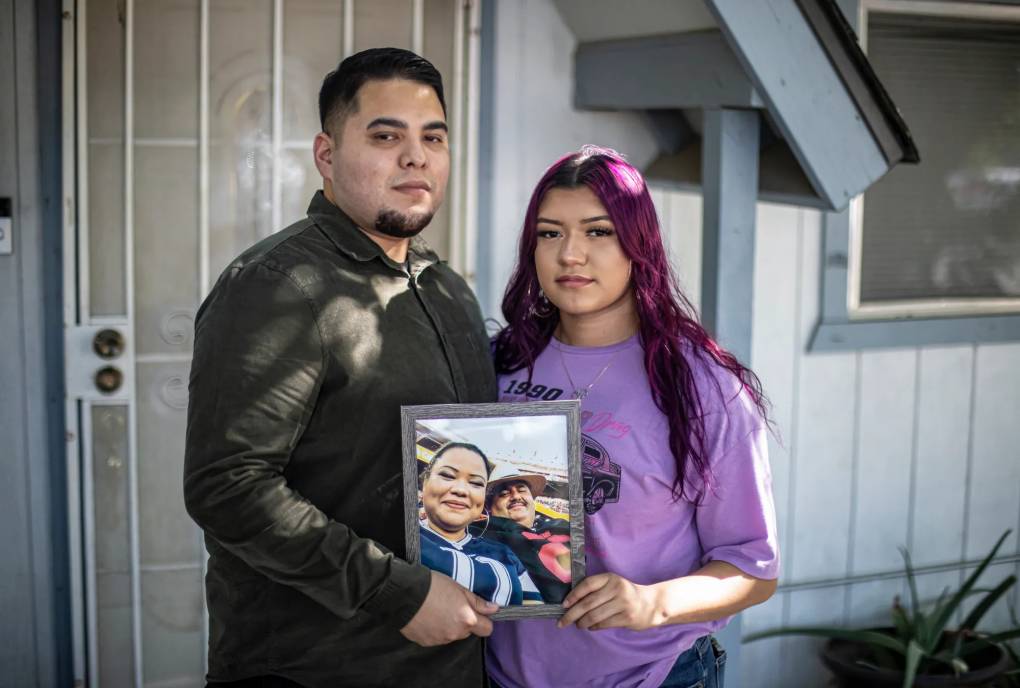
"caption": "Martin (left) and Miranda Basulto, who lost both of their parents to COVID, pose for a photo in front of their home in Coalinga on June 28, 2022. Miranda is eligible for a state bond given to kids who lost a caregiver because of COVID. ",
"description": null,
"title": "062822_CoalingaPortraits_LV__010-CM",
"credit": "Larry Valenzuela/CalMatters/CatchLight Local",
"status": "inherit",
"altTag": "two young adults pose for a portrait while holding a photo of their parents, both of whom died from COVID",
"isLoading": false,
"fetchFailed": false
},
"news_11933875": {
"type": "attachments",
"id": "news_11933875",
"meta": {
"index": "attachments_1716263798",
"site": "news",
"id": "11933875",
"found": true
},
"parent": 11919089,
"imgSizes": {
"twentyfourteen-full-width": {
"file": "https://ww2.kqed.org/app/uploads/sites/10/2022/07/Screen-Shot-2022-12-02-at-12.17.21-PM-1038x576.png",
"width": 1038,
"mimeType": "image/png",
"height": 576
},
"thumbnail": {
"file": "https://ww2.kqed.org/app/uploads/sites/10/2022/07/Screen-Shot-2022-12-02-at-12.17.21-PM-160x101.png",
"width": 160,
"mimeType": "image/png",
"height": 101
},
"post-thumbnail": {
"file": "https://ww2.kqed.org/app/uploads/sites/10/2022/07/Screen-Shot-2022-12-02-at-12.17.21-PM-672x372.png",
"width": 672,
"mimeType": "image/png",
"height": 372
},
"kqedFullSize": {
"file": "https://ww2.kqed.org/app/uploads/sites/10/2022/07/Screen-Shot-2022-12-02-at-12.17.21-PM.png",
"width": 2096,
"height": 1324
},
"2048x2048": {
"file": "https://ww2.kqed.org/app/uploads/sites/10/2022/07/Screen-Shot-2022-12-02-at-12.17.21-PM-2048x1294.png",
"width": 2048,
"mimeType": "image/png",
"height": 1294
},
"large": {
"file": "https://ww2.kqed.org/app/uploads/sites/10/2022/07/Screen-Shot-2022-12-02-at-12.17.21-PM-1020x644.png",
"width": 1020,
"mimeType": "image/png",
"height": 644
},
"1536x1536": {
"file": "https://ww2.kqed.org/app/uploads/sites/10/2022/07/Screen-Shot-2022-12-02-at-12.17.21-PM-1536x970.png",
"width": 1536,
"mimeType": "image/png",
"height": 970
},
"full-width": {
"file": "https://ww2.kqed.org/app/uploads/sites/10/2022/07/Screen-Shot-2022-12-02-at-12.17.21-PM-1920x1213.png",
"width": 1920,
"mimeType": "image/png",
"height": 1213
},
"medium": {
"file": "https://ww2.kqed.org/app/uploads/sites/10/2022/07/Screen-Shot-2022-12-02-at-12.17.21-PM-800x505.png",
"width": 800,
"mimeType": "image/png",
"height": 505
}
},
"publishDate": 1670012272,
"modified": 1670012308,
"caption": "A static image from an interactive map showing COVID case rates for all nine Bay Area counties.",
"description": null,
"title": "Screen Shot 2022-12-02 at 12.17.21 PM",
"credit": "Matthew Green/KQED",
"status": "inherit",
"altTag": "a multicolored map indicating COVID rates in all 9 Bay Area counties",
"isLoading": false,
"fetchFailed": false
},
"news_11919291": {
"type": "attachments",
"id": "news_11919291",
"meta": {
"index": "attachments_1716263798",
"site": "news",
"id": "11919291",
"found": true
},
"parent": 11919290,
"imgSizes": {
"twentyfourteen-full-width": {
"file": "https://ww2.kqed.org/app/uploads/sites/10/2022/07/gettyimages-1240500842-4e7cc8556642dd898d5d1328b9042064f38d88dd-1038x576.jpg",
"width": 1038,
"mimeType": "image/jpeg",
"height": 576
},
"thumbnail": {
"file": "https://ww2.kqed.org/app/uploads/sites/10/2022/07/gettyimages-1240500842-4e7cc8556642dd898d5d1328b9042064f38d88dd-160x120.jpg",
"width": 160,
"mimeType": "image/jpeg",
"height": 120
},
"post-thumbnail": {
"file": "https://ww2.kqed.org/app/uploads/sites/10/2022/07/gettyimages-1240500842-4e7cc8556642dd898d5d1328b9042064f38d88dd-672x372.jpg",
"width": 672,
"mimeType": "image/jpeg",
"height": 372
},
"kqedFullSize": {
"file": "https://ww2.kqed.org/app/uploads/sites/10/2022/07/gettyimages-1240500842-4e7cc8556642dd898d5d1328b9042064f38d88dd-scaled.jpg",
"width": 2560,
"height": 1918
},
"2048x2048": {
"file": "https://ww2.kqed.org/app/uploads/sites/10/2022/07/gettyimages-1240500842-4e7cc8556642dd898d5d1328b9042064f38d88dd-2048x1534.jpg",
"width": 2048,
"mimeType": "image/jpeg",
"height": 1534
},
"large": {
"file": "https://ww2.kqed.org/app/uploads/sites/10/2022/07/gettyimages-1240500842-4e7cc8556642dd898d5d1328b9042064f38d88dd-1020x764.jpg",
"width": 1020,
"mimeType": "image/jpeg",
"height": 764
},
"1536x1536": {
"file": "https://ww2.kqed.org/app/uploads/sites/10/2022/07/gettyimages-1240500842-4e7cc8556642dd898d5d1328b9042064f38d88dd-1536x1151.jpg",
"width": 1536,
"mimeType": "image/jpeg",
"height": 1151
},
"full-width": {
"file": "https://ww2.kqed.org/app/uploads/sites/10/2022/07/gettyimages-1240500842-4e7cc8556642dd898d5d1328b9042064f38d88dd-1920x1438.jpg",
"width": 1920,
"mimeType": "image/jpeg",
"height": 1438
},
"medium": {
"file": "https://ww2.kqed.org/app/uploads/sites/10/2022/07/gettyimages-1240500842-4e7cc8556642dd898d5d1328b9042064f38d88dd-800x599.jpg",
"width": 800,
"mimeType": "image/jpeg",
"height": 599
}
},
"publishDate": 1657567988,
"modified": 1657570914,
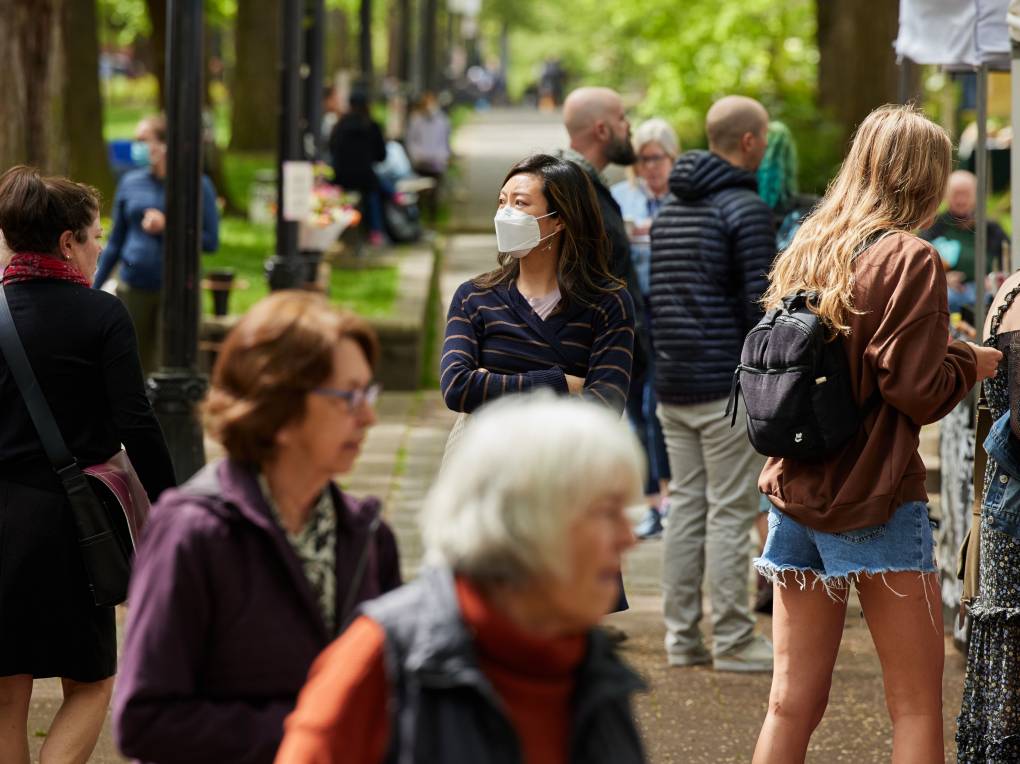
"caption": "On May 4, 2022, a mix of masked and unmasked individuals shop at the Portland Farmers Market in Shemanski Park in Portland, Oregon. Oregon health officials reported nearly 7,000 new coronavirus cases last week, the fifth consecutive week of increasing cases since the fall of the omicron wave.",
"description": "PORTLAND, OR - May 4th, 2022: On Wednesday, May 4th, 2022 a mix of masked and unmasked individuals shop at the Portland Farmers Market in Shemanski Park in Portland, OR. Oregon health officials reported nearly 7,000 new coronavirus cases last week, the fifth consecutive week of increasing cases since the fall of the omicron wave. The case growth showed a modest decline, with only 30% more cases than the previous week, after two consecutive weeks with about 50% case growth. Oregons state mask requirements were lifted March 12th, 2022 for most indoor public places. ",
"title": "Shoppers walk through a Portland, Ore., farmers market in May. With the BA.5 variant driving case counts, public health experts are encouraging people to take precautions.",
"credit": "Leah Nash/Washington Post",
"status": "inherit",
"altTag": "People are walking outside and a woman wearing a white mask stands in the center.",
"isLoading": false,
"fetchFailed": false
},
"news_11919236": {
"type": "attachments",
"id": "news_11919236",
"meta": {
"index": "attachments_1716263798",
"site": "news",
"id": "11919236",
"found": true
},
"parent": 11919233,
"imgSizes": {
"twentyfourteen-full-width": {
"file": "https://ww2.kqed.org/app/uploads/sites/10/2022/07/Screen-Shot-2022-07-10-at-5.32.46-PM-1038x576.png",
"width": 1038,
"mimeType": "image/png",
"height": 576
},
"thumbnail": {
"file": "https://ww2.kqed.org/app/uploads/sites/10/2022/07/Screen-Shot-2022-07-10-at-5.32.46-PM-160x106.png",
"width": 160,
"mimeType": "image/png",
"height": 106
},
"post-thumbnail": {
"file": "https://ww2.kqed.org/app/uploads/sites/10/2022/07/Screen-Shot-2022-07-10-at-5.32.46-PM-672x372.png",
"width": 672,
"mimeType": "image/png",
"height": 372
},
"kqedFullSize": {
"file": "https://ww2.kqed.org/app/uploads/sites/10/2022/07/Screen-Shot-2022-07-10-at-5.32.46-PM.png",
"width": 1566,
"height": 1038
},
"large": {
"file": "https://ww2.kqed.org/app/uploads/sites/10/2022/07/Screen-Shot-2022-07-10-at-5.32.46-PM-1020x676.png",
"width": 1020,
"mimeType": "image/png",
"height": 676
},
"1536x1536": {
"file": "https://ww2.kqed.org/app/uploads/sites/10/2022/07/Screen-Shot-2022-07-10-at-5.32.46-PM-1536x1018.png",
"width": 1536,
"mimeType": "image/png",
"height": 1018
},
"medium": {
"file": "https://ww2.kqed.org/app/uploads/sites/10/2022/07/Screen-Shot-2022-07-10-at-5.32.46-PM-800x530.png",
"width": 800,
"mimeType": "image/png",
"height": 530
}
},
"publishDate": 1657500152,
"modified": 1657500211,
"caption": "George Dowell is vaccinated against COVID-19 at Umoja Health pop-up clinic in Oakland on Feb. 2, 2022.",
"description": null,
"title": "Screen Shot 2022-07-10 at 5.32.46 PM",
"credit": "Marissa Leshnov/CalMatters",
"status": "inherit",
"altTag": "A man wearing a hat and white masks sits as another places a needle in his arm.",
"isLoading": false,
"fetchFailed": false
}
},
"audioPlayerReducer": {
"postId": "stream_live",
"isPaused": true,
"isPlaying": false,
"pfsActive": false,
"pledgeModalIsOpen": true,
"playerDrawerIsOpen": false,
"liveAudioPlayStartedAt": 0,
"liveAudioPlayContext": ""
},
"authorsReducer": {
"byline_news_11925957": {
"type": "authors",
"id": "byline_news_11925957",
"meta": {
"override": true
},
"slug": "byline_news_11925957",
"name": "\u003ca href=\"https://edsource.org/author/dlambert\">Diana Lambert\u003c/a>",
"isLoading": false
},
"byline_news_11925322": {
"type": "authors",
"id": "byline_news_11925322",
"meta": {
"override": true
},
"slug": "byline_news_11925322",
"name": "\u003ca href=\"https://www.npr.org/people/348778932/michaeleen-doucleff\">Michaeleen Doucleff\u003c/a>",
"isLoading": false
},
"byline_news_11924263": {
"type": "authors",
"id": "byline_news_11924263",
"meta": {
"override": true
},
"slug": "byline_news_11924263",
"name": "Selena Simmons-Duffin",
"isLoading": false
},
"byline_news_11923263": {
"type": "authors",
"id": "byline_news_11923263",
"meta": {
"override": true
},
"slug": "byline_news_11923263",
"name": "\u003ca href=\"https://edsource.org/author/mburke\">Michael Burke\u003c/a> and \u003ca href=\"https://edsource.org/author/asmith\">Ashley A. Smith\u003c/a>",
"isLoading": false
},
"byline_news_11922999": {
"type": "authors",
"id": "byline_news_11922999",
"meta": {
"override": true
},
"slug": "byline_news_11922999",
"name": "Rob Stein",
"isLoading": false
},
"byline_news_11920639": {
"type": "authors",
"id": "byline_news_11920639",
"meta": {
"override": true
},
"slug": "byline_news_11920639",
"name": "\u003ca href=\"https://edsource.org/author/atadayon\">Ali Tadayon\u003c/a>",
"isLoading": false
},
"byline_news_11920492": {
"type": "authors",
"id": "byline_news_11920492",
"meta": {
"override": true
},
"slug": "byline_news_11920492",
"name": "Rob Stein",
"isLoading": false
},
"byline_news_11920412": {
"type": "authors",
"id": "byline_news_11920412",
"meta": {
"override": true
},
"slug": "byline_news_11920412",
"name": "Elizabeth Aguilera",
"isLoading": false
},
"byline_news_11919290": {
"type": "authors",
"id": "byline_news_11919290",
"meta": {
"override": true
},
"slug": "byline_news_11919290",
"name": "Rachel Treisman",
"isLoading": false
},
"byline_news_11919233": {
"type": "authors",
"id": "byline_news_11919233",
"meta": {
"override": true
},
"slug": "byline_news_11919233",
"name": "Jeanne Kuang",
"isLoading": false
},
"matthewgreen": {
"type": "authors",
"id": "1263",
"meta": {
"index": "authors_1716337520",
"id": "1263",
"found": true
},
"name": "Matthew Green",
"firstName": "Matthew",
"lastName": "Green",
"slug": "matthewgreen",
"email": "mgreen@kqed.org",
"display_author_email": false,
"staff_mastheads": [],
"title": "KQED Editor/Reporter",
"bio": "Matthew Green is a digital media producer for KQED News. He previously produced \u003ca href=\"http://www.kqed.org/lowdown\">The Lowdown\u003c/a>, KQED’s multimedia news education blog. Matthew's written for numerous Bay Area publications, including the Oakland Tribune and San Francisco Chronicle. He also taught journalism classes at Fremont High School in East Oakland.\r\n\r\nEmail: mgreen@kqed.org; Twitter: @MGreenKQED",
"avatar": "https://secure.gravatar.com/avatar/3bf498d1267ca02c8494f33d8cfc575e?s=600&d=blank&r=g",
"twitter": "MGreenKQED",
"facebook": null,
"instagram": null,
"linkedin": null,
"sites": [
{
"site": "news",
"roles": []
},
{
"site": "lowdown",
"roles": []
},
{
"site": "science",
"roles": []
},
{
"site": "education",
"roles": []
},
{
"site": "quest",
"roles": []
},
{
"site": "liveblog",
"roles": []
}
],
"headData": {
"title": "Matthew Green | KQED",
"description": "KQED Editor/Reporter",
"ogImgSrc": "https://secure.gravatar.com/avatar/3bf498d1267ca02c8494f33d8cfc575e?s=600&d=blank&r=g",
"twImgSrc": "https://secure.gravatar.com/avatar/3bf498d1267ca02c8494f33d8cfc575e?s=600&d=blank&r=g"
},
"isLoading": false,
"link": "/author/matthewgreen"
},
"carlysevern": {
"type": "authors",
"id": "3243",
"meta": {
"index": "authors_1716337520",
"id": "3243",
"found": true
},
"name": "Carly Severn",
"firstName": "Carly",
"lastName": "Severn",
"slug": "carlysevern",
"email": "csevern@kqed.org",
"display_author_email": false,
"staff_mastheads": [
"news"
],
"title": "Senior Editor, Audience News ",
"bio": "Carly is KQED's Senior Editor of Audience News on the Digital News team, and has reported for the California Report Magazine, Bay Curious and KQED Arts. She's formerly the host of \u003ca href=\"http://ww2.kqed.org/pop/category/the-cooler/\" rel=\"noopener noreferrer\">The Cooler\u003c/a> podcast.",
"avatar": "https://secure.gravatar.com/avatar/54037bf5c128fe678f0ef26cec97a93f2e7f220a22d7285703328f12c42c1b1d?s=600&d=blank&r=g",
"twitter": "teacupinthebay",
"bluesky": null,
"facebook": null,
"instagram": null,
"linkedin": null,
"sites": [
{
"site": "",
"roles": [
"editor"
]
},
{
"site": "arts",
"roles": [
"editor"
]
},
{
"site": "news",
"roles": [
"administrator"
]
},
{
"site": "pop",
"roles": [
"editor"
]
},
{
"site": "futureofyou",
"roles": [
"editor"
]
},
{
"site": "about",
"roles": [
"administrator"
]
},
{
"site": "mindshift",
"roles": [
"editor"
]
},
{
"site": "bayareabites",
"roles": [
"editor"
]
},
{
"site": "stateofhealth",
"roles": [
"editor"
]
},
{
"site": "science",
"roles": [
"editor"
]
},
{
"site": "food",
"roles": [
"contributor"
]
},
{
"site": "forum",
"roles": [
"editor"
]
},
{
"site": "perspectives",
"roles": [
"administrator"
]
},
{
"site": "liveblog",
"roles": [
"editor"
]
}
],
"headData": {
"title": "Carly Severn | KQED",
"description": "Senior Editor, Audience News ",
"ogImgSrc": "https://secure.gravatar.com/avatar/54037bf5c128fe678f0ef26cec97a93f2e7f220a22d7285703328f12c42c1b1d?s=600&d=blank&r=g",
"twImgSrc": "https://secure.gravatar.com/avatar/54037bf5c128fe678f0ef26cec97a93f2e7f220a22d7285703328f12c42c1b1d?s=600&d=blank&r=g"
},
"isLoading": false,
"link": "/author/carlysevern"
},
"ccabreralomeli": {
"type": "authors",
"id": "11708",
"meta": {
"index": "authors_1716337520",
"id": "11708",
"found": true
},
"name": "Carlos Cabrera-Lomelí",
"firstName": "Carlos",
"lastName": "Cabrera-Lomelí",
"slug": "ccabreralomeli",
"email": "ccabreralomeli@KQED.org",
"display_author_email": true,
"staff_mastheads": [
"news"
],
"title": "Community Reporter",
"bio": "Carlos Cabrera-Lomelí is a community reporter with KQED's digital engagement team. He also reports and co-produces for KQED's bilingual news hub KQED en Español. He grew up in San Francisco's Mission District and has previously worked with Univision, 48 Hills and REFORMA in Mexico City.",
"avatar": "https://secure.gravatar.com/avatar/c309be9665e484f887b818c89e273ecc673004f426f36b24d00a4d813a2e0518?s=600&d=blank&r=g",
"twitter": "@LomeliCabrera",
"bluesky": null,
"facebook": null,
"instagram": null,
"linkedin": null,
"sites": [
{
"site": "arts",
"roles": [
"editor"
]
},
{
"site": "news",
"roles": [
"editor"
]
},
{
"site": "about",
"roles": [
"editor"
]
},
{
"site": "science",
"roles": [
"editor"
]
},
{
"site": "perspectives",
"roles": [
"editor"
]
},
{
"site": "elections",
"roles": [
"editor"
]
},
{
"site": "liveblog",
"roles": [
"contributor"
]
}
],
"headData": {
"title": "Carlos Cabrera-Lomelí | KQED",
"description": "Community Reporter",
"ogImgSrc": "https://secure.gravatar.com/avatar/c309be9665e484f887b818c89e273ecc673004f426f36b24d00a4d813a2e0518?s=600&d=blank&r=g",
"twImgSrc": "https://secure.gravatar.com/avatar/c309be9665e484f887b818c89e273ecc673004f426f36b24d00a4d813a2e0518?s=600&d=blank&r=g"
},
"isLoading": false,
"link": "/author/ccabreralomeli"
}
},
"pagesReducer": {
"news_tag_covid": {
"type": "terms",
"id": "news_27989",
"meta": {
"index": "terms_1716263798",
"site": "news",
"id": "27989",
"score": 9.103905
},
"featImg": null,
"name": "covid",
"description": null,
"taxonomy": "tag",
"headData": {
"twImgId": null,
"twTitle": null,
"ogTitle": null,
"ogImgId": null,
"twDescription": null,
"description": null,
"title": "covid Archives | KQED News",
"ogDescription": null
},
"ttid": 28006,
"slug": "covid",
"isLoading": false,
"title": "covid",
"pageMeta": {
"site": "news",
"WpPageTemplate": "page-topic-editorial",
"currentPage": 7
},
"blocks": [
{
"blockName": "kqed/post-list",
"attrs": {
"layout": "cardArticle2",
"query": "posts/news?tag=covid",
"seeMore": false,
"paginated": true,
"page": 7
}
},
{
"blockName": "kqed/ad"
}
]
}
},
"pfsSessionReducer": {},
"postsReducer": {
"stream_live": {
"type": "live",
"id": "stream_live",
"audioUrl": "https://streams.kqed.org/kqedradio",
"title": "Live Stream",
"excerpt": "Live Stream information currently unavailable.",
"link": "/radio",
"featImg": "",
"label": {
"name": "KQED Live",
"link": "/"
}
},
"stream_kqedNewscast": {
"type": "posts",
"id": "stream_kqedNewscast",
"audioUrl": "https://www.kqed.org/.stream/anon/radio/RDnews/newscast.mp3?_=1",
"title": "KQED Newscast",
"featImg": "",
"label": {
"name": "88.5 FM",
"link": "/"
}
},
"news_11925957": {
"type": "posts",
"id": "news_11925957",
"meta": {
"index": "posts_1716263798",
"site": "news",
"id": "11925957",
"score": null,
"sort": [
1663356625000
]
},
"guestAuthors": [],
"slug": "california-lifts-vaccine-mandate-for-school-staff",
"title": "California Lifts Vaccine Mandate for School Staff",
"publishDate": 1663356625,
"format": "standard",
"headTitle": "California Lifts Vaccine Mandate for School Staff | KQED",
"labelTerm": {},
"content": "\u003cp>Teachers and other school staff who have not been vaccinated against COVID-19 will no longer have to be tested weekly to remain on campuses after this week.\u003c/p>\n\u003cp>On Tuesday, State Public Health Officer Dr. Tomás Aragón rescinded a public health order requiring that all school employees show proof of vaccination or be tested at least weekly. The new policy is effective September 17.\u003c/p>\n\u003cp>The decision was made to align state and federal health guidance and because most Californians have been vaccinated against the virus, he said.[aside label='related articles' tag='vaccine']“We’ve entered a phase of the pandemic where the majority of people in these workplace settings are vaccinated, and our youngest Californians are now eligible for vaccination, too, which protects all of our communities against severe illness, hospitalization and death,” Aragón said. “While unvaccinated individuals remain at greatest risk of serious health consequences from COVID-19 infection, weekly testing of unvaccinated groups is no longer slowing the spread as it did earlier in the pandemic due to the more infectious omicron variants.”\u003c/p>\n\u003cp>Currently, 80% of California residents 12 years of age and older have had the first two vaccinations that make up the primary series of vaccines, according to a press release from the health department. Just under half have received their first booster. The department did not say how many California residents have had the second booster.\u003c/p>\n\u003cp>Despite those high vaccination numbers, omicron subvariants have infected vaccinated as well as unvaccinated people, although vaccinated people are less likely to be infected or to become seriously ill.[pullquote size=\"medium\" align=\"right\" citation=\"Dr. Tomás Aragón, California public health officer\"]‘Weekly testing of unvaccinated groups is no longer slowing the spread as it did earlier in the pandemic due to the more infectious omicron variants.’[/pullquote]“Consequently, mandated testing of the small number of unvaccinated workers is not effectively preventing disease transmission as with the original COVID-19 virus and prior variants earlier in the pandemic,” Aragón said.\u003c/p>\n\u003cp>Vaccinations targeting the omicron variant are currently available, and department officials urge California residents to stay up to date on their COVID-19 vaccines to protect themselves and slow the spread of the disease in their communities.\u003c/p>\n\u003cp>Last August, California became \u003ca href=\"https://www.cdph.ca.gov/Programs/CID/DCDC/Pages/COVID-19/Order-of-the-State-Public-Health-Officer-Vaccine-Verification-for-Workers-in-Schools.aspx\">the first state in the nation to require all school staff to be fully vaccinated\u003c/a> for COVID-19 or to be tested weekly, although several individual school districts in the state had already instituted that requirement.\u003c/p>\n\u003cp>The decision to mandate vaccines for school staff was made after conversations with school districts, labor unions and public health officers, according to Gov. Gavin Newsom.\u003c/p>\n\u003cp>“Since the beginning of this pandemic, we’ve relied on science and public health guidance to keep our students and school communities safe,” said Lisa Gardiner, spokesperson for the California Teachers Association, in a statement today. “This moment is no different, as COVID-19 continues to evolve and more students and Californians are now vaccinated. We continue to support local decisions that include the voice and expertise of local educators and families in determining best practices for the safety of school communities.”\u003c/p>\n\u003cp>[ad fullwidth]\u003c/p>\n\u003cp>\u003ca href=\"https://edsource.org/2022/state-lifts-vaccine-mandate-for-school-staff/678020\">\u003cem>This story originally appeared in EdSource.\u003c/em>\u003c/a>\u003c/p>\n\u003cp>\u003c/p>\n",
"blocks": [],
"excerpt": null,
"status": "publish",
"parent": 0,
"modified": 1740699484,
"stats": {
"hasAudio": false,
"hasVideo": false,
"hasChartOrMap": false,
"iframeSrcs": [],
"hasGoogleForm": false,
"hasGallery": false,
"hasHearkenModule": false,
"hasPolis": false,
"paragraphCount": 12,
"wordCount": 551
},
"headData": {
"title": "California Lifts Vaccine Mandate for School Staff | KQED",
"description": "Teachers and other school staff who have not been vaccinated against COVID-19 will no longer have to be tested weekly to remain on campuses after this week. On Tuesday, State Public Health Officer Dr. Tomás Aragón rescinded a public health order requiring that all school employees show proof of vaccination or be tested at least weekly. The new policy is effective September 17. The decision was made to align state and federal health guidance and because most Californians have been vaccinated against the virus, he said.“We’ve entered a phase of the pandemic where the majority of people in these workplace",
"ogTitle": "",
"ogDescription": "",
"ogImgId": "",
"twTitle": "",
"twDescription": "",
"twImgId": "",
"schema": {
"@context": "https://schema.org",
"@type": "NewsArticle",
"headline": "California Lifts Vaccine Mandate for School Staff",
"datePublished": "2022-09-16T12:30:25-07:00",
"dateModified": "2025-02-27T15:38:04-08:00",
"image": "https://cdn.kqed.org/wp-content/uploads/2020/02/KQED-OG-Image@1x.png",
"isAccessibleForFree": "True",
"publisher": {
"@type": "NewsMediaOrganization",
"@id": "https://www.kqed.org/#organization",
"name": "KQED",
"logo": "https://cdn.kqed.org/wp-content/uploads/2020/02/KQED-OG-Image@1x.png",
"url": "https://www.kqed.org",
"sameAs": [
"https://www.facebook.com/KQED",
"https://twitter.com/KQED",
"https://www.instagram.com/kqed/",
"https://www.tiktok.com/@kqedofficial",
"https://www.linkedin.com/company/kqed",
"https://www.youtube.com/channel/UCeC0IOo7i1P_61zVUWbJ4nw"
]
}
}
},
"source": "EdSource",
"sourceUrl": "https://edsource.org/",
"sticky": false,
"nprByline": "\u003ca href=\"https://edsource.org/author/dlambert\">Diana Lambert\u003c/a>",
"excludeFromSiteSearch": "Include",
"showOnAuthorArchivePages": "No",
"path": "/news/11925957/california-lifts-vaccine-mandate-for-school-staff",
"audioTrackLength": null,
"parsedContent": [
{
"type": "contentString",
"content": "\u003cdiv class=\"post-body\">\u003cp>\u003cp>Teachers and other school staff who have not been vaccinated against COVID-19 will no longer have to be tested weekly to remain on campuses after this week.\u003c/p>\n\u003cp>On Tuesday, State Public Health Officer Dr. Tomás Aragón rescinded a public health order requiring that all school employees show proof of vaccination or be tested at least weekly. The new policy is effective September 17.\u003c/p>\n\u003cp>The decision was made to align state and federal health guidance and because most Californians have been vaccinated against the virus, he said.\u003c/p>\u003c/div>",
"attributes": {
"named": {},
"numeric": []
}
},
{
"type": "component",
"content": "",
"name": "aside",
"attributes": {
"named": {
"label": "related articles ",
"tag": "vaccine"
},
"numeric": []
}
},
{
"type": "contentString",
"content": "\u003cdiv class=\"post-body\">\u003cp>“We’ve entered a phase of the pandemic where the majority of people in these workplace settings are vaccinated, and our youngest Californians are now eligible for vaccination, too, which protects all of our communities against severe illness, hospitalization and death,” Aragón said. “While unvaccinated individuals remain at greatest risk of serious health consequences from COVID-19 infection, weekly testing of unvaccinated groups is no longer slowing the spread as it did earlier in the pandemic due to the more infectious omicron variants.”\u003c/p>\n\u003cp>Currently, 80% of California residents 12 years of age and older have had the first two vaccinations that make up the primary series of vaccines, according to a press release from the health department. Just under half have received their first booster. The department did not say how many California residents have had the second booster.\u003c/p>\n\u003cp>Despite those high vaccination numbers, omicron subvariants have infected vaccinated as well as unvaccinated people, although vaccinated people are less likely to be infected or to become seriously ill.\u003c/p>\u003c/div>",
"attributes": {
"named": {},
"numeric": []
}
},
{
"type": "component",
"content": "‘Weekly testing of unvaccinated groups is no longer slowing the spread as it did earlier in the pandemic due to the more infectious omicron variants.’",
"name": "pullquote",
"attributes": {
"named": {
"size": "medium",
"align": "right",
"citation": "Dr. Tomás Aragón, California public health officer",
"label": ""
},
"numeric": []
}
},
{
"type": "contentString",
"content": "\u003cdiv class=\"post-body\">\u003cp>“Consequently, mandated testing of the small number of unvaccinated workers is not effectively preventing disease transmission as with the original COVID-19 virus and prior variants earlier in the pandemic,” Aragón said.\u003c/p>\n\u003cp>Vaccinations targeting the omicron variant are currently available, and department officials urge California residents to stay up to date on their COVID-19 vaccines to protect themselves and slow the spread of the disease in their communities.\u003c/p>\n\u003cp>Last August, California became \u003ca href=\"https://www.cdph.ca.gov/Programs/CID/DCDC/Pages/COVID-19/Order-of-the-State-Public-Health-Officer-Vaccine-Verification-for-Workers-in-Schools.aspx\">the first state in the nation to require all school staff to be fully vaccinated\u003c/a> for COVID-19 or to be tested weekly, although several individual school districts in the state had already instituted that requirement.\u003c/p>\n\u003cp>The decision to mandate vaccines for school staff was made after conversations with school districts, labor unions and public health officers, according to Gov. Gavin Newsom.\u003c/p>\n\u003cp>“Since the beginning of this pandemic, we’ve relied on science and public health guidance to keep our students and school communities safe,” said Lisa Gardiner, spokesperson for the California Teachers Association, in a statement today. “This moment is no different, as COVID-19 continues to evolve and more students and Californians are now vaccinated. We continue to support local decisions that include the voice and expertise of local educators and families in determining best practices for the safety of school communities.”\u003c/p>\n\u003cp>\u003c/p>\u003c/div>",
"attributes": {
"named": {},
"numeric": []
}
},
{
"type": "component",
"content": "",
"name": "ad",
"attributes": {
"named": {
"label": "fullwidth"
},
"numeric": [
"fullwidth"
]
}
},
{
"type": "contentString",
"content": "\u003cdiv class=\"post-body\">\u003cp>\u003c/p>\n\u003cp>\u003ca href=\"https://edsource.org/2022/state-lifts-vaccine-mandate-for-school-staff/678020\">\u003cem>This story originally appeared in EdSource.\u003c/em>\u003c/a>\u003c/p>\n\u003cp>\u003c/p>\n\u003c/div>\u003c/p>",
"attributes": {
"named": {},
"numeric": []
}
}
],
"link": "/news/11925957/california-lifts-vaccine-mandate-for-school-staff",
"authors": [
"byline_news_11925957"
],
"categories": [
"news_18540",
"news_457",
"news_8"
],
"tags": [
"news_27989",
"news_30305",
"news_19960",
"news_2998",
"news_981"
],
"featImg": "news_11926000",
"label": "source_news_11925957"
},
"news_11925322": {
"type": "posts",
"id": "news_11925322",
"meta": {
"index": "posts_1716263798",
"site": "news",
"id": "11925322",
"score": null,
"sort": [
1663015325000
]
},
"parent": 0,
"labelTerm": {},
"blocks": [],
"publishDate": 1663015325,
"format": "standard",
"disqusTitle": "So You Haven't Caught COVID Yet. Does That Mean You're a Superdodger?",
"title": "So You Haven't Caught COVID Yet. Does That Mean You're a Superdodger?",
"headTitle": "KQED News",
"content": "\u003cp>Back in the early 1990s, \u003ca href=\"https://med.nyu.edu/faculty/nathaniel-r-landau\">Nathaniel Landau\u003c/a> was a young virologist just starting his career in HIV research. But he and his colleagues were already on the verge of a landmark breakthrough. Several labs around the world were hot on his team's tail.\u003c/p>\n\u003cp>\"We were sleeping in the lab, just to keep the work going day and night because there were many labs all racing against each other,\" Landau says. \"Of course, we wanted to be the first to do it. We were totally stressed out. \"\u003c/p>\n\u003cp>Other scientists had identified groups of people who appeared to be completely resistant to HIV. \"People who knew they had been exposed to HIV multiple times, mainly through unprotected sex, yet they clearly were not infected,\" Landau explains.\u003c/p>\n\u003cp>And so the race was on to figure out why: \"Are these people just lucky or did they really have a mutation in their genes that was protecting them from infection?'\" he says.\u003c/p>\n\u003cp>Now 25 years later, scientists all over the world are trying to answer the same question but about a different virus: SARS-CoV-2.\u003c/p>\n\u003cp>By this point in the pandemic, most Americans have had at least one bout of COVID. For children under age 18, more than 80% of them have been infected, the Centers for Disease Control and Prevention \u003ca href=\"https://covid.cdc.gov/covid-data-tracker/#pediatric-seroprevalence\">estimates\u003c/a>.\u003c/p>\n\u003cp>But just as with HIV, some people have been exposed multiple times but never had symptoms and never tested positive.\u003c/p>\n\u003cp>\"We've heard countless anecdotes about nurses and health-care workers being exposed without any protection and remaining negative over and over again,\" says pediatrician \u003ca href=\"https://www.rockefeller.edu/our-scientists/heads-of-laboratories/970-jean-laurent-casanova/\">Jean-Laurent Casanova\u003c/a>, who studies the genetics of viral resistance at Rockefeller University. \"Or people share a household with someone who's been coughing for a couple of weeks, and one person stays negative.\"\u003c/p>\n\u003cp>So why haven't these people caught COVID?[pullquote align=\"right\" size=\"large\" citation=\"Nathaniel Landau, Dept. of Microbiology, NYU Langone Health\"]'It's kind of like the virus is knocking at the door, but nobody's opening the door. The door is locked.'[/pullquote]After two years of hunting, a team at the University of California, San Francisco has come pretty close to answering the question.\u003c/p>\n\u003cp>\"These findings are like hot off the presses,\" says immunogeneticist \u003ca href=\"https://docs.google.com/document/u/1/d/1H1WBzJvjj9uZBG4plr_XElvQm2cPLxuPb45Cx_rWk58/edit\">Jill Hollenbach\u003c/a>, who led this research. \"We haven't published them yet. It's all stuff that's been happening this summer.\"\u003c/p>\n\u003cp>Hollenbach and her team have found a genetic mutation that doesn't prevent the virus from infecting cells — that's what Landau was searching for in his HIV research — but still does something remarkable: It prevents a person from having COVID symptoms.\u003c/p>\n\u003cp>Turns out, stopping an infection altogether is an extremely tough nut for our bodies to crack.\u003c/p>\n\u003ch2 class=\"edTag\">What does it take to be a true superdodger?\u003c/h2>\n\u003cp>Over the course of human history, scientists have identified only two instances of true virus superdodgers. That is, where a specific mutation in their genes makes people completely resistant to a virus. So that it slides off their cells, \"like water sliding off a glass window,\" as Casanova puts it.\u003c/p>\n\u003cp>In 2003, a team in London showed how some people never get a stomach bug, called norovirus, which causes vomiting and diarrhea. The researchers \u003ca href=\"https://pubmed.ncbi.nlm.nih.gov/12692541/\">found\u003c/a> that one mutation in their genes prevents them from making a molecule the virus needs to infect the cell.\u003c/p>\n\u003cp>(In 1995, researchers in France figured out why some people appeared to never be infected with a species of malaria known as \u003cem>Plasmodium vivax\u003c/em>. However, over the past decade, further \u003ca href=\"https://malariajournal.biomedcentral.com/articles/10.1186/s12936-020-03372-9\">studies \u003c/a>have clarified that these superdodgers actually do become infected with the parasite; they simply don't show symptoms.)\u003c/p>\n\u003ch2 class=\"edTag\">The best-known superdodgers in human history\u003c/h2>\n\u003cp>By far, the most famous virus superdodgers are people protected against HIV — the ones Landau and his colleagues were studying back in the early 1990s.\u003c/p>\n\u003cp>In 1996, his team was getting really close to solving that puzzle. One morning they found a huge clue. The night before, they had set up an experiment to test which molecules HIV needed to infect a human cell. The experiment garnered spectacular results.\u003c/p>\n\u003cp>It showed that HIV didn't enter cells the way scientists had believed. Instead it needed a little bit of extra help. Specifically, HIV needs a specific molecule, called CCR5, on the surface of the cell to \"open the door\" and let the virus enter, Landau says. Without CCR5, the virus only sticks to the cell's surface but can't enter. \"It's kind of like the virus is knocking at the door, but nobody's opening the door. The door is locked,\" he says.\u003c/p>\n\u003cp>\"That was what we call a eureka moment,\" Landau says. \"That was the moment where we could say, 'We found something that had never been seen before.'\"\u003c/p>\n\u003cp>Landau and his colleagues rushed to the computer and wrote up the \u003ca href=\"https://pubmed.ncbi.nlm.nih.gov/8649511/\">findings\u003c/a> as quickly as possible. Then he literally ran to the FedEx store to submit the paper to the journal \u003cem>Nature\u003c/em>, knowing that other teams were likely to have the same finding soon.[aside label='Related Coverage' tag='covid']\"In those days you couldn't just submit your paper through your computer,\" he says. \"You had to mail a hard copy of it to the journal. And my job was to sprint over to the FedEx store so we could get the paper mailed on time.\"\u003c/p>\n\u003cp>Then only a few short weeks later, Landau and his colleagues made another huge discovery, and in the process solved the final piece of the HIV puzzle. \u003cstrong>\"\u003c/strong>We were quite amazed that it all happened so quickly,\" Landau says.\u003c/p>\n\u003cp>In collaboration with a research group down the hall, Landau and his colleagues sequenced the CCR5 gene in two people completely resistant to HIV. Lo and behold! Both people had the same mutation in the gene — and it's a powerful mutation. It completely cripples the molecule so that it doesn't appear on the cells' surface, the group \u003ca href=\"https://www.cell.com/action/showPdf?pii=S0092-8674%2800%2980110-5\">reported\u003c/a> in the journal \u003cem>Cell\u003c/em>. Remember, without CCR5, HIV can't infect the cell.\u003c/p>\n\u003cp>\"You can put as many virus particles as you want onto those cells, and they will not get infected,\" he says. \"So in the case of resistance to HIV, the story was very clear.\"\u003c/p>\n\u003cp>The finding completely shifted the field of HIV. It led to the first — and only — way to \u003ca href=\"https://www.nejm.org/doi/full/10.1056/NEJMoa0802905\">cure a person of \u003c/a>HIV and suggested a new route, using \u003ca href=\"https://www.npr.org/sections/health-shots/2019/09/11/759369190/crispr-gene-editing-may-offer-path-to-cure-for-hiv-first-published-report-shows\">gene editing\u003c/a> with CRISPR. But it did something else: It showed scientists that one mutation could make a person completely resistant to an infection. One mutation in their genes could make them a true superdodger.\u003c/p>\n\u003ch2 class=\"edTag\">Trying to find out if there really are COVID superdodgers\u003c/h2>\n\u003cp>\"So when SARS-CoV-2 came along, of course, many labs looked to see if the same might be true for this virus,\" Landau says. And inspired by the story of CCR5, they went looking for mutations in the genes required for SARS-CoV-2 to enter and infect cells.\u003c/p>\n\u003cp>For COVID superdodgers, the situation appears to be more complex than for people resistant to HIV, Landau says, because the way SARS-CoV-2 infects cells is different from that of HIV.\u003c/p>\n\u003cp>Instead of using CCR5 to \"open the cell's door,\" SARS-CoV-2 uses the ACE2 receptor. People can't live without ACE2. \"The receptor regulates your blood pressure,\" Landau explains. So, unlike CCR5, you can't simply knock out the ACE2 receptor, he says. \"You're not going to have many people walking around that don't have ACE2.\"\u003c/p>\n\u003cp>\"Of course, there may be more subtle mutations in ACE2 which could play a role in resistance to SARS-CoV-2,\" he adds. \"But there doesn't seem to be an obvious and dramatic mutation as is the case for HIV.\"\u003c/p>\n\u003cp>But perhaps what's more likely, he says, is that people have mutations in genes \u003cem>other \u003c/em>than ACE2, and these mutations probably don't protect them from getting infected per se but do protect them from getting sick.\u003c/p>\n\u003ch2 class=\"edTag\">Maybe there are ... mini-dodgers?\u003c/h2>\n\u003cp>So having one of these mutations would make you a sort of COVID mini-dodger, if you will. There are other ways to resist an infection besides denying the virus entrance into the cell, Landau explains. And they likely involve your body's immune system.\u003c/p>\n\u003cp>That's exactly what the team at UCSF has found.\u003c/p>\n\u003cp>Since the pandemic began, Jill Hollenbach and her colleagues at UCSF have been studying people who test positive COVID but show no symptoms. \"Not even a sniffle or a scratchy throat,\" she says. \"So they are entirely asymptomatic.\"\u003c/p>\n\u003cp>After analyzing DNA from more than 1,400 people, they identified a mutation that helps a person clear out a SARS-CoV-2 so fast that their body doesn't have a chance to develop symptoms.\u003c/p>\n\u003cp>The mutation occurs in a gene called HLA, which is critical during the earliest stages of infection. Hollenbach and her colleagues found that having a particular mutation in that gene increases a person's chance of being asymptomatic by almost 10 times.\u003c/p>\n\u003cp>They \u003ca href=\"https://www.medrxiv.org/content/10.1101/2021.05.13.21257065v2\">reported \u003c/a>those preliminary findings online last September.\u003c/p>\n\u003cp>Since then, they've gone on to show \u003cem>how \u003c/em>this mutation works. And it has to do with your immune system preparing for SARS-CoV-2 before the pandemic even began back in 2019.\u003c/p>\n\u003cp>When a virus first enters cells, HLA signals to the immune system that cells are invaded and need help. That signal triggers a cascade of events that ultimately leads your body to make potent weapons specifically designed to fight SARS-CoV-2. These weapons include antibodies and T cells that uniquely recognize pieces of this virus. Once these targeted weapons are available, your immune system has a much easier time clearing up the infection. But these weapons take time to manufacture. And that delay allows the infection to spread and symptoms to develop.\u003c/p>\n\u003cp>But what if, for some lucky reason, your immune system already had weapons specifically targeted to SARS-CoV-2?\u003c/p>\n\u003cp>This summer, Hollenbach and her colleagues demonstrated that, with a specific mutation in HLA, some people have T cells that are already pre-programmed to recognize and fight off SARS-CoV-2. So there's no delay in generating COVID-specific weaponry. It's already there.\u003c/p>\n\u003cp>\"Your immune response and these T cells fire up much more quickly [than in a person without the HLA mutation],\" Hollenbach says. \"So for lack of a better term, you basically nuke the infection before you even start to have symptoms.\"\u003c/p>\n\u003cp>But here's the kicker. For the HLA mutation to work (and for you to have these pre-armed T cells), you first had to have been infected with another coronavirus.\u003c/p>\n\u003cp>\u003cstrong>\"\u003c/strong>Most of us have been exposed to some common cold coronavirus at some point in life,\" she explains. And we all generate T cells to fight off these colds. But if you also have this mutation in your HLA, Hollenbach says, then just by mere luck, these T cells you make can also fight off SARS-CoV-2.\u003c/p>\n\u003cp>\"It's definitely luck,\" she says. \"But, you know, this mutation is quite common. We estimate that maybe 1 in 10 people have it. And in people who are asymptomatic, that rises to 1 in 5.\"\u003c/p>\n\u003ch2 class=\"edTag\">Seeking possible superdodgers who'll spit into a cup\u003c/h2>\n\u003cp>While Hollenbach and her team continue to look for more mini-dodger genes, Casanova over at Rockefeller University and his colleagues are still trying to \u003ca href=\"https://www.nature.com/articles/s41590-021-01030-z\">determine \u003c/a>if there are true superdodger genes. And he's \u003ca href=\"https://www.covidhge.com/participants\">looking for participants\u003c/a> right now for his study.\u003c/p>\n\u003cp>\"You fill out a questionnaire online about your exposures to SARS-CoV-2,\" he says. And then if you meet the criteria of a superdodger, the team sends you a testing kit. Basically you spit in a cup and mail it back to Casanova and his collaborators.\u003c/p>\n\u003cp>\"We'll extract your DNA and sequence your genome,\" he explains. \"We hope that in a group of 2,000 to 4,000 people, some people will have genetic mutations that tell us why they're resistant to infection.\"\u003c/p>\n\u003cp>And perhaps, like with HIV, that finding will one day shift the field of COVID research and lead to a vaccine that does what everyone wishes our current vaccines would do: turn everyone into a COVID superdodger.\u003c/p>\n\u003cp>[ad fullwidth]\u003c/p>\n\u003cp>[ad floatright]\u003c/p>\n",
"disqusIdentifier": "11925322 https://ww2.kqed.org/news/?p=11925322",
"disqusUrl": "https://ww2.kqed.org/news/2022/09/12/so-you-havent-caught-covid-yet-does-that-mean-youre-a-superdodger/",
"stats": {
"hasVideo": false,
"hasChartOrMap": false,
"hasAudio": false,
"hasPolis": false,
"wordCount": 2087,
"hasGoogleForm": false,
"hasGallery": false,
"hasHearkenModule": false,
"iframeSrcs": [],
"paragraphCount": 49
},
"modified": 1663203083,
"excerpt": null,
"headData": {
"twImgId": "",
"twTitle": "",
"ogTitle": "",
"ogImgId": "",
"twDescription": "",
"description": "Back in the early 1990s, Nathaniel Landau was a young virologist just starting his career in HIV research. But he and his colleagues were already on the verge of a landmark breakthrough. Several labs around the world were hot on his team's tail. "We were sleeping in the lab, just to keep the work going day and",
"title": "So You Haven't Caught COVID Yet. Does That Mean You're a Superdodger? | KQED",
"ogDescription": "",
"schema": {
"@context": "https://schema.org",
"@type": "NewsArticle",
"headline": "So You Haven't Caught COVID Yet. Does That Mean You're a Superdodger?",
"datePublished": "2022-09-12T13:42:05-07:00",
"dateModified": "2022-09-14T17:51:23-07:00",
"image": "https://cdn.kqed.org/wp-content/uploads/2020/02/KQED-OG-Image@1x.png",
"isAccessibleForFree": "True",
"publisher": {
"@type": "NewsMediaOrganization",
"@id": "https://www.kqed.org/#organization",
"name": "KQED",
"logo": "https://cdn.kqed.org/wp-content/uploads/2020/02/KQED-OG-Image@1x.png",
"url": "https://www.kqed.org",
"sameAs": [
"https://www.facebook.com/KQED",
"https://twitter.com/KQED",
"https://www.instagram.com/kqed/",
"https://www.tiktok.com/@kqedofficial",
"https://www.linkedin.com/company/kqed",
"https://www.youtube.com/channel/UCeC0IOo7i1P_61zVUWbJ4nw"
]
}
}
},
"guestAuthors": [],
"slug": "so-you-havent-caught-covid-yet-does-that-mean-youre-a-superdodger",
"status": "publish",
"sourceUrl": "https://www.npr.org/",
"nprByline": "\u003ca href=\"https://www.npr.org/people/348778932/michaeleen-doucleff\">Michaeleen Doucleff\u003c/a>",
"excludeFromSiteSearch": "Include",
"source": "NPR",
"showOnAuthorArchivePages": "No",
"path": "/news/11925322/so-you-havent-caught-covid-yet-does-that-mean-youre-a-superdodger",
"audioTrackLength": null,
"parsedContent": [
{
"type": "contentString",
"content": "\u003cdiv class=\"post-body\">\u003cp>\u003cp>Back in the early 1990s, \u003ca href=\"https://med.nyu.edu/faculty/nathaniel-r-landau\">Nathaniel Landau\u003c/a> was a young virologist just starting his career in HIV research. But he and his colleagues were already on the verge of a landmark breakthrough. Several labs around the world were hot on his team's tail.\u003c/p>\n\u003cp>\"We were sleeping in the lab, just to keep the work going day and night because there were many labs all racing against each other,\" Landau says. \"Of course, we wanted to be the first to do it. We were totally stressed out. \"\u003c/p>\n\u003cp>Other scientists had identified groups of people who appeared to be completely resistant to HIV. \"People who knew they had been exposed to HIV multiple times, mainly through unprotected sex, yet they clearly were not infected,\" Landau explains.\u003c/p>\n\u003cp>And so the race was on to figure out why: \"Are these people just lucky or did they really have a mutation in their genes that was protecting them from infection?'\" he says.\u003c/p>\n\u003cp>Now 25 years later, scientists all over the world are trying to answer the same question but about a different virus: SARS-CoV-2.\u003c/p>\n\u003cp>By this point in the pandemic, most Americans have had at least one bout of COVID. For children under age 18, more than 80% of them have been infected, the Centers for Disease Control and Prevention \u003ca href=\"https://covid.cdc.gov/covid-data-tracker/#pediatric-seroprevalence\">estimates\u003c/a>.\u003c/p>\n\u003cp>But just as with HIV, some people have been exposed multiple times but never had symptoms and never tested positive.\u003c/p>\n\u003cp>\"We've heard countless anecdotes about nurses and health-care workers being exposed without any protection and remaining negative over and over again,\" says pediatrician \u003ca href=\"https://www.rockefeller.edu/our-scientists/heads-of-laboratories/970-jean-laurent-casanova/\">Jean-Laurent Casanova\u003c/a>, who studies the genetics of viral resistance at Rockefeller University. \"Or people share a household with someone who's been coughing for a couple of weeks, and one person stays negative.\"\u003c/p>\n\u003cp>So why haven't these people caught COVID?\u003c/p>\u003c/div>",
"attributes": {
"named": {},
"numeric": []
}
},
{
"type": "component",
"content": "'It's kind of like the virus is knocking at the door, but nobody's opening the door. The door is locked.'",
"name": "pullquote",
"attributes": {
"named": {
"align": "right",
"size": "large",
"citation": "Nathaniel Landau, Dept. of Microbiology, NYU Langone Health",
"label": ""
},
"numeric": []
}
},
{
"type": "contentString",
"content": "\u003cdiv class=\"post-body\">\u003cp>After two years of hunting, a team at the University of California, San Francisco has come pretty close to answering the question.\u003c/p>\n\u003cp>\"These findings are like hot off the presses,\" says immunogeneticist \u003ca href=\"https://docs.google.com/document/u/1/d/1H1WBzJvjj9uZBG4plr_XElvQm2cPLxuPb45Cx_rWk58/edit\">Jill Hollenbach\u003c/a>, who led this research. \"We haven't published them yet. It's all stuff that's been happening this summer.\"\u003c/p>\n\u003cp>Hollenbach and her team have found a genetic mutation that doesn't prevent the virus from infecting cells — that's what Landau was searching for in his HIV research — but still does something remarkable: It prevents a person from having COVID symptoms.\u003c/p>\n\u003cp>Turns out, stopping an infection altogether is an extremely tough nut for our bodies to crack.\u003c/p>\n\u003ch2 class=\"edTag\">What does it take to be a true superdodger?\u003c/h2>\n\u003cp>Over the course of human history, scientists have identified only two instances of true virus superdodgers. That is, where a specific mutation in their genes makes people completely resistant to a virus. So that it slides off their cells, \"like water sliding off a glass window,\" as Casanova puts it.\u003c/p>\n\u003cp>In 2003, a team in London showed how some people never get a stomach bug, called norovirus, which causes vomiting and diarrhea. The researchers \u003ca href=\"https://pubmed.ncbi.nlm.nih.gov/12692541/\">found\u003c/a> that one mutation in their genes prevents them from making a molecule the virus needs to infect the cell.\u003c/p>\n\u003cp>(In 1995, researchers in France figured out why some people appeared to never be infected with a species of malaria known as \u003cem>Plasmodium vivax\u003c/em>. However, over the past decade, further \u003ca href=\"https://malariajournal.biomedcentral.com/articles/10.1186/s12936-020-03372-9\">studies \u003c/a>have clarified that these superdodgers actually do become infected with the parasite; they simply don't show symptoms.)\u003c/p>\n\u003ch2 class=\"edTag\">The best-known superdodgers in human history\u003c/h2>\n\u003cp>By far, the most famous virus superdodgers are people protected against HIV — the ones Landau and his colleagues were studying back in the early 1990s.\u003c/p>\n\u003cp>In 1996, his team was getting really close to solving that puzzle. One morning they found a huge clue. The night before, they had set up an experiment to test which molecules HIV needed to infect a human cell. The experiment garnered spectacular results.\u003c/p>\n\u003cp>It showed that HIV didn't enter cells the way scientists had believed. Instead it needed a little bit of extra help. Specifically, HIV needs a specific molecule, called CCR5, on the surface of the cell to \"open the door\" and let the virus enter, Landau says. Without CCR5, the virus only sticks to the cell's surface but can't enter. \"It's kind of like the virus is knocking at the door, but nobody's opening the door. The door is locked,\" he says.\u003c/p>\n\u003cp>\"That was what we call a eureka moment,\" Landau says. \"That was the moment where we could say, 'We found something that had never been seen before.'\"\u003c/p>\n\u003cp>Landau and his colleagues rushed to the computer and wrote up the \u003ca href=\"https://pubmed.ncbi.nlm.nih.gov/8649511/\">findings\u003c/a> as quickly as possible. Then he literally ran to the FedEx store to submit the paper to the journal \u003cem>Nature\u003c/em>, knowing that other teams were likely to have the same finding soon.\u003c/p>\u003c/div>",
"attributes": {
"named": {},
"numeric": []
}
},
{
"type": "component",
"content": "",
"name": "aside",
"attributes": {
"named": {
"label": "Related Coverage ",
"tag": "covid"
},
"numeric": []
}
},
{
"type": "contentString",
"content": "\u003cdiv class=\"post-body\">\u003cp>\"In those days you couldn't just submit your paper through your computer,\" he says. \"You had to mail a hard copy of it to the journal. And my job was to sprint over to the FedEx store so we could get the paper mailed on time.\"\u003c/p>\n\u003cp>Then only a few short weeks later, Landau and his colleagues made another huge discovery, and in the process solved the final piece of the HIV puzzle. \u003cstrong>\"\u003c/strong>We were quite amazed that it all happened so quickly,\" Landau says.\u003c/p>\n\u003cp>In collaboration with a research group down the hall, Landau and his colleagues sequenced the CCR5 gene in two people completely resistant to HIV. Lo and behold! Both people had the same mutation in the gene — and it's a powerful mutation. It completely cripples the molecule so that it doesn't appear on the cells' surface, the group \u003ca href=\"https://www.cell.com/action/showPdf?pii=S0092-8674%2800%2980110-5\">reported\u003c/a> in the journal \u003cem>Cell\u003c/em>. Remember, without CCR5, HIV can't infect the cell.\u003c/p>\n\u003cp>\"You can put as many virus particles as you want onto those cells, and they will not get infected,\" he says. \"So in the case of resistance to HIV, the story was very clear.\"\u003c/p>\n\u003cp>The finding completely shifted the field of HIV. It led to the first — and only — way to \u003ca href=\"https://www.nejm.org/doi/full/10.1056/NEJMoa0802905\">cure a person of \u003c/a>HIV and suggested a new route, using \u003ca href=\"https://www.npr.org/sections/health-shots/2019/09/11/759369190/crispr-gene-editing-may-offer-path-to-cure-for-hiv-first-published-report-shows\">gene editing\u003c/a> with CRISPR. But it did something else: It showed scientists that one mutation could make a person completely resistant to an infection. One mutation in their genes could make them a true superdodger.\u003c/p>\n\u003ch2 class=\"edTag\">Trying to find out if there really are COVID superdodgers\u003c/h2>\n\u003cp>\"So when SARS-CoV-2 came along, of course, many labs looked to see if the same might be true for this virus,\" Landau says. And inspired by the story of CCR5, they went looking for mutations in the genes required for SARS-CoV-2 to enter and infect cells.\u003c/p>\n\u003cp>For COVID superdodgers, the situation appears to be more complex than for people resistant to HIV, Landau says, because the way SARS-CoV-2 infects cells is different from that of HIV.\u003c/p>\n\u003cp>Instead of using CCR5 to \"open the cell's door,\" SARS-CoV-2 uses the ACE2 receptor. People can't live without ACE2. \"The receptor regulates your blood pressure,\" Landau explains. So, unlike CCR5, you can't simply knock out the ACE2 receptor, he says. \"You're not going to have many people walking around that don't have ACE2.\"\u003c/p>\n\u003cp>\"Of course, there may be more subtle mutations in ACE2 which could play a role in resistance to SARS-CoV-2,\" he adds. \"But there doesn't seem to be an obvious and dramatic mutation as is the case for HIV.\"\u003c/p>\n\u003cp>But perhaps what's more likely, he says, is that people have mutations in genes \u003cem>other \u003c/em>than ACE2, and these mutations probably don't protect them from getting infected per se but do protect them from getting sick.\u003c/p>\n\u003ch2 class=\"edTag\">Maybe there are ... mini-dodgers?\u003c/h2>\n\u003cp>So having one of these mutations would make you a sort of COVID mini-dodger, if you will. There are other ways to resist an infection besides denying the virus entrance into the cell, Landau explains. And they likely involve your body's immune system.\u003c/p>\n\u003cp>That's exactly what the team at UCSF has found.\u003c/p>\n\u003cp>Since the pandemic began, Jill Hollenbach and her colleagues at UCSF have been studying people who test positive COVID but show no symptoms. \"Not even a sniffle or a scratchy throat,\" she says. \"So they are entirely asymptomatic.\"\u003c/p>\n\u003cp>After analyzing DNA from more than 1,400 people, they identified a mutation that helps a person clear out a SARS-CoV-2 so fast that their body doesn't have a chance to develop symptoms.\u003c/p>\n\u003cp>The mutation occurs in a gene called HLA, which is critical during the earliest stages of infection. Hollenbach and her colleagues found that having a particular mutation in that gene increases a person's chance of being asymptomatic by almost 10 times.\u003c/p>\n\u003cp>They \u003ca href=\"https://www.medrxiv.org/content/10.1101/2021.05.13.21257065v2\">reported \u003c/a>those preliminary findings online last September.\u003c/p>\n\u003cp>Since then, they've gone on to show \u003cem>how \u003c/em>this mutation works. And it has to do with your immune system preparing for SARS-CoV-2 before the pandemic even began back in 2019.\u003c/p>\n\u003cp>When a virus first enters cells, HLA signals to the immune system that cells are invaded and need help. That signal triggers a cascade of events that ultimately leads your body to make potent weapons specifically designed to fight SARS-CoV-2. These weapons include antibodies and T cells that uniquely recognize pieces of this virus. Once these targeted weapons are available, your immune system has a much easier time clearing up the infection. But these weapons take time to manufacture. And that delay allows the infection to spread and symptoms to develop.\u003c/p>\n\u003cp>But what if, for some lucky reason, your immune system already had weapons specifically targeted to SARS-CoV-2?\u003c/p>\n\u003cp>This summer, Hollenbach and her colleagues demonstrated that, with a specific mutation in HLA, some people have T cells that are already pre-programmed to recognize and fight off SARS-CoV-2. So there's no delay in generating COVID-specific weaponry. It's already there.\u003c/p>\n\u003cp>\"Your immune response and these T cells fire up much more quickly [than in a person without the HLA mutation],\" Hollenbach says. \"So for lack of a better term, you basically nuke the infection before you even start to have symptoms.\"\u003c/p>\n\u003cp>But here's the kicker. For the HLA mutation to work (and for you to have these pre-armed T cells), you first had to have been infected with another coronavirus.\u003c/p>\n\u003cp>\u003cstrong>\"\u003c/strong>Most of us have been exposed to some common cold coronavirus at some point in life,\" she explains. And we all generate T cells to fight off these colds. But if you also have this mutation in your HLA, Hollenbach says, then just by mere luck, these T cells you make can also fight off SARS-CoV-2.\u003c/p>\n\u003cp>\"It's definitely luck,\" she says. \"But, you know, this mutation is quite common. We estimate that maybe 1 in 10 people have it. And in people who are asymptomatic, that rises to 1 in 5.\"\u003c/p>\n\u003ch2 class=\"edTag\">Seeking possible superdodgers who'll spit into a cup\u003c/h2>\n\u003cp>While Hollenbach and her team continue to look for more mini-dodger genes, Casanova over at Rockefeller University and his colleagues are still trying to \u003ca href=\"https://www.nature.com/articles/s41590-021-01030-z\">determine \u003c/a>if there are true superdodger genes. And he's \u003ca href=\"https://www.covidhge.com/participants\">looking for participants\u003c/a> right now for his study.\u003c/p>\n\u003cp>\"You fill out a questionnaire online about your exposures to SARS-CoV-2,\" he says. And then if you meet the criteria of a superdodger, the team sends you a testing kit. Basically you spit in a cup and mail it back to Casanova and his collaborators.\u003c/p>\n\u003cp>\"We'll extract your DNA and sequence your genome,\" he explains. \"We hope that in a group of 2,000 to 4,000 people, some people will have genetic mutations that tell us why they're resistant to infection.\"\u003c/p>\n\u003cp>And perhaps, like with HIV, that finding will one day shift the field of COVID research and lead to a vaccine that does what everyone wishes our current vaccines would do: turn everyone into a COVID superdodger.\u003c/p>\n\u003cp>\u003c/p>\u003c/div>",
"attributes": {
"named": {},
"numeric": []
}
},
{
"type": "component",
"content": "",
"name": "ad",
"attributes": {
"named": {
"label": "fullwidth"
},
"numeric": [
"fullwidth"
]
}
},
{
"type": "contentString",
"content": "\u003cdiv class=\"post-body\">\u003cp>\u003c/p>\n\u003cp>\u003c/p>\u003c/div>",
"attributes": {
"named": {},
"numeric": []
}
},
{
"type": "component",
"content": "",
"name": "ad",
"attributes": {
"named": {
"label": "floatright"
},
"numeric": [
"floatright"
]
}
},
{
"type": "contentString",
"content": "\u003cdiv class=\"post-body\">\u003cp>\u003c/p>\n\u003c/div>\u003c/p>",
"attributes": {
"named": {},
"numeric": []
}
}
],
"link": "/news/11925322/so-you-havent-caught-covid-yet-does-that-mean-youre-a-superdodger",
"authors": [
"byline_news_11925322"
],
"categories": [
"news_457",
"news_8",
"news_356"
],
"tags": [
"news_31608",
"news_31605",
"news_27989",
"news_18542",
"news_922"
],
"featImg": "news_11925389",
"label": "source_news_11925322"
},
"news_11924263": {
"type": "posts",
"id": "news_11924263",
"meta": {
"index": "posts_1716263798",
"site": "news",
"id": "11924263",
"score": null,
"sort": [
1661975062000
]
},
"guestAuthors": [],
"slug": "life-expectancy-in-the-us-continues-to-drop-driven-by-covid-19",
"title": "Life Expectancy in the US Continues to Drop, Driven by COVID-19",
"publishDate": 1661975062,
"format": "standard",
"headTitle": "Life Expectancy in the US Continues to Drop, Driven by COVID-19 | KQED",
"labelTerm": {
"term": 253,
"site": "news"
},
"content": "\u003cp>Life expectancy in the U.S. fell in 2021, for the second year in a row. It was the biggest drop in almost 100 years.\u003c/p>\n\u003cp>In 2019, someone born in the U.S. had a life expectancy of nearly 80 years. In 202o, because of the pandemic, that dropped to 77 years. In 2021 life-span dropped again — to 76.1 years. And \u003ca href=\"https://www.cdc.gov/nchs/data/vsrr/vsrr023.pdf\">for some Americans, life expectancy is even lower, according to a provisional analysis\u003c/a> from the Centers for Disease Control and Prevention.\u003c/p>\n\u003cp>“The results of this study are very disturbing,” says \u003ca href=\"https://familymedicine.vcu.edu/about/directories/steven-woolf-md-mph.html\">Dr. Steven Woolf,\u003c/a> a professor of population health and health equity at Virginia Commonwealth University. “This shows that U.S. life expectancy in 2021 was even lower than in 2020,” he says.\u003c/p>\n\u003cp>Other high-income countries have seen a rebound in life expectancy, which Woolf says makes the U.S. results, “all the more tragic.”\u003c/p>\n\u003cp>One of the most dramatic drops in life expectancy in 2021 was among American Indian and Alaskan Native people. Between 2020 and 2021 the life expectancy for this group fell by almost two years, from 67.1 in 2020 to 65.2 in 2021.\u003c/p>\n\u003cp>“That’s horrific,” Woolf says. “The losses in the Native American population have been terrible during the COVID-19 pandemic. And it reflects a lot of barriers that tribal communities face in getting access to care,” he says.\u003c/p>\n\u003cp>White Americans also saw a larger decrease in life expectancy in 2021 than Black and Hispanic Americans. This was the reverse of what happened in 2020 when Hispanic Americans saw a 4 year decline and Black Americans saw a 3 year drop. Life expectancy for white Americans declined by a year in 2021 to 76.4. Black Americans saw a 0.7 year decline to 70.8 years, Hispanic Americans saw a 0.2 year decline to 77.7 years. Asian Americans saw a 0.1 year decline to 83.5 years.\u003c/p>\n\u003cp>Woolf says the greater drop in life expectancy for white Americans could reflect attitudes in some parts of the country to vaccines and pandemic control measures. The U.S. health care system is fragmented he points out — public health is determined by the states, which means there were 50 different pandemic response plans. The states which were more relaxed about COVID restrictions and have lower vaccination rates saw higher excess deaths during the delta and omicron surges than states which had more aggressive vaccination campaigns, masking and other mitigation requirements.\u003c/p>\n\u003cp>\u003ca href=\"https://www.npr.org/2022/05/19/1098543849/pro-trump-counties-continue-to-suffer-far-higher-covid-death-tolls\">Death rates from COVID-19 in counties that went heavily for Donald Trump saw higher death rates\u003c/a> than counties that favored President Biden, according to \u003ca href=\"https://www.npr.org/2022/05/19/1098543849/pro-trump-counties-continue-to-suffer-far-higher-covid-death-tolls\">an NPR analysis\u003c/a>.\u003c/p>\n\u003cp>Injuries, heart disease, chronic liver disease and cirrhosis and suicide also contributed to the life expectancy decline. Increases in unintentional injuries in 2021 were largely driven by \u003ca href=\"https://www.npr.org/sections/health-shots/2022/07/20/1112331075/u-s-death-toll-from-drug-overdoses-is-rising-fast-among-black-and-indigenous-peo\">drug overdose deaths which increased during the pandemic\u003c/a>.\u003c/p>\n\u003cp>“The COVID-19 pandemic has in effect wiped out the health gains that the U.S. has made in the 20th century,” says John Haaga, a member of Maryland’s Commission on Aging. “To have this second year of crash basically wiping out the meager gains made during the century is really pretty shocking,” he says.\u003c/p>\n\u003cp>[ad fullwidth]\u003c/p>\n\u003cp>The U.S. has been lagging for years in making improvements in things like heart disease — the country’s number one killer — and the life expectancy gap between the U.S. and other countries has been growing for decades, Haaga says.\u003c/p>\n\u003cp>“A lot of much poorer countries do much better than us in life expectancy,” he says. “It’s not genetics, it’s that we have been falling behind for 50 years.”\u003c/p>\n\u003cdiv class=\"fullattribution\">Copyright 2022 NPR. To see more, visit https://www.npr.org.\u003cimg decoding=\"async\" src=\"https://www.google-analytics.com/__utm.gif?utmac=UA-5828686-4&utmdt=Life+expectancy+in+the+U.S.+continues+to+drop%2C+driven+by+COVID-19&utme=8(APIKey)9(MDAxOTAwOTE4MDEyMTkxMDAzNjczZDljZA004)\">\u003c/div>\n\u003cp>\u003c/p>\n",
"blocks": [],
"excerpt": "Americans' life expectancy dropped for the second year in a row and is the biggest drop since the 1920s. COVID-19 is driving the downward trend, according to CDC data.",
"status": "publish",
"parent": 0,
"modified": 1726005629,
"stats": {
"hasAudio": false,
"hasVideo": false,
"hasChartOrMap": false,
"iframeSrcs": [],
"hasGoogleForm": false,
"hasGallery": false,
"hasHearkenModule": false,
"hasPolis": false,
"paragraphCount": 15,
"wordCount": 640
},
"headData": {
"title": "Life Expectancy in the US Continues to Drop, Driven by COVID-19 | KQED",
"description": "Americans' life expectancy dropped for the second year in a row and is the biggest drop since the 1920s. COVID-19 is driving the downward trend, according to CDC data.",
"ogTitle": "",
"ogDescription": "",
"ogImgId": "",
"twTitle": "",
"twDescription": "",
"twImgId": "",
"schema": {
"@context": "https://schema.org",
"@type": "NewsArticle",
"headline": "Life Expectancy in the US Continues to Drop, Driven by COVID-19",
"datePublished": "2022-08-31T12:44:22-07:00",
"dateModified": "2024-09-10T15:00:29-07:00",
"image": "https://cdn.kqed.org/wp-content/uploads/2020/02/KQED-OG-Image@1x.png",
"isAccessibleForFree": "True",
"publisher": {
"@type": "NewsMediaOrganization",
"@id": "https://www.kqed.org/#organization",
"name": "KQED",
"logo": "https://cdn.kqed.org/wp-content/uploads/2020/02/KQED-OG-Image@1x.png",
"url": "https://www.kqed.org",
"sameAs": [
"https://www.facebook.com/KQED",
"https://twitter.com/KQED",
"https://www.instagram.com/kqed/",
"https://www.tiktok.com/@kqedofficial",
"https://www.linkedin.com/company/kqed",
"https://www.youtube.com/channel/UCeC0IOo7i1P_61zVUWbJ4nw"
]
}
}
},
"sticky": false,
"nprImageCredit": "Spencer Platt",
"nprByline": "Selena Simmons-Duffin",
"nprImageAgency": "Getty Images",
"nprStoryId": "1120192583",
"nprApiLink": "http://api.npr.org/query?id=1120192583&apiKey=MDAxOTAwOTE4MDEyMTkxMDAzNjczZDljZA004",
"nprHtmlLink": "https://www.npr.org/sections/health-shots/2022/08/31/1120192583/life-expectancy-in-the-u-s-continues-to-drop-driven-by-covid-19?ft=nprml&f=1120192583",
"nprRetrievedStory": "1",
"nprPubDate": "Wed, 31 Aug 2022 11:03:00 -0400",
"nprStoryDate": "Wed, 31 Aug 2022 01:37:39 -0400",
"nprLastModifiedDate": "Wed, 31 Aug 2022 11:03:14 -0400",
"excludeFromSiteSearch": "Include",
"showOnAuthorArchivePages": "No",
"path": "/news/11924263/life-expectancy-in-the-us-continues-to-drop-driven-by-covid-19",
"audioTrackLength": null,
"parsedContent": [
{
"type": "contentString",
"content": "\u003cdiv class=\"post-body\">\u003cp>\u003cp>Life expectancy in the U.S. fell in 2021, for the second year in a row. It was the biggest drop in almost 100 years.\u003c/p>\n\u003cp>In 2019, someone born in the U.S. had a life expectancy of nearly 80 years. In 202o, because of the pandemic, that dropped to 77 years. In 2021 life-span dropped again — to 76.1 years. And \u003ca href=\"https://www.cdc.gov/nchs/data/vsrr/vsrr023.pdf\">for some Americans, life expectancy is even lower, according to a provisional analysis\u003c/a> from the Centers for Disease Control and Prevention.\u003c/p>\n\u003cp>“The results of this study are very disturbing,” says \u003ca href=\"https://familymedicine.vcu.edu/about/directories/steven-woolf-md-mph.html\">Dr. Steven Woolf,\u003c/a> a professor of population health and health equity at Virginia Commonwealth University. “This shows that U.S. life expectancy in 2021 was even lower than in 2020,” he says.\u003c/p>\n\u003cp>Other high-income countries have seen a rebound in life expectancy, which Woolf says makes the U.S. results, “all the more tragic.”\u003c/p>\n\u003cp>One of the most dramatic drops in life expectancy in 2021 was among American Indian and Alaskan Native people. Between 2020 and 2021 the life expectancy for this group fell by almost two years, from 67.1 in 2020 to 65.2 in 2021.\u003c/p>\n\u003cp>“That’s horrific,” Woolf says. “The losses in the Native American population have been terrible during the COVID-19 pandemic. And it reflects a lot of barriers that tribal communities face in getting access to care,” he says.\u003c/p>\n\u003cp>White Americans also saw a larger decrease in life expectancy in 2021 than Black and Hispanic Americans. This was the reverse of what happened in 2020 when Hispanic Americans saw a 4 year decline and Black Americans saw a 3 year drop. Life expectancy for white Americans declined by a year in 2021 to 76.4. Black Americans saw a 0.7 year decline to 70.8 years, Hispanic Americans saw a 0.2 year decline to 77.7 years. Asian Americans saw a 0.1 year decline to 83.5 years.\u003c/p>\n\u003cp>Woolf says the greater drop in life expectancy for white Americans could reflect attitudes in some parts of the country to vaccines and pandemic control measures. The U.S. health care system is fragmented he points out — public health is determined by the states, which means there were 50 different pandemic response plans. The states which were more relaxed about COVID restrictions and have lower vaccination rates saw higher excess deaths during the delta and omicron surges than states which had more aggressive vaccination campaigns, masking and other mitigation requirements.\u003c/p>\n\u003cp>\u003ca href=\"https://www.npr.org/2022/05/19/1098543849/pro-trump-counties-continue-to-suffer-far-higher-covid-death-tolls\">Death rates from COVID-19 in counties that went heavily for Donald Trump saw higher death rates\u003c/a> than counties that favored President Biden, according to \u003ca href=\"https://www.npr.org/2022/05/19/1098543849/pro-trump-counties-continue-to-suffer-far-higher-covid-death-tolls\">an NPR analysis\u003c/a>.\u003c/p>\n\u003cp>Injuries, heart disease, chronic liver disease and cirrhosis and suicide also contributed to the life expectancy decline. Increases in unintentional injuries in 2021 were largely driven by \u003ca href=\"https://www.npr.org/sections/health-shots/2022/07/20/1112331075/u-s-death-toll-from-drug-overdoses-is-rising-fast-among-black-and-indigenous-peo\">drug overdose deaths which increased during the pandemic\u003c/a>.\u003c/p>\n\u003cp>“The COVID-19 pandemic has in effect wiped out the health gains that the U.S. has made in the 20th century,” says John Haaga, a member of Maryland’s Commission on Aging. “To have this second year of crash basically wiping out the meager gains made during the century is really pretty shocking,” he says.\u003c/p>\n\u003cp>\u003c/p>\u003c/div>",
"attributes": {
"named": {},
"numeric": []
}
},
{
"type": "component",
"content": "",
"name": "ad",
"attributes": {
"named": {
"label": "fullwidth"
},
"numeric": [
"fullwidth"
]
}
},
{
"type": "contentString",
"content": "\u003cdiv class=\"post-body\">\u003cp>\u003c/p>\n\u003cp>The U.S. has been lagging for years in making improvements in things like heart disease — the country’s number one killer — and the life expectancy gap between the U.S. and other countries has been growing for decades, Haaga says.\u003c/p>\n\u003cp>“A lot of much poorer countries do much better than us in life expectancy,” he says. “It’s not genetics, it’s that we have been falling behind for 50 years.”\u003c/p>\n\u003cdiv class=\"fullattribution\">Copyright 2022 NPR. To see more, visit https://www.npr.org.\u003cimg decoding=\"async\" src=\"https://www.google-analytics.com/__utm.gif?utmac=UA-5828686-4&utmdt=Life+expectancy+in+the+U.S.+continues+to+drop%2C+driven+by+COVID-19&utme=8(APIKey)9(MDAxOTAwOTE4MDEyMTkxMDAzNjczZDljZA004)\">\u003c/div>\n\u003cp>\u003c/p>\n\u003c/div>\u003c/p>",
"attributes": {
"named": {},
"numeric": []
}
}
],
"link": "/news/11924263/life-expectancy-in-the-us-continues-to-drop-driven-by-covid-19",
"authors": [
"byline_news_11924263"
],
"categories": [
"news_457",
"news_8"
],
"tags": [
"news_27350",
"news_27989",
"news_18543",
"news_18542",
"news_19960"
],
"affiliates": [
"news_253"
],
"featImg": "news_11924264",
"label": "news_253"
},
"news_11923263": {
"type": "posts",
"id": "news_11923263",
"meta": {
"index": "posts_1716263798",
"site": "news",
"id": "11923263",
"score": null,
"sort": [
1661291973000
]
},
"guestAuthors": [],
"slug": "california-colleges-kick-off-new-school-year-with-few-if-any-covid-restrictions",
"title": "California Colleges Kick Off New School Year With Few, if Any, COVID Restrictions",
"publishDate": 1661291973,
"format": "standard",
"headTitle": "California Colleges Kick Off New School Year With Few, if Any, COVID Restrictions | KQED",
"labelTerm": {},
"content": "\u003cp>Students at California’s public colleges and universities will begin returning to campuses this month, and many of them will be welcomed back to full in-person classrooms, no mask mandates and few COVID-19 testing requirements. At some community colleges, students won’t even be required to be vaccinated.\u003c/p>\n\u003cp>More than two years into the pandemic, COVID-19 restrictions have been significantly eased across the University of California, California State University and the state’s system of 116 community colleges, which together enroll some 2.5 million students. That’s the case even as the colleges prepare to deal with another virus — monkeypox — potentially spreading on their campuses.\u003c/p>\n\u003cp>[aside label=\"Related Stories\" postID=\"news_11911266,news_11900125\"]It’s a stark contrast to last fall when indoor mask mandates were the norm at colleges across the state and many campuses also routinely tested all students for the virus. Amid the threat of the delta variant at that time, campuses were also preparing to move classes online if necessary. At least one CSU campus, Stanislaus State, delayed in-person classes for about five weeks at the start of the fall 2021 term.\u003c/p>\n\u003cp>The specific protocols in place this year vary across the campuses, especially at the 72 brick-and-mortar community college districts governed by locally elected boards. Some of those districts never had vaccine mandates, and some have rescinded vaccine mandates ahead of the fall term, which is underway at some colleges and begins later this month at others.\u003c/p>\n\u003cp>Systemwide vaccine mandates are still in effect at UC and CSU, but many campuses in those systems no longer require students and staff to mask indoors and have stopped requiring students to be regularly tested for the virus. Fall classes have started at most CSU campuses and begin this week at two UC campuses, Merced and Berkeley. UC’s other seven undergraduate campuses are on the quarter calendar and resume classes in mid-September.\u003c/p>\n\u003cfigure id=\"attachment_11923270\" class=\"wp-caption aligncenter\" style=\"max-width: 2560px\">\u003ca href=\"https://ww2.kqed.org/app/uploads/sites/10/2022/08/GettyImages-1385201995-scaled.jpg\">\u003cimg loading=\"lazy\" decoding=\"async\" class=\"size-full wp-image-11923270\" src=\"https://ww2.kqed.org/app/uploads/sites/10/2022/08/GettyImages-1385201995-scaled.jpg\" alt=\"students walk through a plaza at UC Berkeley\" width=\"2560\" height=\"1761\" srcset=\"https://cdn.kqed.org/wp-content/uploads/sites/10/2022/08/GettyImages-1385201995-scaled.jpg 2560w, https://cdn.kqed.org/wp-content/uploads/sites/10/2022/08/GettyImages-1385201995-800x550.jpg 800w, https://cdn.kqed.org/wp-content/uploads/sites/10/2022/08/GettyImages-1385201995-1020x702.jpg 1020w, https://cdn.kqed.org/wp-content/uploads/sites/10/2022/08/GettyImages-1385201995-160x110.jpg 160w, https://cdn.kqed.org/wp-content/uploads/sites/10/2022/08/GettyImages-1385201995-1536x1057.jpg 1536w, https://cdn.kqed.org/wp-content/uploads/sites/10/2022/08/GettyImages-1385201995-2048x1409.jpg 2048w, https://cdn.kqed.org/wp-content/uploads/sites/10/2022/08/GettyImages-1385201995-1920x1321.jpg 1920w\" sizes=\"auto, (max-width: 2560px) 100vw, 2560px\">\u003c/a>\u003cfigcaption class=\"wp-caption-text\">People walk through Sproul Plaza on the UC Berkeley campus. More than two years into the pandemic, COVID-19 restrictions have been significantly eased across the University of California system. \u003ccite>(Justin Sullivan/Getty Images)\u003c/cite>\u003c/figcaption>\u003c/figure>\n\u003cp>Gone also are the days of online classes aimed at preventing the spread of the virus. UC and CSU are at full capacity in their dorms, are holding almost all classes face-to-face and have no plans to shift to online classes. A bigger share of community college courses are being offered remotely, but that’s largely due to student demand for online instruction and not due to COVID. Many community college students, who are typically older and often work or have family obligations, have told the colleges they prefer remote learning.\u003c/p>\n\u003cp>[ad fullwidth]\u003c/p>\n\u003cp>Even campuses that want strict COVID restrictions are finding it difficult to keep them in place because, in many cases, it would run counter to public health guidance to do so.\u003c/p>\n\u003cp>The Contra Costa Community College District, home to three colleges, had an indoor mask mandate as recently as this summer but decided to lift that requirement ahead of the fall term to align with Contra Costa County’s public health department. Tim Leong, a spokesperson for the district, said district officials were torn over that decision.\u003c/p>\n\u003cp>“There are students and employees that still feel very concerned about their health, but we also are realistic to know that it’s hard to have an answer that’s going to win with every person,” Leong said. “I think to be the only entity that’s requiring masks — that’s difficult when everybody is running to places like the grocery store or the mall and there’s no mask mandate.”\u003c/p>\n\u003ch2>Fewer masks, less testing\u003c/h2>\n\u003cp>Many of the state’s other large community college districts also have done away with requiring masks, including the Los Angeles Community College District, the Sacramento-based Los Rios Community College District and the Fresno-based State Center Community College District.[pullquote align=\"right\" size=\"medium\" citation=\"Tim Leong, spokesperson, Contra Costa Community College District\"]‘It’s hard to have an answer that’s going to win with every person … [T]o be the only entity that’s requiring masks — that’s difficult when everybody is running to places like the grocery store or the mall and there’s no mask mandate.’[/pullquote]The same is true at many CSU campuses, including Maritime, Chico State and San Luis Obispo, as well as at UC campuses such as Davis and UCLA, which lifted its mandate on August 15.\u003c/p>\n\u003cp>But just because masks aren’t required doesn’t mean they won’t be worn. Most campuses that aren’t mandating masks are still strongly recommending them. At UC Riverside, students living on campus are required to wear masks while moving into campus housing, but not after that. Riverside also didn’t have a mask mandate in the spring, but most students still have chosen to wear masks around the campus, said Sheila Hedayati, executive director of the Environmental Health and Safety department at the campus.\u003c/p>\n\u003cp>“Our students are fantastic and very conscientious. I see more masks than I see full faces,” Hedayati said.\u003c/p>\n\u003cp>A few colleges do still require indoor masking, including UC Irvine, which last month reinstated that requirement.\u003c/p>\n\u003cp>In the CSU system, Long Beach is among the campuses that will require masks indoors to start the new academic year because of an “ongoing wave of Covid-19 infections from the current dominant variant,” President Jane Close Conoley said in a message to the campus community earlier this month.\u003c/p>\n\u003cp>Whether students need to be tested for the virus also depends on where they attend.\u003c/p>\n\u003cp>At some campuses, like College of the Canyons in northern Los Angeles County and Cal Poly San Luis Obispo, testing isn’t required. Other campuses, including those in the Los Rios and State Center community college districts, require routine testing only for students who aren’t vaccinated.\u003c/p>\n\u003cp>A few campuses, including UC Davis and UC Irvine, require students living in campus housing to be tested upon moving in, but routine testing isn’t mandated after that, except for unvaccinated students at Irvine.\u003c/p>\n\u003cp>UC Riverside has one of the stricter testing policies in the state. In addition to requiring weekly testing of unvaccinated students, the campus also will mandate testing every two weeks for students living on campus.\u003c/p>\n\u003cfigure id=\"attachment_11923283\" class=\"wp-caption aligncenter\" style=\"max-width: 2560px\">\u003ca href=\"https://ww2.kqed.org/app/uploads/sites/10/2022/08/GettyImages-1235588015-scaled.jpg\">\u003cimg loading=\"lazy\" decoding=\"async\" class=\"size-full wp-image-11923283\" src=\"https://ww2.kqed.org/app/uploads/sites/10/2022/08/GettyImages-1235588015-scaled.jpg\" alt='students walk in front of large letters that read \"UCR\" on the UC Riverside campus' width=\"2560\" height=\"1751\" srcset=\"https://cdn.kqed.org/wp-content/uploads/sites/10/2022/08/GettyImages-1235588015-scaled.jpg 2560w, https://cdn.kqed.org/wp-content/uploads/sites/10/2022/08/GettyImages-1235588015-800x547.jpg 800w, https://cdn.kqed.org/wp-content/uploads/sites/10/2022/08/GettyImages-1235588015-1020x698.jpg 1020w, https://cdn.kqed.org/wp-content/uploads/sites/10/2022/08/GettyImages-1235588015-160x109.jpg 160w, https://cdn.kqed.org/wp-content/uploads/sites/10/2022/08/GettyImages-1235588015-1536x1051.jpg 1536w, https://cdn.kqed.org/wp-content/uploads/sites/10/2022/08/GettyImages-1235588015-2048x1401.jpg 2048w, https://cdn.kqed.org/wp-content/uploads/sites/10/2022/08/GettyImages-1235588015-1920x1313.jpg 1920w\" sizes=\"auto, (max-width: 2560px) 100vw, 2560px\">\u003c/a>\u003cfigcaption class=\"wp-caption-text\">UC Riverside students walk past the UCR letters in the quad in 2021. The school is heading into the 2022-2023 academic year with one of the stricter testing policies in the state. \u003ccite>(Terry Pierson/The Press-Enterprise via Getty Images)\u003c/cite>\u003c/figcaption>\u003c/figure>\n\u003cp>The easing of COVID-19 restrictions at some colleges also applies to vaccine rules. The state’s largest community college district, the Los Angeles district that’s home to nine colleges, rescinded its vaccine mandate over the summer, said William Boyer, a spokesperson for the district. The Coast Community College District, based in Orange County, also rescinded its vaccine mandate this summer.\u003c/p>\n\u003cp>Some community colleges, though, continue to require vaccines for students taking classes in person, including the Contra Costa, Los Rios and State Center districts.\u003c/p>\n\u003cp>The systemwide vaccine mandates at CSU and UC also remain in effect and soon may require an additional shot for students. Currently, both systems require students to have their booster shots, and a second booster could soon be available to college-age students.\u003c/p>\n\u003cp>UC Davis officials are anticipating that a second booster will be available to students as soon as next month, said Cindy Schorzman, medical director of Student Health and Counseling Services. If that happens, students across UC would need to get the booster. Schorzman added that there likely will be a grace period for students, but it probably won’t be a long one.\u003c/p>\n\u003ch2>Back to in-person classes, more online at community colleges\u003c/h2>\n\u003cp>Across UC and CSU, face-to-face instruction is the norm entering the new academic year. At Chico State, 80% of classes will be in person. At San Luis Obispo, about 98% of courses will be in-person, a 13% increase from last year. UC Irvine is holding all classes in person except for a few that are being held online for academic purposes and not for reasons related to the virus.\u003c/p>\n\u003cp>Classes were also mostly held in person last fall, but with the delta variant spreading rapidly at that time, campus officials across UC and CSU were preparing to quickly pivot to online classes.\u003c/p>\n\u003cp>This fall, moving courses online across the systems is highly unlikely, officials said.\u003c/p>\n\u003cp>“I don’t think any of us really want to see a point where we go back to a stay-at-home situation, with online classes,” said David Souleles, director of UC Irvine’s COVID-19 response team. “Across the country, if you look at state and local governments, that’s not on the table for the most part.”\u003c/p>\n\u003cp>Sean Murphy, a spokesperson for Chico State, said the campus successfully held classes last year during the delta and omicron surges. Officials there are confident they can do the same this fall, though he added that “we have the mechanisms in place to change the mode of instruction.”\u003c/p>\n\u003cfigure id=\"attachment_11923284\" class=\"wp-caption aligncenter\" style=\"max-width: 2560px\">\u003ca href=\"https://ww2.kqed.org/app/uploads/sites/10/2022/08/GettyImages-1234977936-scaled.jpg\">\u003cimg loading=\"lazy\" decoding=\"async\" class=\"size-full wp-image-11923284\" src=\"https://ww2.kqed.org/app/uploads/sites/10/2022/08/GettyImages-1234977936-scaled.jpg\" alt=\"a young woman with dark hair in a green jacket sits with a black mask at a laptop\" width=\"2560\" height=\"1578\" srcset=\"https://cdn.kqed.org/wp-content/uploads/sites/10/2022/08/GettyImages-1234977936-scaled.jpg 2560w, https://cdn.kqed.org/wp-content/uploads/sites/10/2022/08/GettyImages-1234977936-800x493.jpg 800w, https://cdn.kqed.org/wp-content/uploads/sites/10/2022/08/GettyImages-1234977936-1020x629.jpg 1020w, https://cdn.kqed.org/wp-content/uploads/sites/10/2022/08/GettyImages-1234977936-160x99.jpg 160w, https://cdn.kqed.org/wp-content/uploads/sites/10/2022/08/GettyImages-1234977936-1536x947.jpg 1536w, https://cdn.kqed.org/wp-content/uploads/sites/10/2022/08/GettyImages-1234977936-2048x1263.jpg 2048w, https://cdn.kqed.org/wp-content/uploads/sites/10/2022/08/GettyImages-1234977936-1920x1184.jpg 1920w\" sizes=\"auto, (max-width: 2560px) 100vw, 2560px\">\u003c/a>\u003cfigcaption class=\"wp-caption-text\">First-year student Karla Pulgarin was among the students who attended in-person instruction at Los Angeles City College beginning in 2021. The Los Angeles Community College District, which includes nine schools, rescinded its vaccine mandate over the summer. \u003ccite>(Al Seib/Los Angeles Times via Getty Images)\u003c/cite>\u003c/figcaption>\u003c/figure>\n\u003cp>The situation is much different at most community colleges, which are still offering more courses online than before the pandemic. In the Los Rios district, 50% of classes are still being offered online, compared with 15% pre-pandemic. About half of courses are also online at College of the Canyons and the Los Angeles district.\u003c/p>\n\u003cp>For the most part, those colleges are offering many online courses not for public health reasons, but because students have indicated they prefer remote classes. Community colleges across the state have suffered dramatic enrollment declines since the onset of the pandemic, with the system as a whole losing hundreds of thousands of students. Colleges are doing what they can to bring students back, and that often means offering online classes, which often receive more enrollments than in-person classes.\u003c/p>\n\u003cp>At College of the Canyons, about three-quarters of students attend part-time and are often “doing other things, like working or caring for family or both,” said Eric Harnish, a spokesperson for the college.\u003c/p>\n\u003cp>“So, having the flexibility to attend online is something they really appreciate,” he added. “And by having significant numbers of classes online, we’re giving them the opportunity to actually attend.”\u003c/p>\n\u003ch2>Monitoring monkeypox\u003c/h2>\n\u003cp>To varying degrees, many California colleges are ready to confront positive cases of the monkeypox virus on their campuses, which has already happened at a few universities across the country.\u003c/p>\n\u003cp>Officials with campuses across the three systems said they are consulting with their local health officials on plans and possible responses. Supply of the monkeypox vaccine is low across the country, but officials said they have requested vaccines as soon as they’re available.\u003c/p>\n\u003cp>At UC Davis, if a student believes they have monkeypox symptoms, that student will get a telehealth appointment and, if needed, will be tested for the virus. If that student needs treatment, the campus plans to work with Yolo County’s public health department to secure that treatment, or the student can get treated through UC Davis Health.\u003c/p>\n\u003cp>While the experience of dealing with COVID-19 could help colleges respond to monkeypox, the virus also will present new challenges, said Souleles, the UC Irvine official. One of the main differences is that if a student contracts monkeypox, the isolation period could be much longer than is required for COVID. Instead of the five or seven days of isolation that COVID requires, a positive case of monkeypox could necessitate that a student isolates four to six weeks.\u003c/p>\n\u003cp>“We’re trying to think through what that means and how that might be managed, like where that isolation takes place, whether it’s on campus or at home or case-by-case-dependent. So we’re making sure we have a plan and that we’re communicating that in advance of our return to fall, so that families and students know what to expect,” Souleles said.\u003c/p>\n\u003cp>[ad floatright]\u003c/p>\n\u003cp>\u003ca href=\"https://edsource.org/2022/california-colleges-open-for-fall-term-with-relaxed-covid-rules/677040\">\u003cem>This story was originally reported by EdSource.\u003c/em>\u003c/a>\u003c/p>\n\n",
"blocks": [],
"excerpt": "More than two years into the pandemic, the start of the fall term has meant few mask mandates, less testing and more face-to-face classes on campuses statewide.",
"status": "publish",
"parent": 0,
"modified": 1740699315,
"stats": {
"hasAudio": false,
"hasVideo": false,
"hasChartOrMap": false,
"iframeSrcs": [],
"hasGoogleForm": false,
"hasGallery": false,
"hasHearkenModule": false,
"hasPolis": false,
"paragraphCount": 39,
"wordCount": 2125
},
"headData": {
"title": "California Colleges Kick Off New School Year With Few, if Any, COVID Restrictions | KQED",
"description": "More than two years into the pandemic, the start of the fall term has meant few mask mandates, less testing and more face-to-face classes on campuses statewide.",
"ogTitle": "",
"ogDescription": "",
"ogImgId": "",
"twTitle": "",
"twDescription": "",
"twImgId": "",
"schema": {
"@context": "https://schema.org",
"@type": "NewsArticle",
"headline": "California Colleges Kick Off New School Year With Few, if Any, COVID Restrictions",
"datePublished": "2022-08-23T14:59:33-07:00",
"dateModified": "2025-02-27T15:35:15-08:00",
"image": "https://cdn.kqed.org/wp-content/uploads/2020/02/KQED-OG-Image@1x.png",
"isAccessibleForFree": "True",
"publisher": {
"@type": "NewsMediaOrganization",
"@id": "https://www.kqed.org/#organization",
"name": "KQED",
"logo": "https://cdn.kqed.org/wp-content/uploads/2020/02/KQED-OG-Image@1x.png",
"url": "https://www.kqed.org",
"sameAs": [
"https://www.facebook.com/KQED",
"https://twitter.com/KQED",
"https://www.instagram.com/kqed/",
"https://www.tiktok.com/@kqedofficial",
"https://www.linkedin.com/company/kqed",
"https://www.youtube.com/channel/UCeC0IOo7i1P_61zVUWbJ4nw"
]
}
}
},
"source": "EdSource",
"sticky": false,
"nprByline": "\u003ca href=\"https://edsource.org/author/mburke\">Michael Burke\u003c/a> and \u003ca href=\"https://edsource.org/author/asmith\">Ashley A. Smith\u003c/a>",
"excludeFromSiteSearch": "Include",
"showOnAuthorArchivePages": "No",
"path": "/news/11923263/california-colleges-kick-off-new-school-year-with-few-if-any-covid-restrictions",
"audioTrackLength": null,
"parsedContent": [
{
"type": "contentString",
"content": "\u003cdiv class=\"post-body\">\u003cp>\u003cp>Students at California’s public colleges and universities will begin returning to campuses this month, and many of them will be welcomed back to full in-person classrooms, no mask mandates and few COVID-19 testing requirements. At some community colleges, students won’t even be required to be vaccinated.\u003c/p>\n\u003cp>More than two years into the pandemic, COVID-19 restrictions have been significantly eased across the University of California, California State University and the state’s system of 116 community colleges, which together enroll some 2.5 million students. That’s the case even as the colleges prepare to deal with another virus — monkeypox — potentially spreading on their campuses.\u003c/p>\n\u003cp>\u003c/p>\u003c/div>",
"attributes": {
"named": {},
"numeric": []
}
},
{
"type": "component",
"content": "",
"name": "aside",
"attributes": {
"named": {
"label": "Related Stories ",
"postid": "news_11911266,news_11900125"
},
"numeric": []
}
},
{
"type": "contentString",
"content": "\u003cdiv class=\"post-body\">\u003cp>It’s a stark contrast to last fall when indoor mask mandates were the norm at colleges across the state and many campuses also routinely tested all students for the virus. Amid the threat of the delta variant at that time, campuses were also preparing to move classes online if necessary. At least one CSU campus, Stanislaus State, delayed in-person classes for about five weeks at the start of the fall 2021 term.\u003c/p>\n\u003cp>The specific protocols in place this year vary across the campuses, especially at the 72 brick-and-mortar community college districts governed by locally elected boards. Some of those districts never had vaccine mandates, and some have rescinded vaccine mandates ahead of the fall term, which is underway at some colleges and begins later this month at others.\u003c/p>\n\u003cp>Systemwide vaccine mandates are still in effect at UC and CSU, but many campuses in those systems no longer require students and staff to mask indoors and have stopped requiring students to be regularly tested for the virus. Fall classes have started at most CSU campuses and begin this week at two UC campuses, Merced and Berkeley. UC’s other seven undergraduate campuses are on the quarter calendar and resume classes in mid-September.\u003c/p>\n\u003cfigure id=\"attachment_11923270\" class=\"wp-caption aligncenter\" style=\"max-width: 2560px\">\u003ca href=\"https://ww2.kqed.org/app/uploads/sites/10/2022/08/GettyImages-1385201995-scaled.jpg\">\u003cimg loading=\"lazy\" decoding=\"async\" class=\"size-full wp-image-11923270\" src=\"https://ww2.kqed.org/app/uploads/sites/10/2022/08/GettyImages-1385201995-scaled.jpg\" alt=\"students walk through a plaza at UC Berkeley\" width=\"2560\" height=\"1761\" srcset=\"https://cdn.kqed.org/wp-content/uploads/sites/10/2022/08/GettyImages-1385201995-scaled.jpg 2560w, https://cdn.kqed.org/wp-content/uploads/sites/10/2022/08/GettyImages-1385201995-800x550.jpg 800w, https://cdn.kqed.org/wp-content/uploads/sites/10/2022/08/GettyImages-1385201995-1020x702.jpg 1020w, https://cdn.kqed.org/wp-content/uploads/sites/10/2022/08/GettyImages-1385201995-160x110.jpg 160w, https://cdn.kqed.org/wp-content/uploads/sites/10/2022/08/GettyImages-1385201995-1536x1057.jpg 1536w, https://cdn.kqed.org/wp-content/uploads/sites/10/2022/08/GettyImages-1385201995-2048x1409.jpg 2048w, https://cdn.kqed.org/wp-content/uploads/sites/10/2022/08/GettyImages-1385201995-1920x1321.jpg 1920w\" sizes=\"auto, (max-width: 2560px) 100vw, 2560px\">\u003c/a>\u003cfigcaption class=\"wp-caption-text\">People walk through Sproul Plaza on the UC Berkeley campus. More than two years into the pandemic, COVID-19 restrictions have been significantly eased across the University of California system. \u003ccite>(Justin Sullivan/Getty Images)\u003c/cite>\u003c/figcaption>\u003c/figure>\n\u003cp>Gone also are the days of online classes aimed at preventing the spread of the virus. UC and CSU are at full capacity in their dorms, are holding almost all classes face-to-face and have no plans to shift to online classes. A bigger share of community college courses are being offered remotely, but that’s largely due to student demand for online instruction and not due to COVID. Many community college students, who are typically older and often work or have family obligations, have told the colleges they prefer remote learning.\u003c/p>\n\u003cp>\u003c/p>\u003c/div>",
"attributes": {
"named": {},
"numeric": []
}
},
{
"type": "component",
"content": "",
"name": "ad",
"attributes": {
"named": {
"label": "fullwidth"
},
"numeric": [
"fullwidth"
]
}
},
{
"type": "contentString",
"content": "\u003cdiv class=\"post-body\">\u003cp>\u003c/p>\n\u003cp>Even campuses that want strict COVID restrictions are finding it difficult to keep them in place because, in many cases, it would run counter to public health guidance to do so.\u003c/p>\n\u003cp>The Contra Costa Community College District, home to three colleges, had an indoor mask mandate as recently as this summer but decided to lift that requirement ahead of the fall term to align with Contra Costa County’s public health department. Tim Leong, a spokesperson for the district, said district officials were torn over that decision.\u003c/p>\n\u003cp>“There are students and employees that still feel very concerned about their health, but we also are realistic to know that it’s hard to have an answer that’s going to win with every person,” Leong said. “I think to be the only entity that’s requiring masks — that’s difficult when everybody is running to places like the grocery store or the mall and there’s no mask mandate.”\u003c/p>\n\u003ch2>Fewer masks, less testing\u003c/h2>\n\u003cp>Many of the state’s other large community college districts also have done away with requiring masks, including the Los Angeles Community College District, the Sacramento-based Los Rios Community College District and the Fresno-based State Center Community College District.\u003c/p>\u003c/div>",
"attributes": {
"named": {},
"numeric": []
}
},
{
"type": "component",
"content": "‘It’s hard to have an answer that’s going to win with every person … [T]o be the only entity that’s requiring masks — that’s difficult when everybody is running to places like the grocery store or the mall and there’s no mask mandate.’",
"name": "pullquote",
"attributes": {
"named": {
"align": "right",
"size": "medium",
"citation": "Tim Leong, spokesperson, Contra Costa Community College District",
"label": ""
},
"numeric": []
}
},
{
"type": "contentString",
"content": "\u003cdiv class=\"post-body\">\u003cp>The same is true at many CSU campuses, including Maritime, Chico State and San Luis Obispo, as well as at UC campuses such as Davis and UCLA, which lifted its mandate on August 15.\u003c/p>\n\u003cp>But just because masks aren’t required doesn’t mean they won’t be worn. Most campuses that aren’t mandating masks are still strongly recommending them. At UC Riverside, students living on campus are required to wear masks while moving into campus housing, but not after that. Riverside also didn’t have a mask mandate in the spring, but most students still have chosen to wear masks around the campus, said Sheila Hedayati, executive director of the Environmental Health and Safety department at the campus.\u003c/p>\n\u003cp>“Our students are fantastic and very conscientious. I see more masks than I see full faces,” Hedayati said.\u003c/p>\n\u003cp>A few colleges do still require indoor masking, including UC Irvine, which last month reinstated that requirement.\u003c/p>\n\u003cp>In the CSU system, Long Beach is among the campuses that will require masks indoors to start the new academic year because of an “ongoing wave of Covid-19 infections from the current dominant variant,” President Jane Close Conoley said in a message to the campus community earlier this month.\u003c/p>\n\u003cp>Whether students need to be tested for the virus also depends on where they attend.\u003c/p>\n\u003cp>At some campuses, like College of the Canyons in northern Los Angeles County and Cal Poly San Luis Obispo, testing isn’t required. Other campuses, including those in the Los Rios and State Center community college districts, require routine testing only for students who aren’t vaccinated.\u003c/p>\n\u003cp>A few campuses, including UC Davis and UC Irvine, require students living in campus housing to be tested upon moving in, but routine testing isn’t mandated after that, except for unvaccinated students at Irvine.\u003c/p>\n\u003cp>UC Riverside has one of the stricter testing policies in the state. In addition to requiring weekly testing of unvaccinated students, the campus also will mandate testing every two weeks for students living on campus.\u003c/p>\n\u003cfigure id=\"attachment_11923283\" class=\"wp-caption aligncenter\" style=\"max-width: 2560px\">\u003ca href=\"https://ww2.kqed.org/app/uploads/sites/10/2022/08/GettyImages-1235588015-scaled.jpg\">\u003cimg loading=\"lazy\" decoding=\"async\" class=\"size-full wp-image-11923283\" src=\"https://ww2.kqed.org/app/uploads/sites/10/2022/08/GettyImages-1235588015-scaled.jpg\" alt='students walk in front of large letters that read \"UCR\" on the UC Riverside campus' width=\"2560\" height=\"1751\" srcset=\"https://cdn.kqed.org/wp-content/uploads/sites/10/2022/08/GettyImages-1235588015-scaled.jpg 2560w, https://cdn.kqed.org/wp-content/uploads/sites/10/2022/08/GettyImages-1235588015-800x547.jpg 800w, https://cdn.kqed.org/wp-content/uploads/sites/10/2022/08/GettyImages-1235588015-1020x698.jpg 1020w, https://cdn.kqed.org/wp-content/uploads/sites/10/2022/08/GettyImages-1235588015-160x109.jpg 160w, https://cdn.kqed.org/wp-content/uploads/sites/10/2022/08/GettyImages-1235588015-1536x1051.jpg 1536w, https://cdn.kqed.org/wp-content/uploads/sites/10/2022/08/GettyImages-1235588015-2048x1401.jpg 2048w, https://cdn.kqed.org/wp-content/uploads/sites/10/2022/08/GettyImages-1235588015-1920x1313.jpg 1920w\" sizes=\"auto, (max-width: 2560px) 100vw, 2560px\">\u003c/a>\u003cfigcaption class=\"wp-caption-text\">UC Riverside students walk past the UCR letters in the quad in 2021. The school is heading into the 2022-2023 academic year with one of the stricter testing policies in the state. \u003ccite>(Terry Pierson/The Press-Enterprise via Getty Images)\u003c/cite>\u003c/figcaption>\u003c/figure>\n\u003cp>The easing of COVID-19 restrictions at some colleges also applies to vaccine rules. The state’s largest community college district, the Los Angeles district that’s home to nine colleges, rescinded its vaccine mandate over the summer, said William Boyer, a spokesperson for the district. The Coast Community College District, based in Orange County, also rescinded its vaccine mandate this summer.\u003c/p>\n\u003cp>Some community colleges, though, continue to require vaccines for students taking classes in person, including the Contra Costa, Los Rios and State Center districts.\u003c/p>\n\u003cp>The systemwide vaccine mandates at CSU and UC also remain in effect and soon may require an additional shot for students. Currently, both systems require students to have their booster shots, and a second booster could soon be available to college-age students.\u003c/p>\n\u003cp>UC Davis officials are anticipating that a second booster will be available to students as soon as next month, said Cindy Schorzman, medical director of Student Health and Counseling Services. If that happens, students across UC would need to get the booster. Schorzman added that there likely will be a grace period for students, but it probably won’t be a long one.\u003c/p>\n\u003ch2>Back to in-person classes, more online at community colleges\u003c/h2>\n\u003cp>Across UC and CSU, face-to-face instruction is the norm entering the new academic year. At Chico State, 80% of classes will be in person. At San Luis Obispo, about 98% of courses will be in-person, a 13% increase from last year. UC Irvine is holding all classes in person except for a few that are being held online for academic purposes and not for reasons related to the virus.\u003c/p>\n\u003cp>Classes were also mostly held in person last fall, but with the delta variant spreading rapidly at that time, campus officials across UC and CSU were preparing to quickly pivot to online classes.\u003c/p>\n\u003cp>This fall, moving courses online across the systems is highly unlikely, officials said.\u003c/p>\n\u003cp>“I don’t think any of us really want to see a point where we go back to a stay-at-home situation, with online classes,” said David Souleles, director of UC Irvine’s COVID-19 response team. “Across the country, if you look at state and local governments, that’s not on the table for the most part.”\u003c/p>\n\u003cp>Sean Murphy, a spokesperson for Chico State, said the campus successfully held classes last year during the delta and omicron surges. Officials there are confident they can do the same this fall, though he added that “we have the mechanisms in place to change the mode of instruction.”\u003c/p>\n\u003cfigure id=\"attachment_11923284\" class=\"wp-caption aligncenter\" style=\"max-width: 2560px\">\u003ca href=\"https://ww2.kqed.org/app/uploads/sites/10/2022/08/GettyImages-1234977936-scaled.jpg\">\u003cimg loading=\"lazy\" decoding=\"async\" class=\"size-full wp-image-11923284\" src=\"https://ww2.kqed.org/app/uploads/sites/10/2022/08/GettyImages-1234977936-scaled.jpg\" alt=\"a young woman with dark hair in a green jacket sits with a black mask at a laptop\" width=\"2560\" height=\"1578\" srcset=\"https://cdn.kqed.org/wp-content/uploads/sites/10/2022/08/GettyImages-1234977936-scaled.jpg 2560w, https://cdn.kqed.org/wp-content/uploads/sites/10/2022/08/GettyImages-1234977936-800x493.jpg 800w, https://cdn.kqed.org/wp-content/uploads/sites/10/2022/08/GettyImages-1234977936-1020x629.jpg 1020w, https://cdn.kqed.org/wp-content/uploads/sites/10/2022/08/GettyImages-1234977936-160x99.jpg 160w, https://cdn.kqed.org/wp-content/uploads/sites/10/2022/08/GettyImages-1234977936-1536x947.jpg 1536w, https://cdn.kqed.org/wp-content/uploads/sites/10/2022/08/GettyImages-1234977936-2048x1263.jpg 2048w, https://cdn.kqed.org/wp-content/uploads/sites/10/2022/08/GettyImages-1234977936-1920x1184.jpg 1920w\" sizes=\"auto, (max-width: 2560px) 100vw, 2560px\">\u003c/a>\u003cfigcaption class=\"wp-caption-text\">First-year student Karla Pulgarin was among the students who attended in-person instruction at Los Angeles City College beginning in 2021. The Los Angeles Community College District, which includes nine schools, rescinded its vaccine mandate over the summer. \u003ccite>(Al Seib/Los Angeles Times via Getty Images)\u003c/cite>\u003c/figcaption>\u003c/figure>\n\u003cp>The situation is much different at most community colleges, which are still offering more courses online than before the pandemic. In the Los Rios district, 50% of classes are still being offered online, compared with 15% pre-pandemic. About half of courses are also online at College of the Canyons and the Los Angeles district.\u003c/p>\n\u003cp>For the most part, those colleges are offering many online courses not for public health reasons, but because students have indicated they prefer remote classes. Community colleges across the state have suffered dramatic enrollment declines since the onset of the pandemic, with the system as a whole losing hundreds of thousands of students. Colleges are doing what they can to bring students back, and that often means offering online classes, which often receive more enrollments than in-person classes.\u003c/p>\n\u003cp>At College of the Canyons, about three-quarters of students attend part-time and are often “doing other things, like working or caring for family or both,” said Eric Harnish, a spokesperson for the college.\u003c/p>\n\u003cp>“So, having the flexibility to attend online is something they really appreciate,” he added. “And by having significant numbers of classes online, we’re giving them the opportunity to actually attend.”\u003c/p>\n\u003ch2>Monitoring monkeypox\u003c/h2>\n\u003cp>To varying degrees, many California colleges are ready to confront positive cases of the monkeypox virus on their campuses, which has already happened at a few universities across the country.\u003c/p>\n\u003cp>Officials with campuses across the three systems said they are consulting with their local health officials on plans and possible responses. Supply of the monkeypox vaccine is low across the country, but officials said they have requested vaccines as soon as they’re available.\u003c/p>\n\u003cp>At UC Davis, if a student believes they have monkeypox symptoms, that student will get a telehealth appointment and, if needed, will be tested for the virus. If that student needs treatment, the campus plans to work with Yolo County’s public health department to secure that treatment, or the student can get treated through UC Davis Health.\u003c/p>\n\u003cp>While the experience of dealing with COVID-19 could help colleges respond to monkeypox, the virus also will present new challenges, said Souleles, the UC Irvine official. One of the main differences is that if a student contracts monkeypox, the isolation period could be much longer than is required for COVID. Instead of the five or seven days of isolation that COVID requires, a positive case of monkeypox could necessitate that a student isolates four to six weeks.\u003c/p>\n\u003cp>“We’re trying to think through what that means and how that might be managed, like where that isolation takes place, whether it’s on campus or at home or case-by-case-dependent. So we’re making sure we have a plan and that we’re communicating that in advance of our return to fall, so that families and students know what to expect,” Souleles said.\u003c/p>\n\u003cp>\u003c/p>\u003c/div>",
"attributes": {
"named": {},
"numeric": []
}
},
{
"type": "component",
"content": "",
"name": "ad",
"attributes": {
"named": {
"label": "floatright"
},
"numeric": [
"floatright"
]
}
},
{
"type": "contentString",
"content": "\u003cdiv class=\"post-body\">\u003cp>\u003c/p>\n\u003cp>\u003ca href=\"https://edsource.org/2022/california-colleges-open-for-fall-term-with-relaxed-covid-rules/677040\">\u003cem>This story was originally reported by EdSource.\u003c/em>\u003c/a>\u003c/p>\n\n\u003c/div>\u003c/p>",
"attributes": {
"named": {},
"numeric": []
}
}
],
"link": "/news/11923263/california-colleges-kick-off-new-school-year-with-few-if-any-covid-restrictions",
"authors": [
"byline_news_11923263"
],
"categories": [
"news_18540"
],
"tags": [
"news_20334",
"news_221",
"news_27989",
"news_29535",
"news_206",
"news_981"
],
"featImg": "news_11923267",
"label": "source_news_11923263"
},
"news_11922999": {
"type": "posts",
"id": "news_11922999",
"meta": {
"index": "posts_1716263798",
"site": "news",
"id": "11922999",
"score": null,
"sort": [
1660867166000
]
},
"guestAuthors": [],
"slug": "whats-behind-the-fdas-controversial-strategy-for-evaluating-new-covid-boosters",
"title": "What's Behind the FDA's Controversial Strategy for Evaluating New COVID Boosters",
"publishDate": 1660867166,
"format": "standard",
"headTitle": "What’s Behind the FDA’s Controversial Strategy for Evaluating New COVID Boosters | KQED",
"labelTerm": {},
"content": "\u003cp>The U.S. Food and Drug Administration is using a controversial strategy to evaluate the next generation of COVID-19 boosters.[aside label=\"related stories\" tag=\"booster-shots\"]\u003c/p>\n\u003cp>The approach is stirring debate as the agency works to make new, hopefully improved, boosters available in September to help prevent severe disease and save lives in the fall and winter.\u003c/p>\n\u003cp>For the first time, the FDA is planning to base its decision about whether to authorize new boosters on studies involving mice instead of humans.\u003c/p>\n\u003cp>“For the FDA to rely on mouse data is just bizarre, in my opinion,” says \u003ca href=\"https://directory.weill.cornell.edu/person/profile/jpm2003\">John Moore\u003c/a>, an immunologist at Weill Cornell Medicine in New York. “Mouse data are not going to be predictive in any way of what you would see in humans.”\u003c/p>\n\u003cp>But others defend the approach, arguing that the country has had enough experience with the vaccines at this point to be confident the shots are safe and that there’s not enough time to wait for data from human studies.\u003c/p>\n\u003cp>“We have 500 people a day dying of coronavirus right now. Those numbers sadly might very well rise in the fall and the winter. The question is: ‘Can we do something better?'” says Dr. \u003ca href=\"https://www.childrenshospital.org/directory/ofer-levy\">Ofer Levy,\u003c/a> a pediatrics and infectious disease researcher at Harvard Medical School who also advises the FDA. “And I think the answer is: ‘We can, by implementing this approach.'”\u003c/p>\n\u003ch3>The U.K. just approved a new booster\u003c/h3>\n\u003cp>The United Kingdom \u003ca href=\"https://www.npr.org/2022/08/16/1117616159/uk-us-approved-omicron-booster-variant-ba5\">just approved a new booster\u003c/a> that targets both the original strain of the virus and the original omicron variant, called BA.1 — a so-called bivalent vaccine.\u003c/p>\n\u003cp>But the\u003ca href=\"https://www.npr.org/2022/07/14/1111473802/experts-question-the-fdas-covid-booster-strategy-ahead-of-autumn\"> FDA rejected BA.1 bivalent boosters last spring.\u003c/a> Instead, the FDA told the vaccine companies that make the mRNA vaccines, Moderna and Pfizer and BioNTech, to develop \u003ca href=\"https://www.npr.org/2022/06/28/1108387089/fda-advisers-recommend-new-covid-vaccines-designed-specifically-to-fend-off-omic\">bivalent vaccines that target the dominant omicron subvariants\u003c/a> — BA.4 and BA.5 — in the hopes they will offer stronger, longer-lasting protection.\u003c/p>\n\u003cp>That’s why the FDA decided to use a new, streamlined strategy for testing the new boosters. The agency is asking the companies to initially submit only the results of tests on mice. Regulators will rely on those results, along with the human neutralizing antibody data from the BA.1 bivalent booster studies, to decide whether to authorize the boosters.\u003c/p>\n\u003cp>The companies will continue to gather more data from human studies; those results probably won’t be available until late October or early November.\u003c/p>\n\u003cp>But the big concern is the boosters may not work as well as the mouse data might suggest. Mouse experiments are notoriously unreliable.\u003c/p>\n\u003cp>And with the government\u003ca href=\"https://www.npr.org/2022/08/04/1115756778/the-fda-is-not-expanding-eligibility-for-2nd-covid-boosters\"> telling people not to get the old boosters now\u003c/a> and rejecting the first bivalent vaccines, the FDA really needs good evidence that the BA.4/5 boosters are in fact better, critics say.\u003c/p>\n\u003cp>“We need to make sure that we have solid immunogenicity data in people to show that you have a dramatically greater neutralizing antibody response against BA.4, BA.5,” says Dr. \u003ca href=\"https://www.chop.edu/doctors/offit-paul-a\">Paul Offit \u003c/a>of the University of Pennsylvania, who also advises the FDA. “I think anything short of that is not acceptable.”\u003c/p>\n\u003cp>Some also worry that the approach may further erode the long-faltering efforts to persuade people to get boosted.\u003c/p>\n\u003cp>“I think it would be good to have neutralizing antibody data in a small group of humans,” says Dr. \u003ca href=\"https://profiles.ucsf.edu/monica.gandhi\">Monica Gandhi,\u003c/a> an infectious disease researcher at the University of California, San Francisco. “Otherwise, extrapolation may be considered too great.”\u003c/p>\n\u003cp>But others agree the time constraints mean the country can’t wait for more evidence. The billions of people who have gotten Moderna and Pfizer-BioNTech mRNA vaccines show how safe they are, those experts say.\u003c/p>\n\u003cp>The new booster will be identical to the original vaccines except it will contain genetic coding for two versions of the protein the virus uses to infect cells — the protein from the original vaccine and proteins from the BA.4 and BA.5 omicron subvariants.\u003c/p>\n\u003cp>And some scientists say health officials know enough about how vaccines work to start handling the COVID-19 vaccines like the flu vaccines, which are changed every year to try to match whatever strains are likely to be circulating but aren’t routinely tested again every year.\u003c/p>\n\u003cp>“We’re going to use all of these data that we’ve learned through not only from this vaccine but decades of viral immunology to say: ‘The way to be nimble is that we’re going to do those animal studies,” says \u003ca href=\"https://cancercenter.arizona.edu/person/deepta-bhattacharya-phd\">Deepta Bhattacharya\u003c/a>, an immunobiologist at the University of Arizona College of Medicine in Tucson. “We’re really not going out too far on a limb here.”\u003c/p>\n\u003cp>The companies are expected to submit their data to the FDA by the end of the month and the administration hopes to make millions of doses of the new boosters available starting in September.\u003c/p>\n\u003cdiv class=\"fullattribution\">Copyright 2022 NPR. To see more, visit \u003ca href=\"https://www.npr.org\">npr.org\u003c/a>.\u003cimg decoding=\"async\" src=\"https://www.google-analytics.com/__utm.gif?utmac=UA-5828686-4&utmdt=What%27s+behind+the+FDA%27s+controversial+strategy+for+evaluating+new+COVID+boosters&utme=8(APIKey)9(MDAxOTAwOTE4MDEyMTkxMDAzNjczZDljZA004)\">\u003c/div>\n\u003cdiv>[ad fullwidth]\u003c/div>\n\u003cp>\u003c/p>\n",
"blocks": [],
"excerpt": "Some scientists are alarmed that the agency plans to evaluate the next generation of boosters by reviewing mouse studies alone. Others say there's no time to waste waiting for human trials.",
"status": "publish",
"parent": 0,
"modified": 1740614106,
"stats": {
"hasAudio": false,
"hasVideo": false,
"hasChartOrMap": false,
"iframeSrcs": [],
"hasGoogleForm": false,
"hasGallery": false,
"hasHearkenModule": false,
"hasPolis": false,
"paragraphCount": 21,
"wordCount": 852
},
"headData": {
"title": "What's Behind the FDA's Controversial Strategy for Evaluating New COVID Boosters | KQED",
"description": "Some scientists are alarmed that the agency plans to evaluate the next generation of boosters by reviewing mouse studies alone. Others say there's no time to waste waiting for human trials.",
"ogTitle": "",
"ogDescription": "",
"ogImgId": "",
"twTitle": "",
"twDescription": "",
"twImgId": "",
"schema": {
"@context": "https://schema.org",
"@type": "NewsArticle",
"headline": "What's Behind the FDA's Controversial Strategy for Evaluating New COVID Boosters",
"datePublished": "2022-08-18T16:59:26-07:00",
"dateModified": "2025-02-26T15:55:06-08:00",
"image": "https://cdn.kqed.org/wp-content/uploads/2020/02/KQED-OG-Image@1x.png",
"isAccessibleForFree": "True",
"publisher": {
"@type": "NewsMediaOrganization",
"@id": "https://www.kqed.org/#organization",
"name": "KQED",
"logo": "https://cdn.kqed.org/wp-content/uploads/2020/02/KQED-OG-Image@1x.png",
"url": "https://www.kqed.org",
"sameAs": [
"https://www.facebook.com/KQED",
"https://twitter.com/KQED",
"https://www.instagram.com/kqed/",
"https://www.tiktok.com/@kqedofficial",
"https://www.linkedin.com/company/kqed",
"https://www.youtube.com/channel/UCeC0IOo7i1P_61zVUWbJ4nw"
]
}
}
},
"source": "NPR",
"sourceUrl": "https://www.npr.org",
"sticky": false,
"nprImageCredit": "Justin Sullivan",
"nprByline": "Rob Stein",
"nprImageAgency": "Getty Images",
"nprStoryId": "1117778748",
"nprApiLink": "http://api.npr.org/query?id=1117778748&apiKey=MDAxOTAwOTE4MDEyMTkxMDAzNjczZDljZA004",
"nprHtmlLink": "https://www.npr.org/sections/health-shots/2022/08/18/1117778748/whats-behind-the-fdas-controversial-strategy-for-evaluating-new-covid-boosters?ft=nprml&f=1117778748",
"nprRetrievedStory": "1",
"nprPubDate": "Thu, 18 Aug 2022 08:15:00 -0400",
"nprStoryDate": "Thu, 18 Aug 2022 05:04:27 -0400",
"nprLastModifiedDate": "Thu, 18 Aug 2022 05:04:27 -0400",
"nprAudio": "https://ondemand.npr.org/anon.npr-mp3/npr/me/2022/08/20220818_me_whats_behind_the_fdas_controversial_strategy_for_evaluating_new_covid_boosters.mp3?orgId=1&topicId=1128&d=214&p=3&story=1117778748&ft=nprml&f=1117778748",
"nprAudioM3u": "http://api.npr.org/m3u/11118094419-04c091.m3u?orgId=1&topicId=1128&d=214&p=3&story=1117778748&ft=nprml&f=1117778748",
"excludeFromSiteSearch": "Include",
"showOnAuthorArchivePages": "No",
"path": "/news/11922999/whats-behind-the-fdas-controversial-strategy-for-evaluating-new-covid-boosters",
"audioUrl": "https://ondemand.npr.org/anon.npr-mp3/npr/me/2022/08/20220818_me_whats_behind_the_fdas_controversial_strategy_for_evaluating_new_covid_boosters.mp3?orgId=1&topicId=1128&d=214&p=3&story=1117778748&ft=nprml&f=1117778748",
"audioTrackLength": null,
"parsedContent": [
{
"type": "contentString",
"content": "\u003cdiv class=\"post-body\">\u003cp>\u003cp>The U.S. Food and Drug Administration is using a controversial strategy to evaluate the next generation of COVID-19 boosters.\u003c/p>\u003c/div>",
"attributes": {
"named": {},
"numeric": []
}
},
{
"type": "component",
"content": "",
"name": "aside",
"attributes": {
"named": {
"label": "related stories ",
"tag": "booster-shots"
},
"numeric": []
}
},
{
"type": "contentString",
"content": "\u003cdiv class=\"post-body\">\u003cp>\u003c/p>\n\u003cp>The approach is stirring debate as the agency works to make new, hopefully improved, boosters available in September to help prevent severe disease and save lives in the fall and winter.\u003c/p>\n\u003cp>For the first time, the FDA is planning to base its decision about whether to authorize new boosters on studies involving mice instead of humans.\u003c/p>\n\u003cp>“For the FDA to rely on mouse data is just bizarre, in my opinion,” says \u003ca href=\"https://directory.weill.cornell.edu/person/profile/jpm2003\">John Moore\u003c/a>, an immunologist at Weill Cornell Medicine in New York. “Mouse data are not going to be predictive in any way of what you would see in humans.”\u003c/p>\n\u003cp>But others defend the approach, arguing that the country has had enough experience with the vaccines at this point to be confident the shots are safe and that there’s not enough time to wait for data from human studies.\u003c/p>\n\u003cp>“We have 500 people a day dying of coronavirus right now. Those numbers sadly might very well rise in the fall and the winter. The question is: ‘Can we do something better?'” says Dr. \u003ca href=\"https://www.childrenshospital.org/directory/ofer-levy\">Ofer Levy,\u003c/a> a pediatrics and infectious disease researcher at Harvard Medical School who also advises the FDA. “And I think the answer is: ‘We can, by implementing this approach.'”\u003c/p>\n\u003ch3>The U.K. just approved a new booster\u003c/h3>\n\u003cp>The United Kingdom \u003ca href=\"https://www.npr.org/2022/08/16/1117616159/uk-us-approved-omicron-booster-variant-ba5\">just approved a new booster\u003c/a> that targets both the original strain of the virus and the original omicron variant, called BA.1 — a so-called bivalent vaccine.\u003c/p>\n\u003cp>But the\u003ca href=\"https://www.npr.org/2022/07/14/1111473802/experts-question-the-fdas-covid-booster-strategy-ahead-of-autumn\"> FDA rejected BA.1 bivalent boosters last spring.\u003c/a> Instead, the FDA told the vaccine companies that make the mRNA vaccines, Moderna and Pfizer and BioNTech, to develop \u003ca href=\"https://www.npr.org/2022/06/28/1108387089/fda-advisers-recommend-new-covid-vaccines-designed-specifically-to-fend-off-omic\">bivalent vaccines that target the dominant omicron subvariants\u003c/a> — BA.4 and BA.5 — in the hopes they will offer stronger, longer-lasting protection.\u003c/p>\n\u003cp>That’s why the FDA decided to use a new, streamlined strategy for testing the new boosters. The agency is asking the companies to initially submit only the results of tests on mice. Regulators will rely on those results, along with the human neutralizing antibody data from the BA.1 bivalent booster studies, to decide whether to authorize the boosters.\u003c/p>\n\u003cp>The companies will continue to gather more data from human studies; those results probably won’t be available until late October or early November.\u003c/p>\n\u003cp>But the big concern is the boosters may not work as well as the mouse data might suggest. Mouse experiments are notoriously unreliable.\u003c/p>\n\u003cp>And with the government\u003ca href=\"https://www.npr.org/2022/08/04/1115756778/the-fda-is-not-expanding-eligibility-for-2nd-covid-boosters\"> telling people not to get the old boosters now\u003c/a> and rejecting the first bivalent vaccines, the FDA really needs good evidence that the BA.4/5 boosters are in fact better, critics say.\u003c/p>\n\u003cp>“We need to make sure that we have solid immunogenicity data in people to show that you have a dramatically greater neutralizing antibody response against BA.4, BA.5,” says Dr. \u003ca href=\"https://www.chop.edu/doctors/offit-paul-a\">Paul Offit \u003c/a>of the University of Pennsylvania, who also advises the FDA. “I think anything short of that is not acceptable.”\u003c/p>\n\u003cp>Some also worry that the approach may further erode the long-faltering efforts to persuade people to get boosted.\u003c/p>\n\u003cp>“I think it would be good to have neutralizing antibody data in a small group of humans,” says Dr. \u003ca href=\"https://profiles.ucsf.edu/monica.gandhi\">Monica Gandhi,\u003c/a> an infectious disease researcher at the University of California, San Francisco. “Otherwise, extrapolation may be considered too great.”\u003c/p>\n\u003cp>But others agree the time constraints mean the country can’t wait for more evidence. The billions of people who have gotten Moderna and Pfizer-BioNTech mRNA vaccines show how safe they are, those experts say.\u003c/p>\n\u003cp>The new booster will be identical to the original vaccines except it will contain genetic coding for two versions of the protein the virus uses to infect cells — the protein from the original vaccine and proteins from the BA.4 and BA.5 omicron subvariants.\u003c/p>\n\u003cp>And some scientists say health officials know enough about how vaccines work to start handling the COVID-19 vaccines like the flu vaccines, which are changed every year to try to match whatever strains are likely to be circulating but aren’t routinely tested again every year.\u003c/p>\n\u003cp>“We’re going to use all of these data that we’ve learned through not only from this vaccine but decades of viral immunology to say: ‘The way to be nimble is that we’re going to do those animal studies,” says \u003ca href=\"https://cancercenter.arizona.edu/person/deepta-bhattacharya-phd\">Deepta Bhattacharya\u003c/a>, an immunobiologist at the University of Arizona College of Medicine in Tucson. “We’re really not going out too far on a limb here.”\u003c/p>\n\u003cp>The companies are expected to submit their data to the FDA by the end of the month and the administration hopes to make millions of doses of the new boosters available starting in September.\u003c/p>\n\u003cdiv class=\"fullattribution\">Copyright 2022 NPR. To see more, visit \u003ca href=\"https://www.npr.org\">npr.org\u003c/a>.\u003cimg decoding=\"async\" src=\"https://www.google-analytics.com/__utm.gif?utmac=UA-5828686-4&utmdt=What%27s+behind+the+FDA%27s+controversial+strategy+for+evaluating+new+COVID+boosters&utme=8(APIKey)9(MDAxOTAwOTE4MDEyMTkxMDAzNjczZDljZA004)\">\u003c/div>\n\u003cdiv>\u003c/p>\u003c/div>",
"attributes": {
"named": {},
"numeric": []
}
},
{
"type": "component",
"content": "",
"name": "ad",
"attributes": {
"named": {
"label": "fullwidth"
},
"numeric": [
"fullwidth"
]
}
},
{
"type": "contentString",
"content": "\u003cdiv class=\"post-body\">\u003cp>\u003c/div>\n\u003cp>\u003c/p>\n\u003c/div>\u003c/p>",
"attributes": {
"named": {},
"numeric": []
}
}
],
"link": "/news/11922999/whats-behind-the-fdas-controversial-strategy-for-evaluating-new-covid-boosters",
"authors": [
"byline_news_11922999"
],
"categories": [
"news_8"
],
"tags": [
"news_27989",
"news_28801"
],
"affiliates": [
"news_253"
],
"featImg": "news_11923000",
"label": "source_news_11922999"
},
"news_11919070": {
"type": "posts",
"id": "news_11919070",
"meta": {
"index": "posts_1716263798",
"site": "news",
"id": "11919070",
"score": null,
"sort": [
1659051309000
]
},
"guestAuthors": [],
"slug": "monkeypox-in-the-bay-area-from-symptoms-to-how-to-find-a-vaccine-heres-what-we-know",
"title": "Mpox in the San Francisco Bay Area: What We Know About Symptoms, Cases and Spread",
"publishDate": 1659051309,
"format": "image",
"headTitle": "Mpox in the San Francisco Bay Area: What We Know About Symptoms, Cases and Spread | KQED",
"labelTerm": {
"site": "news"
},
"content": "\u003cp>\u003cstrong>Update, 12:20 p.m. October 20: \u003c/strong>The San Francisco Department of Public Health has announced it will end the city’s state of emergency around monkeypox (MPX) on October 31.\u003c/p>\n\u003cp>SF health officials said that MPX cases “have slowed to less than one case per day,” and that more than 27,000 city residents have now received the MPX vaccine.\u003c/p>\n\u003cp>San Francisco originally declared this public health emergency for MPX back in July, and was the first U.S. city to do so.\u003c/p>\n\u003cp>\u003cstrong>Original post:\u003c/strong>\u003c/p>\n\u003cp>\u003cstrong>A note: Several public health organizations, including the California Department of Public Health, have chosen to refer to monkeypox as “MPX” (pronounced “em-pox”) with the aim of \u003ca href=\"https://www.latimes.com/science/story/2022-08-26/many-say-the-name-is-racist-so-what-do-you-call-monkeypox\">reducing homophobic and racial stigma surrounding the virus\u003c/a>. For the rest of this story, we use “MPX” for these reasons, except in direct quotes or other cases where it would confuse readers.\u003c/strong>\u003c/p>\n\u003cp>Back on August 4, \u003ca href=\"https://www.kqed.org/news/11921618/white-house-declares-monkeypox-a-public-health-emergency\">the White House declared MPX a public health emergency\u003c/a>. At the time of this announcement, there were more than 6,616 cases reported in the U.S.\u003c/p>\n\u003cp>As of Sept. 14, \u003ca href=\"https://www.cdc.gov/poxvirus/monkeypox/response/2022/us-map.html\">the CDC now reports 22,630 cases nationwide\u003c/a>. And because of limited testing, this figure most likely still represents something of an undercount.\u003c/p>\n\u003cul>\n\u003cli>\u003cstrong>Looking for where to find an MPX vaccine near you? \u003ca href=\"https://www.kqed.org/news/11920455/where-can-i-find-a-monkeypox-vaccine-near-me\">Read our full guide to the MPX vaccine in the Bay Area.\u003c/a>\u003c/strong>\u003c/li>\n\u003c/ul>\n\u003cp>“We are prepared to take our response to the next level in addressing this virus and we urge every American to take monkeypox seriously,” Health and Human Services Secretary Xavier Becerra said. Read more about \u003ca href=\"https://www.kqed.org/news/11921618/white-house-declares-monkeypox-a-public-health-emergency\">what the public health emergency means.\u003c/a>\u003c/p>\n\u003cp>On August 1, Gov. Gavin Newsom \u003ca href=\"https://www.kqed.org/news/11921185/newsom-declares-statewide-emergency-amid-rapid-spread-of-monkeypox-virus\">declared a State of Emergency over the MPX outbreak in California\u003c/a>. A week prior, \u003ca href=\"https://www.kqed.org/news/11920764/an-epicenter-for-the-country-san-francisco-declares-state-of-emergency-over-monkeypox-outbreak\">San Francisco had declared its own state of emergency over MPX\u003c/a>. State and local health officials have affirmed that cases are rapidly rising and have asked the federal government to make MPX vaccines more widely available.\u003c/p>\n\u003cp>\u003cstrong>Jump to a specific answer:\u003c/strong>\u003c/p>\n\u003cul>\n\u003cli>\u003cstrong>\u003ca href=\"#monkeypoxsymptoms\">What are the symptoms of MPX?\u003c/a>\u003c/strong>\u003c/li>\n\u003cli>\u003cstrong>\u003ca href=\"#monkeypoxcases\">How many MPX cases are in the Bay Area?\u003c/a>\u003c/strong>\u003c/li>\n\u003cli>\u003cstrong>\u003ca href=\"#monkeypoxtreament\">What should I do if I think I have MPX?\u003c/a>\u003c/strong>\u003c/li>\n\u003cli>\u003cstrong>\u003ca href=\"#monkeypoxprevention\">How can I prevent being infected with MPX?\u003c/a>\u003c/strong>\u003c/li>\n\u003c/ul>\n\u003cp>MPX has existed for decades — the first case among humans was registered in 1970 — but we’re now seeing multiple outbreaks across the U.S. \u003ca href=\"https://www.cdc.gov/poxvirus/monkeypox/response/2022/us-map.html\">See how many cases have now been reported nationwide according to the Centers for Disease Control and Prevention.\u003c/a>\u003c/p>\n\u003cp>The majority of infections have been detected among gay and bisexual men, but public health experts have made it clear that MPX is an “equal opportunity disease,” meaning that anybody, regardless of sexual orientation, race, class or other demographic categories, is susceptible to infection.[aside postID=news_11920455 hero='https://ww2.kqed.org/app/uploads/sites/10/2022/07/RS57399_GettyImages-1408879341-qut-1020x765.jpg']\u003c/p>\n\u003cp>However, public health organizations that serve the LGBTQ+ community in the Bay Area are still advising residents to learn more about MPX and how it spreads, particularly in the context of large public events in San Francisco celebrated by the queer community like Pride (the weekend of June 25), Dore Alley Weekend (the weekend of July 30) and Folsom Street Fair (the weekend of September 24) that take place in the summer and fall. \u003ca href=\"https://www.kqed.org/news/11920764/an-epicenter-for-the-country-san-francisco-declares-state-of-emergency-over-monkeypox-outbreak\">San Francisco formally declared the outbreak a public health emergency back on July 28.\u003c/a>\u003c/p>\n\u003cp>KQED spoke to physicians, public health officials and LGBTQ+ health groups to create this guide that includes the latest information on the disease, its transmission and available treatment, and what to do if you become infected. And if you’re looking for vaccine details specifically, you can \u003ca href=\"https://www.kqed.org/news/11920455/where-can-i-find-a-monkeypox-vaccine-near-me\">read our full guide to where to find a MPX vaccine near you.\u003c/a>\u003c/p>\n\u003ch2>What is MPX?\u003c/h2>\n\u003cp>\u003ca href=\"https://sf.gov/information/monkeypox\">MPX is a disease that is caused when a person is infected with the MPX virus\u003c/a>. As the name might suggest, the virus is related to the smallpox virus but it’s generally less severe and “much less contagious” than smallpox, according to the California Department of Public Health (CDPH).\u003c/p>\n\u003cp>Although you might assume MPX is also related to chickenpox, it’s not.\u003c/p>\n\u003ch3>How did MPX get its name?\u003c/h3>\n\u003cp>The disease was called “monkeypox” because \u003ca href=\"https://www.cdc.gov/poxvirus/monkeypox/about.html\">it was first found in 1958 in monkeys\u003c/a>. The Centers for Disease Control and Prevention say that the first human case of MPX was recorded in 1970.\u003c/p>\n\u003cp>Several public health bodies, including the California Department of Public Health and the San Francisco Department of Public Health, have now chosen to refer to the virus as “MPX” to address concerns that \u003ca href=\"https://www.latimes.com/science/story/2022-08-26/many-say-the-name-is-racist-so-what-do-you-call-monkeypox\">the original name furthers both racist and homophobic stigma\u003c/a> around the disease and those who contract it.\u003c/p>\n\u003cp>In speech, MPX is usually pronounced “em-pox,” or the initials “em-pee-ecks.”\u003c/p>\n\u003cp>You may often see “monkeypox” on first usage, and “MPX” thereafter throughout an article or a resource from a public agency. Some official resources may also use “MPOX”. Rest assured these names are referring to the same disease.\u003c/p>\n\u003ch2>How dangerous is MPX?\u003c/h2>\n\u003cp>While it’s less severe than smallpox, MPX can still be a serious disease. The good news is that according to the CDC, MPX is “rarely fatal” — and that “\u003ca href=\"https://www.cdc.gov/poxvirus/monkeypox/faq.html\">over 99% of people who get this form of the disease are likely to survive\u003c/a>.”\u003c/p>\n\u003cp>However, “people with weakened immune systems, children under 8 years of age, people with a history of eczema, and people who are pregnant or breastfeeding may be more likely to get seriously ill or die.”\u003c/p>\n\u003cp>Being sick with MPX typically lasts 2-4 weeks. The symptoms of MPX are similar to smallpox symptoms, but luckily are milder.\u003c/p>\n\u003ch2>\u003ca id=\"monkeypoxcases\">\u003c/a>How many MPX cases are in California and the Bay Area right now?\u003c/h2>\n\u003cp>See \u003ca href=\"https://www.cdph.ca.gov/Programs/CID/DCDC/Pages/monkeypox.aspx\">the number of probable and confirmed MPX cases reported in California right now\u003c/a>, via the California Department of Public Health.\u003c/p>\n\u003cp>See \u003ca href=\"https://sf.gov/information/monkeypox-cases\">the current number of probable and confirmed cases of MPX in San Francisco\u003c/a>, via the San Francisco Public Health Department.\u003c/p>\n\u003cp>See \u003ca href=\"https://www.cdc.gov/poxvirus/monkeypox/response/2022/us-map.html\">the number of nationwide MPX cases state-by-state\u003c/a>, according to the CDC’s map.\u003c/p>\n\u003cfigure id=\"attachment_11919133\" class=\"wp-caption alignnone\" style=\"max-width: 1920px\">\u003cimg loading=\"lazy\" decoding=\"async\" class=\"size-full wp-image-11919133\" src=\"https://ww2.kqed.org/app/uploads/sites/10/2022/07/RS57172_GettyImages-1400054668-qut.jpg\" alt=\"A woman wearing a white lab coat and blue surgical gloves is photographed from behind over her left shoulder as she prepared a medical sample on a white table.\" width=\"1920\" height=\"1280\" srcset=\"https://cdn.kqed.org/wp-content/uploads/sites/10/2022/07/RS57172_GettyImages-1400054668-qut.jpg 1920w, https://cdn.kqed.org/wp-content/uploads/sites/10/2022/07/RS57172_GettyImages-1400054668-qut-800x533.jpg 800w, https://cdn.kqed.org/wp-content/uploads/sites/10/2022/07/RS57172_GettyImages-1400054668-qut-1020x680.jpg 1020w, https://cdn.kqed.org/wp-content/uploads/sites/10/2022/07/RS57172_GettyImages-1400054668-qut-160x107.jpg 160w, https://cdn.kqed.org/wp-content/uploads/sites/10/2022/07/RS57172_GettyImages-1400054668-qut-1536x1024.jpg 1536w\" sizes=\"(max-width: 1920px) 100vw, 1920px\">\u003cfigcaption class=\"wp-caption-text\">A nurse prepares a PCR test for MPX testing. \u003ccite>(Carlos Lujan/Europa Press via Getty Images)\u003c/cite>\u003c/figcaption>\u003c/figure>\n\u003ch2>\u003ca id=\"monkeypoxsymptoms\">\u003c/a>What are the symptoms of MPX?\u003c/h2>\n\u003cp>According to the World Health Organization, \u003ca href=\"https://www.who.int/news-room/fact-sheets/detail/monkeypox\">the incubation period of MPX\u003c/a>— that is, the amount of time between getting infected with MPX and actually developing the symptoms — is usually from six to 13 days. It can, however, range from five to 21 days.\u003c/p>\n\u003cp>The CDC says that \u003ca href=\"https://www.cdc.gov/poxvirus/monkeypox/clinicians/clinical-recognition.html\">you aren’t contagious during this incubation period.\u003c/a>\u003c/p>\n\u003cp>After that initial incubation period, a person who’s infected with MPX will start to develop symptoms and become contagious to others. The CDC says that symptoms of MPX can include:\u003c/p>\n\u003cul>\n\u003cli>A rash (also known as lesions) that can look like pimples or blisters that appears on the face, inside the mouth, and on other parts of the body, like the hands, feet, chest, genitals or anus. The rash goes through different stages before healing completely.\u003c/li>\n\u003cli>Fever\u003c/li>\n\u003cli>Headache\u003c/li>\n\u003cli>Muscle aches and backache\u003c/li>\n\u003cli>Swollen lymph nodes\u003c/li>\n\u003cli>Chills\u003c/li>\n\u003cli>Exhaustion\u003c/li>\n\u003c/ul>\n\u003cp>Much like with COVID, symptoms can present quite differently in different people. According to the CDC, some people get a rash first, and other symptoms follow. Other folks will only experience the rash itself.\u003c/p>\n\u003cp>The symptoms of MPX that aren’t the rash — like chills, fatigue and headache — are similar to symptoms of COVID. This means it’s entirely possible you could initially mistake a MPX infection for a COVID infection (or you could assume it’s another illness entirely, if you then test for COVID and get a negative result). This is why watching out for a rash is really important.\u003c/p>\n\u003cp>The San Francisco Department of Public Health says that usually, that \u003ca href=\"https://sf.gov/information/monkeypox\">MPX rash will start in the form of red, flat spots\u003c/a>, which then become bumps. The bumps then become filled with fluid, which will then break and crust over into a scab.\u003c/p>\n\u003cp>In addition to the itch they can cause, MPX lesions can be very painful, especially in genital areas or the anus. The CDC notes that people also can have permanent scarring after the rash.\u003c/p>\n\u003cp>\u003ca href=\"https://www.who.int/news-room/fact-sheets/detail/monkeypox\">The symptoms of MPX can last two to four weeks.\u003c/a> This means that, with an incubation period that could be as short as five days or as long as 21 days, a person could be dealing with an MPX infection for anywhere from under three weeks to almost two months.\u003c/p>\n\u003ch2>Who can get MPX?\u003c/h2>\n\u003cp>Anyone can get MPX.\u003c/p>\n\u003cp>As more details emerge of the outbreak in the U.S., it appears that \u003ca href=\"https://www.who.int/publications/m/item/monkeypox-public-health-advice-for-men-who-have-sex-with-men\">MPX infections are particularly affecting communities of gay and bisexual men\u003c/a>, and men who have sex with men.\u003c/p>\n\u003cp>The World Health Organization notes that \u003ca href=\"https://www.who.int/news/item/25-05-2022-monkeypox--public-health-advice-for-gay--bisexual-and-other-men-who-have-sex-with-men\">trans people and gender-diverse people “may also be more vulnerable\u003c/a> in the context of the current outbreak.”\u003c/p>\n\u003cp>San Francisco Health Officer Susan Philip says that LGBTQ+ folks currently being at higher risk for MPX has “nothing to do with sexual orientation or gender identity,” but is more about “being part of these networks and having close contact within those networks.” People in these networks “will likely then have expanded eligibility, expanded access to [an MPX] vaccine,” she says.\u003c/p>\n\u003cp>[ad fullwidth]\u003c/p>\n\u003ch2>How does MPX spread?\u003c/h2>\n\u003cp>According to the CDC, the MPX virus can spread from person to person in the following ways:\u003c/p>\n\u003cp>\u003cstrong>From contact with an infected person:\u003c/strong>\u003cbr>\nThis could be direct contact with the infectious rash, scabs or body fluids, or during intimate physical contact, such as kissing, cuddling or sex. It could also spread via respiratory droplets during prolonged, face-to-face contact (even talking with someone at very close range).\u003c/p>\n\u003cp>The CDC says that right now, it’s “not known” if MPX can spread through semen or vaginal fluids.\u003c/p>\n\u003cp>\u003cstrong>From contact with an item that’s previously touched the rash or fluids of an infected person:\u003c/strong>\u003cbr>\nThis could include touching or sharing clothes, bedsheets or towels. SFDPH notes that according to the CDC, studies show the MPX virus can live on surfaces for as long as 15 days and still infect someone — but that you’d need to touch that surface “for a pretty long time.”\u003c/p>\n\u003cp>You can get MPX from an infected animal, either through a scratch or bite, or by preparing or eating meat or products from an infected animal. Pregnant people also can spread the virus to their fetus.\u003c/p>\n\u003cp>\u003cstrong>How you \u003cem>cannot\u003c/em> get MPX: \u003c/strong>\u003cbr>\nFrom casual conversations, or by passing someone with MPX (say, in a store) or briefly touching surfaces like doorknobs.\u003c/p>\n\u003cfigure id=\"attachment_11919136\" class=\"wp-caption alignnone\" style=\"max-width: 1920px\">\u003cimg loading=\"lazy\" decoding=\"async\" class=\"size-full wp-image-11919136\" src=\"https://ww2.kqed.org/app/uploads/sites/10/2022/07/RS57173_A-couple-holding-hands-on-a-couch-qut-1.jpg\" alt=\"A seated couple holding hands. One person wears a dark plaid shirt, the other person wears dark blue jeans. Both of their faces are obscured.\" width=\"1920\" height=\"1282\" srcset=\"https://cdn.kqed.org/wp-content/uploads/sites/10/2022/07/RS57173_A-couple-holding-hands-on-a-couch-qut-1.jpg 1920w, https://cdn.kqed.org/wp-content/uploads/sites/10/2022/07/RS57173_A-couple-holding-hands-on-a-couch-qut-1-800x534.jpg 800w, https://cdn.kqed.org/wp-content/uploads/sites/10/2022/07/RS57173_A-couple-holding-hands-on-a-couch-qut-1-1020x681.jpg 1020w, https://cdn.kqed.org/wp-content/uploads/sites/10/2022/07/RS57173_A-couple-holding-hands-on-a-couch-qut-1-160x107.jpg 160w, https://cdn.kqed.org/wp-content/uploads/sites/10/2022/07/RS57173_A-couple-holding-hands-on-a-couch-qut-1-1536x1026.jpg 1536w\" sizes=\"(max-width: 1920px) 100vw, 1920px\">\u003cfigcaption class=\"wp-caption-text\">Talking about health, and especially sexual health, is paramount. \u003ccite>(Zackary Drucker/The Gender Spectrum Collection via Creative Commons)\u003c/cite>\u003c/figcaption>\u003c/figure>\n\u003ch2>How contagious is MPX?\u003c/h2>\n\u003cp>The California Department of Public Health says that MPX is “far less contagious” than COVID.\u003c/p>\n\u003cp>You can be contagious with MPX — meaning you can spread the virus to another person — from the time your symptoms start until the time any scabs have fully dropped off and the rash has fully healed (i.e., until a fresh layer of skin has formed over them). The illness typically lasts 2-4 weeks.\u003c/p>\n\u003cp>Can you have — and spread — MPX without having symptoms (also known as being asymptomatic)? This is an area where what we know about MPX is still evolving.\u003c/p>\n\u003cp>The CDC’s current guidance says that people who don’t have MPX symptoms cannot spread the virus to others. But the World Health Organization also says “the extent to which asymptomatic infection may occur is unknown.”\u003c/p>\n\u003ch2>Is MPX a sexually transmitted infection/disease (STI/STD)?\u003c/h2>\n\u003cp>MPX is not strictly an STI.\u003c/p>\n\u003cp>MPX can spread through close, skin-to-skin contact and \u003ca href=\"https://www.cdc.gov/poxvirus/monkeypox/symptoms.html\">coming into contact with objects and fabrics used by somebody infected with MPX\u003c/a>. This also includes coming into contact with the rashes and sores that can develop on an infected person’s skin and even inside their mouth. The virus can also spread through respiratory droplets and saliva.\u003c/p>\n\u003cp>This makes it possible for MPX to spread during sex and other intimate actions, like kissing and cuddling. But it can also spread through nonsexual behavior, like using a towel or bedsheets previously used by an infected person that have not been washed yet.\u003c/p>\n\u003cp>When someone tests positive for MPX, health officials will work with them to contact their close contacts, similar to the contact tracing method used for sexually transmitted infection, says Dr. Peter Chin-Hong, an infectious disease specialist at UCSF.\u003c/p>\n\u003cp>“That’s the highest priority for vaccines right now,” he says, “the contacts of people who are known cases.”\u003c/p>\n\u003cp>Chin-Hong also encourages sexual partners to talk about MPX before having sex.\u003c/p>\n\u003cp>“Whenever you have a new partner, you should have a very frank and open conversation that’s health-positive, and open-ended,” he explains. This can include things like possible HIV exposures and HIV test results, and asking about any potential MPX symptoms.\u003c/p>\n\u003cp>“‘Have you noticed any rash or anything like that recently or have you been in contact with anyone [with symptoms]?’,” he suggests as possible questions. “They are the people who are weighing the risks and benefits in different ways. So I think that … open and honest conversation is really important, not just to MPX, but just as a good practice in general.”\u003c/p>\n\u003ch2>\u003ca id=\"monkeypoxtreament\">\u003c/a>What should I do if I suspect I have MPX?\u003c/h2>\n\u003cp>If you’re experiencing the \u003ca href=\"#monkeypoxsymptoms\">symptoms of MPX\u003c/a>, or you’ve been informed you could have been exposed to MPX, it’s important you take action as soon as possible. Here are the steps:\u003c/p>\n\u003cp>\u003cstrong>Contact a health care provider right away\u003c/strong>\u003c/p>\n\u003cp>If you have health insurance, reach out to your regular provider ASAP, or call your provider’s medical hotline if they have one.\u003c/p>\n\u003cp>If you don’t have health insurance, you should contact your county’s public health department to ask for their guidance:\u003c/p>\n\u003cul>\n\u003cli>\u003ca href=\"https://sf.gov/information/monkeypox\">San Francisco community clinics\u003c/a>\u003c/li>\n\u003cli>\u003ca href=\"https://acphd.org/clinics/\">Alameda County community clinics\u003c/a>\u003c/li>\n\u003cli>\u003ca href=\"https://cchealth.org/centers-clinics/\">Contra Costa County community clinics\u003c/a>, or call Contra Costa Public Health at (925) 313-6740\u003c/li>\n\u003cli>\u003ca href=\"https://sonomacounty.ca.gov/health-and-human-services/health-services/divisions/public-health/disease-control/immunizations/community-clinics\">Sonoma County community clinics\u003c/a>\u003c/li>\n\u003cli>\u003ca href=\"https://www.smchealth.org/smmc-find-location\">San Mateo County community clinics\u003c/a>\u003c/li>\n\u003cli>\u003ca href=\"https://www.solanocounty.com/depts/ph/fhs/primary_care_clinics/default.asp\">Solano County community clinics\u003c/a>\u003c/li>\n\u003cli>\u003ca href=\"https://www.marinhhs.org/community-resource-guide/marin-community-clinics-5-locations-larkspur-novato-san-rafael\">Marin County community clinics\u003c/a>\u003c/li>\n\u003cli>\u003ca href=\"https://chpscc.org/member-clinics/\">Santa Clara community clinics\u003c/a>, or call the County Patient Access Department at (866) 967-4677\u003c/li>\n\u003cli>\u003ca href=\"https://www.rchc.net/napa-county-health-centers/\">Napa County community clinics\u003c/a>, or call Napa County Public Health at (707) 253-4270\u003c/li>\n\u003c/ul>\n\u003cp>The San Francisco Department of Public Health recommends that if you live in the city and you don’t have a provider, or have difficulty scheduling an appointment, you can be seen at SF City Clinic at 7th Street (628-217-6600) or at Strut at 470 Castro Street (415-581-1600).\u003c/p>\n\u003cp>\u003cstrong>Learn whether you can get tested for MPX\u003c/strong>\u003c/p>\n\u003cp>The test for MPX is a swab test, in which a swab is rubbed on your skin and then sent to a specialized laboratory.\u003c/p>\n\u003cp>The test results will take a few days, during which period you should isolate from other people and animals, and take steps to reduce the chances of spreading the disease yourself.\u003c/p>\n\u003cp>But right now, you may need to meet certain criteria to get a MPX test — San Francisco, for example, says that \u003ca href=\"https://sf.gov/information/monkeypox-faq\">SF residents must have a rash or spots present to get a MPX test\u003c/a>.\u003c/p>\n\u003cp>“Monkeypox is circulating here in our community,” says Tyler TerMeer, CEO of the San Francisco AIDS Foundation, but he stresses that testing isn’t available for everyone who wants it — yet. “This is different than some other viral infections,” says TerMeer. “You actually have to have an active lesion or rash that we can take a sample from in order to test to confirm whether it’s monkeypox or not.”\u003c/p>\n\u003cp>\u003cstrong>Find out whether you can get a MPX vaccine\u003c/strong>\u003c/p>\n\u003cp>A vaccine for MPX is being offered to people who may have been exposed to the virus, which is most effective given within the first four days of infection. \u003ca href=\"https://www.kqed.org/news/11920455/where-can-i-find-a-monkeypox-vaccine-near-me\">Read our full guide to how to find a MPX vaccine near you. \u003c/a>\u003c/p>\n\u003cp>\u003cstrong>Contact anyone you’ve had close physical contact with\u003c/strong>\u003c/p>\n\u003cp>Ask health providers about formal contact tracing, but in the meantime, reach out by calling or texting anyone you’ve been physically close to since your symptoms started.\u003c/p>\n\u003cp>\u003cstrong>Do what you can to manage your symptoms \u003c/strong>\u003c/p>\n\u003cp>The World Health Organization says that the symptoms of MPX, while often painful, normally get better on their own without the need for treatment — but that you should ultimately follow the advice of a health care provider. \u003ca href=\"#monkeypoxtreatment\">Jump to more information about what treatments are available for MPX.\u003c/a>\u003c/p>\n\u003cp>\u003ca href=\"https://www.who.int/news-room/questions-and-answers/item/monkeypox\">The WHO says that medication for pain (analgesics) and fever (antipyretics) can be used\u003c/a> to relieve some symptoms if needed, and that lidocaine can be applied to oral and perianal lesions to relieve pain. Talk to a health care provider about taking these kinds of medications.\u003c/p>\n\u003cp>The WHO also gives these tips for \u003ca href=\"https://www.who.int/news-room/questions-and-answers/item/monkeypox\">managing the symptoms of MPX at home\u003c/a>:\u003c/p>\n\u003cul>\n\u003cli>Avoid scratching your skin.\u003c/li>\n\u003cli>Clean hands before and after touching lesions.\u003c/li>\n\u003cli>Keep your skin dry and uncovered.\u003c/li>\n\u003cli>Keep your rash clean with sterilized water or antiseptic.\u003c/li>\n\u003cli>If you have lesions on your body, take a warm bath with baking soda and Epsom salts.\u003c/li>\n\u003cli>Use saltwater rinses for lesions in your mouth.\u003c/li>\n\u003cli>Stay hydrated, eat well and get enough sleep.\u003c/li>\n\u003c/ul>\n\u003cp>\u003cstrong>Isolate yourself as much as possible\u003c/strong>\u003c/p>\n\u003cp>To avoid infecting other people, isolate yourself from others as much as possible. Avoid sharing your bedding, towels or clothing, as well as utensils and cups. Jump to \u003ca href=\"#monkeypoxprevention\">more information about reducing the spread of MPX\u003c/a>.\u003c/p>\n\u003cp>If you can’t avoid being in the same room as other people, the WHO advises you to keep your rash or lesions covered with clothing or a bandage. The organization also recommends \u003ca href=\"https://www.who.int/news-room/questions-and-answers/item/monkeypox\">keeping your own mental health in mind if you’re self-isolating\u003c/a>, by staying connected to others using technology, and exercising if you feel well enough.\u003c/p>\n\u003cfigure id=\"attachment_11919132\" class=\"wp-caption aligncenter\" style=\"max-width: 1920px\">\u003cimg loading=\"lazy\" decoding=\"async\" class=\"size-full wp-image-11919132\" src=\"https://ww2.kqed.org/app/uploads/sites/10/2022/07/RS57171_GettyImages-1401335558-qut.jpg\" alt=\"The right, blue-gloved hand of a medical technician holds a small vial, into which their other hand (offcamera) is dispensing liquid sample from a long white tool. The cap of the vial is bright green, and there are six vials in the background out of focus, with purple caps.\" width=\"1920\" height=\"1280\" srcset=\"https://cdn.kqed.org/wp-content/uploads/sites/10/2022/07/RS57171_GettyImages-1401335558-qut.jpg 1920w, https://cdn.kqed.org/wp-content/uploads/sites/10/2022/07/RS57171_GettyImages-1401335558-qut-800x533.jpg 800w, https://cdn.kqed.org/wp-content/uploads/sites/10/2022/07/RS57171_GettyImages-1401335558-qut-1020x680.jpg 1020w, https://cdn.kqed.org/wp-content/uploads/sites/10/2022/07/RS57171_GettyImages-1401335558-qut-160x107.jpg 160w, https://cdn.kqed.org/wp-content/uploads/sites/10/2022/07/RS57171_GettyImages-1401335558-qut-1536x1024.jpg 1536w\" sizes=\"(max-width: 1920px) 100vw, 1920px\">\u003cfigcaption class=\"wp-caption-text\">A medical laboratory technician inactivates suspected MPX samples to be PCR-tested in a microbiology laboratory. \u003ccite>(Pablo Blazquez Dominguez/Getty Images)\u003c/cite>\u003c/figcaption>\u003c/figure>\n\u003ch2>\u003ca id=\"monkeypoxvaccine\">\u003c/a>What is the MPX vaccine, and how can I get it?\u003c/h2>\n\u003cp>The MPX vaccine being offered in the United States right now is called Jynneos. This vaccine is also used to prevent smallpox.\u003c/p>\n\u003cp>The CDC recommends that the MPX vaccine be given to a person within four days of the date they were exposed to MPX, for the best chance of preventing onset of the disease.\u003c/p>\n\u003cp>If a person gets the vaccine between four and 14 days of being exposed, the vaccine may reduce the symptoms of MPX, but may not prevent the disease altogether. This timeliness is another reason it’s important to stay vigilant for possible exposure to MPX and watch for symptoms — and to act quickly.\u003c/p>\n\u003cp>\u003cstrong>\u003ca href=\"https://www.kqed.org/news/11920455/where-can-i-find-a-monkeypox-vaccine-near-me\">Read our full guide to the MPX vaccine in the Bay Area.\u003c/a>\u003c/strong>\u003c/p>\n\u003ch2>\u003ca id=\"monkeypoxtreatment\">\u003c/a>What MPX treatments are available?\u003c/h2>\n\u003cp>Currently, the drug Tecovirimat (also known as TPOXX or ST-246) is being used to treat those experiencing severe MPX. The Food and Drug Administration already has approved Tecovirimat to treat smallpox, and has recently expanded its use for MPX among adults and children.\u003c/p>\n\u003cp>Tecovirimat is usually a two-week treatment and can be administered either through a capsule or an intravenous (IV) injection. The drug works by making it harder for the virus to infect new cells, therefore limiting the infection growth.\u003c/p>\n\u003cp>“Most people will get better on their own but some people will require treatment,” says Chin-Hong of UCSF. Those considered for treatment include immunocompromised people, pregnant people and children under 8.\u003c/p>\n\u003cp>People who don’t have those particular risk factors but still develop severe MPX also can receive treatment, Chin-Hong says. This includes those who develop extensive oral disease, as that makes it very difficult to eat and drink. “It’s like having a bunch of ulcers in your mouth,” he says. Those who develop the disease extensively in the rectal area or near the eyes also can receive treatment.\u003c/p>\n\u003cp>The blisters and sores that develop can be quite painful, he adds: “Treatment is not only about vaccines and drug treatments but also about what specific symptoms the patient’s having.”\u003c/p>\n\u003cp>He recommends talking to your physician about what pain you’re feeling and where. If the disease is in the rectal area, it can be painful to defecate. But there are many options available that can alleviate, or at least reduce, the pain you may be feeling.\u003c/p>\n\u003cp>The MPX vaccine also can act as a sort of treatment, he says, but only when someone receives it shortly after being exposed. “In MPX, the incubation period is longer,” he explains. “So that means if you got a vaccine shortly after exposure — some people think within four days — it can impact and stop you from getting disease, even though you might have been exposed to an infection.”\u003c/p>\n\u003cp>“If you get the vaccine within 14 days of exposure, even though you might get the rash or disease, it will reduce your symptoms.”\u003c/p>\n\u003cfigure id=\"attachment_11919138\" class=\"wp-caption alignnone\" style=\"max-width: 1920px\">\u003cimg loading=\"lazy\" decoding=\"async\" class=\"size-full wp-image-11919138\" src=\"https://ww2.kqed.org/app/uploads/sites/10/2022/07/RS57175_GettyImages-1241638108-qut.jpg\" alt=\"\" width=\"1920\" height=\"1378\" srcset=\"https://cdn.kqed.org/wp-content/uploads/sites/10/2022/07/RS57175_GettyImages-1241638108-qut.jpg 1920w, https://cdn.kqed.org/wp-content/uploads/sites/10/2022/07/RS57175_GettyImages-1241638108-qut-800x574.jpg 800w, https://cdn.kqed.org/wp-content/uploads/sites/10/2022/07/RS57175_GettyImages-1241638108-qut-1020x732.jpg 1020w, https://cdn.kqed.org/wp-content/uploads/sites/10/2022/07/RS57175_GettyImages-1241638108-qut-160x115.jpg 160w, https://cdn.kqed.org/wp-content/uploads/sites/10/2022/07/RS57175_GettyImages-1241638108-qut-1536x1102.jpg 1536w\" sizes=\"(max-width: 1920px) 100vw, 1920px\">\u003cfigcaption class=\"wp-caption-text\">A vial of the Jynneos MPX vaccine. \u003ccite>(Bill O'Leary/The Washington Post via Getty Images)\u003c/cite>\u003c/figcaption>\u003c/figure>\n\u003ch2>Do we know how MPX interacts with COVID?\u003c/h2>\n\u003cp>The California Department of Public Health stresses that MPX is “a completely different disease” from COVID, and that this outbreak is unrelated to COVID.\u003c/p>\n\u003cp>MPX is much less contagious than COVID and the way it spreads also is very different. SFDPH says this is “partly because people with MPX are generally thought to be contagious to people with whom they’ve had very close contact over a long period of time, and when they have symptoms like a rash.” COVID, on the other hand, spreads through the air and can be spread even when people do not have COVID symptoms.\u003c/p>\n\u003cp>However, UCSF’s Chin-Hong affirms that it’s completely possible to contract COVID-19 and MPX at the same time and adds that the impact that a double infection has on the body is still being studied.\u003c/p>\n\u003ch2>\u003ca id=\"monkeypoxprevention\">\u003c/a>How can folks protect themselves against contracting MPX?\u003c/h2>\n\u003cp>The CDC says the following activities will increase your risk for being infected with MPX, and should be avoided to reduce the risk of infection:\u003c/p>\n\u003cul>\n\u003cli>Close, skin-to-skin contact with someone’s MPX rash\u003c/li>\n\u003cli>Touching the rash or scabs of someone with MPX\u003c/li>\n\u003cli>Kissing, hugging, cuddling or having sex with someone who has MPX\u003c/li>\n\u003cli>Sharing eating utensils or cups\u003c/li>\n\u003cli>Handling or touch the bedding, towels or clothing of someone with MPX\u003c/li>\n\u003c/ul>\n\u003cp>Wash your hands often with soap and water or use an alcohol-based hand sanitizer, especially after contact with people who’ve been infected with MPX. \u003ca href=\"https://www.cdc.gov/poxvirus/monkeypox/pdf/Monkeypox-Interim-Guidance-for-Household-Disinfection-508.pdf\">Read the CDC’s guide to disinfecting spaces to prevent the spread of MPX.\u003c/a>\u003c/p>\n\u003cp>Additionally, the San Francisco Department of Public Health advises you cover exposed skin in crowded settings (whether that’s indoors, like in a bar, or outdoors at a festival or a parade).\u003c/p>\n\u003cp>They also recommend you don’t share bedding or clothing with others generally, even if you aren’t sure if they have MPX, and talk to your close physical and sexual contacts about their health generally, including whether they’re seeing recent rashes or sores on their body.\u003c/p>\n\u003ch2>What are health officials doing to prevent and combat stigma about MPX?\u003c/h2>\n\u003cp>San Francisco AIDS Foundation CEO TerMeer says that vaccine equity is also very much on the minds of advocates right now, “ensuring that we don’t repeat any mistakes of the past so that communities of color or other communities that have traditionally been furthest from access and opportunity in the health care space don’t get left out of the conversation.”\u003c/p>\n\u003cp>“Our predominant advocacy at the moment is just ‘we need vaccines and we need them now,’” says TerMeer. “We are really pushing to try and get at least 1,000 doses of vaccine in the next 30 days so that we can get ahead of the issue and are really hoping to be able to respond effectively, before it grows into a larger issue.”\u003c/p>\n\u003cp>If you are looking for additional health advice on MPX, you also can access:\u003c/p>\n\u003cul>\n\u003cli>\u003cstrong>\u003ca href=\"https://www.sfaf.org/monkeypox/\">Magnet Sexual Health Clinic at Strut\u003c/a> (San Francisco AIDS Foundation): (415) 581-1600\u003c/strong>\u003c/li>\n\u003cli>\u003cstrong>San Francisco Department of Public Health \u003ca href=\"https://sf.gov/information/monkeypox\">info page about MPX\u003c/a>\u003c/strong>\u003c/li>\n\u003cli>\u003cstrong>\u003ca href=\"https://www.cdph.ca.gov/Programs/CID/DCDC/Pages/Monkeypox-Questions-and-Answers.aspx\">California Department of Public Health MPX FAQ\u003c/a>\u003c/strong>\u003c/li>\n\u003c/ul>\n\u003cp>\u003cem>This post includes reporting by KQED’s Vanessa Rancaño, Juan Carlos Lara and Matthew Green. A version of this story was published on July 8.\u003c/em>\u003c/p>\n\u003cp>[ad floatright]\u003c/p>\n",
"blocks": [],
"excerpt": "What is monkeypox? What are the symptoms, how does it spread and how many cases do we know of in the Bay Area? Our guide has answers.",
"status": "publish",
"parent": 0,
"modified": 1726005675,
"stats": {
"hasAudio": false,
"hasVideo": false,
"hasChartOrMap": false,
"iframeSrcs": [],
"hasGoogleForm": false,
"hasGallery": false,
"hasHearkenModule": false,
"hasPolis": false,
"paragraphCount": 102,
"wordCount": 4186
},
"headData": {
"title": "Mpox in the San Francisco Bay Area: What We Know About Symptoms, Cases and Spread | KQED",
"description": "What is monkeypox? What are the symptoms, how does it spread and how many cases do we know of in the Bay Area? Our guide has answers.",
"ogTitle": "",
"ogDescription": "",
"ogImgId": "",
"twTitle": "",
"twDescription": "",
"twImgId": "",
"schema": {
"@context": "https://schema.org",
"@type": "NewsArticle",
"headline": "Mpox in the San Francisco Bay Area: What We Know About Symptoms, Cases and Spread",
"datePublished": "2022-07-28T16:35:09-07:00",
"dateModified": "2024-09-10T15:01:15-07:00",
"image": "https://cdn.kqed.org/wp-content/uploads/2020/02/KQED-OG-Image@1x.png",
"isAccessibleForFree": "True",
"publisher": {
"@type": "NewsMediaOrganization",
"@id": "https://www.kqed.org/#organization",
"name": "KQED",
"logo": "https://cdn.kqed.org/wp-content/uploads/2020/02/KQED-OG-Image@1x.png",
"url": "https://www.kqed.org",
"sameAs": [
"https://www.facebook.com/KQED",
"https://twitter.com/KQED",
"https://www.instagram.com/kqed/",
"https://www.tiktok.com/@kqedofficial",
"https://www.linkedin.com/company/kqed",
"https://www.youtube.com/channel/UCeC0IOo7i1P_61zVUWbJ4nw"
]
}
}
},
"sticky": false,
"excludeFromSiteSearch": "Include",
"articleAge": "0",
"path": "/news/11919070/monkeypox-in-the-bay-area-from-symptoms-to-how-to-find-a-vaccine-heres-what-we-know",
"audioTrackLength": null,
"parsedContent": [
{
"type": "contentString",
"content": "\u003cdiv class=\"post-body\">\u003cp>\u003cp>\u003cstrong>Update, 12:20 p.m. October 20: \u003c/strong>The San Francisco Department of Public Health has announced it will end the city’s state of emergency around monkeypox (MPX) on October 31.\u003c/p>\n\u003cp>SF health officials said that MPX cases “have slowed to less than one case per day,” and that more than 27,000 city residents have now received the MPX vaccine.\u003c/p>\n\u003cp>San Francisco originally declared this public health emergency for MPX back in July, and was the first U.S. city to do so.\u003c/p>\n\u003cp>\u003cstrong>Original post:\u003c/strong>\u003c/p>\n\u003cp>\u003cstrong>A note: Several public health organizations, including the California Department of Public Health, have chosen to refer to monkeypox as “MPX” (pronounced “em-pox”) with the aim of \u003ca href=\"https://www.latimes.com/science/story/2022-08-26/many-say-the-name-is-racist-so-what-do-you-call-monkeypox\">reducing homophobic and racial stigma surrounding the virus\u003c/a>. For the rest of this story, we use “MPX” for these reasons, except in direct quotes or other cases where it would confuse readers.\u003c/strong>\u003c/p>\n\u003cp>Back on August 4, \u003ca href=\"https://www.kqed.org/news/11921618/white-house-declares-monkeypox-a-public-health-emergency\">the White House declared MPX a public health emergency\u003c/a>. At the time of this announcement, there were more than 6,616 cases reported in the U.S.\u003c/p>\n\u003cp>As of Sept. 14, \u003ca href=\"https://www.cdc.gov/poxvirus/monkeypox/response/2022/us-map.html\">the CDC now reports 22,630 cases nationwide\u003c/a>. And because of limited testing, this figure most likely still represents something of an undercount.\u003c/p>\n\u003cul>\n\u003cli>\u003cstrong>Looking for where to find an MPX vaccine near you? \u003ca href=\"https://www.kqed.org/news/11920455/where-can-i-find-a-monkeypox-vaccine-near-me\">Read our full guide to the MPX vaccine in the Bay Area.\u003c/a>\u003c/strong>\u003c/li>\n\u003c/ul>\n\u003cp>“We are prepared to take our response to the next level in addressing this virus and we urge every American to take monkeypox seriously,” Health and Human Services Secretary Xavier Becerra said. Read more about \u003ca href=\"https://www.kqed.org/news/11921618/white-house-declares-monkeypox-a-public-health-emergency\">what the public health emergency means.\u003c/a>\u003c/p>\n\u003cp>On August 1, Gov. Gavin Newsom \u003ca href=\"https://www.kqed.org/news/11921185/newsom-declares-statewide-emergency-amid-rapid-spread-of-monkeypox-virus\">declared a State of Emergency over the MPX outbreak in California\u003c/a>. A week prior, \u003ca href=\"https://www.kqed.org/news/11920764/an-epicenter-for-the-country-san-francisco-declares-state-of-emergency-over-monkeypox-outbreak\">San Francisco had declared its own state of emergency over MPX\u003c/a>. State and local health officials have affirmed that cases are rapidly rising and have asked the federal government to make MPX vaccines more widely available.\u003c/p>\n\u003cp>\u003cstrong>Jump to a specific answer:\u003c/strong>\u003c/p>\n\u003cul>\n\u003cli>\u003cstrong>\u003ca href=\"#monkeypoxsymptoms\">What are the symptoms of MPX?\u003c/a>\u003c/strong>\u003c/li>\n\u003cli>\u003cstrong>\u003ca href=\"#monkeypoxcases\">How many MPX cases are in the Bay Area?\u003c/a>\u003c/strong>\u003c/li>\n\u003cli>\u003cstrong>\u003ca href=\"#monkeypoxtreament\">What should I do if I think I have MPX?\u003c/a>\u003c/strong>\u003c/li>\n\u003cli>\u003cstrong>\u003ca href=\"#monkeypoxprevention\">How can I prevent being infected with MPX?\u003c/a>\u003c/strong>\u003c/li>\n\u003c/ul>\n\u003cp>MPX has existed for decades — the first case among humans was registered in 1970 — but we’re now seeing multiple outbreaks across the U.S. \u003ca href=\"https://www.cdc.gov/poxvirus/monkeypox/response/2022/us-map.html\">See how many cases have now been reported nationwide according to the Centers for Disease Control and Prevention.\u003c/a>\u003c/p>\n\u003cp>The majority of infections have been detected among gay and bisexual men, but public health experts have made it clear that MPX is an “equal opportunity disease,” meaning that anybody, regardless of sexual orientation, race, class or other demographic categories, is susceptible to infection.\u003c/p>\u003c/div>",
"attributes": {
"named": {},
"numeric": []
}
},
{
"type": "component",
"content": "",
"name": "aside",
"attributes": {
"named": {
"postid": "news_11920455",
"hero": "https://ww2.kqed.org/app/uploads/sites/10/2022/07/RS57399_GettyImages-1408879341-qut-1020x765.jpg",
"label": ""
},
"numeric": []
}
},
{
"type": "contentString",
"content": "\u003cdiv class=\"post-body\">\u003cp>\u003c/p>\n\u003cp>However, public health organizations that serve the LGBTQ+ community in the Bay Area are still advising residents to learn more about MPX and how it spreads, particularly in the context of large public events in San Francisco celebrated by the queer community like Pride (the weekend of June 25), Dore Alley Weekend (the weekend of July 30) and Folsom Street Fair (the weekend of September 24) that take place in the summer and fall. \u003ca href=\"https://www.kqed.org/news/11920764/an-epicenter-for-the-country-san-francisco-declares-state-of-emergency-over-monkeypox-outbreak\">San Francisco formally declared the outbreak a public health emergency back on July 28.\u003c/a>\u003c/p>\n\u003cp>KQED spoke to physicians, public health officials and LGBTQ+ health groups to create this guide that includes the latest information on the disease, its transmission and available treatment, and what to do if you become infected. And if you’re looking for vaccine details specifically, you can \u003ca href=\"https://www.kqed.org/news/11920455/where-can-i-find-a-monkeypox-vaccine-near-me\">read our full guide to where to find a MPX vaccine near you.\u003c/a>\u003c/p>\n\u003ch2>What is MPX?\u003c/h2>\n\u003cp>\u003ca href=\"https://sf.gov/information/monkeypox\">MPX is a disease that is caused when a person is infected with the MPX virus\u003c/a>. As the name might suggest, the virus is related to the smallpox virus but it’s generally less severe and “much less contagious” than smallpox, according to the California Department of Public Health (CDPH).\u003c/p>\n\u003cp>Although you might assume MPX is also related to chickenpox, it’s not.\u003c/p>\n\u003ch3>How did MPX get its name?\u003c/h3>\n\u003cp>The disease was called “monkeypox” because \u003ca href=\"https://www.cdc.gov/poxvirus/monkeypox/about.html\">it was first found in 1958 in monkeys\u003c/a>. The Centers for Disease Control and Prevention say that the first human case of MPX was recorded in 1970.\u003c/p>\n\u003cp>Several public health bodies, including the California Department of Public Health and the San Francisco Department of Public Health, have now chosen to refer to the virus as “MPX” to address concerns that \u003ca href=\"https://www.latimes.com/science/story/2022-08-26/many-say-the-name-is-racist-so-what-do-you-call-monkeypox\">the original name furthers both racist and homophobic stigma\u003c/a> around the disease and those who contract it.\u003c/p>\n\u003cp>In speech, MPX is usually pronounced “em-pox,” or the initials “em-pee-ecks.”\u003c/p>\n\u003cp>You may often see “monkeypox” on first usage, and “MPX” thereafter throughout an article or a resource from a public agency. Some official resources may also use “MPOX”. Rest assured these names are referring to the same disease.\u003c/p>\n\u003ch2>How dangerous is MPX?\u003c/h2>\n\u003cp>While it’s less severe than smallpox, MPX can still be a serious disease. The good news is that according to the CDC, MPX is “rarely fatal” — and that “\u003ca href=\"https://www.cdc.gov/poxvirus/monkeypox/faq.html\">over 99% of people who get this form of the disease are likely to survive\u003c/a>.”\u003c/p>\n\u003cp>However, “people with weakened immune systems, children under 8 years of age, people with a history of eczema, and people who are pregnant or breastfeeding may be more likely to get seriously ill or die.”\u003c/p>\n\u003cp>Being sick with MPX typically lasts 2-4 weeks. The symptoms of MPX are similar to smallpox symptoms, but luckily are milder.\u003c/p>\n\u003ch2>\u003ca id=\"monkeypoxcases\">\u003c/a>How many MPX cases are in California and the Bay Area right now?\u003c/h2>\n\u003cp>See \u003ca href=\"https://www.cdph.ca.gov/Programs/CID/DCDC/Pages/monkeypox.aspx\">the number of probable and confirmed MPX cases reported in California right now\u003c/a>, via the California Department of Public Health.\u003c/p>\n\u003cp>See \u003ca href=\"https://sf.gov/information/monkeypox-cases\">the current number of probable and confirmed cases of MPX in San Francisco\u003c/a>, via the San Francisco Public Health Department.\u003c/p>\n\u003cp>See \u003ca href=\"https://www.cdc.gov/poxvirus/monkeypox/response/2022/us-map.html\">the number of nationwide MPX cases state-by-state\u003c/a>, according to the CDC’s map.\u003c/p>\n\u003cfigure id=\"attachment_11919133\" class=\"wp-caption alignnone\" style=\"max-width: 1920px\">\u003cimg loading=\"lazy\" decoding=\"async\" class=\"size-full wp-image-11919133\" src=\"https://ww2.kqed.org/app/uploads/sites/10/2022/07/RS57172_GettyImages-1400054668-qut.jpg\" alt=\"A woman wearing a white lab coat and blue surgical gloves is photographed from behind over her left shoulder as she prepared a medical sample on a white table.\" width=\"1920\" height=\"1280\" srcset=\"https://cdn.kqed.org/wp-content/uploads/sites/10/2022/07/RS57172_GettyImages-1400054668-qut.jpg 1920w, https://cdn.kqed.org/wp-content/uploads/sites/10/2022/07/RS57172_GettyImages-1400054668-qut-800x533.jpg 800w, https://cdn.kqed.org/wp-content/uploads/sites/10/2022/07/RS57172_GettyImages-1400054668-qut-1020x680.jpg 1020w, https://cdn.kqed.org/wp-content/uploads/sites/10/2022/07/RS57172_GettyImages-1400054668-qut-160x107.jpg 160w, https://cdn.kqed.org/wp-content/uploads/sites/10/2022/07/RS57172_GettyImages-1400054668-qut-1536x1024.jpg 1536w\" sizes=\"(max-width: 1920px) 100vw, 1920px\">\u003cfigcaption class=\"wp-caption-text\">A nurse prepares a PCR test for MPX testing. \u003ccite>(Carlos Lujan/Europa Press via Getty Images)\u003c/cite>\u003c/figcaption>\u003c/figure>\n\u003ch2>\u003ca id=\"monkeypoxsymptoms\">\u003c/a>What are the symptoms of MPX?\u003c/h2>\n\u003cp>According to the World Health Organization, \u003ca href=\"https://www.who.int/news-room/fact-sheets/detail/monkeypox\">the incubation period of MPX\u003c/a>— that is, the amount of time between getting infected with MPX and actually developing the symptoms — is usually from six to 13 days. It can, however, range from five to 21 days.\u003c/p>\n\u003cp>The CDC says that \u003ca href=\"https://www.cdc.gov/poxvirus/monkeypox/clinicians/clinical-recognition.html\">you aren’t contagious during this incubation period.\u003c/a>\u003c/p>\n\u003cp>After that initial incubation period, a person who’s infected with MPX will start to develop symptoms and become contagious to others. The CDC says that symptoms of MPX can include:\u003c/p>\n\u003cul>\n\u003cli>A rash (also known as lesions) that can look like pimples or blisters that appears on the face, inside the mouth, and on other parts of the body, like the hands, feet, chest, genitals or anus. The rash goes through different stages before healing completely.\u003c/li>\n\u003cli>Fever\u003c/li>\n\u003cli>Headache\u003c/li>\n\u003cli>Muscle aches and backache\u003c/li>\n\u003cli>Swollen lymph nodes\u003c/li>\n\u003cli>Chills\u003c/li>\n\u003cli>Exhaustion\u003c/li>\n\u003c/ul>\n\u003cp>Much like with COVID, symptoms can present quite differently in different people. According to the CDC, some people get a rash first, and other symptoms follow. Other folks will only experience the rash itself.\u003c/p>\n\u003cp>The symptoms of MPX that aren’t the rash — like chills, fatigue and headache — are similar to symptoms of COVID. This means it’s entirely possible you could initially mistake a MPX infection for a COVID infection (or you could assume it’s another illness entirely, if you then test for COVID and get a negative result). This is why watching out for a rash is really important.\u003c/p>\n\u003cp>The San Francisco Department of Public Health says that usually, that \u003ca href=\"https://sf.gov/information/monkeypox\">MPX rash will start in the form of red, flat spots\u003c/a>, which then become bumps. The bumps then become filled with fluid, which will then break and crust over into a scab.\u003c/p>\n\u003cp>In addition to the itch they can cause, MPX lesions can be very painful, especially in genital areas or the anus. The CDC notes that people also can have permanent scarring after the rash.\u003c/p>\n\u003cp>\u003ca href=\"https://www.who.int/news-room/fact-sheets/detail/monkeypox\">The symptoms of MPX can last two to four weeks.\u003c/a> This means that, with an incubation period that could be as short as five days or as long as 21 days, a person could be dealing with an MPX infection for anywhere from under three weeks to almost two months.\u003c/p>\n\u003ch2>Who can get MPX?\u003c/h2>\n\u003cp>Anyone can get MPX.\u003c/p>\n\u003cp>As more details emerge of the outbreak in the U.S., it appears that \u003ca href=\"https://www.who.int/publications/m/item/monkeypox-public-health-advice-for-men-who-have-sex-with-men\">MPX infections are particularly affecting communities of gay and bisexual men\u003c/a>, and men who have sex with men.\u003c/p>\n\u003cp>The World Health Organization notes that \u003ca href=\"https://www.who.int/news/item/25-05-2022-monkeypox--public-health-advice-for-gay--bisexual-and-other-men-who-have-sex-with-men\">trans people and gender-diverse people “may also be more vulnerable\u003c/a> in the context of the current outbreak.”\u003c/p>\n\u003cp>San Francisco Health Officer Susan Philip says that LGBTQ+ folks currently being at higher risk for MPX has “nothing to do with sexual orientation or gender identity,” but is more about “being part of these networks and having close contact within those networks.” People in these networks “will likely then have expanded eligibility, expanded access to [an MPX] vaccine,” she says.\u003c/p>\n\u003cp>\u003c/p>\u003c/div>",
"attributes": {
"named": {},
"numeric": []
}
},
{
"type": "component",
"content": "",
"name": "ad",
"attributes": {
"named": {
"label": "fullwidth"
},
"numeric": [
"fullwidth"
]
}
},
{
"type": "contentString",
"content": "\u003cdiv class=\"post-body\">\u003cp>\u003c/p>\n\u003ch2>How does MPX spread?\u003c/h2>\n\u003cp>According to the CDC, the MPX virus can spread from person to person in the following ways:\u003c/p>\n\u003cp>\u003cstrong>From contact with an infected person:\u003c/strong>\u003cbr>\nThis could be direct contact with the infectious rash, scabs or body fluids, or during intimate physical contact, such as kissing, cuddling or sex. It could also spread via respiratory droplets during prolonged, face-to-face contact (even talking with someone at very close range).\u003c/p>\n\u003cp>The CDC says that right now, it’s “not known” if MPX can spread through semen or vaginal fluids.\u003c/p>\n\u003cp>\u003cstrong>From contact with an item that’s previously touched the rash or fluids of an infected person:\u003c/strong>\u003cbr>\nThis could include touching or sharing clothes, bedsheets or towels. SFDPH notes that according to the CDC, studies show the MPX virus can live on surfaces for as long as 15 days and still infect someone — but that you’d need to touch that surface “for a pretty long time.”\u003c/p>\n\u003cp>You can get MPX from an infected animal, either through a scratch or bite, or by preparing or eating meat or products from an infected animal. Pregnant people also can spread the virus to their fetus.\u003c/p>\n\u003cp>\u003cstrong>How you \u003cem>cannot\u003c/em> get MPX: \u003c/strong>\u003cbr>\nFrom casual conversations, or by passing someone with MPX (say, in a store) or briefly touching surfaces like doorknobs.\u003c/p>\n\u003cfigure id=\"attachment_11919136\" class=\"wp-caption alignnone\" style=\"max-width: 1920px\">\u003cimg loading=\"lazy\" decoding=\"async\" class=\"size-full wp-image-11919136\" src=\"https://ww2.kqed.org/app/uploads/sites/10/2022/07/RS57173_A-couple-holding-hands-on-a-couch-qut-1.jpg\" alt=\"A seated couple holding hands. One person wears a dark plaid shirt, the other person wears dark blue jeans. Both of their faces are obscured.\" width=\"1920\" height=\"1282\" srcset=\"https://cdn.kqed.org/wp-content/uploads/sites/10/2022/07/RS57173_A-couple-holding-hands-on-a-couch-qut-1.jpg 1920w, https://cdn.kqed.org/wp-content/uploads/sites/10/2022/07/RS57173_A-couple-holding-hands-on-a-couch-qut-1-800x534.jpg 800w, https://cdn.kqed.org/wp-content/uploads/sites/10/2022/07/RS57173_A-couple-holding-hands-on-a-couch-qut-1-1020x681.jpg 1020w, https://cdn.kqed.org/wp-content/uploads/sites/10/2022/07/RS57173_A-couple-holding-hands-on-a-couch-qut-1-160x107.jpg 160w, https://cdn.kqed.org/wp-content/uploads/sites/10/2022/07/RS57173_A-couple-holding-hands-on-a-couch-qut-1-1536x1026.jpg 1536w\" sizes=\"(max-width: 1920px) 100vw, 1920px\">\u003cfigcaption class=\"wp-caption-text\">Talking about health, and especially sexual health, is paramount. \u003ccite>(Zackary Drucker/The Gender Spectrum Collection via Creative Commons)\u003c/cite>\u003c/figcaption>\u003c/figure>\n\u003ch2>How contagious is MPX?\u003c/h2>\n\u003cp>The California Department of Public Health says that MPX is “far less contagious” than COVID.\u003c/p>\n\u003cp>You can be contagious with MPX — meaning you can spread the virus to another person — from the time your symptoms start until the time any scabs have fully dropped off and the rash has fully healed (i.e., until a fresh layer of skin has formed over them). The illness typically lasts 2-4 weeks.\u003c/p>\n\u003cp>Can you have — and spread — MPX without having symptoms (also known as being asymptomatic)? This is an area where what we know about MPX is still evolving.\u003c/p>\n\u003cp>The CDC’s current guidance says that people who don’t have MPX symptoms cannot spread the virus to others. But the World Health Organization also says “the extent to which asymptomatic infection may occur is unknown.”\u003c/p>\n\u003ch2>Is MPX a sexually transmitted infection/disease (STI/STD)?\u003c/h2>\n\u003cp>MPX is not strictly an STI.\u003c/p>\n\u003cp>MPX can spread through close, skin-to-skin contact and \u003ca href=\"https://www.cdc.gov/poxvirus/monkeypox/symptoms.html\">coming into contact with objects and fabrics used by somebody infected with MPX\u003c/a>. This also includes coming into contact with the rashes and sores that can develop on an infected person’s skin and even inside their mouth. The virus can also spread through respiratory droplets and saliva.\u003c/p>\n\u003cp>This makes it possible for MPX to spread during sex and other intimate actions, like kissing and cuddling. But it can also spread through nonsexual behavior, like using a towel or bedsheets previously used by an infected person that have not been washed yet.\u003c/p>\n\u003cp>When someone tests positive for MPX, health officials will work with them to contact their close contacts, similar to the contact tracing method used for sexually transmitted infection, says Dr. Peter Chin-Hong, an infectious disease specialist at UCSF.\u003c/p>\n\u003cp>“That’s the highest priority for vaccines right now,” he says, “the contacts of people who are known cases.”\u003c/p>\n\u003cp>Chin-Hong also encourages sexual partners to talk about MPX before having sex.\u003c/p>\n\u003cp>“Whenever you have a new partner, you should have a very frank and open conversation that’s health-positive, and open-ended,” he explains. This can include things like possible HIV exposures and HIV test results, and asking about any potential MPX symptoms.\u003c/p>\n\u003cp>“‘Have you noticed any rash or anything like that recently or have you been in contact with anyone [with symptoms]?’,” he suggests as possible questions. “They are the people who are weighing the risks and benefits in different ways. So I think that … open and honest conversation is really important, not just to MPX, but just as a good practice in general.”\u003c/p>\n\u003ch2>\u003ca id=\"monkeypoxtreament\">\u003c/a>What should I do if I suspect I have MPX?\u003c/h2>\n\u003cp>If you’re experiencing the \u003ca href=\"#monkeypoxsymptoms\">symptoms of MPX\u003c/a>, or you’ve been informed you could have been exposed to MPX, it’s important you take action as soon as possible. Here are the steps:\u003c/p>\n\u003cp>\u003cstrong>Contact a health care provider right away\u003c/strong>\u003c/p>\n\u003cp>If you have health insurance, reach out to your regular provider ASAP, or call your provider’s medical hotline if they have one.\u003c/p>\n\u003cp>If you don’t have health insurance, you should contact your county’s public health department to ask for their guidance:\u003c/p>\n\u003cul>\n\u003cli>\u003ca href=\"https://sf.gov/information/monkeypox\">San Francisco community clinics\u003c/a>\u003c/li>\n\u003cli>\u003ca href=\"https://acphd.org/clinics/\">Alameda County community clinics\u003c/a>\u003c/li>\n\u003cli>\u003ca href=\"https://cchealth.org/centers-clinics/\">Contra Costa County community clinics\u003c/a>, or call Contra Costa Public Health at (925) 313-6740\u003c/li>\n\u003cli>\u003ca href=\"https://sonomacounty.ca.gov/health-and-human-services/health-services/divisions/public-health/disease-control/immunizations/community-clinics\">Sonoma County community clinics\u003c/a>\u003c/li>\n\u003cli>\u003ca href=\"https://www.smchealth.org/smmc-find-location\">San Mateo County community clinics\u003c/a>\u003c/li>\n\u003cli>\u003ca href=\"https://www.solanocounty.com/depts/ph/fhs/primary_care_clinics/default.asp\">Solano County community clinics\u003c/a>\u003c/li>\n\u003cli>\u003ca href=\"https://www.marinhhs.org/community-resource-guide/marin-community-clinics-5-locations-larkspur-novato-san-rafael\">Marin County community clinics\u003c/a>\u003c/li>\n\u003cli>\u003ca href=\"https://chpscc.org/member-clinics/\">Santa Clara community clinics\u003c/a>, or call the County Patient Access Department at (866) 967-4677\u003c/li>\n\u003cli>\u003ca href=\"https://www.rchc.net/napa-county-health-centers/\">Napa County community clinics\u003c/a>, or call Napa County Public Health at (707) 253-4270\u003c/li>\n\u003c/ul>\n\u003cp>The San Francisco Department of Public Health recommends that if you live in the city and you don’t have a provider, or have difficulty scheduling an appointment, you can be seen at SF City Clinic at 7th Street (628-217-6600) or at Strut at 470 Castro Street (415-581-1600).\u003c/p>\n\u003cp>\u003cstrong>Learn whether you can get tested for MPX\u003c/strong>\u003c/p>\n\u003cp>The test for MPX is a swab test, in which a swab is rubbed on your skin and then sent to a specialized laboratory.\u003c/p>\n\u003cp>The test results will take a few days, during which period you should isolate from other people and animals, and take steps to reduce the chances of spreading the disease yourself.\u003c/p>\n\u003cp>But right now, you may need to meet certain criteria to get a MPX test — San Francisco, for example, says that \u003ca href=\"https://sf.gov/information/monkeypox-faq\">SF residents must have a rash or spots present to get a MPX test\u003c/a>.\u003c/p>\n\u003cp>“Monkeypox is circulating here in our community,” says Tyler TerMeer, CEO of the San Francisco AIDS Foundation, but he stresses that testing isn’t available for everyone who wants it — yet. “This is different than some other viral infections,” says TerMeer. “You actually have to have an active lesion or rash that we can take a sample from in order to test to confirm whether it’s monkeypox or not.”\u003c/p>\n\u003cp>\u003cstrong>Find out whether you can get a MPX vaccine\u003c/strong>\u003c/p>\n\u003cp>A vaccine for MPX is being offered to people who may have been exposed to the virus, which is most effective given within the first four days of infection. \u003ca href=\"https://www.kqed.org/news/11920455/where-can-i-find-a-monkeypox-vaccine-near-me\">Read our full guide to how to find a MPX vaccine near you. \u003c/a>\u003c/p>\n\u003cp>\u003cstrong>Contact anyone you’ve had close physical contact with\u003c/strong>\u003c/p>\n\u003cp>Ask health providers about formal contact tracing, but in the meantime, reach out by calling or texting anyone you’ve been physically close to since your symptoms started.\u003c/p>\n\u003cp>\u003cstrong>Do what you can to manage your symptoms \u003c/strong>\u003c/p>\n\u003cp>The World Health Organization says that the symptoms of MPX, while often painful, normally get better on their own without the need for treatment — but that you should ultimately follow the advice of a health care provider. \u003ca href=\"#monkeypoxtreatment\">Jump to more information about what treatments are available for MPX.\u003c/a>\u003c/p>\n\u003cp>\u003ca href=\"https://www.who.int/news-room/questions-and-answers/item/monkeypox\">The WHO says that medication for pain (analgesics) and fever (antipyretics) can be used\u003c/a> to relieve some symptoms if needed, and that lidocaine can be applied to oral and perianal lesions to relieve pain. Talk to a health care provider about taking these kinds of medications.\u003c/p>\n\u003cp>The WHO also gives these tips for \u003ca href=\"https://www.who.int/news-room/questions-and-answers/item/monkeypox\">managing the symptoms of MPX at home\u003c/a>:\u003c/p>\n\u003cul>\n\u003cli>Avoid scratching your skin.\u003c/li>\n\u003cli>Clean hands before and after touching lesions.\u003c/li>\n\u003cli>Keep your skin dry and uncovered.\u003c/li>\n\u003cli>Keep your rash clean with sterilized water or antiseptic.\u003c/li>\n\u003cli>If you have lesions on your body, take a warm bath with baking soda and Epsom salts.\u003c/li>\n\u003cli>Use saltwater rinses for lesions in your mouth.\u003c/li>\n\u003cli>Stay hydrated, eat well and get enough sleep.\u003c/li>\n\u003c/ul>\n\u003cp>\u003cstrong>Isolate yourself as much as possible\u003c/strong>\u003c/p>\n\u003cp>To avoid infecting other people, isolate yourself from others as much as possible. Avoid sharing your bedding, towels or clothing, as well as utensils and cups. Jump to \u003ca href=\"#monkeypoxprevention\">more information about reducing the spread of MPX\u003c/a>.\u003c/p>\n\u003cp>If you can’t avoid being in the same room as other people, the WHO advises you to keep your rash or lesions covered with clothing or a bandage. The organization also recommends \u003ca href=\"https://www.who.int/news-room/questions-and-answers/item/monkeypox\">keeping your own mental health in mind if you’re self-isolating\u003c/a>, by staying connected to others using technology, and exercising if you feel well enough.\u003c/p>\n\u003cfigure id=\"attachment_11919132\" class=\"wp-caption aligncenter\" style=\"max-width: 1920px\">\u003cimg loading=\"lazy\" decoding=\"async\" class=\"size-full wp-image-11919132\" src=\"https://ww2.kqed.org/app/uploads/sites/10/2022/07/RS57171_GettyImages-1401335558-qut.jpg\" alt=\"The right, blue-gloved hand of a medical technician holds a small vial, into which their other hand (offcamera) is dispensing liquid sample from a long white tool. The cap of the vial is bright green, and there are six vials in the background out of focus, with purple caps.\" width=\"1920\" height=\"1280\" srcset=\"https://cdn.kqed.org/wp-content/uploads/sites/10/2022/07/RS57171_GettyImages-1401335558-qut.jpg 1920w, https://cdn.kqed.org/wp-content/uploads/sites/10/2022/07/RS57171_GettyImages-1401335558-qut-800x533.jpg 800w, https://cdn.kqed.org/wp-content/uploads/sites/10/2022/07/RS57171_GettyImages-1401335558-qut-1020x680.jpg 1020w, https://cdn.kqed.org/wp-content/uploads/sites/10/2022/07/RS57171_GettyImages-1401335558-qut-160x107.jpg 160w, https://cdn.kqed.org/wp-content/uploads/sites/10/2022/07/RS57171_GettyImages-1401335558-qut-1536x1024.jpg 1536w\" sizes=\"(max-width: 1920px) 100vw, 1920px\">\u003cfigcaption class=\"wp-caption-text\">A medical laboratory technician inactivates suspected MPX samples to be PCR-tested in a microbiology laboratory. \u003ccite>(Pablo Blazquez Dominguez/Getty Images)\u003c/cite>\u003c/figcaption>\u003c/figure>\n\u003ch2>\u003ca id=\"monkeypoxvaccine\">\u003c/a>What is the MPX vaccine, and how can I get it?\u003c/h2>\n\u003cp>The MPX vaccine being offered in the United States right now is called Jynneos. This vaccine is also used to prevent smallpox.\u003c/p>\n\u003cp>The CDC recommends that the MPX vaccine be given to a person within four days of the date they were exposed to MPX, for the best chance of preventing onset of the disease.\u003c/p>\n\u003cp>If a person gets the vaccine between four and 14 days of being exposed, the vaccine may reduce the symptoms of MPX, but may not prevent the disease altogether. This timeliness is another reason it’s important to stay vigilant for possible exposure to MPX and watch for symptoms — and to act quickly.\u003c/p>\n\u003cp>\u003cstrong>\u003ca href=\"https://www.kqed.org/news/11920455/where-can-i-find-a-monkeypox-vaccine-near-me\">Read our full guide to the MPX vaccine in the Bay Area.\u003c/a>\u003c/strong>\u003c/p>\n\u003ch2>\u003ca id=\"monkeypoxtreatment\">\u003c/a>What MPX treatments are available?\u003c/h2>\n\u003cp>Currently, the drug Tecovirimat (also known as TPOXX or ST-246) is being used to treat those experiencing severe MPX. The Food and Drug Administration already has approved Tecovirimat to treat smallpox, and has recently expanded its use for MPX among adults and children.\u003c/p>\n\u003cp>Tecovirimat is usually a two-week treatment and can be administered either through a capsule or an intravenous (IV) injection. The drug works by making it harder for the virus to infect new cells, therefore limiting the infection growth.\u003c/p>\n\u003cp>“Most people will get better on their own but some people will require treatment,” says Chin-Hong of UCSF. Those considered for treatment include immunocompromised people, pregnant people and children under 8.\u003c/p>\n\u003cp>People who don’t have those particular risk factors but still develop severe MPX also can receive treatment, Chin-Hong says. This includes those who develop extensive oral disease, as that makes it very difficult to eat and drink. “It’s like having a bunch of ulcers in your mouth,” he says. Those who develop the disease extensively in the rectal area or near the eyes also can receive treatment.\u003c/p>\n\u003cp>The blisters and sores that develop can be quite painful, he adds: “Treatment is not only about vaccines and drug treatments but also about what specific symptoms the patient’s having.”\u003c/p>\n\u003cp>He recommends talking to your physician about what pain you’re feeling and where. If the disease is in the rectal area, it can be painful to defecate. But there are many options available that can alleviate, or at least reduce, the pain you may be feeling.\u003c/p>\n\u003cp>The MPX vaccine also can act as a sort of treatment, he says, but only when someone receives it shortly after being exposed. “In MPX, the incubation period is longer,” he explains. “So that means if you got a vaccine shortly after exposure — some people think within four days — it can impact and stop you from getting disease, even though you might have been exposed to an infection.”\u003c/p>\n\u003cp>“If you get the vaccine within 14 days of exposure, even though you might get the rash or disease, it will reduce your symptoms.”\u003c/p>\n\u003cfigure id=\"attachment_11919138\" class=\"wp-caption alignnone\" style=\"max-width: 1920px\">\u003cimg loading=\"lazy\" decoding=\"async\" class=\"size-full wp-image-11919138\" src=\"https://ww2.kqed.org/app/uploads/sites/10/2022/07/RS57175_GettyImages-1241638108-qut.jpg\" alt=\"\" width=\"1920\" height=\"1378\" srcset=\"https://cdn.kqed.org/wp-content/uploads/sites/10/2022/07/RS57175_GettyImages-1241638108-qut.jpg 1920w, https://cdn.kqed.org/wp-content/uploads/sites/10/2022/07/RS57175_GettyImages-1241638108-qut-800x574.jpg 800w, https://cdn.kqed.org/wp-content/uploads/sites/10/2022/07/RS57175_GettyImages-1241638108-qut-1020x732.jpg 1020w, https://cdn.kqed.org/wp-content/uploads/sites/10/2022/07/RS57175_GettyImages-1241638108-qut-160x115.jpg 160w, https://cdn.kqed.org/wp-content/uploads/sites/10/2022/07/RS57175_GettyImages-1241638108-qut-1536x1102.jpg 1536w\" sizes=\"(max-width: 1920px) 100vw, 1920px\">\u003cfigcaption class=\"wp-caption-text\">A vial of the Jynneos MPX vaccine. \u003ccite>(Bill O'Leary/The Washington Post via Getty Images)\u003c/cite>\u003c/figcaption>\u003c/figure>\n\u003ch2>Do we know how MPX interacts with COVID?\u003c/h2>\n\u003cp>The California Department of Public Health stresses that MPX is “a completely different disease” from COVID, and that this outbreak is unrelated to COVID.\u003c/p>\n\u003cp>MPX is much less contagious than COVID and the way it spreads also is very different. SFDPH says this is “partly because people with MPX are generally thought to be contagious to people with whom they’ve had very close contact over a long period of time, and when they have symptoms like a rash.” COVID, on the other hand, spreads through the air and can be spread even when people do not have COVID symptoms.\u003c/p>\n\u003cp>However, UCSF’s Chin-Hong affirms that it’s completely possible to contract COVID-19 and MPX at the same time and adds that the impact that a double infection has on the body is still being studied.\u003c/p>\n\u003ch2>\u003ca id=\"monkeypoxprevention\">\u003c/a>How can folks protect themselves against contracting MPX?\u003c/h2>\n\u003cp>The CDC says the following activities will increase your risk for being infected with MPX, and should be avoided to reduce the risk of infection:\u003c/p>\n\u003cul>\n\u003cli>Close, skin-to-skin contact with someone’s MPX rash\u003c/li>\n\u003cli>Touching the rash or scabs of someone with MPX\u003c/li>\n\u003cli>Kissing, hugging, cuddling or having sex with someone who has MPX\u003c/li>\n\u003cli>Sharing eating utensils or cups\u003c/li>\n\u003cli>Handling or touch the bedding, towels or clothing of someone with MPX\u003c/li>\n\u003c/ul>\n\u003cp>Wash your hands often with soap and water or use an alcohol-based hand sanitizer, especially after contact with people who’ve been infected with MPX. \u003ca href=\"https://www.cdc.gov/poxvirus/monkeypox/pdf/Monkeypox-Interim-Guidance-for-Household-Disinfection-508.pdf\">Read the CDC’s guide to disinfecting spaces to prevent the spread of MPX.\u003c/a>\u003c/p>\n\u003cp>Additionally, the San Francisco Department of Public Health advises you cover exposed skin in crowded settings (whether that’s indoors, like in a bar, or outdoors at a festival or a parade).\u003c/p>\n\u003cp>They also recommend you don’t share bedding or clothing with others generally, even if you aren’t sure if they have MPX, and talk to your close physical and sexual contacts about their health generally, including whether they’re seeing recent rashes or sores on their body.\u003c/p>\n\u003ch2>What are health officials doing to prevent and combat stigma about MPX?\u003c/h2>\n\u003cp>San Francisco AIDS Foundation CEO TerMeer says that vaccine equity is also very much on the minds of advocates right now, “ensuring that we don’t repeat any mistakes of the past so that communities of color or other communities that have traditionally been furthest from access and opportunity in the health care space don’t get left out of the conversation.”\u003c/p>\n\u003cp>“Our predominant advocacy at the moment is just ‘we need vaccines and we need them now,’” says TerMeer. “We are really pushing to try and get at least 1,000 doses of vaccine in the next 30 days so that we can get ahead of the issue and are really hoping to be able to respond effectively, before it grows into a larger issue.”\u003c/p>\n\u003cp>If you are looking for additional health advice on MPX, you also can access:\u003c/p>\n\u003cul>\n\u003cli>\u003cstrong>\u003ca href=\"https://www.sfaf.org/monkeypox/\">Magnet Sexual Health Clinic at Strut\u003c/a> (San Francisco AIDS Foundation): (415) 581-1600\u003c/strong>\u003c/li>\n\u003cli>\u003cstrong>San Francisco Department of Public Health \u003ca href=\"https://sf.gov/information/monkeypox\">info page about MPX\u003c/a>\u003c/strong>\u003c/li>\n\u003cli>\u003cstrong>\u003ca href=\"https://www.cdph.ca.gov/Programs/CID/DCDC/Pages/Monkeypox-Questions-and-Answers.aspx\">California Department of Public Health MPX FAQ\u003c/a>\u003c/strong>\u003c/li>\n\u003c/ul>\n\u003cp>\u003cem>This post includes reporting by KQED’s Vanessa Rancaño, Juan Carlos Lara and Matthew Green. A version of this story was published on July 8.\u003c/em>\u003c/p>\n\u003cp>\u003c/p>\u003c/div>",
"attributes": {
"named": {},
"numeric": []
}
},
{
"type": "component",
"content": "",
"name": "ad",
"attributes": {
"named": {
"label": "floatright"
},
"numeric": [
"floatright"
]
}
},
{
"type": "contentString",
"content": "\u003cdiv class=\"post-body\">\u003cp>\u003c/p>\n\u003c/div>\u003c/p>",
"attributes": {
"named": {},
"numeric": []
}
}
],
"link": "/news/11919070/monkeypox-in-the-bay-area-from-symptoms-to-how-to-find-a-vaccine-heres-what-we-know",
"authors": [
"3243",
"11708"
],
"categories": [
"news_457",
"news_8",
"news_356"
],
"tags": [
"news_22221",
"news_29029",
"news_27989",
"news_18543",
"news_82",
"news_20004",
"news_20003",
"news_31133",
"news_31382",
"news_32353",
"news_38"
],
"featImg": "news_11919128",
"label": "news"
},
"news_11920639": {
"type": "posts",
"id": "news_11920639",
"meta": {
"index": "posts_1716263798",
"site": "news",
"id": "11920639",
"score": null,
"sort": [
1658965095000
]
},
"guestAuthors": [],
"slug": "elementary-students-are-recovering-faster-from-covid-learning-loss-research-shows",
"title": "Elementary School Students Are Recovering Faster From COVID Learning Loss, Research Shows",
"publishDate": 1658965095,
"format": "standard",
"headTitle": "Elementary School Students Are Recovering Faster From COVID Learning Loss, Research Shows | KQED",
"labelTerm": {},
"content": "\u003cp>Elementary school students are regaining the ground they lost during the pandemic at a faster pace than older students, recent research shows, but K-12 students are still years away from a full recovery.\u003c/p>\n\u003cp data-reader-unique-id=\"6\">\u003cspan data-reader-unique-id=\"7\">Comparing the most recent nationwide Measures of Academic Progress, or MAP, assessment data\u003cspan class=\"apple-converted-space\"> from \u003ca href=\"https://www.nwea.org/research/publication/student-achievement-in-2021-22-cause-for-hope-and-continued-urgency/\">8.3 million students in grades 3-8 in reading and math\u003c/a>, researchers from the Northwest Evaluation Association (NWEA) testing group found that elementary school students had the most learning recovery last school year of any student group. Meanwhile, students in middle school either made slower progress recovering from learning loss or remained stagnant, NWEA researcher Karyn Lewis said in an interview with EdSource.\u003c/span>\u003c/span>\u003c/p>\n\u003cp>[pullquote size=\"medium\" align=\"right\" citation=\"Karyn Lewis, researcher, Northwest Evaluation Association\"]‘Kids may be coming to the classroom at the same age, but they are not all stepping into the classroom with the same levels of preparation and readiness to take on grade-level content.’[/pullquote]\u003c/p>\n\u003cp data-reader-unique-id=\"11\">\u003cspan data-reader-unique-id=\"12\">Lewis sees the data as a sign of hope for that group of younger students, whom researchers initially anticipated would have the toughest time recovering from the pandemic’s disruption to schools. \u003c/span>\u003c/p>\n\u003cp data-reader-unique-id=\"13\">\u003cspan data-reader-unique-id=\"14\">Schools and districts apparently kept that in mind when planning their learning recovery strategies.\u003c/span>\u003c/p>\n\u003cp data-reader-unique-id=\"15\">\u003cspan data-reader-unique-id=\"16\">“It was the group we were most worried about, and rightly so because our research and that of our colleagues have shown that that was the group that was hardest hit,” Lewis said. “I think this is probably due, in part, to that message getting out, and schools and districts taking a triage approach, focusing energy on our youngest learners.”\u003c/span>\u003c/p>\n\u003cp data-reader-unique-id=\"17\">\u003cspan data-reader-unique-id=\"18\">NWEA now anticipates that elementary school students, on average, will fully recover from pandemic learning loss in three or more years. Older students are expected to recover in five or more years.\u003c/span>\u003c/p>\n\u003cp data-reader-unique-id=\"19\">\u003cspan data-reader-unique-id=\"20\">When the pandemic was raging in the fall of 2020, \u003ca href=\"https://edsource.org/2021/how-going-remote-led-to-dramatic-drops-in-public-school-students/659005\">hundreds of thousands of families across the country\u003cspan class=\"apple-converted-space\"> \u003c/span>opted not to enroll\u003c/a>\u003cspan class=\"apple-converted-space\"> their children in public school, with the biggest groups being kindergartners, and students in grades one through three. Researchers, at the time, were concerned that those students would struggle most to adapt when returning to school.\u003c/span>\u003c/span>\u003c/p>\n\u003cp data-reader-unique-id=\"24\">California K-12 schools lost 271,000 students since COVID struck in spring 2020. Enrollment as of Census Day, always the first Wednesday of October, was 5.89 million students for the 2021-22 school year; five years ago, it was 6.23 million.\u003c/p>\n\u003cp data-reader-unique-id=\"25\">Learning loss also was a top concern of policymakers, which is why billions in\u003cspan class=\"apple-converted-space\"> \u003c/span>\u003ca href=\"https://edsource.org/2022/analysis-of-covid-funding-reveals-california-districts-have-spent-little-so-far-to-address-learning-loss/675557\" data-reader-unique-id=\"26\">federal American Rescue Plan funds\u003c/a>\u003cspan class=\"apple-converted-space\"> \u003c/span>have been earmarked specifically for schools to address the issue.\u003c/p>\n\u003cp data-reader-unique-id=\"27\">\u003cspan data-reader-unique-id=\"28\">Lewis found that the range of abilities among students in the same grade had widened in the 2021-22 school year. Lewis attributed that to the pandemic’s uneven impact on students and said the spread was more dramatic among elementary school students.\u003c/span>\u003c/p>\n\u003cp data-reader-unique-id=\"29\">\u003cspan data-reader-unique-id=\"30\">“Kids may be coming to the classroom at the same age, but they are not all stepping into the classroom with the same levels of preparation and readiness to take on grade-level content,” Lewis said.\u003c/span>\u003c/p>\n\u003cp data-reader-unique-id=\"31\">\u003cspan data-reader-unique-id=\"32\">That range of abilities will make teachers’ jobs “exponentially harder” than before, Lewis said.\u003c/span>\u003c/p>\n\u003cp data-reader-unique-id=\"33\">Students across all grades had bigger gains in math than reading, according to the study. Prior research indicated that the pandemic has had larger negative impacts on math achievement compared with reading achievement.[aside postID=\"mindshift_59517,mindshift_59578\" label=\"Related Posts\"]\u003cspan data-reader-unique-id=\"35\">Identifying the most effective methods and strategies used to get students back on track remains the “million-dollar question everyone is wondering right now,” Lewis said. NWEA, a not-for-profit organization that provides schools assessment options, research and professional development offerings,\u003cspan class=\"apple-converted-space\"> \u003c/span>along with\u003cspan class=\"apple-converted-space\"> its partners, is researching what worked and what didn’t, but it’s “still too early to say,” she said.\u003c/span>\u003c/span>\u003c/p>\n\u003cp data-reader-unique-id=\"37\">\u003cspan data-reader-unique-id=\"38\">A similar analysis by NWEA at the end of the 2020-21 school year painted a starker picture of the state of learning loss: Data indicated that across all grades, the amount of unfinished learning was growing, meaning students ended the year even further behind.\u003c/span>\u003c/p>\n\u003cp data-reader-unique-id=\"39\">\u003cspan data-reader-unique-id=\"40\">“At that point, it wasn’t even thinking about recovery, it was about stopping the bleeding,” Lewis said. “The good news is, at the beginning of this school year, it does appear the bleeding has stopped, but it’s going to be a long road before being fully healed.”\u003c/span>\u003c/p>\n\u003cp data-reader-unique-id=\"41\">\u003cspan data-reader-unique-id=\"42\">The progress that students made last year was shared across income levels and ethnic groups, Lewis said. But the achievement disparities affecting Latino, Black and Native American or Native Alaskan students have only widened since the pandemic began, according to the NWEA’s research. The research also found that students experienced lower academic gains than in a “typical year” prior to the pandemic, with students in high-poverty schools remaining disproportionately affected.\u003c/span>\u003c/p>\n\u003cp data-reader-unique-id=\"43\">\u003cspan data-reader-unique-id=\"44\">The improvements that students made last year should be celebrated, Lewis said, but students — especially older students — still have a long road ahead to get back on track. Academic recovery among middle school students either remained stagnant or fell further back last year. For some students, full recovery would not be attainable before the end of high school, according to the NWEA’s research.\u003c/span>\u003c/p>\n\u003cp data-reader-unique-id=\"45\">\u003cspan data-reader-unique-id=\"46\">Lewis was discouraged that the NWEA’s estimated timeline of full recovery extends further than the deadlines for federal recovery funds. The\u003cspan class=\"apple-converted-space\"> \u003c/span>\u003ca href=\"https://edsource.org/2022/analysis-of-covid-funding-reveals-california-districts-have-spent-little-so-far-to-address-learning-loss/675557\">$15 billion\u003cspan class=\"apple-converted-space\"> \u003c/span>for schools and districts\u003c/a> authorized by Congress in 2021 under the American Rescue Plan has a use-it-or-lose-it deadline of January 2025.\u003c/span>\u003c/p>\n\u003cp data-reader-unique-id=\"50\">\u003cspan data-reader-unique-id=\"51\">“This was such a challenging year. Schools are still taking an all-hands-on-deck approach to getting the supports and interventions in place, and there’s still a long way to go,” Lewis said. “So I’m worried that if we strip away those federal dollars while schools are still trying to get kids caught up, it will delay the process even further.”\u003c/span>\u003c/p>\n\u003cp data-reader-unique-id=\"50\">\u003cem>\u003ca href=\"https://edsource.org/2022/elementary-students-are-recovering-faster-from-covid-learning-loss-research-shows/675811\">This story was originally published in EdSource.\u003c/a>\u003c/em>\u003c/p>\n\u003cp>[ad fullwidth]\u003c/p>\n\u003cp>\u003c/p>\n",
"blocks": [],
"excerpt": "Elementary school students are regaining the ground they lost during the pandemic at a faster pace than older students, recent research shows, but K-12 students are still years away from a full recovery.",
"status": "publish",
"parent": 0,
"modified": 1721156992,
"stats": {
"hasAudio": false,
"hasVideo": false,
"hasChartOrMap": false,
"iframeSrcs": [],
"hasGoogleForm": false,
"hasGallery": false,
"hasHearkenModule": false,
"hasPolis": false,
"paragraphCount": 4,
"wordCount": 1026
},
"headData": {
"title": "Elementary School Students Are Recovering Faster From COVID Learning Loss, Research Shows | KQED",
"description": "Elementary school students are regaining the ground they lost during the pandemic at a faster pace than older students, recent research shows, but K-12 students are still years away from a full recovery.",
"ogTitle": "",
"ogDescription": "",
"ogImgId": "",
"twTitle": "",
"twDescription": "",
"twImgId": "",
"schema": {
"@context": "https://schema.org",
"@type": "NewsArticle",
"headline": "Elementary School Students Are Recovering Faster From COVID Learning Loss, Research Shows",
"datePublished": "2022-07-27T16:38:15-07:00",
"dateModified": "2024-07-16T12:09:52-07:00",
"image": "https://cdn.kqed.org/wp-content/uploads/2020/02/KQED-OG-Image@1x.png",
"isAccessibleForFree": "True",
"publisher": {
"@type": "NewsMediaOrganization",
"@id": "https://www.kqed.org/#organization",
"name": "KQED",
"logo": "https://cdn.kqed.org/wp-content/uploads/2020/02/KQED-OG-Image@1x.png",
"url": "https://www.kqed.org",
"sameAs": [
"https://www.facebook.com/KQED",
"https://twitter.com/KQED",
"https://www.instagram.com/kqed/",
"https://www.tiktok.com/@kqedofficial",
"https://www.linkedin.com/company/kqed",
"https://www.youtube.com/channel/UCeC0IOo7i1P_61zVUWbJ4nw"
]
}
}
},
"source": "EdSource",
"sourceUrl": "https://edsource.org",
"sticky": false,
"nprByline": "\u003ca href=\"https://edsource.org/author/atadayon\">Ali Tadayon\u003c/a>",
"excludeFromSiteSearch": "Include",
"showOnAuthorArchivePages": "No",
"path": "/news/11920639/elementary-students-are-recovering-faster-from-covid-learning-loss-research-shows",
"audioTrackLength": null,
"parsedContent": [
{
"type": "contentString",
"content": "\u003cdiv class=\"post-body\">\u003cp>\u003cp>Elementary school students are regaining the ground they lost during the pandemic at a faster pace than older students, recent research shows, but K-12 students are still years away from a full recovery.\u003c/p>\n\u003cp data-reader-unique-id=\"6\">\u003cspan data-reader-unique-id=\"7\">Comparing the most recent nationwide Measures of Academic Progress, or MAP, assessment data\u003cspan class=\"apple-converted-space\"> from \u003ca href=\"https://www.nwea.org/research/publication/student-achievement-in-2021-22-cause-for-hope-and-continued-urgency/\">8.3 million students in grades 3-8 in reading and math\u003c/a>, researchers from the Northwest Evaluation Association (NWEA) testing group found that elementary school students had the most learning recovery last school year of any student group. Meanwhile, students in middle school either made slower progress recovering from learning loss or remained stagnant, NWEA researcher Karyn Lewis said in an interview with EdSource.\u003c/span>\u003c/span>\u003c/p>\n\u003cp>\u003c/p>\u003c/div>",
"attributes": {
"named": {},
"numeric": []
}
},
{
"type": "component",
"content": "‘Kids may be coming to the classroom at the same age, but they are not all stepping into the classroom with the same levels of preparation and readiness to take on grade-level content.’",
"name": "pullquote",
"attributes": {
"named": {
"size": "medium",
"align": "right",
"citation": "Karyn Lewis, researcher, Northwest Evaluation Association",
"label": ""
},
"numeric": []
}
},
{
"type": "contentString",
"content": "\u003cdiv class=\"post-body\">\u003cp>\u003c/p>\n\u003cp data-reader-unique-id=\"11\">\u003cspan data-reader-unique-id=\"12\">Lewis sees the data as a sign of hope for that group of younger students, whom researchers initially anticipated would have the toughest time recovering from the pandemic’s disruption to schools. \u003c/span>\u003c/p>\n\u003cp data-reader-unique-id=\"13\">\u003cspan data-reader-unique-id=\"14\">Schools and districts apparently kept that in mind when planning their learning recovery strategies.\u003c/span>\u003c/p>\n\u003cp data-reader-unique-id=\"15\">\u003cspan data-reader-unique-id=\"16\">“It was the group we were most worried about, and rightly so because our research and that of our colleagues have shown that that was the group that was hardest hit,” Lewis said. “I think this is probably due, in part, to that message getting out, and schools and districts taking a triage approach, focusing energy on our youngest learners.”\u003c/span>\u003c/p>\n\u003cp data-reader-unique-id=\"17\">\u003cspan data-reader-unique-id=\"18\">NWEA now anticipates that elementary school students, on average, will fully recover from pandemic learning loss in three or more years. Older students are expected to recover in five or more years.\u003c/span>\u003c/p>\n\u003cp data-reader-unique-id=\"19\">\u003cspan data-reader-unique-id=\"20\">When the pandemic was raging in the fall of 2020, \u003ca href=\"https://edsource.org/2021/how-going-remote-led-to-dramatic-drops-in-public-school-students/659005\">hundreds of thousands of families across the country\u003cspan class=\"apple-converted-space\"> \u003c/span>opted not to enroll\u003c/a>\u003cspan class=\"apple-converted-space\"> their children in public school, with the biggest groups being kindergartners, and students in grades one through three. Researchers, at the time, were concerned that those students would struggle most to adapt when returning to school.\u003c/span>\u003c/span>\u003c/p>\n\u003cp data-reader-unique-id=\"24\">California K-12 schools lost 271,000 students since COVID struck in spring 2020. Enrollment as of Census Day, always the first Wednesday of October, was 5.89 million students for the 2021-22 school year; five years ago, it was 6.23 million.\u003c/p>\n\u003cp data-reader-unique-id=\"25\">Learning loss also was a top concern of policymakers, which is why billions in\u003cspan class=\"apple-converted-space\"> \u003c/span>\u003ca href=\"https://edsource.org/2022/analysis-of-covid-funding-reveals-california-districts-have-spent-little-so-far-to-address-learning-loss/675557\" data-reader-unique-id=\"26\">federal American Rescue Plan funds\u003c/a>\u003cspan class=\"apple-converted-space\"> \u003c/span>have been earmarked specifically for schools to address the issue.\u003c/p>\n\u003cp data-reader-unique-id=\"27\">\u003cspan data-reader-unique-id=\"28\">Lewis found that the range of abilities among students in the same grade had widened in the 2021-22 school year. Lewis attributed that to the pandemic’s uneven impact on students and said the spread was more dramatic among elementary school students.\u003c/span>\u003c/p>\n\u003cp data-reader-unique-id=\"29\">\u003cspan data-reader-unique-id=\"30\">“Kids may be coming to the classroom at the same age, but they are not all stepping into the classroom with the same levels of preparation and readiness to take on grade-level content,” Lewis said.\u003c/span>\u003c/p>\n\u003cp data-reader-unique-id=\"31\">\u003cspan data-reader-unique-id=\"32\">That range of abilities will make teachers’ jobs “exponentially harder” than before, Lewis said.\u003c/span>\u003c/p>\n\u003cp data-reader-unique-id=\"33\">Students across all grades had bigger gains in math than reading, according to the study. Prior research indicated that the pandemic has had larger negative impacts on math achievement compared with reading achievement.\u003c/p>\u003c/div>",
"attributes": {
"named": {},
"numeric": []
}
},
{
"type": "component",
"content": "",
"name": "aside",
"attributes": {
"named": {
"postid": "mindshift_59517,mindshift_59578",
"label": "Related Posts "
},
"numeric": []
}
},
{
"type": "contentString",
"content": "\u003cdiv class=\"post-body\">\u003cp>\u003cspan data-reader-unique-id=\"35\">Identifying the most effective methods and strategies used to get students back on track remains the “million-dollar question everyone is wondering right now,” Lewis said. NWEA, a not-for-profit organization that provides schools assessment options, research and professional development offerings,\u003cspan class=\"apple-converted-space\"> \u003c/span>along with\u003cspan class=\"apple-converted-space\"> its partners, is researching what worked and what didn’t, but it’s “still too early to say,” she said.\u003c/span>\u003c/span>\u003c/p>\n\u003cp data-reader-unique-id=\"37\">\u003cspan data-reader-unique-id=\"38\">A similar analysis by NWEA at the end of the 2020-21 school year painted a starker picture of the state of learning loss: Data indicated that across all grades, the amount of unfinished learning was growing, meaning students ended the year even further behind.\u003c/span>\u003c/p>\n\u003cp data-reader-unique-id=\"39\">\u003cspan data-reader-unique-id=\"40\">“At that point, it wasn’t even thinking about recovery, it was about stopping the bleeding,” Lewis said. “The good news is, at the beginning of this school year, it does appear the bleeding has stopped, but it’s going to be a long road before being fully healed.”\u003c/span>\u003c/p>\n\u003cp data-reader-unique-id=\"41\">\u003cspan data-reader-unique-id=\"42\">The progress that students made last year was shared across income levels and ethnic groups, Lewis said. But the achievement disparities affecting Latino, Black and Native American or Native Alaskan students have only widened since the pandemic began, according to the NWEA’s research. The research also found that students experienced lower academic gains than in a “typical year” prior to the pandemic, with students in high-poverty schools remaining disproportionately affected.\u003c/span>\u003c/p>\n\u003cp data-reader-unique-id=\"43\">\u003cspan data-reader-unique-id=\"44\">The improvements that students made last year should be celebrated, Lewis said, but students — especially older students — still have a long road ahead to get back on track. Academic recovery among middle school students either remained stagnant or fell further back last year. For some students, full recovery would not be attainable before the end of high school, according to the NWEA’s research.\u003c/span>\u003c/p>\n\u003cp data-reader-unique-id=\"45\">\u003cspan data-reader-unique-id=\"46\">Lewis was discouraged that the NWEA’s estimated timeline of full recovery extends further than the deadlines for federal recovery funds. The\u003cspan class=\"apple-converted-space\"> \u003c/span>\u003ca href=\"https://edsource.org/2022/analysis-of-covid-funding-reveals-california-districts-have-spent-little-so-far-to-address-learning-loss/675557\">$15 billion\u003cspan class=\"apple-converted-space\"> \u003c/span>for schools and districts\u003c/a> authorized by Congress in 2021 under the American Rescue Plan has a use-it-or-lose-it deadline of January 2025.\u003c/span>\u003c/p>\n\u003cp data-reader-unique-id=\"50\">\u003cspan data-reader-unique-id=\"51\">“This was such a challenging year. Schools are still taking an all-hands-on-deck approach to getting the supports and interventions in place, and there’s still a long way to go,” Lewis said. “So I’m worried that if we strip away those federal dollars while schools are still trying to get kids caught up, it will delay the process even further.”\u003c/span>\u003c/p>\n\u003cp data-reader-unique-id=\"50\">\u003cem>\u003ca href=\"https://edsource.org/2022/elementary-students-are-recovering-faster-from-covid-learning-loss-research-shows/675811\">This story was originally published in EdSource.\u003c/a>\u003c/em>\u003c/p>\n\u003cp>\u003c/p>\u003c/div>",
"attributes": {
"named": {},
"numeric": []
}
},
{
"type": "component",
"content": "",
"name": "ad",
"attributes": {
"named": {
"label": "fullwidth"
},
"numeric": [
"fullwidth"
]
}
},
{
"type": "contentString",
"content": "\u003cdiv class=\"post-body\">\u003cp>\u003c/p>\n\u003cp>\u003c/p>\n\u003c/div>\u003c/p>",
"attributes": {
"named": {},
"numeric": []
}
}
],
"link": "/news/11920639/elementary-students-are-recovering-faster-from-covid-learning-loss-research-shows",
"authors": [
"byline_news_11920639"
],
"categories": [
"news_18540",
"news_8"
],
"tags": [
"news_27989"
],
"featImg": "news_11920653",
"label": "source_news_11920639"
},
"news_11920492": {
"type": "posts",
"id": "news_11920492",
"meta": {
"index": "posts_1716263798",
"site": "news",
"id": "11920492",
"score": null,
"sort": [
1658858628000
]
},
"parent": 0,
"labelTerm": {},
"blocks": [],
"publishDate": 1658858628,
"format": "standard",
"disqusTitle": "Reformulated COVID Vaccine Boosters May Be Available Earlier Than Expected",
"title": "Reformulated COVID Vaccine Boosters May Be Available Earlier Than Expected",
"headTitle": "NPR | KQED News",
"content": "\u003cdiv class=\"storyMajorUpdateDate\">\u003cstrong>Updated July 26, 2022 at 11:17 AM ET\u003c/strong>\u003cbr>\nThe Biden administration may scrap plans to let more younger adults get second COVID-19 boosters this summer. Instead, officials are trying to speed up availability of the next generation of boosters in the fall, NPR has learned.[aside postID=news_11904834 hero='https://ww2.kqed.org/app/uploads/sites/10/2022/02/RS53457_005_StockPhoto_AtHomeCOVIDTest_02022022-qut.jpg']\u003c/div>\n\u003cp>The new strategy is aimed at trying to balance protecting people this summer with keeping people safe next winter, when the country will probably get hit by yet another surge.\u003c/p>\n\u003cp>But the possible shift is being met with mixed reactions. The Food and Drug Administration could make a final decision by the end of the week.\u003c/p>\n\u003cp>The dilemma facing the FDA is that the immunity many people have gotten from getting vaccinated or infected has been wearing off. At the same time, the most contagious version of the virus to emerge yet — the omicron subvariant BA.5 — is making people even more vulnerable.\u003c/p>\n\u003cp>So as COVID is starting to become more serious than a cold or flu again, most people younger than age 50 aren't eligible for fourth shots — second boosters — to protect themselves. In response, \u003ca href=\"https://www.npr.org/sections/health-shots/2022/07/19/1112229721/u-s-debates-a-summer-booster-for-people-under-50\">the FDA was considering opening up eligibility for second boosters for all adults\u003c/a>.\u003c/p>\n\u003cp>But letting more people get boosted with the original vaccine now could interfere with plans to boost them with updated, hopefully more protective vaccines in the fall to blunt the toll of the winter surge.\u003c/p>\n\u003cp>[ad fullwidth]\u003c/p>\n\u003cp>That's why the administration is considering shifting the focus to the next generation of boosters. Moderna and Pfizer-BioNTech \u003ca href=\"https://www.npr.org/2022/07/14/1111473802/experts-question-the-fdas-covid-booster-strategy-ahead-of-autumn\">were already scrambling to comply with the FDA's request \u003c/a>to get new, hopefully more powerful \"bivalent\" boosters ready by October or November that target both the original strain of the virus and omicron subvariants BA.4 and BA.5.\u003c/p>\n\u003cp>The FDA is trying to get the companies to make those shots available even sooner — possibly as soon as September, according to a federal official familiar with the situation who is not authorized to talk about it publicly. \u003ca href=\"https://www.washingtonpost.com/health/2022/07/22/booster-shots-coronavirus-under-50/\">The possible shift was first reported by The Washington Post\u003c/a>.\u003c/p>\n\u003cp>If the bivalent boosters can be accelerated, the FDA would skip opening up fourth shots of the original vaccines this summer and just wait for the new double-barreled omicron vaccines in the fall.\u003c/p>\n\u003cp>The possible shift is provoking mixed reactions.\u003c/p>\n\u003cp>Some think it is the smartest strategy. Three shots are still protecting most younger, otherwise healthy people against serious illness, they say. And boosting people again now, and then so soon again in the fall, could confuse people, potentially eroding their willingness to get any boosters, according to some experts.\u003c/p>\n\u003cp>\"I think this will increase trust,\" \u003ca href=\"https://profiles.ucsf.edu/monica.gandhi\">Dr. Monica Gandhi\u003c/a>, a professor of medicine at the University of California, San Francisco, wrote in an email to NPR. \"We can't give a booster now and then again in 1.5 months or two months — that will decrease trust.\"\u003c/p>\n\u003cp>And giving two shots too close together could actually backfire from a health perspective, according to some experts.\u003c/p>\n\u003cp>\"I think this is the right call,\" \u003ca href=\"https://www.kff.org/person/celine-gounder/\">Dr. Celine Gounder\u003c/a>, a senior fellow at the Kaiser Family Foundation, said during an interview with NPR. \"If you get a booster now with the original formulation of the vaccine, this may in fact be counter-productive. It may prevent the second booster dose given this fall from taking and from you developing an immune response to that booster.\"\u003c/p>\n\u003cp>But others aren't so sure. They say the new vaccines may not be significantly better.\u003c/p>\n\u003cp>\"People should not regard them as some sort of magic bullet that gives them super-strong protection,\" says \u003ca href=\"https://directory.weill.cornell.edu/person/profile/jpm2003\">Dr. \u003c/a>\u003ca href=\"https://directory.weill.cornell.edu/person/profile/jpm2003\">John Moore\u003c/a>, an immunologist at Weill Cornell Medicine. \"These are not going to be magic bullet game-changers because they're not that much better than the already available vaccine boosters.\"\u003c/p>\n\u003cp>It's also unclear whether the new boosters can be ready by September. And who knows if BA.5 will even been the main virus by the fall and winter?\u003c/p>\n\u003cp>\"I don't see the benefit waiting for a BA.5-specific booster since BA.5 may be in the rearview mirror and well past us by the time that's available,\" says \u003ca href=\"https://www.bcm.edu/people-search/peter-hotez-23229\">Dr. Peter Hotez\u003c/a>, dean of the Baylor College of Medicine National School of Tropical Medicine.\u003c/p>\n\u003cp>People younger than 50 should at least have the option to protect themselves now, especially with BA.5 already surging, some say.\u003c/p>\n\u003cp>\"You're talking about you know literally hundreds of millions of people who are at a higher risk than they need to be for months,\" says \u003ca href=\"https://profiles.ucsf.edu/robert.wachter\">Dr. Robert Wachter\u003c/a>, chair of the department of medicine at the University of California, San Francisco.\u003c/p>\n\u003cp>\u003c/p>\n\u003cp>\"And that will mean potentially millions of preventable infections, certainly thousands of preventable hospitalizations, and probably hundreds of preventable deaths.\"\u003c/p>\n\u003cdiv class=\"fullattribution\">Copyright 2022 NPR. To see more, visit \u003ca href=\"https://www.npr.org/\">NPR.org\u003c/a>.\u003cimg src=\"https://www.google-analytics.com/__utm.gif?utmac=UA-5828686-4&utmdt=Reformulated+COVID+vaccine+boosters+may+be+available+earlier+than+expected&utme=8(APIKey)9(MDAxOTAwOTE4MDEyMTkxMDAzNjczZDljZA004)\">\u003c/div>\n\n",
"disqusIdentifier": "11920492 https://ww2.kqed.org/news/?p=11920492",
"disqusUrl": "https://ww2.kqed.org/news/2022/07/26/reformulated-covid-vaccine-boosters-may-be-available-earlier-than-expected/",
"stats": {
"hasVideo": false,
"hasChartOrMap": false,
"hasAudio": false,
"hasPolis": false,
"wordCount": 824,
"hasGoogleForm": false,
"hasGallery": false,
"hasHearkenModule": false,
"iframeSrcs": [],
"paragraphCount": 22
},
"modified": 1659733978,
"excerpt": "The Biden administration may scrap plans to expand eligibility for second boosters to younger adults. Instead, it's trying to speed up the next generation of boosters targeting the omicron variant.",
"headData": {
"twImgId": "",
"twTitle": "",
"ogTitle": "",
"ogImgId": "",
"twDescription": "",
"description": "The Biden administration may scrap plans to expand eligibility for second boosters to younger adults. Instead, it's trying to speed up the next generation of boosters targeting the omicron variant.",
"title": "Reformulated COVID Vaccine Boosters May Be Available Earlier Than Expected | KQED",
"ogDescription": "",
"schema": {
"@context": "https://schema.org",
"@type": "NewsArticle",
"headline": "Reformulated COVID Vaccine Boosters May Be Available Earlier Than Expected",
"datePublished": "2022-07-26T11:03:48-07:00",
"dateModified": "2022-08-05T14:12:58-07:00",
"image": "https://cdn.kqed.org/wp-content/uploads/2020/02/KQED-OG-Image@1x.png",
"isAccessibleForFree": "True",
"publisher": {
"@type": "NewsMediaOrganization",
"@id": "https://www.kqed.org/#organization",
"name": "KQED",
"logo": "https://cdn.kqed.org/wp-content/uploads/2020/02/KQED-OG-Image@1x.png",
"url": "https://www.kqed.org",
"sameAs": [
"https://www.facebook.com/KQED",
"https://twitter.com/KQED",
"https://www.instagram.com/kqed/",
"https://www.tiktok.com/@kqedofficial",
"https://www.linkedin.com/company/kqed",
"https://www.youtube.com/channel/UCeC0IOo7i1P_61zVUWbJ4nw"
]
}
}
},
"guestAuthors": [],
"slug": "reformulated-covid-vaccine-boosters-may-be-available-earlier-than-expected",
"status": "publish",
"nprApiLink": "http://api.npr.org/query?id=1113615330&apiKey=MDAxOTAwOTE4MDEyMTkxMDAzNjczZDljZA004",
"nprStoryDate": "Tue, 26 Jul 2022 05:04:00 -0400",
"excludeFromSiteSearch": "Include",
"nprLastModifiedDate": "Tue, 26 Jul 2022 11:45:10 -0400",
"nprHtmlLink": "https://www.npr.org/sections/health-shots/2022/07/26/1113615330/reformulated-covid-vaccine-boosters-may-be-available-earlier-than-expected?ft=nprml&f=1113615330",
"nprAudio": "https://ondemand.npr.org/anon.npr-mp3/npr/me/2022/07/20220726_me_the_next_round_of_covid_vaccine_boosters_may_be_available_earlier_than_expected.mp3?orgId=1&topicId=1128&d=218&p=3&story=1113615330&ft=nprml&f=1113615330",
"nprImageAgency": "AFP via Getty Images",
"source": "NPR",
"nprAudioM3u": "http://api.npr.org/m3u/11113615331-506508.m3u?orgId=1&topicId=1128&d=218&p=3&story=1113615330&ft=nprml&f=1113615330",
"nprStoryId": "1113615330",
"sourceUrl": "http://www.npr.org/",
"nprByline": "Rob Stein",
"nprImageCredit": "Robyn Beck",
"showOnAuthorArchivePages": "No",
"nprRetrievedStory": "1",
"nprPubDate": "Tue, 26 Jul 2022 11:17:00 -0400",
"path": "/news/11920492/reformulated-covid-vaccine-boosters-may-be-available-earlier-than-expected",
"audioUrl": "https://ondemand.npr.org/anon.npr-mp3/npr/me/2022/07/20220726_me_the_next_round_of_covid_vaccine_boosters_may_be_available_earlier_than_expected.mp3?orgId=1&topicId=1128&d=218&p=3&story=1113615330&ft=nprml&f=1113615330",
"audioTrackLength": null,
"parsedContent": [
{
"type": "contentString",
"content": "\u003cdiv class=\"post-body\">\u003cp>\u003cdiv class=\"storyMajorUpdateDate\">\u003cstrong>Updated July 26, 2022 at 11:17 AM ET\u003c/strong>\u003cbr>\nThe Biden administration may scrap plans to let more younger adults get second COVID-19 boosters this summer. Instead, officials are trying to speed up availability of the next generation of boosters in the fall, NPR has learned.\u003c/p>\u003c/div>",
"attributes": {
"named": {},
"numeric": []
}
},
{
"type": "component",
"content": "",
"name": "aside",
"attributes": {
"named": {
"postid": "news_11904834",
"hero": "https://ww2.kqed.org/app/uploads/sites/10/2022/02/RS53457_005_StockPhoto_AtHomeCOVIDTest_02022022-qut.jpg",
"label": ""
},
"numeric": []
}
},
{
"type": "contentString",
"content": "\u003cdiv class=\"post-body\">\u003cp>\u003c/div>\n\u003cp>The new strategy is aimed at trying to balance protecting people this summer with keeping people safe next winter, when the country will probably get hit by yet another surge.\u003c/p>\n\u003cp>But the possible shift is being met with mixed reactions. The Food and Drug Administration could make a final decision by the end of the week.\u003c/p>\n\u003cp>The dilemma facing the FDA is that the immunity many people have gotten from getting vaccinated or infected has been wearing off. At the same time, the most contagious version of the virus to emerge yet — the omicron subvariant BA.5 — is making people even more vulnerable.\u003c/p>\n\u003cp>So as COVID is starting to become more serious than a cold or flu again, most people younger than age 50 aren't eligible for fourth shots — second boosters — to protect themselves. In response, \u003ca href=\"https://www.npr.org/sections/health-shots/2022/07/19/1112229721/u-s-debates-a-summer-booster-for-people-under-50\">the FDA was considering opening up eligibility for second boosters for all adults\u003c/a>.\u003c/p>\n\u003cp>But letting more people get boosted with the original vaccine now could interfere with plans to boost them with updated, hopefully more protective vaccines in the fall to blunt the toll of the winter surge.\u003c/p>\n\u003cp>\u003c/p>\u003c/div>",
"attributes": {
"named": {},
"numeric": []
}
},
{
"type": "component",
"content": "",
"name": "ad",
"attributes": {
"named": {
"label": "fullwidth"
},
"numeric": [
"fullwidth"
]
}
},
{
"type": "contentString",
"content": "\u003cdiv class=\"post-body\">\u003cp>\u003c/p>\n\u003cp>That's why the administration is considering shifting the focus to the next generation of boosters. Moderna and Pfizer-BioNTech \u003ca href=\"https://www.npr.org/2022/07/14/1111473802/experts-question-the-fdas-covid-booster-strategy-ahead-of-autumn\">were already scrambling to comply with the FDA's request \u003c/a>to get new, hopefully more powerful \"bivalent\" boosters ready by October or November that target both the original strain of the virus and omicron subvariants BA.4 and BA.5.\u003c/p>\n\u003cp>The FDA is trying to get the companies to make those shots available even sooner — possibly as soon as September, according to a federal official familiar with the situation who is not authorized to talk about it publicly. \u003ca href=\"https://www.washingtonpost.com/health/2022/07/22/booster-shots-coronavirus-under-50/\">The possible shift was first reported by The Washington Post\u003c/a>.\u003c/p>\n\u003cp>If the bivalent boosters can be accelerated, the FDA would skip opening up fourth shots of the original vaccines this summer and just wait for the new double-barreled omicron vaccines in the fall.\u003c/p>\n\u003cp>The possible shift is provoking mixed reactions.\u003c/p>\n\u003cp>Some think it is the smartest strategy. Three shots are still protecting most younger, otherwise healthy people against serious illness, they say. And boosting people again now, and then so soon again in the fall, could confuse people, potentially eroding their willingness to get any boosters, according to some experts.\u003c/p>\n\u003cp>\"I think this will increase trust,\" \u003ca href=\"https://profiles.ucsf.edu/monica.gandhi\">Dr. Monica Gandhi\u003c/a>, a professor of medicine at the University of California, San Francisco, wrote in an email to NPR. \"We can't give a booster now and then again in 1.5 months or two months — that will decrease trust.\"\u003c/p>\n\u003cp>And giving two shots too close together could actually backfire from a health perspective, according to some experts.\u003c/p>\n\u003cp>\"I think this is the right call,\" \u003ca href=\"https://www.kff.org/person/celine-gounder/\">Dr. Celine Gounder\u003c/a>, a senior fellow at the Kaiser Family Foundation, said during an interview with NPR. \"If you get a booster now with the original formulation of the vaccine, this may in fact be counter-productive. It may prevent the second booster dose given this fall from taking and from you developing an immune response to that booster.\"\u003c/p>\n\u003cp>But others aren't so sure. They say the new vaccines may not be significantly better.\u003c/p>\n\u003cp>\"People should not regard them as some sort of magic bullet that gives them super-strong protection,\" says \u003ca href=\"https://directory.weill.cornell.edu/person/profile/jpm2003\">Dr. \u003c/a>\u003ca href=\"https://directory.weill.cornell.edu/person/profile/jpm2003\">John Moore\u003c/a>, an immunologist at Weill Cornell Medicine. \"These are not going to be magic bullet game-changers because they're not that much better than the already available vaccine boosters.\"\u003c/p>\n\u003cp>It's also unclear whether the new boosters can be ready by September. And who knows if BA.5 will even been the main virus by the fall and winter?\u003c/p>\n\u003cp>\"I don't see the benefit waiting for a BA.5-specific booster since BA.5 may be in the rearview mirror and well past us by the time that's available,\" says \u003ca href=\"https://www.bcm.edu/people-search/peter-hotez-23229\">Dr. Peter Hotez\u003c/a>, dean of the Baylor College of Medicine National School of Tropical Medicine.\u003c/p>\n\u003cp>People younger than 50 should at least have the option to protect themselves now, especially with BA.5 already surging, some say.\u003c/p>\n\u003cp>\"You're talking about you know literally hundreds of millions of people who are at a higher risk than they need to be for months,\" says \u003ca href=\"https://profiles.ucsf.edu/robert.wachter\">Dr. Robert Wachter\u003c/a>, chair of the department of medicine at the University of California, San Francisco.\u003c/p>\n\u003cp>\u003c/p>\n\u003cp>\"And that will mean potentially millions of preventable infections, certainly thousands of preventable hospitalizations, and probably hundreds of preventable deaths.\"\u003c/p>\n\u003cdiv class=\"fullattribution\">Copyright 2022 NPR. To see more, visit \u003ca href=\"https://www.npr.org/\">NPR.org\u003c/a>.\u003cimg src=\"https://www.google-analytics.com/__utm.gif?utmac=UA-5828686-4&utmdt=Reformulated+COVID+vaccine+boosters+may+be+available+earlier+than+expected&utme=8(APIKey)9(MDAxOTAwOTE4MDEyMTkxMDAzNjczZDljZA004)\">\u003c/div>\n\n\u003c/div>\u003c/p>",
"attributes": {
"named": {},
"numeric": []
}
}
],
"link": "/news/11920492/reformulated-covid-vaccine-boosters-may-be-available-earlier-than-expected",
"authors": [
"byline_news_11920492"
],
"categories": [
"news_8"
],
"tags": [
"news_29759",
"news_27989"
],
"affiliates": [
"news_253"
],
"featImg": "news_11920493",
"label": "source_news_11920492"
},
"news_11920412": {
"type": "posts",
"id": "news_11920412",
"meta": {
"index": "posts_1716263798",
"site": "news",
"id": "11920412",
"score": null,
"sort": [
1658787627000
]
},
"guestAuthors": [],
"slug": "many-kids-who-lost-parents-to-covid-will-now-get-state-aid",
"title": "Many Kids Who Lost Parents to COVID Will Now Get State Aid",
"publishDate": 1658787627,
"format": "standard",
"headTitle": "Many Kids Who Lost Parents to COVID Will Now Get State Aid | KQED",
"labelTerm": {
"term": 18481,
"site": "news"
},
"content": "\u003cp>In a small town in California’s Central Valley, a trio of siblings lost both their parents to COVID-19 within two weeks of each other in 2021. Overnight, their deaths made the oldest son a pseudo-parent to his teenage siblings, and forced the brothers and sister to figure out a future without their mom and dad.\u003c/p>\n\u003cp>In California, 32,000 children under 18 have experienced the \u003ca href=\"https://imperialcollegelondon.github.io/orphanhood_USA/\" target=\"_blank\" rel=\"noopener noreferrer\">death of a parent or primary caregiver from COVID-19\u003c/a>, according to research by the Global Reference Group for Children Affected by COVID-19. Those children — so-called “COVID orphans” — are likely to face not just financial hardship but a lifetime of mental health, educational, relational and emotional challenges, researchers say.\u003c/p>\n\u003cp>Now, California has become the first state to create a financial safety net for some of these children when they reach adulthood. The state has allocated $100 million in its \u003ca href=\"https://www.ebudget.ca.gov/FullBudgetSummary.pdf\" target=\"_blank\" rel=\"noopener noreferrer\">recently adopted budget\u003c/a> for the Hope, Opportunity, Perseverance, and Empowerment for Children Trust Account Fund, which will seed trust funds for children from lower-income families who lost a parent or primary caregiver to COVID-19. Trust funds will also be created for long-term foster youth.\u003c/p>\n\u003cp>The funds, known as “baby bonds,” would be started with state money and allowed to grow until the child turns 18. At that time, the young person would be able to access the fund for housing, education or other expenses.\u003c/p>\n\u003cp>“It will make it so that people who are in the most need, who’ve lost a parent or caregiver to COVID, will have a little bit of extra help,” said Emily Walton, policy director of COVID Survivors for Change, a national organization advocating for benefits for Americans impacted by COVID-19. “The lack of several thousand dollars could stop a child from jumping on to the next thing and getting an education or getting a job in a place where they know they can be successful.”\u003c/p>\n\u003cp>[ad fullwidth]\u003c/p>\n\u003cp>The details of the plan will be laid out later this summer in one of several trailer bills, which add specifics to the state budget. Advocates say eligibility will most likely be tied to enrollment in Medi-Cal, the state’s health insurance system for lower-income Californians. Amounts deposited are expected to reflect the age of the child and how long before that person turns 18.\u003c/p>\n\u003cp>[pullquote size=\"medium\" align=\"right\" citation=\"Emily Walton, policy director, COVID Survivors for Change\"]‘It will make it so that people who are in the most need, who’ve lost a parent or caregiver to COVID, will have a little bit of extra help.’[/pullquote]\u003c/p>\n\u003cp>In the Central Valley agricultural town of Coalinga, Martin, Angel and Miranda Basulto felt lost after both of their parents died in January of 2021.\u003c/p>\n\u003cp>Their father, Martin Basulto, a truck driver, thought he was exposed to COVID-19 at work. Their mother, Rosa Garcia Cortez, who worked as a front desk receptionist at a local hotel, got sick after taking care of their dad. Basulto, 44, and Garcia Cortez, 46, were taken to a local hospital, and within weeks both died.\u003c/p>\n\u003cp>Martin, now 27, was in charge of his family. He moved back home from Fresno to take over responsibilities like paying the mortgage and making sure his sister Miranda got to high school on time.\u003c/p>\n\u003cp>“In the beginning, I didn’t care about school. I was so angry,” said Miranda, now 17 and about to start her senior year. “We are all going to die someday, so what is the point of trying in life?”\u003c/p>\n\u003cp>But then someone asked her if she wanted to die without living up to her full potential.\u003c/p>\n\u003cp>“That hit me because I know my parents wanted to do a lot of things in their life they couldn’t do,” she said. “So, I want to live my life to the fullest potential.”\u003c/p>\n\u003cp>[aside label=\"Related Stories\" postID=\"news_11866749,news_11919233,news_11901484\"]\u003c/p>\n\u003cp>She’s on the honor roll now and looking forward to college — a dream her father had for her.\u003c/p>\n\u003cp>The baby bonds are critical for their family, Martin said. He remembers their parents would help him with groceries or step in when he could not pay his own phone bill when he first moved away.\u003c/p>\n\u003cp>Now it’s his turn.\u003c/p>\n\u003cp>“The smallest amount can go a long way,” Martin said. “I want her to be prepared for when she goes to college and I’ll help in any way I can, so any other help available is greatly appreciated.”\u003c/p>\n\u003cp>Latino children account for the majority — 66% — of kids orphaned by COVID in California. Many of them are the \u003ca href=\"https://calmatters.org/health/coronavirus/2021/09/covid-california-deaths/\" target=\"_blank\" rel=\"noopener noreferrer\">sons and daughters of essential workers\u003c/a> who were already facing economic uncertainty before the pandemic.\u003c/p>\n\u003cp>Across the country, non-white children lost parents or caregivers at four times the rate of their white peers, according to a report titled “\u003ca href=\"https://www.covidcollaborative.us/assets/uploads/pdf/HIDDEN-PAIN.Report.Final.pdf\" target=\"_blank\" rel=\"noopener noreferrer\">Hidden Pain, Children Who Lost a Parent or Caregiver to COVID-19 and What the Nation Can Do to Help Them\u003c/a>,” released in December by the COVID Collaborative. Nationally, 250,000 kids have been left orphaned by the death of at least one parent or primary caregiver as of March 2022, reports the Global Reference Group on Children Affected by COVID-19.\u003c/p>\n\u003cp>Children who have lost a primary caregiver to COVID-19 have unique needs, said Marlo Cales, executive director of the Mourning Sun Children’s Foundation, an Apple Valley-based support organization for youth and their families who are grieving a death of a loved one or their loss through abandonment, imprisonment or other types of separation. Cales said that for COVID-19 survivors, bereavement was intensified because many could not gather or grieve their loss with others. The ongoing pandemic is prolonging grief, she said.\u003c/p>\n\u003cp>“They are really feeling more alone and isolated,” she said. “Not only have they lost their person, they seem to be struggling with the inability to be able to connect with or find services that are meeting their particular needs of loss and grief because of the pandemic.”\u003c/p>\n\u003cp>California’s new program for this population is in line with a broader effort to provide trust funds for all children from lower-income families who qualify for Medi-Cal, regardless of COVID’s impact on their families, said Shamika Gaskins, president and CEO of Grace and End Child Poverty in California, which advocated for the money.\u003c/p>\n\u003cp>“This is really a part of our longer-term vision to end child poverty in California by closing the racial wealth gap and providing opportunities for our most vulnerable children,” Gaskins said.\u003c/p>\n\u003cp>Delaware, Washington, Connecticut, Washington, D.C., New York and Iowa are considering or have created their own trust fund programs for children from lower-income families. Eligibility for most of the programs or proposals is tied to qualifying for the Medicaid program in each of those states.\u003c/p>\n\u003cp>Connecticut and Washington, D.C., \u003ca href=\"https://www.zerotothree.org/resources/4245-dc-council-passes-the-child-wealth-building-act-and-more\" target=\"_blank\" rel=\"noopener noreferrer\">approved baby bond programs last year\u003c/a>. The Connecticut program \u003ca href=\"https://portal.ct.gov/OTT/Debt-Management/CT-Baby-Bonds\" target=\"_blank\" rel=\"noopener noreferrer\">begins in July 2023\u003c/a> with deposits of up to $3,200 for each child. The D.C. program started with babies born in October 2021, and the funds are seeded with $500 plus annual deposits as long as the family’s income qualifies.\u003c/p>\n\u003cp>But California’s new program is the first in the nation to provide trust funds specifically for children who have lost parents or caregivers to COVID and for long-term foster youth. Walton, of COVID Survivors for Change, said the organization is working with a handful of states to consider scholarships or similar trust funds for children who have lost a parent or caregiver to COVID-19.\u003c/p>\n\u003cp>[pullquote size=\"medium\" align=\"right\" citation=\"Shamika Gaskins, president and CEO, Grace and End Child Poverty in California\"]‘This is really a part of our longer-term vision to end child poverty in California by closing the racial wealth gap and providing opportunities for our most vulnerable children.’[/pullquote]\u003c/p>\n\u003cp>As a teacher in Marin County, Kate McLaughlin doesn’t think her daughter, Éala, would currently qualify for the trust fund, but she is reassured that should her daughter need the support in the future, she could access it. Her husband, Jason McLaughlin, died from the virus last year when their daughter was 3. He was 48.\u003c/p>\n\u003cp>“Our people are not just a number,” she said, of those who died from COVID-19. “I want people to know Jason McLaughlin was a really great guy and an incredible father, and he was on this planet, and his life mattered.”\u003c/p>\n\u003cp>As a kidney transplant survivor, Jason was immunocompromised.\u003c/p>\n\u003cp>The family hunkered down when the pandemic began in 2020. Kate believes Jason was exposed on one of their quick runs to a grocery store or Home Depot. He was sick at home for 10 days before being hospitalized. Kate and Éala both tested positive, too, but only Kate had symptoms.\u003c/p>\n\u003cp>Around Valentine’s Day of 2021, Jason’s working kidney started to fail. He was put on dialysis but died within days.\u003c/p>\n\u003cp>“I was able to be with him in his last moments,” Kate said. “The biggest challenge for us is adjusting to the gigantic loss in our lives.”\u003c/p>\n\u003cp>When Jason’s hometown Boston Celtics recently played the Warriors in the playoffs, Kate felt a wave of heartache. He had looked forward to watching games with his daughter.\u003c/p>\n\u003cp>“He would be loving it. He should be here to watch this game, to watch it with her,” Kate said. “Dealing with those constant reminders that he is gone is terrible.”\u003c/p>\n\u003cp>A study published in the medical journal \u003ca href=\"https://publications.aap.org/pediatrics/article/148/6/e2021053760/183446/COVID-19-Associated-Orphanhood-and-Caregiver-Death?autologincheck=redirected\" target=\"_blank\" rel=\"noopener noreferrer\">Pediatrics\u003c/a> in October found that orphanhood is a secondary tragedy brought on by the pandemic. Researchers say that children’s lives are forever changed by the loss of a parent or caregiver, and addressing it should be a top priority. It is considered an adverse childhood experience, linked to mental health challenges, lower self-esteem, suicide and other problems later in life.\u003c/p>\n\u003cp>California’s trust funds began as a bill introduced by Democratic Sen. Nancy Skinner of Berkeley that was sailing through the Legislature. In May, Skinner pulled the bill because the funds for kids orphaned by COVID were going to be included in the budget proposal.\u003c/p>\n\u003cp>“At a time when California has immense wealth, we can afford to ensure that children who have suffered an inconceivable loss will be comforted knowing they’ll have a little help at a time when they no longer have parents to rely on,” Skinner has said.\u003c/p>\n\u003cfigure id=\"attachment_11920431\" class=\"wp-caption aligncenter\" style=\"max-width: 800px\">\u003ca href=\"https://ww2.kqed.org/app/uploads/sites/10/2022/07/062222_BakersfieldPortait_LV__006-CM.jpg\">\u003cimg loading=\"lazy\" decoding=\"async\" class=\"size-medium wp-image-11920431\" src=\"https://ww2.kqed.org/app/uploads/sites/10/2022/07/062222_BakersfieldPortait_LV__006-CM-800x533.jpg\" alt=\"a young Black woman stands for a portrait in front of greenery while holding a photograph of her father, who died from COVID\" width=\"800\" height=\"533\" srcset=\"https://cdn.kqed.org/wp-content/uploads/sites/10/2022/07/062222_BakersfieldPortait_LV__006-CM-800x533.jpg 800w, https://cdn.kqed.org/wp-content/uploads/sites/10/2022/07/062222_BakersfieldPortait_LV__006-CM-1020x680.jpg 1020w, https://cdn.kqed.org/wp-content/uploads/sites/10/2022/07/062222_BakersfieldPortait_LV__006-CM-160x107.jpg 160w, https://cdn.kqed.org/wp-content/uploads/sites/10/2022/07/062222_BakersfieldPortait_LV__006-CM-1536x1024.jpg 1536w, https://cdn.kqed.org/wp-content/uploads/sites/10/2022/07/062222_BakersfieldPortait_LV__006-CM.jpg 1568w\" sizes=\"(max-width: 800px) 100vw, 800px\">\u003c/a>\u003cfigcaption class=\"wp-caption-text\">MacLemore Porter, whose father died of COVID, poses for a photo in her backyard in Bakersfield on June 22, 2022. \u003ccite>(Larry Valenzuela, CalMatters/CatchLight Local)\u003c/cite>\u003c/figcaption>\u003c/figure>\n\u003cp>In Bakersfield, Hillary Porter is keeping an eye on the progress of the trust fund program. She is one of the surviving parents who advocated for the program.\u003c/p>\n\u003cp>In March of 2020, Hillary; her husband, Lloyd Porter; and their daughter MacLemore were packing up their home in New York City for a move back to California.\u003c/p>\n\u003cp>Then Lloyd, an actor, got sick with COVID-19. Six weeks later he died.\u003c/p>\n\u003cp>“He really fought the good fight. He kind of rallied back,” Hillary said. “I was in the process of planning rehab for him and suddenly he was gone.”\u003c/p>\n\u003cp>Hillary and their daughter moved back to California as the family had planned. Lloyd grew up in Bakersfield and Hillary in Salinas. College sweethearts, the couple met at Fresno State when they were officers of Black student organizations.\u003c/p>\n\u003cp>Lloyd was the kind of guy who took off his sweatshirt and gave it to a young man arriving in San Francisco who didn’t realize how cold it would be, his wife said.\u003c/p>\n\u003cp>“Because my husband passed away in May of 2020, we couldn’t have a funeral, couldn’t gather with friends or family. It was very much that we were in a bubble,” she said. “That adds another layer of trauma or grief.”\u003c/p>\n\u003cp>She is looking to the trust fund to help kids with mental health support, as well as to help pay for college.\u003c/p>\n\u003cp>[ad floatright]\u003c/p>\n\u003cp>“The kids, when they are turning into adults, can now dream a little bigger,” Hilary said. “It could change the trajectory of their goals at 18.”\u003c/p>\n\n",
"blocks": [],
"excerpt": "California has allocated $100 million to seed trust funds for some of the state's 32,000 children who have lost a parent or caregiver to COVID-19.",
"status": "publish",
"parent": 0,
"modified": 1721129766,
"stats": {
"hasAudio": false,
"hasVideo": false,
"hasChartOrMap": false,
"iframeSrcs": [],
"hasGoogleForm": false,
"hasGallery": false,
"hasHearkenModule": false,
"hasPolis": false,
"paragraphCount": 50,
"wordCount": 2118
},
"headData": {
"title": "Many Kids Who Lost Parents to COVID Will Now Get State Aid | KQED",
"description": "California has allocated $100 million to seed trust funds for some of the state's 32,000 children who have lost a parent or caregiver to COVID-19.",
"ogTitle": "",
"ogDescription": "",
"ogImgId": "",
"twTitle": "",
"twDescription": "",
"twImgId": "",
"schema": {
"@context": "https://schema.org",
"@type": "NewsArticle",
"headline": "Many Kids Who Lost Parents to COVID Will Now Get State Aid",
"datePublished": "2022-07-25T15:20:27-07:00",
"dateModified": "2024-07-16T04:36:06-07:00",
"image": "https://cdn.kqed.org/wp-content/uploads/2020/02/KQED-OG-Image@1x.png",
"isAccessibleForFree": "True",
"publisher": {
"@type": "NewsMediaOrganization",
"@id": "https://www.kqed.org/#organization",
"name": "KQED",
"logo": "https://cdn.kqed.org/wp-content/uploads/2020/02/KQED-OG-Image@1x.png",
"url": "https://www.kqed.org",
"sameAs": [
"https://www.facebook.com/KQED",
"https://twitter.com/KQED",
"https://www.instagram.com/kqed/",
"https://www.tiktok.com/@kqedofficial",
"https://www.linkedin.com/company/kqed",
"https://www.youtube.com/channel/UCeC0IOo7i1P_61zVUWbJ4nw"
]
}
}
},
"sticky": false,
"nprByline": "Elizabeth Aguilera",
"excludeFromSiteSearch": "Include",
"showOnAuthorArchivePages": "No",
"path": "/news/11920412/many-kids-who-lost-parents-to-covid-will-now-get-state-aid",
"audioTrackLength": null,
"parsedContent": [
{
"type": "contentString",
"content": "\u003cdiv class=\"post-body\">\u003cp>\u003cp>In a small town in California’s Central Valley, a trio of siblings lost both their parents to COVID-19 within two weeks of each other in 2021. Overnight, their deaths made the oldest son a pseudo-parent to his teenage siblings, and forced the brothers and sister to figure out a future without their mom and dad.\u003c/p>\n\u003cp>In California, 32,000 children under 18 have experienced the \u003ca href=\"https://imperialcollegelondon.github.io/orphanhood_USA/\" target=\"_blank\" rel=\"noopener noreferrer\">death of a parent or primary caregiver from COVID-19\u003c/a>, according to research by the Global Reference Group for Children Affected by COVID-19. Those children — so-called “COVID orphans” — are likely to face not just financial hardship but a lifetime of mental health, educational, relational and emotional challenges, researchers say.\u003c/p>\n\u003cp>Now, California has become the first state to create a financial safety net for some of these children when they reach adulthood. The state has allocated $100 million in its \u003ca href=\"https://www.ebudget.ca.gov/FullBudgetSummary.pdf\" target=\"_blank\" rel=\"noopener noreferrer\">recently adopted budget\u003c/a> for the Hope, Opportunity, Perseverance, and Empowerment for Children Trust Account Fund, which will seed trust funds for children from lower-income families who lost a parent or primary caregiver to COVID-19. Trust funds will also be created for long-term foster youth.\u003c/p>\n\u003cp>The funds, known as “baby bonds,” would be started with state money and allowed to grow until the child turns 18. At that time, the young person would be able to access the fund for housing, education or other expenses.\u003c/p>\n\u003cp>“It will make it so that people who are in the most need, who’ve lost a parent or caregiver to COVID, will have a little bit of extra help,” said Emily Walton, policy director of COVID Survivors for Change, a national organization advocating for benefits for Americans impacted by COVID-19. “The lack of several thousand dollars could stop a child from jumping on to the next thing and getting an education or getting a job in a place where they know they can be successful.”\u003c/p>\n\u003cp>\u003c/p>\u003c/div>",
"attributes": {
"named": {},
"numeric": []
}
},
{
"type": "component",
"content": "",
"name": "ad",
"attributes": {
"named": {
"label": "fullwidth"
},
"numeric": [
"fullwidth"
]
}
},
{
"type": "contentString",
"content": "\u003cdiv class=\"post-body\">\u003cp>\u003c/p>\n\u003cp>The details of the plan will be laid out later this summer in one of several trailer bills, which add specifics to the state budget. Advocates say eligibility will most likely be tied to enrollment in Medi-Cal, the state’s health insurance system for lower-income Californians. Amounts deposited are expected to reflect the age of the child and how long before that person turns 18.\u003c/p>\n\u003cp>\u003c/p>\u003c/div>",
"attributes": {
"named": {},
"numeric": []
}
},
{
"type": "component",
"content": "‘It will make it so that people who are in the most need, who’ve lost a parent or caregiver to COVID, will have a little bit of extra help.’",
"name": "pullquote",
"attributes": {
"named": {
"size": "medium",
"align": "right",
"citation": "Emily Walton, policy director, COVID Survivors for Change",
"label": ""
},
"numeric": []
}
},
{
"type": "contentString",
"content": "\u003cdiv class=\"post-body\">\u003cp>\u003c/p>\n\u003cp>In the Central Valley agricultural town of Coalinga, Martin, Angel and Miranda Basulto felt lost after both of their parents died in January of 2021.\u003c/p>\n\u003cp>Their father, Martin Basulto, a truck driver, thought he was exposed to COVID-19 at work. Their mother, Rosa Garcia Cortez, who worked as a front desk receptionist at a local hotel, got sick after taking care of their dad. Basulto, 44, and Garcia Cortez, 46, were taken to a local hospital, and within weeks both died.\u003c/p>\n\u003cp>Martin, now 27, was in charge of his family. He moved back home from Fresno to take over responsibilities like paying the mortgage and making sure his sister Miranda got to high school on time.\u003c/p>\n\u003cp>“In the beginning, I didn’t care about school. I was so angry,” said Miranda, now 17 and about to start her senior year. “We are all going to die someday, so what is the point of trying in life?”\u003c/p>\n\u003cp>But then someone asked her if she wanted to die without living up to her full potential.\u003c/p>\n\u003cp>“That hit me because I know my parents wanted to do a lot of things in their life they couldn’t do,” she said. “So, I want to live my life to the fullest potential.”\u003c/p>\n\u003cp>\u003c/p>\u003c/div>",
"attributes": {
"named": {},
"numeric": []
}
},
{
"type": "component",
"content": "",
"name": "aside",
"attributes": {
"named": {
"label": "Related Stories ",
"postid": "news_11866749,news_11919233,news_11901484"
},
"numeric": []
}
},
{
"type": "contentString",
"content": "\u003cdiv class=\"post-body\">\u003cp>\u003c/p>\n\u003cp>She’s on the honor roll now and looking forward to college — a dream her father had for her.\u003c/p>\n\u003cp>The baby bonds are critical for their family, Martin said. He remembers their parents would help him with groceries or step in when he could not pay his own phone bill when he first moved away.\u003c/p>\n\u003cp>Now it’s his turn.\u003c/p>\n\u003cp>“The smallest amount can go a long way,” Martin said. “I want her to be prepared for when she goes to college and I’ll help in any way I can, so any other help available is greatly appreciated.”\u003c/p>\n\u003cp>Latino children account for the majority — 66% — of kids orphaned by COVID in California. Many of them are the \u003ca href=\"https://calmatters.org/health/coronavirus/2021/09/covid-california-deaths/\" target=\"_blank\" rel=\"noopener noreferrer\">sons and daughters of essential workers\u003c/a> who were already facing economic uncertainty before the pandemic.\u003c/p>\n\u003cp>Across the country, non-white children lost parents or caregivers at four times the rate of their white peers, according to a report titled “\u003ca href=\"https://www.covidcollaborative.us/assets/uploads/pdf/HIDDEN-PAIN.Report.Final.pdf\" target=\"_blank\" rel=\"noopener noreferrer\">Hidden Pain, Children Who Lost a Parent or Caregiver to COVID-19 and What the Nation Can Do to Help Them\u003c/a>,” released in December by the COVID Collaborative. Nationally, 250,000 kids have been left orphaned by the death of at least one parent or primary caregiver as of March 2022, reports the Global Reference Group on Children Affected by COVID-19.\u003c/p>\n\u003cp>Children who have lost a primary caregiver to COVID-19 have unique needs, said Marlo Cales, executive director of the Mourning Sun Children’s Foundation, an Apple Valley-based support organization for youth and their families who are grieving a death of a loved one or their loss through abandonment, imprisonment or other types of separation. Cales said that for COVID-19 survivors, bereavement was intensified because many could not gather or grieve their loss with others. The ongoing pandemic is prolonging grief, she said.\u003c/p>\n\u003cp>“They are really feeling more alone and isolated,” she said. “Not only have they lost their person, they seem to be struggling with the inability to be able to connect with or find services that are meeting their particular needs of loss and grief because of the pandemic.”\u003c/p>\n\u003cp>California’s new program for this population is in line with a broader effort to provide trust funds for all children from lower-income families who qualify for Medi-Cal, regardless of COVID’s impact on their families, said Shamika Gaskins, president and CEO of Grace and End Child Poverty in California, which advocated for the money.\u003c/p>\n\u003cp>“This is really a part of our longer-term vision to end child poverty in California by closing the racial wealth gap and providing opportunities for our most vulnerable children,” Gaskins said.\u003c/p>\n\u003cp>Delaware, Washington, Connecticut, Washington, D.C., New York and Iowa are considering or have created their own trust fund programs for children from lower-income families. Eligibility for most of the programs or proposals is tied to qualifying for the Medicaid program in each of those states.\u003c/p>\n\u003cp>Connecticut and Washington, D.C., \u003ca href=\"https://www.zerotothree.org/resources/4245-dc-council-passes-the-child-wealth-building-act-and-more\" target=\"_blank\" rel=\"noopener noreferrer\">approved baby bond programs last year\u003c/a>. The Connecticut program \u003ca href=\"https://portal.ct.gov/OTT/Debt-Management/CT-Baby-Bonds\" target=\"_blank\" rel=\"noopener noreferrer\">begins in July 2023\u003c/a> with deposits of up to $3,200 for each child. The D.C. program started with babies born in October 2021, and the funds are seeded with $500 plus annual deposits as long as the family’s income qualifies.\u003c/p>\n\u003cp>But California’s new program is the first in the nation to provide trust funds specifically for children who have lost parents or caregivers to COVID and for long-term foster youth. Walton, of COVID Survivors for Change, said the organization is working with a handful of states to consider scholarships or similar trust funds for children who have lost a parent or caregiver to COVID-19.\u003c/p>\n\u003cp>\u003c/p>\u003c/div>",
"attributes": {
"named": {},
"numeric": []
}
},
{
"type": "component",
"content": "‘This is really a part of our longer-term vision to end child poverty in California by closing the racial wealth gap and providing opportunities for our most vulnerable children.’",
"name": "pullquote",
"attributes": {
"named": {
"size": "medium",
"align": "right",
"citation": "Shamika Gaskins, president and CEO, Grace and End Child Poverty in California",
"label": ""
},
"numeric": []
}
},
{
"type": "contentString",
"content": "\u003cdiv class=\"post-body\">\u003cp>\u003c/p>\n\u003cp>As a teacher in Marin County, Kate McLaughlin doesn’t think her daughter, Éala, would currently qualify for the trust fund, but she is reassured that should her daughter need the support in the future, she could access it. Her husband, Jason McLaughlin, died from the virus last year when their daughter was 3. He was 48.\u003c/p>\n\u003cp>“Our people are not just a number,” she said, of those who died from COVID-19. “I want people to know Jason McLaughlin was a really great guy and an incredible father, and he was on this planet, and his life mattered.”\u003c/p>\n\u003cp>As a kidney transplant survivor, Jason was immunocompromised.\u003c/p>\n\u003cp>The family hunkered down when the pandemic began in 2020. Kate believes Jason was exposed on one of their quick runs to a grocery store or Home Depot. He was sick at home for 10 days before being hospitalized. Kate and Éala both tested positive, too, but only Kate had symptoms.\u003c/p>\n\u003cp>Around Valentine’s Day of 2021, Jason’s working kidney started to fail. He was put on dialysis but died within days.\u003c/p>\n\u003cp>“I was able to be with him in his last moments,” Kate said. “The biggest challenge for us is adjusting to the gigantic loss in our lives.”\u003c/p>\n\u003cp>When Jason’s hometown Boston Celtics recently played the Warriors in the playoffs, Kate felt a wave of heartache. He had looked forward to watching games with his daughter.\u003c/p>\n\u003cp>“He would be loving it. He should be here to watch this game, to watch it with her,” Kate said. “Dealing with those constant reminders that he is gone is terrible.”\u003c/p>\n\u003cp>A study published in the medical journal \u003ca href=\"https://publications.aap.org/pediatrics/article/148/6/e2021053760/183446/COVID-19-Associated-Orphanhood-and-Caregiver-Death?autologincheck=redirected\" target=\"_blank\" rel=\"noopener noreferrer\">Pediatrics\u003c/a> in October found that orphanhood is a secondary tragedy brought on by the pandemic. Researchers say that children’s lives are forever changed by the loss of a parent or caregiver, and addressing it should be a top priority. It is considered an adverse childhood experience, linked to mental health challenges, lower self-esteem, suicide and other problems later in life.\u003c/p>\n\u003cp>California’s trust funds began as a bill introduced by Democratic Sen. Nancy Skinner of Berkeley that was sailing through the Legislature. In May, Skinner pulled the bill because the funds for kids orphaned by COVID were going to be included in the budget proposal.\u003c/p>\n\u003cp>“At a time when California has immense wealth, we can afford to ensure that children who have suffered an inconceivable loss will be comforted knowing they’ll have a little help at a time when they no longer have parents to rely on,” Skinner has said.\u003c/p>\n\u003cfigure id=\"attachment_11920431\" class=\"wp-caption aligncenter\" style=\"max-width: 800px\">\u003ca href=\"https://ww2.kqed.org/app/uploads/sites/10/2022/07/062222_BakersfieldPortait_LV__006-CM.jpg\">\u003cimg loading=\"lazy\" decoding=\"async\" class=\"size-medium wp-image-11920431\" src=\"https://ww2.kqed.org/app/uploads/sites/10/2022/07/062222_BakersfieldPortait_LV__006-CM-800x533.jpg\" alt=\"a young Black woman stands for a portrait in front of greenery while holding a photograph of her father, who died from COVID\" width=\"800\" height=\"533\" srcset=\"https://cdn.kqed.org/wp-content/uploads/sites/10/2022/07/062222_BakersfieldPortait_LV__006-CM-800x533.jpg 800w, https://cdn.kqed.org/wp-content/uploads/sites/10/2022/07/062222_BakersfieldPortait_LV__006-CM-1020x680.jpg 1020w, https://cdn.kqed.org/wp-content/uploads/sites/10/2022/07/062222_BakersfieldPortait_LV__006-CM-160x107.jpg 160w, https://cdn.kqed.org/wp-content/uploads/sites/10/2022/07/062222_BakersfieldPortait_LV__006-CM-1536x1024.jpg 1536w, https://cdn.kqed.org/wp-content/uploads/sites/10/2022/07/062222_BakersfieldPortait_LV__006-CM.jpg 1568w\" sizes=\"(max-width: 800px) 100vw, 800px\">\u003c/a>\u003cfigcaption class=\"wp-caption-text\">MacLemore Porter, whose father died of COVID, poses for a photo in her backyard in Bakersfield on June 22, 2022. \u003ccite>(Larry Valenzuela, CalMatters/CatchLight Local)\u003c/cite>\u003c/figcaption>\u003c/figure>\n\u003cp>In Bakersfield, Hillary Porter is keeping an eye on the progress of the trust fund program. She is one of the surviving parents who advocated for the program.\u003c/p>\n\u003cp>In March of 2020, Hillary; her husband, Lloyd Porter; and their daughter MacLemore were packing up their home in New York City for a move back to California.\u003c/p>\n\u003cp>Then Lloyd, an actor, got sick with COVID-19. Six weeks later he died.\u003c/p>\n\u003cp>“He really fought the good fight. He kind of rallied back,” Hillary said. “I was in the process of planning rehab for him and suddenly he was gone.”\u003c/p>\n\u003cp>Hillary and their daughter moved back to California as the family had planned. Lloyd grew up in Bakersfield and Hillary in Salinas. College sweethearts, the couple met at Fresno State when they were officers of Black student organizations.\u003c/p>\n\u003cp>Lloyd was the kind of guy who took off his sweatshirt and gave it to a young man arriving in San Francisco who didn’t realize how cold it would be, his wife said.\u003c/p>\n\u003cp>“Because my husband passed away in May of 2020, we couldn’t have a funeral, couldn’t gather with friends or family. It was very much that we were in a bubble,” she said. “That adds another layer of trauma or grief.”\u003c/p>\n\u003cp>She is looking to the trust fund to help kids with mental health support, as well as to help pay for college.\u003c/p>\n\u003cp>\u003c/p>\u003c/div>",
"attributes": {
"named": {},
"numeric": []
}
},
{
"type": "component",
"content": "",
"name": "ad",
"attributes": {
"named": {
"label": "floatright"
},
"numeric": [
"floatright"
]
}
},
{
"type": "contentString",
"content": "\u003cdiv class=\"post-body\">\u003cp>\u003c/p>\n\u003cp>“The kids, when they are turning into adults, can now dream a little bigger,” Hilary said. “It could change the trajectory of their goals at 18.”\u003c/p>\n\n\u003c/div>\u003c/p>",
"attributes": {
"named": {},
"numeric": []
}
}
],
"link": "/news/11920412/many-kids-who-lost-parents-to-covid-will-now-get-state-aid",
"authors": [
"byline_news_11920412"
],
"categories": [
"news_8"
],
"tags": [
"news_402",
"news_22772",
"news_27989",
"news_27504",
"news_18142"
],
"affiliates": [
"news_18481"
],
"featImg": "news_11920415",
"label": "news_18481"
},
"news_11919089": {
"type": "posts",
"id": "news_11919089",
"meta": {
"index": "posts_1716263798",
"site": "news",
"id": "11919089",
"score": null,
"sort": [
1657838932000
]
},
"guestAuthors": [],
"slug": "with-ba-5-on-the-rise-heres-where-covid-rates-stand-in-your-county",
"title": "Here's Where COVID Rates and Hospitalizations Stand in California",
"publishDate": 1657838932,
"format": "aside",
"headTitle": "Here’s Where COVID Rates and Hospitalizations Stand in California | KQED",
"labelTerm": {
"site": "news"
},
"content": "\u003cp>Explore our updated visualizations showing daily case rates averages over a seven-day period (through May 30), current hospitalizations and cumulative cases and deaths since the pandemic began for every Bay Area county.\u003c/p>\n\u003cp>\u003c!-- iframe plugin v.4.3 wordpress.org/plugins/iframe/ -->\u003cbr>\n\u003ciframe loading=\"lazy\" title=\"California COVID-19 Case Rates\" aria-label=\"Interactive line chart\" id=\"datawrapper-chart-lnfNR3\" src=\"https://datawrapper.dwcdn.net/lnfNR/4/\" scrolling=\"no\" frameborder=\"0\" style=\"border: none;\" width=\"1000\" height=\"672\" class=\"iframe-class\">\u003c/iframe>\u003c/p>\n\u003cp>\u003c!-- iframe plugin v.4.3 wordpress.org/plugins/iframe/ -->\u003cbr>\n\u003ciframe loading=\"lazy\" title=\"Confirmed COVID Cases in California Hospitals and ICUs\" aria-label=\"Interactive line chart\" id=\"datawrapper-chart-yrtI1\" src=\"https://datawrapper.dwcdn.net/yrtI1/10/\" scrolling=\"no\" frameborder=\"0\" style=\"border: none;\" width=\"1000\" height=\"672\" class=\"iframe-class\">\u003c/iframe>\u003c/p>\n\u003cp>[ad fullwidth]\u003c/p>\n\u003cp>\u003c/p>\n",
"blocks": [],
"excerpt": "Explore a series of automatically updated graphics showing case rates and hospitalizations across the Bay Area.",
"status": "publish",
"parent": 0,
"modified": 1726005691,
"stats": {
"hasAudio": false,
"hasVideo": false,
"hasChartOrMap": true,
"iframeSrcs": [
"https://datawrapper.dwcdn.net/lnfNR/4/",
"https://datawrapper.dwcdn.net/yrtI1/10/"
],
"hasGoogleForm": false,
"hasGallery": false,
"hasHearkenModule": false,
"hasPolis": false,
"paragraphCount": 5,
"wordCount": 35
},
"headData": {
"title": "Here's Where COVID Rates and Hospitalizations Stand in California | KQED",
"description": "Explore a series of automatically updated graphics showing case rates and hospitalizations across the Bay Area.",
"ogTitle": "",
"ogDescription": "",
"ogImgId": "",
"twTitle": "",
"twDescription": "",
"twImgId": "",
"schema": {
"@context": "https://schema.org",
"@type": "NewsArticle",
"headline": "Here's Where COVID Rates and Hospitalizations Stand in California",
"datePublished": "2022-07-14T15:48:52-07:00",
"dateModified": "2024-09-10T15:01:31-07:00",
"image": "https://cdn.kqed.org/wp-content/uploads/2020/02/KQED-OG-Image@1x.png",
"isAccessibleForFree": "True",
"publisher": {
"@type": "NewsMediaOrganization",
"@id": "https://www.kqed.org/#organization",
"name": "KQED",
"logo": "https://cdn.kqed.org/wp-content/uploads/2020/02/KQED-OG-Image@1x.png",
"url": "https://www.kqed.org",
"sameAs": [
"https://www.facebook.com/KQED",
"https://twitter.com/KQED",
"https://www.instagram.com/kqed/",
"https://www.tiktok.com/@kqedofficial",
"https://www.linkedin.com/company/kqed",
"https://www.youtube.com/channel/UCeC0IOo7i1P_61zVUWbJ4nw"
]
}
}
},
"sticky": false,
"excludeFromSiteSearch": "Include",
"articleAge": "0",
"path": "/news/11919089/with-ba-5-on-the-rise-heres-where-covid-rates-stand-in-your-county",
"audioTrackLength": null,
"parsedContent": [
{
"type": "contentString",
"content": "\u003cdiv class=\"post-body\">\u003cp>\u003cp>Explore our updated visualizations showing daily case rates averages over a seven-day period (through May 30), current hospitalizations and cumulative cases and deaths since the pandemic began for every Bay Area county.\u003c/p>\n\u003cp>\u003c!-- iframe plugin v.4.3 wordpress.org/plugins/iframe/ -->\u003cbr>\n\u003ciframe loading=\"lazy\" title=\"California COVID-19 Case Rates\" aria-label=\"Interactive line chart\" id=\"datawrapper-chart-lnfNR3\" src=\"https://datawrapper.dwcdn.net/lnfNR/4/\" scrolling=\"no\" frameborder=\"0\" style=\"border: none;\" width=\"1000\" height=\"672\" class=\"iframe-class\">\u003c/iframe>\u003c/p>\n\u003cp>\u003c!-- iframe plugin v.4.3 wordpress.org/plugins/iframe/ -->\u003cbr>\n\u003ciframe loading=\"lazy\" title=\"Confirmed COVID Cases in California Hospitals and ICUs\" aria-label=\"Interactive line chart\" id=\"datawrapper-chart-yrtI1\" src=\"https://datawrapper.dwcdn.net/yrtI1/10/\" scrolling=\"no\" frameborder=\"0\" style=\"border: none;\" width=\"1000\" height=\"672\" class=\"iframe-class\">\u003c/iframe>\u003c/p>\n\u003cp>\u003c/p>\u003c/div>",
"attributes": {
"named": {},
"numeric": []
}
},
{
"type": "component",
"content": "",
"name": "ad",
"attributes": {
"named": {
"label": "fullwidth"
},
"numeric": [
"fullwidth"
]
}
},
{
"type": "contentString",
"content": "\u003cdiv class=\"post-body\">\u003cp>\u003c/p>\n\u003cp>\u003c/p>\n\u003c/div>\u003c/p>",
"attributes": {
"named": {},
"numeric": []
}
}
],
"link": "/news/11919089/with-ba-5-on-the-rise-heres-where-covid-rates-stand-in-your-county",
"authors": [
"1263"
],
"categories": [
"news_457",
"news_8",
"news_356"
],
"tags": [
"news_18538",
"news_27350",
"news_27989",
"news_27504",
"news_18543",
"news_30305"
],
"featImg": "news_11933875",
"label": "news"
},
"news_11919290": {
"type": "posts",
"id": "news_11919290",
"meta": {
"index": "posts_1716263798",
"site": "news",
"id": "11919290",
"score": null,
"sort": [
1657570539000
]
},
"guestAuthors": [],
"slug": "a-new-dominant-omicron-strain-in-the-u-s-is-driving-up-cases-and-reinfections",
"title": "A New Dominant Omicron Strain in the US Is Driving up Cases — and Reinfections",
"publishDate": 1657570539,
"format": "standard",
"headTitle": "A New Dominant Omicron Strain in the US Is Driving up Cases — and Reinfections | KQED",
"labelTerm": {},
"content": "\u003cdiv class=\"storyMajorUpdateDate\">\n\u003cp>\u003cem>Updated 9:39 a.m. July 11\u003c/em>\u003c/p>\n\u003c/div>\n\u003cp>For much of the pandemic, the only silver lining to coming down with a case of COVID-19 was that you likely wouldn’t catch it again for a while (though there isn’t exactly a definitive answer on \u003ca href=\"https://www.npr.org/2021/09/20/1038951201/how-long-does-covid-immunity-last-anyway\">how long that period immunity typically lasts\u003c/a>).\u003c/p>\n\u003cp>Increasingly, however, more people appear to be contracting the virus multiple times in relatively quick succession, as another omicron subvariant sweeps through the U.S.\u003c/p>\n\u003cp>The BA.5 variant is now the most dominant strain of COVID-19 in the country, according to the \u003ca href=\"https://covid.cdc.gov/covid-data-tracker/#variant-proportions\">Centers for Disease Control and Prevention\u003c/a>. And while it’s hard to get an exact count — given how many people are taking rapid tests at home — there are indications that both reinfections and hospitalizations are increasing.\u003c/p>\n\u003cp>For example: Some 31,000 people across the U.S. are \u003ca href=\"https://covid.cdc.gov/covid-data-tracker/#new-hospital-admissions\">currently hospitalized\u003c/a> with the virus, with admissions up 4.5% compared to a week ago. And data \u003ca href=\"https://coronavirus.health.ny.gov/covid-19-reinfection-data#:~:text=To%20ensure%20each%20positive%20case,the%20positive%20result%20is%20confirmed\">from New York state\u003c/a> shows that reinfections started trending upwards again in late June.[pullquote size=\"medium\" align=\"right\" citation=\"Dr. Bob Wachter, professor and chair, UCSF Department of Medicine\"]‘Not only is it more infectious, but your prior immunity doesn’t count for as much as it used to.’[/pullquote]\u003c/p>\n\u003cp>Dr. Bob Wachter, the chair of the Department of Medicine at the University of California, San Francisco, says BA.5 is highly transmissible and manages to at least partially sidestep some of the immunity people may have from prior infections and vaccinations.\u003c/p>\n\u003cp>“Not only is it more infectious, but your prior immunity doesn’t count for as much as it used to,” he explains. “And that means that the old saw that, ‘I just had COVID a month ago, and so I have COVID immunity superpowers, I’m not going to get it again’ — that no longer holds.”\u003c/p>\n\u003cp>So just how worried should you be, especially if you’re vaccinated and taking precautions like wearing masks in crowds? Here’s what some public health experts make of the latest surge.\u003c/p>\n\u003ch2>Is BA.5 more dangerous?\u003c/h2>\n\u003cp>So far there is no evidence that this variant causes more serious illness. And infectious disease experts say that even though new infections are on the rise, the impact of BA.5 is unlikely to be on the scale of the surge we saw last winter — in part because the country is better equipped to manage it.\u003c/p>\n\u003cp>The U.S. is averaging about 300 deaths a day, compared to 3,000 last winter. Dr. Anna Durbin, a professor at the Johns Hopkins University School of Medicine, says the combination of prior infections and vaccinations is still protective, and COVID-19 treatments are better.\u003c/p>\n\u003cp>“Most people have some underlying immunity that is helpful in fighting the virus,” she explains. “We have antivirals … And I think that because of that … we’re not seeing a rise in deaths. And that’s very reassuring. It tells me that even this virus, even BA.5, is not so divergent that it is escaping all arms of the immune system.”\u003c/p>\n\u003cp>She adds that new booster shots \u003ca href=\"https://www.npr.org/2022/06/30/1109047124/covid-boosters-omicron-fda\">specifically targeting omicron\u003c/a> — which could roll out as soon as this fall — should also be helpful in preventing serious illness and deaths.\u003c/p>\n\u003ch2>Are there long-term consequences for people who get COVID-19 multiple times?\u003c/h2>\n\u003cp>Findings of \u003ca href=\"https://assets.researchsquare.com/files/rs-1749502/v1/499445df-ebaf-4ab3-b30f-3028dff81fca.pdf?c=1655499468\">a pre-print study\u003c/a> published in June suggest that people who get sick multiple times may have a higher risk of long-COVID symptoms.\u003c/p>\n\u003cp>Dr. Ziyad Al-Aly, a clinical epidemiologist at Washington University in St. Louis, looked at thousands of cases of reinfection and saw a wide range of problems in the months that followed: certain respiratory conditions, cough, shortness of breath, fatigue, brain fog and other conditions including metabolic disease, cardiac disease, kidney disease and diabetes.\u003c/p>\n\u003cp>“Altogether, we concluded that reinfection contributes to additional risk,” Al-Aly says. “So even if you’re vaccinated … it’s absolutely best to avoid reinfection.”\u003c/p>\n\u003cp>And a \u003ca href=\"https://www.cell.com/cell/pdf/S0092-8674(22)00710-3.pdf\">study published last week\u003c/a> in the journal \u003cem>Cell \u003c/em>concludes that repeat infections are likely.\u003c/p>\n\u003cp>Researchers studied blood samples from people who had been vaccinated and boosted, and they found they had a reduced ability to neutralizethe BA.5 virus, compared to prior sub-variants, BA.1 and BA.2.\u003c/p>\n\u003cp>In addition, blood from people who had breakthrough infections from BA.1 also showed reduced neutralization, “suggesting that repeat Omicron infections are likely in the population,” the authors conclude.\u003c/p>\n\u003ch2>What can people do to protect themselves?\u003c/h2>\n\u003cp>There are steps you can take to reduce your exposure to the virus, like masking up in crowded indoor spaces. Here’s how to \u003ca href=\"https://www.npr.org/sections/health-shots/2022/01/15/1073273768/n95-mask-respirator-cdc\">step up your mask game\u003c/a>.\u003c/p>\n\u003cp>Plus, children under the age of 5 are finally \u003ca href=\"https://www.npr.org/2022/07/05/1109883083/answering-listeners-questions-about-covid-vaccines-for-young-children\">eligible to get vaccinated\u003c/a> (and while many parents are hesitant, public health experts are \u003ca href=\"https://www.npr.org/2022/07/05/1109883083/answering-listeners-questions-about-covid-vaccines-for-young-children\">encouraging them not to wait\u003c/a> any longer). And adults ages 50 and older, as well as those over 12 with \u003ca href=\"https://www.cdc.gov/coronavirus/2019-ncov/vaccines/booster-shot.html\">certain underlying conditions\u003c/a>, can get a second booster shot.\u003c/p>\n\u003cp>And, if you already have plans to travel or attend gatherings this summer, check out these tips for \u003ca href=\"https://www.npr.org/sections/goatsandsoda/2022/07/01/1109444481/coronavirus-faq-can-i-get-covid-outdoors-with-printable-poster-on-how-to-cut-ris\">protecting yourself outdoors\u003c/a>, \u003ca href=\"https://www.npr.org/sections/goatsandsoda/2022/06/29/1106822268/coronavirus-faq-got-any-tips-on-improving-indoor-air-flow-to-reduce-infection-ri\">improving indoor airflow\u003c/a> and what to do if you get \u003ca href=\"https://www.npr.org/sections/goatsandsoda/2022/07/08/1110368857/coronavirus-faq-i-took-a-trip-and-caught-covid-what-should-i-do-when-can-i-go-ho\">sick while on vacation\u003c/a>.\u003c/p>\n\u003cdiv class=\"fullattribution\">Copyright 2022 NPR. To see more, visit https://www.npr.org.\u003cimg decoding=\"async\" src=\"https://www.google-analytics.com/__utm.gif?utmac=UA-5828686-4&utmdt=A+new+dominant+omicron+strain+in+the+U.S.+is+driving+up+cases+%E2%80%94+and+reinfections&utme=8(APIKey)9(MDAxOTAwOTE4MDEyMTkxMDAzNjczZDljZA004)\">\u003c/div>\n\u003cp>[ad fullwidth]\u003c/p>\n\u003cp>\u003c/p>\n",
"blocks": [],
"excerpt": "BA.5 is now the dominant omicron strain in the US It's good at evading the immune system, though doesn't appear to cause more serious illness.",
"status": "publish",
"parent": 0,
"modified": 1721133843,
"stats": {
"hasAudio": false,
"hasVideo": false,
"hasChartOrMap": false,
"iframeSrcs": [],
"hasGoogleForm": false,
"hasGallery": false,
"hasHearkenModule": false,
"hasPolis": false,
"paragraphCount": 23,
"wordCount": 914
},
"headData": {
"title": "A New Dominant Omicron Strain in the US Is Driving up Cases — and Reinfections | KQED",
"description": "BA.5 is now the dominant omicron strain in the US It's good at evading the immune system, though doesn't appear to cause more serious illness.",
"ogTitle": "",
"ogDescription": "",
"ogImgId": "",
"twTitle": "",
"twDescription": "",
"twImgId": "",
"schema": {
"@context": "https://schema.org",
"@type": "NewsArticle",
"headline": "A New Dominant Omicron Strain in the US Is Driving up Cases — and Reinfections",
"datePublished": "2022-07-11T13:15:39-07:00",
"dateModified": "2024-07-16T05:44:03-07:00",
"image": "https://cdn.kqed.org/wp-content/uploads/2020/02/KQED-OG-Image@1x.png",
"isAccessibleForFree": "True",
"publisher": {
"@type": "NewsMediaOrganization",
"@id": "https://www.kqed.org/#organization",
"name": "KQED",
"logo": "https://cdn.kqed.org/wp-content/uploads/2020/02/KQED-OG-Image@1x.png",
"url": "https://www.kqed.org",
"sameAs": [
"https://www.facebook.com/KQED",
"https://twitter.com/KQED",
"https://www.instagram.com/kqed/",
"https://www.tiktok.com/@kqedofficial",
"https://www.linkedin.com/company/kqed",
"https://www.youtube.com/channel/UCeC0IOo7i1P_61zVUWbJ4nw"
]
}
}
},
"source": "NPR",
"sourceUrl": "https://www.npr.org/",
"sticky": false,
"nprImageCredit": "Leah Nash ",
"nprByline": "Rachel Treisman",
"nprImageAgency": "The Washington Post via Getty Images",
"nprStoryId": "1110804098",
"nprApiLink": "http://api.npr.org/query?id=1110804098&apiKey=MDAxOTAwOTE4MDEyMTkxMDAzNjczZDljZA004",
"nprHtmlLink": "https://www.npr.org/2022/07/11/1110804098/omicron-ba5-variant-covid-reinfections?ft=nprml&f=1110804098",
"nprRetrievedStory": "1",
"nprPubDate": "Mon, 11 Jul 2022 12:39:00 -0400",
"nprStoryDate": "Mon, 11 Jul 2022 07:08:43 -0400",
"nprLastModifiedDate": "Mon, 11 Jul 2022 12:39:43 -0400",
"nprAudio": "https://ondemand.npr.org/anon.npr-mp3/npr/me/2022/07/20220711_me_new_covid_subvariant_ba5.mp3?orgId=1&topicId=1128&aggIds=812054919&d=224&p=3&story=1110804098&ft=nprml&f=1110804098",
"nprAudioM3u": "http://api.npr.org/m3u/11110804747-cf04f2.m3u?orgId=1&topicId=1128&aggIds=812054919&d=224&p=3&story=1110804098&ft=nprml&f=1110804098",
"excludeFromSiteSearch": "Include",
"showOnAuthorArchivePages": "No",
"path": "/news/11919290/a-new-dominant-omicron-strain-in-the-u-s-is-driving-up-cases-and-reinfections",
"audioUrl": "https://ondemand.npr.org/anon.npr-mp3/npr/me/2022/07/20220711_me_new_covid_subvariant_ba5.mp3?orgId=1&topicId=1128&aggIds=812054919&d=224&p=3&story=1110804098&ft=nprml&f=1110804098",
"audioTrackLength": null,
"parsedContent": [
{
"type": "contentString",
"content": "\u003cdiv class=\"post-body\">\u003cp>\u003cdiv class=\"storyMajorUpdateDate\">\n\u003cp>\u003cem>Updated 9:39 a.m. July 11\u003c/em>\u003c/p>\n\u003c/div>\n\u003cp>For much of the pandemic, the only silver lining to coming down with a case of COVID-19 was that you likely wouldn’t catch it again for a while (though there isn’t exactly a definitive answer on \u003ca href=\"https://www.npr.org/2021/09/20/1038951201/how-long-does-covid-immunity-last-anyway\">how long that period immunity typically lasts\u003c/a>).\u003c/p>\n\u003cp>Increasingly, however, more people appear to be contracting the virus multiple times in relatively quick succession, as another omicron subvariant sweeps through the U.S.\u003c/p>\n\u003cp>The BA.5 variant is now the most dominant strain of COVID-19 in the country, according to the \u003ca href=\"https://covid.cdc.gov/covid-data-tracker/#variant-proportions\">Centers for Disease Control and Prevention\u003c/a>. And while it’s hard to get an exact count — given how many people are taking rapid tests at home — there are indications that both reinfections and hospitalizations are increasing.\u003c/p>\n\u003cp>For example: Some 31,000 people across the U.S. are \u003ca href=\"https://covid.cdc.gov/covid-data-tracker/#new-hospital-admissions\">currently hospitalized\u003c/a> with the virus, with admissions up 4.5% compared to a week ago. And data \u003ca href=\"https://coronavirus.health.ny.gov/covid-19-reinfection-data#:~:text=To%20ensure%20each%20positive%20case,the%20positive%20result%20is%20confirmed\">from New York state\u003c/a> shows that reinfections started trending upwards again in late June.\u003c/p>\u003c/div>",
"attributes": {
"named": {},
"numeric": []
}
},
{
"type": "component",
"content": "‘Not only is it more infectious, but your prior immunity doesn’t count for as much as it used to.’",
"name": "pullquote",
"attributes": {
"named": {
"size": "medium",
"align": "right",
"citation": "Dr. Bob Wachter, professor and chair, UCSF Department of Medicine",
"label": ""
},
"numeric": []
}
},
{
"type": "contentString",
"content": "\u003cdiv class=\"post-body\">\u003cp>\u003c/p>\n\u003cp>Dr. Bob Wachter, the chair of the Department of Medicine at the University of California, San Francisco, says BA.5 is highly transmissible and manages to at least partially sidestep some of the immunity people may have from prior infections and vaccinations.\u003c/p>\n\u003cp>“Not only is it more infectious, but your prior immunity doesn’t count for as much as it used to,” he explains. “And that means that the old saw that, ‘I just had COVID a month ago, and so I have COVID immunity superpowers, I’m not going to get it again’ — that no longer holds.”\u003c/p>\n\u003cp>So just how worried should you be, especially if you’re vaccinated and taking precautions like wearing masks in crowds? Here’s what some public health experts make of the latest surge.\u003c/p>\n\u003ch2>Is BA.5 more dangerous?\u003c/h2>\n\u003cp>So far there is no evidence that this variant causes more serious illness. And infectious disease experts say that even though new infections are on the rise, the impact of BA.5 is unlikely to be on the scale of the surge we saw last winter — in part because the country is better equipped to manage it.\u003c/p>\n\u003cp>The U.S. is averaging about 300 deaths a day, compared to 3,000 last winter. Dr. Anna Durbin, a professor at the Johns Hopkins University School of Medicine, says the combination of prior infections and vaccinations is still protective, and COVID-19 treatments are better.\u003c/p>\n\u003cp>“Most people have some underlying immunity that is helpful in fighting the virus,” she explains. “We have antivirals … And I think that because of that … we’re not seeing a rise in deaths. And that’s very reassuring. It tells me that even this virus, even BA.5, is not so divergent that it is escaping all arms of the immune system.”\u003c/p>\n\u003cp>She adds that new booster shots \u003ca href=\"https://www.npr.org/2022/06/30/1109047124/covid-boosters-omicron-fda\">specifically targeting omicron\u003c/a> — which could roll out as soon as this fall — should also be helpful in preventing serious illness and deaths.\u003c/p>\n\u003ch2>Are there long-term consequences for people who get COVID-19 multiple times?\u003c/h2>\n\u003cp>Findings of \u003ca href=\"https://assets.researchsquare.com/files/rs-1749502/v1/499445df-ebaf-4ab3-b30f-3028dff81fca.pdf?c=1655499468\">a pre-print study\u003c/a> published in June suggest that people who get sick multiple times may have a higher risk of long-COVID symptoms.\u003c/p>\n\u003cp>Dr. Ziyad Al-Aly, a clinical epidemiologist at Washington University in St. Louis, looked at thousands of cases of reinfection and saw a wide range of problems in the months that followed: certain respiratory conditions, cough, shortness of breath, fatigue, brain fog and other conditions including metabolic disease, cardiac disease, kidney disease and diabetes.\u003c/p>\n\u003cp>“Altogether, we concluded that reinfection contributes to additional risk,” Al-Aly says. “So even if you’re vaccinated … it’s absolutely best to avoid reinfection.”\u003c/p>\n\u003cp>And a \u003ca href=\"https://www.cell.com/cell/pdf/S0092-8674(22)00710-3.pdf\">study published last week\u003c/a> in the journal \u003cem>Cell \u003c/em>concludes that repeat infections are likely.\u003c/p>\n\u003cp>Researchers studied blood samples from people who had been vaccinated and boosted, and they found they had a reduced ability to neutralizethe BA.5 virus, compared to prior sub-variants, BA.1 and BA.2.\u003c/p>\n\u003cp>In addition, blood from people who had breakthrough infections from BA.1 also showed reduced neutralization, “suggesting that repeat Omicron infections are likely in the population,” the authors conclude.\u003c/p>\n\u003ch2>What can people do to protect themselves?\u003c/h2>\n\u003cp>There are steps you can take to reduce your exposure to the virus, like masking up in crowded indoor spaces. Here’s how to \u003ca href=\"https://www.npr.org/sections/health-shots/2022/01/15/1073273768/n95-mask-respirator-cdc\">step up your mask game\u003c/a>.\u003c/p>\n\u003cp>Plus, children under the age of 5 are finally \u003ca href=\"https://www.npr.org/2022/07/05/1109883083/answering-listeners-questions-about-covid-vaccines-for-young-children\">eligible to get vaccinated\u003c/a> (and while many parents are hesitant, public health experts are \u003ca href=\"https://www.npr.org/2022/07/05/1109883083/answering-listeners-questions-about-covid-vaccines-for-young-children\">encouraging them not to wait\u003c/a> any longer). And adults ages 50 and older, as well as those over 12 with \u003ca href=\"https://www.cdc.gov/coronavirus/2019-ncov/vaccines/booster-shot.html\">certain underlying conditions\u003c/a>, can get a second booster shot.\u003c/p>\n\u003cp>And, if you already have plans to travel or attend gatherings this summer, check out these tips for \u003ca href=\"https://www.npr.org/sections/goatsandsoda/2022/07/01/1109444481/coronavirus-faq-can-i-get-covid-outdoors-with-printable-poster-on-how-to-cut-ris\">protecting yourself outdoors\u003c/a>, \u003ca href=\"https://www.npr.org/sections/goatsandsoda/2022/06/29/1106822268/coronavirus-faq-got-any-tips-on-improving-indoor-air-flow-to-reduce-infection-ri\">improving indoor airflow\u003c/a> and what to do if you get \u003ca href=\"https://www.npr.org/sections/goatsandsoda/2022/07/08/1110368857/coronavirus-faq-i-took-a-trip-and-caught-covid-what-should-i-do-when-can-i-go-ho\">sick while on vacation\u003c/a>.\u003c/p>\n\u003cdiv class=\"fullattribution\">Copyright 2022 NPR. To see more, visit https://www.npr.org.\u003cimg decoding=\"async\" src=\"https://www.google-analytics.com/__utm.gif?utmac=UA-5828686-4&utmdt=A+new+dominant+omicron+strain+in+the+U.S.+is+driving+up+cases+%E2%80%94+and+reinfections&utme=8(APIKey)9(MDAxOTAwOTE4MDEyMTkxMDAzNjczZDljZA004)\">\u003c/div>\n\u003cp>\u003c/p>\u003c/div>",
"attributes": {
"named": {},
"numeric": []
}
},
{
"type": "component",
"content": "",
"name": "ad",
"attributes": {
"named": {
"label": "fullwidth"
},
"numeric": [
"fullwidth"
]
}
},
{
"type": "contentString",
"content": "\u003cdiv class=\"post-body\">\u003cp>\u003c/p>\n\u003cp>\u003c/p>\n\u003c/div>\u003c/p>",
"attributes": {
"named": {},
"numeric": []
}
}
],
"link": "/news/11919290/a-new-dominant-omicron-strain-in-the-u-s-is-driving-up-cases-and-reinfections",
"authors": [
"byline_news_11919290"
],
"categories": [
"news_8"
],
"tags": [
"news_27989",
"news_30304",
"news_27504",
"news_17615"
],
"featImg": "news_11919291",
"label": "source_news_11919290"
},
"news_11919233": {
"type": "posts",
"id": "news_11919233",
"meta": {
"index": "posts_1716263798",
"site": "news",
"id": "11919233",
"score": null,
"sort": [
1657501265000
]
},
"guestAuthors": [],
"slug": "researchers-found-covid-disproportionately-decreased-life-expectancy-for-latino-black-and-asian-populations",
"title": "Researchers Find COVID Disproportionately Decreased Life Expectancy for Latino, Black and Asian Californians",
"publishDate": 1657501265,
"format": "standard",
"headTitle": "Researchers Find COVID Disproportionately Decreased Life Expectancy for Latino, Black and Asian Californians | KQED",
"labelTerm": {},
"content": "\u003cp>Racial and economic health disparities exposed by the pandemic have factored into \u003ca href=\"https://jamanetwork.com/journals/jama/fullarticle/2794146?guestAccessKey=acd69ea5-6be4-4e56-9486-17878426d1b9&utm_source=For_The_Media&utm_medium=referral&utm_campaign=ftm_links&utm_content=tfl&utm_term=070722\">a widening gap in Californians’ life expectancies\u003c/a>, according to a study published today in the Journal of the American Medical Association.\u003c/p>\n\u003cp>Researchers found that between 2019 and 2021, the life expectancy for Latino Californians fell by almost six years — from 82.5 years to 76.8. That plunge is twice the average decline of about three years for all Californians and three times more than the decrease for white Californians of close to two years.\u003c/p>\n\u003cp>Prior to the pandemic, white Californians had a lower life expectancy than Latinos of 80.5 years. In 2021 the expected life span of whites had decreased to 78.6 years.[pullquote size=\"medium\" align=\"right\" citation=\"Till von Wachter, economics professor, UCLA, and faculty director, California Policy Lab\"]‘Our findings are another troubling sign of how the pandemic’s impact was not felt evenly across all communities.’[/pullquote]\u003c/p>\n\u003cp>Life expectancy is a hypothetical measure of how long those born in a specific year will live based on that year’s mortality rates. It is not a measure of actual life spans, but researchers use it to understand loss of life within various populations, according to the California Policy Lab.\u003c/p>\n\u003cp>It decreased by nearly four years for Black Californians, from 74.8 years to 71, and by three years for Asian Californians, from 86.6 years to 83.5, the study says.\u003c/p>\n\u003cp>“Our findings are another troubling sign of how the pandemic’s impact was not felt evenly across all communities,” said Till von Wachter, a UCLA economics professor and California Policy Lab faculty director, who is one of the report’s co-authors.\u003c/p>\n\u003ch2>Increased risks of exposure\u003c/h2>\n\u003cp>The researchers wrote that the disproportionately large decreases in life expectancy among Latino and Black populations reflected their greater exposure to COVID-19 infection, reflected in higher hospitalization and death rates.\u003c/p>\n\u003cp>Latino and Black people were more likely to work frontline jobs and rely on transportation and housing that increased the risks of exposure, researchers said, and they were more likely to encounter barriers to health care. They also were likely to have medical conditions and socioeconomic challenges that jeopardized their health.\u003c/p>\n\u003cp>The study also showed that a life expectancy gap increased between the rich and the poor.\u003c/p>\n\u003cp>Before the pandemic, researchers found, residents in the state’s poorest 1% of census tracts could be expected to live to nearly 76 years, about 11.5 fewer years than those in the richest 1% of tracts. In 2021 that gap grew to 15.5 fewer years of life.\u003c/p>\n\u003cp>Disparities in life expectancy by neighborhood \u003ca href=\"https://www.ncbi.nlm.nih.gov/pmc/articles/PMC4866586/#:~:text=The%20gap%20in%20life%20expectancy,life%20expectancy%20increased%20over%20time.\">and income\u003c/a> have \u003ca href=\"https://www.pnas.org/doi/10.1073/pnas.2003719117\">been well-documented nationwide\u003c/a>. The researchers of the new study believe it is the first study to find that this gap worsened during the pandemic.\u003c/p>\n\u003cp>State data show \u003ca href=\"https://www.cdph.ca.gov/Programs/CID/DCDC/Pages/COVID-19/Age-Race-Ethnicity.aspx\">Latinos experiencing COVID cases and deaths at a rate far exceeding their 38% share of the population\u003c/a>. Latinos made up 46% of COVID cases and 43% of deaths overall, according to the state’s COVID dashboard.\u003c/p>\n\u003cp>Black people, who make up 6% of the population, accounted for 5% of cases but 7% of deaths.\u003cstrong> \u003c/strong>\u003c/p>\n\u003ch2>Setting priorities\u003c/h2>\n\u003cp>The researchers did not offer policy recommendations but noted that they studied life expectancy based on incomes of neighborhoods. Household and geographic factors, such as local job opportunities, quality of schools and environmental conditions, shape health disparities, they said.\u003c/p>\n\u003cp>“Documenting area-based health disparities can help inform policy development and set priorities for targeting resources and investments to marginalized communities,” they wrote.\u003c/p>\n\u003cp>Gov. Gavin Newsom and state lawmakers recently passed \u003ca href=\"https://calmatters.org/politics/2022/06/california-budget-deal-2/\">a major expansion of the state’s health safety net\u003c/a>, budgeting funds to open Medi-Cal coverage to all income-eligible undocumented immigrants regardless of age. Past expansions included immigrants who were young adults or older than 55.\u003c/p>\n\u003cp>[ad fullwidth]\u003c/p>\n\u003cp>\u003c/p>\n",
"blocks": [],
"excerpt": "A new study says life expectancy for California's Latinos fell by six years, more than other populations during the pandemic.",
"status": "publish",
"parent": 0,
"modified": 1726005700,
"stats": {
"hasAudio": false,
"hasVideo": false,
"hasChartOrMap": false,
"iframeSrcs": [],
"hasGoogleForm": false,
"hasGallery": false,
"hasHearkenModule": false,
"hasPolis": false,
"paragraphCount": 18,
"wordCount": 659
},
"headData": {
"title": "Researchers Find COVID Disproportionately Decreased Life Expectancy for Latino, Black and Asian Californians | KQED",
"description": "A new study says life expectancy for California's Latinos fell by six years, more than other populations during the pandemic.",
"ogTitle": "",
"ogDescription": "",
"ogImgId": "",
"twTitle": "",
"twDescription": "",
"twImgId": "",
"schema": {
"@context": "https://schema.org",
"@type": "NewsArticle",
"headline": "Researchers Find COVID Disproportionately Decreased Life Expectancy for Latino, Black and Asian Californians",
"datePublished": "2022-07-10T18:01:05-07:00",
"dateModified": "2024-09-10T15:01:40-07:00",
"image": "https://cdn.kqed.org/wp-content/uploads/2020/02/KQED-OG-Image@1x.png",
"isAccessibleForFree": "True",
"publisher": {
"@type": "NewsMediaOrganization",
"@id": "https://www.kqed.org/#organization",
"name": "KQED",
"logo": "https://cdn.kqed.org/wp-content/uploads/2020/02/KQED-OG-Image@1x.png",
"url": "https://www.kqed.org",
"sameAs": [
"https://www.facebook.com/KQED",
"https://twitter.com/KQED",
"https://www.instagram.com/kqed/",
"https://www.tiktok.com/@kqedofficial",
"https://www.linkedin.com/company/kqed",
"https://www.youtube.com/channel/UCeC0IOo7i1P_61zVUWbJ4nw"
]
}
}
},
"source": "CalMatters",
"sourceUrl": "https://calmatters.org/",
"sticky": false,
"nprByline": "Jeanne Kuang",
"excludeFromSiteSearch": "Include",
"showOnAuthorArchivePages": "No",
"path": "/news/11919233/researchers-found-covid-disproportionately-decreased-life-expectancy-for-latino-black-and-asian-populations",
"audioTrackLength": null,
"parsedContent": [
{
"type": "contentString",
"content": "\u003cdiv class=\"post-body\">\u003cp>\u003cp>Racial and economic health disparities exposed by the pandemic have factored into \u003ca href=\"https://jamanetwork.com/journals/jama/fullarticle/2794146?guestAccessKey=acd69ea5-6be4-4e56-9486-17878426d1b9&utm_source=For_The_Media&utm_medium=referral&utm_campaign=ftm_links&utm_content=tfl&utm_term=070722\">a widening gap in Californians’ life expectancies\u003c/a>, according to a study published today in the Journal of the American Medical Association.\u003c/p>\n\u003cp>Researchers found that between 2019 and 2021, the life expectancy for Latino Californians fell by almost six years — from 82.5 years to 76.8. That plunge is twice the average decline of about three years for all Californians and three times more than the decrease for white Californians of close to two years.\u003c/p>\n\u003cp>Prior to the pandemic, white Californians had a lower life expectancy than Latinos of 80.5 years. In 2021 the expected life span of whites had decreased to 78.6 years.\u003c/p>\u003c/div>",
"attributes": {
"named": {},
"numeric": []
}
},
{
"type": "component",
"content": "‘Our findings are another troubling sign of how the pandemic’s impact was not felt evenly across all communities.’",
"name": "pullquote",
"attributes": {
"named": {
"size": "medium",
"align": "right",
"citation": "Till von Wachter, economics professor, UCLA, and faculty director, California Policy Lab",
"label": ""
},
"numeric": []
}
},
{
"type": "contentString",
"content": "\u003cdiv class=\"post-body\">\u003cp>\u003c/p>\n\u003cp>Life expectancy is a hypothetical measure of how long those born in a specific year will live based on that year’s mortality rates. It is not a measure of actual life spans, but researchers use it to understand loss of life within various populations, according to the California Policy Lab.\u003c/p>\n\u003cp>It decreased by nearly four years for Black Californians, from 74.8 years to 71, and by three years for Asian Californians, from 86.6 years to 83.5, the study says.\u003c/p>\n\u003cp>“Our findings are another troubling sign of how the pandemic’s impact was not felt evenly across all communities,” said Till von Wachter, a UCLA economics professor and California Policy Lab faculty director, who is one of the report’s co-authors.\u003c/p>\n\u003ch2>Increased risks of exposure\u003c/h2>\n\u003cp>The researchers wrote that the disproportionately large decreases in life expectancy among Latino and Black populations reflected their greater exposure to COVID-19 infection, reflected in higher hospitalization and death rates.\u003c/p>\n\u003cp>Latino and Black people were more likely to work frontline jobs and rely on transportation and housing that increased the risks of exposure, researchers said, and they were more likely to encounter barriers to health care. They also were likely to have medical conditions and socioeconomic challenges that jeopardized their health.\u003c/p>\n\u003cp>The study also showed that a life expectancy gap increased between the rich and the poor.\u003c/p>\n\u003cp>Before the pandemic, researchers found, residents in the state’s poorest 1% of census tracts could be expected to live to nearly 76 years, about 11.5 fewer years than those in the richest 1% of tracts. In 2021 that gap grew to 15.5 fewer years of life.\u003c/p>\n\u003cp>Disparities in life expectancy by neighborhood \u003ca href=\"https://www.ncbi.nlm.nih.gov/pmc/articles/PMC4866586/#:~:text=The%20gap%20in%20life%20expectancy,life%20expectancy%20increased%20over%20time.\">and income\u003c/a> have \u003ca href=\"https://www.pnas.org/doi/10.1073/pnas.2003719117\">been well-documented nationwide\u003c/a>. The researchers of the new study believe it is the first study to find that this gap worsened during the pandemic.\u003c/p>\n\u003cp>State data show \u003ca href=\"https://www.cdph.ca.gov/Programs/CID/DCDC/Pages/COVID-19/Age-Race-Ethnicity.aspx\">Latinos experiencing COVID cases and deaths at a rate far exceeding their 38% share of the population\u003c/a>. Latinos made up 46% of COVID cases and 43% of deaths overall, according to the state’s COVID dashboard.\u003c/p>\n\u003cp>Black people, who make up 6% of the population, accounted for 5% of cases but 7% of deaths.\u003cstrong> \u003c/strong>\u003c/p>\n\u003ch2>Setting priorities\u003c/h2>\n\u003cp>The researchers did not offer policy recommendations but noted that they studied life expectancy based on incomes of neighborhoods. Household and geographic factors, such as local job opportunities, quality of schools and environmental conditions, shape health disparities, they said.\u003c/p>\n\u003cp>“Documenting area-based health disparities can help inform policy development and set priorities for targeting resources and investments to marginalized communities,” they wrote.\u003c/p>\n\u003cp>Gov. Gavin Newsom and state lawmakers recently passed \u003ca href=\"https://calmatters.org/politics/2022/06/california-budget-deal-2/\">a major expansion of the state’s health safety net\u003c/a>, budgeting funds to open Medi-Cal coverage to all income-eligible undocumented immigrants regardless of age. Past expansions included immigrants who were young adults or older than 55.\u003c/p>\n\u003cp>\u003c/p>\u003c/div>",
"attributes": {
"named": {},
"numeric": []
}
},
{
"type": "component",
"content": "",
"name": "ad",
"attributes": {
"named": {
"label": "fullwidth"
},
"numeric": [
"fullwidth"
]
}
},
{
"type": "contentString",
"content": "\u003cdiv class=\"post-body\">\u003cp>\u003c/p>\n\u003cp>\u003c/p>\n\u003c/div>\u003c/p>",
"attributes": {
"named": {},
"numeric": []
}
}
],
"link": "/news/11919233/researchers-found-covid-disproportionately-decreased-life-expectancy-for-latino-black-and-asian-populations",
"authors": [
"byline_news_11919233"
],
"categories": [
"news_457",
"news_8"
],
"tags": [
"news_27989",
"news_18543",
"news_25409"
],
"featImg": "news_11919236",
"label": "source_news_11919233"
}
},
"podcastsReducer": {
"isFetching": false,
"fetchFailed": false,
"hasFetched": false,
"podcasts": {}
},
"radioProgramsReducer": {
"isFetching": false,
"fetchFailed": false,
"hasFetched": false,
"radioPrograms": {}
},
"radioSearchSegmentsReducer": {},
"programsReducer": {
"all-things-considered": {
"id": "all-things-considered",
"title": "All Things Considered",
"info": "Every weekday, \u003cem>All Things Considered\u003c/em> hosts Robert Siegel, Audie Cornish, Ari Shapiro, and Kelly McEvers present the program's trademark mix of news, interviews, commentaries, reviews, and offbeat features. Michel Martin hosts on the weekends.",
"airtime": "MON-FRI 1pm-2pm, 4:30pm-6:30pm\u003cbr />SAT-SUN 5pm-6pm",
"imageSrc": "https://cdn.kqed.org/wp-content/uploads/2024/04/All-Things-Considered-Podcast-Tile-360x360-1.jpg",
"officialWebsiteLink": "https://www.npr.org/programs/all-things-considered/",
"meta": {
"site": "news",
"source": "npr"
},
"link": "/radio/program/all-things-considered"
},
"american-suburb-podcast": {
"id": "american-suburb-podcast",
"title": "American Suburb: The Podcast",
"tagline": "The flip side of gentrification, told through one town",
"info": "Gentrification is changing cities across America, forcing people from neighborhoods they have long called home. Call them the displaced. Now those priced out of the Bay Area are looking for a better life in an unlikely place. American Suburb follows this migration to one California town along the Delta, 45 miles from San Francisco. But is this once sleepy suburb ready for them?",
"imageSrc": "https://cdn.kqed.org/wp-content/uploads/2024/04/American-Suburb-Podcast-Tile-703x703-1.jpg",
"officialWebsiteLink": "/news/series/american-suburb-podcast",
"meta": {
"site": "news",
"source": "kqed",
"order": 19
},
"link": "/news/series/american-suburb-podcast/",
"subscribe": {
"npr": "https://rpb3r.app.goo.gl/RBrW",
"apple": "https://itunes.apple.com/WebObjects/MZStore.woa/wa/viewPodcast?mt=2&id=1287748328",
"tuneIn": "https://tunein.com/radio/American-Suburb-p1086805/",
"rss": "https://ww2.kqed.org/news/series/american-suburb-podcast/feed/podcast",
"google": "https://podcasts.google.com/feed/aHR0cHM6Ly9mZWVkcy5tZWdhcGhvbmUuZm0vS1FJTkMzMDExODgxNjA5"
}
},
"baycurious": {
"id": "baycurious",
"title": "Bay Curious",
"tagline": "Exploring the Bay Area, one question at a time",
"info": "KQED’s new podcast, Bay Curious, gets to the bottom of the mysteries — both profound and peculiar — that give the Bay Area its unique identity. And we’ll do it with your help! You ask the questions. You decide what Bay Curious investigates. And you join us on the journey to find the answers.",
"imageSrc": "https://cdn.kqed.org/wp-content/uploads/2024/04/Bay-Curious-Podcast-Tile-703x703-1.jpg",
"imageAlt": "KQED Bay Curious",
"officialWebsiteLink": "/news/series/baycurious",
"meta": {
"site": "news",
"source": "kqed",
"order": 3
},
"link": "/podcasts/baycurious",
"subscribe": {
"apple": "https://podcasts.apple.com/us/podcast/bay-curious/id1172473406",
"npr": "https://www.npr.org/podcasts/500557090/bay-curious",
"rss": "https://ww2.kqed.org/news/category/bay-curious-podcast/feed/podcast",
"amazon": "https://music.amazon.com/podcasts/9a90d476-aa04-455d-9a4c-0871ed6216d4/bay-curious",
"stitcher": "https://www.stitcher.com/podcast/kqed/bay-curious",
"spotify": "https://open.spotify.com/show/6O76IdmhixfijmhTZLIJ8k"
}
},
"bbc-world-service": {
"id": "bbc-world-service",
"title": "BBC World Service",
"info": "The day's top stories from BBC News compiled twice daily in the week, once at weekends.",
"airtime": "MON-FRI 9pm-10pm, TUE-FRI 1am-2am",
"imageSrc": "https://cdn.kqed.org/wp-content/uploads/2024/04/BBC-World-Service-Podcast-Tile-360x360-1.jpg",
"officialWebsiteLink": "https://www.bbc.co.uk/sounds/play/live:bbc_world_service",
"meta": {
"site": "news",
"source": "BBC World Service"
},
"link": "/radio/program/bbc-world-service",
"subscribe": {
"apple": "https://itunes.apple.com/us/podcast/global-news-podcast/id135067274?mt=2",
"tuneIn": "https://tunein.com/radio/BBC-World-Service-p455581/",
"rss": "https://podcasts.files.bbci.co.uk/p02nq0gn.rss"
}
},
"californiareport": {
"id": "californiareport",
"title": "The California Report",
"tagline": "California, day by day",
"info": "KQED’s statewide radio news program providing daily coverage of issues, trends and public policy decisions.",
"imageSrc": "https://cdn.kqed.org/wp-content/uploads/2024/04/The-California-Report-Podcast-Tile-703x703-1.jpg",
"imageAlt": "KQED The California Report",
"officialWebsiteLink": "/californiareport",
"meta": {
"site": "news",
"source": "kqed",
"order": 8
},
"link": "/californiareport",
"subscribe": {
"apple": "https://podcasts.apple.com/us/podcast/kqeds-the-california-report/id79681292",
"amazon": "https://music.amazon.com/podcasts/26099305-72af-4542-9dde-ac1807fe36d5/kqed-s-the-california-report",
"npr": "https://www.npr.org/podcasts/432285393/the-california-report",
"stitcher": "https://www.stitcher.com/podcast/kqedfm-kqeds-the-california-report-podcast-8838",
"rss": "https://ww2.kqed.org/news/tag/tcram/feed/podcast"
}
},
"californiareportmagazine": {
"id": "californiareportmagazine",
"title": "The California Report Magazine",
"tagline": "Your state, your stories",
"info": "Every week, The California Report Magazine takes you on a road trip for the ears: to visit the places and meet the people who make California unique. The in-depth storytelling podcast from the California Report.",
"airtime": "FRI 4:30pm-5pm, 6:30pm-7pm, 11pm-11:30pm",
"imageSrc": "https://cdn.kqed.org/wp-content/uploads/2024/04/The-California-Report-Magazine-Podcast-Tile-703x703-1.jpg",
"imageAlt": "KQED The California Report Magazine",
"officialWebsiteLink": "/californiareportmagazine",
"meta": {
"site": "news",
"source": "kqed",
"order": 10
},
"link": "/californiareportmagazine",
"subscribe": {
"apple": "https://podcasts.apple.com/us/podcast/the-california-report-magazine/id1314750545",
"google": "https://podcasts.google.com/feed/aHR0cHM6Ly9mZWVkcy5tZWdhcGhvbmUuZm0vS1FJTkM3NjkwNjk1OTAz",
"npr": "https://www.npr.org/podcasts/564733126/the-california-report-magazine",
"stitcher": "https://www.stitcher.com/podcast/kqed/the-california-report-magazine",
"rss": "https://ww2.kqed.org/news/tag/tcrmag/feed/podcast"
}
},
"city-arts": {
"id": "city-arts",
"title": "City Arts & Lectures",
"info": "A one-hour radio program to hear celebrated writers, artists and thinkers address contemporary ideas and values, often discussing the creative process. Please note: tapes or transcripts are not available",
"imageSrc": "https://ww2.kqed.org/radio/wp-content/uploads/sites/50/2018/05/cityartsandlecture-300x300.jpg",
"officialWebsiteLink": "https://www.cityarts.net/",
"airtime": "SUN 1pm-2pm, TUE 10pm, WED 1am",
"meta": {
"site": "news",
"source": "City Arts & Lectures"
},
"link": "https://www.cityarts.net",
"subscribe": {
"tuneIn": "https://tunein.com/radio/City-Arts-and-Lectures-p692/",
"rss": "https://www.cityarts.net/feed/"
}
},
"closealltabs": {
"id": "closealltabs",
"title": "Close All Tabs",
"tagline": "Your irreverent guide to the trends redefining our world",
"info": "Close All Tabs breaks down how digital culture shapes our world through thoughtful insights and irreverent humor.",
"imageSrc": "https://cdn.kqed.org/wp-content/uploads/2025/02/CAT_2_Tile-scaled.jpg",
"imageAlt": "KQED Close All Tabs",
"officialWebsiteLink": "/podcasts/closealltabs",
"meta": {
"site": "news",
"source": "kqed",
"order": 1
},
"link": "/podcasts/closealltabs",
"subscribe": {
"apple": "https://podcasts.apple.com/us/podcast/close-all-tabs/id214663465",
"rss": "https://feeds.megaphone.fm/KQINC6993880386",
"amazon": "https://music.amazon.com/podcasts/92d9d4ac-67a3-4eed-b10a-fb45d45b1ef2/close-all-tabs",
"spotify": "https://open.spotify.com/show/6LAJFHnGK1pYXYzv6SIol6?si=deb0cae19813417c"
}
},
"code-switch-life-kit": {
"id": "code-switch-life-kit",
"title": "Code Switch / Life Kit",
"info": "\u003cem>Code Switch\u003c/em>, which listeners will hear in the first part of the hour, has fearless and much-needed conversations about race. Hosted by journalists of color, the show tackles the subject of race head-on, exploring how it impacts every part of society — from politics and pop culture to history, sports and more.\u003cbr />\u003cbr />\u003cem>Life Kit\u003c/em>, which will be in the second part of the hour, guides you through spaces and feelings no one prepares you for — from finances to mental health, from workplace microaggressions to imposter syndrome, from relationships to parenting. The show features experts with real world experience and shares their knowledge. Because everyone needs a little help being human.\u003cbr />\u003cbr />\u003ca href=\"https://www.npr.org/podcasts/510312/codeswitch\">\u003cem>Code Switch\u003c/em> offical site and podcast\u003c/a>\u003cbr />\u003ca href=\"https://www.npr.org/lifekit\">\u003cem>Life Kit\u003c/em> offical site and podcast\u003c/a>\u003cbr />",
"airtime": "SUN 9pm-10pm",
"imageSrc": "https://cdn.kqed.org/wp-content/uploads/2024/04/Code-Switch-Life-Kit-Podcast-Tile-360x360-1.jpg",
"meta": {
"site": "radio",
"source": "npr"
},
"link": "/radio/program/code-switch-life-kit",
"subscribe": {
"apple": "https://podcasts.apple.com/podcast/1112190608?mt=2&at=11l79Y&ct=nprdirectory",
"google": "https://podcasts.google.com/feed/aHR0cHM6Ly93d3cubnByLm9yZy9yc3MvcG9kY2FzdC5waHA_aWQ9NTEwMzEy",
"spotify": "https://open.spotify.com/show/3bExJ9JQpkwNhoHvaIIuyV",
"rss": "https://feeds.npr.org/510312/podcast.xml"
}
},
"commonwealth-club": {
"id": "commonwealth-club",
"title": "Commonwealth Club of California Podcast",
"info": "The Commonwealth Club of California is the nation's oldest and largest public affairs forum. As a non-partisan forum, The Club brings to the public airwaves diverse viewpoints on important topics. The Club's weekly radio broadcast - the oldest in the U.S., dating back to 1924 - is carried across the nation on public radio stations and is now podcasting. Our website archive features audio of our recent programs, as well as selected speeches from our long and distinguished history. This podcast feed is usually updated twice a week and is always un-edited.",
"airtime": "THU 10pm, FRI 1am",
"imageSrc": "https://cdn.kqed.org/wp-content/uploads/2024/04/Commonwealth-Club-Podcast-Tile-360x360-1.jpg",
"officialWebsiteLink": "https://www.commonwealthclub.org/podcasts",
"meta": {
"site": "news",
"source": "Commonwealth Club of California"
},
"link": "/radio/program/commonwealth-club",
"subscribe": {
"apple": "https://itunes.apple.com/us/podcast/commonwealth-club-of-california-podcast/id976334034?mt=2",
"google": "https://podcasts.google.com/feed/aHR0cDovL3d3dy5jb21tb253ZWFsdGhjbHViLm9yZy9hdWRpby9wb2RjYXN0L3dlZWtseS54bWw",
"tuneIn": "https://tunein.com/radio/Commonwealth-Club-of-California-p1060/"
}
},
"forum": {
"id": "forum",
"title": "Forum",
"tagline": "The conversation starts here",
"info": "KQED’s live call-in program discussing local, state, national and international issues, as well as in-depth interviews.",
"airtime": "MON-FRI 9am-11am, 10pm-11pm",
"imageSrc": "https://cdn.kqed.org/wp-content/uploads/2024/04/Forum-Podcast-Tile-703x703-1.jpg",
"imageAlt": "KQED Forum with Mina Kim and Alexis Madrigal",
"officialWebsiteLink": "/forum",
"meta": {
"site": "news",
"source": "kqed",
"order": 9
},
"link": "/forum",
"subscribe": {
"apple": "https://podcasts.apple.com/us/podcast/kqeds-forum/id73329719",
"google": "https://podcasts.google.com/feed/aHR0cHM6Ly9mZWVkcy5tZWdhcGhvbmUuZm0vS1FJTkM5NTU3MzgxNjMz",
"npr": "https://www.npr.org/podcasts/432307980/forum",
"stitcher": "https://www.stitcher.com/podcast/kqedfm-kqeds-forum-podcast",
"rss": "https://feeds.megaphone.fm/KQINC9557381633"
}
},
"freakonomics-radio": {
"id": "freakonomics-radio",
"title": "Freakonomics Radio",
"info": "Freakonomics Radio is a one-hour award-winning podcast and public-radio project hosted by Stephen Dubner, with co-author Steve Levitt as a regular guest. It is produced in partnership with WNYC.",
"imageSrc": "https://ww2.kqed.org/news/wp-content/uploads/sites/10/2018/05/freakonomicsRadio.png",
"officialWebsiteLink": "http://freakonomics.com/",
"airtime": "SUN 1am-2am, SAT 3pm-4pm",
"meta": {
"site": "radio",
"source": "WNYC"
},
"link": "/radio/program/freakonomics-radio",
"subscribe": {
"npr": "https://rpb3r.app.goo.gl/4s8b",
"apple": "https://itunes.apple.com/us/podcast/freakonomics-radio/id354668519",
"tuneIn": "https://tunein.com/podcasts/WNYC-Podcasts/Freakonomics-Radio-p272293/",
"rss": "https://feeds.feedburner.com/freakonomicsradio"
}
},
"fresh-air": {
"id": "fresh-air",
"title": "Fresh Air",
"info": "Hosted by Terry Gross, \u003cem>Fresh Air from WHYY\u003c/em> is the Peabody Award-winning weekday magazine of contemporary arts and issues. One of public radio's most popular programs, Fresh Air features intimate conversations with today's biggest luminaries.",
"airtime": "MON-FRI 7pm-8pm",
"imageSrc": "https://cdn.kqed.org/wp-content/uploads/2024/04/Fresh-Air-Podcast-Tile-360x360-1.jpg",
"officialWebsiteLink": "https://www.npr.org/programs/fresh-air/",
"meta": {
"site": "radio",
"source": "npr"
},
"link": "/radio/program/fresh-air",
"subscribe": {
"npr": "https://rpb3r.app.goo.gl/4s8b",
"apple": "https://itunes.apple.com/WebObjects/MZStore.woa/wa/viewPodcast?s=143441&mt=2&id=214089682&at=11l79Y&ct=nprdirectory",
"tuneIn": "https://tunein.com/radio/Fresh-Air-p17/",
"rss": "https://feeds.npr.org/381444908/podcast.xml"
}
},
"here-and-now": {
"id": "here-and-now",
"title": "Here & Now",
"info": "A live production of NPR and WBUR Boston, in collaboration with stations across the country, Here & Now reflects the fluid world of news as it's happening in the middle of the day, with timely, in-depth news, interviews and conversation. Hosted by Robin Young, Jeremy Hobson and Tonya Mosley.",
"airtime": "MON-THU 11am-12pm",
"imageSrc": "https://cdn.kqed.org/wp-content/uploads/2024/04/Here-And-Now-Podcast-Tile-360x360-1.jpg",
"officialWebsiteLink": "http://www.wbur.org/hereandnow",
"meta": {
"site": "news",
"source": "npr"
},
"link": "/radio/program/here-and-now",
"subsdcribe": {
"apple": "https://itunes.apple.com/WebObjects/MZStore.woa/wa/viewPodcast?mt=2&id=426698661",
"tuneIn": "https://tunein.com/radio/Here--Now-p211/",
"rss": "https://feeds.npr.org/510051/podcast.xml"
}
},
"hidden-brain": {
"id": "hidden-brain",
"title": "Hidden Brain",
"info": "Shankar Vedantam uses science and storytelling to reveal the unconscious patterns that drive human behavior, shape our choices and direct our relationships.",
"imageSrc": "https://ww2.kqed.org/radio/wp-content/uploads/sites/50/2018/05/hiddenbrain.jpg",
"officialWebsiteLink": "https://www.npr.org/series/423302056/hidden-brain",
"airtime": "SUN 7pm-8pm",
"meta": {
"site": "news",
"source": "NPR"
},
"link": "/radio/program/hidden-brain",
"subscribe": {
"apple": "https://itunes.apple.com/us/podcast/hidden-brain/id1028908750?mt=2",
"tuneIn": "https://tunein.com/podcasts/Science-Podcasts/Hidden-Brain-p787503/",
"rss": "https://feeds.npr.org/510308/podcast.xml"
}
},
"how-i-built-this": {
"id": "how-i-built-this",
"title": "How I Built This with Guy Raz",
"info": "Guy Raz dives into the stories behind some of the world's best known companies. How I Built This weaves a narrative journey about innovators, entrepreneurs and idealists—and the movements they built.",
"imageSrc": "https://ww2.kqed.org/news/wp-content/uploads/sites/10/2018/05/howIBuiltThis.png",
"officialWebsiteLink": "https://www.npr.org/podcasts/510313/how-i-built-this",
"airtime": "SUN 7:30pm-8pm",
"meta": {
"site": "news",
"source": "npr"
},
"link": "/radio/program/how-i-built-this",
"subscribe": {
"npr": "https://rpb3r.app.goo.gl/3zxy",
"apple": "https://itunes.apple.com/us/podcast/how-i-built-this-with-guy-raz/id1150510297?mt=2",
"tuneIn": "https://tunein.com/podcasts/Arts--Culture-Podcasts/How-I-Built-This-p910896/",
"rss": "https://feeds.npr.org/510313/podcast.xml"
}
},
"hyphenacion": {
"id": "hyphenacion",
"title": "Hyphenación",
"tagline": "Where conversation and cultura meet",
"info": "What kind of no sabo word is Hyphenación? For us, it’s about living within a hyphenation. Like being a third-gen Mexican-American from the Texas border now living that Bay Area Chicano life. Like Xorje! Each week we bring together a couple of hyphenated Latinos to talk all about personal life choices: family, careers, relationships, belonging … everything is on the table. ",
"imageSrc": "https://cdn.kqed.org/wp-content/uploads/2025/03/Hyphenacion_FinalAssets_PodcastTile.png",
"imageAlt": "KQED Hyphenación",
"officialWebsiteLink": "/podcasts/hyphenacion",
"meta": {
"site": "news",
"source": "kqed",
"order": 15
},
"link": "/podcasts/hyphenacion",
"subscribe": {
"apple": "https://podcasts.apple.com/us/podcast/hyphenaci%C3%B3n/id1191591838",
"spotify": "https://open.spotify.com/show/2p3Fifq96nw9BPcmFdIq0o?si=39209f7b25774f38",
"youtube": "https://www.youtube.com/c/kqedarts",
"amazon": "https://music.amazon.com/podcasts/6c3dd23c-93fb-4aab-97ba-1725fa6315f1/hyphenaci%C3%B3n",
"rss": "https://feeds.megaphone.fm/KQINC2275451163"
}
},
"jerrybrown": {
"id": "jerrybrown",
"title": "The Political Mind of Jerry Brown",
"tagline": "Lessons from a lifetime in politics",
"info": "The Political Mind of Jerry Brown brings listeners the wisdom of the former Governor, Mayor, and presidential candidate. Scott Shafer interviewed Brown for more than 40 hours, covering the former governor's life and half-century in the political game – and Brown has some lessons he'd like to share. ",
"imageSrc": "https://cdn.kqed.org/wp-content/uploads/2024/04/The-Political-Mind-of-Jerry-Brown-Podcast-Tile-703x703-1.jpg",
"imageAlt": "KQED The Political Mind of Jerry Brown",
"officialWebsiteLink": "/podcasts/jerrybrown",
"meta": {
"site": "news",
"source": "kqed",
"order": 18
},
"link": "/podcasts/jerrybrown",
"subscribe": {
"npr": "https://www.npr.org/podcasts/790253322/the-political-mind-of-jerry-brown",
"apple": "https://itunes.apple.com/us/podcast/id1492194549",
"rss": "https://ww2.kqed.org/news/series/jerrybrown/feed/podcast/",
"tuneIn": "http://tun.in/pjGcK",
"stitcher": "https://www.stitcher.com/podcast/kqed/the-political-mind-of-jerry-brown",
"spotify": "https://open.spotify.com/show/54C1dmuyFyKMFttY6X2j6r?si=K8SgRCoISNK6ZbjpXrX5-w",
"amazon": "https://music.amazon.com/podcasts/44420f75-3b0e-4301-ab3b-16da6b09e543/the-political-mind-of-jerry-brown"
}
},
"latino-usa": {
"id": "latino-usa",
"title": "Latino USA",
"airtime": "MON 1am-2am, SUN 6pm-7pm",
"info": "Latino USA, the radio journal of news and culture, is the only national, English-language radio program produced from a Latino perspective.",
"imageSrc": "https://ww2.kqed.org/radio/wp-content/uploads/sites/50/2018/04/latinoUsa.jpg",
"officialWebsiteLink": "http://latinousa.org/",
"meta": {
"site": "news",
"source": "npr"
},
"link": "/radio/program/latino-usa",
"subscribe": {
"npr": "https://rpb3r.app.goo.gl/xtTd",
"apple": "https://itunes.apple.com/WebObjects/MZStore.woa/wa/viewPodcast?s=143441&mt=2&id=79681317&at=11l79Y&ct=nprdirectory",
"tuneIn": "https://tunein.com/radio/Latino-USA-p621/",
"rss": "https://feeds.npr.org/510016/podcast.xml"
}
},
"marketplace": {
"id": "marketplace",
"title": "Marketplace",
"info": "Our flagship program, helmed by Kai Ryssdal, examines what the day in money delivered, through stories, conversations, newsworthy numbers and more. Updated Monday through Friday at about 3:30 p.m. PT.",
"airtime": "MON-FRI 4pm-4:30pm, MON-WED 6:30pm-7pm",
"imageSrc": "https://cdn.kqed.org/wp-content/uploads/2024/04/Marketplace-Podcast-Tile-360x360-1.jpg",
"officialWebsiteLink": "https://www.marketplace.org/",
"meta": {
"site": "news",
"source": "American Public Media"
},
"link": "/radio/program/marketplace",
"subscribe": {
"apple": "https://itunes.apple.com/WebObjects/MZStore.woa/wa/viewPodcast?s=143441&mt=2&id=201853034&at=11l79Y&ct=nprdirectory",
"tuneIn": "https://tunein.com/radio/APM-Marketplace-p88/",
"rss": "https://feeds.publicradio.org/public_feeds/marketplace-pm/rss/rss"
}
},
"masters-of-scale": {
"id": "masters-of-scale",
"title": "Masters of Scale",
"info": "Masters of Scale is an original podcast in which LinkedIn co-founder and Greylock Partner Reid Hoffman sets out to describe and prove theories that explain how great entrepreneurs take their companies from zero to a gazillion in ingenious fashion.",
"airtime": "Every other Wednesday June 12 through October 16 at 8pm (repeats Thursdays at 2am)",
"imageSrc": "https://cdn.kqed.org/wp-content/uploads/2024/04/Masters-of-Scale-Podcast-Tile-360x360-1.jpg",
"officialWebsiteLink": "https://mastersofscale.com/",
"meta": {
"site": "radio",
"source": "WaitWhat"
},
"link": "/radio/program/masters-of-scale",
"subscribe": {
"apple": "http://mastersofscale.app.link/",
"rss": "https://rss.art19.com/masters-of-scale"
}
},
"mindshift": {
"id": "mindshift",
"title": "MindShift",
"tagline": "A podcast about the future of learning and how we raise our kids",
"info": "The MindShift podcast explores the innovations in education that are shaping how kids learn. Hosts Ki Sung and Katrina Schwartz introduce listeners to educators, researchers, parents and students who are developing effective ways to improve how kids learn. We cover topics like how fed-up administrators are developing surprising tactics to deal with classroom disruptions; how listening to podcasts are helping kids develop reading skills; the consequences of overparenting; and why interdisciplinary learning can engage students on all ends of the traditional achievement spectrum. This podcast is part of the MindShift education site, a division of KQED News. KQED is an NPR/PBS member station based in San Francisco. You can also visit the MindShift website for episodes and supplemental blog posts or tweet us \u003ca href=\"https://twitter.com/MindShiftKQED\">@MindShiftKQED\u003c/a> or visit us at \u003ca href=\"/mindshift\">MindShift.KQED.org\u003c/a>",
"imageSrc": "https://cdn.kqed.org/wp-content/uploads/2024/04/Mindshift-Podcast-Tile-703x703-1.jpg",
"imageAlt": "KQED MindShift: How We Will Learn",
"officialWebsiteLink": "/mindshift/",
"meta": {
"site": "news",
"source": "kqed",
"order": 12
},
"link": "/podcasts/mindshift",
"subscribe": {
"apple": "https://podcasts.apple.com/us/podcast/mindshift-podcast/id1078765985",
"google": "https://podcasts.google.com/feed/aHR0cHM6Ly9mZWVkcy5tZWdhcGhvbmUuZm0vS1FJTkM1NzY0NjAwNDI5",
"npr": "https://www.npr.org/podcasts/464615685/mind-shift-podcast",
"stitcher": "https://www.stitcher.com/podcast/kqed/stories-teachers-share",
"spotify": "https://open.spotify.com/show/0MxSpNYZKNprFLCl7eEtyx"
}
},
"morning-edition": {
"id": "morning-edition",
"title": "Morning Edition",
"info": "\u003cem>Morning Edition\u003c/em> takes listeners around the country and the world with multi-faceted stories and commentaries every weekday. Hosts Steve Inskeep, David Greene and Rachel Martin bring you the latest breaking news and features to prepare you for the day.",
"airtime": "MON-FRI 3am-9am",
"imageSrc": "https://cdn.kqed.org/wp-content/uploads/2024/04/Morning-Edition-Podcast-Tile-360x360-1.jpg",
"officialWebsiteLink": "https://www.npr.org/programs/morning-edition/",
"meta": {
"site": "news",
"source": "npr"
},
"link": "/radio/program/morning-edition"
},
"onourwatch": {
"id": "onourwatch",
"title": "On Our Watch",
"tagline": "Deeply-reported investigative journalism",
"info": "For decades, the process for how police police themselves has been inconsistent – if not opaque. In some states, like California, these proceedings were completely hidden. After a new police transparency law unsealed scores of internal affairs files, our reporters set out to examine these cases and the shadow world of police discipline. On Our Watch brings listeners into the rooms where officers are questioned and witnesses are interrogated to find out who this system is really protecting. Is it the officers, or the public they've sworn to serve?",
"imageSrc": "https://cdn.kqed.org/wp-content/uploads/2024/04/On-Our-Watch-Podcast-Tile-703x703-1.jpg",
"imageAlt": "On Our Watch from NPR and KQED",
"officialWebsiteLink": "/podcasts/onourwatch",
"meta": {
"site": "news",
"source": "kqed",
"order": 11
},
"link": "/podcasts/onourwatch",
"subscribe": {
"apple": "https://podcasts.apple.com/podcast/id1567098962",
"google": "https://podcasts.google.com/feed/aHR0cHM6Ly9mZWVkcy5ucHIub3JnLzUxMDM2MC9wb2RjYXN0LnhtbD9zYz1nb29nbGVwb2RjYXN0cw",
"npr": "https://rpb3r.app.goo.gl/onourwatch",
"spotify": "https://open.spotify.com/show/0OLWoyizopu6tY1XiuX70x",
"tuneIn": "https://tunein.com/radio/On-Our-Watch-p1436229/",
"stitcher": "https://www.stitcher.com/show/on-our-watch",
"rss": "https://feeds.npr.org/510360/podcast.xml"
}
},
"on-the-media": {
"id": "on-the-media",
"title": "On The Media",
"info": "Our weekly podcast explores how the media 'sausage' is made, casts an incisive eye on fluctuations in the marketplace of ideas, and examines threats to the freedom of information and expression in America and abroad. For one hour a week, the show tries to lift the veil from the process of \"making media,\" especially news media, because it's through that lens that we see the world and the world sees us",
"airtime": "SUN 2pm-3pm, MON 12am-1am",
"imageSrc": "https://ww2.kqed.org/radio/wp-content/uploads/sites/50/2018/04/onTheMedia.png",
"officialWebsiteLink": "https://www.wnycstudios.org/shows/otm",
"meta": {
"site": "news",
"source": "wnyc"
},
"link": "/radio/program/on-the-media",
"subscribe": {
"apple": "https://itunes.apple.com/us/podcast/on-the-media/id73330715?mt=2",
"tuneIn": "https://tunein.com/radio/On-the-Media-p69/",
"rss": "http://feeds.wnyc.org/onthemedia"
}
},
"pbs-newshour": {
"id": "pbs-newshour",
"title": "PBS NewsHour",
"info": "Analysis, background reports and updates from the PBS NewsHour putting today's news in context.",
"airtime": "MON-FRI 3pm-4pm",
"imageSrc": "https://cdn.kqed.org/wp-content/uploads/2024/04/PBS-News-Hour-Podcast-Tile-360x360-1.jpg",
"officialWebsiteLink": "https://www.pbs.org/newshour/",
"meta": {
"site": "news",
"source": "pbs"
},
"link": "/radio/program/pbs-newshour",
"subscribe": {
"apple": "https://itunes.apple.com/us/podcast/pbs-newshour-full-show/id394432287?mt=2",
"tuneIn": "https://tunein.com/radio/PBS-NewsHour---Full-Show-p425698/",
"rss": "https://www.pbs.org/newshour/feeds/rss/podcasts/show"
}
},
"perspectives": {
"id": "perspectives",
"title": "Perspectives",
"tagline": "KQED's series of daily listener commentaries since 1991",
"info": "KQED's series of daily listener commentaries since 1991.",
"imageSrc": "https://cdn.kqed.org/wp-content/uploads/2025/01/Perspectives_Tile_Final.jpg",
"imageAlt": "KQED Perspectives",
"officialWebsiteLink": "/perspectives/",
"meta": {
"site": "radio",
"source": "kqed",
"order": 14
},
"link": "/perspectives",
"subscribe": {
"apple": "https://podcasts.apple.com/us/podcast/id73801135",
"npr": "https://www.npr.org/podcasts/432309616/perspectives",
"rss": "https://ww2.kqed.org/perspectives/category/perspectives/feed/",
"google": "https://podcasts.google.com/feed/aHR0cHM6Ly93dzIua3FlZC5vcmcvcGVyc3BlY3RpdmVzL2NhdGVnb3J5L3BlcnNwZWN0aXZlcy9mZWVkLw"
}
},
"planet-money": {
"id": "planet-money",
"title": "Planet Money",
"info": "The economy explained. Imagine you could call up a friend and say, Meet me at the bar and tell me what's going on with the economy. Now imagine that's actually a fun evening.",
"airtime": "SUN 3pm-4pm",
"imageSrc": "https://ww2.kqed.org/radio/wp-content/uploads/sites/50/2018/04/planetmoney.jpg",
"officialWebsiteLink": "https://www.npr.org/sections/money/",
"meta": {
"site": "news",
"source": "npr"
},
"link": "/radio/program/planet-money",
"subscribe": {
"npr": "https://rpb3r.app.goo.gl/M4f5",
"apple": "https://itunes.apple.com/us/podcast/planet-money/id290783428?mt=2",
"tuneIn": "https://tunein.com/podcasts/Business--Economics-Podcasts/Planet-Money-p164680/",
"rss": "https://feeds.npr.org/510289/podcast.xml"
}
},
"politicalbreakdown": {
"id": "politicalbreakdown",
"title": "Political Breakdown",
"tagline": "Politics from a personal perspective",
"info": "Political Breakdown is a new series that explores the political intersection of California and the nation. Each week hosts Scott Shafer and Marisa Lagos are joined with a new special guest to unpack politics -- with personality — and offer an insider’s glimpse at how politics happens.",
"airtime": "THU 6:30pm-7pm",
"imageSrc": "https://cdn.kqed.org/wp-content/uploads/2024/04/Political-Breakdown-2024-Podcast-Tile-703x703-1.jpg",
"imageAlt": "KQED Political Breakdown",
"officialWebsiteLink": "/podcasts/politicalbreakdown",
"meta": {
"site": "radio",
"source": "kqed",
"order": 5
},
"link": "/podcasts/politicalbreakdown",
"subscribe": {
"apple": "https://podcasts.apple.com/us/podcast/political-breakdown/id1327641087",
"amazon": "https://music.amazon.com/podcasts/e0c2d153-ad36-4c8d-901d-f1da6a724824/political-breakdown",
"npr": "https://www.npr.org/podcasts/572155894/political-breakdown",
"stitcher": "https://www.stitcher.com/podcast/kqed/political-breakdown",
"spotify": "https://open.spotify.com/show/07RVyIjIdk2WDuVehvBMoN",
"rss": "https://ww2.kqed.org/news/tag/political-breakdown/feed/podcast"
}
},
"possible": {
"id": "possible",
"title": "Possible",
"info": "Possible is hosted by entrepreneur Reid Hoffman and writer Aria Finger. Together in Possible, Hoffman and Finger lead enlightening discussions about building a brighter collective future. The show features interviews with visionary guests like Trevor Noah, Sam Altman and Janette Sadik-Khan. Possible paints an optimistic portrait of the world we can create through science, policy, business, art and our shared humanity. It asks: What if everything goes right for once? How can we get there? Each episode also includes a short fiction story generated by advanced AI GPT-4, serving as a thought-provoking springboard to speculate how humanity could leverage technology for good.",
"airtime": "SUN 2pm",
"imageSrc": "https://cdn.kqed.org/wp-content/uploads/2024/04/Possible-Podcast-Tile-360x360-1.jpg",
"officialWebsiteLink": "https://www.possible.fm/",
"meta": {
"site": "news",
"source": "Possible"
},
"link": "/radio/program/possible",
"subscribe": {
"apple": "https://podcasts.apple.com/us/podcast/possible/id1677184070",
"spotify": "https://open.spotify.com/show/730YpdUSNlMyPQwNnyjp4k"
}
},
"pri-the-world": {
"id": "pri-the-world",
"title": "PRI's The World: Latest Edition",
"info": "Each weekday, host Marco Werman and his team of producers bring you the world's most interesting stories in an hour of radio that reminds us just how small our planet really is.",
"airtime": "MON-FRI 2pm-3pm",
"imageSrc": "https://cdn.kqed.org/wp-content/uploads/2024/04/The-World-Podcast-Tile-360x360-1.jpg",
"officialWebsiteLink": "https://www.pri.org/programs/the-world",
"meta": {
"site": "news",
"source": "PRI"
},
"link": "/radio/program/pri-the-world",
"subscribe": {
"apple": "https://itunes.apple.com/us/podcast/pris-the-world-latest-edition/id278196007?mt=2",
"tuneIn": "https://tunein.com/podcasts/News--Politics-Podcasts/PRIs-The-World-p24/",
"rss": "http://feeds.feedburner.com/pri/theworld"
}
},
"radiolab": {
"id": "radiolab",
"title": "Radiolab",
"info": "A two-time Peabody Award-winner, Radiolab is an investigation told through sounds and stories, and centered around one big idea. In the Radiolab world, information sounds like music and science and culture collide. Hosted by Jad Abumrad and Robert Krulwich, the show is designed for listeners who demand skepticism, but appreciate wonder. WNYC Studios is the producer of other leading podcasts including Freakonomics Radio, Death, Sex & Money, On the Media and many more.",
"airtime": "SUN 12am-1am, SAT 2pm-3pm",
"imageSrc": "https://ww2.kqed.org/radio/wp-content/uploads/sites/50/2018/04/radiolab1400.png",
"officialWebsiteLink": "https://www.wnycstudios.org/shows/radiolab/",
"meta": {
"site": "science",
"source": "WNYC"
},
"link": "/radio/program/radiolab",
"subscribe": {
"apple": "https://itunes.apple.com/us/podcast/radiolab/id152249110?mt=2",
"tuneIn": "https://tunein.com/radio/RadioLab-p68032/",
"rss": "https://feeds.wnyc.org/radiolab"
}
},
"reveal": {
"id": "reveal",
"title": "Reveal",
"info": "Created by The Center for Investigative Reporting and PRX, Reveal is public radios first one-hour weekly radio show and podcast dedicated to investigative reporting. Credible, fact based and without a partisan agenda, Reveal combines the power and artistry of driveway moment storytelling with data-rich reporting on critically important issues. The result is stories that inform and inspire, arming our listeners with information to right injustices, hold the powerful accountable and improve lives.Reveal is hosted by Al Letson and showcases the award-winning work of CIR and newsrooms large and small across the nation. In a radio and podcast market crowded with choices, Reveal focuses on important and often surprising stories that illuminate the world for our listeners.",
"airtime": "SAT 4pm-5pm",
"imageSrc": "https://ww2.kqed.org/radio/wp-content/uploads/sites/50/2018/04/reveal300px.png",
"officialWebsiteLink": "https://www.revealnews.org/episodes/",
"meta": {
"site": "news",
"source": "npr"
},
"link": "/radio/program/reveal",
"subscribe": {
"apple": "https://itunes.apple.com/us/podcast/reveal/id886009669",
"tuneIn": "https://tunein.com/radio/Reveal-p679597/",
"rss": "http://feeds.revealradio.org/revealpodcast"
}
},
"rightnowish": {
"id": "rightnowish",
"title": "Rightnowish",
"tagline": "Art is where you find it",
"info": "Rightnowish digs into life in the Bay Area right now… ish. Journalist Pendarvis Harshaw takes us to galleries painted on the sides of liquor stores in West Oakland. We'll dance in warehouses in the Bayview, make smoothies with kids in South Berkeley, and listen to classical music in a 1984 Cutlass Supreme in Richmond. Every week, Pen talks to movers and shakers about how the Bay Area shapes what they create, and how they shape the place we call home.",
"imageSrc": "https://cdn.kqed.org/wp-content/uploads/2024/04/Rightnowish-Podcast-Tile-500x500-1.jpg",
"imageAlt": "KQED Rightnowish with Pendarvis Harshaw",
"officialWebsiteLink": "/podcasts/rightnowish",
"meta": {
"site": "arts",
"source": "kqed",
"order": 16
},
"link": "/podcasts/rightnowish",
"subscribe": {
"npr": "https://www.npr.org/podcasts/721590300/rightnowish",
"rss": "https://ww2.kqed.org/arts/programs/rightnowish/feed/podcast",
"apple": "https://podcasts.apple.com/us/podcast/rightnowish/id1482187648",
"stitcher": "https://www.stitcher.com/podcast/kqed/rightnowish",
"google": "https://podcasts.google.com/feed/aHR0cHM6Ly9mZWVkcy5tZWdhcGhvbmUuZm0vS1FJTkMxMjU5MTY3NDc4",
"spotify": "https://open.spotify.com/show/7kEJuafTzTVan7B78ttz1I"
}
},
"science-friday": {
"id": "science-friday",
"title": "Science Friday",
"info": "Science Friday is a weekly science talk show, broadcast live over public radio stations nationwide. Each week, the show focuses on science topics that are in the news and tries to bring an educated, balanced discussion to bear on the scientific issues at hand. Panels of expert guests join host Ira Flatow, a veteran science journalist, to discuss science and to take questions from listeners during the call-in portion of the program.",
"airtime": "FRI 11am-1pm",
"imageSrc": "https://cdn.kqed.org/wp-content/uploads/2024/04/Science-Friday-Podcast-Tile-360x360-1.jpg",
"officialWebsiteLink": "https://www.wnycstudios.org/shows/science-friday",
"meta": {
"site": "news",
"source": "npr"
},
"link": "/radio/program/science-friday",
"subscribe": {
"apple": "https://itunes.apple.com/WebObjects/MZStore.woa/wa/viewPodcast?s=143441&mt=2&id=73329284&at=11l79Y&ct=nprdirectory",
"tuneIn": "https://tunein.com/radio/Science-Friday-p394/",
"rss": "http://feeds.wnyc.org/science-friday"
}
},
"snap-judgment": {
"id": "snap-judgment",
"title": "Snap Judgment",
"tagline": "Real stories with killer beats",
"info": "The Snap Judgment radio show and podcast mixes real stories with killer beats to produce cinematic, dramatic radio. Snap's musical brand of storytelling dares listeners to see the world through the eyes of another. This is storytelling... with a BEAT!! Snap first aired on public radio stations nationwide in July 2010. Today, Snap Judgment airs on over 450 public radio stations and is brought to the airwaves by KQED & PRX.",
"airtime": "SAT 1pm-2pm, 9pm-10pm",
"imageSrc": "https://cdn.kqed.org/wp-content/uploads/2024/05/Snap-Judgment-Podcast-Tile-703x703-1.jpg",
"imageAlt": "KQED Snap Judgment",
"officialWebsiteLink": "https://snapjudgment.org",
"meta": {
"site": "arts",
"source": "kqed",
"order": 4
},
"link": "https://snapjudgment.org",
"subscribe": {
"apple": "https://podcasts.apple.com/us/podcast/snap-judgment/id283657561",
"npr": "https://www.npr.org/podcasts/449018144/snap-judgment",
"stitcher": "https://www.pandora.com/podcast/snap-judgment/PC:241?source=stitcher-sunset",
"spotify": "https://open.spotify.com/show/3Cct7ZWmxHNAtLgBTqjC5v",
"rss": "https://snap.feed.snapjudgment.org/"
}
},
"soldout": {
"id": "soldout",
"title": "SOLD OUT: Rethinking Housing in America",
"tagline": "A new future for housing",
"info": "Sold Out: Rethinking Housing in America",
"imageSrc": "https://cdn.kqed.org/wp-content/uploads/2024/04/Sold-Out-Podcast-Tile-703x703-1.jpg",
"imageAlt": "KQED Sold Out: Rethinking Housing in America",
"officialWebsiteLink": "/podcasts/soldout",
"meta": {
"site": "news",
"source": "kqed",
"order": 13
},
"link": "/podcasts/soldout",
"subscribe": {
"npr": "https://www.npr.org/podcasts/911586047/s-o-l-d-o-u-t-a-new-future-for-housing",
"apple": "https://podcasts.apple.com/us/podcast/introducing-sold-out-rethinking-housing-in-america/id1531354937",
"rss": "https://feeds.megaphone.fm/soldout",
"spotify": "https://open.spotify.com/show/38dTBSk2ISFoPiyYNoKn1X",
"stitcher": "https://www.stitcher.com/podcast/kqed/sold-out-rethinking-housing-in-america",
"tunein": "https://tunein.com/radio/SOLD-OUT-Rethinking-Housing-in-America-p1365871/"
}
},
"spooked": {
"id": "spooked",
"title": "Spooked",
"tagline": "True-life supernatural stories",
"info": "",
"imageSrc": "https://cdn.kqed.org/wp-content/uploads/2024/10/Spooked-Podcast-Tile-703x703-1.jpg",
"imageAlt": "KQED Spooked",
"officialWebsiteLink": "https://spookedpodcast.org/",
"meta": {
"site": "news",
"source": "kqed",
"order": 7
},
"link": "https://spookedpodcast.org/",
"subscribe": {
"apple": "https://podcasts.apple.com/us/podcast/spooked/id1279361017",
"npr": "https://www.npr.org/podcasts/549547848/snap-judgment-presents-spooked",
"spotify": "https://open.spotify.com/show/76571Rfl3m7PLJQZKQIGCT",
"rss": "https://feeds.simplecast.com/TBotaapn"
}
},
"tech-nation": {
"id": "tech-nation",
"title": "Tech Nation Radio Podcast",
"info": "Tech Nation is a weekly public radio program, hosted by Dr. Moira Gunn. Founded in 1993, it has grown from a simple interview show to a multi-faceted production, featuring conversations with noted technology and science leaders, and a weekly science and technology-related commentary.",
"airtime": "FRI 10pm",
"imageSrc": "https://cdn.kqed.org/wp-content/uploads/2024/04/Tech-Nation-Radio-Podcast-Tile-360x360-1.jpg",
"officialWebsiteLink": "http://technation.podomatic.com/",
"meta": {
"site": "science",
"source": "Tech Nation Media"
},
"link": "/radio/program/tech-nation",
"subscribe": {
"rss": "https://technation.podomatic.com/rss2.xml"
}
},
"ted-radio-hour": {
"id": "ted-radio-hour",
"title": "TED Radio Hour",
"info": "The TED Radio Hour is a journey through fascinating ideas, astonishing inventions, fresh approaches to old problems, and new ways to think and create.",
"airtime": "SUN 3pm-4pm, SAT 10pm-11pm",
"imageSrc": "https://ww2.kqed.org/radio/wp-content/uploads/sites/50/2018/04/tedRadioHour.jpg",
"officialWebsiteLink": "https://www.npr.org/programs/ted-radio-hour/?showDate=2018-06-22",
"meta": {
"site": "news",
"source": "npr"
},
"link": "/radio/program/ted-radio-hour",
"subscribe": {
"npr": "https://rpb3r.app.goo.gl/8vsS",
"apple": "https://itunes.apple.com/WebObjects/MZStore.woa/wa/viewPodcast?s=143441&mt=2&id=523121474&at=11l79Y&ct=nprdirectory",
"tuneIn": "https://tunein.com/radio/TED-Radio-Hour-p418021/",
"rss": "https://feeds.npr.org/510298/podcast.xml"
}
},
"thebay": {
"id": "thebay",
"title": "The Bay",
"tagline": "Local news to keep you rooted",
"info": "Host Devin Katayama walks you through the biggest story of the day with reporters and newsmakers.",
"imageSrc": "https://cdn.kqed.org/wp-content/uploads/2024/04/The-Bay-Podcast-Tile-703x703-1.jpg",
"imageAlt": "KQED The Bay",
"officialWebsiteLink": "/podcasts/thebay",
"meta": {
"site": "radio",
"source": "kqed",
"order": 2
},
"link": "/podcasts/thebay",
"subscribe": {
"apple": "https://podcasts.apple.com/us/podcast/the-bay/id1350043452",
"amazon": "https://music.amazon.com/podcasts/d800ea4c-7a2c-42f2-b861-edaf78a5db0b/the-bay",
"npr": "https://www.npr.org/podcasts/586725995/the-bay",
"stitcher": "https://www.stitcher.com/podcast/kqed/the-bay",
"spotify": "https://open.spotify.com/show/4BIKBKIujizLHlIlBNaAqQ",
"rss": "https://feeds.megaphone.fm/KQINC8259786327"
}
},
"thelatest": {
"id": "thelatest",
"title": "The Latest",
"tagline": "Trusted local news in real time",
"info": "",
"imageSrc": "https://cdn.kqed.org/wp-content/uploads/2025/05/The-Latest-2025-Podcast-Tile-703x703-1.jpg",
"imageAlt": "KQED The Latest",
"officialWebsiteLink": "/thelatest",
"meta": {
"site": "news",
"source": "kqed",
"order": 6
},
"link": "/thelatest",
"subscribe": {
"apple": "https://podcasts.apple.com/us/podcast/the-latest-from-kqed/id1197721799",
"npr": "https://www.npr.org/podcasts/1257949365/the-latest-from-k-q-e-d",
"spotify": "https://open.spotify.com/show/5KIIXMgM9GTi5AepwOYvIZ?si=bd3053fec7244dba",
"rss": "https://feeds.megaphone.fm/KQINC9137121918"
}
},
"theleap": {
"id": "theleap",
"title": "The Leap",
"tagline": "What if you closed your eyes, and jumped?",
"info": "Stories about people making dramatic, risky changes, told by award-winning public radio reporter Judy Campbell.",
"imageSrc": "https://cdn.kqed.org/wp-content/uploads/2024/04/The-Leap-Podcast-Tile-703x703-1.jpg",
"imageAlt": "KQED The Leap",
"officialWebsiteLink": "/podcasts/theleap",
"meta": {
"site": "news",
"source": "kqed",
"order": 17
},
"link": "/podcasts/theleap",
"subscribe": {
"apple": "https://podcasts.apple.com/us/podcast/the-leap/id1046668171",
"npr": "https://www.npr.org/podcasts/447248267/the-leap",
"stitcher": "https://www.stitcher.com/podcast/kqed/the-leap",
"spotify": "https://open.spotify.com/show/3sSlVHHzU0ytLwuGs1SD1U",
"rss": "https://ww2.kqed.org/news/programs/the-leap/feed/podcast"
}
},
"the-moth-radio-hour": {
"id": "the-moth-radio-hour",
"title": "The Moth Radio Hour",
"info": "Since its launch in 1997, The Moth has presented thousands of true stories, told live and without notes, to standing-room-only crowds worldwide. Moth storytellers stand alone, under a spotlight, with only a microphone and a roomful of strangers. The storyteller and the audience embark on a high-wire act of shared experience which is both terrifying and exhilarating. Since 2008, The Moth podcast has featured many of our favorite stories told live on Moth stages around the country. For information on all of our programs and live events, visit themoth.org.",
"airtime": "SAT 8pm-9pm and SUN 11am-12pm",
"imageSrc": "https://ww2.kqed.org/radio/wp-content/uploads/sites/50/2018/04/theMoth.jpg",
"officialWebsiteLink": "https://themoth.org/",
"meta": {
"site": "arts",
"source": "prx"
},
"link": "/radio/program/the-moth-radio-hour",
"subscribe": {
"apple": "https://itunes.apple.com/us/podcast/the-moth-podcast/id275699983?mt=2",
"tuneIn": "https://tunein.com/radio/The-Moth-p273888/",
"rss": "http://feeds.themoth.org/themothpodcast"
}
},
"the-new-yorker-radio-hour": {
"id": "the-new-yorker-radio-hour",
"title": "The New Yorker Radio Hour",
"info": "The New Yorker Radio Hour is a weekly program presented by the magazine's editor, David Remnick, and produced by WNYC Studios and The New Yorker. Each episode features a diverse mix of interviews, profiles, storytelling, and an occasional burst of humor inspired by the magazine, and shaped by its writers, artists, and editors. This isn't a radio version of a magazine, but something all its own, reflecting the rich possibilities of audio storytelling and conversation. Theme music for the show was composed and performed by Merrill Garbus of tUnE-YArDs.",
"airtime": "SAT 10am-11am",
"imageSrc": "https://cdn.kqed.org/wp-content/uploads/2024/04/The-New-Yorker-Podcast-Tile-360x360-1.jpg",
"officialWebsiteLink": "https://www.wnycstudios.org/shows/tnyradiohour",
"meta": {
"site": "arts",
"source": "WNYC"
},
"link": "/radio/program/the-new-yorker-radio-hour",
"subscribe": {
"apple": "https://itunes.apple.com/us/podcast/id1050430296",
"tuneIn": "https://tunein.com/podcasts/WNYC-Podcasts/New-Yorker-Radio-Hour-p803804/",
"rss": "https://feeds.feedburner.com/newyorkerradiohour"
}
},
"the-sam-sanders-show": {
"id": "the-sam-sanders-show",
"title": "The Sam Sanders Show",
"info": "One of public radio's most dynamic voices, Sam Sanders helped launch The NPR Politics Podcast and hosted NPR's hit show It's Been A Minute. Now, the award-winning host returns with something brand new, The Sam Sanders Show. Every week, Sam Sanders and friends dig into the culture that shapes our lives: what's driving the biggest trends, how artists really think, and even the memes you can't stop scrolling past. Sam is beloved for his way of unpacking the world and bringing you up close to fresh currents and engaging conversations. The Sam Sanders Show is smart, funny and always a good time.",
"airtime": "FRI 12-1pm AND SAT 11am-12pm",
"imageSrc": "https://cdn.kqed.org/wp-content/uploads/2025/11/The-Sam-Sanders-Show-Podcast-Tile-400x400-1.jpg",
"officialWebsiteLink": "https://www.kcrw.com/shows/the-sam-sanders-show/latest",
"meta": {
"site": "arts",
"source": "KCRW"
},
"link": "https://www.kcrw.com/shows/the-sam-sanders-show/latest",
"subscribe": {
"rss": "https://feed.cdnstream1.com/zjb/feed/download/ac/28/59/ac28594c-e1d0-4231-8728-61865cdc80e8.xml"
}
},
"the-splendid-table": {
"id": "the-splendid-table",
"title": "The Splendid Table",
"info": "\u003cem>The Splendid Table\u003c/em> hosts our nation's conversations about cooking, sustainability and food culture.",
"imageSrc": "https://cdn.kqed.org/wp-content/uploads/2024/04/The-Splendid-Table-Podcast-Tile-360x360-1.jpg",
"officialWebsiteLink": "https://www.splendidtable.org/",
"airtime": "SUN 10-11 pm",
"meta": {
"site": "radio",
"source": "npr"
},
"link": "/radio/program/the-splendid-table"
},
"this-american-life": {
"id": "this-american-life",
"title": "This American Life",
"info": "This American Life is a weekly public radio show, heard by 2.2 million people on more than 500 stations. Another 2.5 million people download the weekly podcast. It is hosted by Ira Glass, produced in collaboration with Chicago Public Media, delivered to stations by PRX The Public Radio Exchange, and has won all of the major broadcasting awards.",
"airtime": "SAT 12pm-1pm, 7pm-8pm",
"imageSrc": "https://ww2.kqed.org/radio/wp-content/uploads/sites/50/2018/04/thisAmericanLife.png",
"officialWebsiteLink": "https://www.thisamericanlife.org/",
"meta": {
"site": "news",
"source": "wbez"
},
"link": "/radio/program/this-american-life",
"subscribe": {
"apple": "https://itunes.apple.com/WebObjects/MZStore.woa/wa/viewPodcast?s=143441&mt=2&id=201671138&at=11l79Y&ct=nprdirectory",
"rss": "https://www.thisamericanlife.org/podcast/rss.xml"
}
},
"tinydeskradio": {
"id": "tinydeskradio",
"title": "Tiny Desk Radio",
"info": "We're bringing the best of Tiny Desk to the airwaves, only on public radio.",
"airtime": "SUN 8pm and SAT 9pm",
"imageSrc": "https://cdn.kqed.org/wp-content/uploads/2025/04/300x300-For-Member-Station-Logo-Tiny-Desk-Radio-@2x.png",
"officialWebsiteLink": "https://www.npr.org/series/g-s1-52030/tiny-desk-radio",
"meta": {
"site": "news",
"source": "npr"
},
"link": "/radio/program/tinydeskradio",
"subscribe": {
"rss": "https://feeds.npr.org/g-s1-52030/rss.xml"
}
},
"wait-wait-dont-tell-me": {
"id": "wait-wait-dont-tell-me",
"title": "Wait Wait... Don't Tell Me!",
"info": "Peter Sagal and Bill Kurtis host the weekly NPR News quiz show alongside some of the best and brightest news and entertainment personalities.",
"airtime": "SUN 10am-11am, SAT 11am-12pm, SAT 6pm-7pm",
"imageSrc": "https://cdn.kqed.org/wp-content/uploads/2024/04/Wait-Wait-Podcast-Tile-300x300-1.jpg",
"officialWebsiteLink": "https://www.npr.org/programs/wait-wait-dont-tell-me/",
"meta": {
"site": "news",
"source": "npr"
},
"link": "/radio/program/wait-wait-dont-tell-me",
"subscribe": {
"npr": "https://rpb3r.app.goo.gl/Xogv",
"apple": "https://itunes.apple.com/WebObjects/MZStore.woa/wa/viewPodcast?s=143441&mt=2&id=121493804&at=11l79Y&ct=nprdirectory",
"tuneIn": "https://tunein.com/radio/Wait-Wait-Dont-Tell-Me-p46/",
"rss": "https://feeds.npr.org/344098539/podcast.xml"
}
},
"weekend-edition-saturday": {
"id": "weekend-edition-saturday",
"title": "Weekend Edition Saturday",
"info": "Weekend Edition Saturday wraps up the week's news and offers a mix of analysis and features on a wide range of topics, including arts, sports, entertainment, and human interest stories. The two-hour program is hosted by NPR's Peabody Award-winning Scott Simon.",
"airtime": "SAT 5am-10am",
"imageSrc": "https://cdn.kqed.org/wp-content/uploads/2024/04/Weekend-Edition-Podcast-Tile-360x360-1.jpg",
"officialWebsiteLink": "https://www.npr.org/programs/weekend-edition-saturday/",
"meta": {
"site": "news",
"source": "npr"
},
"link": "/radio/program/weekend-edition-saturday"
},
"weekend-edition-sunday": {
"id": "weekend-edition-sunday",
"title": "Weekend Edition Sunday",
"info": "Weekend Edition Sunday features interviews with newsmakers, artists, scientists, politicians, musicians, writers, theologians and historians. The program has covered news events from Nelson Mandela's 1990 release from a South African prison to the capture of Saddam Hussein.",
"airtime": "SUN 5am-10am",
"imageSrc": "https://cdn.kqed.org/wp-content/uploads/2024/04/Weekend-Edition-Podcast-Tile-360x360-1.jpg",
"officialWebsiteLink": "https://www.npr.org/programs/weekend-edition-sunday/",
"meta": {
"site": "news",
"source": "npr"
},
"link": "/radio/program/weekend-edition-sunday"
}
},
"racesReducer": {},
"racesGenElectionReducer": {},
"racesGenElection2026Reducer": {},
"radioSchedulesReducer": {},
"listsReducer": {
"posts/news?tag=covid": {
"isFetching": false,
"latestQuery": {
"from": 72,
"size": 12
},
"vitalsOnly": false,
"totalRequested": 12,
"isLoading": false,
"isLoadingMore": true,
"total": {
"value": 184,
"relation": "eq"
},
"items": [
"news_11925957",
"news_11925322",
"news_11924263",
"news_11923263",
"news_11922999",
"news_11919070",
"news_11920639",
"news_11920492",
"news_11920412",
"news_11919089",
"news_11919290",
"news_11919233"
],
"complete": true
}
},
"recallGuideReducer": {
"intros": {},
"policy": {},
"candidates": {}
},
"savedArticleReducer": {
"articles": [],
"status": {}
},
"newslettersReducer": {
"isFetching": false,
"fetchFailed": false,
"hasFetched": false,
"newsletters": {},
"isSubscribing": false,
"isUnsubscribing": false,
"subscribedNewsletters": {}
},
"termsReducer": {
"about": {
"name": "About",
"type": "terms",
"id": "about",
"slug": "about",
"link": "/about",
"taxonomy": "site"
},
"arts": {
"name": "Arts & Culture",
"grouping": [
"arts",
"pop",
"trulyca"
],
"description": "KQED Arts provides daily in-depth coverage of the Bay Area's music, art, film, performing arts, literature and arts news, as well as cultural commentary and criticism.",
"type": "terms",
"id": "arts",
"slug": "arts",
"link": "/arts",
"taxonomy": "site"
},
"artschool": {
"name": "Art School",
"parent": "arts",
"type": "terms",
"id": "artschool",
"slug": "artschool",
"link": "/artschool",
"taxonomy": "site"
},
"bayareabites": {
"name": "KQED food",
"grouping": [
"food",
"bayareabites",
"checkplease"
],
"parent": "food",
"type": "terms",
"id": "bayareabites",
"slug": "bayareabites",
"link": "/food",
"taxonomy": "site"
},
"bayareahiphop": {
"name": "Bay Area Hiphop",
"type": "terms",
"id": "bayareahiphop",
"slug": "bayareahiphop",
"link": "/bayareahiphop",
"taxonomy": "site"
},
"campaign21": {
"name": "Campaign 21",
"type": "terms",
"id": "campaign21",
"slug": "campaign21",
"link": "/campaign21",
"taxonomy": "site"
},
"careers": {
"name": "Careers",
"type": "terms",
"id": "careers",
"slug": "careers",
"link": "/careers",
"taxonomy": "site"
},
"checkplease": {
"name": "KQED food",
"grouping": [
"food",
"bayareabites",
"checkplease"
],
"parent": "food",
"type": "terms",
"id": "checkplease",
"slug": "checkplease",
"link": "/food",
"taxonomy": "site"
},
"education": {
"name": "Education",
"grouping": [
"education"
],
"type": "terms",
"id": "education",
"slug": "education",
"link": "/education",
"taxonomy": "site"
},
"elections": {
"name": "Elections",
"type": "terms",
"id": "elections",
"slug": "elections",
"link": "/elections",
"taxonomy": "site"
},
"events": {
"name": "Events",
"type": "terms",
"id": "events",
"slug": "events",
"link": "/events",
"taxonomy": "site"
},
"event": {
"name": "Event",
"alias": "events",
"type": "terms",
"id": "event",
"slug": "event",
"link": "/event",
"taxonomy": "site"
},
"filmschoolshorts": {
"name": "Film School Shorts",
"type": "terms",
"id": "filmschoolshorts",
"slug": "filmschoolshorts",
"link": "/filmschoolshorts",
"taxonomy": "site"
},
"food": {
"name": "KQED food",
"grouping": [
"food",
"bayareabites",
"checkplease"
],
"type": "terms",
"id": "food",
"slug": "food",
"link": "/food",
"taxonomy": "site"
},
"forum": {
"name": "Forum",
"relatedContentQuery": "posts/forum?",
"parent": "news",
"type": "terms",
"id": "forum",
"slug": "forum",
"link": "/forum",
"taxonomy": "site"
},
"futureofyou": {
"name": "Future of You",
"grouping": [
"science",
"futureofyou"
],
"parent": "science",
"type": "terms",
"id": "futureofyou",
"slug": "futureofyou",
"link": "/futureofyou",
"taxonomy": "site"
},
"jpepinheart": {
"name": "KQED food",
"relatedContentQuery": "posts/food,bayareabites,checkplease",
"parent": "food",
"type": "terms",
"id": "jpepinheart",
"slug": "jpepinheart",
"link": "/food",
"taxonomy": "site"
},
"liveblog": {
"name": "Live Blog",
"type": "terms",
"id": "liveblog",
"slug": "liveblog",
"link": "/liveblog",
"taxonomy": "site"
},
"livetv": {
"name": "Live TV",
"parent": "tv",
"type": "terms",
"id": "livetv",
"slug": "livetv",
"link": "/livetv",
"taxonomy": "site"
},
"lowdown": {
"name": "The Lowdown",
"relatedContentQuery": "posts/lowdown?",
"parent": "news",
"type": "terms",
"id": "lowdown",
"slug": "lowdown",
"link": "/lowdown",
"taxonomy": "site"
},
"mindshift": {
"name": "Mindshift",
"parent": "news",
"description": "MindShift explores the future of education by highlighting the innovative – and sometimes counterintuitive – ways educators and parents are helping all children succeed.",
"type": "terms",
"id": "mindshift",
"slug": "mindshift",
"link": "/mindshift",
"taxonomy": "site"
},
"news": {
"name": "News",
"grouping": [
"news",
"forum"
],
"type": "terms",
"id": "news",
"slug": "news",
"link": "/news",
"taxonomy": "site"
},
"newsletters": {
"name": "newsletters",
"type": "terms",
"id": "newsletters",
"slug": "newsletters",
"link": "/newsletters",
"taxonomy": "site"
},
"perspectives": {
"name": "Perspectives",
"parent": "radio",
"type": "terms",
"id": "perspectives",
"slug": "perspectives",
"link": "/perspectives",
"taxonomy": "site"
},
"podcasts": {
"name": "Podcasts",
"type": "terms",
"id": "podcasts",
"slug": "podcasts",
"link": "/podcasts",
"taxonomy": "site"
},
"pop": {
"name": "Pop",
"parent": "arts",
"type": "terms",
"id": "pop",
"slug": "pop",
"link": "/pop",
"taxonomy": "site"
},
"pressroom": {
"name": "Pressroom",
"type": "terms",
"id": "pressroom",
"slug": "pressroom",
"link": "/pressroom",
"taxonomy": "site"
},
"quest": {
"name": "Quest",
"parent": "science",
"type": "terms",
"id": "quest",
"slug": "quest",
"link": "/quest",
"taxonomy": "site"
},
"radio": {
"name": "Radio",
"grouping": [
"forum",
"perspectives"
],
"description": "Listen to KQED Public Radio – home of Forum and The California Report – on 88.5 FM in San Francisco, 89.3 FM in Sacramento, 88.3 FM in Santa Rosa and 88.1 FM in Martinez.",
"type": "terms",
"id": "radio",
"slug": "radio",
"link": "/radio",
"taxonomy": "site"
},
"root": {
"name": "KQED",
"image": "https://ww2.kqed.org/app/uploads/2020/02/KQED-OG-Image@1x.png",
"imageWidth": 1200,
"imageHeight": 630,
"headData": {
"title": "KQED | News, Radio, Podcasts, TV | Public Media for Northern California",
"description": "KQED provides public radio, television, and independent reporting on issues that matter to the Bay Area. We’re the NPR and PBS member station for Northern California."
},
"type": "terms",
"id": "root",
"slug": "root",
"link": "/root",
"taxonomy": "site"
},
"science": {
"name": "Science",
"grouping": [
"science",
"futureofyou"
],
"description": "KQED Science brings you award-winning science and environment coverage from the Bay Area and beyond.",
"type": "terms",
"id": "science",
"slug": "science",
"link": "/science",
"taxonomy": "site"
},
"stateofhealth": {
"name": "State of Health",
"parent": "science",
"type": "terms",
"id": "stateofhealth",
"slug": "stateofhealth",
"link": "/stateofhealth",
"taxonomy": "site"
},
"support": {
"name": "Support",
"type": "terms",
"id": "support",
"slug": "support",
"link": "/support",
"taxonomy": "site"
},
"thedolist": {
"name": "The Do List",
"parent": "arts",
"type": "terms",
"id": "thedolist",
"slug": "thedolist",
"link": "/thedolist",
"taxonomy": "site"
},
"trulyca": {
"name": "Truly CA",
"grouping": [
"arts",
"pop",
"trulyca"
],
"parent": "arts",
"type": "terms",
"id": "trulyca",
"slug": "trulyca",
"link": "/trulyca",
"taxonomy": "site"
},
"tv": {
"name": "TV",
"type": "terms",
"id": "tv",
"slug": "tv",
"link": "/tv",
"taxonomy": "site"
},
"voterguide": {
"name": "Voter Guide",
"parent": "elections",
"alias": "elections",
"type": "terms",
"id": "voterguide",
"slug": "voterguide",
"link": "/voterguide",
"taxonomy": "site"
},
"guiaelectoral": {
"name": "Guia Electoral",
"parent": "elections",
"alias": "elections",
"type": "terms",
"id": "guiaelectoral",
"slug": "guiaelectoral",
"link": "/guiaelectoral",
"taxonomy": "site"
},
"news_tag_covid": {
"isLoading": true
},
"news_27989": {
"type": "terms",
"id": "news_27989",
"meta": {
"index": "terms_1716263798",
"site": "news",
"id": "27989",
"found": true
},
"relationships": {},
"featImg": null,
"name": "covid",
"description": null,
"taxonomy": "tag",
"headData": {
"twImgId": null,
"twTitle": null,
"ogTitle": null,
"ogImgId": null,
"twDescription": null,
"description": null,
"title": "covid Archives | KQED News",
"ogDescription": null
},
"ttid": 28006,
"slug": "covid",
"isLoading": false,
"link": "/news/tag/covid"
},
"source_news_11925957": {
"type": "terms",
"id": "source_news_11925957",
"meta": {
"override": true
},
"name": "EdSource",
"link": "https://edsource.org/",
"isLoading": false
},
"source_news_11925322": {
"type": "terms",
"id": "source_news_11925322",
"meta": {
"override": true
},
"name": "NPR",
"link": "https://www.npr.org/",
"isLoading": false
},
"source_news_11923263": {
"type": "terms",
"id": "source_news_11923263",
"meta": {
"override": true
},
"name": "EdSource",
"isLoading": false
},
"source_news_11922999": {
"type": "terms",
"id": "source_news_11922999",
"meta": {
"override": true
},
"name": "NPR",
"link": "https://www.npr.org",
"isLoading": false
},
"source_news_11920639": {
"type": "terms",
"id": "source_news_11920639",
"meta": {
"override": true
},
"name": "EdSource",
"link": "https://edsource.org",
"isLoading": false
},
"source_news_11920492": {
"type": "terms",
"id": "source_news_11920492",
"meta": {
"override": true
},
"name": "NPR",
"link": "http://www.npr.org/",
"isLoading": false
},
"source_news_11919290": {
"type": "terms",
"id": "source_news_11919290",
"meta": {
"override": true
},
"name": "NPR",
"link": "https://www.npr.org/",
"isLoading": false
},
"source_news_11919233": {
"type": "terms",
"id": "source_news_11919233",
"meta": {
"override": true
},
"name": "CalMatters",
"link": "https://calmatters.org/",
"isLoading": false
},
"news_18540": {
"type": "terms",
"id": "news_18540",
"meta": {
"index": "terms_1716263798",
"site": "news",
"id": "18540",
"found": true
},
"relationships": {},
"featImg": null,
"name": "Education",
"description": null,
"taxonomy": "category",
"headData": {
"twImgId": null,
"twTitle": null,
"ogTitle": null,
"ogImgId": null,
"twDescription": null,
"description": null,
"title": "Education Archives | KQED News",
"ogDescription": null
},
"ttid": 2595,
"slug": "education",
"isLoading": false,
"link": "/news/category/education"
},
"news_457": {
"type": "terms",
"id": "news_457",
"meta": {
"index": "terms_1716263798",
"site": "news",
"id": "457",
"found": true
},
"relationships": {},
"featImg": null,
"name": "Health",
"description": null,
"taxonomy": "category",
"headData": {
"twImgId": null,
"twTitle": null,
"ogTitle": null,
"ogImgId": null,
"twDescription": null,
"description": null,
"title": "Health Archives | KQED News",
"ogDescription": null
},
"ttid": 16998,
"slug": "health",
"isLoading": false,
"link": "/news/category/health"
},
"news_8": {
"type": "terms",
"id": "news_8",
"meta": {
"index": "terms_1716263798",
"site": "news",
"id": "8",
"found": true
},
"relationships": {},
"featImg": null,
"name": "News",
"description": null,
"taxonomy": "category",
"headData": {
"twImgId": null,
"twTitle": null,
"ogTitle": null,
"ogImgId": null,
"twDescription": null,
"description": null,
"title": "News Archives | KQED News",
"ogDescription": null
},
"ttid": 8,
"slug": "news",
"isLoading": false,
"link": "/news/category/news"
},
"news_30305": {
"type": "terms",
"id": "news_30305",
"meta": {
"index": "terms_1716263798",
"site": "news",
"id": "30305",
"found": true
},
"relationships": {},
"featImg": null,
"name": "omicron",
"description": null,
"taxonomy": "tag",
"headData": {
"twImgId": null,
"twTitle": null,
"ogTitle": null,
"ogImgId": null,
"twDescription": null,
"description": null,
"title": "omicron Archives | KQED News",
"ogDescription": null
},
"ttid": 30322,
"slug": "omicron",
"isLoading": false,
"link": "/news/tag/omicron"
},
"news_19960": {
"type": "terms",
"id": "news_19960",
"meta": {
"index": "terms_1716263798",
"site": "news",
"id": "19960",
"found": true
},
"relationships": {},
"featImg": null,
"name": "public health",
"description": null,
"taxonomy": "tag",
"headData": {
"twImgId": null,
"twTitle": null,
"ogTitle": null,
"ogImgId": null,
"twDescription": null,
"description": null,
"title": "public health Archives | KQED News",
"ogDescription": null
},
"ttid": 19977,
"slug": "public-health",
"isLoading": false,
"link": "/news/tag/public-health"
},
"news_2998": {
"type": "terms",
"id": "news_2998",
"meta": {
"index": "terms_1716263798",
"site": "news",
"id": "2998",
"found": true
},
"relationships": {},
"featImg": null,
"name": "schools",
"description": null,
"taxonomy": "tag",
"headData": {
"twImgId": null,
"twTitle": null,
"ogTitle": null,
"ogImgId": null,
"twDescription": null,
"description": null,
"title": "schools Archives | KQED News",
"ogDescription": null
},
"ttid": 3016,
"slug": "schools",
"isLoading": false,
"link": "/news/tag/schools"
},
"news_981": {
"type": "terms",
"id": "news_981",
"meta": {
"index": "terms_1716263798",
"site": "news",
"id": "981",
"found": true
},
"relationships": {},
"name": "Vaccines",
"slug": "vaccines",
"taxonomy": "tag",
"description": null,
"featImg": null,
"headData": {
"title": "Vaccines | KQED News",
"description": null,
"ogTitle": null,
"ogDescription": null,
"ogImgId": null,
"twTitle": null,
"twDescription": null,
"twImgId": null
},
"ttid": 991,
"isLoading": false,
"link": "/news/tag/vaccines"
},
"news_356": {
"type": "terms",
"id": "news_356",
"meta": {
"index": "terms_1716263798",
"site": "news",
"id": "356",
"found": true
},
"relationships": {},
"featImg": null,
"name": "Science",
"description": null,
"taxonomy": "category",
"headData": {
"twImgId": null,
"twTitle": null,
"ogTitle": null,
"ogImgId": null,
"twDescription": null,
"description": null,
"title": "Science Archives | KQED News",
"ogDescription": null
},
"ttid": 364,
"slug": "science",
"isLoading": false,
"link": "/news/category/science"
},
"news_18542": {
"type": "terms",
"id": "news_18542",
"meta": {
"index": "terms_1716263798",
"site": "news",
"id": "18542",
"found": true
},
"relationships": {},
"featImg": null,
"name": "NPR",
"description": null,
"taxonomy": "tag",
"headData": {
"twImgId": null,
"twTitle": null,
"ogTitle": null,
"ogImgId": null,
"twDescription": null,
"description": null,
"title": "NPR Archives | KQED News",
"ogDescription": null
},
"ttid": 261,
"slug": "npr",
"isLoading": false,
"link": "/news/tag/npr"
},
"news_922": {
"type": "terms",
"id": "news_922",
"meta": {
"index": "terms_1716263798",
"site": "news",
"id": "922",
"found": true
},
"relationships": {},
"featImg": null,
"name": "ucsf",
"description": null,
"taxonomy": "tag",
"headData": {
"twImgId": null,
"twTitle": null,
"ogTitle": null,
"ogImgId": null,
"twDescription": null,
"description": null,
"title": "ucsf Archives | KQED News",
"ogDescription": null
},
"ttid": 932,
"slug": "ucsf",
"isLoading": false,
"link": "/news/tag/ucsf"
},
"news_27350": {
"type": "terms",
"id": "news_27350",
"meta": {
"index": "terms_1716263798",
"site": "news",
"id": "27350",
"found": true
},
"relationships": {},
"featImg": null,
"name": "coronavirus",
"description": null,
"taxonomy": "tag",
"headData": {
"twImgId": null,
"twTitle": null,
"ogTitle": null,
"ogImgId": null,
"twDescription": null,
"description": null,
"title": "coronavirus Archives | KQED News",
"ogDescription": null
},
"ttid": 27367,
"slug": "coronavirus",
"isLoading": false,
"link": "/news/tag/coronavirus"
},
"news_18543": {
"type": "terms",
"id": "news_18543",
"meta": {
"index": "terms_1716263798",
"site": "news",
"id": "18543",
"found": true
},
"relationships": {},
"featImg": null,
"name": "Health",
"description": null,
"taxonomy": "tag",
"headData": {
"twImgId": null,
"twTitle": null,
"ogTitle": null,
"ogImgId": null,
"twDescription": null,
"description": null,
"title": "Health Archives | KQED News",
"ogDescription": null
},
"ttid": 466,
"slug": "health",
"isLoading": false,
"link": "/news/tag/health"
},
"news_253": {
"type": "terms",
"id": "news_253",
"meta": {
"index": "terms_1716263798",
"site": "news",
"id": "253",
"found": true
},
"relationships": {},
"featImg": null,
"name": "NPR",
"description": null,
"taxonomy": "affiliate",
"headData": {
"twImgId": null,
"twTitle": null,
"ogTitle": null,
"ogImgId": null,
"twDescription": null,
"description": "KQED is the NPR station for the Bay Area, providing award-winning news, programming, and community engagement.",
"title": "NPR Archives - Get the Latest News and Reports from California | KQED",
"ogDescription": null
},
"ttid": 7083,
"slug": "npr",
"isLoading": false,
"link": "/news/affiliate/npr"
},
"news_20334": {
"type": "terms",
"id": "news_20334",
"meta": {
"index": "terms_1716263798",
"site": "news",
"id": "20334",
"found": true
},
"relationships": {},
"featImg": null,
"name": "California Community Colleges",
"description": null,
"taxonomy": "tag",
"headData": {
"twImgId": null,
"twTitle": null,
"ogTitle": null,
"ogImgId": null,
"twDescription": null,
"description": null,
"title": "California Community Colleges Archives | KQED News",
"ogDescription": null
},
"ttid": 20351,
"slug": "california-community-colleges",
"isLoading": false,
"link": "/news/tag/california-community-colleges"
},
"news_221": {
"type": "terms",
"id": "news_221",
"meta": {
"index": "terms_1716263798",
"site": "news",
"id": "221",
"found": true
},
"relationships": {},
"featImg": null,
"name": "California State University",
"description": null,
"taxonomy": "tag",
"headData": {
"twImgId": null,
"twTitle": null,
"ogTitle": null,
"ogImgId": null,
"twDescription": null,
"description": null,
"title": "California State University Archives | KQED News",
"ogDescription": null
},
"ttid": 229,
"slug": "california-state-university",
"isLoading": false,
"link": "/news/tag/california-state-university"
},
"news_29535": {
"type": "terms",
"id": "news_29535",
"meta": {
"index": "terms_1716263798",
"site": "news",
"id": "29535",
"found": true
},
"relationships": {},
"featImg": null,
"name": "mask mandate",
"description": null,
"taxonomy": "tag",
"headData": {
"twImgId": null,
"twTitle": null,
"ogTitle": null,
"ogImgId": null,
"twDescription": null,
"description": null,
"title": "mask mandate Archives | KQED News",
"ogDescription": null
},
"ttid": 29552,
"slug": "mask-mandate",
"isLoading": false,
"link": "/news/tag/mask-mandate"
},
"news_206": {
"type": "terms",
"id": "news_206",
"meta": {
"index": "terms_1716263798",
"site": "news",
"id": "206",
"found": true
},
"relationships": {},
"featImg": null,
"name": "University of California",
"description": null,
"taxonomy": "tag",
"headData": {
"twImgId": null,
"twTitle": null,
"ogTitle": null,
"ogImgId": null,
"twDescription": null,
"description": null,
"title": "University of California Archives | KQED News",
"ogDescription": null
},
"ttid": 214,
"slug": "university-of-california",
"isLoading": false,
"link": "/news/tag/university-of-california"
},
"news_28801": {
"type": "terms",
"id": "news_28801",
"meta": {
"index": "terms_1716263798",
"site": "news",
"id": "28801",
"found": true
},
"relationships": {},
"name": "COVID vaccines",
"slug": "covid-vaccines",
"taxonomy": "tag",
"description": null,
"featImg": null,
"headData": {
"title": "COVID vaccines | KQED News",
"description": null,
"ogTitle": null,
"ogDescription": null,
"ogImgId": null,
"twTitle": null,
"twDescription": null,
"twImgId": null
},
"ttid": 28818,
"isLoading": false,
"link": "/news/tag/covid-vaccines"
},
"news_22221": {
"type": "terms",
"id": "news_22221",
"meta": {
"index": "terms_1716263798",
"site": "news",
"id": "22221",
"found": true
},
"relationships": {},
"featImg": null,
"name": "cdc",
"description": null,
"taxonomy": "tag",
"headData": {
"twImgId": null,
"twTitle": null,
"ogTitle": null,
"ogImgId": null,
"twDescription": null,
"description": null,
"title": "cdc Archives | KQED News",
"ogDescription": null
},
"ttid": 22238,
"slug": "cdc",
"isLoading": false,
"link": "/news/tag/cdc"
},
"news_29029": {
"type": "terms",
"id": "news_29029",
"meta": {
"index": "terms_1716263798",
"site": "news",
"id": "29029",
"found": true
},
"relationships": {},
"featImg": null,
"name": "Coronavirus Resources and Explainers",
"description": null,
"taxonomy": "tag",
"headData": {
"twImgId": null,
"twTitle": null,
"ogTitle": null,
"ogImgId": null,
"twDescription": null,
"description": null,
"title": "Coronavirus Resources and Explainers Archives | KQED News",
"ogDescription": null
},
"ttid": 29046,
"slug": "coronavirus-resources-and-explainers",
"isLoading": false,
"link": "/news/tag/coronavirus-resources-and-explainers"
},
"news_82": {
"type": "terms",
"id": "news_82",
"meta": {
"index": "terms_1716263798",
"site": "news",
"id": "82",
"found": true
},
"relationships": {},
"featImg": null,
"name": "LGBT",
"description": null,
"taxonomy": "tag",
"headData": {
"twImgId": null,
"twTitle": null,
"ogTitle": null,
"ogImgId": null,
"twDescription": null,
"description": null,
"title": "LGBT Archives | KQED News",
"ogDescription": null
},
"ttid": 83,
"slug": "lgbt",
"isLoading": false,
"link": "/news/tag/lgbt"
},
"news_20004": {
"type": "terms",
"id": "news_20004",
"meta": {
"index": "terms_1716263798",
"site": "news",
"id": "20004",
"found": true
},
"relationships": {},
"featImg": null,
"name": "LGBTQ",
"description": null,
"taxonomy": "tag",
"headData": {
"twImgId": null,
"twTitle": null,
"ogTitle": null,
"ogImgId": null,
"twDescription": null,
"description": null,
"title": "LGBTQ Archives | KQED News",
"ogDescription": null
},
"ttid": 20021,
"slug": "lgbtq",
"isLoading": false,
"link": "/news/tag/lgbtq"
},
"news_20003": {
"type": "terms",
"id": "news_20003",
"meta": {
"index": "terms_1716263798",
"site": "news",
"id": "20003",
"found": true
},
"relationships": {},
"featImg": null,
"name": "LGBTQ community",
"description": null,
"taxonomy": "tag",
"headData": {
"twImgId": null,
"twTitle": null,
"ogTitle": null,
"ogImgId": null,
"twDescription": null,
"description": null,
"title": "LGBTQ community Archives | KQED News",
"ogDescription": null
},
"ttid": 20020,
"slug": "lgbtq-community",
"isLoading": false,
"link": "/news/tag/lgbtq-community"
},
"news_31133": {
"type": "terms",
"id": "news_31133",
"meta": {
"index": "terms_1716263798",
"site": "news",
"id": "31133",
"found": true
},
"relationships": {},
"featImg": null,
"name": "Monkeypox",
"description": null,
"taxonomy": "tag",
"headData": {
"twImgId": null,
"twTitle": null,
"ogTitle": null,
"ogImgId": null,
"twDescription": null,
"description": null,
"title": "Monkeypox Archives | KQED News",
"ogDescription": null
},
"ttid": 31150,
"slug": "monkeypox",
"isLoading": false,
"link": "/news/tag/monkeypox"
},
"news_31382": {
"type": "terms",
"id": "news_31382",
"meta": {
"index": "terms_1716263798",
"site": "news",
"id": "31382",
"found": true
},
"relationships": {},
"featImg": null,
"name": "monkeypox resources and explainers",
"description": null,
"taxonomy": "tag",
"headData": {
"twImgId": null,
"twTitle": null,
"ogTitle": null,
"ogImgId": null,
"twDescription": null,
"description": null,
"title": "monkeypox resources and explainers Archives | KQED News",
"ogDescription": null
},
"ttid": 31399,
"slug": "monkeypox-resources-and-explainers",
"isLoading": false,
"link": "/news/tag/monkeypox-resources-and-explainers"
},
"news_32353": {
"type": "terms",
"id": "news_32353",
"meta": {
"index": "terms_1716263798",
"site": "news",
"id": "32353",
"found": true
},
"relationships": {},
"featImg": null,
"name": "mpox",
"description": null,
"taxonomy": "tag",
"headData": {
"twImgId": null,
"twTitle": null,
"ogTitle": null,
"ogImgId": null,
"twDescription": null,
"description": null,
"title": "mpox Archives | KQED News",
"ogDescription": null
},
"ttid": 32370,
"slug": "mpox",
"isLoading": false,
"link": "/news/tag/mpox"
},
"news_38": {
"type": "terms",
"id": "news_38",
"meta": {
"index": "terms_1716263798",
"site": "news",
"id": "38",
"found": true
},
"relationships": {},
"featImg": null,
"name": "San Francisco",
"description": null,
"taxonomy": "tag",
"headData": {
"twImgId": null,
"twTitle": null,
"ogTitle": null,
"ogImgId": null,
"twDescription": null,
"description": null,
"title": "San Francisco Archives | KQED News",
"ogDescription": null
},
"ttid": 58,
"slug": "san-francisco",
"isLoading": false,
"link": "/news/tag/san-francisco"
},
"news_29759": {
"type": "terms",
"id": "news_29759",
"meta": {
"index": "terms_1716263798",
"site": "news",
"id": "29759",
"found": true
},
"relationships": {},
"featImg": null,
"name": "booster shot",
"description": null,
"taxonomy": "tag",
"headData": {
"twImgId": null,
"twTitle": null,
"ogTitle": null,
"ogImgId": null,
"twDescription": null,
"description": null,
"title": "booster shot Archives | KQED News",
"ogDescription": null
},
"ttid": 29776,
"slug": "booster-shot",
"isLoading": false,
"link": "/news/tag/booster-shot"
},
"news_402": {
"type": "terms",
"id": "news_402",
"meta": {
"index": "terms_1716263798",
"site": "news",
"id": "402",
"found": true
},
"relationships": {},
"featImg": null,
"name": "California budget",
"description": null,
"taxonomy": "tag",
"headData": {
"twImgId": null,
"twTitle": null,
"ogTitle": null,
"ogImgId": null,
"twDescription": null,
"description": null,
"title": "California budget Archives | KQED News",
"ogDescription": null
},
"ttid": 410,
"slug": "california-budget",
"isLoading": false,
"link": "/news/tag/california-budget"
},
"news_22772": {
"type": "terms",
"id": "news_22772",
"meta": {
"index": "terms_1716263798",
"site": "news",
"id": "22772",
"found": true
},
"relationships": {},
"featImg": null,
"name": "CALmatters",
"description": null,
"taxonomy": "tag",
"headData": {
"twImgId": null,
"twTitle": null,
"ogTitle": null,
"ogImgId": null,
"twDescription": null,
"description": null,
"title": "CALmatters Archives | KQED News",
"ogDescription": null
},
"ttid": 22789,
"slug": "calmatters",
"isLoading": false,
"link": "/news/tag/calmatters"
},
"news_27504": {
"type": "terms",
"id": "news_27504",
"meta": {
"index": "terms_1716263798",
"site": "news",
"id": "27504",
"found": true
},
"relationships": {},
"featImg": null,
"name": "covid-19",
"description": null,
"taxonomy": "tag",
"headData": {
"twImgId": null,
"twTitle": null,
"ogTitle": null,
"ogImgId": null,
"twDescription": null,
"description": null,
"title": "covid-19 Archives | KQED News",
"ogDescription": null
},
"ttid": 27521,
"slug": "covid-19",
"isLoading": false,
"link": "/news/tag/covid-19"
},
"news_18142": {
"type": "terms",
"id": "news_18142",
"meta": {
"index": "terms_1716263798",
"site": "news",
"id": "18142",
"found": true
},
"relationships": {},
"featImg": null,
"name": "Latinos",
"description": null,
"taxonomy": "tag",
"headData": {
"twImgId": null,
"twTitle": null,
"ogTitle": null,
"ogImgId": null,
"twDescription": null,
"description": null,
"title": "Latinos Archives | KQED News",
"ogDescription": null
},
"ttid": 18176,
"slug": "latinos",
"isLoading": false,
"link": "/news/tag/latinos"
},
"news_18481": {
"type": "terms",
"id": "news_18481",
"meta": {
"index": "terms_1716263798",
"site": "news",
"id": "18481",
"found": true
},
"relationships": {},
"featImg": null,
"name": "CALmatters",
"description": null,
"taxonomy": "affiliate",
"headData": {
"twImgId": null,
"twTitle": null,
"ogTitle": null,
"ogImgId": null,
"twDescription": null,
"description": null,
"title": "CALmatters Archives | KQED Arts",
"ogDescription": null
},
"ttid": 18515,
"slug": "calmatters",
"isLoading": false,
"link": "/news/affiliate/calmatters"
},
"news_18538": {
"type": "terms",
"id": "news_18538",
"meta": {
"index": "terms_1716263798",
"site": "news",
"id": "18538",
"found": true
},
"relationships": {},
"featImg": null,
"name": "California",
"description": null,
"taxonomy": "tag",
"headData": {
"twImgId": null,
"twTitle": null,
"ogTitle": null,
"ogImgId": null,
"twDescription": null,
"description": null,
"title": "California Archives | KQED News",
"ogDescription": null
},
"ttid": 31,
"slug": "california",
"isLoading": false,
"link": "/news/tag/california"
},
"news_30304": {
"type": "terms",
"id": "news_30304",
"meta": {
"index": "terms_1716263798",
"site": "news",
"id": "30304",
"found": true
},
"relationships": {},
"featImg": null,
"name": "covid variants",
"description": null,
"taxonomy": "tag",
"headData": {
"twImgId": null,
"twTitle": null,
"ogTitle": null,
"ogImgId": null,
"twDescription": null,
"description": null,
"title": "covid variants Archives | KQED News",
"ogDescription": null
},
"ttid": 30321,
"slug": "covid-variants",
"isLoading": false,
"link": "/news/tag/covid-variants"
},
"news_17615": {
"type": "terms",
"id": "news_17615",
"meta": {
"index": "terms_1716263798",
"site": "news",
"id": "17615",
"found": true
},
"relationships": {},
"featImg": null,
"name": "vaccinations",
"description": null,
"taxonomy": "tag",
"headData": {
"twImgId": null,
"twTitle": null,
"ogTitle": null,
"ogImgId": null,
"twDescription": null,
"description": null,
"title": "vaccinations Archives | KQED News",
"ogDescription": null
},
"ttid": 17649,
"slug": "vaccinations",
"isLoading": false,
"link": "/news/tag/vaccinations"
},
"news_25409": {
"type": "terms",
"id": "news_25409",
"meta": {
"index": "terms_1716263798",
"site": "news",
"id": "25409",
"found": true
},
"relationships": {},
"featImg": null,
"name": "Latinx",
"description": null,
"taxonomy": "tag",
"headData": {
"twImgId": null,
"twTitle": null,
"ogTitle": null,
"ogImgId": null,
"twDescription": null,
"description": null,
"title": "Latinx Archives | KQED News",
"ogDescription": null
},
"ttid": 25426,
"slug": "latinx",
"isLoading": false,
"link": "/news/tag/latinx"
}
},
"userPermissionsReducer": {
"wpLoggedIn": false
},
"eventsReducer": {},
"fssReducer": {},
"tvDailyScheduleReducer": {},
"tvWeeklyScheduleReducer": {},
"tvPrimetimeScheduleReducer": {},
"tvMonthlyScheduleReducer": {},
"userAccountReducer": {
"user": {
"email": null,
"emailStatus": "EMAIL_UNVALIDATED",
"loggedStatus": "LOGGED_OUT",
"loggingChecked": false,
"articles": [],
"firstName": null,
"lastName": null,
"phoneNumber": null,
"fetchingMembership": false,
"membershipError": false,
"memberships": [
{
"id": null,
"startDate": null,
"firstName": null,
"lastName": null,
"familyNumber": null,
"memberNumber": null,
"memberSince": null,
"expirationDate": null,
"pfsEligible": false,
"isSustaining": false,
"membershipLevel": "Prospect",
"membershipStatus": "Non Member",
"lastGiftDate": null,
"renewalDate": null,
"lastDonationAmount": null
}
]
},
"authModal": {
"isOpen": false,
"view": "LANDING_VIEW"
},
"error": null
},
"youthMediaReducer": {},
"checkPleaseReducer": {
"filterData": {
"region": {
"key": "Restaurant Region",
"filters": [
"Any Region"
]
},
"cuisine": {
"key": "Restaurant Cuisine",
"filters": [
"Any Cuisine"
]
}
},
"restaurantDataById": {},
"restaurantIdsSorted": [],
"error": null
},
"userAgentReducer": {
"userAgent": "Mozilla/5.0 AppleWebKit/537.36 (KHTML, like Gecko; compatible; ClaudeBot/1.0; +claudebot@anthropic.com)",
"isBot": true
},
"requestOutcomesReducer": {
"notFound": []
}
}