window.__IS_SSR__=true
window.__INITIAL_STATE__={
"attachmentsReducer": {
"audio_0": {
"type": "attachments",
"id": "audio_0",
"imgSizes": {
"kqedFullSize": {
"file": "https://ww2.kqed.org/news/wp-content/themes/KQED-unified/img/audio_bgs/background0.jpg"
}
}
},
"audio_1": {
"type": "attachments",
"id": "audio_1",
"imgSizes": {
"kqedFullSize": {
"file": "https://ww2.kqed.org/news/wp-content/themes/KQED-unified/img/audio_bgs/background1.jpg"
}
}
},
"audio_2": {
"type": "attachments",
"id": "audio_2",
"imgSizes": {
"kqedFullSize": {
"file": "https://ww2.kqed.org/news/wp-content/themes/KQED-unified/img/audio_bgs/background2.jpg"
}
}
},
"audio_3": {
"type": "attachments",
"id": "audio_3",
"imgSizes": {
"kqedFullSize": {
"file": "https://ww2.kqed.org/news/wp-content/themes/KQED-unified/img/audio_bgs/background3.jpg"
}
}
},
"audio_4": {
"type": "attachments",
"id": "audio_4",
"imgSizes": {
"kqedFullSize": {
"file": "https://ww2.kqed.org/news/wp-content/themes/KQED-unified/img/audio_bgs/background4.jpg"
}
}
},
"placeholder": {
"type": "attachments",
"id": "placeholder",
"imgSizes": {
"thumbnail": {
"file": "https://cdn.kqed.org/wp-content/uploads/2024/12/KQED-Default-Image-816638274-2000x1333-1-160x107.jpg",
"width": 160,
"height": 107,
"mimeType": "image/jpeg"
},
"medium": {
"file": "https://cdn.kqed.org/wp-content/uploads/2024/12/KQED-Default-Image-816638274-2000x1333-1-800x533.jpg",
"width": 800,
"height": 533,
"mimeType": "image/jpeg"
},
"medium_large": {
"file": "https://cdn.kqed.org/wp-content/uploads/2024/12/KQED-Default-Image-816638274-2000x1333-1-768x512.jpg",
"width": 768,
"height": 512,
"mimeType": "image/jpeg"
},
"large": {
"file": "https://cdn.kqed.org/wp-content/uploads/2024/12/KQED-Default-Image-816638274-2000x1333-1-1020x680.jpg",
"width": 1020,
"height": 680,
"mimeType": "image/jpeg"
},
"1536x1536": {
"file": "https://cdn.kqed.org/wp-content/uploads/2024/12/KQED-Default-Image-816638274-2000x1333-1-1536x1024.jpg",
"width": 1536,
"height": 1024,
"mimeType": "image/jpeg"
},
"fd-lrg": {
"file": "https://cdn.kqed.org/wp-content/uploads/2024/12/KQED-Default-Image-816638274-2000x1333-1-1536x1024.jpg",
"width": 1536,
"height": 1024,
"mimeType": "image/jpeg"
},
"fd-med": {
"file": "https://cdn.kqed.org/wp-content/uploads/2024/12/KQED-Default-Image-816638274-2000x1333-1-1020x680.jpg",
"width": 1020,
"height": 680,
"mimeType": "image/jpeg"
},
"fd-sm": {
"file": "https://cdn.kqed.org/wp-content/uploads/2024/12/KQED-Default-Image-816638274-2000x1333-1-800x533.jpg",
"width": 800,
"height": 533,
"mimeType": "image/jpeg"
},
"post-thumbnail": {
"file": "https://cdn.kqed.org/wp-content/uploads/2024/12/KQED-Default-Image-816638274-2000x1333-1-672x372.jpg",
"width": 672,
"height": 372,
"mimeType": "image/jpeg"
},
"twentyfourteen-full-width": {
"file": "https://cdn.kqed.org/wp-content/uploads/2024/12/KQED-Default-Image-816638274-2000x1333-1-1038x576.jpg",
"width": 1038,
"height": 576,
"mimeType": "image/jpeg"
},
"xxsmall": {
"file": "https://cdn.kqed.org/wp-content/uploads/2024/12/KQED-Default-Image-816638274-2000x1333-1-160x107.jpg",
"width": 160,
"height": 107,
"mimeType": "image/jpeg"
},
"xsmall": {
"file": "https://cdn.kqed.org/wp-content/uploads/2024/12/KQED-Default-Image-816638274-2000x1333-1-672x372.jpg",
"width": 672,
"height": 372,
"mimeType": "image/jpeg"
},
"small": {
"file": "https://cdn.kqed.org/wp-content/uploads/2024/12/KQED-Default-Image-816638274-2000x1333-1-672x372.jpg",
"width": 672,
"height": 372,
"mimeType": "image/jpeg"
},
"xlarge": {
"file": "https://cdn.kqed.org/wp-content/uploads/2024/12/KQED-Default-Image-816638274-2000x1333-1-1020x680.jpg",
"width": 1020,
"height": 680,
"mimeType": "image/jpeg"
},
"full-width": {
"file": "https://cdn.kqed.org/wp-content/uploads/2024/12/KQED-Default-Image-816638274-2000x1333-1-1920x1280.jpg",
"width": 1920,
"height": 1280,
"mimeType": "image/jpeg"
},
"guest-author-32": {
"file": "https://cdn.kqed.org/wp-content/uploads/2025/01/KQED-Default-Image-816638274-1333x1333-1-160x160.jpg",
"width": 32,
"height": 32,
"mimeType": "image/jpeg"
},
"guest-author-50": {
"file": "https://cdn.kqed.org/wp-content/uploads/2025/01/KQED-Default-Image-816638274-1333x1333-1-160x160.jpg",
"width": 50,
"height": 50,
"mimeType": "image/jpeg"
},
"guest-author-64": {
"file": "https://cdn.kqed.org/wp-content/uploads/2025/01/KQED-Default-Image-816638274-1333x1333-1-160x160.jpg",
"width": 64,
"height": 64,
"mimeType": "image/jpeg"
},
"guest-author-96": {
"file": "https://cdn.kqed.org/wp-content/uploads/2025/01/KQED-Default-Image-816638274-1333x1333-1-160x160.jpg",
"width": 96,
"height": 96,
"mimeType": "image/jpeg"
},
"guest-author-128": {
"file": "https://cdn.kqed.org/wp-content/uploads/2025/01/KQED-Default-Image-816638274-1333x1333-1-160x160.jpg",
"width": 128,
"height": 128,
"mimeType": "image/jpeg"
},
"detail": {
"file": "https://cdn.kqed.org/wp-content/uploads/2025/01/KQED-Default-Image-816638274-1333x1333-1-160x160.jpg",
"width": 160,
"height": 160,
"mimeType": "image/jpeg"
},
"kqedFullSize": {
"file": "https://cdn.kqed.org/wp-content/uploads/2024/12/KQED-Default-Image-816638274-2000x1333-1.jpg",
"width": 2000,
"height": 1333
}
}
},
"news_11977861": {
"type": "attachments",
"id": "news_11977861",
"meta": {
"index": "attachments_1716263798",
"site": "news",
"id": "11977861",
"found": true
},
"parent": 11977786,
"imgSizes": {
"twentyfourteen-full-width": {
"file": "https://cdn.kqed.org/wp-content/uploads/sites/10/2024/03/GettyImages-1666315571-1024x576.jpg",
"width": 1024,
"mimeType": "image/jpeg",
"height": 576
},
"thumbnail": {
"file": "https://cdn.kqed.org/wp-content/uploads/sites/10/2024/03/GettyImages-1666315571-160x107.jpg",
"width": 160,
"mimeType": "image/jpeg",
"height": 107
},
"post-thumbnail": {
"file": "https://cdn.kqed.org/wp-content/uploads/sites/10/2024/03/GettyImages-1666315571-672x372.jpg",
"width": 672,
"mimeType": "image/jpeg",
"height": 372
},
"kqedFullSize": {
"file": "https://cdn.kqed.org/wp-content/uploads/sites/10/2024/03/GettyImages-1666315571.jpg",
"width": 1024,
"height": 683
},
"large": {
"file": "https://cdn.kqed.org/wp-content/uploads/sites/10/2024/03/GettyImages-1666315571-1020x680.jpg",
"width": 1020,
"mimeType": "image/jpeg",
"height": 680
},
"medium": {
"file": "https://cdn.kqed.org/wp-content/uploads/sites/10/2024/03/GettyImages-1666315571-800x534.jpg",
"width": 800,
"mimeType": "image/jpeg",
"height": 534
}
},
"publishDate": 1709345931,
"modified": 1709391806,
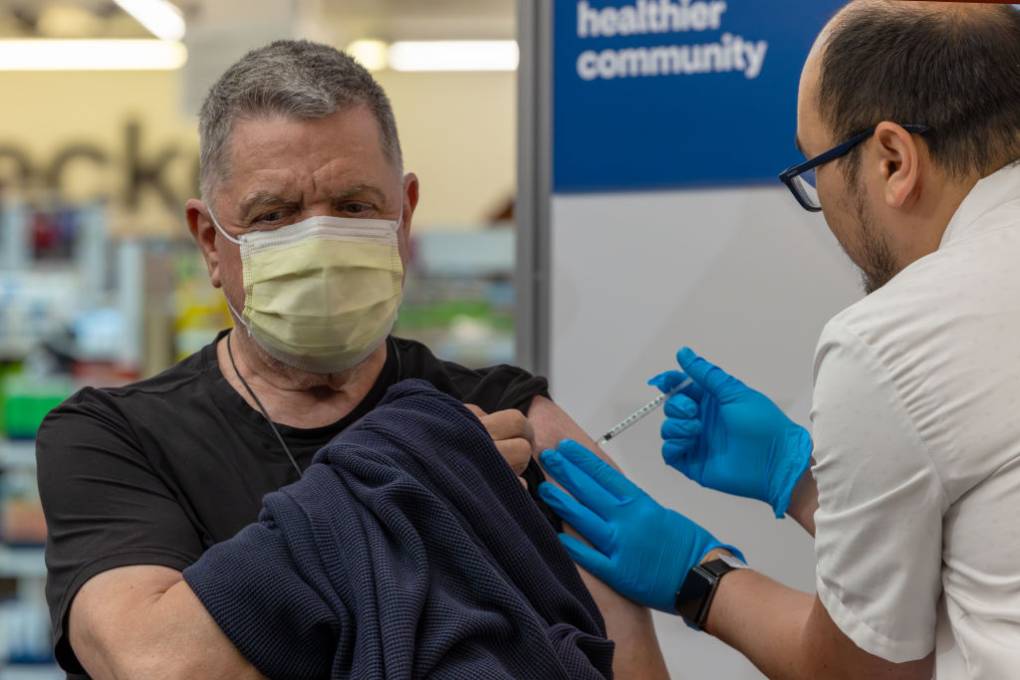
"caption": "Pharmacist Aaron Sun administers the COMIRNATY® (COVID-19 Vaccine, mRNA) vaccine by Pfizer, to John Vuich at a CVS Pharmacy in Eagle Rock, LA County. ",
"description": null,
"title": "New COVID vaccine COMIRNATY® (COVID-19 Vaccine, mRNA) by Pfizer at CVS.",
"credit": "Irfan Khan/Los Angeles Times via Getty Images",
"status": "inherit",
"altTag": null,
"isLoading": false,
"fetchFailed": false
},
"news_11975274": {
"type": "attachments",
"id": "news_11975274",
"meta": {
"index": "attachments_1716263798",
"site": "news",
"id": "11975274",
"found": true
},
"parent": 11975256,
"imgSizes": {
"twentyfourteen-full-width": {
"file": "https://cdn.kqed.org/wp-content/uploads/sites/10/2024/02/070523-Street-Medicine-Project-LV-CM_09-copy-1038x576.jpg",
"width": 1038,
"mimeType": "image/jpeg",
"height": 576
},
"thumbnail": {
"file": "https://cdn.kqed.org/wp-content/uploads/sites/10/2024/02/070523-Street-Medicine-Project-LV-CM_09-copy-160x107.jpg",
"width": 160,
"mimeType": "image/jpeg",
"height": 107
},
"post-thumbnail": {
"file": "https://cdn.kqed.org/wp-content/uploads/sites/10/2024/02/070523-Street-Medicine-Project-LV-CM_09-copy-672x372.jpg",
"width": 672,
"mimeType": "image/jpeg",
"height": 372
},
"kqedFullSize": {
"file": "https://cdn.kqed.org/wp-content/uploads/sites/10/2024/02/070523-Street-Medicine-Project-LV-CM_09-copy.jpg",
"width": 2000,
"height": 1333
},
"large": {
"file": "https://cdn.kqed.org/wp-content/uploads/sites/10/2024/02/070523-Street-Medicine-Project-LV-CM_09-copy-1020x680.jpg",
"width": 1020,
"mimeType": "image/jpeg",
"height": 680
},
"1536x1536": {
"file": "https://cdn.kqed.org/wp-content/uploads/sites/10/2024/02/070523-Street-Medicine-Project-LV-CM_09-copy-1536x1024.jpg",
"width": 1536,
"mimeType": "image/jpeg",
"height": 1024
},
"full-width": {
"file": "https://cdn.kqed.org/wp-content/uploads/sites/10/2024/02/070523-Street-Medicine-Project-LV-CM_09-copy-1920x1280.jpg",
"width": 1920,
"mimeType": "image/jpeg",
"height": 1280
},
"medium": {
"file": "https://cdn.kqed.org/wp-content/uploads/sites/10/2024/02/070523-Street-Medicine-Project-LV-CM_09-copy-800x533.jpg",
"width": 800,
"mimeType": "image/jpeg",
"height": 533
}
},
"publishDate": 1707510203,
"modified": 1707518158,
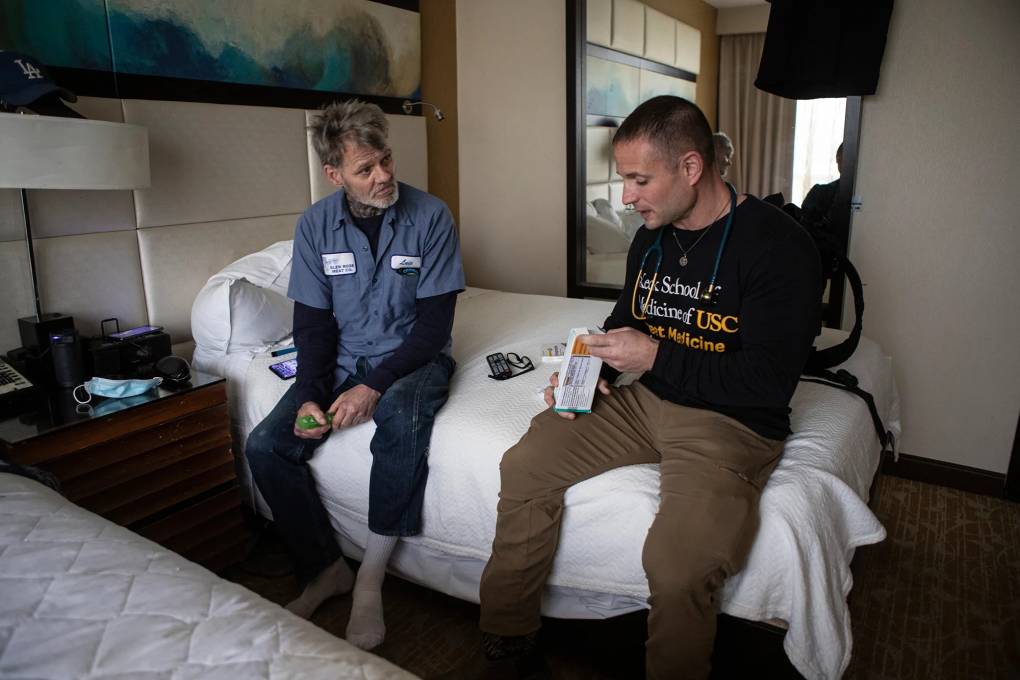
"caption": "Patient Steven Dombrowski, 'Cowboy,' speaking with physician assistant Brett Feldman in his hotel room at the LA Grand Hotel on Feb. 13, 2023. The hotel was turned into an emergency shelter for unhoused people through Project Roomkey.",
"description": null,
"title": "070523-Street-Medicine-Project-LV-CM_09 copy",
"credit": "Larry Valenzuela/CalMatters/CatchLight Local",
"status": "inherit",
"altTag": "Two men sit on a bed in a hotel room — one with a doctor's stethoscope.",
"isLoading": false,
"fetchFailed": false
},
"news_11972533": {
"type": "attachments",
"id": "news_11972533",
"meta": {
"index": "attachments_1716263798",
"site": "news",
"id": "11972533",
"found": true
},
"parent": 11972532,
"imgSizes": {
"twentyfourteen-full-width": {
"file": "https://cdn.kqed.org/wp-content/uploads/sites/10/2024/01/covidpartners_final_sm_wide-d805aa85d583f5ffe09f939ee48b5bf36f9eb297-1038x576.jpg",
"width": 1038,
"mimeType": "image/jpeg",
"height": 576
},
"thumbnail": {
"file": "https://cdn.kqed.org/wp-content/uploads/sites/10/2024/01/covidpartners_final_sm_wide-d805aa85d583f5ffe09f939ee48b5bf36f9eb297-160x90.jpg",
"width": 160,
"mimeType": "image/jpeg",
"height": 90
},
"post-thumbnail": {
"file": "https://cdn.kqed.org/wp-content/uploads/sites/10/2024/01/covidpartners_final_sm_wide-d805aa85d583f5ffe09f939ee48b5bf36f9eb297-672x372.jpg",
"width": 672,
"mimeType": "image/jpeg",
"height": 372
},
"kqedFullSize": {
"file": "https://cdn.kqed.org/wp-content/uploads/sites/10/2024/01/covidpartners_final_sm_wide-d805aa85d583f5ffe09f939ee48b5bf36f9eb297-scaled.jpg",
"width": 2560,
"height": 1440
},
"2048x2048": {
"file": "https://cdn.kqed.org/wp-content/uploads/sites/10/2024/01/covidpartners_final_sm_wide-d805aa85d583f5ffe09f939ee48b5bf36f9eb297-2048x1152.jpg",
"width": 2048,
"mimeType": "image/jpeg",
"height": 1152
},
"large": {
"file": "https://cdn.kqed.org/wp-content/uploads/sites/10/2024/01/covidpartners_final_sm_wide-d805aa85d583f5ffe09f939ee48b5bf36f9eb297-1020x574.jpg",
"width": 1020,
"mimeType": "image/jpeg",
"height": 574
},
"1536x1536": {
"file": "https://cdn.kqed.org/wp-content/uploads/sites/10/2024/01/covidpartners_final_sm_wide-d805aa85d583f5ffe09f939ee48b5bf36f9eb297-1536x864.jpg",
"width": 1536,
"mimeType": "image/jpeg",
"height": 864
},
"full-width": {
"file": "https://cdn.kqed.org/wp-content/uploads/sites/10/2024/01/covidpartners_final_sm_wide-d805aa85d583f5ffe09f939ee48b5bf36f9eb297-1920x1080.jpg",
"width": 1920,
"mimeType": "image/jpeg",
"height": 1080
},
"medium": {
"file": "https://cdn.kqed.org/wp-content/uploads/sites/10/2024/01/covidpartners_final_sm_wide-d805aa85d583f5ffe09f939ee48b5bf36f9eb297-800x450.jpg",
"width": 800,
"mimeType": "image/jpeg",
"height": 450
}
},
"publishDate": 1705092889,
"modified": 1705094442,
"caption": null,
"description": null,
"title": "My partner/roommate/kid got COVID. And I didn't. How come?",
"credit": "Josie Norton/NPR",
"status": "inherit",
"altTag": "An illustration of virus spores and to people swatting them with a tennis racket and a mask.",
"isLoading": false,
"fetchFailed": false
},
"news_11972491": {
"type": "attachments",
"id": "news_11972491",
"meta": {
"index": "attachments_1716263798",
"site": "news",
"id": "11972491",
"found": true
},
"parent": 11972313,
"imgSizes": {
"twentyfourteen-full-width": {
"file": "https://cdn.kqed.org/wp-content/uploads/sites/10/2024/01/240111-AT-HOME-COVID-TEST-GETTY-MB-KQED-1038x576.jpg",
"width": 1038,
"mimeType": "image/jpeg",
"height": 576
},
"thumbnail": {
"file": "https://cdn.kqed.org/wp-content/uploads/sites/10/2024/01/240111-AT-HOME-COVID-TEST-GETTY-MB-KQED-160x107.jpg",
"width": 160,
"mimeType": "image/jpeg",
"height": 107
},
"post-thumbnail": {
"file": "https://cdn.kqed.org/wp-content/uploads/sites/10/2024/01/240111-AT-HOME-COVID-TEST-GETTY-MB-KQED-672x372.jpg",
"width": 672,
"mimeType": "image/jpeg",
"height": 372
},
"kqedFullSize": {
"file": "https://cdn.kqed.org/wp-content/uploads/sites/10/2024/01/240111-AT-HOME-COVID-TEST-GETTY-MB-KQED.jpg",
"width": 2000,
"height": 1334
},
"large": {
"file": "https://cdn.kqed.org/wp-content/uploads/sites/10/2024/01/240111-AT-HOME-COVID-TEST-GETTY-MB-KQED-1020x680.jpg",
"width": 1020,
"mimeType": "image/jpeg",
"height": 680
},
"1536x1536": {
"file": "https://cdn.kqed.org/wp-content/uploads/sites/10/2024/01/240111-AT-HOME-COVID-TEST-GETTY-MB-KQED-1536x1025.jpg",
"width": 1536,
"mimeType": "image/jpeg",
"height": 1025
},
"full-width": {
"file": "https://cdn.kqed.org/wp-content/uploads/sites/10/2024/01/240111-AT-HOME-COVID-TEST-GETTY-MB-KQED-1920x1281.jpg",
"width": 1920,
"mimeType": "image/jpeg",
"height": 1281
},
"medium": {
"file": "https://cdn.kqed.org/wp-content/uploads/sites/10/2024/01/240111-AT-HOME-COVID-TEST-GETTY-MB-KQED-800x534.jpg",
"width": 800,
"mimeType": "image/jpeg",
"height": 534
}
},
"publishDate": 1705020969,
"modified": 1705022213,
"caption": "Boxes of BinaxNow a COVID-19 at-home test on Aug. 13, 2022.",
"description": null,
"title": "COVID-19 at home test kit",
"credit": "Photo illustration by Michael Bocchieri/Getty Images",
"status": "inherit",
"altTag": "An array of at-home COVID-19 test boxes.",
"isLoading": false,
"fetchFailed": false
},
"news_11957792": {
"type": "attachments",
"id": "news_11957792",
"meta": {
"index": "attachments_1716263798",
"site": "news",
"id": "11957792",
"found": true
},
"parent": 11957790,
"imgSizes": {
"twentyfourteen-full-width": {
"file": "https://cdn.kqed.org/wp-content/uploads/sites/10/2023/08/RS53461_008_StockPhoto_AtHomeCOVIDTest_02022022-qut-1038x576.jpg",
"width": 1038,
"mimeType": "image/jpeg",
"height": 576
},
"thumbnail": {
"file": "https://cdn.kqed.org/wp-content/uploads/sites/10/2023/08/RS53461_008_StockPhoto_AtHomeCOVIDTest_02022022-qut-160x107.jpg",
"width": 160,
"mimeType": "image/jpeg",
"height": 107
},
"post-thumbnail": {
"file": "https://cdn.kqed.org/wp-content/uploads/sites/10/2023/08/RS53461_008_StockPhoto_AtHomeCOVIDTest_02022022-qut-672x372.jpg",
"width": 672,
"mimeType": "image/jpeg",
"height": 372
},
"kqedFullSize": {
"file": "https://cdn.kqed.org/wp-content/uploads/sites/10/2023/08/RS53461_008_StockPhoto_AtHomeCOVIDTest_02022022-qut.jpg",
"width": 1920,
"height": 1280
},
"large": {
"file": "https://cdn.kqed.org/wp-content/uploads/sites/10/2023/08/RS53461_008_StockPhoto_AtHomeCOVIDTest_02022022-qut-1020x680.jpg",
"width": 1020,
"mimeType": "image/jpeg",
"height": 680
},
"1536x1536": {
"file": "https://cdn.kqed.org/wp-content/uploads/sites/10/2023/08/RS53461_008_StockPhoto_AtHomeCOVIDTest_02022022-qut-1536x1024.jpg",
"width": 1536,
"mimeType": "image/jpeg",
"height": 1024
},
"medium": {
"file": "https://cdn.kqed.org/wp-content/uploads/sites/10/2023/08/RS53461_008_StockPhoto_AtHomeCOVIDTest_02022022-qut-800x533.jpg",
"width": 800,
"mimeType": "image/jpeg",
"height": 533
}
},
"publishDate": 1691619081,
"modified": 1704988325,
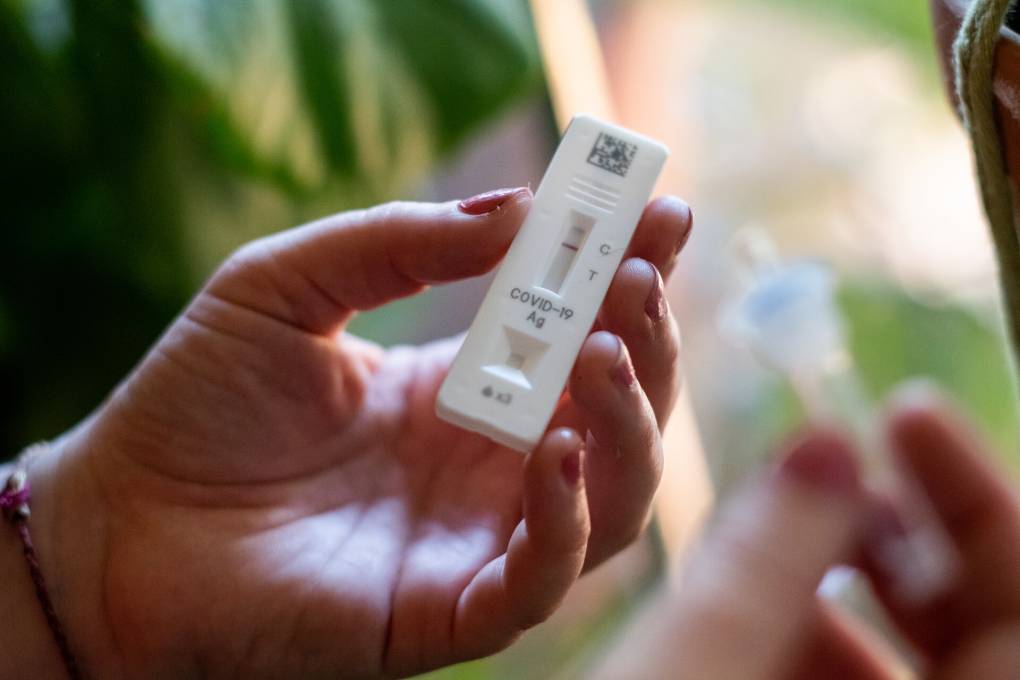
"caption": "By this stage of the pandemic, taking an at-home COVID antigen test has become routine for many.",
"description": null,
"title": "covid-symptoms-incubation-period",
"credit": "Beth LaBerge/KQED",
"status": "inherit",
"altTag": "A hand holds a COVID test strip",
"isLoading": false,
"fetchFailed": false
},
"news_11970050": {
"type": "attachments",
"id": "news_11970050",
"meta": {
"index": "attachments_1716263798",
"site": "news",
"id": "11970050",
"found": true
},
"title": "COVID-19 Testing Demand Remains High Due To Surge Of Omicron Variant",
"publishDate": 1702665001,
"status": "inherit",
"parent": 0,
"modified": 1724784896,
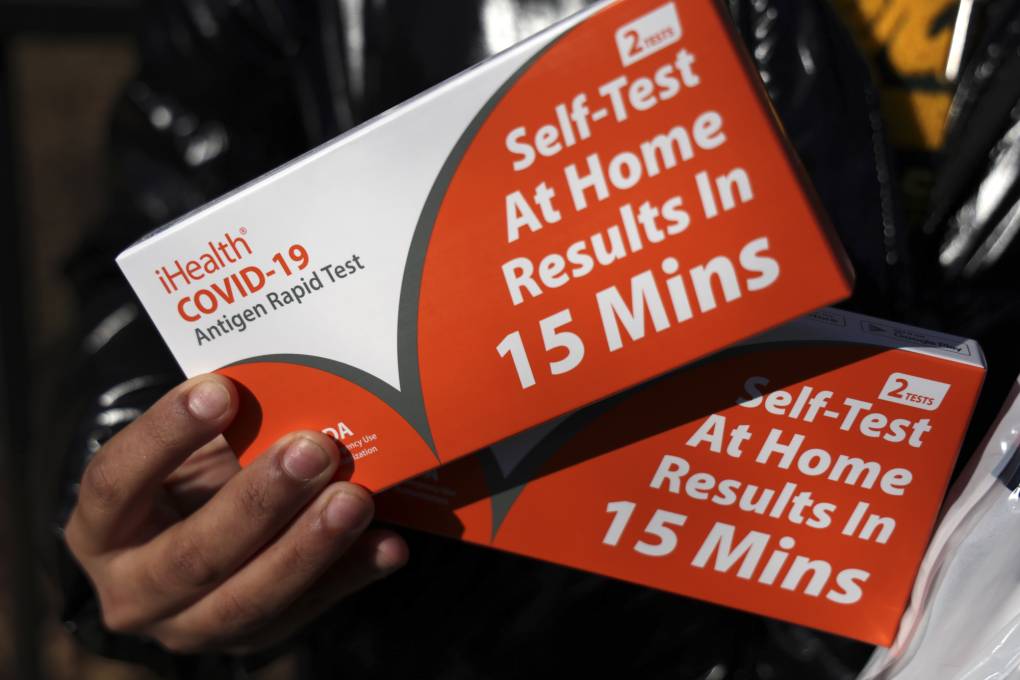
"caption": "Americans will be able to order four free COVID-19 tests at the end of September that will be delivered to their mailbox.",
"credit": "Alex Wong/Getty Images",
"altTag": "A hand holds two bright orange boxes that read \"COVID-19 Antigen Rapid Test\" on them.",
"description": null,
"imgSizes": {
"medium": {
"file": "https://cdn.kqed.org/wp-content/uploads/sites/10/2023/12/231215-COVID-TESTS-GETTY-AW-KQED-800x533.jpg",
"width": 800,
"height": 533,
"mimeType": "image/jpeg"
},
"large": {
"file": "https://cdn.kqed.org/wp-content/uploads/sites/10/2023/12/231215-COVID-TESTS-GETTY-AW-KQED-1020x680.jpg",
"width": 1020,
"height": 680,
"mimeType": "image/jpeg"
},
"thumbnail": {
"file": "https://cdn.kqed.org/wp-content/uploads/sites/10/2023/12/231215-COVID-TESTS-GETTY-AW-KQED-160x107.jpg",
"width": 160,
"height": 107,
"mimeType": "image/jpeg"
},
"1536x1536": {
"file": "https://cdn.kqed.org/wp-content/uploads/sites/10/2023/12/231215-COVID-TESTS-GETTY-AW-KQED-1536x1024.jpg",
"width": 1536,
"height": 1024,
"mimeType": "image/jpeg"
},
"post-thumbnail": {
"file": "https://cdn.kqed.org/wp-content/uploads/sites/10/2023/12/231215-COVID-TESTS-GETTY-AW-KQED-672x372.jpg",
"width": 672,
"height": 372,
"mimeType": "image/jpeg"
},
"twentyfourteen-full-width": {
"file": "https://cdn.kqed.org/wp-content/uploads/sites/10/2023/12/231215-COVID-TESTS-GETTY-AW-KQED-1038x576.jpg",
"width": 1038,
"height": 576,
"mimeType": "image/jpeg"
},
"full-width": {
"file": "https://cdn.kqed.org/wp-content/uploads/sites/10/2023/12/231215-COVID-TESTS-GETTY-AW-KQED-1920x1280.jpg",
"width": 1920,
"height": 1280,
"mimeType": "image/jpeg"
},
"kqedFullSize": {
"file": "https://cdn.kqed.org/wp-content/uploads/sites/10/2023/12/231215-COVID-TESTS-GETTY-AW-KQED.jpg",
"width": 2000,
"height": 1333
}
},
"isLoading": false,
"fetchFailed": false
},
"news_11926460": {
"type": "attachments",
"id": "news_11926460",
"meta": {
"index": "attachments_1716263798",
"site": "news",
"id": "11926460",
"found": true
},
"parent": 11904834,
"imgSizes": {
"twentyfourteen-full-width": {
"file": "https://cdn.kqed.org/wp-content/uploads/sites/10/2022/09/RS58805_GettyImages-1242499563-qut-1038x576.jpg",
"width": 1038,
"mimeType": "image/jpeg",
"height": 576
},
"thumbnail": {
"file": "https://cdn.kqed.org/wp-content/uploads/sites/10/2022/09/RS58805_GettyImages-1242499563-qut-160x107.jpg",
"width": 160,
"mimeType": "image/jpeg",
"height": 107
},
"post-thumbnail": {
"file": "https://cdn.kqed.org/wp-content/uploads/sites/10/2022/09/RS58805_GettyImages-1242499563-qut-672x372.jpg",
"width": 672,
"mimeType": "image/jpeg",
"height": 372
},
"kqedFullSize": {
"file": "https://cdn.kqed.org/wp-content/uploads/sites/10/2022/09/RS58805_GettyImages-1242499563-qut.jpg",
"width": 1920,
"height": 1280
},
"large": {
"file": "https://cdn.kqed.org/wp-content/uploads/sites/10/2022/09/RS58805_GettyImages-1242499563-qut-1020x680.jpg",
"width": 1020,
"mimeType": "image/jpeg",
"height": 680
},
"1536x1536": {
"file": "https://cdn.kqed.org/wp-content/uploads/sites/10/2022/09/RS58805_GettyImages-1242499563-qut-1536x1024.jpg",
"width": 1536,
"mimeType": "image/jpeg",
"height": 1024
},
"medium": {
"file": "https://cdn.kqed.org/wp-content/uploads/sites/10/2022/09/RS58805_GettyImages-1242499563-qut-800x533.jpg",
"width": 800,
"mimeType": "image/jpeg",
"height": 533
}
},
"publishDate": 1663861008,
"modified": 1701993524,
"caption": "A stack of BinaxNow COVID-19 at-home test kits.",
"description": null,
"title": "free-covid-tests-usps",
"credit": "Nathan Howard/Getty Images",
"status": "inherit",
"altTag": "A stack of boxes sits on a table.",
"isLoading": false,
"fetchFailed": false
},
"news_11967234": {
"type": "attachments",
"id": "news_11967234",
"meta": {
"index": "attachments_1716263798",
"site": "news",
"id": "11967234",
"found": true
},
"parent": 11966797,
"imgSizes": {
"twentyfourteen-full-width": {
"file": "https://ww2.kqed.org/app/uploads/sites/10/2023/11/GettyImages-1387450682-1024x576.jpg",
"width": 1024,
"mimeType": "image/jpeg",
"height": 576
},
"thumbnail": {
"file": "https://ww2.kqed.org/app/uploads/sites/10/2023/11/GettyImages-1387450682-160x107.jpg",
"width": 160,
"mimeType": "image/jpeg",
"height": 107
},
"post-thumbnail": {
"file": "https://ww2.kqed.org/app/uploads/sites/10/2023/11/GettyImages-1387450682-672x372.jpg",
"width": 672,
"mimeType": "image/jpeg",
"height": 372
},
"kqedFullSize": {
"file": "https://ww2.kqed.org/app/uploads/sites/10/2023/11/GettyImages-1387450682.jpg",
"width": 1024,
"height": 683
},
"large": {
"file": "https://ww2.kqed.org/app/uploads/sites/10/2023/11/GettyImages-1387450682-1020x680.jpg",
"width": 1020,
"mimeType": "image/jpeg",
"height": 680
},
"medium": {
"file": "https://ww2.kqed.org/app/uploads/sites/10/2023/11/GettyImages-1387450682-800x534.jpg",
"width": 800,
"mimeType": "image/jpeg",
"height": 534
}
},
"publishDate": 1699984325,
"modified": 1699989592,
"caption": "In this photo illustration, a box of 'Paxlovid,' the Pfizer drug for which the Ministry of Health has signed a procurement agreement, is displayed at the Ministry of Health on March 24, 2022, in Madrid, Spain. ",
"description": null,
"title": "Health Ministry Signs An Agreement With Pfizer To Purchase Drugs Against Covid-19",
"credit": "Europa Press/C.Lujan.POOL via Getty Images",
"status": "inherit",
"altTag": "A white box with blue and red coloring on the left side that says \"Paxlovid.\"",
"isLoading": false,
"fetchFailed": false
},
"news_11966224": {
"type": "attachments",
"id": "news_11966224",
"meta": {
"index": "attachments_1716263798",
"site": "news",
"id": "11966224",
"found": true
},
"parent": 0,
"imgSizes": {
"twentyfourteen-full-width": {
"file": "https://ww2.kqed.org/app/uploads/sites/10/2023/11/005_SANFRANCISCO_STFRANCISER_08262021-KQED-1038x576.jpg",
"width": 1038,
"mimeType": "image/jpeg",
"height": 576
},
"thumbnail": {
"file": "https://ww2.kqed.org/app/uploads/sites/10/2023/11/005_SANFRANCISCO_STFRANCISER_08262021-KQED-160x107.jpg",
"width": 160,
"mimeType": "image/jpeg",
"height": 107
},
"post-thumbnail": {
"file": "https://ww2.kqed.org/app/uploads/sites/10/2023/11/005_SANFRANCISCO_STFRANCISER_08262021-KQED-672x372.jpg",
"width": 672,
"mimeType": "image/jpeg",
"height": 372
},
"kqedFullSize": {
"file": "https://ww2.kqed.org/app/uploads/sites/10/2023/11/005_SANFRANCISCO_STFRANCISER_08262021-KQED.jpg",
"width": 2000,
"height": 1333
},
"large": {
"file": "https://ww2.kqed.org/app/uploads/sites/10/2023/11/005_SANFRANCISCO_STFRANCISER_08262021-KQED-1020x680.jpg",
"width": 1020,
"mimeType": "image/jpeg",
"height": 680
},
"1536x1536": {
"file": "https://ww2.kqed.org/app/uploads/sites/10/2023/11/005_SANFRANCISCO_STFRANCISER_08262021-KQED-1536x1024.jpg",
"width": 1536,
"mimeType": "image/jpeg",
"height": 1024
},
"full-width": {
"file": "https://ww2.kqed.org/app/uploads/sites/10/2023/11/005_SANFRANCISCO_STFRANCISER_08262021-KQED-1920x1280.jpg",
"width": 1920,
"mimeType": "image/jpeg",
"height": 1280
},
"medium": {
"file": "https://ww2.kqed.org/app/uploads/sites/10/2023/11/005_SANFRANCISCO_STFRANCISER_08262021-KQED-800x533.jpg",
"width": 800,
"mimeType": "image/jpeg",
"height": 533
}
},
"publishDate": 1698943593,
"modified": 1698944242,
"caption": "Substance use navigator Monique Randolph confers with an ER doctor at Saint Francis Memorial Hospital in San Francisco on Aug. 26, 2021.",
"description": null,
"title": "face-masks-hospitals-patients",
"credit": "Beth LaBerge/KQED",
"status": "inherit",
"altTag": "A woman with long hair, glasses, a mask, and a floral shirt points at a clipboard, which a doctor in blue scrubs and a mask looks at.",
"isLoading": false,
"fetchFailed": false
},
"news_11965199": {
"type": "attachments",
"id": "news_11965199",
"meta": {
"index": "attachments_1716263798",
"site": "news",
"id": "11965199",
"found": true
},
"parent": 11965181,
"imgSizes": {
"twentyfourteen-full-width": {
"file": "https://ww2.kqed.org/app/uploads/sites/10/2023/10/GettyImages-184929692-1038x576.jpg",
"width": 1038,
"mimeType": "image/jpeg",
"height": 576
},
"thumbnail": {
"file": "https://ww2.kqed.org/app/uploads/sites/10/2023/10/GettyImages-184929692-160x107.jpg",
"width": 160,
"mimeType": "image/jpeg",
"height": 107
},
"post-thumbnail": {
"file": "https://ww2.kqed.org/app/uploads/sites/10/2023/10/GettyImages-184929692-672x372.jpg",
"width": 672,
"mimeType": "image/jpeg",
"height": 372
},
"kqedFullSize": {
"file": "https://ww2.kqed.org/app/uploads/sites/10/2023/10/GettyImages-184929692-scaled.jpg",
"width": 2560,
"height": 1707
},
"2048x2048": {
"file": "https://ww2.kqed.org/app/uploads/sites/10/2023/10/GettyImages-184929692-2048x1365.jpg",
"width": 2048,
"mimeType": "image/jpeg",
"height": 1365
},
"large": {
"file": "https://ww2.kqed.org/app/uploads/sites/10/2023/10/GettyImages-184929692-1020x680.jpg",
"width": 1020,
"mimeType": "image/jpeg",
"height": 680
},
"1536x1536": {
"file": "https://ww2.kqed.org/app/uploads/sites/10/2023/10/GettyImages-184929692-1536x1024.jpg",
"width": 1536,
"mimeType": "image/jpeg",
"height": 1024
},
"full-width": {
"file": "https://ww2.kqed.org/app/uploads/sites/10/2023/10/GettyImages-184929692-1920x1280.jpg",
"width": 1920,
"mimeType": "image/jpeg",
"height": 1280
},
"medium": {
"file": "https://ww2.kqed.org/app/uploads/sites/10/2023/10/GettyImages-184929692-800x533.jpg",
"width": 800,
"mimeType": "image/jpeg",
"height": 533
}
},
"publishDate": 1697836607,
"modified": 1697836697,
"caption": null,
"description": null,
"title": "creative writing",
"credit": "Marilyn Nieves/Getty Images",
"status": "inherit",
"altTag": "A child writing at a desk in class with a pencil.",
"isLoading": false,
"fetchFailed": false
},
"news_11962581": {
"type": "attachments",
"id": "news_11962581",
"meta": {
"index": "attachments_1716263798",
"site": "news",
"id": "11962581",
"found": true
},
"parent": 11962580,
"imgSizes": {
"twentyfourteen-full-width": {
"file": "https://ww2.kqed.org/app/uploads/sites/10/2023/09/ap23023643681288-1-efc059a38509909d4dc973b421c367630741d549-1038x576.jpg",
"width": 1038,
"mimeType": "image/jpeg",
"height": 576
},
"thumbnail": {
"file": "https://ww2.kqed.org/app/uploads/sites/10/2023/09/ap23023643681288-1-efc059a38509909d4dc973b421c367630741d549-160x120.jpg",
"width": 160,
"mimeType": "image/jpeg",
"height": 120
},
"post-thumbnail": {
"file": "https://ww2.kqed.org/app/uploads/sites/10/2023/09/ap23023643681288-1-efc059a38509909d4dc973b421c367630741d549-672x372.jpg",
"width": 672,
"mimeType": "image/jpeg",
"height": 372
},
"kqedFullSize": {
"file": "https://ww2.kqed.org/app/uploads/sites/10/2023/09/ap23023643681288-1-efc059a38509909d4dc973b421c367630741d549-scaled.jpg",
"width": 2560,
"height": 1920
},
"2048x2048": {
"file": "https://ww2.kqed.org/app/uploads/sites/10/2023/09/ap23023643681288-1-efc059a38509909d4dc973b421c367630741d549-2048x1536.jpg",
"width": 2048,
"mimeType": "image/jpeg",
"height": 1536
},
"large": {
"file": "https://ww2.kqed.org/app/uploads/sites/10/2023/09/ap23023643681288-1-efc059a38509909d4dc973b421c367630741d549-1020x765.jpg",
"width": 1020,
"mimeType": "image/jpeg",
"height": 765
},
"1536x1536": {
"file": "https://ww2.kqed.org/app/uploads/sites/10/2023/09/ap23023643681288-1-efc059a38509909d4dc973b421c367630741d549-1536x1152.jpg",
"width": 1536,
"mimeType": "image/jpeg",
"height": 1152
},
"full-width": {
"file": "https://ww2.kqed.org/app/uploads/sites/10/2023/09/ap23023643681288-1-efc059a38509909d4dc973b421c367630741d549-1920x1440.jpg",
"width": 1920,
"mimeType": "image/jpeg",
"height": 1440
},
"medium": {
"file": "https://ww2.kqed.org/app/uploads/sites/10/2023/09/ap23023643681288-1-efc059a38509909d4dc973b421c367630741d549-800x600.jpg",
"width": 800,
"mimeType": "image/jpeg",
"height": 600
}
},
"publishDate": 1695840416,
"modified": 1695848172,
"caption": "A nurse prepares a syringe of a COVID-19 vaccine at an inoculation station in Jackson, Miss., July 19, 2022. US health officials are proposing a simplified approach to COVID-19 vaccinations, which would allow most adults and children to get a once-a-year shot to protect against the mutating virus. The new system unveiled Monday, Jan. 23, 2023 would make COVID-19 inoculations more like the annual flu shot.",
"description": "FILE - A nurse prepares a syringe of a COVID-19 vaccine at an inoculation station in Jackson, Miss., July 19, 2022. U.S. health officials are proposing a simplified approach to COVID-19 vaccinations, which would allow most adults and children to get a once-a-year shot to protect against the mutating virus. The new system unveiled Monday, Jan. 23, 2023 would make COVID-19 inoculations more like the annual flu shot. Americans would no longer have to keep track of how many shots they’ve received or how many months it’s been since their last booster. (AP Photo/Rogelio V. Solis, File)",
"title": "There's high demand for this fall's COVID shots, which offer protection against circulating variants of omicron. But there's been some distribution hiccups.",
"credit": "Rogelio V. Solis/The Associated Press",
"status": "inherit",
"altTag": "A blue-gloved hand holds a small vial and syringe above a desk.",
"isLoading": false,
"fetchFailed": false
},
"news_11961112": {
"type": "attachments",
"id": "news_11961112",
"meta": {
"index": "attachments_1716263798",
"site": "news",
"id": "11961112",
"found": true
},
"parent": 0,
"imgSizes": {
"twentyfourteen-full-width": {
"file": "https://ww2.kqed.org/app/uploads/sites/10/2023/09/005_SanFrancisco_UnitedinHealthKidsCOVIDVaccination_11092021-qut-1038x576.jpg",
"width": 1038,
"mimeType": "image/jpeg",
"height": 576
},
"thumbnail": {
"file": "https://ww2.kqed.org/app/uploads/sites/10/2023/09/005_SanFrancisco_UnitedinHealthKidsCOVIDVaccination_11092021-qut-160x107.jpg",
"width": 160,
"mimeType": "image/jpeg",
"height": 107
},
"post-thumbnail": {
"file": "https://ww2.kqed.org/app/uploads/sites/10/2023/09/005_SanFrancisco_UnitedinHealthKidsCOVIDVaccination_11092021-qut-672x372.jpg",
"width": 672,
"mimeType": "image/jpeg",
"height": 372
},
"kqedFullSize": {
"file": "https://ww2.kqed.org/app/uploads/sites/10/2023/09/005_SanFrancisco_UnitedinHealthKidsCOVIDVaccination_11092021-qut.jpg",
"width": 1920,
"height": 1280
},
"large": {
"file": "https://ww2.kqed.org/app/uploads/sites/10/2023/09/005_SanFrancisco_UnitedinHealthKidsCOVIDVaccination_11092021-qut-1020x680.jpg",
"width": 1020,
"mimeType": "image/jpeg",
"height": 680
},
"1536x1536": {
"file": "https://ww2.kqed.org/app/uploads/sites/10/2023/09/005_SanFrancisco_UnitedinHealthKidsCOVIDVaccination_11092021-qut-1536x1024.jpg",
"width": 1536,
"mimeType": "image/jpeg",
"height": 1024
},
"medium": {
"file": "https://ww2.kqed.org/app/uploads/sites/10/2023/09/005_SanFrancisco_UnitedinHealthKidsCOVIDVaccination_11092021-qut-800x533.jpg",
"width": 800,
"mimeType": "image/jpeg",
"height": 533
}
},
"publishDate": 1694646398,
"modified": 1694709097,
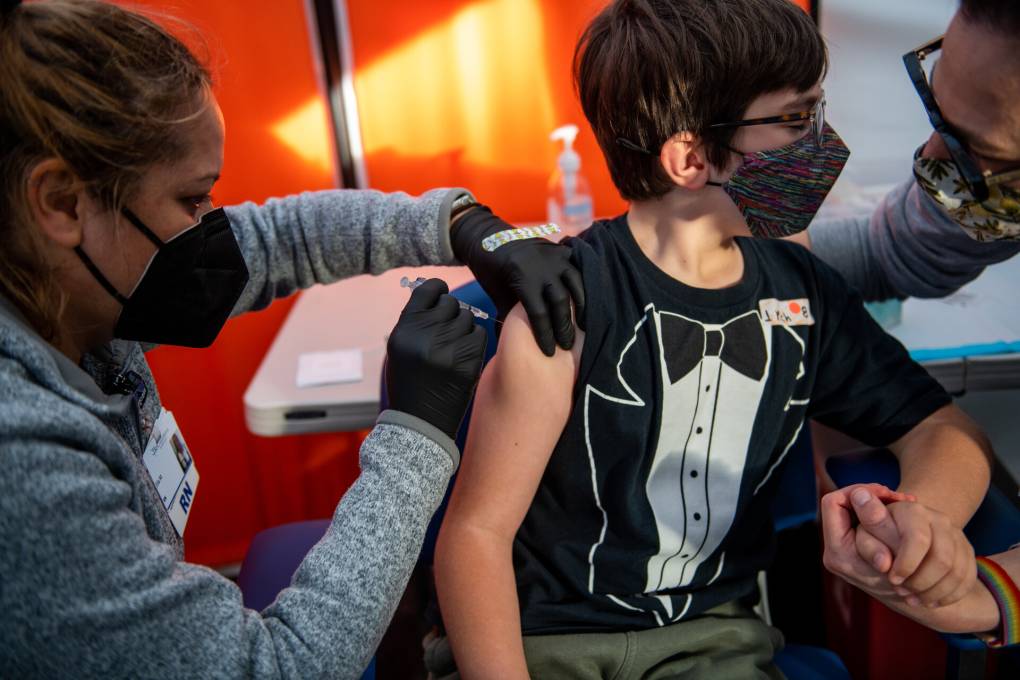
"caption": "On Sept. 12, 2023, advisers of the Centers for Disease Control and Prevention formally authorized new COVID vaccines from Moderna and Pfizer (also known as Comirnaty). The vaccines are now starting to roll out across the United States, amid a rise in COVID cases locally and nationally.",
"description": null,
"title": "new-covid-booster",
"credit": "Beth LaBerge/KQED",
"status": "inherit",
"altTag": "A boy with a tuxedo T-shirt and a face mask holds his mother's hand as he receives a shot in the arm by a nurse.",
"isLoading": false,
"fetchFailed": false
}
},
"audioPlayerReducer": {
"postId": "stream_live",
"isPaused": true,
"isPlaying": false,
"pfsActive": false,
"pledgeModalIsOpen": true,
"playerDrawerIsOpen": false,
"liveAudioPlayStartedAt": 0,
"liveAudioPlayContext": ""
},
"authorsReducer": {
"byline_news_11975256": {
"type": "authors",
"id": "byline_news_11975256",
"meta": {
"override": true
},
"slug": "byline_news_11975256",
"name": "\u003ca href=\"https://calmatters.org/author/marisa-kendall/\">Marisa Kendall\u003c/a>",
"isLoading": false
},
"byline_news_11972532": {
"type": "authors",
"id": "byline_news_11972532",
"meta": {
"override": true
},
"slug": "byline_news_11972532",
"name": "Abraar Karan",
"isLoading": false
},
"byline_news_11965181": {
"type": "authors",
"id": "byline_news_11965181",
"meta": {
"override": true
},
"slug": "byline_news_11965181",
"name": "\u003ca href=\"https://edsource.org/author/jfensterwald\">John Fensterwald\u003c/a> and \u003ca href=\"https://edsource.org/author/dwillis\">Daniel J. Willis\u003c/a>",
"isLoading": false
},
"byline_news_11962580": {
"type": "authors",
"id": "byline_news_11962580",
"meta": {
"override": true
},
"slug": "byline_news_11962580",
"name": "\u003ca href=\"https://www.npr.org/people/96022165/yuki-noguchi\">Yuki Noguchi\u003c/a> and \u003ca href=\"https://www.npr.org/people/707478309/carmel-wroth\">Carmel Wroth\u003c/a>",
"isLoading": false
},
"carlysevern": {
"type": "authors",
"id": "3243",
"meta": {
"index": "authors_1716337520",
"id": "3243",
"found": true
},
"name": "Carly Severn",
"firstName": "Carly",
"lastName": "Severn",
"slug": "carlysevern",
"email": "csevern@kqed.org",
"display_author_email": false,
"staff_mastheads": [
"news"
],
"title": "Senior Editor, Audience News ",
"bio": "Carly is KQED's Senior Editor of Audience News on the Digital News team, and has reported for the California Report Magazine, Bay Curious and KQED Arts. She's formerly the host of \u003ca href=\"http://ww2.kqed.org/pop/category/the-cooler/\" rel=\"noopener noreferrer\">The Cooler\u003c/a> podcast.",
"avatar": "https://secure.gravatar.com/avatar/54037bf5c128fe678f0ef26cec97a93f2e7f220a22d7285703328f12c42c1b1d?s=600&d=blank&r=g",
"twitter": "teacupinthebay",
"bluesky": null,
"facebook": null,
"instagram": null,
"linkedin": null,
"sites": [
{
"site": "",
"roles": [
"editor"
]
},
{
"site": "arts",
"roles": [
"editor"
]
},
{
"site": "news",
"roles": [
"administrator"
]
},
{
"site": "pop",
"roles": [
"editor"
]
},
{
"site": "futureofyou",
"roles": [
"editor"
]
},
{
"site": "about",
"roles": [
"administrator"
]
},
{
"site": "mindshift",
"roles": [
"editor"
]
},
{
"site": "bayareabites",
"roles": [
"editor"
]
},
{
"site": "stateofhealth",
"roles": [
"editor"
]
},
{
"site": "science",
"roles": [
"editor"
]
},
{
"site": "food",
"roles": [
"contributor"
]
},
{
"site": "forum",
"roles": [
"editor"
]
},
{
"site": "perspectives",
"roles": [
"administrator"
]
},
{
"site": "liveblog",
"roles": [
"editor"
]
}
],
"headData": {
"title": "Carly Severn | KQED",
"description": "Senior Editor, Audience News ",
"ogImgSrc": "https://secure.gravatar.com/avatar/54037bf5c128fe678f0ef26cec97a93f2e7f220a22d7285703328f12c42c1b1d?s=600&d=blank&r=g",
"twImgSrc": "https://secure.gravatar.com/avatar/54037bf5c128fe678f0ef26cec97a93f2e7f220a22d7285703328f12c42c1b1d?s=600&d=blank&r=g"
},
"isLoading": false,
"link": "/author/carlysevern"
},
"ccabreralomeli": {
"type": "authors",
"id": "11708",
"meta": {
"index": "authors_1716337520",
"id": "11708",
"found": true
},
"name": "Carlos Cabrera-Lomelí",
"firstName": "Carlos",
"lastName": "Cabrera-Lomelí",
"slug": "ccabreralomeli",
"email": "ccabreralomeli@KQED.org",
"display_author_email": true,
"staff_mastheads": [
"news"
],
"title": "Community Reporter",
"bio": "Carlos Cabrera-Lomelí is a community reporter with KQED's digital engagement team. He also reports and co-produces for KQED's bilingual news hub KQED en Español. He grew up in San Francisco's Mission District and has previously worked with Univision, 48 Hills and REFORMA in Mexico City.",
"avatar": "https://secure.gravatar.com/avatar/c309be9665e484f887b818c89e273ecc673004f426f36b24d00a4d813a2e0518?s=600&d=blank&r=g",
"twitter": "@LomeliCabrera",
"bluesky": null,
"facebook": null,
"instagram": null,
"linkedin": null,
"sites": [
{
"site": "arts",
"roles": [
"editor"
]
},
{
"site": "news",
"roles": [
"editor"
]
},
{
"site": "about",
"roles": [
"editor"
]
},
{
"site": "science",
"roles": [
"editor"
]
},
{
"site": "perspectives",
"roles": [
"editor"
]
},
{
"site": "elections",
"roles": [
"editor"
]
},
{
"site": "liveblog",
"roles": [
"contributor"
]
}
],
"headData": {
"title": "Carlos Cabrera-Lomelí | KQED",
"description": "Community Reporter",
"ogImgSrc": "https://secure.gravatar.com/avatar/c309be9665e484f887b818c89e273ecc673004f426f36b24d00a4d813a2e0518?s=600&d=blank&r=g",
"twImgSrc": "https://secure.gravatar.com/avatar/c309be9665e484f887b818c89e273ecc673004f426f36b24d00a4d813a2e0518?s=600&d=blank&r=g"
},
"isLoading": false,
"link": "/author/ccabreralomeli"
},
"nkhan": {
"type": "authors",
"id": "11867",
"meta": {
"index": "authors_1716337520",
"id": "11867",
"found": true
},
"name": "Nisa Khan",
"firstName": "Nisa",
"lastName": "Khan",
"slug": "nkhan",
"email": "nkhan@kqed.org",
"display_author_email": false,
"staff_mastheads": [],
"title": "KQED Contributor",
"bio": "Nisa Khan is a reporter for KQED's Audience News Desk. She was formerly a data reporter at Michigan Radio. She earned a Bachelor of Science in Information from the University of Michigan and a Master of Arts in Communication from Stanford University.",
"avatar": "https://secure.gravatar.com/avatar/8720459eef081ff64582b3506b124d58523e80e120704a0cbd9892533c914991?s=600&d=blank&r=g",
"twitter": "mnisakhan",
"bluesky": null,
"facebook": null,
"instagram": null,
"linkedin": null,
"sites": [
{
"site": "arts",
"roles": [
"editor"
]
},
{
"site": "news",
"roles": [
"editor"
]
},
{
"site": "science",
"roles": [
"editor",
"author"
]
},
{
"site": "forum",
"roles": [
"editor"
]
},
{
"site": "liveblog",
"roles": [
"contributor"
]
}
],
"headData": {
"title": "Nisa Khan | KQED",
"description": "KQED Contributor",
"ogImgSrc": "https://secure.gravatar.com/avatar/8720459eef081ff64582b3506b124d58523e80e120704a0cbd9892533c914991?s=600&d=blank&r=g",
"twImgSrc": "https://secure.gravatar.com/avatar/8720459eef081ff64582b3506b124d58523e80e120704a0cbd9892533c914991?s=600&d=blank&r=g"
},
"isLoading": false,
"link": "/author/nkhan"
}
},
"pagesReducer": {
"news_tag_covid": {
"type": "terms",
"id": "news_27989",
"meta": {
"index": "terms_1716263798",
"site": "news",
"id": "27989",
"score": 9.103905
},
"featImg": null,
"name": "covid",
"description": null,
"taxonomy": "tag",
"headData": {
"twImgId": null,
"twTitle": null,
"ogTitle": null,
"ogImgId": null,
"twDescription": null,
"description": null,
"title": "covid Archives | KQED News",
"ogDescription": null
},
"ttid": 28006,
"slug": "covid",
"isLoading": false,
"title": "covid",
"pageMeta": {
"site": "news",
"WpPageTemplate": "page-topic-editorial",
"currentPage": 3
},
"blocks": [
{
"blockName": "kqed/post-list",
"attrs": {
"layout": "cardArticle2",
"query": "posts/news?tag=covid",
"seeMore": false,
"paginated": true,
"page": 3
}
},
{
"blockName": "kqed/ad"
}
]
}
},
"pfsSessionReducer": {},
"postsReducer": {
"stream_live": {
"type": "live",
"id": "stream_live",
"audioUrl": "https://streams.kqed.org/kqedradio",
"title": "Live Stream",
"excerpt": "Live Stream information currently unavailable.",
"link": "/radio",
"featImg": "",
"label": {
"name": "KQED Live",
"link": "/"
}
},
"stream_kqedNewscast": {
"type": "posts",
"id": "stream_kqedNewscast",
"audioUrl": "https://www.kqed.org/.stream/anon/radio/RDnews/newscast.mp3?_=1",
"title": "KQED Newscast",
"featImg": "",
"label": {
"name": "88.5 FM",
"link": "/"
}
},
"news_11977786": {
"type": "posts",
"id": "news_11977786",
"meta": {
"index": "posts_1716263798",
"site": "news",
"id": "11977786",
"score": null,
"sort": [
1709380826000
]
},
"guestAuthors": [],
"slug": "a-new-covid-vaccine-dose-is-now-available-for-people-age-65-and-older-where-can-you-find-a-shot-near-you",
"title": "A New COVID Vaccine Dose Is Now Available for People Age 65 and Older. Where Can You Find a Shot Near You?",
"publishDate": 1709380826,
"format": "image",
"headTitle": "A New COVID Vaccine Dose Is Now Available for People Age 65 and Older. Where Can You Find a Shot Near You? | KQED",
"labelTerm": {
"site": "news"
},
"content": "\u003cp>Older adults age 65 and over can now get another COVID vaccine this spring, after the Centers for Disease and Control and Prevention (CDC) formally recommended an extra shot for this age group.\u003c/p>\n\u003cp>The additional vaccine being offered to this age group is another dose of \u003ca href=\"https://www.kqed.org/news/11960630/free-new-covid-vaccine-near-me-2023\">the same updated COVID vaccine that became widely available last fall for everyone age 6 months and older.\u003c/a> All people in this 65+ age group are now eligible to receive this extra vaccine, as long as it’s been at least four months since their last COVID vaccine. These new shots are now rolling out through health care providers and county public health departments, as well as at health centers and pharmacies like CVS, Walgreens, Rite Aid and Safeway.\u003c/p>\n\u003cp>Keep reading for what you need to know about the new booster shots for people age 65 and older, and how to find a free COVID vaccine near you for yourself or a loved one.\u003c/p>\n\u003cp>\u003cstrong>Jump straight to: \u003c/strong>\u003c/p>\n\u003cul>\n\u003cli>\u003cstrong>\u003ca href=\"#where\">Where can I find a new COVID vaccine near me for people age 65 and older?\u003c/a>\u003c/strong>\u003c/li>\n\u003cli>\u003cstrong>\u003ca href=\"#doihavetopayfornewcovidvaccine\">Why was I asked to pay for my new extra COVID shot if I’m age 65 or older?\u003c/a>\u003c/strong>\u003c/li>\n\u003cli>\u003cstrong>\u003ca href=\"#kaisernewcovidvaccine\">Why can’t I get a new COVID vaccine at a pharmacy if I have Kaiser health insurance?\u003c/a>\u003c/strong>\u003c/li>\n\u003c/ul>\n\u003ch2>Why should older adults age 65 and over get another dose of the COVID vaccine this spring?\u003c/h2>\n\u003cp>The CDC’s recommendation, made on Feb. 28, acknowledges what the agency calls “the increased risk of severe disease from COVID-19 in older adults.”\u003c/p>\n\u003cp>\u003ca href=\"https://www.cdc.gov/media/releases/2024/s-0228-covid.html\">“Most COVID-19 deaths and hospitalizations last year were among people 65 years and older,”\u003c/a> said CDC Director Dr. Mandy Cohen in a statement announcing the approval of extra vaccines for this age group. “An additional vaccine dose can provide added protection that may have decreased over time for those at highest risk,” she said.\u003c/p>\n\u003cp>[aside postID=news_11954507 hero='https://ww2.kqed.org/app/uploads/sites/10/2023/06/RS66630_GettyImages-1369841386-qut-1020x680.jpg']There’s also a practical element to the CDC’s decision to recommend an extra vaccine dose for this age group — because their recommendation means that \u003ca href=\"https://kffhealthnews.org/news/article/cdc-faces-dilemma-over-recommending-new-covid-booster-for-all/amp/\">now health insurers \u003cem>have\u003c/em> \u003cem>to\u003c/em> cover your extra 2024 COVID vaccine\u003c/a>. This update means that \u003ca href=\"https://www.cdc.gov/coronavirus/2019-ncov/vaccines/recommendations/immuno.html\">older adults now join immunocompromised people in being eligible\u003c/a> for an additional vaccine dose due to their higher risk levels.\u003c/p>\n\u003cp>Unlike previous rounds of the vaccine, the Food and Drug Administration (FDA) and the CDC aren’t calling the latest COVID vaccine a “booster” — so you probably won’t see that language online around appointments. Instead, they’re referring to it as a “new” or “updated” COVID vaccine for 2023–2024 that’s been updated to better target a more recent strain of the coronavirus than previous vaccines: This time, the omicron variant known as XBB.1.5.\u003c/p>\n\u003cp>\u003cstrong>Jump straight to:\u003c/strong>\u003c/p>\n\u003cul>\n\u003cli>\u003cstrong>\u003ca href=\"#where\">Where can I find the new COVID vaccine near me?\u003c/a>\u003c/strong>\u003c/li>\n\u003cli>\u003cstrong>\u003ca href=\"#shouldigetnewcovidvaccine\">If I don’t have major health risks, should I still get the new COVID vaccine now?\u003c/a>\u003c/strong>\u003c/li>\n\u003cli>\u003cstrong>\u003ca href=\"#howsoonaftercovidgetvaccine\">I’ve had COVID recently. Can I still get the new COVID vaccine?\u003c/a>\u003c/strong>\u003c/li>\n\u003c/ul>\n\u003ch2>\u003ca id=\"doihavetopayfornewcovidvaccine\">\u003c/a>Why have these latest COVID vaccine rollouts seemed so different this time? Do I have to pay for it now?\u003c/h2>\n\u003cp>If you’re wondering why the new COVID vaccine took a while to become widely available back in the fall, or why \u003ca href=\"https://www.sfchronicle.com/health/article/covid-vaccine-price-18375815.php\">you heard reports of some people with Medicare being charged over $150 to receive the new vaccine at a pharmacy back then\u003c/a>, it’s because of one major change that started in 2023: The federal government has stopped footing the bill for COVID vaccines.\u003c/p>\n\u003cp>\u003ca href=\"https://www.hhs.gov/about/news/2023/05/09/fact-sheet-end-of-the-covid-19-public-health-emergency.html\">The shots have now transitioned into the traditional health care market\u003c/a>. So for most people with health insurance, their insurer will now cover the cost of getting the new COVID vaccine direct, much like your plan might cover your flu shot — and this is why many county public health officials urge people to first seek out the new vaccine via their health care provider. (It’s also why those county-run vaccination sites that were so common at the height of the pandemic now no longer exist on the same scale, and will primarily be targeted toward folks without insurance.)\u003c/p>\n\u003cp>\u003ca href=\"https://www.cdc.gov/vaccines/programs/bridge/index.html\">And if you’re one of those people who don’t have insurance, the White House will still cover the costs of your COVID vaccines\u003c/a> through a federal program until December 2024. But this means you may now have a narrower choice of places to get it.\u003c/p>\n\u003cp>The bottom line is that your updated vaccine should still be free, the way COVID vaccines have been throughout the pandemic. But if you have health insurance, it’s still important to be extra sure you’re asking for your COVID shot somewhere that accepts that insurance — especially if you’re going to a pharmacy. In other words, you now have to think about all the potential costs and insurance wrangling that you \u003cem>didn’t\u003c/em> have to consider for several years when it came to your COVID care.\u003c/p>\n\u003ch2>\u003ca id=\"kaisernewcovidvaccine\">\u003c/a>Why can’t I get my new COVID vaccine at a pharmacy if I have Kaiser?\u003c/h2>\n\u003cp>Another reason you might potentially be charged for your new COVID vaccine, or denied the shot if you refuse to pay out of pocket: if you get your health care through a health system like Kaiser Permanente.\u003c/p>\n\u003cp>Usually, if you have health insurance, you should be able to give your insurer’s details at a pharmacy vaccination appointment to have the cost of your shot billed to them. Health systems like Kaiser are the exception to this, and so you almost certainly won’t be able to get your new COVID vaccine at a pharmacy like CVS or Walgreens, the way you can’t get your flu shot covered by Kaiser at a pharmacy either.\u003c/p>\n\u003cp>Instead, Kaiser Permanente has recommended members receive their updated COVID vaccinations at a Kaiser, where the cost of the new COVID vaccines will be covered “according to the coverage of routine vaccinations provided by members’ plan benefits when administered at a Kaiser Permanente facility,” a spokeperson told KQED in 2023. This has also meant that those who have health insurance through Kaiser have faced a slightly longer wait for their new COVID vaccine than folks with other types of insurance, unless you’re prepared to pay large costs up-front. \u003ca href=\"https://www.cvs.com/immunizations/covid-19-vaccine\">CVS, for example, charges $190.99 for the new COVID vaccine\u003c/a> “if CVS is not in network with your insurance plan.”\u003c/p>\n\u003cp>A Kaiser spokesperson told KQED on Feb. 29 that “we are updating our processes and systems to reflect the new CDC recommendation” for people age 65 and older, and that Kaiser expects to begin administering this extra dose “in most areas we serve in California by March 8, and possibly earlier in some locations.” \u003ca href=\"https://mydoctor.kaiserpermanente.org/ncal/covid-19-vaccine-locations/\">Find a Kaiser location near you currently offering the new COVID vaccine.\u003c/a>\u003c/p>\n\u003ch2>Is the Novavax COVID vaccine available as well as Moderna and Pfizer’s new vaccines?\u003c/h2>\n\u003cp>Yes: After \u003ca href=\"https://www.npr.org/sections/health-shots/2023/09/12/1199003441/cdc-advisers-back-broad-rollout-out-of-new-covid-boosters\">a period of FDA review\u003c/a>, the\u003ca href=\"https://www.fda.gov/news-events/press-announcements/fda-authorizes-updated-novavax-covid-19-vaccine-formulated-better-protect-against-currently\"> Novavax COVID vaccine was authorized in 2023\u003c/a> for people age 12 and older who have not already been vaccinated with the new Moderna or Pfizer COVID vaccine.\u003c/p>\n\u003cp>Unlike Pfizer and Moderna’s new COVID shots, the Novavax vaccine is a non-mRNA, protein-based vaccine. One reason some people choose the Novavax vaccine is based on aftereffects from getting the shot — as \u003cem>Science\u003c/em> has reported,\u003ca href=\"https://www.science.org/content/article/should-you-pick-novavax-s-covid-19-shot-over-mrna-options\"> Novavax “appeared less likely than mRNA shots to cause side effects like headache and fatigue”\u003c/a> in clinical trials.\u003c/p>\n\u003cul>\n\u003cli>\u003cstrong>\u003ca href=\"#tellus\">Tell us: What else do you need information about right now?\u003c/a>\u003c/strong>\u003c/li>\n\u003c/ul>\n\u003ch2>What’s the cost of the vaccine, whether I have insurance or not?\u003c/h2>\n\u003cp>This is the first time during the COVID pandemic that the federal government \u003cem>isn’t\u003c/em> footing the bill for these vaccines. Now that \u003ca href=\"https://www.kqed.org/news/11948759/how-to-access-covid-care-in-california-as-u-s-public-health-emergency-ends\">the White House’s public health emergency for COVID has ended\u003c/a>, these COVID vaccines are no longer purchased or distributed by the federal government. Now, \u003ca href=\"https://www.hhs.gov/about/news/2023/05/09/fact-sheet-end-of-the-covid-19-public-health-emergency.html\">COVID shots have transitioned to the traditional health care market\u003c/a> and will be increasingly considered the way that other preventative vaccines, like flu shots, are.\u003c/p>\n\u003cp>For most people with health insurance, their insurer will cover the cost of getting the new COVID vaccine, including Medicare.\u003c/p>\n\u003cfigure id=\"attachment_11961117\" class=\"wp-caption aligncenter\" style=\"max-width: 1920px\">\u003cimg loading=\"lazy\" decoding=\"async\" class=\"wp-image-11961117 size-full\" src=\"https://ww2.kqed.org/app/uploads/sites/10/2023/09/013_SanFrancisco_UnitedinHealthKidsCOVIDVaccination_11092021-qut.jpg\" alt=\"A nurse gives a little boy a shot while his mother gives him encouragement.\" width=\"1920\" height=\"1280\" srcset=\"https://cdn.kqed.org/wp-content/uploads/sites/10/2023/09/013_SanFrancisco_UnitedinHealthKidsCOVIDVaccination_11092021-qut.jpg 1920w, https://cdn.kqed.org/wp-content/uploads/sites/10/2023/09/013_SanFrancisco_UnitedinHealthKidsCOVIDVaccination_11092021-qut-800x533.jpg 800w, https://cdn.kqed.org/wp-content/uploads/sites/10/2023/09/013_SanFrancisco_UnitedinHealthKidsCOVIDVaccination_11092021-qut-1020x680.jpg 1020w, https://cdn.kqed.org/wp-content/uploads/sites/10/2023/09/013_SanFrancisco_UnitedinHealthKidsCOVIDVaccination_11092021-qut-160x107.jpg 160w, https://cdn.kqed.org/wp-content/uploads/sites/10/2023/09/013_SanFrancisco_UnitedinHealthKidsCOVIDVaccination_11092021-qut-1536x1024.jpg 1536w\" sizes=\"auto, (max-width: 1920px) 100vw, 1920px\">\u003cfigcaption class=\"wp-caption-text\">COVID shots have transitioned to the traditional health care market and will be increasingly considered the way that other preventative vaccines, like flu shots, are. \u003ccite>(Beth LaBerge/KQED)\u003c/cite>\u003c/figcaption>\u003c/figure>\n\u003cp>\u003ca href=\"https://www.cdc.gov/vaccines/programs/bridge/index.html\">But if you \u003cem>don’t\u003c/em> have insurance, the White House will still cover your COVID vaccines\u003c/a> through \u003ca href=\"https://www.cdc.gov/vaccines/programs/bridge/index.html\">a federal program called the Bridge Access Program\u003c/a>, which lasts through December 2024. This means you’ll now have a narrower choice of places to get your COVID vaccine because you’ll have to make sure the vaccination location you’ve chosen participates in the Bridge Access Program.\u003c/p>\n\u003cp>The CDC says people without insurance will be able to \u003ca href=\"https://www.vaccines.gov/\">visit the federal government’s vaccines.gov site\u003c/a> to find a location where they can get the new COVID vaccine for free. When searching for a vaccination location near you using this site, be sure to check the box marked “Participating in Bridge Access Program.”\u003c/p>\n\u003ch2>\u003ca id=\"howsoonaftercovidgetvaccine\">\u003c/a>I’m 65 or older and I had COVID recently. Do I have to wait before getting my extra COVID vaccine?\u003c/h2>\n\u003cp>Yes, the CDC advises that you “\u003ca href=\"https://www.cdc.gov/vaccines/covid-19/downloads/COVID-19-immunization-schedule-ages-6months-older.pdf\">may consider delaying vaccination by 3 months from symptom onset.”(PDF)\u003c/a> And if your case was asymptomatic, use the date of your positive test instead of the onset of your symptoms.\u003c/p>\n\u003cp>This means, that if you had a COVID infection \u003cem>after\u003c/em> early December 2024, you may wish to delay getting your new COVID vaccine until you hit your three-month mark. But as with all matters relating to your health, it’s best to speak directly to your health care provider about the best option for you.\u003c/p>\n\u003cfigure id=\"attachment_11890214\" class=\"wp-caption alignnone\" style=\"max-width: 2560px\">\u003cimg loading=\"lazy\" decoding=\"async\" class=\"size-full wp-image-11890214\" src=\"https://ww2.kqed.org/app/uploads/sites/10/2021/09/GettyImages-1234768670-scaled.jpg\" alt=\"A man sitting on a large porch lifts up his sleeve as he awaits his vaccine, beside a woman in an orange safety vest preparing the vaccine.\" width=\"2560\" height=\"1703\" srcset=\"https://cdn.kqed.org/wp-content/uploads/sites/10/2021/09/GettyImages-1234768670-scaled.jpg 2560w, https://cdn.kqed.org/wp-content/uploads/sites/10/2021/09/GettyImages-1234768670-800x532.jpg 800w, https://cdn.kqed.org/wp-content/uploads/sites/10/2021/09/GettyImages-1234768670-1020x679.jpg 1020w, https://cdn.kqed.org/wp-content/uploads/sites/10/2021/09/GettyImages-1234768670-160x106.jpg 160w, https://cdn.kqed.org/wp-content/uploads/sites/10/2021/09/GettyImages-1234768670-1536x1022.jpg 1536w, https://cdn.kqed.org/wp-content/uploads/sites/10/2021/09/GettyImages-1234768670-2048x1362.jpg 2048w, https://cdn.kqed.org/wp-content/uploads/sites/10/2021/09/GettyImages-1234768670-1920x1277.jpg 1920w\" sizes=\"auto, (max-width: 2560px) 100vw, 2560px\">\u003cfigcaption class=\"wp-caption-text\">A nurse prepares a first dose of the Pfizer coronavirus vaccine for Jose Luis Sánchez at a clinic in Pasadena, on Aug. 19, 2021. The clinic was one of the first in the city to offer ‘supplemental’ third coronavirus shots to people with immunological conditions, according to organizers. \u003ccite>(Robyn Beck/AFP via Getty Images)\u003c/cite>\u003c/figcaption>\u003c/figure>\n\u003ch2>\u003ca id=\"where\">\u003c/a>Where can I find an extra COVID vaccine this spring if I’m age 65 or older?\u003c/h2>\n\u003cp>Don’t assume you’ll be proactively contacted about getting an extra dose of the updated COVID vaccine.\u003c/p>\n\u003cp>Remember that a certain location may only be offering a certain brand of the new vaccine, whether that’s Moderna, Pfizer or Novavax. So be sure that the location you’re walking into or making an appointment for offers the type of updated vaccine you need or want. \u003ca href=\"#mix\">Read more about “mixing and matching” COVID vaccines.\u003c/a>\u003c/p>\n\u003cp>Also make sure the appointment you schedule for your new additional vaccine is at least four months after your last COVID vaccine shot, or three months after your last COVID infection. (When you’re making an appointment for a new vaccine, you’ll likely be asked for the date of your last COVID vaccine dose or booster dose for this reason, to ensure you’re not getting your shot too soon.)\u003c/p>\n\u003cfigure id=\"attachment_11890217\" class=\"wp-caption alignnone\" style=\"max-width: 2560px\">\u003ca href=\"#mix\">\u003cimg loading=\"lazy\" decoding=\"async\" class=\"wp-image-11890217 size-full\" src=\"https://ww2.kqed.org/app/uploads/sites/10/2021/09/GettyImages-1234768450-scaled.jpg\" alt=\"A close-up of a hand gripping a vaccination card and writing on it with a pen.\" width=\"2560\" height=\"1704\" srcset=\"https://cdn.kqed.org/wp-content/uploads/sites/10/2021/09/GettyImages-1234768450-scaled.jpg 2560w, https://cdn.kqed.org/wp-content/uploads/sites/10/2021/09/GettyImages-1234768450-800x532.jpg 800w, https://cdn.kqed.org/wp-content/uploads/sites/10/2021/09/GettyImages-1234768450-1020x679.jpg 1020w, https://cdn.kqed.org/wp-content/uploads/sites/10/2021/09/GettyImages-1234768450-160x106.jpg 160w, https://cdn.kqed.org/wp-content/uploads/sites/10/2021/09/GettyImages-1234768450-1536x1022.jpg 1536w, https://cdn.kqed.org/wp-content/uploads/sites/10/2021/09/GettyImages-1234768450-2048x1363.jpg 2048w, https://cdn.kqed.org/wp-content/uploads/sites/10/2021/09/GettyImages-1234768450-1920x1278.jpg 1920w\" sizes=\"auto, (max-width: 2560px) 100vw, 2560px\">\u003c/a>\u003cfigcaption class=\"wp-caption-text\">A nurse marks a coronavirus vaccination card with a third booster dose of Pfizer at a vaccine clinic in Pasadena on Aug. 19, 2021. \u003ccite>(Robyn Beck/AFP via Getty Images))\u003c/cite>\u003c/figcaption>\u003c/figure>\n\u003cp>\u003cstrong>1. Find an extra COVID vaccine dose through a local pharmacy \u003c/strong>\u003c/p>\n\u003cp>For future reference, pharmacies are usually the first place new vaccine shots become available when announced because pharmacies take their cue from the federal government, not the state. Several pharmacy chains, including CVS and Walgreens, are now offering online appointments for the new additional COVID vaccine dose for people age 65 and older, and some may also accept walk-in appointments with no prescheduling required.\u003c/p>\n\u003cp>If you have health insurance like Medicare, you should be able to give your insurer’s details at a pharmacy vaccination appointment to have the cost of your shot billed to them. One big exception to this: If you get your health care through a health system like Kaiser Permanente, you almost certainly \u003cem>won’t\u003c/em> be able to get your new COVID vaccine for free (i.e., covered by your insurance) at a pharmacy like CVS or Walgreens, the way you can’t get your flu shot covered by Kaiser at a pharmacy either.\u003c/p>\n\u003cp>Ultimately, \u003ca href=\"#kaisernewcovidvaccine\">if you are a member of a health system like Kaiser \u003c/a>and are unsure about what your health insurance covers, reach out to your provider to check if you will need to obtain your new COVID vaccine through them, in order to have it covered. \u003ca href=\"#kaisernewcovidvaccine\">Read more about why you’ll need to get your new COVID vaccine at a Kaiser facility if you get your health care through Kaiser.\u003c/a>\u003c/p>\n\u003cp>If you don’t have health insurance, some pharmacies will be offering appointments that don’t require health insurance. Visit the federal government’s \u003ca href=\"https://www.vaccines.gov/\">vaccines.gov\u003c/a> website to search for a location near you, and be sure to check the box marked “Participating in Bridge Access Program,” (the name of the federal program that’s funding new COVID vaccines for uninsured people). For example, a CVS spokesperson confirmed to KQED that the pharmacy chain is participating in the CDC’s Bridge Access Program.\u003c/p>\n\u003cul>\n\u003cli>\u003ca href=\"https://www.cvs.com/immunizations/covid-19-vaccine?icid=cvs-home-hero1-banner-1-link2-coronavirus-vaccine\">CVS COVID vaccine appointments. \u003c/a>\u003c/li>\n\u003cli>\u003ca href=\"https://www.walgreens.com/findcare/vaccination/covid-19?ban=covid_vaccine_landing_schedule\">Walgreens COVID vaccine appointments\u003c/a>, or call (800) WALGREENS/(800) 925-4733.\u003c/li>\n\u003cli>\u003ca href=\"https://www.riteaid.com/pharmacy/covid-qualifier?utm_source=state&utm_medium=web&utm_campaign=Covid19&utm_content=Covid19scheduler_CA_2_12_21\">Rite Aid COVID vaccine appointments.\u003c/a>\u003c/li>\n\u003cli>\u003ca href=\"https://www.mhealthappointments.com/covidappt\">Safeway (Albertsons) COVID vaccine appointments.\u003c/a>\u003c/li>\n\u003c/ul>\n\u003cp>\u003cstrong>2. Find an extra COVID vaccine dose through your health care provider, when available\u003c/strong>\u003c/p>\n\u003cp>If you have health insurance, check with your health care provider to see whether they can offer you an updated COVID vaccine.\u003c/p>\n\u003cp>If you don’t have health insurance but get medical care through a city- or county-run provider, you should check with that location to see whether they can offer you the new COVID vaccine.\u003c/p>\n\u003cp>In addition to trying to talk with your health care provider directly, check the website of your provider to see whether it’s offering the ability to make appointments, and sign up for their vaccine notifications if that’s an option.\u003c/p>\n\u003cp>\u003cstrong>3. Find an extra COVID vaccine dose through vaccines.gov \u003c/strong>\u003c/p>\n\u003cp>Visit the federal government’s \u003ca href=\"https://www.vaccines.gov/\">vaccines.gov\u003c/a> website to see when appointments for the new updated COVID vaccine in or near your zip code become available. Right now, the majority of Bay Area appointments visible on vaccines.gov appear to be at pharmacies.\u003c/p>\n\u003cp>Using \u003ca href=\"https://www.vaccines.gov/\">vaccines.gov \u003c/a>is also the CDC’s recommendation for finding a vaccination site if you’re uninsured. When searching for a vaccination location near you using this site, be sure to check the box marked “Participating in Bridge Access Program,” because that’s the name of the federal program that’ll be funding new COVID vaccines for uninsured people.\u003c/p>\n\u003cp>\u003cstrong>4. Find an extra COVID vaccine dose through My Turn\u003c/strong>\u003c/p>\n\u003cp>Throughout the pandemic, \u003ca href=\"https://myturn.ca.gov/\">My Turn has been the state’s site\u003c/a> for all Californians to schedule vaccination appointments or find walk-in locations, regardless of health insurance status.\u003c/p>\n\u003cp>Because the new COVID vaccines are now being distributed through the traditional health care market, My Turn’s services are now geared primarily toward uninsured people. The site’s homepage says that “if you don’t have insurance or your plan doesn’t cover routine vaccinations, My Turn will provide a list of locations that offer vaccines at no cost for the uninsured.”\u003c/p>\n\u003cp>\u003ca href=\"https://myturn.ca.gov/\">If you visit the My Turn page\u003c/a>, select “Make an Appointment.” My Turn will ask for your information, and the ZIP code or location you’d like to use to search for vaccine appointments. You can give your home location, or input other locations to see which sites might be available farther away.\u003c/p>\n\u003cp>[ad fullwidth]\u003c/p>\n\u003cp>If you can’t travel to a clinic for your new COVID vaccine because of health or transportation issues, you can note this when registering on My Turn, and a representative from the CDPH is supposed to call you to arrange an in-home visit or transportation.\u003c/p>\n\u003cp>My Turn will ask you to provide a cellphone number and an email address. The state says this is so you can use two-factor authentication to confirm your identity and make your appointment, and to prevent bots from automatically scooping up available appointments online.\u003c/p>\n\u003cp>If you don’t have an email address or a cellphone number, or you have questions, you can call the California COVID-19 hotline at (833) 422-4255 (Monday–Friday 8 a.m.–8 p.m., Saturday and Sunday 8 a.m.–5 p.m. PT) and sign up over the phone. Both English-speaking and Spanish-speaking operators are available. Callers needing information in other languages will be connected to a translation service that offers assistance in over 250 languages.\u003c/p>\n\u003cfigure id=\"attachment_11889661\" class=\"wp-caption alignnone\" style=\"max-width: 1920px\">\u003cimg loading=\"lazy\" decoding=\"async\" class=\"size-full wp-image-11889661\" src=\"https://ww2.kqed.org/app/uploads/sites/10/2021/09/michigan_shot_gettyimages-1234850852-8f2a1402d5a0ab808313f55bdac52f950c8ad974-scaled-e1632414475184.jpg\" alt=\"Blue-gloved hands administer a vaccine into a shoulder.\" width=\"1920\" height=\"1440\">\u003cfigcaption class=\"wp-caption-text\">Rufus Peoples receives his booster dose of the Pfizer-BioNTech coronavirus vaccine during an Oakland County Health Department vaccination clinic at the Southfield Pavilion on Aug. 24, 2021, in Southfield, Michigan. \u003ccite>(Emily Elconin/Getty Images)\u003c/cite>\u003c/figcaption>\u003c/figure>\n\u003cp>\u003cstrong>5. Find an extra COVID vaccine dose through your county (if available)\u003c/strong>\u003c/p>\n\u003cp>\u003ca href=\"https://www.kqed.org/news/11855623/where-can-i-get-a-covid-19-vaccine-in-the-bay-area-your-questions-answered#county\">Visit your county’s public health website \u003c/a>to learn if your county will soon be offering the new updated COVID vaccine to its residents, particularly those who are uninsured or under-insured.\u003c/p>\n\u003cp>\u003ca href=\"https://www.kqed.org/news/11855623/where-can-i-get-a-covid-19-vaccine-in-the-bay-area-your-questions-answered#county\">Find your Bay Area county in our list.\u003c/a>\u003c/p>\n\u003ch2>\u003ca id=\"tellus\">\u003c/a>Tell us: What else do you need information about?\u003c/h2>\n\u003cp>At KQED News, we know that it can sometimes be hard to track down the answers to navigate life in the Bay Area in 2024. We’ve published \u003ca href=\"https://www.kqed.org/news/tag/coronavirus-resources-and-explainers\">clear, practical explainers and guides about COVID\u003c/a>, \u003ca href=\"https://www.kqed.org/news/11936674/how-to-prepare-for-this-weeks-atmospheric-river-storm-sandbags-emergency-kits-and-more\">how to cope with intense winter weather\u003c/a> and \u003ca href=\"https://www.kqed.org/news/11821950/how-to-safely-attend-a-protest-in-the-bay-area\">how to exercise your right to protest safely\u003c/a>.\u003c/p>\n\u003cp>So tell us: What do you need to know more about? What questions didn’t you have answered in this guide? Tell us, and you could see your question answered online or on social media. What you submit will make our reporting stronger, and help us decide what to cover here on our site, and on KQED Public Radio, too.\u003c/p>\n\u003cp>[hearken id=\"10483\" src=\"https://modules.wearehearken.com/kqed/embed/10483.js\"]\u003c/p>\n\u003cp>[ad floatright]\u003c/p>\n",
"blocks": [],
"excerpt": "The new COVID vaccine was authorized by the Centers for Disease Control and Prevention Tuesday, and is now rolling out across the US. Here's how to find a free COVID vaccine near you.",
"status": "publish",
"parent": 0,
"modified": 1740615303,
"stats": {
"hasAudio": false,
"hasVideo": false,
"hasChartOrMap": false,
"iframeSrcs": [],
"hasGoogleForm": false,
"hasGallery": false,
"hasHearkenModule": true,
"hasPolis": false,
"paragraphCount": 55,
"wordCount": 3130
},
"headData": {
"title": "A New COVID Vaccine Dose Is Now Available for People Age 65 and Older. Where Can You Find a Shot Near You? | KQED",
"description": "The new COVID vaccine was authorized by the Centers for Disease Control and Prevention Tuesday, and is now rolling out across the US. Here's how to find a free COVID vaccine near you.",
"ogTitle": "",
"ogDescription": "",
"ogImgId": "",
"twTitle": "",
"twDescription": "",
"twImgId": "",
"schema": {
"@context": "https://schema.org",
"@type": "NewsArticle",
"headline": "A New COVID Vaccine Dose Is Now Available for People Age 65 and Older. Where Can You Find a Shot Near You?",
"datePublished": "2024-03-02T04:00:26-08:00",
"dateModified": "2025-02-26T16:15:03-08:00",
"image": "https://cdn.kqed.org/wp-content/uploads/2020/02/KQED-OG-Image@1x.png",
"isAccessibleForFree": "True",
"publisher": {
"@type": "NewsMediaOrganization",
"@id": "https://www.kqed.org/#organization",
"name": "KQED",
"logo": "https://cdn.kqed.org/wp-content/uploads/2020/02/KQED-OG-Image@1x.png",
"url": "https://www.kqed.org",
"sameAs": [
"https://www.facebook.com/KQED",
"https://twitter.com/KQED",
"https://www.instagram.com/kqed/",
"https://www.tiktok.com/@kqedofficial",
"https://www.linkedin.com/company/kqed",
"https://www.youtube.com/channel/UCeC0IOo7i1P_61zVUWbJ4nw"
]
}
}
},
"sticky": false,
"excludeFromSiteSearch": "Include",
"articleAge": "0",
"path": "/news/11977786/a-new-covid-vaccine-dose-is-now-available-for-people-age-65-and-older-where-can-you-find-a-shot-near-you",
"audioTrackLength": null,
"parsedContent": [
{
"type": "contentString",
"content": "\u003cdiv class=\"post-body\">\u003cp>\u003cp>Older adults age 65 and over can now get another COVID vaccine this spring, after the Centers for Disease and Control and Prevention (CDC) formally recommended an extra shot for this age group.\u003c/p>\n\u003cp>The additional vaccine being offered to this age group is another dose of \u003ca href=\"https://www.kqed.org/news/11960630/free-new-covid-vaccine-near-me-2023\">the same updated COVID vaccine that became widely available last fall for everyone age 6 months and older.\u003c/a> All people in this 65+ age group are now eligible to receive this extra vaccine, as long as it’s been at least four months since their last COVID vaccine. These new shots are now rolling out through health care providers and county public health departments, as well as at health centers and pharmacies like CVS, Walgreens, Rite Aid and Safeway.\u003c/p>\n\u003cp>Keep reading for what you need to know about the new booster shots for people age 65 and older, and how to find a free COVID vaccine near you for yourself or a loved one.\u003c/p>\n\u003cp>\u003cstrong>Jump straight to: \u003c/strong>\u003c/p>\n\u003cul>\n\u003cli>\u003cstrong>\u003ca href=\"#where\">Where can I find a new COVID vaccine near me for people age 65 and older?\u003c/a>\u003c/strong>\u003c/li>\n\u003cli>\u003cstrong>\u003ca href=\"#doihavetopayfornewcovidvaccine\">Why was I asked to pay for my new extra COVID shot if I’m age 65 or older?\u003c/a>\u003c/strong>\u003c/li>\n\u003cli>\u003cstrong>\u003ca href=\"#kaisernewcovidvaccine\">Why can’t I get a new COVID vaccine at a pharmacy if I have Kaiser health insurance?\u003c/a>\u003c/strong>\u003c/li>\n\u003c/ul>\n\u003ch2>Why should older adults age 65 and over get another dose of the COVID vaccine this spring?\u003c/h2>\n\u003cp>The CDC’s recommendation, made on Feb. 28, acknowledges what the agency calls “the increased risk of severe disease from COVID-19 in older adults.”\u003c/p>\n\u003cp>\u003ca href=\"https://www.cdc.gov/media/releases/2024/s-0228-covid.html\">“Most COVID-19 deaths and hospitalizations last year were among people 65 years and older,”\u003c/a> said CDC Director Dr. Mandy Cohen in a statement announcing the approval of extra vaccines for this age group. “An additional vaccine dose can provide added protection that may have decreased over time for those at highest risk,” she said.\u003c/p>\n\u003cp>\u003c/p>\u003c/div>",
"attributes": {
"named": {},
"numeric": []
}
},
{
"type": "component",
"content": "",
"name": "aside",
"attributes": {
"named": {
"postid": "news_11954507",
"hero": "https://ww2.kqed.org/app/uploads/sites/10/2023/06/RS66630_GettyImages-1369841386-qut-1020x680.jpg",
"label": ""
},
"numeric": []
}
},
{
"type": "contentString",
"content": "\u003cdiv class=\"post-body\">\u003cp>There’s also a practical element to the CDC’s decision to recommend an extra vaccine dose for this age group — because their recommendation means that \u003ca href=\"https://kffhealthnews.org/news/article/cdc-faces-dilemma-over-recommending-new-covid-booster-for-all/amp/\">now health insurers \u003cem>have\u003c/em> \u003cem>to\u003c/em> cover your extra 2024 COVID vaccine\u003c/a>. This update means that \u003ca href=\"https://www.cdc.gov/coronavirus/2019-ncov/vaccines/recommendations/immuno.html\">older adults now join immunocompromised people in being eligible\u003c/a> for an additional vaccine dose due to their higher risk levels.\u003c/p>\n\u003cp>Unlike previous rounds of the vaccine, the Food and Drug Administration (FDA) and the CDC aren’t calling the latest COVID vaccine a “booster” — so you probably won’t see that language online around appointments. Instead, they’re referring to it as a “new” or “updated” COVID vaccine for 2023–2024 that’s been updated to better target a more recent strain of the coronavirus than previous vaccines: This time, the omicron variant known as XBB.1.5.\u003c/p>\n\u003cp>\u003cstrong>Jump straight to:\u003c/strong>\u003c/p>\n\u003cul>\n\u003cli>\u003cstrong>\u003ca href=\"#where\">Where can I find the new COVID vaccine near me?\u003c/a>\u003c/strong>\u003c/li>\n\u003cli>\u003cstrong>\u003ca href=\"#shouldigetnewcovidvaccine\">If I don’t have major health risks, should I still get the new COVID vaccine now?\u003c/a>\u003c/strong>\u003c/li>\n\u003cli>\u003cstrong>\u003ca href=\"#howsoonaftercovidgetvaccine\">I’ve had COVID recently. Can I still get the new COVID vaccine?\u003c/a>\u003c/strong>\u003c/li>\n\u003c/ul>\n\u003ch2>\u003ca id=\"doihavetopayfornewcovidvaccine\">\u003c/a>Why have these latest COVID vaccine rollouts seemed so different this time? Do I have to pay for it now?\u003c/h2>\n\u003cp>If you’re wondering why the new COVID vaccine took a while to become widely available back in the fall, or why \u003ca href=\"https://www.sfchronicle.com/health/article/covid-vaccine-price-18375815.php\">you heard reports of some people with Medicare being charged over $150 to receive the new vaccine at a pharmacy back then\u003c/a>, it’s because of one major change that started in 2023: The federal government has stopped footing the bill for COVID vaccines.\u003c/p>\n\u003cp>\u003ca href=\"https://www.hhs.gov/about/news/2023/05/09/fact-sheet-end-of-the-covid-19-public-health-emergency.html\">The shots have now transitioned into the traditional health care market\u003c/a>. So for most people with health insurance, their insurer will now cover the cost of getting the new COVID vaccine direct, much like your plan might cover your flu shot — and this is why many county public health officials urge people to first seek out the new vaccine via their health care provider. (It’s also why those county-run vaccination sites that were so common at the height of the pandemic now no longer exist on the same scale, and will primarily be targeted toward folks without insurance.)\u003c/p>\n\u003cp>\u003ca href=\"https://www.cdc.gov/vaccines/programs/bridge/index.html\">And if you’re one of those people who don’t have insurance, the White House will still cover the costs of your COVID vaccines\u003c/a> through a federal program until December 2024. But this means you may now have a narrower choice of places to get it.\u003c/p>\n\u003cp>The bottom line is that your updated vaccine should still be free, the way COVID vaccines have been throughout the pandemic. But if you have health insurance, it’s still important to be extra sure you’re asking for your COVID shot somewhere that accepts that insurance — especially if you’re going to a pharmacy. In other words, you now have to think about all the potential costs and insurance wrangling that you \u003cem>didn’t\u003c/em> have to consider for several years when it came to your COVID care.\u003c/p>\n\u003ch2>\u003ca id=\"kaisernewcovidvaccine\">\u003c/a>Why can’t I get my new COVID vaccine at a pharmacy if I have Kaiser?\u003c/h2>\n\u003cp>Another reason you might potentially be charged for your new COVID vaccine, or denied the shot if you refuse to pay out of pocket: if you get your health care through a health system like Kaiser Permanente.\u003c/p>\n\u003cp>Usually, if you have health insurance, you should be able to give your insurer’s details at a pharmacy vaccination appointment to have the cost of your shot billed to them. Health systems like Kaiser are the exception to this, and so you almost certainly won’t be able to get your new COVID vaccine at a pharmacy like CVS or Walgreens, the way you can’t get your flu shot covered by Kaiser at a pharmacy either.\u003c/p>\n\u003cp>Instead, Kaiser Permanente has recommended members receive their updated COVID vaccinations at a Kaiser, where the cost of the new COVID vaccines will be covered “according to the coverage of routine vaccinations provided by members’ plan benefits when administered at a Kaiser Permanente facility,” a spokeperson told KQED in 2023. This has also meant that those who have health insurance through Kaiser have faced a slightly longer wait for their new COVID vaccine than folks with other types of insurance, unless you’re prepared to pay large costs up-front. \u003ca href=\"https://www.cvs.com/immunizations/covid-19-vaccine\">CVS, for example, charges $190.99 for the new COVID vaccine\u003c/a> “if CVS is not in network with your insurance plan.”\u003c/p>\n\u003cp>A Kaiser spokesperson told KQED on Feb. 29 that “we are updating our processes and systems to reflect the new CDC recommendation” for people age 65 and older, and that Kaiser expects to begin administering this extra dose “in most areas we serve in California by March 8, and possibly earlier in some locations.” \u003ca href=\"https://mydoctor.kaiserpermanente.org/ncal/covid-19-vaccine-locations/\">Find a Kaiser location near you currently offering the new COVID vaccine.\u003c/a>\u003c/p>\n\u003ch2>Is the Novavax COVID vaccine available as well as Moderna and Pfizer’s new vaccines?\u003c/h2>\n\u003cp>Yes: After \u003ca href=\"https://www.npr.org/sections/health-shots/2023/09/12/1199003441/cdc-advisers-back-broad-rollout-out-of-new-covid-boosters\">a period of FDA review\u003c/a>, the\u003ca href=\"https://www.fda.gov/news-events/press-announcements/fda-authorizes-updated-novavax-covid-19-vaccine-formulated-better-protect-against-currently\"> Novavax COVID vaccine was authorized in 2023\u003c/a> for people age 12 and older who have not already been vaccinated with the new Moderna or Pfizer COVID vaccine.\u003c/p>\n\u003cp>Unlike Pfizer and Moderna’s new COVID shots, the Novavax vaccine is a non-mRNA, protein-based vaccine. One reason some people choose the Novavax vaccine is based on aftereffects from getting the shot — as \u003cem>Science\u003c/em> has reported,\u003ca href=\"https://www.science.org/content/article/should-you-pick-novavax-s-covid-19-shot-over-mrna-options\"> Novavax “appeared less likely than mRNA shots to cause side effects like headache and fatigue”\u003c/a> in clinical trials.\u003c/p>\n\u003cul>\n\u003cli>\u003cstrong>\u003ca href=\"#tellus\">Tell us: What else do you need information about right now?\u003c/a>\u003c/strong>\u003c/li>\n\u003c/ul>\n\u003ch2>What’s the cost of the vaccine, whether I have insurance or not?\u003c/h2>\n\u003cp>This is the first time during the COVID pandemic that the federal government \u003cem>isn’t\u003c/em> footing the bill for these vaccines. Now that \u003ca href=\"https://www.kqed.org/news/11948759/how-to-access-covid-care-in-california-as-u-s-public-health-emergency-ends\">the White House’s public health emergency for COVID has ended\u003c/a>, these COVID vaccines are no longer purchased or distributed by the federal government. Now, \u003ca href=\"https://www.hhs.gov/about/news/2023/05/09/fact-sheet-end-of-the-covid-19-public-health-emergency.html\">COVID shots have transitioned to the traditional health care market\u003c/a> and will be increasingly considered the way that other preventative vaccines, like flu shots, are.\u003c/p>\n\u003cp>For most people with health insurance, their insurer will cover the cost of getting the new COVID vaccine, including Medicare.\u003c/p>\n\u003cfigure id=\"attachment_11961117\" class=\"wp-caption aligncenter\" style=\"max-width: 1920px\">\u003cimg loading=\"lazy\" decoding=\"async\" class=\"wp-image-11961117 size-full\" src=\"https://ww2.kqed.org/app/uploads/sites/10/2023/09/013_SanFrancisco_UnitedinHealthKidsCOVIDVaccination_11092021-qut.jpg\" alt=\"A nurse gives a little boy a shot while his mother gives him encouragement.\" width=\"1920\" height=\"1280\" srcset=\"https://cdn.kqed.org/wp-content/uploads/sites/10/2023/09/013_SanFrancisco_UnitedinHealthKidsCOVIDVaccination_11092021-qut.jpg 1920w, https://cdn.kqed.org/wp-content/uploads/sites/10/2023/09/013_SanFrancisco_UnitedinHealthKidsCOVIDVaccination_11092021-qut-800x533.jpg 800w, https://cdn.kqed.org/wp-content/uploads/sites/10/2023/09/013_SanFrancisco_UnitedinHealthKidsCOVIDVaccination_11092021-qut-1020x680.jpg 1020w, https://cdn.kqed.org/wp-content/uploads/sites/10/2023/09/013_SanFrancisco_UnitedinHealthKidsCOVIDVaccination_11092021-qut-160x107.jpg 160w, https://cdn.kqed.org/wp-content/uploads/sites/10/2023/09/013_SanFrancisco_UnitedinHealthKidsCOVIDVaccination_11092021-qut-1536x1024.jpg 1536w\" sizes=\"auto, (max-width: 1920px) 100vw, 1920px\">\u003cfigcaption class=\"wp-caption-text\">COVID shots have transitioned to the traditional health care market and will be increasingly considered the way that other preventative vaccines, like flu shots, are. \u003ccite>(Beth LaBerge/KQED)\u003c/cite>\u003c/figcaption>\u003c/figure>\n\u003cp>\u003ca href=\"https://www.cdc.gov/vaccines/programs/bridge/index.html\">But if you \u003cem>don’t\u003c/em> have insurance, the White House will still cover your COVID vaccines\u003c/a> through \u003ca href=\"https://www.cdc.gov/vaccines/programs/bridge/index.html\">a federal program called the Bridge Access Program\u003c/a>, which lasts through December 2024. This means you’ll now have a narrower choice of places to get your COVID vaccine because you’ll have to make sure the vaccination location you’ve chosen participates in the Bridge Access Program.\u003c/p>\n\u003cp>The CDC says people without insurance will be able to \u003ca href=\"https://www.vaccines.gov/\">visit the federal government’s vaccines.gov site\u003c/a> to find a location where they can get the new COVID vaccine for free. When searching for a vaccination location near you using this site, be sure to check the box marked “Participating in Bridge Access Program.”\u003c/p>\n\u003ch2>\u003ca id=\"howsoonaftercovidgetvaccine\">\u003c/a>I’m 65 or older and I had COVID recently. Do I have to wait before getting my extra COVID vaccine?\u003c/h2>\n\u003cp>Yes, the CDC advises that you “\u003ca href=\"https://www.cdc.gov/vaccines/covid-19/downloads/COVID-19-immunization-schedule-ages-6months-older.pdf\">may consider delaying vaccination by 3 months from symptom onset.”(PDF)\u003c/a> And if your case was asymptomatic, use the date of your positive test instead of the onset of your symptoms.\u003c/p>\n\u003cp>This means, that if you had a COVID infection \u003cem>after\u003c/em> early December 2024, you may wish to delay getting your new COVID vaccine until you hit your three-month mark. But as with all matters relating to your health, it’s best to speak directly to your health care provider about the best option for you.\u003c/p>\n\u003cfigure id=\"attachment_11890214\" class=\"wp-caption alignnone\" style=\"max-width: 2560px\">\u003cimg loading=\"lazy\" decoding=\"async\" class=\"size-full wp-image-11890214\" src=\"https://ww2.kqed.org/app/uploads/sites/10/2021/09/GettyImages-1234768670-scaled.jpg\" alt=\"A man sitting on a large porch lifts up his sleeve as he awaits his vaccine, beside a woman in an orange safety vest preparing the vaccine.\" width=\"2560\" height=\"1703\" srcset=\"https://cdn.kqed.org/wp-content/uploads/sites/10/2021/09/GettyImages-1234768670-scaled.jpg 2560w, https://cdn.kqed.org/wp-content/uploads/sites/10/2021/09/GettyImages-1234768670-800x532.jpg 800w, https://cdn.kqed.org/wp-content/uploads/sites/10/2021/09/GettyImages-1234768670-1020x679.jpg 1020w, https://cdn.kqed.org/wp-content/uploads/sites/10/2021/09/GettyImages-1234768670-160x106.jpg 160w, https://cdn.kqed.org/wp-content/uploads/sites/10/2021/09/GettyImages-1234768670-1536x1022.jpg 1536w, https://cdn.kqed.org/wp-content/uploads/sites/10/2021/09/GettyImages-1234768670-2048x1362.jpg 2048w, https://cdn.kqed.org/wp-content/uploads/sites/10/2021/09/GettyImages-1234768670-1920x1277.jpg 1920w\" sizes=\"auto, (max-width: 2560px) 100vw, 2560px\">\u003cfigcaption class=\"wp-caption-text\">A nurse prepares a first dose of the Pfizer coronavirus vaccine for Jose Luis Sánchez at a clinic in Pasadena, on Aug. 19, 2021. The clinic was one of the first in the city to offer ‘supplemental’ third coronavirus shots to people with immunological conditions, according to organizers. \u003ccite>(Robyn Beck/AFP via Getty Images)\u003c/cite>\u003c/figcaption>\u003c/figure>\n\u003ch2>\u003ca id=\"where\">\u003c/a>Where can I find an extra COVID vaccine this spring if I’m age 65 or older?\u003c/h2>\n\u003cp>Don’t assume you’ll be proactively contacted about getting an extra dose of the updated COVID vaccine.\u003c/p>\n\u003cp>Remember that a certain location may only be offering a certain brand of the new vaccine, whether that’s Moderna, Pfizer or Novavax. So be sure that the location you’re walking into or making an appointment for offers the type of updated vaccine you need or want. \u003ca href=\"#mix\">Read more about “mixing and matching” COVID vaccines.\u003c/a>\u003c/p>\n\u003cp>Also make sure the appointment you schedule for your new additional vaccine is at least four months after your last COVID vaccine shot, or three months after your last COVID infection. (When you’re making an appointment for a new vaccine, you’ll likely be asked for the date of your last COVID vaccine dose or booster dose for this reason, to ensure you’re not getting your shot too soon.)\u003c/p>\n\u003cfigure id=\"attachment_11890217\" class=\"wp-caption alignnone\" style=\"max-width: 2560px\">\u003ca href=\"#mix\">\u003cimg loading=\"lazy\" decoding=\"async\" class=\"wp-image-11890217 size-full\" src=\"https://ww2.kqed.org/app/uploads/sites/10/2021/09/GettyImages-1234768450-scaled.jpg\" alt=\"A close-up of a hand gripping a vaccination card and writing on it with a pen.\" width=\"2560\" height=\"1704\" srcset=\"https://cdn.kqed.org/wp-content/uploads/sites/10/2021/09/GettyImages-1234768450-scaled.jpg 2560w, https://cdn.kqed.org/wp-content/uploads/sites/10/2021/09/GettyImages-1234768450-800x532.jpg 800w, https://cdn.kqed.org/wp-content/uploads/sites/10/2021/09/GettyImages-1234768450-1020x679.jpg 1020w, https://cdn.kqed.org/wp-content/uploads/sites/10/2021/09/GettyImages-1234768450-160x106.jpg 160w, https://cdn.kqed.org/wp-content/uploads/sites/10/2021/09/GettyImages-1234768450-1536x1022.jpg 1536w, https://cdn.kqed.org/wp-content/uploads/sites/10/2021/09/GettyImages-1234768450-2048x1363.jpg 2048w, https://cdn.kqed.org/wp-content/uploads/sites/10/2021/09/GettyImages-1234768450-1920x1278.jpg 1920w\" sizes=\"auto, (max-width: 2560px) 100vw, 2560px\">\u003c/a>\u003cfigcaption class=\"wp-caption-text\">A nurse marks a coronavirus vaccination card with a third booster dose of Pfizer at a vaccine clinic in Pasadena on Aug. 19, 2021. \u003ccite>(Robyn Beck/AFP via Getty Images))\u003c/cite>\u003c/figcaption>\u003c/figure>\n\u003cp>\u003cstrong>1. Find an extra COVID vaccine dose through a local pharmacy \u003c/strong>\u003c/p>\n\u003cp>For future reference, pharmacies are usually the first place new vaccine shots become available when announced because pharmacies take their cue from the federal government, not the state. Several pharmacy chains, including CVS and Walgreens, are now offering online appointments for the new additional COVID vaccine dose for people age 65 and older, and some may also accept walk-in appointments with no prescheduling required.\u003c/p>\n\u003cp>If you have health insurance like Medicare, you should be able to give your insurer’s details at a pharmacy vaccination appointment to have the cost of your shot billed to them. One big exception to this: If you get your health care through a health system like Kaiser Permanente, you almost certainly \u003cem>won’t\u003c/em> be able to get your new COVID vaccine for free (i.e., covered by your insurance) at a pharmacy like CVS or Walgreens, the way you can’t get your flu shot covered by Kaiser at a pharmacy either.\u003c/p>\n\u003cp>Ultimately, \u003ca href=\"#kaisernewcovidvaccine\">if you are a member of a health system like Kaiser \u003c/a>and are unsure about what your health insurance covers, reach out to your provider to check if you will need to obtain your new COVID vaccine through them, in order to have it covered. \u003ca href=\"#kaisernewcovidvaccine\">Read more about why you’ll need to get your new COVID vaccine at a Kaiser facility if you get your health care through Kaiser.\u003c/a>\u003c/p>\n\u003cp>If you don’t have health insurance, some pharmacies will be offering appointments that don’t require health insurance. Visit the federal government’s \u003ca href=\"https://www.vaccines.gov/\">vaccines.gov\u003c/a> website to search for a location near you, and be sure to check the box marked “Participating in Bridge Access Program,” (the name of the federal program that’s funding new COVID vaccines for uninsured people). For example, a CVS spokesperson confirmed to KQED that the pharmacy chain is participating in the CDC’s Bridge Access Program.\u003c/p>\n\u003cul>\n\u003cli>\u003ca href=\"https://www.cvs.com/immunizations/covid-19-vaccine?icid=cvs-home-hero1-banner-1-link2-coronavirus-vaccine\">CVS COVID vaccine appointments. \u003c/a>\u003c/li>\n\u003cli>\u003ca href=\"https://www.walgreens.com/findcare/vaccination/covid-19?ban=covid_vaccine_landing_schedule\">Walgreens COVID vaccine appointments\u003c/a>, or call (800) WALGREENS/(800) 925-4733.\u003c/li>\n\u003cli>\u003ca href=\"https://www.riteaid.com/pharmacy/covid-qualifier?utm_source=state&utm_medium=web&utm_campaign=Covid19&utm_content=Covid19scheduler_CA_2_12_21\">Rite Aid COVID vaccine appointments.\u003c/a>\u003c/li>\n\u003cli>\u003ca href=\"https://www.mhealthappointments.com/covidappt\">Safeway (Albertsons) COVID vaccine appointments.\u003c/a>\u003c/li>\n\u003c/ul>\n\u003cp>\u003cstrong>2. Find an extra COVID vaccine dose through your health care provider, when available\u003c/strong>\u003c/p>\n\u003cp>If you have health insurance, check with your health care provider to see whether they can offer you an updated COVID vaccine.\u003c/p>\n\u003cp>If you don’t have health insurance but get medical care through a city- or county-run provider, you should check with that location to see whether they can offer you the new COVID vaccine.\u003c/p>\n\u003cp>In addition to trying to talk with your health care provider directly, check the website of your provider to see whether it’s offering the ability to make appointments, and sign up for their vaccine notifications if that’s an option.\u003c/p>\n\u003cp>\u003cstrong>3. Find an extra COVID vaccine dose through vaccines.gov \u003c/strong>\u003c/p>\n\u003cp>Visit the federal government’s \u003ca href=\"https://www.vaccines.gov/\">vaccines.gov\u003c/a> website to see when appointments for the new updated COVID vaccine in or near your zip code become available. Right now, the majority of Bay Area appointments visible on vaccines.gov appear to be at pharmacies.\u003c/p>\n\u003cp>Using \u003ca href=\"https://www.vaccines.gov/\">vaccines.gov \u003c/a>is also the CDC’s recommendation for finding a vaccination site if you’re uninsured. When searching for a vaccination location near you using this site, be sure to check the box marked “Participating in Bridge Access Program,” because that’s the name of the federal program that’ll be funding new COVID vaccines for uninsured people.\u003c/p>\n\u003cp>\u003cstrong>4. Find an extra COVID vaccine dose through My Turn\u003c/strong>\u003c/p>\n\u003cp>Throughout the pandemic, \u003ca href=\"https://myturn.ca.gov/\">My Turn has been the state’s site\u003c/a> for all Californians to schedule vaccination appointments or find walk-in locations, regardless of health insurance status.\u003c/p>\n\u003cp>Because the new COVID vaccines are now being distributed through the traditional health care market, My Turn’s services are now geared primarily toward uninsured people. The site’s homepage says that “if you don’t have insurance or your plan doesn’t cover routine vaccinations, My Turn will provide a list of locations that offer vaccines at no cost for the uninsured.”\u003c/p>\n\u003cp>\u003ca href=\"https://myturn.ca.gov/\">If you visit the My Turn page\u003c/a>, select “Make an Appointment.” My Turn will ask for your information, and the ZIP code or location you’d like to use to search for vaccine appointments. You can give your home location, or input other locations to see which sites might be available farther away.\u003c/p>\n\u003cp>\u003c/p>\u003c/div>",
"attributes": {
"named": {},
"numeric": []
}
},
{
"type": "component",
"content": "",
"name": "ad",
"attributes": {
"named": {
"label": "fullwidth"
},
"numeric": [
"fullwidth"
]
}
},
{
"type": "contentString",
"content": "\u003cdiv class=\"post-body\">\u003cp>\u003c/p>\n\u003cp>If you can’t travel to a clinic for your new COVID vaccine because of health or transportation issues, you can note this when registering on My Turn, and a representative from the CDPH is supposed to call you to arrange an in-home visit or transportation.\u003c/p>\n\u003cp>My Turn will ask you to provide a cellphone number and an email address. The state says this is so you can use two-factor authentication to confirm your identity and make your appointment, and to prevent bots from automatically scooping up available appointments online.\u003c/p>\n\u003cp>If you don’t have an email address or a cellphone number, or you have questions, you can call the California COVID-19 hotline at (833) 422-4255 (Monday–Friday 8 a.m.–8 p.m., Saturday and Sunday 8 a.m.–5 p.m. PT) and sign up over the phone. Both English-speaking and Spanish-speaking operators are available. Callers needing information in other languages will be connected to a translation service that offers assistance in over 250 languages.\u003c/p>\n\u003cfigure id=\"attachment_11889661\" class=\"wp-caption alignnone\" style=\"max-width: 1920px\">\u003cimg loading=\"lazy\" decoding=\"async\" class=\"size-full wp-image-11889661\" src=\"https://ww2.kqed.org/app/uploads/sites/10/2021/09/michigan_shot_gettyimages-1234850852-8f2a1402d5a0ab808313f55bdac52f950c8ad974-scaled-e1632414475184.jpg\" alt=\"Blue-gloved hands administer a vaccine into a shoulder.\" width=\"1920\" height=\"1440\">\u003cfigcaption class=\"wp-caption-text\">Rufus Peoples receives his booster dose of the Pfizer-BioNTech coronavirus vaccine during an Oakland County Health Department vaccination clinic at the Southfield Pavilion on Aug. 24, 2021, in Southfield, Michigan. \u003ccite>(Emily Elconin/Getty Images)\u003c/cite>\u003c/figcaption>\u003c/figure>\n\u003cp>\u003cstrong>5. Find an extra COVID vaccine dose through your county (if available)\u003c/strong>\u003c/p>\n\u003cp>\u003ca href=\"https://www.kqed.org/news/11855623/where-can-i-get-a-covid-19-vaccine-in-the-bay-area-your-questions-answered#county\">Visit your county’s public health website \u003c/a>to learn if your county will soon be offering the new updated COVID vaccine to its residents, particularly those who are uninsured or under-insured.\u003c/p>\n\u003cp>\u003ca href=\"https://www.kqed.org/news/11855623/where-can-i-get-a-covid-19-vaccine-in-the-bay-area-your-questions-answered#county\">Find your Bay Area county in our list.\u003c/a>\u003c/p>\n\u003ch2>\u003ca id=\"tellus\">\u003c/a>Tell us: What else do you need information about?\u003c/h2>\n\u003cp>At KQED News, we know that it can sometimes be hard to track down the answers to navigate life in the Bay Area in 2024. We’ve published \u003ca href=\"https://www.kqed.org/news/tag/coronavirus-resources-and-explainers\">clear, practical explainers and guides about COVID\u003c/a>, \u003ca href=\"https://www.kqed.org/news/11936674/how-to-prepare-for-this-weeks-atmospheric-river-storm-sandbags-emergency-kits-and-more\">how to cope with intense winter weather\u003c/a> and \u003ca href=\"https://www.kqed.org/news/11821950/how-to-safely-attend-a-protest-in-the-bay-area\">how to exercise your right to protest safely\u003c/a>.\u003c/p>\n\u003cp>So tell us: What do you need to know more about? What questions didn’t you have answered in this guide? Tell us, and you could see your question answered online or on social media. What you submit will make our reporting stronger, and help us decide what to cover here on our site, and on KQED Public Radio, too.\u003c/p>\n\u003cp>\u003c/p>\u003c/div>",
"attributes": {
"named": {},
"numeric": []
}
},
{
"type": "component",
"content": "",
"name": "hearken",
"attributes": {
"named": {
"id": "10483",
"src": "https://modules.wearehearken.com/kqed/embed/10483.js",
"label": ""
},
"numeric": []
}
},
{
"type": "contentString",
"content": "\u003cdiv class=\"post-body\">\u003cp>\u003c/p>\n\u003cp>\u003c/p>\u003c/div>",
"attributes": {
"named": {},
"numeric": []
}
},
{
"type": "component",
"content": "",
"name": "ad",
"attributes": {
"named": {
"label": "floatright"
},
"numeric": [
"floatright"
]
}
},
{
"type": "contentString",
"content": "\u003cdiv class=\"post-body\">\u003cp>\u003c/p>\n\u003c/div>\u003c/p>",
"attributes": {
"named": {},
"numeric": []
}
}
],
"link": "/news/11977786/a-new-covid-vaccine-dose-is-now-available-for-people-age-65-and-older-where-can-you-find-a-shot-near-you",
"authors": [
"3243"
],
"categories": [
"news_457",
"news_8"
],
"tags": [
"news_32707",
"news_29914",
"news_27350",
"news_29029",
"news_27989",
"news_28801",
"news_27626",
"news_981"
],
"featImg": "news_11977861",
"label": "news"
},
"news_11975256": {
"type": "posts",
"id": "news_11975256",
"meta": {
"index": "posts_1716263798",
"site": "news",
"id": "11975256",
"score": null,
"sort": [
1707516010000
]
},
"parent": 0,
"labelTerm": {},
"blocks": [],
"publishDate": 1707516010,
"format": "standard",
"title": "California Stuck With $300 Million Tab as FEMA Denies COVID Housing Program Expenses",
"headTitle": "California Stuck With $300 Million Tab as FEMA Denies COVID Housing Program Expenses | KQED",
"content": "\u003cp>When California took the unprecedented step in the spring of 2020 to move thousands of homeless residents into hotels to protect them from the ravages of COVID-19, it did so believing the federal government would foot a large chunk of the bill.\u003c/p>\n\u003cp>Now, following what California officials say is an abrupt about-face from the Federal Emergency Management Agency, cities and counties suddenly are on the hook for hundreds of millions of dollars they expected FEMA to cover. At a time when budgets already are tight, it’s left local governments scrambling.\u003c/p>\n\u003cp>“It’s going to be quite a problem in the next few years if something doesn’t change to fix it,” said Wendy Huff Ellard, a disaster recovery lawyer with Baker Donelson who represents several California counties seeking compensation from FEMA.\u003c/p>\n\u003cp>At issue is a \u003ca href=\"https://calmatters.org/wp-content/uploads/2024/02/FEMA-Oct.-16-2023-reimbursement-letter.pdf\">letter (PDF)\u003c/a> FEMA sent the state in October, saying it would not pay for hotel stays of longer than 20 days between June 11, 2021 and May 11, 2023.\u003c/p>\n\u003cp>That will cost California state and local governments more than $300 million collectively, according to an estimate from the Governor’s Office of Emergency Services.\u003c/p>\n\u003cp>That means individual cities and counties throughout the state could be out tens of millions (Sonoma County has $32 million at risk, while San Diego County has up to $28 million) or even more (San Francisco estimates the change will cost it $114 million).\u003c/p>\n\u003ch2>Limiting hotel stays\u003c/h2>\n\u003cp>Gov. Gavin Newsom \u003ca href=\"https://www.gov.ca.gov/2020/04/03/at-newly-converted-motel-governor-newsom-launches-project-roomkey-a-first-in-the-nation-initiative-to-secure-hotel-motel-rooms-to-protect-homeless-individuals-from-covid-19/\">launched the hotel shelter program\u003c/a> — dubbed Project Roomkey — in April 2020, just a month after the COVID-19 pandemic prompted him to \u003ca href=\"https://www.gov.ca.gov/wp-content/uploads/2020/03/3.4.20-Coronavirus-SOE-Proclamation.pdf\">declare a state of emergency (PDF)\u003c/a>. Health experts were terrified that California, with its massive homeless population, would see the virus wreak havoc in crowded shelters and unsanitary encampments. The state rolled out a plan to move unhoused people with COVID-19, as well as those particularly vulnerable to the virus — people who were over 65 or had pre-existing respiratory, immune or other chronic diseases — into empty hotel rooms.\u003c/p>\n\u003cp>[aside postID=news_11847782,news_11914346,news_11927968 label='Homelessness During COVID']Individual cities and counties leased and paid for those hotel rooms with the expectation that FEMA would reimburse them. At first, the federal agency agreed to cover 75% of the cost for eligible expenses, including the rooms and services such as meals, security and cleaning. By January 2021, FEMA agreed to reimburse 100% of those costs.\u003c/p>\n\u003cp>In all, \u003ca href=\"https://www.kqed.org/news/11825653/california-found-hotels-for-10000-homeless-residents-what-next\">Roomkey served about 62,000 people throughout the pandemic\u003c/a>.\u003c/p>\n\u003cp>When Roomkey launched, FEMA had no rules governing how long someone could stay in a hotel room, according to the Governor’s Office of Emergency Services. Officials there claim FEMA didn’t set the 20-day limit until October 2023, long after the unhoused residents had moved out.\u003c/p>\n\u003cp>In its letter, FEMA said it capped stays between June 2021 and May 2023 because by that time, transmission rates were down, and 20 days were the Centers for Disease Control and Prevention’s maximum recommended period of quarantine. Newsom \u003ca href=\"https://www.gov.ca.gov/2021/06/11/as-california-fully-reopens-governor-newsom-announces-plans-to-lift-pandemic-executive-orders/\">lifted the state’s stay-at-home order in June 2021\u003c/a>.\u003c/p>\n\u003cp>“Things had changed,” said Robert Fenton, regional administrator for FEMA Region 9, in a phone call with CalMatters. “The vaccine was readily available. Testing was readily available.”\u003c/p>\n\u003cp>Fenton, who wrote the October letter, insisted FEMA’s policy has not changed — despite the assertions of state officials and multiple cities and counties. Fenton said that from the beginning, the federal agency said it would pay for shelter stays that were based on “health guidance” and limited to what was needed to address immediate threats to health and safety. State and local officials should have known that referred to the CDC guideline of quarantining for up to 20 days — because that’s the policy Newsom and local health departments followed themselves, Fenton said. But there is no evidence FEMA made that 20-day rule explicit prior to October.\u003c/p>\n\u003cp>The CDC’s 20-day quarantine recommendation was for people who had or were exposed to COVID-19. But the state, and California cities and counties, interpreted FEMA’s rules to mean the federal agency would pay for hotel rooms for unhoused people who were unusually susceptible to the virus — but had not been infected or exposed.\u003c/p>\n\u003cp>[pullquote size=\"medium\" align=\"right\" citation=\"Randy Scott\"]‘[Project Roomkey] changed my life, really.’[/pullquote]Fenton said he sent the October letter spelling out the 20-day cap after seeing the reimbursement requests submitted by California cities and counties.\u003c/p>\n\u003cp>“It’s not new,” he said. “What I’m doing is clarifying the original guidance of the original policy and providing that back to them.”\u003c/p>\n\u003cp>California officials disagree.\u003c/p>\n\u003cp>The state sent FEMA a letter last month asking the federal agency to reconsider the 20-day cap.\u003c/p>\n\u003cp>“California is committed to maximizing federal aid to local communities and intends to aggressively advocate for FEMA to rescind the decision to deny public assistance to local governments,” Brian Ferguson, a spokesman for the Governor’s Office of Emergency Services, said in an email to CalMatters.\u003c/p>\n\u003cp>The governor’s office looks forward to the federal government “honoring its commitments,” spokesman Daniel Lopez added in an email.\u003c/p>\n\u003cp>But while the state, which serves as an intermediary between local officials and FEMA, can put pressure on FEMA, it has no authority to force the federal agency to change its mind, Ellard said.\u003c/p>\n\u003cp>“When everything was really bad, and it was top of mind for everyone, FEMA was advising a lot of the applicants that it would provide the necessary support, that the federal government would be there to support the need,” Ellard said. “And now that things have calmed down a bit, the story has changed. I think FEMA and the federal government generally has seen the size and scale of the recovery and the expenses and now is walking back some of the earlier approvals.”\u003c/p>\n\u003cp>The October letter also clarified that FEMA would not reimburse cities and counties for unoccupied rooms leased through Roomkey. That’s a tough pill to swallow for local officials, who sometimes had empty quarantine rooms as virus transmission rates fluctuated.\u003c/p>\n\u003cp>[ad fullwidth]\u003c/p>\n\u003ch2>‘Blindsided’ by FEMA’s letter\u003c/h2>\n\u003cp>Sacramento County didn’t limit how long people could stay in its Roomkey hotel rooms, said Kyle Hammon with the Sacramento County Department of Human Assistance. Until the program ended, people generally were allowed to stay until they got permanent housing or wanted to leave for other reasons.\u003c/p>\n\u003cp>“Our county, for sure, and other counties, I’m sure we all were pretty blindsided by this,” he said of FEMA’s letter.\u003c/p>\n\u003cp>The 20-day cap could force Sacramento County to forfeit nearly $9 million in FEMA reimbursements officials there had been counting on.\u003c/p>\n\u003cp>That’s about 1% of the county’s annual discretionary revenue.\u003c/p>\n\u003cp>“It is difficult to say where exactly the impacts would be felt, but there would be either cuts or, at the very least, missed opportunities,” Patrick Kennedy, chair of the county Board of Supervisors, said in an email.\u003c/p>\n\u003cp>In all, the county spent more than $50 million on Project Roomkey — $8.8 million of which FEMA already reimbursed.\u003c/p>\n\u003cp>FEMA’s choice to introduce a new rule years after counties spent the Roomkey money is “indefensible,” said Susan Ellenberg, president of the Santa Clara County Board of Supervisors. Her county could lose nearly $16 million thanks to the 20-day rule and FEMA’s refusal to reimburse for vacant rooms. To make matters worse, the county anticipates a $250 million budget deficit in the next fiscal year, \u003ca href=\"https://www.mercurynews.com/2024/02/06/labor-health-costs-lead-santa-clara-county-to-project-250-million-deficit-in-upcoming-fiscal-year\">according to The Mercury News\u003c/a>.\u003c/p>\n\u003cp>“Unfortunately, the message is that we can’t count on our federal government to be accountable for promises that have been made and money that was spent in reliance on those promises,” Ellenberg said.\u003c/p>\n\u003cp>Using hotel rooms as shelter is not cheap: \u003ca href=\"https://homelessness.acgov.org/homelessness-assets/img/reports/Final%20PRK%20Report%20Summary.pdf\">Alameda County estimated Project Roomkey costs about $260 per participant per night (PDF)\u003c/a>.\u003c/p>\n\u003cp>There were other options to help pay. The state kicked in over $260 million, and counties also used federal CARES Act and American Rescue Plan funding. Some counties, including San Benito, Sutter and Calaveras, ran hotel programs without applying for FEMA funds.\u003c/p>\n\u003cp>[pullquote size=\"medium\" align=\"right\" citation=\"Scott Murray, California Department of Social Services\"]‘The success of the program in keeping people safe outside of hospital settings is well documented.’[/pullquote]But for most local governments, especially those with the largest homeless populations, FEMA was intended to be a big part of their Roomkey strategy.\u003c/p>\n\u003cp>Now that the federal agency is poised to deny California governments hundreds of millions of dollars, local officials have limited options. If FEMA denies their claims, they can appeal and even go to arbitration at an administrative court in Washington, D.C.\u003c/p>\n\u003cp>The process could take a year or more, Ellard said.\u003c/p>\n\u003cp>She worries FEMA might even use the 20-day cap to claw back money already paid to counties. If a county can’t pay, it could mean they get less funding during the next disaster, she said.\u003c/p>\n\u003ch2>What would local governments have done differently?\u003c/h2>\n\u003cp>When Roomkey launched in 2020, it was meant as an emergency health measure to prevent homeless Californians from dying on the street or in crowded shelters — not as an ongoing housing program. Throughout all of 2020, state officials had to ask FEMA every month to extend the program another 30 days.\u003c/p>\n\u003cp>But as the pandemic dragged on, cities and counties saw the federally funded hotel rooms as a unique opportunity to stabilize their vulnerable homeless populations. They brought in social workers to help residents get their identification and other paperwork in order and tried to find them permanent housing.\u003c/p>\n\u003cp>“We were more successful at engaging individuals because we had a set location and because they had access to food and shelter,” said Wendy Osikafo, director of the Kings County Human Services Agency.\u003c/p>\n\u003cp>While the county’s “primary objective” was providing temporary shelter for 386 people at high risk of COVID-19 complications, Osikafo said the continuity provided by motel rooms helped 95 people move on to long-term housing.\u003c/p>\n\u003cp>Kings County is still waiting for more than $8 million from FEMA — the vast majority of the $9.9 million that the Central Valley county spent to shelter people. Changes to the federal agency’s funding rules could “drastically reduce” how much is reimbursed, Osikafo said.\u003c/p>\n\u003cp>Attempts to move people from Roomkey hotels into long-term housing were far from perfect. In Sacramento County, just 25% of people who left the hotels ended up in permanent homes, compared to 32% who went into other temporary shelters and 41% who landed back on the streets or weren’t tracked.\u003c/p>\n\u003cp>But the program made a major difference for some people. Randy Scott, 59, lived off and on inside a drainage culvert along a San Pablo creek for 10 years. When he wasn’t sleeping there, he was usually in jail — picked up for parole violations stemming from past offenses, including a 2017 assault case.\u003c/p>\n\u003cp>In 2020, he landed a motel room in the East Bay suburb of Pittsburg through Project Roomkey. Scott lived there for about a year. Having a stable place to live allowed him to hold down a job and buy a car.\u003c/p>\n\u003cp>“It changed my life, really,” Scott said.\u003c/p>\n\u003cp>Now, he works nights as a security guard at a storage facility in Richmond, where he lives in a trailer on the property. During the day, he works for a nonprofit doing outreach at homeless encampments. He has health insurance and paid vacation time, he’s filing taxes, and for the first time in about three decades, he’s no longer under any kind of court supervision.\u003c/p>\n\u003cp>There’s no way any of that would have happened if he’d been kicked out of his motel room after 20 days, Scott said.\u003c/p>\n\u003cp>[aside postID=news_11953216 hero='https://cdn.kqed.org/wp-content/uploads/sites/10/2023/06/061623-UNHOUSED-LOS-ANGELES-AP-DD-KQED-1020x680.jpg']“I needed that time to get a job and help me with my mental health and to get me in contact with services,” he said. “Nothing happens in 20 days in government. Nothing.”\u003c/p>\n\u003cp>Would state and local officials in California have acted differently if they knew FEMA wouldn’t reimburse lengthy Project Roomkey stays? That’s a tough question, say those involved.\u003c/p>\n\u003cp>“The success of the program in keeping people safe outside of hospital settings is well documented,” Scott Murray, deputy director of public affairs and outreach programs for the California Department of Social Services, said in an email.\u003c/p>\n\u003cp>California did not see widespread COVID-19 deaths among its unhoused communities, as experts initially feared. Roomkey also helped set a new standard of care in the state. After seeing how homeless occupants benefited from having a private space with a door that locked — instead of sleeping on a cot in a traditional, crowded shelter — many California homeless service providers are opting to use similar models. Newsom’s latest plan is to \u003ca href=\"https://www.kqed.org/news/11972474/newsom-administration-makes-progress-on-tiny-home-promise\">deploy 1,200 tiny homes\u003c/a> throughout the state as another way to give homeless occupants a private place to shelter.\u003c/p>\n\u003cp>Ellenberg said she’s sure Roomkey saved lives in Santa Clara County. If they had known from the beginning FEMA wouldn’t pay for longer stays, they might have imposed limits. But it’s hard to imagine a blanket 20-day cap, she said.\u003c/p>\n\u003cp>“When we think about what the impact would have been on people with health vulnerabilities, older adults, people with underlying conditions, if we had told them we can help and support you but only for three weeks,” Ellenberg said, “that would have been disastrous.”\u003c/p>\n\u003cp>\u003cem>Lauren Hepler contributed to this article.\u003c/em>\u003c/p>\n\u003cp>[ad floatright]\u003c/p>\n",
"stats": {
"hasVideo": false,
"hasChartOrMap": false,
"hasAudio": false,
"hasPolis": false,
"wordCount": 2379,
"hasGoogleForm": false,
"hasGallery": false,
"hasHearkenModule": false,
"iframeSrcs": [],
"paragraphCount": 57
},
"modified": 1709166764,
"excerpt": "When Gov. Newsom launched a plan in 2020 to move unhoused residents into empty hotel rooms to prevent the spread of COVID-19, cities and counties were counting on federal government reimbursements. Now, FEMA says it won't be paying for long-term stays from mid-2021 to 2023.",
"headData": {
"twImgId": "",
"twTitle": "",
"ogTitle": "",
"ogImgId": "",
"twDescription": "",
"description": "When Gov. Newsom launched a plan in 2020 to move unhoused residents into empty hotel rooms to prevent the spread of COVID-19, cities and counties were counting on federal government reimbursements. Now, FEMA says it won't be paying for long-term stays from mid-2021 to 2023.",
"title": "California Stuck With $300 Million Tab as FEMA Denies COVID Housing Program Expenses | KQED",
"ogDescription": "",
"schema": {
"@context": "https://schema.org",
"@type": "NewsArticle",
"headline": "California Stuck With $300 Million Tab as FEMA Denies COVID Housing Program Expenses",
"datePublished": "2024-02-09T14:00:10-08:00",
"dateModified": "2024-02-28T16:32:44-08:00",
"image": "https://cdn.kqed.org/wp-content/uploads/2020/02/KQED-OG-Image@1x.png",
"isAccessibleForFree": "True",
"publisher": {
"@type": "NewsMediaOrganization",
"@id": "https://www.kqed.org/#organization",
"name": "KQED",
"logo": "https://cdn.kqed.org/wp-content/uploads/2020/02/KQED-OG-Image@1x.png",
"url": "https://www.kqed.org",
"sameAs": [
"https://www.facebook.com/KQED",
"https://twitter.com/KQED",
"https://www.instagram.com/kqed/",
"https://www.tiktok.com/@kqedofficial",
"https://www.linkedin.com/company/kqed",
"https://www.youtube.com/channel/UCeC0IOo7i1P_61zVUWbJ4nw"
]
}
}
},
"guestAuthors": [],
"slug": "california-stuck-with-300-million-tab-as-fema-denies-covid-housing-program-expenses",
"status": "publish",
"sourceUrl": "https://calmatters.org/housing/homelessness/2024/02/fema-roomkey-october-letter/",
"nprByline": "\u003ca href=\"https://calmatters.org/author/marisa-kendall/\">Marisa Kendall\u003c/a>",
"excludeFromSiteSearch": "Include",
"sticky": false,
"source": "CalMatters",
"showOnAuthorArchivePages": "No",
"articleAge": "0",
"path": "/news/11975256/california-stuck-with-300-million-tab-as-fema-denies-covid-housing-program-expenses",
"audioTrackLength": null,
"parsedContent": [
{
"type": "contentString",
"content": "\u003cdiv class=\"post-body\">\u003cp>\u003cp>When California took the unprecedented step in the spring of 2020 to move thousands of homeless residents into hotels to protect them from the ravages of COVID-19, it did so believing the federal government would foot a large chunk of the bill.\u003c/p>\n\u003cp>Now, following what California officials say is an abrupt about-face from the Federal Emergency Management Agency, cities and counties suddenly are on the hook for hundreds of millions of dollars they expected FEMA to cover. At a time when budgets already are tight, it’s left local governments scrambling.\u003c/p>\n\u003cp>“It’s going to be quite a problem in the next few years if something doesn’t change to fix it,” said Wendy Huff Ellard, a disaster recovery lawyer with Baker Donelson who represents several California counties seeking compensation from FEMA.\u003c/p>\n\u003cp>At issue is a \u003ca href=\"https://calmatters.org/wp-content/uploads/2024/02/FEMA-Oct.-16-2023-reimbursement-letter.pdf\">letter (PDF)\u003c/a> FEMA sent the state in October, saying it would not pay for hotel stays of longer than 20 days between June 11, 2021 and May 11, 2023.\u003c/p>\n\u003cp>That will cost California state and local governments more than $300 million collectively, according to an estimate from the Governor’s Office of Emergency Services.\u003c/p>\n\u003cp>That means individual cities and counties throughout the state could be out tens of millions (Sonoma County has $32 million at risk, while San Diego County has up to $28 million) or even more (San Francisco estimates the change will cost it $114 million).\u003c/p>\n\u003ch2>Limiting hotel stays\u003c/h2>\n\u003cp>Gov. Gavin Newsom \u003ca href=\"https://www.gov.ca.gov/2020/04/03/at-newly-converted-motel-governor-newsom-launches-project-roomkey-a-first-in-the-nation-initiative-to-secure-hotel-motel-rooms-to-protect-homeless-individuals-from-covid-19/\">launched the hotel shelter program\u003c/a> — dubbed Project Roomkey — in April 2020, just a month after the COVID-19 pandemic prompted him to \u003ca href=\"https://www.gov.ca.gov/wp-content/uploads/2020/03/3.4.20-Coronavirus-SOE-Proclamation.pdf\">declare a state of emergency (PDF)\u003c/a>. Health experts were terrified that California, with its massive homeless population, would see the virus wreak havoc in crowded shelters and unsanitary encampments. The state rolled out a plan to move unhoused people with COVID-19, as well as those particularly vulnerable to the virus — people who were over 65 or had pre-existing respiratory, immune or other chronic diseases — into empty hotel rooms.\u003c/p>\n\u003cp>\u003c/p>\u003c/div>",
"attributes": {
"named": {},
"numeric": []
}
},
{
"type": "component",
"content": "",
"name": "aside",
"attributes": {
"named": {
"postid": "news_11847782,news_11914346,news_11927968",
"label": "Homelessness During COVID "
},
"numeric": []
}
},
{
"type": "contentString",
"content": "\u003cdiv class=\"post-body\">\u003cp>Individual cities and counties leased and paid for those hotel rooms with the expectation that FEMA would reimburse them. At first, the federal agency agreed to cover 75% of the cost for eligible expenses, including the rooms and services such as meals, security and cleaning. By January 2021, FEMA agreed to reimburse 100% of those costs.\u003c/p>\n\u003cp>In all, \u003ca href=\"https://www.kqed.org/news/11825653/california-found-hotels-for-10000-homeless-residents-what-next\">Roomkey served about 62,000 people throughout the pandemic\u003c/a>.\u003c/p>\n\u003cp>When Roomkey launched, FEMA had no rules governing how long someone could stay in a hotel room, according to the Governor’s Office of Emergency Services. Officials there claim FEMA didn’t set the 20-day limit until October 2023, long after the unhoused residents had moved out.\u003c/p>\n\u003cp>In its letter, FEMA said it capped stays between June 2021 and May 2023 because by that time, transmission rates were down, and 20 days were the Centers for Disease Control and Prevention’s maximum recommended period of quarantine. Newsom \u003ca href=\"https://www.gov.ca.gov/2021/06/11/as-california-fully-reopens-governor-newsom-announces-plans-to-lift-pandemic-executive-orders/\">lifted the state’s stay-at-home order in June 2021\u003c/a>.\u003c/p>\n\u003cp>“Things had changed,” said Robert Fenton, regional administrator for FEMA Region 9, in a phone call with CalMatters. “The vaccine was readily available. Testing was readily available.”\u003c/p>\n\u003cp>Fenton, who wrote the October letter, insisted FEMA’s policy has not changed — despite the assertions of state officials and multiple cities and counties. Fenton said that from the beginning, the federal agency said it would pay for shelter stays that were based on “health guidance” and limited to what was needed to address immediate threats to health and safety. State and local officials should have known that referred to the CDC guideline of quarantining for up to 20 days — because that’s the policy Newsom and local health departments followed themselves, Fenton said. But there is no evidence FEMA made that 20-day rule explicit prior to October.\u003c/p>\n\u003cp>The CDC’s 20-day quarantine recommendation was for people who had or were exposed to COVID-19. But the state, and California cities and counties, interpreted FEMA’s rules to mean the federal agency would pay for hotel rooms for unhoused people who were unusually susceptible to the virus — but had not been infected or exposed.\u003c/p>\n\u003cp>\u003c/p>\u003c/div>",
"attributes": {
"named": {},
"numeric": []
}
},
{
"type": "component",
"content": "‘[Project Roomkey] changed my life, really.’",
"name": "pullquote",
"attributes": {
"named": {
"size": "medium",
"align": "right",
"citation": "Randy Scott",
"label": ""
},
"numeric": []
}
},
{
"type": "contentString",
"content": "\u003cdiv class=\"post-body\">\u003cp>Fenton said he sent the October letter spelling out the 20-day cap after seeing the reimbursement requests submitted by California cities and counties.\u003c/p>\n\u003cp>“It’s not new,” he said. “What I’m doing is clarifying the original guidance of the original policy and providing that back to them.”\u003c/p>\n\u003cp>California officials disagree.\u003c/p>\n\u003cp>The state sent FEMA a letter last month asking the federal agency to reconsider the 20-day cap.\u003c/p>\n\u003cp>“California is committed to maximizing federal aid to local communities and intends to aggressively advocate for FEMA to rescind the decision to deny public assistance to local governments,” Brian Ferguson, a spokesman for the Governor’s Office of Emergency Services, said in an email to CalMatters.\u003c/p>\n\u003cp>The governor’s office looks forward to the federal government “honoring its commitments,” spokesman Daniel Lopez added in an email.\u003c/p>\n\u003cp>But while the state, which serves as an intermediary between local officials and FEMA, can put pressure on FEMA, it has no authority to force the federal agency to change its mind, Ellard said.\u003c/p>\n\u003cp>“When everything was really bad, and it was top of mind for everyone, FEMA was advising a lot of the applicants that it would provide the necessary support, that the federal government would be there to support the need,” Ellard said. “And now that things have calmed down a bit, the story has changed. I think FEMA and the federal government generally has seen the size and scale of the recovery and the expenses and now is walking back some of the earlier approvals.”\u003c/p>\n\u003cp>The October letter also clarified that FEMA would not reimburse cities and counties for unoccupied rooms leased through Roomkey. That’s a tough pill to swallow for local officials, who sometimes had empty quarantine rooms as virus transmission rates fluctuated.\u003c/p>\n\u003cp>\u003c/p>\u003c/div>",
"attributes": {
"named": {},
"numeric": []
}
},
{
"type": "component",
"content": "",
"name": "ad",
"attributes": {
"named": {
"label": "fullwidth"
},
"numeric": [
"fullwidth"
]
}
},
{
"type": "contentString",
"content": "\u003cdiv class=\"post-body\">\u003cp>\u003c/p>\n\u003ch2>‘Blindsided’ by FEMA’s letter\u003c/h2>\n\u003cp>Sacramento County didn’t limit how long people could stay in its Roomkey hotel rooms, said Kyle Hammon with the Sacramento County Department of Human Assistance. Until the program ended, people generally were allowed to stay until they got permanent housing or wanted to leave for other reasons.\u003c/p>\n\u003cp>“Our county, for sure, and other counties, I’m sure we all were pretty blindsided by this,” he said of FEMA’s letter.\u003c/p>\n\u003cp>The 20-day cap could force Sacramento County to forfeit nearly $9 million in FEMA reimbursements officials there had been counting on.\u003c/p>\n\u003cp>That’s about 1% of the county’s annual discretionary revenue.\u003c/p>\n\u003cp>“It is difficult to say where exactly the impacts would be felt, but there would be either cuts or, at the very least, missed opportunities,” Patrick Kennedy, chair of the county Board of Supervisors, said in an email.\u003c/p>\n\u003cp>In all, the county spent more than $50 million on Project Roomkey — $8.8 million of which FEMA already reimbursed.\u003c/p>\n\u003cp>FEMA’s choice to introduce a new rule years after counties spent the Roomkey money is “indefensible,” said Susan Ellenberg, president of the Santa Clara County Board of Supervisors. Her county could lose nearly $16 million thanks to the 20-day rule and FEMA’s refusal to reimburse for vacant rooms. To make matters worse, the county anticipates a $250 million budget deficit in the next fiscal year, \u003ca href=\"https://www.mercurynews.com/2024/02/06/labor-health-costs-lead-santa-clara-county-to-project-250-million-deficit-in-upcoming-fiscal-year\">according to The Mercury News\u003c/a>.\u003c/p>\n\u003cp>“Unfortunately, the message is that we can’t count on our federal government to be accountable for promises that have been made and money that was spent in reliance on those promises,” Ellenberg said.\u003c/p>\n\u003cp>Using hotel rooms as shelter is not cheap: \u003ca href=\"https://homelessness.acgov.org/homelessness-assets/img/reports/Final%20PRK%20Report%20Summary.pdf\">Alameda County estimated Project Roomkey costs about $260 per participant per night (PDF)\u003c/a>.\u003c/p>\n\u003cp>There were other options to help pay. The state kicked in over $260 million, and counties also used federal CARES Act and American Rescue Plan funding. Some counties, including San Benito, Sutter and Calaveras, ran hotel programs without applying for FEMA funds.\u003c/p>\n\u003cp>\u003c/p>\u003c/div>",
"attributes": {
"named": {},
"numeric": []
}
},
{
"type": "component",
"content": "‘The success of the program in keeping people safe outside of hospital settings is well documented.’",
"name": "pullquote",
"attributes": {
"named": {
"size": "medium",
"align": "right",
"citation": "Scott Murray, California Department of Social Services",
"label": ""
},
"numeric": []
}
},
{
"type": "contentString",
"content": "\u003cdiv class=\"post-body\">\u003cp>But for most local governments, especially those with the largest homeless populations, FEMA was intended to be a big part of their Roomkey strategy.\u003c/p>\n\u003cp>Now that the federal agency is poised to deny California governments hundreds of millions of dollars, local officials have limited options. If FEMA denies their claims, they can appeal and even go to arbitration at an administrative court in Washington, D.C.\u003c/p>\n\u003cp>The process could take a year or more, Ellard said.\u003c/p>\n\u003cp>She worries FEMA might even use the 20-day cap to claw back money already paid to counties. If a county can’t pay, it could mean they get less funding during the next disaster, she said.\u003c/p>\n\u003ch2>What would local governments have done differently?\u003c/h2>\n\u003cp>When Roomkey launched in 2020, it was meant as an emergency health measure to prevent homeless Californians from dying on the street or in crowded shelters — not as an ongoing housing program. Throughout all of 2020, state officials had to ask FEMA every month to extend the program another 30 days.\u003c/p>\n\u003cp>But as the pandemic dragged on, cities and counties saw the federally funded hotel rooms as a unique opportunity to stabilize their vulnerable homeless populations. They brought in social workers to help residents get their identification and other paperwork in order and tried to find them permanent housing.\u003c/p>\n\u003cp>“We were more successful at engaging individuals because we had a set location and because they had access to food and shelter,” said Wendy Osikafo, director of the Kings County Human Services Agency.\u003c/p>\n\u003cp>While the county’s “primary objective” was providing temporary shelter for 386 people at high risk of COVID-19 complications, Osikafo said the continuity provided by motel rooms helped 95 people move on to long-term housing.\u003c/p>\n\u003cp>Kings County is still waiting for more than $8 million from FEMA — the vast majority of the $9.9 million that the Central Valley county spent to shelter people. Changes to the federal agency’s funding rules could “drastically reduce” how much is reimbursed, Osikafo said.\u003c/p>\n\u003cp>Attempts to move people from Roomkey hotels into long-term housing were far from perfect. In Sacramento County, just 25% of people who left the hotels ended up in permanent homes, compared to 32% who went into other temporary shelters and 41% who landed back on the streets or weren’t tracked.\u003c/p>\n\u003cp>But the program made a major difference for some people. Randy Scott, 59, lived off and on inside a drainage culvert along a San Pablo creek for 10 years. When he wasn’t sleeping there, he was usually in jail — picked up for parole violations stemming from past offenses, including a 2017 assault case.\u003c/p>\n\u003cp>In 2020, he landed a motel room in the East Bay suburb of Pittsburg through Project Roomkey. Scott lived there for about a year. Having a stable place to live allowed him to hold down a job and buy a car.\u003c/p>\n\u003cp>“It changed my life, really,” Scott said.\u003c/p>\n\u003cp>Now, he works nights as a security guard at a storage facility in Richmond, where he lives in a trailer on the property. During the day, he works for a nonprofit doing outreach at homeless encampments. He has health insurance and paid vacation time, he’s filing taxes, and for the first time in about three decades, he’s no longer under any kind of court supervision.\u003c/p>\n\u003cp>There’s no way any of that would have happened if he’d been kicked out of his motel room after 20 days, Scott said.\u003c/p>\n\u003cp>\u003c/p>\u003c/div>",
"attributes": {
"named": {},
"numeric": []
}
},
{
"type": "component",
"content": "",
"name": "aside",
"attributes": {
"named": {
"postid": "news_11953216",
"hero": "https://cdn.kqed.org/wp-content/uploads/sites/10/2023/06/061623-UNHOUSED-LOS-ANGELES-AP-DD-KQED-1020x680.jpg",
"label": ""
},
"numeric": []
}
},
{
"type": "contentString",
"content": "\u003cdiv class=\"post-body\">\u003cp>“I needed that time to get a job and help me with my mental health and to get me in contact with services,” he said. “Nothing happens in 20 days in government. Nothing.”\u003c/p>\n\u003cp>Would state and local officials in California have acted differently if they knew FEMA wouldn’t reimburse lengthy Project Roomkey stays? That’s a tough question, say those involved.\u003c/p>\n\u003cp>“The success of the program in keeping people safe outside of hospital settings is well documented,” Scott Murray, deputy director of public affairs and outreach programs for the California Department of Social Services, said in an email.\u003c/p>\n\u003cp>California did not see widespread COVID-19 deaths among its unhoused communities, as experts initially feared. Roomkey also helped set a new standard of care in the state. After seeing how homeless occupants benefited from having a private space with a door that locked — instead of sleeping on a cot in a traditional, crowded shelter — many California homeless service providers are opting to use similar models. Newsom’s latest plan is to \u003ca href=\"https://www.kqed.org/news/11972474/newsom-administration-makes-progress-on-tiny-home-promise\">deploy 1,200 tiny homes\u003c/a> throughout the state as another way to give homeless occupants a private place to shelter.\u003c/p>\n\u003cp>Ellenberg said she’s sure Roomkey saved lives in Santa Clara County. If they had known from the beginning FEMA wouldn’t pay for longer stays, they might have imposed limits. But it’s hard to imagine a blanket 20-day cap, she said.\u003c/p>\n\u003cp>“When we think about what the impact would have been on people with health vulnerabilities, older adults, people with underlying conditions, if we had told them we can help and support you but only for three weeks,” Ellenberg said, “that would have been disastrous.”\u003c/p>\n\u003cp>\u003cem>Lauren Hepler contributed to this article.\u003c/em>\u003c/p>\n\u003cp>\u003c/p>\u003c/div>",
"attributes": {
"named": {},
"numeric": []
}
},
{
"type": "component",
"content": "",
"name": "ad",
"attributes": {
"named": {
"label": "floatright"
},
"numeric": [
"floatright"
]
}
},
{
"type": "contentString",
"content": "\u003cdiv class=\"post-body\">\u003cp>\u003c/p>\n\u003c/div>\u003c/p>",
"attributes": {
"named": {},
"numeric": []
}
}
],
"link": "/news/11975256/california-stuck-with-300-million-tab-as-fema-denies-covid-housing-program-expenses",
"authors": [
"byline_news_11975256"
],
"categories": [
"news_6266",
"news_8"
],
"tags": [
"news_27989",
"news_29546",
"news_27626",
"news_21917",
"news_16",
"news_4020",
"news_1775"
],
"affiliates": [
"news_18481"
],
"featImg": "news_11975274",
"label": "source_news_11975256"
},
"news_11972532": {
"type": "posts",
"id": "news_11972532",
"meta": {
"index": "posts_1716263798",
"site": "news",
"id": "11972532",
"score": null,
"sort": [
1705248052000
]
},
"guestAuthors": [],
"slug": "why-did-my-loved-one-contract-covid-but-not-me-one-expert-explains",
"title": "Understanding Why Some People Don't Get COVID Despite Exposure",
"publishDate": 1705248052,
"format": "standard",
"headTitle": "Understanding Why Some People Don’t Get COVID Despite Exposure | KQED",
"labelTerm": {
"term": 253,
"site": "news"
},
"content": "\u003cp>\u003cem>We regularly answer frequently asked questions about the coronavirus. If you have a question you’d like us to consider for a future post, email us at \u003c/em>\u003ca href=\"mailto:goatsandsoda@npr.org\">\u003cem>goatsandsoda@npr.org\u003c/em>\u003c/a>\u003cem> with the subject line: “Weekly Coronavirus Questions.” See an archive of our FAQs \u003c/em>\u003ca href=\"https://www.npr.org/tags/926361810/coronavirus-faqs\">\u003cem>here\u003c/em>\u003c/a>\u003cem>.\u003c/em>\u003c/p>\n\u003cp>As a physician and infectious disease epidemiologist, I’ve seen a lot of COVID-19 patients during the pandemic, and there’s a question I hear over and over:\u003c/p>\n\u003cp>\u003cstrong>How is it possible that my partner — or child or sibling or roommate — tested positive for COVID-19, and even though I slept in the same room or lived in the same house, I didn’t come down with the virus?\u003c/strong>\u003c/p>\n\u003cp>\u003cstrong>Weren’t they breathing out infectious particles for days on end? And I assume I was breathing them in. \u003c/strong>\u003c/p>\n\u003cp>There is an answer to this question. But it’s a bit complicated.\u003c/p>\n\u003cp>First, let’s review how SARS-CoV-2, the virus that causes COVID-19, spreads. While some viruses are primarily passed through contact with the bodily fluids (Ebola) or skin (mpox) of someone who’s infected, SARS-CoV-2 is easier to catch. It’s spread \u003ca href=\"https://www.cdc.gov/coronavirus/2019-ncov/your-health/about-covid-19.html\">mainly\u003c/a> through the air in invisible aerosols (and to a lesser extent in large droplets) that the infected person emits while breathing, talking, sneezing, coughing, laughing or snoring. The aerosols can hang around in the air for hours, and others can inhale them.\u003c/p>\n\u003cp>So yes, if someone in your house is exhaling SARS-CoV-2-viral particles, you could breathe them in and become infected. But … here’s why that does not always happen.\u003c/p>\n\u003cp>There are two points to ponder. One: The person with COVID is not contagious at all times. Two: Different factors can reduce the risk of getting infected by a housemate.\u003c/p>\n\u003cp>[ad fullwidth]\u003c/p>\n\u003ch2>The incubation period\u003c/h2>\n\u003cp>For starters, someone who is sick with COVID-19 is not infectious from the moment they catch the virus to the moment they test negative (or their symptoms go away). Viruses like SARS-CoV-2 have different stages.\u003c/p>\n\u003cp>It all starts when you’re first exposed.\u003c/p>\n\u003cp>If you breathe in enough viral particles and your immune system doesn’t vanquish the pathogens you’ve inhaled, the timer starts for your case of COVID. The virus will incubate in your body until symptoms begin to appear. [aside postID=news_11972313 hero='https://cdn.kqed.org/wp-content/uploads/sites/10/2024/01/240111-AT-HOME-COVID-TEST-GETTY-MB-KQED-1038x576.jpg']And when do you become contagious – marking the transition from the “latent” stage to the “infectious” stage? There’s no way to know the exact moment this happens. It’s a complex biological process, and for everyone, it will be a little different.\u003c/p>\n\u003cp>But we can make certain inferences.\u003c/p>\n\u003cp>For example, many people wonder: Can you be contagious before symptoms of COVID appear?\u003c/p>\n\u003cp>Early on in the pandemic, the answer was definitely yes – and that’s one reason why it was so hard to control COVID. We knew this from \u003ca href=\"https://www.nejm.org/doi/full/10.1056/nejmoa2008457\">studies\u003c/a> that showed transmission happening before the sick person had any symptoms. You would not necessarily know when you were exposed to someone contagious because they may have been “pre-symptomatic.”\u003c/p>\n\u003cp>But things have changed since 2020. Now, most of our immune systems can recognize the virus — as a result of previous exposures and/or being vaccinated. The immune system’s reaction to even a small amount of virus could be symptoms like coughing, sore throat, running nose or a fever. With our immune systems primed, the body’s response comes much more quickly than it would have back in 2020 when SARS-CoV-2 was a novel pathogen. So those symptoms could appear early on after exposure — even before we’re infectious. This was shown \u003ca href=\"https://academic.oup.com/cid/advance-article/doi/10.1093/cid/ciad582/7285011\">in a study\u003c/a> published in \u003cem>Clinical Infectious Disease\u003c/em> that examined people’s symptoms compared to how much virus they were carrying across the days of their infection.\u003c/p>\n\u003ch2>The infectious window\u003c/h2>\n\u003cp>The infectious window — the period during which you’re contagious — varies from person to person.\u003c/p>\n\u003cp>For some, it may only be a couple of days, whereas, for others, it can be a week or even longer (especially in people who are immunocompromised and can’t easily clear the virus).\u003c/p>\n\u003cp>If you’re lucky, your housemate will have a short window.\u003c/p>\n\u003cp>And then there’s the matter of quantity.\u003c/p>\n\u003cp>Many, if not most, people will transmit only small amounts of SARS-CoV-2 after getting infected.\u003c/p>\n\u003cp>Most of the spread of SARS-CoV-2 happens from a relatively small number of highly infectious people — called superspreaders. Research on transmission has shown a \u003ca href=\"https://bmcpublichealth.biomedcentral.com/articles/10.1186/s12889-023-15915-1\">wide variation\u003c/a> in how many people get infected by one person.\u003c/p>\n\u003cp>Some superspreaders are just biologically capable of shedding a lot of viruses. One study published in November 2023 \u003ca href=\"https://academic.oup.com/cid/advance-article/doi/10.1093/cid/ciad701/7424866?login=true#432788078\">found an association\u003c/a> between higher BMI in men and higher viral loads. Other superspreaders could have a big network of people they come into contact with — for example, infecting \u003ca href=\"https://jamanetwork.com/journals/jamainternalmedicine/fullarticle/2770172\">on a bus\u003c/a> or in a \u003ca href=\"https://www.cdc.gov/mmwr/volumes/69/wr/mm6919e6.htm\">choir\u003c/a> setting.\u003c/p>\n\u003ch2>You can reduce the amount of pathogens you’re exposed to\u003c/h2>\n\u003cp>Just breathing in a pathogen doesn’t mean you’ll get sick. This is the difference between exposure versus actual infection.\u003c/p>\n\u003cp>For a pathogen to cause disease, you must be exposed to enough of it — the minimum infectious dose — so it can overcome your immune defenses. Some pathogens can do their work with a tiny infectious dose, meaning even just a few microbes or viral particles are sufficient to infect you, while others require a much heftier exposure. [aside label='More Stories on Public Health' tag='public-health']That’s why you’re unlikely to catch COVID from, say, dashing into a grocery store for a quick shop and perhaps breathing in a very small amount of virus. The \u003ca href=\"https://x.com/ChristoPhraser/status/1737513787563868270?s=20\">duration of exposure\u003c/a> and the concentration of the pathogen in its preferred route (air, for this virus) affect your chance of getting sick.\u003c/p>\n\u003cp>We are exposed to small amounts of pathogens all the time, but usually, it is not enough to cause disease. Sometimes, however, it is. A more sinister example of these principles is Coxiella burnetii, the bacteria that causes “Q Fever.” It can spread to people from animals, including farm animals, and is on the list of “\u003ca href=\"https://www.selectagents.gov/sat/list.htm\">select agents\u003c/a>” for bioterrorism concerns. The bacteria has a very low infectious dose, is stable in the environment and can spread so effectively that even living miles downwind of a farm is a risk factor.\u003c/p>\n\u003cp>Reducing the dose you are exposed to is one way to avoid infection. For SARS-CoV-2, opening windows can dilute the cloud of aerosols by bringing in fresh air.\u003c/p>\n\u003cp>If your home has a fan with an air filter or you’re using a HEPA air purifier, the infectious aerosol particles \u003ca href=\"https://blogs.cdc.gov/niosh-science-blog/2023/02/03/diy-filtration/\">can become trapped in the filter\u003c/a> rather than in your lungs.\u003c/p>\n\u003cp>To reiterate, the cumulative dose you inhale depends on the time you spend in a place and the concentration of viral particles there.\u003c/p>\n\u003cp>Masks that are worn correctly and consistently will also reduce that dose. If your housemate is infected and you wear an effective mask (a well-fitting N95, for example), the mask will trap most of the viral particles, reducing the amount you inhale. If the person with COVID masks up, that will decrease the quantity of pathogens they’re emitting into the air as well.\u003c/p>\n\u003ch2>Your immune system (or medications) could save you\u003c/h2>\n\u003cp>If you’ve been vaccinated or had a prior infection, your immune system could be able to knock out the pathogen. The older you get, the less effective your immune system will be. And if you have a medical condition that makes your immune system weaker — like cancer or chronic diseases like diabetes — that could also play a role in whether exposure to viral particles will lead to infection.\u003c/p>\n\u003cp>For healthy people exposed to a sick person, antiviral drugs (or antibiotics for bacteria) can often avert infection after exposure — this is called post-exposure prophylaxis and is used for many infections already, including \u003ca href=\"https://www.hiv.gov/hiv-basics/hiv-prevention/using-hiv-medication-to-reduce-risk/post-exposure-prophylaxis/\">HIV\u003c/a>, \u003ca href=\"https://www.nejm.org/doi/full/10.1056/NEJMoa2211934\">gonorrhea, chlamydia and syphilis\u003c/a>. [aside postID=news_11966797 hero='https://cdn.kqed.org/wp-content/uploads/sites/10/2023/11/GettyImages-1387450682-672x372.jpg']In one study, researchers looked at whether those living at home with someone infected with COVID-19 were less likely to get sick if they used the antiviral Paxlovid. The study found a signal — \u003ca href=\"https://www.pfizer.com/news/press-release/press-release-detail/pfizer-shares-top-line-results-phase-23-epic-pep-study\">a 32% reduced risk\u003c/a> of getting sick compared to placebo — but did not meet statistical significance.\u003c/p>\n\u003cp>So, in conclusion, yes, you can live with someone with COVID and not catch it. Because infectious disease transmission is complicated.\u003c/p>\n\u003cp>And remember, we do see weird things happening with infectious diseases every single day. So yes, in theory, you could catch, say, mpox from dust particles on a patient’s blanket. This happened in a \u003ca href=\"https://pubmed.ncbi.nlm.nih.gov/32023204/\">famous case\u003c/a> from the U.K., but it is exceedingly rare.\u003c/p>\n\u003cp>But don’t fall for the trap of thinking that your single example represents the general trend.\u003c/p>\n\u003cp>When it comes to COVID, let me assure you: It is contagious — but remember, that doesn’t mean everyone who is in contact with someone infected will catch it.\u003c/p>\n\u003cp>I was infected a few weeks ago. My mother and sister were both in the car with me hours before I felt sick and tested positive. My sister got COVID days later. But my mother never got it.\u003c/p>\n\u003cp>\u003ca href=\"https://twitter.com/AbraarKaran?ref_src=twsrc%5Egoogle%7Ctwcamp%5Eserp%7Ctwgr%5Eauthor\">\u003cem>Abraar Karan\u003c/em>\u003c/a>\u003cem> is an infectious disease physician and researcher at Stanford University. He worked on the COVID-19 pandemic for the Massachusetts Department of Public Health and the mpox outbreak for the Los Angeles County Department of Public Health. \u003c/em>\u003c/p>\n\u003cp>[ad floatright]\u003c/p>\n",
"blocks": [],
"excerpt": "Infectious disease doctor Abraar Karan says it's the question he's asked most often about SARS-CoV-2. So how does that happen? Here's his answer.",
"status": "publish",
"parent": 0,
"modified": 1747760013,
"stats": {
"hasAudio": false,
"hasVideo": false,
"hasChartOrMap": false,
"iframeSrcs": [],
"hasGoogleForm": false,
"hasGallery": false,
"hasHearkenModule": false,
"hasPolis": false,
"paragraphCount": 39,
"wordCount": 1672
},
"headData": {
"title": "Why Some People Don't Get COVID Despite Exposure | KQED",
"description": "Even when exposed to COVID-19, some people don’t contract the virus. Discover what factors may protect certain individuals from infection.",
"ogTitle": "",
"ogDescription": "",
"ogImgId": "",
"twTitle": "",
"twDescription": "",
"twImgId": "",
"socialTitle": "Why Some People Don't Get COVID Despite Exposure | KQED",
"socialDescription": "Even when exposed to COVID-19, some people don’t contract the virus. Discover what factors may protect certain individuals from infection.",
"schema": {
"@context": "https://schema.org",
"@type": "NewsArticle",
"headline": "Understanding Why Some People Don't Get COVID Despite Exposure",
"datePublished": "2024-01-14T08:00:52-08:00",
"dateModified": "2025-05-20T09:53:33-07:00",
"image": "https://cdn.kqed.org/wp-content/uploads/2020/02/KQED-OG-Image@1x.png",
"isAccessibleForFree": "True",
"publisher": {
"@type": "NewsMediaOrganization",
"@id": "https://www.kqed.org/#organization",
"name": "KQED",
"logo": "https://cdn.kqed.org/wp-content/uploads/2020/02/KQED-OG-Image@1x.png",
"url": "https://www.kqed.org",
"sameAs": [
"https://www.facebook.com/KQED",
"https://twitter.com/KQED",
"https://www.instagram.com/kqed/",
"https://www.tiktok.com/@kqedofficial",
"https://www.linkedin.com/company/kqed",
"https://www.youtube.com/channel/UCeC0IOo7i1P_61zVUWbJ4nw"
]
}
}
},
"sticky": false,
"nprByline": "Abraar Karan",
"nprStoryId": "1222847727",
"nprApiLink": "http://api.npr.org/query?id=1222847727&apiKey=MDAxOTAwOTE4MDEyMTkxMDAzNjczZDljZA004",
"nprHtmlLink": "https://www.npr.org/sections/goatsandsoda/2024/01/07/1222847727/coronavirus-faq-my-partner-roommate-kid-got-covid-and-i-didnt-how-come?ft=nprml&f=1222847727",
"nprRetrievedStory": "1",
"nprPubDate": "Sun, 07 Jan 2024 13:00:00 -0500",
"nprStoryDate": "Sun, 07 Jan 2024 07:21:54 -0500",
"nprLastModifiedDate": "Sun, 07 Jan 2024 13:00:49 -0500",
"templateType": "standard",
"featuredImageType": "standard",
"excludeFromSiteSearch": "Include",
"showOnAuthorArchivePages": "No",
"articleAge": "0",
"path": "/news/11972532/why-did-my-loved-one-contract-covid-but-not-me-one-expert-explains",
"audioTrackLength": null,
"parsedContent": [
{
"type": "contentString",
"content": "\u003cdiv class=\"post-body\">\u003cp>\u003cp>\u003cem>We regularly answer frequently asked questions about the coronavirus. If you have a question you’d like us to consider for a future post, email us at \u003c/em>\u003ca href=\"mailto:goatsandsoda@npr.org\">\u003cem>goatsandsoda@npr.org\u003c/em>\u003c/a>\u003cem> with the subject line: “Weekly Coronavirus Questions.” See an archive of our FAQs \u003c/em>\u003ca href=\"https://www.npr.org/tags/926361810/coronavirus-faqs\">\u003cem>here\u003c/em>\u003c/a>\u003cem>.\u003c/em>\u003c/p>\n\u003cp>As a physician and infectious disease epidemiologist, I’ve seen a lot of COVID-19 patients during the pandemic, and there’s a question I hear over and over:\u003c/p>\n\u003cp>\u003cstrong>How is it possible that my partner — or child or sibling or roommate — tested positive for COVID-19, and even though I slept in the same room or lived in the same house, I didn’t come down with the virus?\u003c/strong>\u003c/p>\n\u003cp>\u003cstrong>Weren’t they breathing out infectious particles for days on end? And I assume I was breathing them in. \u003c/strong>\u003c/p>\n\u003cp>There is an answer to this question. But it’s a bit complicated.\u003c/p>\n\u003cp>First, let’s review how SARS-CoV-2, the virus that causes COVID-19, spreads. While some viruses are primarily passed through contact with the bodily fluids (Ebola) or skin (mpox) of someone who’s infected, SARS-CoV-2 is easier to catch. It’s spread \u003ca href=\"https://www.cdc.gov/coronavirus/2019-ncov/your-health/about-covid-19.html\">mainly\u003c/a> through the air in invisible aerosols (and to a lesser extent in large droplets) that the infected person emits while breathing, talking, sneezing, coughing, laughing or snoring. The aerosols can hang around in the air for hours, and others can inhale them.\u003c/p>\n\u003cp>So yes, if someone in your house is exhaling SARS-CoV-2-viral particles, you could breathe them in and become infected. But … here’s why that does not always happen.\u003c/p>\n\u003cp>There are two points to ponder. One: The person with COVID is not contagious at all times. Two: Different factors can reduce the risk of getting infected by a housemate.\u003c/p>\n\u003cp>\u003c/p>\u003c/div>",
"attributes": {
"named": {},
"numeric": []
}
},
{
"type": "component",
"content": "",
"name": "ad",
"attributes": {
"named": {
"label": "fullwidth"
},
"numeric": [
"fullwidth"
]
}
},
{
"type": "contentString",
"content": "\u003cdiv class=\"post-body\">\u003cp>\u003c/p>\n\u003ch2>The incubation period\u003c/h2>\n\u003cp>For starters, someone who is sick with COVID-19 is not infectious from the moment they catch the virus to the moment they test negative (or their symptoms go away). Viruses like SARS-CoV-2 have different stages.\u003c/p>\n\u003cp>It all starts when you’re first exposed.\u003c/p>\n\u003cp>If you breathe in enough viral particles and your immune system doesn’t vanquish the pathogens you’ve inhaled, the timer starts for your case of COVID. The virus will incubate in your body until symptoms begin to appear. \u003c/p>\u003c/div>",
"attributes": {
"named": {},
"numeric": []
}
},
{
"type": "component",
"content": "",
"name": "aside",
"attributes": {
"named": {
"postid": "news_11972313",
"hero": "https://cdn.kqed.org/wp-content/uploads/sites/10/2024/01/240111-AT-HOME-COVID-TEST-GETTY-MB-KQED-1038x576.jpg",
"label": ""
},
"numeric": []
}
},
{
"type": "contentString",
"content": "\u003cdiv class=\"post-body\">\u003cp>And when do you become contagious – marking the transition from the “latent” stage to the “infectious” stage? There’s no way to know the exact moment this happens. It’s a complex biological process, and for everyone, it will be a little different.\u003c/p>\n\u003cp>But we can make certain inferences.\u003c/p>\n\u003cp>For example, many people wonder: Can you be contagious before symptoms of COVID appear?\u003c/p>\n\u003cp>Early on in the pandemic, the answer was definitely yes – and that’s one reason why it was so hard to control COVID. We knew this from \u003ca href=\"https://www.nejm.org/doi/full/10.1056/nejmoa2008457\">studies\u003c/a> that showed transmission happening before the sick person had any symptoms. You would not necessarily know when you were exposed to someone contagious because they may have been “pre-symptomatic.”\u003c/p>\n\u003cp>But things have changed since 2020. Now, most of our immune systems can recognize the virus — as a result of previous exposures and/or being vaccinated. The immune system’s reaction to even a small amount of virus could be symptoms like coughing, sore throat, running nose or a fever. With our immune systems primed, the body’s response comes much more quickly than it would have back in 2020 when SARS-CoV-2 was a novel pathogen. So those symptoms could appear early on after exposure — even before we’re infectious. This was shown \u003ca href=\"https://academic.oup.com/cid/advance-article/doi/10.1093/cid/ciad582/7285011\">in a study\u003c/a> published in \u003cem>Clinical Infectious Disease\u003c/em> that examined people’s symptoms compared to how much virus they were carrying across the days of their infection.\u003c/p>\n\u003ch2>The infectious window\u003c/h2>\n\u003cp>The infectious window — the period during which you’re contagious — varies from person to person.\u003c/p>\n\u003cp>For some, it may only be a couple of days, whereas, for others, it can be a week or even longer (especially in people who are immunocompromised and can’t easily clear the virus).\u003c/p>\n\u003cp>If you’re lucky, your housemate will have a short window.\u003c/p>\n\u003cp>And then there’s the matter of quantity.\u003c/p>\n\u003cp>Many, if not most, people will transmit only small amounts of SARS-CoV-2 after getting infected.\u003c/p>\n\u003cp>Most of the spread of SARS-CoV-2 happens from a relatively small number of highly infectious people — called superspreaders. Research on transmission has shown a \u003ca href=\"https://bmcpublichealth.biomedcentral.com/articles/10.1186/s12889-023-15915-1\">wide variation\u003c/a> in how many people get infected by one person.\u003c/p>\n\u003cp>Some superspreaders are just biologically capable of shedding a lot of viruses. One study published in November 2023 \u003ca href=\"https://academic.oup.com/cid/advance-article/doi/10.1093/cid/ciad701/7424866?login=true#432788078\">found an association\u003c/a> between higher BMI in men and higher viral loads. Other superspreaders could have a big network of people they come into contact with — for example, infecting \u003ca href=\"https://jamanetwork.com/journals/jamainternalmedicine/fullarticle/2770172\">on a bus\u003c/a> or in a \u003ca href=\"https://www.cdc.gov/mmwr/volumes/69/wr/mm6919e6.htm\">choir\u003c/a> setting.\u003c/p>\n\u003ch2>You can reduce the amount of pathogens you’re exposed to\u003c/h2>\n\u003cp>Just breathing in a pathogen doesn’t mean you’ll get sick. This is the difference between exposure versus actual infection.\u003c/p>\n\u003cp>For a pathogen to cause disease, you must be exposed to enough of it — the minimum infectious dose — so it can overcome your immune defenses. Some pathogens can do their work with a tiny infectious dose, meaning even just a few microbes or viral particles are sufficient to infect you, while others require a much heftier exposure. \u003c/p>\u003c/div>",
"attributes": {
"named": {},
"numeric": []
}
},
{
"type": "component",
"content": "",
"name": "aside",
"attributes": {
"named": {
"label": "More Stories on Public Health ",
"tag": "public-health"
},
"numeric": []
}
},
{
"type": "contentString",
"content": "\u003cdiv class=\"post-body\">\u003cp>That’s why you’re unlikely to catch COVID from, say, dashing into a grocery store for a quick shop and perhaps breathing in a very small amount of virus. The \u003ca href=\"https://x.com/ChristoPhraser/status/1737513787563868270?s=20\">duration of exposure\u003c/a> and the concentration of the pathogen in its preferred route (air, for this virus) affect your chance of getting sick.\u003c/p>\n\u003cp>We are exposed to small amounts of pathogens all the time, but usually, it is not enough to cause disease. Sometimes, however, it is. A more sinister example of these principles is Coxiella burnetii, the bacteria that causes “Q Fever.” It can spread to people from animals, including farm animals, and is on the list of “\u003ca href=\"https://www.selectagents.gov/sat/list.htm\">select agents\u003c/a>” for bioterrorism concerns. The bacteria has a very low infectious dose, is stable in the environment and can spread so effectively that even living miles downwind of a farm is a risk factor.\u003c/p>\n\u003cp>Reducing the dose you are exposed to is one way to avoid infection. For SARS-CoV-2, opening windows can dilute the cloud of aerosols by bringing in fresh air.\u003c/p>\n\u003cp>If your home has a fan with an air filter or you’re using a HEPA air purifier, the infectious aerosol particles \u003ca href=\"https://blogs.cdc.gov/niosh-science-blog/2023/02/03/diy-filtration/\">can become trapped in the filter\u003c/a> rather than in your lungs.\u003c/p>\n\u003cp>To reiterate, the cumulative dose you inhale depends on the time you spend in a place and the concentration of viral particles there.\u003c/p>\n\u003cp>Masks that are worn correctly and consistently will also reduce that dose. If your housemate is infected and you wear an effective mask (a well-fitting N95, for example), the mask will trap most of the viral particles, reducing the amount you inhale. If the person with COVID masks up, that will decrease the quantity of pathogens they’re emitting into the air as well.\u003c/p>\n\u003ch2>Your immune system (or medications) could save you\u003c/h2>\n\u003cp>If you’ve been vaccinated or had a prior infection, your immune system could be able to knock out the pathogen. The older you get, the less effective your immune system will be. And if you have a medical condition that makes your immune system weaker — like cancer or chronic diseases like diabetes — that could also play a role in whether exposure to viral particles will lead to infection.\u003c/p>\n\u003cp>For healthy people exposed to a sick person, antiviral drugs (or antibiotics for bacteria) can often avert infection after exposure — this is called post-exposure prophylaxis and is used for many infections already, including \u003ca href=\"https://www.hiv.gov/hiv-basics/hiv-prevention/using-hiv-medication-to-reduce-risk/post-exposure-prophylaxis/\">HIV\u003c/a>, \u003ca href=\"https://www.nejm.org/doi/full/10.1056/NEJMoa2211934\">gonorrhea, chlamydia and syphilis\u003c/a>. \u003c/p>\u003c/div>",
"attributes": {
"named": {},
"numeric": []
}
},
{
"type": "component",
"content": "",
"name": "aside",
"attributes": {
"named": {
"postid": "news_11966797",
"hero": "https://cdn.kqed.org/wp-content/uploads/sites/10/2023/11/GettyImages-1387450682-672x372.jpg",
"label": ""
},
"numeric": []
}
},
{
"type": "contentString",
"content": "\u003cdiv class=\"post-body\">\u003cp>In one study, researchers looked at whether those living at home with someone infected with COVID-19 were less likely to get sick if they used the antiviral Paxlovid. The study found a signal — \u003ca href=\"https://www.pfizer.com/news/press-release/press-release-detail/pfizer-shares-top-line-results-phase-23-epic-pep-study\">a 32% reduced risk\u003c/a> of getting sick compared to placebo — but did not meet statistical significance.\u003c/p>\n\u003cp>So, in conclusion, yes, you can live with someone with COVID and not catch it. Because infectious disease transmission is complicated.\u003c/p>\n\u003cp>And remember, we do see weird things happening with infectious diseases every single day. So yes, in theory, you could catch, say, mpox from dust particles on a patient’s blanket. This happened in a \u003ca href=\"https://pubmed.ncbi.nlm.nih.gov/32023204/\">famous case\u003c/a> from the U.K., but it is exceedingly rare.\u003c/p>\n\u003cp>But don’t fall for the trap of thinking that your single example represents the general trend.\u003c/p>\n\u003cp>When it comes to COVID, let me assure you: It is contagious — but remember, that doesn’t mean everyone who is in contact with someone infected will catch it.\u003c/p>\n\u003cp>I was infected a few weeks ago. My mother and sister were both in the car with me hours before I felt sick and tested positive. My sister got COVID days later. But my mother never got it.\u003c/p>\n\u003cp>\u003ca href=\"https://twitter.com/AbraarKaran?ref_src=twsrc%5Egoogle%7Ctwcamp%5Eserp%7Ctwgr%5Eauthor\">\u003cem>Abraar Karan\u003c/em>\u003c/a>\u003cem> is an infectious disease physician and researcher at Stanford University. He worked on the COVID-19 pandemic for the Massachusetts Department of Public Health and the mpox outbreak for the Los Angeles County Department of Public Health. \u003c/em>\u003c/p>\n\u003cp>\u003c/p>\u003c/div>",
"attributes": {
"named": {},
"numeric": []
}
},
{
"type": "component",
"content": "",
"name": "ad",
"attributes": {
"named": {
"label": "floatright"
},
"numeric": [
"floatright"
]
}
},
{
"type": "contentString",
"content": "\u003cdiv class=\"post-body\">\u003cp>\u003c/p>\n\u003c/div>\u003c/p>",
"attributes": {
"named": {},
"numeric": []
}
}
],
"link": "/news/11972532/why-did-my-loved-one-contract-covid-but-not-me-one-expert-explains",
"authors": [
"byline_news_11972532"
],
"categories": [
"news_457",
"news_8"
],
"tags": [
"news_32707",
"news_27989",
"news_27626",
"news_18543",
"news_19960"
],
"affiliates": [
"news_253"
],
"featImg": "news_11972533",
"label": "news_253"
},
"news_11972313": {
"type": "posts",
"id": "news_11972313",
"meta": {
"index": "posts_1716263798",
"site": "news",
"id": "11972313",
"score": null,
"sort": [
1705019957000
]
},
"guestAuthors": [],
"slug": "negative-covid-test-incubation-period",
"title": "The Truth Behind Negative COVID Tests and False Results",
"publishDate": 1705019957,
"format": "image",
"headTitle": "The Truth Behind Negative COVID Tests and False Results | KQED",
"labelTerm": {
"site": "news"
},
"content": "\u003cp>\u003ca href=\"https://www.kqed.org/news/11968709/cold-flu-or-rsv-how-to-tell-which-virus-you-might-have-from-testing-to-symptoms\">A whole host of winter respiratory viruses is circulating\u003c/a> in the first weeks of 2024 — which means you probably know several people who are sick right now. And for a fourth January running, we \u003cem>still\u003c/em> have to worry about COVID-19.\u003c/p>\n\u003cp>At this stage in the pandemic, worrying that your sore throat, cough or congestion might, in fact, be COVID-19 is a natural thought, especially as \u003ca href=\"https://www.kqed.org/news/11957790/the-new-covid-eris-variant-and-rising-cases-what-you-need-to-know\">the Bay Area is experiencing another wave of infections fueled by the new JN.1 strain\u003c/a>.\u003c/p>\n\u003cul>\n\u003cli>\u003cstrong>Jump straight to: \u003ca href=\"#covidtestincubation\">My first COVID-19 test was negative. What do I do now?\u003c/a>\u003c/strong>\u003c/li>\n\u003c/ul>\n\u003cp>But while testing negative on an at-home antigen test can bring some relief, unfortunately, you may no longer be able to trust that initial result in the way you could earlier in the pandemic.[aside postID=news_11967946,news_11968709,news_11970001,news_11966797 label='COVID Is Still With Us']\u003c/p>\n\u003cp>Keep reading for what you need to know about COVID-19 incubation periods in 2024, why an early negative test could be a false result, and what to do if you’re caught in a “Wait, so do I have COVID or not?” testing limbo.\u003c/p>\n\u003ch2>It could take more time to test positive for COVID-19 than in years past\u003c/h2>\n\u003cp>Some medical experts say they’ve noticed that at this stage of the pandemic, it’s often taking much longer for people to get a positive test result on an at-home COVID-19 antigen test. In other words, they’re observing that people with COVID-19 symptoms are taking an antigen test and getting a negative result — only to get a positive result on a different test several days later.\u003c/p>\n\u003cp>This means that many people could wrongly assume they don’t have COVID-19 after that first negative test and then inadvertently spread the virus to friends and family.\u003c/p>\n\u003cp>Dr. Peter Chin-Hong, an infectious disease expert at UCSF, said he and his colleagues are now “seeing people take longer to get a positive test” even though they have COVID-19 symptoms. \u003ca href=\"https://www.latimes.com/california/story/2024-01-09/covid-rising-home-test-taking-longer-discover-infections\">Dr. Elizabeth Hudson, regional chief of infectious diseases at Kaiser Permanente Southern California, told the \u003cem>Los Angeles Times\u003c/em>\u003c/a> that she’s also noticed this delay — and that a patient might not get a positive test result up until the fourth day after the start of their symptoms.\u003c/p>\n\u003cp>But there’s a confusing additional aspect to this too: “Paradoxically,” said Chin-Hong, incubation times for the virus have gotten shorter throughout the pandemic. This means people have tested positive for COVID-19 more quickly than in 2020, when the average incubation period was five days because the incubation period has changed with each new variant. Chin-Hong’s advice in the last year has been that if you’re having COVID-19 symptoms, it now makes sense to take a test as early as two days after exposure.\u003c/p>\n\u003cp>So how do shorter incubation times square with this newly observed delay on positive COVID-19 tests?\u003c/p>\n\u003ch2>Your COVID-19 symptoms might be starting earlier\u003c/h2>\n\u003cp>Right now, experts aren’t 100% sure why antigen tests are taking longer to return a positive COVID-19 result. But Chin-Hong said that the hypothesis that makes sense to him is less about the efficacy of the antigen tests themselves and way more about how much quicker someone with COVID-19 might develop symptoms in 2024 than they would have done in 2020.\u003c/p>\n\u003cp>As a reminder, those symptoms are the sign that your body’s immune system is mounting a response to an invading virus — and back at the start of the pandemic, by the time you developed COVID-19 symptoms and took a test it would probably already be positive, Chin-Hong said.\u003c/p>\n\u003cp>But at this stage of the pandemic, most of us now have “a lot of immune experience” with COVID-19, Chin-Hong said — and the average person’s immune system is increasingly “on guard” and “activated more than in 2020,” he said. So when your body detects a burgeoning coronavirus infection now, “your whole immune system just gets agitated and active, and you begin to get sick sooner, but you actually don’t have as much virus in your blood yet,” Chin-Hong said.\u003c/p>\n\u003cp>Dr. Abraar Karan, an infectious disease physician and researcher at Stanford University, also put it this way for NPR: “With our immune systems primed, \u003ca href=\"https://www.npr.org/sections/goatsandsoda/2024/01/07/1222847727/coronavirus-faq-my-partner-roommate-kid-got-covid-and-i-didnt-how-come\">the body’s response [now] comes much more quickly than it would have back in 2020\u003c/a> when SARS-CoV-2 was a novel pathogen.”\u003c/p>\n\u003cp>And because many of us take a COVID-19 test when we \u003cem>start\u003c/em> to feel sick, we might be testing way too early at that time for an at-home antigen kit to successfully detect enough virus inside us. This mismatch between when your symptoms start and when you’ve enough virus present in your body to result in a positive COVID-19 test “was started to be observed in early omicron, but I think it just seems more accentuated now,” Chin-Hong said.\u003c/p>\n\u003cp>However, Hudson of Kaiser Permanente Southern California told the \u003cem>L.A. Times\u003c/em> that for her, this delay in positive tests \u003ca href=\"https://www.latimes.com/california/story/2024-01-09/covid-rising-home-test-taking-longer-discover-infections\">might be attributable to people’s accumulated immunity from COVID-19\u003c/a> over the years — either from getting infected or getting vaccinated.\u003c/p>\n\u003cp>\u003ca href=\"https://www.latimes.com/california/story/2024-01-09/covid-rising-home-test-taking-longer-discover-infections\">“It’s actually pushing back the time that people’s COVID tests are coming up positive,” Hudson \u003c/a>\u003ca href=\"https://www.latimes.com/california/story/2024-01-09/covid-rising-home-test-taking-longer-discover-infections\">said\u003c/a>\u003ca href=\"https://www.latimes.com/california/story/2024-01-09/covid-rising-home-test-taking-longer-discover-infections\">.\u003c/a>\u003c/p>\n\u003cp>The bottom line is: If you’re testing because you’ve started feeling unwell, it’s unwise to assume in 2024 that a negative result automatically means you don’t have COVID-19, because you might just be testing too early.\u003c/p>\n\u003cp>[ad fullwidth]\u003c/p>\n\u003ch2>\u003ca id=\"covidtestincubation\">\u003c/a>So … what should I do if my first COVID-19 test is negative?\u003c/h2>\n\u003cp>Experiencing the onset of symptoms that feel like COVID-19 is unpleasant and worrying enough. And now, this new possible delay around even knowing if you have COVID-19 adds another element of frustration and uncertainty to what’s already a stressful situation. Even if you’ve been able to\u003ca href=\"https://www.kqed.org/news/11957790/the-new-covid-eris-variant-and-rising-cases-what-you-need-to-know#freecovidtests\"> find free COVID-19 tests being given away or by order from the U.S. government via USPS\u003c/a>, one COVID-19 scare in a family can run through that stockpile pretty fast — and the cost of purchasing new COVID-19 antigen kits can really add up.\u003c/p>\n\u003cp>If you’re in the limbo of not knowing whether you actually have COVID-19 yet, here’s what to do:\u003c/p>\n\u003cp>\u003cstrong>If your first test is negative for COVID-19, test again later\u003c/strong>\u003c/p>\n\u003cp>If you have symptoms but have tested negative, don’t assume it means you’re COVID-free. \u003ca href=\"https://www.cdc.gov/coronavirus/2019-ncov/symptoms-testing/testing.html\">The CDC recommends that you take another antigen test 48 hours later\u003c/a> and then test again after another 48 hours.\u003c/p>\n\u003cp>Chin-Hong advises that you can also \u003ca href=\"https://www.kqed.org/news/11957790/the-new-covid-eris-variant-and-rising-cases-what-you-need-to-know#freecovidtests\">seek out a PCR test\u003c/a>, which is more sensitive.\u003c/p>\n\u003cp>\u003cstrong>While you’re unsure, play it safe \u003c/strong>\u003c/p>\n\u003cp>If you have symptoms and don’t know why yet for sure, stay home as much as you can. If you truly can’t stay indoors and away from others, wear a well-fitted mask to protect your community and \u003ca href=\"https://www.kqed.org/news/11967946/covid-ventilation-guide-indoors-windows\">try to ensure you’re in well-ventilated spaces.\u003c/a>\u003c/p>\n\u003cp>Be especially careful not to spread any virus around folks who are at higher risk for serious illness or hospitalization from COVID-19, which includes older people, immunocompromised and disabled people.\u003c/p>\n\u003cp>\u003cstrong>Remember: Just because it’s not COVID-19 doesn’t mean you’re not still sick\u003c/strong>\u003c/p>\n\u003cp>Even if you turn out not to have COVID-19 after several days of testing but you’re still experiencing symptoms, you might still be infected with one of \u003ca href=\"https://www.kqed.org/news/11968709/cold-flu-or-rsv-how-to-tell-which-virus-you-might-have-from-testing-to-symptoms\">the other highly infectious winter respiratory viruses out there like flu, RSV or a bad cold.\u003c/a> And if you’re sick, you could easily infect your friends, family or colleagues with whatever you’re suffering from.\u003c/p>\n\u003cp>\u003cstrong>Give yourself permission not to trust a friend’s negative test, too\u003c/strong>\u003c/p>\n\u003cp>What if it’s a friend who’s experiencing COVID-19 symptoms, and they’re insisting that they’re safe to meet with you because “they took a test and it’s negative”?\u003c/p>\n\u003cp>Knowing what you know — that it can sometimes take folks longer to get a positive COVID-19 test in 2024 — you should feel free to compassionately tell your friend that while you trust \u003cem>them\u003c/em>, you can’t trust an early negative test right now. There’s a good chance that they have no idea that positive tests can be increasingly delayed and will be relieved to know that by staying home, they haven’t accidentally spread an infectious disease to you or other loved ones.\u003c/p>\n\u003cp>And if they disagree and insist they’re still safe to meet up? You should feel free to decline, even if it feels awkward. \u003ca href=\"https://www.kqed.org/news/11957790/the-new-covid-eris-variant-and-rising-cases-what-you-need-to-know\">Remember, it’s not weird to not want to get COVID-19.\u003c/a>\u003c/p>\n\u003cp>\u003cstrong>Stock up on free COVID-19 tests …\u003c/strong>\u003c/p>\n\u003cp>Finding a quick, free COVID-19 test — whether an at-home antigen test or a PCR test — has gotten progressively harder at this stage of the pandemic as more sites and services have shuttered. The federal government has, at least, restarted its \u003ca href=\"https://www.covid.gov/tests\">free at-home COVID-test-ordering service\u003c/a> through USPS, meaning you can once again order another four free antigen tests to be delivered to your door for a future time.\u003c/p>\n\u003cp>\u003ca href=\"https://www.kqed.org/news/11957790/the-new-covid-eris-variant-and-rising-cases-what-you-need-to-know#freecovidtests\">Read more about where to find free or low-cost COVID-19 tests this winter.\u003c/a>\u003c/p>\n\u003cp>\u003cstrong>… but make sure your COVID-19 tests haven’t expired\u003c/strong>\u003c/p>\n\u003cp>Many of the COVID-19 tests being made available right now (\u003ca href=\"https://www.kqed.org/news/11970001/free-covid-tests-near-me-public-library\">for example, at your local public library\u003c/a>) may be approaching their expiration date if they haven’t already passed it. And an expired test could give you an unreliable result.\u003c/p>\n\u003cp>\u003ca href=\"https://www.fda.gov/medical-devices/coronavirus-covid-19-and-medical-devices/home-otc-covid-19-diagnostic-tests#list\">You can check the FDA’s list of antigen test types \u003c/a>to see \u003ca href=\"https://www.fda.gov/medical-devices/coronavirus-covid-19-and-medical-devices/home-otc-covid-19-diagnostic-tests#list\">whether the box you’re holding has had its shelf life extended\u003c/a> by the manufacturer. The FDA said that if a test’s shelf life has been extended, it’s because the manufacturer has given the agency enough “data showing that the shelf-life is longer than was known when the test was first authorized.” (In other words, it’s still OK to use that test.)\u003c/p>\n\u003ch2>\u003ca id=\"tellus\">\u003c/a>Tell us: What else do you need information about?\u003c/h2>\n\u003cp>At KQED News, we know that it can sometimes be hard to track down the answers to navigate life in the Bay Area. We’ve published \u003ca href=\"https://www.kqed.org/news/tag/coronavirus-resources-and-explainers\">clear, practical explainers and guides about COVID-19\u003c/a>, \u003ca href=\"https://www.kqed.org/news/11936674/how-to-prepare-for-this-weeks-atmospheric-river-storm-sandbags-emergency-kits-and-more\">how to cope with intense winter weather\u003c/a>, and \u003ca href=\"https://www.kqed.org/news/11821950/how-to-safely-attend-a-protest-in-the-bay-area\">how to exercise your right to protest safely\u003c/a>.\u003c/p>\n\u003cp>So tell us: What do you need to know more about? Tell us, and you could see your question answered online or on social media. What you submit will make our reporting stronger and help us decide what to cover here on our site and on KQED Public Radio, too.\u003c/p>\n\u003cp>[hearken id=\"10483\" src=\"https://modules.wearehearken.com/kqed/embed/10483.js\"]\u003c/p>\n\u003cp>[ad floatright]\u003c/p>\n",
"blocks": [],
"excerpt": "Some experts have noticed that it's taking some people with COVID-19 much longer to get a positive result on an at-home antigen test. So, if you have symptoms but have tested negative, what should you do?",
"status": "publish",
"parent": 0,
"modified": 1747759856,
"stats": {
"hasAudio": false,
"hasVideo": false,
"hasChartOrMap": false,
"iframeSrcs": [],
"hasGoogleForm": false,
"hasGallery": false,
"hasHearkenModule": true,
"hasPolis": false,
"paragraphCount": 42,
"wordCount": 1908
},
"headData": {
"title": "Why Your Negative COVID Test Might Be Less Reliable | KQED",
"description": "COVID-19's shortened incubation period can lead to false negatives on test done too early. Learn why your initial negative result may not be accurate.",
"ogTitle": "",
"ogDescription": "",
"ogImgId": "",
"twTitle": "",
"twDescription": "",
"twImgId": "",
"socialTitle": "Why Your Negative COVID Test Might Be Less Reliable | KQED",
"socialDescription": "COVID-19's shortened incubation period can lead to false negatives on test done too early. Learn why your initial negative result may not be accurate.",
"schema": {
"@context": "https://schema.org",
"@type": "NewsArticle",
"headline": "The Truth Behind Negative COVID Tests and False Results",
"datePublished": "2024-01-11T16:39:17-08:00",
"dateModified": "2025-05-20T09:50:56-07:00",
"image": "https://cdn.kqed.org/wp-content/uploads/2020/02/KQED-OG-Image@1x.png",
"isAccessibleForFree": "True",
"publisher": {
"@type": "NewsMediaOrganization",
"@id": "https://www.kqed.org/#organization",
"name": "KQED",
"logo": "https://cdn.kqed.org/wp-content/uploads/2020/02/KQED-OG-Image@1x.png",
"url": "https://www.kqed.org",
"sameAs": [
"https://www.facebook.com/KQED",
"https://twitter.com/KQED",
"https://www.instagram.com/kqed/",
"https://www.tiktok.com/@kqedofficial",
"https://www.linkedin.com/company/kqed",
"https://www.youtube.com/channel/UCeC0IOo7i1P_61zVUWbJ4nw"
]
}
}
},
"sticky": false,
"templateType": "standard",
"featuredImageType": "standard",
"excludeFromSiteSearch": "Include",
"articleAge": "0",
"path": "/news/11972313/negative-covid-test-incubation-period",
"audioTrackLength": null,
"parsedContent": [
{
"type": "contentString",
"content": "\u003cdiv class=\"post-body\">\u003cp>\u003cp>\u003ca href=\"https://www.kqed.org/news/11968709/cold-flu-or-rsv-how-to-tell-which-virus-you-might-have-from-testing-to-symptoms\">A whole host of winter respiratory viruses is circulating\u003c/a> in the first weeks of 2024 — which means you probably know several people who are sick right now. And for a fourth January running, we \u003cem>still\u003c/em> have to worry about COVID-19.\u003c/p>\n\u003cp>At this stage in the pandemic, worrying that your sore throat, cough or congestion might, in fact, be COVID-19 is a natural thought, especially as \u003ca href=\"https://www.kqed.org/news/11957790/the-new-covid-eris-variant-and-rising-cases-what-you-need-to-know\">the Bay Area is experiencing another wave of infections fueled by the new JN.1 strain\u003c/a>.\u003c/p>\n\u003cul>\n\u003cli>\u003cstrong>Jump straight to: \u003ca href=\"#covidtestincubation\">My first COVID-19 test was negative. What do I do now?\u003c/a>\u003c/strong>\u003c/li>\n\u003c/ul>\n\u003cp>But while testing negative on an at-home antigen test can bring some relief, unfortunately, you may no longer be able to trust that initial result in the way you could earlier in the pandemic.\u003c/p>\u003c/div>",
"attributes": {
"named": {},
"numeric": []
}
},
{
"type": "component",
"content": "",
"name": "aside",
"attributes": {
"named": {
"postid": "news_11967946,news_11968709,news_11970001,news_11966797",
"label": "COVID Is Still With Us "
},
"numeric": []
}
},
{
"type": "contentString",
"content": "\u003cdiv class=\"post-body\">\u003cp>\u003c/p>\n\u003cp>Keep reading for what you need to know about COVID-19 incubation periods in 2024, why an early negative test could be a false result, and what to do if you’re caught in a “Wait, so do I have COVID or not?” testing limbo.\u003c/p>\n\u003ch2>It could take more time to test positive for COVID-19 than in years past\u003c/h2>\n\u003cp>Some medical experts say they’ve noticed that at this stage of the pandemic, it’s often taking much longer for people to get a positive test result on an at-home COVID-19 antigen test. In other words, they’re observing that people with COVID-19 symptoms are taking an antigen test and getting a negative result — only to get a positive result on a different test several days later.\u003c/p>\n\u003cp>This means that many people could wrongly assume they don’t have COVID-19 after that first negative test and then inadvertently spread the virus to friends and family.\u003c/p>\n\u003cp>Dr. Peter Chin-Hong, an infectious disease expert at UCSF, said he and his colleagues are now “seeing people take longer to get a positive test” even though they have COVID-19 symptoms. \u003ca href=\"https://www.latimes.com/california/story/2024-01-09/covid-rising-home-test-taking-longer-discover-infections\">Dr. Elizabeth Hudson, regional chief of infectious diseases at Kaiser Permanente Southern California, told the \u003cem>Los Angeles Times\u003c/em>\u003c/a> that she’s also noticed this delay — and that a patient might not get a positive test result up until the fourth day after the start of their symptoms.\u003c/p>\n\u003cp>But there’s a confusing additional aspect to this too: “Paradoxically,” said Chin-Hong, incubation times for the virus have gotten shorter throughout the pandemic. This means people have tested positive for COVID-19 more quickly than in 2020, when the average incubation period was five days because the incubation period has changed with each new variant. Chin-Hong’s advice in the last year has been that if you’re having COVID-19 symptoms, it now makes sense to take a test as early as two days after exposure.\u003c/p>\n\u003cp>So how do shorter incubation times square with this newly observed delay on positive COVID-19 tests?\u003c/p>\n\u003ch2>Your COVID-19 symptoms might be starting earlier\u003c/h2>\n\u003cp>Right now, experts aren’t 100% sure why antigen tests are taking longer to return a positive COVID-19 result. But Chin-Hong said that the hypothesis that makes sense to him is less about the efficacy of the antigen tests themselves and way more about how much quicker someone with COVID-19 might develop symptoms in 2024 than they would have done in 2020.\u003c/p>\n\u003cp>As a reminder, those symptoms are the sign that your body’s immune system is mounting a response to an invading virus — and back at the start of the pandemic, by the time you developed COVID-19 symptoms and took a test it would probably already be positive, Chin-Hong said.\u003c/p>\n\u003cp>But at this stage of the pandemic, most of us now have “a lot of immune experience” with COVID-19, Chin-Hong said — and the average person’s immune system is increasingly “on guard” and “activated more than in 2020,” he said. So when your body detects a burgeoning coronavirus infection now, “your whole immune system just gets agitated and active, and you begin to get sick sooner, but you actually don’t have as much virus in your blood yet,” Chin-Hong said.\u003c/p>\n\u003cp>Dr. Abraar Karan, an infectious disease physician and researcher at Stanford University, also put it this way for NPR: “With our immune systems primed, \u003ca href=\"https://www.npr.org/sections/goatsandsoda/2024/01/07/1222847727/coronavirus-faq-my-partner-roommate-kid-got-covid-and-i-didnt-how-come\">the body’s response [now] comes much more quickly than it would have back in 2020\u003c/a> when SARS-CoV-2 was a novel pathogen.”\u003c/p>\n\u003cp>And because many of us take a COVID-19 test when we \u003cem>start\u003c/em> to feel sick, we might be testing way too early at that time for an at-home antigen kit to successfully detect enough virus inside us. This mismatch between when your symptoms start and when you’ve enough virus present in your body to result in a positive COVID-19 test “was started to be observed in early omicron, but I think it just seems more accentuated now,” Chin-Hong said.\u003c/p>\n\u003cp>However, Hudson of Kaiser Permanente Southern California told the \u003cem>L.A. Times\u003c/em> that for her, this delay in positive tests \u003ca href=\"https://www.latimes.com/california/story/2024-01-09/covid-rising-home-test-taking-longer-discover-infections\">might be attributable to people’s accumulated immunity from COVID-19\u003c/a> over the years — either from getting infected or getting vaccinated.\u003c/p>\n\u003cp>\u003ca href=\"https://www.latimes.com/california/story/2024-01-09/covid-rising-home-test-taking-longer-discover-infections\">“It’s actually pushing back the time that people’s COVID tests are coming up positive,” Hudson \u003c/a>\u003ca href=\"https://www.latimes.com/california/story/2024-01-09/covid-rising-home-test-taking-longer-discover-infections\">said\u003c/a>\u003ca href=\"https://www.latimes.com/california/story/2024-01-09/covid-rising-home-test-taking-longer-discover-infections\">.\u003c/a>\u003c/p>\n\u003cp>The bottom line is: If you’re testing because you’ve started feeling unwell, it’s unwise to assume in 2024 that a negative result automatically means you don’t have COVID-19, because you might just be testing too early.\u003c/p>\n\u003cp>\u003c/p>\u003c/div>",
"attributes": {
"named": {},
"numeric": []
}
},
{
"type": "component",
"content": "",
"name": "ad",
"attributes": {
"named": {
"label": "fullwidth"
},
"numeric": [
"fullwidth"
]
}
},
{
"type": "contentString",
"content": "\u003cdiv class=\"post-body\">\u003cp>\u003c/p>\n\u003ch2>\u003ca id=\"covidtestincubation\">\u003c/a>So … what should I do if my first COVID-19 test is negative?\u003c/h2>\n\u003cp>Experiencing the onset of symptoms that feel like COVID-19 is unpleasant and worrying enough. And now, this new possible delay around even knowing if you have COVID-19 adds another element of frustration and uncertainty to what’s already a stressful situation. Even if you’ve been able to\u003ca href=\"https://www.kqed.org/news/11957790/the-new-covid-eris-variant-and-rising-cases-what-you-need-to-know#freecovidtests\"> find free COVID-19 tests being given away or by order from the U.S. government via USPS\u003c/a>, one COVID-19 scare in a family can run through that stockpile pretty fast — and the cost of purchasing new COVID-19 antigen kits can really add up.\u003c/p>\n\u003cp>If you’re in the limbo of not knowing whether you actually have COVID-19 yet, here’s what to do:\u003c/p>\n\u003cp>\u003cstrong>If your first test is negative for COVID-19, test again later\u003c/strong>\u003c/p>\n\u003cp>If you have symptoms but have tested negative, don’t assume it means you’re COVID-free. \u003ca href=\"https://www.cdc.gov/coronavirus/2019-ncov/symptoms-testing/testing.html\">The CDC recommends that you take another antigen test 48 hours later\u003c/a> and then test again after another 48 hours.\u003c/p>\n\u003cp>Chin-Hong advises that you can also \u003ca href=\"https://www.kqed.org/news/11957790/the-new-covid-eris-variant-and-rising-cases-what-you-need-to-know#freecovidtests\">seek out a PCR test\u003c/a>, which is more sensitive.\u003c/p>\n\u003cp>\u003cstrong>While you’re unsure, play it safe \u003c/strong>\u003c/p>\n\u003cp>If you have symptoms and don’t know why yet for sure, stay home as much as you can. If you truly can’t stay indoors and away from others, wear a well-fitted mask to protect your community and \u003ca href=\"https://www.kqed.org/news/11967946/covid-ventilation-guide-indoors-windows\">try to ensure you’re in well-ventilated spaces.\u003c/a>\u003c/p>\n\u003cp>Be especially careful not to spread any virus around folks who are at higher risk for serious illness or hospitalization from COVID-19, which includes older people, immunocompromised and disabled people.\u003c/p>\n\u003cp>\u003cstrong>Remember: Just because it’s not COVID-19 doesn’t mean you’re not still sick\u003c/strong>\u003c/p>\n\u003cp>Even if you turn out not to have COVID-19 after several days of testing but you’re still experiencing symptoms, you might still be infected with one of \u003ca href=\"https://www.kqed.org/news/11968709/cold-flu-or-rsv-how-to-tell-which-virus-you-might-have-from-testing-to-symptoms\">the other highly infectious winter respiratory viruses out there like flu, RSV or a bad cold.\u003c/a> And if you’re sick, you could easily infect your friends, family or colleagues with whatever you’re suffering from.\u003c/p>\n\u003cp>\u003cstrong>Give yourself permission not to trust a friend’s negative test, too\u003c/strong>\u003c/p>\n\u003cp>What if it’s a friend who’s experiencing COVID-19 symptoms, and they’re insisting that they’re safe to meet with you because “they took a test and it’s negative”?\u003c/p>\n\u003cp>Knowing what you know — that it can sometimes take folks longer to get a positive COVID-19 test in 2024 — you should feel free to compassionately tell your friend that while you trust \u003cem>them\u003c/em>, you can’t trust an early negative test right now. There’s a good chance that they have no idea that positive tests can be increasingly delayed and will be relieved to know that by staying home, they haven’t accidentally spread an infectious disease to you or other loved ones.\u003c/p>\n\u003cp>And if they disagree and insist they’re still safe to meet up? You should feel free to decline, even if it feels awkward. \u003ca href=\"https://www.kqed.org/news/11957790/the-new-covid-eris-variant-and-rising-cases-what-you-need-to-know\">Remember, it’s not weird to not want to get COVID-19.\u003c/a>\u003c/p>\n\u003cp>\u003cstrong>Stock up on free COVID-19 tests …\u003c/strong>\u003c/p>\n\u003cp>Finding a quick, free COVID-19 test — whether an at-home antigen test or a PCR test — has gotten progressively harder at this stage of the pandemic as more sites and services have shuttered. The federal government has, at least, restarted its \u003ca href=\"https://www.covid.gov/tests\">free at-home COVID-test-ordering service\u003c/a> through USPS, meaning you can once again order another four free antigen tests to be delivered to your door for a future time.\u003c/p>\n\u003cp>\u003ca href=\"https://www.kqed.org/news/11957790/the-new-covid-eris-variant-and-rising-cases-what-you-need-to-know#freecovidtests\">Read more about where to find free or low-cost COVID-19 tests this winter.\u003c/a>\u003c/p>\n\u003cp>\u003cstrong>… but make sure your COVID-19 tests haven’t expired\u003c/strong>\u003c/p>\n\u003cp>Many of the COVID-19 tests being made available right now (\u003ca href=\"https://www.kqed.org/news/11970001/free-covid-tests-near-me-public-library\">for example, at your local public library\u003c/a>) may be approaching their expiration date if they haven’t already passed it. And an expired test could give you an unreliable result.\u003c/p>\n\u003cp>\u003ca href=\"https://www.fda.gov/medical-devices/coronavirus-covid-19-and-medical-devices/home-otc-covid-19-diagnostic-tests#list\">You can check the FDA’s list of antigen test types \u003c/a>to see \u003ca href=\"https://www.fda.gov/medical-devices/coronavirus-covid-19-and-medical-devices/home-otc-covid-19-diagnostic-tests#list\">whether the box you’re holding has had its shelf life extended\u003c/a> by the manufacturer. The FDA said that if a test’s shelf life has been extended, it’s because the manufacturer has given the agency enough “data showing that the shelf-life is longer than was known when the test was first authorized.” (In other words, it’s still OK to use that test.)\u003c/p>\n\u003ch2>\u003ca id=\"tellus\">\u003c/a>Tell us: What else do you need information about?\u003c/h2>\n\u003cp>At KQED News, we know that it can sometimes be hard to track down the answers to navigate life in the Bay Area. We’ve published \u003ca href=\"https://www.kqed.org/news/tag/coronavirus-resources-and-explainers\">clear, practical explainers and guides about COVID-19\u003c/a>, \u003ca href=\"https://www.kqed.org/news/11936674/how-to-prepare-for-this-weeks-atmospheric-river-storm-sandbags-emergency-kits-and-more\">how to cope with intense winter weather\u003c/a>, and \u003ca href=\"https://www.kqed.org/news/11821950/how-to-safely-attend-a-protest-in-the-bay-area\">how to exercise your right to protest safely\u003c/a>.\u003c/p>\n\u003cp>So tell us: What do you need to know more about? Tell us, and you could see your question answered online or on social media. What you submit will make our reporting stronger and help us decide what to cover here on our site and on KQED Public Radio, too.\u003c/p>\n\u003cp>\u003c/p>\u003c/div>",
"attributes": {
"named": {},
"numeric": []
}
},
{
"type": "component",
"content": "",
"name": "hearken",
"attributes": {
"named": {
"id": "10483",
"src": "https://modules.wearehearken.com/kqed/embed/10483.js",
"label": ""
},
"numeric": []
}
},
{
"type": "contentString",
"content": "\u003cdiv class=\"post-body\">\u003cp>\u003c/p>\n\u003cp>\u003c/p>\u003c/div>",
"attributes": {
"named": {},
"numeric": []
}
},
{
"type": "component",
"content": "",
"name": "ad",
"attributes": {
"named": {
"label": "floatright"
},
"numeric": [
"floatright"
]
}
},
{
"type": "contentString",
"content": "\u003cdiv class=\"post-body\">\u003cp>\u003c/p>\n\u003c/div>\u003c/p>",
"attributes": {
"named": {},
"numeric": []
}
}
],
"link": "/news/11972313/negative-covid-test-incubation-period",
"authors": [
"3243"
],
"categories": [
"news_457",
"news_8",
"news_356"
],
"tags": [
"news_32707",
"news_27350",
"news_29029",
"news_27989",
"news_29546",
"news_27626"
],
"featImg": "news_11972491",
"label": "news"
},
"news_11957790": {
"type": "posts",
"id": "news_11957790",
"meta": {
"index": "posts_1716263798",
"site": "news",
"id": "11957790",
"score": null,
"sort": [
1704988805000
]
},
"parent": 0,
"labelTerm": {
"site": "news"
},
"blocks": [],
"publishDate": 1704988805,
"format": "image",
"title": "The JN.1 COVID Variant: Symptoms, Incubation Period and When to Test",
"headTitle": "The JN.1 COVID Variant: Symptoms, Incubation Period and When to Test | KQED",
"content": "\u003cp>If it feels like \u003ca href=\"https://www.kqed.org/news/11954507/covid-symptoms-after-pride-how-to-find-test\">many people you know are getting COVID-19 again \u003c/a>… you’re not alone.\u003c/p>\n\u003cp>Fueled by a new subvariant called JN.1, COVID-19 rates are way up for the start of 2024, as part of \u003ca href=\"https://www.kqed.org/science/1985786/bay-area-covid-flu-cases-on-the-rise-but-not-surging-like-last-year\">a sharp rise that began back in November.\u003c/a>\u003c/p>\n\u003cp>So, what do you need to know about the symptoms of JN.1? Is there an updated incubation period to know about for COVID-19 in 2024, and where can you even find a free COVID-19 test now? Keep reading for everything you need to know, or jump straight to:\u003c/p>\n\u003cul>\n\u003cli>\u003cstrong>\u003ca href=\"#JN1covidsymptoms\">What are the symptoms of JN.1?\u003c/a>\u003c/strong>\u003c/li>\n\u003cli>\u003cstrong>\u003ca href=\"#covidincubationperiod\">What’s the incubation time for COVID-19 now?\u003c/a>\u003c/strong>\u003c/li>\n\u003cli>\u003cstrong>\u003ca href=\"#covidincubationperiod\">I tested negative. Can I trust my antigen kit?\u003c/a>\u003c/strong>\u003c/li>\n\u003cli>\u003cstrong>\u003ca href=\"#freecovidtests\">Where can I still find free COVID-19 tests?\u003c/a>\u003c/strong>\u003c/li>\n\u003c/ul>\n\u003cp>And remember, the new COVID-19 vaccines from Moderna and Pfizer — and most recently Novavax — are available across California. The new shots are free for everyone, with or without health insurance, and are formulated to target strains like these latest subvariants. \u003ca href=\"https://www.kqed.org/news/11960630/free-new-covid-vaccine-near-me-2023\">Read where to find the new COVID-19 vaccine near you.\u003c/a>\u003c/p>\n\u003ch2>What is JN.1, and why is it spreading so much?\u003c/h2>\n\u003cp>Right now, JN.1 is the most prevalent COVID-19 subvariant in the United States, which the Centers for Disease Control and Prevention (CDC)\u003ca href=\"https://covid.cdc.gov/covid-data-tracker/#variant-proportions\"> estimates currently makes up almost 62% of cases nationwide\u003c/a>. Behind it is the previous top variant, HV.1, which now only makes up 14.8% of cases across the country.[aside postID=news_11967946,news_11968709,news_11970001,news_11966797 label='COVID Is Still With Us']\u003c/p>\n\u003cp>(If you’re losing track of all these subvariants of the omicron variant by this stage of the pandemic, that’s understandable. To recap: The swell of COVID-19 cases in summer 2023 was fueled by EG.5, unofficially nicknamed “Eris” by some online just as XBB.1.16 before it was nicknamed “Arcturus” — even though \u003ca href=\"https://www.who.int/news/item/16-03-2023-statement-on-the-update-of-who-s-working-definitions-and-tracking-system-for-sars-cov-2-variants-of-concern-and-variants-of-interest\">the World Health Organization has revised its naming conventions\u003c/a> to reserve “Greek labels” only for “variants of concern.” After the summer of EG.5, HV.1 rose to national prominence, followed now by JN.1.)\u003c/p>\n\u003cp>Whereas HV.1 was a part of the XBB sublineage of the omicron variant, \u003ca href=\"https://www.cdc.gov/respiratory-viruses/whats-new/SARS-CoV-2-variant-JN.1.html\">JN.1 is closely related to the BA.2.86 strain\u003c/a>, the CDC said in an announcement declaring JN.1 “a variant of interest” back in December. And when you’re dealing with descendants like JN.1 and HV.1 before it, it’s important to remember that each new subvariant is more easily transmitted, said Dr. Peter Chin-Hong, an infectious disease expert at UCSF.\u003c/p>\n\u003cp>“Every time something rises up the charts in the ‘tree of COVID life,’ by essence it had to have a superpower that makes them more powerful than the rest,” Chin-Hong said. “And that superpower is generally transmissibility.”\u003c/p>\n\u003cp>JN.1’s infectiousness means that the “strategies people could use to escape infection over the summer during our surge are probably not working right now,” Chin-Hong said — added to the fact that winter holidays like Christmas, Hanukkah and New Year prompted travel and brought many people together in crowded gatherings. All of this means that “we all get together, we mix risks from all over the country [and] we don’t have much time to recover before being exposed and exposing others,” Chin-Hong said.\u003c/p>\n\u003cp>Aside from its infectiousness, the CDC said in its Dec. 8 briefing that there’s “no evidence that JN.1 presents an increased risk to public health relative to other currently circulating variant,” and “no indication of increased severity from JN.1 at this time.”\u003c/p>\n\u003cp>But, Chin-Hong stressed, JN.1’s increased transmissibility still means that “more people will get infected, which means that our hospitals will be fuller, and that will limit our ability to care for those who have other illnesses.”\u003c/p>\n\u003ch2>\u003ca id=\"JN1covidsymptoms\">\u003c/a>What are the symptoms of JN.1?\u003c/h2>\n\u003cp>Chin-Hong confirms that no surprising wild card symptoms have yet been reported for JN.1, or HV.1 before it — they’re the same COVID-19 symptoms you’re used to hearing about from previous variants. Or at least, that’s how it looks right now.\u003c/p>\n\u003cp>“Like the other omicron flavors,” Chin-Hong said, “many [cases] start with a sore throat,” followed by congestion and a dry cough. From there, “the other symptoms — headache, runny nose, muscle aches, diarrhea or upset stomach, fever, loss of smell— may also join in,” he said.\u003c/p>\n\u003cp>“The characteristics of the person becoming infected can also shape what symptoms are experienced,” Chin-Hong said, noting that a person age 75 or over or an immunocompromised person who didn’t \u003ca href=\"https://www.kqed.org/news/11960630/free-new-covid-vaccine-near-me-2023\">receive the new COVID-19 vaccine\u003c/a> “may experience shortness of breath or difficulty breathing.”\u003c/p>\n\u003cp>According to the CDC, \u003ca href=\"https://www.cdc.gov/coronavirus/2019-ncov/symptoms-testing/symptoms.html\">this is the full list of the possible symptoms of COVID-19\u003c/a>:\u003c/p>\n\u003cul>\n\u003cli>Fever or chills\u003c/li>\n\u003cli>Cough\u003c/li>\n\u003cli>Shortness of breath or difficulty breathing\u003c/li>\n\u003cli>Fatigue\u003c/li>\n\u003cli>Muscle or body aches\u003c/li>\n\u003cli>Headache\u003c/li>\n\u003cli>New loss of taste or smell\u003c/li>\n\u003cli>Sore throat\u003c/li>\n\u003cli>Congestion or runny nose\u003c/li>\n\u003cli>Nausea or vomiting\u003c/li>\n\u003cli>Diarrhea.\u003c/li>\n\u003c/ul>\n\u003cp>Remember, you might have a combination of these symptoms or just one. They might be mild or feel more severe. But if you’re experiencing any of these, take a COVID-19 test (more on this below).\u003c/p>\n\u003ch2>\u003ca id=\"covidcasesbayarea\">\u003c/a>What are the current COVID-19 cases in the Bay Area right now?\u003c/h2>\n\u003cp>“COVID cases” — that is, positive test results — are not tracked in the way they once were. There’s more on that below, but in the absence of up-to-date widespread data on positive COVID-19 test results, watching for the presence of the coronavirus in human sewage has become increasingly important instead for gauging the levels of COVID-19 spread in a particular area.\u003c/p>\n\u003cp>Stanford University’s WastewaterSCAN project monitors the presence of COVID-19 — as well as other viruses — in wastewater across the U.S. (For example, you can \u003ca href=\"https://data.wastewaterscan.org/tracker/?charts=CiQQACABSABSBjM3NDMwYVoIWEJCX2JrcHR4rAGKAQY3NjI5ZDM%3D&selectedChartId=7629d3\">see the concentration of COVID-19 in wastewater collected from the Oceanside San Francisco watershed\u003c/a>.)\u003c/p>\n\u003cp>And when it comes to COVID-19 in Bay Area sewage, after numbers came down after that summer swell, WastewaterSCAN’s Ali Boehm told KQED by email on Jan. 8 that \u003ca href=\"https://wwscan.ghost.io/\">those levels of COVID-19 are unfortunately “high and increasing” right now\u003c/a>. In the chart below, which shows a trend line aggregated from the Bay Area wastewater sites, you can see how the current rise compares to the highest spike visible, which is the initial omicron surge of winter 2021-22.\u003c/p>\n\u003cfigure id=\"attachment_11972211\" class=\"wp-caption alignnone\" style=\"max-width: 1920px\">\u003cimg loading=\"lazy\" decoding=\"async\" class=\"size-full wp-image-11972211\" src=\"https://cdn.kqed.org/wp-content/uploads/sites/10/2023/11/COVID-1-08-wastewater.jpg\" alt=\"\" width=\"1920\" height=\"1239\" srcset=\"https://cdn.kqed.org/wp-content/uploads/sites/10/2023/11/COVID-1-08-wastewater.jpg 1920w, https://cdn.kqed.org/wp-content/uploads/sites/10/2023/11/COVID-1-08-wastewater-800x516.jpg 800w, https://cdn.kqed.org/wp-content/uploads/sites/10/2023/11/COVID-1-08-wastewater-1020x658.jpg 1020w, https://cdn.kqed.org/wp-content/uploads/sites/10/2023/11/COVID-1-08-wastewater-160x103.jpg 160w, https://cdn.kqed.org/wp-content/uploads/sites/10/2023/11/COVID-1-08-wastewater-1536x991.jpg 1536w\" sizes=\"(max-width: 1920px) 100vw, 1920px\">\u003cfigcaption class=\"wp-caption-text\">A chart showing COVID-19 levels collected from across Bay Area wastewater sites. \u003ccite>(WastewaterSCAN)\u003c/cite>\u003c/figcaption>\u003c/figure>\n\u003cp>As for other winter respiratory viruses, levels of RSV in Bay Area wastewater are “still quite high and have not clearly started decreasing,” Boehm said. One bit of good news: Boehm said that local wastewater shows that the flu is “not circulating now like it did at this time last year.” \u003ca href=\"https://www.kqed.org/news/11968709/cold-flu-or-rsv-how-to-tell-which-virus-you-might-have-from-testing-to-symptoms\">Read more about the different symptoms of RSV and flu in relation to COVID-19.\u003c/a>\u003c/p>\n\u003cp>Statewide, COVID-19 metrics are also back on the upswing after a lull. \u003ca href=\"https://covid19.ca.gov/state-dashboard/\">The state’s 7-day COVID-19 positivity test rate \u003c/a>tracks the average percentage of people in California each week who get a positive diagnostic test result from a lab after taking a PCR test. The statewide positivity rate reached its highest point for the entire year back on Sept. 2, at 17.4%.\u003c/p>\n\u003cp>But after falling to a low of 6.1% on Nov. 3, the weekly average positivity rate has climbed again to 12.3% as of the most recently available data, collected on Jan. 1. (It’s worth noting that many people who suspect they have COVID-19 in 2023 test themselves at home with an antigen test kit, not a PCR test — so this tracking from the California Department of Public Health \u003cem>doesn’t\u003c/em> represent the full picture of COVID-19 positivity around the state.)\u003c/p>\n\u003cul>\n\u003cli>\u003cstrong>\u003ca href=\"#tellus\">Tell us: What else would you like to read an explainer on right now?\u003c/a>\u003c/strong>\u003c/li>\n\u003c/ul>\n\u003cp>After a lull following the 2023 summer swell, \u003ca href=\"https://covid19.ca.gov/state-dashboard/\">the number of people hospitalized with COVID-19\u003c/a> in California began climbing again in November and peaked on Dec. 22 with a 7-day average of 2,339 people hospitalized statewide. The most recent available data, from Dec. 31, shows a drop to a 7-day average of 1,990 patients.[aside postID=news_11960630 hero='https://ww2.kqed.org/app/uploads/sites/10/2023/09/005_SanFrancisco_UnitedinHealthKidsCOVIDVaccination_11092021-qut-1020x680.jpg']Why don’t we have firmer numbers on how many people are actually testing positive for COVID-19 right now? Earlier in the pandemic, most people were getting diagnostic PCR tests through official sites, which were then tracked through their laboratory processing and had their numbers reported — the way the state’s official test positivity rate is still tracked.\u003c/p>\n\u003cp>However, the arrival of widespread antigen tests has now given more people a way to test themselves for COVID-19 at home without having to find a PCR test (albeit in a manner \u003ca href=\"https://www.kqed.org/news/11950386/at-home-covid-tests-are-still-effective-in-2023-and-you-can-still-get-them-for-free\">different from how a PCR test “detects” the virus\u003c/a>). But while public officials have urged at-home testers to report positive results to their local health authority, very few people still do so.\u003c/p>\n\u003cp>All of this goes some way to explain why the “true” number of people who currently have COVID-19 in 2023 is a very difficult number to report — and why any official number from PCR testing almost certainly represents a big undercount.\u003c/p>\n\u003cfigure id=\"attachment_11948962\" class=\"wp-caption alignnone\" style=\"max-width: 1920px\">\u003cimg loading=\"lazy\" decoding=\"async\" class=\"size-full wp-image-11948962\" src=\"https://ww2.kqed.org/app/uploads/sites/10/2023/05/RS62644_GettyImages-1237599780-qut.jpg\" alt=\"In this photo illustration, a COVID-19 self-test package is seen on a dark table.\" width=\"1920\" height=\"1280\" srcset=\"https://cdn.kqed.org/wp-content/uploads/sites/10/2023/05/RS62644_GettyImages-1237599780-qut.jpg 1920w, https://cdn.kqed.org/wp-content/uploads/sites/10/2023/05/RS62644_GettyImages-1237599780-qut-800x533.jpg 800w, https://cdn.kqed.org/wp-content/uploads/sites/10/2023/05/RS62644_GettyImages-1237599780-qut-1020x680.jpg 1020w, https://cdn.kqed.org/wp-content/uploads/sites/10/2023/05/RS62644_GettyImages-1237599780-qut-160x107.jpg 160w, https://cdn.kqed.org/wp-content/uploads/sites/10/2023/05/RS62644_GettyImages-1237599780-qut-1536x1024.jpg 1536w\" sizes=\"(max-width: 1920px) 100vw, 1920px\">\u003cfigcaption class=\"wp-caption-text\">When COVID-19 cases rise, strongly consider rising up — and testing if you feel symptoms. \u003ccite>(Photo Illustration by Michael Ho Wai Lee/SOPA Images/LightRocket via Getty Images)\u003c/cite>\u003c/figcaption>\u003c/figure>\n\u003ch2>Is the new COVID-19 vaccine still effective against JN.1 and HV.1?\u003c/h2>\n\u003cp>Yes: \u003ca href=\"https://www.kqed.org/news/11960630/free-new-covid-vaccine-near-me-2023\">The new COVID-19 vaccine that’s now available across California \u003c/a>is formulated to target the XBB sublineage, from which HV.1 is descended. And that same vaccine is “still effective against JN.1,” too, Chin-Hong said, despite this latest subvariant having more than “30 more mutations than XBB.1.5, which the vaccine is based on.”\u003c/p>\n\u003cp>[ad fullwidth]\u003c/p>\n\u003ch2>\u003ca id=\"covidincubationperiod\">\u003c/a>I think I was exposed, or have symptoms. When should I take a COVID-19 test?\u003c/h2>\n\u003cp>\u003cstrong>Step 1: Know about updated incubation times for JN.1\u003c/strong>\u003c/p>\n\u003cp>If you’ve heard that incubation times for the virus are getting shorter — that is, the amount of time between getting exposed to COVID-19 and testing positive for COVID-19 — it’s true. People are testing positive for COVID-19 more quickly than they were in 2020 when the average incubation period was five days because the incubation period has changed with each new variant, confirms Chin-Hong.\u003c/p>\n\u003cp>While “we don’t have a ton” of up-to-date information on incubation times at this stage of the pandemic, notes Chin-Hong, given this general trend, it makes sense to take a COVID-19 test as early as two days after exposure if you’re already having symptoms. But there’s a crucial update for 2024…\u003c/p>\n\u003cp>\u003cstrong>Step 2: Don’t trust a negative early COVID-19 test\u003c/strong>\u003c/p>\n\u003cp>If your first test is negative, you should absolutely test again the next day if symptoms persist — and again after that if you’re still negative.\u003c/p>\n\u003cp>Here’s why you can’t necessarily trust a negative at-home COVID-19 test in 2024: While incubation times have gotten shorter, “paradoxically, we’re seeing people take longer to get a positive test,” Chin-Hong said.\u003c/p>\n\u003cp>Why? Chin-Hong said that the hypothesis that makes sense to him is less about the efficacy of the antigen tests themselves and way more about how much quicker someone with COVID-19 might develop \u003cem>symptoms\u003c/em> in 2024 than they would have done in 2020.\u003c/p>\n\u003cp>As a reminder, those symptoms are the sign that your body’s immune system is mounting a response to an invading virus — and back at the start of the pandemic, by the time you developed COVID-19 symptoms and took a test it would probably already be positive, Chin-Hong said.\u003c/p>\n\u003cp>But at this stage of the pandemic, most of us now have “a lot of immune experience,” Chin-Hong said — and the average person’s immune system is increasingly “on guard” and “activated more than in 2020,” he said. So when your body detects a burgeoning coronavirus infection now, “your whole immune system just gets agitated and active, and you begin to get sick sooner, but you actually don’t have as much virus in your blood yet,” Chin-Hong said. Dr. Abraar Karan, an infectious disease physician and researcher at Stanford University, also put it this way for NPR: “With our immune systems primed, \u003ca href=\"https://www.npr.org/sections/goatsandsoda/2024/01/07/1222847727/coronavirus-faq-my-partner-roommate-kid-got-covid-and-i-didnt-how-come\">the body’s response [now] comes much more quickly than it would have back in 2020\u003c/a> when SARS-CoV-2 was a novel pathogen.”\u003c/p>\n\u003cp>And because many of us take a COVID-19 test when we \u003cem>start\u003c/em> to feel sick, we might actually be testing way too early at that time for an at-home antigen kit to successfully detect enough virus inside us. This mismatch between when your symptoms start and when you’ve got enough virus present in your body to result in a positive COVID-19 test “was started to be observed in early omicron, but I think it just seems more accentuated now,” Chin-Hong said.\u003c/p>\n\u003cp>Dr. Elizabeth Hudson, regional chief of infectious diseases at Kaiser Permanente Southern California, told the Los Angeles Times that for her part, \u003ca href=\"https://www.latimes.com/california/story/2024-01-09/covid-rising-home-test-taking-longer-discover-infections\">she attributes this delay we’re seeing in accurate test results to people acquiring accumulated immunity\u003c/a> from COVID-19 over the years, either from getting infected or vaccinated.\u003c/p>\n\u003cp>\u003ca href=\"https://www.latimes.com/california/story/2024-01-09/covid-rising-home-test-taking-longer-discover-infections\">“It’s actually pushing back the time that people’s COVID tests are coming up positive,” Hudson said.\u003c/a> “So some people are testing at Day 1 and Day 2 … If they probably tested themselves a couple of days later, there’s a pretty good chance that it actually would turn out to be COVID.”\u003c/p>\n\u003cp>The bottom line is: If you’re testing because you’ve started feeling unwell, don’t assume a negative result means you don’t actually have COVID-19. Play it safe, stay home as much as you can and wear a well-fitted mask if you can’t, and take another antigen test 48 hours later, Chin-Hong said. You can also seek out a PCR test, which are more sensitive.\u003c/p>\n\u003cp>\u003cstrong>Step 3: Make sure your COVID-19 test hasn’t expired\u003c/strong>\u003c/p>\n\u003cp>Many of the COVID-19 tests being made available right now (\u003ca href=\"https://www.kqed.org/news/11970001/free-covid-tests-near-me-public-library\">for example, at your local public library\u003c/a>) may be approaching their expiration date if they haven’t already passed it. And an expired test could give you an unreliable result.\u003c/p>\n\u003cp>\u003ca href=\"https://www.fda.gov/medical-devices/coronavirus-covid-19-and-medical-devices/home-otc-covid-19-diagnostic-tests#list\">You can check the FDA’s list of antigen test types \u003c/a>to see \u003ca href=\"https://www.fda.gov/medical-devices/coronavirus-covid-19-and-medical-devices/home-otc-covid-19-diagnostic-tests#list\">whether the box you’re holding has had its shelf life extended\u003c/a> by the manufacturer. The FDA said that if a test’s shelf life has been extended, it’s because the manufacturer has given the agency enough “data showing that the shelf-life is longer than was known when the test was first authorized.” (In other words, it’s still OK to use that test.)\u003c/p>\n\u003ch2>Should I be altering my behavior right now?\u003c/h2>\n\u003cp>With the onset of winter respiratory virus season, everyone should consider taking extra or new steps to protect themselves from COVID-19 infection during a rise in level, even if it feels like “a step backward” for you, at this stage of the pandemic.\u003c/p>\n\u003cp>This might include bringing a well-fitting N95 mask along to indoor spaces that you know could be crowded, like the grocery store. Or if you’re hosting people indoors in your home, \u003ca href=\"https://www.kqed.org/news/11967946/covid-ventilation-guide-indoors-windows\">ensure the space has good ventilation by taking measures like opening windows\u003c/a>.\u003c/p>\n\u003cp>If the weather allows, you might also consider favoring outdoor hangouts and meetups with friends and family at this current time, to help reduce the potential risks of COVID-19 transmission. The chances are good that the folks you’re meeting up with could also be feeling a little anxious about the recent rise in cases but might not feel able to articulate it for fear of killing the social vibe. Consider doing the quieter folks in your circle a favor and being the person who raises the issue first to keep everyone safer. Remember: It’s not weird to not want to get COVID-19.\u003c/p>\n\u003cp>If you’re at higher risk for serious illness or hospitalization from COVID-19, it’s an especially good idea to take extra precautions against the virus right now. These groups can include older people, immunocompromised and disabled folks, and people who “haven’t been recently vaccinated, in the last six months or so,” advises Chin-Hong.\u003c/p>\n\u003cp>Another reason you might consider being extra cautious about COVID-19 right now is if you’ve got upcoming travel plans (for example, for the holidays).\u003c/p>\n\u003cp>Even if your symptoms are mild, a COVID-19 infection can require isolation from other people for well over a week — and \u003ca href=\"https://www.kqed.org/news/11942172/should-everyone-be-trying-to-get-paxlovid-for-covid-now-yes-basically#paxlovidrebound\">you can double that timeline if you get a rebound (i.e., second) infection\u003c/a>, which is surprisingly common even in people who don’t take the antiviral treatment, Paxlovid.\u003c/p>\n\u003ch2>\u003ca id=\"freecovidtests\">\u003c/a>Where can I \u003cem>still\u003c/em> find a free COVID-19 test?\u003c/h2>\n\u003cp>Good question. Finding a quick, free COVID-19 test — whether an at-home antigen test or a PCR test — has gotten progressively harder at this stage of the pandemic as more sites and services have been shuttered.\u003c/p>\n\u003cp>The federal government has, at least, restarted its \u003ca href=\"https://www.covid.gov/tests\">free at-home COVID-test-ordering service\u003c/a> through USPS, meaning you can once again order another four free antigen tests to be delivered to your door for a future time.\u003c/p>\n\u003cfigure id=\"attachment_11957645\" class=\"wp-caption alignnone\" style=\"max-width: 2000px\">\u003cimg loading=\"lazy\" decoding=\"async\" class=\"size-full wp-image-11957645\" src=\"https://cdn.kqed.org/wp-content/uploads/sites/10/2023/08/RS47065_033_SanJose_COVIDTesting_02032021-KQED.jpg\" alt=\"A person with long hair inserts a long cottonswab in her nostril while standing in the doorway of her home.\" width=\"2000\" height=\"1333\" srcset=\"https://cdn.kqed.org/wp-content/uploads/sites/10/2023/08/RS47065_033_SanJose_COVIDTesting_02032021-KQED.jpg 2000w, https://cdn.kqed.org/wp-content/uploads/sites/10/2023/08/RS47065_033_SanJose_COVIDTesting_02032021-KQED-800x533.jpg 800w, https://cdn.kqed.org/wp-content/uploads/sites/10/2023/08/RS47065_033_SanJose_COVIDTesting_02032021-KQED-1020x680.jpg 1020w, https://cdn.kqed.org/wp-content/uploads/sites/10/2023/08/RS47065_033_SanJose_COVIDTesting_02032021-KQED-160x107.jpg 160w, https://cdn.kqed.org/wp-content/uploads/sites/10/2023/08/RS47065_033_SanJose_COVIDTesting_02032021-KQED-1536x1024.jpg 1536w, https://cdn.kqed.org/wp-content/uploads/sites/10/2023/08/RS47065_033_SanJose_COVIDTesting_02032021-KQED-1920x1280.jpg 1920w\" sizes=\"(max-width: 2000px) 100vw, 2000px\">\u003cfigcaption class=\"wp-caption-text\">Janet Franco-Orona swabs her nose for a COVID-19 test at her home in San José on Feb. 3, 2021. \u003ccite>(Beth LaBerge/KQED)\u003c/cite>\u003c/figcaption>\u003c/figure>\n\u003cp>But what do you do now if you don’t already have a supply of antigen tests for COVID-19 at home right now? Try the following:\u003c/p>\n\u003ch4>Purchase a COVID-19 at-home antigen test at a pharmacy near you\u003c/h4>\n\u003cp>The quickest option will also be one of the most expensive up-front: Purchasing an at-home antigen test at a nearby pharmacy. (Ideally, ask someone to purchase one for you so you don’t potentially expose other people at the pharmacy — and if you really have to go yourself, wear a well-fitted N95 mask to help lower the risk you pose to others.) These at-home test kits are usually around $20 for a pack of two antigen tests.\u003c/p>\n\u003cp>If you have health insurance, you can \u003ca href=\"https://www.kqed.org/news/11969300/how-to-get-reimbursed-for-at-home-covid-tests-in-2023\">request reimbursement from your health insurer for the cost of up to eight at-home tests per month\u003c/a>, so don’t throw away your receipts.\u003c/p>\n\u003ch4>Find a COVID-19 PCR testing site near you\u003c/h4>\n\u003cp>PCR testing is more accurate than an antigen test — because it’s more sensitive at picking up traces of the coronavirus in your body — but it may take longer to get your results than with an at-home test.\u003c/p>\n\u003cp>Currently, there are still some sites offering free COVID-19 testing around the state. Try using:\u003c/p>\n\u003cul>\n\u003cli>\u003ca href=\"https://myturn.ca.gov/testing.html\">MyTurn.ca.gov/testing\u003c/a> and applying the “Free Sites” filter from the drop-down menu.\u003c/li>\n\u003cli>\u003ca href=\"https://testinglocator.cdc.gov/Search\">The CDC’s COVID-19 test locator.\u003c/a>\u003c/li>\n\u003c/ul>\n\u003cp>If you have health insurance, you may be able to get a PCR test ordered by your health care provider with the costs covered. Having a test ordered by a provider is — usually — the only way to get your testing costs covered if you have Medicare, too.\u003c/p>\n\u003ch4>Try your local public library\u003c/h4>\n\u003cp>\u003ca href=\"https://www.kqed.org/news/11970001/free-covid-tests-near-me-public-library\">Free COVID-19 tests may also be available for pick-up at your local Bay Area public library \u003c/a>this winter.\u003c/p>\n\u003cp>For more information, read \u003ca href=\"https://www.kqed.org/news/11970001/free-covid-tests-near-me-public-library\">our new guide to which Bay Area public libraries are giving away free at-home antigen tests\u003c/a>.\u003c/p>\n\u003ch4>If you have health insurance, contact your provider\u003c/h4>\n\u003cp>If you are insured with major Bay Area providers, such as Kaiser Permanente or Sutter Health, the easiest option to secure a COVID-19 test may be to make an appointment through your particular provider. Most providers offer sign-ups online through a member’s login, and appointments can also be made by phone.\u003c/p>\n\u003cp>For more ideas on how to find a free or low-cost COVID-19 test near you, see \u003ca href=\"https://www.kqed.org/news/11940562/how-to-find-a-free-covid-test-near-you-in-2023-because-its-getting-harder\">the KQED guide, which includes finding a test through your Bay Area county’s public health department or at a private testing site\u003c/a>.\u003c/p>\n\u003cp>You can also read \u003ca href=\"https://www.kqed.org/news/11950386/at-home-covid-tests-are-still-effective-in-2023-and-you-can-still-get-them-for-free\">our guide to using at-home antigen tests in 2023 and how effective they are\u003c/a>.\u003c/p>\n\u003ch2>Tested positive for COVID-19? Consider asking for a Paxlovid prescription\u003c/h2>\n\u003cp>\u003ca href=\"https://www.kqed.org/news/11914514/if-you-get-covid-should-you-try-to-get-paxlovid-heres-how-with-or-without-health-insurance\">Paxlovid (pronounced “pax-LOH-vid” or sometimes “PAX-loh-vid”) is a highly effective antiviral treatment for COVID-19\u003c/a>, available free by prescription in California.\u003c/p>\n\u003cp>The treatment is fairly simple and entails taking a pill orally twice a day for five days. There’s evidence that it could help \u003ca href=\"https://www.kqed.org/news/11942172/should-everyone-be-trying-to-get-paxlovid-for-covid-now-yes-basically#paxlovidlongcovid\">lower your risks of developing long COVID-19\u003c/a>, and as well as helping to \u003ca href=\"https://www.kqed.org/news/11914514/if-you-get-covid-should-you-try-to-get-paxlovid-heres-how-with-or-without-health-insurance\">reduce your risks of severe illness or hospitalization\u003c/a>, it can also help ease symptoms during an infection.[aside postID=news_11954507 hero='https://cdn.kqed.org/wp-content/uploads/sites/10/2023/06/RS66630_GettyImages-1369841386-qut-1020x680.jpg']Because of good supply, the drug is no longer reserved for people most at risk of severe illness from COVID-19, and everyone is encouraged to contact a health care provider to see whether they qualify.\u003c/p>\n\u003cp>As of February 2023, you no longer need proof of a positive COVID-19 test \u003ca href=\"https://www.kqed.org/news/11942172/should-everyone-be-trying-to-get-paxlovid-for-covid-now-yes-basically\">to get a prescription for Paxlovid either\u003c/a>. But for it to be effective, health officials recommend starting a course of Paxlovid within five days of a positive test. This means that taking a test as soon as you suspect you have COVID-19 is still very important.\u003c/p>\n\u003cp>If you took Paxlovid for a previous COVID-19 infection, can you retake it for a new infection? Yes, it’s “definitely OK” to do so, said UCSF’s Chin-Hong if it’s a new, “distinct episode of COVID”. The only time it wouldn’t make sense to take Paxlovid a second time, Chin-Hong said, is for the \u003cem>same\u003c/em> infection — because you “will likely not benefit in taking another course even if you still test positive.”\u003c/p>\n\u003cp>If you’re seeking a prescription, be aware that as of November there have been some changes to how Paxlovid is funded, meaning \u003ca href=\"https://www.kqed.org/news/11966797/paxlovid-free-eligibility-california-2023\">people with health insurance should make sure they’re requesting Paxlovid “in-network” to avoid an unexpected bill. \u003c/a>\u003c/p>\n\u003cp>Read more on \u003ca href=\"https://www.kqed.org/news/11914514/if-you-get-covid-should-you-try-to-get-paxlovid-heres-how-with-or-without-health-insurance\">how to request a prescription for Paxlovid, with or without health insurance\u003c/a>.\u003c/p>\n\u003ch2>\u003ca id=\"tellus\">\u003c/a>Tell us: What else do you need information about?\u003c/h2>\n\u003cp>At KQED News, we know that it can sometimes be hard to track down the answers to navigate life in the Bay Area. We’ve published \u003ca href=\"https://www.kqed.org/news/tag/coronavirus-resources-and-explainers\">clear, practical explainers and guides about COVID-19\u003c/a>, \u003ca href=\"https://www.kqed.org/news/11936674/how-to-prepare-for-this-weeks-atmospheric-river-storm-sandbags-emergency-kits-and-more\">how to cope with intense winter weather\u003c/a>, and \u003ca href=\"https://www.kqed.org/news/11821950/how-to-safely-attend-a-protest-in-the-bay-area\">how to exercise your right to protest safely\u003c/a>.\u003c/p>\n\u003cp>So tell us: What do you need to know more about? Tell us, and you could see your question answered online or on social media. What you submit will make our reporting stronger and help us decide what to cover here on our site and on KQED Public Radio, too.\u003c/p>\n\u003cp>[hearken id=\"10483\" src=\"https://modules.wearehearken.com/kqed/embed/10483.js\"]\u003c/p>\n\u003cp>\u003cem>An earlier version of this story was originally published on Nov. 22. KQED’s Lesley McClurg, Alexander Gonzalez and Brian Watt contributed reporting to this story.\u003c/em>\u003c/p>\n\u003cp>[ad floatright]\u003c/p>\n",
"stats": {
"hasVideo": false,
"hasChartOrMap": false,
"hasAudio": false,
"hasPolis": false,
"wordCount": 4109,
"hasGoogleForm": false,
"hasGallery": false,
"hasHearkenModule": true,
"iframeSrcs": [],
"paragraphCount": 73
},
"modified": 1705000548,
"excerpt": "A new COVID variant is spreading. Here's what you need to know about the incubation period, symptoms and when to take a test.",
"headData": {
"twImgId": "",
"twTitle": "",
"ogTitle": "",
"ogImgId": "",
"twDescription": "",
"description": "A new COVID variant is spreading. Here's what you need to know about the incubation period, symptoms and when to take a test.",
"title": "The JN.1 COVID Variant: Symptoms, Incubation Period and When to Test | KQED",
"ogDescription": "",
"schema": {
"@context": "https://schema.org",
"@type": "NewsArticle",
"headline": "The JN.1 COVID Variant: Symptoms, Incubation Period and When to Test",
"datePublished": "2024-01-11T08:00:05-08:00",
"dateModified": "2024-01-11T11:15:48-08:00",
"image": "https://cdn.kqed.org/wp-content/uploads/2020/02/KQED-OG-Image@1x.png",
"isAccessibleForFree": "True",
"publisher": {
"@type": "NewsMediaOrganization",
"@id": "https://www.kqed.org/#organization",
"name": "KQED",
"logo": "https://cdn.kqed.org/wp-content/uploads/2020/02/KQED-OG-Image@1x.png",
"url": "https://www.kqed.org",
"sameAs": [
"https://www.facebook.com/KQED",
"https://twitter.com/KQED",
"https://www.instagram.com/kqed/",
"https://www.tiktok.com/@kqedofficial",
"https://www.linkedin.com/company/kqed",
"https://www.youtube.com/channel/UCeC0IOo7i1P_61zVUWbJ4nw"
]
}
}
},
"guestAuthors": [],
"slug": "the-new-covid-eris-variant-and-rising-cases-what-you-need-to-know",
"status": "publish",
"excludeFromSiteSearch": "Include",
"sticky": false,
"articleAge": "0",
"path": "/news/11957790/the-new-covid-eris-variant-and-rising-cases-what-you-need-to-know",
"audioTrackLength": null,
"parsedContent": [
{
"type": "contentString",
"content": "\u003cdiv class=\"post-body\">\u003cp>\u003cp>If it feels like \u003ca href=\"https://www.kqed.org/news/11954507/covid-symptoms-after-pride-how-to-find-test\">many people you know are getting COVID-19 again \u003c/a>… you’re not alone.\u003c/p>\n\u003cp>Fueled by a new subvariant called JN.1, COVID-19 rates are way up for the start of 2024, as part of \u003ca href=\"https://www.kqed.org/science/1985786/bay-area-covid-flu-cases-on-the-rise-but-not-surging-like-last-year\">a sharp rise that began back in November.\u003c/a>\u003c/p>\n\u003cp>So, what do you need to know about the symptoms of JN.1? Is there an updated incubation period to know about for COVID-19 in 2024, and where can you even find a free COVID-19 test now? Keep reading for everything you need to know, or jump straight to:\u003c/p>\n\u003cul>\n\u003cli>\u003cstrong>\u003ca href=\"#JN1covidsymptoms\">What are the symptoms of JN.1?\u003c/a>\u003c/strong>\u003c/li>\n\u003cli>\u003cstrong>\u003ca href=\"#covidincubationperiod\">What’s the incubation time for COVID-19 now?\u003c/a>\u003c/strong>\u003c/li>\n\u003cli>\u003cstrong>\u003ca href=\"#covidincubationperiod\">I tested negative. Can I trust my antigen kit?\u003c/a>\u003c/strong>\u003c/li>\n\u003cli>\u003cstrong>\u003ca href=\"#freecovidtests\">Where can I still find free COVID-19 tests?\u003c/a>\u003c/strong>\u003c/li>\n\u003c/ul>\n\u003cp>And remember, the new COVID-19 vaccines from Moderna and Pfizer — and most recently Novavax — are available across California. The new shots are free for everyone, with or without health insurance, and are formulated to target strains like these latest subvariants. \u003ca href=\"https://www.kqed.org/news/11960630/free-new-covid-vaccine-near-me-2023\">Read where to find the new COVID-19 vaccine near you.\u003c/a>\u003c/p>\n\u003ch2>What is JN.1, and why is it spreading so much?\u003c/h2>\n\u003cp>Right now, JN.1 is the most prevalent COVID-19 subvariant in the United States, which the Centers for Disease Control and Prevention (CDC)\u003ca href=\"https://covid.cdc.gov/covid-data-tracker/#variant-proportions\"> estimates currently makes up almost 62% of cases nationwide\u003c/a>. Behind it is the previous top variant, HV.1, which now only makes up 14.8% of cases across the country.\u003c/p>\u003c/div>",
"attributes": {
"named": {},
"numeric": []
}
},
{
"type": "component",
"content": "",
"name": "aside",
"attributes": {
"named": {
"postid": "news_11967946,news_11968709,news_11970001,news_11966797",
"label": "COVID Is Still With Us "
},
"numeric": []
}
},
{
"type": "contentString",
"content": "\u003cdiv class=\"post-body\">\u003cp>\u003c/p>\n\u003cp>(If you’re losing track of all these subvariants of the omicron variant by this stage of the pandemic, that’s understandable. To recap: The swell of COVID-19 cases in summer 2023 was fueled by EG.5, unofficially nicknamed “Eris” by some online just as XBB.1.16 before it was nicknamed “Arcturus” — even though \u003ca href=\"https://www.who.int/news/item/16-03-2023-statement-on-the-update-of-who-s-working-definitions-and-tracking-system-for-sars-cov-2-variants-of-concern-and-variants-of-interest\">the World Health Organization has revised its naming conventions\u003c/a> to reserve “Greek labels” only for “variants of concern.” After the summer of EG.5, HV.1 rose to national prominence, followed now by JN.1.)\u003c/p>\n\u003cp>Whereas HV.1 was a part of the XBB sublineage of the omicron variant, \u003ca href=\"https://www.cdc.gov/respiratory-viruses/whats-new/SARS-CoV-2-variant-JN.1.html\">JN.1 is closely related to the BA.2.86 strain\u003c/a>, the CDC said in an announcement declaring JN.1 “a variant of interest” back in December. And when you’re dealing with descendants like JN.1 and HV.1 before it, it’s important to remember that each new subvariant is more easily transmitted, said Dr. Peter Chin-Hong, an infectious disease expert at UCSF.\u003c/p>\n\u003cp>“Every time something rises up the charts in the ‘tree of COVID life,’ by essence it had to have a superpower that makes them more powerful than the rest,” Chin-Hong said. “And that superpower is generally transmissibility.”\u003c/p>\n\u003cp>JN.1’s infectiousness means that the “strategies people could use to escape infection over the summer during our surge are probably not working right now,” Chin-Hong said — added to the fact that winter holidays like Christmas, Hanukkah and New Year prompted travel and brought many people together in crowded gatherings. All of this means that “we all get together, we mix risks from all over the country [and] we don’t have much time to recover before being exposed and exposing others,” Chin-Hong said.\u003c/p>\n\u003cp>Aside from its infectiousness, the CDC said in its Dec. 8 briefing that there’s “no evidence that JN.1 presents an increased risk to public health relative to other currently circulating variant,” and “no indication of increased severity from JN.1 at this time.”\u003c/p>\n\u003cp>But, Chin-Hong stressed, JN.1’s increased transmissibility still means that “more people will get infected, which means that our hospitals will be fuller, and that will limit our ability to care for those who have other illnesses.”\u003c/p>\n\u003ch2>\u003ca id=\"JN1covidsymptoms\">\u003c/a>What are the symptoms of JN.1?\u003c/h2>\n\u003cp>Chin-Hong confirms that no surprising wild card symptoms have yet been reported for JN.1, or HV.1 before it — they’re the same COVID-19 symptoms you’re used to hearing about from previous variants. Or at least, that’s how it looks right now.\u003c/p>\n\u003cp>“Like the other omicron flavors,” Chin-Hong said, “many [cases] start with a sore throat,” followed by congestion and a dry cough. From there, “the other symptoms — headache, runny nose, muscle aches, diarrhea or upset stomach, fever, loss of smell— may also join in,” he said.\u003c/p>\n\u003cp>“The characteristics of the person becoming infected can also shape what symptoms are experienced,” Chin-Hong said, noting that a person age 75 or over or an immunocompromised person who didn’t \u003ca href=\"https://www.kqed.org/news/11960630/free-new-covid-vaccine-near-me-2023\">receive the new COVID-19 vaccine\u003c/a> “may experience shortness of breath or difficulty breathing.”\u003c/p>\n\u003cp>According to the CDC, \u003ca href=\"https://www.cdc.gov/coronavirus/2019-ncov/symptoms-testing/symptoms.html\">this is the full list of the possible symptoms of COVID-19\u003c/a>:\u003c/p>\n\u003cul>\n\u003cli>Fever or chills\u003c/li>\n\u003cli>Cough\u003c/li>\n\u003cli>Shortness of breath or difficulty breathing\u003c/li>\n\u003cli>Fatigue\u003c/li>\n\u003cli>Muscle or body aches\u003c/li>\n\u003cli>Headache\u003c/li>\n\u003cli>New loss of taste or smell\u003c/li>\n\u003cli>Sore throat\u003c/li>\n\u003cli>Congestion or runny nose\u003c/li>\n\u003cli>Nausea or vomiting\u003c/li>\n\u003cli>Diarrhea.\u003c/li>\n\u003c/ul>\n\u003cp>Remember, you might have a combination of these symptoms or just one. They might be mild or feel more severe. But if you’re experiencing any of these, take a COVID-19 test (more on this below).\u003c/p>\n\u003ch2>\u003ca id=\"covidcasesbayarea\">\u003c/a>What are the current COVID-19 cases in the Bay Area right now?\u003c/h2>\n\u003cp>“COVID cases” — that is, positive test results — are not tracked in the way they once were. There’s more on that below, but in the absence of up-to-date widespread data on positive COVID-19 test results, watching for the presence of the coronavirus in human sewage has become increasingly important instead for gauging the levels of COVID-19 spread in a particular area.\u003c/p>\n\u003cp>Stanford University’s WastewaterSCAN project monitors the presence of COVID-19 — as well as other viruses — in wastewater across the U.S. (For example, you can \u003ca href=\"https://data.wastewaterscan.org/tracker/?charts=CiQQACABSABSBjM3NDMwYVoIWEJCX2JrcHR4rAGKAQY3NjI5ZDM%3D&selectedChartId=7629d3\">see the concentration of COVID-19 in wastewater collected from the Oceanside San Francisco watershed\u003c/a>.)\u003c/p>\n\u003cp>And when it comes to COVID-19 in Bay Area sewage, after numbers came down after that summer swell, WastewaterSCAN’s Ali Boehm told KQED by email on Jan. 8 that \u003ca href=\"https://wwscan.ghost.io/\">those levels of COVID-19 are unfortunately “high and increasing” right now\u003c/a>. In the chart below, which shows a trend line aggregated from the Bay Area wastewater sites, you can see how the current rise compares to the highest spike visible, which is the initial omicron surge of winter 2021-22.\u003c/p>\n\u003cfigure id=\"attachment_11972211\" class=\"wp-caption alignnone\" style=\"max-width: 1920px\">\u003cimg loading=\"lazy\" decoding=\"async\" class=\"size-full wp-image-11972211\" src=\"https://cdn.kqed.org/wp-content/uploads/sites/10/2023/11/COVID-1-08-wastewater.jpg\" alt=\"\" width=\"1920\" height=\"1239\" srcset=\"https://cdn.kqed.org/wp-content/uploads/sites/10/2023/11/COVID-1-08-wastewater.jpg 1920w, https://cdn.kqed.org/wp-content/uploads/sites/10/2023/11/COVID-1-08-wastewater-800x516.jpg 800w, https://cdn.kqed.org/wp-content/uploads/sites/10/2023/11/COVID-1-08-wastewater-1020x658.jpg 1020w, https://cdn.kqed.org/wp-content/uploads/sites/10/2023/11/COVID-1-08-wastewater-160x103.jpg 160w, https://cdn.kqed.org/wp-content/uploads/sites/10/2023/11/COVID-1-08-wastewater-1536x991.jpg 1536w\" sizes=\"(max-width: 1920px) 100vw, 1920px\">\u003cfigcaption class=\"wp-caption-text\">A chart showing COVID-19 levels collected from across Bay Area wastewater sites. \u003ccite>(WastewaterSCAN)\u003c/cite>\u003c/figcaption>\u003c/figure>\n\u003cp>As for other winter respiratory viruses, levels of RSV in Bay Area wastewater are “still quite high and have not clearly started decreasing,” Boehm said. One bit of good news: Boehm said that local wastewater shows that the flu is “not circulating now like it did at this time last year.” \u003ca href=\"https://www.kqed.org/news/11968709/cold-flu-or-rsv-how-to-tell-which-virus-you-might-have-from-testing-to-symptoms\">Read more about the different symptoms of RSV and flu in relation to COVID-19.\u003c/a>\u003c/p>\n\u003cp>Statewide, COVID-19 metrics are also back on the upswing after a lull. \u003ca href=\"https://covid19.ca.gov/state-dashboard/\">The state’s 7-day COVID-19 positivity test rate \u003c/a>tracks the average percentage of people in California each week who get a positive diagnostic test result from a lab after taking a PCR test. The statewide positivity rate reached its highest point for the entire year back on Sept. 2, at 17.4%.\u003c/p>\n\u003cp>But after falling to a low of 6.1% on Nov. 3, the weekly average positivity rate has climbed again to 12.3% as of the most recently available data, collected on Jan. 1. (It’s worth noting that many people who suspect they have COVID-19 in 2023 test themselves at home with an antigen test kit, not a PCR test — so this tracking from the California Department of Public Health \u003cem>doesn’t\u003c/em> represent the full picture of COVID-19 positivity around the state.)\u003c/p>\n\u003cul>\n\u003cli>\u003cstrong>\u003ca href=\"#tellus\">Tell us: What else would you like to read an explainer on right now?\u003c/a>\u003c/strong>\u003c/li>\n\u003c/ul>\n\u003cp>After a lull following the 2023 summer swell, \u003ca href=\"https://covid19.ca.gov/state-dashboard/\">the number of people hospitalized with COVID-19\u003c/a> in California began climbing again in November and peaked on Dec. 22 with a 7-day average of 2,339 people hospitalized statewide. The most recent available data, from Dec. 31, shows a drop to a 7-day average of 1,990 patients.\u003c/p>\u003c/div>",
"attributes": {
"named": {},
"numeric": []
}
},
{
"type": "component",
"content": "",
"name": "aside",
"attributes": {
"named": {
"postid": "news_11960630",
"hero": "https://ww2.kqed.org/app/uploads/sites/10/2023/09/005_SanFrancisco_UnitedinHealthKidsCOVIDVaccination_11092021-qut-1020x680.jpg",
"label": ""
},
"numeric": []
}
},
{
"type": "contentString",
"content": "\u003cdiv class=\"post-body\">\u003cp>Why don’t we have firmer numbers on how many people are actually testing positive for COVID-19 right now? Earlier in the pandemic, most people were getting diagnostic PCR tests through official sites, which were then tracked through their laboratory processing and had their numbers reported — the way the state’s official test positivity rate is still tracked.\u003c/p>\n\u003cp>However, the arrival of widespread antigen tests has now given more people a way to test themselves for COVID-19 at home without having to find a PCR test (albeit in a manner \u003ca href=\"https://www.kqed.org/news/11950386/at-home-covid-tests-are-still-effective-in-2023-and-you-can-still-get-them-for-free\">different from how a PCR test “detects” the virus\u003c/a>). But while public officials have urged at-home testers to report positive results to their local health authority, very few people still do so.\u003c/p>\n\u003cp>All of this goes some way to explain why the “true” number of people who currently have COVID-19 in 2023 is a very difficult number to report — and why any official number from PCR testing almost certainly represents a big undercount.\u003c/p>\n\u003cfigure id=\"attachment_11948962\" class=\"wp-caption alignnone\" style=\"max-width: 1920px\">\u003cimg loading=\"lazy\" decoding=\"async\" class=\"size-full wp-image-11948962\" src=\"https://ww2.kqed.org/app/uploads/sites/10/2023/05/RS62644_GettyImages-1237599780-qut.jpg\" alt=\"In this photo illustration, a COVID-19 self-test package is seen on a dark table.\" width=\"1920\" height=\"1280\" srcset=\"https://cdn.kqed.org/wp-content/uploads/sites/10/2023/05/RS62644_GettyImages-1237599780-qut.jpg 1920w, https://cdn.kqed.org/wp-content/uploads/sites/10/2023/05/RS62644_GettyImages-1237599780-qut-800x533.jpg 800w, https://cdn.kqed.org/wp-content/uploads/sites/10/2023/05/RS62644_GettyImages-1237599780-qut-1020x680.jpg 1020w, https://cdn.kqed.org/wp-content/uploads/sites/10/2023/05/RS62644_GettyImages-1237599780-qut-160x107.jpg 160w, https://cdn.kqed.org/wp-content/uploads/sites/10/2023/05/RS62644_GettyImages-1237599780-qut-1536x1024.jpg 1536w\" sizes=\"(max-width: 1920px) 100vw, 1920px\">\u003cfigcaption class=\"wp-caption-text\">When COVID-19 cases rise, strongly consider rising up — and testing if you feel symptoms. \u003ccite>(Photo Illustration by Michael Ho Wai Lee/SOPA Images/LightRocket via Getty Images)\u003c/cite>\u003c/figcaption>\u003c/figure>\n\u003ch2>Is the new COVID-19 vaccine still effective against JN.1 and HV.1?\u003c/h2>\n\u003cp>Yes: \u003ca href=\"https://www.kqed.org/news/11960630/free-new-covid-vaccine-near-me-2023\">The new COVID-19 vaccine that’s now available across California \u003c/a>is formulated to target the XBB sublineage, from which HV.1 is descended. And that same vaccine is “still effective against JN.1,” too, Chin-Hong said, despite this latest subvariant having more than “30 more mutations than XBB.1.5, which the vaccine is based on.”\u003c/p>\n\u003cp>\u003c/p>\u003c/div>",
"attributes": {
"named": {},
"numeric": []
}
},
{
"type": "component",
"content": "",
"name": "ad",
"attributes": {
"named": {
"label": "fullwidth"
},
"numeric": [
"fullwidth"
]
}
},
{
"type": "contentString",
"content": "\u003cdiv class=\"post-body\">\u003cp>\u003c/p>\n\u003ch2>\u003ca id=\"covidincubationperiod\">\u003c/a>I think I was exposed, or have symptoms. When should I take a COVID-19 test?\u003c/h2>\n\u003cp>\u003cstrong>Step 1: Know about updated incubation times for JN.1\u003c/strong>\u003c/p>\n\u003cp>If you’ve heard that incubation times for the virus are getting shorter — that is, the amount of time between getting exposed to COVID-19 and testing positive for COVID-19 — it’s true. People are testing positive for COVID-19 more quickly than they were in 2020 when the average incubation period was five days because the incubation period has changed with each new variant, confirms Chin-Hong.\u003c/p>\n\u003cp>While “we don’t have a ton” of up-to-date information on incubation times at this stage of the pandemic, notes Chin-Hong, given this general trend, it makes sense to take a COVID-19 test as early as two days after exposure if you’re already having symptoms. But there’s a crucial update for 2024…\u003c/p>\n\u003cp>\u003cstrong>Step 2: Don’t trust a negative early COVID-19 test\u003c/strong>\u003c/p>\n\u003cp>If your first test is negative, you should absolutely test again the next day if symptoms persist — and again after that if you’re still negative.\u003c/p>\n\u003cp>Here’s why you can’t necessarily trust a negative at-home COVID-19 test in 2024: While incubation times have gotten shorter, “paradoxically, we’re seeing people take longer to get a positive test,” Chin-Hong said.\u003c/p>\n\u003cp>Why? Chin-Hong said that the hypothesis that makes sense to him is less about the efficacy of the antigen tests themselves and way more about how much quicker someone with COVID-19 might develop \u003cem>symptoms\u003c/em> in 2024 than they would have done in 2020.\u003c/p>\n\u003cp>As a reminder, those symptoms are the sign that your body’s immune system is mounting a response to an invading virus — and back at the start of the pandemic, by the time you developed COVID-19 symptoms and took a test it would probably already be positive, Chin-Hong said.\u003c/p>\n\u003cp>But at this stage of the pandemic, most of us now have “a lot of immune experience,” Chin-Hong said — and the average person’s immune system is increasingly “on guard” and “activated more than in 2020,” he said. So when your body detects a burgeoning coronavirus infection now, “your whole immune system just gets agitated and active, and you begin to get sick sooner, but you actually don’t have as much virus in your blood yet,” Chin-Hong said. Dr. Abraar Karan, an infectious disease physician and researcher at Stanford University, also put it this way for NPR: “With our immune systems primed, \u003ca href=\"https://www.npr.org/sections/goatsandsoda/2024/01/07/1222847727/coronavirus-faq-my-partner-roommate-kid-got-covid-and-i-didnt-how-come\">the body’s response [now] comes much more quickly than it would have back in 2020\u003c/a> when SARS-CoV-2 was a novel pathogen.”\u003c/p>\n\u003cp>And because many of us take a COVID-19 test when we \u003cem>start\u003c/em> to feel sick, we might actually be testing way too early at that time for an at-home antigen kit to successfully detect enough virus inside us. This mismatch between when your symptoms start and when you’ve got enough virus present in your body to result in a positive COVID-19 test “was started to be observed in early omicron, but I think it just seems more accentuated now,” Chin-Hong said.\u003c/p>\n\u003cp>Dr. Elizabeth Hudson, regional chief of infectious diseases at Kaiser Permanente Southern California, told the Los Angeles Times that for her part, \u003ca href=\"https://www.latimes.com/california/story/2024-01-09/covid-rising-home-test-taking-longer-discover-infections\">she attributes this delay we’re seeing in accurate test results to people acquiring accumulated immunity\u003c/a> from COVID-19 over the years, either from getting infected or vaccinated.\u003c/p>\n\u003cp>\u003ca href=\"https://www.latimes.com/california/story/2024-01-09/covid-rising-home-test-taking-longer-discover-infections\">“It’s actually pushing back the time that people’s COVID tests are coming up positive,” Hudson said.\u003c/a> “So some people are testing at Day 1 and Day 2 … If they probably tested themselves a couple of days later, there’s a pretty good chance that it actually would turn out to be COVID.”\u003c/p>\n\u003cp>The bottom line is: If you’re testing because you’ve started feeling unwell, don’t assume a negative result means you don’t actually have COVID-19. Play it safe, stay home as much as you can and wear a well-fitted mask if you can’t, and take another antigen test 48 hours later, Chin-Hong said. You can also seek out a PCR test, which are more sensitive.\u003c/p>\n\u003cp>\u003cstrong>Step 3: Make sure your COVID-19 test hasn’t expired\u003c/strong>\u003c/p>\n\u003cp>Many of the COVID-19 tests being made available right now (\u003ca href=\"https://www.kqed.org/news/11970001/free-covid-tests-near-me-public-library\">for example, at your local public library\u003c/a>) may be approaching their expiration date if they haven’t already passed it. And an expired test could give you an unreliable result.\u003c/p>\n\u003cp>\u003ca href=\"https://www.fda.gov/medical-devices/coronavirus-covid-19-and-medical-devices/home-otc-covid-19-diagnostic-tests#list\">You can check the FDA’s list of antigen test types \u003c/a>to see \u003ca href=\"https://www.fda.gov/medical-devices/coronavirus-covid-19-and-medical-devices/home-otc-covid-19-diagnostic-tests#list\">whether the box you’re holding has had its shelf life extended\u003c/a> by the manufacturer. The FDA said that if a test’s shelf life has been extended, it’s because the manufacturer has given the agency enough “data showing that the shelf-life is longer than was known when the test was first authorized.” (In other words, it’s still OK to use that test.)\u003c/p>\n\u003ch2>Should I be altering my behavior right now?\u003c/h2>\n\u003cp>With the onset of winter respiratory virus season, everyone should consider taking extra or new steps to protect themselves from COVID-19 infection during a rise in level, even if it feels like “a step backward” for you, at this stage of the pandemic.\u003c/p>\n\u003cp>This might include bringing a well-fitting N95 mask along to indoor spaces that you know could be crowded, like the grocery store. Or if you’re hosting people indoors in your home, \u003ca href=\"https://www.kqed.org/news/11967946/covid-ventilation-guide-indoors-windows\">ensure the space has good ventilation by taking measures like opening windows\u003c/a>.\u003c/p>\n\u003cp>If the weather allows, you might also consider favoring outdoor hangouts and meetups with friends and family at this current time, to help reduce the potential risks of COVID-19 transmission. The chances are good that the folks you’re meeting up with could also be feeling a little anxious about the recent rise in cases but might not feel able to articulate it for fear of killing the social vibe. Consider doing the quieter folks in your circle a favor and being the person who raises the issue first to keep everyone safer. Remember: It’s not weird to not want to get COVID-19.\u003c/p>\n\u003cp>If you’re at higher risk for serious illness or hospitalization from COVID-19, it’s an especially good idea to take extra precautions against the virus right now. These groups can include older people, immunocompromised and disabled folks, and people who “haven’t been recently vaccinated, in the last six months or so,” advises Chin-Hong.\u003c/p>\n\u003cp>Another reason you might consider being extra cautious about COVID-19 right now is if you’ve got upcoming travel plans (for example, for the holidays).\u003c/p>\n\u003cp>Even if your symptoms are mild, a COVID-19 infection can require isolation from other people for well over a week — and \u003ca href=\"https://www.kqed.org/news/11942172/should-everyone-be-trying-to-get-paxlovid-for-covid-now-yes-basically#paxlovidrebound\">you can double that timeline if you get a rebound (i.e., second) infection\u003c/a>, which is surprisingly common even in people who don’t take the antiviral treatment, Paxlovid.\u003c/p>\n\u003ch2>\u003ca id=\"freecovidtests\">\u003c/a>Where can I \u003cem>still\u003c/em> find a free COVID-19 test?\u003c/h2>\n\u003cp>Good question. Finding a quick, free COVID-19 test — whether an at-home antigen test or a PCR test — has gotten progressively harder at this stage of the pandemic as more sites and services have been shuttered.\u003c/p>\n\u003cp>The federal government has, at least, restarted its \u003ca href=\"https://www.covid.gov/tests\">free at-home COVID-test-ordering service\u003c/a> through USPS, meaning you can once again order another four free antigen tests to be delivered to your door for a future time.\u003c/p>\n\u003cfigure id=\"attachment_11957645\" class=\"wp-caption alignnone\" style=\"max-width: 2000px\">\u003cimg loading=\"lazy\" decoding=\"async\" class=\"size-full wp-image-11957645\" src=\"https://cdn.kqed.org/wp-content/uploads/sites/10/2023/08/RS47065_033_SanJose_COVIDTesting_02032021-KQED.jpg\" alt=\"A person with long hair inserts a long cottonswab in her nostril while standing in the doorway of her home.\" width=\"2000\" height=\"1333\" srcset=\"https://cdn.kqed.org/wp-content/uploads/sites/10/2023/08/RS47065_033_SanJose_COVIDTesting_02032021-KQED.jpg 2000w, https://cdn.kqed.org/wp-content/uploads/sites/10/2023/08/RS47065_033_SanJose_COVIDTesting_02032021-KQED-800x533.jpg 800w, https://cdn.kqed.org/wp-content/uploads/sites/10/2023/08/RS47065_033_SanJose_COVIDTesting_02032021-KQED-1020x680.jpg 1020w, https://cdn.kqed.org/wp-content/uploads/sites/10/2023/08/RS47065_033_SanJose_COVIDTesting_02032021-KQED-160x107.jpg 160w, https://cdn.kqed.org/wp-content/uploads/sites/10/2023/08/RS47065_033_SanJose_COVIDTesting_02032021-KQED-1536x1024.jpg 1536w, https://cdn.kqed.org/wp-content/uploads/sites/10/2023/08/RS47065_033_SanJose_COVIDTesting_02032021-KQED-1920x1280.jpg 1920w\" sizes=\"(max-width: 2000px) 100vw, 2000px\">\u003cfigcaption class=\"wp-caption-text\">Janet Franco-Orona swabs her nose for a COVID-19 test at her home in San José on Feb. 3, 2021. \u003ccite>(Beth LaBerge/KQED)\u003c/cite>\u003c/figcaption>\u003c/figure>\n\u003cp>But what do you do now if you don’t already have a supply of antigen tests for COVID-19 at home right now? Try the following:\u003c/p>\n\u003ch4>Purchase a COVID-19 at-home antigen test at a pharmacy near you\u003c/h4>\n\u003cp>The quickest option will also be one of the most expensive up-front: Purchasing an at-home antigen test at a nearby pharmacy. (Ideally, ask someone to purchase one for you so you don’t potentially expose other people at the pharmacy — and if you really have to go yourself, wear a well-fitted N95 mask to help lower the risk you pose to others.) These at-home test kits are usually around $20 for a pack of two antigen tests.\u003c/p>\n\u003cp>If you have health insurance, you can \u003ca href=\"https://www.kqed.org/news/11969300/how-to-get-reimbursed-for-at-home-covid-tests-in-2023\">request reimbursement from your health insurer for the cost of up to eight at-home tests per month\u003c/a>, so don’t throw away your receipts.\u003c/p>\n\u003ch4>Find a COVID-19 PCR testing site near you\u003c/h4>\n\u003cp>PCR testing is more accurate than an antigen test — because it’s more sensitive at picking up traces of the coronavirus in your body — but it may take longer to get your results than with an at-home test.\u003c/p>\n\u003cp>Currently, there are still some sites offering free COVID-19 testing around the state. Try using:\u003c/p>\n\u003cul>\n\u003cli>\u003ca href=\"https://myturn.ca.gov/testing.html\">MyTurn.ca.gov/testing\u003c/a> and applying the “Free Sites” filter from the drop-down menu.\u003c/li>\n\u003cli>\u003ca href=\"https://testinglocator.cdc.gov/Search\">The CDC’s COVID-19 test locator.\u003c/a>\u003c/li>\n\u003c/ul>\n\u003cp>If you have health insurance, you may be able to get a PCR test ordered by your health care provider with the costs covered. Having a test ordered by a provider is — usually — the only way to get your testing costs covered if you have Medicare, too.\u003c/p>\n\u003ch4>Try your local public library\u003c/h4>\n\u003cp>\u003ca href=\"https://www.kqed.org/news/11970001/free-covid-tests-near-me-public-library\">Free COVID-19 tests may also be available for pick-up at your local Bay Area public library \u003c/a>this winter.\u003c/p>\n\u003cp>For more information, read \u003ca href=\"https://www.kqed.org/news/11970001/free-covid-tests-near-me-public-library\">our new guide to which Bay Area public libraries are giving away free at-home antigen tests\u003c/a>.\u003c/p>\n\u003ch4>If you have health insurance, contact your provider\u003c/h4>\n\u003cp>If you are insured with major Bay Area providers, such as Kaiser Permanente or Sutter Health, the easiest option to secure a COVID-19 test may be to make an appointment through your particular provider. Most providers offer sign-ups online through a member’s login, and appointments can also be made by phone.\u003c/p>\n\u003cp>For more ideas on how to find a free or low-cost COVID-19 test near you, see \u003ca href=\"https://www.kqed.org/news/11940562/how-to-find-a-free-covid-test-near-you-in-2023-because-its-getting-harder\">the KQED guide, which includes finding a test through your Bay Area county’s public health department or at a private testing site\u003c/a>.\u003c/p>\n\u003cp>You can also read \u003ca href=\"https://www.kqed.org/news/11950386/at-home-covid-tests-are-still-effective-in-2023-and-you-can-still-get-them-for-free\">our guide to using at-home antigen tests in 2023 and how effective they are\u003c/a>.\u003c/p>\n\u003ch2>Tested positive for COVID-19? Consider asking for a Paxlovid prescription\u003c/h2>\n\u003cp>\u003ca href=\"https://www.kqed.org/news/11914514/if-you-get-covid-should-you-try-to-get-paxlovid-heres-how-with-or-without-health-insurance\">Paxlovid (pronounced “pax-LOH-vid” or sometimes “PAX-loh-vid”) is a highly effective antiviral treatment for COVID-19\u003c/a>, available free by prescription in California.\u003c/p>\n\u003cp>The treatment is fairly simple and entails taking a pill orally twice a day for five days. There’s evidence that it could help \u003ca href=\"https://www.kqed.org/news/11942172/should-everyone-be-trying-to-get-paxlovid-for-covid-now-yes-basically#paxlovidlongcovid\">lower your risks of developing long COVID-19\u003c/a>, and as well as helping to \u003ca href=\"https://www.kqed.org/news/11914514/if-you-get-covid-should-you-try-to-get-paxlovid-heres-how-with-or-without-health-insurance\">reduce your risks of severe illness or hospitalization\u003c/a>, it can also help ease symptoms during an infection.\u003c/p>\u003c/div>",
"attributes": {
"named": {},
"numeric": []
}
},
{
"type": "component",
"content": "",
"name": "aside",
"attributes": {
"named": {
"postid": "news_11954507",
"hero": "https://cdn.kqed.org/wp-content/uploads/sites/10/2023/06/RS66630_GettyImages-1369841386-qut-1020x680.jpg",
"label": ""
},
"numeric": []
}
},
{
"type": "contentString",
"content": "\u003cdiv class=\"post-body\">\u003cp>Because of good supply, the drug is no longer reserved for people most at risk of severe illness from COVID-19, and everyone is encouraged to contact a health care provider to see whether they qualify.\u003c/p>\n\u003cp>As of February 2023, you no longer need proof of a positive COVID-19 test \u003ca href=\"https://www.kqed.org/news/11942172/should-everyone-be-trying-to-get-paxlovid-for-covid-now-yes-basically\">to get a prescription for Paxlovid either\u003c/a>. But for it to be effective, health officials recommend starting a course of Paxlovid within five days of a positive test. This means that taking a test as soon as you suspect you have COVID-19 is still very important.\u003c/p>\n\u003cp>If you took Paxlovid for a previous COVID-19 infection, can you retake it for a new infection? Yes, it’s “definitely OK” to do so, said UCSF’s Chin-Hong if it’s a new, “distinct episode of COVID”. The only time it wouldn’t make sense to take Paxlovid a second time, Chin-Hong said, is for the \u003cem>same\u003c/em> infection — because you “will likely not benefit in taking another course even if you still test positive.”\u003c/p>\n\u003cp>If you’re seeking a prescription, be aware that as of November there have been some changes to how Paxlovid is funded, meaning \u003ca href=\"https://www.kqed.org/news/11966797/paxlovid-free-eligibility-california-2023\">people with health insurance should make sure they’re requesting Paxlovid “in-network” to avoid an unexpected bill. \u003c/a>\u003c/p>\n\u003cp>Read more on \u003ca href=\"https://www.kqed.org/news/11914514/if-you-get-covid-should-you-try-to-get-paxlovid-heres-how-with-or-without-health-insurance\">how to request a prescription for Paxlovid, with or without health insurance\u003c/a>.\u003c/p>\n\u003ch2>\u003ca id=\"tellus\">\u003c/a>Tell us: What else do you need information about?\u003c/h2>\n\u003cp>At KQED News, we know that it can sometimes be hard to track down the answers to navigate life in the Bay Area. We’ve published \u003ca href=\"https://www.kqed.org/news/tag/coronavirus-resources-and-explainers\">clear, practical explainers and guides about COVID-19\u003c/a>, \u003ca href=\"https://www.kqed.org/news/11936674/how-to-prepare-for-this-weeks-atmospheric-river-storm-sandbags-emergency-kits-and-more\">how to cope with intense winter weather\u003c/a>, and \u003ca href=\"https://www.kqed.org/news/11821950/how-to-safely-attend-a-protest-in-the-bay-area\">how to exercise your right to protest safely\u003c/a>.\u003c/p>\n\u003cp>So tell us: What do you need to know more about? Tell us, and you could see your question answered online or on social media. What you submit will make our reporting stronger and help us decide what to cover here on our site and on KQED Public Radio, too.\u003c/p>\n\u003cp>\u003c/p>\u003c/div>",
"attributes": {
"named": {},
"numeric": []
}
},
{
"type": "component",
"content": "",
"name": "hearken",
"attributes": {
"named": {
"id": "10483",
"src": "https://modules.wearehearken.com/kqed/embed/10483.js",
"label": ""
},
"numeric": []
}
},
{
"type": "contentString",
"content": "\u003cdiv class=\"post-body\">\u003cp>\u003c/p>\n\u003cp>\u003cem>An earlier version of this story was originally published on Nov. 22. KQED’s Lesley McClurg, Alexander Gonzalez and Brian Watt contributed reporting to this story.\u003c/em>\u003c/p>\n\u003cp>\u003c/p>\u003c/div>",
"attributes": {
"named": {},
"numeric": []
}
},
{
"type": "component",
"content": "",
"name": "ad",
"attributes": {
"named": {
"label": "floatright"
},
"numeric": [
"floatright"
]
}
},
{
"type": "contentString",
"content": "\u003cdiv class=\"post-body\">\u003cp>\u003c/p>\n\u003c/div>\u003c/p>",
"attributes": {
"named": {},
"numeric": []
}
}
],
"link": "/news/11957790/the-new-covid-eris-variant-and-rising-cases-what-you-need-to-know",
"authors": [
"3243"
],
"categories": [
"news_457",
"news_8",
"news_356"
],
"tags": [
"news_32707",
"news_27350",
"news_29029",
"news_27989",
"news_29546"
],
"featImg": "news_11957792",
"label": "news"
},
"news_11970001": {
"type": "posts",
"id": "news_11970001",
"meta": {
"index": "posts_1716263798",
"site": "news",
"id": "11970001",
"score": null,
"sort": [
1702677644000
]
},
"guestAuthors": [],
"slug": "free-covid-tests-near-me-public-library",
"title": "How to Get Free COVID Tests from Your Local Library",
"publishDate": 1702677644,
"format": "standard",
"headTitle": "How to Get Free COVID Tests from Your Local Library | KQED",
"labelTerm": {
"site": "news"
},
"content": "\u003cp>Almost four years into the COVID-19 pandemic, \u003ca href=\"https://www.kqed.org/news/11940562/how-to-find-a-free-covid-test-near-you-in-2023-because-its-getting-harder\">finding a free antigen test\u003c/a> has become a lot harder.\u003c/p>\n\u003cp>And with \u003ca href=\"https://www.kqed.org/news/11957790/the-new-covid-eris-variant-and-rising-cases-what-you-need-to-know\">COVID-19 numbers on the rise again\u003c/a> as the holidays approach — and \u003ca href=\"https://www.kqed.org/science/1985786/bay-area-covid-flu-cases-on-the-rise-but-not-surging-like-last-year\">high levels of respiratory virus around the state generally, including RSV and flu \u003c/a>— establishing whether your runny nose and sore throat is, in fact, COVID-19 may have become even more of a priority in your own household recently.\u003c/p>\n\u003cp>One place you now might be able to find a free COVID-19 at-home test? Your local public library.\u003c/p>\n\u003ch2>Free COVID-19 tests, no library card needed\u003c/h2>\n\u003cp>Many libraries around the Bay Area have a supply of antigen tests to give out to anyone who wants one — with no proof of library card or county residency required. One of those is the San Francisco Public Library system, which distributes 15,000 free tests this winter in \u003ca href=\"https://sfpl.org/locations/#!/filters?sort_by=weight&sort_order=ASC\">multiple branch locations around the city\u003c/a>. The library is not limiting how many tests a person can take.\u003c/p>\n\u003cul>\n\u003cli>\u003cstrong>Jump to: \u003ca href=\"#freecovidtestnearme\">Other places to find a free COVID-19 test near you\u003c/a>\u003c/strong>\u003c/li>\n\u003c/ul>\n\u003cp>Dolly Goyal, the library’s chief of public services, says these free tests will be beneficial for families as schools around the county get ready to close for the holidays. The library system, she says, wants “to make sure families get these before they might go on vacation or anywhere else” to limit the spread of COVID-19 in the community.[aside postID='news_11968709,news_11969300,news_11957790,news_11940562' label='More COVID Guides From KQED']\u003c/p>\n\u003cp>The San Francisco Public Library urges community members to take as many antigen tests as they feel they need — because those at-home kits expire early in 2024. That said, the San Francisco Public Health Department says COVID-19 tests \u003cem>can\u003c/em> still be used past the expiration date.\u003c/p>\n\u003cp>\u003ca href=\"https://www.fda.gov/medical-devices/coronavirus-covid-19-and-medical-devices/home-otc-covid-19-diagnostic-tests#list\">You can check the FDA’s list of antigen test types to see whether the box you’re holding has had its shelf life extended by the manufacturer\u003c/a>. The FDA says that if a test’s shelf life has been extended, it’s because the manufacturer has given the agency enough “data showing that the shelf-life is longer than was known when the test was first authorized.” (In other words, it’s still OK to use that test.)\u003c/p>\n\u003cul>\n\u003cli>\u003cstrong>\u003ca href=\"#tellus\">Tell us: What other COVID-19 information do you need right now?\u003c/a>\u003c/strong>\u003c/li>\n\u003c/ul>\n\u003cp>Keep reading to determine whether your Bay Area county’s public library offers free COVID-19 antigen tests this winter. And if they aren’t, we have tips on where else to still find free or low-cost COVID-19 testing near you below.\u003c/p>\n\u003cp>(Looking for information on the best time to take a COVID-19 test if you’re experiencing symptoms? \u003ca href=\"https://www.kqed.org/news/11957790/the-new-covid-eris-variant-and-rising-cases-what-you-need-to-know#erisincubation\">Read our guide to current COVID-19 incubation periods.\u003c/a>)\u003c/p>\n\u003ch2>The Bay Area public libraries giving out free COVID-19 tests\u003c/h2>\n\u003cp>Individual libraries may have different limits on how many COVID-19 tests you can take each time. County library systems are also often separate from city libraries — so you may wish to ask your local city library, too.\u003c/p>\n\u003cp>\u003cstrong>San Francisco \u003c/strong>\u003c/p>\n\u003cp>See above: The San Francisco Public Library is distributing COVID-19 tests at its locations around the city. \u003ca href=\"https://sfpl.org/locations/#!/filters?sort_by=weight&sort_order=ASC\">Find your local San Francisco Public Library branch.\u003c/a>\u003c/p>\n\u003cp>\u003cstrong>Berkeley\u003c/strong>\u003c/p>\n\u003cp>Starting Monday, Dec. 18, Berkeley public libraries will have “a limited supply” of free COVID-19 tests at every location. \u003ca href=\"https://www.berkeleypubliclibrary.org/locations\">Find your local Berkeley Public Library branch.\u003c/a>\u003c/p>\n\u003cp>\u003cstrong>Contra Costa County\u003c/strong>\u003c/p>\n\u003cp>All 26 of Contra Costa County Library’s locations offer free COVID-19 tests. \u003ca href=\"https://ccclib.bibliocommons.com/v2/locations?_gl=1*1wxjih2*_ga*MTEyNDE2NDg0OC4xNzAyNDI2ODQ4*_ga_G99DMMNG39*MTcwMjY1NjkwMS4yLjAuMTcwMjY1NjkwMS4wLjAuMA..*_ga_ZET0BKEQP0*MTcwMjY1NjkwMS4yLjAuMTcwMjY1NjkwMS4wLjAuMA..\">Find your local Contra Costa County Library branch.\u003c/a>\u003c/p>\n\u003cp>\u003cstrong>Solano County\u003c/strong>\u003c/p>\n\u003cp>Free COVID-19 tests are available at every location of the Solano County Library. \u003ca href=\"https://solanolibrary.com/hours-and-locations/\">Find your local Solano County Library branch.\u003c/a>\u003c/p>\n\u003cp>San Mateo, Sonoma, Marin and Napa counties have confirmed to KQED that they are not currently offering COVID-19 tests at their library locations.\u003c/p>\n\u003cp>While the Santa Clara County Library District is not currently offering free COVID-19 tests, \u003ca href=\"https://publichealth.sccgov.org/services/better-health-pharmacy\">county residents can pick up free antigen tests at any Better Health Pharmacy\u003c/a>. We’ll update this guide with information about Alameda County.\u003c/p>\n\u003cp>[ad fullwidth]\u003c/p>\n\u003ch2>\u003ca id=\"freecovidtestnearme\">\u003c/a>Where else can I find a free or low-cost COVID-19 test near me?\u003c/h2>\n\u003cp>\u003cstrong>Order free at-home COVID-19 tests from the U.S. government via USPS\u003c/strong>\u003c/p>\n\u003cp>You can once again\u003ca href=\"https://special.usps.com/testkits\"> order four free at-home COVID-19 antigen tests from covidtests.gov \u003c/a>or by phone at 800-232-0233.\u003c/p>\n\u003cp>\u003cstrong>Get reimbursed for COVID test purchases by your health insurance\u003c/strong>\u003c/p>\n\u003cp>California law dictates that your insurer still has to offer reimbursement for the cost of up to eight at-home COVID-19 tests, although as of Nov. 12, they can require that you purchase these “in-network.” \u003ca href=\"https://www.kqed.org/news/11969300/how-to-get-reimbursed-for-at-home-covid-tests-in-2023\">Read more about getting reimbursed for COVID-19 tests by your insurer.\u003c/a>\u003c/p>\n\u003cp>\u003cstrong>Find a COVID-19 test through your health care provider\u003c/strong>\u003c/p>\n\u003cp>If you are insured with major Bay Area providers such as Kaiser Permanente or Sutter Health, the easiest option to secure a COVID-19 test may be to make an appointment through that particular provider. Most providers offer sign-ups online through a member’s personal login, and appointments can also be made by phone.\u003c/p>\n\u003cp>\u003cstrong>Find a COVID-19 test through the state or federal government\u003c/strong>\u003c/p>\n\u003cp>The CDC still maintains\u003ca href=\"https://testinglocator.cdc.gov/\"> a nationwide map of COVID-19 testing locations at testinglocator.cdc.gov,\u003c/a> and all testing facilities listed on the site “are available at no cost for people without health insurance” through the Increasing Community Access to Testing (ICATT) program.\u003c/p>\n\u003cp>The U.S. Department of Health and Human Services also has \u003ca href=\"https://www.hhs.gov/coronavirus/community-based-testing-sites/index.html\">a list of community-based testing sites around the country\u003c/a>. Select California in the “Find Testing Resources” dropdown.\u003c/p>\n\u003cp>You can also use the\u003ca href=\"https://myturn.ca.gov/testing.html\"> California Department of Public Health’s map of COVID-19 testing and treatment sites.\u003c/a>\u003c/p>\n\u003cp>\u003cstrong>Find a COVID-19 test through your Bay Area county\u003c/strong>\u003c/p>\n\u003cp>The majority of the county testing sites you saw at the height of the pandemic have now shut down — but your county may have several sites still operating, often in partnership with community groups. \u003ca href=\"https://www.kqed.org/news/11940562/how-to-find-a-free-covid-test-near-you-in-2023-because-its-getting-harder#findtests\">Find your county in our list of COVID-19 testing resources.\u003c/a>\u003c/p>\n\u003cp>\u003cstrong>Find a COVID-19 test at your local pharmacy\u003c/strong>\u003c/p>\n\u003cp>\u003ca href=\"https://www.walgreens.com/findcare/covid19/pcrpickup\">Walgreens offers free PCR tests to take home and mail in\u003c/a>, with results in about two days. Walgreens says no insurance is required, but you must register your collection kit with Labcorp to receive results. \u003ca href=\"https://www.kqed.org/news/11940562/how-to-find-a-free-covid-test-near-you-in-2023-because-its-getting-harder#findtests\">Read more about COVID-19 testing at your local pharmacy.\u003c/a>\u003c/p>\n\u003cp>\u003cstrong>Find a COVID-19 test from your school district\u003c/strong>\u003c/p>\n\u003cp>Many Bay Area school districts have offered COVID-19 testing for students and staff — and sometimes the families of students — during the pandemic, and some may have continued their programs into this school year. Check directly with your child’s school.\u003c/p>\n\u003ch2>\u003ca id=\"tellus\">\u003c/a>Tell us: What else do you need information about?\u003c/h2>\n\u003cp>At KQED News, we know that it can sometimes be hard to track down the answers to navigate life in the Bay Area in 2023. We’ve published \u003ca href=\"https://www.kqed.org/news/tag/coronavirus-resources-and-explainers\">clear, practical explainers and guides about COVID-19\u003c/a>, \u003ca href=\"https://www.kqed.org/news/11936674/how-to-prepare-for-this-weeks-atmospheric-river-storm-sandbags-emergency-kits-and-more\">how to cope with intense winter weather\u003c/a>, and \u003ca href=\"https://www.kqed.org/news/11821950/how-to-safely-attend-a-protest-in-the-bay-area\">how to exercise your right to protest safely\u003c/a>.\u003c/p>\n\u003cp>So tell us: What do you need to know more about? Tell us, and you could see your question answered online or on social media. What you submit will make our reporting stronger and help us decide what to cover here on our site and on KQED Public Radio, too.\u003c/p>\n\u003cp>[hearken id=\"10483\" src=\"https://modules.wearehearken.com/kqed/embed/10483.js\"]\u003c/p>\n\u003cp>\u003cem>KQED’s Emily Calix and Sydney Johnson contributed reporting to this story.\u003c/em>\u003c/p>\n\u003cp>[ad floatright]\u003c/p>\n",
"blocks": [],
"excerpt": "Many public libraries around the Bay Area are now offering free COVID-19 test pick-up. See if your county is participating and other ways to find a free COVID-19 antigen test near you.",
"status": "publish",
"parent": 0,
"modified": 1747757688,
"stats": {
"hasAudio": false,
"hasVideo": false,
"hasChartOrMap": false,
"iframeSrcs": [],
"hasGoogleForm": false,
"hasGallery": false,
"hasHearkenModule": true,
"hasPolis": false,
"paragraphCount": 42,
"wordCount": 1290
},
"headData": {
"title": "Free COVID-19 Tests Available at Bay Area Libraries | KQED",
"description": "Find out which Bay Area public libraries, including San Francisco branches, offer free COVID-19 antigen tests—no library card or residency proof needed.",
"ogTitle": "",
"ogDescription": "",
"ogImgId": "",
"twTitle": "",
"twDescription": "",
"twImgId": "",
"socialTitle": "Free COVID-19 Tests Available at Bay Area Libraries | KQED",
"socialDescription": "Find out which Bay Area public libraries, including San Francisco branches, offer free COVID-19 antigen tests—no library card or residency proof needed.",
"schema": {
"@context": "https://schema.org",
"@type": "NewsArticle",
"headline": "How to Get Free COVID Tests from Your Local Library",
"datePublished": "2023-12-15T14:00:44-08:00",
"dateModified": "2025-05-20T09:14:48-07:00",
"image": "https://cdn.kqed.org/wp-content/uploads/2020/02/KQED-OG-Image@1x.png",
"isAccessibleForFree": "True",
"publisher": {
"@type": "NewsMediaOrganization",
"@id": "https://www.kqed.org/#organization",
"name": "KQED",
"logo": "https://cdn.kqed.org/wp-content/uploads/2020/02/KQED-OG-Image@1x.png",
"url": "https://www.kqed.org",
"sameAs": [
"https://www.facebook.com/KQED",
"https://twitter.com/KQED",
"https://www.instagram.com/kqed/",
"https://www.tiktok.com/@kqedofficial",
"https://www.linkedin.com/company/kqed",
"https://www.youtube.com/channel/UCeC0IOo7i1P_61zVUWbJ4nw"
]
}
}
},
"sticky": false,
"templateType": "standard",
"featuredImageType": "standard",
"excludeFromSiteSearch": "Include",
"articleAge": "0",
"path": "/news/11970001/free-covid-tests-near-me-public-library",
"audioTrackLength": null,
"parsedContent": [
{
"type": "contentString",
"content": "\u003cdiv class=\"post-body\">\u003cp>\u003cp>Almost four years into the COVID-19 pandemic, \u003ca href=\"https://www.kqed.org/news/11940562/how-to-find-a-free-covid-test-near-you-in-2023-because-its-getting-harder\">finding a free antigen test\u003c/a> has become a lot harder.\u003c/p>\n\u003cp>And with \u003ca href=\"https://www.kqed.org/news/11957790/the-new-covid-eris-variant-and-rising-cases-what-you-need-to-know\">COVID-19 numbers on the rise again\u003c/a> as the holidays approach — and \u003ca href=\"https://www.kqed.org/science/1985786/bay-area-covid-flu-cases-on-the-rise-but-not-surging-like-last-year\">high levels of respiratory virus around the state generally, including RSV and flu \u003c/a>— establishing whether your runny nose and sore throat is, in fact, COVID-19 may have become even more of a priority in your own household recently.\u003c/p>\n\u003cp>One place you now might be able to find a free COVID-19 at-home test? Your local public library.\u003c/p>\n\u003ch2>Free COVID-19 tests, no library card needed\u003c/h2>\n\u003cp>Many libraries around the Bay Area have a supply of antigen tests to give out to anyone who wants one — with no proof of library card or county residency required. One of those is the San Francisco Public Library system, which distributes 15,000 free tests this winter in \u003ca href=\"https://sfpl.org/locations/#!/filters?sort_by=weight&sort_order=ASC\">multiple branch locations around the city\u003c/a>. The library is not limiting how many tests a person can take.\u003c/p>\n\u003cul>\n\u003cli>\u003cstrong>Jump to: \u003ca href=\"#freecovidtestnearme\">Other places to find a free COVID-19 test near you\u003c/a>\u003c/strong>\u003c/li>\n\u003c/ul>\n\u003cp>Dolly Goyal, the library’s chief of public services, says these free tests will be beneficial for families as schools around the county get ready to close for the holidays. The library system, she says, wants “to make sure families get these before they might go on vacation or anywhere else” to limit the spread of COVID-19 in the community.\u003c/p>\u003c/div>",
"attributes": {
"named": {},
"numeric": []
}
},
{
"type": "component",
"content": "",
"name": "aside",
"attributes": {
"named": {
"postid": "news_11968709,news_11969300,news_11957790,news_11940562",
"label": "More COVID Guides From KQED "
},
"numeric": []
}
},
{
"type": "contentString",
"content": "\u003cdiv class=\"post-body\">\u003cp>\u003c/p>\n\u003cp>The San Francisco Public Library urges community members to take as many antigen tests as they feel they need — because those at-home kits expire early in 2024. That said, the San Francisco Public Health Department says COVID-19 tests \u003cem>can\u003c/em> still be used past the expiration date.\u003c/p>\n\u003cp>\u003ca href=\"https://www.fda.gov/medical-devices/coronavirus-covid-19-and-medical-devices/home-otc-covid-19-diagnostic-tests#list\">You can check the FDA’s list of antigen test types to see whether the box you’re holding has had its shelf life extended by the manufacturer\u003c/a>. The FDA says that if a test’s shelf life has been extended, it’s because the manufacturer has given the agency enough “data showing that the shelf-life is longer than was known when the test was first authorized.” (In other words, it’s still OK to use that test.)\u003c/p>\n\u003cul>\n\u003cli>\u003cstrong>\u003ca href=\"#tellus\">Tell us: What other COVID-19 information do you need right now?\u003c/a>\u003c/strong>\u003c/li>\n\u003c/ul>\n\u003cp>Keep reading to determine whether your Bay Area county’s public library offers free COVID-19 antigen tests this winter. And if they aren’t, we have tips on where else to still find free or low-cost COVID-19 testing near you below.\u003c/p>\n\u003cp>(Looking for information on the best time to take a COVID-19 test if you’re experiencing symptoms? \u003ca href=\"https://www.kqed.org/news/11957790/the-new-covid-eris-variant-and-rising-cases-what-you-need-to-know#erisincubation\">Read our guide to current COVID-19 incubation periods.\u003c/a>)\u003c/p>\n\u003ch2>The Bay Area public libraries giving out free COVID-19 tests\u003c/h2>\n\u003cp>Individual libraries may have different limits on how many COVID-19 tests you can take each time. County library systems are also often separate from city libraries — so you may wish to ask your local city library, too.\u003c/p>\n\u003cp>\u003cstrong>San Francisco \u003c/strong>\u003c/p>\n\u003cp>See above: The San Francisco Public Library is distributing COVID-19 tests at its locations around the city. \u003ca href=\"https://sfpl.org/locations/#!/filters?sort_by=weight&sort_order=ASC\">Find your local San Francisco Public Library branch.\u003c/a>\u003c/p>\n\u003cp>\u003cstrong>Berkeley\u003c/strong>\u003c/p>\n\u003cp>Starting Monday, Dec. 18, Berkeley public libraries will have “a limited supply” of free COVID-19 tests at every location. \u003ca href=\"https://www.berkeleypubliclibrary.org/locations\">Find your local Berkeley Public Library branch.\u003c/a>\u003c/p>\n\u003cp>\u003cstrong>Contra Costa County\u003c/strong>\u003c/p>\n\u003cp>All 26 of Contra Costa County Library’s locations offer free COVID-19 tests. \u003ca href=\"https://ccclib.bibliocommons.com/v2/locations?_gl=1*1wxjih2*_ga*MTEyNDE2NDg0OC4xNzAyNDI2ODQ4*_ga_G99DMMNG39*MTcwMjY1NjkwMS4yLjAuMTcwMjY1NjkwMS4wLjAuMA..*_ga_ZET0BKEQP0*MTcwMjY1NjkwMS4yLjAuMTcwMjY1NjkwMS4wLjAuMA..\">Find your local Contra Costa County Library branch.\u003c/a>\u003c/p>\n\u003cp>\u003cstrong>Solano County\u003c/strong>\u003c/p>\n\u003cp>Free COVID-19 tests are available at every location of the Solano County Library. \u003ca href=\"https://solanolibrary.com/hours-and-locations/\">Find your local Solano County Library branch.\u003c/a>\u003c/p>\n\u003cp>San Mateo, Sonoma, Marin and Napa counties have confirmed to KQED that they are not currently offering COVID-19 tests at their library locations.\u003c/p>\n\u003cp>While the Santa Clara County Library District is not currently offering free COVID-19 tests, \u003ca href=\"https://publichealth.sccgov.org/services/better-health-pharmacy\">county residents can pick up free antigen tests at any Better Health Pharmacy\u003c/a>. We’ll update this guide with information about Alameda County.\u003c/p>\n\u003cp>\u003c/p>\u003c/div>",
"attributes": {
"named": {},
"numeric": []
}
},
{
"type": "component",
"content": "",
"name": "ad",
"attributes": {
"named": {
"label": "fullwidth"
},
"numeric": [
"fullwidth"
]
}
},
{
"type": "contentString",
"content": "\u003cdiv class=\"post-body\">\u003cp>\u003c/p>\n\u003ch2>\u003ca id=\"freecovidtestnearme\">\u003c/a>Where else can I find a free or low-cost COVID-19 test near me?\u003c/h2>\n\u003cp>\u003cstrong>Order free at-home COVID-19 tests from the U.S. government via USPS\u003c/strong>\u003c/p>\n\u003cp>You can once again\u003ca href=\"https://special.usps.com/testkits\"> order four free at-home COVID-19 antigen tests from covidtests.gov \u003c/a>or by phone at 800-232-0233.\u003c/p>\n\u003cp>\u003cstrong>Get reimbursed for COVID test purchases by your health insurance\u003c/strong>\u003c/p>\n\u003cp>California law dictates that your insurer still has to offer reimbursement for the cost of up to eight at-home COVID-19 tests, although as of Nov. 12, they can require that you purchase these “in-network.” \u003ca href=\"https://www.kqed.org/news/11969300/how-to-get-reimbursed-for-at-home-covid-tests-in-2023\">Read more about getting reimbursed for COVID-19 tests by your insurer.\u003c/a>\u003c/p>\n\u003cp>\u003cstrong>Find a COVID-19 test through your health care provider\u003c/strong>\u003c/p>\n\u003cp>If you are insured with major Bay Area providers such as Kaiser Permanente or Sutter Health, the easiest option to secure a COVID-19 test may be to make an appointment through that particular provider. Most providers offer sign-ups online through a member’s personal login, and appointments can also be made by phone.\u003c/p>\n\u003cp>\u003cstrong>Find a COVID-19 test through the state or federal government\u003c/strong>\u003c/p>\n\u003cp>The CDC still maintains\u003ca href=\"https://testinglocator.cdc.gov/\"> a nationwide map of COVID-19 testing locations at testinglocator.cdc.gov,\u003c/a> and all testing facilities listed on the site “are available at no cost for people without health insurance” through the Increasing Community Access to Testing (ICATT) program.\u003c/p>\n\u003cp>The U.S. Department of Health and Human Services also has \u003ca href=\"https://www.hhs.gov/coronavirus/community-based-testing-sites/index.html\">a list of community-based testing sites around the country\u003c/a>. Select California in the “Find Testing Resources” dropdown.\u003c/p>\n\u003cp>You can also use the\u003ca href=\"https://myturn.ca.gov/testing.html\"> California Department of Public Health’s map of COVID-19 testing and treatment sites.\u003c/a>\u003c/p>\n\u003cp>\u003cstrong>Find a COVID-19 test through your Bay Area county\u003c/strong>\u003c/p>\n\u003cp>The majority of the county testing sites you saw at the height of the pandemic have now shut down — but your county may have several sites still operating, often in partnership with community groups. \u003ca href=\"https://www.kqed.org/news/11940562/how-to-find-a-free-covid-test-near-you-in-2023-because-its-getting-harder#findtests\">Find your county in our list of COVID-19 testing resources.\u003c/a>\u003c/p>\n\u003cp>\u003cstrong>Find a COVID-19 test at your local pharmacy\u003c/strong>\u003c/p>\n\u003cp>\u003ca href=\"https://www.walgreens.com/findcare/covid19/pcrpickup\">Walgreens offers free PCR tests to take home and mail in\u003c/a>, with results in about two days. Walgreens says no insurance is required, but you must register your collection kit with Labcorp to receive results. \u003ca href=\"https://www.kqed.org/news/11940562/how-to-find-a-free-covid-test-near-you-in-2023-because-its-getting-harder#findtests\">Read more about COVID-19 testing at your local pharmacy.\u003c/a>\u003c/p>\n\u003cp>\u003cstrong>Find a COVID-19 test from your school district\u003c/strong>\u003c/p>\n\u003cp>Many Bay Area school districts have offered COVID-19 testing for students and staff — and sometimes the families of students — during the pandemic, and some may have continued their programs into this school year. Check directly with your child’s school.\u003c/p>\n\u003ch2>\u003ca id=\"tellus\">\u003c/a>Tell us: What else do you need information about?\u003c/h2>\n\u003cp>At KQED News, we know that it can sometimes be hard to track down the answers to navigate life in the Bay Area in 2023. We’ve published \u003ca href=\"https://www.kqed.org/news/tag/coronavirus-resources-and-explainers\">clear, practical explainers and guides about COVID-19\u003c/a>, \u003ca href=\"https://www.kqed.org/news/11936674/how-to-prepare-for-this-weeks-atmospheric-river-storm-sandbags-emergency-kits-and-more\">how to cope with intense winter weather\u003c/a>, and \u003ca href=\"https://www.kqed.org/news/11821950/how-to-safely-attend-a-protest-in-the-bay-area\">how to exercise your right to protest safely\u003c/a>.\u003c/p>\n\u003cp>So tell us: What do you need to know more about? Tell us, and you could see your question answered online or on social media. What you submit will make our reporting stronger and help us decide what to cover here on our site and on KQED Public Radio, too.\u003c/p>\n\u003cp>\u003c/p>\u003c/div>",
"attributes": {
"named": {},
"numeric": []
}
},
{
"type": "component",
"content": "",
"name": "hearken",
"attributes": {
"named": {
"id": "10483",
"src": "https://modules.wearehearken.com/kqed/embed/10483.js",
"label": ""
},
"numeric": []
}
},
{
"type": "contentString",
"content": "\u003cdiv class=\"post-body\">\u003cp>\u003c/p>\n\u003cp>\u003cem>KQED’s Emily Calix and Sydney Johnson contributed reporting to this story.\u003c/em>\u003c/p>\n\u003cp>\u003c/p>\u003c/div>",
"attributes": {
"named": {},
"numeric": []
}
},
{
"type": "component",
"content": "",
"name": "ad",
"attributes": {
"named": {
"label": "floatright"
},
"numeric": [
"floatright"
]
}
},
{
"type": "contentString",
"content": "\u003cdiv class=\"post-body\">\u003cp>\u003c/p>\n\u003c/div>\u003c/p>",
"attributes": {
"named": {},
"numeric": []
}
}
],
"link": "/news/11970001/free-covid-tests-near-me-public-library",
"authors": [
"3243"
],
"categories": [
"news_457",
"news_8"
],
"tags": [
"news_32707",
"news_29029",
"news_27989"
],
"featImg": "news_11970050",
"label": "news"
},
"news_11969300": {
"type": "posts",
"id": "news_11969300",
"meta": {
"index": "posts_1716263798",
"site": "news",
"id": "11969300",
"score": null,
"sort": [
1701991816000
]
},
"guestAuthors": [],
"slug": "how-to-get-reimbursed-for-at-home-covid-tests-in-2023",
"title": "How to Get Reimbursed for At-Home COVID Tests in California",
"publishDate": 1701991816,
"format": "standard",
"headTitle": "How to Get Reimbursed for At-Home COVID Tests in California | KQED",
"labelTerm": {
"site": "news"
},
"content": "\u003cp>\u003cem>Updated 1:30 p.m. Wednesday\u003c/em>\u003c/p>\n\u003cp>Winter in California has begun with foggy mornings, rainy nights and planning holiday dinners with family and friends. And like the past few winters, we’re also seeing COVID-19 infections creep back up across the state despite less free and easily accessible testing sites.\u003c/p>\n\u003cp>In early November, 6.2% of the PCR tests for COVID-19 administered in California came back positive, \u003ca href=\"https://www.cdph.ca.gov/Programs/CID/DCDC/Pages/Respiratory-Viruses/RespiratoryDashboard.aspx\">according to the state’s most recent data showing the seven-day average of those positivity rates.\u003c/a> One month later, the state’s most recent data from Dec. 4 shows that this rate has climbed to 8.8%.\u003c/p>\n\u003cp>The rate of positive COVID-19 tests has increased every winter since the start of the pandemic. In January 2022, the infection rate surpassed 20%, partly due to the spread of the powerful omicron variant. During that time, one out of every five tests administered in the state came back positive.\u003c/p>\n\u003cp>Even if you’re up to date with your vaccines and have \u003ca href=\"https://www.kqed.org/news/11960630/free-new-covid-vaccine-near-me-2023\">received the new updated COVID-19 vaccine\u003c/a>, it’s perfectly normal to feel still anxious about the coronavirus, especially if you plan to spend time with family and friends during the holiday season. On Nov. 30, public health officials from all nine Bay Area counties \u003ca href=\"https://sf.gov/news/respiratory-viruses-circulating-all-bay-area-health-officers-recommend-actions-stay-healthy\">published a list of recommendations to prevent respiratory infections\u003c/a> (COVID-19, RSV and the flu) during the holidays. Among these recommendations is stocking up on at-home COVID-19 tests.[aside postID=\"news_11940562\" hero=\"https://ww2.kqed.org/app/uploads/sites/10/2023/02/RS62644_GettyImages-1237599780-qut-1020x680.jpg\"]The federal government is still \u003ca href=\"https://www.kqed.org/news/11940562/how-to-find-a-free-covid-test-near-you-in-2023-because-its-getting-harder\">giving out four free COVID-19 tests to every household\u003c/a>. And yes, for many families four tests may just not be enough, especially considering that the high season for COVID-19 infections lasts several months. However, many insurance companies in California will still reimburse you for at-home tests you buy at the store or pharmacy.\u003c/p>\n\u003cp>The process of reimbursing for at-home COVID-19 tests \u003ca href=\"https://www.latimes.com/california/story/2023-02-07/with-covid-emergency-ending-will-i-have-to-pay-for-tests\">has changed in the last month\u003c/a>, and each insurer is reimbursing members differently. KQED reached out to every major health insurance company in California to learn what they’re doing and what members need to know.\u003c/p>\n\u003ch2>What rules have changed for health insurance companies?\u003c/h2>\n\u003cp>At the start of 2022, the federal government required insurers to reimburse their members for up to eight monthly at-home COVID-19 tests, regardless of where those tests were purchased. That federal rule lasted for over a year and ended in May 2023, when the federal state of emergency ended — but in California, state law extended it for six more months until Nov. 11.\u003c/p>\n\u003cp>Nov. 11 has come and gone, and there are some new rules to keep an eye out for.\u003c/p>\n\u003cp>\u003ca href=\"https://www.kqed.org/news/11941075/californias-covid-emergency-ends-feb-28-what-does-that-actually-mean-for-you\">Insurers are \u003cem>still\u003c/em> required to reimburse members for up to eight at-home tests\u003c/a> as long as these tests are now obtained “in-network” with your insurer. However, other insurers will continue to reimburse you for tests regardless of where you buy them.\u003c/p>\n\u003cp>Of course, each insurance company does this a little differently — so make sure you know what’s available for you according to your plan before buying a test. And if you’re in any doubt, contact your insurer directly to find out what you’re eligible for \u003cem>before\u003c/em> you purchase any tests.\u003c/p>\n\u003ch2>How does my insurance company handle reimbursements for at-home COVID-19 tests?\u003c/h2>\n\u003cp>\u003cb>Kaiser Permanente\u003c/b>\u003c/p>\n\u003cp>Before Nov. 11, Kaiser Permanente members could buy at-home tests from any pharmacy or store and get reimbursed by completing a form. That process is no longer in place. Kaiser Permanente told KQED: “ If members get a COVID-19 vaccine, testing, or drug therapy outside of Kaiser Permanente after Nov. 11, they’ll be responsible for cost-sharing.”\u003c/p>\n\u003cp>Members, however, can receive up to eight home tests per month at no cost when they go to a Kaiser Permanente pharmacy. You can also order your eight tests online through the member services website, \u003ca href=\"https://healthy.kaiserpermanente.org/northern-california/front-door\">kp.org\u003c/a>.\u003c/p>\n\u003cp>One thing to keep in mind: If you order your tests through kp. org, you are not guaranteed a reimbursement. Kaiser Permanente told KQED that tests ordered through kp.org are “low cost” and members “may be eligible for reimbursement, depending on their plan.” For this reason, it may be worth contacting Kaiser’s membership services (as listed on your insurance card) to double-check your tests \u003cem>will\u003c/em> be free when ordered online.\u003c/p>\n\u003cp>The eight monthly tests are available to each Kaiser member, regardless of age. So if you, your spouse and two children are all covered by Kaiser Permanente, you can order up to 32 home tests each month through kp.org.\u003c/p>\n\u003cp>\u003cb>Blue Shield of California\u003c/b>\u003c/p>\n\u003cp>Blue Shield continues to fully reimburse policyholders for the cost of up to eight at-home tests each month. “Nothing regarding in-home COVID-19 testing has changed since Nov. 12,” the insurer told KQED.\u003c/p>\n\u003cp>Members can also buy home tests from anywhere. Unlike other insurance companies, Blue Shield does not have a network of preferred home test brands or providers. Once a member purchases their tests, \u003ca href=\"https://www.blueshieldca.com/bsca/bsc/public/common/PortalComponents/sites/StreamDocumentServlet?fileName=SITES_Other_2022_COVID%20Test%20Claim%20Form_v1_12232021.pdf\">they must complete a reimbursement claim form\u003c/a> and mail it to Blue Shield.[aside label='More Guides from KQED' tag='audience-news']Keep in mind that Blue Shield will only cover the cost of up to eight tests per month, max. You will not be reimbursed for the ninth test if you buy nine tests in one month. And if you are looking to get an in-person COVID-19 test done, for that, you \u003ci>will\u003c/i> have to go to an in-network provider so the cost of the test is covered.\u003c/p>\n\u003cp>\u003cb>Anthem Blue Cross\u003c/b>\u003c/p>\n\u003cp>Anthem Blue Cross has confirmed with KQED that it will continue to reimburse members with certain plans for at-home tests. You can buy the tests from any seller and are not limited to a specific network of test providers.\u003c/p>\n\u003cp>Keep in mind that there are some plans that do not qualify for reimbursements and based on the information that Anthem Blue Cross provided KQED, it seems that a member will only know if they qualify once they have filed a reimbursement claim.\u003c/p>\n\u003cp>To file a claim, first, make sure you still have the receipts from when you bought the tests because you will need to submit them later on. If you got the tests online, say through Amazon, you can find an electronic receipt when you go to your purchasing history. Once you have your receipts secured, \u003ca href=\"https://www.anthem.com/ca/login/?dplid=sso.dpl.rcp.member%2Fclaim-form\">head over to the Anthem Blue Cross member website\u003c/a>. If you use the SydneySM Health app, you can use that too.\u003c/p>\n\u003cp>Once you’ve logged in, click on “Claims” and select “Submit a Claim,” and that’s where you will complete an electronic form with all the details from your purchase.\u003c/p>\n\u003cp>And remember that in California, this insurer goes by \u003cstrong>Anthem Blue Cross\u003c/strong>, and in other states, it is called \u003cstrong>Anthem Blue Cross and Blue Shield\u003c/strong>. Distinguishing between the two is especially important to make sure you get the right benefits that correspond to your insurance plan. For example, \u003cstrong>Anthem Blue Cross and Blue Shield\u003c/strong> are no longer reimbursing members for at-home COVID-19 tests in other states, but \u003cstrong>Anthem Blue Cross\u003c/strong>, as explained above, is still covering members in California for these tests.\u003c/p>\n\u003cp>\u003cb>Aetna\u003c/b>\u003c/p>\n\u003cp>Aetna continues to cover the costs of up to eight at-home COVID-19 tests per month. This includes members with Aetna coverage through their employer and those on Medi-Cal.\u003c/p>\n\u003cp>To get reimbursed, policyholders should \u003ca href=\"https://member.aetna.com/MbrLanding/RoutingServlet?createSession=true&custNumSel=A&serviceName=home&ae_ptparam_cmpId=int_aetnaco\">log into Aetna’s member website\u003c/a> using their insurance plan credentials. Once logged in, click on “Submit a claim for reimbursement.” You’ll then see an electronic form that asks you for certain information, including the location and date of your purchase and a photo or scan of the receipt to verify your purchase.\u003c/p>\n\u003cp>If you are on a commercial plan and have Pharmacy Benefit coverage, there is a list of pharmacies that Aetna considers “in-network.” To make sure you get a reimbursement for the tests you buy, it’s probably best to buy them at an in-network pharmacy. If you receive Aetna coverage through Medi-Cal, you can buy tests from anywhere, regardless if the seller is in-network or not.\u003c/p>\n\u003cp>One last thing to keep in mind: Aetna members can currently request reimbursement through an online form. But that option will be discontinued at the end of this year. In 2024, the insurer says that you will need to call Member Services directly to request a reimbursement over the phone.\u003c/p>\n\u003cp>\u003cb>UnitedHealthcare and Cigna\u003c/b>\u003c/p>\n\u003cp>KQED has repeatedly reached out to UnitedHealthcare and Cigna but has not received an answer from either insurer’s media team. We’ll be updating this story once we have new information.\u003c/p>\n\u003ch2>What if I don’t have health insurance?\u003c/h2>\n\u003cp>Remember, you don’t need health insurance to order four free at-home COVID-19 tests online from the federal government. \u003ca href=\"https://www.kqed.org/news/11940562/how-to-find-a-free-covid-test-near-you-in-2023-because-its-getting-harder\">Read more about how to order four free tests per residential address via USPS.\u003c/a>\u003c/p>\n\u003cp>If you or someone in your community doesn’t have access to the internet to order these free tests, USPS says you can contact their helpline by calling 1-800-232-0233 (TTY 1-888-720-7489). You should also be prepared for potentially long wait times using this helpline.\u003c/p>\n\u003cp>Other ways of finding a free or low-cost COVID-19 test may still be available, using the CDC’s No-Cost Testing Locator or through your Bay Area county. These tests may be antigen tests or PCR tests. \u003ca href=\"https://www.kqed.org/news/11940562/how-to-find-a-free-covid-test-near-you-in-2023-because-its-getting-harder#findtests\">Read more about where to find a free or low-cost test near you.\u003c/a>\u003c/p>\n\u003cp>\u003cem>KQED’s Carly Severn contributed to this story.\u003c/em>\u003c/p>\n\u003ch2>\u003ca id=\"tellus\">\u003c/a>Tell us: What else do you need information about?\u003c/h2>\n\u003cp>At KQED News, we know that it can sometimes be hard to track down the answers to navigate life in the Bay Area in 2023. We’ve published \u003ca href=\"https://www.kqed.org/news/tag/coronavirus-resources-and-explainers\">clear, helpful explainers and guides about issues like COVID-19\u003c/a>, \u003ca href=\"https://www.kqed.org/news/11936674/how-to-prepare-for-this-weeks-atmospheric-river-storm-sandbags-emergency-kits-and-more\">how to cope with intense winter weather\u003c/a>, and \u003ca href=\"https://www.kqed.org/news/11821950/how-to-safely-attend-a-protest-in-the-bay-area\">how to exercise your right to protest safely\u003c/a>.\u003c/p>\n\u003cp>So tell us: What do you need to know more about? Tell us, and you could see your question answered online or on social media. What you submit will make our reporting stronger and help us decide what to cover here on our site and on KQED Public Radio, too.\u003c/p>\n\u003cp>[hearken id=\"10483\" src=\"https://modules.wearehearken.com/kqed/embed/10483.js\"]\u003c/p>\n\u003cp>[ad fullwidth]\u003c/p>\n\u003cp>[ad floatright]\u003c/p>\n",
"blocks": [],
"excerpt": "With COVID-19 infections on the rise, KQED spoke to health insurance companies about what they're doing in California and how to get reimbursed for at-home test kits in 2023.\r\n",
"status": "publish",
"parent": 0,
"modified": 1747758772,
"stats": {
"hasAudio": false,
"hasVideo": false,
"hasChartOrMap": false,
"iframeSrcs": [],
"hasGoogleForm": false,
"hasGallery": false,
"hasHearkenModule": true,
"hasPolis": false,
"paragraphCount": 40,
"wordCount": 1794
},
"headData": {
"title": "Getting Reimbursed for At-Home COVID Tests | KQED",
"description": "California law requires insurers to reimburse up to eight at-home COVID-19 tests per month. Learn how to submit claims and what receipts to keep.",
"ogTitle": "",
"ogDescription": "",
"ogImgId": "",
"twTitle": "",
"twDescription": "",
"twImgId": "",
"socialTitle": "Getting Reimbursed for At-Home COVID Tests | KQED",
"socialDescription": "California law requires insurers to reimburse up to eight at-home COVID-19 tests per month. Learn how to submit claims and what receipts to keep.",
"schema": {
"@context": "https://schema.org",
"@type": "NewsArticle",
"headline": "How to Get Reimbursed for At-Home COVID Tests in California",
"datePublished": "2023-12-07T15:30:16-08:00",
"dateModified": "2025-05-20T09:32:52-07:00",
"image": "https://cdn.kqed.org/wp-content/uploads/2020/02/KQED-OG-Image@1x.png",
"isAccessibleForFree": "True",
"publisher": {
"@type": "NewsMediaOrganization",
"@id": "https://www.kqed.org/#organization",
"name": "KQED",
"logo": "https://cdn.kqed.org/wp-content/uploads/2020/02/KQED-OG-Image@1x.png",
"url": "https://www.kqed.org",
"sameAs": [
"https://www.facebook.com/KQED",
"https://twitter.com/KQED",
"https://www.instagram.com/kqed/",
"https://www.tiktok.com/@kqedofficial",
"https://www.linkedin.com/company/kqed",
"https://www.youtube.com/channel/UCeC0IOo7i1P_61zVUWbJ4nw"
]
}
}
},
"sticky": false,
"templateType": "standard",
"featuredImageType": "standard",
"excludeFromSiteSearch": "Include",
"articleAge": "0",
"path": "/news/11969300/how-to-get-reimbursed-for-at-home-covid-tests-in-2023",
"audioTrackLength": null,
"parsedContent": [
{
"type": "contentString",
"content": "\u003cdiv class=\"post-body\">\u003cp>\u003cp>\u003cem>Updated 1:30 p.m. Wednesday\u003c/em>\u003c/p>\n\u003cp>Winter in California has begun with foggy mornings, rainy nights and planning holiday dinners with family and friends. And like the past few winters, we’re also seeing COVID-19 infections creep back up across the state despite less free and easily accessible testing sites.\u003c/p>\n\u003cp>In early November, 6.2% of the PCR tests for COVID-19 administered in California came back positive, \u003ca href=\"https://www.cdph.ca.gov/Programs/CID/DCDC/Pages/Respiratory-Viruses/RespiratoryDashboard.aspx\">according to the state’s most recent data showing the seven-day average of those positivity rates.\u003c/a> One month later, the state’s most recent data from Dec. 4 shows that this rate has climbed to 8.8%.\u003c/p>\n\u003cp>The rate of positive COVID-19 tests has increased every winter since the start of the pandemic. In January 2022, the infection rate surpassed 20%, partly due to the spread of the powerful omicron variant. During that time, one out of every five tests administered in the state came back positive.\u003c/p>\n\u003cp>Even if you’re up to date with your vaccines and have \u003ca href=\"https://www.kqed.org/news/11960630/free-new-covid-vaccine-near-me-2023\">received the new updated COVID-19 vaccine\u003c/a>, it’s perfectly normal to feel still anxious about the coronavirus, especially if you plan to spend time with family and friends during the holiday season. On Nov. 30, public health officials from all nine Bay Area counties \u003ca href=\"https://sf.gov/news/respiratory-viruses-circulating-all-bay-area-health-officers-recommend-actions-stay-healthy\">published a list of recommendations to prevent respiratory infections\u003c/a> (COVID-19, RSV and the flu) during the holidays. Among these recommendations is stocking up on at-home COVID-19 tests.\u003c/p>\u003c/div>",
"attributes": {
"named": {},
"numeric": []
}
},
{
"type": "component",
"content": "",
"name": "aside",
"attributes": {
"named": {
"postid": "news_11940562",
"hero": "https://ww2.kqed.org/app/uploads/sites/10/2023/02/RS62644_GettyImages-1237599780-qut-1020x680.jpg",
"label": ""
},
"numeric": []
}
},
{
"type": "contentString",
"content": "\u003cdiv class=\"post-body\">\u003cp>The federal government is still \u003ca href=\"https://www.kqed.org/news/11940562/how-to-find-a-free-covid-test-near-you-in-2023-because-its-getting-harder\">giving out four free COVID-19 tests to every household\u003c/a>. And yes, for many families four tests may just not be enough, especially considering that the high season for COVID-19 infections lasts several months. However, many insurance companies in California will still reimburse you for at-home tests you buy at the store or pharmacy.\u003c/p>\n\u003cp>The process of reimbursing for at-home COVID-19 tests \u003ca href=\"https://www.latimes.com/california/story/2023-02-07/with-covid-emergency-ending-will-i-have-to-pay-for-tests\">has changed in the last month\u003c/a>, and each insurer is reimbursing members differently. KQED reached out to every major health insurance company in California to learn what they’re doing and what members need to know.\u003c/p>\n\u003ch2>What rules have changed for health insurance companies?\u003c/h2>\n\u003cp>At the start of 2022, the federal government required insurers to reimburse their members for up to eight monthly at-home COVID-19 tests, regardless of where those tests were purchased. That federal rule lasted for over a year and ended in May 2023, when the federal state of emergency ended — but in California, state law extended it for six more months until Nov. 11.\u003c/p>\n\u003cp>Nov. 11 has come and gone, and there are some new rules to keep an eye out for.\u003c/p>\n\u003cp>\u003ca href=\"https://www.kqed.org/news/11941075/californias-covid-emergency-ends-feb-28-what-does-that-actually-mean-for-you\">Insurers are \u003cem>still\u003c/em> required to reimburse members for up to eight at-home tests\u003c/a> as long as these tests are now obtained “in-network” with your insurer. However, other insurers will continue to reimburse you for tests regardless of where you buy them.\u003c/p>\n\u003cp>Of course, each insurance company does this a little differently — so make sure you know what’s available for you according to your plan before buying a test. And if you’re in any doubt, contact your insurer directly to find out what you’re eligible for \u003cem>before\u003c/em> you purchase any tests.\u003c/p>\n\u003ch2>How does my insurance company handle reimbursements for at-home COVID-19 tests?\u003c/h2>\n\u003cp>\u003cb>Kaiser Permanente\u003c/b>\u003c/p>\n\u003cp>Before Nov. 11, Kaiser Permanente members could buy at-home tests from any pharmacy or store and get reimbursed by completing a form. That process is no longer in place. Kaiser Permanente told KQED: “ If members get a COVID-19 vaccine, testing, or drug therapy outside of Kaiser Permanente after Nov. 11, they’ll be responsible for cost-sharing.”\u003c/p>\n\u003cp>Members, however, can receive up to eight home tests per month at no cost when they go to a Kaiser Permanente pharmacy. You can also order your eight tests online through the member services website, \u003ca href=\"https://healthy.kaiserpermanente.org/northern-california/front-door\">kp.org\u003c/a>.\u003c/p>\n\u003cp>One thing to keep in mind: If you order your tests through kp. org, you are not guaranteed a reimbursement. Kaiser Permanente told KQED that tests ordered through kp.org are “low cost” and members “may be eligible for reimbursement, depending on their plan.” For this reason, it may be worth contacting Kaiser’s membership services (as listed on your insurance card) to double-check your tests \u003cem>will\u003c/em> be free when ordered online.\u003c/p>\n\u003cp>The eight monthly tests are available to each Kaiser member, regardless of age. So if you, your spouse and two children are all covered by Kaiser Permanente, you can order up to 32 home tests each month through kp.org.\u003c/p>\n\u003cp>\u003cb>Blue Shield of California\u003c/b>\u003c/p>\n\u003cp>Blue Shield continues to fully reimburse policyholders for the cost of up to eight at-home tests each month. “Nothing regarding in-home COVID-19 testing has changed since Nov. 12,” the insurer told KQED.\u003c/p>\n\u003cp>Members can also buy home tests from anywhere. Unlike other insurance companies, Blue Shield does not have a network of preferred home test brands or providers. Once a member purchases their tests, \u003ca href=\"https://www.blueshieldca.com/bsca/bsc/public/common/PortalComponents/sites/StreamDocumentServlet?fileName=SITES_Other_2022_COVID%20Test%20Claim%20Form_v1_12232021.pdf\">they must complete a reimbursement claim form\u003c/a> and mail it to Blue Shield.\u003c/p>\u003c/div>",
"attributes": {
"named": {},
"numeric": []
}
},
{
"type": "component",
"content": "",
"name": "aside",
"attributes": {
"named": {
"label": "More Guides from KQED ",
"tag": "audience-news"
},
"numeric": []
}
},
{
"type": "contentString",
"content": "\u003cdiv class=\"post-body\">\u003cp>Keep in mind that Blue Shield will only cover the cost of up to eight tests per month, max. You will not be reimbursed for the ninth test if you buy nine tests in one month. And if you are looking to get an in-person COVID-19 test done, for that, you \u003ci>will\u003c/i> have to go to an in-network provider so the cost of the test is covered.\u003c/p>\n\u003cp>\u003cb>Anthem Blue Cross\u003c/b>\u003c/p>\n\u003cp>Anthem Blue Cross has confirmed with KQED that it will continue to reimburse members with certain plans for at-home tests. You can buy the tests from any seller and are not limited to a specific network of test providers.\u003c/p>\n\u003cp>Keep in mind that there are some plans that do not qualify for reimbursements and based on the information that Anthem Blue Cross provided KQED, it seems that a member will only know if they qualify once they have filed a reimbursement claim.\u003c/p>\n\u003cp>To file a claim, first, make sure you still have the receipts from when you bought the tests because you will need to submit them later on. If you got the tests online, say through Amazon, you can find an electronic receipt when you go to your purchasing history. Once you have your receipts secured, \u003ca href=\"https://www.anthem.com/ca/login/?dplid=sso.dpl.rcp.member%2Fclaim-form\">head over to the Anthem Blue Cross member website\u003c/a>. If you use the SydneySM Health app, you can use that too.\u003c/p>\n\u003cp>Once you’ve logged in, click on “Claims” and select “Submit a Claim,” and that’s where you will complete an electronic form with all the details from your purchase.\u003c/p>\n\u003cp>And remember that in California, this insurer goes by \u003cstrong>Anthem Blue Cross\u003c/strong>, and in other states, it is called \u003cstrong>Anthem Blue Cross and Blue Shield\u003c/strong>. Distinguishing between the two is especially important to make sure you get the right benefits that correspond to your insurance plan. For example, \u003cstrong>Anthem Blue Cross and Blue Shield\u003c/strong> are no longer reimbursing members for at-home COVID-19 tests in other states, but \u003cstrong>Anthem Blue Cross\u003c/strong>, as explained above, is still covering members in California for these tests.\u003c/p>\n\u003cp>\u003cb>Aetna\u003c/b>\u003c/p>\n\u003cp>Aetna continues to cover the costs of up to eight at-home COVID-19 tests per month. This includes members with Aetna coverage through their employer and those on Medi-Cal.\u003c/p>\n\u003cp>To get reimbursed, policyholders should \u003ca href=\"https://member.aetna.com/MbrLanding/RoutingServlet?createSession=true&custNumSel=A&serviceName=home&ae_ptparam_cmpId=int_aetnaco\">log into Aetna’s member website\u003c/a> using their insurance plan credentials. Once logged in, click on “Submit a claim for reimbursement.” You’ll then see an electronic form that asks you for certain information, including the location and date of your purchase and a photo or scan of the receipt to verify your purchase.\u003c/p>\n\u003cp>If you are on a commercial plan and have Pharmacy Benefit coverage, there is a list of pharmacies that Aetna considers “in-network.” To make sure you get a reimbursement for the tests you buy, it’s probably best to buy them at an in-network pharmacy. If you receive Aetna coverage through Medi-Cal, you can buy tests from anywhere, regardless if the seller is in-network or not.\u003c/p>\n\u003cp>One last thing to keep in mind: Aetna members can currently request reimbursement through an online form. But that option will be discontinued at the end of this year. In 2024, the insurer says that you will need to call Member Services directly to request a reimbursement over the phone.\u003c/p>\n\u003cp>\u003cb>UnitedHealthcare and Cigna\u003c/b>\u003c/p>\n\u003cp>KQED has repeatedly reached out to UnitedHealthcare and Cigna but has not received an answer from either insurer’s media team. We’ll be updating this story once we have new information.\u003c/p>\n\u003ch2>What if I don’t have health insurance?\u003c/h2>\n\u003cp>Remember, you don’t need health insurance to order four free at-home COVID-19 tests online from the federal government. \u003ca href=\"https://www.kqed.org/news/11940562/how-to-find-a-free-covid-test-near-you-in-2023-because-its-getting-harder\">Read more about how to order four free tests per residential address via USPS.\u003c/a>\u003c/p>\n\u003cp>If you or someone in your community doesn’t have access to the internet to order these free tests, USPS says you can contact their helpline by calling 1-800-232-0233 (TTY 1-888-720-7489). You should also be prepared for potentially long wait times using this helpline.\u003c/p>\n\u003cp>Other ways of finding a free or low-cost COVID-19 test may still be available, using the CDC’s No-Cost Testing Locator or through your Bay Area county. These tests may be antigen tests or PCR tests. \u003ca href=\"https://www.kqed.org/news/11940562/how-to-find-a-free-covid-test-near-you-in-2023-because-its-getting-harder#findtests\">Read more about where to find a free or low-cost test near you.\u003c/a>\u003c/p>\n\u003cp>\u003cem>KQED’s Carly Severn contributed to this story.\u003c/em>\u003c/p>\n\u003ch2>\u003ca id=\"tellus\">\u003c/a>Tell us: What else do you need information about?\u003c/h2>\n\u003cp>At KQED News, we know that it can sometimes be hard to track down the answers to navigate life in the Bay Area in 2023. We’ve published \u003ca href=\"https://www.kqed.org/news/tag/coronavirus-resources-and-explainers\">clear, helpful explainers and guides about issues like COVID-19\u003c/a>, \u003ca href=\"https://www.kqed.org/news/11936674/how-to-prepare-for-this-weeks-atmospheric-river-storm-sandbags-emergency-kits-and-more\">how to cope with intense winter weather\u003c/a>, and \u003ca href=\"https://www.kqed.org/news/11821950/how-to-safely-attend-a-protest-in-the-bay-area\">how to exercise your right to protest safely\u003c/a>.\u003c/p>\n\u003cp>So tell us: What do you need to know more about? Tell us, and you could see your question answered online or on social media. What you submit will make our reporting stronger and help us decide what to cover here on our site and on KQED Public Radio, too.\u003c/p>\n\u003cp>\u003c/p>\u003c/div>",
"attributes": {
"named": {},
"numeric": []
}
},
{
"type": "component",
"content": "",
"name": "hearken",
"attributes": {
"named": {
"id": "10483",
"src": "https://modules.wearehearken.com/kqed/embed/10483.js",
"label": ""
},
"numeric": []
}
},
{
"type": "contentString",
"content": "\u003cdiv class=\"post-body\">\u003cp>\u003c/p>\n\u003cp>\u003c/p>\u003c/div>",
"attributes": {
"named": {},
"numeric": []
}
},
{
"type": "component",
"content": "",
"name": "ad",
"attributes": {
"named": {
"label": "fullwidth"
},
"numeric": [
"fullwidth"
]
}
},
{
"type": "contentString",
"content": "\u003cdiv class=\"post-body\">\u003cp>\u003c/p>\n\u003cp>\u003c/p>\u003c/div>",
"attributes": {
"named": {},
"numeric": []
}
},
{
"type": "component",
"content": "",
"name": "ad",
"attributes": {
"named": {
"label": "floatright"
},
"numeric": [
"floatright"
]
}
},
{
"type": "contentString",
"content": "\u003cdiv class=\"post-body\">\u003cp>\u003c/p>\n\u003c/div>\u003c/p>",
"attributes": {
"named": {},
"numeric": []
}
}
],
"link": "/news/11969300/how-to-get-reimbursed-for-at-home-covid-tests-in-2023",
"authors": [
"11708"
],
"categories": [
"news_457",
"news_8"
],
"tags": [
"news_32707",
"news_27350",
"news_27989",
"news_27504",
"news_29122",
"news_27626",
"news_1054"
],
"featImg": "news_11926460",
"label": "news"
},
"news_11966797": {
"type": "posts",
"id": "news_11966797",
"meta": {
"index": "posts_1716263798",
"site": "news",
"id": "11966797",
"score": null,
"sort": [
1699992015000
]
},
"guestAuthors": [],
"slug": "paxlovid-free-eligibility-california-2023",
"title": "Accessing Free Paxlovid in California Amid Policy Changes",
"publishDate": 1699992015,
"format": "image",
"headTitle": "Accessing Free Paxlovid in California Amid Policy Changes | KQED",
"labelTerm": {
"site": "news"
},
"content": "\u003cp>As 2024 inches closer,\u003ca href=\"https://www.kqed.org/news/11957790/the-new-covid-eris-variant-and-rising-cases-what-you-need-to-know\"> COVID-19 is unfortunately still very much with us\u003c/a>.\u003c/p>\n\u003cp>Ever since the drug \u003ca href=\"https://www.fda.gov/news-events/press-announcements/coronavirus-covid-19-update-fda-authorizes-first-oral-antiviral-treatment-covid-19\">Paxlovid was authorized by the Food and Drug Administration (FDA) back in December 2021\u003c/a>, requesting this antiviral pill has been part of many people’s COVID plans for treatment and recovery for the last couple of years.\u003c/p>\n\u003cp>But now, starting this month, a few changes to how Paxlovid is funded are here — which could potentially have consequences for how you request and access the drug. And if you’ve asked for Paxlovid before or plan on seeking out the antiviral drug if you get COVID, there are some updates you might not necessarily expect.\u003c/p>\n\u003cp>Paxlovid has been proven to be highly effective at reducing severe disease and hospitalization from COVID, and there’s now also evidence it can help reduce the risks of long COVID, too. The drug has also been free by prescription in California for \u003ca href=\"https://www.cdph.ca.gov/Programs/CID/DCDC/Pages/COVID-19/Questions-and-Answers-Treatment-Information-for-Providers-and-Facilities.aspx#question3\">patients with mild to moderate illness “with risk of progression to severe disease,”\u003c/a> according to the California Department of Public Health (CDPH). The agency notes that many common conditions might qualify you for this, including physical inactivity, obesity and depression.\u003c/p>\n\u003cp>Keep reading for everything you need to know about requesting Paxlovid in or after November so you’re prepared for any bumps along the way. If you’re met with unexpected Paxlovid charges, this information might help you understand why that’s happening — and how to avoid or challenge those new costs.\u003c/p>\n\u003cp>\u003cstrong>Jump straight to:\u003c/strong>\u003c/p>\n\u003cul>\n\u003cli>\u003cstrong>\u003ca href=\"#healthinsurance\">If you have health insurance: How to avoid new potential costs for Paxlovid\u003c/a>\u003cbr>\n\u003c/strong>\u003c/li>\n\u003cli>\u003cstrong>\u003ca href=\"#nohealthinsurance\">If you don’t have health insurance: How to find free Paxlovid\u003c/a>\u003c/strong>\u003c/li>\n\u003c/ul>\n\u003ch2>Paxlovid is transitioning to the commercial market\u003c/h2>\n\u003cp>Like COVID vaccines (more on that below), Paxlovid supplies in the United States are moving away from being bought by the federal government and into the commercial market — like countless other drugs.\u003c/p>\n\u003cp>The government paid Pfizer, the makers of Paxlovid, around $530 per course of the drug. Now, Pfizer said \u003ca href=\"https://www.reuters.com/business/healthcare-pharmaceuticals/us-shifting-covid-antivirals-commercial-market-nov-1-2023-10-27/\">the company has set the price of Paxlovid at around $1,400 per five-day course\u003c/a>, and commercial ordering of the drug began on Nov. 1. Regardless of this change, health insurers still have to cover your Paxlovid (more on \u003cem>that\u003c/em> below).\u003c/p>\n\u003cul>\n\u003cli>\u003cstrong>\u003ca href=\"#tellus\">Tell us: What else do you need information about right now?\u003c/a>\u003c/strong>\u003c/li>\n\u003c/ul>\n\u003cp>There’s also \u003ca href=\"https://aspr.hhs.gov/COVID-19/Therapeutics/Products/Lagevrio/Pages/default.aspx\">a Paxlovid alternative called Lagevrio (molnupiravir),\u003c/a> which is undergoing the same transition to the commercial market this month. While the FDA’s data has shown that \u003ca href=\"https://www.npr.org/sections/health-shots/2022/02/22/1081898013/doctors-find-limited-use-for-less-effective-covid-pill\">molnupiravir is a less effective drug than Paxlovid\u003c/a>, doctors may still prescribe it instead for several reasons, including the risk of Paxlovid’s interactions with other medications you’re taking.\u003c/p>\n\u003cp>This move follows the trend of COVID care transitioning away from federal funding and into the traditional commercial health care market. This is also what’s happened with \u003ca href=\"https://www.kqed.org/news/11960630/free-new-covid-vaccine-near-me-2023\">the new COVID vaccines now available in the U.S.\u003c/a>, which is why these kinds of vaccines were once offered at government-funded vaccination sites but are now being offered through providers and paid for by any health insurance you have.\u003c/p>\n\u003cp>In the earlier years of the pandemic, the federal government paying for COVID care was “a way to sort of just get a lot of people covered and then … figure out the financing after the fact,” said Anthony Wright, executive director of consumer advocate group Health Access California.\u003c/p>\n\u003cp>“But these resources are still available for folks, and people should take advantage of them, even though there’s no longer sort of a federal blanket policy,” Wright said. “It’s now more of a patchwork policy depending on your plan, depending on your location, etc.”\u003c/p>\n\u003cp>\u003cem>The takeaway: Paxlovid’s entry into the commercial market, with a much higher sticker price, means that any out-of-pocket costs could potentially be far greater. Hopefully, you won’t have to pay them.\u003c/em>\u003c/p>\n\u003ch2>There’ll still be a federal stockpile of Paxlovid (for a while)\u003c/h2>\n\u003cp>Because the federal government \u003cem>did\u003c/em> buy so much Paxlovid from Pfizer during the last couple of years, there’s still what a U.S. Department of Health and Human Services (HHS) official described as “an ample supply of federally-owned therapeutics with millions of treatment courses still in the field.”\u003c/p>\n\u003cp>The existence of this federal stockpile means that until Dec. 15, health care providers can still order Paxlovid from the government — rather than Pfizer — to distribute until supplies run out.\u003c/p>\n\u003cp>Federally purchased Paxlovid has been prescribed free so far during the pandemic, and the California Department of Public Health (CDPH) said that these supplies “will remain free to all patients regardless of insurance status.” This free federal supply is “expected to last through the end of the year in most areas, although this will vary depending on demand,” CDPH said.\u003c/p>\n\u003cp>Once that supply runs out, “the price of commercial product will depend on the individual’s insurance.” But because you won’t necessarily know if you are indeed getting Paxlovid free from the government and not purchased from Pfizer, if you have health insurance, it’s important to make sure you’re getting your prescription “in-network.” \u003cstrong>\u003ca href=\"#healthinsurance\">Jump straight to more information about getting Paxlovid through your health insurance. \u003c/a>\u003c/strong>\u003c/p>\n\u003cp>\u003cem>The takeaway: If you are prescribed Paxlovid in the next few months, you could be getting a course that came straight from the government’s own supply rather than one purchased from Pfizer. \u003c/em>\u003c/p>\n\u003cp>[ad fullwidth]\u003c/p>\n\u003ch2>Federal stockpile or not, your California health insurer still has to cover Paxlovid\u003c/h2>\n\u003cp>We’re now six months out from the end of the federal public health emergency for COVID, which ended on May 11 and had big effects on nationwide funding for COVID vaccines and testing. But thanks to laws passed in California during the pandemic, Californians kept a lot more COVID coverage than folks living in other states. Specifically, State Bill 1473 required insurers to keep covering the costs of COVID therapeutic treatments like Paxlovid, as well as \u003ca href=\"https://www.kqed.org/news/11902122/at-home-covid-test-reimbursement-from-blue-shield-to-kaiser-how-to-get-your-health-insurance-to-pay-you-back\">reimbursing their members for the costs of up to eight over-the-counter COVID tests a month\u003c/a> after the end of the public health emergency.\u003c/p>\n\u003cp>The California Department of Managed Health Care (DMHC) said that health plans regulated by their agency — which includes \u003ca href=\"https://www.dmhc.ca.gov/healthcareincalifornia/typesofplans.aspx\">HMO plans and “some other kinds of plans” \u003c/a>— “must cover COVID-19 tests, vaccines and treatment with no health plan prior authorization.” California law said the DMHC “also prohibits cost sharing and utilization management for therapeutics/Paxlovid, similar to testing and vaccines.”\u003c/p>\n\u003cp>\u003cem>The takeaway: Your health insurer can’t deny you coverage of Paxlovid. But that said …\u003c/em>\u003c/p>\n\u003ch2>\u003ca id=\"healthinsurance\">\u003c/a>If you have health insurance, be sure to request Paxlovid “in-network” for it to be covered starting Nov. 12\u003c/h2>\n\u003cp>That California law also forced insurers to cover these costs regardless of whether a patient sought COVID services “in-network.” But it only kept the current situation in place until six months after the end of the federal emergency — a period that ended on Nov. 11.\u003c/p>\n\u003cp>Previously, Paxlovid supplies were funded by the federal government and were free regardless of health insurance status — so the concept of getting your Paxlovid “in-network” just didn’t apply. But as California reaches that “six months after the end of the federal emergency” mark, it means that starting Nov. 12, insurers can require their members to obtain certain COVID care and treatment “in-network.” And, confirms DMHC, “after November 11, if [patients] access the services from an out-of-network provider, they may be charged cost-sharing, such as a co-pay or co-insurance.”\u003c/p>\n\u003cp>DMHC stresses that “if health plan members access these services from a provider in their health plan’s network, they will not need to pay anything for these services.” Going out of network after Nov. 12 could look like getting a telehealth visit with a provider who’s not in your health plan’s network or using an out-of-network pharmacy for the Paxlovid prescription, if your plan requires you to only use certain pharmacies.\u003c/p>\n\u003cp>“It’s hard to give blanket advice because it really depends plan by plan,” said Health Access’ Wright, but “in general,” he stresses that people should now seek their COVID treatment, or their COVID vaccine, “in the way that they have normally got other health care through their plan.”\u003c/p>\n\u003cp>“As long as you are getting the care in the way that you have typically got other care, including other prescriptions … then you should be OK,” Wright said. “You can double-check with your plan if you’re worried about it.”\u003c/p>\n\u003cp>What if you believe you’ve been wrongly charged for the cost of Paxlovid — or a COVID test or vaccine, for that matter? DMHC said that if you get a bill you don’t believe you should be paying for, such as a “qualifying” treatment, you “should first contact [your] health plan to file a grievance, sometimes called an appeal, and include a copy of the bill.”\u003c/p>\n\u003cp>If you “do not agree” with your health plan’s response to your grievance, or “if the plan takes more than 30 days to fix the problem,” \u003ca href=\"http://www.HealthHelp.ca.gov\">DMHC advises contacting their \u003c/a>Help Center online or calling them at 1-888-466-2219.\u003c/p>\n\u003cp>Your health plan should also not claim you \u003cem>have\u003c/em> to go out-of-network to get COVID care, Wright said.\u003c/p>\n\u003cp>“If your plan is not providing you access to any of these therapeutics or tests or treatments, then they’re violating the consumer protections of what you’re entitled to as a plan member,” he said.\u003c/p>\n\u003cp>“Yes, it will need to be in network, but [plans] are required to provide that in-network care in a timely fashion,” he emphasized. “And if they don’t, that you have a right to complain [to DMHC] and get that care.”\u003c/p>\n\u003cp>“You don’t have to go out-of-network and deal with a big bill,” he added.\u003c/p>\n\u003cp>\u003cem>The takeaway: If you have health insurance, be certain you’re going in-network to request and pick up Paxlovid after Nov. 12.\u003c/em>\u003c/p>\n\u003ch2>\u003ca id=\"nohealthinsurance\">\u003c/a>If you don’t have insurance, Paxlovid will still be free\u003c/h2>\n\u003cp>If you don’t have health insurance and have wanted Paxlovid for the last few years, the California Department of Health (CDPH) advises using \u003ca href=\"https://sesamecare.com/covidca\">Sesame Care, California’s COVID telehealth service\u003c/a>.\u003c/p>\n\u003cp>This program is intended “to support uninsured and underinsured individuals within the State of California who cannot connect with a healthcare provider within 24 hours of receiving a positive test result,” CDPH said. Uninsured folks should visit \u003ca href=\"https://sesamecare.com/covid\">sesamecare.com/covid\u003c/a> to make a free phone or video appointment through Sesame Care or call (833) 686-5051 (6 a.m. to 4 p.m. PT, seven days a week). When you speak to a provider through Sesame Care, they’ll prescribe you Paxlovid if you’re eligible, and it will either be mailed to you or made available at a nearby pharmacy.\u003c/p>\n\u003cp>This Sesame Care consultation and the Paxlovid prescription should be free. Sesame Care’s site said that if you are asked to pay for any of these services, you should call Sesame Care at (888) 897-1244 so they “can follow up with the pharmacy.” CDPH confirms that this service “will continue to provide free appointments through February 2024.” (Be careful only to use Sesame Care’s free COVID care webpage at \u003ca href=\"https://sesamecare.com/covid\">sesamecare.com/covid\u003c/a> and not click away to other parts of Sesame Care’s website. Sesame warns that if you enter Sesame Care’s regular website, you’ll be charged for its services.)\u003c/p>\n\u003cp>In the long term, the Department of Health and Human Services (HHS) said that \u003ca href=\"https://www.reuters.com/business/healthcare-pharmaceuticals/us-shifting-covid-antivirals-commercial-market-nov-1-2023-10-27/\">the costs of Paxlovid for uninsured and underinsured will be covered\u003c/a> through a separate federal program through 2028.\u003c/p>\n\u003cp>If you \u003cem>have\u003c/em> health insurance, you can also use Sesame Care for a free telehealth appointment if you haven’t been able to connect with your regular health care provider within 24 hours of receiving a positive test result, according to CDPH. But bear in mind that CDPH also said that “the cost of the medication may vary on the patient’s insurance status after commercialization of Paxlovid/Lagevrio begins in November.”\u003c/p>\n\u003cp>Remember, the federal stockpiles of these drugs will still be around for a while, and CDPH confirms that “federally purchased COVID-19 medications that are still in supply will remain free to all patients regardless of insurance status.” But “once the federal supply runs out, the price of commercial product will depend on the individual’s insurance,” the agency said.\u003c/p>\n\u003cp>If you have health insurance, be very clear about that detail with the telehealth provider you speak to through Sesame Care, and ask if it’s possible to know whether any Paxlovid prescription you get is coming from that free federal stockpile and whether you should anticipate any cost-sharing from your insurance for getting the prescription through Sesame Care.\u003c/p>\n\u003cp>\u003cem>The takeaway: Don’t panic about the new commercial sticker price of Paxlovid if you don’t have health insurance — there are still ways to get it for free. \u003c/em>\u003c/p>\n\u003ch2>The official eligibility criteria for a Paxlovid prescription hasn’t changed (yet)\u003c/h2>\n\u003cp>Back in December 2021, \u003ca href=\"https://www.fda.gov/news-events/press-announcements/coronavirus-covid-19-update-fda-authorizes-first-oral-antiviral-treatment-covid-19\">Paxlovid was the first oral antiviral treatment for COVID authorized by the Food and Drug Administration (FDA)\u003c/a>. Due to limited supply, Paxlovid was initially only used to treat the patients deemed most at risk from severe illness from COVID — but later in 2022, it was expanded to more pharmacies across the United States as part of \u003ca href=\"https://www.npr.org/2022/04/26/1094735822/biden-will-make-paxlovid-a-highly-effective-covid-drug-available-to-more-pharmac\">a nationwide push to get Paxlovid to more COVID patients \u003c/a>who could benefit from it due to existing health factors.\u003c/p>\n\u003cp>\u003ca href=\"https://www.cdph.ca.gov/Programs/OPA/Pages/CAHAN/Reminder-to-Prescribe-COVID-19-Therapeutics-to-Mitigate-Impact-of-Winter-Respiratory-Surge.aspx\">California even sent out an advisory to health care providers in December 2022, reminding them of “ample supply\u003c/a>” and urging them only to refuse to prescribe Paxlovid in “situations in which the risk of prescribing clearly outweighs the benefits of treatment in preventing hospitalization, death, and the potential for reduced risk of long COVID.”\u003c/p>\n\u003cp>\u003ca href=\"https://www.covid19treatmentguidelines.nih.gov/therapies/antivirals-including-antibody-products/ritonavir-boosted-nirmatrelvir--paxlovid-/\">The state’s most up-to-date guidance for Paxlovid prescriptions\u003c/a> comes from the National Institute of Health (NIH), which notes that the drug is recommended for people with “mild to moderate COVID-19 who are at high risk of disease progression.” As for what constitutes that “high risk,” NIH follows \u003ca href=\"https://www.cdc.gov/coronavirus/2019-ncov/need-extra-precautions/people-with-medical-conditions.html\">the CDC’s list of medical conditions that might potentially put a person at higher risk\u003c/a> of severe disease, hospitalization or death from COVID, which includes immunocompromise, disabilities, mental health conditions including depression, body mass, physical inactivity and being a current or former smoker.\u003c/p>\n\u003cp>So will Paxlovid’s move to the commercial market (and differences in how you access a prescription in-network) change who’s eligible to be prescribed the antiviral? When KQED asked CDPH, the agency said they would continue “to review and update guidance” and pointed to \u003ca href=\"https://www.covid19treatmentguidelines.nih.gov/therapies/antivirals-including-antibody-products/ritonavir-boosted-nirmatrelvir--paxlovid-/\">the NIH’s Paxlovid guidance\u003c/a> as “the most up-to-date.”\u003c/p>\n\u003cp>Health Access’s Wright said that as the price of Paxlovid goes up, insurers might as well “be more watchful about those guidelines,” but that “it shouldn’t have an impact on people’s out-of-pocket [expenses], even if it does provide a cost that we all will bear with the premiums.”\u003c/p>\n\u003cp>\u003cem>The takeaway: If you test positive for COVID, it’s still worth asking your provider whether you’re a good candidate for Paxlovid — even if you don’t consider yourself “high risk.” \u003c/em>\u003c/p>\n\u003ch2>\u003ca id=\"tellus\">\u003c/a>Tell us: What else do you need information about?\u003c/h2>\n\u003cp>At KQED News, we know that it can sometimes be hard to track down the answers to navigate life in the Bay Area in 2023. We’ve published \u003ca href=\"https://www.kqed.org/news/tag/coronavirus-resources-and-explainers\">clear, practical explainers and guides about COVID\u003c/a>, \u003ca href=\"https://www.kqed.org/news/11936674/how-to-prepare-for-this-weeks-atmospheric-river-storm-sandbags-emergency-kits-and-more\">how to cope with intense winter weather\u003c/a>, and \u003ca href=\"https://www.kqed.org/news/11821950/how-to-safely-attend-a-protest-in-the-bay-area\">how to exercise your right to protest safely\u003c/a>.\u003c/p>\n\u003cp>So tell us: What do you need to know more about? Tell us, and you could see your question answered online or on social media. What you submit will make our reporting stronger and help us decide what to cover here on our site and on KQED Public Radio, too.\u003c/p>\n\u003cp>[hearken id=\"10483\" src=\"https://modules.wearehearken.com/kqed/embed/10483.js\"]\u003c/p>\n\u003cp>[ad floatright]\u003c/p>\n",
"blocks": [],
"excerpt": "As 2024 nears, COVID-19 persists. Since the FDA approved Paxlovid, changes in funding have impacted access to the antiviral. For those considering or previously requesting it, there may be unexpected updates.",
"status": "publish",
"parent": 0,
"modified": 1747677617,
"stats": {
"hasAudio": false,
"hasVideo": false,
"hasChartOrMap": false,
"iframeSrcs": [],
"hasGoogleForm": false,
"hasGallery": false,
"hasHearkenModule": true,
"hasPolis": false,
"paragraphCount": 52,
"wordCount": 2859
},
"headData": {
"title": "Free Paxlovid in California Amid Policy Changes | KQED",
"description": "Paxlovid remains free for eligible Californians, including uninsured or with certain health conditions. Learn how to access it & what changes to expect.",
"ogTitle": "",
"ogDescription": "",
"ogImgId": "",
"twTitle": "",
"twDescription": "",
"twImgId": "",
"socialTitle": "Free Paxlovid in California Amid Policy Changes | KQED",
"socialDescription": "Paxlovid remains free for eligible Californians, including uninsured or with certain health conditions. Learn how to access it & what changes to expect.",
"schema": {
"@context": "https://schema.org",
"@type": "NewsArticle",
"headline": "Accessing Free Paxlovid in California Amid Policy Changes",
"datePublished": "2023-11-14T12:00:15-08:00",
"dateModified": "2025-05-19T11:00:17-07:00",
"image": "https://cdn.kqed.org/wp-content/uploads/2020/02/KQED-OG-Image@1x.png",
"isAccessibleForFree": "True",
"publisher": {
"@type": "NewsMediaOrganization",
"@id": "https://www.kqed.org/#organization",
"name": "KQED",
"logo": "https://cdn.kqed.org/wp-content/uploads/2020/02/KQED-OG-Image@1x.png",
"url": "https://www.kqed.org",
"sameAs": [
"https://www.facebook.com/KQED",
"https://twitter.com/KQED",
"https://www.instagram.com/kqed/",
"https://www.tiktok.com/@kqedofficial",
"https://www.linkedin.com/company/kqed",
"https://www.youtube.com/channel/UCeC0IOo7i1P_61zVUWbJ4nw"
]
}
}
},
"sticky": false,
"templateType": "standard",
"featuredImageType": "standard",
"excludeFromSiteSearch": "Include",
"articleAge": "0",
"path": "/news/11966797/paxlovid-free-eligibility-california-2023",
"audioTrackLength": null,
"parsedContent": [
{
"type": "contentString",
"content": "\u003cdiv class=\"post-body\">\u003cp>\u003cp>As 2024 inches closer,\u003ca href=\"https://www.kqed.org/news/11957790/the-new-covid-eris-variant-and-rising-cases-what-you-need-to-know\"> COVID-19 is unfortunately still very much with us\u003c/a>.\u003c/p>\n\u003cp>Ever since the drug \u003ca href=\"https://www.fda.gov/news-events/press-announcements/coronavirus-covid-19-update-fda-authorizes-first-oral-antiviral-treatment-covid-19\">Paxlovid was authorized by the Food and Drug Administration (FDA) back in December 2021\u003c/a>, requesting this antiviral pill has been part of many people’s COVID plans for treatment and recovery for the last couple of years.\u003c/p>\n\u003cp>But now, starting this month, a few changes to how Paxlovid is funded are here — which could potentially have consequences for how you request and access the drug. And if you’ve asked for Paxlovid before or plan on seeking out the antiviral drug if you get COVID, there are some updates you might not necessarily expect.\u003c/p>\n\u003cp>Paxlovid has been proven to be highly effective at reducing severe disease and hospitalization from COVID, and there’s now also evidence it can help reduce the risks of long COVID, too. The drug has also been free by prescription in California for \u003ca href=\"https://www.cdph.ca.gov/Programs/CID/DCDC/Pages/COVID-19/Questions-and-Answers-Treatment-Information-for-Providers-and-Facilities.aspx#question3\">patients with mild to moderate illness “with risk of progression to severe disease,”\u003c/a> according to the California Department of Public Health (CDPH). The agency notes that many common conditions might qualify you for this, including physical inactivity, obesity and depression.\u003c/p>\n\u003cp>Keep reading for everything you need to know about requesting Paxlovid in or after November so you’re prepared for any bumps along the way. If you’re met with unexpected Paxlovid charges, this information might help you understand why that’s happening — and how to avoid or challenge those new costs.\u003c/p>\n\u003cp>\u003cstrong>Jump straight to:\u003c/strong>\u003c/p>\n\u003cul>\n\u003cli>\u003cstrong>\u003ca href=\"#healthinsurance\">If you have health insurance: How to avoid new potential costs for Paxlovid\u003c/a>\u003cbr>\n\u003c/strong>\u003c/li>\n\u003cli>\u003cstrong>\u003ca href=\"#nohealthinsurance\">If you don’t have health insurance: How to find free Paxlovid\u003c/a>\u003c/strong>\u003c/li>\n\u003c/ul>\n\u003ch2>Paxlovid is transitioning to the commercial market\u003c/h2>\n\u003cp>Like COVID vaccines (more on that below), Paxlovid supplies in the United States are moving away from being bought by the federal government and into the commercial market — like countless other drugs.\u003c/p>\n\u003cp>The government paid Pfizer, the makers of Paxlovid, around $530 per course of the drug. Now, Pfizer said \u003ca href=\"https://www.reuters.com/business/healthcare-pharmaceuticals/us-shifting-covid-antivirals-commercial-market-nov-1-2023-10-27/\">the company has set the price of Paxlovid at around $1,400 per five-day course\u003c/a>, and commercial ordering of the drug began on Nov. 1. Regardless of this change, health insurers still have to cover your Paxlovid (more on \u003cem>that\u003c/em> below).\u003c/p>\n\u003cul>\n\u003cli>\u003cstrong>\u003ca href=\"#tellus\">Tell us: What else do you need information about right now?\u003c/a>\u003c/strong>\u003c/li>\n\u003c/ul>\n\u003cp>There’s also \u003ca href=\"https://aspr.hhs.gov/COVID-19/Therapeutics/Products/Lagevrio/Pages/default.aspx\">a Paxlovid alternative called Lagevrio (molnupiravir),\u003c/a> which is undergoing the same transition to the commercial market this month. While the FDA’s data has shown that \u003ca href=\"https://www.npr.org/sections/health-shots/2022/02/22/1081898013/doctors-find-limited-use-for-less-effective-covid-pill\">molnupiravir is a less effective drug than Paxlovid\u003c/a>, doctors may still prescribe it instead for several reasons, including the risk of Paxlovid’s interactions with other medications you’re taking.\u003c/p>\n\u003cp>This move follows the trend of COVID care transitioning away from federal funding and into the traditional commercial health care market. This is also what’s happened with \u003ca href=\"https://www.kqed.org/news/11960630/free-new-covid-vaccine-near-me-2023\">the new COVID vaccines now available in the U.S.\u003c/a>, which is why these kinds of vaccines were once offered at government-funded vaccination sites but are now being offered through providers and paid for by any health insurance you have.\u003c/p>\n\u003cp>In the earlier years of the pandemic, the federal government paying for COVID care was “a way to sort of just get a lot of people covered and then … figure out the financing after the fact,” said Anthony Wright, executive director of consumer advocate group Health Access California.\u003c/p>\n\u003cp>“But these resources are still available for folks, and people should take advantage of them, even though there’s no longer sort of a federal blanket policy,” Wright said. “It’s now more of a patchwork policy depending on your plan, depending on your location, etc.”\u003c/p>\n\u003cp>\u003cem>The takeaway: Paxlovid’s entry into the commercial market, with a much higher sticker price, means that any out-of-pocket costs could potentially be far greater. Hopefully, you won’t have to pay them.\u003c/em>\u003c/p>\n\u003ch2>There’ll still be a federal stockpile of Paxlovid (for a while)\u003c/h2>\n\u003cp>Because the federal government \u003cem>did\u003c/em> buy so much Paxlovid from Pfizer during the last couple of years, there’s still what a U.S. Department of Health and Human Services (HHS) official described as “an ample supply of federally-owned therapeutics with millions of treatment courses still in the field.”\u003c/p>\n\u003cp>The existence of this federal stockpile means that until Dec. 15, health care providers can still order Paxlovid from the government — rather than Pfizer — to distribute until supplies run out.\u003c/p>\n\u003cp>Federally purchased Paxlovid has been prescribed free so far during the pandemic, and the California Department of Public Health (CDPH) said that these supplies “will remain free to all patients regardless of insurance status.” This free federal supply is “expected to last through the end of the year in most areas, although this will vary depending on demand,” CDPH said.\u003c/p>\n\u003cp>Once that supply runs out, “the price of commercial product will depend on the individual’s insurance.” But because you won’t necessarily know if you are indeed getting Paxlovid free from the government and not purchased from Pfizer, if you have health insurance, it’s important to make sure you’re getting your prescription “in-network.” \u003cstrong>\u003ca href=\"#healthinsurance\">Jump straight to more information about getting Paxlovid through your health insurance. \u003c/a>\u003c/strong>\u003c/p>\n\u003cp>\u003cem>The takeaway: If you are prescribed Paxlovid in the next few months, you could be getting a course that came straight from the government’s own supply rather than one purchased from Pfizer. \u003c/em>\u003c/p>\n\u003cp>\u003c/p>\u003c/div>",
"attributes": {
"named": {},
"numeric": []
}
},
{
"type": "component",
"content": "",
"name": "ad",
"attributes": {
"named": {
"label": "fullwidth"
},
"numeric": [
"fullwidth"
]
}
},
{
"type": "contentString",
"content": "\u003cdiv class=\"post-body\">\u003cp>\u003c/p>\n\u003ch2>Federal stockpile or not, your California health insurer still has to cover Paxlovid\u003c/h2>\n\u003cp>We’re now six months out from the end of the federal public health emergency for COVID, which ended on May 11 and had big effects on nationwide funding for COVID vaccines and testing. But thanks to laws passed in California during the pandemic, Californians kept a lot more COVID coverage than folks living in other states. Specifically, State Bill 1473 required insurers to keep covering the costs of COVID therapeutic treatments like Paxlovid, as well as \u003ca href=\"https://www.kqed.org/news/11902122/at-home-covid-test-reimbursement-from-blue-shield-to-kaiser-how-to-get-your-health-insurance-to-pay-you-back\">reimbursing their members for the costs of up to eight over-the-counter COVID tests a month\u003c/a> after the end of the public health emergency.\u003c/p>\n\u003cp>The California Department of Managed Health Care (DMHC) said that health plans regulated by their agency — which includes \u003ca href=\"https://www.dmhc.ca.gov/healthcareincalifornia/typesofplans.aspx\">HMO plans and “some other kinds of plans” \u003c/a>— “must cover COVID-19 tests, vaccines and treatment with no health plan prior authorization.” California law said the DMHC “also prohibits cost sharing and utilization management for therapeutics/Paxlovid, similar to testing and vaccines.”\u003c/p>\n\u003cp>\u003cem>The takeaway: Your health insurer can’t deny you coverage of Paxlovid. But that said …\u003c/em>\u003c/p>\n\u003ch2>\u003ca id=\"healthinsurance\">\u003c/a>If you have health insurance, be sure to request Paxlovid “in-network” for it to be covered starting Nov. 12\u003c/h2>\n\u003cp>That California law also forced insurers to cover these costs regardless of whether a patient sought COVID services “in-network.” But it only kept the current situation in place until six months after the end of the federal emergency — a period that ended on Nov. 11.\u003c/p>\n\u003cp>Previously, Paxlovid supplies were funded by the federal government and were free regardless of health insurance status — so the concept of getting your Paxlovid “in-network” just didn’t apply. But as California reaches that “six months after the end of the federal emergency” mark, it means that starting Nov. 12, insurers can require their members to obtain certain COVID care and treatment “in-network.” And, confirms DMHC, “after November 11, if [patients] access the services from an out-of-network provider, they may be charged cost-sharing, such as a co-pay or co-insurance.”\u003c/p>\n\u003cp>DMHC stresses that “if health plan members access these services from a provider in their health plan’s network, they will not need to pay anything for these services.” Going out of network after Nov. 12 could look like getting a telehealth visit with a provider who’s not in your health plan’s network or using an out-of-network pharmacy for the Paxlovid prescription, if your plan requires you to only use certain pharmacies.\u003c/p>\n\u003cp>“It’s hard to give blanket advice because it really depends plan by plan,” said Health Access’ Wright, but “in general,” he stresses that people should now seek their COVID treatment, or their COVID vaccine, “in the way that they have normally got other health care through their plan.”\u003c/p>\n\u003cp>“As long as you are getting the care in the way that you have typically got other care, including other prescriptions … then you should be OK,” Wright said. “You can double-check with your plan if you’re worried about it.”\u003c/p>\n\u003cp>What if you believe you’ve been wrongly charged for the cost of Paxlovid — or a COVID test or vaccine, for that matter? DMHC said that if you get a bill you don’t believe you should be paying for, such as a “qualifying” treatment, you “should first contact [your] health plan to file a grievance, sometimes called an appeal, and include a copy of the bill.”\u003c/p>\n\u003cp>If you “do not agree” with your health plan’s response to your grievance, or “if the plan takes more than 30 days to fix the problem,” \u003ca href=\"http://www.HealthHelp.ca.gov\">DMHC advises contacting their \u003c/a>Help Center online or calling them at 1-888-466-2219.\u003c/p>\n\u003cp>Your health plan should also not claim you \u003cem>have\u003c/em> to go out-of-network to get COVID care, Wright said.\u003c/p>\n\u003cp>“If your plan is not providing you access to any of these therapeutics or tests or treatments, then they’re violating the consumer protections of what you’re entitled to as a plan member,” he said.\u003c/p>\n\u003cp>“Yes, it will need to be in network, but [plans] are required to provide that in-network care in a timely fashion,” he emphasized. “And if they don’t, that you have a right to complain [to DMHC] and get that care.”\u003c/p>\n\u003cp>“You don’t have to go out-of-network and deal with a big bill,” he added.\u003c/p>\n\u003cp>\u003cem>The takeaway: If you have health insurance, be certain you’re going in-network to request and pick up Paxlovid after Nov. 12.\u003c/em>\u003c/p>\n\u003ch2>\u003ca id=\"nohealthinsurance\">\u003c/a>If you don’t have insurance, Paxlovid will still be free\u003c/h2>\n\u003cp>If you don’t have health insurance and have wanted Paxlovid for the last few years, the California Department of Health (CDPH) advises using \u003ca href=\"https://sesamecare.com/covidca\">Sesame Care, California’s COVID telehealth service\u003c/a>.\u003c/p>\n\u003cp>This program is intended “to support uninsured and underinsured individuals within the State of California who cannot connect with a healthcare provider within 24 hours of receiving a positive test result,” CDPH said. Uninsured folks should visit \u003ca href=\"https://sesamecare.com/covid\">sesamecare.com/covid\u003c/a> to make a free phone or video appointment through Sesame Care or call (833) 686-5051 (6 a.m. to 4 p.m. PT, seven days a week). When you speak to a provider through Sesame Care, they’ll prescribe you Paxlovid if you’re eligible, and it will either be mailed to you or made available at a nearby pharmacy.\u003c/p>\n\u003cp>This Sesame Care consultation and the Paxlovid prescription should be free. Sesame Care’s site said that if you are asked to pay for any of these services, you should call Sesame Care at (888) 897-1244 so they “can follow up with the pharmacy.” CDPH confirms that this service “will continue to provide free appointments through February 2024.” (Be careful only to use Sesame Care’s free COVID care webpage at \u003ca href=\"https://sesamecare.com/covid\">sesamecare.com/covid\u003c/a> and not click away to other parts of Sesame Care’s website. Sesame warns that if you enter Sesame Care’s regular website, you’ll be charged for its services.)\u003c/p>\n\u003cp>In the long term, the Department of Health and Human Services (HHS) said that \u003ca href=\"https://www.reuters.com/business/healthcare-pharmaceuticals/us-shifting-covid-antivirals-commercial-market-nov-1-2023-10-27/\">the costs of Paxlovid for uninsured and underinsured will be covered\u003c/a> through a separate federal program through 2028.\u003c/p>\n\u003cp>If you \u003cem>have\u003c/em> health insurance, you can also use Sesame Care for a free telehealth appointment if you haven’t been able to connect with your regular health care provider within 24 hours of receiving a positive test result, according to CDPH. But bear in mind that CDPH also said that “the cost of the medication may vary on the patient’s insurance status after commercialization of Paxlovid/Lagevrio begins in November.”\u003c/p>\n\u003cp>Remember, the federal stockpiles of these drugs will still be around for a while, and CDPH confirms that “federally purchased COVID-19 medications that are still in supply will remain free to all patients regardless of insurance status.” But “once the federal supply runs out, the price of commercial product will depend on the individual’s insurance,” the agency said.\u003c/p>\n\u003cp>If you have health insurance, be very clear about that detail with the telehealth provider you speak to through Sesame Care, and ask if it’s possible to know whether any Paxlovid prescription you get is coming from that free federal stockpile and whether you should anticipate any cost-sharing from your insurance for getting the prescription through Sesame Care.\u003c/p>\n\u003cp>\u003cem>The takeaway: Don’t panic about the new commercial sticker price of Paxlovid if you don’t have health insurance — there are still ways to get it for free. \u003c/em>\u003c/p>\n\u003ch2>The official eligibility criteria for a Paxlovid prescription hasn’t changed (yet)\u003c/h2>\n\u003cp>Back in December 2021, \u003ca href=\"https://www.fda.gov/news-events/press-announcements/coronavirus-covid-19-update-fda-authorizes-first-oral-antiviral-treatment-covid-19\">Paxlovid was the first oral antiviral treatment for COVID authorized by the Food and Drug Administration (FDA)\u003c/a>. Due to limited supply, Paxlovid was initially only used to treat the patients deemed most at risk from severe illness from COVID — but later in 2022, it was expanded to more pharmacies across the United States as part of \u003ca href=\"https://www.npr.org/2022/04/26/1094735822/biden-will-make-paxlovid-a-highly-effective-covid-drug-available-to-more-pharmac\">a nationwide push to get Paxlovid to more COVID patients \u003c/a>who could benefit from it due to existing health factors.\u003c/p>\n\u003cp>\u003ca href=\"https://www.cdph.ca.gov/Programs/OPA/Pages/CAHAN/Reminder-to-Prescribe-COVID-19-Therapeutics-to-Mitigate-Impact-of-Winter-Respiratory-Surge.aspx\">California even sent out an advisory to health care providers in December 2022, reminding them of “ample supply\u003c/a>” and urging them only to refuse to prescribe Paxlovid in “situations in which the risk of prescribing clearly outweighs the benefits of treatment in preventing hospitalization, death, and the potential for reduced risk of long COVID.”\u003c/p>\n\u003cp>\u003ca href=\"https://www.covid19treatmentguidelines.nih.gov/therapies/antivirals-including-antibody-products/ritonavir-boosted-nirmatrelvir--paxlovid-/\">The state’s most up-to-date guidance for Paxlovid prescriptions\u003c/a> comes from the National Institute of Health (NIH), which notes that the drug is recommended for people with “mild to moderate COVID-19 who are at high risk of disease progression.” As for what constitutes that “high risk,” NIH follows \u003ca href=\"https://www.cdc.gov/coronavirus/2019-ncov/need-extra-precautions/people-with-medical-conditions.html\">the CDC’s list of medical conditions that might potentially put a person at higher risk\u003c/a> of severe disease, hospitalization or death from COVID, which includes immunocompromise, disabilities, mental health conditions including depression, body mass, physical inactivity and being a current or former smoker.\u003c/p>\n\u003cp>So will Paxlovid’s move to the commercial market (and differences in how you access a prescription in-network) change who’s eligible to be prescribed the antiviral? When KQED asked CDPH, the agency said they would continue “to review and update guidance” and pointed to \u003ca href=\"https://www.covid19treatmentguidelines.nih.gov/therapies/antivirals-including-antibody-products/ritonavir-boosted-nirmatrelvir--paxlovid-/\">the NIH’s Paxlovid guidance\u003c/a> as “the most up-to-date.”\u003c/p>\n\u003cp>Health Access’s Wright said that as the price of Paxlovid goes up, insurers might as well “be more watchful about those guidelines,” but that “it shouldn’t have an impact on people’s out-of-pocket [expenses], even if it does provide a cost that we all will bear with the premiums.”\u003c/p>\n\u003cp>\u003cem>The takeaway: If you test positive for COVID, it’s still worth asking your provider whether you’re a good candidate for Paxlovid — even if you don’t consider yourself “high risk.” \u003c/em>\u003c/p>\n\u003ch2>\u003ca id=\"tellus\">\u003c/a>Tell us: What else do you need information about?\u003c/h2>\n\u003cp>At KQED News, we know that it can sometimes be hard to track down the answers to navigate life in the Bay Area in 2023. We’ve published \u003ca href=\"https://www.kqed.org/news/tag/coronavirus-resources-and-explainers\">clear, practical explainers and guides about COVID\u003c/a>, \u003ca href=\"https://www.kqed.org/news/11936674/how-to-prepare-for-this-weeks-atmospheric-river-storm-sandbags-emergency-kits-and-more\">how to cope with intense winter weather\u003c/a>, and \u003ca href=\"https://www.kqed.org/news/11821950/how-to-safely-attend-a-protest-in-the-bay-area\">how to exercise your right to protest safely\u003c/a>.\u003c/p>\n\u003cp>So tell us: What do you need to know more about? Tell us, and you could see your question answered online or on social media. What you submit will make our reporting stronger and help us decide what to cover here on our site and on KQED Public Radio, too.\u003c/p>\n\u003cp>\u003c/p>\u003c/div>",
"attributes": {
"named": {},
"numeric": []
}
},
{
"type": "component",
"content": "",
"name": "hearken",
"attributes": {
"named": {
"id": "10483",
"src": "https://modules.wearehearken.com/kqed/embed/10483.js",
"label": ""
},
"numeric": []
}
},
{
"type": "contentString",
"content": "\u003cdiv class=\"post-body\">\u003cp>\u003c/p>\n\u003cp>\u003c/p>\u003c/div>",
"attributes": {
"named": {},
"numeric": []
}
},
{
"type": "component",
"content": "",
"name": "ad",
"attributes": {
"named": {
"label": "floatright"
},
"numeric": [
"floatright"
]
}
},
{
"type": "contentString",
"content": "\u003cdiv class=\"post-body\">\u003cp>\u003c/p>\n\u003c/div>\u003c/p>",
"attributes": {
"named": {},
"numeric": []
}
}
],
"link": "/news/11966797/paxlovid-free-eligibility-california-2023",
"authors": [
"3243"
],
"categories": [
"news_8"
],
"tags": [
"news_32707",
"news_1153",
"news_29029",
"news_27989",
"news_27504",
"news_27626"
],
"featImg": "news_11967234",
"label": "news"
},
"news_11966123": {
"type": "posts",
"id": "news_11966123",
"meta": {
"index": "posts_1716263798",
"site": "news",
"id": "11966123",
"score": null,
"sort": [
1698951639000
]
},
"parent": 0,
"labelTerm": {
"site": "news"
},
"blocks": [],
"publishDate": 1698951639,
"format": "standard",
"title": "Face Masks Are Returning to Hospitals. What's Your Bay Area County Doing?",
"headTitle": "Face Masks Are Returning to Hospitals. What’s Your Bay Area County Doing? | KQED",
"content": "\u003cp>As winter approaches, there’s a higher chance of v\u003ca href=\"https://www.smcgov.org/ceo/news/health-officer-directs-health-care-personnel-wear-masks-during-respiratory-virus-season\">iruses like COVID, respiratory syncytial virus (RSV), and the flu going through our communities\u003c/a>.\u003c/p>\n\u003cp>The arrival of what the Centers for Disease Control and Prevention (CDC) calls \u003ca href=\"https://www.cdc.gov/forecast-outbreak-analytics/about/season-outlook.html\">respiratory disease season\u003c/a> has prompted almost all of the nine Bay Area counties to issue types of face mask requirements for their staff in health care facilities.\u003c/p>\n\u003cp>In Alameda County, for example, a masking order started Wednesday and will last through April 30, 2024.\u003c/p>\n\u003cul>\n\u003cli>\u003cstrong>Jump to: \u003ca href=\"#facemasks\">Is your Bay Area country requiring masks for health care patients as well as staff?\u003c/a>\u003c/strong>\u003c/li>\n\u003c/ul>\n\u003cp>“The fall and winter of 2022-23 saw substantial waves of RSV, flu and COVID-19, and a similar pattern is expected this year,” an Alameda County health department spokesperson told KQED in an email.\u003c/p>\n\u003cp>\u003ca href=\"https://covid-19.acgov.org/face-masks.page#:~:text=Masking%20Requirements&text=Beginning%20November%201%2C%202023%2C%20Staff,mask%20in%20patient%20care%20areas.\">Alameda County will now require staff and other workers to wear “high-quality, well-fitting masks in patient care areas”\u003c/a> of specific health care settings, including hospitals, nursing facilities and dialysis centers, regardless of their COVID vaccination status. The county spokesperson says this will help “combat the spread of these viruses to vulnerable patients and residents and minimize the associated risk of severe illness and death.”\u003c/p>\n\u003cp>Only Solano County stops short of a mask mandate for these staff, instead only “recommending” the usage of masks during the winter virus season.[aside postID='news_11960630,news_11957790,news_11940562' label='More COVID Guides']\u003c/p>\n\u003cp>However, of the nine Bay Area counties, only two — Santa Clara and Marin — require visitors, patients, and workers to also wear masks in these settings, as confirmed by the county’s public health department spokesperson. In Marin County, all individuals in patient care areas are asked to mask — except those under six years old or with a medical excuse.\u003c/p>\n\u003cp>Most of the counties — like San Francisco, Alameda and San Mateo — are only enforcing the mask rule on staff or patient-facing workers, although some do recommend all entering health care facilities wear masks.\u003c/p>\n\u003cul>\n\u003cli>\u003cstrong>\u003ca href=\"#tellus\">Tell us: What else do you need information about right now?\u003c/a>\u003c/strong>\u003c/li>\n\u003c/ul>\n\u003cp>San Francisco’s Health Officer also recommends continuing “appropriate protections based on their situation,” such as \u003ca href=\"https://www.kqed.org/news/11960630/free-new-covid-vaccine-near-me-2023\">getting the new COVID vaccine\u003c/a>, wearing a well-fitted mask in appropriate settings, staying at home if you are feeling ill, and staying aware of medications like Paxlovid that help with the severity of the COVID infection.\u003c/p>\n\u003cp>Scroll down to find out your county’s current masking rules, according to their county spokesperson.\u003c/p>\n\u003cp>Masks have been found to be effective at reducing the transmission of COVID “when worn consistently and correctly,” says the CDC, and any mask is better than no mask” in protecting your individual health — especially ahead of the holiday season when many people gather and travel.“ Wearing a mask also reduces the likelihood of community spread and helps protect those at higher risk for severe illness or death from COVID, like older or immunocompromised people.\u003c/p>\n\u003cp>If it feels like everyone you know got COVID again in the last few months, you are not alone. \u003ca href=\"https://www.kqed.org/news/11957790/the-new-covid-eris-variant-and-rising-cases-what-you-need-to-know\">Read KQED’s guide to the latest COVID variant’s symptoms and what incubation periods now look like for the virus.\u003c/a> And remember, COVID is not the only illness in the mix — the flu is circulating along with RSV. \u003ca href=\"https://www.kqed.org/news/11961649/when-should-i-get-2023-flu-shot-safe-with-new-covid-vaccine-rsv\">Read KQED’s guide to getting your flu and RSV shots.\u003c/a>\u003c/p>\n\u003cfigure id=\"attachment_11966144\" class=\"wp-caption alignnone\" style=\"max-width: 1920px\">\u003cimg decoding=\"async\" loading=\"lazy\" class=\"size-full wp-image-11966144\" src=\"https://ww2.kqed.org/app/uploads/sites/10/2023/11/GettyImages-1297701066-qut.jpg\" alt=\"A health care worker wearing blue scrubs and a white face mask holds a vial of COVID vaccine.\" width=\"1920\" height=\"1280\" srcset=\"https://ww2.kqed.org/app/uploads/sites/10/2023/11/GettyImages-1297701066-qut.jpg 1920w, https://ww2.kqed.org/app/uploads/sites/10/2023/11/GettyImages-1297701066-qut-800x533.jpg 800w, https://ww2.kqed.org/app/uploads/sites/10/2023/11/GettyImages-1297701066-qut-1020x680.jpg 1020w, https://ww2.kqed.org/app/uploads/sites/10/2023/11/GettyImages-1297701066-qut-160x107.jpg 160w, https://ww2.kqed.org/app/uploads/sites/10/2023/11/GettyImages-1297701066-qut-1536x1024.jpg 1536w\" sizes=\"(max-width: 1920px) 100vw, 1920px\">\u003cfigcaption class=\"wp-caption-text\">Registered nurse Devin Perez prepares a dose of the Moderna vaccine. \u003ccite>(Jessica Christian/The San Francisco Chronicle via Getty Images)\u003c/cite>\u003c/figcaption>\u003c/figure>\n\u003ch2>\u003ca id=\"facemasks\">\u003c/a>What are your Bay Area county’s masking rules for health care settings?\u003c/h2>\n\u003cp>\u003cstrong>San Francisco\u003c/strong>\u003c/p>\n\u003cp>\u003cem>Who has to wear a mask in these settings?\u003c/em> Staff and health care personnel; does not require patients or visitors.\u003c/p>\n\u003cp>\u003cem>When is this in effect?\u003c/em> Nov. 1 through April 30, 2024\u003c/p>\n\u003cp>\u003cstrong>Alameda\u003c/strong>\u003c/p>\n\u003cp>\u003cem>Who has to wear a mask in these settings?\u003c/em> Staff and other workers in specified Health Care Facilities. Patients and visitors are recommended.\u003c/p>\n\u003cp>\u003cem>When is this in effect?\u003c/em> Nov. 1 through April 30, 2024\u003c/p>\n\u003cp>\u003cstrong>Santa Clara\u003c/strong>\u003c/p>\n\u003cp>\u003cem>Who has to wear a mask in these settings?\u003c/em> Patients, visitors and staff.\u003c/p>\n\u003cp>\u003cem>When is this in effect?\u003c/em> Nov. 1 through next March\u003c/p>\n\u003cp>\u003cstrong>San Mateo\u003c/strong>\u003c/p>\n\u003cp>\u003cem>Who has to wear a mask in these settings?\u003c/em> Staff in the patient care areas of in-patient facilities such as hospitals must wear masks.\u003c/p>\n\u003cp>\u003cem>When is this in effect?\u003c/em> Nov. 1 through April 30, 2024\u003c/p>\n\u003cp>[ad fullwidth]\u003c/p>\n\u003cp>\u003cstrong>Marin\u003c/strong>\u003c/p>\n\u003cp>\u003cem>Who has to wear a mask in these settings?\u003c/em> “Mask requirement will apply to all individuals within the facility while they are in patient care areas,” a Marin County spokesperson told KQED. “Children under age 6 and those with a valid medical reason are exempt.”\u003c/p>\n\u003cp>\u003cem>When is this in effect?\u003c/em> Nov. 1 through March 31, 2024\u003c/p>\n\u003cp>\u003cstrong>Contra Costa\u003c/strong>\u003c/p>\n\u003cp>\u003cem>Who has to wear a mask in these settings?\u003c/em> All patient-facing county staff are required to mask. Patients are recommended to mask, but it’s not required.\u003c/p>\n\u003cp>\u003cem>When is this in effect?\u003c/em> Effective Nov. 1.\u003c/p>\n\u003cp>\u003cstrong>Napa\u003c/strong>\u003c/p>\n\u003cp>\u003cem>Who has to wear a mask in these settings?\u003c/em> \u003ca href=\"https://www.countyofnapa.org/DocumentCenter/View/30036/Order-for-Mandatory-Masking-of-Healthcare-Workers-10123?bidId=\">Only staff must mask in Napa\u003c/a>, but visitors are recommended for at-risk patients.\u003c/p>\n\u003cp>\u003cem>When is this in effect?\u003c/em> Nov. 1 to April 30, 2024\u003c/p>\n\u003cp>\u003cstrong>Sonoma\u003c/strong>\u003c/p>\n\u003cp>\u003cem>Who has to wear a mask in these settings?\u003c/em> \u003ca href=\"https://sonomacounty.ca.gov/health-and-human-services/health-services/divisions/public-health/disease-control/covid-19/orders-from-the-health-officer/order-of-the-health-officer-of-the-county-of-sonoma-no-rvp23-01\">Only health care workers in Sonoma patient settings\u003c/a>.\u003cbr>\n\u003cem>When is this in effect?\u003c/em> Nov. 1 to April 30, 2024\u003c/p>\n\u003cp>\u003cstrong>Solano\u003c/strong>\u003c/p>\n\u003cp>\u003cem>Who has to wear a mask in these settings?\u003c/em> \u003ca href=\"https://www.solanocounty.com/civicax/filebank/blobdload.aspx?blobid=41877\">Solano has only “recommended” masking for health care staffers\u003c/a> and suggests that those who manage health care settings “utilize the guidance that is appropriate for your facility.”\u003c/p>\n\u003cp>\u003cem>When is this in effect?\u003c/em> Nov. 1 to April 30, 2024.\u003c/p>\n\u003ch2>\u003ca id=\"tellus\">\u003c/a>Tell us: What else do you need information about?\u003c/h2>\n\u003cp>At KQED News, we know that it can sometimes be hard to track down the answers to navigate life in the Bay Area in 2023. We’ve published \u003ca href=\"https://www.kqed.org/news/tag/coronavirus-resources-and-explainers\">clear, practical explainers and guides about COVID\u003c/a>, \u003ca href=\"https://www.kqed.org/news/11936674/how-to-prepare-for-this-weeks-atmospheric-river-storm-sandbags-emergency-kits-and-more\">how to cope with intense winter weather\u003c/a>, and \u003ca href=\"https://www.kqed.org/news/11821950/how-to-safely-attend-a-protest-in-the-bay-area\">how to exercise your right to protest safely\u003c/a>.\u003c/p>\n\u003cp>So tell us: What do you need to know more about? Tell us, and you could see your question answered online or on social media. What you submit will make our reporting stronger and help us decide what to cover here on our site and on KQED Public Radio, too.\u003c/p>\n\u003cp>[hearken id=\"10483\" src=\"https://modules.wearehearken.com/kqed/embed/10483.js\"]\u003c/p>\n\u003cp>[ad floatright]\u003c/p>\n",
"stats": {
"hasVideo": false,
"hasChartOrMap": false,
"hasAudio": false,
"hasPolis": false,
"wordCount": 1085,
"hasGoogleForm": false,
"hasGallery": false,
"hasHearkenModule": true,
"iframeSrcs": [],
"paragraphCount": 43
},
"modified": 1698953547,
"excerpt": "Respiratory disease season is here, and almost all Bay Area counties have issued types of mask requirements for health care facilities. Check what your county is mandating in our list.",
"headData": {
"twImgId": "",
"twTitle": "",
"ogTitle": "",
"ogImgId": "",
"twDescription": "",
"description": "Respiratory disease season is here, and almost all Bay Area counties have issued types of mask requirements for health care facilities. Check what your county is mandating in our list.",
"title": "Face Masks Are Returning to Hospitals. What's Your Bay Area County Doing? | KQED",
"ogDescription": "",
"schema": {
"@context": "https://schema.org",
"@type": "NewsArticle",
"headline": "Face Masks Are Returning to Hospitals. What's Your Bay Area County Doing?",
"datePublished": "2023-11-02T12:00:39-07:00",
"dateModified": "2023-11-02T12:32:27-07:00",
"image": "https://cdn.kqed.org/wp-content/uploads/2020/02/KQED-OG-Image@1x.png",
"isAccessibleForFree": "True",
"publisher": {
"@type": "NewsMediaOrganization",
"@id": "https://www.kqed.org/#organization",
"name": "KQED",
"logo": "https://cdn.kqed.org/wp-content/uploads/2020/02/KQED-OG-Image@1x.png",
"url": "https://www.kqed.org",
"sameAs": [
"https://www.facebook.com/KQED",
"https://twitter.com/KQED",
"https://www.instagram.com/kqed/",
"https://www.tiktok.com/@kqedofficial",
"https://www.linkedin.com/company/kqed",
"https://www.youtube.com/channel/UCeC0IOo7i1P_61zVUWbJ4nw"
]
}
}
},
"guestAuthors": [],
"slug": "face-masks-mandate-hospitals-bay-area",
"status": "publish",
"excludeFromSiteSearch": "Include",
"articleAge": "0",
"path": "/news/11966123/face-masks-mandate-hospitals-bay-area",
"audioTrackLength": null,
"parsedContent": [
{
"type": "contentString",
"content": "\u003cdiv class=\"post-body\">\u003cp>\u003cp>As winter approaches, there’s a higher chance of v\u003ca href=\"https://www.smcgov.org/ceo/news/health-officer-directs-health-care-personnel-wear-masks-during-respiratory-virus-season\">iruses like COVID, respiratory syncytial virus (RSV), and the flu going through our communities\u003c/a>.\u003c/p>\n\u003cp>The arrival of what the Centers for Disease Control and Prevention (CDC) calls \u003ca href=\"https://www.cdc.gov/forecast-outbreak-analytics/about/season-outlook.html\">respiratory disease season\u003c/a> has prompted almost all of the nine Bay Area counties to issue types of face mask requirements for their staff in health care facilities.\u003c/p>\n\u003cp>In Alameda County, for example, a masking order started Wednesday and will last through April 30, 2024.\u003c/p>\n\u003cul>\n\u003cli>\u003cstrong>Jump to: \u003ca href=\"#facemasks\">Is your Bay Area country requiring masks for health care patients as well as staff?\u003c/a>\u003c/strong>\u003c/li>\n\u003c/ul>\n\u003cp>“The fall and winter of 2022-23 saw substantial waves of RSV, flu and COVID-19, and a similar pattern is expected this year,” an Alameda County health department spokesperson told KQED in an email.\u003c/p>\n\u003cp>\u003ca href=\"https://covid-19.acgov.org/face-masks.page#:~:text=Masking%20Requirements&text=Beginning%20November%201%2C%202023%2C%20Staff,mask%20in%20patient%20care%20areas.\">Alameda County will now require staff and other workers to wear “high-quality, well-fitting masks in patient care areas”\u003c/a> of specific health care settings, including hospitals, nursing facilities and dialysis centers, regardless of their COVID vaccination status. The county spokesperson says this will help “combat the spread of these viruses to vulnerable patients and residents and minimize the associated risk of severe illness and death.”\u003c/p>\n\u003cp>Only Solano County stops short of a mask mandate for these staff, instead only “recommending” the usage of masks during the winter virus season.\u003c/p>\u003c/div>",
"attributes": {
"named": {},
"numeric": []
}
},
{
"type": "component",
"content": "",
"name": "aside",
"attributes": {
"named": {
"postid": "news_11960630,news_11957790,news_11940562",
"label": "More COVID Guides "
},
"numeric": []
}
},
{
"type": "contentString",
"content": "\u003cdiv class=\"post-body\">\u003cp>\u003c/p>\n\u003cp>However, of the nine Bay Area counties, only two — Santa Clara and Marin — require visitors, patients, and workers to also wear masks in these settings, as confirmed by the county’s public health department spokesperson. In Marin County, all individuals in patient care areas are asked to mask — except those under six years old or with a medical excuse.\u003c/p>\n\u003cp>Most of the counties — like San Francisco, Alameda and San Mateo — are only enforcing the mask rule on staff or patient-facing workers, although some do recommend all entering health care facilities wear masks.\u003c/p>\n\u003cul>\n\u003cli>\u003cstrong>\u003ca href=\"#tellus\">Tell us: What else do you need information about right now?\u003c/a>\u003c/strong>\u003c/li>\n\u003c/ul>\n\u003cp>San Francisco’s Health Officer also recommends continuing “appropriate protections based on their situation,” such as \u003ca href=\"https://www.kqed.org/news/11960630/free-new-covid-vaccine-near-me-2023\">getting the new COVID vaccine\u003c/a>, wearing a well-fitted mask in appropriate settings, staying at home if you are feeling ill, and staying aware of medications like Paxlovid that help with the severity of the COVID infection.\u003c/p>\n\u003cp>Scroll down to find out your county’s current masking rules, according to their county spokesperson.\u003c/p>\n\u003cp>Masks have been found to be effective at reducing the transmission of COVID “when worn consistently and correctly,” says the CDC, and any mask is better than no mask” in protecting your individual health — especially ahead of the holiday season when many people gather and travel.“ Wearing a mask also reduces the likelihood of community spread and helps protect those at higher risk for severe illness or death from COVID, like older or immunocompromised people.\u003c/p>\n\u003cp>If it feels like everyone you know got COVID again in the last few months, you are not alone. \u003ca href=\"https://www.kqed.org/news/11957790/the-new-covid-eris-variant-and-rising-cases-what-you-need-to-know\">Read KQED’s guide to the latest COVID variant’s symptoms and what incubation periods now look like for the virus.\u003c/a> And remember, COVID is not the only illness in the mix — the flu is circulating along with RSV. \u003ca href=\"https://www.kqed.org/news/11961649/when-should-i-get-2023-flu-shot-safe-with-new-covid-vaccine-rsv\">Read KQED’s guide to getting your flu and RSV shots.\u003c/a>\u003c/p>\n\u003cfigure id=\"attachment_11966144\" class=\"wp-caption alignnone\" style=\"max-width: 1920px\">\u003cimg decoding=\"async\" loading=\"lazy\" class=\"size-full wp-image-11966144\" src=\"https://ww2.kqed.org/app/uploads/sites/10/2023/11/GettyImages-1297701066-qut.jpg\" alt=\"A health care worker wearing blue scrubs and a white face mask holds a vial of COVID vaccine.\" width=\"1920\" height=\"1280\" srcset=\"https://ww2.kqed.org/app/uploads/sites/10/2023/11/GettyImages-1297701066-qut.jpg 1920w, https://ww2.kqed.org/app/uploads/sites/10/2023/11/GettyImages-1297701066-qut-800x533.jpg 800w, https://ww2.kqed.org/app/uploads/sites/10/2023/11/GettyImages-1297701066-qut-1020x680.jpg 1020w, https://ww2.kqed.org/app/uploads/sites/10/2023/11/GettyImages-1297701066-qut-160x107.jpg 160w, https://ww2.kqed.org/app/uploads/sites/10/2023/11/GettyImages-1297701066-qut-1536x1024.jpg 1536w\" sizes=\"(max-width: 1920px) 100vw, 1920px\">\u003cfigcaption class=\"wp-caption-text\">Registered nurse Devin Perez prepares a dose of the Moderna vaccine. \u003ccite>(Jessica Christian/The San Francisco Chronicle via Getty Images)\u003c/cite>\u003c/figcaption>\u003c/figure>\n\u003ch2>\u003ca id=\"facemasks\">\u003c/a>What are your Bay Area county’s masking rules for health care settings?\u003c/h2>\n\u003cp>\u003cstrong>San Francisco\u003c/strong>\u003c/p>\n\u003cp>\u003cem>Who has to wear a mask in these settings?\u003c/em> Staff and health care personnel; does not require patients or visitors.\u003c/p>\n\u003cp>\u003cem>When is this in effect?\u003c/em> Nov. 1 through April 30, 2024\u003c/p>\n\u003cp>\u003cstrong>Alameda\u003c/strong>\u003c/p>\n\u003cp>\u003cem>Who has to wear a mask in these settings?\u003c/em> Staff and other workers in specified Health Care Facilities. Patients and visitors are recommended.\u003c/p>\n\u003cp>\u003cem>When is this in effect?\u003c/em> Nov. 1 through April 30, 2024\u003c/p>\n\u003cp>\u003cstrong>Santa Clara\u003c/strong>\u003c/p>\n\u003cp>\u003cem>Who has to wear a mask in these settings?\u003c/em> Patients, visitors and staff.\u003c/p>\n\u003cp>\u003cem>When is this in effect?\u003c/em> Nov. 1 through next March\u003c/p>\n\u003cp>\u003cstrong>San Mateo\u003c/strong>\u003c/p>\n\u003cp>\u003cem>Who has to wear a mask in these settings?\u003c/em> Staff in the patient care areas of in-patient facilities such as hospitals must wear masks.\u003c/p>\n\u003cp>\u003cem>When is this in effect?\u003c/em> Nov. 1 through April 30, 2024\u003c/p>\n\u003cp>\u003c/p>\u003c/div>",
"attributes": {
"named": {},
"numeric": []
}
},
{
"type": "component",
"content": "",
"name": "ad",
"attributes": {
"named": {
"label": "fullwidth"
},
"numeric": [
"fullwidth"
]
}
},
{
"type": "contentString",
"content": "\u003cdiv class=\"post-body\">\u003cp>\u003c/p>\n\u003cp>\u003cstrong>Marin\u003c/strong>\u003c/p>\n\u003cp>\u003cem>Who has to wear a mask in these settings?\u003c/em> “Mask requirement will apply to all individuals within the facility while they are in patient care areas,” a Marin County spokesperson told KQED. “Children under age 6 and those with a valid medical reason are exempt.”\u003c/p>\n\u003cp>\u003cem>When is this in effect?\u003c/em> Nov. 1 through March 31, 2024\u003c/p>\n\u003cp>\u003cstrong>Contra Costa\u003c/strong>\u003c/p>\n\u003cp>\u003cem>Who has to wear a mask in these settings?\u003c/em> All patient-facing county staff are required to mask. Patients are recommended to mask, but it’s not required.\u003c/p>\n\u003cp>\u003cem>When is this in effect?\u003c/em> Effective Nov. 1.\u003c/p>\n\u003cp>\u003cstrong>Napa\u003c/strong>\u003c/p>\n\u003cp>\u003cem>Who has to wear a mask in these settings?\u003c/em> \u003ca href=\"https://www.countyofnapa.org/DocumentCenter/View/30036/Order-for-Mandatory-Masking-of-Healthcare-Workers-10123?bidId=\">Only staff must mask in Napa\u003c/a>, but visitors are recommended for at-risk patients.\u003c/p>\n\u003cp>\u003cem>When is this in effect?\u003c/em> Nov. 1 to April 30, 2024\u003c/p>\n\u003cp>\u003cstrong>Sonoma\u003c/strong>\u003c/p>\n\u003cp>\u003cem>Who has to wear a mask in these settings?\u003c/em> \u003ca href=\"https://sonomacounty.ca.gov/health-and-human-services/health-services/divisions/public-health/disease-control/covid-19/orders-from-the-health-officer/order-of-the-health-officer-of-the-county-of-sonoma-no-rvp23-01\">Only health care workers in Sonoma patient settings\u003c/a>.\u003cbr>\n\u003cem>When is this in effect?\u003c/em> Nov. 1 to April 30, 2024\u003c/p>\n\u003cp>\u003cstrong>Solano\u003c/strong>\u003c/p>\n\u003cp>\u003cem>Who has to wear a mask in these settings?\u003c/em> \u003ca href=\"https://www.solanocounty.com/civicax/filebank/blobdload.aspx?blobid=41877\">Solano has only “recommended” masking for health care staffers\u003c/a> and suggests that those who manage health care settings “utilize the guidance that is appropriate for your facility.”\u003c/p>\n\u003cp>\u003cem>When is this in effect?\u003c/em> Nov. 1 to April 30, 2024.\u003c/p>\n\u003ch2>\u003ca id=\"tellus\">\u003c/a>Tell us: What else do you need information about?\u003c/h2>\n\u003cp>At KQED News, we know that it can sometimes be hard to track down the answers to navigate life in the Bay Area in 2023. We’ve published \u003ca href=\"https://www.kqed.org/news/tag/coronavirus-resources-and-explainers\">clear, practical explainers and guides about COVID\u003c/a>, \u003ca href=\"https://www.kqed.org/news/11936674/how-to-prepare-for-this-weeks-atmospheric-river-storm-sandbags-emergency-kits-and-more\">how to cope with intense winter weather\u003c/a>, and \u003ca href=\"https://www.kqed.org/news/11821950/how-to-safely-attend-a-protest-in-the-bay-area\">how to exercise your right to protest safely\u003c/a>.\u003c/p>\n\u003cp>So tell us: What do you need to know more about? Tell us, and you could see your question answered online or on social media. What you submit will make our reporting stronger and help us decide what to cover here on our site and on KQED Public Radio, too.\u003c/p>\n\u003cp>\u003c/p>\u003c/div>",
"attributes": {
"named": {},
"numeric": []
}
},
{
"type": "component",
"content": "",
"name": "hearken",
"attributes": {
"named": {
"id": "10483",
"src": "https://modules.wearehearken.com/kqed/embed/10483.js",
"label": ""
},
"numeric": []
}
},
{
"type": "contentString",
"content": "\u003cdiv class=\"post-body\">\u003cp>\u003c/p>\n\u003cp>\u003c/p>\u003c/div>",
"attributes": {
"named": {},
"numeric": []
}
},
{
"type": "component",
"content": "",
"name": "ad",
"attributes": {
"named": {
"label": "floatright"
},
"numeric": [
"floatright"
]
}
},
{
"type": "contentString",
"content": "\u003cdiv class=\"post-body\">\u003cp>\u003c/p>\n\u003c/div>\u003c/p>",
"attributes": {
"named": {},
"numeric": []
}
}
],
"link": "/news/11966123/face-masks-mandate-hospitals-bay-area",
"authors": [
"11867"
],
"categories": [
"news_8"
],
"tags": [
"news_32707",
"news_29029",
"news_27989",
"news_27626"
],
"featImg": "news_11966224",
"label": "news"
},
"news_11965181": {
"type": "posts",
"id": "news_11965181",
"meta": {
"index": "posts_1716263798",
"site": "news",
"id": "11965181",
"score": null,
"sort": [
1697911403000
]
},
"guestAuthors": [],
"slug": "california-student-test-scores-still-far-behind-pre-covid-levels-of-achievement",
"title": "California Student Test Scores Still Far Behind Pre-COVID Levels of Achievement",
"publishDate": 1697911403,
"format": "standard",
"headTitle": "California Student Test Scores Still Far Behind Pre-COVID Levels of Achievement | KQED",
"labelTerm": {},
"content": "\u003cp class=\"dropcap\">In the second year fully back in school after remote learning, California school districts made negligible progress overall in reversing the steep declines in test scores that have lingered since COVID struck in 2020.\u003c/p>\n\u003cp>There was a slight improvement in math while English language arts declined a smidgeon, and the wide proficiency gap between Black and Latino students and whites and Asians showed little change.\u003c/p>\n\u003cp>Only 34.6% of students met or exceeded standards on the Smarter Balanced math test in 2023, which is 1.2 percentage points higher than a year ago. In 2019, the year before the pandemic, 39.8% of all students were at grade level. Only 16.9% of Black students, 22.7% of Latino students, and 9.9% of English learners were at grade level in 2023.\u003c/p>\n\u003cp>[ad fullwidth]\u003c/p>\n\u003cp>Year-over-year scores in English language arts dropped less than 1 percentage point to 46.7% for students meeting or exceeding standards in 2023; in 2019, it was 51.7%. The large proficiency gaps between Black and Hispanic students compared with Asian and white students showed little change. In 2019, the year before the pandemic, about four in 10 students in the state and three out of four Asian students, the highest-scoring student group, were at grade level in English language arts.\u003c/p>\n\u003cp>Among the state’s nearly 1,000 districts, small districts tended to show more gains, results show.\u003c/p>\n\u003cp>\u003c!-- iframe plugin v.4.3 wordpress.org/plugins/iframe/ -->\u003cbr>\n\u003ciframe loading=\"lazy\" src=\"https://flo.uri.sh/visualisation/15381571/embed\" title=\"Interactive or visual content\" class=\"flourish-embed-iframe\" frameborder=\"0\" scrolling=\"no\" style=\"width:100%;height:900px;\" sandbox=\"allow-same-origin allow-forms allow-scripts allow-downloads allow-popups allow-popups-to-escape-sandbox allow-top-navigation-by-user-activation\" width=\"100%\" height=\"500\">\u003c/iframe>\u003c/p>\n\u003cp>\u003c!-- iframe plugin v.4.3 wordpress.org/plugins/iframe/ -->\u003cbr>\n\u003ciframe loading=\"lazy\" src=\"https://flo.uri.sh/visualisation/15382313/embed\" title=\"Interactive or visual content\" class=\"flourish-embed-iframe\" frameborder=\"0\" scrolling=\"no\" style=\"width:100%;height:900px;\" sandbox=\"allow-same-origin allow-forms allow-scripts allow-downloads allow-popups allow-popups-to-escape-sandbox allow-top-navigation-by-user-activation\" width=\"100%\" height=\"500\">\u003c/iframe>\u003c/p>\n\u003cp>Smarter Balanced tests are given to students in grades three to eight and grade 11.\u003c/p>\n\u003cp>English language arts scores dropped slightly in every grade except 11th and third grades, which showed slight growth. The 0.8% percentage point increase in third grade may reflect that students had two years of face-to-face instruction, which is critical for learning how to read. It could also reflect concerted efforts to focus on and change reading instruction to phonics-focused curriculums in districts like Long Beach, up 4.1 points over 2022 for all third graders, and Palo Alto, where reading scores for lower-income Latino students increased 47 percentage points above pre-pandemic levels.\u003c/p>\n\u003cp>[aside label=\"Related Stories\" postID=\"news_11964081,news_11930171,news_11953408\"]Fewer English learners met or exceeded standards in English language arts this year. In 2023, 10.9% of English learners met or exceeded the standard for English language arts, down from 12.5% in 2022. Among students who were ever English learners, including those who are now proficient, 35.7% met or exceeded the standard in English language arts, down from 36.5% in 2022.\u003c/p>\n\u003cp>In math, English learners were about the same as last year, with 9.9% meeting or exceeding the standard. Among those who were ever English learners, including those who are now proficient, 24.2% met or exceeded the standard, up from 23.4% in 2021-22.\u003c/p>\n\u003cp>A slightly larger share of English learners achieved a proficient score this year on the English Language Proficiency Assessments for California (ELPAC): 16.5%. Students who speak a language other than English at home are required to take the ELPAC every year until they are proficient in English.\u003c/p>\n\u003cp>Shelly Spiegel-Coleman, strategic adviser to Californians Together, an organization that advocates for English learners, said the fact that a higher percentage of English learners are not achieving proficiency each year shows that California needs to invest more in training teachers in how to help students improve their English language skills, especially within other classes.\u003c/p>\n\u003cp>“That’s when we see a big bump in students’ language proficiency — when they’re using language to learn about something, when their language development is taught while they’re learning science, while they’re learning social studies, while they’re doing art,” Spiegel-Coleman said. “There’s been no major funding and no major effort to do this kind of work. It’s time now.”\u003c/p>\n\u003cp>\u003c!-- iframe plugin v.4.3 wordpress.org/plugins/iframe/ -->\u003cbr>\n\u003ciframe loading=\"lazy\" src=\"https://flo.uri.sh/visualisation/15398870/embed\" title=\"Interactive or visual content\" class=\"flourish-embed-iframe\" frameborder=\"0\" scrolling=\"no\" style=\"width:100%;height:600px;\" sandbox=\"allow-same-origin allow-forms allow-scripts allow-downloads allow-popups allow-popups-to-escape-sandbox allow-top-navigation-by-user-activation\" width=\"100%\" height=\"500\">\u003c/iframe>\u003c/p>\n\u003cp>\u003c!-- iframe plugin v.4.3 wordpress.org/plugins/iframe/ -->\u003cbr>\n\u003ciframe loading=\"lazy\" src=\"https://flo.uri.sh/visualisation/15399353/embed\" title=\"Interactive or visual content\" class=\"flourish-embed-iframe\" frameborder=\"0\" scrolling=\"no\" style=\"width:100%;height:600px;\" sandbox=\"allow-same-origin allow-forms allow-scripts allow-downloads allow-popups allow-popups-to-escape-sandbox allow-top-navigation-by-user-activation\" width=\"100%\" height=\"500\">\u003c/iframe>\u003c/p>\n\u003ch2>Shifting demographics\u003c/h2>\n\u003cp>In its news release, the California Department of Education stressed that over the past year, the proportion of lower-income students statewide rose from 60% to 63% of all students and the increase in homeless students who took the test by 2,000 to 94,000, the equivalent of the third-largest district in California.\u003c/p>\n\u003cp>Given “the relationship between student advantage and achievement, California’s statewide scores are particularly promising as the proportion of high-need students has also increased in California schools,” the department said.\u003c/p>\n\u003cp>Christopher Nellum, executive director of The Education Trust–West, an advocacy organization, viewed the results differently.\u003c/p>\n\u003cp>“Seeing only slight improvements in already alarmingly low levels of student achievement is cause for concern, not celebration. In recent years, as in this year’s results, the state’s progress on student outcomes in English and math has been marginal at best. In fact, at no point in the past 9 years have we seen more than 1 out of 5 Black students at grade level in math.\u003c/p>\n\u003cp>“This trend is an indictment not of the efforts of California’s K-12 students but of the efforts and choices of the state’s adult decision-makers,” he said in a statement.\u003c/p>\n\u003cp>Mark Rosenbaum, lead attorney for the public interest law firm Public Counsel, cited the lack of improvement as further evidence of why it \u003ca href=\"https://edsource.org/2023/the-case-of-cayla-j-judge-to-decide-if-california-failed-low-income-students-during-covid/696235\">sued the State Board of Education, the California Department of Education and State Superintendent of Public Instruction Tony Thurmond\u003c/a>, charging the state mishandled remote learning and failed to remedy the harm caused to lower-income and minority students.\u003c/p>\n\u003cp>The latest test results, he said, “are as unsurprising as they are disappointing. What they mean is that California’s most disadvantaged students are falling further and further behind their more affluent counterparts, in large part because the state failed to assure the delivery of remote instruction to their communities during the pandemic and compounded that failure by failing to assure meaningful remediation once schools reopened.”\u003c/p>\n\u003cp>\u003ca class=\"external\" href=\"https://www.documentcloud.org/documents/23908009-caylaj-original-complaint-2020-publiccounsel\" target=\"_blank\" rel=\"noopener\">Cayla J. v. the State of California (DOC)\u003c/a>, is set for trial in December in Alameda County Superior Court.\u003c/p>\n\u003cp>The latest test statewide results will disappoint others who had hoped to appreciably reclaim some of the lost academic ground. That has not happened in California or in neighboring states that also give the Smarter Balanced assessment. In Oregon, English language arts scores also fell less than 1 percentage point to 43% proficient, and math scores increased less than point to 31.6%. In Washington, it was the same story: English language arts scores were flat at 48.8% while math scores rose 1.8 percentage points to 40.8%.\u003c/p>\n\u003cp>A handful of states reached pre-pandemic levels on their state tests. They include Iowa and Mississippi in both reading and math, and Tennessee, which created a statewide tutoring program in reading, according to the \u003ca class=\"external\" href=\"https://assets.ctfassets.net/9fbw4onh0qc1/59ZMlGVC2fkTG4fBCBpneI/516d69b386a8e86858aff5714bcb277e/Press_Release__Dr._Emily_Oster_Launches_the_Most_Comprehensive_Base_of_Data_on_COVID-19_and_Schools.pdf\" target=\"_blank\" rel=\"noopener\">COVID-19 School Data Hub\u003c/a>, an effort led by Brown University economics professor Emily Oster.\u003c/p>\n\u003cp>Before COVID struck, changes in California’s test scores occurred slowly, a percentage point or two annually, said Heather Hough, executive director of PACE, a Stanford-based education research organization. “It took years of dedicated effort, with investments in education and the workforce, with steady increases in achievement over time, and then we had this huge drop. We can’t afford another 10- to 20-year period of slow incremental change, especially when what we know we’re facing is huge inequities in student achievement,” she said. “We have to keep that intensity that we have not fixed this problem, despite investments and despite good intentions.”\u003c/p>\n\u003cp>Los Angeles Unified, the state’s largest district with 429,000 students, is representative of where most districts are. It has seen widespread improvement in math scores across most grade levels, with 30.5% of students meeting or exceeding state standards. Its English language arts scores have been a “mixed bag,” said district Superintendent Alberto Carvalho at Tuesday’s board meeting. Forty-one percent of students in the district met or exceeded standards in English language arts — a drop of less than point from the past year.\u003c/p>\n\u003cp>Carvalho said he was pleased to see third- and fourth-grade English language arts scores moving in the “right direction” — but stressed the need for improvement among upper elementary grades and middle schools. The district has found small-group instruction and “high dosage tutoring” to be critical, and hopes \u003ca href=\"https://edsource.org/updates/carvalho-says-replacing-primary-promise-will-do-more-for-lausd-for-less-money\">changes to the district’s Primary Promise program\u003c/a> will help, he said.\u003c/p>\n\u003ch3>Infusion of funding\u003c/h3>\n\u003cp>California school districts received record levels of one-time and ongoing funding since the start of COVID and had wide discretion on how to use it. This includes the last $12.5 billion in federal pandemic relief, which districts must spend by next September. At least 20% must be spent on learning recovery.\u003c/p>\n\u003cp>Some districts, mainly small ones, saw double-digit gains in 2023. Escondido Union High School District in San Diego County, with 7,000 students, saw its English language arts proficiency rise from 43.5% to 53.7%. The 800-student Wheatland Union High School District in Yuba County raised its proficiency level in English language arts by 21.5 percentage points, to 60%; its math scores rose 13.3 percentage points to nearly the state average for meeting state standards. Math scores in Healdsburg Unified in Sonoma County, with 1,200 students, rose 11.9 percentage points to 39.3% at grade level.\u003c/p>\n\u003cp>But in most districts, record student absences and staff shortages — not only among STEM and special education teachers but also vacant positions for aides and counselors and unfilled jobs for substitute teachers — undermine strategies for recovery. And the problems linger.\u003c/p>\n\u003ch2>Stubbornly high chronic absences\u003c/h2>\n\u003cp>Along with test scores, the state released chronic absenteeism data on Wednesday showing nearly a quarter of all students chronically absent in 2023, double the 12.1% rate in 2019.\u003c/p>\n\u003cp>While the 2023 chronic absenteeism rate is high, it’s a drop from 2022, which saw an unprecedented high rate of nearly a third. Students are counted as chronically absent for missing 10% or more of school days. The rates of the state’s minority groups and most vulnerable students remain disproportionately high: 34.6% for students with disabilities, 40.6% for homeless youths and 28.1% for English learners.\u003c/p>\n\u003cp>\u003c!-- iframe plugin v.4.3 wordpress.org/plugins/iframe/ -->\u003cbr>\n\u003ciframe loading=\"lazy\" src=\"https://flo.uri.sh/visualisation/15399210/embed\" title=\"Interactive or visual content\" class=\"flourish-embed-iframe\" frameborder=\"0\" scrolling=\"no\" style=\"width:100%;height:600px;\" sandbox=\"allow-same-origin allow-forms allow-scripts allow-downloads allow-popups allow-popups-to-escape-sandbox allow-top-navigation-by-user-activation\" width=\"100%\" height=\"500\">\u003c/iframe>\u003c/p>\n\u003cp>“The staffing has been a huge struggle for us, but so has absenteeism,” said Rick Miller, chief executive officer of the CORE districts, a school improvement organization that works with eight urban districts, including Los Angeles, Long Beach, Fresno and Sacramento City. “There was the notion that kids go to school every day. The pandemic changed that. And there’s a mindset we’re working through that you don’t need to be in school every day. You be there when you can.”\u003c/p>\n\u003cp>That appears to be the case in kindergarten, where the chronic absenteeism rate was 40.4% in 2021–22 and 36.3% in 2022–23, compared with 15.6% in 2018–19. Unlike many states, California includes excused absences in its chronic absentee rate calculations.\u003c/p>\n\u003cp>Other factors are working against student learning, PACE’s Hough said. At the same time, teachers need to accelerate learning, they are backfilling the needs of absent students. Some students come to school with mental health issues or lack socialization. Political disputes at school board meetings are diverting attention from districts’ learning priorities.\u003c/p>\n\u003cp>“The basic work of educating kids and running school districts has gotten a lot more complicated,” she said.\u003c/p>\n\u003cp>Amy Slavensky, interim deputy superintendent of San Juan Unified, agreed. “When you’re in schools every day, or nearly every day like we are, we can see the direct impact of that on our students,” she said. “It’s just not the same as it was before. So it’s going to take time.”\u003c/p>\n\u003cp>San Juan Unified, in Sacramento County, has sharply increased training for teachers, added intervention teachers and improved attendance at its schools, but its students’ test scores still have not rebounded to pre-pandemic levels.\u003c/p>\n\u003cp>Nearly 42% of the 49,000 students met or exceeded state standards in English language arts in 2023, down about 1 percentage point from 2022. Math scores were stagnant with 29.6% meeting or exceeding state standards, down 7.5 percentage points from 2019.\u003c/p>\n\u003cp>The district has used multiple tactics to increase achievement, including hiring intervention teachers and expanding training for teachers in reading and math. The district is training grade-level cohorts of teachers using some of the latest research to strengthen their strategies around reading instruction, Slavensky said. The district is seeing gains in kindergarten and first grade at Dyer-Kelly Elementary School, which has been focusing intensely on early literacy, she said.\u003c/p>\n\u003cp>“Anytime you implement a new change initiative, it takes four or five years to really see the impact of that, and especially on a summative assessment like CAASPP,” Slavensky said.\u003c/p>\n\u003cp>To increase math scores, the district is also adding math sections in middle and high school master schedules to reduce class sizes so teachers can offer deeper instruction and differentiated instruction, Slavensky said.\u003c/p>\n\u003cp>But pulling dozens of teachers out of their classrooms for training isn’t always possible during a teacher shortage, said Superintendent Melissa Bassanelli. Training schedules often fall apart when there aren’t enough teachers to fill the classrooms.\u003c/p>\n\u003cp>Garden Grove Unified in Orange County, with 79% lower-income students and 94% students of color, has scored well above state averages on Smarter Balanced tests and ranks highest among the CORE districts, but saw its math scores fall 7.5 percentage points from pre-pandemic 2019. In 2023, it clawed back half of the difference, though it wasn’t easy, Superintendent Gabriela Mafi said. Many families still struggled financially; resurgent COVID kept students at home; and a lack of subs strained schools.\u003c/p>\n\u003cp>But Garden Grove, a highly centralized district, stayed true to its system of deploying teacher coaches to schools and encouraging conversations around math concepts in elementary grades. It is using extended learning time at Boys and Girls Clubs and summer programs for academic interventions and supports, Mafi said. “We haven’t quite rebounded to our pre-COVID, but we’re getting close,” she said.\u003c/p>\n\u003cp>Perhaps no district high-achieving in math took a bigger hit to its Smarter Balanced scores than \u003ca class=\"external\" href=\"https://www.rocketshipschools.org/\" target=\"_blank\" rel=\"noopener\">Rocketship Public Schools\u003c/a>, a network with 13 K–5 Title I charter schools in the Bay Area. In 2018-19, 60% of students were at or above standard. By 2021–22, the proficiency rate, while still above the state average, had fallen to 40%. In 2023, overall scores increased by 2 percentage points with variations among schools.\u003c/p>\n\u003cp>Recovery will entail a multipronged, multiyear strategy, said Danny Echeverry, Rocketship’s Bay Area director of schools. It started with using its community schools funding to hire a Care Corps worker, akin to a social worker, at each site to help families who experienced housing and food insecurity during COVID. “We’ve seen ourselves as a hub of connecting at-risk families with social services in the community,” he said. Chronic absenteeism fell 10 percentage points, and attendance increased 7 percentage points in 2022–23.\u003c/p>\n\u003cp>Students in kindergarten, first grade or second grade during the pandemic had foundational skill gaps that had to be filled before students could handle grade-level content and move to proficiency on state tests, Etcheverry said. The Rocketship model builds in flex time so that teachers can provide one-on-one interventions.\u003c/p>\n\u003cp>Scores increased 2 percentage points overall on the 2023 math test, with variations among schools from a decline of 7.4 percentage points to a gain of 15.8 percentage points. Rocketship Los Sueños in San Jose, which piloted the Eureka Math curriculum, gained 5.4 percentage points in 2023, leading to a decision to adopt it in all Bay Area schools.\u003c/p>\n\u003cp>“We’re building traction, and we have no reason to believe that we’re not going to continue that momentum and see greater gains this year,” Etcheverry said.\u003c/p>\n\u003cp>Twin Rivers Unified, in Sacramento, made incremental gains this year but still has a long way to go before catching up to 2019 scores. More than 80% of the students are from low-income families.\u003c/p>\n\u003cp>“Our scores might be below the state average, but our growth is ahead in both English and math,” said Lori Grace, associate superintendent of school leadership.\u003c/p>\n\u003cp>In 2023, 31.9% of its students met or exceeded state standards in English language arts, up 0.5 points from 2022. In math, 22.7% of the district’s students met or exceeded state standards, an increase of 2.7 points. In 2019, 37% of students were proficient in English language arts and 29% in math.\u003c/p>\n\u003cp>To combat pandemic-related learning loss, the district added a multitiered system of support at schools, a framework that gives targeted support to struggling students, Grace said. To improve literacy skills, the district began a reading intervention program focusing on the science of reading for kindergarten through third grade. The district also tapped its best teachers to offer coaching on the subject to fourth through sixth grade teachers.\u003c/p>\n\u003ch2>Central Valley strategies\u003c/h2>\n\u003cp>Most students in Fresno Unified, the state’s third-largest school district with over 70,000 students, are not meeting standards. Last year, 33.2% of Fresno Unified students met or exceeded English language arts standards, a 1 percentage point gain from a year ago. In math, 23.3% met or exceeded state standards, a 2.5 point increase.\u003c/p>\n\u003cp>“We are definitely not satisfied with our results,” said Zerina Hargrove, the Fresno Unified assistant superintendent of research, evaluation and assessment. “While we had many students grow in their achievement, we had just as many who slid backward, contributing to very little change overall.”\u003c/p>\n\u003cp>Fresno Unified plans to focus on ensuring that every child shows growth, specifically targeting the needs of historically underserved student groups, Hargrove said.\u003c/p>\n\u003cp>One way to do that is by evaluating the “shining stars,” the schools that made significant progress. For example, at Jefferson Elementary, 6.9% more students met or exceeded standards in English, and 15.6% more students met or exceeded math standards. At Bullard High School, 17.6% more students met or exceeded English standards; at Patiño School of Entrepreneurship, 27.5% more students met or exceeded math standards.\u003c/p>\n\u003cp>“We desire to learn from the schools that have made significant gains and dig deeper into the why of those who didn’t,” she said.\u003c/p>\n\u003cp>Fresno Unified’s neighbor, Clovis Unified, has some of the highest student achievement scores in the area.\u003c/p>\n\u003cp>With more than 40,000 students, 72.7% were at or above state standards for English language arts in 2019. By 2022, that percentage dropped to 66.2% and remained flat in 2023. In 2019, 58.7% of Clovis Unified’s students met or exceeded math standards, and in 2022, 49.3% did so. The nearly 2 percentage-point growth in math in 2023 puts the proficiency level at more than 51%.\u003c/p>\n\u003cp>Still, the numbers haven’t returned to their pre-pandemic proficiency levels.\u003c/p>\n\u003cp>“Some of our schools saw student achievement grow by anywhere from 15 to 22% at certain grade levels. We must now work together to replicate that level of achievement across every grade level and school in our district,” said Superintendent Corrine Folmer.\u003c/p>\n\u003cp>The pandemic’s impact persists, district spokesperson Kelly Avants said, citing continuing challenges to learning. They include, she said, “restoring classroom behavior expectations; re-developing the interpersonal relationships between students and between students and their teachers that equates to success in the classroom and facing the impact of decreases in attendance rates has on learning.”\u003c/p>\n\u003cp>\u003cem>EdSource reporters also contributed to this report: Diana Lambert, Lasherica Thornton, Mallika Seshadri and Zaidee Stavely.\u003c/em>\u003c/p>\n\u003cp>\u003ca href=\"https://edsource.org/2023/flat-test-scores-leave-california-far-behind-pre-covid-levels-of-achievement/698895\">\u003cem>This story originally appeared in EdSource.\u003c/em>\u003c/a>\u003c/p>\n\u003cp>[ad floatright]\u003c/p>\n",
"blocks": [],
"excerpt": "California's test scores have yet to recover from steep declines since 2020, with a wide gap remaining between Latino and Black students compared to white and Asian students.",
"status": "publish",
"parent": 0,
"modified": 1721136063,
"stats": {
"hasAudio": false,
"hasVideo": false,
"hasChartOrMap": true,
"iframeSrcs": [
"https://flo.uri.sh/visualisation/15381571/embed",
"https://flo.uri.sh/visualisation/15382313/embed",
"https://flo.uri.sh/visualisation/15398870/embed",
"https://flo.uri.sh/visualisation/15399353/embed",
"https://flo.uri.sh/visualisation/15399210/embed"
],
"hasGoogleForm": false,
"hasGallery": false,
"hasHearkenModule": false,
"hasPolis": false,
"paragraphCount": 70,
"wordCount": 3397
},
"headData": {
"title": "California Student Test Scores Still Far Behind Pre-COVID Levels of Achievement | KQED",
"description": "California's test scores have yet to recover from steep declines since 2020, with a wide gap remaining between Latino and Black students compared to white and Asian students.",
"ogTitle": "",
"ogDescription": "",
"ogImgId": "",
"twTitle": "",
"twDescription": "",
"twImgId": "",
"schema": {
"@context": "https://schema.org",
"@type": "NewsArticle",
"headline": "California Student Test Scores Still Far Behind Pre-COVID Levels of Achievement",
"datePublished": "2023-10-21T11:03:23-07:00",
"dateModified": "2024-07-16T06:21:03-07:00",
"image": "https://cdn.kqed.org/wp-content/uploads/2020/02/KQED-OG-Image@1x.png",
"isAccessibleForFree": "True",
"publisher": {
"@type": "NewsMediaOrganization",
"@id": "https://www.kqed.org/#organization",
"name": "KQED",
"logo": "https://cdn.kqed.org/wp-content/uploads/2020/02/KQED-OG-Image@1x.png",
"url": "https://www.kqed.org",
"sameAs": [
"https://www.facebook.com/KQED",
"https://twitter.com/KQED",
"https://www.instagram.com/kqed/",
"https://www.tiktok.com/@kqedofficial",
"https://www.linkedin.com/company/kqed",
"https://www.youtube.com/channel/UCeC0IOo7i1P_61zVUWbJ4nw"
]
}
}
},
"source": "edsource",
"sourceUrl": "https://edsource.org/",
"sticky": false,
"nprByline": "\u003ca href=\"https://edsource.org/author/jfensterwald\">John Fensterwald\u003c/a> and \u003ca href=\"https://edsource.org/author/dwillis\">Daniel J. Willis\u003c/a>",
"excludeFromSiteSearch": "Include",
"showOnAuthorArchivePages": "No",
"articleAge": "0",
"path": "/news/11965181/california-student-test-scores-still-far-behind-pre-covid-levels-of-achievement",
"audioTrackLength": null,
"parsedContent": [
{
"type": "contentString",
"content": "\u003cdiv class=\"post-body\">\u003cp>\u003cp class=\"dropcap\">In the second year fully back in school after remote learning, California school districts made negligible progress overall in reversing the steep declines in test scores that have lingered since COVID struck in 2020.\u003c/p>\n\u003cp>There was a slight improvement in math while English language arts declined a smidgeon, and the wide proficiency gap between Black and Latino students and whites and Asians showed little change.\u003c/p>\n\u003cp>Only 34.6% of students met or exceeded standards on the Smarter Balanced math test in 2023, which is 1.2 percentage points higher than a year ago. In 2019, the year before the pandemic, 39.8% of all students were at grade level. Only 16.9% of Black students, 22.7% of Latino students, and 9.9% of English learners were at grade level in 2023.\u003c/p>\n\u003cp>\u003c/p>\u003c/div>",
"attributes": {
"named": {},
"numeric": []
}
},
{
"type": "component",
"content": "",
"name": "ad",
"attributes": {
"named": {
"label": "fullwidth"
},
"numeric": [
"fullwidth"
]
}
},
{
"type": "contentString",
"content": "\u003cdiv class=\"post-body\">\u003cp>\u003c/p>\n\u003cp>Year-over-year scores in English language arts dropped less than 1 percentage point to 46.7% for students meeting or exceeding standards in 2023; in 2019, it was 51.7%. The large proficiency gaps between Black and Hispanic students compared with Asian and white students showed little change. In 2019, the year before the pandemic, about four in 10 students in the state and three out of four Asian students, the highest-scoring student group, were at grade level in English language arts.\u003c/p>\n\u003cp>Among the state’s nearly 1,000 districts, small districts tended to show more gains, results show.\u003c/p>\n\u003cp>\u003c!-- iframe plugin v.4.3 wordpress.org/plugins/iframe/ -->\u003cbr>\n\u003ciframe loading=\"lazy\" src=\"https://flo.uri.sh/visualisation/15381571/embed\" title=\"Interactive or visual content\" class=\"flourish-embed-iframe\" frameborder=\"0\" scrolling=\"no\" style=\"width:100%;height:900px;\" sandbox=\"allow-same-origin allow-forms allow-scripts allow-downloads allow-popups allow-popups-to-escape-sandbox allow-top-navigation-by-user-activation\" width=\"100%\" height=\"500\">\u003c/iframe>\u003c/p>\n\u003cp>\u003c!-- iframe plugin v.4.3 wordpress.org/plugins/iframe/ -->\u003cbr>\n\u003ciframe loading=\"lazy\" src=\"https://flo.uri.sh/visualisation/15382313/embed\" title=\"Interactive or visual content\" class=\"flourish-embed-iframe\" frameborder=\"0\" scrolling=\"no\" style=\"width:100%;height:900px;\" sandbox=\"allow-same-origin allow-forms allow-scripts allow-downloads allow-popups allow-popups-to-escape-sandbox allow-top-navigation-by-user-activation\" width=\"100%\" height=\"500\">\u003c/iframe>\u003c/p>\n\u003cp>Smarter Balanced tests are given to students in grades three to eight and grade 11.\u003c/p>\n\u003cp>English language arts scores dropped slightly in every grade except 11th and third grades, which showed slight growth. The 0.8% percentage point increase in third grade may reflect that students had two years of face-to-face instruction, which is critical for learning how to read. It could also reflect concerted efforts to focus on and change reading instruction to phonics-focused curriculums in districts like Long Beach, up 4.1 points over 2022 for all third graders, and Palo Alto, where reading scores for lower-income Latino students increased 47 percentage points above pre-pandemic levels.\u003c/p>\n\u003cp>\u003c/p>\u003c/div>",
"attributes": {
"named": {},
"numeric": []
}
},
{
"type": "component",
"content": "",
"name": "aside",
"attributes": {
"named": {
"label": "Related Stories ",
"postid": "news_11964081,news_11930171,news_11953408"
},
"numeric": []
}
},
{
"type": "contentString",
"content": "\u003cdiv class=\"post-body\">\u003cp>Fewer English learners met or exceeded standards in English language arts this year. In 2023, 10.9% of English learners met or exceeded the standard for English language arts, down from 12.5% in 2022. Among students who were ever English learners, including those who are now proficient, 35.7% met or exceeded the standard in English language arts, down from 36.5% in 2022.\u003c/p>\n\u003cp>In math, English learners were about the same as last year, with 9.9% meeting or exceeding the standard. Among those who were ever English learners, including those who are now proficient, 24.2% met or exceeded the standard, up from 23.4% in 2021-22.\u003c/p>\n\u003cp>A slightly larger share of English learners achieved a proficient score this year on the English Language Proficiency Assessments for California (ELPAC): 16.5%. Students who speak a language other than English at home are required to take the ELPAC every year until they are proficient in English.\u003c/p>\n\u003cp>Shelly Spiegel-Coleman, strategic adviser to Californians Together, an organization that advocates for English learners, said the fact that a higher percentage of English learners are not achieving proficiency each year shows that California needs to invest more in training teachers in how to help students improve their English language skills, especially within other classes.\u003c/p>\n\u003cp>“That’s when we see a big bump in students’ language proficiency — when they’re using language to learn about something, when their language development is taught while they’re learning science, while they’re learning social studies, while they’re doing art,” Spiegel-Coleman said. “There’s been no major funding and no major effort to do this kind of work. It’s time now.”\u003c/p>\n\u003cp>\u003c!-- iframe plugin v.4.3 wordpress.org/plugins/iframe/ -->\u003cbr>\n\u003ciframe loading=\"lazy\" src=\"https://flo.uri.sh/visualisation/15398870/embed\" title=\"Interactive or visual content\" class=\"flourish-embed-iframe\" frameborder=\"0\" scrolling=\"no\" style=\"width:100%;height:600px;\" sandbox=\"allow-same-origin allow-forms allow-scripts allow-downloads allow-popups allow-popups-to-escape-sandbox allow-top-navigation-by-user-activation\" width=\"100%\" height=\"500\">\u003c/iframe>\u003c/p>\n\u003cp>\u003c!-- iframe plugin v.4.3 wordpress.org/plugins/iframe/ -->\u003cbr>\n\u003ciframe loading=\"lazy\" src=\"https://flo.uri.sh/visualisation/15399353/embed\" title=\"Interactive or visual content\" class=\"flourish-embed-iframe\" frameborder=\"0\" scrolling=\"no\" style=\"width:100%;height:600px;\" sandbox=\"allow-same-origin allow-forms allow-scripts allow-downloads allow-popups allow-popups-to-escape-sandbox allow-top-navigation-by-user-activation\" width=\"100%\" height=\"500\">\u003c/iframe>\u003c/p>\n\u003ch2>Shifting demographics\u003c/h2>\n\u003cp>In its news release, the California Department of Education stressed that over the past year, the proportion of lower-income students statewide rose from 60% to 63% of all students and the increase in homeless students who took the test by 2,000 to 94,000, the equivalent of the third-largest district in California.\u003c/p>\n\u003cp>Given “the relationship between student advantage and achievement, California’s statewide scores are particularly promising as the proportion of high-need students has also increased in California schools,” the department said.\u003c/p>\n\u003cp>Christopher Nellum, executive director of The Education Trust–West, an advocacy organization, viewed the results differently.\u003c/p>\n\u003cp>“Seeing only slight improvements in already alarmingly low levels of student achievement is cause for concern, not celebration. In recent years, as in this year’s results, the state’s progress on student outcomes in English and math has been marginal at best. In fact, at no point in the past 9 years have we seen more than 1 out of 5 Black students at grade level in math.\u003c/p>\n\u003cp>“This trend is an indictment not of the efforts of California’s K-12 students but of the efforts and choices of the state’s adult decision-makers,” he said in a statement.\u003c/p>\n\u003cp>Mark Rosenbaum, lead attorney for the public interest law firm Public Counsel, cited the lack of improvement as further evidence of why it \u003ca href=\"https://edsource.org/2023/the-case-of-cayla-j-judge-to-decide-if-california-failed-low-income-students-during-covid/696235\">sued the State Board of Education, the California Department of Education and State Superintendent of Public Instruction Tony Thurmond\u003c/a>, charging the state mishandled remote learning and failed to remedy the harm caused to lower-income and minority students.\u003c/p>\n\u003cp>The latest test results, he said, “are as unsurprising as they are disappointing. What they mean is that California’s most disadvantaged students are falling further and further behind their more affluent counterparts, in large part because the state failed to assure the delivery of remote instruction to their communities during the pandemic and compounded that failure by failing to assure meaningful remediation once schools reopened.”\u003c/p>\n\u003cp>\u003ca class=\"external\" href=\"https://www.documentcloud.org/documents/23908009-caylaj-original-complaint-2020-publiccounsel\" target=\"_blank\" rel=\"noopener\">Cayla J. v. the State of California (DOC)\u003c/a>, is set for trial in December in Alameda County Superior Court.\u003c/p>\n\u003cp>The latest test statewide results will disappoint others who had hoped to appreciably reclaim some of the lost academic ground. That has not happened in California or in neighboring states that also give the Smarter Balanced assessment. In Oregon, English language arts scores also fell less than 1 percentage point to 43% proficient, and math scores increased less than point to 31.6%. In Washington, it was the same story: English language arts scores were flat at 48.8% while math scores rose 1.8 percentage points to 40.8%.\u003c/p>\n\u003cp>A handful of states reached pre-pandemic levels on their state tests. They include Iowa and Mississippi in both reading and math, and Tennessee, which created a statewide tutoring program in reading, according to the \u003ca class=\"external\" href=\"https://assets.ctfassets.net/9fbw4onh0qc1/59ZMlGVC2fkTG4fBCBpneI/516d69b386a8e86858aff5714bcb277e/Press_Release__Dr._Emily_Oster_Launches_the_Most_Comprehensive_Base_of_Data_on_COVID-19_and_Schools.pdf\" target=\"_blank\" rel=\"noopener\">COVID-19 School Data Hub\u003c/a>, an effort led by Brown University economics professor Emily Oster.\u003c/p>\n\u003cp>Before COVID struck, changes in California’s test scores occurred slowly, a percentage point or two annually, said Heather Hough, executive director of PACE, a Stanford-based education research organization. “It took years of dedicated effort, with investments in education and the workforce, with steady increases in achievement over time, and then we had this huge drop. We can’t afford another 10- to 20-year period of slow incremental change, especially when what we know we’re facing is huge inequities in student achievement,” she said. “We have to keep that intensity that we have not fixed this problem, despite investments and despite good intentions.”\u003c/p>\n\u003cp>Los Angeles Unified, the state’s largest district with 429,000 students, is representative of where most districts are. It has seen widespread improvement in math scores across most grade levels, with 30.5% of students meeting or exceeding state standards. Its English language arts scores have been a “mixed bag,” said district Superintendent Alberto Carvalho at Tuesday’s board meeting. Forty-one percent of students in the district met or exceeded standards in English language arts — a drop of less than point from the past year.\u003c/p>\n\u003cp>Carvalho said he was pleased to see third- and fourth-grade English language arts scores moving in the “right direction” — but stressed the need for improvement among upper elementary grades and middle schools. The district has found small-group instruction and “high dosage tutoring” to be critical, and hopes \u003ca href=\"https://edsource.org/updates/carvalho-says-replacing-primary-promise-will-do-more-for-lausd-for-less-money\">changes to the district’s Primary Promise program\u003c/a> will help, he said.\u003c/p>\n\u003ch3>Infusion of funding\u003c/h3>\n\u003cp>California school districts received record levels of one-time and ongoing funding since the start of COVID and had wide discretion on how to use it. This includes the last $12.5 billion in federal pandemic relief, which districts must spend by next September. At least 20% must be spent on learning recovery.\u003c/p>\n\u003cp>Some districts, mainly small ones, saw double-digit gains in 2023. Escondido Union High School District in San Diego County, with 7,000 students, saw its English language arts proficiency rise from 43.5% to 53.7%. The 800-student Wheatland Union High School District in Yuba County raised its proficiency level in English language arts by 21.5 percentage points, to 60%; its math scores rose 13.3 percentage points to nearly the state average for meeting state standards. Math scores in Healdsburg Unified in Sonoma County, with 1,200 students, rose 11.9 percentage points to 39.3% at grade level.\u003c/p>\n\u003cp>But in most districts, record student absences and staff shortages — not only among STEM and special education teachers but also vacant positions for aides and counselors and unfilled jobs for substitute teachers — undermine strategies for recovery. And the problems linger.\u003c/p>\n\u003ch2>Stubbornly high chronic absences\u003c/h2>\n\u003cp>Along with test scores, the state released chronic absenteeism data on Wednesday showing nearly a quarter of all students chronically absent in 2023, double the 12.1% rate in 2019.\u003c/p>\n\u003cp>While the 2023 chronic absenteeism rate is high, it’s a drop from 2022, which saw an unprecedented high rate of nearly a third. Students are counted as chronically absent for missing 10% or more of school days. The rates of the state’s minority groups and most vulnerable students remain disproportionately high: 34.6% for students with disabilities, 40.6% for homeless youths and 28.1% for English learners.\u003c/p>\n\u003cp>\u003c!-- iframe plugin v.4.3 wordpress.org/plugins/iframe/ -->\u003cbr>\n\u003ciframe loading=\"lazy\" src=\"https://flo.uri.sh/visualisation/15399210/embed\" title=\"Interactive or visual content\" class=\"flourish-embed-iframe\" frameborder=\"0\" scrolling=\"no\" style=\"width:100%;height:600px;\" sandbox=\"allow-same-origin allow-forms allow-scripts allow-downloads allow-popups allow-popups-to-escape-sandbox allow-top-navigation-by-user-activation\" width=\"100%\" height=\"500\">\u003c/iframe>\u003c/p>\n\u003cp>“The staffing has been a huge struggle for us, but so has absenteeism,” said Rick Miller, chief executive officer of the CORE districts, a school improvement organization that works with eight urban districts, including Los Angeles, Long Beach, Fresno and Sacramento City. “There was the notion that kids go to school every day. The pandemic changed that. And there’s a mindset we’re working through that you don’t need to be in school every day. You be there when you can.”\u003c/p>\n\u003cp>That appears to be the case in kindergarten, where the chronic absenteeism rate was 40.4% in 2021–22 and 36.3% in 2022–23, compared with 15.6% in 2018–19. Unlike many states, California includes excused absences in its chronic absentee rate calculations.\u003c/p>\n\u003cp>Other factors are working against student learning, PACE’s Hough said. At the same time, teachers need to accelerate learning, they are backfilling the needs of absent students. Some students come to school with mental health issues or lack socialization. Political disputes at school board meetings are diverting attention from districts’ learning priorities.\u003c/p>\n\u003cp>“The basic work of educating kids and running school districts has gotten a lot more complicated,” she said.\u003c/p>\n\u003cp>Amy Slavensky, interim deputy superintendent of San Juan Unified, agreed. “When you’re in schools every day, or nearly every day like we are, we can see the direct impact of that on our students,” she said. “It’s just not the same as it was before. So it’s going to take time.”\u003c/p>\n\u003cp>San Juan Unified, in Sacramento County, has sharply increased training for teachers, added intervention teachers and improved attendance at its schools, but its students’ test scores still have not rebounded to pre-pandemic levels.\u003c/p>\n\u003cp>Nearly 42% of the 49,000 students met or exceeded state standards in English language arts in 2023, down about 1 percentage point from 2022. Math scores were stagnant with 29.6% meeting or exceeding state standards, down 7.5 percentage points from 2019.\u003c/p>\n\u003cp>The district has used multiple tactics to increase achievement, including hiring intervention teachers and expanding training for teachers in reading and math. The district is training grade-level cohorts of teachers using some of the latest research to strengthen their strategies around reading instruction, Slavensky said. The district is seeing gains in kindergarten and first grade at Dyer-Kelly Elementary School, which has been focusing intensely on early literacy, she said.\u003c/p>\n\u003cp>“Anytime you implement a new change initiative, it takes four or five years to really see the impact of that, and especially on a summative assessment like CAASPP,” Slavensky said.\u003c/p>\n\u003cp>To increase math scores, the district is also adding math sections in middle and high school master schedules to reduce class sizes so teachers can offer deeper instruction and differentiated instruction, Slavensky said.\u003c/p>\n\u003cp>But pulling dozens of teachers out of their classrooms for training isn’t always possible during a teacher shortage, said Superintendent Melissa Bassanelli. Training schedules often fall apart when there aren’t enough teachers to fill the classrooms.\u003c/p>\n\u003cp>Garden Grove Unified in Orange County, with 79% lower-income students and 94% students of color, has scored well above state averages on Smarter Balanced tests and ranks highest among the CORE districts, but saw its math scores fall 7.5 percentage points from pre-pandemic 2019. In 2023, it clawed back half of the difference, though it wasn’t easy, Superintendent Gabriela Mafi said. Many families still struggled financially; resurgent COVID kept students at home; and a lack of subs strained schools.\u003c/p>\n\u003cp>But Garden Grove, a highly centralized district, stayed true to its system of deploying teacher coaches to schools and encouraging conversations around math concepts in elementary grades. It is using extended learning time at Boys and Girls Clubs and summer programs for academic interventions and supports, Mafi said. “We haven’t quite rebounded to our pre-COVID, but we’re getting close,” she said.\u003c/p>\n\u003cp>Perhaps no district high-achieving in math took a bigger hit to its Smarter Balanced scores than \u003ca class=\"external\" href=\"https://www.rocketshipschools.org/\" target=\"_blank\" rel=\"noopener\">Rocketship Public Schools\u003c/a>, a network with 13 K–5 Title I charter schools in the Bay Area. In 2018-19, 60% of students were at or above standard. By 2021–22, the proficiency rate, while still above the state average, had fallen to 40%. In 2023, overall scores increased by 2 percentage points with variations among schools.\u003c/p>\n\u003cp>Recovery will entail a multipronged, multiyear strategy, said Danny Echeverry, Rocketship’s Bay Area director of schools. It started with using its community schools funding to hire a Care Corps worker, akin to a social worker, at each site to help families who experienced housing and food insecurity during COVID. “We’ve seen ourselves as a hub of connecting at-risk families with social services in the community,” he said. Chronic absenteeism fell 10 percentage points, and attendance increased 7 percentage points in 2022–23.\u003c/p>\n\u003cp>Students in kindergarten, first grade or second grade during the pandemic had foundational skill gaps that had to be filled before students could handle grade-level content and move to proficiency on state tests, Etcheverry said. The Rocketship model builds in flex time so that teachers can provide one-on-one interventions.\u003c/p>\n\u003cp>Scores increased 2 percentage points overall on the 2023 math test, with variations among schools from a decline of 7.4 percentage points to a gain of 15.8 percentage points. Rocketship Los Sueños in San Jose, which piloted the Eureka Math curriculum, gained 5.4 percentage points in 2023, leading to a decision to adopt it in all Bay Area schools.\u003c/p>\n\u003cp>“We’re building traction, and we have no reason to believe that we’re not going to continue that momentum and see greater gains this year,” Etcheverry said.\u003c/p>\n\u003cp>Twin Rivers Unified, in Sacramento, made incremental gains this year but still has a long way to go before catching up to 2019 scores. More than 80% of the students are from low-income families.\u003c/p>\n\u003cp>“Our scores might be below the state average, but our growth is ahead in both English and math,” said Lori Grace, associate superintendent of school leadership.\u003c/p>\n\u003cp>In 2023, 31.9% of its students met or exceeded state standards in English language arts, up 0.5 points from 2022. In math, 22.7% of the district’s students met or exceeded state standards, an increase of 2.7 points. In 2019, 37% of students were proficient in English language arts and 29% in math.\u003c/p>\n\u003cp>To combat pandemic-related learning loss, the district added a multitiered system of support at schools, a framework that gives targeted support to struggling students, Grace said. To improve literacy skills, the district began a reading intervention program focusing on the science of reading for kindergarten through third grade. The district also tapped its best teachers to offer coaching on the subject to fourth through sixth grade teachers.\u003c/p>\n\u003ch2>Central Valley strategies\u003c/h2>\n\u003cp>Most students in Fresno Unified, the state’s third-largest school district with over 70,000 students, are not meeting standards. Last year, 33.2% of Fresno Unified students met or exceeded English language arts standards, a 1 percentage point gain from a year ago. In math, 23.3% met or exceeded state standards, a 2.5 point increase.\u003c/p>\n\u003cp>“We are definitely not satisfied with our results,” said Zerina Hargrove, the Fresno Unified assistant superintendent of research, evaluation and assessment. “While we had many students grow in their achievement, we had just as many who slid backward, contributing to very little change overall.”\u003c/p>\n\u003cp>Fresno Unified plans to focus on ensuring that every child shows growth, specifically targeting the needs of historically underserved student groups, Hargrove said.\u003c/p>\n\u003cp>One way to do that is by evaluating the “shining stars,” the schools that made significant progress. For example, at Jefferson Elementary, 6.9% more students met or exceeded standards in English, and 15.6% more students met or exceeded math standards. At Bullard High School, 17.6% more students met or exceeded English standards; at Patiño School of Entrepreneurship, 27.5% more students met or exceeded math standards.\u003c/p>\n\u003cp>“We desire to learn from the schools that have made significant gains and dig deeper into the why of those who didn’t,” she said.\u003c/p>\n\u003cp>Fresno Unified’s neighbor, Clovis Unified, has some of the highest student achievement scores in the area.\u003c/p>\n\u003cp>With more than 40,000 students, 72.7% were at or above state standards for English language arts in 2019. By 2022, that percentage dropped to 66.2% and remained flat in 2023. In 2019, 58.7% of Clovis Unified’s students met or exceeded math standards, and in 2022, 49.3% did so. The nearly 2 percentage-point growth in math in 2023 puts the proficiency level at more than 51%.\u003c/p>\n\u003cp>Still, the numbers haven’t returned to their pre-pandemic proficiency levels.\u003c/p>\n\u003cp>“Some of our schools saw student achievement grow by anywhere from 15 to 22% at certain grade levels. We must now work together to replicate that level of achievement across every grade level and school in our district,” said Superintendent Corrine Folmer.\u003c/p>\n\u003cp>The pandemic’s impact persists, district spokesperson Kelly Avants said, citing continuing challenges to learning. They include, she said, “restoring classroom behavior expectations; re-developing the interpersonal relationships between students and between students and their teachers that equates to success in the classroom and facing the impact of decreases in attendance rates has on learning.”\u003c/p>\n\u003cp>\u003cem>EdSource reporters also contributed to this report: Diana Lambert, Lasherica Thornton, Mallika Seshadri and Zaidee Stavely.\u003c/em>\u003c/p>\n\u003cp>\u003ca href=\"https://edsource.org/2023/flat-test-scores-leave-california-far-behind-pre-covid-levels-of-achievement/698895\">\u003cem>This story originally appeared in EdSource.\u003c/em>\u003c/a>\u003c/p>\n\u003cp>\u003c/p>\u003c/div>",
"attributes": {
"named": {},
"numeric": []
}
},
{
"type": "component",
"content": "",
"name": "ad",
"attributes": {
"named": {
"label": "floatright"
},
"numeric": [
"floatright"
]
}
},
{
"type": "contentString",
"content": "\u003cdiv class=\"post-body\">\u003cp>\u003c/p>\n\u003c/div>\u003c/p>",
"attributes": {
"named": {},
"numeric": []
}
}
],
"link": "/news/11965181/california-student-test-scores-still-far-behind-pre-covid-levels-of-achievement",
"authors": [
"byline_news_11965181"
],
"categories": [
"news_31795",
"news_18540",
"news_8"
],
"tags": [
"news_30911",
"news_27989",
"news_20013"
],
"featImg": "news_11965199",
"label": "source_news_11965181"
},
"news_11962580": {
"type": "posts",
"id": "news_11962580",
"meta": {
"index": "posts_1716263798",
"site": "news",
"id": "11962580",
"score": null,
"sort": [
1695844841000
]
},
"guestAuthors": [],
"slug": "covid-booster-rollout-slowed-by-distribution-insurance-issues",
"title": "COVID Booster Rollout Slowed by Distribution, Insurance Issues",
"publishDate": 1695844841,
"format": "standard",
"headTitle": "COVID Booster Rollout Slowed by Distribution, Insurance Issues | KQED",
"labelTerm": {
"term": 253,
"site": "news"
},
"content": "\u003cp>When federal health officials recommended the next round of COVID-19 boosters for anyone 6 months old or older, doses were supposed to be \u003ca href=\"https://www.npr.org/sections/health-shots/2023/09/13/1198803134/covid-boosters-updated-vaccines-fda-cdc\">available right away at pharmacies\u003c/a>. But two weeks later consumers are reporting problems. Some people are finding some stores just don’t have doses yet, or insurance coverage is not straightforward.\u003c/p>\n\u003cp>“The rollout has hit some snags,” says Jennifer Kates, senior vice president and director of the Global Health & HIV Policy Program at the Kaiser Family Foundation or KFF. “On the one hand, some of this was anticipated, but it has seemed to be a little bit more chaotic than expected.\u003c/p>\n\u003cp>Kates herself was looking to get vaccinated at her pharmacy this week but her appointment got canceled. She tried going in, anyway.\u003c/p>\n\u003cp>[pullquote size=\"medium\" align=\"right\" citation=\"John Beckner, senior director of strategic initiatives, National Community Pharmacists Association\"]‘I don’t think the health insurance plans did a good job of updating their system in anticipation of the vaccine rollout.’[/pullquote]“The very nice pharmacist said, ‘Yeah, we just don’t have the supply. We’re not getting enough in and we’re still letting people schedule appointments,'” Kates says.\u003c/p>\n\u003cp>There’s plenty of demand for the shots. Around half of all U.S. adults intend to get the new COVID vaccine this fall, according to\u003ca href=\"https://www.kff.org/coronavirus-covid-19/poll-finding/kff-covid-19-vaccine-monitor-september-2023/\"> a survey out Wednesday\u003c/a> from KFF, including two-thirds of seniors. That’s much higher than the uptake for last year’s bivalent boosters — \u003ca href=\"https://covid.cdc.gov/covid-data-tracker/#vaccinations_vacc-people-booster-percent-pop5\">about 17% of Americans\u003c/a> got those.\u003c/p>\n\u003cp>And the vaccine manufacturers say they’ve got sufficient doses available — the problem seems to be with distribution, Kates explains. Unlike year’s past when the federal government purchased the vaccines and made them free to consumers, this year pharmacies had to buy the vaccines from suppliers.\u003c/p>\n\u003cp>“This is the first time that the vaccines are being commercialized. They’re being largely procured, supplied, paid for in the private sector. So it’s sort of our health care system as we know it,” Kates says.\u003c/p>\n\u003cp>The problems include issues with insurance coverage. Since the government is no longer giving the shots away for free most people need to use their health insurance to pay for them. (The federal government is only making the vaccines free for the uninsured, via a temporary \u003ca href=\"https://www.cdc.gov/vaccines/programs/bridge/index.html\">program called Bridge Access.\u003c/a>)\u003c/p>\n\u003cp>[ad fullwidth]\u003c/p>\n\u003cp>For those with insurance, whether you have private insurance through your job, or you’re on government sponsored insurance like Medicare, \u003ca href=\"https://www.kff.org/infographic/insurance-coverage-of-updated-covid-19-vaccines-a-cheat-sheet/\">it should be free to you, without copays or charges.\u003c/a>\u003c/p>\n\u003cp>But Kates at KFF says insurers seem to have missed that memo, “or have been slow to get their systems ready to make that an easy process for consumers.” For instance, a colleague of hers tried to get the shot at a pharmacy that was out of network on her plan, and her insurer refused to cover it, “which is actually against federal law and regulations,” she says.\u003c/p>\n\u003cp>If no pharmacy in your plan’s network has the vaccine, insurers are supposed to cover it even if it’s out of network, Kates says.\u003c/p>\n\u003cp>The situation is causing pharmacies headaches, too, says John Beckner, who is senior director of strategic initiatives for the National Community Pharmacists Association which represents independent drug stores around the country, including many in rural and urban underserved areas.\u003c/p>\n\u003cp>Beckner says some pharmacies are running into problems with insurers not reimbursing them for the vaccine. This is probably because many insurance systems haven’t updated their systems to reflect new rules around the vaccine, now that the public health emergency is over, and the federal government is no longer paying for it.\u003c/p>\n\u003cp>Insurance plans were used to only having to reimburse pharmacies for the administration of the vaccine, not the vaccine product itself. “I don’t think the health insurance plans did a good job of updating their system in anticipation of the vaccine rollout,” he says.\u003c/p>\n\u003cp>Pharmacies will often give the vaccine to consumers even though these issues haven’t been worked out, says Beckner. “Pharmacies are on the hook for that money until it becomes rectified.”\u003c/p>\n\u003cp>\u003ca href=\"https://www.ahip.org/\">America’s Health Insurance Plans\u003c/a>, the trade association for health insurance plans, said in a statement to NPR that insurers are covering the new COVID vaccine, and they say they’re working with pharmacies and government and others to ensure that consumers don’t face any costs.\u003c/p>\n\u003cp>\u003cem>Pien Huang contributed to this report.\u003c/em>\u003c/p>\n\u003cdiv class=\"fullattribution\">Copyright 2023 NPR. To see more, visit https://www.npr.org.\u003cimg decoding=\"async\" src=\"https://www.google-analytics.com/__utm.gif?utmac=UA-5828686-4&utmdt=This+year%27s+COVID+vaccine+rollout+is+off+to+a+bumpy+start%2C+despite+high+demand&utme=8(APIKey)9(MDAxOTAwOTE4MDEyMTkxMDAzNjczZDljZA004)\">\u003c/div>\n\u003cp>\u003c/p>\n",
"blocks": [],
"excerpt": "Some people are finding pharmacies still don't have supply of the shots, and others are having insurance coverage troubles. Here's what's going on. ",
"status": "publish",
"parent": 0,
"modified": 1740614068,
"stats": {
"hasAudio": false,
"hasVideo": false,
"hasChartOrMap": false,
"iframeSrcs": [],
"hasGoogleForm": false,
"hasGallery": false,
"hasHearkenModule": false,
"hasPolis": false,
"paragraphCount": 19,
"wordCount": 788
},
"headData": {
"title": "COVID Booster Rollout Slowed by Distribution, Insurance Issues | KQED",
"description": "Some people are finding pharmacies still don't have supply of the shots, and others are having insurance coverage troubles. Here's what's going on. ",
"ogTitle": "",
"ogDescription": "",
"ogImgId": "",
"twTitle": "",
"twDescription": "",
"twImgId": "",
"schema": {
"@context": "https://schema.org",
"@type": "NewsArticle",
"headline": "COVID Booster Rollout Slowed by Distribution, Insurance Issues",
"datePublished": "2023-09-27T13:00:41-07:00",
"dateModified": "2025-02-26T15:54:28-08:00",
"image": "https://cdn.kqed.org/wp-content/uploads/2020/02/KQED-OG-Image@1x.png",
"isAccessibleForFree": "True",
"publisher": {
"@type": "NewsMediaOrganization",
"@id": "https://www.kqed.org/#organization",
"name": "KQED",
"logo": "https://cdn.kqed.org/wp-content/uploads/2020/02/KQED-OG-Image@1x.png",
"url": "https://www.kqed.org",
"sameAs": [
"https://www.facebook.com/KQED",
"https://twitter.com/KQED",
"https://www.instagram.com/kqed/",
"https://www.tiktok.com/@kqedofficial",
"https://www.linkedin.com/company/kqed",
"https://www.youtube.com/channel/UCeC0IOo7i1P_61zVUWbJ4nw"
]
}
}
},
"sticky": false,
"nprImageCredit": "Rogelio V. Solis",
"nprByline": "\u003ca href=\"https://www.npr.org/people/96022165/yuki-noguchi\">Yuki Noguchi\u003c/a> and \u003ca href=\"https://www.npr.org/people/707478309/carmel-wroth\">Carmel Wroth\u003c/a>",
"nprImageAgency": "AP",
"nprStoryId": "1202055493",
"nprApiLink": "http://api.npr.org/query?id=1202055493&apiKey=MDAxOTAwOTE4MDEyMTkxMDAzNjczZDljZA004",
"nprHtmlLink": "https://www.npr.org/sections/health-shots/2023/09/27/1202055493/covid-vaccine-booster-insurance-coverage?ft=nprml&f=1202055493",
"nprRetrievedStory": "1",
"nprPubDate": "Wed, 27 Sep 2023 13:27:00 -0400",
"nprStoryDate": "Wed, 27 Sep 2023 13:25:10 -0400",
"nprLastModifiedDate": "Wed, 27 Sep 2023 13:27:09 -0400",
"excludeFromSiteSearch": "Include",
"showOnAuthorArchivePages": "No",
"articleAge": "0",
"path": "/news/11962580/covid-booster-rollout-slowed-by-distribution-insurance-issues",
"audioTrackLength": null,
"parsedContent": [
{
"type": "contentString",
"content": "\u003cdiv class=\"post-body\">\u003cp>\u003cp>When federal health officials recommended the next round of COVID-19 boosters for anyone 6 months old or older, doses were supposed to be \u003ca href=\"https://www.npr.org/sections/health-shots/2023/09/13/1198803134/covid-boosters-updated-vaccines-fda-cdc\">available right away at pharmacies\u003c/a>. But two weeks later consumers are reporting problems. Some people are finding some stores just don’t have doses yet, or insurance coverage is not straightforward.\u003c/p>\n\u003cp>“The rollout has hit some snags,” says Jennifer Kates, senior vice president and director of the Global Health & HIV Policy Program at the Kaiser Family Foundation or KFF. “On the one hand, some of this was anticipated, but it has seemed to be a little bit more chaotic than expected.\u003c/p>\n\u003cp>Kates herself was looking to get vaccinated at her pharmacy this week but her appointment got canceled. She tried going in, anyway.\u003c/p>\n\u003cp>\u003c/p>\u003c/div>",
"attributes": {
"named": {},
"numeric": []
}
},
{
"type": "component",
"content": "‘I don’t think the health insurance plans did a good job of updating their system in anticipation of the vaccine rollout.’",
"name": "pullquote",
"attributes": {
"named": {
"size": "medium",
"align": "right",
"citation": "John Beckner, senior director of strategic initiatives, National Community Pharmacists Association",
"label": ""
},
"numeric": []
}
},
{
"type": "contentString",
"content": "\u003cdiv class=\"post-body\">\u003cp>“The very nice pharmacist said, ‘Yeah, we just don’t have the supply. We’re not getting enough in and we’re still letting people schedule appointments,'” Kates says.\u003c/p>\n\u003cp>There’s plenty of demand for the shots. Around half of all U.S. adults intend to get the new COVID vaccine this fall, according to\u003ca href=\"https://www.kff.org/coronavirus-covid-19/poll-finding/kff-covid-19-vaccine-monitor-september-2023/\"> a survey out Wednesday\u003c/a> from KFF, including two-thirds of seniors. That’s much higher than the uptake for last year’s bivalent boosters — \u003ca href=\"https://covid.cdc.gov/covid-data-tracker/#vaccinations_vacc-people-booster-percent-pop5\">about 17% of Americans\u003c/a> got those.\u003c/p>\n\u003cp>And the vaccine manufacturers say they’ve got sufficient doses available — the problem seems to be with distribution, Kates explains. Unlike year’s past when the federal government purchased the vaccines and made them free to consumers, this year pharmacies had to buy the vaccines from suppliers.\u003c/p>\n\u003cp>“This is the first time that the vaccines are being commercialized. They’re being largely procured, supplied, paid for in the private sector. So it’s sort of our health care system as we know it,” Kates says.\u003c/p>\n\u003cp>The problems include issues with insurance coverage. Since the government is no longer giving the shots away for free most people need to use their health insurance to pay for them. (The federal government is only making the vaccines free for the uninsured, via a temporary \u003ca href=\"https://www.cdc.gov/vaccines/programs/bridge/index.html\">program called Bridge Access.\u003c/a>)\u003c/p>\n\u003cp>\u003c/p>\u003c/div>",
"attributes": {
"named": {},
"numeric": []
}
},
{
"type": "component",
"content": "",
"name": "ad",
"attributes": {
"named": {
"label": "fullwidth"
},
"numeric": [
"fullwidth"
]
}
},
{
"type": "contentString",
"content": "\u003cdiv class=\"post-body\">\u003cp>\u003c/p>\n\u003cp>For those with insurance, whether you have private insurance through your job, or you’re on government sponsored insurance like Medicare, \u003ca href=\"https://www.kff.org/infographic/insurance-coverage-of-updated-covid-19-vaccines-a-cheat-sheet/\">it should be free to you, without copays or charges.\u003c/a>\u003c/p>\n\u003cp>But Kates at KFF says insurers seem to have missed that memo, “or have been slow to get their systems ready to make that an easy process for consumers.” For instance, a colleague of hers tried to get the shot at a pharmacy that was out of network on her plan, and her insurer refused to cover it, “which is actually against federal law and regulations,” she says.\u003c/p>\n\u003cp>If no pharmacy in your plan’s network has the vaccine, insurers are supposed to cover it even if it’s out of network, Kates says.\u003c/p>\n\u003cp>The situation is causing pharmacies headaches, too, says John Beckner, who is senior director of strategic initiatives for the National Community Pharmacists Association which represents independent drug stores around the country, including many in rural and urban underserved areas.\u003c/p>\n\u003cp>Beckner says some pharmacies are running into problems with insurers not reimbursing them for the vaccine. This is probably because many insurance systems haven’t updated their systems to reflect new rules around the vaccine, now that the public health emergency is over, and the federal government is no longer paying for it.\u003c/p>\n\u003cp>Insurance plans were used to only having to reimburse pharmacies for the administration of the vaccine, not the vaccine product itself. “I don’t think the health insurance plans did a good job of updating their system in anticipation of the vaccine rollout,” he says.\u003c/p>\n\u003cp>Pharmacies will often give the vaccine to consumers even though these issues haven’t been worked out, says Beckner. “Pharmacies are on the hook for that money until it becomes rectified.”\u003c/p>\n\u003cp>\u003ca href=\"https://www.ahip.org/\">America’s Health Insurance Plans\u003c/a>, the trade association for health insurance plans, said in a statement to NPR that insurers are covering the new COVID vaccine, and they say they’re working with pharmacies and government and others to ensure that consumers don’t face any costs.\u003c/p>\n\u003cp>\u003cem>Pien Huang contributed to this report.\u003c/em>\u003c/p>\n\u003cdiv class=\"fullattribution\">Copyright 2023 NPR. To see more, visit https://www.npr.org.\u003cimg decoding=\"async\" src=\"https://www.google-analytics.com/__utm.gif?utmac=UA-5828686-4&utmdt=This+year%27s+COVID+vaccine+rollout+is+off+to+a+bumpy+start%2C+despite+high+demand&utme=8(APIKey)9(MDAxOTAwOTE4MDEyMTkxMDAzNjczZDljZA004)\">\u003c/div>\n\u003cp>\u003c/p>\n\u003c/div>\u003c/p>",
"attributes": {
"named": {},
"numeric": []
}
}
],
"link": "/news/11962580/covid-booster-rollout-slowed-by-distribution-insurance-issues",
"authors": [
"byline_news_11962580"
],
"categories": [
"news_8"
],
"tags": [
"news_29759",
"news_27989",
"news_28801",
"news_32610"
],
"affiliates": [
"news_253"
],
"featImg": "news_11962581",
"label": "news_253"
},
"news_11960630": {
"type": "posts",
"id": "news_11960630",
"meta": {
"index": "posts_1716263798",
"site": "news",
"id": "11960630",
"score": null,
"sort": [
1694653826000
]
},
"guestAuthors": [],
"slug": "free-new-covid-vaccine-near-me-2023",
"title": "Where Can I Find the New COVID Vaccine Near Me?",
"publishDate": 1694653826,
"format": "image",
"headTitle": "Where Can I Find the New COVID Vaccine Near Me? | KQED",
"labelTerm": {
"site": "news"
},
"content": "\u003cp>\u003cem>Updated 4:40 p.m. Wednesday\u003c/em>\u003c/p>\n\u003cp>Have you been wondering \u003ca href=\"https://www.kqed.org/news/11960155/new-covid-booster-to-protect-against-worrisome-variant-lab-data-suggests\">“When will the new COVID vaccine be available?” \u003c/a>The short answer is: It’s here, but it’s still taking a while for these shots to become widely accessible.\u003c/p>\n\u003cp>Back on September 12, the \u003ca href=\"https://www.cdc.gov/media/releases/2023/p0912-COVID-19-Vaccine.html\">updated COVID vaccines from Moderna and Pfizer (also known as Comirnaty) were formally authorized\u003c/a>, and are now starting to roll out across the United States, amid \u003ca href=\"https://www.kqed.org/news/11957790/the-new-covid-eris-variant-and-rising-cases-what-you-need-to-know\">a rise in COVID cases locally and nationally. \u003c/a>This was after the Centers for Disease Control and Prevention (CDC) signed off on making these updated shots available to everyone age 6 months and older through health care providers and county public health departments, as well as at health centers and pharmacies like CVS, Walgreens, Rite Aid and Safeway. The \u003ca href=\"https://www.fda.gov/news-events/press-announcements/fda-authorizes-updated-novavax-covid-19-vaccine-formulated-better-protect-against-currently\">new Novavax COVID booster has now also been authorized\u003c/a> for people age 12 and older, and will be available soon too.\u003c/p>\n\u003cp>\u003cstrong>Jump straight to: \u003c/strong>\u003c/p>\n\u003cul>\n\u003cli>\u003cstrong>\u003ca href=\"#where\">Where can I find a new COVID vaccine near me?\u003c/a>\u003c/strong>\u003c/li>\n\u003cli>\u003cstrong>\u003ca href=\"#doihavetopayfornewcovidvaccine\">Why was I asked to pay for my new COVID vaccine?\u003c/a>\u003c/strong>\u003c/li>\n\u003cli>\u003cstrong>\u003ca href=\"#kaisernewcovidvaccine\">Why can’t I get a new COVID vaccine at a pharmacy if I have Kaiser health insurance?\u003c/a>\u003c/strong>\u003c/li>\n\u003c/ul>\n\u003cp>Unlike previous rounds of the vaccine, the Food and Drug Administration (FDA) and the Centers for Disease Control and Prevention (CDC) aren’t calling this latest shot a “booster” — so you won’t see that language online around appointments. Instead, they’re referring to it as a “new” or “updated” COVID vaccine for 2023 that’s been updated to better target a more recent strain of the coronavirus than previous vaccines: This time, the omicron variant known as XBB.1.5.[aside postID=news_11954507 hero='https://ww2.kqed.org/app/uploads/sites/10/2023/06/RS66630_GettyImages-1369841386-qut-1020x680.jpg']\u003c/p>\n\u003cp>Keep reading for what you need to know about the new COVID booster shots from Pfizer and Moderna and how to find a free COVID vaccine near you. Or jump straight to:\u003c/p>\n\u003cul>\n\u003cli>\u003cstrong>\u003ca href=\"#where\">Where can I find the new COVID vaccine near me?\u003c/a>\u003c/strong>\u003c/li>\n\u003cli>\u003cstrong>\u003ca href=\"#shouldigetnewcovidvaccine\">If I don’t have major health risks, should I still get the new COVID vaccine now?\u003c/a>\u003c/strong>\u003c/li>\n\u003cli>\u003cstrong>\u003ca href=\"#howsoonaftercovidgetvaccine\">I’ve had COVID recently. Can I still get the new COVID vaccine?\u003cbr>\n\u003c/a>\u003c/strong>\u003c/li>\n\u003cli>\u003cstrong>\u003ca href=\"#shouldigetfluandcovidvaccine\">Should I get my 2023 flu shot at the same time as my new COVID vaccine?\u003c/a>\u003c/strong>\u003c/li>\n\u003c/ul>\n\u003ch2>\u003ca id=\"doihavetopayfornewcovidvaccine\">\u003c/a>Why has the new COVID vaccine rollout seemed so different this time? Do I have to pay for it now?\u003c/h2>\n\u003cp>If you’re wondering why the new COVID vaccine seems to be taking so long to become widely available, or why \u003ca href=\"https://www.sfchronicle.com/health/article/covid-vaccine-price-18375815.php\">you’re hearing reports of people being charged over $150 to receive the new vaccine at a pharmacy\u003c/a>, it’s because of one major change for 2023: This is the first time during the COVID pandemic that the federal government \u003cem>isn’t\u003c/em> footing the bill for these vaccines.\u003c/p>\n\u003cp>\u003ca href=\"https://www.hhs.gov/about/news/2023/05/09/fact-sheet-end-of-the-covid-19-public-health-emergency.html\">The shots have now transitioned into the traditional health care market\u003c/a>. So for most people with health insurance, their insurer will now cover the cost of getting the new COVID vaccine direct, much like your plan might cover your flu shot — and this is why many county public health officials are urging people to first seek out the new vaccine via their health care provider. (It’s also why those county-run vaccination sites that were so common at the height of the pandemic will now not exist on the same scale, and will primarily be targeted toward folks without insurance.)\u003c/p>\n\u003cp>\u003ca href=\"https://www.cdc.gov/vaccines/programs/bridge/index.html\">And if you’re one of those people who don’t have insurance, the White House will still cover the costs of your COVID vaccines\u003c/a> through a federal program until December 2024. But this means you may now have a narrower choice of places to get it.\u003c/p>\n\u003cp>The bottom line is that your updated vaccine \u003cem>should\u003c/em> still be free, the way COVID vaccines have been throughout the pandemic. But because of delays in the rollout, \u003ca href=\"https://www.sfchronicle.com/health/article/covid-vaccine-price-18375815.php\">some people have reported being asked to pay\u003c/a> at pharmacies for their new COVID vaccine.\u003c/p>\n\u003cp>This change in who pays for your COVID vaccine, and how, has already caused issues for folks seeking vaccines, as their public health officials have urged them to. As the \u003cem>San Francisco Chronicle\u003c/em> reported, \u003ca href=\"https://www.sfchronicle.com/health/article/covid-vaccine-price-18375815.php\">some Medicare patients have found themselves being charged large sums to receive the vaccine at pharmacies\u003c/a>, when the costs should have been covered. Representatives from the pharmacies and the \u003ca href=\"https://www.cms.gov/\" target=\"_blank\" rel=\"noopener\">Centers for Medicare and Medicaid Services\u003c/a> attributed this to a glitch in the system around billing codes, with a CVS spokesperson telling the \u003cem>Chronicle\u003c/em> that some “payers are still updating their systems and may not yet be set up to cover the updated COVID-19 vaccines.” If this happens to you, CVS says that a pharmacist can help you reschedule your appointment for a later date.\u003c/p>\n\u003cp>You may have also experienced making an appointment for your new COVID vaccine and having it canceled due to a lack of supply. If so, you’re not alone. As \u003cem>The Guardian\u003c/em> has reported, \u003ca href=\"https://www.theguardian.com/us-news/2023/oct/09/covid-vaccine-update-us-appointments\">CVS and Walgreens blamed canceled appointments on supply-chain issues\u003c/a>, but \u003ca href=\"https://www.nytimes.com/2023/09/22/well/covid-vaccine-booster-insurance.html\" data-link-name=\"in body link\">Moderna and Pfizer told The Associated Press\u003c/a> that they had sufficient supply and had, in fact, delivered millions of doses.\u003c/p>\n\u003cp>Sara Rosenbaum, a health law and policy professor at George Washington University, also told \u003cem>The Guardian\u003c/em> that \u003ca href=\"https://www.theguardian.com/us-news/2023/oct/09/covid-vaccine-update-us-appointments\">some pharmacies did not initially stock enough of these new vaccines\u003c/a> because they weren’t sure how large the public demand for the shots would be. Corporations “fear that vaccines will sit around on their shelves unused,” Rosenbaum said.\u003c/p>\n\u003ch2>\u003ca id=\"kaisernewcovidvaccine\">\u003c/a>Why can’t I get my new COVID vaccine at a pharmacy if I have Kaiser?\u003c/h2>\n\u003cp>Another reason you might be charged for your new COVID vaccine right now, or denied the shot if you refuse to pay out of pocket: if you get your health care through a health system like Kaiser Permanente.\u003c/p>\n\u003cp>Usually, if you have health insurance, you should be able to give your insurer’s details at a pharmacy vaccination appointment to have the cost of your shot billed to them. Health systems like Kaiser are the exception to this, and so you almost certainly won’t be able to get your new COVID vaccine at a pharmacy like CVS or Walgreens, the way you can’t get your flu shot covered by Kaiser at a pharmacy either.\u003c/p>\n\u003cp>Instead, “Kaiser Permanente recommends members receive their updated COVID-19 vaccinations at a Kaiser Permanente facility,” a Kaiser spokesperson told KQED, adding that the cost of the new COVID vaccines would be covered “according to the coverage of routine vaccinations provided by members’ plan benefits when administered at a Kaiser Permanente facility.” This has meant that those who have health insurance through Kaiser have faced a longer wait for their new COVID vaccine than folks with other types of insurance, unless they were prepared to pay these large costs up-front. \u003ca href=\"https://www.cvs.com/immunizations/covid-19-vaccine\">CVS, for example, charges $190.99 for the new COVID vaccine\u003c/a> “if CVS is not in network with your insurance plan.”\u003c/p>\n\u003cp>But some good news: Kaiser now appears to be rolling out the new COVID vaccine for its members. Having initially stated that the new vaccines would be available at Kaiser facilities in “early October,” \u003ca href=\"https://mydoctor.kaiserpermanente.org/ncal/covid-19-vaccine-locations/\">Kaiser’s website now says that the updated shots are “available by walk-in” at “most flu clinics,”\u003c/a> but not by appointment yet. The website also states that Kaiser does not yet have the updated Moderna vaccine, but that the health system expects “to have supply soon.”\u003c/p>\n\u003cp>We’ll keep updating this guide with information as we get it.\u003ca href=\"https://mydoctor.kaiserpermanente.org/ncal/covid-19-vaccine-locations/\"> Find a Kaiser location near you currently offering the new COVID vaccine.\u003c/a>\u003c/p>\n\u003ch2>Is the Novavax COVID vaccine available as well as Moderna and Pfizer’s new vaccines?\u003c/h2>\n\u003cp>Yes: After \u003ca href=\"https://www.npr.org/sections/health-shots/2023/09/12/1199003441/cdc-advisers-back-broad-rollout-out-of-new-covid-boosters\">a period of FDA review\u003c/a>, the\u003ca href=\"https://www.fda.gov/news-events/press-announcements/fda-authorizes-updated-novavax-covid-19-vaccine-formulated-better-protect-against-currently\"> new Novavax COVID booster has now been authorized\u003c/a> for people age 12 and older who have not already been vaccinated with the new Moderna or Pfizer COVID vaccine.\u003c/p>\n\u003cp>Unlike Pfizer and Moderna’s new COVID shots, the Novavax vaccine is a non-mRNA, protein-based vaccine. One reason some people choose the Novavax vaccine is based on aftereffects from getting the shot — as \u003cem>Science\u003c/em> has reported,\u003ca href=\"https://www.science.org/content/article/should-you-pick-novavax-s-covid-19-shot-over-mrna-options\"> Novavax “appeared less likely than mRNA shots to cause side effects like headache and fatigue”\u003c/a> in clinical trials.\u003c/p>\n\u003cp>Since the new Novavax COVID vaccine was authorized several weeks after Moderna and Pfizer’s, you should expect it to take a little while for Novavax supply to reach health care providers and vaccination locations.\u003c/p>\n\u003ch2>How is this new COVID vaccine different from the last one I got?\u003c/h2>\n\u003cp>The last COVID booster shots were offered back in September 2022. This “bivalent vaccine” was so-called because it targeted both the original strain of the coronavirus and the widespread BA.4/BA.5 omicron subvariants, and was also referred to as “the omicron booster.”\u003c/p>\n\u003cp>This new fall COVID vaccine is an updated shot that supersedes and replaces the bivalent booster, which you should now consider outdated. The “recipe” for this new vaccine will address a single, newer target: The XBB.1.5 subvariant of omicron.\u003c/p>\n\u003cp>\u003ca href=\"https://covid.cdc.gov/covid-data-tracker/#variant-proportions\">XBB.1.5 is no longer the dominant strain\u003c/a> of the coronavirus in the United States — so what does that mean for how much this new COVID vaccine is going to protect you from \u003ca href=\"https://www.kqed.org/news/11957790/the-new-covid-eris-variant-and-rising-cases-what-you-need-to-know\">the newer strains doing the rounds, like EG.5\u003c/a> (unofficially called “Eris” by some online)? Dr. Peter Chin-Hong, an infectious disease expert at UCSF, says that because EG.5 and other strains like it are all subvariants of the omicron variant, this means that you should think of these most recent COVID variants as “all kind of flavors of XBB.”\u003c/p>\n\u003cul>\n\u003cli>\u003cstrong>\u003ca href=\"#tellus\">Tell us: What else do you need information about right now?\u003c/a>\u003c/strong>\u003c/li>\n\u003c/ul>\n\u003cp>“COVID hasn’t really changed too much. … since winter to now,” said Chin-Hong. And because recent strains have “just been variations on the theme,” he says, the fact that this updated vaccine is targeted towards XBB.1.5 means it “is going to be pretty decent at targeting these variants” too.\u003c/p>\n\u003cp>What about that other new variant, BA.2.86? Experts were initially worried that this new strain would be better at evading immunity from previous COVID infections and COVID vaccines, but \u003ca href=\"https://www.kqed.org/news/11960155/new-covid-booster-to-protect-against-worrisome-variant-lab-data-suggests\">new data suggests that BA.2.86 probably isn’t, in fact, any better than any of the other strains at evading your immune system.\u003c/a>\u003c/p>\n\u003ch2>\u003ca id=\"eligiblebooster\">\u003c/a>Who can get the new COVID vaccine?\u003c/h2>\n\u003cp>As of Sept. 12, anyone age 6 months and up who got their last COVID vaccine shot at least two months ago — whether that was their primary vaccination series or their last booster shot — can get an updated COVID vaccine from Pfizer or Moderna, as soon as \u003ca href=\"#where\">vaccination appointments become available. \u003c/a>It’s important to note that appointments have not become immediately widespread and may not be for a while, depending on your location. \u003ca href=\"#where\">Jump straight to where you can find a new COVID vaccine near you.\u003c/a>\u003c/p>\n\u003cp>“We have more tools than ever to prevent the worst outcomes from COVID-19,” said CDC Director Dr. Mandy Cohen when authorizing the shots on Sept. 12, after review and approval by the FDA and the CDC’s advisory panel. The agency was, she said, “now recommending updated COVID-19 vaccination for everyone 6 months and older to better protect you and your loved ones.” Unlike with the bivalent booster, there is no specific guidance for certain age groups, but, as with other vaccines, children under 12 will be offered a pediatric (smaller) dose of this vaccine.\u003c/p>\n\u003ch2>\u003ca id=\"shouldigetnewcovidvaccine\">\u003c/a>I know the new COVID vaccine is recommended for basically everyone. But do I really need it?\u003c/h2>\n\u003cp>It’s a fair question, and \u003ca href=\"https://kffhealthnews.org/news/article/cdc-faces-dilemma-over-recommending-new-covid-booster-for-all/amp/\">it’s not like there’s even consensus within the medical community\u003c/a> on the question of whether a younger person with no pre-existing health conditions or other risks for severe disease, hospitalization, or death truly needs to rush to get this new COVID vaccine.\u003c/p>\n\u003cp>The CDC endorsed vaccines for everyone pointing to data showing COVID still poses risks for people at any age, and how\u003ca href=\"https://www.cdc.gov/vaccines/acip/meetings/downloads/slides-2023-02/slides-02-24/COVID-07-Britton-508.pdf\"> vaccination against the coronavirus continues to provide greater protection against illness and hospitalization for all age groups (PDF).\u003c/a>\u003c/p>\n\u003cp>There’s also a practical element to the CDC’s decision to broadly recommend the vaccine for everyone over 6 months of age — because their recommendation means that \u003ca href=\"https://kffhealthnews.org/news/article/cdc-faces-dilemma-over-recommending-new-covid-booster-for-all/amp/\">now health insurers \u003cem>have\u003c/em> \u003cem>to\u003c/em> cover your 2023 COVID vaccine\u003c/a>.\u003c/p>\n\u003cp>Those people that health officials are urging to get the new updated COVID shot are, as with previous vaccines and boosters, those age 65 and over, folks with weakened immune systems or certain other \u003ca href=\"https://www.cdc.gov/coronavirus/2019-ncov/need-extra-precautions/people-with-medical-conditions.html\">medical conditions that increase their risk of getting severely sick, hospitalized or dying from COVID\u003c/a>, as well as pregnant people.\u003c/p>\n\u003cp>If you’re not a part of these groups, \u003ca href=\"https://www.npr.org/sections/health-shots/2023/09/13/1198803134/covid-boosters-updated-vaccines-fda-cdc\">there are still other reasons you might consider getting your updated shot regardless.\u003c/a> These include playing your part in reducing the community spread of COVID, protecting others most vulnerable to severe illness, and reducing the personal inconvenience to you and your family that an infection (and the isolation it requires) can bring to your household and your job.\u003c/p>\n\u003cp>As for long COVID, there’s mounting evidence that \u003ca href=\"https://www.npr.org/sections/health-shots/2023/09/09/1198342040/long-covid-causes-treatment-research\">getting a vaccine reduces the risk of long COVID\u003c/a> among both adults and children, \u003ca href=\"https://www.cdc.gov/vaccines/acip/meetings/downloads/slides-2023-09-12/04-COVID-Saydah-508.pdf\">as the CDC’s Sharon Saydah noted in Sept. 12’s meeting (PDF)\u003c/a> to discuss the recommendations for the new shot.\u003c/p>\n\u003cp>“If somebody’s timing their vaccine around the holidays, or a big trip? In addition to the chronic symptoms, that might be a justification for some young folks,” said UCSF’s Chin-Hong. “Risk is very personal.”\u003c/p>\n\u003cp>Ultimately, if you’re unsure whether you should get the updated COVID vaccine, or when you should get it, as with all matters relating to your health it’s best to speak directly to your health care provider about the best options available to you.\u003c/p>\n\u003ch2>What’s the cost of the vaccine, whether I have insurance or not?\u003c/h2>\n\u003cp>This is the first time during the COVID pandemic that the federal government \u003cem>isn’t\u003c/em> footing the bill for these vaccines. Now that \u003ca href=\"https://www.kqed.org/news/11948759/how-to-access-covid-care-in-california-as-u-s-public-health-emergency-ends\">the White House’s public health emergency for COVID has ended\u003c/a>, these COVID vaccines are no longer purchased or distributed by the federal government. Now, \u003ca href=\"https://www.hhs.gov/about/news/2023/05/09/fact-sheet-end-of-the-covid-19-public-health-emergency.html\">COVID shots are transitioning to the traditional health care market\u003c/a> and will be increasingly considered the way that other preventative vaccines, like flu shots, are.\u003c/p>\n\u003cp>For most people with health insurance, their insurer will cover the cost of getting the new COVID vaccine.\u003c/p>\n\u003cfigure id=\"attachment_11961117\" class=\"wp-caption aligncenter\" style=\"max-width: 1920px\">\u003cimg loading=\"lazy\" decoding=\"async\" class=\"wp-image-11961117 size-full\" src=\"https://ww2.kqed.org/app/uploads/sites/10/2023/09/013_SanFrancisco_UnitedinHealthKidsCOVIDVaccination_11092021-qut.jpg\" alt=\"A nurse gives a little boy a shot while his mother gives him encouragement.\" width=\"1920\" height=\"1280\" srcset=\"https://cdn.kqed.org/wp-content/uploads/sites/10/2023/09/013_SanFrancisco_UnitedinHealthKidsCOVIDVaccination_11092021-qut.jpg 1920w, https://cdn.kqed.org/wp-content/uploads/sites/10/2023/09/013_SanFrancisco_UnitedinHealthKidsCOVIDVaccination_11092021-qut-800x533.jpg 800w, https://cdn.kqed.org/wp-content/uploads/sites/10/2023/09/013_SanFrancisco_UnitedinHealthKidsCOVIDVaccination_11092021-qut-1020x680.jpg 1020w, https://cdn.kqed.org/wp-content/uploads/sites/10/2023/09/013_SanFrancisco_UnitedinHealthKidsCOVIDVaccination_11092021-qut-160x107.jpg 160w, https://cdn.kqed.org/wp-content/uploads/sites/10/2023/09/013_SanFrancisco_UnitedinHealthKidsCOVIDVaccination_11092021-qut-1536x1024.jpg 1536w\" sizes=\"auto, (max-width: 1920px) 100vw, 1920px\">\u003cfigcaption class=\"wp-caption-text\">COVID shots are transitioning to the traditional health care market and will be increasingly considered the way that other preventative vaccines, like flu shots, are. \u003ccite>(Beth LaBerge/KQED)\u003c/cite>\u003c/figcaption>\u003c/figure>\n\u003cp>\u003ca href=\"https://www.cdc.gov/vaccines/programs/bridge/index.html\">But if you \u003cem>don’t\u003c/em> have insurance, the White House will still cover your COVID vaccines\u003c/a> through \u003ca href=\"https://www.cdc.gov/vaccines/programs/bridge/index.html\">a federal program called the Bridge Access Program\u003c/a>, which lasts through December 2024. This means you’ll now have a narrower choice of places to get your COVID vaccine because you’ll have to make sure the vaccination location you’ve chosen participates in the Bridge Access Program.\u003c/p>\n\u003cp>The CDC says people without insurance will be able to \u003ca href=\"https://www.vaccines.gov/\">visit the federal government’s vaccines.gov site\u003c/a> to find a location where they can get the new COVID vaccine for free. When searching for a vaccination location near you using this site, be sure to check the box marked “Participating in Bridge Access Program.”\u003c/p>\n\u003cp>Uninsured children ages 18 and under can still get free COVID vaccines — and other free immunizations — as part of the \u003ca href=\"https://www.cdc.gov/vaccines/programs/vfc/index.html\">Vaccines for Children Program\u003c/a>.\u003c/p>\n\u003ch2>\u003ca id=\"howsoonaftercovidgetvaccine\">\u003c/a>I got COVID recently. Do I have to wait before getting my new COVID vaccine?\u003c/h2>\n\u003cp>Yes, the CDC advises that you “\u003ca href=\"https://www.cdc.gov/vaccines/covid-19/downloads/COVID-19-immunization-schedule-ages-6months-older.pdf\">may consider delaying vaccination by 3 months from symptom onset.”(PDF)\u003c/a> And if your case was asymptomatic, use the date of your positive test instead of the onset of your symptoms.\u003c/p>\n\u003cp>This means, that if you had a COVID infection \u003cem>after\u003c/em> mid-June 2023, you may wish to delay getting your new COVID vaccine until you hit your three-month mark. But as with all matters relating to your health, it’s best to speak directly to your health care provider about the best option for you.\u003c/p>\n\u003ch2>\u003ca id=\"shouldigetfluandcovidvaccine\">\u003c/a>Should I get my 2023 flu shot at the same time as my new COVID vaccine?\u003c/h2>\n\u003cp>It’s totally fine, and safe, to get your flu shot at the same time as your new COVID vaccine, and you’ll often find that COVID vaccine appointments will prompt you to “add on” a flu shot at the same session — especially at pharmacies. Although, if you’re trying to schedule your kid’s vaccinations, \u003ca href=\"https://www.npr.org/sections/health-shots/2023/09/13/1198803134/covid-boosters-updated-vaccines-fda-cdc\">the CDC advises that you first talk to your pediatrician\u003c/a> about the best schedule for the COVID and flu vaccines (and now the RSV — respiratory syncytial virus — preventive treatment too).\u003c/p>\n\u003cp>That said, the recommendations medical professionals make about when to get a flu shot are based on the fact that, like with your COVID vaccine, it takes about two weeks after you get vaccinated for antibodies to develop and provide protection against the virus.\u003c/p>\n\u003cp>This 2023–2024 season, the CDC says that “ideally” September and October are good months to get your flu shot. UCSF’s Chin-Hong says that his “optimal sweet point” for getting this shot is “sometime before Halloween” — but notes that this is based on traditional predictions of flu season starting in November and peaking around January or February. If flu cases start to rise earlier, you should seek out your flu shot sooner, he says.\u003c/p>\n\u003cp>All this means that if you can trust yourself to remember to seek out your flu shot by the end of October (or schedule an appointment for October in advance), you might consider getting your new COVID vaccine earlier, separately from your flu shot. And if not — or if life is getting hectic, and a two-for-one vaccination appointment ensures that you actually \u003ci>will \u003c/i>get your shots rather than forgetting — go ahead and get your COVID and flu shots at the same time, when you can.\u003c/p>\n\u003ch2>Can I ‘mix and match’ COVID vaccines for my new shot?\u003c/h2>\n\u003cp>Yes, according to the CDC, \u003ca href=\"https://covid19.ca.gov/vaccines/\">everyone \u003cem>except\u003c/em> the under-5 age group can “mix and match” vaccine brands\u003c/a>, regardless of whether you originally got Pfizer or Moderna for your previous COVID vaccine or booster.\u003c/p>\n\u003cp>So, for instance, someone 5 or older who originally got the Moderna vaccine can now get a new updated vaccine from either Moderna or Pfizer — and vice versa.\u003c/p>\n\u003cfigure id=\"attachment_11890214\" class=\"wp-caption alignnone\" style=\"max-width: 2560px\">\u003cimg loading=\"lazy\" decoding=\"async\" class=\"size-full wp-image-11890214\" src=\"https://ww2.kqed.org/app/uploads/sites/10/2021/09/GettyImages-1234768670-scaled.jpg\" alt=\"A man sitting on a large porch lifts up his sleeve as he awaits his vaccine, beside a woman in an orange safety vest preparing the vaccine.\" width=\"2560\" height=\"1703\" srcset=\"https://cdn.kqed.org/wp-content/uploads/sites/10/2021/09/GettyImages-1234768670-scaled.jpg 2560w, https://cdn.kqed.org/wp-content/uploads/sites/10/2021/09/GettyImages-1234768670-800x532.jpg 800w, https://cdn.kqed.org/wp-content/uploads/sites/10/2021/09/GettyImages-1234768670-1020x679.jpg 1020w, https://cdn.kqed.org/wp-content/uploads/sites/10/2021/09/GettyImages-1234768670-160x106.jpg 160w, https://cdn.kqed.org/wp-content/uploads/sites/10/2021/09/GettyImages-1234768670-1536x1022.jpg 1536w, https://cdn.kqed.org/wp-content/uploads/sites/10/2021/09/GettyImages-1234768670-2048x1362.jpg 2048w, https://cdn.kqed.org/wp-content/uploads/sites/10/2021/09/GettyImages-1234768670-1920x1277.jpg 1920w\" sizes=\"auto, (max-width: 2560px) 100vw, 2560px\">\u003cfigcaption class=\"wp-caption-text\">A nurse prepares a first dose of the Pfizer coronavirus vaccine for Jose Luis Sánchez at a clinic in Pasadena, on Aug. 19, 2021. The clinic was one of the first in the city to offer ‘supplemental’ third coronavirus shots to people with immunological conditions, according to organizers. \u003ccite>(Robyn Beck/AFP via Getty Images)\u003c/cite>\u003c/figcaption>\u003c/figure>\n\u003ch2>\u003ca id=\"where\">\u003c/a>Where can I find a new COVID vaccine this fall?\u003c/h2>\n\u003cp>Don’t assume you’ll be proactively contacted about getting the new COVID vaccine.\u003c/p>\n\u003cp>Remember that a certain location may only be offering a certain brand of the new vaccine, whether that’s Moderna or Pfizer (or soon, Novavax). So be sure that the location you’re walking into or making an appointment for offers the type of updated vaccine you need or want, particularly if you’re trying to find an updated COVID vaccine for a child under 5. \u003ca href=\"#mix\">Read more about “mixing and matching” COVID vaccines.\u003c/a>\u003c/p>\n\u003cp>Also make sure the appointment you schedule for your new vaccine is at least two months after your last COVID vaccine shot, or three months after your last COVID infection. (When you’re making an appointment for a new vaccine, you’ll likely be asked for the date of your last COVID vaccine dose or booster dose for this reason, to ensure you’re not getting your shot too soon.)\u003c/p>\n\u003cfigure id=\"attachment_11890217\" class=\"wp-caption alignnone\" style=\"max-width: 2560px\">\u003ca href=\"#mix\">\u003cimg loading=\"lazy\" decoding=\"async\" class=\"wp-image-11890217 size-full\" src=\"https://ww2.kqed.org/app/uploads/sites/10/2021/09/GettyImages-1234768450-scaled.jpg\" alt=\"A close-up of a hand gripping a vaccination card and writing on it with a pen.\" width=\"2560\" height=\"1704\" srcset=\"https://cdn.kqed.org/wp-content/uploads/sites/10/2021/09/GettyImages-1234768450-scaled.jpg 2560w, https://cdn.kqed.org/wp-content/uploads/sites/10/2021/09/GettyImages-1234768450-800x532.jpg 800w, https://cdn.kqed.org/wp-content/uploads/sites/10/2021/09/GettyImages-1234768450-1020x679.jpg 1020w, https://cdn.kqed.org/wp-content/uploads/sites/10/2021/09/GettyImages-1234768450-160x106.jpg 160w, https://cdn.kqed.org/wp-content/uploads/sites/10/2021/09/GettyImages-1234768450-1536x1022.jpg 1536w, https://cdn.kqed.org/wp-content/uploads/sites/10/2021/09/GettyImages-1234768450-2048x1363.jpg 2048w, https://cdn.kqed.org/wp-content/uploads/sites/10/2021/09/GettyImages-1234768450-1920x1278.jpg 1920w\" sizes=\"auto, (max-width: 2560px) 100vw, 2560px\">\u003c/a>\u003cfigcaption class=\"wp-caption-text\">A nurse marks a coronavirus vaccination card with a third booster dose of Pfizer at a vaccine clinic in Pasadena on Aug. 19, 2021. \u003ccite>(Robyn Beck/AFP via Getty Images))\u003c/cite>\u003c/figcaption>\u003c/figure>\n\u003cp>\u003cstrong>1. Find a new COVID vaccine through a local pharmacy \u003c/strong>\u003c/p>\n\u003cp>For future reference, pharmacies are usually the first place new vaccine shots become available when announced because pharmacies take their cue from the federal government, not the state. Several pharmacy chains, including CVS and Walgreens, are now offering online appointments for the new COVID vaccine, and some may also accept walk-in appointments with no prescheduling required.\u003c/p>\n\u003cp>Remember that pharmacies can’t vaccinate kids under 3, except for CVS MinuteClinics, who are permitted to vaccinate kids as young as 18 months old.\u003c/p>\n\u003cp>If you have health insurance, you should be able to give your insurer’s details at a pharmacy vaccination appointment to have the cost of your shot billed to them. One big exception to this: If you get your health care through a health system like Kaiser Permanente, you almost certainly \u003cem>won’t\u003c/em> be able to get your new COVID vaccine for free (i.e., covered by your insurance) at a pharmacy like CVS or Walgreens, the way you can’t get your flu shot covered by Kaiser at a pharmacy either.\u003c/p>\n\u003cp>Instead, “Kaiser Permanente recommends members receive their updated COVID-19 vaccinations at a Kaiser Permanente facility,” a Kaiser spokesperson told KQED, and that the cost of the new COVID vaccines would be covered “according to the coverage of routine vaccinations provided by members’ plan benefits when administered at a Kaiser Permanente facility.” Otherwise, you’ll almost certainly be asked to pay out of pocket to get your shot at a pharmacy.\u003c/p>\n\u003cp>Ultimately, \u003ca href=\"#kaisernewcovidvaccine\">if you are a member of a health system like Kaiser \u003c/a>and are unsure about what your health insurance covers, reach out to your provider to check if you will need to obtain your new COVID vaccine through them, in order to have it covered.\u003c/p>\n\u003cp>If you don’t have health insurance, some pharmacies will be offering appointments that don’t require health insurance. Visit the federal government’s \u003ca href=\"https://www.vaccines.gov/\">vaccines.gov\u003c/a> website to search for a location near you, and be sure to check the box marked “Participating in Bridge Access Program,” (the name of the federal program that’s funding new COVID vaccines for uninsured people). For example, a CVS spokesperson confirmed to KQED that the pharmacy chain is participating in the CDC’s Bridge Access Program.\u003c/p>\n\u003cul>\n\u003cli>\u003ca href=\"https://www.cvs.com/immunizations/covid-19-vaccine?icid=cvs-home-hero1-banner-1-link2-coronavirus-vaccine\">CVS COVID vaccine appointments. \u003c/a>\u003c/li>\n\u003cli>\u003ca href=\"https://www.walgreens.com/findcare/vaccination/covid-19?ban=covid_vaccine_landing_schedule\">Walgreens COVID vaccine appointments\u003c/a>, or call (800) WALGREENS/(800) 925-4733.\u003c/li>\n\u003cli>\u003ca href=\"https://www.riteaid.com/pharmacy/covid-qualifier?utm_source=state&utm_medium=web&utm_campaign=Covid19&utm_content=Covid19scheduler_CA_2_12_21\">Rite Aid COVID vaccine appointments.\u003c/a>\u003c/li>\n\u003cli>\u003ca href=\"https://www.mhealthappointments.com/covidappt\">Safeway (Albertsons) COVID vaccine appointments.\u003c/a>\u003c/li>\n\u003c/ul>\n\u003cp>\u003cstrong>2. Find a new COVID vaccine through your health care provider, when available\u003c/strong>\u003c/p>\n\u003cp>If you have health insurance, check with your health care provider to see whether they can offer you an updated COVID vaccine. The San Francisco Department of Public Health stresses that “Health care providers are the first place to go for COVID-19 and flu health care.” That said, you could still be looking at a wait for supplies to reach your health care provider, even this long after the new shots were first authorized.\u003c/p>\n\u003cp>If you don’t have health insurance but get medical care through a city- or county-run provider, you should check with that location to see whether they can offer you the new COVID vaccine.\u003c/p>\n\u003cp>In addition to trying to talk with your health care provider directly, check the website of your provider to see whether it’s offering the ability to make appointments, and sign up for their vaccine notifications if that’s an option.\u003c/p>\n\u003cp>\u003cstrong>3. Find a new COVID vaccine through vaccines.gov \u003c/strong>\u003c/p>\n\u003cp>Visit the federal government’s \u003ca href=\"https://www.vaccines.gov/\">vaccines.gov\u003c/a> website to see when appointments for the new updated COVID vaccine in or near your zip code become available. Right now, the majority of Bay Area appointments visible on vaccines.gov appear to be at pharmacies.\u003c/p>\n\u003cp>Using \u003ca href=\"https://www.vaccines.gov/\">vaccines.gov \u003c/a>is also the CDC’s recommendation for finding a vaccination site if you’re uninsured. When searching for a vaccination location near you using this site, be sure to check the box marked “Participating in Bridge Access Program,” because that’s the name of the federal program that’ll be funding new COVID vaccines for uninsured people.\u003c/p>\n\u003cp>\u003cstrong>4. Find a new Moderna or Pfizer COVID vaccine through My Turn\u003c/strong>\u003c/p>\n\u003cp>Throughout the pandemic, \u003ca href=\"https://myturn.ca.gov/\">My Turn has been the state’s site\u003c/a> for all Californians to schedule vaccination appointments or find walk-in locations, regardless of health insurance status.\u003c/p>\n\u003cp>Because the new COVID vaccines are now being distributed through the traditional health care market, My Turn’s services are now geared primarily toward uninsured people. The site’s homepage says that “if you don’t have insurance or your plan doesn’t cover routine vaccinations, My Turn will provide a list of locations that offer vaccines at no cost for the uninsured.”\u003c/p>\n\u003cp>\u003ca href=\"https://myturn.ca.gov/\">If you visit the My Turn page\u003c/a>, select “Make an Appointment.” My Turn will ask for your information, and the ZIP code or location you’d like to use to search for vaccine appointments. You can give your home location, or input other locations to see which sites might be available farther away.\u003c/p>\n\u003cp>[ad fullwidth]\u003c/p>\n\u003cp>If you can’t travel to a clinic for your new COVID vaccine because of health or transportation issues, you can note this when registering on My Turn, and a representative from the CDPH is supposed to call you to arrange an in-home visit or transportation.\u003c/p>\n\u003cp>My Turn will ask you to provide a cellphone number and an email address. The state says this is so you can use two-factor authentication to confirm your identity and make your appointment, and to prevent bots from automatically scooping up available appointments online.\u003c/p>\n\u003cp>If you don’t have an email address or a cellphone number, or you have questions, you can call the California COVID-19 hotline at (833) 422-4255 (Monday–Friday 8 a.m.–8 p.m., Saturday and Sunday 8 a.m.–5 p.m. PT) and sign up over the phone. Both English-speaking and Spanish-speaking operators are available. Callers needing information in other languages will be connected to a translation service that offers assistance in over 250 languages.\u003c/p>\n\u003cfigure id=\"attachment_11889661\" class=\"wp-caption alignnone\" style=\"max-width: 1920px\">\u003cimg loading=\"lazy\" decoding=\"async\" class=\"size-full wp-image-11889661\" src=\"https://ww2.kqed.org/app/uploads/sites/10/2021/09/michigan_shot_gettyimages-1234850852-8f2a1402d5a0ab808313f55bdac52f950c8ad974-scaled-e1632414475184.jpg\" alt=\"Blue-gloved hands administer a vaccine into a shoulder.\" width=\"1920\" height=\"1440\">\u003cfigcaption class=\"wp-caption-text\">Rufus Peoples receives his booster dose of the Pfizer-BioNTech coronavirus vaccine during an Oakland County Health Department vaccination clinic at the Southfield Pavilion on Aug. 24, 2021, in Southfield, Michigan. \u003ccite>(Emily Elconin/Getty Images)\u003c/cite>\u003c/figcaption>\u003c/figure>\n\u003cp>\u003cstrong>5. Find a new COVID vaccine through your county (when available)\u003c/strong>\u003c/p>\n\u003cp>\u003ca href=\"https://www.kqed.org/news/11855623/where-can-i-get-a-covid-19-vaccine-in-the-bay-area-your-questions-answered#county\">Visit your county’s public health website \u003c/a>to learn if your county will soon be offering the new updated COVID vaccine to its residents, particularly those who are uninsured or under-insured.\u003c/p>\n\u003cp>\u003ca href=\"https://www.kqed.org/news/11855623/where-can-i-get-a-covid-19-vaccine-in-the-bay-area-your-questions-answered#county\">Find your Bay Area county in our list.\u003c/a>\u003c/p>\n\u003ch2>\u003ca id=\"tellus\">\u003c/a>Tell us: What else do you need information about?\u003c/h2>\n\u003cp>At KQED News, we know that it can sometimes be hard to track down the answers to navigate life in the Bay Area in 2023. We’ve published \u003ca href=\"https://www.kqed.org/news/tag/coronavirus-resources-and-explainers\">clear, practical explainers and guides about COVID\u003c/a>, \u003ca href=\"https://www.kqed.org/news/11936674/how-to-prepare-for-this-weeks-atmospheric-river-storm-sandbags-emergency-kits-and-more\">how to cope with intense winter weather\u003c/a> and \u003ca href=\"https://www.kqed.org/news/11821950/how-to-safely-attend-a-protest-in-the-bay-area\">how to exercise your right to protest safely\u003c/a>.\u003c/p>\n\u003cp>So tell us: What do you need to know more about? What questions didn’t you have answered in this guide? Tell us, and you could see your question answered online or on social media. What you submit will make our reporting stronger, and help us decide what to cover here on our site, and on KQED Public Radio, too.\u003c/p>\n\u003cp>[hearken id=\"10483\" src=\"https://modules.wearehearken.com/kqed/embed/10483.js\"]\u003c/p>\n\u003cp>[ad floatright]\u003c/p>\n",
"blocks": [],
"excerpt": "The new COVID vaccine was authorized by the Centers for Disease Control and Prevention Tuesday, and is now rolling out across the US. Here's how to find a free COVID vaccine near you.",
"status": "publish",
"parent": 0,
"modified": 1740615306,
"stats": {
"hasAudio": false,
"hasVideo": false,
"hasChartOrMap": false,
"iframeSrcs": [],
"hasGoogleForm": false,
"hasGallery": false,
"hasHearkenModule": true,
"hasPolis": false,
"paragraphCount": 81,
"wordCount": 4768
},
"headData": {
"title": "Where Can I Find the New COVID Vaccine Near Me? | KQED",
"description": "The new COVID vaccine was authorized by the Centers for Disease Control and Prevention Tuesday, and is now rolling out across the US. Here's how to find a free COVID vaccine near you.",
"ogTitle": "",
"ogDescription": "",
"ogImgId": "",
"twTitle": "",
"twDescription": "",
"twImgId": "",
"schema": {
"@context": "https://schema.org",
"@type": "NewsArticle",
"headline": "Where Can I Find the New COVID Vaccine Near Me?",
"datePublished": "2023-09-13T18:10:26-07:00",
"dateModified": "2025-02-26T16:15:06-08:00",
"image": "https://cdn.kqed.org/wp-content/uploads/2020/02/KQED-OG-Image@1x.png",
"isAccessibleForFree": "True",
"publisher": {
"@type": "NewsMediaOrganization",
"@id": "https://www.kqed.org/#organization",
"name": "KQED",
"logo": "https://cdn.kqed.org/wp-content/uploads/2020/02/KQED-OG-Image@1x.png",
"url": "https://www.kqed.org",
"sameAs": [
"https://www.facebook.com/KQED",
"https://twitter.com/KQED",
"https://www.instagram.com/kqed/",
"https://www.tiktok.com/@kqedofficial",
"https://www.linkedin.com/company/kqed",
"https://www.youtube.com/channel/UCeC0IOo7i1P_61zVUWbJ4nw"
]
}
}
},
"sticky": false,
"excludeFromSiteSearch": "Include",
"articleAge": "0",
"path": "/news/11960630/free-new-covid-vaccine-near-me-2023",
"audioTrackLength": null,
"parsedContent": [
{
"type": "contentString",
"content": "\u003cdiv class=\"post-body\">\u003cp>\u003cp>\u003cem>Updated 4:40 p.m. Wednesday\u003c/em>\u003c/p>\n\u003cp>Have you been wondering \u003ca href=\"https://www.kqed.org/news/11960155/new-covid-booster-to-protect-against-worrisome-variant-lab-data-suggests\">“When will the new COVID vaccine be available?” \u003c/a>The short answer is: It’s here, but it’s still taking a while for these shots to become widely accessible.\u003c/p>\n\u003cp>Back on September 12, the \u003ca href=\"https://www.cdc.gov/media/releases/2023/p0912-COVID-19-Vaccine.html\">updated COVID vaccines from Moderna and Pfizer (also known as Comirnaty) were formally authorized\u003c/a>, and are now starting to roll out across the United States, amid \u003ca href=\"https://www.kqed.org/news/11957790/the-new-covid-eris-variant-and-rising-cases-what-you-need-to-know\">a rise in COVID cases locally and nationally. \u003c/a>This was after the Centers for Disease Control and Prevention (CDC) signed off on making these updated shots available to everyone age 6 months and older through health care providers and county public health departments, as well as at health centers and pharmacies like CVS, Walgreens, Rite Aid and Safeway. The \u003ca href=\"https://www.fda.gov/news-events/press-announcements/fda-authorizes-updated-novavax-covid-19-vaccine-formulated-better-protect-against-currently\">new Novavax COVID booster has now also been authorized\u003c/a> for people age 12 and older, and will be available soon too.\u003c/p>\n\u003cp>\u003cstrong>Jump straight to: \u003c/strong>\u003c/p>\n\u003cul>\n\u003cli>\u003cstrong>\u003ca href=\"#where\">Where can I find a new COVID vaccine near me?\u003c/a>\u003c/strong>\u003c/li>\n\u003cli>\u003cstrong>\u003ca href=\"#doihavetopayfornewcovidvaccine\">Why was I asked to pay for my new COVID vaccine?\u003c/a>\u003c/strong>\u003c/li>\n\u003cli>\u003cstrong>\u003ca href=\"#kaisernewcovidvaccine\">Why can’t I get a new COVID vaccine at a pharmacy if I have Kaiser health insurance?\u003c/a>\u003c/strong>\u003c/li>\n\u003c/ul>\n\u003cp>Unlike previous rounds of the vaccine, the Food and Drug Administration (FDA) and the Centers for Disease Control and Prevention (CDC) aren’t calling this latest shot a “booster” — so you won’t see that language online around appointments. Instead, they’re referring to it as a “new” or “updated” COVID vaccine for 2023 that’s been updated to better target a more recent strain of the coronavirus than previous vaccines: This time, the omicron variant known as XBB.1.5.\u003c/p>\u003c/div>",
"attributes": {
"named": {},
"numeric": []
}
},
{
"type": "component",
"content": "",
"name": "aside",
"attributes": {
"named": {
"postid": "news_11954507",
"hero": "https://ww2.kqed.org/app/uploads/sites/10/2023/06/RS66630_GettyImages-1369841386-qut-1020x680.jpg",
"label": ""
},
"numeric": []
}
},
{
"type": "contentString",
"content": "\u003cdiv class=\"post-body\">\u003cp>\u003c/p>\n\u003cp>Keep reading for what you need to know about the new COVID booster shots from Pfizer and Moderna and how to find a free COVID vaccine near you. Or jump straight to:\u003c/p>\n\u003cul>\n\u003cli>\u003cstrong>\u003ca href=\"#where\">Where can I find the new COVID vaccine near me?\u003c/a>\u003c/strong>\u003c/li>\n\u003cli>\u003cstrong>\u003ca href=\"#shouldigetnewcovidvaccine\">If I don’t have major health risks, should I still get the new COVID vaccine now?\u003c/a>\u003c/strong>\u003c/li>\n\u003cli>\u003cstrong>\u003ca href=\"#howsoonaftercovidgetvaccine\">I’ve had COVID recently. Can I still get the new COVID vaccine?\u003cbr>\n\u003c/a>\u003c/strong>\u003c/li>\n\u003cli>\u003cstrong>\u003ca href=\"#shouldigetfluandcovidvaccine\">Should I get my 2023 flu shot at the same time as my new COVID vaccine?\u003c/a>\u003c/strong>\u003c/li>\n\u003c/ul>\n\u003ch2>\u003ca id=\"doihavetopayfornewcovidvaccine\">\u003c/a>Why has the new COVID vaccine rollout seemed so different this time? Do I have to pay for it now?\u003c/h2>\n\u003cp>If you’re wondering why the new COVID vaccine seems to be taking so long to become widely available, or why \u003ca href=\"https://www.sfchronicle.com/health/article/covid-vaccine-price-18375815.php\">you’re hearing reports of people being charged over $150 to receive the new vaccine at a pharmacy\u003c/a>, it’s because of one major change for 2023: This is the first time during the COVID pandemic that the federal government \u003cem>isn’t\u003c/em> footing the bill for these vaccines.\u003c/p>\n\u003cp>\u003ca href=\"https://www.hhs.gov/about/news/2023/05/09/fact-sheet-end-of-the-covid-19-public-health-emergency.html\">The shots have now transitioned into the traditional health care market\u003c/a>. So for most people with health insurance, their insurer will now cover the cost of getting the new COVID vaccine direct, much like your plan might cover your flu shot — and this is why many county public health officials are urging people to first seek out the new vaccine via their health care provider. (It’s also why those county-run vaccination sites that were so common at the height of the pandemic will now not exist on the same scale, and will primarily be targeted toward folks without insurance.)\u003c/p>\n\u003cp>\u003ca href=\"https://www.cdc.gov/vaccines/programs/bridge/index.html\">And if you’re one of those people who don’t have insurance, the White House will still cover the costs of your COVID vaccines\u003c/a> through a federal program until December 2024. But this means you may now have a narrower choice of places to get it.\u003c/p>\n\u003cp>The bottom line is that your updated vaccine \u003cem>should\u003c/em> still be free, the way COVID vaccines have been throughout the pandemic. But because of delays in the rollout, \u003ca href=\"https://www.sfchronicle.com/health/article/covid-vaccine-price-18375815.php\">some people have reported being asked to pay\u003c/a> at pharmacies for their new COVID vaccine.\u003c/p>\n\u003cp>This change in who pays for your COVID vaccine, and how, has already caused issues for folks seeking vaccines, as their public health officials have urged them to. As the \u003cem>San Francisco Chronicle\u003c/em> reported, \u003ca href=\"https://www.sfchronicle.com/health/article/covid-vaccine-price-18375815.php\">some Medicare patients have found themselves being charged large sums to receive the vaccine at pharmacies\u003c/a>, when the costs should have been covered. Representatives from the pharmacies and the \u003ca href=\"https://www.cms.gov/\" target=\"_blank\" rel=\"noopener\">Centers for Medicare and Medicaid Services\u003c/a> attributed this to a glitch in the system around billing codes, with a CVS spokesperson telling the \u003cem>Chronicle\u003c/em> that some “payers are still updating their systems and may not yet be set up to cover the updated COVID-19 vaccines.” If this happens to you, CVS says that a pharmacist can help you reschedule your appointment for a later date.\u003c/p>\n\u003cp>You may have also experienced making an appointment for your new COVID vaccine and having it canceled due to a lack of supply. If so, you’re not alone. As \u003cem>The Guardian\u003c/em> has reported, \u003ca href=\"https://www.theguardian.com/us-news/2023/oct/09/covid-vaccine-update-us-appointments\">CVS and Walgreens blamed canceled appointments on supply-chain issues\u003c/a>, but \u003ca href=\"https://www.nytimes.com/2023/09/22/well/covid-vaccine-booster-insurance.html\" data-link-name=\"in body link\">Moderna and Pfizer told The Associated Press\u003c/a> that they had sufficient supply and had, in fact, delivered millions of doses.\u003c/p>\n\u003cp>Sara Rosenbaum, a health law and policy professor at George Washington University, also told \u003cem>The Guardian\u003c/em> that \u003ca href=\"https://www.theguardian.com/us-news/2023/oct/09/covid-vaccine-update-us-appointments\">some pharmacies did not initially stock enough of these new vaccines\u003c/a> because they weren’t sure how large the public demand for the shots would be. Corporations “fear that vaccines will sit around on their shelves unused,” Rosenbaum said.\u003c/p>\n\u003ch2>\u003ca id=\"kaisernewcovidvaccine\">\u003c/a>Why can’t I get my new COVID vaccine at a pharmacy if I have Kaiser?\u003c/h2>\n\u003cp>Another reason you might be charged for your new COVID vaccine right now, or denied the shot if you refuse to pay out of pocket: if you get your health care through a health system like Kaiser Permanente.\u003c/p>\n\u003cp>Usually, if you have health insurance, you should be able to give your insurer’s details at a pharmacy vaccination appointment to have the cost of your shot billed to them. Health systems like Kaiser are the exception to this, and so you almost certainly won’t be able to get your new COVID vaccine at a pharmacy like CVS or Walgreens, the way you can’t get your flu shot covered by Kaiser at a pharmacy either.\u003c/p>\n\u003cp>Instead, “Kaiser Permanente recommends members receive their updated COVID-19 vaccinations at a Kaiser Permanente facility,” a Kaiser spokesperson told KQED, adding that the cost of the new COVID vaccines would be covered “according to the coverage of routine vaccinations provided by members’ plan benefits when administered at a Kaiser Permanente facility.” This has meant that those who have health insurance through Kaiser have faced a longer wait for their new COVID vaccine than folks with other types of insurance, unless they were prepared to pay these large costs up-front. \u003ca href=\"https://www.cvs.com/immunizations/covid-19-vaccine\">CVS, for example, charges $190.99 for the new COVID vaccine\u003c/a> “if CVS is not in network with your insurance plan.”\u003c/p>\n\u003cp>But some good news: Kaiser now appears to be rolling out the new COVID vaccine for its members. Having initially stated that the new vaccines would be available at Kaiser facilities in “early October,” \u003ca href=\"https://mydoctor.kaiserpermanente.org/ncal/covid-19-vaccine-locations/\">Kaiser’s website now says that the updated shots are “available by walk-in” at “most flu clinics,”\u003c/a> but not by appointment yet. The website also states that Kaiser does not yet have the updated Moderna vaccine, but that the health system expects “to have supply soon.”\u003c/p>\n\u003cp>We’ll keep updating this guide with information as we get it.\u003ca href=\"https://mydoctor.kaiserpermanente.org/ncal/covid-19-vaccine-locations/\"> Find a Kaiser location near you currently offering the new COVID vaccine.\u003c/a>\u003c/p>\n\u003ch2>Is the Novavax COVID vaccine available as well as Moderna and Pfizer’s new vaccines?\u003c/h2>\n\u003cp>Yes: After \u003ca href=\"https://www.npr.org/sections/health-shots/2023/09/12/1199003441/cdc-advisers-back-broad-rollout-out-of-new-covid-boosters\">a period of FDA review\u003c/a>, the\u003ca href=\"https://www.fda.gov/news-events/press-announcements/fda-authorizes-updated-novavax-covid-19-vaccine-formulated-better-protect-against-currently\"> new Novavax COVID booster has now been authorized\u003c/a> for people age 12 and older who have not already been vaccinated with the new Moderna or Pfizer COVID vaccine.\u003c/p>\n\u003cp>Unlike Pfizer and Moderna’s new COVID shots, the Novavax vaccine is a non-mRNA, protein-based vaccine. One reason some people choose the Novavax vaccine is based on aftereffects from getting the shot — as \u003cem>Science\u003c/em> has reported,\u003ca href=\"https://www.science.org/content/article/should-you-pick-novavax-s-covid-19-shot-over-mrna-options\"> Novavax “appeared less likely than mRNA shots to cause side effects like headache and fatigue”\u003c/a> in clinical trials.\u003c/p>\n\u003cp>Since the new Novavax COVID vaccine was authorized several weeks after Moderna and Pfizer’s, you should expect it to take a little while for Novavax supply to reach health care providers and vaccination locations.\u003c/p>\n\u003ch2>How is this new COVID vaccine different from the last one I got?\u003c/h2>\n\u003cp>The last COVID booster shots were offered back in September 2022. This “bivalent vaccine” was so-called because it targeted both the original strain of the coronavirus and the widespread BA.4/BA.5 omicron subvariants, and was also referred to as “the omicron booster.”\u003c/p>\n\u003cp>This new fall COVID vaccine is an updated shot that supersedes and replaces the bivalent booster, which you should now consider outdated. The “recipe” for this new vaccine will address a single, newer target: The XBB.1.5 subvariant of omicron.\u003c/p>\n\u003cp>\u003ca href=\"https://covid.cdc.gov/covid-data-tracker/#variant-proportions\">XBB.1.5 is no longer the dominant strain\u003c/a> of the coronavirus in the United States — so what does that mean for how much this new COVID vaccine is going to protect you from \u003ca href=\"https://www.kqed.org/news/11957790/the-new-covid-eris-variant-and-rising-cases-what-you-need-to-know\">the newer strains doing the rounds, like EG.5\u003c/a> (unofficially called “Eris” by some online)? Dr. Peter Chin-Hong, an infectious disease expert at UCSF, says that because EG.5 and other strains like it are all subvariants of the omicron variant, this means that you should think of these most recent COVID variants as “all kind of flavors of XBB.”\u003c/p>\n\u003cul>\n\u003cli>\u003cstrong>\u003ca href=\"#tellus\">Tell us: What else do you need information about right now?\u003c/a>\u003c/strong>\u003c/li>\n\u003c/ul>\n\u003cp>“COVID hasn’t really changed too much. … since winter to now,” said Chin-Hong. And because recent strains have “just been variations on the theme,” he says, the fact that this updated vaccine is targeted towards XBB.1.5 means it “is going to be pretty decent at targeting these variants” too.\u003c/p>\n\u003cp>What about that other new variant, BA.2.86? Experts were initially worried that this new strain would be better at evading immunity from previous COVID infections and COVID vaccines, but \u003ca href=\"https://www.kqed.org/news/11960155/new-covid-booster-to-protect-against-worrisome-variant-lab-data-suggests\">new data suggests that BA.2.86 probably isn’t, in fact, any better than any of the other strains at evading your immune system.\u003c/a>\u003c/p>\n\u003ch2>\u003ca id=\"eligiblebooster\">\u003c/a>Who can get the new COVID vaccine?\u003c/h2>\n\u003cp>As of Sept. 12, anyone age 6 months and up who got their last COVID vaccine shot at least two months ago — whether that was their primary vaccination series or their last booster shot — can get an updated COVID vaccine from Pfizer or Moderna, as soon as \u003ca href=\"#where\">vaccination appointments become available. \u003c/a>It’s important to note that appointments have not become immediately widespread and may not be for a while, depending on your location. \u003ca href=\"#where\">Jump straight to where you can find a new COVID vaccine near you.\u003c/a>\u003c/p>\n\u003cp>“We have more tools than ever to prevent the worst outcomes from COVID-19,” said CDC Director Dr. Mandy Cohen when authorizing the shots on Sept. 12, after review and approval by the FDA and the CDC’s advisory panel. The agency was, she said, “now recommending updated COVID-19 vaccination for everyone 6 months and older to better protect you and your loved ones.” Unlike with the bivalent booster, there is no specific guidance for certain age groups, but, as with other vaccines, children under 12 will be offered a pediatric (smaller) dose of this vaccine.\u003c/p>\n\u003ch2>\u003ca id=\"shouldigetnewcovidvaccine\">\u003c/a>I know the new COVID vaccine is recommended for basically everyone. But do I really need it?\u003c/h2>\n\u003cp>It’s a fair question, and \u003ca href=\"https://kffhealthnews.org/news/article/cdc-faces-dilemma-over-recommending-new-covid-booster-for-all/amp/\">it’s not like there’s even consensus within the medical community\u003c/a> on the question of whether a younger person with no pre-existing health conditions or other risks for severe disease, hospitalization, or death truly needs to rush to get this new COVID vaccine.\u003c/p>\n\u003cp>The CDC endorsed vaccines for everyone pointing to data showing COVID still poses risks for people at any age, and how\u003ca href=\"https://www.cdc.gov/vaccines/acip/meetings/downloads/slides-2023-02/slides-02-24/COVID-07-Britton-508.pdf\"> vaccination against the coronavirus continues to provide greater protection against illness and hospitalization for all age groups (PDF).\u003c/a>\u003c/p>\n\u003cp>There’s also a practical element to the CDC’s decision to broadly recommend the vaccine for everyone over 6 months of age — because their recommendation means that \u003ca href=\"https://kffhealthnews.org/news/article/cdc-faces-dilemma-over-recommending-new-covid-booster-for-all/amp/\">now health insurers \u003cem>have\u003c/em> \u003cem>to\u003c/em> cover your 2023 COVID vaccine\u003c/a>.\u003c/p>\n\u003cp>Those people that health officials are urging to get the new updated COVID shot are, as with previous vaccines and boosters, those age 65 and over, folks with weakened immune systems or certain other \u003ca href=\"https://www.cdc.gov/coronavirus/2019-ncov/need-extra-precautions/people-with-medical-conditions.html\">medical conditions that increase their risk of getting severely sick, hospitalized or dying from COVID\u003c/a>, as well as pregnant people.\u003c/p>\n\u003cp>If you’re not a part of these groups, \u003ca href=\"https://www.npr.org/sections/health-shots/2023/09/13/1198803134/covid-boosters-updated-vaccines-fda-cdc\">there are still other reasons you might consider getting your updated shot regardless.\u003c/a> These include playing your part in reducing the community spread of COVID, protecting others most vulnerable to severe illness, and reducing the personal inconvenience to you and your family that an infection (and the isolation it requires) can bring to your household and your job.\u003c/p>\n\u003cp>As for long COVID, there’s mounting evidence that \u003ca href=\"https://www.npr.org/sections/health-shots/2023/09/09/1198342040/long-covid-causes-treatment-research\">getting a vaccine reduces the risk of long COVID\u003c/a> among both adults and children, \u003ca href=\"https://www.cdc.gov/vaccines/acip/meetings/downloads/slides-2023-09-12/04-COVID-Saydah-508.pdf\">as the CDC’s Sharon Saydah noted in Sept. 12’s meeting (PDF)\u003c/a> to discuss the recommendations for the new shot.\u003c/p>\n\u003cp>“If somebody’s timing their vaccine around the holidays, or a big trip? In addition to the chronic symptoms, that might be a justification for some young folks,” said UCSF’s Chin-Hong. “Risk is very personal.”\u003c/p>\n\u003cp>Ultimately, if you’re unsure whether you should get the updated COVID vaccine, or when you should get it, as with all matters relating to your health it’s best to speak directly to your health care provider about the best options available to you.\u003c/p>\n\u003ch2>What’s the cost of the vaccine, whether I have insurance or not?\u003c/h2>\n\u003cp>This is the first time during the COVID pandemic that the federal government \u003cem>isn’t\u003c/em> footing the bill for these vaccines. Now that \u003ca href=\"https://www.kqed.org/news/11948759/how-to-access-covid-care-in-california-as-u-s-public-health-emergency-ends\">the White House’s public health emergency for COVID has ended\u003c/a>, these COVID vaccines are no longer purchased or distributed by the federal government. Now, \u003ca href=\"https://www.hhs.gov/about/news/2023/05/09/fact-sheet-end-of-the-covid-19-public-health-emergency.html\">COVID shots are transitioning to the traditional health care market\u003c/a> and will be increasingly considered the way that other preventative vaccines, like flu shots, are.\u003c/p>\n\u003cp>For most people with health insurance, their insurer will cover the cost of getting the new COVID vaccine.\u003c/p>\n\u003cfigure id=\"attachment_11961117\" class=\"wp-caption aligncenter\" style=\"max-width: 1920px\">\u003cimg loading=\"lazy\" decoding=\"async\" class=\"wp-image-11961117 size-full\" src=\"https://ww2.kqed.org/app/uploads/sites/10/2023/09/013_SanFrancisco_UnitedinHealthKidsCOVIDVaccination_11092021-qut.jpg\" alt=\"A nurse gives a little boy a shot while his mother gives him encouragement.\" width=\"1920\" height=\"1280\" srcset=\"https://cdn.kqed.org/wp-content/uploads/sites/10/2023/09/013_SanFrancisco_UnitedinHealthKidsCOVIDVaccination_11092021-qut.jpg 1920w, https://cdn.kqed.org/wp-content/uploads/sites/10/2023/09/013_SanFrancisco_UnitedinHealthKidsCOVIDVaccination_11092021-qut-800x533.jpg 800w, https://cdn.kqed.org/wp-content/uploads/sites/10/2023/09/013_SanFrancisco_UnitedinHealthKidsCOVIDVaccination_11092021-qut-1020x680.jpg 1020w, https://cdn.kqed.org/wp-content/uploads/sites/10/2023/09/013_SanFrancisco_UnitedinHealthKidsCOVIDVaccination_11092021-qut-160x107.jpg 160w, https://cdn.kqed.org/wp-content/uploads/sites/10/2023/09/013_SanFrancisco_UnitedinHealthKidsCOVIDVaccination_11092021-qut-1536x1024.jpg 1536w\" sizes=\"auto, (max-width: 1920px) 100vw, 1920px\">\u003cfigcaption class=\"wp-caption-text\">COVID shots are transitioning to the traditional health care market and will be increasingly considered the way that other preventative vaccines, like flu shots, are. \u003ccite>(Beth LaBerge/KQED)\u003c/cite>\u003c/figcaption>\u003c/figure>\n\u003cp>\u003ca href=\"https://www.cdc.gov/vaccines/programs/bridge/index.html\">But if you \u003cem>don’t\u003c/em> have insurance, the White House will still cover your COVID vaccines\u003c/a> through \u003ca href=\"https://www.cdc.gov/vaccines/programs/bridge/index.html\">a federal program called the Bridge Access Program\u003c/a>, which lasts through December 2024. This means you’ll now have a narrower choice of places to get your COVID vaccine because you’ll have to make sure the vaccination location you’ve chosen participates in the Bridge Access Program.\u003c/p>\n\u003cp>The CDC says people without insurance will be able to \u003ca href=\"https://www.vaccines.gov/\">visit the federal government’s vaccines.gov site\u003c/a> to find a location where they can get the new COVID vaccine for free. When searching for a vaccination location near you using this site, be sure to check the box marked “Participating in Bridge Access Program.”\u003c/p>\n\u003cp>Uninsured children ages 18 and under can still get free COVID vaccines — and other free immunizations — as part of the \u003ca href=\"https://www.cdc.gov/vaccines/programs/vfc/index.html\">Vaccines for Children Program\u003c/a>.\u003c/p>\n\u003ch2>\u003ca id=\"howsoonaftercovidgetvaccine\">\u003c/a>I got COVID recently. Do I have to wait before getting my new COVID vaccine?\u003c/h2>\n\u003cp>Yes, the CDC advises that you “\u003ca href=\"https://www.cdc.gov/vaccines/covid-19/downloads/COVID-19-immunization-schedule-ages-6months-older.pdf\">may consider delaying vaccination by 3 months from symptom onset.”(PDF)\u003c/a> And if your case was asymptomatic, use the date of your positive test instead of the onset of your symptoms.\u003c/p>\n\u003cp>This means, that if you had a COVID infection \u003cem>after\u003c/em> mid-June 2023, you may wish to delay getting your new COVID vaccine until you hit your three-month mark. But as with all matters relating to your health, it’s best to speak directly to your health care provider about the best option for you.\u003c/p>\n\u003ch2>\u003ca id=\"shouldigetfluandcovidvaccine\">\u003c/a>Should I get my 2023 flu shot at the same time as my new COVID vaccine?\u003c/h2>\n\u003cp>It’s totally fine, and safe, to get your flu shot at the same time as your new COVID vaccine, and you’ll often find that COVID vaccine appointments will prompt you to “add on” a flu shot at the same session — especially at pharmacies. Although, if you’re trying to schedule your kid’s vaccinations, \u003ca href=\"https://www.npr.org/sections/health-shots/2023/09/13/1198803134/covid-boosters-updated-vaccines-fda-cdc\">the CDC advises that you first talk to your pediatrician\u003c/a> about the best schedule for the COVID and flu vaccines (and now the RSV — respiratory syncytial virus — preventive treatment too).\u003c/p>\n\u003cp>That said, the recommendations medical professionals make about when to get a flu shot are based on the fact that, like with your COVID vaccine, it takes about two weeks after you get vaccinated for antibodies to develop and provide protection against the virus.\u003c/p>\n\u003cp>This 2023–2024 season, the CDC says that “ideally” September and October are good months to get your flu shot. UCSF’s Chin-Hong says that his “optimal sweet point” for getting this shot is “sometime before Halloween” — but notes that this is based on traditional predictions of flu season starting in November and peaking around January or February. If flu cases start to rise earlier, you should seek out your flu shot sooner, he says.\u003c/p>\n\u003cp>All this means that if you can trust yourself to remember to seek out your flu shot by the end of October (or schedule an appointment for October in advance), you might consider getting your new COVID vaccine earlier, separately from your flu shot. And if not — or if life is getting hectic, and a two-for-one vaccination appointment ensures that you actually \u003ci>will \u003c/i>get your shots rather than forgetting — go ahead and get your COVID and flu shots at the same time, when you can.\u003c/p>\n\u003ch2>Can I ‘mix and match’ COVID vaccines for my new shot?\u003c/h2>\n\u003cp>Yes, according to the CDC, \u003ca href=\"https://covid19.ca.gov/vaccines/\">everyone \u003cem>except\u003c/em> the under-5 age group can “mix and match” vaccine brands\u003c/a>, regardless of whether you originally got Pfizer or Moderna for your previous COVID vaccine or booster.\u003c/p>\n\u003cp>So, for instance, someone 5 or older who originally got the Moderna vaccine can now get a new updated vaccine from either Moderna or Pfizer — and vice versa.\u003c/p>\n\u003cfigure id=\"attachment_11890214\" class=\"wp-caption alignnone\" style=\"max-width: 2560px\">\u003cimg loading=\"lazy\" decoding=\"async\" class=\"size-full wp-image-11890214\" src=\"https://ww2.kqed.org/app/uploads/sites/10/2021/09/GettyImages-1234768670-scaled.jpg\" alt=\"A man sitting on a large porch lifts up his sleeve as he awaits his vaccine, beside a woman in an orange safety vest preparing the vaccine.\" width=\"2560\" height=\"1703\" srcset=\"https://cdn.kqed.org/wp-content/uploads/sites/10/2021/09/GettyImages-1234768670-scaled.jpg 2560w, https://cdn.kqed.org/wp-content/uploads/sites/10/2021/09/GettyImages-1234768670-800x532.jpg 800w, https://cdn.kqed.org/wp-content/uploads/sites/10/2021/09/GettyImages-1234768670-1020x679.jpg 1020w, https://cdn.kqed.org/wp-content/uploads/sites/10/2021/09/GettyImages-1234768670-160x106.jpg 160w, https://cdn.kqed.org/wp-content/uploads/sites/10/2021/09/GettyImages-1234768670-1536x1022.jpg 1536w, https://cdn.kqed.org/wp-content/uploads/sites/10/2021/09/GettyImages-1234768670-2048x1362.jpg 2048w, https://cdn.kqed.org/wp-content/uploads/sites/10/2021/09/GettyImages-1234768670-1920x1277.jpg 1920w\" sizes=\"auto, (max-width: 2560px) 100vw, 2560px\">\u003cfigcaption class=\"wp-caption-text\">A nurse prepares a first dose of the Pfizer coronavirus vaccine for Jose Luis Sánchez at a clinic in Pasadena, on Aug. 19, 2021. The clinic was one of the first in the city to offer ‘supplemental’ third coronavirus shots to people with immunological conditions, according to organizers. \u003ccite>(Robyn Beck/AFP via Getty Images)\u003c/cite>\u003c/figcaption>\u003c/figure>\n\u003ch2>\u003ca id=\"where\">\u003c/a>Where can I find a new COVID vaccine this fall?\u003c/h2>\n\u003cp>Don’t assume you’ll be proactively contacted about getting the new COVID vaccine.\u003c/p>\n\u003cp>Remember that a certain location may only be offering a certain brand of the new vaccine, whether that’s Moderna or Pfizer (or soon, Novavax). So be sure that the location you’re walking into or making an appointment for offers the type of updated vaccine you need or want, particularly if you’re trying to find an updated COVID vaccine for a child under 5. \u003ca href=\"#mix\">Read more about “mixing and matching” COVID vaccines.\u003c/a>\u003c/p>\n\u003cp>Also make sure the appointment you schedule for your new vaccine is at least two months after your last COVID vaccine shot, or three months after your last COVID infection. (When you’re making an appointment for a new vaccine, you’ll likely be asked for the date of your last COVID vaccine dose or booster dose for this reason, to ensure you’re not getting your shot too soon.)\u003c/p>\n\u003cfigure id=\"attachment_11890217\" class=\"wp-caption alignnone\" style=\"max-width: 2560px\">\u003ca href=\"#mix\">\u003cimg loading=\"lazy\" decoding=\"async\" class=\"wp-image-11890217 size-full\" src=\"https://ww2.kqed.org/app/uploads/sites/10/2021/09/GettyImages-1234768450-scaled.jpg\" alt=\"A close-up of a hand gripping a vaccination card and writing on it with a pen.\" width=\"2560\" height=\"1704\" srcset=\"https://cdn.kqed.org/wp-content/uploads/sites/10/2021/09/GettyImages-1234768450-scaled.jpg 2560w, https://cdn.kqed.org/wp-content/uploads/sites/10/2021/09/GettyImages-1234768450-800x532.jpg 800w, https://cdn.kqed.org/wp-content/uploads/sites/10/2021/09/GettyImages-1234768450-1020x679.jpg 1020w, https://cdn.kqed.org/wp-content/uploads/sites/10/2021/09/GettyImages-1234768450-160x106.jpg 160w, https://cdn.kqed.org/wp-content/uploads/sites/10/2021/09/GettyImages-1234768450-1536x1022.jpg 1536w, https://cdn.kqed.org/wp-content/uploads/sites/10/2021/09/GettyImages-1234768450-2048x1363.jpg 2048w, https://cdn.kqed.org/wp-content/uploads/sites/10/2021/09/GettyImages-1234768450-1920x1278.jpg 1920w\" sizes=\"auto, (max-width: 2560px) 100vw, 2560px\">\u003c/a>\u003cfigcaption class=\"wp-caption-text\">A nurse marks a coronavirus vaccination card with a third booster dose of Pfizer at a vaccine clinic in Pasadena on Aug. 19, 2021. \u003ccite>(Robyn Beck/AFP via Getty Images))\u003c/cite>\u003c/figcaption>\u003c/figure>\n\u003cp>\u003cstrong>1. Find a new COVID vaccine through a local pharmacy \u003c/strong>\u003c/p>\n\u003cp>For future reference, pharmacies are usually the first place new vaccine shots become available when announced because pharmacies take their cue from the federal government, not the state. Several pharmacy chains, including CVS and Walgreens, are now offering online appointments for the new COVID vaccine, and some may also accept walk-in appointments with no prescheduling required.\u003c/p>\n\u003cp>Remember that pharmacies can’t vaccinate kids under 3, except for CVS MinuteClinics, who are permitted to vaccinate kids as young as 18 months old.\u003c/p>\n\u003cp>If you have health insurance, you should be able to give your insurer’s details at a pharmacy vaccination appointment to have the cost of your shot billed to them. One big exception to this: If you get your health care through a health system like Kaiser Permanente, you almost certainly \u003cem>won’t\u003c/em> be able to get your new COVID vaccine for free (i.e., covered by your insurance) at a pharmacy like CVS or Walgreens, the way you can’t get your flu shot covered by Kaiser at a pharmacy either.\u003c/p>\n\u003cp>Instead, “Kaiser Permanente recommends members receive their updated COVID-19 vaccinations at a Kaiser Permanente facility,” a Kaiser spokesperson told KQED, and that the cost of the new COVID vaccines would be covered “according to the coverage of routine vaccinations provided by members’ plan benefits when administered at a Kaiser Permanente facility.” Otherwise, you’ll almost certainly be asked to pay out of pocket to get your shot at a pharmacy.\u003c/p>\n\u003cp>Ultimately, \u003ca href=\"#kaisernewcovidvaccine\">if you are a member of a health system like Kaiser \u003c/a>and are unsure about what your health insurance covers, reach out to your provider to check if you will need to obtain your new COVID vaccine through them, in order to have it covered.\u003c/p>\n\u003cp>If you don’t have health insurance, some pharmacies will be offering appointments that don’t require health insurance. Visit the federal government’s \u003ca href=\"https://www.vaccines.gov/\">vaccines.gov\u003c/a> website to search for a location near you, and be sure to check the box marked “Participating in Bridge Access Program,” (the name of the federal program that’s funding new COVID vaccines for uninsured people). For example, a CVS spokesperson confirmed to KQED that the pharmacy chain is participating in the CDC’s Bridge Access Program.\u003c/p>\n\u003cul>\n\u003cli>\u003ca href=\"https://www.cvs.com/immunizations/covid-19-vaccine?icid=cvs-home-hero1-banner-1-link2-coronavirus-vaccine\">CVS COVID vaccine appointments. \u003c/a>\u003c/li>\n\u003cli>\u003ca href=\"https://www.walgreens.com/findcare/vaccination/covid-19?ban=covid_vaccine_landing_schedule\">Walgreens COVID vaccine appointments\u003c/a>, or call (800) WALGREENS/(800) 925-4733.\u003c/li>\n\u003cli>\u003ca href=\"https://www.riteaid.com/pharmacy/covid-qualifier?utm_source=state&utm_medium=web&utm_campaign=Covid19&utm_content=Covid19scheduler_CA_2_12_21\">Rite Aid COVID vaccine appointments.\u003c/a>\u003c/li>\n\u003cli>\u003ca href=\"https://www.mhealthappointments.com/covidappt\">Safeway (Albertsons) COVID vaccine appointments.\u003c/a>\u003c/li>\n\u003c/ul>\n\u003cp>\u003cstrong>2. Find a new COVID vaccine through your health care provider, when available\u003c/strong>\u003c/p>\n\u003cp>If you have health insurance, check with your health care provider to see whether they can offer you an updated COVID vaccine. The San Francisco Department of Public Health stresses that “Health care providers are the first place to go for COVID-19 and flu health care.” That said, you could still be looking at a wait for supplies to reach your health care provider, even this long after the new shots were first authorized.\u003c/p>\n\u003cp>If you don’t have health insurance but get medical care through a city- or county-run provider, you should check with that location to see whether they can offer you the new COVID vaccine.\u003c/p>\n\u003cp>In addition to trying to talk with your health care provider directly, check the website of your provider to see whether it’s offering the ability to make appointments, and sign up for their vaccine notifications if that’s an option.\u003c/p>\n\u003cp>\u003cstrong>3. Find a new COVID vaccine through vaccines.gov \u003c/strong>\u003c/p>\n\u003cp>Visit the federal government’s \u003ca href=\"https://www.vaccines.gov/\">vaccines.gov\u003c/a> website to see when appointments for the new updated COVID vaccine in or near your zip code become available. Right now, the majority of Bay Area appointments visible on vaccines.gov appear to be at pharmacies.\u003c/p>\n\u003cp>Using \u003ca href=\"https://www.vaccines.gov/\">vaccines.gov \u003c/a>is also the CDC’s recommendation for finding a vaccination site if you’re uninsured. When searching for a vaccination location near you using this site, be sure to check the box marked “Participating in Bridge Access Program,” because that’s the name of the federal program that’ll be funding new COVID vaccines for uninsured people.\u003c/p>\n\u003cp>\u003cstrong>4. Find a new Moderna or Pfizer COVID vaccine through My Turn\u003c/strong>\u003c/p>\n\u003cp>Throughout the pandemic, \u003ca href=\"https://myturn.ca.gov/\">My Turn has been the state’s site\u003c/a> for all Californians to schedule vaccination appointments or find walk-in locations, regardless of health insurance status.\u003c/p>\n\u003cp>Because the new COVID vaccines are now being distributed through the traditional health care market, My Turn’s services are now geared primarily toward uninsured people. The site’s homepage says that “if you don’t have insurance or your plan doesn’t cover routine vaccinations, My Turn will provide a list of locations that offer vaccines at no cost for the uninsured.”\u003c/p>\n\u003cp>\u003ca href=\"https://myturn.ca.gov/\">If you visit the My Turn page\u003c/a>, select “Make an Appointment.” My Turn will ask for your information, and the ZIP code or location you’d like to use to search for vaccine appointments. You can give your home location, or input other locations to see which sites might be available farther away.\u003c/p>\n\u003cp>\u003c/p>\u003c/div>",
"attributes": {
"named": {},
"numeric": []
}
},
{
"type": "component",
"content": "",
"name": "ad",
"attributes": {
"named": {
"label": "fullwidth"
},
"numeric": [
"fullwidth"
]
}
},
{
"type": "contentString",
"content": "\u003cdiv class=\"post-body\">\u003cp>\u003c/p>\n\u003cp>If you can’t travel to a clinic for your new COVID vaccine because of health or transportation issues, you can note this when registering on My Turn, and a representative from the CDPH is supposed to call you to arrange an in-home visit or transportation.\u003c/p>\n\u003cp>My Turn will ask you to provide a cellphone number and an email address. The state says this is so you can use two-factor authentication to confirm your identity and make your appointment, and to prevent bots from automatically scooping up available appointments online.\u003c/p>\n\u003cp>If you don’t have an email address or a cellphone number, or you have questions, you can call the California COVID-19 hotline at (833) 422-4255 (Monday–Friday 8 a.m.–8 p.m., Saturday and Sunday 8 a.m.–5 p.m. PT) and sign up over the phone. Both English-speaking and Spanish-speaking operators are available. Callers needing information in other languages will be connected to a translation service that offers assistance in over 250 languages.\u003c/p>\n\u003cfigure id=\"attachment_11889661\" class=\"wp-caption alignnone\" style=\"max-width: 1920px\">\u003cimg loading=\"lazy\" decoding=\"async\" class=\"size-full wp-image-11889661\" src=\"https://ww2.kqed.org/app/uploads/sites/10/2021/09/michigan_shot_gettyimages-1234850852-8f2a1402d5a0ab808313f55bdac52f950c8ad974-scaled-e1632414475184.jpg\" alt=\"Blue-gloved hands administer a vaccine into a shoulder.\" width=\"1920\" height=\"1440\">\u003cfigcaption class=\"wp-caption-text\">Rufus Peoples receives his booster dose of the Pfizer-BioNTech coronavirus vaccine during an Oakland County Health Department vaccination clinic at the Southfield Pavilion on Aug. 24, 2021, in Southfield, Michigan. \u003ccite>(Emily Elconin/Getty Images)\u003c/cite>\u003c/figcaption>\u003c/figure>\n\u003cp>\u003cstrong>5. Find a new COVID vaccine through your county (when available)\u003c/strong>\u003c/p>\n\u003cp>\u003ca href=\"https://www.kqed.org/news/11855623/where-can-i-get-a-covid-19-vaccine-in-the-bay-area-your-questions-answered#county\">Visit your county’s public health website \u003c/a>to learn if your county will soon be offering the new updated COVID vaccine to its residents, particularly those who are uninsured or under-insured.\u003c/p>\n\u003cp>\u003ca href=\"https://www.kqed.org/news/11855623/where-can-i-get-a-covid-19-vaccine-in-the-bay-area-your-questions-answered#county\">Find your Bay Area county in our list.\u003c/a>\u003c/p>\n\u003ch2>\u003ca id=\"tellus\">\u003c/a>Tell us: What else do you need information about?\u003c/h2>\n\u003cp>At KQED News, we know that it can sometimes be hard to track down the answers to navigate life in the Bay Area in 2023. We’ve published \u003ca href=\"https://www.kqed.org/news/tag/coronavirus-resources-and-explainers\">clear, practical explainers and guides about COVID\u003c/a>, \u003ca href=\"https://www.kqed.org/news/11936674/how-to-prepare-for-this-weeks-atmospheric-river-storm-sandbags-emergency-kits-and-more\">how to cope with intense winter weather\u003c/a> and \u003ca href=\"https://www.kqed.org/news/11821950/how-to-safely-attend-a-protest-in-the-bay-area\">how to exercise your right to protest safely\u003c/a>.\u003c/p>\n\u003cp>So tell us: What do you need to know more about? What questions didn’t you have answered in this guide? Tell us, and you could see your question answered online or on social media. What you submit will make our reporting stronger, and help us decide what to cover here on our site, and on KQED Public Radio, too.\u003c/p>\n\u003cp>\u003c/p>\u003c/div>",
"attributes": {
"named": {},
"numeric": []
}
},
{
"type": "component",
"content": "",
"name": "hearken",
"attributes": {
"named": {
"id": "10483",
"src": "https://modules.wearehearken.com/kqed/embed/10483.js",
"label": ""
},
"numeric": []
}
},
{
"type": "contentString",
"content": "\u003cdiv class=\"post-body\">\u003cp>\u003c/p>\n\u003cp>\u003c/p>\u003c/div>",
"attributes": {
"named": {},
"numeric": []
}
},
{
"type": "component",
"content": "",
"name": "ad",
"attributes": {
"named": {
"label": "floatright"
},
"numeric": [
"floatright"
]
}
},
{
"type": "contentString",
"content": "\u003cdiv class=\"post-body\">\u003cp>\u003c/p>\n\u003c/div>\u003c/p>",
"attributes": {
"named": {},
"numeric": []
}
}
],
"link": "/news/11960630/free-new-covid-vaccine-near-me-2023",
"authors": [
"3243"
],
"categories": [
"news_457",
"news_8"
],
"tags": [
"news_32707",
"news_29914",
"news_27350",
"news_29029",
"news_27989",
"news_28801",
"news_27626",
"news_981"
],
"featImg": "news_11961112",
"label": "news"
}
},
"podcastsReducer": {
"isFetching": false,
"fetchFailed": false,
"hasFetched": false,
"podcasts": {}
},
"radioProgramsReducer": {
"isFetching": false,
"fetchFailed": false,
"hasFetched": false,
"radioPrograms": {}
},
"radioSearchSegmentsReducer": {},
"programsReducer": {
"all-things-considered": {
"id": "all-things-considered",
"title": "All Things Considered",
"info": "Every weekday, \u003cem>All Things Considered\u003c/em> hosts Robert Siegel, Audie Cornish, Ari Shapiro, and Kelly McEvers present the program's trademark mix of news, interviews, commentaries, reviews, and offbeat features. Michel Martin hosts on the weekends.",
"airtime": "MON-FRI 1pm-2pm, 4:30pm-6:30pm\u003cbr />SAT-SUN 5pm-6pm",
"imageSrc": "https://cdn.kqed.org/wp-content/uploads/2024/04/All-Things-Considered-Podcast-Tile-360x360-1.jpg",
"officialWebsiteLink": "https://www.npr.org/programs/all-things-considered/",
"meta": {
"site": "news",
"source": "npr"
},
"link": "/radio/program/all-things-considered"
},
"american-suburb-podcast": {
"id": "american-suburb-podcast",
"title": "American Suburb: The Podcast",
"tagline": "The flip side of gentrification, told through one town",
"info": "Gentrification is changing cities across America, forcing people from neighborhoods they have long called home. Call them the displaced. Now those priced out of the Bay Area are looking for a better life in an unlikely place. American Suburb follows this migration to one California town along the Delta, 45 miles from San Francisco. But is this once sleepy suburb ready for them?",
"imageSrc": "https://cdn.kqed.org/wp-content/uploads/2024/04/American-Suburb-Podcast-Tile-703x703-1.jpg",
"officialWebsiteLink": "/news/series/american-suburb-podcast",
"meta": {
"site": "news",
"source": "kqed",
"order": 19
},
"link": "/news/series/american-suburb-podcast/",
"subscribe": {
"npr": "https://rpb3r.app.goo.gl/RBrW",
"apple": "https://itunes.apple.com/WebObjects/MZStore.woa/wa/viewPodcast?mt=2&id=1287748328",
"tuneIn": "https://tunein.com/radio/American-Suburb-p1086805/",
"rss": "https://ww2.kqed.org/news/series/american-suburb-podcast/feed/podcast",
"google": "https://podcasts.google.com/feed/aHR0cHM6Ly9mZWVkcy5tZWdhcGhvbmUuZm0vS1FJTkMzMDExODgxNjA5"
}
},
"baycurious": {
"id": "baycurious",
"title": "Bay Curious",
"tagline": "Exploring the Bay Area, one question at a time",
"info": "KQED’s new podcast, Bay Curious, gets to the bottom of the mysteries — both profound and peculiar — that give the Bay Area its unique identity. And we’ll do it with your help! You ask the questions. You decide what Bay Curious investigates. And you join us on the journey to find the answers.",
"imageSrc": "https://cdn.kqed.org/wp-content/uploads/2024/04/Bay-Curious-Podcast-Tile-703x703-1.jpg",
"imageAlt": "KQED Bay Curious",
"officialWebsiteLink": "/news/series/baycurious",
"meta": {
"site": "news",
"source": "kqed",
"order": 3
},
"link": "/podcasts/baycurious",
"subscribe": {
"apple": "https://podcasts.apple.com/us/podcast/bay-curious/id1172473406",
"npr": "https://www.npr.org/podcasts/500557090/bay-curious",
"rss": "https://ww2.kqed.org/news/category/bay-curious-podcast/feed/podcast",
"amazon": "https://music.amazon.com/podcasts/9a90d476-aa04-455d-9a4c-0871ed6216d4/bay-curious",
"stitcher": "https://www.stitcher.com/podcast/kqed/bay-curious",
"spotify": "https://open.spotify.com/show/6O76IdmhixfijmhTZLIJ8k"
}
},
"bbc-world-service": {
"id": "bbc-world-service",
"title": "BBC World Service",
"info": "The day's top stories from BBC News compiled twice daily in the week, once at weekends.",
"airtime": "MON-FRI 9pm-10pm, TUE-FRI 1am-2am",
"imageSrc": "https://cdn.kqed.org/wp-content/uploads/2024/04/BBC-World-Service-Podcast-Tile-360x360-1.jpg",
"officialWebsiteLink": "https://www.bbc.co.uk/sounds/play/live:bbc_world_service",
"meta": {
"site": "news",
"source": "BBC World Service"
},
"link": "/radio/program/bbc-world-service",
"subscribe": {
"apple": "https://itunes.apple.com/us/podcast/global-news-podcast/id135067274?mt=2",
"tuneIn": "https://tunein.com/radio/BBC-World-Service-p455581/",
"rss": "https://podcasts.files.bbci.co.uk/p02nq0gn.rss"
}
},
"californiareport": {
"id": "californiareport",
"title": "The California Report",
"tagline": "California, day by day",
"info": "KQED’s statewide radio news program providing daily coverage of issues, trends and public policy decisions.",
"imageSrc": "https://cdn.kqed.org/wp-content/uploads/2024/04/The-California-Report-Podcast-Tile-703x703-1.jpg",
"imageAlt": "KQED The California Report",
"officialWebsiteLink": "/californiareport",
"meta": {
"site": "news",
"source": "kqed",
"order": 8
},
"link": "/californiareport",
"subscribe": {
"apple": "https://podcasts.apple.com/us/podcast/kqeds-the-california-report/id79681292",
"amazon": "https://music.amazon.com/podcasts/26099305-72af-4542-9dde-ac1807fe36d5/kqed-s-the-california-report",
"npr": "https://www.npr.org/podcasts/432285393/the-california-report",
"stitcher": "https://www.stitcher.com/podcast/kqedfm-kqeds-the-california-report-podcast-8838",
"rss": "https://ww2.kqed.org/news/tag/tcram/feed/podcast"
}
},
"californiareportmagazine": {
"id": "californiareportmagazine",
"title": "The California Report Magazine",
"tagline": "Your state, your stories",
"info": "Every week, The California Report Magazine takes you on a road trip for the ears: to visit the places and meet the people who make California unique. The in-depth storytelling podcast from the California Report.",
"airtime": "FRI 4:30pm-5pm, 6:30pm-7pm, 11pm-11:30pm",
"imageSrc": "https://cdn.kqed.org/wp-content/uploads/2024/04/The-California-Report-Magazine-Podcast-Tile-703x703-1.jpg",
"imageAlt": "KQED The California Report Magazine",
"officialWebsiteLink": "/californiareportmagazine",
"meta": {
"site": "news",
"source": "kqed",
"order": 10
},
"link": "/californiareportmagazine",
"subscribe": {
"apple": "https://podcasts.apple.com/us/podcast/the-california-report-magazine/id1314750545",
"google": "https://podcasts.google.com/feed/aHR0cHM6Ly9mZWVkcy5tZWdhcGhvbmUuZm0vS1FJTkM3NjkwNjk1OTAz",
"npr": "https://www.npr.org/podcasts/564733126/the-california-report-magazine",
"stitcher": "https://www.stitcher.com/podcast/kqed/the-california-report-magazine",
"rss": "https://ww2.kqed.org/news/tag/tcrmag/feed/podcast"
}
},
"city-arts": {
"id": "city-arts",
"title": "City Arts & Lectures",
"info": "A one-hour radio program to hear celebrated writers, artists and thinkers address contemporary ideas and values, often discussing the creative process. Please note: tapes or transcripts are not available",
"imageSrc": "https://ww2.kqed.org/radio/wp-content/uploads/sites/50/2018/05/cityartsandlecture-300x300.jpg",
"officialWebsiteLink": "https://www.cityarts.net/",
"airtime": "SUN 1pm-2pm, TUE 10pm, WED 1am",
"meta": {
"site": "news",
"source": "City Arts & Lectures"
},
"link": "https://www.cityarts.net",
"subscribe": {
"tuneIn": "https://tunein.com/radio/City-Arts-and-Lectures-p692/",
"rss": "https://www.cityarts.net/feed/"
}
},
"closealltabs": {
"id": "closealltabs",
"title": "Close All Tabs",
"tagline": "Your irreverent guide to the trends redefining our world",
"info": "Close All Tabs breaks down how digital culture shapes our world through thoughtful insights and irreverent humor.",
"imageSrc": "https://cdn.kqed.org/wp-content/uploads/2025/02/CAT_2_Tile-scaled.jpg",
"imageAlt": "KQED Close All Tabs",
"officialWebsiteLink": "/podcasts/closealltabs",
"meta": {
"site": "news",
"source": "kqed",
"order": 1
},
"link": "/podcasts/closealltabs",
"subscribe": {
"apple": "https://podcasts.apple.com/us/podcast/close-all-tabs/id214663465",
"rss": "https://feeds.megaphone.fm/KQINC6993880386",
"amazon": "https://music.amazon.com/podcasts/92d9d4ac-67a3-4eed-b10a-fb45d45b1ef2/close-all-tabs",
"spotify": "https://open.spotify.com/show/6LAJFHnGK1pYXYzv6SIol6?si=deb0cae19813417c"
}
},
"code-switch-life-kit": {
"id": "code-switch-life-kit",
"title": "Code Switch / Life Kit",
"info": "\u003cem>Code Switch\u003c/em>, which listeners will hear in the first part of the hour, has fearless and much-needed conversations about race. Hosted by journalists of color, the show tackles the subject of race head-on, exploring how it impacts every part of society — from politics and pop culture to history, sports and more.\u003cbr />\u003cbr />\u003cem>Life Kit\u003c/em>, which will be in the second part of the hour, guides you through spaces and feelings no one prepares you for — from finances to mental health, from workplace microaggressions to imposter syndrome, from relationships to parenting. The show features experts with real world experience and shares their knowledge. Because everyone needs a little help being human.\u003cbr />\u003cbr />\u003ca href=\"https://www.npr.org/podcasts/510312/codeswitch\">\u003cem>Code Switch\u003c/em> offical site and podcast\u003c/a>\u003cbr />\u003ca href=\"https://www.npr.org/lifekit\">\u003cem>Life Kit\u003c/em> offical site and podcast\u003c/a>\u003cbr />",
"airtime": "SUN 9pm-10pm",
"imageSrc": "https://cdn.kqed.org/wp-content/uploads/2024/04/Code-Switch-Life-Kit-Podcast-Tile-360x360-1.jpg",
"meta": {
"site": "radio",
"source": "npr"
},
"link": "/radio/program/code-switch-life-kit",
"subscribe": {
"apple": "https://podcasts.apple.com/podcast/1112190608?mt=2&at=11l79Y&ct=nprdirectory",
"google": "https://podcasts.google.com/feed/aHR0cHM6Ly93d3cubnByLm9yZy9yc3MvcG9kY2FzdC5waHA_aWQ9NTEwMzEy",
"spotify": "https://open.spotify.com/show/3bExJ9JQpkwNhoHvaIIuyV",
"rss": "https://feeds.npr.org/510312/podcast.xml"
}
},
"commonwealth-club": {
"id": "commonwealth-club",
"title": "Commonwealth Club of California Podcast",
"info": "The Commonwealth Club of California is the nation's oldest and largest public affairs forum. As a non-partisan forum, The Club brings to the public airwaves diverse viewpoints on important topics. The Club's weekly radio broadcast - the oldest in the U.S., dating back to 1924 - is carried across the nation on public radio stations and is now podcasting. Our website archive features audio of our recent programs, as well as selected speeches from our long and distinguished history. This podcast feed is usually updated twice a week and is always un-edited.",
"airtime": "THU 10pm, FRI 1am",
"imageSrc": "https://cdn.kqed.org/wp-content/uploads/2024/04/Commonwealth-Club-Podcast-Tile-360x360-1.jpg",
"officialWebsiteLink": "https://www.commonwealthclub.org/podcasts",
"meta": {
"site": "news",
"source": "Commonwealth Club of California"
},
"link": "/radio/program/commonwealth-club",
"subscribe": {
"apple": "https://itunes.apple.com/us/podcast/commonwealth-club-of-california-podcast/id976334034?mt=2",
"google": "https://podcasts.google.com/feed/aHR0cDovL3d3dy5jb21tb253ZWFsdGhjbHViLm9yZy9hdWRpby9wb2RjYXN0L3dlZWtseS54bWw",
"tuneIn": "https://tunein.com/radio/Commonwealth-Club-of-California-p1060/"
}
},
"forum": {
"id": "forum",
"title": "Forum",
"tagline": "The conversation starts here",
"info": "KQED’s live call-in program discussing local, state, national and international issues, as well as in-depth interviews.",
"airtime": "MON-FRI 9am-11am, 10pm-11pm",
"imageSrc": "https://cdn.kqed.org/wp-content/uploads/2024/04/Forum-Podcast-Tile-703x703-1.jpg",
"imageAlt": "KQED Forum with Mina Kim and Alexis Madrigal",
"officialWebsiteLink": "/forum",
"meta": {
"site": "news",
"source": "kqed",
"order": 9
},
"link": "/forum",
"subscribe": {
"apple": "https://podcasts.apple.com/us/podcast/kqeds-forum/id73329719",
"google": "https://podcasts.google.com/feed/aHR0cHM6Ly9mZWVkcy5tZWdhcGhvbmUuZm0vS1FJTkM5NTU3MzgxNjMz",
"npr": "https://www.npr.org/podcasts/432307980/forum",
"stitcher": "https://www.stitcher.com/podcast/kqedfm-kqeds-forum-podcast",
"rss": "https://feeds.megaphone.fm/KQINC9557381633"
}
},
"freakonomics-radio": {
"id": "freakonomics-radio",
"title": "Freakonomics Radio",
"info": "Freakonomics Radio is a one-hour award-winning podcast and public-radio project hosted by Stephen Dubner, with co-author Steve Levitt as a regular guest. It is produced in partnership with WNYC.",
"imageSrc": "https://ww2.kqed.org/news/wp-content/uploads/sites/10/2018/05/freakonomicsRadio.png",
"officialWebsiteLink": "http://freakonomics.com/",
"airtime": "SUN 1am-2am, SAT 3pm-4pm",
"meta": {
"site": "radio",
"source": "WNYC"
},
"link": "/radio/program/freakonomics-radio",
"subscribe": {
"npr": "https://rpb3r.app.goo.gl/4s8b",
"apple": "https://itunes.apple.com/us/podcast/freakonomics-radio/id354668519",
"tuneIn": "https://tunein.com/podcasts/WNYC-Podcasts/Freakonomics-Radio-p272293/",
"rss": "https://feeds.feedburner.com/freakonomicsradio"
}
},
"fresh-air": {
"id": "fresh-air",
"title": "Fresh Air",
"info": "Hosted by Terry Gross, \u003cem>Fresh Air from WHYY\u003c/em> is the Peabody Award-winning weekday magazine of contemporary arts and issues. One of public radio's most popular programs, Fresh Air features intimate conversations with today's biggest luminaries.",
"airtime": "MON-FRI 7pm-8pm",
"imageSrc": "https://cdn.kqed.org/wp-content/uploads/2024/04/Fresh-Air-Podcast-Tile-360x360-1.jpg",
"officialWebsiteLink": "https://www.npr.org/programs/fresh-air/",
"meta": {
"site": "radio",
"source": "npr"
},
"link": "/radio/program/fresh-air",
"subscribe": {
"npr": "https://rpb3r.app.goo.gl/4s8b",
"apple": "https://itunes.apple.com/WebObjects/MZStore.woa/wa/viewPodcast?s=143441&mt=2&id=214089682&at=11l79Y&ct=nprdirectory",
"tuneIn": "https://tunein.com/radio/Fresh-Air-p17/",
"rss": "https://feeds.npr.org/381444908/podcast.xml"
}
},
"here-and-now": {
"id": "here-and-now",
"title": "Here & Now",
"info": "A live production of NPR and WBUR Boston, in collaboration with stations across the country, Here & Now reflects the fluid world of news as it's happening in the middle of the day, with timely, in-depth news, interviews and conversation. Hosted by Robin Young, Jeremy Hobson and Tonya Mosley.",
"airtime": "MON-THU 11am-12pm",
"imageSrc": "https://cdn.kqed.org/wp-content/uploads/2024/04/Here-And-Now-Podcast-Tile-360x360-1.jpg",
"officialWebsiteLink": "http://www.wbur.org/hereandnow",
"meta": {
"site": "news",
"source": "npr"
},
"link": "/radio/program/here-and-now",
"subsdcribe": {
"apple": "https://itunes.apple.com/WebObjects/MZStore.woa/wa/viewPodcast?mt=2&id=426698661",
"tuneIn": "https://tunein.com/radio/Here--Now-p211/",
"rss": "https://feeds.npr.org/510051/podcast.xml"
}
},
"hidden-brain": {
"id": "hidden-brain",
"title": "Hidden Brain",
"info": "Shankar Vedantam uses science and storytelling to reveal the unconscious patterns that drive human behavior, shape our choices and direct our relationships.",
"imageSrc": "https://ww2.kqed.org/radio/wp-content/uploads/sites/50/2018/05/hiddenbrain.jpg",
"officialWebsiteLink": "https://www.npr.org/series/423302056/hidden-brain",
"airtime": "SUN 7pm-8pm",
"meta": {
"site": "news",
"source": "NPR"
},
"link": "/radio/program/hidden-brain",
"subscribe": {
"apple": "https://itunes.apple.com/us/podcast/hidden-brain/id1028908750?mt=2",
"tuneIn": "https://tunein.com/podcasts/Science-Podcasts/Hidden-Brain-p787503/",
"rss": "https://feeds.npr.org/510308/podcast.xml"
}
},
"how-i-built-this": {
"id": "how-i-built-this",
"title": "How I Built This with Guy Raz",
"info": "Guy Raz dives into the stories behind some of the world's best known companies. How I Built This weaves a narrative journey about innovators, entrepreneurs and idealists—and the movements they built.",
"imageSrc": "https://ww2.kqed.org/news/wp-content/uploads/sites/10/2018/05/howIBuiltThis.png",
"officialWebsiteLink": "https://www.npr.org/podcasts/510313/how-i-built-this",
"airtime": "SUN 7:30pm-8pm",
"meta": {
"site": "news",
"source": "npr"
},
"link": "/radio/program/how-i-built-this",
"subscribe": {
"npr": "https://rpb3r.app.goo.gl/3zxy",
"apple": "https://itunes.apple.com/us/podcast/how-i-built-this-with-guy-raz/id1150510297?mt=2",
"tuneIn": "https://tunein.com/podcasts/Arts--Culture-Podcasts/How-I-Built-This-p910896/",
"rss": "https://feeds.npr.org/510313/podcast.xml"
}
},
"hyphenacion": {
"id": "hyphenacion",
"title": "Hyphenación",
"tagline": "Where conversation and cultura meet",
"info": "What kind of no sabo word is Hyphenación? For us, it’s about living within a hyphenation. Like being a third-gen Mexican-American from the Texas border now living that Bay Area Chicano life. Like Xorje! Each week we bring together a couple of hyphenated Latinos to talk all about personal life choices: family, careers, relationships, belonging … everything is on the table. ",
"imageSrc": "https://cdn.kqed.org/wp-content/uploads/2025/03/Hyphenacion_FinalAssets_PodcastTile.png",
"imageAlt": "KQED Hyphenación",
"officialWebsiteLink": "/podcasts/hyphenacion",
"meta": {
"site": "news",
"source": "kqed",
"order": 15
},
"link": "/podcasts/hyphenacion",
"subscribe": {
"apple": "https://podcasts.apple.com/us/podcast/hyphenaci%C3%B3n/id1191591838",
"spotify": "https://open.spotify.com/show/2p3Fifq96nw9BPcmFdIq0o?si=39209f7b25774f38",
"youtube": "https://www.youtube.com/c/kqedarts",
"amazon": "https://music.amazon.com/podcasts/6c3dd23c-93fb-4aab-97ba-1725fa6315f1/hyphenaci%C3%B3n",
"rss": "https://feeds.megaphone.fm/KQINC2275451163"
}
},
"jerrybrown": {
"id": "jerrybrown",
"title": "The Political Mind of Jerry Brown",
"tagline": "Lessons from a lifetime in politics",
"info": "The Political Mind of Jerry Brown brings listeners the wisdom of the former Governor, Mayor, and presidential candidate. Scott Shafer interviewed Brown for more than 40 hours, covering the former governor's life and half-century in the political game – and Brown has some lessons he'd like to share. ",
"imageSrc": "https://cdn.kqed.org/wp-content/uploads/2024/04/The-Political-Mind-of-Jerry-Brown-Podcast-Tile-703x703-1.jpg",
"imageAlt": "KQED The Political Mind of Jerry Brown",
"officialWebsiteLink": "/podcasts/jerrybrown",
"meta": {
"site": "news",
"source": "kqed",
"order": 18
},
"link": "/podcasts/jerrybrown",
"subscribe": {
"npr": "https://www.npr.org/podcasts/790253322/the-political-mind-of-jerry-brown",
"apple": "https://itunes.apple.com/us/podcast/id1492194549",
"rss": "https://ww2.kqed.org/news/series/jerrybrown/feed/podcast/",
"tuneIn": "http://tun.in/pjGcK",
"stitcher": "https://www.stitcher.com/podcast/kqed/the-political-mind-of-jerry-brown",
"spotify": "https://open.spotify.com/show/54C1dmuyFyKMFttY6X2j6r?si=K8SgRCoISNK6ZbjpXrX5-w",
"amazon": "https://music.amazon.com/podcasts/44420f75-3b0e-4301-ab3b-16da6b09e543/the-political-mind-of-jerry-brown"
}
},
"latino-usa": {
"id": "latino-usa",
"title": "Latino USA",
"airtime": "MON 1am-2am, SUN 6pm-7pm",
"info": "Latino USA, the radio journal of news and culture, is the only national, English-language radio program produced from a Latino perspective.",
"imageSrc": "https://ww2.kqed.org/radio/wp-content/uploads/sites/50/2018/04/latinoUsa.jpg",
"officialWebsiteLink": "http://latinousa.org/",
"meta": {
"site": "news",
"source": "npr"
},
"link": "/radio/program/latino-usa",
"subscribe": {
"npr": "https://rpb3r.app.goo.gl/xtTd",
"apple": "https://itunes.apple.com/WebObjects/MZStore.woa/wa/viewPodcast?s=143441&mt=2&id=79681317&at=11l79Y&ct=nprdirectory",
"tuneIn": "https://tunein.com/radio/Latino-USA-p621/",
"rss": "https://feeds.npr.org/510016/podcast.xml"
}
},
"marketplace": {
"id": "marketplace",
"title": "Marketplace",
"info": "Our flagship program, helmed by Kai Ryssdal, examines what the day in money delivered, through stories, conversations, newsworthy numbers and more. Updated Monday through Friday at about 3:30 p.m. PT.",
"airtime": "MON-FRI 4pm-4:30pm, MON-WED 6:30pm-7pm",
"imageSrc": "https://cdn.kqed.org/wp-content/uploads/2024/04/Marketplace-Podcast-Tile-360x360-1.jpg",
"officialWebsiteLink": "https://www.marketplace.org/",
"meta": {
"site": "news",
"source": "American Public Media"
},
"link": "/radio/program/marketplace",
"subscribe": {
"apple": "https://itunes.apple.com/WebObjects/MZStore.woa/wa/viewPodcast?s=143441&mt=2&id=201853034&at=11l79Y&ct=nprdirectory",
"tuneIn": "https://tunein.com/radio/APM-Marketplace-p88/",
"rss": "https://feeds.publicradio.org/public_feeds/marketplace-pm/rss/rss"
}
},
"masters-of-scale": {
"id": "masters-of-scale",
"title": "Masters of Scale",
"info": "Masters of Scale is an original podcast in which LinkedIn co-founder and Greylock Partner Reid Hoffman sets out to describe and prove theories that explain how great entrepreneurs take their companies from zero to a gazillion in ingenious fashion.",
"airtime": "Every other Wednesday June 12 through October 16 at 8pm (repeats Thursdays at 2am)",
"imageSrc": "https://cdn.kqed.org/wp-content/uploads/2024/04/Masters-of-Scale-Podcast-Tile-360x360-1.jpg",
"officialWebsiteLink": "https://mastersofscale.com/",
"meta": {
"site": "radio",
"source": "WaitWhat"
},
"link": "/radio/program/masters-of-scale",
"subscribe": {
"apple": "http://mastersofscale.app.link/",
"rss": "https://rss.art19.com/masters-of-scale"
}
},
"mindshift": {
"id": "mindshift",
"title": "MindShift",
"tagline": "A podcast about the future of learning and how we raise our kids",
"info": "The MindShift podcast explores the innovations in education that are shaping how kids learn. Hosts Ki Sung and Katrina Schwartz introduce listeners to educators, researchers, parents and students who are developing effective ways to improve how kids learn. We cover topics like how fed-up administrators are developing surprising tactics to deal with classroom disruptions; how listening to podcasts are helping kids develop reading skills; the consequences of overparenting; and why interdisciplinary learning can engage students on all ends of the traditional achievement spectrum. This podcast is part of the MindShift education site, a division of KQED News. KQED is an NPR/PBS member station based in San Francisco. You can also visit the MindShift website for episodes and supplemental blog posts or tweet us \u003ca href=\"https://twitter.com/MindShiftKQED\">@MindShiftKQED\u003c/a> or visit us at \u003ca href=\"/mindshift\">MindShift.KQED.org\u003c/a>",
"imageSrc": "https://cdn.kqed.org/wp-content/uploads/2024/04/Mindshift-Podcast-Tile-703x703-1.jpg",
"imageAlt": "KQED MindShift: How We Will Learn",
"officialWebsiteLink": "/mindshift/",
"meta": {
"site": "news",
"source": "kqed",
"order": 12
},
"link": "/podcasts/mindshift",
"subscribe": {
"apple": "https://podcasts.apple.com/us/podcast/mindshift-podcast/id1078765985",
"google": "https://podcasts.google.com/feed/aHR0cHM6Ly9mZWVkcy5tZWdhcGhvbmUuZm0vS1FJTkM1NzY0NjAwNDI5",
"npr": "https://www.npr.org/podcasts/464615685/mind-shift-podcast",
"stitcher": "https://www.stitcher.com/podcast/kqed/stories-teachers-share",
"spotify": "https://open.spotify.com/show/0MxSpNYZKNprFLCl7eEtyx"
}
},
"morning-edition": {
"id": "morning-edition",
"title": "Morning Edition",
"info": "\u003cem>Morning Edition\u003c/em> takes listeners around the country and the world with multi-faceted stories and commentaries every weekday. Hosts Steve Inskeep, David Greene and Rachel Martin bring you the latest breaking news and features to prepare you for the day.",
"airtime": "MON-FRI 3am-9am",
"imageSrc": "https://cdn.kqed.org/wp-content/uploads/2024/04/Morning-Edition-Podcast-Tile-360x360-1.jpg",
"officialWebsiteLink": "https://www.npr.org/programs/morning-edition/",
"meta": {
"site": "news",
"source": "npr"
},
"link": "/radio/program/morning-edition"
},
"onourwatch": {
"id": "onourwatch",
"title": "On Our Watch",
"tagline": "Deeply-reported investigative journalism",
"info": "For decades, the process for how police police themselves has been inconsistent – if not opaque. In some states, like California, these proceedings were completely hidden. After a new police transparency law unsealed scores of internal affairs files, our reporters set out to examine these cases and the shadow world of police discipline. On Our Watch brings listeners into the rooms where officers are questioned and witnesses are interrogated to find out who this system is really protecting. Is it the officers, or the public they've sworn to serve?",
"imageSrc": "https://cdn.kqed.org/wp-content/uploads/2024/04/On-Our-Watch-Podcast-Tile-703x703-1.jpg",
"imageAlt": "On Our Watch from NPR and KQED",
"officialWebsiteLink": "/podcasts/onourwatch",
"meta": {
"site": "news",
"source": "kqed",
"order": 11
},
"link": "/podcasts/onourwatch",
"subscribe": {
"apple": "https://podcasts.apple.com/podcast/id1567098962",
"google": "https://podcasts.google.com/feed/aHR0cHM6Ly9mZWVkcy5ucHIub3JnLzUxMDM2MC9wb2RjYXN0LnhtbD9zYz1nb29nbGVwb2RjYXN0cw",
"npr": "https://rpb3r.app.goo.gl/onourwatch",
"spotify": "https://open.spotify.com/show/0OLWoyizopu6tY1XiuX70x",
"tuneIn": "https://tunein.com/radio/On-Our-Watch-p1436229/",
"stitcher": "https://www.stitcher.com/show/on-our-watch",
"rss": "https://feeds.npr.org/510360/podcast.xml"
}
},
"on-the-media": {
"id": "on-the-media",
"title": "On The Media",
"info": "Our weekly podcast explores how the media 'sausage' is made, casts an incisive eye on fluctuations in the marketplace of ideas, and examines threats to the freedom of information and expression in America and abroad. For one hour a week, the show tries to lift the veil from the process of \"making media,\" especially news media, because it's through that lens that we see the world and the world sees us",
"airtime": "SUN 2pm-3pm, MON 12am-1am",
"imageSrc": "https://ww2.kqed.org/radio/wp-content/uploads/sites/50/2018/04/onTheMedia.png",
"officialWebsiteLink": "https://www.wnycstudios.org/shows/otm",
"meta": {
"site": "news",
"source": "wnyc"
},
"link": "/radio/program/on-the-media",
"subscribe": {
"apple": "https://itunes.apple.com/us/podcast/on-the-media/id73330715?mt=2",
"tuneIn": "https://tunein.com/radio/On-the-Media-p69/",
"rss": "http://feeds.wnyc.org/onthemedia"
}
},
"pbs-newshour": {
"id": "pbs-newshour",
"title": "PBS NewsHour",
"info": "Analysis, background reports and updates from the PBS NewsHour putting today's news in context.",
"airtime": "MON-FRI 3pm-4pm",
"imageSrc": "https://cdn.kqed.org/wp-content/uploads/2024/04/PBS-News-Hour-Podcast-Tile-360x360-1.jpg",
"officialWebsiteLink": "https://www.pbs.org/newshour/",
"meta": {
"site": "news",
"source": "pbs"
},
"link": "/radio/program/pbs-newshour",
"subscribe": {
"apple": "https://itunes.apple.com/us/podcast/pbs-newshour-full-show/id394432287?mt=2",
"tuneIn": "https://tunein.com/radio/PBS-NewsHour---Full-Show-p425698/",
"rss": "https://www.pbs.org/newshour/feeds/rss/podcasts/show"
}
},
"perspectives": {
"id": "perspectives",
"title": "Perspectives",
"tagline": "KQED's series of daily listener commentaries since 1991",
"info": "KQED's series of daily listener commentaries since 1991.",
"imageSrc": "https://cdn.kqed.org/wp-content/uploads/2025/01/Perspectives_Tile_Final.jpg",
"imageAlt": "KQED Perspectives",
"officialWebsiteLink": "/perspectives/",
"meta": {
"site": "radio",
"source": "kqed",
"order": 14
},
"link": "/perspectives",
"subscribe": {
"apple": "https://podcasts.apple.com/us/podcast/id73801135",
"npr": "https://www.npr.org/podcasts/432309616/perspectives",
"rss": "https://ww2.kqed.org/perspectives/category/perspectives/feed/",
"google": "https://podcasts.google.com/feed/aHR0cHM6Ly93dzIua3FlZC5vcmcvcGVyc3BlY3RpdmVzL2NhdGVnb3J5L3BlcnNwZWN0aXZlcy9mZWVkLw"
}
},
"planet-money": {
"id": "planet-money",
"title": "Planet Money",
"info": "The economy explained. Imagine you could call up a friend and say, Meet me at the bar and tell me what's going on with the economy. Now imagine that's actually a fun evening.",
"airtime": "SUN 3pm-4pm",
"imageSrc": "https://ww2.kqed.org/radio/wp-content/uploads/sites/50/2018/04/planetmoney.jpg",
"officialWebsiteLink": "https://www.npr.org/sections/money/",
"meta": {
"site": "news",
"source": "npr"
},
"link": "/radio/program/planet-money",
"subscribe": {
"npr": "https://rpb3r.app.goo.gl/M4f5",
"apple": "https://itunes.apple.com/us/podcast/planet-money/id290783428?mt=2",
"tuneIn": "https://tunein.com/podcasts/Business--Economics-Podcasts/Planet-Money-p164680/",
"rss": "https://feeds.npr.org/510289/podcast.xml"
}
},
"politicalbreakdown": {
"id": "politicalbreakdown",
"title": "Political Breakdown",
"tagline": "Politics from a personal perspective",
"info": "Political Breakdown is a new series that explores the political intersection of California and the nation. Each week hosts Scott Shafer and Marisa Lagos are joined with a new special guest to unpack politics -- with personality — and offer an insider’s glimpse at how politics happens.",
"airtime": "THU 6:30pm-7pm",
"imageSrc": "https://cdn.kqed.org/wp-content/uploads/2024/04/Political-Breakdown-2024-Podcast-Tile-703x703-1.jpg",
"imageAlt": "KQED Political Breakdown",
"officialWebsiteLink": "/podcasts/politicalbreakdown",
"meta": {
"site": "radio",
"source": "kqed",
"order": 5
},
"link": "/podcasts/politicalbreakdown",
"subscribe": {
"apple": "https://podcasts.apple.com/us/podcast/political-breakdown/id1327641087",
"amazon": "https://music.amazon.com/podcasts/e0c2d153-ad36-4c8d-901d-f1da6a724824/political-breakdown",
"npr": "https://www.npr.org/podcasts/572155894/political-breakdown",
"stitcher": "https://www.stitcher.com/podcast/kqed/political-breakdown",
"spotify": "https://open.spotify.com/show/07RVyIjIdk2WDuVehvBMoN",
"rss": "https://ww2.kqed.org/news/tag/political-breakdown/feed/podcast"
}
},
"possible": {
"id": "possible",
"title": "Possible",
"info": "Possible is hosted by entrepreneur Reid Hoffman and writer Aria Finger. Together in Possible, Hoffman and Finger lead enlightening discussions about building a brighter collective future. The show features interviews with visionary guests like Trevor Noah, Sam Altman and Janette Sadik-Khan. Possible paints an optimistic portrait of the world we can create through science, policy, business, art and our shared humanity. It asks: What if everything goes right for once? How can we get there? Each episode also includes a short fiction story generated by advanced AI GPT-4, serving as a thought-provoking springboard to speculate how humanity could leverage technology for good.",
"airtime": "SUN 2pm",
"imageSrc": "https://cdn.kqed.org/wp-content/uploads/2024/04/Possible-Podcast-Tile-360x360-1.jpg",
"officialWebsiteLink": "https://www.possible.fm/",
"meta": {
"site": "news",
"source": "Possible"
},
"link": "/radio/program/possible",
"subscribe": {
"apple": "https://podcasts.apple.com/us/podcast/possible/id1677184070",
"spotify": "https://open.spotify.com/show/730YpdUSNlMyPQwNnyjp4k"
}
},
"pri-the-world": {
"id": "pri-the-world",
"title": "PRI's The World: Latest Edition",
"info": "Each weekday, host Marco Werman and his team of producers bring you the world's most interesting stories in an hour of radio that reminds us just how small our planet really is.",
"airtime": "MON-FRI 2pm-3pm",
"imageSrc": "https://cdn.kqed.org/wp-content/uploads/2024/04/The-World-Podcast-Tile-360x360-1.jpg",
"officialWebsiteLink": "https://www.pri.org/programs/the-world",
"meta": {
"site": "news",
"source": "PRI"
},
"link": "/radio/program/pri-the-world",
"subscribe": {
"apple": "https://itunes.apple.com/us/podcast/pris-the-world-latest-edition/id278196007?mt=2",
"tuneIn": "https://tunein.com/podcasts/News--Politics-Podcasts/PRIs-The-World-p24/",
"rss": "http://feeds.feedburner.com/pri/theworld"
}
},
"radiolab": {
"id": "radiolab",
"title": "Radiolab",
"info": "A two-time Peabody Award-winner, Radiolab is an investigation told through sounds and stories, and centered around one big idea. In the Radiolab world, information sounds like music and science and culture collide. Hosted by Jad Abumrad and Robert Krulwich, the show is designed for listeners who demand skepticism, but appreciate wonder. WNYC Studios is the producer of other leading podcasts including Freakonomics Radio, Death, Sex & Money, On the Media and many more.",
"airtime": "SUN 12am-1am, SAT 2pm-3pm",
"imageSrc": "https://ww2.kqed.org/radio/wp-content/uploads/sites/50/2018/04/radiolab1400.png",
"officialWebsiteLink": "https://www.wnycstudios.org/shows/radiolab/",
"meta": {
"site": "science",
"source": "WNYC"
},
"link": "/radio/program/radiolab",
"subscribe": {
"apple": "https://itunes.apple.com/us/podcast/radiolab/id152249110?mt=2",
"tuneIn": "https://tunein.com/radio/RadioLab-p68032/",
"rss": "https://feeds.wnyc.org/radiolab"
}
},
"reveal": {
"id": "reveal",
"title": "Reveal",
"info": "Created by The Center for Investigative Reporting and PRX, Reveal is public radios first one-hour weekly radio show and podcast dedicated to investigative reporting. Credible, fact based and without a partisan agenda, Reveal combines the power and artistry of driveway moment storytelling with data-rich reporting on critically important issues. The result is stories that inform and inspire, arming our listeners with information to right injustices, hold the powerful accountable and improve lives.Reveal is hosted by Al Letson and showcases the award-winning work of CIR and newsrooms large and small across the nation. In a radio and podcast market crowded with choices, Reveal focuses on important and often surprising stories that illuminate the world for our listeners.",
"airtime": "SAT 4pm-5pm",
"imageSrc": "https://ww2.kqed.org/radio/wp-content/uploads/sites/50/2018/04/reveal300px.png",
"officialWebsiteLink": "https://www.revealnews.org/episodes/",
"meta": {
"site": "news",
"source": "npr"
},
"link": "/radio/program/reveal",
"subscribe": {
"apple": "https://itunes.apple.com/us/podcast/reveal/id886009669",
"tuneIn": "https://tunein.com/radio/Reveal-p679597/",
"rss": "http://feeds.revealradio.org/revealpodcast"
}
},
"rightnowish": {
"id": "rightnowish",
"title": "Rightnowish",
"tagline": "Art is where you find it",
"info": "Rightnowish digs into life in the Bay Area right now… ish. Journalist Pendarvis Harshaw takes us to galleries painted on the sides of liquor stores in West Oakland. We'll dance in warehouses in the Bayview, make smoothies with kids in South Berkeley, and listen to classical music in a 1984 Cutlass Supreme in Richmond. Every week, Pen talks to movers and shakers about how the Bay Area shapes what they create, and how they shape the place we call home.",
"imageSrc": "https://cdn.kqed.org/wp-content/uploads/2024/04/Rightnowish-Podcast-Tile-500x500-1.jpg",
"imageAlt": "KQED Rightnowish with Pendarvis Harshaw",
"officialWebsiteLink": "/podcasts/rightnowish",
"meta": {
"site": "arts",
"source": "kqed",
"order": 16
},
"link": "/podcasts/rightnowish",
"subscribe": {
"npr": "https://www.npr.org/podcasts/721590300/rightnowish",
"rss": "https://ww2.kqed.org/arts/programs/rightnowish/feed/podcast",
"apple": "https://podcasts.apple.com/us/podcast/rightnowish/id1482187648",
"stitcher": "https://www.stitcher.com/podcast/kqed/rightnowish",
"google": "https://podcasts.google.com/feed/aHR0cHM6Ly9mZWVkcy5tZWdhcGhvbmUuZm0vS1FJTkMxMjU5MTY3NDc4",
"spotify": "https://open.spotify.com/show/7kEJuafTzTVan7B78ttz1I"
}
},
"science-friday": {
"id": "science-friday",
"title": "Science Friday",
"info": "Science Friday is a weekly science talk show, broadcast live over public radio stations nationwide. Each week, the show focuses on science topics that are in the news and tries to bring an educated, balanced discussion to bear on the scientific issues at hand. Panels of expert guests join host Ira Flatow, a veteran science journalist, to discuss science and to take questions from listeners during the call-in portion of the program.",
"airtime": "FRI 11am-1pm",
"imageSrc": "https://cdn.kqed.org/wp-content/uploads/2024/04/Science-Friday-Podcast-Tile-360x360-1.jpg",
"officialWebsiteLink": "https://www.wnycstudios.org/shows/science-friday",
"meta": {
"site": "news",
"source": "npr"
},
"link": "/radio/program/science-friday",
"subscribe": {
"apple": "https://itunes.apple.com/WebObjects/MZStore.woa/wa/viewPodcast?s=143441&mt=2&id=73329284&at=11l79Y&ct=nprdirectory",
"tuneIn": "https://tunein.com/radio/Science-Friday-p394/",
"rss": "http://feeds.wnyc.org/science-friday"
}
},
"snap-judgment": {
"id": "snap-judgment",
"title": "Snap Judgment",
"tagline": "Real stories with killer beats",
"info": "The Snap Judgment radio show and podcast mixes real stories with killer beats to produce cinematic, dramatic radio. Snap's musical brand of storytelling dares listeners to see the world through the eyes of another. This is storytelling... with a BEAT!! Snap first aired on public radio stations nationwide in July 2010. Today, Snap Judgment airs on over 450 public radio stations and is brought to the airwaves by KQED & PRX.",
"airtime": "SAT 1pm-2pm, 9pm-10pm",
"imageSrc": "https://cdn.kqed.org/wp-content/uploads/2024/05/Snap-Judgment-Podcast-Tile-703x703-1.jpg",
"imageAlt": "KQED Snap Judgment",
"officialWebsiteLink": "https://snapjudgment.org",
"meta": {
"site": "arts",
"source": "kqed",
"order": 4
},
"link": "https://snapjudgment.org",
"subscribe": {
"apple": "https://podcasts.apple.com/us/podcast/snap-judgment/id283657561",
"npr": "https://www.npr.org/podcasts/449018144/snap-judgment",
"stitcher": "https://www.pandora.com/podcast/snap-judgment/PC:241?source=stitcher-sunset",
"spotify": "https://open.spotify.com/show/3Cct7ZWmxHNAtLgBTqjC5v",
"rss": "https://snap.feed.snapjudgment.org/"
}
},
"soldout": {
"id": "soldout",
"title": "SOLD OUT: Rethinking Housing in America",
"tagline": "A new future for housing",
"info": "Sold Out: Rethinking Housing in America",
"imageSrc": "https://cdn.kqed.org/wp-content/uploads/2024/04/Sold-Out-Podcast-Tile-703x703-1.jpg",
"imageAlt": "KQED Sold Out: Rethinking Housing in America",
"officialWebsiteLink": "/podcasts/soldout",
"meta": {
"site": "news",
"source": "kqed",
"order": 13
},
"link": "/podcasts/soldout",
"subscribe": {
"npr": "https://www.npr.org/podcasts/911586047/s-o-l-d-o-u-t-a-new-future-for-housing",
"apple": "https://podcasts.apple.com/us/podcast/introducing-sold-out-rethinking-housing-in-america/id1531354937",
"rss": "https://feeds.megaphone.fm/soldout",
"spotify": "https://open.spotify.com/show/38dTBSk2ISFoPiyYNoKn1X",
"stitcher": "https://www.stitcher.com/podcast/kqed/sold-out-rethinking-housing-in-america",
"tunein": "https://tunein.com/radio/SOLD-OUT-Rethinking-Housing-in-America-p1365871/"
}
},
"spooked": {
"id": "spooked",
"title": "Spooked",
"tagline": "True-life supernatural stories",
"info": "",
"imageSrc": "https://cdn.kqed.org/wp-content/uploads/2024/10/Spooked-Podcast-Tile-703x703-1.jpg",
"imageAlt": "KQED Spooked",
"officialWebsiteLink": "https://spookedpodcast.org/",
"meta": {
"site": "news",
"source": "kqed",
"order": 7
},
"link": "https://spookedpodcast.org/",
"subscribe": {
"apple": "https://podcasts.apple.com/us/podcast/spooked/id1279361017",
"npr": "https://www.npr.org/podcasts/549547848/snap-judgment-presents-spooked",
"spotify": "https://open.spotify.com/show/76571Rfl3m7PLJQZKQIGCT",
"rss": "https://feeds.simplecast.com/TBotaapn"
}
},
"tech-nation": {
"id": "tech-nation",
"title": "Tech Nation Radio Podcast",
"info": "Tech Nation is a weekly public radio program, hosted by Dr. Moira Gunn. Founded in 1993, it has grown from a simple interview show to a multi-faceted production, featuring conversations with noted technology and science leaders, and a weekly science and technology-related commentary.",
"airtime": "FRI 10pm",
"imageSrc": "https://cdn.kqed.org/wp-content/uploads/2024/04/Tech-Nation-Radio-Podcast-Tile-360x360-1.jpg",
"officialWebsiteLink": "http://technation.podomatic.com/",
"meta": {
"site": "science",
"source": "Tech Nation Media"
},
"link": "/radio/program/tech-nation",
"subscribe": {
"rss": "https://technation.podomatic.com/rss2.xml"
}
},
"ted-radio-hour": {
"id": "ted-radio-hour",
"title": "TED Radio Hour",
"info": "The TED Radio Hour is a journey through fascinating ideas, astonishing inventions, fresh approaches to old problems, and new ways to think and create.",
"airtime": "SUN 3pm-4pm, SAT 10pm-11pm",
"imageSrc": "https://ww2.kqed.org/radio/wp-content/uploads/sites/50/2018/04/tedRadioHour.jpg",
"officialWebsiteLink": "https://www.npr.org/programs/ted-radio-hour/?showDate=2018-06-22",
"meta": {
"site": "news",
"source": "npr"
},
"link": "/radio/program/ted-radio-hour",
"subscribe": {
"npr": "https://rpb3r.app.goo.gl/8vsS",
"apple": "https://itunes.apple.com/WebObjects/MZStore.woa/wa/viewPodcast?s=143441&mt=2&id=523121474&at=11l79Y&ct=nprdirectory",
"tuneIn": "https://tunein.com/radio/TED-Radio-Hour-p418021/",
"rss": "https://feeds.npr.org/510298/podcast.xml"
}
},
"thebay": {
"id": "thebay",
"title": "The Bay",
"tagline": "Local news to keep you rooted",
"info": "Host Devin Katayama walks you through the biggest story of the day with reporters and newsmakers.",
"imageSrc": "https://cdn.kqed.org/wp-content/uploads/2024/04/The-Bay-Podcast-Tile-703x703-1.jpg",
"imageAlt": "KQED The Bay",
"officialWebsiteLink": "/podcasts/thebay",
"meta": {
"site": "radio",
"source": "kqed",
"order": 2
},
"link": "/podcasts/thebay",
"subscribe": {
"apple": "https://podcasts.apple.com/us/podcast/the-bay/id1350043452",
"amazon": "https://music.amazon.com/podcasts/d800ea4c-7a2c-42f2-b861-edaf78a5db0b/the-bay",
"npr": "https://www.npr.org/podcasts/586725995/the-bay",
"stitcher": "https://www.stitcher.com/podcast/kqed/the-bay",
"spotify": "https://open.spotify.com/show/4BIKBKIujizLHlIlBNaAqQ",
"rss": "https://feeds.megaphone.fm/KQINC8259786327"
}
},
"thelatest": {
"id": "thelatest",
"title": "The Latest",
"tagline": "Trusted local news in real time",
"info": "",
"imageSrc": "https://cdn.kqed.org/wp-content/uploads/2025/05/The-Latest-2025-Podcast-Tile-703x703-1.jpg",
"imageAlt": "KQED The Latest",
"officialWebsiteLink": "/thelatest",
"meta": {
"site": "news",
"source": "kqed",
"order": 6
},
"link": "/thelatest",
"subscribe": {
"apple": "https://podcasts.apple.com/us/podcast/the-latest-from-kqed/id1197721799",
"npr": "https://www.npr.org/podcasts/1257949365/the-latest-from-k-q-e-d",
"spotify": "https://open.spotify.com/show/5KIIXMgM9GTi5AepwOYvIZ?si=bd3053fec7244dba",
"rss": "https://feeds.megaphone.fm/KQINC9137121918"
}
},
"theleap": {
"id": "theleap",
"title": "The Leap",
"tagline": "What if you closed your eyes, and jumped?",
"info": "Stories about people making dramatic, risky changes, told by award-winning public radio reporter Judy Campbell.",
"imageSrc": "https://cdn.kqed.org/wp-content/uploads/2024/04/The-Leap-Podcast-Tile-703x703-1.jpg",
"imageAlt": "KQED The Leap",
"officialWebsiteLink": "/podcasts/theleap",
"meta": {
"site": "news",
"source": "kqed",
"order": 17
},
"link": "/podcasts/theleap",
"subscribe": {
"apple": "https://podcasts.apple.com/us/podcast/the-leap/id1046668171",
"npr": "https://www.npr.org/podcasts/447248267/the-leap",
"stitcher": "https://www.stitcher.com/podcast/kqed/the-leap",
"spotify": "https://open.spotify.com/show/3sSlVHHzU0ytLwuGs1SD1U",
"rss": "https://ww2.kqed.org/news/programs/the-leap/feed/podcast"
}
},
"the-moth-radio-hour": {
"id": "the-moth-radio-hour",
"title": "The Moth Radio Hour",
"info": "Since its launch in 1997, The Moth has presented thousands of true stories, told live and without notes, to standing-room-only crowds worldwide. Moth storytellers stand alone, under a spotlight, with only a microphone and a roomful of strangers. The storyteller and the audience embark on a high-wire act of shared experience which is both terrifying and exhilarating. Since 2008, The Moth podcast has featured many of our favorite stories told live on Moth stages around the country. For information on all of our programs and live events, visit themoth.org.",
"airtime": "SAT 8pm-9pm and SUN 11am-12pm",
"imageSrc": "https://ww2.kqed.org/radio/wp-content/uploads/sites/50/2018/04/theMoth.jpg",
"officialWebsiteLink": "https://themoth.org/",
"meta": {
"site": "arts",
"source": "prx"
},
"link": "/radio/program/the-moth-radio-hour",
"subscribe": {
"apple": "https://itunes.apple.com/us/podcast/the-moth-podcast/id275699983?mt=2",
"tuneIn": "https://tunein.com/radio/The-Moth-p273888/",
"rss": "http://feeds.themoth.org/themothpodcast"
}
},
"the-new-yorker-radio-hour": {
"id": "the-new-yorker-radio-hour",
"title": "The New Yorker Radio Hour",
"info": "The New Yorker Radio Hour is a weekly program presented by the magazine's editor, David Remnick, and produced by WNYC Studios and The New Yorker. Each episode features a diverse mix of interviews, profiles, storytelling, and an occasional burst of humor inspired by the magazine, and shaped by its writers, artists, and editors. This isn't a radio version of a magazine, but something all its own, reflecting the rich possibilities of audio storytelling and conversation. Theme music for the show was composed and performed by Merrill Garbus of tUnE-YArDs.",
"airtime": "SAT 10am-11am",
"imageSrc": "https://cdn.kqed.org/wp-content/uploads/2024/04/The-New-Yorker-Podcast-Tile-360x360-1.jpg",
"officialWebsiteLink": "https://www.wnycstudios.org/shows/tnyradiohour",
"meta": {
"site": "arts",
"source": "WNYC"
},
"link": "/radio/program/the-new-yorker-radio-hour",
"subscribe": {
"apple": "https://itunes.apple.com/us/podcast/id1050430296",
"tuneIn": "https://tunein.com/podcasts/WNYC-Podcasts/New-Yorker-Radio-Hour-p803804/",
"rss": "https://feeds.feedburner.com/newyorkerradiohour"
}
},
"the-sam-sanders-show": {
"id": "the-sam-sanders-show",
"title": "The Sam Sanders Show",
"info": "One of public radio's most dynamic voices, Sam Sanders helped launch The NPR Politics Podcast and hosted NPR's hit show It's Been A Minute. Now, the award-winning host returns with something brand new, The Sam Sanders Show. Every week, Sam Sanders and friends dig into the culture that shapes our lives: what's driving the biggest trends, how artists really think, and even the memes you can't stop scrolling past. Sam is beloved for his way of unpacking the world and bringing you up close to fresh currents and engaging conversations. The Sam Sanders Show is smart, funny and always a good time.",
"airtime": "FRI 12-1pm AND SAT 11am-12pm",
"imageSrc": "https://cdn.kqed.org/wp-content/uploads/2025/11/The-Sam-Sanders-Show-Podcast-Tile-400x400-1.jpg",
"officialWebsiteLink": "https://www.kcrw.com/shows/the-sam-sanders-show/latest",
"meta": {
"site": "arts",
"source": "KCRW"
},
"link": "https://www.kcrw.com/shows/the-sam-sanders-show/latest",
"subscribe": {
"rss": "https://feed.cdnstream1.com/zjb/feed/download/ac/28/59/ac28594c-e1d0-4231-8728-61865cdc80e8.xml"
}
},
"the-splendid-table": {
"id": "the-splendid-table",
"title": "The Splendid Table",
"info": "\u003cem>The Splendid Table\u003c/em> hosts our nation's conversations about cooking, sustainability and food culture.",
"imageSrc": "https://cdn.kqed.org/wp-content/uploads/2024/04/The-Splendid-Table-Podcast-Tile-360x360-1.jpg",
"officialWebsiteLink": "https://www.splendidtable.org/",
"airtime": "SUN 10-11 pm",
"meta": {
"site": "radio",
"source": "npr"
},
"link": "/radio/program/the-splendid-table"
},
"this-american-life": {
"id": "this-american-life",
"title": "This American Life",
"info": "This American Life is a weekly public radio show, heard by 2.2 million people on more than 500 stations. Another 2.5 million people download the weekly podcast. It is hosted by Ira Glass, produced in collaboration with Chicago Public Media, delivered to stations by PRX The Public Radio Exchange, and has won all of the major broadcasting awards.",
"airtime": "SAT 12pm-1pm, 7pm-8pm",
"imageSrc": "https://ww2.kqed.org/radio/wp-content/uploads/sites/50/2018/04/thisAmericanLife.png",
"officialWebsiteLink": "https://www.thisamericanlife.org/",
"meta": {
"site": "news",
"source": "wbez"
},
"link": "/radio/program/this-american-life",
"subscribe": {
"apple": "https://itunes.apple.com/WebObjects/MZStore.woa/wa/viewPodcast?s=143441&mt=2&id=201671138&at=11l79Y&ct=nprdirectory",
"rss": "https://www.thisamericanlife.org/podcast/rss.xml"
}
},
"tinydeskradio": {
"id": "tinydeskradio",
"title": "Tiny Desk Radio",
"info": "We're bringing the best of Tiny Desk to the airwaves, only on public radio.",
"airtime": "SUN 8pm and SAT 9pm",
"imageSrc": "https://cdn.kqed.org/wp-content/uploads/2025/04/300x300-For-Member-Station-Logo-Tiny-Desk-Radio-@2x.png",
"officialWebsiteLink": "https://www.npr.org/series/g-s1-52030/tiny-desk-radio",
"meta": {
"site": "news",
"source": "npr"
},
"link": "/radio/program/tinydeskradio",
"subscribe": {
"rss": "https://feeds.npr.org/g-s1-52030/rss.xml"
}
},
"wait-wait-dont-tell-me": {
"id": "wait-wait-dont-tell-me",
"title": "Wait Wait... Don't Tell Me!",
"info": "Peter Sagal and Bill Kurtis host the weekly NPR News quiz show alongside some of the best and brightest news and entertainment personalities.",
"airtime": "SUN 10am-11am, SAT 11am-12pm, SAT 6pm-7pm",
"imageSrc": "https://cdn.kqed.org/wp-content/uploads/2024/04/Wait-Wait-Podcast-Tile-300x300-1.jpg",
"officialWebsiteLink": "https://www.npr.org/programs/wait-wait-dont-tell-me/",
"meta": {
"site": "news",
"source": "npr"
},
"link": "/radio/program/wait-wait-dont-tell-me",
"subscribe": {
"npr": "https://rpb3r.app.goo.gl/Xogv",
"apple": "https://itunes.apple.com/WebObjects/MZStore.woa/wa/viewPodcast?s=143441&mt=2&id=121493804&at=11l79Y&ct=nprdirectory",
"tuneIn": "https://tunein.com/radio/Wait-Wait-Dont-Tell-Me-p46/",
"rss": "https://feeds.npr.org/344098539/podcast.xml"
}
},
"weekend-edition-saturday": {
"id": "weekend-edition-saturday",
"title": "Weekend Edition Saturday",
"info": "Weekend Edition Saturday wraps up the week's news and offers a mix of analysis and features on a wide range of topics, including arts, sports, entertainment, and human interest stories. The two-hour program is hosted by NPR's Peabody Award-winning Scott Simon.",
"airtime": "SAT 5am-10am",
"imageSrc": "https://cdn.kqed.org/wp-content/uploads/2024/04/Weekend-Edition-Podcast-Tile-360x360-1.jpg",
"officialWebsiteLink": "https://www.npr.org/programs/weekend-edition-saturday/",
"meta": {
"site": "news",
"source": "npr"
},
"link": "/radio/program/weekend-edition-saturday"
},
"weekend-edition-sunday": {
"id": "weekend-edition-sunday",
"title": "Weekend Edition Sunday",
"info": "Weekend Edition Sunday features interviews with newsmakers, artists, scientists, politicians, musicians, writers, theologians and historians. The program has covered news events from Nelson Mandela's 1990 release from a South African prison to the capture of Saddam Hussein.",
"airtime": "SUN 5am-10am",
"imageSrc": "https://cdn.kqed.org/wp-content/uploads/2024/04/Weekend-Edition-Podcast-Tile-360x360-1.jpg",
"officialWebsiteLink": "https://www.npr.org/programs/weekend-edition-sunday/",
"meta": {
"site": "news",
"source": "npr"
},
"link": "/radio/program/weekend-edition-sunday"
}
},
"racesReducer": {},
"racesGenElectionReducer": {},
"racesGenElection2026Reducer": {},
"radioSchedulesReducer": {},
"listsReducer": {
"posts/news?tag=covid": {
"isFetching": false,
"latestQuery": {
"from": 24,
"size": 12
},
"vitalsOnly": false,
"totalRequested": 12,
"isLoading": false,
"isLoadingMore": true,
"total": {
"value": 184,
"relation": "eq"
},
"items": [
"news_11977786",
"news_11975256",
"news_11972532",
"news_11972313",
"news_11957790",
"news_11970001",
"news_11969300",
"news_11966797",
"news_11966123",
"news_11965181",
"news_11962580",
"news_11960630"
],
"complete": true
}
},
"recallGuideReducer": {
"intros": {},
"policy": {},
"candidates": {}
},
"savedArticleReducer": {
"articles": [],
"status": {}
},
"newslettersReducer": {
"isFetching": false,
"fetchFailed": false,
"hasFetched": false,
"newsletters": {},
"isSubscribing": false,
"isUnsubscribing": false,
"subscribedNewsletters": {}
},
"termsReducer": {
"about": {
"name": "About",
"type": "terms",
"id": "about",
"slug": "about",
"link": "/about",
"taxonomy": "site"
},
"arts": {
"name": "Arts & Culture",
"grouping": [
"arts",
"pop",
"trulyca"
],
"description": "KQED Arts provides daily in-depth coverage of the Bay Area's music, art, film, performing arts, literature and arts news, as well as cultural commentary and criticism.",
"type": "terms",
"id": "arts",
"slug": "arts",
"link": "/arts",
"taxonomy": "site"
},
"artschool": {
"name": "Art School",
"parent": "arts",
"type": "terms",
"id": "artschool",
"slug": "artschool",
"link": "/artschool",
"taxonomy": "site"
},
"bayareabites": {
"name": "KQED food",
"grouping": [
"food",
"bayareabites",
"checkplease"
],
"parent": "food",
"type": "terms",
"id": "bayareabites",
"slug": "bayareabites",
"link": "/food",
"taxonomy": "site"
},
"bayareahiphop": {
"name": "Bay Area Hiphop",
"type": "terms",
"id": "bayareahiphop",
"slug": "bayareahiphop",
"link": "/bayareahiphop",
"taxonomy": "site"
},
"campaign21": {
"name": "Campaign 21",
"type": "terms",
"id": "campaign21",
"slug": "campaign21",
"link": "/campaign21",
"taxonomy": "site"
},
"careers": {
"name": "Careers",
"type": "terms",
"id": "careers",
"slug": "careers",
"link": "/careers",
"taxonomy": "site"
},
"checkplease": {
"name": "KQED food",
"grouping": [
"food",
"bayareabites",
"checkplease"
],
"parent": "food",
"type": "terms",
"id": "checkplease",
"slug": "checkplease",
"link": "/food",
"taxonomy": "site"
},
"education": {
"name": "Education",
"grouping": [
"education"
],
"type": "terms",
"id": "education",
"slug": "education",
"link": "/education",
"taxonomy": "site"
},
"elections": {
"name": "Elections",
"type": "terms",
"id": "elections",
"slug": "elections",
"link": "/elections",
"taxonomy": "site"
},
"events": {
"name": "Events",
"type": "terms",
"id": "events",
"slug": "events",
"link": "/events",
"taxonomy": "site"
},
"event": {
"name": "Event",
"alias": "events",
"type": "terms",
"id": "event",
"slug": "event",
"link": "/event",
"taxonomy": "site"
},
"filmschoolshorts": {
"name": "Film School Shorts",
"type": "terms",
"id": "filmschoolshorts",
"slug": "filmschoolshorts",
"link": "/filmschoolshorts",
"taxonomy": "site"
},
"food": {
"name": "KQED food",
"grouping": [
"food",
"bayareabites",
"checkplease"
],
"type": "terms",
"id": "food",
"slug": "food",
"link": "/food",
"taxonomy": "site"
},
"forum": {
"name": "Forum",
"relatedContentQuery": "posts/forum?",
"parent": "news",
"type": "terms",
"id": "forum",
"slug": "forum",
"link": "/forum",
"taxonomy": "site"
},
"futureofyou": {
"name": "Future of You",
"grouping": [
"science",
"futureofyou"
],
"parent": "science",
"type": "terms",
"id": "futureofyou",
"slug": "futureofyou",
"link": "/futureofyou",
"taxonomy": "site"
},
"jpepinheart": {
"name": "KQED food",
"relatedContentQuery": "posts/food,bayareabites,checkplease",
"parent": "food",
"type": "terms",
"id": "jpepinheart",
"slug": "jpepinheart",
"link": "/food",
"taxonomy": "site"
},
"liveblog": {
"name": "Live Blog",
"type": "terms",
"id": "liveblog",
"slug": "liveblog",
"link": "/liveblog",
"taxonomy": "site"
},
"livetv": {
"name": "Live TV",
"parent": "tv",
"type": "terms",
"id": "livetv",
"slug": "livetv",
"link": "/livetv",
"taxonomy": "site"
},
"lowdown": {
"name": "The Lowdown",
"relatedContentQuery": "posts/lowdown?",
"parent": "news",
"type": "terms",
"id": "lowdown",
"slug": "lowdown",
"link": "/lowdown",
"taxonomy": "site"
},
"mindshift": {
"name": "Mindshift",
"parent": "news",
"description": "MindShift explores the future of education by highlighting the innovative – and sometimes counterintuitive – ways educators and parents are helping all children succeed.",
"type": "terms",
"id": "mindshift",
"slug": "mindshift",
"link": "/mindshift",
"taxonomy": "site"
},
"news": {
"name": "News",
"grouping": [
"news",
"forum"
],
"type": "terms",
"id": "news",
"slug": "news",
"link": "/news",
"taxonomy": "site"
},
"newsletters": {
"name": "newsletters",
"type": "terms",
"id": "newsletters",
"slug": "newsletters",
"link": "/newsletters",
"taxonomy": "site"
},
"perspectives": {
"name": "Perspectives",
"parent": "radio",
"type": "terms",
"id": "perspectives",
"slug": "perspectives",
"link": "/perspectives",
"taxonomy": "site"
},
"podcasts": {
"name": "Podcasts",
"type": "terms",
"id": "podcasts",
"slug": "podcasts",
"link": "/podcasts",
"taxonomy": "site"
},
"pop": {
"name": "Pop",
"parent": "arts",
"type": "terms",
"id": "pop",
"slug": "pop",
"link": "/pop",
"taxonomy": "site"
},
"pressroom": {
"name": "Pressroom",
"type": "terms",
"id": "pressroom",
"slug": "pressroom",
"link": "/pressroom",
"taxonomy": "site"
},
"quest": {
"name": "Quest",
"parent": "science",
"type": "terms",
"id": "quest",
"slug": "quest",
"link": "/quest",
"taxonomy": "site"
},
"radio": {
"name": "Radio",
"grouping": [
"forum",
"perspectives"
],
"description": "Listen to KQED Public Radio – home of Forum and The California Report – on 88.5 FM in San Francisco, 89.3 FM in Sacramento, 88.3 FM in Santa Rosa and 88.1 FM in Martinez.",
"type": "terms",
"id": "radio",
"slug": "radio",
"link": "/radio",
"taxonomy": "site"
},
"root": {
"name": "KQED",
"image": "https://ww2.kqed.org/app/uploads/2020/02/KQED-OG-Image@1x.png",
"imageWidth": 1200,
"imageHeight": 630,
"headData": {
"title": "KQED | News, Radio, Podcasts, TV | Public Media for Northern California",
"description": "KQED provides public radio, television, and independent reporting on issues that matter to the Bay Area. We’re the NPR and PBS member station for Northern California."
},
"type": "terms",
"id": "root",
"slug": "root",
"link": "/root",
"taxonomy": "site"
},
"science": {
"name": "Science",
"grouping": [
"science",
"futureofyou"
],
"description": "KQED Science brings you award-winning science and environment coverage from the Bay Area and beyond.",
"type": "terms",
"id": "science",
"slug": "science",
"link": "/science",
"taxonomy": "site"
},
"stateofhealth": {
"name": "State of Health",
"parent": "science",
"type": "terms",
"id": "stateofhealth",
"slug": "stateofhealth",
"link": "/stateofhealth",
"taxonomy": "site"
},
"support": {
"name": "Support",
"type": "terms",
"id": "support",
"slug": "support",
"link": "/support",
"taxonomy": "site"
},
"thedolist": {
"name": "The Do List",
"parent": "arts",
"type": "terms",
"id": "thedolist",
"slug": "thedolist",
"link": "/thedolist",
"taxonomy": "site"
},
"trulyca": {
"name": "Truly CA",
"grouping": [
"arts",
"pop",
"trulyca"
],
"parent": "arts",
"type": "terms",
"id": "trulyca",
"slug": "trulyca",
"link": "/trulyca",
"taxonomy": "site"
},
"tv": {
"name": "TV",
"type": "terms",
"id": "tv",
"slug": "tv",
"link": "/tv",
"taxonomy": "site"
},
"voterguide": {
"name": "Voter Guide",
"parent": "elections",
"alias": "elections",
"type": "terms",
"id": "voterguide",
"slug": "voterguide",
"link": "/voterguide",
"taxonomy": "site"
},
"guiaelectoral": {
"name": "Guia Electoral",
"parent": "elections",
"alias": "elections",
"type": "terms",
"id": "guiaelectoral",
"slug": "guiaelectoral",
"link": "/guiaelectoral",
"taxonomy": "site"
},
"news_tag_covid": {
"isLoading": true
},
"news_27989": {
"type": "terms",
"id": "news_27989",
"meta": {
"index": "terms_1716263798",
"site": "news",
"id": "27989",
"found": true
},
"relationships": {},
"featImg": null,
"name": "covid",
"description": null,
"taxonomy": "tag",
"headData": {
"twImgId": null,
"twTitle": null,
"ogTitle": null,
"ogImgId": null,
"twDescription": null,
"description": null,
"title": "covid Archives | KQED News",
"ogDescription": null
},
"ttid": 28006,
"slug": "covid",
"isLoading": false,
"link": "/news/tag/covid"
},
"source_news_11975256": {
"type": "terms",
"id": "source_news_11975256",
"meta": {
"override": true
},
"name": "CalMatters",
"link": "https://calmatters.org/housing/homelessness/2024/02/fema-roomkey-october-letter/",
"isLoading": false
},
"source_news_11965181": {
"type": "terms",
"id": "source_news_11965181",
"meta": {
"override": true
},
"name": "edsource",
"link": "https://edsource.org/",
"isLoading": false
},
"news_457": {
"type": "terms",
"id": "news_457",
"meta": {
"index": "terms_1716263798",
"site": "news",
"id": "457",
"found": true
},
"relationships": {},
"featImg": null,
"name": "Health",
"description": null,
"taxonomy": "category",
"headData": {
"twImgId": null,
"twTitle": null,
"ogTitle": null,
"ogImgId": null,
"twDescription": null,
"description": null,
"title": "Health Archives | KQED News",
"ogDescription": null
},
"ttid": 16998,
"slug": "health",
"isLoading": false,
"link": "/news/category/health"
},
"news_8": {
"type": "terms",
"id": "news_8",
"meta": {
"index": "terms_1716263798",
"site": "news",
"id": "8",
"found": true
},
"relationships": {},
"featImg": null,
"name": "News",
"description": null,
"taxonomy": "category",
"headData": {
"twImgId": null,
"twTitle": null,
"ogTitle": null,
"ogImgId": null,
"twDescription": null,
"description": null,
"title": "News Archives | KQED News",
"ogDescription": null
},
"ttid": 8,
"slug": "news",
"isLoading": false,
"link": "/news/category/news"
},
"news_32707": {
"type": "terms",
"id": "news_32707",
"meta": {
"index": "terms_1716263798",
"site": "news",
"id": "32707",
"found": true
},
"relationships": {},
"featImg": null,
"name": "audience-news",
"description": null,
"taxonomy": "tag",
"headData": {
"twImgId": null,
"twTitle": null,
"ogTitle": null,
"ogImgId": null,
"twDescription": null,
"description": null,
"title": "audience-news Archives | KQED News",
"ogDescription": null
},
"ttid": 32724,
"slug": "audience-news",
"isLoading": false,
"link": "/news/tag/audience-news"
},
"news_29914": {
"type": "terms",
"id": "news_29914",
"meta": {
"index": "terms_1716263798",
"site": "news",
"id": "29914",
"found": true
},
"relationships": {},
"featImg": null,
"name": "booster shots",
"description": null,
"taxonomy": "tag",
"headData": {
"twImgId": null,
"twTitle": null,
"ogTitle": null,
"ogImgId": null,
"twDescription": null,
"description": null,
"title": "booster shots Archives | KQED News",
"ogDescription": null
},
"ttid": 29931,
"slug": "booster-shots",
"isLoading": false,
"link": "/news/tag/booster-shots"
},
"news_27350": {
"type": "terms",
"id": "news_27350",
"meta": {
"index": "terms_1716263798",
"site": "news",
"id": "27350",
"found": true
},
"relationships": {},
"featImg": null,
"name": "coronavirus",
"description": null,
"taxonomy": "tag",
"headData": {
"twImgId": null,
"twTitle": null,
"ogTitle": null,
"ogImgId": null,
"twDescription": null,
"description": null,
"title": "coronavirus Archives | KQED News",
"ogDescription": null
},
"ttid": 27367,
"slug": "coronavirus",
"isLoading": false,
"link": "/news/tag/coronavirus"
},
"news_29029": {
"type": "terms",
"id": "news_29029",
"meta": {
"index": "terms_1716263798",
"site": "news",
"id": "29029",
"found": true
},
"relationships": {},
"featImg": null,
"name": "Coronavirus Resources and Explainers",
"description": null,
"taxonomy": "tag",
"headData": {
"twImgId": null,
"twTitle": null,
"ogTitle": null,
"ogImgId": null,
"twDescription": null,
"description": null,
"title": "Coronavirus Resources and Explainers Archives | KQED News",
"ogDescription": null
},
"ttid": 29046,
"slug": "coronavirus-resources-and-explainers",
"isLoading": false,
"link": "/news/tag/coronavirus-resources-and-explainers"
},
"news_28801": {
"type": "terms",
"id": "news_28801",
"meta": {
"index": "terms_1716263798",
"site": "news",
"id": "28801",
"found": true
},
"relationships": {},
"name": "COVID vaccines",
"slug": "covid-vaccines",
"taxonomy": "tag",
"description": null,
"featImg": null,
"headData": {
"title": "COVID vaccines | KQED News",
"description": null,
"ogTitle": null,
"ogDescription": null,
"ogImgId": null,
"twTitle": null,
"twDescription": null,
"twImgId": null
},
"ttid": 28818,
"isLoading": false,
"link": "/news/tag/covid-vaccines"
},
"news_27626": {
"type": "terms",
"id": "news_27626",
"meta": {
"index": "terms_1716263798",
"site": "news",
"id": "27626",
"found": true
},
"relationships": {},
"featImg": null,
"name": "featured-news",
"description": null,
"taxonomy": "tag",
"headData": {
"twImgId": null,
"twTitle": null,
"ogTitle": null,
"ogImgId": null,
"twDescription": null,
"description": null,
"title": "featured-news Archives | KQED News",
"ogDescription": null
},
"ttid": 27643,
"slug": "featured-news",
"isLoading": false,
"link": "/news/tag/featured-news"
},
"news_981": {
"type": "terms",
"id": "news_981",
"meta": {
"index": "terms_1716263798",
"site": "news",
"id": "981",
"found": true
},
"relationships": {},
"name": "Vaccines",
"slug": "vaccines",
"taxonomy": "tag",
"description": null,
"featImg": null,
"headData": {
"title": "Vaccines | KQED News",
"description": null,
"ogTitle": null,
"ogDescription": null,
"ogImgId": null,
"twTitle": null,
"twDescription": null,
"twImgId": null
},
"ttid": 991,
"isLoading": false,
"link": "/news/tag/vaccines"
},
"news_6266": {
"type": "terms",
"id": "news_6266",
"meta": {
"index": "terms_1716263798",
"site": "news",
"id": "6266",
"found": true
},
"relationships": {},
"featImg": null,
"name": "Housing",
"description": null,
"taxonomy": "category",
"headData": {
"twImgId": null,
"twTitle": null,
"ogTitle": null,
"ogImgId": null,
"twDescription": null,
"description": null,
"title": "Housing Archives | KQED News",
"ogDescription": null
},
"ttid": 6290,
"slug": "housing",
"isLoading": false,
"link": "/news/category/housing"
},
"news_29546": {
"type": "terms",
"id": "news_29546",
"meta": {
"index": "terms_1716263798",
"site": "news",
"id": "29546",
"found": true
},
"relationships": {},
"featImg": null,
"name": "Covid 19 Pandemic",
"description": null,
"taxonomy": "tag",
"headData": {
"twImgId": null,
"twTitle": null,
"ogTitle": null,
"ogImgId": null,
"twDescription": null,
"description": null,
"title": "Covid 19 Pandemic Archives | KQED News",
"ogDescription": null
},
"ttid": 29563,
"slug": "covid-19-pandemic",
"isLoading": false,
"link": "/news/tag/covid-19-pandemic"
},
"news_21917": {
"type": "terms",
"id": "news_21917",
"meta": {
"index": "terms_1716263798",
"site": "news",
"id": "21917",
"found": true
},
"relationships": {},
"featImg": null,
"name": "FEMA",
"description": null,
"taxonomy": "tag",
"headData": {
"twImgId": null,
"twTitle": null,
"ogTitle": null,
"ogImgId": null,
"twDescription": null,
"description": null,
"title": "FEMA Archives | KQED News",
"ogDescription": null
},
"ttid": 21934,
"slug": "fema",
"isLoading": false,
"link": "/news/tag/fema"
},
"news_16": {
"type": "terms",
"id": "news_16",
"meta": {
"index": "terms_1716263798",
"site": "news",
"id": "16",
"found": true
},
"relationships": {},
"featImg": null,
"name": "Gavin Newsom",
"description": null,
"taxonomy": "tag",
"headData": {
"twImgId": null,
"twTitle": null,
"ogTitle": null,
"ogImgId": null,
"twDescription": null,
"description": null,
"title": "Gavin Newsom Archives | KQED News",
"ogDescription": null
},
"ttid": 16,
"slug": "gavin-newsom",
"isLoading": false,
"link": "/news/tag/gavin-newsom"
},
"news_4020": {
"type": "terms",
"id": "news_4020",
"meta": {
"index": "terms_1716263798",
"site": "news",
"id": "4020",
"found": true
},
"relationships": {},
"name": "Homelessness",
"slug": "homelessness",
"taxonomy": "tag",
"description": null,
"featImg": null,
"headData": {
"title": "Homelessness | KQED News",
"description": null,
"ogTitle": null,
"ogDescription": null,
"ogImgId": null,
"twTitle": null,
"twDescription": null,
"twImgId": null,
"metaRobotsNoIndex": "index"
},
"ttid": 4039,
"isLoading": false,
"link": "/news/tag/homelessness"
},
"news_1775": {
"type": "terms",
"id": "news_1775",
"meta": {
"index": "terms_1716263798",
"site": "news",
"id": "1775",
"found": true
},
"relationships": {},
"featImg": null,
"name": "housing",
"description": null,
"taxonomy": "tag",
"headData": {
"twImgId": null,
"twTitle": null,
"ogTitle": null,
"ogImgId": null,
"twDescription": null,
"description": null,
"title": "housing Archives | KQED News",
"ogDescription": null
},
"ttid": 1790,
"slug": "housing",
"isLoading": false,
"link": "/news/tag/housing"
},
"news_18481": {
"type": "terms",
"id": "news_18481",
"meta": {
"index": "terms_1716263798",
"site": "news",
"id": "18481",
"found": true
},
"relationships": {},
"featImg": null,
"name": "CALmatters",
"description": null,
"taxonomy": "affiliate",
"headData": {
"twImgId": null,
"twTitle": null,
"ogTitle": null,
"ogImgId": null,
"twDescription": null,
"description": null,
"title": "CALmatters Archives | KQED Arts",
"ogDescription": null
},
"ttid": 18515,
"slug": "calmatters",
"isLoading": false,
"link": "/news/affiliate/calmatters"
},
"news_18543": {
"type": "terms",
"id": "news_18543",
"meta": {
"index": "terms_1716263798",
"site": "news",
"id": "18543",
"found": true
},
"relationships": {},
"featImg": null,
"name": "Health",
"description": null,
"taxonomy": "tag",
"headData": {
"twImgId": null,
"twTitle": null,
"ogTitle": null,
"ogImgId": null,
"twDescription": null,
"description": null,
"title": "Health Archives | KQED News",
"ogDescription": null
},
"ttid": 466,
"slug": "health",
"isLoading": false,
"link": "/news/tag/health"
},
"news_19960": {
"type": "terms",
"id": "news_19960",
"meta": {
"index": "terms_1716263798",
"site": "news",
"id": "19960",
"found": true
},
"relationships": {},
"featImg": null,
"name": "public health",
"description": null,
"taxonomy": "tag",
"headData": {
"twImgId": null,
"twTitle": null,
"ogTitle": null,
"ogImgId": null,
"twDescription": null,
"description": null,
"title": "public health Archives | KQED News",
"ogDescription": null
},
"ttid": 19977,
"slug": "public-health",
"isLoading": false,
"link": "/news/tag/public-health"
},
"news_253": {
"type": "terms",
"id": "news_253",
"meta": {
"index": "terms_1716263798",
"site": "news",
"id": "253",
"found": true
},
"relationships": {},
"featImg": null,
"name": "NPR",
"description": null,
"taxonomy": "affiliate",
"headData": {
"twImgId": null,
"twTitle": null,
"ogTitle": null,
"ogImgId": null,
"twDescription": null,
"description": "KQED is the NPR station for the Bay Area, providing award-winning news, programming, and community engagement.",
"title": "NPR Archives - Get the Latest News and Reports from California | KQED",
"ogDescription": null
},
"ttid": 7083,
"slug": "npr",
"isLoading": false,
"link": "/news/affiliate/npr"
},
"news_356": {
"type": "terms",
"id": "news_356",
"meta": {
"index": "terms_1716263798",
"site": "news",
"id": "356",
"found": true
},
"relationships": {},
"featImg": null,
"name": "Science",
"description": null,
"taxonomy": "category",
"headData": {
"twImgId": null,
"twTitle": null,
"ogTitle": null,
"ogImgId": null,
"twDescription": null,
"description": null,
"title": "Science Archives | KQED News",
"ogDescription": null
},
"ttid": 364,
"slug": "science",
"isLoading": false,
"link": "/news/category/science"
},
"news_27504": {
"type": "terms",
"id": "news_27504",
"meta": {
"index": "terms_1716263798",
"site": "news",
"id": "27504",
"found": true
},
"relationships": {},
"featImg": null,
"name": "covid-19",
"description": null,
"taxonomy": "tag",
"headData": {
"twImgId": null,
"twTitle": null,
"ogTitle": null,
"ogImgId": null,
"twDescription": null,
"description": null,
"title": "covid-19 Archives | KQED News",
"ogDescription": null
},
"ttid": 27521,
"slug": "covid-19",
"isLoading": false,
"link": "/news/tag/covid-19"
},
"news_29122": {
"type": "terms",
"id": "news_29122",
"meta": {
"index": "terms_1716263798",
"site": "news",
"id": "29122",
"found": true
},
"relationships": {},
"featImg": null,
"name": "COVID-19 testing",
"description": null,
"taxonomy": "tag",
"headData": {
"twImgId": null,
"twTitle": null,
"ogTitle": null,
"ogImgId": null,
"twDescription": null,
"description": null,
"title": "COVID-19 testing Archives | KQED News",
"ogDescription": null
},
"ttid": 29139,
"slug": "covid-19-testing",
"isLoading": false,
"link": "/news/tag/covid-19-testing"
},
"news_1054": {
"type": "terms",
"id": "news_1054",
"meta": {
"index": "terms_1716263798",
"site": "news",
"id": "1054",
"found": true
},
"relationships": {},
"featImg": null,
"name": "health insurance",
"description": null,
"taxonomy": "tag",
"headData": {
"twImgId": null,
"twTitle": null,
"ogTitle": null,
"ogImgId": null,
"twDescription": null,
"description": null,
"title": "health insurance Archives | KQED News",
"ogDescription": null
},
"ttid": 1065,
"slug": "health-insurance",
"isLoading": false,
"link": "/news/tag/health-insurance"
},
"news_1153": {
"type": "terms",
"id": "news_1153",
"meta": {
"index": "terms_1716263798",
"site": "news",
"id": "1153",
"found": true
},
"relationships": {},
"featImg": null,
"name": "California Department of Public Health",
"description": null,
"taxonomy": "tag",
"headData": {
"twImgId": null,
"twTitle": null,
"ogTitle": null,
"ogImgId": null,
"twDescription": null,
"description": null,
"title": "California Department of Public Health Archives | KQED News",
"ogDescription": null
},
"ttid": 1164,
"slug": "california-department-of-public-health",
"isLoading": false,
"link": "/news/tag/california-department-of-public-health"
},
"news_31795": {
"type": "terms",
"id": "news_31795",
"meta": {
"index": "terms_1716263798",
"site": "news",
"id": "31795",
"found": true
},
"relationships": {},
"featImg": null,
"name": "California",
"description": null,
"taxonomy": "category",
"headData": {
"twImgId": null,
"twTitle": null,
"ogTitle": null,
"ogImgId": null,
"twDescription": null,
"description": null,
"title": "California Archives | KQED News",
"ogDescription": null
},
"ttid": 31812,
"slug": "california",
"isLoading": false,
"link": "/news/category/california"
},
"news_18540": {
"type": "terms",
"id": "news_18540",
"meta": {
"index": "terms_1716263798",
"site": "news",
"id": "18540",
"found": true
},
"relationships": {},
"featImg": null,
"name": "Education",
"description": null,
"taxonomy": "category",
"headData": {
"twImgId": null,
"twTitle": null,
"ogTitle": null,
"ogImgId": null,
"twDescription": null,
"description": null,
"title": "Education Archives | KQED News",
"ogDescription": null
},
"ttid": 2595,
"slug": "education",
"isLoading": false,
"link": "/news/category/education"
},
"news_30911": {
"type": "terms",
"id": "news_30911",
"meta": {
"index": "terms_1716263798",
"site": "news",
"id": "30911",
"found": true
},
"relationships": {},
"featImg": null,
"name": "california schools",
"description": null,
"taxonomy": "tag",
"headData": {
"twImgId": null,
"twTitle": null,
"ogTitle": null,
"ogImgId": null,
"twDescription": null,
"description": null,
"title": "california schools Archives | KQED News",
"ogDescription": null
},
"ttid": 30928,
"slug": "california-schools",
"isLoading": false,
"link": "/news/tag/california-schools"
},
"news_20013": {
"type": "terms",
"id": "news_20013",
"meta": {
"index": "terms_1716263798",
"site": "news",
"id": "20013",
"found": true
},
"relationships": {},
"featImg": null,
"name": "education",
"description": null,
"taxonomy": "tag",
"headData": {
"twImgId": null,
"twTitle": null,
"ogTitle": null,
"ogImgId": null,
"twDescription": null,
"description": null,
"title": "education Archives | KQED News",
"ogDescription": null
},
"ttid": 20030,
"slug": "education",
"isLoading": false,
"link": "/news/tag/education"
},
"news_29759": {
"type": "terms",
"id": "news_29759",
"meta": {
"index": "terms_1716263798",
"site": "news",
"id": "29759",
"found": true
},
"relationships": {},
"featImg": null,
"name": "booster shot",
"description": null,
"taxonomy": "tag",
"headData": {
"twImgId": null,
"twTitle": null,
"ogTitle": null,
"ogImgId": null,
"twDescription": null,
"description": null,
"title": "booster shot Archives | KQED News",
"ogDescription": null
},
"ttid": 29776,
"slug": "booster-shot",
"isLoading": false,
"link": "/news/tag/booster-shot"
},
"news_32610": {
"type": "terms",
"id": "news_32610",
"meta": {
"index": "terms_1716263798",
"site": "news",
"id": "32610",
"found": true
},
"relationships": {},
"featImg": null,
"name": "pharmacy",
"description": null,
"taxonomy": "tag",
"headData": {
"twImgId": null,
"twTitle": null,
"ogTitle": null,
"ogImgId": null,
"twDescription": null,
"description": null,
"title": "pharmacy Archives | KQED News",
"ogDescription": null
},
"ttid": 32627,
"slug": "pharmacy",
"isLoading": false,
"link": "/news/tag/pharmacy"
}
},
"userPermissionsReducer": {
"wpLoggedIn": false
},
"eventsReducer": {},
"fssReducer": {},
"tvDailyScheduleReducer": {},
"tvWeeklyScheduleReducer": {},
"tvPrimetimeScheduleReducer": {},
"tvMonthlyScheduleReducer": {},
"userAccountReducer": {
"user": {
"email": null,
"emailStatus": "EMAIL_UNVALIDATED",
"loggedStatus": "LOGGED_OUT",
"loggingChecked": false,
"articles": [],
"firstName": null,
"lastName": null,
"phoneNumber": null,
"fetchingMembership": false,
"membershipError": false,
"memberships": [
{
"id": null,
"startDate": null,
"firstName": null,
"lastName": null,
"familyNumber": null,
"memberNumber": null,
"memberSince": null,
"expirationDate": null,
"pfsEligible": false,
"isSustaining": false,
"membershipLevel": "Prospect",
"membershipStatus": "Non Member",
"lastGiftDate": null,
"renewalDate": null,
"lastDonationAmount": null
}
]
},
"authModal": {
"isOpen": false,
"view": "LANDING_VIEW"
},
"error": null
},
"youthMediaReducer": {},
"checkPleaseReducer": {
"filterData": {
"region": {
"key": "Restaurant Region",
"filters": [
"Any Region"
]
},
"cuisine": {
"key": "Restaurant Cuisine",
"filters": [
"Any Cuisine"
]
}
},
"restaurantDataById": {},
"restaurantIdsSorted": [],
"error": null
},
"userAgentReducer": {
"userAgent": "Mozilla/5.0 AppleWebKit/537.36 (KHTML, like Gecko; compatible; ClaudeBot/1.0; +claudebot@anthropic.com)",
"isBot": true
},
"requestOutcomesReducer": {
"notFound": []
}
}