window.__IS_SSR__=true
window.__INITIAL_STATE__={
"attachmentsReducer": {
"audio_0": {
"type": "attachments",
"id": "audio_0",
"imgSizes": {
"kqedFullSize": {
"file": "https://ww2.kqed.org/news/wp-content/themes/KQED-unified/img/audio_bgs/background0.jpg"
}
}
},
"audio_1": {
"type": "attachments",
"id": "audio_1",
"imgSizes": {
"kqedFullSize": {
"file": "https://ww2.kqed.org/news/wp-content/themes/KQED-unified/img/audio_bgs/background1.jpg"
}
}
},
"audio_2": {
"type": "attachments",
"id": "audio_2",
"imgSizes": {
"kqedFullSize": {
"file": "https://ww2.kqed.org/news/wp-content/themes/KQED-unified/img/audio_bgs/background2.jpg"
}
}
},
"audio_3": {
"type": "attachments",
"id": "audio_3",
"imgSizes": {
"kqedFullSize": {
"file": "https://ww2.kqed.org/news/wp-content/themes/KQED-unified/img/audio_bgs/background3.jpg"
}
}
},
"audio_4": {
"type": "attachments",
"id": "audio_4",
"imgSizes": {
"kqedFullSize": {
"file": "https://ww2.kqed.org/news/wp-content/themes/KQED-unified/img/audio_bgs/background4.jpg"
}
}
},
"placeholder": {
"type": "attachments",
"id": "placeholder",
"imgSizes": {
"thumbnail": {
"file": "https://cdn.kqed.org/wp-content/uploads/2024/12/KQED-Default-Image-816638274-2000x1333-1-160x107.jpg",
"width": 160,
"height": 107,
"mimeType": "image/jpeg"
},
"medium": {
"file": "https://cdn.kqed.org/wp-content/uploads/2024/12/KQED-Default-Image-816638274-2000x1333-1-800x533.jpg",
"width": 800,
"height": 533,
"mimeType": "image/jpeg"
},
"medium_large": {
"file": "https://cdn.kqed.org/wp-content/uploads/2024/12/KQED-Default-Image-816638274-2000x1333-1-768x512.jpg",
"width": 768,
"height": 512,
"mimeType": "image/jpeg"
},
"large": {
"file": "https://cdn.kqed.org/wp-content/uploads/2024/12/KQED-Default-Image-816638274-2000x1333-1-1020x680.jpg",
"width": 1020,
"height": 680,
"mimeType": "image/jpeg"
},
"1536x1536": {
"file": "https://cdn.kqed.org/wp-content/uploads/2024/12/KQED-Default-Image-816638274-2000x1333-1-1536x1024.jpg",
"width": 1536,
"height": 1024,
"mimeType": "image/jpeg"
},
"fd-lrg": {
"file": "https://cdn.kqed.org/wp-content/uploads/2024/12/KQED-Default-Image-816638274-2000x1333-1-1536x1024.jpg",
"width": 1536,
"height": 1024,
"mimeType": "image/jpeg"
},
"fd-med": {
"file": "https://cdn.kqed.org/wp-content/uploads/2024/12/KQED-Default-Image-816638274-2000x1333-1-1020x680.jpg",
"width": 1020,
"height": 680,
"mimeType": "image/jpeg"
},
"fd-sm": {
"file": "https://cdn.kqed.org/wp-content/uploads/2024/12/KQED-Default-Image-816638274-2000x1333-1-800x533.jpg",
"width": 800,
"height": 533,
"mimeType": "image/jpeg"
},
"post-thumbnail": {
"file": "https://cdn.kqed.org/wp-content/uploads/2024/12/KQED-Default-Image-816638274-2000x1333-1-672x372.jpg",
"width": 672,
"height": 372,
"mimeType": "image/jpeg"
},
"twentyfourteen-full-width": {
"file": "https://cdn.kqed.org/wp-content/uploads/2024/12/KQED-Default-Image-816638274-2000x1333-1-1038x576.jpg",
"width": 1038,
"height": 576,
"mimeType": "image/jpeg"
},
"xxsmall": {
"file": "https://cdn.kqed.org/wp-content/uploads/2024/12/KQED-Default-Image-816638274-2000x1333-1-160x107.jpg",
"width": 160,
"height": 107,
"mimeType": "image/jpeg"
},
"xsmall": {
"file": "https://cdn.kqed.org/wp-content/uploads/2024/12/KQED-Default-Image-816638274-2000x1333-1-672x372.jpg",
"width": 672,
"height": 372,
"mimeType": "image/jpeg"
},
"small": {
"file": "https://cdn.kqed.org/wp-content/uploads/2024/12/KQED-Default-Image-816638274-2000x1333-1-672x372.jpg",
"width": 672,
"height": 372,
"mimeType": "image/jpeg"
},
"xlarge": {
"file": "https://cdn.kqed.org/wp-content/uploads/2024/12/KQED-Default-Image-816638274-2000x1333-1-1020x680.jpg",
"width": 1020,
"height": 680,
"mimeType": "image/jpeg"
},
"full-width": {
"file": "https://cdn.kqed.org/wp-content/uploads/2024/12/KQED-Default-Image-816638274-2000x1333-1-1920x1280.jpg",
"width": 1920,
"height": 1280,
"mimeType": "image/jpeg"
},
"guest-author-32": {
"file": "https://cdn.kqed.org/wp-content/uploads/2025/01/KQED-Default-Image-816638274-1333x1333-1-160x160.jpg",
"width": 32,
"height": 32,
"mimeType": "image/jpeg"
},
"guest-author-50": {
"file": "https://cdn.kqed.org/wp-content/uploads/2025/01/KQED-Default-Image-816638274-1333x1333-1-160x160.jpg",
"width": 50,
"height": 50,
"mimeType": "image/jpeg"
},
"guest-author-64": {
"file": "https://cdn.kqed.org/wp-content/uploads/2025/01/KQED-Default-Image-816638274-1333x1333-1-160x160.jpg",
"width": 64,
"height": 64,
"mimeType": "image/jpeg"
},
"guest-author-96": {
"file": "https://cdn.kqed.org/wp-content/uploads/2025/01/KQED-Default-Image-816638274-1333x1333-1-160x160.jpg",
"width": 96,
"height": 96,
"mimeType": "image/jpeg"
},
"guest-author-128": {
"file": "https://cdn.kqed.org/wp-content/uploads/2025/01/KQED-Default-Image-816638274-1333x1333-1-160x160.jpg",
"width": 128,
"height": 128,
"mimeType": "image/jpeg"
},
"detail": {
"file": "https://cdn.kqed.org/wp-content/uploads/2025/01/KQED-Default-Image-816638274-1333x1333-1-160x160.jpg",
"width": 160,
"height": 160,
"mimeType": "image/jpeg"
},
"kqedFullSize": {
"file": "https://cdn.kqed.org/wp-content/uploads/2024/12/KQED-Default-Image-816638274-2000x1333-1.jpg",
"width": 2000,
"height": 1333
}
}
},
"news_12001185": {
"type": "attachments",
"id": "news_12001185",
"meta": {
"index": "attachments_1716263798",
"site": "news",
"id": "12001185",
"found": true
},
"title": "20240512-CecilWilliams-JY-042_qed",
"publishDate": 1724270880,
"status": "inherit",
"parent": 12001183,
"modified": 1724270954,
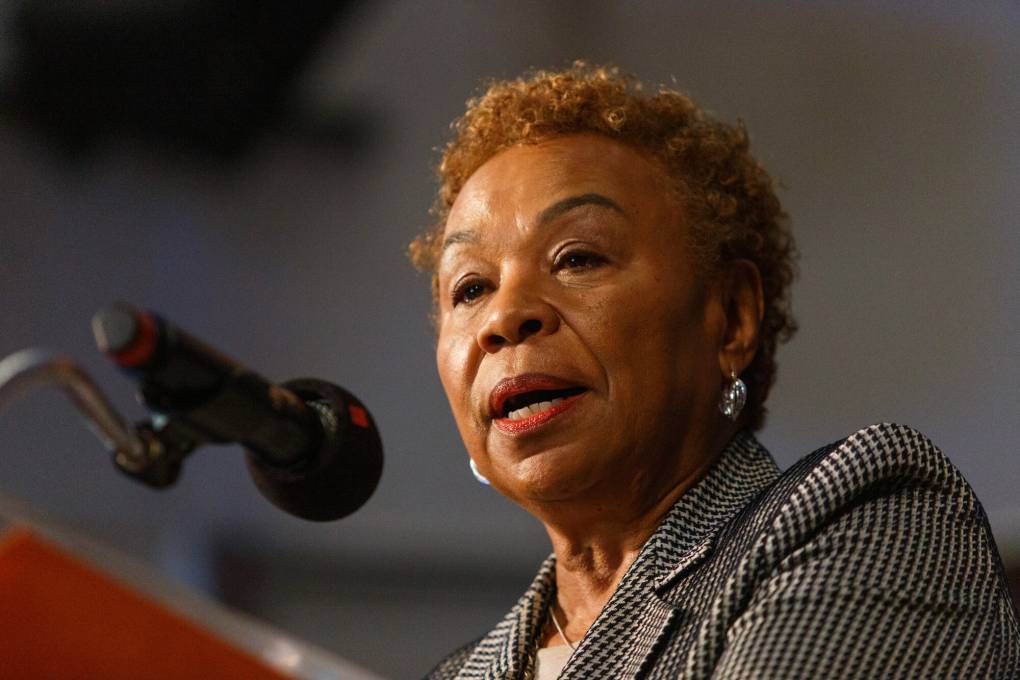
"caption": "East Bay Congresswoman Barbara Lee is co-sponsoring legislation to provide $10 billion in funding to fight long COVID.",
"credit": "Juliana Yamada/KQED",
"altTag": null,
"description": null,
"imgSizes": {
"medium": {
"file": "https://cdn.kqed.org/wp-content/uploads/sites/10/2024/08/20240512-CecilWilliams-JY-042_qed-800x533.jpg",
"width": 800,
"height": 533,
"mimeType": "image/jpeg"
},
"large": {
"file": "https://cdn.kqed.org/wp-content/uploads/sites/10/2024/08/20240512-CecilWilliams-JY-042_qed-1020x680.jpg",
"width": 1020,
"height": 680,
"mimeType": "image/jpeg"
},
"thumbnail": {
"file": "https://cdn.kqed.org/wp-content/uploads/sites/10/2024/08/20240512-CecilWilliams-JY-042_qed-160x107.jpg",
"width": 160,
"height": 107,
"mimeType": "image/jpeg"
},
"1536x1536": {
"file": "https://cdn.kqed.org/wp-content/uploads/sites/10/2024/08/20240512-CecilWilliams-JY-042_qed-1536x1024.jpg",
"width": 1536,
"height": 1024,
"mimeType": "image/jpeg"
},
"post-thumbnail": {
"file": "https://cdn.kqed.org/wp-content/uploads/sites/10/2024/08/20240512-CecilWilliams-JY-042_qed-672x372.jpg",
"width": 672,
"height": 372,
"mimeType": "image/jpeg"
},
"twentyfourteen-full-width": {
"file": "https://cdn.kqed.org/wp-content/uploads/sites/10/2024/08/20240512-CecilWilliams-JY-042_qed-1038x576.jpg",
"width": 1038,
"height": 576,
"mimeType": "image/jpeg"
},
"full-width": {
"file": "https://cdn.kqed.org/wp-content/uploads/sites/10/2024/08/20240512-CecilWilliams-JY-042_qed-1920x1280.jpg",
"width": 1920,
"height": 1280,
"mimeType": "image/jpeg"
},
"kqedFullSize": {
"file": "https://cdn.kqed.org/wp-content/uploads/sites/10/2024/08/20240512-CecilWilliams-JY-042_qed.jpg",
"width": 2000,
"height": 1333
}
},
"isLoading": false,
"fetchFailed": false
},
"news_12006696": {
"type": "attachments",
"id": "news_12006696",
"meta": {
"index": "attachments_1716263798",
"site": "news",
"id": "12006696",
"found": true
},
"title": "covid-nimbus-variant-razor-blade-throat",
"publishDate": 1727387407,
"status": "inherit",
"parent": 12006600,
"modified": 1752685623,
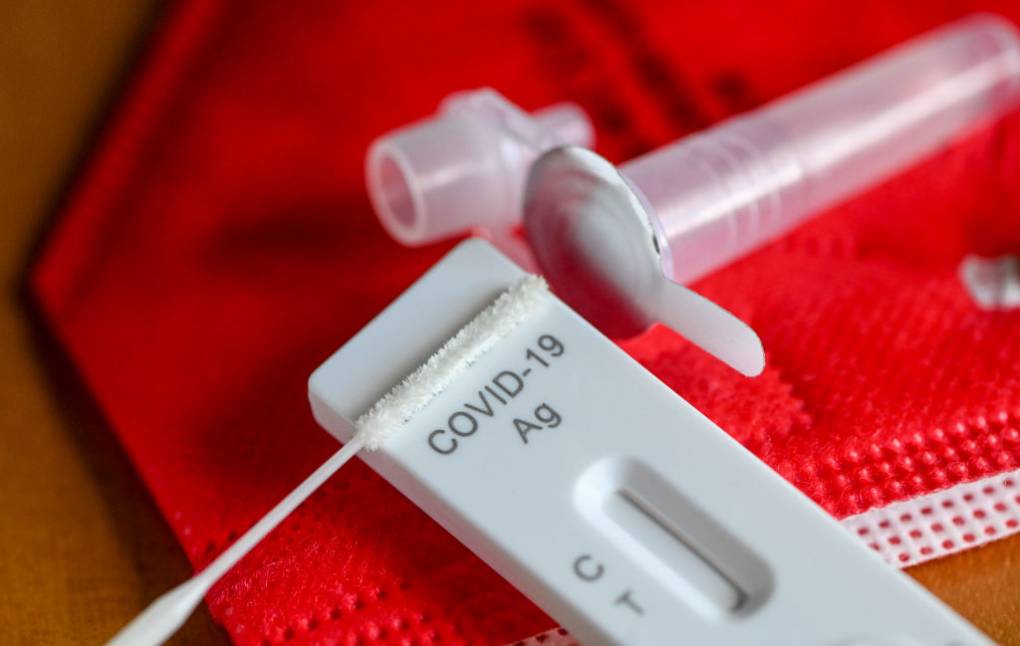
"caption": "What to know about COVID symptoms, testing and incubation in 2025. ",
"credit": "Jens Kalaene/picture alliance via Getty Images",
"altTag": "An antigen test to detect COVID-19 for self-testing is on a red FFP-2 mask.",
"description": null,
"imgSizes": {
"medium": {
"file": "https://cdn.kqed.org/wp-content/uploads/sites/10/2024/09/GettyImages-1668874864-800x507.jpg",
"width": 800,
"height": 507,
"mimeType": "image/jpeg"
},
"large": {
"file": "https://cdn.kqed.org/wp-content/uploads/sites/10/2024/09/GettyImages-1668874864-1020x646.jpg",
"width": 1020,
"height": 646,
"mimeType": "image/jpeg"
},
"thumbnail": {
"file": "https://cdn.kqed.org/wp-content/uploads/sites/10/2024/09/GettyImages-1668874864-160x101.jpg",
"width": 160,
"height": 101,
"mimeType": "image/jpeg"
},
"post-thumbnail": {
"file": "https://cdn.kqed.org/wp-content/uploads/sites/10/2024/09/GettyImages-1668874864-672x372.jpg",
"width": 672,
"height": 372,
"mimeType": "image/jpeg"
},
"twentyfourteen-full-width": {
"file": "https://cdn.kqed.org/wp-content/uploads/sites/10/2024/09/GettyImages-1668874864-1024x576.jpg",
"width": 1024,
"height": 576,
"mimeType": "image/jpeg"
},
"kqedFullSize": {
"file": "https://cdn.kqed.org/wp-content/uploads/sites/10/2024/09/GettyImages-1668874864.jpg",
"width": 1024,
"height": 649
}
},
"isLoading": false,
"fetchFailed": false
},
"news_12002056": {
"type": "attachments",
"id": "news_12002056",
"meta": {
"index": "attachments_1716263798",
"site": "news",
"id": "12002056",
"found": true
},
"title": "Free COVID Tests",
"publishDate": 1724784100,
"status": "inherit",
"parent": 12002055,
"modified": 1784235772,
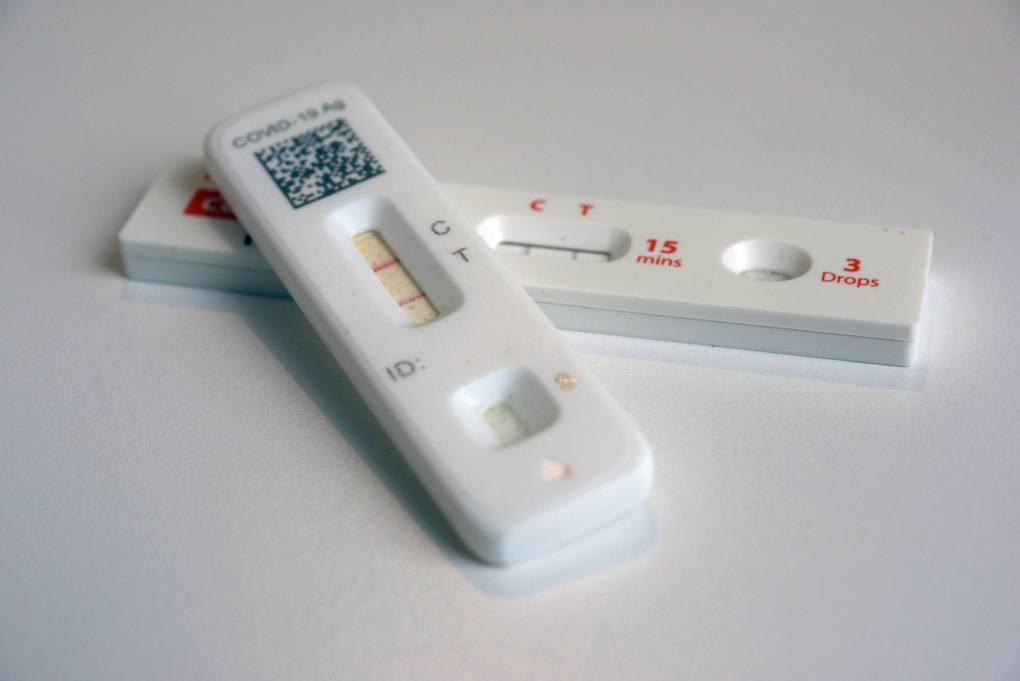
"caption": "COVID-19 antigen home tests indicating a positive result photographed in New York on April 5, 2023. ",
"credit": " AP Photo/Patrick Sison",
"altTag": "A closeup image of two COVID-19 antigen test results.",
"description": "FILE - COVID-19 antigen home tests indicating a positive result are photographed in New York, April 5, 2023. Americans will be able to order four free COVID-19 tests again and the United States Postal Service will deliver the tests to your mailbox. Anyone who did not order a batch of COVID-19 tests in September can secure up to eight of the tests this time around. (AP Photo/Patrick Sison, File)",
"imgSizes": {
"medium": {
"file": "https://cdn.kqed.org/wp-content/uploads/sites/10/2024/08/ap23323639771611-800x534.jpeg",
"width": 800,
"height": 534,
"mimeType": "image/jpeg"
},
"large": {
"file": "https://cdn.kqed.org/wp-content/uploads/sites/10/2024/08/ap23323639771611-1020x681.jpeg",
"width": 1020,
"height": 681,
"mimeType": "image/jpeg"
},
"thumbnail": {
"file": "https://cdn.kqed.org/wp-content/uploads/sites/10/2024/08/ap23323639771611-160x107.jpeg",
"width": 160,
"height": 107,
"mimeType": "image/jpeg"
},
"1536x1536": {
"file": "https://cdn.kqed.org/wp-content/uploads/sites/10/2024/08/ap23323639771611-1536x1025.jpeg",
"width": 1536,
"height": 1025,
"mimeType": "image/jpeg"
},
"2048x2048": {
"file": "https://cdn.kqed.org/wp-content/uploads/sites/10/2024/08/ap23323639771611-2048x1367.jpeg",
"width": 2048,
"height": 1367,
"mimeType": "image/jpeg"
},
"post-thumbnail": {
"file": "https://cdn.kqed.org/wp-content/uploads/sites/10/2024/08/ap23323639771611-672x372.jpeg",
"width": 672,
"height": 372,
"mimeType": "image/jpeg"
},
"twentyfourteen-full-width": {
"file": "https://cdn.kqed.org/wp-content/uploads/sites/10/2024/08/ap23323639771611-1038x576.jpeg",
"width": 1038,
"height": 576,
"mimeType": "image/jpeg"
},
"full-width": {
"file": "https://cdn.kqed.org/wp-content/uploads/sites/10/2024/08/ap23323639771611-1920x1281.jpeg",
"width": 1920,
"height": 1281,
"mimeType": "image/jpeg"
},
"kqedFullSize": {
"file": "https://cdn.kqed.org/wp-content/uploads/sites/10/2024/08/ap23323639771611-scaled.jpeg",
"width": 2560,
"height": 1709
}
},
"isLoading": false,
"fetchFailed": false
},
"news_12001514": {
"type": "attachments",
"id": "news_12001514",
"meta": {
"index": "attachments_1716263798",
"site": "news",
"id": "12001514",
"found": true
},
"title": "where-to-get-new-covid-vaccine",
"publishDate": 1724373438,
"status": "inherit",
"parent": 12001396,
"modified": 1724437765,
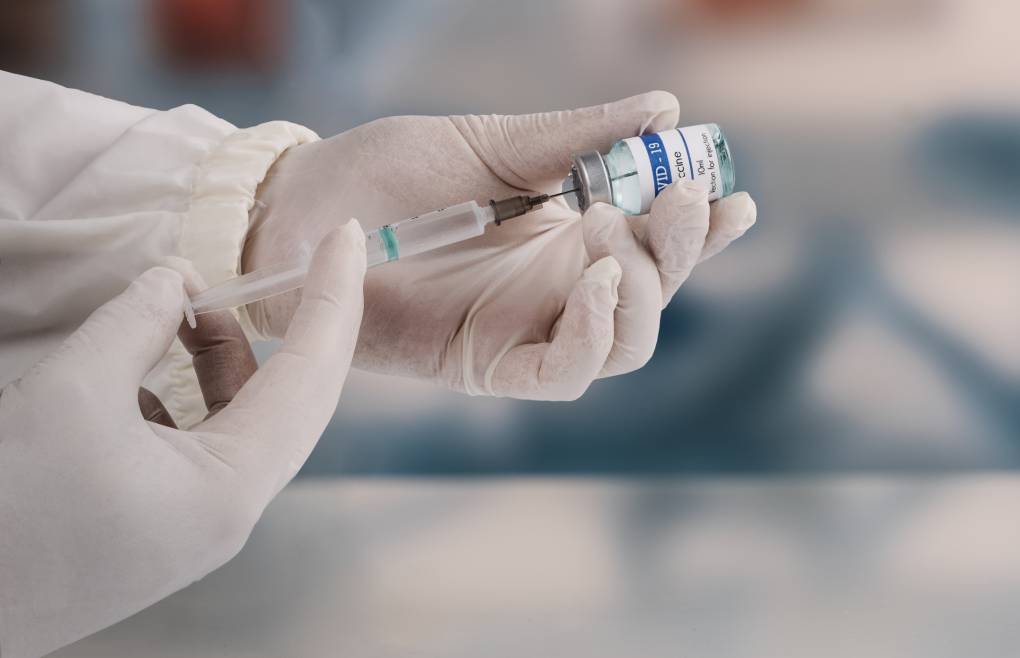
"caption": "Where can you get the new COVID-19 vaccine? It'll be rolling out in California in the coming days and weeks after FDA approval.",
"credit": "Imaginestock/Getty Images",
"altTag": "A young doctor in a white protective glove holds a medical syringe and vial.",
"description": null,
"imgSizes": {
"medium": {
"file": "https://cdn.kqed.org/wp-content/uploads/sites/10/2024/08/GettyImages-1303038502-800x516.jpg",
"width": 800,
"height": 516,
"mimeType": "image/jpeg"
},
"large": {
"file": "https://cdn.kqed.org/wp-content/uploads/sites/10/2024/08/GettyImages-1303038502-1020x658.jpg",
"width": 1020,
"height": 658,
"mimeType": "image/jpeg"
},
"thumbnail": {
"file": "https://cdn.kqed.org/wp-content/uploads/sites/10/2024/08/GettyImages-1303038502-160x103.jpg",
"width": 160,
"height": 103,
"mimeType": "image/jpeg"
},
"1536x1536": {
"file": "https://cdn.kqed.org/wp-content/uploads/sites/10/2024/08/GettyImages-1303038502-1536x991.jpg",
"width": 1536,
"height": 991,
"mimeType": "image/jpeg"
},
"2048x2048": {
"file": "https://cdn.kqed.org/wp-content/uploads/sites/10/2024/08/GettyImages-1303038502-2048x1322.jpg",
"width": 2048,
"height": 1322,
"mimeType": "image/jpeg"
},
"post-thumbnail": {
"file": "https://cdn.kqed.org/wp-content/uploads/sites/10/2024/08/GettyImages-1303038502-672x372.jpg",
"width": 672,
"height": 372,
"mimeType": "image/jpeg"
},
"twentyfourteen-full-width": {
"file": "https://cdn.kqed.org/wp-content/uploads/sites/10/2024/08/GettyImages-1303038502-1038x576.jpg",
"width": 1038,
"height": 576,
"mimeType": "image/jpeg"
},
"full-width": {
"file": "https://cdn.kqed.org/wp-content/uploads/sites/10/2024/08/GettyImages-1303038502-1920x1239.jpg",
"width": 1920,
"height": 1239,
"mimeType": "image/jpeg"
},
"kqedFullSize": {
"file": "https://cdn.kqed.org/wp-content/uploads/sites/10/2024/08/GettyImages-1303038502.jpg",
"width": 2155,
"height": 1391
}
},
"isLoading": false,
"fetchFailed": false
},
"news_12001354": {
"type": "attachments",
"id": "news_12001354",
"meta": {
"index": "attachments_1716263798",
"site": "news",
"id": "12001354",
"found": true
},
"title": "new-covid-vaccine",
"publishDate": 1724345053,
"status": "inherit",
"parent": 12001344,
"modified": 1724345106,
"caption": "A new round of COVID-19 vaccines will be rolled out soon.\n",
"credit": "Scott Olson/Getty Images",
"altTag": "A close up of hands wearing blue surgical gloves, administering a vaccine.",
"description": null,
"imgSizes": {
"medium": {
"file": "https://cdn.kqed.org/wp-content/uploads/sites/10/2024/08/new-covid-vaccine-800x533.png",
"width": 800,
"height": 533,
"mimeType": "image/png"
},
"large": {
"file": "https://cdn.kqed.org/wp-content/uploads/sites/10/2024/08/new-covid-vaccine-1020x680.png",
"width": 1020,
"height": 680,
"mimeType": "image/png"
},
"thumbnail": {
"file": "https://cdn.kqed.org/wp-content/uploads/sites/10/2024/08/new-covid-vaccine-160x107.png",
"width": 160,
"height": 107,
"mimeType": "image/png"
},
"1536x1536": {
"file": "https://cdn.kqed.org/wp-content/uploads/sites/10/2024/08/new-covid-vaccine-1536x1024.png",
"width": 1536,
"height": 1024,
"mimeType": "image/png"
},
"post-thumbnail": {
"file": "https://cdn.kqed.org/wp-content/uploads/sites/10/2024/08/new-covid-vaccine-672x372.png",
"width": 672,
"height": 372,
"mimeType": "image/png"
},
"twentyfourteen-full-width": {
"file": "https://cdn.kqed.org/wp-content/uploads/sites/10/2024/08/new-covid-vaccine-1038x576.png",
"width": 1038,
"height": 576,
"mimeType": "image/png"
},
"kqedFullSize": {
"file": "https://cdn.kqed.org/wp-content/uploads/sites/10/2024/08/new-covid-vaccine.png",
"width": 1920,
"height": 1280
}
},
"isLoading": false,
"fetchFailed": false
},
"news_11966640": {
"type": "attachments",
"id": "news_11966640",
"meta": {
"index": "attachments_1716263798",
"site": "news",
"id": "11966640",
"found": true
},
"title": "Los Angeles Department of Public Health, The People Concern, vaccination clinic.",
"publishDate": 1699385423,
"status": "inherit",
"parent": 11966587,
"modified": 1723747487,
"caption": "A registered nurse with the Los Angeles Department of Public Health administers a COVID-19 vaccination at the Village Mental Health Services in Los Angeles in August 2022. ",
"credit": "Christina House/Los Angeles Times via Getty Images",
"altTag": "A person wearing a mask and latex gloves administers a shot in another person's arm.",
"description": null,
"imgSizes": {
"medium": {
"file": "https://cdn.kqed.org/wp-content/uploads/sites/10/2023/11/GettyImages-1242749971-qut-800x531.jpg",
"width": 800,
"height": 531,
"mimeType": "image/jpeg"
},
"large": {
"file": "https://cdn.kqed.org/wp-content/uploads/sites/10/2023/11/GettyImages-1242749971-qut-1020x677.jpg",
"width": 1020,
"height": 677,
"mimeType": "image/jpeg"
},
"thumbnail": {
"file": "https://cdn.kqed.org/wp-content/uploads/sites/10/2023/11/GettyImages-1242749971-qut-160x106.jpg",
"width": 160,
"height": 106,
"mimeType": "image/jpeg"
},
"1536x1536": {
"file": "https://cdn.kqed.org/wp-content/uploads/sites/10/2023/11/GettyImages-1242749971-qut-1536x1019.jpg",
"width": 1536,
"height": 1019,
"mimeType": "image/jpeg"
},
"post-thumbnail": {
"file": "https://cdn.kqed.org/wp-content/uploads/sites/10/2023/11/GettyImages-1242749971-qut-672x372.jpg",
"width": 672,
"height": 372,
"mimeType": "image/jpeg"
},
"twentyfourteen-full-width": {
"file": "https://cdn.kqed.org/wp-content/uploads/sites/10/2023/11/GettyImages-1242749971-qut-1038x576.jpg",
"width": 1038,
"height": 576,
"mimeType": "image/jpeg"
},
"kqedFullSize": {
"file": "https://cdn.kqed.org/wp-content/uploads/sites/10/2023/11/GettyImages-1242749971-qut.jpg",
"width": 1920,
"height": 1274
}
},
"isLoading": false,
"fetchFailed": false
},
"news_11996180": {
"type": "attachments",
"id": "news_11996180",
"meta": {
"index": "attachments_1716263798",
"site": "news",
"id": "11996180",
"found": true
},
"title": "Speaker Johnson Holds Ceremonial Swearing-In For New Rep. Vince Fong",
"publishDate": 1721260522,
"status": "inherit",
"parent": 11996144,
"modified": 1721260522,
"caption": "WASHINGTON, DC - JUNE 03: Former Speaker of the House Kevin McCarthy arrives to take a photograph with Rep. Vince Fong (R-CA) before Speaker of the House Mike Johnson (R-LA) holds a ceremonial swearing-in for Fong on Capitol Hill on June 3, 2024 in Washington, DC. Fong was officially sworn-in on the House floor, beginning his time in office after replacing McCarthy for the remainder of his term. (Photo by Andrew Harnik/Getty Images)",
"credit": null,
"altTag": null,
"description": null,
"imgSizes": {
"medium": {
"file": "https://cdn.kqed.org/wp-content/uploads/sites/10/2024/07/GettyImages-2155345198-800x533.jpg",
"width": 800,
"height": 533,
"mimeType": "image/jpeg"
},
"large": {
"file": "https://cdn.kqed.org/wp-content/uploads/sites/10/2024/07/GettyImages-2155345198-1020x680.jpg",
"width": 1020,
"height": 680,
"mimeType": "image/jpeg"
},
"thumbnail": {
"file": "https://cdn.kqed.org/wp-content/uploads/sites/10/2024/07/GettyImages-2155345198-160x107.jpg",
"width": 160,
"height": 107,
"mimeType": "image/jpeg"
},
"1536x1536": {
"file": "https://cdn.kqed.org/wp-content/uploads/sites/10/2024/07/GettyImages-2155345198-1536x1024.jpg",
"width": 1536,
"height": 1024,
"mimeType": "image/jpeg"
},
"2048x2048": {
"file": "https://cdn.kqed.org/wp-content/uploads/sites/10/2024/07/GettyImages-2155345198-2048x1365.jpg",
"width": 2048,
"height": 1365,
"mimeType": "image/jpeg"
},
"post-thumbnail": {
"file": "https://cdn.kqed.org/wp-content/uploads/sites/10/2024/07/GettyImages-2155345198-672x372.jpg",
"width": 672,
"height": 372,
"mimeType": "image/jpeg"
},
"twentyfourteen-full-width": {
"file": "https://cdn.kqed.org/wp-content/uploads/sites/10/2024/07/GettyImages-2155345198-1038x576.jpg",
"width": 1038,
"height": 576,
"mimeType": "image/jpeg"
},
"full-width": {
"file": "https://cdn.kqed.org/wp-content/uploads/sites/10/2024/07/GettyImages-2155345198-1920x1280.jpg",
"width": 1920,
"height": 1280,
"mimeType": "image/jpeg"
},
"kqedFullSize": {
"file": "https://cdn.kqed.org/wp-content/uploads/sites/10/2024/07/2024/07/GettyImages-2155345198-scaled.jpg",
"width": 2560,
"height": 1707
}
},
"isLoading": false,
"fetchFailed": false
},
"news_11973137": {
"type": "attachments",
"id": "news_11973137",
"meta": {
"index": "attachments_1716263798",
"site": "news",
"id": "11973137",
"found": true
},
"title": "quarantine-guidelines-2024",
"publishDate": 1705700469,
"status": "inherit",
"parent": 11973108,
"modified": 1720727082,
"caption": "How long should you isolate with COVID in 2024?",
"credit": "Tang Ming Tung/Getty Images",
"altTag": "A hand holding a COVID at-home antigen test is seen from above, with various wrappers and packaging strewn around a wooden surface.",
"description": null,
"imgSizes": {
"medium": {
"file": "https://cdn.kqed.org/wp-content/uploads/sites/10/2024/01/GettyImages-1361590305-1-800x533.jpg",
"width": 800,
"height": 533,
"mimeType": "image/jpeg"
},
"large": {
"file": "https://cdn.kqed.org/wp-content/uploads/sites/10/2024/01/GettyImages-1361590305-1-1020x680.jpg",
"width": 1020,
"height": 680,
"mimeType": "image/jpeg"
},
"thumbnail": {
"file": "https://cdn.kqed.org/wp-content/uploads/sites/10/2024/01/GettyImages-1361590305-1-160x107.jpg",
"width": 160,
"height": 107,
"mimeType": "image/jpeg"
},
"1536x1536": {
"file": "https://cdn.kqed.org/wp-content/uploads/sites/10/2024/01/GettyImages-1361590305-1-1536x1024.jpg",
"width": 1536,
"height": 1024,
"mimeType": "image/jpeg"
},
"2048x2048": {
"file": "https://cdn.kqed.org/wp-content/uploads/sites/10/2024/01/GettyImages-1361590305-1-2048x1365.jpg",
"width": 2048,
"height": 1365,
"mimeType": "image/jpeg"
},
"post-thumbnail": {
"file": "https://cdn.kqed.org/wp-content/uploads/sites/10/2024/01/GettyImages-1361590305-1-672x372.jpg",
"width": 672,
"height": 372,
"mimeType": "image/jpeg"
},
"twentyfourteen-full-width": {
"file": "https://cdn.kqed.org/wp-content/uploads/sites/10/2024/01/GettyImages-1361590305-1-1038x576.jpg",
"width": 1038,
"height": 576,
"mimeType": "image/jpeg"
},
"full-width": {
"file": "https://cdn.kqed.org/wp-content/uploads/sites/10/2024/01/GettyImages-1361590305-1-1920x1280.jpg",
"width": 1920,
"height": 1280,
"mimeType": "image/jpeg"
},
"kqedFullSize": {
"file": "https://cdn.kqed.org/wp-content/uploads/sites/10/2024/01/GettyImages-1361590305-1.jpg",
"width": 2121,
"height": 1414
}
},
"isLoading": false,
"fetchFailed": false
},
"news_11989966": {
"type": "attachments",
"id": "news_11989966",
"meta": {
"index": "attachments_1716263798",
"site": "news",
"id": "11989966",
"found": true
},
"title": "covid-wastewater-bay-area-symptoms-test",
"publishDate": 1718218895,
"status": "inherit",
"parent": 11987343,
"modified": 1718218943,
"caption": "As COVID-19 levels continue to rise in Bay Area wastewater for summer 2024, what do you need to know?",
"credit": "Beth La Berge/KQED",
"altTag": null,
"description": null,
"imgSizes": {
"medium": {
"file": "https://cdn.kqed.org/wp-content/uploads/sites/10/2024/06/008_StockPhoto_AtHomeCOVIDTest_02022022_qut-800x533.jpg",
"width": 800,
"height": 533,
"mimeType": "image/jpeg"
},
"large": {
"file": "https://cdn.kqed.org/wp-content/uploads/sites/10/2024/06/008_StockPhoto_AtHomeCOVIDTest_02022022_qut-1020x680.jpg",
"width": 1020,
"height": 680,
"mimeType": "image/jpeg"
},
"thumbnail": {
"file": "https://cdn.kqed.org/wp-content/uploads/sites/10/2024/06/008_StockPhoto_AtHomeCOVIDTest_02022022_qut-160x107.jpg",
"width": 160,
"height": 107,
"mimeType": "image/jpeg"
},
"1536x1536": {
"file": "https://cdn.kqed.org/wp-content/uploads/sites/10/2024/06/008_StockPhoto_AtHomeCOVIDTest_02022022_qut-1536x1024.jpg",
"width": 1536,
"height": 1024,
"mimeType": "image/jpeg"
},
"post-thumbnail": {
"file": "https://cdn.kqed.org/wp-content/uploads/sites/10/2024/06/008_StockPhoto_AtHomeCOVIDTest_02022022_qut-672x372.jpg",
"width": 672,
"height": 372,
"mimeType": "image/jpeg"
},
"twentyfourteen-full-width": {
"file": "https://cdn.kqed.org/wp-content/uploads/sites/10/2024/06/008_StockPhoto_AtHomeCOVIDTest_02022022_qut-1038x576.jpg",
"width": 1038,
"height": 576,
"mimeType": "image/jpeg"
},
"kqedFullSize": {
"file": "https://cdn.kqed.org/wp-content/uploads/sites/10/2024/06/008_StockPhoto_AtHomeCOVIDTest_02022022_qut.jpg",
"width": 1920,
"height": 1280
}
},
"isLoading": false,
"fetchFailed": false
},
"news_11993115": {
"type": "attachments",
"id": "news_11993115",
"meta": {
"index": "attachments_1716263798",
"site": "news",
"id": "11993115",
"found": true
},
"title": "052_KQED_SFPRIDEPARADE_06262022-KQED",
"publishDate": 1720287342,
"status": "inherit",
"parent": 11993111,
"modified": 1720287427,
"caption": "Members of the Oasis SF float close out the San Francisco Pride Parade on June 26, 2022.",
"credit": "Beth LaBerge/KQED",
"altTag": "People in colorful costumes walk down the street in San Francisco.",
"description": null,
"imgSizes": {
"medium": {
"file": "https://cdn.kqed.org/wp-content/uploads/sites/10/2024/07/052_KQED_SFPRIDEPARADE_06262022-KQED-800x533.jpg",
"width": 800,
"height": 533,
"mimeType": "image/jpeg"
},
"large": {
"file": "https://cdn.kqed.org/wp-content/uploads/sites/10/2024/07/052_KQED_SFPRIDEPARADE_06262022-KQED-1020x680.jpg",
"width": 1020,
"height": 680,
"mimeType": "image/jpeg"
},
"thumbnail": {
"file": "https://cdn.kqed.org/wp-content/uploads/sites/10/2024/07/052_KQED_SFPRIDEPARADE_06262022-KQED-160x107.jpg",
"width": 160,
"height": 107,
"mimeType": "image/jpeg"
},
"1536x1536": {
"file": "https://cdn.kqed.org/wp-content/uploads/sites/10/2024/07/052_KQED_SFPRIDEPARADE_06262022-KQED-1536x1024.jpg",
"width": 1536,
"height": 1024,
"mimeType": "image/jpeg"
},
"post-thumbnail": {
"file": "https://cdn.kqed.org/wp-content/uploads/sites/10/2024/07/052_KQED_SFPRIDEPARADE_06262022-KQED-672x372.jpg",
"width": 672,
"height": 372,
"mimeType": "image/jpeg"
},
"twentyfourteen-full-width": {
"file": "https://cdn.kqed.org/wp-content/uploads/sites/10/2024/07/052_KQED_SFPRIDEPARADE_06262022-KQED-1038x576.jpg",
"width": 1038,
"height": 576,
"mimeType": "image/jpeg"
},
"full-width": {
"file": "https://cdn.kqed.org/wp-content/uploads/sites/10/2024/07/052_KQED_SFPRIDEPARADE_06262022-KQED-1920x1280.jpg",
"width": 1920,
"height": 1280,
"mimeType": "image/jpeg"
},
"kqedFullSize": {
"file": "https://cdn.kqed.org/wp-content/uploads/sites/10/2024/07/052_KQED_SFPRIDEPARADE_06262022-KQED.jpg",
"width": 2000,
"height": 1333
}
},
"isLoading": false,
"fetchFailed": false
},
"news_11986482": {
"type": "attachments",
"id": "news_11986482",
"meta": {
"index": "attachments_1716263798",
"site": "news",
"id": "11986482",
"found": true
},
"parent": 0,
"imgSizes": {
"twentyfourteen-full-width": {
"file": "https://cdn.kqed.org/wp-content/uploads/sites/10/2024/05/FEBMAY2024-LONGCOVID-ET-PU-13-KQED-1038x576.jpg",
"width": 1038,
"mimeType": "image/jpeg",
"height": 576
},
"thumbnail": {
"file": "https://cdn.kqed.org/wp-content/uploads/sites/10/2024/05/FEBMAY2024-LONGCOVID-ET-PU-13-KQED-160x107.jpg",
"width": 160,
"mimeType": "image/jpeg",
"height": 107
},
"post-thumbnail": {
"file": "https://cdn.kqed.org/wp-content/uploads/sites/10/2024/05/FEBMAY2024-LONGCOVID-ET-PU-13-KQED-672x372.jpg",
"width": 672,
"mimeType": "image/jpeg",
"height": 372
},
"kqedFullSize": {
"file": "https://cdn.kqed.org/wp-content/uploads/sites/10/2024/05/FEBMAY2024-LONGCOVID-ET-PU-13-KQED.jpg",
"width": 2000,
"height": 1333
},
"large": {
"file": "https://cdn.kqed.org/wp-content/uploads/sites/10/2024/05/FEBMAY2024-LONGCOVID-ET-PU-13-KQED-1020x680.jpg",
"width": 1020,
"mimeType": "image/jpeg",
"height": 680
},
"1536x1536": {
"file": "https://cdn.kqed.org/wp-content/uploads/sites/10/2024/05/FEBMAY2024-LONGCOVID-ET-PU-13-KQED-1536x1024.jpg",
"width": 1536,
"mimeType": "image/jpeg",
"height": 1024
},
"full-width": {
"file": "https://cdn.kqed.org/wp-content/uploads/sites/10/2024/05/FEBMAY2024-LONGCOVID-ET-PU-13-KQED-1920x1280.jpg",
"width": 1920,
"mimeType": "image/jpeg",
"height": 1280
},
"medium": {
"file": "https://cdn.kqed.org/wp-content/uploads/sites/10/2024/05/FEBMAY2024-LONGCOVID-ET-PU-13-KQED-800x533.jpg",
"width": 800,
"mimeType": "image/jpeg",
"height": 533
}
},
"publishDate": 1715818507,
"modified": 1715978534,
"caption": "Osbaldo Varilla-Aguilar, 46, rides the bus back home in San Francisco on Feb. 26, 2024. ",
"description": null,
"title": "FEBMAY2024-LONGCOVID-ET-PU-13-KQED",
"credit": "Pablo Unzueta for El Tecolote/CatchLight Local",
"status": "inherit",
"altTag": "A middle-aged Latino man with a hat sits on a bus.",
"isLoading": false,
"fetchFailed": false
},
"news_11970050": {
"type": "attachments",
"id": "news_11970050",
"meta": {
"index": "attachments_1716263798",
"site": "news",
"id": "11970050",
"found": true
},
"title": "COVID-19 Testing Demand Remains High Due To Surge Of Omicron Variant",
"publishDate": 1702665001,
"status": "inherit",
"parent": 0,
"modified": 1724784896,
"caption": "Americans will be able to order four free COVID-19 tests at the end of September that will be delivered to their mailbox.",
"credit": "Alex Wong/Getty Images",
"altTag": "A hand holds two bright orange boxes that read \"COVID-19 Antigen Rapid Test\" on them.",
"description": null,
"imgSizes": {
"medium": {
"file": "https://cdn.kqed.org/wp-content/uploads/sites/10/2023/12/231215-COVID-TESTS-GETTY-AW-KQED-800x533.jpg",
"width": 800,
"height": 533,
"mimeType": "image/jpeg"
},
"large": {
"file": "https://cdn.kqed.org/wp-content/uploads/sites/10/2023/12/231215-COVID-TESTS-GETTY-AW-KQED-1020x680.jpg",
"width": 1020,
"height": 680,
"mimeType": "image/jpeg"
},
"thumbnail": {
"file": "https://cdn.kqed.org/wp-content/uploads/sites/10/2023/12/231215-COVID-TESTS-GETTY-AW-KQED-160x107.jpg",
"width": 160,
"height": 107,
"mimeType": "image/jpeg"
},
"1536x1536": {
"file": "https://cdn.kqed.org/wp-content/uploads/sites/10/2023/12/231215-COVID-TESTS-GETTY-AW-KQED-1536x1024.jpg",
"width": 1536,
"height": 1024,
"mimeType": "image/jpeg"
},
"post-thumbnail": {
"file": "https://cdn.kqed.org/wp-content/uploads/sites/10/2023/12/231215-COVID-TESTS-GETTY-AW-KQED-672x372.jpg",
"width": 672,
"height": 372,
"mimeType": "image/jpeg"
},
"twentyfourteen-full-width": {
"file": "https://cdn.kqed.org/wp-content/uploads/sites/10/2023/12/231215-COVID-TESTS-GETTY-AW-KQED-1038x576.jpg",
"width": 1038,
"height": 576,
"mimeType": "image/jpeg"
},
"full-width": {
"file": "https://cdn.kqed.org/wp-content/uploads/sites/10/2023/12/231215-COVID-TESTS-GETTY-AW-KQED-1920x1280.jpg",
"width": 1920,
"height": 1280,
"mimeType": "image/jpeg"
},
"kqedFullSize": {
"file": "https://cdn.kqed.org/wp-content/uploads/sites/10/2023/12/231215-COVID-TESTS-GETTY-AW-KQED.jpg",
"width": 2000,
"height": 1333
}
},
"isLoading": false,
"fetchFailed": false
}
},
"audioPlayerReducer": {
"postId": "stream_live",
"isPaused": true,
"isPlaying": false,
"pfsActive": false,
"pledgeModalIsOpen": true,
"playerDrawerIsOpen": false,
"liveAudioPlayStartedAt": 0,
"liveAudioPlayContext": ""
},
"authorsReducer": {
"byline_news_12002055": {
"type": "authors",
"id": "byline_news_12002055",
"meta": {
"override": true
},
"slug": "byline_news_12002055",
"name": "Emma Bowman, NPR",
"isLoading": false
},
"byline_news_12001344": {
"type": "authors",
"id": "byline_news_12001344",
"meta": {
"override": true
},
"slug": "byline_news_12001344",
"name": "Rob Stein",
"isLoading": false
},
"byline_news_11986724": {
"type": "authors",
"id": "byline_news_11986724",
"meta": {
"override": true
},
"slug": "byline_news_11986724",
"name": "\u003ca href=\"https://eltecolote.org/content/en/author/pablo-unzueta/\">Pablo Unzueta\u003c/a>",
"isLoading": false
},
"scottshafer": {
"type": "authors",
"id": "255",
"meta": {
"index": "authors_1716337520",
"id": "255",
"found": true
},
"name": "Scott Shafer",
"firstName": "Scott",
"lastName": "Shafer",
"slug": "scottshafer",
"email": "sshafer@kqed.org",
"display_author_email": false,
"staff_mastheads": [
"news"
],
"title": "KQED Contributor",
"bio": "Scott Shafer is a senior editor with the KQED Politics and Government desk. He is co-host of Political Breakdown, the award-winning radio show and podcast with a personal take on the world of politics. Scott came to KQED in 1998 to host the statewide\u003cem> California Report\u003c/em>. Prior to that he had extended stints in politics and government\u003cem>.\u003c/em> He uses that inside experience at KQED in his, reporting, hosting and analysis for the politics desk. Scott collaborated \u003cem>Political Breakdown a\u003c/em>nd on \u003cem>The Political Mind of Jerry Brown, \u003c/em>an eight-part series about the life and extraordinary political career of the former governor. For fun, he plays water polo with the San Francisco Tsunami.",
"avatar": "https://secure.gravatar.com/avatar/a62ebae45b79d7aed1a39a0e3bf68104?s=600&d=blank&r=g",
"twitter": "scottshafer",
"bluesky": null,
"facebook": null,
"instagram": null,
"linkedin": null,
"sites": [
{
"site": "news",
"roles": [
"editor"
]
},
{
"site": "stateofhealth",
"roles": [
"author"
]
},
{
"site": "science",
"roles": [
"author"
]
},
{
"site": "forum",
"roles": [
"subscriber"
]
},
{
"site": "liveblog",
"roles": [
"author"
]
}
],
"headData": {
"title": "Scott Shafer | KQED",
"description": "KQED Contributor",
"ogImgSrc": "https://secure.gravatar.com/avatar/a62ebae45b79d7aed1a39a0e3bf68104?s=600&d=blank&r=g",
"twImgSrc": "https://secure.gravatar.com/avatar/a62ebae45b79d7aed1a39a0e3bf68104?s=600&d=blank&r=g"
},
"isLoading": false,
"link": "/author/scottshafer"
},
"mlagos": {
"type": "authors",
"id": "3239",
"meta": {
"index": "authors_1716337520",
"id": "3239",
"found": true
},
"name": "Marisa Lagos",
"firstName": "Marisa",
"lastName": "Lagos",
"slug": "mlagos",
"email": "mlagos@kqed.org",
"display_author_email": false,
"staff_mastheads": [
"news"
],
"title": "KQED Contributor",
"bio": "Marisa Lagos is a correspondent for KQED’s California Politics and Government Desk and co-hosts the award-winning show and podcast, Political Breakdown. At KQED, Lagos also conducts reporting, analysis and investigations into state, local and national politics for radio, TV, online and onstage. In 2022, she and co-host, Scott Shafer, moderated the only gubernatorial debate in California. In 2020, the \u003ci>Washington Post\u003c/i> named her one of the top political journalists in California; she was nominated for a Peabody and won several other awards for her work investigating the 2017 California wildfires. She has worked at the \u003ci>San Francisco Chronicle\u003c/i>, \u003ci>San Francisco Examiner\u003c/i> and \u003ci>Los Angeles Times\u003c/i>. A UC Santa Barbara graduate, she lives in San Francisco with her two sons and husband.",
"avatar": "https://secure.gravatar.com/avatar/a261a0d3696fc066871ef96b85b5e7d2?s=600&d=blank&r=g",
"twitter": "@mlagos",
"facebook": null,
"instagram": null,
"linkedin": null,
"sites": [
{
"site": "arts",
"roles": [
"author"
]
},
{
"site": "news",
"roles": [
"editor"
]
},
{
"site": "science",
"roles": [
"editor"
]
},
{
"site": "forum",
"roles": [
"author"
]
},
{
"site": "liveblog",
"roles": [
"author"
]
}
],
"headData": {
"title": "Marisa Lagos | KQED",
"description": "KQED Contributor",
"ogImgSrc": "https://secure.gravatar.com/avatar/a261a0d3696fc066871ef96b85b5e7d2?s=600&d=blank&r=g",
"twImgSrc": "https://secure.gravatar.com/avatar/a261a0d3696fc066871ef96b85b5e7d2?s=600&d=blank&r=g"
},
"isLoading": false,
"link": "/author/mlagos"
},
"carlysevern": {
"type": "authors",
"id": "3243",
"meta": {
"index": "authors_1716337520",
"id": "3243",
"found": true
},
"name": "Carly Severn",
"firstName": "Carly",
"lastName": "Severn",
"slug": "carlysevern",
"email": "csevern@kqed.org",
"display_author_email": false,
"staff_mastheads": [
"news"
],
"title": "Senior Editor, Audience News ",
"bio": "Carly is KQED's Senior Editor of Audience News on the Digital News team, and has reported for the California Report Magazine, Bay Curious and KQED Arts. She's formerly the host of \u003ca href=\"http://ww2.kqed.org/pop/category/the-cooler/\" rel=\"noopener noreferrer\">The Cooler\u003c/a> podcast.",
"avatar": "https://secure.gravatar.com/avatar/54037bf5c128fe678f0ef26cec97a93f2e7f220a22d7285703328f12c42c1b1d?s=600&d=blank&r=g",
"twitter": "teacupinthebay",
"bluesky": null,
"facebook": null,
"instagram": null,
"linkedin": null,
"sites": [
{
"site": "",
"roles": [
"editor"
]
},
{
"site": "arts",
"roles": [
"editor"
]
},
{
"site": "news",
"roles": [
"administrator"
]
},
{
"site": "pop",
"roles": [
"editor"
]
},
{
"site": "futureofyou",
"roles": [
"editor"
]
},
{
"site": "about",
"roles": [
"administrator"
]
},
{
"site": "mindshift",
"roles": [
"editor"
]
},
{
"site": "bayareabites",
"roles": [
"editor"
]
},
{
"site": "stateofhealth",
"roles": [
"editor"
]
},
{
"site": "science",
"roles": [
"editor"
]
},
{
"site": "food",
"roles": [
"contributor"
]
},
{
"site": "forum",
"roles": [
"editor"
]
},
{
"site": "perspectives",
"roles": [
"administrator"
]
},
{
"site": "liveblog",
"roles": [
"editor"
]
}
],
"headData": {
"title": "Carly Severn | KQED",
"description": "Senior Editor, Audience News ",
"ogImgSrc": "https://secure.gravatar.com/avatar/54037bf5c128fe678f0ef26cec97a93f2e7f220a22d7285703328f12c42c1b1d?s=600&d=blank&r=g",
"twImgSrc": "https://secure.gravatar.com/avatar/54037bf5c128fe678f0ef26cec97a93f2e7f220a22d7285703328f12c42c1b1d?s=600&d=blank&r=g"
},
"isLoading": false,
"link": "/author/carlysevern"
},
"ccabreralomeli": {
"type": "authors",
"id": "11708",
"meta": {
"index": "authors_1716337520",
"id": "11708",
"found": true
},
"name": "Carlos Cabrera-Lomelí",
"firstName": "Carlos",
"lastName": "Cabrera-Lomelí",
"slug": "ccabreralomeli",
"email": "ccabreralomeli@KQED.org",
"display_author_email": true,
"staff_mastheads": [
"news"
],
"title": "Community Reporter",
"bio": "Carlos Cabrera-Lomelí is a community reporter with KQED's digital engagement team. He also reports and co-produces for KQED's bilingual news hub KQED en Español. He grew up in San Francisco's Mission District and has previously worked with Univision, 48 Hills and REFORMA in Mexico City.",
"avatar": "https://secure.gravatar.com/avatar/c309be9665e484f887b818c89e273ecc673004f426f36b24d00a4d813a2e0518?s=600&d=blank&r=g",
"twitter": "@LomeliCabrera",
"bluesky": null,
"facebook": null,
"instagram": null,
"linkedin": null,
"sites": [
{
"site": "arts",
"roles": [
"editor"
]
},
{
"site": "news",
"roles": [
"editor"
]
},
{
"site": "about",
"roles": [
"editor"
]
},
{
"site": "science",
"roles": [
"editor"
]
},
{
"site": "perspectives",
"roles": [
"editor"
]
},
{
"site": "elections",
"roles": [
"editor"
]
},
{
"site": "liveblog",
"roles": [
"contributor"
]
}
],
"headData": {
"title": "Carlos Cabrera-Lomelí | KQED",
"description": "Community Reporter",
"ogImgSrc": "https://secure.gravatar.com/avatar/c309be9665e484f887b818c89e273ecc673004f426f36b24d00a4d813a2e0518?s=600&d=blank&r=g",
"twImgSrc": "https://secure.gravatar.com/avatar/c309be9665e484f887b818c89e273ecc673004f426f36b24d00a4d813a2e0518?s=600&d=blank&r=g"
},
"isLoading": false,
"link": "/author/ccabreralomeli"
},
"sjohnson": {
"type": "authors",
"id": "11840",
"meta": {
"index": "authors_1716337520",
"id": "11840",
"found": true
},
"name": "Sydney Johnson",
"firstName": "Sydney",
"lastName": "Johnson",
"slug": "sjohnson",
"email": "sjohnson@kqed.org",
"display_author_email": false,
"staff_mastheads": [
"news"
],
"title": "KQED Reporter",
"bio": "Sydney Johnson is a general assignment reporter at KQED. She previously reported on public health and city government at the San Francisco Examiner, and before that, she covered statewide education policy for EdSource. Her reporting has won multiple local, state and national awards. Sydney is a graduate of the University of California, Berkeley and lives in San Francisco.",
"avatar": "https://secure.gravatar.com/avatar/97855f2719b72ad6190b7c535fe642c8?s=600&d=blank&r=g",
"twitter": "sydneyfjohnson",
"facebook": null,
"instagram": null,
"linkedin": null,
"sites": [
{
"site": "news",
"roles": [
"editor"
]
}
],
"headData": {
"title": "Sydney Johnson | KQED",
"description": "KQED Reporter",
"ogImgSrc": "https://secure.gravatar.com/avatar/97855f2719b72ad6190b7c535fe642c8?s=600&d=blank&r=g",
"twImgSrc": "https://secure.gravatar.com/avatar/97855f2719b72ad6190b7c535fe642c8?s=600&d=blank&r=g"
},
"isLoading": false,
"link": "/author/sjohnson"
},
"emanoukian": {
"type": "authors",
"id": "11925",
"meta": {
"index": "authors_1716337520",
"id": "11925",
"found": true
},
"name": "Elize Manoukian",
"firstName": "Elize",
"lastName": "Manoukian",
"slug": "emanoukian",
"email": "emanoukian@KQED.org",
"display_author_email": false,
"staff_mastheads": [
"news"
],
"title": "Digital News Editor",
"bio": "Elize Manoukian is an award-winning audio producer and Senior Editor on the Express Desk, KQED's digital news platform. Her work has appeared on KPFA, Interlochen Public Radio, Oregon Public Broadcast, the New York Daily News, LA Times and the San Diego Union-Tribune.",
"avatar": "https://secure.gravatar.com/avatar/4525f1a8e46ccb30933b32653d9772064cfefe3fa655eb45b3b3a80341f6bdad?s=600&d=blank&r=g",
"twitter": null,
"bluesky": null,
"facebook": null,
"instagram": null,
"linkedin": null,
"sites": [
{
"site": "arts",
"roles": [
"editor"
]
},
{
"site": "news",
"roles": [
"editor"
]
},
{
"site": "science",
"roles": [
"editor"
]
}
],
"headData": {
"title": "Elize Manoukian | KQED",
"description": "Digital News Editor",
"ogImgSrc": "https://secure.gravatar.com/avatar/4525f1a8e46ccb30933b32653d9772064cfefe3fa655eb45b3b3a80341f6bdad?s=600&d=blank&r=g",
"twImgSrc": "https://secure.gravatar.com/avatar/4525f1a8e46ccb30933b32653d9772064cfefe3fa655eb45b3b3a80341f6bdad?s=600&d=blank&r=g"
},
"isLoading": false,
"link": "/author/emanoukian"
}
},
"pagesReducer": {
"news_tag_covid": {
"type": "terms",
"id": "news_27989",
"meta": {
"index": "terms_1716263798",
"site": "news",
"id": "27989",
"score": 9.103905
},
"featImg": null,
"name": "covid",
"description": null,
"taxonomy": "tag",
"headData": {
"twImgId": null,
"twTitle": null,
"ogTitle": null,
"ogImgId": null,
"twDescription": null,
"description": null,
"title": "covid Archives | KQED News",
"ogDescription": null
},
"ttid": 28006,
"slug": "covid",
"isLoading": false,
"title": "covid",
"pageMeta": {
"site": "news",
"WpPageTemplate": "page-topic-editorial",
"currentPage": 2
},
"blocks": [
{
"blockName": "kqed/post-list",
"attrs": {
"layout": "cardArticle2",
"query": "posts/news?tag=covid",
"seeMore": false,
"paginated": true,
"page": 2
}
},
{
"blockName": "kqed/ad"
}
]
}
},
"pfsSessionReducer": {},
"postsReducer": {
"stream_live": {
"type": "live",
"id": "stream_live",
"audioUrl": "https://streams.kqed.org/kqedradio",
"title": "Live Stream",
"excerpt": "Live Stream information currently unavailable.",
"link": "/radio",
"featImg": "",
"label": {
"name": "KQED Live",
"link": "/"
}
},
"stream_kqedNewscast": {
"type": "posts",
"id": "stream_kqedNewscast",
"audioUrl": "https://www.kqed.org/.stream/anon/radio/RDnews/newscast.mp3?_=1",
"title": "KQED Newscast",
"featImg": "",
"label": {
"name": "88.5 FM",
"link": "/"
}
},
"news_12006894": {
"type": "posts",
"id": "news_12006894",
"meta": {
"index": "posts_1716263798",
"site": "news",
"id": "12006894",
"score": null,
"sort": [
1727478041000
]
},
"guestAuthors": [],
"slug": "bay-areas-long-covid-community-celebrates-moonshot-bill-for-10-billion-in-funding",
"title": "Bay Area's Long COVID Community Celebrates Moonshot Bill for $10 Billion in Funding",
"publishDate": 1727478041,
"format": "standard",
"headTitle": "Bay Area’s Long COVID Community Celebrates Moonshot Bill for $10 Billion in Funding | KQED",
"labelTerm": {
"site": "news"
},
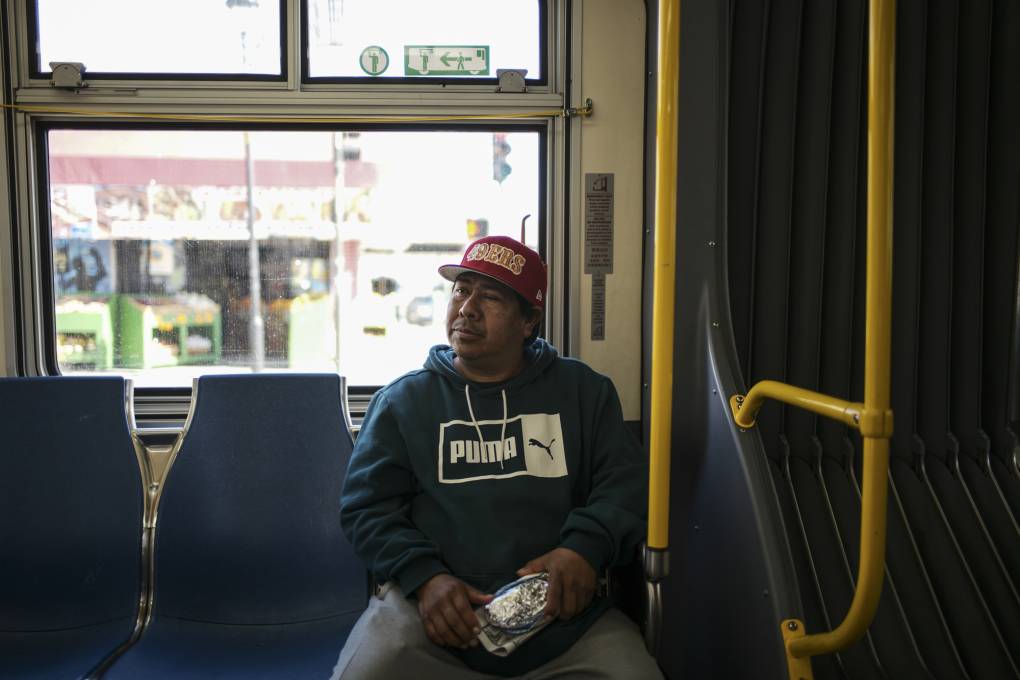
"content": "\u003cp>\u003ca href=\"https://www.kqed.org/news/tag/long-covid\">Long COVID\u003c/a> patients and advocates in the \u003ca href=\"https://www.kqed.org/news/tag/bay-area\">Bay Area\u003c/a> have spent years pushing for a concerted effort toward research, prevention and a cure.\u003c/p>\n\u003cp>They’re now hopeful that the increasingly widespread chronic condition that follows many COVID-19 infections will soon be better understood, thanks to legislation introduced Friday in the House of Representatives that would provide $10 billion in funding for long COVID research and education.\u003c/p>\n\u003cp>The Long COVID Research Moonshot Act, proposed by Rep. Ilhan Omar (D-Minn.) and co-sponsored by Rep.\u003ca href=\"https://www.kqed.org/news/11973684\"> Barbara Lee\u003c/a> (D-Oakland), is a companion bill to one that Sen. Bernie Sanders (I-Vt.) \u003ca href=\"https://www.congress.gov/bill/118th-congress/senate-bill/4964/cosponsors?s=2&r=2&q=%7B%22search%22%3A%22bernie+sanders%22%7D\">introduced\u003c/a> in the Senate in August.\u003c/p>\n\u003cp>“It’s huge for us,” said Lisa McCorkell, an Oakland resident who co-founded the Patient-Led Research Collaborative. The PLRC is a group of researchers living with long COVID and other related chronic conditions.\u003c/p>\n\u003cp>[ad fullwidth]\u003c/p>\n\u003cp>“It really shows that this bill has broad support — as it should — because it’s aiming to address the crisis of long COVID in a way that puts the resources that are necessary behind it,” McCorkell said.\u003c/p>\n\u003cp>The \u003ca href=\"https://www.kqed.org/news/11986724/after-months-long-coma-this-latino-immigrant-worker-is-still-fighting-mysterious-symptoms\">symptoms of long COVID\u003c/a> often include brain fog and fatigue. Many people found to have it have also been diagnosed with conditions like \u003ca href=\"https://solvecfs.org/me-cfs-long-covid/about-the-disease/\">myalgic encephalomyelitis/chronic fatigue syndrome\u003c/a> (ME/CF) and \u003ca href=\"https://www.hopkinsmedicine.org/health/conditions-and-diseases/postural-orthostatic-tachycardia-syndrome-pots\">postural orthostatic tachycardia syndrome\u003c/a> (POTS). These chronic, complex immune diseases can profoundly limit the wellness and productivity of patients and, like long COVID, are often triggered by an infection.\u003c/p>\n\u003cp>Studies have also found that COVID-19 can cause immune system \u003ca href=\"https://www.yalemedicine.org/news/the-long-covid-puzzle-autoimmunity-inflammation-and-other-possible-causes#:~:text=The%20theory%20is%20that%20COVID,in%20those%20with%20Long%20COVID.\">dysfunction\u003c/a>, allowing dormant infections, like the virus that causes Epstein-Barr disease or the bacteria that causes Lyme disease, to reemerge. And while vaccines have ensured bouts of COVID-19 are less likely to be deadly than they were at the pandemic’s start, every infection makes you more \u003ca href=\"https://www.unmc.edu/healthsecurity/transmission/2023/12/27/every-covid-infection-increases-your-risk-of-long-covid-study-warns/\">susceptible \u003c/a>to contracting long COVID.\u003c/p>\n\u003cp>[aside postID=news_12006600 hero='https://cdn.kqed.org/wp-content/uploads/sites/10/2024/09/GettyImages-1668874864-1020x646.jpg']\u003c/p>\n\u003cp>Dr. Linda Geng, co-director of the Stanford Post-Acute COVID-19 Syndrome Clinic, said long COVID has become a “huge public health problem,” affecting millions of people in the United States long term.\u003c/p>\n\u003cp>Though physicians have an FDA-approved therapeutic toolkit for COVID-19, they currently have “minimal to no evidence-based strategies” to help those who have long COVID or who may develop it in the future, Geng said.\u003c/p>\n\u003cp>The Long COVID Research Moonshot Act would create a new research center within the National Institutes of Health to study the condition and other related illnesses, like ME/CFS and POTS. The center would house a new database tracking long COVID cases, an advisory board, and new grant processes to accelerate clinical trials, according to a report by \u003ca href=\"https://www.motherjones.com/politics/2024/09/ilhan-omar-bernie-long-covid-house-bill/\">\u003cem>Mother Jones\u003c/em>\u003c/a>.\u003c/p>\n\u003cp>The legislation would also fund public health education and clinics dedicated to long COVID care, especially in underserved communities — and would require any new treatments developed through the act to be reasonably priced and accessible to more patients.\u003c/p>\n\u003cp>The Bay Area’s Umoja Health, which serves the COVID-19 and health needs of people of color, was an early sponsor of the Sanders bill. Co-founder Kim Rhoads described how long COVID can transform patients’ lives and contribute to long-term disability.\u003c/p>\n\u003cp>“We’ve heard stories of folks who now have a hospital bed in their house where the family member who was affected by long COVID lives,” Rhoads said. “Folks who do not like to get out of bed, have burning feet and difficulty walking or have exertional malaise, which is basically a fatigue that can come over people after just doing simple things like cooking a meal.\u003c/p>\n\u003cp>Rhoads said the disease has largely been ignored or treated like a seasonal virus, such as the flu. “There are political reasons to deny that there are any long-term effects of COVID,” Rhoads said, “to allow for us to ‘get back to normal.’”\u003c/p>\n\u003cp>In her work, Rhoads has seen firsthand how communities of color and disabled people have been disproportionately harmed by long COVID. Historically marginalized groups are also on the frontlines of infections and suffer from the highest mortality rates.\u003c/p>\n\u003cp>Disabled people \u003ca href=\"https://www.cidrap.umn.edu/covid-19/long-covid-rate-among-disabled-people-double-able-bodied\">are twice as likely\u003c/a> to contract long COVID as nondisabled people, said Sabrina Epstein, a policy analyst with Disability Rights California.\u003c/p>\n\u003cp>“This is deeply an equity and justice issue,” said Epstein, whose disability makes her at risk for long COVID. “The research proposed by this bill has the potential to benefit folks in the disability and chronic illness community.”\u003c/p>\n\u003cp>\u003cem>KQED’s \u003ca href=\"https://www.kqed.org/author/carlysevern\">Carly Severn\u003c/a> contributed to this report. \u003c/em>\u003c/p>\n\u003cp>\u003c/p>\n",
"blocks": [],
"excerpt": "Legislation introduced in Congress could improve the lives of millions of patients, according to long COVID patients and advocates in the Bay Area.",
"status": "publish",
"parent": 0,
"modified": 1727482010,
"stats": {
"hasAudio": false,
"hasVideo": false,
"hasChartOrMap": false,
"iframeSrcs": [],
"hasGoogleForm": false,
"hasGallery": false,
"hasHearkenModule": false,
"hasPolis": false,
"paragraphCount": 21,
"wordCount": 790
},
"headData": {
"title": "Bay Area's Long COVID Community Celebrates Moonshot Bill for $10 Billion in Funding | KQED",
"description": "Legislation introduced in Congress could improve the lives of millions of patients, according to long COVID patients and advocates in the Bay Area.",
"ogTitle": "",
"ogDescription": "",
"ogImgId": "",
"twTitle": "",
"twDescription": "",
"twImgId": "",
"schema": {
"@context": "https://schema.org",
"@type": "NewsArticle",
"headline": "Bay Area's Long COVID Community Celebrates Moonshot Bill for $10 Billion in Funding",
"datePublished": "2024-09-27T16:00:41-07:00",
"dateModified": "2024-09-27T17:06:50-07:00",
"image": "https://cdn.kqed.org/wp-content/uploads/2020/02/KQED-OG-Image@1x.png",
"isAccessibleForFree": "True",
"publisher": {
"@type": "NewsMediaOrganization",
"@id": "https://www.kqed.org/#organization",
"name": "KQED",
"logo": "https://cdn.kqed.org/wp-content/uploads/2020/02/KQED-OG-Image@1x.png",
"url": "https://www.kqed.org",
"sameAs": [
"https://www.facebook.com/KQED",
"https://twitter.com/KQED",
"https://www.instagram.com/kqed/",
"https://www.tiktok.com/@kqedofficial",
"https://www.linkedin.com/company/kqed",
"https://www.youtube.com/channel/UCeC0IOo7i1P_61zVUWbJ4nw"
]
}
}
},
"sticky": false,
"nprStoryId": "kqed-12006894",
"excludeFromSiteSearch": "Include",
"articleAge": "0",
"path": "/news/12006894/bay-areas-long-covid-community-celebrates-moonshot-bill-for-10-billion-in-funding",
"audioTrackLength": null,
"parsedContent": [
{
"type": "contentString",
"content": "\u003cdiv class=\"post-body\">\u003cp>\u003cp>\u003ca href=\"https://www.kqed.org/news/tag/long-covid\">Long COVID\u003c/a> patients and advocates in the \u003ca href=\"https://www.kqed.org/news/tag/bay-area\">Bay Area\u003c/a> have spent years pushing for a concerted effort toward research, prevention and a cure.\u003c/p>\n\u003cp>They’re now hopeful that the increasingly widespread chronic condition that follows many COVID-19 infections will soon be better understood, thanks to legislation introduced Friday in the House of Representatives that would provide $10 billion in funding for long COVID research and education.\u003c/p>\n\u003cp>The Long COVID Research Moonshot Act, proposed by Rep. Ilhan Omar (D-Minn.) and co-sponsored by Rep.\u003ca href=\"https://www.kqed.org/news/11973684\"> Barbara Lee\u003c/a> (D-Oakland), is a companion bill to one that Sen. Bernie Sanders (I-Vt.) \u003ca href=\"https://www.congress.gov/bill/118th-congress/senate-bill/4964/cosponsors?s=2&r=2&q=%7B%22search%22%3A%22bernie+sanders%22%7D\">introduced\u003c/a> in the Senate in August.\u003c/p>\n\u003cp>“It’s huge for us,” said Lisa McCorkell, an Oakland resident who co-founded the Patient-Led Research Collaborative. The PLRC is a group of researchers living with long COVID and other related chronic conditions.\u003c/p>\n\u003cp>\u003c/p>\u003c/div>",
"attributes": {
"named": {},
"numeric": []
}
},
{
"type": "component",
"content": "",
"name": "ad",
"attributes": {
"named": {
"label": "fullwidth"
},
"numeric": [
"fullwidth"
]
}
},
{
"type": "contentString",
"content": "\u003cdiv class=\"post-body\">\u003cp>\u003c/p>\n\u003cp>“It really shows that this bill has broad support — as it should — because it’s aiming to address the crisis of long COVID in a way that puts the resources that are necessary behind it,” McCorkell said.\u003c/p>\n\u003cp>The \u003ca href=\"https://www.kqed.org/news/11986724/after-months-long-coma-this-latino-immigrant-worker-is-still-fighting-mysterious-symptoms\">symptoms of long COVID\u003c/a> often include brain fog and fatigue. Many people found to have it have also been diagnosed with conditions like \u003ca href=\"https://solvecfs.org/me-cfs-long-covid/about-the-disease/\">myalgic encephalomyelitis/chronic fatigue syndrome\u003c/a> (ME/CF) and \u003ca href=\"https://www.hopkinsmedicine.org/health/conditions-and-diseases/postural-orthostatic-tachycardia-syndrome-pots\">postural orthostatic tachycardia syndrome\u003c/a> (POTS). These chronic, complex immune diseases can profoundly limit the wellness and productivity of patients and, like long COVID, are often triggered by an infection.\u003c/p>\n\u003cp>Studies have also found that COVID-19 can cause immune system \u003ca href=\"https://www.yalemedicine.org/news/the-long-covid-puzzle-autoimmunity-inflammation-and-other-possible-causes#:~:text=The%20theory%20is%20that%20COVID,in%20those%20with%20Long%20COVID.\">dysfunction\u003c/a>, allowing dormant infections, like the virus that causes Epstein-Barr disease or the bacteria that causes Lyme disease, to reemerge. And while vaccines have ensured bouts of COVID-19 are less likely to be deadly than they were at the pandemic’s start, every infection makes you more \u003ca href=\"https://www.unmc.edu/healthsecurity/transmission/2023/12/27/every-covid-infection-increases-your-risk-of-long-covid-study-warns/\">susceptible \u003c/a>to contracting long COVID.\u003c/p>\n\u003cp>\u003c/p>\u003c/div>",
"attributes": {
"named": {},
"numeric": []
}
},
{
"type": "component",
"content": "",
"name": "aside",
"attributes": {
"named": {
"postid": "news_12006600",
"hero": "https://cdn.kqed.org/wp-content/uploads/sites/10/2024/09/GettyImages-1668874864-1020x646.jpg",
"label": ""
},
"numeric": []
}
},
{
"type": "contentString",
"content": "\u003cdiv class=\"post-body\">\u003cp>\u003c/p>\n\u003cp>Dr. Linda Geng, co-director of the Stanford Post-Acute COVID-19 Syndrome Clinic, said long COVID has become a “huge public health problem,” affecting millions of people in the United States long term.\u003c/p>\n\u003cp>Though physicians have an FDA-approved therapeutic toolkit for COVID-19, they currently have “minimal to no evidence-based strategies” to help those who have long COVID or who may develop it in the future, Geng said.\u003c/p>\n\u003cp>The Long COVID Research Moonshot Act would create a new research center within the National Institutes of Health to study the condition and other related illnesses, like ME/CFS and POTS. The center would house a new database tracking long COVID cases, an advisory board, and new grant processes to accelerate clinical trials, according to a report by \u003ca href=\"https://www.motherjones.com/politics/2024/09/ilhan-omar-bernie-long-covid-house-bill/\">\u003cem>Mother Jones\u003c/em>\u003c/a>.\u003c/p>\n\u003cp>The legislation would also fund public health education and clinics dedicated to long COVID care, especially in underserved communities — and would require any new treatments developed through the act to be reasonably priced and accessible to more patients.\u003c/p>\n\u003cp>The Bay Area’s Umoja Health, which serves the COVID-19 and health needs of people of color, was an early sponsor of the Sanders bill. Co-founder Kim Rhoads described how long COVID can transform patients’ lives and contribute to long-term disability.\u003c/p>\n\u003cp>“We’ve heard stories of folks who now have a hospital bed in their house where the family member who was affected by long COVID lives,” Rhoads said. “Folks who do not like to get out of bed, have burning feet and difficulty walking or have exertional malaise, which is basically a fatigue that can come over people after just doing simple things like cooking a meal.\u003c/p>\n\u003cp>Rhoads said the disease has largely been ignored or treated like a seasonal virus, such as the flu. “There are political reasons to deny that there are any long-term effects of COVID,” Rhoads said, “to allow for us to ‘get back to normal.’”\u003c/p>\n\u003cp>In her work, Rhoads has seen firsthand how communities of color and disabled people have been disproportionately harmed by long COVID. Historically marginalized groups are also on the frontlines of infections and suffer from the highest mortality rates.\u003c/p>\n\u003cp>Disabled people \u003ca href=\"https://www.cidrap.umn.edu/covid-19/long-covid-rate-among-disabled-people-double-able-bodied\">are twice as likely\u003c/a> to contract long COVID as nondisabled people, said Sabrina Epstein, a policy analyst with Disability Rights California.\u003c/p>\n\u003cp>“This is deeply an equity and justice issue,” said Epstein, whose disability makes her at risk for long COVID. “The research proposed by this bill has the potential to benefit folks in the disability and chronic illness community.”\u003c/p>\n\u003cp>\u003cem>KQED’s \u003ca href=\"https://www.kqed.org/author/carlysevern\">Carly Severn\u003c/a> contributed to this report. \u003c/em>\u003c/p>\n\u003cp>\u003c/p>\n\u003c/div>\u003c/p>",
"attributes": {
"named": {},
"numeric": []
}
}
],
"link": "/news/12006894/bay-areas-long-covid-community-celebrates-moonshot-bill-for-10-billion-in-funding",
"authors": [
"11925"
],
"categories": [
"news_6266",
"news_8",
"news_13"
],
"tags": [
"news_27989",
"news_27504",
"news_18543",
"news_2960",
"news_30415",
"news_19960"
],
"featImg": "news_12001185",
"label": "news"
},
"news_12006600": {
"type": "posts",
"id": "news_12006600",
"meta": {
"index": "posts_1716263798",
"site": "news",
"id": "12006600",
"score": null,
"sort": [
1727388059000
]
},
"guestAuthors": [],
"slug": "free-covid-tests-antigen-usps-order-2024-september",
"title": "More Free COVID Tests via USPS Are Now Available to Order",
"publishDate": 1727388059,
"format": "standard",
"headTitle": "More Free COVID Tests via USPS Are Now Available to Order | KQED",
"labelTerm": {
"site": "news"
},
"content": "\u003cp>You can once again order four free at-home \u003ca href=\"https://www.kqed.org/news/tag/coronavirus-resources-and-explainers\">COVID-19\u003c/a> tests from the federal government through the United States Postal Service (USPS) at\u003ca href=\"https://covidtests.gov/\"> covidtests.gov\u003c/a>.\u003c/p>\n\u003cp>The White House program reopened Thursday in the wake of a nationwide surge in COVID-19 infections this summer. Keep reading for how to order your four new tests, or jump straight to how you can:\u003c/p>\n\u003cul>\n\u003cli>\u003cstrong>\u003ca href=\"#USPSCOVIDtests\">Order more at-home COVID tests via USPS\u003c/a>\u003c/strong>\u003c/li>\n\u003cli>\u003cstrong>\u003ca href=\"#findtests\">Find another free or low-cost COVID test near you\u003c/a>\u003c/strong>\u003c/li>\n\u003cli>\u003cstrong>\u003ca href=\"#covidincubationtime\">Learn about current COVID-19 incubation times and the latest CDC isolation guidance\u003c/a> \u003c/strong>\u003c/li>\n\u003c/ul>\n\u003cp>And remember, \u003ca href=\"https://www.kqed.org/news/12001396/where-can-i-get-new-covid-vaccine-near-me-2024\">a new updated version of the COVID-19 vaccine from Pfizer, Moderna and now Novavax\u003c/a> is currently available across the state at pharmacies, health providers and clinics, ahead of a predicted winter rise in infections. \u003ca href=\"https://www.kqed.org/news/12001396/where-can-i-get-new-covid-vaccine-near-me-2024\">Read more on how to find your 2024 COVID-19 vaccine.\u003c/a>\u003c/p>\n\u003ch2>Why have these free COVID tests returned? Are infection rates that bad?\u003c/h2>\n\u003cp>This is the first time that these free COVID-19 tests have been made available again this year since the White House program shut down on March 8.\u003c/p>\n\u003cp>It also marks the second time that the program has been reopened in the fall on the heels of a national rise in infections: First, in 2023 with \u003ca href=\"https://www.kqed.org/news/11957790/the-new-covid-eris-variant-and-rising-cases-what-you-need-to-know\">the EG.5 “Eris” variant\u003c/a>, and now this year, after \u003ca href=\"https://www.kqed.org/news/11987343/covid-bay-area-wastewater-variant-symptoms-isolation-guidance\">a nationwide surge fueled by the so-called “FLiRT” variants\u003c/a> KP.1.1, KP.2 and KP.3.\u003c/p>\n\u003cp>After a summer surge that saw COVID-19 infections soar nationwide, levels in the Bay Area have fallen, says Amanda Bidwell at Stanford University’s WastewaterSCAN team, which monitors viral levels in human sewage locally.\u003c/p>\n\u003cfigure id=\"attachment_12006655\" class=\"wp-caption alignnone\" style=\"max-width: 1920px\">\u003cimg loading=\"lazy\" decoding=\"async\" class=\"size-full wp-image-12006655\" src=\"https://cdn.kqed.org/wp-content/uploads/sites/10/2024/09/WWSCAN_SARS-CoV-2_BayArea_092424.png\" alt=\"\" width=\"1920\" height=\"897\" srcset=\"https://cdn.kqed.org/wp-content/uploads/sites/10/2024/09/WWSCAN_SARS-CoV-2_BayArea_092424.png 1920w, https://cdn.kqed.org/wp-content/uploads/sites/10/2024/09/WWSCAN_SARS-CoV-2_BayArea_092424-800x374.png 800w, https://cdn.kqed.org/wp-content/uploads/sites/10/2024/09/WWSCAN_SARS-CoV-2_BayArea_092424-1020x477.png 1020w, https://cdn.kqed.org/wp-content/uploads/sites/10/2024/09/WWSCAN_SARS-CoV-2_BayArea_092424-160x75.png 160w, https://cdn.kqed.org/wp-content/uploads/sites/10/2024/09/WWSCAN_SARS-CoV-2_BayArea_092424-1536x718.png 1536w\" sizes=\"(max-width: 1920px) 100vw, 1920px\">\u003cfigcaption class=\"wp-caption-text\">A snapshot of the levels of COVID-19 detected in Bay Area wastewater as of Sept. 24. \u003ccite>(WastewaterSCAN, Stanford University)\u003c/cite>\u003c/figcaption>\u003c/figure>\n\u003cp>But a new omicron subvariant, XEC, has fast been spreading across Europe, and has \u003ca href=\"https://www.abc10.com/article/news/local/new-covid-variant-catches-doctors-attention/103-aa480605-d45c-417e-9b56-dac9d4000ee6\">already been detected in several U.S. states, including California\u003c/a>. And while the CDC isn’t ranking XEC among\u003ca href=\"https://covid.cdc.gov/covid-data-tracker/#variant-proportions\"> the top COVID-19 variants nationwide\u003c/a>, and WastewaterSCAN isn’t testing for it in the Bay just yet, each new subvariant rises because of how much more transmissible it is — meaning that \u003ca href=\"https://www.latimes.com/california/story/2024-09-23/new-covid-subvariant-xec-a-potential-threat-for-winter-as-doctors-urge-vaccinations\">XEC could be poised to fuel a likely winter surge.\u003c/a>\u003c/p>\n\u003cp>WastewaterSCAN’s Bidwell says her team is already watching for signs of a rise in COVID-19 levels in Bay Area wastewater heading into the fall/winter respiratory virus season, which last year began in late October.\u003c/p>\n\u003cp>Back in spring, \u003ca href=\"https://www.kqed.org/news/11973108/how-long-to-isolate-with-covid-in-2024-california-now-says-that-depends-on-symptoms\">the Centers for Disease Control and Prevention (CDC) also released new guidelines on isolating with COVID-19 \u003c/a>that de-emphasize testing in favor of people monitoring their symptoms to judge when they should leave isolation. \u003ca href=\"https://www.kqed.org/news/11973108/how-long-to-isolate-with-covid-in-2024-california-now-says-that-depends-on-symptoms\">Read more about how long you might be contagious with COVID-19 and the CDC’s new isolation guidelines.\u003c/a>\u003c/p>\n\u003cp>[aside postID=news_11973108 hero='https://cdn.kqed.org/wp-content/uploads/sites/10/2024/01/GettyImages-1361590305-1-1020x680.jpg']\u003c/p>\n\u003cp>\u003ca href=\"https://www.kqed.org/news/12001396/where-can-i-get-new-covid-vaccine-near-me-2024\">A new updated version of the COVID-19 vaccine\u003c/a> is now available across the state at pharmacies, health providers and clinics, ahead of this predicted winter rise. \u003ca href=\"https://www.kqed.org/news/12001396/where-can-i-get-new-covid-vaccine-near-me-2024\">Read more on how to find your 2024 COVID-19 vaccine.\u003c/a>\u003c/p>\n\u003cp>All of this means having extra COVID-19 antigen tests in your household over the next few months could be a good idea, to help you swiftly identify any infection, and \u003ca href=\"https://www.kqed.org/news/11973108/how-long-to-isolate-with-covid-in-2024-california-now-says-that-depends-on-symptoms\">know when to isolate from others. \u003c/a>But in Year 5 of COVID-19, if you’ve been finding it increasingly hard to find a low-cost antigen test more generally, you’re not alone. Use the links below to \u003ca href=\"#COVIDtestsinsurance\">find a free or low-cost COVID-19 test near you\u003c/a>, or keep reading to find out more about these latest USPS test kits.\u003c/p>\n\u003ch2>\u003ca id=\"USPSCOVIDtests\">\u003c/a>Order free at-home COVID tests from the US government via USPS\u003c/h2>\n\u003cp>Starting Sept. 26, you can once again \u003ca href=\"https://www.kqed.org/news/11901928/you-can-now-order-free-covid-at-home-tests-via-usps\">order four free at-home COVID-19 antigen tests from covidtests.gov.\u003c/a> No payment or credit card details will be required to place an order. You also won’t need to provide any ID or health insurance information.\u003c/p>\n\u003cp>(This program is separate from the one that allows folks with private health insurance to get reimbursed for the cost of at-home COVID-19 tests. \u003ca href=\"https://www.kqed.org/news/11901928/you-can-now-order-free-covid-at-home-tests-via-usps#reimburse\">Read more about getting reimbursed by your health insurer for at-home tests.\u003c/a>)\u003c/p>\n\u003cp>You can \u003ca href=\"https://special.usps.com/testkits\">place your order for these four free COVID-19 tests online at USPS.com (the direct link from covidtests.gov)\u003c/a> or order from USPS by phone at 800-232-0233.\u003c/p>\n\u003cp>At \u003ca href=\"https://www.kqed.org/news/11901928/you-can-now-order-free-covid-at-home-tests-via-usps\">covidtests.gov\u003c/a> and after placing an order, you’ll also see a message that the Food and Drug Administration (FDA) has extended the expiration dates on these tests. So don’t worry if you see “expired” on any box of tests you receive — you can still use them, but check \u003ca href=\"https://www.fda.gov/medical-devices/coronavirus-covid-19-and-medical-devices/home-otc-covid-19-diagnostic-tests#list\">the FDA’s full list of expiration date extensions\u003c/a> first to be sure.\u003c/p>\n\u003cfigure id=\"attachment_11909889\" class=\"wp-caption alignnone\" style=\"max-width: 2560px\">\u003cimg loading=\"lazy\" decoding=\"async\" class=\"wp-image-11909889 size-full\" src=\"https://ww2.kqed.org/app/uploads/sites/10/2022/03/gettyimages-1239245283-17cffb6eec48649d7f7d32a186d471e0213b6ffa-scaled.jpg\" alt='A woman with black hair and dark brown skin, wearing a black skirt and bright pink sweater walks across a stone plaza in the background. In the foreground is a blue sign saying \"No Cost To You\" COVID-19 Testing. A pink swirl wraps around the words: No Cost To You.' width=\"2560\" height=\"1920\" srcset=\"https://cdn.kqed.org/wp-content/uploads/sites/10/2022/03/gettyimages-1239245283-17cffb6eec48649d7f7d32a186d471e0213b6ffa-scaled.jpg 2560w, https://cdn.kqed.org/wp-content/uploads/sites/10/2022/03/gettyimages-1239245283-17cffb6eec48649d7f7d32a186d471e0213b6ffa-800x600.jpg 800w, https://cdn.kqed.org/wp-content/uploads/sites/10/2022/03/gettyimages-1239245283-17cffb6eec48649d7f7d32a186d471e0213b6ffa-1020x765.jpg 1020w, https://cdn.kqed.org/wp-content/uploads/sites/10/2022/03/gettyimages-1239245283-17cffb6eec48649d7f7d32a186d471e0213b6ffa-160x120.jpg 160w, https://cdn.kqed.org/wp-content/uploads/sites/10/2022/03/gettyimages-1239245283-17cffb6eec48649d7f7d32a186d471e0213b6ffa-1536x1152.jpg 1536w, https://cdn.kqed.org/wp-content/uploads/sites/10/2022/03/gettyimages-1239245283-17cffb6eec48649d7f7d32a186d471e0213b6ffa-2048x1536.jpg 2048w, https://cdn.kqed.org/wp-content/uploads/sites/10/2022/03/gettyimages-1239245283-17cffb6eec48649d7f7d32a186d471e0213b6ffa-1920x1440.jpg 1920w\" sizes=\"(max-width: 2560px) 100vw, 2560px\">\u003cfigcaption class=\"wp-caption-text\">COVID-19 testing has changed hugely over the course of the pandemic. \u003ccite>(Stefani Reynolds/AFP via Getty Images)\u003c/cite>\u003c/figcaption>\u003c/figure>\n\u003cp>Every residential address (and \u003ca href=\"https://faq.usps.com/s/article/At-Home-COVID-19-Test-Kits\">residential P.O. box\u003c/a>) in the United States is eligible to receive one order of four at-home COVID-19 tests — not every person or every family. This means multiple orders to the same address under different names won’t be processed.\u003c/p>\n\u003cp>For example, if you live with several roommates or in a large multigenerational household, only one person can place an order for that address. Realistically, this might mean that the tests you receive are not enough to cover everyone in your household.\u003c/p>\n\u003ch2>\u003ca id=\"COVIDtestsinsurance\">\u003c/a>Find a COVID test through your health care provider\u003c/h2>\n\u003cp>If you are insured with major Bay Area providers such as Kaiser Permanente or Sutter Health, the easiest option to secure a COVID-19 test may be to make an appointment through that particular provider. Most providers offer sign-ups online through a member’s login, and appointments can also be made by phone.\u003c/p>\n\u003cp>Remember that people with private insurance may experience new out-of-pocket costs for PCR tests after the end of the emergency orders last year, depending on the provider.\u003c/p>\n\u003cp>\u003ca href=\"https://www.medicare.gov/coverage/coronavirus-disease-2019-covid-19-diagnostic-tests\">Medicare will continue to cover PCR test costs.\u003c/a> And under the American Rescue Plan, \u003ca href=\"https://www.cdph.ca.gov/Programs/CID/DCDC/CDPH%20Document%20Library/COVID-19/Simple-COVID-19-Coverage-Change.pdf\">people on Medicaid can continue to get free at-home tests until Sept. 30, 2024\u003c/a>.\u003c/p>\n\u003cp>Most people, regardless of insurance coverage, will have to pay for over-the-counter rapid at-home COVID-19 tests after the federal emergency order ends. Thanks to a state bill passed in October 2021, \u003ca href=\"https://www.kqed.org/news/11902122/at-home-covid-test-reimbursement-from-blue-shield-to-kaiser-how-to-get-your-health-insurance-to-pay-you-back\">Californians can still claim reimbursement from their health insurer for rapid antigen tests\u003c/a>, although as of last year, those tests have to be obtained “in-network.”\u003c/p>\n\u003ch2>Find a COVID test through California’s statewide testing map\u003c/h2>\n\u003cp>\u003ca href=\"https://myturn.ca.gov/testing.html\">California’s map of COVID-19 testing and treatment sites\u003c/a> will still show you a list of testing sites, where you can also find locations offering tests for flu and RSV.\u003c/p>\n\u003cp>Since so many vaccination sites closed in 2023 with the end of the COVID-19 federal emergency orders, call ahead before making the trip for a drop-in, just in case a site closure isn’t reflected on this map.\u003c/p>\n\u003cfigure id=\"attachment_11902349\" class=\"wp-caption alignnone\" style=\"max-width: 1920px\">\u003cimg loading=\"lazy\" decoding=\"async\" class=\"wp-image-11902349 size-full\" src=\"https://ww2.kqed.org/app/uploads/sites/10/2022/01/RS53252_GettyImages-1237291550-qut.jpg\" alt=\"A hand holds an at-home COVID test, while another person's hand points to the test.\" width=\"1920\" height=\"1280\" srcset=\"https://cdn.kqed.org/wp-content/uploads/sites/10/2022/01/RS53252_GettyImages-1237291550-qut.jpg 1920w, https://cdn.kqed.org/wp-content/uploads/sites/10/2022/01/RS53252_GettyImages-1237291550-qut-800x533.jpg 800w, https://cdn.kqed.org/wp-content/uploads/sites/10/2022/01/RS53252_GettyImages-1237291550-qut-1020x680.jpg 1020w, https://cdn.kqed.org/wp-content/uploads/sites/10/2022/01/RS53252_GettyImages-1237291550-qut-160x107.jpg 160w, https://cdn.kqed.org/wp-content/uploads/sites/10/2022/01/RS53252_GettyImages-1237291550-qut-1536x1024.jpg 1536w\" sizes=\"(max-width: 1920px) 100vw, 1920px\">\u003cfigcaption class=\"wp-caption-text\">Free COVID-19 tests are much harder to find in 2023. \u003ccite>(Joseph Prezioso/AFP via Getty Images)\u003c/cite>\u003c/figcaption>\u003c/figure>\n\u003ch2>\u003ca id=\"findtests\">\u003c/a>Find a COVID test through the CDC’s No-Cost Testing Locator\u003c/h2>\n\u003cp>The CDC still maintains\u003ca href=\"https://testinglocator.cdc.gov/\"> a nationwide map of COVID-19 testing locations at testinglocator.cdc.gov,\u003c/a> and all testing facilities listed on the site “are available at no cost for people without health insurance” through the Increasing Community Access to Testing (ICATT) program.\u003c/p>\n\u003cp>In the Bay Area, you’ll find that the locations returned when you \u003ca href=\"https://testinglocator.cdc.gov/Search\">search for a free COVID-19 test through testinglocator.cdc.gov\u003c/a> are primarily pharmacies like CVS and Walgreens, and Quest Patient Service Centers.\u003c/p>\n\u003ch2>\u003ca id=\"COVIDtestscounty\">\u003c/a>Find a COVID test through your Bay Area county\u003c/h2>\n\u003cp>The majority of the county testing sites you saw at the height of the pandemic have now shut down — but your county may have several sites still operating, often in partnership with community groups.\u003c/p>\n\u003cp>Updated testing site locations can be found at each county’s testing webpage below, although you may find some of these pages redirect you to the state or U.S. testing location finders instead.\u003c/p>\n\u003cul>\n\u003cli>\u003cstrong>\u003ca href=\"https://covid-19.acgov.org/testing.page\">Alameda County COVID-19 tests\u003c/a>\u003c/strong>\u003c/li>\n\u003cli>\u003cstrong>\u003ca href=\"https://berkeleyca.gov/safety-health/covid-19/get-tested-covid-19\">City of Berkeley COVID-19 tests\u003c/a>\u003c/strong>\u003c/li>\n\u003cli>\u003cstrong>\u003ca href=\"https://cchealth.org/covid19/testing/\">Contra Costa County COVID-19 tests\u003c/a>\u003c/strong>\u003c/li>\n\u003cli>\u003cstrong>\u003ca href=\"https://coronavirus.marinhhs.org/testing\">Marin County COVID-19 tests\u003c/a>\u003c/strong>\u003c/li>\n\u003cli>\u003cstrong>\u003ca href=\"https://www.countyofnapa.org/2776/Testing\">Napa County COVID-19 tests\u003c/a>\u003c/strong>\u003c/li>\n\u003cli>\u003cstrong>\u003ca href=\"https://sf.gov/find-out-about-your-covid-19-testing-options\">San Francisco city and county COVID-19 tests\u003c/a>\u003c/strong>\u003c/li>\n\u003cli>\u003cstrong>\u003ca href=\"https://covid19.sccgov.org/covid-19-testing\">Santa Clara County COVID-19 tests\u003c/a>\u003c/strong>\u003c/li>\n\u003cli>\u003cstrong>\u003ca href=\"https://www.solanocounty.com/depts/ph/coronavirus_links/faq___community_testing_sites.asp\">Solano County COVID-19 tests\u003c/a>\u003c/strong>\u003c/li>\n\u003cli>\u003cstrong>\u003ca href=\"https://socoemergency.org/emergency/novel-coronavirus/testing-and-tracing/\">Sonoma County COVID-19 tests\u003c/a>\u003c/strong>\u003c/li>\n\u003c/ul>\n\u003cp>\u003ca href=\"https://www.smcgov.org/covid-19-testing\">San Mateo COVID-19 testing page\u003c/a> now says that “State-sponsored COVID-19 testing has ended in San Mateo County” and that PCR and antigen tests “remain widely available through health care providers and pharmacies.” \u003ca href=\"https://sonomacounty.ca.gov/health-and-human-services/health-services/divisions/public-health/disease-control/covid-19\">Sonoma County’s COVID-19 testing page\u003c/a> does not offer county residents any free or low-cost testing locations or resources without insurance and instead says that you should “request a test from your health care provider or use an over-the-counter antigen test purchased at a local pharmacy.”\u003c/p>\n\u003ch2>\u003ca id=\"COVIDtestsprivate\">\u003c/a>Find a COVID test through private providers\u003c/h2>\n\u003cp>\u003cem>Always\u003c/em> check to see how much you might be charged for a COVID-19 test at these private testing facilities before your visit. Below are some of the private providers still offering COVID-19 testing in the Bay Area:\u003c/p>\n\u003cul>\n\u003cli>\u003cstrong>\u003ca href=\"https://carbonhealth.com/covid-testing\">Carbon Health COVID testing\u003c/a>\u003c/strong>\u003c/li>\n\u003cli>\u003cstrong>\u003ca href=\"https://care.cityhealth.com/\">CityHealth COVID testing\u003c/a>\u003c/strong>\u003c/li>\n\u003c/ul>\n\u003cp>[ad fullwidth]\u003c/p>\n\u003ch2>\u003ca id=\"COVIDtestspharmacy\">\u003c/a>Find a COVID test at your local pharmacy\u003c/h2>\n\u003cp>\u003ca href=\"https://www.walgreens.com/findcare/covid19/pcrpickup\">Walgreens offers PCR tests to take home and mail in\u003c/a>, with results in about two days. If you have insurance, the pharmacist will confirm whether you can bill your test to your insurer. Walgreens says that uninsured people who meet federal eligibility criteria “may qualify for no cost testing.” Be sure to ask questions about cost and billing \u003cem>before\u003c/em> taking your test at a pharmacy to make sure you won’t get hit with an unexpected bill.\u003c/p>\n\u003cp>Other pharmacies that previously offered free COVID-19 testing on-site, in a pharmacy location, have started charging for those same tests after the end of the federal emergency. Be careful to read the billing details if you are uninsured and it is marked as “free” or “no-cost.” Check the following pharmacy websites to see what’s available in your area:\u003c/p>\n\u003cul>\n\u003cli>\u003ca href=\"https://www.walgreens.com/findcare/covid19/testing?ban=covid_vanity_testing\">Walgreens COVID-19 testing\u003c/a>\u003c/li>\n\u003cli>\u003ca href=\"https://www.cvs.com/minuteclinic/covid-19-testing\">CVS COVID-19 testing\u003c/a>\u003c/li>\n\u003cli>\u003ca href=\"https://www.riteaid.com/pharmacy/services/covid-19-testing\">Rite Aid COVID-19 testing\u003c/a>\u003c/li>\n\u003c/ul>\n\u003cp>If you have health insurance, you can also purchase at-home COVID-19 testing kits from a pharmacy and request reimbursement from your insurer. \u003ca href=\"https://www.kqed.org/news/11902122/at-home-covid-test-reimbursement-from-blue-shield-to-kaiser-how-to-get-your-health-insurance-to-pay-you-back\">Find out how to claim reimbursement from your insurer for rapid antigen tests.\u003c/a>\u003c/p>\n\u003ch2>\u003ca id=\"COVIDtestsschool\">\u003c/a>Find a COVID test from your school district\u003c/h2>\n\u003cp>Many Bay Area school districts have offered COVID-19 testing for students and staff — and sometimes the families of students — during the pandemic, and some may have continued their programs into this school year.\u003c/p>\n\u003cp>Check directly with your child’s school.\u003c/p>\n\u003ch2>\u003ca id=\"covidincubationtime\">\u003c/a>A reminder on \u003cem>when\u003c/em> to test for COVID\u003c/h2>\n\u003cp>Regardless of your vaccination status, if you’re experiencing COVID-19 symptoms, you should get tested.\u003c/p>\n\u003cp>As for the best time to test, if you’ve heard that incubation times for the virus are getting shorter — that is, the amount of time between getting exposed to COVID-19 and testing positive — it’s true. People are testing positive for COVID-19 more quickly than in 2020 when the average incubation period was five days because the incubation period has changed with each new variant, confirms Dr. Peter Chin-Hong, an infectious disease expert at UCSF. In 2024, he says, it now makes sense to take a test as early as two days after a possible exposure if you’re experiencing symptoms.\u003c/p>\n\u003cp>But there’s another wrinkle: Some medical experts say they’ve noticed that at this stage of the pandemic, it’s often taking much \u003cem>longer\u003c/em> for people to get a positive test result on an at-home antigen test. In other words, they’re observing that people with COVID-19 symptoms are taking an antigen test and getting a negative result — only to get a positive result on a different test several days later. This means that many people could wrongly assume they don’t have COVID-19 after that first negative test and then inadvertently spread the virus to friends and family. \u003ca href=\"https://www.kqed.org/news/11972313/negative-covid-test-incubation-period\">Read more about why your COVID-19 symptoms might start earlier and what to do if you initially test negative.\u003c/a>\u003c/p>\n\u003cp>\u003cstrong>And if you do test positive for COVID-19…\u003c/strong>\u003c/p>\n\u003cp>“How long am I contagious with COVID?” is a question on a lot of people’s minds in 2024. Back in spring, \u003ca href=\"https://www.kqed.org/news/11973108/how-long-to-isolate-with-covid-in-2024-california-now-says-that-depends-on-symptoms\">the Centers for Disease Control and Prevention (CDC) released new guidelines on isolating with COVID-19 \u003c/a>that de-emphasize testing in favor of people monitoring their symptoms to judge when they should leave isolation.\u003c/p>\n\u003cp>According to the CDC, you should isolate from other people for as long as you’re experiencing COVID-19 symptoms that aren’t improving. Once your symptoms start improving, \u003cem>and\u003c/em> any fever you’ve had has been gone for 24 hours without the aid of fever-reducing medication, the CDC says that you can exit isolation.\u003c/p>\n\u003cp>But you’ll need both of these things — symptoms improving for at least 24 hours \u003cem>and\u003c/em> the absence of fever for at least 24 hours — to happen before you can leave isolation. So if your fever has been gone more than a day but your other symptoms haven’t improved, you still need to keep isolating until they do improve, the CDC says. And if your other symptoms get better but you get a new fever, you need to keep isolating (or go back into isolation) until that fever has been gone for 24 hours.\u003c/p>\n\u003cp>It’s not exactly intuitive, so \u003ca href=\"https://www.kqed.org/news/11973108/how-long-to-isolate-with-covid-in-2024-california-now-says-that-depends-on-symptoms\">read our full guide to how long you might be contagious with COVID-19 and the CDC’s new isolation guidelines.\u003c/a> And remember, if you get COVID-19, there’s nothing stopping you — if you’re able — from continuing to use at-home antigen testing and leaving isolation only when you get that negative result. (In fact, t\u003ca href=\"http://publichealth.lacounty.gov/acd/ncorona2019/covidcommunity/\">he Los Angeles County Department of Public Health still recommends that you “test negative\u003c/a> before leaving isolation.”)\u003c/p>\n\u003cp>[ad floatright]\u003c/p>\n",
"blocks": [],
"excerpt": "You can once again order free COVID-19 tests via USPS. Here's how to order yours and where to find other kinds of free COVID-19 tests near you in the Bay Area.",
"status": "publish",
"parent": 0,
"modified": 1728600091,
"stats": {
"hasAudio": false,
"hasVideo": false,
"hasChartOrMap": false,
"iframeSrcs": [],
"hasGoogleForm": false,
"hasGallery": false,
"hasHearkenModule": false,
"hasPolis": false,
"paragraphCount": 45,
"wordCount": 2433
},
"headData": {
"title": "More Free COVID Tests via USPS Are Now Available to Order | KQED",
"description": "You can once again order free COVID-19 tests via USPS. Here's how to order yours and where to find other kinds of free COVID-19 tests near you in the Bay Area.",
"ogTitle": "",
"ogDescription": "",
"ogImgId": "",
"twTitle": "",
"twDescription": "",
"twImgId": "",
"schema": {
"@context": "https://schema.org",
"@type": "NewsArticle",
"headline": "More Free COVID Tests via USPS Are Now Available to Order",
"datePublished": "2024-09-26T15:00:59-07:00",
"dateModified": "2024-10-10T15:41:31-07:00",
"image": "https://cdn.kqed.org/wp-content/uploads/2020/02/KQED-OG-Image@1x.png",
"isAccessibleForFree": "True",
"publisher": {
"@type": "NewsMediaOrganization",
"@id": "https://www.kqed.org/#organization",
"name": "KQED",
"logo": "https://cdn.kqed.org/wp-content/uploads/2020/02/KQED-OG-Image@1x.png",
"url": "https://www.kqed.org",
"sameAs": [
"https://www.facebook.com/KQED",
"https://twitter.com/KQED",
"https://www.instagram.com/kqed/",
"https://www.tiktok.com/@kqedofficial",
"https://www.linkedin.com/company/kqed",
"https://www.youtube.com/channel/UCeC0IOo7i1P_61zVUWbJ4nw"
]
}
}
},
"sticky": false,
"excludeFromSiteSearch": "Include",
"articleAge": "0",
"path": "/news/12006600/free-covid-tests-antigen-usps-order-2024-september",
"audioTrackLength": null,
"parsedContent": [
{
"type": "contentString",
"content": "\u003cdiv class=\"post-body\">\u003cp>\u003cp>You can once again order four free at-home \u003ca href=\"https://www.kqed.org/news/tag/coronavirus-resources-and-explainers\">COVID-19\u003c/a> tests from the federal government through the United States Postal Service (USPS) at\u003ca href=\"https://covidtests.gov/\"> covidtests.gov\u003c/a>.\u003c/p>\n\u003cp>The White House program reopened Thursday in the wake of a nationwide surge in COVID-19 infections this summer. Keep reading for how to order your four new tests, or jump straight to how you can:\u003c/p>\n\u003cul>\n\u003cli>\u003cstrong>\u003ca href=\"#USPSCOVIDtests\">Order more at-home COVID tests via USPS\u003c/a>\u003c/strong>\u003c/li>\n\u003cli>\u003cstrong>\u003ca href=\"#findtests\">Find another free or low-cost COVID test near you\u003c/a>\u003c/strong>\u003c/li>\n\u003cli>\u003cstrong>\u003ca href=\"#covidincubationtime\">Learn about current COVID-19 incubation times and the latest CDC isolation guidance\u003c/a> \u003c/strong>\u003c/li>\n\u003c/ul>\n\u003cp>And remember, \u003ca href=\"https://www.kqed.org/news/12001396/where-can-i-get-new-covid-vaccine-near-me-2024\">a new updated version of the COVID-19 vaccine from Pfizer, Moderna and now Novavax\u003c/a> is currently available across the state at pharmacies, health providers and clinics, ahead of a predicted winter rise in infections. \u003ca href=\"https://www.kqed.org/news/12001396/where-can-i-get-new-covid-vaccine-near-me-2024\">Read more on how to find your 2024 COVID-19 vaccine.\u003c/a>\u003c/p>\n\u003ch2>Why have these free COVID tests returned? Are infection rates that bad?\u003c/h2>\n\u003cp>This is the first time that these free COVID-19 tests have been made available again this year since the White House program shut down on March 8.\u003c/p>\n\u003cp>It also marks the second time that the program has been reopened in the fall on the heels of a national rise in infections: First, in 2023 with \u003ca href=\"https://www.kqed.org/news/11957790/the-new-covid-eris-variant-and-rising-cases-what-you-need-to-know\">the EG.5 “Eris” variant\u003c/a>, and now this year, after \u003ca href=\"https://www.kqed.org/news/11987343/covid-bay-area-wastewater-variant-symptoms-isolation-guidance\">a nationwide surge fueled by the so-called “FLiRT” variants\u003c/a> KP.1.1, KP.2 and KP.3.\u003c/p>\n\u003cp>After a summer surge that saw COVID-19 infections soar nationwide, levels in the Bay Area have fallen, says Amanda Bidwell at Stanford University’s WastewaterSCAN team, which monitors viral levels in human sewage locally.\u003c/p>\n\u003cfigure id=\"attachment_12006655\" class=\"wp-caption alignnone\" style=\"max-width: 1920px\">\u003cimg loading=\"lazy\" decoding=\"async\" class=\"size-full wp-image-12006655\" src=\"https://cdn.kqed.org/wp-content/uploads/sites/10/2024/09/WWSCAN_SARS-CoV-2_BayArea_092424.png\" alt=\"\" width=\"1920\" height=\"897\" srcset=\"https://cdn.kqed.org/wp-content/uploads/sites/10/2024/09/WWSCAN_SARS-CoV-2_BayArea_092424.png 1920w, https://cdn.kqed.org/wp-content/uploads/sites/10/2024/09/WWSCAN_SARS-CoV-2_BayArea_092424-800x374.png 800w, https://cdn.kqed.org/wp-content/uploads/sites/10/2024/09/WWSCAN_SARS-CoV-2_BayArea_092424-1020x477.png 1020w, https://cdn.kqed.org/wp-content/uploads/sites/10/2024/09/WWSCAN_SARS-CoV-2_BayArea_092424-160x75.png 160w, https://cdn.kqed.org/wp-content/uploads/sites/10/2024/09/WWSCAN_SARS-CoV-2_BayArea_092424-1536x718.png 1536w\" sizes=\"(max-width: 1920px) 100vw, 1920px\">\u003cfigcaption class=\"wp-caption-text\">A snapshot of the levels of COVID-19 detected in Bay Area wastewater as of Sept. 24. \u003ccite>(WastewaterSCAN, Stanford University)\u003c/cite>\u003c/figcaption>\u003c/figure>\n\u003cp>But a new omicron subvariant, XEC, has fast been spreading across Europe, and has \u003ca href=\"https://www.abc10.com/article/news/local/new-covid-variant-catches-doctors-attention/103-aa480605-d45c-417e-9b56-dac9d4000ee6\">already been detected in several U.S. states, including California\u003c/a>. And while the CDC isn’t ranking XEC among\u003ca href=\"https://covid.cdc.gov/covid-data-tracker/#variant-proportions\"> the top COVID-19 variants nationwide\u003c/a>, and WastewaterSCAN isn’t testing for it in the Bay just yet, each new subvariant rises because of how much more transmissible it is — meaning that \u003ca href=\"https://www.latimes.com/california/story/2024-09-23/new-covid-subvariant-xec-a-potential-threat-for-winter-as-doctors-urge-vaccinations\">XEC could be poised to fuel a likely winter surge.\u003c/a>\u003c/p>\n\u003cp>WastewaterSCAN’s Bidwell says her team is already watching for signs of a rise in COVID-19 levels in Bay Area wastewater heading into the fall/winter respiratory virus season, which last year began in late October.\u003c/p>\n\u003cp>Back in spring, \u003ca href=\"https://www.kqed.org/news/11973108/how-long-to-isolate-with-covid-in-2024-california-now-says-that-depends-on-symptoms\">the Centers for Disease Control and Prevention (CDC) also released new guidelines on isolating with COVID-19 \u003c/a>that de-emphasize testing in favor of people monitoring their symptoms to judge when they should leave isolation. \u003ca href=\"https://www.kqed.org/news/11973108/how-long-to-isolate-with-covid-in-2024-california-now-says-that-depends-on-symptoms\">Read more about how long you might be contagious with COVID-19 and the CDC’s new isolation guidelines.\u003c/a>\u003c/p>\n\u003cp>\u003c/p>\u003c/div>",
"attributes": {
"named": {},
"numeric": []
}
},
{
"type": "component",
"content": "",
"name": "aside",
"attributes": {
"named": {
"postid": "news_11973108",
"hero": "https://cdn.kqed.org/wp-content/uploads/sites/10/2024/01/GettyImages-1361590305-1-1020x680.jpg",
"label": ""
},
"numeric": []
}
},
{
"type": "contentString",
"content": "\u003cdiv class=\"post-body\">\u003cp>\u003c/p>\n\u003cp>\u003ca href=\"https://www.kqed.org/news/12001396/where-can-i-get-new-covid-vaccine-near-me-2024\">A new updated version of the COVID-19 vaccine\u003c/a> is now available across the state at pharmacies, health providers and clinics, ahead of this predicted winter rise. \u003ca href=\"https://www.kqed.org/news/12001396/where-can-i-get-new-covid-vaccine-near-me-2024\">Read more on how to find your 2024 COVID-19 vaccine.\u003c/a>\u003c/p>\n\u003cp>All of this means having extra COVID-19 antigen tests in your household over the next few months could be a good idea, to help you swiftly identify any infection, and \u003ca href=\"https://www.kqed.org/news/11973108/how-long-to-isolate-with-covid-in-2024-california-now-says-that-depends-on-symptoms\">know when to isolate from others. \u003c/a>But in Year 5 of COVID-19, if you’ve been finding it increasingly hard to find a low-cost antigen test more generally, you’re not alone. Use the links below to \u003ca href=\"#COVIDtestsinsurance\">find a free or low-cost COVID-19 test near you\u003c/a>, or keep reading to find out more about these latest USPS test kits.\u003c/p>\n\u003ch2>\u003ca id=\"USPSCOVIDtests\">\u003c/a>Order free at-home COVID tests from the US government via USPS\u003c/h2>\n\u003cp>Starting Sept. 26, you can once again \u003ca href=\"https://www.kqed.org/news/11901928/you-can-now-order-free-covid-at-home-tests-via-usps\">order four free at-home COVID-19 antigen tests from covidtests.gov.\u003c/a> No payment or credit card details will be required to place an order. You also won’t need to provide any ID or health insurance information.\u003c/p>\n\u003cp>(This program is separate from the one that allows folks with private health insurance to get reimbursed for the cost of at-home COVID-19 tests. \u003ca href=\"https://www.kqed.org/news/11901928/you-can-now-order-free-covid-at-home-tests-via-usps#reimburse\">Read more about getting reimbursed by your health insurer for at-home tests.\u003c/a>)\u003c/p>\n\u003cp>You can \u003ca href=\"https://special.usps.com/testkits\">place your order for these four free COVID-19 tests online at USPS.com (the direct link from covidtests.gov)\u003c/a> or order from USPS by phone at 800-232-0233.\u003c/p>\n\u003cp>At \u003ca href=\"https://www.kqed.org/news/11901928/you-can-now-order-free-covid-at-home-tests-via-usps\">covidtests.gov\u003c/a> and after placing an order, you’ll also see a message that the Food and Drug Administration (FDA) has extended the expiration dates on these tests. So don’t worry if you see “expired” on any box of tests you receive — you can still use them, but check \u003ca href=\"https://www.fda.gov/medical-devices/coronavirus-covid-19-and-medical-devices/home-otc-covid-19-diagnostic-tests#list\">the FDA’s full list of expiration date extensions\u003c/a> first to be sure.\u003c/p>\n\u003cfigure id=\"attachment_11909889\" class=\"wp-caption alignnone\" style=\"max-width: 2560px\">\u003cimg loading=\"lazy\" decoding=\"async\" class=\"wp-image-11909889 size-full\" src=\"https://ww2.kqed.org/app/uploads/sites/10/2022/03/gettyimages-1239245283-17cffb6eec48649d7f7d32a186d471e0213b6ffa-scaled.jpg\" alt='A woman with black hair and dark brown skin, wearing a black skirt and bright pink sweater walks across a stone plaza in the background. In the foreground is a blue sign saying \"No Cost To You\" COVID-19 Testing. A pink swirl wraps around the words: No Cost To You.' width=\"2560\" height=\"1920\" srcset=\"https://cdn.kqed.org/wp-content/uploads/sites/10/2022/03/gettyimages-1239245283-17cffb6eec48649d7f7d32a186d471e0213b6ffa-scaled.jpg 2560w, https://cdn.kqed.org/wp-content/uploads/sites/10/2022/03/gettyimages-1239245283-17cffb6eec48649d7f7d32a186d471e0213b6ffa-800x600.jpg 800w, https://cdn.kqed.org/wp-content/uploads/sites/10/2022/03/gettyimages-1239245283-17cffb6eec48649d7f7d32a186d471e0213b6ffa-1020x765.jpg 1020w, https://cdn.kqed.org/wp-content/uploads/sites/10/2022/03/gettyimages-1239245283-17cffb6eec48649d7f7d32a186d471e0213b6ffa-160x120.jpg 160w, https://cdn.kqed.org/wp-content/uploads/sites/10/2022/03/gettyimages-1239245283-17cffb6eec48649d7f7d32a186d471e0213b6ffa-1536x1152.jpg 1536w, https://cdn.kqed.org/wp-content/uploads/sites/10/2022/03/gettyimages-1239245283-17cffb6eec48649d7f7d32a186d471e0213b6ffa-2048x1536.jpg 2048w, https://cdn.kqed.org/wp-content/uploads/sites/10/2022/03/gettyimages-1239245283-17cffb6eec48649d7f7d32a186d471e0213b6ffa-1920x1440.jpg 1920w\" sizes=\"(max-width: 2560px) 100vw, 2560px\">\u003cfigcaption class=\"wp-caption-text\">COVID-19 testing has changed hugely over the course of the pandemic. \u003ccite>(Stefani Reynolds/AFP via Getty Images)\u003c/cite>\u003c/figcaption>\u003c/figure>\n\u003cp>Every residential address (and \u003ca href=\"https://faq.usps.com/s/article/At-Home-COVID-19-Test-Kits\">residential P.O. box\u003c/a>) in the United States is eligible to receive one order of four at-home COVID-19 tests — not every person or every family. This means multiple orders to the same address under different names won’t be processed.\u003c/p>\n\u003cp>For example, if you live with several roommates or in a large multigenerational household, only one person can place an order for that address. Realistically, this might mean that the tests you receive are not enough to cover everyone in your household.\u003c/p>\n\u003ch2>\u003ca id=\"COVIDtestsinsurance\">\u003c/a>Find a COVID test through your health care provider\u003c/h2>\n\u003cp>If you are insured with major Bay Area providers such as Kaiser Permanente or Sutter Health, the easiest option to secure a COVID-19 test may be to make an appointment through that particular provider. Most providers offer sign-ups online through a member’s login, and appointments can also be made by phone.\u003c/p>\n\u003cp>Remember that people with private insurance may experience new out-of-pocket costs for PCR tests after the end of the emergency orders last year, depending on the provider.\u003c/p>\n\u003cp>\u003ca href=\"https://www.medicare.gov/coverage/coronavirus-disease-2019-covid-19-diagnostic-tests\">Medicare will continue to cover PCR test costs.\u003c/a> And under the American Rescue Plan, \u003ca href=\"https://www.cdph.ca.gov/Programs/CID/DCDC/CDPH%20Document%20Library/COVID-19/Simple-COVID-19-Coverage-Change.pdf\">people on Medicaid can continue to get free at-home tests until Sept. 30, 2024\u003c/a>.\u003c/p>\n\u003cp>Most people, regardless of insurance coverage, will have to pay for over-the-counter rapid at-home COVID-19 tests after the federal emergency order ends. Thanks to a state bill passed in October 2021, \u003ca href=\"https://www.kqed.org/news/11902122/at-home-covid-test-reimbursement-from-blue-shield-to-kaiser-how-to-get-your-health-insurance-to-pay-you-back\">Californians can still claim reimbursement from their health insurer for rapid antigen tests\u003c/a>, although as of last year, those tests have to be obtained “in-network.”\u003c/p>\n\u003ch2>Find a COVID test through California’s statewide testing map\u003c/h2>\n\u003cp>\u003ca href=\"https://myturn.ca.gov/testing.html\">California’s map of COVID-19 testing and treatment sites\u003c/a> will still show you a list of testing sites, where you can also find locations offering tests for flu and RSV.\u003c/p>\n\u003cp>Since so many vaccination sites closed in 2023 with the end of the COVID-19 federal emergency orders, call ahead before making the trip for a drop-in, just in case a site closure isn’t reflected on this map.\u003c/p>\n\u003cfigure id=\"attachment_11902349\" class=\"wp-caption alignnone\" style=\"max-width: 1920px\">\u003cimg loading=\"lazy\" decoding=\"async\" class=\"wp-image-11902349 size-full\" src=\"https://ww2.kqed.org/app/uploads/sites/10/2022/01/RS53252_GettyImages-1237291550-qut.jpg\" alt=\"A hand holds an at-home COVID test, while another person's hand points to the test.\" width=\"1920\" height=\"1280\" srcset=\"https://cdn.kqed.org/wp-content/uploads/sites/10/2022/01/RS53252_GettyImages-1237291550-qut.jpg 1920w, https://cdn.kqed.org/wp-content/uploads/sites/10/2022/01/RS53252_GettyImages-1237291550-qut-800x533.jpg 800w, https://cdn.kqed.org/wp-content/uploads/sites/10/2022/01/RS53252_GettyImages-1237291550-qut-1020x680.jpg 1020w, https://cdn.kqed.org/wp-content/uploads/sites/10/2022/01/RS53252_GettyImages-1237291550-qut-160x107.jpg 160w, https://cdn.kqed.org/wp-content/uploads/sites/10/2022/01/RS53252_GettyImages-1237291550-qut-1536x1024.jpg 1536w\" sizes=\"(max-width: 1920px) 100vw, 1920px\">\u003cfigcaption class=\"wp-caption-text\">Free COVID-19 tests are much harder to find in 2023. \u003ccite>(Joseph Prezioso/AFP via Getty Images)\u003c/cite>\u003c/figcaption>\u003c/figure>\n\u003ch2>\u003ca id=\"findtests\">\u003c/a>Find a COVID test through the CDC’s No-Cost Testing Locator\u003c/h2>\n\u003cp>The CDC still maintains\u003ca href=\"https://testinglocator.cdc.gov/\"> a nationwide map of COVID-19 testing locations at testinglocator.cdc.gov,\u003c/a> and all testing facilities listed on the site “are available at no cost for people without health insurance” through the Increasing Community Access to Testing (ICATT) program.\u003c/p>\n\u003cp>In the Bay Area, you’ll find that the locations returned when you \u003ca href=\"https://testinglocator.cdc.gov/Search\">search for a free COVID-19 test through testinglocator.cdc.gov\u003c/a> are primarily pharmacies like CVS and Walgreens, and Quest Patient Service Centers.\u003c/p>\n\u003ch2>\u003ca id=\"COVIDtestscounty\">\u003c/a>Find a COVID test through your Bay Area county\u003c/h2>\n\u003cp>The majority of the county testing sites you saw at the height of the pandemic have now shut down — but your county may have several sites still operating, often in partnership with community groups.\u003c/p>\n\u003cp>Updated testing site locations can be found at each county’s testing webpage below, although you may find some of these pages redirect you to the state or U.S. testing location finders instead.\u003c/p>\n\u003cul>\n\u003cli>\u003cstrong>\u003ca href=\"https://covid-19.acgov.org/testing.page\">Alameda County COVID-19 tests\u003c/a>\u003c/strong>\u003c/li>\n\u003cli>\u003cstrong>\u003ca href=\"https://berkeleyca.gov/safety-health/covid-19/get-tested-covid-19\">City of Berkeley COVID-19 tests\u003c/a>\u003c/strong>\u003c/li>\n\u003cli>\u003cstrong>\u003ca href=\"https://cchealth.org/covid19/testing/\">Contra Costa County COVID-19 tests\u003c/a>\u003c/strong>\u003c/li>\n\u003cli>\u003cstrong>\u003ca href=\"https://coronavirus.marinhhs.org/testing\">Marin County COVID-19 tests\u003c/a>\u003c/strong>\u003c/li>\n\u003cli>\u003cstrong>\u003ca href=\"https://www.countyofnapa.org/2776/Testing\">Napa County COVID-19 tests\u003c/a>\u003c/strong>\u003c/li>\n\u003cli>\u003cstrong>\u003ca href=\"https://sf.gov/find-out-about-your-covid-19-testing-options\">San Francisco city and county COVID-19 tests\u003c/a>\u003c/strong>\u003c/li>\n\u003cli>\u003cstrong>\u003ca href=\"https://covid19.sccgov.org/covid-19-testing\">Santa Clara County COVID-19 tests\u003c/a>\u003c/strong>\u003c/li>\n\u003cli>\u003cstrong>\u003ca href=\"https://www.solanocounty.com/depts/ph/coronavirus_links/faq___community_testing_sites.asp\">Solano County COVID-19 tests\u003c/a>\u003c/strong>\u003c/li>\n\u003cli>\u003cstrong>\u003ca href=\"https://socoemergency.org/emergency/novel-coronavirus/testing-and-tracing/\">Sonoma County COVID-19 tests\u003c/a>\u003c/strong>\u003c/li>\n\u003c/ul>\n\u003cp>\u003ca href=\"https://www.smcgov.org/covid-19-testing\">San Mateo COVID-19 testing page\u003c/a> now says that “State-sponsored COVID-19 testing has ended in San Mateo County” and that PCR and antigen tests “remain widely available through health care providers and pharmacies.” \u003ca href=\"https://sonomacounty.ca.gov/health-and-human-services/health-services/divisions/public-health/disease-control/covid-19\">Sonoma County’s COVID-19 testing page\u003c/a> does not offer county residents any free or low-cost testing locations or resources without insurance and instead says that you should “request a test from your health care provider or use an over-the-counter antigen test purchased at a local pharmacy.”\u003c/p>\n\u003ch2>\u003ca id=\"COVIDtestsprivate\">\u003c/a>Find a COVID test through private providers\u003c/h2>\n\u003cp>\u003cem>Always\u003c/em> check to see how much you might be charged for a COVID-19 test at these private testing facilities before your visit. Below are some of the private providers still offering COVID-19 testing in the Bay Area:\u003c/p>\n\u003cul>\n\u003cli>\u003cstrong>\u003ca href=\"https://carbonhealth.com/covid-testing\">Carbon Health COVID testing\u003c/a>\u003c/strong>\u003c/li>\n\u003cli>\u003cstrong>\u003ca href=\"https://care.cityhealth.com/\">CityHealth COVID testing\u003c/a>\u003c/strong>\u003c/li>\n\u003c/ul>\n\u003cp>\u003c/p>\u003c/div>",
"attributes": {
"named": {},
"numeric": []
}
},
{
"type": "component",
"content": "",
"name": "ad",
"attributes": {
"named": {
"label": "fullwidth"
},
"numeric": [
"fullwidth"
]
}
},
{
"type": "contentString",
"content": "\u003cdiv class=\"post-body\">\u003cp>\u003c/p>\n\u003ch2>\u003ca id=\"COVIDtestspharmacy\">\u003c/a>Find a COVID test at your local pharmacy\u003c/h2>\n\u003cp>\u003ca href=\"https://www.walgreens.com/findcare/covid19/pcrpickup\">Walgreens offers PCR tests to take home and mail in\u003c/a>, with results in about two days. If you have insurance, the pharmacist will confirm whether you can bill your test to your insurer. Walgreens says that uninsured people who meet federal eligibility criteria “may qualify for no cost testing.” Be sure to ask questions about cost and billing \u003cem>before\u003c/em> taking your test at a pharmacy to make sure you won’t get hit with an unexpected bill.\u003c/p>\n\u003cp>Other pharmacies that previously offered free COVID-19 testing on-site, in a pharmacy location, have started charging for those same tests after the end of the federal emergency. Be careful to read the billing details if you are uninsured and it is marked as “free” or “no-cost.” Check the following pharmacy websites to see what’s available in your area:\u003c/p>\n\u003cul>\n\u003cli>\u003ca href=\"https://www.walgreens.com/findcare/covid19/testing?ban=covid_vanity_testing\">Walgreens COVID-19 testing\u003c/a>\u003c/li>\n\u003cli>\u003ca href=\"https://www.cvs.com/minuteclinic/covid-19-testing\">CVS COVID-19 testing\u003c/a>\u003c/li>\n\u003cli>\u003ca href=\"https://www.riteaid.com/pharmacy/services/covid-19-testing\">Rite Aid COVID-19 testing\u003c/a>\u003c/li>\n\u003c/ul>\n\u003cp>If you have health insurance, you can also purchase at-home COVID-19 testing kits from a pharmacy and request reimbursement from your insurer. \u003ca href=\"https://www.kqed.org/news/11902122/at-home-covid-test-reimbursement-from-blue-shield-to-kaiser-how-to-get-your-health-insurance-to-pay-you-back\">Find out how to claim reimbursement from your insurer for rapid antigen tests.\u003c/a>\u003c/p>\n\u003ch2>\u003ca id=\"COVIDtestsschool\">\u003c/a>Find a COVID test from your school district\u003c/h2>\n\u003cp>Many Bay Area school districts have offered COVID-19 testing for students and staff — and sometimes the families of students — during the pandemic, and some may have continued their programs into this school year.\u003c/p>\n\u003cp>Check directly with your child’s school.\u003c/p>\n\u003ch2>\u003ca id=\"covidincubationtime\">\u003c/a>A reminder on \u003cem>when\u003c/em> to test for COVID\u003c/h2>\n\u003cp>Regardless of your vaccination status, if you’re experiencing COVID-19 symptoms, you should get tested.\u003c/p>\n\u003cp>As for the best time to test, if you’ve heard that incubation times for the virus are getting shorter — that is, the amount of time between getting exposed to COVID-19 and testing positive — it’s true. People are testing positive for COVID-19 more quickly than in 2020 when the average incubation period was five days because the incubation period has changed with each new variant, confirms Dr. Peter Chin-Hong, an infectious disease expert at UCSF. In 2024, he says, it now makes sense to take a test as early as two days after a possible exposure if you’re experiencing symptoms.\u003c/p>\n\u003cp>But there’s another wrinkle: Some medical experts say they’ve noticed that at this stage of the pandemic, it’s often taking much \u003cem>longer\u003c/em> for people to get a positive test result on an at-home antigen test. In other words, they’re observing that people with COVID-19 symptoms are taking an antigen test and getting a negative result — only to get a positive result on a different test several days later. This means that many people could wrongly assume they don’t have COVID-19 after that first negative test and then inadvertently spread the virus to friends and family. \u003ca href=\"https://www.kqed.org/news/11972313/negative-covid-test-incubation-period\">Read more about why your COVID-19 symptoms might start earlier and what to do if you initially test negative.\u003c/a>\u003c/p>\n\u003cp>\u003cstrong>And if you do test positive for COVID-19…\u003c/strong>\u003c/p>\n\u003cp>“How long am I contagious with COVID?” is a question on a lot of people’s minds in 2024. Back in spring, \u003ca href=\"https://www.kqed.org/news/11973108/how-long-to-isolate-with-covid-in-2024-california-now-says-that-depends-on-symptoms\">the Centers for Disease Control and Prevention (CDC) released new guidelines on isolating with COVID-19 \u003c/a>that de-emphasize testing in favor of people monitoring their symptoms to judge when they should leave isolation.\u003c/p>\n\u003cp>According to the CDC, you should isolate from other people for as long as you’re experiencing COVID-19 symptoms that aren’t improving. Once your symptoms start improving, \u003cem>and\u003c/em> any fever you’ve had has been gone for 24 hours without the aid of fever-reducing medication, the CDC says that you can exit isolation.\u003c/p>\n\u003cp>But you’ll need both of these things — symptoms improving for at least 24 hours \u003cem>and\u003c/em> the absence of fever for at least 24 hours — to happen before you can leave isolation. So if your fever has been gone more than a day but your other symptoms haven’t improved, you still need to keep isolating until they do improve, the CDC says. And if your other symptoms get better but you get a new fever, you need to keep isolating (or go back into isolation) until that fever has been gone for 24 hours.\u003c/p>\n\u003cp>It’s not exactly intuitive, so \u003ca href=\"https://www.kqed.org/news/11973108/how-long-to-isolate-with-covid-in-2024-california-now-says-that-depends-on-symptoms\">read our full guide to how long you might be contagious with COVID-19 and the CDC’s new isolation guidelines.\u003c/a> And remember, if you get COVID-19, there’s nothing stopping you — if you’re able — from continuing to use at-home antigen testing and leaving isolation only when you get that negative result. (In fact, t\u003ca href=\"http://publichealth.lacounty.gov/acd/ncorona2019/covidcommunity/\">he Los Angeles County Department of Public Health still recommends that you “test negative\u003c/a> before leaving isolation.”)\u003c/p>\n\u003cp>\u003c/p>\u003c/div>",
"attributes": {
"named": {},
"numeric": []
}
},
{
"type": "component",
"content": "",
"name": "ad",
"attributes": {
"named": {
"label": "floatright"
},
"numeric": [
"floatright"
]
}
},
{
"type": "contentString",
"content": "\u003cdiv class=\"post-body\">\u003cp>\u003c/p>\n\u003c/div>\u003c/p>",
"attributes": {
"named": {},
"numeric": []
}
}
],
"link": "/news/12006600/free-covid-tests-antigen-usps-order-2024-september",
"authors": [
"11840",
"3243"
],
"categories": [
"news_34168",
"news_457",
"news_8"
],
"tags": [
"news_32707",
"news_18538",
"news_29029",
"news_27989",
"news_29123",
"news_27504"
],
"featImg": "news_12006696",
"label": "news"
},
"news_12002055": {
"type": "posts",
"id": "news_12002055",
"meta": {
"index": "posts_1716263798",
"site": "news",
"id": "12002055",
"score": null,
"sort": [
1724792415000
]
},
"guestAuthors": [],
"slug": "more-free-covid-tests-coming-from-u-s-government-in-september",
"title": "More Free COVID Tests Coming From US Government in September",
"publishDate": 1724792415,
"format": "standard",
"headTitle": "More Free COVID Tests Coming From US Government in September | KQED",
"labelTerm": {
"term": 253,
"site": "news"
},
"content": "\u003cp>The Biden administration is bringing back free at-home COVID-19 tests by mail.\u003c/p>\n\u003cp>At the end of September, \u003ca href=\"https://aspr.hhs.gov/covid-19/test/Pages/default.aspx\">each household will be able to order\u003c/a> up to four rapid tests through COVIDtests.gov.\u003c/p>\n\u003cp>The tests, which will detect newer COVID-19 variants, will be good for use until the end of the year.\u003c/p>\n\u003cp>The mailed tests are returning after the Food and Drug Administration this week \u003ca href=\"https://www.npr.org/sections/shots-health-news/2024/08/22/nx-s1-5082372/updated-covid-vaccines-fda-approved\">approved two updated COVID-19 vaccines\u003c/a> to protect against current strains of the virus. Those vaccines, from Pfizer-BioNTech and Moderna, are expected to be rolled out within days for anyone age 6 months and older.\u003c/p>\n\u003cp>Vaccination is the most effective way to prevent COVID-19 infection, and testing is key to help limit the spread of the virus, according to the Department of Health and Human Services.\u003c/p>\n\u003cp>[ad fullwidth]\u003c/p>\n\u003cp>When using these rapid antigen tests, a positive result means you very likely have COVID-19.[aside postID=\"news_11972313,news_11970001,news_11968709\" label=\"Related Stories\"]\u003c/p>\n\u003cp>If you test negative and are experiencing symptoms, the \u003ca href=\"https://www.fda.gov/medical-devices/safety-communications/home-covid-19-antigen-tests-take-steps-reduce-your-risk-false-negative-results-fda-safety\">FDA recommends a second test\u003c/a>\u003cstrong> \u003c/strong>performed 48 hours after the first. It recommends three tests for people exposed but don’t have symptoms, also 48 hours apart.\u003c/p>\n\u003cp>The prevention measures are being offered as an unexpected summer wave of COVID-19 hits the U.S.\u003c/p>\n\u003cp>\u003c/p>\n\u003cp>If you still have unused COVID-19 tests, they may still be current. You can \u003ca href=\"https://www.fda.gov/medical-devices/coronavirus-covid-19-and-medical-devices/home-otc-covid-19-diagnostic-tests#list\">check this FDA website\u003c/a> to see if the expiration date has been extended.\u003c/p>\n\n",
"blocks": [],
"excerpt": "Starting in late September, Americans will be able to order up to four free at-home COVID-19 tests that will be delivered to your mailbox. The tests will be able to detect newer variants of the virus.",
"status": "publish",
"parent": 0,
"modified": 1724787859,
"stats": {
"hasAudio": false,
"hasVideo": false,
"hasChartOrMap": false,
"iframeSrcs": [],
"hasGoogleForm": false,
"hasGallery": false,
"hasHearkenModule": false,
"hasPolis": false,
"paragraphCount": 11,
"wordCount": 246
},
"headData": {
"title": "More Free COVID Tests Coming From US Government in September | KQED",
"description": "Starting in late September, Americans will be able to order up to four free at-home COVID-19 tests that will be delivered to your mailbox. The tests will be able to detect newer variants of the virus.",
"ogTitle": "",
"ogDescription": "",
"ogImgId": "",
"twTitle": "",
"twDescription": "",
"twImgId": "",
"schema": {
"@context": "https://schema.org",
"@type": "NewsArticle",
"headline": "More Free COVID Tests Coming From US Government in September",
"datePublished": "2024-08-27T14:00:15-07:00",
"dateModified": "2024-08-27T12:44:19-07:00",
"image": "https://cdn.kqed.org/wp-content/uploads/2020/02/KQED-OG-Image@1x.png",
"isAccessibleForFree": "True",
"publisher": {
"@type": "NewsMediaOrganization",
"@id": "https://www.kqed.org/#organization",
"name": "KQED",
"logo": "https://cdn.kqed.org/wp-content/uploads/2020/02/KQED-OG-Image@1x.png",
"url": "https://www.kqed.org",
"sameAs": [
"https://www.facebook.com/KQED",
"https://twitter.com/KQED",
"https://www.instagram.com/kqed/",
"https://www.tiktok.com/@kqedofficial",
"https://www.linkedin.com/company/kqed",
"https://www.youtube.com/channel/UCeC0IOo7i1P_61zVUWbJ4nw"
]
}
}
},
"sticky": false,
"nprByline": "Emma Bowman, NPR",
"nprStoryId": "nx-s1-5088623",
"nprHtmlLink": "https://www.npr.org/2024/08/24/nx-s1-5088623/free-covid-tests-by-mail",
"nprRetrievedStory": "1",
"nprPubDate": "2024-08-24T14:48:18.798-04:00",
"nprStoryDate": "2024-08-24T14:48:18.798-04:00",
"nprLastModifiedDate": "2024-08-24T14:48:18.798-04:00",
"excludeFromSiteSearch": "Include",
"showOnAuthorArchivePages": "No",
"articleAge": "0",
"path": "/news/12002055/more-free-covid-tests-coming-from-u-s-government-in-september",
"audioTrackLength": null,
"parsedContent": [
{
"type": "contentString",
"content": "\u003cdiv class=\"post-body\">\u003cp>\u003cp>The Biden administration is bringing back free at-home COVID-19 tests by mail.\u003c/p>\n\u003cp>At the end of September, \u003ca href=\"https://aspr.hhs.gov/covid-19/test/Pages/default.aspx\">each household will be able to order\u003c/a> up to four rapid tests through COVIDtests.gov.\u003c/p>\n\u003cp>The tests, which will detect newer COVID-19 variants, will be good for use until the end of the year.\u003c/p>\n\u003cp>The mailed tests are returning after the Food and Drug Administration this week \u003ca href=\"https://www.npr.org/sections/shots-health-news/2024/08/22/nx-s1-5082372/updated-covid-vaccines-fda-approved\">approved two updated COVID-19 vaccines\u003c/a> to protect against current strains of the virus. Those vaccines, from Pfizer-BioNTech and Moderna, are expected to be rolled out within days for anyone age 6 months and older.\u003c/p>\n\u003cp>Vaccination is the most effective way to prevent COVID-19 infection, and testing is key to help limit the spread of the virus, according to the Department of Health and Human Services.\u003c/p>\n\u003cp>\u003c/p>\u003c/div>",
"attributes": {
"named": {},
"numeric": []
}
},
{
"type": "component",
"content": "",
"name": "ad",
"attributes": {
"named": {
"label": "fullwidth"
},
"numeric": [
"fullwidth"
]
}
},
{
"type": "contentString",
"content": "\u003cdiv class=\"post-body\">\u003cp>\u003c/p>\n\u003cp>When using these rapid antigen tests, a positive result means you very likely have COVID-19.\u003c/p>\u003c/div>",
"attributes": {
"named": {},
"numeric": []
}
},
{
"type": "component",
"content": "",
"name": "aside",
"attributes": {
"named": {
"postid": "news_11972313,news_11970001,news_11968709",
"label": "Related Stories "
},
"numeric": []
}
},
{
"type": "contentString",
"content": "\u003cdiv class=\"post-body\">\u003cp>\u003c/p>\n\u003cp>If you test negative and are experiencing symptoms, the \u003ca href=\"https://www.fda.gov/medical-devices/safety-communications/home-covid-19-antigen-tests-take-steps-reduce-your-risk-false-negative-results-fda-safety\">FDA recommends a second test\u003c/a>\u003cstrong> \u003c/strong>performed 48 hours after the first. It recommends three tests for people exposed but don’t have symptoms, also 48 hours apart.\u003c/p>\n\u003cp>The prevention measures are being offered as an unexpected summer wave of COVID-19 hits the U.S.\u003c/p>\n\u003cp>\u003c/p>\n\u003cp>If you still have unused COVID-19 tests, they may still be current. You can \u003ca href=\"https://www.fda.gov/medical-devices/coronavirus-covid-19-and-medical-devices/home-otc-covid-19-diagnostic-tests#list\">check this FDA website\u003c/a> to see if the expiration date has been extended.\u003c/p>\n\n\u003c/div>\u003c/p>",
"attributes": {
"named": {},
"numeric": []
}
}
],
"link": "/news/12002055/more-free-covid-tests-coming-from-u-s-government-in-september",
"authors": [
"byline_news_12002055"
],
"categories": [
"news_457",
"news_8"
],
"tags": [
"news_27989",
"news_27504"
],
"affiliates": [
"news_253"
],
"featImg": "news_12002056",
"label": "news_253"
},
"news_12001396": {
"type": "posts",
"id": "news_12001396",
"meta": {
"index": "posts_1716263798",
"site": "news",
"id": "12001396",
"score": null,
"sort": [
1724410810000
]
},
"guestAuthors": [],
"slug": "where-can-i-get-new-covid-vaccine-near-me-2024",
"title": "Where Can I Get the New 2024 COVID Vaccine Near Me?",
"publishDate": 1724410810,
"format": "image",
"headTitle": "Where Can I Get the New 2024 COVID Vaccine Near Me? | KQED",
"labelTerm": {
"site": "news"
},
"content": "\u003cp>\u003cstrong>\u003cem>Looking for \u003ca href=\"https://www.kqed.org/news/12055165/where-can-i-find-new-updated-2025-covid-vaccine-near-me-moderna-pfizer-cvs-walgreens-safeway-vaccinations-health-insurance-cost\">where to find your 2025 COVID-19 vaccine instead\u003c/a>? See our new \u003ca href=\"https://www.kqed.org/news/12055165/where-can-i-find-new-updated-2025-covid-vaccine-near-me-moderna-pfizer-cvs-walgreens-safeway-vaccinations-health-insurance-cost\">guide on how to get vaccinated in 2025\u003c/a>.\u003c/em>\u003c/strong>\u003c/p>\n\u003cp>\u003cem>\u003cbr>\nUpdated 6:20 p.m. on Sept. 1\u003c/em>\u003c/p>\n\u003cp>Have you been wondering, \u003ca href=\"https://www.kqed.org/news/12001344/when-are-new-covid-vaccines-coming-2024\">“When will the new 2024 COVID-19 vaccine be available?” \u003c/a>\u003c/p>\n\u003cp>The short answer is: It’s here. But even though the “fall vaccine” has been approved much earlier this year than the 2023 COVID-19 vaccine was, just like last year, it may take a while for these shots to become widely available to the public.\u003c/p>\n\u003ch2>When will the new COVID vaccines become available?\u003c/h2>\n\u003cp>On Aug. 22, \u003ca href=\"https://apnews.com/article/covid19-vaccines-virus-pfizer-moderna-fb542f97096e9759059c0bdd82a48a74\">the Food and Drug Administration (FDA) signed off on these updated COVID-19 vaccines\u003c/a> from Moderna and Pfizer (also known as Comirnaty), which should roll out across the United States in the coming weeks as \u003ca href=\"https://www.kqed.org/news/11973108/how-long-to-isolate-with-covid-in-2024-california-now-says-that-depends-on-symptoms\">the 2024 summer wave of infections continues around the country. \u003c/a>\u003c/p>\n\u003cp>On Aug. 30, \u003ca href=\"https://www.statnews.com/2024/08/30/novavax-covid-vaccine-fda-authorization/\">the FDA also signed off on the updated Novavax COVID vaccine\u003c/a>.\u003c/p>\n\u003cp>Earlier this year, the Centers for Disease Control and Prevention (CDC) recommended that the updated shots be available to everyone age 6 months and older through pharmacies like CVS, Walgreens, Rite Aid and Safeway, as well as health care providers, county public health departments and community clinics.\u003c/p>\n\u003cp>These COVID-19 vaccines usually become available at pharmacies first because pharmacies take their cue from the federal government and not the state — but with vaccines needing to be shipped, it might still be a while before vaccinations are available. For example, \u003ca href=\"https://www.cvs.com/immunizations/covid-19-vaccine\">CVS is currently offering appointments for the new COVID-19 vaccine\u003c/a> starting no earlier than late August, and \u003ca href=\"https://www.walgreens.com/findcare/schedule-vaccine\">Walgreens is similarly offering appointments \u003c/a>that begin Sept. 6.\u003c/p>\n\u003cp>We’ll keep updating the guide below as vaccines start to roll out, so consider bookmarking this link.\u003c/p>\n\u003cp>\u003cstrong>Jump straight to: \u003c/strong>\u003c/p>\n\u003cul>\n\u003cli>\u003cstrong>\u003ca href=\"#where\">Where can I get the new COVID vaccine near me when it’s available?\u003c/a>\u003c/strong>\u003c/li>\n\u003cli>\u003cstrong>\u003ca href=\"#novavax-covid-vaccine\">Is the new Novavax vaccine now available too?\u003c/a>\u003c/strong>\u003c/li>\n\u003cli>\u003cstrong>\u003ca href=\"#doihavetopayfornewcovidvaccine\">Why do COVID vaccines now involve health insurance? \u003c/a>\u003c/strong>\u003c/li>\n\u003cli>\u003cstrong>\u003ca href=\"#kaisernewcovidvaccine\">Why can’t I get a new COVID vaccine at a pharmacy if I have Kaiser health insurance?\u003c/a>\u003c/strong>\u003c/li>\n\u003c/ul>\n\u003cp>Remember: Unlike previous rounds of the vaccine, the FDA and the CDC stopped calling these updated shots “boosters” in 2023 — so you won’t see that language online around appointments. Instead, they refer to these annual fall vaccines as “new” or “updated” vaccines that have been reformulated to better target a more recent strain of the coronavirus. This time around, Moderna and Pfizer’s vaccines target the omicron variant known as KP.2 that was common earlier this year, and Novavax’s new vaccine targets KP.2’s parent strain, JN.1.\u003c/p>\n\u003cp>Keep reading for what you need to know about the new COVID-19 shots from Pfizer and Moderna — and now Novavax too —and how to find a free COVID-19 vaccine near you \u003cem>when\u003c/em> it becomes available. Or jump straight to:\u003c/p>\n\u003cul>\n\u003cli>\u003cstrong>\u003ca href=\"#delay-covid-vaccine\">The vaccine is available early this year. Should I wait to get it?\u003c/a>\u003c/strong>\u003c/li>\n\u003cli>\u003cstrong>\u003ca href=\"#howsoonaftercovidgetvaccine\">I got COVID this summer. How soon can I get the new COVID vaccine?\u003cbr>\n\u003c/a>\u003c/strong>\u003c/li>\n\u003cli>\u003cstrong>\u003ca href=\"#shouldigetfluandcovidvaccine\">Should I get my 2024 flu shot at the same time as my new COVID vaccine?\u003c/a>\u003c/strong>\u003c/li>\n\u003cli>\u003cstrong>\u003ca href=\"#covidvaccine-no-insurance\">How do I find a COVID vaccine if I’m uninsured?\u003c/a>\u003c/strong>\u003c/li>\n\u003c/ul>\n\u003ch2>\u003ca id=\"doihavetopayfornewcovidvaccine\">\u003c/a>Why do the new COVID vaccine rollouts seem different than they used to?\u003c/h2>\n\u003cp>If you’re wondering why the new COVID-19 vaccine seems to take so long to become widely available now, why you can no longer walk into any vaccination location to get an updated shot and why health insurance matters now, it’s because of the major change that came into effect last year: The federal government has stopped footing the bill for COVID-19 vaccines.\u003c/p>\n\u003cp>\u003ca href=\"https://www.hhs.gov/about/news/2023/05/09/fact-sheet-end-of-the-covid-19-public-health-emergency.html\">These shots have now transitioned into the traditional health care market, like many other kinds of vaccines\u003c/a>. So, for most people with health insurance, insurers will now cover the cost of getting the new COVID-19 vaccine directly, much like your plan might cover your flu shot. This is why you’ll hear many county public health officials urging people to first seek out the new vaccine via their health care provider (and also why those county-run vaccination sites that were so common at the height of the pandemic now don’t exist at least on the same scale.)\u003c/p>\n\u003cul>\n\u003cli>\u003cstrong>Jump straight to: \u003ca href=\"#delay-covid-vaccine\">The vaccine is available early this year. Should I wait to get it?\u003c/a>\u003c/strong>\u003c/li>\n\u003c/ul>\n\u003cp>However, COVID-19 vaccines now being purchased and distributed through the health care market also means it’s far less simple for people without health insurance to find a free shot. Jump to “\u003ca href=\"#covidvaccine-no-insurance\">How do I find a COVID vaccine if I’m uninsured?”\u003c/a>\u003c/p>\n\u003ch2>\u003ca id=\"novavax-covid-vaccine\">\u003c/a>Is the Novavax COVID vaccine available, as well as Moderna and Pfizer’s new vaccines?\u003c/h2>\n\u003cp>The new Novavax vaccine was approved by the FDA on Aug. 30, so expect appointment availability for this particular shot to be a little behind Moderna and Pfizer’s vaccines, which were approved over a week earlier. Right now, our guide to where to find a new vaccine appointment below reflects the Moderna and Pfizer vaccines, as they’re the shots that are currently available.\u003c/p>\n\u003cp>Unlike Pfizer and Moderna’s new COVID-19 shots, the Novavax vaccine is a non-mRNA, protein-based vaccine. One reason some people choose the Novavax vaccine is based on aftereffects from getting the shot — as \u003cem>Science\u003c/em> has reported,\u003ca href=\"https://www.science.org/content/article/should-you-pick-novavax-s-covid-19-shot-over-mrna-options\"> Novavax “appeared less likely than mRNA shots to cause side effects like headache and fatigue”\u003c/a> in clinical trials.\u003c/p>\n\u003cul>\n\u003cli>\u003cstrong>Jump to: \u003ca href=\"#where\">Where can I find the new COVID vaccine near me when it’s available?\u003c/a>\u003c/strong>\u003c/li>\n\u003c/ul>\n\u003ch2>How effective are the new COVID vaccines against the current strains?\u003c/h2>\n\u003cp>Much like the flu shot, COVID-19 vaccines have now become annual shots offered in the fall — and their “recipe” gets updated each year in the hope of maximum efficacy against current strains.\u003c/p>\n\u003cp>The new 2024–25 COVID-19 vaccines from Moderna and Pfizer is an updated shot that supersedes and replaces the 2023–2024 shot, which you should now consider outdated. The recipe for this new vaccine will address a newer target: The KP.2 subvariant of omicron.\u003c/p>\n\u003cp>COVID-19 strains are a moving target, and as you can see from the \u003ca href=\"https://covid.cdc.gov/covid-data-tracker/#variant-proportions\">CDC’s COVID Variant Tracker\u003c/a>, KP.2 is no longer the dominant subvariant in the U.S. — that’s currently KP.3.1.1. But this family of omicron subvariants is closely enough related that the vaccines promise cross-protection. \u003ca href=\"https://apnews.com/article/covid19-vaccines-virus-pfizer-moderna-fb542f97096e9759059c0bdd82a48a74\">A Pfizer spokesman said the company submitted data to the FDA\u003c/a> showing its updated vaccine “generates a substantially improved response” against multiple virus subtypes compared to last fall’s vaccine.\u003c/p>\n\u003cp>“The vaccine is not intended to be perfect. It’s not going to absolutely prevent COVID-19,” said Dr. \u003ca href=\"https://www.fda.gov/about-fda/fda-organization/peter-marks\">Peter Marks\u003c/a>, director of the FDA’s Center for Biologics Evaluation and Research, in a statement announcing the approval decision. “But if we can prevent people from getting serious cases that end them up in emergency rooms, hospitals or worse — dead — that’s what we’re trying to do with these vaccines.”\u003c/p>\n\u003cp>The new vaccines should cut the risk of getting COVID-19 by 60% to 70% and reduce the risk of getting seriously ill by 80% to 90%, Marks said.\u003c/p>\n\u003cul>\n\u003cli>\u003cstrong>\u003ca href=\"#tellus\">Tell us: What else do you need information about right now?\u003c/a>\u003c/strong>\u003c/li>\n\u003c/ul>\n\u003ch2>\u003ca id=\"eligiblebooster\">\u003c/a>Who can get the new COVID vaccine?\u003c/h2>\n\u003cp>As of Aug. 22, anyone aged 6 months and up who got their last COVID-19 vaccine shot at least two months ago — whether that was their primary vaccination series or their last booster shot — can get an updated COVID-19 vaccine from Pfizer or Moderna, as soon as \u003ca href=\"#where\">vaccination appointments become available. \u003c/a>As in 2023, appointments may not become immediately widespread, depending on your location. \u003ca href=\"#where\">Jump straight to where you can find a new COVID-19 vaccine near you.\u003c/a>\u003c/p>\n\u003cp>“Vaccination continues to be the cornerstone of COVID-19 prevention,” Marks said. “Given waning immunity of the population from previous exposure to the virus and from prior vaccination, we strongly encourage those who are eligible to consider receiving an updated COVID-19 vaccine to provide better protection against currently circulating variants.”\u003c/p>\n\u003cp>There is no specific guidance for certain age groups, but, as with other vaccines, children under 12 will be offered a pediatric (smaller) dose of this vaccine.\u003c/p>\n\u003cfigure id=\"attachment_11961117\" class=\"wp-caption aligncenter\" style=\"max-width: 1920px\">\u003cimg loading=\"lazy\" decoding=\"async\" class=\"wp-image-11961117 size-full\" src=\"https://ww2.kqed.org/app/uploads/sites/10/2023/09/013_SanFrancisco_UnitedinHealthKidsCOVIDVaccination_11092021-qut.jpg\" alt=\"A nurse gives a little boy a shot while his mother gives him encouragement.\" width=\"1920\" height=\"1280\" srcset=\"https://cdn.kqed.org/wp-content/uploads/sites/10/2023/09/013_SanFrancisco_UnitedinHealthKidsCOVIDVaccination_11092021-qut.jpg 1920w, https://cdn.kqed.org/wp-content/uploads/sites/10/2023/09/013_SanFrancisco_UnitedinHealthKidsCOVIDVaccination_11092021-qut-800x533.jpg 800w, https://cdn.kqed.org/wp-content/uploads/sites/10/2023/09/013_SanFrancisco_UnitedinHealthKidsCOVIDVaccination_11092021-qut-1020x680.jpg 1020w, https://cdn.kqed.org/wp-content/uploads/sites/10/2023/09/013_SanFrancisco_UnitedinHealthKidsCOVIDVaccination_11092021-qut-160x107.jpg 160w, https://cdn.kqed.org/wp-content/uploads/sites/10/2023/09/013_SanFrancisco_UnitedinHealthKidsCOVIDVaccination_11092021-qut-1536x1024.jpg 1536w\" sizes=\"auto, (max-width: 1920px) 100vw, 1920px\">\u003cfigcaption class=\"wp-caption-text\">COVID-19 shots are transitioning to the traditional health care market and will be increasingly considered the way that other preventative vaccines, like flu shots, are. \u003ccite>(Beth LaBerge/KQED)\u003c/cite>\u003c/figcaption>\u003c/figure>\n\u003ch2>\u003ca id=\"delay-covid-vaccine\">\u003c/a>This ‘fall’ vaccine is available pretty early this year. Who should get it straight away?\u003c/h2>\n\u003cp>The FDA’s Marks said that, for his part, “when this gets into pharmacies, I will probably be online as soon as it gets rolled out.”\u003c/p>\n\u003cp>“Right now, we’re in a wave, so you’d like to get protection against what’s going on right now,” he said. “So I would probably get vaccinated in as timely a manner as possible. Because right now, the match is reasonably close. You’re probably going to get the most benefit you’re going to get from this vaccine against what’s currently circulating.”\u003c/p>\n\u003cp>Dr. Peter Chin-Hong, an infectious disease specialist at UCSF, said that older folks (age 65 and over) or people who are immunocompromised who have neither had a COVID-19 vaccine in the last year nor had a COVID-19 infection should seek out their new vaccine as soon as they can. These were the “folks I saw in the hospital very ill with COVID in the past few months,” Chin-Hong said.\u003c/p>\n\u003cp>Additionally, for Chin-Hong, the best vaccine is the one you actually get, so “at the end of the day, convenience trumps everything,” he said. “If you are motivated to get the updated COVID shot when it comes out sooner rather than later, just do it.”\u003c/p>\n\u003cp>“Getting it in your arm when you are motivated trumps being strategic about the whole thing,” Chin-Hong said.\u003c/p>\n\u003ch2>Who should consider waiting a little while to get the new vaccine?\u003c/h2>\n\u003cp>Delaying getting the updated vaccine may be right for …\u003c/p>\n\u003cp>\u003cstrong>Those who want the best possible immunity for a winter wave — and over the holidays\u003c/strong>\u003c/p>\n\u003cp>Marks also said that even though he personally will be getting his vaccine straightaway, others might consider waiting until September or October if they’re particularly focused on having maximal protection through the anticipated winter COVID-19 wave, as well as over the holidays. “Getting vaccinated sometime in the September to early October time frame seems like a pretty reasonable thing to do to help bring you protection through the December/January time frame,” Marks said.\u003c/p>\n\u003cp>For Chin-Hong, the “sweet spot” for getting the new COVID-19 vaccine, if you’re not in that higher-risk group above, “is still some time in October so that antibodies peak in the winter when things are expected to be worse than the summer.”\u003c/p>\n\u003cp>“This is going to apply to most people,” he said. And while “the vaccine’s superpower is protection against serious disease, hospitalization and death,” the updated shot “does have the bonus of increasing the force field against getting infected as well,” Chin-Hong said. “Because there are so many events after October (Thanksgiving, holiday get-togethers, Christmas, New Year’s), you may also want your antibodies to peak then for that bonus of lowering infection risk.”\u003c/p>\n\u003cp>\u003cstrong>\u003ca id=\"#howsoonaftercovidgetvaccine\">\u003c/a>People who’ve had a COVID vaccine — or a COVID infection — recently\u003c/strong>\u003c/p>\n\u003cp>Another reason you’d want to wait to seek the new vaccine is \u003ca href=\"https://www.cdc.gov/vaccines/covid-19/downloads/COVID-19-immunization-schedule-ages-6months-older.pdf\">if you got your last COVID-19 shot less than two months ago or you had a COVID-19 infection less than three months ago. (PDF)\u003c/a> (If your case was asymptomatic, use the date of your positive test instead of the onset of your symptoms.)\u003c/p>\n\u003cp>“If you have received a vaccine over the summer or got infected over the summer, there is no need to rush out and get the new vaccine as you will be well protected,” Chin-Hong said. “Wait until October and get both flu and COVID shots at the same time.”\u003c/p>\n\u003cp>\u003cstrong>People who are uninsured and need a free vaccine\u003c/strong>\u003c/p>\n\u003cp>The CDC’s \u003ca href=\"https://www.cdc.gov/media/releases/2023/p0914-uninsured-vaccination.html\">Bridge Access Program\u003c/a>, which was launched in September 2023 to provide free COVID-19 vaccinations to uninsured people, was \u003ca href=\"https://www.kqed.org/news/12000297/uninsured-experts-explain-how-to-get-your-free-covid-shot-before-the-money-runs-out\">forecast to last until December — but is instead ending this month\u003c/a>. And while a CDC spokesperson said that the agency will be making “$62 million of unused vaccine contract money” available to states to help vaccinate people without health insurance, right now, it’s still unclear how that will work practically.\u003c/p>\n\u003cp>Waiting for your fall COVID-19 shot, Chin-Hong said, will “give it more time for that system to be put into place so you won’t be charged if you don’t have insurance.”\u003c/p>\n\u003ch2>\u003ca id=\"shouldigetfluandcovidvaccine\">\u003c/a>Should I get my 2024 flu shot at the same time as my new COVID vaccine?\u003c/h2>\n\u003cp>It’s totally fine and safe to get your flu shot at the same time as your new COVID-19 vaccine, and when appointments roll out more widely, you’ll often find that COVID-19 vaccine appointments will prompt you to “add on” a flu shot at the same session — especially at pharmacies. Although, if you’re trying to schedule your kid’s vaccinations, \u003ca href=\"https://www.npr.org/sections/health-shots/2023/09/13/1198803134/covid-boosters-updated-vaccines-fda-cdc\">the CDC advised in 2023 that you first talk to your pediatrician\u003c/a> about the best schedule for the COVID-19 and flu vaccines (and now the RSV — respiratory syncytial virus — preventive treatment, too).\u003c/p>\n\u003cp>That said, the recommendations medical professionals make about when to get a flu shot are based on the fact that, like with your COVID-19 vaccine, it takes about two weeks after you get vaccinated for antibodies to develop and provide protection against the virus.\u003c/p>\n\u003cp>\u003ca href=\"https://www.cdc.gov/flu/professionals/vaccination/vax-summary.htm\">The CDC said that September and October “are generally good times” to get your flu shot.\u003c/a> In 2023, UCSF’s Chin-Hong told KQED that his “optimal sweet point” for getting this shot is “sometime before Halloween” — but notes that this is based on traditional predictions of flu season starting in November and peaking around January or February. If flu cases start to rise earlier, you should seek out your flu shot sooner, he said. And ultimately, in the spirit of any vaccine being better than no vaccine, “do what is most convenient,” he advised.\u003c/p>\n\u003cfigure id=\"attachment_11890214\" class=\"wp-caption alignnone\" style=\"max-width: 2560px\">\u003cimg loading=\"lazy\" decoding=\"async\" class=\"size-full wp-image-11890214\" src=\"https://ww2.kqed.org/app/uploads/sites/10/2021/09/GettyImages-1234768670-scaled.jpg\" alt=\"A man sitting on a large porch lifts up his sleeve as he awaits his vaccine, beside a woman in an orange safety vest preparing the vaccine.\" width=\"2560\" height=\"1703\" srcset=\"https://cdn.kqed.org/wp-content/uploads/sites/10/2021/09/GettyImages-1234768670-scaled.jpg 2560w, https://cdn.kqed.org/wp-content/uploads/sites/10/2021/09/GettyImages-1234768670-800x532.jpg 800w, https://cdn.kqed.org/wp-content/uploads/sites/10/2021/09/GettyImages-1234768670-1020x679.jpg 1020w, https://cdn.kqed.org/wp-content/uploads/sites/10/2021/09/GettyImages-1234768670-160x106.jpg 160w, https://cdn.kqed.org/wp-content/uploads/sites/10/2021/09/GettyImages-1234768670-1536x1022.jpg 1536w, https://cdn.kqed.org/wp-content/uploads/sites/10/2021/09/GettyImages-1234768670-2048x1362.jpg 2048w, https://cdn.kqed.org/wp-content/uploads/sites/10/2021/09/GettyImages-1234768670-1920x1277.jpg 1920w\" sizes=\"auto, (max-width: 2560px) 100vw, 2560px\">\u003cfigcaption class=\"wp-caption-text\">A nurse prepares a first dose of the Pfizer coronavirus vaccine for Jose Luis Sánchez at a clinic in Pasadena on Aug. 19, 2021. The clinic was one of the first in the city to offer ‘supplemental’ third coronavirus shots to people with immunological conditions, according to organizers. \u003ccite>(Robyn Beck/AFP via Getty Images)\u003c/cite>\u003c/figcaption>\u003c/figure>\n\u003ch2>\u003ca id=\"where\">\u003c/a>Where can I find a new COVID vaccine this fall when it becomes available?\u003c/h2>\n\u003cp>Don’t assume you’ll be proactively contacted about getting the new COVID-19 vaccine.\u003c/p>\n\u003cp>Remember that a certain location may only be offering a certain brand of the new vaccine, whether that’s Moderna or Pfizer (or soon, Novavax). So be sure that the location you’re walking into or making an appointment for offers the type of updated vaccine you need or want.\u003c/p>\n\u003cp>Also, make sure the appointment you schedule for your new vaccine is at least two months after your last COVID-19 vaccine shot or three months after your last COVID-19 infection. (When you’re making an appointment for a new vaccine, you’ll likely be asked for the date of your last COVID-19 vaccine dose or booster dose for this reason, to ensure you’re not getting your shot too soon.)\u003c/p>\n\u003cp>If you don’t have health insurance, jump to \u003ca href=\"#covidvaccine-no-insurance\">what we know about COVID-19 vaccination for uninsured folks.\u003c/a>\u003c/p>\n\u003cfigure id=\"attachment_11890217\" class=\"wp-caption alignnone\" style=\"max-width: 2560px\">\u003ca href=\"#mix\">\u003cimg loading=\"lazy\" decoding=\"async\" class=\"wp-image-11890217 size-full\" src=\"https://ww2.kqed.org/app/uploads/sites/10/2021/09/GettyImages-1234768450-scaled.jpg\" alt=\"A close-up of a hand gripping a vaccination card and writing on it with a pen.\" width=\"2560\" height=\"1704\" srcset=\"https://cdn.kqed.org/wp-content/uploads/sites/10/2021/09/GettyImages-1234768450-scaled.jpg 2560w, https://cdn.kqed.org/wp-content/uploads/sites/10/2021/09/GettyImages-1234768450-800x532.jpg 800w, https://cdn.kqed.org/wp-content/uploads/sites/10/2021/09/GettyImages-1234768450-1020x679.jpg 1020w, https://cdn.kqed.org/wp-content/uploads/sites/10/2021/09/GettyImages-1234768450-160x106.jpg 160w, https://cdn.kqed.org/wp-content/uploads/sites/10/2021/09/GettyImages-1234768450-1536x1022.jpg 1536w, https://cdn.kqed.org/wp-content/uploads/sites/10/2021/09/GettyImages-1234768450-2048x1363.jpg 2048w, https://cdn.kqed.org/wp-content/uploads/sites/10/2021/09/GettyImages-1234768450-1920x1278.jpg 1920w\" sizes=\"auto, (max-width: 2560px) 100vw, 2560px\">\u003c/a>\u003cfigcaption class=\"wp-caption-text\">A nurse marks a coronavirus vaccination card with a third booster dose of Pfizer at a vaccine clinic in Pasadena on Aug. 19, 2021. \u003ccite>(Robyn Beck/AFP via Getty Images))\u003c/cite>\u003c/figcaption>\u003c/figure>\n\u003cp>\u003cstrong>1. Find a new COVID vaccine through a local pharmacy, when available\u003c/strong>\u003c/p>\n\u003cp>For future reference, pharmacies are usually the first place new vaccine shots become available when announced because pharmacies take their cue from the federal government, not the state.\u003c/p>\n\u003cp>For example, \u003ca href=\"https://www.cvs.com/immunizations/covid-19-vaccine\">CVS’s COVID-19 vaccination homepage\u003c/a> says that the pharmacy chain is now “waiting on the arrival of the new 2024–25 COVID-19 vaccines” and that “you can schedule an appointment online now for a date in the near future.” \u003ca href=\"https://www.walgreens.com/findcare/schedule-vaccine?ban=RI22_covidvaccine_landing_hero_scheduler&vaccineType=covid\">Walgreens is also offering appointments for the new vaccine starting Sept. 6\u003c/a>.\u003c/p>\n\u003cp>Remember that pharmacies can’t vaccinate kids under 3, except for CVS MinuteClinics, who are permitted to vaccinate kids as young as 18 months old.\u003c/p>\n\u003cp>If you have health insurance, you should be able to give your insurer’s details at a pharmacy vaccination appointment to have the cost of your shot billed to them. One big exception to this: If you get your health care through a health system like Kaiser Permanente, you almost certainly \u003cem>won’t\u003c/em> be able to get your new COVID-19 vaccine for free (i.e., covered by your insurance) at a pharmacy like CVS or Walgreens, the way you can’t get your flu shot covered by Kaiser at a pharmacy either.\u003c/p>\n\u003cp>Ultimately, \u003ca href=\"#kaisernewcovidvaccine\">if you are a member of a health system like Kaiser \u003c/a>and are unsure about what your health insurance covers, reach out to your provider to check if you will need to obtain your new COVID-19 vaccine through them in order to have it covered.\u003c/p>\n\u003cul>\n\u003cli>\u003ca href=\"https://www.cvs.com/immunizations/covid-19-vaccine?icid=cvs-home-hero1-banner-1-link2-coronavirus-vaccine\">CVS COVID vaccine appointments. \u003c/a>\u003c/li>\n\u003cli>\u003ca href=\"https://www.walgreens.com/findcare/vaccination/covid-19?ban=covid_vaccine_landing_schedule\">Walgreens COVID vaccine appointments\u003c/a>, or call 800-WALGREENS/800-925-4733.\u003c/li>\n\u003cli>\u003ca href=\"https://www.riteaid.com/pharmacy/covid-qualifier?utm_source=state&utm_medium=web&utm_campaign=Covid19&utm_content=Covid19scheduler_CA_2_12_21\">Rite Aid COVID vaccine appointments.\u003c/a>\u003c/li>\n\u003cli>\u003ca href=\"https://www.mhealthappointments.com/covidappt\">Safeway (Albertsons) COVID vaccine appointments.\u003c/a>\u003c/li>\n\u003c/ul>\n\u003cp>\u003cstrong>2. Find a new COVID vaccine through your health care provider, when available\u003c/strong>\u003c/p>\n\u003cp>If you have health insurance, check with your health care provider to see whether they can offer you an updated COVID-19 vaccine. The San Francisco Department of Public Health stresses that “Health care providers are the first place to go for COVID-19 and flu health care.” That said, you could still be looking at a wait for supplies to reach your health care provider, even after the new shots were first authorized.\u003c/p>\n\u003cp>If you don’t have health insurance but get medical care through a city- or county-run provider, you should check with that location to see whether they can offer you the new COVID-19 vaccine.\u003c/p>\n\u003cp>In addition to trying to talk with your health care provider directly, check the website of your provider to see whether it offers the ability to make appointments and sign up for their vaccine notifications if that’s an option.\u003c/p>\n\u003cp>\u003cstrong>3. Find a new COVID vaccine through vaccines.gov, when available\u003c/strong>\u003c/p>\n\u003cp>Visit the federal government’s \u003ca href=\"https://www.vaccines.gov/\">vaccines.gov\u003c/a> website to see when appointments for the new updated COVID-19 vaccine in or near your zip code become available.\u003c/p>\n\u003cp>A message on the site states that the CDC is updating this tool, “including replacing the vaccine locator with a pharmacy lookup tool to help people find a pharmacy near them, and this “lookup tool will be added once 2024–25 flu and COVID-19 vaccines become widely available.”\u003c/p>\n\u003cp>\u003cstrong>4. Find a new Moderna or Pfizer COVID vaccine through My Turn, when available\u003c/strong>\u003c/p>\n\u003cp>Throughout the pandemic, \u003ca href=\"https://myturn.ca.gov/\">My Turn has been the state’s site\u003c/a> for all Californians to schedule vaccination appointments or find walk-in locations, regardless of health insurance status.\u003c/p>\n\u003cp>Because the new COVID-19 vaccines are now being distributed through the traditional health care market, My Turn’s services have now been geared primarily toward uninsured people.\u003c/p>\n\u003cp>\u003ca href=\"https://myturn.ca.gov/\">If you visit the My Turn page\u003c/a>, select “Make an Appointment.” My Turn will ask for your information and the ZIP code or location you’d like to use to search for vaccine appointments. You can give your home location or input other locations to see which sites might be available farther away.\u003c/p>\n\u003cp>[ad fullwidth]\u003c/p>\n\u003cp>If you can’t travel to a clinic for your new COVID-19 vaccine because of health or transportation issues, you can note this when registering on My Turn, and a representative from the CDPH is supposed to call you to arrange an in-home visit or transportation.\u003c/p>\n\u003cp>My Turn will ask you to provide a cellphone number and an email address. The state says this is so you can use two-factor authentication to confirm your identity and make your appointment and to prevent bots from automatically scooping up available appointments online.\u003c/p>\n\u003cp>If you don’t have an email address or a cellphone number, or you have questions, you can call the California COVID-19 hotline at 833-422-4255 (Monday–Friday 8 a.m.–8 p.m., Saturday and Sunday 8 a.m.–5 p.m. PDT) and sign up over the phone. Both English-speaking and Spanish-speaking operators are available. Callers needing information in other languages will be connected to a translation service that offers assistance in over 250 languages.\u003c/p>\n\u003cfigure id=\"attachment_11889661\" class=\"wp-caption alignnone\" style=\"max-width: 1920px\">\u003cimg loading=\"lazy\" decoding=\"async\" class=\"size-full wp-image-11889661\" src=\"https://ww2.kqed.org/app/uploads/sites/10/2021/09/michigan_shot_gettyimages-1234850852-8f2a1402d5a0ab808313f55bdac52f950c8ad974-scaled-e1632414475184.jpg\" alt=\"Blue-gloved hands administer a vaccine into a shoulder.\" width=\"1920\" height=\"1440\">\u003cfigcaption class=\"wp-caption-text\">Rufus Peoples receives his booster dose of the Pfizer-BioNTech coronavirus vaccine during an Oakland County Health Department vaccination clinic at the Southfield Pavilion on Aug. 24, 2021, in Southfield, Michigan. \u003ccite>(Emily Elconin/Getty Images)\u003c/cite>\u003c/figcaption>\u003c/figure>\n\u003cp>\u003cstrong>5. Find a new COVID vaccine through your county, when available\u003c/strong>\u003c/p>\n\u003cp>\u003ca href=\"https://www.kqed.org/news/11855623/where-can-i-get-a-covid-19-vaccine-in-the-bay-area-your-questions-answered#county\">Visit your county’s public health website \u003c/a>to learn if your county will soon be offering the new updated COVID-19 vaccine to its residents, particularly those who are uninsured or under-insured.\u003c/p>\n\u003cp>\u003ca href=\"https://www.kqed.org/news/11855623/where-can-i-get-a-covid-19-vaccine-in-the-bay-area-your-questions-answered#county\">Find your Bay Area county in our list.\u003c/a>\u003c/p>\n\u003ch2>\u003ca id=\"covidvaccine-no-insurance\">\u003c/a>Where can I find a new COVID vaccine near me if I’m uninsured?\u003c/h2>\n\u003cp>The CDC’s \u003ca href=\"https://www.cdc.gov/media/releases/2023/p0914-uninsured-vaccination.html\">Bridge Access Program\u003c/a>, which was launched in September 2023 to provide free COVID-19 vaccinations to uninsured people, was \u003ca href=\"https://www.kqed.org/news/12000297/uninsured-experts-explain-how-to-get-your-free-covid-shot-before-the-money-runs-out\">forecast to last until December — but is instead ending this month\u003c/a>.\u003c/p>\n\u003cp>A CDC spokesperson told KQED that the agency will now supply states with “$62 million of unused vaccine contract money” to support state and local health departments this respiratory virus season “and help improve access for uninsured and underinsured Americans to COVID vaccines.” Right now, details of how this will practically work for folks without insurance in California are unclear, so we’ll keep updating this section as we find out new information relating to how people without health insurance can find a free or low-cost vaccine.\u003c/p>\n\u003cp>Uninsured children ages 18 and under can still get free COVID-19 vaccines — and other free immunizations — as part of the \u003ca href=\"https://www.cdc.gov/vaccines/programs/vfc/index.html\">Vaccines for Children Program\u003c/a>.\u003c/p>\n\u003ch2>\u003ca id=\"kaisernewcovidvaccine\">\u003c/a>Why can’t I get my new COVID vaccine at a pharmacy if I have Kaiser health insurance?\u003c/h2>\n\u003cp>Something to watch for this fall: If you get your health care through a health system like Kaiser Permanente, you’ll be asked to pay out-of-pocket if you try to get your new COVID-19 vaccine at a pharmacy like CVS or Walgreens.\u003c/p>\n\u003cp>Why? Usually, if you have health insurance, you should be able to give your insurer’s details at a pharmacy vaccination appointment to have the cost of your shot billed to them. Health systems like Kaiser are the exception to this, and so you almost certainly won’t be able to get your new COVID-19 vaccine at a pharmacy like CVS or Walgreens, the way you can’t get your flu shot covered by Kaiser at a pharmacy either.\u003c/p>\n\u003cp>Instead, last year, Kaiser recommended that its members receive their updated COVID-19 shot at a Kaiser facility. The health system’s website says that \u003ca href=\"https://healthy.kaiserpermanente.org/northern-california/health-wellness/coronavirus-information/vaccine-appointments\">“when provided by Kaiser Permanente, COVID-19 vaccines are covered at no cost,”\u003c/a> but that “most California members” apart from Medi-Cal members will need to pay for the shot if obtained elsewhere. (KP.com also states that \u003ca href=\"https://healthy.kaiserpermanente.org/northern-california/health-wellness/coronavirus-information/vaccine-appointments\">you “may be able to get up to half of the cost reimbursed” from Kaiser\u003c/a> if you do.)\u003c/p>\n\u003cp>This meant that in 2023, people with health insurance through Kaiser faced a longer wait for their new COVID-19 vaccine than folks with other types of insurance unless they were prepared to pay these large costs up-front.\u003ca href=\"https://www.cvs.com/immunizations/covid-19-vaccine\">CVS, for example, charges $190.99 for the new COVID-19 vaccine\u003c/a> “if CVS is not in network with your insurance plan.”\u003c/p>\n\u003cp>We’ll keep updating this guide with information as we get it.\u003ca href=\"https://mydoctor.kaiserpermanente.org/ncal/covid-19-vaccine-locations/\"> Find a Kaiser location near you that may offer the new COVID-19 vaccine when it’s available.\u003c/a>\u003c/p>\n\u003ch2>\u003ca id=\"tellus\">\u003c/a>Tell us: What else do you need information about?\u003c/h2>\n\u003cp>At KQED News, we know that it can sometimes be hard to track down the answers to navigate life in the Bay Area in 2024. We’ve published everything from \u003ca href=\"https://www.kqed.org/news/tag/coronavirus-resources-and-explainers\">clear, practical explainers and guides about COVID-19 \u003c/a>to \u003ca href=\"https://www.kqed.org/news/11821950/how-to-safely-attend-a-protest-in-the-bay-area\">how to exercise your right to protest safely\u003c/a>.\u003c/p>\n\u003cp>So tell us: What do you need to know more about? What questions didn’t you have answered in this guide? Tell us, and you could see your question answered online or on social media. What you submit will make our reporting stronger and help us decide what to cover here on our site and on KQED Public Radio, too.\u003c/p>\n\u003cp>[hearken id=\"10483\" src=\"https://modules.wearehearken.com/kqed/embed/10483.js\"]\u003c/p>\n\u003cp>\u003cem>This story contains reporting from The Associated Press.\u003c/em>\u003c/p>\n\u003cp>[ad floatright]\u003c/p>\n",
"blocks": [],
"excerpt": "The new 2024 COVID-19 vaccine has been approved and will roll out in the coming days and weeks. But should you get it as soon as possible or delay it until later this fall? Here's how to find a free COVID-19 vaccine near you.",
"status": "publish",
"parent": 0,
"modified": 1758058046,
"stats": {
"hasAudio": false,
"hasVideo": false,
"hasChartOrMap": false,
"iframeSrcs": [],
"hasGoogleForm": false,
"hasGallery": false,
"hasHearkenModule": true,
"hasPolis": false,
"paragraphCount": 85,
"wordCount": 4382
},
"headData": {
"title": "Where Can I Get the New 2024 COVID Vaccine Near Me? | KQED",
"description": "The new 2024 COVID-19 vaccine has been approved and will roll out in the coming days and weeks. But should you get it as soon as possible or delay it until later this fall? Here's how to find a free COVID-19 vaccine near you.",
"ogTitle": "",
"ogDescription": "",
"ogImgId": "",
"twTitle": "",
"twDescription": "",
"twImgId": "",
"schema": {
"@context": "https://schema.org",
"@type": "NewsArticle",
"headline": "Where Can I Get the New 2024 COVID Vaccine Near Me?",
"datePublished": "2024-08-23T04:00:10-07:00",
"dateModified": "2025-09-16T14:27:26-07:00",
"image": "https://cdn.kqed.org/wp-content/uploads/2020/02/KQED-OG-Image@1x.png",
"isAccessibleForFree": "True",
"publisher": {
"@type": "NewsMediaOrganization",
"@id": "https://www.kqed.org/#organization",
"name": "KQED",
"logo": "https://cdn.kqed.org/wp-content/uploads/2020/02/KQED-OG-Image@1x.png",
"url": "https://www.kqed.org",
"sameAs": [
"https://www.facebook.com/KQED",
"https://twitter.com/KQED",
"https://www.instagram.com/kqed/",
"https://www.tiktok.com/@kqedofficial",
"https://www.linkedin.com/company/kqed",
"https://www.youtube.com/channel/UCeC0IOo7i1P_61zVUWbJ4nw"
]
}
}
},
"primaryCategory": {
"termId": 8,
"slug": "news",
"name": "News"
},
"sticky": false,
"templateType": "standard",
"featuredImageType": "standard",
"excludeFromSiteSearch": "Include",
"articleAge": "0",
"path": "/news/12001396/where-can-i-get-new-covid-vaccine-near-me-2024",
"audioTrackLength": null,
"parsedContent": [
{
"type": "contentString",
"content": "\u003cdiv class=\"post-body\">\u003cp>\u003cp>\u003cstrong>\u003cem>Looking for \u003ca href=\"https://www.kqed.org/news/12055165/where-can-i-find-new-updated-2025-covid-vaccine-near-me-moderna-pfizer-cvs-walgreens-safeway-vaccinations-health-insurance-cost\">where to find your 2025 COVID-19 vaccine instead\u003c/a>? See our new \u003ca href=\"https://www.kqed.org/news/12055165/where-can-i-find-new-updated-2025-covid-vaccine-near-me-moderna-pfizer-cvs-walgreens-safeway-vaccinations-health-insurance-cost\">guide on how to get vaccinated in 2025\u003c/a>.\u003c/em>\u003c/strong>\u003c/p>\n\u003cp>\u003cem>\u003cbr>\nUpdated 6:20 p.m. on Sept. 1\u003c/em>\u003c/p>\n\u003cp>Have you been wondering, \u003ca href=\"https://www.kqed.org/news/12001344/when-are-new-covid-vaccines-coming-2024\">“When will the new 2024 COVID-19 vaccine be available?” \u003c/a>\u003c/p>\n\u003cp>The short answer is: It’s here. But even though the “fall vaccine” has been approved much earlier this year than the 2023 COVID-19 vaccine was, just like last year, it may take a while for these shots to become widely available to the public.\u003c/p>\n\u003ch2>When will the new COVID vaccines become available?\u003c/h2>\n\u003cp>On Aug. 22, \u003ca href=\"https://apnews.com/article/covid19-vaccines-virus-pfizer-moderna-fb542f97096e9759059c0bdd82a48a74\">the Food and Drug Administration (FDA) signed off on these updated COVID-19 vaccines\u003c/a> from Moderna and Pfizer (also known as Comirnaty), which should roll out across the United States in the coming weeks as \u003ca href=\"https://www.kqed.org/news/11973108/how-long-to-isolate-with-covid-in-2024-california-now-says-that-depends-on-symptoms\">the 2024 summer wave of infections continues around the country. \u003c/a>\u003c/p>\n\u003cp>On Aug. 30, \u003ca href=\"https://www.statnews.com/2024/08/30/novavax-covid-vaccine-fda-authorization/\">the FDA also signed off on the updated Novavax COVID vaccine\u003c/a>.\u003c/p>\n\u003cp>Earlier this year, the Centers for Disease Control and Prevention (CDC) recommended that the updated shots be available to everyone age 6 months and older through pharmacies like CVS, Walgreens, Rite Aid and Safeway, as well as health care providers, county public health departments and community clinics.\u003c/p>\n\u003cp>These COVID-19 vaccines usually become available at pharmacies first because pharmacies take their cue from the federal government and not the state — but with vaccines needing to be shipped, it might still be a while before vaccinations are available. For example, \u003ca href=\"https://www.cvs.com/immunizations/covid-19-vaccine\">CVS is currently offering appointments for the new COVID-19 vaccine\u003c/a> starting no earlier than late August, and \u003ca href=\"https://www.walgreens.com/findcare/schedule-vaccine\">Walgreens is similarly offering appointments \u003c/a>that begin Sept. 6.\u003c/p>\n\u003cp>We’ll keep updating the guide below as vaccines start to roll out, so consider bookmarking this link.\u003c/p>\n\u003cp>\u003cstrong>Jump straight to: \u003c/strong>\u003c/p>\n\u003cul>\n\u003cli>\u003cstrong>\u003ca href=\"#where\">Where can I get the new COVID vaccine near me when it’s available?\u003c/a>\u003c/strong>\u003c/li>\n\u003cli>\u003cstrong>\u003ca href=\"#novavax-covid-vaccine\">Is the new Novavax vaccine now available too?\u003c/a>\u003c/strong>\u003c/li>\n\u003cli>\u003cstrong>\u003ca href=\"#doihavetopayfornewcovidvaccine\">Why do COVID vaccines now involve health insurance? \u003c/a>\u003c/strong>\u003c/li>\n\u003cli>\u003cstrong>\u003ca href=\"#kaisernewcovidvaccine\">Why can’t I get a new COVID vaccine at a pharmacy if I have Kaiser health insurance?\u003c/a>\u003c/strong>\u003c/li>\n\u003c/ul>\n\u003cp>Remember: Unlike previous rounds of the vaccine, the FDA and the CDC stopped calling these updated shots “boosters” in 2023 — so you won’t see that language online around appointments. Instead, they refer to these annual fall vaccines as “new” or “updated” vaccines that have been reformulated to better target a more recent strain of the coronavirus. This time around, Moderna and Pfizer’s vaccines target the omicron variant known as KP.2 that was common earlier this year, and Novavax’s new vaccine targets KP.2’s parent strain, JN.1.\u003c/p>\n\u003cp>Keep reading for what you need to know about the new COVID-19 shots from Pfizer and Moderna — and now Novavax too —and how to find a free COVID-19 vaccine near you \u003cem>when\u003c/em> it becomes available. Or jump straight to:\u003c/p>\n\u003cul>\n\u003cli>\u003cstrong>\u003ca href=\"#delay-covid-vaccine\">The vaccine is available early this year. Should I wait to get it?\u003c/a>\u003c/strong>\u003c/li>\n\u003cli>\u003cstrong>\u003ca href=\"#howsoonaftercovidgetvaccine\">I got COVID this summer. How soon can I get the new COVID vaccine?\u003cbr>\n\u003c/a>\u003c/strong>\u003c/li>\n\u003cli>\u003cstrong>\u003ca href=\"#shouldigetfluandcovidvaccine\">Should I get my 2024 flu shot at the same time as my new COVID vaccine?\u003c/a>\u003c/strong>\u003c/li>\n\u003cli>\u003cstrong>\u003ca href=\"#covidvaccine-no-insurance\">How do I find a COVID vaccine if I’m uninsured?\u003c/a>\u003c/strong>\u003c/li>\n\u003c/ul>\n\u003ch2>\u003ca id=\"doihavetopayfornewcovidvaccine\">\u003c/a>Why do the new COVID vaccine rollouts seem different than they used to?\u003c/h2>\n\u003cp>If you’re wondering why the new COVID-19 vaccine seems to take so long to become widely available now, why you can no longer walk into any vaccination location to get an updated shot and why health insurance matters now, it’s because of the major change that came into effect last year: The federal government has stopped footing the bill for COVID-19 vaccines.\u003c/p>\n\u003cp>\u003ca href=\"https://www.hhs.gov/about/news/2023/05/09/fact-sheet-end-of-the-covid-19-public-health-emergency.html\">These shots have now transitioned into the traditional health care market, like many other kinds of vaccines\u003c/a>. So, for most people with health insurance, insurers will now cover the cost of getting the new COVID-19 vaccine directly, much like your plan might cover your flu shot. This is why you’ll hear many county public health officials urging people to first seek out the new vaccine via their health care provider (and also why those county-run vaccination sites that were so common at the height of the pandemic now don’t exist at least on the same scale.)\u003c/p>\n\u003cul>\n\u003cli>\u003cstrong>Jump straight to: \u003ca href=\"#delay-covid-vaccine\">The vaccine is available early this year. Should I wait to get it?\u003c/a>\u003c/strong>\u003c/li>\n\u003c/ul>\n\u003cp>However, COVID-19 vaccines now being purchased and distributed through the health care market also means it’s far less simple for people without health insurance to find a free shot. Jump to “\u003ca href=\"#covidvaccine-no-insurance\">How do I find a COVID vaccine if I’m uninsured?”\u003c/a>\u003c/p>\n\u003ch2>\u003ca id=\"novavax-covid-vaccine\">\u003c/a>Is the Novavax COVID vaccine available, as well as Moderna and Pfizer’s new vaccines?\u003c/h2>\n\u003cp>The new Novavax vaccine was approved by the FDA on Aug. 30, so expect appointment availability for this particular shot to be a little behind Moderna and Pfizer’s vaccines, which were approved over a week earlier. Right now, our guide to where to find a new vaccine appointment below reflects the Moderna and Pfizer vaccines, as they’re the shots that are currently available.\u003c/p>\n\u003cp>Unlike Pfizer and Moderna’s new COVID-19 shots, the Novavax vaccine is a non-mRNA, protein-based vaccine. One reason some people choose the Novavax vaccine is based on aftereffects from getting the shot — as \u003cem>Science\u003c/em> has reported,\u003ca href=\"https://www.science.org/content/article/should-you-pick-novavax-s-covid-19-shot-over-mrna-options\"> Novavax “appeared less likely than mRNA shots to cause side effects like headache and fatigue”\u003c/a> in clinical trials.\u003c/p>\n\u003cul>\n\u003cli>\u003cstrong>Jump to: \u003ca href=\"#where\">Where can I find the new COVID vaccine near me when it’s available?\u003c/a>\u003c/strong>\u003c/li>\n\u003c/ul>\n\u003ch2>How effective are the new COVID vaccines against the current strains?\u003c/h2>\n\u003cp>Much like the flu shot, COVID-19 vaccines have now become annual shots offered in the fall — and their “recipe” gets updated each year in the hope of maximum efficacy against current strains.\u003c/p>\n\u003cp>The new 2024–25 COVID-19 vaccines from Moderna and Pfizer is an updated shot that supersedes and replaces the 2023–2024 shot, which you should now consider outdated. The recipe for this new vaccine will address a newer target: The KP.2 subvariant of omicron.\u003c/p>\n\u003cp>COVID-19 strains are a moving target, and as you can see from the \u003ca href=\"https://covid.cdc.gov/covid-data-tracker/#variant-proportions\">CDC’s COVID Variant Tracker\u003c/a>, KP.2 is no longer the dominant subvariant in the U.S. — that’s currently KP.3.1.1. But this family of omicron subvariants is closely enough related that the vaccines promise cross-protection. \u003ca href=\"https://apnews.com/article/covid19-vaccines-virus-pfizer-moderna-fb542f97096e9759059c0bdd82a48a74\">A Pfizer spokesman said the company submitted data to the FDA\u003c/a> showing its updated vaccine “generates a substantially improved response” against multiple virus subtypes compared to last fall’s vaccine.\u003c/p>\n\u003cp>“The vaccine is not intended to be perfect. It’s not going to absolutely prevent COVID-19,” said Dr. \u003ca href=\"https://www.fda.gov/about-fda/fda-organization/peter-marks\">Peter Marks\u003c/a>, director of the FDA’s Center for Biologics Evaluation and Research, in a statement announcing the approval decision. “But if we can prevent people from getting serious cases that end them up in emergency rooms, hospitals or worse — dead — that’s what we’re trying to do with these vaccines.”\u003c/p>\n\u003cp>The new vaccines should cut the risk of getting COVID-19 by 60% to 70% and reduce the risk of getting seriously ill by 80% to 90%, Marks said.\u003c/p>\n\u003cul>\n\u003cli>\u003cstrong>\u003ca href=\"#tellus\">Tell us: What else do you need information about right now?\u003c/a>\u003c/strong>\u003c/li>\n\u003c/ul>\n\u003ch2>\u003ca id=\"eligiblebooster\">\u003c/a>Who can get the new COVID vaccine?\u003c/h2>\n\u003cp>As of Aug. 22, anyone aged 6 months and up who got their last COVID-19 vaccine shot at least two months ago — whether that was their primary vaccination series or their last booster shot — can get an updated COVID-19 vaccine from Pfizer or Moderna, as soon as \u003ca href=\"#where\">vaccination appointments become available. \u003c/a>As in 2023, appointments may not become immediately widespread, depending on your location. \u003ca href=\"#where\">Jump straight to where you can find a new COVID-19 vaccine near you.\u003c/a>\u003c/p>\n\u003cp>“Vaccination continues to be the cornerstone of COVID-19 prevention,” Marks said. “Given waning immunity of the population from previous exposure to the virus and from prior vaccination, we strongly encourage those who are eligible to consider receiving an updated COVID-19 vaccine to provide better protection against currently circulating variants.”\u003c/p>\n\u003cp>There is no specific guidance for certain age groups, but, as with other vaccines, children under 12 will be offered a pediatric (smaller) dose of this vaccine.\u003c/p>\n\u003cfigure id=\"attachment_11961117\" class=\"wp-caption aligncenter\" style=\"max-width: 1920px\">\u003cimg loading=\"lazy\" decoding=\"async\" class=\"wp-image-11961117 size-full\" src=\"https://ww2.kqed.org/app/uploads/sites/10/2023/09/013_SanFrancisco_UnitedinHealthKidsCOVIDVaccination_11092021-qut.jpg\" alt=\"A nurse gives a little boy a shot while his mother gives him encouragement.\" width=\"1920\" height=\"1280\" srcset=\"https://cdn.kqed.org/wp-content/uploads/sites/10/2023/09/013_SanFrancisco_UnitedinHealthKidsCOVIDVaccination_11092021-qut.jpg 1920w, https://cdn.kqed.org/wp-content/uploads/sites/10/2023/09/013_SanFrancisco_UnitedinHealthKidsCOVIDVaccination_11092021-qut-800x533.jpg 800w, https://cdn.kqed.org/wp-content/uploads/sites/10/2023/09/013_SanFrancisco_UnitedinHealthKidsCOVIDVaccination_11092021-qut-1020x680.jpg 1020w, https://cdn.kqed.org/wp-content/uploads/sites/10/2023/09/013_SanFrancisco_UnitedinHealthKidsCOVIDVaccination_11092021-qut-160x107.jpg 160w, https://cdn.kqed.org/wp-content/uploads/sites/10/2023/09/013_SanFrancisco_UnitedinHealthKidsCOVIDVaccination_11092021-qut-1536x1024.jpg 1536w\" sizes=\"auto, (max-width: 1920px) 100vw, 1920px\">\u003cfigcaption class=\"wp-caption-text\">COVID-19 shots are transitioning to the traditional health care market and will be increasingly considered the way that other preventative vaccines, like flu shots, are. \u003ccite>(Beth LaBerge/KQED)\u003c/cite>\u003c/figcaption>\u003c/figure>\n\u003ch2>\u003ca id=\"delay-covid-vaccine\">\u003c/a>This ‘fall’ vaccine is available pretty early this year. Who should get it straight away?\u003c/h2>\n\u003cp>The FDA’s Marks said that, for his part, “when this gets into pharmacies, I will probably be online as soon as it gets rolled out.”\u003c/p>\n\u003cp>“Right now, we’re in a wave, so you’d like to get protection against what’s going on right now,” he said. “So I would probably get vaccinated in as timely a manner as possible. Because right now, the match is reasonably close. You’re probably going to get the most benefit you’re going to get from this vaccine against what’s currently circulating.”\u003c/p>\n\u003cp>Dr. Peter Chin-Hong, an infectious disease specialist at UCSF, said that older folks (age 65 and over) or people who are immunocompromised who have neither had a COVID-19 vaccine in the last year nor had a COVID-19 infection should seek out their new vaccine as soon as they can. These were the “folks I saw in the hospital very ill with COVID in the past few months,” Chin-Hong said.\u003c/p>\n\u003cp>Additionally, for Chin-Hong, the best vaccine is the one you actually get, so “at the end of the day, convenience trumps everything,” he said. “If you are motivated to get the updated COVID shot when it comes out sooner rather than later, just do it.”\u003c/p>\n\u003cp>“Getting it in your arm when you are motivated trumps being strategic about the whole thing,” Chin-Hong said.\u003c/p>\n\u003ch2>Who should consider waiting a little while to get the new vaccine?\u003c/h2>\n\u003cp>Delaying getting the updated vaccine may be right for …\u003c/p>\n\u003cp>\u003cstrong>Those who want the best possible immunity for a winter wave — and over the holidays\u003c/strong>\u003c/p>\n\u003cp>Marks also said that even though he personally will be getting his vaccine straightaway, others might consider waiting until September or October if they’re particularly focused on having maximal protection through the anticipated winter COVID-19 wave, as well as over the holidays. “Getting vaccinated sometime in the September to early October time frame seems like a pretty reasonable thing to do to help bring you protection through the December/January time frame,” Marks said.\u003c/p>\n\u003cp>For Chin-Hong, the “sweet spot” for getting the new COVID-19 vaccine, if you’re not in that higher-risk group above, “is still some time in October so that antibodies peak in the winter when things are expected to be worse than the summer.”\u003c/p>\n\u003cp>“This is going to apply to most people,” he said. And while “the vaccine’s superpower is protection against serious disease, hospitalization and death,” the updated shot “does have the bonus of increasing the force field against getting infected as well,” Chin-Hong said. “Because there are so many events after October (Thanksgiving, holiday get-togethers, Christmas, New Year’s), you may also want your antibodies to peak then for that bonus of lowering infection risk.”\u003c/p>\n\u003cp>\u003cstrong>\u003ca id=\"#howsoonaftercovidgetvaccine\">\u003c/a>People who’ve had a COVID vaccine — or a COVID infection — recently\u003c/strong>\u003c/p>\n\u003cp>Another reason you’d want to wait to seek the new vaccine is \u003ca href=\"https://www.cdc.gov/vaccines/covid-19/downloads/COVID-19-immunization-schedule-ages-6months-older.pdf\">if you got your last COVID-19 shot less than two months ago or you had a COVID-19 infection less than three months ago. (PDF)\u003c/a> (If your case was asymptomatic, use the date of your positive test instead of the onset of your symptoms.)\u003c/p>\n\u003cp>“If you have received a vaccine over the summer or got infected over the summer, there is no need to rush out and get the new vaccine as you will be well protected,” Chin-Hong said. “Wait until October and get both flu and COVID shots at the same time.”\u003c/p>\n\u003cp>\u003cstrong>People who are uninsured and need a free vaccine\u003c/strong>\u003c/p>\n\u003cp>The CDC’s \u003ca href=\"https://www.cdc.gov/media/releases/2023/p0914-uninsured-vaccination.html\">Bridge Access Program\u003c/a>, which was launched in September 2023 to provide free COVID-19 vaccinations to uninsured people, was \u003ca href=\"https://www.kqed.org/news/12000297/uninsured-experts-explain-how-to-get-your-free-covid-shot-before-the-money-runs-out\">forecast to last until December — but is instead ending this month\u003c/a>. And while a CDC spokesperson said that the agency will be making “$62 million of unused vaccine contract money” available to states to help vaccinate people without health insurance, right now, it’s still unclear how that will work practically.\u003c/p>\n\u003cp>Waiting for your fall COVID-19 shot, Chin-Hong said, will “give it more time for that system to be put into place so you won’t be charged if you don’t have insurance.”\u003c/p>\n\u003ch2>\u003ca id=\"shouldigetfluandcovidvaccine\">\u003c/a>Should I get my 2024 flu shot at the same time as my new COVID vaccine?\u003c/h2>\n\u003cp>It’s totally fine and safe to get your flu shot at the same time as your new COVID-19 vaccine, and when appointments roll out more widely, you’ll often find that COVID-19 vaccine appointments will prompt you to “add on” a flu shot at the same session — especially at pharmacies. Although, if you’re trying to schedule your kid’s vaccinations, \u003ca href=\"https://www.npr.org/sections/health-shots/2023/09/13/1198803134/covid-boosters-updated-vaccines-fda-cdc\">the CDC advised in 2023 that you first talk to your pediatrician\u003c/a> about the best schedule for the COVID-19 and flu vaccines (and now the RSV — respiratory syncytial virus — preventive treatment, too).\u003c/p>\n\u003cp>That said, the recommendations medical professionals make about when to get a flu shot are based on the fact that, like with your COVID-19 vaccine, it takes about two weeks after you get vaccinated for antibodies to develop and provide protection against the virus.\u003c/p>\n\u003cp>\u003ca href=\"https://www.cdc.gov/flu/professionals/vaccination/vax-summary.htm\">The CDC said that September and October “are generally good times” to get your flu shot.\u003c/a> In 2023, UCSF’s Chin-Hong told KQED that his “optimal sweet point” for getting this shot is “sometime before Halloween” — but notes that this is based on traditional predictions of flu season starting in November and peaking around January or February. If flu cases start to rise earlier, you should seek out your flu shot sooner, he said. And ultimately, in the spirit of any vaccine being better than no vaccine, “do what is most convenient,” he advised.\u003c/p>\n\u003cfigure id=\"attachment_11890214\" class=\"wp-caption alignnone\" style=\"max-width: 2560px\">\u003cimg loading=\"lazy\" decoding=\"async\" class=\"size-full wp-image-11890214\" src=\"https://ww2.kqed.org/app/uploads/sites/10/2021/09/GettyImages-1234768670-scaled.jpg\" alt=\"A man sitting on a large porch lifts up his sleeve as he awaits his vaccine, beside a woman in an orange safety vest preparing the vaccine.\" width=\"2560\" height=\"1703\" srcset=\"https://cdn.kqed.org/wp-content/uploads/sites/10/2021/09/GettyImages-1234768670-scaled.jpg 2560w, https://cdn.kqed.org/wp-content/uploads/sites/10/2021/09/GettyImages-1234768670-800x532.jpg 800w, https://cdn.kqed.org/wp-content/uploads/sites/10/2021/09/GettyImages-1234768670-1020x679.jpg 1020w, https://cdn.kqed.org/wp-content/uploads/sites/10/2021/09/GettyImages-1234768670-160x106.jpg 160w, https://cdn.kqed.org/wp-content/uploads/sites/10/2021/09/GettyImages-1234768670-1536x1022.jpg 1536w, https://cdn.kqed.org/wp-content/uploads/sites/10/2021/09/GettyImages-1234768670-2048x1362.jpg 2048w, https://cdn.kqed.org/wp-content/uploads/sites/10/2021/09/GettyImages-1234768670-1920x1277.jpg 1920w\" sizes=\"auto, (max-width: 2560px) 100vw, 2560px\">\u003cfigcaption class=\"wp-caption-text\">A nurse prepares a first dose of the Pfizer coronavirus vaccine for Jose Luis Sánchez at a clinic in Pasadena on Aug. 19, 2021. The clinic was one of the first in the city to offer ‘supplemental’ third coronavirus shots to people with immunological conditions, according to organizers. \u003ccite>(Robyn Beck/AFP via Getty Images)\u003c/cite>\u003c/figcaption>\u003c/figure>\n\u003ch2>\u003ca id=\"where\">\u003c/a>Where can I find a new COVID vaccine this fall when it becomes available?\u003c/h2>\n\u003cp>Don’t assume you’ll be proactively contacted about getting the new COVID-19 vaccine.\u003c/p>\n\u003cp>Remember that a certain location may only be offering a certain brand of the new vaccine, whether that’s Moderna or Pfizer (or soon, Novavax). So be sure that the location you’re walking into or making an appointment for offers the type of updated vaccine you need or want.\u003c/p>\n\u003cp>Also, make sure the appointment you schedule for your new vaccine is at least two months after your last COVID-19 vaccine shot or three months after your last COVID-19 infection. (When you’re making an appointment for a new vaccine, you’ll likely be asked for the date of your last COVID-19 vaccine dose or booster dose for this reason, to ensure you’re not getting your shot too soon.)\u003c/p>\n\u003cp>If you don’t have health insurance, jump to \u003ca href=\"#covidvaccine-no-insurance\">what we know about COVID-19 vaccination for uninsured folks.\u003c/a>\u003c/p>\n\u003cfigure id=\"attachment_11890217\" class=\"wp-caption alignnone\" style=\"max-width: 2560px\">\u003ca href=\"#mix\">\u003cimg loading=\"lazy\" decoding=\"async\" class=\"wp-image-11890217 size-full\" src=\"https://ww2.kqed.org/app/uploads/sites/10/2021/09/GettyImages-1234768450-scaled.jpg\" alt=\"A close-up of a hand gripping a vaccination card and writing on it with a pen.\" width=\"2560\" height=\"1704\" srcset=\"https://cdn.kqed.org/wp-content/uploads/sites/10/2021/09/GettyImages-1234768450-scaled.jpg 2560w, https://cdn.kqed.org/wp-content/uploads/sites/10/2021/09/GettyImages-1234768450-800x532.jpg 800w, https://cdn.kqed.org/wp-content/uploads/sites/10/2021/09/GettyImages-1234768450-1020x679.jpg 1020w, https://cdn.kqed.org/wp-content/uploads/sites/10/2021/09/GettyImages-1234768450-160x106.jpg 160w, https://cdn.kqed.org/wp-content/uploads/sites/10/2021/09/GettyImages-1234768450-1536x1022.jpg 1536w, https://cdn.kqed.org/wp-content/uploads/sites/10/2021/09/GettyImages-1234768450-2048x1363.jpg 2048w, https://cdn.kqed.org/wp-content/uploads/sites/10/2021/09/GettyImages-1234768450-1920x1278.jpg 1920w\" sizes=\"auto, (max-width: 2560px) 100vw, 2560px\">\u003c/a>\u003cfigcaption class=\"wp-caption-text\">A nurse marks a coronavirus vaccination card with a third booster dose of Pfizer at a vaccine clinic in Pasadena on Aug. 19, 2021. \u003ccite>(Robyn Beck/AFP via Getty Images))\u003c/cite>\u003c/figcaption>\u003c/figure>\n\u003cp>\u003cstrong>1. Find a new COVID vaccine through a local pharmacy, when available\u003c/strong>\u003c/p>\n\u003cp>For future reference, pharmacies are usually the first place new vaccine shots become available when announced because pharmacies take their cue from the federal government, not the state.\u003c/p>\n\u003cp>For example, \u003ca href=\"https://www.cvs.com/immunizations/covid-19-vaccine\">CVS’s COVID-19 vaccination homepage\u003c/a> says that the pharmacy chain is now “waiting on the arrival of the new 2024–25 COVID-19 vaccines” and that “you can schedule an appointment online now for a date in the near future.” \u003ca href=\"https://www.walgreens.com/findcare/schedule-vaccine?ban=RI22_covidvaccine_landing_hero_scheduler&vaccineType=covid\">Walgreens is also offering appointments for the new vaccine starting Sept. 6\u003c/a>.\u003c/p>\n\u003cp>Remember that pharmacies can’t vaccinate kids under 3, except for CVS MinuteClinics, who are permitted to vaccinate kids as young as 18 months old.\u003c/p>\n\u003cp>If you have health insurance, you should be able to give your insurer’s details at a pharmacy vaccination appointment to have the cost of your shot billed to them. One big exception to this: If you get your health care through a health system like Kaiser Permanente, you almost certainly \u003cem>won’t\u003c/em> be able to get your new COVID-19 vaccine for free (i.e., covered by your insurance) at a pharmacy like CVS or Walgreens, the way you can’t get your flu shot covered by Kaiser at a pharmacy either.\u003c/p>\n\u003cp>Ultimately, \u003ca href=\"#kaisernewcovidvaccine\">if you are a member of a health system like Kaiser \u003c/a>and are unsure about what your health insurance covers, reach out to your provider to check if you will need to obtain your new COVID-19 vaccine through them in order to have it covered.\u003c/p>\n\u003cul>\n\u003cli>\u003ca href=\"https://www.cvs.com/immunizations/covid-19-vaccine?icid=cvs-home-hero1-banner-1-link2-coronavirus-vaccine\">CVS COVID vaccine appointments. \u003c/a>\u003c/li>\n\u003cli>\u003ca href=\"https://www.walgreens.com/findcare/vaccination/covid-19?ban=covid_vaccine_landing_schedule\">Walgreens COVID vaccine appointments\u003c/a>, or call 800-WALGREENS/800-925-4733.\u003c/li>\n\u003cli>\u003ca href=\"https://www.riteaid.com/pharmacy/covid-qualifier?utm_source=state&utm_medium=web&utm_campaign=Covid19&utm_content=Covid19scheduler_CA_2_12_21\">Rite Aid COVID vaccine appointments.\u003c/a>\u003c/li>\n\u003cli>\u003ca href=\"https://www.mhealthappointments.com/covidappt\">Safeway (Albertsons) COVID vaccine appointments.\u003c/a>\u003c/li>\n\u003c/ul>\n\u003cp>\u003cstrong>2. Find a new COVID vaccine through your health care provider, when available\u003c/strong>\u003c/p>\n\u003cp>If you have health insurance, check with your health care provider to see whether they can offer you an updated COVID-19 vaccine. The San Francisco Department of Public Health stresses that “Health care providers are the first place to go for COVID-19 and flu health care.” That said, you could still be looking at a wait for supplies to reach your health care provider, even after the new shots were first authorized.\u003c/p>\n\u003cp>If you don’t have health insurance but get medical care through a city- or county-run provider, you should check with that location to see whether they can offer you the new COVID-19 vaccine.\u003c/p>\n\u003cp>In addition to trying to talk with your health care provider directly, check the website of your provider to see whether it offers the ability to make appointments and sign up for their vaccine notifications if that’s an option.\u003c/p>\n\u003cp>\u003cstrong>3. Find a new COVID vaccine through vaccines.gov, when available\u003c/strong>\u003c/p>\n\u003cp>Visit the federal government’s \u003ca href=\"https://www.vaccines.gov/\">vaccines.gov\u003c/a> website to see when appointments for the new updated COVID-19 vaccine in or near your zip code become available.\u003c/p>\n\u003cp>A message on the site states that the CDC is updating this tool, “including replacing the vaccine locator with a pharmacy lookup tool to help people find a pharmacy near them, and this “lookup tool will be added once 2024–25 flu and COVID-19 vaccines become widely available.”\u003c/p>\n\u003cp>\u003cstrong>4. Find a new Moderna or Pfizer COVID vaccine through My Turn, when available\u003c/strong>\u003c/p>\n\u003cp>Throughout the pandemic, \u003ca href=\"https://myturn.ca.gov/\">My Turn has been the state’s site\u003c/a> for all Californians to schedule vaccination appointments or find walk-in locations, regardless of health insurance status.\u003c/p>\n\u003cp>Because the new COVID-19 vaccines are now being distributed through the traditional health care market, My Turn’s services have now been geared primarily toward uninsured people.\u003c/p>\n\u003cp>\u003ca href=\"https://myturn.ca.gov/\">If you visit the My Turn page\u003c/a>, select “Make an Appointment.” My Turn will ask for your information and the ZIP code or location you’d like to use to search for vaccine appointments. You can give your home location or input other locations to see which sites might be available farther away.\u003c/p>\n\u003cp>\u003c/p>\u003c/div>",
"attributes": {
"named": {},
"numeric": []
}
},
{
"type": "component",
"content": "",
"name": "ad",
"attributes": {
"named": {
"label": "fullwidth"
},
"numeric": [
"fullwidth"
]
}
},
{
"type": "contentString",
"content": "\u003cdiv class=\"post-body\">\u003cp>\u003c/p>\n\u003cp>If you can’t travel to a clinic for your new COVID-19 vaccine because of health or transportation issues, you can note this when registering on My Turn, and a representative from the CDPH is supposed to call you to arrange an in-home visit or transportation.\u003c/p>\n\u003cp>My Turn will ask you to provide a cellphone number and an email address. The state says this is so you can use two-factor authentication to confirm your identity and make your appointment and to prevent bots from automatically scooping up available appointments online.\u003c/p>\n\u003cp>If you don’t have an email address or a cellphone number, or you have questions, you can call the California COVID-19 hotline at 833-422-4255 (Monday–Friday 8 a.m.–8 p.m., Saturday and Sunday 8 a.m.–5 p.m. PDT) and sign up over the phone. Both English-speaking and Spanish-speaking operators are available. Callers needing information in other languages will be connected to a translation service that offers assistance in over 250 languages.\u003c/p>\n\u003cfigure id=\"attachment_11889661\" class=\"wp-caption alignnone\" style=\"max-width: 1920px\">\u003cimg loading=\"lazy\" decoding=\"async\" class=\"size-full wp-image-11889661\" src=\"https://ww2.kqed.org/app/uploads/sites/10/2021/09/michigan_shot_gettyimages-1234850852-8f2a1402d5a0ab808313f55bdac52f950c8ad974-scaled-e1632414475184.jpg\" alt=\"Blue-gloved hands administer a vaccine into a shoulder.\" width=\"1920\" height=\"1440\">\u003cfigcaption class=\"wp-caption-text\">Rufus Peoples receives his booster dose of the Pfizer-BioNTech coronavirus vaccine during an Oakland County Health Department vaccination clinic at the Southfield Pavilion on Aug. 24, 2021, in Southfield, Michigan. \u003ccite>(Emily Elconin/Getty Images)\u003c/cite>\u003c/figcaption>\u003c/figure>\n\u003cp>\u003cstrong>5. Find a new COVID vaccine through your county, when available\u003c/strong>\u003c/p>\n\u003cp>\u003ca href=\"https://www.kqed.org/news/11855623/where-can-i-get-a-covid-19-vaccine-in-the-bay-area-your-questions-answered#county\">Visit your county’s public health website \u003c/a>to learn if your county will soon be offering the new updated COVID-19 vaccine to its residents, particularly those who are uninsured or under-insured.\u003c/p>\n\u003cp>\u003ca href=\"https://www.kqed.org/news/11855623/where-can-i-get-a-covid-19-vaccine-in-the-bay-area-your-questions-answered#county\">Find your Bay Area county in our list.\u003c/a>\u003c/p>\n\u003ch2>\u003ca id=\"covidvaccine-no-insurance\">\u003c/a>Where can I find a new COVID vaccine near me if I’m uninsured?\u003c/h2>\n\u003cp>The CDC’s \u003ca href=\"https://www.cdc.gov/media/releases/2023/p0914-uninsured-vaccination.html\">Bridge Access Program\u003c/a>, which was launched in September 2023 to provide free COVID-19 vaccinations to uninsured people, was \u003ca href=\"https://www.kqed.org/news/12000297/uninsured-experts-explain-how-to-get-your-free-covid-shot-before-the-money-runs-out\">forecast to last until December — but is instead ending this month\u003c/a>.\u003c/p>\n\u003cp>A CDC spokesperson told KQED that the agency will now supply states with “$62 million of unused vaccine contract money” to support state and local health departments this respiratory virus season “and help improve access for uninsured and underinsured Americans to COVID vaccines.” Right now, details of how this will practically work for folks without insurance in California are unclear, so we’ll keep updating this section as we find out new information relating to how people without health insurance can find a free or low-cost vaccine.\u003c/p>\n\u003cp>Uninsured children ages 18 and under can still get free COVID-19 vaccines — and other free immunizations — as part of the \u003ca href=\"https://www.cdc.gov/vaccines/programs/vfc/index.html\">Vaccines for Children Program\u003c/a>.\u003c/p>\n\u003ch2>\u003ca id=\"kaisernewcovidvaccine\">\u003c/a>Why can’t I get my new COVID vaccine at a pharmacy if I have Kaiser health insurance?\u003c/h2>\n\u003cp>Something to watch for this fall: If you get your health care through a health system like Kaiser Permanente, you’ll be asked to pay out-of-pocket if you try to get your new COVID-19 vaccine at a pharmacy like CVS or Walgreens.\u003c/p>\n\u003cp>Why? Usually, if you have health insurance, you should be able to give your insurer’s details at a pharmacy vaccination appointment to have the cost of your shot billed to them. Health systems like Kaiser are the exception to this, and so you almost certainly won’t be able to get your new COVID-19 vaccine at a pharmacy like CVS or Walgreens, the way you can’t get your flu shot covered by Kaiser at a pharmacy either.\u003c/p>\n\u003cp>Instead, last year, Kaiser recommended that its members receive their updated COVID-19 shot at a Kaiser facility. The health system’s website says that \u003ca href=\"https://healthy.kaiserpermanente.org/northern-california/health-wellness/coronavirus-information/vaccine-appointments\">“when provided by Kaiser Permanente, COVID-19 vaccines are covered at no cost,”\u003c/a> but that “most California members” apart from Medi-Cal members will need to pay for the shot if obtained elsewhere. (KP.com also states that \u003ca href=\"https://healthy.kaiserpermanente.org/northern-california/health-wellness/coronavirus-information/vaccine-appointments\">you “may be able to get up to half of the cost reimbursed” from Kaiser\u003c/a> if you do.)\u003c/p>\n\u003cp>This meant that in 2023, people with health insurance through Kaiser faced a longer wait for their new COVID-19 vaccine than folks with other types of insurance unless they were prepared to pay these large costs up-front.\u003ca href=\"https://www.cvs.com/immunizations/covid-19-vaccine\">CVS, for example, charges $190.99 for the new COVID-19 vaccine\u003c/a> “if CVS is not in network with your insurance plan.”\u003c/p>\n\u003cp>We’ll keep updating this guide with information as we get it.\u003ca href=\"https://mydoctor.kaiserpermanente.org/ncal/covid-19-vaccine-locations/\"> Find a Kaiser location near you that may offer the new COVID-19 vaccine when it’s available.\u003c/a>\u003c/p>\n\u003ch2>\u003ca id=\"tellus\">\u003c/a>Tell us: What else do you need information about?\u003c/h2>\n\u003cp>At KQED News, we know that it can sometimes be hard to track down the answers to navigate life in the Bay Area in 2024. We’ve published everything from \u003ca href=\"https://www.kqed.org/news/tag/coronavirus-resources-and-explainers\">clear, practical explainers and guides about COVID-19 \u003c/a>to \u003ca href=\"https://www.kqed.org/news/11821950/how-to-safely-attend-a-protest-in-the-bay-area\">how to exercise your right to protest safely\u003c/a>.\u003c/p>\n\u003cp>So tell us: What do you need to know more about? What questions didn’t you have answered in this guide? Tell us, and you could see your question answered online or on social media. What you submit will make our reporting stronger and help us decide what to cover here on our site and on KQED Public Radio, too.\u003c/p>\n\u003cp>\u003c/p>\u003c/div>",
"attributes": {
"named": {},
"numeric": []
}
},
{
"type": "component",
"content": "",
"name": "hearken",
"attributes": {
"named": {
"id": "10483",
"src": "https://modules.wearehearken.com/kqed/embed/10483.js",
"label": ""
},
"numeric": []
}
},
{
"type": "contentString",
"content": "\u003cdiv class=\"post-body\">\u003cp>\u003c/p>\n\u003cp>\u003cem>This story contains reporting from The Associated Press.\u003c/em>\u003c/p>\n\u003cp>\u003c/p>\u003c/div>",
"attributes": {
"named": {},
"numeric": []
}
},
{
"type": "component",
"content": "",
"name": "ad",
"attributes": {
"named": {
"label": "floatright"
},
"numeric": [
"floatright"
]
}
},
{
"type": "contentString",
"content": "\u003cdiv class=\"post-body\">\u003cp>\u003c/p>\n\u003c/div>\u003c/p>",
"attributes": {
"named": {},
"numeric": []
}
}
],
"link": "/news/12001396/where-can-i-get-new-covid-vaccine-near-me-2024",
"authors": [
"3243"
],
"categories": [
"news_34168",
"news_457",
"news_8"
],
"tags": [
"news_32707",
"news_29914",
"news_27350",
"news_29029",
"news_27989",
"news_28801",
"news_27626",
"news_981"
],
"featImg": "news_12001514",
"label": "news"
},
"news_12001344": {
"type": "posts",
"id": "news_12001344",
"meta": {
"index": "posts_1716263798",
"site": "news",
"id": "12001344",
"score": null,
"sort": [
1724350518000
]
},
"guestAuthors": [],
"slug": "when-are-new-covid-vaccines-coming-2024",
"title": "The FDA Has Approved the New 2024 COVID Vaccines",
"publishDate": 1724350518,
"format": "standard",
"headTitle": "The FDA Has Approved the New 2024 COVID Vaccines | KQED",
"labelTerm": {
"term": 253,
"site": "news"
},
"content": "\u003cp>The Food and Drug Administration Thursday gave the green light to two updated COVID-19 vaccines to help people protect themselves from the latest strains of the virus.\u003c/p>\n\u003cp>The new \u003ca href=\"https://covid.cdc.gov/covid-data-tracker/#datatracker-home\">COVID\u003c/a> vaccines are designed to keep the shots up to date with the virus, which keeps evolving to evade our immune systems.\u003c/p>\n\u003cp>“Vaccination continues to be the cornerstone of COVID-19 prevention,” said Dr. \u003ca href=\"https://www.fda.gov/about-fda/fda-organization/peter-marks\">Peter Marks\u003c/a>, director of the FDA’s Center for Biologics Evaluation and Research in a statement announcing the decision. “These updated vaccines meet the agency’s rigorous, scientific standards for safety, effectiveness, and manufacturing quality. Given waning immunity of the population from previous exposure to the virus and from prior vaccination, we strongly encourage those who are eligible to consider receiving an updated COVID-19 vaccine to provide better protection against currently circulating variants.”\u003c/p>\n\u003cp>The Pfizer-BioNTech and Moderna mRNA vaccines expected to get the go-ahead this week target the \u003ca href=\"https://www.idsociety.org/covid-19-real-time-learning-network/diagnostics/covid-19-variant-update/#/+/0/publishedDate_na_dt/desc/\">KP.2 variant\u003c/a>. The Novavax vaccine, which is based on an older technology, targets an earlier strain called JN.1.\u003c/p>\n\u003ch3>An imperfect vaccine can still provide protection\u003c/h3>\n\u003cp>Both target strains have already been overtaken by even newer variants, but they’re all still part of the omicron group. The hope is the vaccines are close enough to boost immunity and protect people through the rest of \u003ca href=\"https://www.kqed.org/news/11987343/covid-bay-area-wastewater-variant-symptoms-isolation-guidance\">the surprisingly big summer wave\u003c/a> and the surge expected this winter.\u003c/p>\n\u003cp>[ad fullwidth]\u003c/p>\n\u003cp>“The vaccine is not intended to be perfect. It’s not going to absolutely prevent COVID-19,” Marks says. “But if we can prevent people from getting serious cases that end them up in emergency rooms, hospitals or worse — dead — that’s what we’re trying to do with these vaccines.”\u003c/p>\n\u003cp>The new vaccines should cut the risk of getting COVID by 60% to 70% and reduce the risk of getting seriously ill by 80% to 90%, Marks says. The shots are expected to become available as soon as this weekend to anyone age 6 months and older.\u003c/p>\n\u003ch3>Vaccination timing could be a personal decision\u003c/h3>\n\u003cp>“Right now we’re in a wave, so you’d like to get protection against what’s going on right now,” Marks says. “So I would probably get vaccinated in as timely a manner as possible. Because right now the match is reasonably close. You’re probably going to get the most benefit you’re going to get from this vaccine against what’s currently circulating. So when this gets into pharmacies I will probably be on line as soon as it gets rolled out.”\u003c/p>\n\u003cp>To maximize the chances of getting the best protection, people should wait at least two or three months since their last bout of COVID or their last shot to get one of the new vaccines, Marks says.\u003c/p>\n\u003cp>Some people could consider waiting until September or October if they’re especially concerned about maximizing protection through the winter surge and over the holidays.\u003c/p>\n\u003cp>“Getting vaccinated sometime in the September to early October time frame seems like a pretty reasonable thing to do to help bring you protection through the December/January time frame,” says Marks. “It doesn’t, like, suddenly stop. This is not like something that suddenly cuts off at three or four months. It’s just that the immunity will decrease with time.”\u003c/p>\n\u003ch3>Vaccination can help slow COVID’s spread\u003c/h3>\n\u003cp>“In my opinion, everyone should get one of the new vaccines,” says Dr. \u003ca href=\"https://www.providence.org/doctors/infectious-diseases/wa/everett/george-diaz-1164523130\">George Diaz\u003c/a>, chief of medicine at Providence Regional Medical Center Everett in Everett, Wash., and a spokesperson for the Infectious Disease Society of America. “Being vaccinated yourself will prevent transmission to other people. So that will help reduce the spread of the disease in the community, especially to the most vulnerable people. So you’re not just helping yourself but also helping others.”\u003c/p>\n\u003cp>In addition, getting vaccinated reduces the risk for long COVID, Diaz adds.\u003c/p>\n\u003cp>Others question whether everyone necessarily needs another shot, arguing most younger healthy people still probably have enough immunity from all the shots and infections they’ve already gotten to protect them from getting really sick.\u003c/p>\n\u003cp>“Anyone who wants to get this vaccine should get it,” says Dr. \u003ca href=\"https://www.chop.edu/doctors/offit-paul-a\">Paul Offit\u003c/a>, a vaccine expert at the University of Pennsylvania who advises the FDA. “It certainly makes sense why someone would want to get it because it lessens your chance of getting a mild or moderate infection for about four to six months and to some extent lessens your chances of spreading the virus.” But the calculation could be different for younger people. “Were I a 35-year-old healthy adult who’d already had several doses of vaccine and one or two natural infections I wouldn’t feel compelled to get it,” Offit says.\u003c/p>\n\u003cp>And regardless of the public health advice, it’s far from clear how many people will want one of the new shots. Only about 22% of eligible adults got one of the last ones.\u003c/p>\n\u003cp>But for anyone who does want the COVID vaccine, they can \u003ca href=\"https://www.cdc.gov/media/releases/2024/s-t0627-vaccine-recommendations.html\">\u003cu>get the flu shot at the same time\u003c/u>\u003c/a>. In addition, federal officials are recommending anyone age 75 and older also get one of the \u003ca href=\"https://www.cdc.gov/media/releases/2024/s-0626-vaccination-adults.html\">new vaccines to protect against the respiratory syncytial virus\u003c/a>, or RSV. Same goes for pregnant people and those ages 65 to 74 who are at high risk of getting seriously ill from RSV.\u003c/p>\n\u003cp>Older at-risk people will probably be able to get a second shot with the new COVID vaccines in the spring or early summer to help protect them against another wave next summer.\u003c/p>\n\u003cp>Insured people can get all three vaccines for free if they get their shot from an in-network provider. But \u003ca href=\"https://www.kqed.org/news/12000297/uninsured-experts-explain-how-to-get-your-free-covid-shot-before-the-money-runs-out\">a federal program that paid for the vaccines for uninsured adults expired\u003c/a>.\u003c/p>\n\u003cp>\u003c/p>\n\u003cp>“In the public health community we’re very concerned about how they will access protection and looking for ways for how we’re going to solve that problem,” says Dr. \u003ca href=\"https://www.immunize.org/about/org/bod/\">\u003cu>Kelly Moore\u003c/u>\u003c/a>, who runs \u003ca href=\"https://www.immunize.org/\">Immunize.org\u003c/a>, an advocacy group. “We know that the people who are uninsured are the least likely to be able to afford becoming ill – missing work, staying home from school.”\u003c/p>\n\n",
"blocks": [],
"excerpt": "The Food and Drug Administration has given the green light to new COVID-19 vaccines this week to protect against recent variants of the coronavirus. ",
"status": "publish",
"parent": 0,
"modified": 1726011714,
"stats": {
"hasAudio": false,
"hasVideo": false,
"hasChartOrMap": false,
"iframeSrcs": [],
"hasGoogleForm": false,
"hasGallery": false,
"hasHearkenModule": false,
"hasPolis": false,
"paragraphCount": 22,
"wordCount": 1072
},
"headData": {
"title": "The FDA Has Approved the New 2024 COVID Vaccines | KQED",
"description": "The Food and Drug Administration has given the green light to new COVID-19 vaccines this week to protect against recent variants of the coronavirus. ",
"ogTitle": "",
"ogDescription": "",
"ogImgId": "",
"twTitle": "",
"twDescription": "",
"twImgId": "",
"schema": {
"@context": "https://schema.org",
"@type": "NewsArticle",
"headline": "The FDA Has Approved the New 2024 COVID Vaccines",
"datePublished": "2024-08-22T11:15:18-07:00",
"dateModified": "2024-09-10T16:41:54-07:00",
"image": "https://cdn.kqed.org/wp-content/uploads/2020/02/KQED-OG-Image@1x.png",
"isAccessibleForFree": "True",
"publisher": {
"@type": "NewsMediaOrganization",
"@id": "https://www.kqed.org/#organization",
"name": "KQED",
"logo": "https://cdn.kqed.org/wp-content/uploads/2020/02/KQED-OG-Image@1x.png",
"url": "https://www.kqed.org",
"sameAs": [
"https://www.facebook.com/KQED",
"https://twitter.com/KQED",
"https://www.instagram.com/kqed/",
"https://www.tiktok.com/@kqedofficial",
"https://www.linkedin.com/company/kqed",
"https://www.youtube.com/channel/UCeC0IOo7i1P_61zVUWbJ4nw"
]
}
}
},
"sticky": false,
"nprByline": "Rob Stein",
"nprStoryId": "nx-s1-5082372",
"nprHtmlLink": "https://www.npr.org/sections/shots-health-news/2024/08/22/nx-s1-5082372/updated-covid-vaccines-fda-approved",
"nprRetrievedStory": "1",
"nprPubDate": "2024-08-22T05:00:00-04:00",
"nprStoryDate": "2024-08-22T05:00:00-04:00",
"nprLastModifiedDate": "2024-08-22T07:55:06.375-04:00",
"nprAudio": "https://ondemand.npr.org/anon.npr-mp3/npr/me/2024/08/20240822_me_new_covid_vaccines.mp3?size=3834402&d=239602&e=nx-s1-5082372",
"excludeFromSiteSearch": "Include",
"showOnAuthorArchivePages": "No",
"articleAge": "0",
"path": "/news/12001344/when-are-new-covid-vaccines-coming-2024",
"audioUrl": "https://ondemand.npr.org/anon.npr-mp3/npr/me/2024/08/20240822_me_new_covid_vaccines.mp3?size=3834402&d=239602&e=nx-s1-5082372",
"audioTrackLength": null,
"parsedContent": [
{
"type": "contentString",
"content": "\u003cdiv class=\"post-body\">\u003cp>\u003cp>The Food and Drug Administration Thursday gave the green light to two updated COVID-19 vaccines to help people protect themselves from the latest strains of the virus.\u003c/p>\n\u003cp>The new \u003ca href=\"https://covid.cdc.gov/covid-data-tracker/#datatracker-home\">COVID\u003c/a> vaccines are designed to keep the shots up to date with the virus, which keeps evolving to evade our immune systems.\u003c/p>\n\u003cp>“Vaccination continues to be the cornerstone of COVID-19 prevention,” said Dr. \u003ca href=\"https://www.fda.gov/about-fda/fda-organization/peter-marks\">Peter Marks\u003c/a>, director of the FDA’s Center for Biologics Evaluation and Research in a statement announcing the decision. “These updated vaccines meet the agency’s rigorous, scientific standards for safety, effectiveness, and manufacturing quality. Given waning immunity of the population from previous exposure to the virus and from prior vaccination, we strongly encourage those who are eligible to consider receiving an updated COVID-19 vaccine to provide better protection against currently circulating variants.”\u003c/p>\n\u003cp>The Pfizer-BioNTech and Moderna mRNA vaccines expected to get the go-ahead this week target the \u003ca href=\"https://www.idsociety.org/covid-19-real-time-learning-network/diagnostics/covid-19-variant-update/#/+/0/publishedDate_na_dt/desc/\">KP.2 variant\u003c/a>. The Novavax vaccine, which is based on an older technology, targets an earlier strain called JN.1.\u003c/p>\n\u003ch3>An imperfect vaccine can still provide protection\u003c/h3>\n\u003cp>Both target strains have already been overtaken by even newer variants, but they’re all still part of the omicron group. The hope is the vaccines are close enough to boost immunity and protect people through the rest of \u003ca href=\"https://www.kqed.org/news/11987343/covid-bay-area-wastewater-variant-symptoms-isolation-guidance\">the surprisingly big summer wave\u003c/a> and the surge expected this winter.\u003c/p>\n\u003cp>\u003c/p>\u003c/div>",
"attributes": {
"named": {},
"numeric": []
}
},
{
"type": "component",
"content": "",
"name": "ad",
"attributes": {
"named": {
"label": "fullwidth"
},
"numeric": [
"fullwidth"
]
}
},
{
"type": "contentString",
"content": "\u003cdiv class=\"post-body\">\u003cp>\u003c/p>\n\u003cp>“The vaccine is not intended to be perfect. It’s not going to absolutely prevent COVID-19,” Marks says. “But if we can prevent people from getting serious cases that end them up in emergency rooms, hospitals or worse — dead — that’s what we’re trying to do with these vaccines.”\u003c/p>\n\u003cp>The new vaccines should cut the risk of getting COVID by 60% to 70% and reduce the risk of getting seriously ill by 80% to 90%, Marks says. The shots are expected to become available as soon as this weekend to anyone age 6 months and older.\u003c/p>\n\u003ch3>Vaccination timing could be a personal decision\u003c/h3>\n\u003cp>“Right now we’re in a wave, so you’d like to get protection against what’s going on right now,” Marks says. “So I would probably get vaccinated in as timely a manner as possible. Because right now the match is reasonably close. You’re probably going to get the most benefit you’re going to get from this vaccine against what’s currently circulating. So when this gets into pharmacies I will probably be on line as soon as it gets rolled out.”\u003c/p>\n\u003cp>To maximize the chances of getting the best protection, people should wait at least two or three months since their last bout of COVID or their last shot to get one of the new vaccines, Marks says.\u003c/p>\n\u003cp>Some people could consider waiting until September or October if they’re especially concerned about maximizing protection through the winter surge and over the holidays.\u003c/p>\n\u003cp>“Getting vaccinated sometime in the September to early October time frame seems like a pretty reasonable thing to do to help bring you protection through the December/January time frame,” says Marks. “It doesn’t, like, suddenly stop. This is not like something that suddenly cuts off at three or four months. It’s just that the immunity will decrease with time.”\u003c/p>\n\u003ch3>Vaccination can help slow COVID’s spread\u003c/h3>\n\u003cp>“In my opinion, everyone should get one of the new vaccines,” says Dr. \u003ca href=\"https://www.providence.org/doctors/infectious-diseases/wa/everett/george-diaz-1164523130\">George Diaz\u003c/a>, chief of medicine at Providence Regional Medical Center Everett in Everett, Wash., and a spokesperson for the Infectious Disease Society of America. “Being vaccinated yourself will prevent transmission to other people. So that will help reduce the spread of the disease in the community, especially to the most vulnerable people. So you’re not just helping yourself but also helping others.”\u003c/p>\n\u003cp>In addition, getting vaccinated reduces the risk for long COVID, Diaz adds.\u003c/p>\n\u003cp>Others question whether everyone necessarily needs another shot, arguing most younger healthy people still probably have enough immunity from all the shots and infections they’ve already gotten to protect them from getting really sick.\u003c/p>\n\u003cp>“Anyone who wants to get this vaccine should get it,” says Dr. \u003ca href=\"https://www.chop.edu/doctors/offit-paul-a\">Paul Offit\u003c/a>, a vaccine expert at the University of Pennsylvania who advises the FDA. “It certainly makes sense why someone would want to get it because it lessens your chance of getting a mild or moderate infection for about four to six months and to some extent lessens your chances of spreading the virus.” But the calculation could be different for younger people. “Were I a 35-year-old healthy adult who’d already had several doses of vaccine and one or two natural infections I wouldn’t feel compelled to get it,” Offit says.\u003c/p>\n\u003cp>And regardless of the public health advice, it’s far from clear how many people will want one of the new shots. Only about 22% of eligible adults got one of the last ones.\u003c/p>\n\u003cp>But for anyone who does want the COVID vaccine, they can \u003ca href=\"https://www.cdc.gov/media/releases/2024/s-t0627-vaccine-recommendations.html\">\u003cu>get the flu shot at the same time\u003c/u>\u003c/a>. In addition, federal officials are recommending anyone age 75 and older also get one of the \u003ca href=\"https://www.cdc.gov/media/releases/2024/s-0626-vaccination-adults.html\">new vaccines to protect against the respiratory syncytial virus\u003c/a>, or RSV. Same goes for pregnant people and those ages 65 to 74 who are at high risk of getting seriously ill from RSV.\u003c/p>\n\u003cp>Older at-risk people will probably be able to get a second shot with the new COVID vaccines in the spring or early summer to help protect them against another wave next summer.\u003c/p>\n\u003cp>Insured people can get all three vaccines for free if they get their shot from an in-network provider. But \u003ca href=\"https://www.kqed.org/news/12000297/uninsured-experts-explain-how-to-get-your-free-covid-shot-before-the-money-runs-out\">a federal program that paid for the vaccines for uninsured adults expired\u003c/a>.\u003c/p>\n\u003cp>\u003c/p>\n\u003cp>“In the public health community we’re very concerned about how they will access protection and looking for ways for how we’re going to solve that problem,” says Dr. \u003ca href=\"https://www.immunize.org/about/org/bod/\">\u003cu>Kelly Moore\u003c/u>\u003c/a>, who runs \u003ca href=\"https://www.immunize.org/\">Immunize.org\u003c/a>, an advocacy group. “We know that the people who are uninsured are the least likely to be able to afford becoming ill – missing work, staying home from school.”\u003c/p>\n\n\u003c/div>\u003c/p>",
"attributes": {
"named": {},
"numeric": []
}
}
],
"link": "/news/12001344/when-are-new-covid-vaccines-coming-2024",
"authors": [
"byline_news_12001344"
],
"categories": [
"news_34168",
"news_457",
"news_8",
"news_356"
],
"tags": [
"news_32707",
"news_29029",
"news_27989",
"news_28801",
"news_20402"
],
"affiliates": [
"news_253"
],
"featImg": "news_12001354",
"label": "news_253"
},
"news_12000297": {
"type": "posts",
"id": "news_12000297",
"meta": {
"index": "posts_1716263798",
"site": "news",
"id": "12000297",
"score": null,
"sort": [
1723719616000
]
},
"guestAuthors": [],
"slug": "uninsured-experts-explain-how-to-get-your-free-covid-shot-before-the-money-runs-out",
"title": "Uninsured? Experts Explain How to Get Your Free COVID Shot Before the Money Runs Out",
"publishDate": 1723719616,
"format": "standard",
"headTitle": "Uninsured? Experts Explain How to Get Your Free COVID Shot Before the Money Runs Out | KQED",
"labelTerm": {
"site": "news"
},
"content": "\u003cp>The federal program that funds free COVID-19 vaccines for people without health insurance is ending several months earlier than expected — and uninsured people are now being told it could be their last chance to seek out a free shot before the money runs out for good.\u003c/p>\n\u003cp>\u003ca href=\"https://www.cdc.gov/media/releases/2023/p0914-uninsured-vaccination.html\">The Bridge Access Program was launched\u003c/a> by the Centers for Disease Control and Prevention (CDC) in September 2023 to provide free COVID-19 vaccinations to the estimated 25 million to 30 million adults in the U.S. without health insurance. The funds were previously forecast to last until December and would have made COVID-19 vaccines accessible to uninsured people through the brunt of another winter respiratory virus season.\u003c/p>\n\u003cp>However, after March \u003ca href=\"https://www.pbs.org/newshour/health/this-covid-vaccine-program-offered-a-bridge-to-uninsured-adults-and-then-the-funding-crumbled\">negotiations in Congress resulted in $4.3 billion being withdrawn from the Department of Health and Human Services’ COVID-19 fund\u003c/a>, the program is instead ending this month, months ahead of schedule.\u003c/p>\n\u003cul>\n\u003cli>\u003cstrong>\u003ca href=\"#location\">Jump to: Where can I still find a free COVID vaccine if I’m uninsured?\u003c/a>\u003c/strong>\u003c/li>\n\u003c/ul>\n\u003cp>The CDC has not given a firm deadline for the end of the program beyond “August 2024” and has yet to respond to KQED’s request for more specific details.\u003c/p>\n\u003cp>However, in a statement, the California Department of Public Health said that the program is \u003ca href=\"https://www.fda.gov/vaccines-blood-biologics/updated-covid-19-vaccines-use-united-states-beginning-fall-2024\">“scheduled to end when the new 2024–25 COVID-19 vaccines are approved by the federal government.\u003c/a>” According to drug manufacturers Pfizer and Moderna, these updated fall COVID-19 vaccines, which will be targeted to the latest variants, \u003ca href=\"https://www.forbes.com/sites/ariannajohnson/2024/08/05/updated-covid-vaccines-are-coming-effectiveness-whos-eligible-and-more/\">could be ready as early as this month\u003c/a>.\u003c/p>\n\u003cp>[ad fullwidth]\u003c/p>\n\u003cp>Finding locations that offer free COVID-19 shots has also become more difficult for those without insurance, even though the Bridge Access Program funding is technically still in place. The CDC’s online vaccine locator tool, which previously offered people a way to search for nearby vaccination sites and filter by whether they were participating in the program, has now been removed from \u003ca href=\"http://vaccines.gov\">vaccines.gov\u003c/a>.\u003c/p>\n\u003cp>A message on that site now states that the vaccine locator will be replaced with a pharmacy lookup tool that “will be added once 2024–25 flu and COVID-19 vaccines become widely available.” However, the site does not currently appear to offer any way to find free vaccination locations.\u003c/p>\n\u003cp>Keep reading for what to know about COVID-19 shots for uninsured people, or\u003cstrong>\u003ca href=\"#location\"> jump straight to how to find a free vaccine if you don’t have health insurance.\u003c/a>\u003c/strong>\u003c/p>\n\u003ch2>\u003cstrong>As funding dries up, clinics are left scrambling \u003c/strong>\u003c/h2>\n\u003cp>“We didn’t get any specific advance notice of exactly when it was going to be happening,” said Dr. Michael Stacey, chief medical officer at LifeLong Medical Care — one of the community clinics that’s been offering free COVID-19 shots to uninsured people through the Bridge Access Program. “Our notification came along with the rest of the rest of the world.”\u003c/p>\n\u003cp>The federal program launched when the commercial health care market began taking over COVID-19 vaccine distribution from the federal government, which had until then made the vaccines free to everyone, regardless of insurance. This means that, like the flu shot, a person’s COVID-19 vaccine is now either paid for under their health insurance plan if they have one or through a sizable out-of-pocket payment. At CVS, for instance, \u003ca href=\"https://www.cvs.com/immunizations/covid-19-vaccine\">a COVID-19 vaccine costs $190.99 if you don’t have any insurance\u003c/a>.\u003c/p>\n\u003cp>The Bridge Access Program was one of the few remaining sources of pandemic-era funding to offer COVID-19 care to “the most vulnerable in the community,” said Stacey, who noted that the timing is particularly unfortunate due to \u003ca href=\"https://www.kqed.org/news/11987343/covid-bay-area-wastewater-variant-symptoms-isolation-guidance\">the ongoing nationwide summer surge in infections\u003c/a>.\u003c/p>\n\u003cp>Uninsured children, ages 18 and under, can still get free COVID-19 vaccines and other free immunizations as part of \u003ca href=\"https://www.cdc.gov/vaccines-for-children/about/index.html\">the Vaccines for Children Program\u003c/a>.\u003c/p>\n\u003cp>During a visit this week to the Petaluma Health Center — one of the clinics still offering free COVID-19 shots for uninsured people — U.S. Secretary of Health and Human Services Xavier Becerra said he “believe[d] the clinics, the community health centers will continue to have shots” after the program’s funding ends. However, he did not offer any specifics on how the clinics could continue to offer them.\u003c/p>\n\u003cp>Locations like the Petaluma Health Center say they are now seeking grants, along with county and state funding, to make sure they can keep offering free vaccines.\u003c/p>\n\u003ch2>\u003cstrong>Should uninsured people seek a free shot ASAP before the funding runs out?\u003c/strong>\u003c/h2>\n\u003cp>For Stacey, of Lifelong Medical Care, the answer is simple: Yes. “For those that don’t have insurance, try to get the vaccine now before the [Bridge Access] program ends,” he said.\u003c/p>\n\u003cp>“We’re plugging ahead in these last days that we have to be able to vaccinate the uninsured as much as we can before the program actually shuts off,” Stacey said.\u003c/p>\n\u003cp>Dr. Peter Chin-Hong, an infectious disease expert at UCSF, echoed that, telling KQED by email that it’s “100% true that uninsured people should try to get the vaccine now, given the uncertainty of what will happen in the fall” regarding the program’s funding.\u003c/p>\n\u003cp>[aside label=\"More on covid treatment\" postID=\"news_11973108,news_11987343,news_11968709\"]\u003c/p>\n\u003cp>\u003ca href=\"https://www.kqed.org/news/11960630/free-new-covid-vaccine-near-me-2023\">The COVID-19 vaccine that’s currently available\u003c/a> has been around since September 2023 (and this spring, \u003ca href=\"https://www.kqed.org/news/11977786/a-new-covid-vaccine-dose-is-now-available-for-people-age-65-and-older-where-can-you-find-a-shot-near-you\">an extra shot of the vaccine formulation\u003c/a> was recommended for people age 65 and older.) The \u003ca href=\"https://www.fda.gov/vaccines-blood-biologics/updated-covid-19-vaccines-use-united-states-beginning-fall-2024\">new, updated COVID-19 vaccine targeted to the latest variants\u003c/a> is scheduled for release this fall, with \u003ca href=\"https://www.forbes.com/sites/ariannajohnson/2024/08/05/updated-covid-vaccines-are-coming-effectiveness-whos-eligible-and-more/\">Pfizer and Moderna both saying their vaccines could be ready as early as this month\u003c/a>.\u003c/p>\n\u003cp>But Chin-Hong said that just because a new vaccine is expected soon, uninsured people shouldn’t be dissuaded from getting the current vaccine for free now — not just because the money for free shots is about to run out, but also because it’s not necessarily the best idea to get the new shot the minute it’s released anyway.\u003c/p>\n\u003cp>Even though the CDC recommends waiting two months between COVID-19 shots, “you won’t want to get the vaccine when it comes out immediately anyway as it is meant for the expected onslaught of cases in the winter,” Chin-Hong said. “Get it too soon, and your maximal antibodies will peak before you need it.”\u003c/p>\n\u003cp>And amid current high infection rates, there’s data to indicate that the available COVID-19 vaccine still offers good protection against the latest variants causing this surge, even though it was originally targeted to older variants, Chin-Hong said.\u003c/p>\n\u003cp>“The superpower of the vaccine is to protect against serious disease, hospitalization and death,” he said. “And for that, even the [current] XBB.1.5 booster will perform spectacularly well.”\u003c/p>\n\u003cp>Getting the current COVID-19 vaccine now for free might also buy uninsured people some time — and extra immunity — as public health agencies work out how to continue extending access to them, Chin-Hong said.\u003c/p>\n\u003cp>“Uninsured people who get the vaccine now can rest assured that the vaccine will likely protect against serious disease for at least a year,” he said. “So even if there are problems with getting the new vaccine in the fall, I feel comfortable that many of those can take this immune system reminder to carry them through the winter reasonably well.”\u003c/p>\n\u003ch2>\u003cstrong>\u003ca id=\"location\">\u003c/a>How can I find a free COVID shot ASAP if I’m uninsured?\u003c/strong>\u003c/h2>\n\u003cp>Like many aspects of finding COVID-19 care at this stage of the pandemic, even finding a location that offers free COVID-19 vaccines to uninsured people through the Bridge Access Program has become more difficult — especially since the CDC removed its online vaccine locator tool, which showed all Bridge Access Program sites from \u003ca href=\"http://vaccines.gov\">vaccines.gov\u003c/a>.\u003c/p>\n\u003cp>So, if you’re uninsured and want to find a free COVID-19 shot as soon as possible before the program funding runs out, here’s a selection of options. Unfortunately, a number of them now require proactive research and action.\u003c/p>\n\u003cp>\u003cstrong>Use the state’s My Turn Vaccine Locator\u003c/strong>\u003c/p>\n\u003cp>\u003ca href=\"https://myturn.ca.gov/vaccinelocator.html\">This online tool from the California Department of Public Health\u003c/a> allows you to filter by vaccine type and insurance status. However, this tool does not show every single vaccination site that may offer free shots through the Bridge Access Program for those without insurance. For example, it only returns two clinics that offer COVID-19 shots to uninsured people within 50 miles of San Francisco (in Napa and San Jose).\u003c/p>\n\u003cp>\u003cstrong>Find a community health center through the U.S. Department of Health and Human Services (HHS)\u003c/strong>\u003c/p>\n\u003cp>\u003ca href=\"https://findahealthcenter.hrsa.gov/\">HHS has a map tool showing community health centers \u003c/a>that \u003cem>may \u003c/em>offer free COVID-19 shots for uninsured people. After you search for a nearby location, contact that center directly to ask if it’s offering no-insurance COVID-19 shots for free through the Bridge Access Program.\u003c/p>\n\u003cp>The San Francisco Department of Public Health (SFDPH) also said that\u003ca href=\"https://www.sf.gov/get-vaccinated-against-covid-19-flu-and-rsv\"> its AITC Immunization and Travel Clinic provides the COVID-19 vaccine to uninsured people\u003c/a>, although the agency notes that “people outside of San Francisco are encouraged to contact their local health department to find a vaccine near them.” The clinic is located at 101 Grove Street, Room 102, and appointments are required: call 415-554-2625 for hours and availability.\u003c/p>\n\u003cp>SFDPH also recommends that \u003ca href=\"https://www.sf.gov/get-vaccinated-against-covid-19-flu-and-rsv\">uninsured people visit the appointment-only San Francisco Free Clinic \u003c/a>(4900 California St.; call 415-750-9894 for hours and availability). But when you call, check if you need to be an SF resident to receive a free COVID-19 vaccine.\u003c/p>\n\u003cp>\u003cstrong>Reach out to your local pharmacy\u003c/strong>\u003c/p>\n\u003cp>Both the California Department of Public Health and SFDPH recommend you directly contact pharmacies near you to ask if they have COVID-19 vaccines in stock and whether they’re offering those shots for free through the Bridge Access Program.\u003c/p>\n\u003cp>Remember to be \u003cem>really \u003c/em>careful and confirm repeatedly that any shot will actually be free, as the \u003ca href=\"https://www.cvs.com/immunizations/covid-19-vaccine\">out-of-pocket cost can be steep. \u003c/a>\u003c/p>\n\u003cp>\u003cstrong>Reach out to your local health department\u003c/strong>\u003c/p>\n\u003cp>Contact your city or county’s public health department to ask if they’re still offering free COVID-19 vaccines to people without insurance through the Bridge Access Program or otherwise. The following links may also provide information on community clinics offering vaccines — just be sure to stress you don’t have insurance and are looking for free shots.\u003c/p>\n\u003cul>\n\u003cli>\u003ca href=\"https://covid-19.acgov.org/vaccines\">Alameda County COVID-19 vaccination \u003c/a>\u003c/li>\n\u003cli>\u003ca href=\"https://www.cityofberkeley.info/covid19-vaccine/\">City of Berkeley COVID-19 vaccination \u003c/a>\u003c/li>\n\u003cli>\u003ca href=\"https://www.cchealth.org/health-and-safety-information/communicable-disease-program/covid-19/covid-vaccine\">Contra Costa COVID-19 vaccination\u003c/a>\u003c/li>\n\u003cli>\u003ca href=\"https://coronavirus.marinhhs.org/vaccinefinder\">Marin County COVID-19 vaccination\u003c/a>\u003c/li>\n\u003cli>\u003ca href=\"https://www.countyofnapa.org/3096/Vaccination\">Napa County COVID-19 vaccination\u003c/a>\u003c/li>\n\u003cli>\u003ca href=\"https://sf.gov/get-vaccinated-against-covid-19-flu-and-rsv\">San Francisco COVID-19 vaccination\u003c/a>\u003c/li>\n\u003cli>\u003ca href=\"https://www.smchealth.org/coronavirus\">San Mateo County COVID-19 vaccination\u003c/a>\u003c/li>\n\u003cli>\u003ca href=\"https://publichealth.santaclaracounty.gov/programs-and-services/pharmacy-and-vaccination-services/covid-testing-vaccines-and-treatment\">Santa Clara County COVID-19 vaccination\u003c/a>\u003c/li>\n\u003cli>\u003ca href=\"https://solanocounty.com/depts/ph/default.asp\">Solano County COVID-19 vaccination\u003c/a>\u003c/li>\n\u003cli>\u003ca href=\"https://sonomacounty.ca.gov/health-and-human-services/health-services/divisions/public-health/disease-control/covid-19/vaccines\">Sonoma County COVID-19 vaccination\u003c/a>\u003c/li>\n\u003c/ul>\n\u003ch2>What will happen with free COVID vaccinations for uninsured people in the long run?\u003c/h2>\n\u003cp>It’s still unclear.\u003c/p>\n\u003cp>In a recent statement, the California Department of Public Health said they are “exploring options to continue to support COVID-19 vaccine access after the end of the BAP program for uninsured and underinsured adults, including limited federal and state funding sources,” and that vaccine manufacturers “may also develop patient assistance programs.”\u003c/p>\n\u003cp>The agency, it said, “remains committed to monitoring vaccine access options for vulnerable populations, including uninsured adults and will share relevant information as it becomes available.”\u003c/p>\n\u003cp>Stacey, of Lifelong Medical Care, said that in the absence of official guidance, clinics like his are “going to work on seeing what we can do to get funding and get resources to be able to continue, hopefully in the near future, to be able to provide the vaccines to the uninsured again.”\u003c/p>\n\u003cp>“We are trying to figure out how we can get funding or be able to purchase at least a limited supply of vaccines that we can use for those who are experiencing homelessness,” he said. “We don’t have a solution to that right now. Not only are the vaccines not being provided to us through this program, but the cost of the vaccines has also gone up.”\u003c/p>\n\u003cp>Chin-Hong, of UCSF, is optimistic that in the fall, Bay Area and statewide public health officials “will likely find a way to get the new COVID vaccine into uninsured arms” since he’s found those agencies “generally more forward-thinking” and willing to “provide more safety net programs than many other areas in the country.”\u003c/p>\n\u003cp>“However,” he said, “it will take some time for these programs to roll out smoothly.”\u003c/p>\n\u003cp>[ad floatright]\u003c/p>\n\u003cp>\u003cem>This story includes reporting from KQED’s Spencer Whitney and Danielle Venton. \u003c/em>\u003c/p>\n\n",
"blocks": [],
"excerpt": "The federal program that funds free COVID-19 vaccines for those without health insurance is ending several months earlier than expected — and medical experts are advising uninsured people to get their shots before the money runs out for good.",
"status": "publish",
"parent": 0,
"modified": 1740614060,
"stats": {
"hasAudio": false,
"hasVideo": false,
"hasChartOrMap": false,
"iframeSrcs": [],
"hasGoogleForm": false,
"hasGallery": false,
"hasHearkenModule": false,
"hasPolis": false,
"paragraphCount": 48,
"wordCount": 2169
},
"headData": {
"title": "Uninsured? Experts Explain How to Get Your Free COVID Shot Before the Money Runs Out | KQED",
"description": "The federal program that funds free COVID-19 vaccines for those without health insurance is ending several months earlier than expected — and medical experts are advising uninsured people to get their shots before the money runs out for good.",
"ogTitle": "",
"ogDescription": "",
"ogImgId": "",
"twTitle": "",
"twDescription": "",
"twImgId": "",
"schema": {
"@context": "https://schema.org",
"@type": "NewsArticle",
"headline": "Uninsured? Experts Explain How to Get Your Free COVID Shot Before the Money Runs Out",
"datePublished": "2024-08-15T04:00:16-07:00",
"dateModified": "2025-02-26T15:54:20-08:00",
"image": "https://cdn.kqed.org/wp-content/uploads/2020/02/KQED-OG-Image@1x.png",
"isAccessibleForFree": "True",
"publisher": {
"@type": "NewsMediaOrganization",
"@id": "https://www.kqed.org/#organization",
"name": "KQED",
"logo": "https://cdn.kqed.org/wp-content/uploads/2020/02/KQED-OG-Image@1x.png",
"url": "https://www.kqed.org",
"sameAs": [
"https://www.facebook.com/KQED",
"https://twitter.com/KQED",
"https://www.instagram.com/kqed/",
"https://www.tiktok.com/@kqedofficial",
"https://www.linkedin.com/company/kqed",
"https://www.youtube.com/channel/UCeC0IOo7i1P_61zVUWbJ4nw"
]
}
}
},
"sticky": false,
"nprStoryId": "kqed-12000297",
"excludeFromSiteSearch": "Include",
"articleAge": "0",
"path": "/news/12000297/uninsured-experts-explain-how-to-get-your-free-covid-shot-before-the-money-runs-out",
"audioTrackLength": null,
"parsedContent": [
{
"type": "contentString",
"content": "\u003cdiv class=\"post-body\">\u003cp>\u003cp>The federal program that funds free COVID-19 vaccines for people without health insurance is ending several months earlier than expected — and uninsured people are now being told it could be their last chance to seek out a free shot before the money runs out for good.\u003c/p>\n\u003cp>\u003ca href=\"https://www.cdc.gov/media/releases/2023/p0914-uninsured-vaccination.html\">The Bridge Access Program was launched\u003c/a> by the Centers for Disease Control and Prevention (CDC) in September 2023 to provide free COVID-19 vaccinations to the estimated 25 million to 30 million adults in the U.S. without health insurance. The funds were previously forecast to last until December and would have made COVID-19 vaccines accessible to uninsured people through the brunt of another winter respiratory virus season.\u003c/p>\n\u003cp>However, after March \u003ca href=\"https://www.pbs.org/newshour/health/this-covid-vaccine-program-offered-a-bridge-to-uninsured-adults-and-then-the-funding-crumbled\">negotiations in Congress resulted in $4.3 billion being withdrawn from the Department of Health and Human Services’ COVID-19 fund\u003c/a>, the program is instead ending this month, months ahead of schedule.\u003c/p>\n\u003cul>\n\u003cli>\u003cstrong>\u003ca href=\"#location\">Jump to: Where can I still find a free COVID vaccine if I’m uninsured?\u003c/a>\u003c/strong>\u003c/li>\n\u003c/ul>\n\u003cp>The CDC has not given a firm deadline for the end of the program beyond “August 2024” and has yet to respond to KQED’s request for more specific details.\u003c/p>\n\u003cp>However, in a statement, the California Department of Public Health said that the program is \u003ca href=\"https://www.fda.gov/vaccines-blood-biologics/updated-covid-19-vaccines-use-united-states-beginning-fall-2024\">“scheduled to end when the new 2024–25 COVID-19 vaccines are approved by the federal government.\u003c/a>” According to drug manufacturers Pfizer and Moderna, these updated fall COVID-19 vaccines, which will be targeted to the latest variants, \u003ca href=\"https://www.forbes.com/sites/ariannajohnson/2024/08/05/updated-covid-vaccines-are-coming-effectiveness-whos-eligible-and-more/\">could be ready as early as this month\u003c/a>.\u003c/p>\n\u003cp>\u003c/p>\u003c/div>",
"attributes": {
"named": {},
"numeric": []
}
},
{
"type": "component",
"content": "",
"name": "ad",
"attributes": {
"named": {
"label": "fullwidth"
},
"numeric": [
"fullwidth"
]
}
},
{
"type": "contentString",
"content": "\u003cdiv class=\"post-body\">\u003cp>\u003c/p>\n\u003cp>Finding locations that offer free COVID-19 shots has also become more difficult for those without insurance, even though the Bridge Access Program funding is technically still in place. The CDC’s online vaccine locator tool, which previously offered people a way to search for nearby vaccination sites and filter by whether they were participating in the program, has now been removed from \u003ca href=\"http://vaccines.gov\">vaccines.gov\u003c/a>.\u003c/p>\n\u003cp>A message on that site now states that the vaccine locator will be replaced with a pharmacy lookup tool that “will be added once 2024–25 flu and COVID-19 vaccines become widely available.” However, the site does not currently appear to offer any way to find free vaccination locations.\u003c/p>\n\u003cp>Keep reading for what to know about COVID-19 shots for uninsured people, or\u003cstrong>\u003ca href=\"#location\"> jump straight to how to find a free vaccine if you don’t have health insurance.\u003c/a>\u003c/strong>\u003c/p>\n\u003ch2>\u003cstrong>As funding dries up, clinics are left scrambling \u003c/strong>\u003c/h2>\n\u003cp>“We didn’t get any specific advance notice of exactly when it was going to be happening,” said Dr. Michael Stacey, chief medical officer at LifeLong Medical Care — one of the community clinics that’s been offering free COVID-19 shots to uninsured people through the Bridge Access Program. “Our notification came along with the rest of the rest of the world.”\u003c/p>\n\u003cp>The federal program launched when the commercial health care market began taking over COVID-19 vaccine distribution from the federal government, which had until then made the vaccines free to everyone, regardless of insurance. This means that, like the flu shot, a person’s COVID-19 vaccine is now either paid for under their health insurance plan if they have one or through a sizable out-of-pocket payment. At CVS, for instance, \u003ca href=\"https://www.cvs.com/immunizations/covid-19-vaccine\">a COVID-19 vaccine costs $190.99 if you don’t have any insurance\u003c/a>.\u003c/p>\n\u003cp>The Bridge Access Program was one of the few remaining sources of pandemic-era funding to offer COVID-19 care to “the most vulnerable in the community,” said Stacey, who noted that the timing is particularly unfortunate due to \u003ca href=\"https://www.kqed.org/news/11987343/covid-bay-area-wastewater-variant-symptoms-isolation-guidance\">the ongoing nationwide summer surge in infections\u003c/a>.\u003c/p>\n\u003cp>Uninsured children, ages 18 and under, can still get free COVID-19 vaccines and other free immunizations as part of \u003ca href=\"https://www.cdc.gov/vaccines-for-children/about/index.html\">the Vaccines for Children Program\u003c/a>.\u003c/p>\n\u003cp>During a visit this week to the Petaluma Health Center — one of the clinics still offering free COVID-19 shots for uninsured people — U.S. Secretary of Health and Human Services Xavier Becerra said he “believe[d] the clinics, the community health centers will continue to have shots” after the program’s funding ends. However, he did not offer any specifics on how the clinics could continue to offer them.\u003c/p>\n\u003cp>Locations like the Petaluma Health Center say they are now seeking grants, along with county and state funding, to make sure they can keep offering free vaccines.\u003c/p>\n\u003ch2>\u003cstrong>Should uninsured people seek a free shot ASAP before the funding runs out?\u003c/strong>\u003c/h2>\n\u003cp>For Stacey, of Lifelong Medical Care, the answer is simple: Yes. “For those that don’t have insurance, try to get the vaccine now before the [Bridge Access] program ends,” he said.\u003c/p>\n\u003cp>“We’re plugging ahead in these last days that we have to be able to vaccinate the uninsured as much as we can before the program actually shuts off,” Stacey said.\u003c/p>\n\u003cp>Dr. Peter Chin-Hong, an infectious disease expert at UCSF, echoed that, telling KQED by email that it’s “100% true that uninsured people should try to get the vaccine now, given the uncertainty of what will happen in the fall” regarding the program’s funding.\u003c/p>\n\u003cp>\u003c/p>\u003c/div>",
"attributes": {
"named": {},
"numeric": []
}
},
{
"type": "component",
"content": "",
"name": "aside",
"attributes": {
"named": {
"label": "More on covid treatment ",
"postid": "news_11973108,news_11987343,news_11968709"
},
"numeric": []
}
},
{
"type": "contentString",
"content": "\u003cdiv class=\"post-body\">\u003cp>\u003c/p>\n\u003cp>\u003ca href=\"https://www.kqed.org/news/11960630/free-new-covid-vaccine-near-me-2023\">The COVID-19 vaccine that’s currently available\u003c/a> has been around since September 2023 (and this spring, \u003ca href=\"https://www.kqed.org/news/11977786/a-new-covid-vaccine-dose-is-now-available-for-people-age-65-and-older-where-can-you-find-a-shot-near-you\">an extra shot of the vaccine formulation\u003c/a> was recommended for people age 65 and older.) The \u003ca href=\"https://www.fda.gov/vaccines-blood-biologics/updated-covid-19-vaccines-use-united-states-beginning-fall-2024\">new, updated COVID-19 vaccine targeted to the latest variants\u003c/a> is scheduled for release this fall, with \u003ca href=\"https://www.forbes.com/sites/ariannajohnson/2024/08/05/updated-covid-vaccines-are-coming-effectiveness-whos-eligible-and-more/\">Pfizer and Moderna both saying their vaccines could be ready as early as this month\u003c/a>.\u003c/p>\n\u003cp>But Chin-Hong said that just because a new vaccine is expected soon, uninsured people shouldn’t be dissuaded from getting the current vaccine for free now — not just because the money for free shots is about to run out, but also because it’s not necessarily the best idea to get the new shot the minute it’s released anyway.\u003c/p>\n\u003cp>Even though the CDC recommends waiting two months between COVID-19 shots, “you won’t want to get the vaccine when it comes out immediately anyway as it is meant for the expected onslaught of cases in the winter,” Chin-Hong said. “Get it too soon, and your maximal antibodies will peak before you need it.”\u003c/p>\n\u003cp>And amid current high infection rates, there’s data to indicate that the available COVID-19 vaccine still offers good protection against the latest variants causing this surge, even though it was originally targeted to older variants, Chin-Hong said.\u003c/p>\n\u003cp>“The superpower of the vaccine is to protect against serious disease, hospitalization and death,” he said. “And for that, even the [current] XBB.1.5 booster will perform spectacularly well.”\u003c/p>\n\u003cp>Getting the current COVID-19 vaccine now for free might also buy uninsured people some time — and extra immunity — as public health agencies work out how to continue extending access to them, Chin-Hong said.\u003c/p>\n\u003cp>“Uninsured people who get the vaccine now can rest assured that the vaccine will likely protect against serious disease for at least a year,” he said. “So even if there are problems with getting the new vaccine in the fall, I feel comfortable that many of those can take this immune system reminder to carry them through the winter reasonably well.”\u003c/p>\n\u003ch2>\u003cstrong>\u003ca id=\"location\">\u003c/a>How can I find a free COVID shot ASAP if I’m uninsured?\u003c/strong>\u003c/h2>\n\u003cp>Like many aspects of finding COVID-19 care at this stage of the pandemic, even finding a location that offers free COVID-19 vaccines to uninsured people through the Bridge Access Program has become more difficult — especially since the CDC removed its online vaccine locator tool, which showed all Bridge Access Program sites from \u003ca href=\"http://vaccines.gov\">vaccines.gov\u003c/a>.\u003c/p>\n\u003cp>So, if you’re uninsured and want to find a free COVID-19 shot as soon as possible before the program funding runs out, here’s a selection of options. Unfortunately, a number of them now require proactive research and action.\u003c/p>\n\u003cp>\u003cstrong>Use the state’s My Turn Vaccine Locator\u003c/strong>\u003c/p>\n\u003cp>\u003ca href=\"https://myturn.ca.gov/vaccinelocator.html\">This online tool from the California Department of Public Health\u003c/a> allows you to filter by vaccine type and insurance status. However, this tool does not show every single vaccination site that may offer free shots through the Bridge Access Program for those without insurance. For example, it only returns two clinics that offer COVID-19 shots to uninsured people within 50 miles of San Francisco (in Napa and San Jose).\u003c/p>\n\u003cp>\u003cstrong>Find a community health center through the U.S. Department of Health and Human Services (HHS)\u003c/strong>\u003c/p>\n\u003cp>\u003ca href=\"https://findahealthcenter.hrsa.gov/\">HHS has a map tool showing community health centers \u003c/a>that \u003cem>may \u003c/em>offer free COVID-19 shots for uninsured people. After you search for a nearby location, contact that center directly to ask if it’s offering no-insurance COVID-19 shots for free through the Bridge Access Program.\u003c/p>\n\u003cp>The San Francisco Department of Public Health (SFDPH) also said that\u003ca href=\"https://www.sf.gov/get-vaccinated-against-covid-19-flu-and-rsv\"> its AITC Immunization and Travel Clinic provides the COVID-19 vaccine to uninsured people\u003c/a>, although the agency notes that “people outside of San Francisco are encouraged to contact their local health department to find a vaccine near them.” The clinic is located at 101 Grove Street, Room 102, and appointments are required: call 415-554-2625 for hours and availability.\u003c/p>\n\u003cp>SFDPH also recommends that \u003ca href=\"https://www.sf.gov/get-vaccinated-against-covid-19-flu-and-rsv\">uninsured people visit the appointment-only San Francisco Free Clinic \u003c/a>(4900 California St.; call 415-750-9894 for hours and availability). But when you call, check if you need to be an SF resident to receive a free COVID-19 vaccine.\u003c/p>\n\u003cp>\u003cstrong>Reach out to your local pharmacy\u003c/strong>\u003c/p>\n\u003cp>Both the California Department of Public Health and SFDPH recommend you directly contact pharmacies near you to ask if they have COVID-19 vaccines in stock and whether they’re offering those shots for free through the Bridge Access Program.\u003c/p>\n\u003cp>Remember to be \u003cem>really \u003c/em>careful and confirm repeatedly that any shot will actually be free, as the \u003ca href=\"https://www.cvs.com/immunizations/covid-19-vaccine\">out-of-pocket cost can be steep. \u003c/a>\u003c/p>\n\u003cp>\u003cstrong>Reach out to your local health department\u003c/strong>\u003c/p>\n\u003cp>Contact your city or county’s public health department to ask if they’re still offering free COVID-19 vaccines to people without insurance through the Bridge Access Program or otherwise. The following links may also provide information on community clinics offering vaccines — just be sure to stress you don’t have insurance and are looking for free shots.\u003c/p>\n\u003cul>\n\u003cli>\u003ca href=\"https://covid-19.acgov.org/vaccines\">Alameda County COVID-19 vaccination \u003c/a>\u003c/li>\n\u003cli>\u003ca href=\"https://www.cityofberkeley.info/covid19-vaccine/\">City of Berkeley COVID-19 vaccination \u003c/a>\u003c/li>\n\u003cli>\u003ca href=\"https://www.cchealth.org/health-and-safety-information/communicable-disease-program/covid-19/covid-vaccine\">Contra Costa COVID-19 vaccination\u003c/a>\u003c/li>\n\u003cli>\u003ca href=\"https://coronavirus.marinhhs.org/vaccinefinder\">Marin County COVID-19 vaccination\u003c/a>\u003c/li>\n\u003cli>\u003ca href=\"https://www.countyofnapa.org/3096/Vaccination\">Napa County COVID-19 vaccination\u003c/a>\u003c/li>\n\u003cli>\u003ca href=\"https://sf.gov/get-vaccinated-against-covid-19-flu-and-rsv\">San Francisco COVID-19 vaccination\u003c/a>\u003c/li>\n\u003cli>\u003ca href=\"https://www.smchealth.org/coronavirus\">San Mateo County COVID-19 vaccination\u003c/a>\u003c/li>\n\u003cli>\u003ca href=\"https://publichealth.santaclaracounty.gov/programs-and-services/pharmacy-and-vaccination-services/covid-testing-vaccines-and-treatment\">Santa Clara County COVID-19 vaccination\u003c/a>\u003c/li>\n\u003cli>\u003ca href=\"https://solanocounty.com/depts/ph/default.asp\">Solano County COVID-19 vaccination\u003c/a>\u003c/li>\n\u003cli>\u003ca href=\"https://sonomacounty.ca.gov/health-and-human-services/health-services/divisions/public-health/disease-control/covid-19/vaccines\">Sonoma County COVID-19 vaccination\u003c/a>\u003c/li>\n\u003c/ul>\n\u003ch2>What will happen with free COVID vaccinations for uninsured people in the long run?\u003c/h2>\n\u003cp>It’s still unclear.\u003c/p>\n\u003cp>In a recent statement, the California Department of Public Health said they are “exploring options to continue to support COVID-19 vaccine access after the end of the BAP program for uninsured and underinsured adults, including limited federal and state funding sources,” and that vaccine manufacturers “may also develop patient assistance programs.”\u003c/p>\n\u003cp>The agency, it said, “remains committed to monitoring vaccine access options for vulnerable populations, including uninsured adults and will share relevant information as it becomes available.”\u003c/p>\n\u003cp>Stacey, of Lifelong Medical Care, said that in the absence of official guidance, clinics like his are “going to work on seeing what we can do to get funding and get resources to be able to continue, hopefully in the near future, to be able to provide the vaccines to the uninsured again.”\u003c/p>\n\u003cp>“We are trying to figure out how we can get funding or be able to purchase at least a limited supply of vaccines that we can use for those who are experiencing homelessness,” he said. “We don’t have a solution to that right now. Not only are the vaccines not being provided to us through this program, but the cost of the vaccines has also gone up.”\u003c/p>\n\u003cp>Chin-Hong, of UCSF, is optimistic that in the fall, Bay Area and statewide public health officials “will likely find a way to get the new COVID vaccine into uninsured arms” since he’s found those agencies “generally more forward-thinking” and willing to “provide more safety net programs than many other areas in the country.”\u003c/p>\n\u003cp>“However,” he said, “it will take some time for these programs to roll out smoothly.”\u003c/p>\n\u003cp>\u003c/p>\u003c/div>",
"attributes": {
"named": {},
"numeric": []
}
},
{
"type": "component",
"content": "",
"name": "ad",
"attributes": {
"named": {
"label": "floatright"
},
"numeric": [
"floatright"
]
}
},
{
"type": "contentString",
"content": "\u003cdiv class=\"post-body\">\u003cp>\u003c/p>\n\u003cp>\u003cem>This story includes reporting from KQED’s Spencer Whitney and Danielle Venton. \u003c/em>\u003c/p>\n\n\u003c/div>\u003c/p>",
"attributes": {
"named": {},
"numeric": []
}
}
],
"link": "/news/12000297/uninsured-experts-explain-how-to-get-your-free-covid-shot-before-the-money-runs-out",
"authors": [
"3243"
],
"categories": [
"news_34168",
"news_457",
"news_8"
],
"tags": [
"news_32707",
"news_29029",
"news_27989",
"news_28801",
"news_18543"
],
"featImg": "news_11966640",
"label": "news"
},
"news_11996144": {
"type": "posts",
"id": "news_11996144",
"meta": {
"index": "posts_1716263798",
"site": "news",
"id": "11996144",
"score": null,
"sort": [
1721264088000
]
},
"guestAuthors": [],
"slug": "from-sacramento-to-washington-gop-rep-vince-fong-on-following-kevin-mccarthy-to-the-house",
"title": "From Sacramento to Washington: GOP Rep. Vince Fong on Following Kevin McCarthy to the House",
"publishDate": 1721264088,
"format": "audio",
"headTitle": "From Sacramento to Washington: GOP Rep. Vince Fong on Following Kevin McCarthy to the House | KQED",
"labelTerm": {},
"content": "\u003cp>Scott and Marisa talk about the news of the day, including Rep. Adam Schiff joining a chorus of Democrats calling on President Joe Biden to drop his bid for reelection. Later, they’re joined by Republican Congressman Vince Fong, who won the election to finish the rest of Kevin McCarthy’s term in Washington, about his new job, gun control, California’s toss-up House races and Trump’s anti-immigration rhetoric.\u003c/p>\n\u003cp>[ad fullwidth]\u003c/p>\u003cp>\u003c/p>\n",
"blocks": [],
"excerpt": null,
"status": "publish",
"parent": 0,
"modified": 1723235704,
"stats": {
"hasAudio": false,
"hasVideo": false,
"hasChartOrMap": false,
"iframeSrcs": [],
"hasGoogleForm": false,
"hasGallery": false,
"hasHearkenModule": false,
"hasPolis": false,
"paragraphCount": 3,
"wordCount": 78
},
"headData": {
"title": "From Sacramento to Washington: GOP Rep. Vince Fong on Following Kevin McCarthy to the House | KQED",
"description": "Scott and Marisa talk about the news of the day, including Rep. Adam Schiff joining a chorus of Democrats calling on President Joe Biden to drop his bid for reelection. Later, they're joined by Republican Congressman Vince Fong, who won the election to finish the rest of Kevin McCarthy's term in Washington, about his new job, gun control, California's toss-up House races and Trump's anti-immigration rhetoric.",
"ogTitle": "",
"ogDescription": "",
"ogImgId": "",
"twTitle": "",
"twDescription": "",
"twImgId": "",
"schema": {
"@context": "https://schema.org",
"@type": "NewsArticle",
"headline": "From Sacramento to Washington: GOP Rep. Vince Fong on Following Kevin McCarthy to the House",
"datePublished": "2024-07-17T17:54:48-07:00",
"dateModified": "2024-08-09T13:35:04-07:00",
"image": "https://cdn.kqed.org/wp-content/uploads/2020/02/KQED-OG-Image@1x.png",
"isAccessibleForFree": "True",
"publisher": {
"@type": "NewsMediaOrganization",
"@id": "https://www.kqed.org/#organization",
"name": "KQED",
"logo": "https://cdn.kqed.org/wp-content/uploads/2020/02/KQED-OG-Image@1x.png",
"url": "https://www.kqed.org",
"sameAs": [
"https://www.facebook.com/KQED",
"https://twitter.com/KQED",
"https://www.instagram.com/kqed/",
"https://www.tiktok.com/@kqedofficial",
"https://www.linkedin.com/company/kqed",
"https://www.youtube.com/channel/UCeC0IOo7i1P_61zVUWbJ4nw"
]
}
}
},
"source": "Political Breakdown",
"audioUrl": "https://www.podtrac.com/pts/redirect.mp3/chrt.fm/track/G6C7C3/traffic.megaphone.fm/KQINC7188019918.mp3?updated=1721264377",
"sticky": false,
"nprStoryId": "kqed-11996144",
"excludeFromSiteSearch": "Include",
"articleAge": "0",
"path": "/news/11996144/from-sacramento-to-washington-gop-rep-vince-fong-on-following-kevin-mccarthy-to-the-house",
"audioTrackLength": null,
"parsedContent": [
{
"type": "contentString",
"content": "\u003cdiv class=\"post-body\">\u003cp>\u003cp>Scott and Marisa talk about the news of the day, including Rep. Adam Schiff joining a chorus of Democrats calling on President Joe Biden to drop his bid for reelection. Later, they’re joined by Republican Congressman Vince Fong, who won the election to finish the rest of Kevin McCarthy’s term in Washington, about his new job, gun control, California’s toss-up House races and Trump’s anti-immigration rhetoric.\u003c/p>\n\u003cp>\u003c/p>\u003c/div>",
"attributes": {
"named": {},
"numeric": []
}
},
{
"type": "component",
"content": "",
"name": "ad",
"attributes": {
"named": {
"label": "fullwidth"
},
"numeric": [
"fullwidth"
]
}
},
{
"type": "contentString",
"content": "\u003cdiv class=\"post-body\">\u003cp>\u003c/p>\u003cp>\u003c/p>\n\u003c/div>\u003c/p>",
"attributes": {
"named": {},
"numeric": []
}
}
],
"link": "/news/11996144/from-sacramento-to-washington-gop-rep-vince-fong-on-following-kevin-mccarthy-to-the-house",
"authors": [
"255",
"3239"
],
"programs": [
"news_33544"
],
"categories": [
"news_21291"
],
"tags": [
"news_20716",
"news_27989",
"news_32839",
"news_717",
"news_22235",
"news_17968",
"news_34086"
],
"featImg": "news_11996180",
"label": "source_news_11996144"
},
"news_11973108": {
"type": "posts",
"id": "news_11973108",
"meta": {
"index": "posts_1716263798",
"site": "news",
"id": "11973108",
"score": null,
"sort": [
1720810627000
]
},
"guestAuthors": [],
"slug": "how-long-to-isolate-with-covid-in-2024-california-now-says-that-depends-on-symptoms",
"title": "Got COVID (Again)? Here's What the CDC Says About 2024 Isolation Guidelines",
"publishDate": 1720810627,
"format": "standard",
"headTitle": "Got COVID (Again)? Here’s What the CDC Says About 2024 Isolation Guidelines | KQED",
"labelTerm": {
"site": "news"
},
"content": "\u003cp>\u003cem>Updated 1:20 p.m. on Tuesday, July 30\u003c/em>\u003c/p>\n\u003cp>We’re now in the fifth year of the COVID-19 pandemic and still \u003ca href=\"https://www.kqed.org/news/11987343/covid-bay-area-wastewater-variant-symptoms-isolation-guidance\">the virus continues to spread,\u003c/a> with \u003ca href=\"https://www.cdc.gov/nwss/rv/COVID19-currentlevels.html\">California currently in the “Very High” category\u003c/a> for levels of the virus in wastewater. And after several years of evolving guidelines and best practices from public health officials, if you’re unclear on the current recommendations on what anyone with COVID-19 should actually \u003cem>do\u003c/em> when it comes to what we all used to call “quarantine,” you’re definitely not alone.\u003c/p>\n\u003cp>This spring, the Centers for Disease Control and Prevention (CDC) officially revised their national guidance for how long people with COVID-19 should isolate from others — saying that \u003ca href=\"https://www.cdc.gov/media/releases/2024/p0301-respiratory-virus.html\">COVID-positive people can now return to work or regular activities\u003c/a> once their symptoms are “improving overall,” and they’ve been fever-free for at least 24 hours without use of a fever-reducing medication. The CDC’s new isolation guidelines have been in effect since March 1.\u003c/p>\n\u003cp>Previously, the CDC advised that people who test positive for COVID-19 should stay home and isolate from other people for at least five days, regardless of the severity of their symptoms — or whether they had symptoms at all. Now, the CDC says that the number of days you isolate for instead depends on how long you have symptoms, which could be longer (or shorter) than five days.\u003c/p>\n\u003cp>\u003cstrong>Jump straight to:\u003c/strong>\u003c/p>\n\u003cul>\n\u003cli>\u003ca href=\"#covidguidelines\">\u003cstrong>I tested positive. How do the CDC’s latest COVID isolation guidelines work?\u003c/strong>\u003c/a>\u003c/li>\n\u003cli>\u003ca href=\"#asymptomaticcovid\">\u003cstrong>Why do officials think it’s safe for asymptomatic COVID-positive folks to be in public?\u003c/strong>\u003c/a>\u003c/li>\n\u003c/ul>\n\u003cp>Keep reading for a breakdown of the CDC’s 2024 COVID-19 isolation guidelines, how they’re different to the recommendations you may have become used to over the past few years and how to think about the risk your positive COVID-19 test still poses to others.\u003c/p>\n\u003cp>And remember, if you get COVID-19 there’s nothing stopping you — if you’re able — from continuing to use at-home antigen testing and leaving isolation only when you get that negative result. (In fact, t\u003ca href=\"http://publichealth.lacounty.gov/acd/ncorona2019/covidcommunity/\">he Los Angeles County Department of Public Health still recommends that you “test negative\u003c/a> before leaving isolation.”)\u003c/p>\n\u003cp>Unfortunately, this option has become a lot more difficult for many people in 2024, due to limited sick days and how it’s become far harder to \u003ca href=\"https://www.kqed.org/news/11940562/how-to-find-a-free-covid-test-near-you-in-2023-because-its-getting-harder\">find free COVID-19 tests\u003c/a> to do that repeat testing. Remember, you can still \u003ca href=\"https://www.kqed.org/news/11902122/at-home-covid-test-reimbursement-from-blue-shield-to-kaiser-how-to-get-your-health-insurance-to-pay-you-back\">get your health insurer to reimburse you\u003c/a> for the costs of up to eight antigen tests per month.\u003c/p>\n\u003cp>[ad fullwidth]\u003c/p>\n\u003ch2>\u003ca id=\"covidguidelines\">\u003c/a>I just tested positive. How do the CDC’s latest COVID isolation guidelines work?\u003c/h2>\n\u003cp>According to the CDC, you should isolate from other people for as long as you’re experiencing COVID-19 symptoms that aren’t improving.\u003c/p>\n\u003cp>\u003cstrong>When can I start to consider leaving isolation, according to the CDC?\u003c/strong>\u003c/p>\n\u003cp>Once your symptoms start improving, \u003cem>and\u003c/em> any fever you’ve had has been gone for 24 hours without the aid of fever-reducing medication, the CDC says that you can exit isolation.\u003c/p>\n\u003cp>But you’ll need both of these things — symptoms improving for at least 24 hours \u003cem>and\u003c/em> the absence of fever for at least 24 hours — to happen before you can leave isolation.\u003c/p>\n\u003cp>So if your fever has been gone more than a day but your other symptoms haven’t improved, you still need to keep isolating until they do improve, says the CDC. And if your other symptoms get better but you get a new fever, you need to keep isolating (or go back into isolation) until that fever has been gone for 24 hours.\u003c/p>\n\u003cp>(Remember, there’s growing evidence that\u003ca href=\"https://www.kqed.org/news/11972313/negative-covid-test-incubation-period\"> some people take longer to get a positive test on an at-home antigen test.\u003c/a> If you have symptoms but have tested negative, don’t assume it means you’re COVID-free. \u003ca href=\"https://www.cdc.gov/coronavirus/2019-ncov/symptoms-testing/testing.html\">The CDC recommends that you take another antigen test 48 hours later\u003c/a> and then test again after another 48 hours. (You can also \u003ca href=\"https://www.kqed.org/news/11957790/the-new-covid-eris-variant-and-rising-cases-what-you-need-to-know#freecovidtests\">seek out a PCR test\u003c/a>, which is more sensitive.)\u003c/p>\n\u003cfigure id=\"attachment_11993742\" class=\"wp-caption alignnone\" style=\"max-width: 1920px\">\u003cimg loading=\"lazy\" decoding=\"async\" class=\"size-full wp-image-11993742\" src=\"https://cdn.kqed.org/wp-content/uploads/sites/10/2024/03/covid-isolation.png\" alt=\"\" width=\"1920\" height=\"1912\" srcset=\"https://cdn.kqed.org/wp-content/uploads/sites/10/2024/03/covid-isolation.png 1920w, https://cdn.kqed.org/wp-content/uploads/sites/10/2024/03/covid-isolation-800x797.png 800w, https://cdn.kqed.org/wp-content/uploads/sites/10/2024/03/covid-isolation-1020x1016.png 1020w, https://cdn.kqed.org/wp-content/uploads/sites/10/2024/03/covid-isolation-160x159.png 160w, https://cdn.kqed.org/wp-content/uploads/sites/10/2024/03/covid-isolation-1536x1530.png 1536w\" sizes=\"(max-width: 1920px) 100vw, 1920px\">\u003cfigcaption class=\"wp-caption-text\">A visualization of the CDC’s 2024 guidelines around isolating with COVID \u003ccite>(Centers for Disease Control and Prevention)\u003c/cite>\u003c/figcaption>\u003c/figure>\n\u003cp>\u003cstrong>What should I do when I leave isolation, according to the CDC?\u003c/strong>\u003c/p>\n\u003cp>Once your COVID-19 symptoms are mild and improving for at least 24 hours, and any fever has been gone without the aid of medication for that period of time, the CDC says that you should still take “added precaution over the next 5 days.” These precautions include:\u003c/p>\n\u003cul>\n\u003cli>Wearing \u003ca href=\"https://www.cdc.gov/respiratory-viruses/prevention/masks.html\">a mask around others.\u003c/a>\u003c/li>\n\u003cli>Taking additional \u003ca href=\"https://www.cdc.gov/respiratory-viruses/prevention/air-quality.html\">steps for cleaner air.\u003c/a>\u003c/li>\n\u003cli>\u003ca href=\"https://www.cdc.gov/respiratory-viruses/prevention/hygiene.html\">Taking additional steps for hygiene.\u003c/a>\u003c/li>\n\u003cli>Maintaining \u003ca href=\"https://www.cdc.gov/respiratory-viruses/prevention/physical-distancing.html\">physical distance \u003c/a>around others.\u003c/li>\n\u003cli>\u003ca href=\"https://www.cdc.gov/respiratory-viruses/prevention/testing.html\">Testing \u003c/a>when you will be around other people indoors.\u003c/li>\n\u003c/ul>\n\u003cp>The CDC recommends that you “keep in mind that you may still be able to spread the virus that made you sick, even if you are feeling better.” How much less contagious you actually are during this time “depend[s] on factors like how long you were sick or how sick you were,” says the CDC.\u003c/p>\n\u003cp>\u003ca href=\"https://www.cdc.gov/respiratory-viruses/prevention/precautions-when-sick.html\">See the CDC’s visualizations of different isolation timelines for people who test positive for COVID.\u003c/a>\u003c/p>\n\u003cp>\u003cstrong>What if I test positive but don’t have any symptoms?\u003c/strong>\u003c/p>\n\u003cp>“You may be contagious,” says the CDC, so assume that you are, for the safety of those around you.\u003c/p>\n\u003cp>The CDC recommends that for five days after you test positive without symptoms, you should take those same added precautions they advise for symptomatic people once they leave isolation: masking, creating cleaner air, enhanced hygiene and physical distancing. This is, the agency says, “especially important to protect people with factors that increase their risk of severe illness from respiratory viruses.”\u003c/p>\n\u003ch2>Are California’s isolation guidelines any different from the CDC’s?\u003c/h2>\n\u003cp>No. \u003ca href=\"https://www.cdph.ca.gov/Programs/CID/DCDC/Pages/Respiratory-Viruses/Home.aspx\">California’s own online resources around COVID-19\u003c/a> and other respiratory viruses now recommend that Californians with COVID-19 refer directly to \u003ca href=\"https://www.cdc.gov/respiratory-viruses/prevention/precautions-when-sick.html\">the CDC’s guidelines around isolation\u003c/a>.\u003c/p>\n\u003cp>But if you feel like the state’s quarantine guidance used to be different to the CDC’s, you’re not imagining it — they were. Back in January, when the CDC was still recommending that people who test positive should stay away from other people for at least five days regardless of whether or not they had symptoms, the California Department of Public Health announced it was softening those guidelines for Californians — and was instead advising a move away from the five-day rule in favor of “instead focus[ing] on clinical symptoms to determine when to end isolation.” Then in March, the CDC’s own update isolation guidance almost exactly resembled the policy California had adopted a few months earlier.\u003c/p>\n\u003cp>The biggest difference between \u003ca href=\"https://www.cdph.ca.gov/Programs/CID/DCDC/Pages/COVID-19/COVID-19-Isolation-Guidance.aspx#\">California’s January guidelines\u003c/a> and the CDC’s revised advice was what people who test positive for COVID but do \u003cem>not\u003c/em> have symptoms — known as asymptomatic infections — should do when it comes to isolation and avoiding infecting others. \u003ca href=\"https://www.cdph.ca.gov/Programs/CID/DCDC/Pages/COVID-19/COVID-19-Isolation-Guidance.aspx#\">The state said that asymptomatic people with COVID should wear a mask indoors around others for 10 days\u003c/a> and avoid higher-risk people for the same duration. \u003ca href=\"https://www.cdc.gov/respiratory-viruses/prevention/precautions-when-sick.html\">The CDC’s update noted that asymptomatic people “may be contagious”\u003c/a> and should only take “added precautions[s],” including possible masking, for five days — advice that California’s public health officials have now also adopted.\u003c/p>\n\u003cp>California’s January guidelines also recommended that \u003ca href=\"https://www.cdph.ca.gov/Programs/CID/DCDC/Pages/COVID-19/COVID-19-Isolation-Guidance.aspx#\">COVID-positive people with symptoms should mask \u003c/a>around other people indoors for a full 10 days after their positive test or symptom onset. Now that California public health officials are directing state residents to the CDC’s own advice, this 10-day requirement is no longer mentioned.\u003c/p>\n\u003cp>The March 1 update represented the first time during the pandemic that the CDC had moved away from set periods of isolation for people with COVID. At the outset of the pandemic in 2020, the CDC stipulated a 10-day period of isolation for COVID-positive patients —\u003ca href=\"https://archive.cdc.gov/www_cdc_gov/media/releases/2021/s1227-isolation-quarantine-guidance.html\"> a period shortened to five days in December 2021\u003c/a>. This update was still accompanied by guidance to wear a well-fitted mask for another five days.\u003c/p>\n\u003cul>\n\u003cli>\u003cstrong>\u003ca href=\"#tellus\">Tell us: What else do you need information about right now?\u003c/a>\u003c/strong>\u003c/li>\n\u003c/ul>\n\u003cp>[ad fullwidth]\u003c/p>\n\u003ch2>Why did public health officials make this change to COVID isolation guidelines?\u003c/h2>\n\u003cp>The CDC says that this latest guidance “brings a unified approach to addressing risks from a range of common respiratory viral illnesses,” bundling guidance on COVID into that for other viruses like flu and RSV as \u003ca href=\"https://www.cdc.gov/respiratory-viruses/guidance/respiratory-virus-guidance.html\">one set of Respiratory Virus Guidance\u003c/a>.\u003c/p>\n\u003cp>Doing this, said the agency, “makes recommendations easier to follow and thus more likely to be adopted and does not rely on individuals to test for illness, a practice that data indicates is uneven.”\u003c/p>\n\u003cp>CDPH says that in 2024, the agency’s “policies and priorities for intervention are now \u003ca href=\"https://www.cdph.ca.gov/Programs/CID/DCDC/Pages/COVID-19/COVID-19-Isolation-Guidance.aspx#\">focused on protecting those most at risk for serious illness while reducing social disruption \u003c/a>that is disproportionate to recommendations for the prevention of other endemic respiratory viral infections.”\u003c/p>\n\u003ch2>\u003ca id=\"asymptomaticcovid\">\u003c/a>Why does the state now think it’s safe for asymptomatic COVID-positive folks to be in public?\u003c/h2>\n\u003cp>After over four years of public health policy at the federal and state levels that’s emphasized “If you’re COVID-positive, stay the heck away from other people,” the 2024 update might seem jarring to you.\u003c/p>\n\u003cp>There’s also the fact that since 2020, we’ve been told that not only can asymptomatic people be contagious with COVID-19, they might be responsible for fueling a lot of the spread of COVID-19 — because those folks are so often unaware they even have the virus.\u003c/p>\n\u003cp>“We know that you can be contagious without symptoms,” said Dr. Abraar Karan, an infectious disease physician and researcher at Stanford University. “We also know that symptomatology can increase the risk of transmission. So if you’re coughing and sneezing, you’re probably emitting more viral particles.”\u003c/p>\n\u003cp>[aside postID=news_11968709 hero='https://ww2.kqed.org/app/uploads/sites/10/2023/11/GettyImages-1447896208-1020x680.jpg']This latest guidance focuses on symptomatic people as posing the \u003ci>most \u003c/i>risk to others, noted Karan — hence the continuing recommendation that those people stay home until those symptoms get milder.\u003c/p>\n\u003ch2>What are the concerns over this latest guidance?\u003c/h2>\n\u003cp>Karan says he’d have liked to have seen California public health officials give the public more information about “the rationale behind why they were doing it,” so that the public could understand that this guidance wasn’t a green light to go out into the world with COVID-19.\u003c/p>\n\u003cp>“If they’d said, ‘People that are not symptomatic can be contagious, but it’s less likely, and people without symptoms are likely going to be shedding less virus, so if you wear a high filtration mask, your risk of infecting others is quite low, and that’s why we’re doing it’? I think that would have made a lot of sense,” Karan says.\u003c/p>\n\u003cp>\u003ca href=\"https://calmatters.org/health/2024/01/california-covid-rule-isolation/\">Calmatters has reported that disability and equity advocates particularly criticized the latest guidelines when they were first announced by California health officials\u003c/a>, saying the guidance could increase the risk of infection for Californians most vulnerable to severe illness or death from the virus.\u003c/p>\n\u003cp>“This policy is not based in science, equity or public health,” Lisa McCorkell, cofounder of the Patient-Led Research Collaborative that studies the impacts of long COVID, told CalMatters. “It devalues the lives of immunocompromised and disabled people and completely ignores \u003ca href=\"https://www.kqed.org/news/11950643/screaming-into-a-void-long-covid-patients-have-waited-in-vain-for-years-for-treatments\">the risk of long COVID\u003c/a>.”\u003c/p>\n\u003cp>Michelle Gutierrez Vo, a registered nurse with Kaiser Permanente and a president of the California Nurses Association, echoed these concerns back when CDPH announced their guidelines relaxing isolation requirements, calling them “a step backwards from protecting public health” and “very dangerous.”\u003c/p>\n\u003cp>“High risk people do not walk around with a flag saying ‘I am high risk,’ so then the people that are COVID-positive can identify them and stay away from them,” said Gutierrez Vo. “It doesn’t work that way.”\u003c/p>\n\u003cp>“So therefore, if you cannot be selective of who you need to be getting away from, then there just has to be a general understanding or a mandate — which is what we had — to make sure to protect the general public. It is the Department of Public Health’s responsibility to uphold public health, and they are not doing that with this new guidance,” said Gutierrez Vo.\u003c/p>\n\u003cp>On the risks of long COVID, Gutierrez Vo said that California’s relaxing of isolation protocol\u003cem> “\u003c/em>puts everyone in danger.” COVID, she said, “is not like any other respiratory illness. When you have flu and you get over it, it doesn’t have long term effects. When you have RSV, or any other respiratory illness like a viral syndrome, it doesn’t damage your kidney or it doesn’t damage your heart.”\u003c/p>\n\u003cp>\u003cem>This story contains reporting by KQED’s Lesley McClurg. An earlier version of this story originally published on March 4.\u003c/em>\u003c/p>\n\u003ch2>\u003ca id=\"tellus\">\u003c/a>Tell us: What else do you need information about?\u003c/h2>\n\u003cp>At KQED News, we know that it can sometimes be hard to track down the answers to navigate life in the Bay Area in 2024. We’ve published \u003ca href=\"https://www.kqed.org/news/tag/coronavirus-resources-and-explainers\">clear, practical explainers and guides about COVID-19\u003c/a>, \u003ca href=\"https://www.kqed.org/news/11936674/how-to-prepare-for-this-weeks-atmospheric-river-storm-sandbags-emergency-kits-and-more\">how to cope with intense winter weather\u003c/a>, and \u003ca href=\"https://www.kqed.org/news/11821950/how-to-safely-attend-a-protest-in-the-bay-area\">how to exercise your right to protest safely\u003c/a>.\u003c/p>\n\u003cp>So tell us: What do you need to know more about? Tell us, and you could see your question answered online or on social media. What you submit will make our reporting stronger and help us decide what to cover here on our site and on KQED Public Radio, too.\u003c/p>\n\u003cp>[hearken id=\"10483\" src=\"https://modules.wearehearken.com/kqed/embed/10483.js\"]\u003c/p>\n\u003cp>[ad floatright]\u003c/p>\n",
"blocks": [],
"excerpt": "California's latest isolation guidelines for people who test positive for COVID-19 includes the guidance that people without symptoms no longer have to isolate. Here's what you need to know.",
"status": "publish",
"parent": 0,
"modified": 1726011840,
"stats": {
"hasAudio": false,
"hasVideo": false,
"hasChartOrMap": false,
"iframeSrcs": [],
"hasGoogleForm": false,
"hasGallery": false,
"hasHearkenModule": true,
"hasPolis": false,
"paragraphCount": 48,
"wordCount": 2396
},
"headData": {
"title": "Got COVID (Again)? Here's What the CDC Says About 2024 Isolation Guidelines | KQED",
"description": "California's latest isolation guidelines for people who test positive for COVID-19 includes the guidance that people without symptoms no longer have to isolate. Here's what you need to know.",
"ogTitle": "",
"ogDescription": "",
"ogImgId": "",
"twTitle": "",
"twDescription": "",
"twImgId": "",
"schema": {
"@context": "https://schema.org",
"@type": "NewsArticle",
"headline": "Got COVID (Again)? Here's What the CDC Says About 2024 Isolation Guidelines",
"datePublished": "2024-07-12T11:57:07-07:00",
"dateModified": "2024-09-10T16:44:00-07:00",
"image": "https://cdn.kqed.org/wp-content/uploads/2020/02/KQED-OG-Image@1x.png",
"isAccessibleForFree": "True",
"publisher": {
"@type": "NewsMediaOrganization",
"@id": "https://www.kqed.org/#organization",
"name": "KQED",
"logo": "https://cdn.kqed.org/wp-content/uploads/2020/02/KQED-OG-Image@1x.png",
"url": "https://www.kqed.org",
"sameAs": [
"https://www.facebook.com/KQED",
"https://twitter.com/KQED",
"https://www.instagram.com/kqed/",
"https://www.tiktok.com/@kqedofficial",
"https://www.linkedin.com/company/kqed",
"https://www.youtube.com/channel/UCeC0IOo7i1P_61zVUWbJ4nw"
]
}
}
},
"sticky": false,
"excludeFromSiteSearch": "Include",
"articleAge": "0",
"path": "/news/11973108/how-long-to-isolate-with-covid-in-2024-california-now-says-that-depends-on-symptoms",
"audioTrackLength": null,
"parsedContent": [
{
"type": "contentString",
"content": "\u003cdiv class=\"post-body\">\u003cp>\u003cp>\u003cem>Updated 1:20 p.m. on Tuesday, July 30\u003c/em>\u003c/p>\n\u003cp>We’re now in the fifth year of the COVID-19 pandemic and still \u003ca href=\"https://www.kqed.org/news/11987343/covid-bay-area-wastewater-variant-symptoms-isolation-guidance\">the virus continues to spread,\u003c/a> with \u003ca href=\"https://www.cdc.gov/nwss/rv/COVID19-currentlevels.html\">California currently in the “Very High” category\u003c/a> for levels of the virus in wastewater. And after several years of evolving guidelines and best practices from public health officials, if you’re unclear on the current recommendations on what anyone with COVID-19 should actually \u003cem>do\u003c/em> when it comes to what we all used to call “quarantine,” you’re definitely not alone.\u003c/p>\n\u003cp>This spring, the Centers for Disease Control and Prevention (CDC) officially revised their national guidance for how long people with COVID-19 should isolate from others — saying that \u003ca href=\"https://www.cdc.gov/media/releases/2024/p0301-respiratory-virus.html\">COVID-positive people can now return to work or regular activities\u003c/a> once their symptoms are “improving overall,” and they’ve been fever-free for at least 24 hours without use of a fever-reducing medication. The CDC’s new isolation guidelines have been in effect since March 1.\u003c/p>\n\u003cp>Previously, the CDC advised that people who test positive for COVID-19 should stay home and isolate from other people for at least five days, regardless of the severity of their symptoms — or whether they had symptoms at all. Now, the CDC says that the number of days you isolate for instead depends on how long you have symptoms, which could be longer (or shorter) than five days.\u003c/p>\n\u003cp>\u003cstrong>Jump straight to:\u003c/strong>\u003c/p>\n\u003cul>\n\u003cli>\u003ca href=\"#covidguidelines\">\u003cstrong>I tested positive. How do the CDC’s latest COVID isolation guidelines work?\u003c/strong>\u003c/a>\u003c/li>\n\u003cli>\u003ca href=\"#asymptomaticcovid\">\u003cstrong>Why do officials think it’s safe for asymptomatic COVID-positive folks to be in public?\u003c/strong>\u003c/a>\u003c/li>\n\u003c/ul>\n\u003cp>Keep reading for a breakdown of the CDC’s 2024 COVID-19 isolation guidelines, how they’re different to the recommendations you may have become used to over the past few years and how to think about the risk your positive COVID-19 test still poses to others.\u003c/p>\n\u003cp>And remember, if you get COVID-19 there’s nothing stopping you — if you’re able — from continuing to use at-home antigen testing and leaving isolation only when you get that negative result. (In fact, t\u003ca href=\"http://publichealth.lacounty.gov/acd/ncorona2019/covidcommunity/\">he Los Angeles County Department of Public Health still recommends that you “test negative\u003c/a> before leaving isolation.”)\u003c/p>\n\u003cp>Unfortunately, this option has become a lot more difficult for many people in 2024, due to limited sick days and how it’s become far harder to \u003ca href=\"https://www.kqed.org/news/11940562/how-to-find-a-free-covid-test-near-you-in-2023-because-its-getting-harder\">find free COVID-19 tests\u003c/a> to do that repeat testing. Remember, you can still \u003ca href=\"https://www.kqed.org/news/11902122/at-home-covid-test-reimbursement-from-blue-shield-to-kaiser-how-to-get-your-health-insurance-to-pay-you-back\">get your health insurer to reimburse you\u003c/a> for the costs of up to eight antigen tests per month.\u003c/p>\n\u003cp>\u003c/p>\u003c/div>",
"attributes": {
"named": {},
"numeric": []
}
},
{
"type": "component",
"content": "",
"name": "ad",
"attributes": {
"named": {
"label": "fullwidth"
},
"numeric": [
"fullwidth"
]
}
},
{
"type": "contentString",
"content": "\u003cdiv class=\"post-body\">\u003cp>\u003c/p>\n\u003ch2>\u003ca id=\"covidguidelines\">\u003c/a>I just tested positive. How do the CDC’s latest COVID isolation guidelines work?\u003c/h2>\n\u003cp>According to the CDC, you should isolate from other people for as long as you’re experiencing COVID-19 symptoms that aren’t improving.\u003c/p>\n\u003cp>\u003cstrong>When can I start to consider leaving isolation, according to the CDC?\u003c/strong>\u003c/p>\n\u003cp>Once your symptoms start improving, \u003cem>and\u003c/em> any fever you’ve had has been gone for 24 hours without the aid of fever-reducing medication, the CDC says that you can exit isolation.\u003c/p>\n\u003cp>But you’ll need both of these things — symptoms improving for at least 24 hours \u003cem>and\u003c/em> the absence of fever for at least 24 hours — to happen before you can leave isolation.\u003c/p>\n\u003cp>So if your fever has been gone more than a day but your other symptoms haven’t improved, you still need to keep isolating until they do improve, says the CDC. And if your other symptoms get better but you get a new fever, you need to keep isolating (or go back into isolation) until that fever has been gone for 24 hours.\u003c/p>\n\u003cp>(Remember, there’s growing evidence that\u003ca href=\"https://www.kqed.org/news/11972313/negative-covid-test-incubation-period\"> some people take longer to get a positive test on an at-home antigen test.\u003c/a> If you have symptoms but have tested negative, don’t assume it means you’re COVID-free. \u003ca href=\"https://www.cdc.gov/coronavirus/2019-ncov/symptoms-testing/testing.html\">The CDC recommends that you take another antigen test 48 hours later\u003c/a> and then test again after another 48 hours. (You can also \u003ca href=\"https://www.kqed.org/news/11957790/the-new-covid-eris-variant-and-rising-cases-what-you-need-to-know#freecovidtests\">seek out a PCR test\u003c/a>, which is more sensitive.)\u003c/p>\n\u003cfigure id=\"attachment_11993742\" class=\"wp-caption alignnone\" style=\"max-width: 1920px\">\u003cimg loading=\"lazy\" decoding=\"async\" class=\"size-full wp-image-11993742\" src=\"https://cdn.kqed.org/wp-content/uploads/sites/10/2024/03/covid-isolation.png\" alt=\"\" width=\"1920\" height=\"1912\" srcset=\"https://cdn.kqed.org/wp-content/uploads/sites/10/2024/03/covid-isolation.png 1920w, https://cdn.kqed.org/wp-content/uploads/sites/10/2024/03/covid-isolation-800x797.png 800w, https://cdn.kqed.org/wp-content/uploads/sites/10/2024/03/covid-isolation-1020x1016.png 1020w, https://cdn.kqed.org/wp-content/uploads/sites/10/2024/03/covid-isolation-160x159.png 160w, https://cdn.kqed.org/wp-content/uploads/sites/10/2024/03/covid-isolation-1536x1530.png 1536w\" sizes=\"(max-width: 1920px) 100vw, 1920px\">\u003cfigcaption class=\"wp-caption-text\">A visualization of the CDC’s 2024 guidelines around isolating with COVID \u003ccite>(Centers for Disease Control and Prevention)\u003c/cite>\u003c/figcaption>\u003c/figure>\n\u003cp>\u003cstrong>What should I do when I leave isolation, according to the CDC?\u003c/strong>\u003c/p>\n\u003cp>Once your COVID-19 symptoms are mild and improving for at least 24 hours, and any fever has been gone without the aid of medication for that period of time, the CDC says that you should still take “added precaution over the next 5 days.” These precautions include:\u003c/p>\n\u003cul>\n\u003cli>Wearing \u003ca href=\"https://www.cdc.gov/respiratory-viruses/prevention/masks.html\">a mask around others.\u003c/a>\u003c/li>\n\u003cli>Taking additional \u003ca href=\"https://www.cdc.gov/respiratory-viruses/prevention/air-quality.html\">steps for cleaner air.\u003c/a>\u003c/li>\n\u003cli>\u003ca href=\"https://www.cdc.gov/respiratory-viruses/prevention/hygiene.html\">Taking additional steps for hygiene.\u003c/a>\u003c/li>\n\u003cli>Maintaining \u003ca href=\"https://www.cdc.gov/respiratory-viruses/prevention/physical-distancing.html\">physical distance \u003c/a>around others.\u003c/li>\n\u003cli>\u003ca href=\"https://www.cdc.gov/respiratory-viruses/prevention/testing.html\">Testing \u003c/a>when you will be around other people indoors.\u003c/li>\n\u003c/ul>\n\u003cp>The CDC recommends that you “keep in mind that you may still be able to spread the virus that made you sick, even if you are feeling better.” How much less contagious you actually are during this time “depend[s] on factors like how long you were sick or how sick you were,” says the CDC.\u003c/p>\n\u003cp>\u003ca href=\"https://www.cdc.gov/respiratory-viruses/prevention/precautions-when-sick.html\">See the CDC’s visualizations of different isolation timelines for people who test positive for COVID.\u003c/a>\u003c/p>\n\u003cp>\u003cstrong>What if I test positive but don’t have any symptoms?\u003c/strong>\u003c/p>\n\u003cp>“You may be contagious,” says the CDC, so assume that you are, for the safety of those around you.\u003c/p>\n\u003cp>The CDC recommends that for five days after you test positive without symptoms, you should take those same added precautions they advise for symptomatic people once they leave isolation: masking, creating cleaner air, enhanced hygiene and physical distancing. This is, the agency says, “especially important to protect people with factors that increase their risk of severe illness from respiratory viruses.”\u003c/p>\n\u003ch2>Are California’s isolation guidelines any different from the CDC’s?\u003c/h2>\n\u003cp>No. \u003ca href=\"https://www.cdph.ca.gov/Programs/CID/DCDC/Pages/Respiratory-Viruses/Home.aspx\">California’s own online resources around COVID-19\u003c/a> and other respiratory viruses now recommend that Californians with COVID-19 refer directly to \u003ca href=\"https://www.cdc.gov/respiratory-viruses/prevention/precautions-when-sick.html\">the CDC’s guidelines around isolation\u003c/a>.\u003c/p>\n\u003cp>But if you feel like the state’s quarantine guidance used to be different to the CDC’s, you’re not imagining it — they were. Back in January, when the CDC was still recommending that people who test positive should stay away from other people for at least five days regardless of whether or not they had symptoms, the California Department of Public Health announced it was softening those guidelines for Californians — and was instead advising a move away from the five-day rule in favor of “instead focus[ing] on clinical symptoms to determine when to end isolation.” Then in March, the CDC’s own update isolation guidance almost exactly resembled the policy California had adopted a few months earlier.\u003c/p>\n\u003cp>The biggest difference between \u003ca href=\"https://www.cdph.ca.gov/Programs/CID/DCDC/Pages/COVID-19/COVID-19-Isolation-Guidance.aspx#\">California’s January guidelines\u003c/a> and the CDC’s revised advice was what people who test positive for COVID but do \u003cem>not\u003c/em> have symptoms — known as asymptomatic infections — should do when it comes to isolation and avoiding infecting others. \u003ca href=\"https://www.cdph.ca.gov/Programs/CID/DCDC/Pages/COVID-19/COVID-19-Isolation-Guidance.aspx#\">The state said that asymptomatic people with COVID should wear a mask indoors around others for 10 days\u003c/a> and avoid higher-risk people for the same duration. \u003ca href=\"https://www.cdc.gov/respiratory-viruses/prevention/precautions-when-sick.html\">The CDC’s update noted that asymptomatic people “may be contagious”\u003c/a> and should only take “added precautions[s],” including possible masking, for five days — advice that California’s public health officials have now also adopted.\u003c/p>\n\u003cp>California’s January guidelines also recommended that \u003ca href=\"https://www.cdph.ca.gov/Programs/CID/DCDC/Pages/COVID-19/COVID-19-Isolation-Guidance.aspx#\">COVID-positive people with symptoms should mask \u003c/a>around other people indoors for a full 10 days after their positive test or symptom onset. Now that California public health officials are directing state residents to the CDC’s own advice, this 10-day requirement is no longer mentioned.\u003c/p>\n\u003cp>The March 1 update represented the first time during the pandemic that the CDC had moved away from set periods of isolation for people with COVID. At the outset of the pandemic in 2020, the CDC stipulated a 10-day period of isolation for COVID-positive patients —\u003ca href=\"https://archive.cdc.gov/www_cdc_gov/media/releases/2021/s1227-isolation-quarantine-guidance.html\"> a period shortened to five days in December 2021\u003c/a>. This update was still accompanied by guidance to wear a well-fitted mask for another five days.\u003c/p>\n\u003cul>\n\u003cli>\u003cstrong>\u003ca href=\"#tellus\">Tell us: What else do you need information about right now?\u003c/a>\u003c/strong>\u003c/li>\n\u003c/ul>\n\u003cp>\u003c/p>\u003c/div>",
"attributes": {
"named": {},
"numeric": []
}
},
{
"type": "component",
"content": "",
"name": "ad",
"attributes": {
"named": {
"label": "fullwidth"
},
"numeric": [
"fullwidth"
]
}
},
{
"type": "contentString",
"content": "\u003cdiv class=\"post-body\">\u003cp>\u003c/p>\n\u003ch2>Why did public health officials make this change to COVID isolation guidelines?\u003c/h2>\n\u003cp>The CDC says that this latest guidance “brings a unified approach to addressing risks from a range of common respiratory viral illnesses,” bundling guidance on COVID into that for other viruses like flu and RSV as \u003ca href=\"https://www.cdc.gov/respiratory-viruses/guidance/respiratory-virus-guidance.html\">one set of Respiratory Virus Guidance\u003c/a>.\u003c/p>\n\u003cp>Doing this, said the agency, “makes recommendations easier to follow and thus more likely to be adopted and does not rely on individuals to test for illness, a practice that data indicates is uneven.”\u003c/p>\n\u003cp>CDPH says that in 2024, the agency’s “policies and priorities for intervention are now \u003ca href=\"https://www.cdph.ca.gov/Programs/CID/DCDC/Pages/COVID-19/COVID-19-Isolation-Guidance.aspx#\">focused on protecting those most at risk for serious illness while reducing social disruption \u003c/a>that is disproportionate to recommendations for the prevention of other endemic respiratory viral infections.”\u003c/p>\n\u003ch2>\u003ca id=\"asymptomaticcovid\">\u003c/a>Why does the state now think it’s safe for asymptomatic COVID-positive folks to be in public?\u003c/h2>\n\u003cp>After over four years of public health policy at the federal and state levels that’s emphasized “If you’re COVID-positive, stay the heck away from other people,” the 2024 update might seem jarring to you.\u003c/p>\n\u003cp>There’s also the fact that since 2020, we’ve been told that not only can asymptomatic people be contagious with COVID-19, they might be responsible for fueling a lot of the spread of COVID-19 — because those folks are so often unaware they even have the virus.\u003c/p>\n\u003cp>“We know that you can be contagious without symptoms,” said Dr. Abraar Karan, an infectious disease physician and researcher at Stanford University. “We also know that symptomatology can increase the risk of transmission. So if you’re coughing and sneezing, you’re probably emitting more viral particles.”\u003c/p>\n\u003cp>\u003c/p>\u003c/div>",
"attributes": {
"named": {},
"numeric": []
}
},
{
"type": "component",
"content": "",
"name": "aside",
"attributes": {
"named": {
"postid": "news_11968709",
"hero": "https://ww2.kqed.org/app/uploads/sites/10/2023/11/GettyImages-1447896208-1020x680.jpg",
"label": ""
},
"numeric": []
}
},
{
"type": "contentString",
"content": "\u003cdiv class=\"post-body\">\u003cp>This latest guidance focuses on symptomatic people as posing the \u003ci>most \u003c/i>risk to others, noted Karan — hence the continuing recommendation that those people stay home until those symptoms get milder.\u003c/p>\n\u003ch2>What are the concerns over this latest guidance?\u003c/h2>\n\u003cp>Karan says he’d have liked to have seen California public health officials give the public more information about “the rationale behind why they were doing it,” so that the public could understand that this guidance wasn’t a green light to go out into the world with COVID-19.\u003c/p>\n\u003cp>“If they’d said, ‘People that are not symptomatic can be contagious, but it’s less likely, and people without symptoms are likely going to be shedding less virus, so if you wear a high filtration mask, your risk of infecting others is quite low, and that’s why we’re doing it’? I think that would have made a lot of sense,” Karan says.\u003c/p>\n\u003cp>\u003ca href=\"https://calmatters.org/health/2024/01/california-covid-rule-isolation/\">Calmatters has reported that disability and equity advocates particularly criticized the latest guidelines when they were first announced by California health officials\u003c/a>, saying the guidance could increase the risk of infection for Californians most vulnerable to severe illness or death from the virus.\u003c/p>\n\u003cp>“This policy is not based in science, equity or public health,” Lisa McCorkell, cofounder of the Patient-Led Research Collaborative that studies the impacts of long COVID, told CalMatters. “It devalues the lives of immunocompromised and disabled people and completely ignores \u003ca href=\"https://www.kqed.org/news/11950643/screaming-into-a-void-long-covid-patients-have-waited-in-vain-for-years-for-treatments\">the risk of long COVID\u003c/a>.”\u003c/p>\n\u003cp>Michelle Gutierrez Vo, a registered nurse with Kaiser Permanente and a president of the California Nurses Association, echoed these concerns back when CDPH announced their guidelines relaxing isolation requirements, calling them “a step backwards from protecting public health” and “very dangerous.”\u003c/p>\n\u003cp>“High risk people do not walk around with a flag saying ‘I am high risk,’ so then the people that are COVID-positive can identify them and stay away from them,” said Gutierrez Vo. “It doesn’t work that way.”\u003c/p>\n\u003cp>“So therefore, if you cannot be selective of who you need to be getting away from, then there just has to be a general understanding or a mandate — which is what we had — to make sure to protect the general public. It is the Department of Public Health’s responsibility to uphold public health, and they are not doing that with this new guidance,” said Gutierrez Vo.\u003c/p>\n\u003cp>On the risks of long COVID, Gutierrez Vo said that California’s relaxing of isolation protocol\u003cem> “\u003c/em>puts everyone in danger.” COVID, she said, “is not like any other respiratory illness. When you have flu and you get over it, it doesn’t have long term effects. When you have RSV, or any other respiratory illness like a viral syndrome, it doesn’t damage your kidney or it doesn’t damage your heart.”\u003c/p>\n\u003cp>\u003cem>This story contains reporting by KQED’s Lesley McClurg. An earlier version of this story originally published on March 4.\u003c/em>\u003c/p>\n\u003ch2>\u003ca id=\"tellus\">\u003c/a>Tell us: What else do you need information about?\u003c/h2>\n\u003cp>At KQED News, we know that it can sometimes be hard to track down the answers to navigate life in the Bay Area in 2024. We’ve published \u003ca href=\"https://www.kqed.org/news/tag/coronavirus-resources-and-explainers\">clear, practical explainers and guides about COVID-19\u003c/a>, \u003ca href=\"https://www.kqed.org/news/11936674/how-to-prepare-for-this-weeks-atmospheric-river-storm-sandbags-emergency-kits-and-more\">how to cope with intense winter weather\u003c/a>, and \u003ca href=\"https://www.kqed.org/news/11821950/how-to-safely-attend-a-protest-in-the-bay-area\">how to exercise your right to protest safely\u003c/a>.\u003c/p>\n\u003cp>So tell us: What do you need to know more about? Tell us, and you could see your question answered online or on social media. What you submit will make our reporting stronger and help us decide what to cover here on our site and on KQED Public Radio, too.\u003c/p>\n\u003cp>\u003c/p>\u003c/div>",
"attributes": {
"named": {},
"numeric": []
}
},
{
"type": "component",
"content": "",
"name": "hearken",
"attributes": {
"named": {
"id": "10483",
"src": "https://modules.wearehearken.com/kqed/embed/10483.js",
"label": ""
},
"numeric": []
}
},
{
"type": "contentString",
"content": "\u003cdiv class=\"post-body\">\u003cp>\u003c/p>\n\u003cp>\u003c/p>\u003c/div>",
"attributes": {
"named": {},
"numeric": []
}
},
{
"type": "component",
"content": "",
"name": "ad",
"attributes": {
"named": {
"label": "floatright"
},
"numeric": [
"floatright"
]
}
},
{
"type": "contentString",
"content": "\u003cdiv class=\"post-body\">\u003cp>\u003c/p>\n\u003c/div>\u003c/p>",
"attributes": {
"named": {},
"numeric": []
}
}
],
"link": "/news/11973108/how-long-to-isolate-with-covid-in-2024-california-now-says-that-depends-on-symptoms",
"authors": [
"3243"
],
"categories": [
"news_34168",
"news_457",
"news_8"
],
"tags": [
"news_32707",
"news_29029",
"news_27989",
"news_27504",
"news_18543"
],
"featImg": "news_11973137",
"label": "news"
},
"news_11987343": {
"type": "posts",
"id": "news_11987343",
"meta": {
"index": "posts_1716263798",
"site": "news",
"id": "11987343",
"score": null,
"sort": [
1720707931000
]
},
"guestAuthors": [],
"slug": "covid-bay-area-wastewater-variant-symptoms-isolation-guidance",
"title": "COVID Levels in Bay Area Wastewater Are Now as High as the Winter Peak",
"publishDate": 1720707931,
"format": "image",
"headTitle": "COVID Levels in Bay Area Wastewater Are Now as High as the Winter Peak | KQED",
"labelTerm": {
"site": "news"
},
"content": "\u003cp>\u003cem>Updated 2:25 p.m., July 23\u003c/em>\u003c/p>\n\u003cp>Levels of COVID-19 in the Bay Area’s wastewater are continuing to rise — and now, those numbers are as high as they were during \u003ca href=\"https://www.kqed.org/news/11957790/the-new-covid-eris-variant-and-rising-cases-what-you-need-to-know\">the last winter surge of infections\u003c/a>.\u003c/p>\n\u003cp>Data from Stanford University’s WastewaterSCAN project, which monitors the presence of COVID-19 and other viruses in human sewage across the U.S., indicates that COVID-19 levels are still on the rise across 61% of the sites monitored around the Bay Area. Statewide, \u003ca href=\"https://www.cdc.gov/nwss/rv/COVID19-currentlevels.html\">California is currently in the “Very High” category\u003c/a> for levels of the virus in wastewater, according to the Centers for Disease Control and Prevention (CDC.)\u003c/p>\n\u003cp>WastewaterSCAN’s Amanda Bidwell told KQED by email that COVID-19 has been detected in 100% of Bay Area sewage samples they’ve collected over the last three weeks. (If you have COVID-19, \u003ca href=\"https://www.kqed.org/science/1963120/one-way-to-monitor-a-communitys-coronavirus-infections-raw-sewage\">the virus will show up in your feces \u003c/a>soon after you’re infected.)\u003c/p>\n\u003cfigure id=\"attachment_11996997\" class=\"wp-caption alignnone\" style=\"max-width: 1920px\">\u003cimg loading=\"lazy\" decoding=\"async\" class=\"size-full wp-image-11996997\" src=\"https://cdn.kqed.org/wp-content/uploads/sites/10/2024/07/WastewaterSCAN-Bay-Area-July-22.png\" alt=\"\" width=\"1920\" height=\"932\" srcset=\"https://cdn.kqed.org/wp-content/uploads/sites/10/2024/07/WastewaterSCAN-Bay-Area-July-22.png 1920w, https://cdn.kqed.org/wp-content/uploads/sites/10/2024/07/WastewaterSCAN-Bay-Area-July-22-800x388.png 800w, https://cdn.kqed.org/wp-content/uploads/sites/10/2024/07/WastewaterSCAN-Bay-Area-July-22-1020x495.png 1020w, https://cdn.kqed.org/wp-content/uploads/sites/10/2024/07/WastewaterSCAN-Bay-Area-July-22-160x78.png 160w, https://cdn.kqed.org/wp-content/uploads/sites/10/2024/07/WastewaterSCAN-Bay-Area-July-22-1536x746.png 1536w\" sizes=\"(max-width: 1920px) 100vw, 1920px\">\u003cfigcaption class=\"wp-caption-text\">A graph showing WastewaterSCAN data from July 22 on COVID-19 levels in Bay Area wastewater, aggregated from across the region’s wastewater sites. \u003ccite>(WastewaterSCAN)\u003c/cite>\u003c/figcaption>\u003c/figure>\n\u003cp>Keep reading for what to know about this rise in Bay Area COVID-19 levels, or jump straight to:\u003c/p>\n\u003cul>\n\u003cli>\u003cstrong>\u003ca href=\"#covidcontagiousperiodisolation\">What’s the current COVID contagion and isolation guidance?\u003c/a>\u003c/strong>\u003c/li>\n\u003cli>\u003cstrong>\u003ca href=\"#latestcovidvariants\">How much are new COVID variants driving this rise?\u003c/a>\u003c/strong>\u003c/li>\n\u003cli>\u003cstrong>\u003ca href=\"#covidsymptoms2024\">Are there any new 2024 COVID symptoms?\u003c/a>\u003c/strong>\u003c/li>\n\u003cli>\u003cstrong>\u003ca href=\"#covidrisksmasks\">Who is the most at risk for COVID right now?\u003c/a>\u003c/strong>\u003c/li>\n\u003c/ul>\n\u003ch2>What’s going on with COVID in the Bay Area’s wastewater right now?\u003c/h2>\n\u003cp>The Bay Area’s own COVID-19 wastewater levels are “higher than where they were this time last year and on average as high as we saw during the winter peak earlier this year,” said WastewaterSCAN’s Bidwell.\u003c/p>\n\u003cp>In the last weeks, the Stanford team has observed \u003ca href=\"https://data.wastewaterscan.org/tracker/?charts=CkIQACABSABSBmU5ZTg3ZVIGMzc0MzBhWgZOIEdlbmVyCjIwMjQtMDQtMDJyCjIwMjQtMDUtMTSKAQY4MzNmYjDAAQE%3D&selectedChartId=833fb0\">a particularly pronounced rise in San Francisco’s wastewater.\u003c/a> Bidwell told KQED that the data shows “some of the highest wastewater levels we’ve observed at these 2 SF sites to date.”\u003c/p>\n\u003cfigure id=\"attachment_11996998\" class=\"wp-caption alignnone\" style=\"max-width: 1920px\">\u003cimg loading=\"lazy\" decoding=\"async\" class=\"size-full wp-image-11996998\" src=\"https://cdn.kqed.org/wp-content/uploads/sites/10/2024/07/sf-covid-wastewater-7-22.png\" alt=\"\" width=\"1920\" height=\"932\" srcset=\"https://cdn.kqed.org/wp-content/uploads/sites/10/2024/07/sf-covid-wastewater-7-22.png 1920w, https://cdn.kqed.org/wp-content/uploads/sites/10/2024/07/sf-covid-wastewater-7-22-800x388.png 800w, https://cdn.kqed.org/wp-content/uploads/sites/10/2024/07/sf-covid-wastewater-7-22-1020x495.png 1020w, https://cdn.kqed.org/wp-content/uploads/sites/10/2024/07/sf-covid-wastewater-7-22-160x78.png 160w, https://cdn.kqed.org/wp-content/uploads/sites/10/2024/07/sf-covid-wastewater-7-22-1536x746.png 1536w\" sizes=\"(max-width: 1920px) 100vw, 1920px\">\u003cfigcaption class=\"wp-caption-text\">A graph showing WastewaterSCAN data from July 19 illustrating COVID-19 levels in San Francisco wastewater, aggregated from the city’s two wastewater sites. \u003ccite>(WastewaterSCAN)\u003c/cite>\u003c/figcaption>\u003c/figure>\n\u003cp>The San Francisco Department of Public Health told KQED in a June 11 email that it’s “difficult to determine an exact cause of why COVID-19 detections have increased” locally, noting that “it can be the result of various factors, including waning immunity, the increase in travel and gatherings associated with the summer season, and the emergence of new subvariants.”\u003c/p>\n\u003cp>The agency also pointed to the seasonal behavior of the virus in previous years, notably the “increase in COVID-19 activity around late spring to late summer, followed by another increase during the winter.”\u003c/p>\n\u003cp>Nationally, \u003ca href=\"https://data.wastewaterscan.org/tracker?charts=CsMMEAA4AUgAUgY3NGQwMjZSBmUxMzZjMVIGMDdjZWQ3UgZiNzIzYWVSBjBmZWFkZVIGMTczNTYwUgYzMDMyYzhSBjcxYmFlN1IGYjllMzIyUgYxMmQyYjZSBjI0ZDAzMFIGMzFlZDNjUgZkMWE0YjhSBjE0ZWYwN1IGZTAwYTFiUgY5Zjg5ODBSBjIxZTFlMFIGODAwOWUwUgY0ZDk4MWRSBmQzZmYxM1IGNmMwNTdiUgYxMTA3YjZSBjUwMGY5YVIGOGJlZDkwUgYzZWZjZTRSBmNhOTBiNVIGN2E4YmUyUgY0ZTg4YjNSBmQxM2IyNlIGYTNhOTJkUgZhNGUzOTRSBmQ1OGI4OVIGYmJjYTFhUgY5Yjg0ODFSBjEzODJmOFIGNWNmZWZkUgZmZGU2Y2NSBmUxZTAzY1IGNzNlNjFjUgZlZThlY2JSBjY1N2VhNVIGNjQ3M2MwUgY3MmE3YjBSBjdjYTkwNVIGOTA3NzEzUgYxZDYxNDlSBjE1MDMwOFIGMzI0OWVmUgY0YTdiOTNSBjVhYTY5OVIGYmNjNjE1UgY1OWVjOTRSBjNhM2ZhMVIGOTRjMGM2UgY3NGIzOWFSBjY2YmM0NFIGYjk1ZjkzUgY5ODNmZjNSBmZhMmQ2M1IGMmQ2ZTFiUgYwNjUyODJSBjg3OTk0NlIGOThhMjhkUgY2NDgzMWFSBjAzMjVkZFIGMTA1NmYwUgY3YzU5M2VSBmI5MjVlN1IGMWE0M2E3UgY3NjZlNzdSBjI2ZWFlMVIGOTFmMjkyUgZlOTA0ZWNSBmFmN2NkNVIGMDJjY2RkUgZlYmIwMDRSBjZmMDg5YlIGZDU5MmYxUgZiNDlhYWNSBmQ5YTgxNFIGNjE5ODMxUgZhMGZiY2RSBjZmYTljN1IGMjU0ODE5UgY1NzU3MzhSBmRlMTEwMVIGOGE5YjRiUgY2YTEyNGFSBjE5OTJmY1IGNjYxZTcxUgZhZTAzZjdSBjI3ODQ3MFIGNzU5NGM2UgY0NDlmZTFSBjZhOWM5NFIGY2RjZWFkUgYwNWUyNmNSBjAyZDI0MlIGNzFhMmY0UgYyODk0YzlSBmJjYmI4NVIGNjdjMzgxUgZiYzc5ZjlSBjY1ZjhiZFIGZTllODdlUgZlYzRkM2RSBjRmZjYzYlIGZjg0N2U2UgZlZjBmZWNSBmVlYzJjMlIGMmUwN2U2UgY1NzlkYTNSBjUzNTQ0Y1IGNzYzOTQxUgYxNzY4OGVSBmExMDg2ZlIGMTFhYWQyUgY0OWU5ZmZSBmE0NTUyMFIGMTRlMjAzUgY1Yzg1ZWNSBjdhYTEzNlIGYjljMDJkUgZjMjIxOTdSBjAwMTViYVIGNTQ3YzVkUgY2MjkyMmZSBjdkYWFlOFIGOGZjNmUxUgY4OTdhYmZSBjM3MzcwMlIGOTBmMmJiUgZkZGU4OGZSBmQ5NzZmOVIGMzE5YWE2UgY2YzliNmZSBjg0ZDQ4OVIGZWVhMzk4UgZiYjk4ODZSBjI1NTNkZFIGYjUwYzY0UgYwYzgwOTFSBmFkODZhOVIGY2QwODhiUgY0ODA1NTdSBmM4ZDM1N1IGMjYwZDFiUgY5NTE4MmNSBmMxZjMwMFIGMzE3NDU0UgY1M2YxMzBSBjk1Nzc5NFIGZWQ5YTFmUgZhODJjZTlSBmNiMGUxY1IGZTU5NTg1UgYzNzQzMGFSBjRkOWFkMVIGMDY0YWFjUgYzN2RjYjBSBjFhOGIwZFIGMmQ0NWYyUgZmNDA1YjZSBmRkMzZmYlIGNjdjMmViUgZjZTZjN2FSBmZlZDk3ZlIGYWQ2OWRiUgYwMmY4NTlSBjZhYzhlY1IGMjY0Yjg3UgZjMGMyYTJSBmM1OWYyZVIGODM2OTM2UgY2YzQwM2ZSBjI0ZDdmMlIGM2Q3OTUzUgYxODkxZTBSBjczM2YyNlIGYzA4OWVkUgZhMzkwYTNSBmJmNGYxNVIGNDA4YzAyUgZlZGVmYjRSBjJmYTkwY1IGMjkzYjI1UgYyNWZkZTlSBjYwOWZjOFIGNWEzZmNlUgY0MzlmMjhSBjE5Y2M5ZVIGYzk1ZTY0UgYxY2JkMTVSBmYxYWIzNFoGTiBHZW5lcgoyMDI0LTAzLTExcgoyMDI0LTA2LTExigEGODA2MDg0uAH%2FAQ%3D%3D&selectedChartId=806084\">COVID-19 wastewater levels have kept rising across the country, \u003c/a>and \u003ca href=\"https://data.wastewaterscan.org/?selectedLocation=%7B%22label%22%3A%22National%22,%22level%22%3A%22national%22,%22value%22%3A%22national%22%7D&locationExpanded=true&charts=CjIQACABSABaBk4gR2VuZXIKMjAyNC0wNS0wMXIKMjAyNC0wNi0xMooBBjEwYTE3NsABAQ%3D%3D&selectedChartId=10a176\">levels of the virus are currently classified as “High” on WastewaterSCAN’s dashboard \u003c/a>of all its sites around the United States.\u003c/p>\n\u003cp>You can check the COVID-19 levels in your own county’s wastewater according to WastewaterSCAN’s monitoring:\u003c/p>\n\u003cp>\u003ca href=\"https://data.wastewaterscan.org/tracker/?charts=Ci0QACABSABSBmU5ZTg3ZVIGMzc0MzBhWgZOIEdlbmV41AGKAQZiNDYyMGHAAQE%3D&selectedChartId=b4620a\">San Francisco \u003c/a>| \u003ca href=\"https://data.wastewaterscan.org/tracker/?charts=CkUQACABSABSBjVhYTY5OVIGMDJkMjQyUgZkZDM2ZmJSBjY3YzJlYlIGMjkzYjI1WgZOIEdlbmV40gGKAQY1OTRlYzPAAQE%3D&selectedChartId=594ec3\">Alameda\u003c/a> | \u003ca href=\"https://data.wastewaterscan.org/tracker/?charts=Cj0QACABSABSBjA3Y2VkN1IGN2NhOTA1UgY3NGIzOWFSBmM5NWU2NFoGTiBHZW5leNIBigEGMjc3MmU4wAEB&selectedChartId=2772e8\">San Mateo\u003c/a> | \u003ca href=\"https://data.wastewaterscan.org/tracker/?charts=Cj0QACABSABSBjI1NDgxOVIGOGE5YjRiUgY1NzlkYTNSBmM4ZDM1N1oGTiBHZW5leNIBigEGZDVjZjMzwAEB&selectedChartId=d5cf33\">Santa Clara\u003c/a> | \u003ca href=\"https://data.wastewaterscan.org/tracker/?charts=Ci0QACABSABSBjc0ZDAyNlIGNTc1NzM4WgZOIEdlbmV40gGKAQY1MDg4Y2XAAQE%3D&selectedChartId=5088ce\">Contra Costa\u003c/a> | \u003ca href=\"https://data.wastewaterscan.org/tracker/?charts=Ci0QACABSABSBmZhMmQ2M1IGMGM4MDkxWgZOIEdlbmV40gGKAQYwMzU3N2bAAQE%3D&selectedChartId=03577f\">Solano\u003c/a> | \u003ca href=\"https://data.wastewaterscan.org/tracker/?charts=CkQQACABSABSBjI0ZDAzMFIGNjQ3M2MwUgZiOTI1ZTdSBmRkZTg4ZlIGODRkNDg5WgZOIEdlbmV4dYoBBmZhZGM0ZsABAQ%3D%3D&selectedChartId=fadc4f\">Marin\u003c/a> | \u003ca href=\"https://data.wastewaterscan.org/tracker/?charts=CjIQACABSABSBjMwMzJjOFIGNzFhMmY0UgZiYzc5ZjlaBk4gR2VuZXjSAYoBBmQ1NjA5Yw%3D%3D&selectedChartId=d5609c\">Sonoma\u003c/a> | \u003ca href=\"https://data.wastewaterscan.org/tracker/?charts=CiUQACABSABSBmI3MjNhZVoGTiBHZW5leNIBigEGZDU1MTZkwAEB&selectedChartId=d5516d\">Napa\u003c/a>\u003c/p>\n\u003cul>\n\u003cli>\u003cstrong>Jump straight to: \u003ca href=\"#covidrisksmasks\">How should I be altering my behavior during a rise in COVID?\u003c/a>\u003c/strong>\u003c/li>\n\u003c/ul>\n\u003ch2>COVID swelled earlier this summer than it did in 2023. Why?\u003c/h2>\n\u003cp>In 2023, “late June is when we started to see a summer increase,” said WastewaterSCAN’s Bidwell — but this 2024 swell started several weeks earlier than that.\u003c/p>\n\u003cp>It’s undoubtedly become harder in 2024 to materially track COVID-19 levels in a certain area. As of May 1, \u003ca href=\"https://www.sfchronicle.com/health/article/california-stop-posting-covid-hospitalization-19408893.php\">the CDC no longer requires hospitals nationwide to report the number of patients admitted with COVID-19\u003c/a>. This had been one of the remaining indicators of rising COVID-19 levels in an area, along with PCR tests. Now, health officials must rely on a combination of wastewater data and hospital deaths of patients with COVID-19.\u003c/p>\n\u003cp>According to the California Department of Public Health (CDPH), \u003ca href=\"https://www.cdph.ca.gov/Programs/CID/DCDC/Pages/Respiratory-Viruses/RespiratoryDashboard.aspx\">the state’s seven-day test positivity rate\u003c/a> — the average percentage of people each week who get a positive diagnostic test result from a lab after taking a PCR test — has kept rising since April 27 (from 1.9% to 12.8%, with the last available data from July 15).\u003c/p>\n\u003cp>However, since this data doesn’t include at-home antigen testing, it doesn’t represent the full picture of COVID-19 positivity around the state.\u003c/p>\n\u003cfigure id=\"attachment_11987440\" class=\"wp-caption aligncenter\" style=\"max-width: 1920px\">\u003cimg loading=\"lazy\" decoding=\"async\" class=\"size-full wp-image-11987440\" src=\"https://cdn.kqed.org/wp-content/uploads/sites/10/2024/05/GettyImages-1297701066_qut.jpg\" alt=\"\" width=\"1920\" height=\"1280\" srcset=\"https://cdn.kqed.org/wp-content/uploads/sites/10/2024/05/GettyImages-1297701066_qut.jpg 1920w, https://cdn.kqed.org/wp-content/uploads/sites/10/2024/05/GettyImages-1297701066_qut-800x533.jpg 800w, https://cdn.kqed.org/wp-content/uploads/sites/10/2024/05/GettyImages-1297701066_qut-1020x680.jpg 1020w, https://cdn.kqed.org/wp-content/uploads/sites/10/2024/05/GettyImages-1297701066_qut-160x107.jpg 160w, https://cdn.kqed.org/wp-content/uploads/sites/10/2024/05/GettyImages-1297701066_qut-1536x1024.jpg 1536w\" sizes=\"(max-width: 1920px) 100vw, 1920px\">\u003cfigcaption class=\"wp-caption-text\">A registered nurse prepares a dose of the Moderna vaccine at St. Rose Hospital in Hayward, Alameda County, on Friday, Jan. 8, 2021. \u003ccite>(Jessica Christian/The San Francisco Chronicle via Getty Images)\u003c/cite>\u003c/figcaption>\u003c/figure>\n\u003cp>“Of course, it’s hard to use wastewater to tell you how many people that represents,” said Dr. Peter Chin-Hong, an infectious disease expert at the University of California, San Francisco (UCSF), of the recent observed rise in sewage. “But nevertheless, the trend is important.”\u003c/p>\n\u003cp>As for \u003cem>why \u003c/em>the Bay Area could now be seeing a summer rise in COVID-19 wastewater levels over a month earlier than it did in 2023, Chin-Hong said a big factor is our collective waning immunity against the virus.\u003c/p>\n\u003cul>\n\u003cli>\u003cstrong>\u003ca href=\"#tellus\">Tell us: What else do you need to know about COVID right now?\u003c/a>\u003c/strong>\u003c/li>\n\u003c/ul>\n\u003cp>“One year ago, last year, many more people had gotten additional vaccines,” he said. “They had additional immunity that was more recent.”\u003c/p>\n\u003cp>But in 2024, “we only have about 22% or so of Americans vaccinated” nationally, Chin-Hong said. In California, \u003ca href=\"https://www.cdph.ca.gov/Programs/CID/DCDC/Pages/COVID-Vaccine-Data.aspx\">only 14.9% of people statewide are up-to-date on their COVID-19 vaccines\u003c/a>. So if someone hasn’t been infected with COVID-19 recently and they haven’t gotten the latest vaccine, they’re left extra-vulnerable to rising COVID-19 levels in their community.\u003c/p>\n\u003ch2>\u003ca id=\"latestcovidvariants\">\u003c/a>How much are new COVID variants driving this rise?\u003c/h2>\n\u003cp>You might hear about \u003ca href=\"https://www.sfchronicle.com/health/article/flirt-variants-summer-covid-wave-19445209.php\">new COVID-19 variants informally called “FLiRT”\u003c/a>: KP.1.1, KP.2 and KP.3.\u003c/p>\n\u003cp>These latest omicron descendants, nicknamed for the letters used for their mutations, have risen in prominence recently around the country, overtaking \u003ca href=\"https://www.kqed.org/news/11957790/the-new-covid-eris-variant-and-rising-cases-what-you-need-to-know\">the previous leading variant, JN.1\u003c/a> — the one that “was ruling the roost for a lot of the winter and spring,” Chin-Hong said. Now, \u003ca href=\"https://covid.cdc.gov/covid-data-tracker/#variant-proportions\">KP.3 has become the most dominant strain nationwide\u003c/a>.\u003c/p>\n\u003cp>In the Bay Area, WastewaterSCAN’s Bidwell said that KP.2 is still the dominant variant in the three Bay Area wastewater sites where the Stanford team sequenced this data on specific variants.\u003c/p>\n\u003cp>The new variants matter because each new one brought increased transmissibility during the pandemic. This means that although much of the general population will not get particularly sick with these new COVID-19 variants when they become dominant, there will still be higher-risk groups that will get seriously ill, Chin-Hong said.\u003c/p>\n\u003cp>“Maybe that’s the fact of life, but my point is: It \u003cem>shouldn’t \u003c/em>be the fact of life because we have so many tools” to reduce COVID-19 spread and treat infectious people, Chin-Hong said.\u003c/p>\n\u003cp>The CDC has also stated that based on current data, \u003ca href=\"https://www.cbsnews.com/news/flirt-covid-variants-us-cases/\">“there are no indicators that KP.2 would cause more severe illness than other strains.”\u003c/a>\u003c/p>\n\u003cp>As for the reformulated seasonal COVID-19 vaccine, the Food and Drug Administration (FDA) recommended on June 5 that \u003ca href=\"https://www.fda.gov/vaccines-blood-biologics/updated-covid-19-vaccines-use-united-states-beginning-fall-2024\">the new, updated COVID-19 vaccine that will be offered in the fall should in fact be based on the JN.1 variant.\u003c/a>\u003c/p>\n\u003cp>[ad fullwidth]\u003c/p>\n\u003ch2>\u003ca id=\"covidrisksmasks\">\u003c/a>Who is the most at risk for COVID right now?\u003c/h2>\n\u003cp>“I’m not worried about the general population because people have seen it so many times already,” Chin-Hong said. “The majority of folks [are] going to be OK.”\u003c/p>\n\u003cp>But “I’m worried about the most vulnerable,” he said, pointing to \u003ca href=\"https://www.cdph.ca.gov/Programs/CID/DCDC/Pages/COVID-Vaccine-Data.aspx\">low vaccination rates among people age 65 and older\u003c/a> — despite\u003ca href=\"https://www.kqed.org/news/11977786/a-new-covid-vaccine-dose-is-now-available-for-people-age-65-and-older-where-can-you-find-a-shot-near-you\"> an extra COVID-19 vaccine dose being made available to this age group back in February \u003c/a>because of their heightened risk levels.\u003ca href=\"https://www.kqed.org/news/11977786/a-new-covid-vaccine-dose-is-now-available-for-people-age-65-and-older-where-can-you-find-a-shot-near-you\"> Read more about finding an additional COVID-19 vaccine if you’re 65 or older.\u003c/a>\u003c/p>\n\u003cp>While it may feel confusing and frustrating — or like a personal step backward — to still think about COVID-19 precautions in 2024, that’s understandable. But there are actions you can take in response to a rise in COVID-19 numbers to protect the health of you and your loved ones, stop community spread among the most high-risk people and reduce the disruption that a COVID-19 infection in your household can bring to your lives, your work and much-anticipated summer travel plans.[aside postID=news_11973108 hero='https://cdn.kqed.org/wp-content/uploads/sites/10/2024/01/GettyImages-1361590305-1-1020x680.jpg']During a rise in COVID-19 levels locally, this might include bringing a well-fitting N95 mask along to indoor spaces that you know could be crowded, like the grocery store or BART during rush hour. Or, if you’re hosting people indoors in your home,\u003ca href=\"https://www.kqed.org/news/11967946/covid-ventilation-guide-indoors-windows\"> ensure the space has good ventilation by taking measures like opening windows\u003c/a>. If the weather allows, you might also consider favoring outdoor hangouts and meetups with friends and family at this current time.\u003c/p>\n\u003cp>And if you’re at higher risk for serious illness or hospitalization from COVID-19, it’s an especially good idea to take extra precautions against the virus during a rise in COVID-19 locally. These groups can include older people, immunocompromised and disabled folks.\u003c/p>\n\u003cp>It also includes people who aren’t up-to-date on their COVID-19 vaccines, so if you haven’t already gotten the latest vaccine, \u003ca href=\"https://www.kqed.org/news/11960630/free-new-covid-vaccine-near-me-2023\">you can still find a free COVID-19 shot near you.\u003c/a> Remember,\u003ca href=\"https://www.kqed.org/news/11977786/a-new-covid-vaccine-dose-is-now-available-for-people-age-65-and-older-where-can-you-find-a-shot-near-you\"> people 65 and older are also eligible for an extra COVID-19 vaccine dose\u003c/a>.\u003c/p>\n\u003cp>One more reason you might consider being extra cautious about COVID-19 right now is if you’ve got upcoming travel plans. Even if your symptoms are mild, a COVID-19 infection can require isolation from other people for well over a week. And you can double that timeline if you get a rebound (i.e., second) infection, which is surprisingly common even in people who don’t take the antiviral treatment Paxlovid.\u003c/p>\n\u003ch2>\u003ca id=\"covidsymptoms2024\">\u003c/a>I’m worried I might have COVID. What should I do?\u003c/h2>\n\u003cp>\u003cstrong>Know the 2024 symptoms of COVID-19 \u003c/strong>\u003c/p>\n\u003cp>Chin-Hong confirms that there don’t appear to be any surprising “wild card” symptoms expected for a COVID-19 infection in 2024, either for JN.1 or the FLiRT variants. Rather, they seem to largely be the same COVID-19 symptoms you’re used to hearing about from previous variants.\u003c/p>\n\u003cp>According to the CDC, possible symptoms of COVID-19 include, but aren’t limited to, fever or chills, cough, shortness of breath or difficulty breathing, fatigue, muscle or body aches, headache, new loss of taste or smell, sore throat and congestion or runny nose.\u003c/p>\n\u003cp>\u003ca href=\"https://www.nytimes.com/2024/05/10/well/covid-flirt-variants-symptoms.html\"> They can also include gastrointestinal symptoms like nausea, vomiting and diarrhea\u003c/a>, which Chin-Hong told the \u003cem>New York Times\u003c/em> can often confuse people experiencing them, who initially assume they have a condition like norovirus rather than COVID-19.\u003c/p>\n\u003cfigure id=\"attachment_11987436\" class=\"wp-caption aligncenter\" style=\"max-width: 1920px\">\u003cimg loading=\"lazy\" decoding=\"async\" class=\"size-full wp-image-11987436\" src=\"https://cdn.kqed.org/wp-content/uploads/sites/10/2024/05/GettyImages-1311844306_qut.jpg\" alt=\"\" width=\"1920\" height=\"1287\" srcset=\"https://cdn.kqed.org/wp-content/uploads/sites/10/2024/05/GettyImages-1311844306_qut.jpg 1920w, https://cdn.kqed.org/wp-content/uploads/sites/10/2024/05/GettyImages-1311844306_qut-800x536.jpg 800w, https://cdn.kqed.org/wp-content/uploads/sites/10/2024/05/GettyImages-1311844306_qut-1020x684.jpg 1020w, https://cdn.kqed.org/wp-content/uploads/sites/10/2024/05/GettyImages-1311844306_qut-160x107.jpg 160w, https://cdn.kqed.org/wp-content/uploads/sites/10/2024/05/GettyImages-1311844306_qut-1536x1030.jpg 1536w\" sizes=\"(max-width: 1920px) 100vw, 1920px\">\u003cfigcaption class=\"wp-caption-text\">During a rise in COVID-19 levels locally, protect the health of yourself and your loved ones by bringing a well-fitting N95 mask to spaces that could be crowded, like the ballpark, grocery store or BART during rush hour. \u003ccite>(Ezra Shaw/Getty Images)\u003c/cite>\u003c/figcaption>\u003c/figure>\n\u003cp>\u003ca id=\"covidcontagiousperiodisolation\">\u003c/a>\u003cstrong>Find a reliable test (and keep testing)\u003c/strong>\u003c/p>\n\u003cp>Incubation periods for COVID-19 — the time between exposure and testing positive — have shortened during the pandemic. It went from a five-day average in 2020 to as soon as a few days in 2024. So, if you’re having symptoms even two days after an exposure, it makes sense to test.\u003c/p>\n\u003cp>But if your first test is negative, you should absolutely test again in the next 48 hours if symptoms persist — and again after that if you’re still negative. It’s been suggested that \u003ca href=\"https://www.kqed.org/news/11972313/negative-covid-test-incubation-period\">COVID-19 symptoms can start much earlier in 2024\u003c/a>. This is due to the average immune system being more primed to detect and react to a COVID-19 infection as we navigate the fifth year of this pandemic.\u003c/p>\n\u003cp>So don’t assume a negative result means you don’t actually have COVID-19: If you’re feeling sick, play it safe, stay home as much as you can and wear a well-fitted mask if you can’t. Also, be sure to take another antigen test soon. You could also seek out a more sensitive PCR test.\u003c/p>\n\u003cp>Remember, if you’ve been stockpiling COVID-19 tests in the last year, make sure the one you’re using hasn’t expired. And if it has, you can still \u003ca href=\"https://www.fda.gov/medical-devices/coronavirus-covid-19-and-medical-devices/home-otc-covid-19-diagnostic-tests#list\">check the list of manufacturers who’ve had their test expiration dates extended by the Food and Drug Administration (FDA).\u003c/a>\u003c/p>\n\u003cp>If you have health insurance, you can still \u003ca href=\"https://www.kqed.org/news/11969300/how-to-get-reimbursed-for-at-home-covid-tests-in-2023\">request reimbursement from your health insurer for up to eight at-home tests per month\u003c/a>. You can also \u003ca href=\"https://www.kqed.org/news/11957790/the-new-covid-eris-variant-and-rising-cases-what-you-need-to-know#freecovidtests\">read more about how to find free COVID-19 tests near you.\u003c/a>\u003c/p>\n\u003ch2>And if you test positive for COVID …\u003c/h2>\n\u003cp>In March, the CDC officially revised their national COVID-19 isolation guidance, saying that \u003ca href=\"https://www.cdc.gov/media/releases/2024/p0301-respiratory-virus.html\">COVID-positive people could now return to work or regular activities\u003c/a> once “symptoms are improving overall” and they’ve been fever-free for at least 24 hours without use of a fever-reducing medication.\u003c/p>\n\u003cp>\u003ca href=\"https://www.kqed.org/news/11973108/how-long-to-isolate-with-covid-in-2024-california-now-says-that-depends-on-symptoms\">Read more about current isolation guidance for COVID-19.\u003c/a>\u003c/p>\n\u003cp>If you’ve been infected, consider asking your health provider for the COVID-19 medication \u003ca href=\"https://www.kqed.org/news/11914514/if-you-get-covid-should-you-try-to-get-paxlovid-heres-how-with-or-without-health-insurance\">Paxlovid, an antiviral treatment in pill form that is still available free by prescription in California. \u003c/a>Read more on \u003ca href=\"https://www.kqed.org/news/11914514/if-you-get-covid-should-you-try-to-get-paxlovid-heres-how-with-or-without-health-insurance\">requesting a prescription for Paxlovid, with or without health insurance.\u003c/a>\u003c/p>\n\u003ch2>\u003ca id=\"tellus\">\u003c/a>Tell us: What else do you need to know about COVID right now?\u003c/h2>\n\u003cp>At KQED News, we know that it can sometimes be hard to track down the answers to navigate life in the Bay Area in 2024. We’ve published \u003ca href=\"https://www.kqed.org/news/tag/coronavirus-resources-and-explainers\">clear, practical explainers and guides about COVID\u003c/a>, but also \u003ca href=\"https://www.kqed.org/news/11936674/how-to-prepare-for-this-weeks-atmospheric-river-storm-sandbags-emergency-kits-and-more\">how to cope with intense winter weather\u003c/a> and \u003ca href=\"https://www.kqed.org/news/11821950/how-to-safely-attend-a-protest-in-the-bay-area\">how to exercise your right to protest safely\u003c/a>.\u003c/p>\n\u003cp>So tell us: What do you need to know more about when it comes to COVID — or anything else? Tell us, and you could see your question answered online or on social media. What you submit will make our reporting stronger, and help us decide what to cover here on our site, and on KQED Public Radio, too.\u003c/p>\n\u003cp>[hearken id=\"10483\" src=\"https://modules.wearehearken.com/kqed/embed/10483.js\"]\u003c/p>\n\u003cp>\u003cem>Earlier versions of this story were originally published on June 12, June 5 and May 23.\u003c/em>\u003c/p>\n\u003cp>[ad floatright]\u003c/p>\n",
"blocks": [],
"excerpt": "From current CDC isolation guidelines to symptoms of the new variants, what to know about the current COVID wave.",
"status": "publish",
"parent": 0,
"modified": 1730215505,
"stats": {
"hasAudio": false,
"hasVideo": false,
"hasChartOrMap": false,
"iframeSrcs": [],
"hasGoogleForm": false,
"hasGallery": false,
"hasHearkenModule": true,
"hasPolis": false,
"paragraphCount": 52,
"wordCount": 2525
},
"headData": {
"title": "COVID Levels in Bay Area Wastewater Are Now as High as the Winter Peak | KQED",
"description": "From current CDC isolation guidelines to symptoms of the new variants, what to know about the current COVID wave.",
"ogTitle": "",
"ogDescription": "",
"ogImgId": "",
"twTitle": "",
"twDescription": "",
"twImgId": "",
"schema": {
"@context": "https://schema.org",
"@type": "NewsArticle",
"headline": "COVID Levels in Bay Area Wastewater Are Now as High as the Winter Peak",
"datePublished": "2024-07-11T07:25:31-07:00",
"dateModified": "2024-10-29T08:25:05-07:00",
"image": "https://cdn.kqed.org/wp-content/uploads/2020/02/KQED-OG-Image@1x.png",
"isAccessibleForFree": "True",
"publisher": {
"@type": "NewsMediaOrganization",
"@id": "https://www.kqed.org/#organization",
"name": "KQED",
"logo": "https://cdn.kqed.org/wp-content/uploads/2020/02/KQED-OG-Image@1x.png",
"url": "https://www.kqed.org",
"sameAs": [
"https://www.facebook.com/KQED",
"https://twitter.com/KQED",
"https://www.instagram.com/kqed/",
"https://www.tiktok.com/@kqedofficial",
"https://www.linkedin.com/company/kqed",
"https://www.youtube.com/channel/UCeC0IOo7i1P_61zVUWbJ4nw"
]
}
}
},
"sticky": false,
"nprStoryId": "kqed-11987343",
"excludeFromSiteSearch": "Include",
"articleAge": "0",
"path": "/news/11987343/covid-bay-area-wastewater-variant-symptoms-isolation-guidance",
"audioTrackLength": null,
"parsedContent": [
{
"type": "contentString",
"content": "\u003cdiv class=\"post-body\">\u003cp>\u003cp>\u003cem>Updated 2:25 p.m., July 23\u003c/em>\u003c/p>\n\u003cp>Levels of COVID-19 in the Bay Area’s wastewater are continuing to rise — and now, those numbers are as high as they were during \u003ca href=\"https://www.kqed.org/news/11957790/the-new-covid-eris-variant-and-rising-cases-what-you-need-to-know\">the last winter surge of infections\u003c/a>.\u003c/p>\n\u003cp>Data from Stanford University’s WastewaterSCAN project, which monitors the presence of COVID-19 and other viruses in human sewage across the U.S., indicates that COVID-19 levels are still on the rise across 61% of the sites monitored around the Bay Area. Statewide, \u003ca href=\"https://www.cdc.gov/nwss/rv/COVID19-currentlevels.html\">California is currently in the “Very High” category\u003c/a> for levels of the virus in wastewater, according to the Centers for Disease Control and Prevention (CDC.)\u003c/p>\n\u003cp>WastewaterSCAN’s Amanda Bidwell told KQED by email that COVID-19 has been detected in 100% of Bay Area sewage samples they’ve collected over the last three weeks. (If you have COVID-19, \u003ca href=\"https://www.kqed.org/science/1963120/one-way-to-monitor-a-communitys-coronavirus-infections-raw-sewage\">the virus will show up in your feces \u003c/a>soon after you’re infected.)\u003c/p>\n\u003cfigure id=\"attachment_11996997\" class=\"wp-caption alignnone\" style=\"max-width: 1920px\">\u003cimg loading=\"lazy\" decoding=\"async\" class=\"size-full wp-image-11996997\" src=\"https://cdn.kqed.org/wp-content/uploads/sites/10/2024/07/WastewaterSCAN-Bay-Area-July-22.png\" alt=\"\" width=\"1920\" height=\"932\" srcset=\"https://cdn.kqed.org/wp-content/uploads/sites/10/2024/07/WastewaterSCAN-Bay-Area-July-22.png 1920w, https://cdn.kqed.org/wp-content/uploads/sites/10/2024/07/WastewaterSCAN-Bay-Area-July-22-800x388.png 800w, https://cdn.kqed.org/wp-content/uploads/sites/10/2024/07/WastewaterSCAN-Bay-Area-July-22-1020x495.png 1020w, https://cdn.kqed.org/wp-content/uploads/sites/10/2024/07/WastewaterSCAN-Bay-Area-July-22-160x78.png 160w, https://cdn.kqed.org/wp-content/uploads/sites/10/2024/07/WastewaterSCAN-Bay-Area-July-22-1536x746.png 1536w\" sizes=\"(max-width: 1920px) 100vw, 1920px\">\u003cfigcaption class=\"wp-caption-text\">A graph showing WastewaterSCAN data from July 22 on COVID-19 levels in Bay Area wastewater, aggregated from across the region’s wastewater sites. \u003ccite>(WastewaterSCAN)\u003c/cite>\u003c/figcaption>\u003c/figure>\n\u003cp>Keep reading for what to know about this rise in Bay Area COVID-19 levels, or jump straight to:\u003c/p>\n\u003cul>\n\u003cli>\u003cstrong>\u003ca href=\"#covidcontagiousperiodisolation\">What’s the current COVID contagion and isolation guidance?\u003c/a>\u003c/strong>\u003c/li>\n\u003cli>\u003cstrong>\u003ca href=\"#latestcovidvariants\">How much are new COVID variants driving this rise?\u003c/a>\u003c/strong>\u003c/li>\n\u003cli>\u003cstrong>\u003ca href=\"#covidsymptoms2024\">Are there any new 2024 COVID symptoms?\u003c/a>\u003c/strong>\u003c/li>\n\u003cli>\u003cstrong>\u003ca href=\"#covidrisksmasks\">Who is the most at risk for COVID right now?\u003c/a>\u003c/strong>\u003c/li>\n\u003c/ul>\n\u003ch2>What’s going on with COVID in the Bay Area’s wastewater right now?\u003c/h2>\n\u003cp>The Bay Area’s own COVID-19 wastewater levels are “higher than where they were this time last year and on average as high as we saw during the winter peak earlier this year,” said WastewaterSCAN’s Bidwell.\u003c/p>\n\u003cp>In the last weeks, the Stanford team has observed \u003ca href=\"https://data.wastewaterscan.org/tracker/?charts=CkIQACABSABSBmU5ZTg3ZVIGMzc0MzBhWgZOIEdlbmVyCjIwMjQtMDQtMDJyCjIwMjQtMDUtMTSKAQY4MzNmYjDAAQE%3D&selectedChartId=833fb0\">a particularly pronounced rise in San Francisco’s wastewater.\u003c/a> Bidwell told KQED that the data shows “some of the highest wastewater levels we’ve observed at these 2 SF sites to date.”\u003c/p>\n\u003cfigure id=\"attachment_11996998\" class=\"wp-caption alignnone\" style=\"max-width: 1920px\">\u003cimg loading=\"lazy\" decoding=\"async\" class=\"size-full wp-image-11996998\" src=\"https://cdn.kqed.org/wp-content/uploads/sites/10/2024/07/sf-covid-wastewater-7-22.png\" alt=\"\" width=\"1920\" height=\"932\" srcset=\"https://cdn.kqed.org/wp-content/uploads/sites/10/2024/07/sf-covid-wastewater-7-22.png 1920w, https://cdn.kqed.org/wp-content/uploads/sites/10/2024/07/sf-covid-wastewater-7-22-800x388.png 800w, https://cdn.kqed.org/wp-content/uploads/sites/10/2024/07/sf-covid-wastewater-7-22-1020x495.png 1020w, https://cdn.kqed.org/wp-content/uploads/sites/10/2024/07/sf-covid-wastewater-7-22-160x78.png 160w, https://cdn.kqed.org/wp-content/uploads/sites/10/2024/07/sf-covid-wastewater-7-22-1536x746.png 1536w\" sizes=\"(max-width: 1920px) 100vw, 1920px\">\u003cfigcaption class=\"wp-caption-text\">A graph showing WastewaterSCAN data from July 19 illustrating COVID-19 levels in San Francisco wastewater, aggregated from the city’s two wastewater sites. \u003ccite>(WastewaterSCAN)\u003c/cite>\u003c/figcaption>\u003c/figure>\n\u003cp>The San Francisco Department of Public Health told KQED in a June 11 email that it’s “difficult to determine an exact cause of why COVID-19 detections have increased” locally, noting that “it can be the result of various factors, including waning immunity, the increase in travel and gatherings associated with the summer season, and the emergence of new subvariants.”\u003c/p>\n\u003cp>The agency also pointed to the seasonal behavior of the virus in previous years, notably the “increase in COVID-19 activity around late spring to late summer, followed by another increase during the winter.”\u003c/p>\n\u003cp>Nationally, \u003ca href=\"https://data.wastewaterscan.org/tracker?charts=CsMMEAA4AUgAUgY3NGQwMjZSBmUxMzZjMVIGMDdjZWQ3UgZiNzIzYWVSBjBmZWFkZVIGMTczNTYwUgYzMDMyYzhSBjcxYmFlN1IGYjllMzIyUgYxMmQyYjZSBjI0ZDAzMFIGMzFlZDNjUgZkMWE0YjhSBjE0ZWYwN1IGZTAwYTFiUgY5Zjg5ODBSBjIxZTFlMFIGODAwOWUwUgY0ZDk4MWRSBmQzZmYxM1IGNmMwNTdiUgYxMTA3YjZSBjUwMGY5YVIGOGJlZDkwUgYzZWZjZTRSBmNhOTBiNVIGN2E4YmUyUgY0ZTg4YjNSBmQxM2IyNlIGYTNhOTJkUgZhNGUzOTRSBmQ1OGI4OVIGYmJjYTFhUgY5Yjg0ODFSBjEzODJmOFIGNWNmZWZkUgZmZGU2Y2NSBmUxZTAzY1IGNzNlNjFjUgZlZThlY2JSBjY1N2VhNVIGNjQ3M2MwUgY3MmE3YjBSBjdjYTkwNVIGOTA3NzEzUgYxZDYxNDlSBjE1MDMwOFIGMzI0OWVmUgY0YTdiOTNSBjVhYTY5OVIGYmNjNjE1UgY1OWVjOTRSBjNhM2ZhMVIGOTRjMGM2UgY3NGIzOWFSBjY2YmM0NFIGYjk1ZjkzUgY5ODNmZjNSBmZhMmQ2M1IGMmQ2ZTFiUgYwNjUyODJSBjg3OTk0NlIGOThhMjhkUgY2NDgzMWFSBjAzMjVkZFIGMTA1NmYwUgY3YzU5M2VSBmI5MjVlN1IGMWE0M2E3UgY3NjZlNzdSBjI2ZWFlMVIGOTFmMjkyUgZlOTA0ZWNSBmFmN2NkNVIGMDJjY2RkUgZlYmIwMDRSBjZmMDg5YlIGZDU5MmYxUgZiNDlhYWNSBmQ5YTgxNFIGNjE5ODMxUgZhMGZiY2RSBjZmYTljN1IGMjU0ODE5UgY1NzU3MzhSBmRlMTEwMVIGOGE5YjRiUgY2YTEyNGFSBjE5OTJmY1IGNjYxZTcxUgZhZTAzZjdSBjI3ODQ3MFIGNzU5NGM2UgY0NDlmZTFSBjZhOWM5NFIGY2RjZWFkUgYwNWUyNmNSBjAyZDI0MlIGNzFhMmY0UgYyODk0YzlSBmJjYmI4NVIGNjdjMzgxUgZiYzc5ZjlSBjY1ZjhiZFIGZTllODdlUgZlYzRkM2RSBjRmZjYzYlIGZjg0N2U2UgZlZjBmZWNSBmVlYzJjMlIGMmUwN2U2UgY1NzlkYTNSBjUzNTQ0Y1IGNzYzOTQxUgYxNzY4OGVSBmExMDg2ZlIGMTFhYWQyUgY0OWU5ZmZSBmE0NTUyMFIGMTRlMjAzUgY1Yzg1ZWNSBjdhYTEzNlIGYjljMDJkUgZjMjIxOTdSBjAwMTViYVIGNTQ3YzVkUgY2MjkyMmZSBjdkYWFlOFIGOGZjNmUxUgY4OTdhYmZSBjM3MzcwMlIGOTBmMmJiUgZkZGU4OGZSBmQ5NzZmOVIGMzE5YWE2UgY2YzliNmZSBjg0ZDQ4OVIGZWVhMzk4UgZiYjk4ODZSBjI1NTNkZFIGYjUwYzY0UgYwYzgwOTFSBmFkODZhOVIGY2QwODhiUgY0ODA1NTdSBmM4ZDM1N1IGMjYwZDFiUgY5NTE4MmNSBmMxZjMwMFIGMzE3NDU0UgY1M2YxMzBSBjk1Nzc5NFIGZWQ5YTFmUgZhODJjZTlSBmNiMGUxY1IGZTU5NTg1UgYzNzQzMGFSBjRkOWFkMVIGMDY0YWFjUgYzN2RjYjBSBjFhOGIwZFIGMmQ0NWYyUgZmNDA1YjZSBmRkMzZmYlIGNjdjMmViUgZjZTZjN2FSBmZlZDk3ZlIGYWQ2OWRiUgYwMmY4NTlSBjZhYzhlY1IGMjY0Yjg3UgZjMGMyYTJSBmM1OWYyZVIGODM2OTM2UgY2YzQwM2ZSBjI0ZDdmMlIGM2Q3OTUzUgYxODkxZTBSBjczM2YyNlIGYzA4OWVkUgZhMzkwYTNSBmJmNGYxNVIGNDA4YzAyUgZlZGVmYjRSBjJmYTkwY1IGMjkzYjI1UgYyNWZkZTlSBjYwOWZjOFIGNWEzZmNlUgY0MzlmMjhSBjE5Y2M5ZVIGYzk1ZTY0UgYxY2JkMTVSBmYxYWIzNFoGTiBHZW5lcgoyMDI0LTAzLTExcgoyMDI0LTA2LTExigEGODA2MDg0uAH%2FAQ%3D%3D&selectedChartId=806084\">COVID-19 wastewater levels have kept rising across the country, \u003c/a>and \u003ca href=\"https://data.wastewaterscan.org/?selectedLocation=%7B%22label%22%3A%22National%22,%22level%22%3A%22national%22,%22value%22%3A%22national%22%7D&locationExpanded=true&charts=CjIQACABSABaBk4gR2VuZXIKMjAyNC0wNS0wMXIKMjAyNC0wNi0xMooBBjEwYTE3NsABAQ%3D%3D&selectedChartId=10a176\">levels of the virus are currently classified as “High” on WastewaterSCAN’s dashboard \u003c/a>of all its sites around the United States.\u003c/p>\n\u003cp>You can check the COVID-19 levels in your own county’s wastewater according to WastewaterSCAN’s monitoring:\u003c/p>\n\u003cp>\u003ca href=\"https://data.wastewaterscan.org/tracker/?charts=Ci0QACABSABSBmU5ZTg3ZVIGMzc0MzBhWgZOIEdlbmV41AGKAQZiNDYyMGHAAQE%3D&selectedChartId=b4620a\">San Francisco \u003c/a>| \u003ca href=\"https://data.wastewaterscan.org/tracker/?charts=CkUQACABSABSBjVhYTY5OVIGMDJkMjQyUgZkZDM2ZmJSBjY3YzJlYlIGMjkzYjI1WgZOIEdlbmV40gGKAQY1OTRlYzPAAQE%3D&selectedChartId=594ec3\">Alameda\u003c/a> | \u003ca href=\"https://data.wastewaterscan.org/tracker/?charts=Cj0QACABSABSBjA3Y2VkN1IGN2NhOTA1UgY3NGIzOWFSBmM5NWU2NFoGTiBHZW5leNIBigEGMjc3MmU4wAEB&selectedChartId=2772e8\">San Mateo\u003c/a> | \u003ca href=\"https://data.wastewaterscan.org/tracker/?charts=Cj0QACABSABSBjI1NDgxOVIGOGE5YjRiUgY1NzlkYTNSBmM4ZDM1N1oGTiBHZW5leNIBigEGZDVjZjMzwAEB&selectedChartId=d5cf33\">Santa Clara\u003c/a> | \u003ca href=\"https://data.wastewaterscan.org/tracker/?charts=Ci0QACABSABSBjc0ZDAyNlIGNTc1NzM4WgZOIEdlbmV40gGKAQY1MDg4Y2XAAQE%3D&selectedChartId=5088ce\">Contra Costa\u003c/a> | \u003ca href=\"https://data.wastewaterscan.org/tracker/?charts=Ci0QACABSABSBmZhMmQ2M1IGMGM4MDkxWgZOIEdlbmV40gGKAQYwMzU3N2bAAQE%3D&selectedChartId=03577f\">Solano\u003c/a> | \u003ca href=\"https://data.wastewaterscan.org/tracker/?charts=CkQQACABSABSBjI0ZDAzMFIGNjQ3M2MwUgZiOTI1ZTdSBmRkZTg4ZlIGODRkNDg5WgZOIEdlbmV4dYoBBmZhZGM0ZsABAQ%3D%3D&selectedChartId=fadc4f\">Marin\u003c/a> | \u003ca href=\"https://data.wastewaterscan.org/tracker/?charts=CjIQACABSABSBjMwMzJjOFIGNzFhMmY0UgZiYzc5ZjlaBk4gR2VuZXjSAYoBBmQ1NjA5Yw%3D%3D&selectedChartId=d5609c\">Sonoma\u003c/a> | \u003ca href=\"https://data.wastewaterscan.org/tracker/?charts=CiUQACABSABSBmI3MjNhZVoGTiBHZW5leNIBigEGZDU1MTZkwAEB&selectedChartId=d5516d\">Napa\u003c/a>\u003c/p>\n\u003cul>\n\u003cli>\u003cstrong>Jump straight to: \u003ca href=\"#covidrisksmasks\">How should I be altering my behavior during a rise in COVID?\u003c/a>\u003c/strong>\u003c/li>\n\u003c/ul>\n\u003ch2>COVID swelled earlier this summer than it did in 2023. Why?\u003c/h2>\n\u003cp>In 2023, “late June is when we started to see a summer increase,” said WastewaterSCAN’s Bidwell — but this 2024 swell started several weeks earlier than that.\u003c/p>\n\u003cp>It’s undoubtedly become harder in 2024 to materially track COVID-19 levels in a certain area. As of May 1, \u003ca href=\"https://www.sfchronicle.com/health/article/california-stop-posting-covid-hospitalization-19408893.php\">the CDC no longer requires hospitals nationwide to report the number of patients admitted with COVID-19\u003c/a>. This had been one of the remaining indicators of rising COVID-19 levels in an area, along with PCR tests. Now, health officials must rely on a combination of wastewater data and hospital deaths of patients with COVID-19.\u003c/p>\n\u003cp>According to the California Department of Public Health (CDPH), \u003ca href=\"https://www.cdph.ca.gov/Programs/CID/DCDC/Pages/Respiratory-Viruses/RespiratoryDashboard.aspx\">the state’s seven-day test positivity rate\u003c/a> — the average percentage of people each week who get a positive diagnostic test result from a lab after taking a PCR test — has kept rising since April 27 (from 1.9% to 12.8%, with the last available data from July 15).\u003c/p>\n\u003cp>However, since this data doesn’t include at-home antigen testing, it doesn’t represent the full picture of COVID-19 positivity around the state.\u003c/p>\n\u003cfigure id=\"attachment_11987440\" class=\"wp-caption aligncenter\" style=\"max-width: 1920px\">\u003cimg loading=\"lazy\" decoding=\"async\" class=\"size-full wp-image-11987440\" src=\"https://cdn.kqed.org/wp-content/uploads/sites/10/2024/05/GettyImages-1297701066_qut.jpg\" alt=\"\" width=\"1920\" height=\"1280\" srcset=\"https://cdn.kqed.org/wp-content/uploads/sites/10/2024/05/GettyImages-1297701066_qut.jpg 1920w, https://cdn.kqed.org/wp-content/uploads/sites/10/2024/05/GettyImages-1297701066_qut-800x533.jpg 800w, https://cdn.kqed.org/wp-content/uploads/sites/10/2024/05/GettyImages-1297701066_qut-1020x680.jpg 1020w, https://cdn.kqed.org/wp-content/uploads/sites/10/2024/05/GettyImages-1297701066_qut-160x107.jpg 160w, https://cdn.kqed.org/wp-content/uploads/sites/10/2024/05/GettyImages-1297701066_qut-1536x1024.jpg 1536w\" sizes=\"(max-width: 1920px) 100vw, 1920px\">\u003cfigcaption class=\"wp-caption-text\">A registered nurse prepares a dose of the Moderna vaccine at St. Rose Hospital in Hayward, Alameda County, on Friday, Jan. 8, 2021. \u003ccite>(Jessica Christian/The San Francisco Chronicle via Getty Images)\u003c/cite>\u003c/figcaption>\u003c/figure>\n\u003cp>“Of course, it’s hard to use wastewater to tell you how many people that represents,” said Dr. Peter Chin-Hong, an infectious disease expert at the University of California, San Francisco (UCSF), of the recent observed rise in sewage. “But nevertheless, the trend is important.”\u003c/p>\n\u003cp>As for \u003cem>why \u003c/em>the Bay Area could now be seeing a summer rise in COVID-19 wastewater levels over a month earlier than it did in 2023, Chin-Hong said a big factor is our collective waning immunity against the virus.\u003c/p>\n\u003cul>\n\u003cli>\u003cstrong>\u003ca href=\"#tellus\">Tell us: What else do you need to know about COVID right now?\u003c/a>\u003c/strong>\u003c/li>\n\u003c/ul>\n\u003cp>“One year ago, last year, many more people had gotten additional vaccines,” he said. “They had additional immunity that was more recent.”\u003c/p>\n\u003cp>But in 2024, “we only have about 22% or so of Americans vaccinated” nationally, Chin-Hong said. In California, \u003ca href=\"https://www.cdph.ca.gov/Programs/CID/DCDC/Pages/COVID-Vaccine-Data.aspx\">only 14.9% of people statewide are up-to-date on their COVID-19 vaccines\u003c/a>. So if someone hasn’t been infected with COVID-19 recently and they haven’t gotten the latest vaccine, they’re left extra-vulnerable to rising COVID-19 levels in their community.\u003c/p>\n\u003ch2>\u003ca id=\"latestcovidvariants\">\u003c/a>How much are new COVID variants driving this rise?\u003c/h2>\n\u003cp>You might hear about \u003ca href=\"https://www.sfchronicle.com/health/article/flirt-variants-summer-covid-wave-19445209.php\">new COVID-19 variants informally called “FLiRT”\u003c/a>: KP.1.1, KP.2 and KP.3.\u003c/p>\n\u003cp>These latest omicron descendants, nicknamed for the letters used for their mutations, have risen in prominence recently around the country, overtaking \u003ca href=\"https://www.kqed.org/news/11957790/the-new-covid-eris-variant-and-rising-cases-what-you-need-to-know\">the previous leading variant, JN.1\u003c/a> — the one that “was ruling the roost for a lot of the winter and spring,” Chin-Hong said. Now, \u003ca href=\"https://covid.cdc.gov/covid-data-tracker/#variant-proportions\">KP.3 has become the most dominant strain nationwide\u003c/a>.\u003c/p>\n\u003cp>In the Bay Area, WastewaterSCAN’s Bidwell said that KP.2 is still the dominant variant in the three Bay Area wastewater sites where the Stanford team sequenced this data on specific variants.\u003c/p>\n\u003cp>The new variants matter because each new one brought increased transmissibility during the pandemic. This means that although much of the general population will not get particularly sick with these new COVID-19 variants when they become dominant, there will still be higher-risk groups that will get seriously ill, Chin-Hong said.\u003c/p>\n\u003cp>“Maybe that’s the fact of life, but my point is: It \u003cem>shouldn’t \u003c/em>be the fact of life because we have so many tools” to reduce COVID-19 spread and treat infectious people, Chin-Hong said.\u003c/p>\n\u003cp>The CDC has also stated that based on current data, \u003ca href=\"https://www.cbsnews.com/news/flirt-covid-variants-us-cases/\">“there are no indicators that KP.2 would cause more severe illness than other strains.”\u003c/a>\u003c/p>\n\u003cp>As for the reformulated seasonal COVID-19 vaccine, the Food and Drug Administration (FDA) recommended on June 5 that \u003ca href=\"https://www.fda.gov/vaccines-blood-biologics/updated-covid-19-vaccines-use-united-states-beginning-fall-2024\">the new, updated COVID-19 vaccine that will be offered in the fall should in fact be based on the JN.1 variant.\u003c/a>\u003c/p>\n\u003cp>\u003c/p>\u003c/div>",
"attributes": {
"named": {},
"numeric": []
}
},
{
"type": "component",
"content": "",
"name": "ad",
"attributes": {
"named": {
"label": "fullwidth"
},
"numeric": [
"fullwidth"
]
}
},
{
"type": "contentString",
"content": "\u003cdiv class=\"post-body\">\u003cp>\u003c/p>\n\u003ch2>\u003ca id=\"covidrisksmasks\">\u003c/a>Who is the most at risk for COVID right now?\u003c/h2>\n\u003cp>“I’m not worried about the general population because people have seen it so many times already,” Chin-Hong said. “The majority of folks [are] going to be OK.”\u003c/p>\n\u003cp>But “I’m worried about the most vulnerable,” he said, pointing to \u003ca href=\"https://www.cdph.ca.gov/Programs/CID/DCDC/Pages/COVID-Vaccine-Data.aspx\">low vaccination rates among people age 65 and older\u003c/a> — despite\u003ca href=\"https://www.kqed.org/news/11977786/a-new-covid-vaccine-dose-is-now-available-for-people-age-65-and-older-where-can-you-find-a-shot-near-you\"> an extra COVID-19 vaccine dose being made available to this age group back in February \u003c/a>because of their heightened risk levels.\u003ca href=\"https://www.kqed.org/news/11977786/a-new-covid-vaccine-dose-is-now-available-for-people-age-65-and-older-where-can-you-find-a-shot-near-you\"> Read more about finding an additional COVID-19 vaccine if you’re 65 or older.\u003c/a>\u003c/p>\n\u003cp>While it may feel confusing and frustrating — or like a personal step backward — to still think about COVID-19 precautions in 2024, that’s understandable. But there are actions you can take in response to a rise in COVID-19 numbers to protect the health of you and your loved ones, stop community spread among the most high-risk people and reduce the disruption that a COVID-19 infection in your household can bring to your lives, your work and much-anticipated summer travel plans.\u003c/p>\u003c/div>",
"attributes": {
"named": {},
"numeric": []
}
},
{
"type": "component",
"content": "",
"name": "aside",
"attributes": {
"named": {
"postid": "news_11973108",
"hero": "https://cdn.kqed.org/wp-content/uploads/sites/10/2024/01/GettyImages-1361590305-1-1020x680.jpg",
"label": ""
},
"numeric": []
}
},
{
"type": "contentString",
"content": "\u003cdiv class=\"post-body\">\u003cp>During a rise in COVID-19 levels locally, this might include bringing a well-fitting N95 mask along to indoor spaces that you know could be crowded, like the grocery store or BART during rush hour. Or, if you’re hosting people indoors in your home,\u003ca href=\"https://www.kqed.org/news/11967946/covid-ventilation-guide-indoors-windows\"> ensure the space has good ventilation by taking measures like opening windows\u003c/a>. If the weather allows, you might also consider favoring outdoor hangouts and meetups with friends and family at this current time.\u003c/p>\n\u003cp>And if you’re at higher risk for serious illness or hospitalization from COVID-19, it’s an especially good idea to take extra precautions against the virus during a rise in COVID-19 locally. These groups can include older people, immunocompromised and disabled folks.\u003c/p>\n\u003cp>It also includes people who aren’t up-to-date on their COVID-19 vaccines, so if you haven’t already gotten the latest vaccine, \u003ca href=\"https://www.kqed.org/news/11960630/free-new-covid-vaccine-near-me-2023\">you can still find a free COVID-19 shot near you.\u003c/a> Remember,\u003ca href=\"https://www.kqed.org/news/11977786/a-new-covid-vaccine-dose-is-now-available-for-people-age-65-and-older-where-can-you-find-a-shot-near-you\"> people 65 and older are also eligible for an extra COVID-19 vaccine dose\u003c/a>.\u003c/p>\n\u003cp>One more reason you might consider being extra cautious about COVID-19 right now is if you’ve got upcoming travel plans. Even if your symptoms are mild, a COVID-19 infection can require isolation from other people for well over a week. And you can double that timeline if you get a rebound (i.e., second) infection, which is surprisingly common even in people who don’t take the antiviral treatment Paxlovid.\u003c/p>\n\u003ch2>\u003ca id=\"covidsymptoms2024\">\u003c/a>I’m worried I might have COVID. What should I do?\u003c/h2>\n\u003cp>\u003cstrong>Know the 2024 symptoms of COVID-19 \u003c/strong>\u003c/p>\n\u003cp>Chin-Hong confirms that there don’t appear to be any surprising “wild card” symptoms expected for a COVID-19 infection in 2024, either for JN.1 or the FLiRT variants. Rather, they seem to largely be the same COVID-19 symptoms you’re used to hearing about from previous variants.\u003c/p>\n\u003cp>According to the CDC, possible symptoms of COVID-19 include, but aren’t limited to, fever or chills, cough, shortness of breath or difficulty breathing, fatigue, muscle or body aches, headache, new loss of taste or smell, sore throat and congestion or runny nose.\u003c/p>\n\u003cp>\u003ca href=\"https://www.nytimes.com/2024/05/10/well/covid-flirt-variants-symptoms.html\"> They can also include gastrointestinal symptoms like nausea, vomiting and diarrhea\u003c/a>, which Chin-Hong told the \u003cem>New York Times\u003c/em> can often confuse people experiencing them, who initially assume they have a condition like norovirus rather than COVID-19.\u003c/p>\n\u003cfigure id=\"attachment_11987436\" class=\"wp-caption aligncenter\" style=\"max-width: 1920px\">\u003cimg loading=\"lazy\" decoding=\"async\" class=\"size-full wp-image-11987436\" src=\"https://cdn.kqed.org/wp-content/uploads/sites/10/2024/05/GettyImages-1311844306_qut.jpg\" alt=\"\" width=\"1920\" height=\"1287\" srcset=\"https://cdn.kqed.org/wp-content/uploads/sites/10/2024/05/GettyImages-1311844306_qut.jpg 1920w, https://cdn.kqed.org/wp-content/uploads/sites/10/2024/05/GettyImages-1311844306_qut-800x536.jpg 800w, https://cdn.kqed.org/wp-content/uploads/sites/10/2024/05/GettyImages-1311844306_qut-1020x684.jpg 1020w, https://cdn.kqed.org/wp-content/uploads/sites/10/2024/05/GettyImages-1311844306_qut-160x107.jpg 160w, https://cdn.kqed.org/wp-content/uploads/sites/10/2024/05/GettyImages-1311844306_qut-1536x1030.jpg 1536w\" sizes=\"(max-width: 1920px) 100vw, 1920px\">\u003cfigcaption class=\"wp-caption-text\">During a rise in COVID-19 levels locally, protect the health of yourself and your loved ones by bringing a well-fitting N95 mask to spaces that could be crowded, like the ballpark, grocery store or BART during rush hour. \u003ccite>(Ezra Shaw/Getty Images)\u003c/cite>\u003c/figcaption>\u003c/figure>\n\u003cp>\u003ca id=\"covidcontagiousperiodisolation\">\u003c/a>\u003cstrong>Find a reliable test (and keep testing)\u003c/strong>\u003c/p>\n\u003cp>Incubation periods for COVID-19 — the time between exposure and testing positive — have shortened during the pandemic. It went from a five-day average in 2020 to as soon as a few days in 2024. So, if you’re having symptoms even two days after an exposure, it makes sense to test.\u003c/p>\n\u003cp>But if your first test is negative, you should absolutely test again in the next 48 hours if symptoms persist — and again after that if you’re still negative. It’s been suggested that \u003ca href=\"https://www.kqed.org/news/11972313/negative-covid-test-incubation-period\">COVID-19 symptoms can start much earlier in 2024\u003c/a>. This is due to the average immune system being more primed to detect and react to a COVID-19 infection as we navigate the fifth year of this pandemic.\u003c/p>\n\u003cp>So don’t assume a negative result means you don’t actually have COVID-19: If you’re feeling sick, play it safe, stay home as much as you can and wear a well-fitted mask if you can’t. Also, be sure to take another antigen test soon. You could also seek out a more sensitive PCR test.\u003c/p>\n\u003cp>Remember, if you’ve been stockpiling COVID-19 tests in the last year, make sure the one you’re using hasn’t expired. And if it has, you can still \u003ca href=\"https://www.fda.gov/medical-devices/coronavirus-covid-19-and-medical-devices/home-otc-covid-19-diagnostic-tests#list\">check the list of manufacturers who’ve had their test expiration dates extended by the Food and Drug Administration (FDA).\u003c/a>\u003c/p>\n\u003cp>If you have health insurance, you can still \u003ca href=\"https://www.kqed.org/news/11969300/how-to-get-reimbursed-for-at-home-covid-tests-in-2023\">request reimbursement from your health insurer for up to eight at-home tests per month\u003c/a>. You can also \u003ca href=\"https://www.kqed.org/news/11957790/the-new-covid-eris-variant-and-rising-cases-what-you-need-to-know#freecovidtests\">read more about how to find free COVID-19 tests near you.\u003c/a>\u003c/p>\n\u003ch2>And if you test positive for COVID …\u003c/h2>\n\u003cp>In March, the CDC officially revised their national COVID-19 isolation guidance, saying that \u003ca href=\"https://www.cdc.gov/media/releases/2024/p0301-respiratory-virus.html\">COVID-positive people could now return to work or regular activities\u003c/a> once “symptoms are improving overall” and they’ve been fever-free for at least 24 hours without use of a fever-reducing medication.\u003c/p>\n\u003cp>\u003ca href=\"https://www.kqed.org/news/11973108/how-long-to-isolate-with-covid-in-2024-california-now-says-that-depends-on-symptoms\">Read more about current isolation guidance for COVID-19.\u003c/a>\u003c/p>\n\u003cp>If you’ve been infected, consider asking your health provider for the COVID-19 medication \u003ca href=\"https://www.kqed.org/news/11914514/if-you-get-covid-should-you-try-to-get-paxlovid-heres-how-with-or-without-health-insurance\">Paxlovid, an antiviral treatment in pill form that is still available free by prescription in California. \u003c/a>Read more on \u003ca href=\"https://www.kqed.org/news/11914514/if-you-get-covid-should-you-try-to-get-paxlovid-heres-how-with-or-without-health-insurance\">requesting a prescription for Paxlovid, with or without health insurance.\u003c/a>\u003c/p>\n\u003ch2>\u003ca id=\"tellus\">\u003c/a>Tell us: What else do you need to know about COVID right now?\u003c/h2>\n\u003cp>At KQED News, we know that it can sometimes be hard to track down the answers to navigate life in the Bay Area in 2024. We’ve published \u003ca href=\"https://www.kqed.org/news/tag/coronavirus-resources-and-explainers\">clear, practical explainers and guides about COVID\u003c/a>, but also \u003ca href=\"https://www.kqed.org/news/11936674/how-to-prepare-for-this-weeks-atmospheric-river-storm-sandbags-emergency-kits-and-more\">how to cope with intense winter weather\u003c/a> and \u003ca href=\"https://www.kqed.org/news/11821950/how-to-safely-attend-a-protest-in-the-bay-area\">how to exercise your right to protest safely\u003c/a>.\u003c/p>\n\u003cp>So tell us: What do you need to know more about when it comes to COVID — or anything else? Tell us, and you could see your question answered online or on social media. What you submit will make our reporting stronger, and help us decide what to cover here on our site, and on KQED Public Radio, too.\u003c/p>\n\u003cp>\u003c/p>\u003c/div>",
"attributes": {
"named": {},
"numeric": []
}
},
{
"type": "component",
"content": "",
"name": "hearken",
"attributes": {
"named": {
"id": "10483",
"src": "https://modules.wearehearken.com/kqed/embed/10483.js",
"label": ""
},
"numeric": []
}
},
{
"type": "contentString",
"content": "\u003cdiv class=\"post-body\">\u003cp>\u003c/p>\n\u003cp>\u003cem>Earlier versions of this story were originally published on June 12, June 5 and May 23.\u003c/em>\u003c/p>\n\u003cp>\u003c/p>\u003c/div>",
"attributes": {
"named": {},
"numeric": []
}
},
{
"type": "component",
"content": "",
"name": "ad",
"attributes": {
"named": {
"label": "floatright"
},
"numeric": [
"floatright"
]
}
},
{
"type": "contentString",
"content": "\u003cdiv class=\"post-body\">\u003cp>\u003c/p>\n\u003c/div>\u003c/p>",
"attributes": {
"named": {},
"numeric": []
}
}
],
"link": "/news/11987343/covid-bay-area-wastewater-variant-symptoms-isolation-guidance",
"authors": [
"3243"
],
"categories": [
"news_34168",
"news_457",
"news_8"
],
"tags": [
"news_32707",
"news_29029",
"news_27989",
"news_31331"
],
"featImg": "news_11989966",
"label": "news"
},
"news_11993111": {
"type": "posts",
"id": "news_11993111",
"meta": {
"index": "posts_1716263798",
"site": "news",
"id": "11993111",
"score": null,
"sort": [
1720289129000
]
},
"guestAuthors": [],
"slug": "taking-care-of-one-another-a-week-after-sf-pride",
"title": "Taking Care of One Another a Week After SF Pride",
"publishDate": 1720289129,
"format": "standard",
"headTitle": "Taking Care of One Another a Week After SF Pride | KQED",
"labelTerm": {
"site": "news"
},
"content": "\u003cp>June may be over — but Pride is all year long.\u003c/p>\n\u003cp>One week after San Francisco Pride, it’s a good time to check in with yourself and friends on a few things. If you joined the celebrations at Civic Center or Dolores Park — or maybe were among big crowds at a nightclub or party — it’s a good idea to get tested for COVID-19, especially as cases \u003ca href=\"https://www.kqed.org/news/11987343/covid-bay-area-wastewater-variant-symptoms-isolation-guidance\">are on the rise again this summer\u003c/a>.\u003c/p>\n\u003cp>For decades, Pride in the Bay Area has been \u003ca href=\"https://www.kqed.org/news/11878891/from-aids-to-covid-19-gay-activists-in-san-francisco-have-been-organizing-in-public-health-for-decades\">a time when LGBTQ+ people have come together to advocate for the health needs of their community\u003c/a>. Part of celebrating Pride is honoring that legacy and protecting our own sexual health and that of our partners. So, if you had sex with someone new last week, now is the time to take care of yourself and respond to any potential risks that may have come up.\u003c/p>\n\u003cp>Did you meet new friends and want more spaces for the queer community like you saw at Pride? There are dozens of LGBTQ+-focused events happening across the Bay Area this summer. We’ve compiled a few of them here, along with tips on caring for yourself post-Pride.\u003c/p>\n\u003ch3>Get your COVID test\u003c/h3>\n\u003cp>Since the start of summer, COVID-19 infections have been popping up all over California. In May, the average percentage of coronavirus tests coming back positive was less than 5%. By the start of July, that number had \u003ca href=\"https://www.cdph.ca.gov/Programs/CID/DCDC/Pages/Respiratory-Viruses/RespiratoryDashboard.aspx\">more than doubled and exceeded 10%\u003c/a>. Keep in mind this number doesn’t even include the number of people who are doing at-home or antigen tests.\u003c/p>\n\u003cp>[ad fullwidth]\u003c/p>\n\u003cp>While many people now experience less severe symptoms thanks to the COVID-19 vaccine and booster shots, this recent spike in cases worries many people who are immunocompromised or especially vulnerable to illness.\u003c/p>\n\u003cp>At the start of the COVID-19 pandemic, public health experts \u003ca href=\"https://time.com/6553232/covid-19-incubation-period-exposure-symptoms/\">estimated the incubation period for \u003c/a>COVID-19 — that is, the amount of time between exposure to COVID-19 and testing positive for the virus — was around five days. However, researchers have told KQED that as more COVID-19 variants pop up, it’s getting more complicated to estimate when exactly someone will develop COVID-19\u003ca href=\"https://www.kqed.org/news/11954507/covid-symptoms-after-pride-how-to-find-test\"> symptoms\u003c/a> as our bodies respond to each variant differently.\u003c/p>\n\u003cp>Now that a full week has passed since the Pride celebrations check in with yourself and your friends to see if anyone has felt symptoms this week. According to the CDC, this is the full list of the possible symptoms of COVID-19:\u003c/p>\n\u003cul>\n\u003cli>Fever or chills\u003c/li>\n\u003cli>Cough\u003c/li>\n\u003cli>Shortness of breath or difficulty breathing\u003c/li>\n\u003cli>Fatigue\u003c/li>\n\u003cli>Muscle or body aches\u003c/li>\n\u003cli>Headache\u003c/li>\n\u003cli>New loss of taste or smell\u003c/li>\n\u003cli>Sore throat\u003c/li>\n\u003cli>Congestion or runny nose\u003c/li>\n\u003cli>Nausea or vomiting\u003c/li>\n\u003cli>Diarrhea\u003c/li>\n\u003c/ul>\n\u003cp>If you took an at-home COVID-19 test and tested negative even though you feel symptoms, you may want to test yourself again tomorrow. Dr. Peter Chin-Hong, an infectious disease expert at UCSF, told KQED earlier this year that when you experience symptoms, \u003ca href=\"https://www.kqed.org/news/11957790/the-new-covid-eris-variant-and-rising-cases-what-you-need-to-know\">which means your body’s immune system is working to get rid of COVID-19\u003c/a>. For a lot of people who have already been infected in the past, their immune system is getting better at forming an immune response to COVID-19, even when the amount of virus in our body is low.\u003c/p>\n\u003cp>When your body detects a burgeoning coronavirus infection now, \u003ca href=\"https://www.kqed.org/news/11957790/the-new-covid-eris-variant-and-rising-cases-what-you-need-to-know#covidincubationperiod\">Chin-Hong told KQED\u003c/a>, “your whole immune system just gets agitated and active, and you begin to get sick sooner, but you actually don’t have as much virus in your blood yet.” However, there needs to be a specific amount of coronavirus in your body for an at-home COVID-19 test to show up positive (even if the virus is already in your system).\u003c/p>\n\u003ch3>Talk about sexual health\u003c/h3>\n\u003cp>If you met someone new during Pride weekend and were sexually active with them, public health officials recommend that you take some time to check in with yourself about any potential risks from that encounter. A few questions to ask yourself:\u003c/p>\n\u003cul>\n\u003cli>Did you get screened for STIs beforehand? Do you know if they did?\u003c/li>\n\u003cli>Did you talk with them about safe sex practices beforehand?\u003c/li>\n\u003cli>Did you use a condom?\u003c/li>\n\u003cli>Did you — or your partner — take HIV pre-exposure prophylaxis (HIV PrEP)?\u003c/li>\n\u003c/ul>\n\u003cp>If you are unsure about some of these questions, that is okay. What matters now is checking in with your healthcare provider and letting them know that you had a new sexual partner and want to take some extra steps to know if you were potentially exposed to any STIs.\u003c/p>\n\u003cp>Public health experts point out that there are now multiple ways to prevent an STI — even after a potential exposure. Doxycycline post-exposure prophylaxis (or DoxyPEP), an antibiotic taken after sex, can help prevent infections like chlamydia and syphilis. “We’ve shown through research that that strategy is very effective at preventing bacterial STIs,” said Dr. Stephanie Cohen, director of HIV and STI prevention at the San Francisco Department of Public Health (SFDPH).\u003c/p>\n\u003cp>In 2022, cases of mpox (formerly known as monkeypox) increased following SF Pride. And while officials have not yet detected a similar outbreak, it’s important to remember that getting a first shot of the monkeypox vaccine after exposure to the virus can help prevent the disease from developing and reduce symptoms if it does develop. Timing here is critical, and \u003ca href=\"https://www.kqed.org/news/11988079/2024-mpox-vaccine-formerly-monkeypox-symptoms-rash\">you can get a free mpox vaccine in San Francisco\u003c/a> — you don’t need health insurance to get this important protection.\u003c/p>\n\u003cp>Looking for an HIV test but don’t have health insurance? Several cities in the Bay Area participate in \u003ca href=\"http://Takemehome.org\">TakeMeHome\u003c/a>, a program created by several public health groups, including the Rollins School of Public Health at Emory University. TakeMeHome sends eligible participants a free at-home HIV test that they can later mail in to get their results. \u003ca href=\"https://takemehome.org/see-if-you-qualify/1\">Check if you qualify.\u003c/a>\u003c/p>\n\u003ch3>Keep seeking out community\u003c/h3>\n\u003cp>Pride is so much more than what happens in downtown San Francisco on the last weekend of June.\u003c/p>\n\u003cp>“Pride is really all year-round for us,” said Miguel Raphael Bagsit, associate director of communications at the SF LGBT Center, which, in partnership with other groups, organized a very thorough line-up of community events during June. [aside tag=\"pride, sf-pride\" label=\"More Related Stories\"]\u003c/p>\n\u003cp>Bagsit points out that the Center \u003ca href=\"https://www.sfcenter.org/calendar/\">is still offering events for July and the rest of the year\u003c/a>, including open mic nights, yoga classes for trans, intersex, and gender nonconforming people, and meet-ups for trans, gender nonconforming, and questioning young folks, ages 16–24.\u003c/p>\n\u003cp>Bagsit said that during June, the Center saw folks from all over the country visiting the Bay for Pride weekend celebrations. “Pride can often be really overwhelming for folks,” they said. “It can be a really exciting and celebratory experience, but it can also be a lot to process all at once.”\u003c/p>\n\u003cp>Bagsit encourages people to check out programming organized by local groups focused on serving the LGBTQ+ community throughout the year. “This gives folks a really great opportunity to keep building those relationships and connections they made during Pride month,” they said.\u003c/p>\n\u003cp>[ad floatright]\u003c/p>\n\u003cp>\u003cem>This guide includes reporting from KQED’s Carly Severn.\u003c/em>\u003c/p>\n\n",
"blocks": [],
"excerpt": "Get your COVID-19 test, check on your sexual health and keep supporting your community.",
"status": "publish",
"parent": 0,
"modified": 1720468124,
"stats": {
"hasAudio": false,
"hasVideo": false,
"hasChartOrMap": false,
"iframeSrcs": [],
"hasGoogleForm": false,
"hasGallery": false,
"hasHearkenModule": false,
"hasPolis": false,
"paragraphCount": 23,
"wordCount": 1231
},
"headData": {
"title": "Taking Care of One Another a Week After SF Pride | KQED",
"description": "Get your COVID-19 test, check on your sexual health and keep supporting your community.",
"ogTitle": "",
"ogDescription": "",
"ogImgId": "",
"twTitle": "",
"twDescription": "",
"twImgId": "",
"schema": {
"@context": "https://schema.org",
"@type": "NewsArticle",
"headline": "Taking Care of One Another a Week After SF Pride",
"datePublished": "2024-07-06T11:05:29-07:00",
"dateModified": "2024-07-08T12:48:44-07:00",
"image": "https://cdn.kqed.org/wp-content/uploads/2020/02/KQED-OG-Image@1x.png",
"isAccessibleForFree": "True",
"publisher": {
"@type": "NewsMediaOrganization",
"@id": "https://www.kqed.org/#organization",
"name": "KQED",
"logo": "https://cdn.kqed.org/wp-content/uploads/2020/02/KQED-OG-Image@1x.png",
"url": "https://www.kqed.org",
"sameAs": [
"https://www.facebook.com/KQED",
"https://twitter.com/KQED",
"https://www.instagram.com/kqed/",
"https://www.tiktok.com/@kqedofficial",
"https://www.linkedin.com/company/kqed",
"https://www.youtube.com/channel/UCeC0IOo7i1P_61zVUWbJ4nw"
]
}
}
},
"sticky": false,
"nprStoryId": "kqed-11993111",
"excludeFromSiteSearch": "Include",
"articleAge": "0",
"path": "/news/11993111/taking-care-of-one-another-a-week-after-sf-pride",
"audioTrackLength": null,
"parsedContent": [
{
"type": "contentString",
"content": "\u003cdiv class=\"post-body\">\u003cp>\u003cp>June may be over — but Pride is all year long.\u003c/p>\n\u003cp>One week after San Francisco Pride, it’s a good time to check in with yourself and friends on a few things. If you joined the celebrations at Civic Center or Dolores Park — or maybe were among big crowds at a nightclub or party — it’s a good idea to get tested for COVID-19, especially as cases \u003ca href=\"https://www.kqed.org/news/11987343/covid-bay-area-wastewater-variant-symptoms-isolation-guidance\">are on the rise again this summer\u003c/a>.\u003c/p>\n\u003cp>For decades, Pride in the Bay Area has been \u003ca href=\"https://www.kqed.org/news/11878891/from-aids-to-covid-19-gay-activists-in-san-francisco-have-been-organizing-in-public-health-for-decades\">a time when LGBTQ+ people have come together to advocate for the health needs of their community\u003c/a>. Part of celebrating Pride is honoring that legacy and protecting our own sexual health and that of our partners. So, if you had sex with someone new last week, now is the time to take care of yourself and respond to any potential risks that may have come up.\u003c/p>\n\u003cp>Did you meet new friends and want more spaces for the queer community like you saw at Pride? There are dozens of LGBTQ+-focused events happening across the Bay Area this summer. We’ve compiled a few of them here, along with tips on caring for yourself post-Pride.\u003c/p>\n\u003ch3>Get your COVID test\u003c/h3>\n\u003cp>Since the start of summer, COVID-19 infections have been popping up all over California. In May, the average percentage of coronavirus tests coming back positive was less than 5%. By the start of July, that number had \u003ca href=\"https://www.cdph.ca.gov/Programs/CID/DCDC/Pages/Respiratory-Viruses/RespiratoryDashboard.aspx\">more than doubled and exceeded 10%\u003c/a>. Keep in mind this number doesn’t even include the number of people who are doing at-home or antigen tests.\u003c/p>\n\u003cp>\u003c/p>\u003c/div>",
"attributes": {
"named": {},
"numeric": []
}
},
{
"type": "component",
"content": "",
"name": "ad",
"attributes": {
"named": {
"label": "fullwidth"
},
"numeric": [
"fullwidth"
]
}
},
{
"type": "contentString",
"content": "\u003cdiv class=\"post-body\">\u003cp>\u003c/p>\n\u003cp>While many people now experience less severe symptoms thanks to the COVID-19 vaccine and booster shots, this recent spike in cases worries many people who are immunocompromised or especially vulnerable to illness.\u003c/p>\n\u003cp>At the start of the COVID-19 pandemic, public health experts \u003ca href=\"https://time.com/6553232/covid-19-incubation-period-exposure-symptoms/\">estimated the incubation period for \u003c/a>COVID-19 — that is, the amount of time between exposure to COVID-19 and testing positive for the virus — was around five days. However, researchers have told KQED that as more COVID-19 variants pop up, it’s getting more complicated to estimate when exactly someone will develop COVID-19\u003ca href=\"https://www.kqed.org/news/11954507/covid-symptoms-after-pride-how-to-find-test\"> symptoms\u003c/a> as our bodies respond to each variant differently.\u003c/p>\n\u003cp>Now that a full week has passed since the Pride celebrations check in with yourself and your friends to see if anyone has felt symptoms this week. According to the CDC, this is the full list of the possible symptoms of COVID-19:\u003c/p>\n\u003cul>\n\u003cli>Fever or chills\u003c/li>\n\u003cli>Cough\u003c/li>\n\u003cli>Shortness of breath or difficulty breathing\u003c/li>\n\u003cli>Fatigue\u003c/li>\n\u003cli>Muscle or body aches\u003c/li>\n\u003cli>Headache\u003c/li>\n\u003cli>New loss of taste or smell\u003c/li>\n\u003cli>Sore throat\u003c/li>\n\u003cli>Congestion or runny nose\u003c/li>\n\u003cli>Nausea or vomiting\u003c/li>\n\u003cli>Diarrhea\u003c/li>\n\u003c/ul>\n\u003cp>If you took an at-home COVID-19 test and tested negative even though you feel symptoms, you may want to test yourself again tomorrow. Dr. Peter Chin-Hong, an infectious disease expert at UCSF, told KQED earlier this year that when you experience symptoms, \u003ca href=\"https://www.kqed.org/news/11957790/the-new-covid-eris-variant-and-rising-cases-what-you-need-to-know\">which means your body’s immune system is working to get rid of COVID-19\u003c/a>. For a lot of people who have already been infected in the past, their immune system is getting better at forming an immune response to COVID-19, even when the amount of virus in our body is low.\u003c/p>\n\u003cp>When your body detects a burgeoning coronavirus infection now, \u003ca href=\"https://www.kqed.org/news/11957790/the-new-covid-eris-variant-and-rising-cases-what-you-need-to-know#covidincubationperiod\">Chin-Hong told KQED\u003c/a>, “your whole immune system just gets agitated and active, and you begin to get sick sooner, but you actually don’t have as much virus in your blood yet.” However, there needs to be a specific amount of coronavirus in your body for an at-home COVID-19 test to show up positive (even if the virus is already in your system).\u003c/p>\n\u003ch3>Talk about sexual health\u003c/h3>\n\u003cp>If you met someone new during Pride weekend and were sexually active with them, public health officials recommend that you take some time to check in with yourself about any potential risks from that encounter. A few questions to ask yourself:\u003c/p>\n\u003cul>\n\u003cli>Did you get screened for STIs beforehand? Do you know if they did?\u003c/li>\n\u003cli>Did you talk with them about safe sex practices beforehand?\u003c/li>\n\u003cli>Did you use a condom?\u003c/li>\n\u003cli>Did you — or your partner — take HIV pre-exposure prophylaxis (HIV PrEP)?\u003c/li>\n\u003c/ul>\n\u003cp>If you are unsure about some of these questions, that is okay. What matters now is checking in with your healthcare provider and letting them know that you had a new sexual partner and want to take some extra steps to know if you were potentially exposed to any STIs.\u003c/p>\n\u003cp>Public health experts point out that there are now multiple ways to prevent an STI — even after a potential exposure. Doxycycline post-exposure prophylaxis (or DoxyPEP), an antibiotic taken after sex, can help prevent infections like chlamydia and syphilis. “We’ve shown through research that that strategy is very effective at preventing bacterial STIs,” said Dr. Stephanie Cohen, director of HIV and STI prevention at the San Francisco Department of Public Health (SFDPH).\u003c/p>\n\u003cp>In 2022, cases of mpox (formerly known as monkeypox) increased following SF Pride. And while officials have not yet detected a similar outbreak, it’s important to remember that getting a first shot of the monkeypox vaccine after exposure to the virus can help prevent the disease from developing and reduce symptoms if it does develop. Timing here is critical, and \u003ca href=\"https://www.kqed.org/news/11988079/2024-mpox-vaccine-formerly-monkeypox-symptoms-rash\">you can get a free mpox vaccine in San Francisco\u003c/a> — you don’t need health insurance to get this important protection.\u003c/p>\n\u003cp>Looking for an HIV test but don’t have health insurance? Several cities in the Bay Area participate in \u003ca href=\"http://Takemehome.org\">TakeMeHome\u003c/a>, a program created by several public health groups, including the Rollins School of Public Health at Emory University. TakeMeHome sends eligible participants a free at-home HIV test that they can later mail in to get their results. \u003ca href=\"https://takemehome.org/see-if-you-qualify/1\">Check if you qualify.\u003c/a>\u003c/p>\n\u003ch3>Keep seeking out community\u003c/h3>\n\u003cp>Pride is so much more than what happens in downtown San Francisco on the last weekend of June.\u003c/p>\n\u003cp>“Pride is really all year-round for us,” said Miguel Raphael Bagsit, associate director of communications at the SF LGBT Center, which, in partnership with other groups, organized a very thorough line-up of community events during June. \u003c/p>\u003c/div>",
"attributes": {
"named": {},
"numeric": []
}
},
{
"type": "component",
"content": "",
"name": "aside",
"attributes": {
"named": {
"tag": "pride, sf-pride",
"label": "More Related Stories "
},
"numeric": []
}
},
{
"type": "contentString",
"content": "\u003cdiv class=\"post-body\">\u003cp>\u003c/p>\n\u003cp>Bagsit points out that the Center \u003ca href=\"https://www.sfcenter.org/calendar/\">is still offering events for July and the rest of the year\u003c/a>, including open mic nights, yoga classes for trans, intersex, and gender nonconforming people, and meet-ups for trans, gender nonconforming, and questioning young folks, ages 16–24.\u003c/p>\n\u003cp>Bagsit said that during June, the Center saw folks from all over the country visiting the Bay for Pride weekend celebrations. “Pride can often be really overwhelming for folks,” they said. “It can be a really exciting and celebratory experience, but it can also be a lot to process all at once.”\u003c/p>\n\u003cp>Bagsit encourages people to check out programming organized by local groups focused on serving the LGBTQ+ community throughout the year. “This gives folks a really great opportunity to keep building those relationships and connections they made during Pride month,” they said.\u003c/p>\n\u003cp>\u003c/p>\u003c/div>",
"attributes": {
"named": {},
"numeric": []
}
},
{
"type": "component",
"content": "",
"name": "ad",
"attributes": {
"named": {
"label": "floatright"
},
"numeric": [
"floatright"
]
}
},
{
"type": "contentString",
"content": "\u003cdiv class=\"post-body\">\u003cp>\u003c/p>\n\u003cp>\u003cem>This guide includes reporting from KQED’s Carly Severn.\u003c/em>\u003c/p>\n\n\u003c/div>\u003c/p>",
"attributes": {
"named": {},
"numeric": []
}
}
],
"link": "/news/11993111/taking-care-of-one-another-a-week-after-sf-pride",
"authors": [
"11708"
],
"categories": [
"news_31795",
"news_457",
"news_28250",
"news_8"
],
"tags": [
"news_27989",
"news_27626",
"news_38",
"news_34252",
"news_1345"
],
"featImg": "news_11993115",
"label": "news"
},
"news_11986724": {
"type": "posts",
"id": "news_11986724",
"meta": {
"index": "posts_1716263798",
"site": "news",
"id": "11986724",
"score": null,
"sort": [
1716037239000
]
},
"parent": 0,
"labelTerm": {
"site": "news",
"term": 28184
},
"blocks": [],
"publishDate": 1716037239,
"format": "standard",
"title": "After Months-Long Coma, This Latino Immigrant Worker Is Still Fighting Mysterious Long COVID Symptoms",
"headTitle": "After Months-Long Coma, This Latino Immigrant Worker Is Still Fighting Mysterious Long COVID Symptoms | KQED",
"content": "\u003cp>\u003cem>This story was produced by \u003c/em>\u003ca href=\"https://eltecolote.org/content/en/\">\u003cem>El Tecolote\u003c/em>\u003c/a>\u003cem>, a bilingual publication that documents and amplifies the voices of San Francisco’s Latinx communities.\u003c/em>\u003c/p>\n\u003cp>Osbaldo Varilla-Aguilar rarely worried about his health. As a construction worker, he had enough gigs to earn more than $500 a week under the table, allowing him to rent a studio for $600 a month with two other Latinx construction workers in San Francisco’s Mission District. Despite working nearly full-time, he was barely able to make ends meet. So, when the pandemic hit, Varilla-Aguilar continued working. He got critically sick in December 2020. To this day, Varilla-Aguilar still wonders whether he got COVID-19 on the job or at the grocery store.\u003c/p>\n\u003cp>Either way, it landed him in a coma — for more than three months.\u003c/p>\n\u003cp>“It was such a difficult time,” said his sister, Araceli Aguilar-Perez. “To see him like that, it affected me a lot,” Aguilar-Perez said the doctors recommended disconnecting Varilla-Aguilar from the ventilator after two months. The family refused. Hoping for a miracle, Aguilar-Perez talked to her unconscious brother through a hospital monitor via Zoom calls every week. Then, in March 2021, Varilla-Aguilar woke up. “When I opened my eyes, it felt like a few days [had passed],” Varilla-Aguilar said. “But they told me it had been three months … It was a shock.”\u003c/p>\n\u003cfigure id=\"attachment_11986483\" class=\"wp-caption alignnone\" style=\"max-width: 2000px\">\u003cimg loading=\"lazy\" decoding=\"async\" class=\"size-full wp-image-11986483\" src=\"https://cdn.kqed.org/wp-content/uploads/sites/10/2024/05/FEBMAY2024-LONGCOVID-ET-PU-16-KQED.jpg\" alt=\"A middle-aged Latino man puts on an oxygen mask at home.\" width=\"2000\" height=\"1333\" srcset=\"https://cdn.kqed.org/wp-content/uploads/sites/10/2024/05/FEBMAY2024-LONGCOVID-ET-PU-16-KQED.jpg 2000w, https://cdn.kqed.org/wp-content/uploads/sites/10/2024/05/FEBMAY2024-LONGCOVID-ET-PU-16-KQED-800x533.jpg 800w, https://cdn.kqed.org/wp-content/uploads/sites/10/2024/05/FEBMAY2024-LONGCOVID-ET-PU-16-KQED-1020x680.jpg 1020w, https://cdn.kqed.org/wp-content/uploads/sites/10/2024/05/FEBMAY2024-LONGCOVID-ET-PU-16-KQED-160x107.jpg 160w, https://cdn.kqed.org/wp-content/uploads/sites/10/2024/05/FEBMAY2024-LONGCOVID-ET-PU-16-KQED-1536x1024.jpg 1536w, https://cdn.kqed.org/wp-content/uploads/sites/10/2024/05/FEBMAY2024-LONGCOVID-ET-PU-16-KQED-1920x1280.jpg 1920w\" sizes=\"(max-width: 2000px) 100vw, 2000px\">\u003cfigcaption class=\"wp-caption-text\">Osbaldo Varilla-Aguilar, 46, puts on the oxygen ventilator he uses every night in San Francisco on Feb. 26, 2024. \u003ccite>(Pablo Unzueta for El Tecolote/CatchLight Local)\u003c/cite>\u003c/figcaption>\u003c/figure>\n\u003cp>Today, more than three years after he was discharged from the hospital, Varilla-Aguilar still depends on the oxygen respirator next to his bed. He has since moved out from his shared Mission District studio and lives in Sunnydale in a shared home with other Latinx workers.\u003c/p>\n\u003cp>He and his housemates are among the community that COVID-19 hit the hardest in San Francisco: immigrants, especially those working unprotected essential jobs. As the devastating impact of \u003ca href=\"https://ldi.upenn.edu/our-work/research-updates/a-health-equity-voice-from-san-franciscos-latino-covid-pandemic/\">COVID-19 in Latinx communities\u003c/a> in the Mission District and Bayview is increasingly documented, the lingering, and sometimes extreme, symptoms of infection are much less understood.\u003c/p>\n\u003cp>Weeks after being discharged from the hospital, Varilla-Aguilar noticed his vision was going blurry while waiting at a bus stop. Within four hours, his left eye went permanently blind.\u003c/p>\n\u003cfigure id=\"attachment_11986484\" class=\"wp-caption alignnone\" style=\"max-width: 2000px\">\u003cimg loading=\"lazy\" decoding=\"async\" class=\"size-full wp-image-11986484\" src=\"https://cdn.kqed.org/wp-content/uploads/sites/10/2024/05/FEBMAY2024-LONGCOVID-ET-PU-33-KQED.jpg\" alt=\"A middle-aged Latinx couple, a woman seated and a man standing with his right arm around her as they both look at the camera in their home kitchen with a refrigerator behind them.\" width=\"2000\" height=\"1322\" srcset=\"https://cdn.kqed.org/wp-content/uploads/sites/10/2024/05/FEBMAY2024-LONGCOVID-ET-PU-33-KQED.jpg 2000w, https://cdn.kqed.org/wp-content/uploads/sites/10/2024/05/FEBMAY2024-LONGCOVID-ET-PU-33-KQED-800x529.jpg 800w, https://cdn.kqed.org/wp-content/uploads/sites/10/2024/05/FEBMAY2024-LONGCOVID-ET-PU-33-KQED-1020x674.jpg 1020w, https://cdn.kqed.org/wp-content/uploads/sites/10/2024/05/FEBMAY2024-LONGCOVID-ET-PU-33-KQED-160x106.jpg 160w, https://cdn.kqed.org/wp-content/uploads/sites/10/2024/05/FEBMAY2024-LONGCOVID-ET-PU-33-KQED-1536x1015.jpg 1536w, https://cdn.kqed.org/wp-content/uploads/sites/10/2024/05/FEBMAY2024-LONGCOVID-ET-PU-33-KQED-1920x1269.jpg 1920w\" sizes=\"(max-width: 2000px) 100vw, 2000px\">\u003cfigcaption class=\"wp-caption-text\">Siblings Araceli Aguilar-Perez (left) and Osbaldo Varilla-Aguilar inside Aguilar-Perez’s home in San Francisco on April 25, 2024. \u003ccite>(Pablo Unzueta for El Tecolote/CatchLight Local)\u003c/cite>\u003c/figcaption>\u003c/figure>\n\u003cp>“[COVID] can cause many things, one of them being thrombosis,” said Dr. Hector Bonilla, a clinical infectious disease expert and associate professor at Stanford University. According to\u003ca href=\"https://www.ncbi.nlm.nih.gov/pmc/articles/PMC10123679/\"> medical research\u003c/a>, critically ill COVID-19 patients like Varilla-Aguilar are especially at risk for severe health outcomes like thrombosis or blood clots. “It can happen any place [in the body],” Bonilla said. “Maybe this can explain what happened in the eye.”\u003c/p>\n\u003cp>Combined with his deteriorated eyesight, Varilla-Aguilar also endures fatigue, brain fog and depression, which are among the more common symptoms cited by people who experience long COVID. He said he also never fully recovered the strength he lost during his monthslong coma despite a year in physical therapy.\u003c/p>\n\u003cp>[ad fullwidth]\u003c/p>\n\u003cp>“I don’t have the strength that I used to, and I run out of breath when I try,” Varilla-Aguilar said. “So it’s hard finding steady work.” Despite his physical weaknesses, he continues to take on physically demanding jobs like landscaping and, on occasion, roofing gigs. “I have no choice. I need to pay the rent. If I don’t do it, who else is going to help me?”\u003c/p>\n\u003cp>According to the 46-year-old, doctors have not been able to determine why COVID-19 took an extreme toll on his health. Instead, doctors have prescribed him several prescription pills to help reduce some of his ongoing symptoms. Still, he believes this hasn’t been enough and that the cost of medication is expensive. His experience is one faced by millions of long COVID patients across the country as researchers continue to look for the underlying causes of the mysterious symptoms.\u003c/p>\n\u003cfigure id=\"attachment_11986481\" class=\"wp-caption alignnone\" style=\"max-width: 2000px\">\u003cimg loading=\"lazy\" decoding=\"async\" class=\"size-full wp-image-11986481\" src=\"https://cdn.kqed.org/wp-content/uploads/sites/10/2024/05/FEBMAY2024-LONGCOVID-ET-PU-8-KQED.jpg\" alt=\"A middle-aged Latino man gestures during a presentation as he talks into a microphone.\" width=\"2000\" height=\"1330\" srcset=\"https://cdn.kqed.org/wp-content/uploads/sites/10/2024/05/FEBMAY2024-LONGCOVID-ET-PU-8-KQED.jpg 2000w, https://cdn.kqed.org/wp-content/uploads/sites/10/2024/05/FEBMAY2024-LONGCOVID-ET-PU-8-KQED-800x532.jpg 800w, https://cdn.kqed.org/wp-content/uploads/sites/10/2024/05/FEBMAY2024-LONGCOVID-ET-PU-8-KQED-1020x678.jpg 1020w, https://cdn.kqed.org/wp-content/uploads/sites/10/2024/05/FEBMAY2024-LONGCOVID-ET-PU-8-KQED-160x106.jpg 160w, https://cdn.kqed.org/wp-content/uploads/sites/10/2024/05/FEBMAY2024-LONGCOVID-ET-PU-8-KQED-1536x1021.jpg 1536w, https://cdn.kqed.org/wp-content/uploads/sites/10/2024/05/FEBMAY2024-LONGCOVID-ET-PU-8-KQED-1920x1277.jpg 1920w\" sizes=\"(max-width: 2000px) 100vw, 2000px\">\u003cfigcaption class=\"wp-caption-text\">Osbaldo Varilla-Aguilar, 46, shares his experience with mysterious symptoms during a ‘Somos Remedios’ event inside the Latino Task Force building in the Mission District in San Francisco on Jan. 13, 2024. \u003ccite>(Pablo Unzueta for El Tecolote/CatchLight Local)\u003c/cite>\u003c/figcaption>\u003c/figure>\n\u003cfigure id=\"attachment_11986486\" class=\"wp-caption alignnone\" style=\"max-width: 2500px\">\u003cimg loading=\"lazy\" decoding=\"async\" class=\"size-full wp-image-11986486\" src=\"https://cdn.kqed.org/wp-content/uploads/sites/10/2024/05/FEBMAY2024-LONGCOVID-ET-PU-DYPTICH-KQED.jpg\" alt=\"\" width=\"2500\" height=\"821\" srcset=\"https://cdn.kqed.org/wp-content/uploads/sites/10/2024/05/FEBMAY2024-LONGCOVID-ET-PU-DYPTICH-KQED.jpg 2500w, https://cdn.kqed.org/wp-content/uploads/sites/10/2024/05/FEBMAY2024-LONGCOVID-ET-PU-DYPTICH-KQED-800x263.jpg 800w, https://cdn.kqed.org/wp-content/uploads/sites/10/2024/05/FEBMAY2024-LONGCOVID-ET-PU-DYPTICH-KQED-1020x335.jpg 1020w, https://cdn.kqed.org/wp-content/uploads/sites/10/2024/05/FEBMAY2024-LONGCOVID-ET-PU-DYPTICH-KQED-160x53.jpg 160w, https://cdn.kqed.org/wp-content/uploads/sites/10/2024/05/FEBMAY2024-LONGCOVID-ET-PU-DYPTICH-KQED-1536x504.jpg 1536w, https://cdn.kqed.org/wp-content/uploads/sites/10/2024/05/FEBMAY2024-LONGCOVID-ET-PU-DYPTICH-KQED-2048x673.jpg 2048w, https://cdn.kqed.org/wp-content/uploads/sites/10/2024/05/FEBMAY2024-LONGCOVID-ET-PU-DYPTICH-KQED-1920x631.jpg 1920w\" sizes=\"(max-width: 2500px) 100vw, 2500px\">\u003cfigcaption class=\"wp-caption-text\">Left: (From left) Rosario Ortegón, Martin Rodríguez, and Osbaldo Varilla-Aguilar bag fresh produce during a ‘Somos Remedios’ event at the Latino Task Force building in the Mission District in San Francisco on Jan. 13, 2024. Right: Herbs and remedies on display at a ‘Somos Remedios’ event. \u003ccite>(Pablo Unzueta for El Tecolote/CatchLight Local)\u003c/cite>\u003c/figcaption>\u003c/figure>\n\u003cp>Amid medical uncertainty, Varilla-Aguilar, like other sufferers of long COVID, has turned elsewhere for solutions. Previously skeptical of alternative medicine, Varilla-Aguilar agreed to his sister’s “baño de pies” after months of coping with numbness in his feet. The foot bath was infused with herbs like Santa Maria, rue, rose buds and eucalyptus, which his sister blended into a bucket of hot water. The effort was meant to reduce stress and inflammation. After a few treatments, he said he was shocked to have gained back sensations in his feet.\u003c/p>\n\u003cp>Since then, Varilla-Aguilar has used and advocated for natural remedies rooted in Indigenous practice, including the consumption of teas, herbs, and whole foods. He is also a member of “Somos Remedios,” a Mission-based grassroots research group that documents Latinx solutions to treating long COVID.\u003c/p>\n\u003cp>Though Varilla-Aguilar now prioritizes his health, he admits that he will never be the same again. “Every day, there is an effort to live, to work, and to have enough money to eat,” Varilla-Aguilar said. “I found [strength] within myself, [when] there was nowhere else to find it.”\u003c/p>\n\u003cfigure id=\"attachment_11986485\" class=\"wp-caption alignnone\" style=\"max-width: 2000px\">\u003cimg loading=\"lazy\" decoding=\"async\" class=\"size-full wp-image-11986485\" src=\"https://cdn.kqed.org/wp-content/uploads/sites/10/2024/05/FEBMAY2024-LONGCOVID-ET-PU-34-KQED.jpg\" alt=\"A middle-aged Latino man outside of his house, photographed from inside the house, with a car parked on the street outside his house.\" width=\"2000\" height=\"1322\" srcset=\"https://cdn.kqed.org/wp-content/uploads/sites/10/2024/05/FEBMAY2024-LONGCOVID-ET-PU-34-KQED.jpg 2000w, https://cdn.kqed.org/wp-content/uploads/sites/10/2024/05/FEBMAY2024-LONGCOVID-ET-PU-34-KQED-800x529.jpg 800w, https://cdn.kqed.org/wp-content/uploads/sites/10/2024/05/FEBMAY2024-LONGCOVID-ET-PU-34-KQED-1020x674.jpg 1020w, https://cdn.kqed.org/wp-content/uploads/sites/10/2024/05/FEBMAY2024-LONGCOVID-ET-PU-34-KQED-160x106.jpg 160w, https://cdn.kqed.org/wp-content/uploads/sites/10/2024/05/FEBMAY2024-LONGCOVID-ET-PU-34-KQED-1536x1015.jpg 1536w, https://cdn.kqed.org/wp-content/uploads/sites/10/2024/05/FEBMAY2024-LONGCOVID-ET-PU-34-KQED-1920x1269.jpg 1920w\" sizes=\"(max-width: 2000px) 100vw, 2000px\">\u003cfigcaption class=\"wp-caption-text\">Osbaldo Varilla-Aguilar, 46, steps outside of his sister’s home in San Francisco on April 25, 2024. \u003ccite>(Pablo Unzueta for El Tecolote/CatchLight Local)\u003c/cite>\u003c/figcaption>\u003c/figure>\n\u003cp>\u003ca href=\"https://eltecolote.org/content/en/long-covid-latino-immigrant-worker/\">\u003cem>El Tecolote’s original version of the story can be found here.\u003c/em>\u003c/a>\u003c/p>\n\u003cp>\u003c/p>\n",
"stats": {
"hasVideo": false,
"hasChartOrMap": false,
"hasAudio": false,
"hasPolis": false,
"wordCount": 1058,
"hasGoogleForm": false,
"hasGallery": false,
"hasHearkenModule": false,
"iframeSrcs": [],
"paragraphCount": 17
},
"modified": 1716012580,
"excerpt": "Construction worker Osbaldo Varilla-Aguilar is still fighting mysterious symptoms after emerging from a 3-month coma and going blind in his left eye. His experience is just one example of the devastating impact that COVID continues to have on Latinx communities in San Francisco.",
"headData": {
"twImgId": "",
"twTitle": "",
"ogTitle": "",
"ogImgId": "",
"twDescription": "",
"description": "Construction worker Osbaldo Varilla-Aguilar is still fighting mysterious symptoms after emerging from a 3-month coma and going blind in his left eye. His experience is just one example of the devastating impact that COVID continues to have on Latinx communities in San Francisco.",
"title": "After Months-Long Coma, This Latino Immigrant Worker Is Still Fighting Mysterious Long COVID Symptoms | KQED",
"ogDescription": "",
"schema": {
"@context": "https://schema.org",
"@type": "NewsArticle",
"headline": "After Months-Long Coma, This Latino Immigrant Worker Is Still Fighting Mysterious Long COVID Symptoms",
"datePublished": "2024-05-18T06:00:39-07:00",
"dateModified": "2024-05-17T23:09:40-07:00",
"image": "https://cdn.kqed.org/wp-content/uploads/2020/02/KQED-OG-Image@1x.png",
"isAccessibleForFree": "True",
"publisher": {
"@type": "NewsMediaOrganization",
"@id": "https://www.kqed.org/#organization",
"name": "KQED",
"logo": "https://cdn.kqed.org/wp-content/uploads/2020/02/KQED-OG-Image@1x.png",
"url": "https://www.kqed.org",
"sameAs": [
"https://www.facebook.com/KQED",
"https://twitter.com/KQED",
"https://www.instagram.com/kqed/",
"https://www.tiktok.com/@kqedofficial",
"https://www.linkedin.com/company/kqed",
"https://www.youtube.com/channel/UCeC0IOo7i1P_61zVUWbJ4nw"
]
}
}
},
"guestAuthors": [],
"slug": "after-months-long-coma-this-latino-immigrant-worker-is-still-fighting-mysterious-symptoms",
"status": "publish",
"nprByline": "\u003ca href=\"https://eltecolote.org/content/en/author/pablo-unzueta/\">Pablo Unzueta\u003c/a>",
"excludeFromSiteSearch": "Include",
"sticky": false,
"showOnAuthorArchivePages": "No",
"articleAge": "0",
"path": "/news/11986724/after-months-long-coma-this-latino-immigrant-worker-is-still-fighting-mysterious-symptoms",
"audioTrackLength": null,
"parsedContent": [
{
"type": "contentString",
"content": "\u003cdiv class=\"post-body\">\u003cp>\u003cp>\u003cem>This story was produced by \u003c/em>\u003ca href=\"https://eltecolote.org/content/en/\">\u003cem>El Tecolote\u003c/em>\u003c/a>\u003cem>, a bilingual publication that documents and amplifies the voices of San Francisco’s Latinx communities.\u003c/em>\u003c/p>\n\u003cp>Osbaldo Varilla-Aguilar rarely worried about his health. As a construction worker, he had enough gigs to earn more than $500 a week under the table, allowing him to rent a studio for $600 a month with two other Latinx construction workers in San Francisco’s Mission District. Despite working nearly full-time, he was barely able to make ends meet. So, when the pandemic hit, Varilla-Aguilar continued working. He got critically sick in December 2020. To this day, Varilla-Aguilar still wonders whether he got COVID-19 on the job or at the grocery store.\u003c/p>\n\u003cp>Either way, it landed him in a coma — for more than three months.\u003c/p>\n\u003cp>“It was such a difficult time,” said his sister, Araceli Aguilar-Perez. “To see him like that, it affected me a lot,” Aguilar-Perez said the doctors recommended disconnecting Varilla-Aguilar from the ventilator after two months. The family refused. Hoping for a miracle, Aguilar-Perez talked to her unconscious brother through a hospital monitor via Zoom calls every week. Then, in March 2021, Varilla-Aguilar woke up. “When I opened my eyes, it felt like a few days [had passed],” Varilla-Aguilar said. “But they told me it had been three months … It was a shock.”\u003c/p>\n\u003cfigure id=\"attachment_11986483\" class=\"wp-caption alignnone\" style=\"max-width: 2000px\">\u003cimg loading=\"lazy\" decoding=\"async\" class=\"size-full wp-image-11986483\" src=\"https://cdn.kqed.org/wp-content/uploads/sites/10/2024/05/FEBMAY2024-LONGCOVID-ET-PU-16-KQED.jpg\" alt=\"A middle-aged Latino man puts on an oxygen mask at home.\" width=\"2000\" height=\"1333\" srcset=\"https://cdn.kqed.org/wp-content/uploads/sites/10/2024/05/FEBMAY2024-LONGCOVID-ET-PU-16-KQED.jpg 2000w, https://cdn.kqed.org/wp-content/uploads/sites/10/2024/05/FEBMAY2024-LONGCOVID-ET-PU-16-KQED-800x533.jpg 800w, https://cdn.kqed.org/wp-content/uploads/sites/10/2024/05/FEBMAY2024-LONGCOVID-ET-PU-16-KQED-1020x680.jpg 1020w, https://cdn.kqed.org/wp-content/uploads/sites/10/2024/05/FEBMAY2024-LONGCOVID-ET-PU-16-KQED-160x107.jpg 160w, https://cdn.kqed.org/wp-content/uploads/sites/10/2024/05/FEBMAY2024-LONGCOVID-ET-PU-16-KQED-1536x1024.jpg 1536w, https://cdn.kqed.org/wp-content/uploads/sites/10/2024/05/FEBMAY2024-LONGCOVID-ET-PU-16-KQED-1920x1280.jpg 1920w\" sizes=\"(max-width: 2000px) 100vw, 2000px\">\u003cfigcaption class=\"wp-caption-text\">Osbaldo Varilla-Aguilar, 46, puts on the oxygen ventilator he uses every night in San Francisco on Feb. 26, 2024. \u003ccite>(Pablo Unzueta for El Tecolote/CatchLight Local)\u003c/cite>\u003c/figcaption>\u003c/figure>\n\u003cp>Today, more than three years after he was discharged from the hospital, Varilla-Aguilar still depends on the oxygen respirator next to his bed. He has since moved out from his shared Mission District studio and lives in Sunnydale in a shared home with other Latinx workers.\u003c/p>\n\u003cp>He and his housemates are among the community that COVID-19 hit the hardest in San Francisco: immigrants, especially those working unprotected essential jobs. As the devastating impact of \u003ca href=\"https://ldi.upenn.edu/our-work/research-updates/a-health-equity-voice-from-san-franciscos-latino-covid-pandemic/\">COVID-19 in Latinx communities\u003c/a> in the Mission District and Bayview is increasingly documented, the lingering, and sometimes extreme, symptoms of infection are much less understood.\u003c/p>\n\u003cp>Weeks after being discharged from the hospital, Varilla-Aguilar noticed his vision was going blurry while waiting at a bus stop. Within four hours, his left eye went permanently blind.\u003c/p>\n\u003cfigure id=\"attachment_11986484\" class=\"wp-caption alignnone\" style=\"max-width: 2000px\">\u003cimg loading=\"lazy\" decoding=\"async\" class=\"size-full wp-image-11986484\" src=\"https://cdn.kqed.org/wp-content/uploads/sites/10/2024/05/FEBMAY2024-LONGCOVID-ET-PU-33-KQED.jpg\" alt=\"A middle-aged Latinx couple, a woman seated and a man standing with his right arm around her as they both look at the camera in their home kitchen with a refrigerator behind them.\" width=\"2000\" height=\"1322\" srcset=\"https://cdn.kqed.org/wp-content/uploads/sites/10/2024/05/FEBMAY2024-LONGCOVID-ET-PU-33-KQED.jpg 2000w, https://cdn.kqed.org/wp-content/uploads/sites/10/2024/05/FEBMAY2024-LONGCOVID-ET-PU-33-KQED-800x529.jpg 800w, https://cdn.kqed.org/wp-content/uploads/sites/10/2024/05/FEBMAY2024-LONGCOVID-ET-PU-33-KQED-1020x674.jpg 1020w, https://cdn.kqed.org/wp-content/uploads/sites/10/2024/05/FEBMAY2024-LONGCOVID-ET-PU-33-KQED-160x106.jpg 160w, https://cdn.kqed.org/wp-content/uploads/sites/10/2024/05/FEBMAY2024-LONGCOVID-ET-PU-33-KQED-1536x1015.jpg 1536w, https://cdn.kqed.org/wp-content/uploads/sites/10/2024/05/FEBMAY2024-LONGCOVID-ET-PU-33-KQED-1920x1269.jpg 1920w\" sizes=\"(max-width: 2000px) 100vw, 2000px\">\u003cfigcaption class=\"wp-caption-text\">Siblings Araceli Aguilar-Perez (left) and Osbaldo Varilla-Aguilar inside Aguilar-Perez’s home in San Francisco on April 25, 2024. \u003ccite>(Pablo Unzueta for El Tecolote/CatchLight Local)\u003c/cite>\u003c/figcaption>\u003c/figure>\n\u003cp>“[COVID] can cause many things, one of them being thrombosis,” said Dr. Hector Bonilla, a clinical infectious disease expert and associate professor at Stanford University. According to\u003ca href=\"https://www.ncbi.nlm.nih.gov/pmc/articles/PMC10123679/\"> medical research\u003c/a>, critically ill COVID-19 patients like Varilla-Aguilar are especially at risk for severe health outcomes like thrombosis or blood clots. “It can happen any place [in the body],” Bonilla said. “Maybe this can explain what happened in the eye.”\u003c/p>\n\u003cp>Combined with his deteriorated eyesight, Varilla-Aguilar also endures fatigue, brain fog and depression, which are among the more common symptoms cited by people who experience long COVID. He said he also never fully recovered the strength he lost during his monthslong coma despite a year in physical therapy.\u003c/p>\n\u003cp>\u003c/p>\u003c/div>",
"attributes": {
"named": {},
"numeric": []
}
},
{
"type": "component",
"content": "",
"name": "ad",
"attributes": {
"named": {
"label": "fullwidth"
},
"numeric": [
"fullwidth"
]
}
},
{
"type": "contentString",
"content": "\u003cdiv class=\"post-body\">\u003cp>\u003c/p>\n\u003cp>“I don’t have the strength that I used to, and I run out of breath when I try,” Varilla-Aguilar said. “So it’s hard finding steady work.” Despite his physical weaknesses, he continues to take on physically demanding jobs like landscaping and, on occasion, roofing gigs. “I have no choice. I need to pay the rent. If I don’t do it, who else is going to help me?”\u003c/p>\n\u003cp>According to the 46-year-old, doctors have not been able to determine why COVID-19 took an extreme toll on his health. Instead, doctors have prescribed him several prescription pills to help reduce some of his ongoing symptoms. Still, he believes this hasn’t been enough and that the cost of medication is expensive. His experience is one faced by millions of long COVID patients across the country as researchers continue to look for the underlying causes of the mysterious symptoms.\u003c/p>\n\u003cfigure id=\"attachment_11986481\" class=\"wp-caption alignnone\" style=\"max-width: 2000px\">\u003cimg loading=\"lazy\" decoding=\"async\" class=\"size-full wp-image-11986481\" src=\"https://cdn.kqed.org/wp-content/uploads/sites/10/2024/05/FEBMAY2024-LONGCOVID-ET-PU-8-KQED.jpg\" alt=\"A middle-aged Latino man gestures during a presentation as he talks into a microphone.\" width=\"2000\" height=\"1330\" srcset=\"https://cdn.kqed.org/wp-content/uploads/sites/10/2024/05/FEBMAY2024-LONGCOVID-ET-PU-8-KQED.jpg 2000w, https://cdn.kqed.org/wp-content/uploads/sites/10/2024/05/FEBMAY2024-LONGCOVID-ET-PU-8-KQED-800x532.jpg 800w, https://cdn.kqed.org/wp-content/uploads/sites/10/2024/05/FEBMAY2024-LONGCOVID-ET-PU-8-KQED-1020x678.jpg 1020w, https://cdn.kqed.org/wp-content/uploads/sites/10/2024/05/FEBMAY2024-LONGCOVID-ET-PU-8-KQED-160x106.jpg 160w, https://cdn.kqed.org/wp-content/uploads/sites/10/2024/05/FEBMAY2024-LONGCOVID-ET-PU-8-KQED-1536x1021.jpg 1536w, https://cdn.kqed.org/wp-content/uploads/sites/10/2024/05/FEBMAY2024-LONGCOVID-ET-PU-8-KQED-1920x1277.jpg 1920w\" sizes=\"(max-width: 2000px) 100vw, 2000px\">\u003cfigcaption class=\"wp-caption-text\">Osbaldo Varilla-Aguilar, 46, shares his experience with mysterious symptoms during a ‘Somos Remedios’ event inside the Latino Task Force building in the Mission District in San Francisco on Jan. 13, 2024. \u003ccite>(Pablo Unzueta for El Tecolote/CatchLight Local)\u003c/cite>\u003c/figcaption>\u003c/figure>\n\u003cfigure id=\"attachment_11986486\" class=\"wp-caption alignnone\" style=\"max-width: 2500px\">\u003cimg loading=\"lazy\" decoding=\"async\" class=\"size-full wp-image-11986486\" src=\"https://cdn.kqed.org/wp-content/uploads/sites/10/2024/05/FEBMAY2024-LONGCOVID-ET-PU-DYPTICH-KQED.jpg\" alt=\"\" width=\"2500\" height=\"821\" srcset=\"https://cdn.kqed.org/wp-content/uploads/sites/10/2024/05/FEBMAY2024-LONGCOVID-ET-PU-DYPTICH-KQED.jpg 2500w, https://cdn.kqed.org/wp-content/uploads/sites/10/2024/05/FEBMAY2024-LONGCOVID-ET-PU-DYPTICH-KQED-800x263.jpg 800w, https://cdn.kqed.org/wp-content/uploads/sites/10/2024/05/FEBMAY2024-LONGCOVID-ET-PU-DYPTICH-KQED-1020x335.jpg 1020w, https://cdn.kqed.org/wp-content/uploads/sites/10/2024/05/FEBMAY2024-LONGCOVID-ET-PU-DYPTICH-KQED-160x53.jpg 160w, https://cdn.kqed.org/wp-content/uploads/sites/10/2024/05/FEBMAY2024-LONGCOVID-ET-PU-DYPTICH-KQED-1536x504.jpg 1536w, https://cdn.kqed.org/wp-content/uploads/sites/10/2024/05/FEBMAY2024-LONGCOVID-ET-PU-DYPTICH-KQED-2048x673.jpg 2048w, https://cdn.kqed.org/wp-content/uploads/sites/10/2024/05/FEBMAY2024-LONGCOVID-ET-PU-DYPTICH-KQED-1920x631.jpg 1920w\" sizes=\"(max-width: 2500px) 100vw, 2500px\">\u003cfigcaption class=\"wp-caption-text\">Left: (From left) Rosario Ortegón, Martin Rodríguez, and Osbaldo Varilla-Aguilar bag fresh produce during a ‘Somos Remedios’ event at the Latino Task Force building in the Mission District in San Francisco on Jan. 13, 2024. Right: Herbs and remedies on display at a ‘Somos Remedios’ event. \u003ccite>(Pablo Unzueta for El Tecolote/CatchLight Local)\u003c/cite>\u003c/figcaption>\u003c/figure>\n\u003cp>Amid medical uncertainty, Varilla-Aguilar, like other sufferers of long COVID, has turned elsewhere for solutions. Previously skeptical of alternative medicine, Varilla-Aguilar agreed to his sister’s “baño de pies” after months of coping with numbness in his feet. The foot bath was infused with herbs like Santa Maria, rue, rose buds and eucalyptus, which his sister blended into a bucket of hot water. The effort was meant to reduce stress and inflammation. After a few treatments, he said he was shocked to have gained back sensations in his feet.\u003c/p>\n\u003cp>Since then, Varilla-Aguilar has used and advocated for natural remedies rooted in Indigenous practice, including the consumption of teas, herbs, and whole foods. He is also a member of “Somos Remedios,” a Mission-based grassroots research group that documents Latinx solutions to treating long COVID.\u003c/p>\n\u003cp>Though Varilla-Aguilar now prioritizes his health, he admits that he will never be the same again. “Every day, there is an effort to live, to work, and to have enough money to eat,” Varilla-Aguilar said. “I found [strength] within myself, [when] there was nowhere else to find it.”\u003c/p>\n\u003cfigure id=\"attachment_11986485\" class=\"wp-caption alignnone\" style=\"max-width: 2000px\">\u003cimg loading=\"lazy\" decoding=\"async\" class=\"size-full wp-image-11986485\" src=\"https://cdn.kqed.org/wp-content/uploads/sites/10/2024/05/FEBMAY2024-LONGCOVID-ET-PU-34-KQED.jpg\" alt=\"A middle-aged Latino man outside of his house, photographed from inside the house, with a car parked on the street outside his house.\" width=\"2000\" height=\"1322\" srcset=\"https://cdn.kqed.org/wp-content/uploads/sites/10/2024/05/FEBMAY2024-LONGCOVID-ET-PU-34-KQED.jpg 2000w, https://cdn.kqed.org/wp-content/uploads/sites/10/2024/05/FEBMAY2024-LONGCOVID-ET-PU-34-KQED-800x529.jpg 800w, https://cdn.kqed.org/wp-content/uploads/sites/10/2024/05/FEBMAY2024-LONGCOVID-ET-PU-34-KQED-1020x674.jpg 1020w, https://cdn.kqed.org/wp-content/uploads/sites/10/2024/05/FEBMAY2024-LONGCOVID-ET-PU-34-KQED-160x106.jpg 160w, https://cdn.kqed.org/wp-content/uploads/sites/10/2024/05/FEBMAY2024-LONGCOVID-ET-PU-34-KQED-1536x1015.jpg 1536w, https://cdn.kqed.org/wp-content/uploads/sites/10/2024/05/FEBMAY2024-LONGCOVID-ET-PU-34-KQED-1920x1269.jpg 1920w\" sizes=\"(max-width: 2000px) 100vw, 2000px\">\u003cfigcaption class=\"wp-caption-text\">Osbaldo Varilla-Aguilar, 46, steps outside of his sister’s home in San Francisco on April 25, 2024. \u003ccite>(Pablo Unzueta for El Tecolote/CatchLight Local)\u003c/cite>\u003c/figcaption>\u003c/figure>\n\u003cp>\u003ca href=\"https://eltecolote.org/content/en/long-covid-latino-immigrant-worker/\">\u003cem>El Tecolote’s original version of the story can be found here.\u003c/em>\u003c/a>\u003c/p>\n\u003cp>\u003c/p>\n\u003c/div>\u003c/p>",
"attributes": {
"named": {},
"numeric": []
}
}
],
"link": "/news/11986724/after-months-long-coma-this-latino-immigrant-worker-is-still-fighting-mysterious-symptoms",
"authors": [
"byline_news_11986724"
],
"categories": [
"news_457",
"news_1169",
"news_6188",
"news_8",
"news_356"
],
"tags": [
"news_27989",
"news_18543",
"news_20202",
"news_30415",
"news_2672"
],
"affiliates": [
"news_28184"
],
"featImg": "news_11986482",
"label": "news_28184"
},
"news_11940562": {
"type": "posts",
"id": "news_11940562",
"meta": {
"index": "posts_1716263798",
"site": "news",
"id": "11940562",
"score": null,
"sort": [
1709926223000
]
},
"guestAuthors": [],
"slug": "how-to-find-a-free-covid-test-near-you-in-2023-because-its-getting-harder",
"title": "Today Is Your Last Chance to Order Free COVID Tests via USPS",
"publishDate": 1709926223,
"format": "standard",
"headTitle": "Today Is Your Last Chance to Order Free COVID Tests via USPS | KQED",
"labelTerm": {
"site": "news"
},
"content": "\u003cp>Today — Friday, March 8 — is your last chance to \u003ca href=\"https://www.kqed.org/news/11901928/you-can-now-order-free-covid-at-home-tests-via-usps\">order four free at-home COVID-19 tests \u003c/a>from the federal government through the United States Postal Service (USPS).\u003c/p>\n\u003cp>A message on the \u003ca href=\"https://covidtests.gov/\">covidtests.gov\u003c/a> site states, “Ordering four free COVID-19 tests via this website will be suspended after Friday, March 8, 2024,” and that “All orders placed on or before March 8 will be delivered.”\u003c/p>\n\u003cp>To be extra safe you don’t miss this deadline, place an order for your free COVID-19 tests (if you’re eligible) before midnight Eastern time on Friday, which is 9 p.m. Pacific time.\u003c/p>\n\u003cp>The White House’s free COVID-19 test program, which first launched in 2022, was originally shuttered back in the summer of 2023, only to be reopened in September amid \u003ca href=\"https://www.kqed.org/news/11957790/the-new-covid-eris-variant-and-rising-cases-what-you-need-to-know\">a national rise in coronavirus rates and hospitalizations \u003c/a>in part fueled by the emergence of the EG.5 “Eris” variant.\u003c/p>\n\u003cp>[aside postID=news_11972313 hero='https://cdn.kqed.org/wp-content/uploads/sites/10/2024/01/240111-AT-HOME-COVID-TEST-GETTY-MB-KQED-1020x680.jpg']\u003ca href=\"https://thehill.com/policy/healthcare/4507266-free-covid-19-test-program-to-be-suspended-for-now/\">\u003cem>The Hill\u003c/em> reports that the free COVID-19 test program “may be brought back\u003c/a> again in the future as needed.”\u003c/p>\n\u003cp>The announcement of the free COVID-19 test program’s suspension comes as \u003ca href=\"https://www.kqed.org/news/11973108/how-long-to-isolate-with-covid-in-2024-california-now-says-that-depends-on-symptoms\">the Centers for Disease Control and Prevention (CDC) released new guidelines on isolating with COVID-19 \u003c/a>that de-emphasize testing in favor of people monitoring their symptoms to judge when they should leave isolation.\u003c/p>\n\u003cp>Previously, the CDC advised that people who have tested positive should stay home for at least five days, regardless of symptoms — but now the agency recommends that \u003ca href=\"https://www.cdc.gov/media/releases/2024/p0301-respiratory-virus.html\">COVID-positive people can return to work or regular activities\u003c/a> once “symptoms are improving overall,” and they’ve been fever-free for at least 24 hours without the use of a fever-reducing medication.\u003c/p>\n\u003cp>After a rise in COVID-19 numbers earlier this winter — \u003ca href=\"https://www.kqed.org/news/11957790/the-new-covid-eris-variant-and-rising-cases-what-you-need-to-know\">fueled in part by the new JN.1 variant\u003c/a> — \u003ca href=\"https://covid.cdc.gov/covid-data-tracker/#maps_new-admissions-rate-county\">hospitalizations of people with COVID-19 fell nationally\u003c/a> by over 10% in the last week. \u003ca href=\"https://covid.cdc.gov/covid-data-tracker/#maps_percent-covid-deaths\">Deaths due to COVID-19 across the United States also fell\u003c/a> by 8.7% in the same period. Last week, the CDC also approved \u003ca href=\"https://www.kqed.org/news/11977786/a-new-covid-vaccine-dose-is-now-available-for-people-age-65-and-older-where-can-you-find-a-shot-near-you\">an extra dose of the updated vaccine for older adults aged 65 and older\u003c/a>.\u003c/p>\n\u003cp>Still, as we approach year five of the pandemic, COVID-19 remains with us. And this announcement about the closing of the federal government’s free COVID-19 test program aside, if you’ve been finding it increasingly hard to find a low-cost COVID-19 test more generally, you’re not alone. Use the links below to \u003ca href=\"#COVIDtestsinsurance\">find a free or low-cost COVID-19 test near you\u003c/a>\u003cstrong>, \u003c/strong>or keep reading to find out more about these USPS test kits.\u003c/p>\n\u003cp>\u003cstrong>Jump straight to how to:\u003c/strong>\u003c/p>\n\u003cul>\n\u003cli>\u003cstrong>\u003ca href=\"#USPSCOVIDtests\">Order COVID more at-home tests via USPS before March 8\u003c/a>\u003c/strong>\u003c/li>\n\u003cli>\u003cstrong>\u003ca href=\"#findtests\">Find a free or low-cost COVID test near you \u003c/a>\u003c/strong>\u003c/li>\n\u003c/ul>\n\u003cp>You can also \u003ca href=\"#covidincubationtime\">jump straight to the latest information about current COVID-19 incubation times\u003c/a> and the best time to take a COVID-19 test.\u003c/p>\n\u003cfigure id=\"attachment_11957645\" class=\"wp-caption alignnone\" style=\"max-width: 2000px\">\u003cimg loading=\"lazy\" decoding=\"async\" class=\"size-full wp-image-11957645\" src=\"https://ww2.kqed.org/app/uploads/sites/10/2023/08/RS47065_033_SanJose_COVIDTesting_02032021-KQED.jpg\" alt=\"A person with long hair inserts a long cottonswab in her nostril while standing in the doorway of her home.\" width=\"2000\" height=\"1333\" srcset=\"https://cdn.kqed.org/wp-content/uploads/sites/10/2023/08/RS47065_033_SanJose_COVIDTesting_02032021-KQED.jpg 2000w, https://cdn.kqed.org/wp-content/uploads/sites/10/2023/08/RS47065_033_SanJose_COVIDTesting_02032021-KQED-800x533.jpg 800w, https://cdn.kqed.org/wp-content/uploads/sites/10/2023/08/RS47065_033_SanJose_COVIDTesting_02032021-KQED-1020x680.jpg 1020w, https://cdn.kqed.org/wp-content/uploads/sites/10/2023/08/RS47065_033_SanJose_COVIDTesting_02032021-KQED-160x107.jpg 160w, https://cdn.kqed.org/wp-content/uploads/sites/10/2023/08/RS47065_033_SanJose_COVIDTesting_02032021-KQED-1536x1024.jpg 1536w, https://cdn.kqed.org/wp-content/uploads/sites/10/2023/08/RS47065_033_SanJose_COVIDTesting_02032021-KQED-1920x1280.jpg 1920w\" sizes=\"(max-width: 2000px) 100vw, 2000px\">\u003cfigcaption class=\"wp-caption-text\">Janet Franco-Orona swabs her nose for a COVID-19 test at her home in San José on Feb. 3, 2021. \u003ccite>(Beth LaBerge/KQED)\u003c/cite>\u003c/figcaption>\u003c/figure>\n\u003ch2>How the end of the public health emergency affected free COVID testing\u003c/h2>\n\u003cp>\u003ca href=\"https://www.kqed.org/news/11929285/newsom-to-end-californias-covid-state-of-emergency-in-february\">California’s pandemic state of emergency ended over a year ago on Feb. 28, 2023\u003c/a>, ahead of \u003ca href=\"https://www.npr.org/2023/01/31/1152903841/covids-emergency-status-ends-in-may-heres-how-it-will-impact-funding-and-policie\">the end of the U.S.’s wider emergency status on May 11, 2023. \u003c/a>These states of emergency gave government officials more flexibility to act faster and bypass certain bureaucratic barriers to respond to the health crisis that’s now well into its third year.\u003c/p>\n\u003cp>Ending those executive orders meant a large portion of funding for free COVID-19 testing and vaccination clinics then ended — and costs for individuals have now crept up accordingly. For example, after May 11, 2023, the federal government stopped requiring insurance companies in the United States to reimburse families for eight at-home COVID-19 tests per month.\u003c/p>\n\u003cp>Californians have a little more wiggle room on that front. Thanks to a state bill passed in October 2021, \u003ca href=\"https://www.kqed.org/news/11902122/at-home-covid-test-reimbursement-from-blue-shield-to-kaiser-how-to-get-your-health-insurance-to-pay-you-back\">Californians can still claim reimbursement from their health insurer for rapid antigen tests\u003c/a>, although as of November 2023, those tests have to be obtained “in-network.”\u003c/p>\n\u003cp>[aside postID=news_11973108 hero='https://cdn.kqed.org/wp-content/uploads/sites/10/2024/01/GettyImages-1361590305-1-1020x680.jpg']To be sure, the virus by no means vanished after the emergency orders ended. In 2024, COVID-19 continues to affect lives every day and testing can still be a key tool for reducing your risks of infecting others.\u003c/p>\n\u003cp>Here are some pointers on how to secure a COVID-19 test.\u003c/p>\n\u003ch2>\u003ca id=\"USPSCOVIDtests\">\u003c/a>Order free at-home COVID tests from the US government via USPS\u003c/h2>\n\u003cp>Friday, March 8, is your last chance to \u003ca href=\"https://www.kqed.org/news/11901928/you-can-now-order-free-covid-at-home-tests-via-usps\">order four free at-home COVID-19 antigen tests from covidtests.gov.\u003c/a> No payment or credit card details will be required to place an order. You also won’t need to provide any ID or health insurance information.\u003c/p>\n\u003cp>You can \u003ca href=\"https://special.usps.com/testkits\">place your order for these four free COVID-19 tests online at USPS.com (the direct link from covidtests.gov)\u003c/a> or order from USPS by phone at 800-232-0233.\u003c/p>\n\u003cp>After placing an order, you’ll also see a message that the Food and Drug Administration (FDA) has extended the expiration dates on these tests. So don’t worry if you see “expired” on any box of tests you receive — you can still use them.\u003ca href=\"https://www.fda.gov/medical-devices/coronavirus-covid-19-and-medical-devices/home-otc-covid-19-diagnostic-tests#list\"> See the FDA’s full list of expiration date extensions.\u003c/a>\u003c/p>\n\u003cp>Every residential address (and \u003ca href=\"https://faq.usps.com/s/article/At-Home-COVID-19-Test-Kits\">residential P.O. box\u003c/a>) in the United States is eligible to receive one order of four at-home COVID-19 tests — not every person or every family. This means multiple orders to the same address under different names won’t be processed.\u003c/p>\n\u003cp>For example, if you live with several roommates or in a large multigenerational household, only one person can place an order for that address. Realistically, this might mean that the tests you receive are not enough to cover everyone in your household.\u003c/p>\n\u003cfigure id=\"attachment_11909889\" class=\"wp-caption alignnone\" style=\"max-width: 2560px\">\u003cimg loading=\"lazy\" decoding=\"async\" class=\"wp-image-11909889 size-full\" src=\"https://ww2.kqed.org/app/uploads/sites/10/2022/03/gettyimages-1239245283-17cffb6eec48649d7f7d32a186d471e0213b6ffa-scaled.jpg\" alt='A woman with black hair and dark brown skin, wearing a black skirt and bright pink sweater walks across a stone plaza in the background. In the foreground is a blue sign saying \"No Cost To You\" COVID-19 Testing. A pink swirl wraps around the words: No Cost To You.' width=\"2560\" height=\"1920\" srcset=\"https://cdn.kqed.org/wp-content/uploads/sites/10/2022/03/gettyimages-1239245283-17cffb6eec48649d7f7d32a186d471e0213b6ffa-scaled.jpg 2560w, https://cdn.kqed.org/wp-content/uploads/sites/10/2022/03/gettyimages-1239245283-17cffb6eec48649d7f7d32a186d471e0213b6ffa-800x600.jpg 800w, https://cdn.kqed.org/wp-content/uploads/sites/10/2022/03/gettyimages-1239245283-17cffb6eec48649d7f7d32a186d471e0213b6ffa-1020x765.jpg 1020w, https://cdn.kqed.org/wp-content/uploads/sites/10/2022/03/gettyimages-1239245283-17cffb6eec48649d7f7d32a186d471e0213b6ffa-160x120.jpg 160w, https://cdn.kqed.org/wp-content/uploads/sites/10/2022/03/gettyimages-1239245283-17cffb6eec48649d7f7d32a186d471e0213b6ffa-1536x1152.jpg 1536w, https://cdn.kqed.org/wp-content/uploads/sites/10/2022/03/gettyimages-1239245283-17cffb6eec48649d7f7d32a186d471e0213b6ffa-2048x1536.jpg 2048w, https://cdn.kqed.org/wp-content/uploads/sites/10/2022/03/gettyimages-1239245283-17cffb6eec48649d7f7d32a186d471e0213b6ffa-1920x1440.jpg 1920w\" sizes=\"(max-width: 2560px) 100vw, 2560px\">\u003cfigcaption class=\"wp-caption-text\">COVID-19 testing has changed hugely over the course of the pandemic. \u003ccite>(Stefani Reynolds/AFP via Getty Images)\u003c/cite>\u003c/figcaption>\u003c/figure>\n\u003cp>This program is separate from the one that allows folks with private health insurance to get reimbursed for the cost of at-home COVID-19 tests. \u003ca href=\"https://www.kqed.org/news/11901928/you-can-now-order-free-covid-at-home-tests-via-usps#reimburse\">Read more about getting reimbursed by your health insurer for at-home tests.\u003c/a>\u003c/p>\n\u003ch2>\u003ca id=\"COVIDtestsinsurance\">\u003c/a>Find a COVID test through your health care provider\u003c/h2>\n\u003cp>If you are insured with major Bay Area providers such as Kaiser Permanente or Sutter Health, the easiest option to secure a COVID-19 test may be to make an appointment through that particular provider. Most providers offer sign-ups online through a member’s login, and appointments can also be made by phone.\u003c/p>\n\u003cp>Remember that people with private insurance may experience new out-of-pocket costs for PCR tests after the end of the emergency orders in 2023, depending on the provider.\u003c/p>\n\u003cp>\u003ca href=\"https://www.medicare.gov/coverage/coronavirus-disease-2019-covid-19-diagnostic-tests\">Medicare will continue to cover PCR test costs.\u003c/a> And under the American Rescue Plan, people on Medicaid can continue to get free at-home tests until September 2024.\u003c/p>\n\u003cp>Most people, regardless of insurance coverage, will have to pay for over-the-counter rapid at-home COVID-19 tests after the federal emergency order ends. Thanks to a state bill passed in October 2021, \u003ca href=\"https://www.kqed.org/news/11902122/at-home-covid-test-reimbursement-from-blue-shield-to-kaiser-how-to-get-your-health-insurance-to-pay-you-back\">Californians can still claim reimbursement from their health insurer for rapid antigen tests\u003c/a>, although as of November 2023, those tests have to be obtained “in-network.”\u003c/p>\n\u003ch2>Find a COVID test through California’s statewide testing map\u003c/h2>\n\u003cp>\u003ca href=\"https://myturn.ca.gov/testing.html\">California’s map of COVID-19 testing and treatment sites\u003c/a> will remain up and running after the state of emergency ends.\u003c/p>\n\u003cp>Since so many vaccination sites have closed in 2023 with the end of the emergency orders, call ahead before making the trip for a drop-in, just in case a site closure isn’t reflected on this map.\u003c/p>\n\u003cfigure id=\"attachment_11902349\" class=\"wp-caption alignnone\" style=\"max-width: 1920px\">\u003cimg loading=\"lazy\" decoding=\"async\" class=\"wp-image-11902349 size-full\" src=\"https://ww2.kqed.org/app/uploads/sites/10/2022/01/RS53252_GettyImages-1237291550-qut.jpg\" alt=\"A hand holds an at-home COVID test, while another person's hand points to the test.\" width=\"1920\" height=\"1280\" srcset=\"https://cdn.kqed.org/wp-content/uploads/sites/10/2022/01/RS53252_GettyImages-1237291550-qut.jpg 1920w, https://cdn.kqed.org/wp-content/uploads/sites/10/2022/01/RS53252_GettyImages-1237291550-qut-800x533.jpg 800w, https://cdn.kqed.org/wp-content/uploads/sites/10/2022/01/RS53252_GettyImages-1237291550-qut-1020x680.jpg 1020w, https://cdn.kqed.org/wp-content/uploads/sites/10/2022/01/RS53252_GettyImages-1237291550-qut-160x107.jpg 160w, https://cdn.kqed.org/wp-content/uploads/sites/10/2022/01/RS53252_GettyImages-1237291550-qut-1536x1024.jpg 1536w\" sizes=\"(max-width: 1920px) 100vw, 1920px\">\u003cfigcaption class=\"wp-caption-text\">Free COVID-19 tests are much harder to find in 2023. \u003ccite>(Joseph Prezioso/AFP via Getty Images)\u003c/cite>\u003c/figcaption>\u003c/figure>\n\u003ch2>\u003ca id=\"findtests\">\u003c/a>Find a COVID test through the CDC’s No-Cost Testing Locator\u003c/h2>\n\u003cp>The CDC still maintains\u003ca href=\"https://testinglocator.cdc.gov/\"> a nationwide map of COVID-19 testing locations at testinglocator.cdc.gov,\u003c/a> and all testing facilities listed on the site “are available at no cost for people without health insurance” through the Increasing Community Access to Testing (ICATT) program.\u003c/p>\n\u003cp>In the Bay Area, you’ll find that the locations returned when you \u003ca href=\"https://testinglocator.cdc.gov/Search\">search for a free COVID-19 test through testinglocator.cdc.gov\u003c/a> are primarily pharmacies like CVS and Walgreens, and Quest Patient Service Centers.\u003c/p>\n\u003ch2>\u003ca id=\"COVIDtestscounty\">\u003c/a>Find a COVID test through your Bay Area county\u003c/h2>\n\u003cp>The majority of the county testing sites you saw at the height of the pandemic have now shut down — but your county may have several sites still operating, often in partnership with community groups.\u003c/p>\n\u003cp>Updated testing site locations can be found at each county’s testing webpage below, although you may find some of these pages redirect you to the state or U.S. testing location finders instead.\u003c/p>\n\u003cul>\n\u003cli>\u003cstrong>\u003ca href=\"https://covid-19.acgov.org/testing.page\">Alameda County COVID-19 tests\u003c/a>\u003c/strong>\u003c/li>\n\u003cli>\u003cstrong>\u003ca href=\"https://berkeleyca.gov/safety-health/covid-19/get-tested-covid-19\">City of Berkeley COVID-19 tests\u003c/a>\u003c/strong>\u003c/li>\n\u003cli>\u003cstrong>\u003ca href=\"https://cchealth.org/covid19/testing/\">Contra Costa County COVID-19 tests\u003c/a>\u003c/strong>\u003c/li>\n\u003cli>\u003cstrong>\u003ca href=\"https://coronavirus.marinhhs.org/testing\">Marin County COVID-19 tests\u003c/a>\u003c/strong>\u003c/li>\n\u003cli>\u003cstrong>\u003ca href=\"https://www.countyofnapa.org/2776/Testing\">Napa County COVID-19 tests\u003c/a>\u003c/strong>\u003c/li>\n\u003cli>\u003cstrong>\u003ca href=\"https://sf.gov/find-out-about-your-covid-19-testing-options\">San Francisco city and county COVID-19 tests\u003c/a>\u003c/strong>\u003c/li>\n\u003cli>\u003cstrong>\u003ca href=\"https://covid19.sccgov.org/covid-19-testing\">Santa Clara County COVID-19 tests\u003c/a>\u003c/strong>\u003c/li>\n\u003cli>\u003cstrong>\u003ca href=\"https://www.solanocounty.com/depts/ph/coronavirus_links/faq___community_testing_sites.asp\">Solano County COVID-19 tests\u003c/a>\u003c/strong>\u003c/li>\n\u003cli>\u003cstrong>\u003ca href=\"https://socoemergency.org/emergency/novel-coronavirus/testing-and-tracing/\">Sonoma County COVID-19 tests\u003c/a>\u003c/strong>\u003c/li>\n\u003c/ul>\n\u003cp>\u003ca href=\"https://www.smcgov.org/covid-19-testing\">San Mateo COVID-19 testing page\u003c/a> now says that “State-sponsored COVID-19 testing has ended in San Mateo County” and that PCR and antigen tests “remain widely available through health care providers and pharmacies.” \u003ca href=\"https://sonomacounty.ca.gov/health-and-human-services/health-services/divisions/public-health/disease-control/covid-19\">Sonoma County’s COVID-19 testing page\u003c/a> does not offer county residents any free or low-cost testing locations or resources without insurance and instead says that you should “request a test from your health care provider or use an over-the-counter antigen test purchased at a local pharmacy.”\u003c/p>\n\u003cp>The U.S. Department of Health and Human Services also has \u003ca href=\"https://www.hhs.gov/coronavirus/community-based-testing-sites/index.html\">a list of community-based testing sites around the country\u003c/a>. Select California in the “Find Testing Resources” dropdown.\u003c/p>\n\u003ch2>Find a COVID test through your local public library\u003c/h2>\n\u003cp>\u003ca href=\"https://www.kqed.org/news/11970001/free-covid-tests-near-me-public-library\">Many libraries around the Bay Area began giving out antigen tests earlier this winter\u003c/a> to anyone who wanted one — with no proof of library card or county residency required. \u003ca href=\"https://www.kqed.org/news/11970001/free-covid-tests-near-me-public-library\">Your local public library may still be offering free COVID-19 tests.\u003c/a>\u003c/p>\n\u003ch2>\u003ca id=\"COVIDtestsprivate\">\u003c/a>Find a COVID test through private providers\u003c/h2>\n\u003cp>\u003cem>Always\u003c/em> check to see how much you might be charged for a COVID-19 test at these private testing facilities before your visit. Below are some of the private providers still offering COVID-19 testing in the Bay Area:\u003c/p>\n\u003cul>\n\u003cli>\u003cstrong>\u003ca href=\"https://www.covidclinic.org/testing-sites\">COVID Clinic COVID testing\u003c/a>\u003c/strong>\u003c/li>\n\u003cli>\u003cstrong>\u003ca href=\"https://carbonhealth.com/covid-testing\">Carbon Health COVID testing\u003c/a>\u003c/strong>\u003c/li>\n\u003cli>\u003cstrong>\u003ca href=\"https://care.cityhealth.com/\">CityHealth COVID testing\u003c/a>\u003c/strong>\u003c/li>\n\u003c/ul>\n\u003cp>[ad fullwidth]\u003c/p>\n\u003ch2>\u003ca id=\"COVIDtestspharmacy\">\u003c/a>Find a COVID test at your local pharmacy\u003c/h2>\n\u003cp>\u003ca href=\"https://www.walgreens.com/findcare/covid19/pcrpickup\">Walgreens offers free PCR tests to take home and mail in\u003c/a>, with results in about two days. Walgreens says that no insurance is required, but you must register your collection kit with Labcorp to receive results.\u003c/p>\n\u003cp>[aside postID=news_11914514 hero='https://ww2.kqed.org/app/uploads/sites/10/2022/06/RS56314_GettyImages-1387450683-qut-1020x680.jpg']Other pharmacies that previously offered free COVID-19 testing on-site, in a pharmacy location, have started charging for those same tests after the end of the federal emergency. Be careful to read the billing details if you are uninsured and it is marked as “free” or “no-cost.” Check the following pharmacy websites to see what’s available in your area:\u003c/p>\n\u003cul>\n\u003cli>\u003ca href=\"https://www.walgreens.com/findcare/covid19/testing?ban=covid_vanity_testing\">Walgreens COVID-19 testing\u003c/a>\u003c/li>\n\u003cli>\u003ca href=\"https://www.cvs.com/minuteclinic/covid-19-testing\">CVS COVID-19 testing\u003c/a>\u003c/li>\n\u003cli>\u003ca href=\"https://www.riteaid.com/pharmacy/services/covid-19-testing\">Rite Aid COVID-19 testing\u003c/a>\u003c/li>\n\u003c/ul>\n\u003cp>If you have health insurance, you can also purchase at-home COVID-19 testing kits from a pharmacy and request reimbursement from your insurer. \u003ca href=\"https://www.kqed.org/news/11902122/at-home-covid-test-reimbursement-from-blue-shield-to-kaiser-how-to-get-your-health-insurance-to-pay-you-back\">Find out how to claim reimbursement from your insurer for rapid antigen tests.\u003c/a>\u003c/p>\n\u003ch2>\u003ca id=\"COVIDtestsschool\">\u003c/a>Find a COVID test from your school district\u003c/h2>\n\u003cp>Many Bay Area school districts have offered COVID-19 testing for students and staff — and sometimes the families of students — during the pandemic, and some may have continued their programs into this school year. For example, \u003ca href=\"https://www.ousd.org/covid-19updates\">Oakland Unified still offers at-home COVID-19 tests for students to take home. \u003c/a>\u003c/p>\n\u003cp>Check directly with your child’s school.\u003c/p>\n\u003ch2>\u003ca id=\"covidincubationtime\">\u003c/a>A reminder on \u003cem>when\u003c/em> to test for COVID\u003c/h2>\n\u003cp>Regardless of your vaccination status, if you’re experiencing COVID-19 symptoms, you should get tested. \u003ca href=\"https://www.kqed.org/news/11957790/the-new-covid-eris-variant-and-rising-cases-what-you-need-to-know#eriscovidsymptoms\">Remind yourself of the COVID-19 symptoms to watch for\u003c/a>.\u003c/p>\n\u003cp>As for the best time to test, if you’ve heard that incubation times for the virus are getting shorter — that is, the amount of time between getting exposed to COVID-19 and testing positive — it’s true. People are testing positive for COVID-19 more quickly than in 2020, when the average incubation period was five days because the incubation period has changed with each new variant, confirms Dr. Peter Chin-Hong, an infectious disease expert at UCSF. In 2024, he says, it now makes sense to take a test as early as two days after a possible exposure if you’re experiencing symptoms.\u003c/p>\n\u003cp>But there’s another wrinkle: Some medical experts say they’ve noticed that at this stage of the pandemic, it’s often taking much \u003cem>longer\u003c/em> for people to get a positive test result on an at-home antigen test. In other words, they’re observing that people with COVID-19 symptoms are taking an antigen test and getting a negative result — only to get a positive result on a different test several days later. This means that many people could wrongly assume they don’t have COVID-19 after that first negative test and then inadvertently spread the virus to friends and family. \u003ca href=\"https://www.kqed.org/news/11972313/negative-covid-test-incubation-period\">Read more about why your COVID-19 symptoms might be starting earlier and what to do if you initially test negative.\u003c/a>\u003c/p>\n\u003cp>\u003cem>An earlier version of this story originally published on Sept. 28, 2023.\u003c/em>\u003c/p>\n\u003cp>[ad floatright]\u003c/p>\n",
"blocks": [],
"excerpt": "Free COVID tests will no longer be available through USPS after Friday, March 8. Here's how to order yours, and where to find free COVID tests near you in the Bay Area.",
"status": "publish",
"parent": 0,
"modified": 1721157295,
"stats": {
"hasAudio": false,
"hasVideo": false,
"hasChartOrMap": false,
"iframeSrcs": [],
"hasGoogleForm": false,
"hasGallery": false,
"hasHearkenModule": false,
"hasPolis": false,
"paragraphCount": 47,
"wordCount": 2381
},
"headData": {
"title": "Today Is Your Last Chance to Order Free COVID Tests via USPS | KQED",
"description": "Free COVID tests will no longer be available through USPS after Friday, March 8. Here's how to order yours, and where to find free COVID tests near you in the Bay Area.",
"ogTitle": "",
"ogDescription": "",
"ogImgId": "",
"twTitle": "",
"twDescription": "",
"twImgId": "",
"schema": {
"@context": "https://schema.org",
"@type": "NewsArticle",
"headline": "Today Is Your Last Chance to Order Free COVID Tests via USPS",
"datePublished": "2024-03-08T11:30:23-08:00",
"dateModified": "2024-07-16T12:14:55-07:00",
"image": "https://cdn.kqed.org/wp-content/uploads/2020/02/KQED-OG-Image@1x.png",
"isAccessibleForFree": "True",
"publisher": {
"@type": "NewsMediaOrganization",
"@id": "https://www.kqed.org/#organization",
"name": "KQED",
"logo": "https://cdn.kqed.org/wp-content/uploads/2020/02/KQED-OG-Image@1x.png",
"url": "https://www.kqed.org",
"sameAs": [
"https://www.facebook.com/KQED",
"https://twitter.com/KQED",
"https://www.instagram.com/kqed/",
"https://www.tiktok.com/@kqedofficial",
"https://www.linkedin.com/company/kqed",
"https://www.youtube.com/channel/UCeC0IOo7i1P_61zVUWbJ4nw"
]
}
}
},
"sticky": false,
"excludeFromSiteSearch": "Include",
"articleAge": "0",
"path": "/news/11940562/how-to-find-a-free-covid-test-near-you-in-2023-because-its-getting-harder",
"audioTrackLength": null,
"parsedContent": [
{
"type": "contentString",
"content": "\u003cdiv class=\"post-body\">\u003cp>\u003cp>Today — Friday, March 8 — is your last chance to \u003ca href=\"https://www.kqed.org/news/11901928/you-can-now-order-free-covid-at-home-tests-via-usps\">order four free at-home COVID-19 tests \u003c/a>from the federal government through the United States Postal Service (USPS).\u003c/p>\n\u003cp>A message on the \u003ca href=\"https://covidtests.gov/\">covidtests.gov\u003c/a> site states, “Ordering four free COVID-19 tests via this website will be suspended after Friday, March 8, 2024,” and that “All orders placed on or before March 8 will be delivered.”\u003c/p>\n\u003cp>To be extra safe you don’t miss this deadline, place an order for your free COVID-19 tests (if you’re eligible) before midnight Eastern time on Friday, which is 9 p.m. Pacific time.\u003c/p>\n\u003cp>The White House’s free COVID-19 test program, which first launched in 2022, was originally shuttered back in the summer of 2023, only to be reopened in September amid \u003ca href=\"https://www.kqed.org/news/11957790/the-new-covid-eris-variant-and-rising-cases-what-you-need-to-know\">a national rise in coronavirus rates and hospitalizations \u003c/a>in part fueled by the emergence of the EG.5 “Eris” variant.\u003c/p>\n\u003cp>\u003c/p>\u003c/div>",
"attributes": {
"named": {},
"numeric": []
}
},
{
"type": "component",
"content": "",
"name": "aside",
"attributes": {
"named": {
"postid": "news_11972313",
"hero": "https://cdn.kqed.org/wp-content/uploads/sites/10/2024/01/240111-AT-HOME-COVID-TEST-GETTY-MB-KQED-1020x680.jpg",
"label": ""
},
"numeric": []
}
},
{
"type": "contentString",
"content": "\u003cdiv class=\"post-body\">\u003cp>\u003ca href=\"https://thehill.com/policy/healthcare/4507266-free-covid-19-test-program-to-be-suspended-for-now/\">\u003cem>The Hill\u003c/em> reports that the free COVID-19 test program “may be brought back\u003c/a> again in the future as needed.”\u003c/p>\n\u003cp>The announcement of the free COVID-19 test program’s suspension comes as \u003ca href=\"https://www.kqed.org/news/11973108/how-long-to-isolate-with-covid-in-2024-california-now-says-that-depends-on-symptoms\">the Centers for Disease Control and Prevention (CDC) released new guidelines on isolating with COVID-19 \u003c/a>that de-emphasize testing in favor of people monitoring their symptoms to judge when they should leave isolation.\u003c/p>\n\u003cp>Previously, the CDC advised that people who have tested positive should stay home for at least five days, regardless of symptoms — but now the agency recommends that \u003ca href=\"https://www.cdc.gov/media/releases/2024/p0301-respiratory-virus.html\">COVID-positive people can return to work or regular activities\u003c/a> once “symptoms are improving overall,” and they’ve been fever-free for at least 24 hours without the use of a fever-reducing medication.\u003c/p>\n\u003cp>After a rise in COVID-19 numbers earlier this winter — \u003ca href=\"https://www.kqed.org/news/11957790/the-new-covid-eris-variant-and-rising-cases-what-you-need-to-know\">fueled in part by the new JN.1 variant\u003c/a> — \u003ca href=\"https://covid.cdc.gov/covid-data-tracker/#maps_new-admissions-rate-county\">hospitalizations of people with COVID-19 fell nationally\u003c/a> by over 10% in the last week. \u003ca href=\"https://covid.cdc.gov/covid-data-tracker/#maps_percent-covid-deaths\">Deaths due to COVID-19 across the United States also fell\u003c/a> by 8.7% in the same period. Last week, the CDC also approved \u003ca href=\"https://www.kqed.org/news/11977786/a-new-covid-vaccine-dose-is-now-available-for-people-age-65-and-older-where-can-you-find-a-shot-near-you\">an extra dose of the updated vaccine for older adults aged 65 and older\u003c/a>.\u003c/p>\n\u003cp>Still, as we approach year five of the pandemic, COVID-19 remains with us. And this announcement about the closing of the federal government’s free COVID-19 test program aside, if you’ve been finding it increasingly hard to find a low-cost COVID-19 test more generally, you’re not alone. Use the links below to \u003ca href=\"#COVIDtestsinsurance\">find a free or low-cost COVID-19 test near you\u003c/a>\u003cstrong>, \u003c/strong>or keep reading to find out more about these USPS test kits.\u003c/p>\n\u003cp>\u003cstrong>Jump straight to how to:\u003c/strong>\u003c/p>\n\u003cul>\n\u003cli>\u003cstrong>\u003ca href=\"#USPSCOVIDtests\">Order COVID more at-home tests via USPS before March 8\u003c/a>\u003c/strong>\u003c/li>\n\u003cli>\u003cstrong>\u003ca href=\"#findtests\">Find a free or low-cost COVID test near you \u003c/a>\u003c/strong>\u003c/li>\n\u003c/ul>\n\u003cp>You can also \u003ca href=\"#covidincubationtime\">jump straight to the latest information about current COVID-19 incubation times\u003c/a> and the best time to take a COVID-19 test.\u003c/p>\n\u003cfigure id=\"attachment_11957645\" class=\"wp-caption alignnone\" style=\"max-width: 2000px\">\u003cimg loading=\"lazy\" decoding=\"async\" class=\"size-full wp-image-11957645\" src=\"https://ww2.kqed.org/app/uploads/sites/10/2023/08/RS47065_033_SanJose_COVIDTesting_02032021-KQED.jpg\" alt=\"A person with long hair inserts a long cottonswab in her nostril while standing in the doorway of her home.\" width=\"2000\" height=\"1333\" srcset=\"https://cdn.kqed.org/wp-content/uploads/sites/10/2023/08/RS47065_033_SanJose_COVIDTesting_02032021-KQED.jpg 2000w, https://cdn.kqed.org/wp-content/uploads/sites/10/2023/08/RS47065_033_SanJose_COVIDTesting_02032021-KQED-800x533.jpg 800w, https://cdn.kqed.org/wp-content/uploads/sites/10/2023/08/RS47065_033_SanJose_COVIDTesting_02032021-KQED-1020x680.jpg 1020w, https://cdn.kqed.org/wp-content/uploads/sites/10/2023/08/RS47065_033_SanJose_COVIDTesting_02032021-KQED-160x107.jpg 160w, https://cdn.kqed.org/wp-content/uploads/sites/10/2023/08/RS47065_033_SanJose_COVIDTesting_02032021-KQED-1536x1024.jpg 1536w, https://cdn.kqed.org/wp-content/uploads/sites/10/2023/08/RS47065_033_SanJose_COVIDTesting_02032021-KQED-1920x1280.jpg 1920w\" sizes=\"(max-width: 2000px) 100vw, 2000px\">\u003cfigcaption class=\"wp-caption-text\">Janet Franco-Orona swabs her nose for a COVID-19 test at her home in San José on Feb. 3, 2021. \u003ccite>(Beth LaBerge/KQED)\u003c/cite>\u003c/figcaption>\u003c/figure>\n\u003ch2>How the end of the public health emergency affected free COVID testing\u003c/h2>\n\u003cp>\u003ca href=\"https://www.kqed.org/news/11929285/newsom-to-end-californias-covid-state-of-emergency-in-february\">California’s pandemic state of emergency ended over a year ago on Feb. 28, 2023\u003c/a>, ahead of \u003ca href=\"https://www.npr.org/2023/01/31/1152903841/covids-emergency-status-ends-in-may-heres-how-it-will-impact-funding-and-policie\">the end of the U.S.’s wider emergency status on May 11, 2023. \u003c/a>These states of emergency gave government officials more flexibility to act faster and bypass certain bureaucratic barriers to respond to the health crisis that’s now well into its third year.\u003c/p>\n\u003cp>Ending those executive orders meant a large portion of funding for free COVID-19 testing and vaccination clinics then ended — and costs for individuals have now crept up accordingly. For example, after May 11, 2023, the federal government stopped requiring insurance companies in the United States to reimburse families for eight at-home COVID-19 tests per month.\u003c/p>\n\u003cp>Californians have a little more wiggle room on that front. Thanks to a state bill passed in October 2021, \u003ca href=\"https://www.kqed.org/news/11902122/at-home-covid-test-reimbursement-from-blue-shield-to-kaiser-how-to-get-your-health-insurance-to-pay-you-back\">Californians can still claim reimbursement from their health insurer for rapid antigen tests\u003c/a>, although as of November 2023, those tests have to be obtained “in-network.”\u003c/p>\n\u003cp>\u003c/p>\u003c/div>",
"attributes": {
"named": {},
"numeric": []
}
},
{
"type": "component",
"content": "",
"name": "aside",
"attributes": {
"named": {
"postid": "news_11973108",
"hero": "https://cdn.kqed.org/wp-content/uploads/sites/10/2024/01/GettyImages-1361590305-1-1020x680.jpg",
"label": ""
},
"numeric": []
}
},
{
"type": "contentString",
"content": "\u003cdiv class=\"post-body\">\u003cp>To be sure, the virus by no means vanished after the emergency orders ended. In 2024, COVID-19 continues to affect lives every day and testing can still be a key tool for reducing your risks of infecting others.\u003c/p>\n\u003cp>Here are some pointers on how to secure a COVID-19 test.\u003c/p>\n\u003ch2>\u003ca id=\"USPSCOVIDtests\">\u003c/a>Order free at-home COVID tests from the US government via USPS\u003c/h2>\n\u003cp>Friday, March 8, is your last chance to \u003ca href=\"https://www.kqed.org/news/11901928/you-can-now-order-free-covid-at-home-tests-via-usps\">order four free at-home COVID-19 antigen tests from covidtests.gov.\u003c/a> No payment or credit card details will be required to place an order. You also won’t need to provide any ID or health insurance information.\u003c/p>\n\u003cp>You can \u003ca href=\"https://special.usps.com/testkits\">place your order for these four free COVID-19 tests online at USPS.com (the direct link from covidtests.gov)\u003c/a> or order from USPS by phone at 800-232-0233.\u003c/p>\n\u003cp>After placing an order, you’ll also see a message that the Food and Drug Administration (FDA) has extended the expiration dates on these tests. So don’t worry if you see “expired” on any box of tests you receive — you can still use them.\u003ca href=\"https://www.fda.gov/medical-devices/coronavirus-covid-19-and-medical-devices/home-otc-covid-19-diagnostic-tests#list\"> See the FDA’s full list of expiration date extensions.\u003c/a>\u003c/p>\n\u003cp>Every residential address (and \u003ca href=\"https://faq.usps.com/s/article/At-Home-COVID-19-Test-Kits\">residential P.O. box\u003c/a>) in the United States is eligible to receive one order of four at-home COVID-19 tests — not every person or every family. This means multiple orders to the same address under different names won’t be processed.\u003c/p>\n\u003cp>For example, if you live with several roommates or in a large multigenerational household, only one person can place an order for that address. Realistically, this might mean that the tests you receive are not enough to cover everyone in your household.\u003c/p>\n\u003cfigure id=\"attachment_11909889\" class=\"wp-caption alignnone\" style=\"max-width: 2560px\">\u003cimg loading=\"lazy\" decoding=\"async\" class=\"wp-image-11909889 size-full\" src=\"https://ww2.kqed.org/app/uploads/sites/10/2022/03/gettyimages-1239245283-17cffb6eec48649d7f7d32a186d471e0213b6ffa-scaled.jpg\" alt='A woman with black hair and dark brown skin, wearing a black skirt and bright pink sweater walks across a stone plaza in the background. In the foreground is a blue sign saying \"No Cost To You\" COVID-19 Testing. A pink swirl wraps around the words: No Cost To You.' width=\"2560\" height=\"1920\" srcset=\"https://cdn.kqed.org/wp-content/uploads/sites/10/2022/03/gettyimages-1239245283-17cffb6eec48649d7f7d32a186d471e0213b6ffa-scaled.jpg 2560w, https://cdn.kqed.org/wp-content/uploads/sites/10/2022/03/gettyimages-1239245283-17cffb6eec48649d7f7d32a186d471e0213b6ffa-800x600.jpg 800w, https://cdn.kqed.org/wp-content/uploads/sites/10/2022/03/gettyimages-1239245283-17cffb6eec48649d7f7d32a186d471e0213b6ffa-1020x765.jpg 1020w, https://cdn.kqed.org/wp-content/uploads/sites/10/2022/03/gettyimages-1239245283-17cffb6eec48649d7f7d32a186d471e0213b6ffa-160x120.jpg 160w, https://cdn.kqed.org/wp-content/uploads/sites/10/2022/03/gettyimages-1239245283-17cffb6eec48649d7f7d32a186d471e0213b6ffa-1536x1152.jpg 1536w, https://cdn.kqed.org/wp-content/uploads/sites/10/2022/03/gettyimages-1239245283-17cffb6eec48649d7f7d32a186d471e0213b6ffa-2048x1536.jpg 2048w, https://cdn.kqed.org/wp-content/uploads/sites/10/2022/03/gettyimages-1239245283-17cffb6eec48649d7f7d32a186d471e0213b6ffa-1920x1440.jpg 1920w\" sizes=\"(max-width: 2560px) 100vw, 2560px\">\u003cfigcaption class=\"wp-caption-text\">COVID-19 testing has changed hugely over the course of the pandemic. \u003ccite>(Stefani Reynolds/AFP via Getty Images)\u003c/cite>\u003c/figcaption>\u003c/figure>\n\u003cp>This program is separate from the one that allows folks with private health insurance to get reimbursed for the cost of at-home COVID-19 tests. \u003ca href=\"https://www.kqed.org/news/11901928/you-can-now-order-free-covid-at-home-tests-via-usps#reimburse\">Read more about getting reimbursed by your health insurer for at-home tests.\u003c/a>\u003c/p>\n\u003ch2>\u003ca id=\"COVIDtestsinsurance\">\u003c/a>Find a COVID test through your health care provider\u003c/h2>\n\u003cp>If you are insured with major Bay Area providers such as Kaiser Permanente or Sutter Health, the easiest option to secure a COVID-19 test may be to make an appointment through that particular provider. Most providers offer sign-ups online through a member’s login, and appointments can also be made by phone.\u003c/p>\n\u003cp>Remember that people with private insurance may experience new out-of-pocket costs for PCR tests after the end of the emergency orders in 2023, depending on the provider.\u003c/p>\n\u003cp>\u003ca href=\"https://www.medicare.gov/coverage/coronavirus-disease-2019-covid-19-diagnostic-tests\">Medicare will continue to cover PCR test costs.\u003c/a> And under the American Rescue Plan, people on Medicaid can continue to get free at-home tests until September 2024.\u003c/p>\n\u003cp>Most people, regardless of insurance coverage, will have to pay for over-the-counter rapid at-home COVID-19 tests after the federal emergency order ends. Thanks to a state bill passed in October 2021, \u003ca href=\"https://www.kqed.org/news/11902122/at-home-covid-test-reimbursement-from-blue-shield-to-kaiser-how-to-get-your-health-insurance-to-pay-you-back\">Californians can still claim reimbursement from their health insurer for rapid antigen tests\u003c/a>, although as of November 2023, those tests have to be obtained “in-network.”\u003c/p>\n\u003ch2>Find a COVID test through California’s statewide testing map\u003c/h2>\n\u003cp>\u003ca href=\"https://myturn.ca.gov/testing.html\">California’s map of COVID-19 testing and treatment sites\u003c/a> will remain up and running after the state of emergency ends.\u003c/p>\n\u003cp>Since so many vaccination sites have closed in 2023 with the end of the emergency orders, call ahead before making the trip for a drop-in, just in case a site closure isn’t reflected on this map.\u003c/p>\n\u003cfigure id=\"attachment_11902349\" class=\"wp-caption alignnone\" style=\"max-width: 1920px\">\u003cimg loading=\"lazy\" decoding=\"async\" class=\"wp-image-11902349 size-full\" src=\"https://ww2.kqed.org/app/uploads/sites/10/2022/01/RS53252_GettyImages-1237291550-qut.jpg\" alt=\"A hand holds an at-home COVID test, while another person's hand points to the test.\" width=\"1920\" height=\"1280\" srcset=\"https://cdn.kqed.org/wp-content/uploads/sites/10/2022/01/RS53252_GettyImages-1237291550-qut.jpg 1920w, https://cdn.kqed.org/wp-content/uploads/sites/10/2022/01/RS53252_GettyImages-1237291550-qut-800x533.jpg 800w, https://cdn.kqed.org/wp-content/uploads/sites/10/2022/01/RS53252_GettyImages-1237291550-qut-1020x680.jpg 1020w, https://cdn.kqed.org/wp-content/uploads/sites/10/2022/01/RS53252_GettyImages-1237291550-qut-160x107.jpg 160w, https://cdn.kqed.org/wp-content/uploads/sites/10/2022/01/RS53252_GettyImages-1237291550-qut-1536x1024.jpg 1536w\" sizes=\"(max-width: 1920px) 100vw, 1920px\">\u003cfigcaption class=\"wp-caption-text\">Free COVID-19 tests are much harder to find in 2023. \u003ccite>(Joseph Prezioso/AFP via Getty Images)\u003c/cite>\u003c/figcaption>\u003c/figure>\n\u003ch2>\u003ca id=\"findtests\">\u003c/a>Find a COVID test through the CDC’s No-Cost Testing Locator\u003c/h2>\n\u003cp>The CDC still maintains\u003ca href=\"https://testinglocator.cdc.gov/\"> a nationwide map of COVID-19 testing locations at testinglocator.cdc.gov,\u003c/a> and all testing facilities listed on the site “are available at no cost for people without health insurance” through the Increasing Community Access to Testing (ICATT) program.\u003c/p>\n\u003cp>In the Bay Area, you’ll find that the locations returned when you \u003ca href=\"https://testinglocator.cdc.gov/Search\">search for a free COVID-19 test through testinglocator.cdc.gov\u003c/a> are primarily pharmacies like CVS and Walgreens, and Quest Patient Service Centers.\u003c/p>\n\u003ch2>\u003ca id=\"COVIDtestscounty\">\u003c/a>Find a COVID test through your Bay Area county\u003c/h2>\n\u003cp>The majority of the county testing sites you saw at the height of the pandemic have now shut down — but your county may have several sites still operating, often in partnership with community groups.\u003c/p>\n\u003cp>Updated testing site locations can be found at each county’s testing webpage below, although you may find some of these pages redirect you to the state or U.S. testing location finders instead.\u003c/p>\n\u003cul>\n\u003cli>\u003cstrong>\u003ca href=\"https://covid-19.acgov.org/testing.page\">Alameda County COVID-19 tests\u003c/a>\u003c/strong>\u003c/li>\n\u003cli>\u003cstrong>\u003ca href=\"https://berkeleyca.gov/safety-health/covid-19/get-tested-covid-19\">City of Berkeley COVID-19 tests\u003c/a>\u003c/strong>\u003c/li>\n\u003cli>\u003cstrong>\u003ca href=\"https://cchealth.org/covid19/testing/\">Contra Costa County COVID-19 tests\u003c/a>\u003c/strong>\u003c/li>\n\u003cli>\u003cstrong>\u003ca href=\"https://coronavirus.marinhhs.org/testing\">Marin County COVID-19 tests\u003c/a>\u003c/strong>\u003c/li>\n\u003cli>\u003cstrong>\u003ca href=\"https://www.countyofnapa.org/2776/Testing\">Napa County COVID-19 tests\u003c/a>\u003c/strong>\u003c/li>\n\u003cli>\u003cstrong>\u003ca href=\"https://sf.gov/find-out-about-your-covid-19-testing-options\">San Francisco city and county COVID-19 tests\u003c/a>\u003c/strong>\u003c/li>\n\u003cli>\u003cstrong>\u003ca href=\"https://covid19.sccgov.org/covid-19-testing\">Santa Clara County COVID-19 tests\u003c/a>\u003c/strong>\u003c/li>\n\u003cli>\u003cstrong>\u003ca href=\"https://www.solanocounty.com/depts/ph/coronavirus_links/faq___community_testing_sites.asp\">Solano County COVID-19 tests\u003c/a>\u003c/strong>\u003c/li>\n\u003cli>\u003cstrong>\u003ca href=\"https://socoemergency.org/emergency/novel-coronavirus/testing-and-tracing/\">Sonoma County COVID-19 tests\u003c/a>\u003c/strong>\u003c/li>\n\u003c/ul>\n\u003cp>\u003ca href=\"https://www.smcgov.org/covid-19-testing\">San Mateo COVID-19 testing page\u003c/a> now says that “State-sponsored COVID-19 testing has ended in San Mateo County” and that PCR and antigen tests “remain widely available through health care providers and pharmacies.” \u003ca href=\"https://sonomacounty.ca.gov/health-and-human-services/health-services/divisions/public-health/disease-control/covid-19\">Sonoma County’s COVID-19 testing page\u003c/a> does not offer county residents any free or low-cost testing locations or resources without insurance and instead says that you should “request a test from your health care provider or use an over-the-counter antigen test purchased at a local pharmacy.”\u003c/p>\n\u003cp>The U.S. Department of Health and Human Services also has \u003ca href=\"https://www.hhs.gov/coronavirus/community-based-testing-sites/index.html\">a list of community-based testing sites around the country\u003c/a>. Select California in the “Find Testing Resources” dropdown.\u003c/p>\n\u003ch2>Find a COVID test through your local public library\u003c/h2>\n\u003cp>\u003ca href=\"https://www.kqed.org/news/11970001/free-covid-tests-near-me-public-library\">Many libraries around the Bay Area began giving out antigen tests earlier this winter\u003c/a> to anyone who wanted one — with no proof of library card or county residency required. \u003ca href=\"https://www.kqed.org/news/11970001/free-covid-tests-near-me-public-library\">Your local public library may still be offering free COVID-19 tests.\u003c/a>\u003c/p>\n\u003ch2>\u003ca id=\"COVIDtestsprivate\">\u003c/a>Find a COVID test through private providers\u003c/h2>\n\u003cp>\u003cem>Always\u003c/em> check to see how much you might be charged for a COVID-19 test at these private testing facilities before your visit. Below are some of the private providers still offering COVID-19 testing in the Bay Area:\u003c/p>\n\u003cul>\n\u003cli>\u003cstrong>\u003ca href=\"https://www.covidclinic.org/testing-sites\">COVID Clinic COVID testing\u003c/a>\u003c/strong>\u003c/li>\n\u003cli>\u003cstrong>\u003ca href=\"https://carbonhealth.com/covid-testing\">Carbon Health COVID testing\u003c/a>\u003c/strong>\u003c/li>\n\u003cli>\u003cstrong>\u003ca href=\"https://care.cityhealth.com/\">CityHealth COVID testing\u003c/a>\u003c/strong>\u003c/li>\n\u003c/ul>\n\u003cp>\u003c/p>\u003c/div>",
"attributes": {
"named": {},
"numeric": []
}
},
{
"type": "component",
"content": "",
"name": "ad",
"attributes": {
"named": {
"label": "fullwidth"
},
"numeric": [
"fullwidth"
]
}
},
{
"type": "contentString",
"content": "\u003cdiv class=\"post-body\">\u003cp>\u003c/p>\n\u003ch2>\u003ca id=\"COVIDtestspharmacy\">\u003c/a>Find a COVID test at your local pharmacy\u003c/h2>\n\u003cp>\u003ca href=\"https://www.walgreens.com/findcare/covid19/pcrpickup\">Walgreens offers free PCR tests to take home and mail in\u003c/a>, with results in about two days. Walgreens says that no insurance is required, but you must register your collection kit with Labcorp to receive results.\u003c/p>\n\u003cp>\u003c/p>\u003c/div>",
"attributes": {
"named": {},
"numeric": []
}
},
{
"type": "component",
"content": "",
"name": "aside",
"attributes": {
"named": {
"postid": "news_11914514",
"hero": "https://ww2.kqed.org/app/uploads/sites/10/2022/06/RS56314_GettyImages-1387450683-qut-1020x680.jpg",
"label": ""
},
"numeric": []
}
},
{
"type": "contentString",
"content": "\u003cdiv class=\"post-body\">\u003cp>Other pharmacies that previously offered free COVID-19 testing on-site, in a pharmacy location, have started charging for those same tests after the end of the federal emergency. Be careful to read the billing details if you are uninsured and it is marked as “free” or “no-cost.” Check the following pharmacy websites to see what’s available in your area:\u003c/p>\n\u003cul>\n\u003cli>\u003ca href=\"https://www.walgreens.com/findcare/covid19/testing?ban=covid_vanity_testing\">Walgreens COVID-19 testing\u003c/a>\u003c/li>\n\u003cli>\u003ca href=\"https://www.cvs.com/minuteclinic/covid-19-testing\">CVS COVID-19 testing\u003c/a>\u003c/li>\n\u003cli>\u003ca href=\"https://www.riteaid.com/pharmacy/services/covid-19-testing\">Rite Aid COVID-19 testing\u003c/a>\u003c/li>\n\u003c/ul>\n\u003cp>If you have health insurance, you can also purchase at-home COVID-19 testing kits from a pharmacy and request reimbursement from your insurer. \u003ca href=\"https://www.kqed.org/news/11902122/at-home-covid-test-reimbursement-from-blue-shield-to-kaiser-how-to-get-your-health-insurance-to-pay-you-back\">Find out how to claim reimbursement from your insurer for rapid antigen tests.\u003c/a>\u003c/p>\n\u003ch2>\u003ca id=\"COVIDtestsschool\">\u003c/a>Find a COVID test from your school district\u003c/h2>\n\u003cp>Many Bay Area school districts have offered COVID-19 testing for students and staff — and sometimes the families of students — during the pandemic, and some may have continued their programs into this school year. For example, \u003ca href=\"https://www.ousd.org/covid-19updates\">Oakland Unified still offers at-home COVID-19 tests for students to take home. \u003c/a>\u003c/p>\n\u003cp>Check directly with your child’s school.\u003c/p>\n\u003ch2>\u003ca id=\"covidincubationtime\">\u003c/a>A reminder on \u003cem>when\u003c/em> to test for COVID\u003c/h2>\n\u003cp>Regardless of your vaccination status, if you’re experiencing COVID-19 symptoms, you should get tested. \u003ca href=\"https://www.kqed.org/news/11957790/the-new-covid-eris-variant-and-rising-cases-what-you-need-to-know#eriscovidsymptoms\">Remind yourself of the COVID-19 symptoms to watch for\u003c/a>.\u003c/p>\n\u003cp>As for the best time to test, if you’ve heard that incubation times for the virus are getting shorter — that is, the amount of time between getting exposed to COVID-19 and testing positive — it’s true. People are testing positive for COVID-19 more quickly than in 2020, when the average incubation period was five days because the incubation period has changed with each new variant, confirms Dr. Peter Chin-Hong, an infectious disease expert at UCSF. In 2024, he says, it now makes sense to take a test as early as two days after a possible exposure if you’re experiencing symptoms.\u003c/p>\n\u003cp>But there’s another wrinkle: Some medical experts say they’ve noticed that at this stage of the pandemic, it’s often taking much \u003cem>longer\u003c/em> for people to get a positive test result on an at-home antigen test. In other words, they’re observing that people with COVID-19 symptoms are taking an antigen test and getting a negative result — only to get a positive result on a different test several days later. This means that many people could wrongly assume they don’t have COVID-19 after that first negative test and then inadvertently spread the virus to friends and family. \u003ca href=\"https://www.kqed.org/news/11972313/negative-covid-test-incubation-period\">Read more about why your COVID-19 symptoms might be starting earlier and what to do if you initially test negative.\u003c/a>\u003c/p>\n\u003cp>\u003cem>An earlier version of this story originally published on Sept. 28, 2023.\u003c/em>\u003c/p>\n\u003cp>\u003c/p>\u003c/div>",
"attributes": {
"named": {},
"numeric": []
}
},
{
"type": "component",
"content": "",
"name": "ad",
"attributes": {
"named": {
"label": "floatright"
},
"numeric": [
"floatright"
]
}
},
{
"type": "contentString",
"content": "\u003cdiv class=\"post-body\">\u003cp>\u003c/p>\n\u003c/div>\u003c/p>",
"attributes": {
"named": {},
"numeric": []
}
}
],
"link": "/news/11940562/how-to-find-a-free-covid-test-near-you-in-2023-because-its-getting-harder",
"authors": [
"11840",
"3243"
],
"categories": [
"news_457",
"news_8"
],
"tags": [
"news_32707",
"news_18538",
"news_29029",
"news_27989",
"news_29123",
"news_27504"
],
"featImg": "news_11970050",
"label": "news"
}
},
"podcastsReducer": {
"isFetching": false,
"fetchFailed": false,
"hasFetched": false,
"podcasts": {}
},
"radioProgramsReducer": {
"isFetching": false,
"fetchFailed": false,
"hasFetched": false,
"radioPrograms": {}
},
"radioSearchSegmentsReducer": {},
"programsReducer": {
"all-things-considered": {
"id": "all-things-considered",
"title": "All Things Considered",
"info": "Every weekday, \u003cem>All Things Considered\u003c/em> hosts Robert Siegel, Audie Cornish, Ari Shapiro, and Kelly McEvers present the program's trademark mix of news, interviews, commentaries, reviews, and offbeat features. Michel Martin hosts on the weekends.",
"airtime": "MON-FRI 1pm-2pm, 4:30pm-6:30pm\u003cbr />SAT-SUN 5pm-6pm",
"imageSrc": "https://cdn.kqed.org/wp-content/uploads/2024/04/All-Things-Considered-Podcast-Tile-360x360-1.jpg",
"officialWebsiteLink": "https://www.npr.org/programs/all-things-considered/",
"meta": {
"site": "news",
"source": "npr"
},
"link": "/radio/program/all-things-considered"
},
"american-suburb-podcast": {
"id": "american-suburb-podcast",
"title": "American Suburb: The Podcast",
"tagline": "The flip side of gentrification, told through one town",
"info": "Gentrification is changing cities across America, forcing people from neighborhoods they have long called home. Call them the displaced. Now those priced out of the Bay Area are looking for a better life in an unlikely place. American Suburb follows this migration to one California town along the Delta, 45 miles from San Francisco. But is this once sleepy suburb ready for them?",
"imageSrc": "https://cdn.kqed.org/wp-content/uploads/2024/04/American-Suburb-Podcast-Tile-703x703-1.jpg",
"officialWebsiteLink": "/news/series/american-suburb-podcast",
"meta": {
"site": "news",
"source": "kqed",
"order": 19
},
"link": "/news/series/american-suburb-podcast/",
"subscribe": {
"npr": "https://rpb3r.app.goo.gl/RBrW",
"apple": "https://itunes.apple.com/WebObjects/MZStore.woa/wa/viewPodcast?mt=2&id=1287748328",
"tuneIn": "https://tunein.com/radio/American-Suburb-p1086805/",
"rss": "https://ww2.kqed.org/news/series/american-suburb-podcast/feed/podcast",
"google": "https://podcasts.google.com/feed/aHR0cHM6Ly9mZWVkcy5tZWdhcGhvbmUuZm0vS1FJTkMzMDExODgxNjA5"
}
},
"baycurious": {
"id": "baycurious",
"title": "Bay Curious",
"tagline": "Exploring the Bay Area, one question at a time",
"info": "KQED’s new podcast, Bay Curious, gets to the bottom of the mysteries — both profound and peculiar — that give the Bay Area its unique identity. And we’ll do it with your help! You ask the questions. You decide what Bay Curious investigates. And you join us on the journey to find the answers.",
"imageSrc": "https://cdn.kqed.org/wp-content/uploads/2024/04/Bay-Curious-Podcast-Tile-703x703-1.jpg",
"imageAlt": "KQED Bay Curious",
"officialWebsiteLink": "/news/series/baycurious",
"meta": {
"site": "news",
"source": "kqed",
"order": 3
},
"link": "/podcasts/baycurious",
"subscribe": {
"apple": "https://podcasts.apple.com/us/podcast/bay-curious/id1172473406",
"npr": "https://www.npr.org/podcasts/500557090/bay-curious",
"rss": "https://ww2.kqed.org/news/category/bay-curious-podcast/feed/podcast",
"amazon": "https://music.amazon.com/podcasts/9a90d476-aa04-455d-9a4c-0871ed6216d4/bay-curious",
"stitcher": "https://www.stitcher.com/podcast/kqed/bay-curious",
"spotify": "https://open.spotify.com/show/6O76IdmhixfijmhTZLIJ8k"
}
},
"bbc-world-service": {
"id": "bbc-world-service",
"title": "BBC World Service",
"info": "The day's top stories from BBC News compiled twice daily in the week, once at weekends.",
"airtime": "MON-FRI 9pm-10pm, TUE-FRI 1am-2am",
"imageSrc": "https://cdn.kqed.org/wp-content/uploads/2024/04/BBC-World-Service-Podcast-Tile-360x360-1.jpg",
"officialWebsiteLink": "https://www.bbc.co.uk/sounds/play/live:bbc_world_service",
"meta": {
"site": "news",
"source": "BBC World Service"
},
"link": "/radio/program/bbc-world-service",
"subscribe": {
"apple": "https://itunes.apple.com/us/podcast/global-news-podcast/id135067274?mt=2",
"tuneIn": "https://tunein.com/radio/BBC-World-Service-p455581/",
"rss": "https://podcasts.files.bbci.co.uk/p02nq0gn.rss"
}
},
"californiareport": {
"id": "californiareport",
"title": "The California Report",
"tagline": "California, day by day",
"info": "KQED’s statewide radio news program providing daily coverage of issues, trends and public policy decisions.",
"imageSrc": "https://cdn.kqed.org/wp-content/uploads/2024/04/The-California-Report-Podcast-Tile-703x703-1.jpg",
"imageAlt": "KQED The California Report",
"officialWebsiteLink": "/californiareport",
"meta": {
"site": "news",
"source": "kqed",
"order": 8
},
"link": "/californiareport",
"subscribe": {
"apple": "https://podcasts.apple.com/us/podcast/kqeds-the-california-report/id79681292",
"amazon": "https://music.amazon.com/podcasts/26099305-72af-4542-9dde-ac1807fe36d5/kqed-s-the-california-report",
"npr": "https://www.npr.org/podcasts/432285393/the-california-report",
"stitcher": "https://www.stitcher.com/podcast/kqedfm-kqeds-the-california-report-podcast-8838",
"rss": "https://ww2.kqed.org/news/tag/tcram/feed/podcast"
}
},
"californiareportmagazine": {
"id": "californiareportmagazine",
"title": "The California Report Magazine",
"tagline": "Your state, your stories",
"info": "Every week, The California Report Magazine takes you on a road trip for the ears: to visit the places and meet the people who make California unique. The in-depth storytelling podcast from the California Report.",
"airtime": "FRI 4:30pm-5pm, 6:30pm-7pm, 11pm-11:30pm",
"imageSrc": "https://cdn.kqed.org/wp-content/uploads/2024/04/The-California-Report-Magazine-Podcast-Tile-703x703-1.jpg",
"imageAlt": "KQED The California Report Magazine",
"officialWebsiteLink": "/californiareportmagazine",
"meta": {
"site": "news",
"source": "kqed",
"order": 10
},
"link": "/californiareportmagazine",
"subscribe": {
"apple": "https://podcasts.apple.com/us/podcast/the-california-report-magazine/id1314750545",
"google": "https://podcasts.google.com/feed/aHR0cHM6Ly9mZWVkcy5tZWdhcGhvbmUuZm0vS1FJTkM3NjkwNjk1OTAz",
"npr": "https://www.npr.org/podcasts/564733126/the-california-report-magazine",
"stitcher": "https://www.stitcher.com/podcast/kqed/the-california-report-magazine",
"rss": "https://ww2.kqed.org/news/tag/tcrmag/feed/podcast"
}
},
"city-arts": {
"id": "city-arts",
"title": "City Arts & Lectures",
"info": "A one-hour radio program to hear celebrated writers, artists and thinkers address contemporary ideas and values, often discussing the creative process. Please note: tapes or transcripts are not available",
"imageSrc": "https://ww2.kqed.org/radio/wp-content/uploads/sites/50/2018/05/cityartsandlecture-300x300.jpg",
"officialWebsiteLink": "https://www.cityarts.net/",
"airtime": "SUN 1pm-2pm, TUE 10pm, WED 1am",
"meta": {
"site": "news",
"source": "City Arts & Lectures"
},
"link": "https://www.cityarts.net",
"subscribe": {
"tuneIn": "https://tunein.com/radio/City-Arts-and-Lectures-p692/",
"rss": "https://www.cityarts.net/feed/"
}
},
"closealltabs": {
"id": "closealltabs",
"title": "Close All Tabs",
"tagline": "Your irreverent guide to the trends redefining our world",
"info": "Close All Tabs breaks down how digital culture shapes our world through thoughtful insights and irreverent humor.",
"imageSrc": "https://cdn.kqed.org/wp-content/uploads/2025/02/CAT_2_Tile-scaled.jpg",
"imageAlt": "KQED Close All Tabs",
"officialWebsiteLink": "/podcasts/closealltabs",
"meta": {
"site": "news",
"source": "kqed",
"order": 1
},
"link": "/podcasts/closealltabs",
"subscribe": {
"apple": "https://podcasts.apple.com/us/podcast/close-all-tabs/id214663465",
"rss": "https://feeds.megaphone.fm/KQINC6993880386",
"amazon": "https://music.amazon.com/podcasts/92d9d4ac-67a3-4eed-b10a-fb45d45b1ef2/close-all-tabs",
"spotify": "https://open.spotify.com/show/6LAJFHnGK1pYXYzv6SIol6?si=deb0cae19813417c"
}
},
"code-switch-life-kit": {
"id": "code-switch-life-kit",
"title": "Code Switch / Life Kit",
"info": "\u003cem>Code Switch\u003c/em>, which listeners will hear in the first part of the hour, has fearless and much-needed conversations about race. Hosted by journalists of color, the show tackles the subject of race head-on, exploring how it impacts every part of society — from politics and pop culture to history, sports and more.\u003cbr />\u003cbr />\u003cem>Life Kit\u003c/em>, which will be in the second part of the hour, guides you through spaces and feelings no one prepares you for — from finances to mental health, from workplace microaggressions to imposter syndrome, from relationships to parenting. The show features experts with real world experience and shares their knowledge. Because everyone needs a little help being human.\u003cbr />\u003cbr />\u003ca href=\"https://www.npr.org/podcasts/510312/codeswitch\">\u003cem>Code Switch\u003c/em> offical site and podcast\u003c/a>\u003cbr />\u003ca href=\"https://www.npr.org/lifekit\">\u003cem>Life Kit\u003c/em> offical site and podcast\u003c/a>\u003cbr />",
"airtime": "SUN 9pm-10pm",
"imageSrc": "https://cdn.kqed.org/wp-content/uploads/2024/04/Code-Switch-Life-Kit-Podcast-Tile-360x360-1.jpg",
"meta": {
"site": "radio",
"source": "npr"
},
"link": "/radio/program/code-switch-life-kit",
"subscribe": {
"apple": "https://podcasts.apple.com/podcast/1112190608?mt=2&at=11l79Y&ct=nprdirectory",
"google": "https://podcasts.google.com/feed/aHR0cHM6Ly93d3cubnByLm9yZy9yc3MvcG9kY2FzdC5waHA_aWQ9NTEwMzEy",
"spotify": "https://open.spotify.com/show/3bExJ9JQpkwNhoHvaIIuyV",
"rss": "https://feeds.npr.org/510312/podcast.xml"
}
},
"commonwealth-club": {
"id": "commonwealth-club",
"title": "Commonwealth Club of California Podcast",
"info": "The Commonwealth Club of California is the nation's oldest and largest public affairs forum. As a non-partisan forum, The Club brings to the public airwaves diverse viewpoints on important topics. The Club's weekly radio broadcast - the oldest in the U.S., dating back to 1924 - is carried across the nation on public radio stations and is now podcasting. Our website archive features audio of our recent programs, as well as selected speeches from our long and distinguished history. This podcast feed is usually updated twice a week and is always un-edited.",
"airtime": "THU 10pm, FRI 1am",
"imageSrc": "https://cdn.kqed.org/wp-content/uploads/2024/04/Commonwealth-Club-Podcast-Tile-360x360-1.jpg",
"officialWebsiteLink": "https://www.commonwealthclub.org/podcasts",
"meta": {
"site": "news",
"source": "Commonwealth Club of California"
},
"link": "/radio/program/commonwealth-club",
"subscribe": {
"apple": "https://itunes.apple.com/us/podcast/commonwealth-club-of-california-podcast/id976334034?mt=2",
"google": "https://podcasts.google.com/feed/aHR0cDovL3d3dy5jb21tb253ZWFsdGhjbHViLm9yZy9hdWRpby9wb2RjYXN0L3dlZWtseS54bWw",
"tuneIn": "https://tunein.com/radio/Commonwealth-Club-of-California-p1060/"
}
},
"forum": {
"id": "forum",
"title": "Forum",
"tagline": "The conversation starts here",
"info": "KQED’s live call-in program discussing local, state, national and international issues, as well as in-depth interviews.",
"airtime": "MON-FRI 9am-11am, 10pm-11pm",
"imageSrc": "https://cdn.kqed.org/wp-content/uploads/2024/04/Forum-Podcast-Tile-703x703-1.jpg",
"imageAlt": "KQED Forum with Mina Kim and Alexis Madrigal",
"officialWebsiteLink": "/forum",
"meta": {
"site": "news",
"source": "kqed",
"order": 9
},
"link": "/forum",
"subscribe": {
"apple": "https://podcasts.apple.com/us/podcast/kqeds-forum/id73329719",
"google": "https://podcasts.google.com/feed/aHR0cHM6Ly9mZWVkcy5tZWdhcGhvbmUuZm0vS1FJTkM5NTU3MzgxNjMz",
"npr": "https://www.npr.org/podcasts/432307980/forum",
"stitcher": "https://www.stitcher.com/podcast/kqedfm-kqeds-forum-podcast",
"rss": "https://feeds.megaphone.fm/KQINC9557381633"
}
},
"freakonomics-radio": {
"id": "freakonomics-radio",
"title": "Freakonomics Radio",
"info": "Freakonomics Radio is a one-hour award-winning podcast and public-radio project hosted by Stephen Dubner, with co-author Steve Levitt as a regular guest. It is produced in partnership with WNYC.",
"imageSrc": "https://ww2.kqed.org/news/wp-content/uploads/sites/10/2018/05/freakonomicsRadio.png",
"officialWebsiteLink": "http://freakonomics.com/",
"airtime": "SUN 1am-2am, SAT 3pm-4pm",
"meta": {
"site": "radio",
"source": "WNYC"
},
"link": "/radio/program/freakonomics-radio",
"subscribe": {
"npr": "https://rpb3r.app.goo.gl/4s8b",
"apple": "https://itunes.apple.com/us/podcast/freakonomics-radio/id354668519",
"tuneIn": "https://tunein.com/podcasts/WNYC-Podcasts/Freakonomics-Radio-p272293/",
"rss": "https://feeds.feedburner.com/freakonomicsradio"
}
},
"fresh-air": {
"id": "fresh-air",
"title": "Fresh Air",
"info": "Hosted by Terry Gross, \u003cem>Fresh Air from WHYY\u003c/em> is the Peabody Award-winning weekday magazine of contemporary arts and issues. One of public radio's most popular programs, Fresh Air features intimate conversations with today's biggest luminaries.",
"airtime": "MON-FRI 7pm-8pm",
"imageSrc": "https://cdn.kqed.org/wp-content/uploads/2024/04/Fresh-Air-Podcast-Tile-360x360-1.jpg",
"officialWebsiteLink": "https://www.npr.org/programs/fresh-air/",
"meta": {
"site": "radio",
"source": "npr"
},
"link": "/radio/program/fresh-air",
"subscribe": {
"npr": "https://rpb3r.app.goo.gl/4s8b",
"apple": "https://itunes.apple.com/WebObjects/MZStore.woa/wa/viewPodcast?s=143441&mt=2&id=214089682&at=11l79Y&ct=nprdirectory",
"tuneIn": "https://tunein.com/radio/Fresh-Air-p17/",
"rss": "https://feeds.npr.org/381444908/podcast.xml"
}
},
"here-and-now": {
"id": "here-and-now",
"title": "Here & Now",
"info": "A live production of NPR and WBUR Boston, in collaboration with stations across the country, Here & Now reflects the fluid world of news as it's happening in the middle of the day, with timely, in-depth news, interviews and conversation. Hosted by Robin Young, Jeremy Hobson and Tonya Mosley.",
"airtime": "MON-THU 11am-12pm",
"imageSrc": "https://cdn.kqed.org/wp-content/uploads/2024/04/Here-And-Now-Podcast-Tile-360x360-1.jpg",
"officialWebsiteLink": "http://www.wbur.org/hereandnow",
"meta": {
"site": "news",
"source": "npr"
},
"link": "/radio/program/here-and-now",
"subsdcribe": {
"apple": "https://itunes.apple.com/WebObjects/MZStore.woa/wa/viewPodcast?mt=2&id=426698661",
"tuneIn": "https://tunein.com/radio/Here--Now-p211/",
"rss": "https://feeds.npr.org/510051/podcast.xml"
}
},
"hidden-brain": {
"id": "hidden-brain",
"title": "Hidden Brain",
"info": "Shankar Vedantam uses science and storytelling to reveal the unconscious patterns that drive human behavior, shape our choices and direct our relationships.",
"imageSrc": "https://ww2.kqed.org/radio/wp-content/uploads/sites/50/2018/05/hiddenbrain.jpg",
"officialWebsiteLink": "https://www.npr.org/series/423302056/hidden-brain",
"airtime": "SUN 7pm-8pm",
"meta": {
"site": "news",
"source": "NPR"
},
"link": "/radio/program/hidden-brain",
"subscribe": {
"apple": "https://itunes.apple.com/us/podcast/hidden-brain/id1028908750?mt=2",
"tuneIn": "https://tunein.com/podcasts/Science-Podcasts/Hidden-Brain-p787503/",
"rss": "https://feeds.npr.org/510308/podcast.xml"
}
},
"how-i-built-this": {
"id": "how-i-built-this",
"title": "How I Built This with Guy Raz",
"info": "Guy Raz dives into the stories behind some of the world's best known companies. How I Built This weaves a narrative journey about innovators, entrepreneurs and idealists—and the movements they built.",
"imageSrc": "https://ww2.kqed.org/news/wp-content/uploads/sites/10/2018/05/howIBuiltThis.png",
"officialWebsiteLink": "https://www.npr.org/podcasts/510313/how-i-built-this",
"airtime": "SUN 7:30pm-8pm",
"meta": {
"site": "news",
"source": "npr"
},
"link": "/radio/program/how-i-built-this",
"subscribe": {
"npr": "https://rpb3r.app.goo.gl/3zxy",
"apple": "https://itunes.apple.com/us/podcast/how-i-built-this-with-guy-raz/id1150510297?mt=2",
"tuneIn": "https://tunein.com/podcasts/Arts--Culture-Podcasts/How-I-Built-This-p910896/",
"rss": "https://feeds.npr.org/510313/podcast.xml"
}
},
"hyphenacion": {
"id": "hyphenacion",
"title": "Hyphenación",
"tagline": "Where conversation and cultura meet",
"info": "What kind of no sabo word is Hyphenación? For us, it’s about living within a hyphenation. Like being a third-gen Mexican-American from the Texas border now living that Bay Area Chicano life. Like Xorje! Each week we bring together a couple of hyphenated Latinos to talk all about personal life choices: family, careers, relationships, belonging … everything is on the table. ",
"imageSrc": "https://cdn.kqed.org/wp-content/uploads/2025/03/Hyphenacion_FinalAssets_PodcastTile.png",
"imageAlt": "KQED Hyphenación",
"officialWebsiteLink": "/podcasts/hyphenacion",
"meta": {
"site": "news",
"source": "kqed",
"order": 15
},
"link": "/podcasts/hyphenacion",
"subscribe": {
"apple": "https://podcasts.apple.com/us/podcast/hyphenaci%C3%B3n/id1191591838",
"spotify": "https://open.spotify.com/show/2p3Fifq96nw9BPcmFdIq0o?si=39209f7b25774f38",
"youtube": "https://www.youtube.com/c/kqedarts",
"amazon": "https://music.amazon.com/podcasts/6c3dd23c-93fb-4aab-97ba-1725fa6315f1/hyphenaci%C3%B3n",
"rss": "https://feeds.megaphone.fm/KQINC2275451163"
}
},
"jerrybrown": {
"id": "jerrybrown",
"title": "The Political Mind of Jerry Brown",
"tagline": "Lessons from a lifetime in politics",
"info": "The Political Mind of Jerry Brown brings listeners the wisdom of the former Governor, Mayor, and presidential candidate. Scott Shafer interviewed Brown for more than 40 hours, covering the former governor's life and half-century in the political game – and Brown has some lessons he'd like to share. ",
"imageSrc": "https://cdn.kqed.org/wp-content/uploads/2024/04/The-Political-Mind-of-Jerry-Brown-Podcast-Tile-703x703-1.jpg",
"imageAlt": "KQED The Political Mind of Jerry Brown",
"officialWebsiteLink": "/podcasts/jerrybrown",
"meta": {
"site": "news",
"source": "kqed",
"order": 18
},
"link": "/podcasts/jerrybrown",
"subscribe": {
"npr": "https://www.npr.org/podcasts/790253322/the-political-mind-of-jerry-brown",
"apple": "https://itunes.apple.com/us/podcast/id1492194549",
"rss": "https://ww2.kqed.org/news/series/jerrybrown/feed/podcast/",
"tuneIn": "http://tun.in/pjGcK",
"stitcher": "https://www.stitcher.com/podcast/kqed/the-political-mind-of-jerry-brown",
"spotify": "https://open.spotify.com/show/54C1dmuyFyKMFttY6X2j6r?si=K8SgRCoISNK6ZbjpXrX5-w",
"amazon": "https://music.amazon.com/podcasts/44420f75-3b0e-4301-ab3b-16da6b09e543/the-political-mind-of-jerry-brown"
}
},
"latino-usa": {
"id": "latino-usa",
"title": "Latino USA",
"airtime": "MON 1am-2am, SUN 6pm-7pm",
"info": "Latino USA, the radio journal of news and culture, is the only national, English-language radio program produced from a Latino perspective.",
"imageSrc": "https://ww2.kqed.org/radio/wp-content/uploads/sites/50/2018/04/latinoUsa.jpg",
"officialWebsiteLink": "http://latinousa.org/",
"meta": {
"site": "news",
"source": "npr"
},
"link": "/radio/program/latino-usa",
"subscribe": {
"npr": "https://rpb3r.app.goo.gl/xtTd",
"apple": "https://itunes.apple.com/WebObjects/MZStore.woa/wa/viewPodcast?s=143441&mt=2&id=79681317&at=11l79Y&ct=nprdirectory",
"tuneIn": "https://tunein.com/radio/Latino-USA-p621/",
"rss": "https://feeds.npr.org/510016/podcast.xml"
}
},
"marketplace": {
"id": "marketplace",
"title": "Marketplace",
"info": "Our flagship program, helmed by Kai Ryssdal, examines what the day in money delivered, through stories, conversations, newsworthy numbers and more. Updated Monday through Friday at about 3:30 p.m. PT.",
"airtime": "MON-FRI 4pm-4:30pm, MON-WED 6:30pm-7pm",
"imageSrc": "https://cdn.kqed.org/wp-content/uploads/2024/04/Marketplace-Podcast-Tile-360x360-1.jpg",
"officialWebsiteLink": "https://www.marketplace.org/",
"meta": {
"site": "news",
"source": "American Public Media"
},
"link": "/radio/program/marketplace",
"subscribe": {
"apple": "https://itunes.apple.com/WebObjects/MZStore.woa/wa/viewPodcast?s=143441&mt=2&id=201853034&at=11l79Y&ct=nprdirectory",
"tuneIn": "https://tunein.com/radio/APM-Marketplace-p88/",
"rss": "https://feeds.publicradio.org/public_feeds/marketplace-pm/rss/rss"
}
},
"masters-of-scale": {
"id": "masters-of-scale",
"title": "Masters of Scale",
"info": "Masters of Scale is an original podcast in which LinkedIn co-founder and Greylock Partner Reid Hoffman sets out to describe and prove theories that explain how great entrepreneurs take their companies from zero to a gazillion in ingenious fashion.",
"airtime": "Every other Wednesday June 12 through October 16 at 8pm (repeats Thursdays at 2am)",
"imageSrc": "https://cdn.kqed.org/wp-content/uploads/2024/04/Masters-of-Scale-Podcast-Tile-360x360-1.jpg",
"officialWebsiteLink": "https://mastersofscale.com/",
"meta": {
"site": "radio",
"source": "WaitWhat"
},
"link": "/radio/program/masters-of-scale",
"subscribe": {
"apple": "http://mastersofscale.app.link/",
"rss": "https://rss.art19.com/masters-of-scale"
}
},
"mindshift": {
"id": "mindshift",
"title": "MindShift",
"tagline": "A podcast about the future of learning and how we raise our kids",
"info": "The MindShift podcast explores the innovations in education that are shaping how kids learn. Hosts Ki Sung and Katrina Schwartz introduce listeners to educators, researchers, parents and students who are developing effective ways to improve how kids learn. We cover topics like how fed-up administrators are developing surprising tactics to deal with classroom disruptions; how listening to podcasts are helping kids develop reading skills; the consequences of overparenting; and why interdisciplinary learning can engage students on all ends of the traditional achievement spectrum. This podcast is part of the MindShift education site, a division of KQED News. KQED is an NPR/PBS member station based in San Francisco. You can also visit the MindShift website for episodes and supplemental blog posts or tweet us \u003ca href=\"https://twitter.com/MindShiftKQED\">@MindShiftKQED\u003c/a> or visit us at \u003ca href=\"/mindshift\">MindShift.KQED.org\u003c/a>",
"imageSrc": "https://cdn.kqed.org/wp-content/uploads/2024/04/Mindshift-Podcast-Tile-703x703-1.jpg",
"imageAlt": "KQED MindShift: How We Will Learn",
"officialWebsiteLink": "/mindshift/",
"meta": {
"site": "news",
"source": "kqed",
"order": 12
},
"link": "/podcasts/mindshift",
"subscribe": {
"apple": "https://podcasts.apple.com/us/podcast/mindshift-podcast/id1078765985",
"google": "https://podcasts.google.com/feed/aHR0cHM6Ly9mZWVkcy5tZWdhcGhvbmUuZm0vS1FJTkM1NzY0NjAwNDI5",
"npr": "https://www.npr.org/podcasts/464615685/mind-shift-podcast",
"stitcher": "https://www.stitcher.com/podcast/kqed/stories-teachers-share",
"spotify": "https://open.spotify.com/show/0MxSpNYZKNprFLCl7eEtyx"
}
},
"morning-edition": {
"id": "morning-edition",
"title": "Morning Edition",
"info": "\u003cem>Morning Edition\u003c/em> takes listeners around the country and the world with multi-faceted stories and commentaries every weekday. Hosts Steve Inskeep, David Greene and Rachel Martin bring you the latest breaking news and features to prepare you for the day.",
"airtime": "MON-FRI 3am-9am",
"imageSrc": "https://cdn.kqed.org/wp-content/uploads/2024/04/Morning-Edition-Podcast-Tile-360x360-1.jpg",
"officialWebsiteLink": "https://www.npr.org/programs/morning-edition/",
"meta": {
"site": "news",
"source": "npr"
},
"link": "/radio/program/morning-edition"
},
"onourwatch": {
"id": "onourwatch",
"title": "On Our Watch",
"tagline": "Deeply-reported investigative journalism",
"info": "For decades, the process for how police police themselves has been inconsistent – if not opaque. In some states, like California, these proceedings were completely hidden. After a new police transparency law unsealed scores of internal affairs files, our reporters set out to examine these cases and the shadow world of police discipline. On Our Watch brings listeners into the rooms where officers are questioned and witnesses are interrogated to find out who this system is really protecting. Is it the officers, or the public they've sworn to serve?",
"imageSrc": "https://cdn.kqed.org/wp-content/uploads/2024/04/On-Our-Watch-Podcast-Tile-703x703-1.jpg",
"imageAlt": "On Our Watch from NPR and KQED",
"officialWebsiteLink": "/podcasts/onourwatch",
"meta": {
"site": "news",
"source": "kqed",
"order": 11
},
"link": "/podcasts/onourwatch",
"subscribe": {
"apple": "https://podcasts.apple.com/podcast/id1567098962",
"google": "https://podcasts.google.com/feed/aHR0cHM6Ly9mZWVkcy5ucHIub3JnLzUxMDM2MC9wb2RjYXN0LnhtbD9zYz1nb29nbGVwb2RjYXN0cw",
"npr": "https://rpb3r.app.goo.gl/onourwatch",
"spotify": "https://open.spotify.com/show/0OLWoyizopu6tY1XiuX70x",
"tuneIn": "https://tunein.com/radio/On-Our-Watch-p1436229/",
"stitcher": "https://www.stitcher.com/show/on-our-watch",
"rss": "https://feeds.npr.org/510360/podcast.xml"
}
},
"on-the-media": {
"id": "on-the-media",
"title": "On The Media",
"info": "Our weekly podcast explores how the media 'sausage' is made, casts an incisive eye on fluctuations in the marketplace of ideas, and examines threats to the freedom of information and expression in America and abroad. For one hour a week, the show tries to lift the veil from the process of \"making media,\" especially news media, because it's through that lens that we see the world and the world sees us",
"airtime": "SUN 2pm-3pm, MON 12am-1am",
"imageSrc": "https://ww2.kqed.org/radio/wp-content/uploads/sites/50/2018/04/onTheMedia.png",
"officialWebsiteLink": "https://www.wnycstudios.org/shows/otm",
"meta": {
"site": "news",
"source": "wnyc"
},
"link": "/radio/program/on-the-media",
"subscribe": {
"apple": "https://itunes.apple.com/us/podcast/on-the-media/id73330715?mt=2",
"tuneIn": "https://tunein.com/radio/On-the-Media-p69/",
"rss": "http://feeds.wnyc.org/onthemedia"
}
},
"pbs-newshour": {
"id": "pbs-newshour",
"title": "PBS NewsHour",
"info": "Analysis, background reports and updates from the PBS NewsHour putting today's news in context.",
"airtime": "MON-FRI 3pm-4pm",
"imageSrc": "https://cdn.kqed.org/wp-content/uploads/2024/04/PBS-News-Hour-Podcast-Tile-360x360-1.jpg",
"officialWebsiteLink": "https://www.pbs.org/newshour/",
"meta": {
"site": "news",
"source": "pbs"
},
"link": "/radio/program/pbs-newshour",
"subscribe": {
"apple": "https://itunes.apple.com/us/podcast/pbs-newshour-full-show/id394432287?mt=2",
"tuneIn": "https://tunein.com/radio/PBS-NewsHour---Full-Show-p425698/",
"rss": "https://www.pbs.org/newshour/feeds/rss/podcasts/show"
}
},
"perspectives": {
"id": "perspectives",
"title": "Perspectives",
"tagline": "KQED's series of daily listener commentaries since 1991",
"info": "KQED's series of daily listener commentaries since 1991.",
"imageSrc": "https://cdn.kqed.org/wp-content/uploads/2025/01/Perspectives_Tile_Final.jpg",
"imageAlt": "KQED Perspectives",
"officialWebsiteLink": "/perspectives/",
"meta": {
"site": "radio",
"source": "kqed",
"order": 14
},
"link": "/perspectives",
"subscribe": {
"apple": "https://podcasts.apple.com/us/podcast/id73801135",
"npr": "https://www.npr.org/podcasts/432309616/perspectives",
"rss": "https://ww2.kqed.org/perspectives/category/perspectives/feed/",
"google": "https://podcasts.google.com/feed/aHR0cHM6Ly93dzIua3FlZC5vcmcvcGVyc3BlY3RpdmVzL2NhdGVnb3J5L3BlcnNwZWN0aXZlcy9mZWVkLw"
}
},
"planet-money": {
"id": "planet-money",
"title": "Planet Money",
"info": "The economy explained. Imagine you could call up a friend and say, Meet me at the bar and tell me what's going on with the economy. Now imagine that's actually a fun evening.",
"airtime": "SUN 3pm-4pm",
"imageSrc": "https://ww2.kqed.org/radio/wp-content/uploads/sites/50/2018/04/planetmoney.jpg",
"officialWebsiteLink": "https://www.npr.org/sections/money/",
"meta": {
"site": "news",
"source": "npr"
},
"link": "/radio/program/planet-money",
"subscribe": {
"npr": "https://rpb3r.app.goo.gl/M4f5",
"apple": "https://itunes.apple.com/us/podcast/planet-money/id290783428?mt=2",
"tuneIn": "https://tunein.com/podcasts/Business--Economics-Podcasts/Planet-Money-p164680/",
"rss": "https://feeds.npr.org/510289/podcast.xml"
}
},
"politicalbreakdown": {
"id": "politicalbreakdown",
"title": "Political Breakdown",
"tagline": "Politics from a personal perspective",
"info": "Political Breakdown is a new series that explores the political intersection of California and the nation. Each week hosts Scott Shafer and Marisa Lagos are joined with a new special guest to unpack politics -- with personality — and offer an insider’s glimpse at how politics happens.",
"airtime": "THU 6:30pm-7pm",
"imageSrc": "https://cdn.kqed.org/wp-content/uploads/2024/04/Political-Breakdown-2024-Podcast-Tile-703x703-1.jpg",
"imageAlt": "KQED Political Breakdown",
"officialWebsiteLink": "/podcasts/politicalbreakdown",
"meta": {
"site": "radio",
"source": "kqed",
"order": 5
},
"link": "/podcasts/politicalbreakdown",
"subscribe": {
"apple": "https://podcasts.apple.com/us/podcast/political-breakdown/id1327641087",
"amazon": "https://music.amazon.com/podcasts/e0c2d153-ad36-4c8d-901d-f1da6a724824/political-breakdown",
"npr": "https://www.npr.org/podcasts/572155894/political-breakdown",
"stitcher": "https://www.stitcher.com/podcast/kqed/political-breakdown",
"spotify": "https://open.spotify.com/show/07RVyIjIdk2WDuVehvBMoN",
"rss": "https://ww2.kqed.org/news/tag/political-breakdown/feed/podcast"
}
},
"possible": {
"id": "possible",
"title": "Possible",
"info": "Possible is hosted by entrepreneur Reid Hoffman and writer Aria Finger. Together in Possible, Hoffman and Finger lead enlightening discussions about building a brighter collective future. The show features interviews with visionary guests like Trevor Noah, Sam Altman and Janette Sadik-Khan. Possible paints an optimistic portrait of the world we can create through science, policy, business, art and our shared humanity. It asks: What if everything goes right for once? How can we get there? Each episode also includes a short fiction story generated by advanced AI GPT-4, serving as a thought-provoking springboard to speculate how humanity could leverage technology for good.",
"airtime": "SUN 2pm",
"imageSrc": "https://cdn.kqed.org/wp-content/uploads/2024/04/Possible-Podcast-Tile-360x360-1.jpg",
"officialWebsiteLink": "https://www.possible.fm/",
"meta": {
"site": "news",
"source": "Possible"
},
"link": "/radio/program/possible",
"subscribe": {
"apple": "https://podcasts.apple.com/us/podcast/possible/id1677184070",
"spotify": "https://open.spotify.com/show/730YpdUSNlMyPQwNnyjp4k"
}
},
"pri-the-world": {
"id": "pri-the-world",
"title": "PRI's The World: Latest Edition",
"info": "Each weekday, host Marco Werman and his team of producers bring you the world's most interesting stories in an hour of radio that reminds us just how small our planet really is.",
"airtime": "MON-FRI 2pm-3pm",
"imageSrc": "https://cdn.kqed.org/wp-content/uploads/2024/04/The-World-Podcast-Tile-360x360-1.jpg",
"officialWebsiteLink": "https://www.pri.org/programs/the-world",
"meta": {
"site": "news",
"source": "PRI"
},
"link": "/radio/program/pri-the-world",
"subscribe": {
"apple": "https://itunes.apple.com/us/podcast/pris-the-world-latest-edition/id278196007?mt=2",
"tuneIn": "https://tunein.com/podcasts/News--Politics-Podcasts/PRIs-The-World-p24/",
"rss": "http://feeds.feedburner.com/pri/theworld"
}
},
"radiolab": {
"id": "radiolab",
"title": "Radiolab",
"info": "A two-time Peabody Award-winner, Radiolab is an investigation told through sounds and stories, and centered around one big idea. In the Radiolab world, information sounds like music and science and culture collide. Hosted by Jad Abumrad and Robert Krulwich, the show is designed for listeners who demand skepticism, but appreciate wonder. WNYC Studios is the producer of other leading podcasts including Freakonomics Radio, Death, Sex & Money, On the Media and many more.",
"airtime": "SUN 12am-1am, SAT 2pm-3pm",
"imageSrc": "https://ww2.kqed.org/radio/wp-content/uploads/sites/50/2018/04/radiolab1400.png",
"officialWebsiteLink": "https://www.wnycstudios.org/shows/radiolab/",
"meta": {
"site": "science",
"source": "WNYC"
},
"link": "/radio/program/radiolab",
"subscribe": {
"apple": "https://itunes.apple.com/us/podcast/radiolab/id152249110?mt=2",
"tuneIn": "https://tunein.com/radio/RadioLab-p68032/",
"rss": "https://feeds.wnyc.org/radiolab"
}
},
"reveal": {
"id": "reveal",
"title": "Reveal",
"info": "Created by The Center for Investigative Reporting and PRX, Reveal is public radios first one-hour weekly radio show and podcast dedicated to investigative reporting. Credible, fact based and without a partisan agenda, Reveal combines the power and artistry of driveway moment storytelling with data-rich reporting on critically important issues. The result is stories that inform and inspire, arming our listeners with information to right injustices, hold the powerful accountable and improve lives.Reveal is hosted by Al Letson and showcases the award-winning work of CIR and newsrooms large and small across the nation. In a radio and podcast market crowded with choices, Reveal focuses on important and often surprising stories that illuminate the world for our listeners.",
"airtime": "SAT 4pm-5pm",
"imageSrc": "https://ww2.kqed.org/radio/wp-content/uploads/sites/50/2018/04/reveal300px.png",
"officialWebsiteLink": "https://www.revealnews.org/episodes/",
"meta": {
"site": "news",
"source": "npr"
},
"link": "/radio/program/reveal",
"subscribe": {
"apple": "https://itunes.apple.com/us/podcast/reveal/id886009669",
"tuneIn": "https://tunein.com/radio/Reveal-p679597/",
"rss": "http://feeds.revealradio.org/revealpodcast"
}
},
"rightnowish": {
"id": "rightnowish",
"title": "Rightnowish",
"tagline": "Art is where you find it",
"info": "Rightnowish digs into life in the Bay Area right now… ish. Journalist Pendarvis Harshaw takes us to galleries painted on the sides of liquor stores in West Oakland. We'll dance in warehouses in the Bayview, make smoothies with kids in South Berkeley, and listen to classical music in a 1984 Cutlass Supreme in Richmond. Every week, Pen talks to movers and shakers about how the Bay Area shapes what they create, and how they shape the place we call home.",
"imageSrc": "https://cdn.kqed.org/wp-content/uploads/2024/04/Rightnowish-Podcast-Tile-500x500-1.jpg",
"imageAlt": "KQED Rightnowish with Pendarvis Harshaw",
"officialWebsiteLink": "/podcasts/rightnowish",
"meta": {
"site": "arts",
"source": "kqed",
"order": 16
},
"link": "/podcasts/rightnowish",
"subscribe": {
"npr": "https://www.npr.org/podcasts/721590300/rightnowish",
"rss": "https://ww2.kqed.org/arts/programs/rightnowish/feed/podcast",
"apple": "https://podcasts.apple.com/us/podcast/rightnowish/id1482187648",
"stitcher": "https://www.stitcher.com/podcast/kqed/rightnowish",
"google": "https://podcasts.google.com/feed/aHR0cHM6Ly9mZWVkcy5tZWdhcGhvbmUuZm0vS1FJTkMxMjU5MTY3NDc4",
"spotify": "https://open.spotify.com/show/7kEJuafTzTVan7B78ttz1I"
}
},
"science-friday": {
"id": "science-friday",
"title": "Science Friday",
"info": "Science Friday is a weekly science talk show, broadcast live over public radio stations nationwide. Each week, the show focuses on science topics that are in the news and tries to bring an educated, balanced discussion to bear on the scientific issues at hand. Panels of expert guests join host Ira Flatow, a veteran science journalist, to discuss science and to take questions from listeners during the call-in portion of the program.",
"airtime": "FRI 11am-1pm",
"imageSrc": "https://cdn.kqed.org/wp-content/uploads/2024/04/Science-Friday-Podcast-Tile-360x360-1.jpg",
"officialWebsiteLink": "https://www.wnycstudios.org/shows/science-friday",
"meta": {
"site": "news",
"source": "npr"
},
"link": "/radio/program/science-friday",
"subscribe": {
"apple": "https://itunes.apple.com/WebObjects/MZStore.woa/wa/viewPodcast?s=143441&mt=2&id=73329284&at=11l79Y&ct=nprdirectory",
"tuneIn": "https://tunein.com/radio/Science-Friday-p394/",
"rss": "http://feeds.wnyc.org/science-friday"
}
},
"snap-judgment": {
"id": "snap-judgment",
"title": "Snap Judgment",
"tagline": "Real stories with killer beats",
"info": "The Snap Judgment radio show and podcast mixes real stories with killer beats to produce cinematic, dramatic radio. Snap's musical brand of storytelling dares listeners to see the world through the eyes of another. This is storytelling... with a BEAT!! Snap first aired on public radio stations nationwide in July 2010. Today, Snap Judgment airs on over 450 public radio stations and is brought to the airwaves by KQED & PRX.",
"airtime": "SAT 1pm-2pm, 9pm-10pm",
"imageSrc": "https://cdn.kqed.org/wp-content/uploads/2024/05/Snap-Judgment-Podcast-Tile-703x703-1.jpg",
"imageAlt": "KQED Snap Judgment",
"officialWebsiteLink": "https://snapjudgment.org",
"meta": {
"site": "arts",
"source": "kqed",
"order": 4
},
"link": "https://snapjudgment.org",
"subscribe": {
"apple": "https://podcasts.apple.com/us/podcast/snap-judgment/id283657561",
"npr": "https://www.npr.org/podcasts/449018144/snap-judgment",
"stitcher": "https://www.pandora.com/podcast/snap-judgment/PC:241?source=stitcher-sunset",
"spotify": "https://open.spotify.com/show/3Cct7ZWmxHNAtLgBTqjC5v",
"rss": "https://snap.feed.snapjudgment.org/"
}
},
"soldout": {
"id": "soldout",
"title": "SOLD OUT: Rethinking Housing in America",
"tagline": "A new future for housing",
"info": "Sold Out: Rethinking Housing in America",
"imageSrc": "https://cdn.kqed.org/wp-content/uploads/2024/04/Sold-Out-Podcast-Tile-703x703-1.jpg",
"imageAlt": "KQED Sold Out: Rethinking Housing in America",
"officialWebsiteLink": "/podcasts/soldout",
"meta": {
"site": "news",
"source": "kqed",
"order": 13
},
"link": "/podcasts/soldout",
"subscribe": {
"npr": "https://www.npr.org/podcasts/911586047/s-o-l-d-o-u-t-a-new-future-for-housing",
"apple": "https://podcasts.apple.com/us/podcast/introducing-sold-out-rethinking-housing-in-america/id1531354937",
"rss": "https://feeds.megaphone.fm/soldout",
"spotify": "https://open.spotify.com/show/38dTBSk2ISFoPiyYNoKn1X",
"stitcher": "https://www.stitcher.com/podcast/kqed/sold-out-rethinking-housing-in-america",
"tunein": "https://tunein.com/radio/SOLD-OUT-Rethinking-Housing-in-America-p1365871/"
}
},
"spooked": {
"id": "spooked",
"title": "Spooked",
"tagline": "True-life supernatural stories",
"info": "",
"imageSrc": "https://cdn.kqed.org/wp-content/uploads/2024/10/Spooked-Podcast-Tile-703x703-1.jpg",
"imageAlt": "KQED Spooked",
"officialWebsiteLink": "https://spookedpodcast.org/",
"meta": {
"site": "news",
"source": "kqed",
"order": 7
},
"link": "https://spookedpodcast.org/",
"subscribe": {
"apple": "https://podcasts.apple.com/us/podcast/spooked/id1279361017",
"npr": "https://www.npr.org/podcasts/549547848/snap-judgment-presents-spooked",
"spotify": "https://open.spotify.com/show/76571Rfl3m7PLJQZKQIGCT",
"rss": "https://feeds.simplecast.com/TBotaapn"
}
},
"tech-nation": {
"id": "tech-nation",
"title": "Tech Nation Radio Podcast",
"info": "Tech Nation is a weekly public radio program, hosted by Dr. Moira Gunn. Founded in 1993, it has grown from a simple interview show to a multi-faceted production, featuring conversations with noted technology and science leaders, and a weekly science and technology-related commentary.",
"airtime": "FRI 10pm",
"imageSrc": "https://cdn.kqed.org/wp-content/uploads/2024/04/Tech-Nation-Radio-Podcast-Tile-360x360-1.jpg",
"officialWebsiteLink": "http://technation.podomatic.com/",
"meta": {
"site": "science",
"source": "Tech Nation Media"
},
"link": "/radio/program/tech-nation",
"subscribe": {
"rss": "https://technation.podomatic.com/rss2.xml"
}
},
"ted-radio-hour": {
"id": "ted-radio-hour",
"title": "TED Radio Hour",
"info": "The TED Radio Hour is a journey through fascinating ideas, astonishing inventions, fresh approaches to old problems, and new ways to think and create.",
"airtime": "SUN 3pm-4pm, SAT 10pm-11pm",
"imageSrc": "https://ww2.kqed.org/radio/wp-content/uploads/sites/50/2018/04/tedRadioHour.jpg",
"officialWebsiteLink": "https://www.npr.org/programs/ted-radio-hour/?showDate=2018-06-22",
"meta": {
"site": "news",
"source": "npr"
},
"link": "/radio/program/ted-radio-hour",
"subscribe": {
"npr": "https://rpb3r.app.goo.gl/8vsS",
"apple": "https://itunes.apple.com/WebObjects/MZStore.woa/wa/viewPodcast?s=143441&mt=2&id=523121474&at=11l79Y&ct=nprdirectory",
"tuneIn": "https://tunein.com/radio/TED-Radio-Hour-p418021/",
"rss": "https://feeds.npr.org/510298/podcast.xml"
}
},
"thebay": {
"id": "thebay",
"title": "The Bay",
"tagline": "Local news to keep you rooted",
"info": "Host Devin Katayama walks you through the biggest story of the day with reporters and newsmakers.",
"imageSrc": "https://cdn.kqed.org/wp-content/uploads/2024/04/The-Bay-Podcast-Tile-703x703-1.jpg",
"imageAlt": "KQED The Bay",
"officialWebsiteLink": "/podcasts/thebay",
"meta": {
"site": "radio",
"source": "kqed",
"order": 2
},
"link": "/podcasts/thebay",
"subscribe": {
"apple": "https://podcasts.apple.com/us/podcast/the-bay/id1350043452",
"amazon": "https://music.amazon.com/podcasts/d800ea4c-7a2c-42f2-b861-edaf78a5db0b/the-bay",
"npr": "https://www.npr.org/podcasts/586725995/the-bay",
"stitcher": "https://www.stitcher.com/podcast/kqed/the-bay",
"spotify": "https://open.spotify.com/show/4BIKBKIujizLHlIlBNaAqQ",
"rss": "https://feeds.megaphone.fm/KQINC8259786327"
}
},
"thelatest": {
"id": "thelatest",
"title": "The Latest",
"tagline": "Trusted local news in real time",
"info": "",
"imageSrc": "https://cdn.kqed.org/wp-content/uploads/2025/05/The-Latest-2025-Podcast-Tile-703x703-1.jpg",
"imageAlt": "KQED The Latest",
"officialWebsiteLink": "/thelatest",
"meta": {
"site": "news",
"source": "kqed",
"order": 6
},
"link": "/thelatest",
"subscribe": {
"apple": "https://podcasts.apple.com/us/podcast/the-latest-from-kqed/id1197721799",
"npr": "https://www.npr.org/podcasts/1257949365/the-latest-from-k-q-e-d",
"spotify": "https://open.spotify.com/show/5KIIXMgM9GTi5AepwOYvIZ?si=bd3053fec7244dba",
"rss": "https://feeds.megaphone.fm/KQINC9137121918"
}
},
"theleap": {
"id": "theleap",
"title": "The Leap",
"tagline": "What if you closed your eyes, and jumped?",
"info": "Stories about people making dramatic, risky changes, told by award-winning public radio reporter Judy Campbell.",
"imageSrc": "https://cdn.kqed.org/wp-content/uploads/2024/04/The-Leap-Podcast-Tile-703x703-1.jpg",
"imageAlt": "KQED The Leap",
"officialWebsiteLink": "/podcasts/theleap",
"meta": {
"site": "news",
"source": "kqed",
"order": 17
},
"link": "/podcasts/theleap",
"subscribe": {
"apple": "https://podcasts.apple.com/us/podcast/the-leap/id1046668171",
"npr": "https://www.npr.org/podcasts/447248267/the-leap",
"stitcher": "https://www.stitcher.com/podcast/kqed/the-leap",
"spotify": "https://open.spotify.com/show/3sSlVHHzU0ytLwuGs1SD1U",
"rss": "https://ww2.kqed.org/news/programs/the-leap/feed/podcast"
}
},
"the-moth-radio-hour": {
"id": "the-moth-radio-hour",
"title": "The Moth Radio Hour",
"info": "Since its launch in 1997, The Moth has presented thousands of true stories, told live and without notes, to standing-room-only crowds worldwide. Moth storytellers stand alone, under a spotlight, with only a microphone and a roomful of strangers. The storyteller and the audience embark on a high-wire act of shared experience which is both terrifying and exhilarating. Since 2008, The Moth podcast has featured many of our favorite stories told live on Moth stages around the country. For information on all of our programs and live events, visit themoth.org.",
"airtime": "SAT 8pm-9pm and SUN 11am-12pm",
"imageSrc": "https://ww2.kqed.org/radio/wp-content/uploads/sites/50/2018/04/theMoth.jpg",
"officialWebsiteLink": "https://themoth.org/",
"meta": {
"site": "arts",
"source": "prx"
},
"link": "/radio/program/the-moth-radio-hour",
"subscribe": {
"apple": "https://itunes.apple.com/us/podcast/the-moth-podcast/id275699983?mt=2",
"tuneIn": "https://tunein.com/radio/The-Moth-p273888/",
"rss": "http://feeds.themoth.org/themothpodcast"
}
},
"the-new-yorker-radio-hour": {
"id": "the-new-yorker-radio-hour",
"title": "The New Yorker Radio Hour",
"info": "The New Yorker Radio Hour is a weekly program presented by the magazine's editor, David Remnick, and produced by WNYC Studios and The New Yorker. Each episode features a diverse mix of interviews, profiles, storytelling, and an occasional burst of humor inspired by the magazine, and shaped by its writers, artists, and editors. This isn't a radio version of a magazine, but something all its own, reflecting the rich possibilities of audio storytelling and conversation. Theme music for the show was composed and performed by Merrill Garbus of tUnE-YArDs.",
"airtime": "SAT 10am-11am",
"imageSrc": "https://cdn.kqed.org/wp-content/uploads/2024/04/The-New-Yorker-Podcast-Tile-360x360-1.jpg",
"officialWebsiteLink": "https://www.wnycstudios.org/shows/tnyradiohour",
"meta": {
"site": "arts",
"source": "WNYC"
},
"link": "/radio/program/the-new-yorker-radio-hour",
"subscribe": {
"apple": "https://itunes.apple.com/us/podcast/id1050430296",
"tuneIn": "https://tunein.com/podcasts/WNYC-Podcasts/New-Yorker-Radio-Hour-p803804/",
"rss": "https://feeds.feedburner.com/newyorkerradiohour"
}
},
"the-sam-sanders-show": {
"id": "the-sam-sanders-show",
"title": "The Sam Sanders Show",
"info": "One of public radio's most dynamic voices, Sam Sanders helped launch The NPR Politics Podcast and hosted NPR's hit show It's Been A Minute. Now, the award-winning host returns with something brand new, The Sam Sanders Show. Every week, Sam Sanders and friends dig into the culture that shapes our lives: what's driving the biggest trends, how artists really think, and even the memes you can't stop scrolling past. Sam is beloved for his way of unpacking the world and bringing you up close to fresh currents and engaging conversations. The Sam Sanders Show is smart, funny and always a good time.",
"airtime": "FRI 12-1pm AND SAT 11am-12pm",
"imageSrc": "https://cdn.kqed.org/wp-content/uploads/2025/11/The-Sam-Sanders-Show-Podcast-Tile-400x400-1.jpg",
"officialWebsiteLink": "https://www.kcrw.com/shows/the-sam-sanders-show/latest",
"meta": {
"site": "arts",
"source": "KCRW"
},
"link": "https://www.kcrw.com/shows/the-sam-sanders-show/latest",
"subscribe": {
"rss": "https://feed.cdnstream1.com/zjb/feed/download/ac/28/59/ac28594c-e1d0-4231-8728-61865cdc80e8.xml"
}
},
"the-splendid-table": {
"id": "the-splendid-table",
"title": "The Splendid Table",
"info": "\u003cem>The Splendid Table\u003c/em> hosts our nation's conversations about cooking, sustainability and food culture.",
"imageSrc": "https://cdn.kqed.org/wp-content/uploads/2024/04/The-Splendid-Table-Podcast-Tile-360x360-1.jpg",
"officialWebsiteLink": "https://www.splendidtable.org/",
"airtime": "SUN 10-11 pm",
"meta": {
"site": "radio",
"source": "npr"
},
"link": "/radio/program/the-splendid-table"
},
"this-american-life": {
"id": "this-american-life",
"title": "This American Life",
"info": "This American Life is a weekly public radio show, heard by 2.2 million people on more than 500 stations. Another 2.5 million people download the weekly podcast. It is hosted by Ira Glass, produced in collaboration with Chicago Public Media, delivered to stations by PRX The Public Radio Exchange, and has won all of the major broadcasting awards.",
"airtime": "SAT 12pm-1pm, 7pm-8pm",
"imageSrc": "https://ww2.kqed.org/radio/wp-content/uploads/sites/50/2018/04/thisAmericanLife.png",
"officialWebsiteLink": "https://www.thisamericanlife.org/",
"meta": {
"site": "news",
"source": "wbez"
},
"link": "/radio/program/this-american-life",
"subscribe": {
"apple": "https://itunes.apple.com/WebObjects/MZStore.woa/wa/viewPodcast?s=143441&mt=2&id=201671138&at=11l79Y&ct=nprdirectory",
"rss": "https://www.thisamericanlife.org/podcast/rss.xml"
}
},
"tinydeskradio": {
"id": "tinydeskradio",
"title": "Tiny Desk Radio",
"info": "We're bringing the best of Tiny Desk to the airwaves, only on public radio.",
"airtime": "SUN 8pm and SAT 9pm",
"imageSrc": "https://cdn.kqed.org/wp-content/uploads/2025/04/300x300-For-Member-Station-Logo-Tiny-Desk-Radio-@2x.png",
"officialWebsiteLink": "https://www.npr.org/series/g-s1-52030/tiny-desk-radio",
"meta": {
"site": "news",
"source": "npr"
},
"link": "/radio/program/tinydeskradio",
"subscribe": {
"rss": "https://feeds.npr.org/g-s1-52030/rss.xml"
}
},
"wait-wait-dont-tell-me": {
"id": "wait-wait-dont-tell-me",
"title": "Wait Wait... Don't Tell Me!",
"info": "Peter Sagal and Bill Kurtis host the weekly NPR News quiz show alongside some of the best and brightest news and entertainment personalities.",
"airtime": "SUN 10am-11am, SAT 11am-12pm, SAT 6pm-7pm",
"imageSrc": "https://cdn.kqed.org/wp-content/uploads/2024/04/Wait-Wait-Podcast-Tile-300x300-1.jpg",
"officialWebsiteLink": "https://www.npr.org/programs/wait-wait-dont-tell-me/",
"meta": {
"site": "news",
"source": "npr"
},
"link": "/radio/program/wait-wait-dont-tell-me",
"subscribe": {
"npr": "https://rpb3r.app.goo.gl/Xogv",
"apple": "https://itunes.apple.com/WebObjects/MZStore.woa/wa/viewPodcast?s=143441&mt=2&id=121493804&at=11l79Y&ct=nprdirectory",
"tuneIn": "https://tunein.com/radio/Wait-Wait-Dont-Tell-Me-p46/",
"rss": "https://feeds.npr.org/344098539/podcast.xml"
}
},
"weekend-edition-saturday": {
"id": "weekend-edition-saturday",
"title": "Weekend Edition Saturday",
"info": "Weekend Edition Saturday wraps up the week's news and offers a mix of analysis and features on a wide range of topics, including arts, sports, entertainment, and human interest stories. The two-hour program is hosted by NPR's Peabody Award-winning Scott Simon.",
"airtime": "SAT 5am-10am",
"imageSrc": "https://cdn.kqed.org/wp-content/uploads/2024/04/Weekend-Edition-Podcast-Tile-360x360-1.jpg",
"officialWebsiteLink": "https://www.npr.org/programs/weekend-edition-saturday/",
"meta": {
"site": "news",
"source": "npr"
},
"link": "/radio/program/weekend-edition-saturday"
},
"weekend-edition-sunday": {
"id": "weekend-edition-sunday",
"title": "Weekend Edition Sunday",
"info": "Weekend Edition Sunday features interviews with newsmakers, artists, scientists, politicians, musicians, writers, theologians and historians. The program has covered news events from Nelson Mandela's 1990 release from a South African prison to the capture of Saddam Hussein.",
"airtime": "SUN 5am-10am",
"imageSrc": "https://cdn.kqed.org/wp-content/uploads/2024/04/Weekend-Edition-Podcast-Tile-360x360-1.jpg",
"officialWebsiteLink": "https://www.npr.org/programs/weekend-edition-sunday/",
"meta": {
"site": "news",
"source": "npr"
},
"link": "/radio/program/weekend-edition-sunday"
}
},
"racesReducer": {},
"racesGenElectionReducer": {},
"racesGenElection2026Reducer": {},
"radioSchedulesReducer": {},
"listsReducer": {
"posts/news?tag=covid": {
"isFetching": false,
"latestQuery": {
"from": 12,
"size": 12
},
"vitalsOnly": false,
"totalRequested": 12,
"isLoading": false,
"isLoadingMore": true,
"total": {
"value": 184,
"relation": "eq"
},
"items": [
"news_12006894",
"news_12006600",
"news_12002055",
"news_12001396",
"news_12001344",
"news_12000297",
"news_11996144",
"news_11973108",
"news_11987343",
"news_11993111",
"news_11986724",
"news_11940562"
],
"complete": true
}
},
"recallGuideReducer": {
"intros": {},
"policy": {},
"candidates": {}
},
"savedArticleReducer": {
"articles": [],
"status": {}
},
"newslettersReducer": {
"isFetching": false,
"fetchFailed": false,
"hasFetched": false,
"newsletters": {},
"isSubscribing": false,
"isUnsubscribing": false,
"subscribedNewsletters": {}
},
"termsReducer": {
"about": {
"name": "About",
"type": "terms",
"id": "about",
"slug": "about",
"link": "/about",
"taxonomy": "site"
},
"arts": {
"name": "Arts & Culture",
"grouping": [
"arts",
"pop",
"trulyca"
],
"description": "KQED Arts provides daily in-depth coverage of the Bay Area's music, art, film, performing arts, literature and arts news, as well as cultural commentary and criticism.",
"type": "terms",
"id": "arts",
"slug": "arts",
"link": "/arts",
"taxonomy": "site"
},
"artschool": {
"name": "Art School",
"parent": "arts",
"type": "terms",
"id": "artschool",
"slug": "artschool",
"link": "/artschool",
"taxonomy": "site"
},
"bayareabites": {
"name": "KQED food",
"grouping": [
"food",
"bayareabites",
"checkplease"
],
"parent": "food",
"type": "terms",
"id": "bayareabites",
"slug": "bayareabites",
"link": "/food",
"taxonomy": "site"
},
"bayareahiphop": {
"name": "Bay Area Hiphop",
"type": "terms",
"id": "bayareahiphop",
"slug": "bayareahiphop",
"link": "/bayareahiphop",
"taxonomy": "site"
},
"campaign21": {
"name": "Campaign 21",
"type": "terms",
"id": "campaign21",
"slug": "campaign21",
"link": "/campaign21",
"taxonomy": "site"
},
"careers": {
"name": "Careers",
"type": "terms",
"id": "careers",
"slug": "careers",
"link": "/careers",
"taxonomy": "site"
},
"checkplease": {
"name": "KQED food",
"grouping": [
"food",
"bayareabites",
"checkplease"
],
"parent": "food",
"type": "terms",
"id": "checkplease",
"slug": "checkplease",
"link": "/food",
"taxonomy": "site"
},
"education": {
"name": "Education",
"grouping": [
"education"
],
"type": "terms",
"id": "education",
"slug": "education",
"link": "/education",
"taxonomy": "site"
},
"elections": {
"name": "Elections",
"type": "terms",
"id": "elections",
"slug": "elections",
"link": "/elections",
"taxonomy": "site"
},
"events": {
"name": "Events",
"type": "terms",
"id": "events",
"slug": "events",
"link": "/events",
"taxonomy": "site"
},
"event": {
"name": "Event",
"alias": "events",
"type": "terms",
"id": "event",
"slug": "event",
"link": "/event",
"taxonomy": "site"
},
"filmschoolshorts": {
"name": "Film School Shorts",
"type": "terms",
"id": "filmschoolshorts",
"slug": "filmschoolshorts",
"link": "/filmschoolshorts",
"taxonomy": "site"
},
"food": {
"name": "KQED food",
"grouping": [
"food",
"bayareabites",
"checkplease"
],
"type": "terms",
"id": "food",
"slug": "food",
"link": "/food",
"taxonomy": "site"
},
"forum": {
"name": "Forum",
"relatedContentQuery": "posts/forum?",
"parent": "news",
"type": "terms",
"id": "forum",
"slug": "forum",
"link": "/forum",
"taxonomy": "site"
},
"futureofyou": {
"name": "Future of You",
"grouping": [
"science",
"futureofyou"
],
"parent": "science",
"type": "terms",
"id": "futureofyou",
"slug": "futureofyou",
"link": "/futureofyou",
"taxonomy": "site"
},
"jpepinheart": {
"name": "KQED food",
"relatedContentQuery": "posts/food,bayareabites,checkplease",
"parent": "food",
"type": "terms",
"id": "jpepinheart",
"slug": "jpepinheart",
"link": "/food",
"taxonomy": "site"
},
"liveblog": {
"name": "Live Blog",
"type": "terms",
"id": "liveblog",
"slug": "liveblog",
"link": "/liveblog",
"taxonomy": "site"
},
"livetv": {
"name": "Live TV",
"parent": "tv",
"type": "terms",
"id": "livetv",
"slug": "livetv",
"link": "/livetv",
"taxonomy": "site"
},
"lowdown": {
"name": "The Lowdown",
"relatedContentQuery": "posts/lowdown?",
"parent": "news",
"type": "terms",
"id": "lowdown",
"slug": "lowdown",
"link": "/lowdown",
"taxonomy": "site"
},
"mindshift": {
"name": "Mindshift",
"parent": "news",
"description": "MindShift explores the future of education by highlighting the innovative – and sometimes counterintuitive – ways educators and parents are helping all children succeed.",
"type": "terms",
"id": "mindshift",
"slug": "mindshift",
"link": "/mindshift",
"taxonomy": "site"
},
"news": {
"name": "News",
"grouping": [
"news",
"forum"
],
"type": "terms",
"id": "news",
"slug": "news",
"link": "/news",
"taxonomy": "site"
},
"newsletters": {
"name": "newsletters",
"type": "terms",
"id": "newsletters",
"slug": "newsletters",
"link": "/newsletters",
"taxonomy": "site"
},
"perspectives": {
"name": "Perspectives",
"parent": "radio",
"type": "terms",
"id": "perspectives",
"slug": "perspectives",
"link": "/perspectives",
"taxonomy": "site"
},
"podcasts": {
"name": "Podcasts",
"type": "terms",
"id": "podcasts",
"slug": "podcasts",
"link": "/podcasts",
"taxonomy": "site"
},
"pop": {
"name": "Pop",
"parent": "arts",
"type": "terms",
"id": "pop",
"slug": "pop",
"link": "/pop",
"taxonomy": "site"
},
"pressroom": {
"name": "Pressroom",
"type": "terms",
"id": "pressroom",
"slug": "pressroom",
"link": "/pressroom",
"taxonomy": "site"
},
"quest": {
"name": "Quest",
"parent": "science",
"type": "terms",
"id": "quest",
"slug": "quest",
"link": "/quest",
"taxonomy": "site"
},
"radio": {
"name": "Radio",
"grouping": [
"forum",
"perspectives"
],
"description": "Listen to KQED Public Radio – home of Forum and The California Report – on 88.5 FM in San Francisco, 89.3 FM in Sacramento, 88.3 FM in Santa Rosa and 88.1 FM in Martinez.",
"type": "terms",
"id": "radio",
"slug": "radio",
"link": "/radio",
"taxonomy": "site"
},
"root": {
"name": "KQED",
"image": "https://ww2.kqed.org/app/uploads/2020/02/KQED-OG-Image@1x.png",
"imageWidth": 1200,
"imageHeight": 630,
"headData": {
"title": "KQED | News, Radio, Podcasts, TV | Public Media for Northern California",
"description": "KQED provides public radio, television, and independent reporting on issues that matter to the Bay Area. We’re the NPR and PBS member station for Northern California."
},
"type": "terms",
"id": "root",
"slug": "root",
"link": "/root",
"taxonomy": "site"
},
"science": {
"name": "Science",
"grouping": [
"science",
"futureofyou"
],
"description": "KQED Science brings you award-winning science and environment coverage from the Bay Area and beyond.",
"type": "terms",
"id": "science",
"slug": "science",
"link": "/science",
"taxonomy": "site"
},
"stateofhealth": {
"name": "State of Health",
"parent": "science",
"type": "terms",
"id": "stateofhealth",
"slug": "stateofhealth",
"link": "/stateofhealth",
"taxonomy": "site"
},
"support": {
"name": "Support",
"type": "terms",
"id": "support",
"slug": "support",
"link": "/support",
"taxonomy": "site"
},
"thedolist": {
"name": "The Do List",
"parent": "arts",
"type": "terms",
"id": "thedolist",
"slug": "thedolist",
"link": "/thedolist",
"taxonomy": "site"
},
"trulyca": {
"name": "Truly CA",
"grouping": [
"arts",
"pop",
"trulyca"
],
"parent": "arts",
"type": "terms",
"id": "trulyca",
"slug": "trulyca",
"link": "/trulyca",
"taxonomy": "site"
},
"tv": {
"name": "TV",
"type": "terms",
"id": "tv",
"slug": "tv",
"link": "/tv",
"taxonomy": "site"
},
"voterguide": {
"name": "Voter Guide",
"parent": "elections",
"alias": "elections",
"type": "terms",
"id": "voterguide",
"slug": "voterguide",
"link": "/voterguide",
"taxonomy": "site"
},
"guiaelectoral": {
"name": "Guia Electoral",
"parent": "elections",
"alias": "elections",
"type": "terms",
"id": "guiaelectoral",
"slug": "guiaelectoral",
"link": "/guiaelectoral",
"taxonomy": "site"
},
"news_tag_covid": {
"isLoading": true
},
"news_27989": {
"type": "terms",
"id": "news_27989",
"meta": {
"index": "terms_1716263798",
"site": "news",
"id": "27989",
"found": true
},
"relationships": {},
"featImg": null,
"name": "covid",
"description": null,
"taxonomy": "tag",
"headData": {
"twImgId": null,
"twTitle": null,
"ogTitle": null,
"ogImgId": null,
"twDescription": null,
"description": null,
"title": "covid Archives | KQED News",
"ogDescription": null
},
"ttid": 28006,
"slug": "covid",
"isLoading": false,
"link": "/news/tag/covid"
},
"source_news_11996144": {
"type": "terms",
"id": "source_news_11996144",
"meta": {
"override": true
},
"name": "Political Breakdown",
"isLoading": false
},
"news_6266": {
"type": "terms",
"id": "news_6266",
"meta": {
"index": "terms_1716263798",
"site": "news",
"id": "6266",
"found": true
},
"relationships": {},
"featImg": null,
"name": "Housing",
"description": null,
"taxonomy": "category",
"headData": {
"twImgId": null,
"twTitle": null,
"ogTitle": null,
"ogImgId": null,
"twDescription": null,
"description": null,
"title": "Housing Archives | KQED News",
"ogDescription": null
},
"ttid": 6290,
"slug": "housing",
"isLoading": false,
"link": "/news/category/housing"
},
"news_8": {
"type": "terms",
"id": "news_8",
"meta": {
"index": "terms_1716263798",
"site": "news",
"id": "8",
"found": true
},
"relationships": {},
"featImg": null,
"name": "News",
"description": null,
"taxonomy": "category",
"headData": {
"twImgId": null,
"twTitle": null,
"ogTitle": null,
"ogImgId": null,
"twDescription": null,
"description": null,
"title": "News Archives | KQED News",
"ogDescription": null
},
"ttid": 8,
"slug": "news",
"isLoading": false,
"link": "/news/category/news"
},
"news_13": {
"type": "terms",
"id": "news_13",
"meta": {
"index": "terms_1716263798",
"site": "news",
"id": "13",
"found": true
},
"relationships": {},
"name": "Politics",
"slug": "politics",
"taxonomy": "category",
"description": null,
"featImg": null,
"headData": {
"title": "Politics | KQED News",
"description": null,
"ogTitle": null,
"ogDescription": null,
"ogImgId": null,
"twTitle": null,
"twDescription": null,
"twImgId": null
},
"ttid": 13,
"isLoading": false,
"link": "/news/category/politics"
},
"news_27504": {
"type": "terms",
"id": "news_27504",
"meta": {
"index": "terms_1716263798",
"site": "news",
"id": "27504",
"found": true
},
"relationships": {},
"featImg": null,
"name": "covid-19",
"description": null,
"taxonomy": "tag",
"headData": {
"twImgId": null,
"twTitle": null,
"ogTitle": null,
"ogImgId": null,
"twDescription": null,
"description": null,
"title": "covid-19 Archives | KQED News",
"ogDescription": null
},
"ttid": 27521,
"slug": "covid-19",
"isLoading": false,
"link": "/news/tag/covid-19"
},
"news_18543": {
"type": "terms",
"id": "news_18543",
"meta": {
"index": "terms_1716263798",
"site": "news",
"id": "18543",
"found": true
},
"relationships": {},
"featImg": null,
"name": "Health",
"description": null,
"taxonomy": "tag",
"headData": {
"twImgId": null,
"twTitle": null,
"ogTitle": null,
"ogImgId": null,
"twDescription": null,
"description": null,
"title": "Health Archives | KQED News",
"ogDescription": null
},
"ttid": 466,
"slug": "health",
"isLoading": false,
"link": "/news/tag/health"
},
"news_2960": {
"type": "terms",
"id": "news_2960",
"meta": {
"index": "terms_1716263798",
"site": "news",
"id": "2960",
"found": true
},
"relationships": {},
"featImg": null,
"name": "legislation",
"description": null,
"taxonomy": "tag",
"headData": {
"twImgId": null,
"twTitle": null,
"ogTitle": null,
"ogImgId": null,
"twDescription": null,
"description": null,
"title": "legislation Archives | KQED News",
"ogDescription": null
},
"ttid": 2978,
"slug": "legislation",
"isLoading": false,
"link": "/news/tag/legislation"
},
"news_30415": {
"type": "terms",
"id": "news_30415",
"meta": {
"index": "terms_1716263798",
"site": "news",
"id": "30415",
"found": true
},
"relationships": {},
"featImg": null,
"name": "long covid",
"description": null,
"taxonomy": "tag",
"headData": {
"twImgId": null,
"twTitle": null,
"ogTitle": null,
"ogImgId": null,
"twDescription": null,
"description": null,
"title": "long covid Archives | KQED News",
"ogDescription": null
},
"ttid": 30432,
"slug": "long-covid",
"isLoading": false,
"link": "/news/tag/long-covid"
},
"news_19960": {
"type": "terms",
"id": "news_19960",
"meta": {
"index": "terms_1716263798",
"site": "news",
"id": "19960",
"found": true
},
"relationships": {},
"featImg": null,
"name": "public health",
"description": null,
"taxonomy": "tag",
"headData": {
"twImgId": null,
"twTitle": null,
"ogTitle": null,
"ogImgId": null,
"twDescription": null,
"description": null,
"title": "public health Archives | KQED News",
"ogDescription": null
},
"ttid": 19977,
"slug": "public-health",
"isLoading": false,
"link": "/news/tag/public-health"
},
"news_33747": {
"type": "terms",
"id": "news_33747",
"meta": {
"index": "terms_1716263798",
"site": "news",
"id": "33747",
"found": true
},
"relationships": {},
"featImg": null,
"name": "Health",
"description": null,
"taxonomy": "interest",
"headData": {
"twImgId": null,
"twTitle": null,
"ogTitle": null,
"ogImgId": null,
"twDescription": null,
"description": null,
"title": "Health Archives | KQED News",
"ogDescription": null
},
"ttid": 33764,
"slug": "health",
"isLoading": false,
"link": "/news/interest/health"
},
"news_33734": {
"type": "terms",
"id": "news_33734",
"meta": {
"index": "terms_1716263798",
"site": "news",
"id": "33734",
"found": true
},
"relationships": {},
"featImg": null,
"name": "Local Politics",
"description": null,
"taxonomy": "interest",
"headData": {
"twImgId": null,
"twTitle": null,
"ogTitle": null,
"ogImgId": null,
"twDescription": null,
"description": null,
"title": "Local Politics Archives | KQED News",
"ogDescription": null
},
"ttid": 33751,
"slug": "local-politics",
"isLoading": false,
"link": "/news/interest/local-politics"
},
"news_33733": {
"type": "terms",
"id": "news_33733",
"meta": {
"index": "terms_1716263798",
"site": "news",
"id": "33733",
"found": true
},
"relationships": {},
"featImg": null,
"name": "News",
"description": null,
"taxonomy": "interest",
"headData": {
"twImgId": null,
"twTitle": null,
"ogTitle": null,
"ogImgId": null,
"twDescription": null,
"description": null,
"title": "News Archives | KQED News",
"ogDescription": null
},
"ttid": 33750,
"slug": "news",
"isLoading": false,
"link": "/news/interest/news"
},
"news_34168": {
"type": "terms",
"id": "news_34168",
"meta": {
"index": "terms_1716263798",
"site": "news",
"id": "34168",
"found": true
},
"relationships": {},
"name": "Guides and Explainers",
"slug": "guides-and-explainers",
"taxonomy": "category",
"description": null,
"featImg": null,
"headData": {
"title": "Guides and Explainers Archives | KQED News",
"description": null,
"ogTitle": null,
"ogDescription": null,
"ogImgId": null,
"twTitle": null,
"twDescription": null,
"twImgId": null
},
"ttid": 34185,
"isLoading": false,
"link": "/news/category/guides-and-explainers"
},
"news_457": {
"type": "terms",
"id": "news_457",
"meta": {
"index": "terms_1716263798",
"site": "news",
"id": "457",
"found": true
},
"relationships": {},
"featImg": null,
"name": "Health",
"description": null,
"taxonomy": "category",
"headData": {
"twImgId": null,
"twTitle": null,
"ogTitle": null,
"ogImgId": null,
"twDescription": null,
"description": null,
"title": "Health Archives | KQED News",
"ogDescription": null
},
"ttid": 16998,
"slug": "health",
"isLoading": false,
"link": "/news/category/health"
},
"news_32707": {
"type": "terms",
"id": "news_32707",
"meta": {
"index": "terms_1716263798",
"site": "news",
"id": "32707",
"found": true
},
"relationships": {},
"featImg": null,
"name": "audience-news",
"description": null,
"taxonomy": "tag",
"headData": {
"twImgId": null,
"twTitle": null,
"ogTitle": null,
"ogImgId": null,
"twDescription": null,
"description": null,
"title": "audience-news Archives | KQED News",
"ogDescription": null
},
"ttid": 32724,
"slug": "audience-news",
"isLoading": false,
"link": "/news/tag/audience-news"
},
"news_18538": {
"type": "terms",
"id": "news_18538",
"meta": {
"index": "terms_1716263798",
"site": "news",
"id": "18538",
"found": true
},
"relationships": {},
"featImg": null,
"name": "California",
"description": null,
"taxonomy": "tag",
"headData": {
"twImgId": null,
"twTitle": null,
"ogTitle": null,
"ogImgId": null,
"twDescription": null,
"description": null,
"title": "California Archives | KQED News",
"ogDescription": null
},
"ttid": 31,
"slug": "california",
"isLoading": false,
"link": "/news/tag/california"
},
"news_29029": {
"type": "terms",
"id": "news_29029",
"meta": {
"index": "terms_1716263798",
"site": "news",
"id": "29029",
"found": true
},
"relationships": {},
"featImg": null,
"name": "Coronavirus Resources and Explainers",
"description": null,
"taxonomy": "tag",
"headData": {
"twImgId": null,
"twTitle": null,
"ogTitle": null,
"ogImgId": null,
"twDescription": null,
"description": null,
"title": "Coronavirus Resources and Explainers Archives | KQED News",
"ogDescription": null
},
"ttid": 29046,
"slug": "coronavirus-resources-and-explainers",
"isLoading": false,
"link": "/news/tag/coronavirus-resources-and-explainers"
},
"news_29123": {
"type": "terms",
"id": "news_29123",
"meta": {
"index": "terms_1716263798",
"site": "news",
"id": "29123",
"found": true
},
"relationships": {},
"featImg": null,
"name": "covid testing",
"description": null,
"taxonomy": "tag",
"headData": {
"twImgId": null,
"twTitle": null,
"ogTitle": null,
"ogImgId": null,
"twDescription": null,
"description": null,
"title": "covid testing Archives | KQED News",
"ogDescription": null
},
"ttid": 29140,
"slug": "covid-testing",
"isLoading": false,
"link": "/news/tag/covid-testing"
},
"news_253": {
"type": "terms",
"id": "news_253",
"meta": {
"index": "terms_1716263798",
"site": "news",
"id": "253",
"found": true
},
"relationships": {},
"featImg": null,
"name": "NPR",
"description": null,
"taxonomy": "affiliate",
"headData": {
"twImgId": null,
"twTitle": null,
"ogTitle": null,
"ogImgId": null,
"twDescription": null,
"description": "KQED is the NPR station for the Bay Area, providing award-winning news, programming, and community engagement.",
"title": "NPR Archives - Get the Latest News and Reports from California | KQED",
"ogDescription": null
},
"ttid": 7083,
"slug": "npr",
"isLoading": false,
"link": "/news/affiliate/npr"
},
"news_29914": {
"type": "terms",
"id": "news_29914",
"meta": {
"index": "terms_1716263798",
"site": "news",
"id": "29914",
"found": true
},
"relationships": {},
"featImg": null,
"name": "booster shots",
"description": null,
"taxonomy": "tag",
"headData": {
"twImgId": null,
"twTitle": null,
"ogTitle": null,
"ogImgId": null,
"twDescription": null,
"description": null,
"title": "booster shots Archives | KQED News",
"ogDescription": null
},
"ttid": 29931,
"slug": "booster-shots",
"isLoading": false,
"link": "/news/tag/booster-shots"
},
"news_27350": {
"type": "terms",
"id": "news_27350",
"meta": {
"index": "terms_1716263798",
"site": "news",
"id": "27350",
"found": true
},
"relationships": {},
"featImg": null,
"name": "coronavirus",
"description": null,
"taxonomy": "tag",
"headData": {
"twImgId": null,
"twTitle": null,
"ogTitle": null,
"ogImgId": null,
"twDescription": null,
"description": null,
"title": "coronavirus Archives | KQED News",
"ogDescription": null
},
"ttid": 27367,
"slug": "coronavirus",
"isLoading": false,
"link": "/news/tag/coronavirus"
},
"news_28801": {
"type": "terms",
"id": "news_28801",
"meta": {
"index": "terms_1716263798",
"site": "news",
"id": "28801",
"found": true
},
"relationships": {},
"name": "COVID vaccines",
"slug": "covid-vaccines",
"taxonomy": "tag",
"description": null,
"featImg": null,
"headData": {
"title": "COVID vaccines | KQED News",
"description": null,
"ogTitle": null,
"ogDescription": null,
"ogImgId": null,
"twTitle": null,
"twDescription": null,
"twImgId": null
},
"ttid": 28818,
"isLoading": false,
"link": "/news/tag/covid-vaccines"
},
"news_27626": {
"type": "terms",
"id": "news_27626",
"meta": {
"index": "terms_1716263798",
"site": "news",
"id": "27626",
"found": true
},
"relationships": {},
"featImg": null,
"name": "featured-news",
"description": null,
"taxonomy": "tag",
"headData": {
"twImgId": null,
"twTitle": null,
"ogTitle": null,
"ogImgId": null,
"twDescription": null,
"description": null,
"title": "featured-news Archives | KQED News",
"ogDescription": null
},
"ttid": 27643,
"slug": "featured-news",
"isLoading": false,
"link": "/news/tag/featured-news"
},
"news_981": {
"type": "terms",
"id": "news_981",
"meta": {
"index": "terms_1716263798",
"site": "news",
"id": "981",
"found": true
},
"relationships": {},
"name": "Vaccines",
"slug": "vaccines",
"taxonomy": "tag",
"description": null,
"featImg": null,
"headData": {
"title": "Vaccines | KQED News",
"description": null,
"ogTitle": null,
"ogDescription": null,
"ogImgId": null,
"twTitle": null,
"twDescription": null,
"twImgId": null
},
"ttid": 991,
"isLoading": false,
"link": "/news/tag/vaccines"
},
"news_33738": {
"type": "terms",
"id": "news_33738",
"meta": {
"index": "terms_1716263798",
"site": "news",
"id": "33738",
"found": true
},
"relationships": {},
"featImg": null,
"name": "California",
"description": null,
"taxonomy": "interest",
"headData": {
"twImgId": null,
"twTitle": null,
"ogTitle": null,
"ogImgId": null,
"twDescription": null,
"description": null,
"title": "California Archives | KQED News",
"ogDescription": null
},
"ttid": 33755,
"slug": "california",
"isLoading": false,
"link": "/news/interest/california"
},
"news_356": {
"type": "terms",
"id": "news_356",
"meta": {
"index": "terms_1716263798",
"site": "news",
"id": "356",
"found": true
},
"relationships": {},
"featImg": null,
"name": "Science",
"description": null,
"taxonomy": "category",
"headData": {
"twImgId": null,
"twTitle": null,
"ogTitle": null,
"ogImgId": null,
"twDescription": null,
"description": null,
"title": "Science Archives | KQED News",
"ogDescription": null
},
"ttid": 364,
"slug": "science",
"isLoading": false,
"link": "/news/category/science"
},
"news_20402": {
"type": "terms",
"id": "news_20402",
"meta": {
"index": "terms_1716263798",
"site": "news",
"id": "20402",
"found": true
},
"relationships": {},
"featImg": null,
"name": "FDA",
"description": null,
"taxonomy": "tag",
"headData": {
"twImgId": null,
"twTitle": null,
"ogTitle": null,
"ogImgId": null,
"twDescription": null,
"description": null,
"title": "FDA Archives | KQED News",
"ogDescription": null
},
"ttid": 20419,
"slug": "fda",
"isLoading": false,
"link": "/news/tag/fda"
},
"news_33544": {
"type": "terms",
"id": "news_33544",
"meta": {
"index": "terms_1716263798",
"site": "news",
"id": "33544",
"found": true
},
"relationships": {},
"featImg": null,
"name": "Political Breakdown",
"description": null,
"taxonomy": "program",
"headData": {
"twImgId": null,
"twTitle": null,
"ogTitle": null,
"ogImgId": null,
"twDescription": null,
"description": null,
"title": "Political Breakdown Archives | KQED News",
"ogDescription": null
},
"ttid": 33561,
"slug": "political-breakdown",
"isLoading": false,
"link": "/news/program/political-breakdown"
},
"news_21291": {
"type": "terms",
"id": "news_21291",
"meta": {
"index": "terms_1716263798",
"site": "news",
"id": "21291",
"found": true
},
"relationships": {},
"featImg": null,
"name": "Uncategorized",
"description": null,
"taxonomy": "category",
"headData": {
"twImgId": null,
"twTitle": null,
"ogTitle": null,
"ogImgId": null,
"twDescription": null,
"description": null,
"title": "Uncategorized Archives | KQED News",
"ogDescription": null
},
"ttid": 21308,
"slug": "uncategorized",
"isLoading": false,
"link": "/news/category/uncategorized"
},
"news_20716": {
"type": "terms",
"id": "news_20716",
"meta": {
"index": "terms_1716263798",
"site": "news",
"id": "20716",
"found": true
},
"relationships": {},
"featImg": null,
"name": "Adam Schiff",
"description": null,
"taxonomy": "tag",
"headData": {
"twImgId": null,
"twTitle": null,
"ogTitle": null,
"ogImgId": null,
"twDescription": null,
"description": null,
"title": "Adam Schiff Archives | KQED News",
"ogDescription": null
},
"ttid": 20733,
"slug": "adam-schiff",
"isLoading": false,
"link": "/news/tag/adam-schiff"
},
"news_32839": {
"type": "terms",
"id": "news_32839",
"meta": {
"index": "terms_1716263798",
"site": "news",
"id": "32839",
"found": true
},
"relationships": {},
"featImg": null,
"name": "Election 2024",
"description": null,
"taxonomy": "tag",
"headData": {
"twImgId": null,
"twTitle": null,
"ogTitle": null,
"ogImgId": null,
"twDescription": null,
"description": null,
"title": "Election 2024 Archives | KQED News",
"ogDescription": null
},
"ttid": 32856,
"slug": "election-2024",
"isLoading": false,
"link": "/news/tag/election-2024"
},
"news_717": {
"type": "terms",
"id": "news_717",
"meta": {
"index": "terms_1716263798",
"site": "news",
"id": "717",
"found": true
},
"relationships": {},
"featImg": null,
"name": "Joe Biden",
"description": null,
"taxonomy": "tag",
"headData": {
"twImgId": null,
"twTitle": null,
"ogTitle": null,
"ogImgId": null,
"twDescription": null,
"description": null,
"title": "Joe Biden Archives | KQED News",
"ogDescription": null
},
"ttid": 726,
"slug": "joe-biden",
"isLoading": false,
"link": "/news/tag/joe-biden"
},
"news_22235": {
"type": "terms",
"id": "news_22235",
"meta": {
"index": "terms_1716263798",
"site": "news",
"id": "22235",
"found": true
},
"relationships": {},
"featImg": null,
"name": "Political Breakdown",
"description": "\u003cimg class=\"alignnone size-medium wp-image-11638190\" src=\"https://ww2.kqed.org/news/wp-content/uploads/sites/10/2018/01/PB-for-FB-links.png\" alt=\"\" />\r\n\r\nJoin hosts\u003cstrong> Scott Shafer\u003c/strong> and \u003cstrong>Marisa Lagos\u003c/strong> as they unpack the week in politics with a California perspective. Featuring interviews with reporters and other insiders involved in the craft of politics—including elected officials, candidates, pollsters, campaign managers, fundraisers, and other political players—\u003ci>Political Breakdown \u003c/i>pulls back the curtain to offer an insider’s glimpse at how politics works today.\r\n\r\n\u003ca href=\"https://itunes.apple.com/us/podcast/political-breakdown/id1327641087?mt=2\">\u003cimg src=\"https://ww2.kqed.org/news/wp-content/uploads/sites/10/2018/01/Listen_on_Apple_Podcasts_sRGB_US-e1515635079510.png\" />\u003c/a>",
"taxonomy": "tag",
"headData": {
"twImgId": null,
"twTitle": null,
"ogTitle": null,
"ogImgId": null,
"twDescription": null,
"description": "Join hosts Scott Shafer and Marisa Lagos as they unpack the week in politics with a California perspective. Featuring interviews with reporters and other insiders involved in the craft of politics—including elected officials, candidates, pollsters, campaign managers, fundraisers, and other political players—Political Breakdown pulls back the curtain to offer an insider’s glimpse at how politics works today.",
"title": "Political Breakdown Archives | KQED News",
"ogDescription": null
},
"ttid": 22252,
"slug": "political-breakdown",
"isLoading": false,
"link": "/news/tag/political-breakdown"
},
"news_17968": {
"type": "terms",
"id": "news_17968",
"meta": {
"index": "terms_1716263798",
"site": "news",
"id": "17968",
"found": true
},
"relationships": {},
"name": "Politics",
"slug": "politics",
"taxonomy": "tag",
"description": null,
"featImg": null,
"headData": {
"title": "Politics | KQED News",
"description": null,
"ogTitle": null,
"ogDescription": null,
"ogImgId": null,
"twTitle": null,
"twDescription": null,
"twImgId": null
},
"ttid": 18002,
"isLoading": false,
"link": "/news/tag/politics"
},
"news_34086": {
"type": "terms",
"id": "news_34086",
"meta": {
"index": "terms_1716263798",
"site": "news",
"id": "34086",
"found": true
},
"relationships": {},
"name": "Vince Fong",
"slug": "vince-fong",
"taxonomy": "tag",
"description": null,
"featImg": null,
"headData": {
"title": "Vince Fong | KQED News",
"description": null,
"ogTitle": null,
"ogDescription": null,
"ogImgId": null,
"twTitle": null,
"twDescription": null,
"twImgId": null,
"metaRobotsNoIndex": "noindex"
},
"ttid": 34103,
"isLoading": false,
"link": "/news/tag/vince-fong"
},
"news_33737": {
"type": "terms",
"id": "news_33737",
"meta": {
"index": "terms_1716263798",
"site": "news",
"id": "33737",
"found": true
},
"relationships": {},
"featImg": null,
"name": "Science",
"description": null,
"taxonomy": "interest",
"headData": {
"twImgId": null,
"twTitle": null,
"ogTitle": null,
"ogImgId": null,
"twDescription": null,
"description": null,
"title": "Science Archives | KQED News",
"ogDescription": null
},
"ttid": 33754,
"slug": "science",
"isLoading": false,
"link": "/news/interest/science"
},
"news_31331": {
"type": "terms",
"id": "news_31331",
"meta": {
"index": "terms_1716263798",
"site": "news",
"id": "31331",
"found": true
},
"relationships": {},
"name": "covid surge",
"slug": "covid-surge",
"taxonomy": "tag",
"description": null,
"featImg": null,
"headData": {
"title": "covid surge | KQED News",
"description": null,
"ogTitle": null,
"ogDescription": null,
"ogImgId": null,
"twTitle": null,
"twDescription": null,
"twImgId": null,
"metaRobotsNoIndex": "noindex"
},
"ttid": 31348,
"isLoading": false,
"link": "/news/tag/covid-surge"
},
"news_31795": {
"type": "terms",
"id": "news_31795",
"meta": {
"index": "terms_1716263798",
"site": "news",
"id": "31795",
"found": true
},
"relationships": {},
"featImg": null,
"name": "California",
"description": null,
"taxonomy": "category",
"headData": {
"twImgId": null,
"twTitle": null,
"ogTitle": null,
"ogImgId": null,
"twDescription": null,
"description": null,
"title": "California Archives | KQED News",
"ogDescription": null
},
"ttid": 31812,
"slug": "california",
"isLoading": false,
"link": "/news/category/california"
},
"news_28250": {
"type": "terms",
"id": "news_28250",
"meta": {
"index": "terms_1716263798",
"site": "news",
"id": "28250",
"found": true
},
"relationships": {},
"featImg": null,
"name": "Local",
"description": null,
"taxonomy": "category",
"headData": {
"twImgId": null,
"twTitle": null,
"ogTitle": null,
"ogImgId": null,
"twDescription": null,
"description": null,
"title": "Local Archives | KQED News",
"ogDescription": null
},
"ttid": 28267,
"slug": "local",
"isLoading": false,
"link": "/news/category/local"
},
"news_38": {
"type": "terms",
"id": "news_38",
"meta": {
"index": "terms_1716263798",
"site": "news",
"id": "38",
"found": true
},
"relationships": {},
"featImg": null,
"name": "San Francisco",
"description": null,
"taxonomy": "tag",
"headData": {
"twImgId": null,
"twTitle": null,
"ogTitle": null,
"ogImgId": null,
"twDescription": null,
"description": null,
"title": "San Francisco Archives | KQED News",
"ogDescription": null
},
"ttid": 58,
"slug": "san-francisco",
"isLoading": false,
"link": "/news/tag/san-francisco"
},
"news_34252": {
"type": "terms",
"id": "news_34252",
"meta": {
"index": "terms_1716263798",
"site": "news",
"id": "34252",
"found": true
},
"relationships": {},
"name": "sexual health",
"slug": "sexual-health",
"taxonomy": "tag",
"description": null,
"featImg": null,
"headData": {
"title": "sexual health | KQED News",
"description": null,
"ogTitle": null,
"ogDescription": null,
"ogImgId": null,
"twTitle": null,
"twDescription": null,
"twImgId": null,
"metaRobotsNoIndex": "noindex"
},
"ttid": 34269,
"isLoading": false,
"link": "/news/tag/sexual-health"
},
"news_1345": {
"type": "terms",
"id": "news_1345",
"meta": {
"index": "terms_1716263798",
"site": "news",
"id": "1345",
"found": true
},
"relationships": {},
"featImg": null,
"name": "SF Pride",
"description": null,
"taxonomy": "tag",
"headData": {
"twImgId": null,
"twTitle": null,
"ogTitle": null,
"ogImgId": null,
"twDescription": null,
"description": null,
"title": "SF Pride Archives | KQED News",
"ogDescription": null
},
"ttid": 1357,
"slug": "sf-pride",
"isLoading": false,
"link": "/news/tag/sf-pride"
},
"news_33729": {
"type": "terms",
"id": "news_33729",
"meta": {
"index": "terms_1716263798",
"site": "news",
"id": "33729",
"found": true
},
"relationships": {},
"featImg": null,
"name": "San Francisco",
"description": null,
"taxonomy": "interest",
"headData": {
"twImgId": null,
"twTitle": null,
"ogTitle": null,
"ogImgId": null,
"twDescription": null,
"description": null,
"title": "San Francisco Archives | KQED News",
"ogDescription": null
},
"ttid": 33746,
"slug": "san-francisco",
"isLoading": false,
"link": "/news/interest/san-francisco"
},
"news_1169": {
"type": "terms",
"id": "news_1169",
"meta": {
"index": "terms_1716263798",
"site": "news",
"id": "1169",
"found": true
},
"relationships": {},
"featImg": null,
"name": "Immigration",
"description": null,
"taxonomy": "category",
"headData": {
"twImgId": null,
"twTitle": null,
"ogTitle": null,
"ogImgId": null,
"twDescription": null,
"description": null,
"title": "Immigration Archives | KQED News",
"ogDescription": null
},
"ttid": 1180,
"slug": "immigration",
"isLoading": false,
"link": "/news/category/immigration"
},
"news_6188": {
"type": "terms",
"id": "news_6188",
"meta": {
"index": "terms_1716263798",
"site": "news",
"id": "6188",
"found": true
},
"relationships": {},
"featImg": null,
"name": "Law and Justice",
"description": null,
"taxonomy": "category",
"headData": {
"twImgId": null,
"twTitle": null,
"ogTitle": null,
"ogImgId": null,
"twDescription": null,
"description": null,
"title": "Law and Justice Archives | KQED News",
"ogDescription": null
},
"ttid": 6212,
"slug": "law-and-justice",
"isLoading": false,
"link": "/news/category/law-and-justice"
},
"news_20202": {
"type": "terms",
"id": "news_20202",
"meta": {
"index": "terms_1716263798",
"site": "news",
"id": "20202",
"found": true
},
"relationships": {},
"featImg": null,
"name": "immigration",
"description": null,
"taxonomy": "tag",
"headData": {
"twImgId": null,
"twTitle": null,
"ogTitle": null,
"ogImgId": null,
"twDescription": null,
"description": null,
"title": "immigration Archives | KQED News",
"ogDescription": null
},
"ttid": 20219,
"slug": "immigration",
"isLoading": false,
"link": "/news/tag/immigration"
},
"news_2672": {
"type": "terms",
"id": "news_2672",
"meta": {
"index": "terms_1716263798",
"site": "news",
"id": "2672",
"found": true
},
"relationships": {},
"featImg": null,
"name": "Photography",
"description": "Witness the Bay Area through captivating images and compelling narratives. Explore the latest visually-driven storytelling by KQED and immerse yourself in the heart of our community.",
"taxonomy": "tag",
"headData": {
"twImgId": null,
"twTitle": null,
"ogTitle": null,
"ogImgId": null,
"twDescription": null,
"description": "Witness the Bay Area through captivating images and compelling narratives. Explore the latest visually-driven storytelling by KQED and immerse yourself in the heart of our community.",
"title": "Photography Archives | KQED News",
"ogDescription": null
},
"ttid": 2689,
"slug": "photography",
"isLoading": false,
"link": "/news/tag/photography"
},
"news_28184": {
"type": "terms",
"id": "news_28184",
"meta": {
"index": "terms_1716263798",
"site": "news",
"id": "28184",
"found": true
},
"relationships": {},
"featImg": null,
"name": "El Tecolote",
"description": null,
"taxonomy": "affiliate",
"headData": {
"twImgId": null,
"twTitle": null,
"ogTitle": null,
"ogImgId": null,
"twDescription": null,
"description": null,
"title": "El Tecolote Archives | KQED Arts",
"ogDescription": null
},
"ttid": 28201,
"slug": "el-tecolote",
"isLoading": false,
"link": "/news/affiliate/el-tecolote"
},
"news_33748": {
"type": "terms",
"id": "news_33748",
"meta": {
"index": "terms_1716263798",
"site": "news",
"id": "33748",
"found": true
},
"relationships": {},
"featImg": null,
"name": "Immigration",
"description": null,
"taxonomy": "interest",
"headData": {
"twImgId": null,
"twTitle": null,
"ogTitle": null,
"ogImgId": null,
"twDescription": null,
"description": null,
"title": "Immigration Archives | KQED News",
"ogDescription": null
},
"ttid": 33765,
"slug": "immigration",
"isLoading": false,
"link": "/news/interest/immigration"
}
},
"userPermissionsReducer": {
"wpLoggedIn": false
},
"eventsReducer": {},
"fssReducer": {},
"tvDailyScheduleReducer": {},
"tvWeeklyScheduleReducer": {},
"tvPrimetimeScheduleReducer": {},
"tvMonthlyScheduleReducer": {},
"userAccountReducer": {
"user": {
"email": null,
"emailStatus": "EMAIL_UNVALIDATED",
"loggedStatus": "LOGGED_OUT",
"loggingChecked": false,
"articles": [],
"firstName": null,
"lastName": null,
"phoneNumber": null,
"fetchingMembership": false,
"membershipError": false,
"memberships": [
{
"id": null,
"startDate": null,
"firstName": null,
"lastName": null,
"familyNumber": null,
"memberNumber": null,
"memberSince": null,
"expirationDate": null,
"pfsEligible": false,
"isSustaining": false,
"membershipLevel": "Prospect",
"membershipStatus": "Non Member",
"lastGiftDate": null,
"renewalDate": null,
"lastDonationAmount": null
}
]
},
"authModal": {
"isOpen": false,
"view": "LANDING_VIEW"
},
"error": null
},
"youthMediaReducer": {},
"checkPleaseReducer": {
"filterData": {
"region": {
"key": "Restaurant Region",
"filters": [
"Any Region"
]
},
"cuisine": {
"key": "Restaurant Cuisine",
"filters": [
"Any Cuisine"
]
}
},
"restaurantDataById": {},
"restaurantIdsSorted": [],
"error": null
},
"userAgentReducer": {
"userAgent": "Mozilla/5.0 AppleWebKit/537.36 (KHTML, like Gecko; compatible; ClaudeBot/1.0; +claudebot@anthropic.com)",
"isBot": true
},
"requestOutcomesReducer": {
"notFound": []
}
}