window.__IS_SSR__=true
window.__INITIAL_STATE__={
"attachmentsReducer": {
"audio_0": {
"type": "attachments",
"id": "audio_0",
"imgSizes": {
"kqedFullSize": {
"file": "https://ww2.kqed.org/news/wp-content/themes/KQED-unified/img/audio_bgs/background0.jpg"
}
}
},
"audio_1": {
"type": "attachments",
"id": "audio_1",
"imgSizes": {
"kqedFullSize": {
"file": "https://ww2.kqed.org/news/wp-content/themes/KQED-unified/img/audio_bgs/background1.jpg"
}
}
},
"audio_2": {
"type": "attachments",
"id": "audio_2",
"imgSizes": {
"kqedFullSize": {
"file": "https://ww2.kqed.org/news/wp-content/themes/KQED-unified/img/audio_bgs/background2.jpg"
}
}
},
"audio_3": {
"type": "attachments",
"id": "audio_3",
"imgSizes": {
"kqedFullSize": {
"file": "https://ww2.kqed.org/news/wp-content/themes/KQED-unified/img/audio_bgs/background3.jpg"
}
}
},
"audio_4": {
"type": "attachments",
"id": "audio_4",
"imgSizes": {
"kqedFullSize": {
"file": "https://ww2.kqed.org/news/wp-content/themes/KQED-unified/img/audio_bgs/background4.jpg"
}
}
},
"placeholder": {
"type": "attachments",
"id": "placeholder",
"imgSizes": {
"thumbnail": {
"file": "https://cdn.kqed.org/wp-content/uploads/2024/12/KQED-Default-Image-816638274-2000x1333-1-160x107.jpg",
"width": 160,
"height": 107,
"mimeType": "image/jpeg"
},
"medium": {
"file": "https://cdn.kqed.org/wp-content/uploads/2024/12/KQED-Default-Image-816638274-2000x1333-1-800x533.jpg",
"width": 800,
"height": 533,
"mimeType": "image/jpeg"
},
"medium_large": {
"file": "https://cdn.kqed.org/wp-content/uploads/2024/12/KQED-Default-Image-816638274-2000x1333-1-768x512.jpg",
"width": 768,
"height": 512,
"mimeType": "image/jpeg"
},
"large": {
"file": "https://cdn.kqed.org/wp-content/uploads/2024/12/KQED-Default-Image-816638274-2000x1333-1-1020x680.jpg",
"width": 1020,
"height": 680,
"mimeType": "image/jpeg"
},
"1536x1536": {
"file": "https://cdn.kqed.org/wp-content/uploads/2024/12/KQED-Default-Image-816638274-2000x1333-1-1536x1024.jpg",
"width": 1536,
"height": 1024,
"mimeType": "image/jpeg"
},
"fd-lrg": {
"file": "https://cdn.kqed.org/wp-content/uploads/2024/12/KQED-Default-Image-816638274-2000x1333-1-1536x1024.jpg",
"width": 1536,
"height": 1024,
"mimeType": "image/jpeg"
},
"fd-med": {
"file": "https://cdn.kqed.org/wp-content/uploads/2024/12/KQED-Default-Image-816638274-2000x1333-1-1020x680.jpg",
"width": 1020,
"height": 680,
"mimeType": "image/jpeg"
},
"fd-sm": {
"file": "https://cdn.kqed.org/wp-content/uploads/2024/12/KQED-Default-Image-816638274-2000x1333-1-800x533.jpg",
"width": 800,
"height": 533,
"mimeType": "image/jpeg"
},
"post-thumbnail": {
"file": "https://cdn.kqed.org/wp-content/uploads/2024/12/KQED-Default-Image-816638274-2000x1333-1-672x372.jpg",
"width": 672,
"height": 372,
"mimeType": "image/jpeg"
},
"twentyfourteen-full-width": {
"file": "https://cdn.kqed.org/wp-content/uploads/2024/12/KQED-Default-Image-816638274-2000x1333-1-1038x576.jpg",
"width": 1038,
"height": 576,
"mimeType": "image/jpeg"
},
"xxsmall": {
"file": "https://cdn.kqed.org/wp-content/uploads/2024/12/KQED-Default-Image-816638274-2000x1333-1-160x107.jpg",
"width": 160,
"height": 107,
"mimeType": "image/jpeg"
},
"xsmall": {
"file": "https://cdn.kqed.org/wp-content/uploads/2024/12/KQED-Default-Image-816638274-2000x1333-1-672x372.jpg",
"width": 672,
"height": 372,
"mimeType": "image/jpeg"
},
"small": {
"file": "https://cdn.kqed.org/wp-content/uploads/2024/12/KQED-Default-Image-816638274-2000x1333-1-672x372.jpg",
"width": 672,
"height": 372,
"mimeType": "image/jpeg"
},
"xlarge": {
"file": "https://cdn.kqed.org/wp-content/uploads/2024/12/KQED-Default-Image-816638274-2000x1333-1-1020x680.jpg",
"width": 1020,
"height": 680,
"mimeType": "image/jpeg"
},
"full-width": {
"file": "https://cdn.kqed.org/wp-content/uploads/2024/12/KQED-Default-Image-816638274-2000x1333-1-1920x1280.jpg",
"width": 1920,
"height": 1280,
"mimeType": "image/jpeg"
},
"guest-author-32": {
"file": "https://cdn.kqed.org/wp-content/uploads/2025/01/KQED-Default-Image-816638274-1333x1333-1-160x160.jpg",
"width": 32,
"height": 32,
"mimeType": "image/jpeg"
},
"guest-author-50": {
"file": "https://cdn.kqed.org/wp-content/uploads/2025/01/KQED-Default-Image-816638274-1333x1333-1-160x160.jpg",
"width": 50,
"height": 50,
"mimeType": "image/jpeg"
},
"guest-author-64": {
"file": "https://cdn.kqed.org/wp-content/uploads/2025/01/KQED-Default-Image-816638274-1333x1333-1-160x160.jpg",
"width": 64,
"height": 64,
"mimeType": "image/jpeg"
},
"guest-author-96": {
"file": "https://cdn.kqed.org/wp-content/uploads/2025/01/KQED-Default-Image-816638274-1333x1333-1-160x160.jpg",
"width": 96,
"height": 96,
"mimeType": "image/jpeg"
},
"guest-author-128": {
"file": "https://cdn.kqed.org/wp-content/uploads/2025/01/KQED-Default-Image-816638274-1333x1333-1-160x160.jpg",
"width": 128,
"height": 128,
"mimeType": "image/jpeg"
},
"detail": {
"file": "https://cdn.kqed.org/wp-content/uploads/2025/01/KQED-Default-Image-816638274-1333x1333-1-160x160.jpg",
"width": 160,
"height": 160,
"mimeType": "image/jpeg"
},
"kqedFullSize": {
"file": "https://cdn.kqed.org/wp-content/uploads/2024/12/KQED-Default-Image-816638274-2000x1333-1.jpg",
"width": 2000,
"height": 1333
}
}
},
"news_11900906": {
"type": "attachments",
"id": "news_11900906",
"meta": {
"index": "attachments_1716263798",
"site": "news",
"id": "11900906",
"found": true
},
"title": "San Francisco Mayor London Breed And Essential Workers Mark One-Year Since Covid Lockdowns In Bay Area",
"publishDate": 1641424316,
"status": "inherit",
"parent": 11900729,
"modified": 1641429538,
"caption": "San Francisco Mayor London Breed (right) looks on as Dr. Grant Colfax, director of health for San Francisco, speaks during a news conference outside Zuckerberg San Francisco General Hospital with essential workers to mark the one-year anniversary of the COVID-19 lockdown, on March 17, 2021, in San Francisco.",
"credit": "Justin Sullivan/Getty Images",
"altTag": "A man and woman stand next to each other. The man is wearing a business suit and light blue mask in front of a microphone and the woman is wearing a navy blue jacket with a red beaded necklace and multicolored mask.",
"description": null,
"imgSizes": {
"medium": {
"file": "https://cdn.kqed.org/wp-content/uploads/sites/10/2022/01/GettyImages-1307622423-800x533.jpg",
"width": 800,
"height": 533,
"mimeType": "image/jpeg"
},
"large": {
"file": "https://cdn.kqed.org/wp-content/uploads/sites/10/2022/01/GettyImages-1307622423-1020x680.jpg",
"width": 1020,
"height": 680,
"mimeType": "image/jpeg"
},
"thumbnail": {
"file": "https://cdn.kqed.org/wp-content/uploads/sites/10/2022/01/GettyImages-1307622423-160x107.jpg",
"width": 160,
"height": 107,
"mimeType": "image/jpeg"
},
"1536x1536": {
"file": "https://cdn.kqed.org/wp-content/uploads/sites/10/2022/01/GettyImages-1307622423-1536x1024.jpg",
"width": 1536,
"height": 1024,
"mimeType": "image/jpeg"
},
"2048x2048": {
"file": "https://cdn.kqed.org/wp-content/uploads/sites/10/2022/01/GettyImages-1307622423-2048x1365.jpg",
"width": 2048,
"height": 1365,
"mimeType": "image/jpeg"
},
"post-thumbnail": {
"file": "https://cdn.kqed.org/wp-content/uploads/sites/10/2022/01/GettyImages-1307622423-672x372.jpg",
"width": 672,
"height": 372,
"mimeType": "image/jpeg"
},
"twentyfourteen-full-width": {
"file": "https://cdn.kqed.org/wp-content/uploads/sites/10/2022/01/GettyImages-1307622423-1038x576.jpg",
"width": 1038,
"height": 576,
"mimeType": "image/jpeg"
},
"full-width": {
"file": "https://cdn.kqed.org/wp-content/uploads/sites/10/2022/01/GettyImages-1307622423-1920x1280.jpg",
"width": 1920,
"height": 1280,
"mimeType": "image/jpeg"
},
"kqedFullSize": {
"file": "https://cdn.kqed.org/wp-content/uploads/sites/10/2022/01/GettyImages-1307622423-scaled-e1737076380340.jpg",
"width": 2000,
"height": 1334
}
},
"isLoading": false,
"fetchFailed": false
},
"news_11900642": {
"type": "attachments",
"id": "news_11900642",
"meta": {
"index": "attachments_1716263798",
"site": "news",
"id": "11900642",
"found": true
},
"parent": 11900637,
"imgSizes": {
"twentyfourteen-full-width": {
"file": "https://ww2.kqed.org/app/uploads/sites/10/2022/01/RS52486_010_SanFrancisco_UnitedinHealthKidsCOVIDVaccination_11092021-qut-1038x576.jpg",
"width": 1038,
"mimeType": "image/jpeg",
"height": 576
},
"thumbnail": {
"file": "https://ww2.kqed.org/app/uploads/sites/10/2022/01/RS52486_010_SanFrancisco_UnitedinHealthKidsCOVIDVaccination_11092021-qut-160x107.jpg",
"width": 160,
"mimeType": "image/jpeg",
"height": 107
},
"post-thumbnail": {
"file": "https://ww2.kqed.org/app/uploads/sites/10/2022/01/RS52486_010_SanFrancisco_UnitedinHealthKidsCOVIDVaccination_11092021-qut-672x372.jpg",
"width": 672,
"mimeType": "image/jpeg",
"height": 372
},
"kqedFullSize": {
"file": "https://ww2.kqed.org/app/uploads/sites/10/2022/01/RS52486_010_SanFrancisco_UnitedinHealthKidsCOVIDVaccination_11092021-qut.jpg",
"width": 1920,
"height": 1280
},
"large": {
"file": "https://ww2.kqed.org/app/uploads/sites/10/2022/01/RS52486_010_SanFrancisco_UnitedinHealthKidsCOVIDVaccination_11092021-qut-1020x680.jpg",
"width": 1020,
"mimeType": "image/jpeg",
"height": 680
},
"1536x1536": {
"file": "https://ww2.kqed.org/app/uploads/sites/10/2022/01/RS52486_010_SanFrancisco_UnitedinHealthKidsCOVIDVaccination_11092021-qut-1536x1024.jpg",
"width": 1536,
"mimeType": "image/jpeg",
"height": 1024
},
"medium": {
"file": "https://ww2.kqed.org/app/uploads/sites/10/2022/01/RS52486_010_SanFrancisco_UnitedinHealthKidsCOVIDVaccination_11092021-qut-800x533.jpg",
"width": 800,
"mimeType": "image/jpeg",
"height": 533
}
},
"publishDate": 1641251669,
"modified": 1641257733,
"caption": "Medical assistant Deedee Domino administers a COVID-19 vaccine to Remy, 6, while his mother, Joanna Wan, holds his hand at the United in Health vaccine site in San Francisco's Mission neighborhood on Nov. 9, 2021.",
"description": null,
"title": null,
"credit": "Beth LaBerge/KQED",
"status": "inherit",
"altTag": "A 6 year-old kid in a white sweater is about to get a vaccine",
"isLoading": false,
"fetchFailed": false
},
"news_11900358": {
"type": "attachments",
"id": "news_11900358",
"meta": {
"index": "attachments_1716263798",
"site": "news",
"id": "11900358",
"found": true
},
"parent": 11900316,
"imgSizes": {
"twentyfourteen-full-width": {
"file": "https://ww2.kqed.org/app/uploads/sites/10/2021/12/RS52976_GettyImages-1237388046-qut-1038x576.jpg",
"width": 1038,
"mimeType": "image/jpeg",
"height": 576
},
"thumbnail": {
"file": "https://ww2.kqed.org/app/uploads/sites/10/2021/12/RS52976_GettyImages-1237388046-qut-160x94.jpg",
"width": 160,
"mimeType": "image/jpeg",
"height": 94
},
"post-thumbnail": {
"file": "https://ww2.kqed.org/app/uploads/sites/10/2021/12/RS52976_GettyImages-1237388046-qut-672x372.jpg",
"width": 672,
"mimeType": "image/jpeg",
"height": 372
},
"kqedFullSize": {
"file": "https://ww2.kqed.org/app/uploads/sites/10/2021/12/RS52976_GettyImages-1237388046-qut.jpg",
"width": 1920,
"height": 1122
},
"large": {
"file": "https://ww2.kqed.org/app/uploads/sites/10/2021/12/RS52976_GettyImages-1237388046-qut-1020x596.jpg",
"width": 1020,
"mimeType": "image/jpeg",
"height": 596
},
"1536x1536": {
"file": "https://ww2.kqed.org/app/uploads/sites/10/2021/12/RS52976_GettyImages-1237388046-qut-1536x898.jpg",
"width": 1536,
"mimeType": "image/jpeg",
"height": 898
},
"medium": {
"file": "https://ww2.kqed.org/app/uploads/sites/10/2021/12/RS52976_GettyImages-1237388046-qut-800x468.jpg",
"width": 800,
"mimeType": "image/jpeg",
"height": 468
}
},
"publishDate": 1640728258,
"modified": 1640733589,
"caption": "A pharmacist loads a syringe with a COVID-19 vaccine at a California pop-up clinic offering free vaccinations and booster shots. Santa Clara County on Tuesday announced it would require workers in high-risk settings to get booster shots by Jan. 24.",
"description": "A pharmacist loads a syringe with a COVID-19 vaccine at a California pop-up clinic offering free vaccinations and booster shots. Santa Clara County on Tuesday announced it would require workers in high-risk settings to get booster shots by Jan. 24.",
"title": "US-HEALTH-VIRUS-VACCINE",
"credit": "Frederic J. Brown/AFP via Getty Images",
"status": "inherit",
"altTag": "masked nurse with purple gloves loads syringe",
"isLoading": false,
"fetchFailed": false
},
"news_11878329": {
"type": "attachments",
"id": "news_11878329",
"meta": {
"index": "attachments_1716263798",
"site": "news",
"id": "11878329",
"found": true
},
"parent": 11878318,
"imgSizes": {
"twentyfourteen-full-width": {
"file": "https://ww2.kqed.org/app/uploads/sites/10/2021/06/RS46106_014_KQED_SanFrancisco_COVIDTesting_11302020-qut-1038x576.jpg",
"width": 1038,
"mimeType": "image/jpeg",
"height": 576
},
"thumbnail": {
"file": "https://ww2.kqed.org/app/uploads/sites/10/2021/06/RS46106_014_KQED_SanFrancisco_COVIDTesting_11302020-qut-160x107.jpg",
"width": 160,
"mimeType": "image/jpeg",
"height": 107
},
"post-thumbnail": {
"file": "https://ww2.kqed.org/app/uploads/sites/10/2021/06/RS46106_014_KQED_SanFrancisco_COVIDTesting_11302020-qut-672x372.jpg",
"width": 672,
"mimeType": "image/jpeg",
"height": 372
},
"kqedFullSize": {
"file": "https://ww2.kqed.org/app/uploads/sites/10/2021/06/RS46106_014_KQED_SanFrancisco_COVIDTesting_11302020-qut.jpg",
"width": 1920,
"height": 1280
},
"large": {
"file": "https://ww2.kqed.org/app/uploads/sites/10/2021/06/RS46106_014_KQED_SanFrancisco_COVIDTesting_11302020-qut-1020x680.jpg",
"width": 1020,
"mimeType": "image/jpeg",
"height": 680
},
"1536x1536": {
"file": "https://ww2.kqed.org/app/uploads/sites/10/2021/06/RS46106_014_KQED_SanFrancisco_COVIDTesting_11302020-qut-1536x1024.jpg",
"width": 1536,
"mimeType": "image/jpeg",
"height": 1024
},
"medium": {
"file": "https://ww2.kqed.org/app/uploads/sites/10/2021/06/RS46106_014_KQED_SanFrancisco_COVIDTesting_11302020-qut-800x533.jpg",
"width": 800,
"mimeType": "image/jpeg",
"height": 533
}
},
"publishDate": 1623893220,
"modified": 1640643412,
"caption": "Health care worker Olga Duran tests a patient for COVID-19 at a Unidos en Salud (United in Health) testing site on 24th and Mission streets in San Francisco on Nov. 30, 2020. The effort is a collaboration between UCSF and the SF Latino Task Force to help vulnerable populations during the pandemic.",
"description": null,
"title": "RS46106_014_KQED_SanFrancisco_COVIDTesting_11302020-qut",
"credit": "Beth LaBerge/KQED",
"status": "inherit",
"altTag": "A healthcare worker in blue scrubs swabs a man whose back is turned to the camera.",
"isLoading": false,
"fetchFailed": false
},
"news_11899901": {
"type": "attachments",
"id": "news_11899901",
"meta": {
"index": "attachments_1716263798",
"site": "news",
"id": "11899901",
"found": true
},
"parent": 11899845,
"imgSizes": {
"twentyfourteen-full-width": {
"file": "https://ww2.kqed.org/app/uploads/sites/10/2021/12/RS42464_GettyImages-1208650113-1038x576.jpg",
"width": 1038,
"mimeType": "image/jpeg",
"height": 576
},
"thumbnail": {
"file": "https://ww2.kqed.org/app/uploads/sites/10/2021/12/RS42464_GettyImages-1208650113-160x107.jpg",
"width": 160,
"mimeType": "image/jpeg",
"height": 107
},
"post-thumbnail": {
"file": "https://ww2.kqed.org/app/uploads/sites/10/2021/12/RS42464_GettyImages-1208650113-672x372.jpg",
"width": 672,
"mimeType": "image/jpeg",
"height": 372
},
"kqedFullSize": {
"file": "https://ww2.kqed.org/app/uploads/sites/10/2021/12/RS42464_GettyImages-1208650113-scaled.jpg",
"width": 2560,
"height": 1707
},
"2048x2048": {
"file": "https://ww2.kqed.org/app/uploads/sites/10/2021/12/RS42464_GettyImages-1208650113-2048x1366.jpg",
"width": 2048,
"mimeType": "image/jpeg",
"height": 1366
},
"large": {
"file": "https://ww2.kqed.org/app/uploads/sites/10/2021/12/RS42464_GettyImages-1208650113-1020x680.jpg",
"width": 1020,
"mimeType": "image/jpeg",
"height": 680
},
"1536x1536": {
"file": "https://ww2.kqed.org/app/uploads/sites/10/2021/12/RS42464_GettyImages-1208650113-1536x1024.jpg",
"width": 1536,
"mimeType": "image/jpeg",
"height": 1024
},
"full-width": {
"file": "https://ww2.kqed.org/app/uploads/sites/10/2021/12/RS42464_GettyImages-1208650113-1920x1280.jpg",
"width": 1920,
"mimeType": "image/jpeg",
"height": 1280
},
"medium": {
"file": "https://ww2.kqed.org/app/uploads/sites/10/2021/12/RS42464_GettyImages-1208650113-800x533.jpg",
"width": 800,
"mimeType": "image/jpeg",
"height": 533
}
},
"publishDate": 1640107266,
"modified": 1640129107,
"caption": "In this handout released by the U.S. Navy, Sailors assigned to the hospital ship USNS Mercy (T-AH 19) treat the first patient from Los Angeles medical facilities March 29. ",
"description": null,
"title": null,
"credit": "Photo by U.S. Navy via Getty Images",
"status": "inherit",
"altTag": "Three U.S. Navy, Sailors in PPE gather around a patient in a hospital bed.",
"isLoading": false,
"fetchFailed": false
},
"news_11898727": {
"type": "attachments",
"id": "news_11898727",
"meta": {
"index": "attachments_1716263798",
"site": "news",
"id": "11898727",
"found": true
},
"parent": 11898726,
"imgSizes": {
"twentyfourteen-full-width": {
"file": "https://ww2.kqed.org/app/uploads/sites/10/2021/12/120621-Unemployment-RN-CM-04-1038x576.jpeg",
"width": 1038,
"mimeType": "image/jpeg",
"height": 576
},
"thumbnail": {
"file": "https://ww2.kqed.org/app/uploads/sites/10/2021/12/120621-Unemployment-RN-CM-04-160x106.jpeg",
"width": 160,
"mimeType": "image/jpeg",
"height": 106
},
"post-thumbnail": {
"file": "https://ww2.kqed.org/app/uploads/sites/10/2021/12/120621-Unemployment-RN-CM-04-672x372.jpeg",
"width": 672,
"mimeType": "image/jpeg",
"height": 372
},
"kqedFullSize": {
"file": "https://ww2.kqed.org/app/uploads/sites/10/2021/12/120621-Unemployment-RN-CM-04-e1639165340495.jpeg",
"width": 1920,
"height": 1278
},
"large": {
"file": "https://ww2.kqed.org/app/uploads/sites/10/2021/12/120621-Unemployment-RN-CM-04-1020x679.jpeg",
"width": 1020,
"mimeType": "image/jpeg",
"height": 679
},
"1536x1536": {
"file": "https://ww2.kqed.org/app/uploads/sites/10/2021/12/120621-Unemployment-RN-CM-04-1536x1022.jpeg",
"width": 1536,
"mimeType": "image/jpeg",
"height": 1022
},
"full-width": {
"file": "https://ww2.kqed.org/app/uploads/sites/10/2021/12/120621-Unemployment-RN-CM-04-1920x1278.jpeg",
"width": 1920,
"mimeType": "image/jpeg",
"height": 1278
},
"medium": {
"file": "https://ww2.kqed.org/app/uploads/sites/10/2021/12/120621-Unemployment-RN-CM-04-800x532.jpeg",
"width": 800,
"mimeType": "image/jpeg",
"height": 532
}
},
"publishDate": 1639165281,
"modified": 1639187234,
"caption": "Nance Parry looks over a printed-out list of local job postings at her home in Duarte on Dec. 6, 2021. ",
"description": null,
"title": "120621-Unemployment-RN-CM-04",
"credit": "Raquel Natalicchio/CalMatters",
"status": "inherit",
"altTag": "A women looks at a paper form.",
"isLoading": false,
"fetchFailed": false
},
"news_11898187": {
"type": "attachments",
"id": "news_11898187",
"meta": {
"index": "attachments_1716263798",
"site": "news",
"id": "11898187",
"found": true
},
"parent": 11898181,
"imgSizes": {
"twentyfourteen-full-width": {
"file": "https://ww2.kqed.org/app/uploads/sites/10/2021/12/corrective_120621_final-1038x576.png",
"width": 1038,
"mimeType": "image/png",
"height": 576
},
"thumbnail": {
"file": "https://ww2.kqed.org/app/uploads/sites/10/2021/12/corrective_120621_final-160x113.png",
"width": 160,
"mimeType": "image/png",
"height": 113
},
"post-thumbnail": {
"file": "https://ww2.kqed.org/app/uploads/sites/10/2021/12/corrective_120621_final-672x372.png",
"width": 672,
"mimeType": "image/png",
"height": 372
},
"kqedFullSize": {
"file": "https://ww2.kqed.org/app/uploads/sites/10/2021/12/corrective_120621_final.png",
"width": 1920,
"height": 1357
},
"large": {
"file": "https://ww2.kqed.org/app/uploads/sites/10/2021/12/corrective_120621_final-1020x721.png",
"width": 1020,
"mimeType": "image/png",
"height": 721
},
"1536x1536": {
"file": "https://ww2.kqed.org/app/uploads/sites/10/2021/12/corrective_120621_final-1536x1086.png",
"width": 1536,
"mimeType": "image/png",
"height": 1086
},
"medium": {
"file": "https://ww2.kqed.org/app/uploads/sites/10/2021/12/corrective_120621_final-800x565.png",
"width": 800,
"mimeType": "image/png",
"height": 565
}
},
"publishDate": 1638827016,
"modified": 1638827092,
"caption": null,
"description": null,
"title": "corrective_120621_final",
"credit": null,
"status": "inherit",
"altTag": "Cartoon: two parents wearing dunce caps sit in the corner next to a chalkboard with \"I will not send my kids to school with covid\" all over it. One parent says, \"at least the 'corrective action' is confidential.\"",
"isLoading": false,
"fetchFailed": false
},
"news_11898116": {
"type": "attachments",
"id": "news_11898116",
"meta": {
"index": "attachments_1716263798",
"site": "news",
"id": "11898116",
"found": true
},
"parent": 11898110,
"imgSizes": {
"twentyfourteen-full-width": {
"file": "https://ww2.kqed.org/app/uploads/sites/10/2021/12/Neil_Cummins_Elementary_School_1-800x576.jpg",
"width": 800,
"mimeType": "image/jpeg",
"height": 576
},
"thumbnail": {
"file": "https://ww2.kqed.org/app/uploads/sites/10/2021/12/Neil_Cummins_Elementary_School_1-160x120.jpg",
"width": 160,
"mimeType": "image/jpeg",
"height": 120
},
"post-thumbnail": {
"file": "https://ww2.kqed.org/app/uploads/sites/10/2021/12/Neil_Cummins_Elementary_School_1-672x372.jpg",
"width": 672,
"mimeType": "image/jpeg",
"height": 372
},
"kqedFullSize": {
"file": "https://ww2.kqed.org/app/uploads/sites/10/2021/12/Neil_Cummins_Elementary_School_1.jpg",
"width": 800,
"height": 600
}
},
"publishDate": 1638676003,
"modified": 1638819092,
"caption": "Neil Cummins Elementary School, in Corte Madera, California.",
"description": null,
"title": "Neil_Cummins_Elementary_School_1",
"credit": "Mx. Granger via Creative Commons",
"status": "inherit",
"altTag": "A yellow-colored elementary school's entrance is topped with a low steeple roof, with a blue sky behind it.",
"isLoading": false,
"fetchFailed": false
},
"news_11897464": {
"type": "attachments",
"id": "news_11897464",
"meta": {
"index": "attachments_1716263798",
"site": "news",
"id": "11897464",
"found": true
},
"parent": 11897460,
"imgSizes": {
"twentyfourteen-full-width": {
"file": "https://ww2.kqed.org/app/uploads/sites/10/2021/11/GettyImages-1236811716-1038x576.jpg",
"width": 1038,
"mimeType": "image/jpeg",
"height": 576
},
"thumbnail": {
"file": "https://ww2.kqed.org/app/uploads/sites/10/2021/11/GettyImages-1236811716-160x107.jpg",
"width": 160,
"mimeType": "image/jpeg",
"height": 107
},
"post-thumbnail": {
"file": "https://ww2.kqed.org/app/uploads/sites/10/2021/11/GettyImages-1236811716-672x372.jpg",
"width": 672,
"mimeType": "image/jpeg",
"height": 372
},
"kqedFullSize": {
"file": "https://ww2.kqed.org/app/uploads/sites/10/2021/11/GettyImages-1236811716-scaled.jpg",
"width": 2560,
"height": 1706
},
"2048x2048": {
"file": "https://ww2.kqed.org/app/uploads/sites/10/2021/11/GettyImages-1236811716-2048x1365.jpg",
"width": 2048,
"mimeType": "image/jpeg",
"height": 1365
},
"large": {
"file": "https://ww2.kqed.org/app/uploads/sites/10/2021/11/GettyImages-1236811716-1020x680.jpg",
"width": 1020,
"mimeType": "image/jpeg",
"height": 680
},
"1536x1536": {
"file": "https://ww2.kqed.org/app/uploads/sites/10/2021/11/GettyImages-1236811716-1536x1024.jpg",
"width": 1536,
"mimeType": "image/jpeg",
"height": 1024
},
"full-width": {
"file": "https://ww2.kqed.org/app/uploads/sites/10/2021/11/GettyImages-1236811716-1920x1280.jpg",
"width": 1920,
"mimeType": "image/jpeg",
"height": 1280
},
"medium": {
"file": "https://ww2.kqed.org/app/uploads/sites/10/2021/11/GettyImages-1236811716-800x533.jpg",
"width": 800,
"mimeType": "image/jpeg",
"height": 533
}
},
"publishDate": 1637961099,
"modified": 1638226078,
"caption": "People head toward the Regal Airport Hotel at Chek Lap Kok airport in Hong Kong on Nov. 26, 2021, where a new COVID-19 variant deemed a 'major threat' was detected in a traveler from South Africa, who passed it on to a local man whilst in quarantine.",
"description": "People head towards the Regal Airport Hotel at Chek Lap Kok airport in Hong Kong on November 26, 2021.",
"title": "HONG KONG-HEALTH-VIRUS",
"credit": "Peter Parks/AFP via Getty Images",
"status": "inherit",
"altTag": "A long hallway in an airport. A sign hangs above and reads, \"Regal Airport Hotel.\"",
"isLoading": false,
"fetchFailed": false
},
"news_11897333": {
"type": "attachments",
"id": "news_11897333",
"meta": {
"index": "attachments_1716263798",
"site": "news",
"id": "11897333",
"found": true
},
"parent": 11897294,
"imgSizes": {
"twentyfourteen-full-width": {
"file": "https://ww2.kqed.org/app/uploads/sites/10/2021/11/GettyImages-1234905484-1038x576.jpg",
"width": 1038,
"mimeType": "image/jpeg",
"height": 576
},
"thumbnail": {
"file": "https://ww2.kqed.org/app/uploads/sites/10/2021/11/GettyImages-1234905484-160x107.jpg",
"width": 160,
"mimeType": "image/jpeg",
"height": 107
},
"post-thumbnail": {
"file": "https://ww2.kqed.org/app/uploads/sites/10/2021/11/GettyImages-1234905484-672x372.jpg",
"width": 672,
"mimeType": "image/jpeg",
"height": 372
},
"kqedFullSize": {
"file": "https://ww2.kqed.org/app/uploads/sites/10/2021/11/GettyImages-1234905484-scaled.jpg",
"width": 2560,
"height": 1707
},
"2048x2048": {
"file": "https://ww2.kqed.org/app/uploads/sites/10/2021/11/GettyImages-1234905484-2048x1366.jpg",
"width": 2048,
"mimeType": "image/jpeg",
"height": 1366
},
"large": {
"file": "https://ww2.kqed.org/app/uploads/sites/10/2021/11/GettyImages-1234905484-1020x680.jpg",
"width": 1020,
"mimeType": "image/jpeg",
"height": 680
},
"1536x1536": {
"file": "https://ww2.kqed.org/app/uploads/sites/10/2021/11/GettyImages-1234905484-1536x1024.jpg",
"width": 1536,
"mimeType": "image/jpeg",
"height": 1024
},
"full-width": {
"file": "https://ww2.kqed.org/app/uploads/sites/10/2021/11/GettyImages-1234905484-1920x1280.jpg",
"width": 1920,
"mimeType": "image/jpeg",
"height": 1280
},
"medium": {
"file": "https://ww2.kqed.org/app/uploads/sites/10/2021/11/GettyImages-1234905484-800x533.jpg",
"width": 800,
"mimeType": "image/jpeg",
"height": 533
}
},
"publishDate": 1637792629,
"modified": 1637793121,
"caption": "A nurse cares for a patient with COVID-19 inside the ICU (intensive care unit) at Adventist Health in Sonora, California on August 27, 2021. Rural counties in California continue to register new COVID-19 hospitalizations and some experts link that to the lower vaccination rates in those areas.",
"description": "A nurse cares for a patient with COVID-19 inside the ICU (intensive care unit) at Adventist Health in Sonora, California on August 27, 2021.",
"title": "US-HEALTH-VIRUS-EPIDEMIC",
"credit": "Nic Coury/AFP via Getty Images",
"status": "inherit",
"altTag": "A room where a patient lies in a bed. However, the patient's face is not visible due to a nurse standing between the patient and the camera. The nurse has their back turned to the camera and wears protective gear.",
"isLoading": false,
"fetchFailed": false
},
"news_11897189": {
"type": "attachments",
"id": "news_11897189",
"meta": {
"index": "attachments_1716263798",
"site": "news",
"id": "11897189",
"found": true
},
"parent": 11897123,
"imgSizes": {
"twentyfourteen-full-width": {
"file": "https://ww2.kqed.org/app/uploads/sites/10/2021/11/pexels-cottonbro-5791658-1038x576.jpg",
"width": 1038,
"mimeType": "image/jpeg",
"height": 576
},
"thumbnail": {
"file": "https://ww2.kqed.org/app/uploads/sites/10/2021/11/pexels-cottonbro-5791658-160x107.jpg",
"width": 160,
"mimeType": "image/jpeg",
"height": 107
},
"post-thumbnail": {
"file": "https://ww2.kqed.org/app/uploads/sites/10/2021/11/pexels-cottonbro-5791658-672x372.jpg",
"width": 672,
"mimeType": "image/jpeg",
"height": 372
},
"kqedFullSize": {
"file": "https://ww2.kqed.org/app/uploads/sites/10/2021/11/pexels-cottonbro-5791658.jpg",
"width": 1920,
"height": 1280
},
"large": {
"file": "https://ww2.kqed.org/app/uploads/sites/10/2021/11/pexels-cottonbro-5791658-1020x680.jpg",
"width": 1020,
"mimeType": "image/jpeg",
"height": 680
},
"1536x1536": {
"file": "https://ww2.kqed.org/app/uploads/sites/10/2021/11/pexels-cottonbro-5791658-1536x1024.jpg",
"width": 1536,
"mimeType": "image/jpeg",
"height": 1024
},
"medium": {
"file": "https://ww2.kqed.org/app/uploads/sites/10/2021/11/pexels-cottonbro-5791658-800x533.jpg",
"width": 800,
"mimeType": "image/jpeg",
"height": 533
}
},
"publishDate": 1637691073,
"modified": 1637786023,
"caption": "While many of us are ready to restart our holiday gatherings, officials urge caution because a potential winter spike could overwhelm hospitals in some areas.",
"description": null,
"title": "pexels-cottonbro-5791658",
"credit": "Cottonbro/Pexels",
"status": "inherit",
"altTag": "A gathering of friends around a candlelit table with turkey in the middle of the feast.",
"isLoading": false,
"fetchFailed": false
},
"news_11896961": {
"type": "attachments",
"id": "news_11896961",
"meta": {
"index": "attachments_1716263798",
"site": "news",
"id": "11896961",
"found": true
},
"parent": 11896960,
"imgSizes": {
"twentyfourteen-full-width": {
"file": "https://ww2.kqed.org/app/uploads/sites/10/2021/11/booster_gettyimages-1344322805-01fe4bf7fed192edc6b94486307baf44a205adde-1038x576.jpg",
"width": 1038,
"mimeType": "image/jpeg",
"height": 576
},
"thumbnail": {
"file": "https://ww2.kqed.org/app/uploads/sites/10/2021/11/booster_gettyimages-1344322805-01fe4bf7fed192edc6b94486307baf44a205adde-160x120.jpg",
"width": 160,
"mimeType": "image/jpeg",
"height": 120
},
"post-thumbnail": {
"file": "https://ww2.kqed.org/app/uploads/sites/10/2021/11/booster_gettyimages-1344322805-01fe4bf7fed192edc6b94486307baf44a205adde-672x372.jpg",
"width": 672,
"mimeType": "image/jpeg",
"height": 372
},
"kqedFullSize": {
"file": "https://ww2.kqed.org/app/uploads/sites/10/2021/11/booster_gettyimages-1344322805-01fe4bf7fed192edc6b94486307baf44a205adde-scaled.jpg",
"width": 2560,
"height": 1920
},
"2048x2048": {
"file": "https://ww2.kqed.org/app/uploads/sites/10/2021/11/booster_gettyimages-1344322805-01fe4bf7fed192edc6b94486307baf44a205adde-2048x1536.jpg",
"width": 2048,
"mimeType": "image/jpeg",
"height": 1536
},
"large": {
"file": "https://ww2.kqed.org/app/uploads/sites/10/2021/11/booster_gettyimages-1344322805-01fe4bf7fed192edc6b94486307baf44a205adde-1020x765.jpg",
"width": 1020,
"mimeType": "image/jpeg",
"height": 765
},
"1536x1536": {
"file": "https://ww2.kqed.org/app/uploads/sites/10/2021/11/booster_gettyimages-1344322805-01fe4bf7fed192edc6b94486307baf44a205adde-1536x1152.jpg",
"width": 1536,
"mimeType": "image/jpeg",
"height": 1152
},
"full-width": {
"file": "https://ww2.kqed.org/app/uploads/sites/10/2021/11/booster_gettyimages-1344322805-01fe4bf7fed192edc6b94486307baf44a205adde-1920x1440.jpg",
"width": 1920,
"mimeType": "image/jpeg",
"height": 1440
},
"medium": {
"file": "https://ww2.kqed.org/app/uploads/sites/10/2021/11/booster_gettyimages-1344322805-01fe4bf7fed192edc6b94486307baf44a205adde-800x600.jpg",
"width": 800,
"mimeType": "image/jpeg",
"height": 600
}
},
"publishDate": 1637368673,
"modified": 1637369193,
"caption": "Safeway pharmacist Shahrzad Khoobyari (L) administers a Pfizer COVID-19 booster vaccination into the arm of Norman Solomon (R) at a vaccination booster shot clinic on October 01, 2021 in San Rafael, California. ",
"description": "SAN RAFAEL, CALIFORNIA - OCTOBER 01: Safeway pharmacist Shahrzad Khoobyari (L) administers a Pfizer COVID-19 booster vaccination into the arm of Norman Solomon (R) at a vaccination booster shot clinic on October 01, 2021 in San Rafael, California. Marin County opened its first COVID-19 booster shot clinic inside a former Victoria's Secret store at Northgate Mall. The clinic is giving priority to residents over 75 years old but is open to all ages that are eligible to receive the Pfizer booster. (Photo by Justin Sullivan/Getty Images)",
"title": "Safeway pharmacist Shahrzad Khoobyari administers a Pfizer-BioNTech COVID-19 booster shot into the arm of Norman Solomon in San Rafael, Calif., in October.",
"credit": "Photo by Justin Sullivan/Getty Images",
"status": "inherit",
"altTag": null,
"isLoading": false,
"fetchFailed": false
}
},
"audioPlayerReducer": {
"postId": "stream_live",
"isPaused": true,
"isPlaying": false,
"pfsActive": false,
"pledgeModalIsOpen": true,
"playerDrawerIsOpen": false,
"liveAudioPlayStartedAt": 0,
"liveAudioPlayContext": ""
},
"authorsReducer": {
"byline_news_11900296": {
"type": "authors",
"id": "byline_news_11900296",
"meta": {
"override": true
},
"slug": "byline_news_11900296",
"name": "Mike Stobbe \u003cbr> The Associated Press",
"isLoading": false
},
"byline_news_11898726": {
"type": "authors",
"id": "byline_news_11898726",
"meta": {
"override": true
},
"slug": "byline_news_11898726",
"name": "\u003ca href=\"https://calmatters.org/author/grace-gedye/\">Grace Gedye\u003c/a>",
"isLoading": false
},
"byline_news_11897460": {
"type": "authors",
"id": "byline_news_11897460",
"meta": {
"override": true
},
"slug": "byline_news_11897460",
"name": "Maria Cheng \u003cbr> The Associated Press",
"isLoading": false
},
"byline_news_11897294": {
"type": "authors",
"id": "byline_news_11897294",
"meta": {
"override": true
},
"slug": "byline_news_11897294",
"name": "\u003ca href=\"https://calmatters.org/author/anaibarra/\">Ana B. Ibarra\u003c/a>, \u003ca href=\"https://calmatters.org/author/hannah-getahun/\">Hannah Getahun\u003c/a>",
"isLoading": false
},
"byline_news_11897123": {
"type": "authors",
"id": "byline_news_11897123",
"meta": {
"override": true
},
"slug": "byline_news_11897123",
"name": "Allison Aubrey",
"isLoading": false
},
"byline_news_11896960": {
"type": "authors",
"id": "byline_news_11896960",
"meta": {
"override": true
},
"slug": "byline_news_11896960",
"name": "Scott Hensley",
"isLoading": false
},
"kqednewsstaffandwires": {
"type": "authors",
"id": "237",
"meta": {
"index": "authors_1716337520",
"id": "237",
"found": true
},
"name": "KQED News Staff and Wires",
"firstName": "KQED News Staff and Wires",
"lastName": null,
"slug": "kqednewsstaffandwires",
"email": "onlinenewsstaff@kqed.org",
"display_author_email": false,
"staff_mastheads": [],
"title": null,
"bio": null,
"avatar": "https://secure.gravatar.com/avatar/72295af8ebbfbd19a4948f5271285664?s=600&d=blank&r=g",
"twitter": null,
"facebook": null,
"instagram": null,
"linkedin": null,
"sites": [
{
"site": "arts",
"roles": [
"contributor"
]
},
{
"site": "news",
"roles": [
"contributor"
]
},
{
"site": "lowdown",
"roles": [
"author"
]
},
{
"site": "stateofhealth",
"roles": [
"contributor"
]
},
{
"site": "food",
"roles": [
"author"
]
}
],
"headData": {
"title": "KQED News Staff and Wires | KQED",
"description": null,
"ogImgSrc": "https://secure.gravatar.com/avatar/72295af8ebbfbd19a4948f5271285664?s=600&d=blank&r=g",
"twImgSrc": "https://secure.gravatar.com/avatar/72295af8ebbfbd19a4948f5271285664?s=600&d=blank&r=g"
},
"isLoading": false,
"link": "/author/kqednewsstaffandwires"
},
"ninathorsen": {
"type": "authors",
"id": "246",
"meta": {
"index": "authors_1716337520",
"id": "246",
"found": true
},
"name": "Nina Thorsen",
"firstName": "Nina",
"lastName": "Thorsen",
"slug": "ninathorsen",
"email": "nthorsen@kqed.org",
"display_author_email": false,
"staff_mastheads": [
"news"
],
"title": "Producer, Radio",
"bio": "\u003cspan style=\"color: #000000;\">Nina Thorsen is a KQED radio producer, and frequently reports on sports and culture. \u003c/span>\u003cspan style=\"color: #000000;\">She co-created and produced KQED's \u003cem>Pacific Time, \u003c/em> a weekly radio program on Asian and Asian American issues that aired from 2000 to 2007. Before coming to KQED, Thorsen was the deputy foreign editor for \u003cem>Marketplace, \u003c/em>and in her home state of Minnesota, worked for \u003cem>A Prairie Home Companion\u003c/em> and for Public Radio International. \u003c/span>",
"avatar": "https://secure.gravatar.com/avatar/e13dc7282cec33c15d973ebb56d57ead?s=600&d=blank&r=g",
"twitter": "NinaKQED",
"facebook": null,
"instagram": null,
"linkedin": null,
"sites": [
{
"site": "news",
"roles": [
"editor"
]
},
{
"site": "podcasts",
"roles": [
"editor"
]
}
],
"headData": {
"title": "Nina Thorsen | KQED",
"description": "Producer, Radio",
"ogImgSrc": "https://secure.gravatar.com/avatar/e13dc7282cec33c15d973ebb56d57ead?s=600&d=blank&r=g",
"twImgSrc": "https://secure.gravatar.com/avatar/e13dc7282cec33c15d973ebb56d57ead?s=600&d=blank&r=g"
},
"isLoading": false,
"link": "/author/ninathorsen"
},
"markfiore": {
"type": "authors",
"id": "3236",
"meta": {
"index": "authors_1716337520",
"id": "3236",
"found": true
},
"name": "Mark Fiore",
"firstName": "Mark",
"lastName": "Fiore",
"slug": "markfiore",
"email": "mark@markfiore.com",
"display_author_email": false,
"staff_mastheads": [
"news"
],
"title": "KQED News Cartoonist",
"bio": "\u003ca href=\"http://www.MarkFiore.com\">MarkFiore.com\u003c/a> | \u003ca href=\"https://twitter.com/markfiore\">Follow on Twitter\u003c/a> | \u003ca href=\"https://www.facebook.com/pages/Mark-Fiore-Animated-Political-Cartoons/94451707396?ref=bookmarks\">Facebook\u003c/a> | \u003ca href=\"mailto:mark@markfiore.com\">email\u003c/a>\r\n\r\nPulitzer Prize-winner, Mark Fiore, who the Wall Street Journal has called “the undisputed guru of the form,” creates animated political cartoons in San Francisco, where his work has been featured regularly on the San Francisco Chronicle’s web site, SFGate.com. His work has appeared on Newsweek.com, Slate.com, CBSNews.com, MotherJones.com, DailyKos.com and NPR’s web site. Fiore’s political animation has appeared on CNN, Frontline, Bill Moyers Journal, Salon.com and cable and broadcast outlets across the globe.\r\n\r\nBeginning his professional life by drawing traditional political cartoons for newspapers, Fiore’s work appeared in publications ranging from the Washington Post to the Los Angeles Times. In the late 1990s, he began to experiment with animating political cartoons and, after a short stint at the San Jose Mercury News as their staff cartoonist, Fiore devoted all his energies to animation.\r\nGrowing up in California, Fiore also spent a good portion of his life in the backwoods of Idaho. It was this combination that shaped him politically. Mark majored in political science at Colorado College, where, in a perfect send-off for a cartoonist, he received his diploma in 1991 as commencement speaker Dick Cheney smiled approvingly.\r\nMark Fiore was awarded the Pulitzer Prize for political cartooning in 2010, a Robert F. Kennedy Journalism Award in 2004 and has twice received an Online Journalism Award for commentary from the Online News Association (2002, 2008). Fiore has received two awards for his work in new media from the National Cartoonists Society (2001, 2002), and in 2006 received The James Madison Freedom of Information Award from The Society of Professional Journalists.",
"avatar": "https://secure.gravatar.com/avatar/fc4e2a612b15b67bad0c6f0e1db4ca9b?s=600&d=blank&r=g",
"twitter": "MarkFiore",
"facebook": null,
"instagram": "https://www.instagram.com/markfiore/?hl=en",
"linkedin": null,
"sites": [
{
"site": "arts",
"roles": [
"contributor"
]
},
{
"site": "news",
"roles": [
"editor"
]
},
{
"site": "futureofyou",
"roles": [
"editor"
]
},
{
"site": "science",
"roles": [
"editor"
]
}
],
"headData": {
"title": "Mark Fiore | KQED",
"description": "KQED News Cartoonist",
"ogImgSrc": "https://secure.gravatar.com/avatar/fc4e2a612b15b67bad0c6f0e1db4ca9b?s=600&d=blank&r=g",
"twImgSrc": "https://secure.gravatar.com/avatar/fc4e2a612b15b67bad0c6f0e1db4ca9b?s=600&d=blank&r=g"
},
"isLoading": false,
"link": "/author/markfiore"
},
"bwatt": {
"type": "authors",
"id": "11238",
"meta": {
"index": "authors_1716337520",
"id": "11238",
"found": true
},
"name": "Brian Watt",
"firstName": "Brian",
"lastName": "Watt",
"slug": "bwatt",
"email": "bwatt@KQED.org",
"display_author_email": false,
"staff_mastheads": [
"news"
],
"title": "Morning News Anchor",
"bio": "Brian Watt is KQED's morning radio news anchor. He joined the KQED News team in April of 2016. Prior to that, he worked as a Reporter for KPCC in Los Angeles and a producer at \u003cem>Marketplace.\u003c/em>\r\n\r\nDuring eight years at KPCC, Brian covered business and economics, and his work won several awards. In 2008, he won the Los Angeles Press Club’s first-place award for Business and Financial Reporting, Broadcast. He’s also received honorable mention and been first runner up for the Press Club’s Radio Journalist of the Year. He won two Golden Mike awards from the Radio and TV News Association of Southern California.\r\n\r\nBrian holds degrees in theater from Yale University and the Sorbonne, and has worked as an actor in France, Italy, Brazil, Hungary and . . . Hollywood. He appeared in a few television shows, including \u003cem>The West Wing, Judging Amy\u003c/em> and \u003cem>The District.\u003c/em>\r\n\r\nEmail: bwatt@KQED.org Twitter: @RadioBWatt",
"avatar": "https://secure.gravatar.com/avatar/55393ff57ed34e2be773ba4789dd6a19?s=600&d=blank&r=g",
"twitter": "@RadioBWatt",
"facebook": null,
"instagram": null,
"linkedin": null,
"sites": [
{
"site": "arts",
"roles": [
"contributor"
]
},
{
"site": "news",
"roles": [
"editor"
]
}
],
"headData": {
"title": "Brian Watt | KQED",
"description": "Morning News Anchor",
"ogImgSrc": "https://secure.gravatar.com/avatar/55393ff57ed34e2be773ba4789dd6a19?s=600&d=blank&r=g",
"twImgSrc": "https://secure.gravatar.com/avatar/55393ff57ed34e2be773ba4789dd6a19?s=600&d=blank&r=g"
},
"isLoading": false,
"link": "/author/bwatt"
},
"lsarah": {
"type": "authors",
"id": "11626",
"meta": {
"index": "authors_1716337520",
"id": "11626",
"found": true
},
"name": "Lakshmi Sarah",
"firstName": "Lakshmi",
"lastName": "Sarah",
"slug": "lsarah",
"email": "lsarah@kqed.org",
"display_author_email": false,
"staff_mastheads": [],
"title": "Digital Producer",
"bio": "Lakshmi Sarah is an educator, author and journalist with a focus on innovative storytelling. She has worked with newspapers, radio and magazines from Ahmedabad, India to Los Angeles, California. She has written and produced for Die Zeit, Global Voices, AJ+, KQED, Fusion Media Group and the New York Times.",
"avatar": "https://secure.gravatar.com/avatar/652dcaecd8b28826fc17a8b2d6bb4e93?s=600&d=blank&r=g",
"twitter": "lakitalki",
"facebook": null,
"instagram": "https://www.instagram.com/laki.talki/",
"linkedin": "https://www.linkedin.com/in/lakisarah/",
"sites": [
{
"site": "arts",
"roles": []
},
{
"site": "news",
"roles": []
},
{
"site": "bayareabites",
"roles": []
},
{
"site": "science",
"roles": []
}
],
"headData": {
"title": "Lakshmi Sarah | KQED",
"description": "Digital Producer",
"ogImgSrc": "https://secure.gravatar.com/avatar/652dcaecd8b28826fc17a8b2d6bb4e93?s=600&d=blank&r=g",
"twImgSrc": "https://secure.gravatar.com/avatar/652dcaecd8b28826fc17a8b2d6bb4e93?s=600&d=blank&r=g"
},
"isLoading": false,
"link": "/author/lsarah"
},
"jrodriguez": {
"type": "authors",
"id": "11690",
"meta": {
"index": "authors_1716337520",
"id": "11690",
"found": true
},
"name": "Joe Fitzgerald Rodriguez",
"firstName": "Joe",
"lastName": "Fitzgerald Rodriguez",
"slug": "jrodriguez",
"email": "jrodriguez@kqed.org",
"display_author_email": true,
"staff_mastheads": [
"news"
],
"title": "Reporter and Producer",
"bio": "Joe Fitzgerald Rodriguez is a reporter and digital producer for KQED covering politics. Joe most recently wrote for the \u003cem>San Francisco Examiner\u003c/em> as a political columnist covering The City. He was raised in San Francisco and has spent his reporting career in his beloved, foggy, city by the bay. Joe was 12-years-old when he conducted his first interview in journalism, grilling former San Francisco Mayor Willie Brown for the Marina Middle School newspaper, \u003cem>The Penguin Press, \u003c/em>and he continues to report on the San Francisco Bay Area to this day.",
"avatar": "https://secure.gravatar.com/avatar/2247beb0564c1e9c62228d5649d2edac?s=600&d=blank&r=g",
"twitter": "FitztheReporter",
"facebook": null,
"instagram": "https://www.instagram.com/fitzthereporter/",
"linkedin": null,
"sites": [
{
"site": "",
"roles": [
"editor"
]
},
{
"site": "arts",
"roles": [
"editor"
]
},
{
"site": "news",
"roles": [
"editor"
]
},
{
"site": "science",
"roles": [
"editor"
]
},
{
"site": "elections",
"roles": [
"editor"
]
},
{
"site": "liveblog",
"roles": [
"editor"
]
}
],
"headData": {
"title": "Joe Fitzgerald Rodriguez | KQED",
"description": "Reporter and Producer",
"ogImgSrc": "https://secure.gravatar.com/avatar/2247beb0564c1e9c62228d5649d2edac?s=600&d=blank&r=g",
"twImgSrc": "https://secure.gravatar.com/avatar/2247beb0564c1e9c62228d5649d2edac?s=600&d=blank&r=g"
},
"isLoading": false,
"link": "/author/jrodriguez"
},
"ccabreralomeli": {
"type": "authors",
"id": "11708",
"meta": {
"index": "authors_1716337520",
"id": "11708",
"found": true
},
"name": "Carlos Cabrera-Lomelí",
"firstName": "Carlos",
"lastName": "Cabrera-Lomelí",
"slug": "ccabreralomeli",
"email": "ccabreralomeli@KQED.org",
"display_author_email": true,
"staff_mastheads": [
"news"
],
"title": "Community Reporter",
"bio": "Carlos Cabrera-Lomelí is a community reporter with KQED's digital engagement team. He also reports and co-produces for KQED's bilingual news hub KQED en Español. He grew up in San Francisco's Mission District and has previously worked with Univision, 48 Hills and REFORMA in Mexico City.",
"avatar": "https://secure.gravatar.com/avatar/c309be9665e484f887b818c89e273ecc673004f426f36b24d00a4d813a2e0518?s=600&d=blank&r=g",
"twitter": "@LomeliCabrera",
"bluesky": null,
"facebook": null,
"instagram": null,
"linkedin": null,
"sites": [
{
"site": "arts",
"roles": [
"editor"
]
},
{
"site": "news",
"roles": [
"editor"
]
},
{
"site": "about",
"roles": [
"editor"
]
},
{
"site": "science",
"roles": [
"editor"
]
},
{
"site": "perspectives",
"roles": [
"editor"
]
},
{
"site": "elections",
"roles": [
"editor"
]
},
{
"site": "liveblog",
"roles": [
"contributor"
]
}
],
"headData": {
"title": "Carlos Cabrera-Lomelí | KQED",
"description": "Community Reporter",
"ogImgSrc": "https://secure.gravatar.com/avatar/c309be9665e484f887b818c89e273ecc673004f426f36b24d00a4d813a2e0518?s=600&d=blank&r=g",
"twImgSrc": "https://secure.gravatar.com/avatar/c309be9665e484f887b818c89e273ecc673004f426f36b24d00a4d813a2e0518?s=600&d=blank&r=g"
},
"isLoading": false,
"link": "/author/ccabreralomeli"
},
"mjacksonretondo": {
"type": "authors",
"id": "11759",
"meta": {
"index": "authors_1716337520",
"id": "11759",
"found": true
},
"name": "Marlena Jackson-Retondo",
"firstName": "Marlena",
"lastName": "Jackson-Retondo",
"slug": "mjacksonretondo",
"email": "mjacksonretondo@kqed.org",
"display_author_email": false,
"staff_mastheads": [],
"title": "Engagement Producer",
"bio": "Marlena Jackson-Retondo is the engagement producer for KQED's \u003cem>Forum \u003c/em>and \u003cem>Mindshift\u003c/em>. Prior to joining the team in 2022, Marlena was an intern with the KQED Digital News Engagement team. She grew up in the Bay Area.\u003cem> \u003c/em>",
"avatar": "https://secure.gravatar.com/avatar/94ab429312e9a676559e31d1894130df?s=600&d=blank&r=g",
"twitter": null,
"facebook": null,
"instagram": null,
"linkedin": null,
"sites": [
{
"site": "arts",
"roles": [
"editor"
]
},
{
"site": "news",
"roles": [
"contributor"
]
},
{
"site": "mindshift",
"roles": [
"editor"
]
},
{
"site": "forum",
"roles": [
"editor"
]
}
],
"headData": {
"title": "Marlena Jackson-Retondo | KQED",
"description": "Engagement Producer",
"ogImgSrc": "https://secure.gravatar.com/avatar/94ab429312e9a676559e31d1894130df?s=600&d=blank&r=g",
"twImgSrc": "https://secure.gravatar.com/avatar/94ab429312e9a676559e31d1894130df?s=600&d=blank&r=g"
},
"isLoading": false,
"link": "/author/mjacksonretondo"
}
},
"pagesReducer": {
"news_tag_covid": {
"type": "terms",
"id": "news_27989",
"meta": {
"index": "terms_1716263798",
"site": "news",
"id": "27989",
"score": 9.103905
},
"featImg": null,
"name": "covid",
"description": null,
"taxonomy": "tag",
"headData": {
"twImgId": null,
"twTitle": null,
"ogTitle": null,
"ogImgId": null,
"twDescription": null,
"description": null,
"title": "covid Archives | KQED News",
"ogDescription": null
},
"ttid": 28006,
"slug": "covid",
"isLoading": false,
"title": "covid",
"pageMeta": {
"site": "news",
"WpPageTemplate": "page-topic-editorial",
"currentPage": 11
},
"blocks": [
{
"blockName": "kqed/post-list",
"attrs": {
"layout": "cardArticle2",
"query": "posts/news?tag=covid",
"seeMore": false,
"paginated": true,
"page": 11
}
},
{
"blockName": "kqed/ad"
}
]
}
},
"pfsSessionReducer": {},
"postsReducer": {
"stream_live": {
"type": "live",
"id": "stream_live",
"audioUrl": "https://streams.kqed.org/kqedradio",
"title": "Live Stream",
"excerpt": "Live Stream information currently unavailable.",
"link": "/radio",
"featImg": "",
"label": {
"name": "KQED Live",
"link": "/"
}
},
"stream_kqedNewscast": {
"type": "posts",
"id": "stream_kqedNewscast",
"audioUrl": "https://www.kqed.org/.stream/anon/radio/RDnews/newscast.mp3?_=1",
"title": "KQED Newscast",
"featImg": "",
"label": {
"name": "88.5 FM",
"link": "/"
}
},
"news_11900729": {
"type": "posts",
"id": "news_11900729",
"meta": {
"index": "posts_1716263798",
"site": "news",
"id": "11900729",
"score": null,
"sort": [
1641424922000
]
},
"parent": 0,
"labelTerm": {
"site": "news"
},
"blocks": [],
"publishDate": 1641424922,
"format": "standard",
"disqusTitle": "Omicron Leaves SF With Hundreds of Public Employees Out Sick",
"title": "Omicron Leaves SF With Hundreds of Public Employees Out Sick",
"headTitle": "KQED News",
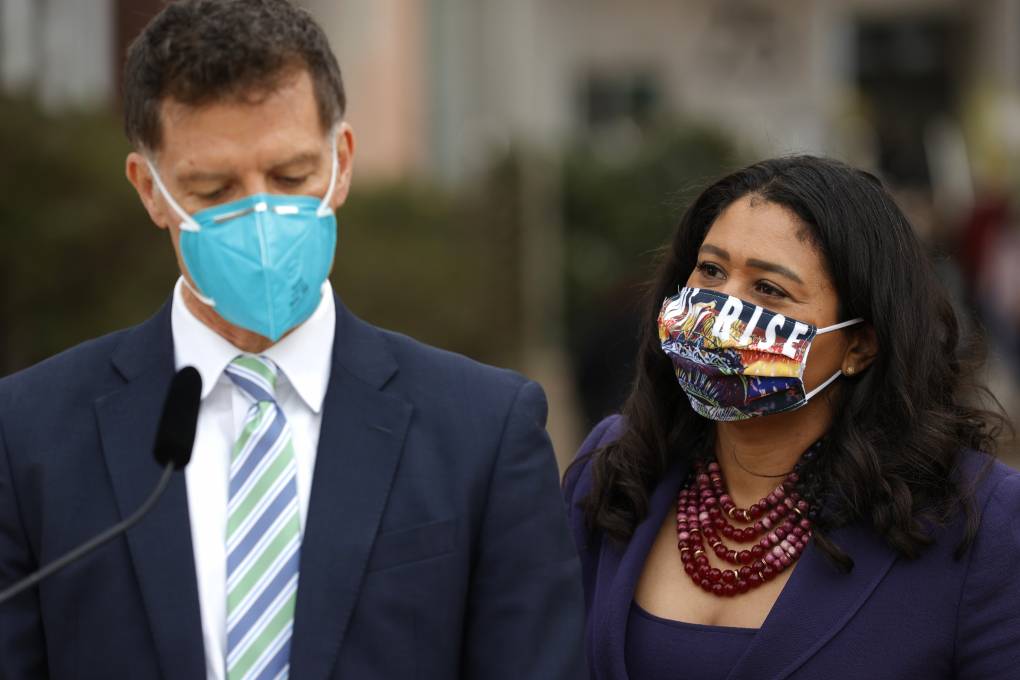
"content": "\u003cp>With the number of new COVID-19 cases rapidly increasing once again, San Francisco is seeing its public services short-staffed, city officials said at a virtual press conference on Tuesday. The surge, directly linked to the omicron variant, has affected key city agencies, from Muni to the police department.\u003c/p>\n\u003cp>As of Tuesday, 167 police officers were reported to be in quarantine — \u003ca href=\"https://www.sanfranciscopolice.org/your-sfpd/published-reports/demographics\">that's roughly 8% of the city's police force\u003c/a>. One hundred and thirty-five members of the fire department and 68 SFMTA employees also are isolating due to COVID-19 infections. And the United Educators of San Francisco (UESF) confirmed separately with KQED that 626 educators across the city's public schools called in sick on Tuesday.\u003c/p>\n\u003cp>Mayor London Breed said during the conference that the current challenge is keeping the city's workforce numbers up through the surge. But she stressed that public services will continue to operate as normal and that the city is not planning to impose any new restrictions on indoor dining, shopping or social events despite the uptick in cases.\u003c/p>\n\u003cp>[aside postID=\"news_11896107\" hero=\"https://ww2.kqed.org/app/uploads/sites/10/2021/11/GettyImages-1234850823-1020x680.jpg\"]\"Frontline workers will be putting in overtime to make up for their quarantined colleagues,\" she said. \"Trash is still being picked up, police are still on patrol and firefighters stand ready to respond.\"\u003c/p>\n\u003cp>But Muni users could see longer wait times, SFMTA officials shared. Twenty-eight Muni operators are in quarantine while others are out supporting family members affected by the surge. At the moment, no announcement has been made of any bus lines being canceled or route schedules permanently changing.\u003c/p>\n\u003cp>On Wednesday, the city registered a weekly average of 941 new cases per day — \u003ca href=\"https://sf.gov/data/covid-19-cases-and-deaths\">an all-time high that is more than double what public officials registered during the surge of January 2021\u003c/a>, when the city still had in place strict restrictions on indoor public spaces.\u003c/p>\n\u003cp>Breed added that San Francisco finds itself in a very different situation from past surges thanks to its high vaccination rate — \u003ca href=\"https://sf.gov/data/covid-19-vaccinations\">85% of the city's eligible population has been vaccinated\u003c/a>, and \u003ca href=\"https://sf.gov/data/covid-19-vaccine-boosters\">59% have already received their booster shot as of Wednesday\u003c/a>. While researchers have found that omicron has the ability to bypass immune protection and cause breakthrough infections, vaccines and booster shots are still highly successful at preventing serious illness and hospitalization.\u003c/p>\n\u003cp>[pullquote align=\"right\" size=\"medium\" citation=\"San Francisco Mayor London Breed\"]'Frontline workers will be putting in overtime to make up for their quarantined colleagues.'[/pullquote]\"Omicron is facing a wall of immunity as it moves through the city,\" said City Health Director Dr. Grant Colfax. \"Our vaccinations and boosters are doing what we need them to do right now, which is preventing many people from getting sick and being hospitalized.\"\u003c/p>\n\u003cp>But the sheer number of new infections does affect hospitalizations, he explained. According to the latest city data on Wednesday, 91 patients are receiving intensive care. That's much fewer than the historic peak of 256 from January 2021 \u003ca href=\"https://sf.gov/data/covid-19-hospitalizations\">but still represents a 54% increase from the week prior\u003c/a>.\u003c/p>\n\u003cp>The city currently has enough beds to manage this volume, said Colfax, and added that health officials expect cases to peak in the next couple of weeks, partly due to gatherings during the holiday season.\u003c/p>\n\u003cp>\"The large number of people contracting COVID has an impact on our hospitals, businesses, schools and essential city services,\" he said.\u003c/p>\n\u003cp>[aside label ='related Coverage' tag='omicron']However, many essential workers have expressed their frustration with city officials at what they feel is a lack of preparedness and attention to the risks of omicron.\u003c/p>\n\u003cp>Despite the Department of Public Health conducting approximately 25,000 coronavirus tests last week — nearly double its capacity from the start of December — many testing sites are still struggling with an increased demand for tests that results in long lines and waiting times that can stretch for hours.\u003c/p>\n\u003cp>UESF officials \u003ca href=\"https://twitter.com/UESF/status/1478478513606848513\">announced via Twitter that they are ready to negotiate with the school district\u003c/a> to secure COVID-19 sick leave and improve access to testing and KN95 masks. The union expects to meet with district officials on Thursday morning.\u003cbr>\nhttps://twitter.com/UESF/status/1478478513606848513\u003cbr>\nFor now, SFUSD does not plan a return to distance learning. Colfax announced his support of this decision at Tuesday's conference.\u003c/p>\n\u003cp>\"Even with the increase of additional cases, we have learned that the mental health and educational impacts on students due to social isolation far outweigh the challenges of in-person learning,\" he said.\u003c/p>\n\u003cp>Breed, for her part, insisted that the current surge will be brief and asked residents to avoid activities that may result in COVID-19 exposure.\u003c/p>\n\u003cp>\"To put it simply,\" she said, \"right now, we're learning what it means to live with COVID.\"\u003c/p>\n\u003cp>[ad fullwidth]\u003c/p>\n\u003cp>\u003c/p>\n",
"disqusIdentifier": "11900729 https://ww2.kqed.org/news/?p=11900729",
"disqusUrl": "https://ww2.kqed.org/news/2022/01/05/omicron-leaves-sf-with-hundreds-of-public-employees-out-sick/",
"stats": {
"hasVideo": false,
"hasChartOrMap": false,
"hasAudio": false,
"hasPolis": false,
"wordCount": 804,
"hasGoogleForm": false,
"hasGallery": false,
"hasHearkenModule": false,
"iframeSrcs": [],
"paragraphCount": 19
},
"modified": 1641429801,
"excerpt": "With COVID-19 cases on the rise, San Francisco is seeing its public services short-staffed, from Muni to the police department. Mayor London Breed said the city is not planning to impose any new restrictions, despite the uptick in cases.",
"headData": {
"twImgId": "",
"twTitle": "",
"ogTitle": "",
"ogImgId": "",
"twDescription": "",
"description": "With COVID-19 cases on the rise, San Francisco is seeing its public services short-staffed, from Muni to the police department. Mayor London Breed said the city is not planning to impose any new restrictions, despite the uptick in cases.",
"title": "Omicron Leaves SF With Hundreds of Public Employees Out Sick | KQED",
"ogDescription": "",
"schema": {
"@context": "https://schema.org",
"@type": "NewsArticle",
"headline": "Omicron Leaves SF With Hundreds of Public Employees Out Sick",
"datePublished": "2022-01-05T15:22:02-08:00",
"dateModified": "2022-01-05T16:43:21-08:00",
"image": "https://cdn.kqed.org/wp-content/uploads/2020/02/KQED-OG-Image@1x.png",
"isAccessibleForFree": "True",
"publisher": {
"@type": "NewsMediaOrganization",
"@id": "https://www.kqed.org/#organization",
"name": "KQED",
"logo": "https://cdn.kqed.org/wp-content/uploads/2020/02/KQED-OG-Image@1x.png",
"url": "https://www.kqed.org",
"sameAs": [
"https://www.facebook.com/KQED",
"https://twitter.com/KQED",
"https://www.instagram.com/kqed/",
"https://www.tiktok.com/@kqedofficial",
"https://www.linkedin.com/company/kqed",
"https://www.youtube.com/channel/UCeC0IOo7i1P_61zVUWbJ4nw"
]
}
}
},
"guestAuthors": [],
"slug": "omicron-leaves-sf-with-hundreds-of-public-employees-out-sick",
"status": "publish",
"excludeFromSiteSearch": "Include",
"path": "/news/11900729/omicron-leaves-sf-with-hundreds-of-public-employees-out-sick",
"audioTrackLength": null,
"parsedContent": [
{
"type": "contentString",
"content": "\u003cdiv class=\"post-body\">\u003cp>\u003cp>With the number of new COVID-19 cases rapidly increasing once again, San Francisco is seeing its public services short-staffed, city officials said at a virtual press conference on Tuesday. The surge, directly linked to the omicron variant, has affected key city agencies, from Muni to the police department.\u003c/p>\n\u003cp>As of Tuesday, 167 police officers were reported to be in quarantine — \u003ca href=\"https://www.sanfranciscopolice.org/your-sfpd/published-reports/demographics\">that's roughly 8% of the city's police force\u003c/a>. One hundred and thirty-five members of the fire department and 68 SFMTA employees also are isolating due to COVID-19 infections. And the United Educators of San Francisco (UESF) confirmed separately with KQED that 626 educators across the city's public schools called in sick on Tuesday.\u003c/p>\n\u003cp>Mayor London Breed said during the conference that the current challenge is keeping the city's workforce numbers up through the surge. But she stressed that public services will continue to operate as normal and that the city is not planning to impose any new restrictions on indoor dining, shopping or social events despite the uptick in cases.\u003c/p>\n\u003cp>\u003c/p>\u003c/div>",
"attributes": {
"named": {},
"numeric": []
}
},
{
"type": "component",
"content": "",
"name": "aside",
"attributes": {
"named": {
"postid": "news_11896107",
"hero": "https://ww2.kqed.org/app/uploads/sites/10/2021/11/GettyImages-1234850823-1020x680.jpg",
"label": ""
},
"numeric": []
}
},
{
"type": "contentString",
"content": "\u003cdiv class=\"post-body\">\u003cp>\"Frontline workers will be putting in overtime to make up for their quarantined colleagues,\" she said. \"Trash is still being picked up, police are still on patrol and firefighters stand ready to respond.\"\u003c/p>\n\u003cp>But Muni users could see longer wait times, SFMTA officials shared. Twenty-eight Muni operators are in quarantine while others are out supporting family members affected by the surge. At the moment, no announcement has been made of any bus lines being canceled or route schedules permanently changing.\u003c/p>\n\u003cp>On Wednesday, the city registered a weekly average of 941 new cases per day — \u003ca href=\"https://sf.gov/data/covid-19-cases-and-deaths\">an all-time high that is more than double what public officials registered during the surge of January 2021\u003c/a>, when the city still had in place strict restrictions on indoor public spaces.\u003c/p>\n\u003cp>Breed added that San Francisco finds itself in a very different situation from past surges thanks to its high vaccination rate — \u003ca href=\"https://sf.gov/data/covid-19-vaccinations\">85% of the city's eligible population has been vaccinated\u003c/a>, and \u003ca href=\"https://sf.gov/data/covid-19-vaccine-boosters\">59% have already received their booster shot as of Wednesday\u003c/a>. While researchers have found that omicron has the ability to bypass immune protection and cause breakthrough infections, vaccines and booster shots are still highly successful at preventing serious illness and hospitalization.\u003c/p>\n\u003cp>\u003c/p>\u003c/div>",
"attributes": {
"named": {},
"numeric": []
}
},
{
"type": "component",
"content": "'Frontline workers will be putting in overtime to make up for their quarantined colleagues.'",
"name": "pullquote",
"attributes": {
"named": {
"align": "right",
"size": "medium",
"citation": "San Francisco Mayor London Breed",
"label": ""
},
"numeric": []
}
},
{
"type": "contentString",
"content": "\u003cdiv class=\"post-body\">\u003cp>\"Omicron is facing a wall of immunity as it moves through the city,\" said City Health Director Dr. Grant Colfax. \"Our vaccinations and boosters are doing what we need them to do right now, which is preventing many people from getting sick and being hospitalized.\"\u003c/p>\n\u003cp>But the sheer number of new infections does affect hospitalizations, he explained. According to the latest city data on Wednesday, 91 patients are receiving intensive care. That's much fewer than the historic peak of 256 from January 2021 \u003ca href=\"https://sf.gov/data/covid-19-hospitalizations\">but still represents a 54% increase from the week prior\u003c/a>.\u003c/p>\n\u003cp>The city currently has enough beds to manage this volume, said Colfax, and added that health officials expect cases to peak in the next couple of weeks, partly due to gatherings during the holiday season.\u003c/p>\n\u003cp>\"The large number of people contracting COVID has an impact on our hospitals, businesses, schools and essential city services,\" he said.\u003c/p>\n\u003cp>\u003c/p>\u003c/div>",
"attributes": {
"named": {},
"numeric": []
}
},
{
"type": "component",
"content": "",
"name": "aside",
"attributes": {
"named": {
"label": "related Coverage ",
"tag": "omicron"
},
"numeric": []
}
},
{
"type": "contentString",
"content": "\u003cdiv class=\"post-body\">\u003cp>However, many essential workers have expressed their frustration with city officials at what they feel is a lack of preparedness and attention to the risks of omicron.\u003c/p>\n\u003cp>Despite the Department of Public Health conducting approximately 25,000 coronavirus tests last week — nearly double its capacity from the start of December — many testing sites are still struggling with an increased demand for tests that results in long lines and waiting times that can stretch for hours.\u003c/p>\n\u003cp>UESF officials \u003ca href=\"https://twitter.com/UESF/status/1478478513606848513\">announced via Twitter that they are ready to negotiate with the school district\u003c/a> to secure COVID-19 sick leave and improve access to testing and KN95 masks. The union expects to meet with district officials on Thursday morning.\u003cbr>\u003c/p>\u003c/div>",
"attributes": {
"named": {},
"numeric": []
}
},
{
"type": "component",
"content": "",
"name": "singleTwitterStatus",
"attributes": {
"named": {
"id": "1478478513606848513"
},
"numeric": []
}
},
{
"type": "contentString",
"content": "\u003cdiv class=\"post-body\">\u003cp>\u003cbr>\nFor now, SFUSD does not plan a return to distance learning. Colfax announced his support of this decision at Tuesday's conference.\u003c/p>\n\u003cp>\"Even with the increase of additional cases, we have learned that the mental health and educational impacts on students due to social isolation far outweigh the challenges of in-person learning,\" he said.\u003c/p>\n\u003cp>Breed, for her part, insisted that the current surge will be brief and asked residents to avoid activities that may result in COVID-19 exposure.\u003c/p>\n\u003cp>\"To put it simply,\" she said, \"right now, we're learning what it means to live with COVID.\"\u003c/p>\n\u003cp>\u003c/p>\u003c/div>",
"attributes": {
"named": {},
"numeric": []
}
},
{
"type": "component",
"content": "",
"name": "ad",
"attributes": {
"named": {
"label": "fullwidth"
},
"numeric": [
"fullwidth"
]
}
},
{
"type": "contentString",
"content": "\u003cdiv class=\"post-body\">\u003cp>\u003c/p>\n\u003cp>\u003c/p>\n\u003c/div>\u003c/p>",
"attributes": {
"named": {},
"numeric": []
}
}
],
"link": "/news/11900729/omicron-leaves-sf-with-hundreds-of-public-employees-out-sick",
"authors": [
"246",
"11708"
],
"categories": [
"news_457",
"news_28250",
"news_8"
],
"tags": [
"news_27350",
"news_27989",
"news_27504",
"news_27626",
"news_2388",
"news_6931",
"news_320",
"news_30305",
"news_30306",
"news_38",
"news_1334",
"news_20331"
],
"featImg": "news_11900906",
"label": "news"
},
"news_11900637": {
"type": "posts",
"id": "news_11900637",
"meta": {
"index": "posts_1716263798",
"site": "news",
"id": "11900637",
"score": null,
"sort": [
1641304820000
]
},
"parent": 0,
"labelTerm": {
"site": "news"
},
"blocks": [],
"publishDate": 1641304820,
"format": "audio",
"disqusTitle": "Omicron and Kids: Advice From a Stanford Pediatric Disease Expert",
"title": "Omicron and Kids: Advice From a Stanford Pediatric Disease Expert",
"headTitle": "KQED News",
"content": "\u003cp>For many parents and caregivers of children under 5 years old, the pandemic still feels far from over, with vaccines not yet available for young kids. How worried should we be about the omicron variant? When will the vaccine for kids under 5 be ready? And is my kid safe at school? These are just some of the questions swirling through the minds of parents and caregivers as \u003ca href=\"https://www.kqed.org/news/11900164/california-pushes-booster-as-omicron-covid-cases-surge-in-the-state\" target=\"_blank\" rel=\"noopener noreferrer\">omicron surges in the Bay Area\u003c/a>.\u003c/p>\n\u003cp>KQED's Brian Watt spoke with \u003ca href=\"https://profiles.stanford.edu/yvonne-maldonado\" target=\"_blank\" rel=\"noopener noreferrer\">Dr. Yvonne Maldonado\u003c/a>, a pediatric infectious disease expert at Stanford, about how the variant is affecting children and when we might know more about the vaccine trials for kids under 5 that are currently underway.\u003c/p>\n\u003cp>\u003cem>The following interview been edited for length and clarity.\u003c/em>\u003c/p>\n\u003cp>\u003cstrong>KQED's Brian Watt: We know the omicron variant is spreading fast, but it's shown to be less severe in most cases. How is this variant affecting children overall?\u003c/strong>\u003c/p>\n\u003cp>\u003cstrong>Dr. Yvonne Maldonado\u003c/strong>: It seems to be affecting children very similarly to the way it is affecting adults — it's very transmissible. The incubation period seems to be short. And fortunately, so far, it does not seem to cause more serious illness.\u003c/p>\n\u003cp>That doesn't mean that children aren't being hospitalized. It just means that the rate of hospitalization does not appear to be higher compared to the delta variant.\u003c/p>\n\u003cp>\u003cstrong>How is California doing with regard to kids going to the hospital for COVID, compared to other states?\u003c/strong>\u003c/p>\n\u003cp>If you look at the number of infections in kids reported by age, as a fraction of the total population, we are kind of in the middle. We're not seeing the big surge that the Northeast is seeing right now, but we're certainly seeing our fair share of cases in kids.\u003c/p>\n\u003cp>\u003cstrong>Do you think we could see the kind of surge that you're talking about in the Northeast?\u003c/strong>\u003c/p>\n\u003cp>It's hard to know. I would say that anything is possible at this point.[pullquote size=\"medium\" align=\"right\" citation=\"Dr. Yvonne Maldonado, Stanford pediatric infectious disease expert\"]'It's possible that this could be our worst week and that things might actually start to, hopefully, slow down after the next week or so.'[/pullquote]\u003c/p>\n\u003cp>However, we have data from sewage. One of our Stanford engineers does a Northern California surveillance of sewage samples across different counties. It looks like we started to see this virus in the Bay Area right before Christmas, so we're kind of in our third week right now.\u003c/p>\n\u003cp>This would put us squarely in the middle of what our surge might be, based on what the South Africans saw. It's possible that this could be our worst week and that things might actually start to, hopefully, slow down after the next week or so.\u003c/p>\n\u003cp>We are seeing more kids in the hospital. There are places actually that are sending children to big centers like Stanford. But part of that also has to do with the fact that there's not enough staffing.\u003c/p>\n\u003cp>\u003cstrong>What we are seeing among adults who get COVID is that the most serious cases are those who are unvaccinated. Is this the same for kids?\u003c/strong>\u003c/p>\n\u003cp>It's hard to know. We haven't really seen the data as clearly spelled out. In general, if you look at the data for children across the country since the beginning of the pandemic, hospitalizations are always highest in the 0- to 4-year-old age group for children. And that, of course, is the age group that isn't vaccinated.\u003c/p>\n\u003cp>It's really hard to know what the impact of the vaccine would have since that group doesn't have access to the vaccine. But overall, what we are generally seeing is that most, but not all, children who are hospitalized have been unvaccinated, so it's really important to get kids their full two doses.\u003c/p>\n\u003cp>\u003cb data-stringify-type=\"bold\">Do you think that the rate of vaccinated 5- to 11-year-olds has to do with parents who really just wonder if \u003c/b>\u003cstrong>their\u003c/strong>\u003cb data-stringify-type=\"bold\"> kids are ready for \u003c/b>\u003cstrong>vaccines\u003c/strong>\u003cb data-stringify-type=\"bold\"> at that age?\u003c/b>\u003c/p>\n\u003cp>I do think that there was a lot of concern about whether kids that age really needed the vaccine, whether they were going to get sick at all, and whether they would get really sick.\u003c/p>\n\u003cp>In my view, as a pediatrician and a parent of three kids myself (they're all adults now), we know that we vaccinate kids for less severe diseases and for diseases that cause less hospitalizations and deaths to prevent any risk of hospitalization and death.\u003c/p>\n\u003cp>I would encourage people to really think about getting their 5- to 11-year-olds vaccinated, because we really don't know — for about half of the kids who are hospitalized they have no underlying risk factors. But the other half? It's really a guess. And so, I would not want to put my child at risk.\u003c/p>\n\u003cp>\u003cstrong>If children under 5 have the highest hospitalization rates, when are we getting a vaccine to that age group?\u003c/strong>\u003c/p>\n\u003cp>Here at Stanford, we are part of the international pediatric Pfizer vaccine trials. \u003ca href=\"https://www.npr.org/2021/05/17/997029362/clinical-trials-underway-for-5-and-younger-covid-19-vaccinations\" target=\"_blank\" rel=\"noopener noreferrer\">We're doing studies for the under-5's\u003c/a> and we've broken up that group into 6 months to 23-month-olds and then 2- to 4-year-olds.\u003c/p>\n\u003cp>And recently, Pfizer let everyone know that the data on the 6 months to 23-month-olds at a very low dose — a tenth of the adult dose — worked really well in terms of antibody responses, but unfortunately that one-tenth of the dose given twice did not work for 2- to 4-year-olds.\u003c/p>\n\u003cp>We're going to revamp the study that we did with the two-dose trial and add a third dose for kids under 5 to see if that will boost them.\u003c/p>\n\u003cp>\u003cstrong>As a parent you have to be thinking about COVID safety at schools. Do you think that the risk is low enough to be back in person?\u003c/strong>\u003c/p>\n\u003cp>I've struggled with this over the last few days because we just saw this surge happen very quickly. This virus is extremely transmissible. I do think that kids can go back to school — if we are careful.[aside tag=\"covid, omicron\" label=\"More Related Stories\"]\u003c/p>\n\u003cp>We should be masking, everyone who can be should be vaccinated, and good cleaning and ventilation. All of the things we've been doing for the last year and a half, I think could really keep kids safe. It also would help if we had better access to rapid at-home testing, but that's something that apparently is going to take some time, and that's really unfortunate.\u003c/p>\n\u003cp>\u003cspan style=\"font-weight: 400\">[ad fullwidth]\u003c/span>\u003c/p>\n\u003cp>[ad floatright]\u003c/p>\n",
"disqusIdentifier": "11900637 https://ww2.kqed.org/news/?p=11900637",
"disqusUrl": "https://ww2.kqed.org/news/2022/01/04/omicron-and-kids-advice-from-a-stanford-pediatric-disease-expert/",
"stats": {
"hasVideo": false,
"hasChartOrMap": false,
"hasAudio": false,
"hasPolis": false,
"wordCount": 1120,
"hasGoogleForm": false,
"hasGallery": false,
"hasHearkenModule": false,
"iframeSrcs": [],
"paragraphCount": 29
},
"modified": 1641330520,
"excerpt": "KQED's Brian Watt spoke with Dr. Yvonne Maldonado, a pediatric infectious disease expert at Stanford, about how the variant is affecting children and when we might know more about the current vaccine trials.",
"headData": {
"twImgId": "",
"twTitle": "",
"ogTitle": "",
"ogImgId": "",
"twDescription": "",
"description": "KQED's Brian Watt spoke with Dr. Yvonne Maldonado, a pediatric infectious disease expert at Stanford, about how the variant is affecting children and when we might know more about the current vaccine trials.",
"title": "Omicron and Kids: Advice From a Stanford Pediatric Disease Expert | KQED",
"ogDescription": "",
"schema": {
"@context": "https://schema.org",
"@type": "NewsArticle",
"headline": "Omicron and Kids: Advice From a Stanford Pediatric Disease Expert",
"datePublished": "2022-01-04T06:00:20-08:00",
"dateModified": "2022-01-04T13:08:40-08:00",
"image": "https://cdn.kqed.org/wp-content/uploads/2020/02/KQED-OG-Image@1x.png",
"isAccessibleForFree": "True",
"publisher": {
"@type": "NewsMediaOrganization",
"@id": "https://www.kqed.org/#organization",
"name": "KQED",
"logo": "https://cdn.kqed.org/wp-content/uploads/2020/02/KQED-OG-Image@1x.png",
"url": "https://www.kqed.org",
"sameAs": [
"https://www.facebook.com/KQED",
"https://twitter.com/KQED",
"https://www.instagram.com/kqed/",
"https://www.tiktok.com/@kqedofficial",
"https://www.linkedin.com/company/kqed",
"https://www.youtube.com/channel/UCeC0IOo7i1P_61zVUWbJ4nw"
]
}
}
},
"guestAuthors": [],
"slug": "omicron-and-kids-advice-from-a-stanford-pediatric-disease-expert",
"status": "publish",
"audioUrl": "https://traffic.omny.fm/d/clips/0af137ef-751e-4b19-a055-aaef00d2d578/ffca7e9f-6831-4[…]f-aaef00f5a073/30b4fefb-121c-432e-9d32-ae13012de115/audio.mp3",
"excludeFromSiteSearch": "Include",
"path": "/news/11900637/omicron-and-kids-advice-from-a-stanford-pediatric-disease-expert",
"audioTrackLength": null,
"parsedContent": [
{
"type": "contentString",
"content": "\u003cdiv class=\"post-body\">\u003cp>\u003cp>For many parents and caregivers of children under 5 years old, the pandemic still feels far from over, with vaccines not yet available for young kids. How worried should we be about the omicron variant? When will the vaccine for kids under 5 be ready? And is my kid safe at school? These are just some of the questions swirling through the minds of parents and caregivers as \u003ca href=\"https://www.kqed.org/news/11900164/california-pushes-booster-as-omicron-covid-cases-surge-in-the-state\" target=\"_blank\" rel=\"noopener noreferrer\">omicron surges in the Bay Area\u003c/a>.\u003c/p>\n\u003cp>KQED's Brian Watt spoke with \u003ca href=\"https://profiles.stanford.edu/yvonne-maldonado\" target=\"_blank\" rel=\"noopener noreferrer\">Dr. Yvonne Maldonado\u003c/a>, a pediatric infectious disease expert at Stanford, about how the variant is affecting children and when we might know more about the vaccine trials for kids under 5 that are currently underway.\u003c/p>\n\u003cp>\u003cem>The following interview been edited for length and clarity.\u003c/em>\u003c/p>\n\u003cp>\u003cstrong>KQED's Brian Watt: We know the omicron variant is spreading fast, but it's shown to be less severe in most cases. How is this variant affecting children overall?\u003c/strong>\u003c/p>\n\u003cp>\u003cstrong>Dr. Yvonne Maldonado\u003c/strong>: It seems to be affecting children very similarly to the way it is affecting adults — it's very transmissible. The incubation period seems to be short. And fortunately, so far, it does not seem to cause more serious illness.\u003c/p>\n\u003cp>That doesn't mean that children aren't being hospitalized. It just means that the rate of hospitalization does not appear to be higher compared to the delta variant.\u003c/p>\n\u003cp>\u003cstrong>How is California doing with regard to kids going to the hospital for COVID, compared to other states?\u003c/strong>\u003c/p>\n\u003cp>If you look at the number of infections in kids reported by age, as a fraction of the total population, we are kind of in the middle. We're not seeing the big surge that the Northeast is seeing right now, but we're certainly seeing our fair share of cases in kids.\u003c/p>\n\u003cp>\u003cstrong>Do you think we could see the kind of surge that you're talking about in the Northeast?\u003c/strong>\u003c/p>\n\u003cp>It's hard to know. I would say that anything is possible at this point.\u003c/p>\u003c/div>",
"attributes": {
"named": {},
"numeric": []
}
},
{
"type": "component",
"content": "'It's possible that this could be our worst week and that things might actually start to, hopefully, slow down after the next week or so.'",
"name": "pullquote",
"attributes": {
"named": {
"size": "medium",
"align": "right",
"citation": "Dr. Yvonne Maldonado, Stanford pediatric infectious disease expert",
"label": ""
},
"numeric": []
}
},
{
"type": "contentString",
"content": "\u003cdiv class=\"post-body\">\u003cp>\u003c/p>\n\u003cp>However, we have data from sewage. One of our Stanford engineers does a Northern California surveillance of sewage samples across different counties. It looks like we started to see this virus in the Bay Area right before Christmas, so we're kind of in our third week right now.\u003c/p>\n\u003cp>This would put us squarely in the middle of what our surge might be, based on what the South Africans saw. It's possible that this could be our worst week and that things might actually start to, hopefully, slow down after the next week or so.\u003c/p>\n\u003cp>We are seeing more kids in the hospital. There are places actually that are sending children to big centers like Stanford. But part of that also has to do with the fact that there's not enough staffing.\u003c/p>\n\u003cp>\u003cstrong>What we are seeing among adults who get COVID is that the most serious cases are those who are unvaccinated. Is this the same for kids?\u003c/strong>\u003c/p>\n\u003cp>It's hard to know. We haven't really seen the data as clearly spelled out. In general, if you look at the data for children across the country since the beginning of the pandemic, hospitalizations are always highest in the 0- to 4-year-old age group for children. And that, of course, is the age group that isn't vaccinated.\u003c/p>\n\u003cp>It's really hard to know what the impact of the vaccine would have since that group doesn't have access to the vaccine. But overall, what we are generally seeing is that most, but not all, children who are hospitalized have been unvaccinated, so it's really important to get kids their full two doses.\u003c/p>\n\u003cp>\u003cb data-stringify-type=\"bold\">Do you think that the rate of vaccinated 5- to 11-year-olds has to do with parents who really just wonder if \u003c/b>\u003cstrong>their\u003c/strong>\u003cb data-stringify-type=\"bold\"> kids are ready for \u003c/b>\u003cstrong>vaccines\u003c/strong>\u003cb data-stringify-type=\"bold\"> at that age?\u003c/b>\u003c/p>\n\u003cp>I do think that there was a lot of concern about whether kids that age really needed the vaccine, whether they were going to get sick at all, and whether they would get really sick.\u003c/p>\n\u003cp>In my view, as a pediatrician and a parent of three kids myself (they're all adults now), we know that we vaccinate kids for less severe diseases and for diseases that cause less hospitalizations and deaths to prevent any risk of hospitalization and death.\u003c/p>\n\u003cp>I would encourage people to really think about getting their 5- to 11-year-olds vaccinated, because we really don't know — for about half of the kids who are hospitalized they have no underlying risk factors. But the other half? It's really a guess. And so, I would not want to put my child at risk.\u003c/p>\n\u003cp>\u003cstrong>If children under 5 have the highest hospitalization rates, when are we getting a vaccine to that age group?\u003c/strong>\u003c/p>\n\u003cp>Here at Stanford, we are part of the international pediatric Pfizer vaccine trials. \u003ca href=\"https://www.npr.org/2021/05/17/997029362/clinical-trials-underway-for-5-and-younger-covid-19-vaccinations\" target=\"_blank\" rel=\"noopener noreferrer\">We're doing studies for the under-5's\u003c/a> and we've broken up that group into 6 months to 23-month-olds and then 2- to 4-year-olds.\u003c/p>\n\u003cp>And recently, Pfizer let everyone know that the data on the 6 months to 23-month-olds at a very low dose — a tenth of the adult dose — worked really well in terms of antibody responses, but unfortunately that one-tenth of the dose given twice did not work for 2- to 4-year-olds.\u003c/p>\n\u003cp>We're going to revamp the study that we did with the two-dose trial and add a third dose for kids under 5 to see if that will boost them.\u003c/p>\n\u003cp>\u003cstrong>As a parent you have to be thinking about COVID safety at schools. Do you think that the risk is low enough to be back in person?\u003c/strong>\u003c/p>\n\u003cp>I've struggled with this over the last few days because we just saw this surge happen very quickly. This virus is extremely transmissible. I do think that kids can go back to school — if we are careful.\u003c/p>\u003c/div>",
"attributes": {
"named": {},
"numeric": []
}
},
{
"type": "component",
"content": "",
"name": "aside",
"attributes": {
"named": {
"tag": "covid, omicron",
"label": "More Related Stories "
},
"numeric": []
}
},
{
"type": "contentString",
"content": "\u003cdiv class=\"post-body\">\u003cp>\u003c/p>\n\u003cp>We should be masking, everyone who can be should be vaccinated, and good cleaning and ventilation. All of the things we've been doing for the last year and a half, I think could really keep kids safe. It also would help if we had better access to rapid at-home testing, but that's something that apparently is going to take some time, and that's really unfortunate.\u003c/p>\n\u003cp>\u003cspan style=\"font-weight: 400\">\u003c/p>\u003c/div>",
"attributes": {
"named": {},
"numeric": []
}
},
{
"type": "component",
"content": "",
"name": "ad",
"attributes": {
"named": {
"label": "fullwidth"
},
"numeric": [
"fullwidth"
]
}
},
{
"type": "contentString",
"content": "\u003cdiv class=\"post-body\">\u003cp>\u003c/span>\u003c/p>\n\u003cp>\u003c/p>\u003c/div>",
"attributes": {
"named": {},
"numeric": []
}
},
{
"type": "component",
"content": "",
"name": "ad",
"attributes": {
"named": {
"label": "floatright"
},
"numeric": [
"floatright"
]
}
},
{
"type": "contentString",
"content": "\u003cdiv class=\"post-body\">\u003cp>\u003c/p>\n\u003c/div>\u003c/p>",
"attributes": {
"named": {},
"numeric": []
}
}
],
"link": "/news/11900637/omicron-and-kids-advice-from-a-stanford-pediatric-disease-expert",
"authors": [
"11238",
"11626"
],
"categories": [
"news_457",
"news_28250",
"news_8"
],
"tags": [
"news_27989",
"news_27504",
"news_20013",
"news_19542",
"news_29720",
"news_17762",
"news_30305"
],
"featImg": "news_11900642",
"label": "news"
},
"news_11900316": {
"type": "posts",
"id": "news_11900316",
"meta": {
"index": "posts_1716263798",
"site": "news",
"id": "11900316",
"score": null,
"sort": [
1640729545000
]
},
"guestAuthors": [],
"slug": "santa-clara-county-to-require-covid-boosters-for-health-care-workers-sooner-than-state",
"title": "Santa Clara County to Require COVID Boosters for Health Care Workers, Sooner Than State",
"publishDate": 1640729545,
"format": "standard",
"headTitle": "Santa Clara County to Require COVID Boosters for Health Care Workers, Sooner Than State | KQED",
"labelTerm": {
"site": "news"
},
"content": "\u003cp>Santa Clara County will require health care workers in high-risk settings to get COVID-19 boosters, and to get them sooner than a statewide mandate issued by Gov. Gavin Newsom last week, officials announced Tuesday.\u003c/p>\n\u003cp>Last week, Newsom announced that nearly all of California’s roughly 2.5 million frontline health care workers \u003ca href=\"https://www.kqed.org/news/11900014/california-to-require-booster-shots-for-health-care-workers\">must receive a COVID-19 booster shot by Feb. 1\u003c/a>. Santa Clara County’s order goes into effect on Jan. 24, and will apply to more workers than the state’s.\u003c/p>\n\u003cp>At the Tuesday press conference, Santa Clara County Public Health Officer Sara Cody said a surge in omicron variant infections drove the decision to order the mandate.\u003c/p>\n\u003cp>“Since the last time we spoke, which was just less than two weeks ago, I warned of a deluge of omicron,” Cody said. “Today, unfortunately, that deluge is here.”\u003c/p>\n\u003cp>COVID-19 cases among the unvaccinated \u003ca href=\"https://covid19.sccgov.org/dashboard-case-rates-vaccination-status\">are higher now in Santa Clara County than last August’s surge\u003c/a>. While 81% of county residents are vaccinated, and 52% have gotten a booster dose, Cody said the high spread of omicron meant a possibility for hospitals here to become overwhelmed soon — making even the “breakthrough” cases in vaccinated people a problem for hospitals.\u003c/p>\n\u003cp>“Even if a small portion ends up needing a hospital bed, it could still end up being a lot of people, because the portion of cases is quite large,” Cody said.\u003c/p>\n\u003cp>The order, she added, is “to protect our health care system.”\u003c/p>\n\u003cp>[aside postID=news_11900014 hero='https://ww2.kqed.org/app/uploads/sites/10/2021/12/GettyImages-1236892674-1020x601.jpg']Both the state’s and the county’s orders apply to workers at hospitals and doctor’s offices, home health workers and those working in high-risk congregate settings including nursing facilities, hospice centers and dialysis centers.\u003c/p>\n\u003cp>But Santa Clara County’s order “applies to a slightly broader set of workers,” said County Counsel for Santa Clara County James Williams, “namely medical first responders, such as paramedics and EMTs, those working in shelters, and non-health care staff in jails and correctional settings.” It also will not allow unvaccinated or unboosted people to get tested as a way to satisfy the requirement.\u003c/p>\n\u003cp>Instead, those workers without a booster, including medical and correctional first responders, will be reassigned to jobs within their organizations that the county doesn’t consider having high-risk settings, such as where air is shared with high-risk clients, and jails, said Williams.\u003c/p>\n\u003cp>“Boosters are absolutely critical, given what we’re facing right now,” he said.\u003c/p>\n\u003cp>[ad fullwidth]\u003c/p>\n\u003cp>The mandate came alongside recommendations Cody announced for Santa Clara County, including that businesses and other governmental entities implement vaccine and booster requirements for their workers. She also strongly recommended restaurants and bars require booster shots for workers and patrons.\u003c/p>\n\u003cp>When asked why the recommendation for restaurants and bars was not a mandate, Cody said, “Our feeling is that it’s extremely important, but we’re not taking that final step of mandating it. Our businesses have been incredibly responsible, responsive and safe with their patrons.”\u003c/p>\n\u003cp>She did, however, say the best way to patronize your favorite restaurants now is by ordering takeout or delivery and “tipping a lot, to support them,” but that gathering indoors without a mask is “not the safest way to be right now, with omicron spiking as it is.”\u003c/p>\n\u003cp>In Oakland last week, at the announcement of the statewide booster mandate for health care workers, Newsom said the mandate was imperative to preventing further health care staffing shortages due to illness.\u003c/p>\n\u003cp>“We recognize now just being fully vaccinated is not enough with this new variant,” Newsom said, noting that “well north of 50%” of new cases in California are the omicron variant — now the dominant variant in the country. “We believe it’s important to extend this requirement to getting that third dose, to getting boosted,” he added. “I think it is a smart move, a wise move in this context that we need to make sure we don’t have staffing shortages.”\u003c/p>\n\u003cp>[aside label='Related Coverage' tag='booster-shot']California already requires health care workers to be vaccinated against the coronavirus, a directive that took effect in September, and one that most workers have complied with. Thousands of people who have not complied, though, have either lost their jobs or been suspended, sparking concerns that the newest rule could further exacerbate staffing shortages.\u003c/p>\n\u003cp>The California Hospital Association was quick to back the order, with California Hospital Association President and CEO Carmela Coyle saying, in a statement, that boosters are “vital to ensuring care for all in need as California and the nation as a whole continue to face a persistent shortage of health care workers.”\u003c/p>\n\u003cp>Coronavirus-related hospitalizations have been rising slowly in California. As of Tuesday, there were 4,747 coronavirus patients hospitalized across the state, indicating an increase since Dec. 1. But that’s far less than the peak of last winter’s surge, when the state had nearly 22,000 coronavirus patients before vaccines were widely available. Now, more than 70% of the state’s nearly 40 million residents have been fully vaccinated.\u003c/p>\n\u003cp>But while hospitals overall have fewer patients than last winter, many have fewer workers to treat the patients they do have. The staffing shortage comes as businesses, including hospitals, are having trouble finding workers. A recent UCSF study estimated \u003ca href=\"https://www.ucsf.edu/news/2021/09/421366/california-faces-short-term-nursing-shortage-covid-19-retirements\">the state’s nursing shortage could persist until 2026\u003c/a>.\u003c/p>\n\u003cp>Kiyomi Burchill, group vice president for policy for the California Hospital Association, said in an interview Tuesday before Newsom made his announcement, “The staffing shortages we are experiencing are worse than ever.”\u003c/p>\n\u003cp>\u003cem>This post includes reporting from KQED’s Spencer Whitney and Matthew Green, as well as Adam Beam of The Associated Press.\u003c/em>\u003c/p>\n\u003cp>\u003c/p>\n",
"blocks": [],
"excerpt": "The county's order expands on the state's booster mandate, moving up the deadline to Jan. 24 from Feb. 1 and eliminating an option to test instead of getting a booster shot.",
"status": "publish",
"parent": 0,
"modified": 1726005854,
"stats": {
"hasAudio": false,
"hasVideo": false,
"hasChartOrMap": false,
"iframeSrcs": [],
"hasGoogleForm": false,
"hasGallery": false,
"hasHearkenModule": false,
"hasPolis": false,
"paragraphCount": 24,
"wordCount": 1013
},
"headData": {
"title": "Santa Clara County to Require COVID Boosters for Health Care Workers, Sooner Than State | KQED",
"description": "The county's order expands on the state's booster mandate, moving up the deadline to Jan. 24 from Feb. 1 and eliminating an option to test instead of getting a booster shot.",
"ogTitle": "",
"ogDescription": "",
"ogImgId": "",
"twTitle": "",
"twDescription": "",
"twImgId": "",
"schema": {
"@context": "https://schema.org",
"@type": "NewsArticle",
"headline": "Santa Clara County to Require COVID Boosters for Health Care Workers, Sooner Than State",
"datePublished": "2021-12-28T14:12:25-08:00",
"dateModified": "2024-09-10T15:04:14-07:00",
"image": "https://cdn.kqed.org/wp-content/uploads/2020/02/KQED-OG-Image@1x.png",
"isAccessibleForFree": "True",
"publisher": {
"@type": "NewsMediaOrganization",
"@id": "https://www.kqed.org/#organization",
"name": "KQED",
"logo": "https://cdn.kqed.org/wp-content/uploads/2020/02/KQED-OG-Image@1x.png",
"url": "https://www.kqed.org",
"sameAs": [
"https://www.facebook.com/KQED",
"https://twitter.com/KQED",
"https://www.instagram.com/kqed/",
"https://www.tiktok.com/@kqedofficial",
"https://www.linkedin.com/company/kqed",
"https://www.youtube.com/channel/UCeC0IOo7i1P_61zVUWbJ4nw"
]
}
}
},
"sticky": false,
"excludeFromSiteSearch": "Include",
"path": "/news/11900316/santa-clara-county-to-require-covid-boosters-for-health-care-workers-sooner-than-state",
"audioTrackLength": null,
"parsedContent": [
{
"type": "contentString",
"content": "\u003cdiv class=\"post-body\">\u003cp>\u003cp>Santa Clara County will require health care workers in high-risk settings to get COVID-19 boosters, and to get them sooner than a statewide mandate issued by Gov. Gavin Newsom last week, officials announced Tuesday.\u003c/p>\n\u003cp>Last week, Newsom announced that nearly all of California’s roughly 2.5 million frontline health care workers \u003ca href=\"https://www.kqed.org/news/11900014/california-to-require-booster-shots-for-health-care-workers\">must receive a COVID-19 booster shot by Feb. 1\u003c/a>. Santa Clara County’s order goes into effect on Jan. 24, and will apply to more workers than the state’s.\u003c/p>\n\u003cp>At the Tuesday press conference, Santa Clara County Public Health Officer Sara Cody said a surge in omicron variant infections drove the decision to order the mandate.\u003c/p>\n\u003cp>“Since the last time we spoke, which was just less than two weeks ago, I warned of a deluge of omicron,” Cody said. “Today, unfortunately, that deluge is here.”\u003c/p>\n\u003cp>COVID-19 cases among the unvaccinated \u003ca href=\"https://covid19.sccgov.org/dashboard-case-rates-vaccination-status\">are higher now in Santa Clara County than last August’s surge\u003c/a>. While 81% of county residents are vaccinated, and 52% have gotten a booster dose, Cody said the high spread of omicron meant a possibility for hospitals here to become overwhelmed soon — making even the “breakthrough” cases in vaccinated people a problem for hospitals.\u003c/p>\n\u003cp>“Even if a small portion ends up needing a hospital bed, it could still end up being a lot of people, because the portion of cases is quite large,” Cody said.\u003c/p>\n\u003cp>The order, she added, is “to protect our health care system.”\u003c/p>\n\u003cp>\u003c/p>\u003c/div>",
"attributes": {
"named": {},
"numeric": []
}
},
{
"type": "component",
"content": "",
"name": "aside",
"attributes": {
"named": {
"postid": "news_11900014",
"hero": "https://ww2.kqed.org/app/uploads/sites/10/2021/12/GettyImages-1236892674-1020x601.jpg",
"label": ""
},
"numeric": []
}
},
{
"type": "contentString",
"content": "\u003cdiv class=\"post-body\">\u003cp>Both the state’s and the county’s orders apply to workers at hospitals and doctor’s offices, home health workers and those working in high-risk congregate settings including nursing facilities, hospice centers and dialysis centers.\u003c/p>\n\u003cp>But Santa Clara County’s order “applies to a slightly broader set of workers,” said County Counsel for Santa Clara County James Williams, “namely medical first responders, such as paramedics and EMTs, those working in shelters, and non-health care staff in jails and correctional settings.” It also will not allow unvaccinated or unboosted people to get tested as a way to satisfy the requirement.\u003c/p>\n\u003cp>Instead, those workers without a booster, including medical and correctional first responders, will be reassigned to jobs within their organizations that the county doesn’t consider having high-risk settings, such as where air is shared with high-risk clients, and jails, said Williams.\u003c/p>\n\u003cp>“Boosters are absolutely critical, given what we’re facing right now,” he said.\u003c/p>\n\u003cp>\u003c/p>\u003c/div>",
"attributes": {
"named": {},
"numeric": []
}
},
{
"type": "component",
"content": "",
"name": "ad",
"attributes": {
"named": {
"label": "fullwidth"
},
"numeric": [
"fullwidth"
]
}
},
{
"type": "contentString",
"content": "\u003cdiv class=\"post-body\">\u003cp>\u003c/p>\n\u003cp>The mandate came alongside recommendations Cody announced for Santa Clara County, including that businesses and other governmental entities implement vaccine and booster requirements for their workers. She also strongly recommended restaurants and bars require booster shots for workers and patrons.\u003c/p>\n\u003cp>When asked why the recommendation for restaurants and bars was not a mandate, Cody said, “Our feeling is that it’s extremely important, but we’re not taking that final step of mandating it. Our businesses have been incredibly responsible, responsive and safe with their patrons.”\u003c/p>\n\u003cp>She did, however, say the best way to patronize your favorite restaurants now is by ordering takeout or delivery and “tipping a lot, to support them,” but that gathering indoors without a mask is “not the safest way to be right now, with omicron spiking as it is.”\u003c/p>\n\u003cp>In Oakland last week, at the announcement of the statewide booster mandate for health care workers, Newsom said the mandate was imperative to preventing further health care staffing shortages due to illness.\u003c/p>\n\u003cp>“We recognize now just being fully vaccinated is not enough with this new variant,” Newsom said, noting that “well north of 50%” of new cases in California are the omicron variant — now the dominant variant in the country. “We believe it’s important to extend this requirement to getting that third dose, to getting boosted,” he added. “I think it is a smart move, a wise move in this context that we need to make sure we don’t have staffing shortages.”\u003c/p>\n\u003cp>\u003c/p>\u003c/div>",
"attributes": {
"named": {},
"numeric": []
}
},
{
"type": "component",
"content": "",
"name": "aside",
"attributes": {
"named": {
"label": "Related Coverage ",
"tag": "booster-shot"
},
"numeric": []
}
},
{
"type": "contentString",
"content": "\u003cdiv class=\"post-body\">\u003cp>California already requires health care workers to be vaccinated against the coronavirus, a directive that took effect in September, and one that most workers have complied with. Thousands of people who have not complied, though, have either lost their jobs or been suspended, sparking concerns that the newest rule could further exacerbate staffing shortages.\u003c/p>\n\u003cp>The California Hospital Association was quick to back the order, with California Hospital Association President and CEO Carmela Coyle saying, in a statement, that boosters are “vital to ensuring care for all in need as California and the nation as a whole continue to face a persistent shortage of health care workers.”\u003c/p>\n\u003cp>Coronavirus-related hospitalizations have been rising slowly in California. As of Tuesday, there were 4,747 coronavirus patients hospitalized across the state, indicating an increase since Dec. 1. But that’s far less than the peak of last winter’s surge, when the state had nearly 22,000 coronavirus patients before vaccines were widely available. Now, more than 70% of the state’s nearly 40 million residents have been fully vaccinated.\u003c/p>\n\u003cp>But while hospitals overall have fewer patients than last winter, many have fewer workers to treat the patients they do have. The staffing shortage comes as businesses, including hospitals, are having trouble finding workers. A recent UCSF study estimated \u003ca href=\"https://www.ucsf.edu/news/2021/09/421366/california-faces-short-term-nursing-shortage-covid-19-retirements\">the state’s nursing shortage could persist until 2026\u003c/a>.\u003c/p>\n\u003cp>Kiyomi Burchill, group vice president for policy for the California Hospital Association, said in an interview Tuesday before Newsom made his announcement, “The staffing shortages we are experiencing are worse than ever.”\u003c/p>\n\u003cp>\u003cem>This post includes reporting from KQED’s Spencer Whitney and Matthew Green, as well as Adam Beam of The Associated Press.\u003c/em>\u003c/p>\n\u003cp>\u003c/p>\n\u003c/div>\u003c/p>",
"attributes": {
"named": {},
"numeric": []
}
}
],
"link": "/news/11900316/santa-clara-county-to-require-covid-boosters-for-health-care-workers-sooner-than-state",
"authors": [
"11690"
],
"categories": [
"news_457",
"news_8"
],
"tags": [
"news_29759",
"news_30445",
"news_27350",
"news_27989",
"news_27626",
"news_16",
"news_18543",
"news_30305",
"news_30306"
],
"featImg": "news_11900358",
"label": "news"
},
"news_11900296": {
"type": "posts",
"id": "news_11900296",
"meta": {
"index": "posts_1716263798",
"site": "news",
"id": "11900296",
"score": null,
"sort": [
1640646005000
]
},
"parent": 0,
"labelTerm": {
"site": "news"
},
"blocks": [],
"publishDate": 1640646005,
"format": "standard",
"disqusTitle": "CDC Recommends Shorter COVID Isolation and Quarantine Periods",
"title": "CDC Recommends Shorter COVID Isolation and Quarantine Periods",
"headTitle": "KQED News",
"content": "\u003cp>\u003cem>Don't have time to read the whole guide? Here's a quick breakdown. Click the links below to skip to a specific section\u003c/em>:\u003c/p>\n\u003cul>\n\u003cli>\u003ca href=\"#new\">\u003cstrong>Breaking down the new isolation rules\u003c/strong>\u003c/a>\u003c/li>\n\u003cli>\u003ca href=\"#apply\">\u003cstrong>Breaking down the new quarantine rules\u003c/strong>\u003c/a>\u003c/li>\n\u003cli>\u003ca href=\"#risk\">\u003cstrong>Is there still a risk of infection after five days?\u003c/strong>\u003c/a>\u003c/li>\n\u003c/ul>\n\u003cp>U.S. health officials on Monday cut isolation restrictions for Americans who catch the coronavirus from 10 days down to five days, and similarly shortened the time that close contacts need to quarantine.\u003c/p>\n\u003cp>Centers for Disease Control and Prevention officials said the guidance is in keeping with growing evidence that people with the coronavirus are most infectious in the two days before and three days after symptoms develop.\u003c/p>\n\u003cp>The decision also was driven by a recent surge in COVID-19 cases, propelled by the omicron variant.\u003c/p>\n\u003cp>Early research suggests omicron may cause milder illness than earlier variants of the coronavirus. But the sheer number of people becoming infected — and therefore having to isolate or quarantine — threatens to crush the ability of hospitals, airlines and other businesses to stay open, experts say.\u003c/p>\n\u003cp>[aside postID=\"news_11900053\" hero=\"https://ww2.kqed.org/app/uploads/sites/10/2021/12/GettyImages-1237257420-1020x680.jpg\"]CDC Director Rochelle Walensky said the country is about to see a lot of omicron cases.\u003c/p>\n\u003cp>“Not all of those cases are going to be severe. In fact many are going to be asymptomatic,” she told The Associated Press on Monday. “We want to make sure there is a mechanism by which we can safely continue to keep society functioning while following the science.”\u003c/p>\n\u003cp>But beleaguered businesses also are amping up the pressure: Airlines have called on the Biden administration to shorten the guidelines for the isolation period for vaccinated workers who get COVID-19, to ease staffing shortages. The union for flight attendants has pushed back against that, saying the isolation period should remain 10 days.\u003c/p>\n\u003cp>[aside postID=\"news_11896107\" hero=\"https://ww2.kqed.org/app/uploads/sites/10/2021/11/GettyImages-1234850823-1020x680.jpg\"]Last week, the CDC loosened rules that previously called on health care workers to stay out of work for 10 days if they test positive. The new recommendations say workers could go back to work after seven days if they test negative and don’t have symptoms. And the agency said isolation time could be cut to five days, or even fewer, if there are severe staffing shortages.\u003c/p>\n\u003cp>Now, the CDC is changing the isolation and quarantine guidance for the general public to be even less stringent.\u003c/p>\n\u003cp>The guidance is not a mandate; it’s a recommendation to employers and state and local officials. Last week, New York state said it would expand on the CDC’s guidance for health care workers to include employees who have other critical jobs that are facing a severe staffing shortage.\u003c/p>\n\u003cp>It’s possible other states will seek to shorten their isolation and quarantine policies, and the CDC is trying to get out ahead of the shift. “It would be helpful to have uniform CDC guidance” that others could draw from, rather than a mishmash of policies, Walensky said.\u003c/p>\n\u003cp>The CDC’s guidance on isolation and quarantine has seemed confusing to the public, and the new recommendations are “happening at a time when more people are testing positive for the first time and looking for guidance,” said Lindsay Wiley, an American University public health law expert.\u003c/p>\n\u003cp>Nevertheless, the guidance continues to be complex.\u003cbr>\n[ad fullwidth]\u003c/p>\n\u003ch3>\u003ca id=\"new\">\u003c/a>Breaking down the new isolation rules\u003c/h3>\n\u003cp>The isolation rules are for people who are infected. They are the same for people who are unvaccinated, partly vaccinated, fully vaccinated or boosted. They say:\u003c/p>\n\u003cul>\n\u003cli>The clock starts the day you test positive.\u003c/li>\n\u003cli>An infected person should go into isolation for five days, instead of the previously recommended 10.\u003c/li>\n\u003cli>At the end of five days, if you have no symptoms, you can return to normal activities but must wear a mask everywhere — even at home around others — for at least five more days.\u003c/li>\n\u003cli>If you still have symptoms after isolating for five days, stay home until you feel better and then start your five days of wearing a mask at all times.\u003c/li>\n\u003c/ul>\n\u003ch3>\u003ca id=\"apply\">\u003c/a>Breaking down the new quarantine rules\u003c/h3>\n\u003cp>The quarantine rules are for people \u003cem>who were in close contact\u003c/em> with an infected person but not infected themselves. They say:\u003c/p>\n\u003cul>\n\u003cli>For quarantine, the clock starts the day someone is alerted they may have been exposed to the virus.\u003c/li>\n\u003cli>People who are vaccinated but not boosted, people who are partly vaccinated and those who are not vaccinated at all can stop quarantine after five days if they wear masks in all settings for five days afterward.\u003c/li>\n\u003cli>People who got booster shots can skip quarantine if they wear masks in all settings for at least 10 days.\u003c/li>\n\u003c/ul>\n\u003cp>That’s a change. Previously, the CDC said people who are not fully vaccinated and who came in close contact with an infected person should stay home for at least 10 days. Also previously, people who were fully vaccinated — which the CDC has defined as having two doses of the Pfizer or Moderna vaccines, or one dose of the Johnson & Johnson vaccine — could be exempt from quarantine. Now only people who've had booster shots are exempt.\u003c/p>\n\u003ch3>\u003ca id=\"risk\">\u003c/a>Is there still a risk of infection after five days?\u003c/h3>\n\u003cp>Suspending both isolation and quarantine after five days is not without risk.\u003c/p>\n\u003cp>A lot of people get tested when they first feel symptoms, but many Americans get tested for others reasons, like to see whether they can visit family or for work. That means a positive test result may not reveal exactly when a person was infected or give a clear picture of when they are most contagious, experts say.\u003c/p>\n\u003cp>When people get infected, the risk of spread drops substantially after five days, but it does not disappear for everyone, said Dr. Aaron Glatt, a New York physician and spokesperson for the Infectious Diseases Society of America.\u003c/p>\n\u003cp>“If you decrease it to five days, you’re still going to have a small but significant number of people who are contagious,” he said.\u003c/p>\n\u003cp>That’s why wearing masks is a critical part of the CDC guidance, Walensky said.\u003c/p>\n\u003cp>[ad fullwidth]\u003c/p>\n\u003cp>[ad floatright]\u003c/p>\n",
"disqusIdentifier": "11900296 https://ww2.kqed.org/news/?p=11900296",
"disqusUrl": "https://ww2.kqed.org/news/2021/12/27/cdc-recommends-shorter-covid-isolation-and-quarantine-periods/",
"stats": {
"hasVideo": false,
"hasChartOrMap": false,
"hasAudio": false,
"hasPolis": false,
"wordCount": 1056,
"hasGoogleForm": false,
"hasGallery": false,
"hasHearkenModule": false,
"iframeSrcs": [],
"paragraphCount": 24
},
"modified": 1640819182,
"excerpt": "The new CDC guidance comes after a recent surge in COVID-19 cases due to the omicron variant and following a push from airline companies struggling with short staffing during the holiday season.",
"headData": {
"twImgId": "",
"twTitle": "",
"ogTitle": "",
"ogImgId": "",
"twDescription": "",
"description": "The new CDC guidance comes after a recent surge in COVID-19 cases due to the omicron variant and following a push from airline companies struggling with short staffing during the holiday season.",
"title": "CDC Recommends Shorter COVID Isolation and Quarantine Periods | KQED",
"ogDescription": "",
"schema": {
"@context": "https://schema.org",
"@type": "NewsArticle",
"headline": "CDC Recommends Shorter COVID Isolation and Quarantine Periods",
"datePublished": "2021-12-27T15:00:05-08:00",
"dateModified": "2021-12-29T15:06:22-08:00",
"image": "https://cdn.kqed.org/wp-content/uploads/2020/02/KQED-OG-Image@1x.png",
"isAccessibleForFree": "True",
"publisher": {
"@type": "NewsMediaOrganization",
"@id": "https://www.kqed.org/#organization",
"name": "KQED",
"logo": "https://cdn.kqed.org/wp-content/uploads/2020/02/KQED-OG-Image@1x.png",
"url": "https://www.kqed.org",
"sameAs": [
"https://www.facebook.com/KQED",
"https://twitter.com/KQED",
"https://www.instagram.com/kqed/",
"https://www.tiktok.com/@kqedofficial",
"https://www.linkedin.com/company/kqed",
"https://www.youtube.com/channel/UCeC0IOo7i1P_61zVUWbJ4nw"
]
}
}
},
"guestAuthors": [],
"slug": "cdc-recommends-shorter-covid-isolation-and-quarantine-periods",
"status": "publish",
"nprByline": "Mike Stobbe \u003cbr> The Associated Press",
"excludeFromSiteSearch": "Include",
"showOnAuthorArchivePages": "No",
"path": "/news/11900296/cdc-recommends-shorter-covid-isolation-and-quarantine-periods",
"audioTrackLength": null,
"parsedContent": [
{
"type": "contentString",
"content": "\u003cdiv class=\"post-body\">\u003cp>\u003cp>\u003cem>Don't have time to read the whole guide? Here's a quick breakdown. Click the links below to skip to a specific section\u003c/em>:\u003c/p>\n\u003cul>\n\u003cli>\u003ca href=\"#new\">\u003cstrong>Breaking down the new isolation rules\u003c/strong>\u003c/a>\u003c/li>\n\u003cli>\u003ca href=\"#apply\">\u003cstrong>Breaking down the new quarantine rules\u003c/strong>\u003c/a>\u003c/li>\n\u003cli>\u003ca href=\"#risk\">\u003cstrong>Is there still a risk of infection after five days?\u003c/strong>\u003c/a>\u003c/li>\n\u003c/ul>\n\u003cp>U.S. health officials on Monday cut isolation restrictions for Americans who catch the coronavirus from 10 days down to five days, and similarly shortened the time that close contacts need to quarantine.\u003c/p>\n\u003cp>Centers for Disease Control and Prevention officials said the guidance is in keeping with growing evidence that people with the coronavirus are most infectious in the two days before and three days after symptoms develop.\u003c/p>\n\u003cp>The decision also was driven by a recent surge in COVID-19 cases, propelled by the omicron variant.\u003c/p>\n\u003cp>Early research suggests omicron may cause milder illness than earlier variants of the coronavirus. But the sheer number of people becoming infected — and therefore having to isolate or quarantine — threatens to crush the ability of hospitals, airlines and other businesses to stay open, experts say.\u003c/p>\n\u003cp>\u003c/p>\u003c/div>",
"attributes": {
"named": {},
"numeric": []
}
},
{
"type": "component",
"content": "",
"name": "aside",
"attributes": {
"named": {
"postid": "news_11900053",
"hero": "https://ww2.kqed.org/app/uploads/sites/10/2021/12/GettyImages-1237257420-1020x680.jpg",
"label": ""
},
"numeric": []
}
},
{
"type": "contentString",
"content": "\u003cdiv class=\"post-body\">\u003cp>CDC Director Rochelle Walensky said the country is about to see a lot of omicron cases.\u003c/p>\n\u003cp>“Not all of those cases are going to be severe. In fact many are going to be asymptomatic,” she told The Associated Press on Monday. “We want to make sure there is a mechanism by which we can safely continue to keep society functioning while following the science.”\u003c/p>\n\u003cp>But beleaguered businesses also are amping up the pressure: Airlines have called on the Biden administration to shorten the guidelines for the isolation period for vaccinated workers who get COVID-19, to ease staffing shortages. The union for flight attendants has pushed back against that, saying the isolation period should remain 10 days.\u003c/p>\n\u003cp>\u003c/p>\u003c/div>",
"attributes": {
"named": {},
"numeric": []
}
},
{
"type": "component",
"content": "",
"name": "aside",
"attributes": {
"named": {
"postid": "news_11896107",
"hero": "https://ww2.kqed.org/app/uploads/sites/10/2021/11/GettyImages-1234850823-1020x680.jpg",
"label": ""
},
"numeric": []
}
},
{
"type": "contentString",
"content": "\u003cdiv class=\"post-body\">\u003cp>Last week, the CDC loosened rules that previously called on health care workers to stay out of work for 10 days if they test positive. The new recommendations say workers could go back to work after seven days if they test negative and don’t have symptoms. And the agency said isolation time could be cut to five days, or even fewer, if there are severe staffing shortages.\u003c/p>\n\u003cp>Now, the CDC is changing the isolation and quarantine guidance for the general public to be even less stringent.\u003c/p>\n\u003cp>The guidance is not a mandate; it’s a recommendation to employers and state and local officials. Last week, New York state said it would expand on the CDC’s guidance for health care workers to include employees who have other critical jobs that are facing a severe staffing shortage.\u003c/p>\n\u003cp>It’s possible other states will seek to shorten their isolation and quarantine policies, and the CDC is trying to get out ahead of the shift. “It would be helpful to have uniform CDC guidance” that others could draw from, rather than a mishmash of policies, Walensky said.\u003c/p>\n\u003cp>The CDC’s guidance on isolation and quarantine has seemed confusing to the public, and the new recommendations are “happening at a time when more people are testing positive for the first time and looking for guidance,” said Lindsay Wiley, an American University public health law expert.\u003c/p>\n\u003cp>Nevertheless, the guidance continues to be complex.\u003cbr>\n\u003c/p>\u003c/div>",
"attributes": {
"named": {},
"numeric": []
}
},
{
"type": "component",
"content": "",
"name": "ad",
"attributes": {
"named": {
"label": "fullwidth"
},
"numeric": [
"fullwidth"
]
}
},
{
"type": "contentString",
"content": "\u003cdiv class=\"post-body\">\u003cp>\u003c/p>\n\u003ch3>\u003ca id=\"new\">\u003c/a>Breaking down the new isolation rules\u003c/h3>\n\u003cp>The isolation rules are for people who are infected. They are the same for people who are unvaccinated, partly vaccinated, fully vaccinated or boosted. They say:\u003c/p>\n\u003cul>\n\u003cli>The clock starts the day you test positive.\u003c/li>\n\u003cli>An infected person should go into isolation for five days, instead of the previously recommended 10.\u003c/li>\n\u003cli>At the end of five days, if you have no symptoms, you can return to normal activities but must wear a mask everywhere — even at home around others — for at least five more days.\u003c/li>\n\u003cli>If you still have symptoms after isolating for five days, stay home until you feel better and then start your five days of wearing a mask at all times.\u003c/li>\n\u003c/ul>\n\u003ch3>\u003ca id=\"apply\">\u003c/a>Breaking down the new quarantine rules\u003c/h3>\n\u003cp>The quarantine rules are for people \u003cem>who were in close contact\u003c/em> with an infected person but not infected themselves. They say:\u003c/p>\n\u003cul>\n\u003cli>For quarantine, the clock starts the day someone is alerted they may have been exposed to the virus.\u003c/li>\n\u003cli>People who are vaccinated but not boosted, people who are partly vaccinated and those who are not vaccinated at all can stop quarantine after five days if they wear masks in all settings for five days afterward.\u003c/li>\n\u003cli>People who got booster shots can skip quarantine if they wear masks in all settings for at least 10 days.\u003c/li>\n\u003c/ul>\n\u003cp>That’s a change. Previously, the CDC said people who are not fully vaccinated and who came in close contact with an infected person should stay home for at least 10 days. Also previously, people who were fully vaccinated — which the CDC has defined as having two doses of the Pfizer or Moderna vaccines, or one dose of the Johnson & Johnson vaccine — could be exempt from quarantine. Now only people who've had booster shots are exempt.\u003c/p>\n\u003ch3>\u003ca id=\"risk\">\u003c/a>Is there still a risk of infection after five days?\u003c/h3>\n\u003cp>Suspending both isolation and quarantine after five days is not without risk.\u003c/p>\n\u003cp>A lot of people get tested when they first feel symptoms, but many Americans get tested for others reasons, like to see whether they can visit family or for work. That means a positive test result may not reveal exactly when a person was infected or give a clear picture of when they are most contagious, experts say.\u003c/p>\n\u003cp>When people get infected, the risk of spread drops substantially after five days, but it does not disappear for everyone, said Dr. Aaron Glatt, a New York physician and spokesperson for the Infectious Diseases Society of America.\u003c/p>\n\u003cp>“If you decrease it to five days, you’re still going to have a small but significant number of people who are contagious,” he said.\u003c/p>\n\u003cp>That’s why wearing masks is a critical part of the CDC guidance, Walensky said.\u003c/p>\n\u003cp>\u003c/p>\u003c/div>",
"attributes": {
"named": {},
"numeric": []
}
},
{
"type": "component",
"content": "",
"name": "ad",
"attributes": {
"named": {
"label": "fullwidth"
},
"numeric": [
"fullwidth"
]
}
},
{
"type": "contentString",
"content": "\u003cdiv class=\"post-body\">\u003cp>\u003c/p>\n\u003cp>\u003c/p>\u003c/div>",
"attributes": {
"named": {},
"numeric": []
}
},
{
"type": "component",
"content": "",
"name": "ad",
"attributes": {
"named": {
"label": "floatright"
},
"numeric": [
"floatright"
]
}
},
{
"type": "contentString",
"content": "\u003cdiv class=\"post-body\">\u003cp>\u003c/p>\n\u003c/div>\u003c/p>",
"attributes": {
"named": {},
"numeric": []
}
}
],
"link": "/news/11900296/cdc-recommends-shorter-covid-isolation-and-quarantine-periods",
"authors": [
"byline_news_11900296"
],
"categories": [
"news_457",
"news_8",
"news_356"
],
"tags": [
"news_23099",
"news_27350",
"news_27989",
"news_27504",
"news_27626",
"news_30305",
"news_30306",
"news_25551"
],
"featImg": "news_11878329",
"label": "news"
},
"news_11899845": {
"type": "posts",
"id": "news_11899845",
"meta": {
"index": "posts_1716263798",
"site": "news",
"id": "11899845",
"score": null,
"sort": [
1640127667000
]
},
"guestAuthors": [],
"slug": "what-is-long-covid-experts-explain-symptoms-and-answer-common-questions",
"title": "What Is Long COVID? Experts Explain Symptoms and Answer Common Questions",
"publishDate": 1640127667,
"format": "standard",
"headTitle": "What Is Long COVID? Experts Explain Symptoms and Answer Common Questions | KQED",
"labelTerm": {
"site": "news"
},
"content": "\u003cp>Angela Meriquez Vázquez initially experienced mild cold symptoms when she was diagnosed with COVID in March 2020. This acute phase lasted three months until Vázquez began to develop increasingly worrying symptoms which included blood clots, mini strokes, seizures, and newly developed food allergies.\u003c/p>\n\u003cp>Her symptoms were dismissed by medical professionals leading Vázquez to question her trust in the health care system. “I have to believe that my identity as a Latina and a young woman played no small role in that” she says, “and I imagine, you know, if I had been white, I may have been offered more investigative testing at the beginning of my illness and more supportive care up front that really could have mitigated the trajectory of my symptoms.”\u003c/p>\n\u003cp>Now, more than a year and a half after her initial COVID diagnosis, Vázquez says she’s nowhere near back to normal. Once an avid runner, she now suffers from chronic fatigue syndrome, bouts of confusion, sleep apnea, heart palpitations, and severe migraines.\u003c/p>\n\u003cp>After the National Institute of Health’s $1 billion initiative to gather more data on the long-term consequences of COVID in early 2021, reports of long COVID-19 have been on the rise. This November, KQED Forum’s Lesley McClurg\u003ca href=\"https://www.kqed.org/forum/2010101886578/what-science-tells-us-about-the-mysteries-of-long-covid\" target=\"_blank\" rel=\"noopener noreferrer\"> spoke with experts and a patient on what is currently known and being researched about the long-term effects of the virus\u003c/a>:\u003c/p>\n\u003cul>\n\u003cli>\u003cstrong>Angela Meriquez Vázquez,\u003c/strong> long-haul COVID patient\u003c/li>\n\u003cli>\u003cstrong>Juliet Morgan,\u003c/strong> neurologist and chief resident of psychiatry at UCSF\u003c/li>\n\u003cli>\u003cstrong>Upinder Singh,\u003c/strong> infectious disease expert at Stanford University\u003c/li>\n\u003cli>\u003cstrong>Zackary Berger,\u003c/strong> associate professor at Johns Hopkins Institute of Bioethics\u003c/li>\n\u003c/ul>\n\u003cp>\u003cem>The following interview has been edited for length and clarity.\u003c/em>\u003c/p>\n\u003ch3>\u003cstrong>What do we know about long COVID-19? \u003c/strong>\u003c/h3>\n\u003cp>\u003cstrong>Upinder Singh:\u003c/strong> We’re at the beginning of a long road. We only know some things about long COVID. We know that it’s a real condition, and that people feel terrible and they have multiple symptoms. We know that everybody with long COVID can present differently. We also know that people who had mild disease with COVID can get long COVID. It’s not limited just to people who had severe illness in the ICU.\u003c/p>\n\u003cp>[ad fullwidth]\u003c/p>\n\u003cp>We know the vaccines are effective and safe, and they decrease the symptoms that people get even if they have breakthrough infections. So anybody who’s vaccinated and gets a breakthrough infection is more likely to have milder symptoms and prevent hospitalization and death. We do think that people who have breakthrough infections may still be able to get long COVID, but the hope is that their symptoms are milder and that their resolution is faster.\u003c/p>\n\u003cp>\u003cstrong>Zackary Berger:\u003c/strong> There’s some indication that vaccinated individuals who have COVID symptoms have a lesser chance of developing long COVID. But a lot of the literature is difficult to interpret, and it’s still in the early days.\u003c/p>\n\u003cp>We have to see the right kind of evidence, and then when a patient needs answers, we try to get them answers. But long COVID is very difficult clinically. People want answers, and sometimes they don’t even have a doctor to go to and can’t even get testing, and that’s where we need to work just as hard as we do determining which tests to do.\u003c/p>\n\u003ch3>\u003cstrong>Is Long COVID-19 psychosomatic?\u003c/strong>\u003c/h3>\n\u003cp>\u003cstrong>Juliet Morgan:\u003c/strong> We have to be very humble when discussing mental health and long COVID because, at least from the patients I’ve taken care of, I can’t imagine that this is entirely generated by a primary psychiatric illness. We also know that there are these abnormal markers when we are looking at research studies that suggest that there’s more going on beyond psychiatric manifestations.\u003c/p>\n\u003cp>It’s hard for an ailing body not to then generate an ailing emotional response. I haven’t taken care of a long COVID patient who doesn’t have anxiety and depression. Many people who had anxiety and depression before they had long COVID have experienced worsened symptoms.\u003c/p>\n\u003cfigure id=\"attachment_11899907\" class=\"wp-caption alignnone\" style=\"max-width: 800px\">\u003cimg loading=\"lazy\" decoding=\"async\" class=\"size-medium wp-image-11899907\" src=\"https://ww2.kqed.org/app/uploads/sites/10/2021/12/RS42205_004_KQED_Richmond_Kaiser_03192020_-qut-800x533.jpg\" alt=\"A nurse in PPE rests their hands on a railing inside of a triage center.\" width=\"800\" height=\"533\" srcset=\"https://cdn.kqed.org/wp-content/uploads/sites/10/2021/12/RS42205_004_KQED_Richmond_Kaiser_03192020_-qut-800x533.jpg 800w, https://cdn.kqed.org/wp-content/uploads/sites/10/2021/12/RS42205_004_KQED_Richmond_Kaiser_03192020_-qut-1020x680.jpg 1020w, https://cdn.kqed.org/wp-content/uploads/sites/10/2021/12/RS42205_004_KQED_Richmond_Kaiser_03192020_-qut-160x107.jpg 160w, https://cdn.kqed.org/wp-content/uploads/sites/10/2021/12/RS42205_004_KQED_Richmond_Kaiser_03192020_-qut-1536x1024.jpg 1536w, https://cdn.kqed.org/wp-content/uploads/sites/10/2021/12/RS42205_004_KQED_Richmond_Kaiser_03192020_-qut.jpg 1920w\" sizes=\"(max-width: 800px) 100vw, 800px\">\u003cfigcaption class=\"wp-caption-text\">Registered nurse Angelo Daulat at Kaiser Permanente in Richmond where patients with respiratory symptoms are being triaged, on Thursday, Mar. 19, 2020. \u003ccite>(Beth LaBerge)\u003c/cite>\u003c/figcaption>\u003c/figure>\n\u003ch3>\u003cstrong>What is the best approach to long COVID-19 care?\u003c/strong>\u003c/h3>\n\u003cp>\u003cstrong>Upinder Singh:\u003c/strong> Now, a year and a half into the pandemic, we have an understanding that there is a very real, very physical condition called long COVID. I would really encourage individuals to talk to their primary care physicians, and if their primary care physicians are not comfortable with or don’t have the experience with long COVID, seek out a long COVID clinic.\u003c/p>\n\u003cp>Although two different long COVID patients can experience some overlap, their symptoms are often quite distinct. So you do really need a multidisciplinary approach where you can have a central provider who has some expertise in long COVID, who can then call in a neurologist if you’re having neurological issues or call in a cardiologist if you’re having cardiac issues. This is a very tough disease to go through alone.\u003c/p>\n\u003cp>\u003cstrong>Juliet Morgan:\u003c/strong> Along with Dr. Jobs, a palliative care physician at UCSF, I run a long COVID integrative medicine skills group for recovery, so we’ve seen a lot of long COVID patients.\u003cbr>\nUnfortunately, Angela’s story is nothing rare. I wish that we heard stories that were different from hers, but we had many, many participants who have been suffering and felt invisible, unheard and really invalidated.\u003c/p>\n\u003cp>We bring people together with knowledgeable physicians to think about how we’re going to tackle long COVID together. We looked at what interventions have worked in other chronic conditions where people have increased inflammation or an over-activated, sympathetic nervous system, and we decided we wanted to emphasize interventions like mindfulness, coping strategies, and cognitive behavioral therapy.\u003c/p>\n\u003cp>The most important part of this recipe was bringing people with long COVID together into the same space so they could teach each other.\u003c/p>\n\u003ch3>\u003cstrong>What is causing long COVID-19?\u003c/strong>\u003c/h3>\n\u003cp>\u003cstrong>Zackary Berger:\u003c/strong> We must understand long COVID as a multi-domain phenomenon. So there’s the individual body of the person that undergoes a variety of symptoms which can be really unique from person to person. Then there’s the social body; the collective. The collective is more than just the sum of individuals.\u003c/p>\n\u003cp>COVID has been a social phenomenon that has affected many groups in our society. So, COVID and long COVID acts on multiple levels at once, which makes it hard to define and to treat. This means that these symptoms of long COVID are exacerbated by social phenomena, which people tend to overlook as outside the realm of medicine, and that’s completely false. This leads us to a concentration on biomedical solutions when there’s a lot that needs to be done for patients suffering from long COVID that’s not made in a lab or found in a lab test.\u003c/p>\n\u003ch3>\u003cstrong>Will long COVID-19 care affect care for other chronic illnesses?\u003c/strong>\u003c/h3>\n\u003cp>\u003cstrong>Juliet Morgan:\u003c/strong> Long COVID is bringing all of these other long-haul illnesses out from the shadows. However, our medical system has had difficulty with understanding how we treat this population, and I am very hopeful that all of this research and all of this thought being put into long COVID will help us to expand how we can help people who’ve identified with post-viral post-infectious syndromes for 20 or 30 years and have felt really abandoned by our medical system.\u003c/p>\n\u003ch3>\u003cstrong>Long COVID-19 moving forward\u003c/strong>\u003c/h3>\n\u003cp>\u003cstrong>Zackary Berger:\u003c/strong> Because long COVID as a disease that develops in time differently from person to person, it requires a multidisciplinary team of people. Relief of pain is really important. Physical activity is really important, and providing specific treatment for symptoms like myocarditis and lung conditions associated with long COVID is really important. Unfortunately, there isn’t one specific answer to long COVID, but there are treatments out for their very specific things. Sometimes what works best is an incremental approach to chronic symptoms.\u003c/p>\n\u003cp>\u003cstrong>Juliet Morgan:\u003c/strong> There isn’t a one size fits all approach to long COVID; it’s about finding a provider, a practitioner that you feel is hearing you and that you develop with that person a plan for each of the issues going on with you.\u003c/p>\n\u003cp>[ad floatright]\u003c/p>\n\u003cp>\u003cstrong>Upinder Singh:\u003c/strong> We want to be careful that we aren’t too quick to diagnose people who develop symptoms after having an episode of COVID as having long COVID. Part of engaging with a primary care provider is to make sure there’s no underlying issue. We’ve been in a pandemic for 18 months and people have developed hypothyroidism or other cardiac issues during that time that may be causing their symptoms.\u003c/p>\n\n",
"blocks": [],
"excerpt": "After the National Institute of Health’s initiative to gather more data on the long-term consequences of COVID-19 in early 2021, reports of long covid have been on the rise. A long covid patient and medical experts share their views.",
"status": "publish",
"parent": 0,
"modified": 1726005862,
"stats": {
"hasAudio": false,
"hasVideo": false,
"hasChartOrMap": false,
"iframeSrcs": [],
"hasGoogleForm": false,
"hasGallery": false,
"hasHearkenModule": false,
"hasPolis": false,
"paragraphCount": 24,
"wordCount": 1501
},
"headData": {
"title": "What Is Long COVID? Experts Explain Symptoms and Answer Common Questions | KQED",
"description": "After the National Institute of Health’s initiative to gather more data on the long-term consequences of COVID-19 in early 2021, reports of long covid have been on the rise. A long covid patient and medical experts share their views.",
"ogTitle": "",
"ogDescription": "",
"ogImgId": "",
"twTitle": "",
"twDescription": "",
"twImgId": "",
"schema": {
"@context": "https://schema.org",
"@type": "NewsArticle",
"headline": "What Is Long COVID? Experts Explain Symptoms and Answer Common Questions",
"datePublished": "2021-12-21T15:01:07-08:00",
"dateModified": "2024-09-10T15:04:22-07:00",
"image": "https://cdn.kqed.org/wp-content/uploads/2020/02/KQED-OG-Image@1x.png",
"isAccessibleForFree": "True",
"publisher": {
"@type": "NewsMediaOrganization",
"@id": "https://www.kqed.org/#organization",
"name": "KQED",
"logo": "https://cdn.kqed.org/wp-content/uploads/2020/02/KQED-OG-Image@1x.png",
"url": "https://www.kqed.org",
"sameAs": [
"https://www.facebook.com/KQED",
"https://twitter.com/KQED",
"https://www.instagram.com/kqed/",
"https://www.tiktok.com/@kqedofficial",
"https://www.linkedin.com/company/kqed",
"https://www.youtube.com/channel/UCeC0IOo7i1P_61zVUWbJ4nw"
]
}
}
},
"sticky": false,
"excludeFromSiteSearch": "Include",
"path": "/news/11899845/what-is-long-covid-experts-explain-symptoms-and-answer-common-questions",
"audioTrackLength": null,
"parsedContent": [
{
"type": "contentString",
"content": "\u003cdiv class=\"post-body\">\u003cp>\u003cp>Angela Meriquez Vázquez initially experienced mild cold symptoms when she was diagnosed with COVID in March 2020. This acute phase lasted three months until Vázquez began to develop increasingly worrying symptoms which included blood clots, mini strokes, seizures, and newly developed food allergies.\u003c/p>\n\u003cp>Her symptoms were dismissed by medical professionals leading Vázquez to question her trust in the health care system. “I have to believe that my identity as a Latina and a young woman played no small role in that” she says, “and I imagine, you know, if I had been white, I may have been offered more investigative testing at the beginning of my illness and more supportive care up front that really could have mitigated the trajectory of my symptoms.”\u003c/p>\n\u003cp>Now, more than a year and a half after her initial COVID diagnosis, Vázquez says she’s nowhere near back to normal. Once an avid runner, she now suffers from chronic fatigue syndrome, bouts of confusion, sleep apnea, heart palpitations, and severe migraines.\u003c/p>\n\u003cp>After the National Institute of Health’s $1 billion initiative to gather more data on the long-term consequences of COVID in early 2021, reports of long COVID-19 have been on the rise. This November, KQED Forum’s Lesley McClurg\u003ca href=\"https://www.kqed.org/forum/2010101886578/what-science-tells-us-about-the-mysteries-of-long-covid\" target=\"_blank\" rel=\"noopener noreferrer\"> spoke with experts and a patient on what is currently known and being researched about the long-term effects of the virus\u003c/a>:\u003c/p>\n\u003cul>\n\u003cli>\u003cstrong>Angela Meriquez Vázquez,\u003c/strong> long-haul COVID patient\u003c/li>\n\u003cli>\u003cstrong>Juliet Morgan,\u003c/strong> neurologist and chief resident of psychiatry at UCSF\u003c/li>\n\u003cli>\u003cstrong>Upinder Singh,\u003c/strong> infectious disease expert at Stanford University\u003c/li>\n\u003cli>\u003cstrong>Zackary Berger,\u003c/strong> associate professor at Johns Hopkins Institute of Bioethics\u003c/li>\n\u003c/ul>\n\u003cp>\u003cem>The following interview has been edited for length and clarity.\u003c/em>\u003c/p>\n\u003ch3>\u003cstrong>What do we know about long COVID-19? \u003c/strong>\u003c/h3>\n\u003cp>\u003cstrong>Upinder Singh:\u003c/strong> We’re at the beginning of a long road. We only know some things about long COVID. We know that it’s a real condition, and that people feel terrible and they have multiple symptoms. We know that everybody with long COVID can present differently. We also know that people who had mild disease with COVID can get long COVID. It’s not limited just to people who had severe illness in the ICU.\u003c/p>\n\u003cp>\u003c/p>\u003c/div>",
"attributes": {
"named": {},
"numeric": []
}
},
{
"type": "component",
"content": "",
"name": "ad",
"attributes": {
"named": {
"label": "fullwidth"
},
"numeric": [
"fullwidth"
]
}
},
{
"type": "contentString",
"content": "\u003cdiv class=\"post-body\">\u003cp>\u003c/p>\n\u003cp>We know the vaccines are effective and safe, and they decrease the symptoms that people get even if they have breakthrough infections. So anybody who’s vaccinated and gets a breakthrough infection is more likely to have milder symptoms and prevent hospitalization and death. We do think that people who have breakthrough infections may still be able to get long COVID, but the hope is that their symptoms are milder and that their resolution is faster.\u003c/p>\n\u003cp>\u003cstrong>Zackary Berger:\u003c/strong> There’s some indication that vaccinated individuals who have COVID symptoms have a lesser chance of developing long COVID. But a lot of the literature is difficult to interpret, and it’s still in the early days.\u003c/p>\n\u003cp>We have to see the right kind of evidence, and then when a patient needs answers, we try to get them answers. But long COVID is very difficult clinically. People want answers, and sometimes they don’t even have a doctor to go to and can’t even get testing, and that’s where we need to work just as hard as we do determining which tests to do.\u003c/p>\n\u003ch3>\u003cstrong>Is Long COVID-19 psychosomatic?\u003c/strong>\u003c/h3>\n\u003cp>\u003cstrong>Juliet Morgan:\u003c/strong> We have to be very humble when discussing mental health and long COVID because, at least from the patients I’ve taken care of, I can’t imagine that this is entirely generated by a primary psychiatric illness. We also know that there are these abnormal markers when we are looking at research studies that suggest that there’s more going on beyond psychiatric manifestations.\u003c/p>\n\u003cp>It’s hard for an ailing body not to then generate an ailing emotional response. I haven’t taken care of a long COVID patient who doesn’t have anxiety and depression. Many people who had anxiety and depression before they had long COVID have experienced worsened symptoms.\u003c/p>\n\u003cfigure id=\"attachment_11899907\" class=\"wp-caption alignnone\" style=\"max-width: 800px\">\u003cimg loading=\"lazy\" decoding=\"async\" class=\"size-medium wp-image-11899907\" src=\"https://ww2.kqed.org/app/uploads/sites/10/2021/12/RS42205_004_KQED_Richmond_Kaiser_03192020_-qut-800x533.jpg\" alt=\"A nurse in PPE rests their hands on a railing inside of a triage center.\" width=\"800\" height=\"533\" srcset=\"https://cdn.kqed.org/wp-content/uploads/sites/10/2021/12/RS42205_004_KQED_Richmond_Kaiser_03192020_-qut-800x533.jpg 800w, https://cdn.kqed.org/wp-content/uploads/sites/10/2021/12/RS42205_004_KQED_Richmond_Kaiser_03192020_-qut-1020x680.jpg 1020w, https://cdn.kqed.org/wp-content/uploads/sites/10/2021/12/RS42205_004_KQED_Richmond_Kaiser_03192020_-qut-160x107.jpg 160w, https://cdn.kqed.org/wp-content/uploads/sites/10/2021/12/RS42205_004_KQED_Richmond_Kaiser_03192020_-qut-1536x1024.jpg 1536w, https://cdn.kqed.org/wp-content/uploads/sites/10/2021/12/RS42205_004_KQED_Richmond_Kaiser_03192020_-qut.jpg 1920w\" sizes=\"(max-width: 800px) 100vw, 800px\">\u003cfigcaption class=\"wp-caption-text\">Registered nurse Angelo Daulat at Kaiser Permanente in Richmond where patients with respiratory symptoms are being triaged, on Thursday, Mar. 19, 2020. \u003ccite>(Beth LaBerge)\u003c/cite>\u003c/figcaption>\u003c/figure>\n\u003ch3>\u003cstrong>What is the best approach to long COVID-19 care?\u003c/strong>\u003c/h3>\n\u003cp>\u003cstrong>Upinder Singh:\u003c/strong> Now, a year and a half into the pandemic, we have an understanding that there is a very real, very physical condition called long COVID. I would really encourage individuals to talk to their primary care physicians, and if their primary care physicians are not comfortable with or don’t have the experience with long COVID, seek out a long COVID clinic.\u003c/p>\n\u003cp>Although two different long COVID patients can experience some overlap, their symptoms are often quite distinct. So you do really need a multidisciplinary approach where you can have a central provider who has some expertise in long COVID, who can then call in a neurologist if you’re having neurological issues or call in a cardiologist if you’re having cardiac issues. This is a very tough disease to go through alone.\u003c/p>\n\u003cp>\u003cstrong>Juliet Morgan:\u003c/strong> Along with Dr. Jobs, a palliative care physician at UCSF, I run a long COVID integrative medicine skills group for recovery, so we’ve seen a lot of long COVID patients.\u003cbr>\nUnfortunately, Angela’s story is nothing rare. I wish that we heard stories that were different from hers, but we had many, many participants who have been suffering and felt invisible, unheard and really invalidated.\u003c/p>\n\u003cp>We bring people together with knowledgeable physicians to think about how we’re going to tackle long COVID together. We looked at what interventions have worked in other chronic conditions where people have increased inflammation or an over-activated, sympathetic nervous system, and we decided we wanted to emphasize interventions like mindfulness, coping strategies, and cognitive behavioral therapy.\u003c/p>\n\u003cp>The most important part of this recipe was bringing people with long COVID together into the same space so they could teach each other.\u003c/p>\n\u003ch3>\u003cstrong>What is causing long COVID-19?\u003c/strong>\u003c/h3>\n\u003cp>\u003cstrong>Zackary Berger:\u003c/strong> We must understand long COVID as a multi-domain phenomenon. So there’s the individual body of the person that undergoes a variety of symptoms which can be really unique from person to person. Then there’s the social body; the collective. The collective is more than just the sum of individuals.\u003c/p>\n\u003cp>COVID has been a social phenomenon that has affected many groups in our society. So, COVID and long COVID acts on multiple levels at once, which makes it hard to define and to treat. This means that these symptoms of long COVID are exacerbated by social phenomena, which people tend to overlook as outside the realm of medicine, and that’s completely false. This leads us to a concentration on biomedical solutions when there’s a lot that needs to be done for patients suffering from long COVID that’s not made in a lab or found in a lab test.\u003c/p>\n\u003ch3>\u003cstrong>Will long COVID-19 care affect care for other chronic illnesses?\u003c/strong>\u003c/h3>\n\u003cp>\u003cstrong>Juliet Morgan:\u003c/strong> Long COVID is bringing all of these other long-haul illnesses out from the shadows. However, our medical system has had difficulty with understanding how we treat this population, and I am very hopeful that all of this research and all of this thought being put into long COVID will help us to expand how we can help people who’ve identified with post-viral post-infectious syndromes for 20 or 30 years and have felt really abandoned by our medical system.\u003c/p>\n\u003ch3>\u003cstrong>Long COVID-19 moving forward\u003c/strong>\u003c/h3>\n\u003cp>\u003cstrong>Zackary Berger:\u003c/strong> Because long COVID as a disease that develops in time differently from person to person, it requires a multidisciplinary team of people. Relief of pain is really important. Physical activity is really important, and providing specific treatment for symptoms like myocarditis and lung conditions associated with long COVID is really important. Unfortunately, there isn’t one specific answer to long COVID, but there are treatments out for their very specific things. Sometimes what works best is an incremental approach to chronic symptoms.\u003c/p>\n\u003cp>\u003cstrong>Juliet Morgan:\u003c/strong> There isn’t a one size fits all approach to long COVID; it’s about finding a provider, a practitioner that you feel is hearing you and that you develop with that person a plan for each of the issues going on with you.\u003c/p>\n\u003cp>\u003c/p>\u003c/div>",
"attributes": {
"named": {},
"numeric": []
}
},
{
"type": "component",
"content": "",
"name": "ad",
"attributes": {
"named": {
"label": "floatright"
},
"numeric": [
"floatright"
]
}
},
{
"type": "contentString",
"content": "\u003cdiv class=\"post-body\">\u003cp>\u003c/p>\n\u003cp>\u003cstrong>Upinder Singh:\u003c/strong> We want to be careful that we aren’t too quick to diagnose people who develop symptoms after having an episode of COVID as having long COVID. Part of engaging with a primary care provider is to make sure there’s no underlying issue. We’ve been in a pandemic for 18 months and people have developed hypothyroidism or other cardiac issues during that time that may be causing their symptoms.\u003c/p>\n\n\u003c/div>\u003c/p>",
"attributes": {
"named": {},
"numeric": []
}
}
],
"link": "/news/11899845/what-is-long-covid-experts-explain-symptoms-and-answer-common-questions",
"authors": [
"11759"
],
"categories": [
"news_457",
"news_8"
],
"tags": [
"news_27350",
"news_27989",
"news_27626",
"news_18543",
"news_30415"
],
"featImg": "news_11899901",
"label": "news"
},
"news_11898726": {
"type": "posts",
"id": "news_11898726",
"meta": {
"index": "posts_1716263798",
"site": "news",
"id": "11898726",
"score": null,
"sort": [
1639169458000
]
},
"parent": 0,
"labelTerm": {},
"blocks": [],
"publishDate": 1639169458,
"format": "standard",
"disqusTitle": "Why Does California Have the Highest Jobless Rate in the Country?",
"title": "Why Does California Have the Highest Jobless Rate in the Country?",
"headTitle": "KQED News",
"content": "\u003cp>Nance Parry says she’s sent out more than 1,000 r\u003cspan style=\"font-weight: 400\">é\u003c/span>sum\u003cspan style=\"font-weight: 400\">é\u003c/span>s since she got laid off in September 2019. She’s gotten one interview.\u003c/p>\n\u003cp>Just five weeks into what Parry thought would be a six-month contract, she was laid off from a job as a document specialist for an engineering firm. She says she’s sent out two to three r\u003cspan style=\"font-weight: 400\">é\u003c/span>sum\u003cspan style=\"font-weight: 400\">é\u003c/span>s per weekday since but that’s netted a grand total of one interview, leaving her to live off a monthly $1,200 Social Security check, $1,030 of which is used to pay rent for her apartment in Duarte.\u003c/p>\n\u003cp>“I’ve tried to survive, you know, paid bills and food and everything on $200 a month after the rent is paid,” Parry said. “I need to work.” She needs new glasses and electrical work done on her car, but won’t be able to pay for either of those things until she gets a new job. Her landlord has tried to evict her three times, she says, and she’s worried about what will happen when LA County’s \u003ca href=\"https://dcba.lacounty.gov/noevictions/\">eviction protections end\u003c/a> in January 2022.\u003c/p>\n\u003cp>“I don’t know if I’m going to end up living in my car or what because without a job you can’t get an apartment,” she said.\u003c/p>\n\u003cp>Parry is one of roughly 1.4 million Californians who are out of work and looking for jobs. In October, according to the U.S. Bureau of Labor Statistics, the state recorded a \u003ca href=\"https://www.bls.gov/news.release/laus.nr0.htm\">7.3% unemployment rate\u003c/a>, the highest in the country, a distinction California shares with Nevada. October’s national unemployment rate is several points lower, at 4.6%.\u003c/p>\n\u003cfigure id=\"attachment_11898731\" class=\"wp-caption aligncenter\" style=\"max-width: 1568px\">\u003ca href=\"https://ww2.kqed.org/app/uploads/sites/10/2021/12/120621-Unemployment-RN-CM-07.jpeg\">\u003cimg class=\"size-full wp-image-11898731\" src=\"https://ww2.kqed.org/app/uploads/sites/10/2021/12/120621-Unemployment-RN-CM-07.jpeg\" alt=\"A woman stares at a computer screen in a dark room.\" width=\"1568\" height=\"1045\" srcset=\"https://ww2.kqed.org/app/uploads/sites/10/2021/12/120621-Unemployment-RN-CM-07.jpeg 1568w, https://ww2.kqed.org/app/uploads/sites/10/2021/12/120621-Unemployment-RN-CM-07-800x533.jpeg 800w, https://ww2.kqed.org/app/uploads/sites/10/2021/12/120621-Unemployment-RN-CM-07-1020x680.jpeg 1020w, https://ww2.kqed.org/app/uploads/sites/10/2021/12/120621-Unemployment-RN-CM-07-160x107.jpeg 160w, https://ww2.kqed.org/app/uploads/sites/10/2021/12/120621-Unemployment-RN-CM-07-1536x1024.jpeg 1536w\" sizes=\"(max-width: 1568px) 100vw, 1568px\">\u003c/a>\u003cfigcaption class=\"wp-caption-text\">Nance Parry spends hours each day at home in front of her computer searching and applying for jobs. \u003ccite>(Raquel Natalicchio/CalMatters)\u003c/cite>\u003c/figcaption>\u003c/figure>\n\u003cp>One contributing factor to the state’s lagging employment situation is that California’s large leisure and hospitality sector — made up of hotels, restaurants and more — hasn’t rebounded as quickly as the rest of the country’s. But other data suggest the news isn’t all bad: There are lots of job openings, and workers are \u003ca href=\"https://www.ppic.org/blog/mixed-signals-in-californias-labor-market-recovery/\">quitting their jobs in droves\u003c/a>, which is often a sign that people are optimistic they can find a better job.\u003c/p>\n\u003ch3>Why is California's jobless rate bouncing back more slowly?\u003c/h3>\n\u003cp>Even pre-pandemic, California’s overall unemployment rate was usually slightly above the national rate. But the fact that so many Californians work in the leisure and hospitality industries — which saw massive layoffs at the beginning of the pandemic — contributes to the state’s lagging employment recovery now. Leila Bengali, an economist at UCLA’s Anderson School of Management, pointed out that California’s leisure and hospitality sectors employed almost 18% fewer people in September 2021 than pre-pandemic, according to data from the Bureau of Labor Statistics. Nationwide, the industry was just 9% smaller in September than it was pre-pandemic.\u003c/p>\n\u003cp>One explanation for the gap between the rate at which California’s leisure and hospitality industry has recovered jobs and the rate at which the industry has recovered jobs nationally, Bengali said, is that international tourism, a large part of the state’s economy, was particularly hard hit during the pandemic. Visitors buy lunches at caf\u003cspan style=\"font-weight: 400\">é\u003c/span>s and stay in hotels; when travel dried up, those businesses bore the brunt.\u003c/p>\n\u003cfigure id=\"attachment_11898732\" class=\"wp-caption alignnone\" style=\"max-width: 1568px\">\u003cimg class=\"wp-image-11898732 size-full\" src=\"https://ww2.kqed.org/app/uploads/sites/10/2021/12/120621-Unemployment-RN-CM-03.jpeg\" alt='A phone on a shelf with a note that says \"YOU ARE NOT YOU CIRCUMSTANCES, YOU ARE YOUR POSSIBILITIES!!' width=\"1568\" height=\"1044\" srcset=\"https://ww2.kqed.org/app/uploads/sites/10/2021/12/120621-Unemployment-RN-CM-03.jpeg 1568w, https://ww2.kqed.org/app/uploads/sites/10/2021/12/120621-Unemployment-RN-CM-03-800x533.jpeg 800w, https://ww2.kqed.org/app/uploads/sites/10/2021/12/120621-Unemployment-RN-CM-03-1020x679.jpeg 1020w, https://ww2.kqed.org/app/uploads/sites/10/2021/12/120621-Unemployment-RN-CM-03-160x107.jpeg 160w, https://ww2.kqed.org/app/uploads/sites/10/2021/12/120621-Unemployment-RN-CM-03-1536x1023.jpeg 1536w\" sizes=\"(max-width: 1568px) 100vw, 1568px\">\u003cfigcaption class=\"wp-caption-text\">A note with words of encouragement at Nance Parry’s home in Duarte on Dec. 6, 2021. Parry is currently unemployed and searching for work. \u003ccite>(Raquel Natalicchio/CalMatters)\u003c/cite>\u003c/figcaption>\u003c/figure>\n\u003cp>“It’s not a coincidence that two states [California and Nevada] that are heavily reliant on tourism and entertainment have not done as well, given the demise of tourism and entertainment under COVID,” said Manuel Pastor, a professor of sociology and American studies and ethnicity at the University of Southern California.\u003c/p>\n\u003cp>New York, which also has a large tourism industry, has an overall unemployment rate of 6.9%. Florida, another high-tourism state, stands apart among high-tourism states with a 4.6% unemployment rate overall. The leisure and hospitality sectors in California, Nevada, New York and Florida all have added jobs back more slowly than the sectors have nationally.\u003c/p>\n\u003cp>Another potential explanation comes from research by Harvard economics professor Raj Chetty and several other economists, who found that lower-wage workers who worked at small businesses in high-rent ZIP codes — of which California has many — \u003ca href=\"https://opportunityinsights.org/paper/tracker/\">lost their jobs at higher rates\u003c/a> early in the pandemic than lower-wage workers who worked in small businesses in lower-rent areas.\u003c/p>\n\u003cp>“If you lived in East LA, but you got on your bike and a bus to get over to Beverly Hills to work in a restaurant, or to clean a house or to take care of kids, a lot of that demand disappeared,” said Pastor.\u003c/p>\n\u003cp>\u003c!-- iframe plugin v.4.3 wordpress.org/plugins/iframe/ -->\u003cbr>\n\u003ciframe src=\"https://e.infogram.com/2f6d013b-cc7b-42e2-b6ca-a29e6f319710?src=embed\" title=\"Updated: CA v natl unemployment\" width=\"800\" height=\"750\" scrolling=\"no\" frameborder=\"0\" style=\"border:none;\" allowfullscreen=\"allowfullscreen\" class=\"iframe-class\">\u003c/iframe>\u003c/p>\n\u003ch3>But aren't employers struggling to fill jobs?\u003c/h3>\n\u003cp>Yes. Walk down any commercial strip in a California city and there’s a decent chance you’ll see a \"Now Hiring\" sign in a restaurant or shop window. Employers have been offering \u003ca href=\"https://calmatters.org/economy/2021/08/labor-shortage-hiring-incentives-yoga-therapy-401k/\">cash bonuses and beefed-up benefits\u003c/a> to fill empty positions.\u003c/p>\n\u003cp>California’s unemployment situation “certainly isn’t a question of a lack of job opportunity. That’s not what’s going on,” said Chris Thornberg, founding partner of Beacon Economics, an economic research and consulting firm. “There are an insane number of job opportunities in our state and in the nation overall.” People may just be taking their time to find a good job, he said.\u003c/p>\n\u003cp>\u003c!-- iframe plugin v.4.3 wordpress.org/plugins/iframe/ -->\u003cbr>\n\u003ciframe src=\"https://e.infogram.com/e15ccbc8-b527-4e43-a612-840d5c238a94?src=embed\" title=\"2 unemployed to openings\" width=\"800\" height=\"750\" scrolling=\"no\" frameborder=\"0\" style=\"border:none;\" allowfullscreen=\"allowfullscreen\" class=\"iframe-class\">\u003c/iframe>\u003c/p>\n\u003cp>There are also some indications that lower-income families aren’t experiencing economic stress, said Thornberg. For example, the share of Californian consumers with new bankruptcies is \u003ca href=\"https://www.newyorkfed.org/microeconomics/hhdc/background.html\">lower than it was pre-pandemic\u003c/a>.\u003c/p>\n\u003cp>A lot of the job openings also require in-person, physical work with unpredictable hours — like serving in a restaurant, or packing goods in a warehouse. Some people aren’t willing or able to do that work.\u003c/p>\n\u003cp>Parry is worried about working in person while the pandemic is ongoing. “I keep seeing signs in restaurants and stuff like that. It really makes me feel bad because I need work,” she said. She worked at Cost Plus over the holidays once in the past, and it made her legs hurt. “I am 71 years old,” she said. “I mean, the last thing I want is a job where I stand all day because it kills the legs and the back.”\u003c/p>\n\u003cfigure id=\"attachment_11898733\" class=\"wp-caption alignnone\" style=\"max-width: 1568px\">\u003cimg class=\"size-full wp-image-11898733\" src=\"https://ww2.kqed.org/app/uploads/sites/10/2021/12/120621-Unemployment-RN-CM-08.jpeg\" alt=\"\" width=\"1568\" height=\"1068\" srcset=\"https://ww2.kqed.org/app/uploads/sites/10/2021/12/120621-Unemployment-RN-CM-08.jpeg 1568w, https://ww2.kqed.org/app/uploads/sites/10/2021/12/120621-Unemployment-RN-CM-08-800x545.jpeg 800w, https://ww2.kqed.org/app/uploads/sites/10/2021/12/120621-Unemployment-RN-CM-08-1020x695.jpeg 1020w, https://ww2.kqed.org/app/uploads/sites/10/2021/12/120621-Unemployment-RN-CM-08-160x109.jpeg 160w, https://ww2.kqed.org/app/uploads/sites/10/2021/12/120621-Unemployment-RN-CM-08-1536x1046.jpeg 1536w\" sizes=\"(max-width: 1568px) 100vw, 1568px\">\u003cfigcaption class=\"wp-caption-text\">Nance Parry spends hours each day in front of her computer searching and applying for jobs. She describes the over-a-year-long job hunt as frustrating and tiring. Dec. 6, 2021. \u003ccite>(Raquel Natalicchio/CalMatters)\u003c/cite>\u003c/figcaption>\u003c/figure>\n\u003cp>“I think right now we’re seeing a lot of people move out of retail, leisure and hospitality and start looking for other employment,” said Somjita Mitra, chief economist at the California Department of Finance. Unpredictable schedules make it hard for workers in those industries to find child care and use public transit to get to work. “There’s going to be some structural changes in those industries long-term,” she said.\u003c/p>\n\u003ch3>It's not all bad\u003c/h3>\n\u003cp>Compared to California’s jobs recovery after the Great Recession — when unemployment peaked around 12.6% and took more than four years to get down to the state’s current 7.3% unemployment rate — the state’s post-pandemic recovery has been a roaring success. During the pandemic, unemployment in the state crested at 16%, but just a year and a half later, that number had fallen by more than half.\u003c/p>\n\u003cp>[ad fullwidth]\u003c/p>\n\u003cp>If workers are holding out for jobs that better match their needs and goals, that can prompt employers to increase wages for the lowest-wage workers, for example, or offer them more stable schedules — concessions that are good for the economy, said Irena Asmundson, managing director of the California Policy Research Initiative at the Stanford Institute for Economic Policy Research and former chief economist for the California Department of Finance.\u003c/p>\n\u003cp>“Our economy really does work better when we have more of a balance of power between employers and employees,” Asmundson said.\u003c/p>\n\u003ch3 id=\"h-when-will-the-unemployment-rate-come-down\">\u003cstrong>When will the unemployment rate come down?\u003c/strong>\u003c/h3>\n\u003cp>A \u003ca href=\"https://www.ebudget.ca.gov/2021-22/pdf/Revised/BudgetSummary/EconomicOutlook.pdf\">May 2021 report\u003c/a> from the Department of Finance projected that California’s unemployment rate would return to pre-pandemic levels in 2024.\u003c/p>\n\u003cp>A new \u003ca href=\"https://newsroom.ucla.edu/releases/anderson-forecast-december-pandemic-influence\">report\u003c/a> from UCLA Anderson Forecast predicts that California’s unemployment rate will fall to an average of 5.6% in 2022, and will drop further to an average of 4.4% in 2023. Authors Jerry Nickelsburg and Leila Bengali also expect job growth to slow in industries with a lot of personal contact, and in sectors that cater to tourists.\u003c/p>\n\u003cp>It’s unclear whether California’s pre-pandemic jobless rate of about 4% was sustainable, said Asmundson. There’s a sweet spot, she said, and while economists disagree on exactly what that sweet spot is, she puts it at 5% for California. She predicts we will get to that rate in mid 2022.\u003c/p>\n\u003cp>Other economists think we shouldn’t worry about the unemployment rate.\u003c/p>\n\u003cp>“Who cares?” asked Chris Thornberg. “People shouldn’t care,” he said. The more important question, he said, is whether there are job opportunities for people: “The answer is, yeah, more than ever before.”\u003c/p>\n\u003cp>[ad floatright]\u003c/p>\n",
"disqusIdentifier": "11898726 https://ww2.kqed.org/news/?p=11898726",
"disqusUrl": "https://ww2.kqed.org/news/2021/12/10/why-does-california-have-the-highest-jobless-rate-in-the-country/",
"stats": {
"hasVideo": false,
"hasChartOrMap": true,
"hasAudio": false,
"hasPolis": false,
"wordCount": 1642,
"hasGoogleForm": false,
"hasGallery": false,
"hasHearkenModule": false,
"iframeSrcs": [
"https://e.infogram.com/2f6d013b-cc7b-42e2-b6ca-a29e6f319710",
"https://e.infogram.com/e15ccbc8-b527-4e43-a612-840d5c238a94"
],
"paragraphCount": 30
},
"modified": 1639187240,
"excerpt": "One big contributing factor is the state's slow-to-rebound leisure and hospitality sectors. But, overall, there's no shortage of job openings, and high quit rates suggest workers are optimistic they can find better positions.",
"headData": {
"twImgId": "",
"twTitle": "",
"ogTitle": "",
"ogImgId": "",
"twDescription": "",
"description": "One big contributing factor is the state's slow-to-rebound leisure and hospitality sectors. But, overall, there's no shortage of job openings, and high quit rates suggest workers are optimistic they can find better positions.",
"title": "Why Does California Have the Highest Jobless Rate in the Country? | KQED",
"ogDescription": "",
"schema": {
"@context": "https://schema.org",
"@type": "NewsArticle",
"headline": "Why Does California Have the Highest Jobless Rate in the Country?",
"datePublished": "2021-12-10T12:50:58-08:00",
"dateModified": "2021-12-10T17:47:20-08:00",
"image": "https://cdn.kqed.org/wp-content/uploads/2020/02/KQED-OG-Image@1x.png",
"isAccessibleForFree": "True",
"publisher": {
"@type": "NewsMediaOrganization",
"@id": "https://www.kqed.org/#organization",
"name": "KQED",
"logo": "https://cdn.kqed.org/wp-content/uploads/2020/02/KQED-OG-Image@1x.png",
"url": "https://www.kqed.org",
"sameAs": [
"https://www.facebook.com/KQED",
"https://twitter.com/KQED",
"https://www.instagram.com/kqed/",
"https://www.tiktok.com/@kqedofficial",
"https://www.linkedin.com/company/kqed",
"https://www.youtube.com/channel/UCeC0IOo7i1P_61zVUWbJ4nw"
]
}
}
},
"guestAuthors": [],
"slug": "why-does-california-have-the-highest-jobless-rate-in-the-country",
"status": "publish",
"sourceUrl": "https://calmatters.org/",
"nprByline": "\u003ca href=\"https://calmatters.org/author/grace-gedye/\">Grace Gedye\u003c/a>",
"excludeFromSiteSearch": "Include",
"source": "CalMatters",
"showOnAuthorArchivePages": "No",
"path": "/news/11898726/why-does-california-have-the-highest-jobless-rate-in-the-country",
"audioTrackLength": null,
"parsedContent": [
{
"type": "contentString",
"content": "\u003cdiv class=\"post-body\">\u003cp>\u003cp>Nance Parry says she’s sent out more than 1,000 r\u003cspan style=\"font-weight: 400\">é\u003c/span>sum\u003cspan style=\"font-weight: 400\">é\u003c/span>s since she got laid off in September 2019. She’s gotten one interview.\u003c/p>\n\u003cp>Just five weeks into what Parry thought would be a six-month contract, she was laid off from a job as a document specialist for an engineering firm. She says she’s sent out two to three r\u003cspan style=\"font-weight: 400\">é\u003c/span>sum\u003cspan style=\"font-weight: 400\">é\u003c/span>s per weekday since but that’s netted a grand total of one interview, leaving her to live off a monthly $1,200 Social Security check, $1,030 of which is used to pay rent for her apartment in Duarte.\u003c/p>\n\u003cp>“I’ve tried to survive, you know, paid bills and food and everything on $200 a month after the rent is paid,” Parry said. “I need to work.” She needs new glasses and electrical work done on her car, but won’t be able to pay for either of those things until she gets a new job. Her landlord has tried to evict her three times, she says, and she’s worried about what will happen when LA County’s \u003ca href=\"https://dcba.lacounty.gov/noevictions/\">eviction protections end\u003c/a> in January 2022.\u003c/p>\n\u003cp>“I don’t know if I’m going to end up living in my car or what because without a job you can’t get an apartment,” she said.\u003c/p>\n\u003cp>Parry is one of roughly 1.4 million Californians who are out of work and looking for jobs. In October, according to the U.S. Bureau of Labor Statistics, the state recorded a \u003ca href=\"https://www.bls.gov/news.release/laus.nr0.htm\">7.3% unemployment rate\u003c/a>, the highest in the country, a distinction California shares with Nevada. October’s national unemployment rate is several points lower, at 4.6%.\u003c/p>\n\u003cfigure id=\"attachment_11898731\" class=\"wp-caption aligncenter\" style=\"max-width: 1568px\">\u003ca href=\"https://ww2.kqed.org/app/uploads/sites/10/2021/12/120621-Unemployment-RN-CM-07.jpeg\">\u003cimg class=\"size-full wp-image-11898731\" src=\"https://ww2.kqed.org/app/uploads/sites/10/2021/12/120621-Unemployment-RN-CM-07.jpeg\" alt=\"A woman stares at a computer screen in a dark room.\" width=\"1568\" height=\"1045\" srcset=\"https://ww2.kqed.org/app/uploads/sites/10/2021/12/120621-Unemployment-RN-CM-07.jpeg 1568w, https://ww2.kqed.org/app/uploads/sites/10/2021/12/120621-Unemployment-RN-CM-07-800x533.jpeg 800w, https://ww2.kqed.org/app/uploads/sites/10/2021/12/120621-Unemployment-RN-CM-07-1020x680.jpeg 1020w, https://ww2.kqed.org/app/uploads/sites/10/2021/12/120621-Unemployment-RN-CM-07-160x107.jpeg 160w, https://ww2.kqed.org/app/uploads/sites/10/2021/12/120621-Unemployment-RN-CM-07-1536x1024.jpeg 1536w\" sizes=\"(max-width: 1568px) 100vw, 1568px\">\u003c/a>\u003cfigcaption class=\"wp-caption-text\">Nance Parry spends hours each day at home in front of her computer searching and applying for jobs. \u003ccite>(Raquel Natalicchio/CalMatters)\u003c/cite>\u003c/figcaption>\u003c/figure>\n\u003cp>One contributing factor to the state’s lagging employment situation is that California’s large leisure and hospitality sector — made up of hotels, restaurants and more — hasn’t rebounded as quickly as the rest of the country’s. But other data suggest the news isn’t all bad: There are lots of job openings, and workers are \u003ca href=\"https://www.ppic.org/blog/mixed-signals-in-californias-labor-market-recovery/\">quitting their jobs in droves\u003c/a>, which is often a sign that people are optimistic they can find a better job.\u003c/p>\n\u003ch3>Why is California's jobless rate bouncing back more slowly?\u003c/h3>\n\u003cp>Even pre-pandemic, California’s overall unemployment rate was usually slightly above the national rate. But the fact that so many Californians work in the leisure and hospitality industries — which saw massive layoffs at the beginning of the pandemic — contributes to the state’s lagging employment recovery now. Leila Bengali, an economist at UCLA’s Anderson School of Management, pointed out that California’s leisure and hospitality sectors employed almost 18% fewer people in September 2021 than pre-pandemic, according to data from the Bureau of Labor Statistics. Nationwide, the industry was just 9% smaller in September than it was pre-pandemic.\u003c/p>\n\u003cp>One explanation for the gap between the rate at which California’s leisure and hospitality industry has recovered jobs and the rate at which the industry has recovered jobs nationally, Bengali said, is that international tourism, a large part of the state’s economy, was particularly hard hit during the pandemic. Visitors buy lunches at caf\u003cspan style=\"font-weight: 400\">é\u003c/span>s and stay in hotels; when travel dried up, those businesses bore the brunt.\u003c/p>\n\u003cfigure id=\"attachment_11898732\" class=\"wp-caption alignnone\" style=\"max-width: 1568px\">\u003cimg class=\"wp-image-11898732 size-full\" src=\"https://ww2.kqed.org/app/uploads/sites/10/2021/12/120621-Unemployment-RN-CM-03.jpeg\" alt='A phone on a shelf with a note that says \"YOU ARE NOT YOU CIRCUMSTANCES, YOU ARE YOUR POSSIBILITIES!!' width=\"1568\" height=\"1044\" srcset=\"https://ww2.kqed.org/app/uploads/sites/10/2021/12/120621-Unemployment-RN-CM-03.jpeg 1568w, https://ww2.kqed.org/app/uploads/sites/10/2021/12/120621-Unemployment-RN-CM-03-800x533.jpeg 800w, https://ww2.kqed.org/app/uploads/sites/10/2021/12/120621-Unemployment-RN-CM-03-1020x679.jpeg 1020w, https://ww2.kqed.org/app/uploads/sites/10/2021/12/120621-Unemployment-RN-CM-03-160x107.jpeg 160w, https://ww2.kqed.org/app/uploads/sites/10/2021/12/120621-Unemployment-RN-CM-03-1536x1023.jpeg 1536w\" sizes=\"(max-width: 1568px) 100vw, 1568px\">\u003cfigcaption class=\"wp-caption-text\">A note with words of encouragement at Nance Parry’s home in Duarte on Dec. 6, 2021. Parry is currently unemployed and searching for work. \u003ccite>(Raquel Natalicchio/CalMatters)\u003c/cite>\u003c/figcaption>\u003c/figure>\n\u003cp>“It’s not a coincidence that two states [California and Nevada] that are heavily reliant on tourism and entertainment have not done as well, given the demise of tourism and entertainment under COVID,” said Manuel Pastor, a professor of sociology and American studies and ethnicity at the University of Southern California.\u003c/p>\n\u003cp>New York, which also has a large tourism industry, has an overall unemployment rate of 6.9%. Florida, another high-tourism state, stands apart among high-tourism states with a 4.6% unemployment rate overall. The leisure and hospitality sectors in California, Nevada, New York and Florida all have added jobs back more slowly than the sectors have nationally.\u003c/p>\n\u003cp>Another potential explanation comes from research by Harvard economics professor Raj Chetty and several other economists, who found that lower-wage workers who worked at small businesses in high-rent ZIP codes — of which California has many — \u003ca href=\"https://opportunityinsights.org/paper/tracker/\">lost their jobs at higher rates\u003c/a> early in the pandemic than lower-wage workers who worked in small businesses in lower-rent areas.\u003c/p>\n\u003cp>“If you lived in East LA, but you got on your bike and a bus to get over to Beverly Hills to work in a restaurant, or to clean a house or to take care of kids, a lot of that demand disappeared,” said Pastor.\u003c/p>\n\u003cp>\u003c!-- iframe plugin v.4.3 wordpress.org/plugins/iframe/ -->\u003cbr>\n\u003ciframe src=\"https://e.infogram.com/2f6d013b-cc7b-42e2-b6ca-a29e6f319710?src=embed\" title=\"Updated: CA v natl unemployment\" width=\"800\" height=\"750\" scrolling=\"no\" frameborder=\"0\" style=\"border:none;\" allowfullscreen=\"allowfullscreen\" class=\"iframe-class\">\u003c/iframe>\u003c/p>\n\u003ch3>But aren't employers struggling to fill jobs?\u003c/h3>\n\u003cp>Yes. Walk down any commercial strip in a California city and there’s a decent chance you’ll see a \"Now Hiring\" sign in a restaurant or shop window. Employers have been offering \u003ca href=\"https://calmatters.org/economy/2021/08/labor-shortage-hiring-incentives-yoga-therapy-401k/\">cash bonuses and beefed-up benefits\u003c/a> to fill empty positions.\u003c/p>\n\u003cp>California’s unemployment situation “certainly isn’t a question of a lack of job opportunity. That’s not what’s going on,” said Chris Thornberg, founding partner of Beacon Economics, an economic research and consulting firm. “There are an insane number of job opportunities in our state and in the nation overall.” People may just be taking their time to find a good job, he said.\u003c/p>\n\u003cp>\u003c!-- iframe plugin v.4.3 wordpress.org/plugins/iframe/ -->\u003cbr>\n\u003ciframe src=\"https://e.infogram.com/e15ccbc8-b527-4e43-a612-840d5c238a94?src=embed\" title=\"2 unemployed to openings\" width=\"800\" height=\"750\" scrolling=\"no\" frameborder=\"0\" style=\"border:none;\" allowfullscreen=\"allowfullscreen\" class=\"iframe-class\">\u003c/iframe>\u003c/p>\n\u003cp>There are also some indications that lower-income families aren’t experiencing economic stress, said Thornberg. For example, the share of Californian consumers with new bankruptcies is \u003ca href=\"https://www.newyorkfed.org/microeconomics/hhdc/background.html\">lower than it was pre-pandemic\u003c/a>.\u003c/p>\n\u003cp>A lot of the job openings also require in-person, physical work with unpredictable hours — like serving in a restaurant, or packing goods in a warehouse. Some people aren’t willing or able to do that work.\u003c/p>\n\u003cp>Parry is worried about working in person while the pandemic is ongoing. “I keep seeing signs in restaurants and stuff like that. It really makes me feel bad because I need work,” she said. She worked at Cost Plus over the holidays once in the past, and it made her legs hurt. “I am 71 years old,” she said. “I mean, the last thing I want is a job where I stand all day because it kills the legs and the back.”\u003c/p>\n\u003cfigure id=\"attachment_11898733\" class=\"wp-caption alignnone\" style=\"max-width: 1568px\">\u003cimg class=\"size-full wp-image-11898733\" src=\"https://ww2.kqed.org/app/uploads/sites/10/2021/12/120621-Unemployment-RN-CM-08.jpeg\" alt=\"\" width=\"1568\" height=\"1068\" srcset=\"https://ww2.kqed.org/app/uploads/sites/10/2021/12/120621-Unemployment-RN-CM-08.jpeg 1568w, https://ww2.kqed.org/app/uploads/sites/10/2021/12/120621-Unemployment-RN-CM-08-800x545.jpeg 800w, https://ww2.kqed.org/app/uploads/sites/10/2021/12/120621-Unemployment-RN-CM-08-1020x695.jpeg 1020w, https://ww2.kqed.org/app/uploads/sites/10/2021/12/120621-Unemployment-RN-CM-08-160x109.jpeg 160w, https://ww2.kqed.org/app/uploads/sites/10/2021/12/120621-Unemployment-RN-CM-08-1536x1046.jpeg 1536w\" sizes=\"(max-width: 1568px) 100vw, 1568px\">\u003cfigcaption class=\"wp-caption-text\">Nance Parry spends hours each day in front of her computer searching and applying for jobs. She describes the over-a-year-long job hunt as frustrating and tiring. Dec. 6, 2021. \u003ccite>(Raquel Natalicchio/CalMatters)\u003c/cite>\u003c/figcaption>\u003c/figure>\n\u003cp>“I think right now we’re seeing a lot of people move out of retail, leisure and hospitality and start looking for other employment,” said Somjita Mitra, chief economist at the California Department of Finance. Unpredictable schedules make it hard for workers in those industries to find child care and use public transit to get to work. “There’s going to be some structural changes in those industries long-term,” she said.\u003c/p>\n\u003ch3>It's not all bad\u003c/h3>\n\u003cp>Compared to California’s jobs recovery after the Great Recession — when unemployment peaked around 12.6% and took more than four years to get down to the state’s current 7.3% unemployment rate — the state’s post-pandemic recovery has been a roaring success. During the pandemic, unemployment in the state crested at 16%, but just a year and a half later, that number had fallen by more than half.\u003c/p>\n\u003cp>\u003c/p>\u003c/div>",
"attributes": {
"named": {},
"numeric": []
}
},
{
"type": "component",
"content": "",
"name": "ad",
"attributes": {
"named": {
"label": "fullwidth"
},
"numeric": [
"fullwidth"
]
}
},
{
"type": "contentString",
"content": "\u003cdiv class=\"post-body\">\u003cp>\u003c/p>\n\u003cp>If workers are holding out for jobs that better match their needs and goals, that can prompt employers to increase wages for the lowest-wage workers, for example, or offer them more stable schedules — concessions that are good for the economy, said Irena Asmundson, managing director of the California Policy Research Initiative at the Stanford Institute for Economic Policy Research and former chief economist for the California Department of Finance.\u003c/p>\n\u003cp>“Our economy really does work better when we have more of a balance of power between employers and employees,” Asmundson said.\u003c/p>\n\u003ch3 id=\"h-when-will-the-unemployment-rate-come-down\">\u003cstrong>When will the unemployment rate come down?\u003c/strong>\u003c/h3>\n\u003cp>A \u003ca href=\"https://www.ebudget.ca.gov/2021-22/pdf/Revised/BudgetSummary/EconomicOutlook.pdf\">May 2021 report\u003c/a> from the Department of Finance projected that California’s unemployment rate would return to pre-pandemic levels in 2024.\u003c/p>\n\u003cp>A new \u003ca href=\"https://newsroom.ucla.edu/releases/anderson-forecast-december-pandemic-influence\">report\u003c/a> from UCLA Anderson Forecast predicts that California’s unemployment rate will fall to an average of 5.6% in 2022, and will drop further to an average of 4.4% in 2023. Authors Jerry Nickelsburg and Leila Bengali also expect job growth to slow in industries with a lot of personal contact, and in sectors that cater to tourists.\u003c/p>\n\u003cp>It’s unclear whether California’s pre-pandemic jobless rate of about 4% was sustainable, said Asmundson. There’s a sweet spot, she said, and while economists disagree on exactly what that sweet spot is, she puts it at 5% for California. She predicts we will get to that rate in mid 2022.\u003c/p>\n\u003cp>Other economists think we shouldn’t worry about the unemployment rate.\u003c/p>\n\u003cp>“Who cares?” asked Chris Thornberg. “People shouldn’t care,” he said. The more important question, he said, is whether there are job opportunities for people: “The answer is, yeah, more than ever before.”\u003c/p>\n\u003cp>\u003c/p>\u003c/div>",
"attributes": {
"named": {},
"numeric": []
}
},
{
"type": "component",
"content": "",
"name": "ad",
"attributes": {
"named": {
"label": "floatright"
},
"numeric": [
"floatright"
]
}
},
{
"type": "contentString",
"content": "\u003cdiv class=\"post-body\">\u003cp>\u003c/p>\n\u003c/div>\u003c/p>",
"attributes": {
"named": {},
"numeric": []
}
}
],
"link": "/news/11898726/why-does-california-have-the-highest-jobless-rate-in-the-country",
"authors": [
"byline_news_11898726"
],
"categories": [
"news_1758",
"news_8"
],
"tags": [
"news_3651",
"news_22772",
"news_27989",
"news_3530",
"news_1760",
"news_631"
],
"featImg": "news_11898727",
"label": "source_news_11898726"
},
"news_11898181": {
"type": "posts",
"id": "news_11898181",
"meta": {
"index": "posts_1716263798",
"site": "news",
"id": "11898181",
"score": null,
"sort": [
1638830323000
]
},
"guestAuthors": [],
"slug": "detention-for-parents",
"title": "Detention for Parents",
"publishDate": 1638830323,
"format": "aside",
"headTitle": "Detention for Parents | KQED",
"labelTerm": {
"term": 18515,
"site": "news"
},
"content": "\u003cp>\u003ca href=\"https://ww2.kqed.org/app/uploads/sites/10/2021/12/corrective_120621_final.png\">\u003cimg loading=\"lazy\" decoding=\"async\" class=\"alignnone size-full wp-image-11898187\" src=\"https://ww2.kqed.org/app/uploads/sites/10/2021/12/corrective_120621_final.png\" alt=\"Cartoon: two parents wearing dunce caps sit in the corner next to a chalkboard with "I will not send my kids to school with covid" all over it. One parent says, "at least the 'corrective action' is confidential."\" width=\"1920\" height=\"1357\" srcset=\"https://cdn.kqed.org/wp-content/uploads/sites/10/2021/12/corrective_120621_final.png 1920w, https://cdn.kqed.org/wp-content/uploads/sites/10/2021/12/corrective_120621_final-800x565.png 800w, https://cdn.kqed.org/wp-content/uploads/sites/10/2021/12/corrective_120621_final-1020x721.png 1020w, https://cdn.kqed.org/wp-content/uploads/sites/10/2021/12/corrective_120621_final-160x113.png 160w, https://cdn.kqed.org/wp-content/uploads/sites/10/2021/12/corrective_120621_final-1536x1086.png 1536w\" sizes=\"auto, (max-width: 1920px) 100vw, 1920px\">\u003c/a>\u003c/p>\n\u003cp>The \u003ca href=\"https://bit.ly/fiorecovidparents\">Marin County couple who knowingly sent their child to school with COVID\u003c/a> in Corte Madera were issued a “corrective action” by the school district.\u003c/p>\n\u003cp>The superintendent of the Larkspur-Corte Madera School District, Brett Geithman, said the action was confidential.\u003c/p>\n\u003cp>Luckily, only a handful of students were infected (thank you, face masks!) as a result of the parents’ thoughtless actions. Still, \u003ca href=\"https://www.kqed.org/news/11898110/marin-county-school-district-issues-corrective-action-against-parents-who-sent-children-to-school-with-covid\">about 75 students were exposed to the virus from the eight cases\u003c/a>, the superintendent said.\u003c/p>\n\u003cp>I sure hope the corrective action involves writing heartfelt, handwritten apologies to all the people who live in the school district … and all the grandparents, children not yet vaccinated and people who are immunocompromised who could’ve been exposed.\u003c/p>\n\u003cp>[ad fullwidth]\u003c/p>\u003cp>\u003c/p>\n",
"blocks": [],
"excerpt": "The Marin County parents who knowingly sent their children to school with COVID were issued a \"corrective action\" by the school district. ",
"status": "publish",
"parent": 0,
"modified": 1740615359,
"stats": {
"hasAudio": false,
"hasVideo": false,
"hasChartOrMap": false,
"iframeSrcs": [],
"hasGoogleForm": false,
"hasGallery": false,
"hasHearkenModule": false,
"hasPolis": false,
"paragraphCount": 7,
"wordCount": 123
},
"headData": {
"title": "Detention for Parents | KQED",
"description": "The Marin County parents who knowingly sent their children to school with COVID were issued a "corrective action" by the school district. ",
"ogTitle": "",
"ogDescription": "",
"ogImgId": "",
"twTitle": "",
"twDescription": "",
"twImgId": "",
"schema": {
"@context": "https://schema.org",
"@type": "NewsArticle",
"headline": "Detention for Parents",
"datePublished": "2021-12-06T14:38:43-08:00",
"dateModified": "2025-02-26T16:15:59-08:00",
"image": "https://cdn.kqed.org/wp-content/uploads/2020/02/KQED-OG-Image@1x.png",
"isAccessibleForFree": "True",
"publisher": {
"@type": "NewsMediaOrganization",
"@id": "https://www.kqed.org/#organization",
"name": "KQED",
"logo": "https://cdn.kqed.org/wp-content/uploads/2020/02/KQED-OG-Image@1x.png",
"url": "https://www.kqed.org",
"sameAs": [
"https://www.facebook.com/KQED",
"https://twitter.com/KQED",
"https://www.instagram.com/kqed/",
"https://www.tiktok.com/@kqedofficial",
"https://www.linkedin.com/company/kqed",
"https://www.youtube.com/channel/UCeC0IOo7i1P_61zVUWbJ4nw"
]
}
}
},
"sticky": false,
"excludeFromSiteSearch": "Include",
"path": "/news/11898181/detention-for-parents",
"audioTrackLength": null,
"parsedContent": [
{
"type": "contentString",
"content": "\u003cdiv class=\"post-body\">\u003cp>\u003cp>\u003ca href=\"https://ww2.kqed.org/app/uploads/sites/10/2021/12/corrective_120621_final.png\">\u003cimg loading=\"lazy\" decoding=\"async\" class=\"alignnone size-full wp-image-11898187\" src=\"https://ww2.kqed.org/app/uploads/sites/10/2021/12/corrective_120621_final.png\" alt=\"Cartoon: two parents wearing dunce caps sit in the corner next to a chalkboard with "I will not send my kids to school with covid" all over it. One parent says, "at least the 'corrective action' is confidential."\" width=\"1920\" height=\"1357\" srcset=\"https://cdn.kqed.org/wp-content/uploads/sites/10/2021/12/corrective_120621_final.png 1920w, https://cdn.kqed.org/wp-content/uploads/sites/10/2021/12/corrective_120621_final-800x565.png 800w, https://cdn.kqed.org/wp-content/uploads/sites/10/2021/12/corrective_120621_final-1020x721.png 1020w, https://cdn.kqed.org/wp-content/uploads/sites/10/2021/12/corrective_120621_final-160x113.png 160w, https://cdn.kqed.org/wp-content/uploads/sites/10/2021/12/corrective_120621_final-1536x1086.png 1536w\" sizes=\"auto, (max-width: 1920px) 100vw, 1920px\">\u003c/a>\u003c/p>\n\u003cp>The \u003ca href=\"https://bit.ly/fiorecovidparents\">Marin County couple who knowingly sent their child to school with COVID\u003c/a> in Corte Madera were issued a “corrective action” by the school district.\u003c/p>\n\u003cp>The superintendent of the Larkspur-Corte Madera School District, Brett Geithman, said the action was confidential.\u003c/p>\n\u003cp>Luckily, only a handful of students were infected (thank you, face masks!) as a result of the parents’ thoughtless actions. Still, \u003ca href=\"https://www.kqed.org/news/11898110/marin-county-school-district-issues-corrective-action-against-parents-who-sent-children-to-school-with-covid\">about 75 students were exposed to the virus from the eight cases\u003c/a>, the superintendent said.\u003c/p>\n\u003cp>I sure hope the corrective action involves writing heartfelt, handwritten apologies to all the people who live in the school district … and all the grandparents, children not yet vaccinated and people who are immunocompromised who could’ve been exposed.\u003c/p>\n\u003cp>\u003c/p>\u003c/div>",
"attributes": {
"named": {},
"numeric": []
}
},
{
"type": "component",
"content": "",
"name": "ad",
"attributes": {
"named": {
"label": "fullwidth"
},
"numeric": [
"fullwidth"
]
}
},
{
"type": "contentString",
"content": "\u003cdiv class=\"post-body\">\u003cp>\u003c/p>\u003cp>\u003c/p>\n\u003c/div>\u003c/p>",
"attributes": {
"named": {},
"numeric": []
}
}
],
"link": "/news/11898181/detention-for-parents",
"authors": [
"3236"
],
"series": [
"news_18515"
],
"categories": [
"news_457"
],
"tags": [
"news_27350",
"news_27989",
"news_28801",
"news_27504",
"news_3463",
"news_3729",
"news_20949",
"news_27660",
"news_981"
],
"featImg": "news_11898187",
"label": "news_18515"
},
"news_11898110": {
"type": "posts",
"id": "news_11898110",
"meta": {
"index": "posts_1716263798",
"site": "news",
"id": "11898110",
"score": null,
"sort": [
1638722217000
]
},
"parent": 0,
"labelTerm": {
"site": "news"
},
"blocks": [],
"publishDate": 1638722217,
"format": "standard",
"disqusTitle": "Marin County School District Issues 'Corrective Action' Against Parents Who Sent Child to School with COVID",
"title": "Marin County School District Issues 'Corrective Action' Against Parents Who Sent Child to School with COVID",
"headTitle": "KQED News",
"content": "\u003cp>In Marin County, a couple knowingly sent their COVID-19-positive child and a sibling to school last month in violation of isolation and quarantine rules, causing a coronavirus outbreak in an elementary school, officials said Saturday.\u003c/p>\n\u003cp>The parents could face a fine or a misdemeanor charge for violating \u003ca href=\"https://coronavirus.marinhhs.org/isolation-and-quarantine-order\">Marin County’s health order\u003c/a>, under which people who test positive for the virus must isolate themselves for at least 10 days.\u003c/p>\n\u003cp>Dr. Matt Willis, the county’s public health officer, told The Associated Press that a decision will be made early next week on whether the family will face a penalty.[pullquote size=\"medium\" align=\"right\" citation=\"Dr. Matt Willis, Marin County public health officer\"]'It's a violation of the law that we've put in place. More importantly it's also a violation of just basic ethics of community responsibility.'[/pullquote]\u003c/p>\n\u003cp>“It’s a violation of the law that we’ve put in place,” he said. “More importantly it’s also a violation of just basic ethics of community responsibility.”\u003c/p>\n\u003cp>In the meantime, the children's school district issued a “corrective action” against the family, Superintendent of the Larkspur-Corte Madera School District Brett Geithman told KQED.\u003c/p>\n\u003cp>[ad fullwidth]\u003c/p>\n\u003cp>Geithman said that exactly what action was issued against the family is confidential. The family, however, caused a “safety risk” to students, staff and the school community that easily could have spread further over the Thanksgiving break if the exposed families had not been informed, he said.\u003c/p>\n\u003cp>\"I think it's important for them, which they do, to understand the gravity of their decision and the impact it had on our school, and how much worse it could have actually been,\" Geithman said. \"When you look at the numbers, in this particular case, it could have been a lot worse.\"\u003c/p>\n\u003cp>Mary Jane Burke, Marin superintendent of schools, said the parents' actions compromised the health and well-being of others.\u003c/p>\n\u003cp>\"It is obviously very unsettling to find ourselves in a situation with this type of a breach that affects the health and welfare of, frankly, an entire community. This is not just school-based,\" she said.\u003c/p>\n\u003cp>Some students in schools are immunocompromised, Burke said, or for other reasons may be particularly vulnerable should they be infected with COVID-19.\u003c/p>\n\u003cp>Of a parent sending their COVID-19-positive child to school, Burke said, \"I consider that to be basic child endangerment.\"\u003c/p>\n\u003cp>The child tested positive for the virus during the week of Nov. 8, Geithman said. Both children continued to attend school the rest of that week and into the following week.\u003c/p>\n\u003cp>The child and their sibling, who later tested positive as well, are students in the district's Neil Cummins Elementary School in Corte Madera, a town in Marin County 15 miles north of San Francisco.\u003c/p>\n\u003cp>The parents did not notify the school of the positive test or return multiple calls from public health contact tracers, Geithman said.\u003c/p>\n\u003cp>\"Our enforcement team is evaluating the circumstances and will respond accordingly,\" Marin County Public Health said in a statement. “Thankfully, this is the only known occurrence of a household knowingly sending a COVID-19 positive student to school.”\u003c/p>\n\u003cp>Willis, the county health officer, said when the school's principal spoke to the family, “they had cited that they were not clear on the protocol” to isolate the child after the positive test.\u003c/p>\n\u003cp>Willis said language barriers or economic factors — meaning the parents could not take time off from work when the kids needed to isolate at home — did not appear to be a factor for the family.\u003c/p>\n\u003cp>He also said it was \"quite simple” for people to know not to send their children to school if they test positive for the virus.\u003c/p>\n\u003cp>\"What I've heard from other parents is that they are definitely frustrated and there definitely was anger at the family that made this poor, or this lack of, judgment,\" Geithman, the superintendent, said.\u003c/p>\n\u003cp>On Nov. 18, public health officials contacted the school district after they noticed a discrepancy in records, according to Geithman.\u003c/p>\n\u003cp>“'We noticed you didn’t enter student X into the database'” of students with COVID-19, Geithman said district officials were told.\u003c/p>\n\u003cp>The district immediately contacted the families of students who were exposed and told them to report to the school for rapid testing the next morning.\u003c/p>\n\u003cp>A total of eight students tested positive: the original student, their sibling, three classmates with suspected school-based transmissions and three students with suspected household transmissions. None of the students experienced serious illness or had to be hospitalized.\u003c/p>\n\u003cp>About 75 students were exposed to the virus from the eight cases, the superintendent said. No staff members tested positive.\u003c/p>\n\u003cp>Schools have an indoor mask mandate.\u003c/p>\n\u003cp>“Had those children been unmasked, we would have seen a lot more transmission,” Willis said. “We depend on one another to prevent spread and this is kind of a stark and unfortunate lesson in what happens when we don’t follow the protocols.”\u003c/p>\n\u003cp>Geithman said he did not know whether the original student and their sibling had received any doses of the vaccine. [aside tag=\"covid, coronavirus\" label=\"More COVID News\"]The district reopened for in-person instruction in October 2020 and this is its first case of classroom-based transmission, Geithman said.\u003c/p>\n\u003cp>“This one family, as troubling as it's been, this is not the norm,\" he said.\u003c/p>\n\u003cp>It's also an example of their reporting system working, Geithman said. When discrepancies were found between the public health system and the school district, the government acted to evaluate what happened.\u003c/p>\n\u003cp>\"We have a number of checks and balances,\" Geithman said, \"and so it was these checks and balances that caught this unfortunate situation.\"\u003c/p>\n\u003cp>In May there was an outbreak at Our Lady of Loretto School, a private parochial elementary school also in Marin County, linked to an unvaccinated teacher. The teacher would unmask while reading aloud to students — despite an indoor mask mandate — and worked at the school despite a cough, fever and headache until testing positive later.\u003c/p>\n\u003cp>Altogether 26 other people — including students and their parents — were infected. A report by the Centers for Disease Control and Prevention, released in August, \u003ca href=\"https://www.cdc.gov/mmwr/volumes/70/wr/mm7035e2.htm?s_cid=mm7035e2_w\">identified the virus in that outbreak as the delta variant\u003c/a>.\u003c/p>\n\u003cp>[ad floatright]\u003c/p>\n\u003cp>\u003cem>The Associated Press and KQED's Sara Hossaini contributed to this report. \u003c/em>\u003c/p>\n\n",
"disqusIdentifier": "11898110 https://ww2.kqed.org/news/?p=11898110",
"disqusUrl": "https://ww2.kqed.org/news/2021/12/05/marin-county-school-district-issues-corrective-action-against-parents-who-sent-children-to-school-with-covid/",
"stats": {
"hasVideo": false,
"hasChartOrMap": false,
"hasAudio": false,
"hasPolis": false,
"wordCount": 1089,
"hasGoogleForm": false,
"hasGallery": false,
"hasHearkenModule": false,
"iframeSrcs": [],
"paragraphCount": 35
},
"modified": 1638835068,
"excerpt": "Marin County health officials said the parents were confused about what actions were required when their child tested positive for the coronavirus.",
"headData": {
"twImgId": "",
"twTitle": "",
"ogTitle": "",
"ogImgId": "",
"twDescription": "",
"description": "Marin County health officials said the parents were confused about what actions were required when their child tested positive for the coronavirus.",
"title": "Marin County School District Issues 'Corrective Action' Against Parents Who Sent Child to School with COVID | KQED",
"ogDescription": "",
"schema": {
"@context": "https://schema.org",
"@type": "NewsArticle",
"headline": "Marin County School District Issues 'Corrective Action' Against Parents Who Sent Child to School with COVID",
"datePublished": "2021-12-05T08:36:57-08:00",
"dateModified": "2021-12-06T15:57:48-08:00",
"image": "https://cdn.kqed.org/wp-content/uploads/2020/02/KQED-OG-Image@1x.png",
"isAccessibleForFree": "True",
"publisher": {
"@type": "NewsMediaOrganization",
"@id": "https://www.kqed.org/#organization",
"name": "KQED",
"logo": "https://cdn.kqed.org/wp-content/uploads/2020/02/KQED-OG-Image@1x.png",
"url": "https://www.kqed.org",
"sameAs": [
"https://www.facebook.com/KQED",
"https://twitter.com/KQED",
"https://www.instagram.com/kqed/",
"https://www.tiktok.com/@kqedofficial",
"https://www.linkedin.com/company/kqed",
"https://www.youtube.com/channel/UCeC0IOo7i1P_61zVUWbJ4nw"
]
}
}
},
"guestAuthors": [],
"slug": "marin-county-school-district-issues-corrective-action-against-parents-who-sent-children-to-school-with-covid",
"status": "publish",
"excludeFromSiteSearch": "Include",
"path": "/news/11898110/marin-county-school-district-issues-corrective-action-against-parents-who-sent-children-to-school-with-covid",
"audioTrackLength": null,
"parsedContent": [
{
"type": "contentString",
"content": "\u003cdiv class=\"post-body\">\u003cp>\u003cp>In Marin County, a couple knowingly sent their COVID-19-positive child and a sibling to school last month in violation of isolation and quarantine rules, causing a coronavirus outbreak in an elementary school, officials said Saturday.\u003c/p>\n\u003cp>The parents could face a fine or a misdemeanor charge for violating \u003ca href=\"https://coronavirus.marinhhs.org/isolation-and-quarantine-order\">Marin County’s health order\u003c/a>, under which people who test positive for the virus must isolate themselves for at least 10 days.\u003c/p>\n\u003cp>Dr. Matt Willis, the county’s public health officer, told The Associated Press that a decision will be made early next week on whether the family will face a penalty.\u003c/p>\u003c/div>",
"attributes": {
"named": {},
"numeric": []
}
},
{
"type": "component",
"content": "'It's a violation of the law that we've put in place. More importantly it's also a violation of just basic ethics of community responsibility.'",
"name": "pullquote",
"attributes": {
"named": {
"size": "medium",
"align": "right",
"citation": "Dr. Matt Willis, Marin County public health officer",
"label": ""
},
"numeric": []
}
},
{
"type": "contentString",
"content": "\u003cdiv class=\"post-body\">\u003cp>\u003c/p>\n\u003cp>“It’s a violation of the law that we’ve put in place,” he said. “More importantly it’s also a violation of just basic ethics of community responsibility.”\u003c/p>\n\u003cp>In the meantime, the children's school district issued a “corrective action” against the family, Superintendent of the Larkspur-Corte Madera School District Brett Geithman told KQED.\u003c/p>\n\u003cp>\u003c/p>\u003c/div>",
"attributes": {
"named": {},
"numeric": []
}
},
{
"type": "component",
"content": "",
"name": "ad",
"attributes": {
"named": {
"label": "fullwidth"
},
"numeric": [
"fullwidth"
]
}
},
{
"type": "contentString",
"content": "\u003cdiv class=\"post-body\">\u003cp>\u003c/p>\n\u003cp>Geithman said that exactly what action was issued against the family is confidential. The family, however, caused a “safety risk” to students, staff and the school community that easily could have spread further over the Thanksgiving break if the exposed families had not been informed, he said.\u003c/p>\n\u003cp>\"I think it's important for them, which they do, to understand the gravity of their decision and the impact it had on our school, and how much worse it could have actually been,\" Geithman said. \"When you look at the numbers, in this particular case, it could have been a lot worse.\"\u003c/p>\n\u003cp>Mary Jane Burke, Marin superintendent of schools, said the parents' actions compromised the health and well-being of others.\u003c/p>\n\u003cp>\"It is obviously very unsettling to find ourselves in a situation with this type of a breach that affects the health and welfare of, frankly, an entire community. This is not just school-based,\" she said.\u003c/p>\n\u003cp>Some students in schools are immunocompromised, Burke said, or for other reasons may be particularly vulnerable should they be infected with COVID-19.\u003c/p>\n\u003cp>Of a parent sending their COVID-19-positive child to school, Burke said, \"I consider that to be basic child endangerment.\"\u003c/p>\n\u003cp>The child tested positive for the virus during the week of Nov. 8, Geithman said. Both children continued to attend school the rest of that week and into the following week.\u003c/p>\n\u003cp>The child and their sibling, who later tested positive as well, are students in the district's Neil Cummins Elementary School in Corte Madera, a town in Marin County 15 miles north of San Francisco.\u003c/p>\n\u003cp>The parents did not notify the school of the positive test or return multiple calls from public health contact tracers, Geithman said.\u003c/p>\n\u003cp>\"Our enforcement team is evaluating the circumstances and will respond accordingly,\" Marin County Public Health said in a statement. “Thankfully, this is the only known occurrence of a household knowingly sending a COVID-19 positive student to school.”\u003c/p>\n\u003cp>Willis, the county health officer, said when the school's principal spoke to the family, “they had cited that they were not clear on the protocol” to isolate the child after the positive test.\u003c/p>\n\u003cp>Willis said language barriers or economic factors — meaning the parents could not take time off from work when the kids needed to isolate at home — did not appear to be a factor for the family.\u003c/p>\n\u003cp>He also said it was \"quite simple” for people to know not to send their children to school if they test positive for the virus.\u003c/p>\n\u003cp>\"What I've heard from other parents is that they are definitely frustrated and there definitely was anger at the family that made this poor, or this lack of, judgment,\" Geithman, the superintendent, said.\u003c/p>\n\u003cp>On Nov. 18, public health officials contacted the school district after they noticed a discrepancy in records, according to Geithman.\u003c/p>\n\u003cp>“'We noticed you didn’t enter student X into the database'” of students with COVID-19, Geithman said district officials were told.\u003c/p>\n\u003cp>The district immediately contacted the families of students who were exposed and told them to report to the school for rapid testing the next morning.\u003c/p>\n\u003cp>A total of eight students tested positive: the original student, their sibling, three classmates with suspected school-based transmissions and three students with suspected household transmissions. None of the students experienced serious illness or had to be hospitalized.\u003c/p>\n\u003cp>About 75 students were exposed to the virus from the eight cases, the superintendent said. No staff members tested positive.\u003c/p>\n\u003cp>Schools have an indoor mask mandate.\u003c/p>\n\u003cp>“Had those children been unmasked, we would have seen a lot more transmission,” Willis said. “We depend on one another to prevent spread and this is kind of a stark and unfortunate lesson in what happens when we don’t follow the protocols.”\u003c/p>\n\u003cp>Geithman said he did not know whether the original student and their sibling had received any doses of the vaccine. \u003c/p>\u003c/div>",
"attributes": {
"named": {},
"numeric": []
}
},
{
"type": "component",
"content": "",
"name": "aside",
"attributes": {
"named": {
"tag": "covid, coronavirus",
"label": "More COVID News "
},
"numeric": []
}
},
{
"type": "contentString",
"content": "\u003cdiv class=\"post-body\">\u003cp>The district reopened for in-person instruction in October 2020 and this is its first case of classroom-based transmission, Geithman said.\u003c/p>\n\u003cp>“This one family, as troubling as it's been, this is not the norm,\" he said.\u003c/p>\n\u003cp>It's also an example of their reporting system working, Geithman said. When discrepancies were found between the public health system and the school district, the government acted to evaluate what happened.\u003c/p>\n\u003cp>\"We have a number of checks and balances,\" Geithman said, \"and so it was these checks and balances that caught this unfortunate situation.\"\u003c/p>\n\u003cp>In May there was an outbreak at Our Lady of Loretto School, a private parochial elementary school also in Marin County, linked to an unvaccinated teacher. The teacher would unmask while reading aloud to students — despite an indoor mask mandate — and worked at the school despite a cough, fever and headache until testing positive later.\u003c/p>\n\u003cp>Altogether 26 other people — including students and their parents — were infected. A report by the Centers for Disease Control and Prevention, released in August, \u003ca href=\"https://www.cdc.gov/mmwr/volumes/70/wr/mm7035e2.htm?s_cid=mm7035e2_w\">identified the virus in that outbreak as the delta variant\u003c/a>.\u003c/p>\n\u003cp>\u003c/p>\u003c/div>",
"attributes": {
"named": {},
"numeric": []
}
},
{
"type": "component",
"content": "",
"name": "ad",
"attributes": {
"named": {
"label": "floatright"
},
"numeric": [
"floatright"
]
}
},
{
"type": "contentString",
"content": "\u003cdiv class=\"post-body\">\u003cp>\u003c/p>\n\u003cp>\u003cem>The Associated Press and KQED's Sara Hossaini contributed to this report. \u003c/em>\u003c/p>\n\n\u003c/div>\u003c/p>",
"attributes": {
"named": {},
"numeric": []
}
}
],
"link": "/news/11898110/marin-county-school-district-issues-corrective-action-against-parents-who-sent-children-to-school-with-covid",
"authors": [
"237"
],
"categories": [
"news_18540",
"news_457",
"news_8"
],
"tags": [
"news_30335",
"news_27350",
"news_27989",
"news_27504",
"news_3729",
"news_28372",
"news_2998"
],
"featImg": "news_11898116",
"label": "news"
},
"news_11897460": {
"type": "posts",
"id": "news_11897460",
"meta": {
"index": "posts_1716263798",
"site": "news",
"id": "11897460",
"score": null,
"sort": [
1637962240000
]
},
"guestAuthors": [],
"slug": "omicron-what-we-know-about-the-new-covid-19-variant",
"title": "Omicron: What We Know About the New COVID-19 Variant",
"publishDate": 1637962240,
"format": "standard",
"headTitle": "Omicron: What We Know About the New COVID-19 Variant | KQED",
"labelTerm": {
"site": "news"
},
"content": "\u003cp>\u003cem>Don’t have time to go through the whole post? Jump to a specific section:\u003c/em>\u003c/p>\n\u003cul>\n\u003cli>\u003ca href=\"#scientists\">\u003cstrong>Why are scientists worried?\u003c/strong>\u003c/a>\u003c/li>\n\u003cli>\u003ca href=\"#moment\">\u003cstrong>What do we know at the moment?\u003c/strong>\u003c/a>\u003c/li>\n\u003cli>\u003ca href=\"#arise\">\u003cstrong>How did the new variant arise?\u003c/strong>\u003c/a>\u003c/li>\n\u003cli>\u003ca href=\"#restrictions\">\u003cstrong>Are there any travel restrictions?\u003c/strong>\u003c/a>\u003c/li>\n\u003c/ul>\n\u003cp>South African scientists identified a new version of the coronavirus this week that they say is behind a recent spike in COVID-19 infections in Gauteng, the country’s most populous province. It’s unclear where the new variant actually arose, but it was first detected by scientists in South Africa and has now been seen in travelers to Belgium, Botswana, Hong Kong and Israel.\u003c/p>\n\u003cp>Health Minister Joe Phaahla said the variant was linked to an “exponential rise” of cases in the last few days, although experts are still trying to determine whether the new variant, named B.1.1.529, is actually responsible.\u003c/p>\n\u003cp>[aside postID=\"news_11896107\" hero=\"https://ww2.kqed.org/app/uploads/sites/10/2021/11/GettyImages-1234850823-1020x680.jpg\"]From just over 200 new confirmed cases per day in recent weeks, South Africa saw its daily number of new cases rocket to 2,465 on Thursday. Struggling to explain the sudden rise in cases, scientists studied virus samples from the outbreak and discovered the new variant.\u003c/p>\n\u003cp>In a statement on Friday, the World Health Organization designated it as a “variant of concern,” naming it “omicron” after a letter in the Greek alphabet.\u003c/p>\n\u003cp>After convening a group of experts to assess the data, the U.N. health agency said that “preliminary evidence suggests an increased risk of reinfection with this variant,” as compared to other variants.\u003c/p>\n\u003cp>“The number of cases of this variant appears to be increasing in almost all provinces in South Africa,” the WHO said.\u003c/p>\n\u003ch3>\u003ca id=\"scientists\">\u003c/a>Why are scientists worried about this new variant?\u003c/h3>\n\u003cp>It appears to have a high number of mutations — about 30 — in the coronavirus’s spike protein, which could affect how easily it spreads to people.\u003c/p>\n\u003cp>Sharon Peacock, who has led genetic sequencing of COVID-19 in Britain at the University of Cambridge, said the data so far suggests the new variant has mutations “consistent with enhanced transmissibility,” but said that “the significance of many of the mutations is still not known.”\u003c/p>\n\u003cp>Lawrence Young, a virologist at the University of Warwick, described the variant as “the most heavily mutated version of the virus we have seen.” He said it was concerning that although the variant was only being detected in low levels in parts of South Africa, “it looks like it’s spreading rapidly.”\u003c/p>\n\u003cp>Dr. Anthony Fauci, the U.S.’s top infectious diseases doctor, said American officials had arranged a call with their South African counterparts later on Friday to find out more details and said there was no indication the variant had yet arrived in the U.S.\u003cbr>\n[ad fullwidth]\u003c/p>\n\u003ch3>\u003ca id=\"moment\">\u003c/a>What’s known and not known about the new variant?\u003c/h3>\n\u003cp>Scientists know that the new variant is genetically distinct from previous variants, including the beta and delta variants, but do not know whether these genetic changes make it any more transmissible or dangerous. So far, there is no indication the variant causes more severe disease.\u003c/p>\n\u003cp>It will likely take weeks to sort out whether the new variant is more infectious and whether vaccines are still effective against it.\u003c/p>\n\u003cp>[pullquote align=\"right\" size=\"medium\" citation=\"Sharon Peacock, University of Cambridge\"]‘The jury is out on how well this variant will do where there are other variants circulating.’[/pullquote]Even though some of the genetic changes in the new variant appear worrying, it’s unclear whether they will pose a public health threat. Some previous variants, like the beta variant, initially alarmed scientists but didn’t end up spreading very far.\u003c/p>\n\u003cp>“We don’t know if this new variant could get a toehold in regions where delta is,” said Peacock of the University of Cambridge. “The jury is out on how well this variant will do where there are other variants circulating.” To date, delta is by far the most dominant form of COVID-19, accounting for more than 99% of sequences submitted to the world’s biggest public database.\u003c/p>\n\u003ch3>\u003ca id=\"arise\">\u003c/a>How did the new variant arise?\u003c/h3>\n\u003cp>The coronavirus mutates as it spreads and many new variants, including those with worrying genetic changes, often just die out. Scientists monitor COVID-19 sequences for mutations that could make the disease more transmissible or deadly, but they cannot determine that simply by looking at the virus.\u003c/p>\n\u003cp>Peacock said the variant “may have evolved in someone who was infected but could then not clear the virus, giving the virus the chance to genetically evolve,” in a scenario similar to how experts think the alpha variant — which was first identified in England — also emerged, by mutating in an immune-compromised person.\u003c/p>\n\u003ch3>\u003ca id=\"restrictions\">\u003c/a>Are the travel restrictions being imposed by some countries justified?\u003c/h3>\n\u003cp>The Biden administration has already \u003ca href=\"https://www.npr.org/sections/coronavirus-live-updates/2021/11/26/1059339865/coronavirus-variant-covid-omicron-travel-bans\">announced new travel restrictions\u003c/a> that include South Africa, Botswana, Zimbabwe, Eswatini, Lesotho, Malawi, Mozambique and Namibia. The policy does not apply to American citizens or lawful permanent residents, but they must still test negative for the coronavirus prior to travel. About a dozen other countries have taken similar action, including the U.K. and some countries in Europe.\u003c/p>\n\u003cp>Given the recent rapid rise in COVID-19 in South Africa, restricting travel from the region is “prudent” and would buy authorities more time, said Neil Ferguson, an infectious diseases expert at Imperial College London.\u003c/p>\n\u003cp>[aside label ='More COVID-19 Coverage' tag='coronavirus']Jeffrey Barrett, director of COVID-19 Genetics at the Wellcome Sanger Institute, thought that the early detection of the new variant could mean that restrictions taken now would have a bigger impact than when the delta variant first emerged.\u003c/p>\n\u003cp>“With delta, it took many, many weeks into India’s terrible wave before it became clear what was going on and delta had already seeded itself in many places in the world and it was too late to do anything about it,” he said. “We may be at an earlier point with this new variant so there may still be time to do something about it.”\u003c/p>\n\u003cp>\u003cem>This post includes additional reporting from NPR.\u003c/em>\u003cbr>\n[ad fullwidth]\u003c/p>\n\u003cp>[ad floatright]\u003c/p>\n",
"blocks": [],
"excerpt": "South African scientists identified a new version of the coronavirus this week, the omicron variant. We answer questions on what scientists know about the variant and how the variant arose.",
"status": "publish",
"parent": 0,
"modified": 1721157556,
"stats": {
"hasAudio": false,
"hasVideo": false,
"hasChartOrMap": false,
"iframeSrcs": [],
"hasGoogleForm": false,
"hasGallery": false,
"hasHearkenModule": false,
"hasPolis": false,
"paragraphCount": 23,
"wordCount": 1070
},
"headData": {
"title": "Omicron: What We Know About the New COVID-19 Variant | KQED",
"description": "South African scientists identified a new version of the coronavirus this week, the omicron variant. We answer questions on what scientists know about the variant and how the variant arose.",
"ogTitle": "",
"ogDescription": "",
"ogImgId": "",
"twTitle": "",
"twDescription": "",
"twImgId": "",
"schema": {
"@context": "https://schema.org",
"@type": "NewsArticle",
"headline": "Omicron: What We Know About the New COVID-19 Variant",
"datePublished": "2021-11-26T13:30:40-08:00",
"dateModified": "2024-07-16T12:19:16-07:00",
"image": "https://cdn.kqed.org/wp-content/uploads/2020/02/KQED-OG-Image@1x.png",
"isAccessibleForFree": "True",
"publisher": {
"@type": "NewsMediaOrganization",
"@id": "https://www.kqed.org/#organization",
"name": "KQED",
"logo": "https://cdn.kqed.org/wp-content/uploads/2020/02/KQED-OG-Image@1x.png",
"url": "https://www.kqed.org",
"sameAs": [
"https://www.facebook.com/KQED",
"https://twitter.com/KQED",
"https://www.instagram.com/kqed/",
"https://www.tiktok.com/@kqedofficial",
"https://www.linkedin.com/company/kqed",
"https://www.youtube.com/channel/UCeC0IOo7i1P_61zVUWbJ4nw"
]
}
}
},
"sticky": false,
"nprByline": "Maria Cheng \u003cbr> The Associated Press",
"excludeFromSiteSearch": "Include",
"showOnAuthorArchivePages": "No",
"path": "/news/11897460/omicron-what-we-know-about-the-new-covid-19-variant",
"audioTrackLength": null,
"parsedContent": [
{
"type": "contentString",
"content": "\u003cdiv class=\"post-body\">\u003cp>\u003cp>\u003cem>Don’t have time to go through the whole post? Jump to a specific section:\u003c/em>\u003c/p>\n\u003cul>\n\u003cli>\u003ca href=\"#scientists\">\u003cstrong>Why are scientists worried?\u003c/strong>\u003c/a>\u003c/li>\n\u003cli>\u003ca href=\"#moment\">\u003cstrong>What do we know at the moment?\u003c/strong>\u003c/a>\u003c/li>\n\u003cli>\u003ca href=\"#arise\">\u003cstrong>How did the new variant arise?\u003c/strong>\u003c/a>\u003c/li>\n\u003cli>\u003ca href=\"#restrictions\">\u003cstrong>Are there any travel restrictions?\u003c/strong>\u003c/a>\u003c/li>\n\u003c/ul>\n\u003cp>South African scientists identified a new version of the coronavirus this week that they say is behind a recent spike in COVID-19 infections in Gauteng, the country’s most populous province. It’s unclear where the new variant actually arose, but it was first detected by scientists in South Africa and has now been seen in travelers to Belgium, Botswana, Hong Kong and Israel.\u003c/p>\n\u003cp>Health Minister Joe Phaahla said the variant was linked to an “exponential rise” of cases in the last few days, although experts are still trying to determine whether the new variant, named B.1.1.529, is actually responsible.\u003c/p>\n\u003cp>\u003c/p>\u003c/div>",
"attributes": {
"named": {},
"numeric": []
}
},
{
"type": "component",
"content": "",
"name": "aside",
"attributes": {
"named": {
"postid": "news_11896107",
"hero": "https://ww2.kqed.org/app/uploads/sites/10/2021/11/GettyImages-1234850823-1020x680.jpg",
"label": ""
},
"numeric": []
}
},
{
"type": "contentString",
"content": "\u003cdiv class=\"post-body\">\u003cp>From just over 200 new confirmed cases per day in recent weeks, South Africa saw its daily number of new cases rocket to 2,465 on Thursday. Struggling to explain the sudden rise in cases, scientists studied virus samples from the outbreak and discovered the new variant.\u003c/p>\n\u003cp>In a statement on Friday, the World Health Organization designated it as a “variant of concern,” naming it “omicron” after a letter in the Greek alphabet.\u003c/p>\n\u003cp>After convening a group of experts to assess the data, the U.N. health agency said that “preliminary evidence suggests an increased risk of reinfection with this variant,” as compared to other variants.\u003c/p>\n\u003cp>“The number of cases of this variant appears to be increasing in almost all provinces in South Africa,” the WHO said.\u003c/p>\n\u003ch3>\u003ca id=\"scientists\">\u003c/a>Why are scientists worried about this new variant?\u003c/h3>\n\u003cp>It appears to have a high number of mutations — about 30 — in the coronavirus’s spike protein, which could affect how easily it spreads to people.\u003c/p>\n\u003cp>Sharon Peacock, who has led genetic sequencing of COVID-19 in Britain at the University of Cambridge, said the data so far suggests the new variant has mutations “consistent with enhanced transmissibility,” but said that “the significance of many of the mutations is still not known.”\u003c/p>\n\u003cp>Lawrence Young, a virologist at the University of Warwick, described the variant as “the most heavily mutated version of the virus we have seen.” He said it was concerning that although the variant was only being detected in low levels in parts of South Africa, “it looks like it’s spreading rapidly.”\u003c/p>\n\u003cp>Dr. Anthony Fauci, the U.S.’s top infectious diseases doctor, said American officials had arranged a call with their South African counterparts later on Friday to find out more details and said there was no indication the variant had yet arrived in the U.S.\u003cbr>\n\u003c/p>\u003c/div>",
"attributes": {
"named": {},
"numeric": []
}
},
{
"type": "component",
"content": "",
"name": "ad",
"attributes": {
"named": {
"label": "fullwidth"
},
"numeric": [
"fullwidth"
]
}
},
{
"type": "contentString",
"content": "\u003cdiv class=\"post-body\">\u003cp>\u003c/p>\n\u003ch3>\u003ca id=\"moment\">\u003c/a>What’s known and not known about the new variant?\u003c/h3>\n\u003cp>Scientists know that the new variant is genetically distinct from previous variants, including the beta and delta variants, but do not know whether these genetic changes make it any more transmissible or dangerous. So far, there is no indication the variant causes more severe disease.\u003c/p>\n\u003cp>It will likely take weeks to sort out whether the new variant is more infectious and whether vaccines are still effective against it.\u003c/p>\n\u003cp>\u003c/p>\u003c/div>",
"attributes": {
"named": {},
"numeric": []
}
},
{
"type": "component",
"content": "‘The jury is out on how well this variant will do where there are other variants circulating.’",
"name": "pullquote",
"attributes": {
"named": {
"align": "right",
"size": "medium",
"citation": "Sharon Peacock, University of Cambridge",
"label": ""
},
"numeric": []
}
},
{
"type": "contentString",
"content": "\u003cdiv class=\"post-body\">\u003cp>Even though some of the genetic changes in the new variant appear worrying, it’s unclear whether they will pose a public health threat. Some previous variants, like the beta variant, initially alarmed scientists but didn’t end up spreading very far.\u003c/p>\n\u003cp>“We don’t know if this new variant could get a toehold in regions where delta is,” said Peacock of the University of Cambridge. “The jury is out on how well this variant will do where there are other variants circulating.” To date, delta is by far the most dominant form of COVID-19, accounting for more than 99% of sequences submitted to the world’s biggest public database.\u003c/p>\n\u003ch3>\u003ca id=\"arise\">\u003c/a>How did the new variant arise?\u003c/h3>\n\u003cp>The coronavirus mutates as it spreads and many new variants, including those with worrying genetic changes, often just die out. Scientists monitor COVID-19 sequences for mutations that could make the disease more transmissible or deadly, but they cannot determine that simply by looking at the virus.\u003c/p>\n\u003cp>Peacock said the variant “may have evolved in someone who was infected but could then not clear the virus, giving the virus the chance to genetically evolve,” in a scenario similar to how experts think the alpha variant — which was first identified in England — also emerged, by mutating in an immune-compromised person.\u003c/p>\n\u003ch3>\u003ca id=\"restrictions\">\u003c/a>Are the travel restrictions being imposed by some countries justified?\u003c/h3>\n\u003cp>The Biden administration has already \u003ca href=\"https://www.npr.org/sections/coronavirus-live-updates/2021/11/26/1059339865/coronavirus-variant-covid-omicron-travel-bans\">announced new travel restrictions\u003c/a> that include South Africa, Botswana, Zimbabwe, Eswatini, Lesotho, Malawi, Mozambique and Namibia. The policy does not apply to American citizens or lawful permanent residents, but they must still test negative for the coronavirus prior to travel. About a dozen other countries have taken similar action, including the U.K. and some countries in Europe.\u003c/p>\n\u003cp>Given the recent rapid rise in COVID-19 in South Africa, restricting travel from the region is “prudent” and would buy authorities more time, said Neil Ferguson, an infectious diseases expert at Imperial College London.\u003c/p>\n\u003cp>\u003c/p>\u003c/div>",
"attributes": {
"named": {},
"numeric": []
}
},
{
"type": "component",
"content": "",
"name": "aside",
"attributes": {
"named": {
"label": "More COVID-19 Coverage ",
"tag": "coronavirus"
},
"numeric": []
}
},
{
"type": "contentString",
"content": "\u003cdiv class=\"post-body\">\u003cp>Jeffrey Barrett, director of COVID-19 Genetics at the Wellcome Sanger Institute, thought that the early detection of the new variant could mean that restrictions taken now would have a bigger impact than when the delta variant first emerged.\u003c/p>\n\u003cp>“With delta, it took many, many weeks into India’s terrible wave before it became clear what was going on and delta had already seeded itself in many places in the world and it was too late to do anything about it,” he said. “We may be at an earlier point with this new variant so there may still be time to do something about it.”\u003c/p>\n\u003cp>\u003cem>This post includes additional reporting from NPR.\u003c/em>\u003cbr>\n\u003c/p>\u003c/div>",
"attributes": {
"named": {},
"numeric": []
}
},
{
"type": "component",
"content": "",
"name": "ad",
"attributes": {
"named": {
"label": "fullwidth"
},
"numeric": [
"fullwidth"
]
}
},
{
"type": "contentString",
"content": "\u003cdiv class=\"post-body\">\u003cp>\u003c/p>\n\u003cp>\u003c/p>\u003c/div>",
"attributes": {
"named": {},
"numeric": []
}
},
{
"type": "component",
"content": "",
"name": "ad",
"attributes": {
"named": {
"label": "floatright"
},
"numeric": [
"floatright"
]
}
},
{
"type": "contentString",
"content": "\u003cdiv class=\"post-body\">\u003cp>\u003c/p>\n\u003c/div>\u003c/p>",
"attributes": {
"named": {},
"numeric": []
}
}
],
"link": "/news/11897460/omicron-what-we-know-about-the-new-covid-19-variant",
"authors": [
"byline_news_11897460"
],
"categories": [
"news_457",
"news_8"
],
"tags": [
"news_27350",
"news_29029",
"news_27989",
"news_30304",
"news_27504",
"news_30305",
"news_30306",
"news_27660"
],
"featImg": "news_11897464",
"label": "news"
},
"news_11897294": {
"type": "posts",
"id": "news_11897294",
"meta": {
"index": "posts_1716263798",
"site": "news",
"id": "11897294",
"score": null,
"sort": [
1637795104000
]
},
"guestAuthors": [],
"slug": "is-california-in-a-better-place-than-it-was-during-last-years-pandemic-holidays-depends-where-you-live",
"title": "Is California in a Better Place Than it Was During Last Year’s Pandemic Holidays? Depends Where You Live",
"publishDate": 1637795104,
"format": "standard",
"headTitle": "Is California in a Better Place Than it Was During Last Year’s Pandemic Holidays? Depends Where You Live | KQED",
"labelTerm": {
"term": 18481,
"site": "news"
},
"content": "\u003cp>\u003ca href=\"https://calmatters.org/calmatters-en-espanol/2021/11/otra-temporada-festiva-con-covid-esta-california-en-una-mejor-posicion-este-ano/\">\u003cem>Leer en español\u003c/em>\u003c/a>\u003c/p>\n\u003cp>The holidays are here and people are ready to gather, hug and feast. But is California in a better place this year when it comes to COVID-19?\u003c/p>\n\u003cp>Last year, as Thanksgiving approached, infections were creeping up, culminating in a brutal winter surge, and the governor implemented an emergency curfew to slow the spread of the virus.\u003c/p>\n\u003cp>[aside postID=\"news_11897123\" hero=\"https://ww2.kqed.org/app/uploads/sites/10/2021/11/pexels-cottonbro-5791658-1536x1024.jpg\"]Overall the state as a whole is now doing better than a year ago, before vaccines were available. But a closer look at each county shows that “better” isn’t the case for all: At least 18 counties have more hospitalized COVID-19 patients today than they did this time last year. Another five have just as many.\u003c/p>\n\u003cp>The vast majority of the ones faring worse are in the Central Valley and rural Northern California, which are still recovering from bad summer surges. Humboldt, Madera and Lassen counties have the biggest year-over-year increases. In Madera, the 7-day average stood at 32 hospitalized patients on Sunday, compared to 13 a year ago. Humboldt had 11 hospitalizations on Sunday compared to three on the same date last year.\u003c/p>\n\u003cp>It’s a different — and far better — situation in California’s urban counties. Of the state’s 10 most populous counties, all except Fresno have fewer COVID patients in the hospital today than a year ago.\u003c/p>\n\u003cp>Los Angeles, Alameda and Contra Costa counties are reporting less than half of the COVID-19 hospitalizations of last year. San Diego, Orange, Riverside, Santa Clara, San Bernardino and Sacramento counties have about 30% less.\u003c/p>\n\u003cp>Last year’s winter surge was harsh for most of the state. But for some counties — including Butte, Humboldt, Mendocino, Shasta and Placer — this summer and fall were even worse. Some saw more patients hospitalized in summer and fall than they did last winter.\u003c/p>\n\u003cp>In the Central Valley some local hospitals are still strained. And experts say that’s a dangerous situation going into the holidays when another wave of cases is expected.\u003c/p>\n\u003cp>[pullquote align=\"right\" size=\"medium\" citation=\"Gary Herbst, CEO, Kaweah Health Medical Center\"]‘In June or July, we literally only had four COVID positive patients in the hospital … but that quickly changed in August.’[/pullquote]“We hope this surge, which we’re just trending down from now, is an indication that hopefully we won’t have another surge. But an increase in cases wouldn’t be terribly unlikely,” said Lisa Almaguer, communications director at Butte County Public Health.\u003c/p>\n\u003cp>At Kaweah Health Medical Center in Visalia, the seat of Tulare County, 73 COVID-19 infected patients were being treated as of Nov. 16. Although the number is high, Chief Executive Officer Gary Herbst said it is a welcome relief from the 100-plus infected patients hospitalized there since late summer.\u003c/p>\n\u003cp>“The Delta variant has been much more contagious, a bit more severe, where we are seeing more patients require critical care, require significant oxygen, unfortunately,” Herbst said. “In June or July, we literally only had four COVID positive patients in the hospital and were in a bit of a celebratory mood. But that quickly changed in August as we saw our numbers start increasing exponentially.”\u003c/p>\n\u003cp>[ad fullwidth]\u003c/p>\n\u003ch3>\u003cstrong>Why are some counties still struggling?\u003c/strong>\u003c/h3>\n\u003cp>According to the California Department of Public Health, from Oct. 24 to Oct. 30, unvaccinated people were 11.9 times more likely to be hospitalized with COVID-19 than those fully vaccinated.\u003c/p>\n\u003cp>Experts say the main driving force behind the increased hospitalizations in some counties is their low vaccination rate. Counties with a smaller portion of vaccinated residents are continuing to see higher hospitalization numbers. For example, Shasta and Merced have vaccination rates of about 50% and both have more COVID-infected people in their hospitals today than this time last year.\u003c/p>\n\u003cp>[aside postID=\"news_11859829\" hero=\"https://ww2.kqed.org/app/uploads/sites/10/2021/04/RS48434_GettyImages-1310034178-qut.jpg\"]However, that’s not true for all counties: In Humboldt County, about 76% of the eligible population is at least partially vaccinated — about the same as the state’s average. But Humboldt also had more people in the hospital there this weekend than a year ago.\u003c/p>\n\u003cp>The reopening of businesses and return to normal activities may be fueling the infections in some counties.\u003c/p>\n\u003cp>“We’ve also been more open this year, that may be part of the explanation,” said Andrew Noymer, an epidemiologist at UC Irvine who focuses on mortalities during pandemics. With more activity and less masking, infections and hospital rates are likely to remain significant in those counties that have insufficient vaccination.\u003c/p>\n\u003cp>“In rural counties, population density ought to be a protective factor, but we’ve seen time and time again that rural locations are not spared. They might get hit later, but they can get hit hard,” Noymer said.\u003c/p>\n\u003cp>Noymer, however, is hopeful that most counties have seen the worst of it — either last winter or in the summer. “But we do have some tough sledding ahead, and even if the worst is past us it doesn’t mean this winter won’t be tough.”\u003c/p>\n\u003cp>[pullquote align=\"right\" size=\"medium\" citation=\"Andrew Noymer, Epidemiologist, UC Irvine\"]‘[Rural counties] might get hit later, but they can get hit hard.’[/pullquote]The number of new infections in most counties have been steadily declining since the summer wave.\u003c/p>\n\u003cp>Still, in 27 counties the 7-day daily average of new cases last week exceeded 10 infections per 100,000 people — a rate that once signaled widespread transmission and triggered the “purple zone” restrictions on businesses.\u003c/p>\n\u003cp>Compared to last year, however, infections are down in the vast majority of California. Only four small counties: Inyo, Mariposa, Mono and Sierra had a higher daily case rate on Friday than one year ago.\u003c/p>\n\u003cfigure id=\"attachment_11897335\" class=\"wp-caption alignnone\" style=\"max-width: 2560px\">\u003cimg loading=\"lazy\" decoding=\"async\" class=\"size-full wp-image-11897335\" src=\"https://ww2.kqed.org/app/uploads/sites/10/2021/11/GettyImages-1235025045-scaled.jpg\" alt=\"The nurses stand in a hospital hallway and put their scrubs on and other protective gear.\" width=\"2560\" height=\"1707\" srcset=\"https://cdn.kqed.org/wp-content/uploads/sites/10/2021/11/GettyImages-1235025045-scaled.jpg 2560w, https://cdn.kqed.org/wp-content/uploads/sites/10/2021/11/GettyImages-1235025045-800x533.jpg 800w, https://cdn.kqed.org/wp-content/uploads/sites/10/2021/11/GettyImages-1235025045-1020x680.jpg 1020w, https://cdn.kqed.org/wp-content/uploads/sites/10/2021/11/GettyImages-1235025045-160x107.jpg 160w, https://cdn.kqed.org/wp-content/uploads/sites/10/2021/11/GettyImages-1235025045-1536x1024.jpg 1536w, https://cdn.kqed.org/wp-content/uploads/sites/10/2021/11/GettyImages-1235025045-2048x1365.jpg 2048w, https://cdn.kqed.org/wp-content/uploads/sites/10/2021/11/GettyImages-1235025045-1920x1280.jpg 1920w\" sizes=\"auto, (max-width: 2560px) 100vw, 2560px\">\u003cfigcaption class=\"wp-caption-text\">Two registered nurses prepare to check a patient with Covid-19 at the Cardiovascular Intensive Care Unit at Providence Cedars-Sinai Tarzana Medical Center in Tarzana, near Los Angeles on September 2, 2021. Vaccinated patients at the hospital are typically older, but the COVID-19 effects amongst those vaccinated are much milder compared to the unvaccinated patients that have more severe symptoms. \u003ccite>(Apu Gomes/AFP via Getty Images)\u003c/cite>\u003c/figcaption>\u003c/figure>\n\u003ch3>\u003cstrong>Hospitals still under siege\u003c/strong>\u003c/h3>\n\u003cp>Fresno County health officials said on Friday that they are preparing for another potentially challenging winter. Hospitals there are operating consistently above capacity, and it’s often difficult to transfer patients to hospitals in other regions, said Dr. Rais Vohra, Fresno County’s health officer.\u003c/p>\n\u003cp>“If we need to transfer patients out to keep our hospital operational, we should really be able to do that with one or two phone calls. That’s not the situation right now, and that’s a point of frustration we’re hearing from multiple facilities,” Vohra said.\u003c/p>\n\u003cp>Nurse shortages, also, are an ongoing issue as nurses quit the workforce over labor concerns and burnout. At Kaweah in Visalia, Herbst said that there are 650 open positions at the hospital; 145 of them are for bedside nurses.\u003c/p>\n\u003cp>[pullquote align=\"right\" size=\"medium\" citation=\"Gary Herbst, CEO, Kaweah Health Medical Center\"]‘[Nurses] are exhausted, and that’s our number one worry.’[/pullquote]Nurses are working four or five 12-hour shifts a week and Herbst worries that staff will burn out as a result of the extended summer surge, which leaves little time for recovery between now and the holiday season.\u003c/p>\n\u003cp>“They are exhausted, and that’s our number one worry,” Herbst said.\u003c/p>\n\u003cp>Local health officials are now pushing for boosters as immunity wanes and the holidays approach. While usually milder, breakthrough cases have been a growing concern in hospitals. In Fresno County, the share of those vaccinated who are hospitalized recently went from 5 to 10% of hospitalizations to 15 to 20%, Vohra said.\u003c/p>\n\u003cp>Despite some confusing messaging at the federal level about who “should” and who “may” get boosters, local health officials are encouraging boosters for all adults who completed their first series of shots more than 6 months ago, or 2 months for those who received the Johnson & Johnson vaccine. “I would say for all practical purposes, boosters are not optional,” Vohra said.\u003c/p>\n\u003cp>[aside label ='Related Coverage' tag='coronavirus']One glimpse of hope: an uptick in people who are getting their first dose ahead of the holidays.\u003c/p>\n\u003cp>“Last week we saw 1.4 million people get a vaccine, 58% were for boosters, but that’s encouraging because 42% of folks were getting those first doses as well,” Newsom said during a vaccine event on Monday.\u003c/p>\n\u003cp>Some county officials also are optimistic that the hard summer could mean that natural immunity will offer some community protection — at least enough to evade another devastating winter.\u003c/p>\n\u003cp>“We live on hope here,” Herbst said.\u003cbr>\n[ad fullwidth]\u003c/p>\n\u003cp>[ad floatright]\u003c/p>\n",
"blocks": [],
"excerpt": "A few days before Thanksgiving, eighteen counties, mostly rural ones, have more hospitalized COVID-19 patients today than a year ago. But urban counties are faring better.",
"status": "publish",
"parent": 0,
"modified": 1740614707,
"stats": {
"hasAudio": false,
"hasVideo": false,
"hasChartOrMap": false,
"iframeSrcs": [],
"hasGoogleForm": false,
"hasGallery": false,
"hasHearkenModule": false,
"hasPolis": false,
"paragraphCount": 35,
"wordCount": 1537
},
"headData": {
"title": "Is California in a Better Place Than it Was During Last Year’s Pandemic Holidays? Depends Where You Live | KQED",
"description": "A few days before Thanksgiving, eighteen counties, mostly rural ones, have more hospitalized COVID-19 patients today than a year ago. But urban counties are faring better.",
"ogTitle": "Another Holiday Season in the Pandemic: Is California in a Better Place This Year?",
"ogDescription": "",
"ogImgId": "",
"twTitle": "Another Holiday Season in the Pandemic: Is California in a Better Place This Year?",
"twDescription": "",
"twImgId": "",
"schema": {
"@context": "https://schema.org",
"@type": "NewsArticle",
"headline": "Is California in a Better Place Than it Was During Last Year’s Pandemic Holidays? Depends Where You Live",
"datePublished": "2021-11-24T15:05:04-08:00",
"dateModified": "2025-02-26T16:05:07-08:00",
"image": "https://cdn.kqed.org/wp-content/uploads/2020/02/KQED-OG-Image@1x.png",
"isAccessibleForFree": "True",
"publisher": {
"@type": "NewsMediaOrganization",
"@id": "https://www.kqed.org/#organization",
"name": "KQED",
"logo": "https://cdn.kqed.org/wp-content/uploads/2020/02/KQED-OG-Image@1x.png",
"url": "https://www.kqed.org",
"sameAs": [
"https://www.facebook.com/KQED",
"https://twitter.com/KQED",
"https://www.instagram.com/kqed/",
"https://www.tiktok.com/@kqedofficial",
"https://www.linkedin.com/company/kqed",
"https://www.youtube.com/channel/UCeC0IOo7i1P_61zVUWbJ4nw"
]
}
}
},
"sticky": false,
"nprByline": "\u003ca href=\"https://calmatters.org/author/anaibarra/\">Ana B. Ibarra\u003c/a>, \u003ca href=\"https://calmatters.org/author/hannah-getahun/\">Hannah Getahun\u003c/a>",
"excludeFromSiteSearch": "Include",
"showOnAuthorArchivePages": "No",
"path": "/news/11897294/is-california-in-a-better-place-than-it-was-during-last-years-pandemic-holidays-depends-where-you-live",
"audioTrackLength": null,
"parsedContent": [
{
"type": "contentString",
"content": "\u003cdiv class=\"post-body\">\u003cp>\u003cp>\u003ca href=\"https://calmatters.org/calmatters-en-espanol/2021/11/otra-temporada-festiva-con-covid-esta-california-en-una-mejor-posicion-este-ano/\">\u003cem>Leer en español\u003c/em>\u003c/a>\u003c/p>\n\u003cp>The holidays are here and people are ready to gather, hug and feast. But is California in a better place this year when it comes to COVID-19?\u003c/p>\n\u003cp>Last year, as Thanksgiving approached, infections were creeping up, culminating in a brutal winter surge, and the governor implemented an emergency curfew to slow the spread of the virus.\u003c/p>\n\u003cp>\u003c/p>\u003c/div>",
"attributes": {
"named": {},
"numeric": []
}
},
{
"type": "component",
"content": "",
"name": "aside",
"attributes": {
"named": {
"postid": "news_11897123",
"hero": "https://ww2.kqed.org/app/uploads/sites/10/2021/11/pexels-cottonbro-5791658-1536x1024.jpg",
"label": ""
},
"numeric": []
}
},
{
"type": "contentString",
"content": "\u003cdiv class=\"post-body\">\u003cp>Overall the state as a whole is now doing better than a year ago, before vaccines were available. But a closer look at each county shows that “better” isn’t the case for all: At least 18 counties have more hospitalized COVID-19 patients today than they did this time last year. Another five have just as many.\u003c/p>\n\u003cp>The vast majority of the ones faring worse are in the Central Valley and rural Northern California, which are still recovering from bad summer surges. Humboldt, Madera and Lassen counties have the biggest year-over-year increases. In Madera, the 7-day average stood at 32 hospitalized patients on Sunday, compared to 13 a year ago. Humboldt had 11 hospitalizations on Sunday compared to three on the same date last year.\u003c/p>\n\u003cp>It’s a different — and far better — situation in California’s urban counties. Of the state’s 10 most populous counties, all except Fresno have fewer COVID patients in the hospital today than a year ago.\u003c/p>\n\u003cp>Los Angeles, Alameda and Contra Costa counties are reporting less than half of the COVID-19 hospitalizations of last year. San Diego, Orange, Riverside, Santa Clara, San Bernardino and Sacramento counties have about 30% less.\u003c/p>\n\u003cp>Last year’s winter surge was harsh for most of the state. But for some counties — including Butte, Humboldt, Mendocino, Shasta and Placer — this summer and fall were even worse. Some saw more patients hospitalized in summer and fall than they did last winter.\u003c/p>\n\u003cp>In the Central Valley some local hospitals are still strained. And experts say that’s a dangerous situation going into the holidays when another wave of cases is expected.\u003c/p>\n\u003cp>\u003c/p>\u003c/div>",
"attributes": {
"named": {},
"numeric": []
}
},
{
"type": "component",
"content": "‘In June or July, we literally only had four COVID positive patients in the hospital … but that quickly changed in August.’",
"name": "pullquote",
"attributes": {
"named": {
"align": "right",
"size": "medium",
"citation": "Gary Herbst, CEO, Kaweah Health Medical Center",
"label": ""
},
"numeric": []
}
},
{
"type": "contentString",
"content": "\u003cdiv class=\"post-body\">\u003cp>“We hope this surge, which we’re just trending down from now, is an indication that hopefully we won’t have another surge. But an increase in cases wouldn’t be terribly unlikely,” said Lisa Almaguer, communications director at Butte County Public Health.\u003c/p>\n\u003cp>At Kaweah Health Medical Center in Visalia, the seat of Tulare County, 73 COVID-19 infected patients were being treated as of Nov. 16. Although the number is high, Chief Executive Officer Gary Herbst said it is a welcome relief from the 100-plus infected patients hospitalized there since late summer.\u003c/p>\n\u003cp>“The Delta variant has been much more contagious, a bit more severe, where we are seeing more patients require critical care, require significant oxygen, unfortunately,” Herbst said. “In June or July, we literally only had four COVID positive patients in the hospital and were in a bit of a celebratory mood. But that quickly changed in August as we saw our numbers start increasing exponentially.”\u003c/p>\n\u003cp>\u003c/p>\u003c/div>",
"attributes": {
"named": {},
"numeric": []
}
},
{
"type": "component",
"content": "",
"name": "ad",
"attributes": {
"named": {
"label": "fullwidth"
},
"numeric": [
"fullwidth"
]
}
},
{
"type": "contentString",
"content": "\u003cdiv class=\"post-body\">\u003cp>\u003c/p>\n\u003ch3>\u003cstrong>Why are some counties still struggling?\u003c/strong>\u003c/h3>\n\u003cp>According to the California Department of Public Health, from Oct. 24 to Oct. 30, unvaccinated people were 11.9 times more likely to be hospitalized with COVID-19 than those fully vaccinated.\u003c/p>\n\u003cp>Experts say the main driving force behind the increased hospitalizations in some counties is their low vaccination rate. Counties with a smaller portion of vaccinated residents are continuing to see higher hospitalization numbers. For example, Shasta and Merced have vaccination rates of about 50% and both have more COVID-infected people in their hospitals today than this time last year.\u003c/p>\n\u003cp>\u003c/p>\u003c/div>",
"attributes": {
"named": {},
"numeric": []
}
},
{
"type": "component",
"content": "",
"name": "aside",
"attributes": {
"named": {
"postid": "news_11859829",
"hero": "https://ww2.kqed.org/app/uploads/sites/10/2021/04/RS48434_GettyImages-1310034178-qut.jpg",
"label": ""
},
"numeric": []
}
},
{
"type": "contentString",
"content": "\u003cdiv class=\"post-body\">\u003cp>However, that’s not true for all counties: In Humboldt County, about 76% of the eligible population is at least partially vaccinated — about the same as the state’s average. But Humboldt also had more people in the hospital there this weekend than a year ago.\u003c/p>\n\u003cp>The reopening of businesses and return to normal activities may be fueling the infections in some counties.\u003c/p>\n\u003cp>“We’ve also been more open this year, that may be part of the explanation,” said Andrew Noymer, an epidemiologist at UC Irvine who focuses on mortalities during pandemics. With more activity and less masking, infections and hospital rates are likely to remain significant in those counties that have insufficient vaccination.\u003c/p>\n\u003cp>“In rural counties, population density ought to be a protective factor, but we’ve seen time and time again that rural locations are not spared. They might get hit later, but they can get hit hard,” Noymer said.\u003c/p>\n\u003cp>Noymer, however, is hopeful that most counties have seen the worst of it — either last winter or in the summer. “But we do have some tough sledding ahead, and even if the worst is past us it doesn’t mean this winter won’t be tough.”\u003c/p>\n\u003cp>\u003c/p>\u003c/div>",
"attributes": {
"named": {},
"numeric": []
}
},
{
"type": "component",
"content": "‘[Rural counties] might get hit later, but they can get hit hard.’",
"name": "pullquote",
"attributes": {
"named": {
"align": "right",
"size": "medium",
"citation": "Andrew Noymer, Epidemiologist, UC Irvine",
"label": ""
},
"numeric": []
}
},
{
"type": "contentString",
"content": "\u003cdiv class=\"post-body\">\u003cp>The number of new infections in most counties have been steadily declining since the summer wave.\u003c/p>\n\u003cp>Still, in 27 counties the 7-day daily average of new cases last week exceeded 10 infections per 100,000 people — a rate that once signaled widespread transmission and triggered the “purple zone” restrictions on businesses.\u003c/p>\n\u003cp>Compared to last year, however, infections are down in the vast majority of California. Only four small counties: Inyo, Mariposa, Mono and Sierra had a higher daily case rate on Friday than one year ago.\u003c/p>\n\u003cfigure id=\"attachment_11897335\" class=\"wp-caption alignnone\" style=\"max-width: 2560px\">\u003cimg loading=\"lazy\" decoding=\"async\" class=\"size-full wp-image-11897335\" src=\"https://ww2.kqed.org/app/uploads/sites/10/2021/11/GettyImages-1235025045-scaled.jpg\" alt=\"The nurses stand in a hospital hallway and put their scrubs on and other protective gear.\" width=\"2560\" height=\"1707\" srcset=\"https://cdn.kqed.org/wp-content/uploads/sites/10/2021/11/GettyImages-1235025045-scaled.jpg 2560w, https://cdn.kqed.org/wp-content/uploads/sites/10/2021/11/GettyImages-1235025045-800x533.jpg 800w, https://cdn.kqed.org/wp-content/uploads/sites/10/2021/11/GettyImages-1235025045-1020x680.jpg 1020w, https://cdn.kqed.org/wp-content/uploads/sites/10/2021/11/GettyImages-1235025045-160x107.jpg 160w, https://cdn.kqed.org/wp-content/uploads/sites/10/2021/11/GettyImages-1235025045-1536x1024.jpg 1536w, https://cdn.kqed.org/wp-content/uploads/sites/10/2021/11/GettyImages-1235025045-2048x1365.jpg 2048w, https://cdn.kqed.org/wp-content/uploads/sites/10/2021/11/GettyImages-1235025045-1920x1280.jpg 1920w\" sizes=\"auto, (max-width: 2560px) 100vw, 2560px\">\u003cfigcaption class=\"wp-caption-text\">Two registered nurses prepare to check a patient with Covid-19 at the Cardiovascular Intensive Care Unit at Providence Cedars-Sinai Tarzana Medical Center in Tarzana, near Los Angeles on September 2, 2021. Vaccinated patients at the hospital are typically older, but the COVID-19 effects amongst those vaccinated are much milder compared to the unvaccinated patients that have more severe symptoms. \u003ccite>(Apu Gomes/AFP via Getty Images)\u003c/cite>\u003c/figcaption>\u003c/figure>\n\u003ch3>\u003cstrong>Hospitals still under siege\u003c/strong>\u003c/h3>\n\u003cp>Fresno County health officials said on Friday that they are preparing for another potentially challenging winter. Hospitals there are operating consistently above capacity, and it’s often difficult to transfer patients to hospitals in other regions, said Dr. Rais Vohra, Fresno County’s health officer.\u003c/p>\n\u003cp>“If we need to transfer patients out to keep our hospital operational, we should really be able to do that with one or two phone calls. That’s not the situation right now, and that’s a point of frustration we’re hearing from multiple facilities,” Vohra said.\u003c/p>\n\u003cp>Nurse shortages, also, are an ongoing issue as nurses quit the workforce over labor concerns and burnout. At Kaweah in Visalia, Herbst said that there are 650 open positions at the hospital; 145 of them are for bedside nurses.\u003c/p>\n\u003cp>\u003c/p>\u003c/div>",
"attributes": {
"named": {},
"numeric": []
}
},
{
"type": "component",
"content": "‘[Nurses] are exhausted, and that’s our number one worry.’",
"name": "pullquote",
"attributes": {
"named": {
"align": "right",
"size": "medium",
"citation": "Gary Herbst, CEO, Kaweah Health Medical Center",
"label": ""
},
"numeric": []
}
},
{
"type": "contentString",
"content": "\u003cdiv class=\"post-body\">\u003cp>Nurses are working four or five 12-hour shifts a week and Herbst worries that staff will burn out as a result of the extended summer surge, which leaves little time for recovery between now and the holiday season.\u003c/p>\n\u003cp>“They are exhausted, and that’s our number one worry,” Herbst said.\u003c/p>\n\u003cp>Local health officials are now pushing for boosters as immunity wanes and the holidays approach. While usually milder, breakthrough cases have been a growing concern in hospitals. In Fresno County, the share of those vaccinated who are hospitalized recently went from 5 to 10% of hospitalizations to 15 to 20%, Vohra said.\u003c/p>\n\u003cp>Despite some confusing messaging at the federal level about who “should” and who “may” get boosters, local health officials are encouraging boosters for all adults who completed their first series of shots more than 6 months ago, or 2 months for those who received the Johnson & Johnson vaccine. “I would say for all practical purposes, boosters are not optional,” Vohra said.\u003c/p>\n\u003cp>\u003c/p>\u003c/div>",
"attributes": {
"named": {},
"numeric": []
}
},
{
"type": "component",
"content": "",
"name": "aside",
"attributes": {
"named": {
"label": "Related Coverage ",
"tag": "coronavirus"
},
"numeric": []
}
},
{
"type": "contentString",
"content": "\u003cdiv class=\"post-body\">\u003cp>One glimpse of hope: an uptick in people who are getting their first dose ahead of the holidays.\u003c/p>\n\u003cp>“Last week we saw 1.4 million people get a vaccine, 58% were for boosters, but that’s encouraging because 42% of folks were getting those first doses as well,” Newsom said during a vaccine event on Monday.\u003c/p>\n\u003cp>Some county officials also are optimistic that the hard summer could mean that natural immunity will offer some community protection — at least enough to evade another devastating winter.\u003c/p>\n\u003cp>“We live on hope here,” Herbst said.\u003cbr>\n\u003c/p>\u003c/div>",
"attributes": {
"named": {},
"numeric": []
}
},
{
"type": "component",
"content": "",
"name": "ad",
"attributes": {
"named": {
"label": "fullwidth"
},
"numeric": [
"fullwidth"
]
}
},
{
"type": "contentString",
"content": "\u003cdiv class=\"post-body\">\u003cp>\u003c/p>\n\u003cp>\u003c/p>\u003c/div>",
"attributes": {
"named": {},
"numeric": []
}
},
{
"type": "component",
"content": "",
"name": "ad",
"attributes": {
"named": {
"label": "floatright"
},
"numeric": [
"floatright"
]
}
},
{
"type": "contentString",
"content": "\u003cdiv class=\"post-body\">\u003cp>\u003c/p>\n\u003c/div>\u003c/p>",
"attributes": {
"named": {},
"numeric": []
}
}
],
"link": "/news/11897294/is-california-in-a-better-place-than-it-was-during-last-years-pandemic-holidays-depends-where-you-live",
"authors": [
"byline_news_11897294"
],
"categories": [
"news_457",
"news_8"
],
"tags": [
"news_311",
"news_27350",
"news_27989",
"news_29566",
"news_28801",
"news_18659",
"news_21789",
"news_27660",
"news_29941",
"news_17615"
],
"affiliates": [
"news_18481"
],
"featImg": "news_11897333",
"label": "news_18481"
},
"news_11897123": {
"type": "posts",
"id": "news_11897123",
"meta": {
"index": "posts_1716263798",
"site": "news",
"id": "11897123",
"score": null,
"sort": [
1637694926000
]
},
"guestAuthors": [],
"slug": "hosting-loved-ones-for-thanksgiving-2021-heres-how-to-keep-covid-out",
"title": "Hosting Loved Ones for Thanksgiving 2021? Here's How to Keep COVID Out",
"publishDate": 1637694926,
"format": "image",
"headTitle": "Hosting Loved Ones for Thanksgiving 2021? Here’s How to Keep COVID Out | KQED",
"labelTerm": {
"site": "news"
},
"content": "\u003cp>Skip to:\u003c/p>\n\u003cul>\n\u003cli>\u003cstrong>\u003ca href=\"#unvaccinated\">Should I attend a gathering with unvaccinated people?\u003c/a>\u003c/strong>\u003c/li>\n\u003cli>\u003cstrong>\u003ca href=\"#kids\">What should I do if my child isn’t fully vaccinated yet?\u003c/a>\u003c/strong>\u003c/li>\n\u003cli>\u003cstrong>\u003ca href=\"#boundaries\">How do I communicate my boundaries or say no to an invite?\u003c/a>\u003c/strong>\u003c/li>\n\u003cli>\u003cstrong>\u003ca href=\"#test\">Should I take a rapid COVID test before I visit someone’s house?\u003c/a>\u003c/strong>\u003c/li>\n\u003c/ul>\n\u003cp>We’ve come a long way since Thanksgiving 2020.\u003c/p>\n\u003cp>A year ago, vaccines had not yet been approved, daily deaths were rising sharply — surging to more than 2,000 a day by December — and many hunkered down and skipped holiday celebrations to reduce their risk.\u003c/p>\n\u003cp>California now \u003ca href=\"https://www.kqed.org/news/11897140/despite-californias-low-covid-case-rates-officials-urge-caution-of-potential-surge-ahead-of-thanksgiving\" target=\"_blank\" rel=\"noopener noreferrer\">has one of the lowest coronavirus infection rates in the country\u003c/a>, with 1.9% of people testing positive for the disease in the last week. Coronavirus hospitalizations in the state have fallen about 14% in the last month.\u003c/p>\n\u003cp>\u003ca href=\"https://www.kff.org/coronavirus-covid-19/poll-finding/kff-covid-19-vaccine-monitor-october-2021/\" target=\"_blank\" rel=\"noopener noreferrer\">About half of people living in the U.S.\u003c/a> are planning to gather in groups of 10 or more for the holidays, a recent survey found. While many of us are ready to restart our holiday gatherings, officials urge caution because a potential winter spike could overwhelm hospitals in some areas.\u003c/p>\n\u003cp>Nearly two years into this pandemic, we’ve learned a lot about how to reduce the risks of catching and spreading the coronavirus, including the simple steps of masking, hand-washing and taking precautionary COVID tests.\u003c/p>\n\u003cp>Experts warn we still need to keep COVID risk reduction in mind. Even if you and your family are fully vaccinated, young kids, people over 80 and immunocompromised people are still at higher risk of severe COVID. Now, \u003ca href=\"https://www.kqed.org/news/11890031/where-can-i-get-a-pfizer-covid-booster-shot-near-me-heres-whos-eligible\">the Centers for Disease Control and Prevention recommends booster shots for everyone 18 and older\u003c/a>, especially for those 50 and up.[aside postID=news_11890031 hero='https://ww2.kqed.org/app/uploads/sites/10/2021/09/GettyImages-1234768670-scaled.jpg']\u003c/p>\n\u003cp>We wanted to hear directly from our readers and listeners about the frank and even tough conversations they were anticipating having with their loved ones, from setting personal boundaries to even having COVID-safer gatherings outside.\u003c/p>\n\u003cp>Here are some reminders from experts on how to keep your holiday gatherings safe.\u003c/p>\n\u003ch3>\u003ca id=\"boundaries\">\u003c/a>Be transparent about \u003cem>your\u003c/em> personal boundaries for gatherings of \u003cem>any\u003c/em> size or setting\u003c/h3>\n\u003cp>Even in a holiday season without a pandemic to consider, your movements and actions regarding an event like Thanksgiving are always yours to decide. Regardless of what others, like family, friends or strangers, may think, your time and your personal space are completely and utterly your business and yours to direct as you see fit.\u003c/p>\n\u003cp>If you’re weighing whether or not to attend a gathering with loved ones this year or to host a dinner of your own, it’s important to be able to communicate your personal boundaries in a variety of settings, even if it leads to uncomfortable conversations.\u003c/p>\n\u003cp>Dr. Richard Carpiano, a professor of public policy at UC Riverside and speaker on vaccine hesitancy, underlines the importance of checking in with the host (or your guests) and stating what your personal comfort levels are and what precautions you’re taking — whether it’s wearing a mask indoors or preferring to eat outdoors — in a frank way.\u003c/p>\n\u003cp>Ultimately, you can make it about you and your personal preferences. Be specific about your COVID safety choices with hosts or other guests, he says: “It’s very important that people should be willing to speak up and not feel peer-pressured because they have to show up to some place or feel like they’re being put in some sort of undue risk.”\u003c/p>\n\u003cp>Sure, some of these conversations could feel awkward at first. But Carpiano says that ultimately these conversations are with friends and family — and they should support the decision you choose for yourself.\u003c/p>\n\u003cp>Ultimately, you’re making this decision to reduce your family’s risk of contracting and spreading COVID-19, and it’s your way of keeping them safe from harm.\u003c/p>\n\u003cp>“That is an ultimate act of care and we need to focus on that,” \u003ca href=\"https://www.kqed.org/news/11846759/saying-no-to-a-covid-thanksgiving-holidays-how-to-break-it-to-family-or-friends\" target=\"_blank\" rel=\"noopener noreferrer\">says Julia Feldman, a teacher and sex educator in the Bay Area\u003c/a>.\u003c/p>\n\u003cul>\n\u003cli>\u003ca href=\"https://www.kqed.org/news/11846759/saying-no-to-a-covid-thanksgiving-holidays-how-to-break-it-to-family-or-friends\">\u003cstrong>Saying No to the Holidays During COVID-19? How to Break It to Family (or Friends)\u003c/strong>\u003c/a>\u003c/li>\n\u003c/ul>\n\u003ch3>Be firm and up front about getting vaccination statuses from guests — and don’t feel guilty about asking\u003c/h3>\n\u003cp>Just as much as the ingredients on your shopping list, \u003ca href=\"https://www.kqed.org/news/11892610/the-cdc-emphasizes-covid-vaccinations-as-a-key-to-safe-holiday-gatherings\" target=\"_blank\" rel=\"noopener noreferrer\">knowing the vaccination statuses of other guests is an essential part\u003c/a> of hosting a COVID-safer gathering.\u003c/p>\n\u003cp>While it might feel like trespassing on personal information, Carpiano reminds us that we’re in a pandemic and our fates are intertwined. “This is not something like if somebody has high blood pressure or diabetes where their condition is not affecting other people,” he says. [pullquote size='medium' align='right' citation=\"Dr. William Miller, physician and public health epidemiologist at The Ohio State University College of Public Health\"]“I really do think that it’s perfectly acceptable to say, ‘I’m sorry you’re not vaccinated. You know, Grandma’s here, and by you coming, that increases her risk substantially.'”[/pullquote]\u003c/p>\n\u003cp>He suggests making a plan to communicate to guests what your preferences are and what your stance is — especially if you’re the host.\u003c/p>\n\u003cp>If you’re speaking with someone who still hasn’t been vaccinated, it’s important to lead with the facts and be clear on your priorities for keeping everyone healthy — especially if young people, older people and immunocompromised guests will be attending.\u003c/p>\n\u003cp>Trying to “convince” your loved ones of the pandemic’s devastating seriousness by sending them statistics and literature probably isn’t going to change their minds at this point, Feldman says. So, what can you do? “You just really have to come from an emotional place of being honest,” Feldman says.\u003c/p>\n\u003cp>When navigating a difficult conversation, you might be tempted to stay extra firm and resolute in your communication, in case the recipient interprets any hesitation as a cause for hope that you haven’t really made up your mind. Being firm and specific in what you will and will not do is great, Feldman says, but don’t let that stop you from “expressing [your] sadness and regret,” she says.\u003c/p>\n\u003ch3>\u003ca id=\"unvaccinated\">\u003c/a>Think carefully about how to include unvaccinated family members\u003c/h3>\n\u003cp>Deciding whom to invite to your home is a matter of personal discretion, but experts say at this point in the pandemic it’s pretty clear that a fully vaccinated group is the safest scenario.\u003c/p>\n\u003cp>“I think it’s reasonable for people to require their guests to be immunized,” says \u003ca href=\"https://www.ohsu.edu/providers/judith-a-guzman-cottrill-do\">Judy Guzman-Cottrill\u003c/a>, a pediatric infectious disease expert at Oregon Health and Science University, especially if guests include kids too young to be vaccinated (or who have only received their first shot) or people less likely to have a strong immune response to the vaccine, like the immunocompromised.\u003c/p>\n\u003cp>“Those are the people who we still really need to make sure we keep as safe as possible because this pandemic is not over,” she adds.\u003c/p>\n\u003cp>A vaccine requirement could lead to some hurt feelings or conflict, but physician and public health epidemiologist William Miller of The Ohio State University suggests framing the decision as a way to protect older loved ones.\u003c/p>\n\u003cp>“I really do think that it’s perfectly acceptable to say, ‘I’m sorry you’re not vaccinated. You know, Grandma’s here, and by you coming, that increases her risk substantially,'” Miller says.\u003c/p>\n\u003cp>An alternative is to ask an unvaccinated guest to do a lab-based PCR test 24 to 48 hours before the event (as long as they’re able to get the results back in time) or a rapid antigen COVID test just before their arrival. In addition, Emily Landon, an infectious disease physician at the University of Chicago, recommends asking unvaccinated guests to take extra precautions in the week leading up to the event, including wearing masks in public places and limiting exposure to other unvaccinated people.\u003c/p>\n\u003cp>“We think with the delta variant, most people are getting sick a few days after exposure, but it can take up to a week, maybe a little longer,” Landon explains. “I think it makes the most sense to take precautions for one week prior to having close, unmasked contact with someone who’s at high risk.”\u003c/p>\n\u003ch3>\u003ca id=\"kids\">\u003c/a>Take precautions if your young child is unvaccinated or has had only one shot\u003c/h3>\n\u003cp>Many children age 5 to 11 have received their first of two recommended doses, but won’t be eligible for a second dose until after the Thanksgiving holiday. Immunity builds gradually after vaccination, but it’s not known exactly how much protection just one dose of the COVID vaccine provides to kids, says Guzman-Cottrill.\u003c/p>\n\u003cp>“I know many families find themselves in this annoying state of limbo right now because their kids will not be fully vaccinated by Thanksgiving,” she says. Given this “limbo” state, “it’s really important to just keep in mind that this is not the time for those families to let their guard down,” she says. It’s not a reason to cancel multigenerational gatherings, but it’s a reminder to take precautions.\u003c/p>\n\u003cp>Carpiano says that caregivers should do risk management of sorts and be prepared to bring masks and buy home tests you can take the day of arriving at someone’s house. “What we’re finding right now with testing is that these home tests can be really quite effective in [detecting] if an immediate or recent sort of infection has occurred,” he says. While these home tests might be a little hard to find, they are available at many local drugstores.[aside postID=news_11846759 hero='https://ww2.kqed.org/app/uploads/sites/10/2020/11/pexels-breakingpic-3056.jpg']\u003c/p>\n\u003cp>So, what precautions are recommended for protecting more vulnerable guests from possible exposure due to unvaccinated kids? It depends on the health and age of the relatives who will be attending.\u003c/p>\n\u003cp>“If Grandma is a spry 70-year-old woman who has no medical problems and has two doses of vaccine plus a booster, I don’t think these kids are going to pose a ton of risk,” Landon says. But if the grandparent is over 80 and has medical problems, the risk of a bad outcome is much higher.\u003c/p>\n\u003cp>An easy step to take if you’re concerned about your unvaccinated kids passing the virus to grandparents is to mask up, not only during the visit, but also for a week in advance when in public, especially avoiding crowded, indoor spaces, even if mask mandates are not in effect.\u003c/p>\n\u003cp>She says she would not recommend keeping kids out of school to avoid exposure unless there are extra risks associated with your kids’ school — such as an outbreak of cases or a lack of masking. If the circumstances warrant missing school to protect a high-risk relative, “then that may be a layer you want to add,” Landon says.\u003c/p>\n\u003cp>Another option: If you live in a temperate climate, like many parts of the Bay Area, stay outdoors as much as possible for mixed-generation social events, and maybe choose to not sleep over in the same house with the grandparents.\u003c/p>\n\u003cp>“Just come during the day for the big event and stay at a hotel,” Landon suggests. Or have the grandparents sleep in a hotel, she adds. If a hotel is not financially possible, you might consider asking friends or neighbors if their home is empty over the holiday season and available for you to use.\u003c/p>\n\u003cp>Bottom line: “You have to think about the risk of the individuals involved — about what would happen if they got COVID,” says Landon. And better to err on the side of caution.\u003c/p>\n\u003cul>\n\u003cli>\u003cstrong>\u003ca href=\"https://www.kqed.org/news/11894546/pfizer-covid-vaccine-kids-5-11-near-me\" target=\"_blank\" rel=\"noopener noreferrer\">Where Can I Get a Pfizer COVID Vaccine for Kids Age 5-11 Near Me?\u003c/a>\u003c/strong>\u003c/li>\n\u003c/ul>\n\u003ch3>If you’re gathering with grandparents or other older people, realize this: They’re still at risk\u003c/h3>\n\u003cp>Reality check: \u003ca href=\"https://www.npr.org/sections/health-shots/2021/10/20/1047727415/what-to-know-about-the-risk-of-serious-or-fatal-breakthrough-covid-infections\">People over 80 have an elevated risk of dying from COVID\u003c/a>, even if they’re vaccinated.\u003c/p>\n\u003cp>While the vaccines offer strong protection against hospitalization and death, breakthrough infections are a reality. Often, a coronavirus infection following vaccination leads to only mild illness, and sometimes people test positive but show no symptoms at all. However, older people and those with compromised immune systems are at higher risk of getting a severe breakthrough COVID case.\u003c/p>\n\u003cp>Though it’s rare for breakthroughs to lead to hospitalization or death, the chances for one group are higher. As NPR reported, CDC data from August showed that \u003ca href=\"https://www.npr.org/sections/health-shots/2021/10/20/1047727415/what-to-know-about-the-risk-of-serious-or-fatal-breakthrough-covid-infections\" target=\"_blank\" rel=\"noopener noreferrer\">fully vaccinated people age 80 or older were about 13 times more likely to die from COVID\u003c/a> compared to the general vaccinated population (of all ages). That’s one reason \u003ca href=\"https://www.kqed.org/news/11890031/where-can-i-get-a-pfizer-covid-booster-shot-near-me-heres-whos-eligible\" target=\"_blank\" rel=\"noopener noreferrer\">getting boosters is especially important\u003c/a> for older adults.\u003c/p>\n\u003cp>“This is something that we must be conscious of as people are gathering across generations,” Miller says. “Grandpa and Grandma are protected relative to if they hadn’t been vaccinated, but they are still at risk.”\u003c/p>\n\u003cp>That’s why it makes sense to take precautions during travel and in the week leading up to any celebration where older friends and relatives will be present.\u003c/p>\n\u003cp>“I would absolutely encourage people to continue to wear masks” in crowded, indoor places such as grocery stores, Miller says, even if it’s not mandatory. This will reduce the risk of being exposed and passing on the virus. And remember, the\u003ca href=\"https://www.tsa.gov/news/press/releases/2021/08/20/tsa-extends-face-mask-requirement-through-january-18-2022\"> Transportation Security Administration’s face mask requirement\u003c/a> remains in effect through Jan. 18, 2022, requiring masking in airports, aboard commercial airline flights, and on commuter bus and rail systems.\u003c/p>\n\u003cp>So, bottom line, even if everyone invited to your holiday gathering is vaccinated, it’s still important to protect loved ones who are older or immunocompromised.\u003c/p>\n\u003ch3>Get a booster shot if you’re eligible\u003c/h3>\n\u003cp>Federal health agencies now recommend \u003ca href=\"https://www.npr.org/sections/health-shots/2021/11/19/1057280974/cdc-advisers-back-expansion-of-covid-boosters-for-all-adults\">COVID vaccine boosters for all adults\u003c/a> six months after their last shot — and they may be especially important for adults over 50 or any adult with underlying conditions or a high-risk job. Getting one before holiday travel and gatherings could increase your immunity against COVID.\u003c/p>\n\u003cp>The agencies’ decision was based on emerging evidence that immunity can diminish over time and evidence that shows a booster dose can, just as the name implies, boost protection.\u003c/p>\n\u003cp>Some of the \u003ca href=\"https://www.medrxiv.org/content/10.1101/2021.11.15.21266341v1\">most recent real-world data\u003c/a> comes from the U.K. Back in September, the U.K. government introduced a booster program targeting people 50 and older.\u003c/p>\n\u003cp>Dr. Anthony Fauci, White House medical adviser and director of the National Institute of Allergy and Infectious Diseases, said the new analysis points to a significant increase in protection (against symptomatic infection) from a booster dose.\u003c/p>\n\u003cp>“If you look at the third dose in people whose protection has drifted down to about 63%, you boost it back up to at least 94%, which is really quite impressive,” Fauci says. “That’s exactly the kind of thing you want boosters to do.”\u003c/p>\n\u003cp>Fauci says immunity begins to rebound within days after getting a booster shot, though you don’t get the peak of protection for two to four weeks later. He says before joining indoor holiday gatherings, especially in places with high viral transmission, “I would recommend if you are eligible for a boost, go get boosted right now.”\u003c/p>\n\u003cul>\n\u003cli>\u003cstrong>\u003ca href=\"https://www.kqed.org/news/11890031/where-can-i-get-a-pfizer-covid-booster-shot-near-me-heres-whos-eligible\" target=\"_blank\" rel=\"noopener noreferrer\">Where Can I Get a Moderna, Johnson & Johnson or Pfizer COVID Booster Shot Near Me?\u003c/a>\u003c/strong>\u003c/li>\n\u003c/ul>\n\u003ch3>\u003ca id=\"tests\">\u003c/a>Rapid tests can protect your guests. Here’s how to know when to take one\u003c/h3>\n\u003cp>As a risk-reduction measure, you might want to ask your guests to take a COVID test before a large holiday get-together. A year ago, it was hard to get real-time information from COVID testing due to delays in test results and a lack of rapid test options. Now, there are plenty of over-the-counter rapid antigen tests, such as the Abbott BinaxNOW or Orasure InteliSwab, available online and in pharmacies.\u003c/p>\n\u003cp>“A rapid antigen test is an added layer of protection for everyone,” says Guzman-Cottrill, the pediatric infectious disease expert at Oregon Health and Science University.\u003c/p>\n\u003cp>“The antigen tests are a quick snapshot to see if the viral proteins are present in that person’s nose that day,” Guzman-Cottrill explains. So if a person was just exposed and the virus is still incubating, they could get a negative result one day followed by a positive result the next day.\u003c/p>\n\u003cp>The tests are not 100% reliable if someone has just been exposed, agrees Emily Landon, the infectious disease physician at the University of Chicago. “The test really doesn’t pick up really low levels of the virus in your nose, and so it’s not going to pick up a really early infection,” she says. So she recommends taking the test the morning of the gathering, or as close to the start of the gathering as possible.\u003c/p>\n\u003cp>Some families test before they travel, and then again when they get to their destination, depending on the level of risk of the people they’re staying with. (Note: Depending on which test you buy, instructions vary. For instance, \u003ca href=\"https://www.fda.gov/media/147253/download\">BinaxNOW instructs\u003c/a> that people should be tested twice over three days with at least 24 hours between tests for most accurate results.)\u003c/p>\n\u003cp>William Miller of The Ohio State University College of Public Health is on board with a test-to-be-safe strategy, too. “It’s kind of a mindset,” Miller says.\u003c/p>\n\u003cp>It’s a way to signal: Let’s make the visit as safe as it can be.\u003c/p>\n\u003cdiv class=\"fullattribution\">Copyright 2021 \u003ca href=\"https://www.npr.org\" target=\"_blank\" rel=\"noopener noreferrer\">NPR\u003c/a>.\u003c/div>\n\u003cdiv>\u003c/div>\n\u003cp>\u003cem>This post includes reporting from KQED’s Alex Gonzalez, Brian Watt, Carly Severn and Lina Blanco. Thank you to our readers and listeners for sharing their questions with us. \u003c/em>\u003cbr>\n[ad fullwidth]\u003c/p>\n\u003cp>[ad floatright]\u003c/p>\n",
"blocks": [],
"excerpt": "Indoor gatherings still pose a COVID risk to older adults and immunocompromised people. Here's how to keep loved ones safe and navigate tough conversations. ",
"status": "publish",
"parent": 0,
"modified": 1726006114,
"stats": {
"hasAudio": false,
"hasVideo": false,
"hasChartOrMap": false,
"iframeSrcs": [],
"hasGoogleForm": false,
"hasGallery": false,
"hasHearkenModule": false,
"hasPolis": false,
"paragraphCount": 61,
"wordCount": 3073
},
"headData": {
"title": "Hosting Loved Ones for Thanksgiving 2021? Here's How to Keep COVID Out | KQED",
"description": "Indoor gatherings still pose a COVID risk to older adults and immunocompromised people. Here's how to keep loved ones safe and navigate tough conversations. ",
"ogTitle": "",
"ogDescription": "",
"ogImgId": "",
"twTitle": "",
"twDescription": "",
"twImgId": "",
"schema": {
"@context": "https://schema.org",
"@type": "NewsArticle",
"headline": "Hosting Loved Ones for Thanksgiving 2021? Here's How to Keep COVID Out",
"datePublished": "2021-11-23T11:15:26-08:00",
"dateModified": "2024-09-10T15:08:34-07:00",
"image": "https://cdn.kqed.org/wp-content/uploads/2020/02/KQED-OG-Image@1x.png",
"isAccessibleForFree": "True",
"publisher": {
"@type": "NewsMediaOrganization",
"@id": "https://www.kqed.org/#organization",
"name": "KQED",
"logo": "https://cdn.kqed.org/wp-content/uploads/2020/02/KQED-OG-Image@1x.png",
"url": "https://www.kqed.org",
"sameAs": [
"https://www.facebook.com/KQED",
"https://twitter.com/KQED",
"https://www.instagram.com/kqed/",
"https://www.tiktok.com/@kqedofficial",
"https://www.linkedin.com/company/kqed",
"https://www.youtube.com/channel/UCeC0IOo7i1P_61zVUWbJ4nw"
]
}
}
},
"audioUrl": "https://traffic.omny.fm/d/clips/0af137ef-751e-4b19-a055-aaef00d2d578/ffca7e9f-6831-41c5-bcaf-aaef00f5a073/5cc9d006-9b35-42f7-aa0a-ade901341a6e/audio.mp3",
"sticky": false,
"nprByline": "Allison Aubrey",
"nprImageAgency": "Chanelle Nibbelink for NPR",
"nprStoryId": "1057237292",
"nprApiLink": "http://api.npr.org/query?id=1057237292&apiKey=MDAxOTAwOTE4MDEyMTkxMDAzNjczZDljZA004",
"nprHtmlLink": "https://www.npr.org/sections/health-shots/2021/11/20/1057237292/covid-risk-holidays-booster?ft=nprml&f=1057237292",
"nprRetrievedStory": "1",
"nprPubDate": "Mon, 22 Nov 2021 14:55:00 -0500",
"nprStoryDate": "Sat, 20 Nov 2021 07:00:20 -0500",
"nprLastModifiedDate": "Mon, 22 Nov 2021 14:55:17 -0500",
"excludeFromSiteSearch": "Include",
"showOnAuthorArchivePages": "No",
"path": "/news/11897123/hosting-loved-ones-for-thanksgiving-2021-heres-how-to-keep-covid-out",
"audioTrackLength": null,
"parsedContent": [
{
"type": "contentString",
"content": "\u003cdiv class=\"post-body\">\u003cp>\u003cp>Skip to:\u003c/p>\n\u003cul>\n\u003cli>\u003cstrong>\u003ca href=\"#unvaccinated\">Should I attend a gathering with unvaccinated people?\u003c/a>\u003c/strong>\u003c/li>\n\u003cli>\u003cstrong>\u003ca href=\"#kids\">What should I do if my child isn’t fully vaccinated yet?\u003c/a>\u003c/strong>\u003c/li>\n\u003cli>\u003cstrong>\u003ca href=\"#boundaries\">How do I communicate my boundaries or say no to an invite?\u003c/a>\u003c/strong>\u003c/li>\n\u003cli>\u003cstrong>\u003ca href=\"#test\">Should I take a rapid COVID test before I visit someone’s house?\u003c/a>\u003c/strong>\u003c/li>\n\u003c/ul>\n\u003cp>We’ve come a long way since Thanksgiving 2020.\u003c/p>\n\u003cp>A year ago, vaccines had not yet been approved, daily deaths were rising sharply — surging to more than 2,000 a day by December — and many hunkered down and skipped holiday celebrations to reduce their risk.\u003c/p>\n\u003cp>California now \u003ca href=\"https://www.kqed.org/news/11897140/despite-californias-low-covid-case-rates-officials-urge-caution-of-potential-surge-ahead-of-thanksgiving\" target=\"_blank\" rel=\"noopener noreferrer\">has one of the lowest coronavirus infection rates in the country\u003c/a>, with 1.9% of people testing positive for the disease in the last week. Coronavirus hospitalizations in the state have fallen about 14% in the last month.\u003c/p>\n\u003cp>\u003ca href=\"https://www.kff.org/coronavirus-covid-19/poll-finding/kff-covid-19-vaccine-monitor-october-2021/\" target=\"_blank\" rel=\"noopener noreferrer\">About half of people living in the U.S.\u003c/a> are planning to gather in groups of 10 or more for the holidays, a recent survey found. While many of us are ready to restart our holiday gatherings, officials urge caution because a potential winter spike could overwhelm hospitals in some areas.\u003c/p>\n\u003cp>Nearly two years into this pandemic, we’ve learned a lot about how to reduce the risks of catching and spreading the coronavirus, including the simple steps of masking, hand-washing and taking precautionary COVID tests.\u003c/p>\n\u003cp>Experts warn we still need to keep COVID risk reduction in mind. Even if you and your family are fully vaccinated, young kids, people over 80 and immunocompromised people are still at higher risk of severe COVID. Now, \u003ca href=\"https://www.kqed.org/news/11890031/where-can-i-get-a-pfizer-covid-booster-shot-near-me-heres-whos-eligible\">the Centers for Disease Control and Prevention recommends booster shots for everyone 18 and older\u003c/a>, especially for those 50 and up.\u003c/p>\u003c/div>",
"attributes": {
"named": {},
"numeric": []
}
},
{
"type": "component",
"content": "",
"name": "aside",
"attributes": {
"named": {
"postid": "news_11890031",
"hero": "https://ww2.kqed.org/app/uploads/sites/10/2021/09/GettyImages-1234768670-scaled.jpg",
"label": ""
},
"numeric": []
}
},
{
"type": "contentString",
"content": "\u003cdiv class=\"post-body\">\u003cp>\u003c/p>\n\u003cp>We wanted to hear directly from our readers and listeners about the frank and even tough conversations they were anticipating having with their loved ones, from setting personal boundaries to even having COVID-safer gatherings outside.\u003c/p>\n\u003cp>Here are some reminders from experts on how to keep your holiday gatherings safe.\u003c/p>\n\u003ch3>\u003ca id=\"boundaries\">\u003c/a>Be transparent about \u003cem>your\u003c/em> personal boundaries for gatherings of \u003cem>any\u003c/em> size or setting\u003c/h3>\n\u003cp>Even in a holiday season without a pandemic to consider, your movements and actions regarding an event like Thanksgiving are always yours to decide. Regardless of what others, like family, friends or strangers, may think, your time and your personal space are completely and utterly your business and yours to direct as you see fit.\u003c/p>\n\u003cp>If you’re weighing whether or not to attend a gathering with loved ones this year or to host a dinner of your own, it’s important to be able to communicate your personal boundaries in a variety of settings, even if it leads to uncomfortable conversations.\u003c/p>\n\u003cp>Dr. Richard Carpiano, a professor of public policy at UC Riverside and speaker on vaccine hesitancy, underlines the importance of checking in with the host (or your guests) and stating what your personal comfort levels are and what precautions you’re taking — whether it’s wearing a mask indoors or preferring to eat outdoors — in a frank way.\u003c/p>\n\u003cp>Ultimately, you can make it about you and your personal preferences. Be specific about your COVID safety choices with hosts or other guests, he says: “It’s very important that people should be willing to speak up and not feel peer-pressured because they have to show up to some place or feel like they’re being put in some sort of undue risk.”\u003c/p>\n\u003cp>Sure, some of these conversations could feel awkward at first. But Carpiano says that ultimately these conversations are with friends and family — and they should support the decision you choose for yourself.\u003c/p>\n\u003cp>Ultimately, you’re making this decision to reduce your family’s risk of contracting and spreading COVID-19, and it’s your way of keeping them safe from harm.\u003c/p>\n\u003cp>“That is an ultimate act of care and we need to focus on that,” \u003ca href=\"https://www.kqed.org/news/11846759/saying-no-to-a-covid-thanksgiving-holidays-how-to-break-it-to-family-or-friends\" target=\"_blank\" rel=\"noopener noreferrer\">says Julia Feldman, a teacher and sex educator in the Bay Area\u003c/a>.\u003c/p>\n\u003cul>\n\u003cli>\u003ca href=\"https://www.kqed.org/news/11846759/saying-no-to-a-covid-thanksgiving-holidays-how-to-break-it-to-family-or-friends\">\u003cstrong>Saying No to the Holidays During COVID-19? How to Break It to Family (or Friends)\u003c/strong>\u003c/a>\u003c/li>\n\u003c/ul>\n\u003ch3>Be firm and up front about getting vaccination statuses from guests — and don’t feel guilty about asking\u003c/h3>\n\u003cp>Just as much as the ingredients on your shopping list, \u003ca href=\"https://www.kqed.org/news/11892610/the-cdc-emphasizes-covid-vaccinations-as-a-key-to-safe-holiday-gatherings\" target=\"_blank\" rel=\"noopener noreferrer\">knowing the vaccination statuses of other guests is an essential part\u003c/a> of hosting a COVID-safer gathering.\u003c/p>\n\u003cp>While it might feel like trespassing on personal information, Carpiano reminds us that we’re in a pandemic and our fates are intertwined. “This is not something like if somebody has high blood pressure or diabetes where their condition is not affecting other people,” he says. \u003c/p>\u003c/div>",
"attributes": {
"named": {},
"numeric": []
}
},
{
"type": "component",
"content": "“I really do think that it’s perfectly acceptable to say, ‘I’m sorry you’re not vaccinated. You know, Grandma’s here, and by you coming, that increases her risk substantially.'”",
"name": "pullquote",
"attributes": {
"named": {
"size": "medium",
"align": "right",
"citation": "Dr. William Miller, physician and public health epidemiologist at The Ohio State University College of Public Health",
"label": ""
},
"numeric": []
}
},
{
"type": "contentString",
"content": "\u003cdiv class=\"post-body\">\u003cp>\u003c/p>\n\u003cp>He suggests making a plan to communicate to guests what your preferences are and what your stance is — especially if you’re the host.\u003c/p>\n\u003cp>If you’re speaking with someone who still hasn’t been vaccinated, it’s important to lead with the facts and be clear on your priorities for keeping everyone healthy — especially if young people, older people and immunocompromised guests will be attending.\u003c/p>\n\u003cp>Trying to “convince” your loved ones of the pandemic’s devastating seriousness by sending them statistics and literature probably isn’t going to change their minds at this point, Feldman says. So, what can you do? “You just really have to come from an emotional place of being honest,” Feldman says.\u003c/p>\n\u003cp>When navigating a difficult conversation, you might be tempted to stay extra firm and resolute in your communication, in case the recipient interprets any hesitation as a cause for hope that you haven’t really made up your mind. Being firm and specific in what you will and will not do is great, Feldman says, but don’t let that stop you from “expressing [your] sadness and regret,” she says.\u003c/p>\n\u003ch3>\u003ca id=\"unvaccinated\">\u003c/a>Think carefully about how to include unvaccinated family members\u003c/h3>\n\u003cp>Deciding whom to invite to your home is a matter of personal discretion, but experts say at this point in the pandemic it’s pretty clear that a fully vaccinated group is the safest scenario.\u003c/p>\n\u003cp>“I think it’s reasonable for people to require their guests to be immunized,” says \u003ca href=\"https://www.ohsu.edu/providers/judith-a-guzman-cottrill-do\">Judy Guzman-Cottrill\u003c/a>, a pediatric infectious disease expert at Oregon Health and Science University, especially if guests include kids too young to be vaccinated (or who have only received their first shot) or people less likely to have a strong immune response to the vaccine, like the immunocompromised.\u003c/p>\n\u003cp>“Those are the people who we still really need to make sure we keep as safe as possible because this pandemic is not over,” she adds.\u003c/p>\n\u003cp>A vaccine requirement could lead to some hurt feelings or conflict, but physician and public health epidemiologist William Miller of The Ohio State University suggests framing the decision as a way to protect older loved ones.\u003c/p>\n\u003cp>“I really do think that it’s perfectly acceptable to say, ‘I’m sorry you’re not vaccinated. You know, Grandma’s here, and by you coming, that increases her risk substantially,'” Miller says.\u003c/p>\n\u003cp>An alternative is to ask an unvaccinated guest to do a lab-based PCR test 24 to 48 hours before the event (as long as they’re able to get the results back in time) or a rapid antigen COVID test just before their arrival. In addition, Emily Landon, an infectious disease physician at the University of Chicago, recommends asking unvaccinated guests to take extra precautions in the week leading up to the event, including wearing masks in public places and limiting exposure to other unvaccinated people.\u003c/p>\n\u003cp>“We think with the delta variant, most people are getting sick a few days after exposure, but it can take up to a week, maybe a little longer,” Landon explains. “I think it makes the most sense to take precautions for one week prior to having close, unmasked contact with someone who’s at high risk.”\u003c/p>\n\u003ch3>\u003ca id=\"kids\">\u003c/a>Take precautions if your young child is unvaccinated or has had only one shot\u003c/h3>\n\u003cp>Many children age 5 to 11 have received their first of two recommended doses, but won’t be eligible for a second dose until after the Thanksgiving holiday. Immunity builds gradually after vaccination, but it’s not known exactly how much protection just one dose of the COVID vaccine provides to kids, says Guzman-Cottrill.\u003c/p>\n\u003cp>“I know many families find themselves in this annoying state of limbo right now because their kids will not be fully vaccinated by Thanksgiving,” she says. Given this “limbo” state, “it’s really important to just keep in mind that this is not the time for those families to let their guard down,” she says. It’s not a reason to cancel multigenerational gatherings, but it’s a reminder to take precautions.\u003c/p>\n\u003cp>Carpiano says that caregivers should do risk management of sorts and be prepared to bring masks and buy home tests you can take the day of arriving at someone’s house. “What we’re finding right now with testing is that these home tests can be really quite effective in [detecting] if an immediate or recent sort of infection has occurred,” he says. While these home tests might be a little hard to find, they are available at many local drugstores.\u003c/p>\u003c/div>",
"attributes": {
"named": {},
"numeric": []
}
},
{
"type": "component",
"content": "",
"name": "aside",
"attributes": {
"named": {
"postid": "news_11846759",
"hero": "https://ww2.kqed.org/app/uploads/sites/10/2020/11/pexels-breakingpic-3056.jpg",
"label": ""
},
"numeric": []
}
},
{
"type": "contentString",
"content": "\u003cdiv class=\"post-body\">\u003cp>\u003c/p>\n\u003cp>So, what precautions are recommended for protecting more vulnerable guests from possible exposure due to unvaccinated kids? It depends on the health and age of the relatives who will be attending.\u003c/p>\n\u003cp>“If Grandma is a spry 70-year-old woman who has no medical problems and has two doses of vaccine plus a booster, I don’t think these kids are going to pose a ton of risk,” Landon says. But if the grandparent is over 80 and has medical problems, the risk of a bad outcome is much higher.\u003c/p>\n\u003cp>An easy step to take if you’re concerned about your unvaccinated kids passing the virus to grandparents is to mask up, not only during the visit, but also for a week in advance when in public, especially avoiding crowded, indoor spaces, even if mask mandates are not in effect.\u003c/p>\n\u003cp>She says she would not recommend keeping kids out of school to avoid exposure unless there are extra risks associated with your kids’ school — such as an outbreak of cases or a lack of masking. If the circumstances warrant missing school to protect a high-risk relative, “then that may be a layer you want to add,” Landon says.\u003c/p>\n\u003cp>Another option: If you live in a temperate climate, like many parts of the Bay Area, stay outdoors as much as possible for mixed-generation social events, and maybe choose to not sleep over in the same house with the grandparents.\u003c/p>\n\u003cp>“Just come during the day for the big event and stay at a hotel,” Landon suggests. Or have the grandparents sleep in a hotel, she adds. If a hotel is not financially possible, you might consider asking friends or neighbors if their home is empty over the holiday season and available for you to use.\u003c/p>\n\u003cp>Bottom line: “You have to think about the risk of the individuals involved — about what would happen if they got COVID,” says Landon. And better to err on the side of caution.\u003c/p>\n\u003cul>\n\u003cli>\u003cstrong>\u003ca href=\"https://www.kqed.org/news/11894546/pfizer-covid-vaccine-kids-5-11-near-me\" target=\"_blank\" rel=\"noopener noreferrer\">Where Can I Get a Pfizer COVID Vaccine for Kids Age 5-11 Near Me?\u003c/a>\u003c/strong>\u003c/li>\n\u003c/ul>\n\u003ch3>If you’re gathering with grandparents or other older people, realize this: They’re still at risk\u003c/h3>\n\u003cp>Reality check: \u003ca href=\"https://www.npr.org/sections/health-shots/2021/10/20/1047727415/what-to-know-about-the-risk-of-serious-or-fatal-breakthrough-covid-infections\">People over 80 have an elevated risk of dying from COVID\u003c/a>, even if they’re vaccinated.\u003c/p>\n\u003cp>While the vaccines offer strong protection against hospitalization and death, breakthrough infections are a reality. Often, a coronavirus infection following vaccination leads to only mild illness, and sometimes people test positive but show no symptoms at all. However, older people and those with compromised immune systems are at higher risk of getting a severe breakthrough COVID case.\u003c/p>\n\u003cp>Though it’s rare for breakthroughs to lead to hospitalization or death, the chances for one group are higher. As NPR reported, CDC data from August showed that \u003ca href=\"https://www.npr.org/sections/health-shots/2021/10/20/1047727415/what-to-know-about-the-risk-of-serious-or-fatal-breakthrough-covid-infections\" target=\"_blank\" rel=\"noopener noreferrer\">fully vaccinated people age 80 or older were about 13 times more likely to die from COVID\u003c/a> compared to the general vaccinated population (of all ages). That’s one reason \u003ca href=\"https://www.kqed.org/news/11890031/where-can-i-get-a-pfizer-covid-booster-shot-near-me-heres-whos-eligible\" target=\"_blank\" rel=\"noopener noreferrer\">getting boosters is especially important\u003c/a> for older adults.\u003c/p>\n\u003cp>“This is something that we must be conscious of as people are gathering across generations,” Miller says. “Grandpa and Grandma are protected relative to if they hadn’t been vaccinated, but they are still at risk.”\u003c/p>\n\u003cp>That’s why it makes sense to take precautions during travel and in the week leading up to any celebration where older friends and relatives will be present.\u003c/p>\n\u003cp>“I would absolutely encourage people to continue to wear masks” in crowded, indoor places such as grocery stores, Miller says, even if it’s not mandatory. This will reduce the risk of being exposed and passing on the virus. And remember, the\u003ca href=\"https://www.tsa.gov/news/press/releases/2021/08/20/tsa-extends-face-mask-requirement-through-january-18-2022\"> Transportation Security Administration’s face mask requirement\u003c/a> remains in effect through Jan. 18, 2022, requiring masking in airports, aboard commercial airline flights, and on commuter bus and rail systems.\u003c/p>\n\u003cp>So, bottom line, even if everyone invited to your holiday gathering is vaccinated, it’s still important to protect loved ones who are older or immunocompromised.\u003c/p>\n\u003ch3>Get a booster shot if you’re eligible\u003c/h3>\n\u003cp>Federal health agencies now recommend \u003ca href=\"https://www.npr.org/sections/health-shots/2021/11/19/1057280974/cdc-advisers-back-expansion-of-covid-boosters-for-all-adults\">COVID vaccine boosters for all adults\u003c/a> six months after their last shot — and they may be especially important for adults over 50 or any adult with underlying conditions or a high-risk job. Getting one before holiday travel and gatherings could increase your immunity against COVID.\u003c/p>\n\u003cp>The agencies’ decision was based on emerging evidence that immunity can diminish over time and evidence that shows a booster dose can, just as the name implies, boost protection.\u003c/p>\n\u003cp>Some of the \u003ca href=\"https://www.medrxiv.org/content/10.1101/2021.11.15.21266341v1\">most recent real-world data\u003c/a> comes from the U.K. Back in September, the U.K. government introduced a booster program targeting people 50 and older.\u003c/p>\n\u003cp>Dr. Anthony Fauci, White House medical adviser and director of the National Institute of Allergy and Infectious Diseases, said the new analysis points to a significant increase in protection (against symptomatic infection) from a booster dose.\u003c/p>\n\u003cp>“If you look at the third dose in people whose protection has drifted down to about 63%, you boost it back up to at least 94%, which is really quite impressive,” Fauci says. “That’s exactly the kind of thing you want boosters to do.”\u003c/p>\n\u003cp>Fauci says immunity begins to rebound within days after getting a booster shot, though you don’t get the peak of protection for two to four weeks later. He says before joining indoor holiday gatherings, especially in places with high viral transmission, “I would recommend if you are eligible for a boost, go get boosted right now.”\u003c/p>\n\u003cul>\n\u003cli>\u003cstrong>\u003ca href=\"https://www.kqed.org/news/11890031/where-can-i-get-a-pfizer-covid-booster-shot-near-me-heres-whos-eligible\" target=\"_blank\" rel=\"noopener noreferrer\">Where Can I Get a Moderna, Johnson & Johnson or Pfizer COVID Booster Shot Near Me?\u003c/a>\u003c/strong>\u003c/li>\n\u003c/ul>\n\u003ch3>\u003ca id=\"tests\">\u003c/a>Rapid tests can protect your guests. Here’s how to know when to take one\u003c/h3>\n\u003cp>As a risk-reduction measure, you might want to ask your guests to take a COVID test before a large holiday get-together. A year ago, it was hard to get real-time information from COVID testing due to delays in test results and a lack of rapid test options. Now, there are plenty of over-the-counter rapid antigen tests, such as the Abbott BinaxNOW or Orasure InteliSwab, available online and in pharmacies.\u003c/p>\n\u003cp>“A rapid antigen test is an added layer of protection for everyone,” says Guzman-Cottrill, the pediatric infectious disease expert at Oregon Health and Science University.\u003c/p>\n\u003cp>“The antigen tests are a quick snapshot to see if the viral proteins are present in that person’s nose that day,” Guzman-Cottrill explains. So if a person was just exposed and the virus is still incubating, they could get a negative result one day followed by a positive result the next day.\u003c/p>\n\u003cp>The tests are not 100% reliable if someone has just been exposed, agrees Emily Landon, the infectious disease physician at the University of Chicago. “The test really doesn’t pick up really low levels of the virus in your nose, and so it’s not going to pick up a really early infection,” she says. So she recommends taking the test the morning of the gathering, or as close to the start of the gathering as possible.\u003c/p>\n\u003cp>Some families test before they travel, and then again when they get to their destination, depending on the level of risk of the people they’re staying with. (Note: Depending on which test you buy, instructions vary. For instance, \u003ca href=\"https://www.fda.gov/media/147253/download\">BinaxNOW instructs\u003c/a> that people should be tested twice over three days with at least 24 hours between tests for most accurate results.)\u003c/p>\n\u003cp>William Miller of The Ohio State University College of Public Health is on board with a test-to-be-safe strategy, too. “It’s kind of a mindset,” Miller says.\u003c/p>\n\u003cp>It’s a way to signal: Let’s make the visit as safe as it can be.\u003c/p>\n\u003cdiv class=\"fullattribution\">Copyright 2021 \u003ca href=\"https://www.npr.org\" target=\"_blank\" rel=\"noopener noreferrer\">NPR\u003c/a>.\u003c/div>\n\u003cdiv>\u003c/div>\n\u003cp>\u003cem>This post includes reporting from KQED’s Alex Gonzalez, Brian Watt, Carly Severn and Lina Blanco. Thank you to our readers and listeners for sharing their questions with us. \u003c/em>\u003cbr>\n\u003c/p>\u003c/div>",
"attributes": {
"named": {},
"numeric": []
}
},
{
"type": "component",
"content": "",
"name": "ad",
"attributes": {
"named": {
"label": "fullwidth"
},
"numeric": [
"fullwidth"
]
}
},
{
"type": "contentString",
"content": "\u003cdiv class=\"post-body\">\u003cp>\u003c/p>\n\u003cp>\u003c/p>\u003c/div>",
"attributes": {
"named": {},
"numeric": []
}
},
{
"type": "component",
"content": "",
"name": "ad",
"attributes": {
"named": {
"label": "floatright"
},
"numeric": [
"floatright"
]
}
},
{
"type": "contentString",
"content": "\u003cdiv class=\"post-body\">\u003cp>\u003c/p>\n\u003c/div>\u003c/p>",
"attributes": {
"named": {},
"numeric": []
}
}
],
"link": "/news/11897123/hosting-loved-ones-for-thanksgiving-2021-heres-how-to-keep-covid-out",
"authors": [
"byline_news_11897123"
],
"categories": [
"news_457",
"news_8"
],
"tags": [
"news_27989",
"news_30292",
"news_18543",
"news_20138",
"news_293"
],
"featImg": "news_11897189",
"label": "news"
},
"news_11896960": {
"type": "posts",
"id": "news_11896960",
"meta": {
"index": "posts_1716263798",
"site": "news",
"id": "11896960",
"score": null,
"sort": [
1637369282000
]
},
"guestAuthors": [],
"slug": "cdc-officially-expands-covid-boosters-to-all-adults",
"title": "CDC Officially Expands COVID Boosters to All Adults",
"publishDate": 1637369282,
"format": "standard",
"headTitle": "CDC Officially Expands COVID Boosters to All Adults | KQED",
"labelTerm": {
"site": "news"
},
"content": "\u003cp>CDC Director Rochelle Walensky is recommending COVID-19 vaccine boosters for all adults.\u003c/p>\n\u003cp>The announcement came just hours after a vaccine advisory committee voted unanimously to expand Moderna and Pfizer-BioNTech vaccine boosters to everyone 18 and older.\u003c/p>\n\u003cp>California had already joined several other states in recommending \u003ca href=\"https://www.kqed.org/news/11896107/pretty-much-everyone-can-now-get-a-covid-booster-shot-heres-how-to-find-one\">booster shots for all adults statewide\u003c/a>, and for over a week Californians have been able to get a booster by self-determining their own risk. On Thursday, the state’s My Turn site was formally updated to offer boosters to all who want them.\u003c/p>\n\u003cp>The CDC expert panel met Friday afternoon following \u003ca href=\"https://www.npr.org/sections/coronavirus-live-updates/2021/11/19/1056832774/the-fda-authorizes-covid-19-booster-shots-for-all-u-s-adults\">the Food and Drug Administration’s decision to authorize the boosters\u003c/a> for all adults.\u003c/p>\n\u003cp>The Advisory Committee on Immunization Practices voted in support of a change to COVID-19 vaccination policy that says people 50 and older should get a booster if they had a primary immunization with an mRNA vaccine (Moderna or Pfizer) at least six months before. The recommendation also applies to people 18 and older in long-term care settings.\u003c/p>\n\u003cp>[ad fullwidth]\u003c/p>\n\u003cp>For people at least 18 and younger than 50, the panel supported a policy that recommends they receive a booster based on their individual risks and benefits.\u003c/p>\n\u003cp>An analysis from a CDC working group concluded that the balance of benefits and risks for a booster is clearest for older people. The group also noted that the latest data on myocarditis, an inflammation of the heart seen rarely after vaccination but most often in young men, is “reassuring to date.”\u003c/p>\n\u003cp>\u003c/p>\n\u003cp>For Californians, the biggest change resulting from the CDC’s nationwide approval will be that pharmacy vaccine websites — which follow federal guidance, and have not been able to follow the state’s expansion of boosters — will no longer ask patients seeking a booster if they are “eligible.” \u003ca href=\"https://www.kqed.org/news/11890031/where-can-i-get-a-pfizer-covid-booster-shot-near-me-heres-whos-eligible#where\">Read more about finding a COVID booster shot near you.\u003c/a>\u003c/p>\n\u003cdiv class=\"fullattribution\">Copyright 2021 NPR. To see more, visit https://www.npr.org.\u003cimg decoding=\"async\" src=\"https://www.google-analytics.com/__utm.gif?utmac=UA-5828686-4&utmdt=CDC+backs+expansion+of+COVID+boosters+for+all+adults&utme=8(APIKey)9(MDAxOTAwOTE4MDEyMTkxMDAzNjczZDljZA004)\">\u003c/div>\n\n",
"blocks": [],
"excerpt": "CDC director Rochelle Walensky gave the green light to boosters for all adults age 18 and over — something that has been available in California for over a week.",
"status": "publish",
"parent": 0,
"modified": 1740614714,
"stats": {
"hasAudio": false,
"hasVideo": false,
"hasChartOrMap": false,
"iframeSrcs": [],
"hasGoogleForm": false,
"hasGallery": false,
"hasHearkenModule": false,
"hasPolis": false,
"paragraphCount": 10,
"wordCount": 331
},
"headData": {
"title": "CDC Officially Expands COVID Boosters to All Adults | KQED",
"description": "CDC director Rochelle Walensky gave the green light to boosters for all adults age 18 and over — something that has been available in California for over a week.",
"ogTitle": "",
"ogDescription": "",
"ogImgId": "",
"twTitle": "",
"twDescription": "",
"twImgId": "",
"schema": {
"@context": "https://schema.org",
"@type": "NewsArticle",
"headline": "CDC Officially Expands COVID Boosters to All Adults",
"datePublished": "2021-11-19T16:48:02-08:00",
"dateModified": "2025-02-26T16:05:14-08:00",
"image": "https://cdn.kqed.org/wp-content/uploads/2020/02/KQED-OG-Image@1x.png",
"isAccessibleForFree": "True",
"publisher": {
"@type": "NewsMediaOrganization",
"@id": "https://www.kqed.org/#organization",
"name": "KQED",
"logo": "https://cdn.kqed.org/wp-content/uploads/2020/02/KQED-OG-Image@1x.png",
"url": "https://www.kqed.org",
"sameAs": [
"https://www.facebook.com/KQED",
"https://twitter.com/KQED",
"https://www.instagram.com/kqed/",
"https://www.tiktok.com/@kqedofficial",
"https://www.linkedin.com/company/kqed",
"https://www.youtube.com/channel/UCeC0IOo7i1P_61zVUWbJ4nw"
]
}
}
},
"sticky": false,
"nprImageCredit": "Justin Sullivan",
"nprByline": "Scott Hensley",
"nprImageAgency": "Getty Images",
"nprStoryId": "1057280974",
"nprApiLink": "http://api.npr.org/query?id=1057280974&apiKey=MDAxOTAwOTE4MDEyMTkxMDAzNjczZDljZA004",
"nprHtmlLink": "https://www.npr.org/sections/health-shots/2021/11/19/1057280974/cdc-advisers-back-expansion-of-covid-boosters-for-all-adults?ft=nprml&f=1057280974",
"nprRetrievedStory": "1",
"nprPubDate": "Fri, 19 Nov 2021 18:28:00 -0500",
"nprStoryDate": "Fri, 19 Nov 2021 15:25:00 -0500",
"nprLastModifiedDate": "Fri, 19 Nov 2021 18:28:55 -0500",
"excludeFromSiteSearch": "Include",
"path": "/news/11896960/cdc-officially-expands-covid-boosters-to-all-adults",
"audioTrackLength": null,
"parsedContent": [
{
"type": "contentString",
"content": "\u003cdiv class=\"post-body\">\u003cp>\u003cp>CDC Director Rochelle Walensky is recommending COVID-19 vaccine boosters for all adults.\u003c/p>\n\u003cp>The announcement came just hours after a vaccine advisory committee voted unanimously to expand Moderna and Pfizer-BioNTech vaccine boosters to everyone 18 and older.\u003c/p>\n\u003cp>California had already joined several other states in recommending \u003ca href=\"https://www.kqed.org/news/11896107/pretty-much-everyone-can-now-get-a-covid-booster-shot-heres-how-to-find-one\">booster shots for all adults statewide\u003c/a>, and for over a week Californians have been able to get a booster by self-determining their own risk. On Thursday, the state’s My Turn site was formally updated to offer boosters to all who want them.\u003c/p>\n\u003cp>The CDC expert panel met Friday afternoon following \u003ca href=\"https://www.npr.org/sections/coronavirus-live-updates/2021/11/19/1056832774/the-fda-authorizes-covid-19-booster-shots-for-all-u-s-adults\">the Food and Drug Administration’s decision to authorize the boosters\u003c/a> for all adults.\u003c/p>\n\u003cp>The Advisory Committee on Immunization Practices voted in support of a change to COVID-19 vaccination policy that says people 50 and older should get a booster if they had a primary immunization with an mRNA vaccine (Moderna or Pfizer) at least six months before. The recommendation also applies to people 18 and older in long-term care settings.\u003c/p>\n\u003cp>\u003c/p>\u003c/div>",
"attributes": {
"named": {},
"numeric": []
}
},
{
"type": "component",
"content": "",
"name": "ad",
"attributes": {
"named": {
"label": "fullwidth"
},
"numeric": [
"fullwidth"
]
}
},
{
"type": "contentString",
"content": "\u003cdiv class=\"post-body\">\u003cp>\u003c/p>\n\u003cp>For people at least 18 and younger than 50, the panel supported a policy that recommends they receive a booster based on their individual risks and benefits.\u003c/p>\n\u003cp>An analysis from a CDC working group concluded that the balance of benefits and risks for a booster is clearest for older people. The group also noted that the latest data on myocarditis, an inflammation of the heart seen rarely after vaccination but most often in young men, is “reassuring to date.”\u003c/p>\n\u003cp>\u003c/p>\n\u003cp>For Californians, the biggest change resulting from the CDC’s nationwide approval will be that pharmacy vaccine websites — which follow federal guidance, and have not been able to follow the state’s expansion of boosters — will no longer ask patients seeking a booster if they are “eligible.” \u003ca href=\"https://www.kqed.org/news/11890031/where-can-i-get-a-pfizer-covid-booster-shot-near-me-heres-whos-eligible#where\">Read more about finding a COVID booster shot near you.\u003c/a>\u003c/p>\n\u003cdiv class=\"fullattribution\">Copyright 2021 NPR. To see more, visit https://www.npr.org.\u003cimg decoding=\"async\" src=\"https://www.google-analytics.com/__utm.gif?utmac=UA-5828686-4&utmdt=CDC+backs+expansion+of+COVID+boosters+for+all+adults&utme=8(APIKey)9(MDAxOTAwOTE4MDEyMTkxMDAzNjczZDljZA004)\">\u003c/div>\n\n\u003c/div>\u003c/p>",
"attributes": {
"named": {},
"numeric": []
}
}
],
"link": "/news/11896960/cdc-officially-expands-covid-boosters-to-all-adults",
"authors": [
"byline_news_11896960"
],
"categories": [
"news_8"
],
"tags": [
"news_29759",
"news_27350",
"news_27989",
"news_28801"
],
"featImg": "news_11896961",
"label": "news"
}
},
"podcastsReducer": {
"isFetching": false,
"fetchFailed": false,
"hasFetched": false,
"podcasts": {}
},
"radioProgramsReducer": {
"isFetching": false,
"fetchFailed": false,
"hasFetched": false,
"radioPrograms": {}
},
"radioSearchSegmentsReducer": {},
"programsReducer": {
"all-things-considered": {
"id": "all-things-considered",
"title": "All Things Considered",
"info": "Every weekday, \u003cem>All Things Considered\u003c/em> hosts Robert Siegel, Audie Cornish, Ari Shapiro, and Kelly McEvers present the program's trademark mix of news, interviews, commentaries, reviews, and offbeat features. Michel Martin hosts on the weekends.",
"airtime": "MON-FRI 1pm-2pm, 4:30pm-6:30pm\u003cbr />SAT-SUN 5pm-6pm",
"imageSrc": "https://cdn.kqed.org/wp-content/uploads/2024/04/All-Things-Considered-Podcast-Tile-360x360-1.jpg",
"officialWebsiteLink": "https://www.npr.org/programs/all-things-considered/",
"meta": {
"site": "news",
"source": "npr"
},
"link": "/radio/program/all-things-considered"
},
"american-suburb-podcast": {
"id": "american-suburb-podcast",
"title": "American Suburb: The Podcast",
"tagline": "The flip side of gentrification, told through one town",
"info": "Gentrification is changing cities across America, forcing people from neighborhoods they have long called home. Call them the displaced. Now those priced out of the Bay Area are looking for a better life in an unlikely place. American Suburb follows this migration to one California town along the Delta, 45 miles from San Francisco. But is this once sleepy suburb ready for them?",
"imageSrc": "https://cdn.kqed.org/wp-content/uploads/2024/04/American-Suburb-Podcast-Tile-703x703-1.jpg",
"officialWebsiteLink": "/news/series/american-suburb-podcast",
"meta": {
"site": "news",
"source": "kqed",
"order": 19
},
"link": "/news/series/american-suburb-podcast/",
"subscribe": {
"npr": "https://rpb3r.app.goo.gl/RBrW",
"apple": "https://itunes.apple.com/WebObjects/MZStore.woa/wa/viewPodcast?mt=2&id=1287748328",
"tuneIn": "https://tunein.com/radio/American-Suburb-p1086805/",
"rss": "https://ww2.kqed.org/news/series/american-suburb-podcast/feed/podcast",
"google": "https://podcasts.google.com/feed/aHR0cHM6Ly9mZWVkcy5tZWdhcGhvbmUuZm0vS1FJTkMzMDExODgxNjA5"
}
},
"baycurious": {
"id": "baycurious",
"title": "Bay Curious",
"tagline": "Exploring the Bay Area, one question at a time",
"info": "KQED’s new podcast, Bay Curious, gets to the bottom of the mysteries — both profound and peculiar — that give the Bay Area its unique identity. And we’ll do it with your help! You ask the questions. You decide what Bay Curious investigates. And you join us on the journey to find the answers.",
"imageSrc": "https://cdn.kqed.org/wp-content/uploads/2024/04/Bay-Curious-Podcast-Tile-703x703-1.jpg",
"imageAlt": "KQED Bay Curious",
"officialWebsiteLink": "/news/series/baycurious",
"meta": {
"site": "news",
"source": "kqed",
"order": 3
},
"link": "/podcasts/baycurious",
"subscribe": {
"apple": "https://podcasts.apple.com/us/podcast/bay-curious/id1172473406",
"npr": "https://www.npr.org/podcasts/500557090/bay-curious",
"rss": "https://ww2.kqed.org/news/category/bay-curious-podcast/feed/podcast",
"amazon": "https://music.amazon.com/podcasts/9a90d476-aa04-455d-9a4c-0871ed6216d4/bay-curious",
"stitcher": "https://www.stitcher.com/podcast/kqed/bay-curious",
"spotify": "https://open.spotify.com/show/6O76IdmhixfijmhTZLIJ8k"
}
},
"bbc-world-service": {
"id": "bbc-world-service",
"title": "BBC World Service",
"info": "The day's top stories from BBC News compiled twice daily in the week, once at weekends.",
"airtime": "MON-FRI 9pm-10pm, TUE-FRI 1am-2am",
"imageSrc": "https://cdn.kqed.org/wp-content/uploads/2024/04/BBC-World-Service-Podcast-Tile-360x360-1.jpg",
"officialWebsiteLink": "https://www.bbc.co.uk/sounds/play/live:bbc_world_service",
"meta": {
"site": "news",
"source": "BBC World Service"
},
"link": "/radio/program/bbc-world-service",
"subscribe": {
"apple": "https://itunes.apple.com/us/podcast/global-news-podcast/id135067274?mt=2",
"tuneIn": "https://tunein.com/radio/BBC-World-Service-p455581/",
"rss": "https://podcasts.files.bbci.co.uk/p02nq0gn.rss"
}
},
"californiareport": {
"id": "californiareport",
"title": "The California Report",
"tagline": "California, day by day",
"info": "KQED’s statewide radio news program providing daily coverage of issues, trends and public policy decisions.",
"imageSrc": "https://cdn.kqed.org/wp-content/uploads/2024/04/The-California-Report-Podcast-Tile-703x703-1.jpg",
"imageAlt": "KQED The California Report",
"officialWebsiteLink": "/californiareport",
"meta": {
"site": "news",
"source": "kqed",
"order": 8
},
"link": "/californiareport",
"subscribe": {
"apple": "https://podcasts.apple.com/us/podcast/kqeds-the-california-report/id79681292",
"amazon": "https://music.amazon.com/podcasts/26099305-72af-4542-9dde-ac1807fe36d5/kqed-s-the-california-report",
"npr": "https://www.npr.org/podcasts/432285393/the-california-report",
"stitcher": "https://www.stitcher.com/podcast/kqedfm-kqeds-the-california-report-podcast-8838",
"rss": "https://ww2.kqed.org/news/tag/tcram/feed/podcast"
}
},
"californiareportmagazine": {
"id": "californiareportmagazine",
"title": "The California Report Magazine",
"tagline": "Your state, your stories",
"info": "Every week, The California Report Magazine takes you on a road trip for the ears: to visit the places and meet the people who make California unique. The in-depth storytelling podcast from the California Report.",
"airtime": "FRI 4:30pm-5pm, 6:30pm-7pm, 11pm-11:30pm",
"imageSrc": "https://cdn.kqed.org/wp-content/uploads/2024/04/The-California-Report-Magazine-Podcast-Tile-703x703-1.jpg",
"imageAlt": "KQED The California Report Magazine",
"officialWebsiteLink": "/californiareportmagazine",
"meta": {
"site": "news",
"source": "kqed",
"order": 10
},
"link": "/californiareportmagazine",
"subscribe": {
"apple": "https://podcasts.apple.com/us/podcast/the-california-report-magazine/id1314750545",
"google": "https://podcasts.google.com/feed/aHR0cHM6Ly9mZWVkcy5tZWdhcGhvbmUuZm0vS1FJTkM3NjkwNjk1OTAz",
"npr": "https://www.npr.org/podcasts/564733126/the-california-report-magazine",
"stitcher": "https://www.stitcher.com/podcast/kqed/the-california-report-magazine",
"rss": "https://ww2.kqed.org/news/tag/tcrmag/feed/podcast"
}
},
"city-arts": {
"id": "city-arts",
"title": "City Arts & Lectures",
"info": "A one-hour radio program to hear celebrated writers, artists and thinkers address contemporary ideas and values, often discussing the creative process. Please note: tapes or transcripts are not available",
"imageSrc": "https://ww2.kqed.org/radio/wp-content/uploads/sites/50/2018/05/cityartsandlecture-300x300.jpg",
"officialWebsiteLink": "https://www.cityarts.net/",
"airtime": "SUN 1pm-2pm, TUE 10pm, WED 1am",
"meta": {
"site": "news",
"source": "City Arts & Lectures"
},
"link": "https://www.cityarts.net",
"subscribe": {
"tuneIn": "https://tunein.com/radio/City-Arts-and-Lectures-p692/",
"rss": "https://www.cityarts.net/feed/"
}
},
"closealltabs": {
"id": "closealltabs",
"title": "Close All Tabs",
"tagline": "Your irreverent guide to the trends redefining our world",
"info": "Close All Tabs breaks down how digital culture shapes our world through thoughtful insights and irreverent humor.",
"imageSrc": "https://cdn.kqed.org/wp-content/uploads/2025/02/CAT_2_Tile-scaled.jpg",
"imageAlt": "KQED Close All Tabs",
"officialWebsiteLink": "/podcasts/closealltabs",
"meta": {
"site": "news",
"source": "kqed",
"order": 1
},
"link": "/podcasts/closealltabs",
"subscribe": {
"apple": "https://podcasts.apple.com/us/podcast/close-all-tabs/id214663465",
"rss": "https://feeds.megaphone.fm/KQINC6993880386",
"amazon": "https://music.amazon.com/podcasts/92d9d4ac-67a3-4eed-b10a-fb45d45b1ef2/close-all-tabs",
"spotify": "https://open.spotify.com/show/6LAJFHnGK1pYXYzv6SIol6?si=deb0cae19813417c"
}
},
"code-switch-life-kit": {
"id": "code-switch-life-kit",
"title": "Code Switch / Life Kit",
"info": "\u003cem>Code Switch\u003c/em>, which listeners will hear in the first part of the hour, has fearless and much-needed conversations about race. Hosted by journalists of color, the show tackles the subject of race head-on, exploring how it impacts every part of society — from politics and pop culture to history, sports and more.\u003cbr />\u003cbr />\u003cem>Life Kit\u003c/em>, which will be in the second part of the hour, guides you through spaces and feelings no one prepares you for — from finances to mental health, from workplace microaggressions to imposter syndrome, from relationships to parenting. The show features experts with real world experience and shares their knowledge. Because everyone needs a little help being human.\u003cbr />\u003cbr />\u003ca href=\"https://www.npr.org/podcasts/510312/codeswitch\">\u003cem>Code Switch\u003c/em> offical site and podcast\u003c/a>\u003cbr />\u003ca href=\"https://www.npr.org/lifekit\">\u003cem>Life Kit\u003c/em> offical site and podcast\u003c/a>\u003cbr />",
"airtime": "SUN 9pm-10pm",
"imageSrc": "https://cdn.kqed.org/wp-content/uploads/2024/04/Code-Switch-Life-Kit-Podcast-Tile-360x360-1.jpg",
"meta": {
"site": "radio",
"source": "npr"
},
"link": "/radio/program/code-switch-life-kit",
"subscribe": {
"apple": "https://podcasts.apple.com/podcast/1112190608?mt=2&at=11l79Y&ct=nprdirectory",
"google": "https://podcasts.google.com/feed/aHR0cHM6Ly93d3cubnByLm9yZy9yc3MvcG9kY2FzdC5waHA_aWQ9NTEwMzEy",
"spotify": "https://open.spotify.com/show/3bExJ9JQpkwNhoHvaIIuyV",
"rss": "https://feeds.npr.org/510312/podcast.xml"
}
},
"commonwealth-club": {
"id": "commonwealth-club",
"title": "Commonwealth Club of California Podcast",
"info": "The Commonwealth Club of California is the nation's oldest and largest public affairs forum. As a non-partisan forum, The Club brings to the public airwaves diverse viewpoints on important topics. The Club's weekly radio broadcast - the oldest in the U.S., dating back to 1924 - is carried across the nation on public radio stations and is now podcasting. Our website archive features audio of our recent programs, as well as selected speeches from our long and distinguished history. This podcast feed is usually updated twice a week and is always un-edited.",
"airtime": "THU 10pm, FRI 1am",
"imageSrc": "https://cdn.kqed.org/wp-content/uploads/2024/04/Commonwealth-Club-Podcast-Tile-360x360-1.jpg",
"officialWebsiteLink": "https://www.commonwealthclub.org/podcasts",
"meta": {
"site": "news",
"source": "Commonwealth Club of California"
},
"link": "/radio/program/commonwealth-club",
"subscribe": {
"apple": "https://itunes.apple.com/us/podcast/commonwealth-club-of-california-podcast/id976334034?mt=2",
"google": "https://podcasts.google.com/feed/aHR0cDovL3d3dy5jb21tb253ZWFsdGhjbHViLm9yZy9hdWRpby9wb2RjYXN0L3dlZWtseS54bWw",
"tuneIn": "https://tunein.com/radio/Commonwealth-Club-of-California-p1060/"
}
},
"forum": {
"id": "forum",
"title": "Forum",
"tagline": "The conversation starts here",
"info": "KQED’s live call-in program discussing local, state, national and international issues, as well as in-depth interviews.",
"airtime": "MON-FRI 9am-11am, 10pm-11pm",
"imageSrc": "https://cdn.kqed.org/wp-content/uploads/2024/04/Forum-Podcast-Tile-703x703-1.jpg",
"imageAlt": "KQED Forum with Mina Kim and Alexis Madrigal",
"officialWebsiteLink": "/forum",
"meta": {
"site": "news",
"source": "kqed",
"order": 9
},
"link": "/forum",
"subscribe": {
"apple": "https://podcasts.apple.com/us/podcast/kqeds-forum/id73329719",
"google": "https://podcasts.google.com/feed/aHR0cHM6Ly9mZWVkcy5tZWdhcGhvbmUuZm0vS1FJTkM5NTU3MzgxNjMz",
"npr": "https://www.npr.org/podcasts/432307980/forum",
"stitcher": "https://www.stitcher.com/podcast/kqedfm-kqeds-forum-podcast",
"rss": "https://feeds.megaphone.fm/KQINC9557381633"
}
},
"freakonomics-radio": {
"id": "freakonomics-radio",
"title": "Freakonomics Radio",
"info": "Freakonomics Radio is a one-hour award-winning podcast and public-radio project hosted by Stephen Dubner, with co-author Steve Levitt as a regular guest. It is produced in partnership with WNYC.",
"imageSrc": "https://ww2.kqed.org/news/wp-content/uploads/sites/10/2018/05/freakonomicsRadio.png",
"officialWebsiteLink": "http://freakonomics.com/",
"airtime": "SUN 1am-2am, SAT 3pm-4pm",
"meta": {
"site": "radio",
"source": "WNYC"
},
"link": "/radio/program/freakonomics-radio",
"subscribe": {
"npr": "https://rpb3r.app.goo.gl/4s8b",
"apple": "https://itunes.apple.com/us/podcast/freakonomics-radio/id354668519",
"tuneIn": "https://tunein.com/podcasts/WNYC-Podcasts/Freakonomics-Radio-p272293/",
"rss": "https://feeds.feedburner.com/freakonomicsradio"
}
},
"fresh-air": {
"id": "fresh-air",
"title": "Fresh Air",
"info": "Hosted by Terry Gross, \u003cem>Fresh Air from WHYY\u003c/em> is the Peabody Award-winning weekday magazine of contemporary arts and issues. One of public radio's most popular programs, Fresh Air features intimate conversations with today's biggest luminaries.",
"airtime": "MON-FRI 7pm-8pm",
"imageSrc": "https://cdn.kqed.org/wp-content/uploads/2024/04/Fresh-Air-Podcast-Tile-360x360-1.jpg",
"officialWebsiteLink": "https://www.npr.org/programs/fresh-air/",
"meta": {
"site": "radio",
"source": "npr"
},
"link": "/radio/program/fresh-air",
"subscribe": {
"npr": "https://rpb3r.app.goo.gl/4s8b",
"apple": "https://itunes.apple.com/WebObjects/MZStore.woa/wa/viewPodcast?s=143441&mt=2&id=214089682&at=11l79Y&ct=nprdirectory",
"tuneIn": "https://tunein.com/radio/Fresh-Air-p17/",
"rss": "https://feeds.npr.org/381444908/podcast.xml"
}
},
"here-and-now": {
"id": "here-and-now",
"title": "Here & Now",
"info": "A live production of NPR and WBUR Boston, in collaboration with stations across the country, Here & Now reflects the fluid world of news as it's happening in the middle of the day, with timely, in-depth news, interviews and conversation. Hosted by Robin Young, Jeremy Hobson and Tonya Mosley.",
"airtime": "MON-THU 11am-12pm",
"imageSrc": "https://cdn.kqed.org/wp-content/uploads/2024/04/Here-And-Now-Podcast-Tile-360x360-1.jpg",
"officialWebsiteLink": "http://www.wbur.org/hereandnow",
"meta": {
"site": "news",
"source": "npr"
},
"link": "/radio/program/here-and-now",
"subsdcribe": {
"apple": "https://itunes.apple.com/WebObjects/MZStore.woa/wa/viewPodcast?mt=2&id=426698661",
"tuneIn": "https://tunein.com/radio/Here--Now-p211/",
"rss": "https://feeds.npr.org/510051/podcast.xml"
}
},
"hidden-brain": {
"id": "hidden-brain",
"title": "Hidden Brain",
"info": "Shankar Vedantam uses science and storytelling to reveal the unconscious patterns that drive human behavior, shape our choices and direct our relationships.",
"imageSrc": "https://ww2.kqed.org/radio/wp-content/uploads/sites/50/2018/05/hiddenbrain.jpg",
"officialWebsiteLink": "https://www.npr.org/series/423302056/hidden-brain",
"airtime": "SUN 7pm-8pm",
"meta": {
"site": "news",
"source": "NPR"
},
"link": "/radio/program/hidden-brain",
"subscribe": {
"apple": "https://itunes.apple.com/us/podcast/hidden-brain/id1028908750?mt=2",
"tuneIn": "https://tunein.com/podcasts/Science-Podcasts/Hidden-Brain-p787503/",
"rss": "https://feeds.npr.org/510308/podcast.xml"
}
},
"how-i-built-this": {
"id": "how-i-built-this",
"title": "How I Built This with Guy Raz",
"info": "Guy Raz dives into the stories behind some of the world's best known companies. How I Built This weaves a narrative journey about innovators, entrepreneurs and idealists—and the movements they built.",
"imageSrc": "https://ww2.kqed.org/news/wp-content/uploads/sites/10/2018/05/howIBuiltThis.png",
"officialWebsiteLink": "https://www.npr.org/podcasts/510313/how-i-built-this",
"airtime": "SUN 7:30pm-8pm",
"meta": {
"site": "news",
"source": "npr"
},
"link": "/radio/program/how-i-built-this",
"subscribe": {
"npr": "https://rpb3r.app.goo.gl/3zxy",
"apple": "https://itunes.apple.com/us/podcast/how-i-built-this-with-guy-raz/id1150510297?mt=2",
"tuneIn": "https://tunein.com/podcasts/Arts--Culture-Podcasts/How-I-Built-This-p910896/",
"rss": "https://feeds.npr.org/510313/podcast.xml"
}
},
"hyphenacion": {
"id": "hyphenacion",
"title": "Hyphenación",
"tagline": "Where conversation and cultura meet",
"info": "What kind of no sabo word is Hyphenación? For us, it’s about living within a hyphenation. Like being a third-gen Mexican-American from the Texas border now living that Bay Area Chicano life. Like Xorje! Each week we bring together a couple of hyphenated Latinos to talk all about personal life choices: family, careers, relationships, belonging … everything is on the table. ",
"imageSrc": "https://cdn.kqed.org/wp-content/uploads/2025/03/Hyphenacion_FinalAssets_PodcastTile.png",
"imageAlt": "KQED Hyphenación",
"officialWebsiteLink": "/podcasts/hyphenacion",
"meta": {
"site": "news",
"source": "kqed",
"order": 15
},
"link": "/podcasts/hyphenacion",
"subscribe": {
"apple": "https://podcasts.apple.com/us/podcast/hyphenaci%C3%B3n/id1191591838",
"spotify": "https://open.spotify.com/show/2p3Fifq96nw9BPcmFdIq0o?si=39209f7b25774f38",
"youtube": "https://www.youtube.com/c/kqedarts",
"amazon": "https://music.amazon.com/podcasts/6c3dd23c-93fb-4aab-97ba-1725fa6315f1/hyphenaci%C3%B3n",
"rss": "https://feeds.megaphone.fm/KQINC2275451163"
}
},
"jerrybrown": {
"id": "jerrybrown",
"title": "The Political Mind of Jerry Brown",
"tagline": "Lessons from a lifetime in politics",
"info": "The Political Mind of Jerry Brown brings listeners the wisdom of the former Governor, Mayor, and presidential candidate. Scott Shafer interviewed Brown for more than 40 hours, covering the former governor's life and half-century in the political game – and Brown has some lessons he'd like to share. ",
"imageSrc": "https://cdn.kqed.org/wp-content/uploads/2024/04/The-Political-Mind-of-Jerry-Brown-Podcast-Tile-703x703-1.jpg",
"imageAlt": "KQED The Political Mind of Jerry Brown",
"officialWebsiteLink": "/podcasts/jerrybrown",
"meta": {
"site": "news",
"source": "kqed",
"order": 18
},
"link": "/podcasts/jerrybrown",
"subscribe": {
"npr": "https://www.npr.org/podcasts/790253322/the-political-mind-of-jerry-brown",
"apple": "https://itunes.apple.com/us/podcast/id1492194549",
"rss": "https://ww2.kqed.org/news/series/jerrybrown/feed/podcast/",
"tuneIn": "http://tun.in/pjGcK",
"stitcher": "https://www.stitcher.com/podcast/kqed/the-political-mind-of-jerry-brown",
"spotify": "https://open.spotify.com/show/54C1dmuyFyKMFttY6X2j6r?si=K8SgRCoISNK6ZbjpXrX5-w",
"amazon": "https://music.amazon.com/podcasts/44420f75-3b0e-4301-ab3b-16da6b09e543/the-political-mind-of-jerry-brown"
}
},
"latino-usa": {
"id": "latino-usa",
"title": "Latino USA",
"airtime": "MON 1am-2am, SUN 6pm-7pm",
"info": "Latino USA, the radio journal of news and culture, is the only national, English-language radio program produced from a Latino perspective.",
"imageSrc": "https://ww2.kqed.org/radio/wp-content/uploads/sites/50/2018/04/latinoUsa.jpg",
"officialWebsiteLink": "http://latinousa.org/",
"meta": {
"site": "news",
"source": "npr"
},
"link": "/radio/program/latino-usa",
"subscribe": {
"npr": "https://rpb3r.app.goo.gl/xtTd",
"apple": "https://itunes.apple.com/WebObjects/MZStore.woa/wa/viewPodcast?s=143441&mt=2&id=79681317&at=11l79Y&ct=nprdirectory",
"tuneIn": "https://tunein.com/radio/Latino-USA-p621/",
"rss": "https://feeds.npr.org/510016/podcast.xml"
}
},
"marketplace": {
"id": "marketplace",
"title": "Marketplace",
"info": "Our flagship program, helmed by Kai Ryssdal, examines what the day in money delivered, through stories, conversations, newsworthy numbers and more. Updated Monday through Friday at about 3:30 p.m. PT.",
"airtime": "MON-FRI 4pm-4:30pm, MON-WED 6:30pm-7pm",
"imageSrc": "https://cdn.kqed.org/wp-content/uploads/2024/04/Marketplace-Podcast-Tile-360x360-1.jpg",
"officialWebsiteLink": "https://www.marketplace.org/",
"meta": {
"site": "news",
"source": "American Public Media"
},
"link": "/radio/program/marketplace",
"subscribe": {
"apple": "https://itunes.apple.com/WebObjects/MZStore.woa/wa/viewPodcast?s=143441&mt=2&id=201853034&at=11l79Y&ct=nprdirectory",
"tuneIn": "https://tunein.com/radio/APM-Marketplace-p88/",
"rss": "https://feeds.publicradio.org/public_feeds/marketplace-pm/rss/rss"
}
},
"masters-of-scale": {
"id": "masters-of-scale",
"title": "Masters of Scale",
"info": "Masters of Scale is an original podcast in which LinkedIn co-founder and Greylock Partner Reid Hoffman sets out to describe and prove theories that explain how great entrepreneurs take their companies from zero to a gazillion in ingenious fashion.",
"airtime": "Every other Wednesday June 12 through October 16 at 8pm (repeats Thursdays at 2am)",
"imageSrc": "https://cdn.kqed.org/wp-content/uploads/2024/04/Masters-of-Scale-Podcast-Tile-360x360-1.jpg",
"officialWebsiteLink": "https://mastersofscale.com/",
"meta": {
"site": "radio",
"source": "WaitWhat"
},
"link": "/radio/program/masters-of-scale",
"subscribe": {
"apple": "http://mastersofscale.app.link/",
"rss": "https://rss.art19.com/masters-of-scale"
}
},
"mindshift": {
"id": "mindshift",
"title": "MindShift",
"tagline": "A podcast about the future of learning and how we raise our kids",
"info": "The MindShift podcast explores the innovations in education that are shaping how kids learn. Hosts Ki Sung and Katrina Schwartz introduce listeners to educators, researchers, parents and students who are developing effective ways to improve how kids learn. We cover topics like how fed-up administrators are developing surprising tactics to deal with classroom disruptions; how listening to podcasts are helping kids develop reading skills; the consequences of overparenting; and why interdisciplinary learning can engage students on all ends of the traditional achievement spectrum. This podcast is part of the MindShift education site, a division of KQED News. KQED is an NPR/PBS member station based in San Francisco. You can also visit the MindShift website for episodes and supplemental blog posts or tweet us \u003ca href=\"https://twitter.com/MindShiftKQED\">@MindShiftKQED\u003c/a> or visit us at \u003ca href=\"/mindshift\">MindShift.KQED.org\u003c/a>",
"imageSrc": "https://cdn.kqed.org/wp-content/uploads/2024/04/Mindshift-Podcast-Tile-703x703-1.jpg",
"imageAlt": "KQED MindShift: How We Will Learn",
"officialWebsiteLink": "/mindshift/",
"meta": {
"site": "news",
"source": "kqed",
"order": 12
},
"link": "/podcasts/mindshift",
"subscribe": {
"apple": "https://podcasts.apple.com/us/podcast/mindshift-podcast/id1078765985",
"google": "https://podcasts.google.com/feed/aHR0cHM6Ly9mZWVkcy5tZWdhcGhvbmUuZm0vS1FJTkM1NzY0NjAwNDI5",
"npr": "https://www.npr.org/podcasts/464615685/mind-shift-podcast",
"stitcher": "https://www.stitcher.com/podcast/kqed/stories-teachers-share",
"spotify": "https://open.spotify.com/show/0MxSpNYZKNprFLCl7eEtyx"
}
},
"morning-edition": {
"id": "morning-edition",
"title": "Morning Edition",
"info": "\u003cem>Morning Edition\u003c/em> takes listeners around the country and the world with multi-faceted stories and commentaries every weekday. Hosts Steve Inskeep, David Greene and Rachel Martin bring you the latest breaking news and features to prepare you for the day.",
"airtime": "MON-FRI 3am-9am",
"imageSrc": "https://cdn.kqed.org/wp-content/uploads/2024/04/Morning-Edition-Podcast-Tile-360x360-1.jpg",
"officialWebsiteLink": "https://www.npr.org/programs/morning-edition/",
"meta": {
"site": "news",
"source": "npr"
},
"link": "/radio/program/morning-edition"
},
"onourwatch": {
"id": "onourwatch",
"title": "On Our Watch",
"tagline": "Deeply-reported investigative journalism",
"info": "For decades, the process for how police police themselves has been inconsistent – if not opaque. In some states, like California, these proceedings were completely hidden. After a new police transparency law unsealed scores of internal affairs files, our reporters set out to examine these cases and the shadow world of police discipline. On Our Watch brings listeners into the rooms where officers are questioned and witnesses are interrogated to find out who this system is really protecting. Is it the officers, or the public they've sworn to serve?",
"imageSrc": "https://cdn.kqed.org/wp-content/uploads/2024/04/On-Our-Watch-Podcast-Tile-703x703-1.jpg",
"imageAlt": "On Our Watch from NPR and KQED",
"officialWebsiteLink": "/podcasts/onourwatch",
"meta": {
"site": "news",
"source": "kqed",
"order": 11
},
"link": "/podcasts/onourwatch",
"subscribe": {
"apple": "https://podcasts.apple.com/podcast/id1567098962",
"google": "https://podcasts.google.com/feed/aHR0cHM6Ly9mZWVkcy5ucHIub3JnLzUxMDM2MC9wb2RjYXN0LnhtbD9zYz1nb29nbGVwb2RjYXN0cw",
"npr": "https://rpb3r.app.goo.gl/onourwatch",
"spotify": "https://open.spotify.com/show/0OLWoyizopu6tY1XiuX70x",
"tuneIn": "https://tunein.com/radio/On-Our-Watch-p1436229/",
"stitcher": "https://www.stitcher.com/show/on-our-watch",
"rss": "https://feeds.npr.org/510360/podcast.xml"
}
},
"on-the-media": {
"id": "on-the-media",
"title": "On The Media",
"info": "Our weekly podcast explores how the media 'sausage' is made, casts an incisive eye on fluctuations in the marketplace of ideas, and examines threats to the freedom of information and expression in America and abroad. For one hour a week, the show tries to lift the veil from the process of \"making media,\" especially news media, because it's through that lens that we see the world and the world sees us",
"airtime": "SUN 2pm-3pm, MON 12am-1am",
"imageSrc": "https://ww2.kqed.org/radio/wp-content/uploads/sites/50/2018/04/onTheMedia.png",
"officialWebsiteLink": "https://www.wnycstudios.org/shows/otm",
"meta": {
"site": "news",
"source": "wnyc"
},
"link": "/radio/program/on-the-media",
"subscribe": {
"apple": "https://itunes.apple.com/us/podcast/on-the-media/id73330715?mt=2",
"tuneIn": "https://tunein.com/radio/On-the-Media-p69/",
"rss": "http://feeds.wnyc.org/onthemedia"
}
},
"pbs-newshour": {
"id": "pbs-newshour",
"title": "PBS NewsHour",
"info": "Analysis, background reports and updates from the PBS NewsHour putting today's news in context.",
"airtime": "MON-FRI 3pm-4pm",
"imageSrc": "https://cdn.kqed.org/wp-content/uploads/2024/04/PBS-News-Hour-Podcast-Tile-360x360-1.jpg",
"officialWebsiteLink": "https://www.pbs.org/newshour/",
"meta": {
"site": "news",
"source": "pbs"
},
"link": "/radio/program/pbs-newshour",
"subscribe": {
"apple": "https://itunes.apple.com/us/podcast/pbs-newshour-full-show/id394432287?mt=2",
"tuneIn": "https://tunein.com/radio/PBS-NewsHour---Full-Show-p425698/",
"rss": "https://www.pbs.org/newshour/feeds/rss/podcasts/show"
}
},
"perspectives": {
"id": "perspectives",
"title": "Perspectives",
"tagline": "KQED's series of daily listener commentaries since 1991",
"info": "KQED's series of daily listener commentaries since 1991.",
"imageSrc": "https://cdn.kqed.org/wp-content/uploads/2025/01/Perspectives_Tile_Final.jpg",
"imageAlt": "KQED Perspectives",
"officialWebsiteLink": "/perspectives/",
"meta": {
"site": "radio",
"source": "kqed",
"order": 14
},
"link": "/perspectives",
"subscribe": {
"apple": "https://podcasts.apple.com/us/podcast/id73801135",
"npr": "https://www.npr.org/podcasts/432309616/perspectives",
"rss": "https://ww2.kqed.org/perspectives/category/perspectives/feed/",
"google": "https://podcasts.google.com/feed/aHR0cHM6Ly93dzIua3FlZC5vcmcvcGVyc3BlY3RpdmVzL2NhdGVnb3J5L3BlcnNwZWN0aXZlcy9mZWVkLw"
}
},
"planet-money": {
"id": "planet-money",
"title": "Planet Money",
"info": "The economy explained. Imagine you could call up a friend and say, Meet me at the bar and tell me what's going on with the economy. Now imagine that's actually a fun evening.",
"airtime": "SUN 3pm-4pm",
"imageSrc": "https://ww2.kqed.org/radio/wp-content/uploads/sites/50/2018/04/planetmoney.jpg",
"officialWebsiteLink": "https://www.npr.org/sections/money/",
"meta": {
"site": "news",
"source": "npr"
},
"link": "/radio/program/planet-money",
"subscribe": {
"npr": "https://rpb3r.app.goo.gl/M4f5",
"apple": "https://itunes.apple.com/us/podcast/planet-money/id290783428?mt=2",
"tuneIn": "https://tunein.com/podcasts/Business--Economics-Podcasts/Planet-Money-p164680/",
"rss": "https://feeds.npr.org/510289/podcast.xml"
}
},
"politicalbreakdown": {
"id": "politicalbreakdown",
"title": "Political Breakdown",
"tagline": "Politics from a personal perspective",
"info": "Political Breakdown is a new series that explores the political intersection of California and the nation. Each week hosts Scott Shafer and Marisa Lagos are joined with a new special guest to unpack politics -- with personality — and offer an insider’s glimpse at how politics happens.",
"airtime": "THU 6:30pm-7pm",
"imageSrc": "https://cdn.kqed.org/wp-content/uploads/2024/04/Political-Breakdown-2024-Podcast-Tile-703x703-1.jpg",
"imageAlt": "KQED Political Breakdown",
"officialWebsiteLink": "/podcasts/politicalbreakdown",
"meta": {
"site": "radio",
"source": "kqed",
"order": 5
},
"link": "/podcasts/politicalbreakdown",
"subscribe": {
"apple": "https://podcasts.apple.com/us/podcast/political-breakdown/id1327641087",
"amazon": "https://music.amazon.com/podcasts/e0c2d153-ad36-4c8d-901d-f1da6a724824/political-breakdown",
"npr": "https://www.npr.org/podcasts/572155894/political-breakdown",
"stitcher": "https://www.stitcher.com/podcast/kqed/political-breakdown",
"spotify": "https://open.spotify.com/show/07RVyIjIdk2WDuVehvBMoN",
"rss": "https://ww2.kqed.org/news/tag/political-breakdown/feed/podcast"
}
},
"possible": {
"id": "possible",
"title": "Possible",
"info": "Possible is hosted by entrepreneur Reid Hoffman and writer Aria Finger. Together in Possible, Hoffman and Finger lead enlightening discussions about building a brighter collective future. The show features interviews with visionary guests like Trevor Noah, Sam Altman and Janette Sadik-Khan. Possible paints an optimistic portrait of the world we can create through science, policy, business, art and our shared humanity. It asks: What if everything goes right for once? How can we get there? Each episode also includes a short fiction story generated by advanced AI GPT-4, serving as a thought-provoking springboard to speculate how humanity could leverage technology for good.",
"airtime": "SUN 2pm",
"imageSrc": "https://cdn.kqed.org/wp-content/uploads/2024/04/Possible-Podcast-Tile-360x360-1.jpg",
"officialWebsiteLink": "https://www.possible.fm/",
"meta": {
"site": "news",
"source": "Possible"
},
"link": "/radio/program/possible",
"subscribe": {
"apple": "https://podcasts.apple.com/us/podcast/possible/id1677184070",
"spotify": "https://open.spotify.com/show/730YpdUSNlMyPQwNnyjp4k"
}
},
"pri-the-world": {
"id": "pri-the-world",
"title": "PRI's The World: Latest Edition",
"info": "Each weekday, host Marco Werman and his team of producers bring you the world's most interesting stories in an hour of radio that reminds us just how small our planet really is.",
"airtime": "MON-FRI 2pm-3pm",
"imageSrc": "https://cdn.kqed.org/wp-content/uploads/2024/04/The-World-Podcast-Tile-360x360-1.jpg",
"officialWebsiteLink": "https://www.pri.org/programs/the-world",
"meta": {
"site": "news",
"source": "PRI"
},
"link": "/radio/program/pri-the-world",
"subscribe": {
"apple": "https://itunes.apple.com/us/podcast/pris-the-world-latest-edition/id278196007?mt=2",
"tuneIn": "https://tunein.com/podcasts/News--Politics-Podcasts/PRIs-The-World-p24/",
"rss": "http://feeds.feedburner.com/pri/theworld"
}
},
"radiolab": {
"id": "radiolab",
"title": "Radiolab",
"info": "A two-time Peabody Award-winner, Radiolab is an investigation told through sounds and stories, and centered around one big idea. In the Radiolab world, information sounds like music and science and culture collide. Hosted by Jad Abumrad and Robert Krulwich, the show is designed for listeners who demand skepticism, but appreciate wonder. WNYC Studios is the producer of other leading podcasts including Freakonomics Radio, Death, Sex & Money, On the Media and many more.",
"airtime": "SUN 12am-1am, SAT 2pm-3pm",
"imageSrc": "https://ww2.kqed.org/radio/wp-content/uploads/sites/50/2018/04/radiolab1400.png",
"officialWebsiteLink": "https://www.wnycstudios.org/shows/radiolab/",
"meta": {
"site": "science",
"source": "WNYC"
},
"link": "/radio/program/radiolab",
"subscribe": {
"apple": "https://itunes.apple.com/us/podcast/radiolab/id152249110?mt=2",
"tuneIn": "https://tunein.com/radio/RadioLab-p68032/",
"rss": "https://feeds.wnyc.org/radiolab"
}
},
"reveal": {
"id": "reveal",
"title": "Reveal",
"info": "Created by The Center for Investigative Reporting and PRX, Reveal is public radios first one-hour weekly radio show and podcast dedicated to investigative reporting. Credible, fact based and without a partisan agenda, Reveal combines the power and artistry of driveway moment storytelling with data-rich reporting on critically important issues. The result is stories that inform and inspire, arming our listeners with information to right injustices, hold the powerful accountable and improve lives.Reveal is hosted by Al Letson and showcases the award-winning work of CIR and newsrooms large and small across the nation. In a radio and podcast market crowded with choices, Reveal focuses on important and often surprising stories that illuminate the world for our listeners.",
"airtime": "SAT 4pm-5pm",
"imageSrc": "https://ww2.kqed.org/radio/wp-content/uploads/sites/50/2018/04/reveal300px.png",
"officialWebsiteLink": "https://www.revealnews.org/episodes/",
"meta": {
"site": "news",
"source": "npr"
},
"link": "/radio/program/reveal",
"subscribe": {
"apple": "https://itunes.apple.com/us/podcast/reveal/id886009669",
"tuneIn": "https://tunein.com/radio/Reveal-p679597/",
"rss": "http://feeds.revealradio.org/revealpodcast"
}
},
"rightnowish": {
"id": "rightnowish",
"title": "Rightnowish",
"tagline": "Art is where you find it",
"info": "Rightnowish digs into life in the Bay Area right now… ish. Journalist Pendarvis Harshaw takes us to galleries painted on the sides of liquor stores in West Oakland. We'll dance in warehouses in the Bayview, make smoothies with kids in South Berkeley, and listen to classical music in a 1984 Cutlass Supreme in Richmond. Every week, Pen talks to movers and shakers about how the Bay Area shapes what they create, and how they shape the place we call home.",
"imageSrc": "https://cdn.kqed.org/wp-content/uploads/2024/04/Rightnowish-Podcast-Tile-500x500-1.jpg",
"imageAlt": "KQED Rightnowish with Pendarvis Harshaw",
"officialWebsiteLink": "/podcasts/rightnowish",
"meta": {
"site": "arts",
"source": "kqed",
"order": 16
},
"link": "/podcasts/rightnowish",
"subscribe": {
"npr": "https://www.npr.org/podcasts/721590300/rightnowish",
"rss": "https://ww2.kqed.org/arts/programs/rightnowish/feed/podcast",
"apple": "https://podcasts.apple.com/us/podcast/rightnowish/id1482187648",
"stitcher": "https://www.stitcher.com/podcast/kqed/rightnowish",
"google": "https://podcasts.google.com/feed/aHR0cHM6Ly9mZWVkcy5tZWdhcGhvbmUuZm0vS1FJTkMxMjU5MTY3NDc4",
"spotify": "https://open.spotify.com/show/7kEJuafTzTVan7B78ttz1I"
}
},
"science-friday": {
"id": "science-friday",
"title": "Science Friday",
"info": "Science Friday is a weekly science talk show, broadcast live over public radio stations nationwide. Each week, the show focuses on science topics that are in the news and tries to bring an educated, balanced discussion to bear on the scientific issues at hand. Panels of expert guests join host Ira Flatow, a veteran science journalist, to discuss science and to take questions from listeners during the call-in portion of the program.",
"airtime": "FRI 11am-1pm",
"imageSrc": "https://cdn.kqed.org/wp-content/uploads/2024/04/Science-Friday-Podcast-Tile-360x360-1.jpg",
"officialWebsiteLink": "https://www.wnycstudios.org/shows/science-friday",
"meta": {
"site": "news",
"source": "npr"
},
"link": "/radio/program/science-friday",
"subscribe": {
"apple": "https://itunes.apple.com/WebObjects/MZStore.woa/wa/viewPodcast?s=143441&mt=2&id=73329284&at=11l79Y&ct=nprdirectory",
"tuneIn": "https://tunein.com/radio/Science-Friday-p394/",
"rss": "http://feeds.wnyc.org/science-friday"
}
},
"snap-judgment": {
"id": "snap-judgment",
"title": "Snap Judgment",
"tagline": "Real stories with killer beats",
"info": "The Snap Judgment radio show and podcast mixes real stories with killer beats to produce cinematic, dramatic radio. Snap's musical brand of storytelling dares listeners to see the world through the eyes of another. This is storytelling... with a BEAT!! Snap first aired on public radio stations nationwide in July 2010. Today, Snap Judgment airs on over 450 public radio stations and is brought to the airwaves by KQED & PRX.",
"airtime": "SAT 1pm-2pm, 9pm-10pm",
"imageSrc": "https://cdn.kqed.org/wp-content/uploads/2024/05/Snap-Judgment-Podcast-Tile-703x703-1.jpg",
"imageAlt": "KQED Snap Judgment",
"officialWebsiteLink": "https://snapjudgment.org",
"meta": {
"site": "arts",
"source": "kqed",
"order": 4
},
"link": "https://snapjudgment.org",
"subscribe": {
"apple": "https://podcasts.apple.com/us/podcast/snap-judgment/id283657561",
"npr": "https://www.npr.org/podcasts/449018144/snap-judgment",
"stitcher": "https://www.pandora.com/podcast/snap-judgment/PC:241?source=stitcher-sunset",
"spotify": "https://open.spotify.com/show/3Cct7ZWmxHNAtLgBTqjC5v",
"rss": "https://snap.feed.snapjudgment.org/"
}
},
"soldout": {
"id": "soldout",
"title": "SOLD OUT: Rethinking Housing in America",
"tagline": "A new future for housing",
"info": "Sold Out: Rethinking Housing in America",
"imageSrc": "https://cdn.kqed.org/wp-content/uploads/2024/04/Sold-Out-Podcast-Tile-703x703-1.jpg",
"imageAlt": "KQED Sold Out: Rethinking Housing in America",
"officialWebsiteLink": "/podcasts/soldout",
"meta": {
"site": "news",
"source": "kqed",
"order": 13
},
"link": "/podcasts/soldout",
"subscribe": {
"npr": "https://www.npr.org/podcasts/911586047/s-o-l-d-o-u-t-a-new-future-for-housing",
"apple": "https://podcasts.apple.com/us/podcast/introducing-sold-out-rethinking-housing-in-america/id1531354937",
"rss": "https://feeds.megaphone.fm/soldout",
"spotify": "https://open.spotify.com/show/38dTBSk2ISFoPiyYNoKn1X",
"stitcher": "https://www.stitcher.com/podcast/kqed/sold-out-rethinking-housing-in-america",
"tunein": "https://tunein.com/radio/SOLD-OUT-Rethinking-Housing-in-America-p1365871/"
}
},
"spooked": {
"id": "spooked",
"title": "Spooked",
"tagline": "True-life supernatural stories",
"info": "",
"imageSrc": "https://cdn.kqed.org/wp-content/uploads/2024/10/Spooked-Podcast-Tile-703x703-1.jpg",
"imageAlt": "KQED Spooked",
"officialWebsiteLink": "https://spookedpodcast.org/",
"meta": {
"site": "news",
"source": "kqed",
"order": 7
},
"link": "https://spookedpodcast.org/",
"subscribe": {
"apple": "https://podcasts.apple.com/us/podcast/spooked/id1279361017",
"npr": "https://www.npr.org/podcasts/549547848/snap-judgment-presents-spooked",
"spotify": "https://open.spotify.com/show/76571Rfl3m7PLJQZKQIGCT",
"rss": "https://feeds.simplecast.com/TBotaapn"
}
},
"tech-nation": {
"id": "tech-nation",
"title": "Tech Nation Radio Podcast",
"info": "Tech Nation is a weekly public radio program, hosted by Dr. Moira Gunn. Founded in 1993, it has grown from a simple interview show to a multi-faceted production, featuring conversations with noted technology and science leaders, and a weekly science and technology-related commentary.",
"airtime": "FRI 10pm",
"imageSrc": "https://cdn.kqed.org/wp-content/uploads/2024/04/Tech-Nation-Radio-Podcast-Tile-360x360-1.jpg",
"officialWebsiteLink": "http://technation.podomatic.com/",
"meta": {
"site": "science",
"source": "Tech Nation Media"
},
"link": "/radio/program/tech-nation",
"subscribe": {
"rss": "https://technation.podomatic.com/rss2.xml"
}
},
"ted-radio-hour": {
"id": "ted-radio-hour",
"title": "TED Radio Hour",
"info": "The TED Radio Hour is a journey through fascinating ideas, astonishing inventions, fresh approaches to old problems, and new ways to think and create.",
"airtime": "SUN 3pm-4pm, SAT 10pm-11pm",
"imageSrc": "https://ww2.kqed.org/radio/wp-content/uploads/sites/50/2018/04/tedRadioHour.jpg",
"officialWebsiteLink": "https://www.npr.org/programs/ted-radio-hour/?showDate=2018-06-22",
"meta": {
"site": "news",
"source": "npr"
},
"link": "/radio/program/ted-radio-hour",
"subscribe": {
"npr": "https://rpb3r.app.goo.gl/8vsS",
"apple": "https://itunes.apple.com/WebObjects/MZStore.woa/wa/viewPodcast?s=143441&mt=2&id=523121474&at=11l79Y&ct=nprdirectory",
"tuneIn": "https://tunein.com/radio/TED-Radio-Hour-p418021/",
"rss": "https://feeds.npr.org/510298/podcast.xml"
}
},
"thebay": {
"id": "thebay",
"title": "The Bay",
"tagline": "Local news to keep you rooted",
"info": "Host Devin Katayama walks you through the biggest story of the day with reporters and newsmakers.",
"imageSrc": "https://cdn.kqed.org/wp-content/uploads/2024/04/The-Bay-Podcast-Tile-703x703-1.jpg",
"imageAlt": "KQED The Bay",
"officialWebsiteLink": "/podcasts/thebay",
"meta": {
"site": "radio",
"source": "kqed",
"order": 2
},
"link": "/podcasts/thebay",
"subscribe": {
"apple": "https://podcasts.apple.com/us/podcast/the-bay/id1350043452",
"amazon": "https://music.amazon.com/podcasts/d800ea4c-7a2c-42f2-b861-edaf78a5db0b/the-bay",
"npr": "https://www.npr.org/podcasts/586725995/the-bay",
"stitcher": "https://www.stitcher.com/podcast/kqed/the-bay",
"spotify": "https://open.spotify.com/show/4BIKBKIujizLHlIlBNaAqQ",
"rss": "https://feeds.megaphone.fm/KQINC8259786327"
}
},
"thelatest": {
"id": "thelatest",
"title": "The Latest",
"tagline": "Trusted local news in real time",
"info": "",
"imageSrc": "https://cdn.kqed.org/wp-content/uploads/2025/05/The-Latest-2025-Podcast-Tile-703x703-1.jpg",
"imageAlt": "KQED The Latest",
"officialWebsiteLink": "/thelatest",
"meta": {
"site": "news",
"source": "kqed",
"order": 6
},
"link": "/thelatest",
"subscribe": {
"apple": "https://podcasts.apple.com/us/podcast/the-latest-from-kqed/id1197721799",
"npr": "https://www.npr.org/podcasts/1257949365/the-latest-from-k-q-e-d",
"spotify": "https://open.spotify.com/show/5KIIXMgM9GTi5AepwOYvIZ?si=bd3053fec7244dba",
"rss": "https://feeds.megaphone.fm/KQINC9137121918"
}
},
"theleap": {
"id": "theleap",
"title": "The Leap",
"tagline": "What if you closed your eyes, and jumped?",
"info": "Stories about people making dramatic, risky changes, told by award-winning public radio reporter Judy Campbell.",
"imageSrc": "https://cdn.kqed.org/wp-content/uploads/2024/04/The-Leap-Podcast-Tile-703x703-1.jpg",
"imageAlt": "KQED The Leap",
"officialWebsiteLink": "/podcasts/theleap",
"meta": {
"site": "news",
"source": "kqed",
"order": 17
},
"link": "/podcasts/theleap",
"subscribe": {
"apple": "https://podcasts.apple.com/us/podcast/the-leap/id1046668171",
"npr": "https://www.npr.org/podcasts/447248267/the-leap",
"stitcher": "https://www.stitcher.com/podcast/kqed/the-leap",
"spotify": "https://open.spotify.com/show/3sSlVHHzU0ytLwuGs1SD1U",
"rss": "https://ww2.kqed.org/news/programs/the-leap/feed/podcast"
}
},
"the-moth-radio-hour": {
"id": "the-moth-radio-hour",
"title": "The Moth Radio Hour",
"info": "Since its launch in 1997, The Moth has presented thousands of true stories, told live and without notes, to standing-room-only crowds worldwide. Moth storytellers stand alone, under a spotlight, with only a microphone and a roomful of strangers. The storyteller and the audience embark on a high-wire act of shared experience which is both terrifying and exhilarating. Since 2008, The Moth podcast has featured many of our favorite stories told live on Moth stages around the country. For information on all of our programs and live events, visit themoth.org.",
"airtime": "SAT 8pm-9pm and SUN 11am-12pm",
"imageSrc": "https://ww2.kqed.org/radio/wp-content/uploads/sites/50/2018/04/theMoth.jpg",
"officialWebsiteLink": "https://themoth.org/",
"meta": {
"site": "arts",
"source": "prx"
},
"link": "/radio/program/the-moth-radio-hour",
"subscribe": {
"apple": "https://itunes.apple.com/us/podcast/the-moth-podcast/id275699983?mt=2",
"tuneIn": "https://tunein.com/radio/The-Moth-p273888/",
"rss": "http://feeds.themoth.org/themothpodcast"
}
},
"the-new-yorker-radio-hour": {
"id": "the-new-yorker-radio-hour",
"title": "The New Yorker Radio Hour",
"info": "The New Yorker Radio Hour is a weekly program presented by the magazine's editor, David Remnick, and produced by WNYC Studios and The New Yorker. Each episode features a diverse mix of interviews, profiles, storytelling, and an occasional burst of humor inspired by the magazine, and shaped by its writers, artists, and editors. This isn't a radio version of a magazine, but something all its own, reflecting the rich possibilities of audio storytelling and conversation. Theme music for the show was composed and performed by Merrill Garbus of tUnE-YArDs.",
"airtime": "SAT 10am-11am",
"imageSrc": "https://cdn.kqed.org/wp-content/uploads/2024/04/The-New-Yorker-Podcast-Tile-360x360-1.jpg",
"officialWebsiteLink": "https://www.wnycstudios.org/shows/tnyradiohour",
"meta": {
"site": "arts",
"source": "WNYC"
},
"link": "/radio/program/the-new-yorker-radio-hour",
"subscribe": {
"apple": "https://itunes.apple.com/us/podcast/id1050430296",
"tuneIn": "https://tunein.com/podcasts/WNYC-Podcasts/New-Yorker-Radio-Hour-p803804/",
"rss": "https://feeds.feedburner.com/newyorkerradiohour"
}
},
"the-sam-sanders-show": {
"id": "the-sam-sanders-show",
"title": "The Sam Sanders Show",
"info": "One of public radio's most dynamic voices, Sam Sanders helped launch The NPR Politics Podcast and hosted NPR's hit show It's Been A Minute. Now, the award-winning host returns with something brand new, The Sam Sanders Show. Every week, Sam Sanders and friends dig into the culture that shapes our lives: what's driving the biggest trends, how artists really think, and even the memes you can't stop scrolling past. Sam is beloved for his way of unpacking the world and bringing you up close to fresh currents and engaging conversations. The Sam Sanders Show is smart, funny and always a good time.",
"airtime": "FRI 12-1pm AND SAT 11am-12pm",
"imageSrc": "https://cdn.kqed.org/wp-content/uploads/2025/11/The-Sam-Sanders-Show-Podcast-Tile-400x400-1.jpg",
"officialWebsiteLink": "https://www.kcrw.com/shows/the-sam-sanders-show/latest",
"meta": {
"site": "arts",
"source": "KCRW"
},
"link": "https://www.kcrw.com/shows/the-sam-sanders-show/latest",
"subscribe": {
"rss": "https://feed.cdnstream1.com/zjb/feed/download/ac/28/59/ac28594c-e1d0-4231-8728-61865cdc80e8.xml"
}
},
"the-splendid-table": {
"id": "the-splendid-table",
"title": "The Splendid Table",
"info": "\u003cem>The Splendid Table\u003c/em> hosts our nation's conversations about cooking, sustainability and food culture.",
"imageSrc": "https://cdn.kqed.org/wp-content/uploads/2024/04/The-Splendid-Table-Podcast-Tile-360x360-1.jpg",
"officialWebsiteLink": "https://www.splendidtable.org/",
"airtime": "SUN 10-11 pm",
"meta": {
"site": "radio",
"source": "npr"
},
"link": "/radio/program/the-splendid-table"
},
"this-american-life": {
"id": "this-american-life",
"title": "This American Life",
"info": "This American Life is a weekly public radio show, heard by 2.2 million people on more than 500 stations. Another 2.5 million people download the weekly podcast. It is hosted by Ira Glass, produced in collaboration with Chicago Public Media, delivered to stations by PRX The Public Radio Exchange, and has won all of the major broadcasting awards.",
"airtime": "SAT 12pm-1pm, 7pm-8pm",
"imageSrc": "https://ww2.kqed.org/radio/wp-content/uploads/sites/50/2018/04/thisAmericanLife.png",
"officialWebsiteLink": "https://www.thisamericanlife.org/",
"meta": {
"site": "news",
"source": "wbez"
},
"link": "/radio/program/this-american-life",
"subscribe": {
"apple": "https://itunes.apple.com/WebObjects/MZStore.woa/wa/viewPodcast?s=143441&mt=2&id=201671138&at=11l79Y&ct=nprdirectory",
"rss": "https://www.thisamericanlife.org/podcast/rss.xml"
}
},
"tinydeskradio": {
"id": "tinydeskradio",
"title": "Tiny Desk Radio",
"info": "We're bringing the best of Tiny Desk to the airwaves, only on public radio.",
"airtime": "SUN 8pm and SAT 9pm",
"imageSrc": "https://cdn.kqed.org/wp-content/uploads/2025/04/300x300-For-Member-Station-Logo-Tiny-Desk-Radio-@2x.png",
"officialWebsiteLink": "https://www.npr.org/series/g-s1-52030/tiny-desk-radio",
"meta": {
"site": "news",
"source": "npr"
},
"link": "/radio/program/tinydeskradio",
"subscribe": {
"rss": "https://feeds.npr.org/g-s1-52030/rss.xml"
}
},
"wait-wait-dont-tell-me": {
"id": "wait-wait-dont-tell-me",
"title": "Wait Wait... Don't Tell Me!",
"info": "Peter Sagal and Bill Kurtis host the weekly NPR News quiz show alongside some of the best and brightest news and entertainment personalities.",
"airtime": "SUN 10am-11am, SAT 11am-12pm, SAT 6pm-7pm",
"imageSrc": "https://cdn.kqed.org/wp-content/uploads/2024/04/Wait-Wait-Podcast-Tile-300x300-1.jpg",
"officialWebsiteLink": "https://www.npr.org/programs/wait-wait-dont-tell-me/",
"meta": {
"site": "news",
"source": "npr"
},
"link": "/radio/program/wait-wait-dont-tell-me",
"subscribe": {
"npr": "https://rpb3r.app.goo.gl/Xogv",
"apple": "https://itunes.apple.com/WebObjects/MZStore.woa/wa/viewPodcast?s=143441&mt=2&id=121493804&at=11l79Y&ct=nprdirectory",
"tuneIn": "https://tunein.com/radio/Wait-Wait-Dont-Tell-Me-p46/",
"rss": "https://feeds.npr.org/344098539/podcast.xml"
}
},
"weekend-edition-saturday": {
"id": "weekend-edition-saturday",
"title": "Weekend Edition Saturday",
"info": "Weekend Edition Saturday wraps up the week's news and offers a mix of analysis and features on a wide range of topics, including arts, sports, entertainment, and human interest stories. The two-hour program is hosted by NPR's Peabody Award-winning Scott Simon.",
"airtime": "SAT 5am-10am",
"imageSrc": "https://cdn.kqed.org/wp-content/uploads/2024/04/Weekend-Edition-Podcast-Tile-360x360-1.jpg",
"officialWebsiteLink": "https://www.npr.org/programs/weekend-edition-saturday/",
"meta": {
"site": "news",
"source": "npr"
},
"link": "/radio/program/weekend-edition-saturday"
},
"weekend-edition-sunday": {
"id": "weekend-edition-sunday",
"title": "Weekend Edition Sunday",
"info": "Weekend Edition Sunday features interviews with newsmakers, artists, scientists, politicians, musicians, writers, theologians and historians. The program has covered news events from Nelson Mandela's 1990 release from a South African prison to the capture of Saddam Hussein.",
"airtime": "SUN 5am-10am",
"imageSrc": "https://cdn.kqed.org/wp-content/uploads/2024/04/Weekend-Edition-Podcast-Tile-360x360-1.jpg",
"officialWebsiteLink": "https://www.npr.org/programs/weekend-edition-sunday/",
"meta": {
"site": "news",
"source": "npr"
},
"link": "/radio/program/weekend-edition-sunday"
}
},
"racesReducer": {},
"racesGenElectionReducer": {},
"racesGenElection2026Reducer": {},
"radioSchedulesReducer": {},
"listsReducer": {
"posts/news?tag=covid": {
"isFetching": false,
"latestQuery": {
"from": 120,
"size": 12
},
"vitalsOnly": false,
"totalRequested": 12,
"isLoading": false,
"isLoadingMore": true,
"total": {
"value": 184,
"relation": "eq"
},
"items": [
"news_11900729",
"news_11900637",
"news_11900316",
"news_11900296",
"news_11899845",
"news_11898726",
"news_11898181",
"news_11898110",
"news_11897460",
"news_11897294",
"news_11897123",
"news_11896960"
],
"complete": true
}
},
"recallGuideReducer": {
"intros": {},
"policy": {},
"candidates": {}
},
"savedArticleReducer": {
"articles": [],
"status": {}
},
"newslettersReducer": {
"isFetching": false,
"fetchFailed": false,
"hasFetched": false,
"newsletters": {},
"isSubscribing": false,
"isUnsubscribing": false,
"subscribedNewsletters": {}
},
"termsReducer": {
"about": {
"name": "About",
"type": "terms",
"id": "about",
"slug": "about",
"link": "/about",
"taxonomy": "site"
},
"arts": {
"name": "Arts & Culture",
"grouping": [
"arts",
"pop",
"trulyca"
],
"description": "KQED Arts provides daily in-depth coverage of the Bay Area's music, art, film, performing arts, literature and arts news, as well as cultural commentary and criticism.",
"type": "terms",
"id": "arts",
"slug": "arts",
"link": "/arts",
"taxonomy": "site"
},
"artschool": {
"name": "Art School",
"parent": "arts",
"type": "terms",
"id": "artschool",
"slug": "artschool",
"link": "/artschool",
"taxonomy": "site"
},
"bayareabites": {
"name": "KQED food",
"grouping": [
"food",
"bayareabites",
"checkplease"
],
"parent": "food",
"type": "terms",
"id": "bayareabites",
"slug": "bayareabites",
"link": "/food",
"taxonomy": "site"
},
"bayareahiphop": {
"name": "Bay Area Hiphop",
"type": "terms",
"id": "bayareahiphop",
"slug": "bayareahiphop",
"link": "/bayareahiphop",
"taxonomy": "site"
},
"campaign21": {
"name": "Campaign 21",
"type": "terms",
"id": "campaign21",
"slug": "campaign21",
"link": "/campaign21",
"taxonomy": "site"
},
"careers": {
"name": "Careers",
"type": "terms",
"id": "careers",
"slug": "careers",
"link": "/careers",
"taxonomy": "site"
},
"checkplease": {
"name": "KQED food",
"grouping": [
"food",
"bayareabites",
"checkplease"
],
"parent": "food",
"type": "terms",
"id": "checkplease",
"slug": "checkplease",
"link": "/food",
"taxonomy": "site"
},
"education": {
"name": "Education",
"grouping": [
"education"
],
"type": "terms",
"id": "education",
"slug": "education",
"link": "/education",
"taxonomy": "site"
},
"elections": {
"name": "Elections",
"type": "terms",
"id": "elections",
"slug": "elections",
"link": "/elections",
"taxonomy": "site"
},
"events": {
"name": "Events",
"type": "terms",
"id": "events",
"slug": "events",
"link": "/events",
"taxonomy": "site"
},
"event": {
"name": "Event",
"alias": "events",
"type": "terms",
"id": "event",
"slug": "event",
"link": "/event",
"taxonomy": "site"
},
"filmschoolshorts": {
"name": "Film School Shorts",
"type": "terms",
"id": "filmschoolshorts",
"slug": "filmschoolshorts",
"link": "/filmschoolshorts",
"taxonomy": "site"
},
"food": {
"name": "KQED food",
"grouping": [
"food",
"bayareabites",
"checkplease"
],
"type": "terms",
"id": "food",
"slug": "food",
"link": "/food",
"taxonomy": "site"
},
"forum": {
"name": "Forum",
"relatedContentQuery": "posts/forum?",
"parent": "news",
"type": "terms",
"id": "forum",
"slug": "forum",
"link": "/forum",
"taxonomy": "site"
},
"futureofyou": {
"name": "Future of You",
"grouping": [
"science",
"futureofyou"
],
"parent": "science",
"type": "terms",
"id": "futureofyou",
"slug": "futureofyou",
"link": "/futureofyou",
"taxonomy": "site"
},
"jpepinheart": {
"name": "KQED food",
"relatedContentQuery": "posts/food,bayareabites,checkplease",
"parent": "food",
"type": "terms",
"id": "jpepinheart",
"slug": "jpepinheart",
"link": "/food",
"taxonomy": "site"
},
"liveblog": {
"name": "Live Blog",
"type": "terms",
"id": "liveblog",
"slug": "liveblog",
"link": "/liveblog",
"taxonomy": "site"
},
"livetv": {
"name": "Live TV",
"parent": "tv",
"type": "terms",
"id": "livetv",
"slug": "livetv",
"link": "/livetv",
"taxonomy": "site"
},
"lowdown": {
"name": "The Lowdown",
"relatedContentQuery": "posts/lowdown?",
"parent": "news",
"type": "terms",
"id": "lowdown",
"slug": "lowdown",
"link": "/lowdown",
"taxonomy": "site"
},
"mindshift": {
"name": "Mindshift",
"parent": "news",
"description": "MindShift explores the future of education by highlighting the innovative – and sometimes counterintuitive – ways educators and parents are helping all children succeed.",
"type": "terms",
"id": "mindshift",
"slug": "mindshift",
"link": "/mindshift",
"taxonomy": "site"
},
"news": {
"name": "News",
"grouping": [
"news",
"forum"
],
"type": "terms",
"id": "news",
"slug": "news",
"link": "/news",
"taxonomy": "site"
},
"newsletters": {
"name": "newsletters",
"type": "terms",
"id": "newsletters",
"slug": "newsletters",
"link": "/newsletters",
"taxonomy": "site"
},
"perspectives": {
"name": "Perspectives",
"parent": "radio",
"type": "terms",
"id": "perspectives",
"slug": "perspectives",
"link": "/perspectives",
"taxonomy": "site"
},
"podcasts": {
"name": "Podcasts",
"type": "terms",
"id": "podcasts",
"slug": "podcasts",
"link": "/podcasts",
"taxonomy": "site"
},
"pop": {
"name": "Pop",
"parent": "arts",
"type": "terms",
"id": "pop",
"slug": "pop",
"link": "/pop",
"taxonomy": "site"
},
"pressroom": {
"name": "Pressroom",
"type": "terms",
"id": "pressroom",
"slug": "pressroom",
"link": "/pressroom",
"taxonomy": "site"
},
"quest": {
"name": "Quest",
"parent": "science",
"type": "terms",
"id": "quest",
"slug": "quest",
"link": "/quest",
"taxonomy": "site"
},
"radio": {
"name": "Radio",
"grouping": [
"forum",
"perspectives"
],
"description": "Listen to KQED Public Radio – home of Forum and The California Report – on 88.5 FM in San Francisco, 89.3 FM in Sacramento, 88.3 FM in Santa Rosa and 88.1 FM in Martinez.",
"type": "terms",
"id": "radio",
"slug": "radio",
"link": "/radio",
"taxonomy": "site"
},
"root": {
"name": "KQED",
"image": "https://ww2.kqed.org/app/uploads/2020/02/KQED-OG-Image@1x.png",
"imageWidth": 1200,
"imageHeight": 630,
"headData": {
"title": "KQED | News, Radio, Podcasts, TV | Public Media for Northern California",
"description": "KQED provides public radio, television, and independent reporting on issues that matter to the Bay Area. We’re the NPR and PBS member station for Northern California."
},
"type": "terms",
"id": "root",
"slug": "root",
"link": "/root",
"taxonomy": "site"
},
"science": {
"name": "Science",
"grouping": [
"science",
"futureofyou"
],
"description": "KQED Science brings you award-winning science and environment coverage from the Bay Area and beyond.",
"type": "terms",
"id": "science",
"slug": "science",
"link": "/science",
"taxonomy": "site"
},
"stateofhealth": {
"name": "State of Health",
"parent": "science",
"type": "terms",
"id": "stateofhealth",
"slug": "stateofhealth",
"link": "/stateofhealth",
"taxonomy": "site"
},
"support": {
"name": "Support",
"type": "terms",
"id": "support",
"slug": "support",
"link": "/support",
"taxonomy": "site"
},
"thedolist": {
"name": "The Do List",
"parent": "arts",
"type": "terms",
"id": "thedolist",
"slug": "thedolist",
"link": "/thedolist",
"taxonomy": "site"
},
"trulyca": {
"name": "Truly CA",
"grouping": [
"arts",
"pop",
"trulyca"
],
"parent": "arts",
"type": "terms",
"id": "trulyca",
"slug": "trulyca",
"link": "/trulyca",
"taxonomy": "site"
},
"tv": {
"name": "TV",
"type": "terms",
"id": "tv",
"slug": "tv",
"link": "/tv",
"taxonomy": "site"
},
"voterguide": {
"name": "Voter Guide",
"parent": "elections",
"alias": "elections",
"type": "terms",
"id": "voterguide",
"slug": "voterguide",
"link": "/voterguide",
"taxonomy": "site"
},
"guiaelectoral": {
"name": "Guia Electoral",
"parent": "elections",
"alias": "elections",
"type": "terms",
"id": "guiaelectoral",
"slug": "guiaelectoral",
"link": "/guiaelectoral",
"taxonomy": "site"
},
"news_tag_covid": {
"isLoading": true
},
"news_27989": {
"type": "terms",
"id": "news_27989",
"meta": {
"index": "terms_1716263798",
"site": "news",
"id": "27989",
"found": true
},
"relationships": {},
"featImg": null,
"name": "covid",
"description": null,
"taxonomy": "tag",
"headData": {
"twImgId": null,
"twTitle": null,
"ogTitle": null,
"ogImgId": null,
"twDescription": null,
"description": null,
"title": "covid Archives | KQED News",
"ogDescription": null
},
"ttid": 28006,
"slug": "covid",
"isLoading": false,
"link": "/news/tag/covid"
},
"source_news_11898726": {
"type": "terms",
"id": "source_news_11898726",
"meta": {
"override": true
},
"name": "CalMatters",
"link": "https://calmatters.org/",
"isLoading": false
},
"news_457": {
"type": "terms",
"id": "news_457",
"meta": {
"index": "terms_1716263798",
"site": "news",
"id": "457",
"found": true
},
"relationships": {},
"featImg": null,
"name": "Health",
"description": null,
"taxonomy": "category",
"headData": {
"twImgId": null,
"twTitle": null,
"ogTitle": null,
"ogImgId": null,
"twDescription": null,
"description": null,
"title": "Health Archives | KQED News",
"ogDescription": null
},
"ttid": 16998,
"slug": "health",
"isLoading": false,
"link": "/news/category/health"
},
"news_28250": {
"type": "terms",
"id": "news_28250",
"meta": {
"index": "terms_1716263798",
"site": "news",
"id": "28250",
"found": true
},
"relationships": {},
"featImg": null,
"name": "Local",
"description": null,
"taxonomy": "category",
"headData": {
"twImgId": null,
"twTitle": null,
"ogTitle": null,
"ogImgId": null,
"twDescription": null,
"description": null,
"title": "Local Archives | KQED News",
"ogDescription": null
},
"ttid": 28267,
"slug": "local",
"isLoading": false,
"link": "/news/category/local"
},
"news_8": {
"type": "terms",
"id": "news_8",
"meta": {
"index": "terms_1716263798",
"site": "news",
"id": "8",
"found": true
},
"relationships": {},
"featImg": null,
"name": "News",
"description": null,
"taxonomy": "category",
"headData": {
"twImgId": null,
"twTitle": null,
"ogTitle": null,
"ogImgId": null,
"twDescription": null,
"description": null,
"title": "News Archives | KQED News",
"ogDescription": null
},
"ttid": 8,
"slug": "news",
"isLoading": false,
"link": "/news/category/news"
},
"news_27350": {
"type": "terms",
"id": "news_27350",
"meta": {
"index": "terms_1716263798",
"site": "news",
"id": "27350",
"found": true
},
"relationships": {},
"featImg": null,
"name": "coronavirus",
"description": null,
"taxonomy": "tag",
"headData": {
"twImgId": null,
"twTitle": null,
"ogTitle": null,
"ogImgId": null,
"twDescription": null,
"description": null,
"title": "coronavirus Archives | KQED News",
"ogDescription": null
},
"ttid": 27367,
"slug": "coronavirus",
"isLoading": false,
"link": "/news/tag/coronavirus"
},
"news_27504": {
"type": "terms",
"id": "news_27504",
"meta": {
"index": "terms_1716263798",
"site": "news",
"id": "27504",
"found": true
},
"relationships": {},
"featImg": null,
"name": "covid-19",
"description": null,
"taxonomy": "tag",
"headData": {
"twImgId": null,
"twTitle": null,
"ogTitle": null,
"ogImgId": null,
"twDescription": null,
"description": null,
"title": "covid-19 Archives | KQED News",
"ogDescription": null
},
"ttid": 27521,
"slug": "covid-19",
"isLoading": false,
"link": "/news/tag/covid-19"
},
"news_27626": {
"type": "terms",
"id": "news_27626",
"meta": {
"index": "terms_1716263798",
"site": "news",
"id": "27626",
"found": true
},
"relationships": {},
"featImg": null,
"name": "featured-news",
"description": null,
"taxonomy": "tag",
"headData": {
"twImgId": null,
"twTitle": null,
"ogTitle": null,
"ogImgId": null,
"twDescription": null,
"description": null,
"title": "featured-news Archives | KQED News",
"ogDescription": null
},
"ttid": 27643,
"slug": "featured-news",
"isLoading": false,
"link": "/news/tag/featured-news"
},
"news_2388": {
"type": "terms",
"id": "news_2388",
"meta": {
"index": "terms_1716263798",
"site": "news",
"id": "2388",
"found": true
},
"relationships": {},
"featImg": null,
"name": "Grant Colfax",
"description": null,
"taxonomy": "tag",
"headData": {
"twImgId": null,
"twTitle": null,
"ogTitle": null,
"ogImgId": null,
"twDescription": null,
"description": null,
"title": "Grant Colfax Archives | KQED News",
"ogDescription": null
},
"ttid": 2403,
"slug": "grant-colfax",
"isLoading": false,
"link": "/news/tag/grant-colfax"
},
"news_6931": {
"type": "terms",
"id": "news_6931",
"meta": {
"index": "terms_1716263798",
"site": "news",
"id": "6931",
"found": true
},
"relationships": {},
"featImg": null,
"name": "London Breed",
"description": null,
"taxonomy": "tag",
"headData": {
"twImgId": null,
"twTitle": null,
"ogTitle": null,
"ogImgId": null,
"twDescription": null,
"description": null,
"title": "London Breed Archives | KQED News",
"ogDescription": null
},
"ttid": 6955,
"slug": "london-breed",
"isLoading": false,
"link": "/news/tag/london-breed"
},
"news_320": {
"type": "terms",
"id": "news_320",
"meta": {
"index": "terms_1716263798",
"site": "news",
"id": "320",
"found": true
},
"relationships": {},
"featImg": null,
"name": "Muni",
"description": null,
"taxonomy": "tag",
"headData": {
"twImgId": null,
"twTitle": null,
"ogTitle": null,
"ogImgId": null,
"twDescription": null,
"description": null,
"title": "Muni Archives | KQED News",
"ogDescription": null
},
"ttid": 328,
"slug": "muni",
"isLoading": false,
"link": "/news/tag/muni"
},
"news_30305": {
"type": "terms",
"id": "news_30305",
"meta": {
"index": "terms_1716263798",
"site": "news",
"id": "30305",
"found": true
},
"relationships": {},
"featImg": null,
"name": "omicron",
"description": null,
"taxonomy": "tag",
"headData": {
"twImgId": null,
"twTitle": null,
"ogTitle": null,
"ogImgId": null,
"twDescription": null,
"description": null,
"title": "omicron Archives | KQED News",
"ogDescription": null
},
"ttid": 30322,
"slug": "omicron",
"isLoading": false,
"link": "/news/tag/omicron"
},
"news_30306": {
"type": "terms",
"id": "news_30306",
"meta": {
"index": "terms_1716263798",
"site": "news",
"id": "30306",
"found": true
},
"relationships": {},
"featImg": null,
"name": "omicron variant",
"description": null,
"taxonomy": "tag",
"headData": {
"twImgId": null,
"twTitle": null,
"ogTitle": null,
"ogImgId": null,
"twDescription": null,
"description": null,
"title": "omicron variant Archives | KQED News",
"ogDescription": null
},
"ttid": 30323,
"slug": "omicron-variant",
"isLoading": false,
"link": "/news/tag/omicron-variant"
},
"news_38": {
"type": "terms",
"id": "news_38",
"meta": {
"index": "terms_1716263798",
"site": "news",
"id": "38",
"found": true
},
"relationships": {},
"featImg": null,
"name": "San Francisco",
"description": null,
"taxonomy": "tag",
"headData": {
"twImgId": null,
"twTitle": null,
"ogTitle": null,
"ogImgId": null,
"twDescription": null,
"description": null,
"title": "San Francisco Archives | KQED News",
"ogDescription": null
},
"ttid": 58,
"slug": "san-francisco",
"isLoading": false,
"link": "/news/tag/san-francisco"
},
"news_1334": {
"type": "terms",
"id": "news_1334",
"meta": {
"index": "terms_1716263798",
"site": "news",
"id": "1334",
"found": true
},
"relationships": {},
"featImg": null,
"name": "SFMTA",
"description": null,
"taxonomy": "tag",
"headData": {
"twImgId": null,
"twTitle": null,
"ogTitle": null,
"ogImgId": null,
"twDescription": null,
"description": null,
"title": "SFMTA Archives | KQED News",
"ogDescription": null
},
"ttid": 1346,
"slug": "sfmta",
"isLoading": false,
"link": "/news/tag/sfmta"
},
"news_20331": {
"type": "terms",
"id": "news_20331",
"meta": {
"index": "terms_1716263798",
"site": "news",
"id": "20331",
"found": true
},
"relationships": {},
"featImg": null,
"name": "SFPD",
"description": null,
"taxonomy": "tag",
"headData": {
"twImgId": null,
"twTitle": null,
"ogTitle": null,
"ogImgId": null,
"twDescription": null,
"description": null,
"title": "SFPD Archives | KQED News",
"ogDescription": null
},
"ttid": 20348,
"slug": "sfpd",
"isLoading": false,
"link": "/news/tag/sfpd"
},
"news_20013": {
"type": "terms",
"id": "news_20013",
"meta": {
"index": "terms_1716263798",
"site": "news",
"id": "20013",
"found": true
},
"relationships": {},
"featImg": null,
"name": "education",
"description": null,
"taxonomy": "tag",
"headData": {
"twImgId": null,
"twTitle": null,
"ogTitle": null,
"ogImgId": null,
"twDescription": null,
"description": null,
"title": "education Archives | KQED News",
"ogDescription": null
},
"ttid": 20030,
"slug": "education",
"isLoading": false,
"link": "/news/tag/education"
},
"news_19542": {
"type": "terms",
"id": "news_19542",
"meta": {
"index": "terms_1716263798",
"site": "news",
"id": "19542",
"found": true
},
"relationships": {},
"featImg": null,
"name": "featured",
"description": null,
"taxonomy": "tag",
"headData": {
"twImgId": null,
"twTitle": null,
"ogTitle": null,
"ogImgId": null,
"twDescription": null,
"description": null,
"title": "featured Archives | KQED News",
"ogDescription": null
},
"ttid": 19559,
"slug": "featured",
"isLoading": false,
"link": "/news/tag/featured"
},
"news_17762": {
"type": "terms",
"id": "news_17762",
"meta": {
"index": "terms_1716263798",
"site": "news",
"id": "17762",
"found": true
},
"relationships": {},
"featImg": null,
"name": "kids",
"description": null,
"taxonomy": "tag",
"headData": {
"twImgId": null,
"twTitle": null,
"ogTitle": null,
"ogImgId": null,
"twDescription": null,
"description": null,
"title": "kids Archives | KQED News",
"ogDescription": null
},
"ttid": 17796,
"slug": "kids",
"isLoading": false,
"link": "/news/tag/kids"
},
"news_29759": {
"type": "terms",
"id": "news_29759",
"meta": {
"index": "terms_1716263798",
"site": "news",
"id": "29759",
"found": true
},
"relationships": {},
"featImg": null,
"name": "booster shot",
"description": null,
"taxonomy": "tag",
"headData": {
"twImgId": null,
"twTitle": null,
"ogTitle": null,
"ogImgId": null,
"twDescription": null,
"description": null,
"title": "booster shot Archives | KQED News",
"ogDescription": null
},
"ttid": 29776,
"slug": "booster-shot",
"isLoading": false,
"link": "/news/tag/booster-shot"
},
"news_30445": {
"type": "terms",
"id": "news_30445",
"meta": {
"index": "terms_1716263798",
"site": "news",
"id": "30445",
"found": true
},
"relationships": {},
"featImg": null,
"name": "boosters",
"description": null,
"taxonomy": "tag",
"headData": {
"twImgId": null,
"twTitle": null,
"ogTitle": null,
"ogImgId": null,
"twDescription": null,
"description": null,
"title": "boosters Archives | KQED News",
"ogDescription": null
},
"ttid": 30462,
"slug": "boosters",
"isLoading": false,
"link": "/news/tag/boosters"
},
"news_16": {
"type": "terms",
"id": "news_16",
"meta": {
"index": "terms_1716263798",
"site": "news",
"id": "16",
"found": true
},
"relationships": {},
"featImg": null,
"name": "Gavin Newsom",
"description": null,
"taxonomy": "tag",
"headData": {
"twImgId": null,
"twTitle": null,
"ogTitle": null,
"ogImgId": null,
"twDescription": null,
"description": null,
"title": "Gavin Newsom Archives | KQED News",
"ogDescription": null
},
"ttid": 16,
"slug": "gavin-newsom",
"isLoading": false,
"link": "/news/tag/gavin-newsom"
},
"news_18543": {
"type": "terms",
"id": "news_18543",
"meta": {
"index": "terms_1716263798",
"site": "news",
"id": "18543",
"found": true
},
"relationships": {},
"featImg": null,
"name": "Health",
"description": null,
"taxonomy": "tag",
"headData": {
"twImgId": null,
"twTitle": null,
"ogTitle": null,
"ogImgId": null,
"twDescription": null,
"description": null,
"title": "Health Archives | KQED News",
"ogDescription": null
},
"ttid": 466,
"slug": "health",
"isLoading": false,
"link": "/news/tag/health"
},
"news_356": {
"type": "terms",
"id": "news_356",
"meta": {
"index": "terms_1716263798",
"site": "news",
"id": "356",
"found": true
},
"relationships": {},
"featImg": null,
"name": "Science",
"description": null,
"taxonomy": "category",
"headData": {
"twImgId": null,
"twTitle": null,
"ogTitle": null,
"ogImgId": null,
"twDescription": null,
"description": null,
"title": "Science Archives | KQED News",
"ogDescription": null
},
"ttid": 364,
"slug": "science",
"isLoading": false,
"link": "/news/category/science"
},
"news_23099": {
"type": "terms",
"id": "news_23099",
"meta": {
"index": "terms_1716263798",
"site": "news",
"id": "23099",
"found": true
},
"relationships": {},
"featImg": null,
"name": "Centers for Disease Control and Prevention",
"description": null,
"taxonomy": "tag",
"headData": {
"twImgId": null,
"twTitle": null,
"ogTitle": null,
"ogImgId": null,
"twDescription": null,
"description": null,
"title": "Centers for Disease Control and Prevention Archives | KQED News",
"ogDescription": null
},
"ttid": 23116,
"slug": "centers-for-disease-control-and-prevention",
"isLoading": false,
"link": "/news/tag/centers-for-disease-control-and-prevention"
},
"news_25551": {
"type": "terms",
"id": "news_25551",
"meta": {
"index": "terms_1716263798",
"site": "news",
"id": "25551",
"found": true
},
"relationships": {},
"featImg": null,
"name": "quarantine",
"description": null,
"taxonomy": "tag",
"headData": {
"twImgId": null,
"twTitle": null,
"ogTitle": null,
"ogImgId": null,
"twDescription": null,
"description": null,
"title": "quarantine Archives | KQED News",
"ogDescription": null
},
"ttid": 25568,
"slug": "quarantine",
"isLoading": false,
"link": "/news/tag/quarantine"
},
"news_30415": {
"type": "terms",
"id": "news_30415",
"meta": {
"index": "terms_1716263798",
"site": "news",
"id": "30415",
"found": true
},
"relationships": {},
"featImg": null,
"name": "long covid",
"description": null,
"taxonomy": "tag",
"headData": {
"twImgId": null,
"twTitle": null,
"ogTitle": null,
"ogImgId": null,
"twDescription": null,
"description": null,
"title": "long covid Archives | KQED News",
"ogDescription": null
},
"ttid": 30432,
"slug": "long-covid",
"isLoading": false,
"link": "/news/tag/long-covid"
},
"news_1758": {
"type": "terms",
"id": "news_1758",
"meta": {
"index": "terms_1716263798",
"site": "news",
"id": "1758",
"found": true
},
"relationships": {},
"featImg": null,
"name": "Economy",
"description": null,
"taxonomy": "category",
"headData": {
"twImgId": null,
"twTitle": null,
"ogTitle": null,
"ogImgId": null,
"twDescription": null,
"description": "Full coverage of the economy",
"title": "Economy Archives | KQED News",
"ogDescription": null
},
"ttid": 2648,
"slug": "economy",
"isLoading": false,
"link": "/news/category/economy"
},
"news_3651": {
"type": "terms",
"id": "news_3651",
"meta": {
"index": "terms_1716263798",
"site": "news",
"id": "3651",
"found": true
},
"relationships": {},
"featImg": null,
"name": "California economy",
"description": null,
"taxonomy": "tag",
"headData": {
"twImgId": null,
"twTitle": null,
"ogTitle": null,
"ogImgId": null,
"twDescription": null,
"description": null,
"title": "California economy Archives | KQED News",
"ogDescription": null
},
"ttid": 3669,
"slug": "california-economy",
"isLoading": false,
"link": "/news/tag/california-economy"
},
"news_22772": {
"type": "terms",
"id": "news_22772",
"meta": {
"index": "terms_1716263798",
"site": "news",
"id": "22772",
"found": true
},
"relationships": {},
"featImg": null,
"name": "CALmatters",
"description": null,
"taxonomy": "tag",
"headData": {
"twImgId": null,
"twTitle": null,
"ogTitle": null,
"ogImgId": null,
"twDescription": null,
"description": null,
"title": "CALmatters Archives | KQED News",
"ogDescription": null
},
"ttid": 22789,
"slug": "calmatters",
"isLoading": false,
"link": "/news/tag/calmatters"
},
"news_3530": {
"type": "terms",
"id": "news_3530",
"meta": {
"index": "terms_1716263798",
"site": "news",
"id": "3530",
"found": true
},
"relationships": {},
"featImg": null,
"name": "jobless benefits",
"description": null,
"taxonomy": "tag",
"headData": {
"twImgId": null,
"twTitle": null,
"ogTitle": null,
"ogImgId": null,
"twDescription": null,
"description": null,
"title": "jobless benefits Archives | KQED News",
"ogDescription": null
},
"ttid": 3548,
"slug": "jobless-benefits",
"isLoading": false,
"link": "/news/tag/jobless-benefits"
},
"news_1760": {
"type": "terms",
"id": "news_1760",
"meta": {
"index": "terms_1716263798",
"site": "news",
"id": "1760",
"found": true
},
"relationships": {},
"featImg": null,
"name": "Jobs",
"description": null,
"taxonomy": "tag",
"headData": {
"twImgId": null,
"twTitle": null,
"ogTitle": null,
"ogImgId": null,
"twDescription": null,
"description": null,
"title": "Jobs Archives | KQED News",
"ogDescription": null
},
"ttid": 1773,
"slug": "jobs",
"isLoading": false,
"link": "/news/tag/jobs"
},
"news_631": {
"type": "terms",
"id": "news_631",
"meta": {
"index": "terms_1716263798",
"site": "news",
"id": "631",
"found": true
},
"relationships": {},
"featImg": null,
"name": "unemployment",
"description": null,
"taxonomy": "tag",
"headData": {
"twImgId": null,
"twTitle": null,
"ogTitle": null,
"ogImgId": null,
"twDescription": null,
"description": null,
"title": "unemployment Archives | KQED News",
"ogDescription": null
},
"ttid": 640,
"slug": "unemployment",
"isLoading": false,
"link": "/news/tag/unemployment"
},
"news_18515": {
"type": "terms",
"id": "news_18515",
"meta": {
"index": "terms_1716263798",
"site": "news",
"id": "18515",
"found": true
},
"relationships": {},
"featImg": "https://ww2.kqed.org/app/uploads/sites/10/2015/09/DrawnBayHeader.jpg",
"name": "Mark Fiore: Drawn to the Bay",
"description": "\"Mark Fiore: Drawn to the Bay\" is a look at the Bay Area through the eyes of a longtime local cartoonist. Sometimes current, sometimes quirky, always interesting and engaging, you can find Drawn to the Bay here and on KQED’s Facebook, Twitter and Instagram feeds Monday through Friday. Mark Fiore is a Pulitzer Prize-winning political animator and cartoonist who hatched in California before the Intertubes were even invented.\r\n",
"taxonomy": "series",
"headData": {
"twImgId": null,
"twTitle": null,
"ogTitle": null,
"ogImgId": null,
"twDescription": null,
"description": "\"Mark Fiore: Drawn to the Bay\" is a look at the Bay Area through the eyes of a longtime local cartoonist. Sometimes current, sometimes quirky, always interesting and engaging, you can find Drawn to the Bay here and on KQED’s Facebook, Twitter and Instagram feeds Monday through Friday. Mark Fiore is a Pulitzer Prize-winning political animator and cartoonist who hatched in California before the Intertubes were even invented.",
"title": "Mark Fiore: Drawn to the Bay Archives | KQED News",
"ogDescription": null
},
"ttid": 18549,
"slug": "mark-fiore-drawn-to-the-bay",
"isLoading": false,
"link": "/news/series/mark-fiore-drawn-to-the-bay"
},
"news_28801": {
"type": "terms",
"id": "news_28801",
"meta": {
"index": "terms_1716263798",
"site": "news",
"id": "28801",
"found": true
},
"relationships": {},
"name": "COVID vaccines",
"slug": "covid-vaccines",
"taxonomy": "tag",
"description": null,
"featImg": null,
"headData": {
"title": "COVID vaccines | KQED News",
"description": null,
"ogTitle": null,
"ogDescription": null,
"ogImgId": null,
"twTitle": null,
"twDescription": null,
"twImgId": null
},
"ttid": 28818,
"isLoading": false,
"link": "/news/tag/covid-vaccines"
},
"news_3463": {
"type": "terms",
"id": "news_3463",
"meta": {
"index": "terms_1716263798",
"site": "news",
"id": "3463",
"found": true
},
"relationships": {},
"name": "Larkspur",
"slug": "larkspur",
"taxonomy": "tag",
"description": null,
"featImg": null,
"headData": {
"title": "Larkspur | KQED News",
"description": null,
"ogTitle": null,
"ogDescription": null,
"ogImgId": null,
"twTitle": null,
"twDescription": null,
"twImgId": null,
"metaRobotsNoIndex": "noindex"
},
"ttid": 3481,
"isLoading": false,
"link": "/news/tag/larkspur"
},
"news_3729": {
"type": "terms",
"id": "news_3729",
"meta": {
"index": "terms_1716263798",
"site": "news",
"id": "3729",
"found": true
},
"relationships": {},
"featImg": null,
"name": "Marin County",
"description": null,
"taxonomy": "tag",
"headData": {
"twImgId": null,
"twTitle": null,
"ogTitle": null,
"ogImgId": null,
"twDescription": null,
"description": null,
"title": "Marin County Archives | KQED News",
"ogDescription": null
},
"ttid": 3747,
"slug": "marin-county",
"isLoading": false,
"link": "/news/tag/marin-county"
},
"news_20949": {
"type": "terms",
"id": "news_20949",
"meta": {
"index": "terms_1716263798",
"site": "news",
"id": "20949",
"found": true
},
"relationships": {},
"featImg": null,
"name": "mark-fiore-drawn-to-the-bay-featured",
"description": null,
"taxonomy": "tag",
"headData": {
"twImgId": null,
"twTitle": null,
"ogTitle": null,
"ogImgId": null,
"twDescription": null,
"description": null,
"title": "mark-fiore-drawn-to-the-bay-featured Archives | KQED News",
"ogDescription": null
},
"ttid": 20966,
"slug": "mark-fiore-drawn-to-the-bay-featured",
"isLoading": false,
"link": "/news/tag/mark-fiore-drawn-to-the-bay-featured"
},
"news_27660": {
"type": "terms",
"id": "news_27660",
"meta": {
"index": "terms_1716263798",
"site": "news",
"id": "27660",
"found": true
},
"relationships": {},
"featImg": null,
"name": "pandemic",
"description": null,
"taxonomy": "tag",
"headData": {
"twImgId": null,
"twTitle": null,
"ogTitle": null,
"ogImgId": null,
"twDescription": null,
"description": null,
"title": "pandemic Archives | KQED News",
"ogDescription": null
},
"ttid": 27677,
"slug": "pandemic",
"isLoading": false,
"link": "/news/tag/pandemic"
},
"news_981": {
"type": "terms",
"id": "news_981",
"meta": {
"index": "terms_1716263798",
"site": "news",
"id": "981",
"found": true
},
"relationships": {},
"name": "Vaccines",
"slug": "vaccines",
"taxonomy": "tag",
"description": null,
"featImg": null,
"headData": {
"title": "Vaccines | KQED News",
"description": null,
"ogTitle": null,
"ogDescription": null,
"ogImgId": null,
"twTitle": null,
"twDescription": null,
"twImgId": null
},
"ttid": 991,
"isLoading": false,
"link": "/news/tag/vaccines"
},
"news_18540": {
"type": "terms",
"id": "news_18540",
"meta": {
"index": "terms_1716263798",
"site": "news",
"id": "18540",
"found": true
},
"relationships": {},
"featImg": null,
"name": "Education",
"description": null,
"taxonomy": "category",
"headData": {
"twImgId": null,
"twTitle": null,
"ogTitle": null,
"ogImgId": null,
"twDescription": null,
"description": null,
"title": "Education Archives | KQED News",
"ogDescription": null
},
"ttid": 2595,
"slug": "education",
"isLoading": false,
"link": "/news/category/education"
},
"news_2998": {
"type": "terms",
"id": "news_2998",
"meta": {
"index": "terms_1716263798",
"site": "news",
"id": "2998",
"found": true
},
"relationships": {},
"featImg": null,
"name": "schools",
"description": null,
"taxonomy": "tag",
"headData": {
"twImgId": null,
"twTitle": null,
"ogTitle": null,
"ogImgId": null,
"twDescription": null,
"description": null,
"title": "schools Archives | KQED News",
"ogDescription": null
},
"ttid": 3016,
"slug": "schools",
"isLoading": false,
"link": "/news/tag/schools"
},
"news_29029": {
"type": "terms",
"id": "news_29029",
"meta": {
"index": "terms_1716263798",
"site": "news",
"id": "29029",
"found": true
},
"relationships": {},
"featImg": null,
"name": "Coronavirus Resources and Explainers",
"description": null,
"taxonomy": "tag",
"headData": {
"twImgId": null,
"twTitle": null,
"ogTitle": null,
"ogImgId": null,
"twDescription": null,
"description": null,
"title": "Coronavirus Resources and Explainers Archives | KQED News",
"ogDescription": null
},
"ttid": 29046,
"slug": "coronavirus-resources-and-explainers",
"isLoading": false,
"link": "/news/tag/coronavirus-resources-and-explainers"
},
"news_30304": {
"type": "terms",
"id": "news_30304",
"meta": {
"index": "terms_1716263798",
"site": "news",
"id": "30304",
"found": true
},
"relationships": {},
"featImg": null,
"name": "covid variants",
"description": null,
"taxonomy": "tag",
"headData": {
"twImgId": null,
"twTitle": null,
"ogTitle": null,
"ogImgId": null,
"twDescription": null,
"description": null,
"title": "covid variants Archives | KQED News",
"ogDescription": null
},
"ttid": 30321,
"slug": "covid-variants",
"isLoading": false,
"link": "/news/tag/covid-variants"
},
"news_311": {
"type": "terms",
"id": "news_311",
"meta": {
"index": "terms_1716263798",
"site": "news",
"id": "311",
"found": true
},
"relationships": {},
"featImg": null,
"name": "Central Valley",
"description": null,
"taxonomy": "tag",
"headData": {
"twImgId": null,
"twTitle": null,
"ogTitle": null,
"ogImgId": null,
"twDescription": null,
"description": null,
"title": "Central Valley Archives | KQED News",
"ogDescription": null
},
"ttid": 319,
"slug": "central-valley",
"isLoading": false,
"link": "/news/tag/central-valley"
},
"news_29566": {
"type": "terms",
"id": "news_29566",
"meta": {
"index": "terms_1716263798",
"site": "news",
"id": "29566",
"found": true
},
"relationships": {},
"featImg": null,
"name": "COVID Deaths",
"description": null,
"taxonomy": "tag",
"headData": {
"twImgId": null,
"twTitle": null,
"ogTitle": null,
"ogImgId": null,
"twDescription": null,
"description": null,
"title": "COVID Deaths Archives | KQED News",
"ogDescription": null
},
"ttid": 29583,
"slug": "covid-deaths",
"isLoading": false,
"link": "/news/tag/covid-deaths"
},
"news_18659": {
"type": "terms",
"id": "news_18659",
"meta": {
"index": "terms_1716263798",
"site": "news",
"id": "18659",
"found": true
},
"relationships": {},
"featImg": null,
"name": "hospitals",
"description": null,
"taxonomy": "tag",
"headData": {
"twImgId": null,
"twTitle": null,
"ogTitle": null,
"ogImgId": null,
"twDescription": null,
"description": null,
"title": "hospitals Archives | KQED News",
"ogDescription": null
},
"ttid": 18676,
"slug": "hospitals",
"isLoading": false,
"link": "/news/tag/hospitals"
},
"news_21789": {
"type": "terms",
"id": "news_21789",
"meta": {
"index": "terms_1716263798",
"site": "news",
"id": "21789",
"found": true
},
"relationships": {},
"featImg": null,
"name": "nurses",
"description": null,
"taxonomy": "tag",
"headData": {
"twImgId": null,
"twTitle": null,
"ogTitle": null,
"ogImgId": null,
"twDescription": null,
"description": null,
"title": "nurses Archives | KQED News",
"ogDescription": null
},
"ttid": 21806,
"slug": "nurses",
"isLoading": false,
"link": "/news/tag/nurses"
},
"news_29941": {
"type": "terms",
"id": "news_29941",
"meta": {
"index": "terms_1716263798",
"site": "news",
"id": "29941",
"found": true
},
"relationships": {},
"featImg": null,
"name": "Tulare County",
"description": null,
"taxonomy": "tag",
"headData": {
"twImgId": null,
"twTitle": null,
"ogTitle": null,
"ogImgId": null,
"twDescription": null,
"description": null,
"title": "Tulare County Archives | KQED News",
"ogDescription": null
},
"ttid": 29958,
"slug": "tulare-county",
"isLoading": false,
"link": "/news/tag/tulare-county"
},
"news_17615": {
"type": "terms",
"id": "news_17615",
"meta": {
"index": "terms_1716263798",
"site": "news",
"id": "17615",
"found": true
},
"relationships": {},
"featImg": null,
"name": "vaccinations",
"description": null,
"taxonomy": "tag",
"headData": {
"twImgId": null,
"twTitle": null,
"ogTitle": null,
"ogImgId": null,
"twDescription": null,
"description": null,
"title": "vaccinations Archives | KQED News",
"ogDescription": null
},
"ttid": 17649,
"slug": "vaccinations",
"isLoading": false,
"link": "/news/tag/vaccinations"
},
"news_18481": {
"type": "terms",
"id": "news_18481",
"meta": {
"index": "terms_1716263798",
"site": "news",
"id": "18481",
"found": true
},
"relationships": {},
"featImg": null,
"name": "CALmatters",
"description": null,
"taxonomy": "affiliate",
"headData": {
"twImgId": null,
"twTitle": null,
"ogTitle": null,
"ogImgId": null,
"twDescription": null,
"description": null,
"title": "CALmatters Archives | KQED Arts",
"ogDescription": null
},
"ttid": 18515,
"slug": "calmatters",
"isLoading": false,
"link": "/news/affiliate/calmatters"
},
"news_30292": {
"type": "terms",
"id": "news_30292",
"meta": {
"index": "terms_1716263798",
"site": "news",
"id": "30292",
"found": true
},
"relationships": {},
"name": "covid19",
"slug": "covid19",
"taxonomy": "tag",
"description": null,
"featImg": null,
"headData": {
"title": "covid19 | KQED News",
"description": null,
"ogTitle": null,
"ogDescription": null,
"ogImgId": null,
"twTitle": null,
"twDescription": null,
"twImgId": null,
"metaRobotsNoIndex": "noindex"
},
"ttid": 30309,
"isLoading": false,
"link": "/news/tag/covid19"
},
"news_20138": {
"type": "terms",
"id": "news_20138",
"meta": {
"index": "terms_1716263798",
"site": "news",
"id": "20138",
"found": true
},
"relationships": {},
"featImg": null,
"name": "holidays",
"description": null,
"taxonomy": "tag",
"headData": {
"twImgId": null,
"twTitle": null,
"ogTitle": null,
"ogImgId": null,
"twDescription": null,
"description": null,
"title": "holidays Archives | KQED News",
"ogDescription": null
},
"ttid": 20155,
"slug": "holidays",
"isLoading": false,
"link": "/news/tag/holidays"
},
"news_293": {
"type": "terms",
"id": "news_293",
"meta": {
"index": "terms_1716263798",
"site": "news",
"id": "293",
"found": true
},
"relationships": {},
"featImg": null,
"name": "Thanksgiving",
"description": null,
"taxonomy": "tag",
"headData": {
"twImgId": null,
"twTitle": null,
"ogTitle": null,
"ogImgId": null,
"twDescription": null,
"description": null,
"title": "Thanksgiving Archives | KQED News",
"ogDescription": null
},
"ttid": 301,
"slug": "thanksgiving",
"isLoading": false,
"link": "/news/tag/thanksgiving"
}
},
"userPermissionsReducer": {
"wpLoggedIn": false
},
"eventsReducer": {},
"fssReducer": {},
"tvDailyScheduleReducer": {},
"tvWeeklyScheduleReducer": {},
"tvPrimetimeScheduleReducer": {},
"tvMonthlyScheduleReducer": {},
"userAccountReducer": {
"user": {
"email": null,
"emailStatus": "EMAIL_UNVALIDATED",
"loggedStatus": "LOGGED_OUT",
"loggingChecked": false,
"articles": [],
"firstName": null,
"lastName": null,
"phoneNumber": null,
"fetchingMembership": false,
"membershipError": false,
"memberships": [
{
"id": null,
"startDate": null,
"firstName": null,
"lastName": null,
"familyNumber": null,
"memberNumber": null,
"memberSince": null,
"expirationDate": null,
"pfsEligible": false,
"isSustaining": false,
"membershipLevel": "Prospect",
"membershipStatus": "Non Member",
"lastGiftDate": null,
"renewalDate": null,
"lastDonationAmount": null
}
]
},
"authModal": {
"isOpen": false,
"view": "LANDING_VIEW"
},
"error": null
},
"youthMediaReducer": {},
"checkPleaseReducer": {
"filterData": {
"region": {
"key": "Restaurant Region",
"filters": [
"Any Region"
]
},
"cuisine": {
"key": "Restaurant Cuisine",
"filters": [
"Any Cuisine"
]
}
},
"restaurantDataById": {},
"restaurantIdsSorted": [],
"error": null
},
"userAgentReducer": {
"userAgent": "Mozilla/5.0 AppleWebKit/537.36 (KHTML, like Gecko; compatible; ClaudeBot/1.0; +claudebot@anthropic.com)",
"isBot": true
},
"requestOutcomesReducer": {
"notFound": []
}
}