window.__IS_SSR__=true
window.__INITIAL_STATE__={
"attachmentsReducer": {
"audio_0": {
"type": "attachments",
"id": "audio_0",
"imgSizes": {
"kqedFullSize": {
"file": "https://ww2.kqed.org/news/wp-content/themes/KQED-unified/img/audio_bgs/background0.jpg"
}
}
},
"audio_1": {
"type": "attachments",
"id": "audio_1",
"imgSizes": {
"kqedFullSize": {
"file": "https://ww2.kqed.org/news/wp-content/themes/KQED-unified/img/audio_bgs/background1.jpg"
}
}
},
"audio_2": {
"type": "attachments",
"id": "audio_2",
"imgSizes": {
"kqedFullSize": {
"file": "https://ww2.kqed.org/news/wp-content/themes/KQED-unified/img/audio_bgs/background2.jpg"
}
}
},
"audio_3": {
"type": "attachments",
"id": "audio_3",
"imgSizes": {
"kqedFullSize": {
"file": "https://ww2.kqed.org/news/wp-content/themes/KQED-unified/img/audio_bgs/background3.jpg"
}
}
},
"audio_4": {
"type": "attachments",
"id": "audio_4",
"imgSizes": {
"kqedFullSize": {
"file": "https://ww2.kqed.org/news/wp-content/themes/KQED-unified/img/audio_bgs/background4.jpg"
}
}
},
"placeholder": {
"type": "attachments",
"id": "placeholder",
"imgSizes": {
"thumbnail": {
"file": "https://cdn.kqed.org/wp-content/uploads/2024/12/KQED-Default-Image-816638274-2000x1333-1-160x107.jpg",
"width": 160,
"height": 107,
"mimeType": "image/jpeg"
},
"medium": {
"file": "https://cdn.kqed.org/wp-content/uploads/2024/12/KQED-Default-Image-816638274-2000x1333-1-800x533.jpg",
"width": 800,
"height": 533,
"mimeType": "image/jpeg"
},
"medium_large": {
"file": "https://cdn.kqed.org/wp-content/uploads/2024/12/KQED-Default-Image-816638274-2000x1333-1-768x512.jpg",
"width": 768,
"height": 512,
"mimeType": "image/jpeg"
},
"large": {
"file": "https://cdn.kqed.org/wp-content/uploads/2024/12/KQED-Default-Image-816638274-2000x1333-1-1020x680.jpg",
"width": 1020,
"height": 680,
"mimeType": "image/jpeg"
},
"1536x1536": {
"file": "https://cdn.kqed.org/wp-content/uploads/2024/12/KQED-Default-Image-816638274-2000x1333-1-1536x1024.jpg",
"width": 1536,
"height": 1024,
"mimeType": "image/jpeg"
},
"fd-lrg": {
"file": "https://cdn.kqed.org/wp-content/uploads/2024/12/KQED-Default-Image-816638274-2000x1333-1-1536x1024.jpg",
"width": 1536,
"height": 1024,
"mimeType": "image/jpeg"
},
"fd-med": {
"file": "https://cdn.kqed.org/wp-content/uploads/2024/12/KQED-Default-Image-816638274-2000x1333-1-1020x680.jpg",
"width": 1020,
"height": 680,
"mimeType": "image/jpeg"
},
"fd-sm": {
"file": "https://cdn.kqed.org/wp-content/uploads/2024/12/KQED-Default-Image-816638274-2000x1333-1-800x533.jpg",
"width": 800,
"height": 533,
"mimeType": "image/jpeg"
},
"post-thumbnail": {
"file": "https://cdn.kqed.org/wp-content/uploads/2024/12/KQED-Default-Image-816638274-2000x1333-1-672x372.jpg",
"width": 672,
"height": 372,
"mimeType": "image/jpeg"
},
"twentyfourteen-full-width": {
"file": "https://cdn.kqed.org/wp-content/uploads/2024/12/KQED-Default-Image-816638274-2000x1333-1-1038x576.jpg",
"width": 1038,
"height": 576,
"mimeType": "image/jpeg"
},
"xxsmall": {
"file": "https://cdn.kqed.org/wp-content/uploads/2024/12/KQED-Default-Image-816638274-2000x1333-1-160x107.jpg",
"width": 160,
"height": 107,
"mimeType": "image/jpeg"
},
"xsmall": {
"file": "https://cdn.kqed.org/wp-content/uploads/2024/12/KQED-Default-Image-816638274-2000x1333-1-672x372.jpg",
"width": 672,
"height": 372,
"mimeType": "image/jpeg"
},
"small": {
"file": "https://cdn.kqed.org/wp-content/uploads/2024/12/KQED-Default-Image-816638274-2000x1333-1-672x372.jpg",
"width": 672,
"height": 372,
"mimeType": "image/jpeg"
},
"xlarge": {
"file": "https://cdn.kqed.org/wp-content/uploads/2024/12/KQED-Default-Image-816638274-2000x1333-1-1020x680.jpg",
"width": 1020,
"height": 680,
"mimeType": "image/jpeg"
},
"full-width": {
"file": "https://cdn.kqed.org/wp-content/uploads/2024/12/KQED-Default-Image-816638274-2000x1333-1-1920x1280.jpg",
"width": 1920,
"height": 1280,
"mimeType": "image/jpeg"
},
"guest-author-32": {
"file": "https://cdn.kqed.org/wp-content/uploads/2025/01/KQED-Default-Image-816638274-1333x1333-1-160x160.jpg",
"width": 32,
"height": 32,
"mimeType": "image/jpeg"
},
"guest-author-50": {
"file": "https://cdn.kqed.org/wp-content/uploads/2025/01/KQED-Default-Image-816638274-1333x1333-1-160x160.jpg",
"width": 50,
"height": 50,
"mimeType": "image/jpeg"
},
"guest-author-64": {
"file": "https://cdn.kqed.org/wp-content/uploads/2025/01/KQED-Default-Image-816638274-1333x1333-1-160x160.jpg",
"width": 64,
"height": 64,
"mimeType": "image/jpeg"
},
"guest-author-96": {
"file": "https://cdn.kqed.org/wp-content/uploads/2025/01/KQED-Default-Image-816638274-1333x1333-1-160x160.jpg",
"width": 96,
"height": 96,
"mimeType": "image/jpeg"
},
"guest-author-128": {
"file": "https://cdn.kqed.org/wp-content/uploads/2025/01/KQED-Default-Image-816638274-1333x1333-1-160x160.jpg",
"width": 128,
"height": 128,
"mimeType": "image/jpeg"
},
"detail": {
"file": "https://cdn.kqed.org/wp-content/uploads/2025/01/KQED-Default-Image-816638274-1333x1333-1-160x160.jpg",
"width": 160,
"height": 160,
"mimeType": "image/jpeg"
},
"kqedFullSize": {
"file": "https://cdn.kqed.org/wp-content/uploads/2024/12/KQED-Default-Image-816638274-2000x1333-1.jpg",
"width": 2000,
"height": 1333
}
}
},
"news_11809665": {
"type": "attachments",
"id": "news_11809665",
"meta": {
"index": "attachments_1716263798",
"site": "news",
"id": "11809665",
"found": true
},
"parent": 11809613,
"imgSizes": {
"apple_news_ca_landscape_5_5": {
"file": "https://ww2.kqed.org/app/uploads/sites/10/2020/03/Nurse-Coronavirus-Richmond-Kaiser-1044x783.jpg",
"width": 1044,
"mimeType": "image/jpeg",
"height": 783
},
"apple_news_ca_square_4_0": {
"file": "https://ww2.kqed.org/app/uploads/sites/10/2020/03/Nurse-Coronavirus-Richmond-Kaiser-470x470.jpg",
"width": 470,
"mimeType": "image/jpeg",
"height": 470
},
"twentyfourteen-full-width": {
"file": "https://ww2.kqed.org/app/uploads/sites/10/2020/03/Nurse-Coronavirus-Richmond-Kaiser-1038x576.jpg",
"width": 1038,
"mimeType": "image/jpeg",
"height": 576
},
"thumbnail": {
"file": "https://ww2.kqed.org/app/uploads/sites/10/2020/03/Nurse-Coronavirus-Richmond-Kaiser-160x107.jpg",
"width": 160,
"mimeType": "image/jpeg",
"height": 107
},
"post-thumbnail": {
"file": "https://ww2.kqed.org/app/uploads/sites/10/2020/03/Nurse-Coronavirus-Richmond-Kaiser-672x372.jpg",
"width": 672,
"mimeType": "image/jpeg",
"height": 372
},
"kqedFullSize": {
"file": "https://ww2.kqed.org/app/uploads/sites/10/2020/03/Nurse-Coronavirus-Richmond-Kaiser.jpg",
"width": 1920,
"height": 1280
},
"apple_news_ca_landscape_4_7": {
"file": "https://ww2.kqed.org/app/uploads/sites/10/2020/03/Nurse-Coronavirus-Richmond-Kaiser-632x474.jpg",
"width": 632,
"mimeType": "image/jpeg",
"height": 474
},
"large": {
"file": "https://ww2.kqed.org/app/uploads/sites/10/2020/03/Nurse-Coronavirus-Richmond-Kaiser-1020x680.jpg",
"width": 1020,
"mimeType": "image/jpeg",
"height": 680
},
"apple_news_ca_landscape_4_0": {
"file": "https://ww2.kqed.org/app/uploads/sites/10/2020/03/Nurse-Coronavirus-Richmond-Kaiser-536x402.jpg",
"width": 536,
"mimeType": "image/jpeg",
"height": 402
},
"apple_news_ca_portrait_12_9": {
"file": "https://ww2.kqed.org/app/uploads/sites/10/2020/03/Nurse-Coronavirus-Richmond-Kaiser-1122x1280.jpg",
"width": 1122,
"mimeType": "image/jpeg",
"height": 1280
},
"medium": {
"file": "https://ww2.kqed.org/app/uploads/sites/10/2020/03/Nurse-Coronavirus-Richmond-Kaiser-800x533.jpg",
"width": 800,
"mimeType": "image/jpeg",
"height": 533
},
"apple_news_ca_portrait_4_0": {
"file": "https://ww2.kqed.org/app/uploads/sites/10/2020/03/Nurse-Coronavirus-Richmond-Kaiser-354x472.jpg",
"width": 354,
"mimeType": "image/jpeg",
"height": 472
},
"apple_news_ca_portrait_9_7": {
"file": "https://ww2.kqed.org/app/uploads/sites/10/2020/03/Nurse-Coronavirus-Richmond-Kaiser-840x1120.jpg",
"width": 840,
"mimeType": "image/jpeg",
"height": 1120
},
"apple_news_ca_landscape_12_9": {
"file": "https://ww2.kqed.org/app/uploads/sites/10/2020/03/Nurse-Coronavirus-Richmond-Kaiser-1832x1280.jpg",
"width": 1832,
"mimeType": "image/jpeg",
"height": 1280
},
"apple_news_ca_square_9_7": {
"file": "https://ww2.kqed.org/app/uploads/sites/10/2020/03/Nurse-Coronavirus-Richmond-Kaiser-1104x1104.jpg",
"width": 1104,
"mimeType": "image/jpeg",
"height": 1104
},
"apple_news_ca_portrait_4_7": {
"file": "https://ww2.kqed.org/app/uploads/sites/10/2020/03/Nurse-Coronavirus-Richmond-Kaiser-414x552.jpg",
"width": 414,
"mimeType": "image/jpeg",
"height": 552
},
"apple_news_ca_square_12_9": {
"file": "https://ww2.kqed.org/app/uploads/sites/10/2020/03/Nurse-Coronavirus-Richmond-Kaiser-1472x1280.jpg",
"width": 1472,
"mimeType": "image/jpeg",
"height": 1280
},
"apple_news_ca_portrait_5_5": {
"file": "https://ww2.kqed.org/app/uploads/sites/10/2020/03/Nurse-Coronavirus-Richmond-Kaiser-687x916.jpg",
"width": 687,
"mimeType": "image/jpeg",
"height": 916
},
"full-width": {
"file": "https://ww2.kqed.org/app/uploads/sites/10/2020/03/Nurse-Coronavirus-Richmond-Kaiser-1920x1280.jpg",
"width": 1920,
"mimeType": "image/jpeg",
"height": 1280
},
"apple_news_ca_square_4_7": {
"file": "https://ww2.kqed.org/app/uploads/sites/10/2020/03/Nurse-Coronavirus-Richmond-Kaiser-550x550.jpg",
"width": 550,
"mimeType": "image/jpeg",
"height": 550
},
"apple_news_ca_landscape_9_7": {
"file": "https://ww2.kqed.org/app/uploads/sites/10/2020/03/Nurse-Coronavirus-Richmond-Kaiser-1376x1032.jpg",
"width": 1376,
"mimeType": "image/jpeg",
"height": 1032
},
"apple_news_ca_square_5_5": {
"file": "https://ww2.kqed.org/app/uploads/sites/10/2020/03/Nurse-Coronavirus-Richmond-Kaiser-912x912.jpg",
"width": 912,
"mimeType": "image/jpeg",
"height": 912
}
},
"publishDate": 1585611000,
"modified": 1610411405,
"caption": "Registered nurse Angelo Daulat works at Kaiser Permanente in Richmond where patients with respiratory symptoms were being triaged on March 19, 2020.",
"description": "Registered nurse Angelo Daulat works at Kaiser Permanente in Richmond where patients with respiratory symptoms were being triaged, on Thursday, Mar. 19, 2020.",
"title": "Nurse-Coronavirus-Richmond-Kaiser",
"credit": "Beth LaBerge/KQED",
"status": "inherit",
"altTag": "Registered nurse Angelo Daulat works at Kaiser Permanente in Richmond where patients with respiratory symptoms were being triaged, on Thursday, Mar. 19, 2020.",
"isLoading": false,
"fetchFailed": false
},
"news_11808951": {
"type": "attachments",
"id": "news_11808951",
"meta": {
"index": "attachments_1716263798",
"site": "news",
"id": "11808951",
"found": true
},
"parent": 11808937,
"imgSizes": {
"apple_news_ca_landscape_5_5": {
"file": "https://ww2.kqed.org/app/uploads/sites/10/2020/03/RS42299_la-luz-team-qut-1044x783.jpg",
"width": 1044,
"mimeType": "image/jpeg",
"height": 783
},
"apple_news_ca_square_4_0": {
"file": "https://ww2.kqed.org/app/uploads/sites/10/2020/03/RS42299_la-luz-team-qut-470x470.jpg",
"width": 470,
"mimeType": "image/jpeg",
"height": 470
},
"twentyfourteen-full-width": {
"file": "https://ww2.kqed.org/app/uploads/sites/10/2020/03/RS42299_la-luz-team-qut-1038x576.jpg",
"width": 1038,
"mimeType": "image/jpeg",
"height": 576
},
"thumbnail": {
"file": "https://ww2.kqed.org/app/uploads/sites/10/2020/03/RS42299_la-luz-team-qut-160x120.jpg",
"width": 160,
"mimeType": "image/jpeg",
"height": 120
},
"post-thumbnail": {
"file": "https://ww2.kqed.org/app/uploads/sites/10/2020/03/RS42299_la-luz-team-qut-672x372.jpg",
"width": 672,
"mimeType": "image/jpeg",
"height": 372
},
"kqedFullSize": {
"file": "https://ww2.kqed.org/app/uploads/sites/10/2020/03/RS42299_la-luz-team-qut.jpg",
"width": 1920,
"height": 1440
},
"apple_news_ca_landscape_4_7": {
"file": "https://ww2.kqed.org/app/uploads/sites/10/2020/03/RS42299_la-luz-team-qut-632x474.jpg",
"width": 632,
"mimeType": "image/jpeg",
"height": 474
},
"large": {
"file": "https://ww2.kqed.org/app/uploads/sites/10/2020/03/RS42299_la-luz-team-qut-1020x765.jpg",
"width": 1020,
"mimeType": "image/jpeg",
"height": 765
},
"apple_news_ca_landscape_4_0": {
"file": "https://ww2.kqed.org/app/uploads/sites/10/2020/03/RS42299_la-luz-team-qut-536x402.jpg",
"width": 536,
"mimeType": "image/jpeg",
"height": 402
},
"apple_news_ca_portrait_12_9": {
"file": "https://ww2.kqed.org/app/uploads/sites/10/2020/03/RS42299_la-luz-team-qut-1122x1440.jpg",
"width": 1122,
"mimeType": "image/jpeg",
"height": 1440
},
"medium": {
"file": "https://ww2.kqed.org/app/uploads/sites/10/2020/03/RS42299_la-luz-team-qut-800x600.jpg",
"width": 800,
"mimeType": "image/jpeg",
"height": 600
},
"apple_news_ca_portrait_4_0": {
"file": "https://ww2.kqed.org/app/uploads/sites/10/2020/03/RS42299_la-luz-team-qut-354x472.jpg",
"width": 354,
"mimeType": "image/jpeg",
"height": 472
},
"apple_news_ca_portrait_9_7": {
"file": "https://ww2.kqed.org/app/uploads/sites/10/2020/03/RS42299_la-luz-team-qut-840x1120.jpg",
"width": 840,
"mimeType": "image/jpeg",
"height": 1120
},
"apple_news_ca_landscape_12_9": {
"file": "https://ww2.kqed.org/app/uploads/sites/10/2020/03/RS42299_la-luz-team-qut-1832x1374.jpg",
"width": 1832,
"mimeType": "image/jpeg",
"height": 1374
},
"apple_news_ca_square_9_7": {
"file": "https://ww2.kqed.org/app/uploads/sites/10/2020/03/RS42299_la-luz-team-qut-1104x1104.jpg",
"width": 1104,
"mimeType": "image/jpeg",
"height": 1104
},
"apple_news_ca_portrait_4_7": {
"file": "https://ww2.kqed.org/app/uploads/sites/10/2020/03/RS42299_la-luz-team-qut-414x552.jpg",
"width": 414,
"mimeType": "image/jpeg",
"height": 552
},
"apple_news_ca_square_12_9": {
"file": "https://ww2.kqed.org/app/uploads/sites/10/2020/03/RS42299_la-luz-team-qut-1472x1440.jpg",
"width": 1472,
"mimeType": "image/jpeg",
"height": 1440
},
"apple_news_ca_portrait_5_5": {
"file": "https://ww2.kqed.org/app/uploads/sites/10/2020/03/RS42299_la-luz-team-qut-687x916.jpg",
"width": 687,
"mimeType": "image/jpeg",
"height": 916
},
"full-width": {
"file": "https://ww2.kqed.org/app/uploads/sites/10/2020/03/RS42299_la-luz-team-qut-1920x1440.jpg",
"width": 1920,
"mimeType": "image/jpeg",
"height": 1440
},
"apple_news_ca_square_4_7": {
"file": "https://ww2.kqed.org/app/uploads/sites/10/2020/03/RS42299_la-luz-team-qut-550x550.jpg",
"width": 550,
"mimeType": "image/jpeg",
"height": 550
},
"apple_news_ca_landscape_9_7": {
"file": "https://ww2.kqed.org/app/uploads/sites/10/2020/03/RS42299_la-luz-team-qut-1376x1032.jpg",
"width": 1376,
"mimeType": "image/jpeg",
"height": 1032
},
"apple_news_ca_square_5_5": {
"file": "https://ww2.kqed.org/app/uploads/sites/10/2020/03/RS42299_la-luz-team-qut-912x912.jpg",
"width": 912,
"mimeType": "image/jpeg",
"height": 912
}
},
"publishDate": 1585256158,
"modified": 1585686927,
"caption": "The team at La Luz Center pose with census outreach materials.",
"description": "The team at La Luz Center posing with Census 2020 outreach materials.",
"title": "RS42299_la luz team-qut",
"credit": "Chloe Veltman/KQED",
"status": "inherit",
"isLoading": false,
"fetchFailed": false
},
"news_11809391": {
"type": "attachments",
"id": "news_11809391",
"meta": {
"index": "attachments_1716263798",
"site": "news",
"id": "11809391",
"found": true
},
"parent": 11808915,
"imgSizes": {
"apple_news_ca_landscape_5_5": {
"file": "https://ww2.kqed.org/app/uploads/sites/10/2020/03/grandprincess-1044x783.jpg",
"width": 1044,
"mimeType": "image/jpeg",
"height": 783
},
"apple_news_ca_square_4_0": {
"file": "https://ww2.kqed.org/app/uploads/sites/10/2020/03/grandprincess-470x470.jpg",
"width": 470,
"mimeType": "image/jpeg",
"height": 470
},
"twentyfourteen-full-width": {
"file": "https://ww2.kqed.org/app/uploads/sites/10/2020/03/grandprincess-1038x576.jpg",
"width": 1038,
"mimeType": "image/jpeg",
"height": 576
},
"thumbnail": {
"file": "https://ww2.kqed.org/app/uploads/sites/10/2020/03/grandprincess-160x104.jpg",
"width": 160,
"mimeType": "image/jpeg",
"height": 104
},
"post-thumbnail": {
"file": "https://ww2.kqed.org/app/uploads/sites/10/2020/03/grandprincess-672x372.jpg",
"width": 672,
"mimeType": "image/jpeg",
"height": 372
},
"kqedFullSize": {
"file": "https://ww2.kqed.org/app/uploads/sites/10/2020/03/grandprincess.jpg",
"width": 1920,
"height": 1250
},
"apple_news_ca_landscape_4_7": {
"file": "https://ww2.kqed.org/app/uploads/sites/10/2020/03/grandprincess-632x474.jpg",
"width": 632,
"mimeType": "image/jpeg",
"height": 474
},
"large": {
"file": "https://ww2.kqed.org/app/uploads/sites/10/2020/03/grandprincess-1020x664.jpg",
"width": 1020,
"mimeType": "image/jpeg",
"height": 664
},
"apple_news_ca_landscape_4_0": {
"file": "https://ww2.kqed.org/app/uploads/sites/10/2020/03/grandprincess-536x402.jpg",
"width": 536,
"mimeType": "image/jpeg",
"height": 402
},
"apple_news_ca_portrait_12_9": {
"file": "https://ww2.kqed.org/app/uploads/sites/10/2020/03/grandprincess-1122x1250.jpg",
"width": 1122,
"mimeType": "image/jpeg",
"height": 1250
},
"medium": {
"file": "https://ww2.kqed.org/app/uploads/sites/10/2020/03/grandprincess-800x521.jpg",
"width": 800,
"mimeType": "image/jpeg",
"height": 521
},
"apple_news_ca_portrait_4_0": {
"file": "https://ww2.kqed.org/app/uploads/sites/10/2020/03/grandprincess-354x472.jpg",
"width": 354,
"mimeType": "image/jpeg",
"height": 472
},
"apple_news_ca_portrait_9_7": {
"file": "https://ww2.kqed.org/app/uploads/sites/10/2020/03/grandprincess-840x1120.jpg",
"width": 840,
"mimeType": "image/jpeg",
"height": 1120
},
"apple_news_ca_landscape_12_9": {
"file": "https://ww2.kqed.org/app/uploads/sites/10/2020/03/grandprincess-1832x1250.jpg",
"width": 1832,
"mimeType": "image/jpeg",
"height": 1250
},
"apple_news_ca_square_9_7": {
"file": "https://ww2.kqed.org/app/uploads/sites/10/2020/03/grandprincess-1104x1104.jpg",
"width": 1104,
"mimeType": "image/jpeg",
"height": 1104
},
"apple_news_ca_portrait_4_7": {
"file": "https://ww2.kqed.org/app/uploads/sites/10/2020/03/grandprincess-414x552.jpg",
"width": 414,
"mimeType": "image/jpeg",
"height": 552
},
"apple_news_ca_square_12_9": {
"file": "https://ww2.kqed.org/app/uploads/sites/10/2020/03/grandprincess-1472x1250.jpg",
"width": 1472,
"mimeType": "image/jpeg",
"height": 1250
},
"apple_news_ca_portrait_5_5": {
"file": "https://ww2.kqed.org/app/uploads/sites/10/2020/03/grandprincess-687x916.jpg",
"width": 687,
"mimeType": "image/jpeg",
"height": 916
},
"full-width": {
"file": "https://ww2.kqed.org/app/uploads/sites/10/2020/03/grandprincess-1920x1250.jpg",
"width": 1920,
"mimeType": "image/jpeg",
"height": 1250
},
"apple_news_ca_square_4_7": {
"file": "https://ww2.kqed.org/app/uploads/sites/10/2020/03/grandprincess-550x550.jpg",
"width": 550,
"mimeType": "image/jpeg",
"height": 550
},
"apple_news_ca_landscape_9_7": {
"file": "https://ww2.kqed.org/app/uploads/sites/10/2020/03/grandprincess-1376x1032.jpg",
"width": 1376,
"mimeType": "image/jpeg",
"height": 1032
},
"apple_news_ca_square_5_5": {
"file": "https://ww2.kqed.org/app/uploads/sites/10/2020/03/grandprincess-912x912.jpg",
"width": 912,
"mimeType": "image/jpeg",
"height": 912
}
},
"publishDate": 1585361970,
"modified": 1585364388,
"caption": "The Grand Princess, pictured in early March as it cruised near the Farallon Island and awaited permission to dock in the Bay Area.",
"description": null,
"title": "Grand Princess",
"credit": "Josh Edelson/AFP-Getty Images",
"status": "inherit",
"isLoading": false,
"fetchFailed": false
},
"news_11809508": {
"type": "attachments",
"id": "news_11809508",
"meta": {
"index": "attachments_1716263798",
"site": "news",
"id": "11809508",
"found": true
},
"parent": 11809502,
"imgSizes": {
"apple_news_ca_landscape_5_5": {
"file": "https://ww2.kqed.org/app/uploads/sites/10/2020/03/065_KQED_BethLaBerge_BloomEnergy_Newsom_03282020-1044x783.jpg",
"width": 1044,
"mimeType": "image/jpeg",
"height": 783
},
"apple_news_ca_square_4_0": {
"file": "https://ww2.kqed.org/app/uploads/sites/10/2020/03/065_KQED_BethLaBerge_BloomEnergy_Newsom_03282020-470x470.jpg",
"width": 470,
"mimeType": "image/jpeg",
"height": 470
},
"twentyfourteen-full-width": {
"file": "https://ww2.kqed.org/app/uploads/sites/10/2020/03/065_KQED_BethLaBerge_BloomEnergy_Newsom_03282020-1038x576.jpg",
"width": 1038,
"mimeType": "image/jpeg",
"height": 576
},
"thumbnail": {
"file": "https://ww2.kqed.org/app/uploads/sites/10/2020/03/065_KQED_BethLaBerge_BloomEnergy_Newsom_03282020-160x90.jpg",
"width": 160,
"mimeType": "image/jpeg",
"height": 90
},
"post-thumbnail": {
"file": "https://ww2.kqed.org/app/uploads/sites/10/2020/03/065_KQED_BethLaBerge_BloomEnergy_Newsom_03282020-672x372.jpg",
"width": 672,
"mimeType": "image/jpeg",
"height": 372
},
"kqedFullSize": {
"file": "https://ww2.kqed.org/app/uploads/sites/10/2020/03/065_KQED_BethLaBerge_BloomEnergy_Newsom_03282020.jpg",
"width": 3508,
"height": 1973
},
"apple_news_ca_landscape_4_7": {
"file": "https://ww2.kqed.org/app/uploads/sites/10/2020/03/065_KQED_BethLaBerge_BloomEnergy_Newsom_03282020-632x474.jpg",
"width": 632,
"mimeType": "image/jpeg",
"height": 474
},
"large": {
"file": "https://ww2.kqed.org/app/uploads/sites/10/2020/03/065_KQED_BethLaBerge_BloomEnergy_Newsom_03282020-1020x574.jpg",
"width": 1020,
"mimeType": "image/jpeg",
"height": 574
},
"apple_news_ca_landscape_4_0": {
"file": "https://ww2.kqed.org/app/uploads/sites/10/2020/03/065_KQED_BethLaBerge_BloomEnergy_Newsom_03282020-536x402.jpg",
"width": 536,
"mimeType": "image/jpeg",
"height": 402
},
"apple_news_ca_portrait_12_9": {
"file": "https://ww2.kqed.org/app/uploads/sites/10/2020/03/065_KQED_BethLaBerge_BloomEnergy_Newsom_03282020-1122x1496.jpg",
"width": 1122,
"mimeType": "image/jpeg",
"height": 1496
},
"medium": {
"file": "https://ww2.kqed.org/app/uploads/sites/10/2020/03/065_KQED_BethLaBerge_BloomEnergy_Newsom_03282020-800x450.jpg",
"width": 800,
"mimeType": "image/jpeg",
"height": 450
},
"apple_news_ca_portrait_4_0": {
"file": "https://ww2.kqed.org/app/uploads/sites/10/2020/03/065_KQED_BethLaBerge_BloomEnergy_Newsom_03282020-354x472.jpg",
"width": 354,
"mimeType": "image/jpeg",
"height": 472
},
"apple_news_ca_portrait_9_7": {
"file": "https://ww2.kqed.org/app/uploads/sites/10/2020/03/065_KQED_BethLaBerge_BloomEnergy_Newsom_03282020-840x1120.jpg",
"width": 840,
"mimeType": "image/jpeg",
"height": 1120
},
"apple_news_ca_landscape_12_9": {
"file": "https://ww2.kqed.org/app/uploads/sites/10/2020/03/065_KQED_BethLaBerge_BloomEnergy_Newsom_03282020-1832x1374.jpg",
"width": 1832,
"mimeType": "image/jpeg",
"height": 1374
},
"apple_news_ca_square_9_7": {
"file": "https://ww2.kqed.org/app/uploads/sites/10/2020/03/065_KQED_BethLaBerge_BloomEnergy_Newsom_03282020-1104x1104.jpg",
"width": 1104,
"mimeType": "image/jpeg",
"height": 1104
},
"apple_news_ca_portrait_4_7": {
"file": "https://ww2.kqed.org/app/uploads/sites/10/2020/03/065_KQED_BethLaBerge_BloomEnergy_Newsom_03282020-414x552.jpg",
"width": 414,
"mimeType": "image/jpeg",
"height": 552
},
"apple_news_ca_square_12_9": {
"file": "https://ww2.kqed.org/app/uploads/sites/10/2020/03/065_KQED_BethLaBerge_BloomEnergy_Newsom_03282020-1472x1472.jpg",
"width": 1472,
"mimeType": "image/jpeg",
"height": 1472
},
"apple_news_ca_portrait_5_5": {
"file": "https://ww2.kqed.org/app/uploads/sites/10/2020/03/065_KQED_BethLaBerge_BloomEnergy_Newsom_03282020-687x916.jpg",
"width": 687,
"mimeType": "image/jpeg",
"height": 916
},
"full-width": {
"file": "https://ww2.kqed.org/app/uploads/sites/10/2020/03/065_KQED_BethLaBerge_BloomEnergy_Newsom_03282020-1920x1080.jpg",
"width": 1920,
"mimeType": "image/jpeg",
"height": 1080
},
"apple_news_ca_square_4_7": {
"file": "https://ww2.kqed.org/app/uploads/sites/10/2020/03/065_KQED_BethLaBerge_BloomEnergy_Newsom_03282020-550x550.jpg",
"width": 550,
"mimeType": "image/jpeg",
"height": 550
},
"apple_news_ca_landscape_9_7": {
"file": "https://ww2.kqed.org/app/uploads/sites/10/2020/03/065_KQED_BethLaBerge_BloomEnergy_Newsom_03282020-1376x1032.jpg",
"width": 1376,
"mimeType": "image/jpeg",
"height": 1032
},
"apple_news_ca_square_5_5": {
"file": "https://ww2.kqed.org/app/uploads/sites/10/2020/03/065_KQED_BethLaBerge_BloomEnergy_Newsom_03282020-912x912.jpg",
"width": 912,
"mimeType": "image/jpeg",
"height": 912
}
},
"publishDate": 1585525019,
"modified": 1585525060,
"caption": "San Jose Mayor Sam Liccardo speaks during a press conference at the Bloom Energy Sunnyvale campus on March 28, 2020.",
"description": null,
"title": "065_KQED_BethLaBerge_BloomEnergy_Newsom_03282020",
"credit": "Beth LaBerge/KQED",
"status": "inherit",
"isLoading": false,
"fetchFailed": false
},
"news_11809498": {
"type": "attachments",
"id": "news_11809498",
"meta": {
"index": "attachments_1716263798",
"site": "news",
"id": "11809498",
"found": true
},
"parent": 11809423,
"imgSizes": {
"apple_news_ca_landscape_5_5": {
"file": "https://ww2.kqed.org/app/uploads/sites/10/2020/03/003_KQED_Richmond_Kaiser_03192020_9439-2-1044x783.jpg",
"width": 1044,
"mimeType": "image/jpeg",
"height": 783
},
"apple_news_ca_square_4_0": {
"file": "https://ww2.kqed.org/app/uploads/sites/10/2020/03/003_KQED_Richmond_Kaiser_03192020_9439-2-470x470.jpg",
"width": 470,
"mimeType": "image/jpeg",
"height": 470
},
"twentyfourteen-full-width": {
"file": "https://ww2.kqed.org/app/uploads/sites/10/2020/03/003_KQED_Richmond_Kaiser_03192020_9439-2-1038x576.jpg",
"width": 1038,
"mimeType": "image/jpeg",
"height": 576
},
"thumbnail": {
"file": "https://ww2.kqed.org/app/uploads/sites/10/2020/03/003_KQED_Richmond_Kaiser_03192020_9439-2-160x90.jpg",
"width": 160,
"mimeType": "image/jpeg",
"height": 90
},
"post-thumbnail": {
"file": "https://ww2.kqed.org/app/uploads/sites/10/2020/03/003_KQED_Richmond_Kaiser_03192020_9439-2-672x372.jpg",
"width": 672,
"mimeType": "image/jpeg",
"height": 372
},
"kqedFullSize": {
"file": "https://ww2.kqed.org/app/uploads/sites/10/2020/03/003_KQED_Richmond_Kaiser_03192020_9439-2.jpg",
"width": 1862,
"height": 1048
},
"apple_news_ca_landscape_4_7": {
"file": "https://ww2.kqed.org/app/uploads/sites/10/2020/03/003_KQED_Richmond_Kaiser_03192020_9439-2-632x474.jpg",
"width": 632,
"mimeType": "image/jpeg",
"height": 474
},
"large": {
"file": "https://ww2.kqed.org/app/uploads/sites/10/2020/03/003_KQED_Richmond_Kaiser_03192020_9439-2-1020x574.jpg",
"width": 1020,
"mimeType": "image/jpeg",
"height": 574
},
"apple_news_ca_landscape_4_0": {
"file": "https://ww2.kqed.org/app/uploads/sites/10/2020/03/003_KQED_Richmond_Kaiser_03192020_9439-2-536x402.jpg",
"width": 536,
"mimeType": "image/jpeg",
"height": 402
},
"apple_news_ca_portrait_12_9": {
"file": "https://ww2.kqed.org/app/uploads/sites/10/2020/03/003_KQED_Richmond_Kaiser_03192020_9439-2-1122x1048.jpg",
"width": 1122,
"mimeType": "image/jpeg",
"height": 1048
},
"medium": {
"file": "https://ww2.kqed.org/app/uploads/sites/10/2020/03/003_KQED_Richmond_Kaiser_03192020_9439-2-800x450.jpg",
"width": 800,
"mimeType": "image/jpeg",
"height": 450
},
"apple_news_ca_portrait_4_0": {
"file": "https://ww2.kqed.org/app/uploads/sites/10/2020/03/003_KQED_Richmond_Kaiser_03192020_9439-2-354x472.jpg",
"width": 354,
"mimeType": "image/jpeg",
"height": 472
},
"apple_news_ca_portrait_9_7": {
"file": "https://ww2.kqed.org/app/uploads/sites/10/2020/03/003_KQED_Richmond_Kaiser_03192020_9439-2-840x1048.jpg",
"width": 840,
"mimeType": "image/jpeg",
"height": 1048
},
"apple_news_ca_landscape_12_9": {
"file": "https://ww2.kqed.org/app/uploads/sites/10/2020/03/003_KQED_Richmond_Kaiser_03192020_9439-2-1832x1048.jpg",
"width": 1832,
"mimeType": "image/jpeg",
"height": 1048
},
"apple_news_ca_square_9_7": {
"file": "https://ww2.kqed.org/app/uploads/sites/10/2020/03/003_KQED_Richmond_Kaiser_03192020_9439-2-1104x1048.jpg",
"width": 1104,
"mimeType": "image/jpeg",
"height": 1048
},
"apple_news_ca_portrait_4_7": {
"file": "https://ww2.kqed.org/app/uploads/sites/10/2020/03/003_KQED_Richmond_Kaiser_03192020_9439-2-414x552.jpg",
"width": 414,
"mimeType": "image/jpeg",
"height": 552
},
"apple_news_ca_square_12_9": {
"file": "https://ww2.kqed.org/app/uploads/sites/10/2020/03/003_KQED_Richmond_Kaiser_03192020_9439-2-1472x1048.jpg",
"width": 1472,
"mimeType": "image/jpeg",
"height": 1048
},
"apple_news_ca_portrait_5_5": {
"file": "https://ww2.kqed.org/app/uploads/sites/10/2020/03/003_KQED_Richmond_Kaiser_03192020_9439-2-687x916.jpg",
"width": 687,
"mimeType": "image/jpeg",
"height": 916
},
"apple_news_ca_square_4_7": {
"file": "https://ww2.kqed.org/app/uploads/sites/10/2020/03/003_KQED_Richmond_Kaiser_03192020_9439-2-550x550.jpg",
"width": 550,
"mimeType": "image/jpeg",
"height": 550
},
"apple_news_ca_landscape_9_7": {
"file": "https://ww2.kqed.org/app/uploads/sites/10/2020/03/003_KQED_Richmond_Kaiser_03192020_9439-2-1376x1032.jpg",
"width": 1376,
"mimeType": "image/jpeg",
"height": 1032
},
"apple_news_ca_square_5_5": {
"file": "https://ww2.kqed.org/app/uploads/sites/10/2020/03/003_KQED_Richmond_Kaiser_03192020_9439-2-912x912.jpg",
"width": 912,
"mimeType": "image/jpeg",
"height": 912
}
},
"publishDate": 1585521026,
"modified": 1585600507,
"caption": "Registered nurse Angelo Daulat at Kaiser Permanente in Richmond on March 19, 2020, where patients with respiratory symptoms were being triaged.",
"description": null,
"title": "003_KQED_Richmond_Kaiser_03192020_9439",
"credit": "Beth LaBerge/KQED",
"status": "inherit",
"isLoading": false,
"fetchFailed": false
},
"news_11809340": {
"type": "attachments",
"id": "news_11809340",
"meta": {
"index": "attachments_1716263798",
"site": "news",
"id": "11809340",
"found": true
},
"parent": 11809331,
"imgSizes": {
"apple_news_ca_landscape_5_5": {
"file": "https://ww2.kqed.org/app/uploads/sites/10/2020/03/RS42317_005_KQED_Oakland_DogSocialClub_03252020-qut-1044x783.jpg",
"width": 1044,
"mimeType": "image/jpeg",
"height": 783
},
"apple_news_ca_square_4_0": {
"file": "https://ww2.kqed.org/app/uploads/sites/10/2020/03/RS42317_005_KQED_Oakland_DogSocialClub_03252020-qut-470x470.jpg",
"width": 470,
"mimeType": "image/jpeg",
"height": 470
},
"twentyfourteen-full-width": {
"file": "https://ww2.kqed.org/app/uploads/sites/10/2020/03/RS42317_005_KQED_Oakland_DogSocialClub_03252020-qut-1038x576.jpg",
"width": 1038,
"mimeType": "image/jpeg",
"height": 576
},
"thumbnail": {
"file": "https://ww2.kqed.org/app/uploads/sites/10/2020/03/RS42317_005_KQED_Oakland_DogSocialClub_03252020-qut-160x107.jpg",
"width": 160,
"mimeType": "image/jpeg",
"height": 107
},
"post-thumbnail": {
"file": "https://ww2.kqed.org/app/uploads/sites/10/2020/03/RS42317_005_KQED_Oakland_DogSocialClub_03252020-qut-672x372.jpg",
"width": 672,
"mimeType": "image/jpeg",
"height": 372
},
"kqedFullSize": {
"file": "https://ww2.kqed.org/app/uploads/sites/10/2020/03/RS42317_005_KQED_Oakland_DogSocialClub_03252020-qut.jpg",
"width": 1920,
"height": 1280
},
"apple_news_ca_landscape_4_7": {
"file": "https://ww2.kqed.org/app/uploads/sites/10/2020/03/RS42317_005_KQED_Oakland_DogSocialClub_03252020-qut-632x474.jpg",
"width": 632,
"mimeType": "image/jpeg",
"height": 474
},
"large": {
"file": "https://ww2.kqed.org/app/uploads/sites/10/2020/03/RS42317_005_KQED_Oakland_DogSocialClub_03252020-qut-1020x680.jpg",
"width": 1020,
"mimeType": "image/jpeg",
"height": 680
},
"apple_news_ca_landscape_4_0": {
"file": "https://ww2.kqed.org/app/uploads/sites/10/2020/03/RS42317_005_KQED_Oakland_DogSocialClub_03252020-qut-536x402.jpg",
"width": 536,
"mimeType": "image/jpeg",
"height": 402
},
"apple_news_ca_portrait_12_9": {
"file": "https://ww2.kqed.org/app/uploads/sites/10/2020/03/RS42317_005_KQED_Oakland_DogSocialClub_03252020-qut-1122x1280.jpg",
"width": 1122,
"mimeType": "image/jpeg",
"height": 1280
},
"medium": {
"file": "https://ww2.kqed.org/app/uploads/sites/10/2020/03/RS42317_005_KQED_Oakland_DogSocialClub_03252020-qut-800x533.jpg",
"width": 800,
"mimeType": "image/jpeg",
"height": 533
},
"apple_news_ca_portrait_4_0": {
"file": "https://ww2.kqed.org/app/uploads/sites/10/2020/03/RS42317_005_KQED_Oakland_DogSocialClub_03252020-qut-354x472.jpg",
"width": 354,
"mimeType": "image/jpeg",
"height": 472
},
"apple_news_ca_portrait_9_7": {
"file": "https://ww2.kqed.org/app/uploads/sites/10/2020/03/RS42317_005_KQED_Oakland_DogSocialClub_03252020-qut-840x1120.jpg",
"width": 840,
"mimeType": "image/jpeg",
"height": 1120
},
"apple_news_ca_landscape_12_9": {
"file": "https://ww2.kqed.org/app/uploads/sites/10/2020/03/RS42317_005_KQED_Oakland_DogSocialClub_03252020-qut-1832x1280.jpg",
"width": 1832,
"mimeType": "image/jpeg",
"height": 1280
},
"apple_news_ca_square_9_7": {
"file": "https://ww2.kqed.org/app/uploads/sites/10/2020/03/RS42317_005_KQED_Oakland_DogSocialClub_03252020-qut-1104x1104.jpg",
"width": 1104,
"mimeType": "image/jpeg",
"height": 1104
},
"apple_news_ca_portrait_4_7": {
"file": "https://ww2.kqed.org/app/uploads/sites/10/2020/03/RS42317_005_KQED_Oakland_DogSocialClub_03252020-qut-414x552.jpg",
"width": 414,
"mimeType": "image/jpeg",
"height": 552
},
"apple_news_ca_square_12_9": {
"file": "https://ww2.kqed.org/app/uploads/sites/10/2020/03/RS42317_005_KQED_Oakland_DogSocialClub_03252020-qut-1472x1280.jpg",
"width": 1472,
"mimeType": "image/jpeg",
"height": 1280
},
"apple_news_ca_portrait_5_5": {
"file": "https://ww2.kqed.org/app/uploads/sites/10/2020/03/RS42317_005_KQED_Oakland_DogSocialClub_03252020-qut-687x916.jpg",
"width": 687,
"mimeType": "image/jpeg",
"height": 916
},
"full-width": {
"file": "https://ww2.kqed.org/app/uploads/sites/10/2020/03/RS42317_005_KQED_Oakland_DogSocialClub_03252020-qut-1920x1280.jpg",
"width": 1920,
"mimeType": "image/jpeg",
"height": 1280
},
"apple_news_ca_square_4_7": {
"file": "https://ww2.kqed.org/app/uploads/sites/10/2020/03/RS42317_005_KQED_Oakland_DogSocialClub_03252020-qut-550x550.jpg",
"width": 550,
"mimeType": "image/jpeg",
"height": 550
},
"apple_news_ca_landscape_9_7": {
"file": "https://ww2.kqed.org/app/uploads/sites/10/2020/03/RS42317_005_KQED_Oakland_DogSocialClub_03252020-qut-1376x1032.jpg",
"width": 1376,
"mimeType": "image/jpeg",
"height": 1032
},
"apple_news_ca_square_5_5": {
"file": "https://ww2.kqed.org/app/uploads/sites/10/2020/03/RS42317_005_KQED_Oakland_DogSocialClub_03252020-qut-912x912.jpg",
"width": 912,
"mimeType": "image/jpeg",
"height": 912
}
},
"publishDate": 1585354103,
"modified": 1585599031,
"caption": "Lindsey Parker in the play area at the Dog Social Club in Oakland on March 25, 2020.",
"description": "Lindsey Parker in the play area at the Dog Social Club in Oakland on Mar. 25, 2020.",
"title": "RS42317_005_KQED_Oakland_DogSocialClub_03252020-qut",
"credit": "Beth LaBerge/KQED",
"status": "inherit",
"isLoading": false,
"fetchFailed": false
},
"news_11809419": {
"type": "attachments",
"id": "news_11809419",
"meta": {
"index": "attachments_1716263798",
"site": "news",
"id": "11809419",
"found": true
},
"parent": 11808522,
"imgSizes": {
"apple_news_ca_landscape_5_5": {
"file": "https://ww2.kqed.org/app/uploads/sites/10/2020/03/RS42338_004_KQED_SanFrancisco_ChaseCenter_03272020-qut-1044x783.jpg",
"width": 1044,
"mimeType": "image/jpeg",
"height": 783
},
"apple_news_ca_square_4_0": {
"file": "https://ww2.kqed.org/app/uploads/sites/10/2020/03/RS42338_004_KQED_SanFrancisco_ChaseCenter_03272020-qut-470x470.jpg",
"width": 470,
"mimeType": "image/jpeg",
"height": 470
},
"twentyfourteen-full-width": {
"file": "https://ww2.kqed.org/app/uploads/sites/10/2020/03/RS42338_004_KQED_SanFrancisco_ChaseCenter_03272020-qut-1038x576.jpg",
"width": 1038,
"mimeType": "image/jpeg",
"height": 576
},
"thumbnail": {
"file": "https://ww2.kqed.org/app/uploads/sites/10/2020/03/RS42338_004_KQED_SanFrancisco_ChaseCenter_03272020-qut-160x107.jpg",
"width": 160,
"mimeType": "image/jpeg",
"height": 107
},
"post-thumbnail": {
"file": "https://ww2.kqed.org/app/uploads/sites/10/2020/03/RS42338_004_KQED_SanFrancisco_ChaseCenter_03272020-qut-672x372.jpg",
"width": 672,
"mimeType": "image/jpeg",
"height": 372
},
"kqedFullSize": {
"file": "https://ww2.kqed.org/app/uploads/sites/10/2020/03/RS42338_004_KQED_SanFrancisco_ChaseCenter_03272020-qut.jpg",
"width": 1920,
"height": 1280
},
"apple_news_ca_landscape_4_7": {
"file": "https://ww2.kqed.org/app/uploads/sites/10/2020/03/RS42338_004_KQED_SanFrancisco_ChaseCenter_03272020-qut-632x474.jpg",
"width": 632,
"mimeType": "image/jpeg",
"height": 474
},
"large": {
"file": "https://ww2.kqed.org/app/uploads/sites/10/2020/03/RS42338_004_KQED_SanFrancisco_ChaseCenter_03272020-qut-1020x680.jpg",
"width": 1020,
"mimeType": "image/jpeg",
"height": 680
},
"apple_news_ca_landscape_4_0": {
"file": "https://ww2.kqed.org/app/uploads/sites/10/2020/03/RS42338_004_KQED_SanFrancisco_ChaseCenter_03272020-qut-536x402.jpg",
"width": 536,
"mimeType": "image/jpeg",
"height": 402
},
"apple_news_ca_portrait_12_9": {
"file": "https://ww2.kqed.org/app/uploads/sites/10/2020/03/RS42338_004_KQED_SanFrancisco_ChaseCenter_03272020-qut-1122x1280.jpg",
"width": 1122,
"mimeType": "image/jpeg",
"height": 1280
},
"medium": {
"file": "https://ww2.kqed.org/app/uploads/sites/10/2020/03/RS42338_004_KQED_SanFrancisco_ChaseCenter_03272020-qut-800x533.jpg",
"width": 800,
"mimeType": "image/jpeg",
"height": 533
},
"apple_news_ca_portrait_4_0": {
"file": "https://ww2.kqed.org/app/uploads/sites/10/2020/03/RS42338_004_KQED_SanFrancisco_ChaseCenter_03272020-qut-354x472.jpg",
"width": 354,
"mimeType": "image/jpeg",
"height": 472
},
"apple_news_ca_portrait_9_7": {
"file": "https://ww2.kqed.org/app/uploads/sites/10/2020/03/RS42338_004_KQED_SanFrancisco_ChaseCenter_03272020-qut-840x1120.jpg",
"width": 840,
"mimeType": "image/jpeg",
"height": 1120
},
"apple_news_ca_landscape_12_9": {
"file": "https://ww2.kqed.org/app/uploads/sites/10/2020/03/RS42338_004_KQED_SanFrancisco_ChaseCenter_03272020-qut-1832x1280.jpg",
"width": 1832,
"mimeType": "image/jpeg",
"height": 1280
},
"apple_news_ca_square_9_7": {
"file": "https://ww2.kqed.org/app/uploads/sites/10/2020/03/RS42338_004_KQED_SanFrancisco_ChaseCenter_03272020-qut-1104x1104.jpg",
"width": 1104,
"mimeType": "image/jpeg",
"height": 1104
},
"apple_news_ca_portrait_4_7": {
"file": "https://ww2.kqed.org/app/uploads/sites/10/2020/03/RS42338_004_KQED_SanFrancisco_ChaseCenter_03272020-qut-414x552.jpg",
"width": 414,
"mimeType": "image/jpeg",
"height": 552
},
"apple_news_ca_square_12_9": {
"file": "https://ww2.kqed.org/app/uploads/sites/10/2020/03/RS42338_004_KQED_SanFrancisco_ChaseCenter_03272020-qut-1472x1280.jpg",
"width": 1472,
"mimeType": "image/jpeg",
"height": 1280
},
"apple_news_ca_portrait_5_5": {
"file": "https://ww2.kqed.org/app/uploads/sites/10/2020/03/RS42338_004_KQED_SanFrancisco_ChaseCenter_03272020-qut-687x916.jpg",
"width": 687,
"mimeType": "image/jpeg",
"height": 916
},
"full-width": {
"file": "https://ww2.kqed.org/app/uploads/sites/10/2020/03/RS42338_004_KQED_SanFrancisco_ChaseCenter_03272020-qut-1920x1280.jpg",
"width": 1920,
"mimeType": "image/jpeg",
"height": 1280
},
"apple_news_ca_square_4_7": {
"file": "https://ww2.kqed.org/app/uploads/sites/10/2020/03/RS42338_004_KQED_SanFrancisco_ChaseCenter_03272020-qut-550x550.jpg",
"width": 550,
"mimeType": "image/jpeg",
"height": 550
},
"apple_news_ca_landscape_9_7": {
"file": "https://ww2.kqed.org/app/uploads/sites/10/2020/03/RS42338_004_KQED_SanFrancisco_ChaseCenter_03272020-qut-1376x1032.jpg",
"width": 1376,
"mimeType": "image/jpeg",
"height": 1032
},
"apple_news_ca_square_5_5": {
"file": "https://ww2.kqed.org/app/uploads/sites/10/2020/03/RS42338_004_KQED_SanFrancisco_ChaseCenter_03272020-qut-912x912.jpg",
"width": 912,
"mimeType": "image/jpeg",
"height": 912
}
},
"publishDate": 1585371272,
"modified": 1585371366,
"caption": "The Chase Center in San Francisco on March 27, 2020.",
"description": null,
"title": "The Chase Center in San Francisco on Mar. 27, 2020.",
"credit": "Beth LaBerge/KQED",
"status": "inherit",
"isLoading": false,
"fetchFailed": false
},
"news_11809379": {
"type": "attachments",
"id": "news_11809379",
"meta": {
"index": "attachments_1716263798",
"site": "news",
"id": "11809379",
"found": true
},
"parent": 11809358,
"imgSizes": {
"apple_news_ca_landscape_5_5": {
"file": "https://ww2.kqed.org/app/uploads/sites/10/2020/03/Augies-Counter-1044x783.jpg",
"width": 1044,
"mimeType": "image/jpeg",
"height": 783
},
"apple_news_ca_square_4_0": {
"file": "https://ww2.kqed.org/app/uploads/sites/10/2020/03/Augies-Counter-470x470.jpg",
"width": 470,
"mimeType": "image/jpeg",
"height": 470
},
"twentyfourteen-full-width": {
"file": "https://ww2.kqed.org/app/uploads/sites/10/2020/03/Augies-Counter-1038x576.jpg",
"width": 1038,
"mimeType": "image/jpeg",
"height": 576
},
"thumbnail": {
"file": "https://ww2.kqed.org/app/uploads/sites/10/2020/03/Augies-Counter-160x118.jpg",
"width": 160,
"mimeType": "image/jpeg",
"height": 118
},
"post-thumbnail": {
"file": "https://ww2.kqed.org/app/uploads/sites/10/2020/03/Augies-Counter-672x372.jpg",
"width": 672,
"mimeType": "image/jpeg",
"height": 372
},
"kqedFullSize": {
"file": "https://ww2.kqed.org/app/uploads/sites/10/2020/03/Augies-Counter.jpg",
"width": 1920,
"height": 1414
},
"apple_news_ca_landscape_4_7": {
"file": "https://ww2.kqed.org/app/uploads/sites/10/2020/03/Augies-Counter-632x474.jpg",
"width": 632,
"mimeType": "image/jpeg",
"height": 474
},
"large": {
"file": "https://ww2.kqed.org/app/uploads/sites/10/2020/03/Augies-Counter-1020x751.jpg",
"width": 1020,
"mimeType": "image/jpeg",
"height": 751
},
"apple_news_ca_landscape_4_0": {
"file": "https://ww2.kqed.org/app/uploads/sites/10/2020/03/Augies-Counter-536x402.jpg",
"width": 536,
"mimeType": "image/jpeg",
"height": 402
},
"apple_news_ca_portrait_12_9": {
"file": "https://ww2.kqed.org/app/uploads/sites/10/2020/03/Augies-Counter-1122x1414.jpg",
"width": 1122,
"mimeType": "image/jpeg",
"height": 1414
},
"medium": {
"file": "https://ww2.kqed.org/app/uploads/sites/10/2020/03/Augies-Counter-800x589.jpg",
"width": 800,
"mimeType": "image/jpeg",
"height": 589
},
"apple_news_ca_portrait_4_0": {
"file": "https://ww2.kqed.org/app/uploads/sites/10/2020/03/Augies-Counter-354x472.jpg",
"width": 354,
"mimeType": "image/jpeg",
"height": 472
},
"apple_news_ca_portrait_9_7": {
"file": "https://ww2.kqed.org/app/uploads/sites/10/2020/03/Augies-Counter-840x1120.jpg",
"width": 840,
"mimeType": "image/jpeg",
"height": 1120
},
"apple_news_ca_landscape_12_9": {
"file": "https://ww2.kqed.org/app/uploads/sites/10/2020/03/Augies-Counter-1832x1374.jpg",
"width": 1832,
"mimeType": "image/jpeg",
"height": 1374
},
"apple_news_ca_square_9_7": {
"file": "https://ww2.kqed.org/app/uploads/sites/10/2020/03/Augies-Counter-1104x1104.jpg",
"width": 1104,
"mimeType": "image/jpeg",
"height": 1104
},
"apple_news_ca_portrait_4_7": {
"file": "https://ww2.kqed.org/app/uploads/sites/10/2020/03/Augies-Counter-414x552.jpg",
"width": 414,
"mimeType": "image/jpeg",
"height": 552
},
"apple_news_ca_square_12_9": {
"file": "https://ww2.kqed.org/app/uploads/sites/10/2020/03/Augies-Counter-1472x1414.jpg",
"width": 1472,
"mimeType": "image/jpeg",
"height": 1414
},
"apple_news_ca_portrait_5_5": {
"file": "https://ww2.kqed.org/app/uploads/sites/10/2020/03/Augies-Counter-687x916.jpg",
"width": 687,
"mimeType": "image/jpeg",
"height": 916
},
"full-width": {
"file": "https://ww2.kqed.org/app/uploads/sites/10/2020/03/Augies-Counter-1920x1414.jpg",
"width": 1920,
"mimeType": "image/jpeg",
"height": 1414
},
"apple_news_ca_square_4_7": {
"file": "https://ww2.kqed.org/app/uploads/sites/10/2020/03/Augies-Counter-550x550.jpg",
"width": 550,
"mimeType": "image/jpeg",
"height": 550
},
"apple_news_ca_landscape_9_7": {
"file": "https://ww2.kqed.org/app/uploads/sites/10/2020/03/Augies-Counter-1376x1032.jpg",
"width": 1376,
"mimeType": "image/jpeg",
"height": 1032
},
"apple_news_ca_square_5_5": {
"file": "https://ww2.kqed.org/app/uploads/sites/10/2020/03/Augies-Counter-912x912.jpg",
"width": 912,
"mimeType": "image/jpeg",
"height": 912
}
},
"publishDate": 1585360128,
"modified": 1585360292,
"caption": "Chef Mike C. behind the counter at Augie’s Montreal Deli in Berkeley.",
"description": "Chef Mike C. behind the counter at Augie’s Montreal Deli in Berkeley.",
"title": "Augies-Counter",
"credit": "Brian Watt/KQED",
"status": "inherit",
"isLoading": false,
"fetchFailed": false
},
"news_11808998": {
"type": "attachments",
"id": "news_11808998",
"meta": {
"index": "attachments_1716263798",
"site": "news",
"id": "11808998",
"found": true
},
"parent": 11808986,
"imgSizes": {
"apple_news_ca_landscape_5_5": {
"file": "https://ww2.kqed.org/app/uploads/sites/10/2020/03/RS42279_010_KQED_Oakland_CoronavirusHomelessRelief_03252020_0033-qut-1044x783.jpg",
"width": 1044,
"mimeType": "image/jpeg",
"height": 783
},
"apple_news_ca_square_4_0": {
"file": "https://ww2.kqed.org/app/uploads/sites/10/2020/03/RS42279_010_KQED_Oakland_CoronavirusHomelessRelief_03252020_0033-qut-470x470.jpg",
"width": 470,
"mimeType": "image/jpeg",
"height": 470
},
"twentyfourteen-full-width": {
"file": "https://ww2.kqed.org/app/uploads/sites/10/2020/03/RS42279_010_KQED_Oakland_CoronavirusHomelessRelief_03252020_0033-qut-1038x576.jpg",
"width": 1038,
"mimeType": "image/jpeg",
"height": 576
},
"thumbnail": {
"file": "https://ww2.kqed.org/app/uploads/sites/10/2020/03/RS42279_010_KQED_Oakland_CoronavirusHomelessRelief_03252020_0033-qut-160x107.jpg",
"width": 160,
"mimeType": "image/jpeg",
"height": 107
},
"post-thumbnail": {
"file": "https://ww2.kqed.org/app/uploads/sites/10/2020/03/RS42279_010_KQED_Oakland_CoronavirusHomelessRelief_03252020_0033-qut-672x372.jpg",
"width": 672,
"mimeType": "image/jpeg",
"height": 372
},
"kqedFullSize": {
"file": "https://ww2.kqed.org/app/uploads/sites/10/2020/03/RS42279_010_KQED_Oakland_CoronavirusHomelessRelief_03252020_0033-qut.jpg",
"width": 1920,
"height": 1280
},
"apple_news_ca_landscape_4_7": {
"file": "https://ww2.kqed.org/app/uploads/sites/10/2020/03/RS42279_010_KQED_Oakland_CoronavirusHomelessRelief_03252020_0033-qut-632x474.jpg",
"width": 632,
"mimeType": "image/jpeg",
"height": 474
},
"large": {
"file": "https://ww2.kqed.org/app/uploads/sites/10/2020/03/RS42279_010_KQED_Oakland_CoronavirusHomelessRelief_03252020_0033-qut-1020x680.jpg",
"width": 1020,
"mimeType": "image/jpeg",
"height": 680
},
"apple_news_ca_landscape_4_0": {
"file": "https://ww2.kqed.org/app/uploads/sites/10/2020/03/RS42279_010_KQED_Oakland_CoronavirusHomelessRelief_03252020_0033-qut-536x402.jpg",
"width": 536,
"mimeType": "image/jpeg",
"height": 402
},
"apple_news_ca_portrait_12_9": {
"file": "https://ww2.kqed.org/app/uploads/sites/10/2020/03/RS42279_010_KQED_Oakland_CoronavirusHomelessRelief_03252020_0033-qut-1122x1280.jpg",
"width": 1122,
"mimeType": "image/jpeg",
"height": 1280
},
"medium": {
"file": "https://ww2.kqed.org/app/uploads/sites/10/2020/03/RS42279_010_KQED_Oakland_CoronavirusHomelessRelief_03252020_0033-qut-800x533.jpg",
"width": 800,
"mimeType": "image/jpeg",
"height": 533
},
"apple_news_ca_portrait_4_0": {
"file": "https://ww2.kqed.org/app/uploads/sites/10/2020/03/RS42279_010_KQED_Oakland_CoronavirusHomelessRelief_03252020_0033-qut-354x472.jpg",
"width": 354,
"mimeType": "image/jpeg",
"height": 472
},
"apple_news_ca_portrait_9_7": {
"file": "https://ww2.kqed.org/app/uploads/sites/10/2020/03/RS42279_010_KQED_Oakland_CoronavirusHomelessRelief_03252020_0033-qut-840x1120.jpg",
"width": 840,
"mimeType": "image/jpeg",
"height": 1120
},
"apple_news_ca_landscape_12_9": {
"file": "https://ww2.kqed.org/app/uploads/sites/10/2020/03/RS42279_010_KQED_Oakland_CoronavirusHomelessRelief_03252020_0033-qut-1832x1280.jpg",
"width": 1832,
"mimeType": "image/jpeg",
"height": 1280
},
"apple_news_ca_square_9_7": {
"file": "https://ww2.kqed.org/app/uploads/sites/10/2020/03/RS42279_010_KQED_Oakland_CoronavirusHomelessRelief_03252020_0033-qut-1104x1104.jpg",
"width": 1104,
"mimeType": "image/jpeg",
"height": 1104
},
"apple_news_ca_portrait_4_7": {
"file": "https://ww2.kqed.org/app/uploads/sites/10/2020/03/RS42279_010_KQED_Oakland_CoronavirusHomelessRelief_03252020_0033-qut-414x552.jpg",
"width": 414,
"mimeType": "image/jpeg",
"height": 552
},
"apple_news_ca_square_12_9": {
"file": "https://ww2.kqed.org/app/uploads/sites/10/2020/03/RS42279_010_KQED_Oakland_CoronavirusHomelessRelief_03252020_0033-qut-1472x1280.jpg",
"width": 1472,
"mimeType": "image/jpeg",
"height": 1280
},
"apple_news_ca_portrait_5_5": {
"file": "https://ww2.kqed.org/app/uploads/sites/10/2020/03/RS42279_010_KQED_Oakland_CoronavirusHomelessRelief_03252020_0033-qut-687x916.jpg",
"width": 687,
"mimeType": "image/jpeg",
"height": 916
},
"full-width": {
"file": "https://ww2.kqed.org/app/uploads/sites/10/2020/03/RS42279_010_KQED_Oakland_CoronavirusHomelessRelief_03252020_0033-qut-1920x1280.jpg",
"width": 1920,
"mimeType": "image/jpeg",
"height": 1280
},
"apple_news_ca_square_4_7": {
"file": "https://ww2.kqed.org/app/uploads/sites/10/2020/03/RS42279_010_KQED_Oakland_CoronavirusHomelessRelief_03252020_0033-qut-550x550.jpg",
"width": 550,
"mimeType": "image/jpeg",
"height": 550
},
"apple_news_ca_landscape_9_7": {
"file": "https://ww2.kqed.org/app/uploads/sites/10/2020/03/RS42279_010_KQED_Oakland_CoronavirusHomelessRelief_03252020_0033-qut-1376x1032.jpg",
"width": 1376,
"mimeType": "image/jpeg",
"height": 1032
},
"apple_news_ca_square_5_5": {
"file": "https://ww2.kqed.org/app/uploads/sites/10/2020/03/RS42279_010_KQED_Oakland_CoronavirusHomelessRelief_03252020_0033-qut-912x912.jpg",
"width": 912,
"mimeType": "image/jpeg",
"height": 912
}
},
"publishDate": 1585260761,
"modified": 1585609943,
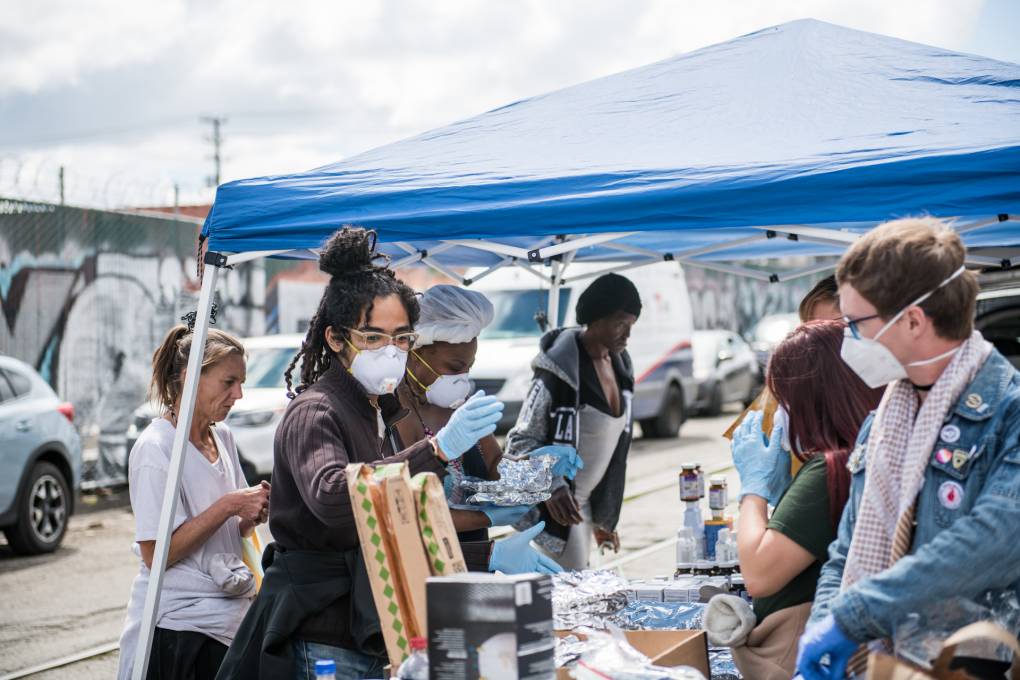
"caption": "Volunteers hand out coronavirus-related supplies to homeless people at an encampment near 24th and Wood streets in West Oakland on March 25, 2020.",
"description": null,
"title": "RS42279_010_KQED_Oakland_CoronavirusHomelessRelief_03252020_0033-qut",
"credit": "Beth LaBerge/KQED",
"status": "inherit",
"isLoading": false,
"fetchFailed": false
},
"news_11809409": {
"type": "attachments",
"id": "news_11809409",
"meta": {
"index": "attachments_1716263798",
"site": "news",
"id": "11809409",
"found": true
},
"parent": 11809384,
"imgSizes": {
"apple_news_ca_landscape_5_5": {
"file": "https://ww2.kqed.org/app/uploads/sites/10/2020/03/RS41944_001_KQED_SanFrancisco_GeneralHospital_03102020_6304-qut-1044x783.jpg",
"width": 1044,
"mimeType": "image/jpeg",
"height": 783
},
"apple_news_ca_square_4_0": {
"file": "https://ww2.kqed.org/app/uploads/sites/10/2020/03/RS41944_001_KQED_SanFrancisco_GeneralHospital_03102020_6304-qut-470x470.jpg",
"width": 470,
"mimeType": "image/jpeg",
"height": 470
},
"twentyfourteen-full-width": {
"file": "https://ww2.kqed.org/app/uploads/sites/10/2020/03/RS41944_001_KQED_SanFrancisco_GeneralHospital_03102020_6304-qut-1038x576.jpg",
"width": 1038,
"mimeType": "image/jpeg",
"height": 576
},
"thumbnail": {
"file": "https://ww2.kqed.org/app/uploads/sites/10/2020/03/RS41944_001_KQED_SanFrancisco_GeneralHospital_03102020_6304-qut-160x107.jpg",
"width": 160,
"mimeType": "image/jpeg",
"height": 107
},
"post-thumbnail": {
"file": "https://ww2.kqed.org/app/uploads/sites/10/2020/03/RS41944_001_KQED_SanFrancisco_GeneralHospital_03102020_6304-qut-672x372.jpg",
"width": 672,
"mimeType": "image/jpeg",
"height": 372
},
"kqedFullSize": {
"file": "https://ww2.kqed.org/app/uploads/sites/10/2020/03/RS41944_001_KQED_SanFrancisco_GeneralHospital_03102020_6304-qut.jpg",
"width": 1920,
"height": 1280
},
"apple_news_ca_landscape_4_7": {
"file": "https://ww2.kqed.org/app/uploads/sites/10/2020/03/RS41944_001_KQED_SanFrancisco_GeneralHospital_03102020_6304-qut-632x474.jpg",
"width": 632,
"mimeType": "image/jpeg",
"height": 474
},
"large": {
"file": "https://ww2.kqed.org/app/uploads/sites/10/2020/03/RS41944_001_KQED_SanFrancisco_GeneralHospital_03102020_6304-qut-1020x680.jpg",
"width": 1020,
"mimeType": "image/jpeg",
"height": 680
},
"apple_news_ca_landscape_4_0": {
"file": "https://ww2.kqed.org/app/uploads/sites/10/2020/03/RS41944_001_KQED_SanFrancisco_GeneralHospital_03102020_6304-qut-536x402.jpg",
"width": 536,
"mimeType": "image/jpeg",
"height": 402
},
"apple_news_ca_portrait_12_9": {
"file": "https://ww2.kqed.org/app/uploads/sites/10/2020/03/RS41944_001_KQED_SanFrancisco_GeneralHospital_03102020_6304-qut-1122x1280.jpg",
"width": 1122,
"mimeType": "image/jpeg",
"height": 1280
},
"medium": {
"file": "https://ww2.kqed.org/app/uploads/sites/10/2020/03/RS41944_001_KQED_SanFrancisco_GeneralHospital_03102020_6304-qut-800x533.jpg",
"width": 800,
"mimeType": "image/jpeg",
"height": 533
},
"apple_news_ca_portrait_4_0": {
"file": "https://ww2.kqed.org/app/uploads/sites/10/2020/03/RS41944_001_KQED_SanFrancisco_GeneralHospital_03102020_6304-qut-354x472.jpg",
"width": 354,
"mimeType": "image/jpeg",
"height": 472
},
"apple_news_ca_portrait_9_7": {
"file": "https://ww2.kqed.org/app/uploads/sites/10/2020/03/RS41944_001_KQED_SanFrancisco_GeneralHospital_03102020_6304-qut-840x1120.jpg",
"width": 840,
"mimeType": "image/jpeg",
"height": 1120
},
"apple_news_ca_landscape_12_9": {
"file": "https://ww2.kqed.org/app/uploads/sites/10/2020/03/RS41944_001_KQED_SanFrancisco_GeneralHospital_03102020_6304-qut-1832x1280.jpg",
"width": 1832,
"mimeType": "image/jpeg",
"height": 1280
},
"apple_news_ca_square_9_7": {
"file": "https://ww2.kqed.org/app/uploads/sites/10/2020/03/RS41944_001_KQED_SanFrancisco_GeneralHospital_03102020_6304-qut-1104x1104.jpg",
"width": 1104,
"mimeType": "image/jpeg",
"height": 1104
},
"apple_news_ca_portrait_4_7": {
"file": "https://ww2.kqed.org/app/uploads/sites/10/2020/03/RS41944_001_KQED_SanFrancisco_GeneralHospital_03102020_6304-qut-414x552.jpg",
"width": 414,
"mimeType": "image/jpeg",
"height": 552
},
"apple_news_ca_square_12_9": {
"file": "https://ww2.kqed.org/app/uploads/sites/10/2020/03/RS41944_001_KQED_SanFrancisco_GeneralHospital_03102020_6304-qut-1472x1280.jpg",
"width": 1472,
"mimeType": "image/jpeg",
"height": 1280
},
"apple_news_ca_portrait_5_5": {
"file": "https://ww2.kqed.org/app/uploads/sites/10/2020/03/RS41944_001_KQED_SanFrancisco_GeneralHospital_03102020_6304-qut-687x916.jpg",
"width": 687,
"mimeType": "image/jpeg",
"height": 916
},
"full-width": {
"file": "https://ww2.kqed.org/app/uploads/sites/10/2020/03/RS41944_001_KQED_SanFrancisco_GeneralHospital_03102020_6304-qut-1920x1280.jpg",
"width": 1920,
"mimeType": "image/jpeg",
"height": 1280
},
"apple_news_ca_square_4_7": {
"file": "https://ww2.kqed.org/app/uploads/sites/10/2020/03/RS41944_001_KQED_SanFrancisco_GeneralHospital_03102020_6304-qut-550x550.jpg",
"width": 550,
"mimeType": "image/jpeg",
"height": 550
},
"apple_news_ca_landscape_9_7": {
"file": "https://ww2.kqed.org/app/uploads/sites/10/2020/03/RS41944_001_KQED_SanFrancisco_GeneralHospital_03102020_6304-qut-1376x1032.jpg",
"width": 1376,
"mimeType": "image/jpeg",
"height": 1032
},
"apple_news_ca_square_5_5": {
"file": "https://ww2.kqed.org/app/uploads/sites/10/2020/03/RS41944_001_KQED_SanFrancisco_GeneralHospital_03102020_6304-qut-912x912.jpg",
"width": 912,
"mimeType": "image/jpeg",
"height": 912
}
},
"publishDate": 1585368686,
"modified": 1585611298,
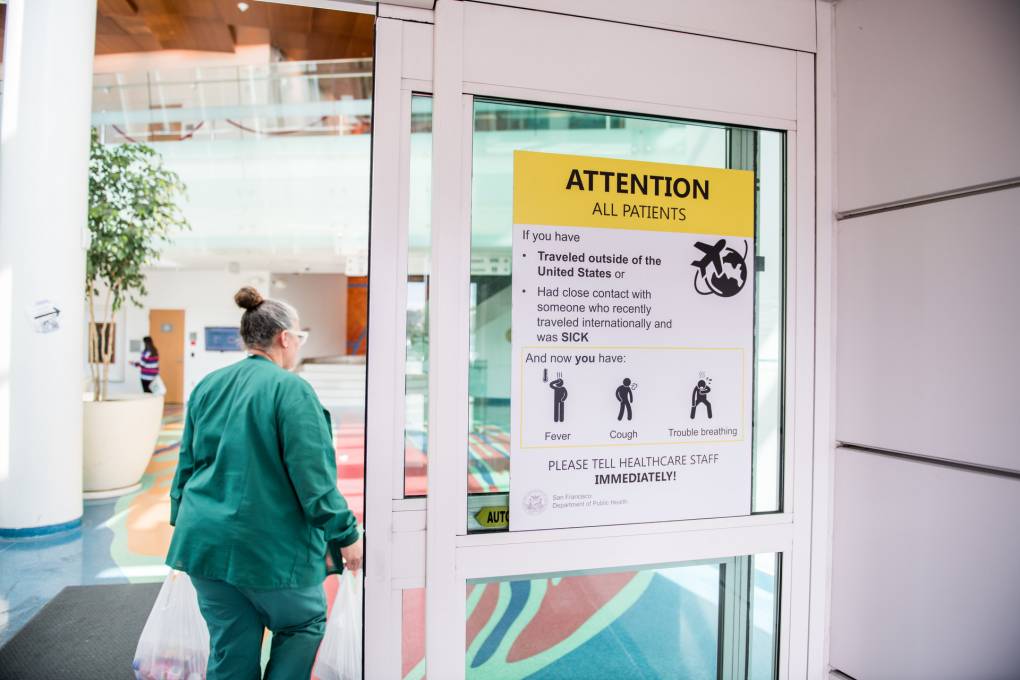
"caption": "San Francisco General Hospital on March 10, 2020.",
"description": null,
"title": "RS41944_001_KQED_SanFrancisco_GeneralHospital_03102020_6304-qut",
"credit": "Beth LaBerge/KQED",
"status": "inherit",
"isLoading": false,
"fetchFailed": false
},
"news_11809352": {
"type": "attachments",
"id": "news_11809352",
"meta": {
"index": "attachments_1716263798",
"site": "news",
"id": "11809352",
"found": true
},
"parent": 11809328,
"imgSizes": {
"apple_news_ca_landscape_5_5": {
"file": "https://ww2.kqed.org/app/uploads/sites/10/2020/03/Gavin-Newsom-1044x783.jpg",
"width": 1044,
"mimeType": "image/jpeg",
"height": 783
},
"apple_news_ca_square_4_0": {
"file": "https://ww2.kqed.org/app/uploads/sites/10/2020/03/Gavin-Newsom-470x470.jpg",
"width": 470,
"mimeType": "image/jpeg",
"height": 470
},
"twentyfourteen-full-width": {
"file": "https://ww2.kqed.org/app/uploads/sites/10/2020/03/Gavin-Newsom-1038x576.jpg",
"width": 1038,
"mimeType": "image/jpeg",
"height": 576
},
"thumbnail": {
"file": "https://ww2.kqed.org/app/uploads/sites/10/2020/03/Gavin-Newsom-160x107.jpg",
"width": 160,
"mimeType": "image/jpeg",
"height": 107
},
"post-thumbnail": {
"file": "https://ww2.kqed.org/app/uploads/sites/10/2020/03/Gavin-Newsom-672x372.jpg",
"width": 672,
"mimeType": "image/jpeg",
"height": 372
},
"kqedFullSize": {
"file": "https://ww2.kqed.org/app/uploads/sites/10/2020/03/Gavin-Newsom.jpg",
"width": 1920,
"height": 1280
},
"apple_news_ca_landscape_4_7": {
"file": "https://ww2.kqed.org/app/uploads/sites/10/2020/03/Gavin-Newsom-632x474.jpg",
"width": 632,
"mimeType": "image/jpeg",
"height": 474
},
"large": {
"file": "https://ww2.kqed.org/app/uploads/sites/10/2020/03/Gavin-Newsom-1020x680.jpg",
"width": 1020,
"mimeType": "image/jpeg",
"height": 680
},
"apple_news_ca_landscape_4_0": {
"file": "https://ww2.kqed.org/app/uploads/sites/10/2020/03/Gavin-Newsom-536x402.jpg",
"width": 536,
"mimeType": "image/jpeg",
"height": 402
},
"apple_news_ca_portrait_12_9": {
"file": "https://ww2.kqed.org/app/uploads/sites/10/2020/03/Gavin-Newsom-1122x1280.jpg",
"width": 1122,
"mimeType": "image/jpeg",
"height": 1280
},
"medium": {
"file": "https://ww2.kqed.org/app/uploads/sites/10/2020/03/Gavin-Newsom-800x533.jpg",
"width": 800,
"mimeType": "image/jpeg",
"height": 533
},
"apple_news_ca_portrait_4_0": {
"file": "https://ww2.kqed.org/app/uploads/sites/10/2020/03/Gavin-Newsom-354x472.jpg",
"width": 354,
"mimeType": "image/jpeg",
"height": 472
},
"apple_news_ca_portrait_9_7": {
"file": "https://ww2.kqed.org/app/uploads/sites/10/2020/03/Gavin-Newsom-840x1120.jpg",
"width": 840,
"mimeType": "image/jpeg",
"height": 1120
},
"apple_news_ca_landscape_12_9": {
"file": "https://ww2.kqed.org/app/uploads/sites/10/2020/03/Gavin-Newsom-1832x1280.jpg",
"width": 1832,
"mimeType": "image/jpeg",
"height": 1280
},
"apple_news_ca_square_9_7": {
"file": "https://ww2.kqed.org/app/uploads/sites/10/2020/03/Gavin-Newsom-1104x1104.jpg",
"width": 1104,
"mimeType": "image/jpeg",
"height": 1104
},
"apple_news_ca_portrait_4_7": {
"file": "https://ww2.kqed.org/app/uploads/sites/10/2020/03/Gavin-Newsom-414x552.jpg",
"width": 414,
"mimeType": "image/jpeg",
"height": 552
},
"apple_news_ca_square_12_9": {
"file": "https://ww2.kqed.org/app/uploads/sites/10/2020/03/Gavin-Newsom-1472x1280.jpg",
"width": 1472,
"mimeType": "image/jpeg",
"height": 1280
},
"apple_news_ca_portrait_5_5": {
"file": "https://ww2.kqed.org/app/uploads/sites/10/2020/03/Gavin-Newsom-687x916.jpg",
"width": 687,
"mimeType": "image/jpeg",
"height": 916
},
"full-width": {
"file": "https://ww2.kqed.org/app/uploads/sites/10/2020/03/Gavin-Newsom-1920x1280.jpg",
"width": 1920,
"mimeType": "image/jpeg",
"height": 1280
},
"apple_news_ca_square_4_7": {
"file": "https://ww2.kqed.org/app/uploads/sites/10/2020/03/Gavin-Newsom-550x550.jpg",
"width": 550,
"mimeType": "image/jpeg",
"height": 550
},
"apple_news_ca_landscape_9_7": {
"file": "https://ww2.kqed.org/app/uploads/sites/10/2020/03/Gavin-Newsom-1376x1032.jpg",
"width": 1376,
"mimeType": "image/jpeg",
"height": 1032
},
"apple_news_ca_square_5_5": {
"file": "https://ww2.kqed.org/app/uploads/sites/10/2020/03/Gavin-Newsom-912x912.jpg",
"width": 912,
"mimeType": "image/jpeg",
"height": 912
}
},
"publishDate": 1585355029,
"modified": 1585355074,
"caption": "Gov. Gavin Newsom speaks during a news conference at the state Department of Public Health on February 27, 2020 in Sacramento.",
"description": "Gov. Gavin Newsom speaks during a news conference at the state Department of Public Health on February 27, 2020 in Sacramento.",
"title": "Gavin-Newsom",
"credit": "Justin Sullivan/Getty Images",
"status": "inherit",
"isLoading": false,
"fetchFailed": false
},
"news_11703737": {
"type": "attachments",
"id": "news_11703737",
"meta": {
"index": "attachments_1716263798",
"site": "news",
"id": "11703737",
"found": true
},
"parent": 11703631,
"imgSizes": {
"small": {
"file": "https://ww2.kqed.org/app/uploads/sites/10/2018/11/ballotdropoff-qut-520x347.jpg",
"width": 520,
"mimeType": "image/jpeg",
"height": 347
},
"twentyfourteen-full-width": {
"file": "https://ww2.kqed.org/app/uploads/sites/10/2018/11/ballotdropoff-qut-1038x576.jpg",
"width": 1038,
"mimeType": "image/jpeg",
"height": 576
},
"thumbnail": {
"file": "https://ww2.kqed.org/app/uploads/sites/10/2018/11/ballotdropoff-qut-160x107.jpg",
"width": 160,
"mimeType": "image/jpeg",
"height": 107
},
"fd-sm": {
"file": "https://ww2.kqed.org/app/uploads/sites/10/2018/11/ballotdropoff-qut-960x640.jpg",
"width": 960,
"mimeType": "image/jpeg",
"height": 640
},
"post-thumbnail": {
"file": "https://ww2.kqed.org/app/uploads/sites/10/2018/11/ballotdropoff-qut-672x372.jpg",
"width": 672,
"mimeType": "image/jpeg",
"height": 372
},
"xsmall": {
"file": "https://ww2.kqed.org/app/uploads/sites/10/2018/11/ballotdropoff-qut-375x250.jpg",
"width": 375,
"mimeType": "image/jpeg",
"height": 250
},
"kqedFullSize": {
"file": "https://ww2.kqed.org/app/uploads/sites/10/2018/11/ballotdropoff-qut.jpg",
"width": 1920,
"height": 1280
},
"large": {
"file": "https://ww2.kqed.org/app/uploads/sites/10/2018/11/ballotdropoff-qut-1020x680.jpg",
"width": 1020,
"mimeType": "image/jpeg",
"height": 680
},
"xlarge": {
"file": "https://ww2.kqed.org/app/uploads/sites/10/2018/11/ballotdropoff-qut-1180x787.jpg",
"width": 1180,
"mimeType": "image/jpeg",
"height": 787
},
"complete_open_graph": {
"file": "https://ww2.kqed.org/app/uploads/sites/10/2018/11/ballotdropoff-qut-1200x800.jpg",
"width": 1200,
"mimeType": "image/jpeg",
"height": 800
},
"guest-author-50": {
"file": "https://ww2.kqed.org/app/uploads/sites/10/2018/11/ballotdropoff-qut-50x50.jpg",
"width": 50,
"mimeType": "image/jpeg",
"height": 50
},
"guest-author-96": {
"file": "https://ww2.kqed.org/app/uploads/sites/10/2018/11/ballotdropoff-qut-96x96.jpg",
"width": 96,
"mimeType": "image/jpeg",
"height": 96
},
"medium": {
"file": "https://ww2.kqed.org/app/uploads/sites/10/2018/11/ballotdropoff-qut-800x533.jpg",
"width": 800,
"mimeType": "image/jpeg",
"height": 533
},
"guest-author-64": {
"file": "https://ww2.kqed.org/app/uploads/sites/10/2018/11/ballotdropoff-qut-64x64.jpg",
"width": 64,
"mimeType": "image/jpeg",
"height": 64
},
"guest-author-32": {
"file": "https://ww2.kqed.org/app/uploads/sites/10/2018/11/ballotdropoff-qut-32x32.jpg",
"width": 32,
"mimeType": "image/jpeg",
"height": 32
},
"fd-lrg": {
"file": "https://ww2.kqed.org/app/uploads/sites/10/2018/11/ballotdropoff-qut-1920x1280.jpg",
"width": 1920,
"mimeType": "image/jpeg",
"height": 1280
},
"fd-med": {
"file": "https://ww2.kqed.org/app/uploads/sites/10/2018/11/ballotdropoff-qut-1180x787.jpg",
"width": 1180,
"mimeType": "image/jpeg",
"height": 787
},
"full-width": {
"file": "https://ww2.kqed.org/app/uploads/sites/10/2018/11/ballotdropoff-qut-1920x1280.jpg",
"width": 1920,
"mimeType": "image/jpeg",
"height": 1280
},
"detail": {
"file": "https://ww2.kqed.org/app/uploads/sites/10/2018/11/ballotdropoff-qut-150x150.jpg",
"width": 150,
"mimeType": "image/jpeg",
"height": 150
},
"guest-author-128": {
"file": "https://ww2.kqed.org/app/uploads/sites/10/2018/11/ballotdropoff-qut-128x128.jpg",
"width": 128,
"mimeType": "image/jpeg",
"height": 128
},
"xxsmall": {
"file": "https://ww2.kqed.org/app/uploads/sites/10/2018/11/ballotdropoff-qut-240x160.jpg",
"width": 240,
"mimeType": "image/jpeg",
"height": 160
}
},
"publishDate": 1541447191,
"modified": 1566603017,
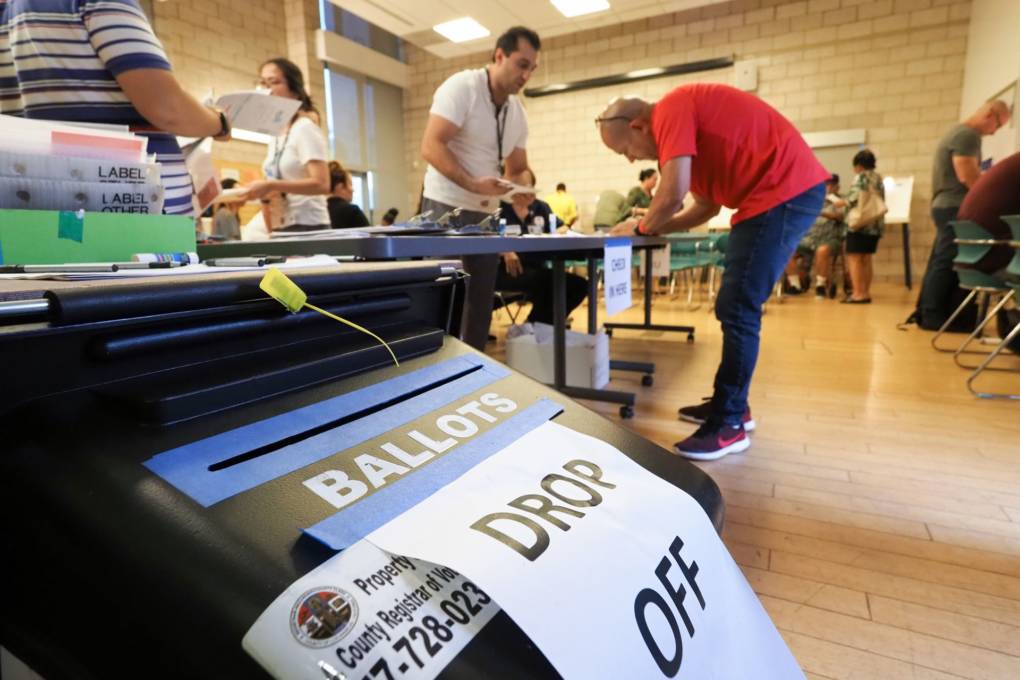
"caption": "A man checks in for early voting in the midterm elections at a polling station in a public library in the Lake View Terrace neighborhood of Los Angeles on Nov. 4, 2018.",
"description": null,
"title": "US-POLITICS-ELECTION-VOTE",
"credit": "Robyn Beck/AFP/Getty Images",
"status": "inherit",
"isLoading": false,
"fetchFailed": false
}
},
"audioPlayerReducer": {
"postId": "stream_live",
"isPaused": true,
"isPlaying": false,
"pfsActive": false,
"pledgeModalIsOpen": true,
"playerDrawerIsOpen": false,
"liveAudioPlayStartedAt": 0,
"liveAudioPlayContext": ""
},
"authorsReducer": {
"mlam": {
"type": "authors",
"id": "244",
"meta": {
"index": "authors_1716337520",
"id": "244",
"found": true
},
"name": "Monica Lam",
"firstName": "Monica Z.",
"lastName": "Lam",
"slug": "mlam",
"email": "mlam@kqed.org",
"display_author_email": true,
"staff_mastheads": [
"news"
],
"title": "KQED Senior Producer",
"bio": "Monica is senior producer of the weekly current affairs program, \"KQED Newsroom.\" She's also served as senior editor of digital content at KQED. She likes to report and edit as well as produce video and take photos.\r\n\r\nBefore joining KQED, Monica worked at the Center for Investigative Reporting, where she examined conditions inside \u003cspan style=\"font-weight: 400;\">maximum security \u003c/span>prisons and abuse in state-run institutions for the developmentally disabled. Prior to that, she produced and directed \u003cem>Journey of the Bonesetter's Daughter,\u003c/em> a documentary that follows novelist Amy Tan as she creates an opera based on her family history.\r\n\r\nMonica's work has been honored with a duPont Award, five Emmys, regional and national Murrow Awards, and has been recognized by Investigative Reporters and Editors, the Society of Professional Journalists, Religion Newswriters Association and the San Francisco Peninsula Press Club. Monica studied urban studies at Stanford University and earned a master's in journalism at University of California at Berkeley. Follow her on twitter: @monicazlam",
"avatar": "https://secure.gravatar.com/avatar/018c474b2b71f43e0e6ca9b15a0ad36f?s=600&d=blank&r=g",
"twitter": "@monicazlam",
"facebook": null,
"instagram": null,
"linkedin": null,
"sites": [
{
"site": "arts",
"roles": [
"administrator"
]
},
{
"site": "news",
"roles": [
"editor"
]
},
{
"site": "trulyca",
"roles": [
"editor"
]
},
{
"site": "science",
"roles": [
"editor"
]
},
{
"site": "breakingnews",
"roles": [
"editor"
]
}
],
"headData": {
"title": "Monica Lam | KQED",
"description": "KQED Senior Producer",
"ogImgSrc": "https://secure.gravatar.com/avatar/018c474b2b71f43e0e6ca9b15a0ad36f?s=600&d=blank&r=g",
"twImgSrc": "https://secure.gravatar.com/avatar/018c474b2b71f43e0e6ca9b15a0ad36f?s=600&d=blank&r=g"
},
"isLoading": false,
"link": "/author/mlam"
},
"samharnett": {
"type": "authors",
"id": "253",
"meta": {
"index": "authors_1716337520",
"id": "253",
"found": true
},
"name": "Sam Harnett",
"firstName": "Sam",
"lastName": "Harnett",
"slug": "samharnett",
"email": "samharnett@gmail.com",
"display_author_email": false,
"staff_mastheads": [],
"title": "KQED Contributor",
"bio": "Sam Harnett covered tech and work at KQED. He is the co-creator of \u003cem>\u003ca href=\"http://www.theworldaccordingtosound.org\">The World According to Sound\u003c/a>,\u003c/em> a 90-second podcast that features different sounds and the stories behind them.\r\n\r\nBefore coming to KQED, Sam worked as an independent reporter who contributed regularly to \u003cem>The California Report, Marketplace,\u003c/em> \u003cem>The World \u003c/em>and NPR.",
"avatar": "https://secure.gravatar.com/avatar/2538b972ac02f2b9546c7a6c59a0f3d0?s=600&d=blank&r=g",
"twitter": "Samwharnett",
"facebook": null,
"instagram": null,
"linkedin": null,
"sites": [
{
"site": "news",
"roles": [
"edit_others_posts",
"subscriber"
]
},
{
"site": "stateofhealth",
"roles": [
"author"
]
},
{
"site": "science",
"roles": [
"editor"
]
},
{
"site": "quest",
"roles": [
"subscriber"
]
}
],
"headData": {
"title": "Sam Harnett | KQED",
"description": "KQED Contributor",
"ogImgSrc": "https://secure.gravatar.com/avatar/2538b972ac02f2b9546c7a6c59a0f3d0?s=600&d=blank&r=g",
"twImgSrc": "https://secure.gravatar.com/avatar/2538b972ac02f2b9546c7a6c59a0f3d0?s=600&d=blank&r=g"
},
"isLoading": false,
"link": "/author/samharnett"
},
"tgoldberg": {
"type": "authors",
"id": "258",
"meta": {
"index": "authors_1716337520",
"id": "258",
"found": true
},
"name": "Ted Goldberg",
"firstName": "Ted",
"lastName": "Goldberg",
"slug": "tgoldberg",
"email": "tgoldberg@kqed.org",
"display_author_email": true,
"staff_mastheads": [
"news"
],
"title": "KQED Managing Editor, News and Newscasts",
"bio": "Ted Goldberg is Managing Editor of News and Newscasts at KQED. His main reporting beat is the Bay Area's oil refining industry.\r\n\r\nPrior to joining KQED in 2014, Ted worked at CBS News and WCBS AM in New York and Bay City News and KCBS Radio in San Francisco. He graduated from Oberlin College in Ohio in 1998.",
"avatar": "https://secure.gravatar.com/avatar/30ce2e4fe89135e104f89be2394d16225b9d36c121b5b3cb7651ce642978b96f?s=600&d=blank&r=g",
"twitter": "TedrickG",
"bluesky": null,
"facebook": null,
"instagram": null,
"linkedin": null,
"sites": [
{
"site": "news",
"roles": [
"editor"
]
},
{
"site": "science",
"roles": [
"editor"
]
}
],
"headData": {
"title": "Ted Goldberg | KQED",
"description": "KQED Managing Editor, News and Newscasts",
"ogImgSrc": "https://secure.gravatar.com/avatar/30ce2e4fe89135e104f89be2394d16225b9d36c121b5b3cb7651ce642978b96f?s=600&d=blank&r=g",
"twImgSrc": "https://secure.gravatar.com/avatar/30ce2e4fe89135e104f89be2394d16225b9d36c121b5b3cb7651ce642978b96f?s=600&d=blank&r=g"
},
"isLoading": false,
"link": "/author/tgoldberg"
},
"matthewgreen": {
"type": "authors",
"id": "1263",
"meta": {
"index": "authors_1716337520",
"id": "1263",
"found": true
},
"name": "Matthew Green",
"firstName": "Matthew",
"lastName": "Green",
"slug": "matthewgreen",
"email": "mgreen@kqed.org",
"display_author_email": false,
"staff_mastheads": [],
"title": "KQED Editor/Reporter",
"bio": "Matthew Green is a digital media producer for KQED News. He previously produced \u003ca href=\"http://www.kqed.org/lowdown\">The Lowdown\u003c/a>, KQED’s multimedia news education blog. Matthew's written for numerous Bay Area publications, including the Oakland Tribune and San Francisco Chronicle. He also taught journalism classes at Fremont High School in East Oakland.\r\n\r\nEmail: mgreen@kqed.org; Twitter: @MGreenKQED",
"avatar": "https://secure.gravatar.com/avatar/3bf498d1267ca02c8494f33d8cfc575e?s=600&d=blank&r=g",
"twitter": "MGreenKQED",
"facebook": null,
"instagram": null,
"linkedin": null,
"sites": [
{
"site": "news",
"roles": []
},
{
"site": "lowdown",
"roles": []
},
{
"site": "science",
"roles": []
},
{
"site": "education",
"roles": []
},
{
"site": "quest",
"roles": []
},
{
"site": "liveblog",
"roles": []
}
],
"headData": {
"title": "Matthew Green | KQED",
"description": "KQED Editor/Reporter",
"ogImgSrc": "https://secure.gravatar.com/avatar/3bf498d1267ca02c8494f33d8cfc575e?s=600&d=blank&r=g",
"twImgSrc": "https://secure.gravatar.com/avatar/3bf498d1267ca02c8494f33d8cfc575e?s=600&d=blank&r=g"
},
"isLoading": false,
"link": "/author/matthewgreen"
},
"adembosky": {
"type": "authors",
"id": "3205",
"meta": {
"index": "authors_1716337520",
"id": "3205",
"found": true
},
"name": "April Dembosky",
"firstName": "April",
"lastName": "Dembosky",
"slug": "adembosky",
"email": "adembosky@kqed.org",
"display_author_email": false,
"staff_mastheads": [
"news",
"science"
],
"title": "KQED Health Correspondent",
"bio": "April Dembosky is the health correspondent for KQED News and a regular contributor to NPR. She specializes in covering altered states of mind, from postpartum depression to methamphetamine-induced psychosis to the insanity defense. Her investigative series on insurance companies sidestepping mental health laws won multiple awards, including first place in beat reporting from the national Association of Health Care Journalists. She is the recipient of numerous other prizes and fellowships, including a national Edward R. Murrow award for investigative reporting, a Society of Professional Journalists award for long-form storytelling, and a Carter Center Fellowship for Mental Health Journalism.\r\n\r\nDembosky reported and produced \u003cem>Soundtrack of Silence\u003c/em>, an audio documentary about music and memory that is currently being made into a feature film by Paramount Pictures.\r\n\r\nBefore joining KQED in 2013, Dembosky covered technology and Silicon Valley for \u003cem>The Financial Times of London,\u003c/em> and contributed business and arts stories to \u003cem>Marketplace \u003c/em>and \u003cem>The New York Times.\u003c/em> She got her undergraduate degree in philosophy from Smith College and her master's in journalism from the University of California, Berkeley. She is a classically trained violinist and proud alum of the first symphony orchestra at Burning Man.",
"avatar": "https://secure.gravatar.com/avatar/ef92999be4ceb9ea60701e7dc276f813?s=600&d=blank&r=g",
"twitter": "adembosky",
"facebook": null,
"instagram": null,
"linkedin": null,
"sites": [
{
"site": "arts",
"roles": [
"author"
]
},
{
"site": "news",
"roles": [
"editor"
]
},
{
"site": "futureofyou",
"roles": [
"author"
]
},
{
"site": "stateofhealth",
"roles": [
"editor"
]
},
{
"site": "science",
"roles": [
"editor"
]
},
{
"site": "forum",
"roles": [
"editor"
]
}
],
"headData": {
"title": "April Dembosky | KQED",
"description": "KQED Health Correspondent",
"ogImgSrc": "https://secure.gravatar.com/avatar/ef92999be4ceb9ea60701e7dc276f813?s=600&d=blank&r=g",
"twImgSrc": "https://secure.gravatar.com/avatar/ef92999be4ceb9ea60701e7dc276f813?s=600&d=blank&r=g"
},
"isLoading": false,
"link": "/author/adembosky"
},
"mlagos": {
"type": "authors",
"id": "3239",
"meta": {
"index": "authors_1716337520",
"id": "3239",
"found": true
},
"name": "Marisa Lagos",
"firstName": "Marisa",
"lastName": "Lagos",
"slug": "mlagos",
"email": "mlagos@kqed.org",
"display_author_email": false,
"staff_mastheads": [
"news"
],
"title": "KQED Contributor",
"bio": "Marisa Lagos is a correspondent for KQED’s California Politics and Government Desk and co-hosts the award-winning show and podcast, Political Breakdown. At KQED, Lagos also conducts reporting, analysis and investigations into state, local and national politics for radio, TV, online and onstage. In 2022, she and co-host, Scott Shafer, moderated the only gubernatorial debate in California. In 2020, the \u003ci>Washington Post\u003c/i> named her one of the top political journalists in California; she was nominated for a Peabody and won several other awards for her work investigating the 2017 California wildfires. She has worked at the \u003ci>San Francisco Chronicle\u003c/i>, \u003ci>San Francisco Examiner\u003c/i> and \u003ci>Los Angeles Times\u003c/i>. A UC Santa Barbara graduate, she lives in San Francisco with her two sons and husband.",
"avatar": "https://secure.gravatar.com/avatar/a261a0d3696fc066871ef96b85b5e7d2?s=600&d=blank&r=g",
"twitter": "@mlagos",
"facebook": null,
"instagram": null,
"linkedin": null,
"sites": [
{
"site": "arts",
"roles": [
"author"
]
},
{
"site": "news",
"roles": [
"editor"
]
},
{
"site": "science",
"roles": [
"editor"
]
},
{
"site": "forum",
"roles": [
"author"
]
},
{
"site": "liveblog",
"roles": [
"author"
]
}
],
"headData": {
"title": "Marisa Lagos | KQED",
"description": "KQED Contributor",
"ogImgSrc": "https://secure.gravatar.com/avatar/a261a0d3696fc066871ef96b85b5e7d2?s=600&d=blank&r=g",
"twImgSrc": "https://secure.gravatar.com/avatar/a261a0d3696fc066871ef96b85b5e7d2?s=600&d=blank&r=g"
},
"isLoading": false,
"link": "/author/mlagos"
},
"cveltman": {
"type": "authors",
"id": "8608",
"meta": {
"index": "authors_1716337520",
"id": "8608",
"found": true
},
"name": "Chloe Veltman",
"firstName": "Chloe",
"lastName": "Veltman",
"slug": "cveltman",
"email": "cveltman@kqed.org",
"display_author_email": true,
"staff_mastheads": [],
"title": "Arts and Culture Reporter",
"bio": "Chloe Veltman is a former arts and culture reporter for KQED. Prior to joining the organization, she launched and led the arts bureau at Colorado Public Radio, served as the Bay Area's culture columnist for the New York Times, and was the founder, host and executive producer of VoiceBox, a national award-winning weekly podcast/radio show and live events series all about the human voice. Chloe is the recipient of numerous prizes, grants and fellowships including a Webby Award for her work on interactive storytelling, both the John S Knight Journalism Fellowship and Humanities Center Fellowship at Stanford University, the Sundance Arts Writing Fellowship and a Library of Congress Research Fellowship. She is the author of the book \"On Acting\" and has appeared as a guest lecturer at Yale University and the San Francisco Conservatory of Music among other institutions. She holds a BA in english literature from King's College, Cambridge, and a Masters in Dramaturgy from the Central School of Speech and Drama/Harvard Institute for Advanced Theater Training.\r\n\u003ca href=\"https://www.chloeveltman.com\">www.chloeveltman.com\u003c/a>",
"avatar": "https://secure.gravatar.com/avatar/55403394b00a1ddab683952c2eb2cf85?s=600&d=blank&r=g",
"twitter": "chloeveltman",
"facebook": null,
"instagram": null,
"linkedin": null,
"sites": [
{
"site": "arts",
"roles": []
},
{
"site": "news",
"roles": [
"author"
]
},
{
"site": "pop",
"roles": [
"editor"
]
},
{
"site": "science",
"roles": []
}
],
"headData": {
"title": "Chloe Veltman | KQED",
"description": "Arts and Culture Reporter",
"ogImgSrc": "https://secure.gravatar.com/avatar/55403394b00a1ddab683952c2eb2cf85?s=600&d=blank&r=g",
"twImgSrc": "https://secure.gravatar.com/avatar/55403394b00a1ddab683952c2eb2cf85?s=600&d=blank&r=g"
},
"isLoading": false,
"link": "/author/cveltman"
},
"korr": {
"type": "authors",
"id": "11200",
"meta": {
"index": "authors_1716337520",
"id": "11200",
"found": true
},
"name": "Katie Orr",
"firstName": "Katie",
"lastName": "Orr",
"slug": "korr",
"email": "korr@kqed.org",
"display_author_email": false,
"staff_mastheads": [],
"title": "KQED Contributor",
"bio": "Katie Orr was a Sacramento-based reporter for KQED's Politics and Government Desk, covering the state Capitol and a variety of issues including women in politics, voting and elections and legislation. Prior to joining KQED in 2016, Katie was state government reporter for Capital Public Radio in Sacramento. She's also worked for KPBS in San Diego, where she covered City Hall.\r\n\r\nKatie received her masters degree in political science from San Diego State University and holds a Bachelors degree in broadcast journalism from Arizona State University.\r\n\r\nIn 2015 Katie won a national Clarion Award for a series of stories she did on women in California politics. She's been honored by the Society for Professional Journalists and, in 2013, was named by \u003cem>The Washington Post\u003c/em> as one of the country's top state Capitol reporters. She's also reported for the award-winning documentary series \u003cem>The View from Here \u003c/em>and was part of the team that won national PRNDI and Gabriel Awards in 2015. She lives in Sacramento with her husband. Twitter: @1KatieOrr",
"avatar": "https://secure.gravatar.com/avatar/41a40b25845adc78f50808670860449e?s=600&d=blank&r=g",
"twitter": "1katieorr",
"facebook": null,
"instagram": null,
"linkedin": null,
"sites": [
{
"site": "news",
"roles": [
"subscriber"
]
},
{
"site": "stateofhealth",
"roles": [
"author"
]
},
{
"site": "forum",
"roles": [
"author"
]
}
],
"headData": {
"title": "Katie Orr | KQED",
"description": "KQED Contributor",
"ogImgSrc": "https://secure.gravatar.com/avatar/41a40b25845adc78f50808670860449e?s=600&d=blank&r=g",
"twImgSrc": "https://secure.gravatar.com/avatar/41a40b25845adc78f50808670860449e?s=600&d=blank&r=g"
},
"isLoading": false,
"link": "/author/korr"
},
"bwatt": {
"type": "authors",
"id": "11238",
"meta": {
"index": "authors_1716337520",
"id": "11238",
"found": true
},
"name": "Brian Watt",
"firstName": "Brian",
"lastName": "Watt",
"slug": "bwatt",
"email": "bwatt@KQED.org",
"display_author_email": false,
"staff_mastheads": [
"news"
],
"title": "Morning News Anchor",
"bio": "Brian Watt is KQED's morning radio news anchor. He joined the KQED News team in April of 2016. Prior to that, he worked as a Reporter for KPCC in Los Angeles and a producer at \u003cem>Marketplace.\u003c/em>\r\n\r\nDuring eight years at KPCC, Brian covered business and economics, and his work won several awards. In 2008, he won the Los Angeles Press Club’s first-place award for Business and Financial Reporting, Broadcast. He’s also received honorable mention and been first runner up for the Press Club’s Radio Journalist of the Year. He won two Golden Mike awards from the Radio and TV News Association of Southern California.\r\n\r\nBrian holds degrees in theater from Yale University and the Sorbonne, and has worked as an actor in France, Italy, Brazil, Hungary and . . . Hollywood. He appeared in a few television shows, including \u003cem>The West Wing, Judging Amy\u003c/em> and \u003cem>The District.\u003c/em>\r\n\r\nEmail: bwatt@KQED.org Twitter: @RadioBWatt",
"avatar": "https://secure.gravatar.com/avatar/55393ff57ed34e2be773ba4789dd6a19?s=600&d=blank&r=g",
"twitter": "@RadioBWatt",
"facebook": null,
"instagram": null,
"linkedin": null,
"sites": [
{
"site": "arts",
"roles": [
"contributor"
]
},
{
"site": "news",
"roles": [
"editor"
]
}
],
"headData": {
"title": "Brian Watt | KQED",
"description": "Morning News Anchor",
"ogImgSrc": "https://secure.gravatar.com/avatar/55393ff57ed34e2be773ba4789dd6a19?s=600&d=blank&r=g",
"twImgSrc": "https://secure.gravatar.com/avatar/55393ff57ed34e2be773ba4789dd6a19?s=600&d=blank&r=g"
},
"isLoading": false,
"link": "/author/bwatt"
},
"parcuni": {
"type": "authors",
"id": "11368",
"meta": {
"index": "authors_1716337520",
"id": "11368",
"found": true
},
"name": "Peter Arcuni",
"firstName": "Peter",
"lastName": "Arcuni",
"slug": "parcuni",
"email": "parcuni@KQED.org",
"display_author_email": false,
"staff_mastheads": [
"science"
],
"title": "Reporter",
"bio": "Peter reports radio and online stories for \u003cem>KQED Science\u003c/em>. His work has also appeared on the \u003cem>The California Report\u003c/em> morning show and \u003cem>KQED News\u003c/em>. His production credits include \u003cem>The California Report, The California Report Magazine\u003c/em> and KQED's local news podcast \u003cem>The Bay\u003c/em>. Other credits include NPR's \u003cem>All Things Considered\u003c/em>, WNYC's \u003cem>Science Friday\u003c/em>, WBUR's \u003cem>Here & Now\u003c/em>, WIRED and SFGate. Peter graduated from Brown University and earned a master's degree in journalism from Stanford. He's covered everything from homelessness to wildfires, health, the environment, arts and Thanksgiving in San Quentin prison. In other lives, he played rock n roll music and studied neuroscience. You can email him at: parcuni@kqed.org",
"avatar": "https://secure.gravatar.com/avatar/d5032f6f27199d478af34ad2e1d98732?s=600&d=blank&r=g",
"twitter": "peterarcuni",
"facebook": null,
"instagram": null,
"linkedin": null,
"sites": [
{
"site": "news",
"roles": [
"editor"
]
},
{
"site": "science",
"roles": [
"editor"
]
}
],
"headData": {
"title": "Peter Arcuni | KQED",
"description": "Reporter",
"ogImgSrc": "https://secure.gravatar.com/avatar/d5032f6f27199d478af34ad2e1d98732?s=600&d=blank&r=g",
"twImgSrc": "https://secure.gravatar.com/avatar/d5032f6f27199d478af34ad2e1d98732?s=600&d=blank&r=g"
},
"isLoading": false,
"link": "/author/parcuni"
},
"katewolffe": {
"type": "authors",
"id": "11523",
"meta": {
"index": "authors_1716337520",
"id": "11523",
"found": true
},
"name": "Kate Wolffe",
"firstName": "Kate",
"lastName": "Wolffe",
"slug": "katewolffe",
"email": "kwolffe@kqed.org",
"display_author_email": true,
"staff_mastheads": [
"news"
],
"title": "KQED Reporter + Weekend Host",
"bio": "Kate Wolffe reports on local Bay Area happenings for KQED, and hosts the news on weekend afternoons. She joined KQED in 2018 as an intern on the Forum team, before moving to cover topics ranging from politics to criminal justice to homelessness. A Bay Area native and UC Berkeley graduate, Kate loves to discover new corners of the region.",
"avatar": "https://secure.gravatar.com/avatar/22455f14db824a03ee252f73052fe939?s=600&d=blank&r=g",
"twitter": "katewolffe",
"facebook": null,
"instagram": null,
"linkedin": null,
"sites": [
{
"site": "arts",
"roles": [
"editor"
]
},
{
"site": "news",
"roles": [
"author",
"edit_others_posts"
]
},
{
"site": "forum",
"roles": [
"editor"
]
}
],
"headData": {
"title": "Kate Wolffe | KQED",
"description": "KQED Reporter + Weekend Host",
"ogImgSrc": "https://secure.gravatar.com/avatar/22455f14db824a03ee252f73052fe939?s=600&d=blank&r=g",
"twImgSrc": "https://secure.gravatar.com/avatar/22455f14db824a03ee252f73052fe939?s=600&d=blank&r=g"
},
"isLoading": false,
"link": "/author/katewolffe"
},
"lsarah": {
"type": "authors",
"id": "11626",
"meta": {
"index": "authors_1716337520",
"id": "11626",
"found": true
},
"name": "Lakshmi Sarah",
"firstName": "Lakshmi",
"lastName": "Sarah",
"slug": "lsarah",
"email": "lsarah@kqed.org",
"display_author_email": false,
"staff_mastheads": [],
"title": "Digital Producer",
"bio": "Lakshmi Sarah is an educator, author and journalist with a focus on innovative storytelling. She has worked with newspapers, radio and magazines from Ahmedabad, India to Los Angeles, California. She has written and produced for Die Zeit, Global Voices, AJ+, KQED, Fusion Media Group and the New York Times.",
"avatar": "https://secure.gravatar.com/avatar/652dcaecd8b28826fc17a8b2d6bb4e93?s=600&d=blank&r=g",
"twitter": "lakitalki",
"facebook": null,
"instagram": "https://www.instagram.com/laki.talki/",
"linkedin": "https://www.linkedin.com/in/lakisarah/",
"sites": [
{
"site": "arts",
"roles": []
},
{
"site": "news",
"roles": []
},
{
"site": "bayareabites",
"roles": []
},
{
"site": "science",
"roles": []
}
],
"headData": {
"title": "Lakshmi Sarah | KQED",
"description": "Digital Producer",
"ogImgSrc": "https://secure.gravatar.com/avatar/652dcaecd8b28826fc17a8b2d6bb4e93?s=600&d=blank&r=g",
"twImgSrc": "https://secure.gravatar.com/avatar/652dcaecd8b28826fc17a8b2d6bb4e93?s=600&d=blank&r=g"
},
"isLoading": false,
"link": "/author/lsarah"
},
"jchang": {
"type": "authors",
"id": "11642",
"meta": {
"index": "authors_1716337520",
"id": "11642",
"found": true
},
"name": "Julie Chang",
"firstName": "Julie",
"lastName": "Chang",
"slug": "jchang",
"email": "jchang@kqed.org",
"display_author_email": false,
"staff_mastheads": [
"news"
],
"title": "KQED Contributor",
"bio": "Julie Chang is a reporter and producer (and occasional anchor) with the radio and digital teams at KQED. Before KQED, she worked at WAMU 88.5 in Washington D.C. and 89.3 KPCC in Los Angeles County. Her work has been featured on NPR’s Morning Edition and All Things Considered, Here & Now, the New York Times, and more. Julie graduated from UC Berkeley’s Graduate School of Journalism. She previously taught English at Pasadena City College, Fullerton College and Cal Poly Pomona. Julie earned her M.A. in English from Cal Poly Pomona and her B.A. in English from UCI with a minor in criminology.",
"avatar": "https://secure.gravatar.com/avatar/a7afce94ef127082c5475116b4a3b77d?s=600&d=blank&r=g",
"twitter": "BayAreaJulie",
"facebook": null,
"instagram": null,
"linkedin": "https://www.linkedin.com/in/julieyc/",
"sites": [
{
"site": "",
"roles": [
"editor"
]
},
{
"site": "news",
"roles": [
"author"
]
},
{
"site": "science",
"roles": [
"editor"
]
}
],
"headData": {
"title": "Julie Chang | KQED",
"description": "KQED Contributor",
"ogImgSrc": "https://secure.gravatar.com/avatar/a7afce94ef127082c5475116b4a3b77d?s=600&d=blank&r=g",
"twImgSrc": "https://secure.gravatar.com/avatar/a7afce94ef127082c5475116b4a3b77d?s=600&d=blank&r=g"
},
"isLoading": false,
"link": "/author/jchang"
},
"msolomon": {
"type": "authors",
"id": "11651",
"meta": {
"index": "authors_1716337520",
"id": "11651",
"found": true
},
"name": "Molly Solomon",
"firstName": "Molly",
"lastName": "Solomon",
"slug": "msolomon",
"email": "msolomon@KQED.org",
"display_author_email": false,
"staff_mastheads": [
"news"
],
"title": "Senior Editor",
"bio": "Molly Solomon is the senior editor of KQED's California Politics and Government Desk. Previously, she was the station's editor-at-large, with a focus on editing early childhood education, politics, and criminal justice. Before that, she managed and edited statewide election coverage for The California Newsroom, a collaboration of local public radio stations, CalMatters and NPR. Molly joined KQED in 2019 to launch the station’s housing affordability desk, where she reported on homelessness, evictions and is the co-host of KQED’s housing podcast, SOLD OUT: Rethinking Housing in America. Before that, she was the Southwest Washington Bureau Chief for Oregon Public Broadcasting and a reporter at Hawaii Public Radio. Her stories have aired on NPR’s \u003cem>Morning Edition\u003c/em>, \u003cem>All Things Considered\u003c/em>, \u003cem>Here & Now\u003c/em>, \u003cem>Science Friday\u003c/em> and \u003cem>Marketplace\u003c/em>. Molly's award-winning reporting has been honored by the Best of the West, Edward R. Murrow awards, Society of Professional Journalists, National Headliner Awards, and the Asian American Journalists Association. Born and raised in Berkeley, Molly is a big fan of burritos and her scruffy terrier, Ollie.",
"avatar": "https://secure.gravatar.com/avatar/9ad9794616923d81c9a79897161545bd?s=600&d=blank&r=g",
"twitter": "solomonout",
"facebook": null,
"instagram": null,
"linkedin": null,
"sites": [
{
"site": "news",
"roles": [
"editor"
]
},
{
"site": "science",
"roles": [
"editor"
]
}
],
"headData": {
"title": "Molly Solomon | KQED",
"description": "Senior Editor",
"ogImgSrc": "https://secure.gravatar.com/avatar/9ad9794616923d81c9a79897161545bd?s=600&d=blank&r=g",
"twImgSrc": "https://secure.gravatar.com/avatar/9ad9794616923d81c9a79897161545bd?s=600&d=blank&r=g"
},
"isLoading": false,
"link": "/author/msolomon"
},
"ebaldassari": {
"type": "authors",
"id": "11652",
"meta": {
"index": "authors_1716337520",
"id": "11652",
"found": true
},
"name": "Erin Baldassari",
"firstName": "Erin",
"lastName": "Baldassari",
"slug": "ebaldassari",
"email": "ebaldassari@KQED.org",
"display_author_email": true,
"staff_mastheads": [
"news"
],
"title": "Staff Writer",
"bio": "Erin Baldassari covers housing for KQED. She's a former print journalist and most recently worked as the transportation reporter for the \u003cem>Mercury News\u003c/em> and \u003cem>East Bay Times. \u003c/em>There, she focused on how the Bay Area’s housing shortage has changed the way people move around the region. She also served on the \u003cem>East Bay Times\u003c/em>’ 2017 Pulitzer Prize-winning team for coverage of the Ghost Ship Fire in Oakland. Prior to that, Erin worked as a breaking news and general assignment reporter for a variety of outlets in the Bay Area and the greater Boston area. A Tufts University alumna, Erin grew up in the foothills of the Sierra Nevada mountains and in Sonoma County. She is a life-long KQED listener.",
"avatar": "https://secure.gravatar.com/avatar/5e95cad64a8ca08288082212e199d2b0cbeb4fd8e8ef5339395f361032bbe005?s=600&d=blank&r=g",
"twitter": "e_baldi",
"bluesky": null,
"facebook": null,
"instagram": null,
"linkedin": null,
"sites": [
{
"site": "news",
"roles": [
"edit_others_posts",
"editor"
]
},
{
"site": "science",
"roles": [
"editor"
]
},
{
"site": "liveblog",
"roles": [
"editor"
]
}
],
"headData": {
"title": "Erin Baldassari | KQED",
"description": "Staff Writer",
"ogImgSrc": "https://secure.gravatar.com/avatar/5e95cad64a8ca08288082212e199d2b0cbeb4fd8e8ef5339395f361032bbe005?s=600&d=blank&r=g",
"twImgSrc": "https://secure.gravatar.com/avatar/5e95cad64a8ca08288082212e199d2b0cbeb4fd8e8ef5339395f361032bbe005?s=600&d=blank&r=g"
},
"isLoading": false,
"link": "/author/ebaldassari"
},
"blaberge": {
"type": "authors",
"id": "11667",
"meta": {
"index": "authors_1716337520",
"id": "11667",
"found": true
},
"name": "Beth LaBerge",
"firstName": "Beth",
"lastName": "LaBerge",
"slug": "blaberge",
"email": "blaberge@KQED.org",
"display_author_email": true,
"staff_mastheads": [
"news"
],
"title": "Photographer, News",
"bio": "Beth LaBerge is a visual journalist for \u003ca href=\"https://www.kqed.org/news\">KQED News\u003c/a>.",
"avatar": "https://secure.gravatar.com/avatar/ce49ecd7a1306685637b45a1f6f5dedfc4ae9481966eb596fea5160466dd6319?s=600&d=blank&r=g",
"twitter": null,
"bluesky": null,
"facebook": null,
"instagram": "https://www.instagram.com/bethlaberge/",
"linkedin": null,
"sites": [
{
"site": "arts",
"roles": [
"editor",
"manage_categories"
]
},
{
"site": "news",
"roles": [
"editor",
"edit_plugins",
"manage_categories"
]
},
{
"site": "science",
"roles": [
"editor",
"contributor",
"author",
"manage_categories"
]
},
{
"site": "perspectives",
"roles": [
"editor"
]
},
{
"site": "liveblog",
"roles": [
"editor"
]
}
],
"headData": {
"title": "Beth LaBerge | KQED",
"description": "Photographer, News",
"ogImgSrc": "https://secure.gravatar.com/avatar/ce49ecd7a1306685637b45a1f6f5dedfc4ae9481966eb596fea5160466dd6319?s=600&d=blank&r=g",
"twImgSrc": "https://secure.gravatar.com/avatar/ce49ecd7a1306685637b45a1f6f5dedfc4ae9481966eb596fea5160466dd6319?s=600&d=blank&r=g"
},
"isLoading": false,
"link": "/author/blaberge"
}
},
"pagesReducer": {
"news_tag_covid-19": {
"type": "terms",
"id": "news_27504",
"meta": {
"index": "terms_1716263798",
"site": "news",
"id": "27504",
"score": 8.558313
},
"featImg": null,
"name": "covid-19",
"description": null,
"taxonomy": "tag",
"headData": {
"twImgId": null,
"twTitle": null,
"ogTitle": null,
"ogImgId": null,
"twDescription": null,
"description": null,
"title": "covid-19 Archives | KQED News",
"ogDescription": null
},
"ttid": 27521,
"slug": "covid-19",
"isLoading": false,
"title": "covid-19",
"pageMeta": {
"site": "news",
"WpPageTemplate": "page-topic-editorial",
"currentPage": 80
},
"blocks": [
{
"blockName": "kqed/post-list",
"attrs": {
"layout": "cardArticle2",
"query": "posts/news?tag=covid-19",
"seeMore": false,
"paginated": true,
"page": 80
}
},
{
"blockName": "kqed/ad"
}
]
}
},
"pfsSessionReducer": {},
"postsReducer": {
"stream_live": {
"type": "live",
"id": "stream_live",
"audioUrl": "https://streams.kqed.org/kqedradio",
"title": "Live Stream",
"excerpt": "Live Stream information currently unavailable.",
"link": "/radio",
"featImg": "",
"label": {
"name": "KQED Live",
"link": "/"
}
},
"stream_kqedNewscast": {
"type": "posts",
"id": "stream_kqedNewscast",
"audioUrl": "https://www.kqed.org/.stream/anon/radio/RDnews/newscast.mp3?_=1",
"title": "KQED Newscast",
"featImg": "",
"label": {
"name": "88.5 FM",
"link": "/"
}
},
"news_11809613": {
"type": "posts",
"id": "news_11809613",
"meta": {
"index": "posts_1716263798",
"site": "news",
"id": "11809613",
"score": null,
"sort": [
1585611636000
]
},
"parent": 0,
"labelTerm": {},
"blocks": [],
"publishDate": 1585611636,
"format": "standard",
"disqusTitle": "Newsom Calls on Retired Medical Workers, Students to Join Fight Against Coronavirus",
"title": "Newsom Calls on Retired Medical Workers, Students to Join Fight Against Coronavirus",
"headTitle": "KQED News",
"content": "\u003cp>On Monday, Gov. Gavin Newsom announced a statewide plan to recruit more medical professionals to address an expected surge in COVID-19 cases in California.\u003c/p>\n\u003cp>“Technicians, administrators, doctors, nurses, we are calling on you to step up and step in and meet this moment,\" Newsom said.\u003c/p>\n\u003cp>Newsom said the state has launched a new online platform called \u003ca href=\"https://covid19.ca.gov/healthcorps/\">California Health Corps\u003c/a> where health care professionals can sign up to provide assistance during the public health crisis.\u003c/p>\n\u003cp>It's estimated the effort could make an additional 37,000 professionals available to treat COVID-19 patients. \u003c/p>\n\u003cp>[ad fullwidth]\u003c/p>\n\u003cp>Newsom specifically called out those who have recently retired, people who are renewing their licenses, and medical and nursing students who are close to earning their degrees.\u003c/p>\n\u003cp>“We are very, very hopeful with this effort that we will see a surge of individuals, to be paid ... to participate in the workforce,\" he said.\u003c/p>\n\u003cp>[aside label='Coronavirus Coverage' tag='coronavirus']The state is also looking for mental health experts, pharmacists and emergency medical technicians.\u003c/p>\n\u003cp>Newsom said that in the last four days the number of COVID-19 hospitalizations in California has doubled and the number of intensive-care patients has tripled. The state, he says, has been working for weeks on plans to expand the capacity of the state's hospital system by two-thirds to handle the projected surge in cases.\u003c/p>\n\u003cp>An \u003ca href=\"https://www.gov.ca.gov/wp-content/uploads/2020/03/3.30.20-EO-N-39-20.pdf\">executive order\u003c/a> the governor signed Monday provides temporary flexibility for staffing, scope of practice and professional licensing for some health care facilities and workers in order to expand the state's hospital capacity and workforce.\u003c/p>\n\u003cp>For more information or to sign up with California Health Corps, visit: \u003ca href=\"https://covid19.ca.gov/healthcorps/\">Healthcorps.ca.gov\u003c/a>.\u003c/p>\n\u003cp>https://twitter.com/CAgovernor/status/1244768351479427072?s=20\u003c/p>\n\u003cp>\u003c/p>\n",
"disqusIdentifier": "11809613 https://ww2.kqed.org/news/?p=11809613",
"disqusUrl": "https://ww2.kqed.org/news/2020/03/30/newsom-calls-on-retired-medical-workers-students-to-join-fight-against-coronavirus/",
"stats": {
"hasVideo": false,
"hasChartOrMap": false,
"hasAudio": false,
"hasPolis": false,
"wordCount": 288,
"hasGoogleForm": false,
"hasGallery": false,
"hasHearkenModule": false,
"iframeSrcs": [],
"paragraphCount": 12
},
"modified": 1585615311,
"excerpt": "California Gov. Gavin Newsom is relaxing rules to allow more medical professionals to treat an expected surge of COVID-19 patients.",
"headData": {
"twImgId": "",
"twTitle": "",
"ogTitle": "",
"ogImgId": "",
"twDescription": "",
"description": "On Monday Gov. Gavin Newsom announced a statewide plan to recruit more medical professionals to address an expected surge in COVID-19 cases in California.",
"title": "Newsom Calls on Retired Medical Workers, Students to Join Fight Against Coronavirus | KQED",
"ogDescription": "",
"schema": {
"@context": "https://schema.org",
"@type": "NewsArticle",
"headline": "Newsom Calls on Retired Medical Workers, Students to Join Fight Against Coronavirus",
"datePublished": "2020-03-30T16:40:36-07:00",
"dateModified": "2020-03-30T17:41:51-07:00",
"image": "https://cdn.kqed.org/wp-content/uploads/2020/02/KQED-OG-Image@1x.png",
"isAccessibleForFree": "True",
"publisher": {
"@type": "NewsMediaOrganization",
"@id": "https://www.kqed.org/#organization",
"name": "KQED",
"logo": "https://cdn.kqed.org/wp-content/uploads/2020/02/KQED-OG-Image@1x.png",
"url": "https://www.kqed.org",
"sameAs": [
"https://www.facebook.com/KQED",
"https://twitter.com/KQED",
"https://www.instagram.com/kqed/",
"https://www.tiktok.com/@kqedofficial",
"https://www.linkedin.com/company/kqed",
"https://www.youtube.com/channel/UCeC0IOo7i1P_61zVUWbJ4nw"
]
}
}
},
"guestAuthors": [],
"slug": "newsom-calls-on-retired-medical-workers-students-to-join-fight-against-coronavirus",
"status": "publish",
"sourceUrl": "https://www.kqed.org/coronavirus",
"source": "Coronavirus",
"path": "/news/11809613/newsom-calls-on-retired-medical-workers-students-to-join-fight-against-coronavirus",
"audioTrackLength": null,
"parsedContent": [
{
"type": "contentString",
"content": "\u003cdiv class=\"post-body\">\u003cp>\u003cp>On Monday, Gov. Gavin Newsom announced a statewide plan to recruit more medical professionals to address an expected surge in COVID-19 cases in California.\u003c/p>\n\u003cp>“Technicians, administrators, doctors, nurses, we are calling on you to step up and step in and meet this moment,\" Newsom said.\u003c/p>\n\u003cp>Newsom said the state has launched a new online platform called \u003ca href=\"https://covid19.ca.gov/healthcorps/\">California Health Corps\u003c/a> where health care professionals can sign up to provide assistance during the public health crisis.\u003c/p>\n\u003cp>It's estimated the effort could make an additional 37,000 professionals available to treat COVID-19 patients. \u003c/p>\n\u003cp>\u003c/p>\u003c/div>",
"attributes": {
"named": {},
"numeric": []
}
},
{
"type": "component",
"content": "",
"name": "ad",
"attributes": {
"named": {
"label": "fullwidth"
},
"numeric": [
"fullwidth"
]
}
},
{
"type": "contentString",
"content": "\u003cdiv class=\"post-body\">\u003cp>\u003c/p>\n\u003cp>Newsom specifically called out those who have recently retired, people who are renewing their licenses, and medical and nursing students who are close to earning their degrees.\u003c/p>\n\u003cp>“We are very, very hopeful with this effort that we will see a surge of individuals, to be paid ... to participate in the workforce,\" he said.\u003c/p>\n\u003cp>\u003c/p>\u003c/div>",
"attributes": {
"named": {},
"numeric": []
}
},
{
"type": "component",
"content": "",
"name": "aside",
"attributes": {
"named": {
"label": "Coronavirus Coverage ",
"tag": "coronavirus"
},
"numeric": []
}
},
{
"type": "contentString",
"content": "\u003cdiv class=\"post-body\">\u003cp>The state is also looking for mental health experts, pharmacists and emergency medical technicians.\u003c/p>\n\u003cp>Newsom said that in the last four days the number of COVID-19 hospitalizations in California has doubled and the number of intensive-care patients has tripled. The state, he says, has been working for weeks on plans to expand the capacity of the state's hospital system by two-thirds to handle the projected surge in cases.\u003c/p>\n\u003cp>An \u003ca href=\"https://www.gov.ca.gov/wp-content/uploads/2020/03/3.30.20-EO-N-39-20.pdf\">executive order\u003c/a> the governor signed Monday provides temporary flexibility for staffing, scope of practice and professional licensing for some health care facilities and workers in order to expand the state's hospital capacity and workforce.\u003c/p>\n\u003cp>For more information or to sign up with California Health Corps, visit: \u003ca href=\"https://covid19.ca.gov/healthcorps/\">Healthcorps.ca.gov\u003c/a>.\u003c/p>\u003c/p>\u003c/div>",
"attributes": {
"named": {},
"numeric": []
}
},
{
"type": "component",
"content": "",
"name": "singleTwitterStatus",
"attributes": {
"named": {
"id": "1244768351479427072"
},
"numeric": []
}
},
{
"type": "contentString",
"content": "\u003cdiv class=\"post-body\">\u003cp>\n\u003cp>\u003c/p>\n\u003c/div>\u003c/p>",
"attributes": {
"named": {},
"numeric": []
}
}
],
"link": "/news/11809613/newsom-calls-on-retired-medical-workers-students-to-join-fight-against-coronavirus",
"authors": [
"11200",
"11368"
],
"categories": [
"news_457",
"news_8",
"news_13"
],
"tags": [
"news_18538",
"news_27350",
"news_27504",
"news_27626",
"news_16",
"news_21789"
],
"featImg": "news_11809665",
"label": "source_news_11809613"
},
"news_11808937": {
"type": "posts",
"id": "news_11808937",
"meta": {
"index": "posts_1716263798",
"site": "news",
"id": "11808937",
"score": null,
"sort": [
1585611561000
]
},
"parent": 0,
"labelTerm": {
"site": "news"
},
"blocks": [],
"publishDate": 1585611561,
"format": "audio",
"disqusTitle": "Sonoma Group Rethinks Census Outreach Efforts Amid Coronavirus Fears",
"title": "Sonoma Group Rethinks Census Outreach Efforts Amid Coronavirus Fears",
"headTitle": "KQED News",
"content": "\u003cp>Several weeks ago, when the coronavirus was still just a distant concern, a big crowd gathered at the \u003ca href=\"https://www.facebook.com/RoselandVillageNeighborhoodCenter/\" target=\"_blank\" rel=\"noopener noreferrer\">Roseland Village Neighborhood Center\u003c/a> in Santa Rosa to play \u003ca href=\"https://twitter.com/hashtag/censoteria\" target=\"_blank\" rel=\"noopener noreferrer\">Censotería, \u003c/a>inspired by the popular Mexican card game \u003ca href=\"https://en.wikipedia.org/wiki/Loter%C3%ADa\" target=\"_blank\" rel=\"noopener noreferrer\">Lotería\u003c/a>.\u003c/p>\n\u003cp>The game is sort of like bingo, but with an educational twist. Each of its 54 colorful cards comes with a piece of information in Spanish and English related to the 2020 census.\u003c/p>\n\u003cp>[pullquote size=\"medium\" align=\"right\" citation=\"Santa Rosa resident Raquel Gomez\"]'We need to do activities as a community. It's important. It's cultural. And it helps people understand how much they can help themselves and help the community.'[/pullquote]\u003c/p>\n\u003cp>\"Did you know that 100,000 children in California were undercounted in 2010? Let's make sure all our children are counted in 2020,\" said Refugio Mata, reading out the description on Card 26 to a group of players assembled around a big table.\u003c/p>\n\u003cp>Next up was Card 13: \"Will my information be kept confidential? Yes, under the law, census data can only be used for statistical purposes. Title 13 of the U.S. Code requires respondent's information to be kept confidential, and guarantees information cannot be disclosed for 72 years including names, addresses and telephone numbers.\"\u003c/p>\n\u003cp>\u003ca href=\"https://www.laluzcenter.org/\" target=\"_blank\" rel=\"noopener noreferrer\">La Luz Center\u003c/a>, a nonprofit that provides resources to roughly 20,000 underserved, mostly Latino immigrant residents in the Sonoma Valley, developed this game. In February alone, the organization hosted more than 40 events related to the decennial count.\u003c/p>\n\u003cp>But the COVID-19 pandemic has forced the nonprofit to completely rethink its approach.\u003c/p>\n\u003cp>Latinos, who make up a \u003ca href=\"http://www.bayareacensus.ca.gov/bayarea.htm\" target=\"_blank\" rel=\"noopener noreferrer\">sizable percentage \u003c/a>of the Bay Area's population, have been drastically undercounted in previous censuses. That means millions of dollars in untapped federal funds that aren’t reaching some of the region's most vulnerable communities.\u003c/p>\n\u003cp>\"Sonoma Valley stands to lose $17.5 million per year for a decade if not everyone is counted,\" said Angie Sanchez, the community engagement programs manager for La Luz Center, and the brains behind Censotería.\u003c/p>\n\u003cfigure id=\"attachment_11808949\" class=\"wp-caption alignright\" style=\"max-width: 800px\">\u003cimg class=\"wp-image-11808949 size-medium\" src=\"https://ww2.kqed.org/app/uploads/sites/10/2020/03/RS42297_cards-qut-800x600.jpg\" alt=\"\" width=\"800\" height=\"600\" srcset=\"https://ww2.kqed.org/app/uploads/sites/10/2020/03/RS42297_cards-qut-800x600.jpg 800w, https://ww2.kqed.org/app/uploads/sites/10/2020/03/RS42297_cards-qut-160x120.jpg 160w, https://ww2.kqed.org/app/uploads/sites/10/2020/03/RS42297_cards-qut-1020x765.jpg 1020w, https://ww2.kqed.org/app/uploads/sites/10/2020/03/RS42297_cards-qut.jpg 1920w, https://ww2.kqed.org/app/uploads/sites/10/2020/03/RS42297_cards-qut-1832x1374.jpg 1832w, https://ww2.kqed.org/app/uploads/sites/10/2020/03/RS42297_cards-qut-1376x1032.jpg 1376w, https://ww2.kqed.org/app/uploads/sites/10/2020/03/RS42297_cards-qut-1044x783.jpg 1044w, https://ww2.kqed.org/app/uploads/sites/10/2020/03/RS42297_cards-qut-632x474.jpg 632w, https://ww2.kqed.org/app/uploads/sites/10/2020/03/RS42297_cards-qut-536x402.jpg 536w\" sizes=\"(max-width: 800px) 100vw, 800px\">\u003cfigcaption class=\"wp-caption-text\">Censoteria cards. Until COVID-19 put an end to live events, the new game was part of La Luz Center's strategy to educate the predominantly Latino immigrant community it serves about the importance of participating in the 2020 census. \u003ccite>(Chloe Veltman/KQED)\u003c/cite>\u003c/figcaption>\u003c/figure>\n\u003cp>But Sanchez said many of the families she works with are hesitant to answer the census survey because they simply don't trust it.\u003c/p>\n\u003cp>\"They fear sharing their information, thinking that it might be shared with ICE [U.S. Immigration and Customs Enforcement], with immigration,\" Sanchez said.\u003c/p>\n\u003cp>She came up with the idea for Censotería to build trust and allay those fears.\u003c/p>\n\u003cp>\"We're trying to educate the community. So then they feel more comfortable and actually participate,\" she said.\u003c/p>\n\u003cp>The face-to-face aspect is key to building a sense of comfort and trust, Sanchez said, noting that many low-income Latino residents in the Sonoma Valley come to community spaces like La Luz Center for a variety of needs.\u003c/p>\n\u003cp>\"Somebody can come in and receive assistance filling out their food stamp application, and they also might be taking one of our ESL classes or a small business workshop,\" she said. \"Then they also participate in community engagement activities, like Cinco de Mayo and Día de los Muertos.\"\u003c/p>\n\u003cp>\"We need to do activities as a community,\" said Santa Rosa resident Raquel Gomez, who attended the Censotería event with her family. \"It's important. It's cultural. And it helps people understand how much they can help themselves and help the community.\"\u003c/p>\n\u003cfigure id=\"attachment_11808950\" class=\"wp-caption alignright\" style=\"max-width: 800px\">\u003cimg class=\"wp-image-11808950 size-medium\" src=\"https://ww2.kqed.org/app/uploads/sites/10/2020/03/RS42298_Census.RaquelGomez-gabe-qut-800x533.jpg\" alt=\"\" width=\"800\" height=\"533\" srcset=\"https://ww2.kqed.org/app/uploads/sites/10/2020/03/RS42298_Census.RaquelGomez-gabe-qut-800x533.jpg 800w, https://ww2.kqed.org/app/uploads/sites/10/2020/03/RS42298_Census.RaquelGomez-gabe-qut-160x107.jpg 160w, https://ww2.kqed.org/app/uploads/sites/10/2020/03/RS42298_Census.RaquelGomez-gabe-qut-1020x680.jpg 1020w, https://ww2.kqed.org/app/uploads/sites/10/2020/03/RS42298_Census.RaquelGomez-gabe-qut.jpg 1920w\" sizes=\"(max-width: 800px) 100vw, 800px\">\u003cfigcaption class=\"wp-caption-text\">Santa Rosa resident Raquel Gomez attended the Censotería pop-up event at Roseland Village Neighborhood Center before these types of gatherings were canceled because of the coronavirus. \u003ccite>(Gabe Meline/KQED)\u003c/cite>\u003c/figcaption>\u003c/figure>\n\u003cp>But since the coronavirus stay-at-home orders, Sanchez said events like that are now out of the question.\u003c/p>\n\u003cp>\"Because of COVID-19, we couldn't risk having our staff or volunteers out there,\" Sanchez said. \"We've had to shift our outreach efforts completely.\"\u003c/p>\n\u003cp>La Luz Center has had to get creative, fast. With drastically reduced in-person outreach, the nonprofit is focusing on phone banking.\u003c/p>\n\u003cp>\"We're calling those people and saying, 'Hey, you know, have you filled out your census? If not, OK. Would you like us to help you?' \" Sanchez said.\u003c/p>\n\u003cp>[ad fullwidth]\u003c/p>\n\u003cp>But Sanchez and her team are finding that, not surprisingly, other more pressing priorities have overshadowed the census effort. Many community members have lost jobs because of the pandemic and are struggling to pay rent and buy basic necessities.\u003c/p>\n\u003cp>[aside label=\"more 2020 census coverage\" tag=\"2020-census\"]They don’t have money to go be able to go to the stores to buy all the things that they need,\" Sanchez said, adding that her group has relaunched a \u003ca href=\"https://www.laluzcenter.org/donation-form\" target=\"_blank\" rel=\"noopener noreferrer\">crisis fund\u003c/a> it started in the wake of the 2017 wildfires to help families now struggling financially.\u003c/p>\n\u003cp>On their census outreach calls, La Luz Center staff are now also offering to help provide home-schooling resources and grocery deliveries.\u003c/p>\n\u003cp>\"We want to make sure that their needs are met as well,\" Sanchez said.\u003c/p>\n\u003cp>But Sanchez said the census can't just be forgotten.\u003c/p>\n\u003cp>\"The majority of our families don't realize that for each person that doesn't get counted, we lose $1,800 per person, per year for 10 years,\" Sanchez said. \"That is a lot of money that can be lost.\"\u003c/p>\n\u003cp>In addition to the phone-banking effort, La Luz Center has also taken to dropping off fliers about the census at local food distribution centers, which have seen a spike in attendance in recent weeks.\u003c/p>\n\u003cfigure id=\"attachment_11808952\" class=\"wp-caption alignright\" style=\"max-width: 800px\">\u003cimg class=\"size-medium wp-image-11808952\" src=\"https://ww2.kqed.org/app/uploads/sites/10/2020/03/RS42300_latinas-who-brunch-qut-800x587.jpg\" alt=\"\" width=\"800\" height=\"587\" srcset=\"https://ww2.kqed.org/app/uploads/sites/10/2020/03/RS42300_latinas-who-brunch-qut-800x587.jpg 800w, https://ww2.kqed.org/app/uploads/sites/10/2020/03/RS42300_latinas-who-brunch-qut-160x117.jpg 160w, https://ww2.kqed.org/app/uploads/sites/10/2020/03/RS42300_latinas-who-brunch-qut-1020x748.jpg 1020w, https://ww2.kqed.org/app/uploads/sites/10/2020/03/RS42300_latinas-who-brunch-qut.jpg 1612w\" sizes=\"(max-width: 800px) 100vw, 800px\">\u003cfigcaption class=\"wp-caption-text\">Latinas Who Brunch held a virtual game of Censotería \u003ccite>(Instagram screenshot)\u003c/cite>\u003c/figcaption>\u003c/figure>\n\u003cp>Meanwhile, Censotería hasn’t gone away.\u003c/p>\n\u003cp>Sanchez said she’s seeing groups around the country playing the game via social media, such as the Instagram group, \u003ca href=\"https://www.instagram.com/p/B-DVztwgpdJ/\" target=\"_blank\" rel=\"noopener noreferrer\">Latinas Who Brunch\u003c/a>.\u003c/p>\n\u003cp>These virtual Censotería games have inspired Sanchez to plan the same type of online event for her own community — on April 2 at 4 p.m. via \u003ca href=\"https://www.facebook.com/laluzcenter\" target=\"_blank\" rel=\"noopener noreferrer\">Facebook live.\u003c/a>\u003c/p>\n\u003cp>\u003c/p>\n",
"disqusIdentifier": "11808937 https://ww2.kqed.org/news/?p=11808937",
"disqusUrl": "https://ww2.kqed.org/news/2020/03/30/sonoma-group-rethinks-census-outreach-effort-amid-coronavirus-fears/",
"stats": {
"hasVideo": false,
"hasChartOrMap": false,
"hasAudio": false,
"hasPolis": false,
"wordCount": 1030,
"hasGoogleForm": false,
"hasGallery": false,
"hasHearkenModule": false,
"iframeSrcs": [],
"paragraphCount": 32
},
"modified": 1585686948,
"excerpt": "La Luz Center was using lively in-person events and games to build trust and responsiveness to the census among its mainly Latino and immigrant constituents. But the pandemic is now forcing the nonprofit to completely rethink its approach.",
"headData": {
"twImgId": "",
"twTitle": "",
"ogTitle": "",
"ogImgId": "",
"twDescription": "",
"description": "La Luz Center was using lively in-person events and games to build trust and responsiveness to the census among its mainly Latino and immigrant constituents. But the pandemic is now forcing the nonprofit to completely rethink its approach.",
"title": "Sonoma Group Rethinks Census Outreach Efforts Amid Coronavirus Fears | KQED",
"ogDescription": "",
"schema": {
"@context": "https://schema.org",
"@type": "NewsArticle",
"headline": "Sonoma Group Rethinks Census Outreach Efforts Amid Coronavirus Fears",
"datePublished": "2020-03-30T16:39:21-07:00",
"dateModified": "2020-03-31T13:35:48-07:00",
"image": "https://cdn.kqed.org/wp-content/uploads/2020/02/KQED-OG-Image@1x.png",
"isAccessibleForFree": "True",
"publisher": {
"@type": "NewsMediaOrganization",
"@id": "https://www.kqed.org/#organization",
"name": "KQED",
"logo": "https://cdn.kqed.org/wp-content/uploads/2020/02/KQED-OG-Image@1x.png",
"url": "https://www.kqed.org",
"sameAs": [
"https://www.facebook.com/KQED",
"https://twitter.com/KQED",
"https://www.instagram.com/kqed/",
"https://www.tiktok.com/@kqedofficial",
"https://www.linkedin.com/company/kqed",
"https://www.youtube.com/channel/UCeC0IOo7i1P_61zVUWbJ4nw"
]
}
}
},
"guestAuthors": [],
"slug": "sonoma-group-rethinks-census-outreach-effort-amid-coronavirus-fears",
"status": "publish",
"audioUrl": "https://traffic.omny.fm/d/clips/0af137ef-751e-4b19-a055-aaef00d2d578/ffca7e9f-6831-41c5-bcaf-aaef00f5a073/a3e1483b-91ae-4972-b1e3-ab8f012cfd2a/audio.mp3",
"path": "/news/11808937/sonoma-group-rethinks-census-outreach-effort-amid-coronavirus-fears",
"audioDuration": 246000,
"audioTrackLength": null,
"parsedContent": [
{
"type": "contentString",
"content": "\u003cdiv class=\"post-body\">\u003cp>\u003cp>Several weeks ago, when the coronavirus was still just a distant concern, a big crowd gathered at the \u003ca href=\"https://www.facebook.com/RoselandVillageNeighborhoodCenter/\" target=\"_blank\" rel=\"noopener noreferrer\">Roseland Village Neighborhood Center\u003c/a> in Santa Rosa to play \u003ca href=\"https://twitter.com/hashtag/censoteria\" target=\"_blank\" rel=\"noopener noreferrer\">Censotería, \u003c/a>inspired by the popular Mexican card game \u003ca href=\"https://en.wikipedia.org/wiki/Loter%C3%ADa\" target=\"_blank\" rel=\"noopener noreferrer\">Lotería\u003c/a>.\u003c/p>\n\u003cp>The game is sort of like bingo, but with an educational twist. Each of its 54 colorful cards comes with a piece of information in Spanish and English related to the 2020 census.\u003c/p>\n\u003cp>\u003c/p>\u003c/div>",
"attributes": {
"named": {},
"numeric": []
}
},
{
"type": "component",
"content": "'We need to do activities as a community. It's important. It's cultural. And it helps people understand how much they can help themselves and help the community.'",
"name": "pullquote",
"attributes": {
"named": {
"size": "medium",
"align": "right",
"citation": "Santa Rosa resident Raquel Gomez",
"label": ""
},
"numeric": []
}
},
{
"type": "contentString",
"content": "\u003cdiv class=\"post-body\">\u003cp>\u003c/p>\n\u003cp>\"Did you know that 100,000 children in California were undercounted in 2010? Let's make sure all our children are counted in 2020,\" said Refugio Mata, reading out the description on Card 26 to a group of players assembled around a big table.\u003c/p>\n\u003cp>Next up was Card 13: \"Will my information be kept confidential? Yes, under the law, census data can only be used for statistical purposes. Title 13 of the U.S. Code requires respondent's information to be kept confidential, and guarantees information cannot be disclosed for 72 years including names, addresses and telephone numbers.\"\u003c/p>\n\u003cp>\u003ca href=\"https://www.laluzcenter.org/\" target=\"_blank\" rel=\"noopener noreferrer\">La Luz Center\u003c/a>, a nonprofit that provides resources to roughly 20,000 underserved, mostly Latino immigrant residents in the Sonoma Valley, developed this game. In February alone, the organization hosted more than 40 events related to the decennial count.\u003c/p>\n\u003cp>But the COVID-19 pandemic has forced the nonprofit to completely rethink its approach.\u003c/p>\n\u003cp>Latinos, who make up a \u003ca href=\"http://www.bayareacensus.ca.gov/bayarea.htm\" target=\"_blank\" rel=\"noopener noreferrer\">sizable percentage \u003c/a>of the Bay Area's population, have been drastically undercounted in previous censuses. That means millions of dollars in untapped federal funds that aren’t reaching some of the region's most vulnerable communities.\u003c/p>\n\u003cp>\"Sonoma Valley stands to lose $17.5 million per year for a decade if not everyone is counted,\" said Angie Sanchez, the community engagement programs manager for La Luz Center, and the brains behind Censotería.\u003c/p>\n\u003cfigure id=\"attachment_11808949\" class=\"wp-caption alignright\" style=\"max-width: 800px\">\u003cimg class=\"wp-image-11808949 size-medium\" src=\"https://ww2.kqed.org/app/uploads/sites/10/2020/03/RS42297_cards-qut-800x600.jpg\" alt=\"\" width=\"800\" height=\"600\" srcset=\"https://ww2.kqed.org/app/uploads/sites/10/2020/03/RS42297_cards-qut-800x600.jpg 800w, https://ww2.kqed.org/app/uploads/sites/10/2020/03/RS42297_cards-qut-160x120.jpg 160w, https://ww2.kqed.org/app/uploads/sites/10/2020/03/RS42297_cards-qut-1020x765.jpg 1020w, https://ww2.kqed.org/app/uploads/sites/10/2020/03/RS42297_cards-qut.jpg 1920w, https://ww2.kqed.org/app/uploads/sites/10/2020/03/RS42297_cards-qut-1832x1374.jpg 1832w, https://ww2.kqed.org/app/uploads/sites/10/2020/03/RS42297_cards-qut-1376x1032.jpg 1376w, https://ww2.kqed.org/app/uploads/sites/10/2020/03/RS42297_cards-qut-1044x783.jpg 1044w, https://ww2.kqed.org/app/uploads/sites/10/2020/03/RS42297_cards-qut-632x474.jpg 632w, https://ww2.kqed.org/app/uploads/sites/10/2020/03/RS42297_cards-qut-536x402.jpg 536w\" sizes=\"(max-width: 800px) 100vw, 800px\">\u003cfigcaption class=\"wp-caption-text\">Censoteria cards. Until COVID-19 put an end to live events, the new game was part of La Luz Center's strategy to educate the predominantly Latino immigrant community it serves about the importance of participating in the 2020 census. \u003ccite>(Chloe Veltman/KQED)\u003c/cite>\u003c/figcaption>\u003c/figure>\n\u003cp>But Sanchez said many of the families she works with are hesitant to answer the census survey because they simply don't trust it.\u003c/p>\n\u003cp>\"They fear sharing their information, thinking that it might be shared with ICE [U.S. Immigration and Customs Enforcement], with immigration,\" Sanchez said.\u003c/p>\n\u003cp>She came up with the idea for Censotería to build trust and allay those fears.\u003c/p>\n\u003cp>\"We're trying to educate the community. So then they feel more comfortable and actually participate,\" she said.\u003c/p>\n\u003cp>The face-to-face aspect is key to building a sense of comfort and trust, Sanchez said, noting that many low-income Latino residents in the Sonoma Valley come to community spaces like La Luz Center for a variety of needs.\u003c/p>\n\u003cp>\"Somebody can come in and receive assistance filling out their food stamp application, and they also might be taking one of our ESL classes or a small business workshop,\" she said. \"Then they also participate in community engagement activities, like Cinco de Mayo and Día de los Muertos.\"\u003c/p>\n\u003cp>\"We need to do activities as a community,\" said Santa Rosa resident Raquel Gomez, who attended the Censotería event with her family. \"It's important. It's cultural. And it helps people understand how much they can help themselves and help the community.\"\u003c/p>\n\u003cfigure id=\"attachment_11808950\" class=\"wp-caption alignright\" style=\"max-width: 800px\">\u003cimg class=\"wp-image-11808950 size-medium\" src=\"https://ww2.kqed.org/app/uploads/sites/10/2020/03/RS42298_Census.RaquelGomez-gabe-qut-800x533.jpg\" alt=\"\" width=\"800\" height=\"533\" srcset=\"https://ww2.kqed.org/app/uploads/sites/10/2020/03/RS42298_Census.RaquelGomez-gabe-qut-800x533.jpg 800w, https://ww2.kqed.org/app/uploads/sites/10/2020/03/RS42298_Census.RaquelGomez-gabe-qut-160x107.jpg 160w, https://ww2.kqed.org/app/uploads/sites/10/2020/03/RS42298_Census.RaquelGomez-gabe-qut-1020x680.jpg 1020w, https://ww2.kqed.org/app/uploads/sites/10/2020/03/RS42298_Census.RaquelGomez-gabe-qut.jpg 1920w\" sizes=\"(max-width: 800px) 100vw, 800px\">\u003cfigcaption class=\"wp-caption-text\">Santa Rosa resident Raquel Gomez attended the Censotería pop-up event at Roseland Village Neighborhood Center before these types of gatherings were canceled because of the coronavirus. \u003ccite>(Gabe Meline/KQED)\u003c/cite>\u003c/figcaption>\u003c/figure>\n\u003cp>But since the coronavirus stay-at-home orders, Sanchez said events like that are now out of the question.\u003c/p>\n\u003cp>\"Because of COVID-19, we couldn't risk having our staff or volunteers out there,\" Sanchez said. \"We've had to shift our outreach efforts completely.\"\u003c/p>\n\u003cp>La Luz Center has had to get creative, fast. With drastically reduced in-person outreach, the nonprofit is focusing on phone banking.\u003c/p>\n\u003cp>\"We're calling those people and saying, 'Hey, you know, have you filled out your census? If not, OK. Would you like us to help you?' \" Sanchez said.\u003c/p>\n\u003cp>\u003c/p>\u003c/div>",
"attributes": {
"named": {},
"numeric": []
}
},
{
"type": "component",
"content": "",
"name": "ad",
"attributes": {
"named": {
"label": "fullwidth"
},
"numeric": [
"fullwidth"
]
}
},
{
"type": "contentString",
"content": "\u003cdiv class=\"post-body\">\u003cp>\u003c/p>\n\u003cp>But Sanchez and her team are finding that, not surprisingly, other more pressing priorities have overshadowed the census effort. Many community members have lost jobs because of the pandemic and are struggling to pay rent and buy basic necessities.\u003c/p>\n\u003cp>\u003c/p>\u003c/div>",
"attributes": {
"named": {},
"numeric": []
}
},
{
"type": "component",
"content": "",
"name": "aside",
"attributes": {
"named": {
"label": "more 2020 census coverage ",
"tag": "2020-census"
},
"numeric": []
}
},
{
"type": "contentString",
"content": "\u003cdiv class=\"post-body\">\u003cp>They don’t have money to go be able to go to the stores to buy all the things that they need,\" Sanchez said, adding that her group has relaunched a \u003ca href=\"https://www.laluzcenter.org/donation-form\" target=\"_blank\" rel=\"noopener noreferrer\">crisis fund\u003c/a> it started in the wake of the 2017 wildfires to help families now struggling financially.\u003c/p>\n\u003cp>On their census outreach calls, La Luz Center staff are now also offering to help provide home-schooling resources and grocery deliveries.\u003c/p>\n\u003cp>\"We want to make sure that their needs are met as well,\" Sanchez said.\u003c/p>\n\u003cp>But Sanchez said the census can't just be forgotten.\u003c/p>\n\u003cp>\"The majority of our families don't realize that for each person that doesn't get counted, we lose $1,800 per person, per year for 10 years,\" Sanchez said. \"That is a lot of money that can be lost.\"\u003c/p>\n\u003cp>In addition to the phone-banking effort, La Luz Center has also taken to dropping off fliers about the census at local food distribution centers, which have seen a spike in attendance in recent weeks.\u003c/p>\n\u003cfigure id=\"attachment_11808952\" class=\"wp-caption alignright\" style=\"max-width: 800px\">\u003cimg class=\"size-medium wp-image-11808952\" src=\"https://ww2.kqed.org/app/uploads/sites/10/2020/03/RS42300_latinas-who-brunch-qut-800x587.jpg\" alt=\"\" width=\"800\" height=\"587\" srcset=\"https://ww2.kqed.org/app/uploads/sites/10/2020/03/RS42300_latinas-who-brunch-qut-800x587.jpg 800w, https://ww2.kqed.org/app/uploads/sites/10/2020/03/RS42300_latinas-who-brunch-qut-160x117.jpg 160w, https://ww2.kqed.org/app/uploads/sites/10/2020/03/RS42300_latinas-who-brunch-qut-1020x748.jpg 1020w, https://ww2.kqed.org/app/uploads/sites/10/2020/03/RS42300_latinas-who-brunch-qut.jpg 1612w\" sizes=\"(max-width: 800px) 100vw, 800px\">\u003cfigcaption class=\"wp-caption-text\">Latinas Who Brunch held a virtual game of Censotería \u003ccite>(Instagram screenshot)\u003c/cite>\u003c/figcaption>\u003c/figure>\n\u003cp>Meanwhile, Censotería hasn’t gone away.\u003c/p>\n\u003cp>Sanchez said she’s seeing groups around the country playing the game via social media, such as the Instagram group, \u003ca href=\"https://www.instagram.com/p/B-DVztwgpdJ/\" target=\"_blank\" rel=\"noopener noreferrer\">Latinas Who Brunch\u003c/a>.\u003c/p>\n\u003cp>These virtual Censotería games have inspired Sanchez to plan the same type of online event for her own community — on April 2 at 4 p.m. via \u003ca href=\"https://www.facebook.com/laluzcenter\" target=\"_blank\" rel=\"noopener noreferrer\">Facebook live.\u003c/a>\u003c/p>\n\u003cp>\u003c/p>\n\u003c/div>\u003c/p>",
"attributes": {
"named": {},
"numeric": []
}
}
],
"link": "/news/11808937/sonoma-group-rethinks-census-outreach-effort-amid-coronavirus-fears",
"authors": [
"8608"
],
"categories": [
"news_223",
"news_1169",
"news_8"
],
"tags": [
"news_26244",
"news_25535",
"news_27350",
"news_27504"
],
"featImg": "news_11808951",
"label": "news"
},
"news_11808915": {
"type": "posts",
"id": "news_11808915",
"meta": {
"index": "posts_1716263798",
"site": "news",
"id": "11808915",
"score": null,
"sort": [
1585573232000
]
},
"guestAuthors": [],
"slug": "coronavirus-cruise-ship-is-still-anchored-on-the-bay-handling-its-sewage-is-a-chore",
"title": "Coronavirus Cruise Ship Is Still Anchored on the Bay. Handling Its Sewage Is a Chore",
"publishDate": 1585573232,
"format": "standard",
"headTitle": "Coronavirus Cruise Ship Is Still Anchored on the Bay. Handling Its Sewage Is a Chore | KQED",
"labelTerm": {},
"content": "\u003cp>Over the past two weeks, crews have pumped more than 1 million gallons of raw sewage from the Grand Princess cruise ship and dumped it in East Bay sanitary sewers for treatment.\u003c/p>\n\u003cp>Workers for the company Marine Express are regularly removing waste from the ship, which is still anchored in San Francisco Bay after becoming the scene of one of the world’s most notorious coronavirus outbreaks.\u003c/p>\n\u003cp>The effluent is hauled ashore on barges, hit with a dose of disinfectant, then deposited into a huge East Bay Municipal Utility District sewer main called the Alameda Interceptor. From there, the material joins the underground river of everything else that’s been flushed down local toilets and flows to the agency’s wastewater treatment plant at the foot of the Bay Bridge.\u003c/p>\n\u003cp>“EBMUD has never received a request quite like this,” EBMUD representative Andrea Pook said in an email.\u003c/p>\n\u003cp>She says that so far the agency has treated 1.3 million gallons of Grand Princess sewage at a cost of close to $13,000.\u003c/p>\n\u003cp>The process began March 10, a day after the Grand Princess docked at the Port of Oakland. Agency officials “worked late into the night” to figure out how to deal with the sewage, Pook says.\u003c/p>\n\u003cp>[ad fullwidth]\u003c/p>\n\u003cp>EBMUD issued a special discharge permit to Princess Cruises and on March 11 crews began bringing the sewage from ship to shore.\u003c/p>\n\u003cp>The work continued after the ship left port to anchor in the bay on March 16. It’s now \u003ca href=\"https://www.marinetraffic.com/en/ais/home/centerx:-123.0/centery:37.5/zoom:10\" target=\"_blank\" rel=\"noopener noreferrer\">positioned\u003c/a> near San Francisco’s Hunters Point.\u003c/p>\n\u003cp>There are currently 646 crew members quarantined on the ship, Princess Cruises says.\u003c/p>\n\u003cp>“Grand Princess must run barges on a regular basis while the ship is at anchor in order to keep up with the production of the wastewater,” said cruise company spokeswoman Alivia Owyoung Ender in an email.\u003c/p>\n\u003cp>Plans for the ship after the quarantine is over are still being determined.\u003c/p>\n\u003cp>Sejal Choksi-Chugh, executive director of San Francisco Baykeeper, an environmental group that has several ongoing legal cases dealing with city sewage systems, expressed concerns about the plans put in place for the work and the infrastructure at the center of the job.\u003c/p>\n\u003cp>“This process to deal with the Grand Princess sewage and graywater when they’re at capacity onboard sounds right, but it sounds like what they had to do here was extremely complicated and unexpected,” Choksi-Chugh said.\u003c/p>\n\u003cp>“We’re counting on that sewer system in Alameda not having any pipes that leak as the flow made its way to the EBMUD treatment plant,” she said.\u003c/p>\n\u003cp>[aside label='Coronavirus Coverage' tag='coronavirus']Pook, the EBMUD representative, says the agency’s treatment process destroys the coronavirus in the sewage.\u003c/p>\n\u003cp>“However, our concern with this wastewater was the potential exposure to workers prior to treatment,” Pook said.\u003c/p>\n\u003cp>That concern prompted EBMUD to require the Grand Princess to “pre-treat” the sewage. And the agency worked with the Centers for Disease Control and Prevention and the Alameda County Public Health Department to develop procedures for handling the wastewater.\u003c/p>\n\u003cp>Pook says the CDC recommended that the effluent be dumped directly into the agency’s sewers, but EBMUD decided to add a high dose of the disinfectant sodium hypochlorite before the material was discharged into the sewer system.\u003c/p>\n\u003cp>After reaching EBMUD’s treatment plant, which is adjacent to the MacArthur Maze in Oakland, the sewage joins material flowing in from Berkeley, Oakland and other communities. The facility’s process aims to remove pathogens like viruses and bacteria from wastewater, which is then disinfected, dechlorinated and released into the bay.\u003c/p>\n\u003cp>Baykeeper’s Choksi-Chugh said state and local officials may not have expected such a large amount of sewage to be discharged from the ship.\u003c/p>\n\u003cp>“Special emergency permits had to be issued at the last minute, which isn’t ideal for making sure all the logistics are considered and handled properly,” Choksi-Chugh said.\u003c/p>\n\u003cp>“Wastewater management was something that should have been taken into consideration as part of the deliberation to accept the ship at the Port of Oakland in the first place,” she said.\u003c/p>\n\u003cp>Federal health officials say the risk of transmission of the virus that causes COVID-19 is low. The \u003ca href=\"https://www.cdc.gov/coronavirus/2019-ncov/php/water.html\" target=\"_blank\" rel=\"noopener noreferrer\">CDC\u003c/a> says while it’s possible, there is no evidence yet that such transmission has happened.\u003c/p>\n\u003cp>\u003c/p>\n",
"blocks": [],
"excerpt": "East Bay utility agency is treating effluent from Grand Princess, which still has more than 600 quarantined crewmembers aboard. ",
"status": "publish",
"parent": 0,
"modified": 1721124317,
"stats": {
"hasAudio": false,
"hasVideo": false,
"hasChartOrMap": false,
"iframeSrcs": [],
"hasGoogleForm": false,
"hasGallery": false,
"hasHearkenModule": false,
"hasPolis": false,
"paragraphCount": 25,
"wordCount": 749
},
"headData": {
"title": "Coronavirus Cruise Ship Is Still Anchored on the Bay. Handling Its Sewage Is a Chore | KQED",
"description": "East Bay utility agency is treating effluent from Grand Princess, which still has more than 600 quarantined crewmembers aboard. ",
"ogTitle": "",
"ogDescription": "",
"ogImgId": "",
"twTitle": "",
"twDescription": "",
"twImgId": "",
"schema": {
"@context": "https://schema.org",
"@type": "NewsArticle",
"headline": "Coronavirus Cruise Ship Is Still Anchored on the Bay. Handling Its Sewage Is a Chore",
"datePublished": "2020-03-30T06:00:32-07:00",
"dateModified": "2024-07-16T03:05:17-07:00",
"image": "https://cdn.kqed.org/wp-content/uploads/2020/02/KQED-OG-Image@1x.png",
"isAccessibleForFree": "True",
"publisher": {
"@type": "NewsMediaOrganization",
"@id": "https://www.kqed.org/#organization",
"name": "KQED",
"logo": "https://cdn.kqed.org/wp-content/uploads/2020/02/KQED-OG-Image@1x.png",
"url": "https://www.kqed.org",
"sameAs": [
"https://www.facebook.com/KQED",
"https://twitter.com/KQED",
"https://www.instagram.com/kqed/",
"https://www.tiktok.com/@kqedofficial",
"https://www.linkedin.com/company/kqed",
"https://www.youtube.com/channel/UCeC0IOo7i1P_61zVUWbJ4nw"
]
}
}
},
"source": "Coronavirus",
"sourceUrl": "https://www.kqed.org/coronavirus",
"sticky": false,
"path": "/news/11808915/coronavirus-cruise-ship-is-still-anchored-on-the-bay-handling-its-sewage-is-a-chore",
"audioTrackLength": null,
"parsedContent": [
{
"type": "contentString",
"content": "\u003cdiv class=\"post-body\">\u003cp>\u003cp>Over the past two weeks, crews have pumped more than 1 million gallons of raw sewage from the Grand Princess cruise ship and dumped it in East Bay sanitary sewers for treatment.\u003c/p>\n\u003cp>Workers for the company Marine Express are regularly removing waste from the ship, which is still anchored in San Francisco Bay after becoming the scene of one of the world’s most notorious coronavirus outbreaks.\u003c/p>\n\u003cp>The effluent is hauled ashore on barges, hit with a dose of disinfectant, then deposited into a huge East Bay Municipal Utility District sewer main called the Alameda Interceptor. From there, the material joins the underground river of everything else that’s been flushed down local toilets and flows to the agency’s wastewater treatment plant at the foot of the Bay Bridge.\u003c/p>\n\u003cp>“EBMUD has never received a request quite like this,” EBMUD representative Andrea Pook said in an email.\u003c/p>\n\u003cp>She says that so far the agency has treated 1.3 million gallons of Grand Princess sewage at a cost of close to $13,000.\u003c/p>\n\u003cp>The process began March 10, a day after the Grand Princess docked at the Port of Oakland. Agency officials “worked late into the night” to figure out how to deal with the sewage, Pook says.\u003c/p>\n\u003cp>\u003c/p>\u003c/div>",
"attributes": {
"named": {},
"numeric": []
}
},
{
"type": "component",
"content": "",
"name": "ad",
"attributes": {
"named": {
"label": "fullwidth"
},
"numeric": [
"fullwidth"
]
}
},
{
"type": "contentString",
"content": "\u003cdiv class=\"post-body\">\u003cp>\u003c/p>\n\u003cp>EBMUD issued a special discharge permit to Princess Cruises and on March 11 crews began bringing the sewage from ship to shore.\u003c/p>\n\u003cp>The work continued after the ship left port to anchor in the bay on March 16. It’s now \u003ca href=\"https://www.marinetraffic.com/en/ais/home/centerx:-123.0/centery:37.5/zoom:10\" target=\"_blank\" rel=\"noopener noreferrer\">positioned\u003c/a> near San Francisco’s Hunters Point.\u003c/p>\n\u003cp>There are currently 646 crew members quarantined on the ship, Princess Cruises says.\u003c/p>\n\u003cp>“Grand Princess must run barges on a regular basis while the ship is at anchor in order to keep up with the production of the wastewater,” said cruise company spokeswoman Alivia Owyoung Ender in an email.\u003c/p>\n\u003cp>Plans for the ship after the quarantine is over are still being determined.\u003c/p>\n\u003cp>Sejal Choksi-Chugh, executive director of San Francisco Baykeeper, an environmental group that has several ongoing legal cases dealing with city sewage systems, expressed concerns about the plans put in place for the work and the infrastructure at the center of the job.\u003c/p>\n\u003cp>“This process to deal with the Grand Princess sewage and graywater when they’re at capacity onboard sounds right, but it sounds like what they had to do here was extremely complicated and unexpected,” Choksi-Chugh said.\u003c/p>\n\u003cp>“We’re counting on that sewer system in Alameda not having any pipes that leak as the flow made its way to the EBMUD treatment plant,” she said.\u003c/p>\n\u003cp>\u003c/p>\u003c/div>",
"attributes": {
"named": {},
"numeric": []
}
},
{
"type": "component",
"content": "",
"name": "aside",
"attributes": {
"named": {
"label": "Coronavirus Coverage ",
"tag": "coronavirus"
},
"numeric": []
}
},
{
"type": "contentString",
"content": "\u003cdiv class=\"post-body\">\u003cp>Pook, the EBMUD representative, says the agency’s treatment process destroys the coronavirus in the sewage.\u003c/p>\n\u003cp>“However, our concern with this wastewater was the potential exposure to workers prior to treatment,” Pook said.\u003c/p>\n\u003cp>That concern prompted EBMUD to require the Grand Princess to “pre-treat” the sewage. And the agency worked with the Centers for Disease Control and Prevention and the Alameda County Public Health Department to develop procedures for handling the wastewater.\u003c/p>\n\u003cp>Pook says the CDC recommended that the effluent be dumped directly into the agency’s sewers, but EBMUD decided to add a high dose of the disinfectant sodium hypochlorite before the material was discharged into the sewer system.\u003c/p>\n\u003cp>After reaching EBMUD’s treatment plant, which is adjacent to the MacArthur Maze in Oakland, the sewage joins material flowing in from Berkeley, Oakland and other communities. The facility’s process aims to remove pathogens like viruses and bacteria from wastewater, which is then disinfected, dechlorinated and released into the bay.\u003c/p>\n\u003cp>Baykeeper’s Choksi-Chugh said state and local officials may not have expected such a large amount of sewage to be discharged from the ship.\u003c/p>\n\u003cp>“Special emergency permits had to be issued at the last minute, which isn’t ideal for making sure all the logistics are considered and handled properly,” Choksi-Chugh said.\u003c/p>\n\u003cp>“Wastewater management was something that should have been taken into consideration as part of the deliberation to accept the ship at the Port of Oakland in the first place,” she said.\u003c/p>\n\u003cp>Federal health officials say the risk of transmission of the virus that causes COVID-19 is low. The \u003ca href=\"https://www.cdc.gov/coronavirus/2019-ncov/php/water.html\" target=\"_blank\" rel=\"noopener noreferrer\">CDC\u003c/a> says while it’s possible, there is no evidence yet that such transmission has happened.\u003c/p>\n\u003cp>\u003c/p>\n\u003c/div>\u003c/p>",
"attributes": {
"named": {},
"numeric": []
}
}
],
"link": "/news/11808915/coronavirus-cruise-ship-is-still-anchored-on-the-bay-handling-its-sewage-is-a-chore",
"authors": [
"258"
],
"programs": [
"news_72"
],
"categories": [
"news_19906",
"news_457",
"news_8",
"news_356"
],
"tags": [
"news_27350",
"news_27504",
"news_295"
],
"featImg": "news_11809391",
"label": "source_news_11808915"
},
"news_11809502": {
"type": "posts",
"id": "news_11809502",
"meta": {
"index": "posts_1716263798",
"site": "news",
"id": "11809502",
"score": null,
"sort": [
1585573207000
]
},
"guestAuthors": [],
"slug": "photos-gov-newsom-and-san-jose-mayor-sam-liccardo-tour-ventilator-refurbishing-site",
"title": "PHOTOS: Gov. Newsom, SJ Mayor Liccardo Tour Sunnyvale Fuel Cell Factory Turned Ventilator Refurbishing Site",
"publishDate": 1585573207,
"format": "audio",
"headTitle": "PHOTOS: Gov. Newsom, SJ Mayor Liccardo Tour Sunnyvale Fuel Cell Factory Turned Ventilator Refurbishing Site | KQED",
"labelTerm": {
"site": "news"
},
"content": "\u003cp>Gov. Gavin Newsom, joined by San Jose Mayor Sam Liccardo, visited Bloom Energy in Sunnyvale on Saturday — one of many California companies answering the call to produce equipment for hospitals amid the COVID-19 crisis.\u003c/p>\n\u003cp>Normally a fuel cell manufacturer, Bloom Energy received a call from Newsom’s office on March 17, asking if they could quickly learn how to refurbish old, broken ventilators.\u003c/p>\n\u003cp>In just over a week, the company has repaired and shipped hundreds of ventilators to agencies and hospitals throughout the state.\u003c/p>\n\u003cp>At the beginning of the coronavirus outbreak, there were roughly 7,500 ventilators in all of California’s hospitals combined. Newsom said the state set a goal of making 10,000 more ventilators available and has already reached the halfway mark.\u003c/p>\n\u003cp>“So everybody look in your basement, look in that old garage. If you’ve got old equipment and you want to send it, send it our way and we’ll send it right here to this facility,” Newsom said.\u003c/p>\n\u003cp>[ad fullwidth]\u003c/p>\n\u003cp>\u003c/p>\n\u003cp>Other companies, including the Gap and Anheuser-Busch, are making masks, gowns and hand sanitizer.\u003c/p>\n\u003cfigure id=\"attachment_11809503\" class=\"wp-caption alignnone\" style=\"max-width: 800px\">\u003cimg loading=\"lazy\" decoding=\"async\" class=\"size-medium wp-image-11809503\" src=\"https://ww2.kqed.org/app/uploads/sites/10/2020/03/01_0013_KQED_BethLaBerge_BloomEnergy_Newsom_03282020-800x450.jpg\" alt=\"\" width=\"800\" height=\"450\" srcset=\"https://cdn.kqed.org/wp-content/uploads/sites/10/2020/03/01_0013_KQED_BethLaBerge_BloomEnergy_Newsom_03282020-800x450.jpg 800w, https://cdn.kqed.org/wp-content/uploads/sites/10/2020/03/01_0013_KQED_BethLaBerge_BloomEnergy_Newsom_03282020-160x90.jpg 160w, https://cdn.kqed.org/wp-content/uploads/sites/10/2020/03/01_0013_KQED_BethLaBerge_BloomEnergy_Newsom_03282020-1020x574.jpg 1020w, https://cdn.kqed.org/wp-content/uploads/sites/10/2020/03/01_0013_KQED_BethLaBerge_BloomEnergy_Newsom_03282020-1920x1080.jpg 1920w\" sizes=\"(max-width: 800px) 100vw, 800px\">\u003cfigcaption class=\"wp-caption-text\">Staff work in a ventilator refurbishing assembly line at Bloom Energy in Sunnyvale, California, on March 28, 2020. Bloom Energy is a fuel cell generator company that has switched over to refurbishing ventilators as an increasing number of patients experience respiratory issues because of COVID-19. \u003ccite>(Beth LaBerge/KQED)\u003c/cite>\u003c/figcaption>\u003c/figure>\n\u003cfigure id=\"attachment_11809504\" class=\"wp-caption alignnone\" style=\"max-width: 800px\">\u003cimg loading=\"lazy\" decoding=\"async\" class=\"size-medium wp-image-11809504\" src=\"https://ww2.kqed.org/app/uploads/sites/10/2020/03/008_KQED_BethLaBerge_BloomEnergy_Newsom_03282020-800x450.jpg\" alt=\"\" width=\"800\" height=\"450\" srcset=\"https://cdn.kqed.org/wp-content/uploads/sites/10/2020/03/008_KQED_BethLaBerge_BloomEnergy_Newsom_03282020-800x450.jpg 800w, https://cdn.kqed.org/wp-content/uploads/sites/10/2020/03/008_KQED_BethLaBerge_BloomEnergy_Newsom_03282020-160x90.jpg 160w, https://cdn.kqed.org/wp-content/uploads/sites/10/2020/03/008_KQED_BethLaBerge_BloomEnergy_Newsom_03282020-1020x574.jpg 1020w, https://cdn.kqed.org/wp-content/uploads/sites/10/2020/03/008_KQED_BethLaBerge_BloomEnergy_Newsom_03282020-1920x1080.jpg 1920w\" sizes=\"(max-width: 800px) 100vw, 800px\">\u003cfigcaption class=\"wp-caption-text\">Michael Barone, a mechanical tech, replaces inner batteries at Bloom Energy. \u003ccite>(Beth LaBerge/KQED)\u003c/cite>\u003c/figcaption>\u003c/figure>\n\u003cfigure id=\"attachment_11809505\" class=\"wp-caption alignnone\" style=\"max-width: 800px\">\u003cimg loading=\"lazy\" decoding=\"async\" class=\"size-medium wp-image-11809505\" src=\"https://ww2.kqed.org/app/uploads/sites/10/2020/03/008_KQED_BethLaBerge_BloomEnergy_Newsom_03282020-copy-800x450.jpg\" alt=\"\" width=\"800\" height=\"450\" srcset=\"https://cdn.kqed.org/wp-content/uploads/sites/10/2020/03/008_KQED_BethLaBerge_BloomEnergy_Newsom_03282020-copy-800x450.jpg 800w, https://cdn.kqed.org/wp-content/uploads/sites/10/2020/03/008_KQED_BethLaBerge_BloomEnergy_Newsom_03282020-copy-160x90.jpg 160w, https://cdn.kqed.org/wp-content/uploads/sites/10/2020/03/008_KQED_BethLaBerge_BloomEnergy_Newsom_03282020-copy-1020x574.jpg 1020w, https://cdn.kqed.org/wp-content/uploads/sites/10/2020/03/008_KQED_BethLaBerge_BloomEnergy_Newsom_03282020-copy-1920x1080.jpg 1920w\" sizes=\"(max-width: 800px) 100vw, 800px\">\u003cfigcaption class=\"wp-caption-text\">Bloom Energy employees work at a lung-testing station for ventilators. \u003ccite>(Beth LaBerge/KQED)\u003c/cite>\u003c/figcaption>\u003c/figure>\n\u003cfigure id=\"attachment_11809506\" class=\"wp-caption alignnone\" style=\"max-width: 800px\">\u003cimg loading=\"lazy\" decoding=\"async\" class=\"size-medium wp-image-11809506\" src=\"https://ww2.kqed.org/app/uploads/sites/10/2020/03/0015_KQED_BethLaBerge_BloomEnergy_Newsom_03282020-copy-800x450.jpg\" alt=\"\" width=\"800\" height=\"450\" srcset=\"https://cdn.kqed.org/wp-content/uploads/sites/10/2020/03/0015_KQED_BethLaBerge_BloomEnergy_Newsom_03282020-copy-800x450.jpg 800w, https://cdn.kqed.org/wp-content/uploads/sites/10/2020/03/0015_KQED_BethLaBerge_BloomEnergy_Newsom_03282020-copy-160x90.jpg 160w, https://cdn.kqed.org/wp-content/uploads/sites/10/2020/03/0015_KQED_BethLaBerge_BloomEnergy_Newsom_03282020-copy-1020x574.jpg 1020w, https://cdn.kqed.org/wp-content/uploads/sites/10/2020/03/0015_KQED_BethLaBerge_BloomEnergy_Newsom_03282020-copy-1920x1080.jpg 1920w\" sizes=\"(max-width: 800px) 100vw, 800px\">\u003cfigcaption class=\"wp-caption-text\">Josh Baime of Bloom Energy in Sunnyvale runs battery diagnostics on ventilators that arrived from Los Angeles. \u003ccite>(Beth LaBerge/KQED)\u003c/cite>\u003c/figcaption>\u003c/figure>\n\u003cfigure id=\"attachment_11809507\" class=\"wp-caption alignnone\" style=\"max-width: 800px\">\u003cimg loading=\"lazy\" decoding=\"async\" class=\"size-medium wp-image-11809507\" src=\"https://ww2.kqed.org/app/uploads/sites/10/2020/03/056_KQED_BethLaBerge_BloomEnergy_Newsom_03282020-800x450.jpg\" alt=\"\" width=\"800\" height=\"450\">\u003cfigcaption class=\"wp-caption-text\">Gov. Gavin Newsom speaks during a press conference at the Bloom Energy Sunnyvale campus on March 28, 2020. \u003ccite>(Beth LaBerge/KQED)\u003c/cite>\u003c/figcaption>\u003c/figure>\n\u003cfigure id=\"attachment_11809512\" class=\"wp-caption alignnone\" style=\"max-width: 800px\">\u003cimg loading=\"lazy\" decoding=\"async\" class=\"size-medium wp-image-11809512\" src=\"https://ww2.kqed.org/app/uploads/sites/10/2020/03/021_KQED_BethLaBerge_BloomEnergy_Newsom_03282020-800x450.jpg\" alt=\"\" width=\"800\" height=\"450\" srcset=\"https://cdn.kqed.org/wp-content/uploads/sites/10/2020/03/021_KQED_BethLaBerge_BloomEnergy_Newsom_03282020-800x450.jpg 800w, https://cdn.kqed.org/wp-content/uploads/sites/10/2020/03/021_KQED_BethLaBerge_BloomEnergy_Newsom_03282020-160x90.jpg 160w, https://cdn.kqed.org/wp-content/uploads/sites/10/2020/03/021_KQED_BethLaBerge_BloomEnergy_Newsom_03282020-1020x574.jpg 1020w, https://cdn.kqed.org/wp-content/uploads/sites/10/2020/03/021_KQED_BethLaBerge_BloomEnergy_Newsom_03282020-1920x1080.jpg 1920w\" sizes=\"(max-width: 800px) 100vw, 800px\">\u003cfigcaption class=\"wp-caption-text\">Bloom Energy CEO KR Sridhar applauds his employees. \u003ccite>(Beth LaBerge/KQED)\u003c/cite>\u003c/figcaption>\u003c/figure>\n\n",
"blocks": [],
"excerpt": "Bloom Energy normally builds power generators, last week they got a call from the governor’s office, asking if they could learn how to get old and broken ventilators back into working order.",
"status": "publish",
"parent": 0,
"modified": 1718400023,
"stats": {
"hasAudio": false,
"hasVideo": false,
"hasChartOrMap": false,
"iframeSrcs": [],
"hasGoogleForm": false,
"hasGallery": false,
"hasHearkenModule": false,
"hasPolis": false,
"paragraphCount": 8,
"wordCount": 318
},
"headData": {
"title": "PHOTOS: Gov. Newsom, SJ Mayor Liccardo Tour Sunnyvale Fuel Cell Factory Turned Ventilator Refurbishing Site | KQED",
"description": "Bloom Energy normally builds power generators, last week they got a call from the governor’s office, asking if they could learn how to get old and broken ventilators back into working order.",
"ogTitle": "",
"ogDescription": "",
"ogImgId": "",
"twTitle": "",
"twDescription": "",
"twImgId": "",
"schema": {
"@context": "https://schema.org",
"@type": "NewsArticle",
"headline": "PHOTOS: Gov. Newsom, SJ Mayor Liccardo Tour Sunnyvale Fuel Cell Factory Turned Ventilator Refurbishing Site",
"datePublished": "2020-03-30T06:00:07-07:00",
"dateModified": "2024-06-14T14:20:23-07:00",
"image": "https://cdn.kqed.org/wp-content/uploads/2020/02/KQED-OG-Image@1x.png",
"isAccessibleForFree": "True",
"publisher": {
"@type": "NewsMediaOrganization",
"@id": "https://www.kqed.org/#organization",
"name": "KQED",
"logo": "https://cdn.kqed.org/wp-content/uploads/2020/02/KQED-OG-Image@1x.png",
"url": "https://www.kqed.org",
"sameAs": [
"https://www.facebook.com/KQED",
"https://twitter.com/KQED",
"https://www.instagram.com/kqed/",
"https://www.tiktok.com/@kqedofficial",
"https://www.linkedin.com/company/kqed",
"https://www.youtube.com/channel/UCeC0IOo7i1P_61zVUWbJ4nw"
]
}
}
},
"audioUrl": "https://www.kqed.org/.stream/anon/radio//2020/03/000AAA07.wav",
"sticky": false,
"excludeFromSiteSearch": "Include",
"articleAge": "0",
"path": "/news/11809502/photos-gov-newsom-and-san-jose-mayor-sam-liccardo-tour-ventilator-refurbishing-site",
"audioTrackLength": null,
"parsedContent": [
{
"type": "contentString",
"content": "\u003cdiv class=\"post-body\">\u003cp>\u003cp>Gov. Gavin Newsom, joined by San Jose Mayor Sam Liccardo, visited Bloom Energy in Sunnyvale on Saturday — one of many California companies answering the call to produce equipment for hospitals amid the COVID-19 crisis.\u003c/p>\n\u003cp>Normally a fuel cell manufacturer, Bloom Energy received a call from Newsom’s office on March 17, asking if they could quickly learn how to refurbish old, broken ventilators.\u003c/p>\n\u003cp>In just over a week, the company has repaired and shipped hundreds of ventilators to agencies and hospitals throughout the state.\u003c/p>\n\u003cp>At the beginning of the coronavirus outbreak, there were roughly 7,500 ventilators in all of California’s hospitals combined. Newsom said the state set a goal of making 10,000 more ventilators available and has already reached the halfway mark.\u003c/p>\n\u003cp>“So everybody look in your basement, look in that old garage. If you’ve got old equipment and you want to send it, send it our way and we’ll send it right here to this facility,” Newsom said.\u003c/p>\n\u003cp>\u003c/p>\u003c/div>",
"attributes": {
"named": {},
"numeric": []
}
},
{
"type": "component",
"content": "",
"name": "ad",
"attributes": {
"named": {
"label": "fullwidth"
},
"numeric": [
"fullwidth"
]
}
},
{
"type": "contentString",
"content": "\u003cdiv class=\"post-body\">\u003cp>\u003c/p>\n\u003cp>\u003c/p>\n\u003cp>Other companies, including the Gap and Anheuser-Busch, are making masks, gowns and hand sanitizer.\u003c/p>\n\u003cfigure id=\"attachment_11809503\" class=\"wp-caption alignnone\" style=\"max-width: 800px\">\u003cimg loading=\"lazy\" decoding=\"async\" class=\"size-medium wp-image-11809503\" src=\"https://ww2.kqed.org/app/uploads/sites/10/2020/03/01_0013_KQED_BethLaBerge_BloomEnergy_Newsom_03282020-800x450.jpg\" alt=\"\" width=\"800\" height=\"450\" srcset=\"https://cdn.kqed.org/wp-content/uploads/sites/10/2020/03/01_0013_KQED_BethLaBerge_BloomEnergy_Newsom_03282020-800x450.jpg 800w, https://cdn.kqed.org/wp-content/uploads/sites/10/2020/03/01_0013_KQED_BethLaBerge_BloomEnergy_Newsom_03282020-160x90.jpg 160w, https://cdn.kqed.org/wp-content/uploads/sites/10/2020/03/01_0013_KQED_BethLaBerge_BloomEnergy_Newsom_03282020-1020x574.jpg 1020w, https://cdn.kqed.org/wp-content/uploads/sites/10/2020/03/01_0013_KQED_BethLaBerge_BloomEnergy_Newsom_03282020-1920x1080.jpg 1920w\" sizes=\"(max-width: 800px) 100vw, 800px\">\u003cfigcaption class=\"wp-caption-text\">Staff work in a ventilator refurbishing assembly line at Bloom Energy in Sunnyvale, California, on March 28, 2020. Bloom Energy is a fuel cell generator company that has switched over to refurbishing ventilators as an increasing number of patients experience respiratory issues because of COVID-19. \u003ccite>(Beth LaBerge/KQED)\u003c/cite>\u003c/figcaption>\u003c/figure>\n\u003cfigure id=\"attachment_11809504\" class=\"wp-caption alignnone\" style=\"max-width: 800px\">\u003cimg loading=\"lazy\" decoding=\"async\" class=\"size-medium wp-image-11809504\" src=\"https://ww2.kqed.org/app/uploads/sites/10/2020/03/008_KQED_BethLaBerge_BloomEnergy_Newsom_03282020-800x450.jpg\" alt=\"\" width=\"800\" height=\"450\" srcset=\"https://cdn.kqed.org/wp-content/uploads/sites/10/2020/03/008_KQED_BethLaBerge_BloomEnergy_Newsom_03282020-800x450.jpg 800w, https://cdn.kqed.org/wp-content/uploads/sites/10/2020/03/008_KQED_BethLaBerge_BloomEnergy_Newsom_03282020-160x90.jpg 160w, https://cdn.kqed.org/wp-content/uploads/sites/10/2020/03/008_KQED_BethLaBerge_BloomEnergy_Newsom_03282020-1020x574.jpg 1020w, https://cdn.kqed.org/wp-content/uploads/sites/10/2020/03/008_KQED_BethLaBerge_BloomEnergy_Newsom_03282020-1920x1080.jpg 1920w\" sizes=\"(max-width: 800px) 100vw, 800px\">\u003cfigcaption class=\"wp-caption-text\">Michael Barone, a mechanical tech, replaces inner batteries at Bloom Energy. \u003ccite>(Beth LaBerge/KQED)\u003c/cite>\u003c/figcaption>\u003c/figure>\n\u003cfigure id=\"attachment_11809505\" class=\"wp-caption alignnone\" style=\"max-width: 800px\">\u003cimg loading=\"lazy\" decoding=\"async\" class=\"size-medium wp-image-11809505\" src=\"https://ww2.kqed.org/app/uploads/sites/10/2020/03/008_KQED_BethLaBerge_BloomEnergy_Newsom_03282020-copy-800x450.jpg\" alt=\"\" width=\"800\" height=\"450\" srcset=\"https://cdn.kqed.org/wp-content/uploads/sites/10/2020/03/008_KQED_BethLaBerge_BloomEnergy_Newsom_03282020-copy-800x450.jpg 800w, https://cdn.kqed.org/wp-content/uploads/sites/10/2020/03/008_KQED_BethLaBerge_BloomEnergy_Newsom_03282020-copy-160x90.jpg 160w, https://cdn.kqed.org/wp-content/uploads/sites/10/2020/03/008_KQED_BethLaBerge_BloomEnergy_Newsom_03282020-copy-1020x574.jpg 1020w, https://cdn.kqed.org/wp-content/uploads/sites/10/2020/03/008_KQED_BethLaBerge_BloomEnergy_Newsom_03282020-copy-1920x1080.jpg 1920w\" sizes=\"(max-width: 800px) 100vw, 800px\">\u003cfigcaption class=\"wp-caption-text\">Bloom Energy employees work at a lung-testing station for ventilators. \u003ccite>(Beth LaBerge/KQED)\u003c/cite>\u003c/figcaption>\u003c/figure>\n\u003cfigure id=\"attachment_11809506\" class=\"wp-caption alignnone\" style=\"max-width: 800px\">\u003cimg loading=\"lazy\" decoding=\"async\" class=\"size-medium wp-image-11809506\" src=\"https://ww2.kqed.org/app/uploads/sites/10/2020/03/0015_KQED_BethLaBerge_BloomEnergy_Newsom_03282020-copy-800x450.jpg\" alt=\"\" width=\"800\" height=\"450\" srcset=\"https://cdn.kqed.org/wp-content/uploads/sites/10/2020/03/0015_KQED_BethLaBerge_BloomEnergy_Newsom_03282020-copy-800x450.jpg 800w, https://cdn.kqed.org/wp-content/uploads/sites/10/2020/03/0015_KQED_BethLaBerge_BloomEnergy_Newsom_03282020-copy-160x90.jpg 160w, https://cdn.kqed.org/wp-content/uploads/sites/10/2020/03/0015_KQED_BethLaBerge_BloomEnergy_Newsom_03282020-copy-1020x574.jpg 1020w, https://cdn.kqed.org/wp-content/uploads/sites/10/2020/03/0015_KQED_BethLaBerge_BloomEnergy_Newsom_03282020-copy-1920x1080.jpg 1920w\" sizes=\"(max-width: 800px) 100vw, 800px\">\u003cfigcaption class=\"wp-caption-text\">Josh Baime of Bloom Energy in Sunnyvale runs battery diagnostics on ventilators that arrived from Los Angeles. \u003ccite>(Beth LaBerge/KQED)\u003c/cite>\u003c/figcaption>\u003c/figure>\n\u003cfigure id=\"attachment_11809507\" class=\"wp-caption alignnone\" style=\"max-width: 800px\">\u003cimg loading=\"lazy\" decoding=\"async\" class=\"size-medium wp-image-11809507\" src=\"https://ww2.kqed.org/app/uploads/sites/10/2020/03/056_KQED_BethLaBerge_BloomEnergy_Newsom_03282020-800x450.jpg\" alt=\"\" width=\"800\" height=\"450\">\u003cfigcaption class=\"wp-caption-text\">Gov. Gavin Newsom speaks during a press conference at the Bloom Energy Sunnyvale campus on March 28, 2020. \u003ccite>(Beth LaBerge/KQED)\u003c/cite>\u003c/figcaption>\u003c/figure>\n\u003cfigure id=\"attachment_11809512\" class=\"wp-caption alignnone\" style=\"max-width: 800px\">\u003cimg loading=\"lazy\" decoding=\"async\" class=\"size-medium wp-image-11809512\" src=\"https://ww2.kqed.org/app/uploads/sites/10/2020/03/021_KQED_BethLaBerge_BloomEnergy_Newsom_03282020-800x450.jpg\" alt=\"\" width=\"800\" height=\"450\" srcset=\"https://cdn.kqed.org/wp-content/uploads/sites/10/2020/03/021_KQED_BethLaBerge_BloomEnergy_Newsom_03282020-800x450.jpg 800w, https://cdn.kqed.org/wp-content/uploads/sites/10/2020/03/021_KQED_BethLaBerge_BloomEnergy_Newsom_03282020-160x90.jpg 160w, https://cdn.kqed.org/wp-content/uploads/sites/10/2020/03/021_KQED_BethLaBerge_BloomEnergy_Newsom_03282020-1020x574.jpg 1020w, https://cdn.kqed.org/wp-content/uploads/sites/10/2020/03/021_KQED_BethLaBerge_BloomEnergy_Newsom_03282020-1920x1080.jpg 1920w\" sizes=\"(max-width: 800px) 100vw, 800px\">\u003cfigcaption class=\"wp-caption-text\">Bloom Energy CEO KR Sridhar applauds his employees. \u003ccite>(Beth LaBerge/KQED)\u003c/cite>\u003c/figcaption>\u003c/figure>\n\n\u003c/div>\u003c/p>",
"attributes": {
"named": {},
"numeric": []
}
}
],
"link": "/news/11809502/photos-gov-newsom-and-san-jose-mayor-sam-liccardo-tour-ventilator-refurbishing-site",
"authors": [
"11523",
"11667"
],
"categories": [
"news_1758",
"news_8"
],
"tags": [
"news_1386",
"news_27350",
"news_27504",
"news_27626",
"news_16",
"news_2672",
"news_6413"
],
"featImg": "news_11809508",
"label": "news"
},
"news_11809423": {
"type": "posts",
"id": "news_11809423",
"meta": {
"index": "posts_1716263798",
"site": "news",
"id": "11809423",
"score": null,
"sort": [
1585521962000
]
},
"parent": 0,
"labelTerm": {},
"blocks": [],
"publishDate": 1585521962,
"format": "standard",
"disqusTitle": "Are FDA Regulations Delaying the Delivery of Protective Equipment to the US?",
"title": "Are FDA Regulations Delaying the Delivery of Protective Equipment to the US?",
"headTitle": "KQED News",
"content": "\u003cp>Back in January, Jiayue He’s father in China asked her to mail him some masks. By the time they reached him, three or four weeks later, he didn’t need them anymore. Now, he's mailing them to other family members in Toronto.\u003c/p>\n\u003cp>Jiayue He, who also goes by Jenny, is the co-founder of Ergeon, a tech-enabled home improvement company in Palo Alto. She spent the first 10 years of her life in China and has family in Wuhan, where the coronavirus is believed to have started.\u003c/p>\n\u003cp>After living in England and Canada, Jenny came to the U.S. in 2004 to earn her doctorate in computer science. She went on to work at McKinsey & Company with industrial conglomerates on issues related to the global supply chain, and became familiar with the ins and outs of moving goods internationally.\u003c/p>\n\u003cp>Jenny said that while she was initially worried about her family in China, now they're worried about her, as the U.S. has quickly become the epicenter of the outbreak.\u003c/p>\n\u003cp>“They're very nervously watching the death figures in the U.S., and they've been telling me to not go outside — at all,” she said.\u003c/p>\n\u003cp>When Jenny heard that a friend had sourced 20 million N95 masks from China, she thought, “Gosh, maybe I should do something.”\u003c/p>\n\u003cp>[aside tag=\"coronavirus, covid-19\" label=\"More Coronavirus Coverage\"]\u003c/p>\n\u003cp>She sent a note to her dad, who runs a company that helps process industrial waste. Since he services factories in China, Jenny thought he might know where to find masks and other personal protective equipment likes gloves.\u003c/p>\n\u003cp>On March 21, Jenny’s dad told her he had found suppliers for masks and gowns and test kits.\u003c/p>\n\u003cp>“How much are you looking for?” he asked.\u003c/p>\n\u003cp>But there was one major catch: The equipment her father found was not all certified by the U.S. Food and Drug Administration.\u003c/p>\n\u003cp>Because of this, it would be difficult to export to the U.S. However, some of the goods from China were CE certified, meaning they met the standards of the European Economic Area, and could be sold there. Jenny noted that the CE certification takes around 10 days, while FDA certification can take closer to nine months.\u003c/p>\n\u003cp>So Jenny and her husband, John Craig, decided to do something. Last week, they started \u003ca href=\"https://www.change.org/p/allow-us-entities-during-crisis-to-import-and-use-non-fda-ppe-and-diagnostic-tests?\" target=\"_blank\" rel=\"noopener noreferrer\">a petition on Change.org\u003c/a>, asking the FDA to relax its regulations on imports.\u003c/p>\n\u003cp>\"The U.S. federal government should allow for PPE [personal protective equipment], diagnostic tests and ventilators that have been certified by other reputable bodies besides the FDA to be easily imported and used,\" the petition states.\u003c/p>\n\u003cp>“What I’m proposing is very similar to what the Chinese government actually did,\" Craig said. “Because the U.S. is unfortunately a fairly decentralized health care system, and the government is not stepping up to manage the supply chain, I think it's best to kind of just throw the doors open and flood the market.”\u003c/p>\n\u003cp>Craig was born in Minnesota, grew up in Canada and worked in Asia for seven years for an elevator manufacturer. He said he understands why the standards for importing medical gear are stricter in normal times, but argues they should be relaxed during a pandemic.\u003c/p>\n\u003cp>\"China relaxed their own standards, and that's part of how they got on top of things,” he said.\u003c/p>\n\u003cp>On Saturday, the FDA relaxed some restrictions on the import of protective gear and other devices. It is also offering manufacturers more guidance on \u003ca href=\"https://content.govdelivery.com/bulletins/gd/USDHSCBP-282c648?wgt_ref=USDHSCBP_WIDGET_2?utm_source=csms.cbp.gov&utm_medium=csms.cbp.gov&utm_term=undefined&utm_content=undefined&utm_campaign=(not%20set)&gclid=undefined&dclid=undefined&GAID=1278996374.1567630590\" target=\"_blank\" rel=\"noopener noreferrer\">how to get clearance for those products\u003c/a> (this resource links to a 334 page document). But Craig said the process is still too complicated and difficult for people who simply want to help out.\u003c/p>\n\u003cp>As they outlined in their petition, the couple thinks the FDA should allow products with different certifications — like the CE certification — to be sold in the U.S.\u003c/p>\n\u003cp>As long as it's been approved by a reputable body, Craig said, companies and residents in the U.S. should be able to import them, especially when “it looks like people are literally gonna die because we don't have enough stuff.”\u003c/p>\n\u003cfigure id=\"attachment_11809499\" class=\"wp-caption alignleft\" style=\"max-width: 600px\">\u003cimg class=\"wp-image-11809499\" src=\"https://ww2.kqed.org/app/uploads/sites/10/2020/03/1920_058_KQED_BethLaBerge_BloomEnergy_Newsom_03282020-800x1423.jpg\" alt=\"\" width=\"600\" height=\"1067\" srcset=\"https://ww2.kqed.org/app/uploads/sites/10/2020/03/1920_058_KQED_BethLaBerge_BloomEnergy_Newsom_03282020-800x1423.jpg 800w, https://ww2.kqed.org/app/uploads/sites/10/2020/03/1920_058_KQED_BethLaBerge_BloomEnergy_Newsom_03282020-160x285.jpg 160w, https://ww2.kqed.org/app/uploads/sites/10/2020/03/1920_058_KQED_BethLaBerge_BloomEnergy_Newsom_03282020-1020x1814.jpg 1020w, https://ww2.kqed.org/app/uploads/sites/10/2020/03/1920_058_KQED_BethLaBerge_BloomEnergy_Newsom_03282020.jpg 1920w\" sizes=\"(max-width: 600px) 100vw, 600px\">\u003cfigcaption class=\"wp-caption-text\">California Gov. Gavin Newsom speaks during a press conference at the Bloom Energy Sunnyvale campus on March 28, 2020. Bloom Energy is a fuel cell generator company that has switched over to refurbishing ventilators as an increasing number of patients experience respiratory issues as a result of COVID-19. \u003ccite>(Beth LaBerge/KQED)\u003c/cite>\u003c/figcaption>\u003c/figure>\n\u003cp>California Gov. Gavin Newsom said the state wants to work with the FDA to loosen some standards. For example, California has 21 million N95 masks, most of which have expired. He’s working to get the federal agency’s approval to use them.\u003c/p>\n\u003cp>\u003ca href=\"https://www.fda.gov/news-events/press-announcements/coronavirus-covid-19-update-fda-takes-further-steps-help-mitigate-supply-interruptions-food-and\" target=\"_blank\" rel=\"noopener noreferrer\">FDA Commissioner Stephen M. Hahn said Saturday \u003c/a>that the agency is partnering with the Federal Emergency Management Agency to address supply chain issues, “including importation of needed medical products to support the U.S. response.”\u003c/p>\n\u003cp>Also on Saturday, the Journal of American Medical Association (JAMA) \u003ca href=\"https://jamanetwork.com/journals/jama/fullarticle/2764031\" target=\"_blank\" rel=\"noopener noreferrer\">published an editorial\u003c/a> saying medical professionals need more protection. They also asked the medical community for ideas on how to solve this problem.\u003c/p>\n\u003cp>The number one suggestion was to import: “Purchase from international suppliers,” the journal wrote in its summary of responses. “China proposed as a primary market given manufacturing capacity, experience with and decline in COVID-19 incidence.”\u003c/p>\n\u003cp>“Loosen import regulations,” was another popular suggestion.\u003c/p>\n\u003cp>There are risks to this strategy. \u003ca href=\"https://www.aljazeera.com/news/2020/03/netherlands-recalls-defective-masks-imported-china-200329141715106.html\" target=\"_blank\" rel=\"noopener noreferrer\">The Netherlands recalled defective masks imported from China\u003c/a> earlier this month, while Spain and Turkey have said some testing kits from that country have proven faulty.\u003c/p>\n\u003cp>Craig admits that he’d have a different opinion if the U.S. was relaxing standards on drugs or internal medicine. But he says when it comes to protective gear, “We’re just staring down the gun of this tsunami of patients.”\u003c/p>\n\u003cp>More than a 1,000 people have signed the couple's Change.org petition. But Craig and Jenny would still like to see a simpler process and hope Congress will pass a law changing the policy for importing medical gear during major health emergencies.\u003c/p>\n\u003cp>Craig says it’s a question of organizational inertia as well as ego. “It's a matter of pride. Basically by doing this, you're admitting that, well, we have to go and ask for foreign help to solve the problem,” he said. “I think most politicians might have trouble doing that.”\u003c/p>\n\u003cp>[ad fullwidth]\u003c/p>\n\u003cp>[ad floatright]\u003c/p>\n",
"disqusIdentifier": "11809423 https://ww2.kqed.org/news/?p=11809423",
"disqusUrl": "https://ww2.kqed.org/news/2020/03/29/are-fda-regulations-delaying-the-supply-of-protective-equipment-to-the-us/",
"stats": {
"hasVideo": false,
"hasChartOrMap": false,
"hasAudio": false,
"hasPolis": false,
"wordCount": 1112,
"hasGoogleForm": false,
"hasGallery": false,
"hasHearkenModule": false,
"iframeSrcs": [],
"paragraphCount": 31
},
"modified": 1585881936,
"excerpt": "Why do we have a shortage of personal protective wear? FDA regulation may be one reason. ",
"headData": {
"twImgId": "",
"twTitle": "",
"ogTitle": "",
"ogImgId": "",
"twDescription": "",
"description": "Why do we have a shortage of personal protective wear? FDA regulation may be one reason. ",
"title": "Are FDA Regulations Delaying the Delivery of Protective Equipment to the US? | KQED",
"ogDescription": "",
"schema": {
"@context": "https://schema.org",
"@type": "NewsArticle",
"headline": "Are FDA Regulations Delaying the Delivery of Protective Equipment to the US?",
"datePublished": "2020-03-29T15:46:02-07:00",
"dateModified": "2020-04-02T19:45:36-07:00",
"image": "https://cdn.kqed.org/wp-content/uploads/2020/02/KQED-OG-Image@1x.png",
"isAccessibleForFree": "True",
"publisher": {
"@type": "NewsMediaOrganization",
"@id": "https://www.kqed.org/#organization",
"name": "KQED",
"logo": "https://cdn.kqed.org/wp-content/uploads/2020/02/KQED-OG-Image@1x.png",
"url": "https://www.kqed.org",
"sameAs": [
"https://www.facebook.com/KQED",
"https://twitter.com/KQED",
"https://www.instagram.com/kqed/",
"https://www.tiktok.com/@kqedofficial",
"https://www.linkedin.com/company/kqed",
"https://www.youtube.com/channel/UCeC0IOo7i1P_61zVUWbJ4nw"
]
}
}
},
"guestAuthors": [],
"slug": "are-fda-regulations-delaying-the-supply-of-protective-equipment-to-the-us",
"status": "publish",
"sourceUrl": "https://www.kqed.org/",
"source": "Coronavirus",
"path": "/news/11809423/are-fda-regulations-delaying-the-supply-of-protective-equipment-to-the-us",
"audioTrackLength": null,
"parsedContent": [
{
"type": "contentString",
"content": "\u003cdiv class=\"post-body\">\u003cp>\u003cp>Back in January, Jiayue He’s father in China asked her to mail him some masks. By the time they reached him, three or four weeks later, he didn’t need them anymore. Now, he's mailing them to other family members in Toronto.\u003c/p>\n\u003cp>Jiayue He, who also goes by Jenny, is the co-founder of Ergeon, a tech-enabled home improvement company in Palo Alto. She spent the first 10 years of her life in China and has family in Wuhan, where the coronavirus is believed to have started.\u003c/p>\n\u003cp>After living in England and Canada, Jenny came to the U.S. in 2004 to earn her doctorate in computer science. She went on to work at McKinsey & Company with industrial conglomerates on issues related to the global supply chain, and became familiar with the ins and outs of moving goods internationally.\u003c/p>\n\u003cp>Jenny said that while she was initially worried about her family in China, now they're worried about her, as the U.S. has quickly become the epicenter of the outbreak.\u003c/p>\n\u003cp>“They're very nervously watching the death figures in the U.S., and they've been telling me to not go outside — at all,” she said.\u003c/p>\n\u003cp>When Jenny heard that a friend had sourced 20 million N95 masks from China, she thought, “Gosh, maybe I should do something.”\u003c/p>\n\u003cp>\u003c/p>\u003c/div>",
"attributes": {
"named": {},
"numeric": []
}
},
{
"type": "component",
"content": "",
"name": "aside",
"attributes": {
"named": {
"tag": "coronavirus, covid-19",
"label": "More Coronavirus Coverage "
},
"numeric": []
}
},
{
"type": "contentString",
"content": "\u003cdiv class=\"post-body\">\u003cp>\u003c/p>\n\u003cp>She sent a note to her dad, who runs a company that helps process industrial waste. Since he services factories in China, Jenny thought he might know where to find masks and other personal protective equipment likes gloves.\u003c/p>\n\u003cp>On March 21, Jenny’s dad told her he had found suppliers for masks and gowns and test kits.\u003c/p>\n\u003cp>“How much are you looking for?” he asked.\u003c/p>\n\u003cp>But there was one major catch: The equipment her father found was not all certified by the U.S. Food and Drug Administration.\u003c/p>\n\u003cp>Because of this, it would be difficult to export to the U.S. However, some of the goods from China were CE certified, meaning they met the standards of the European Economic Area, and could be sold there. Jenny noted that the CE certification takes around 10 days, while FDA certification can take closer to nine months.\u003c/p>\n\u003cp>So Jenny and her husband, John Craig, decided to do something. Last week, they started \u003ca href=\"https://www.change.org/p/allow-us-entities-during-crisis-to-import-and-use-non-fda-ppe-and-diagnostic-tests?\" target=\"_blank\" rel=\"noopener noreferrer\">a petition on Change.org\u003c/a>, asking the FDA to relax its regulations on imports.\u003c/p>\n\u003cp>\"The U.S. federal government should allow for PPE [personal protective equipment], diagnostic tests and ventilators that have been certified by other reputable bodies besides the FDA to be easily imported and used,\" the petition states.\u003c/p>\n\u003cp>“What I’m proposing is very similar to what the Chinese government actually did,\" Craig said. “Because the U.S. is unfortunately a fairly decentralized health care system, and the government is not stepping up to manage the supply chain, I think it's best to kind of just throw the doors open and flood the market.”\u003c/p>\n\u003cp>Craig was born in Minnesota, grew up in Canada and worked in Asia for seven years for an elevator manufacturer. He said he understands why the standards for importing medical gear are stricter in normal times, but argues they should be relaxed during a pandemic.\u003c/p>\n\u003cp>\"China relaxed their own standards, and that's part of how they got on top of things,” he said.\u003c/p>\n\u003cp>On Saturday, the FDA relaxed some restrictions on the import of protective gear and other devices. It is also offering manufacturers more guidance on \u003ca href=\"https://content.govdelivery.com/bulletins/gd/USDHSCBP-282c648?wgt_ref=USDHSCBP_WIDGET_2?utm_source=csms.cbp.gov&utm_medium=csms.cbp.gov&utm_term=undefined&utm_content=undefined&utm_campaign=(not%20set)&gclid=undefined&dclid=undefined&GAID=1278996374.1567630590\" target=\"_blank\" rel=\"noopener noreferrer\">how to get clearance for those products\u003c/a> (this resource links to a 334 page document). But Craig said the process is still too complicated and difficult for people who simply want to help out.\u003c/p>\n\u003cp>As they outlined in their petition, the couple thinks the FDA should allow products with different certifications — like the CE certification — to be sold in the U.S.\u003c/p>\n\u003cp>As long as it's been approved by a reputable body, Craig said, companies and residents in the U.S. should be able to import them, especially when “it looks like people are literally gonna die because we don't have enough stuff.”\u003c/p>\n\u003cfigure id=\"attachment_11809499\" class=\"wp-caption alignleft\" style=\"max-width: 600px\">\u003cimg class=\"wp-image-11809499\" src=\"https://ww2.kqed.org/app/uploads/sites/10/2020/03/1920_058_KQED_BethLaBerge_BloomEnergy_Newsom_03282020-800x1423.jpg\" alt=\"\" width=\"600\" height=\"1067\" srcset=\"https://ww2.kqed.org/app/uploads/sites/10/2020/03/1920_058_KQED_BethLaBerge_BloomEnergy_Newsom_03282020-800x1423.jpg 800w, https://ww2.kqed.org/app/uploads/sites/10/2020/03/1920_058_KQED_BethLaBerge_BloomEnergy_Newsom_03282020-160x285.jpg 160w, https://ww2.kqed.org/app/uploads/sites/10/2020/03/1920_058_KQED_BethLaBerge_BloomEnergy_Newsom_03282020-1020x1814.jpg 1020w, https://ww2.kqed.org/app/uploads/sites/10/2020/03/1920_058_KQED_BethLaBerge_BloomEnergy_Newsom_03282020.jpg 1920w\" sizes=\"(max-width: 600px) 100vw, 600px\">\u003cfigcaption class=\"wp-caption-text\">California Gov. Gavin Newsom speaks during a press conference at the Bloom Energy Sunnyvale campus on March 28, 2020. Bloom Energy is a fuel cell generator company that has switched over to refurbishing ventilators as an increasing number of patients experience respiratory issues as a result of COVID-19. \u003ccite>(Beth LaBerge/KQED)\u003c/cite>\u003c/figcaption>\u003c/figure>\n\u003cp>California Gov. Gavin Newsom said the state wants to work with the FDA to loosen some standards. For example, California has 21 million N95 masks, most of which have expired. He’s working to get the federal agency’s approval to use them.\u003c/p>\n\u003cp>\u003ca href=\"https://www.fda.gov/news-events/press-announcements/coronavirus-covid-19-update-fda-takes-further-steps-help-mitigate-supply-interruptions-food-and\" target=\"_blank\" rel=\"noopener noreferrer\">FDA Commissioner Stephen M. Hahn said Saturday \u003c/a>that the agency is partnering with the Federal Emergency Management Agency to address supply chain issues, “including importation of needed medical products to support the U.S. response.”\u003c/p>\n\u003cp>Also on Saturday, the Journal of American Medical Association (JAMA) \u003ca href=\"https://jamanetwork.com/journals/jama/fullarticle/2764031\" target=\"_blank\" rel=\"noopener noreferrer\">published an editorial\u003c/a> saying medical professionals need more protection. They also asked the medical community for ideas on how to solve this problem.\u003c/p>\n\u003cp>The number one suggestion was to import: “Purchase from international suppliers,” the journal wrote in its summary of responses. “China proposed as a primary market given manufacturing capacity, experience with and decline in COVID-19 incidence.”\u003c/p>\n\u003cp>“Loosen import regulations,” was another popular suggestion.\u003c/p>\n\u003cp>There are risks to this strategy. \u003ca href=\"https://www.aljazeera.com/news/2020/03/netherlands-recalls-defective-masks-imported-china-200329141715106.html\" target=\"_blank\" rel=\"noopener noreferrer\">The Netherlands recalled defective masks imported from China\u003c/a> earlier this month, while Spain and Turkey have said some testing kits from that country have proven faulty.\u003c/p>\n\u003cp>Craig admits that he’d have a different opinion if the U.S. was relaxing standards on drugs or internal medicine. But he says when it comes to protective gear, “We’re just staring down the gun of this tsunami of patients.”\u003c/p>\n\u003cp>More than a 1,000 people have signed the couple's Change.org petition. But Craig and Jenny would still like to see a simpler process and hope Congress will pass a law changing the policy for importing medical gear during major health emergencies.\u003c/p>\n\u003cp>Craig says it’s a question of organizational inertia as well as ego. “It's a matter of pride. Basically by doing this, you're admitting that, well, we have to go and ask for foreign help to solve the problem,” he said. “I think most politicians might have trouble doing that.”\u003c/p>\n\u003cp>\u003c/p>\u003c/div>",
"attributes": {
"named": {},
"numeric": []
}
},
{
"type": "component",
"content": "",
"name": "ad",
"attributes": {
"named": {
"label": "fullwidth"
},
"numeric": [
"fullwidth"
]
}
},
{
"type": "contentString",
"content": "\u003cdiv class=\"post-body\">\u003cp>\u003c/p>\n\u003cp>\u003c/p>\u003c/div>",
"attributes": {
"named": {},
"numeric": []
}
},
{
"type": "component",
"content": "",
"name": "ad",
"attributes": {
"named": {
"label": "floatright"
},
"numeric": [
"floatright"
]
}
},
{
"type": "contentString",
"content": "\u003cdiv class=\"post-body\">\u003cp>\u003c/p>\n\u003c/div>\u003c/p>",
"attributes": {
"named": {},
"numeric": []
}
}
],
"link": "/news/11809423/are-fda-regulations-delaying-the-supply-of-protective-equipment-to-the-us",
"authors": [
"11626"
],
"categories": [
"news_457",
"news_8"
],
"tags": [
"news_27350",
"news_27504",
"news_20402",
"news_27626",
"news_18543",
"news_5746",
"news_27684"
],
"featImg": "news_11809498",
"label": "source_news_11809423"
},
"news_11809331": {
"type": "posts",
"id": "news_11809331",
"meta": {
"index": "posts_1716263798",
"site": "news",
"id": "11809331",
"score": null,
"sort": [
1585515706000
]
},
"parent": 0,
"labelTerm": {},
"blocks": [],
"publishDate": 1585515706,
"format": "standard",
"disqusTitle": "For Dog Day Care Watching Over First Responders’ Pets, It's a Slumber Party at Work",
"title": "For Dog Day Care Watching Over First Responders’ Pets, It's a Slumber Party at Work",
"headTitle": "KQED News",
"content": "\u003cp>For Lindsey Parker and Katie Wojnoonski, sheltering in place has meant hunkering down at the dog day care they operate, together with the dogs who are boarding there.\u003c/p>\n\u003cp>The day that several Bay Area counties began ordering residents to stay at home to slow the spread of the coronavirus, the two co-CEOs of the \u003ca href=\"https://dogsocialclub.com/\" target=\"_blank\" rel=\"noopener noreferrer\">Dog Social Club\u003c/a> moved into their West Oakland facility to provide around-the-clock care for the animals there.\u003c/p>\n\u003cp>“There was really no hesitation between Katie or I about what we needed to do,” Parker said. “We had sort of mentioned, almost jokingly, between ourselves before the actual directive was announced, that if something like that were to happen, we would just move in.”\u003c/p>\n\u003cfigure id=\"attachment_11809342\" class=\"wp-caption alignnone\" style=\"max-width: 800px\">\u003cimg class=\"size-medium wp-image-11809342\" src=\"https://ww2.kqed.org/app/uploads/sites/10/2020/03/RS42319_007_KQED_Oakland_DogSocialClub_03252020-qut-800x533.jpg\" alt=\"Katie Wojnoonski pets Banger, a dog boarding at the Dog Social Club, on Mar. 25, 2020. Banger's owner is a firefighter.\" width=\"800\" height=\"533\" srcset=\"https://ww2.kqed.org/app/uploads/sites/10/2020/03/RS42319_007_KQED_Oakland_DogSocialClub_03252020-qut-800x533.jpg 800w, https://ww2.kqed.org/app/uploads/sites/10/2020/03/RS42319_007_KQED_Oakland_DogSocialClub_03252020-qut-160x107.jpg 160w, https://ww2.kqed.org/app/uploads/sites/10/2020/03/RS42319_007_KQED_Oakland_DogSocialClub_03252020-qut-1020x680.jpg 1020w, https://ww2.kqed.org/app/uploads/sites/10/2020/03/RS42319_007_KQED_Oakland_DogSocialClub_03252020-qut.jpg 1920w\" sizes=\"(max-width: 800px) 100vw, 800px\">\u003cfigcaption class=\"wp-caption-text\">Katie Wojnoonski pets Banger, a dog boarding at the Dog Social Club, on March 25, 2020. Banger's owner is a firefighter. \u003ccite>(Beth LaBerge/KQED)\u003c/cite>\u003c/figcaption>\u003c/figure>\n\u003cp>And that’s what they did, on March 16, almost two weeks ago. Wojnoonski took the corner office and made it her bedroom, bringing along her husband Andy. Parker took another office as her bedroom, and they’re all sleeping on air mattresses.\u003c/p>\n\u003cp>“Thank goodness there is an employee shower that already existed,” Parker said. “We really didn't want to have to use the grooming facilities to bathe.”\u003c/p>\n\u003cp>[ad fullwidth]\u003c/p>\n\u003cp>They’ve closed the facility to most of their regular clients but have kept it running for the pets of health care workers and first responders who have been on the front lines of fighting the COVID-19 pandemic.\u003c/p>\n\u003cp>About nine dogs were there on a recent day, romping in spacious pens lined with astroturf. They’ll typically spend one day to a couple nights there at a time, Wojnoonski said, as their owners work long shifts at hospitals or elsewhere.\u003c/p>\n\u003cp>“[We’re] doing what we can to take one little bit of stress off of them by knowing that their dogs are well taken care of,” she said. “That's the way that we know we can help.”\u003c/p>\n\u003cfigure id=\"attachment_11809339\" class=\"wp-caption alignnone\" style=\"max-width: 800px\">\u003cimg class=\"size-medium wp-image-11809339\" src=\"https://ww2.kqed.org/app/uploads/sites/10/2020/03/RS42316_003_KQED_Oakland_DogSocialClub_03252020-qut-800x533.jpg\" alt=\"Lindsey Parker in the play area at the Dog Social Club in Oakland on Mar. 25, 2020.\" width=\"800\" height=\"533\" srcset=\"https://ww2.kqed.org/app/uploads/sites/10/2020/03/RS42316_003_KQED_Oakland_DogSocialClub_03252020-qut-800x533.jpg 800w, https://ww2.kqed.org/app/uploads/sites/10/2020/03/RS42316_003_KQED_Oakland_DogSocialClub_03252020-qut-160x107.jpg 160w, https://ww2.kqed.org/app/uploads/sites/10/2020/03/RS42316_003_KQED_Oakland_DogSocialClub_03252020-qut-1020x680.jpg 1020w, https://ww2.kqed.org/app/uploads/sites/10/2020/03/RS42316_003_KQED_Oakland_DogSocialClub_03252020-qut.jpg 1920w\" sizes=\"(max-width: 800px) 100vw, 800px\">\u003cfigcaption class=\"wp-caption-text\">Lindsey Parker in the play area at the Dog Social Club in Oakland on March 25, 2020. \u003ccite>(Beth LaBerge/KQED)\u003c/cite>\u003c/figcaption>\u003c/figure>\n\u003cp>The facility boasts 50,000 square feet of space, which feels pretty empty these days. Before sheltering in place began, the day care and boarding center saw an average of 200 dogs a day and employed a staff of 50, said Wojnoonski.\u003c/p>\n\u003cp>That staff is now furloughed, but the CEOs have been closely monitoring developments like the stimulus bill, signed by President Trump on Friday, that could help their workers.\u003c/p>\n\u003cp>[aside tag=\"coronavirus\" label=\"more coronavirus coverage\"]\u003c/p>\n\u003cp>Meanwhile, the two women have been doing what they can to keep routines going.\u003c/p>\n\u003cp>“This sounds really silly, but I've been doing a lot of dance parties with the dogs,” Parker said. “It keeps up my morale, and also they seem to enjoy wiggling around and dancing around the yards.”\u003c/p>\n\u003cp>She said they also fill up little pools with water for the dogs to splash in and do “toy time.”\u003c/p>\n\u003cp>And as for the women’s sustenance? They’ve been using the staff kitchen, which is stocked with microwaves, a toaster oven, a hot plate and even a camp stove one of them brought from home.\u003c/p>\n\u003cfigure id=\"attachment_11809346\" class=\"wp-caption alignnone\" style=\"max-width: 800px\">\u003cimg class=\"size-medium wp-image-11809346\" src=\"https://ww2.kqed.org/app/uploads/sites/10/2020/03/RS42328_017_KQED_Oakland_DogSocialClub_03252020-qut-800x533.jpg\" alt=\"Katie Wojnoonski and her husband Andy (pictured) are sheltering in place in the offices of the Dog Social Club in Oakland.\" width=\"800\" height=\"533\" srcset=\"https://ww2.kqed.org/app/uploads/sites/10/2020/03/RS42328_017_KQED_Oakland_DogSocialClub_03252020-qut-800x533.jpg 800w, https://ww2.kqed.org/app/uploads/sites/10/2020/03/RS42328_017_KQED_Oakland_DogSocialClub_03252020-qut-160x107.jpg 160w, https://ww2.kqed.org/app/uploads/sites/10/2020/03/RS42328_017_KQED_Oakland_DogSocialClub_03252020-qut-1020x680.jpg 1020w, https://ww2.kqed.org/app/uploads/sites/10/2020/03/RS42328_017_KQED_Oakland_DogSocialClub_03252020-qut.jpg 1920w\" sizes=\"(max-width: 800px) 100vw, 800px\">\u003cfigcaption class=\"wp-caption-text\">Katie Wojnoonski and her husband Andy (pictured) are sheltering in place in the offices of the Dog Social Club in Oakland. \u003ccite>(Beth LaBerge/KQED)\u003c/cite>\u003c/figcaption>\u003c/figure>\n\u003cp>“We had a luxury meal last night ... with some backyard-grown artichokes,” Parker said. “That was really amazing.”\u003c/p>\n\u003cp>For now, they said they’re prepared to do this indefinitely.\u003c/p>\n\u003cp>\u003c/p>\n\u003cp>“The coming weeks are still really uncertain,” Parker said. “We want to make sure that we can be a resource to people who need it.”\u003c/p>\n\n",
"disqusIdentifier": "11809331 https://ww2.kqed.org/news/?p=11809331",
"disqusUrl": "https://ww2.kqed.org/news/2020/03/29/slumber-party-at-work-for-dog-daycare-owners-watching-over-first-responders-pets/",
"stats": {
"hasVideo": false,
"hasChartOrMap": false,
"hasAudio": false,
"hasPolis": false,
"wordCount": 650,
"hasGoogleForm": false,
"hasGallery": false,
"hasHearkenModule": false,
"iframeSrcs": [],
"paragraphCount": 20
},
"modified": 1585612224,
"excerpt": "The co-CEOs of the Dog Social Club moved into their West Oakland facilities to provide around-the-clock care for the canines boarding there. ",
"headData": {
"twImgId": "",
"twTitle": "",
"ogTitle": "",
"ogImgId": "",
"twDescription": "",
"description": "The co-CEOs of the Dog Social Club moved into their West Oakland facilities to provide around-the-clock care for the canines boarding there. ",
"title": "For Dog Day Care Watching Over First Responders’ Pets, It's a Slumber Party at Work | KQED",
"ogDescription": "",
"schema": {
"@context": "https://schema.org",
"@type": "NewsArticle",
"headline": "For Dog Day Care Watching Over First Responders’ Pets, It's a Slumber Party at Work",
"datePublished": "2020-03-29T14:01:46-07:00",
"dateModified": "2020-03-30T16:50:24-07:00",
"image": "https://cdn.kqed.org/wp-content/uploads/2020/02/KQED-OG-Image@1x.png",
"isAccessibleForFree": "True",
"publisher": {
"@type": "NewsMediaOrganization",
"@id": "https://www.kqed.org/#organization",
"name": "KQED",
"logo": "https://cdn.kqed.org/wp-content/uploads/2020/02/KQED-OG-Image@1x.png",
"url": "https://www.kqed.org",
"sameAs": [
"https://www.facebook.com/KQED",
"https://twitter.com/KQED",
"https://www.instagram.com/kqed/",
"https://www.tiktok.com/@kqedofficial",
"https://www.linkedin.com/company/kqed",
"https://www.youtube.com/channel/UCeC0IOo7i1P_61zVUWbJ4nw"
]
}
}
},
"guestAuthors": [],
"slug": "slumber-party-at-work-for-dog-daycare-owners-watching-over-first-responders-pets",
"status": "publish",
"sourceUrl": "https://www.kqed.org/coronavirus",
"source": "Coronavirus",
"path": "/news/11809331/slumber-party-at-work-for-dog-daycare-owners-watching-over-first-responders-pets",
"audioTrackLength": null,
"parsedContent": [
{
"type": "contentString",
"content": "\u003cdiv class=\"post-body\">\u003cp>\u003cp>For Lindsey Parker and Katie Wojnoonski, sheltering in place has meant hunkering down at the dog day care they operate, together with the dogs who are boarding there.\u003c/p>\n\u003cp>The day that several Bay Area counties began ordering residents to stay at home to slow the spread of the coronavirus, the two co-CEOs of the \u003ca href=\"https://dogsocialclub.com/\" target=\"_blank\" rel=\"noopener noreferrer\">Dog Social Club\u003c/a> moved into their West Oakland facility to provide around-the-clock care for the animals there.\u003c/p>\n\u003cp>“There was really no hesitation between Katie or I about what we needed to do,” Parker said. “We had sort of mentioned, almost jokingly, between ourselves before the actual directive was announced, that if something like that were to happen, we would just move in.”\u003c/p>\n\u003cfigure id=\"attachment_11809342\" class=\"wp-caption alignnone\" style=\"max-width: 800px\">\u003cimg class=\"size-medium wp-image-11809342\" src=\"https://ww2.kqed.org/app/uploads/sites/10/2020/03/RS42319_007_KQED_Oakland_DogSocialClub_03252020-qut-800x533.jpg\" alt=\"Katie Wojnoonski pets Banger, a dog boarding at the Dog Social Club, on Mar. 25, 2020. Banger's owner is a firefighter.\" width=\"800\" height=\"533\" srcset=\"https://ww2.kqed.org/app/uploads/sites/10/2020/03/RS42319_007_KQED_Oakland_DogSocialClub_03252020-qut-800x533.jpg 800w, https://ww2.kqed.org/app/uploads/sites/10/2020/03/RS42319_007_KQED_Oakland_DogSocialClub_03252020-qut-160x107.jpg 160w, https://ww2.kqed.org/app/uploads/sites/10/2020/03/RS42319_007_KQED_Oakland_DogSocialClub_03252020-qut-1020x680.jpg 1020w, https://ww2.kqed.org/app/uploads/sites/10/2020/03/RS42319_007_KQED_Oakland_DogSocialClub_03252020-qut.jpg 1920w\" sizes=\"(max-width: 800px) 100vw, 800px\">\u003cfigcaption class=\"wp-caption-text\">Katie Wojnoonski pets Banger, a dog boarding at the Dog Social Club, on March 25, 2020. Banger's owner is a firefighter. \u003ccite>(Beth LaBerge/KQED)\u003c/cite>\u003c/figcaption>\u003c/figure>\n\u003cp>And that’s what they did, on March 16, almost two weeks ago. Wojnoonski took the corner office and made it her bedroom, bringing along her husband Andy. Parker took another office as her bedroom, and they’re all sleeping on air mattresses.\u003c/p>\n\u003cp>“Thank goodness there is an employee shower that already existed,” Parker said. “We really didn't want to have to use the grooming facilities to bathe.”\u003c/p>\n\u003cp>\u003c/p>\u003c/div>",
"attributes": {
"named": {},
"numeric": []
}
},
{
"type": "component",
"content": "",
"name": "ad",
"attributes": {
"named": {
"label": "fullwidth"
},
"numeric": [
"fullwidth"
]
}
},
{
"type": "contentString",
"content": "\u003cdiv class=\"post-body\">\u003cp>\u003c/p>\n\u003cp>They’ve closed the facility to most of their regular clients but have kept it running for the pets of health care workers and first responders who have been on the front lines of fighting the COVID-19 pandemic.\u003c/p>\n\u003cp>About nine dogs were there on a recent day, romping in spacious pens lined with astroturf. They’ll typically spend one day to a couple nights there at a time, Wojnoonski said, as their owners work long shifts at hospitals or elsewhere.\u003c/p>\n\u003cp>“[We’re] doing what we can to take one little bit of stress off of them by knowing that their dogs are well taken care of,” she said. “That's the way that we know we can help.”\u003c/p>\n\u003cfigure id=\"attachment_11809339\" class=\"wp-caption alignnone\" style=\"max-width: 800px\">\u003cimg class=\"size-medium wp-image-11809339\" src=\"https://ww2.kqed.org/app/uploads/sites/10/2020/03/RS42316_003_KQED_Oakland_DogSocialClub_03252020-qut-800x533.jpg\" alt=\"Lindsey Parker in the play area at the Dog Social Club in Oakland on Mar. 25, 2020.\" width=\"800\" height=\"533\" srcset=\"https://ww2.kqed.org/app/uploads/sites/10/2020/03/RS42316_003_KQED_Oakland_DogSocialClub_03252020-qut-800x533.jpg 800w, https://ww2.kqed.org/app/uploads/sites/10/2020/03/RS42316_003_KQED_Oakland_DogSocialClub_03252020-qut-160x107.jpg 160w, https://ww2.kqed.org/app/uploads/sites/10/2020/03/RS42316_003_KQED_Oakland_DogSocialClub_03252020-qut-1020x680.jpg 1020w, https://ww2.kqed.org/app/uploads/sites/10/2020/03/RS42316_003_KQED_Oakland_DogSocialClub_03252020-qut.jpg 1920w\" sizes=\"(max-width: 800px) 100vw, 800px\">\u003cfigcaption class=\"wp-caption-text\">Lindsey Parker in the play area at the Dog Social Club in Oakland on March 25, 2020. \u003ccite>(Beth LaBerge/KQED)\u003c/cite>\u003c/figcaption>\u003c/figure>\n\u003cp>The facility boasts 50,000 square feet of space, which feels pretty empty these days. Before sheltering in place began, the day care and boarding center saw an average of 200 dogs a day and employed a staff of 50, said Wojnoonski.\u003c/p>\n\u003cp>That staff is now furloughed, but the CEOs have been closely monitoring developments like the stimulus bill, signed by President Trump on Friday, that could help their workers.\u003c/p>\n\u003cp>\u003c/p>\u003c/div>",
"attributes": {
"named": {},
"numeric": []
}
},
{
"type": "component",
"content": "",
"name": "aside",
"attributes": {
"named": {
"tag": "coronavirus",
"label": "more coronavirus coverage "
},
"numeric": []
}
},
{
"type": "contentString",
"content": "\u003cdiv class=\"post-body\">\u003cp>\u003c/p>\n\u003cp>Meanwhile, the two women have been doing what they can to keep routines going.\u003c/p>\n\u003cp>“This sounds really silly, but I've been doing a lot of dance parties with the dogs,” Parker said. “It keeps up my morale, and also they seem to enjoy wiggling around and dancing around the yards.”\u003c/p>\n\u003cp>She said they also fill up little pools with water for the dogs to splash in and do “toy time.”\u003c/p>\n\u003cp>And as for the women’s sustenance? They’ve been using the staff kitchen, which is stocked with microwaves, a toaster oven, a hot plate and even a camp stove one of them brought from home.\u003c/p>\n\u003cfigure id=\"attachment_11809346\" class=\"wp-caption alignnone\" style=\"max-width: 800px\">\u003cimg class=\"size-medium wp-image-11809346\" src=\"https://ww2.kqed.org/app/uploads/sites/10/2020/03/RS42328_017_KQED_Oakland_DogSocialClub_03252020-qut-800x533.jpg\" alt=\"Katie Wojnoonski and her husband Andy (pictured) are sheltering in place in the offices of the Dog Social Club in Oakland.\" width=\"800\" height=\"533\" srcset=\"https://ww2.kqed.org/app/uploads/sites/10/2020/03/RS42328_017_KQED_Oakland_DogSocialClub_03252020-qut-800x533.jpg 800w, https://ww2.kqed.org/app/uploads/sites/10/2020/03/RS42328_017_KQED_Oakland_DogSocialClub_03252020-qut-160x107.jpg 160w, https://ww2.kqed.org/app/uploads/sites/10/2020/03/RS42328_017_KQED_Oakland_DogSocialClub_03252020-qut-1020x680.jpg 1020w, https://ww2.kqed.org/app/uploads/sites/10/2020/03/RS42328_017_KQED_Oakland_DogSocialClub_03252020-qut.jpg 1920w\" sizes=\"(max-width: 800px) 100vw, 800px\">\u003cfigcaption class=\"wp-caption-text\">Katie Wojnoonski and her husband Andy (pictured) are sheltering in place in the offices of the Dog Social Club in Oakland. \u003ccite>(Beth LaBerge/KQED)\u003c/cite>\u003c/figcaption>\u003c/figure>\n\u003cp>“We had a luxury meal last night ... with some backyard-grown artichokes,” Parker said. “That was really amazing.”\u003c/p>\n\u003cp>For now, they said they’re prepared to do this indefinitely.\u003c/p>\n\u003cp>\u003c/p>\n\u003cp>“The coming weeks are still really uncertain,” Parker said. “We want to make sure that we can be a resource to people who need it.”\u003c/p>\n\n\u003c/div>\u003c/p>",
"attributes": {
"named": {},
"numeric": []
}
}
],
"link": "/news/11809331/slumber-party-at-work-for-dog-daycare-owners-watching-over-first-responders-pets",
"authors": [
"11642",
"244"
],
"categories": [
"news_457",
"news_8"
],
"tags": [
"news_27350",
"news_27504",
"news_6244"
],
"featImg": "news_11809340",
"label": "source_news_11809331"
},
"news_11808522": {
"type": "posts",
"id": "news_11808522",
"meta": {
"index": "posts_1716263798",
"site": "news",
"id": "11808522",
"score": null,
"sort": [
1585423041000
]
},
"guestAuthors": [],
"slug": "chase-center-workers-left-unemployed-and-uninsured",
"title": "Workers at Golden State Warriors' Chase Center Left Unemployed, Uninsured",
"publishDate": 1585423041,
"format": "standard",
"headTitle": "Workers at Golden State Warriors’ Chase Center Left Unemployed, Uninsured | KQED",
"labelTerm": {},
"content": "\u003cp>In her seven years as a suite attendant for the Golden State Warriors, Alina Martinez has tried hard to avoid living paycheck to paycheck. She paid down her debts and saved what little was left every month. Even with years of diligent work, she and her husband only have enough in reserve to scrape by for a few weeks.\u003c/p>\n\u003cp>They’re going to need every penny right now. With the suspension of the NBA season due to the coronavirus pandemic, she and the other roughly 1,500 workers at the Warriors’ Chase Center in San Francisco are out of a job for the foreseeable future.\u003c/p>\n\u003cp>“I’m definitely scared,” Martinez said. “There’s a lot of anxiety and stress, because without generating revenue for such an extended period of time, what does that mean for me and my family?”\u003c/p>\n\u003cp>“If the pandemic lasts beyond a few weeks, it’s going to turn into a dire situation,” she added. She can collect unemployment, but it’s not going to be nearly enough to pay her monthly bills in San Francisco.\u003c/p>\n\u003cp>With the NBA season suspended, arena workers across the country like Martinez have no income. Individual players and organizations are pledging money, but in the best cases it replaces just a fraction of lost wages. The Golden State Warriors put up $1 million for all of the roughly 1,500 workers at their arena.\u003c/p>\n\u003cp>[aside tag=\"coronavirus\" label=\"More Coronavirus Coverage\"]\u003c/p>\n\u003cp>Martinez said she’s grateful that the team is trying to help, even thought they’re not required by law to do so. Still, Martinez figures she needs $4,000 to $5,000 a month to pay the bills. That’s a lot more than she could possibly get from the Warrior’s fund.\u003c/p>\n\u003cp>“A million dollars between 1,500 workers is less than $1,000 each,” she said. “What happens when that’s gone? Because after that, we’re still here and we’re still in this situation.”\u003c/p>\n\u003cp>Public officials from Gov. Gavin Newsom to local city officials have confirmed Martinez’s fears that the crisis could last for months to come. The dire situation will become even more desperate if she or her husband gets sick from COVID-19, because neither of them have health insurance.\u003c/p>\n\u003cp>The couple hasn’t had insurance since September. That’s when the Golden State Warriors moved to the new stadium. In the new arena, the employment situation changed for Martinez. Bon Appetit, which manages some 600 food service workers for the Warriors, including Martinez, isn’t currently providing health insurance.\u003c/p>\n\u003cp>UNITE HERE Local 2, which represents food service workers at the Chase Center, is currently negotiating a contract to get them health insurance. Martinez was waiting for the contract to come through, but then the coroanvirus hit. Now the pressure to have health insurance is greater than ever. Martinez said she wishes the Warriors would make sure all the workers in the arena had it.\u003c/p>\n\u003cp>Even though Martinez doesn’t have health insurance, she said she will go to the doctor if she thinks she may have the coronavirus. Still, appointments and treatment would mean that she and her husband would have no choice but to take on medical debt.\u003c/p>\n\u003cp>“I think no matter what, it’s important to get medical help regardless of the financial implications,” Martinez said. “I think it would be worse to not go and infect the people around me, especially the children.”\u003c/p>\n\u003cp>For many workers who don’t have health care or paid time off, deciding what to do when feeling ill raises serious questions. Martinez said she’s constantly asking herself whether she really needs to go to the doctor, or if she can tough it out and keep working.\u003c/p>\n\u003cp>“That’s definitely the questions that are in your head that you’re not going to say out loud,” she said.\u003c/p>\n\u003cp>Ultimately, Martinez said, it shouldn’t be up to basketball players and teams to come up with solutions for everyone who is out of work during the current public health crisis.\u003c/p>\n\u003cp>[ad fullwidth]\u003c/p>\n\u003ch3>Resources for Unemployed and Uninsured\u003c/h3>\n\u003cul>\n\u003cli>Guidance and resources from the \u003ca href=\"https://www.sjeconomy.com/why-san-jose/covid-19-guidance#employees\" target=\"_blank\" rel=\"noopener noreferrer\">City of San Jose\u003c/a>\u003c/li>\n\u003cli>Guidance for employers and employees from the \u003ca href=\"https://oewd.org/\" target=\"_blank\" rel=\"noopener noreferrer\">City of San Francisco\u003c/a>\u003c/li>\n\u003cli>A \u003ca href=\"https://www.forbes.com/sites/advisor/2020/03/12/list-of-banks-offering-relief-to-customers-affected-by-coronavirus/#1bae17063ee3\" target=\"_blank\" rel=\"noopener noreferrer\">list of banks offering relief\u003c/a> to customers affected by the coronavirus.\u003c/li>\n\u003cli>\u003ca href=\"https://www.kqed.org/news/11809099/a-guide-to-bay-area-eviction-moratoriums-during-the-coronavirus-crisis?fbclid=IwAR0IxlRMss3UvbGRSkgBlHvcjUSYwbi9OOtRip6N9AGZsLVIdVhS7GWO-fo\" target=\"_blank\" rel=\"noopener noreferrer\">Questions and answers\u003c/a> regarding evictions\u003c/li>\n\u003cli>Assistance keeping the lights on (\u003ca href=\"https://www.pge.com/en_US/about-pge/company-information/protective-protocols/covid19-protections.page\" target=\"_blank\" rel=\"noopener noreferrer\">PG&E\u003c/a>)\u003c/li>\n\u003cli>\u003ca href=\"https://www.kqed.org/news/11808035\" target=\"_blank\" rel=\"noopener noreferrer\">Resources\u003c/a> for finding discounted internet and devices\u003c/li>\n\u003c/ul>\n\u003cp>KQED’s guide to \u003ca href=\"https://www.kqed.org/news/11806938/how-to-file-for-unemployment-in-california-during-the-coronavirus-pandemic\" target=\"_blank\" rel=\"noopener noreferrer\">filing for unemployment\u003c/a> is available here. And if you’ve lost a job and no longer have health insurance, \u003ca href=\"https://www.coveredca.com/\" target=\"_blank\" rel=\"noopener noreferrer\">Covered California\u003c/a> has opened \u003ca href=\"https://www.kqed.org/news/11807676/covered-california-opens-special-enrollment-period-in-wake-of-coronavirus-crisis\" target=\"_blank\" rel=\"noopener noreferrer\">a special enrollment period\u003c/a>, which means you can still get health insurance.\u003c/p>\n\u003cp>\u003c/p>\n",
"blocks": [],
"excerpt": "With the NBA's season canceled due to the coronavirus, the Warriors set up a $1 million fund for workers at the Chase Center, who will have no income for the near future. But those funds can only go so far.",
"status": "publish",
"parent": 0,
"modified": 1729028583,
"stats": {
"hasAudio": false,
"hasVideo": false,
"hasChartOrMap": false,
"iframeSrcs": [],
"hasGoogleForm": false,
"hasGallery": false,
"hasHearkenModule": false,
"hasPolis": false,
"paragraphCount": 19,
"wordCount": 819
},
"headData": {
"title": "Workers at Golden State Warriors' Chase Center Left Unemployed, Uninsured | KQED",
"description": "With the NBA's season canceled due to the coronavirus, the Warriors set up a $1 million fund for workers at the Chase Center, who will have no income for the near future. But those funds can only go so far.",
"ogTitle": "",
"ogDescription": "",
"ogImgId": "",
"twTitle": "",
"twDescription": "",
"twImgId": "",
"schema": {
"@context": "https://schema.org",
"@type": "NewsArticle",
"headline": "Workers at Golden State Warriors' Chase Center Left Unemployed, Uninsured",
"datePublished": "2020-03-28T12:17:21-07:00",
"dateModified": "2024-10-15T14:43:03-07:00",
"image": "https://cdn.kqed.org/wp-content/uploads/2020/02/KQED-OG-Image@1x.png",
"isAccessibleForFree": "True",
"publisher": {
"@type": "NewsMediaOrganization",
"@id": "https://www.kqed.org/#organization",
"name": "KQED",
"logo": "https://cdn.kqed.org/wp-content/uploads/2020/02/KQED-OG-Image@1x.png",
"url": "https://www.kqed.org",
"sameAs": [
"https://www.facebook.com/KQED",
"https://twitter.com/KQED",
"https://www.instagram.com/kqed/",
"https://www.tiktok.com/@kqedofficial",
"https://www.linkedin.com/company/kqed",
"https://www.youtube.com/channel/UCeC0IOo7i1P_61zVUWbJ4nw"
]
}
}
},
"source": "Coronavirus",
"sourceUrl": "https://www.kqed.org/coronavirus",
"audioUrl": "https://traffic.omny.fm/d/clips/0af137ef-751e-4b19-a055-aaef00d2d578/ffca7e9f-6831-41c5-bcaf-aaef00f5a073/6dc42988-7a88-4a88-9d0a-ab8e0139b34d/audio.mp3",
"sticky": false,
"path": "/news/11808522/chase-center-workers-left-unemployed-and-uninsured",
"audioTrackLength": null,
"parsedContent": [
{
"type": "contentString",
"content": "\u003cdiv class=\"post-body\">\u003cp>\u003cp>In her seven years as a suite attendant for the Golden State Warriors, Alina Martinez has tried hard to avoid living paycheck to paycheck. She paid down her debts and saved what little was left every month. Even with years of diligent work, she and her husband only have enough in reserve to scrape by for a few weeks.\u003c/p>\n\u003cp>They’re going to need every penny right now. With the suspension of the NBA season due to the coronavirus pandemic, she and the other roughly 1,500 workers at the Warriors’ Chase Center in San Francisco are out of a job for the foreseeable future.\u003c/p>\n\u003cp>“I’m definitely scared,” Martinez said. “There’s a lot of anxiety and stress, because without generating revenue for such an extended period of time, what does that mean for me and my family?”\u003c/p>\n\u003cp>“If the pandemic lasts beyond a few weeks, it’s going to turn into a dire situation,” she added. She can collect unemployment, but it’s not going to be nearly enough to pay her monthly bills in San Francisco.\u003c/p>\n\u003cp>With the NBA season suspended, arena workers across the country like Martinez have no income. Individual players and organizations are pledging money, but in the best cases it replaces just a fraction of lost wages. The Golden State Warriors put up $1 million for all of the roughly 1,500 workers at their arena.\u003c/p>\n\u003cp>\u003c/p>\u003c/div>",
"attributes": {
"named": {},
"numeric": []
}
},
{
"type": "component",
"content": "",
"name": "aside",
"attributes": {
"named": {
"tag": "coronavirus",
"label": "More Coronavirus Coverage "
},
"numeric": []
}
},
{
"type": "contentString",
"content": "\u003cdiv class=\"post-body\">\u003cp>\u003c/p>\n\u003cp>Martinez said she’s grateful that the team is trying to help, even thought they’re not required by law to do so. Still, Martinez figures she needs $4,000 to $5,000 a month to pay the bills. That’s a lot more than she could possibly get from the Warrior’s fund.\u003c/p>\n\u003cp>“A million dollars between 1,500 workers is less than $1,000 each,” she said. “What happens when that’s gone? Because after that, we’re still here and we’re still in this situation.”\u003c/p>\n\u003cp>Public officials from Gov. Gavin Newsom to local city officials have confirmed Martinez’s fears that the crisis could last for months to come. The dire situation will become even more desperate if she or her husband gets sick from COVID-19, because neither of them have health insurance.\u003c/p>\n\u003cp>The couple hasn’t had insurance since September. That’s when the Golden State Warriors moved to the new stadium. In the new arena, the employment situation changed for Martinez. Bon Appetit, which manages some 600 food service workers for the Warriors, including Martinez, isn’t currently providing health insurance.\u003c/p>\n\u003cp>UNITE HERE Local 2, which represents food service workers at the Chase Center, is currently negotiating a contract to get them health insurance. Martinez was waiting for the contract to come through, but then the coroanvirus hit. Now the pressure to have health insurance is greater than ever. Martinez said she wishes the Warriors would make sure all the workers in the arena had it.\u003c/p>\n\u003cp>Even though Martinez doesn’t have health insurance, she said she will go to the doctor if she thinks she may have the coronavirus. Still, appointments and treatment would mean that she and her husband would have no choice but to take on medical debt.\u003c/p>\n\u003cp>“I think no matter what, it’s important to get medical help regardless of the financial implications,” Martinez said. “I think it would be worse to not go and infect the people around me, especially the children.”\u003c/p>\n\u003cp>For many workers who don’t have health care or paid time off, deciding what to do when feeling ill raises serious questions. Martinez said she’s constantly asking herself whether she really needs to go to the doctor, or if she can tough it out and keep working.\u003c/p>\n\u003cp>“That’s definitely the questions that are in your head that you’re not going to say out loud,” she said.\u003c/p>\n\u003cp>Ultimately, Martinez said, it shouldn’t be up to basketball players and teams to come up with solutions for everyone who is out of work during the current public health crisis.\u003c/p>\n\u003cp>\u003c/p>\u003c/div>",
"attributes": {
"named": {},
"numeric": []
}
},
{
"type": "component",
"content": "",
"name": "ad",
"attributes": {
"named": {
"label": "fullwidth"
},
"numeric": [
"fullwidth"
]
}
},
{
"type": "contentString",
"content": "\u003cdiv class=\"post-body\">\u003cp>\u003c/p>\n\u003ch3>Resources for Unemployed and Uninsured\u003c/h3>\n\u003cul>\n\u003cli>Guidance and resources from the \u003ca href=\"https://www.sjeconomy.com/why-san-jose/covid-19-guidance#employees\" target=\"_blank\" rel=\"noopener noreferrer\">City of San Jose\u003c/a>\u003c/li>\n\u003cli>Guidance for employers and employees from the \u003ca href=\"https://oewd.org/\" target=\"_blank\" rel=\"noopener noreferrer\">City of San Francisco\u003c/a>\u003c/li>\n\u003cli>A \u003ca href=\"https://www.forbes.com/sites/advisor/2020/03/12/list-of-banks-offering-relief-to-customers-affected-by-coronavirus/#1bae17063ee3\" target=\"_blank\" rel=\"noopener noreferrer\">list of banks offering relief\u003c/a> to customers affected by the coronavirus.\u003c/li>\n\u003cli>\u003ca href=\"https://www.kqed.org/news/11809099/a-guide-to-bay-area-eviction-moratoriums-during-the-coronavirus-crisis?fbclid=IwAR0IxlRMss3UvbGRSkgBlHvcjUSYwbi9OOtRip6N9AGZsLVIdVhS7GWO-fo\" target=\"_blank\" rel=\"noopener noreferrer\">Questions and answers\u003c/a> regarding evictions\u003c/li>\n\u003cli>Assistance keeping the lights on (\u003ca href=\"https://www.pge.com/en_US/about-pge/company-information/protective-protocols/covid19-protections.page\" target=\"_blank\" rel=\"noopener noreferrer\">PG&E\u003c/a>)\u003c/li>\n\u003cli>\u003ca href=\"https://www.kqed.org/news/11808035\" target=\"_blank\" rel=\"noopener noreferrer\">Resources\u003c/a> for finding discounted internet and devices\u003c/li>\n\u003c/ul>\n\u003cp>KQED’s guide to \u003ca href=\"https://www.kqed.org/news/11806938/how-to-file-for-unemployment-in-california-during-the-coronavirus-pandemic\" target=\"_blank\" rel=\"noopener noreferrer\">filing for unemployment\u003c/a> is available here. And if you’ve lost a job and no longer have health insurance, \u003ca href=\"https://www.coveredca.com/\" target=\"_blank\" rel=\"noopener noreferrer\">Covered California\u003c/a> has opened \u003ca href=\"https://www.kqed.org/news/11807676/covered-california-opens-special-enrollment-period-in-wake-of-coronavirus-crisis\" target=\"_blank\" rel=\"noopener noreferrer\">a special enrollment period\u003c/a>, which means you can still get health insurance.\u003c/p>\n\u003cp>\u003c/p>\n\u003c/div>\u003c/p>",
"attributes": {
"named": {},
"numeric": []
}
}
],
"link": "/news/11808522/chase-center-workers-left-unemployed-and-uninsured",
"authors": [
"253"
],
"categories": [
"news_457",
"news_8",
"news_10",
"news_248"
],
"tags": [
"news_27350",
"news_27504",
"news_27626",
"news_22800",
"news_1631",
"news_18185"
],
"featImg": "news_11809419",
"label": "source_news_11808522"
},
"news_11809358": {
"type": "posts",
"id": "news_11809358",
"meta": {
"index": "posts_1716263798",
"site": "news",
"id": "11809358",
"score": null,
"sort": [
1585416633000
]
},
"parent": 0,
"labelTerm": {},
"blocks": [],
"publishDate": 1585416633,
"format": "audio",
"disqusTitle": "How a Berkeley Deli Is Rethinking Its Business to Stay Open",
"title": "How a Berkeley Deli Is Rethinking Its Business to Stay Open",
"headTitle": "KQED News",
"content": "\u003cp>Thousands of businesses have had to close because they’re not deemed essential during the COVID-19 pandemic. Others have had to rethink how they do business in order to stay open. Restaurants are among them.\u003c/p>\n\u003cp>Augie’s Montreal Deli in Berkeley employed 15 people a month ago. But when the coronavirus pandemic forced the shutdown of the sit-down portion of the business, the staff list withered to just two employees helping co-owners Lex Gopnik-Lewinski and chef Mike C. prepare and fill take-out orders. So the restaurant enhanced their offerings to meet the moment.\u003c/p>\n\u003cp>“We’ve started putting together some meal kits for folks,” Gopnik-Lewinski said.\u003c/p>\n\u003cp>[ad fullwidth]\u003c/p>\n\u003cp>You can still get the Montreal-style smoked brisket and poutine that have attracted customers seeking Canadian comfort food. But now, the smoked meat also appears in a spaghetti sauce sold with a quart of pasta, and in the mac and cheese. Another offering? Matzo ball soup — frozen so that people can save it for later.\u003c/p>\n\u003cp>The idea is to shift from a restaurant business to a market, and Augie’s got a blessing from the city of Berkeley to do just that.\u003c/p>\n\u003cp>This week they added some non-food coronavirus essentials: toilet paper, paper towels and spray cleaner. They’re also selling eggs and some produce. Gopnik-Lewinski warns their prices on those items are going to be higher than grocery stores because they can’t buy in the same bulk.\u003c/p>\n\u003cfigure id=\"attachment_11809382\" class=\"wp-caption aligncenter\" style=\"max-width: 1920px\">\u003cimg class=\"size-full wp-image-11809382\" src=\"https://ww2.kqed.org/app/uploads/sites/10/2020/03/Hockey-Stick-Augies.jpg\" alt=\"Chef Mike C. practices good Canadian social distancing by using a hockey stick as a mic boom as co-owner Lex Gopnik-Lewinski talks to KQED.\" width=\"1920\" height=\"1420\" srcset=\"https://ww2.kqed.org/app/uploads/sites/10/2020/03/Hockey-Stick-Augies.jpg 1920w, https://ww2.kqed.org/app/uploads/sites/10/2020/03/Hockey-Stick-Augies-160x118.jpg 160w, https://ww2.kqed.org/app/uploads/sites/10/2020/03/Hockey-Stick-Augies-800x592.jpg 800w, https://ww2.kqed.org/app/uploads/sites/10/2020/03/Hockey-Stick-Augies-1020x754.jpg 1020w\" sizes=\"(max-width: 1920px) 100vw, 1920px\">\u003cfigcaption class=\"wp-caption-text\">Chef Mike C. practices good Canadian social distancing by using a hockey stick as a mic boom as co-owner Lex Gopnik-Lewinski talks to KQED. \u003ccite>(Brian Watt/KQED)\u003c/cite>\u003c/figcaption>\u003c/figure>\n\u003cp>“We figure the way things have gone in other countries, we’re going to be in full lockdown mode, and only pharmacies and markets are going to be open,” Gopnik-Lewinski said. “So we’re going to try to relieve some of the pressure on markets like Safeway and Berkeley Bowl that have just been overwhelmed.”\u003c/p>\n\u003cp>Augie’s is just a few blocks away from Berkeley Bowl West, where the wait just to enter the supermarket has regularly been 15 to 20 minutes since shelter-in-place orders went into effect.\u003c/p>\n\u003cp>The deli-turned-market is using technology from Oakland-based NumberAI that allows people to text orders in to Augie’s phone number, then drive over to the shop where someone will bring the food and other items ordered out to the car.\u003c/p>\n\u003cp>[aside label='Coronavirus Coverage' tag='coronavirus']Inside, the restaurant's chairs are all turned upside down on the tables like at closing time – a very different vibe from last year when fans of the Toronto Raptors \u003ca href=\"https://www.kqed.org/news/11752514/its-bring-your-own-warriors-fan-at-this-polite-canadian-deli-in-berkeley\">sat politely\u003c/a> next to fans of the Golden State Warriors and watched the NBA Finals.\u003c/p>\n\u003cp>But Augie’s is at least staying open, for now, despite an 80% drop in overall sales.\u003c/p>\n\u003cp>Augie’s is also offering two free extra meal items to health care workers with identification. Gopnik-Lewinski is married to a physician, so for him, the gesture is an important one.\u003c/p>\n\u003cp>“It’s definitely a hard time,” he said. \"This is not something that’s going to be solved or fixed by one person. If we don’t all work together at this time right now, it’s just going to get worse. It’s going to take longer and longer. So we’ve got to be patient and we’ve got to really be out there to support and help each other. So that’s what we’re trying to do.”\u003c/p>\n\u003cp>\u003c/p>\n",
"disqusIdentifier": "11809358 https://ww2.kqed.org/news/?p=11809358",
"disqusUrl": "https://ww2.kqed.org/news/2020/03/28/how-a-berkeley-deli-is-rethinking-its-business-to-stay-open/",
"stats": {
"hasVideo": false,
"hasChartOrMap": false,
"hasAudio": false,
"hasPolis": false,
"wordCount": 621,
"hasGoogleForm": false,
"hasGallery": false,
"hasHearkenModule": false,
"iframeSrcs": [],
"paragraphCount": 15
},
"modified": 1617811304,
"excerpt": "The idea is to shift from a restaurant business to a market, and Augie’s Montreal Deli got a blessing from the City of Berkeley to do just that.",
"headData": {
"twImgId": "",
"twTitle": "",
"ogTitle": "",
"ogImgId": "",
"twDescription": "",
"description": "The idea is to shift from a restaurant business to a market, and Augie’s Montreal Deli got a blessing from the City of Berkeley to do just that.",
"title": "How a Berkeley Deli Is Rethinking Its Business to Stay Open | KQED",
"ogDescription": "",
"schema": {
"@context": "https://schema.org",
"@type": "NewsArticle",
"headline": "How a Berkeley Deli Is Rethinking Its Business to Stay Open",
"datePublished": "2020-03-28T10:30:33-07:00",
"dateModified": "2021-04-07T09:01:44-07:00",
"image": "https://cdn.kqed.org/wp-content/uploads/2020/02/KQED-OG-Image@1x.png",
"isAccessibleForFree": "True",
"publisher": {
"@type": "NewsMediaOrganization",
"@id": "https://www.kqed.org/#organization",
"name": "KQED",
"logo": "https://cdn.kqed.org/wp-content/uploads/2020/02/KQED-OG-Image@1x.png",
"url": "https://www.kqed.org",
"sameAs": [
"https://www.facebook.com/KQED",
"https://twitter.com/KQED",
"https://www.instagram.com/kqed/",
"https://www.tiktok.com/@kqedofficial",
"https://www.linkedin.com/company/kqed",
"https://www.youtube.com/channel/UCeC0IOo7i1P_61zVUWbJ4nw"
]
}
}
},
"guestAuthors": [],
"slug": "how-a-berkeley-deli-is-rethinking-its-business-to-stay-open",
"status": "publish",
"sourceUrl": "https://www.kqed.org/coronavirus",
"audioUrl": "https://traffic.omny.fm/d/clips/0af137ef-751e-4b19-a055-aaef00d2d578/ffca7e9f-6831-41c5-bcaf-aaef00f5a073/7371edb3-e4b1-4c45-8e55-ab8b01279070/audio.mp3",
"source": "Coronavirus",
"path": "/news/11809358/how-a-berkeley-deli-is-rethinking-its-business-to-stay-open",
"audioTrackLength": null,
"parsedContent": [
{
"type": "contentString",
"content": "\u003cdiv class=\"post-body\">\u003cp>\u003cp>Thousands of businesses have had to close because they’re not deemed essential during the COVID-19 pandemic. Others have had to rethink how they do business in order to stay open. Restaurants are among them.\u003c/p>\n\u003cp>Augie’s Montreal Deli in Berkeley employed 15 people a month ago. But when the coronavirus pandemic forced the shutdown of the sit-down portion of the business, the staff list withered to just two employees helping co-owners Lex Gopnik-Lewinski and chef Mike C. prepare and fill take-out orders. So the restaurant enhanced their offerings to meet the moment.\u003c/p>\n\u003cp>“We’ve started putting together some meal kits for folks,” Gopnik-Lewinski said.\u003c/p>\n\u003cp>\u003c/p>\u003c/div>",
"attributes": {
"named": {},
"numeric": []
}
},
{
"type": "component",
"content": "",
"name": "ad",
"attributes": {
"named": {
"label": "fullwidth"
},
"numeric": [
"fullwidth"
]
}
},
{
"type": "contentString",
"content": "\u003cdiv class=\"post-body\">\u003cp>\u003c/p>\n\u003cp>You can still get the Montreal-style smoked brisket and poutine that have attracted customers seeking Canadian comfort food. But now, the smoked meat also appears in a spaghetti sauce sold with a quart of pasta, and in the mac and cheese. Another offering? Matzo ball soup — frozen so that people can save it for later.\u003c/p>\n\u003cp>The idea is to shift from a restaurant business to a market, and Augie’s got a blessing from the city of Berkeley to do just that.\u003c/p>\n\u003cp>This week they added some non-food coronavirus essentials: toilet paper, paper towels and spray cleaner. They’re also selling eggs and some produce. Gopnik-Lewinski warns their prices on those items are going to be higher than grocery stores because they can’t buy in the same bulk.\u003c/p>\n\u003cfigure id=\"attachment_11809382\" class=\"wp-caption aligncenter\" style=\"max-width: 1920px\">\u003cimg class=\"size-full wp-image-11809382\" src=\"https://ww2.kqed.org/app/uploads/sites/10/2020/03/Hockey-Stick-Augies.jpg\" alt=\"Chef Mike C. practices good Canadian social distancing by using a hockey stick as a mic boom as co-owner Lex Gopnik-Lewinski talks to KQED.\" width=\"1920\" height=\"1420\" srcset=\"https://ww2.kqed.org/app/uploads/sites/10/2020/03/Hockey-Stick-Augies.jpg 1920w, https://ww2.kqed.org/app/uploads/sites/10/2020/03/Hockey-Stick-Augies-160x118.jpg 160w, https://ww2.kqed.org/app/uploads/sites/10/2020/03/Hockey-Stick-Augies-800x592.jpg 800w, https://ww2.kqed.org/app/uploads/sites/10/2020/03/Hockey-Stick-Augies-1020x754.jpg 1020w\" sizes=\"(max-width: 1920px) 100vw, 1920px\">\u003cfigcaption class=\"wp-caption-text\">Chef Mike C. practices good Canadian social distancing by using a hockey stick as a mic boom as co-owner Lex Gopnik-Lewinski talks to KQED. \u003ccite>(Brian Watt/KQED)\u003c/cite>\u003c/figcaption>\u003c/figure>\n\u003cp>“We figure the way things have gone in other countries, we’re going to be in full lockdown mode, and only pharmacies and markets are going to be open,” Gopnik-Lewinski said. “So we’re going to try to relieve some of the pressure on markets like Safeway and Berkeley Bowl that have just been overwhelmed.”\u003c/p>\n\u003cp>Augie’s is just a few blocks away from Berkeley Bowl West, where the wait just to enter the supermarket has regularly been 15 to 20 minutes since shelter-in-place orders went into effect.\u003c/p>\n\u003cp>The deli-turned-market is using technology from Oakland-based NumberAI that allows people to text orders in to Augie’s phone number, then drive over to the shop where someone will bring the food and other items ordered out to the car.\u003c/p>\n\u003cp>\u003c/p>\u003c/div>",
"attributes": {
"named": {},
"numeric": []
}
},
{
"type": "component",
"content": "",
"name": "aside",
"attributes": {
"named": {
"label": "Coronavirus Coverage ",
"tag": "coronavirus"
},
"numeric": []
}
},
{
"type": "contentString",
"content": "\u003cdiv class=\"post-body\">\u003cp>Inside, the restaurant's chairs are all turned upside down on the tables like at closing time – a very different vibe from last year when fans of the Toronto Raptors \u003ca href=\"https://www.kqed.org/news/11752514/its-bring-your-own-warriors-fan-at-this-polite-canadian-deli-in-berkeley\">sat politely\u003c/a> next to fans of the Golden State Warriors and watched the NBA Finals.\u003c/p>\n\u003cp>But Augie’s is at least staying open, for now, despite an 80% drop in overall sales.\u003c/p>\n\u003cp>Augie’s is also offering two free extra meal items to health care workers with identification. Gopnik-Lewinski is married to a physician, so for him, the gesture is an important one.\u003c/p>\n\u003cp>“It’s definitely a hard time,” he said. \"This is not something that’s going to be solved or fixed by one person. If we don’t all work together at this time right now, it’s just going to get worse. It’s going to take longer and longer. So we’ve got to be patient and we’ve got to really be out there to support and help each other. So that’s what we’re trying to do.”\u003c/p>\n\u003cp>\u003c/p>\n\u003c/div>\u003c/p>",
"attributes": {
"named": {},
"numeric": []
}
}
],
"link": "/news/11809358/how-a-berkeley-deli-is-rethinking-its-business-to-stay-open",
"authors": [
"11238"
],
"categories": [
"news_24114",
"news_457",
"news_8"
],
"tags": [
"news_129",
"news_27350",
"news_27504"
],
"featImg": "news_11809379",
"label": "source_news_11809358"
},
"news_11808986": {
"type": "posts",
"id": "news_11808986",
"meta": {
"index": "posts_1716263798",
"site": "news",
"id": "11808986",
"score": null,
"sort": [
1585407688000
]
},
"parent": 0,
"labelTerm": {},
"blocks": [],
"publishDate": 1585407688,
"format": "standard",
"disqusTitle": "'This Is Called Interdependence': Images of Homeless Outreach in an Outbreak",
"title": "'This Is Called Interdependence': Images of Homeless Outreach in an Outbreak",
"headTitle": "KQED News",
"content": "\u003cp>“How are you going to shelter in place when you don’t got a place?”\u003c/p>\n\u003cp>It's a question that Lisa Gray-Garcia, a Bay Area homeless advocate who goes by Tiny, wants Bay Area residents to consider as the coronavirus continues its relentless assault on the region — and the world.\u003c/p>\n\u003cp>“It’s an absolute emergency,” says Tiny, the co-founder of POOR Magazine, who herself spent years living on the streets. The homeless community was already living in crisis mode, she says. This just adds another terrifying layer.\u003c/p>\n\u003cp>There are \u003ca href=\"https://www.kqed.org/news/11739894/bay-area-has-3rd-largest-homeless-population-in-country-nearly-70-have-no-shelter\">more than 34,000 unhoused people\u003c/a> in the Bay Area, the majority of whom live in crowded, unsheltered conditions, often without basic sanitation resources. That makes them among the most susceptible to contracting and spreading the virus.\u003c/p>\n\u003cp>[aside postID='news_11807409' label='Resources for the homeless']“People on the street don't have access to resources — to the things you’re supposed to have to stay safe from this virus,” she says. “When you have no running water, washing your hands, keeping your stuff clean is a struggle. These are things we deal with every day.”\u003c/p>\n\u003cp>As cities throughout the region \u003ca href=\"https://www.kqed.org/news/11807409/coronavirus-what-bay-area-counties-are-doing-for-homeless-residents-and-how-you-can-help\">scramble to secure shelter and emergency services\u003c/a> for some of their unhoused residents, Tiny and her team of collaborators have taken matters into their own hands.\u003c/p>\n\u003cp>This week, Tiny's group, along with volunteers from United Front Against Displacement and Self-Help Hunger Program, distributed mostly donated cleaning and sanitation supplies to homeless residents living in encampments in West and East Oakland and in San Francisco's Tenderloin District.\u003c/p>\n\u003cp>Tiny says her group had been handing out food and other critical supplies long before anyone even heard of the coronavirus. But now they're now doubling down on those efforts, scrambling to get hold of as many cleaning and healing materials as they can in an effort to fill the large gap left by the many homeless service providers that have had to scale back their services.\u003c/p>\n\u003cp>“This is called interdependence, and we do it with or without a virus, because we're struggling with a virus called poverty,” she says, noting the underlying current of mutual aid that circulates within the homeless community. Homeless people may be vulnerable, she adds, but many are also impressively resourceful. “People outside have a lot of skills and are doing their darndest to stay alive and clean and organized.”\u003c/p>\n\u003cp>[ad fullwidth]\u003c/p>\n\u003cp>As people swarm supermarkets and hoard materials, Tiny says, supplies have been increasingly hard to come by, and she is appealing to community members to “redistribute” anything they might not need.\u003c/p>\n\u003cp>To that end, her group is now accepting donations of food, cleaning products and clean clothing, tents and sleeping bags, which can be dropped off at their site at 8032 MacArthur Street in East Oakland. Money for supplies \u003ca href=\"https://poormagazine.org/node/5973\">can also be contributed online here\u003c/a>.\u003c/p>\n\u003cp>“Were out of everything today. We gave everything away,” she says.\u003c/p>\n\u003cp>Earlier this week, KQED photojournalist Beth LaBerge visited one of the group's community relief efforts, at an encampment on 24th and Wood Streets in West Oakland, where more than 100 people showed up to collect cleaning supplies, gloves, masks and other critical supplies.\u003c/p>\n\u003cfigure id=\"attachment_11808990\" class=\"wp-caption aligncenter\" style=\"max-width: 1920px\">\u003cimg class=\"size-full wp-image-11808990\" src=\"https://ww2.kqed.org/app/uploads/sites/10/2020/03/RS42270_004_KQED_Oakland_CoronavirusHomelessRelief_03252020_0013-qut.jpg\" alt=\"\" width=\"1920\" height=\"1280\" srcset=\"https://ww2.kqed.org/app/uploads/sites/10/2020/03/RS42270_004_KQED_Oakland_CoronavirusHomelessRelief_03252020_0013-qut.jpg 1920w, https://ww2.kqed.org/app/uploads/sites/10/2020/03/RS42270_004_KQED_Oakland_CoronavirusHomelessRelief_03252020_0013-qut-160x107.jpg 160w, https://ww2.kqed.org/app/uploads/sites/10/2020/03/RS42270_004_KQED_Oakland_CoronavirusHomelessRelief_03252020_0013-qut-800x533.jpg 800w, https://ww2.kqed.org/app/uploads/sites/10/2020/03/RS42270_004_KQED_Oakland_CoronavirusHomelessRelief_03252020_0013-qut-1020x680.jpg 1020w\" sizes=\"(max-width: 1920px) 100vw, 1920px\">\u003cfigcaption class=\"wp-caption-text\">Dayton Andrews, a housing activist, gives out paper towels as part of a coronavirus relief effort for unhoused communities and encampments near 24th & Wood streets in West Oakland on Wednesday, March 25, 2020. POOR Magazine, the United Front Against Displacement and Self-Help Hunger Program provided food, masks, gloves, vitamins and other supplies to those in need. \u003ccite>(Beth LaBerge/KQED)\u003c/cite>\u003c/figcaption>\u003c/figure>\n\u003cp> \u003c/p>\n\u003cfigure id=\"attachment_11809000\" class=\"wp-caption aligncenter\" style=\"max-width: 1920px\">\u003cimg class=\"size-full wp-image-11809000\" src=\"https://ww2.kqed.org/app/uploads/sites/10/2020/03/RS42280_011_KQED_Oakland_CoronavirusHomelessRelief_03252020_0038-qut.jpg\" alt=\"\" width=\"1920\" height=\"1280\" srcset=\"https://ww2.kqed.org/app/uploads/sites/10/2020/03/RS42280_011_KQED_Oakland_CoronavirusHomelessRelief_03252020_0038-qut.jpg 1920w, https://ww2.kqed.org/app/uploads/sites/10/2020/03/RS42280_011_KQED_Oakland_CoronavirusHomelessRelief_03252020_0038-qut-160x107.jpg 160w, https://ww2.kqed.org/app/uploads/sites/10/2020/03/RS42280_011_KQED_Oakland_CoronavirusHomelessRelief_03252020_0038-qut-800x533.jpg 800w, https://ww2.kqed.org/app/uploads/sites/10/2020/03/RS42280_011_KQED_Oakland_CoronavirusHomelessRelief_03252020_0038-qut-1020x680.jpg 1020w\" sizes=\"(max-width: 1920px) 100vw, 1920px\">\u003cfigcaption class=\"wp-caption-text\">Phavia Mapp carries supplies she just received at the West Oakland relief effort. \u003ccite>(Beth LaBerge/KQED)\u003c/cite>\u003c/figcaption>\u003c/figure>\n\u003cp> \u003c/p>\n\u003cfigure id=\"attachment_11809007\" class=\"wp-caption aligncenter\" style=\"max-width: 1920px\">\u003cimg class=\"size-full wp-image-11809007\" src=\"https://ww2.kqed.org/app/uploads/sites/10/2020/03/RS42285_016_KQED_Oakland_CoronavirusHomelessRelief_03252020_0061-qut.jpg\" alt=\"\" width=\"1920\" height=\"1280\" srcset=\"https://ww2.kqed.org/app/uploads/sites/10/2020/03/RS42285_016_KQED_Oakland_CoronavirusHomelessRelief_03252020_0061-qut.jpg 1920w, https://ww2.kqed.org/app/uploads/sites/10/2020/03/RS42285_016_KQED_Oakland_CoronavirusHomelessRelief_03252020_0061-qut-160x107.jpg 160w, https://ww2.kqed.org/app/uploads/sites/10/2020/03/RS42285_016_KQED_Oakland_CoronavirusHomelessRelief_03252020_0061-qut-800x533.jpg 800w, https://ww2.kqed.org/app/uploads/sites/10/2020/03/RS42285_016_KQED_Oakland_CoronavirusHomelessRelief_03252020_0061-qut-1020x680.jpg 1020w\" sizes=\"(max-width: 1920px) 100vw, 1920px\">\u003cfigcaption class=\"wp-caption-text\">People in need come to collect cleaning supplies. 'We’re always preparing, we’re always operating in this idea of mutual aid. This is just another layer,' says Tiny, one of the organizers of the effort. \u003ccite>(Beth LaBerge/KQED)\u003c/cite>\u003c/figcaption>\u003c/figure>\n\u003cp> \u003c/p>\n\u003cfigure id=\"attachment_11808989\" class=\"wp-caption aligncenter\" style=\"max-width: 1920px\">\u003cimg class=\"size-full wp-image-11808989\" src=\"https://ww2.kqed.org/app/uploads/sites/10/2020/03/RS42269_003_KQED_Oakland_CoronavirusHomelessRelief_03252020_0011-qut.jpg\" alt=\"\" width=\"1920\" height=\"1280\" srcset=\"https://ww2.kqed.org/app/uploads/sites/10/2020/03/RS42269_003_KQED_Oakland_CoronavirusHomelessRelief_03252020_0011-qut.jpg 1920w, https://ww2.kqed.org/app/uploads/sites/10/2020/03/RS42269_003_KQED_Oakland_CoronavirusHomelessRelief_03252020_0011-qut-160x107.jpg 160w, https://ww2.kqed.org/app/uploads/sites/10/2020/03/RS42269_003_KQED_Oakland_CoronavirusHomelessRelief_03252020_0011-qut-800x533.jpg 800w, https://ww2.kqed.org/app/uploads/sites/10/2020/03/RS42269_003_KQED_Oakland_CoronavirusHomelessRelief_03252020_0011-qut-1020x680.jpg 1020w\" sizes=\"(max-width: 1920px) 100vw, 1920px\">\u003cfigcaption class=\"wp-caption-text\">Volunteers quickly set up their West Oakland relief station, offering food, masks, gloves, vitamins and other supplies to those in need. \u003ccite>(Beth LaBerge/KQED)\u003c/cite>\u003c/figcaption>\u003c/figure>\n\u003cp> \u003c/p>\n\u003cfigure id=\"attachment_11808993\" class=\"wp-caption aligncenter\" style=\"max-width: 1920px\">\u003cimg class=\"size-full wp-image-11808993\" src=\"https://ww2.kqed.org/app/uploads/sites/10/2020/03/RS42276_007_KQED_Oakland_CoronavirusHomelessRelief_03252020_0025-qut.jpg\" alt=\"\" width=\"1920\" height=\"1280\" srcset=\"https://ww2.kqed.org/app/uploads/sites/10/2020/03/RS42276_007_KQED_Oakland_CoronavirusHomelessRelief_03252020_0025-qut.jpg 1920w, https://ww2.kqed.org/app/uploads/sites/10/2020/03/RS42276_007_KQED_Oakland_CoronavirusHomelessRelief_03252020_0025-qut-160x107.jpg 160w, https://ww2.kqed.org/app/uploads/sites/10/2020/03/RS42276_007_KQED_Oakland_CoronavirusHomelessRelief_03252020_0025-qut-800x533.jpg 800w, https://ww2.kqed.org/app/uploads/sites/10/2020/03/RS42276_007_KQED_Oakland_CoronavirusHomelessRelief_03252020_0025-qut-1020x680.jpg 1020w\" sizes=\"(max-width: 1920px) 100vw, 1920px\">\u003cfigcaption class=\"wp-caption-text\">Jessie Parker waits for a jump for the mini-van he lives in at Wednesday's community relief effort in West Oakland. \u003ccite>(Beth LaBerge/KQED)\u003c/cite>\u003c/figcaption>\u003c/figure>\n\u003cp> \u003c/p>\n\u003cfigure id=\"attachment_11808992\" class=\"wp-caption aligncenter\" style=\"max-width: 1920px\">\u003cimg class=\"size-full wp-image-11808992\" src=\"https://ww2.kqed.org/app/uploads/sites/10/2020/03/RS42275_006_KQED_Oakland_CoronavirusHomelessRelief_03252020_0022-qut.jpg\" alt=\"\" width=\"1920\" height=\"1280\" srcset=\"https://ww2.kqed.org/app/uploads/sites/10/2020/03/RS42275_006_KQED_Oakland_CoronavirusHomelessRelief_03252020_0022-qut.jpg 1920w, https://ww2.kqed.org/app/uploads/sites/10/2020/03/RS42275_006_KQED_Oakland_CoronavirusHomelessRelief_03252020_0022-qut-160x107.jpg 160w, https://ww2.kqed.org/app/uploads/sites/10/2020/03/RS42275_006_KQED_Oakland_CoronavirusHomelessRelief_03252020_0022-qut-800x533.jpg 800w, https://ww2.kqed.org/app/uploads/sites/10/2020/03/RS42275_006_KQED_Oakland_CoronavirusHomelessRelief_03252020_0022-qut-1020x680.jpg 1020w\" sizes=\"(max-width: 1920px) 100vw, 1920px\">\u003cfigcaption class=\"wp-caption-text\">Volunteers notify people living in encampments near 24th & Wood streets in West Oakland of the supply giveaway. There are two narratives at play among members of the homeless communities she works with, says Tiny. Some, she says, just shrug and take the attitude of, 'What else is new — we’ve always been struggling. This is yet another struggle we have to deal with.' But for elderly and disabled people on the streets, she says, this new threat is absolutely terrifying. \u003ccite>(Beth LaBerge/KQED)\u003c/cite>\u003c/figcaption>\u003c/figure>\n\u003cp> \u003c/p>\n\u003cfigure id=\"attachment_11809004\" class=\"wp-caption aligncenter\" style=\"max-width: 1920px\">\u003cimg class=\"size-full wp-image-11809004\" src=\"https://ww2.kqed.org/app/uploads/sites/10/2020/03/RS42282_013_KQED_Oakland_CoronavirusHomelessRelief_03252020_0044-qut.jpg\" alt=\"\" width=\"1920\" height=\"1280\" srcset=\"https://ww2.kqed.org/app/uploads/sites/10/2020/03/RS42282_013_KQED_Oakland_CoronavirusHomelessRelief_03252020_0044-qut.jpg 1920w, https://ww2.kqed.org/app/uploads/sites/10/2020/03/RS42282_013_KQED_Oakland_CoronavirusHomelessRelief_03252020_0044-qut-160x107.jpg 160w, https://ww2.kqed.org/app/uploads/sites/10/2020/03/RS42282_013_KQED_Oakland_CoronavirusHomelessRelief_03252020_0044-qut-800x533.jpg 800w, https://ww2.kqed.org/app/uploads/sites/10/2020/03/RS42282_013_KQED_Oakland_CoronavirusHomelessRelief_03252020_0044-qut-1020x680.jpg 1020w\" sizes=\"(max-width: 1920px) 100vw, 1920px\">\u003cfigcaption class=\"wp-caption-text\">A homeless woman named Raven carries supplies given to her by volunteers on Wednesday. \u003ccite>(Beth LaBerge/KQED)\u003c/cite>\u003c/figcaption>\u003c/figure>\n\u003cp> \u003c/p>\n\u003cfigure id=\"attachment_11808997\" class=\"wp-caption aligncenter\" style=\"max-width: 1920px\">\u003cimg class=\"size-full wp-image-11808997\" src=\"https://ww2.kqed.org/app/uploads/sites/10/2020/03/RS42278_009_KQED_Oakland_CoronavirusHomelessRelief_03252020_0028-qut.jpg\" alt=\"\" width=\"1920\" height=\"1280\" srcset=\"https://ww2.kqed.org/app/uploads/sites/10/2020/03/RS42278_009_KQED_Oakland_CoronavirusHomelessRelief_03252020_0028-qut.jpg 1920w, https://ww2.kqed.org/app/uploads/sites/10/2020/03/RS42278_009_KQED_Oakland_CoronavirusHomelessRelief_03252020_0028-qut-160x107.jpg 160w, https://ww2.kqed.org/app/uploads/sites/10/2020/03/RS42278_009_KQED_Oakland_CoronavirusHomelessRelief_03252020_0028-qut-800x533.jpg 800w, https://ww2.kqed.org/app/uploads/sites/10/2020/03/RS42278_009_KQED_Oakland_CoronavirusHomelessRelief_03252020_0028-qut-1020x680.jpg 1020w\" sizes=\"(max-width: 1920px) 100vw, 1920px\">\u003cfigcaption class=\"wp-caption-text\">The sprawling encampments at 24th & Wood streets in West Oakland. \u003ccite>(Beth LaBerge/KQED)\u003c/cite>\u003c/figcaption>\u003c/figure>\n\u003cp> \u003c/p>\n\u003cfigure id=\"attachment_11809005\" class=\"wp-caption aligncenter\" style=\"max-width: 1920px\">\u003cimg class=\"size-full wp-image-11809005\" src=\"https://ww2.kqed.org/app/uploads/sites/10/2020/03/RS42283_014_KQED_Oakland_CoronavirusHomelessRelief_03252020_0051-qut.jpg\" alt=\"\" width=\"1920\" height=\"1280\" srcset=\"https://ww2.kqed.org/app/uploads/sites/10/2020/03/RS42283_014_KQED_Oakland_CoronavirusHomelessRelief_03252020_0051-qut.jpg 1920w, https://ww2.kqed.org/app/uploads/sites/10/2020/03/RS42283_014_KQED_Oakland_CoronavirusHomelessRelief_03252020_0051-qut-160x107.jpg 160w, https://ww2.kqed.org/app/uploads/sites/10/2020/03/RS42283_014_KQED_Oakland_CoronavirusHomelessRelief_03252020_0051-qut-800x533.jpg 800w, https://ww2.kqed.org/app/uploads/sites/10/2020/03/RS42283_014_KQED_Oakland_CoronavirusHomelessRelief_03252020_0051-qut-1020x680.jpg 1020w\" sizes=\"(max-width: 1920px) 100vw, 1920px\">\u003cfigcaption class=\"wp-caption-text\">Peter, left, and Jude carry supplies given to them by volunteers at Wednesday's relief effort. \u003ccite>(Beth LaBerge/KQED)\u003c/cite>\u003c/figcaption>\u003c/figure>\n\u003cp>\u003c/p>\n",
"disqusIdentifier": "11808986 https://ww2.kqed.org/news/?p=11808986",
"disqusUrl": "https://ww2.kqed.org/news/2020/03/28/this-is-called-interdependence-images-of-homeless-outreach-in-an-outbreak/",
"stats": {
"hasVideo": false,
"hasChartOrMap": false,
"hasAudio": false,
"hasPolis": false,
"wordCount": 862,
"hasGoogleForm": false,
"hasGallery": false,
"hasHearkenModule": false,
"iframeSrcs": [],
"paragraphCount": 15
},
"modified": 1585610303,
"excerpt": "A photo essay of volunteer groups who distributed cleaning and sanitation supplies this week to homeless residents living in encampments in West and East Oakland and in San Francisco's Tenderloin district.",
"headData": {
"twImgId": "",
"twTitle": "",
"ogTitle": "",
"ogImgId": "",
"twDescription": "",
"description": "A photo essay of volunteer groups who distributed cleaning and sanitation supplies this week to homeless residents living in encampments in West and East Oakland and in San Francisco's Tenderloin district.",
"title": "'This Is Called Interdependence': Images of Homeless Outreach in an Outbreak | KQED",
"ogDescription": "",
"schema": {
"@context": "https://schema.org",
"@type": "NewsArticle",
"headline": "'This Is Called Interdependence': Images of Homeless Outreach in an Outbreak",
"datePublished": "2020-03-28T08:01:28-07:00",
"dateModified": "2020-03-30T16:18:23-07:00",
"image": "https://cdn.kqed.org/wp-content/uploads/2020/02/KQED-OG-Image@1x.png",
"isAccessibleForFree": "True",
"publisher": {
"@type": "NewsMediaOrganization",
"@id": "https://www.kqed.org/#organization",
"name": "KQED",
"logo": "https://cdn.kqed.org/wp-content/uploads/2020/02/KQED-OG-Image@1x.png",
"url": "https://www.kqed.org",
"sameAs": [
"https://www.facebook.com/KQED",
"https://twitter.com/KQED",
"https://www.instagram.com/kqed/",
"https://www.tiktok.com/@kqedofficial",
"https://www.linkedin.com/company/kqed",
"https://www.youtube.com/channel/UCeC0IOo7i1P_61zVUWbJ4nw"
]
}
}
},
"guestAuthors": [],
"slug": "this-is-called-interdependence-images-of-homeless-outreach-in-an-outbreak",
"status": "publish",
"sourceUrl": "https://www.kqed.org/coronavirus",
"source": "Coronavirus",
"path": "/news/11808986/this-is-called-interdependence-images-of-homeless-outreach-in-an-outbreak",
"audioTrackLength": null,
"parsedContent": [
{
"type": "contentString",
"content": "\u003cdiv class=\"post-body\">\u003cp>\u003cp>“How are you going to shelter in place when you don’t got a place?”\u003c/p>\n\u003cp>It's a question that Lisa Gray-Garcia, a Bay Area homeless advocate who goes by Tiny, wants Bay Area residents to consider as the coronavirus continues its relentless assault on the region — and the world.\u003c/p>\n\u003cp>“It’s an absolute emergency,” says Tiny, the co-founder of POOR Magazine, who herself spent years living on the streets. The homeless community was already living in crisis mode, she says. This just adds another terrifying layer.\u003c/p>\n\u003cp>There are \u003ca href=\"https://www.kqed.org/news/11739894/bay-area-has-3rd-largest-homeless-population-in-country-nearly-70-have-no-shelter\">more than 34,000 unhoused people\u003c/a> in the Bay Area, the majority of whom live in crowded, unsheltered conditions, often without basic sanitation resources. That makes them among the most susceptible to contracting and spreading the virus.\u003c/p>\n\u003cp>\u003c/p>\u003c/div>",
"attributes": {
"named": {},
"numeric": []
}
},
{
"type": "component",
"content": "",
"name": "aside",
"attributes": {
"named": {
"postid": "news_11807409",
"label": "Resources for the homeless "
},
"numeric": []
}
},
{
"type": "contentString",
"content": "\u003cdiv class=\"post-body\">\u003cp>“People on the street don't have access to resources — to the things you’re supposed to have to stay safe from this virus,” she says. “When you have no running water, washing your hands, keeping your stuff clean is a struggle. These are things we deal with every day.”\u003c/p>\n\u003cp>As cities throughout the region \u003ca href=\"https://www.kqed.org/news/11807409/coronavirus-what-bay-area-counties-are-doing-for-homeless-residents-and-how-you-can-help\">scramble to secure shelter and emergency services\u003c/a> for some of their unhoused residents, Tiny and her team of collaborators have taken matters into their own hands.\u003c/p>\n\u003cp>This week, Tiny's group, along with volunteers from United Front Against Displacement and Self-Help Hunger Program, distributed mostly donated cleaning and sanitation supplies to homeless residents living in encampments in West and East Oakland and in San Francisco's Tenderloin District.\u003c/p>\n\u003cp>Tiny says her group had been handing out food and other critical supplies long before anyone even heard of the coronavirus. But now they're now doubling down on those efforts, scrambling to get hold of as many cleaning and healing materials as they can in an effort to fill the large gap left by the many homeless service providers that have had to scale back their services.\u003c/p>\n\u003cp>“This is called interdependence, and we do it with or without a virus, because we're struggling with a virus called poverty,” she says, noting the underlying current of mutual aid that circulates within the homeless community. Homeless people may be vulnerable, she adds, but many are also impressively resourceful. “People outside have a lot of skills and are doing their darndest to stay alive and clean and organized.”\u003c/p>\n\u003cp>\u003c/p>\u003c/div>",
"attributes": {
"named": {},
"numeric": []
}
},
{
"type": "component",
"content": "",
"name": "ad",
"attributes": {
"named": {
"label": "fullwidth"
},
"numeric": [
"fullwidth"
]
}
},
{
"type": "contentString",
"content": "\u003cdiv class=\"post-body\">\u003cp>\u003c/p>\n\u003cp>As people swarm supermarkets and hoard materials, Tiny says, supplies have been increasingly hard to come by, and she is appealing to community members to “redistribute” anything they might not need.\u003c/p>\n\u003cp>To that end, her group is now accepting donations of food, cleaning products and clean clothing, tents and sleeping bags, which can be dropped off at their site at 8032 MacArthur Street in East Oakland. Money for supplies \u003ca href=\"https://poormagazine.org/node/5973\">can also be contributed online here\u003c/a>.\u003c/p>\n\u003cp>“Were out of everything today. We gave everything away,” she says.\u003c/p>\n\u003cp>Earlier this week, KQED photojournalist Beth LaBerge visited one of the group's community relief efforts, at an encampment on 24th and Wood Streets in West Oakland, where more than 100 people showed up to collect cleaning supplies, gloves, masks and other critical supplies.\u003c/p>\n\u003cfigure id=\"attachment_11808990\" class=\"wp-caption aligncenter\" style=\"max-width: 1920px\">\u003cimg class=\"size-full wp-image-11808990\" src=\"https://ww2.kqed.org/app/uploads/sites/10/2020/03/RS42270_004_KQED_Oakland_CoronavirusHomelessRelief_03252020_0013-qut.jpg\" alt=\"\" width=\"1920\" height=\"1280\" srcset=\"https://ww2.kqed.org/app/uploads/sites/10/2020/03/RS42270_004_KQED_Oakland_CoronavirusHomelessRelief_03252020_0013-qut.jpg 1920w, https://ww2.kqed.org/app/uploads/sites/10/2020/03/RS42270_004_KQED_Oakland_CoronavirusHomelessRelief_03252020_0013-qut-160x107.jpg 160w, https://ww2.kqed.org/app/uploads/sites/10/2020/03/RS42270_004_KQED_Oakland_CoronavirusHomelessRelief_03252020_0013-qut-800x533.jpg 800w, https://ww2.kqed.org/app/uploads/sites/10/2020/03/RS42270_004_KQED_Oakland_CoronavirusHomelessRelief_03252020_0013-qut-1020x680.jpg 1020w\" sizes=\"(max-width: 1920px) 100vw, 1920px\">\u003cfigcaption class=\"wp-caption-text\">Dayton Andrews, a housing activist, gives out paper towels as part of a coronavirus relief effort for unhoused communities and encampments near 24th & Wood streets in West Oakland on Wednesday, March 25, 2020. POOR Magazine, the United Front Against Displacement and Self-Help Hunger Program provided food, masks, gloves, vitamins and other supplies to those in need. \u003ccite>(Beth LaBerge/KQED)\u003c/cite>\u003c/figcaption>\u003c/figure>\n\u003cp> \u003c/p>\n\u003cfigure id=\"attachment_11809000\" class=\"wp-caption aligncenter\" style=\"max-width: 1920px\">\u003cimg class=\"size-full wp-image-11809000\" src=\"https://ww2.kqed.org/app/uploads/sites/10/2020/03/RS42280_011_KQED_Oakland_CoronavirusHomelessRelief_03252020_0038-qut.jpg\" alt=\"\" width=\"1920\" height=\"1280\" srcset=\"https://ww2.kqed.org/app/uploads/sites/10/2020/03/RS42280_011_KQED_Oakland_CoronavirusHomelessRelief_03252020_0038-qut.jpg 1920w, https://ww2.kqed.org/app/uploads/sites/10/2020/03/RS42280_011_KQED_Oakland_CoronavirusHomelessRelief_03252020_0038-qut-160x107.jpg 160w, https://ww2.kqed.org/app/uploads/sites/10/2020/03/RS42280_011_KQED_Oakland_CoronavirusHomelessRelief_03252020_0038-qut-800x533.jpg 800w, https://ww2.kqed.org/app/uploads/sites/10/2020/03/RS42280_011_KQED_Oakland_CoronavirusHomelessRelief_03252020_0038-qut-1020x680.jpg 1020w\" sizes=\"(max-width: 1920px) 100vw, 1920px\">\u003cfigcaption class=\"wp-caption-text\">Phavia Mapp carries supplies she just received at the West Oakland relief effort. \u003ccite>(Beth LaBerge/KQED)\u003c/cite>\u003c/figcaption>\u003c/figure>\n\u003cp> \u003c/p>\n\u003cfigure id=\"attachment_11809007\" class=\"wp-caption aligncenter\" style=\"max-width: 1920px\">\u003cimg class=\"size-full wp-image-11809007\" src=\"https://ww2.kqed.org/app/uploads/sites/10/2020/03/RS42285_016_KQED_Oakland_CoronavirusHomelessRelief_03252020_0061-qut.jpg\" alt=\"\" width=\"1920\" height=\"1280\" srcset=\"https://ww2.kqed.org/app/uploads/sites/10/2020/03/RS42285_016_KQED_Oakland_CoronavirusHomelessRelief_03252020_0061-qut.jpg 1920w, https://ww2.kqed.org/app/uploads/sites/10/2020/03/RS42285_016_KQED_Oakland_CoronavirusHomelessRelief_03252020_0061-qut-160x107.jpg 160w, https://ww2.kqed.org/app/uploads/sites/10/2020/03/RS42285_016_KQED_Oakland_CoronavirusHomelessRelief_03252020_0061-qut-800x533.jpg 800w, https://ww2.kqed.org/app/uploads/sites/10/2020/03/RS42285_016_KQED_Oakland_CoronavirusHomelessRelief_03252020_0061-qut-1020x680.jpg 1020w\" sizes=\"(max-width: 1920px) 100vw, 1920px\">\u003cfigcaption class=\"wp-caption-text\">People in need come to collect cleaning supplies. 'We’re always preparing, we’re always operating in this idea of mutual aid. This is just another layer,' says Tiny, one of the organizers of the effort. \u003ccite>(Beth LaBerge/KQED)\u003c/cite>\u003c/figcaption>\u003c/figure>\n\u003cp> \u003c/p>\n\u003cfigure id=\"attachment_11808989\" class=\"wp-caption aligncenter\" style=\"max-width: 1920px\">\u003cimg class=\"size-full wp-image-11808989\" src=\"https://ww2.kqed.org/app/uploads/sites/10/2020/03/RS42269_003_KQED_Oakland_CoronavirusHomelessRelief_03252020_0011-qut.jpg\" alt=\"\" width=\"1920\" height=\"1280\" srcset=\"https://ww2.kqed.org/app/uploads/sites/10/2020/03/RS42269_003_KQED_Oakland_CoronavirusHomelessRelief_03252020_0011-qut.jpg 1920w, https://ww2.kqed.org/app/uploads/sites/10/2020/03/RS42269_003_KQED_Oakland_CoronavirusHomelessRelief_03252020_0011-qut-160x107.jpg 160w, https://ww2.kqed.org/app/uploads/sites/10/2020/03/RS42269_003_KQED_Oakland_CoronavirusHomelessRelief_03252020_0011-qut-800x533.jpg 800w, https://ww2.kqed.org/app/uploads/sites/10/2020/03/RS42269_003_KQED_Oakland_CoronavirusHomelessRelief_03252020_0011-qut-1020x680.jpg 1020w\" sizes=\"(max-width: 1920px) 100vw, 1920px\">\u003cfigcaption class=\"wp-caption-text\">Volunteers quickly set up their West Oakland relief station, offering food, masks, gloves, vitamins and other supplies to those in need. \u003ccite>(Beth LaBerge/KQED)\u003c/cite>\u003c/figcaption>\u003c/figure>\n\u003cp> \u003c/p>\n\u003cfigure id=\"attachment_11808993\" class=\"wp-caption aligncenter\" style=\"max-width: 1920px\">\u003cimg class=\"size-full wp-image-11808993\" src=\"https://ww2.kqed.org/app/uploads/sites/10/2020/03/RS42276_007_KQED_Oakland_CoronavirusHomelessRelief_03252020_0025-qut.jpg\" alt=\"\" width=\"1920\" height=\"1280\" srcset=\"https://ww2.kqed.org/app/uploads/sites/10/2020/03/RS42276_007_KQED_Oakland_CoronavirusHomelessRelief_03252020_0025-qut.jpg 1920w, https://ww2.kqed.org/app/uploads/sites/10/2020/03/RS42276_007_KQED_Oakland_CoronavirusHomelessRelief_03252020_0025-qut-160x107.jpg 160w, https://ww2.kqed.org/app/uploads/sites/10/2020/03/RS42276_007_KQED_Oakland_CoronavirusHomelessRelief_03252020_0025-qut-800x533.jpg 800w, https://ww2.kqed.org/app/uploads/sites/10/2020/03/RS42276_007_KQED_Oakland_CoronavirusHomelessRelief_03252020_0025-qut-1020x680.jpg 1020w\" sizes=\"(max-width: 1920px) 100vw, 1920px\">\u003cfigcaption class=\"wp-caption-text\">Jessie Parker waits for a jump for the mini-van he lives in at Wednesday's community relief effort in West Oakland. \u003ccite>(Beth LaBerge/KQED)\u003c/cite>\u003c/figcaption>\u003c/figure>\n\u003cp> \u003c/p>\n\u003cfigure id=\"attachment_11808992\" class=\"wp-caption aligncenter\" style=\"max-width: 1920px\">\u003cimg class=\"size-full wp-image-11808992\" src=\"https://ww2.kqed.org/app/uploads/sites/10/2020/03/RS42275_006_KQED_Oakland_CoronavirusHomelessRelief_03252020_0022-qut.jpg\" alt=\"\" width=\"1920\" height=\"1280\" srcset=\"https://ww2.kqed.org/app/uploads/sites/10/2020/03/RS42275_006_KQED_Oakland_CoronavirusHomelessRelief_03252020_0022-qut.jpg 1920w, https://ww2.kqed.org/app/uploads/sites/10/2020/03/RS42275_006_KQED_Oakland_CoronavirusHomelessRelief_03252020_0022-qut-160x107.jpg 160w, https://ww2.kqed.org/app/uploads/sites/10/2020/03/RS42275_006_KQED_Oakland_CoronavirusHomelessRelief_03252020_0022-qut-800x533.jpg 800w, https://ww2.kqed.org/app/uploads/sites/10/2020/03/RS42275_006_KQED_Oakland_CoronavirusHomelessRelief_03252020_0022-qut-1020x680.jpg 1020w\" sizes=\"(max-width: 1920px) 100vw, 1920px\">\u003cfigcaption class=\"wp-caption-text\">Volunteers notify people living in encampments near 24th & Wood streets in West Oakland of the supply giveaway. There are two narratives at play among members of the homeless communities she works with, says Tiny. Some, she says, just shrug and take the attitude of, 'What else is new — we’ve always been struggling. This is yet another struggle we have to deal with.' But for elderly and disabled people on the streets, she says, this new threat is absolutely terrifying. \u003ccite>(Beth LaBerge/KQED)\u003c/cite>\u003c/figcaption>\u003c/figure>\n\u003cp> \u003c/p>\n\u003cfigure id=\"attachment_11809004\" class=\"wp-caption aligncenter\" style=\"max-width: 1920px\">\u003cimg class=\"size-full wp-image-11809004\" src=\"https://ww2.kqed.org/app/uploads/sites/10/2020/03/RS42282_013_KQED_Oakland_CoronavirusHomelessRelief_03252020_0044-qut.jpg\" alt=\"\" width=\"1920\" height=\"1280\" srcset=\"https://ww2.kqed.org/app/uploads/sites/10/2020/03/RS42282_013_KQED_Oakland_CoronavirusHomelessRelief_03252020_0044-qut.jpg 1920w, https://ww2.kqed.org/app/uploads/sites/10/2020/03/RS42282_013_KQED_Oakland_CoronavirusHomelessRelief_03252020_0044-qut-160x107.jpg 160w, https://ww2.kqed.org/app/uploads/sites/10/2020/03/RS42282_013_KQED_Oakland_CoronavirusHomelessRelief_03252020_0044-qut-800x533.jpg 800w, https://ww2.kqed.org/app/uploads/sites/10/2020/03/RS42282_013_KQED_Oakland_CoronavirusHomelessRelief_03252020_0044-qut-1020x680.jpg 1020w\" sizes=\"(max-width: 1920px) 100vw, 1920px\">\u003cfigcaption class=\"wp-caption-text\">A homeless woman named Raven carries supplies given to her by volunteers on Wednesday. \u003ccite>(Beth LaBerge/KQED)\u003c/cite>\u003c/figcaption>\u003c/figure>\n\u003cp> \u003c/p>\n\u003cfigure id=\"attachment_11808997\" class=\"wp-caption aligncenter\" style=\"max-width: 1920px\">\u003cimg class=\"size-full wp-image-11808997\" src=\"https://ww2.kqed.org/app/uploads/sites/10/2020/03/RS42278_009_KQED_Oakland_CoronavirusHomelessRelief_03252020_0028-qut.jpg\" alt=\"\" width=\"1920\" height=\"1280\" srcset=\"https://ww2.kqed.org/app/uploads/sites/10/2020/03/RS42278_009_KQED_Oakland_CoronavirusHomelessRelief_03252020_0028-qut.jpg 1920w, https://ww2.kqed.org/app/uploads/sites/10/2020/03/RS42278_009_KQED_Oakland_CoronavirusHomelessRelief_03252020_0028-qut-160x107.jpg 160w, https://ww2.kqed.org/app/uploads/sites/10/2020/03/RS42278_009_KQED_Oakland_CoronavirusHomelessRelief_03252020_0028-qut-800x533.jpg 800w, https://ww2.kqed.org/app/uploads/sites/10/2020/03/RS42278_009_KQED_Oakland_CoronavirusHomelessRelief_03252020_0028-qut-1020x680.jpg 1020w\" sizes=\"(max-width: 1920px) 100vw, 1920px\">\u003cfigcaption class=\"wp-caption-text\">The sprawling encampments at 24th & Wood streets in West Oakland. \u003ccite>(Beth LaBerge/KQED)\u003c/cite>\u003c/figcaption>\u003c/figure>\n\u003cp> \u003c/p>\n\u003cfigure id=\"attachment_11809005\" class=\"wp-caption aligncenter\" style=\"max-width: 1920px\">\u003cimg class=\"size-full wp-image-11809005\" src=\"https://ww2.kqed.org/app/uploads/sites/10/2020/03/RS42283_014_KQED_Oakland_CoronavirusHomelessRelief_03252020_0051-qut.jpg\" alt=\"\" width=\"1920\" height=\"1280\" srcset=\"https://ww2.kqed.org/app/uploads/sites/10/2020/03/RS42283_014_KQED_Oakland_CoronavirusHomelessRelief_03252020_0051-qut.jpg 1920w, https://ww2.kqed.org/app/uploads/sites/10/2020/03/RS42283_014_KQED_Oakland_CoronavirusHomelessRelief_03252020_0051-qut-160x107.jpg 160w, https://ww2.kqed.org/app/uploads/sites/10/2020/03/RS42283_014_KQED_Oakland_CoronavirusHomelessRelief_03252020_0051-qut-800x533.jpg 800w, https://ww2.kqed.org/app/uploads/sites/10/2020/03/RS42283_014_KQED_Oakland_CoronavirusHomelessRelief_03252020_0051-qut-1020x680.jpg 1020w\" sizes=\"(max-width: 1920px) 100vw, 1920px\">\u003cfigcaption class=\"wp-caption-text\">Peter, left, and Jude carry supplies given to them by volunteers at Wednesday's relief effort. \u003ccite>(Beth LaBerge/KQED)\u003c/cite>\u003c/figcaption>\u003c/figure>\n\u003cp>\u003c/p>\n\u003c/div>\u003c/p>",
"attributes": {
"named": {},
"numeric": []
}
}
],
"link": "/news/11808986/this-is-called-interdependence-images-of-homeless-outreach-in-an-outbreak",
"authors": [
"1263",
"11667"
],
"categories": [
"news_457",
"news_6266",
"news_8"
],
"tags": [
"news_27350",
"news_27504",
"news_4020"
],
"featImg": "news_11808998",
"label": "source_news_11808986"
},
"news_11809384": {
"type": "posts",
"id": "news_11809384",
"meta": {
"index": "posts_1716263798",
"site": "news",
"id": "11809384",
"score": null,
"sort": [
1585407613000
]
},
"parent": 0,
"labelTerm": {
"site": "news"
},
"blocks": [],
"publishDate": 1585407613,
"format": "standard",
"disqusTitle": "Bay Area Hospitals Shift Workforce to Free Doctors for Coronavirus Duty",
"title": "Bay Area Hospitals Shift Workforce to Free Doctors for Coronavirus Duty",
"headTitle": "KQED News",
"content": "\u003cp>At the same time hospitals in California are racing to secure more beds, ventilators and masks to care for a surge of coronavirus patients, they are also scrambling to prepare — and preserve — their workforce so they don’t run out of doctors, nurses and respiratory therapists, too.\u003c/p>\n\u003cp>With health care workers among those most likely to become sick and need weeks off from work to recover or be quarantined, hospital and government officials are calling older doctors out of retirement, asking part-time staff to go full time and moving surgeons and anesthesiologists out of the operating room and into the intensive care unit and the emergency room.\u003c/p>\n\u003cp>“Anesthesiology in a lot of other countries is called anesthesia and intensive care medicine,” says Dr. Jeffrey Swisher, an anesthesiologist who specializes in liver transplants at California Pacific Medical Center in San Francisco. “Every anesthesia machine in an operating room is a ventilator as well.”\u003c/p>\n\u003cp>Instead of intubating patients for surgery, he and his machine will be repurposed for coronavirus duty in the ICU. It’s similar with other departments, now that all elective surgeries have been canceled.\u003c/p>\n\u003cp>“Orthopedic surgeons who would normally be doing hip replacements or knee replacements will be asked to come in and serve as emergency room doctors, taking care of the usual emergency room business,” Swisher says.\u003c/p>\n\u003cp>So while the regular ER doctors are taking care of COVID-19 patients, the orthopedists can tend to the folks coming in for car accidents, heart attacks and drug overdoses.\u003c/p>\n\u003cp>[aside label='Coronavirus Coverage' tag='coronavirus']\u003c/p>\n\u003cp>“Because remember, we all did internships,” Swisher says. “We all did our rotations in medical school and you don’t forget this stuff, it’s like riding a bike in a lot of ways. We might be a little rusty at it.”\u003c/p>\n\u003cp>Instead of surgery, these doctors are spending their days in training sessions.\u003c/p>\n\u003cp>But these measures still may not be enough. Researchers believe prolonged exposure to the virus itself puts doctors at higher risk of becoming seriously ill, and hospitals need to plan more time off for front-line health care workers, says Dr. Ashish Jha, professor of global health at the Harvard T.H. Chan School of Public Health.\u003c/p>\n\u003cp>“Our best understanding of the high rates of infection is really because of a combination of inadequate PPE,” he says, referring to personal protective equipment like masks, gowns and gloves, “and fatigue and just long, long work hours. People start getting tired and they just end up being a little bit less vigilant and can make mistakes.”\u003c/p>\n\u003cp>This is especially worrying, he says, “because it creates a cascade where once health care workers start getting sick, everybody else has to work more hours, which increases their risk.”\u003c/p>\n\u003cp>Preventing this vicious cycle is going to be difficult. At San Francisco General Hospital, doctors who have a health condition that puts them at risk of becoming particularly ill from COVID-19 are encouraged to stay home. Current contingency plans for filling the gaps as others become ill generally involve other physicians working more hours.\u003c/p>\n\u003cp>“People are volunteering their extra time to be part of the backup system, should residents get sick,” says Grace Taylor, a third-year resident doctor in the ER.\u003c/p>\n\u003cp>“We're talking about changing the length of people's shifts,” she adds, to allow residents to work longer than the current 80 hours per week limit.\u003c/p>\n\u003cp>Administrators say they are trying to be mindful of overtime for shift workers like doctors and nurses. “We do everything we can not to mandate overtime,” says Susan Ehrlich, CEO of SFGH. “We only do it in the most extreme of circumstances.”\u003c/p>\n\u003cp>At Sutter hospitals, Dr. Swisher says they are actively thinking about how to reduce contact with COVID-19 patients.\u003c/p>\n\u003cp>“Clearly limiting exposure is important,” he says. “We try to do that by limiting peoples’ actual presence and rotating people out and make sure they can rest.”\u003c/p>\n\u003cp>But, he adds, they haven’t figured out exactly how to do that yet.\u003c/p>\n\u003cp>[ad fullwidth]\u003c/p>\n\u003cp>\u003c/p>\n",
"disqusIdentifier": "11809384 https://ww2.kqed.org/news/?p=11809384",
"disqusUrl": "https://ww2.kqed.org/news/2020/03/28/bay-area-hospitals-shift-workforce-to-free-doctors-for-coronavirus-duty/",
"stats": {
"hasVideo": false,
"hasChartOrMap": false,
"hasAudio": false,
"hasPolis": false,
"wordCount": 704,
"hasGoogleForm": false,
"hasGallery": false,
"hasHearkenModule": false,
"iframeSrcs": [],
"paragraphCount": 21
},
"modified": 1585773640,
"excerpt": "With health care workers among those most likely to become sick and need time off to recover or be quarantined, hospital and government officials are working to shift schedules in an effort to prepare.",
"headData": {
"twImgId": "",
"twTitle": "",
"ogTitle": "",
"ogImgId": "",
"twDescription": "",
"description": "With health care workers among those most likely to become sick and need time off to recover or be quarantined, hospital and government officials are working to shift schedules in an effort to prepare.",
"title": "Bay Area Hospitals Shift Workforce to Free Doctors for Coronavirus Duty | KQED",
"ogDescription": "",
"schema": {
"@context": "https://schema.org",
"@type": "NewsArticle",
"headline": "Bay Area Hospitals Shift Workforce to Free Doctors for Coronavirus Duty",
"datePublished": "2020-03-28T08:00:13-07:00",
"dateModified": "2020-04-01T13:40:40-07:00",
"image": "https://cdn.kqed.org/wp-content/uploads/2020/02/KQED-OG-Image@1x.png",
"isAccessibleForFree": "True",
"publisher": {
"@type": "NewsMediaOrganization",
"@id": "https://www.kqed.org/#organization",
"name": "KQED",
"logo": "https://cdn.kqed.org/wp-content/uploads/2020/02/KQED-OG-Image@1x.png",
"url": "https://www.kqed.org",
"sameAs": [
"https://www.facebook.com/KQED",
"https://twitter.com/KQED",
"https://www.instagram.com/kqed/",
"https://www.tiktok.com/@kqedofficial",
"https://www.linkedin.com/company/kqed",
"https://www.youtube.com/channel/UCeC0IOo7i1P_61zVUWbJ4nw"
]
}
}
},
"guestAuthors": [],
"slug": "bay-area-hospitals-shift-workforce-to-free-doctors-for-coronavirus-duty",
"status": "publish",
"audioUrl": "https://traffic.omny.fm/d/clips/0af137ef-751e-4b19-a055-aaef00d2d578/ffca7e9f-6831-41c5-bcaf-aaef00f5a073/2cd2b0f4-f82c-4334-8966-ab8a012adf70/audio.mp3",
"path": "/news/11809384/bay-area-hospitals-shift-workforce-to-free-doctors-for-coronavirus-duty",
"audioTrackLength": null,
"parsedContent": [
{
"type": "contentString",
"content": "\u003cdiv class=\"post-body\">\u003cp>\u003cp>At the same time hospitals in California are racing to secure more beds, ventilators and masks to care for a surge of coronavirus patients, they are also scrambling to prepare — and preserve — their workforce so they don’t run out of doctors, nurses and respiratory therapists, too.\u003c/p>\n\u003cp>With health care workers among those most likely to become sick and need weeks off from work to recover or be quarantined, hospital and government officials are calling older doctors out of retirement, asking part-time staff to go full time and moving surgeons and anesthesiologists out of the operating room and into the intensive care unit and the emergency room.\u003c/p>\n\u003cp>“Anesthesiology in a lot of other countries is called anesthesia and intensive care medicine,” says Dr. Jeffrey Swisher, an anesthesiologist who specializes in liver transplants at California Pacific Medical Center in San Francisco. “Every anesthesia machine in an operating room is a ventilator as well.”\u003c/p>\n\u003cp>Instead of intubating patients for surgery, he and his machine will be repurposed for coronavirus duty in the ICU. It’s similar with other departments, now that all elective surgeries have been canceled.\u003c/p>\n\u003cp>“Orthopedic surgeons who would normally be doing hip replacements or knee replacements will be asked to come in and serve as emergency room doctors, taking care of the usual emergency room business,” Swisher says.\u003c/p>\n\u003cp>So while the regular ER doctors are taking care of COVID-19 patients, the orthopedists can tend to the folks coming in for car accidents, heart attacks and drug overdoses.\u003c/p>\n\u003cp>\u003c/p>\u003c/div>",
"attributes": {
"named": {},
"numeric": []
}
},
{
"type": "component",
"content": "",
"name": "aside",
"attributes": {
"named": {
"label": "Coronavirus Coverage ",
"tag": "coronavirus"
},
"numeric": []
}
},
{
"type": "contentString",
"content": "\u003cdiv class=\"post-body\">\u003cp>\u003c/p>\n\u003cp>“Because remember, we all did internships,” Swisher says. “We all did our rotations in medical school and you don’t forget this stuff, it’s like riding a bike in a lot of ways. We might be a little rusty at it.”\u003c/p>\n\u003cp>Instead of surgery, these doctors are spending their days in training sessions.\u003c/p>\n\u003cp>But these measures still may not be enough. Researchers believe prolonged exposure to the virus itself puts doctors at higher risk of becoming seriously ill, and hospitals need to plan more time off for front-line health care workers, says Dr. Ashish Jha, professor of global health at the Harvard T.H. Chan School of Public Health.\u003c/p>\n\u003cp>“Our best understanding of the high rates of infection is really because of a combination of inadequate PPE,” he says, referring to personal protective equipment like masks, gowns and gloves, “and fatigue and just long, long work hours. People start getting tired and they just end up being a little bit less vigilant and can make mistakes.”\u003c/p>\n\u003cp>This is especially worrying, he says, “because it creates a cascade where once health care workers start getting sick, everybody else has to work more hours, which increases their risk.”\u003c/p>\n\u003cp>Preventing this vicious cycle is going to be difficult. At San Francisco General Hospital, doctors who have a health condition that puts them at risk of becoming particularly ill from COVID-19 are encouraged to stay home. Current contingency plans for filling the gaps as others become ill generally involve other physicians working more hours.\u003c/p>\n\u003cp>“People are volunteering their extra time to be part of the backup system, should residents get sick,” says Grace Taylor, a third-year resident doctor in the ER.\u003c/p>\n\u003cp>“We're talking about changing the length of people's shifts,” she adds, to allow residents to work longer than the current 80 hours per week limit.\u003c/p>\n\u003cp>Administrators say they are trying to be mindful of overtime for shift workers like doctors and nurses. “We do everything we can not to mandate overtime,” says Susan Ehrlich, CEO of SFGH. “We only do it in the most extreme of circumstances.”\u003c/p>\n\u003cp>At Sutter hospitals, Dr. Swisher says they are actively thinking about how to reduce contact with COVID-19 patients.\u003c/p>\n\u003cp>“Clearly limiting exposure is important,” he says. “We try to do that by limiting peoples’ actual presence and rotating people out and make sure they can rest.”\u003c/p>\n\u003cp>But, he adds, they haven’t figured out exactly how to do that yet.\u003c/p>\n\u003cp>\u003c/p>\u003c/div>",
"attributes": {
"named": {},
"numeric": []
}
},
{
"type": "component",
"content": "",
"name": "ad",
"attributes": {
"named": {
"label": "fullwidth"
},
"numeric": [
"fullwidth"
]
}
},
{
"type": "contentString",
"content": "\u003cdiv class=\"post-body\">\u003cp>\u003c/p>\n\u003cp>\u003c/p>\n\u003c/div>\u003c/p>",
"attributes": {
"named": {},
"numeric": []
}
}
],
"link": "/news/11809384/bay-area-hospitals-shift-workforce-to-free-doctors-for-coronavirus-duty",
"authors": [
"3205"
],
"categories": [
"news_457",
"news_8"
],
"tags": [
"news_1386",
"news_27350",
"news_27504",
"news_27626",
"news_21770",
"news_38"
],
"featImg": "news_11809409",
"label": "news"
},
"news_11809328": {
"type": "posts",
"id": "news_11809328",
"meta": {
"index": "posts_1716263798",
"site": "news",
"id": "11809328",
"score": null,
"sort": [
1585357278000
]
},
"parent": 0,
"labelTerm": {},
"blocks": [],
"publishDate": 1585357278,
"format": "standard",
"disqusTitle": "Newsom's Eviction Moratorium 'Useless, Misleading' Tenants Groups Say",
"title": "Newsom's Eviction Moratorium 'Useless, Misleading' Tenants Groups Say",
"headTitle": "KQED News",
"content": "\u003cp>Tenants rights groups and some lawmakers are blasting \u003ca href=\"https://www.gov.ca.gov/wp-content/uploads/2020/03/3.27.20-EO-N-37-20.pdf\">a new executive order from Gov. Gavin Newsom that purports to suspend evictions statewide\u003c/a>, calling it useless and misleading.\u003c/p>\n\u003cp>Newsom announced the moratorium on Friday, saying it would provide relief to tenants who have been laid off, furloughed or seen their hours slashed while the state grapples with the coronavirus pandemic.\u003c/p>\n\u003cp>“Today we just established a new overlay for the state of California that denies the capacity for enforcement and court proceedings for any eviction through May 31,” Newsom said Friday. “So for tenants, through May 31, there will be no eviction proceedings, there will be no enforcement as it relates to inability to pay for COVID-19.”\u003c/p>\n\u003cp>But eviction defense attorneys say it doesn’t do any of those things. Brian Augusta, an attorney with the California Rural Legal Assistance Foundation, says it instead creates chaos in the courts and causes unnecessary confusion for workers who've been asked to stay at home.\u003c/p>\n\u003cp>[pullquote size=\"medium\" align=\"right\" citation=\"State Sen. Scott Wiener\"]'Millions of Californians are struggling during the greatest economic dislocation in nearly a century. They deserve a complete moratorium on evictions ... so that they can focus on health and health only.'[/pullquote]\u003c/p>\n\u003cp>More than 1 million new unemployment claims were filed in California between March 13 and March 25, Newsom said Wednesday.\u003c/p>\n\u003cp>“It doesn’t do anything,” Augusta said. “I’m really disappointed in the scope of this order.”\u003c/p>\n\u003cp>Although it’s being billed as a moratorium on evictions, the order only delays a tenant's legal window for responding in court – allowing them 60 days to respond, rather than five days – when a landlord files an eviction. It doesn’t stop new evictions from being filed.\u003c/p>\n\u003cp>And the extended time is only allowed if certain conditions apply.\u003c/p>\n\u003cp>Tenants must provide documentation proving they were unable to pay rent because they’ve contracted COVID-19 or were caring for someone who has, have lost wages due to the statewide shelter-in-place order or had to miss work to care for a child who is no longer in school or daycare. Evictions unrelated to COVID-19, such as owner-move-in under the Ellis Act or for any breach of the lease unrelated to rent payments, would still be allowed.\u003c/p>\n\u003cp>[ad fullwidth]\u003c/p>\n\u003cp>Jackie Zaneri, an attorney with the Oakland-based nonprofit Centro Legal de la Raza called the order “entirely useless” for tenants and tenant advocates.\u003c/p>\n\u003cp>“This is going to mislead people,” Zaneri said. “People are going to think that they are protected when they are not.”\u003c/p>\n\u003cp>She added, “No one is protected by this.”\u003c/p>\n\u003cp>Even if a tenant does provide the required documentation, they still have to go to court to prove they meet the conditions, said Silvana Naguib, a supervising staff attorney with the Los Angeles-based pro bono law firm, Public Counsel.\u003c/p>\n\u003cp>“Otherwise, how is the court going to determine you meet that criteria?” she said. “You have to show that you notified your landlord, that you provided documentation.”\u003c/p>\n\u003cp>If the tenant doesn’t show up in court, the judge must issue a default order, which means the landlord can move forward with the eviction. When that happens, a notice is sent to the sheriff’s department, telling the sheriff to enforce the eviction.\u003c/p>\n\u003cp>The governor’s order says sheriff’s departments shouldn’t evict anyone protected from the order, but again, Naguib says it places the burden on the sheriff to determine who meets the criteria for protection and who doesn’t.\u003c/p>\n\u003cp>Naguib says even if the tenant is able to repay the rent on April 15, for example, rather than April 1 when it was due, he or she can still be evicted.\u003c/p>\n\u003cp>“Any failure to timely pay rent is still grounds for an eviction” she said. “So nothing in this order prevents them from being evicted come June 1.”\u003c/p>\n\u003cp>[aside label='Coronavirus Coverage' tag='coronavirus']Jesse Melgar, a spokesman for Newsom's office, defended the governor's order, saying it would immediately provide relief to renters in cities and counties around the state where local leaders have not implemented their own moratoriums.\u003c/p>\n\u003cp>\"These protections provide a strong, statewide foundation that cities can build upon,\" he said.\u003c/p>\n\u003cp>Friday’s order won’t override \u003ca href=\"https://www.kqed.org/news/11809099/a-guide-to-bay-area-eviction-moratoriums-during-the-coronavirus-crisis\">any measures that cities or counties have already enacted\u003c/a> or could enact in the future that offer tenants more protections from evictions. Since the coronavirus outbreak, some 30 jurisdictions have enacted moratoriums on evictions, including in Oakland, \u003ca href=\"https://www.sanjoseca.gov/your-government/departments-offices/housing/eviction-moratorium\">San Jose\u003c/a> and \u003ca href=\"https://sf.gov/sites/default/files/2020-03/032320_FifthSupplement.pdf\">San Francisco\u003c/a>.\u003c/p>\n\u003cp>But the moratoriums vary in what they cover and who is protected – creating a patchwork approach that tenants organizations had hoped to eliminate with a single, statewide policy. Other states, including \u003ca href=\"https://www.governor.wa.gov/sites/default/files/proclamations/20-19%20-%20COVID-19%20Moratorium%20on%20Evictions%20%28tmp%29.pdf\">Washington\u003c/a>, \u003ca href=\"https://governor.maryland.gov/wp-content/uploads/2020/03/Executive-Order-Temp-Evictions-Prohibiting.pdf\">Maryland\u003c/a> and \u003ca href=\"https://www.governor.ny.gov/sites/governor.ny.gov/files/atoms/files/EO_202.8.pdf\">New York\u003c/a>, have passed bans on residential evictions and foreclosures.\u003c/p>\n\u003cp>On Wednesday, \u003ca href=\"https://twitter.com/DavidChiu/status/1242899438206504960?s=20\">a coalition of 38 lawmakers sent a letter to Newsom\u003c/a> urging him to issue a prohibition on all evictions, unless the tenant poses a serious threat to health or safety.\u003c/p>\n\u003cp>State Sen. Scott Wiener, D-San Francisco, said Friday that the governor’s order fell short of their request, adding that it will likely lead to a wave of evictions immediately after the emergency ends.\u003c/p>\n\u003cp>“Millions of Californians are struggling during the greatest economic dislocation in nearly a century,” \u003ca href=\"https://twitter.com/Scott_Wiener/status/1243656043667656705?s=20\">Wiener said in a statement\u003c/a>. “They deserve a complete moratorium on evictions during this emergency, so that they can focus on health and health only.”\u003c/p>\n\u003cp>Kim Burrafato, 67, is a barista at the popular Caffe Trieste in San Francisco’s North Beach. He shares a $2,300-per-month apartment with three roommates but hasn’t been paid since the cafe closed on March 16. They were able to scrape together enough money to pay April's rent, but he's worried that if he doesn't go back to work soon, it may be a different story come May.\u003c/p>\n\u003cp>He tried to file for unemployment, but the system crashed, he said.\u003c/p>\n\u003cp>\"We knew it was coming, and it was very depressing,\" Burrafato said. \"I'm just holding on here.\"\u003c/p>\n\u003cp>\u003c/p>\n",
"disqusIdentifier": "11809328 https://ww2.kqed.org/news/?p=11809328",
"disqusUrl": "https://ww2.kqed.org/news/2020/03/27/newsoms-eviction-moratorium-useless-misleading-tenants-groups-say/",
"stats": {
"hasVideo": false,
"hasChartOrMap": false,
"hasAudio": false,
"hasPolis": false,
"wordCount": 1056,
"hasGoogleForm": false,
"hasGallery": false,
"hasHearkenModule": false,
"iframeSrcs": [],
"paragraphCount": 31
},
"modified": 1585359001,
"excerpt": "Tenants rights advocates and some lawmakers are blasting a new order from Gov. Gavin Newsom that purports to suspend evictions statewide during California's shelter-in-place order due to the coronavirus pandemic.",
"headData": {
"twImgId": "",
"twTitle": "",
"ogTitle": "",
"ogImgId": "",
"twDescription": "",
"description": "Tenants groups and some lawmakers are blasting a new order from Gov. Newsom that purports to suspend evictions during California's shelter-in-place order due to the coronavirus crisis.",
"title": "Newsom's Eviction Moratorium 'Useless, Misleading' Tenants Groups Say | KQED",
"ogDescription": "",
"schema": {
"@context": "https://schema.org",
"@type": "NewsArticle",
"headline": "Newsom's Eviction Moratorium 'Useless, Misleading' Tenants Groups Say",
"datePublished": "2020-03-27T18:01:18-07:00",
"dateModified": "2020-03-27T18:30:01-07:00",
"image": "https://cdn.kqed.org/wp-content/uploads/2020/02/KQED-OG-Image@1x.png",
"isAccessibleForFree": "True",
"publisher": {
"@type": "NewsMediaOrganization",
"@id": "https://www.kqed.org/#organization",
"name": "KQED",
"logo": "https://cdn.kqed.org/wp-content/uploads/2020/02/KQED-OG-Image@1x.png",
"url": "https://www.kqed.org",
"sameAs": [
"https://www.facebook.com/KQED",
"https://twitter.com/KQED",
"https://www.instagram.com/kqed/",
"https://www.tiktok.com/@kqedofficial",
"https://www.linkedin.com/company/kqed",
"https://www.youtube.com/channel/UCeC0IOo7i1P_61zVUWbJ4nw"
]
}
}
},
"guestAuthors": [],
"slug": "newsoms-eviction-moratorium-useless-misleading-tenants-groups-say",
"status": "publish",
"sourceUrl": "https://www.kqed.org/coronavirus",
"source": "Coronavirus",
"path": "/news/11809328/newsoms-eviction-moratorium-useless-misleading-tenants-groups-say",
"audioTrackLength": null,
"parsedContent": [
{
"type": "contentString",
"content": "\u003cdiv class=\"post-body\">\u003cp>\u003cp>Tenants rights groups and some lawmakers are blasting \u003ca href=\"https://www.gov.ca.gov/wp-content/uploads/2020/03/3.27.20-EO-N-37-20.pdf\">a new executive order from Gov. Gavin Newsom that purports to suspend evictions statewide\u003c/a>, calling it useless and misleading.\u003c/p>\n\u003cp>Newsom announced the moratorium on Friday, saying it would provide relief to tenants who have been laid off, furloughed or seen their hours slashed while the state grapples with the coronavirus pandemic.\u003c/p>\n\u003cp>“Today we just established a new overlay for the state of California that denies the capacity for enforcement and court proceedings for any eviction through May 31,” Newsom said Friday. “So for tenants, through May 31, there will be no eviction proceedings, there will be no enforcement as it relates to inability to pay for COVID-19.”\u003c/p>\n\u003cp>But eviction defense attorneys say it doesn’t do any of those things. Brian Augusta, an attorney with the California Rural Legal Assistance Foundation, says it instead creates chaos in the courts and causes unnecessary confusion for workers who've been asked to stay at home.\u003c/p>\n\u003cp>\u003c/p>\u003c/div>",
"attributes": {
"named": {},
"numeric": []
}
},
{
"type": "component",
"content": "'Millions of Californians are struggling during the greatest economic dislocation in nearly a century. They deserve a complete moratorium on evictions ... so that they can focus on health and health only.'",
"name": "pullquote",
"attributes": {
"named": {
"size": "medium",
"align": "right",
"citation": "State Sen. Scott Wiener",
"label": ""
},
"numeric": []
}
},
{
"type": "contentString",
"content": "\u003cdiv class=\"post-body\">\u003cp>\u003c/p>\n\u003cp>More than 1 million new unemployment claims were filed in California between March 13 and March 25, Newsom said Wednesday.\u003c/p>\n\u003cp>“It doesn’t do anything,” Augusta said. “I’m really disappointed in the scope of this order.”\u003c/p>\n\u003cp>Although it’s being billed as a moratorium on evictions, the order only delays a tenant's legal window for responding in court – allowing them 60 days to respond, rather than five days – when a landlord files an eviction. It doesn’t stop new evictions from being filed.\u003c/p>\n\u003cp>And the extended time is only allowed if certain conditions apply.\u003c/p>\n\u003cp>Tenants must provide documentation proving they were unable to pay rent because they’ve contracted COVID-19 or were caring for someone who has, have lost wages due to the statewide shelter-in-place order or had to miss work to care for a child who is no longer in school or daycare. Evictions unrelated to COVID-19, such as owner-move-in under the Ellis Act or for any breach of the lease unrelated to rent payments, would still be allowed.\u003c/p>\n\u003cp>\u003c/p>\u003c/div>",
"attributes": {
"named": {},
"numeric": []
}
},
{
"type": "component",
"content": "",
"name": "ad",
"attributes": {
"named": {
"label": "fullwidth"
},
"numeric": [
"fullwidth"
]
}
},
{
"type": "contentString",
"content": "\u003cdiv class=\"post-body\">\u003cp>\u003c/p>\n\u003cp>Jackie Zaneri, an attorney with the Oakland-based nonprofit Centro Legal de la Raza called the order “entirely useless” for tenants and tenant advocates.\u003c/p>\n\u003cp>“This is going to mislead people,” Zaneri said. “People are going to think that they are protected when they are not.”\u003c/p>\n\u003cp>She added, “No one is protected by this.”\u003c/p>\n\u003cp>Even if a tenant does provide the required documentation, they still have to go to court to prove they meet the conditions, said Silvana Naguib, a supervising staff attorney with the Los Angeles-based pro bono law firm, Public Counsel.\u003c/p>\n\u003cp>“Otherwise, how is the court going to determine you meet that criteria?” she said. “You have to show that you notified your landlord, that you provided documentation.”\u003c/p>\n\u003cp>If the tenant doesn’t show up in court, the judge must issue a default order, which means the landlord can move forward with the eviction. When that happens, a notice is sent to the sheriff’s department, telling the sheriff to enforce the eviction.\u003c/p>\n\u003cp>The governor’s order says sheriff’s departments shouldn’t evict anyone protected from the order, but again, Naguib says it places the burden on the sheriff to determine who meets the criteria for protection and who doesn’t.\u003c/p>\n\u003cp>Naguib says even if the tenant is able to repay the rent on April 15, for example, rather than April 1 when it was due, he or she can still be evicted.\u003c/p>\n\u003cp>“Any failure to timely pay rent is still grounds for an eviction” she said. “So nothing in this order prevents them from being evicted come June 1.”\u003c/p>\n\u003cp>\u003c/p>\u003c/div>",
"attributes": {
"named": {},
"numeric": []
}
},
{
"type": "component",
"content": "",
"name": "aside",
"attributes": {
"named": {
"label": "Coronavirus Coverage ",
"tag": "coronavirus"
},
"numeric": []
}
},
{
"type": "contentString",
"content": "\u003cdiv class=\"post-body\">\u003cp>Jesse Melgar, a spokesman for Newsom's office, defended the governor's order, saying it would immediately provide relief to renters in cities and counties around the state where local leaders have not implemented their own moratoriums.\u003c/p>\n\u003cp>\"These protections provide a strong, statewide foundation that cities can build upon,\" he said.\u003c/p>\n\u003cp>Friday’s order won’t override \u003ca href=\"https://www.kqed.org/news/11809099/a-guide-to-bay-area-eviction-moratoriums-during-the-coronavirus-crisis\">any measures that cities or counties have already enacted\u003c/a> or could enact in the future that offer tenants more protections from evictions. Since the coronavirus outbreak, some 30 jurisdictions have enacted moratoriums on evictions, including in Oakland, \u003ca href=\"https://www.sanjoseca.gov/your-government/departments-offices/housing/eviction-moratorium\">San Jose\u003c/a> and \u003ca href=\"https://sf.gov/sites/default/files/2020-03/032320_FifthSupplement.pdf\">San Francisco\u003c/a>.\u003c/p>\n\u003cp>But the moratoriums vary in what they cover and who is protected – creating a patchwork approach that tenants organizations had hoped to eliminate with a single, statewide policy. Other states, including \u003ca href=\"https://www.governor.wa.gov/sites/default/files/proclamations/20-19%20-%20COVID-19%20Moratorium%20on%20Evictions%20%28tmp%29.pdf\">Washington\u003c/a>, \u003ca href=\"https://governor.maryland.gov/wp-content/uploads/2020/03/Executive-Order-Temp-Evictions-Prohibiting.pdf\">Maryland\u003c/a> and \u003ca href=\"https://www.governor.ny.gov/sites/governor.ny.gov/files/atoms/files/EO_202.8.pdf\">New York\u003c/a>, have passed bans on residential evictions and foreclosures.\u003c/p>\n\u003cp>On Wednesday, \u003ca href=\"https://twitter.com/DavidChiu/status/1242899438206504960?s=20\">a coalition of 38 lawmakers sent a letter to Newsom\u003c/a> urging him to issue a prohibition on all evictions, unless the tenant poses a serious threat to health or safety.\u003c/p>\n\u003cp>State Sen. Scott Wiener, D-San Francisco, said Friday that the governor’s order fell short of their request, adding that it will likely lead to a wave of evictions immediately after the emergency ends.\u003c/p>\n\u003cp>“Millions of Californians are struggling during the greatest economic dislocation in nearly a century,” \u003ca href=\"https://twitter.com/Scott_Wiener/status/1243656043667656705?s=20\">Wiener said in a statement\u003c/a>. “They deserve a complete moratorium on evictions during this emergency, so that they can focus on health and health only.”\u003c/p>\n\u003cp>Kim Burrafato, 67, is a barista at the popular Caffe Trieste in San Francisco’s North Beach. He shares a $2,300-per-month apartment with three roommates but hasn’t been paid since the cafe closed on March 16. They were able to scrape together enough money to pay April's rent, but he's worried that if he doesn't go back to work soon, it may be a different story come May.\u003c/p>\n\u003cp>He tried to file for unemployment, but the system crashed, he said.\u003c/p>\n\u003cp>\"We knew it was coming, and it was very depressing,\" Burrafato said. \"I'm just holding on here.\"\u003c/p>\n\u003cp>\u003c/p>\n\u003c/div>\u003c/p>",
"attributes": {
"named": {},
"numeric": []
}
}
],
"link": "/news/11809328/newsoms-eviction-moratorium-useless-misleading-tenants-groups-say",
"authors": [
"11652",
"11651"
],
"categories": [
"news_457",
"news_6266",
"news_6188",
"news_8",
"news_13"
],
"tags": [
"news_3921",
"news_27350",
"news_27504",
"news_27626",
"news_16",
"news_1775"
],
"featImg": "news_11809352",
"label": "source_news_11809328"
},
"news_11809281": {
"type": "posts",
"id": "news_11809281",
"meta": {
"index": "posts_1716263798",
"site": "news",
"id": "11809281",
"score": null,
"sort": [
1585357239000
]
},
"guestAuthors": [],
"slug": "california-officials-say-theyll-be-ready-for-november-election",
"title": "California Officials Say They'll Be Ready For November Election",
"publishDate": 1585357239,
"format": "standard",
"headTitle": "California Officials Say They’ll Be Ready For November Election | KQED",
"labelTerm": {
"site": "news"
},
"content": "\u003cp>California officials say the state will be ready for the November general election, despite the coronavirus pandemic. But questions remain about key issues, including whether groups pushing ballot measures will be able to collect signatures before the June deadline given current social distancing requirements.\u003c/p>\n\u003cp>It also remains unclear whether traditional polling places will be up and running by the fall, given concerns about the virus. In the March 3 primary election, 75 percent of registered voters in California received a vote-by-mail ballot — and Secretary of State Alex Padilla said he is confident that counties can expand that number to all voters by the fall.\u003c/p>\n\u003cp>Padilla said his office is working with counties to ensure that by November, anyone who wants a ballot in the mail gets one — and safe opportunities will be available for people to vote in person if they prefer.\u003c/p>\n\u003cp>[pullquote size=\"medium\" align=\"right\" citation=\"California Secretary of State Alex Padilla\"]‘It’s important to recognize that throughout our nation’s history, voters have gone to the polls in times of peace, in times of war, in good economic times, during economic recessions, including the Great Depression and even during the 1918 Spanish flu pandemic.’[/pullquote]\u003c/p>\n\u003cp>“It’s important to recognize that throughout our nation’s history, voters have gone to the polls in times of peace, in times of war, in good economic times, during economic recessions, including the Great Depression and even during the 1918 Spanish flu pandemic,” Padilla told KQED on Thursday. “We’ve had our share of challenges over the years, but our democracy has proven to be resilient. And I think it’s with that spirit that we look at how to best prepare for this November’s election.”\u003c/p>\n\u003cp>Padilla said many policies embraced in recent years by the state, including online voter registration and increasing the ease of using vote-by-mail ballots, “will serve us well in terms of keeping our democracy going during this public health crisis.”\u003c/p>\n\u003cp>Kim Alexander, president of the California Voter Foundation — a nonpartisan group dedicated to ensuring access to voting — said it’s true that California is in a good spot compared to many other states, given its commitment to voting access. But she noted that Los Angeles County saw big problems during the March primary, when it moved to a new voting system and eliminated hundreds of polling places in favor of voting centers, resulting in hours-long lines on Election Day.\u003c/p>\n\u003cp>“So there already was a discussion going on — and there is a discussion going on — among lawmakers, the secretary of state and the LA County Board of Supervisors about the feasibility of expanding vote-by-mail ballot distribution in Los Angeles County to all 5.5 million registered voters there,” she said.\u003c/p>\n\u003cp>And even if counties can get all voters a ballot in the mail, another challenge remains, noted Alexander: making sure voters know they have them.\u003c/p>\n\u003cp>“When voters don’t connect with their ballots, they end up showing up at polling places on Election Day asking to vote, and then they’re stuck voting with a provisional ballot. … That creates a lot of unhappy voters because they don’t want to cast provisional ballots and it makes more work for election officials,” she said.\u003c/p>\n\u003cp>Padilla said counties will get some practice in the coming weeks, and the state will learn some lessons, when three separate jurisdictions — Riverside County, portions of Los Angeles and Ventura counties and the city of Westminster in Orange County — hold separate special elections in April and May.\u003c/p>\n\u003cp>Last week, Gov. Gavin Newsom signed an\u003ca href=\"https://www.gov.ca.gov/wp-content/uploads/2020/03/3.20.20-N-34-20.pdf\">\u003cspan style=\"font-weight: 400\"> executive order\u003c/span>\u003c/a>\u003cspan style=\"font-weight: 400\"> making all three of those elections vote-by-mail ballot only. \u003c/span>\u003c/p>\n\u003cp>And broadly speaking, Padilla added, voting by mail “has been gaining in popularity,” in California.\u003c/p>\n\u003cp>“You know, in some counties maybe 50% or slightly higher vote by mail. Other counties have been north of 70% for some time,” he said. “So moving to a model that calls for every voter being mailed a ballot automatically shouldn’t be as big of a shift for counties in California as for jurisdictions in other parts of the country.”\u003c/p>\n\u003cp>Orange County Registrar of Voters Neal Kelley will oversee the \u003ca href=\"https://www.ocregister.com/2020/02/20/emotions-and-campaign-signs-flare-up-before-westminster-recall-vote/\">April 7 election in Westminster\u003c/a>, a vote to recall the mayor and two city council members. Since about 80 percent of voters in the county are already used to voting by mail, he doesn’t think the switch to an entirely vote-by-mail election will be all that difficult.\u003c/p>\n\u003cp>[ad fullwidth]\u003c/p>\n\u003cp>“What we’ve done for Westminster is we’ve actually sent out a communication to every single voter in that jurisdiction,” he said. “We would do the same thing for any upcoming election as well, to let them know, ‘Hey, here’s the options for you’.”\u003c/p>\n\u003cp>In the March primary, Kelley said, Orange County for the first time allowed disabled and overseas voters to electronically mark a ballot online and then mail it in — and that option is being expanded in the upcoming election to anyone affected by the coronavirus.\u003c/p>\n\u003cp>“To the credit of the state, and particularly the secretary of state, they’ve already put together a working group looking forward to November, how we’re gonna meet those challenges. So those discussions are just now starting to take place,” he said.\u003c/p>\n\u003cp>[aside label=\"Election 2020\" tag=\"election-2020\"]Padilla, however, said that other states may not be in as good shape as California, and he slammed Congress for not putting more than $400 million in the $2 trillion stimulus legislation signed by President Trump on Friday. California is expected to get $36.2 million from that allocation of federal funds to address voting.\u003c/p>\n\u003cp>“We think the model is very clear in terms of how to best serve the voters across the country as we prepare for the November general election: vastly increased vote by mail, vastly increased early voting opportunities, vastly expanded online registration in states that don’t have it already,” Padilla said. “Unfortunately, it was a missed opportunity by Congress to do exactly that. The stimulus package does include $400 million dollars for states to invest in elections, but no requirement that they do what California’s already doing, frankly.”\u003c/p>\n\u003cp>Alexander, of the California Voter Foundation, agreed. Across the nation, elections have historically been underfunded by state and federal officials, she said, leaving counties scrambling to pick up the pieces.\u003c/p>\n\u003cp>And in California, the biggest unknown is the fate of the reams of statewide and local ballot measures that haven’t yet collected enough signatures to qualify for the November ballot. Currently, those signatures are constitutionally required to be turned in by June 20 — and supporters of the initiatives are getting nervous.\u003c/p>\n\u003cp>In the Bay Area city of Richmond, conservationists pushing a local open space measure sent a \u003ca href=\"https://www.dropbox.com/s/1ps8gjt6hjxdlsx/letter%20to%20governor%20and%20SOS.pdf?dl=0\">\u003cspan style=\"font-weight: 400\">letter\u003c/span>\u003c/a>\u003cspan style=\"font-weight: 400\"> to the governor last week, noting that they are legally prevented from collecting signatures, given the statewide shelter-in-place order. \u003c/span>\u003c/p>\n\u003cp>\u003cspan style=\"font-weight: 400\">Stuart Flashman, an attorney representing the measure’s backers, asked for several remedies: a delay of the signature-gathering deadline; the opportunity to collect signatures electronically and the possibility of a special election in 2021 for ballot measures that don’t meet the signature requirements in time.\u003c/span>\u003c/p>\n\u003cp>Newsom said this week that he hasn’t decided whether to delay that constitutional deadline.\u003c/p>\n\u003cp>But Padilla said doing so could be difficult given how early ballots and election materials have to be printed.\u003c/p>\n\u003cp>“We’re gonna be limited in terms of what we can do, given some practical deadlines, as we prepare for the November election,” he said. “And frankly, as we focus on November, first and foremost, we have to make sure we maintain free, fair, safe and healthy elections, and we’ll do our best to accommodate anything else.”\u003c/p>\n\u003cp>\u003cem>KQED’s Scott Shafer contributed to this report.\u003c/em>\u003c/p>\n\u003cp>[ad floatright]\u003c/p>\n",
"blocks": [],
"excerpt": "Despite the coronavirus pandemic, Secretary of State Alex Padilla expressed confidence that California will be ready for the November election. But some big questions remain, including whether groups pushing ballot measures will be able to collect enough signatures before the June deadline, given current social distancing requirements.",
"status": "publish",
"parent": 0,
"modified": 1728430784,
"stats": {
"hasAudio": false,
"hasVideo": false,
"hasChartOrMap": false,
"iframeSrcs": [],
"hasGoogleForm": false,
"hasGallery": false,
"hasHearkenModule": false,
"hasPolis": false,
"paragraphCount": 30,
"wordCount": 1376
},
"headData": {
"title": "California Officials Say They'll Be Ready For November Election | KQED",
"description": "Despite the coronavirus pandemic, Secretary of State Alex Padilla expressed confidence that California will be ready for the November election. But some big questions remain, including whether groups pushing ballot measures will be able to collect enough signatures before the June deadline, given current social distancing requirements.",
"ogTitle": "",
"ogDescription": "",
"ogImgId": "",
"twTitle": "",
"twDescription": "",
"twImgId": "",
"schema": {
"@context": "https://schema.org",
"@type": "NewsArticle",
"headline": "California Officials Say They'll Be Ready For November Election",
"datePublished": "2020-03-27T18:00:39-07:00",
"dateModified": "2024-10-08T16:39:44-07:00",
"image": "https://cdn.kqed.org/wp-content/uploads/2020/02/KQED-OG-Image@1x.png",
"isAccessibleForFree": "True",
"publisher": {
"@type": "NewsMediaOrganization",
"@id": "https://www.kqed.org/#organization",
"name": "KQED",
"logo": "https://cdn.kqed.org/wp-content/uploads/2020/02/KQED-OG-Image@1x.png",
"url": "https://www.kqed.org",
"sameAs": [
"https://www.facebook.com/KQED",
"https://twitter.com/KQED",
"https://www.instagram.com/kqed/",
"https://www.tiktok.com/@kqedofficial",
"https://www.linkedin.com/company/kqed",
"https://www.youtube.com/channel/UCeC0IOo7i1P_61zVUWbJ4nw"
]
}
}
},
"audioUrl": "https://www.kqed.org/.stream/anon/radio/RDnews/2020/03/LagosSiler2WayPandemicElectionPrep.mp3",
"sticky": false,
"path": "/news/11809281/california-officials-say-theyll-be-ready-for-november-election",
"audioTrackLength": null,
"parsedContent": [
{
"type": "contentString",
"content": "\u003cdiv class=\"post-body\">\u003cp>\u003cp>California officials say the state will be ready for the November general election, despite the coronavirus pandemic. But questions remain about key issues, including whether groups pushing ballot measures will be able to collect signatures before the June deadline given current social distancing requirements.\u003c/p>\n\u003cp>It also remains unclear whether traditional polling places will be up and running by the fall, given concerns about the virus. In the March 3 primary election, 75 percent of registered voters in California received a vote-by-mail ballot — and Secretary of State Alex Padilla said he is confident that counties can expand that number to all voters by the fall.\u003c/p>\n\u003cp>Padilla said his office is working with counties to ensure that by November, anyone who wants a ballot in the mail gets one — and safe opportunities will be available for people to vote in person if they prefer.\u003c/p>\n\u003cp>\u003c/p>\u003c/div>",
"attributes": {
"named": {},
"numeric": []
}
},
{
"type": "component",
"content": "‘It’s important to recognize that throughout our nation’s history, voters have gone to the polls in times of peace, in times of war, in good economic times, during economic recessions, including the Great Depression and even during the 1918 Spanish flu pandemic.’",
"name": "pullquote",
"attributes": {
"named": {
"size": "medium",
"align": "right",
"citation": "California Secretary of State Alex Padilla",
"label": ""
},
"numeric": []
}
},
{
"type": "contentString",
"content": "\u003cdiv class=\"post-body\">\u003cp>\u003c/p>\n\u003cp>“It’s important to recognize that throughout our nation’s history, voters have gone to the polls in times of peace, in times of war, in good economic times, during economic recessions, including the Great Depression and even during the 1918 Spanish flu pandemic,” Padilla told KQED on Thursday. “We’ve had our share of challenges over the years, but our democracy has proven to be resilient. And I think it’s with that spirit that we look at how to best prepare for this November’s election.”\u003c/p>\n\u003cp>Padilla said many policies embraced in recent years by the state, including online voter registration and increasing the ease of using vote-by-mail ballots, “will serve us well in terms of keeping our democracy going during this public health crisis.”\u003c/p>\n\u003cp>Kim Alexander, president of the California Voter Foundation — a nonpartisan group dedicated to ensuring access to voting — said it’s true that California is in a good spot compared to many other states, given its commitment to voting access. But she noted that Los Angeles County saw big problems during the March primary, when it moved to a new voting system and eliminated hundreds of polling places in favor of voting centers, resulting in hours-long lines on Election Day.\u003c/p>\n\u003cp>“So there already was a discussion going on — and there is a discussion going on — among lawmakers, the secretary of state and the LA County Board of Supervisors about the feasibility of expanding vote-by-mail ballot distribution in Los Angeles County to all 5.5 million registered voters there,” she said.\u003c/p>\n\u003cp>And even if counties can get all voters a ballot in the mail, another challenge remains, noted Alexander: making sure voters know they have them.\u003c/p>\n\u003cp>“When voters don’t connect with their ballots, they end up showing up at polling places on Election Day asking to vote, and then they’re stuck voting with a provisional ballot. … That creates a lot of unhappy voters because they don’t want to cast provisional ballots and it makes more work for election officials,” she said.\u003c/p>\n\u003cp>Padilla said counties will get some practice in the coming weeks, and the state will learn some lessons, when three separate jurisdictions — Riverside County, portions of Los Angeles and Ventura counties and the city of Westminster in Orange County — hold separate special elections in April and May.\u003c/p>\n\u003cp>Last week, Gov. Gavin Newsom signed an\u003ca href=\"https://www.gov.ca.gov/wp-content/uploads/2020/03/3.20.20-N-34-20.pdf\">\u003cspan style=\"font-weight: 400\"> executive order\u003c/span>\u003c/a>\u003cspan style=\"font-weight: 400\"> making all three of those elections vote-by-mail ballot only. \u003c/span>\u003c/p>\n\u003cp>And broadly speaking, Padilla added, voting by mail “has been gaining in popularity,” in California.\u003c/p>\n\u003cp>“You know, in some counties maybe 50% or slightly higher vote by mail. Other counties have been north of 70% for some time,” he said. “So moving to a model that calls for every voter being mailed a ballot automatically shouldn’t be as big of a shift for counties in California as for jurisdictions in other parts of the country.”\u003c/p>\n\u003cp>Orange County Registrar of Voters Neal Kelley will oversee the \u003ca href=\"https://www.ocregister.com/2020/02/20/emotions-and-campaign-signs-flare-up-before-westminster-recall-vote/\">April 7 election in Westminster\u003c/a>, a vote to recall the mayor and two city council members. Since about 80 percent of voters in the county are already used to voting by mail, he doesn’t think the switch to an entirely vote-by-mail election will be all that difficult.\u003c/p>\n\u003cp>\u003c/p>\u003c/div>",
"attributes": {
"named": {},
"numeric": []
}
},
{
"type": "component",
"content": "",
"name": "ad",
"attributes": {
"named": {
"label": "fullwidth"
},
"numeric": [
"fullwidth"
]
}
},
{
"type": "contentString",
"content": "\u003cdiv class=\"post-body\">\u003cp>\u003c/p>\n\u003cp>“What we’ve done for Westminster is we’ve actually sent out a communication to every single voter in that jurisdiction,” he said. “We would do the same thing for any upcoming election as well, to let them know, ‘Hey, here’s the options for you’.”\u003c/p>\n\u003cp>In the March primary, Kelley said, Orange County for the first time allowed disabled and overseas voters to electronically mark a ballot online and then mail it in — and that option is being expanded in the upcoming election to anyone affected by the coronavirus.\u003c/p>\n\u003cp>“To the credit of the state, and particularly the secretary of state, they’ve already put together a working group looking forward to November, how we’re gonna meet those challenges. So those discussions are just now starting to take place,” he said.\u003c/p>\n\u003cp>\u003c/p>\u003c/div>",
"attributes": {
"named": {},
"numeric": []
}
},
{
"type": "component",
"content": "",
"name": "aside",
"attributes": {
"named": {
"label": "Election 2020 ",
"tag": "election-2020"
},
"numeric": []
}
},
{
"type": "contentString",
"content": "\u003cdiv class=\"post-body\">\u003cp>Padilla, however, said that other states may not be in as good shape as California, and he slammed Congress for not putting more than $400 million in the $2 trillion stimulus legislation signed by President Trump on Friday. California is expected to get $36.2 million from that allocation of federal funds to address voting.\u003c/p>\n\u003cp>“We think the model is very clear in terms of how to best serve the voters across the country as we prepare for the November general election: vastly increased vote by mail, vastly increased early voting opportunities, vastly expanded online registration in states that don’t have it already,” Padilla said. “Unfortunately, it was a missed opportunity by Congress to do exactly that. The stimulus package does include $400 million dollars for states to invest in elections, but no requirement that they do what California’s already doing, frankly.”\u003c/p>\n\u003cp>Alexander, of the California Voter Foundation, agreed. Across the nation, elections have historically been underfunded by state and federal officials, she said, leaving counties scrambling to pick up the pieces.\u003c/p>\n\u003cp>And in California, the biggest unknown is the fate of the reams of statewide and local ballot measures that haven’t yet collected enough signatures to qualify for the November ballot. Currently, those signatures are constitutionally required to be turned in by June 20 — and supporters of the initiatives are getting nervous.\u003c/p>\n\u003cp>In the Bay Area city of Richmond, conservationists pushing a local open space measure sent a \u003ca href=\"https://www.dropbox.com/s/1ps8gjt6hjxdlsx/letter%20to%20governor%20and%20SOS.pdf?dl=0\">\u003cspan style=\"font-weight: 400\">letter\u003c/span>\u003c/a>\u003cspan style=\"font-weight: 400\"> to the governor last week, noting that they are legally prevented from collecting signatures, given the statewide shelter-in-place order. \u003c/span>\u003c/p>\n\u003cp>\u003cspan style=\"font-weight: 400\">Stuart Flashman, an attorney representing the measure’s backers, asked for several remedies: a delay of the signature-gathering deadline; the opportunity to collect signatures electronically and the possibility of a special election in 2021 for ballot measures that don’t meet the signature requirements in time.\u003c/span>\u003c/p>\n\u003cp>Newsom said this week that he hasn’t decided whether to delay that constitutional deadline.\u003c/p>\n\u003cp>But Padilla said doing so could be difficult given how early ballots and election materials have to be printed.\u003c/p>\n\u003cp>“We’re gonna be limited in terms of what we can do, given some practical deadlines, as we prepare for the November election,” he said. “And frankly, as we focus on November, first and foremost, we have to make sure we maintain free, fair, safe and healthy elections, and we’ll do our best to accommodate anything else.”\u003c/p>\n\u003cp>\u003cem>KQED’s Scott Shafer contributed to this report.\u003c/em>\u003c/p>\n\u003cp>\u003c/p>\u003c/div>",
"attributes": {
"named": {},
"numeric": []
}
},
{
"type": "component",
"content": "",
"name": "ad",
"attributes": {
"named": {
"label": "floatright"
},
"numeric": [
"floatright"
]
}
},
{
"type": "contentString",
"content": "\u003cdiv class=\"post-body\">\u003cp>\u003c/p>\n\u003c/div>\u003c/p>",
"attributes": {
"named": {},
"numeric": []
}
}
],
"link": "/news/11809281/california-officials-say-theyll-be-ready-for-november-election",
"authors": [
"3239"
],
"categories": [
"news_8",
"news_13"
],
"tags": [
"news_19112",
"news_27350",
"news_27504",
"news_28756",
"news_18371"
],
"featImg": "news_11703737",
"label": "news"
}
},
"podcastsReducer": {
"isFetching": false,
"fetchFailed": false,
"hasFetched": false,
"podcasts": {}
},
"radioProgramsReducer": {
"isFetching": false,
"fetchFailed": false,
"hasFetched": false,
"radioPrograms": {}
},
"radioSearchSegmentsReducer": {},
"programsReducer": {
"all-things-considered": {
"id": "all-things-considered",
"title": "All Things Considered",
"info": "Every weekday, \u003cem>All Things Considered\u003c/em> hosts Robert Siegel, Audie Cornish, Ari Shapiro, and Kelly McEvers present the program's trademark mix of news, interviews, commentaries, reviews, and offbeat features. Michel Martin hosts on the weekends.",
"airtime": "MON-FRI 1pm-2pm, 4:30pm-6:30pm\u003cbr />SAT-SUN 5pm-6pm",
"imageSrc": "https://cdn.kqed.org/wp-content/uploads/2024/04/All-Things-Considered-Podcast-Tile-360x360-1.jpg",
"officialWebsiteLink": "https://www.npr.org/programs/all-things-considered/",
"meta": {
"site": "news",
"source": "npr"
},
"link": "/radio/program/all-things-considered"
},
"american-suburb-podcast": {
"id": "american-suburb-podcast",
"title": "American Suburb: The Podcast",
"tagline": "The flip side of gentrification, told through one town",
"info": "Gentrification is changing cities across America, forcing people from neighborhoods they have long called home. Call them the displaced. Now those priced out of the Bay Area are looking for a better life in an unlikely place. American Suburb follows this migration to one California town along the Delta, 45 miles from San Francisco. But is this once sleepy suburb ready for them?",
"imageSrc": "https://cdn.kqed.org/wp-content/uploads/2024/04/American-Suburb-Podcast-Tile-703x703-1.jpg",
"officialWebsiteLink": "/news/series/american-suburb-podcast",
"meta": {
"site": "news",
"source": "kqed",
"order": 19
},
"link": "/news/series/american-suburb-podcast/",
"subscribe": {
"npr": "https://rpb3r.app.goo.gl/RBrW",
"apple": "https://itunes.apple.com/WebObjects/MZStore.woa/wa/viewPodcast?mt=2&id=1287748328",
"tuneIn": "https://tunein.com/radio/American-Suburb-p1086805/",
"rss": "https://ww2.kqed.org/news/series/american-suburb-podcast/feed/podcast",
"google": "https://podcasts.google.com/feed/aHR0cHM6Ly9mZWVkcy5tZWdhcGhvbmUuZm0vS1FJTkMzMDExODgxNjA5"
}
},
"baycurious": {
"id": "baycurious",
"title": "Bay Curious",
"tagline": "Exploring the Bay Area, one question at a time",
"info": "KQED’s new podcast, Bay Curious, gets to the bottom of the mysteries — both profound and peculiar — that give the Bay Area its unique identity. And we’ll do it with your help! You ask the questions. You decide what Bay Curious investigates. And you join us on the journey to find the answers.",
"imageSrc": "https://cdn.kqed.org/wp-content/uploads/2024/04/Bay-Curious-Podcast-Tile-703x703-1.jpg",
"imageAlt": "KQED Bay Curious",
"officialWebsiteLink": "/news/series/baycurious",
"meta": {
"site": "news",
"source": "kqed",
"order": 3
},
"link": "/podcasts/baycurious",
"subscribe": {
"apple": "https://podcasts.apple.com/us/podcast/bay-curious/id1172473406",
"npr": "https://www.npr.org/podcasts/500557090/bay-curious",
"rss": "https://ww2.kqed.org/news/category/bay-curious-podcast/feed/podcast",
"amazon": "https://music.amazon.com/podcasts/9a90d476-aa04-455d-9a4c-0871ed6216d4/bay-curious",
"stitcher": "https://www.stitcher.com/podcast/kqed/bay-curious",
"spotify": "https://open.spotify.com/show/6O76IdmhixfijmhTZLIJ8k"
}
},
"bbc-world-service": {
"id": "bbc-world-service",
"title": "BBC World Service",
"info": "The day's top stories from BBC News compiled twice daily in the week, once at weekends.",
"airtime": "MON-FRI 9pm-10pm, TUE-FRI 1am-2am",
"imageSrc": "https://cdn.kqed.org/wp-content/uploads/2024/04/BBC-World-Service-Podcast-Tile-360x360-1.jpg",
"officialWebsiteLink": "https://www.bbc.co.uk/sounds/play/live:bbc_world_service",
"meta": {
"site": "news",
"source": "BBC World Service"
},
"link": "/radio/program/bbc-world-service",
"subscribe": {
"apple": "https://itunes.apple.com/us/podcast/global-news-podcast/id135067274?mt=2",
"tuneIn": "https://tunein.com/radio/BBC-World-Service-p455581/",
"rss": "https://podcasts.files.bbci.co.uk/p02nq0gn.rss"
}
},
"californiareport": {
"id": "californiareport",
"title": "The California Report",
"tagline": "California, day by day",
"info": "KQED’s statewide radio news program providing daily coverage of issues, trends and public policy decisions.",
"imageSrc": "https://cdn.kqed.org/wp-content/uploads/2024/04/The-California-Report-Podcast-Tile-703x703-1.jpg",
"imageAlt": "KQED The California Report",
"officialWebsiteLink": "/californiareport",
"meta": {
"site": "news",
"source": "kqed",
"order": 8
},
"link": "/californiareport",
"subscribe": {
"apple": "https://podcasts.apple.com/us/podcast/kqeds-the-california-report/id79681292",
"amazon": "https://music.amazon.com/podcasts/26099305-72af-4542-9dde-ac1807fe36d5/kqed-s-the-california-report",
"npr": "https://www.npr.org/podcasts/432285393/the-california-report",
"stitcher": "https://www.stitcher.com/podcast/kqedfm-kqeds-the-california-report-podcast-8838",
"rss": "https://ww2.kqed.org/news/tag/tcram/feed/podcast"
}
},
"californiareportmagazine": {
"id": "californiareportmagazine",
"title": "The California Report Magazine",
"tagline": "Your state, your stories",
"info": "Every week, The California Report Magazine takes you on a road trip for the ears: to visit the places and meet the people who make California unique. The in-depth storytelling podcast from the California Report.",
"airtime": "FRI 4:30pm-5pm, 6:30pm-7pm, 11pm-11:30pm",
"imageSrc": "https://cdn.kqed.org/wp-content/uploads/2024/04/The-California-Report-Magazine-Podcast-Tile-703x703-1.jpg",
"imageAlt": "KQED The California Report Magazine",
"officialWebsiteLink": "/californiareportmagazine",
"meta": {
"site": "news",
"source": "kqed",
"order": 10
},
"link": "/californiareportmagazine",
"subscribe": {
"apple": "https://podcasts.apple.com/us/podcast/the-california-report-magazine/id1314750545",
"google": "https://podcasts.google.com/feed/aHR0cHM6Ly9mZWVkcy5tZWdhcGhvbmUuZm0vS1FJTkM3NjkwNjk1OTAz",
"npr": "https://www.npr.org/podcasts/564733126/the-california-report-magazine",
"stitcher": "https://www.stitcher.com/podcast/kqed/the-california-report-magazine",
"rss": "https://ww2.kqed.org/news/tag/tcrmag/feed/podcast"
}
},
"city-arts": {
"id": "city-arts",
"title": "City Arts & Lectures",
"info": "A one-hour radio program to hear celebrated writers, artists and thinkers address contemporary ideas and values, often discussing the creative process. Please note: tapes or transcripts are not available",
"imageSrc": "https://ww2.kqed.org/radio/wp-content/uploads/sites/50/2018/05/cityartsandlecture-300x300.jpg",
"officialWebsiteLink": "https://www.cityarts.net/",
"airtime": "SUN 1pm-2pm, TUE 10pm, WED 1am",
"meta": {
"site": "news",
"source": "City Arts & Lectures"
},
"link": "https://www.cityarts.net",
"subscribe": {
"tuneIn": "https://tunein.com/radio/City-Arts-and-Lectures-p692/",
"rss": "https://www.cityarts.net/feed/"
}
},
"closealltabs": {
"id": "closealltabs",
"title": "Close All Tabs",
"tagline": "Your irreverent guide to the trends redefining our world",
"info": "Close All Tabs breaks down how digital culture shapes our world through thoughtful insights and irreverent humor.",
"imageSrc": "https://cdn.kqed.org/wp-content/uploads/2025/02/CAT_2_Tile-scaled.jpg",
"imageAlt": "KQED Close All Tabs",
"officialWebsiteLink": "/podcasts/closealltabs",
"meta": {
"site": "news",
"source": "kqed",
"order": 1
},
"link": "/podcasts/closealltabs",
"subscribe": {
"apple": "https://podcasts.apple.com/us/podcast/close-all-tabs/id214663465",
"rss": "https://feeds.megaphone.fm/KQINC6993880386",
"amazon": "https://music.amazon.com/podcasts/92d9d4ac-67a3-4eed-b10a-fb45d45b1ef2/close-all-tabs",
"spotify": "https://open.spotify.com/show/6LAJFHnGK1pYXYzv6SIol6?si=deb0cae19813417c"
}
},
"code-switch-life-kit": {
"id": "code-switch-life-kit",
"title": "Code Switch / Life Kit",
"info": "\u003cem>Code Switch\u003c/em>, which listeners will hear in the first part of the hour, has fearless and much-needed conversations about race. Hosted by journalists of color, the show tackles the subject of race head-on, exploring how it impacts every part of society — from politics and pop culture to history, sports and more.\u003cbr />\u003cbr />\u003cem>Life Kit\u003c/em>, which will be in the second part of the hour, guides you through spaces and feelings no one prepares you for — from finances to mental health, from workplace microaggressions to imposter syndrome, from relationships to parenting. The show features experts with real world experience and shares their knowledge. Because everyone needs a little help being human.\u003cbr />\u003cbr />\u003ca href=\"https://www.npr.org/podcasts/510312/codeswitch\">\u003cem>Code Switch\u003c/em> offical site and podcast\u003c/a>\u003cbr />\u003ca href=\"https://www.npr.org/lifekit\">\u003cem>Life Kit\u003c/em> offical site and podcast\u003c/a>\u003cbr />",
"airtime": "SUN 9pm-10pm",
"imageSrc": "https://cdn.kqed.org/wp-content/uploads/2024/04/Code-Switch-Life-Kit-Podcast-Tile-360x360-1.jpg",
"meta": {
"site": "radio",
"source": "npr"
},
"link": "/radio/program/code-switch-life-kit",
"subscribe": {
"apple": "https://podcasts.apple.com/podcast/1112190608?mt=2&at=11l79Y&ct=nprdirectory",
"google": "https://podcasts.google.com/feed/aHR0cHM6Ly93d3cubnByLm9yZy9yc3MvcG9kY2FzdC5waHA_aWQ9NTEwMzEy",
"spotify": "https://open.spotify.com/show/3bExJ9JQpkwNhoHvaIIuyV",
"rss": "https://feeds.npr.org/510312/podcast.xml"
}
},
"commonwealth-club": {
"id": "commonwealth-club",
"title": "Commonwealth Club of California Podcast",
"info": "The Commonwealth Club of California is the nation's oldest and largest public affairs forum. As a non-partisan forum, The Club brings to the public airwaves diverse viewpoints on important topics. The Club's weekly radio broadcast - the oldest in the U.S., dating back to 1924 - is carried across the nation on public radio stations and is now podcasting. Our website archive features audio of our recent programs, as well as selected speeches from our long and distinguished history. This podcast feed is usually updated twice a week and is always un-edited.",
"airtime": "THU 10pm, FRI 1am",
"imageSrc": "https://cdn.kqed.org/wp-content/uploads/2024/04/Commonwealth-Club-Podcast-Tile-360x360-1.jpg",
"officialWebsiteLink": "https://www.commonwealthclub.org/podcasts",
"meta": {
"site": "news",
"source": "Commonwealth Club of California"
},
"link": "/radio/program/commonwealth-club",
"subscribe": {
"apple": "https://itunes.apple.com/us/podcast/commonwealth-club-of-california-podcast/id976334034?mt=2",
"google": "https://podcasts.google.com/feed/aHR0cDovL3d3dy5jb21tb253ZWFsdGhjbHViLm9yZy9hdWRpby9wb2RjYXN0L3dlZWtseS54bWw",
"tuneIn": "https://tunein.com/radio/Commonwealth-Club-of-California-p1060/"
}
},
"forum": {
"id": "forum",
"title": "Forum",
"tagline": "The conversation starts here",
"info": "KQED’s live call-in program discussing local, state, national and international issues, as well as in-depth interviews.",
"airtime": "MON-FRI 9am-11am, 10pm-11pm",
"imageSrc": "https://cdn.kqed.org/wp-content/uploads/2024/04/Forum-Podcast-Tile-703x703-1.jpg",
"imageAlt": "KQED Forum with Mina Kim and Alexis Madrigal",
"officialWebsiteLink": "/forum",
"meta": {
"site": "news",
"source": "kqed",
"order": 9
},
"link": "/forum",
"subscribe": {
"apple": "https://podcasts.apple.com/us/podcast/kqeds-forum/id73329719",
"google": "https://podcasts.google.com/feed/aHR0cHM6Ly9mZWVkcy5tZWdhcGhvbmUuZm0vS1FJTkM5NTU3MzgxNjMz",
"npr": "https://www.npr.org/podcasts/432307980/forum",
"stitcher": "https://www.stitcher.com/podcast/kqedfm-kqeds-forum-podcast",
"rss": "https://feeds.megaphone.fm/KQINC9557381633"
}
},
"freakonomics-radio": {
"id": "freakonomics-radio",
"title": "Freakonomics Radio",
"info": "Freakonomics Radio is a one-hour award-winning podcast and public-radio project hosted by Stephen Dubner, with co-author Steve Levitt as a regular guest. It is produced in partnership with WNYC.",
"imageSrc": "https://ww2.kqed.org/news/wp-content/uploads/sites/10/2018/05/freakonomicsRadio.png",
"officialWebsiteLink": "http://freakonomics.com/",
"airtime": "SUN 1am-2am, SAT 3pm-4pm",
"meta": {
"site": "radio",
"source": "WNYC"
},
"link": "/radio/program/freakonomics-radio",
"subscribe": {
"npr": "https://rpb3r.app.goo.gl/4s8b",
"apple": "https://itunes.apple.com/us/podcast/freakonomics-radio/id354668519",
"tuneIn": "https://tunein.com/podcasts/WNYC-Podcasts/Freakonomics-Radio-p272293/",
"rss": "https://feeds.feedburner.com/freakonomicsradio"
}
},
"fresh-air": {
"id": "fresh-air",
"title": "Fresh Air",
"info": "Hosted by Terry Gross, \u003cem>Fresh Air from WHYY\u003c/em> is the Peabody Award-winning weekday magazine of contemporary arts and issues. One of public radio's most popular programs, Fresh Air features intimate conversations with today's biggest luminaries.",
"airtime": "MON-FRI 7pm-8pm",
"imageSrc": "https://cdn.kqed.org/wp-content/uploads/2024/04/Fresh-Air-Podcast-Tile-360x360-1.jpg",
"officialWebsiteLink": "https://www.npr.org/programs/fresh-air/",
"meta": {
"site": "radio",
"source": "npr"
},
"link": "/radio/program/fresh-air",
"subscribe": {
"npr": "https://rpb3r.app.goo.gl/4s8b",
"apple": "https://itunes.apple.com/WebObjects/MZStore.woa/wa/viewPodcast?s=143441&mt=2&id=214089682&at=11l79Y&ct=nprdirectory",
"tuneIn": "https://tunein.com/radio/Fresh-Air-p17/",
"rss": "https://feeds.npr.org/381444908/podcast.xml"
}
},
"here-and-now": {
"id": "here-and-now",
"title": "Here & Now",
"info": "A live production of NPR and WBUR Boston, in collaboration with stations across the country, Here & Now reflects the fluid world of news as it's happening in the middle of the day, with timely, in-depth news, interviews and conversation. Hosted by Robin Young, Jeremy Hobson and Tonya Mosley.",
"airtime": "MON-THU 11am-12pm",
"imageSrc": "https://cdn.kqed.org/wp-content/uploads/2024/04/Here-And-Now-Podcast-Tile-360x360-1.jpg",
"officialWebsiteLink": "http://www.wbur.org/hereandnow",
"meta": {
"site": "news",
"source": "npr"
},
"link": "/radio/program/here-and-now",
"subsdcribe": {
"apple": "https://itunes.apple.com/WebObjects/MZStore.woa/wa/viewPodcast?mt=2&id=426698661",
"tuneIn": "https://tunein.com/radio/Here--Now-p211/",
"rss": "https://feeds.npr.org/510051/podcast.xml"
}
},
"hidden-brain": {
"id": "hidden-brain",
"title": "Hidden Brain",
"info": "Shankar Vedantam uses science and storytelling to reveal the unconscious patterns that drive human behavior, shape our choices and direct our relationships.",
"imageSrc": "https://ww2.kqed.org/radio/wp-content/uploads/sites/50/2018/05/hiddenbrain.jpg",
"officialWebsiteLink": "https://www.npr.org/series/423302056/hidden-brain",
"airtime": "SUN 7pm-8pm",
"meta": {
"site": "news",
"source": "NPR"
},
"link": "/radio/program/hidden-brain",
"subscribe": {
"apple": "https://itunes.apple.com/us/podcast/hidden-brain/id1028908750?mt=2",
"tuneIn": "https://tunein.com/podcasts/Science-Podcasts/Hidden-Brain-p787503/",
"rss": "https://feeds.npr.org/510308/podcast.xml"
}
},
"how-i-built-this": {
"id": "how-i-built-this",
"title": "How I Built This with Guy Raz",
"info": "Guy Raz dives into the stories behind some of the world's best known companies. How I Built This weaves a narrative journey about innovators, entrepreneurs and idealists—and the movements they built.",
"imageSrc": "https://ww2.kqed.org/news/wp-content/uploads/sites/10/2018/05/howIBuiltThis.png",
"officialWebsiteLink": "https://www.npr.org/podcasts/510313/how-i-built-this",
"airtime": "SUN 7:30pm-8pm",
"meta": {
"site": "news",
"source": "npr"
},
"link": "/radio/program/how-i-built-this",
"subscribe": {
"npr": "https://rpb3r.app.goo.gl/3zxy",
"apple": "https://itunes.apple.com/us/podcast/how-i-built-this-with-guy-raz/id1150510297?mt=2",
"tuneIn": "https://tunein.com/podcasts/Arts--Culture-Podcasts/How-I-Built-This-p910896/",
"rss": "https://feeds.npr.org/510313/podcast.xml"
}
},
"hyphenacion": {
"id": "hyphenacion",
"title": "Hyphenación",
"tagline": "Where conversation and cultura meet",
"info": "What kind of no sabo word is Hyphenación? For us, it’s about living within a hyphenation. Like being a third-gen Mexican-American from the Texas border now living that Bay Area Chicano life. Like Xorje! Each week we bring together a couple of hyphenated Latinos to talk all about personal life choices: family, careers, relationships, belonging … everything is on the table. ",
"imageSrc": "https://cdn.kqed.org/wp-content/uploads/2025/03/Hyphenacion_FinalAssets_PodcastTile.png",
"imageAlt": "KQED Hyphenación",
"officialWebsiteLink": "/podcasts/hyphenacion",
"meta": {
"site": "news",
"source": "kqed",
"order": 15
},
"link": "/podcasts/hyphenacion",
"subscribe": {
"apple": "https://podcasts.apple.com/us/podcast/hyphenaci%C3%B3n/id1191591838",
"spotify": "https://open.spotify.com/show/2p3Fifq96nw9BPcmFdIq0o?si=39209f7b25774f38",
"youtube": "https://www.youtube.com/c/kqedarts",
"amazon": "https://music.amazon.com/podcasts/6c3dd23c-93fb-4aab-97ba-1725fa6315f1/hyphenaci%C3%B3n",
"rss": "https://feeds.megaphone.fm/KQINC2275451163"
}
},
"jerrybrown": {
"id": "jerrybrown",
"title": "The Political Mind of Jerry Brown",
"tagline": "Lessons from a lifetime in politics",
"info": "The Political Mind of Jerry Brown brings listeners the wisdom of the former Governor, Mayor, and presidential candidate. Scott Shafer interviewed Brown for more than 40 hours, covering the former governor's life and half-century in the political game – and Brown has some lessons he'd like to share. ",
"imageSrc": "https://cdn.kqed.org/wp-content/uploads/2024/04/The-Political-Mind-of-Jerry-Brown-Podcast-Tile-703x703-1.jpg",
"imageAlt": "KQED The Political Mind of Jerry Brown",
"officialWebsiteLink": "/podcasts/jerrybrown",
"meta": {
"site": "news",
"source": "kqed",
"order": 18
},
"link": "/podcasts/jerrybrown",
"subscribe": {
"npr": "https://www.npr.org/podcasts/790253322/the-political-mind-of-jerry-brown",
"apple": "https://itunes.apple.com/us/podcast/id1492194549",
"rss": "https://ww2.kqed.org/news/series/jerrybrown/feed/podcast/",
"tuneIn": "http://tun.in/pjGcK",
"stitcher": "https://www.stitcher.com/podcast/kqed/the-political-mind-of-jerry-brown",
"spotify": "https://open.spotify.com/show/54C1dmuyFyKMFttY6X2j6r?si=K8SgRCoISNK6ZbjpXrX5-w",
"amazon": "https://music.amazon.com/podcasts/44420f75-3b0e-4301-ab3b-16da6b09e543/the-political-mind-of-jerry-brown"
}
},
"latino-usa": {
"id": "latino-usa",
"title": "Latino USA",
"airtime": "MON 1am-2am, SUN 6pm-7pm",
"info": "Latino USA, the radio journal of news and culture, is the only national, English-language radio program produced from a Latino perspective.",
"imageSrc": "https://ww2.kqed.org/radio/wp-content/uploads/sites/50/2018/04/latinoUsa.jpg",
"officialWebsiteLink": "http://latinousa.org/",
"meta": {
"site": "news",
"source": "npr"
},
"link": "/radio/program/latino-usa",
"subscribe": {
"npr": "https://rpb3r.app.goo.gl/xtTd",
"apple": "https://itunes.apple.com/WebObjects/MZStore.woa/wa/viewPodcast?s=143441&mt=2&id=79681317&at=11l79Y&ct=nprdirectory",
"tuneIn": "https://tunein.com/radio/Latino-USA-p621/",
"rss": "https://feeds.npr.org/510016/podcast.xml"
}
},
"marketplace": {
"id": "marketplace",
"title": "Marketplace",
"info": "Our flagship program, helmed by Kai Ryssdal, examines what the day in money delivered, through stories, conversations, newsworthy numbers and more. Updated Monday through Friday at about 3:30 p.m. PT.",
"airtime": "MON-FRI 4pm-4:30pm, MON-WED 6:30pm-7pm",
"imageSrc": "https://cdn.kqed.org/wp-content/uploads/2024/04/Marketplace-Podcast-Tile-360x360-1.jpg",
"officialWebsiteLink": "https://www.marketplace.org/",
"meta": {
"site": "news",
"source": "American Public Media"
},
"link": "/radio/program/marketplace",
"subscribe": {
"apple": "https://itunes.apple.com/WebObjects/MZStore.woa/wa/viewPodcast?s=143441&mt=2&id=201853034&at=11l79Y&ct=nprdirectory",
"tuneIn": "https://tunein.com/radio/APM-Marketplace-p88/",
"rss": "https://feeds.publicradio.org/public_feeds/marketplace-pm/rss/rss"
}
},
"masters-of-scale": {
"id": "masters-of-scale",
"title": "Masters of Scale",
"info": "Masters of Scale is an original podcast in which LinkedIn co-founder and Greylock Partner Reid Hoffman sets out to describe and prove theories that explain how great entrepreneurs take their companies from zero to a gazillion in ingenious fashion.",
"airtime": "Every other Wednesday June 12 through October 16 at 8pm (repeats Thursdays at 2am)",
"imageSrc": "https://cdn.kqed.org/wp-content/uploads/2024/04/Masters-of-Scale-Podcast-Tile-360x360-1.jpg",
"officialWebsiteLink": "https://mastersofscale.com/",
"meta": {
"site": "radio",
"source": "WaitWhat"
},
"link": "/radio/program/masters-of-scale",
"subscribe": {
"apple": "http://mastersofscale.app.link/",
"rss": "https://rss.art19.com/masters-of-scale"
}
},
"mindshift": {
"id": "mindshift",
"title": "MindShift",
"tagline": "A podcast about the future of learning and how we raise our kids",
"info": "The MindShift podcast explores the innovations in education that are shaping how kids learn. Hosts Ki Sung and Katrina Schwartz introduce listeners to educators, researchers, parents and students who are developing effective ways to improve how kids learn. We cover topics like how fed-up administrators are developing surprising tactics to deal with classroom disruptions; how listening to podcasts are helping kids develop reading skills; the consequences of overparenting; and why interdisciplinary learning can engage students on all ends of the traditional achievement spectrum. This podcast is part of the MindShift education site, a division of KQED News. KQED is an NPR/PBS member station based in San Francisco. You can also visit the MindShift website for episodes and supplemental blog posts or tweet us \u003ca href=\"https://twitter.com/MindShiftKQED\">@MindShiftKQED\u003c/a> or visit us at \u003ca href=\"/mindshift\">MindShift.KQED.org\u003c/a>",
"imageSrc": "https://cdn.kqed.org/wp-content/uploads/2024/04/Mindshift-Podcast-Tile-703x703-1.jpg",
"imageAlt": "KQED MindShift: How We Will Learn",
"officialWebsiteLink": "/mindshift/",
"meta": {
"site": "news",
"source": "kqed",
"order": 12
},
"link": "/podcasts/mindshift",
"subscribe": {
"apple": "https://podcasts.apple.com/us/podcast/mindshift-podcast/id1078765985",
"google": "https://podcasts.google.com/feed/aHR0cHM6Ly9mZWVkcy5tZWdhcGhvbmUuZm0vS1FJTkM1NzY0NjAwNDI5",
"npr": "https://www.npr.org/podcasts/464615685/mind-shift-podcast",
"stitcher": "https://www.stitcher.com/podcast/kqed/stories-teachers-share",
"spotify": "https://open.spotify.com/show/0MxSpNYZKNprFLCl7eEtyx"
}
},
"morning-edition": {
"id": "morning-edition",
"title": "Morning Edition",
"info": "\u003cem>Morning Edition\u003c/em> takes listeners around the country and the world with multi-faceted stories and commentaries every weekday. Hosts Steve Inskeep, David Greene and Rachel Martin bring you the latest breaking news and features to prepare you for the day.",
"airtime": "MON-FRI 3am-9am",
"imageSrc": "https://cdn.kqed.org/wp-content/uploads/2024/04/Morning-Edition-Podcast-Tile-360x360-1.jpg",
"officialWebsiteLink": "https://www.npr.org/programs/morning-edition/",
"meta": {
"site": "news",
"source": "npr"
},
"link": "/radio/program/morning-edition"
},
"onourwatch": {
"id": "onourwatch",
"title": "On Our Watch",
"tagline": "Deeply-reported investigative journalism",
"info": "For decades, the process for how police police themselves has been inconsistent – if not opaque. In some states, like California, these proceedings were completely hidden. After a new police transparency law unsealed scores of internal affairs files, our reporters set out to examine these cases and the shadow world of police discipline. On Our Watch brings listeners into the rooms where officers are questioned and witnesses are interrogated to find out who this system is really protecting. Is it the officers, or the public they've sworn to serve?",
"imageSrc": "https://cdn.kqed.org/wp-content/uploads/2024/04/On-Our-Watch-Podcast-Tile-703x703-1.jpg",
"imageAlt": "On Our Watch from NPR and KQED",
"officialWebsiteLink": "/podcasts/onourwatch",
"meta": {
"site": "news",
"source": "kqed",
"order": 11
},
"link": "/podcasts/onourwatch",
"subscribe": {
"apple": "https://podcasts.apple.com/podcast/id1567098962",
"google": "https://podcasts.google.com/feed/aHR0cHM6Ly9mZWVkcy5ucHIub3JnLzUxMDM2MC9wb2RjYXN0LnhtbD9zYz1nb29nbGVwb2RjYXN0cw",
"npr": "https://rpb3r.app.goo.gl/onourwatch",
"spotify": "https://open.spotify.com/show/0OLWoyizopu6tY1XiuX70x",
"tuneIn": "https://tunein.com/radio/On-Our-Watch-p1436229/",
"stitcher": "https://www.stitcher.com/show/on-our-watch",
"rss": "https://feeds.npr.org/510360/podcast.xml"
}
},
"on-the-media": {
"id": "on-the-media",
"title": "On The Media",
"info": "Our weekly podcast explores how the media 'sausage' is made, casts an incisive eye on fluctuations in the marketplace of ideas, and examines threats to the freedom of information and expression in America and abroad. For one hour a week, the show tries to lift the veil from the process of \"making media,\" especially news media, because it's through that lens that we see the world and the world sees us",
"airtime": "SUN 2pm-3pm, MON 12am-1am",
"imageSrc": "https://ww2.kqed.org/radio/wp-content/uploads/sites/50/2018/04/onTheMedia.png",
"officialWebsiteLink": "https://www.wnycstudios.org/shows/otm",
"meta": {
"site": "news",
"source": "wnyc"
},
"link": "/radio/program/on-the-media",
"subscribe": {
"apple": "https://itunes.apple.com/us/podcast/on-the-media/id73330715?mt=2",
"tuneIn": "https://tunein.com/radio/On-the-Media-p69/",
"rss": "http://feeds.wnyc.org/onthemedia"
}
},
"pbs-newshour": {
"id": "pbs-newshour",
"title": "PBS NewsHour",
"info": "Analysis, background reports and updates from the PBS NewsHour putting today's news in context.",
"airtime": "MON-FRI 3pm-4pm",
"imageSrc": "https://cdn.kqed.org/wp-content/uploads/2024/04/PBS-News-Hour-Podcast-Tile-360x360-1.jpg",
"officialWebsiteLink": "https://www.pbs.org/newshour/",
"meta": {
"site": "news",
"source": "pbs"
},
"link": "/radio/program/pbs-newshour",
"subscribe": {
"apple": "https://itunes.apple.com/us/podcast/pbs-newshour-full-show/id394432287?mt=2",
"tuneIn": "https://tunein.com/radio/PBS-NewsHour---Full-Show-p425698/",
"rss": "https://www.pbs.org/newshour/feeds/rss/podcasts/show"
}
},
"perspectives": {
"id": "perspectives",
"title": "Perspectives",
"tagline": "KQED's series of daily listener commentaries since 1991",
"info": "KQED's series of daily listener commentaries since 1991.",
"imageSrc": "https://cdn.kqed.org/wp-content/uploads/2025/01/Perspectives_Tile_Final.jpg",
"imageAlt": "KQED Perspectives",
"officialWebsiteLink": "/perspectives/",
"meta": {
"site": "radio",
"source": "kqed",
"order": 14
},
"link": "/perspectives",
"subscribe": {
"apple": "https://podcasts.apple.com/us/podcast/id73801135",
"npr": "https://www.npr.org/podcasts/432309616/perspectives",
"rss": "https://ww2.kqed.org/perspectives/category/perspectives/feed/",
"google": "https://podcasts.google.com/feed/aHR0cHM6Ly93dzIua3FlZC5vcmcvcGVyc3BlY3RpdmVzL2NhdGVnb3J5L3BlcnNwZWN0aXZlcy9mZWVkLw"
}
},
"planet-money": {
"id": "planet-money",
"title": "Planet Money",
"info": "The economy explained. Imagine you could call up a friend and say, Meet me at the bar and tell me what's going on with the economy. Now imagine that's actually a fun evening.",
"airtime": "SUN 3pm-4pm",
"imageSrc": "https://ww2.kqed.org/radio/wp-content/uploads/sites/50/2018/04/planetmoney.jpg",
"officialWebsiteLink": "https://www.npr.org/sections/money/",
"meta": {
"site": "news",
"source": "npr"
},
"link": "/radio/program/planet-money",
"subscribe": {
"npr": "https://rpb3r.app.goo.gl/M4f5",
"apple": "https://itunes.apple.com/us/podcast/planet-money/id290783428?mt=2",
"tuneIn": "https://tunein.com/podcasts/Business--Economics-Podcasts/Planet-Money-p164680/",
"rss": "https://feeds.npr.org/510289/podcast.xml"
}
},
"politicalbreakdown": {
"id": "politicalbreakdown",
"title": "Political Breakdown",
"tagline": "Politics from a personal perspective",
"info": "Political Breakdown is a new series that explores the political intersection of California and the nation. Each week hosts Scott Shafer and Marisa Lagos are joined with a new special guest to unpack politics -- with personality — and offer an insider’s glimpse at how politics happens.",
"airtime": "THU 6:30pm-7pm",
"imageSrc": "https://cdn.kqed.org/wp-content/uploads/2024/04/Political-Breakdown-2024-Podcast-Tile-703x703-1.jpg",
"imageAlt": "KQED Political Breakdown",
"officialWebsiteLink": "/podcasts/politicalbreakdown",
"meta": {
"site": "radio",
"source": "kqed",
"order": 5
},
"link": "/podcasts/politicalbreakdown",
"subscribe": {
"apple": "https://podcasts.apple.com/us/podcast/political-breakdown/id1327641087",
"amazon": "https://music.amazon.com/podcasts/e0c2d153-ad36-4c8d-901d-f1da6a724824/political-breakdown",
"npr": "https://www.npr.org/podcasts/572155894/political-breakdown",
"stitcher": "https://www.stitcher.com/podcast/kqed/political-breakdown",
"spotify": "https://open.spotify.com/show/07RVyIjIdk2WDuVehvBMoN",
"rss": "https://ww2.kqed.org/news/tag/political-breakdown/feed/podcast"
}
},
"possible": {
"id": "possible",
"title": "Possible",
"info": "Possible is hosted by entrepreneur Reid Hoffman and writer Aria Finger. Together in Possible, Hoffman and Finger lead enlightening discussions about building a brighter collective future. The show features interviews with visionary guests like Trevor Noah, Sam Altman and Janette Sadik-Khan. Possible paints an optimistic portrait of the world we can create through science, policy, business, art and our shared humanity. It asks: What if everything goes right for once? How can we get there? Each episode also includes a short fiction story generated by advanced AI GPT-4, serving as a thought-provoking springboard to speculate how humanity could leverage technology for good.",
"airtime": "SUN 2pm",
"imageSrc": "https://cdn.kqed.org/wp-content/uploads/2024/04/Possible-Podcast-Tile-360x360-1.jpg",
"officialWebsiteLink": "https://www.possible.fm/",
"meta": {
"site": "news",
"source": "Possible"
},
"link": "/radio/program/possible",
"subscribe": {
"apple": "https://podcasts.apple.com/us/podcast/possible/id1677184070",
"spotify": "https://open.spotify.com/show/730YpdUSNlMyPQwNnyjp4k"
}
},
"pri-the-world": {
"id": "pri-the-world",
"title": "PRI's The World: Latest Edition",
"info": "Each weekday, host Marco Werman and his team of producers bring you the world's most interesting stories in an hour of radio that reminds us just how small our planet really is.",
"airtime": "MON-FRI 2pm-3pm",
"imageSrc": "https://cdn.kqed.org/wp-content/uploads/2024/04/The-World-Podcast-Tile-360x360-1.jpg",
"officialWebsiteLink": "https://www.pri.org/programs/the-world",
"meta": {
"site": "news",
"source": "PRI"
},
"link": "/radio/program/pri-the-world",
"subscribe": {
"apple": "https://itunes.apple.com/us/podcast/pris-the-world-latest-edition/id278196007?mt=2",
"tuneIn": "https://tunein.com/podcasts/News--Politics-Podcasts/PRIs-The-World-p24/",
"rss": "http://feeds.feedburner.com/pri/theworld"
}
},
"radiolab": {
"id": "radiolab",
"title": "Radiolab",
"info": "A two-time Peabody Award-winner, Radiolab is an investigation told through sounds and stories, and centered around one big idea. In the Radiolab world, information sounds like music and science and culture collide. Hosted by Jad Abumrad and Robert Krulwich, the show is designed for listeners who demand skepticism, but appreciate wonder. WNYC Studios is the producer of other leading podcasts including Freakonomics Radio, Death, Sex & Money, On the Media and many more.",
"airtime": "SUN 12am-1am, SAT 2pm-3pm",
"imageSrc": "https://ww2.kqed.org/radio/wp-content/uploads/sites/50/2018/04/radiolab1400.png",
"officialWebsiteLink": "https://www.wnycstudios.org/shows/radiolab/",
"meta": {
"site": "science",
"source": "WNYC"
},
"link": "/radio/program/radiolab",
"subscribe": {
"apple": "https://itunes.apple.com/us/podcast/radiolab/id152249110?mt=2",
"tuneIn": "https://tunein.com/radio/RadioLab-p68032/",
"rss": "https://feeds.wnyc.org/radiolab"
}
},
"reveal": {
"id": "reveal",
"title": "Reveal",
"info": "Created by The Center for Investigative Reporting and PRX, Reveal is public radios first one-hour weekly radio show and podcast dedicated to investigative reporting. Credible, fact based and without a partisan agenda, Reveal combines the power and artistry of driveway moment storytelling with data-rich reporting on critically important issues. The result is stories that inform and inspire, arming our listeners with information to right injustices, hold the powerful accountable and improve lives.Reveal is hosted by Al Letson and showcases the award-winning work of CIR and newsrooms large and small across the nation. In a radio and podcast market crowded with choices, Reveal focuses on important and often surprising stories that illuminate the world for our listeners.",
"airtime": "SAT 4pm-5pm",
"imageSrc": "https://ww2.kqed.org/radio/wp-content/uploads/sites/50/2018/04/reveal300px.png",
"officialWebsiteLink": "https://www.revealnews.org/episodes/",
"meta": {
"site": "news",
"source": "npr"
},
"link": "/radio/program/reveal",
"subscribe": {
"apple": "https://itunes.apple.com/us/podcast/reveal/id886009669",
"tuneIn": "https://tunein.com/radio/Reveal-p679597/",
"rss": "http://feeds.revealradio.org/revealpodcast"
}
},
"rightnowish": {
"id": "rightnowish",
"title": "Rightnowish",
"tagline": "Art is where you find it",
"info": "Rightnowish digs into life in the Bay Area right now… ish. Journalist Pendarvis Harshaw takes us to galleries painted on the sides of liquor stores in West Oakland. We'll dance in warehouses in the Bayview, make smoothies with kids in South Berkeley, and listen to classical music in a 1984 Cutlass Supreme in Richmond. Every week, Pen talks to movers and shakers about how the Bay Area shapes what they create, and how they shape the place we call home.",
"imageSrc": "https://cdn.kqed.org/wp-content/uploads/2024/04/Rightnowish-Podcast-Tile-500x500-1.jpg",
"imageAlt": "KQED Rightnowish with Pendarvis Harshaw",
"officialWebsiteLink": "/podcasts/rightnowish",
"meta": {
"site": "arts",
"source": "kqed",
"order": 16
},
"link": "/podcasts/rightnowish",
"subscribe": {
"npr": "https://www.npr.org/podcasts/721590300/rightnowish",
"rss": "https://ww2.kqed.org/arts/programs/rightnowish/feed/podcast",
"apple": "https://podcasts.apple.com/us/podcast/rightnowish/id1482187648",
"stitcher": "https://www.stitcher.com/podcast/kqed/rightnowish",
"google": "https://podcasts.google.com/feed/aHR0cHM6Ly9mZWVkcy5tZWdhcGhvbmUuZm0vS1FJTkMxMjU5MTY3NDc4",
"spotify": "https://open.spotify.com/show/7kEJuafTzTVan7B78ttz1I"
}
},
"science-friday": {
"id": "science-friday",
"title": "Science Friday",
"info": "Science Friday is a weekly science talk show, broadcast live over public radio stations nationwide. Each week, the show focuses on science topics that are in the news and tries to bring an educated, balanced discussion to bear on the scientific issues at hand. Panels of expert guests join host Ira Flatow, a veteran science journalist, to discuss science and to take questions from listeners during the call-in portion of the program.",
"airtime": "FRI 11am-1pm",
"imageSrc": "https://cdn.kqed.org/wp-content/uploads/2024/04/Science-Friday-Podcast-Tile-360x360-1.jpg",
"officialWebsiteLink": "https://www.wnycstudios.org/shows/science-friday",
"meta": {
"site": "news",
"source": "npr"
},
"link": "/radio/program/science-friday",
"subscribe": {
"apple": "https://itunes.apple.com/WebObjects/MZStore.woa/wa/viewPodcast?s=143441&mt=2&id=73329284&at=11l79Y&ct=nprdirectory",
"tuneIn": "https://tunein.com/radio/Science-Friday-p394/",
"rss": "http://feeds.wnyc.org/science-friday"
}
},
"snap-judgment": {
"id": "snap-judgment",
"title": "Snap Judgment",
"tagline": "Real stories with killer beats",
"info": "The Snap Judgment radio show and podcast mixes real stories with killer beats to produce cinematic, dramatic radio. Snap's musical brand of storytelling dares listeners to see the world through the eyes of another. This is storytelling... with a BEAT!! Snap first aired on public radio stations nationwide in July 2010. Today, Snap Judgment airs on over 450 public radio stations and is brought to the airwaves by KQED & PRX.",
"airtime": "SAT 1pm-2pm, 9pm-10pm",
"imageSrc": "https://cdn.kqed.org/wp-content/uploads/2024/05/Snap-Judgment-Podcast-Tile-703x703-1.jpg",
"imageAlt": "KQED Snap Judgment",
"officialWebsiteLink": "https://snapjudgment.org",
"meta": {
"site": "arts",
"source": "kqed",
"order": 4
},
"link": "https://snapjudgment.org",
"subscribe": {
"apple": "https://podcasts.apple.com/us/podcast/snap-judgment/id283657561",
"npr": "https://www.npr.org/podcasts/449018144/snap-judgment",
"stitcher": "https://www.pandora.com/podcast/snap-judgment/PC:241?source=stitcher-sunset",
"spotify": "https://open.spotify.com/show/3Cct7ZWmxHNAtLgBTqjC5v",
"rss": "https://snap.feed.snapjudgment.org/"
}
},
"soldout": {
"id": "soldout",
"title": "SOLD OUT: Rethinking Housing in America",
"tagline": "A new future for housing",
"info": "Sold Out: Rethinking Housing in America",
"imageSrc": "https://cdn.kqed.org/wp-content/uploads/2024/04/Sold-Out-Podcast-Tile-703x703-1.jpg",
"imageAlt": "KQED Sold Out: Rethinking Housing in America",
"officialWebsiteLink": "/podcasts/soldout",
"meta": {
"site": "news",
"source": "kqed",
"order": 13
},
"link": "/podcasts/soldout",
"subscribe": {
"npr": "https://www.npr.org/podcasts/911586047/s-o-l-d-o-u-t-a-new-future-for-housing",
"apple": "https://podcasts.apple.com/us/podcast/introducing-sold-out-rethinking-housing-in-america/id1531354937",
"rss": "https://feeds.megaphone.fm/soldout",
"spotify": "https://open.spotify.com/show/38dTBSk2ISFoPiyYNoKn1X",
"stitcher": "https://www.stitcher.com/podcast/kqed/sold-out-rethinking-housing-in-america",
"tunein": "https://tunein.com/radio/SOLD-OUT-Rethinking-Housing-in-America-p1365871/"
}
},
"spooked": {
"id": "spooked",
"title": "Spooked",
"tagline": "True-life supernatural stories",
"info": "",
"imageSrc": "https://cdn.kqed.org/wp-content/uploads/2024/10/Spooked-Podcast-Tile-703x703-1.jpg",
"imageAlt": "KQED Spooked",
"officialWebsiteLink": "https://spookedpodcast.org/",
"meta": {
"site": "news",
"source": "kqed",
"order": 7
},
"link": "https://spookedpodcast.org/",
"subscribe": {
"apple": "https://podcasts.apple.com/us/podcast/spooked/id1279361017",
"npr": "https://www.npr.org/podcasts/549547848/snap-judgment-presents-spooked",
"spotify": "https://open.spotify.com/show/76571Rfl3m7PLJQZKQIGCT",
"rss": "https://feeds.simplecast.com/TBotaapn"
}
},
"tech-nation": {
"id": "tech-nation",
"title": "Tech Nation Radio Podcast",
"info": "Tech Nation is a weekly public radio program, hosted by Dr. Moira Gunn. Founded in 1993, it has grown from a simple interview show to a multi-faceted production, featuring conversations with noted technology and science leaders, and a weekly science and technology-related commentary.",
"airtime": "FRI 10pm",
"imageSrc": "https://cdn.kqed.org/wp-content/uploads/2024/04/Tech-Nation-Radio-Podcast-Tile-360x360-1.jpg",
"officialWebsiteLink": "http://technation.podomatic.com/",
"meta": {
"site": "science",
"source": "Tech Nation Media"
},
"link": "/radio/program/tech-nation",
"subscribe": {
"rss": "https://technation.podomatic.com/rss2.xml"
}
},
"ted-radio-hour": {
"id": "ted-radio-hour",
"title": "TED Radio Hour",
"info": "The TED Radio Hour is a journey through fascinating ideas, astonishing inventions, fresh approaches to old problems, and new ways to think and create.",
"airtime": "SUN 3pm-4pm, SAT 10pm-11pm",
"imageSrc": "https://ww2.kqed.org/radio/wp-content/uploads/sites/50/2018/04/tedRadioHour.jpg",
"officialWebsiteLink": "https://www.npr.org/programs/ted-radio-hour/?showDate=2018-06-22",
"meta": {
"site": "news",
"source": "npr"
},
"link": "/radio/program/ted-radio-hour",
"subscribe": {
"npr": "https://rpb3r.app.goo.gl/8vsS",
"apple": "https://itunes.apple.com/WebObjects/MZStore.woa/wa/viewPodcast?s=143441&mt=2&id=523121474&at=11l79Y&ct=nprdirectory",
"tuneIn": "https://tunein.com/radio/TED-Radio-Hour-p418021/",
"rss": "https://feeds.npr.org/510298/podcast.xml"
}
},
"thebay": {
"id": "thebay",
"title": "The Bay",
"tagline": "Local news to keep you rooted",
"info": "Host Devin Katayama walks you through the biggest story of the day with reporters and newsmakers.",
"imageSrc": "https://cdn.kqed.org/wp-content/uploads/2024/04/The-Bay-Podcast-Tile-703x703-1.jpg",
"imageAlt": "KQED The Bay",
"officialWebsiteLink": "/podcasts/thebay",
"meta": {
"site": "radio",
"source": "kqed",
"order": 2
},
"link": "/podcasts/thebay",
"subscribe": {
"apple": "https://podcasts.apple.com/us/podcast/the-bay/id1350043452",
"amazon": "https://music.amazon.com/podcasts/d800ea4c-7a2c-42f2-b861-edaf78a5db0b/the-bay",
"npr": "https://www.npr.org/podcasts/586725995/the-bay",
"stitcher": "https://www.stitcher.com/podcast/kqed/the-bay",
"spotify": "https://open.spotify.com/show/4BIKBKIujizLHlIlBNaAqQ",
"rss": "https://feeds.megaphone.fm/KQINC8259786327"
}
},
"thelatest": {
"id": "thelatest",
"title": "The Latest",
"tagline": "Trusted local news in real time",
"info": "",
"imageSrc": "https://cdn.kqed.org/wp-content/uploads/2025/05/The-Latest-2025-Podcast-Tile-703x703-1.jpg",
"imageAlt": "KQED The Latest",
"officialWebsiteLink": "/thelatest",
"meta": {
"site": "news",
"source": "kqed",
"order": 6
},
"link": "/thelatest",
"subscribe": {
"apple": "https://podcasts.apple.com/us/podcast/the-latest-from-kqed/id1197721799",
"npr": "https://www.npr.org/podcasts/1257949365/the-latest-from-k-q-e-d",
"spotify": "https://open.spotify.com/show/5KIIXMgM9GTi5AepwOYvIZ?si=bd3053fec7244dba",
"rss": "https://feeds.megaphone.fm/KQINC9137121918"
}
},
"theleap": {
"id": "theleap",
"title": "The Leap",
"tagline": "What if you closed your eyes, and jumped?",
"info": "Stories about people making dramatic, risky changes, told by award-winning public radio reporter Judy Campbell.",
"imageSrc": "https://cdn.kqed.org/wp-content/uploads/2024/04/The-Leap-Podcast-Tile-703x703-1.jpg",
"imageAlt": "KQED The Leap",
"officialWebsiteLink": "/podcasts/theleap",
"meta": {
"site": "news",
"source": "kqed",
"order": 17
},
"link": "/podcasts/theleap",
"subscribe": {
"apple": "https://podcasts.apple.com/us/podcast/the-leap/id1046668171",
"npr": "https://www.npr.org/podcasts/447248267/the-leap",
"stitcher": "https://www.stitcher.com/podcast/kqed/the-leap",
"spotify": "https://open.spotify.com/show/3sSlVHHzU0ytLwuGs1SD1U",
"rss": "https://ww2.kqed.org/news/programs/the-leap/feed/podcast"
}
},
"the-moth-radio-hour": {
"id": "the-moth-radio-hour",
"title": "The Moth Radio Hour",
"info": "Since its launch in 1997, The Moth has presented thousands of true stories, told live and without notes, to standing-room-only crowds worldwide. Moth storytellers stand alone, under a spotlight, with only a microphone and a roomful of strangers. The storyteller and the audience embark on a high-wire act of shared experience which is both terrifying and exhilarating. Since 2008, The Moth podcast has featured many of our favorite stories told live on Moth stages around the country. For information on all of our programs and live events, visit themoth.org.",
"airtime": "SAT 8pm-9pm and SUN 11am-12pm",
"imageSrc": "https://ww2.kqed.org/radio/wp-content/uploads/sites/50/2018/04/theMoth.jpg",
"officialWebsiteLink": "https://themoth.org/",
"meta": {
"site": "arts",
"source": "prx"
},
"link": "/radio/program/the-moth-radio-hour",
"subscribe": {
"apple": "https://itunes.apple.com/us/podcast/the-moth-podcast/id275699983?mt=2",
"tuneIn": "https://tunein.com/radio/The-Moth-p273888/",
"rss": "http://feeds.themoth.org/themothpodcast"
}
},
"the-new-yorker-radio-hour": {
"id": "the-new-yorker-radio-hour",
"title": "The New Yorker Radio Hour",
"info": "The New Yorker Radio Hour is a weekly program presented by the magazine's editor, David Remnick, and produced by WNYC Studios and The New Yorker. Each episode features a diverse mix of interviews, profiles, storytelling, and an occasional burst of humor inspired by the magazine, and shaped by its writers, artists, and editors. This isn't a radio version of a magazine, but something all its own, reflecting the rich possibilities of audio storytelling and conversation. Theme music for the show was composed and performed by Merrill Garbus of tUnE-YArDs.",
"airtime": "SAT 10am-11am",
"imageSrc": "https://cdn.kqed.org/wp-content/uploads/2024/04/The-New-Yorker-Podcast-Tile-360x360-1.jpg",
"officialWebsiteLink": "https://www.wnycstudios.org/shows/tnyradiohour",
"meta": {
"site": "arts",
"source": "WNYC"
},
"link": "/radio/program/the-new-yorker-radio-hour",
"subscribe": {
"apple": "https://itunes.apple.com/us/podcast/id1050430296",
"tuneIn": "https://tunein.com/podcasts/WNYC-Podcasts/New-Yorker-Radio-Hour-p803804/",
"rss": "https://feeds.feedburner.com/newyorkerradiohour"
}
},
"the-sam-sanders-show": {
"id": "the-sam-sanders-show",
"title": "The Sam Sanders Show",
"info": "One of public radio's most dynamic voices, Sam Sanders helped launch The NPR Politics Podcast and hosted NPR's hit show It's Been A Minute. Now, the award-winning host returns with something brand new, The Sam Sanders Show. Every week, Sam Sanders and friends dig into the culture that shapes our lives: what's driving the biggest trends, how artists really think, and even the memes you can't stop scrolling past. Sam is beloved for his way of unpacking the world and bringing you up close to fresh currents and engaging conversations. The Sam Sanders Show is smart, funny and always a good time.",
"airtime": "FRI 12-1pm AND SAT 11am-12pm",
"imageSrc": "https://cdn.kqed.org/wp-content/uploads/2025/11/The-Sam-Sanders-Show-Podcast-Tile-400x400-1.jpg",
"officialWebsiteLink": "https://www.kcrw.com/shows/the-sam-sanders-show/latest",
"meta": {
"site": "arts",
"source": "KCRW"
},
"link": "https://www.kcrw.com/shows/the-sam-sanders-show/latest",
"subscribe": {
"rss": "https://feed.cdnstream1.com/zjb/feed/download/ac/28/59/ac28594c-e1d0-4231-8728-61865cdc80e8.xml"
}
},
"the-splendid-table": {
"id": "the-splendid-table",
"title": "The Splendid Table",
"info": "\u003cem>The Splendid Table\u003c/em> hosts our nation's conversations about cooking, sustainability and food culture.",
"imageSrc": "https://cdn.kqed.org/wp-content/uploads/2024/04/The-Splendid-Table-Podcast-Tile-360x360-1.jpg",
"officialWebsiteLink": "https://www.splendidtable.org/",
"airtime": "SUN 10-11 pm",
"meta": {
"site": "radio",
"source": "npr"
},
"link": "/radio/program/the-splendid-table"
},
"this-american-life": {
"id": "this-american-life",
"title": "This American Life",
"info": "This American Life is a weekly public radio show, heard by 2.2 million people on more than 500 stations. Another 2.5 million people download the weekly podcast. It is hosted by Ira Glass, produced in collaboration with Chicago Public Media, delivered to stations by PRX The Public Radio Exchange, and has won all of the major broadcasting awards.",
"airtime": "SAT 12pm-1pm, 7pm-8pm",
"imageSrc": "https://ww2.kqed.org/radio/wp-content/uploads/sites/50/2018/04/thisAmericanLife.png",
"officialWebsiteLink": "https://www.thisamericanlife.org/",
"meta": {
"site": "news",
"source": "wbez"
},
"link": "/radio/program/this-american-life",
"subscribe": {
"apple": "https://itunes.apple.com/WebObjects/MZStore.woa/wa/viewPodcast?s=143441&mt=2&id=201671138&at=11l79Y&ct=nprdirectory",
"rss": "https://www.thisamericanlife.org/podcast/rss.xml"
}
},
"tinydeskradio": {
"id": "tinydeskradio",
"title": "Tiny Desk Radio",
"info": "We're bringing the best of Tiny Desk to the airwaves, only on public radio.",
"airtime": "SUN 8pm and SAT 9pm",
"imageSrc": "https://cdn.kqed.org/wp-content/uploads/2025/04/300x300-For-Member-Station-Logo-Tiny-Desk-Radio-@2x.png",
"officialWebsiteLink": "https://www.npr.org/series/g-s1-52030/tiny-desk-radio",
"meta": {
"site": "news",
"source": "npr"
},
"link": "/radio/program/tinydeskradio",
"subscribe": {
"rss": "https://feeds.npr.org/g-s1-52030/rss.xml"
}
},
"wait-wait-dont-tell-me": {
"id": "wait-wait-dont-tell-me",
"title": "Wait Wait... Don't Tell Me!",
"info": "Peter Sagal and Bill Kurtis host the weekly NPR News quiz show alongside some of the best and brightest news and entertainment personalities.",
"airtime": "SUN 10am-11am, SAT 11am-12pm, SAT 6pm-7pm",
"imageSrc": "https://cdn.kqed.org/wp-content/uploads/2024/04/Wait-Wait-Podcast-Tile-300x300-1.jpg",
"officialWebsiteLink": "https://www.npr.org/programs/wait-wait-dont-tell-me/",
"meta": {
"site": "news",
"source": "npr"
},
"link": "/radio/program/wait-wait-dont-tell-me",
"subscribe": {
"npr": "https://rpb3r.app.goo.gl/Xogv",
"apple": "https://itunes.apple.com/WebObjects/MZStore.woa/wa/viewPodcast?s=143441&mt=2&id=121493804&at=11l79Y&ct=nprdirectory",
"tuneIn": "https://tunein.com/radio/Wait-Wait-Dont-Tell-Me-p46/",
"rss": "https://feeds.npr.org/344098539/podcast.xml"
}
},
"weekend-edition-saturday": {
"id": "weekend-edition-saturday",
"title": "Weekend Edition Saturday",
"info": "Weekend Edition Saturday wraps up the week's news and offers a mix of analysis and features on a wide range of topics, including arts, sports, entertainment, and human interest stories. The two-hour program is hosted by NPR's Peabody Award-winning Scott Simon.",
"airtime": "SAT 5am-10am",
"imageSrc": "https://cdn.kqed.org/wp-content/uploads/2024/04/Weekend-Edition-Podcast-Tile-360x360-1.jpg",
"officialWebsiteLink": "https://www.npr.org/programs/weekend-edition-saturday/",
"meta": {
"site": "news",
"source": "npr"
},
"link": "/radio/program/weekend-edition-saturday"
},
"weekend-edition-sunday": {
"id": "weekend-edition-sunday",
"title": "Weekend Edition Sunday",
"info": "Weekend Edition Sunday features interviews with newsmakers, artists, scientists, politicians, musicians, writers, theologians and historians. The program has covered news events from Nelson Mandela's 1990 release from a South African prison to the capture of Saddam Hussein.",
"airtime": "SUN 5am-10am",
"imageSrc": "https://cdn.kqed.org/wp-content/uploads/2024/04/Weekend-Edition-Podcast-Tile-360x360-1.jpg",
"officialWebsiteLink": "https://www.npr.org/programs/weekend-edition-sunday/",
"meta": {
"site": "news",
"source": "npr"
},
"link": "/radio/program/weekend-edition-sunday"
}
},
"racesReducer": {},
"racesGenElectionReducer": {},
"racesGenElection2026Reducer": {},
"racesGenElection2026PresidentialReducer": {},
"radioSchedulesReducer": {},
"listsReducer": {
"posts/news?tag=covid-19": {
"isFetching": false,
"latestQuery": {
"from": 948,
"size": 12
},
"vitalsOnly": false,
"totalRequested": 12,
"isLoading": false,
"isLoadingMore": true,
"total": {
"value": 1100,
"relation": "eq"
},
"items": [
"news_11809613",
"news_11808937",
"news_11808915",
"news_11809502",
"news_11809423",
"news_11809331",
"news_11808522",
"news_11809358",
"news_11808986",
"news_11809384",
"news_11809328",
"news_11809281"
],
"complete": true
}
},
"recallGuideReducer": {
"intros": {},
"policy": {},
"candidates": {}
},
"savedArticleReducer": {
"articles": [],
"status": {}
},
"newslettersReducer": {
"isFetching": false,
"fetchFailed": false,
"hasFetched": false,
"newsletters": {},
"isSubscribing": false,
"isUnsubscribing": false,
"subscribedNewsletters": {}
},
"termsReducer": {
"about": {
"name": "About",
"type": "terms",
"id": "about",
"slug": "about",
"link": "/about",
"taxonomy": "site"
},
"arts": {
"name": "Arts & Culture",
"grouping": [
"arts",
"pop",
"trulyca"
],
"description": "KQED Arts provides daily in-depth coverage of the Bay Area's music, art, film, performing arts, literature and arts news, as well as cultural commentary and criticism.",
"type": "terms",
"id": "arts",
"slug": "arts",
"link": "/arts",
"taxonomy": "site"
},
"artschool": {
"name": "Art School",
"parent": "arts",
"type": "terms",
"id": "artschool",
"slug": "artschool",
"link": "/artschool",
"taxonomy": "site"
},
"bayareabites": {
"name": "KQED food",
"grouping": [
"food",
"bayareabites",
"checkplease"
],
"parent": "food",
"type": "terms",
"id": "bayareabites",
"slug": "bayareabites",
"link": "/food",
"taxonomy": "site"
},
"bayareahiphop": {
"name": "Bay Area Hiphop",
"type": "terms",
"id": "bayareahiphop",
"slug": "bayareahiphop",
"link": "/bayareahiphop",
"taxonomy": "site"
},
"campaign21": {
"name": "Campaign 21",
"type": "terms",
"id": "campaign21",
"slug": "campaign21",
"link": "/campaign21",
"taxonomy": "site"
},
"careers": {
"name": "Careers",
"type": "terms",
"id": "careers",
"slug": "careers",
"link": "/careers",
"taxonomy": "site"
},
"checkplease": {
"name": "KQED food",
"grouping": [
"food",
"bayareabites",
"checkplease"
],
"parent": "food",
"type": "terms",
"id": "checkplease",
"slug": "checkplease",
"link": "/food",
"taxonomy": "site"
},
"education": {
"name": "Education",
"grouping": [
"education"
],
"type": "terms",
"id": "education",
"slug": "education",
"link": "/education",
"taxonomy": "site"
},
"elections": {
"name": "Elections",
"type": "terms",
"id": "elections",
"slug": "elections",
"link": "/elections",
"taxonomy": "site"
},
"events": {
"name": "Events",
"type": "terms",
"id": "events",
"slug": "events",
"link": "/events",
"taxonomy": "site"
},
"event": {
"name": "Event",
"alias": "events",
"type": "terms",
"id": "event",
"slug": "event",
"link": "/event",
"taxonomy": "site"
},
"filmschoolshorts": {
"name": "Film School Shorts",
"type": "terms",
"id": "filmschoolshorts",
"slug": "filmschoolshorts",
"link": "/filmschoolshorts",
"taxonomy": "site"
},
"food": {
"name": "KQED food",
"grouping": [
"food",
"bayareabites",
"checkplease"
],
"type": "terms",
"id": "food",
"slug": "food",
"link": "/food",
"taxonomy": "site"
},
"forum": {
"name": "Forum",
"relatedContentQuery": "posts/forum?",
"parent": "news",
"type": "terms",
"id": "forum",
"slug": "forum",
"link": "/forum",
"taxonomy": "site"
},
"futureofyou": {
"name": "Future of You",
"grouping": [
"science",
"futureofyou"
],
"parent": "science",
"type": "terms",
"id": "futureofyou",
"slug": "futureofyou",
"link": "/futureofyou",
"taxonomy": "site"
},
"jpepinheart": {
"name": "KQED food",
"relatedContentQuery": "posts/food,bayareabites,checkplease",
"parent": "food",
"type": "terms",
"id": "jpepinheart",
"slug": "jpepinheart",
"link": "/food",
"taxonomy": "site"
},
"liveblog": {
"name": "Live Blog",
"type": "terms",
"id": "liveblog",
"slug": "liveblog",
"link": "/liveblog",
"taxonomy": "site"
},
"livetv": {
"name": "Live TV",
"parent": "tv",
"type": "terms",
"id": "livetv",
"slug": "livetv",
"link": "/livetv",
"taxonomy": "site"
},
"lowdown": {
"name": "The Lowdown",
"relatedContentQuery": "posts/lowdown?",
"parent": "news",
"type": "terms",
"id": "lowdown",
"slug": "lowdown",
"link": "/lowdown",
"taxonomy": "site"
},
"mindshift": {
"name": "Mindshift",
"parent": "news",
"description": "MindShift explores the future of education by highlighting the innovative – and sometimes counterintuitive – ways educators and parents are helping all children succeed.",
"type": "terms",
"id": "mindshift",
"slug": "mindshift",
"link": "/mindshift",
"taxonomy": "site"
},
"news": {
"name": "News",
"grouping": [
"news",
"forum"
],
"type": "terms",
"id": "news",
"slug": "news",
"link": "/news",
"taxonomy": "site"
},
"newsletters": {
"name": "newsletters",
"type": "terms",
"id": "newsletters",
"slug": "newsletters",
"link": "/newsletters",
"taxonomy": "site"
},
"perspectives": {
"name": "Perspectives",
"parent": "radio",
"type": "terms",
"id": "perspectives",
"slug": "perspectives",
"link": "/perspectives",
"taxonomy": "site"
},
"podcasts": {
"name": "Podcasts",
"type": "terms",
"id": "podcasts",
"slug": "podcasts",
"link": "/podcasts",
"taxonomy": "site"
},
"pop": {
"name": "Pop",
"parent": "arts",
"type": "terms",
"id": "pop",
"slug": "pop",
"link": "/pop",
"taxonomy": "site"
},
"pressroom": {
"name": "Pressroom",
"type": "terms",
"id": "pressroom",
"slug": "pressroom",
"link": "/pressroom",
"taxonomy": "site"
},
"quest": {
"name": "Quest",
"parent": "science",
"type": "terms",
"id": "quest",
"slug": "quest",
"link": "/quest",
"taxonomy": "site"
},
"radio": {
"name": "Radio",
"grouping": [
"forum",
"perspectives"
],
"description": "Listen to KQED Public Radio – home of Forum and The California Report – on 88.5 FM in San Francisco, 89.3 FM in Sacramento, 88.3 FM in Santa Rosa and 88.1 FM in Martinez.",
"type": "terms",
"id": "radio",
"slug": "radio",
"link": "/radio",
"taxonomy": "site"
},
"root": {
"name": "KQED",
"image": "https://ww2.kqed.org/app/uploads/2020/02/KQED-OG-Image@1x.png",
"imageWidth": 1200,
"imageHeight": 630,
"headData": {
"title": "KQED | News, Radio, Podcasts, TV | Public Media for Northern California",
"description": "KQED provides public radio, television, and independent reporting on issues that matter to the Bay Area. We’re the NPR and PBS member station for Northern California."
},
"type": "terms",
"id": "root",
"slug": "root",
"link": "/root",
"taxonomy": "site"
},
"science": {
"name": "Science",
"grouping": [
"science",
"futureofyou"
],
"description": "KQED Science brings you award-winning science and environment coverage from the Bay Area and beyond.",
"type": "terms",
"id": "science",
"slug": "science",
"link": "/science",
"taxonomy": "site"
},
"stateofhealth": {
"name": "State of Health",
"parent": "science",
"type": "terms",
"id": "stateofhealth",
"slug": "stateofhealth",
"link": "/stateofhealth",
"taxonomy": "site"
},
"support": {
"name": "Support",
"type": "terms",
"id": "support",
"slug": "support",
"link": "/support",
"taxonomy": "site"
},
"thedolist": {
"name": "The Do List",
"parent": "arts",
"type": "terms",
"id": "thedolist",
"slug": "thedolist",
"link": "/thedolist",
"taxonomy": "site"
},
"trulyca": {
"name": "Truly CA",
"grouping": [
"arts",
"pop",
"trulyca"
],
"parent": "arts",
"type": "terms",
"id": "trulyca",
"slug": "trulyca",
"link": "/trulyca",
"taxonomy": "site"
},
"tv": {
"name": "TV",
"type": "terms",
"id": "tv",
"slug": "tv",
"link": "/tv",
"taxonomy": "site"
},
"voterguide": {
"name": "Voter Guide",
"parent": "elections",
"alias": "elections",
"type": "terms",
"id": "voterguide",
"slug": "voterguide",
"link": "/voterguide",
"taxonomy": "site"
},
"guiaelectoral": {
"name": "Guia Electoral",
"parent": "elections",
"alias": "elections",
"type": "terms",
"id": "guiaelectoral",
"slug": "guiaelectoral",
"link": "/guiaelectoral",
"taxonomy": "site"
},
"news_tag_covid-19": {
"isLoading": true
},
"news_27504": {
"type": "terms",
"id": "news_27504",
"meta": {
"index": "terms_1716263798",
"site": "news",
"id": "27504",
"found": true
},
"relationships": {},
"featImg": null,
"name": "covid-19",
"description": null,
"taxonomy": "tag",
"headData": {
"twImgId": null,
"twTitle": null,
"ogTitle": null,
"ogImgId": null,
"twDescription": null,
"description": null,
"title": "covid-19 Archives | KQED News",
"ogDescription": null
},
"ttid": 27521,
"slug": "covid-19",
"isLoading": false,
"link": "/news/tag/covid-19"
},
"source_news_11809613": {
"type": "terms",
"id": "source_news_11809613",
"meta": {
"override": true
},
"name": "Coronavirus",
"link": "https://www.kqed.org/coronavirus",
"isLoading": false
},
"source_news_11808915": {
"type": "terms",
"id": "source_news_11808915",
"meta": {
"override": true
},
"name": "Coronavirus",
"link": "https://www.kqed.org/coronavirus",
"isLoading": false
},
"source_news_11809423": {
"type": "terms",
"id": "source_news_11809423",
"meta": {
"override": true
},
"name": "Coronavirus",
"link": "https://www.kqed.org/",
"isLoading": false
},
"source_news_11809331": {
"type": "terms",
"id": "source_news_11809331",
"meta": {
"override": true
},
"name": "Coronavirus",
"link": "https://www.kqed.org/coronavirus",
"isLoading": false
},
"source_news_11808522": {
"type": "terms",
"id": "source_news_11808522",
"meta": {
"override": true
},
"name": "Coronavirus",
"link": "https://www.kqed.org/coronavirus",
"isLoading": false
},
"source_news_11809358": {
"type": "terms",
"id": "source_news_11809358",
"meta": {
"override": true
},
"name": "Coronavirus",
"link": "https://www.kqed.org/coronavirus",
"isLoading": false
},
"source_news_11808986": {
"type": "terms",
"id": "source_news_11808986",
"meta": {
"override": true
},
"name": "Coronavirus",
"link": "https://www.kqed.org/coronavirus",
"isLoading": false
},
"source_news_11809328": {
"type": "terms",
"id": "source_news_11809328",
"meta": {
"override": true
},
"name": "Coronavirus",
"link": "https://www.kqed.org/coronavirus",
"isLoading": false
},
"news_457": {
"type": "terms",
"id": "news_457",
"meta": {
"index": "terms_1716263798",
"site": "news",
"id": "457",
"found": true
},
"relationships": {},
"featImg": null,
"name": "Health",
"description": null,
"taxonomy": "category",
"headData": {
"twImgId": null,
"twTitle": null,
"ogTitle": null,
"ogImgId": null,
"twDescription": null,
"description": null,
"title": "Health Archives | KQED News",
"ogDescription": null
},
"ttid": 16998,
"slug": "health",
"isLoading": false,
"link": "/news/category/health"
},
"news_8": {
"type": "terms",
"id": "news_8",
"meta": {
"index": "terms_1716263798",
"site": "news",
"id": "8",
"found": true
},
"relationships": {},
"featImg": null,
"name": "News",
"description": null,
"taxonomy": "category",
"headData": {
"twImgId": null,
"twTitle": null,
"ogTitle": null,
"ogImgId": null,
"twDescription": null,
"description": null,
"title": "News Archives | KQED News",
"ogDescription": null
},
"ttid": 8,
"slug": "news",
"isLoading": false,
"link": "/news/category/news"
},
"news_13": {
"type": "terms",
"id": "news_13",
"meta": {
"index": "terms_1716263798",
"site": "news",
"id": "13",
"found": true
},
"relationships": {},
"name": "Politics",
"slug": "politics",
"taxonomy": "category",
"description": null,
"featImg": null,
"headData": {
"title": "Politics | KQED News",
"description": null,
"ogTitle": null,
"ogDescription": null,
"ogImgId": null,
"twTitle": null,
"twDescription": null,
"twImgId": null
},
"ttid": 13,
"isLoading": false,
"link": "/news/category/politics"
},
"news_18538": {
"type": "terms",
"id": "news_18538",
"meta": {
"index": "terms_1716263798",
"site": "news",
"id": "18538",
"found": true
},
"relationships": {},
"featImg": null,
"name": "California",
"description": null,
"taxonomy": "tag",
"headData": {
"twImgId": null,
"twTitle": null,
"ogTitle": null,
"ogImgId": null,
"twDescription": null,
"description": null,
"title": "California Archives | KQED News",
"ogDescription": null
},
"ttid": 31,
"slug": "california",
"isLoading": false,
"link": "/news/tag/california"
},
"news_27350": {
"type": "terms",
"id": "news_27350",
"meta": {
"index": "terms_1716263798",
"site": "news",
"id": "27350",
"found": true
},
"relationships": {},
"featImg": null,
"name": "coronavirus",
"description": null,
"taxonomy": "tag",
"headData": {
"twImgId": null,
"twTitle": null,
"ogTitle": null,
"ogImgId": null,
"twDescription": null,
"description": null,
"title": "coronavirus Archives | KQED News",
"ogDescription": null
},
"ttid": 27367,
"slug": "coronavirus",
"isLoading": false,
"link": "/news/tag/coronavirus"
},
"news_27626": {
"type": "terms",
"id": "news_27626",
"meta": {
"index": "terms_1716263798",
"site": "news",
"id": "27626",
"found": true
},
"relationships": {},
"featImg": null,
"name": "featured-news",
"description": null,
"taxonomy": "tag",
"headData": {
"twImgId": null,
"twTitle": null,
"ogTitle": null,
"ogImgId": null,
"twDescription": null,
"description": null,
"title": "featured-news Archives | KQED News",
"ogDescription": null
},
"ttid": 27643,
"slug": "featured-news",
"isLoading": false,
"link": "/news/tag/featured-news"
},
"news_16": {
"type": "terms",
"id": "news_16",
"meta": {
"index": "terms_1716263798",
"site": "news",
"id": "16",
"found": true
},
"relationships": {},
"featImg": null,
"name": "Gavin Newsom",
"description": null,
"taxonomy": "tag",
"headData": {
"twImgId": null,
"twTitle": null,
"ogTitle": null,
"ogImgId": null,
"twDescription": null,
"description": null,
"title": "Gavin Newsom Archives | KQED News",
"ogDescription": null
},
"ttid": 16,
"slug": "gavin-newsom",
"isLoading": false,
"link": "/news/tag/gavin-newsom"
},
"news_21789": {
"type": "terms",
"id": "news_21789",
"meta": {
"index": "terms_1716263798",
"site": "news",
"id": "21789",
"found": true
},
"relationships": {},
"featImg": null,
"name": "nurses",
"description": null,
"taxonomy": "tag",
"headData": {
"twImgId": null,
"twTitle": null,
"ogTitle": null,
"ogImgId": null,
"twDescription": null,
"description": null,
"title": "nurses Archives | KQED News",
"ogDescription": null
},
"ttid": 21806,
"slug": "nurses",
"isLoading": false,
"link": "/news/tag/nurses"
},
"news_223": {
"type": "terms",
"id": "news_223",
"meta": {
"index": "terms_1716263798",
"site": "news",
"id": "223",
"found": true
},
"relationships": {},
"featImg": null,
"name": "Arts and Culture",
"description": null,
"taxonomy": "category",
"headData": {
"twImgId": null,
"twTitle": null,
"ogTitle": null,
"ogImgId": null,
"twDescription": null,
"description": null,
"title": "Arts and Culture Archives | KQED News",
"ogDescription": null
},
"ttid": 231,
"slug": "arts-and-culture",
"isLoading": false,
"link": "/news/category/arts-and-culture"
},
"news_1169": {
"type": "terms",
"id": "news_1169",
"meta": {
"index": "terms_1716263798",
"site": "news",
"id": "1169",
"found": true
},
"relationships": {},
"featImg": null,
"name": "Immigration",
"description": null,
"taxonomy": "category",
"headData": {
"twImgId": null,
"twTitle": null,
"ogTitle": null,
"ogImgId": null,
"twDescription": null,
"description": null,
"title": "Immigration Archives | KQED News",
"ogDescription": null
},
"ttid": 1180,
"slug": "immigration",
"isLoading": false,
"link": "/news/category/immigration"
},
"news_26244": {
"type": "terms",
"id": "news_26244",
"meta": {
"index": "terms_1716263798",
"site": "news",
"id": "26244",
"found": true
},
"relationships": {},
"name": "2020 census",
"slug": "2020-census",
"taxonomy": "tag",
"description": null,
"featImg": null,
"headData": {
"title": "2020 census | KQED News",
"description": null,
"ogTitle": null,
"ogDescription": null,
"ogImgId": null,
"twTitle": null,
"twDescription": null,
"twImgId": null,
"metaRobotsNoIndex": "noindex"
},
"ttid": 26261,
"isLoading": false,
"link": "/news/tag/2020-census"
},
"news_25535": {
"type": "terms",
"id": "news_25535",
"meta": {
"index": "terms_1716263798",
"site": "news",
"id": "25535",
"found": true
},
"relationships": {},
"featImg": null,
"name": "Census 2020",
"description": null,
"taxonomy": "tag",
"headData": {
"twImgId": null,
"twTitle": null,
"ogTitle": null,
"ogImgId": null,
"twDescription": null,
"description": null,
"title": "Census 2020 Archives | KQED News",
"ogDescription": null
},
"ttid": 25552,
"slug": "census-2020",
"isLoading": false,
"link": "/news/tag/census-2020"
},
"news_72": {
"type": "terms",
"id": "news_72",
"meta": {
"index": "terms_1716263798",
"site": "news",
"id": "72",
"found": true
},
"relationships": {},
"featImg": "https://ww2.kqed.org/app/uploads/sites/10/2014/10/TCR-2-Logo-Web-Banners-03.png",
"name": "The California Report",
"description": null,
"taxonomy": "program",
"headData": {
"twImgId": null,
"twTitle": null,
"ogTitle": null,
"ogImgId": null,
"twDescription": null,
"description": null,
"title": "The California Report Archives | KQED News",
"ogDescription": null
},
"ttid": 6969,
"slug": "the-california-report",
"isLoading": false,
"link": "/news/program/the-california-report"
},
"news_19906": {
"type": "terms",
"id": "news_19906",
"meta": {
"index": "terms_1716263798",
"site": "news",
"id": "19906",
"found": true
},
"relationships": {},
"featImg": null,
"name": "Environment",
"description": null,
"taxonomy": "category",
"headData": {
"twImgId": null,
"twTitle": null,
"ogTitle": null,
"ogImgId": null,
"twDescription": null,
"description": null,
"title": "Environment Archives | KQED News",
"ogDescription": null
},
"ttid": 19923,
"slug": "environment",
"isLoading": false,
"link": "/news/category/environment"
},
"news_356": {
"type": "terms",
"id": "news_356",
"meta": {
"index": "terms_1716263798",
"site": "news",
"id": "356",
"found": true
},
"relationships": {},
"featImg": null,
"name": "Science",
"description": null,
"taxonomy": "category",
"headData": {
"twImgId": null,
"twTitle": null,
"ogTitle": null,
"ogImgId": null,
"twDescription": null,
"description": null,
"title": "Science Archives | KQED News",
"ogDescription": null
},
"ttid": 364,
"slug": "science",
"isLoading": false,
"link": "/news/category/science"
},
"news_295": {
"type": "terms",
"id": "news_295",
"meta": {
"index": "terms_1716263798",
"site": "news",
"id": "295",
"found": true
},
"relationships": {},
"featImg": null,
"name": "EBMUD",
"description": null,
"taxonomy": "tag",
"headData": {
"twImgId": null,
"twTitle": null,
"ogTitle": null,
"ogImgId": null,
"twDescription": null,
"description": null,
"title": "EBMUD Archives | KQED News",
"ogDescription": null
},
"ttid": 303,
"slug": "ebmud",
"isLoading": false,
"link": "/news/tag/ebmud"
},
"news_1758": {
"type": "terms",
"id": "news_1758",
"meta": {
"index": "terms_1716263798",
"site": "news",
"id": "1758",
"found": true
},
"relationships": {},
"featImg": null,
"name": "Economy",
"description": null,
"taxonomy": "category",
"headData": {
"twImgId": null,
"twTitle": null,
"ogTitle": null,
"ogImgId": null,
"twDescription": null,
"description": "Full coverage of the economy",
"title": "Economy Archives | KQED News",
"ogDescription": null
},
"ttid": 2648,
"slug": "economy",
"isLoading": false,
"link": "/news/category/economy"
},
"news_1386": {
"type": "terms",
"id": "news_1386",
"meta": {
"index": "terms_1716263798",
"site": "news",
"id": "1386",
"found": true
},
"relationships": {},
"featImg": null,
"name": "Bay Area",
"description": null,
"taxonomy": "tag",
"headData": {
"twImgId": null,
"twTitle": null,
"ogTitle": null,
"ogImgId": null,
"twDescription": null,
"description": null,
"title": "Bay Area Archives | KQED News",
"ogDescription": null
},
"ttid": 1398,
"slug": "bay-area",
"isLoading": false,
"link": "/news/tag/bay-area"
},
"news_2672": {
"type": "terms",
"id": "news_2672",
"meta": {
"index": "terms_1716263798",
"site": "news",
"id": "2672",
"found": true
},
"relationships": {},
"featImg": null,
"name": "Photography",
"description": "Witness the Bay Area through captivating images and compelling narratives. Explore the latest visually-driven storytelling by KQED and immerse yourself in the heart of our community.",
"taxonomy": "tag",
"headData": {
"twImgId": null,
"twTitle": null,
"ogTitle": null,
"ogImgId": null,
"twDescription": null,
"description": "Witness the Bay Area through captivating images and compelling narratives. Explore the latest visually-driven storytelling by KQED and immerse yourself in the heart of our community.",
"title": "Photography Archives | KQED News",
"ogDescription": null
},
"ttid": 2689,
"slug": "photography",
"isLoading": false,
"link": "/news/tag/photography"
},
"news_6413": {
"type": "terms",
"id": "news_6413",
"meta": {
"index": "terms_1716263798",
"site": "news",
"id": "6413",
"found": true
},
"relationships": {},
"featImg": null,
"name": "Sam Liccardo",
"description": null,
"taxonomy": "tag",
"headData": {
"twImgId": null,
"twTitle": null,
"ogTitle": null,
"ogImgId": null,
"twDescription": null,
"description": null,
"title": "Sam Liccardo Archives | KQED News",
"ogDescription": null
},
"ttid": 6437,
"slug": "sam-liccardo",
"isLoading": false,
"link": "/news/tag/sam-liccardo"
},
"news_20402": {
"type": "terms",
"id": "news_20402",
"meta": {
"index": "terms_1716263798",
"site": "news",
"id": "20402",
"found": true
},
"relationships": {},
"featImg": null,
"name": "FDA",
"description": null,
"taxonomy": "tag",
"headData": {
"twImgId": null,
"twTitle": null,
"ogTitle": null,
"ogImgId": null,
"twDescription": null,
"description": null,
"title": "FDA Archives | KQED News",
"ogDescription": null
},
"ttid": 20419,
"slug": "fda",
"isLoading": false,
"link": "/news/tag/fda"
},
"news_18543": {
"type": "terms",
"id": "news_18543",
"meta": {
"index": "terms_1716263798",
"site": "news",
"id": "18543",
"found": true
},
"relationships": {},
"featImg": null,
"name": "Health",
"description": null,
"taxonomy": "tag",
"headData": {
"twImgId": null,
"twTitle": null,
"ogTitle": null,
"ogImgId": null,
"twDescription": null,
"description": null,
"title": "Health Archives | KQED News",
"ogDescription": null
},
"ttid": 466,
"slug": "health",
"isLoading": false,
"link": "/news/tag/health"
},
"news_5746": {
"type": "terms",
"id": "news_5746",
"meta": {
"index": "terms_1716263798",
"site": "news",
"id": "5746",
"found": true
},
"relationships": {},
"featImg": null,
"name": "Import",
"description": "Stories imported from other sites",
"taxonomy": "tag",
"headData": {
"twImgId": null,
"twTitle": null,
"ogTitle": null,
"ogImgId": null,
"twDescription": null,
"description": "Stories imported from other sites",
"title": "Import Archives | KQED News",
"ogDescription": null
},
"ttid": 5770,
"slug": "import",
"isLoading": false,
"link": "/news/tag/import"
},
"news_27684": {
"type": "terms",
"id": "news_27684",
"meta": {
"index": "terms_1716263798",
"site": "news",
"id": "27684",
"found": true
},
"relationships": {},
"featImg": null,
"name": "ppe",
"description": null,
"taxonomy": "tag",
"headData": {
"twImgId": null,
"twTitle": null,
"ogTitle": null,
"ogImgId": null,
"twDescription": null,
"description": null,
"title": "ppe Archives | KQED News",
"ogDescription": null
},
"ttid": 27701,
"slug": "ppe",
"isLoading": false,
"link": "/news/tag/ppe"
},
"news_6244": {
"type": "terms",
"id": "news_6244",
"meta": {
"index": "terms_1716263798",
"site": "news",
"id": "6244",
"found": true
},
"relationships": {},
"featImg": null,
"name": "pets",
"description": null,
"taxonomy": "tag",
"headData": {
"twImgId": null,
"twTitle": null,
"ogTitle": null,
"ogImgId": null,
"twDescription": null,
"description": null,
"title": "pets Archives | KQED News",
"ogDescription": null
},
"ttid": 6268,
"slug": "pets",
"isLoading": false,
"link": "/news/tag/pets"
},
"news_10": {
"type": "terms",
"id": "news_10",
"meta": {
"index": "terms_1716263798",
"site": "news",
"id": "10",
"found": true
},
"relationships": {},
"featImg": null,
"name": "Sports",
"description": null,
"taxonomy": "category",
"headData": {
"twImgId": null,
"twTitle": null,
"ogTitle": null,
"ogImgId": null,
"twDescription": null,
"description": null,
"title": "Sports Archives | KQED News",
"ogDescription": null
},
"ttid": 10,
"slug": "sports",
"isLoading": false,
"link": "/news/category/sports"
},
"news_248": {
"type": "terms",
"id": "news_248",
"meta": {
"index": "terms_1716263798",
"site": "news",
"id": "248",
"found": true
},
"relationships": {},
"featImg": null,
"name": "Technology",
"description": null,
"taxonomy": "category",
"headData": {
"twImgId": null,
"twTitle": null,
"ogTitle": null,
"ogImgId": null,
"twDescription": null,
"description": null,
"title": "Technology Archives | KQED News",
"ogDescription": null
},
"ttid": 256,
"slug": "technology",
"isLoading": false,
"link": "/news/category/technology"
},
"news_22800": {
"type": "terms",
"id": "news_22800",
"meta": {
"index": "terms_1716263798",
"site": "news",
"id": "22800",
"found": true
},
"relationships": {},
"featImg": null,
"name": "Sam Harnett",
"description": null,
"taxonomy": "tag",
"headData": {
"twImgId": null,
"twTitle": null,
"ogTitle": null,
"ogImgId": null,
"twDescription": null,
"description": null,
"title": "Sam Harnett Archives | KQED News",
"ogDescription": null
},
"ttid": 22817,
"slug": "sam-harnett",
"isLoading": false,
"link": "/news/tag/sam-harnett"
},
"news_1631": {
"type": "terms",
"id": "news_1631",
"meta": {
"index": "terms_1716263798",
"site": "news",
"id": "1631",
"found": true
},
"relationships": {},
"name": "Technology",
"slug": "technology",
"taxonomy": "tag",
"description": null,
"featImg": null,
"headData": {
"title": "Technology | KQED News",
"description": null,
"ogTitle": null,
"ogDescription": null,
"ogImgId": null,
"twTitle": null,
"twDescription": null,
"twImgId": null
},
"ttid": 1643,
"isLoading": false,
"link": "/news/tag/technology"
},
"news_18185": {
"type": "terms",
"id": "news_18185",
"meta": {
"index": "terms_1716263798",
"site": "news",
"id": "18185",
"found": true
},
"relationships": {},
"featImg": null,
"name": "Warriors",
"description": null,
"taxonomy": "tag",
"headData": {
"twImgId": null,
"twTitle": null,
"ogTitle": null,
"ogImgId": null,
"twDescription": null,
"description": null,
"title": "Warriors Archives | KQED News",
"ogDescription": null
},
"ttid": 18219,
"slug": "warriors",
"isLoading": false,
"link": "/news/tag/warriors"
},
"news_24114": {
"type": "terms",
"id": "news_24114",
"meta": {
"index": "terms_1716263798",
"site": "news",
"id": "24114",
"found": true
},
"relationships": {},
"featImg": null,
"name": "Food",
"description": null,
"taxonomy": "category",
"headData": {
"twImgId": null,
"twTitle": null,
"ogTitle": null,
"ogImgId": null,
"twDescription": null,
"description": null,
"title": "Food Archives | KQED News",
"ogDescription": null
},
"ttid": 24131,
"slug": "food",
"isLoading": false,
"link": "/news/category/food"
},
"news_129": {
"type": "terms",
"id": "news_129",
"meta": {
"index": "terms_1716263798",
"site": "news",
"id": "129",
"found": true
},
"relationships": {},
"featImg": null,
"name": "Berkeley",
"description": null,
"taxonomy": "tag",
"headData": {
"twImgId": null,
"twTitle": null,
"ogTitle": null,
"ogImgId": null,
"twDescription": null,
"description": null,
"title": "Berkeley Archives | KQED News",
"ogDescription": null
},
"ttid": 133,
"slug": "berkeley",
"isLoading": false,
"link": "/news/tag/berkeley"
},
"news_6266": {
"type": "terms",
"id": "news_6266",
"meta": {
"index": "terms_1716263798",
"site": "news",
"id": "6266",
"found": true
},
"relationships": {},
"featImg": null,
"name": "Housing",
"description": null,
"taxonomy": "category",
"headData": {
"twImgId": null,
"twTitle": null,
"ogTitle": null,
"ogImgId": null,
"twDescription": null,
"description": null,
"title": "Housing Archives | KQED News",
"ogDescription": null
},
"ttid": 6290,
"slug": "housing",
"isLoading": false,
"link": "/news/category/housing"
},
"news_4020": {
"type": "terms",
"id": "news_4020",
"meta": {
"index": "terms_1716263798",
"site": "news",
"id": "4020",
"found": true
},
"relationships": {},
"name": "Homelessness",
"slug": "homelessness",
"taxonomy": "tag",
"description": null,
"featImg": null,
"headData": {
"title": "Homelessness | KQED News",
"description": null,
"ogTitle": null,
"ogDescription": null,
"ogImgId": null,
"twTitle": null,
"twDescription": null,
"twImgId": null,
"metaRobotsNoIndex": "index"
},
"ttid": 4039,
"isLoading": false,
"link": "/news/tag/homelessness"
},
"news_21770": {
"type": "terms",
"id": "news_21770",
"meta": {
"index": "terms_1716263798",
"site": "news",
"id": "21770",
"found": true
},
"relationships": {},
"featImg": null,
"name": "hospital",
"description": null,
"taxonomy": "tag",
"headData": {
"twImgId": null,
"twTitle": null,
"ogTitle": null,
"ogImgId": null,
"twDescription": null,
"description": null,
"title": "hospital Archives | KQED News",
"ogDescription": null
},
"ttid": 21787,
"slug": "hospital",
"isLoading": false,
"link": "/news/tag/hospital"
},
"news_38": {
"type": "terms",
"id": "news_38",
"meta": {
"index": "terms_1716263798",
"site": "news",
"id": "38",
"found": true
},
"relationships": {},
"featImg": null,
"name": "San Francisco",
"description": null,
"taxonomy": "tag",
"headData": {
"twImgId": null,
"twTitle": null,
"ogTitle": null,
"ogImgId": null,
"twDescription": null,
"description": null,
"title": "San Francisco Archives | KQED News",
"ogDescription": null
},
"ttid": 58,
"slug": "san-francisco",
"isLoading": false,
"link": "/news/tag/san-francisco"
},
"news_6188": {
"type": "terms",
"id": "news_6188",
"meta": {
"index": "terms_1716263798",
"site": "news",
"id": "6188",
"found": true
},
"relationships": {},
"featImg": null,
"name": "Law and Justice",
"description": null,
"taxonomy": "category",
"headData": {
"twImgId": null,
"twTitle": null,
"ogTitle": null,
"ogImgId": null,
"twDescription": null,
"description": null,
"title": "Law and Justice Archives | KQED News",
"ogDescription": null
},
"ttid": 6212,
"slug": "law-and-justice",
"isLoading": false,
"link": "/news/category/law-and-justice"
},
"news_3921": {
"type": "terms",
"id": "news_3921",
"meta": {
"index": "terms_1716263798",
"site": "news",
"id": "3921",
"found": true
},
"relationships": {},
"featImg": null,
"name": "affordable housing",
"description": null,
"taxonomy": "tag",
"headData": {
"twImgId": null,
"twTitle": null,
"ogTitle": null,
"ogImgId": null,
"twDescription": null,
"description": null,
"title": "affordable housing Archives | KQED News",
"ogDescription": null
},
"ttid": 3940,
"slug": "affordable-housing",
"isLoading": false,
"link": "/news/tag/affordable-housing"
},
"news_1775": {
"type": "terms",
"id": "news_1775",
"meta": {
"index": "terms_1716263798",
"site": "news",
"id": "1775",
"found": true
},
"relationships": {},
"featImg": null,
"name": "housing",
"description": null,
"taxonomy": "tag",
"headData": {
"twImgId": null,
"twTitle": null,
"ogTitle": null,
"ogImgId": null,
"twDescription": null,
"description": null,
"title": "housing Archives | KQED News",
"ogDescription": null
},
"ttid": 1790,
"slug": "housing",
"isLoading": false,
"link": "/news/tag/housing"
},
"news_19112": {
"type": "terms",
"id": "news_19112",
"meta": {
"index": "terms_1716263798",
"site": "news",
"id": "19112",
"found": true
},
"relationships": {},
"featImg": null,
"name": "Alex Padilla",
"description": null,
"taxonomy": "tag",
"headData": {
"twImgId": null,
"twTitle": null,
"ogTitle": null,
"ogImgId": null,
"twDescription": null,
"description": null,
"title": "Alex Padilla Archives | KQED News",
"ogDescription": null
},
"ttid": 19129,
"slug": "alex-padilla",
"isLoading": false,
"link": "/news/tag/alex-padilla"
},
"news_28756": {
"type": "terms",
"id": "news_28756",
"meta": {
"index": "terms_1716263798",
"site": "news",
"id": "28756",
"found": true
},
"relationships": {},
"name": "Election 2020",
"slug": "election-2020",
"taxonomy": "tag",
"description": null,
"featImg": null,
"headData": {
"title": "Election 2020 | KQED News",
"description": null,
"ogTitle": null,
"ogDescription": null,
"ogImgId": null,
"twTitle": null,
"twDescription": null,
"twImgId": null
},
"ttid": 28773,
"isLoading": false,
"link": "/news/tag/election-2020"
},
"news_18371": {
"type": "terms",
"id": "news_18371",
"meta": {
"index": "terms_1716263798",
"site": "news",
"id": "18371",
"found": true
},
"relationships": {},
"featImg": null,
"name": "orange county",
"description": null,
"taxonomy": "tag",
"headData": {
"twImgId": null,
"twTitle": null,
"ogTitle": null,
"ogImgId": null,
"twDescription": null,
"description": null,
"title": "orange county Archives | KQED News",
"ogDescription": null
},
"ttid": 18405,
"slug": "orange-county",
"isLoading": false,
"link": "/news/tag/orange-county"
}
},
"userPermissionsReducer": {
"wpLoggedIn": false
},
"eventsReducer": {},
"fssReducer": {},
"tvDailyScheduleReducer": {},
"tvWeeklyScheduleReducer": {},
"tvPrimetimeScheduleReducer": {},
"tvMonthlyScheduleReducer": {},
"userAccountReducer": {
"user": {
"email": null,
"emailStatus": "EMAIL_UNVALIDATED",
"loggedStatus": "LOGGED_OUT",
"loggingChecked": false,
"articles": [],
"firstName": null,
"lastName": null,
"phoneNumber": null,
"fetchingMembership": false,
"membershipError": false,
"memberships": [
{
"id": null,
"startDate": null,
"firstName": null,
"lastName": null,
"familyNumber": null,
"memberNumber": null,
"memberSince": null,
"expirationDate": null,
"pfsEligible": false,
"isSustaining": false,
"membershipLevel": "Prospect",
"membershipStatus": "Non Member",
"lastGiftDate": null,
"renewalDate": null,
"lastDonationAmount": null
}
]
},
"authModal": {
"isOpen": false,
"view": "LANDING_VIEW"
},
"error": null
},
"youthMediaReducer": {},
"checkPleaseReducer": {
"filterData": {
"region": {
"key": "Restaurant Region",
"filters": [
"Any Region"
]
},
"cuisine": {
"key": "Restaurant Cuisine",
"filters": [
"Any Cuisine"
]
}
},
"restaurantDataById": {},
"restaurantIdsSorted": [],
"error": null
},
"userAgentReducer": {
"userAgent": "Mozilla/5.0 AppleWebKit/537.36 (KHTML, like Gecko; compatible; ClaudeBot/1.0; +claudebot@anthropic.com)",
"isBot": true
},
"requestOutcomesReducer": {
"notFound": []
}
}