window.__IS_SSR__=true
window.__INITIAL_STATE__={
"attachmentsReducer": {
"audio_0": {
"type": "attachments",
"id": "audio_0",
"imgSizes": {
"kqedFullSize": {
"file": "https://ww2.kqed.org/news/wp-content/themes/KQED-unified/img/audio_bgs/background0.jpg"
}
}
},
"audio_1": {
"type": "attachments",
"id": "audio_1",
"imgSizes": {
"kqedFullSize": {
"file": "https://ww2.kqed.org/news/wp-content/themes/KQED-unified/img/audio_bgs/background1.jpg"
}
}
},
"audio_2": {
"type": "attachments",
"id": "audio_2",
"imgSizes": {
"kqedFullSize": {
"file": "https://ww2.kqed.org/news/wp-content/themes/KQED-unified/img/audio_bgs/background2.jpg"
}
}
},
"audio_3": {
"type": "attachments",
"id": "audio_3",
"imgSizes": {
"kqedFullSize": {
"file": "https://ww2.kqed.org/news/wp-content/themes/KQED-unified/img/audio_bgs/background3.jpg"
}
}
},
"audio_4": {
"type": "attachments",
"id": "audio_4",
"imgSizes": {
"kqedFullSize": {
"file": "https://ww2.kqed.org/news/wp-content/themes/KQED-unified/img/audio_bgs/background4.jpg"
}
}
},
"placeholder": {
"type": "attachments",
"id": "placeholder",
"imgSizes": {
"thumbnail": {
"file": "https://cdn.kqed.org/wp-content/uploads/2024/12/KQED-Default-Image-816638274-2000x1333-1-160x107.jpg",
"width": 160,
"height": 107,
"mimeType": "image/jpeg"
},
"medium": {
"file": "https://cdn.kqed.org/wp-content/uploads/2024/12/KQED-Default-Image-816638274-2000x1333-1-800x533.jpg",
"width": 800,
"height": 533,
"mimeType": "image/jpeg"
},
"medium_large": {
"file": "https://cdn.kqed.org/wp-content/uploads/2024/12/KQED-Default-Image-816638274-2000x1333-1-768x512.jpg",
"width": 768,
"height": 512,
"mimeType": "image/jpeg"
},
"large": {
"file": "https://cdn.kqed.org/wp-content/uploads/2024/12/KQED-Default-Image-816638274-2000x1333-1-1020x680.jpg",
"width": 1020,
"height": 680,
"mimeType": "image/jpeg"
},
"1536x1536": {
"file": "https://cdn.kqed.org/wp-content/uploads/2024/12/KQED-Default-Image-816638274-2000x1333-1-1536x1024.jpg",
"width": 1536,
"height": 1024,
"mimeType": "image/jpeg"
},
"fd-lrg": {
"file": "https://cdn.kqed.org/wp-content/uploads/2024/12/KQED-Default-Image-816638274-2000x1333-1-1536x1024.jpg",
"width": 1536,
"height": 1024,
"mimeType": "image/jpeg"
},
"fd-med": {
"file": "https://cdn.kqed.org/wp-content/uploads/2024/12/KQED-Default-Image-816638274-2000x1333-1-1020x680.jpg",
"width": 1020,
"height": 680,
"mimeType": "image/jpeg"
},
"fd-sm": {
"file": "https://cdn.kqed.org/wp-content/uploads/2024/12/KQED-Default-Image-816638274-2000x1333-1-800x533.jpg",
"width": 800,
"height": 533,
"mimeType": "image/jpeg"
},
"post-thumbnail": {
"file": "https://cdn.kqed.org/wp-content/uploads/2024/12/KQED-Default-Image-816638274-2000x1333-1-672x372.jpg",
"width": 672,
"height": 372,
"mimeType": "image/jpeg"
},
"twentyfourteen-full-width": {
"file": "https://cdn.kqed.org/wp-content/uploads/2024/12/KQED-Default-Image-816638274-2000x1333-1-1038x576.jpg",
"width": 1038,
"height": 576,
"mimeType": "image/jpeg"
},
"xxsmall": {
"file": "https://cdn.kqed.org/wp-content/uploads/2024/12/KQED-Default-Image-816638274-2000x1333-1-160x107.jpg",
"width": 160,
"height": 107,
"mimeType": "image/jpeg"
},
"xsmall": {
"file": "https://cdn.kqed.org/wp-content/uploads/2024/12/KQED-Default-Image-816638274-2000x1333-1-672x372.jpg",
"width": 672,
"height": 372,
"mimeType": "image/jpeg"
},
"small": {
"file": "https://cdn.kqed.org/wp-content/uploads/2024/12/KQED-Default-Image-816638274-2000x1333-1-672x372.jpg",
"width": 672,
"height": 372,
"mimeType": "image/jpeg"
},
"xlarge": {
"file": "https://cdn.kqed.org/wp-content/uploads/2024/12/KQED-Default-Image-816638274-2000x1333-1-1020x680.jpg",
"width": 1020,
"height": 680,
"mimeType": "image/jpeg"
},
"full-width": {
"file": "https://cdn.kqed.org/wp-content/uploads/2024/12/KQED-Default-Image-816638274-2000x1333-1-1920x1280.jpg",
"width": 1920,
"height": 1280,
"mimeType": "image/jpeg"
},
"guest-author-32": {
"file": "https://cdn.kqed.org/wp-content/uploads/2025/01/KQED-Default-Image-816638274-1333x1333-1-160x160.jpg",
"width": 32,
"height": 32,
"mimeType": "image/jpeg"
},
"guest-author-50": {
"file": "https://cdn.kqed.org/wp-content/uploads/2025/01/KQED-Default-Image-816638274-1333x1333-1-160x160.jpg",
"width": 50,
"height": 50,
"mimeType": "image/jpeg"
},
"guest-author-64": {
"file": "https://cdn.kqed.org/wp-content/uploads/2025/01/KQED-Default-Image-816638274-1333x1333-1-160x160.jpg",
"width": 64,
"height": 64,
"mimeType": "image/jpeg"
},
"guest-author-96": {
"file": "https://cdn.kqed.org/wp-content/uploads/2025/01/KQED-Default-Image-816638274-1333x1333-1-160x160.jpg",
"width": 96,
"height": 96,
"mimeType": "image/jpeg"
},
"guest-author-128": {
"file": "https://cdn.kqed.org/wp-content/uploads/2025/01/KQED-Default-Image-816638274-1333x1333-1-160x160.jpg",
"width": 128,
"height": 128,
"mimeType": "image/jpeg"
},
"detail": {
"file": "https://cdn.kqed.org/wp-content/uploads/2025/01/KQED-Default-Image-816638274-1333x1333-1-160x160.jpg",
"width": 160,
"height": 160,
"mimeType": "image/jpeg"
},
"kqedFullSize": {
"file": "https://cdn.kqed.org/wp-content/uploads/2024/12/KQED-Default-Image-816638274-2000x1333-1.jpg",
"width": 2000,
"height": 1333
}
}
},
"news_11821000": {
"type": "attachments",
"id": "news_11821000",
"meta": {
"index": "attachments_1716263798",
"site": "news",
"id": "11821000",
"found": true
},
"parent": 11820967,
"imgSizes": {
"apple_news_ca_landscape_5_5": {
"file": "https://ww2.kqed.org/app/uploads/sites/10/2020/05/RS43047_019_KQED_SanFrancisco_TentEncampments_05052020-qut-1044x783.jpg",
"width": 1044,
"mimeType": "image/jpeg",
"height": 783
},
"apple_news_ca_square_4_0": {
"file": "https://ww2.kqed.org/app/uploads/sites/10/2020/05/RS43047_019_KQED_SanFrancisco_TentEncampments_05052020-qut-470x470.jpg",
"width": 470,
"mimeType": "image/jpeg",
"height": 470
},
"twentyfourteen-full-width": {
"file": "https://ww2.kqed.org/app/uploads/sites/10/2020/05/RS43047_019_KQED_SanFrancisco_TentEncampments_05052020-qut-1038x576.jpg",
"width": 1038,
"mimeType": "image/jpeg",
"height": 576
},
"thumbnail": {
"file": "https://ww2.kqed.org/app/uploads/sites/10/2020/05/RS43047_019_KQED_SanFrancisco_TentEncampments_05052020-qut-160x107.jpg",
"width": 160,
"mimeType": "image/jpeg",
"height": 107
},
"post-thumbnail": {
"file": "https://ww2.kqed.org/app/uploads/sites/10/2020/05/RS43047_019_KQED_SanFrancisco_TentEncampments_05052020-qut-672x372.jpg",
"width": 672,
"mimeType": "image/jpeg",
"height": 372
},
"kqedFullSize": {
"file": "https://ww2.kqed.org/app/uploads/sites/10/2020/05/RS43047_019_KQED_SanFrancisco_TentEncampments_05052020-qut.jpg",
"width": 1920,
"height": 1280
},
"apple_news_ca_landscape_4_7": {
"file": "https://ww2.kqed.org/app/uploads/sites/10/2020/05/RS43047_019_KQED_SanFrancisco_TentEncampments_05052020-qut-632x474.jpg",
"width": 632,
"mimeType": "image/jpeg",
"height": 474
},
"large": {
"file": "https://ww2.kqed.org/app/uploads/sites/10/2020/05/RS43047_019_KQED_SanFrancisco_TentEncampments_05052020-qut-1020x680.jpg",
"width": 1020,
"mimeType": "image/jpeg",
"height": 680
},
"apple_news_ca_landscape_4_0": {
"file": "https://ww2.kqed.org/app/uploads/sites/10/2020/05/RS43047_019_KQED_SanFrancisco_TentEncampments_05052020-qut-536x402.jpg",
"width": 536,
"mimeType": "image/jpeg",
"height": 402
},
"apple_news_ca_portrait_12_9": {
"file": "https://ww2.kqed.org/app/uploads/sites/10/2020/05/RS43047_019_KQED_SanFrancisco_TentEncampments_05052020-qut-1122x1280.jpg",
"width": 1122,
"mimeType": "image/jpeg",
"height": 1280
},
"medium": {
"file": "https://ww2.kqed.org/app/uploads/sites/10/2020/05/RS43047_019_KQED_SanFrancisco_TentEncampments_05052020-qut-800x533.jpg",
"width": 800,
"mimeType": "image/jpeg",
"height": 533
},
"apple_news_ca_portrait_4_0": {
"file": "https://ww2.kqed.org/app/uploads/sites/10/2020/05/RS43047_019_KQED_SanFrancisco_TentEncampments_05052020-qut-354x472.jpg",
"width": 354,
"mimeType": "image/jpeg",
"height": 472
},
"apple_news_ca_portrait_9_7": {
"file": "https://ww2.kqed.org/app/uploads/sites/10/2020/05/RS43047_019_KQED_SanFrancisco_TentEncampments_05052020-qut-840x1120.jpg",
"width": 840,
"mimeType": "image/jpeg",
"height": 1120
},
"apple_news_ca_landscape_12_9": {
"file": "https://ww2.kqed.org/app/uploads/sites/10/2020/05/RS43047_019_KQED_SanFrancisco_TentEncampments_05052020-qut-1832x1280.jpg",
"width": 1832,
"mimeType": "image/jpeg",
"height": 1280
},
"apple_news_ca_square_9_7": {
"file": "https://ww2.kqed.org/app/uploads/sites/10/2020/05/RS43047_019_KQED_SanFrancisco_TentEncampments_05052020-qut-1104x1104.jpg",
"width": 1104,
"mimeType": "image/jpeg",
"height": 1104
},
"apple_news_ca_portrait_4_7": {
"file": "https://ww2.kqed.org/app/uploads/sites/10/2020/05/RS43047_019_KQED_SanFrancisco_TentEncampments_05052020-qut-414x552.jpg",
"width": 414,
"mimeType": "image/jpeg",
"height": 552
},
"apple_news_ca_square_12_9": {
"file": "https://ww2.kqed.org/app/uploads/sites/10/2020/05/RS43047_019_KQED_SanFrancisco_TentEncampments_05052020-qut-1472x1280.jpg",
"width": 1472,
"mimeType": "image/jpeg",
"height": 1280
},
"apple_news_ca_portrait_5_5": {
"file": "https://ww2.kqed.org/app/uploads/sites/10/2020/05/RS43047_019_KQED_SanFrancisco_TentEncampments_05052020-qut-687x916.jpg",
"width": 687,
"mimeType": "image/jpeg",
"height": 916
},
"full-width": {
"file": "https://ww2.kqed.org/app/uploads/sites/10/2020/05/RS43047_019_KQED_SanFrancisco_TentEncampments_05052020-qut-1920x1280.jpg",
"width": 1920,
"mimeType": "image/jpeg",
"height": 1280
},
"apple_news_ca_square_4_7": {
"file": "https://ww2.kqed.org/app/uploads/sites/10/2020/05/RS43047_019_KQED_SanFrancisco_TentEncampments_05052020-qut-550x550.jpg",
"width": 550,
"mimeType": "image/jpeg",
"height": 550
},
"apple_news_ca_landscape_9_7": {
"file": "https://ww2.kqed.org/app/uploads/sites/10/2020/05/RS43047_019_KQED_SanFrancisco_TentEncampments_05052020-qut-1376x1032.jpg",
"width": 1376,
"mimeType": "image/jpeg",
"height": 1032
},
"apple_news_ca_square_5_5": {
"file": "https://ww2.kqed.org/app/uploads/sites/10/2020/05/RS43047_019_KQED_SanFrancisco_TentEncampments_05052020-qut-912x912.jpg",
"width": 912,
"mimeType": "image/jpeg",
"height": 912
}
},
"publishDate": 1590599796,
"modified": 1612404163,
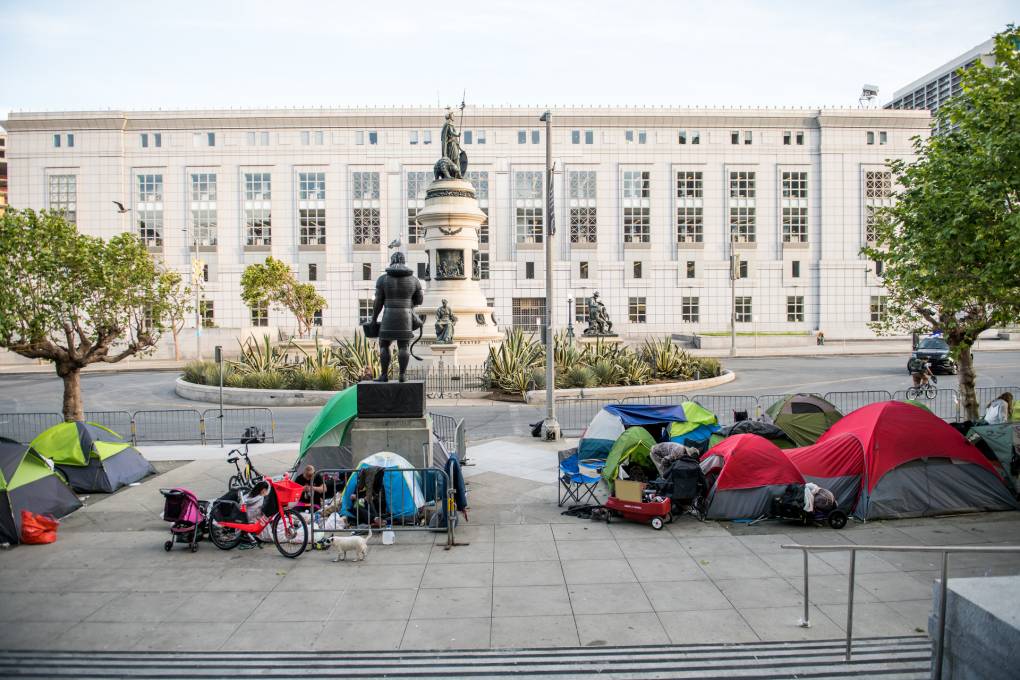
"caption": "Tents line Fulton Street near City Hall on May 5, 2020.",
"description": "Tents line Fulton Street near City Hall on May 5, 2020.",
"title": "Tents line Fulton Street near City Hall on May 5, 2020.",
"credit": "Beth LaBerge/KQED",
"status": "inherit",
"altTag": null,
"isLoading": false,
"fetchFailed": false
},
"news_11820731": {
"type": "attachments",
"id": "news_11820731",
"meta": {
"index": "attachments_1716263798",
"site": "news",
"id": "11820731",
"found": true
},
"parent": 11820721,
"imgSizes": {
"apple_news_ca_landscape_5_5": {
"file": "https://ww2.kqed.org/app/uploads/sites/10/2020/05/5k8a9582-1044x783.jpg",
"width": 1044,
"mimeType": "image/jpeg",
"height": 783
},
"apple_news_ca_square_4_0": {
"file": "https://ww2.kqed.org/app/uploads/sites/10/2020/05/5k8a9582-470x470.jpg",
"width": 470,
"mimeType": "image/jpeg",
"height": 470
},
"twentyfourteen-full-width": {
"file": "https://ww2.kqed.org/app/uploads/sites/10/2020/05/5k8a9582-1038x576.jpg",
"width": 1038,
"mimeType": "image/jpeg",
"height": 576
},
"thumbnail": {
"file": "https://ww2.kqed.org/app/uploads/sites/10/2020/05/5k8a9582-160x107.jpg",
"width": 160,
"mimeType": "image/jpeg",
"height": 107
},
"post-thumbnail": {
"file": "https://ww2.kqed.org/app/uploads/sites/10/2020/05/5k8a9582-672x372.jpg",
"width": 672,
"mimeType": "image/jpeg",
"height": 372
},
"kqedFullSize": {
"file": "https://ww2.kqed.org/app/uploads/sites/10/2020/05/5k8a9582-e1590542775288.jpg",
"width": 1920,
"height": 1280
},
"apple_news_ca_landscape_4_7": {
"file": "https://ww2.kqed.org/app/uploads/sites/10/2020/05/5k8a9582-632x474.jpg",
"width": 632,
"mimeType": "image/jpeg",
"height": 474
},
"large": {
"file": "https://ww2.kqed.org/app/uploads/sites/10/2020/05/5k8a9582-1020x680.jpg",
"width": 1020,
"mimeType": "image/jpeg",
"height": 680
},
"apple_news_ca_landscape_4_0": {
"file": "https://ww2.kqed.org/app/uploads/sites/10/2020/05/5k8a9582-536x402.jpg",
"width": 536,
"mimeType": "image/jpeg",
"height": 402
},
"apple_news_ca_portrait_12_9": {
"file": "https://ww2.kqed.org/app/uploads/sites/10/2020/05/5k8a9582-1122x1365.jpg",
"width": 1122,
"mimeType": "image/jpeg",
"height": 1365
},
"medium": {
"file": "https://ww2.kqed.org/app/uploads/sites/10/2020/05/5k8a9582-800x533.jpg",
"width": 800,
"mimeType": "image/jpeg",
"height": 533
},
"apple_news_ca_portrait_4_0": {
"file": "https://ww2.kqed.org/app/uploads/sites/10/2020/05/5k8a9582-354x472.jpg",
"width": 354,
"mimeType": "image/jpeg",
"height": 472
},
"apple_news_ca_portrait_9_7": {
"file": "https://ww2.kqed.org/app/uploads/sites/10/2020/05/5k8a9582-840x1120.jpg",
"width": 840,
"mimeType": "image/jpeg",
"height": 1120
},
"apple_news_ca_landscape_12_9": {
"file": "https://ww2.kqed.org/app/uploads/sites/10/2020/05/5k8a9582-1832x1365.jpg",
"width": 1832,
"mimeType": "image/jpeg",
"height": 1365
},
"apple_news_ca_square_9_7": {
"file": "https://ww2.kqed.org/app/uploads/sites/10/2020/05/5k8a9582-1104x1104.jpg",
"width": 1104,
"mimeType": "image/jpeg",
"height": 1104
},
"apple_news_ca_portrait_4_7": {
"file": "https://ww2.kqed.org/app/uploads/sites/10/2020/05/5k8a9582-414x552.jpg",
"width": 414,
"mimeType": "image/jpeg",
"height": 552
},
"apple_news_ca_square_12_9": {
"file": "https://ww2.kqed.org/app/uploads/sites/10/2020/05/5k8a9582-1472x1365.jpg",
"width": 1472,
"mimeType": "image/jpeg",
"height": 1365
},
"apple_news_ca_portrait_5_5": {
"file": "https://ww2.kqed.org/app/uploads/sites/10/2020/05/5k8a9582-687x916.jpg",
"width": 687,
"mimeType": "image/jpeg",
"height": 916
},
"full-width": {
"file": "https://ww2.kqed.org/app/uploads/sites/10/2020/05/5k8a9582-1920x1280.jpg",
"width": 1920,
"mimeType": "image/jpeg",
"height": 1280
},
"apple_news_ca_square_4_7": {
"file": "https://ww2.kqed.org/app/uploads/sites/10/2020/05/5k8a9582-550x550.jpg",
"width": 550,
"mimeType": "image/jpeg",
"height": 550
},
"apple_news_ca_landscape_9_7": {
"file": "https://ww2.kqed.org/app/uploads/sites/10/2020/05/5k8a9582-1376x1032.jpg",
"width": 1376,
"mimeType": "image/jpeg",
"height": 1032
},
"apple_news_ca_square_5_5": {
"file": "https://ww2.kqed.org/app/uploads/sites/10/2020/05/5k8a9582-912x912.jpg",
"width": 912,
"mimeType": "image/jpeg",
"height": 912
}
},
"publishDate": 1590520198,
"modified": 1590603922,
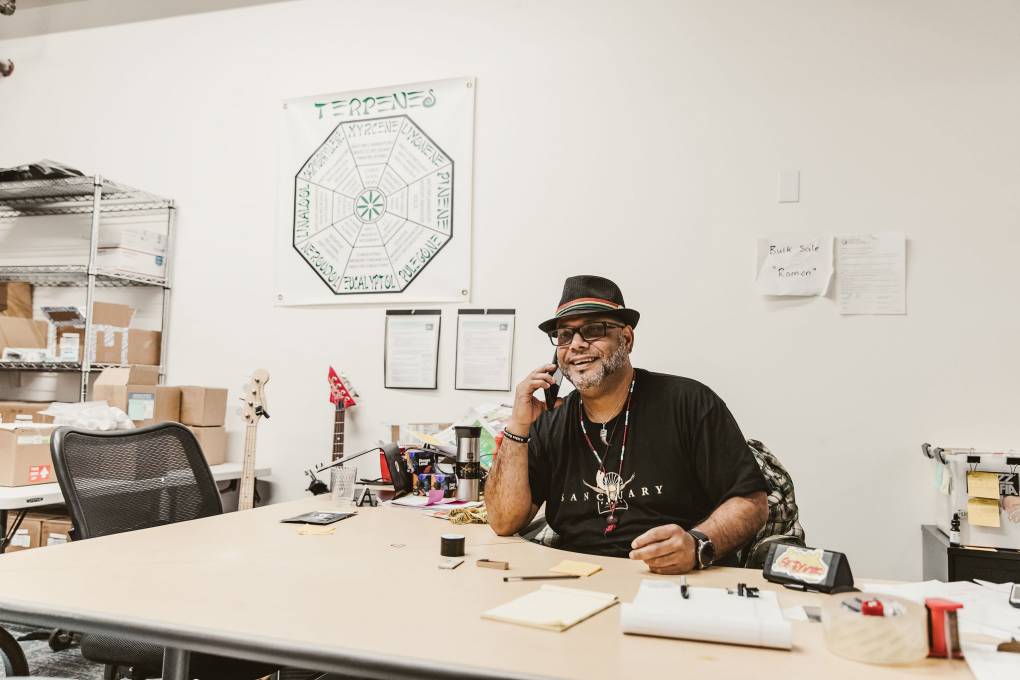
"caption": "Ramon Garcia, the distribution manager at Padre Mu in Oakland, says business is not a level playing field for cannabis entrepreneurs.",
"description": null,
"title": "5k8a9582",
"credit": "Courtesy of Ramon Garcia",
"status": "inherit",
"isLoading": false,
"fetchFailed": false
},
"news_11820739": {
"type": "attachments",
"id": "news_11820739",
"meta": {
"index": "attachments_1716263798",
"site": "news",
"id": "11820739",
"found": true
},
"parent": 11820737,
"imgSizes": {
"apple_news_ca_landscape_5_5": {
"file": "https://ww2.kqed.org/app/uploads/sites/10/2020/05/RS4400_147225365-1044x783.jpg",
"width": 1044,
"mimeType": "image/jpeg",
"height": 783
},
"apple_news_ca_square_4_0": {
"file": "https://ww2.kqed.org/app/uploads/sites/10/2020/05/RS4400_147225365-470x470.jpg",
"width": 470,
"mimeType": "image/jpeg",
"height": 470
},
"twentyfourteen-full-width": {
"file": "https://ww2.kqed.org/app/uploads/sites/10/2020/05/RS4400_147225365-1038x576.jpg",
"width": 1038,
"mimeType": "image/jpeg",
"height": 576
},
"thumbnail": {
"file": "https://ww2.kqed.org/app/uploads/sites/10/2020/05/RS4400_147225365-160x99.jpg",
"width": 160,
"mimeType": "image/jpeg",
"height": 99
},
"post-thumbnail": {
"file": "https://ww2.kqed.org/app/uploads/sites/10/2020/05/RS4400_147225365-672x372.jpg",
"width": 672,
"mimeType": "image/jpeg",
"height": 372
},
"kqedFullSize": {
"file": "https://ww2.kqed.org/app/uploads/sites/10/2020/05/RS4400_147225365.jpg",
"width": 3000,
"height": 1863
},
"apple_news_ca_landscape_4_7": {
"file": "https://ww2.kqed.org/app/uploads/sites/10/2020/05/RS4400_147225365-632x474.jpg",
"width": 632,
"mimeType": "image/jpeg",
"height": 474
},
"large": {
"file": "https://ww2.kqed.org/app/uploads/sites/10/2020/05/RS4400_147225365-1020x633.jpg",
"width": 1020,
"mimeType": "image/jpeg",
"height": 633
},
"apple_news_ca_landscape_4_0": {
"file": "https://ww2.kqed.org/app/uploads/sites/10/2020/05/RS4400_147225365-536x402.jpg",
"width": 536,
"mimeType": "image/jpeg",
"height": 402
},
"apple_news_ca_portrait_12_9": {
"file": "https://ww2.kqed.org/app/uploads/sites/10/2020/05/RS4400_147225365-1122x1496.jpg",
"width": 1122,
"mimeType": "image/jpeg",
"height": 1496
},
"medium": {
"file": "https://ww2.kqed.org/app/uploads/sites/10/2020/05/RS4400_147225365-800x497.jpg",
"width": 800,
"mimeType": "image/jpeg",
"height": 497
},
"apple_news_ca_portrait_4_0": {
"file": "https://ww2.kqed.org/app/uploads/sites/10/2020/05/RS4400_147225365-354x472.jpg",
"width": 354,
"mimeType": "image/jpeg",
"height": 472
},
"apple_news_ca_portrait_9_7": {
"file": "https://ww2.kqed.org/app/uploads/sites/10/2020/05/RS4400_147225365-840x1120.jpg",
"width": 840,
"mimeType": "image/jpeg",
"height": 1120
},
"apple_news_ca_landscape_12_9": {
"file": "https://ww2.kqed.org/app/uploads/sites/10/2020/05/RS4400_147225365-1832x1374.jpg",
"width": 1832,
"mimeType": "image/jpeg",
"height": 1374
},
"apple_news_ca_square_9_7": {
"file": "https://ww2.kqed.org/app/uploads/sites/10/2020/05/RS4400_147225365-1104x1104.jpg",
"width": 1104,
"mimeType": "image/jpeg",
"height": 1104
},
"apple_news_ca_portrait_4_7": {
"file": "https://ww2.kqed.org/app/uploads/sites/10/2020/05/RS4400_147225365-414x552.jpg",
"width": 414,
"mimeType": "image/jpeg",
"height": 552
},
"apple_news_ca_square_12_9": {
"file": "https://ww2.kqed.org/app/uploads/sites/10/2020/05/RS4400_147225365-1472x1472.jpg",
"width": 1472,
"mimeType": "image/jpeg",
"height": 1472
},
"apple_news_ca_portrait_5_5": {
"file": "https://ww2.kqed.org/app/uploads/sites/10/2020/05/RS4400_147225365-687x916.jpg",
"width": 687,
"mimeType": "image/jpeg",
"height": 916
},
"full-width": {
"file": "https://ww2.kqed.org/app/uploads/sites/10/2020/05/RS4400_147225365-1920x1192.jpg",
"width": 1920,
"mimeType": "image/jpeg",
"height": 1192
},
"apple_news_ca_square_4_7": {
"file": "https://ww2.kqed.org/app/uploads/sites/10/2020/05/RS4400_147225365-550x550.jpg",
"width": 550,
"mimeType": "image/jpeg",
"height": 550
},
"apple_news_ca_landscape_9_7": {
"file": "https://ww2.kqed.org/app/uploads/sites/10/2020/05/RS4400_147225365-1376x1032.jpg",
"width": 1376,
"mimeType": "image/jpeg",
"height": 1032
},
"apple_news_ca_square_5_5": {
"file": "https://ww2.kqed.org/app/uploads/sites/10/2020/05/RS4400_147225365-912x912.jpg",
"width": 912,
"mimeType": "image/jpeg",
"height": 912
}
},
"publishDate": 1590521782,
"modified": 1590601086,
"caption": "A building is seen reflected in the window of the vacant Bank of Stockton on June 27, 2012, in Stockton, California. In 2012, Stockton became the biggest U.S. city to file for bankruptcy protection from creditors. ",
"description": null,
"title": "Stockton, CA To Become Largest U.S. City To File For Bankruptcy",
"credit": "Justin Sullivan/Getty Images",
"status": "inherit",
"isLoading": false,
"fetchFailed": false
},
"news_11820860": {
"type": "attachments",
"id": "news_11820860",
"meta": {
"index": "attachments_1716263798",
"site": "news",
"id": "11820860",
"found": true
},
"parent": 11820692,
"imgSizes": {
"apple_news_ca_landscape_5_5": {
"file": "https://ww2.kqed.org/app/uploads/sites/10/2020/05/RS43342_RS43338_jasper-qut-qut-1044x783.jpg",
"width": 1044,
"mimeType": "image/jpeg",
"height": 783
},
"apple_news_ca_square_4_0": {
"file": "https://ww2.kqed.org/app/uploads/sites/10/2020/05/RS43342_RS43338_jasper-qut-qut-470x470.jpg",
"width": 470,
"mimeType": "image/jpeg",
"height": 470
},
"twentyfourteen-full-width": {
"file": "https://ww2.kqed.org/app/uploads/sites/10/2020/05/RS43342_RS43338_jasper-qut-qut-1038x576.jpg",
"width": 1038,
"mimeType": "image/jpeg",
"height": 576
},
"thumbnail": {
"file": "https://ww2.kqed.org/app/uploads/sites/10/2020/05/RS43342_RS43338_jasper-qut-qut-160x112.jpg",
"width": 160,
"mimeType": "image/jpeg",
"height": 112
},
"post-thumbnail": {
"file": "https://ww2.kqed.org/app/uploads/sites/10/2020/05/RS43342_RS43338_jasper-qut-qut-672x372.jpg",
"width": 672,
"mimeType": "image/jpeg",
"height": 372
},
"kqedFullSize": {
"file": "https://ww2.kqed.org/app/uploads/sites/10/2020/05/RS43342_RS43338_jasper-qut-qut.jpg",
"width": 1432,
"height": 999
},
"apple_news_ca_landscape_4_7": {
"file": "https://ww2.kqed.org/app/uploads/sites/10/2020/05/RS43342_RS43338_jasper-qut-qut-632x474.jpg",
"width": 632,
"mimeType": "image/jpeg",
"height": 474
},
"large": {
"file": "https://ww2.kqed.org/app/uploads/sites/10/2020/05/RS43342_RS43338_jasper-qut-qut-1020x712.jpg",
"width": 1020,
"mimeType": "image/jpeg",
"height": 712
},
"apple_news_ca_landscape_4_0": {
"file": "https://ww2.kqed.org/app/uploads/sites/10/2020/05/RS43342_RS43338_jasper-qut-qut-536x402.jpg",
"width": 536,
"mimeType": "image/jpeg",
"height": 402
},
"apple_news_ca_portrait_12_9": {
"file": "https://ww2.kqed.org/app/uploads/sites/10/2020/05/RS43342_RS43338_jasper-qut-qut-1122x999.jpg",
"width": 1122,
"mimeType": "image/jpeg",
"height": 999
},
"medium": {
"file": "https://ww2.kqed.org/app/uploads/sites/10/2020/05/RS43342_RS43338_jasper-qut-qut-800x558.jpg",
"width": 800,
"mimeType": "image/jpeg",
"height": 558
},
"apple_news_ca_portrait_4_0": {
"file": "https://ww2.kqed.org/app/uploads/sites/10/2020/05/RS43342_RS43338_jasper-qut-qut-354x472.jpg",
"width": 354,
"mimeType": "image/jpeg",
"height": 472
},
"apple_news_ca_portrait_9_7": {
"file": "https://ww2.kqed.org/app/uploads/sites/10/2020/05/RS43342_RS43338_jasper-qut-qut-840x999.jpg",
"width": 840,
"mimeType": "image/jpeg",
"height": 999
},
"apple_news_ca_square_9_7": {
"file": "https://ww2.kqed.org/app/uploads/sites/10/2020/05/RS43342_RS43338_jasper-qut-qut-1104x999.jpg",
"width": 1104,
"mimeType": "image/jpeg",
"height": 999
},
"apple_news_ca_portrait_4_7": {
"file": "https://ww2.kqed.org/app/uploads/sites/10/2020/05/RS43342_RS43338_jasper-qut-qut-414x552.jpg",
"width": 414,
"mimeType": "image/jpeg",
"height": 552
},
"apple_news_ca_portrait_5_5": {
"file": "https://ww2.kqed.org/app/uploads/sites/10/2020/05/RS43342_RS43338_jasper-qut-qut-687x916.jpg",
"width": 687,
"mimeType": "image/jpeg",
"height": 916
},
"apple_news_ca_square_4_7": {
"file": "https://ww2.kqed.org/app/uploads/sites/10/2020/05/RS43342_RS43338_jasper-qut-qut-550x550.jpg",
"width": 550,
"mimeType": "image/jpeg",
"height": 550
},
"apple_news_ca_landscape_9_7": {
"file": "https://ww2.kqed.org/app/uploads/sites/10/2020/05/RS43342_RS43338_jasper-qut-qut-1376x999.jpg",
"width": 1376,
"mimeType": "image/jpeg",
"height": 999
},
"apple_news_ca_square_5_5": {
"file": "https://ww2.kqed.org/app/uploads/sites/10/2020/05/RS43342_RS43338_jasper-qut-qut-912x912.jpg",
"width": 912,
"mimeType": "image/jpeg",
"height": 912
}
},
"publishDate": 1590533535,
"modified": 1590592375,
"caption": "A view of The Jasper, one of many high rise luxury apartment buildings in downtown San Francisco currently offering discounts to prospective renters in a softening housing market. ",
"description": "A view of The Jasper, one of many high rise luxury apartment buildings in downtown San Francisco currently offering discounts to prospective renters in a softening housing market. ",
"title": "RS43342_RS43338_jasper-qut-qut",
"credit": "Chloe Veltman/KQED",
"status": "inherit",
"isLoading": false,
"fetchFailed": false
},
"news_11820767": {
"type": "attachments",
"id": "news_11820767",
"meta": {
"index": "attachments_1716263798",
"site": "news",
"id": "11820767",
"found": true
},
"parent": 11820290,
"imgSizes": {
"apple_news_ca_landscape_5_5": {
"file": "https://ww2.kqed.org/app/uploads/sites/10/2020/05/RS42903_018_KQED_SanFrancisco_Mission_04232020-qut-1044x783.jpg",
"width": 1044,
"mimeType": "image/jpeg",
"height": 783
},
"apple_news_ca_square_4_0": {
"file": "https://ww2.kqed.org/app/uploads/sites/10/2020/05/RS42903_018_KQED_SanFrancisco_Mission_04232020-qut-470x470.jpg",
"width": 470,
"mimeType": "image/jpeg",
"height": 470
},
"twentyfourteen-full-width": {
"file": "https://ww2.kqed.org/app/uploads/sites/10/2020/05/RS42903_018_KQED_SanFrancisco_Mission_04232020-qut-1038x576.jpg",
"width": 1038,
"mimeType": "image/jpeg",
"height": 576
},
"thumbnail": {
"file": "https://ww2.kqed.org/app/uploads/sites/10/2020/05/RS42903_018_KQED_SanFrancisco_Mission_04232020-qut-160x107.jpg",
"width": 160,
"mimeType": "image/jpeg",
"height": 107
},
"post-thumbnail": {
"file": "https://ww2.kqed.org/app/uploads/sites/10/2020/05/RS42903_018_KQED_SanFrancisco_Mission_04232020-qut-672x372.jpg",
"width": 672,
"mimeType": "image/jpeg",
"height": 372
},
"kqedFullSize": {
"file": "https://ww2.kqed.org/app/uploads/sites/10/2020/05/RS42903_018_KQED_SanFrancisco_Mission_04232020-qut.jpg",
"width": 1920,
"height": 1280
},
"apple_news_ca_landscape_4_7": {
"file": "https://ww2.kqed.org/app/uploads/sites/10/2020/05/RS42903_018_KQED_SanFrancisco_Mission_04232020-qut-632x474.jpg",
"width": 632,
"mimeType": "image/jpeg",
"height": 474
},
"large": {
"file": "https://ww2.kqed.org/app/uploads/sites/10/2020/05/RS42903_018_KQED_SanFrancisco_Mission_04232020-qut-1020x680.jpg",
"width": 1020,
"mimeType": "image/jpeg",
"height": 680
},
"apple_news_ca_landscape_4_0": {
"file": "https://ww2.kqed.org/app/uploads/sites/10/2020/05/RS42903_018_KQED_SanFrancisco_Mission_04232020-qut-536x402.jpg",
"width": 536,
"mimeType": "image/jpeg",
"height": 402
},
"apple_news_ca_portrait_12_9": {
"file": "https://ww2.kqed.org/app/uploads/sites/10/2020/05/RS42903_018_KQED_SanFrancisco_Mission_04232020-qut-1122x1280.jpg",
"width": 1122,
"mimeType": "image/jpeg",
"height": 1280
},
"medium": {
"file": "https://ww2.kqed.org/app/uploads/sites/10/2020/05/RS42903_018_KQED_SanFrancisco_Mission_04232020-qut-800x533.jpg",
"width": 800,
"mimeType": "image/jpeg",
"height": 533
},
"apple_news_ca_portrait_4_0": {
"file": "https://ww2.kqed.org/app/uploads/sites/10/2020/05/RS42903_018_KQED_SanFrancisco_Mission_04232020-qut-354x472.jpg",
"width": 354,
"mimeType": "image/jpeg",
"height": 472
},
"apple_news_ca_portrait_9_7": {
"file": "https://ww2.kqed.org/app/uploads/sites/10/2020/05/RS42903_018_KQED_SanFrancisco_Mission_04232020-qut-840x1120.jpg",
"width": 840,
"mimeType": "image/jpeg",
"height": 1120
},
"apple_news_ca_landscape_12_9": {
"file": "https://ww2.kqed.org/app/uploads/sites/10/2020/05/RS42903_018_KQED_SanFrancisco_Mission_04232020-qut-1832x1280.jpg",
"width": 1832,
"mimeType": "image/jpeg",
"height": 1280
},
"apple_news_ca_square_9_7": {
"file": "https://ww2.kqed.org/app/uploads/sites/10/2020/05/RS42903_018_KQED_SanFrancisco_Mission_04232020-qut-1104x1104.jpg",
"width": 1104,
"mimeType": "image/jpeg",
"height": 1104
},
"apple_news_ca_portrait_4_7": {
"file": "https://ww2.kqed.org/app/uploads/sites/10/2020/05/RS42903_018_KQED_SanFrancisco_Mission_04232020-qut-414x552.jpg",
"width": 414,
"mimeType": "image/jpeg",
"height": 552
},
"apple_news_ca_square_12_9": {
"file": "https://ww2.kqed.org/app/uploads/sites/10/2020/05/RS42903_018_KQED_SanFrancisco_Mission_04232020-qut-1472x1280.jpg",
"width": 1472,
"mimeType": "image/jpeg",
"height": 1280
},
"apple_news_ca_portrait_5_5": {
"file": "https://ww2.kqed.org/app/uploads/sites/10/2020/05/RS42903_018_KQED_SanFrancisco_Mission_04232020-qut-687x916.jpg",
"width": 687,
"mimeType": "image/jpeg",
"height": 916
},
"full-width": {
"file": "https://ww2.kqed.org/app/uploads/sites/10/2020/05/RS42903_018_KQED_SanFrancisco_Mission_04232020-qut-1920x1280.jpg",
"width": 1920,
"mimeType": "image/jpeg",
"height": 1280
},
"apple_news_ca_square_4_7": {
"file": "https://ww2.kqed.org/app/uploads/sites/10/2020/05/RS42903_018_KQED_SanFrancisco_Mission_04232020-qut-550x550.jpg",
"width": 550,
"mimeType": "image/jpeg",
"height": 550
},
"apple_news_ca_landscape_9_7": {
"file": "https://ww2.kqed.org/app/uploads/sites/10/2020/05/RS42903_018_KQED_SanFrancisco_Mission_04232020-qut-1376x1032.jpg",
"width": 1376,
"mimeType": "image/jpeg",
"height": 1032
},
"apple_news_ca_square_5_5": {
"file": "https://ww2.kqed.org/app/uploads/sites/10/2020/05/RS42903_018_KQED_SanFrancisco_Mission_04232020-qut-912x912.jpg",
"width": 912,
"mimeType": "image/jpeg",
"height": 912
}
},
"publishDate": 1590525085,
"modified": 1590534804,
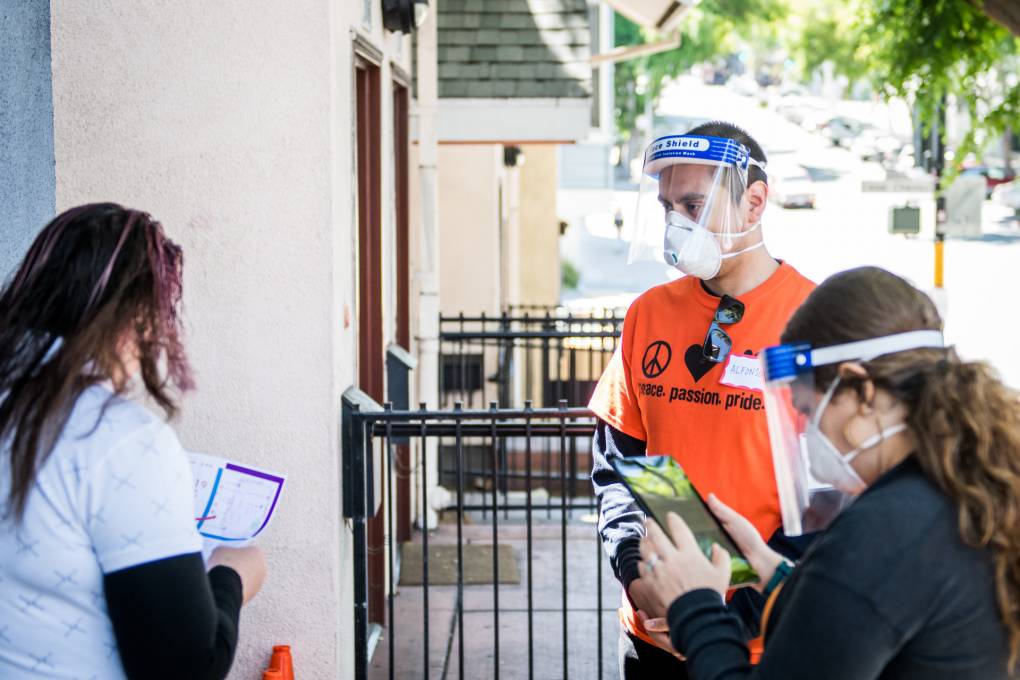
"caption": "Aliza Zenilman (right) and Alfonso Buenas, volunteers with United In Health, speak with a San Francisco Mission resident about getting tested for COVID-19 during a community testing study taking place April 25 - 28 supported by UCSF Labs. Latinos represent more than half of all confirmed coronavirus cases in California.",
"description": null,
"title": "RS42903_018_KQED_SanFrancisco_Mission_04232020-qut",
"credit": "Beth LaBerge/KQED",
"status": "inherit",
"isLoading": false,
"fetchFailed": false
},
"news_11820658": {
"type": "attachments",
"id": "news_11820658",
"meta": {
"index": "attachments_1716263798",
"site": "news",
"id": "11820658",
"found": true
},
"parent": 11820656,
"imgSizes": {
"apple_news_ca_landscape_5_5": {
"file": "https://ww2.kqed.org/app/uploads/sites/10/2020/05/crabber1-1044x783.jpg",
"width": 1044,
"mimeType": "image/jpeg",
"height": 783
},
"apple_news_ca_square_4_0": {
"file": "https://ww2.kqed.org/app/uploads/sites/10/2020/05/crabber1-470x470.jpg",
"width": 470,
"mimeType": "image/jpeg",
"height": 470
},
"twentyfourteen-full-width": {
"file": "https://ww2.kqed.org/app/uploads/sites/10/2020/05/crabber1-1038x576.jpg",
"width": 1038,
"mimeType": "image/jpeg",
"height": 576
},
"thumbnail": {
"file": "https://ww2.kqed.org/app/uploads/sites/10/2020/05/crabber1-160x107.jpg",
"width": 160,
"mimeType": "image/jpeg",
"height": 107
},
"post-thumbnail": {
"file": "https://ww2.kqed.org/app/uploads/sites/10/2020/05/crabber1-672x372.jpg",
"width": 672,
"mimeType": "image/jpeg",
"height": 372
},
"kqedFullSize": {
"file": "https://ww2.kqed.org/app/uploads/sites/10/2020/05/crabber1.jpg",
"width": 1900,
"height": 1267
},
"apple_news_ca_landscape_4_7": {
"file": "https://ww2.kqed.org/app/uploads/sites/10/2020/05/crabber1-632x474.jpg",
"width": 632,
"mimeType": "image/jpeg",
"height": 474
},
"large": {
"file": "https://ww2.kqed.org/app/uploads/sites/10/2020/05/crabber1-1020x680.jpg",
"width": 1020,
"mimeType": "image/jpeg",
"height": 680
},
"apple_news_ca_landscape_4_0": {
"file": "https://ww2.kqed.org/app/uploads/sites/10/2020/05/crabber1-536x402.jpg",
"width": 536,
"mimeType": "image/jpeg",
"height": 402
},
"apple_news_ca_portrait_12_9": {
"file": "https://ww2.kqed.org/app/uploads/sites/10/2020/05/crabber1-1122x1267.jpg",
"width": 1122,
"mimeType": "image/jpeg",
"height": 1267
},
"medium": {
"file": "https://ww2.kqed.org/app/uploads/sites/10/2020/05/crabber1-800x533.jpg",
"width": 800,
"mimeType": "image/jpeg",
"height": 533
},
"apple_news_ca_portrait_4_0": {
"file": "https://ww2.kqed.org/app/uploads/sites/10/2020/05/crabber1-354x472.jpg",
"width": 354,
"mimeType": "image/jpeg",
"height": 472
},
"apple_news_ca_portrait_9_7": {
"file": "https://ww2.kqed.org/app/uploads/sites/10/2020/05/crabber1-840x1120.jpg",
"width": 840,
"mimeType": "image/jpeg",
"height": 1120
},
"apple_news_ca_landscape_12_9": {
"file": "https://ww2.kqed.org/app/uploads/sites/10/2020/05/crabber1-1832x1267.jpg",
"width": 1832,
"mimeType": "image/jpeg",
"height": 1267
},
"apple_news_ca_square_9_7": {
"file": "https://ww2.kqed.org/app/uploads/sites/10/2020/05/crabber1-1104x1104.jpg",
"width": 1104,
"mimeType": "image/jpeg",
"height": 1104
},
"apple_news_ca_portrait_4_7": {
"file": "https://ww2.kqed.org/app/uploads/sites/10/2020/05/crabber1-414x552.jpg",
"width": 414,
"mimeType": "image/jpeg",
"height": 552
},
"apple_news_ca_square_12_9": {
"file": "https://ww2.kqed.org/app/uploads/sites/10/2020/05/crabber1-1472x1267.jpg",
"width": 1472,
"mimeType": "image/jpeg",
"height": 1267
},
"apple_news_ca_portrait_5_5": {
"file": "https://ww2.kqed.org/app/uploads/sites/10/2020/05/crabber1-687x916.jpg",
"width": 687,
"mimeType": "image/jpeg",
"height": 916
},
"apple_news_ca_square_4_7": {
"file": "https://ww2.kqed.org/app/uploads/sites/10/2020/05/crabber1-550x550.jpg",
"width": 550,
"mimeType": "image/jpeg",
"height": 550
},
"apple_news_ca_landscape_9_7": {
"file": "https://ww2.kqed.org/app/uploads/sites/10/2020/05/crabber1-1376x1032.jpg",
"width": 1376,
"mimeType": "image/jpeg",
"height": 1032
},
"apple_news_ca_square_5_5": {
"file": "https://ww2.kqed.org/app/uploads/sites/10/2020/05/crabber1-912x912.jpg",
"width": 912,
"mimeType": "image/jpeg",
"height": 912
}
},
"publishDate": 1590451514,
"modified": 1590454342,
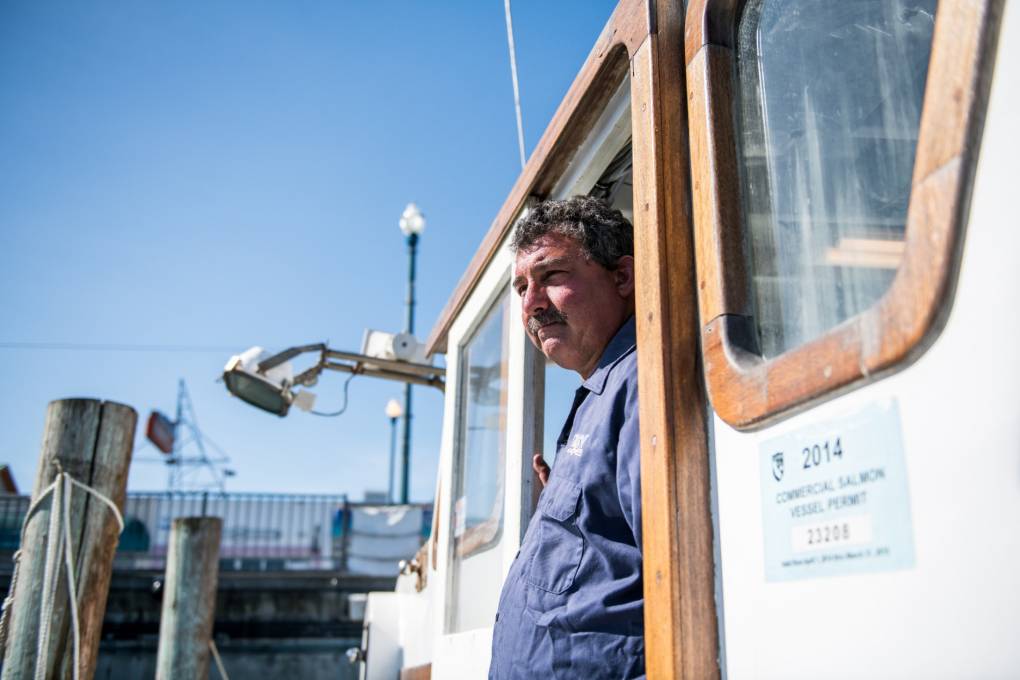
"caption": "San Francisco Crab Boat Owners Association President John Barnett, himself a crabber and fisherman, lost more than $300,000 in fishing equipment in Saturday's fire. ",
"description": "San Francisco Crab Boat Owners Association President John Barnett, himself a crabber and fisherman, lost more than $300,000 in fishing equipment in a blaze on Saturday, May 23, that destroyed part of Pier 45. ",
"title": "crabber1",
"credit": "Beth LaBerge/KQED",
"status": "inherit",
"isLoading": false,
"fetchFailed": false
},
"news_11820614": {
"type": "attachments",
"id": "news_11820614",
"meta": {
"index": "attachments_1716263798",
"site": "news",
"id": "11820614",
"found": true
},
"parent": 11820587,
"imgSizes": {
"apple_news_ca_landscape_5_5": {
"file": "https://ww2.kqed.org/app/uploads/sites/10/2020/05/Church-closed-Getty-1214897441-1044x783.jpg",
"width": 1044,
"mimeType": "image/jpeg",
"height": 783
},
"apple_news_ca_square_4_0": {
"file": "https://ww2.kqed.org/app/uploads/sites/10/2020/05/Church-closed-Getty-1214897441-470x470.jpg",
"width": 470,
"mimeType": "image/jpeg",
"height": 470
},
"twentyfourteen-full-width": {
"file": "https://ww2.kqed.org/app/uploads/sites/10/2020/05/Church-closed-Getty-1214897441-1038x576.jpg",
"width": 1038,
"mimeType": "image/jpeg",
"height": 576
},
"thumbnail": {
"file": "https://ww2.kqed.org/app/uploads/sites/10/2020/05/Church-closed-Getty-1214897441-160x89.jpg",
"width": 160,
"mimeType": "image/jpeg",
"height": 89
},
"post-thumbnail": {
"file": "https://ww2.kqed.org/app/uploads/sites/10/2020/05/Church-closed-Getty-1214897441-672x372.jpg",
"width": 672,
"mimeType": "image/jpeg",
"height": 372
},
"kqedFullSize": {
"file": "https://ww2.kqed.org/app/uploads/sites/10/2020/05/Church-closed-Getty-1214897441.jpg",
"width": 1920,
"height": 1064
},
"apple_news_ca_landscape_4_7": {
"file": "https://ww2.kqed.org/app/uploads/sites/10/2020/05/Church-closed-Getty-1214897441-632x474.jpg",
"width": 632,
"mimeType": "image/jpeg",
"height": 474
},
"large": {
"file": "https://ww2.kqed.org/app/uploads/sites/10/2020/05/Church-closed-Getty-1214897441-1020x565.jpg",
"width": 1020,
"mimeType": "image/jpeg",
"height": 565
},
"apple_news_ca_landscape_4_0": {
"file": "https://ww2.kqed.org/app/uploads/sites/10/2020/05/Church-closed-Getty-1214897441-536x402.jpg",
"width": 536,
"mimeType": "image/jpeg",
"height": 402
},
"apple_news_ca_portrait_12_9": {
"file": "https://ww2.kqed.org/app/uploads/sites/10/2020/05/Church-closed-Getty-1214897441-1122x1064.jpg",
"width": 1122,
"mimeType": "image/jpeg",
"height": 1064
},
"medium": {
"file": "https://ww2.kqed.org/app/uploads/sites/10/2020/05/Church-closed-Getty-1214897441-800x443.jpg",
"width": 800,
"mimeType": "image/jpeg",
"height": 443
},
"apple_news_ca_portrait_4_0": {
"file": "https://ww2.kqed.org/app/uploads/sites/10/2020/05/Church-closed-Getty-1214897441-354x472.jpg",
"width": 354,
"mimeType": "image/jpeg",
"height": 472
},
"apple_news_ca_portrait_9_7": {
"file": "https://ww2.kqed.org/app/uploads/sites/10/2020/05/Church-closed-Getty-1214897441-840x1064.jpg",
"width": 840,
"mimeType": "image/jpeg",
"height": 1064
},
"apple_news_ca_landscape_12_9": {
"file": "https://ww2.kqed.org/app/uploads/sites/10/2020/05/Church-closed-Getty-1214897441-1832x1064.jpg",
"width": 1832,
"mimeType": "image/jpeg",
"height": 1064
},
"apple_news_ca_square_9_7": {
"file": "https://ww2.kqed.org/app/uploads/sites/10/2020/05/Church-closed-Getty-1214897441-1104x1064.jpg",
"width": 1104,
"mimeType": "image/jpeg",
"height": 1064
},
"apple_news_ca_portrait_4_7": {
"file": "https://ww2.kqed.org/app/uploads/sites/10/2020/05/Church-closed-Getty-1214897441-414x552.jpg",
"width": 414,
"mimeType": "image/jpeg",
"height": 552
},
"apple_news_ca_square_12_9": {
"file": "https://ww2.kqed.org/app/uploads/sites/10/2020/05/Church-closed-Getty-1214897441-1472x1064.jpg",
"width": 1472,
"mimeType": "image/jpeg",
"height": 1064
},
"apple_news_ca_portrait_5_5": {
"file": "https://ww2.kqed.org/app/uploads/sites/10/2020/05/Church-closed-Getty-1214897441-687x916.jpg",
"width": 687,
"mimeType": "image/jpeg",
"height": 916
},
"full-width": {
"file": "https://ww2.kqed.org/app/uploads/sites/10/2020/05/Church-closed-Getty-1214897441-1920x1064.jpg",
"width": 1920,
"mimeType": "image/jpeg",
"height": 1064
},
"apple_news_ca_square_4_7": {
"file": "https://ww2.kqed.org/app/uploads/sites/10/2020/05/Church-closed-Getty-1214897441-550x550.jpg",
"width": 550,
"mimeType": "image/jpeg",
"height": 550
},
"apple_news_ca_landscape_9_7": {
"file": "https://ww2.kqed.org/app/uploads/sites/10/2020/05/Church-closed-Getty-1214897441-1376x1032.jpg",
"width": 1376,
"mimeType": "image/jpeg",
"height": 1032
},
"apple_news_ca_square_5_5": {
"file": "https://ww2.kqed.org/app/uploads/sites/10/2020/05/Church-closed-Getty-1214897441-912x912.jpg",
"width": 912,
"mimeType": "image/jpeg",
"height": 912
}
},
"publishDate": 1590440151,
"modified": 1590446984,
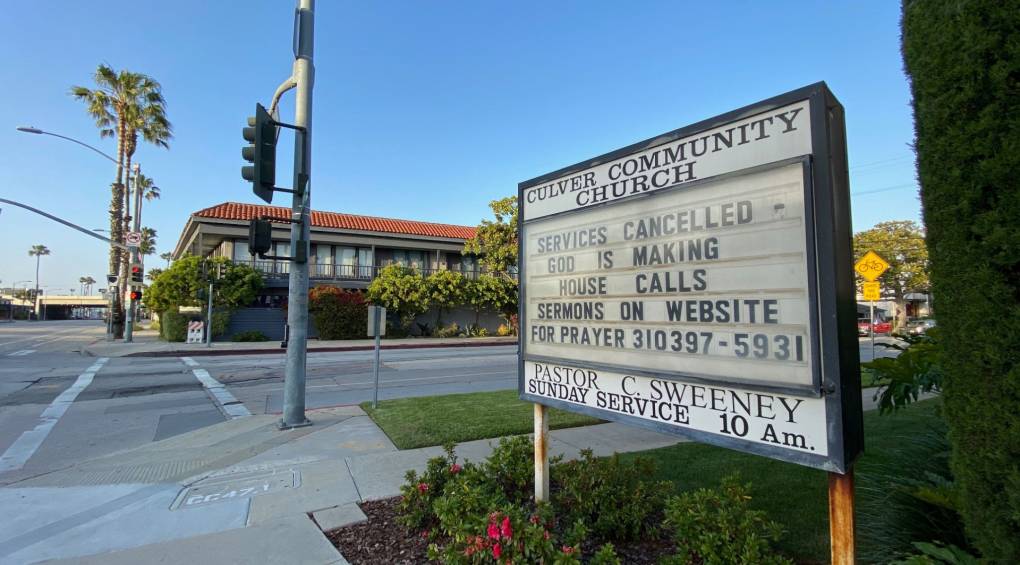
"caption": "Churches and other houses of worship across California have been forced to remain closed since mid-March, as part of Gov. Gavin Newsom's shelter-in-place order intended to stem the spread of the coronavirus.",
"description": null,
"title": "Church-closed-Getty-1214897441",
"credit": "Chris Delmas/AFP/Getty Images",
"status": "inherit",
"isLoading": false,
"fetchFailed": false
},
"news_11820580": {
"type": "attachments",
"id": "news_11820580",
"meta": {
"index": "attachments_1716263798",
"site": "news",
"id": "11820580",
"found": true
},
"parent": 11820576,
"imgSizes": {
"apple_news_ca_landscape_5_5": {
"file": "https://ww2.kqed.org/app/uploads/sites/10/2020/05/GettyImages-1211479867-1-1044x783.jpg",
"width": 1044,
"mimeType": "image/jpeg",
"height": 783
},
"apple_news_ca_square_4_0": {
"file": "https://ww2.kqed.org/app/uploads/sites/10/2020/05/GettyImages-1211479867-1-470x470.jpg",
"width": 470,
"mimeType": "image/jpeg",
"height": 470
},
"twentyfourteen-full-width": {
"file": "https://ww2.kqed.org/app/uploads/sites/10/2020/05/GettyImages-1211479867-1-1038x576.jpg",
"width": 1038,
"mimeType": "image/jpeg",
"height": 576
},
"thumbnail": {
"file": "https://ww2.kqed.org/app/uploads/sites/10/2020/05/GettyImages-1211479867-1-160x101.jpg",
"width": 160,
"mimeType": "image/jpeg",
"height": 101
},
"post-thumbnail": {
"file": "https://ww2.kqed.org/app/uploads/sites/10/2020/05/GettyImages-1211479867-1-672x372.jpg",
"width": 672,
"mimeType": "image/jpeg",
"height": 372
},
"kqedFullSize": {
"file": "https://ww2.kqed.org/app/uploads/sites/10/2020/05/GettyImages-1211479867-1.jpg",
"width": 1920,
"height": 1208
},
"apple_news_ca_landscape_4_7": {
"file": "https://ww2.kqed.org/app/uploads/sites/10/2020/05/GettyImages-1211479867-1-632x474.jpg",
"width": 632,
"mimeType": "image/jpeg",
"height": 474
},
"large": {
"file": "https://ww2.kqed.org/app/uploads/sites/10/2020/05/GettyImages-1211479867-1-1020x642.jpg",
"width": 1020,
"mimeType": "image/jpeg",
"height": 642
},
"apple_news_ca_landscape_4_0": {
"file": "https://ww2.kqed.org/app/uploads/sites/10/2020/05/GettyImages-1211479867-1-536x402.jpg",
"width": 536,
"mimeType": "image/jpeg",
"height": 402
},
"apple_news_ca_portrait_12_9": {
"file": "https://ww2.kqed.org/app/uploads/sites/10/2020/05/GettyImages-1211479867-1-1122x1208.jpg",
"width": 1122,
"mimeType": "image/jpeg",
"height": 1208
},
"medium": {
"file": "https://ww2.kqed.org/app/uploads/sites/10/2020/05/GettyImages-1211479867-1-800x503.jpg",
"width": 800,
"mimeType": "image/jpeg",
"height": 503
},
"apple_news_ca_portrait_4_0": {
"file": "https://ww2.kqed.org/app/uploads/sites/10/2020/05/GettyImages-1211479867-1-354x472.jpg",
"width": 354,
"mimeType": "image/jpeg",
"height": 472
},
"apple_news_ca_portrait_9_7": {
"file": "https://ww2.kqed.org/app/uploads/sites/10/2020/05/GettyImages-1211479867-1-840x1120.jpg",
"width": 840,
"mimeType": "image/jpeg",
"height": 1120
},
"apple_news_ca_landscape_12_9": {
"file": "https://ww2.kqed.org/app/uploads/sites/10/2020/05/GettyImages-1211479867-1-1832x1208.jpg",
"width": 1832,
"mimeType": "image/jpeg",
"height": 1208
},
"apple_news_ca_square_9_7": {
"file": "https://ww2.kqed.org/app/uploads/sites/10/2020/05/GettyImages-1211479867-1-1104x1104.jpg",
"width": 1104,
"mimeType": "image/jpeg",
"height": 1104
},
"apple_news_ca_portrait_4_7": {
"file": "https://ww2.kqed.org/app/uploads/sites/10/2020/05/GettyImages-1211479867-1-414x552.jpg",
"width": 414,
"mimeType": "image/jpeg",
"height": 552
},
"apple_news_ca_square_12_9": {
"file": "https://ww2.kqed.org/app/uploads/sites/10/2020/05/GettyImages-1211479867-1-1472x1208.jpg",
"width": 1472,
"mimeType": "image/jpeg",
"height": 1208
},
"apple_news_ca_portrait_5_5": {
"file": "https://ww2.kqed.org/app/uploads/sites/10/2020/05/GettyImages-1211479867-1-687x916.jpg",
"width": 687,
"mimeType": "image/jpeg",
"height": 916
},
"full-width": {
"file": "https://ww2.kqed.org/app/uploads/sites/10/2020/05/GettyImages-1211479867-1-1920x1208.jpg",
"width": 1920,
"mimeType": "image/jpeg",
"height": 1208
},
"apple_news_ca_square_4_7": {
"file": "https://ww2.kqed.org/app/uploads/sites/10/2020/05/GettyImages-1211479867-1-550x550.jpg",
"width": 550,
"mimeType": "image/jpeg",
"height": 550
},
"apple_news_ca_landscape_9_7": {
"file": "https://ww2.kqed.org/app/uploads/sites/10/2020/05/GettyImages-1211479867-1-1376x1032.jpg",
"width": 1376,
"mimeType": "image/jpeg",
"height": 1032
},
"apple_news_ca_square_5_5": {
"file": "https://ww2.kqed.org/app/uploads/sites/10/2020/05/GettyImages-1211479867-1-912x912.jpg",
"width": 912,
"mimeType": "image/jpeg",
"height": 912
}
},
"publishDate": 1590419447,
"modified": 1590419488,
"caption": "A woman holds up a sign depicting a church as hundreds of people gather to protest the stay-at-home orders outside the state capitol building in Sacramento, California on May 01, 2020. - Some people intentionally jammed roads while honking and holding out signs while others disrespected social distancing rules by gathering in close proximity, causing police to form skirmish lines to push back protesters. \n",
"description": null,
"title": "GettyImages-1211479867 (1)",
"credit": "Josh Edelson/AFP/Getty Images",
"status": "inherit",
"isLoading": false,
"fetchFailed": false
},
"news_11820565": {
"type": "attachments",
"id": "news_11820565",
"meta": {
"index": "attachments_1716263798",
"site": "news",
"id": "11820565",
"found": true
},
"parent": 11820563,
"imgSizes": {
"apple_news_ca_landscape_5_5": {
"file": "https://ww2.kqed.org/app/uploads/sites/10/2020/05/GettyImages-1211485811-1-1044x783.jpg",
"width": 1044,
"mimeType": "image/jpeg",
"height": 783
},
"apple_news_ca_square_4_0": {
"file": "https://ww2.kqed.org/app/uploads/sites/10/2020/05/GettyImages-1211485811-1-470x470.jpg",
"width": 470,
"mimeType": "image/jpeg",
"height": 470
},
"twentyfourteen-full-width": {
"file": "https://ww2.kqed.org/app/uploads/sites/10/2020/05/GettyImages-1211485811-1-1038x576.jpg",
"width": 1038,
"mimeType": "image/jpeg",
"height": 576
},
"thumbnail": {
"file": "https://ww2.kqed.org/app/uploads/sites/10/2020/05/GettyImages-1211485811-1-160x107.jpg",
"width": 160,
"mimeType": "image/jpeg",
"height": 107
},
"post-thumbnail": {
"file": "https://ww2.kqed.org/app/uploads/sites/10/2020/05/GettyImages-1211485811-1-672x372.jpg",
"width": 672,
"mimeType": "image/jpeg",
"height": 372
},
"kqedFullSize": {
"file": "https://ww2.kqed.org/app/uploads/sites/10/2020/05/GettyImages-1211485811-1.jpg",
"width": 1900,
"height": 1267
},
"apple_news_ca_landscape_4_7": {
"file": "https://ww2.kqed.org/app/uploads/sites/10/2020/05/GettyImages-1211485811-1-632x474.jpg",
"width": 632,
"mimeType": "image/jpeg",
"height": 474
},
"large": {
"file": "https://ww2.kqed.org/app/uploads/sites/10/2020/05/GettyImages-1211485811-1-1020x680.jpg",
"width": 1020,
"mimeType": "image/jpeg",
"height": 680
},
"apple_news_ca_landscape_4_0": {
"file": "https://ww2.kqed.org/app/uploads/sites/10/2020/05/GettyImages-1211485811-1-536x402.jpg",
"width": 536,
"mimeType": "image/jpeg",
"height": 402
},
"apple_news_ca_portrait_12_9": {
"file": "https://ww2.kqed.org/app/uploads/sites/10/2020/05/GettyImages-1211485811-1-1122x1267.jpg",
"width": 1122,
"mimeType": "image/jpeg",
"height": 1267
},
"medium": {
"file": "https://ww2.kqed.org/app/uploads/sites/10/2020/05/GettyImages-1211485811-1-800x533.jpg",
"width": 800,
"mimeType": "image/jpeg",
"height": 533
},
"apple_news_ca_portrait_4_0": {
"file": "https://ww2.kqed.org/app/uploads/sites/10/2020/05/GettyImages-1211485811-1-354x472.jpg",
"width": 354,
"mimeType": "image/jpeg",
"height": 472
},
"apple_news_ca_portrait_9_7": {
"file": "https://ww2.kqed.org/app/uploads/sites/10/2020/05/GettyImages-1211485811-1-840x1120.jpg",
"width": 840,
"mimeType": "image/jpeg",
"height": 1120
},
"apple_news_ca_landscape_12_9": {
"file": "https://ww2.kqed.org/app/uploads/sites/10/2020/05/GettyImages-1211485811-1-1832x1267.jpg",
"width": 1832,
"mimeType": "image/jpeg",
"height": 1267
},
"apple_news_ca_square_9_7": {
"file": "https://ww2.kqed.org/app/uploads/sites/10/2020/05/GettyImages-1211485811-1-1104x1104.jpg",
"width": 1104,
"mimeType": "image/jpeg",
"height": 1104
},
"apple_news_ca_portrait_4_7": {
"file": "https://ww2.kqed.org/app/uploads/sites/10/2020/05/GettyImages-1211485811-1-414x552.jpg",
"width": 414,
"mimeType": "image/jpeg",
"height": 552
},
"apple_news_ca_square_12_9": {
"file": "https://ww2.kqed.org/app/uploads/sites/10/2020/05/GettyImages-1211485811-1-1472x1267.jpg",
"width": 1472,
"mimeType": "image/jpeg",
"height": 1267
},
"apple_news_ca_portrait_5_5": {
"file": "https://ww2.kqed.org/app/uploads/sites/10/2020/05/GettyImages-1211485811-1-687x916.jpg",
"width": 687,
"mimeType": "image/jpeg",
"height": 916
},
"apple_news_ca_square_4_7": {
"file": "https://ww2.kqed.org/app/uploads/sites/10/2020/05/GettyImages-1211485811-1-550x550.jpg",
"width": 550,
"mimeType": "image/jpeg",
"height": 550
},
"apple_news_ca_landscape_9_7": {
"file": "https://ww2.kqed.org/app/uploads/sites/10/2020/05/GettyImages-1211485811-1-1376x1032.jpg",
"width": 1376,
"mimeType": "image/jpeg",
"height": 1032
},
"apple_news_ca_square_5_5": {
"file": "https://ww2.kqed.org/app/uploads/sites/10/2020/05/GettyImages-1211485811-1-912x912.jpg",
"width": 912,
"mimeType": "image/jpeg",
"height": 912
}
},
"publishDate": 1590356685,
"modified": 1590356723,
"caption": "Demonstrators holding signs demanding their church to reopen, protest during a rally to re-open California and against Stay-At-Home directives on May 1, 2020 in San Diego, California. - Rallies have been held at several state capitols across the country as protesters express their deep frustration with the stay-at-home orders that are meant to stem the spread of the novel coronavirus.",
"description": "Demonstrators holding signs demanding their church to reopen, protest during a rally to re-open California and against Stay-At-Home directives on May 1, 2020 in San Diego, California. - Rallies have been held at several state capitols across the country as protesters express their deep frustration with the stay-at-home orders that are meant to stem the spread of the novel coronavirus.",
"title": "GettyImages-1211485811 (1)",
"credit": "Sandy Huffaker/AFP via Getty Images",
"status": "inherit",
"isLoading": false,
"fetchFailed": false
},
"news_11820557": {
"type": "attachments",
"id": "news_11820557",
"meta": {
"index": "attachments_1716263798",
"site": "news",
"id": "11820557",
"found": true
},
"parent": 11820540,
"imgSizes": {
"apple_news_ca_landscape_5_5": {
"file": "https://ww2.kqed.org/app/uploads/sites/10/2020/05/RS43301_GettyImages-1223285578-qut-1044x783.jpg",
"width": 1044,
"mimeType": "image/jpeg",
"height": 783
},
"apple_news_ca_square_4_0": {
"file": "https://ww2.kqed.org/app/uploads/sites/10/2020/05/RS43301_GettyImages-1223285578-qut-470x470.jpg",
"width": 470,
"mimeType": "image/jpeg",
"height": 470
},
"twentyfourteen-full-width": {
"file": "https://ww2.kqed.org/app/uploads/sites/10/2020/05/RS43301_GettyImages-1223285578-qut-1038x576.jpg",
"width": 1038,
"mimeType": "image/jpeg",
"height": 576
},
"thumbnail": {
"file": "https://ww2.kqed.org/app/uploads/sites/10/2020/05/RS43301_GettyImages-1223285578-qut-160x107.jpg",
"width": 160,
"mimeType": "image/jpeg",
"height": 107
},
"post-thumbnail": {
"file": "https://ww2.kqed.org/app/uploads/sites/10/2020/05/RS43301_GettyImages-1223285578-qut-672x372.jpg",
"width": 672,
"mimeType": "image/jpeg",
"height": 372
},
"kqedFullSize": {
"file": "https://ww2.kqed.org/app/uploads/sites/10/2020/05/RS43301_GettyImages-1223285578-qut.jpg",
"width": 1920,
"height": 1280
},
"apple_news_ca_landscape_4_7": {
"file": "https://ww2.kqed.org/app/uploads/sites/10/2020/05/RS43301_GettyImages-1223285578-qut-632x474.jpg",
"width": 632,
"mimeType": "image/jpeg",
"height": 474
},
"large": {
"file": "https://ww2.kqed.org/app/uploads/sites/10/2020/05/RS43301_GettyImages-1223285578-qut-1020x680.jpg",
"width": 1020,
"mimeType": "image/jpeg",
"height": 680
},
"apple_news_ca_landscape_4_0": {
"file": "https://ww2.kqed.org/app/uploads/sites/10/2020/05/RS43301_GettyImages-1223285578-qut-536x402.jpg",
"width": 536,
"mimeType": "image/jpeg",
"height": 402
},
"apple_news_ca_portrait_12_9": {
"file": "https://ww2.kqed.org/app/uploads/sites/10/2020/05/RS43301_GettyImages-1223285578-qut-1122x1280.jpg",
"width": 1122,
"mimeType": "image/jpeg",
"height": 1280
},
"medium": {
"file": "https://ww2.kqed.org/app/uploads/sites/10/2020/05/RS43301_GettyImages-1223285578-qut-800x533.jpg",
"width": 800,
"mimeType": "image/jpeg",
"height": 533
},
"apple_news_ca_portrait_4_0": {
"file": "https://ww2.kqed.org/app/uploads/sites/10/2020/05/RS43301_GettyImages-1223285578-qut-354x472.jpg",
"width": 354,
"mimeType": "image/jpeg",
"height": 472
},
"apple_news_ca_portrait_9_7": {
"file": "https://ww2.kqed.org/app/uploads/sites/10/2020/05/RS43301_GettyImages-1223285578-qut-840x1120.jpg",
"width": 840,
"mimeType": "image/jpeg",
"height": 1120
},
"apple_news_ca_landscape_12_9": {
"file": "https://ww2.kqed.org/app/uploads/sites/10/2020/05/RS43301_GettyImages-1223285578-qut-1832x1280.jpg",
"width": 1832,
"mimeType": "image/jpeg",
"height": 1280
},
"apple_news_ca_square_9_7": {
"file": "https://ww2.kqed.org/app/uploads/sites/10/2020/05/RS43301_GettyImages-1223285578-qut-1104x1104.jpg",
"width": 1104,
"mimeType": "image/jpeg",
"height": 1104
},
"apple_news_ca_portrait_4_7": {
"file": "https://ww2.kqed.org/app/uploads/sites/10/2020/05/RS43301_GettyImages-1223285578-qut-414x552.jpg",
"width": 414,
"mimeType": "image/jpeg",
"height": 552
},
"apple_news_ca_square_12_9": {
"file": "https://ww2.kqed.org/app/uploads/sites/10/2020/05/RS43301_GettyImages-1223285578-qut-1472x1280.jpg",
"width": 1472,
"mimeType": "image/jpeg",
"height": 1280
},
"apple_news_ca_portrait_5_5": {
"file": "https://ww2.kqed.org/app/uploads/sites/10/2020/05/RS43301_GettyImages-1223285578-qut-687x916.jpg",
"width": 687,
"mimeType": "image/jpeg",
"height": 916
},
"full-width": {
"file": "https://ww2.kqed.org/app/uploads/sites/10/2020/05/RS43301_GettyImages-1223285578-qut-1920x1280.jpg",
"width": 1920,
"mimeType": "image/jpeg",
"height": 1280
},
"apple_news_ca_square_4_7": {
"file": "https://ww2.kqed.org/app/uploads/sites/10/2020/05/RS43301_GettyImages-1223285578-qut-550x550.jpg",
"width": 550,
"mimeType": "image/jpeg",
"height": 550
},
"apple_news_ca_landscape_9_7": {
"file": "https://ww2.kqed.org/app/uploads/sites/10/2020/05/RS43301_GettyImages-1223285578-qut-1376x1032.jpg",
"width": 1376,
"mimeType": "image/jpeg",
"height": 1032
},
"apple_news_ca_square_5_5": {
"file": "https://ww2.kqed.org/app/uploads/sites/10/2020/05/RS43301_GettyImages-1223285578-qut-912x912.jpg",
"width": 912,
"mimeType": "image/jpeg",
"height": 912
}
},
"publishDate": 1590354024,
"modified": 1590354078,
"caption": "U.S. Olympic Swimmer Michael Andrew is coached by his father Peter Andrew as he trains in a residential pool.",
"description": null,
"title": "US Olympic Swimmer Michael Andrew Trains During COVID-19 Pandemic",
"credit": "Sean M. Haffey/Getty Images",
"status": "inherit",
"isLoading": false,
"fetchFailed": false
},
"news_11820536": {
"type": "attachments",
"id": "news_11820536",
"meta": {
"index": "attachments_1716263798",
"site": "news",
"id": "11820536",
"found": true
},
"parent": 11820517,
"imgSizes": {
"apple_news_ca_landscape_5_5": {
"file": "https://ww2.kqed.org/app/uploads/sites/10/2020/05/1920_Fauci-1044x751.jpg",
"width": 1044,
"mimeType": "image/jpeg",
"height": 751
},
"apple_news_ca_square_4_0": {
"file": "https://ww2.kqed.org/app/uploads/sites/10/2020/05/1920_Fauci-470x470.jpg",
"width": 470,
"mimeType": "image/jpeg",
"height": 470
},
"twentyfourteen-full-width": {
"file": "https://ww2.kqed.org/app/uploads/sites/10/2020/05/1920_Fauci-1038x576.jpg",
"width": 1038,
"mimeType": "image/jpeg",
"height": 576
},
"thumbnail": {
"file": "https://ww2.kqed.org/app/uploads/sites/10/2020/05/1920_Fauci-160x90.jpg",
"width": 160,
"mimeType": "image/jpeg",
"height": 90
},
"post-thumbnail": {
"file": "https://ww2.kqed.org/app/uploads/sites/10/2020/05/1920_Fauci-672x372.jpg",
"width": 672,
"mimeType": "image/jpeg",
"height": 372
},
"kqedFullSize": {
"file": "https://ww2.kqed.org/app/uploads/sites/10/2020/05/1920_Fauci.jpg",
"width": 1336,
"height": 751
},
"apple_news_ca_landscape_4_7": {
"file": "https://ww2.kqed.org/app/uploads/sites/10/2020/05/1920_Fauci-632x474.jpg",
"width": 632,
"mimeType": "image/jpeg",
"height": 474
},
"large": {
"file": "https://ww2.kqed.org/app/uploads/sites/10/2020/05/1920_Fauci-1020x573.jpg",
"width": 1020,
"mimeType": "image/jpeg",
"height": 573
},
"apple_news_ca_landscape_4_0": {
"file": "https://ww2.kqed.org/app/uploads/sites/10/2020/05/1920_Fauci-536x402.jpg",
"width": 536,
"mimeType": "image/jpeg",
"height": 402
},
"apple_news_ca_portrait_12_9": {
"file": "https://ww2.kqed.org/app/uploads/sites/10/2020/05/1920_Fauci-1122x751.jpg",
"width": 1122,
"mimeType": "image/jpeg",
"height": 751
},
"medium": {
"file": "https://ww2.kqed.org/app/uploads/sites/10/2020/05/1920_Fauci-800x450.jpg",
"width": 800,
"mimeType": "image/jpeg",
"height": 450
},
"apple_news_ca_portrait_4_0": {
"file": "https://ww2.kqed.org/app/uploads/sites/10/2020/05/1920_Fauci-354x472.jpg",
"width": 354,
"mimeType": "image/jpeg",
"height": 472
},
"apple_news_ca_portrait_9_7": {
"file": "https://ww2.kqed.org/app/uploads/sites/10/2020/05/1920_Fauci-840x751.jpg",
"width": 840,
"mimeType": "image/jpeg",
"height": 751
},
"apple_news_ca_square_9_7": {
"file": "https://ww2.kqed.org/app/uploads/sites/10/2020/05/1920_Fauci-1104x751.jpg",
"width": 1104,
"mimeType": "image/jpeg",
"height": 751
},
"apple_news_ca_portrait_4_7": {
"file": "https://ww2.kqed.org/app/uploads/sites/10/2020/05/1920_Fauci-414x552.jpg",
"width": 414,
"mimeType": "image/jpeg",
"height": 552
},
"apple_news_ca_portrait_5_5": {
"file": "https://ww2.kqed.org/app/uploads/sites/10/2020/05/1920_Fauci-687x751.jpg",
"width": 687,
"mimeType": "image/jpeg",
"height": 751
},
"apple_news_ca_square_4_7": {
"file": "https://ww2.kqed.org/app/uploads/sites/10/2020/05/1920_Fauci-550x550.jpg",
"width": 550,
"mimeType": "image/jpeg",
"height": 550
},
"apple_news_ca_square_5_5": {
"file": "https://ww2.kqed.org/app/uploads/sites/10/2020/05/1920_Fauci-912x751.jpg",
"width": 912,
"mimeType": "image/jpeg",
"height": 751
}
},
"publishDate": 1590337080,
"modified": 1590337139,
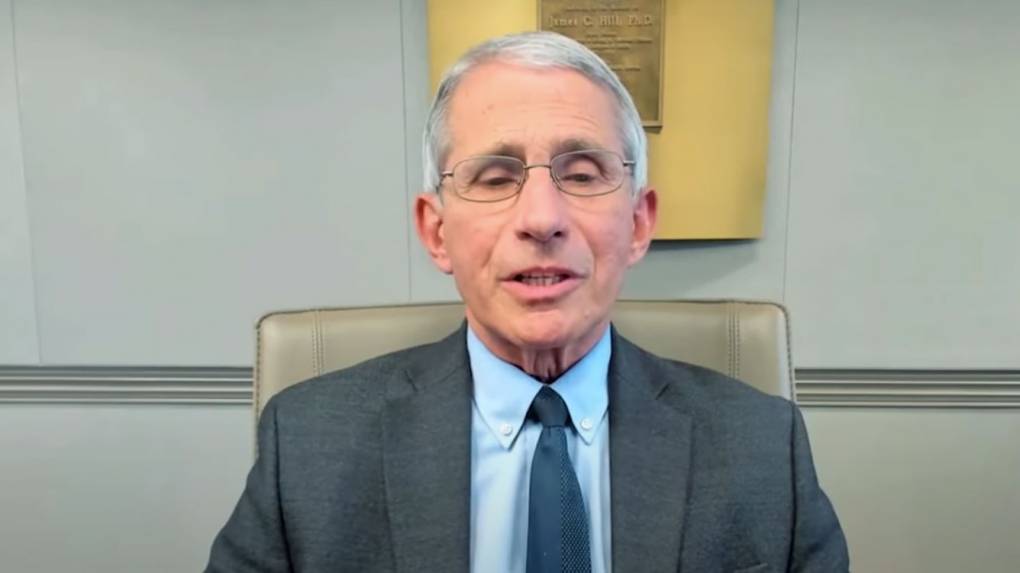
"caption": "Dr. Anthony Fauci, a leading member of the White House's coronavirus task force, made a surprise appearance at the virtual graduation ceremony for the College of the Holy Cross, where he is an alumnus.",
"description": null,
"title": "1920_Fauci",
"credit": "Youtube screenshot/KQED",
"status": "inherit",
"isLoading": false,
"fetchFailed": false
},
"news_11820372": {
"type": "attachments",
"id": "news_11820372",
"meta": {
"index": "attachments_1716263798",
"site": "news",
"id": "11820372",
"found": true
},
"parent": 11818669,
"imgSizes": {
"apple_news_ca_landscape_5_5": {
"file": "https://ww2.kqed.org/app/uploads/sites/10/2021/05/Mckenzie_Mask-1044x783.jpg",
"width": 1044,
"mimeType": "image/jpeg",
"height": 783
},
"apple_news_ca_square_4_0": {
"file": "https://ww2.kqed.org/app/uploads/sites/10/2021/05/Mckenzie_Mask-470x470.jpg",
"width": 470,
"mimeType": "image/jpeg",
"height": 470
},
"twentyfourteen-full-width": {
"file": "https://ww2.kqed.org/app/uploads/sites/10/2021/05/Mckenzie_Mask-1038x576.jpg",
"width": 1038,
"mimeType": "image/jpeg",
"height": 576
},
"thumbnail": {
"file": "https://ww2.kqed.org/app/uploads/sites/10/2021/05/Mckenzie_Mask-160x122.jpg",
"width": 160,
"mimeType": "image/jpeg",
"height": 122
},
"post-thumbnail": {
"file": "https://ww2.kqed.org/app/uploads/sites/10/2021/05/Mckenzie_Mask-672x372.jpg",
"width": 672,
"mimeType": "image/jpeg",
"height": 372
},
"kqedFullSize": {
"file": "https://ww2.kqed.org/app/uploads/sites/10/2021/05/Mckenzie_Mask.jpg",
"width": 1297,
"height": 985
},
"apple_news_ca_landscape_4_7": {
"file": "https://ww2.kqed.org/app/uploads/sites/10/2021/05/Mckenzie_Mask-632x474.jpg",
"width": 632,
"mimeType": "image/jpeg",
"height": 474
},
"large": {
"file": "https://ww2.kqed.org/app/uploads/sites/10/2021/05/Mckenzie_Mask-1020x775.jpg",
"width": 1020,
"mimeType": "image/jpeg",
"height": 775
},
"apple_news_ca_landscape_4_0": {
"file": "https://ww2.kqed.org/app/uploads/sites/10/2021/05/Mckenzie_Mask-536x402.jpg",
"width": 536,
"mimeType": "image/jpeg",
"height": 402
},
"apple_news_ca_portrait_12_9": {
"file": "https://ww2.kqed.org/app/uploads/sites/10/2021/05/Mckenzie_Mask-1122x985.jpg",
"width": 1122,
"mimeType": "image/jpeg",
"height": 985
},
"medium": {
"file": "https://ww2.kqed.org/app/uploads/sites/10/2021/05/Mckenzie_Mask-800x608.jpg",
"width": 800,
"mimeType": "image/jpeg",
"height": 608
},
"apple_news_ca_portrait_4_0": {
"file": "https://ww2.kqed.org/app/uploads/sites/10/2021/05/Mckenzie_Mask-354x472.jpg",
"width": 354,
"mimeType": "image/jpeg",
"height": 472
},
"apple_news_ca_portrait_9_7": {
"file": "https://ww2.kqed.org/app/uploads/sites/10/2021/05/Mckenzie_Mask-840x985.jpg",
"width": 840,
"mimeType": "image/jpeg",
"height": 985
},
"apple_news_ca_square_9_7": {
"file": "https://ww2.kqed.org/app/uploads/sites/10/2021/05/Mckenzie_Mask-1104x985.jpg",
"width": 1104,
"mimeType": "image/jpeg",
"height": 985
},
"apple_news_ca_portrait_4_7": {
"file": "https://ww2.kqed.org/app/uploads/sites/10/2021/05/Mckenzie_Mask-414x552.jpg",
"width": 414,
"mimeType": "image/jpeg",
"height": 552
},
"apple_news_ca_portrait_5_5": {
"file": "https://ww2.kqed.org/app/uploads/sites/10/2021/05/Mckenzie_Mask-687x916.jpg",
"width": 687,
"mimeType": "image/jpeg",
"height": 916
},
"apple_news_ca_square_4_7": {
"file": "https://ww2.kqed.org/app/uploads/sites/10/2021/05/Mckenzie_Mask-550x550.jpg",
"width": 550,
"mimeType": "image/jpeg",
"height": 550
},
"apple_news_ca_square_5_5": {
"file": "https://ww2.kqed.org/app/uploads/sites/10/2021/05/Mckenzie_Mask-912x912.jpg",
"width": 912,
"mimeType": "image/jpeg",
"height": 912
}
},
"publishDate": 1590190697,
"modified": 1590190818,
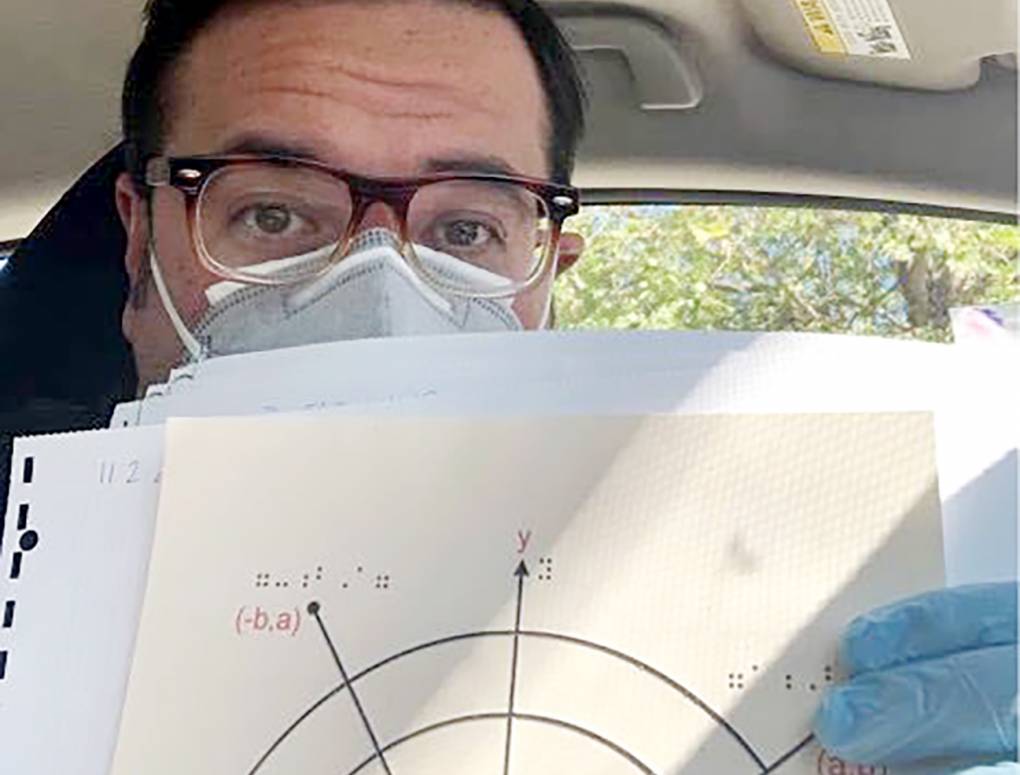
"caption": "Assistive technology specialist Neal Mckenzie prints school assignments with a braille printing machine and delivers them to visually impaired students across Sonoma County.",
"description": null,
"title": "Mckenzie_Mask",
"credit": "Courtesy of Neal Mckenzie",
"status": "inherit",
"isLoading": false,
"fetchFailed": false
}
},
"audioPlayerReducer": {
"postId": "stream_live",
"isPaused": true,
"isPlaying": false,
"pfsActive": false,
"pledgeModalIsOpen": true,
"playerDrawerIsOpen": false,
"liveAudioPlayStartedAt": 0,
"liveAudioPlayContext": ""
},
"authorsReducer": {
"byline_news_11820721": {
"type": "authors",
"id": "byline_news_11820721",
"meta": {
"override": true
},
"slug": "byline_news_11820721",
"name": "Holly McDede",
"isLoading": false
},
"byline_news_11820576": {
"type": "authors",
"id": "byline_news_11820576",
"meta": {
"override": true
},
"slug": "byline_news_11820576",
"name": "Christopher Weber and Daisy Nguyen",
"isLoading": false
},
"byline_news_11820563": {
"type": "authors",
"id": "byline_news_11820563",
"meta": {
"override": true
},
"slug": "byline_news_11820563",
"name": "the Associated Press",
"isLoading": false
},
"byline_news_11820540": {
"type": "authors",
"id": "byline_news_11820540",
"meta": {
"override": true
},
"slug": "byline_news_11820540",
"name": "Allison Aubrey, Carmel Wroth, Laurel Wamsley,\u003cbr>NPR",
"isLoading": false
},
"byline_news_11820517": {
"type": "authors",
"id": "byline_news_11820517",
"meta": {
"override": true
},
"slug": "byline_news_11820517",
"name": "Colin Dwyer",
"isLoading": false
},
"jmcevoy": {
"type": "authors",
"id": "231",
"meta": {
"index": "authors_1716337520",
"id": "231",
"found": true
},
"name": "Julia McEvoy",
"firstName": "Julia",
"lastName": "McEvoy",
"slug": "jmcevoy",
"email": "jmcevoy@KQED.org",
"display_author_email": true,
"staff_mastheads": [
"news"
],
"title": "KQED Senior Editor",
"bio": "Julia McEvoy is KQED's Senior Editor, Education Equity.\r\n\r\nJulia heads KQED’s education coverage examining inequities students face in Bay Area and California schools, and reports on what it will take to educate the next generation.\r\n\r\nJulia's editorial work has received a Peabody Award, a Casey Medal for Coverage of Children and Families, several Edward R. Murrow awards, as well as awards from the Public Radio News Directors Inc. and the Society for Professional Journalists.",
"avatar": "https://secure.gravatar.com/avatar/aec3ce21abe02b302fd33638abd56a22?s=600&d=blank&r=g",
"twitter": "juliamcevoy1",
"facebook": null,
"instagram": null,
"linkedin": null,
"sites": [
{
"site": "news",
"roles": []
},
{
"site": "stateofhealth",
"roles": [
"author"
]
}
],
"headData": {
"title": "Julia McEvoy | KQED",
"description": "KQED Senior Editor",
"ogImgSrc": "https://secure.gravatar.com/avatar/aec3ce21abe02b302fd33638abd56a22?s=600&d=blank&r=g",
"twImgSrc": "https://secure.gravatar.com/avatar/aec3ce21abe02b302fd33638abd56a22?s=600&d=blank&r=g"
},
"isLoading": false,
"link": "/author/jmcevoy"
},
"jsmall": {
"type": "authors",
"id": "6625",
"meta": {
"index": "authors_1716337520",
"id": "6625",
"found": true
},
"name": "Julie Small",
"firstName": "Julie",
"lastName": "Small",
"slug": "jsmall",
"email": "jsmall@kqed.org",
"display_author_email": true,
"staff_mastheads": [
"news"
],
"title": "KQED Contributor",
"bio": "Julie Small reports on criminal justice and immigration.\r\n\r\nShe was part of a team at KQED awarded a regional 2019 Edward R. Murrow award for continuing coverage of the Trump Administration's family separation policy.\r\n\r\nThe Society for Professional Journalists recognized Julie's 2018 \u003ca href=\"https://www.kqed.org/news/11636262/the-officer-tased-him-31-times-the-sheriff-called-his-death-an-accident\">reporting\u003c/a> on the San Joaquin County Sheriff's \u003ca href=\"https://www.kqed.org/news/11634689/autopsy-doctors-sheriff-overrode-death-findings-to-protect-law-enforcement\">interference\u003c/a> in death investigations with an Excellence in Journalism Award for Ongoing Coverage.\r\n\r\nJulie's\u003ca href=\"https://www.kqed.org/news/11039666/two-mentally-ill-inmates-died-one-month-in-santa-clara\"> reporting\u003c/a> with Lisa Pickoff-White on the treatment of mentally ill offenders in California jails earned a 2017 regional Edward R. Murrow Award for news reporting and an investigative reporting award from the SPJ of Northern California.\r\n\r\nBefore joining KQED, Julie covered government and politics in Sacramento for Southern California Public Radio (SCPR). Her 2010 \u003ca href=\"https://www.scpr.org/specials/prisonmedical/\">series\u003c/a> on lapses in California’s prison medical care also won a regional Edward R. Murrow Award for investigative reporting and a Golden Mic Award from the RTNDA of Southern California.\r\n\r\nJulie began her career in journalism in 2000 as the deputy foreign editor for public radio's \u003cem>Marketplace, \u003c/em>while earning her master's degree in journalism from USC’s Annenberg School of Communication.",
"avatar": "https://secure.gravatar.com/avatar/4baedf201468df97be97c2a9dd7585d0?s=600&d=blank&r=g",
"twitter": "@SmallRadio2",
"facebook": null,
"instagram": null,
"linkedin": null,
"sites": [
{
"site": "news",
"roles": [
"editor"
]
},
{
"site": "stateofhealth",
"roles": [
"author"
]
},
{
"site": "science",
"roles": [
"author"
]
}
],
"headData": {
"title": "Julie Small | KQED",
"description": "KQED Contributor",
"ogImgSrc": "https://secure.gravatar.com/avatar/4baedf201468df97be97c2a9dd7585d0?s=600&d=blank&r=g",
"twImgSrc": "https://secure.gravatar.com/avatar/4baedf201468df97be97c2a9dd7585d0?s=600&d=blank&r=g"
},
"isLoading": false,
"link": "/author/jsmall"
},
"dkatayama": {
"type": "authors",
"id": "7240",
"meta": {
"index": "authors_1716337520",
"id": "7240",
"found": true
},
"name": "Devin Katayama",
"firstName": "Devin",
"lastName": "Katayama",
"slug": "dkatayama",
"email": "dkatayama@kqed.org",
"display_author_email": true,
"staff_mastheads": [
"news"
],
"title": "Editor of Talent and Development",
"bio": "Devin Katayama is former Editor of Talent and Development for KQED. He supported our internship program and on-call staff by looking for equitable opportunities to improve the newsroom.\r\n\r\nHe previously hosted The Bay and American Suburb podcasts from KQED News. Prior to returning to the Bay Area in 2015, Devin was the education reporter for WFPL in Louisville and worked as a producer with radio stations in Chicago and Portland, OR. His work has appeared on NPR’s \u003cem>Morning Edition, All Things Considered, The Takeaway\u003c/em> and \u003cem>Here and Now.\u003c/em>\r\n\r\nDevin earned his MA in Journalism from Columbia College Chicago, where he was a Follett Fellow and the recipient of the 2011 Studs Terkel Community Media Workshop Scholarship for his story on Chicago's homeless youth. He won WBUR's 2014 Daniel Schorr award and a regional RTNDA Edward R. Murrow Award for his documentary \"At Risk\" that looked at issues facing some of Louisville's students. Devin has also received numerous local awards from the Associated Press and the Society of Professional Journalists.",
"avatar": "https://secure.gravatar.com/avatar/d0d2978a31002fb2de107921a8e18405?s=600&d=blank&r=g",
"twitter": "RadioDevin",
"facebook": null,
"instagram": null,
"linkedin": null,
"sites": [
{
"site": "arts",
"roles": []
},
{
"site": "news",
"roles": [
"author"
]
},
{
"site": "stateofhealth",
"roles": [
"author"
]
},
{
"site": "forum",
"roles": [
"editor"
]
},
{
"site": "perspectives",
"roles": [
"editor"
]
}
],
"headData": {
"title": "Devin Katayama | KQED",
"description": "Editor of Talent and Development",
"ogImgSrc": "https://secure.gravatar.com/avatar/d0d2978a31002fb2de107921a8e18405?s=600&d=blank&r=g",
"twImgSrc": "https://secure.gravatar.com/avatar/d0d2978a31002fb2de107921a8e18405?s=600&d=blank&r=g"
},
"isLoading": false,
"link": "/author/dkatayama"
},
"cveltman": {
"type": "authors",
"id": "8608",
"meta": {
"index": "authors_1716337520",
"id": "8608",
"found": true
},
"name": "Chloe Veltman",
"firstName": "Chloe",
"lastName": "Veltman",
"slug": "cveltman",
"email": "cveltman@kqed.org",
"display_author_email": true,
"staff_mastheads": [],
"title": "Arts and Culture Reporter",
"bio": "Chloe Veltman is a former arts and culture reporter for KQED. Prior to joining the organization, she launched and led the arts bureau at Colorado Public Radio, served as the Bay Area's culture columnist for the New York Times, and was the founder, host and executive producer of VoiceBox, a national award-winning weekly podcast/radio show and live events series all about the human voice. Chloe is the recipient of numerous prizes, grants and fellowships including a Webby Award for her work on interactive storytelling, both the John S Knight Journalism Fellowship and Humanities Center Fellowship at Stanford University, the Sundance Arts Writing Fellowship and a Library of Congress Research Fellowship. She is the author of the book \"On Acting\" and has appeared as a guest lecturer at Yale University and the San Francisco Conservatory of Music among other institutions. She holds a BA in english literature from King's College, Cambridge, and a Masters in Dramaturgy from the Central School of Speech and Drama/Harvard Institute for Advanced Theater Training.\r\n\u003ca href=\"https://www.chloeveltman.com\">www.chloeveltman.com\u003c/a>",
"avatar": "https://secure.gravatar.com/avatar/55403394b00a1ddab683952c2eb2cf85?s=600&d=blank&r=g",
"twitter": "chloeveltman",
"facebook": null,
"instagram": null,
"linkedin": null,
"sites": [
{
"site": "arts",
"roles": []
},
{
"site": "news",
"roles": [
"author"
]
},
{
"site": "pop",
"roles": [
"editor"
]
},
{
"site": "science",
"roles": []
}
],
"headData": {
"title": "Chloe Veltman | KQED",
"description": "Arts and Culture Reporter",
"ogImgSrc": "https://secure.gravatar.com/avatar/55403394b00a1ddab683952c2eb2cf85?s=600&d=blank&r=g",
"twImgSrc": "https://secure.gravatar.com/avatar/55403394b00a1ddab683952c2eb2cf85?s=600&d=blank&r=g"
},
"isLoading": false,
"link": "/author/cveltman"
},
"ecruzguevarra": {
"type": "authors",
"id": "8654",
"meta": {
"index": "authors_1716337520",
"id": "8654",
"found": true
},
"name": "Ericka Cruz Guevarra",
"firstName": "Ericka",
"lastName": "Cruz Guevarra",
"slug": "ecruzguevarra",
"email": "ecruzguevarra@kqed.org",
"display_author_email": true,
"staff_mastheads": [
"news"
],
"title": "Producer, The Bay Podcast",
"bio": "Ericka Cruz Guevarra is host of \u003ca href=\"https://www.kqed.org/podcasts/thebay\">\u003cem>The Bay\u003c/em>\u003c/a> podcast at KQED. Before host, she was the show’s producer. Her work in that capacity includes a three-part reported series on policing in Vallejo, which won a 2020 excellence in journalism award from the Society of Professional Journalists. Ericka has worked as a breaking news reporter at Oregon Public Broadcasting, helped produce the Code Switch podcast, and was KQED’s inaugural Raul Ramirez Diversity Fund intern. She’s also an alumna of NPR’s Next Generation Radio program. Send her an email if you have strong feelings about whether Fairfield and Suisun City are the Bay. Ericka is represented by SAG-AFTRA.",
"avatar": "https://secure.gravatar.com/avatar/accefc1de4bafc7e234b69bcb9b6f6536c130fd84709bc3069ef11a78787e1bb?s=600&d=blank&r=g",
"twitter": "NotoriousECG",
"bluesky": null,
"facebook": null,
"instagram": null,
"linkedin": null,
"sites": [
{
"site": "arts",
"roles": [
"subscriber"
]
},
{
"site": "news",
"roles": [
"editor",
"manage_categories"
]
},
{
"site": "futureofyou",
"roles": [
"subscriber"
]
},
{
"site": "stateofhealth",
"roles": [
"subscriber"
]
},
{
"site": "science",
"roles": [
"editor"
]
},
{
"site": "forum",
"roles": [
"subscriber"
]
}
],
"headData": {
"title": "Ericka Cruz Guevarra | KQED",
"description": "Producer, The Bay Podcast",
"ogImgSrc": "https://secure.gravatar.com/avatar/accefc1de4bafc7e234b69bcb9b6f6536c130fd84709bc3069ef11a78787e1bb?s=600&d=blank&r=g",
"twImgSrc": "https://secure.gravatar.com/avatar/accefc1de4bafc7e234b69bcb9b6f6536c130fd84709bc3069ef11a78787e1bb?s=600&d=blank&r=g"
},
"isLoading": false,
"link": "/author/ecruzguevarra"
},
"fjhabvala": {
"type": "authors",
"id": "8659",
"meta": {
"index": "authors_1716337520",
"id": "8659",
"found": true
},
"name": "Farida Jhabvala Romero",
"firstName": "Farida",
"lastName": "Jhabvala Romero",
"slug": "fjhabvala",
"email": "fjhabvala@kqed.org",
"display_author_email": true,
"staff_mastheads": [
"news"
],
"title": "KQED Contributor",
"bio": "Farida Jhabvala Romero is a Labor Correspondent for KQED. She previously covered immigration. Farida was \u003ca href=\"https://www.ccnma.org/2022-most-influential-latina-journalists\">named\u003c/a> one of the 10 Most Influential Latina Journalists in California in 2022 by the California Chicano News Media Association. Her work has won awards from the Society of Professional Journalists (Northern California), as well as a national and regional Edward M. Murrow Award for the collaborative reporting projects “Dangerous Air” and “Graying California.” Before joining KQED, Farida worked as a producer at Radio Bilingüe, a national public radio network. Farida earned her master’s degree in journalism from Stanford University.",
"avatar": "https://secure.gravatar.com/avatar/f9f022d4e2609741874222a1e9d41f48fea74011aa7c615eef91d9a50c944ebe?s=600&d=blank&r=g",
"twitter": "FaridaJhabvala",
"bluesky": null,
"facebook": null,
"instagram": null,
"linkedin": "https://www.linkedin.com/in/faridajhabvala/",
"sites": [
{
"site": "news",
"roles": [
"editor"
]
},
{
"site": "stateofhealth",
"roles": [
"author"
]
},
{
"site": "liveblog",
"roles": [
"author"
]
}
],
"headData": {
"title": "Farida Jhabvala Romero | KQED",
"description": "KQED Contributor",
"ogImgSrc": "https://secure.gravatar.com/avatar/f9f022d4e2609741874222a1e9d41f48fea74011aa7c615eef91d9a50c944ebe?s=600&d=blank&r=g",
"twImgSrc": "https://secure.gravatar.com/avatar/f9f022d4e2609741874222a1e9d41f48fea74011aa7c615eef91d9a50c944ebe?s=600&d=blank&r=g"
},
"isLoading": false,
"link": "/author/fjhabvala"
},
"mfederis": {
"type": "authors",
"id": "11509",
"meta": {
"index": "authors_1716337520",
"id": "11509",
"found": true
},
"name": "Marnette Federis",
"firstName": "Marnette",
"lastName": "Federis",
"slug": "mfederis",
"email": "mfederis@kqed.org",
"display_author_email": false,
"staff_mastheads": [],
"title": "KQED Contributor",
"bio": null,
"avatar": "https://secure.gravatar.com/avatar/4e22db56276fd54eaeb4ec94c12662c6c695a321a263331af03448665369ad7f?s=600&d=mm&r=g",
"twitter": null,
"bluesky": null,
"facebook": null,
"instagram": null,
"linkedin": null,
"sites": [
{
"site": "arts",
"roles": [
"editor"
]
},
{
"site": "news",
"roles": [
"editor"
]
},
{
"site": "mindshift",
"roles": [
"editor"
]
},
{
"site": "science",
"roles": [
"editor"
]
},
{
"site": "forum",
"roles": [
"editor"
]
},
{
"site": "podcasts",
"roles": [
"editor"
]
},
{
"site": "elections",
"roles": [
"editor"
]
}
],
"headData": {
"title": "Marnette Federis | KQED",
"description": "KQED Contributor",
"ogImgSrc": "https://secure.gravatar.com/avatar/4e22db56276fd54eaeb4ec94c12662c6c695a321a263331af03448665369ad7f?s=600&d=mm&r=g",
"twImgSrc": "https://secure.gravatar.com/avatar/4e22db56276fd54eaeb4ec94c12662c6c695a321a263331af03448665369ad7f?s=600&d=mm&r=g"
},
"isLoading": false,
"link": "/author/mfederis"
},
"amontecillo": {
"type": "authors",
"id": "11649",
"meta": {
"index": "authors_1716337520",
"id": "11649",
"found": true
},
"name": "Alan Montecillo",
"firstName": "Alan",
"lastName": "Montecillo",
"slug": "amontecillo",
"email": "amontecillo@kqed.org",
"display_author_email": false,
"staff_mastheads": [
"news"
],
"title": "KQED Contributor",
"bio": "Alan Montecillo is the senior editor of \u003cem>\u003ca href=\"http://kqed.org/thebay\">The Bay\u003c/a>, \u003c/em> KQED's local news podcast. Before moving to the Bay Area, he worked as a senior talk show producer for WILL in Champaign-Urbana, Illinois and at Oregon Public Broadcasting in Portland, Oregon. He has won journalism awards from the Society of Professional Journalists Northern California, the Public Media Journalists Association, The Signal Awards, and has also received a regional Edward R. Murrow award. Alan is a Filipino American from Hong Kong and a graduate of Reed College.",
"avatar": "https://secure.gravatar.com/avatar/268f53a2066899ea9efdd8a5900218b17c822d9862cbc9326cccec53ef41d349?s=600&d=blank&r=g",
"twitter": "alanmontecillo",
"bluesky": null,
"facebook": null,
"instagram": null,
"linkedin": null,
"sites": [
{
"site": "",
"roles": [
"editor"
]
},
{
"site": "news",
"roles": [
"editor",
"manage_categories"
]
}
],
"headData": {
"title": "Alan Montecillo | KQED",
"description": "KQED Contributor",
"ogImgSrc": "https://secure.gravatar.com/avatar/268f53a2066899ea9efdd8a5900218b17c822d9862cbc9326cccec53ef41d349?s=600&d=blank&r=g",
"twImgSrc": "https://secure.gravatar.com/avatar/268f53a2066899ea9efdd8a5900218b17c822d9862cbc9326cccec53ef41d349?s=600&d=blank&r=g"
},
"isLoading": false,
"link": "/author/amontecillo"
},
"msolomon": {
"type": "authors",
"id": "11651",
"meta": {
"index": "authors_1716337520",
"id": "11651",
"found": true
},
"name": "Molly Solomon",
"firstName": "Molly",
"lastName": "Solomon",
"slug": "msolomon",
"email": "msolomon@KQED.org",
"display_author_email": false,
"staff_mastheads": [
"news"
],
"title": "Senior Editor",
"bio": "Molly Solomon is the senior editor of KQED's California Politics and Government Desk. Previously, she was the station's editor-at-large, with a focus on editing early childhood education, politics, and criminal justice. Before that, she managed and edited statewide election coverage for The California Newsroom, a collaboration of local public radio stations, CalMatters and NPR. Molly joined KQED in 2019 to launch the station’s housing affordability desk, where she reported on homelessness, evictions and is the co-host of KQED’s housing podcast, SOLD OUT: Rethinking Housing in America. Before that, she was the Southwest Washington Bureau Chief for Oregon Public Broadcasting and a reporter at Hawaii Public Radio. Her stories have aired on NPR’s \u003cem>Morning Edition\u003c/em>, \u003cem>All Things Considered\u003c/em>, \u003cem>Here & Now\u003c/em>, \u003cem>Science Friday\u003c/em> and \u003cem>Marketplace\u003c/em>. Molly's award-winning reporting has been honored by the Best of the West, Edward R. Murrow awards, Society of Professional Journalists, National Headliner Awards, and the Asian American Journalists Association. Born and raised in Berkeley, Molly is a big fan of burritos and her scruffy terrier, Ollie.",
"avatar": "https://secure.gravatar.com/avatar/9ad9794616923d81c9a79897161545bd?s=600&d=blank&r=g",
"twitter": "solomonout",
"facebook": null,
"instagram": null,
"linkedin": null,
"sites": [
{
"site": "news",
"roles": [
"editor"
]
},
{
"site": "science",
"roles": [
"editor"
]
}
],
"headData": {
"title": "Molly Solomon | KQED",
"description": "Senior Editor",
"ogImgSrc": "https://secure.gravatar.com/avatar/9ad9794616923d81c9a79897161545bd?s=600&d=blank&r=g",
"twImgSrc": "https://secure.gravatar.com/avatar/9ad9794616923d81c9a79897161545bd?s=600&d=blank&r=g"
},
"isLoading": false,
"link": "/author/msolomon"
},
"jrodriguez": {
"type": "authors",
"id": "11690",
"meta": {
"index": "authors_1716337520",
"id": "11690",
"found": true
},
"name": "Joe Fitzgerald Rodriguez",
"firstName": "Joe",
"lastName": "Fitzgerald Rodriguez",
"slug": "jrodriguez",
"email": "jrodriguez@kqed.org",
"display_author_email": true,
"staff_mastheads": [
"news"
],
"title": "Reporter and Producer",
"bio": "Joe Fitzgerald Rodriguez is a reporter and digital producer for KQED covering politics. Joe most recently wrote for the \u003cem>San Francisco Examiner\u003c/em> as a political columnist covering The City. He was raised in San Francisco and has spent his reporting career in his beloved, foggy, city by the bay. Joe was 12-years-old when he conducted his first interview in journalism, grilling former San Francisco Mayor Willie Brown for the Marina Middle School newspaper, \u003cem>The Penguin Press, \u003c/em>and he continues to report on the San Francisco Bay Area to this day.",
"avatar": "https://secure.gravatar.com/avatar/2247beb0564c1e9c62228d5649d2edac?s=600&d=blank&r=g",
"twitter": "FitztheReporter",
"facebook": null,
"instagram": "https://www.instagram.com/fitzthereporter/",
"linkedin": null,
"sites": [
{
"site": "",
"roles": [
"editor"
]
},
{
"site": "arts",
"roles": [
"editor"
]
},
{
"site": "news",
"roles": [
"editor"
]
},
{
"site": "science",
"roles": [
"editor"
]
},
{
"site": "elections",
"roles": [
"editor"
]
},
{
"site": "liveblog",
"roles": [
"editor"
]
}
],
"headData": {
"title": "Joe Fitzgerald Rodriguez | KQED",
"description": "Reporter and Producer",
"ogImgSrc": "https://secure.gravatar.com/avatar/2247beb0564c1e9c62228d5649d2edac?s=600&d=blank&r=g",
"twImgSrc": "https://secure.gravatar.com/avatar/2247beb0564c1e9c62228d5649d2edac?s=600&d=blank&r=g"
},
"isLoading": false,
"link": "/author/jrodriguez"
}
},
"pagesReducer": {
"news_tag_covid-19": {
"type": "terms",
"id": "news_27504",
"meta": {
"index": "terms_1716263798",
"site": "news",
"id": "27504",
"score": 8.558435
},
"featImg": null,
"name": "covid-19",
"description": null,
"taxonomy": "tag",
"headData": {
"twImgId": null,
"twTitle": null,
"ogTitle": null,
"ogImgId": null,
"twDescription": null,
"description": null,
"title": "covid-19 Archives | KQED News",
"ogDescription": null
},
"ttid": 27521,
"slug": "covid-19",
"isLoading": false,
"title": "covid-19",
"pageMeta": {
"site": "news",
"WpPageTemplate": "page-topic-editorial",
"currentPage": 61
},
"blocks": [
{
"blockName": "kqed/post-list",
"attrs": {
"layout": "cardArticle2",
"query": "posts/news?tag=covid-19",
"seeMore": false,
"paginated": true,
"page": 61
}
},
{
"blockName": "kqed/ad"
}
]
}
},
"pfsSessionReducer": {},
"postsReducer": {
"stream_live": {
"type": "live",
"id": "stream_live",
"audioUrl": "https://streams.kqed.org/kqedradio",
"title": "Live Stream",
"excerpt": "Live Stream information currently unavailable.",
"link": "/radio",
"featImg": "",
"label": {
"name": "KQED Live",
"link": "/"
}
},
"stream_kqedNewscast": {
"type": "posts",
"id": "stream_kqedNewscast",
"audioUrl": "https://www.kqed.org/.stream/anon/radio/RDnews/newscast.mp3?_=1",
"title": "KQED Newscast",
"featImg": "",
"label": {
"name": "88.5 FM",
"link": "/"
}
},
"news_11820967": {
"type": "posts",
"id": "news_11820967",
"meta": {
"index": "posts_1716263798",
"site": "news",
"id": "11820967",
"score": null,
"sort": [
1590601911000
]
},
"guestAuthors": [],
"slug": "deaths-of-homeless-people-spike-in-san-francisco",
"title": "Deaths of Homeless People Spike in San Francisco",
"publishDate": 1590601911,
"format": "audio",
"headTitle": "Deaths of Homeless People Spike in San Francisco | KQED",
"labelTerm": {
"site": "news"
},
"content": "\u003cp>San Francisco public health officials are reporting an alarming increase in the number of homeless people who died this spring but said the increase is not directly caused by COVID-19.\u003c/p>\n\u003cp>Instead, they said the deaths are more likely due to overdoses from fentanyl and indirect impacts from the coronavirus pandemic.\u003c/p>\n\u003cp>The San Francisco Department of Public Health reported Tuesday that 48 people experiencing homelessness died between March 30 and May 24. That’s up from 14 during the same time period in 2019.\u003c/p>\n\u003cp>In a May 26 statement, officials noted that while at least two people tested positive for COVID-19 near the time of their death, the virus was not the likely reason, and it will take several months to confirm the actual cause.\u003c/p>\n\u003cp>Dr. Barry Zevin, medical director of street medicine and shelter health for the Department of Public Health, told KQED that it’s more likely the deaths reflect a trend of increasing fatal drug overdoses.\u003c/p>\n\u003cp>[ad fullwidth]\u003c/p>\n\u003cp>“We’ve had fentanyl in San Francisco for the last year or two and month by month increasing numbers of overdose related to fentanyl in the drug supply,” Zevin said. “It’s not surprising. Every city in the United States that has seen increases in fentanyl has seen increases in deaths.”\u003c/p>\n\u003cp>Zevin speculated that the aggressive actions San Francisco took to fight the spread of the coronavirus among homeless people may have indirectly contributed to the increase in deaths by disrupting people’s routines and services they receive.\u003c/p>\n\u003cfigure id=\"attachment_11801547\" class=\"wp-caption aligncenter\" style=\"max-width: 1920px\">\u003cimg loading=\"lazy\" decoding=\"async\" class=\"size-full wp-image-11801547\" src=\"https://ww2.kqed.org/app/uploads/sites/10/2020/02/RS41022_036_KQED_EmbarcaderoNavigationCenter_01302020_7967-qut.jpg\" alt=\"\" width=\"1920\" height=\"1278\" srcset=\"https://cdn.kqed.org/wp-content/uploads/sites/10/2020/02/RS41022_036_KQED_EmbarcaderoNavigationCenter_01302020_7967-qut.jpg 1920w, https://cdn.kqed.org/wp-content/uploads/sites/10/2020/02/RS41022_036_KQED_EmbarcaderoNavigationCenter_01302020_7967-qut-160x107.jpg 160w, https://cdn.kqed.org/wp-content/uploads/sites/10/2020/02/RS41022_036_KQED_EmbarcaderoNavigationCenter_01302020_7967-qut-800x533.jpg 800w, https://cdn.kqed.org/wp-content/uploads/sites/10/2020/02/RS41022_036_KQED_EmbarcaderoNavigationCenter_01302020_7967-qut-1020x679.jpg 1020w\" sizes=\"auto, (max-width: 1920px) 100vw, 1920px\">\u003cfigcaption class=\"wp-caption-text\">The covered entrance to the Embarcadero navigation center. All guests have to be brought in by the Homeless Outreach Team — walk-ins aren’t allowed. \u003ccite>(Beth LaBerge/KQED)\u003c/cite>\u003c/figcaption>\u003c/figure>\n\u003cp>To meet social distancing measures, San Francisco shelters and service providers were forced to drastically reduce capacity. Many shelters have also stopped accepting new clients. The city’s largest shelter, MSC-South, was evacuated last month after more than 100 residents and staff tested positive for COVID-19.\u003c/p>\n\u003cp>“We’re all operating at a very diminished capacity,” said Kyriell Noon, chief impact officer at the Glide Foundation, a homeless and low-income service provider in the Tenderloin neighborhood.\u003c/p>\n\u003cp>Noon said the pandemic has only highlighted the risks of living on the streets. And with shelters and organizations paring down services, he said, “The data is sobering, but not surprising.”\u003c/p>\n\u003cp>San Francisco health officials think the disruption may have resulted in fewer people seeking medical care and more dying out of sight of others, who might have called for help.\u003c/p>\n\u003cp>“It just confirms our worst fears,” said Jennifer Friedenbach, executive director of the Coalition on Homelessness.\u003c/p>\n\u003cp>[aside label=\"More coronavirus coverage\" tag=\"coronavirus\"]\u003c/p>\n\u003cp>With coffee shops, gyms and libraries closed due to the city’s shelter-in-place measures, Friedenbach said homeless people have been cut off from resources they depend on for survival. Just having a place to charge your phone safely could be a lifesaver during a medical emergency.\u003c/p>\n\u003cp>Friedenbach believes the numbers of homeless deaths are still an undercount. She wants the city to provide more COVID-19 testing to unsheltered people and act faster to house them in available hotel rooms.\u003c/p>\n\u003cp>“The fact that we have thousands of hotel rooms empty and people are dying on the streets is a travesty,” Friedenbach said.\u003c/p>\n\u003cp>So far, San Francisco has moved more than 1,200 homeless people into hotel rooms during the pandemic, but only people who have tested positive, are older or have underlying health conditions.\u003c/p>\n\u003cp>Meanwhile, more tent encampments have sprung up, especially in the city’s Tenderloin neighborhood, which saw a 285% increase during the pandemic. Earlier this month, a group of residents and businesses, including UC Hastings College of the Law, filed a federal lawsuit demanding the city address worsening conditions in the neighborhood. Soon after, the city unveiled a plan that included moving people to sanctioned camping sites.\u003c/p>\n\u003cp>Public health data showed most of the deaths this spring were of unsheltered people living on the streets. Five occurred in shelter-in-place hotels, and at least three of those were likely from drug overdoses. A higher concentration of deaths were centered in the Tenderloin.\u003c/p>\n\u003cp>“It’s tragic,” said San Francisco Supervisor Matt Haney, whose district includes the Tenderloin. “I believe many of these deaths were preventable. This pandemic creates dangerous, even deadly, conditions for people who cannot shelter in place.”\u003c/p>\n\u003cp>Because of the outbreak at MSC-South, two of the people who died recently were tested for COVID-19 and were found to be positive. But officials say the two seem to have died from other causes.\u003c/p>\n\u003cp>\u003c/p>\n\u003cp>“It’s certainly not what I was expecting,” Zevin said. “I was expecting a tidal wave. I had every reason to think that we would be mourning many, many people experiencing homelessness who died of COVID-19, but we’ve had very few get sick and vanishingly few, if any, who died.”\u003c/p>\n\n",
"blocks": [],
"excerpt": "Deaths of homeless people in San Francisco this spring jumped to 48 from 14 deaths last year during the same period.\r\n",
"status": "publish",
"parent": 0,
"modified": 1740521066,
"stats": {
"hasAudio": false,
"hasVideo": false,
"hasChartOrMap": false,
"iframeSrcs": [],
"hasGoogleForm": false,
"hasGallery": false,
"hasHearkenModule": false,
"hasPolis": false,
"paragraphCount": 24,
"wordCount": 847
},
"headData": {
"title": "Deaths of Homeless People Spike in San Francisco | KQED",
"description": "Deaths of homeless people in San Francisco this spring jumped to 48 from 14 deaths last year during the same period.\r\n",
"ogTitle": "",
"ogDescription": "",
"ogImgId": "",
"twTitle": "",
"twDescription": "",
"twImgId": "",
"schema": {
"@context": "https://schema.org",
"@type": "NewsArticle",
"headline": "Deaths of Homeless People Spike in San Francisco",
"datePublished": "2020-05-27T10:51:51-07:00",
"dateModified": "2025-02-25T14:04:26-08:00",
"image": "https://cdn.kqed.org/wp-content/uploads/2020/02/KQED-OG-Image@1x.png",
"isAccessibleForFree": "True",
"publisher": {
"@type": "NewsMediaOrganization",
"@id": "https://www.kqed.org/#organization",
"name": "KQED",
"logo": "https://cdn.kqed.org/wp-content/uploads/2020/02/KQED-OG-Image@1x.png",
"url": "https://www.kqed.org",
"sameAs": [
"https://www.facebook.com/KQED",
"https://twitter.com/KQED",
"https://www.instagram.com/kqed/",
"https://www.tiktok.com/@kqedofficial",
"https://www.linkedin.com/company/kqed",
"https://www.youtube.com/channel/UCeC0IOo7i1P_61zVUWbJ4nw"
]
}
}
},
"audioUrl": "https://www.kqed.org/.stream/anon/radio/RDnews/2020/05/SmallHomelessDeaths2.mp3",
"sticky": false,
"path": "/news/11820967/deaths-of-homeless-people-spike-in-san-francisco",
"audioTrackLength": null,
"parsedContent": [
{
"type": "contentString",
"content": "\u003cdiv class=\"post-body\">\u003cp>\u003cp>San Francisco public health officials are reporting an alarming increase in the number of homeless people who died this spring but said the increase is not directly caused by COVID-19.\u003c/p>\n\u003cp>Instead, they said the deaths are more likely due to overdoses from fentanyl and indirect impacts from the coronavirus pandemic.\u003c/p>\n\u003cp>The San Francisco Department of Public Health reported Tuesday that 48 people experiencing homelessness died between March 30 and May 24. That’s up from 14 during the same time period in 2019.\u003c/p>\n\u003cp>In a May 26 statement, officials noted that while at least two people tested positive for COVID-19 near the time of their death, the virus was not the likely reason, and it will take several months to confirm the actual cause.\u003c/p>\n\u003cp>Dr. Barry Zevin, medical director of street medicine and shelter health for the Department of Public Health, told KQED that it’s more likely the deaths reflect a trend of increasing fatal drug overdoses.\u003c/p>\n\u003cp>\u003c/p>\u003c/div>",
"attributes": {
"named": {},
"numeric": []
}
},
{
"type": "component",
"content": "",
"name": "ad",
"attributes": {
"named": {
"label": "fullwidth"
},
"numeric": [
"fullwidth"
]
}
},
{
"type": "contentString",
"content": "\u003cdiv class=\"post-body\">\u003cp>\u003c/p>\n\u003cp>“We’ve had fentanyl in San Francisco for the last year or two and month by month increasing numbers of overdose related to fentanyl in the drug supply,” Zevin said. “It’s not surprising. Every city in the United States that has seen increases in fentanyl has seen increases in deaths.”\u003c/p>\n\u003cp>Zevin speculated that the aggressive actions San Francisco took to fight the spread of the coronavirus among homeless people may have indirectly contributed to the increase in deaths by disrupting people’s routines and services they receive.\u003c/p>\n\u003cfigure id=\"attachment_11801547\" class=\"wp-caption aligncenter\" style=\"max-width: 1920px\">\u003cimg loading=\"lazy\" decoding=\"async\" class=\"size-full wp-image-11801547\" src=\"https://ww2.kqed.org/app/uploads/sites/10/2020/02/RS41022_036_KQED_EmbarcaderoNavigationCenter_01302020_7967-qut.jpg\" alt=\"\" width=\"1920\" height=\"1278\" srcset=\"https://cdn.kqed.org/wp-content/uploads/sites/10/2020/02/RS41022_036_KQED_EmbarcaderoNavigationCenter_01302020_7967-qut.jpg 1920w, https://cdn.kqed.org/wp-content/uploads/sites/10/2020/02/RS41022_036_KQED_EmbarcaderoNavigationCenter_01302020_7967-qut-160x107.jpg 160w, https://cdn.kqed.org/wp-content/uploads/sites/10/2020/02/RS41022_036_KQED_EmbarcaderoNavigationCenter_01302020_7967-qut-800x533.jpg 800w, https://cdn.kqed.org/wp-content/uploads/sites/10/2020/02/RS41022_036_KQED_EmbarcaderoNavigationCenter_01302020_7967-qut-1020x679.jpg 1020w\" sizes=\"auto, (max-width: 1920px) 100vw, 1920px\">\u003cfigcaption class=\"wp-caption-text\">The covered entrance to the Embarcadero navigation center. All guests have to be brought in by the Homeless Outreach Team — walk-ins aren’t allowed. \u003ccite>(Beth LaBerge/KQED)\u003c/cite>\u003c/figcaption>\u003c/figure>\n\u003cp>To meet social distancing measures, San Francisco shelters and service providers were forced to drastically reduce capacity. Many shelters have also stopped accepting new clients. The city’s largest shelter, MSC-South, was evacuated last month after more than 100 residents and staff tested positive for COVID-19.\u003c/p>\n\u003cp>“We’re all operating at a very diminished capacity,” said Kyriell Noon, chief impact officer at the Glide Foundation, a homeless and low-income service provider in the Tenderloin neighborhood.\u003c/p>\n\u003cp>Noon said the pandemic has only highlighted the risks of living on the streets. And with shelters and organizations paring down services, he said, “The data is sobering, but not surprising.”\u003c/p>\n\u003cp>San Francisco health officials think the disruption may have resulted in fewer people seeking medical care and more dying out of sight of others, who might have called for help.\u003c/p>\n\u003cp>“It just confirms our worst fears,” said Jennifer Friedenbach, executive director of the Coalition on Homelessness.\u003c/p>\n\u003cp>\u003c/p>\u003c/div>",
"attributes": {
"named": {},
"numeric": []
}
},
{
"type": "component",
"content": "",
"name": "aside",
"attributes": {
"named": {
"label": "More coronavirus coverage ",
"tag": "coronavirus"
},
"numeric": []
}
},
{
"type": "contentString",
"content": "\u003cdiv class=\"post-body\">\u003cp>\u003c/p>\n\u003cp>With coffee shops, gyms and libraries closed due to the city’s shelter-in-place measures, Friedenbach said homeless people have been cut off from resources they depend on for survival. Just having a place to charge your phone safely could be a lifesaver during a medical emergency.\u003c/p>\n\u003cp>Friedenbach believes the numbers of homeless deaths are still an undercount. She wants the city to provide more COVID-19 testing to unsheltered people and act faster to house them in available hotel rooms.\u003c/p>\n\u003cp>“The fact that we have thousands of hotel rooms empty and people are dying on the streets is a travesty,” Friedenbach said.\u003c/p>\n\u003cp>So far, San Francisco has moved more than 1,200 homeless people into hotel rooms during the pandemic, but only people who have tested positive, are older or have underlying health conditions.\u003c/p>\n\u003cp>Meanwhile, more tent encampments have sprung up, especially in the city’s Tenderloin neighborhood, which saw a 285% increase during the pandemic. Earlier this month, a group of residents and businesses, including UC Hastings College of the Law, filed a federal lawsuit demanding the city address worsening conditions in the neighborhood. Soon after, the city unveiled a plan that included moving people to sanctioned camping sites.\u003c/p>\n\u003cp>Public health data showed most of the deaths this spring were of unsheltered people living on the streets. Five occurred in shelter-in-place hotels, and at least three of those were likely from drug overdoses. A higher concentration of deaths were centered in the Tenderloin.\u003c/p>\n\u003cp>“It’s tragic,” said San Francisco Supervisor Matt Haney, whose district includes the Tenderloin. “I believe many of these deaths were preventable. This pandemic creates dangerous, even deadly, conditions for people who cannot shelter in place.”\u003c/p>\n\u003cp>Because of the outbreak at MSC-South, two of the people who died recently were tested for COVID-19 and were found to be positive. But officials say the two seem to have died from other causes.\u003c/p>\n\u003cp>\u003c/p>\n\u003cp>“It’s certainly not what I was expecting,” Zevin said. “I was expecting a tidal wave. I had every reason to think that we would be mourning many, many people experiencing homelessness who died of COVID-19, but we’ve had very few get sick and vanishingly few, if any, who died.”\u003c/p>\n\n\u003c/div>\u003c/p>",
"attributes": {
"named": {},
"numeric": []
}
}
],
"link": "/news/11820967/deaths-of-homeless-people-spike-in-san-francisco",
"authors": [
"6625",
"11651"
],
"categories": [
"news_457",
"news_6266",
"news_8",
"news_356"
],
"tags": [
"news_27350",
"news_27646",
"news_27504",
"news_28005",
"news_27626",
"news_4020",
"news_27660",
"news_38"
],
"featImg": "news_11821000",
"label": "news"
},
"news_11820721": {
"type": "posts",
"id": "news_11820721",
"meta": {
"index": "posts_1716263798",
"site": "news",
"id": "11820721",
"score": null,
"sort": [
1590584453000
]
},
"parent": 0,
"labelTerm": {
"site": "news"
},
"blocks": [],
"publishDate": 1590584453,
"format": "standard",
"disqusTitle": "Ineligible for Federal Relief, California's Legal Cannabis Businesses Hit Hard by Pandemic",
"title": "Ineligible for Federal Relief, California's Legal Cannabis Businesses Hit Hard by Pandemic",
"headTitle": "KQED News",
"content": "\u003cp>Ramon Garcia, who runs an Oakland-based cannabis distribution and delivery company called Padre Mu, grew up surrounded by cannabis. A second-generation cultivator, he’s been in the volatile business for decades.\u003c/p>\n\u003cp>“I've been doing this in my family since I was 6, 7 years old, and only now can really talk about it,” he said, referring to the recently legalized status of his business. “As a cultivator, you have to adapt. You might have mold. You might have bugs. You might have a fire.”\u003c/p>\n\u003cp>Now, the industry has been forced to adapt to a global pandemic. Long-standing federal rules and drained state coffers are dealing a major blow to California’s legal cannabis industry. Who will help, and how the industry will be transformed, is increasingly unclear.\u003c/p>\n\u003cp>\u003cstrong>COVID-19 and Cannabis\u003c/strong>\u003c/p>\n\u003cp>When Gov. Gavin Newsom in March ordered the state to shelter in place, some dispensaries saw sales spike as customers flocked to them to stock up. Legal cannabis producers and distributors were ultimately classified as essential businesses, and Garcia said the industry scrambled to figure out how to stay open under new health and safety guidelines. But given the confusion and uncertainty of the moment, dispensaries began ordering much less product from Garcia's company, and in the last few months, he’s lost a significant amount of income just trying to keep his business open.\u003c/p>\n\u003cp>[ad fullwidth]\u003c/p>\n\u003cp>For cannabis entrepreneurs, recovery is not a level playing field, Garcia said. Cannabis business owners are often shut out of credit and loan opportunities because what they sell is still considered illegal under federal law.\u003c/p>\n\u003cp>“For people of color, for people disproportionately impacted by the war on drugs, we don’t have rich uncles or parents we can go to get loans,” Garcia said. “We funded this out of our own pockets. And if all this fails, there is no recovery for us. All we’re asking for is an equal and fair chance to be able to come out of this.”\u003c/p>\n\u003cfigure id=\"attachment_11820734\" class=\"wp-caption alignnone\" style=\"max-width: 800px\">\u003cimg class=\"size-medium wp-image-11820734\" src=\"https://ww2.kqed.org/app/uploads/sites/10/2020/05/claudia_mendocino_sep_2018_1-800x600.jpg\" alt=\"\" width=\"800\" height=\"600\" srcset=\"https://ww2.kqed.org/app/uploads/sites/10/2020/05/claudia_mendocino_sep_2018_1-800x600.jpg 800w, https://ww2.kqed.org/app/uploads/sites/10/2020/05/claudia_mendocino_sep_2018_1-160x120.jpg 160w, https://ww2.kqed.org/app/uploads/sites/10/2020/05/claudia_mendocino_sep_2018_1-1020x765.jpg 1020w, https://ww2.kqed.org/app/uploads/sites/10/2020/05/claudia_mendocino_sep_2018_1-1920x1440.jpg 1920w, https://ww2.kqed.org/app/uploads/sites/10/2020/05/claudia_mendocino_sep_2018_1-1832x1374.jpg 1832w, https://ww2.kqed.org/app/uploads/sites/10/2020/05/claudia_mendocino_sep_2018_1-1376x1032.jpg 1376w, https://ww2.kqed.org/app/uploads/sites/10/2020/05/claudia_mendocino_sep_2018_1-1044x783.jpg 1044w, https://ww2.kqed.org/app/uploads/sites/10/2020/05/claudia_mendocino_sep_2018_1-632x474.jpg 632w, https://ww2.kqed.org/app/uploads/sites/10/2020/05/claudia_mendocino_sep_2018_1-536x402.jpg 536w, https://ww2.kqed.org/app/uploads/sites/10/2020/05/claudia_mendocino_sep_2018_1.jpg 2000w\" sizes=\"(max-width: 800px) 100vw, 800px\">\u003cfigcaption class=\"wp-caption-text\">Claudia L. Mercado, CEO of Calibueno, a licensed minority- and women-owned cannabis micro-business in Oakland \u003ccite>(Courtesy of Claudia L. Mercado)\u003c/cite>\u003c/figcaption>\u003c/figure>\n\u003cp>Cannabis operators also don’t qualify for any federal relief programs, including small business assistance. Claudia L. Mercado, founder and CEO of cannabis micro-business Calibueno in Oakland, nearly applied for a federal loan before realizing that doing so could be a federal offense.\u003c/p>\n\u003cp>\"I filled my application, and I was ready to submit it. But then I read the fine print that said you might go to prison,” Mercado said. “Black and Latino businesses period, small businesses, are not going to get help. Throw cannabis in the mix and we're probably last in line.”\u003c/p>\n\u003cp>Mercado said she once had a bank account close suddenly after she deposited tens of thousands of dollars to pay taxes, and she’s now cautious not to draw any additional attention to herself.\u003c/p>\n\u003cp>John Delaplane, president of the San Francisco Cannabis Retailers Alliance, said his members reported a 50% decline in sales overnight when San Francisco announced its stay-at-home order in March. And the latest numbers show his members are still experiencing a 30% decline, he added.\u003c/p>\n\u003cp>Cannabis entrepreneurs say federal aid would help, and industry leaders are also pushing for state policy fixes, like expanding access to banks and tax breaks. But that’s a hard sell during an economic crisis.\u003c/p>\n\u003cp>[pullquote align=\"right\" size=\"medium\" citation=\"Ramon Garcia, Oakland-based cannabis distributor\"]'We funded this out of our own pockets. And if all this fails, there is no recovery for us. All we’re asking for is an equal and fair chance to be able to come out of this.'[/pullquote]State taxes went up for the cannabis businesses earlier this year, and advocates say the hefty tax burden has already pushed many more consumers to the thriving black market. Meanwhile, a legislative effort to lower taxes for the industry was recently derailed for the third year in a row.\u003c/p>\n\u003cp>“We’re not operating in a vacuum here. We have a robust, illicit market in California,” said Erich Pearson, CEO of SPARC, which operates dispensaries in the Bay Area and a cannabis farm in Sonoma County.\u003c/p>\n\u003cp>It’s estimated that California is home to the biggest legal cannabis market in the world, but the black market brought in nearly triple the sales for 2019, according to an analysis by BDSA, a cannabis market research firm.\u003c/p>\n\u003cp>Pearson is also worried that the coronavirus pandemic will only embolden unlicensed farmers to plant more and more. “The illicit market is going crazy right now, betting on the fact that law enforcement and government will be slow to respond given that COVID is here,” he said.\u003c/p>\n\u003cp>\u003cstrong>Slashing Weed Taxes\u003c/strong>\u003c/p>\n\u003cp>The cannabis industry has been in a virtual recession since California voters approved Proposition 64 in 2016, said Amber Senter, CEO of Breeze Distro, an Oakland cannabis company. Taxes, she added, are too high to provide the support the industry needs to grow.\u003c/p>\n\u003cp>“The weed man on the corner doesn't collect taxes, it's really hard to compete with someone like that. They're not making it easy for us to thrive, let alone survive,” Senter said.\u003c/p>\n\u003cfigure id=\"attachment_11820740\" class=\"wp-caption alignnone\" style=\"max-width: 800px\">\u003cimg class=\"size-medium wp-image-11820740\" src=\"https://ww2.kqed.org/app/uploads/sites/10/2020/05/supernovawomen_049-800x534.jpg\" alt=\"\" width=\"800\" height=\"534\" srcset=\"https://ww2.kqed.org/app/uploads/sites/10/2020/05/supernovawomen_049-800x534.jpg 800w, https://ww2.kqed.org/app/uploads/sites/10/2020/05/supernovawomen_049-160x107.jpg 160w, https://ww2.kqed.org/app/uploads/sites/10/2020/05/supernovawomen_049.jpg 1000w\" sizes=\"(max-width: 800px) 100vw, 800px\">\u003cfigcaption class=\"wp-caption-text\">From left to right: Whitney Beatty, Raeven Duckett, Amber Senter and Isamarie Perez. \u003ccite>(Courtesy of Amber Senter )\u003c/cite>\u003c/figcaption>\u003c/figure>\n\u003cp>During the pandemic, Senter has been offering her delivery drivers increased pay — often known as hazard pay — because they’re risking their health for the company, all of which adds to the cost of doing business, she said.\u003c/p>\n\u003cp>Other cannabis business owners are still hoping for change at the federal level.\u003c/p>\n\u003cp>[aside label=\"related coverage\" tag=\"legal-cannabis\"]The sweeping $3 trillion federal COVID-19 relief bill that recently passed the House does include a provision that would expand access to bank accounts for legal cannabis businesses. But that legislation, however, is unlikely to gain any traction in the GOP-controlled Senate.\u003c/p>\n\u003cp>In fact, Republican lawmakers have ridiculed the bill for, among other things, its recognition of the cannabis industry. \u003c/p>\n\u003cp>“The word ‘cannabis’ appears in the bill 68 times. More times than the word ‘job’ and four times as many as the word ‘hire,’ ” Senate Majority Leader Mitch McConnell, R-Kentucky, recently said.\u003c/p>\n\u003cp>But U.S. Rep. Barbara Lee, D-Oakland, the co-chair of the Congressional Cannabis Caucus, said the bill’s provisions on banking would go a long way in helping the industry.\u003c/p>\n\u003cp>“We've got to build the political will to get this done, and I think we will,\" Lee said. “If you look at their districts, they will find that they're mocking their constituents and their businesses.”\u003c/p>\n\u003cp>Ramon Garcia, the distribution manager of Padre Mu in Oakland, says people in the cannabis community have long trained themselves to calculate the risk of failure, and to plan for the worst.\u003c/p>\n\u003cp>\"You know, to mitigate the risks as much as possible so that if something should go wrong, it isn't devastating,” Garcia said.\u003c/p>\n\u003cp>[ad floatright]\u003c/p>\n\u003cp>But if the state and federal government don’t step in and limit damage to the industry, he added, devastating is exactly what it’ll be.\u003c/p>\n\n",
"disqusIdentifier": "11820721 https://ww2.kqed.org/news/?p=11820721",
"disqusUrl": "https://ww2.kqed.org/news/2020/05/27/ineligible-for-federal-relief-californias-legal-cannabis-businesses-hard-hit-by-pandemic/",
"stats": {
"hasVideo": false,
"hasChartOrMap": false,
"hasAudio": false,
"hasPolis": false,
"wordCount": 1241,
"hasGoogleForm": false,
"hasGallery": false,
"hasHearkenModule": false,
"iframeSrcs": [],
"paragraphCount": 31
},
"modified": 1590603943,
"excerpt": "Long-standing federal restrictions and drained state coffers are dealing a major blow to California’s legal cannabis industry.",
"headData": {
"twImgId": "",
"twTitle": "",
"ogTitle": "",
"ogImgId": "",
"twDescription": "",
"description": "Long-standing federal restrictions and drained state coffers are dealing a major blow to California’s legal cannabis industry.",
"title": "Ineligible for Federal Relief, California's Legal Cannabis Businesses Hit Hard by Pandemic | KQED",
"ogDescription": "",
"schema": {
"@context": "https://schema.org",
"@type": "NewsArticle",
"headline": "Ineligible for Federal Relief, California's Legal Cannabis Businesses Hit Hard by Pandemic",
"datePublished": "2020-05-27T06:00:53-07:00",
"dateModified": "2020-05-27T11:25:43-07:00",
"image": "https://cdn.kqed.org/wp-content/uploads/2020/02/KQED-OG-Image@1x.png",
"isAccessibleForFree": "True",
"publisher": {
"@type": "NewsMediaOrganization",
"@id": "https://www.kqed.org/#organization",
"name": "KQED",
"logo": "https://cdn.kqed.org/wp-content/uploads/2020/02/KQED-OG-Image@1x.png",
"url": "https://www.kqed.org",
"sameAs": [
"https://www.facebook.com/KQED",
"https://twitter.com/KQED",
"https://www.instagram.com/kqed/",
"https://www.tiktok.com/@kqedofficial",
"https://www.linkedin.com/company/kqed",
"https://www.youtube.com/channel/UCeC0IOo7i1P_61zVUWbJ4nw"
]
}
}
},
"guestAuthors": [],
"slug": "ineligible-for-federal-relief-californias-legal-cannabis-businesses-hard-hit-by-pandemic",
"status": "publish",
"nprByline": "Holly McDede",
"path": "/news/11820721/ineligible-for-federal-relief-californias-legal-cannabis-businesses-hard-hit-by-pandemic",
"audioTrackLength": null,
"parsedContent": [
{
"type": "contentString",
"content": "\u003cdiv class=\"post-body\">\u003cp>\u003cp>Ramon Garcia, who runs an Oakland-based cannabis distribution and delivery company called Padre Mu, grew up surrounded by cannabis. A second-generation cultivator, he’s been in the volatile business for decades.\u003c/p>\n\u003cp>“I've been doing this in my family since I was 6, 7 years old, and only now can really talk about it,” he said, referring to the recently legalized status of his business. “As a cultivator, you have to adapt. You might have mold. You might have bugs. You might have a fire.”\u003c/p>\n\u003cp>Now, the industry has been forced to adapt to a global pandemic. Long-standing federal rules and drained state coffers are dealing a major blow to California’s legal cannabis industry. Who will help, and how the industry will be transformed, is increasingly unclear.\u003c/p>\n\u003cp>\u003cstrong>COVID-19 and Cannabis\u003c/strong>\u003c/p>\n\u003cp>When Gov. Gavin Newsom in March ordered the state to shelter in place, some dispensaries saw sales spike as customers flocked to them to stock up. Legal cannabis producers and distributors were ultimately classified as essential businesses, and Garcia said the industry scrambled to figure out how to stay open under new health and safety guidelines. But given the confusion and uncertainty of the moment, dispensaries began ordering much less product from Garcia's company, and in the last few months, he’s lost a significant amount of income just trying to keep his business open.\u003c/p>\n\u003cp>\u003c/p>\u003c/div>",
"attributes": {
"named": {},
"numeric": []
}
},
{
"type": "component",
"content": "",
"name": "ad",
"attributes": {
"named": {
"label": "fullwidth"
},
"numeric": [
"fullwidth"
]
}
},
{
"type": "contentString",
"content": "\u003cdiv class=\"post-body\">\u003cp>\u003c/p>\n\u003cp>For cannabis entrepreneurs, recovery is not a level playing field, Garcia said. Cannabis business owners are often shut out of credit and loan opportunities because what they sell is still considered illegal under federal law.\u003c/p>\n\u003cp>“For people of color, for people disproportionately impacted by the war on drugs, we don’t have rich uncles or parents we can go to get loans,” Garcia said. “We funded this out of our own pockets. And if all this fails, there is no recovery for us. All we’re asking for is an equal and fair chance to be able to come out of this.”\u003c/p>\n\u003cfigure id=\"attachment_11820734\" class=\"wp-caption alignnone\" style=\"max-width: 800px\">\u003cimg class=\"size-medium wp-image-11820734\" src=\"https://ww2.kqed.org/app/uploads/sites/10/2020/05/claudia_mendocino_sep_2018_1-800x600.jpg\" alt=\"\" width=\"800\" height=\"600\" srcset=\"https://ww2.kqed.org/app/uploads/sites/10/2020/05/claudia_mendocino_sep_2018_1-800x600.jpg 800w, https://ww2.kqed.org/app/uploads/sites/10/2020/05/claudia_mendocino_sep_2018_1-160x120.jpg 160w, https://ww2.kqed.org/app/uploads/sites/10/2020/05/claudia_mendocino_sep_2018_1-1020x765.jpg 1020w, https://ww2.kqed.org/app/uploads/sites/10/2020/05/claudia_mendocino_sep_2018_1-1920x1440.jpg 1920w, https://ww2.kqed.org/app/uploads/sites/10/2020/05/claudia_mendocino_sep_2018_1-1832x1374.jpg 1832w, https://ww2.kqed.org/app/uploads/sites/10/2020/05/claudia_mendocino_sep_2018_1-1376x1032.jpg 1376w, https://ww2.kqed.org/app/uploads/sites/10/2020/05/claudia_mendocino_sep_2018_1-1044x783.jpg 1044w, https://ww2.kqed.org/app/uploads/sites/10/2020/05/claudia_mendocino_sep_2018_1-632x474.jpg 632w, https://ww2.kqed.org/app/uploads/sites/10/2020/05/claudia_mendocino_sep_2018_1-536x402.jpg 536w, https://ww2.kqed.org/app/uploads/sites/10/2020/05/claudia_mendocino_sep_2018_1.jpg 2000w\" sizes=\"(max-width: 800px) 100vw, 800px\">\u003cfigcaption class=\"wp-caption-text\">Claudia L. Mercado, CEO of Calibueno, a licensed minority- and women-owned cannabis micro-business in Oakland \u003ccite>(Courtesy of Claudia L. Mercado)\u003c/cite>\u003c/figcaption>\u003c/figure>\n\u003cp>Cannabis operators also don’t qualify for any federal relief programs, including small business assistance. Claudia L. Mercado, founder and CEO of cannabis micro-business Calibueno in Oakland, nearly applied for a federal loan before realizing that doing so could be a federal offense.\u003c/p>\n\u003cp>\"I filled my application, and I was ready to submit it. But then I read the fine print that said you might go to prison,” Mercado said. “Black and Latino businesses period, small businesses, are not going to get help. Throw cannabis in the mix and we're probably last in line.”\u003c/p>\n\u003cp>Mercado said she once had a bank account close suddenly after she deposited tens of thousands of dollars to pay taxes, and she’s now cautious not to draw any additional attention to herself.\u003c/p>\n\u003cp>John Delaplane, president of the San Francisco Cannabis Retailers Alliance, said his members reported a 50% decline in sales overnight when San Francisco announced its stay-at-home order in March. And the latest numbers show his members are still experiencing a 30% decline, he added.\u003c/p>\n\u003cp>Cannabis entrepreneurs say federal aid would help, and industry leaders are also pushing for state policy fixes, like expanding access to banks and tax breaks. But that’s a hard sell during an economic crisis.\u003c/p>\n\u003cp>\u003c/p>\u003c/div>",
"attributes": {
"named": {},
"numeric": []
}
},
{
"type": "component",
"content": "'We funded this out of our own pockets. And if all this fails, there is no recovery for us. All we’re asking for is an equal and fair chance to be able to come out of this.'",
"name": "pullquote",
"attributes": {
"named": {
"align": "right",
"size": "medium",
"citation": "Ramon Garcia, Oakland-based cannabis distributor",
"label": ""
},
"numeric": []
}
},
{
"type": "contentString",
"content": "\u003cdiv class=\"post-body\">\u003cp>State taxes went up for the cannabis businesses earlier this year, and advocates say the hefty tax burden has already pushed many more consumers to the thriving black market. Meanwhile, a legislative effort to lower taxes for the industry was recently derailed for the third year in a row.\u003c/p>\n\u003cp>“We’re not operating in a vacuum here. We have a robust, illicit market in California,” said Erich Pearson, CEO of SPARC, which operates dispensaries in the Bay Area and a cannabis farm in Sonoma County.\u003c/p>\n\u003cp>It’s estimated that California is home to the biggest legal cannabis market in the world, but the black market brought in nearly triple the sales for 2019, according to an analysis by BDSA, a cannabis market research firm.\u003c/p>\n\u003cp>Pearson is also worried that the coronavirus pandemic will only embolden unlicensed farmers to plant more and more. “The illicit market is going crazy right now, betting on the fact that law enforcement and government will be slow to respond given that COVID is here,” he said.\u003c/p>\n\u003cp>\u003cstrong>Slashing Weed Taxes\u003c/strong>\u003c/p>\n\u003cp>The cannabis industry has been in a virtual recession since California voters approved Proposition 64 in 2016, said Amber Senter, CEO of Breeze Distro, an Oakland cannabis company. Taxes, she added, are too high to provide the support the industry needs to grow.\u003c/p>\n\u003cp>“The weed man on the corner doesn't collect taxes, it's really hard to compete with someone like that. They're not making it easy for us to thrive, let alone survive,” Senter said.\u003c/p>\n\u003cfigure id=\"attachment_11820740\" class=\"wp-caption alignnone\" style=\"max-width: 800px\">\u003cimg class=\"size-medium wp-image-11820740\" src=\"https://ww2.kqed.org/app/uploads/sites/10/2020/05/supernovawomen_049-800x534.jpg\" alt=\"\" width=\"800\" height=\"534\" srcset=\"https://ww2.kqed.org/app/uploads/sites/10/2020/05/supernovawomen_049-800x534.jpg 800w, https://ww2.kqed.org/app/uploads/sites/10/2020/05/supernovawomen_049-160x107.jpg 160w, https://ww2.kqed.org/app/uploads/sites/10/2020/05/supernovawomen_049.jpg 1000w\" sizes=\"(max-width: 800px) 100vw, 800px\">\u003cfigcaption class=\"wp-caption-text\">From left to right: Whitney Beatty, Raeven Duckett, Amber Senter and Isamarie Perez. \u003ccite>(Courtesy of Amber Senter )\u003c/cite>\u003c/figcaption>\u003c/figure>\n\u003cp>During the pandemic, Senter has been offering her delivery drivers increased pay — often known as hazard pay — because they’re risking their health for the company, all of which adds to the cost of doing business, she said.\u003c/p>\n\u003cp>Other cannabis business owners are still hoping for change at the federal level.\u003c/p>\n\u003cp>\u003c/p>\u003c/div>",
"attributes": {
"named": {},
"numeric": []
}
},
{
"type": "component",
"content": "",
"name": "aside",
"attributes": {
"named": {
"label": "related coverage ",
"tag": "legal-cannabis"
},
"numeric": []
}
},
{
"type": "contentString",
"content": "\u003cdiv class=\"post-body\">\u003cp>The sweeping $3 trillion federal COVID-19 relief bill that recently passed the House does include a provision that would expand access to bank accounts for legal cannabis businesses. But that legislation, however, is unlikely to gain any traction in the GOP-controlled Senate.\u003c/p>\n\u003cp>In fact, Republican lawmakers have ridiculed the bill for, among other things, its recognition of the cannabis industry. \u003c/p>\n\u003cp>“The word ‘cannabis’ appears in the bill 68 times. More times than the word ‘job’ and four times as many as the word ‘hire,’ ” Senate Majority Leader Mitch McConnell, R-Kentucky, recently said.\u003c/p>\n\u003cp>But U.S. Rep. Barbara Lee, D-Oakland, the co-chair of the Congressional Cannabis Caucus, said the bill’s provisions on banking would go a long way in helping the industry.\u003c/p>\n\u003cp>“We've got to build the political will to get this done, and I think we will,\" Lee said. “If you look at their districts, they will find that they're mocking their constituents and their businesses.”\u003c/p>\n\u003cp>Ramon Garcia, the distribution manager of Padre Mu in Oakland, says people in the cannabis community have long trained themselves to calculate the risk of failure, and to plan for the worst.\u003c/p>\n\u003cp>\"You know, to mitigate the risks as much as possible so that if something should go wrong, it isn't devastating,” Garcia said.\u003c/p>\n\u003cp>\u003c/p>\u003c/div>",
"attributes": {
"named": {},
"numeric": []
}
},
{
"type": "component",
"content": "",
"name": "ad",
"attributes": {
"named": {
"label": "floatright"
},
"numeric": [
"floatright"
]
}
},
{
"type": "contentString",
"content": "\u003cdiv class=\"post-body\">\u003cp>\u003c/p>\n\u003cp>But if the state and federal government don’t step in and limit damage to the industry, he added, devastating is exactly what it’ll be.\u003c/p>\n\n\u003c/div>\u003c/p>",
"attributes": {
"named": {},
"numeric": []
}
}
],
"link": "/news/11820721/ineligible-for-federal-relief-californias-legal-cannabis-businesses-hard-hit-by-pandemic",
"authors": [
"byline_news_11820721"
],
"categories": [
"news_1758",
"news_8"
],
"tags": [
"news_19963",
"news_27350",
"news_27504",
"news_21926"
],
"featImg": "news_11820731",
"label": "news"
},
"news_11820737": {
"type": "posts",
"id": "news_11820737",
"meta": {
"index": "posts_1716263798",
"site": "news",
"id": "11820737",
"score": null,
"sort": [
1590573632000
]
},
"parent": 0,
"labelTerm": {},
"blocks": [],
"publishDate": 1590573632,
"format": "audio",
"title": "What We Can Learn From Stockton’s Universal Basic Income Experiment",
"headTitle": "What We Can Learn From Stockton’s Universal Basic Income Experiment | KQED",
"content": "\u003cp>Since early 2019, 125 random Stockton residents have been receiving $500 a month to spend however they want. And while the final data hasn’t been released yet, we’re starting to learn a little more about how that money was spent.\u003c/p>\n\u003cp>As many in the Bay Area struggle to pay rent or for basic needs because of the coronavirus pandemic, what can we learn from this experiment in Stockton?\u003c/p>\n\u003cp>\u003cstrong>Guest\u003c/strong>: Rich Ibarra, correspondent for Capital Public Radio and longtime Stockton resident\u003c/p>\n\u003cp>\u003cem>This episode has been updated to more accurately reflect the sources of funding for Stockton’s SEED program, including the Economic Security Project.\u003c/em>\u003c/p>\n\u003cp>[ad fullwidth]\u003c/p>\u003cp>\u003c/p>\n",
"stats": {
"hasVideo": false,
"hasChartOrMap": false,
"hasAudio": false,
"hasPolis": false,
"wordCount": 110,
"hasGoogleForm": false,
"hasGallery": false,
"hasHearkenModule": false,
"iframeSrcs": [],
"paragraphCount": 6
},
"modified": 1700694174,
"excerpt": null,
"headData": {
"twImgId": "",
"twTitle": "",
"ogTitle": "",
"ogImgId": "",
"twDescription": "",
"description": "Since early 2019, 125 random Stockton residents have been receiving $500 a month to spend however they want. And while the final data hasn't been released yet, we're starting to learn a little more about how that money was spent. As many in the Bay Area struggle to pay rent or for basic needs because",
"title": "What We Can Learn From Stockton’s Universal Basic Income Experiment | KQED",
"ogDescription": "",
"schema": {
"@context": "https://schema.org",
"@type": "NewsArticle",
"headline": "What We Can Learn From Stockton’s Universal Basic Income Experiment",
"datePublished": "2020-05-27T03:00:32-07:00",
"dateModified": "2023-11-22T15:02:54-08:00",
"image": "https://cdn.kqed.org/wp-content/uploads/2020/02/KQED-OG-Image@1x.png",
"isAccessibleForFree": "True",
"publisher": {
"@type": "NewsMediaOrganization",
"@id": "https://www.kqed.org/#organization",
"name": "KQED",
"logo": "https://cdn.kqed.org/wp-content/uploads/2020/02/KQED-OG-Image@1x.png",
"url": "https://www.kqed.org",
"sameAs": [
"https://www.facebook.com/KQED",
"https://twitter.com/KQED",
"https://www.instagram.com/kqed/",
"https://www.tiktok.com/@kqedofficial",
"https://www.linkedin.com/company/kqed",
"https://www.youtube.com/channel/UCeC0IOo7i1P_61zVUWbJ4nw"
]
}
}
},
"guestAuthors": [],
"slug": "stocktons-universal-basic-income-experiment",
"status": "publish",
"sourceUrl": "https://www.kqed.org/podcasts/thebay",
"audioUrl": "https://traffic.megaphone.fm/KQINC9325338735.mp3",
"source": "The Bay",
"path": "/news/11820737/stocktons-universal-basic-income-experiment",
"audioTrackLength": null,
"parsedContent": [
{
"type": "contentString",
"content": "\u003cdiv class=\"post-body\">\u003cp>\u003cp>Since early 2019, 125 random Stockton residents have been receiving $500 a month to spend however they want. And while the final data hasn’t been released yet, we’re starting to learn a little more about how that money was spent.\u003c/p>\n\u003cp>As many in the Bay Area struggle to pay rent or for basic needs because of the coronavirus pandemic, what can we learn from this experiment in Stockton?\u003c/p>\n\u003cp>\u003cstrong>Guest\u003c/strong>: Rich Ibarra, correspondent for Capital Public Radio and longtime Stockton resident\u003c/p>\n\u003cp>\u003cem>This episode has been updated to more accurately reflect the sources of funding for Stockton’s SEED program, including the Economic Security Project.\u003c/em>\u003c/p>\n\u003cp>\u003c/p>\u003c/div>",
"attributes": {
"named": {},
"numeric": []
}
},
{
"type": "component",
"content": "",
"name": "ad",
"attributes": {
"named": {
"label": "fullwidth"
},
"numeric": [
"fullwidth"
]
}
},
{
"type": "contentString",
"content": "\u003cdiv class=\"post-body\">\u003cp>\u003c/p>\u003cp>\u003c/p>\n\u003c/div>\u003c/p>",
"attributes": {
"named": {},
"numeric": []
}
}
],
"link": "/news/11820737/stocktons-universal-basic-income-experiment",
"authors": [
"7240",
"8654",
"11649"
],
"programs": [
"news_28779"
],
"categories": [
"news_8",
"news_33520"
],
"tags": [
"news_27504",
"news_784",
"news_22598"
],
"featImg": "news_11820739",
"label": "source_news_11820737"
},
"news_11820692": {
"type": "posts",
"id": "news_11820692",
"meta": {
"index": "posts_1716263798",
"site": "news",
"id": "11820692",
"score": null,
"sort": [
1590536372000
]
},
"parent": 0,
"labelTerm": {
"site": "news"
},
"blocks": [],
"publishDate": 1590536372,
"format": "audio",
"disqusTitle": "Bay Area Housing: Will Remote Work and COVID-19 Affect SF Rent?",
"title": "Bay Area Housing: Will Remote Work and COVID-19 Affect SF Rent?",
"headTitle": "KQED News",
"content": "\u003cp>\u003ca href=\"https://www.rentjasper.com/\" target=\"_blank\" rel=\"noopener noreferrer\">The Jasper\u003c/a> is a high-rise, luxury apartment building in San Francisco's Rincon Hill neighborhood near The Embarcadero. It’s got a sleek industrial facade, all frosted glass and tall white columns. Inside, there’s an on-site movie theater, pool and gym.\u003c/p>\n\u003cp>A one-bedroom apartment here costs more than $4,000 a month — at least, for now.\u003c/p>\n\u003cp>Like many other high-end apartment complexes in San Francisco, the Jasper's management is offering up to one month of free rent to prospective tenants right now because of the weakening market.\u003c/p>\n\u003cp>\"If you go on Craigslist, you'll see at least four weeks — often six weeks — free rent,\" said Bay Area property manager and landlord Carlos Carbajal. \"I've never seen anybody giving that much free rent as an incentive the whole time I've lived here, since 2003.\"\u003c/p>\n\u003cp>According to the rental website Zumper, the average cost for a one-bedroom apartment in San Francisco has \u003ca href=\"https://www.zumper.com/research/average-rent/san-francisco-ca\">dropped 5.4%\u003c/a> over the past month.\u003c/p>\n\u003cp>[ad fullwidth]\u003c/p>\n\u003cp>With a slew of Bay Area companies, like Facebook and \u003ca href=\"https://www.kqed.org/news/11817840/twitter-says-no-changes-to-sf-headquarters-planned-even-though-employees-can-work-from-home-permanently\">Twitter\u003c/a>, now telling their employees they can telecommute for the foreseeable future, the San Francisco residential rental market is showing signs of a shift. But how much the softening at the top end of the market is impacting the rental ladder further down is an open question. \u003cspan style=\"font-weight: 400\">[pullquote size='medium' align='right' citation='Carlos Carbajal']'If you go on Craigslist, you'll see at least four weeks — often six weeks — free rent. I've never seen anybody giving that much free rent as an incentive the whole time I've lived here, since 2003'[/pullquote]\u003c/span>\u003c/p>\n\u003cp>According to the latest data from the \u003ca href=\"https://www.sfaa.org/public\" target=\"_blank\" rel=\"noopener noreferrer\">San Francisco Apartment Association\u003c/a>, nearly 20% of landlords said tenants had either broken a lease or unexpectedly given a 30-day notice to vacate over the past month.\u003c/p>\n\u003cp>Emily Grove is one of them.\u003c/p>\n\u003cp>\"I moved to the Bay Area three-and-a-half years ago,\" she told KQED in a video interview. \"And right now, I'm in Texas.\"\u003c/p>\n\u003cp>Grove and her software engineer boyfriend recently decamped for a small town in the Lone Star State to be near family. She said they gave up an apartment they were sharing with two other roommates on Van Ness Avenue after the pandemic hit.\u003c/p>\n\u003cp>\"Everything in the building shut down,\" Grove said. \"We weren't able to use the gym or the pool or any of these amenities that we were paying for.\"\u003c/p>\n\u003cp>Her boyfriend’s company told employees they could continue working remotely. In Texas, Grove said, they have their own private unit, her boyfriend’s still making his California salary and they’re paying about a third of what they used to pay in rent.\u003c/p>\n\u003cp>[aside postID=news_11818184 hero='https://ww2.kqed.org/app/uploads/sites/10/2020/05/RS41306_003_KQED_HousingSanFrancisco_02102020-qut-1020x680.jpg']\"Having made this move, at least for now, we're in a better financial situation,\" she said.\u003c/p>\n\u003cp>Despite the recent outflow of high-salaried, telecommuting workers from the Bay Area, local housing economist \u003ca href=\"https://jointventure.org/issi-romem\" target=\"_blank\" rel=\"noopener noreferrer\">Issi Romem\u003c/a> is quick to deflate the idea that the San Francisco residential rental market is likely to soften in the long term.\u003c/p>\n\u003cp>\"There could be a temporary short-term exodus,\" Romem said. \"But things will revert.\"\u003c/p>\n\u003cp>Romem said it’s only a matter of time before bustling urban centers like San Francisco become attractive to workers once again, and those workers will want to have in-person meetings — at least occasionally.\u003c/p>\n\u003cp>But the economist does see a longer-term trend — driven by the ongoing shift towards telecommuting — of people migrating to the suburbs.\u003c/p>\n\u003cp>\"If you're only getting into the office once or twice a week, you have much more tolerance for long commutes,\" he said. \"And that means that it's easier for people to live in far-flung suburbs, where there's more space to be had more cheaply.\"\u003c/p>\n\u003cp>Not everyone gets to be picky about where they live, though. In rent-controlled San Francisco, hanging on to a longtime apartment may still be many residents' best, and only, option.\u003c/p>\n\u003cp>But even that’s getting tougher, with the pandemic \u003ca href=\"https://projects.sfchronicle.com/2020/layoff-tracker/\" target=\"_blank\" rel=\"noopener noreferrer\">wiping out more than 100,000 Bay Area jobs\u003c/a>. Romem said living conditions for the city’s poorer citizens are likely to get worse until employment bounces back.\u003c/p>\n\u003cp>[pullquote size='medium' align='right' citation='Issi Romem']'If you're only getting into the office once or twice a week, you have much more tolerance for long commutes. And that means that it's easier for people to live in far-flung suburbs, where there's more space to be had more cheaply.'[/pullquote]\"I think that as people can't afford housing, they're out of a job — they certainly can't hold onto what they've got,\" Romem said.\u003c/p>\n\u003cp>Romem said cohabitation is likely to increase as larger numbers of people cram together in smaller, less conveniently located spaces to save money during the recession.\u003c/p>\n\u003cp>And the \u003ca href=\"https://www.kqed.org/news/11811012/california-court-leaders-suspend-evictions-amid-pandemic\">current moratorium on evictions\u003c/a> in California means there isn't much landlords can do about late or unpaid rent.\u003c/p>\n\u003cp>Landlord Carbajal said, for now, he wouldn’t evict his struggling tenants, even if he could.\u003c/p>\n\u003cp>\"We're working together,\" he said of one pair of tenants who lost their jobs in the catering industry as a result of the pandemic. \"I think they're gonna make a partial payment this month. But, you know, it's been really hard on them.\"\u003c/p>\n\u003cp>Meanwhile, some downtown office buildings are sitting vacant and likely to remain so.\u003c/p>\n\u003cp>Economist Romem said he's working on a study out of UC Berkeley on behalf of the state of California, looking at opportunities to convert some of these structures into residential properties.\u003c/p>\n\u003cp>\u003c/p>\n\u003cp>\"We want to find out exactly how much land will be made available to housing if certain amounts of commercial space are transitioned,\" Romem said. \"I don't think it can be the only solution. But you could probably build densely enough in these areas to house a large number of people.\"\u003c/p>\n\n",
"disqusIdentifier": "11820692 https://ww2.kqed.org/news/?p=11820692",
"disqusUrl": "https://ww2.kqed.org/news/2020/05/26/bay-area-housing-will-remote-work-and-covid-19-affect-sf-rent/",
"stats": {
"hasVideo": false,
"hasChartOrMap": false,
"hasAudio": false,
"hasPolis": false,
"wordCount": 1030,
"hasGoogleForm": false,
"hasGallery": false,
"hasHearkenModule": false,
"iframeSrcs": [],
"paragraphCount": 30
},
"modified": 1590602727,
"excerpt": "Will the outflow of high-salaried, telecommuting workers from the Bay Area be a long-term trend? And, if so, could things get cheaper for renters further down the economic ladder?",
"headData": {
"twImgId": "",
"twTitle": "",
"ogTitle": "",
"ogImgId": "",
"twDescription": "",
"description": "Will the outflow of high-salaried, telecommuting workers from the Bay Area be a long-term trend? And, if so, could things get cheaper for renters further down the economic ladder?",
"title": "Bay Area Housing: Will Remote Work and COVID-19 Affect SF Rent? | KQED",
"ogDescription": "",
"schema": {
"@context": "https://schema.org",
"@type": "NewsArticle",
"headline": "Bay Area Housing: Will Remote Work and COVID-19 Affect SF Rent?",
"datePublished": "2020-05-26T16:39:32-07:00",
"dateModified": "2020-05-27T11:05:27-07:00",
"image": "https://cdn.kqed.org/wp-content/uploads/2020/02/KQED-OG-Image@1x.png",
"isAccessibleForFree": "True",
"publisher": {
"@type": "NewsMediaOrganization",
"@id": "https://www.kqed.org/#organization",
"name": "KQED",
"logo": "https://cdn.kqed.org/wp-content/uploads/2020/02/KQED-OG-Image@1x.png",
"url": "https://www.kqed.org",
"sameAs": [
"https://www.facebook.com/KQED",
"https://twitter.com/KQED",
"https://www.instagram.com/kqed/",
"https://www.tiktok.com/@kqedofficial",
"https://www.linkedin.com/company/kqed",
"https://www.youtube.com/channel/UCeC0IOo7i1P_61zVUWbJ4nw"
]
}
}
},
"guestAuthors": [],
"slug": "bay-area-housing-will-remote-work-and-covid-19-affect-sf-rent",
"status": "publish",
"audioUrl": "https://traffic.omny.fm/d/clips/0af137ef-751e-4b19-a055-aaef00d2d578/ffca7e9f-6831-41c5-bcaf-aaef00f5a073/3711df63-8b75-4d98-a477-abc80125ce56/audio.mp3",
"path": "/news/11820692/bay-area-housing-will-remote-work-and-covid-19-affect-sf-rent",
"audioDuration": 263000,
"audioTrackLength": null,
"parsedContent": [
{
"type": "contentString",
"content": "\u003cdiv class=\"post-body\">\u003cp>\u003cp>\u003ca href=\"https://www.rentjasper.com/\" target=\"_blank\" rel=\"noopener noreferrer\">The Jasper\u003c/a> is a high-rise, luxury apartment building in San Francisco's Rincon Hill neighborhood near The Embarcadero. It’s got a sleek industrial facade, all frosted glass and tall white columns. Inside, there’s an on-site movie theater, pool and gym.\u003c/p>\n\u003cp>A one-bedroom apartment here costs more than $4,000 a month — at least, for now.\u003c/p>\n\u003cp>Like many other high-end apartment complexes in San Francisco, the Jasper's management is offering up to one month of free rent to prospective tenants right now because of the weakening market.\u003c/p>\n\u003cp>\"If you go on Craigslist, you'll see at least four weeks — often six weeks — free rent,\" said Bay Area property manager and landlord Carlos Carbajal. \"I've never seen anybody giving that much free rent as an incentive the whole time I've lived here, since 2003.\"\u003c/p>\n\u003cp>According to the rental website Zumper, the average cost for a one-bedroom apartment in San Francisco has \u003ca href=\"https://www.zumper.com/research/average-rent/san-francisco-ca\">dropped 5.4%\u003c/a> over the past month.\u003c/p>\n\u003cp>\u003c/p>\u003c/div>",
"attributes": {
"named": {},
"numeric": []
}
},
{
"type": "component",
"content": "",
"name": "ad",
"attributes": {
"named": {
"label": "fullwidth"
},
"numeric": [
"fullwidth"
]
}
},
{
"type": "contentString",
"content": "\u003cdiv class=\"post-body\">\u003cp>\u003c/p>\n\u003cp>With a slew of Bay Area companies, like Facebook and \u003ca href=\"https://www.kqed.org/news/11817840/twitter-says-no-changes-to-sf-headquarters-planned-even-though-employees-can-work-from-home-permanently\">Twitter\u003c/a>, now telling their employees they can telecommute for the foreseeable future, the San Francisco residential rental market is showing signs of a shift. But how much the softening at the top end of the market is impacting the rental ladder further down is an open question. \u003cspan style=\"font-weight: 400\">\u003c/p>\u003c/div>",
"attributes": {
"named": {},
"numeric": []
}
},
{
"type": "component",
"content": "'If you go on Craigslist, you'll see at least four weeks — often six weeks — free rent. I've never seen anybody giving that much free rent as an incentive the whole time I've lived here, since 2003'",
"name": "pullquote",
"attributes": {
"named": {
"size": "medium",
"align": "right",
"citation": "Carlos Carbajal",
"label": ""
},
"numeric": []
}
},
{
"type": "contentString",
"content": "\u003cdiv class=\"post-body\">\u003cp>\u003c/span>\u003c/p>\n\u003cp>According to the latest data from the \u003ca href=\"https://www.sfaa.org/public\" target=\"_blank\" rel=\"noopener noreferrer\">San Francisco Apartment Association\u003c/a>, nearly 20% of landlords said tenants had either broken a lease or unexpectedly given a 30-day notice to vacate over the past month.\u003c/p>\n\u003cp>Emily Grove is one of them.\u003c/p>\n\u003cp>\"I moved to the Bay Area three-and-a-half years ago,\" she told KQED in a video interview. \"And right now, I'm in Texas.\"\u003c/p>\n\u003cp>Grove and her software engineer boyfriend recently decamped for a small town in the Lone Star State to be near family. She said they gave up an apartment they were sharing with two other roommates on Van Ness Avenue after the pandemic hit.\u003c/p>\n\u003cp>\"Everything in the building shut down,\" Grove said. \"We weren't able to use the gym or the pool or any of these amenities that we were paying for.\"\u003c/p>\n\u003cp>Her boyfriend’s company told employees they could continue working remotely. In Texas, Grove said, they have their own private unit, her boyfriend’s still making his California salary and they’re paying about a third of what they used to pay in rent.\u003c/p>\n\u003cp>\u003c/p>\u003c/div>",
"attributes": {
"named": {},
"numeric": []
}
},
{
"type": "component",
"content": "",
"name": "aside",
"attributes": {
"named": {
"postid": "news_11818184",
"hero": "https://ww2.kqed.org/app/uploads/sites/10/2020/05/RS41306_003_KQED_HousingSanFrancisco_02102020-qut-1020x680.jpg",
"label": ""
},
"numeric": []
}
},
{
"type": "contentString",
"content": "\u003cdiv class=\"post-body\">\u003cp>\"Having made this move, at least for now, we're in a better financial situation,\" she said.\u003c/p>\n\u003cp>Despite the recent outflow of high-salaried, telecommuting workers from the Bay Area, local housing economist \u003ca href=\"https://jointventure.org/issi-romem\" target=\"_blank\" rel=\"noopener noreferrer\">Issi Romem\u003c/a> is quick to deflate the idea that the San Francisco residential rental market is likely to soften in the long term.\u003c/p>\n\u003cp>\"There could be a temporary short-term exodus,\" Romem said. \"But things will revert.\"\u003c/p>\n\u003cp>Romem said it’s only a matter of time before bustling urban centers like San Francisco become attractive to workers once again, and those workers will want to have in-person meetings — at least occasionally.\u003c/p>\n\u003cp>But the economist does see a longer-term trend — driven by the ongoing shift towards telecommuting — of people migrating to the suburbs.\u003c/p>\n\u003cp>\"If you're only getting into the office once or twice a week, you have much more tolerance for long commutes,\" he said. \"And that means that it's easier for people to live in far-flung suburbs, where there's more space to be had more cheaply.\"\u003c/p>\n\u003cp>Not everyone gets to be picky about where they live, though. In rent-controlled San Francisco, hanging on to a longtime apartment may still be many residents' best, and only, option.\u003c/p>\n\u003cp>But even that’s getting tougher, with the pandemic \u003ca href=\"https://projects.sfchronicle.com/2020/layoff-tracker/\" target=\"_blank\" rel=\"noopener noreferrer\">wiping out more than 100,000 Bay Area jobs\u003c/a>. Romem said living conditions for the city’s poorer citizens are likely to get worse until employment bounces back.\u003c/p>\n\u003cp>\u003c/p>\u003c/div>",
"attributes": {
"named": {},
"numeric": []
}
},
{
"type": "component",
"content": "'If you're only getting into the office once or twice a week, you have much more tolerance for long commutes. And that means that it's easier for people to live in far-flung suburbs, where there's more space to be had more cheaply.'",
"name": "pullquote",
"attributes": {
"named": {
"size": "medium",
"align": "right",
"citation": "Issi Romem",
"label": ""
},
"numeric": []
}
},
{
"type": "contentString",
"content": "\u003cdiv class=\"post-body\">\u003cp>\"I think that as people can't afford housing, they're out of a job — they certainly can't hold onto what they've got,\" Romem said.\u003c/p>\n\u003cp>Romem said cohabitation is likely to increase as larger numbers of people cram together in smaller, less conveniently located spaces to save money during the recession.\u003c/p>\n\u003cp>And the \u003ca href=\"https://www.kqed.org/news/11811012/california-court-leaders-suspend-evictions-amid-pandemic\">current moratorium on evictions\u003c/a> in California means there isn't much landlords can do about late or unpaid rent.\u003c/p>\n\u003cp>Landlord Carbajal said, for now, he wouldn’t evict his struggling tenants, even if he could.\u003c/p>\n\u003cp>\"We're working together,\" he said of one pair of tenants who lost their jobs in the catering industry as a result of the pandemic. \"I think they're gonna make a partial payment this month. But, you know, it's been really hard on them.\"\u003c/p>\n\u003cp>Meanwhile, some downtown office buildings are sitting vacant and likely to remain so.\u003c/p>\n\u003cp>Economist Romem said he's working on a study out of UC Berkeley on behalf of the state of California, looking at opportunities to convert some of these structures into residential properties.\u003c/p>\n\u003cp>\u003c/p>\n\u003cp>\"We want to find out exactly how much land will be made available to housing if certain amounts of commercial space are transitioned,\" Romem said. \"I don't think it can be the only solution. But you could probably build densely enough in these areas to house a large number of people.\"\u003c/p>\n\n\u003c/div>\u003c/p>",
"attributes": {
"named": {},
"numeric": []
}
}
],
"link": "/news/11820692/bay-area-housing-will-remote-work-and-covid-19-affect-sf-rent",
"authors": [
"8608"
],
"categories": [
"news_1758",
"news_6266",
"news_8",
"news_248"
],
"tags": [
"news_3921",
"news_27350",
"news_27504",
"news_249",
"news_27626",
"news_1775",
"news_346"
],
"featImg": "news_11820860",
"label": "news"
},
"news_11820290": {
"type": "posts",
"id": "news_11820290",
"meta": {
"index": "posts_1716263798",
"site": "news",
"id": "11820290",
"score": null,
"sort": [
1590529514000
]
},
"parent": 0,
"labelTerm": {},
"blocks": [],
"publishDate": 1590529514,
"format": "standard",
"disqusTitle": "'It Was Hell': When Both Parents Get COVID-19",
"title": "'It Was Hell': When Both Parents Get COVID-19",
"headTitle": "KQED News",
"content": "\u003cp>In early April, as coronavirus outbreaks spread rapidly across the San Francisco Bay Area, Lorena found herself trapped in her apartment obsessively disinfecting surfaces, wearing gloves to cook meals and abstaining from holding her own two children.\u003c/p>\n\u003cp>Both Lorena and her husband, Jorge, had tested positive for COVID-19.\u003c/p>\n\u003cp>“It was hell, to be honest with you,” said Lorena, 30, who works as a receptionist at a doctor’s office.\u003c/p>\n\u003cp>KQED is only using Lorena's first name because she worries her daughter will be bullied if classmates learn both of her parents were diagnosed with the disease.\u003c/p>\n\u003cp>Lorena was terrified of transmitting the coronavirus to their 1-year-old son, who wheezes and needs an inhaler if he gets sick with a simple cold.\u003c/p>\n\u003cp>[ad fullwidth]\u003c/p>\n\u003cp>But a doctor told Lorena and Jorge that their baby and 8-year-old daughter had likely already been exposed to the virus and they must quarantine together. The normally active family who loves spending weekends at parks suddenly found themselves confined to their three-bedroom apartment in Richmond.\u003c/p>\n\u003cp>The pandemic’s toll has disproportionately impacted Latinos statewide, who comprise more than half of all confirmed COVID-19 cases, according to the \u003ca href=\"https://www.cdph.ca.gov/Programs/CID/DCDC/Pages/COVID-19/Race-Ethnicity.aspx\" target=\"_blank\" rel=\"noopener noreferrer\">California Department of Public Health\u003c/a>. Lorena’s story is one family’s nightmarish experience with recovering from the disease. But it also points to vulnerabilities many Latinos and others face as they get sick with the coronavirus.\u003c/p>\n\u003cp>\u003cstrong>The Ordeal Begins\u003c/strong>\u003c/p>\n\u003cp>On March 21, Jorge came down with a bad cough, high fever and intense headaches. His sweat soaked through the bed sheets at night. Lorena's worry for her husband grew. [pullquote size=\"medium\" align=\"right\" citation=\"Lorena\"]\"It was hell, to be honest with you.\"[/pullquote]\u003c/p>\n\u003cp>Doctors at Kaiser Permanente initially declined to test Jorge, 34, for COVID-19. At the time only a limited number of test kits were available in the Bay Area, and Contra Costa County public health officials \u003ca href=\"https://cchealth.org/coronavirus/pdf/Health-Alert-Coronavirus-2020-0320.pdf\" target=\"_blank\" rel=\"noopener noreferrer\">recommended\u003c/a> tests be prioritized for the most vulnerable symptomatic patients, including those who were hospitalized.\u003c/p>\n\u003cp>Six days later, Jorge’s symptoms worsened. He landed in the emergency room at the Kaiser Permanente Richmond Medical Center. He was tested and confirmed positive for COVID-19. But doctors believed Jorge would recover on his own and sent him home.\u003c/p>\n\u003cp>“I did worry a lot because he had to sleep almost sitting down, he couldn't breathe when he would lay on his back,” said Lorena, a legal permanent resident originally from Mexico. “He'd cough so much that his chest wouldn't stop hurting all day.”\u003c/p>\n\u003cp>Lorena’s symptoms were relatively mild compared to her husband’s: light headaches, exhaustion and a loss of sense of smell and taste. She was able to cook and keep an eye on her kids at home. And she avoided hospitalization, as well as a potentially costly health care bill down the road.\u003c/p>\n\u003cp>Unlike her husband, Lorena doesn’t have health insurance. Her employer, a workers' compensation doctor, doesn’t offer the benefit to her 12 employees, Lorena said. Under the Affordable Care Act, only businesses with 50 or more full-time employees may be \u003ca href=\"https://www.coveredca.com/forsmallbusiness/mandate/\" target=\"_blank\" rel=\"noopener noreferrer\">financially penalized\u003c/a> if they don’t offer health coverage.[aside tag=\"coronavirus,covid-19\" label=\"More coronavirus coverage\"]\u003c/p>\n\u003cp>While Jorge has insurance through his maintenance job at a seniors apartment complex in San Francisco, Lorena is not on his plan because the premiums are too expensive, she said.\u003c/p>\n\u003cp>But her family’s income, about $60,000 per year, means Lorena earns too much to qualify for Medi-Cal, the state’s coverage for low-income people.\u003c/p>\n\u003cp>\u003cstrong>Latinos Have Highest Uninsured Rates\u003c/strong>\u003c/p>\n\u003cp>Lorena's story is not uncommon. Latinos are more than twice as likely to be uninsured than other racial or ethnic groups in the state, according to a \u003ca href=\"https://healthpolicy.ucla.edu/publications/Documents/PDF/2019/LatinoInsurance-policybrief-aug2019.pdf\" target=\"_blank\" rel=\"noopener noreferrer\">study\u003c/a> by the UCLA Center for Health Policy Research. That’s in part because only about a third of Latinos get their health coverage through an employer, the lowest job-based coverage of all racial or ethnic groups.\u003c/p>\n\u003cp>As the pandemic continues, the state has committed to covering the cost of COVID-19 testing and treatment for uninsured Californians who need it. The demand for that safety net may increase as the pandemic ravages the economy, and millions of Californians lose their jobs and health coverage for themselves, their \u003ca href=\"http://laborcenter.berkeley.edu/health-coverage-ca-workers-at-risk-of-job-loss-covid-19/\" target=\"_blank\" rel=\"noopener noreferrer\">spouses and their children\u003c/a>.\u003c/p>\n\u003cp>Still, it’s unclear how much medical treatment related to COVID-19 the state would ultimately pay for those who lack full coverage, said Anthony Wright, executive director of the consumer advocacy coalition \u003ca href=\"https://health-access.org/\" target=\"_blank\" rel=\"noopener noreferrer\">Health Access California\u003c/a>.\u003c/p>\n\u003cp>“Frankly, if you end up in the ICU on a ventilator for a week, it may not cover the follow-up care afterwards,” Wright said.\u003c/p>\n\u003cp>Lorena said she used to be covered by Medi-Cal in the past. She has received medical care for years at the Lifelong Brookside \u003ca href=\"https://www.lifelongmedical.org/locations/our-locations/brookside-san-pablo-health-center.html\" target=\"_blank\" rel=\"noopener noreferrer\">San Pablo Health Center\u003c/a>. Now that she’s uninsured, she pays for medical visits at the community clinic on a sliding scale. That's where she, and eventually her children, were tested for COVID-19 free of charge.\u003c/p>\n\u003cp>In retrospect, Lorena said the risks of being uninsured weren’t top of mind while she was sick with the coronavirus, as her symptoms didn’t deteriorate.\u003c/p>\n\u003cp>During the nearly three weeks it took for Lorena and Jorge to recover, they tried to stay away from their kids at home to avoid getting them infected. Their 8-year-old girl took on more responsibilities, helping to feed the baby, change his diapers and carry him.\u003c/p>\n\u003cp>“Having to do things that she shouldn't be doing ‘cause she's a kid,” Lorena said.\u003c/p>\n\u003cp>Lorena said she was overcome with sadness as the baby would stare out of the window and then come towards her and ask to be picked up, holding his little arms up. She told herself, as emotionally hurtful as it may be, she would not touch or hold her children, even when they were afraid, sad or worried.[pullquote size=\"medium\" align=\"right\" citation=\"Anthony Wright, executive director of Health Access California\"]\"Frankly, if you end up in the ICU on a ventilator for a week, it may not cover the follow-up care afterwards.\"[/pullquote]\u003c/p>\n\u003cp>“My daughter was scared when she heard that I was positive, too. And of course, she needed a hug,” she said. As she spoke, Lorena started to cry, and said, “We couldn’t give it to her. Not being able to hold the baby, it was just ... bad.”\u003c/p>\n\u003cp>The family got by with Jorge’s paid leave from work. Lorena filed for disability. Her parents, both diabetics in their 50s, left bags of groceries at her door. While grateful for the help, she worried her mom and dad would contract the virus while at grocery stores or streets.\u003c/p>\n\u003cp>“This whole experience drains you mentally,” she said.\u003c/p>\n\u003cp>\u003cstrong>Recovered and Relieved\u003c/strong>\u003c/p>\n\u003cp>Lorena and Jorge are back at work. Both kids tested negative for COVID-19, Lorena said with relief.\u003c/p>\n\u003cp>But in some ways, the family is still dealing with the trauma of their experience. When Lorena and Jorge were finally able to touch their children without fear of getting them sick, their son wouldn’t let his parents hug him.\u003c/p>\n\u003cp>“I don’t know if the baby was mad, but he wouldn't want to come to us,” Lorena said. “I felt so bad. Like, ‘Hey, it wasn’t our fault.' \"\u003c/p>\n\u003cp>Their daughter is recovering emotionally from her fear her dad wasn’t going to make it. She recently told Lorena that she’d stay up at night, hearing her father’s labored breathing and coughing fits.\u003c/p>\n\u003cp>[ad floatright]\u003c/p>\n\u003cp>“I'm so happy my dad got better because I was really scared,” Lorena's daughter said.\u003c/p>\n\n",
"disqusIdentifier": "11820290 https://ww2.kqed.org/news/?p=11820290",
"disqusUrl": "https://ww2.kqed.org/news/2020/05/26/it-was-hell-when-both-parents-get-covid-19/",
"stats": {
"hasVideo": false,
"hasChartOrMap": false,
"hasAudio": false,
"hasPolis": false,
"wordCount": 1337,
"hasGoogleForm": false,
"hasGallery": false,
"hasHearkenModule": false,
"iframeSrcs": [],
"paragraphCount": 37
},
"modified": 1590771787,
"excerpt": "Latinos represent more than half of California's confirmed COVID-19 cases. One family shares their nightmarish experience recovering from the disease.\r\n",
"headData": {
"twImgId": "",
"twTitle": "",
"ogTitle": "",
"ogImgId": "",
"twDescription": "",
"description": "Latinos represent more than half of California's confirmed COVID-19 cases. One family shares their nightmarish experience recovering from the disease.\r\n",
"title": "'It Was Hell': When Both Parents Get COVID-19 | KQED",
"ogDescription": "",
"schema": {
"@context": "https://schema.org",
"@type": "NewsArticle",
"headline": "'It Was Hell': When Both Parents Get COVID-19",
"datePublished": "2020-05-26T14:45:14-07:00",
"dateModified": "2020-05-29T10:03:07-07:00",
"image": "https://cdn.kqed.org/wp-content/uploads/2020/02/KQED-OG-Image@1x.png",
"isAccessibleForFree": "True",
"publisher": {
"@type": "NewsMediaOrganization",
"@id": "https://www.kqed.org/#organization",
"name": "KQED",
"logo": "https://cdn.kqed.org/wp-content/uploads/2020/02/KQED-OG-Image@1x.png",
"url": "https://www.kqed.org",
"sameAs": [
"https://www.facebook.com/KQED",
"https://twitter.com/KQED",
"https://www.instagram.com/kqed/",
"https://www.tiktok.com/@kqedofficial",
"https://www.linkedin.com/company/kqed",
"https://www.youtube.com/channel/UCeC0IOo7i1P_61zVUWbJ4nw"
]
}
}
},
"guestAuthors": [],
"slug": "it-was-hell-when-both-parents-get-covid-19",
"status": "publish",
"templateType": "standard",
"audioUrl": "https://traffic.omny.fm/d/clips/0af137ef-751e-4b19-a055-aaef00d2d578/ffca7e9f-6831-41c5-bcaf-aaef00f5a073/720c3136-2581-4431-bfbb-abc701265828/audio.mp3",
"featuredImageType": "standard",
"source": "Coronavirus",
"path": "/news/11820290/it-was-hell-when-both-parents-get-covid-19",
"audioTrackLength": null,
"parsedContent": [
{
"type": "contentString",
"content": "\u003cdiv class=\"post-body\">\u003cp>\u003cp>In early April, as coronavirus outbreaks spread rapidly across the San Francisco Bay Area, Lorena found herself trapped in her apartment obsessively disinfecting surfaces, wearing gloves to cook meals and abstaining from holding her own two children.\u003c/p>\n\u003cp>Both Lorena and her husband, Jorge, had tested positive for COVID-19.\u003c/p>\n\u003cp>“It was hell, to be honest with you,” said Lorena, 30, who works as a receptionist at a doctor’s office.\u003c/p>\n\u003cp>KQED is only using Lorena's first name because she worries her daughter will be bullied if classmates learn both of her parents were diagnosed with the disease.\u003c/p>\n\u003cp>Lorena was terrified of transmitting the coronavirus to their 1-year-old son, who wheezes and needs an inhaler if he gets sick with a simple cold.\u003c/p>\n\u003cp>\u003c/p>\u003c/div>",
"attributes": {
"named": {},
"numeric": []
}
},
{
"type": "component",
"content": "",
"name": "ad",
"attributes": {
"named": {
"label": "fullwidth"
},
"numeric": [
"fullwidth"
]
}
},
{
"type": "contentString",
"content": "\u003cdiv class=\"post-body\">\u003cp>\u003c/p>\n\u003cp>But a doctor told Lorena and Jorge that their baby and 8-year-old daughter had likely already been exposed to the virus and they must quarantine together. The normally active family who loves spending weekends at parks suddenly found themselves confined to their three-bedroom apartment in Richmond.\u003c/p>\n\u003cp>The pandemic’s toll has disproportionately impacted Latinos statewide, who comprise more than half of all confirmed COVID-19 cases, according to the \u003ca href=\"https://www.cdph.ca.gov/Programs/CID/DCDC/Pages/COVID-19/Race-Ethnicity.aspx\" target=\"_blank\" rel=\"noopener noreferrer\">California Department of Public Health\u003c/a>. Lorena’s story is one family’s nightmarish experience with recovering from the disease. But it also points to vulnerabilities many Latinos and others face as they get sick with the coronavirus.\u003c/p>\n\u003cp>\u003cstrong>The Ordeal Begins\u003c/strong>\u003c/p>\n\u003cp>On March 21, Jorge came down with a bad cough, high fever and intense headaches. His sweat soaked through the bed sheets at night. Lorena's worry for her husband grew. \u003c/p>\u003c/div>",
"attributes": {
"named": {},
"numeric": []
}
},
{
"type": "component",
"content": "\"It was hell, to be honest with you.\"",
"name": "pullquote",
"attributes": {
"named": {
"size": "medium",
"align": "right",
"citation": "Lorena",
"label": ""
},
"numeric": []
}
},
{
"type": "contentString",
"content": "\u003cdiv class=\"post-body\">\u003cp>\u003c/p>\n\u003cp>Doctors at Kaiser Permanente initially declined to test Jorge, 34, for COVID-19. At the time only a limited number of test kits were available in the Bay Area, and Contra Costa County public health officials \u003ca href=\"https://cchealth.org/coronavirus/pdf/Health-Alert-Coronavirus-2020-0320.pdf\" target=\"_blank\" rel=\"noopener noreferrer\">recommended\u003c/a> tests be prioritized for the most vulnerable symptomatic patients, including those who were hospitalized.\u003c/p>\n\u003cp>Six days later, Jorge’s symptoms worsened. He landed in the emergency room at the Kaiser Permanente Richmond Medical Center. He was tested and confirmed positive for COVID-19. But doctors believed Jorge would recover on his own and sent him home.\u003c/p>\n\u003cp>“I did worry a lot because he had to sleep almost sitting down, he couldn't breathe when he would lay on his back,” said Lorena, a legal permanent resident originally from Mexico. “He'd cough so much that his chest wouldn't stop hurting all day.”\u003c/p>\n\u003cp>Lorena’s symptoms were relatively mild compared to her husband’s: light headaches, exhaustion and a loss of sense of smell and taste. She was able to cook and keep an eye on her kids at home. And she avoided hospitalization, as well as a potentially costly health care bill down the road.\u003c/p>\n\u003cp>Unlike her husband, Lorena doesn’t have health insurance. Her employer, a workers' compensation doctor, doesn’t offer the benefit to her 12 employees, Lorena said. Under the Affordable Care Act, only businesses with 50 or more full-time employees may be \u003ca href=\"https://www.coveredca.com/forsmallbusiness/mandate/\" target=\"_blank\" rel=\"noopener noreferrer\">financially penalized\u003c/a> if they don’t offer health coverage.\u003c/p>\u003c/div>",
"attributes": {
"named": {},
"numeric": []
}
},
{
"type": "component",
"content": "",
"name": "aside",
"attributes": {
"named": {
"tag": "coronavirus,covid-19",
"label": "More coronavirus coverage "
},
"numeric": []
}
},
{
"type": "contentString",
"content": "\u003cdiv class=\"post-body\">\u003cp>\u003c/p>\n\u003cp>While Jorge has insurance through his maintenance job at a seniors apartment complex in San Francisco, Lorena is not on his plan because the premiums are too expensive, she said.\u003c/p>\n\u003cp>But her family’s income, about $60,000 per year, means Lorena earns too much to qualify for Medi-Cal, the state’s coverage for low-income people.\u003c/p>\n\u003cp>\u003cstrong>Latinos Have Highest Uninsured Rates\u003c/strong>\u003c/p>\n\u003cp>Lorena's story is not uncommon. Latinos are more than twice as likely to be uninsured than other racial or ethnic groups in the state, according to a \u003ca href=\"https://healthpolicy.ucla.edu/publications/Documents/PDF/2019/LatinoInsurance-policybrief-aug2019.pdf\" target=\"_blank\" rel=\"noopener noreferrer\">study\u003c/a> by the UCLA Center for Health Policy Research. That’s in part because only about a third of Latinos get their health coverage through an employer, the lowest job-based coverage of all racial or ethnic groups.\u003c/p>\n\u003cp>As the pandemic continues, the state has committed to covering the cost of COVID-19 testing and treatment for uninsured Californians who need it. The demand for that safety net may increase as the pandemic ravages the economy, and millions of Californians lose their jobs and health coverage for themselves, their \u003ca href=\"http://laborcenter.berkeley.edu/health-coverage-ca-workers-at-risk-of-job-loss-covid-19/\" target=\"_blank\" rel=\"noopener noreferrer\">spouses and their children\u003c/a>.\u003c/p>\n\u003cp>Still, it’s unclear how much medical treatment related to COVID-19 the state would ultimately pay for those who lack full coverage, said Anthony Wright, executive director of the consumer advocacy coalition \u003ca href=\"https://health-access.org/\" target=\"_blank\" rel=\"noopener noreferrer\">Health Access California\u003c/a>.\u003c/p>\n\u003cp>“Frankly, if you end up in the ICU on a ventilator for a week, it may not cover the follow-up care afterwards,” Wright said.\u003c/p>\n\u003cp>Lorena said she used to be covered by Medi-Cal in the past. She has received medical care for years at the Lifelong Brookside \u003ca href=\"https://www.lifelongmedical.org/locations/our-locations/brookside-san-pablo-health-center.html\" target=\"_blank\" rel=\"noopener noreferrer\">San Pablo Health Center\u003c/a>. Now that she’s uninsured, she pays for medical visits at the community clinic on a sliding scale. That's where she, and eventually her children, were tested for COVID-19 free of charge.\u003c/p>\n\u003cp>In retrospect, Lorena said the risks of being uninsured weren’t top of mind while she was sick with the coronavirus, as her symptoms didn’t deteriorate.\u003c/p>\n\u003cp>During the nearly three weeks it took for Lorena and Jorge to recover, they tried to stay away from their kids at home to avoid getting them infected. Their 8-year-old girl took on more responsibilities, helping to feed the baby, change his diapers and carry him.\u003c/p>\n\u003cp>“Having to do things that she shouldn't be doing ‘cause she's a kid,” Lorena said.\u003c/p>\n\u003cp>Lorena said she was overcome with sadness as the baby would stare out of the window and then come towards her and ask to be picked up, holding his little arms up. She told herself, as emotionally hurtful as it may be, she would not touch or hold her children, even when they were afraid, sad or worried.\u003c/p>\u003c/div>",
"attributes": {
"named": {},
"numeric": []
}
},
{
"type": "component",
"content": "\"Frankly, if you end up in the ICU on a ventilator for a week, it may not cover the follow-up care afterwards.\"",
"name": "pullquote",
"attributes": {
"named": {
"size": "medium",
"align": "right",
"citation": "Anthony Wright, executive director of Health Access California",
"label": ""
},
"numeric": []
}
},
{
"type": "contentString",
"content": "\u003cdiv class=\"post-body\">\u003cp>\u003c/p>\n\u003cp>“My daughter was scared when she heard that I was positive, too. And of course, she needed a hug,” she said. As she spoke, Lorena started to cry, and said, “We couldn’t give it to her. Not being able to hold the baby, it was just ... bad.”\u003c/p>\n\u003cp>The family got by with Jorge’s paid leave from work. Lorena filed for disability. Her parents, both diabetics in their 50s, left bags of groceries at her door. While grateful for the help, she worried her mom and dad would contract the virus while at grocery stores or streets.\u003c/p>\n\u003cp>“This whole experience drains you mentally,” she said.\u003c/p>\n\u003cp>\u003cstrong>Recovered and Relieved\u003c/strong>\u003c/p>\n\u003cp>Lorena and Jorge are back at work. Both kids tested negative for COVID-19, Lorena said with relief.\u003c/p>\n\u003cp>But in some ways, the family is still dealing with the trauma of their experience. When Lorena and Jorge were finally able to touch their children without fear of getting them sick, their son wouldn’t let his parents hug him.\u003c/p>\n\u003cp>“I don’t know if the baby was mad, but he wouldn't want to come to us,” Lorena said. “I felt so bad. Like, ‘Hey, it wasn’t our fault.' \"\u003c/p>\n\u003cp>Their daughter is recovering emotionally from her fear her dad wasn’t going to make it. She recently told Lorena that she’d stay up at night, hearing her father’s labored breathing and coughing fits.\u003c/p>\n\u003cp>\u003c/p>\u003c/div>",
"attributes": {
"named": {},
"numeric": []
}
},
{
"type": "component",
"content": "",
"name": "ad",
"attributes": {
"named": {
"label": "floatright"
},
"numeric": [
"floatright"
]
}
},
{
"type": "contentString",
"content": "\u003cdiv class=\"post-body\">\u003cp>\u003c/p>\n\u003cp>“I'm so happy my dad got better because I was really scared,” Lorena's daughter said.\u003c/p>\n\n\u003c/div>\u003c/p>",
"attributes": {
"named": {},
"numeric": []
}
}
],
"link": "/news/11820290/it-was-hell-when-both-parents-get-covid-19",
"authors": [
"8659"
],
"categories": [
"news_457",
"news_8"
],
"tags": [
"news_27350",
"news_27989",
"news_27504",
"news_18143",
"news_20605",
"news_2109"
],
"featImg": "news_11820767",
"label": "source_news_11820290"
},
"news_11820656": {
"type": "posts",
"id": "news_11820656",
"meta": {
"index": "posts_1716263798",
"site": "news",
"id": "11820656",
"score": null,
"sort": [
1590454507000
]
},
"parent": 0,
"labelTerm": {
"site": "news"
},
"blocks": [],
"publishDate": 1590454507,
"format": "audio",
"disqusTitle": "'Total loss': Pier 45 Blaze Devastates SF’s Iconic Crabbing, Fishing Industry",
"title": "'Total loss': Pier 45 Blaze Devastates SF’s Iconic Crabbing, Fishing Industry",
"headTitle": "KQED News",
"content": "\u003cp>From his vantage point high on a hill overlooking San Francisco’s Fisherman’s Wharf, Nick Krieger watched through binoculars as flames licked the sky above Pier 45 early Saturday morning.\u003c/p>\n\u003cp>The towering smoke plumes. The swirling siren lights. The fireboats showering arching waterfalls of bay water onto the burning warehouse. None of it would be enough.\u003c/p>\n\u003cp>Krieger, a longtime crabber and fisherman, watched his dreams burn.\u003c/p>\n\u003cp>More than $100,000 of his equipment — expensive crab pots and fishing gear purchased over the last 12 years — melted in the inferno.\u003c/p>\n\u003cp>The four-alarm Pier 45 blaze, \u003ca href=\"https://www.kqed.org/news/11820467/4-alarm-warehouse-blaze-contained-at-pier-45-on-fishermans-wharf\">which began just after 4 a.m. Saturday and was contained by the early afternoon\u003c/a>, is still under investigation by the San Francisco Fire Department.\u003c/p>\n\u003cp>[ad fullwidth]\u003c/p>\n\u003cp>But its impacts extend beyond Krieger: Roughly 30 crabbers and fishermen on average lost at least $300,000 worth of equipment in Saturday's blaze, according to the San Francisco Crab Boat Owners Association, with an estimated total loss of $9 million. As the wreckage is inspected in the coming days, that number may grow.\u003c/p>\n\u003cp>The economic hit comes as fishermen are already reeling from plummeting sales due to the COVID-19 pandemic.\u003c/p>\n\u003cp>“I think we all kind of just felt like it couldn't get worse,” Krieger said. “But it got way worse.”\u003c/p>\n\u003cp>While the Port of San Francisco, which owns Pier 45, requires tenants to have insurance, as of Sunday the San Francisco Crab Boat Owners Association said it was unsure how much of the equipment loss insurance would cover — if any at all.\u003c/p>\n\u003cp>Crabbers speaking to KQED estimate half of Fisherman’s Wharf fishermen, the workers who give the place its name, saw their equipment go up in flames in the Pier 45 fire.\u003c/p>\n\u003cp>“The business of crabbing is an inextricable part of what San Francisco is. It’s part of our reputation and our economy,” said San Francisco Supervisor Aaron Peskin, who represents Fisherman’s Wharf.\u003c/p>\n\u003cp>Peskin added, “We’ve got a little bit of time between now and November to figure this thing out, but if it’s a philanthropic campaign or assistance, we need to get the crabbers back on their feet.”\u003c/p>\n\u003cp>While that effort may yet bear fruit, it’s likely that for the coming crab season, which starts in November, the crustaceans on Bay Area diners’ plates will be ones caught by fishermen from elsewhere in California who sail to San Francisco’s waters every season.\u003c/p>\n\u003cp>San Franciscan-caught crab may be off the menu, or at least scarce.\u003c/p>\n\u003cp>\u003ca href=\"https://www.gofundme.com/f/pier-45-rebuilding-fund\">San Francisco fishermen have started a GoFundMe campaign\u003c/a> with hopes of raising money to replace their lost gear. They’re also waiting to see if San Francisco steps up with economic assistance.\u003c/p>\n\u003cp>https://twitter.com/FitzTheReporter/status/1264183863422537728\u003c/p>\n\u003cp>But with resources stretched thin during the pandemic, these crabbers and fishermen told KQED some may be forced to retire for good.\u003c/p>\n\u003ch3>\u003cstrong>Hit Hard, Again\u003c/strong>\u003c/h3>\n\u003cp>Fishing isn’t just a calling for Krieger, a Marin resident, it’s how he supports his wife and teenage daughter. He loves setting out to sea aboard his boat, the Take Time — setting his watch to the tides, the winds and the bevy of technological widgets that inform him of their movements.\u003c/p>\n\u003cp>But, he admits, money was already hard to come by.[pullquote size=\"medium\" align=\"right\" citation=\"Nick Krieger, fisherman\"]\"I think we all kind of just felt like it couldn't get worse. But it got way worse.\"[/pullquote]\u003c/p>\n\u003cp>One wholesaler Krieger long sold his catches to still owes him $50,000 from January, as they folded amid the pandemic, a familiar refrain among most of the fishermen affected by the fire, he said. Now things have gone from bad to worse.\u003c/p>\n\u003cp>John Barnett, president of the San Francisco Crab Boat Owners Association, mostly agreed with that assessment. He personally lost about $300,000 of equipment in the blaze.\u003c/p>\n\u003cp>Barnett said that even if — by some miracle — deep-pocketed donors replaced all of the equipment lost, rigging and restoring it may take so long that the crabbers will almost certainly miss the coming season. That’s a large chunk of their annual income, he said.\u003c/p>\n\u003cfigure id=\"attachment_11820663\" class=\"wp-caption alignnone\" style=\"max-width: 800px\">\u003cimg class=\"size-medium wp-image-11820663\" src=\"https://ww2.kqed.org/app/uploads/sites/10/2020/05/crabber3-800x533.jpg\" alt=\"\" width=\"800\" height=\"533\" srcset=\"https://ww2.kqed.org/app/uploads/sites/10/2020/05/crabber3-800x533.jpg 800w, https://ww2.kqed.org/app/uploads/sites/10/2020/05/crabber3-160x107.jpg 160w, https://ww2.kqed.org/app/uploads/sites/10/2020/05/crabber3-1020x680.jpg 1020w, https://ww2.kqed.org/app/uploads/sites/10/2020/05/crabber3.jpg 1900w\" sizes=\"(max-width: 800px) 100vw, 800px\">\u003cfigcaption class=\"wp-caption-text\">Firefighters parked outside The Franciscan Crab Restaurant near Pier 45 continued to contain 'smolders' Sunday. \u003ccite>(Beth LaBerge/KQED)\u003c/cite>\u003c/figcaption>\u003c/figure>\n\u003cp>“I think that there's a fair amount of fishermen that either won't be able to make it past this, [or] be able to get economically sound again in their own finances,” Barnett said. “I think there's a few fishermen that might just take this as their time to retire.”\u003c/p>\n\u003cp>And beyond the crabbers whose equipment is now little more than ash, there’s another concern — the structural integrity of Pier 45.\u003c/p>\n\u003cp>More than 80 years ago, Pier 45 was the last loading dock for World War II vessels bound to fight in the Pacific. Today, it is home to the main hoists of Fisherman’s Wharf responsible for unloading fish-filled nets from hundreds of fishermen.\u003c/p>\n\u003cp>\u003ca href=\"https://www.water2table.com/\">Joe Conte runs Water 2 Table\u003c/a>, which directly sells freshly caught fish. Conte estimates he lost $15,000 in property in the fire. But the pier’s integrity is his main concern. If it’s declared structurally unsound, the hoists may need to be moved, potentially impacting the incomes of hundreds of more fishermen.[pullquote size=\"medium\" align=\"right\" citation=\"Supervisor Aaron Peskin\"]\"The business of crabbing is an inextricable part of what San Francisco is. It’s part of our reputation and our economy.\"[/pullquote]\u003c/p>\n\u003cp>“That pier is pretty much the heart of the local fishing industry,” Conte said. “If they have this pier taped off for weeks or months, that's devastating.”\u003c/p>\n\u003ch3>\u003cstrong>Uncertain Waters\u003c/strong>\u003c/h3>\n\u003cp>Of Pier 45’s fate, the Port of San Francisco said it’s just too early to tell.\u003c/p>\n\u003cp>Debris from the fire is still too plentiful to actually get boots on the ground to inspect the hoists, said Randy Quezada, a spokesperson for the Port. The same goes for the structural integrity of Pier 45. The Port expects to announce its findings Tuesday afternoon.\u003c/p>\n\u003cfigure id=\"attachment_11820664\" class=\"wp-caption alignnone\" style=\"max-width: 800px\">\u003cimg class=\"wp-image-11820664 size-medium\" src=\"https://ww2.kqed.org/app/uploads/sites/10/2020/05/crabber2-800x533.jpg\" alt=\"\" width=\"800\" height=\"533\" srcset=\"https://ww2.kqed.org/app/uploads/sites/10/2020/05/crabber2-800x533.jpg 800w, https://ww2.kqed.org/app/uploads/sites/10/2020/05/crabber2-160x107.jpg 160w, https://ww2.kqed.org/app/uploads/sites/10/2020/05/crabber2-1020x680.jpg 1020w, https://ww2.kqed.org/app/uploads/sites/10/2020/05/crabber2.jpg 1900w\" sizes=\"(max-width: 800px) 100vw, 800px\">\u003cfigcaption class=\"wp-caption-text\">Crabber Nick Krieger sits aboard the 'Amigo,' a fishing boat, a day after a fire destroyed most of his gear. \u003ccite>(Beth LaBerge/KQED)\u003c/cite>\u003c/figcaption>\u003c/figure>\n\u003cp>That may also prompt the nonprofit that administers the historic World War II-era vessel, the SS Jeremiah O’Brien, to move the ship from Pier 45, its home for roughly 20 years, said Matt Lasher, the group’s executive director. The ship escaped the blaze thanks to the swift action of a fireboat called the St. Francis.\u003c/p>\n\u003cp>But in some winds of fortune for the fishermen, the fire was contained to only one warehouse on Pier 45. The other three sheds that process fish straight from the boats remain largely intact, Quezada said.\u003c/p>\n\u003cp>“We will work with them to find a replacement space,” Port of San Francisco Executive Director Elaine Forbes told KQED at the scene of the fire Saturday as crews were still working to contain it.\u003c/p>\n\u003cp>But, she added, “It’s probably a total loss.”\u003c/p>\n\u003cp>[ad floatright]\u003c/p>\n\u003cp>\u003cem>KQED reporter Marco Siler-Gonzales contributed to this report.\u003c/em>\u003c/p>\n\n",
"disqusIdentifier": "11820656 https://ww2.kqed.org/news/?p=11820656",
"disqusUrl": "https://ww2.kqed.org/news/2020/05/25/total-loss-pier-45-blaze-devastates-sfs-iconic-crabbing-fishing-industry/",
"stats": {
"hasVideo": false,
"hasChartOrMap": false,
"hasAudio": false,
"hasPolis": false,
"wordCount": 1231,
"hasGoogleForm": false,
"hasGallery": false,
"hasHearkenModule": false,
"iframeSrcs": [],
"paragraphCount": 35
},
"modified": 1590517480,
"excerpt": "Roughly 30 crabbers and fishermen on average each lost at least $300,000 worth of equipment in Saturday's blaze, according to the San Francisco Crab Boat Owners Association, with the total loss estimated at close to $9 million.",
"headData": {
"twImgId": "",
"twTitle": "",
"ogTitle": "",
"ogImgId": "",
"twDescription": "",
"description": "Roughly 30 crabbers and fishermen on average each lost at least $300,000 worth of equipment in Saturday's blaze, according to the San Francisco Crab Boat Owners Association, with the total loss estimated at close to $9 million.",
"title": "'Total loss': Pier 45 Blaze Devastates SF’s Iconic Crabbing, Fishing Industry | KQED",
"ogDescription": "",
"schema": {
"@context": "https://schema.org",
"@type": "NewsArticle",
"headline": "'Total loss': Pier 45 Blaze Devastates SF’s Iconic Crabbing, Fishing Industry",
"datePublished": "2020-05-25T17:55:07-07:00",
"dateModified": "2020-05-26T11:24:40-07:00",
"image": "https://cdn.kqed.org/wp-content/uploads/2020/02/KQED-OG-Image@1x.png",
"isAccessibleForFree": "True",
"publisher": {
"@type": "NewsMediaOrganization",
"@id": "https://www.kqed.org/#organization",
"name": "KQED",
"logo": "https://cdn.kqed.org/wp-content/uploads/2020/02/KQED-OG-Image@1x.png",
"url": "https://www.kqed.org",
"sameAs": [
"https://www.facebook.com/KQED",
"https://twitter.com/KQED",
"https://www.instagram.com/kqed/",
"https://www.tiktok.com/@kqedofficial",
"https://www.linkedin.com/company/kqed",
"https://www.youtube.com/channel/UCeC0IOo7i1P_61zVUWbJ4nw"
]
}
}
},
"guestAuthors": [],
"slug": "total-loss-pier-45-blaze-devastates-sfs-iconic-crabbing-fishing-industry",
"status": "publish",
"audioUrl": "https://traffic.omny.fm/d/clips/0af137ef-751e-4b19-a055-aaef00d2d578/ffca7e9f-6831-41c5-bcaf-aaef00f5a073/bb63f56e-1276-4bf0-a94a-abc70126db23/audio.mp3",
"path": "/news/11820656/total-loss-pier-45-blaze-devastates-sfs-iconic-crabbing-fishing-industry",
"audioDuration": 125000,
"audioTrackLength": null,
"parsedContent": [
{
"type": "contentString",
"content": "\u003cdiv class=\"post-body\">\u003cp>\u003cp>From his vantage point high on a hill overlooking San Francisco’s Fisherman’s Wharf, Nick Krieger watched through binoculars as flames licked the sky above Pier 45 early Saturday morning.\u003c/p>\n\u003cp>The towering smoke plumes. The swirling siren lights. The fireboats showering arching waterfalls of bay water onto the burning warehouse. None of it would be enough.\u003c/p>\n\u003cp>Krieger, a longtime crabber and fisherman, watched his dreams burn.\u003c/p>\n\u003cp>More than $100,000 of his equipment — expensive crab pots and fishing gear purchased over the last 12 years — melted in the inferno.\u003c/p>\n\u003cp>The four-alarm Pier 45 blaze, \u003ca href=\"https://www.kqed.org/news/11820467/4-alarm-warehouse-blaze-contained-at-pier-45-on-fishermans-wharf\">which began just after 4 a.m. Saturday and was contained by the early afternoon\u003c/a>, is still under investigation by the San Francisco Fire Department.\u003c/p>\n\u003cp>\u003c/p>\u003c/div>",
"attributes": {
"named": {},
"numeric": []
}
},
{
"type": "component",
"content": "",
"name": "ad",
"attributes": {
"named": {
"label": "fullwidth"
},
"numeric": [
"fullwidth"
]
}
},
{
"type": "contentString",
"content": "\u003cdiv class=\"post-body\">\u003cp>\u003c/p>\n\u003cp>But its impacts extend beyond Krieger: Roughly 30 crabbers and fishermen on average lost at least $300,000 worth of equipment in Saturday's blaze, according to the San Francisco Crab Boat Owners Association, with an estimated total loss of $9 million. As the wreckage is inspected in the coming days, that number may grow.\u003c/p>\n\u003cp>The economic hit comes as fishermen are already reeling from plummeting sales due to the COVID-19 pandemic.\u003c/p>\n\u003cp>“I think we all kind of just felt like it couldn't get worse,” Krieger said. “But it got way worse.”\u003c/p>\n\u003cp>While the Port of San Francisco, which owns Pier 45, requires tenants to have insurance, as of Sunday the San Francisco Crab Boat Owners Association said it was unsure how much of the equipment loss insurance would cover — if any at all.\u003c/p>\n\u003cp>Crabbers speaking to KQED estimate half of Fisherman’s Wharf fishermen, the workers who give the place its name, saw their equipment go up in flames in the Pier 45 fire.\u003c/p>\n\u003cp>“The business of crabbing is an inextricable part of what San Francisco is. It’s part of our reputation and our economy,” said San Francisco Supervisor Aaron Peskin, who represents Fisherman’s Wharf.\u003c/p>\n\u003cp>Peskin added, “We’ve got a little bit of time between now and November to figure this thing out, but if it’s a philanthropic campaign or assistance, we need to get the crabbers back on their feet.”\u003c/p>\n\u003cp>While that effort may yet bear fruit, it’s likely that for the coming crab season, which starts in November, the crustaceans on Bay Area diners’ plates will be ones caught by fishermen from elsewhere in California who sail to San Francisco’s waters every season.\u003c/p>\n\u003cp>San Franciscan-caught crab may be off the menu, or at least scarce.\u003c/p>\n\u003cp>\u003ca href=\"https://www.gofundme.com/f/pier-45-rebuilding-fund\">San Francisco fishermen have started a GoFundMe campaign\u003c/a> with hopes of raising money to replace their lost gear. They’re also waiting to see if San Francisco steps up with economic assistance.\u003c/p>\u003c/p>\u003c/div>",
"attributes": {
"named": {},
"numeric": []
}
},
{
"type": "component",
"content": "",
"name": "singleTwitterStatus",
"attributes": {
"named": {
"id": "1264183863422537728"
},
"numeric": []
}
},
{
"type": "contentString",
"content": "\u003cdiv class=\"post-body\">\u003cp>\n\u003cp>But with resources stretched thin during the pandemic, these crabbers and fishermen told KQED some may be forced to retire for good.\u003c/p>\n\u003ch3>\u003cstrong>Hit Hard, Again\u003c/strong>\u003c/h3>\n\u003cp>Fishing isn’t just a calling for Krieger, a Marin resident, it’s how he supports his wife and teenage daughter. He loves setting out to sea aboard his boat, the Take Time — setting his watch to the tides, the winds and the bevy of technological widgets that inform him of their movements.\u003c/p>\n\u003cp>But, he admits, money was already hard to come by.\u003c/p>\u003c/div>",
"attributes": {
"named": {},
"numeric": []
}
},
{
"type": "component",
"content": "\"I think we all kind of just felt like it couldn't get worse. But it got way worse.\"",
"name": "pullquote",
"attributes": {
"named": {
"size": "medium",
"align": "right",
"citation": "Nick Krieger, fisherman",
"label": ""
},
"numeric": []
}
},
{
"type": "contentString",
"content": "\u003cdiv class=\"post-body\">\u003cp>\u003c/p>\n\u003cp>One wholesaler Krieger long sold his catches to still owes him $50,000 from January, as they folded amid the pandemic, a familiar refrain among most of the fishermen affected by the fire, he said. Now things have gone from bad to worse.\u003c/p>\n\u003cp>John Barnett, president of the San Francisco Crab Boat Owners Association, mostly agreed with that assessment. He personally lost about $300,000 of equipment in the blaze.\u003c/p>\n\u003cp>Barnett said that even if — by some miracle — deep-pocketed donors replaced all of the equipment lost, rigging and restoring it may take so long that the crabbers will almost certainly miss the coming season. That’s a large chunk of their annual income, he said.\u003c/p>\n\u003cfigure id=\"attachment_11820663\" class=\"wp-caption alignnone\" style=\"max-width: 800px\">\u003cimg class=\"size-medium wp-image-11820663\" src=\"https://ww2.kqed.org/app/uploads/sites/10/2020/05/crabber3-800x533.jpg\" alt=\"\" width=\"800\" height=\"533\" srcset=\"https://ww2.kqed.org/app/uploads/sites/10/2020/05/crabber3-800x533.jpg 800w, https://ww2.kqed.org/app/uploads/sites/10/2020/05/crabber3-160x107.jpg 160w, https://ww2.kqed.org/app/uploads/sites/10/2020/05/crabber3-1020x680.jpg 1020w, https://ww2.kqed.org/app/uploads/sites/10/2020/05/crabber3.jpg 1900w\" sizes=\"(max-width: 800px) 100vw, 800px\">\u003cfigcaption class=\"wp-caption-text\">Firefighters parked outside The Franciscan Crab Restaurant near Pier 45 continued to contain 'smolders' Sunday. \u003ccite>(Beth LaBerge/KQED)\u003c/cite>\u003c/figcaption>\u003c/figure>\n\u003cp>“I think that there's a fair amount of fishermen that either won't be able to make it past this, [or] be able to get economically sound again in their own finances,” Barnett said. “I think there's a few fishermen that might just take this as their time to retire.”\u003c/p>\n\u003cp>And beyond the crabbers whose equipment is now little more than ash, there’s another concern — the structural integrity of Pier 45.\u003c/p>\n\u003cp>More than 80 years ago, Pier 45 was the last loading dock for World War II vessels bound to fight in the Pacific. Today, it is home to the main hoists of Fisherman’s Wharf responsible for unloading fish-filled nets from hundreds of fishermen.\u003c/p>\n\u003cp>\u003ca href=\"https://www.water2table.com/\">Joe Conte runs Water 2 Table\u003c/a>, which directly sells freshly caught fish. Conte estimates he lost $15,000 in property in the fire. But the pier’s integrity is his main concern. If it’s declared structurally unsound, the hoists may need to be moved, potentially impacting the incomes of hundreds of more fishermen.\u003c/p>\u003c/div>",
"attributes": {
"named": {},
"numeric": []
}
},
{
"type": "component",
"content": "\"The business of crabbing is an inextricable part of what San Francisco is. It’s part of our reputation and our economy.\"",
"name": "pullquote",
"attributes": {
"named": {
"size": "medium",
"align": "right",
"citation": "Supervisor Aaron Peskin",
"label": ""
},
"numeric": []
}
},
{
"type": "contentString",
"content": "\u003cdiv class=\"post-body\">\u003cp>\u003c/p>\n\u003cp>“That pier is pretty much the heart of the local fishing industry,” Conte said. “If they have this pier taped off for weeks or months, that's devastating.”\u003c/p>\n\u003ch3>\u003cstrong>Uncertain Waters\u003c/strong>\u003c/h3>\n\u003cp>Of Pier 45’s fate, the Port of San Francisco said it’s just too early to tell.\u003c/p>\n\u003cp>Debris from the fire is still too plentiful to actually get boots on the ground to inspect the hoists, said Randy Quezada, a spokesperson for the Port. The same goes for the structural integrity of Pier 45. The Port expects to announce its findings Tuesday afternoon.\u003c/p>\n\u003cfigure id=\"attachment_11820664\" class=\"wp-caption alignnone\" style=\"max-width: 800px\">\u003cimg class=\"wp-image-11820664 size-medium\" src=\"https://ww2.kqed.org/app/uploads/sites/10/2020/05/crabber2-800x533.jpg\" alt=\"\" width=\"800\" height=\"533\" srcset=\"https://ww2.kqed.org/app/uploads/sites/10/2020/05/crabber2-800x533.jpg 800w, https://ww2.kqed.org/app/uploads/sites/10/2020/05/crabber2-160x107.jpg 160w, https://ww2.kqed.org/app/uploads/sites/10/2020/05/crabber2-1020x680.jpg 1020w, https://ww2.kqed.org/app/uploads/sites/10/2020/05/crabber2.jpg 1900w\" sizes=\"(max-width: 800px) 100vw, 800px\">\u003cfigcaption class=\"wp-caption-text\">Crabber Nick Krieger sits aboard the 'Amigo,' a fishing boat, a day after a fire destroyed most of his gear. \u003ccite>(Beth LaBerge/KQED)\u003c/cite>\u003c/figcaption>\u003c/figure>\n\u003cp>That may also prompt the nonprofit that administers the historic World War II-era vessel, the SS Jeremiah O’Brien, to move the ship from Pier 45, its home for roughly 20 years, said Matt Lasher, the group’s executive director. The ship escaped the blaze thanks to the swift action of a fireboat called the St. Francis.\u003c/p>\n\u003cp>But in some winds of fortune for the fishermen, the fire was contained to only one warehouse on Pier 45. The other three sheds that process fish straight from the boats remain largely intact, Quezada said.\u003c/p>\n\u003cp>“We will work with them to find a replacement space,” Port of San Francisco Executive Director Elaine Forbes told KQED at the scene of the fire Saturday as crews were still working to contain it.\u003c/p>\n\u003cp>But, she added, “It’s probably a total loss.”\u003c/p>\n\u003cp>\u003c/p>\u003c/div>",
"attributes": {
"named": {},
"numeric": []
}
},
{
"type": "component",
"content": "",
"name": "ad",
"attributes": {
"named": {
"label": "floatright"
},
"numeric": [
"floatright"
]
}
},
{
"type": "contentString",
"content": "\u003cdiv class=\"post-body\">\u003cp>\u003c/p>\n\u003cp>\u003cem>KQED reporter Marco Siler-Gonzales contributed to this report.\u003c/em>\u003c/p>\n\n\u003c/div>\u003c/p>",
"attributes": {
"named": {},
"numeric": []
}
}
],
"link": "/news/11820656/total-loss-pier-45-blaze-devastates-sfs-iconic-crabbing-fishing-industry",
"authors": [
"11690"
],
"categories": [
"news_24114",
"news_8"
],
"tags": [
"news_27350",
"news_27504",
"news_19172",
"news_27626",
"news_787",
"news_743",
"news_38"
],
"featImg": "news_11820658",
"label": "news"
},
"news_11820587": {
"type": "posts",
"id": "news_11820587",
"meta": {
"index": "posts_1716263798",
"site": "news",
"id": "11820587",
"score": null,
"sort": [
1590440316000
]
},
"parent": 0,
"labelTerm": {},
"blocks": [],
"publishDate": 1590440316,
"format": "standard",
"disqusTitle": "California Issues Guidelines for Places of Worship to Reopen at Limited Capacity",
"title": "California Issues Guidelines for Places of Worship to Reopen at Limited Capacity",
"headTitle": "The California Report | KQED News",
"content": "\u003cp>Places of worship in California can reopen for services, but only after they make major modifications based on a set of guidelines released Monday by state health officials.\u003c/p>\n\u003cp>The guidelines, issued by the California Department of Public Health, leave it to the discretion of individual counties to decide whether religious gatherings in their jurisdictions can resume. If local officials give the go-ahead, places of worship must limit attendance to 25% capacity or a maximum of 100 attendees — whichever is lower — for at least the first 21 days after reopening.\u003c/p>\n\u003cp>Most houses of worship have been limited to online and remote services since March, when Gov. Gavin Newsom issued a stay-at-home order to slow the spread of the coronavirus.\u003c/p>\n\u003cp>“Together, our actions have helped bend the curve and reduce infections in our state,” said Dr. Sonia Angell, state health officer and California Department of Public Health director, in a statement. “As sectors continue to open with changes that aim to lower risk, remember that COVID-19 is still present in our communities.”\u003c/p>\n\u003cp>Churches, synagogues, mosques and other houses of worship are also required to create COVID-19 prevention plans and establish protocols for screening workers and volunteers. The guidelines detail how to clean and disinfect high-traffic areas such as pews and lobbies, and items such as microphones and stands. Religious leaders and volunteers are urged to wear gloves and to continue enforcing social distancing by reconfiguring seating and avoiding large gatherings such as concerts and celebrations.\u003c/p>\n\u003cp>[ad fullwidth]\u003c/p>\n\u003cp>The guidelines ask worshippers to wear masks, avoid sharing prayer books or prayer rugs and skip the collection plate. They also say to avoid food-sharing events and large gatherings for holidays, weddings and funerals, warning that activities such as singing or group recitation \"negate” the benefits of social distancing as they may increase coronavirus \"transmission through exhaled droplets.\"\u003c/p>\n\u003cp>Even with physical distancing, the guidelines caution that in-person worship carries a higher risk of transmitting the virus and increasing the numbers of hospitalizations and deaths and recommend houses of worship shorten services and continue offering remote options for participation.\u003c/p>\n\u003cp>Read the full guidelines \u003ca href=\"https://covid19.ca.gov/pdf/guidance-places-of-worship.pdf\">here\u003c/a>.\u003c/p>\n\u003cp>State officials on Monday also released guidelines for resuming in-store retail shopping, again based on approval by individual county health officials.\u003c/p>\n\u003cp>It’s not immediately clear how soon in-person religious services will resume. Counties that are having success controlling the virus are likely to move quickly. Others with outbreaks — such as Los Angeles County, which has about 60% of California’s roughly 3,800 deaths — may choose to delay.\u003c/p>\n\u003cp>Many congregations have been anxiously awaiting an announcement on religious services, a source of growing tension after Newsom began relaxing constraints on stores and other secular outlets earlier this month as part of a four-phase plan to reopen the economy.\u003c/p>\n\u003cp>The Roman Catholic Diocese of Orange announced last week that it is phasing in public masses beginning June 14, starting with restricted numbers of worshippers. At first, choirs will be banned, fonts won’t contain holy water and parishioners won’t perform rituals where they must touch each other.\u003c/p>\n\u003cp>“We know that God is with us, but at the same time we have to be careful and make sure that we protect each other in this challenging time,\" Bishop Kevin Vann said Friday.\u003c/p>\n\u003cp>However, some church leaders aren't eager to reopen. The Rev. Amos Brown, pastor of Third Baptist Church in San Francisco and head of the local NAACP chapter, led a protest Monday against reopening.\u003c/p>\n\u003cp>“We are not going to be rushing back to church,” he said by phone, noting that many leaders of his denomination have been sickened or died nationwide. Freedom of religion is “not the freedom to kill folks, not the freedom to put people in harm’s way. That’s insane,” he said.\u003c/p>\n\u003cp>Some 47 of the state's 58 counties have received permission to move deeper into the reopening by meeting standards for controlling the virus.\u003c/p>\n\u003cp>[aside label=\"related coverage\" tag=\"coronavirus\"]In California, most houses of worship have complied with social distancing, making do with online, remote and a few drive-in services.\u003c/p>\n\u003cp>In the Roman Catholic Archdiocese of Los Angeles, Archbishop José Gomez called on parishes to celebrate Pentecost — a major religious day for many Christians — next Sunday by holding food and blood drives.\u003c/p>\n\u003cp>“I think it is important for all us of to be aware that this is a very dangerous illness, and we are making sure that everything is OK when we come back and celebrate the Eucharist together,” he said.\u003c/p>\n\u003cp>But several thousand churches have vowed to defy the current restrictions on Pentecost, next Sunday, arguing they can do so safely. They have been \u003ca href=\"https://apnews.com/8a34b6599602dbd751f2c1fcb93387fe\">bolstered by President Trump\u003c/a>, who on Friday called churches \"essential\" and said governors should allow them to reopen.\u003c/p>\n\u003cp>Two church services that already were held without authorization have \u003ca href=\"https://www.kqed.org/news/11820576/officials-say-2-church-services-sources-of-virus-outbreaks-newsom-prepares-to-release-guidelines-for-religious-institutions\">been sources of outbreaks\u003c/a>; one in Mendocino County and the other in Butte County.\u003c/p>\n\u003cp>Newsom's cautious approach to reopening has angered opponents who claim the rules violate religious freedoms.\u003c/p>\n\u003cp>A Pentecostal church in San Diego County lost a federal appeal Friday in its quest to reopen immediately and filed an appeal with the U.S. Supreme Court.\u003c/p>\n\u003cp>The nonprofit Center for American Liberty, which has filed several lawsuits over church restrictions, said the guidelines don’t go far enough.\u003c/p>\n\u003cp>Newsom “lacks authority to dictate to California’s faithful how they may worship,” said Harmeet Dhillon, a San Francisco lawyer and the group’s CEO. “Let people who wish to worship safely and together, do so.”\u003c/p>\n\u003cp>\u003c/p>\n\u003cp>\u003cem>This article includes reporting from Robert Jablon of The Associated Press.\u003c/em>\u003c/p>\n\n",
"disqusIdentifier": "11820587 https://ww2.kqed.org/news/?p=11820587",
"disqusUrl": "https://ww2.kqed.org/news/2020/05/25/california-says-churches-can-reopen-but-only-after-adhering-to-certain-guidlines/",
"stats": {
"hasVideo": false,
"hasChartOrMap": false,
"hasAudio": false,
"hasPolis": false,
"wordCount": 971,
"hasGoogleForm": false,
"hasGallery": false,
"hasHearkenModule": false,
"iframeSrcs": [],
"paragraphCount": 28
},
"modified": 1590523540,
"excerpt": "California officials said places of worship can now reopen for religious services, but only after they make modifications based on a set of guidelines released Monday. Reopening will also depend on approval from local county public health officials. \r\n",
"headData": {
"twImgId": "",
"twTitle": "",
"ogTitle": "",
"ogImgId": "",
"twDescription": "",
"description": "California officials said places of worship can now reopen for religious services, but only after they make modifications based on a set of guidelines released Monday. Reopening will also depend on approval from local county public health officials. \r\n",
"title": "California Issues Guidelines for Places of Worship to Reopen at Limited Capacity | KQED",
"ogDescription": "",
"schema": {
"@context": "https://schema.org",
"@type": "NewsArticle",
"headline": "California Issues Guidelines for Places of Worship to Reopen at Limited Capacity",
"datePublished": "2020-05-25T13:58:36-07:00",
"dateModified": "2020-05-26T13:05:40-07:00",
"image": "https://cdn.kqed.org/wp-content/uploads/2020/02/KQED-OG-Image@1x.png",
"isAccessibleForFree": "True",
"publisher": {
"@type": "NewsMediaOrganization",
"@id": "https://www.kqed.org/#organization",
"name": "KQED",
"logo": "https://cdn.kqed.org/wp-content/uploads/2020/02/KQED-OG-Image@1x.png",
"url": "https://www.kqed.org",
"sameAs": [
"https://www.facebook.com/KQED",
"https://twitter.com/KQED",
"https://www.instagram.com/kqed/",
"https://www.tiktok.com/@kqedofficial",
"https://www.linkedin.com/company/kqed",
"https://www.youtube.com/channel/UCeC0IOo7i1P_61zVUWbJ4nw"
]
}
}
},
"guestAuthors": [],
"slug": "california-says-churches-can-reopen-but-only-after-adhering-to-certain-guidlines",
"status": "publish",
"sourceUrl": "https: //www.kqed.org/coronavirus",
"source": "Coronavirus",
"path": "/news/11820587/california-says-churches-can-reopen-but-only-after-adhering-to-certain-guidlines",
"audioTrackLength": null,
"parsedContent": [
{
"type": "contentString",
"content": "\u003cdiv class=\"post-body\">\u003cp>\u003cp>Places of worship in California can reopen for services, but only after they make major modifications based on a set of guidelines released Monday by state health officials.\u003c/p>\n\u003cp>The guidelines, issued by the California Department of Public Health, leave it to the discretion of individual counties to decide whether religious gatherings in their jurisdictions can resume. If local officials give the go-ahead, places of worship must limit attendance to 25% capacity or a maximum of 100 attendees — whichever is lower — for at least the first 21 days after reopening.\u003c/p>\n\u003cp>Most houses of worship have been limited to online and remote services since March, when Gov. Gavin Newsom issued a stay-at-home order to slow the spread of the coronavirus.\u003c/p>\n\u003cp>“Together, our actions have helped bend the curve and reduce infections in our state,” said Dr. Sonia Angell, state health officer and California Department of Public Health director, in a statement. “As sectors continue to open with changes that aim to lower risk, remember that COVID-19 is still present in our communities.”\u003c/p>\n\u003cp>Churches, synagogues, mosques and other houses of worship are also required to create COVID-19 prevention plans and establish protocols for screening workers and volunteers. The guidelines detail how to clean and disinfect high-traffic areas such as pews and lobbies, and items such as microphones and stands. Religious leaders and volunteers are urged to wear gloves and to continue enforcing social distancing by reconfiguring seating and avoiding large gatherings such as concerts and celebrations.\u003c/p>\n\u003cp>\u003c/p>\u003c/div>",
"attributes": {
"named": {},
"numeric": []
}
},
{
"type": "component",
"content": "",
"name": "ad",
"attributes": {
"named": {
"label": "fullwidth"
},
"numeric": [
"fullwidth"
]
}
},
{
"type": "contentString",
"content": "\u003cdiv class=\"post-body\">\u003cp>\u003c/p>\n\u003cp>The guidelines ask worshippers to wear masks, avoid sharing prayer books or prayer rugs and skip the collection plate. They also say to avoid food-sharing events and large gatherings for holidays, weddings and funerals, warning that activities such as singing or group recitation \"negate” the benefits of social distancing as they may increase coronavirus \"transmission through exhaled droplets.\"\u003c/p>\n\u003cp>Even with physical distancing, the guidelines caution that in-person worship carries a higher risk of transmitting the virus and increasing the numbers of hospitalizations and deaths and recommend houses of worship shorten services and continue offering remote options for participation.\u003c/p>\n\u003cp>Read the full guidelines \u003ca href=\"https://covid19.ca.gov/pdf/guidance-places-of-worship.pdf\">here\u003c/a>.\u003c/p>\n\u003cp>State officials on Monday also released guidelines for resuming in-store retail shopping, again based on approval by individual county health officials.\u003c/p>\n\u003cp>It’s not immediately clear how soon in-person religious services will resume. Counties that are having success controlling the virus are likely to move quickly. Others with outbreaks — such as Los Angeles County, which has about 60% of California’s roughly 3,800 deaths — may choose to delay.\u003c/p>\n\u003cp>Many congregations have been anxiously awaiting an announcement on religious services, a source of growing tension after Newsom began relaxing constraints on stores and other secular outlets earlier this month as part of a four-phase plan to reopen the economy.\u003c/p>\n\u003cp>The Roman Catholic Diocese of Orange announced last week that it is phasing in public masses beginning June 14, starting with restricted numbers of worshippers. At first, choirs will be banned, fonts won’t contain holy water and parishioners won’t perform rituals where they must touch each other.\u003c/p>\n\u003cp>“We know that God is with us, but at the same time we have to be careful and make sure that we protect each other in this challenging time,\" Bishop Kevin Vann said Friday.\u003c/p>\n\u003cp>However, some church leaders aren't eager to reopen. The Rev. Amos Brown, pastor of Third Baptist Church in San Francisco and head of the local NAACP chapter, led a protest Monday against reopening.\u003c/p>\n\u003cp>“We are not going to be rushing back to church,” he said by phone, noting that many leaders of his denomination have been sickened or died nationwide. Freedom of religion is “not the freedom to kill folks, not the freedom to put people in harm’s way. That’s insane,” he said.\u003c/p>\n\u003cp>Some 47 of the state's 58 counties have received permission to move deeper into the reopening by meeting standards for controlling the virus.\u003c/p>\n\u003cp>\u003c/p>\u003c/div>",
"attributes": {
"named": {},
"numeric": []
}
},
{
"type": "component",
"content": "",
"name": "aside",
"attributes": {
"named": {
"label": "related coverage ",
"tag": "coronavirus"
},
"numeric": []
}
},
{
"type": "contentString",
"content": "\u003cdiv class=\"post-body\">\u003cp>In California, most houses of worship have complied with social distancing, making do with online, remote and a few drive-in services.\u003c/p>\n\u003cp>In the Roman Catholic Archdiocese of Los Angeles, Archbishop José Gomez called on parishes to celebrate Pentecost — a major religious day for many Christians — next Sunday by holding food and blood drives.\u003c/p>\n\u003cp>“I think it is important for all us of to be aware that this is a very dangerous illness, and we are making sure that everything is OK when we come back and celebrate the Eucharist together,” he said.\u003c/p>\n\u003cp>But several thousand churches have vowed to defy the current restrictions on Pentecost, next Sunday, arguing they can do so safely. They have been \u003ca href=\"https://apnews.com/8a34b6599602dbd751f2c1fcb93387fe\">bolstered by President Trump\u003c/a>, who on Friday called churches \"essential\" and said governors should allow them to reopen.\u003c/p>\n\u003cp>Two church services that already were held without authorization have \u003ca href=\"https://www.kqed.org/news/11820576/officials-say-2-church-services-sources-of-virus-outbreaks-newsom-prepares-to-release-guidelines-for-religious-institutions\">been sources of outbreaks\u003c/a>; one in Mendocino County and the other in Butte County.\u003c/p>\n\u003cp>Newsom's cautious approach to reopening has angered opponents who claim the rules violate religious freedoms.\u003c/p>\n\u003cp>A Pentecostal church in San Diego County lost a federal appeal Friday in its quest to reopen immediately and filed an appeal with the U.S. Supreme Court.\u003c/p>\n\u003cp>The nonprofit Center for American Liberty, which has filed several lawsuits over church restrictions, said the guidelines don’t go far enough.\u003c/p>\n\u003cp>Newsom “lacks authority to dictate to California’s faithful how they may worship,” said Harmeet Dhillon, a San Francisco lawyer and the group’s CEO. “Let people who wish to worship safely and together, do so.”\u003c/p>\n\u003cp>\u003c/p>\n\u003cp>\u003cem>This article includes reporting from Robert Jablon of The Associated Press.\u003c/em>\u003c/p>\n\n\u003c/div>\u003c/p>",
"attributes": {
"named": {},
"numeric": []
}
}
],
"link": "/news/11820587/california-says-churches-can-reopen-but-only-after-adhering-to-certain-guidlines",
"authors": [
"11509"
],
"programs": [
"news_72"
],
"categories": [
"news_8"
],
"tags": [
"news_1153",
"news_21641",
"news_27350",
"news_27504",
"news_27626",
"news_16",
"news_17041"
],
"featImg": "news_11820614",
"label": "source_news_11820587"
},
"news_11820576": {
"type": "posts",
"id": "news_11820576",
"meta": {
"index": "posts_1716263798",
"site": "news",
"id": "11820576",
"score": null,
"sort": [
1590419795000
]
},
"parent": 0,
"labelTerm": {},
"blocks": [],
"publishDate": 1590419795,
"format": "standard",
"disqusTitle": "Guidelines for Religious Institutions Expected, Officials Say 2 Churches Sources of Virus Outbreaks",
"title": "Guidelines for Religious Institutions Expected, Officials Say 2 Churches Sources of Virus Outbreaks",
"headTitle": "KQED News",
"content": "\u003cp>As Gov. Gavin Newsom prepares to release plans for how religious institutions can reopen in California during the coronavirus pandemic, health officials announced that two church services that were held without authorization have been sources of outbreaks.\u003c/p>\n\u003cp>Mendocino County public health officials said Sunday that six more people who participated in a Mother’s Day service at Assembly of God Church in Redwood Valley contracted the virus, raising the number of cases to nine and making the outbreak responsible for a third of local infections.\u003c/p>\n\u003cp>Meanwhile, Butte County health officials said two of 180 people who attended a Mother’s Day church service in Oroville have tested positive for COVID-19. They said a recent spike in local cases, mostly in the Oroville area, indicate increased community spread.\u003c/p>\n\u003cp>Newsom was expected to provide plans Monday on reopening churches.\u003c/p>\n\u003cp>Some places of worship around the country opened their doors over the weekend after President Donald Trump declared such places essential and the federal Centers for Disease Control and Prevention released guidelines for reopening faith organizations.\u003c/p>\n\u003cp>[ad fullwidth]\u003c/p>\n\u003cp>Newsom has taken a more cautious approach: Last week, many counties in California had received approval to reopen businesses including retail shops and restaurants as permitted in the second phase of his plan to restart the state economy. Churches are not allowed to reopen until the plan’s third phase.\u003c/p>\n\u003cp>The approach has angered opponents who claim that California’s rules to stop the spread of the virus violate religious freedoms. Many had already announced they would violate the state order and hold in-person services next Sunday, on Pentecost.\u003c/p>\n\u003cp>A Pentecostal church in San Diego sued to reopen immediately, but lost its appeal on Friday when the 9th Circuit Court of Appeals upheld Newsom’s ban on in-person services. In a split ruling, a court panel found that government’s emergency powers override what in normal times would be fundamental constitutional rights.\u003c/p>\n\u003cp>Stay-at-home restrictions have eased across much of the state, which has seen a decline in COVID-19 hospitalizations. Some 47 of 58 counties have received permission to move deeper into the second of Newsom’s four-phase reopening by meeting state standards for controlling the virus.\u003c/p>\n\u003cp>[aside label=\"Coronavirus Coverage\" tag=\"coronavirus\"]\u003c/p>\n\u003cp>In the mountain resort community of Big Bear Lake, a steady stream of out-of-town visitors stopped at the Copper Q cafe on Sunday to pick up to-go coffee and baked goods. The city in San Bernardino County northeast of Los Angeles announced last week that it would not enforce Newsom’s safety orders, arguing it has kept COVID-19 cases manageable and there has been significant economic harm.\u003c/p>\n\u003cp>“It’s not packed, but the crowds are decent,” Copper Q manager Ashley Coleman said. “People are keeping their distance, and everyone’s wearing masks of course.”\u003c/p>\n\u003cp>Many Southern California beaches were open only for swimming, running and other activities. Sunbathing and group activities such as volleyball were prohibited.\u003c/p>\n\u003cp>Los Angeles County waterfronts saw lighter crowds than anticipated during the first weekend that officials announced reopened bike paths and some seaside parking lots, Department of Beaches and Harbor spokeswoman Nicole Mooradian said.\u003c/p>\n\u003cp>Los Angeles County park officials shut access to Eaton Canyon north of Pasadena Sunday afternoon, however, after seeing “overwhelming crowds” who were not following public health guidelines\u003c/p>\n\u003cp>Social distancing practices have been cited as the main reason rates of deaths and hospitalizations have slowed in many counties. People were urged to keep their masks on and their guard up while enjoying recently reopened bike paths, hiking trails and beaches.\u003c/p>\n\u003cp>“It’s nice outside. That doesn’t mean #COVID19 has gone away. Wash your hands. Stay 6 feet apart. Wear a face covering. Be smart. Your actions can literally save lives,” Newsom tweeted Sunday.\u003c/p>\n\u003cp>Many families flocked to San Francisco’s Baker Beach to enjoy the sunny weather and spectacular view of the Golden Gate Bridge. Sara Stewart, 27, said that as the beach got more crowded, she retreated to a sand dune to get away from people.\u003c/p>\n\u003cp>“People were trying their hardest to socially distance, but the more and more crowded it got, the harder it was,” Stewart said.\u003c/p>\n\u003cp>Volunteers patrolled Dolores Park to offer masks and ensure people were staying in large chalk “social distancing” circles drawn on the grass to show people where to sit. The park has seen large masses of people on sunny weekends, prompting Mayor London Breed to warn that she would shut it down if people weren’t more responsible.\u003c/p>\n\u003cp>[pullquote size='medium' align='right' citation=\"Sara Stewart\"]'People were trying their hardest to socially distance, but the more and more crowded it got, the harder it was.'[/pullquote]\u003c/p>\n\u003cp>Not everyone rushed to enjoy the outdoors. Several hundred protesters rallied outside Los Angeles City Hall on Sunday and outside the state Capitol in Sacramento on Saturday to demand that Newsom fully lift his restrictions on businesses, religious gatherings and other activities.\u003c/p>\n\u003cp>Los Angeles County, the state’s largest with 10 million people, is not planning to reopen more widely until the next summer holiday, July 4th, because it has a disproportionately large share of the state’s coronavirus cases and can’t meet even new, relaxed state standards for allowing additional businesses and recreational activities.\u003c/p>\n\u003cp>The county has been hardest-hit by COVID-19, with more than 44,000 cases and nearly 2,100 deaths.\u003c/p>\n\u003cp>California has close to 93,000 confirmed cases and nearly 3,800 deaths, state health officials said.\u003c/p>\n\u003cp>The state is still seeing troubling COVID-19 flare-ups. More than 150 employees at a Farmer John meatpacking plant in Vernon, an industrial city five miles south of downtown Los Angeles, contracted the coronavirus. Imperial County, across the border from Mexico, has seen a surge. Two inmates from the California Institution for Men in San Bernardino County died Sunday from what appear to be complications related to COVID-19, raising the death toll to nine, state corrections officials said.\u003c/p>\n\u003cp>For most people, the new coronavirus causes mild or moderate symptoms, such as fever and cough that clear up in two to three weeks. For some, especially older adults and people with existing health problems, it can cause more severe illness, including pneumonia, and death.\u003c/p>\n\u003cp>[ad floatright]\u003c/p>\n\u003cp>\u003cem>Nguyen reported from Oakland, California. AP photographers Jeff Chiu in San Francisco and Marcio Sanchez in Newport Beach, California, contributed to this report.\u003c/em>\u003c/p>\n\n",
"disqusIdentifier": "11820576 https://ww2.kqed.org/news/?p=11820576",
"disqusUrl": "https://ww2.kqed.org/news/2020/05/25/officials-say-2-church-services-sources-of-virus-outbreaks-newsom-prepares-to-release-guidelines-for-religious-institutions/",
"stats": {
"hasVideo": false,
"hasChartOrMap": false,
"hasAudio": false,
"hasPolis": false,
"wordCount": 1094,
"hasGoogleForm": false,
"hasGallery": false,
"hasHearkenModule": false,
"iframeSrcs": [],
"paragraphCount": 30
},
"modified": 1590532836,
"excerpt": "As Gov. Gavin Newsom prepares to release plans for how religious institutions can reopen in California during the coronavirus pandemic, health officials announced that two church services that were held without authorization have been sources of outbreaks.\r\n",
"headData": {
"twImgId": "",
"twTitle": "",
"ogTitle": "",
"ogImgId": "",
"twDescription": "",
"description": "As Gov. Gavin Newsom prepares to release plans for how religious institutions can reopen in California during the coronavirus pandemic, health officials announced that two church services that were held without authorization have been sources of outbreaks.\r\n",
"title": "Guidelines for Religious Institutions Expected, Officials Say 2 Churches Sources of Virus Outbreaks | KQED",
"ogDescription": "",
"schema": {
"@context": "https://schema.org",
"@type": "NewsArticle",
"headline": "Guidelines for Religious Institutions Expected, Officials Say 2 Churches Sources of Virus Outbreaks",
"datePublished": "2020-05-25T08:16:35-07:00",
"dateModified": "2020-05-26T15:40:36-07:00",
"image": "https://cdn.kqed.org/wp-content/uploads/2020/02/KQED-OG-Image@1x.png",
"isAccessibleForFree": "True",
"publisher": {
"@type": "NewsMediaOrganization",
"@id": "https://www.kqed.org/#organization",
"name": "KQED",
"logo": "https://cdn.kqed.org/wp-content/uploads/2020/02/KQED-OG-Image@1x.png",
"url": "https://www.kqed.org",
"sameAs": [
"https://www.facebook.com/KQED",
"https://twitter.com/KQED",
"https://www.instagram.com/kqed/",
"https://www.tiktok.com/@kqedofficial",
"https://www.linkedin.com/company/kqed",
"https://www.youtube.com/channel/UCeC0IOo7i1P_61zVUWbJ4nw"
]
}
}
},
"guestAuthors": [],
"slug": "officials-say-2-church-services-sources-of-virus-outbreaks-newsom-prepares-to-release-guidelines-for-religious-institutions",
"status": "publish",
"nprByline": "Christopher Weber and Daisy Nguyen",
"source": "The Associated Press",
"path": "/news/11820576/officials-say-2-church-services-sources-of-virus-outbreaks-newsom-prepares-to-release-guidelines-for-religious-institutions",
"audioTrackLength": null,
"parsedContent": [
{
"type": "contentString",
"content": "\u003cdiv class=\"post-body\">\u003cp>\u003cp>As Gov. Gavin Newsom prepares to release plans for how religious institutions can reopen in California during the coronavirus pandemic, health officials announced that two church services that were held without authorization have been sources of outbreaks.\u003c/p>\n\u003cp>Mendocino County public health officials said Sunday that six more people who participated in a Mother’s Day service at Assembly of God Church in Redwood Valley contracted the virus, raising the number of cases to nine and making the outbreak responsible for a third of local infections.\u003c/p>\n\u003cp>Meanwhile, Butte County health officials said two of 180 people who attended a Mother’s Day church service in Oroville have tested positive for COVID-19. They said a recent spike in local cases, mostly in the Oroville area, indicate increased community spread.\u003c/p>\n\u003cp>Newsom was expected to provide plans Monday on reopening churches.\u003c/p>\n\u003cp>Some places of worship around the country opened their doors over the weekend after President Donald Trump declared such places essential and the federal Centers for Disease Control and Prevention released guidelines for reopening faith organizations.\u003c/p>\n\u003cp>\u003c/p>\u003c/div>",
"attributes": {
"named": {},
"numeric": []
}
},
{
"type": "component",
"content": "",
"name": "ad",
"attributes": {
"named": {
"label": "fullwidth"
},
"numeric": [
"fullwidth"
]
}
},
{
"type": "contentString",
"content": "\u003cdiv class=\"post-body\">\u003cp>\u003c/p>\n\u003cp>Newsom has taken a more cautious approach: Last week, many counties in California had received approval to reopen businesses including retail shops and restaurants as permitted in the second phase of his plan to restart the state economy. Churches are not allowed to reopen until the plan’s third phase.\u003c/p>\n\u003cp>The approach has angered opponents who claim that California’s rules to stop the spread of the virus violate religious freedoms. Many had already announced they would violate the state order and hold in-person services next Sunday, on Pentecost.\u003c/p>\n\u003cp>A Pentecostal church in San Diego sued to reopen immediately, but lost its appeal on Friday when the 9th Circuit Court of Appeals upheld Newsom’s ban on in-person services. In a split ruling, a court panel found that government’s emergency powers override what in normal times would be fundamental constitutional rights.\u003c/p>\n\u003cp>Stay-at-home restrictions have eased across much of the state, which has seen a decline in COVID-19 hospitalizations. Some 47 of 58 counties have received permission to move deeper into the second of Newsom’s four-phase reopening by meeting state standards for controlling the virus.\u003c/p>\n\u003cp>\u003c/p>\u003c/div>",
"attributes": {
"named": {},
"numeric": []
}
},
{
"type": "component",
"content": "",
"name": "aside",
"attributes": {
"named": {
"label": "Coronavirus Coverage ",
"tag": "coronavirus"
},
"numeric": []
}
},
{
"type": "contentString",
"content": "\u003cdiv class=\"post-body\">\u003cp>\u003c/p>\n\u003cp>In the mountain resort community of Big Bear Lake, a steady stream of out-of-town visitors stopped at the Copper Q cafe on Sunday to pick up to-go coffee and baked goods. The city in San Bernardino County northeast of Los Angeles announced last week that it would not enforce Newsom’s safety orders, arguing it has kept COVID-19 cases manageable and there has been significant economic harm.\u003c/p>\n\u003cp>“It’s not packed, but the crowds are decent,” Copper Q manager Ashley Coleman said. “People are keeping their distance, and everyone’s wearing masks of course.”\u003c/p>\n\u003cp>Many Southern California beaches were open only for swimming, running and other activities. Sunbathing and group activities such as volleyball were prohibited.\u003c/p>\n\u003cp>Los Angeles County waterfronts saw lighter crowds than anticipated during the first weekend that officials announced reopened bike paths and some seaside parking lots, Department of Beaches and Harbor spokeswoman Nicole Mooradian said.\u003c/p>\n\u003cp>Los Angeles County park officials shut access to Eaton Canyon north of Pasadena Sunday afternoon, however, after seeing “overwhelming crowds” who were not following public health guidelines\u003c/p>\n\u003cp>Social distancing practices have been cited as the main reason rates of deaths and hospitalizations have slowed in many counties. People were urged to keep their masks on and their guard up while enjoying recently reopened bike paths, hiking trails and beaches.\u003c/p>\n\u003cp>“It’s nice outside. That doesn’t mean #COVID19 has gone away. Wash your hands. Stay 6 feet apart. Wear a face covering. Be smart. Your actions can literally save lives,” Newsom tweeted Sunday.\u003c/p>\n\u003cp>Many families flocked to San Francisco’s Baker Beach to enjoy the sunny weather and spectacular view of the Golden Gate Bridge. Sara Stewart, 27, said that as the beach got more crowded, she retreated to a sand dune to get away from people.\u003c/p>\n\u003cp>“People were trying their hardest to socially distance, but the more and more crowded it got, the harder it was,” Stewart said.\u003c/p>\n\u003cp>Volunteers patrolled Dolores Park to offer masks and ensure people were staying in large chalk “social distancing” circles drawn on the grass to show people where to sit. The park has seen large masses of people on sunny weekends, prompting Mayor London Breed to warn that she would shut it down if people weren’t more responsible.\u003c/p>\n\u003cp>\u003c/p>\u003c/div>",
"attributes": {
"named": {},
"numeric": []
}
},
{
"type": "component",
"content": "'People were trying their hardest to socially distance, but the more and more crowded it got, the harder it was.'",
"name": "pullquote",
"attributes": {
"named": {
"size": "medium",
"align": "right",
"citation": "Sara Stewart",
"label": ""
},
"numeric": []
}
},
{
"type": "contentString",
"content": "\u003cdiv class=\"post-body\">\u003cp>\u003c/p>\n\u003cp>Not everyone rushed to enjoy the outdoors. Several hundred protesters rallied outside Los Angeles City Hall on Sunday and outside the state Capitol in Sacramento on Saturday to demand that Newsom fully lift his restrictions on businesses, religious gatherings and other activities.\u003c/p>\n\u003cp>Los Angeles County, the state’s largest with 10 million people, is not planning to reopen more widely until the next summer holiday, July 4th, because it has a disproportionately large share of the state’s coronavirus cases and can’t meet even new, relaxed state standards for allowing additional businesses and recreational activities.\u003c/p>\n\u003cp>The county has been hardest-hit by COVID-19, with more than 44,000 cases and nearly 2,100 deaths.\u003c/p>\n\u003cp>California has close to 93,000 confirmed cases and nearly 3,800 deaths, state health officials said.\u003c/p>\n\u003cp>The state is still seeing troubling COVID-19 flare-ups. More than 150 employees at a Farmer John meatpacking plant in Vernon, an industrial city five miles south of downtown Los Angeles, contracted the coronavirus. Imperial County, across the border from Mexico, has seen a surge. Two inmates from the California Institution for Men in San Bernardino County died Sunday from what appear to be complications related to COVID-19, raising the death toll to nine, state corrections officials said.\u003c/p>\n\u003cp>For most people, the new coronavirus causes mild or moderate symptoms, such as fever and cough that clear up in two to three weeks. For some, especially older adults and people with existing health problems, it can cause more severe illness, including pneumonia, and death.\u003c/p>\n\u003cp>\u003c/p>\u003c/div>",
"attributes": {
"named": {},
"numeric": []
}
},
{
"type": "component",
"content": "",
"name": "ad",
"attributes": {
"named": {
"label": "floatright"
},
"numeric": [
"floatright"
]
}
},
{
"type": "contentString",
"content": "\u003cdiv class=\"post-body\">\u003cp>\u003c/p>\n\u003cp>\u003cem>Nguyen reported from Oakland, California. AP photographers Jeff Chiu in San Francisco and Marcio Sanchez in Newport Beach, California, contributed to this report.\u003c/em>\u003c/p>\n\n\u003c/div>\u003c/p>",
"attributes": {
"named": {},
"numeric": []
}
}
],
"link": "/news/11820576/officials-say-2-church-services-sources-of-virus-outbreaks-newsom-prepares-to-release-guidelines-for-religious-institutions",
"authors": [
"byline_news_11820576"
],
"categories": [
"news_457",
"news_8"
],
"tags": [
"news_18538",
"news_22060",
"news_21641",
"news_27350",
"news_27504",
"news_27626",
"news_16",
"news_856"
],
"featImg": "news_11820580",
"label": "source_news_11820576"
},
"news_11820563": {
"type": "posts",
"id": "news_11820563",
"meta": {
"index": "posts_1716263798",
"site": "news",
"id": "11820563",
"score": null,
"sort": [
1590357114000
]
},
"guestAuthors": [],
"slug": "court-upholds-ban-on-in-person-church-services-in-california",
"title": "Court Upholds Ban on In-Person Church Services in California",
"publishDate": 1590357114,
"format": "standard",
"headTitle": "Court Upholds Ban on In-Person Church Services in California | KQED",
"labelTerm": {
"site": "news"
},
"content": "\u003cp>An appeals court has upheld California Gov. Gavin Newsom’s ban on in-person church services amid the coronavirus pandemic in a split ruling that found that government’s emergency powers override what in normal times would be fundamental constitutional rights.\u003c/p>\n\u003cp>The 9th U.S. Circuit Court of Appeals ruled Friday that the South Bay United Pentecostal Church in San Diego cannot reopen immediately, the Los Angeles Times reported. In this case “constitutional standards that would normally govern our review of a Free Exercise claim should not be applied,” the two judges in the majority wrote in their order.\u003c/p>\n\u003cp>“We’re dealing here with a highly contagious and often fatal disease for which there presently is no known cure. In the words of Justice Robert Jackson, if a ‘(c)ourt does not temper its doctrinaire logic with a little practical wisdom, it will convert the constitutional Bill of Rights into a suicide pact,’” they wrote.\u003c/p>\n\u003cp>The decision is likely to further anger opponents who claim that California’s rules to stop the spread of the virus violate religious freedoms.\u003c/p>\n\u003cp>President Trump on Friday labeled churches and other houses of worship as “essential” and called on governors nationwide to let them reopen this weekend even though some areas remain under coronavirus lockdown.\u003c/p>\n\u003cp>[ad fullwidth]\u003c/p>\n\u003cp>The president threatened to “override” governors who defy him, but it was unclear what authority he has to do so.\u003c/p>\n\u003cp>The ruling came the same week pastors vowed to hold in-person services May 31, Pentecost Sunday, defying a state moratorium on religious gatherings imposed by the governor, the Times reported.[pullquote size=\"medium\" align=\"right\" citation=\"California Appeals Court judges\"]“We’re dealing here with a highly contagious and often fatal disease for which there presently is no known cure.”[/pullquote]\u003c/p>\n\u003cp>In a letter to Newsom, Robert H. Tyler, an attorney representing a Lodi church that has challenged the governor’s order in court, said more than 1,200 pastors have signed a “Declaration of Essentiality,” asserting their churches are as essential as any grocery or hardware store and should be allowed to reopen.\u003c/p>\n\u003cp>Last week, many counties in California had received approval to reopen businesses including retail shops and restaurants as permitted in the second phase of Newsom’s plan to restart the state economy. Churches are not allowed to reopen until the plan’s third phase.[aside tag=\"churches,coronavirus\" label=\"More Coronavirus Coverage\"]\u003c/p>\n\u003cp>Trump-appointed Judge Daniel Collins dissented, writing “the State’s position on this score illogically assumes that the very same people who cannot be trusted to follow the rules at their place of worship can be trusted to do so at their workplace,” according to the newspaper.\u003c/p>\n\u003cp>Newsom has vowed to provide plans on reopening churches Monday. Some churches that have opened without authorization have been sources for spreading the coronavirus, including in Butte, Mendocino and Lake counties, according to the Times.\u003c/p>\n\u003cp>\u003c/p>\n\u003cp>For most people, the new coronavirus causes mild or moderate symptoms, such as fever and cough that clear up in two to three weeks. For some, especially older adults and people with existing health problems, it can cause more severe illness, including pneumonia and death.\u003c/p>\n\n",
"blocks": [],
"excerpt": null,
"status": "publish",
"parent": 0,
"modified": 1722644610,
"stats": {
"hasAudio": false,
"hasVideo": false,
"hasChartOrMap": false,
"iframeSrcs": [],
"hasGoogleForm": false,
"hasGallery": false,
"hasHearkenModule": false,
"hasPolis": false,
"paragraphCount": 14,
"wordCount": 552
},
"headData": {
"title": "Court Upholds Ban on In-Person Church Services in California | KQED",
"description": "An appeals court has upheld California Gov. Gavin Newsom’s ban on in-person church services amid the coronavirus pandemic in a split ruling that found that government’s emergency powers override what in normal times would be fundamental constitutional rights. The 9th U.S. Circuit Court of Appeals ruled Friday that the South Bay United Pentecostal Church in San Diego cannot reopen immediately, the Los Angeles Times reported. In this case “constitutional standards that would normally govern our review of a Free Exercise claim should not be applied,” the two judges in the majority wrote in their order. “We’re dealing here with a",
"ogTitle": "",
"ogDescription": "",
"ogImgId": "",
"twTitle": "",
"twDescription": "",
"twImgId": "",
"schema": {
"@context": "https://schema.org",
"@type": "NewsArticle",
"headline": "Court Upholds Ban on In-Person Church Services in California",
"datePublished": "2020-05-24T14:51:54-07:00",
"dateModified": "2024-08-02T17:23:30-07:00",
"image": "https://cdn.kqed.org/wp-content/uploads/2020/02/KQED-OG-Image@1x.png",
"isAccessibleForFree": "True",
"publisher": {
"@type": "NewsMediaOrganization",
"@id": "https://www.kqed.org/#organization",
"name": "KQED",
"logo": "https://cdn.kqed.org/wp-content/uploads/2020/02/KQED-OG-Image@1x.png",
"url": "https://www.kqed.org",
"sameAs": [
"https://www.facebook.com/KQED",
"https://twitter.com/KQED",
"https://www.instagram.com/kqed/",
"https://www.tiktok.com/@kqedofficial",
"https://www.linkedin.com/company/kqed",
"https://www.youtube.com/channel/UCeC0IOo7i1P_61zVUWbJ4nw"
]
}
}
},
"sticky": false,
"nprByline": "the Associated Press",
"path": "/news/11820563/court-upholds-ban-on-in-person-church-services-in-california",
"audioTrackLength": null,
"parsedContent": [
{
"type": "contentString",
"content": "\u003cdiv class=\"post-body\">\u003cp>\u003cp>An appeals court has upheld California Gov. Gavin Newsom’s ban on in-person church services amid the coronavirus pandemic in a split ruling that found that government’s emergency powers override what in normal times would be fundamental constitutional rights.\u003c/p>\n\u003cp>The 9th U.S. Circuit Court of Appeals ruled Friday that the South Bay United Pentecostal Church in San Diego cannot reopen immediately, the Los Angeles Times reported. In this case “constitutional standards that would normally govern our review of a Free Exercise claim should not be applied,” the two judges in the majority wrote in their order.\u003c/p>\n\u003cp>“We’re dealing here with a highly contagious and often fatal disease for which there presently is no known cure. In the words of Justice Robert Jackson, if a ‘(c)ourt does not temper its doctrinaire logic with a little practical wisdom, it will convert the constitutional Bill of Rights into a suicide pact,’” they wrote.\u003c/p>\n\u003cp>The decision is likely to further anger opponents who claim that California’s rules to stop the spread of the virus violate religious freedoms.\u003c/p>\n\u003cp>President Trump on Friday labeled churches and other houses of worship as “essential” and called on governors nationwide to let them reopen this weekend even though some areas remain under coronavirus lockdown.\u003c/p>\n\u003cp>\u003c/p>\u003c/div>",
"attributes": {
"named": {},
"numeric": []
}
},
{
"type": "component",
"content": "",
"name": "ad",
"attributes": {
"named": {
"label": "fullwidth"
},
"numeric": [
"fullwidth"
]
}
},
{
"type": "contentString",
"content": "\u003cdiv class=\"post-body\">\u003cp>\u003c/p>\n\u003cp>The president threatened to “override” governors who defy him, but it was unclear what authority he has to do so.\u003c/p>\n\u003cp>The ruling came the same week pastors vowed to hold in-person services May 31, Pentecost Sunday, defying a state moratorium on religious gatherings imposed by the governor, the Times reported.\u003c/p>\u003c/div>",
"attributes": {
"named": {},
"numeric": []
}
},
{
"type": "component",
"content": "“We’re dealing here with a highly contagious and often fatal disease for which there presently is no known cure.”",
"name": "pullquote",
"attributes": {
"named": {
"size": "medium",
"align": "right",
"citation": "California Appeals Court judges",
"label": ""
},
"numeric": []
}
},
{
"type": "contentString",
"content": "\u003cdiv class=\"post-body\">\u003cp>\u003c/p>\n\u003cp>In a letter to Newsom, Robert H. Tyler, an attorney representing a Lodi church that has challenged the governor’s order in court, said more than 1,200 pastors have signed a “Declaration of Essentiality,” asserting their churches are as essential as any grocery or hardware store and should be allowed to reopen.\u003c/p>\n\u003cp>Last week, many counties in California had received approval to reopen businesses including retail shops and restaurants as permitted in the second phase of Newsom’s plan to restart the state economy. Churches are not allowed to reopen until the plan’s third phase.\u003c/p>\u003c/div>",
"attributes": {
"named": {},
"numeric": []
}
},
{
"type": "component",
"content": "",
"name": "aside",
"attributes": {
"named": {
"tag": "churches,coronavirus",
"label": "More Coronavirus Coverage "
},
"numeric": []
}
},
{
"type": "contentString",
"content": "\u003cdiv class=\"post-body\">\u003cp>\u003c/p>\n\u003cp>Trump-appointed Judge Daniel Collins dissented, writing “the State’s position on this score illogically assumes that the very same people who cannot be trusted to follow the rules at their place of worship can be trusted to do so at their workplace,” according to the newspaper.\u003c/p>\n\u003cp>Newsom has vowed to provide plans on reopening churches Monday. Some churches that have opened without authorization have been sources for spreading the coronavirus, including in Butte, Mendocino and Lake counties, according to the Times.\u003c/p>\n\u003cp>\u003c/p>\n\u003cp>For most people, the new coronavirus causes mild or moderate symptoms, such as fever and cough that clear up in two to three weeks. For some, especially older adults and people with existing health problems, it can cause more severe illness, including pneumonia and death.\u003c/p>\n\n\u003c/div>\u003c/p>",
"attributes": {
"named": {},
"numeric": []
}
}
],
"link": "/news/11820563/court-upholds-ban-on-in-person-church-services-in-california",
"authors": [
"byline_news_11820563"
],
"categories": [
"news_8",
"news_13"
],
"tags": [
"news_18538",
"news_21641",
"news_27350",
"news_27504",
"news_16",
"news_856"
],
"featImg": "news_11820565",
"label": "news"
},
"news_11820540": {
"type": "posts",
"id": "news_11820540",
"meta": {
"index": "posts_1716263798",
"site": "news",
"id": "11820540",
"score": null,
"sort": [
1590354161000
]
},
"guestAuthors": [],
"slug": "from-camping-to-dining-out-heres-how-experts-rate-the-risks-of-14-summer-activities",
"title": "From Camping to Dining Out: Here's How Experts Rate the Risks of 14 Summer Activities",
"publishDate": 1590354161,
"format": "standard",
"headTitle": "From Camping to Dining Out: Here’s How Experts Rate the Risks of 14 Summer Activities | KQED",
"labelTerm": {},
"content": "\u003cp>It’s been around two months of quarantine for many of us. The urge to get out and enjoy the summer is real. But what’s safe? We asked a panel of infectious disease and public health experts to rate the risk of summer activities, from backyard gatherings, to a day at the pool, to sharing a vacation house with another household.\u003c/p>\n\u003cp>\u003cstrong>One big warning:\u003c/strong> Your personal risk depends on your age and health, the prevalence of the virus in your area, and the precautions you take during any of these activities. Also, many areas continue to restrict the activities described here, so check your local laws.\u003c/p>\n\u003cp>And there’s no such thing as a zero-risk outing right now. As states begin allowing businesses and public areas to reopen, decisions about what’s safe will be up to individuals. It can help to think through the risks the way the experts do.\u003c/p>\n\u003cp>“We can think of transmission risk with a simple phrase: time, space, people, place,” explains \u003ca href=\"https://cph.osu.edu/people/wmiller\" target=\"_blank\" rel=\"noopener noreferrer\">Dr. William Miller,\u003c/a> an epidemiologist at Ohio State University.\u003c/p>\n\u003cp>Here’s his rule of thumb: The more time you spend and the closer in space you are to any infected people, the higher your risk. Interacting with more people raises your risk, and indoor places are riskier than outdoors.\u003c/p>\n\u003cp>[ad fullwidth]\u003c/p>\n\u003cp>\u003ca href=\"https://www.uchicagomedicine.org/find-a-physician/physician/emily-landon\" target=\"_blank\" rel=\"noopener noreferrer\">Dr. Emily Landon\u003c/a>, hospital epidemiologist and infectious diseases specialist at University of Chicago Medicine, has her own shorthand: “Always choose outdoors over indoor, always choose masking over or not masking, and always choose more space for fewer people over a smaller space.”\u003c/p>\n\u003cp>Experts shared their thoughts via phone and email interviews.\u003c/p>\n\u003cfigure id=\"attachment_11820545\" class=\"wp-caption alignnone\" style=\"max-width: 800px\">\u003cimg loading=\"lazy\" decoding=\"async\" class=\"size-medium wp-image-11820545\" src=\"https://ww2.kqed.org/app/uploads/sites/10/2020/05/RS42458_003_KQED_SanFrancisco_GGP_03302020-qut-1-800x533.jpg\" alt=\"\" width=\"800\" height=\"533\" srcset=\"https://cdn.kqed.org/wp-content/uploads/sites/10/2020/05/RS42458_003_KQED_SanFrancisco_GGP_03302020-qut-1-800x533.jpg 800w, https://cdn.kqed.org/wp-content/uploads/sites/10/2020/05/RS42458_003_KQED_SanFrancisco_GGP_03302020-qut-1-160x107.jpg 160w, https://cdn.kqed.org/wp-content/uploads/sites/10/2020/05/RS42458_003_KQED_SanFrancisco_GGP_03302020-qut-1-1020x680.jpg 1020w, https://cdn.kqed.org/wp-content/uploads/sites/10/2020/05/RS42458_003_KQED_SanFrancisco_GGP_03302020-qut-1.jpg 1920w\" sizes=\"(max-width: 800px) 100vw, 800px\">\u003cfigcaption class=\"wp-caption-text\">A bicyclist goes past the Conservatory of Flowers in Golden Gate Park in San Francisco on March 30, 2020. \u003ccite>(Beth LaBerge/KQED)\u003c/cite>\u003c/figcaption>\u003c/figure>\n\u003ch3>1. A BYOB backyard gathering with one other household: Low to medium risk\u003c/h3>\n\u003cp>Meeting in a spacious outdoor area with only a small group isn’t too risky. But our experts say that safety here depends on who you invite and what their behaviors have been. “If you have a gathering with one other household that [has] followed social distancing, this would be a low-risk activity,” says \u003ca href=\"https://www.ohsu.edu/providers/judith-a-guzman-cottrill-do\" target=\"_blank\" rel=\"noopener noreferrer\">Dr. Judith Guzman-Cottrill\u003c/a>, a pediatric infectious disease expert at Oregon Health & Science University.\u003c/p>\n\u003cp>\u003cstrong>What alters risk?\u003c/strong> To lower risk, avoid sharing food, drinks or utensils — make it a BYO everything party. \u003ca href=\"https://pediatrics.wustl.edu/Faculty/Janowski_A\" target=\"_blank\" rel=\"noopener noreferrer\">Dr. Andrew Janowski\u003c/a>, a pediatric infectious diseases expert at Washington University in St. Louis, notes the food itself isn’t the risk, but touching shared dishes or utensils could be.\u003c/p>\n\u003cp>Watch out for drinking, says \u003ca href=\"https://scholar.harvard.edu/abraarkaran/bio\" target=\"_blank\" rel=\"noopener noreferrer\">Dr. Abraar Karan\u003c/a>, a physician and public health researcher at Harvard Medical School, as it can make people sloppy about social distancing. It also increases the odds that people will want to use your bathroom. “Once you move into the house with others, the risk profile goes up,” he says.\u003c/p>\n\u003cp>Some experts suggest wearing a face covering, but Landon points out that you can’t realistically stay masked while eating and drinking. She suggests an alternative to a meal would be a backyard lawn tournament: That way, “the kids can play together, but still with their masks on.” It could be fun for the grownups too.\u003c/p>\n\u003cfigure id=\"attachment_11820546\" class=\"wp-caption alignnone\" style=\"max-width: 800px\">\u003cimg loading=\"lazy\" decoding=\"async\" class=\"size-medium wp-image-11820546\" src=\"https://ww2.kqed.org/app/uploads/sites/10/2020/05/RS41668_004_KQED_ThreeBabesBakeshop_02282020_4489-qut-800x533.jpg\" alt=\"\" width=\"800\" height=\"533\" srcset=\"https://cdn.kqed.org/wp-content/uploads/sites/10/2020/05/RS41668_004_KQED_ThreeBabesBakeshop_02282020_4489-qut-800x533.jpg 800w, https://cdn.kqed.org/wp-content/uploads/sites/10/2020/05/RS41668_004_KQED_ThreeBabesBakeshop_02282020_4489-qut-160x107.jpg 160w, https://cdn.kqed.org/wp-content/uploads/sites/10/2020/05/RS41668_004_KQED_ThreeBabesBakeshop_02282020_4489-qut-1020x680.jpg 1020w, https://cdn.kqed.org/wp-content/uploads/sites/10/2020/05/RS41668_004_KQED_ThreeBabesBakeshop_02282020_4489-qut.jpg 1920w\" sizes=\"(max-width: 800px) 100vw, 800px\">\u003cfigcaption class=\"wp-caption-text\">Baker Zoe Williams boxes pies at Three Babes Bakeshop in San Francisco on Feb. 28, 2020. \u003ccite>(Beth LaBerge/KQED)\u003c/cite>\u003c/figcaption>\u003c/figure>\n\u003ch3>2: Eating indoors at a restaurant: Medium to high risk\u003c/h3>\n\u003cp>Indoor dining “is still amongst the riskier things you can do,” Landon warns. The trouble is, says Miller, “people tend to linger in restaurants. So even if spacing is okay, the duration of exposure is longer.” Also, he says, \u003ca href=\"https://www.npr.org/2020/04/06/827954898/is-covid-19-spread-by-talking-that-and-other-questions-are-answered\" target=\"_blank\" rel=\"noopener noreferrer\">talking\u003c/a> “appears to lead to some release of the virus.”\u003c/p>\n\u003cp>Karan notes that one outbreak in Guangzhou, China took place in a restaurant with no windows and poor ventilation, and the air conditioning appears to have blown droplets between tables.\u003c/p>\n\u003cp>\u003cstrong>What alters risk?\u003c/strong> Janowski says the risk level depends on how well the restaurant has adapted for the pandemic. Eateries should reduce and space out seating, require servers to wear masks, and offer easy access to hand-washing stations.\u003c/p>\n\u003cp>They should also provide single-use options for condiments so you don’t have to touch shared ones, says Janowski. And they should close all self-serve areas like soda fountains or buffet tables.\u003c/p>\n\u003cp>If you do go to a restaurant, look for outdoor seating. Landon says she would only go with members of her household, because “I don’t want to have to take my mask off in the close proximity of a bunch of other people.”\u003c/p>\n\u003cfigure id=\"attachment_11820548\" class=\"wp-caption alignnone\" style=\"max-width: 800px\">\u003cimg loading=\"lazy\" decoding=\"async\" class=\"size-medium wp-image-11820548\" src=\"https://ww2.kqed.org/app/uploads/sites/10/2020/05/RS36461_IMG_8786-qut-800x600.jpg\" alt=\"\" width=\"800\" height=\"600\" srcset=\"https://cdn.kqed.org/wp-content/uploads/sites/10/2020/05/RS36461_IMG_8786-qut-800x600.jpg 800w, https://cdn.kqed.org/wp-content/uploads/sites/10/2020/05/RS36461_IMG_8786-qut-160x120.jpg 160w, https://cdn.kqed.org/wp-content/uploads/sites/10/2020/05/RS36461_IMG_8786-qut-1020x765.jpg 1020w, https://cdn.kqed.org/wp-content/uploads/sites/10/2020/05/RS36461_IMG_8786-qut.jpg 1920w, https://cdn.kqed.org/wp-content/uploads/sites/10/2020/05/RS36461_IMG_8786-qut-1832x1374.jpg 1832w, https://cdn.kqed.org/wp-content/uploads/sites/10/2020/05/RS36461_IMG_8786-qut-1376x1032.jpg 1376w, https://cdn.kqed.org/wp-content/uploads/sites/10/2020/05/RS36461_IMG_8786-qut-1044x783.jpg 1044w, https://cdn.kqed.org/wp-content/uploads/sites/10/2020/05/RS36461_IMG_8786-qut-632x474.jpg 632w, https://cdn.kqed.org/wp-content/uploads/sites/10/2020/05/RS36461_IMG_8786-qut-536x402.jpg 536w\" sizes=\"(max-width: 800px) 100vw, 800px\">\u003cfigcaption class=\"wp-caption-text\">Stanford Memorial Church on the Main Quad at Stanford. \u003ccite>(Rachael Myrow/KQED)\u003c/cite>\u003c/figcaption>\u003c/figure>\n\u003ch3>3. Attending a religious service indoors: High risk\u003c/h3>\n\u003cp>Worship services involve people from different households coming together indoors, for an extended time. “All of the ingredients are there for the potential for a lot of people becoming infected in the short amount of time,” says \u003ca href=\"https://sph.unc.edu/adv_profile/kimberly-powers-phd/\" target=\"_blank\" rel=\"noopener noreferrer\">Kimberly Powers\u003c/a>, an epidemiologist at the University of North Carolina at Chapel Hill. She points to outbreaks linked to churches: In one, 35 out of 92 people who attended a service at a \u003ca href=\"https://www.cdc.gov/mmwr/volumes/69/wr/mm6920e2.htm\" target=\"_blank\" rel=\"noopener noreferrer\">rural Arkansas church\u003c/a> developed COVID-19.\u003c/p>\n\u003cp>Singing — whether from the pews or the choir — is high risk, several experts noted, citing a \u003ca href=\"https://www.cdc.gov/mmwr/volumes/69/wr/mm6919e6.htm\" target=\"_blank\" rel=\"noopener noreferrer\">study of a choir practice\u003c/a> in Washington state where over half of attendees became infected.\u003c/p>\n\u003cp>\u003cstrong>What alters risk:\u003c/strong> If people are appropriately socially distanced, wear masks and avoid singing, it may reduce the risk, Karan says. Also avoid any shared worship items like hymnals, Janowski adds.\u003c/p>\n\u003cp>Risk goes down if places of worship adapt, Guzman-Cottrill says. “My parish began having in-person services last week,” she says. The church had advance sign-ups to limit attendance to 25 people. Attendees were required to be healthy, wear face coverings and sit at least six feet apart.\u003c/p>\n\u003ch3>4. Spending the day at a popular beach or pool: Low risk\u003c/h3>\n\u003cp>As long as you can stay socially distanced, this could be a pretty safe activity, our experts say.\u003c/p>\n\u003cp>The water itself is not a risk. “The sheer volume of water will dilute out the virus, making the water a highly unlikely source of infection,” says Janowski.\u003c/p>\n\u003cp>\u003cstrong>What alters risk?\u003c/strong> The key question is how close are you to others? “Can you ensure that you can stay six feet [or more] from anyone outside of your designated family?” asks Rebecca Katz, director of the Center for Global Health Science and Security at Georgetown University Medical Center.\u003c/p>\n\u003cp>Watch out for crowds at entry points and bathrooms. Maintain social distance both on land and in the water.\u003c/p>\n\u003cp>Landon says her biggest worry about pools and beaches is kids. At pools, “they make friends with everyone,” she says. “If you want to be able to see grandma for Sunday lunch, because that’s what’s really important to your family, then you don’t want your kids running around with other people’s kids.”\u003c/p>\n\u003cp>She says a beach is better than a pool in terms of space. Go early in the morning or late afternoon when crowds are lower, and look for beaches that mark off spots for people to set up their areas.\u003c/p>\n\u003ch3>5. An outdoor celebration such as a wedding with more than 10 guests: Medium to high risk\u003c/h3>\n\u003cp>Family-oriented celebrations are usually a summer tradition, but they come with a lot of risk right now. Many weddings have been postponed, and with good reason.\u003c/p>\n\u003cp>“Outdoors reduces the risk, but as people are celebrating and drinking, it seems like they may not social distance as readily,” says Abraar Karan, the Harvard physician. “These types of events end up being large crowds where people are having extended face to face conversations.”\u003c/p>\n\u003cp>The larger the guest list, the greater the potential that one of them is infected, says Kimberly Powers, the UNC epidemiologist.\u003c/p>\n\u003cp>If you are considering hosting a celebration, make it a small one, with mostly local guests. “Bringing people from other communities,” is high risk, says Landon at the University of Chicago. “If people have to travel by car, by plane from other places, you’re really asking for it.”\u003c/p>\n\u003cp>And really think twice about inviting your relatives, particularly older family members or those with underlying conditions. People may feel pressure to attend, even though it’s hazardous to their health — and even more so if you emphasize that you’re going to try to make it safe, says Landon. One of the largest clusters of deaths from the virus in Chicago occurred after a funeral in which one of the attendees spread it to many of his family members.\u003c/p>\n\u003ch3>6. Using a public restroom: Low to medium risk\u003c/h3>\n\u003cp>Restrooms have been designed to prevent disease transmission, says Landon: “There are all sorts of things that you can catch from other people’s poop, and you almost never do because they’re set up with all hard surfaces that can be cleaned.”\u003c/p>\n\u003cp>The risk depends on the number of local COVID-19 cases and how clean the bathroom is, says Janowski at Washington University, noting that a bathroom involves multiple high-touch surfaces.\u003c/p>\n\u003cp>There isn’t yet sufficient data to know if there’s risk from toilet flushes aerosolizing the virus. Landon says that other viruses, like norovirus, can be aerosolized by flushing, but norovirus doesn’t often spread that way as long as bathrooms are cleaned. The CDC says it’s “unclear whether the virus found in feces may be capable of causing COVID-19.”\u003c/p>\n\u003cp>\u003cstrong>What alters risk?\u003c/strong> Miller says the main risk comes from restrooms that are small, busy, and poorly ventilated — like “those restrooms in a gas station off the highway where the restroom is outside.”\u003c/p>\n\u003cp>Choose a bathroom that looks clean and is well stocked with supplies like paper towels, soap and toilet paper. Avoid bunching up in a line to use the toilet or staying there long, if you’re within six feet of others. Wash your hands after you go, and sanitize them if you need to touch any surfaces after that.\u003c/p>\n\u003ch3>7. Letting a friend use your bathroom: Low risk\u003c/h3>\n\u003cp>Landon doesn’t think it’s a big risk: “What happens in the bathroom is going to be sucked out of the bathroom ventilation and you can clean all the hard surfaces really easily.”\u003c/p>\n\u003cp>Miller agrees: “You can run the fan, leave the door open after (so air flows), and clean the bathroom later. And if you use the bathroom after they do, just wash your hands.”\u003c/p>\n\u003cp>\u003cstrong>What alters risk?\u003c/strong> It’s possible that your friend is infected but asymptomatic, says Janowski. “It would be reasonable to decontaminate the bathroom after a friend uses it, including cleaning the high touch surfaces of the door, toilet, and sink.”\u003c/p>\n\u003ch3>8. Going to a vacation house with another family: Low risk\u003c/h3>\n\u003cp>Experts said that if both families have been quarantining and limiting their exposure to others, this is pretty safe. “If one family is very active or parents have higher exposure jobs, then the risk increases,” Miller says.\u003c/p>\n\u003cp>Landon thinks this arrangement could be a good idea, especially if the house is “in the woods where you’re not going to have a lot of contact with other people,” she says.\u003c/p>\n\u003cp>\u003cstrong>What alters risk?\u003c/strong> Landon suggests talking with the other family beforehand, to make sure you share the same expectations for the precautions everyone will take in the two weeks before arrival and while you’re there. Ensure that no one has signs of illness — if they do, they need to stay home. Miller recommends cleaning the major surfaces in the house on arrival. “And the more that people can reduce exposure in the days leading up to the trip, the better,” he adds.\u003c/p>\n\u003ch3>9. Staying at a hotel: Low to medium risk\u003c/h3>\n\u003cp>The consensus is that staying at a hotel is relatively low risk, especially once you’re in your room. It’s best to limit your time in the common areas such as the lobby, gym, restaurant and the elevator, where the risk of exposure is higher.\u003c/p>\n\u003cp>\u003cstrong>What alters risk?\u003c/strong> Bring disinfecting wipes to wipe down the TV remote and other common surfaces. You might also want to remove the bedspread since it may not be cleaned after every guest, suggests Miller. Ask about the hotel’s cleaning policies, as many have new COVID-19 protocols. “Beware of the elevators! Use the knuckle of your little or ring finger to press the buttons,” says Miller.\u003c/p>\n\u003cp>Other suggestions: Order room service rather than eating at the restaurant, avoid the exercise room, and wear a face covering in public spaces.\u003c/p>\n\u003cfigure id=\"attachment_11820549\" class=\"wp-caption alignnone\" style=\"max-width: 800px\">\u003cimg loading=\"lazy\" decoding=\"async\" class=\"size-medium wp-image-11820549\" src=\"https://ww2.kqed.org/app/uploads/sites/10/2020/05/RS40559_IMG_6150-qut-800x533.jpg\" alt=\"\" width=\"800\" height=\"533\" srcset=\"https://cdn.kqed.org/wp-content/uploads/sites/10/2020/05/RS40559_IMG_6150-qut-800x533.jpg 800w, https://cdn.kqed.org/wp-content/uploads/sites/10/2020/05/RS40559_IMG_6150-qut-160x107.jpg 160w, https://cdn.kqed.org/wp-content/uploads/sites/10/2020/05/RS40559_IMG_6150-qut-1020x680.jpg 1020w, https://cdn.kqed.org/wp-content/uploads/sites/10/2020/05/RS40559_IMG_6150-qut.jpg 1920w\" sizes=\"(max-width: 800px) 100vw, 800px\">\u003cfigcaption class=\"wp-caption-text\">Ernie’s Barber Shop in downtown Tulare, California. \u003ccite>(Alexandra Hall/KQED)\u003c/cite>\u003c/figcaption>\u003c/figure>\n\u003ch3>10. Getting a haircut: Medium to high risk\u003c/h3>\n\u003cp>A haircut involves “close contact and breathing, that is extended for several minutes,” Karan notes. “This is the primary mode of transmission that we know happens. And cloth masks certainly are not perfect for this.”\u003c/p>\n\u003cp>Janowski says this is one of the highest-risk scenarios on this list, because there’s no way to keep six feet from someone cutting your hair. “All it takes is [having] one asymptomatic but infected worker and suddenly many customers are at high risk of infection,” he says.\u003c/p>\n\u003cp>\u003cstrong>What alters risk?\u003c/strong> Landon believes the risk is not terribly high if both you and your haircutter wear masks, and COVID-19 is not very prevalent in your area. Look for a salon or barbershop that has (and enforces) policies to protect its employees, like wearing protective gear and sanitizing hands, she says: “By protecting their employees, they’re protecting you, too.”\u003c/p>\n\u003cp>And make sure that your barber or stylist is all business, says Karan: “Stopping to chat at close distance like this is something we all love doing with our barbers normally. This is not the time for it.”\u003c/p>\n\u003ch3>11. Going shopping at a mall: Risk varies\u003c/h3>\n\u003cp>How risky this is depends on what kind of mall it is, how crowded it is, and how much time you spend there, our panel agreed. “Crowds with high density lead to substantial increase in risk,” says Miller. “The major mitigating factor is that people don’t mingle in a single place for long.”\u003c/p>\n\u003cp>\u003cstrong>What alters risk?\u003c/strong> Outdoor malls are preferable to indoor ones. And empty malls are better than crowded ones. Avoid the food court and go with purpose, not leisure, says Landon: “As much as you may like retail therapy, you should browse online before you go. Know what you’re going to pick up or try on. Wear your mask. Go in, look at it. Make your decision and get out.”\u003c/p>\n\u003cp>Be alert while you’re there to avoid close contact. “Maintain your space,” says Miller. “Try to go at off peak hours.” Bring hand sanitizer, says Guzman-Cottrill, and use it frequently, especially if you touch any shared surfaces like handrails or elevator buttons.\u003c/p>\n\u003ch3>12. Going to a nightclub: High risk\u003c/h3>\n\u003cp>There is consensus among the experts that going to a club is a very high-risk activity. Crowds, ultra-close contact, singing, sweating, and inhibition-loosening alcohol are a potent cocktail of risk factors. When drinking, people become less compliant with rules, Miller says, and they may breathe heavier from the dancing — “which means more virus is being shed,” he says. If there’s an infected person in the mix, the virus can spread easily.\u003c/p>\n\u003cp>“This is a very high risk situation for an outbreak, as we saw in South Korea just recently,” says Abraar Karan, referring to an outbreak tied to several nightclubs and bars. “Don’t go to bars or clubs right now.”\u003c/p>\n\u003cp>\u003cstrong>What alters risk?\u003c/strong> Nothing makes this a good idea right now. If you want to dance, have a dance party at home with the people in your intimate circle. If it’s a small outdoor gathering, dancing under the stars — six feet apart — would be much less risky, too.\u003c/p>\n\u003ch3>13. Going camping: Low risk\u003c/h3>\n\u003cp>“As far as summer activities go, this is least risky from a virus perspective,” says Rebecca Katz of Georgetown. You’re outdoors and isolated. Miller agrees. But, he says if you’re going with a group, be sure you can trust your fellow campers. Have they been social-distancing and following the guidelines? If not, they could be asymptomatic spreaders of the virus.\u003c/p>\n\u003cp>\u003cstrong>What alters risk?\u003c/strong> Of course, risks can creep in, depending on the particulars. “Are you camping in an isolated outdoor location with your family?” Katz asks — this is the lower risk scenario. It’s more dangerous if you’re at a crowded campground with a shared restroom and communal picnic areas, she says. “Sleeping in tents together with others [not in your household] can certainly be a setup for transmission,” adds Karan.\u003c/p>\n\u003cp>Bottom line: The activity itself is low-risk, but the people that you’ll be in close contact with during the trip could increase the hazard.\u003c/p>\n\u003cfigure id=\"attachment_11820547\" class=\"wp-caption alignnone\" style=\"max-width: 800px\">\u003cimg loading=\"lazy\" decoding=\"async\" class=\"size-medium wp-image-11820547\" src=\"https://ww2.kqed.org/app/uploads/sites/10/2020/05/RS43248_005_KQED_SanFrancisco_GoldenGateCrossfit_05192020-qut-800x533.jpg\" alt=\"\" width=\"800\" height=\"533\" srcset=\"https://cdn.kqed.org/wp-content/uploads/sites/10/2020/05/RS43248_005_KQED_SanFrancisco_GoldenGateCrossfit_05192020-qut-800x533.jpg 800w, https://cdn.kqed.org/wp-content/uploads/sites/10/2020/05/RS43248_005_KQED_SanFrancisco_GoldenGateCrossfit_05192020-qut-160x107.jpg 160w, https://cdn.kqed.org/wp-content/uploads/sites/10/2020/05/RS43248_005_KQED_SanFrancisco_GoldenGateCrossfit_05192020-qut-1020x680.jpg 1020w, https://cdn.kqed.org/wp-content/uploads/sites/10/2020/05/RS43248_005_KQED_SanFrancisco_GoldenGateCrossfit_05192020-qut.jpg 1920w\" sizes=\"(max-width: 800px) 100vw, 800px\">\u003cfigcaption class=\"wp-caption-text\">Danielle Rabkin, owner of Golden Gate Crossfit on Sutter Street in San Francisco, on May 19, 2020. \u003ccite>(Beth LaBerge/KQED)\u003c/cite>\u003c/figcaption>\u003c/figure>\n\u003ch3>14. Exercising outdoors: Low risk\u003c/h3>\n\u003cp>Unless you’re playing group sports, exercising outdoors is a good way to burn off steam while staying socially distant. Our experts agree that sports such as golf and tennis are safer than contact sports such as basketball and football. “I would personally avoid contact sports until we have a better sense of transmission risk here,” Karan says.\u003c/p>\n\u003cp>And running? “If you’re not on a crowded path where people are brushing past each other, then I think that’s a great form of exercise right now,” says Powers.\u003c/p>\n\u003cp>\u003cstrong>What alters risk?\u003c/strong> The more people involved in the activity, the higher the risk. It’s possible to spread the virus when you’re in close proximity to others — even if you’re asymptomatic — so it’s best to wear a mask if you can’t stay socially-distanced.\u003c/p>\n\u003cp>[ad floatright]\u003c/p>\n\u003cp>The risk depends on the sport. A game like basketball is tricky, Landon says. “You’re touching the ball and you’re going to be breathing in each other’s faces,” so she suggests playing only with people in your household. Tennis carries a much lower risk: “You’re far apart on either side. That’s definite social distancing,” she says.\u003c/p>\n\n",
"blocks": [],
"excerpt": "Expert opinion on many important summer activities: backyard gathering; restaurant; worship service; beach or pool; outdoor party; public restroom; vacationing with another family; camping; outdoor sports",
"status": "publish",
"parent": 0,
"modified": 1726006943,
"stats": {
"hasAudio": false,
"hasVideo": false,
"hasChartOrMap": false,
"iframeSrcs": [],
"hasGoogleForm": false,
"hasGallery": false,
"hasHearkenModule": false,
"hasPolis": false,
"paragraphCount": 64,
"wordCount": 3203
},
"headData": {
"title": "From Camping to Dining Out: Here's How Experts Rate the Risks of 14 Summer Activities | KQED",
"description": "Expert opinion on many important summer activities: backyard gathering; restaurant; worship service; beach or pool; outdoor party; public restroom; vacationing with another family; camping; outdoor sports",
"ogTitle": "",
"ogDescription": "",
"ogImgId": "",
"twTitle": "",
"twDescription": "",
"twImgId": "",
"schema": {
"@context": "https://schema.org",
"@type": "NewsArticle",
"headline": "From Camping to Dining Out: Here's How Experts Rate the Risks of 14 Summer Activities",
"datePublished": "2020-05-24T14:02:41-07:00",
"dateModified": "2024-09-10T15:22:23-07:00",
"image": "https://cdn.kqed.org/wp-content/uploads/2020/02/KQED-OG-Image@1x.png",
"isAccessibleForFree": "True",
"publisher": {
"@type": "NewsMediaOrganization",
"@id": "https://www.kqed.org/#organization",
"name": "KQED",
"logo": "https://cdn.kqed.org/wp-content/uploads/2020/02/KQED-OG-Image@1x.png",
"url": "https://www.kqed.org",
"sameAs": [
"https://www.facebook.com/KQED",
"https://twitter.com/KQED",
"https://www.instagram.com/kqed/",
"https://www.tiktok.com/@kqedofficial",
"https://www.linkedin.com/company/kqed",
"https://www.youtube.com/channel/UCeC0IOo7i1P_61zVUWbJ4nw"
]
}
}
},
"source": "Coronavirus",
"sticky": false,
"nprByline": "Allison Aubrey, Carmel Wroth, Laurel Wamsley,\u003cbr>NPR",
"path": "/news/11820540/from-camping-to-dining-out-heres-how-experts-rate-the-risks-of-14-summer-activities",
"audioTrackLength": null,
"parsedContent": [
{
"type": "contentString",
"content": "\u003cdiv class=\"post-body\">\u003cp>\u003cp>It’s been around two months of quarantine for many of us. The urge to get out and enjoy the summer is real. But what’s safe? We asked a panel of infectious disease and public health experts to rate the risk of summer activities, from backyard gatherings, to a day at the pool, to sharing a vacation house with another household.\u003c/p>\n\u003cp>\u003cstrong>One big warning:\u003c/strong> Your personal risk depends on your age and health, the prevalence of the virus in your area, and the precautions you take during any of these activities. Also, many areas continue to restrict the activities described here, so check your local laws.\u003c/p>\n\u003cp>And there’s no such thing as a zero-risk outing right now. As states begin allowing businesses and public areas to reopen, decisions about what’s safe will be up to individuals. It can help to think through the risks the way the experts do.\u003c/p>\n\u003cp>“We can think of transmission risk with a simple phrase: time, space, people, place,” explains \u003ca href=\"https://cph.osu.edu/people/wmiller\" target=\"_blank\" rel=\"noopener noreferrer\">Dr. William Miller,\u003c/a> an epidemiologist at Ohio State University.\u003c/p>\n\u003cp>Here’s his rule of thumb: The more time you spend and the closer in space you are to any infected people, the higher your risk. Interacting with more people raises your risk, and indoor places are riskier than outdoors.\u003c/p>\n\u003cp>\u003c/p>\u003c/div>",
"attributes": {
"named": {},
"numeric": []
}
},
{
"type": "component",
"content": "",
"name": "ad",
"attributes": {
"named": {
"label": "fullwidth"
},
"numeric": [
"fullwidth"
]
}
},
{
"type": "contentString",
"content": "\u003cdiv class=\"post-body\">\u003cp>\u003c/p>\n\u003cp>\u003ca href=\"https://www.uchicagomedicine.org/find-a-physician/physician/emily-landon\" target=\"_blank\" rel=\"noopener noreferrer\">Dr. Emily Landon\u003c/a>, hospital epidemiologist and infectious diseases specialist at University of Chicago Medicine, has her own shorthand: “Always choose outdoors over indoor, always choose masking over or not masking, and always choose more space for fewer people over a smaller space.”\u003c/p>\n\u003cp>Experts shared their thoughts via phone and email interviews.\u003c/p>\n\u003cfigure id=\"attachment_11820545\" class=\"wp-caption alignnone\" style=\"max-width: 800px\">\u003cimg loading=\"lazy\" decoding=\"async\" class=\"size-medium wp-image-11820545\" src=\"https://ww2.kqed.org/app/uploads/sites/10/2020/05/RS42458_003_KQED_SanFrancisco_GGP_03302020-qut-1-800x533.jpg\" alt=\"\" width=\"800\" height=\"533\" srcset=\"https://cdn.kqed.org/wp-content/uploads/sites/10/2020/05/RS42458_003_KQED_SanFrancisco_GGP_03302020-qut-1-800x533.jpg 800w, https://cdn.kqed.org/wp-content/uploads/sites/10/2020/05/RS42458_003_KQED_SanFrancisco_GGP_03302020-qut-1-160x107.jpg 160w, https://cdn.kqed.org/wp-content/uploads/sites/10/2020/05/RS42458_003_KQED_SanFrancisco_GGP_03302020-qut-1-1020x680.jpg 1020w, https://cdn.kqed.org/wp-content/uploads/sites/10/2020/05/RS42458_003_KQED_SanFrancisco_GGP_03302020-qut-1.jpg 1920w\" sizes=\"(max-width: 800px) 100vw, 800px\">\u003cfigcaption class=\"wp-caption-text\">A bicyclist goes past the Conservatory of Flowers in Golden Gate Park in San Francisco on March 30, 2020. \u003ccite>(Beth LaBerge/KQED)\u003c/cite>\u003c/figcaption>\u003c/figure>\n\u003ch3>1. A BYOB backyard gathering with one other household: Low to medium risk\u003c/h3>\n\u003cp>Meeting in a spacious outdoor area with only a small group isn’t too risky. But our experts say that safety here depends on who you invite and what their behaviors have been. “If you have a gathering with one other household that [has] followed social distancing, this would be a low-risk activity,” says \u003ca href=\"https://www.ohsu.edu/providers/judith-a-guzman-cottrill-do\" target=\"_blank\" rel=\"noopener noreferrer\">Dr. Judith Guzman-Cottrill\u003c/a>, a pediatric infectious disease expert at Oregon Health & Science University.\u003c/p>\n\u003cp>\u003cstrong>What alters risk?\u003c/strong> To lower risk, avoid sharing food, drinks or utensils — make it a BYO everything party. \u003ca href=\"https://pediatrics.wustl.edu/Faculty/Janowski_A\" target=\"_blank\" rel=\"noopener noreferrer\">Dr. Andrew Janowski\u003c/a>, a pediatric infectious diseases expert at Washington University in St. Louis, notes the food itself isn’t the risk, but touching shared dishes or utensils could be.\u003c/p>\n\u003cp>Watch out for drinking, says \u003ca href=\"https://scholar.harvard.edu/abraarkaran/bio\" target=\"_blank\" rel=\"noopener noreferrer\">Dr. Abraar Karan\u003c/a>, a physician and public health researcher at Harvard Medical School, as it can make people sloppy about social distancing. It also increases the odds that people will want to use your bathroom. “Once you move into the house with others, the risk profile goes up,” he says.\u003c/p>\n\u003cp>Some experts suggest wearing a face covering, but Landon points out that you can’t realistically stay masked while eating and drinking. She suggests an alternative to a meal would be a backyard lawn tournament: That way, “the kids can play together, but still with their masks on.” It could be fun for the grownups too.\u003c/p>\n\u003cfigure id=\"attachment_11820546\" class=\"wp-caption alignnone\" style=\"max-width: 800px\">\u003cimg loading=\"lazy\" decoding=\"async\" class=\"size-medium wp-image-11820546\" src=\"https://ww2.kqed.org/app/uploads/sites/10/2020/05/RS41668_004_KQED_ThreeBabesBakeshop_02282020_4489-qut-800x533.jpg\" alt=\"\" width=\"800\" height=\"533\" srcset=\"https://cdn.kqed.org/wp-content/uploads/sites/10/2020/05/RS41668_004_KQED_ThreeBabesBakeshop_02282020_4489-qut-800x533.jpg 800w, https://cdn.kqed.org/wp-content/uploads/sites/10/2020/05/RS41668_004_KQED_ThreeBabesBakeshop_02282020_4489-qut-160x107.jpg 160w, https://cdn.kqed.org/wp-content/uploads/sites/10/2020/05/RS41668_004_KQED_ThreeBabesBakeshop_02282020_4489-qut-1020x680.jpg 1020w, https://cdn.kqed.org/wp-content/uploads/sites/10/2020/05/RS41668_004_KQED_ThreeBabesBakeshop_02282020_4489-qut.jpg 1920w\" sizes=\"(max-width: 800px) 100vw, 800px\">\u003cfigcaption class=\"wp-caption-text\">Baker Zoe Williams boxes pies at Three Babes Bakeshop in San Francisco on Feb. 28, 2020. \u003ccite>(Beth LaBerge/KQED)\u003c/cite>\u003c/figcaption>\u003c/figure>\n\u003ch3>2: Eating indoors at a restaurant: Medium to high risk\u003c/h3>\n\u003cp>Indoor dining “is still amongst the riskier things you can do,” Landon warns. The trouble is, says Miller, “people tend to linger in restaurants. So even if spacing is okay, the duration of exposure is longer.” Also, he says, \u003ca href=\"https://www.npr.org/2020/04/06/827954898/is-covid-19-spread-by-talking-that-and-other-questions-are-answered\" target=\"_blank\" rel=\"noopener noreferrer\">talking\u003c/a> “appears to lead to some release of the virus.”\u003c/p>\n\u003cp>Karan notes that one outbreak in Guangzhou, China took place in a restaurant with no windows and poor ventilation, and the air conditioning appears to have blown droplets between tables.\u003c/p>\n\u003cp>\u003cstrong>What alters risk?\u003c/strong> Janowski says the risk level depends on how well the restaurant has adapted for the pandemic. Eateries should reduce and space out seating, require servers to wear masks, and offer easy access to hand-washing stations.\u003c/p>\n\u003cp>They should also provide single-use options for condiments so you don’t have to touch shared ones, says Janowski. And they should close all self-serve areas like soda fountains or buffet tables.\u003c/p>\n\u003cp>If you do go to a restaurant, look for outdoor seating. Landon says she would only go with members of her household, because “I don’t want to have to take my mask off in the close proximity of a bunch of other people.”\u003c/p>\n\u003cfigure id=\"attachment_11820548\" class=\"wp-caption alignnone\" style=\"max-width: 800px\">\u003cimg loading=\"lazy\" decoding=\"async\" class=\"size-medium wp-image-11820548\" src=\"https://ww2.kqed.org/app/uploads/sites/10/2020/05/RS36461_IMG_8786-qut-800x600.jpg\" alt=\"\" width=\"800\" height=\"600\" srcset=\"https://cdn.kqed.org/wp-content/uploads/sites/10/2020/05/RS36461_IMG_8786-qut-800x600.jpg 800w, https://cdn.kqed.org/wp-content/uploads/sites/10/2020/05/RS36461_IMG_8786-qut-160x120.jpg 160w, https://cdn.kqed.org/wp-content/uploads/sites/10/2020/05/RS36461_IMG_8786-qut-1020x765.jpg 1020w, https://cdn.kqed.org/wp-content/uploads/sites/10/2020/05/RS36461_IMG_8786-qut.jpg 1920w, https://cdn.kqed.org/wp-content/uploads/sites/10/2020/05/RS36461_IMG_8786-qut-1832x1374.jpg 1832w, https://cdn.kqed.org/wp-content/uploads/sites/10/2020/05/RS36461_IMG_8786-qut-1376x1032.jpg 1376w, https://cdn.kqed.org/wp-content/uploads/sites/10/2020/05/RS36461_IMG_8786-qut-1044x783.jpg 1044w, https://cdn.kqed.org/wp-content/uploads/sites/10/2020/05/RS36461_IMG_8786-qut-632x474.jpg 632w, https://cdn.kqed.org/wp-content/uploads/sites/10/2020/05/RS36461_IMG_8786-qut-536x402.jpg 536w\" sizes=\"(max-width: 800px) 100vw, 800px\">\u003cfigcaption class=\"wp-caption-text\">Stanford Memorial Church on the Main Quad at Stanford. \u003ccite>(Rachael Myrow/KQED)\u003c/cite>\u003c/figcaption>\u003c/figure>\n\u003ch3>3. Attending a religious service indoors: High risk\u003c/h3>\n\u003cp>Worship services involve people from different households coming together indoors, for an extended time. “All of the ingredients are there for the potential for a lot of people becoming infected in the short amount of time,” says \u003ca href=\"https://sph.unc.edu/adv_profile/kimberly-powers-phd/\" target=\"_blank\" rel=\"noopener noreferrer\">Kimberly Powers\u003c/a>, an epidemiologist at the University of North Carolina at Chapel Hill. She points to outbreaks linked to churches: In one, 35 out of 92 people who attended a service at a \u003ca href=\"https://www.cdc.gov/mmwr/volumes/69/wr/mm6920e2.htm\" target=\"_blank\" rel=\"noopener noreferrer\">rural Arkansas church\u003c/a> developed COVID-19.\u003c/p>\n\u003cp>Singing — whether from the pews or the choir — is high risk, several experts noted, citing a \u003ca href=\"https://www.cdc.gov/mmwr/volumes/69/wr/mm6919e6.htm\" target=\"_blank\" rel=\"noopener noreferrer\">study of a choir practice\u003c/a> in Washington state where over half of attendees became infected.\u003c/p>\n\u003cp>\u003cstrong>What alters risk:\u003c/strong> If people are appropriately socially distanced, wear masks and avoid singing, it may reduce the risk, Karan says. Also avoid any shared worship items like hymnals, Janowski adds.\u003c/p>\n\u003cp>Risk goes down if places of worship adapt, Guzman-Cottrill says. “My parish began having in-person services last week,” she says. The church had advance sign-ups to limit attendance to 25 people. Attendees were required to be healthy, wear face coverings and sit at least six feet apart.\u003c/p>\n\u003ch3>4. Spending the day at a popular beach or pool: Low risk\u003c/h3>\n\u003cp>As long as you can stay socially distanced, this could be a pretty safe activity, our experts say.\u003c/p>\n\u003cp>The water itself is not a risk. “The sheer volume of water will dilute out the virus, making the water a highly unlikely source of infection,” says Janowski.\u003c/p>\n\u003cp>\u003cstrong>What alters risk?\u003c/strong> The key question is how close are you to others? “Can you ensure that you can stay six feet [or more] from anyone outside of your designated family?” asks Rebecca Katz, director of the Center for Global Health Science and Security at Georgetown University Medical Center.\u003c/p>\n\u003cp>Watch out for crowds at entry points and bathrooms. Maintain social distance both on land and in the water.\u003c/p>\n\u003cp>Landon says her biggest worry about pools and beaches is kids. At pools, “they make friends with everyone,” she says. “If you want to be able to see grandma for Sunday lunch, because that’s what’s really important to your family, then you don’t want your kids running around with other people’s kids.”\u003c/p>\n\u003cp>She says a beach is better than a pool in terms of space. Go early in the morning or late afternoon when crowds are lower, and look for beaches that mark off spots for people to set up their areas.\u003c/p>\n\u003ch3>5. An outdoor celebration such as a wedding with more than 10 guests: Medium to high risk\u003c/h3>\n\u003cp>Family-oriented celebrations are usually a summer tradition, but they come with a lot of risk right now. Many weddings have been postponed, and with good reason.\u003c/p>\n\u003cp>“Outdoors reduces the risk, but as people are celebrating and drinking, it seems like they may not social distance as readily,” says Abraar Karan, the Harvard physician. “These types of events end up being large crowds where people are having extended face to face conversations.”\u003c/p>\n\u003cp>The larger the guest list, the greater the potential that one of them is infected, says Kimberly Powers, the UNC epidemiologist.\u003c/p>\n\u003cp>If you are considering hosting a celebration, make it a small one, with mostly local guests. “Bringing people from other communities,” is high risk, says Landon at the University of Chicago. “If people have to travel by car, by plane from other places, you’re really asking for it.”\u003c/p>\n\u003cp>And really think twice about inviting your relatives, particularly older family members or those with underlying conditions. People may feel pressure to attend, even though it’s hazardous to their health — and even more so if you emphasize that you’re going to try to make it safe, says Landon. One of the largest clusters of deaths from the virus in Chicago occurred after a funeral in which one of the attendees spread it to many of his family members.\u003c/p>\n\u003ch3>6. Using a public restroom: Low to medium risk\u003c/h3>\n\u003cp>Restrooms have been designed to prevent disease transmission, says Landon: “There are all sorts of things that you can catch from other people’s poop, and you almost never do because they’re set up with all hard surfaces that can be cleaned.”\u003c/p>\n\u003cp>The risk depends on the number of local COVID-19 cases and how clean the bathroom is, says Janowski at Washington University, noting that a bathroom involves multiple high-touch surfaces.\u003c/p>\n\u003cp>There isn’t yet sufficient data to know if there’s risk from toilet flushes aerosolizing the virus. Landon says that other viruses, like norovirus, can be aerosolized by flushing, but norovirus doesn’t often spread that way as long as bathrooms are cleaned. The CDC says it’s “unclear whether the virus found in feces may be capable of causing COVID-19.”\u003c/p>\n\u003cp>\u003cstrong>What alters risk?\u003c/strong> Miller says the main risk comes from restrooms that are small, busy, and poorly ventilated — like “those restrooms in a gas station off the highway where the restroom is outside.”\u003c/p>\n\u003cp>Choose a bathroom that looks clean and is well stocked with supplies like paper towels, soap and toilet paper. Avoid bunching up in a line to use the toilet or staying there long, if you’re within six feet of others. Wash your hands after you go, and sanitize them if you need to touch any surfaces after that.\u003c/p>\n\u003ch3>7. Letting a friend use your bathroom: Low risk\u003c/h3>\n\u003cp>Landon doesn’t think it’s a big risk: “What happens in the bathroom is going to be sucked out of the bathroom ventilation and you can clean all the hard surfaces really easily.”\u003c/p>\n\u003cp>Miller agrees: “You can run the fan, leave the door open after (so air flows), and clean the bathroom later. And if you use the bathroom after they do, just wash your hands.”\u003c/p>\n\u003cp>\u003cstrong>What alters risk?\u003c/strong> It’s possible that your friend is infected but asymptomatic, says Janowski. “It would be reasonable to decontaminate the bathroom after a friend uses it, including cleaning the high touch surfaces of the door, toilet, and sink.”\u003c/p>\n\u003ch3>8. Going to a vacation house with another family: Low risk\u003c/h3>\n\u003cp>Experts said that if both families have been quarantining and limiting their exposure to others, this is pretty safe. “If one family is very active or parents have higher exposure jobs, then the risk increases,” Miller says.\u003c/p>\n\u003cp>Landon thinks this arrangement could be a good idea, especially if the house is “in the woods where you’re not going to have a lot of contact with other people,” she says.\u003c/p>\n\u003cp>\u003cstrong>What alters risk?\u003c/strong> Landon suggests talking with the other family beforehand, to make sure you share the same expectations for the precautions everyone will take in the two weeks before arrival and while you’re there. Ensure that no one has signs of illness — if they do, they need to stay home. Miller recommends cleaning the major surfaces in the house on arrival. “And the more that people can reduce exposure in the days leading up to the trip, the better,” he adds.\u003c/p>\n\u003ch3>9. Staying at a hotel: Low to medium risk\u003c/h3>\n\u003cp>The consensus is that staying at a hotel is relatively low risk, especially once you’re in your room. It’s best to limit your time in the common areas such as the lobby, gym, restaurant and the elevator, where the risk of exposure is higher.\u003c/p>\n\u003cp>\u003cstrong>What alters risk?\u003c/strong> Bring disinfecting wipes to wipe down the TV remote and other common surfaces. You might also want to remove the bedspread since it may not be cleaned after every guest, suggests Miller. Ask about the hotel’s cleaning policies, as many have new COVID-19 protocols. “Beware of the elevators! Use the knuckle of your little or ring finger to press the buttons,” says Miller.\u003c/p>\n\u003cp>Other suggestions: Order room service rather than eating at the restaurant, avoid the exercise room, and wear a face covering in public spaces.\u003c/p>\n\u003cfigure id=\"attachment_11820549\" class=\"wp-caption alignnone\" style=\"max-width: 800px\">\u003cimg loading=\"lazy\" decoding=\"async\" class=\"size-medium wp-image-11820549\" src=\"https://ww2.kqed.org/app/uploads/sites/10/2020/05/RS40559_IMG_6150-qut-800x533.jpg\" alt=\"\" width=\"800\" height=\"533\" srcset=\"https://cdn.kqed.org/wp-content/uploads/sites/10/2020/05/RS40559_IMG_6150-qut-800x533.jpg 800w, https://cdn.kqed.org/wp-content/uploads/sites/10/2020/05/RS40559_IMG_6150-qut-160x107.jpg 160w, https://cdn.kqed.org/wp-content/uploads/sites/10/2020/05/RS40559_IMG_6150-qut-1020x680.jpg 1020w, https://cdn.kqed.org/wp-content/uploads/sites/10/2020/05/RS40559_IMG_6150-qut.jpg 1920w\" sizes=\"(max-width: 800px) 100vw, 800px\">\u003cfigcaption class=\"wp-caption-text\">Ernie’s Barber Shop in downtown Tulare, California. \u003ccite>(Alexandra Hall/KQED)\u003c/cite>\u003c/figcaption>\u003c/figure>\n\u003ch3>10. Getting a haircut: Medium to high risk\u003c/h3>\n\u003cp>A haircut involves “close contact and breathing, that is extended for several minutes,” Karan notes. “This is the primary mode of transmission that we know happens. And cloth masks certainly are not perfect for this.”\u003c/p>\n\u003cp>Janowski says this is one of the highest-risk scenarios on this list, because there’s no way to keep six feet from someone cutting your hair. “All it takes is [having] one asymptomatic but infected worker and suddenly many customers are at high risk of infection,” he says.\u003c/p>\n\u003cp>\u003cstrong>What alters risk?\u003c/strong> Landon believes the risk is not terribly high if both you and your haircutter wear masks, and COVID-19 is not very prevalent in your area. Look for a salon or barbershop that has (and enforces) policies to protect its employees, like wearing protective gear and sanitizing hands, she says: “By protecting their employees, they’re protecting you, too.”\u003c/p>\n\u003cp>And make sure that your barber or stylist is all business, says Karan: “Stopping to chat at close distance like this is something we all love doing with our barbers normally. This is not the time for it.”\u003c/p>\n\u003ch3>11. Going shopping at a mall: Risk varies\u003c/h3>\n\u003cp>How risky this is depends on what kind of mall it is, how crowded it is, and how much time you spend there, our panel agreed. “Crowds with high density lead to substantial increase in risk,” says Miller. “The major mitigating factor is that people don’t mingle in a single place for long.”\u003c/p>\n\u003cp>\u003cstrong>What alters risk?\u003c/strong> Outdoor malls are preferable to indoor ones. And empty malls are better than crowded ones. Avoid the food court and go with purpose, not leisure, says Landon: “As much as you may like retail therapy, you should browse online before you go. Know what you’re going to pick up or try on. Wear your mask. Go in, look at it. Make your decision and get out.”\u003c/p>\n\u003cp>Be alert while you’re there to avoid close contact. “Maintain your space,” says Miller. “Try to go at off peak hours.” Bring hand sanitizer, says Guzman-Cottrill, and use it frequently, especially if you touch any shared surfaces like handrails or elevator buttons.\u003c/p>\n\u003ch3>12. Going to a nightclub: High risk\u003c/h3>\n\u003cp>There is consensus among the experts that going to a club is a very high-risk activity. Crowds, ultra-close contact, singing, sweating, and inhibition-loosening alcohol are a potent cocktail of risk factors. When drinking, people become less compliant with rules, Miller says, and they may breathe heavier from the dancing — “which means more virus is being shed,” he says. If there’s an infected person in the mix, the virus can spread easily.\u003c/p>\n\u003cp>“This is a very high risk situation for an outbreak, as we saw in South Korea just recently,” says Abraar Karan, referring to an outbreak tied to several nightclubs and bars. “Don’t go to bars or clubs right now.”\u003c/p>\n\u003cp>\u003cstrong>What alters risk?\u003c/strong> Nothing makes this a good idea right now. If you want to dance, have a dance party at home with the people in your intimate circle. If it’s a small outdoor gathering, dancing under the stars — six feet apart — would be much less risky, too.\u003c/p>\n\u003ch3>13. Going camping: Low risk\u003c/h3>\n\u003cp>“As far as summer activities go, this is least risky from a virus perspective,” says Rebecca Katz of Georgetown. You’re outdoors and isolated. Miller agrees. But, he says if you’re going with a group, be sure you can trust your fellow campers. Have they been social-distancing and following the guidelines? If not, they could be asymptomatic spreaders of the virus.\u003c/p>\n\u003cp>\u003cstrong>What alters risk?\u003c/strong> Of course, risks can creep in, depending on the particulars. “Are you camping in an isolated outdoor location with your family?” Katz asks — this is the lower risk scenario. It’s more dangerous if you’re at a crowded campground with a shared restroom and communal picnic areas, she says. “Sleeping in tents together with others [not in your household] can certainly be a setup for transmission,” adds Karan.\u003c/p>\n\u003cp>Bottom line: The activity itself is low-risk, but the people that you’ll be in close contact with during the trip could increase the hazard.\u003c/p>\n\u003cfigure id=\"attachment_11820547\" class=\"wp-caption alignnone\" style=\"max-width: 800px\">\u003cimg loading=\"lazy\" decoding=\"async\" class=\"size-medium wp-image-11820547\" src=\"https://ww2.kqed.org/app/uploads/sites/10/2020/05/RS43248_005_KQED_SanFrancisco_GoldenGateCrossfit_05192020-qut-800x533.jpg\" alt=\"\" width=\"800\" height=\"533\" srcset=\"https://cdn.kqed.org/wp-content/uploads/sites/10/2020/05/RS43248_005_KQED_SanFrancisco_GoldenGateCrossfit_05192020-qut-800x533.jpg 800w, https://cdn.kqed.org/wp-content/uploads/sites/10/2020/05/RS43248_005_KQED_SanFrancisco_GoldenGateCrossfit_05192020-qut-160x107.jpg 160w, https://cdn.kqed.org/wp-content/uploads/sites/10/2020/05/RS43248_005_KQED_SanFrancisco_GoldenGateCrossfit_05192020-qut-1020x680.jpg 1020w, https://cdn.kqed.org/wp-content/uploads/sites/10/2020/05/RS43248_005_KQED_SanFrancisco_GoldenGateCrossfit_05192020-qut.jpg 1920w\" sizes=\"(max-width: 800px) 100vw, 800px\">\u003cfigcaption class=\"wp-caption-text\">Danielle Rabkin, owner of Golden Gate Crossfit on Sutter Street in San Francisco, on May 19, 2020. \u003ccite>(Beth LaBerge/KQED)\u003c/cite>\u003c/figcaption>\u003c/figure>\n\u003ch3>14. Exercising outdoors: Low risk\u003c/h3>\n\u003cp>Unless you’re playing group sports, exercising outdoors is a good way to burn off steam while staying socially distant. Our experts agree that sports such as golf and tennis are safer than contact sports such as basketball and football. “I would personally avoid contact sports until we have a better sense of transmission risk here,” Karan says.\u003c/p>\n\u003cp>And running? “If you’re not on a crowded path where people are brushing past each other, then I think that’s a great form of exercise right now,” says Powers.\u003c/p>\n\u003cp>\u003cstrong>What alters risk?\u003c/strong> The more people involved in the activity, the higher the risk. It’s possible to spread the virus when you’re in close proximity to others — even if you’re asymptomatic — so it’s best to wear a mask if you can’t stay socially-distanced.\u003c/p>\n\u003cp>\u003c/p>\u003c/div>",
"attributes": {
"named": {},
"numeric": []
}
},
{
"type": "component",
"content": "",
"name": "ad",
"attributes": {
"named": {
"label": "floatright"
},
"numeric": [
"floatright"
]
}
},
{
"type": "contentString",
"content": "\u003cdiv class=\"post-body\">\u003cp>\u003c/p>\n\u003cp>The risk depends on the sport. A game like basketball is tricky, Landon says. “You’re touching the ball and you’re going to be breathing in each other’s faces,” so she suggests playing only with people in your household. Tennis carries a much lower risk: “You’re far apart on either side. That’s definite social distancing,” she says.\u003c/p>\n\n\u003c/div>\u003c/p>",
"attributes": {
"named": {},
"numeric": []
}
}
],
"link": "/news/11820540/from-camping-to-dining-out-heres-how-experts-rate-the-risks-of-14-summer-activities",
"authors": [
"byline_news_11820540"
],
"categories": [
"news_457",
"news_8"
],
"tags": [
"news_27350",
"news_27504",
"news_18543",
"news_27651",
"news_27637"
],
"featImg": "news_11820557",
"label": "source_news_11820540"
},
"news_11820517": {
"type": "posts",
"id": "news_11820517",
"meta": {
"index": "posts_1716263798",
"site": "news",
"id": "11820517",
"score": null,
"sort": [
1590337425000
]
},
"guestAuthors": [],
"slug": "tom-hanks-and-anthony-fauci-offer-2020-graduates-advice-make-it-a-great-one-now-is-the-time-to-care-selflessly-about-one-another",
"title": "Tom Hanks and Anthony Fauci Offer 2020 Graduates Advice: 'Make it a Great One' — 'Now is the Time ... to Care Selflessly About One Another'",
"publishDate": 1590337425,
"format": "standard",
"headTitle": "Tom Hanks and Anthony Fauci Offer 2020 Graduates Advice: ‘Make it a Great One’ — ‘Now is the Time … to Care Selflessly About One Another’ | KQED",
"labelTerm": {},
"content": "\u003cp>In separate online graduation addresses this week, Tom Hanks and Dr. Anthony Fauci offered advice to class of 2020 graduates.\u003c/p>\n\u003cp>A virtual graduation ceremony held Friday afternoon for the class of 2020 at Skyline High School in Oakland featured a video message from Oscar-winning actor and 1974 Titan alumnus Tom Hanks.\u003c/p>\n\u003cp>The Skyline graduation was the first of the year for Oakland Unified School District, which has been holding classes remotely since mid-March due to the novel coronavirus health emergency.\u003c/p>\n\u003cp>Hanks, who has spoken in the past at graduation ceremonies at Skyline, opens the video gesturing to the room in his home and facetiously welcoming the class to the school’s athletic field where commencement is normally held.\u003c/p>\n\u003cp>“Somewhere, out of the fate of every high schooler, you guys were picked to graduate this year, in the year 2020, to start this next chapter of your lives in the face and in the midst of so much change,” he says in his opening remarks.\u003c/p>\n\u003cp>[ad fullwidth]\u003c/p>\n\u003cp>In April, Hanks and his wife, Rita Wilson, contracted COVID-19 and then recovered. The actor said Skyline “provided me with a direction and instinct to follow” and trusted that the school had done the same for the current class.\u003c/p>\n\u003cp>https://youtu.be/gpLTFzVrues\u003c/p>\n\u003cp>“Follow those instincts and understand that you have been chosen by fate to lead the way in whatever is going to be — make it a great one, would you,” Hanks said, before giving shoutouts to senior class officers and offering encouragement.\u003c/p>\n\u003cp>“You didn’t give up, you have been the best example for the rest of us to keep going,” he said.\u003c/p>\n\u003cp>Dr. Anthony Fauci, director of the National Institute of Allergy and Infectious Diseases, key member of the White House’s coronavirus task force mobilized was also on the graduation circuit with surprise graduation messages this week. Fauci addressed both \u003ca href=\"https://hub.jhu.edu/2020/05/21/commencement-2020-anthony-fauci/\" target=\"_blank\" rel=\"noopener noreferrer\">Johns Hopkins University\u003c/a> and his own alma mater, the \u003ca href=\"https://news.holycross.edu/blog/2020/05/22/holy-cross-confers-707-bachelor-of-arts-degrees-in-virtual-celebration/\" target=\"_blank\" rel=\"noopener noreferrer\">College of the Holy Cross\u003c/a>. [pullquote size=\"medium\" align=\"right\" citation=\"— Dr. Anthony Fauci\"]‘I encourage you to stay strong and unflinching. The country and the world need your talent, your energy, your resolve and your character.’[/pullquote]\u003c/p>\n\u003cp>“I am profoundly aware that graduating during this time and in this virtual way — unable to celebrate in person this important milestone in your lives with your friends, classmates and teachers — is extremely difficult. I deeply empathize with the situation in which you find yourselves,” said the former classics major, in his message to Holy Cross students on Friday.\u003c/p>\n\u003cp>“However, I encourage you to stay strong and unflinching. The country and the world need your talent, your energy, your resolve and your character.”\u003c/p>\n\u003cp>Just one day earlier, Fauci dropped in for a remote address to Johns Hopkins.\u003c/p>\n\u003cp>“All of you, directly or indirectly,” he told students, “will be doing your part together with the rest of us to come out from under the shadow of this pandemic.” [aside postID=\"news_11818905\"]\u003c/p>\n\u003cp>A few months ago, the 79-year-old immunologist may have made for an unlikely celebrity guest at college commencement ceremonies. But Fauci’s prominent role at President Trump’s frequent coronavirus briefings has turned him into one of the most recognizable doctors in the country — the subject of \u003ca href=\"https://www.dailymail.co.uk/femail/article-8253735/Singers-parody-song-pandemic-advisor-Docta-Fauci-set-tune-Lady-Gagas-hit-Paparazzi.html\" target=\"_blank\" rel=\"noopener noreferrer\">tribute songs\u003c/a>, \u003ca href=\"http://www.apimages.com/metadata/Index/Trump-DC-Disconnect/b9fd42749334496881ba08a2fb015ae9/1/0\" target=\"_blank\" rel=\"noopener noreferrer\">posters\u003c/a> and even his own \u003ca href=\"https://twitter.com/faucifan?lang=en\" target=\"_blank\" rel=\"noopener noreferrer\">fan club\u003c/a>.\u003c/p>\n\u003cp>In his comments to new graduates at both schools, he emphasized that the global pandemic presents not only dangers but also opportunities to use the education and “moral mentorship” they had worked so hard to obtain in the classroom.\u003c/p>\n\u003cp>\u003c/p>\n\u003cp>“Now is the time, if ever there was one,” he told Holy Cross, “for us to care selflessly about one another.”\u003c/p>\n\u003cdiv>\n\u003cp>\u003cem>Additional reporting from Bay City News \u003c/em>\u003c/p>\n\u003c/div>\n\u003cdiv class=\"fullattribution\">\u003cem>Copyright 2020 NPR. To see more, visit https://www.npr.org.\u003cimg decoding=\"async\" src=\"https://www.google-analytics.com/__utm.gif?utmac=UA-5828686-4&utmdt=Anthony+Fauci%3A+%27Now+Is+The+Time+...+To+Care+Selflessly+About+One+Another%27&utme=8(APIKey)9(MDAxOTAwOTE4MDEyMTkxMDAzNjczZDljZA004)\">\u003c/em>\u003c/div>\n\n",
"blocks": [],
"excerpt": "In separate online graduation addresses this week, Tom Hanks and Dr. Anthony Fauci offered advice to class of 2020 graduates.",
"status": "publish",
"parent": 0,
"modified": 1721155633,
"stats": {
"hasAudio": false,
"hasVideo": false,
"hasChartOrMap": false,
"iframeSrcs": [],
"hasGoogleForm": false,
"hasGallery": false,
"hasHearkenModule": false,
"hasPolis": false,
"paragraphCount": 19,
"wordCount": 660
},
"headData": {
"title": "Tom Hanks and Anthony Fauci Offer 2020 Graduates Advice: 'Make it a Great One' — 'Now is the Time ... to Care Selflessly About One Another' | KQED",
"description": "In separate online graduation addresses this week, Tom Hanks and Dr. Anthony Fauci offered advice to class of 2020 graduates.",
"ogTitle": "",
"ogDescription": "",
"ogImgId": "",
"twTitle": "",
"twDescription": "",
"twImgId": "",
"schema": {
"@context": "https://schema.org",
"@type": "NewsArticle",
"headline": "Tom Hanks and Anthony Fauci Offer 2020 Graduates Advice: 'Make it a Great One' — 'Now is the Time ... to Care Selflessly About One Another'",
"datePublished": "2020-05-24T09:23:45-07:00",
"dateModified": "2024-07-16T11:47:13-07:00",
"image": "https://cdn.kqed.org/wp-content/uploads/2020/02/KQED-OG-Image@1x.png",
"isAccessibleForFree": "True",
"publisher": {
"@type": "NewsMediaOrganization",
"@id": "https://www.kqed.org/#organization",
"name": "KQED",
"logo": "https://cdn.kqed.org/wp-content/uploads/2020/02/KQED-OG-Image@1x.png",
"url": "https://www.kqed.org",
"sameAs": [
"https://www.facebook.com/KQED",
"https://twitter.com/KQED",
"https://www.instagram.com/kqed/",
"https://www.tiktok.com/@kqedofficial",
"https://www.linkedin.com/company/kqed",
"https://www.youtube.com/channel/UCeC0IOo7i1P_61zVUWbJ4nw"
]
}
}
},
"source": "Coronavirus",
"sourceUrl": "https://www.kqed.org/coronavirus",
"sticky": false,
"nprByline": "Colin Dwyer",
"nprImageAgency": "YouTube/Screenshot by NPR",
"nprStoryId": "861500804",
"nprApiLink": "http://api.npr.org/query?id=861500804&apiKey=MDAxOTAwOTE4MDEyMTkxMDAzNjczZDljZA004",
"nprHtmlLink": "https://www.npr.org/sections/coronavirus-live-updates/2020/05/23/861500804/anthony-fauci-now-is-the-time-to-care-selflessly-about-one-another?ft=nprml&f=861500804",
"nprRetrievedStory": "1",
"nprPubDate": "Sun, 24 May 2020 10:44:00 -0400",
"nprStoryDate": "Sat, 23 May 2020 12:35:22 -0400",
"nprLastModifiedDate": "Sun, 24 May 2020 10:44:18 -0400",
"path": "/news/11820517/tom-hanks-and-anthony-fauci-offer-2020-graduates-advice-make-it-a-great-one-now-is-the-time-to-care-selflessly-about-one-another",
"audioTrackLength": null,
"parsedContent": [
{
"type": "contentString",
"content": "\u003cdiv class=\"post-body\">\u003cp>\u003cp>In separate online graduation addresses this week, Tom Hanks and Dr. Anthony Fauci offered advice to class of 2020 graduates.\u003c/p>\n\u003cp>A virtual graduation ceremony held Friday afternoon for the class of 2020 at Skyline High School in Oakland featured a video message from Oscar-winning actor and 1974 Titan alumnus Tom Hanks.\u003c/p>\n\u003cp>The Skyline graduation was the first of the year for Oakland Unified School District, which has been holding classes remotely since mid-March due to the novel coronavirus health emergency.\u003c/p>\n\u003cp>Hanks, who has spoken in the past at graduation ceremonies at Skyline, opens the video gesturing to the room in his home and facetiously welcoming the class to the school’s athletic field where commencement is normally held.\u003c/p>\n\u003cp>“Somewhere, out of the fate of every high schooler, you guys were picked to graduate this year, in the year 2020, to start this next chapter of your lives in the face and in the midst of so much change,” he says in his opening remarks.\u003c/p>\n\u003cp>\u003c/p>\u003c/div>",
"attributes": {
"named": {},
"numeric": []
}
},
{
"type": "component",
"content": "",
"name": "ad",
"attributes": {
"named": {
"label": "fullwidth"
},
"numeric": [
"fullwidth"
]
}
},
{
"type": "contentString",
"content": "\u003cdiv class=\"post-body\">\u003cp>\u003c/p>\n\u003cp>In April, Hanks and his wife, Rita Wilson, contracted COVID-19 and then recovered. The actor said Skyline “provided me with a direction and instinct to follow” and trusted that the school had done the same for the current class.\u003c/p>\u003c/p>\u003cp>\u003cspan class='utils-parseShortcode-shortcodes-__youtubeShortcode__embedYoutube'>\n \u003cspan class='utils-parseShortcode-shortcodes-__youtubeShortcode__embedYoutubeInside'>\n \u003ciframe\n loading='lazy'\n class='utils-parseShortcode-shortcodes-__youtubeShortcode__youtubePlayer'\n type='text/html'\n src='//www.youtube.com/embed/gpLTFzVrues'\n title='//www.youtube.com/embed/gpLTFzVrues'\n allowfullscreen='true'\n style='border:0;'>\u003c/iframe>\n \u003c/span>\n \u003c/span>\u003c/p>\u003cp>\u003cp>“Follow those instincts and understand that you have been chosen by fate to lead the way in whatever is going to be — make it a great one, would you,” Hanks said, before giving shoutouts to senior class officers and offering encouragement.\u003c/p>\n\u003cp>“You didn’t give up, you have been the best example for the rest of us to keep going,” he said.\u003c/p>\n\u003cp>Dr. Anthony Fauci, director of the National Institute of Allergy and Infectious Diseases, key member of the White House’s coronavirus task force mobilized was also on the graduation circuit with surprise graduation messages this week. Fauci addressed both \u003ca href=\"https://hub.jhu.edu/2020/05/21/commencement-2020-anthony-fauci/\" target=\"_blank\" rel=\"noopener noreferrer\">Johns Hopkins University\u003c/a> and his own alma mater, the \u003ca href=\"https://news.holycross.edu/blog/2020/05/22/holy-cross-confers-707-bachelor-of-arts-degrees-in-virtual-celebration/\" target=\"_blank\" rel=\"noopener noreferrer\">College of the Holy Cross\u003c/a>. \u003c/p>\u003c/div>",
"attributes": {
"named": {},
"numeric": []
}
},
{
"type": "component",
"content": "‘I encourage you to stay strong and unflinching. The country and the world need your talent, your energy, your resolve and your character.’",
"name": "pullquote",
"attributes": {
"named": {
"size": "medium",
"align": "right",
"citation": "— Dr. Anthony Fauci",
"label": ""
},
"numeric": []
}
},
{
"type": "contentString",
"content": "\u003cdiv class=\"post-body\">\u003cp>\u003c/p>\n\u003cp>“I am profoundly aware that graduating during this time and in this virtual way — unable to celebrate in person this important milestone in your lives with your friends, classmates and teachers — is extremely difficult. I deeply empathize with the situation in which you find yourselves,” said the former classics major, in his message to Holy Cross students on Friday.\u003c/p>\n\u003cp>“However, I encourage you to stay strong and unflinching. The country and the world need your talent, your energy, your resolve and your character.”\u003c/p>\n\u003cp>Just one day earlier, Fauci dropped in for a remote address to Johns Hopkins.\u003c/p>\n\u003cp>“All of you, directly or indirectly,” he told students, “will be doing your part together with the rest of us to come out from under the shadow of this pandemic.” \u003c/p>\u003c/div>",
"attributes": {
"named": {},
"numeric": []
}
},
{
"type": "component",
"content": "",
"name": "aside",
"attributes": {
"named": {
"postid": "news_11818905",
"label": ""
},
"numeric": []
}
},
{
"type": "contentString",
"content": "\u003cdiv class=\"post-body\">\u003cp>\u003c/p>\n\u003cp>A few months ago, the 79-year-old immunologist may have made for an unlikely celebrity guest at college commencement ceremonies. But Fauci’s prominent role at President Trump’s frequent coronavirus briefings has turned him into one of the most recognizable doctors in the country — the subject of \u003ca href=\"https://www.dailymail.co.uk/femail/article-8253735/Singers-parody-song-pandemic-advisor-Docta-Fauci-set-tune-Lady-Gagas-hit-Paparazzi.html\" target=\"_blank\" rel=\"noopener noreferrer\">tribute songs\u003c/a>, \u003ca href=\"http://www.apimages.com/metadata/Index/Trump-DC-Disconnect/b9fd42749334496881ba08a2fb015ae9/1/0\" target=\"_blank\" rel=\"noopener noreferrer\">posters\u003c/a> and even his own \u003ca href=\"https://twitter.com/faucifan?lang=en\" target=\"_blank\" rel=\"noopener noreferrer\">fan club\u003c/a>.\u003c/p>\n\u003cp>In his comments to new graduates at both schools, he emphasized that the global pandemic presents not only dangers but also opportunities to use the education and “moral mentorship” they had worked so hard to obtain in the classroom.\u003c/p>\n\u003cp>\u003c/p>\n\u003cp>“Now is the time, if ever there was one,” he told Holy Cross, “for us to care selflessly about one another.”\u003c/p>\n\u003cdiv>\n\u003cp>\u003cem>Additional reporting from Bay City News \u003c/em>\u003c/p>\n\u003c/div>\n\u003cdiv class=\"fullattribution\">\u003cem>Copyright 2020 NPR. To see more, visit https://www.npr.org.\u003cimg decoding=\"async\" src=\"https://www.google-analytics.com/__utm.gif?utmac=UA-5828686-4&utmdt=Anthony+Fauci%3A+%27Now+Is+The+Time+...+To+Care+Selflessly+About+One+Another%27&utme=8(APIKey)9(MDAxOTAwOTE4MDEyMTkxMDAzNjczZDljZA004)\">\u003c/em>\u003c/div>\n\n\u003c/div>\u003c/p>",
"attributes": {
"named": {},
"numeric": []
}
}
],
"link": "/news/11820517/tom-hanks-and-anthony-fauci-offer-2020-graduates-advice-make-it-a-great-one-now-is-the-time-to-care-selflessly-about-one-another",
"authors": [
"byline_news_11820517"
],
"categories": [
"news_223",
"news_457",
"news_8"
],
"tags": [
"news_27350",
"news_27504",
"news_20013",
"news_27967",
"news_21490"
],
"featImg": "news_11820536",
"label": "source_news_11820517"
},
"news_11818669": {
"type": "posts",
"id": "news_11818669",
"meta": {
"index": "posts_1716263798",
"site": "news",
"id": "11818669",
"score": null,
"sort": [
1590325228000
]
},
"guestAuthors": [],
"slug": "with-a-braille-printing-press-in-his-garage-this-sonoma-teacher-goes-the-extra-mile",
"title": "With a Braille Printing Press in His Garage, This Sonoma Teacher Goes the Extra Mile",
"publishDate": 1590325228,
"format": "audio",
"headTitle": "With a Braille Printing Press in His Garage, This Sonoma Teacher Goes the Extra Mile | KQED",
"labelTerm": {},
"content": "\u003cp>On Friday, March 13, Neal Mckenzie was sitting in his office when he got word that Sonoma County schools would be shifting to online learning the next week, due to the coronavirus pandemic.\u003c/p>\n\u003cp>“Okay so, what can I do? What is the most important thing?” he remembers thinking.\u003c/p>\n\u003cp>Mckenzie works for the Sonoma County Office of Education assisting 130 visually impaired students from kindergarten through high school. He realized one of the most important things he could do was to ensure he could still provide course materials to his students while sheltering in place, using special machines that print out braille materials.\u003c/p>\n\u003cp>“We’re talking about kids who really just need that braille and they need that tactile reference. There is really no stand-in for that,” Mckenzie said.\u003c/p>\n\u003cp>Mckenzie began by moving the large machines needed to produce braille content into his compact car: embosser, inkjet printer, tactile image maker and 3D printer, plus cables and embosser feed paper.\u003c/p>\n\u003cp>[ad fullwidth]\u003c/p>\n\u003cp>“That first trip back to the office was crazy. I only had a 30 minute window to grab not only the machines but \u003cem>everything\u003c/em> to have this whole system run, produce and organize all these forms of tactile materials,” he said.\u003c/p>\n\u003cfigure id=\"attachment_11820371\" class=\"wp-caption alignnone\" style=\"max-width: 800px\">\u003cimg loading=\"lazy\" decoding=\"async\" class=\"size-medium wp-image-11820371\" src=\"https://ww2.kqed.org/app/uploads/sites/10/2021/05/1920_Neal-McKenzie_v2-800x433.jpg\" alt=\"With Sonoma County schools closed due to the coronavirus pandemic, Neal Mckenzie set up braille printing machines in his garage to continue providing school materials to visually impaired students.\" width=\"800\" height=\"433\" srcset=\"https://cdn.kqed.org/wp-content/uploads/sites/10/2021/05/1920_Neal-McKenzie_v2-800x433.jpg 800w, https://cdn.kqed.org/wp-content/uploads/sites/10/2021/05/1920_Neal-McKenzie_v2-160x87.jpg 160w, https://cdn.kqed.org/wp-content/uploads/sites/10/2021/05/1920_Neal-McKenzie_v2-1020x552.jpg 1020w, https://cdn.kqed.org/wp-content/uploads/sites/10/2021/05/1920_Neal-McKenzie_v2-1920x1038.jpg 1920w\" sizes=\"(max-width: 800px) 100vw, 800px\">\u003cfigcaption class=\"wp-caption-text\">With Sonoma County schools closed due to the coronavirus pandemic, Neal Mckenzie set up braille printing machines in his garage to continue providing school materials to visually impaired students. \u003ccite>(Courtesy of Neal Mckenzie)\u003c/cite>\u003c/figcaption>\u003c/figure>\n\u003cp>The machines are now set up in Mckenzie’s two-car garage, along the wall between his car and his laundry machines, effectively creating a make-shift tactile production center.\u003c/p>\n\u003cp>“We are constantly fighting the clock so none of our students fall behind waiting on accessible materials, so they can have materials at the same time as their classmates,” he said. “It’s a constant struggle.”\u003c/p>\n\u003cp>As an assistive technology specialist for the visually impaired, one of Mckenzie’s challenges was figuring out how to help sight-limited students adapt to virtual classroom technologies.\u003c/p>\n\u003cp>[pullquote size=\"medium\" align=\"right\" citation=\"Mario Chitwood, Quest Forward Academy student\"]“He drops off brailled math sheets that I need for school. Right now the math I’m doing has to do a lot with visuals and he prints out diagrams so that I can get the same information that a sighted person can get.”[/pullquote]\u003c/p>\n\u003cp>“I have to check in with almost all the students I work weekly with just to see, ‘Okay, how did the week go? What were the holes? What were the things we need to work on? What are the things that are coming up?'” Mckenzie said.\u003c/p>\n\u003cp>His first hurdle was making sure they could handle Zoom, the go-to tool for many teachers and students to meet in virtual classrooms.\u003c/p>\n\u003cp>“Some of them were like, ‘Oh, in three days I’m having my first Zoom class,'” Mckenzie recalled. “And it’s not going to wait for them to know how to use it.”\u003c/p>\n\u003cp>Mckenzie had to find a way to make Zoom meetings accessible to sight-limited students. His hack: create a tactile braille map of Zoom navigation so students could reference that while he walked them through the app. He compared this to a sighted person using Google Maps when traveling to a new place.\u003c/p>\n\u003cp>With this prep, Mckenzie said his students are more confident participating in Zoom classes and raising their hands or sharing a document.\u003c/p>\n\u003cfigure id=\"attachment_11819185\" class=\"wp-caption alignnone\" style=\"max-width: 512px\">\u003cimg loading=\"lazy\" decoding=\"async\" class=\"size-full wp-image-11819185\" src=\"https://ww2.kqed.org/app/uploads/sites/10/2020/05/zoom-braille.jpeg\" alt=\"A screenshot of an adaptive technology that Neal Mckenzie created for visually impaired students.\" width=\"512\" height=\"397\" srcset=\"https://cdn.kqed.org/wp-content/uploads/sites/10/2020/05/zoom-braille.jpeg 512w, https://cdn.kqed.org/wp-content/uploads/sites/10/2020/05/zoom-braille-160x124.jpeg 160w\" sizes=\"(max-width: 512px) 100vw, 512px\">\u003cfigcaption class=\"wp-caption-text\">A screenshot of an adaptive technology that Neal Mckenzie created for visually impaired students. \u003ccite>(Courtesy Neal McKenzie)\u003c/cite>\u003c/figcaption>\u003c/figure>\n\u003ch3>Lasting Relationships\u003c/h3>\n\u003cp>McKenzie has been working with the Sonoma County Schools for 11 years, and while other teachers see students come and go, he often maintains relationships with his students over their entire career.\u003c/p>\n\u003cp>He’s known 16-year-old Mario Chitwood since he was in third grade. Chitwood is now a sophomore at Quest Forward Academy in Santa Rosa. He was born with a genetic eye disease, and is completely blind, and he’s also the only blind student at his school. Since schools moved online, Chitwood said Mckenzie has been a life line.\u003c/p>\n\u003cp>“He drops off brailled math sheets that I need for school,” said Chitwood. “Right now the math I’m doing has to do a lot with visuals and he prints out diagrams so that I can get the same information that a sighted person can get.”\u003c/p>\n\u003cfigure id=\"attachment_11820374\" class=\"wp-caption alignnone\" style=\"max-width: 800px\">\u003cimg loading=\"lazy\" decoding=\"async\" class=\"size-medium wp-image-11820374\" src=\"https://ww2.kqed.org/app/uploads/sites/10/2021/05/Mario2_v2-800x682.jpg\" alt=\"16-year-old Mario Chitwood does school work at home while sheltering in place.\" width=\"800\" height=\"682\" srcset=\"https://cdn.kqed.org/wp-content/uploads/sites/10/2021/05/Mario2_v2-800x682.jpg 800w, https://cdn.kqed.org/wp-content/uploads/sites/10/2021/05/Mario2_v2-160x136.jpg 160w, https://cdn.kqed.org/wp-content/uploads/sites/10/2021/05/Mario2_v2-1020x869.jpg 1020w, https://cdn.kqed.org/wp-content/uploads/sites/10/2021/05/Mario2_v2.jpg 1600w\" sizes=\"(max-width: 800px) 100vw, 800px\">\u003cfigcaption class=\"wp-caption-text\">16-year-old Mario Chitwood does school work at home while sheltering in place. \u003ccite>(Courtesy of Cindy Chitwood)\u003c/cite>\u003c/figcaption>\u003c/figure>\n\u003cp>Chitwood and Mckenzie share an interest in figuring out how tech can be used to help other blind students become more independent.\u003c/p>\n\u003cp>“In third grade, I was a sponge for technology, so he would have to like learn the technology before he could teach it to me. And I made that very difficult because I would do learning real quick. We pushed each other,” Chitwood said.\u003c/p>\n\u003cp>It was Mckenzie who helped Chitwood get a new computer designed for the visually impaired, called a Polaris, after Chitwood’s family lost their home in the 2017 Tubbs fire. The family lived in Coffey Park, a subdivision that burned to the ground.\u003c/p>\n\u003cp>“He’s just a great guy to be around. He makes the people around him happy,” Chitwood said of McKenzie.\u003c/p>\n\u003cp>[aside tag=\"education\" label=\"Related Stories\"]\u003c/p>\n\u003cp>Mckenzie had also launched monthly hang outs for blind students and their parents at the \u003ca href=\"https://earlebaum.org\" target=\"_blank\" rel=\"noopener noreferrer\">Earl Baum Center for the Blind\u003c/a> in Santa Rosa, gatherings which Critwood said he misses, now that the pandemic has forced social distancing.\u003c/p>\n\u003cp>“It was the fact that all the people there knew what it was like to be blind — the struggles. And the parents can talk and bond. It was just a really nice space to be in,” Chitwood said.\u003c/p>\n\u003cp>It’s now been two months since Sonoma County closed its school campuses and it’s unclear when they will reopen. Mckenzie said there is a constant stream of new apps that teachers are incorporating that he has to adapt for the visually impaired.\u003c/p>\n\u003cp>Meanwhile, the braille printing presses in his garage keep running. He and the district braillist share delivery rounds — she takes Tuesdays and he takes Fridays.\u003c/p>\n\u003cp>[ad floatright]\u003c/p>\n\u003cp>“There’s no way that we can go all the way through the end of May without that,” Mckenzie said. “It’s their mode of learning.”\u003c/p>\n\u003ch3>\u003cstrong>Resources for Visually Impaired Students\u003c/strong>\u003c/h3>\n\u003cul>\n\u003cli>\u003ca href=\"https://www.perkinselearning.org/\" target=\"_blank\" rel=\"noopener noreferrer\">Perkins Learning technology\u003c/a>\u003c/li>\n\u003cli>\u003ca href=\"https://www.nfb.org/resources/distance-education-resources\" target=\"_blank\" rel=\"noopener noreferrer\">Distance education resources\u003c/a> from The National Federation of the Blind\u003c/li>\n\u003cli>\u003ca href=\"https://www.pathstoliteracy.org/resources/Virtual-ExCEL-Academy\" target=\"_blank\" rel=\"noopener noreferrer\">Paths to Literacy\u003c/a> Resources\u003c/li>\n\u003cli>Resources from \u003ca href=\"https://www.tsbvi.edu/coffeehour\" target=\"_blank\" rel=\"noopener noreferrer\">Texas School for the Blind and Visually Impaired\u003c/a>\u003c/li>\n\u003c/ul>\n\n",
"blocks": [],
"excerpt": "When school campuses closed because of the coronavirus pandemic, Neal Mckenzie brought braille printing machines home so he could keep generating school materials for visually impaired students.",
"status": "publish",
"parent": 0,
"modified": 1726006946,
"stats": {
"hasAudio": false,
"hasVideo": false,
"hasChartOrMap": false,
"iframeSrcs": [],
"hasGoogleForm": false,
"hasGallery": false,
"hasHearkenModule": false,
"hasPolis": false,
"paragraphCount": 30,
"wordCount": 1134
},
"headData": {
"title": "With a Braille Printing Press in His Garage, This Sonoma Teacher Goes the Extra Mile | KQED",
"description": "When school campuses closed because of the coronavirus pandemic, Neal Mckenzie brought braille printing machines home so he could keep generating school materials for visually impaired students.",
"ogTitle": "",
"ogDescription": "",
"ogImgId": "",
"twTitle": "",
"twDescription": "",
"twImgId": "",
"schema": {
"@context": "https://schema.org",
"@type": "NewsArticle",
"headline": "With a Braille Printing Press in His Garage, This Sonoma Teacher Goes the Extra Mile",
"datePublished": "2020-05-24T06:00:28-07:00",
"dateModified": "2024-09-10T15:22:26-07:00",
"image": "https://cdn.kqed.org/wp-content/uploads/2020/02/KQED-OG-Image@1x.png",
"isAccessibleForFree": "True",
"publisher": {
"@type": "NewsMediaOrganization",
"@id": "https://www.kqed.org/#organization",
"name": "KQED",
"logo": "https://cdn.kqed.org/wp-content/uploads/2020/02/KQED-OG-Image@1x.png",
"url": "https://www.kqed.org",
"sameAs": [
"https://www.facebook.com/KQED",
"https://twitter.com/KQED",
"https://www.instagram.com/kqed/",
"https://www.tiktok.com/@kqedofficial",
"https://www.linkedin.com/company/kqed",
"https://www.youtube.com/channel/UCeC0IOo7i1P_61zVUWbJ4nw"
]
}
}
},
"source": "Coronavirus",
"sourceUrl": "https://www.kqed.org/coronavirus",
"audioUrl": "https://traffic.omny.fm/d/clips/0af137ef-751e-4b19-a055-aaef00d2d578/ffca7e9f-6831-41c5-bcaf-aaef00f5a073/77541121-c067-44eb-b701-abc301729dbe/audio.mp3",
"sticky": false,
"path": "/news/11818669/with-a-braille-printing-press-in-his-garage-this-sonoma-teacher-goes-the-extra-mile",
"audioTrackLength": null,
"parsedContent": [
{
"type": "contentString",
"content": "\u003cdiv class=\"post-body\">\u003cp>\u003cp>On Friday, March 13, Neal Mckenzie was sitting in his office when he got word that Sonoma County schools would be shifting to online learning the next week, due to the coronavirus pandemic.\u003c/p>\n\u003cp>“Okay so, what can I do? What is the most important thing?” he remembers thinking.\u003c/p>\n\u003cp>Mckenzie works for the Sonoma County Office of Education assisting 130 visually impaired students from kindergarten through high school. He realized one of the most important things he could do was to ensure he could still provide course materials to his students while sheltering in place, using special machines that print out braille materials.\u003c/p>\n\u003cp>“We’re talking about kids who really just need that braille and they need that tactile reference. There is really no stand-in for that,” Mckenzie said.\u003c/p>\n\u003cp>Mckenzie began by moving the large machines needed to produce braille content into his compact car: embosser, inkjet printer, tactile image maker and 3D printer, plus cables and embosser feed paper.\u003c/p>\n\u003cp>\u003c/p>\u003c/div>",
"attributes": {
"named": {},
"numeric": []
}
},
{
"type": "component",
"content": "",
"name": "ad",
"attributes": {
"named": {
"label": "fullwidth"
},
"numeric": [
"fullwidth"
]
}
},
{
"type": "contentString",
"content": "\u003cdiv class=\"post-body\">\u003cp>\u003c/p>\n\u003cp>“That first trip back to the office was crazy. I only had a 30 minute window to grab not only the machines but \u003cem>everything\u003c/em> to have this whole system run, produce and organize all these forms of tactile materials,” he said.\u003c/p>\n\u003cfigure id=\"attachment_11820371\" class=\"wp-caption alignnone\" style=\"max-width: 800px\">\u003cimg loading=\"lazy\" decoding=\"async\" class=\"size-medium wp-image-11820371\" src=\"https://ww2.kqed.org/app/uploads/sites/10/2021/05/1920_Neal-McKenzie_v2-800x433.jpg\" alt=\"With Sonoma County schools closed due to the coronavirus pandemic, Neal Mckenzie set up braille printing machines in his garage to continue providing school materials to visually impaired students.\" width=\"800\" height=\"433\" srcset=\"https://cdn.kqed.org/wp-content/uploads/sites/10/2021/05/1920_Neal-McKenzie_v2-800x433.jpg 800w, https://cdn.kqed.org/wp-content/uploads/sites/10/2021/05/1920_Neal-McKenzie_v2-160x87.jpg 160w, https://cdn.kqed.org/wp-content/uploads/sites/10/2021/05/1920_Neal-McKenzie_v2-1020x552.jpg 1020w, https://cdn.kqed.org/wp-content/uploads/sites/10/2021/05/1920_Neal-McKenzie_v2-1920x1038.jpg 1920w\" sizes=\"(max-width: 800px) 100vw, 800px\">\u003cfigcaption class=\"wp-caption-text\">With Sonoma County schools closed due to the coronavirus pandemic, Neal Mckenzie set up braille printing machines in his garage to continue providing school materials to visually impaired students. \u003ccite>(Courtesy of Neal Mckenzie)\u003c/cite>\u003c/figcaption>\u003c/figure>\n\u003cp>The machines are now set up in Mckenzie’s two-car garage, along the wall between his car and his laundry machines, effectively creating a make-shift tactile production center.\u003c/p>\n\u003cp>“We are constantly fighting the clock so none of our students fall behind waiting on accessible materials, so they can have materials at the same time as their classmates,” he said. “It’s a constant struggle.”\u003c/p>\n\u003cp>As an assistive technology specialist for the visually impaired, one of Mckenzie’s challenges was figuring out how to help sight-limited students adapt to virtual classroom technologies.\u003c/p>\n\u003cp>\u003c/p>\u003c/div>",
"attributes": {
"named": {},
"numeric": []
}
},
{
"type": "component",
"content": "“He drops off brailled math sheets that I need for school. Right now the math I’m doing has to do a lot with visuals and he prints out diagrams so that I can get the same information that a sighted person can get.”",
"name": "pullquote",
"attributes": {
"named": {
"size": "medium",
"align": "right",
"citation": "Mario Chitwood, Quest Forward Academy student",
"label": ""
},
"numeric": []
}
},
{
"type": "contentString",
"content": "\u003cdiv class=\"post-body\">\u003cp>\u003c/p>\n\u003cp>“I have to check in with almost all the students I work weekly with just to see, ‘Okay, how did the week go? What were the holes? What were the things we need to work on? What are the things that are coming up?'” Mckenzie said.\u003c/p>\n\u003cp>His first hurdle was making sure they could handle Zoom, the go-to tool for many teachers and students to meet in virtual classrooms.\u003c/p>\n\u003cp>“Some of them were like, ‘Oh, in three days I’m having my first Zoom class,'” Mckenzie recalled. “And it’s not going to wait for them to know how to use it.”\u003c/p>\n\u003cp>Mckenzie had to find a way to make Zoom meetings accessible to sight-limited students. His hack: create a tactile braille map of Zoom navigation so students could reference that while he walked them through the app. He compared this to a sighted person using Google Maps when traveling to a new place.\u003c/p>\n\u003cp>With this prep, Mckenzie said his students are more confident participating in Zoom classes and raising their hands or sharing a document.\u003c/p>\n\u003cfigure id=\"attachment_11819185\" class=\"wp-caption alignnone\" style=\"max-width: 512px\">\u003cimg loading=\"lazy\" decoding=\"async\" class=\"size-full wp-image-11819185\" src=\"https://ww2.kqed.org/app/uploads/sites/10/2020/05/zoom-braille.jpeg\" alt=\"A screenshot of an adaptive technology that Neal Mckenzie created for visually impaired students.\" width=\"512\" height=\"397\" srcset=\"https://cdn.kqed.org/wp-content/uploads/sites/10/2020/05/zoom-braille.jpeg 512w, https://cdn.kqed.org/wp-content/uploads/sites/10/2020/05/zoom-braille-160x124.jpeg 160w\" sizes=\"(max-width: 512px) 100vw, 512px\">\u003cfigcaption class=\"wp-caption-text\">A screenshot of an adaptive technology that Neal Mckenzie created for visually impaired students. \u003ccite>(Courtesy Neal McKenzie)\u003c/cite>\u003c/figcaption>\u003c/figure>\n\u003ch3>Lasting Relationships\u003c/h3>\n\u003cp>McKenzie has been working with the Sonoma County Schools for 11 years, and while other teachers see students come and go, he often maintains relationships with his students over their entire career.\u003c/p>\n\u003cp>He’s known 16-year-old Mario Chitwood since he was in third grade. Chitwood is now a sophomore at Quest Forward Academy in Santa Rosa. He was born with a genetic eye disease, and is completely blind, and he’s also the only blind student at his school. Since schools moved online, Chitwood said Mckenzie has been a life line.\u003c/p>\n\u003cp>“He drops off brailled math sheets that I need for school,” said Chitwood. “Right now the math I’m doing has to do a lot with visuals and he prints out diagrams so that I can get the same information that a sighted person can get.”\u003c/p>\n\u003cfigure id=\"attachment_11820374\" class=\"wp-caption alignnone\" style=\"max-width: 800px\">\u003cimg loading=\"lazy\" decoding=\"async\" class=\"size-medium wp-image-11820374\" src=\"https://ww2.kqed.org/app/uploads/sites/10/2021/05/Mario2_v2-800x682.jpg\" alt=\"16-year-old Mario Chitwood does school work at home while sheltering in place.\" width=\"800\" height=\"682\" srcset=\"https://cdn.kqed.org/wp-content/uploads/sites/10/2021/05/Mario2_v2-800x682.jpg 800w, https://cdn.kqed.org/wp-content/uploads/sites/10/2021/05/Mario2_v2-160x136.jpg 160w, https://cdn.kqed.org/wp-content/uploads/sites/10/2021/05/Mario2_v2-1020x869.jpg 1020w, https://cdn.kqed.org/wp-content/uploads/sites/10/2021/05/Mario2_v2.jpg 1600w\" sizes=\"(max-width: 800px) 100vw, 800px\">\u003cfigcaption class=\"wp-caption-text\">16-year-old Mario Chitwood does school work at home while sheltering in place. \u003ccite>(Courtesy of Cindy Chitwood)\u003c/cite>\u003c/figcaption>\u003c/figure>\n\u003cp>Chitwood and Mckenzie share an interest in figuring out how tech can be used to help other blind students become more independent.\u003c/p>\n\u003cp>“In third grade, I was a sponge for technology, so he would have to like learn the technology before he could teach it to me. And I made that very difficult because I would do learning real quick. We pushed each other,” Chitwood said.\u003c/p>\n\u003cp>It was Mckenzie who helped Chitwood get a new computer designed for the visually impaired, called a Polaris, after Chitwood’s family lost their home in the 2017 Tubbs fire. The family lived in Coffey Park, a subdivision that burned to the ground.\u003c/p>\n\u003cp>“He’s just a great guy to be around. He makes the people around him happy,” Chitwood said of McKenzie.\u003c/p>\n\u003cp>\u003c/p>\u003c/div>",
"attributes": {
"named": {},
"numeric": []
}
},
{
"type": "component",
"content": "",
"name": "aside",
"attributes": {
"named": {
"tag": "education",
"label": "Related Stories "
},
"numeric": []
}
},
{
"type": "contentString",
"content": "\u003cdiv class=\"post-body\">\u003cp>\u003c/p>\n\u003cp>Mckenzie had also launched monthly hang outs for blind students and their parents at the \u003ca href=\"https://earlebaum.org\" target=\"_blank\" rel=\"noopener noreferrer\">Earl Baum Center for the Blind\u003c/a> in Santa Rosa, gatherings which Critwood said he misses, now that the pandemic has forced social distancing.\u003c/p>\n\u003cp>“It was the fact that all the people there knew what it was like to be blind — the struggles. And the parents can talk and bond. It was just a really nice space to be in,” Chitwood said.\u003c/p>\n\u003cp>It’s now been two months since Sonoma County closed its school campuses and it’s unclear when they will reopen. Mckenzie said there is a constant stream of new apps that teachers are incorporating that he has to adapt for the visually impaired.\u003c/p>\n\u003cp>Meanwhile, the braille printing presses in his garage keep running. He and the district braillist share delivery rounds — she takes Tuesdays and he takes Fridays.\u003c/p>\n\u003cp>\u003c/p>\u003c/div>",
"attributes": {
"named": {},
"numeric": []
}
},
{
"type": "component",
"content": "",
"name": "ad",
"attributes": {
"named": {
"label": "floatright"
},
"numeric": [
"floatright"
]
}
},
{
"type": "contentString",
"content": "\u003cdiv class=\"post-body\">\u003cp>\u003c/p>\n\u003cp>“There’s no way that we can go all the way through the end of May without that,” Mckenzie said. “It’s their mode of learning.”\u003c/p>\n\u003ch3>\u003cstrong>Resources for Visually Impaired Students\u003c/strong>\u003c/h3>\n\u003cul>\n\u003cli>\u003ca href=\"https://www.perkinselearning.org/\" target=\"_blank\" rel=\"noopener noreferrer\">Perkins Learning technology\u003c/a>\u003c/li>\n\u003cli>\u003ca href=\"https://www.nfb.org/resources/distance-education-resources\" target=\"_blank\" rel=\"noopener noreferrer\">Distance education resources\u003c/a> from The National Federation of the Blind\u003c/li>\n\u003cli>\u003ca href=\"https://www.pathstoliteracy.org/resources/Virtual-ExCEL-Academy\" target=\"_blank\" rel=\"noopener noreferrer\">Paths to Literacy\u003c/a> Resources\u003c/li>\n\u003cli>Resources from \u003ca href=\"https://www.tsbvi.edu/coffeehour\" target=\"_blank\" rel=\"noopener noreferrer\">Texas School for the Blind and Visually Impaired\u003c/a>\u003c/li>\n\u003c/ul>\n\n\u003c/div>\u003c/p>",
"attributes": {
"named": {},
"numeric": []
}
}
],
"link": "/news/11818669/with-a-braille-printing-press-in-his-garage-this-sonoma-teacher-goes-the-extra-mile",
"authors": [
"231"
],
"categories": [
"news_18540",
"news_457",
"news_8"
],
"tags": [
"news_27350",
"news_27504",
"news_20013",
"news_18543",
"news_24539"
],
"featImg": "news_11820372",
"label": "source_news_11818669"
}
},
"podcastsReducer": {
"isFetching": false,
"fetchFailed": false,
"hasFetched": false,
"podcasts": {}
},
"radioProgramsReducer": {
"isFetching": false,
"fetchFailed": false,
"hasFetched": false,
"radioPrograms": {}
},
"radioSearchSegmentsReducer": {},
"programsReducer": {
"all-things-considered": {
"id": "all-things-considered",
"title": "All Things Considered",
"info": "Every weekday, \u003cem>All Things Considered\u003c/em> hosts Robert Siegel, Audie Cornish, Ari Shapiro, and Kelly McEvers present the program's trademark mix of news, interviews, commentaries, reviews, and offbeat features. Michel Martin hosts on the weekends.",
"airtime": "MON-FRI 1pm-2pm, 4:30pm-6:30pm\u003cbr />SAT-SUN 5pm-6pm",
"imageSrc": "https://cdn.kqed.org/wp-content/uploads/2024/04/All-Things-Considered-Podcast-Tile-360x360-1.jpg",
"officialWebsiteLink": "https://www.npr.org/programs/all-things-considered/",
"meta": {
"site": "news",
"source": "npr"
},
"link": "/radio/program/all-things-considered"
},
"american-suburb-podcast": {
"id": "american-suburb-podcast",
"title": "American Suburb: The Podcast",
"tagline": "The flip side of gentrification, told through one town",
"info": "Gentrification is changing cities across America, forcing people from neighborhoods they have long called home. Call them the displaced. Now those priced out of the Bay Area are looking for a better life in an unlikely place. American Suburb follows this migration to one California town along the Delta, 45 miles from San Francisco. But is this once sleepy suburb ready for them?",
"imageSrc": "https://cdn.kqed.org/wp-content/uploads/2024/04/American-Suburb-Podcast-Tile-703x703-1.jpg",
"officialWebsiteLink": "/news/series/american-suburb-podcast",
"meta": {
"site": "news",
"source": "kqed",
"order": 19
},
"link": "/news/series/american-suburb-podcast/",
"subscribe": {
"npr": "https://rpb3r.app.goo.gl/RBrW",
"apple": "https://itunes.apple.com/WebObjects/MZStore.woa/wa/viewPodcast?mt=2&id=1287748328",
"tuneIn": "https://tunein.com/radio/American-Suburb-p1086805/",
"rss": "https://ww2.kqed.org/news/series/american-suburb-podcast/feed/podcast",
"google": "https://podcasts.google.com/feed/aHR0cHM6Ly9mZWVkcy5tZWdhcGhvbmUuZm0vS1FJTkMzMDExODgxNjA5"
}
},
"baycurious": {
"id": "baycurious",
"title": "Bay Curious",
"tagline": "Exploring the Bay Area, one question at a time",
"info": "KQED’s new podcast, Bay Curious, gets to the bottom of the mysteries — both profound and peculiar — that give the Bay Area its unique identity. And we’ll do it with your help! You ask the questions. You decide what Bay Curious investigates. And you join us on the journey to find the answers.",
"imageSrc": "https://cdn.kqed.org/wp-content/uploads/2024/04/Bay-Curious-Podcast-Tile-703x703-1.jpg",
"imageAlt": "KQED Bay Curious",
"officialWebsiteLink": "/news/series/baycurious",
"meta": {
"site": "news",
"source": "kqed",
"order": 3
},
"link": "/podcasts/baycurious",
"subscribe": {
"apple": "https://podcasts.apple.com/us/podcast/bay-curious/id1172473406",
"npr": "https://www.npr.org/podcasts/500557090/bay-curious",
"rss": "https://ww2.kqed.org/news/category/bay-curious-podcast/feed/podcast",
"amazon": "https://music.amazon.com/podcasts/9a90d476-aa04-455d-9a4c-0871ed6216d4/bay-curious",
"stitcher": "https://www.stitcher.com/podcast/kqed/bay-curious",
"spotify": "https://open.spotify.com/show/6O76IdmhixfijmhTZLIJ8k"
}
},
"bbc-world-service": {
"id": "bbc-world-service",
"title": "BBC World Service",
"info": "The day's top stories from BBC News compiled twice daily in the week, once at weekends.",
"airtime": "MON-FRI 9pm-10pm, TUE-FRI 1am-2am",
"imageSrc": "https://cdn.kqed.org/wp-content/uploads/2024/04/BBC-World-Service-Podcast-Tile-360x360-1.jpg",
"officialWebsiteLink": "https://www.bbc.co.uk/sounds/play/live:bbc_world_service",
"meta": {
"site": "news",
"source": "BBC World Service"
},
"link": "/radio/program/bbc-world-service",
"subscribe": {
"apple": "https://itunes.apple.com/us/podcast/global-news-podcast/id135067274?mt=2",
"tuneIn": "https://tunein.com/radio/BBC-World-Service-p455581/",
"rss": "https://podcasts.files.bbci.co.uk/p02nq0gn.rss"
}
},
"californiareport": {
"id": "californiareport",
"title": "The California Report",
"tagline": "California, day by day",
"info": "KQED’s statewide radio news program providing daily coverage of issues, trends and public policy decisions.",
"imageSrc": "https://cdn.kqed.org/wp-content/uploads/2024/04/The-California-Report-Podcast-Tile-703x703-1.jpg",
"imageAlt": "KQED The California Report",
"officialWebsiteLink": "/californiareport",
"meta": {
"site": "news",
"source": "kqed",
"order": 8
},
"link": "/californiareport",
"subscribe": {
"apple": "https://podcasts.apple.com/us/podcast/kqeds-the-california-report/id79681292",
"amazon": "https://music.amazon.com/podcasts/26099305-72af-4542-9dde-ac1807fe36d5/kqed-s-the-california-report",
"npr": "https://www.npr.org/podcasts/432285393/the-california-report",
"stitcher": "https://www.stitcher.com/podcast/kqedfm-kqeds-the-california-report-podcast-8838",
"rss": "https://ww2.kqed.org/news/tag/tcram/feed/podcast"
}
},
"californiareportmagazine": {
"id": "californiareportmagazine",
"title": "The California Report Magazine",
"tagline": "Your state, your stories",
"info": "Every week, The California Report Magazine takes you on a road trip for the ears: to visit the places and meet the people who make California unique. The in-depth storytelling podcast from the California Report.",
"airtime": "FRI 4:30pm-5pm, 6:30pm-7pm, 11pm-11:30pm",
"imageSrc": "https://cdn.kqed.org/wp-content/uploads/2024/04/The-California-Report-Magazine-Podcast-Tile-703x703-1.jpg",
"imageAlt": "KQED The California Report Magazine",
"officialWebsiteLink": "/californiareportmagazine",
"meta": {
"site": "news",
"source": "kqed",
"order": 10
},
"link": "/californiareportmagazine",
"subscribe": {
"apple": "https://podcasts.apple.com/us/podcast/the-california-report-magazine/id1314750545",
"google": "https://podcasts.google.com/feed/aHR0cHM6Ly9mZWVkcy5tZWdhcGhvbmUuZm0vS1FJTkM3NjkwNjk1OTAz",
"npr": "https://www.npr.org/podcasts/564733126/the-california-report-magazine",
"stitcher": "https://www.stitcher.com/podcast/kqed/the-california-report-magazine",
"rss": "https://ww2.kqed.org/news/tag/tcrmag/feed/podcast"
}
},
"city-arts": {
"id": "city-arts",
"title": "City Arts & Lectures",
"info": "A one-hour radio program to hear celebrated writers, artists and thinkers address contemporary ideas and values, often discussing the creative process. Please note: tapes or transcripts are not available",
"imageSrc": "https://ww2.kqed.org/radio/wp-content/uploads/sites/50/2018/05/cityartsandlecture-300x300.jpg",
"officialWebsiteLink": "https://www.cityarts.net/",
"airtime": "SUN 1pm-2pm, TUE 10pm, WED 1am",
"meta": {
"site": "news",
"source": "City Arts & Lectures"
},
"link": "https://www.cityarts.net",
"subscribe": {
"tuneIn": "https://tunein.com/radio/City-Arts-and-Lectures-p692/",
"rss": "https://www.cityarts.net/feed/"
}
},
"closealltabs": {
"id": "closealltabs",
"title": "Close All Tabs",
"tagline": "Your irreverent guide to the trends redefining our world",
"info": "Close All Tabs breaks down how digital culture shapes our world through thoughtful insights and irreverent humor.",
"imageSrc": "https://cdn.kqed.org/wp-content/uploads/2025/02/CAT_2_Tile-scaled.jpg",
"imageAlt": "KQED Close All Tabs",
"officialWebsiteLink": "/podcasts/closealltabs",
"meta": {
"site": "news",
"source": "kqed",
"order": 1
},
"link": "/podcasts/closealltabs",
"subscribe": {
"apple": "https://podcasts.apple.com/us/podcast/close-all-tabs/id214663465",
"rss": "https://feeds.megaphone.fm/KQINC6993880386",
"amazon": "https://music.amazon.com/podcasts/92d9d4ac-67a3-4eed-b10a-fb45d45b1ef2/close-all-tabs",
"spotify": "https://open.spotify.com/show/6LAJFHnGK1pYXYzv6SIol6?si=deb0cae19813417c"
}
},
"code-switch-life-kit": {
"id": "code-switch-life-kit",
"title": "Code Switch / Life Kit",
"info": "\u003cem>Code Switch\u003c/em>, which listeners will hear in the first part of the hour, has fearless and much-needed conversations about race. Hosted by journalists of color, the show tackles the subject of race head-on, exploring how it impacts every part of society — from politics and pop culture to history, sports and more.\u003cbr />\u003cbr />\u003cem>Life Kit\u003c/em>, which will be in the second part of the hour, guides you through spaces and feelings no one prepares you for — from finances to mental health, from workplace microaggressions to imposter syndrome, from relationships to parenting. The show features experts with real world experience and shares their knowledge. Because everyone needs a little help being human.\u003cbr />\u003cbr />\u003ca href=\"https://www.npr.org/podcasts/510312/codeswitch\">\u003cem>Code Switch\u003c/em> offical site and podcast\u003c/a>\u003cbr />\u003ca href=\"https://www.npr.org/lifekit\">\u003cem>Life Kit\u003c/em> offical site and podcast\u003c/a>\u003cbr />",
"airtime": "SUN 9pm-10pm",
"imageSrc": "https://cdn.kqed.org/wp-content/uploads/2024/04/Code-Switch-Life-Kit-Podcast-Tile-360x360-1.jpg",
"meta": {
"site": "radio",
"source": "npr"
},
"link": "/radio/program/code-switch-life-kit",
"subscribe": {
"apple": "https://podcasts.apple.com/podcast/1112190608?mt=2&at=11l79Y&ct=nprdirectory",
"google": "https://podcasts.google.com/feed/aHR0cHM6Ly93d3cubnByLm9yZy9yc3MvcG9kY2FzdC5waHA_aWQ9NTEwMzEy",
"spotify": "https://open.spotify.com/show/3bExJ9JQpkwNhoHvaIIuyV",
"rss": "https://feeds.npr.org/510312/podcast.xml"
}
},
"commonwealth-club": {
"id": "commonwealth-club",
"title": "Commonwealth Club of California Podcast",
"info": "The Commonwealth Club of California is the nation's oldest and largest public affairs forum. As a non-partisan forum, The Club brings to the public airwaves diverse viewpoints on important topics. The Club's weekly radio broadcast - the oldest in the U.S., dating back to 1924 - is carried across the nation on public radio stations and is now podcasting. Our website archive features audio of our recent programs, as well as selected speeches from our long and distinguished history. This podcast feed is usually updated twice a week and is always un-edited.",
"airtime": "THU 10pm, FRI 1am",
"imageSrc": "https://cdn.kqed.org/wp-content/uploads/2024/04/Commonwealth-Club-Podcast-Tile-360x360-1.jpg",
"officialWebsiteLink": "https://www.commonwealthclub.org/podcasts",
"meta": {
"site": "news",
"source": "Commonwealth Club of California"
},
"link": "/radio/program/commonwealth-club",
"subscribe": {
"apple": "https://itunes.apple.com/us/podcast/commonwealth-club-of-california-podcast/id976334034?mt=2",
"google": "https://podcasts.google.com/feed/aHR0cDovL3d3dy5jb21tb253ZWFsdGhjbHViLm9yZy9hdWRpby9wb2RjYXN0L3dlZWtseS54bWw",
"tuneIn": "https://tunein.com/radio/Commonwealth-Club-of-California-p1060/"
}
},
"forum": {
"id": "forum",
"title": "Forum",
"tagline": "The conversation starts here",
"info": "KQED’s live call-in program discussing local, state, national and international issues, as well as in-depth interviews.",
"airtime": "MON-FRI 9am-11am, 10pm-11pm",
"imageSrc": "https://cdn.kqed.org/wp-content/uploads/2024/04/Forum-Podcast-Tile-703x703-1.jpg",
"imageAlt": "KQED Forum with Mina Kim and Alexis Madrigal",
"officialWebsiteLink": "/forum",
"meta": {
"site": "news",
"source": "kqed",
"order": 9
},
"link": "/forum",
"subscribe": {
"apple": "https://podcasts.apple.com/us/podcast/kqeds-forum/id73329719",
"google": "https://podcasts.google.com/feed/aHR0cHM6Ly9mZWVkcy5tZWdhcGhvbmUuZm0vS1FJTkM5NTU3MzgxNjMz",
"npr": "https://www.npr.org/podcasts/432307980/forum",
"stitcher": "https://www.stitcher.com/podcast/kqedfm-kqeds-forum-podcast",
"rss": "https://feeds.megaphone.fm/KQINC9557381633"
}
},
"freakonomics-radio": {
"id": "freakonomics-radio",
"title": "Freakonomics Radio",
"info": "Freakonomics Radio is a one-hour award-winning podcast and public-radio project hosted by Stephen Dubner, with co-author Steve Levitt as a regular guest. It is produced in partnership with WNYC.",
"imageSrc": "https://ww2.kqed.org/news/wp-content/uploads/sites/10/2018/05/freakonomicsRadio.png",
"officialWebsiteLink": "http://freakonomics.com/",
"airtime": "SUN 1am-2am, SAT 3pm-4pm",
"meta": {
"site": "radio",
"source": "WNYC"
},
"link": "/radio/program/freakonomics-radio",
"subscribe": {
"npr": "https://rpb3r.app.goo.gl/4s8b",
"apple": "https://itunes.apple.com/us/podcast/freakonomics-radio/id354668519",
"tuneIn": "https://tunein.com/podcasts/WNYC-Podcasts/Freakonomics-Radio-p272293/",
"rss": "https://feeds.feedburner.com/freakonomicsradio"
}
},
"fresh-air": {
"id": "fresh-air",
"title": "Fresh Air",
"info": "Hosted by Terry Gross, \u003cem>Fresh Air from WHYY\u003c/em> is the Peabody Award-winning weekday magazine of contemporary arts and issues. One of public radio's most popular programs, Fresh Air features intimate conversations with today's biggest luminaries.",
"airtime": "MON-FRI 7pm-8pm",
"imageSrc": "https://cdn.kqed.org/wp-content/uploads/2024/04/Fresh-Air-Podcast-Tile-360x360-1.jpg",
"officialWebsiteLink": "https://www.npr.org/programs/fresh-air/",
"meta": {
"site": "radio",
"source": "npr"
},
"link": "/radio/program/fresh-air",
"subscribe": {
"npr": "https://rpb3r.app.goo.gl/4s8b",
"apple": "https://itunes.apple.com/WebObjects/MZStore.woa/wa/viewPodcast?s=143441&mt=2&id=214089682&at=11l79Y&ct=nprdirectory",
"tuneIn": "https://tunein.com/radio/Fresh-Air-p17/",
"rss": "https://feeds.npr.org/381444908/podcast.xml"
}
},
"here-and-now": {
"id": "here-and-now",
"title": "Here & Now",
"info": "A live production of NPR and WBUR Boston, in collaboration with stations across the country, Here & Now reflects the fluid world of news as it's happening in the middle of the day, with timely, in-depth news, interviews and conversation. Hosted by Robin Young, Jeremy Hobson and Tonya Mosley.",
"airtime": "MON-THU 11am-12pm",
"imageSrc": "https://cdn.kqed.org/wp-content/uploads/2024/04/Here-And-Now-Podcast-Tile-360x360-1.jpg",
"officialWebsiteLink": "http://www.wbur.org/hereandnow",
"meta": {
"site": "news",
"source": "npr"
},
"link": "/radio/program/here-and-now",
"subsdcribe": {
"apple": "https://itunes.apple.com/WebObjects/MZStore.woa/wa/viewPodcast?mt=2&id=426698661",
"tuneIn": "https://tunein.com/radio/Here--Now-p211/",
"rss": "https://feeds.npr.org/510051/podcast.xml"
}
},
"hidden-brain": {
"id": "hidden-brain",
"title": "Hidden Brain",
"info": "Shankar Vedantam uses science and storytelling to reveal the unconscious patterns that drive human behavior, shape our choices and direct our relationships.",
"imageSrc": "https://ww2.kqed.org/radio/wp-content/uploads/sites/50/2018/05/hiddenbrain.jpg",
"officialWebsiteLink": "https://www.npr.org/series/423302056/hidden-brain",
"airtime": "SUN 7pm-8pm",
"meta": {
"site": "news",
"source": "NPR"
},
"link": "/radio/program/hidden-brain",
"subscribe": {
"apple": "https://itunes.apple.com/us/podcast/hidden-brain/id1028908750?mt=2",
"tuneIn": "https://tunein.com/podcasts/Science-Podcasts/Hidden-Brain-p787503/",
"rss": "https://feeds.npr.org/510308/podcast.xml"
}
},
"how-i-built-this": {
"id": "how-i-built-this",
"title": "How I Built This with Guy Raz",
"info": "Guy Raz dives into the stories behind some of the world's best known companies. How I Built This weaves a narrative journey about innovators, entrepreneurs and idealists—and the movements they built.",
"imageSrc": "https://ww2.kqed.org/news/wp-content/uploads/sites/10/2018/05/howIBuiltThis.png",
"officialWebsiteLink": "https://www.npr.org/podcasts/510313/how-i-built-this",
"airtime": "SUN 7:30pm-8pm",
"meta": {
"site": "news",
"source": "npr"
},
"link": "/radio/program/how-i-built-this",
"subscribe": {
"npr": "https://rpb3r.app.goo.gl/3zxy",
"apple": "https://itunes.apple.com/us/podcast/how-i-built-this-with-guy-raz/id1150510297?mt=2",
"tuneIn": "https://tunein.com/podcasts/Arts--Culture-Podcasts/How-I-Built-This-p910896/",
"rss": "https://feeds.npr.org/510313/podcast.xml"
}
},
"hyphenacion": {
"id": "hyphenacion",
"title": "Hyphenación",
"tagline": "Where conversation and cultura meet",
"info": "What kind of no sabo word is Hyphenación? For us, it’s about living within a hyphenation. Like being a third-gen Mexican-American from the Texas border now living that Bay Area Chicano life. Like Xorje! Each week we bring together a couple of hyphenated Latinos to talk all about personal life choices: family, careers, relationships, belonging … everything is on the table. ",
"imageSrc": "https://cdn.kqed.org/wp-content/uploads/2025/03/Hyphenacion_FinalAssets_PodcastTile.png",
"imageAlt": "KQED Hyphenación",
"officialWebsiteLink": "/podcasts/hyphenacion",
"meta": {
"site": "news",
"source": "kqed",
"order": 15
},
"link": "/podcasts/hyphenacion",
"subscribe": {
"apple": "https://podcasts.apple.com/us/podcast/hyphenaci%C3%B3n/id1191591838",
"spotify": "https://open.spotify.com/show/2p3Fifq96nw9BPcmFdIq0o?si=39209f7b25774f38",
"youtube": "https://www.youtube.com/c/kqedarts",
"amazon": "https://music.amazon.com/podcasts/6c3dd23c-93fb-4aab-97ba-1725fa6315f1/hyphenaci%C3%B3n",
"rss": "https://feeds.megaphone.fm/KQINC2275451163"
}
},
"jerrybrown": {
"id": "jerrybrown",
"title": "The Political Mind of Jerry Brown",
"tagline": "Lessons from a lifetime in politics",
"info": "The Political Mind of Jerry Brown brings listeners the wisdom of the former Governor, Mayor, and presidential candidate. Scott Shafer interviewed Brown for more than 40 hours, covering the former governor's life and half-century in the political game – and Brown has some lessons he'd like to share. ",
"imageSrc": "https://cdn.kqed.org/wp-content/uploads/2024/04/The-Political-Mind-of-Jerry-Brown-Podcast-Tile-703x703-1.jpg",
"imageAlt": "KQED The Political Mind of Jerry Brown",
"officialWebsiteLink": "/podcasts/jerrybrown",
"meta": {
"site": "news",
"source": "kqed",
"order": 18
},
"link": "/podcasts/jerrybrown",
"subscribe": {
"npr": "https://www.npr.org/podcasts/790253322/the-political-mind-of-jerry-brown",
"apple": "https://itunes.apple.com/us/podcast/id1492194549",
"rss": "https://ww2.kqed.org/news/series/jerrybrown/feed/podcast/",
"tuneIn": "http://tun.in/pjGcK",
"stitcher": "https://www.stitcher.com/podcast/kqed/the-political-mind-of-jerry-brown",
"spotify": "https://open.spotify.com/show/54C1dmuyFyKMFttY6X2j6r?si=K8SgRCoISNK6ZbjpXrX5-w",
"amazon": "https://music.amazon.com/podcasts/44420f75-3b0e-4301-ab3b-16da6b09e543/the-political-mind-of-jerry-brown"
}
},
"latino-usa": {
"id": "latino-usa",
"title": "Latino USA",
"airtime": "MON 1am-2am, SUN 6pm-7pm",
"info": "Latino USA, the radio journal of news and culture, is the only national, English-language radio program produced from a Latino perspective.",
"imageSrc": "https://ww2.kqed.org/radio/wp-content/uploads/sites/50/2018/04/latinoUsa.jpg",
"officialWebsiteLink": "http://latinousa.org/",
"meta": {
"site": "news",
"source": "npr"
},
"link": "/radio/program/latino-usa",
"subscribe": {
"npr": "https://rpb3r.app.goo.gl/xtTd",
"apple": "https://itunes.apple.com/WebObjects/MZStore.woa/wa/viewPodcast?s=143441&mt=2&id=79681317&at=11l79Y&ct=nprdirectory",
"tuneIn": "https://tunein.com/radio/Latino-USA-p621/",
"rss": "https://feeds.npr.org/510016/podcast.xml"
}
},
"marketplace": {
"id": "marketplace",
"title": "Marketplace",
"info": "Our flagship program, helmed by Kai Ryssdal, examines what the day in money delivered, through stories, conversations, newsworthy numbers and more. Updated Monday through Friday at about 3:30 p.m. PT.",
"airtime": "MON-FRI 4pm-4:30pm, MON-WED 6:30pm-7pm",
"imageSrc": "https://cdn.kqed.org/wp-content/uploads/2024/04/Marketplace-Podcast-Tile-360x360-1.jpg",
"officialWebsiteLink": "https://www.marketplace.org/",
"meta": {
"site": "news",
"source": "American Public Media"
},
"link": "/radio/program/marketplace",
"subscribe": {
"apple": "https://itunes.apple.com/WebObjects/MZStore.woa/wa/viewPodcast?s=143441&mt=2&id=201853034&at=11l79Y&ct=nprdirectory",
"tuneIn": "https://tunein.com/radio/APM-Marketplace-p88/",
"rss": "https://feeds.publicradio.org/public_feeds/marketplace-pm/rss/rss"
}
},
"masters-of-scale": {
"id": "masters-of-scale",
"title": "Masters of Scale",
"info": "Masters of Scale is an original podcast in which LinkedIn co-founder and Greylock Partner Reid Hoffman sets out to describe and prove theories that explain how great entrepreneurs take their companies from zero to a gazillion in ingenious fashion.",
"airtime": "Every other Wednesday June 12 through October 16 at 8pm (repeats Thursdays at 2am)",
"imageSrc": "https://cdn.kqed.org/wp-content/uploads/2024/04/Masters-of-Scale-Podcast-Tile-360x360-1.jpg",
"officialWebsiteLink": "https://mastersofscale.com/",
"meta": {
"site": "radio",
"source": "WaitWhat"
},
"link": "/radio/program/masters-of-scale",
"subscribe": {
"apple": "http://mastersofscale.app.link/",
"rss": "https://rss.art19.com/masters-of-scale"
}
},
"mindshift": {
"id": "mindshift",
"title": "MindShift",
"tagline": "A podcast about the future of learning and how we raise our kids",
"info": "The MindShift podcast explores the innovations in education that are shaping how kids learn. Hosts Ki Sung and Katrina Schwartz introduce listeners to educators, researchers, parents and students who are developing effective ways to improve how kids learn. We cover topics like how fed-up administrators are developing surprising tactics to deal with classroom disruptions; how listening to podcasts are helping kids develop reading skills; the consequences of overparenting; and why interdisciplinary learning can engage students on all ends of the traditional achievement spectrum. This podcast is part of the MindShift education site, a division of KQED News. KQED is an NPR/PBS member station based in San Francisco. You can also visit the MindShift website for episodes and supplemental blog posts or tweet us \u003ca href=\"https://twitter.com/MindShiftKQED\">@MindShiftKQED\u003c/a> or visit us at \u003ca href=\"/mindshift\">MindShift.KQED.org\u003c/a>",
"imageSrc": "https://cdn.kqed.org/wp-content/uploads/2024/04/Mindshift-Podcast-Tile-703x703-1.jpg",
"imageAlt": "KQED MindShift: How We Will Learn",
"officialWebsiteLink": "/mindshift/",
"meta": {
"site": "news",
"source": "kqed",
"order": 12
},
"link": "/podcasts/mindshift",
"subscribe": {
"apple": "https://podcasts.apple.com/us/podcast/mindshift-podcast/id1078765985",
"google": "https://podcasts.google.com/feed/aHR0cHM6Ly9mZWVkcy5tZWdhcGhvbmUuZm0vS1FJTkM1NzY0NjAwNDI5",
"npr": "https://www.npr.org/podcasts/464615685/mind-shift-podcast",
"stitcher": "https://www.stitcher.com/podcast/kqed/stories-teachers-share",
"spotify": "https://open.spotify.com/show/0MxSpNYZKNprFLCl7eEtyx"
}
},
"morning-edition": {
"id": "morning-edition",
"title": "Morning Edition",
"info": "\u003cem>Morning Edition\u003c/em> takes listeners around the country and the world with multi-faceted stories and commentaries every weekday. Hosts Steve Inskeep, David Greene and Rachel Martin bring you the latest breaking news and features to prepare you for the day.",
"airtime": "MON-FRI 3am-9am",
"imageSrc": "https://cdn.kqed.org/wp-content/uploads/2024/04/Morning-Edition-Podcast-Tile-360x360-1.jpg",
"officialWebsiteLink": "https://www.npr.org/programs/morning-edition/",
"meta": {
"site": "news",
"source": "npr"
},
"link": "/radio/program/morning-edition"
},
"onourwatch": {
"id": "onourwatch",
"title": "On Our Watch",
"tagline": "Deeply-reported investigative journalism",
"info": "For decades, the process for how police police themselves has been inconsistent – if not opaque. In some states, like California, these proceedings were completely hidden. After a new police transparency law unsealed scores of internal affairs files, our reporters set out to examine these cases and the shadow world of police discipline. On Our Watch brings listeners into the rooms where officers are questioned and witnesses are interrogated to find out who this system is really protecting. Is it the officers, or the public they've sworn to serve?",
"imageSrc": "https://cdn.kqed.org/wp-content/uploads/2024/04/On-Our-Watch-Podcast-Tile-703x703-1.jpg",
"imageAlt": "On Our Watch from NPR and KQED",
"officialWebsiteLink": "/podcasts/onourwatch",
"meta": {
"site": "news",
"source": "kqed",
"order": 11
},
"link": "/podcasts/onourwatch",
"subscribe": {
"apple": "https://podcasts.apple.com/podcast/id1567098962",
"google": "https://podcasts.google.com/feed/aHR0cHM6Ly9mZWVkcy5ucHIub3JnLzUxMDM2MC9wb2RjYXN0LnhtbD9zYz1nb29nbGVwb2RjYXN0cw",
"npr": "https://rpb3r.app.goo.gl/onourwatch",
"spotify": "https://open.spotify.com/show/0OLWoyizopu6tY1XiuX70x",
"tuneIn": "https://tunein.com/radio/On-Our-Watch-p1436229/",
"stitcher": "https://www.stitcher.com/show/on-our-watch",
"rss": "https://feeds.npr.org/510360/podcast.xml"
}
},
"on-the-media": {
"id": "on-the-media",
"title": "On The Media",
"info": "Our weekly podcast explores how the media 'sausage' is made, casts an incisive eye on fluctuations in the marketplace of ideas, and examines threats to the freedom of information and expression in America and abroad. For one hour a week, the show tries to lift the veil from the process of \"making media,\" especially news media, because it's through that lens that we see the world and the world sees us",
"airtime": "SUN 2pm-3pm, MON 12am-1am",
"imageSrc": "https://ww2.kqed.org/radio/wp-content/uploads/sites/50/2018/04/onTheMedia.png",
"officialWebsiteLink": "https://www.wnycstudios.org/shows/otm",
"meta": {
"site": "news",
"source": "wnyc"
},
"link": "/radio/program/on-the-media",
"subscribe": {
"apple": "https://itunes.apple.com/us/podcast/on-the-media/id73330715?mt=2",
"tuneIn": "https://tunein.com/radio/On-the-Media-p69/",
"rss": "http://feeds.wnyc.org/onthemedia"
}
},
"pbs-newshour": {
"id": "pbs-newshour",
"title": "PBS NewsHour",
"info": "Analysis, background reports and updates from the PBS NewsHour putting today's news in context.",
"airtime": "MON-FRI 3pm-4pm",
"imageSrc": "https://cdn.kqed.org/wp-content/uploads/2024/04/PBS-News-Hour-Podcast-Tile-360x360-1.jpg",
"officialWebsiteLink": "https://www.pbs.org/newshour/",
"meta": {
"site": "news",
"source": "pbs"
},
"link": "/radio/program/pbs-newshour",
"subscribe": {
"apple": "https://itunes.apple.com/us/podcast/pbs-newshour-full-show/id394432287?mt=2",
"tuneIn": "https://tunein.com/radio/PBS-NewsHour---Full-Show-p425698/",
"rss": "https://www.pbs.org/newshour/feeds/rss/podcasts/show"
}
},
"perspectives": {
"id": "perspectives",
"title": "Perspectives",
"tagline": "KQED's series of daily listener commentaries since 1991",
"info": "KQED's series of daily listener commentaries since 1991.",
"imageSrc": "https://cdn.kqed.org/wp-content/uploads/2025/01/Perspectives_Tile_Final.jpg",
"imageAlt": "KQED Perspectives",
"officialWebsiteLink": "/perspectives/",
"meta": {
"site": "radio",
"source": "kqed",
"order": 14
},
"link": "/perspectives",
"subscribe": {
"apple": "https://podcasts.apple.com/us/podcast/id73801135",
"npr": "https://www.npr.org/podcasts/432309616/perspectives",
"rss": "https://ww2.kqed.org/perspectives/category/perspectives/feed/",
"google": "https://podcasts.google.com/feed/aHR0cHM6Ly93dzIua3FlZC5vcmcvcGVyc3BlY3RpdmVzL2NhdGVnb3J5L3BlcnNwZWN0aXZlcy9mZWVkLw"
}
},
"planet-money": {
"id": "planet-money",
"title": "Planet Money",
"info": "The economy explained. Imagine you could call up a friend and say, Meet me at the bar and tell me what's going on with the economy. Now imagine that's actually a fun evening.",
"airtime": "SUN 3pm-4pm",
"imageSrc": "https://ww2.kqed.org/radio/wp-content/uploads/sites/50/2018/04/planetmoney.jpg",
"officialWebsiteLink": "https://www.npr.org/sections/money/",
"meta": {
"site": "news",
"source": "npr"
},
"link": "/radio/program/planet-money",
"subscribe": {
"npr": "https://rpb3r.app.goo.gl/M4f5",
"apple": "https://itunes.apple.com/us/podcast/planet-money/id290783428?mt=2",
"tuneIn": "https://tunein.com/podcasts/Business--Economics-Podcasts/Planet-Money-p164680/",
"rss": "https://feeds.npr.org/510289/podcast.xml"
}
},
"politicalbreakdown": {
"id": "politicalbreakdown",
"title": "Political Breakdown",
"tagline": "Politics from a personal perspective",
"info": "Political Breakdown is a new series that explores the political intersection of California and the nation. Each week hosts Scott Shafer and Marisa Lagos are joined with a new special guest to unpack politics -- with personality — and offer an insider’s glimpse at how politics happens.",
"airtime": "THU 6:30pm-7pm",
"imageSrc": "https://cdn.kqed.org/wp-content/uploads/2024/04/Political-Breakdown-2024-Podcast-Tile-703x703-1.jpg",
"imageAlt": "KQED Political Breakdown",
"officialWebsiteLink": "/podcasts/politicalbreakdown",
"meta": {
"site": "radio",
"source": "kqed",
"order": 5
},
"link": "/podcasts/politicalbreakdown",
"subscribe": {
"apple": "https://podcasts.apple.com/us/podcast/political-breakdown/id1327641087",
"amazon": "https://music.amazon.com/podcasts/e0c2d153-ad36-4c8d-901d-f1da6a724824/political-breakdown",
"npr": "https://www.npr.org/podcasts/572155894/political-breakdown",
"stitcher": "https://www.stitcher.com/podcast/kqed/political-breakdown",
"spotify": "https://open.spotify.com/show/07RVyIjIdk2WDuVehvBMoN",
"rss": "https://ww2.kqed.org/news/tag/political-breakdown/feed/podcast"
}
},
"possible": {
"id": "possible",
"title": "Possible",
"info": "Possible is hosted by entrepreneur Reid Hoffman and writer Aria Finger. Together in Possible, Hoffman and Finger lead enlightening discussions about building a brighter collective future. The show features interviews with visionary guests like Trevor Noah, Sam Altman and Janette Sadik-Khan. Possible paints an optimistic portrait of the world we can create through science, policy, business, art and our shared humanity. It asks: What if everything goes right for once? How can we get there? Each episode also includes a short fiction story generated by advanced AI GPT-4, serving as a thought-provoking springboard to speculate how humanity could leverage technology for good.",
"airtime": "SUN 2pm",
"imageSrc": "https://cdn.kqed.org/wp-content/uploads/2024/04/Possible-Podcast-Tile-360x360-1.jpg",
"officialWebsiteLink": "https://www.possible.fm/",
"meta": {
"site": "news",
"source": "Possible"
},
"link": "/radio/program/possible",
"subscribe": {
"apple": "https://podcasts.apple.com/us/podcast/possible/id1677184070",
"spotify": "https://open.spotify.com/show/730YpdUSNlMyPQwNnyjp4k"
}
},
"pri-the-world": {
"id": "pri-the-world",
"title": "PRI's The World: Latest Edition",
"info": "Each weekday, host Marco Werman and his team of producers bring you the world's most interesting stories in an hour of radio that reminds us just how small our planet really is.",
"airtime": "MON-FRI 2pm-3pm",
"imageSrc": "https://cdn.kqed.org/wp-content/uploads/2024/04/The-World-Podcast-Tile-360x360-1.jpg",
"officialWebsiteLink": "https://www.pri.org/programs/the-world",
"meta": {
"site": "news",
"source": "PRI"
},
"link": "/radio/program/pri-the-world",
"subscribe": {
"apple": "https://itunes.apple.com/us/podcast/pris-the-world-latest-edition/id278196007?mt=2",
"tuneIn": "https://tunein.com/podcasts/News--Politics-Podcasts/PRIs-The-World-p24/",
"rss": "http://feeds.feedburner.com/pri/theworld"
}
},
"radiolab": {
"id": "radiolab",
"title": "Radiolab",
"info": "A two-time Peabody Award-winner, Radiolab is an investigation told through sounds and stories, and centered around one big idea. In the Radiolab world, information sounds like music and science and culture collide. Hosted by Jad Abumrad and Robert Krulwich, the show is designed for listeners who demand skepticism, but appreciate wonder. WNYC Studios is the producer of other leading podcasts including Freakonomics Radio, Death, Sex & Money, On the Media and many more.",
"airtime": "SUN 12am-1am, SAT 2pm-3pm",
"imageSrc": "https://ww2.kqed.org/radio/wp-content/uploads/sites/50/2018/04/radiolab1400.png",
"officialWebsiteLink": "https://www.wnycstudios.org/shows/radiolab/",
"meta": {
"site": "science",
"source": "WNYC"
},
"link": "/radio/program/radiolab",
"subscribe": {
"apple": "https://itunes.apple.com/us/podcast/radiolab/id152249110?mt=2",
"tuneIn": "https://tunein.com/radio/RadioLab-p68032/",
"rss": "https://feeds.wnyc.org/radiolab"
}
},
"reveal": {
"id": "reveal",
"title": "Reveal",
"info": "Created by The Center for Investigative Reporting and PRX, Reveal is public radios first one-hour weekly radio show and podcast dedicated to investigative reporting. Credible, fact based and without a partisan agenda, Reveal combines the power and artistry of driveway moment storytelling with data-rich reporting on critically important issues. The result is stories that inform and inspire, arming our listeners with information to right injustices, hold the powerful accountable and improve lives.Reveal is hosted by Al Letson and showcases the award-winning work of CIR and newsrooms large and small across the nation. In a radio and podcast market crowded with choices, Reveal focuses on important and often surprising stories that illuminate the world for our listeners.",
"airtime": "SAT 4pm-5pm",
"imageSrc": "https://ww2.kqed.org/radio/wp-content/uploads/sites/50/2018/04/reveal300px.png",
"officialWebsiteLink": "https://www.revealnews.org/episodes/",
"meta": {
"site": "news",
"source": "npr"
},
"link": "/radio/program/reveal",
"subscribe": {
"apple": "https://itunes.apple.com/us/podcast/reveal/id886009669",
"tuneIn": "https://tunein.com/radio/Reveal-p679597/",
"rss": "http://feeds.revealradio.org/revealpodcast"
}
},
"rightnowish": {
"id": "rightnowish",
"title": "Rightnowish",
"tagline": "Art is where you find it",
"info": "Rightnowish digs into life in the Bay Area right now… ish. Journalist Pendarvis Harshaw takes us to galleries painted on the sides of liquor stores in West Oakland. We'll dance in warehouses in the Bayview, make smoothies with kids in South Berkeley, and listen to classical music in a 1984 Cutlass Supreme in Richmond. Every week, Pen talks to movers and shakers about how the Bay Area shapes what they create, and how they shape the place we call home.",
"imageSrc": "https://cdn.kqed.org/wp-content/uploads/2024/04/Rightnowish-Podcast-Tile-500x500-1.jpg",
"imageAlt": "KQED Rightnowish with Pendarvis Harshaw",
"officialWebsiteLink": "/podcasts/rightnowish",
"meta": {
"site": "arts",
"source": "kqed",
"order": 16
},
"link": "/podcasts/rightnowish",
"subscribe": {
"npr": "https://www.npr.org/podcasts/721590300/rightnowish",
"rss": "https://ww2.kqed.org/arts/programs/rightnowish/feed/podcast",
"apple": "https://podcasts.apple.com/us/podcast/rightnowish/id1482187648",
"stitcher": "https://www.stitcher.com/podcast/kqed/rightnowish",
"google": "https://podcasts.google.com/feed/aHR0cHM6Ly9mZWVkcy5tZWdhcGhvbmUuZm0vS1FJTkMxMjU5MTY3NDc4",
"spotify": "https://open.spotify.com/show/7kEJuafTzTVan7B78ttz1I"
}
},
"science-friday": {
"id": "science-friday",
"title": "Science Friday",
"info": "Science Friday is a weekly science talk show, broadcast live over public radio stations nationwide. Each week, the show focuses on science topics that are in the news and tries to bring an educated, balanced discussion to bear on the scientific issues at hand. Panels of expert guests join host Ira Flatow, a veteran science journalist, to discuss science and to take questions from listeners during the call-in portion of the program.",
"airtime": "FRI 11am-1pm",
"imageSrc": "https://cdn.kqed.org/wp-content/uploads/2024/04/Science-Friday-Podcast-Tile-360x360-1.jpg",
"officialWebsiteLink": "https://www.wnycstudios.org/shows/science-friday",
"meta": {
"site": "news",
"source": "npr"
},
"link": "/radio/program/science-friday",
"subscribe": {
"apple": "https://itunes.apple.com/WebObjects/MZStore.woa/wa/viewPodcast?s=143441&mt=2&id=73329284&at=11l79Y&ct=nprdirectory",
"tuneIn": "https://tunein.com/radio/Science-Friday-p394/",
"rss": "http://feeds.wnyc.org/science-friday"
}
},
"snap-judgment": {
"id": "snap-judgment",
"title": "Snap Judgment",
"tagline": "Real stories with killer beats",
"info": "The Snap Judgment radio show and podcast mixes real stories with killer beats to produce cinematic, dramatic radio. Snap's musical brand of storytelling dares listeners to see the world through the eyes of another. This is storytelling... with a BEAT!! Snap first aired on public radio stations nationwide in July 2010. Today, Snap Judgment airs on over 450 public radio stations and is brought to the airwaves by KQED & PRX.",
"airtime": "SAT 1pm-2pm, 9pm-10pm",
"imageSrc": "https://cdn.kqed.org/wp-content/uploads/2024/05/Snap-Judgment-Podcast-Tile-703x703-1.jpg",
"imageAlt": "KQED Snap Judgment",
"officialWebsiteLink": "https://snapjudgment.org",
"meta": {
"site": "arts",
"source": "kqed",
"order": 4
},
"link": "https://snapjudgment.org",
"subscribe": {
"apple": "https://podcasts.apple.com/us/podcast/snap-judgment/id283657561",
"npr": "https://www.npr.org/podcasts/449018144/snap-judgment",
"stitcher": "https://www.pandora.com/podcast/snap-judgment/PC:241?source=stitcher-sunset",
"spotify": "https://open.spotify.com/show/3Cct7ZWmxHNAtLgBTqjC5v",
"rss": "https://snap.feed.snapjudgment.org/"
}
},
"soldout": {
"id": "soldout",
"title": "SOLD OUT: Rethinking Housing in America",
"tagline": "A new future for housing",
"info": "Sold Out: Rethinking Housing in America",
"imageSrc": "https://cdn.kqed.org/wp-content/uploads/2024/04/Sold-Out-Podcast-Tile-703x703-1.jpg",
"imageAlt": "KQED Sold Out: Rethinking Housing in America",
"officialWebsiteLink": "/podcasts/soldout",
"meta": {
"site": "news",
"source": "kqed",
"order": 13
},
"link": "/podcasts/soldout",
"subscribe": {
"npr": "https://www.npr.org/podcasts/911586047/s-o-l-d-o-u-t-a-new-future-for-housing",
"apple": "https://podcasts.apple.com/us/podcast/introducing-sold-out-rethinking-housing-in-america/id1531354937",
"rss": "https://feeds.megaphone.fm/soldout",
"spotify": "https://open.spotify.com/show/38dTBSk2ISFoPiyYNoKn1X",
"stitcher": "https://www.stitcher.com/podcast/kqed/sold-out-rethinking-housing-in-america",
"tunein": "https://tunein.com/radio/SOLD-OUT-Rethinking-Housing-in-America-p1365871/"
}
},
"spooked": {
"id": "spooked",
"title": "Spooked",
"tagline": "True-life supernatural stories",
"info": "",
"imageSrc": "https://cdn.kqed.org/wp-content/uploads/2024/10/Spooked-Podcast-Tile-703x703-1.jpg",
"imageAlt": "KQED Spooked",
"officialWebsiteLink": "https://spookedpodcast.org/",
"meta": {
"site": "news",
"source": "kqed",
"order": 7
},
"link": "https://spookedpodcast.org/",
"subscribe": {
"apple": "https://podcasts.apple.com/us/podcast/spooked/id1279361017",
"npr": "https://www.npr.org/podcasts/549547848/snap-judgment-presents-spooked",
"spotify": "https://open.spotify.com/show/76571Rfl3m7PLJQZKQIGCT",
"rss": "https://feeds.simplecast.com/TBotaapn"
}
},
"tech-nation": {
"id": "tech-nation",
"title": "Tech Nation Radio Podcast",
"info": "Tech Nation is a weekly public radio program, hosted by Dr. Moira Gunn. Founded in 1993, it has grown from a simple interview show to a multi-faceted production, featuring conversations with noted technology and science leaders, and a weekly science and technology-related commentary.",
"airtime": "FRI 10pm",
"imageSrc": "https://cdn.kqed.org/wp-content/uploads/2024/04/Tech-Nation-Radio-Podcast-Tile-360x360-1.jpg",
"officialWebsiteLink": "http://technation.podomatic.com/",
"meta": {
"site": "science",
"source": "Tech Nation Media"
},
"link": "/radio/program/tech-nation",
"subscribe": {
"rss": "https://technation.podomatic.com/rss2.xml"
}
},
"ted-radio-hour": {
"id": "ted-radio-hour",
"title": "TED Radio Hour",
"info": "The TED Radio Hour is a journey through fascinating ideas, astonishing inventions, fresh approaches to old problems, and new ways to think and create.",
"airtime": "SUN 3pm-4pm, SAT 10pm-11pm",
"imageSrc": "https://ww2.kqed.org/radio/wp-content/uploads/sites/50/2018/04/tedRadioHour.jpg",
"officialWebsiteLink": "https://www.npr.org/programs/ted-radio-hour/?showDate=2018-06-22",
"meta": {
"site": "news",
"source": "npr"
},
"link": "/radio/program/ted-radio-hour",
"subscribe": {
"npr": "https://rpb3r.app.goo.gl/8vsS",
"apple": "https://itunes.apple.com/WebObjects/MZStore.woa/wa/viewPodcast?s=143441&mt=2&id=523121474&at=11l79Y&ct=nprdirectory",
"tuneIn": "https://tunein.com/radio/TED-Radio-Hour-p418021/",
"rss": "https://feeds.npr.org/510298/podcast.xml"
}
},
"thebay": {
"id": "thebay",
"title": "The Bay",
"tagline": "Local news to keep you rooted",
"info": "Host Devin Katayama walks you through the biggest story of the day with reporters and newsmakers.",
"imageSrc": "https://cdn.kqed.org/wp-content/uploads/2024/04/The-Bay-Podcast-Tile-703x703-1.jpg",
"imageAlt": "KQED The Bay",
"officialWebsiteLink": "/podcasts/thebay",
"meta": {
"site": "radio",
"source": "kqed",
"order": 2
},
"link": "/podcasts/thebay",
"subscribe": {
"apple": "https://podcasts.apple.com/us/podcast/the-bay/id1350043452",
"amazon": "https://music.amazon.com/podcasts/d800ea4c-7a2c-42f2-b861-edaf78a5db0b/the-bay",
"npr": "https://www.npr.org/podcasts/586725995/the-bay",
"stitcher": "https://www.stitcher.com/podcast/kqed/the-bay",
"spotify": "https://open.spotify.com/show/4BIKBKIujizLHlIlBNaAqQ",
"rss": "https://feeds.megaphone.fm/KQINC8259786327"
}
},
"thelatest": {
"id": "thelatest",
"title": "The Latest",
"tagline": "Trusted local news in real time",
"info": "",
"imageSrc": "https://cdn.kqed.org/wp-content/uploads/2025/05/The-Latest-2025-Podcast-Tile-703x703-1.jpg",
"imageAlt": "KQED The Latest",
"officialWebsiteLink": "/thelatest",
"meta": {
"site": "news",
"source": "kqed",
"order": 6
},
"link": "/thelatest",
"subscribe": {
"apple": "https://podcasts.apple.com/us/podcast/the-latest-from-kqed/id1197721799",
"npr": "https://www.npr.org/podcasts/1257949365/the-latest-from-k-q-e-d",
"spotify": "https://open.spotify.com/show/5KIIXMgM9GTi5AepwOYvIZ?si=bd3053fec7244dba",
"rss": "https://feeds.megaphone.fm/KQINC9137121918"
}
},
"theleap": {
"id": "theleap",
"title": "The Leap",
"tagline": "What if you closed your eyes, and jumped?",
"info": "Stories about people making dramatic, risky changes, told by award-winning public radio reporter Judy Campbell.",
"imageSrc": "https://cdn.kqed.org/wp-content/uploads/2024/04/The-Leap-Podcast-Tile-703x703-1.jpg",
"imageAlt": "KQED The Leap",
"officialWebsiteLink": "/podcasts/theleap",
"meta": {
"site": "news",
"source": "kqed",
"order": 17
},
"link": "/podcasts/theleap",
"subscribe": {
"apple": "https://podcasts.apple.com/us/podcast/the-leap/id1046668171",
"npr": "https://www.npr.org/podcasts/447248267/the-leap",
"stitcher": "https://www.stitcher.com/podcast/kqed/the-leap",
"spotify": "https://open.spotify.com/show/3sSlVHHzU0ytLwuGs1SD1U",
"rss": "https://ww2.kqed.org/news/programs/the-leap/feed/podcast"
}
},
"the-moth-radio-hour": {
"id": "the-moth-radio-hour",
"title": "The Moth Radio Hour",
"info": "Since its launch in 1997, The Moth has presented thousands of true stories, told live and without notes, to standing-room-only crowds worldwide. Moth storytellers stand alone, under a spotlight, with only a microphone and a roomful of strangers. The storyteller and the audience embark on a high-wire act of shared experience which is both terrifying and exhilarating. Since 2008, The Moth podcast has featured many of our favorite stories told live on Moth stages around the country. For information on all of our programs and live events, visit themoth.org.",
"airtime": "SAT 8pm-9pm and SUN 11am-12pm",
"imageSrc": "https://ww2.kqed.org/radio/wp-content/uploads/sites/50/2018/04/theMoth.jpg",
"officialWebsiteLink": "https://themoth.org/",
"meta": {
"site": "arts",
"source": "prx"
},
"link": "/radio/program/the-moth-radio-hour",
"subscribe": {
"apple": "https://itunes.apple.com/us/podcast/the-moth-podcast/id275699983?mt=2",
"tuneIn": "https://tunein.com/radio/The-Moth-p273888/",
"rss": "http://feeds.themoth.org/themothpodcast"
}
},
"the-new-yorker-radio-hour": {
"id": "the-new-yorker-radio-hour",
"title": "The New Yorker Radio Hour",
"info": "The New Yorker Radio Hour is a weekly program presented by the magazine's editor, David Remnick, and produced by WNYC Studios and The New Yorker. Each episode features a diverse mix of interviews, profiles, storytelling, and an occasional burst of humor inspired by the magazine, and shaped by its writers, artists, and editors. This isn't a radio version of a magazine, but something all its own, reflecting the rich possibilities of audio storytelling and conversation. Theme music for the show was composed and performed by Merrill Garbus of tUnE-YArDs.",
"airtime": "SAT 10am-11am",
"imageSrc": "https://cdn.kqed.org/wp-content/uploads/2024/04/The-New-Yorker-Podcast-Tile-360x360-1.jpg",
"officialWebsiteLink": "https://www.wnycstudios.org/shows/tnyradiohour",
"meta": {
"site": "arts",
"source": "WNYC"
},
"link": "/radio/program/the-new-yorker-radio-hour",
"subscribe": {
"apple": "https://itunes.apple.com/us/podcast/id1050430296",
"tuneIn": "https://tunein.com/podcasts/WNYC-Podcasts/New-Yorker-Radio-Hour-p803804/",
"rss": "https://feeds.feedburner.com/newyorkerradiohour"
}
},
"the-sam-sanders-show": {
"id": "the-sam-sanders-show",
"title": "The Sam Sanders Show",
"info": "One of public radio's most dynamic voices, Sam Sanders helped launch The NPR Politics Podcast and hosted NPR's hit show It's Been A Minute. Now, the award-winning host returns with something brand new, The Sam Sanders Show. Every week, Sam Sanders and friends dig into the culture that shapes our lives: what's driving the biggest trends, how artists really think, and even the memes you can't stop scrolling past. Sam is beloved for his way of unpacking the world and bringing you up close to fresh currents and engaging conversations. The Sam Sanders Show is smart, funny and always a good time.",
"airtime": "FRI 12-1pm AND SAT 11am-12pm",
"imageSrc": "https://cdn.kqed.org/wp-content/uploads/2025/11/The-Sam-Sanders-Show-Podcast-Tile-400x400-1.jpg",
"officialWebsiteLink": "https://www.kcrw.com/shows/the-sam-sanders-show/latest",
"meta": {
"site": "arts",
"source": "KCRW"
},
"link": "https://www.kcrw.com/shows/the-sam-sanders-show/latest",
"subscribe": {
"rss": "https://feed.cdnstream1.com/zjb/feed/download/ac/28/59/ac28594c-e1d0-4231-8728-61865cdc80e8.xml"
}
},
"the-splendid-table": {
"id": "the-splendid-table",
"title": "The Splendid Table",
"info": "\u003cem>The Splendid Table\u003c/em> hosts our nation's conversations about cooking, sustainability and food culture.",
"imageSrc": "https://cdn.kqed.org/wp-content/uploads/2024/04/The-Splendid-Table-Podcast-Tile-360x360-1.jpg",
"officialWebsiteLink": "https://www.splendidtable.org/",
"airtime": "SUN 10-11 pm",
"meta": {
"site": "radio",
"source": "npr"
},
"link": "/radio/program/the-splendid-table"
},
"this-american-life": {
"id": "this-american-life",
"title": "This American Life",
"info": "This American Life is a weekly public radio show, heard by 2.2 million people on more than 500 stations. Another 2.5 million people download the weekly podcast. It is hosted by Ira Glass, produced in collaboration with Chicago Public Media, delivered to stations by PRX The Public Radio Exchange, and has won all of the major broadcasting awards.",
"airtime": "SAT 12pm-1pm, 7pm-8pm",
"imageSrc": "https://ww2.kqed.org/radio/wp-content/uploads/sites/50/2018/04/thisAmericanLife.png",
"officialWebsiteLink": "https://www.thisamericanlife.org/",
"meta": {
"site": "news",
"source": "wbez"
},
"link": "/radio/program/this-american-life",
"subscribe": {
"apple": "https://itunes.apple.com/WebObjects/MZStore.woa/wa/viewPodcast?s=143441&mt=2&id=201671138&at=11l79Y&ct=nprdirectory",
"rss": "https://www.thisamericanlife.org/podcast/rss.xml"
}
},
"tinydeskradio": {
"id": "tinydeskradio",
"title": "Tiny Desk Radio",
"info": "We're bringing the best of Tiny Desk to the airwaves, only on public radio.",
"airtime": "SUN 8pm and SAT 9pm",
"imageSrc": "https://cdn.kqed.org/wp-content/uploads/2025/04/300x300-For-Member-Station-Logo-Tiny-Desk-Radio-@2x.png",
"officialWebsiteLink": "https://www.npr.org/series/g-s1-52030/tiny-desk-radio",
"meta": {
"site": "news",
"source": "npr"
},
"link": "/radio/program/tinydeskradio",
"subscribe": {
"rss": "https://feeds.npr.org/g-s1-52030/rss.xml"
}
},
"wait-wait-dont-tell-me": {
"id": "wait-wait-dont-tell-me",
"title": "Wait Wait... Don't Tell Me!",
"info": "Peter Sagal and Bill Kurtis host the weekly NPR News quiz show alongside some of the best and brightest news and entertainment personalities.",
"airtime": "SUN 10am-11am, SAT 11am-12pm, SAT 6pm-7pm",
"imageSrc": "https://cdn.kqed.org/wp-content/uploads/2024/04/Wait-Wait-Podcast-Tile-300x300-1.jpg",
"officialWebsiteLink": "https://www.npr.org/programs/wait-wait-dont-tell-me/",
"meta": {
"site": "news",
"source": "npr"
},
"link": "/radio/program/wait-wait-dont-tell-me",
"subscribe": {
"npr": "https://rpb3r.app.goo.gl/Xogv",
"apple": "https://itunes.apple.com/WebObjects/MZStore.woa/wa/viewPodcast?s=143441&mt=2&id=121493804&at=11l79Y&ct=nprdirectory",
"tuneIn": "https://tunein.com/radio/Wait-Wait-Dont-Tell-Me-p46/",
"rss": "https://feeds.npr.org/344098539/podcast.xml"
}
},
"weekend-edition-saturday": {
"id": "weekend-edition-saturday",
"title": "Weekend Edition Saturday",
"info": "Weekend Edition Saturday wraps up the week's news and offers a mix of analysis and features on a wide range of topics, including arts, sports, entertainment, and human interest stories. The two-hour program is hosted by NPR's Peabody Award-winning Scott Simon.",
"airtime": "SAT 5am-10am",
"imageSrc": "https://cdn.kqed.org/wp-content/uploads/2024/04/Weekend-Edition-Podcast-Tile-360x360-1.jpg",
"officialWebsiteLink": "https://www.npr.org/programs/weekend-edition-saturday/",
"meta": {
"site": "news",
"source": "npr"
},
"link": "/radio/program/weekend-edition-saturday"
},
"weekend-edition-sunday": {
"id": "weekend-edition-sunday",
"title": "Weekend Edition Sunday",
"info": "Weekend Edition Sunday features interviews with newsmakers, artists, scientists, politicians, musicians, writers, theologians and historians. The program has covered news events from Nelson Mandela's 1990 release from a South African prison to the capture of Saddam Hussein.",
"airtime": "SUN 5am-10am",
"imageSrc": "https://cdn.kqed.org/wp-content/uploads/2024/04/Weekend-Edition-Podcast-Tile-360x360-1.jpg",
"officialWebsiteLink": "https://www.npr.org/programs/weekend-edition-sunday/",
"meta": {
"site": "news",
"source": "npr"
},
"link": "/radio/program/weekend-edition-sunday"
}
},
"racesReducer": {},
"racesGenElectionReducer": {},
"racesGenElection2026Reducer": {},
"racesGenElection2026PresidentialReducer": {},
"radioSchedulesReducer": {},
"listsReducer": {
"posts/news?tag=covid-19": {
"isFetching": false,
"latestQuery": {
"from": 720,
"size": 12
},
"vitalsOnly": false,
"totalRequested": 12,
"isLoading": false,
"isLoadingMore": true,
"total": {
"value": 1100,
"relation": "eq"
},
"items": [
"news_11820967",
"news_11820721",
"news_11820737",
"news_11820692",
"news_11820290",
"news_11820656",
"news_11820587",
"news_11820576",
"news_11820563",
"news_11820540",
"news_11820517",
"news_11818669"
],
"complete": true
}
},
"recallGuideReducer": {
"intros": {},
"policy": {},
"candidates": {}
},
"savedArticleReducer": {
"articles": [],
"status": {}
},
"newslettersReducer": {
"isFetching": false,
"fetchFailed": false,
"hasFetched": false,
"newsletters": {},
"isSubscribing": false,
"isUnsubscribing": false,
"subscribedNewsletters": {}
},
"termsReducer": {
"about": {
"name": "About",
"type": "terms",
"id": "about",
"slug": "about",
"link": "/about",
"taxonomy": "site"
},
"arts": {
"name": "Arts & Culture",
"grouping": [
"arts",
"pop",
"trulyca"
],
"description": "KQED Arts provides daily in-depth coverage of the Bay Area's music, art, film, performing arts, literature and arts news, as well as cultural commentary and criticism.",
"type": "terms",
"id": "arts",
"slug": "arts",
"link": "/arts",
"taxonomy": "site"
},
"artschool": {
"name": "Art School",
"parent": "arts",
"type": "terms",
"id": "artschool",
"slug": "artschool",
"link": "/artschool",
"taxonomy": "site"
},
"bayareabites": {
"name": "KQED food",
"grouping": [
"food",
"bayareabites",
"checkplease"
],
"parent": "food",
"type": "terms",
"id": "bayareabites",
"slug": "bayareabites",
"link": "/food",
"taxonomy": "site"
},
"bayareahiphop": {
"name": "Bay Area Hiphop",
"type": "terms",
"id": "bayareahiphop",
"slug": "bayareahiphop",
"link": "/bayareahiphop",
"taxonomy": "site"
},
"campaign21": {
"name": "Campaign 21",
"type": "terms",
"id": "campaign21",
"slug": "campaign21",
"link": "/campaign21",
"taxonomy": "site"
},
"careers": {
"name": "Careers",
"type": "terms",
"id": "careers",
"slug": "careers",
"link": "/careers",
"taxonomy": "site"
},
"checkplease": {
"name": "KQED food",
"grouping": [
"food",
"bayareabites",
"checkplease"
],
"parent": "food",
"type": "terms",
"id": "checkplease",
"slug": "checkplease",
"link": "/food",
"taxonomy": "site"
},
"education": {
"name": "Education",
"grouping": [
"education"
],
"type": "terms",
"id": "education",
"slug": "education",
"link": "/education",
"taxonomy": "site"
},
"elections": {
"name": "Elections",
"type": "terms",
"id": "elections",
"slug": "elections",
"link": "/elections",
"taxonomy": "site"
},
"events": {
"name": "Events",
"type": "terms",
"id": "events",
"slug": "events",
"link": "/events",
"taxonomy": "site"
},
"event": {
"name": "Event",
"alias": "events",
"type": "terms",
"id": "event",
"slug": "event",
"link": "/event",
"taxonomy": "site"
},
"filmschoolshorts": {
"name": "Film School Shorts",
"type": "terms",
"id": "filmschoolshorts",
"slug": "filmschoolshorts",
"link": "/filmschoolshorts",
"taxonomy": "site"
},
"food": {
"name": "KQED food",
"grouping": [
"food",
"bayareabites",
"checkplease"
],
"type": "terms",
"id": "food",
"slug": "food",
"link": "/food",
"taxonomy": "site"
},
"forum": {
"name": "Forum",
"relatedContentQuery": "posts/forum?",
"parent": "news",
"type": "terms",
"id": "forum",
"slug": "forum",
"link": "/forum",
"taxonomy": "site"
},
"futureofyou": {
"name": "Future of You",
"grouping": [
"science",
"futureofyou"
],
"parent": "science",
"type": "terms",
"id": "futureofyou",
"slug": "futureofyou",
"link": "/futureofyou",
"taxonomy": "site"
},
"jpepinheart": {
"name": "KQED food",
"relatedContentQuery": "posts/food,bayareabites,checkplease",
"parent": "food",
"type": "terms",
"id": "jpepinheart",
"slug": "jpepinheart",
"link": "/food",
"taxonomy": "site"
},
"liveblog": {
"name": "Live Blog",
"type": "terms",
"id": "liveblog",
"slug": "liveblog",
"link": "/liveblog",
"taxonomy": "site"
},
"livetv": {
"name": "Live TV",
"parent": "tv",
"type": "terms",
"id": "livetv",
"slug": "livetv",
"link": "/livetv",
"taxonomy": "site"
},
"lowdown": {
"name": "The Lowdown",
"relatedContentQuery": "posts/lowdown?",
"parent": "news",
"type": "terms",
"id": "lowdown",
"slug": "lowdown",
"link": "/lowdown",
"taxonomy": "site"
},
"mindshift": {
"name": "Mindshift",
"parent": "news",
"description": "MindShift explores the future of education by highlighting the innovative – and sometimes counterintuitive – ways educators and parents are helping all children succeed.",
"type": "terms",
"id": "mindshift",
"slug": "mindshift",
"link": "/mindshift",
"taxonomy": "site"
},
"news": {
"name": "News",
"grouping": [
"news",
"forum"
],
"type": "terms",
"id": "news",
"slug": "news",
"link": "/news",
"taxonomy": "site"
},
"newsletters": {
"name": "newsletters",
"type": "terms",
"id": "newsletters",
"slug": "newsletters",
"link": "/newsletters",
"taxonomy": "site"
},
"perspectives": {
"name": "Perspectives",
"parent": "radio",
"type": "terms",
"id": "perspectives",
"slug": "perspectives",
"link": "/perspectives",
"taxonomy": "site"
},
"podcasts": {
"name": "Podcasts",
"type": "terms",
"id": "podcasts",
"slug": "podcasts",
"link": "/podcasts",
"taxonomy": "site"
},
"pop": {
"name": "Pop",
"parent": "arts",
"type": "terms",
"id": "pop",
"slug": "pop",
"link": "/pop",
"taxonomy": "site"
},
"pressroom": {
"name": "Pressroom",
"type": "terms",
"id": "pressroom",
"slug": "pressroom",
"link": "/pressroom",
"taxonomy": "site"
},
"quest": {
"name": "Quest",
"parent": "science",
"type": "terms",
"id": "quest",
"slug": "quest",
"link": "/quest",
"taxonomy": "site"
},
"radio": {
"name": "Radio",
"grouping": [
"forum",
"perspectives"
],
"description": "Listen to KQED Public Radio – home of Forum and The California Report – on 88.5 FM in San Francisco, 89.3 FM in Sacramento, 88.3 FM in Santa Rosa and 88.1 FM in Martinez.",
"type": "terms",
"id": "radio",
"slug": "radio",
"link": "/radio",
"taxonomy": "site"
},
"root": {
"name": "KQED",
"image": "https://ww2.kqed.org/app/uploads/2020/02/KQED-OG-Image@1x.png",
"imageWidth": 1200,
"imageHeight": 630,
"headData": {
"title": "KQED | News, Radio, Podcasts, TV | Public Media for Northern California",
"description": "KQED provides public radio, television, and independent reporting on issues that matter to the Bay Area. We’re the NPR and PBS member station for Northern California."
},
"type": "terms",
"id": "root",
"slug": "root",
"link": "/root",
"taxonomy": "site"
},
"science": {
"name": "Science",
"grouping": [
"science",
"futureofyou"
],
"description": "KQED Science brings you award-winning science and environment coverage from the Bay Area and beyond.",
"type": "terms",
"id": "science",
"slug": "science",
"link": "/science",
"taxonomy": "site"
},
"stateofhealth": {
"name": "State of Health",
"parent": "science",
"type": "terms",
"id": "stateofhealth",
"slug": "stateofhealth",
"link": "/stateofhealth",
"taxonomy": "site"
},
"support": {
"name": "Support",
"type": "terms",
"id": "support",
"slug": "support",
"link": "/support",
"taxonomy": "site"
},
"thedolist": {
"name": "The Do List",
"parent": "arts",
"type": "terms",
"id": "thedolist",
"slug": "thedolist",
"link": "/thedolist",
"taxonomy": "site"
},
"trulyca": {
"name": "Truly CA",
"grouping": [
"arts",
"pop",
"trulyca"
],
"parent": "arts",
"type": "terms",
"id": "trulyca",
"slug": "trulyca",
"link": "/trulyca",
"taxonomy": "site"
},
"tv": {
"name": "TV",
"type": "terms",
"id": "tv",
"slug": "tv",
"link": "/tv",
"taxonomy": "site"
},
"voterguide": {
"name": "Voter Guide",
"parent": "elections",
"alias": "elections",
"type": "terms",
"id": "voterguide",
"slug": "voterguide",
"link": "/voterguide",
"taxonomy": "site"
},
"guiaelectoral": {
"name": "Guia Electoral",
"parent": "elections",
"alias": "elections",
"type": "terms",
"id": "guiaelectoral",
"slug": "guiaelectoral",
"link": "/guiaelectoral",
"taxonomy": "site"
},
"news_tag_covid-19": {
"isLoading": true
},
"news_27504": {
"type": "terms",
"id": "news_27504",
"meta": {
"index": "terms_1716263798",
"site": "news",
"id": "27504",
"found": true
},
"relationships": {},
"featImg": null,
"name": "covid-19",
"description": null,
"taxonomy": "tag",
"headData": {
"twImgId": null,
"twTitle": null,
"ogTitle": null,
"ogImgId": null,
"twDescription": null,
"description": null,
"title": "covid-19 Archives | KQED News",
"ogDescription": null
},
"ttid": 27521,
"slug": "covid-19",
"isLoading": false,
"link": "/news/tag/covid-19"
},
"source_news_11820737": {
"type": "terms",
"id": "source_news_11820737",
"meta": {
"override": true
},
"name": "The Bay",
"link": "https://www.kqed.org/podcasts/thebay",
"isLoading": false
},
"source_news_11820290": {
"type": "terms",
"id": "source_news_11820290",
"meta": {
"override": true
},
"name": "Coronavirus",
"isLoading": false
},
"source_news_11820587": {
"type": "terms",
"id": "source_news_11820587",
"meta": {
"override": true
},
"name": "Coronavirus",
"link": "https: //www.kqed.org/coronavirus",
"isLoading": false
},
"source_news_11820576": {
"type": "terms",
"id": "source_news_11820576",
"meta": {
"override": true
},
"name": "The Associated Press",
"isLoading": false
},
"source_news_11820540": {
"type": "terms",
"id": "source_news_11820540",
"meta": {
"override": true
},
"name": "Coronavirus",
"isLoading": false
},
"source_news_11820517": {
"type": "terms",
"id": "source_news_11820517",
"meta": {
"override": true
},
"name": "Coronavirus",
"link": "https://www.kqed.org/coronavirus",
"isLoading": false
},
"source_news_11818669": {
"type": "terms",
"id": "source_news_11818669",
"meta": {
"override": true
},
"name": "Coronavirus",
"link": "https://www.kqed.org/coronavirus",
"isLoading": false
},
"news_457": {
"type": "terms",
"id": "news_457",
"meta": {
"index": "terms_1716263798",
"site": "news",
"id": "457",
"found": true
},
"relationships": {},
"featImg": null,
"name": "Health",
"description": null,
"taxonomy": "category",
"headData": {
"twImgId": null,
"twTitle": null,
"ogTitle": null,
"ogImgId": null,
"twDescription": null,
"description": null,
"title": "Health Archives | KQED News",
"ogDescription": null
},
"ttid": 16998,
"slug": "health",
"isLoading": false,
"link": "/news/category/health"
},
"news_6266": {
"type": "terms",
"id": "news_6266",
"meta": {
"index": "terms_1716263798",
"site": "news",
"id": "6266",
"found": true
},
"relationships": {},
"featImg": null,
"name": "Housing",
"description": null,
"taxonomy": "category",
"headData": {
"twImgId": null,
"twTitle": null,
"ogTitle": null,
"ogImgId": null,
"twDescription": null,
"description": null,
"title": "Housing Archives | KQED News",
"ogDescription": null
},
"ttid": 6290,
"slug": "housing",
"isLoading": false,
"link": "/news/category/housing"
},
"news_8": {
"type": "terms",
"id": "news_8",
"meta": {
"index": "terms_1716263798",
"site": "news",
"id": "8",
"found": true
},
"relationships": {},
"featImg": null,
"name": "News",
"description": null,
"taxonomy": "category",
"headData": {
"twImgId": null,
"twTitle": null,
"ogTitle": null,
"ogImgId": null,
"twDescription": null,
"description": null,
"title": "News Archives | KQED News",
"ogDescription": null
},
"ttid": 8,
"slug": "news",
"isLoading": false,
"link": "/news/category/news"
},
"news_356": {
"type": "terms",
"id": "news_356",
"meta": {
"index": "terms_1716263798",
"site": "news",
"id": "356",
"found": true
},
"relationships": {},
"featImg": null,
"name": "Science",
"description": null,
"taxonomy": "category",
"headData": {
"twImgId": null,
"twTitle": null,
"ogTitle": null,
"ogImgId": null,
"twDescription": null,
"description": null,
"title": "Science Archives | KQED News",
"ogDescription": null
},
"ttid": 364,
"slug": "science",
"isLoading": false,
"link": "/news/category/science"
},
"news_27350": {
"type": "terms",
"id": "news_27350",
"meta": {
"index": "terms_1716263798",
"site": "news",
"id": "27350",
"found": true
},
"relationships": {},
"featImg": null,
"name": "coronavirus",
"description": null,
"taxonomy": "tag",
"headData": {
"twImgId": null,
"twTitle": null,
"ogTitle": null,
"ogImgId": null,
"twDescription": null,
"description": null,
"title": "coronavirus Archives | KQED News",
"ogDescription": null
},
"ttid": 27367,
"slug": "coronavirus",
"isLoading": false,
"link": "/news/tag/coronavirus"
},
"news_27646": {
"type": "terms",
"id": "news_27646",
"meta": {
"index": "terms_1716263798",
"site": "news",
"id": "27646",
"found": true
},
"relationships": {},
"featImg": null,
"name": "coronavirus testing",
"description": null,
"taxonomy": "tag",
"headData": {
"twImgId": null,
"twTitle": null,
"ogTitle": null,
"ogImgId": null,
"twDescription": null,
"description": null,
"title": "coronavirus testing Archives | KQED News",
"ogDescription": null
},
"ttid": 27663,
"slug": "coronavirus-testing",
"isLoading": false,
"link": "/news/tag/coronavirus-testing"
},
"news_28005": {
"type": "terms",
"id": "news_28005",
"meta": {
"index": "terms_1716263798",
"site": "news",
"id": "28005",
"found": true
},
"relationships": {},
"featImg": null,
"name": "covid-19 deaths",
"description": null,
"taxonomy": "tag",
"headData": {
"twImgId": null,
"twTitle": null,
"ogTitle": null,
"ogImgId": null,
"twDescription": null,
"description": null,
"title": "covid-19 deaths Archives | KQED News",
"ogDescription": null
},
"ttid": 28022,
"slug": "covid-19-deaths",
"isLoading": false,
"link": "/news/tag/covid-19-deaths"
},
"news_27626": {
"type": "terms",
"id": "news_27626",
"meta": {
"index": "terms_1716263798",
"site": "news",
"id": "27626",
"found": true
},
"relationships": {},
"featImg": null,
"name": "featured-news",
"description": null,
"taxonomy": "tag",
"headData": {
"twImgId": null,
"twTitle": null,
"ogTitle": null,
"ogImgId": null,
"twDescription": null,
"description": null,
"title": "featured-news Archives | KQED News",
"ogDescription": null
},
"ttid": 27643,
"slug": "featured-news",
"isLoading": false,
"link": "/news/tag/featured-news"
},
"news_4020": {
"type": "terms",
"id": "news_4020",
"meta": {
"index": "terms_1716263798",
"site": "news",
"id": "4020",
"found": true
},
"relationships": {},
"name": "Homelessness",
"slug": "homelessness",
"taxonomy": "tag",
"description": null,
"featImg": null,
"headData": {
"title": "Homelessness | KQED News",
"description": null,
"ogTitle": null,
"ogDescription": null,
"ogImgId": null,
"twTitle": null,
"twDescription": null,
"twImgId": null,
"metaRobotsNoIndex": "index"
},
"ttid": 4039,
"isLoading": false,
"link": "/news/tag/homelessness"
},
"news_27660": {
"type": "terms",
"id": "news_27660",
"meta": {
"index": "terms_1716263798",
"site": "news",
"id": "27660",
"found": true
},
"relationships": {},
"featImg": null,
"name": "pandemic",
"description": null,
"taxonomy": "tag",
"headData": {
"twImgId": null,
"twTitle": null,
"ogTitle": null,
"ogImgId": null,
"twDescription": null,
"description": null,
"title": "pandemic Archives | KQED News",
"ogDescription": null
},
"ttid": 27677,
"slug": "pandemic",
"isLoading": false,
"link": "/news/tag/pandemic"
},
"news_38": {
"type": "terms",
"id": "news_38",
"meta": {
"index": "terms_1716263798",
"site": "news",
"id": "38",
"found": true
},
"relationships": {},
"featImg": null,
"name": "San Francisco",
"description": null,
"taxonomy": "tag",
"headData": {
"twImgId": null,
"twTitle": null,
"ogTitle": null,
"ogImgId": null,
"twDescription": null,
"description": null,
"title": "San Francisco Archives | KQED News",
"ogDescription": null
},
"ttid": 58,
"slug": "san-francisco",
"isLoading": false,
"link": "/news/tag/san-francisco"
},
"news_1758": {
"type": "terms",
"id": "news_1758",
"meta": {
"index": "terms_1716263798",
"site": "news",
"id": "1758",
"found": true
},
"relationships": {},
"featImg": null,
"name": "Economy",
"description": null,
"taxonomy": "category",
"headData": {
"twImgId": null,
"twTitle": null,
"ogTitle": null,
"ogImgId": null,
"twDescription": null,
"description": "Full coverage of the economy",
"title": "Economy Archives | KQED News",
"ogDescription": null
},
"ttid": 2648,
"slug": "economy",
"isLoading": false,
"link": "/news/category/economy"
},
"news_19963": {
"type": "terms",
"id": "news_19963",
"meta": {
"index": "terms_1716263798",
"site": "news",
"id": "19963",
"found": true
},
"relationships": {},
"featImg": null,
"name": "Cannabis",
"description": null,
"taxonomy": "tag",
"headData": {
"twImgId": null,
"twTitle": null,
"ogTitle": null,
"ogImgId": null,
"twDescription": null,
"description": null,
"title": "Cannabis Archives | KQED News",
"ogDescription": null
},
"ttid": 19980,
"slug": "cannabis",
"isLoading": false,
"link": "/news/tag/cannabis"
},
"news_21926": {
"type": "terms",
"id": "news_21926",
"meta": {
"index": "terms_1716263798",
"site": "news",
"id": "21926",
"found": true
},
"relationships": {},
"featImg": null,
"name": "legal cannabis",
"description": null,
"taxonomy": "tag",
"headData": {
"twImgId": null,
"twTitle": null,
"ogTitle": null,
"ogImgId": null,
"twDescription": null,
"description": null,
"title": "legal cannabis Archives | KQED News",
"ogDescription": null
},
"ttid": 21943,
"slug": "legal-cannabis",
"isLoading": false,
"link": "/news/tag/legal-cannabis"
},
"news_28779": {
"type": "terms",
"id": "news_28779",
"meta": {
"index": "terms_1716263798",
"site": "news",
"id": "28779",
"found": true
},
"relationships": {},
"featImg": null,
"name": "The Bay",
"description": null,
"taxonomy": "program",
"headData": {
"twImgId": null,
"twTitle": null,
"ogTitle": null,
"ogImgId": null,
"twDescription": null,
"description": "The Bay is a daily news and culture program from KQED that covers the latest headlines, trends, and stories that matter to the Bay Area.",
"title": "The Bay Area Archives | KQED",
"ogDescription": null
},
"ttid": 28796,
"slug": "the-bay",
"isLoading": false,
"link": "/news/program/the-bay"
},
"news_33520": {
"type": "terms",
"id": "news_33520",
"meta": {
"index": "terms_1716263798",
"site": "news",
"id": "33520",
"found": true
},
"relationships": {},
"featImg": null,
"name": "Podcast",
"description": null,
"taxonomy": "category",
"headData": {
"twImgId": null,
"twTitle": null,
"ogTitle": null,
"ogImgId": null,
"twDescription": null,
"description": null,
"title": "Podcast Archives | KQED News",
"ogDescription": null
},
"ttid": 33537,
"slug": "podcast",
"isLoading": false,
"link": "/news/category/podcast"
},
"news_784": {
"type": "terms",
"id": "news_784",
"meta": {
"index": "terms_1716263798",
"site": "news",
"id": "784",
"found": true
},
"relationships": {},
"featImg": null,
"name": "Stockton",
"description": null,
"taxonomy": "tag",
"headData": {
"twImgId": null,
"twTitle": null,
"ogTitle": null,
"ogImgId": null,
"twDescription": null,
"description": null,
"title": "Stockton Archives | KQED News",
"ogDescription": null
},
"ttid": 794,
"slug": "stockton",
"isLoading": false,
"link": "/news/tag/stockton"
},
"news_22598": {
"type": "terms",
"id": "news_22598",
"meta": {
"index": "terms_1716263798",
"site": "news",
"id": "22598",
"found": true
},
"relationships": {},
"featImg": null,
"name": "The Bay",
"description": "\u003cimg class=\"alignnone size-medium wp-image-11638190\" src=\"https://ww2.kqed.org/news/wp-content/uploads/sites/10/2018/02/TheBay_1200x6301.png\" alt=\"\" />\r\n\u003cbr/>\r\n\r\nEvery good story starts local. So that’s where we start. \u003ci>The Bay\u003c/i> is storytelling for daily news. KQED host Devin Katayama talks with reporters to help us make sense of what’s happening in the Bay Area. One story. One conversation. One idea.\r\n\r\n\u003cstrong>Subscribe to The Bay:\u003c/strong>\r\n\r\n\u003ca href=\"https://itunes.apple.com/us/podcast/the-bay/id1350043452?mt=2\">\u003cimg src=\"https://ww2.kqed.org/news/wp-content/uploads/sites/10/2018/01/Listen_on_Apple_Podcasts_sRGB_US-e1515635079510.png\" />\u003c/a>",
"taxonomy": "tag",
"headData": {
"twImgId": null,
"twTitle": null,
"ogTitle": null,
"ogImgId": null,
"twDescription": null,
"description": "Every good story starts local. So that’s where we start. The Bay is storytelling for daily news. KQED host Devin Katayama talks with reporters to help us make sense of what’s happening in the Bay Area. One story. One conversation. One idea. Subscribe to The Bay:",
"title": "The Bay Archives | KQED News",
"ogDescription": null
},
"ttid": 22615,
"slug": "the-bay",
"isLoading": false,
"link": "/news/tag/the-bay"
},
"news_248": {
"type": "terms",
"id": "news_248",
"meta": {
"index": "terms_1716263798",
"site": "news",
"id": "248",
"found": true
},
"relationships": {},
"featImg": null,
"name": "Technology",
"description": null,
"taxonomy": "category",
"headData": {
"twImgId": null,
"twTitle": null,
"ogTitle": null,
"ogImgId": null,
"twDescription": null,
"description": null,
"title": "Technology Archives | KQED News",
"ogDescription": null
},
"ttid": 256,
"slug": "technology",
"isLoading": false,
"link": "/news/category/technology"
},
"news_3921": {
"type": "terms",
"id": "news_3921",
"meta": {
"index": "terms_1716263798",
"site": "news",
"id": "3921",
"found": true
},
"relationships": {},
"featImg": null,
"name": "affordable housing",
"description": null,
"taxonomy": "tag",
"headData": {
"twImgId": null,
"twTitle": null,
"ogTitle": null,
"ogImgId": null,
"twDescription": null,
"description": null,
"title": "affordable housing Archives | KQED News",
"ogDescription": null
},
"ttid": 3940,
"slug": "affordable-housing",
"isLoading": false,
"link": "/news/tag/affordable-housing"
},
"news_249": {
"type": "terms",
"id": "news_249",
"meta": {
"index": "terms_1716263798",
"site": "news",
"id": "249",
"found": true
},
"relationships": {},
"featImg": null,
"name": "Facebook",
"description": null,
"taxonomy": "tag",
"headData": {
"twImgId": null,
"twTitle": null,
"ogTitle": null,
"ogImgId": null,
"twDescription": null,
"description": null,
"title": "Facebook Archives | KQED News",
"ogDescription": null
},
"ttid": 257,
"slug": "facebook",
"isLoading": false,
"link": "/news/tag/facebook"
},
"news_1775": {
"type": "terms",
"id": "news_1775",
"meta": {
"index": "terms_1716263798",
"site": "news",
"id": "1775",
"found": true
},
"relationships": {},
"featImg": null,
"name": "housing",
"description": null,
"taxonomy": "tag",
"headData": {
"twImgId": null,
"twTitle": null,
"ogTitle": null,
"ogImgId": null,
"twDescription": null,
"description": null,
"title": "housing Archives | KQED News",
"ogDescription": null
},
"ttid": 1790,
"slug": "housing",
"isLoading": false,
"link": "/news/tag/housing"
},
"news_346": {
"type": "terms",
"id": "news_346",
"meta": {
"index": "terms_1716263798",
"site": "news",
"id": "346",
"found": true
},
"relationships": {},
"featImg": null,
"name": "Twitter",
"description": null,
"taxonomy": "tag",
"headData": {
"twImgId": null,
"twTitle": null,
"ogTitle": null,
"ogImgId": null,
"twDescription": null,
"description": null,
"title": "Twitter Archives | KQED News",
"ogDescription": null
},
"ttid": 354,
"slug": "twitter",
"isLoading": false,
"link": "/news/tag/twitter"
},
"news_27989": {
"type": "terms",
"id": "news_27989",
"meta": {
"index": "terms_1716263798",
"site": "news",
"id": "27989",
"found": true
},
"relationships": {},
"featImg": null,
"name": "covid",
"description": null,
"taxonomy": "tag",
"headData": {
"twImgId": null,
"twTitle": null,
"ogTitle": null,
"ogImgId": null,
"twDescription": null,
"description": null,
"title": "covid Archives | KQED News",
"ogDescription": null
},
"ttid": 28006,
"slug": "covid",
"isLoading": false,
"link": "/news/tag/covid"
},
"news_18143": {
"type": "terms",
"id": "news_18143",
"meta": {
"index": "terms_1716263798",
"site": "news",
"id": "18143",
"found": true
},
"relationships": {},
"featImg": null,
"name": "family",
"description": null,
"taxonomy": "tag",
"headData": {
"twImgId": null,
"twTitle": null,
"ogTitle": null,
"ogImgId": null,
"twDescription": null,
"description": null,
"title": "family Archives | KQED News",
"ogDescription": null
},
"ttid": 18177,
"slug": "family",
"isLoading": false,
"link": "/news/tag/family"
},
"news_20605": {
"type": "terms",
"id": "news_20605",
"meta": {
"index": "terms_1716263798",
"site": "news",
"id": "20605",
"found": true
},
"relationships": {},
"featImg": null,
"name": "Latino",
"description": null,
"taxonomy": "tag",
"headData": {
"twImgId": null,
"twTitle": null,
"ogTitle": null,
"ogImgId": null,
"twDescription": null,
"description": null,
"title": "Latino Archives | KQED News",
"ogDescription": null
},
"ttid": 20622,
"slug": "latino",
"isLoading": false,
"link": "/news/tag/latino"
},
"news_2109": {
"type": "terms",
"id": "news_2109",
"meta": {
"index": "terms_1716263798",
"site": "news",
"id": "2109",
"found": true
},
"relationships": {},
"featImg": null,
"name": "mental health",
"description": null,
"taxonomy": "tag",
"headData": {
"twImgId": null,
"twTitle": null,
"ogTitle": null,
"ogImgId": null,
"twDescription": null,
"description": null,
"title": "mental health Archives | KQED News",
"ogDescription": null
},
"ttid": 2124,
"slug": "mental-health",
"isLoading": false,
"link": "/news/tag/mental-health"
},
"news_24114": {
"type": "terms",
"id": "news_24114",
"meta": {
"index": "terms_1716263798",
"site": "news",
"id": "24114",
"found": true
},
"relationships": {},
"featImg": null,
"name": "Food",
"description": null,
"taxonomy": "category",
"headData": {
"twImgId": null,
"twTitle": null,
"ogTitle": null,
"ogImgId": null,
"twDescription": null,
"description": null,
"title": "Food Archives | KQED News",
"ogDescription": null
},
"ttid": 24131,
"slug": "food",
"isLoading": false,
"link": "/news/category/food"
},
"news_19172": {
"type": "terms",
"id": "news_19172",
"meta": {
"index": "terms_1716263798",
"site": "news",
"id": "19172",
"found": true
},
"relationships": {},
"featImg": null,
"name": "Dungeness crab",
"description": null,
"taxonomy": "tag",
"headData": {
"twImgId": null,
"twTitle": null,
"ogTitle": null,
"ogImgId": null,
"twDescription": null,
"description": null,
"title": "Dungeness crab Archives | KQED News",
"ogDescription": null
},
"ttid": 19189,
"slug": "dungeness-crab",
"isLoading": false,
"link": "/news/tag/dungeness-crab"
},
"news_787": {
"type": "terms",
"id": "news_787",
"meta": {
"index": "terms_1716263798",
"site": "news",
"id": "787",
"found": true
},
"relationships": {},
"featImg": null,
"name": "fire",
"description": null,
"taxonomy": "tag",
"headData": {
"twImgId": null,
"twTitle": null,
"ogTitle": null,
"ogImgId": null,
"twDescription": null,
"description": null,
"title": "fire Archives | KQED News",
"ogDescription": null
},
"ttid": 797,
"slug": "fire-2",
"isLoading": false,
"link": "/news/tag/fire-2"
},
"news_743": {
"type": "terms",
"id": "news_743",
"meta": {
"index": "terms_1716263798",
"site": "news",
"id": "743",
"found": true
},
"relationships": {},
"featImg": null,
"name": "Fisherman's Wharf",
"description": null,
"taxonomy": "tag",
"headData": {
"twImgId": null,
"twTitle": null,
"ogTitle": null,
"ogImgId": null,
"twDescription": null,
"description": null,
"title": "Fisherman's Wharf Archives | KQED News",
"ogDescription": null
},
"ttid": 752,
"slug": "fishermans-wharf",
"isLoading": false,
"link": "/news/tag/fishermans-wharf"
},
"news_72": {
"type": "terms",
"id": "news_72",
"meta": {
"index": "terms_1716263798",
"site": "news",
"id": "72",
"found": true
},
"relationships": {},
"featImg": "https://ww2.kqed.org/app/uploads/sites/10/2014/10/TCR-2-Logo-Web-Banners-03.png",
"name": "The California Report",
"description": null,
"taxonomy": "program",
"headData": {
"twImgId": null,
"twTitle": null,
"ogTitle": null,
"ogImgId": null,
"twDescription": null,
"description": null,
"title": "The California Report Archives | KQED News",
"ogDescription": null
},
"ttid": 6969,
"slug": "the-california-report",
"isLoading": false,
"link": "/news/program/the-california-report"
},
"news_1153": {
"type": "terms",
"id": "news_1153",
"meta": {
"index": "terms_1716263798",
"site": "news",
"id": "1153",
"found": true
},
"relationships": {},
"featImg": null,
"name": "California Department of Public Health",
"description": null,
"taxonomy": "tag",
"headData": {
"twImgId": null,
"twTitle": null,
"ogTitle": null,
"ogImgId": null,
"twDescription": null,
"description": null,
"title": "California Department of Public Health Archives | KQED News",
"ogDescription": null
},
"ttid": 1164,
"slug": "california-department-of-public-health",
"isLoading": false,
"link": "/news/tag/california-department-of-public-health"
},
"news_21641": {
"type": "terms",
"id": "news_21641",
"meta": {
"index": "terms_1716263798",
"site": "news",
"id": "21641",
"found": true
},
"relationships": {},
"featImg": null,
"name": "churches",
"description": null,
"taxonomy": "tag",
"headData": {
"twImgId": null,
"twTitle": null,
"ogTitle": null,
"ogImgId": null,
"twDescription": null,
"description": null,
"title": "churches Archives | KQED News",
"ogDescription": null
},
"ttid": 21658,
"slug": "churches",
"isLoading": false,
"link": "/news/tag/churches"
},
"news_16": {
"type": "terms",
"id": "news_16",
"meta": {
"index": "terms_1716263798",
"site": "news",
"id": "16",
"found": true
},
"relationships": {},
"featImg": null,
"name": "Gavin Newsom",
"description": null,
"taxonomy": "tag",
"headData": {
"twImgId": null,
"twTitle": null,
"ogTitle": null,
"ogImgId": null,
"twDescription": null,
"description": null,
"title": "Gavin Newsom Archives | KQED News",
"ogDescription": null
},
"ttid": 16,
"slug": "gavin-newsom",
"isLoading": false,
"link": "/news/tag/gavin-newsom"
},
"news_17041": {
"type": "terms",
"id": "news_17041",
"meta": {
"index": "terms_1716263798",
"site": "news",
"id": "17041",
"found": true
},
"relationships": {},
"featImg": null,
"name": "the-california-report-featured",
"description": null,
"taxonomy": "tag",
"headData": {
"twImgId": null,
"twTitle": null,
"ogTitle": null,
"ogImgId": null,
"twDescription": null,
"description": null,
"title": "the-california-report-featured Archives | KQED News",
"ogDescription": null
},
"ttid": 17067,
"slug": "the-california-report-featured",
"isLoading": false,
"link": "/news/tag/the-california-report-featured"
},
"news_18538": {
"type": "terms",
"id": "news_18538",
"meta": {
"index": "terms_1716263798",
"site": "news",
"id": "18538",
"found": true
},
"relationships": {},
"featImg": null,
"name": "California",
"description": null,
"taxonomy": "tag",
"headData": {
"twImgId": null,
"twTitle": null,
"ogTitle": null,
"ogImgId": null,
"twDescription": null,
"description": null,
"title": "California Archives | KQED News",
"ogDescription": null
},
"ttid": 31,
"slug": "california",
"isLoading": false,
"link": "/news/tag/california"
},
"news_22060": {
"type": "terms",
"id": "news_22060",
"meta": {
"index": "terms_1716263798",
"site": "news",
"id": "22060",
"found": true
},
"relationships": {},
"featImg": null,
"name": "church",
"description": null,
"taxonomy": "tag",
"headData": {
"twImgId": null,
"twTitle": null,
"ogTitle": null,
"ogImgId": null,
"twDescription": null,
"description": null,
"title": "church Archives | KQED News",
"ogDescription": null
},
"ttid": 22077,
"slug": "church",
"isLoading": false,
"link": "/news/tag/church"
},
"news_856": {
"type": "terms",
"id": "news_856",
"meta": {
"index": "terms_1716263798",
"site": "news",
"id": "856",
"found": true
},
"relationships": {},
"featImg": null,
"name": "Religion",
"description": null,
"taxonomy": "tag",
"headData": {
"twImgId": null,
"twTitle": null,
"ogTitle": null,
"ogImgId": null,
"twDescription": null,
"description": null,
"title": "Religion Archives | KQED News",
"ogDescription": null
},
"ttid": 866,
"slug": "religion",
"isLoading": false,
"link": "/news/tag/religion"
},
"news_13": {
"type": "terms",
"id": "news_13",
"meta": {
"index": "terms_1716263798",
"site": "news",
"id": "13",
"found": true
},
"relationships": {},
"name": "Politics",
"slug": "politics",
"taxonomy": "category",
"description": null,
"featImg": null,
"headData": {
"title": "Politics | KQED News",
"description": null,
"ogTitle": null,
"ogDescription": null,
"ogImgId": null,
"twTitle": null,
"twDescription": null,
"twImgId": null
},
"ttid": 13,
"isLoading": false,
"link": "/news/category/politics"
},
"news_18543": {
"type": "terms",
"id": "news_18543",
"meta": {
"index": "terms_1716263798",
"site": "news",
"id": "18543",
"found": true
},
"relationships": {},
"featImg": null,
"name": "Health",
"description": null,
"taxonomy": "tag",
"headData": {
"twImgId": null,
"twTitle": null,
"ogTitle": null,
"ogImgId": null,
"twDescription": null,
"description": null,
"title": "Health Archives | KQED News",
"ogDescription": null
},
"ttid": 466,
"slug": "health",
"isLoading": false,
"link": "/news/tag/health"
},
"news_27651": {
"type": "terms",
"id": "news_27651",
"meta": {
"index": "terms_1716263798",
"site": "news",
"id": "27651",
"found": true
},
"relationships": {},
"featImg": null,
"name": "masks",
"description": null,
"taxonomy": "tag",
"headData": {
"twImgId": null,
"twTitle": null,
"ogTitle": null,
"ogImgId": null,
"twDescription": null,
"description": null,
"title": "masks Archives | KQED News",
"ogDescription": null
},
"ttid": 27668,
"slug": "masks",
"isLoading": false,
"link": "/news/tag/masks"
},
"news_27637": {
"type": "terms",
"id": "news_27637",
"meta": {
"index": "terms_1716263798",
"site": "news",
"id": "27637",
"found": true
},
"relationships": {},
"featImg": null,
"name": "social distancing",
"description": null,
"taxonomy": "tag",
"headData": {
"twImgId": null,
"twTitle": null,
"ogTitle": null,
"ogImgId": null,
"twDescription": null,
"description": null,
"title": "social distancing Archives | KQED News",
"ogDescription": null
},
"ttid": 27654,
"slug": "social-distancing",
"isLoading": false,
"link": "/news/tag/social-distancing"
},
"news_223": {
"type": "terms",
"id": "news_223",
"meta": {
"index": "terms_1716263798",
"site": "news",
"id": "223",
"found": true
},
"relationships": {},
"featImg": null,
"name": "Arts and Culture",
"description": null,
"taxonomy": "category",
"headData": {
"twImgId": null,
"twTitle": null,
"ogTitle": null,
"ogImgId": null,
"twDescription": null,
"description": null,
"title": "Arts and Culture Archives | KQED News",
"ogDescription": null
},
"ttid": 231,
"slug": "arts-and-culture",
"isLoading": false,
"link": "/news/category/arts-and-culture"
},
"news_20013": {
"type": "terms",
"id": "news_20013",
"meta": {
"index": "terms_1716263798",
"site": "news",
"id": "20013",
"found": true
},
"relationships": {},
"featImg": null,
"name": "education",
"description": null,
"taxonomy": "tag",
"headData": {
"twImgId": null,
"twTitle": null,
"ogTitle": null,
"ogImgId": null,
"twDescription": null,
"description": null,
"title": "education Archives | KQED News",
"ogDescription": null
},
"ttid": 20030,
"slug": "education",
"isLoading": false,
"link": "/news/tag/education"
},
"news_27967": {
"type": "terms",
"id": "news_27967",
"meta": {
"index": "terms_1716263798",
"site": "news",
"id": "27967",
"found": true
},
"relationships": {},
"featImg": null,
"name": "graduation",
"description": null,
"taxonomy": "tag",
"headData": {
"twImgId": null,
"twTitle": null,
"ogTitle": null,
"ogImgId": null,
"twDescription": null,
"description": null,
"title": "graduation Archives | KQED News",
"ogDescription": null
},
"ttid": 27984,
"slug": "graduation",
"isLoading": false,
"link": "/news/tag/graduation"
},
"news_21490": {
"type": "terms",
"id": "news_21490",
"meta": {
"index": "terms_1716263798",
"site": "news",
"id": "21490",
"found": true
},
"relationships": {},
"name": "Tom Hanks",
"slug": "tom-hanks",
"taxonomy": "tag",
"description": null,
"featImg": null,
"headData": {
"title": "Tom Hanks | KQED News",
"description": null,
"ogTitle": null,
"ogDescription": null,
"ogImgId": null,
"twTitle": null,
"twDescription": null,
"twImgId": null,
"metaRobotsNoIndex": "noindex"
},
"ttid": 21507,
"isLoading": false,
"link": "/news/tag/tom-hanks"
},
"news_18540": {
"type": "terms",
"id": "news_18540",
"meta": {
"index": "terms_1716263798",
"site": "news",
"id": "18540",
"found": true
},
"relationships": {},
"featImg": null,
"name": "Education",
"description": null,
"taxonomy": "category",
"headData": {
"twImgId": null,
"twTitle": null,
"ogTitle": null,
"ogImgId": null,
"twDescription": null,
"description": null,
"title": "Education Archives | KQED News",
"ogDescription": null
},
"ttid": 2595,
"slug": "education",
"isLoading": false,
"link": "/news/category/education"
},
"news_24539": {
"type": "terms",
"id": "news_24539",
"meta": {
"index": "terms_1716263798",
"site": "news",
"id": "24539",
"found": true
},
"relationships": {},
"featImg": null,
"name": "Julia McEvoy",
"description": null,
"taxonomy": "tag",
"headData": {
"twImgId": null,
"twTitle": null,
"ogTitle": null,
"ogImgId": null,
"twDescription": null,
"description": null,
"title": "Julia McEvoy Archives | KQED News",
"ogDescription": null
},
"ttid": 24556,
"slug": "julia-mcevoy",
"isLoading": false,
"link": "/news/tag/julia-mcevoy"
}
},
"userPermissionsReducer": {
"wpLoggedIn": false
},
"eventsReducer": {},
"fssReducer": {},
"tvDailyScheduleReducer": {},
"tvWeeklyScheduleReducer": {},
"tvPrimetimeScheduleReducer": {},
"tvMonthlyScheduleReducer": {},
"userAccountReducer": {
"user": {
"email": null,
"emailStatus": "EMAIL_UNVALIDATED",
"loggedStatus": "LOGGED_OUT",
"loggingChecked": false,
"articles": [],
"firstName": null,
"lastName": null,
"phoneNumber": null,
"fetchingMembership": false,
"membershipError": false,
"memberships": [
{
"id": null,
"startDate": null,
"firstName": null,
"lastName": null,
"familyNumber": null,
"memberNumber": null,
"memberSince": null,
"expirationDate": null,
"pfsEligible": false,
"isSustaining": false,
"membershipLevel": "Prospect",
"membershipStatus": "Non Member",
"lastGiftDate": null,
"renewalDate": null,
"lastDonationAmount": null
}
]
},
"authModal": {
"isOpen": false,
"view": "LANDING_VIEW"
},
"error": null
},
"youthMediaReducer": {},
"checkPleaseReducer": {
"filterData": {
"region": {
"key": "Restaurant Region",
"filters": [
"Any Region"
]
},
"cuisine": {
"key": "Restaurant Cuisine",
"filters": [
"Any Cuisine"
]
}
},
"restaurantDataById": {},
"restaurantIdsSorted": [],
"error": null
},
"userAgentReducer": {
"userAgent": "Mozilla/5.0 AppleWebKit/537.36 (KHTML, like Gecko; compatible; ClaudeBot/1.0; +claudebot@anthropic.com)",
"isBot": true
},
"requestOutcomesReducer": {
"notFound": []
}
}