window.__IS_SSR__=true
window.__INITIAL_STATE__={
"attachmentsReducer": {
"audio_0": {
"type": "attachments",
"id": "audio_0",
"imgSizes": {
"kqedFullSize": {
"file": "https://ww2.kqed.org/news/wp-content/themes/KQED-unified/img/audio_bgs/background0.jpg"
}
}
},
"audio_1": {
"type": "attachments",
"id": "audio_1",
"imgSizes": {
"kqedFullSize": {
"file": "https://ww2.kqed.org/news/wp-content/themes/KQED-unified/img/audio_bgs/background1.jpg"
}
}
},
"audio_2": {
"type": "attachments",
"id": "audio_2",
"imgSizes": {
"kqedFullSize": {
"file": "https://ww2.kqed.org/news/wp-content/themes/KQED-unified/img/audio_bgs/background2.jpg"
}
}
},
"audio_3": {
"type": "attachments",
"id": "audio_3",
"imgSizes": {
"kqedFullSize": {
"file": "https://ww2.kqed.org/news/wp-content/themes/KQED-unified/img/audio_bgs/background3.jpg"
}
}
},
"audio_4": {
"type": "attachments",
"id": "audio_4",
"imgSizes": {
"kqedFullSize": {
"file": "https://ww2.kqed.org/news/wp-content/themes/KQED-unified/img/audio_bgs/background4.jpg"
}
}
},
"placeholder": {
"type": "attachments",
"id": "placeholder",
"imgSizes": {
"thumbnail": {
"file": "https://cdn.kqed.org/wp-content/uploads/2024/12/KQED-Default-Image-816638274-2000x1333-1-160x107.jpg",
"width": 160,
"height": 107,
"mimeType": "image/jpeg"
},
"medium": {
"file": "https://cdn.kqed.org/wp-content/uploads/2024/12/KQED-Default-Image-816638274-2000x1333-1-800x533.jpg",
"width": 800,
"height": 533,
"mimeType": "image/jpeg"
},
"medium_large": {
"file": "https://cdn.kqed.org/wp-content/uploads/2024/12/KQED-Default-Image-816638274-2000x1333-1-768x512.jpg",
"width": 768,
"height": 512,
"mimeType": "image/jpeg"
},
"large": {
"file": "https://cdn.kqed.org/wp-content/uploads/2024/12/KQED-Default-Image-816638274-2000x1333-1-1020x680.jpg",
"width": 1020,
"height": 680,
"mimeType": "image/jpeg"
},
"1536x1536": {
"file": "https://cdn.kqed.org/wp-content/uploads/2024/12/KQED-Default-Image-816638274-2000x1333-1-1536x1024.jpg",
"width": 1536,
"height": 1024,
"mimeType": "image/jpeg"
},
"fd-lrg": {
"file": "https://cdn.kqed.org/wp-content/uploads/2024/12/KQED-Default-Image-816638274-2000x1333-1-1536x1024.jpg",
"width": 1536,
"height": 1024,
"mimeType": "image/jpeg"
},
"fd-med": {
"file": "https://cdn.kqed.org/wp-content/uploads/2024/12/KQED-Default-Image-816638274-2000x1333-1-1020x680.jpg",
"width": 1020,
"height": 680,
"mimeType": "image/jpeg"
},
"fd-sm": {
"file": "https://cdn.kqed.org/wp-content/uploads/2024/12/KQED-Default-Image-816638274-2000x1333-1-800x533.jpg",
"width": 800,
"height": 533,
"mimeType": "image/jpeg"
},
"post-thumbnail": {
"file": "https://cdn.kqed.org/wp-content/uploads/2024/12/KQED-Default-Image-816638274-2000x1333-1-672x372.jpg",
"width": 672,
"height": 372,
"mimeType": "image/jpeg"
},
"twentyfourteen-full-width": {
"file": "https://cdn.kqed.org/wp-content/uploads/2024/12/KQED-Default-Image-816638274-2000x1333-1-1038x576.jpg",
"width": 1038,
"height": 576,
"mimeType": "image/jpeg"
},
"xxsmall": {
"file": "https://cdn.kqed.org/wp-content/uploads/2024/12/KQED-Default-Image-816638274-2000x1333-1-160x107.jpg",
"width": 160,
"height": 107,
"mimeType": "image/jpeg"
},
"xsmall": {
"file": "https://cdn.kqed.org/wp-content/uploads/2024/12/KQED-Default-Image-816638274-2000x1333-1-672x372.jpg",
"width": 672,
"height": 372,
"mimeType": "image/jpeg"
},
"small": {
"file": "https://cdn.kqed.org/wp-content/uploads/2024/12/KQED-Default-Image-816638274-2000x1333-1-672x372.jpg",
"width": 672,
"height": 372,
"mimeType": "image/jpeg"
},
"xlarge": {
"file": "https://cdn.kqed.org/wp-content/uploads/2024/12/KQED-Default-Image-816638274-2000x1333-1-1020x680.jpg",
"width": 1020,
"height": 680,
"mimeType": "image/jpeg"
},
"full-width": {
"file": "https://cdn.kqed.org/wp-content/uploads/2024/12/KQED-Default-Image-816638274-2000x1333-1-1920x1280.jpg",
"width": 1920,
"height": 1280,
"mimeType": "image/jpeg"
},
"guest-author-32": {
"file": "https://cdn.kqed.org/wp-content/uploads/2025/01/KQED-Default-Image-816638274-1333x1333-1-160x160.jpg",
"width": 32,
"height": 32,
"mimeType": "image/jpeg"
},
"guest-author-50": {
"file": "https://cdn.kqed.org/wp-content/uploads/2025/01/KQED-Default-Image-816638274-1333x1333-1-160x160.jpg",
"width": 50,
"height": 50,
"mimeType": "image/jpeg"
},
"guest-author-64": {
"file": "https://cdn.kqed.org/wp-content/uploads/2025/01/KQED-Default-Image-816638274-1333x1333-1-160x160.jpg",
"width": 64,
"height": 64,
"mimeType": "image/jpeg"
},
"guest-author-96": {
"file": "https://cdn.kqed.org/wp-content/uploads/2025/01/KQED-Default-Image-816638274-1333x1333-1-160x160.jpg",
"width": 96,
"height": 96,
"mimeType": "image/jpeg"
},
"guest-author-128": {
"file": "https://cdn.kqed.org/wp-content/uploads/2025/01/KQED-Default-Image-816638274-1333x1333-1-160x160.jpg",
"width": 128,
"height": 128,
"mimeType": "image/jpeg"
},
"detail": {
"file": "https://cdn.kqed.org/wp-content/uploads/2025/01/KQED-Default-Image-816638274-1333x1333-1-160x160.jpg",
"width": 160,
"height": 160,
"mimeType": "image/jpeg"
},
"kqedFullSize": {
"file": "https://cdn.kqed.org/wp-content/uploads/2024/12/KQED-Default-Image-816638274-2000x1333-1.jpg",
"width": 2000,
"height": 1333
}
}
},
"news_11884149": {
"type": "attachments",
"id": "news_11884149",
"meta": {
"index": "attachments_1716263798",
"site": "news",
"id": "11884149",
"found": true
},
"parent": 11884148,
"imgSizes": {
"twentyfourteen-full-width": {
"file": "https://ww2.kqed.org/app/uploads/sites/10/2021/08/LAUSD-3-1200x750-1-1038x576.jpg",
"width": 1038,
"mimeType": "image/jpeg",
"height": 576
},
"thumbnail": {
"file": "https://ww2.kqed.org/app/uploads/sites/10/2021/08/LAUSD-3-1200x750-1-160x100.jpg",
"width": 160,
"mimeType": "image/jpeg",
"height": 100
},
"post-thumbnail": {
"file": "https://ww2.kqed.org/app/uploads/sites/10/2021/08/LAUSD-3-1200x750-1-672x372.jpg",
"width": 672,
"mimeType": "image/jpeg",
"height": 372
},
"kqedFullSize": {
"file": "https://ww2.kqed.org/app/uploads/sites/10/2021/08/LAUSD-3-1200x750-1.jpg",
"width": 1200,
"height": 750
},
"large": {
"file": "https://ww2.kqed.org/app/uploads/sites/10/2021/08/LAUSD-3-1200x750-1-1020x638.jpg",
"width": 1020,
"mimeType": "image/jpeg",
"height": 638
},
"medium": {
"file": "https://ww2.kqed.org/app/uploads/sites/10/2021/08/LAUSD-3-1200x750-1-800x500.jpg",
"width": 800,
"mimeType": "image/jpeg",
"height": 500
}
},
"publishDate": 1628278624,
"modified": 1628278674,
"caption": "A Los Angeles Unified School District student receives a COVID test before school on April 13, 2021.",
"description": "A Los Angeles Unified School District student receives a COVID test before school on April 13, 2021.",
"title": "LAUSD-3-1200x750",
"credit": "Betty Márquez Rosales/EdSource",
"status": "inherit",
"altTag": "A Los Angeles Unified School District student receives a COVID test before school on April 13, 2021.",
"isLoading": false,
"fetchFailed": false
},
"news_11884125": {
"type": "attachments",
"id": "news_11884125",
"meta": {
"index": "attachments_1716263798",
"site": "news",
"id": "11884125",
"found": true
},
"title": "A man walks through a neighborhood of single-family homes in Los Angeles last week. The CDC announced a new temporary eviction ban a few days after the previous one expired.",
"publishDate": 1628271112,
"status": "inherit",
"parent": 11884124,
"modified": 1769621405,
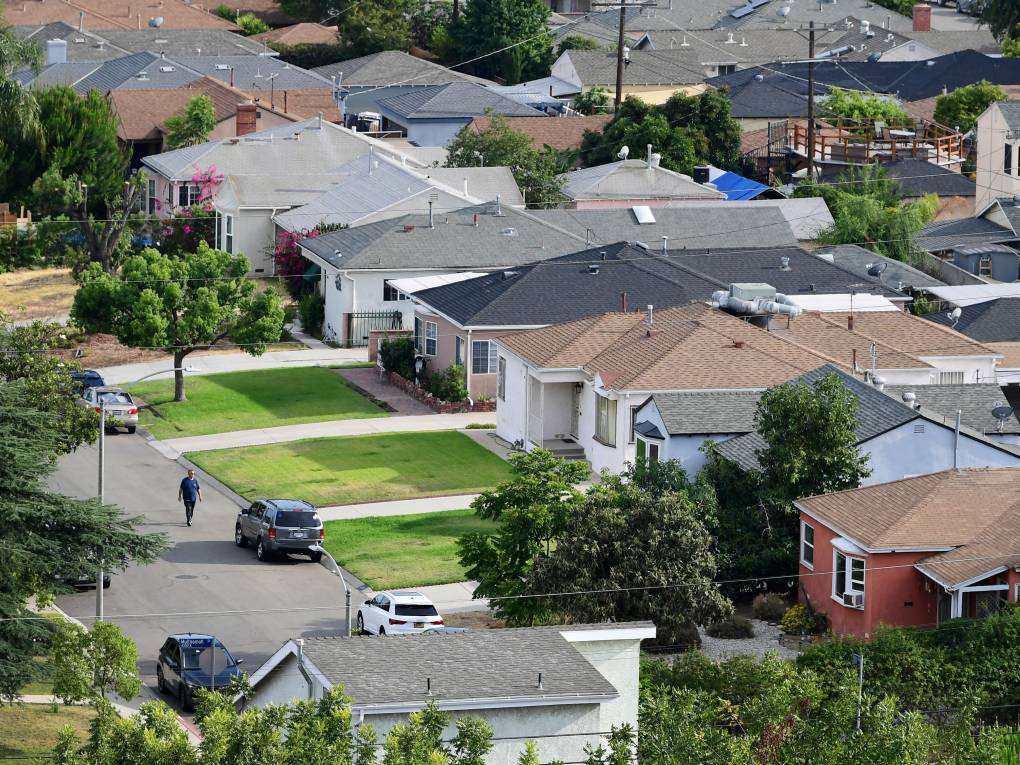
"caption": "A man walks along a street in a neighborhood of single family homes in Los Angeles, California on July 30, 2021. ",
"credit": "Frederic J. Brown/AFP via Getty Images ",
"altTag": null,
"description": "A man walks along a street in a neighborhood of single family homes in Los Angeles, California on July 30, 2021, a day before a nationwide ban on evictions due to the Coronavirus pandemic since 2020 is set to expire. - Millions of Americans could find themselves homeless starting Sunday when a nationwide ban on evictions expires, even as billions in government funds meant to help them go untapped.\nThe wave of evictions would come as the fast-spreading Delta variant has taken hold in the country and rental housing is in high demand in the hot real estate market. (Photo by Frederic J. BROWN / AFP) (Photo by FREDERIC J. BROWN/AFP via Getty Images)",
"imgSizes": {
"medium": {
"file": "https://cdn.kqed.org/wp-content/uploads/sites/10/2021/08/gettyimages-1234331375-8c66a2d8e3377bb9725f454d2bd637ffd9d68e7c-800x600.jpg",
"width": 800,
"height": 600,
"mimeType": "image/jpeg"
},
"large": {
"file": "https://cdn.kqed.org/wp-content/uploads/sites/10/2021/08/gettyimages-1234331375-8c66a2d8e3377bb9725f454d2bd637ffd9d68e7c-1020x765.jpg",
"width": 1020,
"height": 765,
"mimeType": "image/jpeg"
},
"thumbnail": {
"file": "https://cdn.kqed.org/wp-content/uploads/sites/10/2021/08/gettyimages-1234331375-8c66a2d8e3377bb9725f454d2bd637ffd9d68e7c-160x120.jpg",
"width": 160,
"height": 120,
"mimeType": "image/jpeg"
},
"1536x1536": {
"file": "https://cdn.kqed.org/wp-content/uploads/sites/10/2021/08/gettyimages-1234331375-8c66a2d8e3377bb9725f454d2bd637ffd9d68e7c-1536x1152.jpg",
"width": 1536,
"height": 1152,
"mimeType": "image/jpeg"
},
"2048x2048": {
"file": "https://cdn.kqed.org/wp-content/uploads/sites/10/2021/08/gettyimages-1234331375-8c66a2d8e3377bb9725f454d2bd637ffd9d68e7c-2048x1536.jpg",
"width": 2048,
"height": 1536,
"mimeType": "image/jpeg"
},
"post-thumbnail": {
"file": "https://cdn.kqed.org/wp-content/uploads/sites/10/2021/08/gettyimages-1234331375-8c66a2d8e3377bb9725f454d2bd637ffd9d68e7c-672x372.jpg",
"width": 672,
"height": 372,
"mimeType": "image/jpeg"
},
"twentyfourteen-full-width": {
"file": "https://cdn.kqed.org/wp-content/uploads/sites/10/2021/08/gettyimages-1234331375-8c66a2d8e3377bb9725f454d2bd637ffd9d68e7c-1038x576.jpg",
"width": 1038,
"height": 576,
"mimeType": "image/jpeg"
},
"full-width": {
"file": "https://cdn.kqed.org/wp-content/uploads/sites/10/2021/08/gettyimages-1234331375-8c66a2d8e3377bb9725f454d2bd637ffd9d68e7c-1920x1440.jpg",
"width": 1920,
"height": 1440,
"mimeType": "image/jpeg"
},
"kqedFullSize": {
"file": "https://cdn.kqed.org/wp-content/uploads/sites/10/2021/08/gettyimages-1234331375-8c66a2d8e3377bb9725f454d2bd637ffd9d68e7c-scaled.jpg",
"width": 2560,
"height": 1919
}
},
"isLoading": false,
"fetchFailed": false
},
"news_11883993": {
"type": "attachments",
"id": "news_11883993",
"meta": {
"index": "attachments_1716263798",
"site": "news",
"id": "11883993",
"found": true
},
"parent": 11883989,
"imgSizes": {
"twentyfourteen-full-width": {
"file": "https://ww2.kqed.org/app/uploads/sites/10/2021/08/002_KQED_Richmond_Kaiser_03192020_9427-1038x576.jpg",
"width": 1038,
"mimeType": "image/jpeg",
"height": 576
},
"thumbnail": {
"file": "https://ww2.kqed.org/app/uploads/sites/10/2021/08/002_KQED_Richmond_Kaiser_03192020_9427-160x107.jpg",
"width": 160,
"mimeType": "image/jpeg",
"height": 107
},
"post-thumbnail": {
"file": "https://ww2.kqed.org/app/uploads/sites/10/2021/08/002_KQED_Richmond_Kaiser_03192020_9427-672x372.jpg",
"width": 672,
"mimeType": "image/jpeg",
"height": 372
},
"kqedFullSize": {
"file": "https://ww2.kqed.org/app/uploads/sites/10/2021/08/002_KQED_Richmond_Kaiser_03192020_9427.jpg",
"width": 1920,
"height": 1280
},
"large": {
"file": "https://ww2.kqed.org/app/uploads/sites/10/2021/08/002_KQED_Richmond_Kaiser_03192020_9427-1020x680.jpg",
"width": 1020,
"mimeType": "image/jpeg",
"height": 680
},
"1536x1536": {
"file": "https://ww2.kqed.org/app/uploads/sites/10/2021/08/002_KQED_Richmond_Kaiser_03192020_9427-1536x1024.jpg",
"width": 1536,
"mimeType": "image/jpeg",
"height": 1024
},
"medium": {
"file": "https://ww2.kqed.org/app/uploads/sites/10/2021/08/002_KQED_Richmond_Kaiser_03192020_9427-800x533.jpg",
"width": 800,
"mimeType": "image/jpeg",
"height": 533
}
},
"publishDate": 1628204093,
"modified": 1628208582,
"caption": "Registered nurses Angelo Daulat and Amy Fulgado at Kaiser Permanente in Richmond in the early days of the pandemic on March 19, 2020.",
"description": null,
"title": "002_KQED_Richmond_Kaiser_03192020_9427",
"credit": "Beth LaBerge/KQED",
"status": "inherit",
"altTag": null,
"isLoading": false,
"fetchFailed": false
},
"news_11883903": {
"type": "attachments",
"id": "news_11883903",
"meta": {
"index": "attachments_1716263798",
"site": "news",
"id": "11883903",
"found": true
},
"parent": 11883895,
"imgSizes": {
"twentyfourteen-full-width": {
"file": "https://ww2.kqed.org/app/uploads/sites/10/2021/08/newstyles_080521_final-1038x576.png",
"width": 1038,
"mimeType": "image/png",
"height": 576
},
"thumbnail": {
"file": "https://ww2.kqed.org/app/uploads/sites/10/2021/08/newstyles_080521_final-160x110.png",
"width": 160,
"mimeType": "image/png",
"height": 110
},
"post-thumbnail": {
"file": "https://ww2.kqed.org/app/uploads/sites/10/2021/08/newstyles_080521_final-672x372.png",
"width": 672,
"mimeType": "image/png",
"height": 372
},
"kqedFullSize": {
"file": "https://ww2.kqed.org/app/uploads/sites/10/2021/08/newstyles_080521_final.png",
"width": 1920,
"height": 1321
},
"large": {
"file": "https://ww2.kqed.org/app/uploads/sites/10/2021/08/newstyles_080521_final-1020x702.png",
"width": 1020,
"mimeType": "image/png",
"height": 702
},
"1536x1536": {
"file": "https://ww2.kqed.org/app/uploads/sites/10/2021/08/newstyles_080521_final-1536x1057.png",
"width": 1536,
"mimeType": "image/png",
"height": 1057
},
"medium": {
"file": "https://ww2.kqed.org/app/uploads/sites/10/2021/08/newstyles_080521_final-800x550.png",
"width": 800,
"mimeType": "image/png",
"height": 550
}
},
"publishDate": 1628192836,
"modified": 1628192957,
"caption": null,
"description": null,
"title": "newstyles_080521_final",
"credit": null,
"status": "inherit",
"altTag": "A Mark Fiore cartoon titled \"New Styles for a New Variant,\" that shows four face masks. The face masks read, \"get vaccinated, dammit!\", \"re-masking because of the variant, selfish anti-vaxxers and to protect those who cant yet get vaccinated,\" \"your 'freedom' makes us all less free,\" and \"so over this.\"",
"isLoading": false,
"fetchFailed": false
},
"news_11883739": {
"type": "attachments",
"id": "news_11883739",
"meta": {
"index": "attachments_1716263798",
"site": "news",
"id": "11883739",
"found": true
},
"parent": 0,
"imgSizes": {
"twentyfourteen-full-width": {
"file": "https://ww2.kqed.org/app/uploads/sites/10/2021/08/RS50546_014_SanFrancisco_IndoorMasks_07302021-qut-1038x576.jpg",
"width": 1038,
"mimeType": "image/jpeg",
"height": 576
},
"thumbnail": {
"file": "https://ww2.kqed.org/app/uploads/sites/10/2021/08/RS50546_014_SanFrancisco_IndoorMasks_07302021-qut-160x107.jpg",
"width": 160,
"mimeType": "image/jpeg",
"height": 107
},
"post-thumbnail": {
"file": "https://ww2.kqed.org/app/uploads/sites/10/2021/08/RS50546_014_SanFrancisco_IndoorMasks_07302021-qut-672x372.jpg",
"width": 672,
"mimeType": "image/jpeg",
"height": 372
},
"kqedFullSize": {
"file": "https://ww2.kqed.org/app/uploads/sites/10/2021/08/RS50546_014_SanFrancisco_IndoorMasks_07302021-qut.jpg",
"width": 1920,
"height": 1280
},
"large": {
"file": "https://ww2.kqed.org/app/uploads/sites/10/2021/08/RS50546_014_SanFrancisco_IndoorMasks_07302021-qut-1020x680.jpg",
"width": 1020,
"mimeType": "image/jpeg",
"height": 680
},
"1536x1536": {
"file": "https://ww2.kqed.org/app/uploads/sites/10/2021/08/RS50546_014_SanFrancisco_IndoorMasks_07302021-qut-1536x1024.jpg",
"width": 1536,
"mimeType": "image/jpeg",
"height": 1024
},
"medium": {
"file": "https://ww2.kqed.org/app/uploads/sites/10/2021/08/RS50546_014_SanFrancisco_IndoorMasks_07302021-qut-800x533.jpg",
"width": 800,
"mimeType": "image/jpeg",
"height": 533
}
},
"publishDate": 1628108287,
"modified": 1628108320,
"caption": "An employee at La Copa Loca Gelato in San Francisco rings up a customer on July 30, 2021.",
"description": null,
"title": "RS50546_014_SanFrancisco_IndoorMasks_07302021-qut",
"credit": "Beth LaBerge/KQED",
"status": "inherit",
"altTag": null,
"isLoading": false,
"fetchFailed": false
},
"news_11882842": {
"type": "attachments",
"id": "news_11882842",
"meta": {
"index": "attachments_1716263798",
"site": "news",
"id": "11882842",
"found": true
},
"parent": 11882840,
"imgSizes": {
"twentyfourteen-full-width": {
"file": "https://ww2.kqed.org/app/uploads/sites/10/2021/07/DE2DC469-FEC6-4DDE-9704-56B8B73DEC34_1_201_a-1038x576.jpg",
"width": 1038,
"mimeType": "image/jpeg",
"height": 576
},
"thumbnail": {
"file": "https://ww2.kqed.org/app/uploads/sites/10/2021/07/DE2DC469-FEC6-4DDE-9704-56B8B73DEC34_1_201_a-160x110.jpg",
"width": 160,
"mimeType": "image/jpeg",
"height": 110
},
"post-thumbnail": {
"file": "https://ww2.kqed.org/app/uploads/sites/10/2021/07/DE2DC469-FEC6-4DDE-9704-56B8B73DEC34_1_201_a-672x372.jpg",
"width": 672,
"mimeType": "image/jpeg",
"height": 372
},
"kqedFullSize": {
"file": "https://ww2.kqed.org/app/uploads/sites/10/2021/07/DE2DC469-FEC6-4DDE-9704-56B8B73DEC34_1_201_a.jpg",
"width": 1920,
"height": 1321
},
"large": {
"file": "https://ww2.kqed.org/app/uploads/sites/10/2021/07/DE2DC469-FEC6-4DDE-9704-56B8B73DEC34_1_201_a-1020x702.jpg",
"width": 1020,
"mimeType": "image/jpeg",
"height": 702
},
"1536x1536": {
"file": "https://ww2.kqed.org/app/uploads/sites/10/2021/07/DE2DC469-FEC6-4DDE-9704-56B8B73DEC34_1_201_a-1536x1057.jpg",
"width": 1536,
"mimeType": "image/jpeg",
"height": 1057
},
"medium": {
"file": "https://ww2.kqed.org/app/uploads/sites/10/2021/07/DE2DC469-FEC6-4DDE-9704-56B8B73DEC34_1_201_a-800x550.jpg",
"width": 800,
"mimeType": "image/jpeg",
"height": 550
}
},
"publishDate": 1627508936,
"modified": 1633551207,
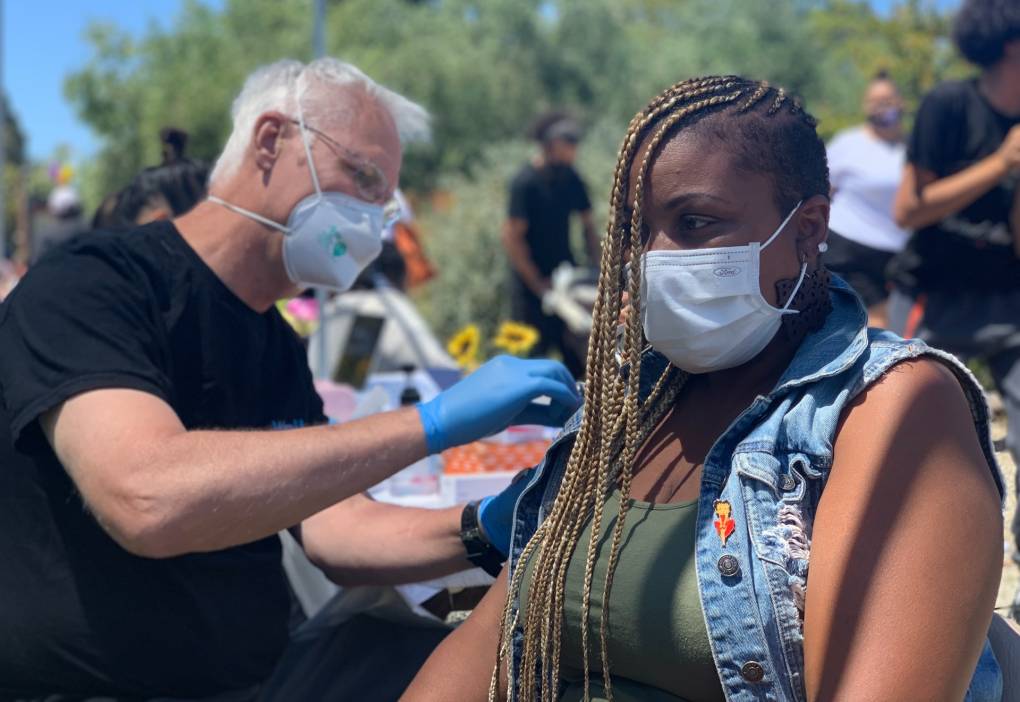
"caption": "Roxanne Akins receives her second COVID-19 shot at vaccine pop-up clinic in Alameda. ",
"description": null,
"title": "DE2DC469-FEC6-4DDE-9704-56B8B73DEC34_1_201_a",
"credit": "Lesley McClurg/ KQED",
"status": "inherit",
"altTag": "Roxanne Akins receives her second Covid-19 shot at vaccine pop-up clinic in Alameda.",
"isLoading": false,
"fetchFailed": false
},
"news_11883459": {
"type": "attachments",
"id": "news_11883459",
"meta": {
"index": "attachments_1716263798",
"site": "news",
"id": "11883459",
"found": true
},
"parent": 11883397,
"imgSizes": {
"twentyfourteen-full-width": {
"file": "https://ww2.kqed.org/app/uploads/sites/10/2021/08/Image-from-iOS-1038x576.jpg",
"width": 1038,
"mimeType": "image/jpeg",
"height": 576
},
"thumbnail": {
"file": "https://ww2.kqed.org/app/uploads/sites/10/2021/08/Image-from-iOS-160x107.jpg",
"width": 160,
"mimeType": "image/jpeg",
"height": 107
},
"post-thumbnail": {
"file": "https://ww2.kqed.org/app/uploads/sites/10/2021/08/Image-from-iOS-672x372.jpg",
"width": 672,
"mimeType": "image/jpeg",
"height": 372
},
"kqedFullSize": {
"file": "https://ww2.kqed.org/app/uploads/sites/10/2021/08/Image-from-iOS.jpg",
"width": 1620,
"height": 1080
},
"large": {
"file": "https://ww2.kqed.org/app/uploads/sites/10/2021/08/Image-from-iOS-1020x680.jpg",
"width": 1020,
"mimeType": "image/jpeg",
"height": 680
},
"1536x1536": {
"file": "https://ww2.kqed.org/app/uploads/sites/10/2021/08/Image-from-iOS-1536x1024.jpg",
"width": 1536,
"mimeType": "image/jpeg",
"height": 1024
},
"medium": {
"file": "https://ww2.kqed.org/app/uploads/sites/10/2021/08/Image-from-iOS-800x533.jpg",
"width": 800,
"mimeType": "image/jpeg",
"height": 533
}
},
"publishDate": 1627944560,
"modified": 1627944623,
"caption": "Employees at La Copa Loca Gelato in San Francisco serve customers on July 30, 2021.\n",
"description": null,
"title": "Image from iOS",
"credit": "Beth LaBerge/KQED",
"status": "inherit",
"altTag": null,
"isLoading": false,
"fetchFailed": false
},
"news_11883353": {
"type": "attachments",
"id": "news_11883353",
"meta": {
"index": "attachments_1716263798",
"site": "news",
"id": "11883353",
"found": true
},
"parent": 11883351,
"imgSizes": {
"twentyfourteen-full-width": {
"file": "https://ww2.kqed.org/app/uploads/sites/10/2021/08/RS41944_001_KQED_SanFrancisco_GeneralHospital_03102020_6304-qut-1038x576.jpeg",
"width": 1038,
"mimeType": "image/jpeg",
"height": 576
},
"thumbnail": {
"file": "https://ww2.kqed.org/app/uploads/sites/10/2021/08/RS41944_001_KQED_SanFrancisco_GeneralHospital_03102020_6304-qut-160x107.jpeg",
"width": 160,
"mimeType": "image/jpeg",
"height": 107
},
"post-thumbnail": {
"file": "https://ww2.kqed.org/app/uploads/sites/10/2021/08/RS41944_001_KQED_SanFrancisco_GeneralHospital_03102020_6304-qut-672x372.jpeg",
"width": 672,
"mimeType": "image/jpeg",
"height": 372
},
"kqedFullSize": {
"file": "https://ww2.kqed.org/app/uploads/sites/10/2021/08/RS41944_001_KQED_SanFrancisco_GeneralHospital_03102020_6304-qut.jpeg",
"width": 1920,
"height": 1280
},
"large": {
"file": "https://ww2.kqed.org/app/uploads/sites/10/2021/08/RS41944_001_KQED_SanFrancisco_GeneralHospital_03102020_6304-qut-1020x680.jpeg",
"width": 1020,
"mimeType": "image/jpeg",
"height": 680
},
"1536x1536": {
"file": "https://ww2.kqed.org/app/uploads/sites/10/2021/08/RS41944_001_KQED_SanFrancisco_GeneralHospital_03102020_6304-qut-1536x1024.jpeg",
"width": 1536,
"mimeType": "image/jpeg",
"height": 1024
},
"medium": {
"file": "https://ww2.kqed.org/app/uploads/sites/10/2021/08/RS41944_001_KQED_SanFrancisco_GeneralHospital_03102020_6304-qut-800x533.jpeg",
"width": 800,
"mimeType": "image/jpeg",
"height": 533
}
},
"publishDate": 1627836807,
"modified": 1627937510,
"caption": "San Francisco General Hospital on March 10, 2020.",
"description": "Zuckerberg San Francisco General Hospital on Tuesday, Mar. 10, 2020.\n\n",
"title": "RS41944_001_KQED_SanFrancisco_GeneralHospital_03102020_6304-qut",
"credit": "Beth LaBerge/KQED",
"status": "inherit",
"altTag": "Zuckerberg San Francisco General Hospital on Tuesday, Mar. 10, 2020.",
"isLoading": false,
"fetchFailed": false
},
"news_11879739": {
"type": "attachments",
"id": "news_11879739",
"meta": {
"index": "attachments_1716263798",
"site": "news",
"id": "11879739",
"found": true
},
"parent": 11879725,
"imgSizes": {
"twentyfourteen-full-width": {
"file": "https://ww2.kqed.org/app/uploads/sites/10/2021/06/RS46911_017_SanJose_AntiEvictionProtest_01272021-qut-1038x576.jpg",
"width": 1038,
"mimeType": "image/jpeg",
"height": 576
},
"thumbnail": {
"file": "https://ww2.kqed.org/app/uploads/sites/10/2021/06/RS46911_017_SanJose_AntiEvictionProtest_01272021-qut-160x107.jpg",
"width": 160,
"mimeType": "image/jpeg",
"height": 107
},
"post-thumbnail": {
"file": "https://ww2.kqed.org/app/uploads/sites/10/2021/06/RS46911_017_SanJose_AntiEvictionProtest_01272021-qut-672x372.jpg",
"width": 672,
"mimeType": "image/jpeg",
"height": 372
},
"kqedFullSize": {
"file": "https://ww2.kqed.org/app/uploads/sites/10/2021/06/RS46911_017_SanJose_AntiEvictionProtest_01272021-qut.jpg",
"width": 1920,
"height": 1280
},
"large": {
"file": "https://ww2.kqed.org/app/uploads/sites/10/2021/06/RS46911_017_SanJose_AntiEvictionProtest_01272021-qut-1020x680.jpg",
"width": 1020,
"mimeType": "image/jpeg",
"height": 680
},
"1536x1536": {
"file": "https://ww2.kqed.org/app/uploads/sites/10/2021/06/RS46911_017_SanJose_AntiEvictionProtest_01272021-qut-1536x1024.jpg",
"width": 1536,
"mimeType": "image/jpeg",
"height": 1024
},
"medium": {
"file": "https://ww2.kqed.org/app/uploads/sites/10/2021/06/RS46911_017_SanJose_AntiEvictionProtest_01272021-qut-800x533.jpg",
"width": 800,
"mimeType": "image/jpeg",
"height": 533
}
},
"publishDate": 1624994714,
"modified": 1624994770,
"caption": "An anti-eviction protester stands in front of Santa Clara County Superior Court on Jan. 27, 2021, during a demonstration calling for stronger statewide eviction protections.",
"description": null,
"title": "RS46911_017_SanJose_AntiEvictionProtest_01272021-qut",
"credit": "Beth LaBerge/KQED",
"status": "inherit",
"altTag": null,
"isLoading": false,
"fetchFailed": false
},
"news_11883048": {
"type": "attachments",
"id": "news_11883048",
"meta": {
"index": "attachments_1716263798",
"site": "news",
"id": "11883048",
"found": true
},
"parent": 11882840,
"imgSizes": {
"twentyfourteen-full-width": {
"file": "https://ww2.kqed.org/app/uploads/sites/10/2021/07/Image-from-iOS-1038x576.jpg",
"width": 1038,
"mimeType": "image/jpeg",
"height": 576
},
"thumbnail": {
"file": "https://ww2.kqed.org/app/uploads/sites/10/2021/07/Image-from-iOS-160x120.jpg",
"width": 160,
"mimeType": "image/jpeg",
"height": 120
},
"post-thumbnail": {
"file": "https://ww2.kqed.org/app/uploads/sites/10/2021/07/Image-from-iOS-672x372.jpg",
"width": 672,
"mimeType": "image/jpeg",
"height": 372
},
"kqedFullSize": {
"file": "https://ww2.kqed.org/app/uploads/sites/10/2021/07/Image-from-iOS-scaled-e1627599390289.jpg",
"width": 1920,
"height": 1440
},
"2048x2048": {
"file": "https://ww2.kqed.org/app/uploads/sites/10/2021/07/Image-from-iOS-2048x1536.jpg",
"width": 2048,
"mimeType": "image/jpeg",
"height": 1536
},
"large": {
"file": "https://ww2.kqed.org/app/uploads/sites/10/2021/07/Image-from-iOS-1020x765.jpg",
"width": 1020,
"mimeType": "image/jpeg",
"height": 765
},
"1536x1536": {
"file": "https://ww2.kqed.org/app/uploads/sites/10/2021/07/Image-from-iOS-1536x1152.jpg",
"width": 1536,
"mimeType": "image/jpeg",
"height": 1152
},
"full-width": {
"file": "https://ww2.kqed.org/app/uploads/sites/10/2021/07/Image-from-iOS-1920x1440.jpg",
"width": 1920,
"mimeType": "image/jpeg",
"height": 1440
},
"medium": {
"file": "https://ww2.kqed.org/app/uploads/sites/10/2021/07/Image-from-iOS-800x600.jpg",
"width": 800,
"mimeType": "image/jpeg",
"height": 600
}
},
"publishDate": 1627599352,
"modified": 1633570292,
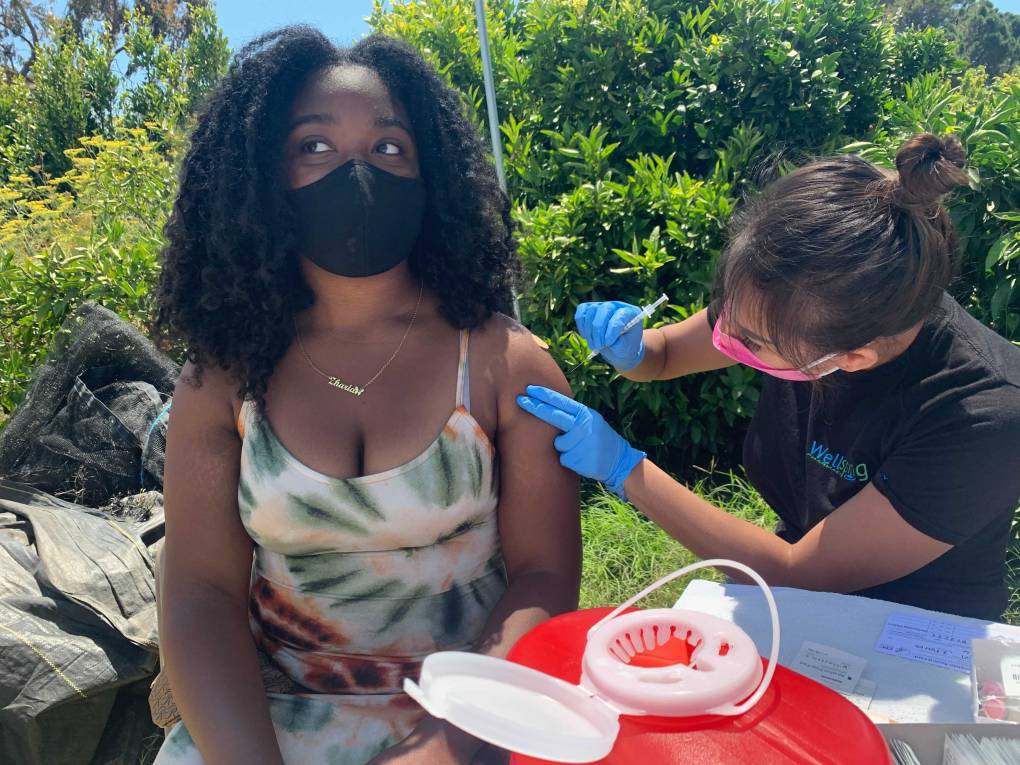
"caption": "Z'haria Anderson, 15, receives her first shot of the Pfizer COVID-19 vaccine at an outdoor pop-up clinic in Alameda on July 22, 2021.",
"description": null,
"title": "Image from iOS",
"credit": "Lesley McClurg/KQED",
"status": "inherit",
"altTag": "A young woman, masked, looks away from her shoulder as a health worker, also masked, injects it with a needle.",
"isLoading": false,
"fetchFailed": false
},
"news_11857382": {
"type": "attachments",
"id": "news_11857382",
"meta": {
"index": "attachments_1716263798",
"site": "news",
"id": "11857382",
"found": true
},
"parent": 11857277,
"imgSizes": {
"apple_news_ca_landscape_5_5": {
"file": "https://ww2.kqed.org/app/uploads/sites/10/2021/01/Image-from-iOS-6-1044x783.jpg",
"width": 1044,
"mimeType": "image/jpeg",
"height": 783
},
"apple_news_ca_square_4_0": {
"file": "https://ww2.kqed.org/app/uploads/sites/10/2021/01/Image-from-iOS-6-470x470.jpg",
"width": 470,
"mimeType": "image/jpeg",
"height": 470
},
"twentyfourteen-full-width": {
"file": "https://ww2.kqed.org/app/uploads/sites/10/2021/01/Image-from-iOS-6-1038x576.jpg",
"width": 1038,
"mimeType": "image/jpeg",
"height": 576
},
"thumbnail": {
"file": "https://ww2.kqed.org/app/uploads/sites/10/2021/01/Image-from-iOS-6-160x107.jpg",
"width": 160,
"mimeType": "image/jpeg",
"height": 107
},
"post-thumbnail": {
"file": "https://ww2.kqed.org/app/uploads/sites/10/2021/01/Image-from-iOS-6-672x372.jpg",
"width": 672,
"mimeType": "image/jpeg",
"height": 372
},
"kqedFullSize": {
"file": "https://ww2.kqed.org/app/uploads/sites/10/2021/01/Image-from-iOS-6.jpg",
"width": 1555,
"height": 1036
},
"apple_news_ca_landscape_4_7": {
"file": "https://ww2.kqed.org/app/uploads/sites/10/2021/01/Image-from-iOS-6-632x474.jpg",
"width": 632,
"mimeType": "image/jpeg",
"height": 474
},
"large": {
"file": "https://ww2.kqed.org/app/uploads/sites/10/2021/01/Image-from-iOS-6-1020x680.jpg",
"width": 1020,
"mimeType": "image/jpeg",
"height": 680
},
"apple_news_ca_landscape_4_0": {
"file": "https://ww2.kqed.org/app/uploads/sites/10/2021/01/Image-from-iOS-6-536x402.jpg",
"width": 536,
"mimeType": "image/jpeg",
"height": 402
},
"apple_news_ca_portrait_12_9": {
"file": "https://ww2.kqed.org/app/uploads/sites/10/2021/01/Image-from-iOS-6-1122x1036.jpg",
"width": 1122,
"mimeType": "image/jpeg",
"height": 1036
},
"medium": {
"file": "https://ww2.kqed.org/app/uploads/sites/10/2021/01/Image-from-iOS-6-800x533.jpg",
"width": 800,
"mimeType": "image/jpeg",
"height": 533
},
"apple_news_ca_portrait_4_0": {
"file": "https://ww2.kqed.org/app/uploads/sites/10/2021/01/Image-from-iOS-6-354x472.jpg",
"width": 354,
"mimeType": "image/jpeg",
"height": 472
},
"apple_news_ca_portrait_9_7": {
"file": "https://ww2.kqed.org/app/uploads/sites/10/2021/01/Image-from-iOS-6-840x1036.jpg",
"width": 840,
"mimeType": "image/jpeg",
"height": 1036
},
"apple_news_ca_square_9_7": {
"file": "https://ww2.kqed.org/app/uploads/sites/10/2021/01/Image-from-iOS-6-1104x1036.jpg",
"width": 1104,
"mimeType": "image/jpeg",
"height": 1036
},
"1536x1536": {
"file": "https://ww2.kqed.org/app/uploads/sites/10/2021/01/Image-from-iOS-6-1536x1023.jpg",
"width": 1536,
"mimeType": "image/jpeg",
"height": 1023
},
"apple_news_ca_portrait_4_7": {
"file": "https://ww2.kqed.org/app/uploads/sites/10/2021/01/Image-from-iOS-6-414x552.jpg",
"width": 414,
"mimeType": "image/jpeg",
"height": 552
},
"apple_news_ca_square_12_9": {
"file": "https://ww2.kqed.org/app/uploads/sites/10/2021/01/Image-from-iOS-6-1472x1036.jpg",
"width": 1472,
"mimeType": "image/jpeg",
"height": 1036
},
"apple_news_ca_portrait_5_5": {
"file": "https://ww2.kqed.org/app/uploads/sites/10/2021/01/Image-from-iOS-6-687x916.jpg",
"width": 687,
"mimeType": "image/jpeg",
"height": 916
},
"apple_news_ca_square_4_7": {
"file": "https://ww2.kqed.org/app/uploads/sites/10/2021/01/Image-from-iOS-6-550x550.jpg",
"width": 550,
"mimeType": "image/jpeg",
"height": 550
},
"apple_news_ca_landscape_9_7": {
"file": "https://ww2.kqed.org/app/uploads/sites/10/2021/01/Image-from-iOS-6-1376x1032.jpg",
"width": 1376,
"mimeType": "image/jpeg",
"height": 1032
},
"apple_news_ca_square_5_5": {
"file": "https://ww2.kqed.org/app/uploads/sites/10/2021/01/Image-from-iOS-6-912x912.jpg",
"width": 912,
"mimeType": "image/jpeg",
"height": 912
}
},
"publishDate": 1611783912,
"modified": 1611784208,
"caption": "Demonstrators stand in front of Santa Clara County Superior Court in San Jose on the morning of Jan. 27, 2021, demanding stronger eviction protections in California.",
"description": null,
"title": "Image from iOS (6)",
"credit": "Beth LaBerge/KQED",
"status": "inherit",
"altTag": null,
"isLoading": false,
"fetchFailed": false
},
"news_11863083": {
"type": "attachments",
"id": "news_11863083",
"meta": {
"index": "attachments_1716263798",
"site": "news",
"id": "11863083",
"found": true
},
"parent": 11862938,
"imgSizes": {
"apple_news_ca_square_4_0": {
"file": "https://ww2.kqed.org/app/uploads/sites/10/2021/03/GettyImages-1253315032-470x470.jpg",
"width": 470,
"mimeType": "image/jpeg",
"height": 470
},
"twentyfourteen-full-width": {
"file": "https://ww2.kqed.org/app/uploads/sites/10/2021/03/GettyImages-1253315032-1024x576.jpg",
"width": 1024,
"mimeType": "image/jpeg",
"height": 576
},
"thumbnail": {
"file": "https://ww2.kqed.org/app/uploads/sites/10/2021/03/GettyImages-1253315032-160x107.jpg",
"width": 160,
"mimeType": "image/jpeg",
"height": 107
},
"post-thumbnail": {
"file": "https://ww2.kqed.org/app/uploads/sites/10/2021/03/GettyImages-1253315032-672x372.jpg",
"width": 672,
"mimeType": "image/jpeg",
"height": 372
},
"kqedFullSize": {
"file": "https://ww2.kqed.org/app/uploads/sites/10/2021/03/GettyImages-1253315032.jpg",
"width": 1024,
"height": 683
},
"apple_news_ca_landscape_4_7": {
"file": "https://ww2.kqed.org/app/uploads/sites/10/2021/03/GettyImages-1253315032-632x474.jpg",
"width": 632,
"mimeType": "image/jpeg",
"height": 474
},
"large": {
"file": "https://ww2.kqed.org/app/uploads/sites/10/2021/03/GettyImages-1253315032-1020x680.jpg",
"width": 1020,
"mimeType": "image/jpeg",
"height": 680
},
"apple_news_ca_landscape_4_0": {
"file": "https://ww2.kqed.org/app/uploads/sites/10/2021/03/GettyImages-1253315032-536x402.jpg",
"width": 536,
"mimeType": "image/jpeg",
"height": 402
},
"medium": {
"file": "https://ww2.kqed.org/app/uploads/sites/10/2021/03/GettyImages-1253315032-800x534.jpg",
"width": 800,
"mimeType": "image/jpeg",
"height": 534
},
"apple_news_ca_portrait_4_0": {
"file": "https://ww2.kqed.org/app/uploads/sites/10/2021/03/GettyImages-1253315032-354x472.jpg",
"width": 354,
"mimeType": "image/jpeg",
"height": 472
},
"apple_news_ca_portrait_9_7": {
"file": "https://ww2.kqed.org/app/uploads/sites/10/2021/03/GettyImages-1253315032-840x683.jpg",
"width": 840,
"mimeType": "image/jpeg",
"height": 683
},
"apple_news_ca_portrait_4_7": {
"file": "https://ww2.kqed.org/app/uploads/sites/10/2021/03/GettyImages-1253315032-414x552.jpg",
"width": 414,
"mimeType": "image/jpeg",
"height": 552
},
"apple_news_ca_portrait_5_5": {
"file": "https://ww2.kqed.org/app/uploads/sites/10/2021/03/GettyImages-1253315032-687x683.jpg",
"width": 687,
"mimeType": "image/jpeg",
"height": 683
},
"apple_news_ca_square_4_7": {
"file": "https://ww2.kqed.org/app/uploads/sites/10/2021/03/GettyImages-1253315032-550x550.jpg",
"width": 550,
"mimeType": "image/jpeg",
"height": 550
},
"apple_news_ca_square_5_5": {
"file": "https://ww2.kqed.org/app/uploads/sites/10/2021/03/GettyImages-1253315032-912x683.jpg",
"width": 912,
"mimeType": "image/jpeg",
"height": 683
}
},
"publishDate": 1614812635,
"modified": 1614812724,
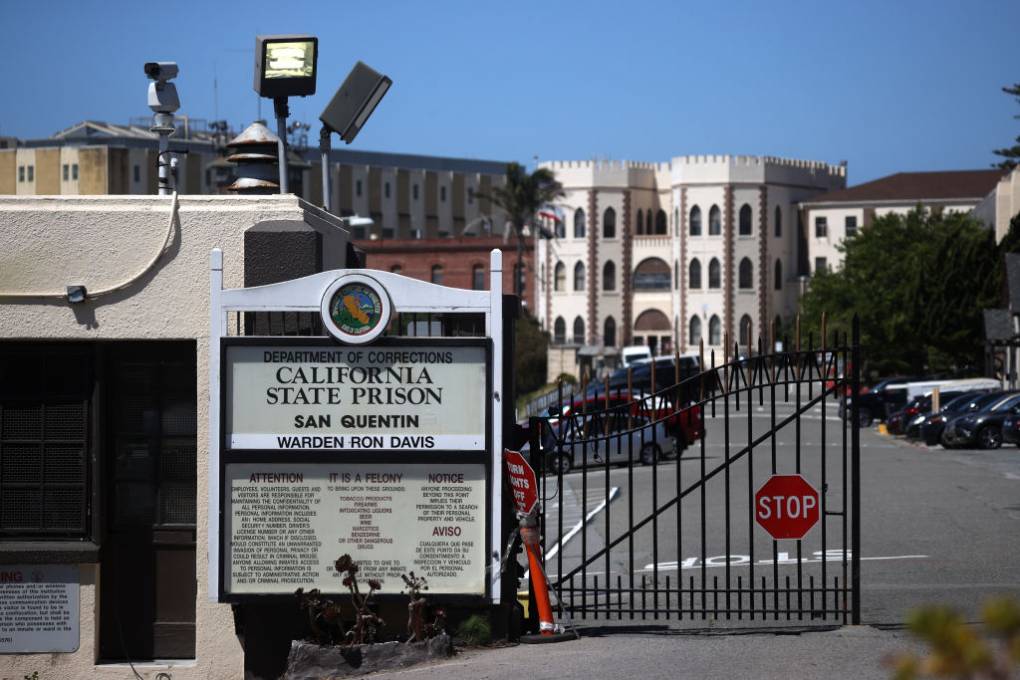
"caption": "The entrance to San Quentin State Prison in Marin County on June 29, 2020.",
"description": null,
"title": "Coronavirus Cases Surge To Over A Thousand At San Quentin Prison",
"credit": "Justin Sullivan/Getty Images",
"status": "inherit",
"altTag": null,
"isLoading": false,
"fetchFailed": false
}
},
"audioPlayerReducer": {
"postId": "stream_live",
"isPaused": true,
"isPlaying": false,
"pfsActive": false,
"pledgeModalIsOpen": true,
"playerDrawerIsOpen": false,
"liveAudioPlayStartedAt": 0,
"liveAudioPlayContext": ""
},
"authorsReducer": {
"byline_news_11884148": {
"type": "authors",
"id": "byline_news_11884148",
"meta": {
"override": true
},
"slug": "byline_news_11884148",
"name": "Carolyn Jones\u003cbr>EdSource",
"isLoading": false
},
"byline_news_11884124": {
"type": "authors",
"id": "byline_news_11884124",
"meta": {
"override": true
},
"slug": "byline_news_11884124",
"name": "Laurel Wamsley\u003cbr>NPR",
"isLoading": false
},
"byline_news_11883989": {
"type": "authors",
"id": "byline_news_11883989",
"meta": {
"override": true
},
"slug": "byline_news_11883989",
"name": "Adam Beam\u003cbr>The Associated Press ",
"isLoading": false
},
"byline_news_11881585": {
"type": "authors",
"id": "byline_news_11881585",
"meta": {
"override": true
},
"slug": "byline_news_11881585",
"name": "Allison Aubrey, Selena Simmons-Duffin, Rob Stein and Carmel Wroth",
"isLoading": false
},
"byline_news_11883351": {
"type": "authors",
"id": "byline_news_11883351",
"meta": {
"override": true
},
"slug": "byline_news_11883351",
"name": "Don Thompson \u003cbr> The Associated Press",
"isLoading": false
},
"byline_news_11883234": {
"type": "authors",
"id": "byline_news_11883234",
"meta": {
"override": true
},
"slug": "byline_news_11883234",
"name": "Adam Beam\u003cbr>The Associated Press",
"isLoading": false
},
"byline_news_11883036": {
"type": "authors",
"id": "byline_news_11883036",
"meta": {
"override": true
},
"slug": "byline_news_11883036",
"name": "Don Thompson\u003cbr>The Associated Press",
"isLoading": false
},
"dclyde": {
"type": "authors",
"id": "104",
"meta": {
"index": "authors_1716337520",
"id": "104",
"found": true
},
"name": "Don Clyde",
"firstName": "Don",
"lastName": "Clyde",
"slug": "dclyde",
"email": "dclyde@kqed.org",
"display_author_email": false,
"staff_mastheads": [],
"title": "KQED Contributor",
"bio": "Don Clyde is an online producer, reporter and copy editor for KQED News. Before venturing into journalism, he worked as a medical device engineer and scientist for nearly a decade after earning a degree in physics from UC Berkeley. He loves travel, reading, living in Oakland, and most importantly, a good walk. Email him at dclyde@kqed.org or follow him @clydedon.",
"avatar": "https://secure.gravatar.com/avatar/decd3e640c3eedbd0a574275aebb2d19?s=600&d=blank&r=g",
"twitter": "clydedon",
"facebook": null,
"instagram": null,
"linkedin": null,
"sites": [
{
"site": "artschool",
"roles": [
"editor"
]
},
{
"site": "news",
"roles": [
"administrator"
]
},
{
"site": "futureofyou",
"roles": [
"editor"
]
},
{
"site": "about",
"roles": [
"editor"
]
},
{
"site": "mindshift",
"roles": [
"contributor"
]
},
{
"site": "bayareabites",
"roles": [
"contributor"
]
},
{
"site": "lowdown",
"roles": [
"editor"
]
},
{
"site": "stateofhealth",
"roles": [
"administrator"
]
},
{
"site": "spark",
"roles": [
"administrator"
]
},
{
"site": "trulyca",
"roles": [
"administrator"
]
},
{
"site": "imagemakers",
"roles": [
"administrator"
]
},
{
"site": "science",
"roles": []
},
{
"site": "education",
"roles": [
"editor"
]
},
{
"site": "quest",
"roles": [
"subscriber"
]
},
{
"site": "checkplease",
"roles": [
"subscriber"
]
},
{
"site": "forum",
"roles": [
"editor"
]
},
{
"site": "perspectives",
"roles": [
"editor"
]
}
],
"headData": {
"title": "Don Clyde | KQED",
"description": "KQED Contributor",
"ogImgSrc": "https://secure.gravatar.com/avatar/decd3e640c3eedbd0a574275aebb2d19?s=600&d=blank&r=g",
"twImgSrc": "https://secure.gravatar.com/avatar/decd3e640c3eedbd0a574275aebb2d19?s=600&d=blank&r=g"
},
"isLoading": false,
"link": "/author/dclyde"
},
"markfiore": {
"type": "authors",
"id": "3236",
"meta": {
"index": "authors_1716337520",
"id": "3236",
"found": true
},
"name": "Mark Fiore",
"firstName": "Mark",
"lastName": "Fiore",
"slug": "markfiore",
"email": "mark@markfiore.com",
"display_author_email": false,
"staff_mastheads": [
"news"
],
"title": "KQED News Cartoonist",
"bio": "\u003ca href=\"http://www.MarkFiore.com\">MarkFiore.com\u003c/a> | \u003ca href=\"https://twitter.com/markfiore\">Follow on Twitter\u003c/a> | \u003ca href=\"https://www.facebook.com/pages/Mark-Fiore-Animated-Political-Cartoons/94451707396?ref=bookmarks\">Facebook\u003c/a> | \u003ca href=\"mailto:mark@markfiore.com\">email\u003c/a>\r\n\r\nPulitzer Prize-winner, Mark Fiore, who the Wall Street Journal has called “the undisputed guru of the form,” creates animated political cartoons in San Francisco, where his work has been featured regularly on the San Francisco Chronicle’s web site, SFGate.com. His work has appeared on Newsweek.com, Slate.com, CBSNews.com, MotherJones.com, DailyKos.com and NPR’s web site. Fiore’s political animation has appeared on CNN, Frontline, Bill Moyers Journal, Salon.com and cable and broadcast outlets across the globe.\r\n\r\nBeginning his professional life by drawing traditional political cartoons for newspapers, Fiore’s work appeared in publications ranging from the Washington Post to the Los Angeles Times. In the late 1990s, he began to experiment with animating political cartoons and, after a short stint at the San Jose Mercury News as their staff cartoonist, Fiore devoted all his energies to animation.\r\nGrowing up in California, Fiore also spent a good portion of his life in the backwoods of Idaho. It was this combination that shaped him politically. Mark majored in political science at Colorado College, where, in a perfect send-off for a cartoonist, he received his diploma in 1991 as commencement speaker Dick Cheney smiled approvingly.\r\nMark Fiore was awarded the Pulitzer Prize for political cartooning in 2010, a Robert F. Kennedy Journalism Award in 2004 and has twice received an Online Journalism Award for commentary from the Online News Association (2002, 2008). Fiore has received two awards for his work in new media from the National Cartoonists Society (2001, 2002), and in 2006 received The James Madison Freedom of Information Award from The Society of Professional Journalists.",
"avatar": "https://secure.gravatar.com/avatar/fc4e2a612b15b67bad0c6f0e1db4ca9b?s=600&d=blank&r=g",
"twitter": "MarkFiore",
"facebook": null,
"instagram": "https://www.instagram.com/markfiore/?hl=en",
"linkedin": null,
"sites": [
{
"site": "arts",
"roles": [
"contributor"
]
},
{
"site": "news",
"roles": [
"editor"
]
},
{
"site": "futureofyou",
"roles": [
"editor"
]
},
{
"site": "science",
"roles": [
"editor"
]
}
],
"headData": {
"title": "Mark Fiore | KQED",
"description": "KQED News Cartoonist",
"ogImgSrc": "https://secure.gravatar.com/avatar/fc4e2a612b15b67bad0c6f0e1db4ca9b?s=600&d=blank&r=g",
"twImgSrc": "https://secure.gravatar.com/avatar/fc4e2a612b15b67bad0c6f0e1db4ca9b?s=600&d=blank&r=g"
},
"isLoading": false,
"link": "/author/markfiore"
},
"dkatayama": {
"type": "authors",
"id": "7240",
"meta": {
"index": "authors_1716337520",
"id": "7240",
"found": true
},
"name": "Devin Katayama",
"firstName": "Devin",
"lastName": "Katayama",
"slug": "dkatayama",
"email": "dkatayama@kqed.org",
"display_author_email": true,
"staff_mastheads": [
"news"
],
"title": "Editor of Talent and Development",
"bio": "Devin Katayama is former Editor of Talent and Development for KQED. He supported our internship program and on-call staff by looking for equitable opportunities to improve the newsroom.\r\n\r\nHe previously hosted The Bay and American Suburb podcasts from KQED News. Prior to returning to the Bay Area in 2015, Devin was the education reporter for WFPL in Louisville and worked as a producer with radio stations in Chicago and Portland, OR. His work has appeared on NPR’s \u003cem>Morning Edition, All Things Considered, The Takeaway\u003c/em> and \u003cem>Here and Now.\u003c/em>\r\n\r\nDevin earned his MA in Journalism from Columbia College Chicago, where he was a Follett Fellow and the recipient of the 2011 Studs Terkel Community Media Workshop Scholarship for his story on Chicago's homeless youth. He won WBUR's 2014 Daniel Schorr award and a regional RTNDA Edward R. Murrow Award for his documentary \"At Risk\" that looked at issues facing some of Louisville's students. Devin has also received numerous local awards from the Associated Press and the Society of Professional Journalists.",
"avatar": "https://secure.gravatar.com/avatar/d0d2978a31002fb2de107921a8e18405?s=600&d=blank&r=g",
"twitter": "RadioDevin",
"facebook": null,
"instagram": null,
"linkedin": null,
"sites": [
{
"site": "arts",
"roles": []
},
{
"site": "news",
"roles": [
"author"
]
},
{
"site": "stateofhealth",
"roles": [
"author"
]
},
{
"site": "forum",
"roles": [
"editor"
]
},
{
"site": "perspectives",
"roles": [
"editor"
]
}
],
"headData": {
"title": "Devin Katayama | KQED",
"description": "Editor of Talent and Development",
"ogImgSrc": "https://secure.gravatar.com/avatar/d0d2978a31002fb2de107921a8e18405?s=600&d=blank&r=g",
"twImgSrc": "https://secure.gravatar.com/avatar/d0d2978a31002fb2de107921a8e18405?s=600&d=blank&r=g"
},
"isLoading": false,
"link": "/author/dkatayama"
},
"ecruzguevarra": {
"type": "authors",
"id": "8654",
"meta": {
"index": "authors_1716337520",
"id": "8654",
"found": true
},
"name": "Ericka Cruz Guevarra",
"firstName": "Ericka",
"lastName": "Cruz Guevarra",
"slug": "ecruzguevarra",
"email": "ecruzguevarra@kqed.org",
"display_author_email": true,
"staff_mastheads": [
"news"
],
"title": "Producer, The Bay Podcast",
"bio": "Ericka Cruz Guevarra is host of \u003ca href=\"https://www.kqed.org/podcasts/thebay\">\u003cem>The Bay\u003c/em>\u003c/a> podcast at KQED. Before host, she was the show’s producer. Her work in that capacity includes a three-part reported series on policing in Vallejo, which won a 2020 excellence in journalism award from the Society of Professional Journalists. Ericka has worked as a breaking news reporter at Oregon Public Broadcasting, helped produce the Code Switch podcast, and was KQED’s inaugural Raul Ramirez Diversity Fund intern. She’s also an alumna of NPR’s Next Generation Radio program. Send her an email if you have strong feelings about whether Fairfield and Suisun City are the Bay. Ericka is represented by SAG-AFTRA.",
"avatar": "https://secure.gravatar.com/avatar/accefc1de4bafc7e234b69bcb9b6f6536c130fd84709bc3069ef11a78787e1bb?s=600&d=blank&r=g",
"twitter": "NotoriousECG",
"bluesky": null,
"facebook": null,
"instagram": null,
"linkedin": null,
"sites": [
{
"site": "arts",
"roles": [
"subscriber"
]
},
{
"site": "news",
"roles": [
"editor",
"manage_categories"
]
},
{
"site": "futureofyou",
"roles": [
"subscriber"
]
},
{
"site": "stateofhealth",
"roles": [
"subscriber"
]
},
{
"site": "science",
"roles": [
"editor"
]
},
{
"site": "forum",
"roles": [
"subscriber"
]
}
],
"headData": {
"title": "Ericka Cruz Guevarra | KQED",
"description": "Producer, The Bay Podcast",
"ogImgSrc": "https://secure.gravatar.com/avatar/accefc1de4bafc7e234b69bcb9b6f6536c130fd84709bc3069ef11a78787e1bb?s=600&d=blank&r=g",
"twImgSrc": "https://secure.gravatar.com/avatar/accefc1de4bafc7e234b69bcb9b6f6536c130fd84709bc3069ef11a78787e1bb?s=600&d=blank&r=g"
},
"isLoading": false,
"link": "/author/ecruzguevarra"
},
"lesleymcclurg": {
"type": "authors",
"id": "11229",
"meta": {
"index": "authors_1716337520",
"id": "11229",
"found": true
},
"name": "Lesley McClurg",
"firstName": "Lesley",
"lastName": "McClurg",
"slug": "lesleymcclurg",
"email": "lmcclurg@KQED.org",
"display_author_email": false,
"staff_mastheads": [
"news",
"science"
],
"title": "KQED Health Correspondent",
"bio": "Lesley McClurg is a health correspondent and fill-in host whose work is regularly rebroadcast on NPR and PBS programs. She’s earned multiple regional Emmy awards, a national and a regional Edward R. Murrow award, and was named Best Beat Reporter by the Association of Health Care Journalists. The Society of Professional Journalists has recognized her work several times, and the Society of Environmental Journalists spotlighted her coverage of California’s historic drought.\r\n\r\nBefore joining KQED in 2016, Lesley covered food and sustainability for Capital Public Radio, environmental issues for Colorado Public Radio, and reported for KUOW and KCTS 9 in Seattle. Away from the newsroom, she loves skiing with her daughter, mountain biking with her partner, and playing with Ollie, the family’s goldendoodle. On deadline, she runs almost entirely on chocolate chips.\r\n\r\n ",
"avatar": "https://secure.gravatar.com/avatar/bab49e972ea10c774fe0f5e29dba1722b158f7c0d58a360923d1389d380b2978?s=600&d=blank&r=g",
"twitter": "lesleywmcclurg",
"bluesky": null,
"facebook": null,
"instagram": null,
"linkedin": null,
"sites": [
{
"site": "arts",
"roles": [
"author"
]
},
{
"site": "news",
"roles": [
"editor"
]
},
{
"site": "futureofyou",
"roles": [
"editor"
]
},
{
"site": "stateofhealth",
"roles": [
"author"
]
},
{
"site": "science",
"roles": [
"editor"
]
},
{
"site": "quest",
"roles": [
"subscriber"
]
},
{
"site": "forum",
"roles": [
"administrator"
]
},
{
"site": "liveblog",
"roles": [
"author"
]
}
],
"headData": {
"title": "Lesley McClurg | KQED",
"description": "KQED Health Correspondent",
"ogImgSrc": "https://secure.gravatar.com/avatar/bab49e972ea10c774fe0f5e29dba1722b158f7c0d58a360923d1389d380b2978?s=600&d=blank&r=g",
"twImgSrc": "https://secure.gravatar.com/avatar/bab49e972ea10c774fe0f5e29dba1722b158f7c0d58a360923d1389d380b2978?s=600&d=blank&r=g"
},
"isLoading": false,
"link": "/author/lesleymcclurg"
},
"amontecillo": {
"type": "authors",
"id": "11649",
"meta": {
"index": "authors_1716337520",
"id": "11649",
"found": true
},
"name": "Alan Montecillo",
"firstName": "Alan",
"lastName": "Montecillo",
"slug": "amontecillo",
"email": "amontecillo@kqed.org",
"display_author_email": false,
"staff_mastheads": [
"news"
],
"title": "KQED Contributor",
"bio": "Alan Montecillo is the senior editor of \u003cem>\u003ca href=\"http://kqed.org/thebay\">The Bay\u003c/a>, \u003c/em> KQED's local news podcast. Before moving to the Bay Area, he worked as a senior talk show producer for WILL in Champaign-Urbana, Illinois and at Oregon Public Broadcasting in Portland, Oregon. He has won journalism awards from the Society of Professional Journalists Northern California, the Public Media Journalists Association, The Signal Awards, and has also received a regional Edward R. Murrow award. Alan is a Filipino American from Hong Kong and a graduate of Reed College.",
"avatar": "https://secure.gravatar.com/avatar/268f53a2066899ea9efdd8a5900218b17c822d9862cbc9326cccec53ef41d349?s=600&d=blank&r=g",
"twitter": "alanmontecillo",
"bluesky": null,
"facebook": null,
"instagram": null,
"linkedin": null,
"sites": [
{
"site": "",
"roles": [
"editor"
]
},
{
"site": "news",
"roles": [
"editor",
"manage_categories"
]
}
],
"headData": {
"title": "Alan Montecillo | KQED",
"description": "KQED Contributor",
"ogImgSrc": "https://secure.gravatar.com/avatar/268f53a2066899ea9efdd8a5900218b17c822d9862cbc9326cccec53ef41d349?s=600&d=blank&r=g",
"twImgSrc": "https://secure.gravatar.com/avatar/268f53a2066899ea9efdd8a5900218b17c822d9862cbc9326cccec53ef41d349?s=600&d=blank&r=g"
},
"isLoading": false,
"link": "/author/amontecillo"
},
"jrodriguez": {
"type": "authors",
"id": "11690",
"meta": {
"index": "authors_1716337520",
"id": "11690",
"found": true
},
"name": "Joe Fitzgerald Rodriguez",
"firstName": "Joe",
"lastName": "Fitzgerald Rodriguez",
"slug": "jrodriguez",
"email": "jrodriguez@kqed.org",
"display_author_email": true,
"staff_mastheads": [
"news"
],
"title": "Reporter and Producer",
"bio": "Joe Fitzgerald Rodriguez is a reporter and digital producer for KQED covering politics. Joe most recently wrote for the \u003cem>San Francisco Examiner\u003c/em> as a political columnist covering The City. He was raised in San Francisco and has spent his reporting career in his beloved, foggy, city by the bay. Joe was 12-years-old when he conducted his first interview in journalism, grilling former San Francisco Mayor Willie Brown for the Marina Middle School newspaper, \u003cem>The Penguin Press, \u003c/em>and he continues to report on the San Francisco Bay Area to this day.",
"avatar": "https://secure.gravatar.com/avatar/2247beb0564c1e9c62228d5649d2edac?s=600&d=blank&r=g",
"twitter": "FitztheReporter",
"facebook": null,
"instagram": "https://www.instagram.com/fitzthereporter/",
"linkedin": null,
"sites": [
{
"site": "",
"roles": [
"editor"
]
},
{
"site": "arts",
"roles": [
"editor"
]
},
{
"site": "news",
"roles": [
"editor"
]
},
{
"site": "science",
"roles": [
"editor"
]
},
{
"site": "elections",
"roles": [
"editor"
]
},
{
"site": "liveblog",
"roles": [
"editor"
]
}
],
"headData": {
"title": "Joe Fitzgerald Rodriguez | KQED",
"description": "Reporter and Producer",
"ogImgSrc": "https://secure.gravatar.com/avatar/2247beb0564c1e9c62228d5649d2edac?s=600&d=blank&r=g",
"twImgSrc": "https://secure.gravatar.com/avatar/2247beb0564c1e9c62228d5649d2edac?s=600&d=blank&r=g"
},
"isLoading": false,
"link": "/author/jrodriguez"
}
},
"pagesReducer": {
"news_tag_covid-19": {
"type": "terms",
"id": "news_27504",
"meta": {
"index": "terms_1716263798",
"site": "news",
"id": "27504",
"score": 8.558294
},
"featImg": null,
"name": "covid-19",
"description": null,
"taxonomy": "tag",
"headData": {
"twImgId": null,
"twTitle": null,
"ogTitle": null,
"ogImgId": null,
"twDescription": null,
"description": null,
"title": "covid-19 Archives | KQED News",
"ogDescription": null
},
"ttid": 27521,
"slug": "covid-19",
"isLoading": false,
"title": "covid-19",
"pageMeta": {
"site": "news",
"WpPageTemplate": "page-topic-editorial",
"currentPage": 16
},
"blocks": [
{
"blockName": "kqed/post-list",
"attrs": {
"layout": "cardArticle2",
"query": "posts/news?tag=covid-19",
"seeMore": false,
"paginated": true,
"page": 16
}
},
{
"blockName": "kqed/ad"
}
]
}
},
"pfsSessionReducer": {},
"postsReducer": {
"stream_live": {
"type": "live",
"id": "stream_live",
"audioUrl": "https://streams.kqed.org/kqedradio",
"title": "Live Stream",
"excerpt": "Live Stream information currently unavailable.",
"link": "/radio",
"featImg": "",
"label": {
"name": "KQED Live",
"link": "/"
}
},
"stream_kqedNewscast": {
"type": "posts",
"id": "stream_kqedNewscast",
"audioUrl": "https://www.kqed.org/.stream/anon/radio/RDnews/newscast.mp3?_=1",
"title": "KQED Newscast",
"featImg": "",
"label": {
"name": "88.5 FM",
"link": "/"
}
},
"news_11884148": {
"type": "posts",
"id": "news_11884148",
"meta": {
"index": "posts_1716263798",
"site": "news",
"id": "11884148",
"score": null,
"sort": [
1628280994000
]
},
"parent": 0,
"labelTerm": {},
"blocks": [],
"publishDate": 1628280994,
"format": "standard",
"disqusTitle": "Why Some Schools Are Mandating COVID Tests While Others Aren’t",
"title": "Why Some Schools Are Mandating COVID Tests While Others Aren’t",
"headTitle": "KQED News",
"content": "\u003cp>As students in California prepare to return to in-person instruction, schools are piecing together COVID-19 testing and vaccination measures that are as varied as the state itself.\u003c/p>\n\u003cp>The state is \u003ca href=\"https://schools.covid19.ca.gov/\">urging schools\u003c/a> to test students and staff regularly and encourage everyone on campus who’s eligible to get vaccinated. But neither vaccinations nor testing is required, and schools have flexibility as to how they implement measures to prevent COVID outbreaks.\u003c/p>\n\u003cp>The result is a patchwork of safety plans that are likely to change as conditions evolve. \u003ca href=\"https://achieve.lausd.net/latestnews\">Los Angeles Unified School District\u003c/a>, for example, is testing all students and staff weekly, regardless of whether they’ve been vaccinated. \u003ca href=\"https://docs.google.com/document/d/1DKIgwCu4tWuWCijywMNW-pAKDMoA9GhzdPol3bAtjPw/edit\">San Francisco Unified\u003c/a>, meanwhile, is recommending that students and staff get tested if they have symptoms, but is not requiring tests.\u003c/p>\n\u003cp>“Testing is an important part of tracking the spread of COVID,” said Dr. Robert Schooley, an infectious disease specialist at UC San Diego's School of Medicine and co-creator of the university’s coronavirus safety plan. “There’s no optimal way for schools to use testing, but we do know that it should be targeted and done frequently enough for school and public health officials to know what’s going on with the school population.”\u003c/p>\n\u003cp>[pullquote size=\"medium\" align=\"right\" citation=\"Dr. Robert Schooley, infectious disease specialist at UC San Diego's School of Medicine\"]'Testing is an important part of tracking the spread of COVID. There’s no optimal way for schools to use testing, but we do know that it should be targeted and done frequently enough for school and public health officials to know what’s going on with the school population.’[/pullquote]\u003c/p>\n\u003cp>The rapidly changing safety plans come amid a surge of COVID cases linked to the delta variant, a dramatically more transmissible strain of the original coronavirus that’s now dominant in California. Over the past month, new COVID infections in California grew by more than 400%, with young people leading the surge, according to the \u003ca href=\"https://covid19.ca.gov/state-dashboard/#todays-update\">California Department of Public Health\u003c/a>.\u003c/p>\n\u003cp>As a result, many California counties have reinstituted indoor mask mandates, even for people who are vaccinated.\u003c/p>\n\u003cp>Many employers, including California-based companies Google, Apple, Lyft, Uber and Twitter, have delayed plans to bring employees back to the office, according to \u003ca href=\"https://www.nytimes.com/2021/08/02/business/vaccine-return-to-office.html\">The New York Times\u003c/a>. Disneyland is requiring most of its employees to be vaccinated. On July 26, Gov. Gavin Newsom announced all state employees are required to be vaccinated or face weekly COVID tests.\u003c/p>\n\u003cp>[ad fullwidth]\u003c/p>\n\u003cp>But for most schools, tests are only one part of a broader safety plan. Vaccinations, social distancing, ventilation, regular cleaning, contact tracing and masking are also important ways to stop the spread of COVID, public health officials said. The only measure that the state requires is masking. Everyone on campus, regardless of whether they’re vaccinated, must wear masks indoors, the state announced last month.\u003c/p>\n\u003cp>Public health experts \u003ca href=\"https://news.usc.edu/188998/covid-delta-variant-schools-vaccination-mandates-usc-experts/\">predict\u003c/a> a jump in COVID cases linked to schools reopening. Although children are less likely than adults to get sick or die from COVID, they’re also less likely to be vaccinated. Vaccines are only available to those ages 12 and older, and only 11.5% of 12-to-18-year-olds nationwide have been fully vaccinated, according to the \u003ca href=\"https://www.mayoclinic.org/coronavirus-covid-19/vaccine-tracker\">Mayo Clinic\u003c/a>.\u003c/p>\n\u003cp>Children are also at risk of contracting a rare disorder called multisystem inflammatory syndrome, a potentially deadly condition linked to COVID. So far, more than 300 children in California, and 4,196 nationwide, have been diagnosed with MIS-C, according to the \u003ca href=\"https://www.cdc.gov/mis/cases/index.html\">Centers for Disease Control and Prevention\u003c/a>. At least 37 nationally have died.\u003c/p>\n\u003cp>Testing in K-12 schools “remains a powerful tool” for preventing transmission of COVID, according to state public health authorities. The state is offering free tests for all public, charter and private schools in California and suggesting schools use one of four \u003ca href=\"https://testing.covid19.ca.gov/wp-content/uploads/sites/332/2021/07/School-Testing-Considerations.pdf\">testing protocols\u003c/a> depending on the infection rate in the community or if there’s an outbreak at school:\u003c/p>\n\u003cul>\n\u003cli>Low community rate: periodic testing of asymptomatic students and staff\u003c/li>\n\u003cli>High community rate: weekly or biweekly testing of everyone who’s unvaccinated\u003c/li>\n\u003cli>Outbreak at school: testing every unvaccinated person who’s been in close contact with someone who’s tested positive\u003c/li>\n\u003cli>Symptomatic individuals: testing anyone who has symptoms of COVID\u003c/li>\n\u003c/ul>\n\u003cp>Another choice facing schools is the type of test to offer: either polymerase chain reaction, also called a PCR test, or a rapid test. Both are done by inserting a cotton swab in the nose. PCR tests are slightly more accurate but take about 48 hours to produce a result. Rapid tests are less accurate but might be more convenient for schools trying to test large numbers of people, Schooley said.\u003c/p>\n\u003cp>Vaccination policies are up to each individual district, and in many cases are subject to union approval. Teachers and other school staff are exempt from the state’s vaccination requirement because they’re employees of their districts.\u003c/p>\n\u003cp>Meanwhile, districts are adopting a variety of testing policies.\u003c/p>\n\u003cp>\u003ca href=\"https://sites.google.com/mercedcsd.org/mcsdcovid-19inforesources/home\">Merced City Schools\u003c/a> is offering free tests to students and staff but isn’t requiring tests unless there’s been an outbreak. In that case, the district will test anyone who’s been in contact with someone who’s tested positive or has symptoms.\u003c/p>\n\u003cp>[aside tag=\"coronavirus\" label=\"Related Posts\"]\u003c/p>\n\u003cp>The decision was a collaborative effort between school and local public health authorities, said Sergio Mendez, the district’s director of pupil services.\u003c/p>\n\u003cp>“We’re feeling very confident in the layers of mitigation we’ve put in. Testing is a big part of it,” Mendez said.\u003c/p>\n\u003cp>\u003ca href=\"https://sbcusd.com/cms/One.aspx?portalId=59953&pageId=36986778\">San Bernardino City Schools\u003c/a> is assigning “COVID liaisons” to coordinate testing and contact tracing at each school campus. The liaisons, who work for an outside company, will “be responsible for responding to COVID-19 concerns at the school level, providing guidance and information for students, families and staff. Liaisons will also play a key role in mitigation and management,” said district spokeswoman Maria Garcia.\u003c/p>\n\u003cp>Testing will be available for free at each school, but it won’t be required. The district is also asking children and their families to complete a health assessment every day before school.\u003c/p>\n\u003cp>San Jose Unified is \u003ca href=\"https://edsource.org/news-updates#san-jose-unified-to-require-staff-to-be-vaccinated-or-tested-twice-weekly-for-covid\">requiring\u003c/a> teachers and school staff to get tested twice a week for COVID if they’re not vaccinated. \u003ca href=\"https://www.wccusd.net/cms/lib/CA01001466/Centricity/Domain/3328/REOPENING%20PRESENTATION.pdf\">West Contra Costa Unified\u003c/a>, in the East Bay Area, is strongly encouraging — but not requiring — regular tests for those who are unvaccinated. The district is only testing those who have symptoms.\u003c/p>\n\u003cp>Los Angeles Unified’s interim superintendent, Megan Reilly, last week announced the district’s requirement that all students and staff be tested weekly, citing recommendations from the Los Angeles County Department of Public Health. The \u003ca href=\"https://achieve.lausd.net/covidtestingappt\">district is offering free tests\u003c/a> at a dozen locations around the city, as well as a mobile testing clinic that will visit school campuses. It’s also upgrading its ventilation systems, encouraging social distancing, regularly cleaning classrooms and urging everyone to get vaccinated.\u003c/p>\n\u003cp>“We believe Los Angeles Unified has the highest COVID safety standards of any public school district in the nation,” Reilly wrote in a letter to parents last week.\u003cbr>\n\u003cem>\u003cbr>\nEdSource's Ali Tadayon contributed to this report.\u003c/em>\u003c/p>\n\u003cp>\u003cem>This article was originally published by \u003ca href=\"https://edsource.org/\">EdSource\u003c/a>.\u003c/em>\u003c/p>\n\u003cp>[ad floatright]\u003c/p>\n",
"disqusIdentifier": "11884148 https://ww2.kqed.org/news/?p=11884148",
"disqusUrl": "https://ww2.kqed.org/news/2021/08/06/why-some-schools-are-mandating-covid-tests-while-others-arent/",
"stats": {
"hasVideo": false,
"hasChartOrMap": false,
"hasAudio": false,
"hasPolis": false,
"wordCount": 1239,
"hasGoogleForm": false,
"hasGallery": false,
"hasHearkenModule": false,
"iframeSrcs": [],
"paragraphCount": 27
},
"modified": 1628280994,
"excerpt": "The state is urging schools to test students and staff regularly and encourage everyone on campus who’s eligible to get vaccinated. But neither vaccinations nor testing is required, and schools have flexibility as to how they implement measures to prevent COVID outbreaks.",
"headData": {
"twImgId": "",
"twTitle": "",
"ogTitle": "",
"ogImgId": "",
"twDescription": "",
"description": "The state is urging schools to test students and staff regularly and encourage everyone on campus who’s eligible to get vaccinated. But neither vaccinations nor testing is required, and schools have flexibility as to how they implement measures to prevent COVID outbreaks.",
"title": "Why Some Schools Are Mandating COVID Tests While Others Aren’t | KQED",
"ogDescription": "",
"schema": {
"@context": "https://schema.org",
"@type": "NewsArticle",
"headline": "Why Some Schools Are Mandating COVID Tests While Others Aren’t",
"datePublished": "2021-08-06T13:16:34-07:00",
"dateModified": "2021-08-06T13:16:34-07:00",
"image": "https://cdn.kqed.org/wp-content/uploads/2020/02/KQED-OG-Image@1x.png",
"isAccessibleForFree": "True",
"publisher": {
"@type": "NewsMediaOrganization",
"@id": "https://www.kqed.org/#organization",
"name": "KQED",
"logo": "https://cdn.kqed.org/wp-content/uploads/2020/02/KQED-OG-Image@1x.png",
"url": "https://www.kqed.org",
"sameAs": [
"https://www.facebook.com/KQED",
"https://twitter.com/KQED",
"https://www.instagram.com/kqed/",
"https://www.tiktok.com/@kqedofficial",
"https://www.linkedin.com/company/kqed",
"https://www.youtube.com/channel/UCeC0IOo7i1P_61zVUWbJ4nw"
]
}
}
},
"guestAuthors": [],
"slug": "why-some-schools-are-mandating-covid-tests-while-others-arent",
"status": "publish",
"sourceUrl": "https://edsource.org/",
"nprByline": "Carolyn Jones\u003cbr>EdSource",
"source": "EdSource",
"path": "/news/11884148/why-some-schools-are-mandating-covid-tests-while-others-arent",
"audioTrackLength": null,
"parsedContent": [
{
"type": "contentString",
"content": "\u003cdiv class=\"post-body\">\u003cp>\u003cp>As students in California prepare to return to in-person instruction, schools are piecing together COVID-19 testing and vaccination measures that are as varied as the state itself.\u003c/p>\n\u003cp>The state is \u003ca href=\"https://schools.covid19.ca.gov/\">urging schools\u003c/a> to test students and staff regularly and encourage everyone on campus who’s eligible to get vaccinated. But neither vaccinations nor testing is required, and schools have flexibility as to how they implement measures to prevent COVID outbreaks.\u003c/p>\n\u003cp>The result is a patchwork of safety plans that are likely to change as conditions evolve. \u003ca href=\"https://achieve.lausd.net/latestnews\">Los Angeles Unified School District\u003c/a>, for example, is testing all students and staff weekly, regardless of whether they’ve been vaccinated. \u003ca href=\"https://docs.google.com/document/d/1DKIgwCu4tWuWCijywMNW-pAKDMoA9GhzdPol3bAtjPw/edit\">San Francisco Unified\u003c/a>, meanwhile, is recommending that students and staff get tested if they have symptoms, but is not requiring tests.\u003c/p>\n\u003cp>“Testing is an important part of tracking the spread of COVID,” said Dr. Robert Schooley, an infectious disease specialist at UC San Diego's School of Medicine and co-creator of the university’s coronavirus safety plan. “There’s no optimal way for schools to use testing, but we do know that it should be targeted and done frequently enough for school and public health officials to know what’s going on with the school population.”\u003c/p>\n\u003cp>\u003c/p>\u003c/div>",
"attributes": {
"named": {},
"numeric": []
}
},
{
"type": "component",
"content": "'Testing is an important part of tracking the spread of COVID. There’s no optimal way for schools to use testing, but we do know that it should be targeted and done frequently enough for school and public health officials to know what’s going on with the school population.’",
"name": "pullquote",
"attributes": {
"named": {
"size": "medium",
"align": "right",
"citation": "Dr. Robert Schooley, infectious disease specialist at UC San Diego's School of Medicine",
"label": ""
},
"numeric": []
}
},
{
"type": "contentString",
"content": "\u003cdiv class=\"post-body\">\u003cp>\u003c/p>\n\u003cp>The rapidly changing safety plans come amid a surge of COVID cases linked to the delta variant, a dramatically more transmissible strain of the original coronavirus that’s now dominant in California. Over the past month, new COVID infections in California grew by more than 400%, with young people leading the surge, according to the \u003ca href=\"https://covid19.ca.gov/state-dashboard/#todays-update\">California Department of Public Health\u003c/a>.\u003c/p>\n\u003cp>As a result, many California counties have reinstituted indoor mask mandates, even for people who are vaccinated.\u003c/p>\n\u003cp>Many employers, including California-based companies Google, Apple, Lyft, Uber and Twitter, have delayed plans to bring employees back to the office, according to \u003ca href=\"https://www.nytimes.com/2021/08/02/business/vaccine-return-to-office.html\">The New York Times\u003c/a>. Disneyland is requiring most of its employees to be vaccinated. On July 26, Gov. Gavin Newsom announced all state employees are required to be vaccinated or face weekly COVID tests.\u003c/p>\n\u003cp>\u003c/p>\u003c/div>",
"attributes": {
"named": {},
"numeric": []
}
},
{
"type": "component",
"content": "",
"name": "ad",
"attributes": {
"named": {
"label": "fullwidth"
},
"numeric": [
"fullwidth"
]
}
},
{
"type": "contentString",
"content": "\u003cdiv class=\"post-body\">\u003cp>\u003c/p>\n\u003cp>But for most schools, tests are only one part of a broader safety plan. Vaccinations, social distancing, ventilation, regular cleaning, contact tracing and masking are also important ways to stop the spread of COVID, public health officials said. The only measure that the state requires is masking. Everyone on campus, regardless of whether they’re vaccinated, must wear masks indoors, the state announced last month.\u003c/p>\n\u003cp>Public health experts \u003ca href=\"https://news.usc.edu/188998/covid-delta-variant-schools-vaccination-mandates-usc-experts/\">predict\u003c/a> a jump in COVID cases linked to schools reopening. Although children are less likely than adults to get sick or die from COVID, they’re also less likely to be vaccinated. Vaccines are only available to those ages 12 and older, and only 11.5% of 12-to-18-year-olds nationwide have been fully vaccinated, according to the \u003ca href=\"https://www.mayoclinic.org/coronavirus-covid-19/vaccine-tracker\">Mayo Clinic\u003c/a>.\u003c/p>\n\u003cp>Children are also at risk of contracting a rare disorder called multisystem inflammatory syndrome, a potentially deadly condition linked to COVID. So far, more than 300 children in California, and 4,196 nationwide, have been diagnosed with MIS-C, according to the \u003ca href=\"https://www.cdc.gov/mis/cases/index.html\">Centers for Disease Control and Prevention\u003c/a>. At least 37 nationally have died.\u003c/p>\n\u003cp>Testing in K-12 schools “remains a powerful tool” for preventing transmission of COVID, according to state public health authorities. The state is offering free tests for all public, charter and private schools in California and suggesting schools use one of four \u003ca href=\"https://testing.covid19.ca.gov/wp-content/uploads/sites/332/2021/07/School-Testing-Considerations.pdf\">testing protocols\u003c/a> depending on the infection rate in the community or if there’s an outbreak at school:\u003c/p>\n\u003cul>\n\u003cli>Low community rate: periodic testing of asymptomatic students and staff\u003c/li>\n\u003cli>High community rate: weekly or biweekly testing of everyone who’s unvaccinated\u003c/li>\n\u003cli>Outbreak at school: testing every unvaccinated person who’s been in close contact with someone who’s tested positive\u003c/li>\n\u003cli>Symptomatic individuals: testing anyone who has symptoms of COVID\u003c/li>\n\u003c/ul>\n\u003cp>Another choice facing schools is the type of test to offer: either polymerase chain reaction, also called a PCR test, or a rapid test. Both are done by inserting a cotton swab in the nose. PCR tests are slightly more accurate but take about 48 hours to produce a result. Rapid tests are less accurate but might be more convenient for schools trying to test large numbers of people, Schooley said.\u003c/p>\n\u003cp>Vaccination policies are up to each individual district, and in many cases are subject to union approval. Teachers and other school staff are exempt from the state’s vaccination requirement because they’re employees of their districts.\u003c/p>\n\u003cp>Meanwhile, districts are adopting a variety of testing policies.\u003c/p>\n\u003cp>\u003ca href=\"https://sites.google.com/mercedcsd.org/mcsdcovid-19inforesources/home\">Merced City Schools\u003c/a> is offering free tests to students and staff but isn’t requiring tests unless there’s been an outbreak. In that case, the district will test anyone who’s been in contact with someone who’s tested positive or has symptoms.\u003c/p>\n\u003cp>\u003c/p>\u003c/div>",
"attributes": {
"named": {},
"numeric": []
}
},
{
"type": "component",
"content": "",
"name": "aside",
"attributes": {
"named": {
"tag": "coronavirus",
"label": "Related Posts "
},
"numeric": []
}
},
{
"type": "contentString",
"content": "\u003cdiv class=\"post-body\">\u003cp>\u003c/p>\n\u003cp>The decision was a collaborative effort between school and local public health authorities, said Sergio Mendez, the district’s director of pupil services.\u003c/p>\n\u003cp>“We’re feeling very confident in the layers of mitigation we’ve put in. Testing is a big part of it,” Mendez said.\u003c/p>\n\u003cp>\u003ca href=\"https://sbcusd.com/cms/One.aspx?portalId=59953&pageId=36986778\">San Bernardino City Schools\u003c/a> is assigning “COVID liaisons” to coordinate testing and contact tracing at each school campus. The liaisons, who work for an outside company, will “be responsible for responding to COVID-19 concerns at the school level, providing guidance and information for students, families and staff. Liaisons will also play a key role in mitigation and management,” said district spokeswoman Maria Garcia.\u003c/p>\n\u003cp>Testing will be available for free at each school, but it won’t be required. The district is also asking children and their families to complete a health assessment every day before school.\u003c/p>\n\u003cp>San Jose Unified is \u003ca href=\"https://edsource.org/news-updates#san-jose-unified-to-require-staff-to-be-vaccinated-or-tested-twice-weekly-for-covid\">requiring\u003c/a> teachers and school staff to get tested twice a week for COVID if they’re not vaccinated. \u003ca href=\"https://www.wccusd.net/cms/lib/CA01001466/Centricity/Domain/3328/REOPENING%20PRESENTATION.pdf\">West Contra Costa Unified\u003c/a>, in the East Bay Area, is strongly encouraging — but not requiring — regular tests for those who are unvaccinated. The district is only testing those who have symptoms.\u003c/p>\n\u003cp>Los Angeles Unified’s interim superintendent, Megan Reilly, last week announced the district’s requirement that all students and staff be tested weekly, citing recommendations from the Los Angeles County Department of Public Health. The \u003ca href=\"https://achieve.lausd.net/covidtestingappt\">district is offering free tests\u003c/a> at a dozen locations around the city, as well as a mobile testing clinic that will visit school campuses. It’s also upgrading its ventilation systems, encouraging social distancing, regularly cleaning classrooms and urging everyone to get vaccinated.\u003c/p>\n\u003cp>“We believe Los Angeles Unified has the highest COVID safety standards of any public school district in the nation,” Reilly wrote in a letter to parents last week.\u003cbr>\n\u003cem>\u003cbr>\nEdSource's Ali Tadayon contributed to this report.\u003c/em>\u003c/p>\n\u003cp>\u003cem>This article was originally published by \u003ca href=\"https://edsource.org/\">EdSource\u003c/a>.\u003c/em>\u003c/p>\n\u003cp>\u003c/p>\u003c/div>",
"attributes": {
"named": {},
"numeric": []
}
},
{
"type": "component",
"content": "",
"name": "ad",
"attributes": {
"named": {
"label": "floatright"
},
"numeric": [
"floatright"
]
}
},
{
"type": "contentString",
"content": "\u003cdiv class=\"post-body\">\u003cp>\u003c/p>\n\u003c/div>\u003c/p>",
"attributes": {
"named": {},
"numeric": []
}
}
],
"link": "/news/11884148/why-some-schools-are-mandating-covid-tests-while-others-arent",
"authors": [
"byline_news_11884148"
],
"categories": [
"news_18540",
"news_8"
],
"tags": [
"news_27350",
"news_27989",
"news_27504",
"news_20013"
],
"featImg": "news_11884149",
"label": "source_news_11884148"
},
"news_11884124": {
"type": "posts",
"id": "news_11884124",
"meta": {
"index": "posts_1716263798",
"site": "news",
"id": "11884124",
"score": null,
"sort": [
1628274720000
]
},
"parent": 0,
"labelTerm": {},
"blocks": [],
"publishDate": 1628274720,
"format": "standard",
"disqusTitle": "Here's What You Need to Know About the New Eviction Ban",
"title": "Here's What You Need to Know About the New Eviction Ban",
"headTitle": "NPR | KQED News",
"content": "\u003cp>For many Americans, COVID-19 has upended their lives. They've lost their jobs, and with them, the ability to pay their rent.\u003c/p>\n\u003cp>While getting evicted is \u003ca href=\"https://www.npr.org/2018/04/12/601783346/first-ever-evictions-database-shows-were-in-the-middle-of-a-housing-crisis\">traumatic\u003c/a> generally, eviction during a pandemic adds new layers of peril: Evicted families may double up with other households or move into crowded shelters. That can lead to the coronavirus spreading quickly, especially within vulnerable communities.\u003c/p>\n\u003cp>These concerns underpin the Centers for Disease Control and Prevention's new moratorium on evictions, which was \u003ca href=\"https://www.npr.org/2021/08/03/1024345276/the-biden-administration-plans-a-new-eviction-moratorium-after-a-federal-ban-lap\">announced\u003c/a> on Tuesday.\u003c/p>\n\u003cp>\"I think there's a moral imperative here to make sure that people who are unstably housed in a period of time where we have extraordinary disease transmission in many parts of this country — that this is a true public health threat and that we need to keep people stably housed,\" CDC Director Dr. Rochelle Walensky \u003ca href=\"https://www.npr.org/2021/08/03/1024338498/cdc-director-on-global-vaccine-deliveries-variants-masks-and-mass-eviction-threa\">told\u003c/a> NPR.\u003c/p>\n\u003cp>Here's what the new ban means for the millions of renters facing eviction and the landlords awaiting money.\u003c/p>\n\u003ch3>How This Ban Is Different\u003c/h3>\n\u003cp>The CDC's new \u003ca href=\"https://www.cdc.gov/coronavirus/2019-ncov/communication/Signed-CDC-Eviction-Order.pdf\">60-day order\u003c/a> is a little different from the old one that started last year. It applies only to counties with substantial or high transmission of COVID-19. That includes \u003ca href=\"https://covid.cdc.gov/covid-data-tracker/#county-view\">most of the country\u003c/a> right now.\u003c/p>\n\u003cp>[aside tag=\"eviction, evictions, eviction moratorium\" label=\"Related Posts\"]\u003c/p>\n\u003cp>The agency's authority for such a ban \u003ca href=\"https://www.npr.org/2020/09/02/908874020/cdc-issues-temporary-halt-on-evictions-citing-coronavirus-risks\">derives\u003c/a> from the \u003ca href=\"https://www.phe.gov/Preparedness/planning/authority/Pages/default.aspx\">Public Health Service Act\u003c/a> of 1944, which gives the Department of Health and Human Services (of which CDC is a part) the authority to declare and respond to public health emergencies and control communicable diseases.\u003c/p>\n\u003cp>The \u003ca href=\"https://www.npr.org/sections/coronavirus-live-updates/2020/09/01/908581048/sweeping-new-eviction-ban-from-trump-administration\">previous\u003c/a> eviction ban was announced by the CDC in September 2020, during the Trump administration, and was \u003ca href=\"https://www.npr.org/2021/06/24/1009828802/cdc-extends-eviction-moratorium-for-30-days\">extended\u003c/a> in March and June of this year. But it \u003ca href=\"https://www.npr.org/2021/08/02/1022964395/to-stop-wave-of-evictions-some-local-counties-scramble-after-federal-ban-expires\">expired\u003c/a> on July 31 after the Supreme Court signaled it wouldn't accept any further extensions without congressional authorization, and Congress didn't act to extend it.\u003c/p>\n\u003cp>California implemented its own eviction moratorium, which was extended through Sept. 30 in \u003ca href=\"https://calmatters.org/housing/2021/06/california-eviction-moratorium-deal/\">a last-minute deal announced by Gov. Gavin Newsom and legislative leaders\u003c/a> on July 25.\u003c/p>\n\u003cp>President Biden says he's not certain whether the new CDC order will survive potential legal challenges, but he's hoping it will buy people on the brink of eviction some breathing room. \u003c/p>\n\u003cp>\"By the time it gets litigated, it will probably give some additional time, while we're getting that $45 billion out to people who are in fact behind in the rent and don't have the money,\" he said this week.\u003c/p>\n\u003cp>\u003cem>If you're looking for help paying your rent, \u003c/em>\u003ca href=\"https://www.consumerfinance.gov/coronavirus/mortgage-and-housing-assistance/renter-protections/emergency-rental-assistance-for-renters/?utm_source=outreach&utm_medium=banner&utm_campaign=treasury_banner/\">\u003cem>the Consumer Financial Protection Bureau has guidance\u003c/em>\u003c/a>\u003cem> on applying for emergency rental assistance.\u003c/em>\u003c/p>\n\u003cfigure id=\"attachment_11884130\" class=\"wp-caption alignnone\" style=\"max-width: 800px\">\u003cimg src=\"https://ww2.kqed.org/app/uploads/sites/10/2021/08/cori-bush-getty.jpg\" alt=\"\" width=\"800\" height=\"599\" class=\"size-full wp-image-11884130\" srcset=\"https://ww2.kqed.org/app/uploads/sites/10/2021/08/cori-bush-getty.jpg 800w, https://ww2.kqed.org/app/uploads/sites/10/2021/08/cori-bush-getty-160x120.jpg 160w\" sizes=\"(max-width: 800px) 100vw, 800px\">\u003cfigcaption class=\"wp-caption-text\">U.S. Rep. Cori Bush, D-Missouri, (center) speaks at a rally at the U.S. Capitol on Tuesday, Aug. 3, 2021. Bush slept on the steps of the Capitol for days to protest that the CDC's eviction moratorium was being allowed to expire. \u003ccite>(Kevin Dietsch/Getty Images)\u003c/cite>\u003c/figcaption>\u003c/figure>\n\u003ch3>A Temporary Reprieve — And a Big Push to Distribute Rental Assistance\u003c/h3>\n\u003cp>The CDC's new ban is temporary. It's set to expire Oct. 3. Still, it's a crucial extension for low-income renters.\u003c/p>\n\u003cp>\"This is a tremendous relief for millions of people who were on the cusp of losing their homes and, with them, their ability to stay safe during the pandemic,\" \u003ca href=\"https://nlihc.org/about/staff\">Diane Yentel\u003c/a>, president and CEO of the National Low Income Housing Coalition, said in a statement.\u003c/p>\n\u003cp>Getting federal aid out has been slow so far, though it's starting to move faster. Part of the problem is that states and localities were required to set up their own programs to disburse the funds.\u003c/p>\n\u003cp>[aside postID=\"news_11882952\"]\u003c/p>\n\u003cp>The White House has urged state and local governments to get the funds out efficiently to renters and their landlords and to be flexible around documentation. The U.S. Department of the Treasury, which is administering the \u003ca href=\"https://home.treasury.gov/policy-issues/coronavirus/assistance-for-state-local-and-tribal-governments/emergency-rental-assistance-program\">Emergency Rental Assistance Program\u003c/a>, is promoting \"promising practices\" seen around the country for \u003ca href=\"https://home.treasury.gov/policy-issues/coronavirus/assistance-for-state-local-and-tribal-governments/emergency-rental-assistance-program/promising-practices/eviction-diversion\">eviction diversion\u003c/a>.\u003c/p>\n\u003cp>But the application process has been cumbersome in many places.\u003c/p>\n\u003cp>Some communities have required reams of documentation and applications 30 or 40 pages long, Yentel told NPR — \"all of which slows down the process for everyone and often weeds out some of the lowest income and most marginalized tenants who can't produce the documentation that's required in other communities.\"\u003c/p>\n\u003cp>States and localities are struggling with capacity, Yentel said: \"They don't have enough staff. They don't have the right technology to be able to handle the deluge of applications they're getting. And the more complicated they've made their programs, the more challenged they are with capacity issues.\"\u003c/p>\n\u003ch3>The Pandemic Has Exacerbated Existing Inequalities\u003c/h3>\n\u003cp>Louisiana is among the states with the highest rates of COVID-19 right now as a possible eviction crisis looms.\u003c/p>\n\u003cp>\"People are worried. They're terrified,\" says \u003ca href=\"https://lafairhousing.org/cashauna-hill-bio\">Cashauna Hill\u003c/a>, executive director of Louisiana Fair Housing Action Center. \"We've got a huge population of folks who are having difficulty staying afloat during this ... pandemic.\"\u003c/p>\n\u003cp>Renters in the state have few protections, she says, and evictions can happen fast — officially through the courts, and informally when tenants move out after receiving an eviction notice.\u003c/p>\n\u003cp>She says the neighborhoods in New Orleans with high eviction rates before the pandemic are the same ones that were redlined three generations ago and that are experiencing high numbers of COVID-19 cases and deaths now.\u003c/p>\n\u003cp>\"The COVID-19 pandemic has just exacerbated those unjust housing outcomes that were already present. And the people who had the least amount of resources and defenses are the people who are being most impacted by this pandemic. So we just have injustice after injustice piling on top of one another for these communities,\" Hill tells NPR.\u003c/p>\n\u003cp>The state has received $550 million to help tenants and landlords, \u003ca href=\"https://apnews.com/article/business-health-coronavirus-pandemic-854f3c23f0d89400fac0aeab486f10dc\">according \u003c/a>to The Associated Press. The governor \u003ca href=\"https://gov.louisiana.gov/index.cfm/newsroom/detail/3309\">says \u003c/a>Louisiana has so far approved $61 million in rental assistance.\u003c/p>\n\u003cp>While the clock is ticking loudly for many renters in arrears, states do have time to distribute the funds, since the ERAP program runs through 2025.\u003c/p>\n\u003cfigure id=\"attachment_11884131\" class=\"wp-caption alignnone\" style=\"max-width: 800px\">\u003cimg src=\"https://ww2.kqed.org/app/uploads/sites/10/2021/08/evictions-nyc.jpg\" alt=\"\" width=\"800\" height=\"599\" class=\"size-full wp-image-11884131\" srcset=\"https://ww2.kqed.org/app/uploads/sites/10/2021/08/evictions-nyc.jpg 800w, https://ww2.kqed.org/app/uploads/sites/10/2021/08/evictions-nyc-160x120.jpg 160w\" sizes=\"(max-width: 800px) 100vw, 800px\">\u003cfigcaption class=\"wp-caption-text\">People hold signs opposing evictions on Thursday, Aug. 5, 2021 in New York City.\u003cbr> \u003ccite>(Stephanie Keith/Getty Images )\u003c/cite>\u003c/figcaption>\u003c/figure>\n\u003ch3>Landlords Are Suing the Government Over the Previous Ban\u003c/h3>\n\u003cp>The National Apartment Association represents owners and operators of rental housing — landlords, in other words. Last week, the association \u003ca href=\"https://www.naahq.org/news-publications/naa-sues-federal-government-recover-industry%E2%80%99s-losses-under-nationwide-eviction\">filed a lawsuit\u003c/a>\u003ca href=\"https://www.naahq.org/news-publications/naa-sues-federal-government-recover-industry%E2%80%99s-losses-under-nationwide-eviction\"> \u003c/a>against the federal government over the previous eviction ban, seeking to recover damages on behalf of rental housing providers.\u003c/p>\n\u003cp>It opposes the new ban, too, which it calls an unfunded government mandate.\u003c/p>\n\u003cp>\"We think that [eviction moratoriums] leave renters with an insurmountable amount of debt, and providers essentially holding the bag on the affordability crisis by carrying all that unpaid debt at the same time that they're trying to pay their bills,\" Greg Brown, NAA's senior vice president of government affairs, tells NPR.\u003c/p>\n\u003cp>Brown says rental debt just keeps mounting — beyond what Congress has appropriated — while the ban continues. \"If we don't make housing providers whole, the future of housing in this country, rental housing in this country becomes even further jeopardized,\" he says.\u003c/p>\n\u003cp>Federal aid has started flowing to landlords to cover renters' debts, he notes. Now, he says, \"we need to focus on getting it to flow faster.\"\u003c/p>\n\u003ch3>The New Eviction Ban May Face Legal Challenges\u003c/h3>\n\u003cp>The new ban's more limited framing — applicable only to counties with higher levels of coronavirus transmission — may help it survive potential legal challenges.\u003c/p>\n\u003cp>\u003ca href=\"https://law.utexas.edu/faculty/stephen-i-vladeck\">Stephen Vladeck\u003c/a>, a professor at the University of Texas School of Law and an expert on federal courts, suspects the scope of the CDC's authority is likely to be at the center of any legal challenges against the new ban.\u003c/p>\n\u003cp>\"I think the Justice Department will have some pretty good arguments that this one is ... much more specifically tied to [the] CDC's express statutory authority to take measures to prevent the spread of communicable diseases like the delta variant of COVID,\" he tells NPR.\u003c/p>\n\u003cp>On the other hand, Vladeck says, the court's conservative justices could decide the CDC has pushed its authority too far and strike down the new moratorium.\u003c/p>\n\u003cp>Either way, millions of renters are hoping that the aid they desperately need arrives before an eviction notice does. \u003c/p>\n\u003cdiv class=\"fullattribution\">Copyright 2021 NPR. To see more, visit https://www.npr.org.\u003cimg src=\"https://www.google-analytics.com/__utm.gif?utmac=UA-5828686-4&utmdt=Here%27s+What+You+Need+To+Know+About+The+New+Eviction+Ban&utme=8(APIKey)9(MDAxOTAwOTE4MDEyMTkxMDAzNjczZDljZA004)\">\u003c/div>\n\u003cp>[ad fullwidth]\u003c/p>\n\u003cp>[ad floatright]\u003c/p>\n",
"disqusIdentifier": "11884124 https://ww2.kqed.org/news/?p=11884124",
"disqusUrl": "https://ww2.kqed.org/news/2021/08/06/heres-what-you-need-to-know-about-the-new-eviction-ban/",
"stats": {
"hasVideo": false,
"hasChartOrMap": false,
"hasAudio": false,
"hasPolis": false,
"wordCount": 1400,
"hasGoogleForm": false,
"hasGallery": false,
"hasHearkenModule": false,
"iframeSrcs": [],
"paragraphCount": 40
},
"modified": 1628281054,
"excerpt": "The CDC's new, more limited eviction moratorium may help it survive legal challenges. President Biden is pushing states to quickly distribute federal aid to the millions of renters who need it.",
"headData": {
"twImgId": "",
"twTitle": "",
"ogTitle": "",
"ogImgId": "",
"twDescription": "",
"description": "The CDC's new, more limited eviction moratorium may help it survive legal challenges. President Biden is pushing states to quickly distribute federal aid to the millions of renters who need it.",
"title": "Here's What You Need to Know About the New Eviction Ban | KQED",
"ogDescription": "",
"schema": {
"@context": "https://schema.org",
"@type": "NewsArticle",
"headline": "Here's What You Need to Know About the New Eviction Ban",
"datePublished": "2021-08-06T11:32:00-07:00",
"dateModified": "2021-08-06T13:17:34-07:00",
"image": "https://cdn.kqed.org/wp-content/uploads/2020/02/KQED-OG-Image@1x.png",
"isAccessibleForFree": "True",
"publisher": {
"@type": "NewsMediaOrganization",
"@id": "https://www.kqed.org/#organization",
"name": "KQED",
"logo": "https://cdn.kqed.org/wp-content/uploads/2020/02/KQED-OG-Image@1x.png",
"url": "https://www.kqed.org",
"sameAs": [
"https://www.facebook.com/KQED",
"https://twitter.com/KQED",
"https://www.instagram.com/kqed/",
"https://www.tiktok.com/@kqedofficial",
"https://www.linkedin.com/company/kqed",
"https://www.youtube.com/channel/UCeC0IOo7i1P_61zVUWbJ4nw"
]
}
}
},
"guestAuthors": [],
"slug": "heres-what-you-need-to-know-about-the-new-eviction-ban",
"status": "publish",
"nprApiLink": "http://api.npr.org/query?id=1025212834&apiKey=MDAxOTAwOTE4MDEyMTkxMDAzNjczZDljZA004",
"nprStoryDate": "Fri, 06 Aug 2021 08:38:03 -0400",
"nprLastModifiedDate": "Fri, 06 Aug 2021 12:21:55 -0400",
"nprHtmlLink": "https://www.npr.org/2021/08/06/1025212834/cdc-new-eviction-ban-moratorium-renters-landlords?ft=nprml&f=1025212834",
"nprAudio": "https://ondemand.npr.org/anon.npr-mp3/npr/me/2021/08/20210805_me_eviction_ban_explainer.mp3?orgId=1&topicId=1003&d=203&story=1025212834&ft=nprml&f=1025212834",
"nprImageAgency": "AFP via Getty Images",
"source": "NPR",
"nprAudioM3u": "http://api.npr.org/m3u/11025448455-46b972.m3u?orgId=1&topicId=1003&d=203&story=1025212834&ft=nprml&f=1025212834",
"nprStoryId": "1025212834",
"sourceUrl": "https://www.npr.org/",
"nprByline": "Laurel Wamsley\u003cbr>NPR",
"nprImageCredit": "Frederic J. Brown",
"nprRetrievedStory": "1",
"nprPubDate": "Fri, 06 Aug 2021 12:21:00 -0400",
"path": "/news/11884124/heres-what-you-need-to-know-about-the-new-eviction-ban",
"audioUrl": "https://ondemand.npr.org/anon.npr-mp3/npr/me/2021/08/20210805_me_eviction_ban_explainer.mp3?orgId=1&topicId=1003&d=203&story=1025212834&ft=nprml&f=1025212834",
"audioTrackLength": null,
"parsedContent": [
{
"type": "contentString",
"content": "\u003cdiv class=\"post-body\">\u003cp>\u003cp>For many Americans, COVID-19 has upended their lives. They've lost their jobs, and with them, the ability to pay their rent.\u003c/p>\n\u003cp>While getting evicted is \u003ca href=\"https://www.npr.org/2018/04/12/601783346/first-ever-evictions-database-shows-were-in-the-middle-of-a-housing-crisis\">traumatic\u003c/a> generally, eviction during a pandemic adds new layers of peril: Evicted families may double up with other households or move into crowded shelters. That can lead to the coronavirus spreading quickly, especially within vulnerable communities.\u003c/p>\n\u003cp>These concerns underpin the Centers for Disease Control and Prevention's new moratorium on evictions, which was \u003ca href=\"https://www.npr.org/2021/08/03/1024345276/the-biden-administration-plans-a-new-eviction-moratorium-after-a-federal-ban-lap\">announced\u003c/a> on Tuesday.\u003c/p>\n\u003cp>\"I think there's a moral imperative here to make sure that people who are unstably housed in a period of time where we have extraordinary disease transmission in many parts of this country — that this is a true public health threat and that we need to keep people stably housed,\" CDC Director Dr. Rochelle Walensky \u003ca href=\"https://www.npr.org/2021/08/03/1024338498/cdc-director-on-global-vaccine-deliveries-variants-masks-and-mass-eviction-threa\">told\u003c/a> NPR.\u003c/p>\n\u003cp>Here's what the new ban means for the millions of renters facing eviction and the landlords awaiting money.\u003c/p>\n\u003ch3>How This Ban Is Different\u003c/h3>\n\u003cp>The CDC's new \u003ca href=\"https://www.cdc.gov/coronavirus/2019-ncov/communication/Signed-CDC-Eviction-Order.pdf\">60-day order\u003c/a> is a little different from the old one that started last year. It applies only to counties with substantial or high transmission of COVID-19. That includes \u003ca href=\"https://covid.cdc.gov/covid-data-tracker/#county-view\">most of the country\u003c/a> right now.\u003c/p>\n\u003cp>\u003c/p>\u003c/div>",
"attributes": {
"named": {},
"numeric": []
}
},
{
"type": "component",
"content": "",
"name": "aside",
"attributes": {
"named": {
"tag": "eviction, evictions, eviction moratorium",
"label": "Related Posts "
},
"numeric": []
}
},
{
"type": "contentString",
"content": "\u003cdiv class=\"post-body\">\u003cp>\u003c/p>\n\u003cp>The agency's authority for such a ban \u003ca href=\"https://www.npr.org/2020/09/02/908874020/cdc-issues-temporary-halt-on-evictions-citing-coronavirus-risks\">derives\u003c/a> from the \u003ca href=\"https://www.phe.gov/Preparedness/planning/authority/Pages/default.aspx\">Public Health Service Act\u003c/a> of 1944, which gives the Department of Health and Human Services (of which CDC is a part) the authority to declare and respond to public health emergencies and control communicable diseases.\u003c/p>\n\u003cp>The \u003ca href=\"https://www.npr.org/sections/coronavirus-live-updates/2020/09/01/908581048/sweeping-new-eviction-ban-from-trump-administration\">previous\u003c/a> eviction ban was announced by the CDC in September 2020, during the Trump administration, and was \u003ca href=\"https://www.npr.org/2021/06/24/1009828802/cdc-extends-eviction-moratorium-for-30-days\">extended\u003c/a> in March and June of this year. But it \u003ca href=\"https://www.npr.org/2021/08/02/1022964395/to-stop-wave-of-evictions-some-local-counties-scramble-after-federal-ban-expires\">expired\u003c/a> on July 31 after the Supreme Court signaled it wouldn't accept any further extensions without congressional authorization, and Congress didn't act to extend it.\u003c/p>\n\u003cp>California implemented its own eviction moratorium, which was extended through Sept. 30 in \u003ca href=\"https://calmatters.org/housing/2021/06/california-eviction-moratorium-deal/\">a last-minute deal announced by Gov. Gavin Newsom and legislative leaders\u003c/a> on July 25.\u003c/p>\n\u003cp>President Biden says he's not certain whether the new CDC order will survive potential legal challenges, but he's hoping it will buy people on the brink of eviction some breathing room. \u003c/p>\n\u003cp>\"By the time it gets litigated, it will probably give some additional time, while we're getting that $45 billion out to people who are in fact behind in the rent and don't have the money,\" he said this week.\u003c/p>\n\u003cp>\u003cem>If you're looking for help paying your rent, \u003c/em>\u003ca href=\"https://www.consumerfinance.gov/coronavirus/mortgage-and-housing-assistance/renter-protections/emergency-rental-assistance-for-renters/?utm_source=outreach&utm_medium=banner&utm_campaign=treasury_banner/\">\u003cem>the Consumer Financial Protection Bureau has guidance\u003c/em>\u003c/a>\u003cem> on applying for emergency rental assistance.\u003c/em>\u003c/p>\n\u003cfigure id=\"attachment_11884130\" class=\"wp-caption alignnone\" style=\"max-width: 800px\">\u003cimg src=\"https://ww2.kqed.org/app/uploads/sites/10/2021/08/cori-bush-getty.jpg\" alt=\"\" width=\"800\" height=\"599\" class=\"size-full wp-image-11884130\" srcset=\"https://ww2.kqed.org/app/uploads/sites/10/2021/08/cori-bush-getty.jpg 800w, https://ww2.kqed.org/app/uploads/sites/10/2021/08/cori-bush-getty-160x120.jpg 160w\" sizes=\"(max-width: 800px) 100vw, 800px\">\u003cfigcaption class=\"wp-caption-text\">U.S. Rep. Cori Bush, D-Missouri, (center) speaks at a rally at the U.S. Capitol on Tuesday, Aug. 3, 2021. Bush slept on the steps of the Capitol for days to protest that the CDC's eviction moratorium was being allowed to expire. \u003ccite>(Kevin Dietsch/Getty Images)\u003c/cite>\u003c/figcaption>\u003c/figure>\n\u003ch3>A Temporary Reprieve — And a Big Push to Distribute Rental Assistance\u003c/h3>\n\u003cp>The CDC's new ban is temporary. It's set to expire Oct. 3. Still, it's a crucial extension for low-income renters.\u003c/p>\n\u003cp>\"This is a tremendous relief for millions of people who were on the cusp of losing their homes and, with them, their ability to stay safe during the pandemic,\" \u003ca href=\"https://nlihc.org/about/staff\">Diane Yentel\u003c/a>, president and CEO of the National Low Income Housing Coalition, said in a statement.\u003c/p>\n\u003cp>Getting federal aid out has been slow so far, though it's starting to move faster. Part of the problem is that states and localities were required to set up their own programs to disburse the funds.\u003c/p>\n\u003cp>\u003c/p>\u003c/div>",
"attributes": {
"named": {},
"numeric": []
}
},
{
"type": "component",
"content": "",
"name": "aside",
"attributes": {
"named": {
"postid": "news_11882952",
"label": ""
},
"numeric": []
}
},
{
"type": "contentString",
"content": "\u003cdiv class=\"post-body\">\u003cp>\u003c/p>\n\u003cp>The White House has urged state and local governments to get the funds out efficiently to renters and their landlords and to be flexible around documentation. The U.S. Department of the Treasury, which is administering the \u003ca href=\"https://home.treasury.gov/policy-issues/coronavirus/assistance-for-state-local-and-tribal-governments/emergency-rental-assistance-program\">Emergency Rental Assistance Program\u003c/a>, is promoting \"promising practices\" seen around the country for \u003ca href=\"https://home.treasury.gov/policy-issues/coronavirus/assistance-for-state-local-and-tribal-governments/emergency-rental-assistance-program/promising-practices/eviction-diversion\">eviction diversion\u003c/a>.\u003c/p>\n\u003cp>But the application process has been cumbersome in many places.\u003c/p>\n\u003cp>Some communities have required reams of documentation and applications 30 or 40 pages long, Yentel told NPR — \"all of which slows down the process for everyone and often weeds out some of the lowest income and most marginalized tenants who can't produce the documentation that's required in other communities.\"\u003c/p>\n\u003cp>States and localities are struggling with capacity, Yentel said: \"They don't have enough staff. They don't have the right technology to be able to handle the deluge of applications they're getting. And the more complicated they've made their programs, the more challenged they are with capacity issues.\"\u003c/p>\n\u003ch3>The Pandemic Has Exacerbated Existing Inequalities\u003c/h3>\n\u003cp>Louisiana is among the states with the highest rates of COVID-19 right now as a possible eviction crisis looms.\u003c/p>\n\u003cp>\"People are worried. They're terrified,\" says \u003ca href=\"https://lafairhousing.org/cashauna-hill-bio\">Cashauna Hill\u003c/a>, executive director of Louisiana Fair Housing Action Center. \"We've got a huge population of folks who are having difficulty staying afloat during this ... pandemic.\"\u003c/p>\n\u003cp>Renters in the state have few protections, she says, and evictions can happen fast — officially through the courts, and informally when tenants move out after receiving an eviction notice.\u003c/p>\n\u003cp>She says the neighborhoods in New Orleans with high eviction rates before the pandemic are the same ones that were redlined three generations ago and that are experiencing high numbers of COVID-19 cases and deaths now.\u003c/p>\n\u003cp>\"The COVID-19 pandemic has just exacerbated those unjust housing outcomes that were already present. And the people who had the least amount of resources and defenses are the people who are being most impacted by this pandemic. So we just have injustice after injustice piling on top of one another for these communities,\" Hill tells NPR.\u003c/p>\n\u003cp>The state has received $550 million to help tenants and landlords, \u003ca href=\"https://apnews.com/article/business-health-coronavirus-pandemic-854f3c23f0d89400fac0aeab486f10dc\">according \u003c/a>to The Associated Press. The governor \u003ca href=\"https://gov.louisiana.gov/index.cfm/newsroom/detail/3309\">says \u003c/a>Louisiana has so far approved $61 million in rental assistance.\u003c/p>\n\u003cp>While the clock is ticking loudly for many renters in arrears, states do have time to distribute the funds, since the ERAP program runs through 2025.\u003c/p>\n\u003cfigure id=\"attachment_11884131\" class=\"wp-caption alignnone\" style=\"max-width: 800px\">\u003cimg src=\"https://ww2.kqed.org/app/uploads/sites/10/2021/08/evictions-nyc.jpg\" alt=\"\" width=\"800\" height=\"599\" class=\"size-full wp-image-11884131\" srcset=\"https://ww2.kqed.org/app/uploads/sites/10/2021/08/evictions-nyc.jpg 800w, https://ww2.kqed.org/app/uploads/sites/10/2021/08/evictions-nyc-160x120.jpg 160w\" sizes=\"(max-width: 800px) 100vw, 800px\">\u003cfigcaption class=\"wp-caption-text\">People hold signs opposing evictions on Thursday, Aug. 5, 2021 in New York City.\u003cbr> \u003ccite>(Stephanie Keith/Getty Images )\u003c/cite>\u003c/figcaption>\u003c/figure>\n\u003ch3>Landlords Are Suing the Government Over the Previous Ban\u003c/h3>\n\u003cp>The National Apartment Association represents owners and operators of rental housing — landlords, in other words. Last week, the association \u003ca href=\"https://www.naahq.org/news-publications/naa-sues-federal-government-recover-industry%E2%80%99s-losses-under-nationwide-eviction\">filed a lawsuit\u003c/a>\u003ca href=\"https://www.naahq.org/news-publications/naa-sues-federal-government-recover-industry%E2%80%99s-losses-under-nationwide-eviction\"> \u003c/a>against the federal government over the previous eviction ban, seeking to recover damages on behalf of rental housing providers.\u003c/p>\n\u003cp>It opposes the new ban, too, which it calls an unfunded government mandate.\u003c/p>\n\u003cp>\"We think that [eviction moratoriums] leave renters with an insurmountable amount of debt, and providers essentially holding the bag on the affordability crisis by carrying all that unpaid debt at the same time that they're trying to pay their bills,\" Greg Brown, NAA's senior vice president of government affairs, tells NPR.\u003c/p>\n\u003cp>Brown says rental debt just keeps mounting — beyond what Congress has appropriated — while the ban continues. \"If we don't make housing providers whole, the future of housing in this country, rental housing in this country becomes even further jeopardized,\" he says.\u003c/p>\n\u003cp>Federal aid has started flowing to landlords to cover renters' debts, he notes. Now, he says, \"we need to focus on getting it to flow faster.\"\u003c/p>\n\u003ch3>The New Eviction Ban May Face Legal Challenges\u003c/h3>\n\u003cp>The new ban's more limited framing — applicable only to counties with higher levels of coronavirus transmission — may help it survive potential legal challenges.\u003c/p>\n\u003cp>\u003ca href=\"https://law.utexas.edu/faculty/stephen-i-vladeck\">Stephen Vladeck\u003c/a>, a professor at the University of Texas School of Law and an expert on federal courts, suspects the scope of the CDC's authority is likely to be at the center of any legal challenges against the new ban.\u003c/p>\n\u003cp>\"I think the Justice Department will have some pretty good arguments that this one is ... much more specifically tied to [the] CDC's express statutory authority to take measures to prevent the spread of communicable diseases like the delta variant of COVID,\" he tells NPR.\u003c/p>\n\u003cp>On the other hand, Vladeck says, the court's conservative justices could decide the CDC has pushed its authority too far and strike down the new moratorium.\u003c/p>\n\u003cp>Either way, millions of renters are hoping that the aid they desperately need arrives before an eviction notice does. \u003c/p>\n\u003cdiv class=\"fullattribution\">Copyright 2021 NPR. To see more, visit https://www.npr.org.\u003cimg src=\"https://www.google-analytics.com/__utm.gif?utmac=UA-5828686-4&utmdt=Here%27s+What+You+Need+To+Know+About+The+New+Eviction+Ban&utme=8(APIKey)9(MDAxOTAwOTE4MDEyMTkxMDAzNjczZDljZA004)\">\u003c/div>\n\u003cp>\u003c/p>\u003c/div>",
"attributes": {
"named": {},
"numeric": []
}
},
{
"type": "component",
"content": "",
"name": "ad",
"attributes": {
"named": {
"label": "fullwidth"
},
"numeric": [
"fullwidth"
]
}
},
{
"type": "contentString",
"content": "\u003cdiv class=\"post-body\">\u003cp>\u003c/p>\n\u003cp>\u003c/p>\u003c/div>",
"attributes": {
"named": {},
"numeric": []
}
},
{
"type": "component",
"content": "",
"name": "ad",
"attributes": {
"named": {
"label": "floatright"
},
"numeric": [
"floatright"
]
}
},
{
"type": "contentString",
"content": "\u003cdiv class=\"post-body\">\u003cp>\u003c/p>\n\u003c/div>\u003c/p>",
"attributes": {
"named": {},
"numeric": []
}
}
],
"link": "/news/11884124/heres-what-you-need-to-know-about-the-new-eviction-ban",
"authors": [
"byline_news_11884124"
],
"categories": [
"news_8"
],
"tags": [
"news_27350",
"news_27504",
"news_21883",
"news_27701",
"news_18372"
],
"affiliates": [
"news_253"
],
"featImg": "news_11884125",
"label": "source_news_11884124"
},
"news_11883989": {
"type": "posts",
"id": "news_11883989",
"meta": {
"index": "posts_1716263798",
"site": "news",
"id": "11883989",
"score": null,
"sort": [
1628205956000
]
},
"guestAuthors": [],
"slug": "california-to-require-all-health-workers-be-fully-vaccinated-against-covid-19-by-end-of-september",
"title": "California First in Nation to Mandate COVID-19 Vaccinations for All Health Care Workers",
"publishDate": 1628205956,
"format": "standard",
"headTitle": "California First in Nation to Mandate COVID-19 Vaccinations for All Health Care Workers | KQED",
"labelTerm": {
"site": "news"
},
"content": "\u003cp>California is the first state in the nation to require all of its roughly 2.2 million health care and long-term care workers to be fully vaccinated against the coronavirus.\u003c/p>\n\u003cp>The new order, \u003ca href=\"https://www.cdph.ca.gov/Programs/OPA/Pages/NR21-242.aspx\">issued Thursday\u003c/a> by the California Department of Public Health, mandates all that all health care workers must be fully vaccinated by the end of Sept. 30 — allowing only for religious or rare medical exemptions.\u003c/p>\n\u003cp>The order tightens Gov. Gavin Newsom’s move last week to \u003ca href=\"https://calmatters.org/health/2021/07/california-vaccine-requirements-workers/\">require health care workers and state employees\u003c/a> to be vaccinated or submit to weekly testing. Now, there is no longer a choice.\u003c/p>\n\u003cp>The change comes as California is seeing the fastest increase in new virus cases since the start of the pandemic, averaging 18.3 new cases per 100,000 people a day. Most of the state’s new infections are caused by the delta variant, a more contagious version of the coronavirus that the state says “may cause more severe illness.”\u003c/p>\n\u003cp>More than \u003ca href=\"https://covid19.ca.gov/state-dashboard/#todays-update\">5,500 Californians are currently hospitalized\u003c/a> for COVID-19, with about one-fifth of them needing intensive care.\u003c/p>\n\u003cp>[ad fullwidth]\u003c/p>\n\u003cp>“Increasing numbers of health care workers are among the new positive cases, despite vaccinations being prioritized for this group when vaccines initially became available,” said Dr. Tomás J. Aragón, California’s public health officer.\u003c/p>\n\u003cp>The order represents a new hard line in public health leaders’ quest to convince the hesitant to receive the vaccine. Several states are focusing on health care workers, since they are around vulnerable patients.\u003c/p>\n\u003cp>https://twitter.com/CAPublicHealth/status/1423398894046781453\u003c/p>\n\u003cp>“As we continue to see an increase in cases and hospitalizations due to the delta variant of COVID-19, it’s important that we protect the vulnerable patients in these settings,” Aragón said in a statement. “Today’s action will also ensure that health care workers themselves are protected. Vaccines are how we end this pandemic.”\u003c/p>\n\u003cp>But other states with similar requirements have carved out exceptions, like \u003ca href=\"https://apnews.com/article/business-health-oregon-coronavirus-pandemic-4ec0b8814283fe717b3363ea53b35b34\">in Oregon\u003c/a>, where health care workers can instead get regular COVID-19 testing. \u003ca href=\"https://apnews.com/article/business-health-coronavirus-pandemic-maryland-28432aaf58e45223980958a48ffbf1cc\">In Maryland\u003c/a>, the vaccine mandate only applies to certain state employees, such as those who work in health care facilities under the state health department.\u003c/p>\n\u003cp>In California, vaccine mandates are politically perilous for Newsom, who is facing a recall election next month fueled in part by anger over his handling of the pandemic. Newsom has angered many parents by continuing to require masks indoors at all public schools, although he has not required all teachers and staff to be vaccinated.\u003c/p>\n\u003cp>Some California local governments are going beyond the new rule. In June, San Francisco became the first major U.S. city to announce it would \u003ca href=\"https://www.sfchronicle.com/health/article/S-F-will-require-all-city-workers-to-be-16269840.php\">require all 36,000 of its city employees\u003c/a> to be fully inoculated against the virus — or risk losing their jobs— once the vaccines receive full approval from the U.S. Food and Drug Administration.\u003c/p>\n\u003cp>And in Los Angeles County, some 110,000 government workers have until Oct. 1 to be vaccinated under a new order issued by Board of Supervisors Chair Hilda L. Solis.\u003c/p>\n\u003cp>She noted that about 4 million of the county’s roughly 10 million residents remain unvaccinated. The Los Angeles order doesn’t specify penalties for employees who refuse to be vaccinated.\u003c/p>\n\u003cp>Meanwhile, a letter to the approximately 5,000 staffers of Los Angeles County Superior Court — the nation’s largest trial court system — ordered them to be fully vaccinated or be fired. The letter says workers must show proof of vaccination no more than 45 days after the federal Food and Drug Administration gives its final approval to one of the vaccines available in the U.S., the Los Angeles Times \u003ca href=\"https://www.latimes.com/california/story/2021-08-05/l-a-county-court-will-fire-employees-who-dont-get-coronavirus-vaccine-after-full-fda-approval\">reported\u003c/a>.\u003c/p>\n\u003cp>Both of those mandates provide exceptions for people for medical or religious reasons.\u003c/p>\n\u003cp>[aside label=\"related coverage\" tag=\"delta-variant\"]California’s new vaccine mandate is broad and applies to workers in most health care facilities, including hospitals, skilled nursing facilities, psychiatric hospitals, adult day health care centers, dialysis centers, hospice facilities and clinics and doctor’s offices.\u003c/p>\n\u003cp>A \u003ca title=\"second public health order\" href=\"https://www.cdph.ca.gov/Programs/CID/DCDC/Pages/COVID-19/Order-of-the-State-Public-Health-Officer-Requirements-for-Visitors-in-Acute-Health-Care-and-Long-Term-Care-Settings.aspx\" target=\"_blank\" rel=\"noopener noreferrer\" data-auth=\"NotApplicable\" data-linkindex=\"4\">second public health order\u003c/a> directs facilities to verify that visitors are fully vaccinated or have tested negative for COVID-19 in the last 72 hours before indoor visits.\u003c/p>\n\u003cp>The state said it would give its updated guidance for long-term care facilities “in the near future.”\u003c/p>\n\u003cp>Carmela Coyle, president and CEO of the California Hospital Association, called the vaccine mandate “an important step in the long battle we face against COVID-19 and the multiple variants that have emerged.”\u003c/p>\n\u003cp>“We are once again on a dangerous precipice that demands both our fortitude and our goodwill to protect loved ones and neighbors,” Coyle said. “California’s health care workers are being called upon — as they have through every step of this pandemic — to lead the charge in the battle between vaccine and variant.”\u003c/p>\n\u003cp>\u003c/p>\n\u003cp>About 63% of Californians 12 and older have been fully vaccinated. Another 10% have been partially vaccinated.\u003c/p>\n\u003cdiv class=\"NewsItemContent\">\n\u003cp>\u003cem>COVID-19 vaccines are free. Unvaccinated Californians age 12 and up can go to\u003ca title=\"myturn.ca.gov\" href=\"http://www.myturn.ca.gov/\" target=\"_blank\" rel=\"noopener noreferrer\" data-auth=\"NotApplicable\" data-linkindex=\"6\"> myturn.ca.gov\u003c/a> or call (833) 422-4255 to schedule an appointment or go to\u003ca title=\"myturn.ca.gov/clinic\" href=\"http://www.myturn.ca.gov/clinic\" target=\"_blank\" rel=\"noopener noreferrer\" data-auth=\"NotApplicable\" data-linkindex=\"7\"> myturn.ca.gov/clinic\u003c/a> to find a walk-in clinic in their county.\u003c/em>\u003c/p>\n\u003c/div>\n\n",
"blocks": [],
"excerpt": "The new order, issued Thursday by the California Department of Public Health, requires all health care workers to be fully vaccinated by the end of September.",
"status": "publish",
"parent": 0,
"modified": 1738186529,
"stats": {
"hasAudio": false,
"hasVideo": false,
"hasChartOrMap": false,
"iframeSrcs": [],
"hasGoogleForm": false,
"hasGallery": false,
"hasHearkenModule": false,
"hasPolis": false,
"paragraphCount": 24,
"wordCount": 906
},
"headData": {
"title": "California First in Nation to Mandate COVID-19 Vaccinations for All Health Care Workers | KQED",
"description": "The new order, issued Thursday by the California Department of Public Health, requires all health care workers to be fully vaccinated by the end of September.",
"ogTitle": "",
"ogDescription": "",
"ogImgId": "",
"twTitle": "",
"twDescription": "",
"twImgId": "",
"schema": {
"@context": "https://schema.org",
"@type": "NewsArticle",
"headline": "California First in Nation to Mandate COVID-19 Vaccinations for All Health Care Workers",
"datePublished": "2021-08-05T16:25:56-07:00",
"dateModified": "2025-01-29T13:35:29-08:00",
"image": "https://cdn.kqed.org/wp-content/uploads/2020/02/KQED-OG-Image@1x.png",
"isAccessibleForFree": "True",
"publisher": {
"@type": "NewsMediaOrganization",
"@id": "https://www.kqed.org/#organization",
"name": "KQED",
"logo": "https://cdn.kqed.org/wp-content/uploads/2020/02/KQED-OG-Image@1x.png",
"url": "https://www.kqed.org",
"sameAs": [
"https://www.facebook.com/KQED",
"https://twitter.com/KQED",
"https://www.instagram.com/kqed/",
"https://www.tiktok.com/@kqedofficial",
"https://www.linkedin.com/company/kqed",
"https://www.youtube.com/channel/UCeC0IOo7i1P_61zVUWbJ4nw"
]
}
}
},
"sticky": false,
"nprByline": "Adam Beam\u003cbr>The Associated Press ",
"path": "/news/11883989/california-to-require-all-health-workers-be-fully-vaccinated-against-covid-19-by-end-of-september",
"audioTrackLength": null,
"parsedContent": [
{
"type": "contentString",
"content": "\u003cdiv class=\"post-body\">\u003cp>\u003cp>California is the first state in the nation to require all of its roughly 2.2 million health care and long-term care workers to be fully vaccinated against the coronavirus.\u003c/p>\n\u003cp>The new order, \u003ca href=\"https://www.cdph.ca.gov/Programs/OPA/Pages/NR21-242.aspx\">issued Thursday\u003c/a> by the California Department of Public Health, mandates all that all health care workers must be fully vaccinated by the end of Sept. 30 — allowing only for religious or rare medical exemptions.\u003c/p>\n\u003cp>The order tightens Gov. Gavin Newsom’s move last week to \u003ca href=\"https://calmatters.org/health/2021/07/california-vaccine-requirements-workers/\">require health care workers and state employees\u003c/a> to be vaccinated or submit to weekly testing. Now, there is no longer a choice.\u003c/p>\n\u003cp>The change comes as California is seeing the fastest increase in new virus cases since the start of the pandemic, averaging 18.3 new cases per 100,000 people a day. Most of the state’s new infections are caused by the delta variant, a more contagious version of the coronavirus that the state says “may cause more severe illness.”\u003c/p>\n\u003cp>More than \u003ca href=\"https://covid19.ca.gov/state-dashboard/#todays-update\">5,500 Californians are currently hospitalized\u003c/a> for COVID-19, with about one-fifth of them needing intensive care.\u003c/p>\n\u003cp>\u003c/p>\u003c/div>",
"attributes": {
"named": {},
"numeric": []
}
},
{
"type": "component",
"content": "",
"name": "ad",
"attributes": {
"named": {
"label": "fullwidth"
},
"numeric": [
"fullwidth"
]
}
},
{
"type": "contentString",
"content": "\u003cdiv class=\"post-body\">\u003cp>\u003c/p>\n\u003cp>“Increasing numbers of health care workers are among the new positive cases, despite vaccinations being prioritized for this group when vaccines initially became available,” said Dr. Tomás J. Aragón, California’s public health officer.\u003c/p>\n\u003cp>The order represents a new hard line in public health leaders’ quest to convince the hesitant to receive the vaccine. Several states are focusing on health care workers, since they are around vulnerable patients.\u003c/p>\u003c/p>\u003c/div>",
"attributes": {
"named": {},
"numeric": []
}
},
{
"type": "component",
"content": "",
"name": "singleTwitterStatus",
"attributes": {
"named": {
"id": "1423398894046781453"
},
"numeric": []
}
},
{
"type": "contentString",
"content": "\u003cdiv class=\"post-body\">\u003cp>\n\u003cp>“As we continue to see an increase in cases and hospitalizations due to the delta variant of COVID-19, it’s important that we protect the vulnerable patients in these settings,” Aragón said in a statement. “Today’s action will also ensure that health care workers themselves are protected. Vaccines are how we end this pandemic.”\u003c/p>\n\u003cp>But other states with similar requirements have carved out exceptions, like \u003ca href=\"https://apnews.com/article/business-health-oregon-coronavirus-pandemic-4ec0b8814283fe717b3363ea53b35b34\">in Oregon\u003c/a>, where health care workers can instead get regular COVID-19 testing. \u003ca href=\"https://apnews.com/article/business-health-coronavirus-pandemic-maryland-28432aaf58e45223980958a48ffbf1cc\">In Maryland\u003c/a>, the vaccine mandate only applies to certain state employees, such as those who work in health care facilities under the state health department.\u003c/p>\n\u003cp>In California, vaccine mandates are politically perilous for Newsom, who is facing a recall election next month fueled in part by anger over his handling of the pandemic. Newsom has angered many parents by continuing to require masks indoors at all public schools, although he has not required all teachers and staff to be vaccinated.\u003c/p>\n\u003cp>Some California local governments are going beyond the new rule. In June, San Francisco became the first major U.S. city to announce it would \u003ca href=\"https://www.sfchronicle.com/health/article/S-F-will-require-all-city-workers-to-be-16269840.php\">require all 36,000 of its city employees\u003c/a> to be fully inoculated against the virus — or risk losing their jobs— once the vaccines receive full approval from the U.S. Food and Drug Administration.\u003c/p>\n\u003cp>And in Los Angeles County, some 110,000 government workers have until Oct. 1 to be vaccinated under a new order issued by Board of Supervisors Chair Hilda L. Solis.\u003c/p>\n\u003cp>She noted that about 4 million of the county’s roughly 10 million residents remain unvaccinated. The Los Angeles order doesn’t specify penalties for employees who refuse to be vaccinated.\u003c/p>\n\u003cp>Meanwhile, a letter to the approximately 5,000 staffers of Los Angeles County Superior Court — the nation’s largest trial court system — ordered them to be fully vaccinated or be fired. The letter says workers must show proof of vaccination no more than 45 days after the federal Food and Drug Administration gives its final approval to one of the vaccines available in the U.S., the Los Angeles Times \u003ca href=\"https://www.latimes.com/california/story/2021-08-05/l-a-county-court-will-fire-employees-who-dont-get-coronavirus-vaccine-after-full-fda-approval\">reported\u003c/a>.\u003c/p>\n\u003cp>Both of those mandates provide exceptions for people for medical or religious reasons.\u003c/p>\n\u003cp>\u003c/p>\u003c/div>",
"attributes": {
"named": {},
"numeric": []
}
},
{
"type": "component",
"content": "",
"name": "aside",
"attributes": {
"named": {
"label": "related coverage ",
"tag": "delta-variant"
},
"numeric": []
}
},
{
"type": "contentString",
"content": "\u003cdiv class=\"post-body\">\u003cp>California’s new vaccine mandate is broad and applies to workers in most health care facilities, including hospitals, skilled nursing facilities, psychiatric hospitals, adult day health care centers, dialysis centers, hospice facilities and clinics and doctor’s offices.\u003c/p>\n\u003cp>A \u003ca title=\"second public health order\" href=\"https://www.cdph.ca.gov/Programs/CID/DCDC/Pages/COVID-19/Order-of-the-State-Public-Health-Officer-Requirements-for-Visitors-in-Acute-Health-Care-and-Long-Term-Care-Settings.aspx\" target=\"_blank\" rel=\"noopener noreferrer\" data-auth=\"NotApplicable\" data-linkindex=\"4\">second public health order\u003c/a> directs facilities to verify that visitors are fully vaccinated or have tested negative for COVID-19 in the last 72 hours before indoor visits.\u003c/p>\n\u003cp>The state said it would give its updated guidance for long-term care facilities “in the near future.”\u003c/p>\n\u003cp>Carmela Coyle, president and CEO of the California Hospital Association, called the vaccine mandate “an important step in the long battle we face against COVID-19 and the multiple variants that have emerged.”\u003c/p>\n\u003cp>“We are once again on a dangerous precipice that demands both our fortitude and our goodwill to protect loved ones and neighbors,” Coyle said. “California’s health care workers are being called upon — as they have through every step of this pandemic — to lead the charge in the battle between vaccine and variant.”\u003c/p>\n\u003cp>\u003c/p>\n\u003cp>About 63% of Californians 12 and older have been fully vaccinated. Another 10% have been partially vaccinated.\u003c/p>\n\u003cdiv class=\"NewsItemContent\">\n\u003cp>\u003cem>COVID-19 vaccines are free. Unvaccinated Californians age 12 and up can go to\u003ca title=\"myturn.ca.gov\" href=\"http://www.myturn.ca.gov/\" target=\"_blank\" rel=\"noopener noreferrer\" data-auth=\"NotApplicable\" data-linkindex=\"6\"> myturn.ca.gov\u003c/a> or call (833) 422-4255 to schedule an appointment or go to\u003ca title=\"myturn.ca.gov/clinic\" href=\"http://www.myturn.ca.gov/clinic\" target=\"_blank\" rel=\"noopener noreferrer\" data-auth=\"NotApplicable\" data-linkindex=\"7\"> myturn.ca.gov/clinic\u003c/a> to find a walk-in clinic in their county.\u003c/em>\u003c/p>\n\u003c/div>\n\n\u003c/div>\u003c/p>",
"attributes": {
"named": {},
"numeric": []
}
}
],
"link": "/news/11883989/california-to-require-all-health-workers-be-fully-vaccinated-against-covid-19-by-end-of-september",
"authors": [
"byline_news_11883989"
],
"categories": [
"news_457",
"news_8"
],
"tags": [
"news_27350",
"news_27504",
"news_29644",
"news_27626",
"news_18543",
"news_24939"
],
"featImg": "news_11883993",
"label": "news"
},
"news_11883895": {
"type": "posts",
"id": "news_11883895",
"meta": {
"index": "posts_1716263798",
"site": "news",
"id": "11883895",
"score": null,
"sort": [
1628200411000
]
},
"guestAuthors": [],
"slug": "more-virus-more-masks",
"title": "More Virus, More Masks",
"publishDate": 1628200411,
"format": "aside",
"headTitle": "More Virus, More Masks | KQED",
"labelTerm": {
"term": 18515,
"site": "news"
},
"content": "\u003cp>\u003ca href=\"https://ww2.kqed.org/app/uploads/sites/10/2021/08/newstyles_080521_final.png\">\u003cimg loading=\"lazy\" decoding=\"async\" class=\"alignnone size-full wp-image-11883903\" src=\"https://ww2.kqed.org/app/uploads/sites/10/2021/08/newstyles_080521_final.png\" alt=\"A Mark Fiore cartoon titled "New Styles for a New Variant," that shows four face masks. The face masks read, "get vaccinated, dammit!", "re-masking because of the variant, selfish anti-vaxxers and to protect those who cant yet get vaccinated," "your 'freedom' makes us all less free," and "so over this."\" width=\"1920\" height=\"1321\" srcset=\"https://cdn.kqed.org/wp-content/uploads/sites/10/2021/08/newstyles_080521_final.png 1920w, https://cdn.kqed.org/wp-content/uploads/sites/10/2021/08/newstyles_080521_final-800x550.png 800w, https://cdn.kqed.org/wp-content/uploads/sites/10/2021/08/newstyles_080521_final-1020x702.png 1020w, https://cdn.kqed.org/wp-content/uploads/sites/10/2021/08/newstyles_080521_final-160x110.png 160w, https://cdn.kqed.org/wp-content/uploads/sites/10/2021/08/newstyles_080521_final-1536x1057.png 1536w\" sizes=\"auto, (max-width: 1920px) 100vw, 1920px\">\u003c/a>\u003c/p>\n\u003cp>Face mask mandates are back as the delta variant rampages across the country, with hospitalizations and deaths rising fastest in places with low vaccination rates.\u003c/p>\n\u003cp>KQED has \u003ca href=\"https://bit.ly/fioreremaskingdelta\">compiled some answers\u003c/a> to questions you may have about the delta variant.\u003c/p>\n\u003cp>Spoiler alert: Get vaccinated now, if you haven’t already.\u003c/p>\n\u003cp>Just when it seemed like we were out of the woods, a new COVID-19 variant and far too many people who choose not to get vaccinated combined to boost infection rates across the country.\u003c/p>\n\u003cp>Among the vaccinated, we’re going to need those masks a little longer – to protect the anti-vaxxers from themselves, children under 12 who can’t yet get vaccinated and people with serious medical conditions who are unvaccinated.\u003c/p>\n\u003cp>[ad fullwidth]\u003c/p>\n\u003cp>\u003c/p>\n",
"blocks": [],
"excerpt": "Face mask mandates are back as the delta variant rampages across the country, with hospitalizations and deaths rising fastest in places with low vaccination rates.",
"status": "publish",
"parent": 0,
"modified": 1740615500,
"stats": {
"hasAudio": false,
"hasVideo": false,
"hasChartOrMap": false,
"iframeSrcs": [],
"hasGoogleForm": false,
"hasGallery": false,
"hasHearkenModule": false,
"hasPolis": false,
"paragraphCount": 8,
"wordCount": 128
},
"headData": {
"title": "More Virus, More Masks | KQED",
"description": "Face mask mandates are back as the delta variant rampages across the country, with hospitalizations and deaths rising fastest in places with low vaccination rates.",
"ogTitle": "",
"ogDescription": "",
"ogImgId": "",
"twTitle": "",
"twDescription": "",
"twImgId": "",
"schema": {
"@context": "https://schema.org",
"@type": "NewsArticle",
"headline": "More Virus, More Masks",
"datePublished": "2021-08-05T14:53:31-07:00",
"dateModified": "2025-02-26T16:18:20-08:00",
"image": "https://cdn.kqed.org/wp-content/uploads/2020/02/KQED-OG-Image@1x.png",
"isAccessibleForFree": "True",
"publisher": {
"@type": "NewsMediaOrganization",
"@id": "https://www.kqed.org/#organization",
"name": "KQED",
"logo": "https://cdn.kqed.org/wp-content/uploads/2020/02/KQED-OG-Image@1x.png",
"url": "https://www.kqed.org",
"sameAs": [
"https://www.facebook.com/KQED",
"https://twitter.com/KQED",
"https://www.instagram.com/kqed/",
"https://www.tiktok.com/@kqedofficial",
"https://www.linkedin.com/company/kqed",
"https://www.youtube.com/channel/UCeC0IOo7i1P_61zVUWbJ4nw"
]
}
}
},
"sticky": false,
"path": "/news/11883895/more-virus-more-masks",
"audioTrackLength": null,
"parsedContent": [
{
"type": "contentString",
"content": "\u003cdiv class=\"post-body\">\u003cp>\u003cp>\u003ca href=\"https://ww2.kqed.org/app/uploads/sites/10/2021/08/newstyles_080521_final.png\">\u003cimg loading=\"lazy\" decoding=\"async\" class=\"alignnone size-full wp-image-11883903\" src=\"https://ww2.kqed.org/app/uploads/sites/10/2021/08/newstyles_080521_final.png\" alt=\"A Mark Fiore cartoon titled "New Styles for a New Variant," that shows four face masks. The face masks read, "get vaccinated, dammit!", "re-masking because of the variant, selfish anti-vaxxers and to protect those who cant yet get vaccinated," "your 'freedom' makes us all less free," and "so over this."\" width=\"1920\" height=\"1321\" srcset=\"https://cdn.kqed.org/wp-content/uploads/sites/10/2021/08/newstyles_080521_final.png 1920w, https://cdn.kqed.org/wp-content/uploads/sites/10/2021/08/newstyles_080521_final-800x550.png 800w, https://cdn.kqed.org/wp-content/uploads/sites/10/2021/08/newstyles_080521_final-1020x702.png 1020w, https://cdn.kqed.org/wp-content/uploads/sites/10/2021/08/newstyles_080521_final-160x110.png 160w, https://cdn.kqed.org/wp-content/uploads/sites/10/2021/08/newstyles_080521_final-1536x1057.png 1536w\" sizes=\"auto, (max-width: 1920px) 100vw, 1920px\">\u003c/a>\u003c/p>\n\u003cp>Face mask mandates are back as the delta variant rampages across the country, with hospitalizations and deaths rising fastest in places with low vaccination rates.\u003c/p>\n\u003cp>KQED has \u003ca href=\"https://bit.ly/fioreremaskingdelta\">compiled some answers\u003c/a> to questions you may have about the delta variant.\u003c/p>\n\u003cp>Spoiler alert: Get vaccinated now, if you haven’t already.\u003c/p>\n\u003cp>Just when it seemed like we were out of the woods, a new COVID-19 variant and far too many people who choose not to get vaccinated combined to boost infection rates across the country.\u003c/p>\n\u003cp>Among the vaccinated, we’re going to need those masks a little longer – to protect the anti-vaxxers from themselves, children under 12 who can’t yet get vaccinated and people with serious medical conditions who are unvaccinated.\u003c/p>\n\u003cp>\u003c/p>\u003c/div>",
"attributes": {
"named": {},
"numeric": []
}
},
{
"type": "component",
"content": "",
"name": "ad",
"attributes": {
"named": {
"label": "fullwidth"
},
"numeric": [
"fullwidth"
]
}
},
{
"type": "contentString",
"content": "\u003cdiv class=\"post-body\">\u003cp>\u003c/p>\n\u003cp>\u003c/p>\n\u003c/div>\u003c/p>",
"attributes": {
"named": {},
"numeric": []
}
}
],
"link": "/news/11883895/more-virus-more-masks",
"authors": [
"3236"
],
"series": [
"news_18515"
],
"categories": [
"news_457",
"news_13"
],
"tags": [
"news_29120",
"news_27350",
"news_28801",
"news_27504",
"news_27804",
"news_20949",
"news_29575",
"news_27651",
"news_27660",
"news_981"
],
"featImg": "news_11883903",
"label": "news_18515"
},
"news_11881585": {
"type": "posts",
"id": "news_11881585",
"meta": {
"index": "posts_1716263798",
"site": "news",
"id": "11881585",
"score": null,
"sort": [
1628100055000
]
},
"guestAuthors": [],
"slug": "with-the-delta-variant-spreading-fast-is-it-time-to-mask-up-again",
"title": "Delta Is Surging. Here's the Latest You Need to Know to Stay Safe",
"publishDate": 1628100055,
"format": "standard",
"headTitle": "Delta Is Surging. Here’s the Latest You Need to Know to Stay Safe | KQED",
"labelTerm": {},
"content": "\u003cp>\u003cem>Updated Aug. 4, 2021 at 9:50 a.m. PT\u003c/em>\u003c/p>\n\u003cp>With the highly contagious delta variant surging ferociously, Americans are once again grappling with pandemic anxiety.\u003c/p>\n\u003cp>The surge has prompted a flurry of new mask and vaccine mandates and other steps to try to get the virus back under control.\u003c/p>\n\u003cp>While delta can sometimes infect vaccinated people, infections, hospitalizations and deaths are rising fastest in parts of the country with the most unvaccinated people. Hotspots, however, are popping up everywhere from Massachusetts to California.\u003c/p>\n\u003cp>“While we desperately want to be done with this pandemic, COVID-19 is clearly not done with us, and so our battle must last a little longer,” Centers for Disease Control and Prevention Director Dr. Rochelle Walensky said a recent White House COVID-19 briefing.\u003c/p>\n\u003cp>[ad fullwidth]\u003c/p>\n\u003cp>But if you’re already vaccinated, how worried should you be? What new precautions are called for? Here’s what to know about the fast-spreading variant and how to stay safe and protect others.\u003c/p>\n\u003cul>\n\u003cli>\u003ca href=\"#anchor1\">\u003cb>\u003cstrong>How much more contagious is the delta variant?\u003c/strong>\u003c/b>\u003c/a>\u003c/li>\n\u003cli>\u003ca href=\"#anchor2\">\u003cb>If I’m vaccinated, can I get sick with delta?\u003c/b>\u003c/a>\u003c/li>\n\u003cli>\u003ca href=\"#anchor3\">\u003cb>What about long COVID-19?\u003c/b>\u003c/a>\u003c/li>\n\u003cli>\u003ca href=\"#anchor4\">\u003cb>Should I go back to wearing a mask in public?\u003c/b>\u003c/a>\u003c/li>\n\u003cli>\u003ca href=\"#anchor5\">\u003cb>Do I need a booster shot?\u003c/b>\u003c/a>\u003c/li>\n\u003cli>\u003ca href=\"#anchor6\">\u003cb>What about kids?\u003c/b>\u003c/a>\u003c/li>\n\u003cli>\u003ca href=\"#anchor7\">\u003cb>Is it safe to fly?\u003c/b>\u003c/a>\u003c/li>\n\u003cli>\u003ca href=\"#anchor8\">\u003cb>How about going to weddings and other large gatherings?\u003c/b>\u003c/a>\u003c/li>\n\u003cli>\u003ca href=\"#anchor9\">\u003cb>Does delta cause different COVID-19 symptoms\u003c/b>\u003c/a>\u003c/li>\n\u003cli>\u003ca href=\"#anchor10\">\u003cb>Do I need to wipe down everything again?\u003c/b>\u003c/a>\u003c/li>\n\u003c/ul>\n\u003cp> \u003cbr>\n\u003ca id=\"anchor1\">\u003c/a>\u003c/p>\n\u003ch3>How much more contagious is the delta variant, really?\u003c/h3>\n\u003cp>Very. As \u003ca href=\"https://www.npr.org/sections/goatsandsoda/2021/05/07/994710459/is-the-variant-from-india-the-most-contagious-coronavirus-mutant-on-the-planet\">NPR has reported\u003c/a>, delta appears to be around twice as transmissible as the original SARS-CoV-2 strains.\u003c/p>\n\u003cp>One \u003ca href=\"https://www.npr.org/sections/goatsandsoda/2021/07/08/1013794996/why-the-delta-variant-is-so-contagious-a-new-study-sheds-light\">recent preprint study from China\u003c/a> found that people who are infected with delta have — on average — about 1,000 times more copies of the virus in their respiratory tracts than those infected with the original strain, and are infectious earlier in the course of their illness.\u003c/p>\n\u003cp>No matter how you look at it, delta seems to spread faster, explains \u003ca href=\"https://www.uwmedicine.org/bios/helen-chu\">Helen Chu\u003c/a>, associate professor of medicine at the University of Washington.\u003c/p>\n\u003cp>“You can look at it through modeling, you can look at it through population-level data, and you can look at it simply by putting the virus into the cell and looking at how quickly it infects the next cell,” she says. “In all of those measures, it has looked like it’s more transmissible.”\u003cbr>\n\u003ca id=\"anchor2\">\u003c/a>\u003c/p>\n\u003ch3>If I’m vaccinated, can I get sick with delta?\u003c/h3>\n\u003cp>\u003cbr>\nYes, but don’t panic. While the vaccines are somewhat less protective against delta, they are still highly effective at preventing people from getting severely ill and dying.\u003c/p>\n\u003cp>[aside label=\"related coverage\" tag=\"delta-variant\"]During a recent White House briefing, Dr. Anthony Fauci, director of the National Institute of Allergy and Infectious Diseases, noted that the data from the UK showed the vaccines are 88% effective at preventing people from developing symptoms.\u003c/p>\n\u003cp>Vaccinated people are eight times less likely to get sick and 25 times less likely to end up in the hospital compared to unvaccinated people, Fauci said.\u003c/p>\n\u003cp>For context, the CDC \u003ca href=\"https://www.cdc.gov/vaccines/covid-19/health-departments/breakthrough-cases.html\">has documented\u003c/a> a total of 6,587 cases of fully vaccinated people who were hospitalized or died from COVID-19, among the more than 163 million people who have been fully vaccinated in this country.\u003c/p>\n\u003cp>That is a rate of 0.01% or less, Fauci said.\u003c/p>\n\u003cp>“The bottom line of what we are saying is: Get vaccinated,” Fauci says. “The COVID vaccines give strong protection against the delta variant, and it protects you, your family, and your community.\u003c/p>\n\u003cp>Though the CDC only tracks breakthrough infections that lead to hospitalization and death, some states are keeping track of every case. According to an \u003ca href=\"https://www.kff.org/policy-watch/covid-19-vaccine-breakthrough-cases-data-from-the-states/\">analysis by the Kaiser Family Foundation\u003c/a> — among states that track the data — the rate of breakthrough cases among fully vaccinated people ranged from 0.01% in Connecticut to 0.29% in Alaska.\u003cbr>\n\u003ca id=\"anchor3\">\u003c/a>\u003c/p>\n\u003ch3>What about long COVID-19?\u003c/h3>\n\u003cp>While the risk of getting sick if you’re vaccinated is very low, if you do get a symptomatic case, it’s still possible to end up with long-haul COVID-19 symptoms, according to virologist \u003ca href=\"https://angelarasmussen.org/about\">Angela Rasmussen\u003c/a>, who works with the Vaccine and Infectious Disease Organization at the University of Saskatchewan in Canada. She notes the data is still quite limited, though.\u003c/p>\n\u003cp>“Even if you don’t end up in the hospital, there’s certainly a possibility that you could end up with long COVID,” she says. “So, the safest thing to do is to avoid being infected altogether.”\u003c/p>\n\u003cp>In fact, \u003ca href=\"https://www.npr.org/sections/health-shots/2021/07/28/1021888033/breakthrough-infections-may-cause-long-covid-symptoms-small-study-suggests\">a recent study\u003c/a> from Israel suggested that even people who experience “mild” breakthrough infections may be at risk for symptoms that linger.\u003c/p>\n\u003cp>The study found that about one in five people — 19% — who got infected even though they were vaccinated experienced symptoms found in long COVID patients that lasted at least six weeks, including headaches, body aches, fatigue and loss of taste and smell. The study, however, was very small, including only seven patients out of about 1,500 who experienced lingering health problems.\u003cbr>\n\u003ca id=\"anchor4\">\u003c/a>\u003c/p>\n\u003ch3>Should I go back to wearing a mask in public?\u003c/h3>\n\u003cp>Yes, and many experts advise you up your mask game to wear the best-fitting mask you can.\u003c/p>\n\u003cp>In late July, CDC \u003ca href=\"https://www.npr.org/sections/health-shots/2021/07/27/1021206558/cdc-expected-to-change-mask-guidance-for-vaccinated-people-including-in-schools\">issued new guidelines\u003c/a> that even fully vaccinated people should start masking up again indoors when they are places where the virus is circulating widely. (Check \u003ca href=\"https://www.npr.org/1021795290\">this map with data from the CDC\u003c/a> to see if you need to mask up where you live.)\u003c/p>\n\u003cp>The CDC’s new recommendation was based on an investigation of an outbreak that occurred in Provincetown, Massachusetts, around the July 4 holiday. Researchers discovered that fully vaccinated people who caught the virus could carry as much virus as unvaccinated people, which means they could spread the virus to other people. The findings are consistent with outbreak investigations, the CDC’s Walensky said.\u003c/p>\n\u003cp>The CDC also updated its guidance to recommend everyone in schools wear masks, regardless of whether they are vaccinated.\u003c/p>\n\u003cp>“I understand this is all frustrating news, and I share this frustration,” Walensky said. “We continue to learn each day from emerging science and use this evidence to update our recommendations.”\u003c/p>\n\u003cp>Before CDC changed its guidance, many health experts were already calling for vaccinated people to resume masking indoors. Many said they’d never stopped masking.\u003c/p>\n\u003cp>\u003ca href=\"https://cph.osu.edu/people/wmiller\">Bill Miller\u003c/a>, a physician and epidemiologist at The Ohio State University says he wears a mask in public places, even though he’s fully vaccinated. “I know that I am extremely unlikely to get seriously ill. But I also know that if I am exposed, I may become infected and pass it on to others,” he says.\u003cbr>\n\u003ca id=\"anchor5\">\u003c/a>\u003c/p>\n\u003ch3>Do I need a booster shot?\u003c/h3>\n\u003cp>At this point, no. So far, the federal government doesn’t recommend booster shots to enhance immunity, though it is actively studying the question.\u003c/p>\n\u003cp>“The CDC and the FDA are working very hard to get as much data as they possibly can to adequately address that question,” Dr. Fauci told NPR’s \u003cem>Here & Now\u003c/em> recently. Federal health officials and vaccine makers continue to follow participants enrolled in the initial clinical trials to see how well immunity holds up with current vaccinations.\u003c/p>\n\u003cp>So far, experts say it’s encouraging. “The level of antibodies seem to be holding up pretty well, so we have to watch and see what happens over the course of the coming months,” \u003ca href=\"https://www.nih.gov/about-nih/who-we-are/nih-director/biographical-sketch-francis-s-collins-md-phd\">Francis Collins\u003c/a>, National Institutes of Health director, told NPR in an interview.\u003c/p>\n\u003cp>Eventually, as immunity wanes, a booster could be recommended for certain groups, including elderly people. There’s also research underway to test a \u003ca href=\"https://www.bcm.edu/news/baylor-launches-clinical-trial-for-covid-19-vaccine-booster\">mix-and-match approach to booster shots\u003c/a>. Researchers are giving study participants who were originally vaccinated with any of the three authorized vaccines a booster shot of the Moderna vaccine.\u003c/p>\n\u003cp>White House COVID-19 response coordinator Jeff Zients said that the administration is ready for the possibility of boosters “if and when the science shows they are needed.”\u003c/p>\n\u003cp>However, some other countries have either already started or announced plans to start giving very vulnerable or older people boosters soon.\u003cbr>\n\u003ca id=\"anchor6\">\u003c/a>\u003c/p>\n\u003ch3>What about kids? Can kids get infected and spread delta?\u003c/h3>\n\u003cp>Yes. Although children tend to have milder cases of coronavirus, they are certainly susceptible to infection. Children remain the least protected age group, since the vaccine is not authorized for children under the age of 12.\u003c/p>\n\u003cp>It’s possible that children who get infected with the delta variant might have more symptoms than they would if they were infected with an earlier version of the virus. With a more transmissible variant, “when someone gets sick, they tend to have more virus, and they tend to have more symptoms,” Chu, from the University of Washington, explains.\u003c/p>\n\u003cp>That being said, typically “children are not that symptomatic from COVID,” she says. Her best guess? She thinks delta “probably will not lead to significant numbers of children getting hospitalized.”\u003c/p>\n\u003cp>But there’s still a reason to keep your kids masked up in public, and that’s the risk they could spread it to more vulnerable people, says Rasmussen, from the University of Saskatchewan. “Even if it doesn’t impact them, it could impact other vulnerable people in their household, such as people who may not have had a robust response to the vaccine, people who are immunocompromised.”\u003cbr>\n\u003ca id=\"anchor7\">\u003c/a>\u003c/p>\n\u003ch3>Is it safe to fly, especially with my unvaccinated kids? Any other travel precautions to be aware of?\u003c/h3>\n\u003cp>Infectious disease experts say to use extra caution when traveling. “We are now dealing with a different virus, and we are living in this highly contagious virus’ playground,” Dr. Ravina Kullar, infectious diseases specialist and epidemiologist, at UCLA, told NPR via email.\u003c/p>\n\u003cp>Airplanes themselves are generally deemed low risk, given that the air filtration is typically excellent and passengers wear masks. But getting to, and waiting around in, the airport could be risky, especially for unvaccinated kids. With that in mind, Kullar says she would hold off on flying with young kids “until delta plateaus” and plan a road trip instead.\u003c/p>\n\u003cp>Other experts said short flights may be OK. But if you do fly, make sure you and your kids \u003ca href=\"https://www.npr.org/sections/health-shots/2021/02/03/962197192/5-hacks-to-make-your-face-mask-more-protective\">wear well-fitted masks,\u003c/a> ideally N95s or KN95s, or double mask. And keep masks on the entire time you’re in the airport and plane.\u003c/p>\n\u003cp>Whether you plan to fly or drive, take a look at the level of coronavirus spread in the area you’re traveling to, advises Dr. Helen Boucher, an infectious disease physician at Tufts Medical Center. She suggests canceling plans to travel to places with high or “substantial” spread, according to the CDC designation. (Check \u003ca href=\"https://www.npr.org/1021795290\">NPR’s map here\u003c/a>.)\u003c/p>\n\u003cp>Dr. Jeanne Marrazzo, infectious disease specialist at the University of Alabama at Birmingham School of Medicine, agrees strongly: “One should be very wary of taking a child too young to be vaccinated from a low-incidence state to a high-incidence state like Florida,” she told NPR. “Glad I don’t have to make those hard choices for my family.”\u003c/p>\n\u003cp>If you fly, there’s “no need to quarantine after flying unless a person has symptoms,” Dr. Tina Tan, an infectious disease specialist at the Northwestern University Feinberg School of Medicine, told NPR via email. But do avoid busy, crowded vacation spots, she warns. Other agree: Beach parties, bars and crowded concerts, even outdoor ones, could pose a risk during the delta surge.\u003cbr>\n\u003ca id=\"anchor8\">\u003c/a>\u003c/p>\n\u003ch3>Should I turn down invitations to weddings and other large gatherings?\u003c/h3>\n\u003cp>Many public health experts say it’s safe to attend certain gatherings if you’re vaccinated, but keep the variant in mind, especially if you’re somewhere with rising cases.\u003c/p>\n\u003cp>OSU’s Bill Miller says he encourages mask wearing for an indoor wedding or event “because you’re bringing people together from different social networks, creating a great opportunity for an outbreak.”\u003c/p>\n\u003cp>One case study serves as a reminder that the risk is not zero: Six vaccinated people got COVID-19 after attending a wedding near Houston, held in a large, outdoor tent. All of the infected people got symptoms, one was hospitalized, and another person — who had received India’s Covaxin vaccine — died, according to \u003ca href=\"https://www.medrxiv.org/content/10.1101/2021.06.28.21258780v1.full#T1\">a preprint study\u003c/a>.\u003c/p>\n\u003cp>As scary as that sounds, “there could be rare events like these where people are in an enclosed tent and very close to each other. But the vast majority, the vast, vast majority of viral transmission is happening indoors,” says Chu.\u003cbr>\n\u003ca id=\"anchor9\">\u003c/a>\u003c/p>\n\u003ch3>Does delta cause different COVID-19 symptoms?\u003c/h3>\n\u003cp>Maybe. Some doctors and public health departments have reported that people infected with delta have different symptoms from the original, classic signs of COVID-19: cough, loss of taste or smell, and fever. Now, some of the more common symptoms appear to be \u003ca href=\"https://covid.joinzoe.com/post/new-top-5-covid-symptoms\">runny nose, sore throat and headache\u003c/a>, according to the ZOE COVID Study, an ongoing app-based research project based in the UK.\u003c/p>\n\u003cp>But Chu warns that it’s hard to know what’s behind that apparent change, “because the population that it’s infecting is not the same population that was infected in the prior waves.” The people getting sick now tend to be much younger, she says.\u003c/p>\n\u003cp>Since COVID-19 might present differently in younger people, any changes in symptoms could have less to do with the new variant and more to do with the people who are contracting it. “I don’t know that you can disentangle that,” Chu says.\u003c/p>\n\u003cp>“This is already a disease that produces a pretty broad range of different clinical presentations in people,” adds Rasmussen. She’d like to see better data before concluding the symptoms are, in fact, different.\u003cbr>\n\u003ca id=\"anchor10\">\u003c/a>\u003c/p>\n\u003ch3>Do I need those bleach wipes again?\u003c/h3>\n\u003cp>No extra surface cleaning is necessary. Even though it’s more transmissible, delta still transmits the same way the original SARS-CoV-2 virus does. “This type of virus, which is an RNA virus that is enveloped, tends to transmit [through] respiratory transmission,” Chu says.\u003c/p>\n\u003cp>That’s backed by “some extremely detailed contact tracing” done in the recent preprint study from China, says Rasmussen. The researchers “determined that these cases were transmitted primarily through what they called indirect contact, which is most likely inhalation of infectious aerosols [while] breathing shared air, or through direct physical contact,” she says.\u003c/p>\n\u003cp>That means the virus is most likely to be transmitted to someone indoors who is breathing in a nearby infected person’s droplets or aerosols. With delta, the difference is that the infected person will make many more copies of the virus, faster, which makes it easier to spread.\u003c/p>\n\u003cp>[ad floatright]\u003c/p>\n\u003cp>But in a way, “that’s good news,” Rasmussen says. “It means that the mitigation measures that we have put in place previously will still work against the delta variant — it’s not being transmitted by some other route.”\u003c/p>\n\u003cdiv class=\"fullattribution\">Copyright 2021 NPR. To see more, visit https://www.npr.org.\u003cimg decoding=\"async\" src=\"https://www.google-analytics.com/__utm.gif?utmac=UA-5828686-4&utmdt=Delta+Is+Surging.+Here%27s+What+You+Need+To+Know+To+Stay+Safe&utme=8(APIKey)9(MDAxOTAwOTE4MDEyMTkxMDAzNjczZDljZA004)\">\u003c/div>\n\n",
"blocks": [],
"excerpt": "The highly contagious delta variant is spreading fast and driving new cases and hospitalizations. Here's what you need to know to keep yourself and your kids from getting sick.",
"status": "publish",
"parent": 0,
"modified": 1740613576,
"stats": {
"hasAudio": false,
"hasVideo": false,
"hasChartOrMap": false,
"iframeSrcs": [],
"hasGoogleForm": false,
"hasGallery": false,
"hasHearkenModule": false,
"hasPolis": false,
"paragraphCount": 58,
"wordCount": 2575
},
"headData": {
"title": "Delta Is Surging. Here's the Latest You Need to Know to Stay Safe | KQED",
"description": "The highly contagious delta variant is spreading fast and driving new cases and hospitalizations. Here's what you need to know to keep yourself and your kids from getting sick.",
"ogTitle": "",
"ogDescription": "",
"ogImgId": "",
"twTitle": "",
"twDescription": "",
"twImgId": "",
"schema": {
"@context": "https://schema.org",
"@type": "NewsArticle",
"headline": "Delta Is Surging. Here's the Latest You Need to Know to Stay Safe",
"datePublished": "2021-08-04T11:00:55-07:00",
"dateModified": "2025-02-26T15:46:16-08:00",
"image": "https://cdn.kqed.org/wp-content/uploads/2020/02/KQED-OG-Image@1x.png",
"isAccessibleForFree": "True",
"publisher": {
"@type": "NewsMediaOrganization",
"@id": "https://www.kqed.org/#organization",
"name": "KQED",
"logo": "https://cdn.kqed.org/wp-content/uploads/2020/02/KQED-OG-Image@1x.png",
"url": "https://www.kqed.org",
"sameAs": [
"https://www.facebook.com/KQED",
"https://twitter.com/KQED",
"https://www.instagram.com/kqed/",
"https://www.tiktok.com/@kqedofficial",
"https://www.linkedin.com/company/kqed",
"https://www.youtube.com/channel/UCeC0IOo7i1P_61zVUWbJ4nw"
]
}
}
},
"source": "NPR",
"sourceUrl": "https://www.npr.org/",
"sticky": false,
"nprImageCredit": "Robyn Beck",
"nprByline": "Allison Aubrey, Selena Simmons-Duffin, Rob Stein and Carmel Wroth",
"nprImageAgency": "AFP via Getty Images",
"nprStoryId": "1017075240",
"nprApiLink": "http://api.npr.org/query?id=1017075240&apiKey=MDAxOTAwOTE4MDEyMTkxMDAzNjczZDljZA004",
"nprHtmlLink": "https://www.npr.org/sections/health-shots/2021/07/17/1017075240/delta-variant-is-spreading-fast-and-new-cases-are-rising-is-time-to-mask-up-agai?ft=nprml&f=1017075240",
"nprRetrievedStory": "1",
"nprPubDate": "Wed, 04 Aug 2021 12:51:00 -0400",
"nprStoryDate": "Sat, 17 Jul 2021 07:00:55 -0400",
"nprLastModifiedDate": "Wed, 04 Aug 2021 12:51:13 -0400",
"path": "/news/11881585/with-the-delta-variant-spreading-fast-is-it-time-to-mask-up-again",
"audioTrackLength": null,
"parsedContent": [
{
"type": "contentString",
"content": "\u003cdiv class=\"post-body\">\u003cp>\u003cp>\u003cem>Updated Aug. 4, 2021 at 9:50 a.m. PT\u003c/em>\u003c/p>\n\u003cp>With the highly contagious delta variant surging ferociously, Americans are once again grappling with pandemic anxiety.\u003c/p>\n\u003cp>The surge has prompted a flurry of new mask and vaccine mandates and other steps to try to get the virus back under control.\u003c/p>\n\u003cp>While delta can sometimes infect vaccinated people, infections, hospitalizations and deaths are rising fastest in parts of the country with the most unvaccinated people. Hotspots, however, are popping up everywhere from Massachusetts to California.\u003c/p>\n\u003cp>“While we desperately want to be done with this pandemic, COVID-19 is clearly not done with us, and so our battle must last a little longer,” Centers for Disease Control and Prevention Director Dr. Rochelle Walensky said a recent White House COVID-19 briefing.\u003c/p>\n\u003cp>\u003c/p>\u003c/div>",
"attributes": {
"named": {},
"numeric": []
}
},
{
"type": "component",
"content": "",
"name": "ad",
"attributes": {
"named": {
"label": "fullwidth"
},
"numeric": [
"fullwidth"
]
}
},
{
"type": "contentString",
"content": "\u003cdiv class=\"post-body\">\u003cp>\u003c/p>\n\u003cp>But if you’re already vaccinated, how worried should you be? What new precautions are called for? Here’s what to know about the fast-spreading variant and how to stay safe and protect others.\u003c/p>\n\u003cul>\n\u003cli>\u003ca href=\"#anchor1\">\u003cb>\u003cstrong>How much more contagious is the delta variant?\u003c/strong>\u003c/b>\u003c/a>\u003c/li>\n\u003cli>\u003ca href=\"#anchor2\">\u003cb>If I’m vaccinated, can I get sick with delta?\u003c/b>\u003c/a>\u003c/li>\n\u003cli>\u003ca href=\"#anchor3\">\u003cb>What about long COVID-19?\u003c/b>\u003c/a>\u003c/li>\n\u003cli>\u003ca href=\"#anchor4\">\u003cb>Should I go back to wearing a mask in public?\u003c/b>\u003c/a>\u003c/li>\n\u003cli>\u003ca href=\"#anchor5\">\u003cb>Do I need a booster shot?\u003c/b>\u003c/a>\u003c/li>\n\u003cli>\u003ca href=\"#anchor6\">\u003cb>What about kids?\u003c/b>\u003c/a>\u003c/li>\n\u003cli>\u003ca href=\"#anchor7\">\u003cb>Is it safe to fly?\u003c/b>\u003c/a>\u003c/li>\n\u003cli>\u003ca href=\"#anchor8\">\u003cb>How about going to weddings and other large gatherings?\u003c/b>\u003c/a>\u003c/li>\n\u003cli>\u003ca href=\"#anchor9\">\u003cb>Does delta cause different COVID-19 symptoms\u003c/b>\u003c/a>\u003c/li>\n\u003cli>\u003ca href=\"#anchor10\">\u003cb>Do I need to wipe down everything again?\u003c/b>\u003c/a>\u003c/li>\n\u003c/ul>\n\u003cp> \u003cbr>\n\u003ca id=\"anchor1\">\u003c/a>\u003c/p>\n\u003ch3>How much more contagious is the delta variant, really?\u003c/h3>\n\u003cp>Very. As \u003ca href=\"https://www.npr.org/sections/goatsandsoda/2021/05/07/994710459/is-the-variant-from-india-the-most-contagious-coronavirus-mutant-on-the-planet\">NPR has reported\u003c/a>, delta appears to be around twice as transmissible as the original SARS-CoV-2 strains.\u003c/p>\n\u003cp>One \u003ca href=\"https://www.npr.org/sections/goatsandsoda/2021/07/08/1013794996/why-the-delta-variant-is-so-contagious-a-new-study-sheds-light\">recent preprint study from China\u003c/a> found that people who are infected with delta have — on average — about 1,000 times more copies of the virus in their respiratory tracts than those infected with the original strain, and are infectious earlier in the course of their illness.\u003c/p>\n\u003cp>No matter how you look at it, delta seems to spread faster, explains \u003ca href=\"https://www.uwmedicine.org/bios/helen-chu\">Helen Chu\u003c/a>, associate professor of medicine at the University of Washington.\u003c/p>\n\u003cp>“You can look at it through modeling, you can look at it through population-level data, and you can look at it simply by putting the virus into the cell and looking at how quickly it infects the next cell,” she says. “In all of those measures, it has looked like it’s more transmissible.”\u003cbr>\n\u003ca id=\"anchor2\">\u003c/a>\u003c/p>\n\u003ch3>If I’m vaccinated, can I get sick with delta?\u003c/h3>\n\u003cp>\u003cbr>\nYes, but don’t panic. While the vaccines are somewhat less protective against delta, they are still highly effective at preventing people from getting severely ill and dying.\u003c/p>\n\u003cp>\u003c/p>\u003c/div>",
"attributes": {
"named": {},
"numeric": []
}
},
{
"type": "component",
"content": "",
"name": "aside",
"attributes": {
"named": {
"label": "related coverage ",
"tag": "delta-variant"
},
"numeric": []
}
},
{
"type": "contentString",
"content": "\u003cdiv class=\"post-body\">\u003cp>During a recent White House briefing, Dr. Anthony Fauci, director of the National Institute of Allergy and Infectious Diseases, noted that the data from the UK showed the vaccines are 88% effective at preventing people from developing symptoms.\u003c/p>\n\u003cp>Vaccinated people are eight times less likely to get sick and 25 times less likely to end up in the hospital compared to unvaccinated people, Fauci said.\u003c/p>\n\u003cp>For context, the CDC \u003ca href=\"https://www.cdc.gov/vaccines/covid-19/health-departments/breakthrough-cases.html\">has documented\u003c/a> a total of 6,587 cases of fully vaccinated people who were hospitalized or died from COVID-19, among the more than 163 million people who have been fully vaccinated in this country.\u003c/p>\n\u003cp>That is a rate of 0.01% or less, Fauci said.\u003c/p>\n\u003cp>“The bottom line of what we are saying is: Get vaccinated,” Fauci says. “The COVID vaccines give strong protection against the delta variant, and it protects you, your family, and your community.\u003c/p>\n\u003cp>Though the CDC only tracks breakthrough infections that lead to hospitalization and death, some states are keeping track of every case. According to an \u003ca href=\"https://www.kff.org/policy-watch/covid-19-vaccine-breakthrough-cases-data-from-the-states/\">analysis by the Kaiser Family Foundation\u003c/a> — among states that track the data — the rate of breakthrough cases among fully vaccinated people ranged from 0.01% in Connecticut to 0.29% in Alaska.\u003cbr>\n\u003ca id=\"anchor3\">\u003c/a>\u003c/p>\n\u003ch3>What about long COVID-19?\u003c/h3>\n\u003cp>While the risk of getting sick if you’re vaccinated is very low, if you do get a symptomatic case, it’s still possible to end up with long-haul COVID-19 symptoms, according to virologist \u003ca href=\"https://angelarasmussen.org/about\">Angela Rasmussen\u003c/a>, who works with the Vaccine and Infectious Disease Organization at the University of Saskatchewan in Canada. She notes the data is still quite limited, though.\u003c/p>\n\u003cp>“Even if you don’t end up in the hospital, there’s certainly a possibility that you could end up with long COVID,” she says. “So, the safest thing to do is to avoid being infected altogether.”\u003c/p>\n\u003cp>In fact, \u003ca href=\"https://www.npr.org/sections/health-shots/2021/07/28/1021888033/breakthrough-infections-may-cause-long-covid-symptoms-small-study-suggests\">a recent study\u003c/a> from Israel suggested that even people who experience “mild” breakthrough infections may be at risk for symptoms that linger.\u003c/p>\n\u003cp>The study found that about one in five people — 19% — who got infected even though they were vaccinated experienced symptoms found in long COVID patients that lasted at least six weeks, including headaches, body aches, fatigue and loss of taste and smell. The study, however, was very small, including only seven patients out of about 1,500 who experienced lingering health problems.\u003cbr>\n\u003ca id=\"anchor4\">\u003c/a>\u003c/p>\n\u003ch3>Should I go back to wearing a mask in public?\u003c/h3>\n\u003cp>Yes, and many experts advise you up your mask game to wear the best-fitting mask you can.\u003c/p>\n\u003cp>In late July, CDC \u003ca href=\"https://www.npr.org/sections/health-shots/2021/07/27/1021206558/cdc-expected-to-change-mask-guidance-for-vaccinated-people-including-in-schools\">issued new guidelines\u003c/a> that even fully vaccinated people should start masking up again indoors when they are places where the virus is circulating widely. (Check \u003ca href=\"https://www.npr.org/1021795290\">this map with data from the CDC\u003c/a> to see if you need to mask up where you live.)\u003c/p>\n\u003cp>The CDC’s new recommendation was based on an investigation of an outbreak that occurred in Provincetown, Massachusetts, around the July 4 holiday. Researchers discovered that fully vaccinated people who caught the virus could carry as much virus as unvaccinated people, which means they could spread the virus to other people. The findings are consistent with outbreak investigations, the CDC’s Walensky said.\u003c/p>\n\u003cp>The CDC also updated its guidance to recommend everyone in schools wear masks, regardless of whether they are vaccinated.\u003c/p>\n\u003cp>“I understand this is all frustrating news, and I share this frustration,” Walensky said. “We continue to learn each day from emerging science and use this evidence to update our recommendations.”\u003c/p>\n\u003cp>Before CDC changed its guidance, many health experts were already calling for vaccinated people to resume masking indoors. Many said they’d never stopped masking.\u003c/p>\n\u003cp>\u003ca href=\"https://cph.osu.edu/people/wmiller\">Bill Miller\u003c/a>, a physician and epidemiologist at The Ohio State University says he wears a mask in public places, even though he’s fully vaccinated. “I know that I am extremely unlikely to get seriously ill. But I also know that if I am exposed, I may become infected and pass it on to others,” he says.\u003cbr>\n\u003ca id=\"anchor5\">\u003c/a>\u003c/p>\n\u003ch3>Do I need a booster shot?\u003c/h3>\n\u003cp>At this point, no. So far, the federal government doesn’t recommend booster shots to enhance immunity, though it is actively studying the question.\u003c/p>\n\u003cp>“The CDC and the FDA are working very hard to get as much data as they possibly can to adequately address that question,” Dr. Fauci told NPR’s \u003cem>Here & Now\u003c/em> recently. Federal health officials and vaccine makers continue to follow participants enrolled in the initial clinical trials to see how well immunity holds up with current vaccinations.\u003c/p>\n\u003cp>So far, experts say it’s encouraging. “The level of antibodies seem to be holding up pretty well, so we have to watch and see what happens over the course of the coming months,” \u003ca href=\"https://www.nih.gov/about-nih/who-we-are/nih-director/biographical-sketch-francis-s-collins-md-phd\">Francis Collins\u003c/a>, National Institutes of Health director, told NPR in an interview.\u003c/p>\n\u003cp>Eventually, as immunity wanes, a booster could be recommended for certain groups, including elderly people. There’s also research underway to test a \u003ca href=\"https://www.bcm.edu/news/baylor-launches-clinical-trial-for-covid-19-vaccine-booster\">mix-and-match approach to booster shots\u003c/a>. Researchers are giving study participants who were originally vaccinated with any of the three authorized vaccines a booster shot of the Moderna vaccine.\u003c/p>\n\u003cp>White House COVID-19 response coordinator Jeff Zients said that the administration is ready for the possibility of boosters “if and when the science shows they are needed.”\u003c/p>\n\u003cp>However, some other countries have either already started or announced plans to start giving very vulnerable or older people boosters soon.\u003cbr>\n\u003ca id=\"anchor6\">\u003c/a>\u003c/p>\n\u003ch3>What about kids? Can kids get infected and spread delta?\u003c/h3>\n\u003cp>Yes. Although children tend to have milder cases of coronavirus, they are certainly susceptible to infection. Children remain the least protected age group, since the vaccine is not authorized for children under the age of 12.\u003c/p>\n\u003cp>It’s possible that children who get infected with the delta variant might have more symptoms than they would if they were infected with an earlier version of the virus. With a more transmissible variant, “when someone gets sick, they tend to have more virus, and they tend to have more symptoms,” Chu, from the University of Washington, explains.\u003c/p>\n\u003cp>That being said, typically “children are not that symptomatic from COVID,” she says. Her best guess? She thinks delta “probably will not lead to significant numbers of children getting hospitalized.”\u003c/p>\n\u003cp>But there’s still a reason to keep your kids masked up in public, and that’s the risk they could spread it to more vulnerable people, says Rasmussen, from the University of Saskatchewan. “Even if it doesn’t impact them, it could impact other vulnerable people in their household, such as people who may not have had a robust response to the vaccine, people who are immunocompromised.”\u003cbr>\n\u003ca id=\"anchor7\">\u003c/a>\u003c/p>\n\u003ch3>Is it safe to fly, especially with my unvaccinated kids? Any other travel precautions to be aware of?\u003c/h3>\n\u003cp>Infectious disease experts say to use extra caution when traveling. “We are now dealing with a different virus, and we are living in this highly contagious virus’ playground,” Dr. Ravina Kullar, infectious diseases specialist and epidemiologist, at UCLA, told NPR via email.\u003c/p>\n\u003cp>Airplanes themselves are generally deemed low risk, given that the air filtration is typically excellent and passengers wear masks. But getting to, and waiting around in, the airport could be risky, especially for unvaccinated kids. With that in mind, Kullar says she would hold off on flying with young kids “until delta plateaus” and plan a road trip instead.\u003c/p>\n\u003cp>Other experts said short flights may be OK. But if you do fly, make sure you and your kids \u003ca href=\"https://www.npr.org/sections/health-shots/2021/02/03/962197192/5-hacks-to-make-your-face-mask-more-protective\">wear well-fitted masks,\u003c/a> ideally N95s or KN95s, or double mask. And keep masks on the entire time you’re in the airport and plane.\u003c/p>\n\u003cp>Whether you plan to fly or drive, take a look at the level of coronavirus spread in the area you’re traveling to, advises Dr. Helen Boucher, an infectious disease physician at Tufts Medical Center. She suggests canceling plans to travel to places with high or “substantial” spread, according to the CDC designation. (Check \u003ca href=\"https://www.npr.org/1021795290\">NPR’s map here\u003c/a>.)\u003c/p>\n\u003cp>Dr. Jeanne Marrazzo, infectious disease specialist at the University of Alabama at Birmingham School of Medicine, agrees strongly: “One should be very wary of taking a child too young to be vaccinated from a low-incidence state to a high-incidence state like Florida,” she told NPR. “Glad I don’t have to make those hard choices for my family.”\u003c/p>\n\u003cp>If you fly, there’s “no need to quarantine after flying unless a person has symptoms,” Dr. Tina Tan, an infectious disease specialist at the Northwestern University Feinberg School of Medicine, told NPR via email. But do avoid busy, crowded vacation spots, she warns. Other agree: Beach parties, bars and crowded concerts, even outdoor ones, could pose a risk during the delta surge.\u003cbr>\n\u003ca id=\"anchor8\">\u003c/a>\u003c/p>\n\u003ch3>Should I turn down invitations to weddings and other large gatherings?\u003c/h3>\n\u003cp>Many public health experts say it’s safe to attend certain gatherings if you’re vaccinated, but keep the variant in mind, especially if you’re somewhere with rising cases.\u003c/p>\n\u003cp>OSU’s Bill Miller says he encourages mask wearing for an indoor wedding or event “because you’re bringing people together from different social networks, creating a great opportunity for an outbreak.”\u003c/p>\n\u003cp>One case study serves as a reminder that the risk is not zero: Six vaccinated people got COVID-19 after attending a wedding near Houston, held in a large, outdoor tent. All of the infected people got symptoms, one was hospitalized, and another person — who had received India’s Covaxin vaccine — died, according to \u003ca href=\"https://www.medrxiv.org/content/10.1101/2021.06.28.21258780v1.full#T1\">a preprint study\u003c/a>.\u003c/p>\n\u003cp>As scary as that sounds, “there could be rare events like these where people are in an enclosed tent and very close to each other. But the vast majority, the vast, vast majority of viral transmission is happening indoors,” says Chu.\u003cbr>\n\u003ca id=\"anchor9\">\u003c/a>\u003c/p>\n\u003ch3>Does delta cause different COVID-19 symptoms?\u003c/h3>\n\u003cp>Maybe. Some doctors and public health departments have reported that people infected with delta have different symptoms from the original, classic signs of COVID-19: cough, loss of taste or smell, and fever. Now, some of the more common symptoms appear to be \u003ca href=\"https://covid.joinzoe.com/post/new-top-5-covid-symptoms\">runny nose, sore throat and headache\u003c/a>, according to the ZOE COVID Study, an ongoing app-based research project based in the UK.\u003c/p>\n\u003cp>But Chu warns that it’s hard to know what’s behind that apparent change, “because the population that it’s infecting is not the same population that was infected in the prior waves.” The people getting sick now tend to be much younger, she says.\u003c/p>\n\u003cp>Since COVID-19 might present differently in younger people, any changes in symptoms could have less to do with the new variant and more to do with the people who are contracting it. “I don’t know that you can disentangle that,” Chu says.\u003c/p>\n\u003cp>“This is already a disease that produces a pretty broad range of different clinical presentations in people,” adds Rasmussen. She’d like to see better data before concluding the symptoms are, in fact, different.\u003cbr>\n\u003ca id=\"anchor10\">\u003c/a>\u003c/p>\n\u003ch3>Do I need those bleach wipes again?\u003c/h3>\n\u003cp>No extra surface cleaning is necessary. Even though it’s more transmissible, delta still transmits the same way the original SARS-CoV-2 virus does. “This type of virus, which is an RNA virus that is enveloped, tends to transmit [through] respiratory transmission,” Chu says.\u003c/p>\n\u003cp>That’s backed by “some extremely detailed contact tracing” done in the recent preprint study from China, says Rasmussen. The researchers “determined that these cases were transmitted primarily through what they called indirect contact, which is most likely inhalation of infectious aerosols [while] breathing shared air, or through direct physical contact,” she says.\u003c/p>\n\u003cp>That means the virus is most likely to be transmitted to someone indoors who is breathing in a nearby infected person’s droplets or aerosols. With delta, the difference is that the infected person will make many more copies of the virus, faster, which makes it easier to spread.\u003c/p>\n\u003cp>\u003c/p>\u003c/div>",
"attributes": {
"named": {},
"numeric": []
}
},
{
"type": "component",
"content": "",
"name": "ad",
"attributes": {
"named": {
"label": "floatright"
},
"numeric": [
"floatright"
]
}
},
{
"type": "contentString",
"content": "\u003cdiv class=\"post-body\">\u003cp>\u003c/p>\n\u003cp>But in a way, “that’s good news,” Rasmussen says. “It means that the mitigation measures that we have put in place previously will still work against the delta variant — it’s not being transmitted by some other route.”\u003c/p>\n\u003cdiv class=\"fullattribution\">Copyright 2021 NPR. To see more, visit https://www.npr.org.\u003cimg decoding=\"async\" src=\"https://www.google-analytics.com/__utm.gif?utmac=UA-5828686-4&utmdt=Delta+Is+Surging.+Here%27s+What+You+Need+To+Know+To+Stay+Safe&utme=8(APIKey)9(MDAxOTAwOTE4MDEyMTkxMDAzNjczZDljZA004)\">\u003c/div>\n\n\u003c/div>\u003c/p>",
"attributes": {
"named": {},
"numeric": []
}
}
],
"link": "/news/11881585/with-the-delta-variant-spreading-fast-is-it-time-to-mask-up-again",
"authors": [
"byline_news_11881585"
],
"categories": [
"news_457",
"news_8"
],
"tags": [
"news_27350",
"news_27504",
"news_29644",
"news_27804",
"news_27626",
"news_18543",
"news_29535",
"news_27651",
"news_981"
],
"featImg": "news_11883739",
"label": "source_news_11881585"
},
"news_11883559": {
"type": "posts",
"id": "news_11883559",
"meta": {
"index": "posts_1716263798",
"site": "news",
"id": "11883559",
"score": null,
"sort": [
1628071222000
]
},
"parent": 0,
"labelTerm": {},
"blocks": [],
"publishDate": 1628071222,
"format": "audio",
"title": "The Race Against Time to Stop the Delta Variant in the Bay",
"headTitle": "The Race Against Time to Stop the Delta Variant in the Bay | KQED",
"content": "\u003cp>\u003cspan style=\"font-weight: 400\">Just when there was a palpable sense that everything might be OK, the highly contagious Delta variant of COVID-19 came along. \u003c/span>\u003c/p>\n\u003cp>The race to vaccinate more people is now even more urgent; \u003cspan style=\"font-weight: 400\">healthcare workers who are seeing more patients say another surge is entirely preventable, if only more people would get vaccinated. \u003c/span>\u003c/p>\n\u003cp>\u003cspan style=\"font-weight: 400\">\u003cstrong>Guest\u003c/strong>: \u003ca href=\"https://twitter.com/lesleywmcclurg/\">Lesley McClurg\u003c/a>, KQED science reporter\u003c/span>\u003c/p>\n\u003cp>\u003c!-- iframe plugin v.4.3 wordpress.org/plugins/iframe/ -->\u003cbr>\n\u003ciframe loading=\"lazy\" frameborder=\"0\" height=\"200\" scrolling=\"no\" src=\"https://playlist.megaphone.fm?e=KQINC7881377396&light=true\" width=\"100%\" class=\"iframe-class\">\u003c/iframe>\u003c/p>\n\u003cp>Read the episode transcript \u003ca href=\"https://bit.ly/37jrVnS\" target=\"_blank\" rel=\"noopener noreferrer\">here. \u003c/a>\u003c/p>\n\u003cp>[ad fullwidth]\u003c/p>\n\u003cp>\u003c/p>\n\u003cp>\u003ci>\u003cspan style=\"font-weight: 400\">Follow \u003c/span>\u003c/i>\u003ca href=\"https://www.kqed.org/news/tag/the-bay\">\u003ci>\u003cspan style=\"font-weight: 400\">The Bay\u003c/span>\u003c/i>\u003c/a>\u003ci>\u003cspan style=\"font-weight: 400\"> to hear more local Bay Area stories like this one. New episodes are released Monday, Wednesday and Friday at 3 a.m. Find The Bay on \u003c/span>\u003c/i>\u003ca href=\"https://podcasts.apple.com/us/podcast/the-bay/id1350043452?mt=2\">\u003ci>\u003cspan style=\"font-weight: 400\">Apple Podcasts\u003c/span>\u003c/i>\u003c/a>\u003ci>\u003cspan style=\"font-weight: 400\">, \u003c/span>\u003c/i>\u003ca href=\"https://open.spotify.com/show/4BIKBKIujizLHlIlBNaAqQ\">\u003ci>\u003cspan style=\"font-weight: 400\">Spotify\u003c/span>\u003c/i>\u003c/a>\u003ci>\u003cspan style=\"font-weight: 400\">, \u003c/span>\u003c/i>\u003ca href=\"https://www.stitcher.com/podcast/kqed/the-bay\">\u003ci>\u003cspan style=\"font-weight: 400\">Stitcher\u003c/span>\u003c/i>\u003c/a>\u003ci>\u003cspan style=\"font-weight: 400\">, NPR One or via \u003c/span>\u003c/i>\u003ca href=\"https://www.amazon.com/KQED-The-Bay-Flash-Briefing/dp/B07H6YYV23\">\u003ci>\u003cspan style=\"font-weight: 400\">Alexa\u003c/span>\u003c/i>\u003c/a>\u003cspan style=\"font-weight: 400\">. \u003c/span>\u003c/p>\n\n",
"stats": {
"hasVideo": false,
"hasChartOrMap": false,
"hasAudio": true,
"hasPolis": false,
"wordCount": 106,
"hasGoogleForm": false,
"hasGallery": false,
"hasHearkenModule": false,
"iframeSrcs": [],
"paragraphCount": 8
},
"modified": 1700692751,
"excerpt": null,
"headData": {
"twImgId": "",
"twTitle": "",
"ogTitle": "",
"ogImgId": "",
"twDescription": "",
"description": "Just when there was a palpable sense that everything might be OK, the highly contagious Delta variant of COVID-19 came along. The race to vaccinate more people is now even more urgent; healthcare workers who are seeing more patients say another surge is entirely preventable, if only more people would get vaccinated. Guest: Lesley McClurg,",
"title": "The Race Against Time to Stop the Delta Variant in the Bay | KQED",
"ogDescription": "",
"schema": {
"@context": "https://schema.org",
"@type": "NewsArticle",
"headline": "The Race Against Time to Stop the Delta Variant in the Bay",
"datePublished": "2021-08-04T03:00:22-07:00",
"dateModified": "2023-11-22T14:39:11-08:00",
"image": "https://cdn.kqed.org/wp-content/uploads/2020/02/KQED-OG-Image@1x.png",
"isAccessibleForFree": "True",
"publisher": {
"@type": "NewsMediaOrganization",
"@id": "https://www.kqed.org/#organization",
"name": "KQED",
"logo": "https://cdn.kqed.org/wp-content/uploads/2020/02/KQED-OG-Image@1x.png",
"url": "https://www.kqed.org",
"sameAs": [
"https://www.facebook.com/KQED",
"https://twitter.com/KQED",
"https://www.instagram.com/kqed/",
"https://www.tiktok.com/@kqedofficial",
"https://www.linkedin.com/company/kqed",
"https://www.youtube.com/channel/UCeC0IOo7i1P_61zVUWbJ4nw"
]
}
}
},
"guestAuthors": [],
"slug": "the-race-against-time-to-stop-the-delta-variant-in-the-bay",
"status": "publish",
"audioUrl": "https://www.podtrac.com/pts/redirect.mp3/traffic.megaphone.fm/KQINC7881377396.mp3?updated=1628034132",
"source": "The Bay",
"path": "/news/11883559/the-race-against-time-to-stop-the-delta-variant-in-the-bay",
"audioTrackLength": null,
"parsedContent": [
{
"type": "contentString",
"content": "\u003cdiv class=\"post-body\">\u003cp>\u003cp>\u003cspan style=\"font-weight: 400\">Just when there was a palpable sense that everything might be OK, the highly contagious Delta variant of COVID-19 came along. \u003c/span>\u003c/p>\n\u003cp>The race to vaccinate more people is now even more urgent; \u003cspan style=\"font-weight: 400\">healthcare workers who are seeing more patients say another surge is entirely preventable, if only more people would get vaccinated. \u003c/span>\u003c/p>\n\u003cp>\u003cspan style=\"font-weight: 400\">\u003cstrong>Guest\u003c/strong>: \u003ca href=\"https://twitter.com/lesleywmcclurg/\">Lesley McClurg\u003c/a>, KQED science reporter\u003c/span>\u003c/p>\n\u003cp>\u003c!-- iframe plugin v.4.3 wordpress.org/plugins/iframe/ -->\u003cbr>\n\u003ciframe loading=\"lazy\" frameborder=\"0\" height=\"200\" scrolling=\"no\" src=\"https://playlist.megaphone.fm?e=KQINC7881377396&light=true\" width=\"100%\" class=\"iframe-class\">\u003c/iframe>\u003c/p>\n\u003cp>Read the episode transcript \u003ca href=\"https://bit.ly/37jrVnS\" target=\"_blank\" rel=\"noopener noreferrer\">here. \u003c/a>\u003c/p>\n\u003cp>\u003c/p>\u003c/div>",
"attributes": {
"named": {},
"numeric": []
}
},
{
"type": "component",
"content": "",
"name": "ad",
"attributes": {
"named": {
"label": "fullwidth"
},
"numeric": [
"fullwidth"
]
}
},
{
"type": "contentString",
"content": "\u003cdiv class=\"post-body\">\u003cp>\u003c/p>\n\u003cp>\u003c/p>\n\u003cp>\u003ci>\u003cspan style=\"font-weight: 400\">Follow \u003c/span>\u003c/i>\u003ca href=\"https://www.kqed.org/news/tag/the-bay\">\u003ci>\u003cspan style=\"font-weight: 400\">The Bay\u003c/span>\u003c/i>\u003c/a>\u003ci>\u003cspan style=\"font-weight: 400\"> to hear more local Bay Area stories like this one. New episodes are released Monday, Wednesday and Friday at 3 a.m. Find The Bay on \u003c/span>\u003c/i>\u003ca href=\"https://podcasts.apple.com/us/podcast/the-bay/id1350043452?mt=2\">\u003ci>\u003cspan style=\"font-weight: 400\">Apple Podcasts\u003c/span>\u003c/i>\u003c/a>\u003ci>\u003cspan style=\"font-weight: 400\">, \u003c/span>\u003c/i>\u003ca href=\"https://open.spotify.com/show/4BIKBKIujizLHlIlBNaAqQ\">\u003ci>\u003cspan style=\"font-weight: 400\">Spotify\u003c/span>\u003c/i>\u003c/a>\u003ci>\u003cspan style=\"font-weight: 400\">, \u003c/span>\u003c/i>\u003ca href=\"https://www.stitcher.com/podcast/kqed/the-bay\">\u003ci>\u003cspan style=\"font-weight: 400\">Stitcher\u003c/span>\u003c/i>\u003c/a>\u003ci>\u003cspan style=\"font-weight: 400\">, NPR One or via \u003c/span>\u003c/i>\u003ca href=\"https://www.amazon.com/KQED-The-Bay-Flash-Briefing/dp/B07H6YYV23\">\u003ci>\u003cspan style=\"font-weight: 400\">Alexa\u003c/span>\u003c/i>\u003c/a>\u003cspan style=\"font-weight: 400\">. \u003c/span>\u003c/p>\n\n\u003c/div>\u003c/p>",
"attributes": {
"named": {},
"numeric": []
}
}
],
"link": "/news/11883559/the-race-against-time-to-stop-the-delta-variant-in-the-bay",
"authors": [
"7240",
"11229",
"8654",
"11649"
],
"programs": [
"news_28779"
],
"categories": [
"news_8",
"news_33520",
"news_356"
],
"tags": [
"news_27504",
"news_18863",
"news_28199",
"news_22598"
],
"featImg": "news_11882842",
"label": "source_news_11883559"
},
"news_11883397": {
"type": "posts",
"id": "news_11883397",
"meta": {
"index": "posts_1716263798",
"site": "news",
"id": "11883397",
"score": null,
"sort": [
1627943814000
]
},
"parent": 0,
"labelTerm": {
"site": "news"
},
"blocks": [],
"publishDate": 1627943814,
"format": "standard",
"disqusTitle": "Indoor Mask Mandate Reinstated in Most Bay Area Counties Amid Delta Surge",
"title": "Indoor Mask Mandate Reinstated in Most Bay Area Counties Amid Delta Surge",
"headTitle": "KQED News",
"content": "\u003cp>Whether you're vaccinated or not, you'll now have to wear a mask indoors in public spaces throughout most of the Bay Area starting on Tuesday.\u003c/p>\n\u003cp>The reinstated mask mandates were announced Monday by health officials in seven Bay Area counties in an effort to curb the rapid spread of the highly contagious COVID-19 delta variant — which is believed to be about twice as transmissible as the original virus strain.\u003c/p>\n\u003cp>\"Indoor masking is a temporary measure that will help us deal with the delta variant, which is causing a sharp increase in cases, and we know increases in hospitalizations and deaths will follow,\" Dr. Naveena Bobba, San Francisco's acting health officer, said in a statement. \"When we all wear face coverings indoors, we are protecting our fellow residents and helping our healthcare workers.\"\u003c/p>\n\u003cp>The counties re-upping their indoor mask requirements include Alameda, Contra Costa, Marin, San Francisco, San Mateo, Santa Clara and Sonoma, as well as the city of Berkeley, which has its own health department. Napa and Solano counties have yet to follow suit.\u003c/p>\n\u003cp>The San Francisco Bay Area’s health officers were the first in the nation to announce a shutdown at the start of the pandemic in March 2020.\u003c/p>\n\u003cp>[ad fullwidth]\u003c/p>\n\u003cp>The new mandates apply to all public and private businesses and workplaces, officials said, noting they would \"work with\" local businesses to ensure compliance. Indoor dining is still allowed.\u003c/p>\n\u003cp>The local orders come amid a new surge in delta variant cases and deaths, primarily among unvaccinated people, health officials said in a press conference Monday.\u003c/p>\n\u003cp>\"In Contra Costa County we are alarmed at the rate patients are filling our community hospital beds,\" Dr. Chris Farnitano, the county's health officer, said Monday. \"The number of patients in local [Contra Costa] hospitals due to COVID have doubled in just the past 10 days and increased by more than 400% in the month of July. Four out of five of these hospitalized COVID patients are not vaccinated, even though only one out of five Contra Costa adults is not vaccinated.\"\u003c/p>\n\u003cp>\"The people in the hospital with COVID, they're really sick. They're gasping for air, connected to a machine,\" he added.\u003c/p>\n\u003cp>Farnitano described the new orders as \"a simple step: wearing masks indoors to provide one more layer of protection for everyone.\"\u003c/p>\n\u003cp>Although the current outbreak in California is so far nowhere near as severe as last winter's surge, case rates across the state have shot up alarmingly in recent weeks. Officials are \u003ca href=\"https://covid19.ca.gov/state-dashboard/#county-statewide\">currently reporting\u003c/a> a seven-day statewide average of about 16.7 cases per 100,000 people, up from a low of just 2 cases per 100,000 in early June. COVID-19 hospitalizations, too, have risen markedly, to nearly 5,000, up from a low of just about 1,200 a month ago.\u003c/p>\n\u003cp>The delta variant accounts for 95% of new coronavirus cases in Sonoma County, for instance, said Sundari Mase, the interim health officer for Sonoma County.\u003c/p>\n\u003cp>[aside label=\"related coverage\" tag=\"delta-variant\"]People who are fully vaccinated have a substantially lower risk of becoming severely ill from the delta variant — with the unvaccinated accounting for the vast majority of hospitalizations.\u003c/p>\n\u003cp>But \u003ca href=\"https://www.npr.org/sections/coronavirus-live-updates/2021/07/30/1022867219/cdc-study-provincetown-delta-vaccinated-breakthrough-mask-guidance\">new data\u003c/a> released Friday from the Centers for Disease Control and Prevention indicate that vaccinated people with so-called breakthrough infections — those who contract the virus but generally experience much milder symptoms — can carry the same amount of viral load, and be as contagious, as those who are unvaccinated.\u003c/p>\n\u003cp>\"High viral loads suggest an increased risk of transmission and raised concern that, unlike with other variants, vaccinated people infected with Delta can transmit the virus,\" CDC Director Dr. Rochelle Walensky said in a statement Friday.\u003c/p>\n\u003cp>When asked if the spread of the delta variant could prompt Bay Area counties to delay in-person learning for students this fall, local health officials emphasized that keeping kids in classrooms remains a high priority.\u003c/p>\n\u003cp>\"We saw the emotional, mental and social deterioration of many students\" when they were attending school remotely, said Dr. Lisa Santora, Marin County deputy public health officer. \"Our goal is to get kids in school, and keep them in school.\"\u003c/p>\n\u003cp>Officials also said they're looking at ramping up COVID-19 testing options, since demand for testing has rebounded amid the current surge.\u003c/p>\n\u003cp>In the city of Berkeley, which is in Alameda County but has its own public health department, businesses will be required under the new order to have signs indicating that masks are required indoors, said Lisa Hernandez, the city’s health officer.\u003c/p>\n\u003cp>San Francisco does not plan to enforce its new order but will rely on the tendency of residents “to follow the science and the data,” said Naveena Bobba, the city’s deputy director of health.\u003c/p>\n\u003cp>Monday's announcement follows a recent recommendation from the CDC and the California Department of Public Health for everyone to resume wearing masks indoors in public settings.\u003c/p>\n\u003cp>Most counties in California dropped their indoor mask mandates for vaccinated people when the state reopened on June 15, although some exceptions remain for crowded spaces like public transit, schools and health care settings. But last month, several counties across California — \u003ca href=\"https://www.nytimes.com/2021/07/18/us/la-masks-covid.html\">starting with Los Angeles County\u003c/a> — began reinstituting those requirements as the delta variant became \u003ca href=\"https://www.latimes.com/california/story/2021-07-04/delta-variant-spreads-rapidly-now-california-most-dominant-strain-coronavirus-covid-19\">the dominant strain\u003c/a>.\u003c/p>\n\u003cp>Health officials on Monday also continued imploring unvaccinated people to get the shot immediately, emphasizing that even though the Bay Area has among the highest vaccination rates in the country, a significant percentage of people throughout the region remains unprotected.\u003c/p>\n\u003cp>The new variant, they added, has thwarted hopes of reaching \"herd immunity\" anytime soon — referring to when enough people become protected from a virus to significantly diminish its spread.\u003c/p>\n\u003cp>\"Quite frankly, vaccines are keeping thousands out of Bay Area hospitals right now,\" said Dr. Lisa Hernandez, health officer for the city of Berkeley. \"If you are 12 and older we urge you to get vaccinated as soon as possible, it will protect you, those around you, and help keep our region safer.\"\u003c/p>\n\u003cp>\u003cem>Unvaccinated Californians can go to \u003ca title=\"myturn.ca.gov\" href=\"https://myturn.ca.gov/\" target=\"_blank\" rel=\"noopener noreferrer\" data-auth=\"NotApplicable\" data-linkindex=\"6\">myturn.ca.gov\u003c/a> or call (833) 422-4255 to schedule their appointment or go to \u003ca title=\"myturn.ca.gov/clinic\" href=\"https://myturn.ca.gov/clinic.html\" target=\"_blank\" rel=\"noopener noreferrer\" data-auth=\"NotApplicable\" data-linkindex=\"7\">myturn.ca.gov/clinic\u003c/a> to find a walk-in clinic in their county.\u003c/em>\u003c/p>\n\u003cp>[ad floatright]\u003c/p>\n\u003cp>\u003cem>The Associated Press contributed to this report.\u003c/em>\u003c/p>\n\n",
"disqusIdentifier": "11883397 https://ww2.kqed.org/news/?p=11883397",
"disqusUrl": "https://ww2.kqed.org/news/2021/08/02/indoor-mask-mandate-reinstated-in-most-bay-area-counties-regardless-of-vaccination-status/",
"stats": {
"hasVideo": false,
"hasChartOrMap": false,
"hasAudio": false,
"hasPolis": false,
"wordCount": 1060,
"hasGoogleForm": false,
"hasGallery": false,
"hasHearkenModule": false,
"iframeSrcs": [],
"paragraphCount": 29
},
"modified": 1627949361,
"excerpt": "The new mask mandate, announced Monday amid a spike in delta variant cases, will be enforced in seven Bay Area counties, including Alameda, Contra Costa, Marin, San Francisco, San Mateo, Santa Clara and Sonoma.",
"headData": {
"twImgId": "",
"twTitle": "",
"ogTitle": "",
"ogImgId": "",
"twDescription": "",
"description": "The new mask mandate, announced Monday amid a spike in delta variant cases, will be enforced in seven Bay Area counties, including Alameda, Contra Costa, Marin, San Francisco, San Mateo, Santa Clara and Sonoma.",
"title": "Indoor Mask Mandate Reinstated in Most Bay Area Counties Amid Delta Surge | KQED",
"ogDescription": "",
"schema": {
"@context": "https://schema.org",
"@type": "NewsArticle",
"headline": "Indoor Mask Mandate Reinstated in Most Bay Area Counties Amid Delta Surge",
"datePublished": "2021-08-02T15:36:54-07:00",
"dateModified": "2021-08-02T17:09:21-07:00",
"image": "https://cdn.kqed.org/wp-content/uploads/2020/02/KQED-OG-Image@1x.png",
"isAccessibleForFree": "True",
"publisher": {
"@type": "NewsMediaOrganization",
"@id": "https://www.kqed.org/#organization",
"name": "KQED",
"logo": "https://cdn.kqed.org/wp-content/uploads/2020/02/KQED-OG-Image@1x.png",
"url": "https://www.kqed.org",
"sameAs": [
"https://www.facebook.com/KQED",
"https://twitter.com/KQED",
"https://www.instagram.com/kqed/",
"https://www.tiktok.com/@kqedofficial",
"https://www.linkedin.com/company/kqed",
"https://www.youtube.com/channel/UCeC0IOo7i1P_61zVUWbJ4nw"
]
}
}
},
"guestAuthors": [],
"slug": "indoor-mask-mandate-reinstated-in-most-bay-area-counties-regardless-of-vaccination-status",
"status": "publish",
"path": "/news/11883397/indoor-mask-mandate-reinstated-in-most-bay-area-counties-regardless-of-vaccination-status",
"audioTrackLength": null,
"parsedContent": [
{
"type": "contentString",
"content": "\u003cdiv class=\"post-body\">\u003cp>\u003cp>Whether you're vaccinated or not, you'll now have to wear a mask indoors in public spaces throughout most of the Bay Area starting on Tuesday.\u003c/p>\n\u003cp>The reinstated mask mandates were announced Monday by health officials in seven Bay Area counties in an effort to curb the rapid spread of the highly contagious COVID-19 delta variant — which is believed to be about twice as transmissible as the original virus strain.\u003c/p>\n\u003cp>\"Indoor masking is a temporary measure that will help us deal with the delta variant, which is causing a sharp increase in cases, and we know increases in hospitalizations and deaths will follow,\" Dr. Naveena Bobba, San Francisco's acting health officer, said in a statement. \"When we all wear face coverings indoors, we are protecting our fellow residents and helping our healthcare workers.\"\u003c/p>\n\u003cp>The counties re-upping their indoor mask requirements include Alameda, Contra Costa, Marin, San Francisco, San Mateo, Santa Clara and Sonoma, as well as the city of Berkeley, which has its own health department. Napa and Solano counties have yet to follow suit.\u003c/p>\n\u003cp>The San Francisco Bay Area’s health officers were the first in the nation to announce a shutdown at the start of the pandemic in March 2020.\u003c/p>\n\u003cp>\u003c/p>\u003c/div>",
"attributes": {
"named": {},
"numeric": []
}
},
{
"type": "component",
"content": "",
"name": "ad",
"attributes": {
"named": {
"label": "fullwidth"
},
"numeric": [
"fullwidth"
]
}
},
{
"type": "contentString",
"content": "\u003cdiv class=\"post-body\">\u003cp>\u003c/p>\n\u003cp>The new mandates apply to all public and private businesses and workplaces, officials said, noting they would \"work with\" local businesses to ensure compliance. Indoor dining is still allowed.\u003c/p>\n\u003cp>The local orders come amid a new surge in delta variant cases and deaths, primarily among unvaccinated people, health officials said in a press conference Monday.\u003c/p>\n\u003cp>\"In Contra Costa County we are alarmed at the rate patients are filling our community hospital beds,\" Dr. Chris Farnitano, the county's health officer, said Monday. \"The number of patients in local [Contra Costa] hospitals due to COVID have doubled in just the past 10 days and increased by more than 400% in the month of July. Four out of five of these hospitalized COVID patients are not vaccinated, even though only one out of five Contra Costa adults is not vaccinated.\"\u003c/p>\n\u003cp>\"The people in the hospital with COVID, they're really sick. They're gasping for air, connected to a machine,\" he added.\u003c/p>\n\u003cp>Farnitano described the new orders as \"a simple step: wearing masks indoors to provide one more layer of protection for everyone.\"\u003c/p>\n\u003cp>Although the current outbreak in California is so far nowhere near as severe as last winter's surge, case rates across the state have shot up alarmingly in recent weeks. Officials are \u003ca href=\"https://covid19.ca.gov/state-dashboard/#county-statewide\">currently reporting\u003c/a> a seven-day statewide average of about 16.7 cases per 100,000 people, up from a low of just 2 cases per 100,000 in early June. COVID-19 hospitalizations, too, have risen markedly, to nearly 5,000, up from a low of just about 1,200 a month ago.\u003c/p>\n\u003cp>The delta variant accounts for 95% of new coronavirus cases in Sonoma County, for instance, said Sundari Mase, the interim health officer for Sonoma County.\u003c/p>\n\u003cp>\u003c/p>\u003c/div>",
"attributes": {
"named": {},
"numeric": []
}
},
{
"type": "component",
"content": "",
"name": "aside",
"attributes": {
"named": {
"label": "related coverage ",
"tag": "delta-variant"
},
"numeric": []
}
},
{
"type": "contentString",
"content": "\u003cdiv class=\"post-body\">\u003cp>People who are fully vaccinated have a substantially lower risk of becoming severely ill from the delta variant — with the unvaccinated accounting for the vast majority of hospitalizations.\u003c/p>\n\u003cp>But \u003ca href=\"https://www.npr.org/sections/coronavirus-live-updates/2021/07/30/1022867219/cdc-study-provincetown-delta-vaccinated-breakthrough-mask-guidance\">new data\u003c/a> released Friday from the Centers for Disease Control and Prevention indicate that vaccinated people with so-called breakthrough infections — those who contract the virus but generally experience much milder symptoms — can carry the same amount of viral load, and be as contagious, as those who are unvaccinated.\u003c/p>\n\u003cp>\"High viral loads suggest an increased risk of transmission and raised concern that, unlike with other variants, vaccinated people infected with Delta can transmit the virus,\" CDC Director Dr. Rochelle Walensky said in a statement Friday.\u003c/p>\n\u003cp>When asked if the spread of the delta variant could prompt Bay Area counties to delay in-person learning for students this fall, local health officials emphasized that keeping kids in classrooms remains a high priority.\u003c/p>\n\u003cp>\"We saw the emotional, mental and social deterioration of many students\" when they were attending school remotely, said Dr. Lisa Santora, Marin County deputy public health officer. \"Our goal is to get kids in school, and keep them in school.\"\u003c/p>\n\u003cp>Officials also said they're looking at ramping up COVID-19 testing options, since demand for testing has rebounded amid the current surge.\u003c/p>\n\u003cp>In the city of Berkeley, which is in Alameda County but has its own public health department, businesses will be required under the new order to have signs indicating that masks are required indoors, said Lisa Hernandez, the city’s health officer.\u003c/p>\n\u003cp>San Francisco does not plan to enforce its new order but will rely on the tendency of residents “to follow the science and the data,” said Naveena Bobba, the city’s deputy director of health.\u003c/p>\n\u003cp>Monday's announcement follows a recent recommendation from the CDC and the California Department of Public Health for everyone to resume wearing masks indoors in public settings.\u003c/p>\n\u003cp>Most counties in California dropped their indoor mask mandates for vaccinated people when the state reopened on June 15, although some exceptions remain for crowded spaces like public transit, schools and health care settings. But last month, several counties across California — \u003ca href=\"https://www.nytimes.com/2021/07/18/us/la-masks-covid.html\">starting with Los Angeles County\u003c/a> — began reinstituting those requirements as the delta variant became \u003ca href=\"https://www.latimes.com/california/story/2021-07-04/delta-variant-spreads-rapidly-now-california-most-dominant-strain-coronavirus-covid-19\">the dominant strain\u003c/a>.\u003c/p>\n\u003cp>Health officials on Monday also continued imploring unvaccinated people to get the shot immediately, emphasizing that even though the Bay Area has among the highest vaccination rates in the country, a significant percentage of people throughout the region remains unprotected.\u003c/p>\n\u003cp>The new variant, they added, has thwarted hopes of reaching \"herd immunity\" anytime soon — referring to when enough people become protected from a virus to significantly diminish its spread.\u003c/p>\n\u003cp>\"Quite frankly, vaccines are keeping thousands out of Bay Area hospitals right now,\" said Dr. Lisa Hernandez, health officer for the city of Berkeley. \"If you are 12 and older we urge you to get vaccinated as soon as possible, it will protect you, those around you, and help keep our region safer.\"\u003c/p>\n\u003cp>\u003cem>Unvaccinated Californians can go to \u003ca title=\"myturn.ca.gov\" href=\"https://myturn.ca.gov/\" target=\"_blank\" rel=\"noopener noreferrer\" data-auth=\"NotApplicable\" data-linkindex=\"6\">myturn.ca.gov\u003c/a> or call (833) 422-4255 to schedule their appointment or go to \u003ca title=\"myturn.ca.gov/clinic\" href=\"https://myturn.ca.gov/clinic.html\" target=\"_blank\" rel=\"noopener noreferrer\" data-auth=\"NotApplicable\" data-linkindex=\"7\">myturn.ca.gov/clinic\u003c/a> to find a walk-in clinic in their county.\u003c/em>\u003c/p>\n\u003cp>\u003c/p>\u003c/div>",
"attributes": {
"named": {},
"numeric": []
}
},
{
"type": "component",
"content": "",
"name": "ad",
"attributes": {
"named": {
"label": "floatright"
},
"numeric": [
"floatright"
]
}
},
{
"type": "contentString",
"content": "\u003cdiv class=\"post-body\">\u003cp>\u003c/p>\n\u003cp>\u003cem>The Associated Press contributed to this report.\u003c/em>\u003c/p>\n\n\u003c/div>\u003c/p>",
"attributes": {
"named": {},
"numeric": []
}
}
],
"link": "/news/11883397/indoor-mask-mandate-reinstated-in-most-bay-area-counties-regardless-of-vaccination-status",
"authors": [
"11690"
],
"categories": [
"news_8"
],
"tags": [
"news_27350",
"news_27504",
"news_29644",
"news_27626",
"news_29535"
],
"featImg": "news_11883459",
"label": "news"
},
"news_11883351": {
"type": "posts",
"id": "news_11883351",
"meta": {
"index": "posts_1716263798",
"site": "news",
"id": "11883351",
"score": null,
"sort": [
1627840202000
]
},
"guestAuthors": [],
"slug": "california-learns-costly-pandemic-lesson-about-hospitals",
"title": "California Learns Costly Pandemic Lesson About Hospitals",
"publishDate": 1627840202,
"format": "standard",
"headTitle": "California Learns Costly Pandemic Lesson About Hospitals | KQED",
"labelTerm": {
"site": "news"
},
"content": "\u003cp>California spent nearly $200 million to set up, operate and staff alternate care sites that ultimately provided little help when the state’s worst coronavirus surge spiraled out of control last winter, forcing exhausted hospital workers to treat patients in tents and cafeterias.\u003c/p>\n\u003cp>It was a costly way to learn California’s hospital system is far more elastic than was thought at the start of the pandemic. Through desperation and innovation, the system was able to expand enough to accommodate patients even during the dire surge that saw hospitalizations top 20,000 and nearly 700 people die weekly. [pullquote size=\"medium\" align=\"right\" citation=\"Janet Coffman, a health policy professor at UCSF]‘Definitely some hospitals, particularly in the Los Angeles area, were at the breaking point, but we did not see that much use of the alternate care sites relative to what was contemplated. As dire as the situation was in the winter, it could have been even worse.’[/pullquote]\u003c/p>\n\u003cp>“Definitely some hospitals, particularly in the Los Angeles area, were at the breaking point, but we did not see that much use of the alternate care sites relative to what was contemplated,” said Janet Coffman, a health policy professor at UCSF. “As dire as the situation was in the winter, it could have been even worse.”\u003c/p>\n\u003cp>In the early weeks of the pandemic, Democratic Gov. Gavin Newsom ordered alternate care sites be set up in a former professional basketball arena, two state centers that usually treat people with developmental and intellectual disabilities, and other facilities.\u003c/p>\n\u003cp>It was part of an early plan to add an extra 66,000 hospital beds as California prepared for a projected crushing load of COVID-19 patients, one of many steps taken by the governor as he imposed the nation’s first statewide lockdown.\u003c/p>\n\u003cp>[ad fullwidth]\u003c/p>\n\u003cp>Ultimately, the state spent $43 million to set up eight sites, $48 million to hire contract employees and $96 million to operate them under a scaled-back plan, according to tallies that The Associated Press requested from the departments of Finance and General Services and the Health and Human Services Agency.\u003c/p>\n\u003cp>The sites treated a combined 3,582 patients, records show, but half were during the first three months of the pandemic when the number of infections was still low and, as it turned out, the traditional hospital system could have handled them on its own. The sites reopened in early December, treating fewer patients during the next three months even though many hospitals were overflowing.\u003c/p>\n\u003cp>The traditional hospital system squeaked through the worst of the pandemic with little overflow into the alternate care sites because the state temporarily eased nurse-to-patient staffing ratios — designed to protect the sick and their caretakers — and because of a scramble to bring in temporary outside workers, said Stephanie Roberson, government relations director of the California Nurses Association.\u003c/p>\n\u003cp>Brian Ferguson, a spokesman for the state Office of Emergency Services, said officials learned that it is better to align the state’s efforts with existing health care facilities than to set up makeshift, standalone hospitals.\u003c/p>\n\u003cp>For instance, two vacant hospitals reopened during a surge last summer, one each in Northern and Southern California, as the most populous state overtook New York for the most cases in the nation. But it didn’t use them again during the winter surge, choosing instead to work more closely with existing hospitals.\u003c/p>\n\u003cp>Similarly, Newsom in early April 2020 announced Sleep Train Arena, the former home of the NBA’s Sacramento Kings, would be turned into a 400-bed hospital. It wound up treating just nine patients over 10 weeks because existing hospitals in the region handled other cases.\u003c/p>\n\u003cp>The state never reopened that main arena when the virus surged again around Thanksgiving but instead treated 232 patients in the much smaller adjacent practice facility.\u003c/p>\n\u003cp>“If you look in hindsight, you could say, ‘Well, we could have used the money that we spent to rent Sleep Train and we could have put it back into the hospital system or we could have put it into procuring PPE (personal protective equipment) or any number of things,’ ” Roberson said. “But these are lessons learned.”\u003c/p>\n\u003cp>She added: “As we move forward, we have to take a look at all of these missteps and do better.”\u003c/p>\n\u003cp>Officials learned to be more flexible in opening and shutting the facilities and to “quickly pivot the site to have additional value or purpose” if it wasn’t needed for patients, Ferguson said.\u003c/p>\n\u003cp>For example, the surge centers all shut down by March as the worst infection wave abated. But two were shifted to other pandemic-related duties — one was used for coronavirus testing and the other was used for antibody infusion treatments. [aside tag=\"coronavirus, hospital\" label=\"More Related Coverage\"]\u003c/p>\n\u003cp>Similarly, contracts for traveling medical workers early in the pandemic required that they work at the alternate care sites even if they were not often needed. But the contracts during the winter surge were rewritten so that “in instances where they were no longer needed, you could quickly move them to a hospital” or to other duties like administering vaccinations, Ferguson said.\u003c/p>\n\u003cp>State officials had planned to rely more on the newly formed California Health Corps of medical professionals, particularly after 95,000 people initially answered Newsom’s call for volunteers.\u003c/p>\n\u003cp>But only a fraction actually qualified or signed up.\u003c/p>\n\u003cp>“When the health corps didn’t pan out as was hoped, travelers were the next best alternative,” said Coffman, who studies the health care workforce. “Yes, contract travelers are expensive, but at least you have confidence this is somebody we can count on to take good care of patients, to have the skills that are needed.”\u003c/p>\n\u003cp>California spent $612 million for contract medical employees and $2.2 million for the health corps, most of which it hopes to recoup from the federal government or the facilities where they worked.\u003c/p>\n\u003cp>The state budgeted $74.5 million for the fiscal year that started this month to cover late-arriving bills or if there is another surge that requires the state to ramp up again.\u003c/p>\n\u003cp>[ad floatright]\u003c/p>\n\u003cp>“If things were to take a turn for the worse — mainly delta variant … we still want to be able to move quickly,” said H.D. Palmer, spokesman for the California Department of Finance.\u003c/p>\n\n",
"blocks": [],
"excerpt": "California spent nearly $200 million to set up, operate and staff alternate care sites that ultimately provided little help when the state’s worst coronavirus surge spiraled out of control last winter, forcing exhausted hospital workers to treat patients in tents and cafeterias.",
"status": "publish",
"parent": 0,
"modified": 1738185387,
"stats": {
"hasAudio": false,
"hasVideo": false,
"hasChartOrMap": false,
"iframeSrcs": [],
"hasGoogleForm": false,
"hasGallery": false,
"hasHearkenModule": false,
"hasPolis": false,
"paragraphCount": 25,
"wordCount": 1090
},
"headData": {
"title": "California Learns Costly Pandemic Lesson About Hospitals | KQED",
"description": "California spent nearly $200 million to set up, operate and staff alternate care sites that ultimately provided little help when the state’s worst coronavirus surge spiraled out of control last winter, forcing exhausted hospital workers to treat patients in tents and cafeterias.",
"ogTitle": "",
"ogDescription": "",
"ogImgId": "",
"twTitle": "",
"twDescription": "",
"twImgId": "",
"schema": {
"@context": "https://schema.org",
"@type": "NewsArticle",
"headline": "California Learns Costly Pandemic Lesson About Hospitals",
"datePublished": "2021-08-01T10:50:02-07:00",
"dateModified": "2025-01-29T13:16:27-08:00",
"image": "https://cdn.kqed.org/wp-content/uploads/2020/02/KQED-OG-Image@1x.png",
"isAccessibleForFree": "True",
"publisher": {
"@type": "NewsMediaOrganization",
"@id": "https://www.kqed.org/#organization",
"name": "KQED",
"logo": "https://cdn.kqed.org/wp-content/uploads/2020/02/KQED-OG-Image@1x.png",
"url": "https://www.kqed.org",
"sameAs": [
"https://www.facebook.com/KQED",
"https://twitter.com/KQED",
"https://www.instagram.com/kqed/",
"https://www.tiktok.com/@kqedofficial",
"https://www.linkedin.com/company/kqed",
"https://www.youtube.com/channel/UCeC0IOo7i1P_61zVUWbJ4nw"
]
}
}
},
"sticky": false,
"nprByline": "Don Thompson \u003cbr> The Associated Press",
"path": "/news/11883351/california-learns-costly-pandemic-lesson-about-hospitals",
"audioTrackLength": null,
"parsedContent": [
{
"type": "contentString",
"content": "\u003cdiv class=\"post-body\">\u003cp>\u003cp>California spent nearly $200 million to set up, operate and staff alternate care sites that ultimately provided little help when the state’s worst coronavirus surge spiraled out of control last winter, forcing exhausted hospital workers to treat patients in tents and cafeterias.\u003c/p>\n\u003cp>It was a costly way to learn California’s hospital system is far more elastic than was thought at the start of the pandemic. Through desperation and innovation, the system was able to expand enough to accommodate patients even during the dire surge that saw hospitalizations top 20,000 and nearly 700 people die weekly. \u003c/p>\u003c/div>",
"attributes": {
"named": {},
"numeric": []
}
},
{
"type": "component",
"content": "‘Definitely some hospitals, particularly in the Los Angeles area, were at the breaking point, but we did not see that much use of the alternate care sites relative to what was contemplated. As dire as the situation was in the winter, it could have been even worse.’",
"name": "pullquote",
"attributes": {
"named": {
"size": "medium",
"align": "right",
"label": "citation=\"Janet Coffman, a health policy professor at UCSF"
},
"numeric": [
"citation=\"Janet",
"Coffman,",
"a",
"health",
"policy",
"professor",
"at",
"UCSF"
]
}
},
{
"type": "contentString",
"content": "\u003cdiv class=\"post-body\">\u003cp>\u003c/p>\n\u003cp>“Definitely some hospitals, particularly in the Los Angeles area, were at the breaking point, but we did not see that much use of the alternate care sites relative to what was contemplated,” said Janet Coffman, a health policy professor at UCSF. “As dire as the situation was in the winter, it could have been even worse.”\u003c/p>\n\u003cp>In the early weeks of the pandemic, Democratic Gov. Gavin Newsom ordered alternate care sites be set up in a former professional basketball arena, two state centers that usually treat people with developmental and intellectual disabilities, and other facilities.\u003c/p>\n\u003cp>It was part of an early plan to add an extra 66,000 hospital beds as California prepared for a projected crushing load of COVID-19 patients, one of many steps taken by the governor as he imposed the nation’s first statewide lockdown.\u003c/p>\n\u003cp>\u003c/p>\u003c/div>",
"attributes": {
"named": {},
"numeric": []
}
},
{
"type": "component",
"content": "",
"name": "ad",
"attributes": {
"named": {
"label": "fullwidth"
},
"numeric": [
"fullwidth"
]
}
},
{
"type": "contentString",
"content": "\u003cdiv class=\"post-body\">\u003cp>\u003c/p>\n\u003cp>Ultimately, the state spent $43 million to set up eight sites, $48 million to hire contract employees and $96 million to operate them under a scaled-back plan, according to tallies that The Associated Press requested from the departments of Finance and General Services and the Health and Human Services Agency.\u003c/p>\n\u003cp>The sites treated a combined 3,582 patients, records show, but half were during the first three months of the pandemic when the number of infections was still low and, as it turned out, the traditional hospital system could have handled them on its own. The sites reopened in early December, treating fewer patients during the next three months even though many hospitals were overflowing.\u003c/p>\n\u003cp>The traditional hospital system squeaked through the worst of the pandemic with little overflow into the alternate care sites because the state temporarily eased nurse-to-patient staffing ratios — designed to protect the sick and their caretakers — and because of a scramble to bring in temporary outside workers, said Stephanie Roberson, government relations director of the California Nurses Association.\u003c/p>\n\u003cp>Brian Ferguson, a spokesman for the state Office of Emergency Services, said officials learned that it is better to align the state’s efforts with existing health care facilities than to set up makeshift, standalone hospitals.\u003c/p>\n\u003cp>For instance, two vacant hospitals reopened during a surge last summer, one each in Northern and Southern California, as the most populous state overtook New York for the most cases in the nation. But it didn’t use them again during the winter surge, choosing instead to work more closely with existing hospitals.\u003c/p>\n\u003cp>Similarly, Newsom in early April 2020 announced Sleep Train Arena, the former home of the NBA’s Sacramento Kings, would be turned into a 400-bed hospital. It wound up treating just nine patients over 10 weeks because existing hospitals in the region handled other cases.\u003c/p>\n\u003cp>The state never reopened that main arena when the virus surged again around Thanksgiving but instead treated 232 patients in the much smaller adjacent practice facility.\u003c/p>\n\u003cp>“If you look in hindsight, you could say, ‘Well, we could have used the money that we spent to rent Sleep Train and we could have put it back into the hospital system or we could have put it into procuring PPE (personal protective equipment) or any number of things,’ ” Roberson said. “But these are lessons learned.”\u003c/p>\n\u003cp>She added: “As we move forward, we have to take a look at all of these missteps and do better.”\u003c/p>\n\u003cp>Officials learned to be more flexible in opening and shutting the facilities and to “quickly pivot the site to have additional value or purpose” if it wasn’t needed for patients, Ferguson said.\u003c/p>\n\u003cp>For example, the surge centers all shut down by March as the worst infection wave abated. But two were shifted to other pandemic-related duties — one was used for coronavirus testing and the other was used for antibody infusion treatments. \u003c/p>\u003c/div>",
"attributes": {
"named": {},
"numeric": []
}
},
{
"type": "component",
"content": "",
"name": "aside",
"attributes": {
"named": {
"tag": "coronavirus, hospital",
"label": "More Related Coverage "
},
"numeric": []
}
},
{
"type": "contentString",
"content": "\u003cdiv class=\"post-body\">\u003cp>\u003c/p>\n\u003cp>Similarly, contracts for traveling medical workers early in the pandemic required that they work at the alternate care sites even if they were not often needed. But the contracts during the winter surge were rewritten so that “in instances where they were no longer needed, you could quickly move them to a hospital” or to other duties like administering vaccinations, Ferguson said.\u003c/p>\n\u003cp>State officials had planned to rely more on the newly formed California Health Corps of medical professionals, particularly after 95,000 people initially answered Newsom’s call for volunteers.\u003c/p>\n\u003cp>But only a fraction actually qualified or signed up.\u003c/p>\n\u003cp>“When the health corps didn’t pan out as was hoped, travelers were the next best alternative,” said Coffman, who studies the health care workforce. “Yes, contract travelers are expensive, but at least you have confidence this is somebody we can count on to take good care of patients, to have the skills that are needed.”\u003c/p>\n\u003cp>California spent $612 million for contract medical employees and $2.2 million for the health corps, most of which it hopes to recoup from the federal government or the facilities where they worked.\u003c/p>\n\u003cp>The state budgeted $74.5 million for the fiscal year that started this month to cover late-arriving bills or if there is another surge that requires the state to ramp up again.\u003c/p>\n\u003cp>\u003c/p>\u003c/div>",
"attributes": {
"named": {},
"numeric": []
}
},
{
"type": "component",
"content": "",
"name": "ad",
"attributes": {
"named": {
"label": "floatright"
},
"numeric": [
"floatright"
]
}
},
{
"type": "contentString",
"content": "\u003cdiv class=\"post-body\">\u003cp>\u003c/p>\n\u003cp>“If things were to take a turn for the worse — mainly delta variant … we still want to be able to move quickly,” said H.D. Palmer, spokesman for the California Department of Finance.\u003c/p>\n\n\u003c/div>\u003c/p>",
"attributes": {
"named": {},
"numeric": []
}
}
],
"link": "/news/11883351/california-learns-costly-pandemic-lesson-about-hospitals",
"authors": [
"byline_news_11883351"
],
"categories": [
"news_1758",
"news_457",
"news_8"
],
"tags": [
"news_18538",
"news_27350",
"news_27989",
"news_27504",
"news_18543",
"news_18659",
"news_27660"
],
"featImg": "news_11883353",
"label": "news"
},
"news_11883234": {
"type": "posts",
"id": "news_11883234",
"meta": {
"index": "posts_1716263798",
"site": "news",
"id": "11883234",
"score": null,
"sort": [
1627690286000
]
},
"parent": 0,
"labelTerm": {
"site": "news"
},
"blocks": [],
"publishDate": 1627690286,
"format": "standard",
"disqusTitle": "How California Is Trying to Slow the Pace of Evictions After Federal Protections End This Week",
"title": "How California Is Trying to Slow the Pace of Evictions After Federal Protections End This Week",
"headTitle": "KQED News",
"content": "\u003cp>A federal freeze on most evictions enacted last year is scheduled to expire Saturday, after the Biden administration extended the original date by a month.\u003c/p>\n\u003cp>The moratorium, put in place by the U.S. Centers for Disease Control and Prevention in September, was the only tool keeping millions of tenants in their homes. Many of them lost jobs during the coronavirus pandemic and had fallen months behind on rent.\u003c/p>\n\u003cp>Landlords successfully challenged the order in court, arguing they also had bills to pay. They pointed out that tenants could access nearly $47 billion in federal money set aside to help pay rents and related expenses.\u003c/p>\n\u003cp>But in California, Gov. Gavin Newsom and legislators agreed on a deal last month to extend the state's eviction moratorium until Sept. 30.\u003c/p>\n\u003cp>Nationwide, 3.6 million people in the U.S. said they face eviction in the next two months, according to the U.S. Census Bureau’s most recent Household Pulse Survey. The survey measures the social and economic effects of the coronavirus pandemic every two weeks through online responses from a representative sample of U.S. households.\u003c/p>\n\u003cp>[ad fullwidth]\u003c/p>\n\u003cp>Here’s the situation in California:\u003c/p>\n\u003ch3>What's the Status of Eviction Moratoriums in the State?\u003c/h3>\n\u003cp>Gov. Gavin Newsom signed a law on June 28 extending the state’s eviction moratorium through Sept. 30. This is the third time the state has extended the moratorium. Newsom has said a fourth extension is unlikely.\u003c/p>\n\u003ch3>What's Being Done to Help People Facing Evictions?\u003c/h3>\n\u003cp>California will pay off 100% of eligible tenants’ unpaid rent from April 2020 through Sept. 30, 2021. To be eligible, tenants must earn 80% or less of the area median income, an amount that varies depending on where they live. That money — $5.2 billion — comes from the federal government.\u003c/p>\n\u003cp>So far, nearly 113,000 people have requested more than $1 billion in relief. The state has paid out more than $178 million as of July 20.\u003c/p>\n\u003cp>[aside label=\"related coverage\" tag=\"eviction-moratorium\"]People who are not eligible to get the money can still qualify for the eviction ban if they pay at least 25% of what they owe by Sept. 30. Landlords can still take tenants to court to recoup that money, but they can't evict them for not paying.\u003c/p>\n\u003ch3>How Are the Courts Handling Eviction Hearings?\u003c/h3>\n\u003cp>Tenants are protected from evictions through Sept. 30. After that date, if a landlord tries to evict someone, the tenant will have 14 days to apply for rental assistance. If the tenant refuses to apply or is denied eligibility and has not paid at least 25% of what is owed by Sept. 30, the tenant can be evicted.\u003c/p>\n\u003cp>California still allows evictions right now for reasons other than unpaid rent, including breaking the lease agreement, damaging the property or using the property to do something illegal.\u003c/p>\n\u003ch3>How's the State of Affordability in California's Rental Markets These Days?\u003c/h3>\n\u003cp>Not awesome. California’s major population centers, including Los Angeles and the San Francisco Bay Area, have some of the most expensive rental prices in the country. In June, the median monthly rent was $2,801 in San Francisco and $2,690 in Los Angeles, according to data from Realtor.com. The prices are driven by a housing shortage in the nation’s most populous state, of nearly 40 million residents.\u003c/p>\n\u003ch3>Are Evictions Expected to Create a Surge in Homelessness?\u003c/h3>\n\u003cp>\u003c/p>\n\u003cp>This is the big fear among housing advocates. California already has the largest homeless population in the country. Combined with a housing shortage and expensive rents, ending eviction protections could put more people on the street. However, the current state moratorium will pay off 100% of unpaid rent through September 2021. Meanwhile, California has ended COVID-19-related restrictions on businesses, and employers say they are having a hard time finding workers.\u003c/p>\n\n",
"disqusIdentifier": "11883234 https://ww2.kqed.org/news/?p=11883234",
"disqusUrl": "https://ww2.kqed.org/news/2021/07/30/how-california-is-trying-to-slow-the-pace-of-evictions-after-federal-protections-end-this-week/",
"stats": {
"hasVideo": false,
"hasChartOrMap": false,
"hasAudio": false,
"hasPolis": false,
"wordCount": 649,
"hasGoogleForm": false,
"hasGallery": false,
"hasHearkenModule": false,
"iframeSrcs": [],
"paragraphCount": 16
},
"modified": 1627690388,
"excerpt": "The federal eviction moratorium is set to expire on Saturday. But Gov. Gavin Newsom and legislators agreed on a deal last month to extend the state's moratorium until Sept. 30, buying renters a bit more time.",
"headData": {
"twImgId": "",
"twTitle": "",
"ogTitle": "",
"ogImgId": "",
"twDescription": "",
"description": "The federal eviction moratorium is set to expire on Saturday. But Gov. Gavin Newsom and legislators agreed on a deal last month to extend the state's moratorium until Sept. 30, buying renters a bit more time.",
"title": "How California Is Trying to Slow the Pace of Evictions After Federal Protections End This Week | KQED",
"ogDescription": "",
"schema": {
"@context": "https://schema.org",
"@type": "NewsArticle",
"headline": "How California Is Trying to Slow the Pace of Evictions After Federal Protections End This Week",
"datePublished": "2021-07-30T17:11:26-07:00",
"dateModified": "2021-07-30T17:13:08-07:00",
"image": "https://cdn.kqed.org/wp-content/uploads/2020/02/KQED-OG-Image@1x.png",
"isAccessibleForFree": "True",
"publisher": {
"@type": "NewsMediaOrganization",
"@id": "https://www.kqed.org/#organization",
"name": "KQED",
"logo": "https://cdn.kqed.org/wp-content/uploads/2020/02/KQED-OG-Image@1x.png",
"url": "https://www.kqed.org",
"sameAs": [
"https://www.facebook.com/KQED",
"https://twitter.com/KQED",
"https://www.instagram.com/kqed/",
"https://www.tiktok.com/@kqedofficial",
"https://www.linkedin.com/company/kqed",
"https://www.youtube.com/channel/UCeC0IOo7i1P_61zVUWbJ4nw"
]
}
}
},
"guestAuthors": [],
"slug": "how-california-is-trying-to-slow-the-pace-of-evictions-after-federal-protections-end-this-week",
"status": "publish",
"nprByline": "Adam Beam\u003cbr>The Associated Press",
"path": "/news/11883234/how-california-is-trying-to-slow-the-pace-of-evictions-after-federal-protections-end-this-week",
"audioTrackLength": null,
"parsedContent": [
{
"type": "contentString",
"content": "\u003cdiv class=\"post-body\">\u003cp>\u003cp>A federal freeze on most evictions enacted last year is scheduled to expire Saturday, after the Biden administration extended the original date by a month.\u003c/p>\n\u003cp>The moratorium, put in place by the U.S. Centers for Disease Control and Prevention in September, was the only tool keeping millions of tenants in their homes. Many of them lost jobs during the coronavirus pandemic and had fallen months behind on rent.\u003c/p>\n\u003cp>Landlords successfully challenged the order in court, arguing they also had bills to pay. They pointed out that tenants could access nearly $47 billion in federal money set aside to help pay rents and related expenses.\u003c/p>\n\u003cp>But in California, Gov. Gavin Newsom and legislators agreed on a deal last month to extend the state's eviction moratorium until Sept. 30.\u003c/p>\n\u003cp>Nationwide, 3.6 million people in the U.S. said they face eviction in the next two months, according to the U.S. Census Bureau’s most recent Household Pulse Survey. The survey measures the social and economic effects of the coronavirus pandemic every two weeks through online responses from a representative sample of U.S. households.\u003c/p>\n\u003cp>\u003c/p>\u003c/div>",
"attributes": {
"named": {},
"numeric": []
}
},
{
"type": "component",
"content": "",
"name": "ad",
"attributes": {
"named": {
"label": "fullwidth"
},
"numeric": [
"fullwidth"
]
}
},
{
"type": "contentString",
"content": "\u003cdiv class=\"post-body\">\u003cp>\u003c/p>\n\u003cp>Here’s the situation in California:\u003c/p>\n\u003ch3>What's the Status of Eviction Moratoriums in the State?\u003c/h3>\n\u003cp>Gov. Gavin Newsom signed a law on June 28 extending the state’s eviction moratorium through Sept. 30. This is the third time the state has extended the moratorium. Newsom has said a fourth extension is unlikely.\u003c/p>\n\u003ch3>What's Being Done to Help People Facing Evictions?\u003c/h3>\n\u003cp>California will pay off 100% of eligible tenants’ unpaid rent from April 2020 through Sept. 30, 2021. To be eligible, tenants must earn 80% or less of the area median income, an amount that varies depending on where they live. That money — $5.2 billion — comes from the federal government.\u003c/p>\n\u003cp>So far, nearly 113,000 people have requested more than $1 billion in relief. The state has paid out more than $178 million as of July 20.\u003c/p>\n\u003cp>\u003c/p>\u003c/div>",
"attributes": {
"named": {},
"numeric": []
}
},
{
"type": "component",
"content": "",
"name": "aside",
"attributes": {
"named": {
"label": "related coverage ",
"tag": "eviction-moratorium"
},
"numeric": []
}
},
{
"type": "contentString",
"content": "\u003cdiv class=\"post-body\">\u003cp>People who are not eligible to get the money can still qualify for the eviction ban if they pay at least 25% of what they owe by Sept. 30. Landlords can still take tenants to court to recoup that money, but they can't evict them for not paying.\u003c/p>\n\u003ch3>How Are the Courts Handling Eviction Hearings?\u003c/h3>\n\u003cp>Tenants are protected from evictions through Sept. 30. After that date, if a landlord tries to evict someone, the tenant will have 14 days to apply for rental assistance. If the tenant refuses to apply or is denied eligibility and has not paid at least 25% of what is owed by Sept. 30, the tenant can be evicted.\u003c/p>\n\u003cp>California still allows evictions right now for reasons other than unpaid rent, including breaking the lease agreement, damaging the property or using the property to do something illegal.\u003c/p>\n\u003ch3>How's the State of Affordability in California's Rental Markets These Days?\u003c/h3>\n\u003cp>Not awesome. California’s major population centers, including Los Angeles and the San Francisco Bay Area, have some of the most expensive rental prices in the country. In June, the median monthly rent was $2,801 in San Francisco and $2,690 in Los Angeles, according to data from Realtor.com. The prices are driven by a housing shortage in the nation’s most populous state, of nearly 40 million residents.\u003c/p>\n\u003ch3>Are Evictions Expected to Create a Surge in Homelessness?\u003c/h3>\n\u003cp>\u003c/p>\n\u003cp>This is the big fear among housing advocates. California already has the largest homeless population in the country. Combined with a housing shortage and expensive rents, ending eviction protections could put more people on the street. However, the current state moratorium will pay off 100% of unpaid rent through September 2021. Meanwhile, California has ended COVID-19-related restrictions on businesses, and employers say they are having a hard time finding workers.\u003c/p>\n\n\u003c/div>\u003c/p>",
"attributes": {
"named": {},
"numeric": []
}
}
],
"link": "/news/11883234/how-california-is-trying-to-slow-the-pace-of-evictions-after-federal-protections-end-this-week",
"authors": [
"byline_news_11883234"
],
"categories": [
"news_6266",
"news_8"
],
"tags": [
"news_27350",
"news_27504",
"news_27701",
"news_1775"
],
"featImg": "news_11879739",
"label": "news"
},
"news_11882840": {
"type": "posts",
"id": "news_11882840",
"meta": {
"index": "posts_1716263798",
"site": "news",
"id": "11882840",
"score": null,
"sort": [
1627646457000
]
},
"guestAuthors": [],
"slug": "it-gives-me-tremendous-anxiety-californias-delta-surge-sparks-flashbacks-for-many-health-care-workers",
"title": "‘It Gives Me Tremendous Anxiety’: California's Delta Surge Sparks Flashbacks for Many Health Care Workers",
"publishDate": 1627646457,
"format": "audio",
"headTitle": "‘It Gives Me Tremendous Anxiety’: California’s Delta Surge Sparks Flashbacks for Many Health Care Workers | KQED",
"labelTerm": {
"site": "news"
},
"content": "\u003cp>Remember that moment just about a month ago when there was a palpable sense everything might be OK?\u003c/p>\n\u003cp>The economy was reopening. People were packing back into restaurants. Sweaty bodies filled clubs.\u003c/p>\n\u003cp>Even exhausted health care workers breathed their first deep sigh of relief as communities across California experienced the first real lull in the COVID-19 pandemic.\u003c/p>\n\u003cp>“It was like COVID updates — none,” said Dr. Nicole Braxley, an emergency medicine physician at Mercy San Juan Medical Center in Carmichael. “And everyone’s like, ‘Yeah! Let’s talk about something else.’ ”\u003c/p>\n\u003ch3>‘Not Out of The Woods Yet’\u003c/h3>\n\u003cp>Then the delta variant hit California, and rapidly took hold, particularly in unvaccinated pockets of the state. It now \u003ca href=\"https://covid.cdc.gov/covid-data-tracker/#variant-proportions\">appears\u003c/a> to be spreading two to three times faster than the original strain of the virus. Early \u003ca href=\"https://virological.org/t/viral-infection-and-transmission-in-a-large-well-traced-outbreak-caused-by-the-delta-sars-cov-2-variant/724\">research\u003c/a> from China shows that people who catch the delta variant have, on average, about 1,000 times more copies of the virus in their respiratory tracts than those who contracted the original bug.\u003c/p>\n\u003cp>[pullquote align=\"right\" size=\"medium\" citation=\"Dr. Nicole Braxley, Mercy San Juan Medical Center in Carmichael\"]‘There are places in the world and people in countries that would give their right arm to get a vaccine.’[/pullquote]Case tallies are rising across the state. In Sacramento County, where Carmichael is located, \u003ca href=\"https://sac-epidemiology.maps.arcgis.com/apps/MapSeries/index.html?appid=e11bc926165742ab99f834079f618dad\">hundreds\u003c/a> of people a day are now testing positive. Less than a month ago, Braxley was seeing one or two COVID-19 patients a week. Now, she’s treating about a dozen people a day.\u003c/p>\n\u003cp>Most of them are unvaccinated, and many express regrets.\u003c/p>\n\u003cp>“I had a gentleman that I had to admit for COVID,” said Braxley, the Mercy San Juan Medical Center physician. “And he said, ‘Can you give [the vaccine] to me today? I’ve been meaning to get it.’ It’s too late. The decision has already been made and the damage is done. And so now we just have to admit the patient and hope for the best.”\u003c/p>\n\u003cp>The delta variant is even taking hold in places like San Francisco, where \u003ca href=\"https://sf.gov/data/covid-19-vaccinations#vaccinated-san-franciscans\">77% of eligible residents\u003c/a> are fully vaccinated. The vast majority of hospitalized cases are among unvaccinated people, but there is also the occasional severe breakthrough case — when a fully vaccinated person contracts the virus — mostly in older people.\u003c/p>\n\u003cp>Liz McCusker, a nurse in the emergency room at Saint Francis Memorial Hospital in San Francisco, remembers an 81-year-old man who arrived with a violent cough.\u003c/p>\n\u003cp>“He was such a lovely gentleman,” she said. “He’d gone down the path of having the vaccine and taking care of himself, but developed these symptoms and was really very sick. It’s just sad to see that again.”\u003c/p>\n\u003cp>His condition never improved, and he eventually died.\u003c/p>\n\u003cp>“Sort of a reminder that we are not out of the woods yet,” McCusker said.\u003c/p>\n\u003ch3>Flashbacks to Last Winter\u003c/h3>\n\u003cp>Along with spreading faster, the delta variant might also be more potent than the original strain.\u003c/p>\n\u003cp>“We’re seeing patients becoming sicker and their conditions are worsening much more quickly,” Dr. Mira Irons, the American Medical Association’s chief health and science officer, said in a recent “AMA COVID-19 Update” \u003ca href=\"https://www.ama-assn.org/delivering-care/public-health/mira-irons-md-vaccination-efforts-and-novavax-details\">video\u003c/a>.\u003c/p>\n\u003cp>This week, the U.S. Centers for Disease Control and Prevention changed its masking guidance. The agency is now urging anyone living in areas with \u003ca href=\"https://www.cnn.com/2021/07/28/health/substantial-or-high-covid-19-transmission-wellness/index.html\">“substantial” and “high” transmission\u003c/a> of COVID-19 to mask up indoors. The recommendation applies to nearly \u003ca href=\"https://covid.cdc.gov/covid-data-tracker/#county-view\">two-thirds\u003c/a> of all US counties, including \u003ca href=\"https://www.cdph.ca.gov/Programs/OPA/Pages/NR21-234.aspx\">more than 90%\u003c/a> of California. State health officials are also following suit and \u003ca href=\"https://www.kqed.org/news/11882864/california-once-again-recommends-everyone-mask-up-indoors\">encouraging all residents\u003c/a> to mask up in indoor public spaces.\u003c/p>\n\u003cp>[aside label=\"related coverage\" tag=\"delta-variant\"]“In recent days, I have seen new scientific data from recent outbreak investigations showing that the delta variant behaves uniquely differently from past strains of the virus that cause COVID-19,” CDC Director Dr. Rochelle Walensky said during\u003ca href=\"https://www.cdc.gov/media/releases/2021/t0727-covid-19-telebrief.mp3\"> a media briefing\u003c/a> on Tuesday.\u003c/p>\n\u003cp>The U.S. vaccine supply is ample, but only about \u003ca href=\"https://www.cdc.gov/coronavirus/2019-ncov/covid-data/covidview/index.html\">half of all Americans\u003c/a>, and \u003ca href=\"https://www.cdph.ca.gov/Programs/CID/DCDC/Pages/Immunization/nCOV2019.aspx\">half of Californians\u003c/a>, are fully vaccinated.\u003c/p>\n\u003cp>And vaccination rates have slowed substantially. In the early days of the rollout, demand for shots far outweighed supply. Now, public health officials are grappling with the opposite problem.\u003c/p>\n\u003cp>Mass vaccine sites have shut down in urban areas because long lines shrunk to nothing. The same is true in many rural counties. In Lassen County, for instance, fewer than 20% of residents are fully vaccinated. And across the Central Valley, many counties have plateaued at a full vaccination rate of around 35%.\u003c/p>\n\u003cp>“There are places in the world and people in countries that would give their right arm to get a vaccine,” said Braxley, with tears in her eyes. She apologized for getting emotional. It’s not usually her style, she says, but it’s been a long year.\u003c/p>\n\u003cp>The state’s hot spot is, again, Los Angeles County, where \u003ca href=\"http://publichealth.lacounty.gov/media/coronavirus/data/index.htm\">thousands\u003c/a> of people are now testing positive every day.\u003c/p>\n\u003cp>“I’m running around like a chicken without a head,” said Dr. Dinora Chinchilla, a pulmonologist specializing in critical care in Los Angeles County.\u003c/p>\n\u003cp>She says she’s drowning under her current load of patients, all of whom are battling the virus. The situation is sparking flashbacks for her to last winter’s peak.\u003c/p>\n\u003cp>“It gives me tremendous anxiety to think that we’re going the other direction again,” she said.\u003c/p>\n\u003cp>The night after her interview, Chinchilla sent a text reporting that two more of her patients had died.\u003c/p>\n\u003ch3>A Daunting Task Ahead\u003c/h3>\n\u003cp>Gov. Gavin Newson says he’s not only exhausted, but floored that people are still hesitant about getting the vaccine.\u003c/p>\n\u003cp>“With the deadliness and efficiency of the delta virus, you’re putting other innocent people’s lives at risk, you’re putting businesses at risk, you’re putting at risk the ability to educate our kids by getting them back in person full time for in-person instruction,” he said during a media briefing on Monday. “You don’t have a choice to go out and drink and drive and put everybody else’s lives at risk, that’s the equivalent.”\u003c/p>\n\u003cp>[ad fullwidth]Many local public health officials across the state are desperately scrambling to get more people vaccinated. In Alameda County, crews are going door to door with the goal of 90,000 home visits in census tracts with the lowest vaccine rates. The hope is that in-person conversations will motivate on-the-fence residents to sign up for an appointment. Similar \u003ca href=\"https://www.gov.ca.gov/2021/05/04/as-california-surpasses-30-million-vaccines-governor-newsom-doubles-down-on-efforts-to-vaccinate-hard-to-reach-communities/\">efforts\u003c/a> are also unfolding in more than a dozen other counties across the state.\u003c/p>\n\u003ch3>‘Race Against Time’\u003c/h3>\n\u003cp>Some counties are also throwing vaccine parties.\u003c/p>\n\u003cp>At a recent July rally in Alameda, on an urban community farm adjacent to a low-income housing complex, balloons line fences, hamburger smoke billows from grills, and an emcee jumps on the stage to announce $100 and $500 raffle prizes to the growing crowd. Even Alameda Mayor Marilyn Ezzy Ashcraft stops by.\u003c/p>\n\u003cp>“We want to meet people where we are,” she said. “But I do feel that it’s a race against time.”\u003c/p>\n\u003cp>A group of teens clap enthusiastically for Z’haria Anderson, 15, after a nurse administers a shot of the Pfizer vaccine in her left arm. Anderson, who works on the farm, says her schedule has been packed, and so is delighted the vaccination event came to her today.\u003c/p>\n\u003cp>“It just feels really nice knowing that I’m contributing to helping the world get a little bit safer,” Anderson said.\u003c/p>\n\u003cp>[pullquote align=\"right\" size=\"medium\" citation=\"Z’haria Anderson, 15\"]‘It just feels really nice knowing that I’m contributing to helping the world get a little bit safer.’[/pullquote]Other attendees at the event blamed their belated decision to get vaccinated on being squeamish about the side effects. Some also worried the science wasn’t there yet.\u003c/p>\n\u003cp>“I just think I wanted to watch to see more studies to see how women was reacting to the dosage,” said Roxanne Akins, an Alameda resident. She says she finally showed up because friends and family around her stepped up.\u003c/p>\n\u003cp>“They were a great inspiration to go ahead and get this done,” she said.\u003c/p>\n\u003cp>The event offered residents a lively afternoon, but the tally at the end of the day fell far short of the 75 shots the mayor had expected to see administered: All of the bells and whistles inspired just 13 people to get vaccinated.\u003c/p>\n\u003cp>That’s the battle public health officials continue to face. The process of protecting people is slow and it’s arduous — but it’s the best hope of preventing the delta variant from claiming more lives.\u003c/p>\n\u003cp>Unvaccinated Californians can go to \u003ca title=\"myturn.ca.gov\" href=\"https://myturn.ca.gov/\" target=\"_blank\" rel=\"noopener noreferrer\" data-auth=\"NotApplicable\" data-linkindex=\"6\">myturn.ca.gov\u003c/a> or call (833) 422-4255 to schedule their appointment or go to \u003ca title=\"myturn.ca.gov/clinic\" href=\"https://myturn.ca.gov/clinic.html\" target=\"_blank\" rel=\"noopener noreferrer\" data-auth=\"NotApplicable\" data-linkindex=\"7\">myturn.ca.gov/clinic\u003c/a> to find a walk-in clinic in their county.\u003c/p>\n\u003cp>[ad floatright]\u003c/p>\n",
"blocks": [],
"excerpt": "After a short respite last month, health care workers across California are now grappling with a surge of new COVID-19 cases. ",
"status": "publish",
"parent": 0,
"modified": 1740614360,
"stats": {
"hasAudio": false,
"hasVideo": false,
"hasChartOrMap": false,
"iframeSrcs": [],
"hasGoogleForm": false,
"hasGallery": false,
"hasHearkenModule": false,
"hasPolis": false,
"paragraphCount": 41,
"wordCount": 1568
},
"headData": {
"title": "‘It Gives Me Tremendous Anxiety’: California's Delta Surge Sparks Flashbacks for Many Health Care Workers | KQED",
"description": "After a short respite last month, health care workers across California are now grappling with a surge of new COVID-19 cases. ",
"ogTitle": "",
"ogDescription": "",
"ogImgId": "",
"twTitle": "",
"twDescription": "",
"twImgId": "",
"schema": {
"@context": "https://schema.org",
"@type": "NewsArticle",
"headline": "‘It Gives Me Tremendous Anxiety’: California's Delta Surge Sparks Flashbacks for Many Health Care Workers",
"datePublished": "2021-07-30T05:00:57-07:00",
"dateModified": "2025-02-26T15:59:20-08:00",
"image": "https://cdn.kqed.org/wp-content/uploads/2020/02/KQED-OG-Image@1x.png",
"isAccessibleForFree": "True",
"publisher": {
"@type": "NewsMediaOrganization",
"@id": "https://www.kqed.org/#organization",
"name": "KQED",
"logo": "https://cdn.kqed.org/wp-content/uploads/2020/02/KQED-OG-Image@1x.png",
"url": "https://www.kqed.org",
"sameAs": [
"https://www.facebook.com/KQED",
"https://twitter.com/KQED",
"https://www.instagram.com/kqed/",
"https://www.tiktok.com/@kqedofficial",
"https://www.linkedin.com/company/kqed",
"https://www.youtube.com/channel/UCeC0IOo7i1P_61zVUWbJ4nw"
]
}
}
},
"audioUrl": "https://www.cdc.gov/media/releases/2021/t0727-covid-19-telebrief.mp3",
"sticky": false,
"path": "/news/11882840/it-gives-me-tremendous-anxiety-californias-delta-surge-sparks-flashbacks-for-many-health-care-workers",
"audioDuration": null,
"audioTrackLength": null,
"parsedContent": [
{
"type": "contentString",
"content": "\u003cdiv class=\"post-body\">\u003cp>\u003cp>Remember that moment just about a month ago when there was a palpable sense everything might be OK?\u003c/p>\n\u003cp>The economy was reopening. People were packing back into restaurants. Sweaty bodies filled clubs.\u003c/p>\n\u003cp>Even exhausted health care workers breathed their first deep sigh of relief as communities across California experienced the first real lull in the COVID-19 pandemic.\u003c/p>\n\u003cp>“It was like COVID updates — none,” said Dr. Nicole Braxley, an emergency medicine physician at Mercy San Juan Medical Center in Carmichael. “And everyone’s like, ‘Yeah! Let’s talk about something else.’ ”\u003c/p>\n\u003ch3>‘Not Out of The Woods Yet’\u003c/h3>\n\u003cp>Then the delta variant hit California, and rapidly took hold, particularly in unvaccinated pockets of the state. It now \u003ca href=\"https://covid.cdc.gov/covid-data-tracker/#variant-proportions\">appears\u003c/a> to be spreading two to three times faster than the original strain of the virus. Early \u003ca href=\"https://virological.org/t/viral-infection-and-transmission-in-a-large-well-traced-outbreak-caused-by-the-delta-sars-cov-2-variant/724\">research\u003c/a> from China shows that people who catch the delta variant have, on average, about 1,000 times more copies of the virus in their respiratory tracts than those who contracted the original bug.\u003c/p>\n\u003cp>\u003c/p>\u003c/div>",
"attributes": {
"named": {},
"numeric": []
}
},
{
"type": "component",
"content": "‘There are places in the world and people in countries that would give their right arm to get a vaccine.’",
"name": "pullquote",
"attributes": {
"named": {
"align": "right",
"size": "medium",
"citation": "Dr. Nicole Braxley, Mercy San Juan Medical Center in Carmichael",
"label": ""
},
"numeric": []
}
},
{
"type": "contentString",
"content": "\u003cdiv class=\"post-body\">\u003cp>Case tallies are rising across the state. In Sacramento County, where Carmichael is located, \u003ca href=\"https://sac-epidemiology.maps.arcgis.com/apps/MapSeries/index.html?appid=e11bc926165742ab99f834079f618dad\">hundreds\u003c/a> of people a day are now testing positive. Less than a month ago, Braxley was seeing one or two COVID-19 patients a week. Now, she’s treating about a dozen people a day.\u003c/p>\n\u003cp>Most of them are unvaccinated, and many express regrets.\u003c/p>\n\u003cp>“I had a gentleman that I had to admit for COVID,” said Braxley, the Mercy San Juan Medical Center physician. “And he said, ‘Can you give [the vaccine] to me today? I’ve been meaning to get it.’ It’s too late. The decision has already been made and the damage is done. And so now we just have to admit the patient and hope for the best.”\u003c/p>\n\u003cp>The delta variant is even taking hold in places like San Francisco, where \u003ca href=\"https://sf.gov/data/covid-19-vaccinations#vaccinated-san-franciscans\">77% of eligible residents\u003c/a> are fully vaccinated. The vast majority of hospitalized cases are among unvaccinated people, but there is also the occasional severe breakthrough case — when a fully vaccinated person contracts the virus — mostly in older people.\u003c/p>\n\u003cp>Liz McCusker, a nurse in the emergency room at Saint Francis Memorial Hospital in San Francisco, remembers an 81-year-old man who arrived with a violent cough.\u003c/p>\n\u003cp>“He was such a lovely gentleman,” she said. “He’d gone down the path of having the vaccine and taking care of himself, but developed these symptoms and was really very sick. It’s just sad to see that again.”\u003c/p>\n\u003cp>His condition never improved, and he eventually died.\u003c/p>\n\u003cp>“Sort of a reminder that we are not out of the woods yet,” McCusker said.\u003c/p>\n\u003ch3>Flashbacks to Last Winter\u003c/h3>\n\u003cp>Along with spreading faster, the delta variant might also be more potent than the original strain.\u003c/p>\n\u003cp>“We’re seeing patients becoming sicker and their conditions are worsening much more quickly,” Dr. Mira Irons, the American Medical Association’s chief health and science officer, said in a recent “AMA COVID-19 Update” \u003ca href=\"https://www.ama-assn.org/delivering-care/public-health/mira-irons-md-vaccination-efforts-and-novavax-details\">video\u003c/a>.\u003c/p>\n\u003cp>This week, the U.S. Centers for Disease Control and Prevention changed its masking guidance. The agency is now urging anyone living in areas with \u003ca href=\"https://www.cnn.com/2021/07/28/health/substantial-or-high-covid-19-transmission-wellness/index.html\">“substantial” and “high” transmission\u003c/a> of COVID-19 to mask up indoors. The recommendation applies to nearly \u003ca href=\"https://covid.cdc.gov/covid-data-tracker/#county-view\">two-thirds\u003c/a> of all US counties, including \u003ca href=\"https://www.cdph.ca.gov/Programs/OPA/Pages/NR21-234.aspx\">more than 90%\u003c/a> of California. State health officials are also following suit and \u003ca href=\"https://www.kqed.org/news/11882864/california-once-again-recommends-everyone-mask-up-indoors\">encouraging all residents\u003c/a> to mask up in indoor public spaces.\u003c/p>\n\u003cp>\u003c/p>\u003c/div>",
"attributes": {
"named": {},
"numeric": []
}
},
{
"type": "component",
"content": "",
"name": "aside",
"attributes": {
"named": {
"label": "related coverage ",
"tag": "delta-variant"
},
"numeric": []
}
},
{
"type": "contentString",
"content": "\u003cdiv class=\"post-body\">\u003cp>“In recent days, I have seen new scientific data from recent outbreak investigations showing that the delta variant behaves uniquely differently from past strains of the virus that cause COVID-19,” CDC Director Dr. Rochelle Walensky said during\u003ca href=\"https://www.cdc.gov/media/releases/2021/t0727-covid-19-telebrief.mp3\"> a media briefing\u003c/a> on Tuesday.\u003c/p>\n\u003cp>The U.S. vaccine supply is ample, but only about \u003ca href=\"https://www.cdc.gov/coronavirus/2019-ncov/covid-data/covidview/index.html\">half of all Americans\u003c/a>, and \u003ca href=\"https://www.cdph.ca.gov/Programs/CID/DCDC/Pages/Immunization/nCOV2019.aspx\">half of Californians\u003c/a>, are fully vaccinated.\u003c/p>\n\u003cp>And vaccination rates have slowed substantially. In the early days of the rollout, demand for shots far outweighed supply. Now, public health officials are grappling with the opposite problem.\u003c/p>\n\u003cp>Mass vaccine sites have shut down in urban areas because long lines shrunk to nothing. The same is true in many rural counties. In Lassen County, for instance, fewer than 20% of residents are fully vaccinated. And across the Central Valley, many counties have plateaued at a full vaccination rate of around 35%.\u003c/p>\n\u003cp>“There are places in the world and people in countries that would give their right arm to get a vaccine,” said Braxley, with tears in her eyes. She apologized for getting emotional. It’s not usually her style, she says, but it’s been a long year.\u003c/p>\n\u003cp>The state’s hot spot is, again, Los Angeles County, where \u003ca href=\"http://publichealth.lacounty.gov/media/coronavirus/data/index.htm\">thousands\u003c/a> of people are now testing positive every day.\u003c/p>\n\u003cp>“I’m running around like a chicken without a head,” said Dr. Dinora Chinchilla, a pulmonologist specializing in critical care in Los Angeles County.\u003c/p>\n\u003cp>She says she’s drowning under her current load of patients, all of whom are battling the virus. The situation is sparking flashbacks for her to last winter’s peak.\u003c/p>\n\u003cp>“It gives me tremendous anxiety to think that we’re going the other direction again,” she said.\u003c/p>\n\u003cp>The night after her interview, Chinchilla sent a text reporting that two more of her patients had died.\u003c/p>\n\u003ch3>A Daunting Task Ahead\u003c/h3>\n\u003cp>Gov. Gavin Newson says he’s not only exhausted, but floored that people are still hesitant about getting the vaccine.\u003c/p>\n\u003cp>“With the deadliness and efficiency of the delta virus, you’re putting other innocent people’s lives at risk, you’re putting businesses at risk, you’re putting at risk the ability to educate our kids by getting them back in person full time for in-person instruction,” he said during a media briefing on Monday. “You don’t have a choice to go out and drink and drive and put everybody else’s lives at risk, that’s the equivalent.”\u003c/p>\n\u003cp>\u003c/p>\u003c/div>",
"attributes": {
"named": {},
"numeric": []
}
},
{
"type": "component",
"content": "",
"name": "ad",
"attributes": {
"named": {
"label": "fullwidth"
},
"numeric": [
"fullwidth"
]
}
},
{
"type": "contentString",
"content": "\u003cdiv class=\"post-body\">\u003cp>Many local public health officials across the state are desperately scrambling to get more people vaccinated. In Alameda County, crews are going door to door with the goal of 90,000 home visits in census tracts with the lowest vaccine rates. The hope is that in-person conversations will motivate on-the-fence residents to sign up for an appointment. Similar \u003ca href=\"https://www.gov.ca.gov/2021/05/04/as-california-surpasses-30-million-vaccines-governor-newsom-doubles-down-on-efforts-to-vaccinate-hard-to-reach-communities/\">efforts\u003c/a> are also unfolding in more than a dozen other counties across the state.\u003c/p>\n\u003ch3>‘Race Against Time’\u003c/h3>\n\u003cp>Some counties are also throwing vaccine parties.\u003c/p>\n\u003cp>At a recent July rally in Alameda, on an urban community farm adjacent to a low-income housing complex, balloons line fences, hamburger smoke billows from grills, and an emcee jumps on the stage to announce $100 and $500 raffle prizes to the growing crowd. Even Alameda Mayor Marilyn Ezzy Ashcraft stops by.\u003c/p>\n\u003cp>“We want to meet people where we are,” she said. “But I do feel that it’s a race against time.”\u003c/p>\n\u003cp>A group of teens clap enthusiastically for Z’haria Anderson, 15, after a nurse administers a shot of the Pfizer vaccine in her left arm. Anderson, who works on the farm, says her schedule has been packed, and so is delighted the vaccination event came to her today.\u003c/p>\n\u003cp>“It just feels really nice knowing that I’m contributing to helping the world get a little bit safer,” Anderson said.\u003c/p>\n\u003cp>\u003c/p>\u003c/div>",
"attributes": {
"named": {},
"numeric": []
}
},
{
"type": "component",
"content": "‘It just feels really nice knowing that I’m contributing to helping the world get a little bit safer.’",
"name": "pullquote",
"attributes": {
"named": {
"align": "right",
"size": "medium",
"citation": "Z’haria Anderson, 15",
"label": ""
},
"numeric": []
}
},
{
"type": "contentString",
"content": "\u003cdiv class=\"post-body\">\u003cp>Other attendees at the event blamed their belated decision to get vaccinated on being squeamish about the side effects. Some also worried the science wasn’t there yet.\u003c/p>\n\u003cp>“I just think I wanted to watch to see more studies to see how women was reacting to the dosage,” said Roxanne Akins, an Alameda resident. She says she finally showed up because friends and family around her stepped up.\u003c/p>\n\u003cp>“They were a great inspiration to go ahead and get this done,” she said.\u003c/p>\n\u003cp>The event offered residents a lively afternoon, but the tally at the end of the day fell far short of the 75 shots the mayor had expected to see administered: All of the bells and whistles inspired just 13 people to get vaccinated.\u003c/p>\n\u003cp>That’s the battle public health officials continue to face. The process of protecting people is slow and it’s arduous — but it’s the best hope of preventing the delta variant from claiming more lives.\u003c/p>\n\u003cp>Unvaccinated Californians can go to \u003ca title=\"myturn.ca.gov\" href=\"https://myturn.ca.gov/\" target=\"_blank\" rel=\"noopener noreferrer\" data-auth=\"NotApplicable\" data-linkindex=\"6\">myturn.ca.gov\u003c/a> or call (833) 422-4255 to schedule their appointment or go to \u003ca title=\"myturn.ca.gov/clinic\" href=\"https://myturn.ca.gov/clinic.html\" target=\"_blank\" rel=\"noopener noreferrer\" data-auth=\"NotApplicable\" data-linkindex=\"7\">myturn.ca.gov/clinic\u003c/a> to find a walk-in clinic in their county.\u003c/p>\n\u003cp>\u003c/p>\u003c/div>",
"attributes": {
"named": {},
"numeric": []
}
},
{
"type": "component",
"content": "",
"name": "ad",
"attributes": {
"named": {
"label": "floatright"
},
"numeric": [
"floatright"
]
}
},
{
"type": "contentString",
"content": "\u003cdiv class=\"post-body\">\u003cp>\u003c/p>\n\u003c/div>\u003c/p>",
"attributes": {
"named": {},
"numeric": []
}
}
],
"link": "/news/11882840/it-gives-me-tremendous-anxiety-californias-delta-surge-sparks-flashbacks-for-many-health-care-workers",
"authors": [
"11229"
],
"categories": [
"news_457",
"news_8",
"news_356"
],
"tags": [
"news_27350",
"news_28801",
"news_27504",
"news_18863",
"news_29644",
"news_27626",
"news_28199"
],
"featImg": "news_11883048",
"label": "news"
},
"news_11882952": {
"type": "posts",
"id": "news_11882952",
"meta": {
"index": "posts_1716263798",
"site": "news",
"id": "11882952",
"score": null,
"sort": [
1627605804000
]
},
"guestAuthors": [],
"slug": "study-covid-infections-deaths-increase-when-eviction-moratoriums-end",
"title": "Study: COVID Infections, Deaths Increase When Eviction Moratoriums End",
"publishDate": 1627605804,
"format": "standard",
"headTitle": "Study: COVID Infections, Deaths Increase When Eviction Moratoriums End | KQED",
"labelTerm": {
"site": "news"
},
"content": "\u003cp>The number of COVID-19 infections and deaths “increased dramatically” after states lifted eviction moratoriums last year, according to a \u003ca href=\"https://newsroom.ucla.edu/releases/ending-eviction-moratoriums-increased-covid-cases\">new study from UCLA\u003c/a>.\u003c/p>\n\u003cp>Most states banned evictions at the beginning of the coronavirus pandemic to help those unable to pay rent due to lost wages. But last summer, many renters across the country who were still out of work were forced to move out when those rental protections expired.\u003c/p>\n\u003cp>Coronavirus cases doubled and deaths attributable to the disease jumped fivefold over a four-month period last year following the end of many state moratoriums, the study found.\u003c/p>\n\u003cp>[pullquote size=\"medium\" align=\"right\" citation=\"Kathryn Leifheit, postdoctoral fellow at the UCLA Fielding School of Public Health\"]‘Preventing evictions during the COVID-19 pandemic should be part of our public health toolkit.’[/pullquote]\u003c/p>\n\u003cp>“Preventing evictions during the COVID-19 pandemic should be part of our public health toolkit,” Kathryn Leifheit, a postdoctoral fellow at the UCLA Fielding School of Public Health and a lead author of the study, said in an interview with KCRW.\u003c/p>\n\u003cp>With vaccination rates flagging across the country, Leifheit said housing remains a powerful safeguard against contracting the virus.\u003c/p>\n\u003cp>“Basically, being at home, being able to shelter in place and socially distance is really one of our main tools to prevent the spread of COVID. So anything that we can do to keep people housed, as long as this virus is still circulating, is really important in terms of preventing illness and death.” Leifheit said.\u003c/p>\n\u003cp>[ad fullwidth]Researchers analyzed data from the 43 states — and Washington, D.C. — that had enacted eviction moratoriums. In 27 of them, those protections expired before September 2020.\u003c/p>\n\u003cp>During the period between March 2020 and September 2020, states that allowed their eviction moratoriums to expire had 433,700 more COVID-19 cases and 10,700 more deaths than they would have had they maintained their moratoriums, the researchers found when comparing rates before and after.\u003c/p>\n\u003cp>The expiration of eviction moratoriums can lead to increased COVID infections in a number of ways, the study’s authors noted, citing previous research that said “evictions lead to doubling up, transiency, crowded housing, and entry into homeless shelters, each of which connote increased risk of exposure to COVID-19.”\u003c/p>\n\u003cp>“Robust, vigorously enforced moratoriums are essential to protect against eviction-related spread of COVID-19,” the researchers wrote. “At the same time, to control the COVID-19 pandemic, we need policies to stem the tide of evictions expected once these moratoriums expire.”\u003c/p>\n\u003cp>[aside tag=\"eviction, evictions, eviction moratorium\" label=\"Related Stories\"]The authors acknowledged there are limitations to the study. For example, some local eviction bans remained in place despite state moratoriums being lifted, and researchers couldn’t account for that data.\u003c/p>\n\u003cp>Still, the findings come as the current federal eviction and foreclosure protections — which went into effect on Sept. 4, 2020, as many statewide moratoriums ended — are set to expire this month. The Biden administration announced Thursday that it \u003ca href=\"https://apnews.com/article/biden-eviction-moratorium-coronavirus-da0e4cc8014b6c8a658dd1572707364f\">will allow the nationwide ban to expire Saturday\u003c/a>, arguing that its hands are tied after the U.S. Supreme Court signaled the moratorium could only be extended until the end of the month.\u003c/p>\n\u003cp>California has its own, more robust, eviction moratorium, which is set to expire on Sept. 30, unless state lawmakers extend it.\u003c/p>\n\u003cp>By the end of March, 6.4 million American households were behind on their rent, according to the U.S. Department of Housing and Urban Development. And as of July 5, roughly 3.6 million people in the U.S. said they faced eviction in the next two months, according to the U.S. Census Bureau’s Household Pulse Survey.\u003c/p>\n\u003cp>\u003cem>KCRW’s Benjamin Gottlieb contributed to this report. Reporting from the Associated Press was also used.\u003c/em>\u003c/p>\n\u003cp>\u003c/p>\n",
"blocks": [],
"excerpt": "The study found over a four-month period last year that coronavirus cases doubled and deaths attributable to the disease jumped fivefold after eviction moratoriums expired.",
"status": "publish",
"parent": 0,
"modified": 1725922728,
"stats": {
"hasAudio": false,
"hasVideo": false,
"hasChartOrMap": false,
"iframeSrcs": [],
"hasGoogleForm": false,
"hasGallery": false,
"hasHearkenModule": false,
"hasPolis": false,
"paragraphCount": 17,
"wordCount": 644
},
"headData": {
"title": "Study: COVID Infections, Deaths Increase When Eviction Moratoriums End | KQED",
"description": "The study found over a four-month period last year that coronavirus cases doubled and deaths attributable to the disease jumped fivefold after eviction moratoriums expired.",
"ogTitle": "",
"ogDescription": "",
"ogImgId": "",
"twTitle": "",
"twDescription": "",
"twImgId": "",
"schema": {
"@context": "https://schema.org",
"@type": "NewsArticle",
"headline": "Study: COVID Infections, Deaths Increase When Eviction Moratoriums End",
"datePublished": "2021-07-29T17:43:24-07:00",
"dateModified": "2024-09-09T15:58:48-07:00",
"image": "https://cdn.kqed.org/wp-content/uploads/2020/02/KQED-OG-Image@1x.png",
"isAccessibleForFree": "True",
"publisher": {
"@type": "NewsMediaOrganization",
"@id": "https://www.kqed.org/#organization",
"name": "KQED",
"logo": "https://cdn.kqed.org/wp-content/uploads/2020/02/KQED-OG-Image@1x.png",
"url": "https://www.kqed.org",
"sameAs": [
"https://www.facebook.com/KQED",
"https://twitter.com/KQED",
"https://www.instagram.com/kqed/",
"https://www.tiktok.com/@kqedofficial",
"https://www.linkedin.com/company/kqed",
"https://www.youtube.com/channel/UCeC0IOo7i1P_61zVUWbJ4nw"
]
}
}
},
"audioUrl": "https://www.kqed.org/.stream/anon/radio/tcr/2021/07/EvictionMoratoriumGottlieb.mp3",
"sticky": false,
"path": "/news/11882952/study-covid-infections-deaths-increase-when-eviction-moratoriums-end",
"audioTrackLength": null,
"parsedContent": [
{
"type": "contentString",
"content": "\u003cdiv class=\"post-body\">\u003cp>\u003cp>The number of COVID-19 infections and deaths “increased dramatically” after states lifted eviction moratoriums last year, according to a \u003ca href=\"https://newsroom.ucla.edu/releases/ending-eviction-moratoriums-increased-covid-cases\">new study from UCLA\u003c/a>.\u003c/p>\n\u003cp>Most states banned evictions at the beginning of the coronavirus pandemic to help those unable to pay rent due to lost wages. But last summer, many renters across the country who were still out of work were forced to move out when those rental protections expired.\u003c/p>\n\u003cp>Coronavirus cases doubled and deaths attributable to the disease jumped fivefold over a four-month period last year following the end of many state moratoriums, the study found.\u003c/p>\n\u003cp>\u003c/p>\u003c/div>",
"attributes": {
"named": {},
"numeric": []
}
},
{
"type": "component",
"content": "‘Preventing evictions during the COVID-19 pandemic should be part of our public health toolkit.’",
"name": "pullquote",
"attributes": {
"named": {
"size": "medium",
"align": "right",
"citation": "Kathryn Leifheit, postdoctoral fellow at the UCLA Fielding School of Public Health",
"label": ""
},
"numeric": []
}
},
{
"type": "contentString",
"content": "\u003cdiv class=\"post-body\">\u003cp>\u003c/p>\n\u003cp>“Preventing evictions during the COVID-19 pandemic should be part of our public health toolkit,” Kathryn Leifheit, a postdoctoral fellow at the UCLA Fielding School of Public Health and a lead author of the study, said in an interview with KCRW.\u003c/p>\n\u003cp>With vaccination rates flagging across the country, Leifheit said housing remains a powerful safeguard against contracting the virus.\u003c/p>\n\u003cp>“Basically, being at home, being able to shelter in place and socially distance is really one of our main tools to prevent the spread of COVID. So anything that we can do to keep people housed, as long as this virus is still circulating, is really important in terms of preventing illness and death.” Leifheit said.\u003c/p>\n\u003cp>\u003c/p>\u003c/div>",
"attributes": {
"named": {},
"numeric": []
}
},
{
"type": "component",
"content": "",
"name": "ad",
"attributes": {
"named": {
"label": "fullwidth"
},
"numeric": [
"fullwidth"
]
}
},
{
"type": "contentString",
"content": "\u003cdiv class=\"post-body\">\u003cp>Researchers analyzed data from the 43 states — and Washington, D.C. — that had enacted eviction moratoriums. In 27 of them, those protections expired before September 2020.\u003c/p>\n\u003cp>During the period between March 2020 and September 2020, states that allowed their eviction moratoriums to expire had 433,700 more COVID-19 cases and 10,700 more deaths than they would have had they maintained their moratoriums, the researchers found when comparing rates before and after.\u003c/p>\n\u003cp>The expiration of eviction moratoriums can lead to increased COVID infections in a number of ways, the study’s authors noted, citing previous research that said “evictions lead to doubling up, transiency, crowded housing, and entry into homeless shelters, each of which connote increased risk of exposure to COVID-19.”\u003c/p>\n\u003cp>“Robust, vigorously enforced moratoriums are essential to protect against eviction-related spread of COVID-19,” the researchers wrote. “At the same time, to control the COVID-19 pandemic, we need policies to stem the tide of evictions expected once these moratoriums expire.”\u003c/p>\n\u003cp>\u003c/p>\u003c/div>",
"attributes": {
"named": {},
"numeric": []
}
},
{
"type": "component",
"content": "",
"name": "aside",
"attributes": {
"named": {
"tag": "eviction, evictions, eviction moratorium",
"label": "Related Stories "
},
"numeric": []
}
},
{
"type": "contentString",
"content": "\u003cdiv class=\"post-body\">\u003cp>The authors acknowledged there are limitations to the study. For example, some local eviction bans remained in place despite state moratoriums being lifted, and researchers couldn’t account for that data.\u003c/p>\n\u003cp>Still, the findings come as the current federal eviction and foreclosure protections — which went into effect on Sept. 4, 2020, as many statewide moratoriums ended — are set to expire this month. The Biden administration announced Thursday that it \u003ca href=\"https://apnews.com/article/biden-eviction-moratorium-coronavirus-da0e4cc8014b6c8a658dd1572707364f\">will allow the nationwide ban to expire Saturday\u003c/a>, arguing that its hands are tied after the U.S. Supreme Court signaled the moratorium could only be extended until the end of the month.\u003c/p>\n\u003cp>California has its own, more robust, eviction moratorium, which is set to expire on Sept. 30, unless state lawmakers extend it.\u003c/p>\n\u003cp>By the end of March, 6.4 million American households were behind on their rent, according to the U.S. Department of Housing and Urban Development. And as of July 5, roughly 3.6 million people in the U.S. said they faced eviction in the next two months, according to the U.S. Census Bureau’s Household Pulse Survey.\u003c/p>\n\u003cp>\u003cem>KCRW’s Benjamin Gottlieb contributed to this report. Reporting from the Associated Press was also used.\u003c/em>\u003c/p>\n\u003cp>\u003c/p>\n\u003c/div>\u003c/p>",
"attributes": {
"named": {},
"numeric": []
}
}
],
"link": "/news/11882952/study-covid-infections-deaths-increase-when-eviction-moratoriums-end",
"authors": [
"104"
],
"categories": [
"news_1758",
"news_6266",
"news_8"
],
"tags": [
"news_27350",
"news_27504",
"news_21883",
"news_27626",
"news_1775"
],
"featImg": "news_11857382",
"label": "news"
},
"news_11883036": {
"type": "posts",
"id": "news_11883036",
"meta": {
"index": "posts_1716263798",
"site": "news",
"id": "11883036",
"score": null,
"sort": [
1627599114000
]
},
"guestAuthors": [],
"slug": "us-judge-may-require-vaccines-for-california-prison-staff",
"title": "US Judge May Require Vaccines for California Prison Staff",
"publishDate": 1627599114,
"format": "standard",
"headTitle": "US Judge May Require Vaccines for California Prison Staff | KQED",
"labelTerm": {},
"content": "\u003cp>A federal judge on Thursday said he will consider ordering all California prison employees and inmate firefighters to be vaccinated as the state tries to head off another coronavirus infection surge driven by the more contagious delta variant.\u003c/p>\n\u003cp>Efforts to encourage voluntary vaccinations among staff haven’t been enough to reach the rate needed to avoid new outbreaks, federal receiver J. Clark Kelso told U.S. District Judge Jon Tigar.\u003c/p>\n\u003cp>In mid-July, 41% of correctional officers had at least one dose of a vaccine, compared to 75% of inmates. By contrast, across the most populous state more than 62% of residents 12 and older are fully vaccinated.\u003c/p>\n\u003cp>[aside tag=\"prison, prisons\" label=\"Related Posts\"]\u003c/p>\n\u003cp>Kelso asked Tigar to order that no employees be allowed into prisons unless they prove they’ve been vaccinated or have a religious or medical exemption.\u003c/p>\n\u003cp>And he said no inmates should be allowed to work outside of prisons — including as inmate firefighters — unless they are vaccinated or have an exemption. Kelso also wants to bar in-person visits for inmates who aren’t vaccinated and don’t have an exemption.\u003c/p>\n\u003cp>Tigar agreed that voluntary efforts have not been enough, though he was hopeful they will bring improved results before he rules on Kelso’s recommendation in coming weeks.\u003c/p>\n\u003cp>“Mandatory vaccination is not the court’s first choice,” Tigar said, but he said he needs to be ready to order it if more efforts don’t do the trick.\u003c/p>\n\u003cp>Kelso’s recommendation comes four days after Gov. Gavin Newsom ordered nearly a quarter-million state employees and at least 2 million health care workers to show proof of vaccination, but the governor gave them the alternative of getting tested weekly.\u003c/p>\n\u003cp>Tigar has broad authority to direct medical care within California prisons, while Kelso has operational control but has been increasingly working with state officials to improve what federal judges ruled was substandard care.\u003c/p>\n\u003cp>Don Specter, executive director of the nonprofit Prison Law Office, in an email called Kelso’s recommendation essential and “the most effective way to reduce deaths, hospitalizations and infections among the incarcerated population, the staff and the community.”\u003c/p>\n\u003cp>The California Correctional Peace Officers’ Association, which represents most prison guards, backed Newsom’s order on Monday. But it said in a court filing that mandatory vaccinations aren’t needed because infection rates remain extremely low and less intrusive means haven’t been exhausted.\u003c/p>\n\u003cp>[pullquote size=\"medium\" align=\"right\" citation=\"Jon Tigar, U.S. district judge \"]‘Mandatory vaccination is not the court’s first choice.’[/pullquote]\u003c/p>\n\u003cp>Voluntary efforts, including Kelso’s promise in May of a vaccine rewards program with prizes totaling $100,000, “haven’t been given enough opportunity,” union attorney Gregg Adam told the judge.\u003c/p>\n\u003cp>By contrast, the president of the state’s largest union, Service Employees International Union Local 1000, said it will fight Newsom’s order.\u003c/p>\n\u003cp>Vaccination rates among correctional officers vary widely, with a high of 61% at San Quentin State Prison. Prison officials are trying to avoid infection outbreaks like the one that sickened 75% of inmates at the prison north of San Francisco last summer, killing 28 inmates and a correctional officer.\u003c/p>\n\u003cp>But just 16% of officers were vaccinated as of mid-month at High Desert State Prison in the state’s rural northeast. And fewer than half were vaccinated at the California Health Care Facility in Stockton, which has the highest concentration of medically vulnerable inmates.\u003c/p>\n\u003cp>Among the prison system’s 99,000 inmates, 76 inmates are infected, all confirmed in the last two weeks.\u003c/p>\n\u003cp>But 48 of those cases are at a single prison, Sierra Conservation Center, near Jamestown in the Sierra Nevada foothills. That is one of two training centers for inmate firefighters who are helping in several massive blazes across California.\u003c/p>\n\u003cp>No other prison has more than four active cases.\u003c/p>\n\u003cp>In all, there have been at least 49,000 COVID-19 infections since the start of the pandemic, and 232 inmates have died along with 28 employees.\u003c/p>\n\u003cp>Virus conditions nationwide and in California had been improving until the highly contagious delta variant took root, causing cases and hospitalizations to again increase, particularly among the unvaccinated.\u003c/p>\n\u003cp>Vaccines protect most people from becoming seriously ill or dying. But unlike with previous variants, the U.S. Centers for Disease Control and Prevention says vaccinated people infected with the delta variant can spread that virus to others.\u003c/p>\n\u003cp>[ad fullwidth]\u003c/p>\n\u003cp>\u003c/p>\n",
"blocks": [],
"excerpt": "In mid-July, 41% of correctional officers had at least one dose of a vaccine, compared to 75% of inmates. By contrast, across the most populous state more than 62% of residents 12 and older are fully vaccinated.",
"status": "publish",
"parent": 0,
"modified": 1738778233,
"stats": {
"hasAudio": false,
"hasVideo": false,
"hasChartOrMap": false,
"iframeSrcs": [],
"hasGoogleForm": false,
"hasGallery": false,
"hasHearkenModule": false,
"hasPolis": false,
"paragraphCount": 25,
"wordCount": 762
},
"headData": {
"title": "US Judge May Require Vaccines for California Prison Staff | KQED",
"description": "In mid-July, 41% of correctional officers had at least one dose of a vaccine, compared to 75% of inmates. By contrast, across the most populous state more than 62% of residents 12 and older are fully vaccinated.",
"ogTitle": "",
"ogDescription": "",
"ogImgId": "",
"twTitle": "",
"twDescription": "",
"twImgId": "",
"schema": {
"@context": "https://schema.org",
"@type": "NewsArticle",
"headline": "US Judge May Require Vaccines for California Prison Staff",
"datePublished": "2021-07-29T15:51:54-07:00",
"dateModified": "2025-02-05T09:57:13-08:00",
"image": "https://cdn.kqed.org/wp-content/uploads/2020/02/KQED-OG-Image@1x.png",
"isAccessibleForFree": "True",
"publisher": {
"@type": "NewsMediaOrganization",
"@id": "https://www.kqed.org/#organization",
"name": "KQED",
"logo": "https://cdn.kqed.org/wp-content/uploads/2020/02/KQED-OG-Image@1x.png",
"url": "https://www.kqed.org",
"sameAs": [
"https://www.facebook.com/KQED",
"https://twitter.com/KQED",
"https://www.instagram.com/kqed/",
"https://www.tiktok.com/@kqedofficial",
"https://www.linkedin.com/company/kqed",
"https://www.youtube.com/channel/UCeC0IOo7i1P_61zVUWbJ4nw"
]
}
}
},
"source": "The Associated Press",
"sticky": false,
"nprByline": "Don Thompson\u003cbr>The Associated Press",
"path": "/news/11883036/us-judge-may-require-vaccines-for-california-prison-staff",
"audioTrackLength": null,
"parsedContent": [
{
"type": "contentString",
"content": "\u003cdiv class=\"post-body\">\u003cp>\u003cp>A federal judge on Thursday said he will consider ordering all California prison employees and inmate firefighters to be vaccinated as the state tries to head off another coronavirus infection surge driven by the more contagious delta variant.\u003c/p>\n\u003cp>Efforts to encourage voluntary vaccinations among staff haven’t been enough to reach the rate needed to avoid new outbreaks, federal receiver J. Clark Kelso told U.S. District Judge Jon Tigar.\u003c/p>\n\u003cp>In mid-July, 41% of correctional officers had at least one dose of a vaccine, compared to 75% of inmates. By contrast, across the most populous state more than 62% of residents 12 and older are fully vaccinated.\u003c/p>\n\u003cp>\u003c/p>\u003c/div>",
"attributes": {
"named": {},
"numeric": []
}
},
{
"type": "component",
"content": "",
"name": "aside",
"attributes": {
"named": {
"tag": "prison, prisons",
"label": "Related Posts "
},
"numeric": []
}
},
{
"type": "contentString",
"content": "\u003cdiv class=\"post-body\">\u003cp>\u003c/p>\n\u003cp>Kelso asked Tigar to order that no employees be allowed into prisons unless they prove they’ve been vaccinated or have a religious or medical exemption.\u003c/p>\n\u003cp>And he said no inmates should be allowed to work outside of prisons — including as inmate firefighters — unless they are vaccinated or have an exemption. Kelso also wants to bar in-person visits for inmates who aren’t vaccinated and don’t have an exemption.\u003c/p>\n\u003cp>Tigar agreed that voluntary efforts have not been enough, though he was hopeful they will bring improved results before he rules on Kelso’s recommendation in coming weeks.\u003c/p>\n\u003cp>“Mandatory vaccination is not the court’s first choice,” Tigar said, but he said he needs to be ready to order it if more efforts don’t do the trick.\u003c/p>\n\u003cp>Kelso’s recommendation comes four days after Gov. Gavin Newsom ordered nearly a quarter-million state employees and at least 2 million health care workers to show proof of vaccination, but the governor gave them the alternative of getting tested weekly.\u003c/p>\n\u003cp>Tigar has broad authority to direct medical care within California prisons, while Kelso has operational control but has been increasingly working with state officials to improve what federal judges ruled was substandard care.\u003c/p>\n\u003cp>Don Specter, executive director of the nonprofit Prison Law Office, in an email called Kelso’s recommendation essential and “the most effective way to reduce deaths, hospitalizations and infections among the incarcerated population, the staff and the community.”\u003c/p>\n\u003cp>The California Correctional Peace Officers’ Association, which represents most prison guards, backed Newsom’s order on Monday. But it said in a court filing that mandatory vaccinations aren’t needed because infection rates remain extremely low and less intrusive means haven’t been exhausted.\u003c/p>\n\u003cp>\u003c/p>\u003c/div>",
"attributes": {
"named": {},
"numeric": []
}
},
{
"type": "component",
"content": "‘Mandatory vaccination is not the court’s first choice.’",
"name": "pullquote",
"attributes": {
"named": {
"size": "medium",
"align": "right",
"citation": "Jon Tigar, U.S. district judge ",
"label": ""
},
"numeric": []
}
},
{
"type": "contentString",
"content": "\u003cdiv class=\"post-body\">\u003cp>\u003c/p>\n\u003cp>Voluntary efforts, including Kelso’s promise in May of a vaccine rewards program with prizes totaling $100,000, “haven’t been given enough opportunity,” union attorney Gregg Adam told the judge.\u003c/p>\n\u003cp>By contrast, the president of the state’s largest union, Service Employees International Union Local 1000, said it will fight Newsom’s order.\u003c/p>\n\u003cp>Vaccination rates among correctional officers vary widely, with a high of 61% at San Quentin State Prison. Prison officials are trying to avoid infection outbreaks like the one that sickened 75% of inmates at the prison north of San Francisco last summer, killing 28 inmates and a correctional officer.\u003c/p>\n\u003cp>But just 16% of officers were vaccinated as of mid-month at High Desert State Prison in the state’s rural northeast. And fewer than half were vaccinated at the California Health Care Facility in Stockton, which has the highest concentration of medically vulnerable inmates.\u003c/p>\n\u003cp>Among the prison system’s 99,000 inmates, 76 inmates are infected, all confirmed in the last two weeks.\u003c/p>\n\u003cp>But 48 of those cases are at a single prison, Sierra Conservation Center, near Jamestown in the Sierra Nevada foothills. That is one of two training centers for inmate firefighters who are helping in several massive blazes across California.\u003c/p>\n\u003cp>No other prison has more than four active cases.\u003c/p>\n\u003cp>In all, there have been at least 49,000 COVID-19 infections since the start of the pandemic, and 232 inmates have died along with 28 employees.\u003c/p>\n\u003cp>Virus conditions nationwide and in California had been improving until the highly contagious delta variant took root, causing cases and hospitalizations to again increase, particularly among the unvaccinated.\u003c/p>\n\u003cp>Vaccines protect most people from becoming seriously ill or dying. But unlike with previous variants, the U.S. Centers for Disease Control and Prevention says vaccinated people infected with the delta variant can spread that virus to others.\u003c/p>\n\u003cp>\u003c/p>\u003c/div>",
"attributes": {
"named": {},
"numeric": []
}
},
{
"type": "component",
"content": "",
"name": "ad",
"attributes": {
"named": {
"label": "fullwidth"
},
"numeric": [
"fullwidth"
]
}
},
{
"type": "contentString",
"content": "\u003cdiv class=\"post-body\">\u003cp>\u003c/p>\n\u003cp>\u003c/p>\n\u003c/div>\u003c/p>",
"attributes": {
"named": {},
"numeric": []
}
}
],
"link": "/news/11883036/us-judge-may-require-vaccines-for-california-prison-staff",
"authors": [
"byline_news_11883036"
],
"categories": [
"news_8"
],
"tags": [
"news_27350",
"news_27504",
"news_1471"
],
"featImg": "news_11863083",
"label": "source_news_11883036"
}
},
"podcastsReducer": {
"isFetching": false,
"fetchFailed": false,
"hasFetched": false,
"podcasts": {}
},
"radioProgramsReducer": {
"isFetching": false,
"fetchFailed": false,
"hasFetched": false,
"radioPrograms": {}
},
"radioSearchSegmentsReducer": {},
"programsReducer": {
"all-things-considered": {
"id": "all-things-considered",
"title": "All Things Considered",
"info": "Every weekday, \u003cem>All Things Considered\u003c/em> hosts Robert Siegel, Audie Cornish, Ari Shapiro, and Kelly McEvers present the program's trademark mix of news, interviews, commentaries, reviews, and offbeat features. Michel Martin hosts on the weekends.",
"airtime": "MON-FRI 1pm-2pm, 4:30pm-6:30pm\u003cbr />SAT-SUN 5pm-6pm",
"imageSrc": "https://cdn.kqed.org/wp-content/uploads/2024/04/All-Things-Considered-Podcast-Tile-360x360-1.jpg",
"officialWebsiteLink": "https://www.npr.org/programs/all-things-considered/",
"meta": {
"site": "news",
"source": "npr"
},
"link": "/radio/program/all-things-considered"
},
"american-suburb-podcast": {
"id": "american-suburb-podcast",
"title": "American Suburb: The Podcast",
"tagline": "The flip side of gentrification, told through one town",
"info": "Gentrification is changing cities across America, forcing people from neighborhoods they have long called home. Call them the displaced. Now those priced out of the Bay Area are looking for a better life in an unlikely place. American Suburb follows this migration to one California town along the Delta, 45 miles from San Francisco. But is this once sleepy suburb ready for them?",
"imageSrc": "https://cdn.kqed.org/wp-content/uploads/2024/04/American-Suburb-Podcast-Tile-703x703-1.jpg",
"officialWebsiteLink": "/news/series/american-suburb-podcast",
"meta": {
"site": "news",
"source": "kqed",
"order": 19
},
"link": "/news/series/american-suburb-podcast/",
"subscribe": {
"npr": "https://rpb3r.app.goo.gl/RBrW",
"apple": "https://itunes.apple.com/WebObjects/MZStore.woa/wa/viewPodcast?mt=2&id=1287748328",
"tuneIn": "https://tunein.com/radio/American-Suburb-p1086805/",
"rss": "https://ww2.kqed.org/news/series/american-suburb-podcast/feed/podcast",
"google": "https://podcasts.google.com/feed/aHR0cHM6Ly9mZWVkcy5tZWdhcGhvbmUuZm0vS1FJTkMzMDExODgxNjA5"
}
},
"baycurious": {
"id": "baycurious",
"title": "Bay Curious",
"tagline": "Exploring the Bay Area, one question at a time",
"info": "KQED’s new podcast, Bay Curious, gets to the bottom of the mysteries — both profound and peculiar — that give the Bay Area its unique identity. And we’ll do it with your help! You ask the questions. You decide what Bay Curious investigates. And you join us on the journey to find the answers.",
"imageSrc": "https://cdn.kqed.org/wp-content/uploads/2024/04/Bay-Curious-Podcast-Tile-703x703-1.jpg",
"imageAlt": "KQED Bay Curious",
"officialWebsiteLink": "/news/series/baycurious",
"meta": {
"site": "news",
"source": "kqed",
"order": 3
},
"link": "/podcasts/baycurious",
"subscribe": {
"apple": "https://podcasts.apple.com/us/podcast/bay-curious/id1172473406",
"npr": "https://www.npr.org/podcasts/500557090/bay-curious",
"rss": "https://ww2.kqed.org/news/category/bay-curious-podcast/feed/podcast",
"amazon": "https://music.amazon.com/podcasts/9a90d476-aa04-455d-9a4c-0871ed6216d4/bay-curious",
"stitcher": "https://www.stitcher.com/podcast/kqed/bay-curious",
"spotify": "https://open.spotify.com/show/6O76IdmhixfijmhTZLIJ8k"
}
},
"bbc-world-service": {
"id": "bbc-world-service",
"title": "BBC World Service",
"info": "The day's top stories from BBC News compiled twice daily in the week, once at weekends.",
"airtime": "MON-FRI 9pm-10pm, TUE-FRI 1am-2am",
"imageSrc": "https://cdn.kqed.org/wp-content/uploads/2024/04/BBC-World-Service-Podcast-Tile-360x360-1.jpg",
"officialWebsiteLink": "https://www.bbc.co.uk/sounds/play/live:bbc_world_service",
"meta": {
"site": "news",
"source": "BBC World Service"
},
"link": "/radio/program/bbc-world-service",
"subscribe": {
"apple": "https://itunes.apple.com/us/podcast/global-news-podcast/id135067274?mt=2",
"tuneIn": "https://tunein.com/radio/BBC-World-Service-p455581/",
"rss": "https://podcasts.files.bbci.co.uk/p02nq0gn.rss"
}
},
"californiareport": {
"id": "californiareport",
"title": "The California Report",
"tagline": "California, day by day",
"info": "KQED’s statewide radio news program providing daily coverage of issues, trends and public policy decisions.",
"imageSrc": "https://cdn.kqed.org/wp-content/uploads/2024/04/The-California-Report-Podcast-Tile-703x703-1.jpg",
"imageAlt": "KQED The California Report",
"officialWebsiteLink": "/californiareport",
"meta": {
"site": "news",
"source": "kqed",
"order": 8
},
"link": "/californiareport",
"subscribe": {
"apple": "https://podcasts.apple.com/us/podcast/kqeds-the-california-report/id79681292",
"amazon": "https://music.amazon.com/podcasts/26099305-72af-4542-9dde-ac1807fe36d5/kqed-s-the-california-report",
"npr": "https://www.npr.org/podcasts/432285393/the-california-report",
"stitcher": "https://www.stitcher.com/podcast/kqedfm-kqeds-the-california-report-podcast-8838",
"rss": "https://ww2.kqed.org/news/tag/tcram/feed/podcast"
}
},
"californiareportmagazine": {
"id": "californiareportmagazine",
"title": "The California Report Magazine",
"tagline": "Your state, your stories",
"info": "Every week, The California Report Magazine takes you on a road trip for the ears: to visit the places and meet the people who make California unique. The in-depth storytelling podcast from the California Report.",
"airtime": "FRI 4:30pm-5pm, 6:30pm-7pm, 11pm-11:30pm",
"imageSrc": "https://cdn.kqed.org/wp-content/uploads/2024/04/The-California-Report-Magazine-Podcast-Tile-703x703-1.jpg",
"imageAlt": "KQED The California Report Magazine",
"officialWebsiteLink": "/californiareportmagazine",
"meta": {
"site": "news",
"source": "kqed",
"order": 10
},
"link": "/californiareportmagazine",
"subscribe": {
"apple": "https://podcasts.apple.com/us/podcast/the-california-report-magazine/id1314750545",
"google": "https://podcasts.google.com/feed/aHR0cHM6Ly9mZWVkcy5tZWdhcGhvbmUuZm0vS1FJTkM3NjkwNjk1OTAz",
"npr": "https://www.npr.org/podcasts/564733126/the-california-report-magazine",
"stitcher": "https://www.stitcher.com/podcast/kqed/the-california-report-magazine",
"rss": "https://ww2.kqed.org/news/tag/tcrmag/feed/podcast"
}
},
"city-arts": {
"id": "city-arts",
"title": "City Arts & Lectures",
"info": "A one-hour radio program to hear celebrated writers, artists and thinkers address contemporary ideas and values, often discussing the creative process. Please note: tapes or transcripts are not available",
"imageSrc": "https://ww2.kqed.org/radio/wp-content/uploads/sites/50/2018/05/cityartsandlecture-300x300.jpg",
"officialWebsiteLink": "https://www.cityarts.net/",
"airtime": "SUN 1pm-2pm, TUE 10pm, WED 1am",
"meta": {
"site": "news",
"source": "City Arts & Lectures"
},
"link": "https://www.cityarts.net",
"subscribe": {
"tuneIn": "https://tunein.com/radio/City-Arts-and-Lectures-p692/",
"rss": "https://www.cityarts.net/feed/"
}
},
"closealltabs": {
"id": "closealltabs",
"title": "Close All Tabs",
"tagline": "Your irreverent guide to the trends redefining our world",
"info": "Close All Tabs breaks down how digital culture shapes our world through thoughtful insights and irreverent humor.",
"imageSrc": "https://cdn.kqed.org/wp-content/uploads/2025/02/CAT_2_Tile-scaled.jpg",
"imageAlt": "KQED Close All Tabs",
"officialWebsiteLink": "/podcasts/closealltabs",
"meta": {
"site": "news",
"source": "kqed",
"order": 1
},
"link": "/podcasts/closealltabs",
"subscribe": {
"apple": "https://podcasts.apple.com/us/podcast/close-all-tabs/id214663465",
"rss": "https://feeds.megaphone.fm/KQINC6993880386",
"amazon": "https://music.amazon.com/podcasts/92d9d4ac-67a3-4eed-b10a-fb45d45b1ef2/close-all-tabs",
"spotify": "https://open.spotify.com/show/6LAJFHnGK1pYXYzv6SIol6?si=deb0cae19813417c"
}
},
"code-switch-life-kit": {
"id": "code-switch-life-kit",
"title": "Code Switch / Life Kit",
"info": "\u003cem>Code Switch\u003c/em>, which listeners will hear in the first part of the hour, has fearless and much-needed conversations about race. Hosted by journalists of color, the show tackles the subject of race head-on, exploring how it impacts every part of society — from politics and pop culture to history, sports and more.\u003cbr />\u003cbr />\u003cem>Life Kit\u003c/em>, which will be in the second part of the hour, guides you through spaces and feelings no one prepares you for — from finances to mental health, from workplace microaggressions to imposter syndrome, from relationships to parenting. The show features experts with real world experience and shares their knowledge. Because everyone needs a little help being human.\u003cbr />\u003cbr />\u003ca href=\"https://www.npr.org/podcasts/510312/codeswitch\">\u003cem>Code Switch\u003c/em> offical site and podcast\u003c/a>\u003cbr />\u003ca href=\"https://www.npr.org/lifekit\">\u003cem>Life Kit\u003c/em> offical site and podcast\u003c/a>\u003cbr />",
"airtime": "SUN 9pm-10pm",
"imageSrc": "https://cdn.kqed.org/wp-content/uploads/2024/04/Code-Switch-Life-Kit-Podcast-Tile-360x360-1.jpg",
"meta": {
"site": "radio",
"source": "npr"
},
"link": "/radio/program/code-switch-life-kit",
"subscribe": {
"apple": "https://podcasts.apple.com/podcast/1112190608?mt=2&at=11l79Y&ct=nprdirectory",
"google": "https://podcasts.google.com/feed/aHR0cHM6Ly93d3cubnByLm9yZy9yc3MvcG9kY2FzdC5waHA_aWQ9NTEwMzEy",
"spotify": "https://open.spotify.com/show/3bExJ9JQpkwNhoHvaIIuyV",
"rss": "https://feeds.npr.org/510312/podcast.xml"
}
},
"commonwealth-club": {
"id": "commonwealth-club",
"title": "Commonwealth Club of California Podcast",
"info": "The Commonwealth Club of California is the nation's oldest and largest public affairs forum. As a non-partisan forum, The Club brings to the public airwaves diverse viewpoints on important topics. The Club's weekly radio broadcast - the oldest in the U.S., dating back to 1924 - is carried across the nation on public radio stations and is now podcasting. Our website archive features audio of our recent programs, as well as selected speeches from our long and distinguished history. This podcast feed is usually updated twice a week and is always un-edited.",
"airtime": "THU 10pm, FRI 1am",
"imageSrc": "https://cdn.kqed.org/wp-content/uploads/2024/04/Commonwealth-Club-Podcast-Tile-360x360-1.jpg",
"officialWebsiteLink": "https://www.commonwealthclub.org/podcasts",
"meta": {
"site": "news",
"source": "Commonwealth Club of California"
},
"link": "/radio/program/commonwealth-club",
"subscribe": {
"apple": "https://itunes.apple.com/us/podcast/commonwealth-club-of-california-podcast/id976334034?mt=2",
"google": "https://podcasts.google.com/feed/aHR0cDovL3d3dy5jb21tb253ZWFsdGhjbHViLm9yZy9hdWRpby9wb2RjYXN0L3dlZWtseS54bWw",
"tuneIn": "https://tunein.com/radio/Commonwealth-Club-of-California-p1060/"
}
},
"forum": {
"id": "forum",
"title": "Forum",
"tagline": "The conversation starts here",
"info": "KQED’s live call-in program discussing local, state, national and international issues, as well as in-depth interviews.",
"airtime": "MON-FRI 9am-11am, 10pm-11pm",
"imageSrc": "https://cdn.kqed.org/wp-content/uploads/2024/04/Forum-Podcast-Tile-703x703-1.jpg",
"imageAlt": "KQED Forum with Mina Kim and Alexis Madrigal",
"officialWebsiteLink": "/forum",
"meta": {
"site": "news",
"source": "kqed",
"order": 9
},
"link": "/forum",
"subscribe": {
"apple": "https://podcasts.apple.com/us/podcast/kqeds-forum/id73329719",
"google": "https://podcasts.google.com/feed/aHR0cHM6Ly9mZWVkcy5tZWdhcGhvbmUuZm0vS1FJTkM5NTU3MzgxNjMz",
"npr": "https://www.npr.org/podcasts/432307980/forum",
"stitcher": "https://www.stitcher.com/podcast/kqedfm-kqeds-forum-podcast",
"rss": "https://feeds.megaphone.fm/KQINC9557381633"
}
},
"freakonomics-radio": {
"id": "freakonomics-radio",
"title": "Freakonomics Radio",
"info": "Freakonomics Radio is a one-hour award-winning podcast and public-radio project hosted by Stephen Dubner, with co-author Steve Levitt as a regular guest. It is produced in partnership with WNYC.",
"imageSrc": "https://ww2.kqed.org/news/wp-content/uploads/sites/10/2018/05/freakonomicsRadio.png",
"officialWebsiteLink": "http://freakonomics.com/",
"airtime": "SUN 1am-2am, SAT 3pm-4pm",
"meta": {
"site": "radio",
"source": "WNYC"
},
"link": "/radio/program/freakonomics-radio",
"subscribe": {
"npr": "https://rpb3r.app.goo.gl/4s8b",
"apple": "https://itunes.apple.com/us/podcast/freakonomics-radio/id354668519",
"tuneIn": "https://tunein.com/podcasts/WNYC-Podcasts/Freakonomics-Radio-p272293/",
"rss": "https://feeds.feedburner.com/freakonomicsradio"
}
},
"fresh-air": {
"id": "fresh-air",
"title": "Fresh Air",
"info": "Hosted by Terry Gross, \u003cem>Fresh Air from WHYY\u003c/em> is the Peabody Award-winning weekday magazine of contemporary arts and issues. One of public radio's most popular programs, Fresh Air features intimate conversations with today's biggest luminaries.",
"airtime": "MON-FRI 7pm-8pm",
"imageSrc": "https://cdn.kqed.org/wp-content/uploads/2024/04/Fresh-Air-Podcast-Tile-360x360-1.jpg",
"officialWebsiteLink": "https://www.npr.org/programs/fresh-air/",
"meta": {
"site": "radio",
"source": "npr"
},
"link": "/radio/program/fresh-air",
"subscribe": {
"npr": "https://rpb3r.app.goo.gl/4s8b",
"apple": "https://itunes.apple.com/WebObjects/MZStore.woa/wa/viewPodcast?s=143441&mt=2&id=214089682&at=11l79Y&ct=nprdirectory",
"tuneIn": "https://tunein.com/radio/Fresh-Air-p17/",
"rss": "https://feeds.npr.org/381444908/podcast.xml"
}
},
"here-and-now": {
"id": "here-and-now",
"title": "Here & Now",
"info": "A live production of NPR and WBUR Boston, in collaboration with stations across the country, Here & Now reflects the fluid world of news as it's happening in the middle of the day, with timely, in-depth news, interviews and conversation. Hosted by Robin Young, Jeremy Hobson and Tonya Mosley.",
"airtime": "MON-THU 11am-12pm",
"imageSrc": "https://cdn.kqed.org/wp-content/uploads/2024/04/Here-And-Now-Podcast-Tile-360x360-1.jpg",
"officialWebsiteLink": "http://www.wbur.org/hereandnow",
"meta": {
"site": "news",
"source": "npr"
},
"link": "/radio/program/here-and-now",
"subsdcribe": {
"apple": "https://itunes.apple.com/WebObjects/MZStore.woa/wa/viewPodcast?mt=2&id=426698661",
"tuneIn": "https://tunein.com/radio/Here--Now-p211/",
"rss": "https://feeds.npr.org/510051/podcast.xml"
}
},
"hidden-brain": {
"id": "hidden-brain",
"title": "Hidden Brain",
"info": "Shankar Vedantam uses science and storytelling to reveal the unconscious patterns that drive human behavior, shape our choices and direct our relationships.",
"imageSrc": "https://ww2.kqed.org/radio/wp-content/uploads/sites/50/2018/05/hiddenbrain.jpg",
"officialWebsiteLink": "https://www.npr.org/series/423302056/hidden-brain",
"airtime": "SUN 7pm-8pm",
"meta": {
"site": "news",
"source": "NPR"
},
"link": "/radio/program/hidden-brain",
"subscribe": {
"apple": "https://itunes.apple.com/us/podcast/hidden-brain/id1028908750?mt=2",
"tuneIn": "https://tunein.com/podcasts/Science-Podcasts/Hidden-Brain-p787503/",
"rss": "https://feeds.npr.org/510308/podcast.xml"
}
},
"how-i-built-this": {
"id": "how-i-built-this",
"title": "How I Built This with Guy Raz",
"info": "Guy Raz dives into the stories behind some of the world's best known companies. How I Built This weaves a narrative journey about innovators, entrepreneurs and idealists—and the movements they built.",
"imageSrc": "https://ww2.kqed.org/news/wp-content/uploads/sites/10/2018/05/howIBuiltThis.png",
"officialWebsiteLink": "https://www.npr.org/podcasts/510313/how-i-built-this",
"airtime": "SUN 7:30pm-8pm",
"meta": {
"site": "news",
"source": "npr"
},
"link": "/radio/program/how-i-built-this",
"subscribe": {
"npr": "https://rpb3r.app.goo.gl/3zxy",
"apple": "https://itunes.apple.com/us/podcast/how-i-built-this-with-guy-raz/id1150510297?mt=2",
"tuneIn": "https://tunein.com/podcasts/Arts--Culture-Podcasts/How-I-Built-This-p910896/",
"rss": "https://feeds.npr.org/510313/podcast.xml"
}
},
"hyphenacion": {
"id": "hyphenacion",
"title": "Hyphenación",
"tagline": "Where conversation and cultura meet",
"info": "What kind of no sabo word is Hyphenación? For us, it’s about living within a hyphenation. Like being a third-gen Mexican-American from the Texas border now living that Bay Area Chicano life. Like Xorje! Each week we bring together a couple of hyphenated Latinos to talk all about personal life choices: family, careers, relationships, belonging … everything is on the table. ",
"imageSrc": "https://cdn.kqed.org/wp-content/uploads/2025/03/Hyphenacion_FinalAssets_PodcastTile.png",
"imageAlt": "KQED Hyphenación",
"officialWebsiteLink": "/podcasts/hyphenacion",
"meta": {
"site": "news",
"source": "kqed",
"order": 15
},
"link": "/podcasts/hyphenacion",
"subscribe": {
"apple": "https://podcasts.apple.com/us/podcast/hyphenaci%C3%B3n/id1191591838",
"spotify": "https://open.spotify.com/show/2p3Fifq96nw9BPcmFdIq0o?si=39209f7b25774f38",
"youtube": "https://www.youtube.com/c/kqedarts",
"amazon": "https://music.amazon.com/podcasts/6c3dd23c-93fb-4aab-97ba-1725fa6315f1/hyphenaci%C3%B3n",
"rss": "https://feeds.megaphone.fm/KQINC2275451163"
}
},
"jerrybrown": {
"id": "jerrybrown",
"title": "The Political Mind of Jerry Brown",
"tagline": "Lessons from a lifetime in politics",
"info": "The Political Mind of Jerry Brown brings listeners the wisdom of the former Governor, Mayor, and presidential candidate. Scott Shafer interviewed Brown for more than 40 hours, covering the former governor's life and half-century in the political game – and Brown has some lessons he'd like to share. ",
"imageSrc": "https://cdn.kqed.org/wp-content/uploads/2024/04/The-Political-Mind-of-Jerry-Brown-Podcast-Tile-703x703-1.jpg",
"imageAlt": "KQED The Political Mind of Jerry Brown",
"officialWebsiteLink": "/podcasts/jerrybrown",
"meta": {
"site": "news",
"source": "kqed",
"order": 18
},
"link": "/podcasts/jerrybrown",
"subscribe": {
"npr": "https://www.npr.org/podcasts/790253322/the-political-mind-of-jerry-brown",
"apple": "https://itunes.apple.com/us/podcast/id1492194549",
"rss": "https://ww2.kqed.org/news/series/jerrybrown/feed/podcast/",
"tuneIn": "http://tun.in/pjGcK",
"stitcher": "https://www.stitcher.com/podcast/kqed/the-political-mind-of-jerry-brown",
"spotify": "https://open.spotify.com/show/54C1dmuyFyKMFttY6X2j6r?si=K8SgRCoISNK6ZbjpXrX5-w",
"amazon": "https://music.amazon.com/podcasts/44420f75-3b0e-4301-ab3b-16da6b09e543/the-political-mind-of-jerry-brown"
}
},
"latino-usa": {
"id": "latino-usa",
"title": "Latino USA",
"airtime": "MON 1am-2am, SUN 6pm-7pm",
"info": "Latino USA, the radio journal of news and culture, is the only national, English-language radio program produced from a Latino perspective.",
"imageSrc": "https://ww2.kqed.org/radio/wp-content/uploads/sites/50/2018/04/latinoUsa.jpg",
"officialWebsiteLink": "http://latinousa.org/",
"meta": {
"site": "news",
"source": "npr"
},
"link": "/radio/program/latino-usa",
"subscribe": {
"npr": "https://rpb3r.app.goo.gl/xtTd",
"apple": "https://itunes.apple.com/WebObjects/MZStore.woa/wa/viewPodcast?s=143441&mt=2&id=79681317&at=11l79Y&ct=nprdirectory",
"tuneIn": "https://tunein.com/radio/Latino-USA-p621/",
"rss": "https://feeds.npr.org/510016/podcast.xml"
}
},
"marketplace": {
"id": "marketplace",
"title": "Marketplace",
"info": "Our flagship program, helmed by Kai Ryssdal, examines what the day in money delivered, through stories, conversations, newsworthy numbers and more. Updated Monday through Friday at about 3:30 p.m. PT.",
"airtime": "MON-FRI 4pm-4:30pm, MON-WED 6:30pm-7pm",
"imageSrc": "https://cdn.kqed.org/wp-content/uploads/2024/04/Marketplace-Podcast-Tile-360x360-1.jpg",
"officialWebsiteLink": "https://www.marketplace.org/",
"meta": {
"site": "news",
"source": "American Public Media"
},
"link": "/radio/program/marketplace",
"subscribe": {
"apple": "https://itunes.apple.com/WebObjects/MZStore.woa/wa/viewPodcast?s=143441&mt=2&id=201853034&at=11l79Y&ct=nprdirectory",
"tuneIn": "https://tunein.com/radio/APM-Marketplace-p88/",
"rss": "https://feeds.publicradio.org/public_feeds/marketplace-pm/rss/rss"
}
},
"masters-of-scale": {
"id": "masters-of-scale",
"title": "Masters of Scale",
"info": "Masters of Scale is an original podcast in which LinkedIn co-founder and Greylock Partner Reid Hoffman sets out to describe and prove theories that explain how great entrepreneurs take their companies from zero to a gazillion in ingenious fashion.",
"airtime": "Every other Wednesday June 12 through October 16 at 8pm (repeats Thursdays at 2am)",
"imageSrc": "https://cdn.kqed.org/wp-content/uploads/2024/04/Masters-of-Scale-Podcast-Tile-360x360-1.jpg",
"officialWebsiteLink": "https://mastersofscale.com/",
"meta": {
"site": "radio",
"source": "WaitWhat"
},
"link": "/radio/program/masters-of-scale",
"subscribe": {
"apple": "http://mastersofscale.app.link/",
"rss": "https://rss.art19.com/masters-of-scale"
}
},
"mindshift": {
"id": "mindshift",
"title": "MindShift",
"tagline": "A podcast about the future of learning and how we raise our kids",
"info": "The MindShift podcast explores the innovations in education that are shaping how kids learn. Hosts Ki Sung and Katrina Schwartz introduce listeners to educators, researchers, parents and students who are developing effective ways to improve how kids learn. We cover topics like how fed-up administrators are developing surprising tactics to deal with classroom disruptions; how listening to podcasts are helping kids develop reading skills; the consequences of overparenting; and why interdisciplinary learning can engage students on all ends of the traditional achievement spectrum. This podcast is part of the MindShift education site, a division of KQED News. KQED is an NPR/PBS member station based in San Francisco. You can also visit the MindShift website for episodes and supplemental blog posts or tweet us \u003ca href=\"https://twitter.com/MindShiftKQED\">@MindShiftKQED\u003c/a> or visit us at \u003ca href=\"/mindshift\">MindShift.KQED.org\u003c/a>",
"imageSrc": "https://cdn.kqed.org/wp-content/uploads/2024/04/Mindshift-Podcast-Tile-703x703-1.jpg",
"imageAlt": "KQED MindShift: How We Will Learn",
"officialWebsiteLink": "/mindshift/",
"meta": {
"site": "news",
"source": "kqed",
"order": 12
},
"link": "/podcasts/mindshift",
"subscribe": {
"apple": "https://podcasts.apple.com/us/podcast/mindshift-podcast/id1078765985",
"google": "https://podcasts.google.com/feed/aHR0cHM6Ly9mZWVkcy5tZWdhcGhvbmUuZm0vS1FJTkM1NzY0NjAwNDI5",
"npr": "https://www.npr.org/podcasts/464615685/mind-shift-podcast",
"stitcher": "https://www.stitcher.com/podcast/kqed/stories-teachers-share",
"spotify": "https://open.spotify.com/show/0MxSpNYZKNprFLCl7eEtyx"
}
},
"morning-edition": {
"id": "morning-edition",
"title": "Morning Edition",
"info": "\u003cem>Morning Edition\u003c/em> takes listeners around the country and the world with multi-faceted stories and commentaries every weekday. Hosts Steve Inskeep, David Greene and Rachel Martin bring you the latest breaking news and features to prepare you for the day.",
"airtime": "MON-FRI 3am-9am",
"imageSrc": "https://cdn.kqed.org/wp-content/uploads/2024/04/Morning-Edition-Podcast-Tile-360x360-1.jpg",
"officialWebsiteLink": "https://www.npr.org/programs/morning-edition/",
"meta": {
"site": "news",
"source": "npr"
},
"link": "/radio/program/morning-edition"
},
"onourwatch": {
"id": "onourwatch",
"title": "On Our Watch",
"tagline": "Deeply-reported investigative journalism",
"info": "For decades, the process for how police police themselves has been inconsistent – if not opaque. In some states, like California, these proceedings were completely hidden. After a new police transparency law unsealed scores of internal affairs files, our reporters set out to examine these cases and the shadow world of police discipline. On Our Watch brings listeners into the rooms where officers are questioned and witnesses are interrogated to find out who this system is really protecting. Is it the officers, or the public they've sworn to serve?",
"imageSrc": "https://cdn.kqed.org/wp-content/uploads/2024/04/On-Our-Watch-Podcast-Tile-703x703-1.jpg",
"imageAlt": "On Our Watch from NPR and KQED",
"officialWebsiteLink": "/podcasts/onourwatch",
"meta": {
"site": "news",
"source": "kqed",
"order": 11
},
"link": "/podcasts/onourwatch",
"subscribe": {
"apple": "https://podcasts.apple.com/podcast/id1567098962",
"google": "https://podcasts.google.com/feed/aHR0cHM6Ly9mZWVkcy5ucHIub3JnLzUxMDM2MC9wb2RjYXN0LnhtbD9zYz1nb29nbGVwb2RjYXN0cw",
"npr": "https://rpb3r.app.goo.gl/onourwatch",
"spotify": "https://open.spotify.com/show/0OLWoyizopu6tY1XiuX70x",
"tuneIn": "https://tunein.com/radio/On-Our-Watch-p1436229/",
"stitcher": "https://www.stitcher.com/show/on-our-watch",
"rss": "https://feeds.npr.org/510360/podcast.xml"
}
},
"on-the-media": {
"id": "on-the-media",
"title": "On The Media",
"info": "Our weekly podcast explores how the media 'sausage' is made, casts an incisive eye on fluctuations in the marketplace of ideas, and examines threats to the freedom of information and expression in America and abroad. For one hour a week, the show tries to lift the veil from the process of \"making media,\" especially news media, because it's through that lens that we see the world and the world sees us",
"airtime": "SUN 2pm-3pm, MON 12am-1am",
"imageSrc": "https://ww2.kqed.org/radio/wp-content/uploads/sites/50/2018/04/onTheMedia.png",
"officialWebsiteLink": "https://www.wnycstudios.org/shows/otm",
"meta": {
"site": "news",
"source": "wnyc"
},
"link": "/radio/program/on-the-media",
"subscribe": {
"apple": "https://itunes.apple.com/us/podcast/on-the-media/id73330715?mt=2",
"tuneIn": "https://tunein.com/radio/On-the-Media-p69/",
"rss": "http://feeds.wnyc.org/onthemedia"
}
},
"pbs-newshour": {
"id": "pbs-newshour",
"title": "PBS NewsHour",
"info": "Analysis, background reports and updates from the PBS NewsHour putting today's news in context.",
"airtime": "MON-FRI 3pm-4pm",
"imageSrc": "https://cdn.kqed.org/wp-content/uploads/2024/04/PBS-News-Hour-Podcast-Tile-360x360-1.jpg",
"officialWebsiteLink": "https://www.pbs.org/newshour/",
"meta": {
"site": "news",
"source": "pbs"
},
"link": "/radio/program/pbs-newshour",
"subscribe": {
"apple": "https://itunes.apple.com/us/podcast/pbs-newshour-full-show/id394432287?mt=2",
"tuneIn": "https://tunein.com/radio/PBS-NewsHour---Full-Show-p425698/",
"rss": "https://www.pbs.org/newshour/feeds/rss/podcasts/show"
}
},
"perspectives": {
"id": "perspectives",
"title": "Perspectives",
"tagline": "KQED's series of daily listener commentaries since 1991",
"info": "KQED's series of daily listener commentaries since 1991.",
"imageSrc": "https://cdn.kqed.org/wp-content/uploads/2025/01/Perspectives_Tile_Final.jpg",
"imageAlt": "KQED Perspectives",
"officialWebsiteLink": "/perspectives/",
"meta": {
"site": "radio",
"source": "kqed",
"order": 14
},
"link": "/perspectives",
"subscribe": {
"apple": "https://podcasts.apple.com/us/podcast/id73801135",
"npr": "https://www.npr.org/podcasts/432309616/perspectives",
"rss": "https://ww2.kqed.org/perspectives/category/perspectives/feed/",
"google": "https://podcasts.google.com/feed/aHR0cHM6Ly93dzIua3FlZC5vcmcvcGVyc3BlY3RpdmVzL2NhdGVnb3J5L3BlcnNwZWN0aXZlcy9mZWVkLw"
}
},
"planet-money": {
"id": "planet-money",
"title": "Planet Money",
"info": "The economy explained. Imagine you could call up a friend and say, Meet me at the bar and tell me what's going on with the economy. Now imagine that's actually a fun evening.",
"airtime": "SUN 3pm-4pm",
"imageSrc": "https://ww2.kqed.org/radio/wp-content/uploads/sites/50/2018/04/planetmoney.jpg",
"officialWebsiteLink": "https://www.npr.org/sections/money/",
"meta": {
"site": "news",
"source": "npr"
},
"link": "/radio/program/planet-money",
"subscribe": {
"npr": "https://rpb3r.app.goo.gl/M4f5",
"apple": "https://itunes.apple.com/us/podcast/planet-money/id290783428?mt=2",
"tuneIn": "https://tunein.com/podcasts/Business--Economics-Podcasts/Planet-Money-p164680/",
"rss": "https://feeds.npr.org/510289/podcast.xml"
}
},
"politicalbreakdown": {
"id": "politicalbreakdown",
"title": "Political Breakdown",
"tagline": "Politics from a personal perspective",
"info": "Political Breakdown is a new series that explores the political intersection of California and the nation. Each week hosts Scott Shafer and Marisa Lagos are joined with a new special guest to unpack politics -- with personality — and offer an insider’s glimpse at how politics happens.",
"airtime": "THU 6:30pm-7pm",
"imageSrc": "https://cdn.kqed.org/wp-content/uploads/2024/04/Political-Breakdown-2024-Podcast-Tile-703x703-1.jpg",
"imageAlt": "KQED Political Breakdown",
"officialWebsiteLink": "/podcasts/politicalbreakdown",
"meta": {
"site": "radio",
"source": "kqed",
"order": 5
},
"link": "/podcasts/politicalbreakdown",
"subscribe": {
"apple": "https://podcasts.apple.com/us/podcast/political-breakdown/id1327641087",
"amazon": "https://music.amazon.com/podcasts/e0c2d153-ad36-4c8d-901d-f1da6a724824/political-breakdown",
"npr": "https://www.npr.org/podcasts/572155894/political-breakdown",
"stitcher": "https://www.stitcher.com/podcast/kqed/political-breakdown",
"spotify": "https://open.spotify.com/show/07RVyIjIdk2WDuVehvBMoN",
"rss": "https://ww2.kqed.org/news/tag/political-breakdown/feed/podcast"
}
},
"possible": {
"id": "possible",
"title": "Possible",
"info": "Possible is hosted by entrepreneur Reid Hoffman and writer Aria Finger. Together in Possible, Hoffman and Finger lead enlightening discussions about building a brighter collective future. The show features interviews with visionary guests like Trevor Noah, Sam Altman and Janette Sadik-Khan. Possible paints an optimistic portrait of the world we can create through science, policy, business, art and our shared humanity. It asks: What if everything goes right for once? How can we get there? Each episode also includes a short fiction story generated by advanced AI GPT-4, serving as a thought-provoking springboard to speculate how humanity could leverage technology for good.",
"airtime": "SUN 2pm",
"imageSrc": "https://cdn.kqed.org/wp-content/uploads/2024/04/Possible-Podcast-Tile-360x360-1.jpg",
"officialWebsiteLink": "https://www.possible.fm/",
"meta": {
"site": "news",
"source": "Possible"
},
"link": "/radio/program/possible",
"subscribe": {
"apple": "https://podcasts.apple.com/us/podcast/possible/id1677184070",
"spotify": "https://open.spotify.com/show/730YpdUSNlMyPQwNnyjp4k"
}
},
"pri-the-world": {
"id": "pri-the-world",
"title": "PRI's The World: Latest Edition",
"info": "Each weekday, host Marco Werman and his team of producers bring you the world's most interesting stories in an hour of radio that reminds us just how small our planet really is.",
"airtime": "MON-FRI 2pm-3pm",
"imageSrc": "https://cdn.kqed.org/wp-content/uploads/2024/04/The-World-Podcast-Tile-360x360-1.jpg",
"officialWebsiteLink": "https://www.pri.org/programs/the-world",
"meta": {
"site": "news",
"source": "PRI"
},
"link": "/radio/program/pri-the-world",
"subscribe": {
"apple": "https://itunes.apple.com/us/podcast/pris-the-world-latest-edition/id278196007?mt=2",
"tuneIn": "https://tunein.com/podcasts/News--Politics-Podcasts/PRIs-The-World-p24/",
"rss": "http://feeds.feedburner.com/pri/theworld"
}
},
"radiolab": {
"id": "radiolab",
"title": "Radiolab",
"info": "A two-time Peabody Award-winner, Radiolab is an investigation told through sounds and stories, and centered around one big idea. In the Radiolab world, information sounds like music and science and culture collide. Hosted by Jad Abumrad and Robert Krulwich, the show is designed for listeners who demand skepticism, but appreciate wonder. WNYC Studios is the producer of other leading podcasts including Freakonomics Radio, Death, Sex & Money, On the Media and many more.",
"airtime": "SUN 12am-1am, SAT 2pm-3pm",
"imageSrc": "https://ww2.kqed.org/radio/wp-content/uploads/sites/50/2018/04/radiolab1400.png",
"officialWebsiteLink": "https://www.wnycstudios.org/shows/radiolab/",
"meta": {
"site": "science",
"source": "WNYC"
},
"link": "/radio/program/radiolab",
"subscribe": {
"apple": "https://itunes.apple.com/us/podcast/radiolab/id152249110?mt=2",
"tuneIn": "https://tunein.com/radio/RadioLab-p68032/",
"rss": "https://feeds.wnyc.org/radiolab"
}
},
"reveal": {
"id": "reveal",
"title": "Reveal",
"info": "Created by The Center for Investigative Reporting and PRX, Reveal is public radios first one-hour weekly radio show and podcast dedicated to investigative reporting. Credible, fact based and without a partisan agenda, Reveal combines the power and artistry of driveway moment storytelling with data-rich reporting on critically important issues. The result is stories that inform and inspire, arming our listeners with information to right injustices, hold the powerful accountable and improve lives.Reveal is hosted by Al Letson and showcases the award-winning work of CIR and newsrooms large and small across the nation. In a radio and podcast market crowded with choices, Reveal focuses on important and often surprising stories that illuminate the world for our listeners.",
"airtime": "SAT 4pm-5pm",
"imageSrc": "https://ww2.kqed.org/radio/wp-content/uploads/sites/50/2018/04/reveal300px.png",
"officialWebsiteLink": "https://www.revealnews.org/episodes/",
"meta": {
"site": "news",
"source": "npr"
},
"link": "/radio/program/reveal",
"subscribe": {
"apple": "https://itunes.apple.com/us/podcast/reveal/id886009669",
"tuneIn": "https://tunein.com/radio/Reveal-p679597/",
"rss": "http://feeds.revealradio.org/revealpodcast"
}
},
"rightnowish": {
"id": "rightnowish",
"title": "Rightnowish",
"tagline": "Art is where you find it",
"info": "Rightnowish digs into life in the Bay Area right now… ish. Journalist Pendarvis Harshaw takes us to galleries painted on the sides of liquor stores in West Oakland. We'll dance in warehouses in the Bayview, make smoothies with kids in South Berkeley, and listen to classical music in a 1984 Cutlass Supreme in Richmond. Every week, Pen talks to movers and shakers about how the Bay Area shapes what they create, and how they shape the place we call home.",
"imageSrc": "https://cdn.kqed.org/wp-content/uploads/2024/04/Rightnowish-Podcast-Tile-500x500-1.jpg",
"imageAlt": "KQED Rightnowish with Pendarvis Harshaw",
"officialWebsiteLink": "/podcasts/rightnowish",
"meta": {
"site": "arts",
"source": "kqed",
"order": 16
},
"link": "/podcasts/rightnowish",
"subscribe": {
"npr": "https://www.npr.org/podcasts/721590300/rightnowish",
"rss": "https://ww2.kqed.org/arts/programs/rightnowish/feed/podcast",
"apple": "https://podcasts.apple.com/us/podcast/rightnowish/id1482187648",
"stitcher": "https://www.stitcher.com/podcast/kqed/rightnowish",
"google": "https://podcasts.google.com/feed/aHR0cHM6Ly9mZWVkcy5tZWdhcGhvbmUuZm0vS1FJTkMxMjU5MTY3NDc4",
"spotify": "https://open.spotify.com/show/7kEJuafTzTVan7B78ttz1I"
}
},
"science-friday": {
"id": "science-friday",
"title": "Science Friday",
"info": "Science Friday is a weekly science talk show, broadcast live over public radio stations nationwide. Each week, the show focuses on science topics that are in the news and tries to bring an educated, balanced discussion to bear on the scientific issues at hand. Panels of expert guests join host Ira Flatow, a veteran science journalist, to discuss science and to take questions from listeners during the call-in portion of the program.",
"airtime": "FRI 11am-1pm",
"imageSrc": "https://cdn.kqed.org/wp-content/uploads/2024/04/Science-Friday-Podcast-Tile-360x360-1.jpg",
"officialWebsiteLink": "https://www.wnycstudios.org/shows/science-friday",
"meta": {
"site": "news",
"source": "npr"
},
"link": "/radio/program/science-friday",
"subscribe": {
"apple": "https://itunes.apple.com/WebObjects/MZStore.woa/wa/viewPodcast?s=143441&mt=2&id=73329284&at=11l79Y&ct=nprdirectory",
"tuneIn": "https://tunein.com/radio/Science-Friday-p394/",
"rss": "http://feeds.wnyc.org/science-friday"
}
},
"snap-judgment": {
"id": "snap-judgment",
"title": "Snap Judgment",
"tagline": "Real stories with killer beats",
"info": "The Snap Judgment radio show and podcast mixes real stories with killer beats to produce cinematic, dramatic radio. Snap's musical brand of storytelling dares listeners to see the world through the eyes of another. This is storytelling... with a BEAT!! Snap first aired on public radio stations nationwide in July 2010. Today, Snap Judgment airs on over 450 public radio stations and is brought to the airwaves by KQED & PRX.",
"airtime": "SAT 1pm-2pm, 9pm-10pm",
"imageSrc": "https://cdn.kqed.org/wp-content/uploads/2024/05/Snap-Judgment-Podcast-Tile-703x703-1.jpg",
"imageAlt": "KQED Snap Judgment",
"officialWebsiteLink": "https://snapjudgment.org",
"meta": {
"site": "arts",
"source": "kqed",
"order": 4
},
"link": "https://snapjudgment.org",
"subscribe": {
"apple": "https://podcasts.apple.com/us/podcast/snap-judgment/id283657561",
"npr": "https://www.npr.org/podcasts/449018144/snap-judgment",
"stitcher": "https://www.pandora.com/podcast/snap-judgment/PC:241?source=stitcher-sunset",
"spotify": "https://open.spotify.com/show/3Cct7ZWmxHNAtLgBTqjC5v",
"rss": "https://snap.feed.snapjudgment.org/"
}
},
"soldout": {
"id": "soldout",
"title": "SOLD OUT: Rethinking Housing in America",
"tagline": "A new future for housing",
"info": "Sold Out: Rethinking Housing in America",
"imageSrc": "https://cdn.kqed.org/wp-content/uploads/2024/04/Sold-Out-Podcast-Tile-703x703-1.jpg",
"imageAlt": "KQED Sold Out: Rethinking Housing in America",
"officialWebsiteLink": "/podcasts/soldout",
"meta": {
"site": "news",
"source": "kqed",
"order": 13
},
"link": "/podcasts/soldout",
"subscribe": {
"npr": "https://www.npr.org/podcasts/911586047/s-o-l-d-o-u-t-a-new-future-for-housing",
"apple": "https://podcasts.apple.com/us/podcast/introducing-sold-out-rethinking-housing-in-america/id1531354937",
"rss": "https://feeds.megaphone.fm/soldout",
"spotify": "https://open.spotify.com/show/38dTBSk2ISFoPiyYNoKn1X",
"stitcher": "https://www.stitcher.com/podcast/kqed/sold-out-rethinking-housing-in-america",
"tunein": "https://tunein.com/radio/SOLD-OUT-Rethinking-Housing-in-America-p1365871/"
}
},
"spooked": {
"id": "spooked",
"title": "Spooked",
"tagline": "True-life supernatural stories",
"info": "",
"imageSrc": "https://cdn.kqed.org/wp-content/uploads/2024/10/Spooked-Podcast-Tile-703x703-1.jpg",
"imageAlt": "KQED Spooked",
"officialWebsiteLink": "https://spookedpodcast.org/",
"meta": {
"site": "news",
"source": "kqed",
"order": 7
},
"link": "https://spookedpodcast.org/",
"subscribe": {
"apple": "https://podcasts.apple.com/us/podcast/spooked/id1279361017",
"npr": "https://www.npr.org/podcasts/549547848/snap-judgment-presents-spooked",
"spotify": "https://open.spotify.com/show/76571Rfl3m7PLJQZKQIGCT",
"rss": "https://feeds.simplecast.com/TBotaapn"
}
},
"tech-nation": {
"id": "tech-nation",
"title": "Tech Nation Radio Podcast",
"info": "Tech Nation is a weekly public radio program, hosted by Dr. Moira Gunn. Founded in 1993, it has grown from a simple interview show to a multi-faceted production, featuring conversations with noted technology and science leaders, and a weekly science and technology-related commentary.",
"airtime": "FRI 10pm",
"imageSrc": "https://cdn.kqed.org/wp-content/uploads/2024/04/Tech-Nation-Radio-Podcast-Tile-360x360-1.jpg",
"officialWebsiteLink": "http://technation.podomatic.com/",
"meta": {
"site": "science",
"source": "Tech Nation Media"
},
"link": "/radio/program/tech-nation",
"subscribe": {
"rss": "https://technation.podomatic.com/rss2.xml"
}
},
"ted-radio-hour": {
"id": "ted-radio-hour",
"title": "TED Radio Hour",
"info": "The TED Radio Hour is a journey through fascinating ideas, astonishing inventions, fresh approaches to old problems, and new ways to think and create.",
"airtime": "SUN 3pm-4pm, SAT 10pm-11pm",
"imageSrc": "https://ww2.kqed.org/radio/wp-content/uploads/sites/50/2018/04/tedRadioHour.jpg",
"officialWebsiteLink": "https://www.npr.org/programs/ted-radio-hour/?showDate=2018-06-22",
"meta": {
"site": "news",
"source": "npr"
},
"link": "/radio/program/ted-radio-hour",
"subscribe": {
"npr": "https://rpb3r.app.goo.gl/8vsS",
"apple": "https://itunes.apple.com/WebObjects/MZStore.woa/wa/viewPodcast?s=143441&mt=2&id=523121474&at=11l79Y&ct=nprdirectory",
"tuneIn": "https://tunein.com/radio/TED-Radio-Hour-p418021/",
"rss": "https://feeds.npr.org/510298/podcast.xml"
}
},
"thebay": {
"id": "thebay",
"title": "The Bay",
"tagline": "Local news to keep you rooted",
"info": "Host Devin Katayama walks you through the biggest story of the day with reporters and newsmakers.",
"imageSrc": "https://cdn.kqed.org/wp-content/uploads/2024/04/The-Bay-Podcast-Tile-703x703-1.jpg",
"imageAlt": "KQED The Bay",
"officialWebsiteLink": "/podcasts/thebay",
"meta": {
"site": "radio",
"source": "kqed",
"order": 2
},
"link": "/podcasts/thebay",
"subscribe": {
"apple": "https://podcasts.apple.com/us/podcast/the-bay/id1350043452",
"amazon": "https://music.amazon.com/podcasts/d800ea4c-7a2c-42f2-b861-edaf78a5db0b/the-bay",
"npr": "https://www.npr.org/podcasts/586725995/the-bay",
"stitcher": "https://www.stitcher.com/podcast/kqed/the-bay",
"spotify": "https://open.spotify.com/show/4BIKBKIujizLHlIlBNaAqQ",
"rss": "https://feeds.megaphone.fm/KQINC8259786327"
}
},
"thelatest": {
"id": "thelatest",
"title": "The Latest",
"tagline": "Trusted local news in real time",
"info": "",
"imageSrc": "https://cdn.kqed.org/wp-content/uploads/2025/05/The-Latest-2025-Podcast-Tile-703x703-1.jpg",
"imageAlt": "KQED The Latest",
"officialWebsiteLink": "/thelatest",
"meta": {
"site": "news",
"source": "kqed",
"order": 6
},
"link": "/thelatest",
"subscribe": {
"apple": "https://podcasts.apple.com/us/podcast/the-latest-from-kqed/id1197721799",
"npr": "https://www.npr.org/podcasts/1257949365/the-latest-from-k-q-e-d",
"spotify": "https://open.spotify.com/show/5KIIXMgM9GTi5AepwOYvIZ?si=bd3053fec7244dba",
"rss": "https://feeds.megaphone.fm/KQINC9137121918"
}
},
"theleap": {
"id": "theleap",
"title": "The Leap",
"tagline": "What if you closed your eyes, and jumped?",
"info": "Stories about people making dramatic, risky changes, told by award-winning public radio reporter Judy Campbell.",
"imageSrc": "https://cdn.kqed.org/wp-content/uploads/2024/04/The-Leap-Podcast-Tile-703x703-1.jpg",
"imageAlt": "KQED The Leap",
"officialWebsiteLink": "/podcasts/theleap",
"meta": {
"site": "news",
"source": "kqed",
"order": 17
},
"link": "/podcasts/theleap",
"subscribe": {
"apple": "https://podcasts.apple.com/us/podcast/the-leap/id1046668171",
"npr": "https://www.npr.org/podcasts/447248267/the-leap",
"stitcher": "https://www.stitcher.com/podcast/kqed/the-leap",
"spotify": "https://open.spotify.com/show/3sSlVHHzU0ytLwuGs1SD1U",
"rss": "https://ww2.kqed.org/news/programs/the-leap/feed/podcast"
}
},
"the-moth-radio-hour": {
"id": "the-moth-radio-hour",
"title": "The Moth Radio Hour",
"info": "Since its launch in 1997, The Moth has presented thousands of true stories, told live and without notes, to standing-room-only crowds worldwide. Moth storytellers stand alone, under a spotlight, with only a microphone and a roomful of strangers. The storyteller and the audience embark on a high-wire act of shared experience which is both terrifying and exhilarating. Since 2008, The Moth podcast has featured many of our favorite stories told live on Moth stages around the country. For information on all of our programs and live events, visit themoth.org.",
"airtime": "SAT 8pm-9pm and SUN 11am-12pm",
"imageSrc": "https://ww2.kqed.org/radio/wp-content/uploads/sites/50/2018/04/theMoth.jpg",
"officialWebsiteLink": "https://themoth.org/",
"meta": {
"site": "arts",
"source": "prx"
},
"link": "/radio/program/the-moth-radio-hour",
"subscribe": {
"apple": "https://itunes.apple.com/us/podcast/the-moth-podcast/id275699983?mt=2",
"tuneIn": "https://tunein.com/radio/The-Moth-p273888/",
"rss": "http://feeds.themoth.org/themothpodcast"
}
},
"the-new-yorker-radio-hour": {
"id": "the-new-yorker-radio-hour",
"title": "The New Yorker Radio Hour",
"info": "The New Yorker Radio Hour is a weekly program presented by the magazine's editor, David Remnick, and produced by WNYC Studios and The New Yorker. Each episode features a diverse mix of interviews, profiles, storytelling, and an occasional burst of humor inspired by the magazine, and shaped by its writers, artists, and editors. This isn't a radio version of a magazine, but something all its own, reflecting the rich possibilities of audio storytelling and conversation. Theme music for the show was composed and performed by Merrill Garbus of tUnE-YArDs.",
"airtime": "SAT 10am-11am",
"imageSrc": "https://cdn.kqed.org/wp-content/uploads/2024/04/The-New-Yorker-Podcast-Tile-360x360-1.jpg",
"officialWebsiteLink": "https://www.wnycstudios.org/shows/tnyradiohour",
"meta": {
"site": "arts",
"source": "WNYC"
},
"link": "/radio/program/the-new-yorker-radio-hour",
"subscribe": {
"apple": "https://itunes.apple.com/us/podcast/id1050430296",
"tuneIn": "https://tunein.com/podcasts/WNYC-Podcasts/New-Yorker-Radio-Hour-p803804/",
"rss": "https://feeds.feedburner.com/newyorkerradiohour"
}
},
"the-sam-sanders-show": {
"id": "the-sam-sanders-show",
"title": "The Sam Sanders Show",
"info": "One of public radio's most dynamic voices, Sam Sanders helped launch The NPR Politics Podcast and hosted NPR's hit show It's Been A Minute. Now, the award-winning host returns with something brand new, The Sam Sanders Show. Every week, Sam Sanders and friends dig into the culture that shapes our lives: what's driving the biggest trends, how artists really think, and even the memes you can't stop scrolling past. Sam is beloved for his way of unpacking the world and bringing you up close to fresh currents and engaging conversations. The Sam Sanders Show is smart, funny and always a good time.",
"airtime": "FRI 12-1pm AND SAT 11am-12pm",
"imageSrc": "https://cdn.kqed.org/wp-content/uploads/2025/11/The-Sam-Sanders-Show-Podcast-Tile-400x400-1.jpg",
"officialWebsiteLink": "https://www.kcrw.com/shows/the-sam-sanders-show/latest",
"meta": {
"site": "arts",
"source": "KCRW"
},
"link": "https://www.kcrw.com/shows/the-sam-sanders-show/latest",
"subscribe": {
"rss": "https://feed.cdnstream1.com/zjb/feed/download/ac/28/59/ac28594c-e1d0-4231-8728-61865cdc80e8.xml"
}
},
"the-splendid-table": {
"id": "the-splendid-table",
"title": "The Splendid Table",
"info": "\u003cem>The Splendid Table\u003c/em> hosts our nation's conversations about cooking, sustainability and food culture.",
"imageSrc": "https://cdn.kqed.org/wp-content/uploads/2024/04/The-Splendid-Table-Podcast-Tile-360x360-1.jpg",
"officialWebsiteLink": "https://www.splendidtable.org/",
"airtime": "SUN 10-11 pm",
"meta": {
"site": "radio",
"source": "npr"
},
"link": "/radio/program/the-splendid-table"
},
"this-american-life": {
"id": "this-american-life",
"title": "This American Life",
"info": "This American Life is a weekly public radio show, heard by 2.2 million people on more than 500 stations. Another 2.5 million people download the weekly podcast. It is hosted by Ira Glass, produced in collaboration with Chicago Public Media, delivered to stations by PRX The Public Radio Exchange, and has won all of the major broadcasting awards.",
"airtime": "SAT 12pm-1pm, 7pm-8pm",
"imageSrc": "https://ww2.kqed.org/radio/wp-content/uploads/sites/50/2018/04/thisAmericanLife.png",
"officialWebsiteLink": "https://www.thisamericanlife.org/",
"meta": {
"site": "news",
"source": "wbez"
},
"link": "/radio/program/this-american-life",
"subscribe": {
"apple": "https://itunes.apple.com/WebObjects/MZStore.woa/wa/viewPodcast?s=143441&mt=2&id=201671138&at=11l79Y&ct=nprdirectory",
"rss": "https://www.thisamericanlife.org/podcast/rss.xml"
}
},
"tinydeskradio": {
"id": "tinydeskradio",
"title": "Tiny Desk Radio",
"info": "We're bringing the best of Tiny Desk to the airwaves, only on public radio.",
"airtime": "SUN 8pm and SAT 9pm",
"imageSrc": "https://cdn.kqed.org/wp-content/uploads/2025/04/300x300-For-Member-Station-Logo-Tiny-Desk-Radio-@2x.png",
"officialWebsiteLink": "https://www.npr.org/series/g-s1-52030/tiny-desk-radio",
"meta": {
"site": "news",
"source": "npr"
},
"link": "/radio/program/tinydeskradio",
"subscribe": {
"rss": "https://feeds.npr.org/g-s1-52030/rss.xml"
}
},
"wait-wait-dont-tell-me": {
"id": "wait-wait-dont-tell-me",
"title": "Wait Wait... Don't Tell Me!",
"info": "Peter Sagal and Bill Kurtis host the weekly NPR News quiz show alongside some of the best and brightest news and entertainment personalities.",
"airtime": "SUN 10am-11am, SAT 11am-12pm, SAT 6pm-7pm",
"imageSrc": "https://cdn.kqed.org/wp-content/uploads/2024/04/Wait-Wait-Podcast-Tile-300x300-1.jpg",
"officialWebsiteLink": "https://www.npr.org/programs/wait-wait-dont-tell-me/",
"meta": {
"site": "news",
"source": "npr"
},
"link": "/radio/program/wait-wait-dont-tell-me",
"subscribe": {
"npr": "https://rpb3r.app.goo.gl/Xogv",
"apple": "https://itunes.apple.com/WebObjects/MZStore.woa/wa/viewPodcast?s=143441&mt=2&id=121493804&at=11l79Y&ct=nprdirectory",
"tuneIn": "https://tunein.com/radio/Wait-Wait-Dont-Tell-Me-p46/",
"rss": "https://feeds.npr.org/344098539/podcast.xml"
}
},
"weekend-edition-saturday": {
"id": "weekend-edition-saturday",
"title": "Weekend Edition Saturday",
"info": "Weekend Edition Saturday wraps up the week's news and offers a mix of analysis and features on a wide range of topics, including arts, sports, entertainment, and human interest stories. The two-hour program is hosted by NPR's Peabody Award-winning Scott Simon.",
"airtime": "SAT 5am-10am",
"imageSrc": "https://cdn.kqed.org/wp-content/uploads/2024/04/Weekend-Edition-Podcast-Tile-360x360-1.jpg",
"officialWebsiteLink": "https://www.npr.org/programs/weekend-edition-saturday/",
"meta": {
"site": "news",
"source": "npr"
},
"link": "/radio/program/weekend-edition-saturday"
},
"weekend-edition-sunday": {
"id": "weekend-edition-sunday",
"title": "Weekend Edition Sunday",
"info": "Weekend Edition Sunday features interviews with newsmakers, artists, scientists, politicians, musicians, writers, theologians and historians. The program has covered news events from Nelson Mandela's 1990 release from a South African prison to the capture of Saddam Hussein.",
"airtime": "SUN 5am-10am",
"imageSrc": "https://cdn.kqed.org/wp-content/uploads/2024/04/Weekend-Edition-Podcast-Tile-360x360-1.jpg",
"officialWebsiteLink": "https://www.npr.org/programs/weekend-edition-sunday/",
"meta": {
"site": "news",
"source": "npr"
},
"link": "/radio/program/weekend-edition-sunday"
}
},
"racesReducer": {},
"racesGenElectionReducer": {},
"racesGenElection2026Reducer": {},
"racesGenElection2026PresidentialReducer": {},
"radioSchedulesReducer": {},
"listsReducer": {
"posts/news?tag=covid-19": {
"isFetching": false,
"latestQuery": {
"from": 180,
"size": 12
},
"vitalsOnly": false,
"totalRequested": 12,
"isLoading": false,
"isLoadingMore": true,
"total": {
"value": 1100,
"relation": "eq"
},
"items": [
"news_11884148",
"news_11884124",
"news_11883989",
"news_11883895",
"news_11881585",
"news_11883559",
"news_11883397",
"news_11883351",
"news_11883234",
"news_11882840",
"news_11882952",
"news_11883036"
],
"complete": true
}
},
"recallGuideReducer": {
"intros": {},
"policy": {},
"candidates": {}
},
"savedArticleReducer": {
"articles": [],
"status": {}
},
"newslettersReducer": {
"isFetching": false,
"fetchFailed": false,
"hasFetched": false,
"newsletters": {},
"isSubscribing": false,
"isUnsubscribing": false,
"subscribedNewsletters": {}
},
"termsReducer": {
"about": {
"name": "About",
"type": "terms",
"id": "about",
"slug": "about",
"link": "/about",
"taxonomy": "site"
},
"arts": {
"name": "Arts & Culture",
"grouping": [
"arts",
"pop",
"trulyca"
],
"description": "KQED Arts provides daily in-depth coverage of the Bay Area's music, art, film, performing arts, literature and arts news, as well as cultural commentary and criticism.",
"type": "terms",
"id": "arts",
"slug": "arts",
"link": "/arts",
"taxonomy": "site"
},
"artschool": {
"name": "Art School",
"parent": "arts",
"type": "terms",
"id": "artschool",
"slug": "artschool",
"link": "/artschool",
"taxonomy": "site"
},
"bayareabites": {
"name": "KQED food",
"grouping": [
"food",
"bayareabites",
"checkplease"
],
"parent": "food",
"type": "terms",
"id": "bayareabites",
"slug": "bayareabites",
"link": "/food",
"taxonomy": "site"
},
"bayareahiphop": {
"name": "Bay Area Hiphop",
"type": "terms",
"id": "bayareahiphop",
"slug": "bayareahiphop",
"link": "/bayareahiphop",
"taxonomy": "site"
},
"campaign21": {
"name": "Campaign 21",
"type": "terms",
"id": "campaign21",
"slug": "campaign21",
"link": "/campaign21",
"taxonomy": "site"
},
"careers": {
"name": "Careers",
"type": "terms",
"id": "careers",
"slug": "careers",
"link": "/careers",
"taxonomy": "site"
},
"checkplease": {
"name": "KQED food",
"grouping": [
"food",
"bayareabites",
"checkplease"
],
"parent": "food",
"type": "terms",
"id": "checkplease",
"slug": "checkplease",
"link": "/food",
"taxonomy": "site"
},
"education": {
"name": "Education",
"grouping": [
"education"
],
"type": "terms",
"id": "education",
"slug": "education",
"link": "/education",
"taxonomy": "site"
},
"elections": {
"name": "Elections",
"type": "terms",
"id": "elections",
"slug": "elections",
"link": "/elections",
"taxonomy": "site"
},
"events": {
"name": "Events",
"type": "terms",
"id": "events",
"slug": "events",
"link": "/events",
"taxonomy": "site"
},
"event": {
"name": "Event",
"alias": "events",
"type": "terms",
"id": "event",
"slug": "event",
"link": "/event",
"taxonomy": "site"
},
"filmschoolshorts": {
"name": "Film School Shorts",
"type": "terms",
"id": "filmschoolshorts",
"slug": "filmschoolshorts",
"link": "/filmschoolshorts",
"taxonomy": "site"
},
"food": {
"name": "KQED food",
"grouping": [
"food",
"bayareabites",
"checkplease"
],
"type": "terms",
"id": "food",
"slug": "food",
"link": "/food",
"taxonomy": "site"
},
"forum": {
"name": "Forum",
"relatedContentQuery": "posts/forum?",
"parent": "news",
"type": "terms",
"id": "forum",
"slug": "forum",
"link": "/forum",
"taxonomy": "site"
},
"futureofyou": {
"name": "Future of You",
"grouping": [
"science",
"futureofyou"
],
"parent": "science",
"type": "terms",
"id": "futureofyou",
"slug": "futureofyou",
"link": "/futureofyou",
"taxonomy": "site"
},
"jpepinheart": {
"name": "KQED food",
"relatedContentQuery": "posts/food,bayareabites,checkplease",
"parent": "food",
"type": "terms",
"id": "jpepinheart",
"slug": "jpepinheart",
"link": "/food",
"taxonomy": "site"
},
"liveblog": {
"name": "Live Blog",
"type": "terms",
"id": "liveblog",
"slug": "liveblog",
"link": "/liveblog",
"taxonomy": "site"
},
"livetv": {
"name": "Live TV",
"parent": "tv",
"type": "terms",
"id": "livetv",
"slug": "livetv",
"link": "/livetv",
"taxonomy": "site"
},
"lowdown": {
"name": "The Lowdown",
"relatedContentQuery": "posts/lowdown?",
"parent": "news",
"type": "terms",
"id": "lowdown",
"slug": "lowdown",
"link": "/lowdown",
"taxonomy": "site"
},
"mindshift": {
"name": "Mindshift",
"parent": "news",
"description": "MindShift explores the future of education by highlighting the innovative – and sometimes counterintuitive – ways educators and parents are helping all children succeed.",
"type": "terms",
"id": "mindshift",
"slug": "mindshift",
"link": "/mindshift",
"taxonomy": "site"
},
"news": {
"name": "News",
"grouping": [
"news",
"forum"
],
"type": "terms",
"id": "news",
"slug": "news",
"link": "/news",
"taxonomy": "site"
},
"newsletters": {
"name": "newsletters",
"type": "terms",
"id": "newsletters",
"slug": "newsletters",
"link": "/newsletters",
"taxonomy": "site"
},
"perspectives": {
"name": "Perspectives",
"parent": "radio",
"type": "terms",
"id": "perspectives",
"slug": "perspectives",
"link": "/perspectives",
"taxonomy": "site"
},
"podcasts": {
"name": "Podcasts",
"type": "terms",
"id": "podcasts",
"slug": "podcasts",
"link": "/podcasts",
"taxonomy": "site"
},
"pop": {
"name": "Pop",
"parent": "arts",
"type": "terms",
"id": "pop",
"slug": "pop",
"link": "/pop",
"taxonomy": "site"
},
"pressroom": {
"name": "Pressroom",
"type": "terms",
"id": "pressroom",
"slug": "pressroom",
"link": "/pressroom",
"taxonomy": "site"
},
"quest": {
"name": "Quest",
"parent": "science",
"type": "terms",
"id": "quest",
"slug": "quest",
"link": "/quest",
"taxonomy": "site"
},
"radio": {
"name": "Radio",
"grouping": [
"forum",
"perspectives"
],
"description": "Listen to KQED Public Radio – home of Forum and The California Report – on 88.5 FM in San Francisco, 89.3 FM in Sacramento, 88.3 FM in Santa Rosa and 88.1 FM in Martinez.",
"type": "terms",
"id": "radio",
"slug": "radio",
"link": "/radio",
"taxonomy": "site"
},
"root": {
"name": "KQED",
"image": "https://ww2.kqed.org/app/uploads/2020/02/KQED-OG-Image@1x.png",
"imageWidth": 1200,
"imageHeight": 630,
"headData": {
"title": "KQED | News, Radio, Podcasts, TV | Public Media for Northern California",
"description": "KQED provides public radio, television, and independent reporting on issues that matter to the Bay Area. We’re the NPR and PBS member station for Northern California."
},
"type": "terms",
"id": "root",
"slug": "root",
"link": "/root",
"taxonomy": "site"
},
"science": {
"name": "Science",
"grouping": [
"science",
"futureofyou"
],
"description": "KQED Science brings you award-winning science and environment coverage from the Bay Area and beyond.",
"type": "terms",
"id": "science",
"slug": "science",
"link": "/science",
"taxonomy": "site"
},
"stateofhealth": {
"name": "State of Health",
"parent": "science",
"type": "terms",
"id": "stateofhealth",
"slug": "stateofhealth",
"link": "/stateofhealth",
"taxonomy": "site"
},
"support": {
"name": "Support",
"type": "terms",
"id": "support",
"slug": "support",
"link": "/support",
"taxonomy": "site"
},
"thedolist": {
"name": "The Do List",
"parent": "arts",
"type": "terms",
"id": "thedolist",
"slug": "thedolist",
"link": "/thedolist",
"taxonomy": "site"
},
"trulyca": {
"name": "Truly CA",
"grouping": [
"arts",
"pop",
"trulyca"
],
"parent": "arts",
"type": "terms",
"id": "trulyca",
"slug": "trulyca",
"link": "/trulyca",
"taxonomy": "site"
},
"tv": {
"name": "TV",
"type": "terms",
"id": "tv",
"slug": "tv",
"link": "/tv",
"taxonomy": "site"
},
"voterguide": {
"name": "Voter Guide",
"parent": "elections",
"alias": "elections",
"type": "terms",
"id": "voterguide",
"slug": "voterguide",
"link": "/voterguide",
"taxonomy": "site"
},
"guiaelectoral": {
"name": "Guia Electoral",
"parent": "elections",
"alias": "elections",
"type": "terms",
"id": "guiaelectoral",
"slug": "guiaelectoral",
"link": "/guiaelectoral",
"taxonomy": "site"
},
"news_tag_covid-19": {
"isLoading": true
},
"news_27504": {
"type": "terms",
"id": "news_27504",
"meta": {
"index": "terms_1716263798",
"site": "news",
"id": "27504",
"found": true
},
"relationships": {},
"featImg": null,
"name": "covid-19",
"description": null,
"taxonomy": "tag",
"headData": {
"twImgId": null,
"twTitle": null,
"ogTitle": null,
"ogImgId": null,
"twDescription": null,
"description": null,
"title": "covid-19 Archives | KQED News",
"ogDescription": null
},
"ttid": 27521,
"slug": "covid-19",
"isLoading": false,
"link": "/news/tag/covid-19"
},
"source_news_11884148": {
"type": "terms",
"id": "source_news_11884148",
"meta": {
"override": true
},
"name": "EdSource",
"link": "https://edsource.org/",
"isLoading": false
},
"source_news_11884124": {
"type": "terms",
"id": "source_news_11884124",
"meta": {
"override": true
},
"name": "NPR",
"link": "https://www.npr.org/",
"isLoading": false
},
"source_news_11881585": {
"type": "terms",
"id": "source_news_11881585",
"meta": {
"override": true
},
"name": "NPR",
"link": "https://www.npr.org/",
"isLoading": false
},
"source_news_11883559": {
"type": "terms",
"id": "source_news_11883559",
"meta": {
"override": true
},
"name": "The Bay",
"isLoading": false
},
"source_news_11883036": {
"type": "terms",
"id": "source_news_11883036",
"meta": {
"override": true
},
"name": "The Associated Press",
"isLoading": false
},
"news_18540": {
"type": "terms",
"id": "news_18540",
"meta": {
"index": "terms_1716263798",
"site": "news",
"id": "18540",
"found": true
},
"relationships": {},
"featImg": null,
"name": "Education",
"description": null,
"taxonomy": "category",
"headData": {
"twImgId": null,
"twTitle": null,
"ogTitle": null,
"ogImgId": null,
"twDescription": null,
"description": null,
"title": "Education Archives | KQED News",
"ogDescription": null
},
"ttid": 2595,
"slug": "education",
"isLoading": false,
"link": "/news/category/education"
},
"news_8": {
"type": "terms",
"id": "news_8",
"meta": {
"index": "terms_1716263798",
"site": "news",
"id": "8",
"found": true
},
"relationships": {},
"featImg": null,
"name": "News",
"description": null,
"taxonomy": "category",
"headData": {
"twImgId": null,
"twTitle": null,
"ogTitle": null,
"ogImgId": null,
"twDescription": null,
"description": null,
"title": "News Archives | KQED News",
"ogDescription": null
},
"ttid": 8,
"slug": "news",
"isLoading": false,
"link": "/news/category/news"
},
"news_27350": {
"type": "terms",
"id": "news_27350",
"meta": {
"index": "terms_1716263798",
"site": "news",
"id": "27350",
"found": true
},
"relationships": {},
"featImg": null,
"name": "coronavirus",
"description": null,
"taxonomy": "tag",
"headData": {
"twImgId": null,
"twTitle": null,
"ogTitle": null,
"ogImgId": null,
"twDescription": null,
"description": null,
"title": "coronavirus Archives | KQED News",
"ogDescription": null
},
"ttid": 27367,
"slug": "coronavirus",
"isLoading": false,
"link": "/news/tag/coronavirus"
},
"news_27989": {
"type": "terms",
"id": "news_27989",
"meta": {
"index": "terms_1716263798",
"site": "news",
"id": "27989",
"found": true
},
"relationships": {},
"featImg": null,
"name": "covid",
"description": null,
"taxonomy": "tag",
"headData": {
"twImgId": null,
"twTitle": null,
"ogTitle": null,
"ogImgId": null,
"twDescription": null,
"description": null,
"title": "covid Archives | KQED News",
"ogDescription": null
},
"ttid": 28006,
"slug": "covid",
"isLoading": false,
"link": "/news/tag/covid"
},
"news_20013": {
"type": "terms",
"id": "news_20013",
"meta": {
"index": "terms_1716263798",
"site": "news",
"id": "20013",
"found": true
},
"relationships": {},
"featImg": null,
"name": "education",
"description": null,
"taxonomy": "tag",
"headData": {
"twImgId": null,
"twTitle": null,
"ogTitle": null,
"ogImgId": null,
"twDescription": null,
"description": null,
"title": "education Archives | KQED News",
"ogDescription": null
},
"ttid": 20030,
"slug": "education",
"isLoading": false,
"link": "/news/tag/education"
},
"news_21883": {
"type": "terms",
"id": "news_21883",
"meta": {
"index": "terms_1716263798",
"site": "news",
"id": "21883",
"found": true
},
"relationships": {},
"featImg": null,
"name": "eviction",
"description": null,
"taxonomy": "tag",
"headData": {
"twImgId": null,
"twTitle": null,
"ogTitle": null,
"ogImgId": null,
"twDescription": null,
"description": null,
"title": "eviction Archives | KQED News",
"ogDescription": null
},
"ttid": 21900,
"slug": "eviction",
"isLoading": false,
"link": "/news/tag/eviction"
},
"news_27701": {
"type": "terms",
"id": "news_27701",
"meta": {
"index": "terms_1716263798",
"site": "news",
"id": "27701",
"found": true
},
"relationships": {},
"featImg": null,
"name": "eviction moratorium",
"description": null,
"taxonomy": "tag",
"headData": {
"twImgId": null,
"twTitle": null,
"ogTitle": null,
"ogImgId": null,
"twDescription": null,
"description": null,
"title": "eviction moratorium Archives | KQED News",
"ogDescription": null
},
"ttid": 27718,
"slug": "eviction-moratorium",
"isLoading": false,
"link": "/news/tag/eviction-moratorium"
},
"news_18372": {
"type": "terms",
"id": "news_18372",
"meta": {
"index": "terms_1716263798",
"site": "news",
"id": "18372",
"found": true
},
"relationships": {},
"featImg": null,
"name": "evictions",
"description": null,
"taxonomy": "tag",
"headData": {
"twImgId": null,
"twTitle": null,
"ogTitle": null,
"ogImgId": null,
"twDescription": null,
"description": null,
"title": "evictions Archives | KQED News",
"ogDescription": null
},
"ttid": 18406,
"slug": "evictions",
"isLoading": false,
"link": "/news/tag/evictions"
},
"news_253": {
"type": "terms",
"id": "news_253",
"meta": {
"index": "terms_1716263798",
"site": "news",
"id": "253",
"found": true
},
"relationships": {},
"featImg": null,
"name": "NPR",
"description": null,
"taxonomy": "affiliate",
"headData": {
"twImgId": null,
"twTitle": null,
"ogTitle": null,
"ogImgId": null,
"twDescription": null,
"description": "KQED is the NPR station for the Bay Area, providing award-winning news, programming, and community engagement.",
"title": "NPR Archives - Get the Latest News and Reports from California | KQED",
"ogDescription": null
},
"ttid": 7083,
"slug": "npr",
"isLoading": false,
"link": "/news/affiliate/npr"
},
"news_457": {
"type": "terms",
"id": "news_457",
"meta": {
"index": "terms_1716263798",
"site": "news",
"id": "457",
"found": true
},
"relationships": {},
"featImg": null,
"name": "Health",
"description": null,
"taxonomy": "category",
"headData": {
"twImgId": null,
"twTitle": null,
"ogTitle": null,
"ogImgId": null,
"twDescription": null,
"description": null,
"title": "Health Archives | KQED News",
"ogDescription": null
},
"ttid": 16998,
"slug": "health",
"isLoading": false,
"link": "/news/category/health"
},
"news_29644": {
"type": "terms",
"id": "news_29644",
"meta": {
"index": "terms_1716263798",
"site": "news",
"id": "29644",
"found": true
},
"relationships": {},
"featImg": null,
"name": "delta variant",
"description": null,
"taxonomy": "tag",
"headData": {
"twImgId": null,
"twTitle": null,
"ogTitle": null,
"ogImgId": null,
"twDescription": null,
"description": null,
"title": "delta variant Archives | KQED News",
"ogDescription": null
},
"ttid": 29661,
"slug": "delta-variant",
"isLoading": false,
"link": "/news/tag/delta-variant"
},
"news_27626": {
"type": "terms",
"id": "news_27626",
"meta": {
"index": "terms_1716263798",
"site": "news",
"id": "27626",
"found": true
},
"relationships": {},
"featImg": null,
"name": "featured-news",
"description": null,
"taxonomy": "tag",
"headData": {
"twImgId": null,
"twTitle": null,
"ogTitle": null,
"ogImgId": null,
"twDescription": null,
"description": null,
"title": "featured-news Archives | KQED News",
"ogDescription": null
},
"ttid": 27643,
"slug": "featured-news",
"isLoading": false,
"link": "/news/tag/featured-news"
},
"news_18543": {
"type": "terms",
"id": "news_18543",
"meta": {
"index": "terms_1716263798",
"site": "news",
"id": "18543",
"found": true
},
"relationships": {},
"featImg": null,
"name": "Health",
"description": null,
"taxonomy": "tag",
"headData": {
"twImgId": null,
"twTitle": null,
"ogTitle": null,
"ogImgId": null,
"twDescription": null,
"description": null,
"title": "Health Archives | KQED News",
"ogDescription": null
},
"ttid": 466,
"slug": "health",
"isLoading": false,
"link": "/news/tag/health"
},
"news_24939": {
"type": "terms",
"id": "news_24939",
"meta": {
"index": "terms_1716263798",
"site": "news",
"id": "24939",
"found": true
},
"relationships": {},
"featImg": null,
"name": "health care workers",
"description": null,
"taxonomy": "tag",
"headData": {
"twImgId": null,
"twTitle": null,
"ogTitle": null,
"ogImgId": null,
"twDescription": null,
"description": null,
"title": "health care workers Archives | KQED News",
"ogDescription": null
},
"ttid": 24956,
"slug": "health-care-workers",
"isLoading": false,
"link": "/news/tag/health-care-workers"
},
"news_18515": {
"type": "terms",
"id": "news_18515",
"meta": {
"index": "terms_1716263798",
"site": "news",
"id": "18515",
"found": true
},
"relationships": {},
"featImg": "https://ww2.kqed.org/app/uploads/sites/10/2015/09/DrawnBayHeader.jpg",
"name": "Mark Fiore: Drawn to the Bay",
"description": "\"Mark Fiore: Drawn to the Bay\" is a look at the Bay Area through the eyes of a longtime local cartoonist. Sometimes current, sometimes quirky, always interesting and engaging, you can find Drawn to the Bay here and on KQED’s Facebook, Twitter and Instagram feeds Monday through Friday. Mark Fiore is a Pulitzer Prize-winning political animator and cartoonist who hatched in California before the Intertubes were even invented.\r\n",
"taxonomy": "series",
"headData": {
"twImgId": null,
"twTitle": null,
"ogTitle": null,
"ogImgId": null,
"twDescription": null,
"description": "\"Mark Fiore: Drawn to the Bay\" is a look at the Bay Area through the eyes of a longtime local cartoonist. Sometimes current, sometimes quirky, always interesting and engaging, you can find Drawn to the Bay here and on KQED’s Facebook, Twitter and Instagram feeds Monday through Friday. Mark Fiore is a Pulitzer Prize-winning political animator and cartoonist who hatched in California before the Intertubes were even invented.",
"title": "Mark Fiore: Drawn to the Bay Archives | KQED News",
"ogDescription": null
},
"ttid": 18549,
"slug": "mark-fiore-drawn-to-the-bay",
"isLoading": false,
"link": "/news/series/mark-fiore-drawn-to-the-bay"
},
"news_13": {
"type": "terms",
"id": "news_13",
"meta": {
"index": "terms_1716263798",
"site": "news",
"id": "13",
"found": true
},
"relationships": {},
"name": "Politics",
"slug": "politics",
"taxonomy": "category",
"description": null,
"featImg": null,
"headData": {
"title": "Politics | KQED News",
"description": null,
"ogTitle": null,
"ogDescription": null,
"ogImgId": null,
"twTitle": null,
"twDescription": null,
"twImgId": null
},
"ttid": 13,
"isLoading": false,
"link": "/news/category/politics"
},
"news_29120": {
"type": "terms",
"id": "news_29120",
"meta": {
"index": "terms_1716263798",
"site": "news",
"id": "29120",
"found": true
},
"relationships": {},
"featImg": null,
"name": "anti-vaxxers",
"description": null,
"taxonomy": "tag",
"headData": {
"twImgId": null,
"twTitle": null,
"ogTitle": null,
"ogImgId": null,
"twDescription": null,
"description": null,
"title": "anti-vaxxers Archives | KQED News",
"ogDescription": null
},
"ttid": 29137,
"slug": "anti-vaxxers",
"isLoading": false,
"link": "/news/tag/anti-vaxxers"
},
"news_28801": {
"type": "terms",
"id": "news_28801",
"meta": {
"index": "terms_1716263798",
"site": "news",
"id": "28801",
"found": true
},
"relationships": {},
"name": "COVID vaccines",
"slug": "covid-vaccines",
"taxonomy": "tag",
"description": null,
"featImg": null,
"headData": {
"title": "COVID vaccines | KQED News",
"description": null,
"ogTitle": null,
"ogDescription": null,
"ogImgId": null,
"twTitle": null,
"twDescription": null,
"twImgId": null
},
"ttid": 28818,
"isLoading": false,
"link": "/news/tag/covid-vaccines"
},
"news_27804": {
"type": "terms",
"id": "news_27804",
"meta": {
"index": "terms_1716263798",
"site": "news",
"id": "27804",
"found": true
},
"relationships": {},
"featImg": null,
"name": "face masks",
"description": null,
"taxonomy": "tag",
"headData": {
"twImgId": null,
"twTitle": null,
"ogTitle": null,
"ogImgId": null,
"twDescription": null,
"description": null,
"title": "face masks Archives | KQED News",
"ogDescription": null
},
"ttid": 27821,
"slug": "face-masks",
"isLoading": false,
"link": "/news/tag/face-masks"
},
"news_20949": {
"type": "terms",
"id": "news_20949",
"meta": {
"index": "terms_1716263798",
"site": "news",
"id": "20949",
"found": true
},
"relationships": {},
"featImg": null,
"name": "mark-fiore-drawn-to-the-bay-featured",
"description": null,
"taxonomy": "tag",
"headData": {
"twImgId": null,
"twTitle": null,
"ogTitle": null,
"ogImgId": null,
"twDescription": null,
"description": null,
"title": "mark-fiore-drawn-to-the-bay-featured Archives | KQED News",
"ogDescription": null
},
"ttid": 20966,
"slug": "mark-fiore-drawn-to-the-bay-featured",
"isLoading": false,
"link": "/news/tag/mark-fiore-drawn-to-the-bay-featured"
},
"news_29575": {
"type": "terms",
"id": "news_29575",
"meta": {
"index": "terms_1716263798",
"site": "news",
"id": "29575",
"found": true
},
"relationships": {},
"featImg": null,
"name": "mask mandates",
"description": null,
"taxonomy": "tag",
"headData": {
"twImgId": null,
"twTitle": null,
"ogTitle": null,
"ogImgId": null,
"twDescription": null,
"description": null,
"title": "mask mandates Archives | KQED News",
"ogDescription": null
},
"ttid": 29592,
"slug": "mask-mandates",
"isLoading": false,
"link": "/news/tag/mask-mandates"
},
"news_27651": {
"type": "terms",
"id": "news_27651",
"meta": {
"index": "terms_1716263798",
"site": "news",
"id": "27651",
"found": true
},
"relationships": {},
"featImg": null,
"name": "masks",
"description": null,
"taxonomy": "tag",
"headData": {
"twImgId": null,
"twTitle": null,
"ogTitle": null,
"ogImgId": null,
"twDescription": null,
"description": null,
"title": "masks Archives | KQED News",
"ogDescription": null
},
"ttid": 27668,
"slug": "masks",
"isLoading": false,
"link": "/news/tag/masks"
},
"news_27660": {
"type": "terms",
"id": "news_27660",
"meta": {
"index": "terms_1716263798",
"site": "news",
"id": "27660",
"found": true
},
"relationships": {},
"featImg": null,
"name": "pandemic",
"description": null,
"taxonomy": "tag",
"headData": {
"twImgId": null,
"twTitle": null,
"ogTitle": null,
"ogImgId": null,
"twDescription": null,
"description": null,
"title": "pandemic Archives | KQED News",
"ogDescription": null
},
"ttid": 27677,
"slug": "pandemic",
"isLoading": false,
"link": "/news/tag/pandemic"
},
"news_981": {
"type": "terms",
"id": "news_981",
"meta": {
"index": "terms_1716263798",
"site": "news",
"id": "981",
"found": true
},
"relationships": {},
"name": "Vaccines",
"slug": "vaccines",
"taxonomy": "tag",
"description": null,
"featImg": null,
"headData": {
"title": "Vaccines | KQED News",
"description": null,
"ogTitle": null,
"ogDescription": null,
"ogImgId": null,
"twTitle": null,
"twDescription": null,
"twImgId": null
},
"ttid": 991,
"isLoading": false,
"link": "/news/tag/vaccines"
},
"news_29535": {
"type": "terms",
"id": "news_29535",
"meta": {
"index": "terms_1716263798",
"site": "news",
"id": "29535",
"found": true
},
"relationships": {},
"featImg": null,
"name": "mask mandate",
"description": null,
"taxonomy": "tag",
"headData": {
"twImgId": null,
"twTitle": null,
"ogTitle": null,
"ogImgId": null,
"twDescription": null,
"description": null,
"title": "mask mandate Archives | KQED News",
"ogDescription": null
},
"ttid": 29552,
"slug": "mask-mandate",
"isLoading": false,
"link": "/news/tag/mask-mandate"
},
"news_28779": {
"type": "terms",
"id": "news_28779",
"meta": {
"index": "terms_1716263798",
"site": "news",
"id": "28779",
"found": true
},
"relationships": {},
"featImg": null,
"name": "The Bay",
"description": null,
"taxonomy": "program",
"headData": {
"twImgId": null,
"twTitle": null,
"ogTitle": null,
"ogImgId": null,
"twDescription": null,
"description": "The Bay is a daily news and culture program from KQED that covers the latest headlines, trends, and stories that matter to the Bay Area.",
"title": "The Bay Area Archives | KQED",
"ogDescription": null
},
"ttid": 28796,
"slug": "the-bay",
"isLoading": false,
"link": "/news/program/the-bay"
},
"news_33520": {
"type": "terms",
"id": "news_33520",
"meta": {
"index": "terms_1716263798",
"site": "news",
"id": "33520",
"found": true
},
"relationships": {},
"featImg": null,
"name": "Podcast",
"description": null,
"taxonomy": "category",
"headData": {
"twImgId": null,
"twTitle": null,
"ogTitle": null,
"ogImgId": null,
"twDescription": null,
"description": null,
"title": "Podcast Archives | KQED News",
"ogDescription": null
},
"ttid": 33537,
"slug": "podcast",
"isLoading": false,
"link": "/news/category/podcast"
},
"news_356": {
"type": "terms",
"id": "news_356",
"meta": {
"index": "terms_1716263798",
"site": "news",
"id": "356",
"found": true
},
"relationships": {},
"featImg": null,
"name": "Science",
"description": null,
"taxonomy": "category",
"headData": {
"twImgId": null,
"twTitle": null,
"ogTitle": null,
"ogImgId": null,
"twDescription": null,
"description": null,
"title": "Science Archives | KQED News",
"ogDescription": null
},
"ttid": 364,
"slug": "science",
"isLoading": false,
"link": "/news/category/science"
},
"news_18863": {
"type": "terms",
"id": "news_18863",
"meta": {
"index": "terms_1716263798",
"site": "news",
"id": "18863",
"found": true
},
"relationships": {},
"featImg": null,
"name": "Delta",
"description": null,
"taxonomy": "tag",
"headData": {
"twImgId": null,
"twTitle": null,
"ogTitle": null,
"ogImgId": null,
"twDescription": null,
"description": null,
"title": "Delta Archives | KQED News",
"ogDescription": null
},
"ttid": 18880,
"slug": "delta",
"isLoading": false,
"link": "/news/tag/delta"
},
"news_28199": {
"type": "terms",
"id": "news_28199",
"meta": {
"index": "terms_1716263798",
"site": "news",
"id": "28199",
"found": true
},
"relationships": {},
"featImg": null,
"name": "featured-science",
"description": null,
"taxonomy": "tag",
"headData": {
"twImgId": null,
"twTitle": null,
"ogTitle": null,
"ogImgId": null,
"twDescription": null,
"description": null,
"title": "featured-science Archives | KQED News",
"ogDescription": null
},
"ttid": 28216,
"slug": "featured-science",
"isLoading": false,
"link": "/news/tag/featured-science"
},
"news_22598": {
"type": "terms",
"id": "news_22598",
"meta": {
"index": "terms_1716263798",
"site": "news",
"id": "22598",
"found": true
},
"relationships": {},
"featImg": null,
"name": "The Bay",
"description": "\u003cimg class=\"alignnone size-medium wp-image-11638190\" src=\"https://ww2.kqed.org/news/wp-content/uploads/sites/10/2018/02/TheBay_1200x6301.png\" alt=\"\" />\r\n\u003cbr/>\r\n\r\nEvery good story starts local. So that’s where we start. \u003ci>The Bay\u003c/i> is storytelling for daily news. KQED host Devin Katayama talks with reporters to help us make sense of what’s happening in the Bay Area. One story. One conversation. One idea.\r\n\r\n\u003cstrong>Subscribe to The Bay:\u003c/strong>\r\n\r\n\u003ca href=\"https://itunes.apple.com/us/podcast/the-bay/id1350043452?mt=2\">\u003cimg src=\"https://ww2.kqed.org/news/wp-content/uploads/sites/10/2018/01/Listen_on_Apple_Podcasts_sRGB_US-e1515635079510.png\" />\u003c/a>",
"taxonomy": "tag",
"headData": {
"twImgId": null,
"twTitle": null,
"ogTitle": null,
"ogImgId": null,
"twDescription": null,
"description": "Every good story starts local. So that’s where we start. The Bay is storytelling for daily news. KQED host Devin Katayama talks with reporters to help us make sense of what’s happening in the Bay Area. One story. One conversation. One idea. Subscribe to The Bay:",
"title": "The Bay Archives | KQED News",
"ogDescription": null
},
"ttid": 22615,
"slug": "the-bay",
"isLoading": false,
"link": "/news/tag/the-bay"
},
"news_1758": {
"type": "terms",
"id": "news_1758",
"meta": {
"index": "terms_1716263798",
"site": "news",
"id": "1758",
"found": true
},
"relationships": {},
"featImg": null,
"name": "Economy",
"description": null,
"taxonomy": "category",
"headData": {
"twImgId": null,
"twTitle": null,
"ogTitle": null,
"ogImgId": null,
"twDescription": null,
"description": "Full coverage of the economy",
"title": "Economy Archives | KQED News",
"ogDescription": null
},
"ttid": 2648,
"slug": "economy",
"isLoading": false,
"link": "/news/category/economy"
},
"news_18538": {
"type": "terms",
"id": "news_18538",
"meta": {
"index": "terms_1716263798",
"site": "news",
"id": "18538",
"found": true
},
"relationships": {},
"featImg": null,
"name": "California",
"description": null,
"taxonomy": "tag",
"headData": {
"twImgId": null,
"twTitle": null,
"ogTitle": null,
"ogImgId": null,
"twDescription": null,
"description": null,
"title": "California Archives | KQED News",
"ogDescription": null
},
"ttid": 31,
"slug": "california",
"isLoading": false,
"link": "/news/tag/california"
},
"news_18659": {
"type": "terms",
"id": "news_18659",
"meta": {
"index": "terms_1716263798",
"site": "news",
"id": "18659",
"found": true
},
"relationships": {},
"featImg": null,
"name": "hospitals",
"description": null,
"taxonomy": "tag",
"headData": {
"twImgId": null,
"twTitle": null,
"ogTitle": null,
"ogImgId": null,
"twDescription": null,
"description": null,
"title": "hospitals Archives | KQED News",
"ogDescription": null
},
"ttid": 18676,
"slug": "hospitals",
"isLoading": false,
"link": "/news/tag/hospitals"
},
"news_6266": {
"type": "terms",
"id": "news_6266",
"meta": {
"index": "terms_1716263798",
"site": "news",
"id": "6266",
"found": true
},
"relationships": {},
"featImg": null,
"name": "Housing",
"description": null,
"taxonomy": "category",
"headData": {
"twImgId": null,
"twTitle": null,
"ogTitle": null,
"ogImgId": null,
"twDescription": null,
"description": null,
"title": "Housing Archives | KQED News",
"ogDescription": null
},
"ttid": 6290,
"slug": "housing",
"isLoading": false,
"link": "/news/category/housing"
},
"news_1775": {
"type": "terms",
"id": "news_1775",
"meta": {
"index": "terms_1716263798",
"site": "news",
"id": "1775",
"found": true
},
"relationships": {},
"featImg": null,
"name": "housing",
"description": null,
"taxonomy": "tag",
"headData": {
"twImgId": null,
"twTitle": null,
"ogTitle": null,
"ogImgId": null,
"twDescription": null,
"description": null,
"title": "housing Archives | KQED News",
"ogDescription": null
},
"ttid": 1790,
"slug": "housing",
"isLoading": false,
"link": "/news/tag/housing"
},
"news_1471": {
"type": "terms",
"id": "news_1471",
"meta": {
"index": "terms_1716263798",
"site": "news",
"id": "1471",
"found": true
},
"relationships": {},
"featImg": null,
"name": "prisons",
"description": null,
"taxonomy": "tag",
"headData": {
"twImgId": null,
"twTitle": null,
"ogTitle": null,
"ogImgId": null,
"twDescription": null,
"description": null,
"title": "prisons Archives | KQED News",
"ogDescription": null
},
"ttid": 1483,
"slug": "prisons",
"isLoading": false,
"link": "/news/tag/prisons"
}
},
"userPermissionsReducer": {
"wpLoggedIn": false
},
"eventsReducer": {},
"fssReducer": {},
"tvDailyScheduleReducer": {},
"tvWeeklyScheduleReducer": {},
"tvPrimetimeScheduleReducer": {},
"tvMonthlyScheduleReducer": {},
"userAccountReducer": {
"user": {
"email": null,
"emailStatus": "EMAIL_UNVALIDATED",
"loggedStatus": "LOGGED_OUT",
"loggingChecked": false,
"articles": [],
"firstName": null,
"lastName": null,
"phoneNumber": null,
"fetchingMembership": false,
"membershipError": false,
"memberships": [
{
"id": null,
"startDate": null,
"firstName": null,
"lastName": null,
"familyNumber": null,
"memberNumber": null,
"memberSince": null,
"expirationDate": null,
"pfsEligible": false,
"isSustaining": false,
"membershipLevel": "Prospect",
"membershipStatus": "Non Member",
"lastGiftDate": null,
"renewalDate": null,
"lastDonationAmount": null
}
]
},
"authModal": {
"isOpen": false,
"view": "LANDING_VIEW"
},
"error": null
},
"youthMediaReducer": {},
"checkPleaseReducer": {
"filterData": {
"region": {
"key": "Restaurant Region",
"filters": [
"Any Region"
]
},
"cuisine": {
"key": "Restaurant Cuisine",
"filters": [
"Any Cuisine"
]
}
},
"restaurantDataById": {},
"restaurantIdsSorted": [],
"error": null
},
"userAgentReducer": {
"userAgent": "Mozilla/5.0 AppleWebKit/537.36 (KHTML, like Gecko; compatible; ClaudeBot/1.0; +claudebot@anthropic.com)",
"isBot": true
},
"requestOutcomesReducer": {
"notFound": []
}
}