window.__IS_SSR__=true
window.__INITIAL_STATE__={
"attachmentsReducer": {
"audio_0": {
"type": "attachments",
"id": "audio_0",
"imgSizes": {
"kqedFullSize": {
"file": "https://ww2.kqed.org/news/wp-content/themes/KQED-unified/img/audio_bgs/background0.jpg"
}
}
},
"audio_1": {
"type": "attachments",
"id": "audio_1",
"imgSizes": {
"kqedFullSize": {
"file": "https://ww2.kqed.org/news/wp-content/themes/KQED-unified/img/audio_bgs/background1.jpg"
}
}
},
"audio_2": {
"type": "attachments",
"id": "audio_2",
"imgSizes": {
"kqedFullSize": {
"file": "https://ww2.kqed.org/news/wp-content/themes/KQED-unified/img/audio_bgs/background2.jpg"
}
}
},
"audio_3": {
"type": "attachments",
"id": "audio_3",
"imgSizes": {
"kqedFullSize": {
"file": "https://ww2.kqed.org/news/wp-content/themes/KQED-unified/img/audio_bgs/background3.jpg"
}
}
},
"audio_4": {
"type": "attachments",
"id": "audio_4",
"imgSizes": {
"kqedFullSize": {
"file": "https://ww2.kqed.org/news/wp-content/themes/KQED-unified/img/audio_bgs/background4.jpg"
}
}
},
"placeholder": {
"type": "attachments",
"id": "placeholder",
"imgSizes": {
"thumbnail": {
"file": "https://cdn.kqed.org/wp-content/uploads/2024/12/KQED-Default-Image-816638274-2000x1333-1-160x107.jpg",
"width": 160,
"height": 107,
"mimeType": "image/jpeg"
},
"medium": {
"file": "https://cdn.kqed.org/wp-content/uploads/2024/12/KQED-Default-Image-816638274-2000x1333-1-800x533.jpg",
"width": 800,
"height": 533,
"mimeType": "image/jpeg"
},
"medium_large": {
"file": "https://cdn.kqed.org/wp-content/uploads/2024/12/KQED-Default-Image-816638274-2000x1333-1-768x512.jpg",
"width": 768,
"height": 512,
"mimeType": "image/jpeg"
},
"large": {
"file": "https://cdn.kqed.org/wp-content/uploads/2024/12/KQED-Default-Image-816638274-2000x1333-1-1020x680.jpg",
"width": 1020,
"height": 680,
"mimeType": "image/jpeg"
},
"1536x1536": {
"file": "https://cdn.kqed.org/wp-content/uploads/2024/12/KQED-Default-Image-816638274-2000x1333-1-1536x1024.jpg",
"width": 1536,
"height": 1024,
"mimeType": "image/jpeg"
},
"fd-lrg": {
"file": "https://cdn.kqed.org/wp-content/uploads/2024/12/KQED-Default-Image-816638274-2000x1333-1-1536x1024.jpg",
"width": 1536,
"height": 1024,
"mimeType": "image/jpeg"
},
"fd-med": {
"file": "https://cdn.kqed.org/wp-content/uploads/2024/12/KQED-Default-Image-816638274-2000x1333-1-1020x680.jpg",
"width": 1020,
"height": 680,
"mimeType": "image/jpeg"
},
"fd-sm": {
"file": "https://cdn.kqed.org/wp-content/uploads/2024/12/KQED-Default-Image-816638274-2000x1333-1-800x533.jpg",
"width": 800,
"height": 533,
"mimeType": "image/jpeg"
},
"post-thumbnail": {
"file": "https://cdn.kqed.org/wp-content/uploads/2024/12/KQED-Default-Image-816638274-2000x1333-1-672x372.jpg",
"width": 672,
"height": 372,
"mimeType": "image/jpeg"
},
"twentyfourteen-full-width": {
"file": "https://cdn.kqed.org/wp-content/uploads/2024/12/KQED-Default-Image-816638274-2000x1333-1-1038x576.jpg",
"width": 1038,
"height": 576,
"mimeType": "image/jpeg"
},
"xxsmall": {
"file": "https://cdn.kqed.org/wp-content/uploads/2024/12/KQED-Default-Image-816638274-2000x1333-1-160x107.jpg",
"width": 160,
"height": 107,
"mimeType": "image/jpeg"
},
"xsmall": {
"file": "https://cdn.kqed.org/wp-content/uploads/2024/12/KQED-Default-Image-816638274-2000x1333-1-672x372.jpg",
"width": 672,
"height": 372,
"mimeType": "image/jpeg"
},
"small": {
"file": "https://cdn.kqed.org/wp-content/uploads/2024/12/KQED-Default-Image-816638274-2000x1333-1-672x372.jpg",
"width": 672,
"height": 372,
"mimeType": "image/jpeg"
},
"xlarge": {
"file": "https://cdn.kqed.org/wp-content/uploads/2024/12/KQED-Default-Image-816638274-2000x1333-1-1020x680.jpg",
"width": 1020,
"height": 680,
"mimeType": "image/jpeg"
},
"full-width": {
"file": "https://cdn.kqed.org/wp-content/uploads/2024/12/KQED-Default-Image-816638274-2000x1333-1-1920x1280.jpg",
"width": 1920,
"height": 1280,
"mimeType": "image/jpeg"
},
"guest-author-32": {
"file": "https://cdn.kqed.org/wp-content/uploads/2025/01/KQED-Default-Image-816638274-1333x1333-1-160x160.jpg",
"width": 32,
"height": 32,
"mimeType": "image/jpeg"
},
"guest-author-50": {
"file": "https://cdn.kqed.org/wp-content/uploads/2025/01/KQED-Default-Image-816638274-1333x1333-1-160x160.jpg",
"width": 50,
"height": 50,
"mimeType": "image/jpeg"
},
"guest-author-64": {
"file": "https://cdn.kqed.org/wp-content/uploads/2025/01/KQED-Default-Image-816638274-1333x1333-1-160x160.jpg",
"width": 64,
"height": 64,
"mimeType": "image/jpeg"
},
"guest-author-96": {
"file": "https://cdn.kqed.org/wp-content/uploads/2025/01/KQED-Default-Image-816638274-1333x1333-1-160x160.jpg",
"width": 96,
"height": 96,
"mimeType": "image/jpeg"
},
"guest-author-128": {
"file": "https://cdn.kqed.org/wp-content/uploads/2025/01/KQED-Default-Image-816638274-1333x1333-1-160x160.jpg",
"width": 128,
"height": 128,
"mimeType": "image/jpeg"
},
"detail": {
"file": "https://cdn.kqed.org/wp-content/uploads/2025/01/KQED-Default-Image-816638274-1333x1333-1-160x160.jpg",
"width": 160,
"height": 160,
"mimeType": "image/jpeg"
},
"kqedFullSize": {
"file": "https://cdn.kqed.org/wp-content/uploads/2024/12/KQED-Default-Image-816638274-2000x1333-1.jpg",
"width": 2000,
"height": 1333
}
}
},
"news_11977003": {
"type": "attachments",
"id": "news_11977003",
"meta": {
"index": "attachments_1716263798",
"site": "news",
"id": "11977003",
"found": true
},
"parent": 11976974,
"imgSizes": {
"twentyfourteen-full-width": {
"file": "https://cdn.kqed.org/wp-content/uploads/sites/10/2024/02/240224-Chinese-new-year-parade-KSM-3_qut-1038x576.jpg",
"width": 1038,
"mimeType": "image/jpeg",
"height": 576
},
"thumbnail": {
"file": "https://cdn.kqed.org/wp-content/uploads/sites/10/2024/02/240224-Chinese-new-year-parade-KSM-3_qut-160x107.jpg",
"width": 160,
"mimeType": "image/jpeg",
"height": 107
},
"post-thumbnail": {
"file": "https://cdn.kqed.org/wp-content/uploads/sites/10/2024/02/240224-Chinese-new-year-parade-KSM-3_qut-672x372.jpg",
"width": 672,
"mimeType": "image/jpeg",
"height": 372
},
"kqedFullSize": {
"file": "https://cdn.kqed.org/wp-content/uploads/sites/10/2024/02/240224-Chinese-new-year-parade-KSM-3_qut.jpg",
"width": 1920,
"height": 1280
},
"large": {
"file": "https://cdn.kqed.org/wp-content/uploads/sites/10/2024/02/240224-Chinese-new-year-parade-KSM-3_qut-1020x680.jpg",
"width": 1020,
"mimeType": "image/jpeg",
"height": 680
},
"1536x1536": {
"file": "https://cdn.kqed.org/wp-content/uploads/sites/10/2024/02/240224-Chinese-new-year-parade-KSM-3_qut-1536x1024.jpg",
"width": 1536,
"mimeType": "image/jpeg",
"height": 1024
},
"medium": {
"file": "https://cdn.kqed.org/wp-content/uploads/sites/10/2024/02/240224-Chinese-new-year-parade-KSM-3_qut-800x533.jpg",
"width": 800,
"mimeType": "image/jpeg",
"height": 533
}
},
"publishDate": 1708838557,
"modified": 1708838598,
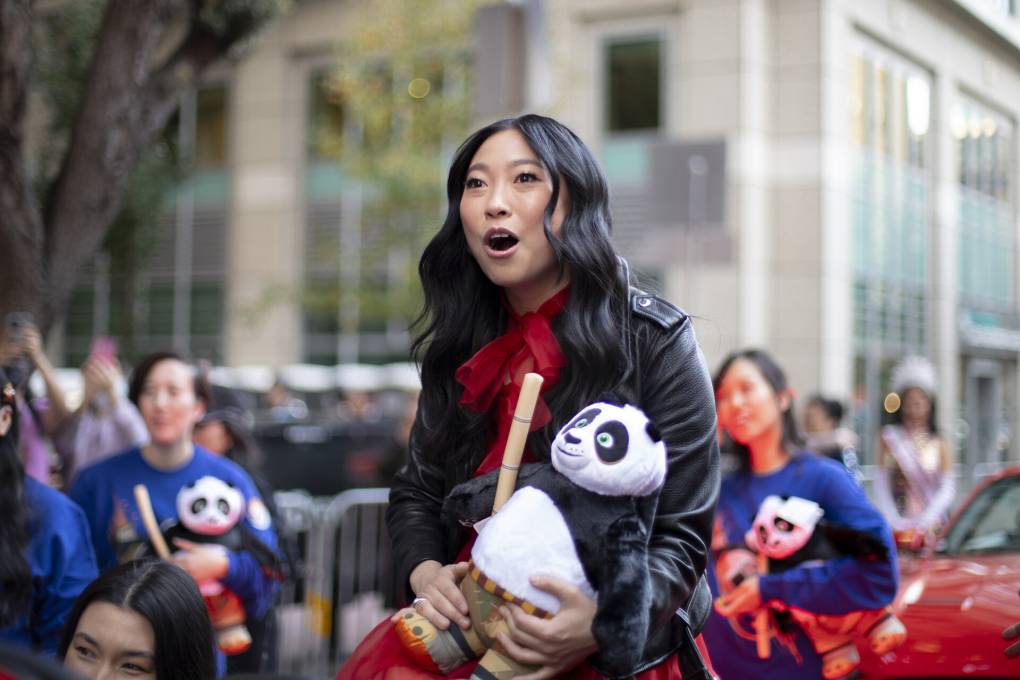
"caption": "Awkwafina, grand marshal of the Chinese New Year Festival and Parade in San Francisco on Feb. 24, 2024.",
"description": null,
"title": "240224-Chinese-new-year-parade-KSM-3_qut",
"credit": "Kathryn Styer Martínez/KQED",
"status": "inherit",
"altTag": null,
"isLoading": false,
"fetchFailed": false
},
"news_11973430": {
"type": "attachments",
"id": "news_11973430",
"meta": {
"index": "attachments_1716263798",
"site": "news",
"id": "11973430",
"found": true
},
"parent": 0,
"imgSizes": {
"twentyfourteen-full-width": {
"file": "https://cdn.kqed.org/wp-content/uploads/sites/10/2024/01/240122-PORTSMOUTHSQUARE-35-BL-KQED-1038x576.jpg",
"width": 1038,
"mimeType": "image/jpeg",
"height": 576
},
"thumbnail": {
"file": "https://cdn.kqed.org/wp-content/uploads/sites/10/2024/01/240122-PORTSMOUTHSQUARE-35-BL-KQED-160x107.jpg",
"width": 160,
"mimeType": "image/jpeg",
"height": 107
},
"post-thumbnail": {
"file": "https://cdn.kqed.org/wp-content/uploads/sites/10/2024/01/240122-PORTSMOUTHSQUARE-35-BL-KQED-672x372.jpg",
"width": 672,
"mimeType": "image/jpeg",
"height": 372
},
"kqedFullSize": {
"file": "https://cdn.kqed.org/wp-content/uploads/sites/10/2024/01/240122-PORTSMOUTHSQUARE-35-BL-KQED.jpg",
"width": 2000,
"height": 1333
},
"large": {
"file": "https://cdn.kqed.org/wp-content/uploads/sites/10/2024/01/240122-PORTSMOUTHSQUARE-35-BL-KQED-1020x680.jpg",
"width": 1020,
"mimeType": "image/jpeg",
"height": 680
},
"1536x1536": {
"file": "https://cdn.kqed.org/wp-content/uploads/sites/10/2024/01/240122-PORTSMOUTHSQUARE-35-BL-KQED-1536x1024.jpg",
"width": 1536,
"mimeType": "image/jpeg",
"height": 1024
},
"full-width": {
"file": "https://cdn.kqed.org/wp-content/uploads/sites/10/2024/01/240122-PORTSMOUTHSQUARE-35-BL-KQED-1920x1280.jpg",
"width": 1920,
"mimeType": "image/jpeg",
"height": 1280
},
"medium": {
"file": "https://cdn.kqed.org/wp-content/uploads/sites/10/2024/01/240122-PORTSMOUTHSQUARE-35-BL-KQED-800x533.jpg",
"width": 800,
"mimeType": "image/jpeg",
"height": 533
}
},
"publishDate": 1706042322,
"modified": 1706143709,
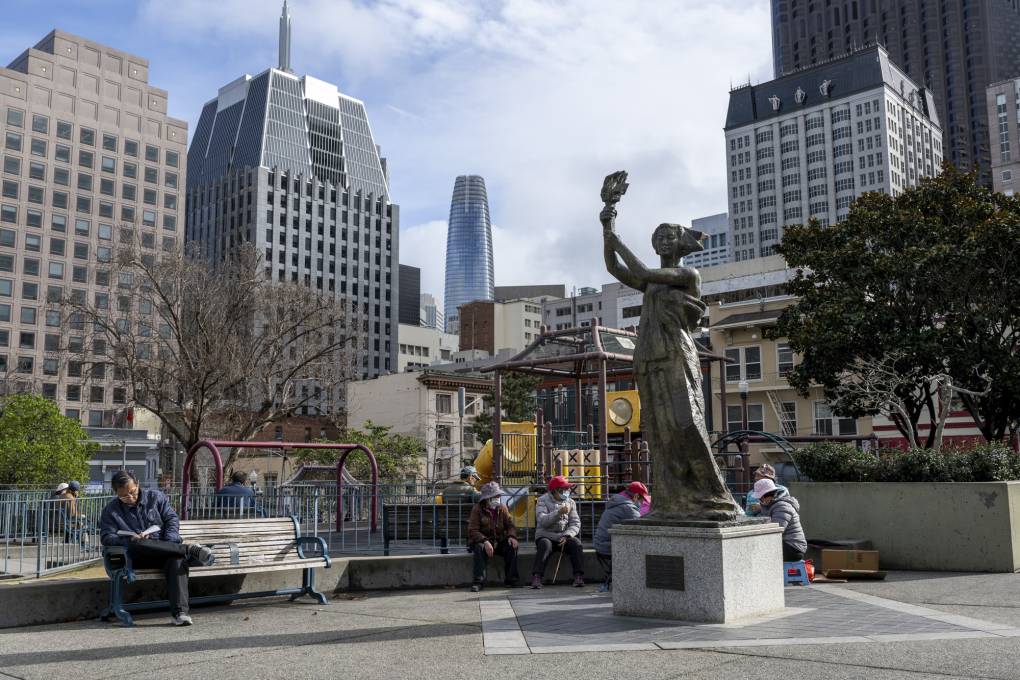
"caption": "People sit near the Goddess of Democracy statue in Portsmouth Square in San Francisco's Chinatown neighborhood on Jan. 22, 2024.",
"description": null,
"title": "240122-PORTSMOUTHSQUARE-35-BL-KQED",
"credit": "Beth LaBerge/KQED",
"status": "inherit",
"altTag": "People sit on a bench with a statue in front of them. Tall buildings surround them in the background.",
"isLoading": false,
"fetchFailed": false
},
"news_11967706": {
"type": "attachments",
"id": "news_11967706",
"meta": {
"index": "attachments_1716263798",
"site": "news",
"id": "11967706",
"found": true
},
"parent": 11970450,
"imgSizes": {
"twentyfourteen-full-width": {
"file": "https://cdn.kqed.org/wp-content/uploads/sites/10/2023/11/231115-APECWalkingTour-44-BL-1038x576.jpg",
"width": 1038,
"mimeType": "image/jpeg",
"height": 576
},
"thumbnail": {
"file": "https://cdn.kqed.org/wp-content/uploads/sites/10/2023/11/231115-APECWalkingTour-44-BL-160x107.jpg",
"width": 160,
"mimeType": "image/jpeg",
"height": 107
},
"post-thumbnail": {
"file": "https://cdn.kqed.org/wp-content/uploads/sites/10/2023/11/231115-APECWalkingTour-44-BL-672x372.jpg",
"width": 672,
"mimeType": "image/jpeg",
"height": 372
},
"kqedFullSize": {
"file": "https://cdn.kqed.org/wp-content/uploads/sites/10/2023/11/231115-APECWalkingTour-44-BL.jpg",
"width": 1920,
"height": 1280
},
"large": {
"file": "https://cdn.kqed.org/wp-content/uploads/sites/10/2023/11/231115-APECWalkingTour-44-BL-1020x680.jpg",
"width": 1020,
"mimeType": "image/jpeg",
"height": 680
},
"1536x1536": {
"file": "https://cdn.kqed.org/wp-content/uploads/sites/10/2023/11/231115-APECWalkingTour-44-BL-1536x1024.jpg",
"width": 1536,
"mimeType": "image/jpeg",
"height": 1024
},
"medium": {
"file": "https://cdn.kqed.org/wp-content/uploads/sites/10/2023/11/231115-APECWalkingTour-44-BL-800x533.jpg",
"width": 800,
"mimeType": "image/jpeg",
"height": 533
}
},
"publishDate": 1700172831,
"modified": 1703026325,
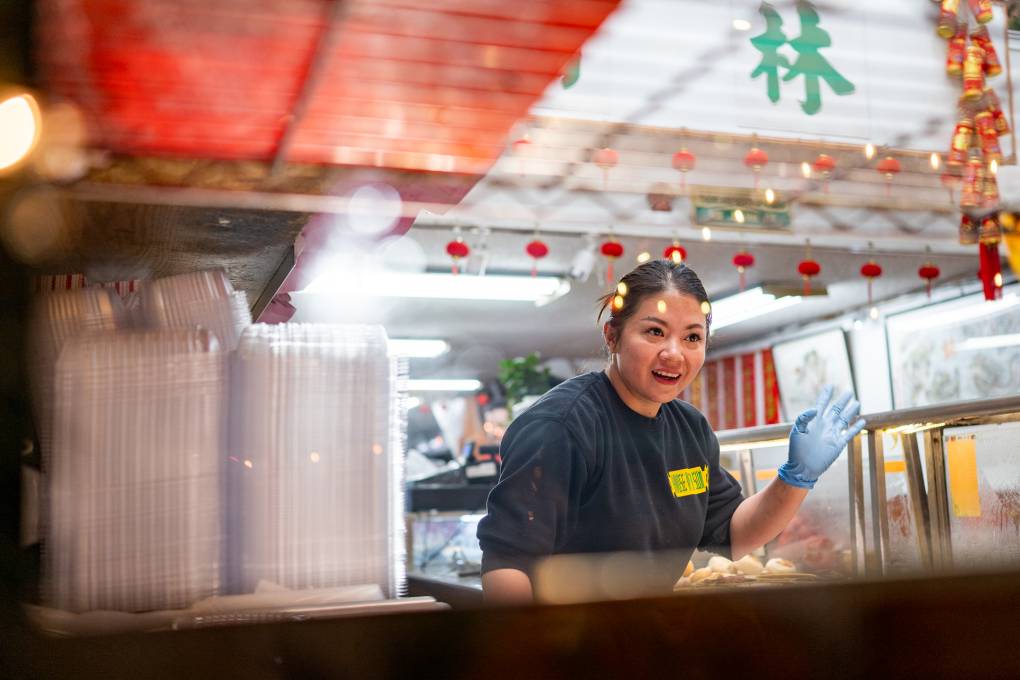
"caption": "Ying Huang, owner of House of Dim Sum, waves at Steven Lee and Beverly Yip as they lead a Chinatown walking tour for attendees of APEC in San Francisco on Wednesday evening.",
"description": null,
"title": "231115-APECWalkingTour-44-BL",
"credit": "Beth LaBerge/KQED",
"status": "inherit",
"altTag": "A woman waves through a window of a restaurant.",
"isLoading": false,
"fetchFailed": false
},
"news_11961411": {
"type": "attachments",
"id": "news_11961411",
"meta": {
"index": "attachments_1716263798",
"site": "news",
"id": "11961411",
"found": true
},
"title": "230913-SFPDStaff-011-BL-KQED",
"publishDate": 1694810146,
"status": "inherit",
"parent": 12063157,
"modified": 1762466664,
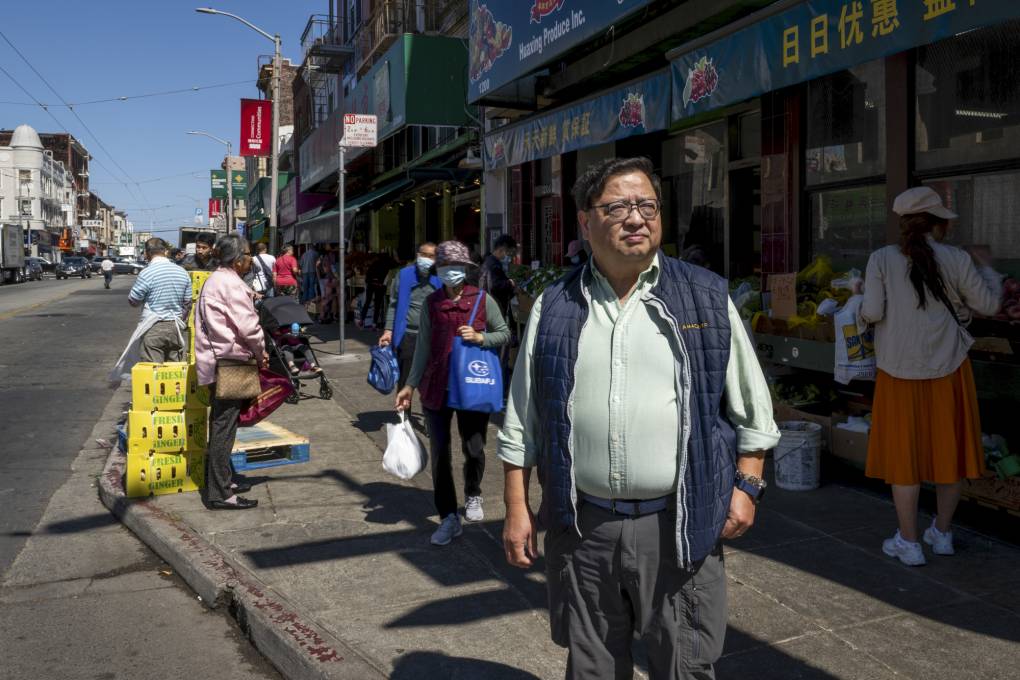
"caption": "Edward Siu, president of the Chinatown Merchants United Association, stands on a busy corner of Stockton Street in San Francisco's Chinatown neighborhood on Sept. 13, 2023. He says SFPD command turnover is so fast that he can't remember all the names of the police leaders he's given community tours to.",
"credit": "Beth LaBerge/KQED",
"altTag": "A person with glasses is photographed as other people pass on a busy city sidewalk.",
"description": null,
"imgSizes": {
"medium": {
"file": "https://cdn.kqed.org/wp-content/uploads/sites/10/2023/09/230913-SFPDStaff-011-BL-KQED-800x533.jpg",
"width": 800,
"height": 533,
"mimeType": "image/jpeg"
},
"large": {
"file": "https://cdn.kqed.org/wp-content/uploads/sites/10/2023/09/230913-SFPDStaff-011-BL-KQED-1020x680.jpg",
"width": 1020,
"height": 680,
"mimeType": "image/jpeg"
},
"thumbnail": {
"file": "https://cdn.kqed.org/wp-content/uploads/sites/10/2023/09/230913-SFPDStaff-011-BL-KQED-160x107.jpg",
"width": 160,
"height": 107,
"mimeType": "image/jpeg"
},
"1536x1536": {
"file": "https://cdn.kqed.org/wp-content/uploads/sites/10/2023/09/230913-SFPDStaff-011-BL-KQED-1536x1024.jpg",
"width": 1536,
"height": 1024,
"mimeType": "image/jpeg"
},
"post-thumbnail": {
"file": "https://cdn.kqed.org/wp-content/uploads/sites/10/2023/09/230913-SFPDStaff-011-BL-KQED-672x372.jpg",
"width": 672,
"height": 372,
"mimeType": "image/jpeg"
},
"twentyfourteen-full-width": {
"file": "https://cdn.kqed.org/wp-content/uploads/sites/10/2023/09/230913-SFPDStaff-011-BL-KQED-1038x576.jpg",
"width": 1038,
"height": 576,
"mimeType": "image/jpeg"
},
"full-width": {
"file": "https://cdn.kqed.org/wp-content/uploads/sites/10/2023/09/230913-SFPDStaff-011-BL-KQED-1920x1280.jpg",
"width": 1920,
"height": 1280,
"mimeType": "image/jpeg"
},
"kqedFullSize": {
"file": "https://cdn.kqed.org/wp-content/uploads/sites/10/2023/09/230913-SFPDStaff-011-BL-KQED.jpg",
"width": 2000,
"height": 1333
}
},
"isLoading": false,
"fetchFailed": false
},
"news_11947385": {
"type": "attachments",
"id": "news_11947385",
"meta": {
"index": "attachments_1716263798",
"site": "news",
"id": "11947385",
"found": true
},
"parent": 11947380,
"imgSizes": {
"twentyfourteen-full-width": {
"file": "https://ww2.kqed.org/app/uploads/sites/10/2023/04/Rally2-1038x576.jpg",
"width": 1038,
"mimeType": "image/jpeg",
"height": 576
},
"thumbnail": {
"file": "https://ww2.kqed.org/app/uploads/sites/10/2023/04/Rally2-160x59.jpg",
"width": 160,
"mimeType": "image/jpeg",
"height": 59
},
"post-thumbnail": {
"file": "https://ww2.kqed.org/app/uploads/sites/10/2023/04/Rally2-672x372.jpg",
"width": 672,
"mimeType": "image/jpeg",
"height": 372
},
"kqedFullSize": {
"file": "https://ww2.kqed.org/app/uploads/sites/10/2023/04/Rally2.jpg",
"width": 1867,
"height": 687
},
"large": {
"file": "https://ww2.kqed.org/app/uploads/sites/10/2023/04/Rally2-1020x375.jpg",
"width": 1020,
"mimeType": "image/jpeg",
"height": 375
},
"1536x1536": {
"file": "https://ww2.kqed.org/app/uploads/sites/10/2023/04/Rally2-1536x565.jpg",
"width": 1536,
"mimeType": "image/jpeg",
"height": 565
},
"medium": {
"file": "https://ww2.kqed.org/app/uploads/sites/10/2023/04/Rally2-800x294.jpg",
"width": 800,
"mimeType": "image/jpeg",
"height": 294
}
},
"publishDate": 1682216967,
"modified": 1682218284,
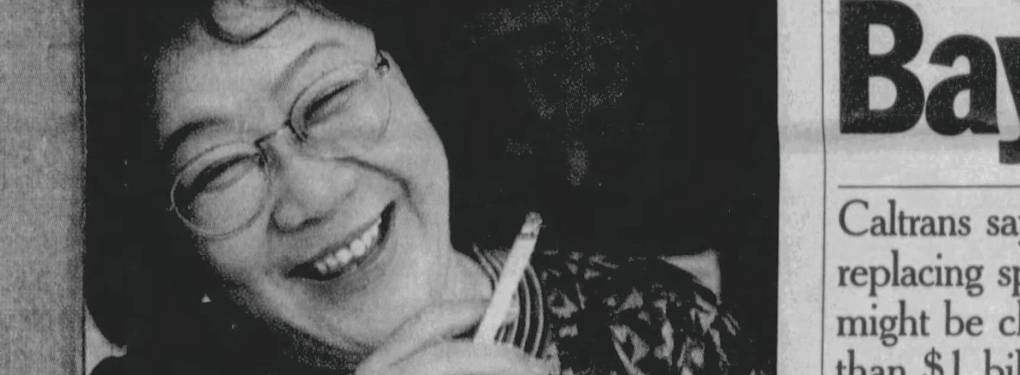
"caption": "A newspaper clipping of Rose Pak in a snippet from the film 'Rally.'",
"description": null,
"title": "Rally2",
"credit": "Courtesy Rally",
"status": "inherit",
"altTag": "A newspaper clipping with a Chinese woman smiling as she holds a cigarette in her fingers.",
"isLoading": false,
"fetchFailed": false
},
"news_11933663": {
"type": "attachments",
"id": "news_11933663",
"meta": {
"index": "attachments_1716263798",
"site": "news",
"id": "11933663",
"found": true
},
"parent": 11933614,
"imgSizes": {
"twentyfourteen-full-width": {
"file": "https://ww2.kqed.org/app/uploads/sites/10/2022/11/4F154C5C-22C8-4DB1-A259-D48F3ED86DBE-1038x576.jpg",
"width": 1038,
"mimeType": "image/jpeg",
"height": 576
},
"thumbnail": {
"file": "https://ww2.kqed.org/app/uploads/sites/10/2022/11/4F154C5C-22C8-4DB1-A259-D48F3ED86DBE-160x120.jpg",
"width": 160,
"mimeType": "image/jpeg",
"height": 120
},
"post-thumbnail": {
"file": "https://ww2.kqed.org/app/uploads/sites/10/2022/11/4F154C5C-22C8-4DB1-A259-D48F3ED86DBE-672x372.jpg",
"width": 672,
"mimeType": "image/jpeg",
"height": 372
},
"kqedFullSize": {
"file": "https://ww2.kqed.org/app/uploads/sites/10/2022/11/4F154C5C-22C8-4DB1-A259-D48F3ED86DBE-scaled.jpg",
"width": 2560,
"height": 1928
},
"2048x2048": {
"file": "https://ww2.kqed.org/app/uploads/sites/10/2022/11/4F154C5C-22C8-4DB1-A259-D48F3ED86DBE-2048x1542.jpg",
"width": 2048,
"mimeType": "image/jpeg",
"height": 1542
},
"large": {
"file": "https://ww2.kqed.org/app/uploads/sites/10/2022/11/4F154C5C-22C8-4DB1-A259-D48F3ED86DBE-1020x768.jpg",
"width": 1020,
"mimeType": "image/jpeg",
"height": 768
},
"1536x1536": {
"file": "https://ww2.kqed.org/app/uploads/sites/10/2022/11/4F154C5C-22C8-4DB1-A259-D48F3ED86DBE-1536x1157.jpg",
"width": 1536,
"mimeType": "image/jpeg",
"height": 1157
},
"full-width": {
"file": "https://ww2.kqed.org/app/uploads/sites/10/2022/11/4F154C5C-22C8-4DB1-A259-D48F3ED86DBE-1920x1446.jpg",
"width": 1920,
"mimeType": "image/jpeg",
"height": 1446
},
"medium": {
"file": "https://ww2.kqed.org/app/uploads/sites/10/2022/11/4F154C5C-22C8-4DB1-A259-D48F3ED86DBE-800x602.jpg",
"width": 800,
"mimeType": "image/jpeg",
"height": 602
}
},
"publishDate": 1669854504,
"modified": 1669857778,
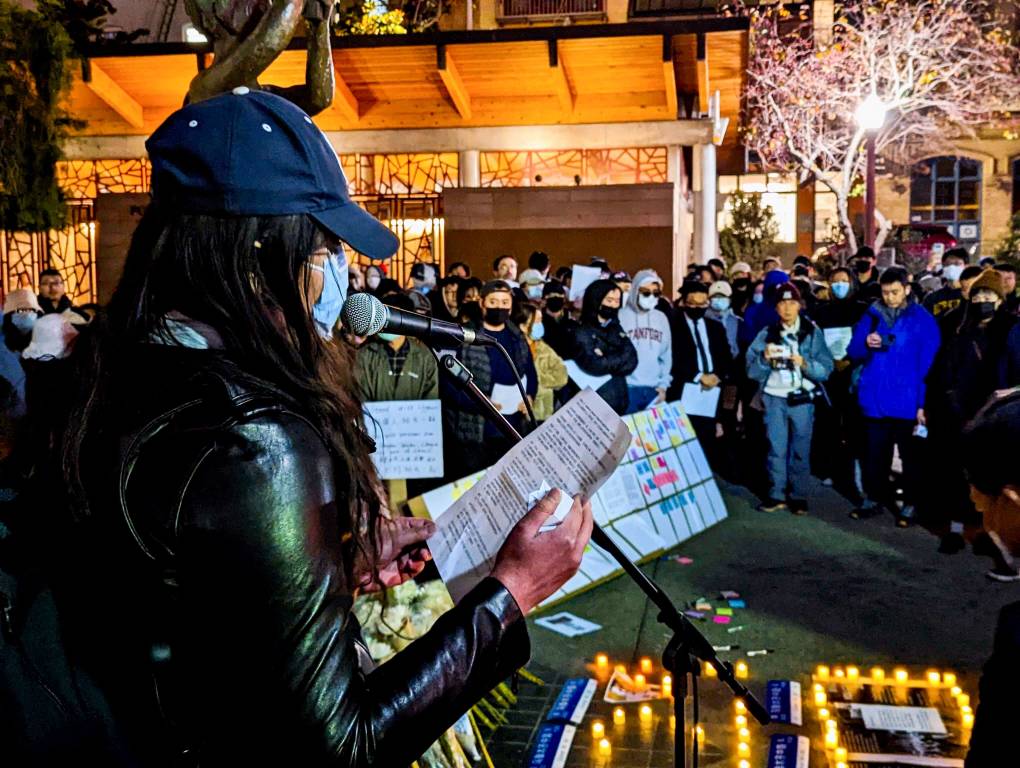
"caption": "A protester reads a personal testimonial at Portsmouth Square, a public space in San Francisco's Chinatown, stand at a vigil on November 29, 2022, for 10 people killed in Xinjiang, China earlier in the month.",
"description": null,
"title": "4F154C5C-22C8-4DB1-A259-D48F3ED86DBE",
"credit": "Joe Fitzgerald Rodriguez/KQED",
"status": "inherit",
"altTag": "A woman wearing a mask, hat and jacket holds a piece of paper in near a microphone outside surrounded by a crowd of people.",
"isLoading": false,
"fetchFailed": false
},
"news_11932852": {
"type": "attachments",
"id": "news_11932852",
"meta": {
"index": "attachments_1716263798",
"site": "news",
"id": "11932852",
"found": true
},
"parent": 11932838,
"imgSizes": {
"twentyfourteen-full-width": {
"file": "https://ww2.kqed.org/app/uploads/sites/10/2022/11/RS60320_DSC09369-qut-1038x576.jpg",
"width": 1038,
"mimeType": "image/jpeg",
"height": 576
},
"thumbnail": {
"file": "https://ww2.kqed.org/app/uploads/sites/10/2022/11/RS60320_DSC09369-qut-160x107.jpg",
"width": 160,
"mimeType": "image/jpeg",
"height": 107
},
"post-thumbnail": {
"file": "https://ww2.kqed.org/app/uploads/sites/10/2022/11/RS60320_DSC09369-qut-672x372.jpg",
"width": 672,
"mimeType": "image/jpeg",
"height": 372
},
"kqedFullSize": {
"file": "https://ww2.kqed.org/app/uploads/sites/10/2022/11/RS60320_DSC09369-qut.jpg",
"width": 1920,
"height": 1280
},
"large": {
"file": "https://ww2.kqed.org/app/uploads/sites/10/2022/11/RS60320_DSC09369-qut-1020x680.jpg",
"width": 1020,
"mimeType": "image/jpeg",
"height": 680
},
"1536x1536": {
"file": "https://ww2.kqed.org/app/uploads/sites/10/2022/11/RS60320_DSC09369-qut-1536x1024.jpg",
"width": 1536,
"mimeType": "image/jpeg",
"height": 1024
},
"medium": {
"file": "https://ww2.kqed.org/app/uploads/sites/10/2022/11/RS60320_DSC09369-qut-800x533.jpg",
"width": 800,
"mimeType": "image/jpeg",
"height": 533
}
},
"publishDate": 1668908313,
"modified": 1669060839,
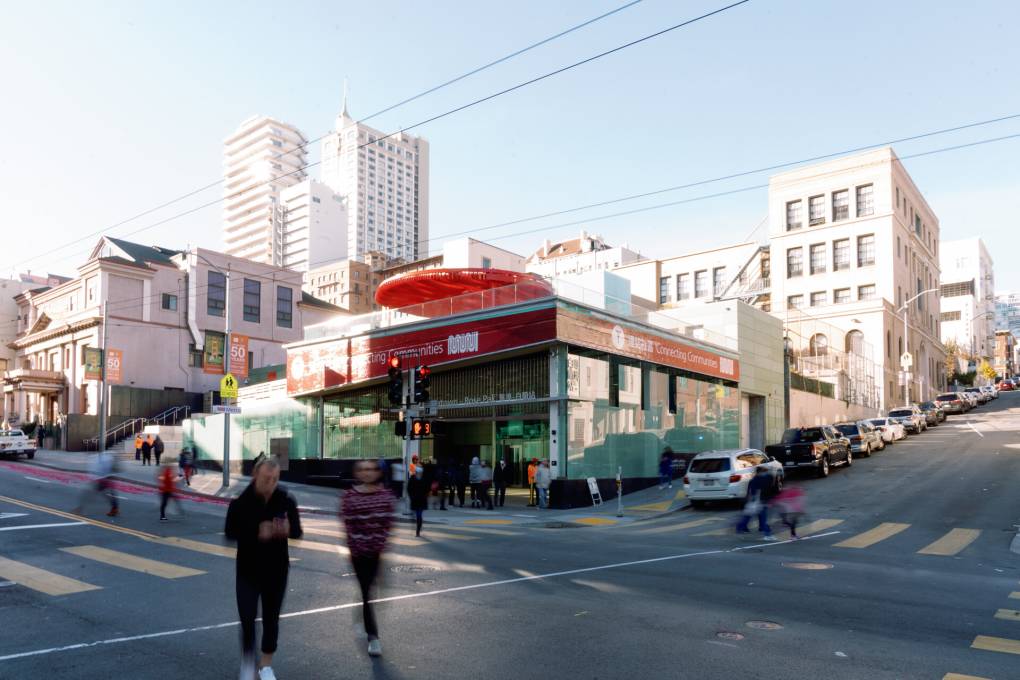
"caption": "A street view of Chinatown's brand-new Rose Pak SFMTA subway station in San Francisco on Nov. 19, 2022.",
"description": null,
"title": "RS60320_DSC09369-qut",
"credit": "Aryk Copley/KQED",
"status": "inherit",
"altTag": "Two people cross the street at a busy intersection with the new Rose Pak SFMTA station on the diagonal corner with a city skyline backdrop.",
"isLoading": false,
"fetchFailed": false
},
"news_11911229": {
"type": "attachments",
"id": "news_11911229",
"meta": {
"index": "attachments_1716263798",
"site": "news",
"id": "11911229",
"found": true
},
"parent": 11911208,
"imgSizes": {
"twentyfourteen-full-width": {
"file": "https://ww2.kqed.org/app/uploads/sites/10/2022/04/Susan-in-Cemetery-1768-1038x576.jpg",
"width": 1038,
"mimeType": "image/jpeg",
"height": 576
},
"thumbnail": {
"file": "https://ww2.kqed.org/app/uploads/sites/10/2022/04/Susan-in-Cemetery-1768-160x107.jpg",
"width": 160,
"mimeType": "image/jpeg",
"height": 107
},
"post-thumbnail": {
"file": "https://ww2.kqed.org/app/uploads/sites/10/2022/04/Susan-in-Cemetery-1768-672x372.jpg",
"width": 672,
"mimeType": "image/jpeg",
"height": 372
},
"kqedFullSize": {
"file": "https://ww2.kqed.org/app/uploads/sites/10/2022/04/Susan-in-Cemetery-1768-scaled.jpg",
"width": 2560,
"height": 1707
},
"2048x2048": {
"file": "https://ww2.kqed.org/app/uploads/sites/10/2022/04/Susan-in-Cemetery-1768-2048x1365.jpg",
"width": 2048,
"mimeType": "image/jpeg",
"height": 1365
},
"large": {
"file": "https://ww2.kqed.org/app/uploads/sites/10/2022/04/Susan-in-Cemetery-1768-1020x680.jpg",
"width": 1020,
"mimeType": "image/jpeg",
"height": 680
},
"1536x1536": {
"file": "https://ww2.kqed.org/app/uploads/sites/10/2022/04/Susan-in-Cemetery-1768-1536x1024.jpg",
"width": 1536,
"mimeType": "image/jpeg",
"height": 1024
},
"full-width": {
"file": "https://ww2.kqed.org/app/uploads/sites/10/2022/04/Susan-in-Cemetery-1768-1920x1280.jpg",
"width": 1920,
"mimeType": "image/jpeg",
"height": 1280
},
"medium": {
"file": "https://ww2.kqed.org/app/uploads/sites/10/2022/04/Susan-in-Cemetery-1768-800x533.jpg",
"width": 800,
"mimeType": "image/jpeg",
"height": 533
}
},
"publishDate": 1649983186,
"modified": 1649983347,
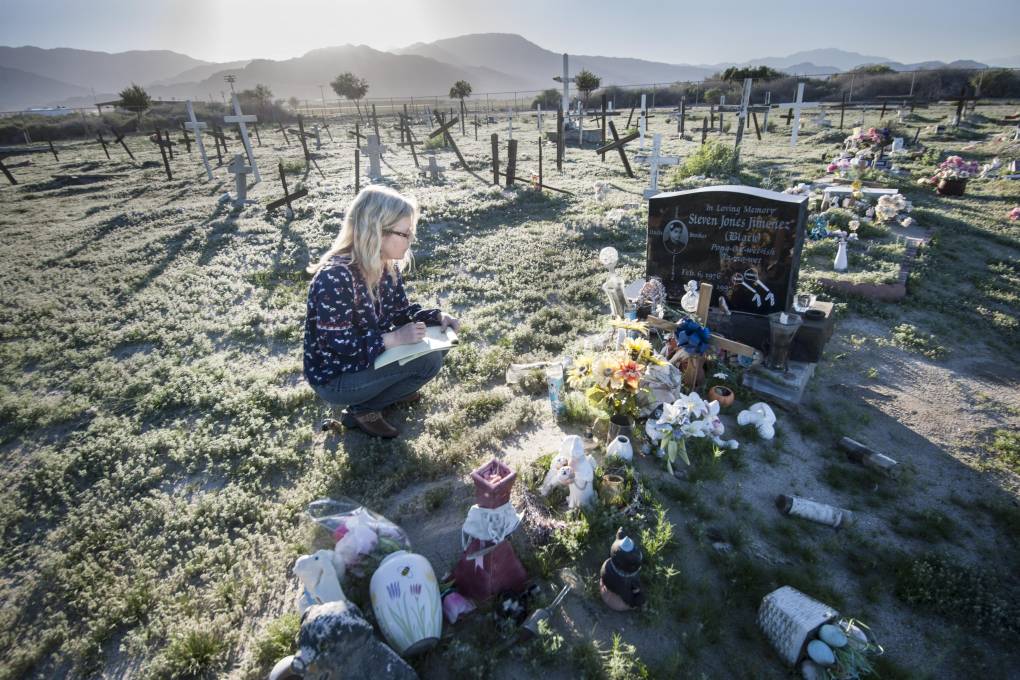
"caption": "Author Susan Straight takes notes in the Torres-Martinez Indian Reservation Cemetery in the Coachella Valley.",
"description": null,
"title": "Susan in Cemetery 1768",
"credit": "Douglas McCulloh",
"status": "inherit",
"altTag": null,
"isLoading": false,
"fetchFailed": false
},
"news_11905938": {
"type": "attachments",
"id": "news_11905938",
"meta": {
"index": "attachments_1716263798",
"site": "news",
"id": "11905938",
"found": true
},
"parent": 11905929,
"imgSizes": {
"twentyfourteen-full-width": {
"file": "https://ww2.kqed.org/app/uploads/sites/10/2022/02/RS53793_018_KQED_LunarNewYearSF_02192022-qut-1038x576.jpg",
"width": 1038,
"mimeType": "image/jpeg",
"height": 576
},
"thumbnail": {
"file": "https://ww2.kqed.org/app/uploads/sites/10/2022/02/RS53793_018_KQED_LunarNewYearSF_02192022-qut-160x107.jpg",
"width": 160,
"mimeType": "image/jpeg",
"height": 107
},
"post-thumbnail": {
"file": "https://ww2.kqed.org/app/uploads/sites/10/2022/02/RS53793_018_KQED_LunarNewYearSF_02192022-qut-672x372.jpg",
"width": 672,
"mimeType": "image/jpeg",
"height": 372
},
"kqedFullSize": {
"file": "https://ww2.kqed.org/app/uploads/sites/10/2022/02/RS53793_018_KQED_LunarNewYearSF_02192022-qut.jpg",
"width": 1920,
"height": 1278
},
"large": {
"file": "https://ww2.kqed.org/app/uploads/sites/10/2022/02/RS53793_018_KQED_LunarNewYearSF_02192022-qut-1020x679.jpg",
"width": 1020,
"mimeType": "image/jpeg",
"height": 679
},
"1536x1536": {
"file": "https://ww2.kqed.org/app/uploads/sites/10/2022/02/RS53793_018_KQED_LunarNewYearSF_02192022-qut-1536x1022.jpg",
"width": 1536,
"mimeType": "image/jpeg",
"height": 1022
},
"medium": {
"file": "https://ww2.kqed.org/app/uploads/sites/10/2022/02/RS53793_018_KQED_LunarNewYearSF_02192022-qut-800x533.jpg",
"width": 800,
"mimeType": "image/jpeg",
"height": 533
}
},
"publishDate": 1645376787,
"modified": 1645557952,
"caption": "Cheyenne and her son Xavier watch the Chinese New Year Parade in San Francisco on Feb. 19, 2022.",
"description": null,
"title": "RS53793_018_KQED_LunarNewYearSF_02192022-qut",
"credit": "Beth LaBerge/KQED",
"status": "inherit",
"altTag": null,
"isLoading": false,
"fetchFailed": false
},
"news_11899818": {
"type": "attachments",
"id": "news_11899818",
"meta": {
"index": "attachments_1716263798",
"site": "news",
"id": "11899818",
"found": true
},
"parent": 11899667,
"imgSizes": {
"twentyfourteen-full-width": {
"file": "https://ww2.kqed.org/app/uploads/sites/10/2021/12/016_Oakland_JuneteenthBBPMiniMuseum_06192021-1038x576.jpg",
"width": 1038,
"mimeType": "image/jpeg",
"height": 576
},
"thumbnail": {
"file": "https://ww2.kqed.org/app/uploads/sites/10/2021/12/016_Oakland_JuneteenthBBPMiniMuseum_06192021-160x107.jpg",
"width": 160,
"mimeType": "image/jpeg",
"height": 107
},
"post-thumbnail": {
"file": "https://ww2.kqed.org/app/uploads/sites/10/2021/12/016_Oakland_JuneteenthBBPMiniMuseum_06192021-672x372.jpg",
"width": 672,
"mimeType": "image/jpeg",
"height": 372
},
"kqedFullSize": {
"file": "https://ww2.kqed.org/app/uploads/sites/10/2021/12/016_Oakland_JuneteenthBBPMiniMuseum_06192021.jpg",
"width": 1920,
"height": 1280
},
"large": {
"file": "https://ww2.kqed.org/app/uploads/sites/10/2021/12/016_Oakland_JuneteenthBBPMiniMuseum_06192021-1020x680.jpg",
"width": 1020,
"mimeType": "image/jpeg",
"height": 680
},
"1536x1536": {
"file": "https://ww2.kqed.org/app/uploads/sites/10/2021/12/016_Oakland_JuneteenthBBPMiniMuseum_06192021-1536x1024.jpg",
"width": 1536,
"mimeType": "image/jpeg",
"height": 1024
},
"medium": {
"file": "https://ww2.kqed.org/app/uploads/sites/10/2021/12/016_Oakland_JuneteenthBBPMiniMuseum_06192021-800x533.jpg",
"width": 800,
"mimeType": "image/jpeg",
"height": 533
}
},
"publishDate": 1639959657,
"modified": 1640052639,
"caption": "Donnell McAlister gives kids a chance to sit on top of his horse JJ, named after Jesse James, during a Juneteenth block party to celebrate the opening of Black Panther Party Mini Museum in West Oakland on June 19, 2021.",
"description": "Donnell McAlister gives kids a chance to sit on top of his horse JJ, named after Jesse James, during a Juneteenth block party to celebrate the opening of Black Panther Party Mini Museum in West Oakland on June 19, 2021.",
"title": "Oakland_Juneteenth_BlackPantherPartyMiniMuseum_06192021",
"credit": "Beth LaBerge/KQED",
"status": "inherit",
"altTag": "A child smiles as she is lifted onto a horse by a man in a cowboy hat in front of a blue mural that says, \"Women of the Black Panther Party.\"",
"isLoading": false,
"fetchFailed": false
},
"news_11892132": {
"type": "attachments",
"id": "news_11892132",
"meta": {
"index": "attachments_1716263798",
"site": "news",
"id": "11892132",
"found": true
},
"parent": 11891987,
"imgSizes": {
"twentyfourteen-full-width": {
"file": "https://ww2.kqed.org/app/uploads/sites/10/2021/10/Mural-1038x576.jpg",
"width": 1038,
"mimeType": "image/jpeg",
"height": 576
},
"thumbnail": {
"file": "https://ww2.kqed.org/app/uploads/sites/10/2021/10/Mural-160x120.jpg",
"width": 160,
"mimeType": "image/jpeg",
"height": 120
},
"post-thumbnail": {
"file": "https://ww2.kqed.org/app/uploads/sites/10/2021/10/Mural-672x372.jpg",
"width": 672,
"mimeType": "image/jpeg",
"height": 372
},
"kqedFullSize": {
"file": "https://ww2.kqed.org/app/uploads/sites/10/2021/10/Mural-scaled.jpg",
"width": 2560,
"height": 1920
},
"2048x2048": {
"file": "https://ww2.kqed.org/app/uploads/sites/10/2021/10/Mural-2048x1536.jpg",
"width": 2048,
"mimeType": "image/jpeg",
"height": 1536
},
"large": {
"file": "https://ww2.kqed.org/app/uploads/sites/10/2021/10/Mural-1020x765.jpg",
"width": 1020,
"mimeType": "image/jpeg",
"height": 765
},
"1536x1536": {
"file": "https://ww2.kqed.org/app/uploads/sites/10/2021/10/Mural-1536x1152.jpg",
"width": 1536,
"mimeType": "image/jpeg",
"height": 1152
},
"full-width": {
"file": "https://ww2.kqed.org/app/uploads/sites/10/2021/10/Mural-1920x1440.jpg",
"width": 1920,
"mimeType": "image/jpeg",
"height": 1440
},
"medium": {
"file": "https://ww2.kqed.org/app/uploads/sites/10/2021/10/Mural-800x600.jpg",
"width": 800,
"mimeType": "image/jpeg",
"height": 600
}
},
"publishDate": 1634154177,
"modified": 1634154202,
"caption": "A large mural, titled “Fowl,” pays homage to Eureka's former Chinese residents. The mural was painted by Oakland artist Dave Kim.",
"description": null,
"title": "Mural",
"credit": "Photo by Héctor Alejandro Arzate",
"status": "inherit",
"altTag": null,
"isLoading": false,
"fetchFailed": false
},
"news_11891332": {
"type": "attachments",
"id": "news_11891332",
"meta": {
"index": "attachments_1716263798",
"site": "news",
"id": "11891332",
"found": true
},
"parent": 11891329,
"imgSizes": {
"twentyfourteen-full-width": {
"file": "https://ww2.kqed.org/app/uploads/sites/10/2021/10/DragonTunnel-closeup-1038x576.jpg",
"width": 1038,
"mimeType": "image/jpeg",
"height": 576
},
"thumbnail": {
"file": "https://ww2.kqed.org/app/uploads/sites/10/2021/10/DragonTunnel-closeup-160x90.jpg",
"width": 160,
"mimeType": "image/jpeg",
"height": 90
},
"post-thumbnail": {
"file": "https://ww2.kqed.org/app/uploads/sites/10/2021/10/DragonTunnel-closeup-672x372.jpg",
"width": 672,
"mimeType": "image/jpeg",
"height": 372
},
"kqedFullSize": {
"file": "https://ww2.kqed.org/app/uploads/sites/10/2021/10/DragonTunnel-closeup.jpg",
"width": 1920,
"height": 1080
},
"large": {
"file": "https://ww2.kqed.org/app/uploads/sites/10/2021/10/DragonTunnel-closeup-1020x574.jpg",
"width": 1020,
"mimeType": "image/jpeg",
"height": 574
},
"1536x1536": {
"file": "https://ww2.kqed.org/app/uploads/sites/10/2021/10/DragonTunnel-closeup-1536x864.jpg",
"width": 1536,
"mimeType": "image/jpeg",
"height": 864
},
"medium": {
"file": "https://ww2.kqed.org/app/uploads/sites/10/2021/10/DragonTunnel-closeup-800x450.jpg",
"width": 800,
"mimeType": "image/jpeg",
"height": 450
}
},
"publishDate": 1633562885,
"modified": 1634240230,
"caption": "San Francisco-born artist Patti Bowler designed \"Dragon Relief,\" a metal sculpture hanging above the Broadway tunnel.",
"description": "An abstract metal dragon sculpture is mounted above a tunnel with cars driving through.",
"title": "DragonTunnel-closeup",
"credit": "Google Street View",
"status": "inherit",
"altTag": "An abstract metal dragon sculpture is mounted above a tunnel with cars driving through.",
"isLoading": false,
"fetchFailed": false
}
},
"audioPlayerReducer": {
"postId": "stream_live",
"isPaused": true,
"isPlaying": false,
"pfsActive": false,
"pledgeModalIsOpen": true,
"playerDrawerIsOpen": false,
"liveAudioPlayStartedAt": 0,
"liveAudioPlayContext": ""
},
"authorsReducer": {
"byline_news_11967659": {
"type": "authors",
"id": "byline_news_11967659",
"meta": {
"override": true
},
"slug": "byline_news_11967659",
"name": "Naomi Vanderlip",
"isLoading": false
},
"byline_news_11932838": {
"type": "authors",
"id": "byline_news_11932838",
"meta": {
"override": true
},
"slug": "byline_news_11932838",
"name": "KQED News Staff",
"isLoading": false
},
"kqed": {
"type": "authors",
"id": "236",
"meta": {
"index": "authors_1716337520",
"id": "236",
"found": true
},
"name": "KQED News Staff",
"firstName": "KQED News Staff",
"lastName": null,
"slug": "kqed",
"email": "faq@kqed.org",
"display_author_email": false,
"staff_mastheads": [],
"title": null,
"bio": null,
"avatar": "https://secure.gravatar.com/avatar/ef0e801a68c4c54afa9180db14084167?s=600&d=blank&r=g",
"twitter": null,
"facebook": null,
"instagram": null,
"linkedin": null,
"sites": [
{
"site": "arts",
"roles": [
"contributor"
]
},
{
"site": "news",
"roles": [
"editor"
]
},
{
"site": "futureofyou",
"roles": [
"author"
]
}
],
"headData": {
"title": "KQED News Staff | KQED",
"description": null,
"ogImgSrc": "https://secure.gravatar.com/avatar/ef0e801a68c4c54afa9180db14084167?s=600&d=blank&r=g",
"twImgSrc": "https://secure.gravatar.com/avatar/ef0e801a68c4c54afa9180db14084167?s=600&d=blank&r=g"
},
"isLoading": false,
"link": "/author/kqed"
},
"ralexandra": {
"type": "authors",
"id": "11242",
"meta": {
"index": "authors_1716337520",
"id": "11242",
"found": true
},
"name": "Rae Alexandra",
"firstName": "Rae",
"lastName": "Alexandra",
"slug": "ralexandra",
"email": "ralexandra@kqed.org",
"display_author_email": true,
"staff_mastheads": [],
"title": "Reporter/Producer",
"bio": "Rae Alexandra is a Reporter/Producer for KQED Arts & Culture, and the creator/author of the \u003ca href=\"https://www.kqed.org/arts/program/rebel-girls-from-bay-area-history\">Rebel Girls From Bay Area History\u003c/a> and \u003ca href=\"https://www.kqed.org/bizarrebayarea\">Bizarre Bay Area\u003c/a> series. Her debut book, \u003ca href=\"https://citylights.com/politics-current-events-history/unsung-heroines35-women-who-changed/\">Unsung Heroines: 35 Women Who Changed the Bay Area\u003c/a> was published by City Lights in March 2026. In 2023, Rae was awarded an SPJ Excellence in Journalism Award for Arts & Culture. Rae was born and raised in Wales and subsequently — even after two decades in Northern California — still uses phrases that regularly baffle her coworkers.",
"avatar": "https://secure.gravatar.com/avatar/edfee8176c80cc0a382b051190f5341997df378a934a5774dcb0977732dfd401?s=600&d=blank&r=g",
"twitter": null,
"bluesky": null,
"facebook": null,
"instagram": null,
"linkedin": null,
"sites": [
{
"site": "arts",
"roles": [
"subscriber"
]
},
{
"site": "news",
"roles": [
"subscriber"
]
},
{
"site": "pop",
"roles": [
"subscriber"
]
},
{
"site": "bayareabites",
"roles": [
"subscriber"
]
},
{
"site": "science",
"roles": [
"subscriber"
]
}
],
"headData": {
"title": "Rae Alexandra | KQED",
"description": "Reporter/Producer",
"ogImgSrc": "https://secure.gravatar.com/avatar/edfee8176c80cc0a382b051190f5341997df378a934a5774dcb0977732dfd401?s=600&d=blank&r=g",
"twImgSrc": "https://secure.gravatar.com/avatar/edfee8176c80cc0a382b051190f5341997df378a934a5774dcb0977732dfd401?s=600&d=blank&r=g"
},
"isLoading": false,
"link": "/author/ralexandra"
},
"lsarah": {
"type": "authors",
"id": "11626",
"meta": {
"index": "authors_1716337520",
"id": "11626",
"found": true
},
"name": "Lakshmi Sarah",
"firstName": "Lakshmi",
"lastName": "Sarah",
"slug": "lsarah",
"email": "lsarah@kqed.org",
"display_author_email": false,
"staff_mastheads": [],
"title": "Digital Producer",
"bio": "Lakshmi Sarah is an educator, author and journalist with a focus on innovative storytelling. She has worked with newspapers, radio and magazines from Ahmedabad, India to Los Angeles, California. She has written and produced for Die Zeit, Global Voices, AJ+, KQED, Fusion Media Group and the New York Times.",
"avatar": "https://secure.gravatar.com/avatar/652dcaecd8b28826fc17a8b2d6bb4e93?s=600&d=blank&r=g",
"twitter": "lakitalki",
"facebook": null,
"instagram": "https://www.instagram.com/laki.talki/",
"linkedin": "https://www.linkedin.com/in/lakisarah/",
"sites": [
{
"site": "arts",
"roles": []
},
{
"site": "news",
"roles": []
},
{
"site": "bayareabites",
"roles": []
},
{
"site": "science",
"roles": []
}
],
"headData": {
"title": "Lakshmi Sarah | KQED",
"description": "Digital Producer",
"ogImgSrc": "https://secure.gravatar.com/avatar/652dcaecd8b28826fc17a8b2d6bb4e93?s=600&d=blank&r=g",
"twImgSrc": "https://secure.gravatar.com/avatar/652dcaecd8b28826fc17a8b2d6bb4e93?s=600&d=blank&r=g"
},
"isLoading": false,
"link": "/author/lsarah"
},
"blaberge": {
"type": "authors",
"id": "11667",
"meta": {
"index": "authors_1716337520",
"id": "11667",
"found": true
},
"name": "Beth LaBerge",
"firstName": "Beth",
"lastName": "LaBerge",
"slug": "blaberge",
"email": "blaberge@KQED.org",
"display_author_email": true,
"staff_mastheads": [
"news"
],
"title": "Photographer, News",
"bio": "Beth LaBerge is a visual journalist for \u003ca href=\"https://www.kqed.org/news\">KQED News\u003c/a>.",
"avatar": "https://secure.gravatar.com/avatar/ce49ecd7a1306685637b45a1f6f5dedfc4ae9481966eb596fea5160466dd6319?s=600&d=blank&r=g",
"twitter": null,
"bluesky": null,
"facebook": null,
"instagram": "https://www.instagram.com/bethlaberge/",
"linkedin": null,
"sites": [
{
"site": "arts",
"roles": [
"editor",
"manage_categories"
]
},
{
"site": "news",
"roles": [
"editor",
"edit_plugins",
"manage_categories"
]
},
{
"site": "science",
"roles": [
"editor",
"contributor",
"author",
"manage_categories"
]
},
{
"site": "perspectives",
"roles": [
"editor"
]
},
{
"site": "liveblog",
"roles": [
"editor"
]
}
],
"headData": {
"title": "Beth LaBerge | KQED",
"description": "Photographer, News",
"ogImgSrc": "https://secure.gravatar.com/avatar/ce49ecd7a1306685637b45a1f6f5dedfc4ae9481966eb596fea5160466dd6319?s=600&d=blank&r=g",
"twImgSrc": "https://secure.gravatar.com/avatar/ce49ecd7a1306685637b45a1f6f5dedfc4ae9481966eb596fea5160466dd6319?s=600&d=blank&r=g"
},
"isLoading": false,
"link": "/author/blaberge"
},
"jrodriguez": {
"type": "authors",
"id": "11690",
"meta": {
"index": "authors_1716337520",
"id": "11690",
"found": true
},
"name": "Joe Fitzgerald Rodriguez",
"firstName": "Joe",
"lastName": "Fitzgerald Rodriguez",
"slug": "jrodriguez",
"email": "jrodriguez@kqed.org",
"display_author_email": true,
"staff_mastheads": [
"news"
],
"title": "Reporter and Producer",
"bio": "Joe Fitzgerald Rodriguez is a reporter and digital producer for KQED covering politics. Joe most recently wrote for the \u003cem>San Francisco Examiner\u003c/em> as a political columnist covering The City. He was raised in San Francisco and has spent his reporting career in his beloved, foggy, city by the bay. Joe was 12-years-old when he conducted his first interview in journalism, grilling former San Francisco Mayor Willie Brown for the Marina Middle School newspaper, \u003cem>The Penguin Press, \u003c/em>and he continues to report on the San Francisco Bay Area to this day.",
"avatar": "https://secure.gravatar.com/avatar/2247beb0564c1e9c62228d5649d2edac?s=600&d=blank&r=g",
"twitter": "FitztheReporter",
"facebook": null,
"instagram": "https://www.instagram.com/fitzthereporter/",
"linkedin": null,
"sites": [
{
"site": "",
"roles": [
"editor"
]
},
{
"site": "arts",
"roles": [
"editor"
]
},
{
"site": "news",
"roles": [
"editor"
]
},
{
"site": "science",
"roles": [
"editor"
]
},
{
"site": "elections",
"roles": [
"editor"
]
},
{
"site": "liveblog",
"roles": [
"editor"
]
}
],
"headData": {
"title": "Joe Fitzgerald Rodriguez | KQED",
"description": "Reporter and Producer",
"ogImgSrc": "https://secure.gravatar.com/avatar/2247beb0564c1e9c62228d5649d2edac?s=600&d=blank&r=g",
"twImgSrc": "https://secure.gravatar.com/avatar/2247beb0564c1e9c62228d5649d2edac?s=600&d=blank&r=g"
},
"isLoading": false,
"link": "/author/jrodriguez"
},
"harzate": {
"type": "authors",
"id": "11727",
"meta": {
"index": "authors_1716337520",
"id": "11727",
"found": true
},
"name": "Héctor Alejandro Arzate",
"firstName": "Héctor Alejandro",
"lastName": "Arzate",
"slug": "harzate",
"email": "harzate@kqed.org",
"display_author_email": false,
"staff_mastheads": [],
"title": "KQED Contributor",
"bio": null,
"avatar": "https://secure.gravatar.com/avatar/23c72c3afa19f2c6801c5db997a908d8?s=600&d=blank&r=g",
"twitter": null,
"facebook": null,
"instagram": null,
"linkedin": null,
"sites": [
{
"site": "news",
"roles": [
"author"
]
}
],
"headData": {
"title": "Héctor Alejandro Arzate | KQED",
"description": "KQED Contributor",
"ogImgSrc": "https://secure.gravatar.com/avatar/23c72c3afa19f2c6801c5db997a908d8?s=600&d=blank&r=g",
"twImgSrc": "https://secure.gravatar.com/avatar/23c72c3afa19f2c6801c5db997a908d8?s=600&d=blank&r=g"
},
"isLoading": false,
"link": "/author/harzate"
},
"sjohnson": {
"type": "authors",
"id": "11840",
"meta": {
"index": "authors_1716337520",
"id": "11840",
"found": true
},
"name": "Sydney Johnson",
"firstName": "Sydney",
"lastName": "Johnson",
"slug": "sjohnson",
"email": "sjohnson@kqed.org",
"display_author_email": false,
"staff_mastheads": [
"news"
],
"title": "KQED Reporter",
"bio": "Sydney Johnson is a general assignment reporter at KQED. She previously reported on public health and city government at the San Francisco Examiner, and before that, she covered statewide education policy for EdSource. Her reporting has won multiple local, state and national awards. Sydney is a graduate of the University of California, Berkeley and lives in San Francisco.",
"avatar": "https://secure.gravatar.com/avatar/97855f2719b72ad6190b7c535fe642c8?s=600&d=blank&r=g",
"twitter": "sydneyfjohnson",
"facebook": null,
"instagram": null,
"linkedin": null,
"sites": [
{
"site": "news",
"roles": [
"editor"
]
}
],
"headData": {
"title": "Sydney Johnson | KQED",
"description": "KQED Reporter",
"ogImgSrc": "https://secure.gravatar.com/avatar/97855f2719b72ad6190b7c535fe642c8?s=600&d=blank&r=g",
"twImgSrc": "https://secure.gravatar.com/avatar/97855f2719b72ad6190b7c535fe642c8?s=600&d=blank&r=g"
},
"isLoading": false,
"link": "/author/sjohnson"
}
},
"pagesReducer": {
"news_tag_chinatown": {
"type": "terms",
"id": "news_393",
"meta": {
"index": "terms_1716263798",
"site": "news",
"id": "393",
"score": 8.938291
},
"featImg": null,
"name": "Chinatown",
"description": null,
"taxonomy": "tag",
"headData": {
"twImgId": null,
"twTitle": null,
"ogTitle": null,
"ogImgId": null,
"twDescription": null,
"description": null,
"title": "Chinatown Archives | KQED News",
"ogDescription": null
},
"ttid": 401,
"slug": "chinatown",
"isLoading": false,
"title": "Chinatown",
"pageMeta": {
"site": "news",
"WpPageTemplate": "page-topic-editorial",
"currentPage": 2
},
"blocks": [
{
"blockName": "kqed/post-list",
"attrs": {
"layout": "cardArticle2",
"query": "posts/news?tag=chinatown",
"seeMore": false,
"paginated": true,
"page": 2
}
},
{
"blockName": "kqed/ad"
}
]
}
},
"pfsSessionReducer": {},
"postsReducer": {
"stream_live": {
"type": "live",
"id": "stream_live",
"audioUrl": "https://streams.kqed.org/kqedradio",
"title": "Live Stream",
"excerpt": "Live Stream information currently unavailable.",
"link": "/radio",
"featImg": "",
"label": {
"name": "KQED Live",
"link": "/"
}
},
"stream_kqedNewscast": {
"type": "posts",
"id": "stream_kqedNewscast",
"audioUrl": "https://www.kqed.org/.stream/anon/radio/RDnews/newscast.mp3?_=1",
"title": "KQED Newscast",
"featImg": "",
"label": {
"name": "88.5 FM",
"link": "/"
}
},
"news_11976974": {
"type": "posts",
"id": "news_11976974",
"meta": {
"index": "posts_1716263798",
"site": "news",
"id": "11976974",
"score": null,
"sort": [
1708840800000
]
},
"guestAuthors": [],
"slug": "crowds-and-dragons-pack-chinatown-for-san-franciscos-chinese-new-year-parade",
"title": "Crowds (and Dragons) Pack Chinatown for San Francisco's Chinese New Year Parade",
"publishDate": 1708840800,
"format": "standard",
"headTitle": "Crowds (and Dragons) Pack Chinatown for San Francisco’s Chinese New Year Parade | KQED",
"labelTerm": {
"site": "news"
},
"content": "\u003cp>Thousands lined the streets of Chinatown Saturday for San Francisco’s dazzling annual \u003ca href=\"https://www.kqed.org/news/11976610/your-guide-to-the-2024-san-francisco-chinese-new-year-parade\">Chinese New Year Parade\u003c/a> that celebrates the Lunar New Year and the Chinese \u003ca href=\"https://www.kqed.org/arts/13951648/lunar-new-year-of-the-dragon-superstitions-celebrations\">Year of the Dragon\u003c/a>.\u003c/p>\n\u003cp>Beginning at Second and Market streets in downtown San Francisco at 5:15 p.m., the nearly three-hour parade made its way through Chinatown on a 1.3-mile course that rounded Union Square before ending at Kearny and Columbus Avenue.\u003c/p>\n\u003cfigure id=\"attachment_11977001\" class=\"wp-caption alignnone\" style=\"max-width: 1920px\">\u003cimg loading=\"lazy\" decoding=\"async\" class=\"size-full wp-image-11977001\" src=\"https://cdn.kqed.org/wp-content/uploads/sites/10/2024/02/240224-Chinese-new-year-parade-KSM-10_qut.jpg\" alt=\"\" width=\"1920\" height=\"1280\" srcset=\"https://cdn.kqed.org/wp-content/uploads/sites/10/2024/02/240224-Chinese-new-year-parade-KSM-10_qut.jpg 1920w, https://cdn.kqed.org/wp-content/uploads/sites/10/2024/02/240224-Chinese-new-year-parade-KSM-10_qut-800x533.jpg 800w, https://cdn.kqed.org/wp-content/uploads/sites/10/2024/02/240224-Chinese-new-year-parade-KSM-10_qut-1020x680.jpg 1020w, https://cdn.kqed.org/wp-content/uploads/sites/10/2024/02/240224-Chinese-new-year-parade-KSM-10_qut-160x107.jpg 160w, https://cdn.kqed.org/wp-content/uploads/sites/10/2024/02/240224-Chinese-new-year-parade-KSM-10_qut-1536x1024.jpg 1536w\" sizes=\"(max-width: 1920px) 100vw, 1920px\">\u003cfigcaption class=\"wp-caption-text\">A dragon passes by at the Chinese New Year Festival and Parade in San Francisco on Feb. 24, 2024. \u003ccite>(Kathryn Styer Martínez/KQED)\u003c/cite>\u003c/figcaption>\u003c/figure>\n\u003cp>Organizers of the parade say it’s considered one of the top ten parades in the world by the International Festivals & Events Association and \u003ca href=\"https://www.sfchronicle.com/bayarea/article/sf-chinese-new-year-18678491.php\">the biggest Lunar New Year parade outside of Asia\u003c/a>.\u003c/p>\n\u003cfigure id=\"attachment_11977004\" class=\"wp-caption alignnone\" style=\"max-width: 1920px\">\u003cimg loading=\"lazy\" decoding=\"async\" class=\"size-full wp-image-11977004\" src=\"https://cdn.kqed.org/wp-content/uploads/sites/10/2024/02/240224-ChineseNYParade-38-BL_qut.jpg\" alt=\"\" width=\"1920\" height=\"1280\" srcset=\"https://cdn.kqed.org/wp-content/uploads/sites/10/2024/02/240224-ChineseNYParade-38-BL_qut.jpg 1920w, https://cdn.kqed.org/wp-content/uploads/sites/10/2024/02/240224-ChineseNYParade-38-BL_qut-800x533.jpg 800w, https://cdn.kqed.org/wp-content/uploads/sites/10/2024/02/240224-ChineseNYParade-38-BL_qut-1020x680.jpg 1020w, https://cdn.kqed.org/wp-content/uploads/sites/10/2024/02/240224-ChineseNYParade-38-BL_qut-160x107.jpg 160w, https://cdn.kqed.org/wp-content/uploads/sites/10/2024/02/240224-ChineseNYParade-38-BL_qut-1536x1024.jpg 1536w\" sizes=\"(max-width: 1920px) 100vw, 1920px\">\u003cfigcaption class=\"wp-caption-text\">Lisa Performing Arts perform during the Chinese New Year Parade in San Francisco on Feb. 24, 2024. \u003ccite>(Beth LaBerge/KQED)\u003c/cite>\u003c/figcaption>\u003c/figure>\n\u003cfigure id=\"attachment_11977014\" class=\"wp-caption alignnone\" style=\"max-width: 1920px\">\u003cimg loading=\"lazy\" decoding=\"async\" class=\"size-full wp-image-11977014\" src=\"https://cdn.kqed.org/wp-content/uploads/sites/10/2024/02/240224-ChineseNYParade-22-BL_qut.jpg\" alt=\"\" width=\"1920\" height=\"1280\" srcset=\"https://cdn.kqed.org/wp-content/uploads/sites/10/2024/02/240224-ChineseNYParade-22-BL_qut.jpg 1920w, https://cdn.kqed.org/wp-content/uploads/sites/10/2024/02/240224-ChineseNYParade-22-BL_qut-800x533.jpg 800w, https://cdn.kqed.org/wp-content/uploads/sites/10/2024/02/240224-ChineseNYParade-22-BL_qut-1020x680.jpg 1020w, https://cdn.kqed.org/wp-content/uploads/sites/10/2024/02/240224-ChineseNYParade-22-BL_qut-160x107.jpg 160w, https://cdn.kqed.org/wp-content/uploads/sites/10/2024/02/240224-ChineseNYParade-22-BL_qut-1536x1024.jpg 1536w\" sizes=\"(max-width: 1920px) 100vw, 1920px\">\u003cfigcaption class=\"wp-caption-text\">Members of Lisa Performing Arts watch the Chinese New Year Parade in San Francisco on Feb. 24, 2024. \u003ccite>(Beth LaBerge/KQED)\u003c/cite>\u003c/figcaption>\u003c/figure>\n\u003cp>Many arrived early to get a good spot or a seat ahead of the parade. Cynthia Lee and her family, who’ve been coming to the annual event for the last five years, were there an hour before the parade started with their lawn chairs set up against the barricade.\u003c/p>\n\u003cp>“We have family members who are born in the year of the dragon. and this is their year,” Lee said. “It only comes around once every 12 years, and we’ve got a couple people reaching 96 this year, so the fact that they’re still around is already a big deal.”\u003c/p>\n\u003cfigure id=\"attachment_11977008\" class=\"wp-caption alignnone\" style=\"max-width: 1920px\">\u003cimg loading=\"lazy\" decoding=\"async\" class=\"size-full wp-image-11977008\" src=\"https://cdn.kqed.org/wp-content/uploads/sites/10/2024/02/240224-ChineseNYParade-55-BL_qut.jpg\" alt=\"\" width=\"1920\" height=\"1280\" srcset=\"https://cdn.kqed.org/wp-content/uploads/sites/10/2024/02/240224-ChineseNYParade-55-BL_qut.jpg 1920w, https://cdn.kqed.org/wp-content/uploads/sites/10/2024/02/240224-ChineseNYParade-55-BL_qut-800x533.jpg 800w, https://cdn.kqed.org/wp-content/uploads/sites/10/2024/02/240224-ChineseNYParade-55-BL_qut-1020x680.jpg 1020w, https://cdn.kqed.org/wp-content/uploads/sites/10/2024/02/240224-ChineseNYParade-55-BL_qut-160x107.jpg 160w, https://cdn.kqed.org/wp-content/uploads/sites/10/2024/02/240224-ChineseNYParade-55-BL_qut-1536x1024.jpg 1536w\" sizes=\"(max-width: 1920px) 100vw, 1920px\">\u003cfigcaption class=\"wp-caption-text\">Mayor London Breed (left) and City Administrator Carmen Chu wave to the crowd during the Chinese New Year Parade in San Francisco on Feb. 24, 2024. \u003ccite>(Beth LaBerge/KQED)\u003c/cite>\u003c/figcaption>\u003c/figure>\n\u003cfigure id=\"attachment_11977015\" class=\"wp-caption alignnone\" style=\"max-width: 1920px\">\u003cimg loading=\"lazy\" decoding=\"async\" class=\"size-full wp-image-11977015\" src=\"https://cdn.kqed.org/wp-content/uploads/sites/10/2024/02/240224-Chinese-new-year-parade-KSM-14_qut.jpg\" alt=\"\" width=\"1920\" height=\"1280\" srcset=\"https://cdn.kqed.org/wp-content/uploads/sites/10/2024/02/240224-Chinese-new-year-parade-KSM-14_qut.jpg 1920w, https://cdn.kqed.org/wp-content/uploads/sites/10/2024/02/240224-Chinese-new-year-parade-KSM-14_qut-800x533.jpg 800w, https://cdn.kqed.org/wp-content/uploads/sites/10/2024/02/240224-Chinese-new-year-parade-KSM-14_qut-1020x680.jpg 1020w, https://cdn.kqed.org/wp-content/uploads/sites/10/2024/02/240224-Chinese-new-year-parade-KSM-14_qut-160x107.jpg 160w, https://cdn.kqed.org/wp-content/uploads/sites/10/2024/02/240224-Chinese-new-year-parade-KSM-14_qut-1536x1024.jpg 1536w\" sizes=\"(max-width: 1920px) 100vw, 1920px\">\u003cfigcaption class=\"wp-caption-text\">Participants walk with a dragon at the Chinese New Year Festival and Parade in San Francisco on Feb. 24, 2024. \u003ccite>(Kathryn Styer Martínez/KQED)\u003c/cite>\u003c/figcaption>\u003c/figure>\n\u003cp>Calvin Hom, 73, started coming to the parade when he was 12 years old, but this year’s is the first he’s been to in 10 years.\u003c/p>\n\u003cp>“After the weather, we’ve been having, it’s so beautiful tonight, and after the pandemic, we gotta come out and celebrate,” said Hom, who was gifted a seat in the bleachers by a “fabulous, fabulous” friend.\u003c/p>\n\u003cp>“It’s a celebration of life. … It’s wall-to-wall people, I love it.”\u003c/p>\n\u003cfigure id=\"attachment_11977016\" class=\"wp-caption alignnone\" style=\"max-width: 1920px\">\u003cimg loading=\"lazy\" decoding=\"async\" class=\"size-full wp-image-11977016\" src=\"https://cdn.kqed.org/wp-content/uploads/sites/10/2024/02/240224-Chinese-new-year-parade-KSM-12_qut.jpg\" alt=\"\" width=\"1920\" height=\"1280\" srcset=\"https://cdn.kqed.org/wp-content/uploads/sites/10/2024/02/240224-Chinese-new-year-parade-KSM-12_qut.jpg 1920w, https://cdn.kqed.org/wp-content/uploads/sites/10/2024/02/240224-Chinese-new-year-parade-KSM-12_qut-800x533.jpg 800w, https://cdn.kqed.org/wp-content/uploads/sites/10/2024/02/240224-Chinese-new-year-parade-KSM-12_qut-1020x680.jpg 1020w, https://cdn.kqed.org/wp-content/uploads/sites/10/2024/02/240224-Chinese-new-year-parade-KSM-12_qut-160x107.jpg 160w, https://cdn.kqed.org/wp-content/uploads/sites/10/2024/02/240224-Chinese-new-year-parade-KSM-12_qut-1536x1024.jpg 1536w\" sizes=\"(max-width: 1920px) 100vw, 1920px\">\u003cfigcaption class=\"wp-caption-text\">Calvin Hom, 74, attends the Chinese New Festival and Parade in San Francisco on Feb. 24, 2024. Hom is a San Francisco native and was born in the SF Chinese Hospital. \u003ccite>(Kathryn Styer Martínez/KQED)\u003c/cite>\u003c/figcaption>\u003c/figure>\n\u003cfigure id=\"attachment_11977002\" class=\"wp-caption alignnone\" style=\"max-width: 1920px\">\u003cimg loading=\"lazy\" decoding=\"async\" class=\"size-full wp-image-11977002\" src=\"https://cdn.kqed.org/wp-content/uploads/sites/10/2024/02/240224-ChineseNYParade-29-BL_qut.jpg\" alt=\"\" width=\"1920\" height=\"1280\" srcset=\"https://cdn.kqed.org/wp-content/uploads/sites/10/2024/02/240224-ChineseNYParade-29-BL_qut.jpg 1920w, https://cdn.kqed.org/wp-content/uploads/sites/10/2024/02/240224-ChineseNYParade-29-BL_qut-800x533.jpg 800w, https://cdn.kqed.org/wp-content/uploads/sites/10/2024/02/240224-ChineseNYParade-29-BL_qut-1020x680.jpg 1020w, https://cdn.kqed.org/wp-content/uploads/sites/10/2024/02/240224-ChineseNYParade-29-BL_qut-160x107.jpg 160w, https://cdn.kqed.org/wp-content/uploads/sites/10/2024/02/240224-ChineseNYParade-29-BL_qut-1536x1024.jpg 1536w\" sizes=\"(max-width: 1920px) 100vw, 1920px\">\u003cfigcaption class=\"wp-caption-text\">Yau Kung Moon performs during the Chinese New Year Parade in San Francisco on Feb. 24, 2024. \u003ccite>(Beth LaBerge/KQED)\u003c/cite>\u003c/figcaption>\u003c/figure>\n\u003cp>The parade featured floats and a nearly 300-foot dragon puppet, with Golden Globe-winning comedian and actor Awkwafina as grand marshal. There are also five wooden dragon statues across the city, produced by local artists for the Lunar New Year celebrations, which will continue through March 3.\u003c/p>\n\u003cfigure id=\"attachment_11977009\" class=\"wp-caption alignnone\" style=\"max-width: 1920px\">\u003cimg loading=\"lazy\" decoding=\"async\" class=\"size-full wp-image-11977009\" src=\"https://cdn.kqed.org/wp-content/uploads/sites/10/2024/02/240224-ChineseNYParade-10-BL_qut.jpg\" alt=\"\" width=\"1920\" height=\"1280\" srcset=\"https://cdn.kqed.org/wp-content/uploads/sites/10/2024/02/240224-ChineseNYParade-10-BL_qut.jpg 1920w, https://cdn.kqed.org/wp-content/uploads/sites/10/2024/02/240224-ChineseNYParade-10-BL_qut-800x533.jpg 800w, https://cdn.kqed.org/wp-content/uploads/sites/10/2024/02/240224-ChineseNYParade-10-BL_qut-1020x680.jpg 1020w, https://cdn.kqed.org/wp-content/uploads/sites/10/2024/02/240224-ChineseNYParade-10-BL_qut-160x107.jpg 160w, https://cdn.kqed.org/wp-content/uploads/sites/10/2024/02/240224-ChineseNYParade-10-BL_qut-1536x1024.jpg 1536w\" sizes=\"(max-width: 1920px) 100vw, 1920px\">\u003cfigcaption class=\"wp-caption-text\">Spectators watch the Chinese New Year Parade in San Francisco on Feb. 24, 2024. \u003ccite>(Beth LaBerge/KQED)\u003c/cite>\u003c/figcaption>\u003c/figure>\n\u003cp>Elianna Goldstein, who used to go to the parade when she was a kid, was back for the first time in 20 years with her two kids, aged 7 and 11.\u003c/p>\n\u003cp>“I remember always dodging between legs trying to see anything, so I’m very excited that we have this spot, and [my kids are] going to be able to see everything up close.”\u003c/p>\n\u003cfigure id=\"attachment_11977010\" class=\"wp-caption alignnone\" style=\"max-width: 1920px\">\u003cimg loading=\"lazy\" decoding=\"async\" class=\"size-full wp-image-11977010\" src=\"https://cdn.kqed.org/wp-content/uploads/sites/10/2024/02/240224-ChineseNYParade-27-BL_qut.jpg\" alt=\"\" width=\"1920\" height=\"1280\" srcset=\"https://cdn.kqed.org/wp-content/uploads/sites/10/2024/02/240224-ChineseNYParade-27-BL_qut.jpg 1920w, https://cdn.kqed.org/wp-content/uploads/sites/10/2024/02/240224-ChineseNYParade-27-BL_qut-800x533.jpg 800w, https://cdn.kqed.org/wp-content/uploads/sites/10/2024/02/240224-ChineseNYParade-27-BL_qut-1020x680.jpg 1020w, https://cdn.kqed.org/wp-content/uploads/sites/10/2024/02/240224-ChineseNYParade-27-BL_qut-160x107.jpg 160w, https://cdn.kqed.org/wp-content/uploads/sites/10/2024/02/240224-ChineseNYParade-27-BL_qut-1536x1024.jpg 1536w\" sizes=\"(max-width: 1920px) 100vw, 1920px\">\u003cfigcaption class=\"wp-caption-text\">Firecrackers are set off at the Chinese New Year Parade in San Francisco on Feb. 24, 2024. \u003ccite>(Beth LaBerge/KQED)\u003c/cite>\u003c/figcaption>\u003c/figure>\n\u003cp>The Year of the Dragon officially began on Feb. 10 and is the fifth of the 12-year cycle of animals in the Chinese zodiac, considered a powerful and lucky sign, with those born that year being considered innovative thinkers with inquisitive minds. This is the year of the wood dragon, one of five elements along with water, earth, fire and metal. It lasts until Jan. 28 and will be followed by the Year of the Snake.\u003c/p>\n\u003cfigure id=\"attachment_11977011\" class=\"wp-caption alignnone\" style=\"max-width: 1920px\">\u003cimg loading=\"lazy\" decoding=\"async\" class=\"size-full wp-image-11977011\" src=\"https://cdn.kqed.org/wp-content/uploads/sites/10/2024/02/240224-ChineseNYParade-31-BL_qut.jpg\" alt=\"\" width=\"1920\" height=\"1280\" srcset=\"https://cdn.kqed.org/wp-content/uploads/sites/10/2024/02/240224-ChineseNYParade-31-BL_qut.jpg 1920w, https://cdn.kqed.org/wp-content/uploads/sites/10/2024/02/240224-ChineseNYParade-31-BL_qut-800x533.jpg 800w, https://cdn.kqed.org/wp-content/uploads/sites/10/2024/02/240224-ChineseNYParade-31-BL_qut-1020x680.jpg 1020w, https://cdn.kqed.org/wp-content/uploads/sites/10/2024/02/240224-ChineseNYParade-31-BL_qut-160x107.jpg 160w, https://cdn.kqed.org/wp-content/uploads/sites/10/2024/02/240224-ChineseNYParade-31-BL_qut-1536x1024.jpg 1536w\" sizes=\"(max-width: 1920px) 100vw, 1920px\">\u003cfigcaption class=\"wp-caption-text\">Yau Kung Moon performs during the Chinese New Year Parade in San Francisco on Feb. 24, 2024. \u003ccite>(Beth LaBerge/KQED)\u003c/cite>\u003c/figcaption>\u003c/figure>\n\u003cfigure id=\"attachment_11977018\" class=\"wp-caption alignnone\" style=\"max-width: 1920px\">\u003cimg loading=\"lazy\" decoding=\"async\" class=\"size-full wp-image-11977018\" src=\"https://cdn.kqed.org/wp-content/uploads/sites/10/2024/02/240224-Chinese-new-year-parade-KSM-18_qut.jpg\" alt=\"\" width=\"1920\" height=\"1280\" srcset=\"https://cdn.kqed.org/wp-content/uploads/sites/10/2024/02/240224-Chinese-new-year-parade-KSM-18_qut.jpg 1920w, https://cdn.kqed.org/wp-content/uploads/sites/10/2024/02/240224-Chinese-new-year-parade-KSM-18_qut-800x533.jpg 800w, https://cdn.kqed.org/wp-content/uploads/sites/10/2024/02/240224-Chinese-new-year-parade-KSM-18_qut-1020x680.jpg 1020w, https://cdn.kqed.org/wp-content/uploads/sites/10/2024/02/240224-Chinese-new-year-parade-KSM-18_qut-160x107.jpg 160w, https://cdn.kqed.org/wp-content/uploads/sites/10/2024/02/240224-Chinese-new-year-parade-KSM-18_qut-1536x1024.jpg 1536w\" sizes=\"(max-width: 1920px) 100vw, 1920px\">\u003cfigcaption class=\"wp-caption-text\">Lion dancers at the Chinese New Year Festival and Parade in San Francisco on Feb. 24, 2024. \u003ccite>(Kathryn Styer Martínez/KQED)\u003c/cite>\u003c/figcaption>\u003c/figure>\n\u003cp>For Alex Rodriguez, who was there with her 5-year-old, the experience this year was nostalgic.\u003c/p>\n\u003cp>“It was really fun when I was young; I grew up in Castro Valley, and [[our school]] would do a little dragon parade for us when I was little, so I wanted to pass on the joy,” she said. “It’s amazing. I love the costumes, the people, everybody’s so friendly. … The lion dances have also been my favorite since I was little.”\u003c/p>\n\u003cfigure id=\"attachment_11977012\" class=\"wp-caption alignnone\" style=\"max-width: 1920px\">\u003cimg loading=\"lazy\" decoding=\"async\" class=\"size-full wp-image-11977012\" src=\"https://cdn.kqed.org/wp-content/uploads/sites/10/2024/02/240224-ChineseNYParade-03-BL_qut.jpg\" alt=\"\" width=\"1920\" height=\"1280\" srcset=\"https://cdn.kqed.org/wp-content/uploads/sites/10/2024/02/240224-ChineseNYParade-03-BL_qut.jpg 1920w, https://cdn.kqed.org/wp-content/uploads/sites/10/2024/02/240224-ChineseNYParade-03-BL_qut-800x533.jpg 800w, https://cdn.kqed.org/wp-content/uploads/sites/10/2024/02/240224-ChineseNYParade-03-BL_qut-1020x680.jpg 1020w, https://cdn.kqed.org/wp-content/uploads/sites/10/2024/02/240224-ChineseNYParade-03-BL_qut-160x107.jpg 160w, https://cdn.kqed.org/wp-content/uploads/sites/10/2024/02/240224-ChineseNYParade-03-BL_qut-1536x1024.jpg 1536w\" sizes=\"(max-width: 1920px) 100vw, 1920px\">\u003cfigcaption class=\"wp-caption-text\">Garfield Elementary School prepares to march at the Chinese New Year Parade in San Francisco on Feb. 24, 2024. \u003ccite>(Beth LaBerge/KQED)\u003c/cite>\u003c/figcaption>\u003c/figure>\n\u003cp>Besides the parade, there is a Community Street Fair on Saturday and Sunday, 5:15–8 p.m., with food vendors, activities, folk dancing, opera and drumming performances organized by the San Francisco Chinese Chamber of Commerce.\u003c/p>\n\u003cfigure id=\"attachment_11977013\" class=\"wp-caption alignnone\" style=\"max-width: 1920px\">\u003cimg loading=\"lazy\" decoding=\"async\" class=\"size-full wp-image-11977013\" src=\"https://cdn.kqed.org/wp-content/uploads/sites/10/2024/02/240224-ChineseNYParade-60-BL_qut.jpg\" alt=\"\" width=\"1920\" height=\"1280\" srcset=\"https://cdn.kqed.org/wp-content/uploads/sites/10/2024/02/240224-ChineseNYParade-60-BL_qut.jpg 1920w, https://cdn.kqed.org/wp-content/uploads/sites/10/2024/02/240224-ChineseNYParade-60-BL_qut-800x533.jpg 800w, https://cdn.kqed.org/wp-content/uploads/sites/10/2024/02/240224-ChineseNYParade-60-BL_qut-1020x680.jpg 1020w, https://cdn.kqed.org/wp-content/uploads/sites/10/2024/02/240224-ChineseNYParade-60-BL_qut-160x107.jpg 160w, https://cdn.kqed.org/wp-content/uploads/sites/10/2024/02/240224-ChineseNYParade-60-BL_qut-1536x1024.jpg 1536w\" sizes=\"(max-width: 1920px) 100vw, 1920px\">\u003cfigcaption class=\"wp-caption-text\">Fireworks go off at the Chinese New Year Parade in San Francisco on Feb. 24, 2024. \u003ccite>(Beth LaBerge/KQED)\u003c/cite>\u003c/figcaption>\u003c/figure>\n\u003cp>\u003cem>KQED’s Juan Carlos Lara, Lakshmi Sarah, Dana Cronin and Attila Pelit contributed to this story.\u003c/em>\u003c/p>\n\u003cp>[ad fullwidth]\u003c/p>\n\u003cp>\u003c/p>\n",
"blocks": [],
"excerpt": "Thousands gathered to celebrate the Lunar New Year and the Year of the Dragon in downtown San Francisco, with an impressive dragon puppet and Awkwafina as grand marshal.",
"status": "publish",
"parent": 0,
"modified": 1721101579,
"stats": {
"hasAudio": false,
"hasVideo": false,
"hasChartOrMap": false,
"iframeSrcs": [],
"hasGoogleForm": false,
"hasGallery": false,
"hasHearkenModule": false,
"hasPolis": false,
"paragraphCount": 18,
"wordCount": 946
},
"headData": {
"title": "Crowds (and Dragons) Pack Chinatown for San Francisco's Chinese New Year Parade | KQED",
"description": "Thousands gathered to celebrate the Lunar New Year and the Year of the Dragon in downtown San Francisco, with an impressive dragon puppet and Awkwafina as grand marshal.",
"ogTitle": "",
"ogDescription": "",
"ogImgId": "",
"twTitle": "",
"twDescription": "",
"twImgId": "",
"schema": {
"@context": "https://schema.org",
"@type": "NewsArticle",
"headline": "Crowds (and Dragons) Pack Chinatown for San Francisco's Chinese New Year Parade",
"datePublished": "2024-02-24T22:00:00-08:00",
"dateModified": "2024-07-15T20:46:19-07:00",
"image": "https://cdn.kqed.org/wp-content/uploads/2020/02/KQED-OG-Image@1x.png",
"isAccessibleForFree": "True",
"publisher": {
"@type": "NewsMediaOrganization",
"@id": "https://www.kqed.org/#organization",
"name": "KQED",
"logo": "https://cdn.kqed.org/wp-content/uploads/2020/02/KQED-OG-Image@1x.png",
"url": "https://www.kqed.org",
"sameAs": [
"https://www.facebook.com/KQED",
"https://twitter.com/KQED",
"https://www.instagram.com/kqed/",
"https://www.tiktok.com/@kqedofficial",
"https://www.linkedin.com/company/kqed",
"https://www.youtube.com/channel/UCeC0IOo7i1P_61zVUWbJ4nw"
]
}
}
},
"sticky": false,
"excludeFromSiteSearch": "Include",
"articleAge": "0",
"path": "/news/11976974/crowds-and-dragons-pack-chinatown-for-san-franciscos-chinese-new-year-parade",
"audioTrackLength": null,
"parsedContent": [
{
"type": "contentString",
"content": "\u003cdiv class=\"post-body\">\u003cp>\u003cp>Thousands lined the streets of Chinatown Saturday for San Francisco’s dazzling annual \u003ca href=\"https://www.kqed.org/news/11976610/your-guide-to-the-2024-san-francisco-chinese-new-year-parade\">Chinese New Year Parade\u003c/a> that celebrates the Lunar New Year and the Chinese \u003ca href=\"https://www.kqed.org/arts/13951648/lunar-new-year-of-the-dragon-superstitions-celebrations\">Year of the Dragon\u003c/a>.\u003c/p>\n\u003cp>Beginning at Second and Market streets in downtown San Francisco at 5:15 p.m., the nearly three-hour parade made its way through Chinatown on a 1.3-mile course that rounded Union Square before ending at Kearny and Columbus Avenue.\u003c/p>\n\u003cfigure id=\"attachment_11977001\" class=\"wp-caption alignnone\" style=\"max-width: 1920px\">\u003cimg loading=\"lazy\" decoding=\"async\" class=\"size-full wp-image-11977001\" src=\"https://cdn.kqed.org/wp-content/uploads/sites/10/2024/02/240224-Chinese-new-year-parade-KSM-10_qut.jpg\" alt=\"\" width=\"1920\" height=\"1280\" srcset=\"https://cdn.kqed.org/wp-content/uploads/sites/10/2024/02/240224-Chinese-new-year-parade-KSM-10_qut.jpg 1920w, https://cdn.kqed.org/wp-content/uploads/sites/10/2024/02/240224-Chinese-new-year-parade-KSM-10_qut-800x533.jpg 800w, https://cdn.kqed.org/wp-content/uploads/sites/10/2024/02/240224-Chinese-new-year-parade-KSM-10_qut-1020x680.jpg 1020w, https://cdn.kqed.org/wp-content/uploads/sites/10/2024/02/240224-Chinese-new-year-parade-KSM-10_qut-160x107.jpg 160w, https://cdn.kqed.org/wp-content/uploads/sites/10/2024/02/240224-Chinese-new-year-parade-KSM-10_qut-1536x1024.jpg 1536w\" sizes=\"(max-width: 1920px) 100vw, 1920px\">\u003cfigcaption class=\"wp-caption-text\">A dragon passes by at the Chinese New Year Festival and Parade in San Francisco on Feb. 24, 2024. \u003ccite>(Kathryn Styer Martínez/KQED)\u003c/cite>\u003c/figcaption>\u003c/figure>\n\u003cp>Organizers of the parade say it’s considered one of the top ten parades in the world by the International Festivals & Events Association and \u003ca href=\"https://www.sfchronicle.com/bayarea/article/sf-chinese-new-year-18678491.php\">the biggest Lunar New Year parade outside of Asia\u003c/a>.\u003c/p>\n\u003cfigure id=\"attachment_11977004\" class=\"wp-caption alignnone\" style=\"max-width: 1920px\">\u003cimg loading=\"lazy\" decoding=\"async\" class=\"size-full wp-image-11977004\" src=\"https://cdn.kqed.org/wp-content/uploads/sites/10/2024/02/240224-ChineseNYParade-38-BL_qut.jpg\" alt=\"\" width=\"1920\" height=\"1280\" srcset=\"https://cdn.kqed.org/wp-content/uploads/sites/10/2024/02/240224-ChineseNYParade-38-BL_qut.jpg 1920w, https://cdn.kqed.org/wp-content/uploads/sites/10/2024/02/240224-ChineseNYParade-38-BL_qut-800x533.jpg 800w, https://cdn.kqed.org/wp-content/uploads/sites/10/2024/02/240224-ChineseNYParade-38-BL_qut-1020x680.jpg 1020w, https://cdn.kqed.org/wp-content/uploads/sites/10/2024/02/240224-ChineseNYParade-38-BL_qut-160x107.jpg 160w, https://cdn.kqed.org/wp-content/uploads/sites/10/2024/02/240224-ChineseNYParade-38-BL_qut-1536x1024.jpg 1536w\" sizes=\"(max-width: 1920px) 100vw, 1920px\">\u003cfigcaption class=\"wp-caption-text\">Lisa Performing Arts perform during the Chinese New Year Parade in San Francisco on Feb. 24, 2024. \u003ccite>(Beth LaBerge/KQED)\u003c/cite>\u003c/figcaption>\u003c/figure>\n\u003cfigure id=\"attachment_11977014\" class=\"wp-caption alignnone\" style=\"max-width: 1920px\">\u003cimg loading=\"lazy\" decoding=\"async\" class=\"size-full wp-image-11977014\" src=\"https://cdn.kqed.org/wp-content/uploads/sites/10/2024/02/240224-ChineseNYParade-22-BL_qut.jpg\" alt=\"\" width=\"1920\" height=\"1280\" srcset=\"https://cdn.kqed.org/wp-content/uploads/sites/10/2024/02/240224-ChineseNYParade-22-BL_qut.jpg 1920w, https://cdn.kqed.org/wp-content/uploads/sites/10/2024/02/240224-ChineseNYParade-22-BL_qut-800x533.jpg 800w, https://cdn.kqed.org/wp-content/uploads/sites/10/2024/02/240224-ChineseNYParade-22-BL_qut-1020x680.jpg 1020w, https://cdn.kqed.org/wp-content/uploads/sites/10/2024/02/240224-ChineseNYParade-22-BL_qut-160x107.jpg 160w, https://cdn.kqed.org/wp-content/uploads/sites/10/2024/02/240224-ChineseNYParade-22-BL_qut-1536x1024.jpg 1536w\" sizes=\"(max-width: 1920px) 100vw, 1920px\">\u003cfigcaption class=\"wp-caption-text\">Members of Lisa Performing Arts watch the Chinese New Year Parade in San Francisco on Feb. 24, 2024. \u003ccite>(Beth LaBerge/KQED)\u003c/cite>\u003c/figcaption>\u003c/figure>\n\u003cp>Many arrived early to get a good spot or a seat ahead of the parade. Cynthia Lee and her family, who’ve been coming to the annual event for the last five years, were there an hour before the parade started with their lawn chairs set up against the barricade.\u003c/p>\n\u003cp>“We have family members who are born in the year of the dragon. and this is their year,” Lee said. “It only comes around once every 12 years, and we’ve got a couple people reaching 96 this year, so the fact that they’re still around is already a big deal.”\u003c/p>\n\u003cfigure id=\"attachment_11977008\" class=\"wp-caption alignnone\" style=\"max-width: 1920px\">\u003cimg loading=\"lazy\" decoding=\"async\" class=\"size-full wp-image-11977008\" src=\"https://cdn.kqed.org/wp-content/uploads/sites/10/2024/02/240224-ChineseNYParade-55-BL_qut.jpg\" alt=\"\" width=\"1920\" height=\"1280\" srcset=\"https://cdn.kqed.org/wp-content/uploads/sites/10/2024/02/240224-ChineseNYParade-55-BL_qut.jpg 1920w, https://cdn.kqed.org/wp-content/uploads/sites/10/2024/02/240224-ChineseNYParade-55-BL_qut-800x533.jpg 800w, https://cdn.kqed.org/wp-content/uploads/sites/10/2024/02/240224-ChineseNYParade-55-BL_qut-1020x680.jpg 1020w, https://cdn.kqed.org/wp-content/uploads/sites/10/2024/02/240224-ChineseNYParade-55-BL_qut-160x107.jpg 160w, https://cdn.kqed.org/wp-content/uploads/sites/10/2024/02/240224-ChineseNYParade-55-BL_qut-1536x1024.jpg 1536w\" sizes=\"(max-width: 1920px) 100vw, 1920px\">\u003cfigcaption class=\"wp-caption-text\">Mayor London Breed (left) and City Administrator Carmen Chu wave to the crowd during the Chinese New Year Parade in San Francisco on Feb. 24, 2024. \u003ccite>(Beth LaBerge/KQED)\u003c/cite>\u003c/figcaption>\u003c/figure>\n\u003cfigure id=\"attachment_11977015\" class=\"wp-caption alignnone\" style=\"max-width: 1920px\">\u003cimg loading=\"lazy\" decoding=\"async\" class=\"size-full wp-image-11977015\" src=\"https://cdn.kqed.org/wp-content/uploads/sites/10/2024/02/240224-Chinese-new-year-parade-KSM-14_qut.jpg\" alt=\"\" width=\"1920\" height=\"1280\" srcset=\"https://cdn.kqed.org/wp-content/uploads/sites/10/2024/02/240224-Chinese-new-year-parade-KSM-14_qut.jpg 1920w, https://cdn.kqed.org/wp-content/uploads/sites/10/2024/02/240224-Chinese-new-year-parade-KSM-14_qut-800x533.jpg 800w, https://cdn.kqed.org/wp-content/uploads/sites/10/2024/02/240224-Chinese-new-year-parade-KSM-14_qut-1020x680.jpg 1020w, https://cdn.kqed.org/wp-content/uploads/sites/10/2024/02/240224-Chinese-new-year-parade-KSM-14_qut-160x107.jpg 160w, https://cdn.kqed.org/wp-content/uploads/sites/10/2024/02/240224-Chinese-new-year-parade-KSM-14_qut-1536x1024.jpg 1536w\" sizes=\"(max-width: 1920px) 100vw, 1920px\">\u003cfigcaption class=\"wp-caption-text\">Participants walk with a dragon at the Chinese New Year Festival and Parade in San Francisco on Feb. 24, 2024. \u003ccite>(Kathryn Styer Martínez/KQED)\u003c/cite>\u003c/figcaption>\u003c/figure>\n\u003cp>Calvin Hom, 73, started coming to the parade when he was 12 years old, but this year’s is the first he’s been to in 10 years.\u003c/p>\n\u003cp>“After the weather, we’ve been having, it’s so beautiful tonight, and after the pandemic, we gotta come out and celebrate,” said Hom, who was gifted a seat in the bleachers by a “fabulous, fabulous” friend.\u003c/p>\n\u003cp>“It’s a celebration of life. … It’s wall-to-wall people, I love it.”\u003c/p>\n\u003cfigure id=\"attachment_11977016\" class=\"wp-caption alignnone\" style=\"max-width: 1920px\">\u003cimg loading=\"lazy\" decoding=\"async\" class=\"size-full wp-image-11977016\" src=\"https://cdn.kqed.org/wp-content/uploads/sites/10/2024/02/240224-Chinese-new-year-parade-KSM-12_qut.jpg\" alt=\"\" width=\"1920\" height=\"1280\" srcset=\"https://cdn.kqed.org/wp-content/uploads/sites/10/2024/02/240224-Chinese-new-year-parade-KSM-12_qut.jpg 1920w, https://cdn.kqed.org/wp-content/uploads/sites/10/2024/02/240224-Chinese-new-year-parade-KSM-12_qut-800x533.jpg 800w, https://cdn.kqed.org/wp-content/uploads/sites/10/2024/02/240224-Chinese-new-year-parade-KSM-12_qut-1020x680.jpg 1020w, https://cdn.kqed.org/wp-content/uploads/sites/10/2024/02/240224-Chinese-new-year-parade-KSM-12_qut-160x107.jpg 160w, https://cdn.kqed.org/wp-content/uploads/sites/10/2024/02/240224-Chinese-new-year-parade-KSM-12_qut-1536x1024.jpg 1536w\" sizes=\"(max-width: 1920px) 100vw, 1920px\">\u003cfigcaption class=\"wp-caption-text\">Calvin Hom, 74, attends the Chinese New Festival and Parade in San Francisco on Feb. 24, 2024. Hom is a San Francisco native and was born in the SF Chinese Hospital. \u003ccite>(Kathryn Styer Martínez/KQED)\u003c/cite>\u003c/figcaption>\u003c/figure>\n\u003cfigure id=\"attachment_11977002\" class=\"wp-caption alignnone\" style=\"max-width: 1920px\">\u003cimg loading=\"lazy\" decoding=\"async\" class=\"size-full wp-image-11977002\" src=\"https://cdn.kqed.org/wp-content/uploads/sites/10/2024/02/240224-ChineseNYParade-29-BL_qut.jpg\" alt=\"\" width=\"1920\" height=\"1280\" srcset=\"https://cdn.kqed.org/wp-content/uploads/sites/10/2024/02/240224-ChineseNYParade-29-BL_qut.jpg 1920w, https://cdn.kqed.org/wp-content/uploads/sites/10/2024/02/240224-ChineseNYParade-29-BL_qut-800x533.jpg 800w, https://cdn.kqed.org/wp-content/uploads/sites/10/2024/02/240224-ChineseNYParade-29-BL_qut-1020x680.jpg 1020w, https://cdn.kqed.org/wp-content/uploads/sites/10/2024/02/240224-ChineseNYParade-29-BL_qut-160x107.jpg 160w, https://cdn.kqed.org/wp-content/uploads/sites/10/2024/02/240224-ChineseNYParade-29-BL_qut-1536x1024.jpg 1536w\" sizes=\"(max-width: 1920px) 100vw, 1920px\">\u003cfigcaption class=\"wp-caption-text\">Yau Kung Moon performs during the Chinese New Year Parade in San Francisco on Feb. 24, 2024. \u003ccite>(Beth LaBerge/KQED)\u003c/cite>\u003c/figcaption>\u003c/figure>\n\u003cp>The parade featured floats and a nearly 300-foot dragon puppet, with Golden Globe-winning comedian and actor Awkwafina as grand marshal. There are also five wooden dragon statues across the city, produced by local artists for the Lunar New Year celebrations, which will continue through March 3.\u003c/p>\n\u003cfigure id=\"attachment_11977009\" class=\"wp-caption alignnone\" style=\"max-width: 1920px\">\u003cimg loading=\"lazy\" decoding=\"async\" class=\"size-full wp-image-11977009\" src=\"https://cdn.kqed.org/wp-content/uploads/sites/10/2024/02/240224-ChineseNYParade-10-BL_qut.jpg\" alt=\"\" width=\"1920\" height=\"1280\" srcset=\"https://cdn.kqed.org/wp-content/uploads/sites/10/2024/02/240224-ChineseNYParade-10-BL_qut.jpg 1920w, https://cdn.kqed.org/wp-content/uploads/sites/10/2024/02/240224-ChineseNYParade-10-BL_qut-800x533.jpg 800w, https://cdn.kqed.org/wp-content/uploads/sites/10/2024/02/240224-ChineseNYParade-10-BL_qut-1020x680.jpg 1020w, https://cdn.kqed.org/wp-content/uploads/sites/10/2024/02/240224-ChineseNYParade-10-BL_qut-160x107.jpg 160w, https://cdn.kqed.org/wp-content/uploads/sites/10/2024/02/240224-ChineseNYParade-10-BL_qut-1536x1024.jpg 1536w\" sizes=\"(max-width: 1920px) 100vw, 1920px\">\u003cfigcaption class=\"wp-caption-text\">Spectators watch the Chinese New Year Parade in San Francisco on Feb. 24, 2024. \u003ccite>(Beth LaBerge/KQED)\u003c/cite>\u003c/figcaption>\u003c/figure>\n\u003cp>Elianna Goldstein, who used to go to the parade when she was a kid, was back for the first time in 20 years with her two kids, aged 7 and 11.\u003c/p>\n\u003cp>“I remember always dodging between legs trying to see anything, so I’m very excited that we have this spot, and [my kids are] going to be able to see everything up close.”\u003c/p>\n\u003cfigure id=\"attachment_11977010\" class=\"wp-caption alignnone\" style=\"max-width: 1920px\">\u003cimg loading=\"lazy\" decoding=\"async\" class=\"size-full wp-image-11977010\" src=\"https://cdn.kqed.org/wp-content/uploads/sites/10/2024/02/240224-ChineseNYParade-27-BL_qut.jpg\" alt=\"\" width=\"1920\" height=\"1280\" srcset=\"https://cdn.kqed.org/wp-content/uploads/sites/10/2024/02/240224-ChineseNYParade-27-BL_qut.jpg 1920w, https://cdn.kqed.org/wp-content/uploads/sites/10/2024/02/240224-ChineseNYParade-27-BL_qut-800x533.jpg 800w, https://cdn.kqed.org/wp-content/uploads/sites/10/2024/02/240224-ChineseNYParade-27-BL_qut-1020x680.jpg 1020w, https://cdn.kqed.org/wp-content/uploads/sites/10/2024/02/240224-ChineseNYParade-27-BL_qut-160x107.jpg 160w, https://cdn.kqed.org/wp-content/uploads/sites/10/2024/02/240224-ChineseNYParade-27-BL_qut-1536x1024.jpg 1536w\" sizes=\"(max-width: 1920px) 100vw, 1920px\">\u003cfigcaption class=\"wp-caption-text\">Firecrackers are set off at the Chinese New Year Parade in San Francisco on Feb. 24, 2024. \u003ccite>(Beth LaBerge/KQED)\u003c/cite>\u003c/figcaption>\u003c/figure>\n\u003cp>The Year of the Dragon officially began on Feb. 10 and is the fifth of the 12-year cycle of animals in the Chinese zodiac, considered a powerful and lucky sign, with those born that year being considered innovative thinkers with inquisitive minds. This is the year of the wood dragon, one of five elements along with water, earth, fire and metal. It lasts until Jan. 28 and will be followed by the Year of the Snake.\u003c/p>\n\u003cfigure id=\"attachment_11977011\" class=\"wp-caption alignnone\" style=\"max-width: 1920px\">\u003cimg loading=\"lazy\" decoding=\"async\" class=\"size-full wp-image-11977011\" src=\"https://cdn.kqed.org/wp-content/uploads/sites/10/2024/02/240224-ChineseNYParade-31-BL_qut.jpg\" alt=\"\" width=\"1920\" height=\"1280\" srcset=\"https://cdn.kqed.org/wp-content/uploads/sites/10/2024/02/240224-ChineseNYParade-31-BL_qut.jpg 1920w, https://cdn.kqed.org/wp-content/uploads/sites/10/2024/02/240224-ChineseNYParade-31-BL_qut-800x533.jpg 800w, https://cdn.kqed.org/wp-content/uploads/sites/10/2024/02/240224-ChineseNYParade-31-BL_qut-1020x680.jpg 1020w, https://cdn.kqed.org/wp-content/uploads/sites/10/2024/02/240224-ChineseNYParade-31-BL_qut-160x107.jpg 160w, https://cdn.kqed.org/wp-content/uploads/sites/10/2024/02/240224-ChineseNYParade-31-BL_qut-1536x1024.jpg 1536w\" sizes=\"(max-width: 1920px) 100vw, 1920px\">\u003cfigcaption class=\"wp-caption-text\">Yau Kung Moon performs during the Chinese New Year Parade in San Francisco on Feb. 24, 2024. \u003ccite>(Beth LaBerge/KQED)\u003c/cite>\u003c/figcaption>\u003c/figure>\n\u003cfigure id=\"attachment_11977018\" class=\"wp-caption alignnone\" style=\"max-width: 1920px\">\u003cimg loading=\"lazy\" decoding=\"async\" class=\"size-full wp-image-11977018\" src=\"https://cdn.kqed.org/wp-content/uploads/sites/10/2024/02/240224-Chinese-new-year-parade-KSM-18_qut.jpg\" alt=\"\" width=\"1920\" height=\"1280\" srcset=\"https://cdn.kqed.org/wp-content/uploads/sites/10/2024/02/240224-Chinese-new-year-parade-KSM-18_qut.jpg 1920w, https://cdn.kqed.org/wp-content/uploads/sites/10/2024/02/240224-Chinese-new-year-parade-KSM-18_qut-800x533.jpg 800w, https://cdn.kqed.org/wp-content/uploads/sites/10/2024/02/240224-Chinese-new-year-parade-KSM-18_qut-1020x680.jpg 1020w, https://cdn.kqed.org/wp-content/uploads/sites/10/2024/02/240224-Chinese-new-year-parade-KSM-18_qut-160x107.jpg 160w, https://cdn.kqed.org/wp-content/uploads/sites/10/2024/02/240224-Chinese-new-year-parade-KSM-18_qut-1536x1024.jpg 1536w\" sizes=\"(max-width: 1920px) 100vw, 1920px\">\u003cfigcaption class=\"wp-caption-text\">Lion dancers at the Chinese New Year Festival and Parade in San Francisco on Feb. 24, 2024. \u003ccite>(Kathryn Styer Martínez/KQED)\u003c/cite>\u003c/figcaption>\u003c/figure>\n\u003cp>For Alex Rodriguez, who was there with her 5-year-old, the experience this year was nostalgic.\u003c/p>\n\u003cp>“It was really fun when I was young; I grew up in Castro Valley, and [[our school]] would do a little dragon parade for us when I was little, so I wanted to pass on the joy,” she said. “It’s amazing. I love the costumes, the people, everybody’s so friendly. … The lion dances have also been my favorite since I was little.”\u003c/p>\n\u003cfigure id=\"attachment_11977012\" class=\"wp-caption alignnone\" style=\"max-width: 1920px\">\u003cimg loading=\"lazy\" decoding=\"async\" class=\"size-full wp-image-11977012\" src=\"https://cdn.kqed.org/wp-content/uploads/sites/10/2024/02/240224-ChineseNYParade-03-BL_qut.jpg\" alt=\"\" width=\"1920\" height=\"1280\" srcset=\"https://cdn.kqed.org/wp-content/uploads/sites/10/2024/02/240224-ChineseNYParade-03-BL_qut.jpg 1920w, https://cdn.kqed.org/wp-content/uploads/sites/10/2024/02/240224-ChineseNYParade-03-BL_qut-800x533.jpg 800w, https://cdn.kqed.org/wp-content/uploads/sites/10/2024/02/240224-ChineseNYParade-03-BL_qut-1020x680.jpg 1020w, https://cdn.kqed.org/wp-content/uploads/sites/10/2024/02/240224-ChineseNYParade-03-BL_qut-160x107.jpg 160w, https://cdn.kqed.org/wp-content/uploads/sites/10/2024/02/240224-ChineseNYParade-03-BL_qut-1536x1024.jpg 1536w\" sizes=\"(max-width: 1920px) 100vw, 1920px\">\u003cfigcaption class=\"wp-caption-text\">Garfield Elementary School prepares to march at the Chinese New Year Parade in San Francisco on Feb. 24, 2024. \u003ccite>(Beth LaBerge/KQED)\u003c/cite>\u003c/figcaption>\u003c/figure>\n\u003cp>Besides the parade, there is a Community Street Fair on Saturday and Sunday, 5:15–8 p.m., with food vendors, activities, folk dancing, opera and drumming performances organized by the San Francisco Chinese Chamber of Commerce.\u003c/p>\n\u003cfigure id=\"attachment_11977013\" class=\"wp-caption alignnone\" style=\"max-width: 1920px\">\u003cimg loading=\"lazy\" decoding=\"async\" class=\"size-full wp-image-11977013\" src=\"https://cdn.kqed.org/wp-content/uploads/sites/10/2024/02/240224-ChineseNYParade-60-BL_qut.jpg\" alt=\"\" width=\"1920\" height=\"1280\" srcset=\"https://cdn.kqed.org/wp-content/uploads/sites/10/2024/02/240224-ChineseNYParade-60-BL_qut.jpg 1920w, https://cdn.kqed.org/wp-content/uploads/sites/10/2024/02/240224-ChineseNYParade-60-BL_qut-800x533.jpg 800w, https://cdn.kqed.org/wp-content/uploads/sites/10/2024/02/240224-ChineseNYParade-60-BL_qut-1020x680.jpg 1020w, https://cdn.kqed.org/wp-content/uploads/sites/10/2024/02/240224-ChineseNYParade-60-BL_qut-160x107.jpg 160w, https://cdn.kqed.org/wp-content/uploads/sites/10/2024/02/240224-ChineseNYParade-60-BL_qut-1536x1024.jpg 1536w\" sizes=\"(max-width: 1920px) 100vw, 1920px\">\u003cfigcaption class=\"wp-caption-text\">Fireworks go off at the Chinese New Year Parade in San Francisco on Feb. 24, 2024. \u003ccite>(Beth LaBerge/KQED)\u003c/cite>\u003c/figcaption>\u003c/figure>\n\u003cp>\u003cem>KQED’s Juan Carlos Lara, Lakshmi Sarah, Dana Cronin and Attila Pelit contributed to this story.\u003c/em>\u003c/p>\n\u003cp>\u003c/p>\u003c/div>",
"attributes": {
"named": {},
"numeric": []
}
},
{
"type": "component",
"content": "",
"name": "ad",
"attributes": {
"named": {
"label": "fullwidth"
},
"numeric": [
"fullwidth"
]
}
},
{
"type": "contentString",
"content": "\u003cdiv class=\"post-body\">\u003cp>\u003c/p>\n\u003cp>\u003c/p>\n\u003c/div>\u003c/p>",
"attributes": {
"named": {},
"numeric": []
}
}
],
"link": "/news/11976974/crowds-and-dragons-pack-chinatown-for-san-franciscos-chinese-new-year-parade",
"authors": [
"236"
],
"categories": [
"news_29992",
"news_223",
"news_8"
],
"tags": [
"news_32662",
"news_393",
"news_23078",
"news_30924",
"news_27626",
"news_24932",
"news_2672",
"news_38"
],
"featImg": "news_11977003",
"label": "news"
},
"news_11973503": {
"type": "posts",
"id": "news_11973503",
"meta": {
"index": "posts_1716263798",
"site": "news",
"id": "11973503",
"score": null,
"sort": [
1706196647000
]
},
"guestAuthors": [],
"slug": "sf-chinatown-weighs-in-on-controversial-monuments-in-portsmouth-square",
"title": "SF Chinatown Weighs in on Controversial Monuments in Portsmouth Square",
"publishDate": 1706196647,
"format": "standard",
"headTitle": "SF Chinatown Weighs in on Controversial Monuments in Portsmouth Square | KQED",
"labelTerm": {
"site": "news"
},
"content": "\u003cp>Portsmouth Square, a one-block plaza at the heart of San Francisco’s historic Chinatown, is \u003ca href=\"https://sfrecpark.org/1166/Portsmouth-Square\">slated to undergo a major facelift\u003c/a>.[pullquote size=\"medium\" align=\"right\" citation=\"Allison Cummings, senior registrar, San Francisco Arts Commission Civic Art Collection\"]‘We’re in a moment of work, doing deep work with the community to understand what they want and what makes sense for the park.’[/pullquote]The project is nearly a decade in the making. But before breaking ground, the city must decide what to do with nearly a dozen controversial public artworks, monuments and plaques currently at the park.\u003c/p>\n\u003cp>Reconsidering, contextualizing or outright removing public artwork that can represent different things to different people is not a simple process. But it is increasingly necessary, according to community members and the city’s public art curators.\u003c/p>\n\u003cp>“We’re in a moment of work, doing deep work with the community to understand what they want and what makes sense for the park,” said Allison Cummings, senior registrar for the city’s civic art collection. “Things are moving all over the palace in the park, and nothing will be in the same place that it’s in now. What is the story that’s going to be told?”\u003c/p>\n\u003cp>[ad fullwidth]\u003c/p>\n\u003ch2>Protest and public art\u003c/h2>\n\u003cp>Colloquially known as the “living room” of one of the country’s oldest Chinatowns, Portsmouth Square is recognized as the city’s first park — originally called Plaza de Yerba Buena — established while California was still part of Mexico.\u003c/p>\n\u003cp>Since then, it’s become a gathering place and geographic symbol for the Chinatown community. On any given day, it’s bustling with people headed to nearby transit lines, huddled playing cards and those looking for a reprieve from dense housing framing the park.\u003c/p>\n\u003cfigure id=\"attachment_11973429\" class=\"wp-caption aligncenter\" style=\"max-width: 2000px\">\u003cimg loading=\"lazy\" decoding=\"async\" class=\"size-full wp-image-11973429\" src=\"https://cdn.kqed.org/wp-content/uploads/sites/10/2024/01/240122-PORTSMOUTHSQUARE-29-BL-KQED.jpg\" alt=\"People fill Portsmouth Square in San Francisco's Chinatown neighborhood on Jan. 22, 2024.\" width=\"2000\" height=\"1333\" srcset=\"https://cdn.kqed.org/wp-content/uploads/sites/10/2024/01/240122-PORTSMOUTHSQUARE-29-BL-KQED.jpg 2000w, https://cdn.kqed.org/wp-content/uploads/sites/10/2024/01/240122-PORTSMOUTHSQUARE-29-BL-KQED-800x533.jpg 800w, https://cdn.kqed.org/wp-content/uploads/sites/10/2024/01/240122-PORTSMOUTHSQUARE-29-BL-KQED-1020x680.jpg 1020w, https://cdn.kqed.org/wp-content/uploads/sites/10/2024/01/240122-PORTSMOUTHSQUARE-29-BL-KQED-160x107.jpg 160w, https://cdn.kqed.org/wp-content/uploads/sites/10/2024/01/240122-PORTSMOUTHSQUARE-29-BL-KQED-1536x1024.jpg 1536w, https://cdn.kqed.org/wp-content/uploads/sites/10/2024/01/240122-PORTSMOUTHSQUARE-29-BL-KQED-1920x1280.jpg 1920w\" sizes=\"(max-width: 2000px) 100vw, 2000px\">\u003cfigcaption class=\"wp-caption-text\">People fill Portsmouth Square in San Francisco’s Chinatown neighborhood on Jan. 22, 2024. \u003ccite>(Beth LaBerge/KQED)\u003c/cite>\u003c/figcaption>\u003c/figure>\n\u003cp>“This is the birthplace of San Francisco, and it’s the living room for Chinatown. Most of the people you see here live in Chinatown,” Chinatown expert and historian David Lei said. “Generations of Chinese have started out this way, as poor immigrants, and here, you can put a roof over you and your family’s head. The purpose is to allow people to have a chance.”[pullquote size=\"medium\" align=\"right\" citation=\"David Lei, Chinatown expert and historian\"]‘This is the birthplace of San Francisco, and it’s the living room for Chinatown. Most of the people you see here live in Chinatown.’[/pullquote]Reckonings over controversial public art and monuments took off across the Bay Area amid nationwide protests against police brutality in 2020 — after a Minneapolis police officer killed George Floyd. The discussions led to the removal of statues like the one of \u003ca href=\"https://www.mercurynews.com/2021/11/09/example-of-what-systematic-racism-is-controversial-san-jose-statue-will-officially-be-removed/\">Thomas Fallon, a former San José mayor\u003c/a>, who played a role in the U.S. annexation of California.\u003c/p>\n\u003cp>In San Francisco, activists toppled and vandalized multiple statues in 2020 that critics said celebrated racist and colonialist histories. That prompted the city to remove a 12-foot bronze statue of \u003ca href=\"https://www.kqed.org/news/11825103/san-francisco-removes-controversial-christopher-columbus-statue-on-telegraph-hill\">Christopher Columbus\u003c/a> the day before protestors had planned to pull it down. Mayor London Breed then directed the Arts Commission to review its public art collection and refine processes around monuments and memorials.\u003c/p>\n\u003cp>Last year, San Francisco’s Art Commission updated its \u003ca href=\"https://sfartscommission.org/sites/default/files/documents/SF_MMAC_Final_Report_07_2023.pdf\">procedures for reviewing public artwork\u003c/a> that may uphold racist, colonialist or other harmful narratives. Also, in 2023, the city received a \u003ca href=\"https://sfartscommission.org/our-role-impact/press-room/press-release/mayor-london-breed-announces-san-francisco-arts-commission\">$3 million grant\u003c/a> to implement those new recommendations, starting with an equity audit of the current monuments and memorials in the city’s Civic Art Collection later this year and community outreach.\u003c/p>\n\u003ch2>Representation as history\u003c/h2>\n\u003cp>As the Columbus statue now sits in storage and awaits its public review, three pieces at Portsmouth Square are in the very early stages of the updated review process. Those are the Goddess of Democracy monument, a monument to Scottish novelist Robert Louis Stevenson, and a zodiac sculpture on the children’s playground.\u003c/p>\n\u003cp>“There’s arguably no artwork in Portsmouth Square that actually commemorates Asian American history,” said Hoi Leung, curator and deputy director of the Chinese Culture Center. She added that no current artwork at the park is by artists of Asian descent, either.\u003c/p>\n\u003cfigure id=\"attachment_11973426\" class=\"wp-caption aligncenter\" style=\"max-width: 2000px\">\u003cimg loading=\"lazy\" decoding=\"async\" class=\"size-full wp-image-11973426\" src=\"https://cdn.kqed.org/wp-content/uploads/sites/10/2024/01/240122-PORTSMOUTHSQUARE-11-BL-KQED.jpg\" alt=\"Birds fly above a pedestrian bridge connecting a Hilton to Portsmouth Square in San Francisco's Chinatown neighborhood on Jan. 22, 2024.\" width=\"2000\" height=\"1333\" srcset=\"https://cdn.kqed.org/wp-content/uploads/sites/10/2024/01/240122-PORTSMOUTHSQUARE-11-BL-KQED.jpg 2000w, https://cdn.kqed.org/wp-content/uploads/sites/10/2024/01/240122-PORTSMOUTHSQUARE-11-BL-KQED-800x533.jpg 800w, https://cdn.kqed.org/wp-content/uploads/sites/10/2024/01/240122-PORTSMOUTHSQUARE-11-BL-KQED-1020x680.jpg 1020w, https://cdn.kqed.org/wp-content/uploads/sites/10/2024/01/240122-PORTSMOUTHSQUARE-11-BL-KQED-160x107.jpg 160w, https://cdn.kqed.org/wp-content/uploads/sites/10/2024/01/240122-PORTSMOUTHSQUARE-11-BL-KQED-1536x1024.jpg 1536w, https://cdn.kqed.org/wp-content/uploads/sites/10/2024/01/240122-PORTSMOUTHSQUARE-11-BL-KQED-1920x1280.jpg 1920w\" sizes=\"(max-width: 2000px) 100vw, 2000px\">\u003cfigcaption class=\"wp-caption-text\">Birds fly above a pedestrian bridge connecting a Hilton to Portsmouth Square in San Francisco’s Chinatown neighborhood on Jan. 22, 2024. \u003ccite>(Beth LaBerge/KQED)\u003c/cite>\u003c/figcaption>\u003c/figure>\n\u003cp>Over the last year, the Chinese Culture Center of San Francisco, the Chinatown Community Development Center, the Manilatown Heritage Foundation, and other community organizations, gathered residents and historians to discuss what type of art and interpretation they would like to see to increase public education and understanding about the park and its history.\u003c/p>\n\u003cp>San Francisco Arts Commission, Planning Department and Recreation and Parks oversee different elements of the redesign. Their next community feedback meeting is on \u003ca href=\"https://sfrecpark.org/CivicAlerts.aspx?AID=1698\">Jan. 30\u003c/a> at 808 Kearny St. in room 402.[pullquote size=\"medium\" align=\"right\" citation=\"Hoi Leung, curator and deputy director, Chinese Culture Center\"]‘There’s arguably no artwork in Portsmouth Square that actually commemorates Asian American history.’[/pullquote]At the meetings, Leung said, community members shared that monuments in the park today do little to represent the historical or contemporary contributions and lived experiences of Chinese or Asian Americans.\u003c/p>\n\u003cp>The Robert Louis Stevenson monument, for example, felt out of touch with some locals who attended one of the recent feedback meetings. The \u003cem>Treasure Island\u003c/em> author only briefly stayed in the city and had little to do with the Chinatown community directly.\u003c/p>\n\u003cp>“There were a lot of vocal opinions about how we have to remove the school monument because it’s racist, and Robert Louis Stevenson had nothing to do with Chinatown. A lot of those comments,” Leung told KQED.\u003c/p>\n\u003cp>A stone monument honoring the state’s first public schoolhouse that opened at the site of the park in 1848 also exemplifies the frustration some park-goers have. That’s because the school did not allow students of Asian descent to enroll, and many Chinese immigrants in the neighborhood were excluded from any opportunities the school provided.\u003c/p>\n\u003cp>More than a dozen community members said at a feedback session in October that they would like to see the schoolhouse monument removed because it upholds racist narratives by excluding information on how Chinese students were barred from attending the school. Some said they would rather see artwork depicting the story of segregated Chinese schools and more history of the Chinese Exclusion Act.\u003c/p>\n\u003cp>But opinions differ.\u003c/p>\n\u003cp>Lei said he would “make a fuss” if the entire statue were removed.\u003c/p>\n\u003cfigure id=\"attachment_11973432\" class=\"wp-caption aligncenter\" style=\"max-width: 2000px\">\u003cimg loading=\"lazy\" decoding=\"async\" class=\"size-full wp-image-11973432\" src=\"https://cdn.kqed.org/wp-content/uploads/sites/10/2024/01/240122-PORTSMOUTHSQUARE-13-BL-KQED.jpg\" alt=\"Historian David Lei sits on a pedestrian bridge connecting a Hilton to Portsmouth Square in San Francisco's Chinatown neighborhood on Jan. 22, 2024.\" width=\"2000\" height=\"1333\" srcset=\"https://cdn.kqed.org/wp-content/uploads/sites/10/2024/01/240122-PORTSMOUTHSQUARE-13-BL-KQED.jpg 2000w, https://cdn.kqed.org/wp-content/uploads/sites/10/2024/01/240122-PORTSMOUTHSQUARE-13-BL-KQED-800x533.jpg 800w, https://cdn.kqed.org/wp-content/uploads/sites/10/2024/01/240122-PORTSMOUTHSQUARE-13-BL-KQED-1020x680.jpg 1020w, https://cdn.kqed.org/wp-content/uploads/sites/10/2024/01/240122-PORTSMOUTHSQUARE-13-BL-KQED-160x107.jpg 160w, https://cdn.kqed.org/wp-content/uploads/sites/10/2024/01/240122-PORTSMOUTHSQUARE-13-BL-KQED-1536x1024.jpg 1536w, https://cdn.kqed.org/wp-content/uploads/sites/10/2024/01/240122-PORTSMOUTHSQUARE-13-BL-KQED-1920x1280.jpg 1920w\" sizes=\"(max-width: 2000px) 100vw, 2000px\">\u003cfigcaption class=\"wp-caption-text\">Historian David Lei sits on a pedestrian bridge connecting a Hilton to Portsmouth Square in San Francisco’s Chinatown neighborhood on Jan. 22, 2024. \u003ccite>(Beth LaBerge/KQED)\u003c/cite>\u003c/figcaption>\u003c/figure>\n\u003cp>“A lot of people say, ‘Well, there’s a whole history of [Chinese immigrants] not being able to go,’” Lei said. “They only hear part of it, but there is so much to say.”\u003c/p>\n\u003cp>The monument needs more historical context, he said, but removing the piece completely could also overlook some important history about the school, which was founded by William Leidesdorff — an affluent Black and Jewish man and one of the earliest founders of the city — who is also left off the plaque.[pullquote size=\"medium\" align=\"right\" citation=\"Hoi Leung, curator and deputy director, Chinese Culture Center\"]‘This is a museum without walls. We hope that people who care about this come out and add to the pool of endless stories that this park can be a repository for.’[/pullquote]“This is such an important opportunity to actually empower the community’s voice. Whether it’s ‘remove’ or ‘not remove.’ The point is to give agency to the community to have a voice during that process,” said Jenny Leung, executive director of the Chinese Culture Center. “So often, it’s just about removing pieces or putting them right back where they were. But there are ways to make room for these stories.”\u003c/p>\n\u003cp>Hoi Leung added that the feedback meetings are a chance for the community to finally weigh in on what art and interpretation at the park can look like moving forward.\u003c/p>\n\u003cp>“This is a museum without walls,” she said. “We hope that people who care about this come out and add to the pool of endless stories that this park can be a repository for.”\u003c/p>\n\u003ch2>Art for future generations\u003c/h2>\n\u003cp>Pieces in Portsmouth Square won’t be the first civic artwork to undergo the city’s revamped review process. Recently, the Arts Commission approved the removal of the bust of former mayor James Phelan, who advocated for Chinese exclusion. The city plans to replace the piece with a similar bronze bust on a sandstone plinth of Ed Lee, the city’s first Asian American mayor, who died in 2017.\u003c/p>\n\u003cp>Lei, the historian, said Portsmouth Square could integrate technology like QR codes to create more didactic educational experiences and go beyond a physical plaque’s limited word count. That, he said, could be used to tell stories about the historic buildings that flank Portsmouth Square, some of which were the site of former legal offices that handled cases that have shaped the American fabric, like \u003cem>Tape v. Hurley\u003c/em>.\u003c/p>\n\u003cfigure id=\"attachment_11973428\" class=\"wp-caption aligncenter\" style=\"max-width: 2000px\">\u003cimg loading=\"lazy\" decoding=\"async\" class=\"size-full wp-image-11973428\" src=\"https://cdn.kqed.org/wp-content/uploads/sites/10/2024/01/240122-PORTSMOUTHSQUARE-23-BL-KQED.jpg\" alt=\"Historian David Lei points to a school house memorial plaque in Portsmouth Square in San Francisco's Chinatown neighborhood on Jan. 22, 2024.\" width=\"2000\" height=\"1333\" srcset=\"https://cdn.kqed.org/wp-content/uploads/sites/10/2024/01/240122-PORTSMOUTHSQUARE-23-BL-KQED.jpg 2000w, https://cdn.kqed.org/wp-content/uploads/sites/10/2024/01/240122-PORTSMOUTHSQUARE-23-BL-KQED-800x533.jpg 800w, https://cdn.kqed.org/wp-content/uploads/sites/10/2024/01/240122-PORTSMOUTHSQUARE-23-BL-KQED-1020x680.jpg 1020w, https://cdn.kqed.org/wp-content/uploads/sites/10/2024/01/240122-PORTSMOUTHSQUARE-23-BL-KQED-160x107.jpg 160w, https://cdn.kqed.org/wp-content/uploads/sites/10/2024/01/240122-PORTSMOUTHSQUARE-23-BL-KQED-1536x1024.jpg 1536w, https://cdn.kqed.org/wp-content/uploads/sites/10/2024/01/240122-PORTSMOUTHSQUARE-23-BL-KQED-1920x1280.jpg 1920w\" sizes=\"(max-width: 2000px) 100vw, 2000px\">\u003cfigcaption class=\"wp-caption-text\">Historian David Lei points to a school house memorial plaque in Portsmouth Square in San Francisco’s Chinatown neighborhood on Jan. 22, 2024. \u003ccite>(Beth LaBerge/KQED)\u003c/cite>\u003c/figcaption>\u003c/figure>\n\u003cp>Years before the landmark ruling of\u003cem> Brown v. Board of Education\u003c/em>, members of San Francisco’s Chinatown community fought for Mamie Tape, a Chinese American who was barred from attending a San Francisco public school because of her ethnic background. Her family successfully challenged the school’s decision and won in 1885.[aside label='More Stories on Chinatown' tag='chinatown']But new artwork for Portsmouth Square is not only about sharing new narratives; it’s about highlighting contemporary art and activism that’s exploding in the neighborhood today.\u003c/p>\n\u003cp>The site was a center for activism at the height of anti-Asian attacks during the pandemic — and a center for healing across generations.\u003c/p>\n\u003cp>Portsmouth Square’s redevelopment will also coincide with a full renovation of the adjacent brick-and-mortar space run by the Chinatown Media & Arts Collaborative, a multidisciplinary, multiracial art and cultural hub founded in 2017.\u003c/p>\n\u003cp>“We’re thinking about what we want to leave for the next generation as well,” Hoi Leung said. “What’s critical about this moment is that there is a reckoning for needing to reexamine these monuments and commemoration — and Chinatown should fully participate in it.”\u003c/p>\n\u003cp>[ad floatright]\u003c/p>\n",
"blocks": [],
"excerpt": "San Francisco is implementing new processes for replacing and redefining art in public spaces. Several pieces at the historic Portsmouth Square will soon be up for review.",
"status": "publish",
"parent": 0,
"modified": 1721157396,
"stats": {
"hasAudio": false,
"hasVideo": false,
"hasChartOrMap": false,
"iframeSrcs": [],
"hasGoogleForm": false,
"hasGallery": false,
"hasHearkenModule": false,
"hasPolis": false,
"paragraphCount": 30,
"wordCount": 1838
},
"headData": {
"title": "SF Chinatown Weighs in on Controversial Monuments in Portsmouth Square | KQED",
"description": "San Francisco is implementing new processes for replacing and redefining art in public spaces. Several pieces at the historic Portsmouth Square will soon be up for review.",
"ogTitle": "",
"ogDescription": "",
"ogImgId": "",
"twTitle": "",
"twDescription": "",
"twImgId": "",
"schema": {
"@context": "https://schema.org",
"@type": "NewsArticle",
"headline": "SF Chinatown Weighs in on Controversial Monuments in Portsmouth Square",
"datePublished": "2024-01-25T07:30:47-08:00",
"dateModified": "2024-07-16T12:16:36-07:00",
"image": "https://cdn.kqed.org/wp-content/uploads/2020/02/KQED-OG-Image@1x.png",
"isAccessibleForFree": "True",
"publisher": {
"@type": "NewsMediaOrganization",
"@id": "https://www.kqed.org/#organization",
"name": "KQED",
"logo": "https://cdn.kqed.org/wp-content/uploads/2020/02/KQED-OG-Image@1x.png",
"url": "https://www.kqed.org",
"sameAs": [
"https://www.facebook.com/KQED",
"https://twitter.com/KQED",
"https://www.instagram.com/kqed/",
"https://www.tiktok.com/@kqedofficial",
"https://www.linkedin.com/company/kqed",
"https://www.youtube.com/channel/UCeC0IOo7i1P_61zVUWbJ4nw"
]
}
}
},
"audioUrl": "https://traffic.omny.fm/d/clips/0af137ef-751e-4b19-a055-aaef00d2d578/ffca7e9f-6831-41c5-bcaf-aaef00f5a073/0f27bf12-8acd-4740-af05-b107015bcf26/audio.mp3",
"sticky": false,
"excludeFromSiteSearch": "Include",
"articleAge": "0",
"path": "/news/11973503/sf-chinatown-weighs-in-on-controversial-monuments-in-portsmouth-square",
"audioTrackLength": null,
"parsedContent": [
{
"type": "contentString",
"content": "\u003cdiv class=\"post-body\">\u003cp>\u003cp>Portsmouth Square, a one-block plaza at the heart of San Francisco’s historic Chinatown, is \u003ca href=\"https://sfrecpark.org/1166/Portsmouth-Square\">slated to undergo a major facelift\u003c/a>.\u003c/p>\u003c/div>",
"attributes": {
"named": {},
"numeric": []
}
},
{
"type": "component",
"content": "‘We’re in a moment of work, doing deep work with the community to understand what they want and what makes sense for the park.’",
"name": "pullquote",
"attributes": {
"named": {
"size": "medium",
"align": "right",
"citation": "Allison Cummings, senior registrar, San Francisco Arts Commission Civic Art Collection",
"label": ""
},
"numeric": []
}
},
{
"type": "contentString",
"content": "\u003cdiv class=\"post-body\">\u003cp>The project is nearly a decade in the making. But before breaking ground, the city must decide what to do with nearly a dozen controversial public artworks, monuments and plaques currently at the park.\u003c/p>\n\u003cp>Reconsidering, contextualizing or outright removing public artwork that can represent different things to different people is not a simple process. But it is increasingly necessary, according to community members and the city’s public art curators.\u003c/p>\n\u003cp>“We’re in a moment of work, doing deep work with the community to understand what they want and what makes sense for the park,” said Allison Cummings, senior registrar for the city’s civic art collection. “Things are moving all over the palace in the park, and nothing will be in the same place that it’s in now. What is the story that’s going to be told?”\u003c/p>\n\u003cp>\u003c/p>\u003c/div>",
"attributes": {
"named": {},
"numeric": []
}
},
{
"type": "component",
"content": "",
"name": "ad",
"attributes": {
"named": {
"label": "fullwidth"
},
"numeric": [
"fullwidth"
]
}
},
{
"type": "contentString",
"content": "\u003cdiv class=\"post-body\">\u003cp>\u003c/p>\n\u003ch2>Protest and public art\u003c/h2>\n\u003cp>Colloquially known as the “living room” of one of the country’s oldest Chinatowns, Portsmouth Square is recognized as the city’s first park — originally called Plaza de Yerba Buena — established while California was still part of Mexico.\u003c/p>\n\u003cp>Since then, it’s become a gathering place and geographic symbol for the Chinatown community. On any given day, it’s bustling with people headed to nearby transit lines, huddled playing cards and those looking for a reprieve from dense housing framing the park.\u003c/p>\n\u003cfigure id=\"attachment_11973429\" class=\"wp-caption aligncenter\" style=\"max-width: 2000px\">\u003cimg loading=\"lazy\" decoding=\"async\" class=\"size-full wp-image-11973429\" src=\"https://cdn.kqed.org/wp-content/uploads/sites/10/2024/01/240122-PORTSMOUTHSQUARE-29-BL-KQED.jpg\" alt=\"People fill Portsmouth Square in San Francisco's Chinatown neighborhood on Jan. 22, 2024.\" width=\"2000\" height=\"1333\" srcset=\"https://cdn.kqed.org/wp-content/uploads/sites/10/2024/01/240122-PORTSMOUTHSQUARE-29-BL-KQED.jpg 2000w, https://cdn.kqed.org/wp-content/uploads/sites/10/2024/01/240122-PORTSMOUTHSQUARE-29-BL-KQED-800x533.jpg 800w, https://cdn.kqed.org/wp-content/uploads/sites/10/2024/01/240122-PORTSMOUTHSQUARE-29-BL-KQED-1020x680.jpg 1020w, https://cdn.kqed.org/wp-content/uploads/sites/10/2024/01/240122-PORTSMOUTHSQUARE-29-BL-KQED-160x107.jpg 160w, https://cdn.kqed.org/wp-content/uploads/sites/10/2024/01/240122-PORTSMOUTHSQUARE-29-BL-KQED-1536x1024.jpg 1536w, https://cdn.kqed.org/wp-content/uploads/sites/10/2024/01/240122-PORTSMOUTHSQUARE-29-BL-KQED-1920x1280.jpg 1920w\" sizes=\"(max-width: 2000px) 100vw, 2000px\">\u003cfigcaption class=\"wp-caption-text\">People fill Portsmouth Square in San Francisco’s Chinatown neighborhood on Jan. 22, 2024. \u003ccite>(Beth LaBerge/KQED)\u003c/cite>\u003c/figcaption>\u003c/figure>\n\u003cp>“This is the birthplace of San Francisco, and it’s the living room for Chinatown. Most of the people you see here live in Chinatown,” Chinatown expert and historian David Lei said. “Generations of Chinese have started out this way, as poor immigrants, and here, you can put a roof over you and your family’s head. The purpose is to allow people to have a chance.”\u003c/p>\u003c/div>",
"attributes": {
"named": {},
"numeric": []
}
},
{
"type": "component",
"content": "‘This is the birthplace of San Francisco, and it’s the living room for Chinatown. Most of the people you see here live in Chinatown.’",
"name": "pullquote",
"attributes": {
"named": {
"size": "medium",
"align": "right",
"citation": "David Lei, Chinatown expert and historian",
"label": ""
},
"numeric": []
}
},
{
"type": "contentString",
"content": "\u003cdiv class=\"post-body\">\u003cp>Reckonings over controversial public art and monuments took off across the Bay Area amid nationwide protests against police brutality in 2020 — after a Minneapolis police officer killed George Floyd. The discussions led to the removal of statues like the one of \u003ca href=\"https://www.mercurynews.com/2021/11/09/example-of-what-systematic-racism-is-controversial-san-jose-statue-will-officially-be-removed/\">Thomas Fallon, a former San José mayor\u003c/a>, who played a role in the U.S. annexation of California.\u003c/p>\n\u003cp>In San Francisco, activists toppled and vandalized multiple statues in 2020 that critics said celebrated racist and colonialist histories. That prompted the city to remove a 12-foot bronze statue of \u003ca href=\"https://www.kqed.org/news/11825103/san-francisco-removes-controversial-christopher-columbus-statue-on-telegraph-hill\">Christopher Columbus\u003c/a> the day before protestors had planned to pull it down. Mayor London Breed then directed the Arts Commission to review its public art collection and refine processes around monuments and memorials.\u003c/p>\n\u003cp>Last year, San Francisco’s Art Commission updated its \u003ca href=\"https://sfartscommission.org/sites/default/files/documents/SF_MMAC_Final_Report_07_2023.pdf\">procedures for reviewing public artwork\u003c/a> that may uphold racist, colonialist or other harmful narratives. Also, in 2023, the city received a \u003ca href=\"https://sfartscommission.org/our-role-impact/press-room/press-release/mayor-london-breed-announces-san-francisco-arts-commission\">$3 million grant\u003c/a> to implement those new recommendations, starting with an equity audit of the current monuments and memorials in the city’s Civic Art Collection later this year and community outreach.\u003c/p>\n\u003ch2>Representation as history\u003c/h2>\n\u003cp>As the Columbus statue now sits in storage and awaits its public review, three pieces at Portsmouth Square are in the very early stages of the updated review process. Those are the Goddess of Democracy monument, a monument to Scottish novelist Robert Louis Stevenson, and a zodiac sculpture on the children’s playground.\u003c/p>\n\u003cp>“There’s arguably no artwork in Portsmouth Square that actually commemorates Asian American history,” said Hoi Leung, curator and deputy director of the Chinese Culture Center. She added that no current artwork at the park is by artists of Asian descent, either.\u003c/p>\n\u003cfigure id=\"attachment_11973426\" class=\"wp-caption aligncenter\" style=\"max-width: 2000px\">\u003cimg loading=\"lazy\" decoding=\"async\" class=\"size-full wp-image-11973426\" src=\"https://cdn.kqed.org/wp-content/uploads/sites/10/2024/01/240122-PORTSMOUTHSQUARE-11-BL-KQED.jpg\" alt=\"Birds fly above a pedestrian bridge connecting a Hilton to Portsmouth Square in San Francisco's Chinatown neighborhood on Jan. 22, 2024.\" width=\"2000\" height=\"1333\" srcset=\"https://cdn.kqed.org/wp-content/uploads/sites/10/2024/01/240122-PORTSMOUTHSQUARE-11-BL-KQED.jpg 2000w, https://cdn.kqed.org/wp-content/uploads/sites/10/2024/01/240122-PORTSMOUTHSQUARE-11-BL-KQED-800x533.jpg 800w, https://cdn.kqed.org/wp-content/uploads/sites/10/2024/01/240122-PORTSMOUTHSQUARE-11-BL-KQED-1020x680.jpg 1020w, https://cdn.kqed.org/wp-content/uploads/sites/10/2024/01/240122-PORTSMOUTHSQUARE-11-BL-KQED-160x107.jpg 160w, https://cdn.kqed.org/wp-content/uploads/sites/10/2024/01/240122-PORTSMOUTHSQUARE-11-BL-KQED-1536x1024.jpg 1536w, https://cdn.kqed.org/wp-content/uploads/sites/10/2024/01/240122-PORTSMOUTHSQUARE-11-BL-KQED-1920x1280.jpg 1920w\" sizes=\"(max-width: 2000px) 100vw, 2000px\">\u003cfigcaption class=\"wp-caption-text\">Birds fly above a pedestrian bridge connecting a Hilton to Portsmouth Square in San Francisco’s Chinatown neighborhood on Jan. 22, 2024. \u003ccite>(Beth LaBerge/KQED)\u003c/cite>\u003c/figcaption>\u003c/figure>\n\u003cp>Over the last year, the Chinese Culture Center of San Francisco, the Chinatown Community Development Center, the Manilatown Heritage Foundation, and other community organizations, gathered residents and historians to discuss what type of art and interpretation they would like to see to increase public education and understanding about the park and its history.\u003c/p>\n\u003cp>San Francisco Arts Commission, Planning Department and Recreation and Parks oversee different elements of the redesign. Their next community feedback meeting is on \u003ca href=\"https://sfrecpark.org/CivicAlerts.aspx?AID=1698\">Jan. 30\u003c/a> at 808 Kearny St. in room 402.\u003c/p>\u003c/div>",
"attributes": {
"named": {},
"numeric": []
}
},
{
"type": "component",
"content": "‘There’s arguably no artwork in Portsmouth Square that actually commemorates Asian American history.’",
"name": "pullquote",
"attributes": {
"named": {
"size": "medium",
"align": "right",
"citation": "Hoi Leung, curator and deputy director, Chinese Culture Center",
"label": ""
},
"numeric": []
}
},
{
"type": "contentString",
"content": "\u003cdiv class=\"post-body\">\u003cp>At the meetings, Leung said, community members shared that monuments in the park today do little to represent the historical or contemporary contributions and lived experiences of Chinese or Asian Americans.\u003c/p>\n\u003cp>The Robert Louis Stevenson monument, for example, felt out of touch with some locals who attended one of the recent feedback meetings. The \u003cem>Treasure Island\u003c/em> author only briefly stayed in the city and had little to do with the Chinatown community directly.\u003c/p>\n\u003cp>“There were a lot of vocal opinions about how we have to remove the school monument because it’s racist, and Robert Louis Stevenson had nothing to do with Chinatown. A lot of those comments,” Leung told KQED.\u003c/p>\n\u003cp>A stone monument honoring the state’s first public schoolhouse that opened at the site of the park in 1848 also exemplifies the frustration some park-goers have. That’s because the school did not allow students of Asian descent to enroll, and many Chinese immigrants in the neighborhood were excluded from any opportunities the school provided.\u003c/p>\n\u003cp>More than a dozen community members said at a feedback session in October that they would like to see the schoolhouse monument removed because it upholds racist narratives by excluding information on how Chinese students were barred from attending the school. Some said they would rather see artwork depicting the story of segregated Chinese schools and more history of the Chinese Exclusion Act.\u003c/p>\n\u003cp>But opinions differ.\u003c/p>\n\u003cp>Lei said he would “make a fuss” if the entire statue were removed.\u003c/p>\n\u003cfigure id=\"attachment_11973432\" class=\"wp-caption aligncenter\" style=\"max-width: 2000px\">\u003cimg loading=\"lazy\" decoding=\"async\" class=\"size-full wp-image-11973432\" src=\"https://cdn.kqed.org/wp-content/uploads/sites/10/2024/01/240122-PORTSMOUTHSQUARE-13-BL-KQED.jpg\" alt=\"Historian David Lei sits on a pedestrian bridge connecting a Hilton to Portsmouth Square in San Francisco's Chinatown neighborhood on Jan. 22, 2024.\" width=\"2000\" height=\"1333\" srcset=\"https://cdn.kqed.org/wp-content/uploads/sites/10/2024/01/240122-PORTSMOUTHSQUARE-13-BL-KQED.jpg 2000w, https://cdn.kqed.org/wp-content/uploads/sites/10/2024/01/240122-PORTSMOUTHSQUARE-13-BL-KQED-800x533.jpg 800w, https://cdn.kqed.org/wp-content/uploads/sites/10/2024/01/240122-PORTSMOUTHSQUARE-13-BL-KQED-1020x680.jpg 1020w, https://cdn.kqed.org/wp-content/uploads/sites/10/2024/01/240122-PORTSMOUTHSQUARE-13-BL-KQED-160x107.jpg 160w, https://cdn.kqed.org/wp-content/uploads/sites/10/2024/01/240122-PORTSMOUTHSQUARE-13-BL-KQED-1536x1024.jpg 1536w, https://cdn.kqed.org/wp-content/uploads/sites/10/2024/01/240122-PORTSMOUTHSQUARE-13-BL-KQED-1920x1280.jpg 1920w\" sizes=\"(max-width: 2000px) 100vw, 2000px\">\u003cfigcaption class=\"wp-caption-text\">Historian David Lei sits on a pedestrian bridge connecting a Hilton to Portsmouth Square in San Francisco’s Chinatown neighborhood on Jan. 22, 2024. \u003ccite>(Beth LaBerge/KQED)\u003c/cite>\u003c/figcaption>\u003c/figure>\n\u003cp>“A lot of people say, ‘Well, there’s a whole history of [Chinese immigrants] not being able to go,’” Lei said. “They only hear part of it, but there is so much to say.”\u003c/p>\n\u003cp>The monument needs more historical context, he said, but removing the piece completely could also overlook some important history about the school, which was founded by William Leidesdorff — an affluent Black and Jewish man and one of the earliest founders of the city — who is also left off the plaque.\u003c/p>\u003c/div>",
"attributes": {
"named": {},
"numeric": []
}
},
{
"type": "component",
"content": "‘This is a museum without walls. We hope that people who care about this come out and add to the pool of endless stories that this park can be a repository for.’",
"name": "pullquote",
"attributes": {
"named": {
"size": "medium",
"align": "right",
"citation": "Hoi Leung, curator and deputy director, Chinese Culture Center",
"label": ""
},
"numeric": []
}
},
{
"type": "contentString",
"content": "\u003cdiv class=\"post-body\">\u003cp>“This is such an important opportunity to actually empower the community’s voice. Whether it’s ‘remove’ or ‘not remove.’ The point is to give agency to the community to have a voice during that process,” said Jenny Leung, executive director of the Chinese Culture Center. “So often, it’s just about removing pieces or putting them right back where they were. But there are ways to make room for these stories.”\u003c/p>\n\u003cp>Hoi Leung added that the feedback meetings are a chance for the community to finally weigh in on what art and interpretation at the park can look like moving forward.\u003c/p>\n\u003cp>“This is a museum without walls,” she said. “We hope that people who care about this come out and add to the pool of endless stories that this park can be a repository for.”\u003c/p>\n\u003ch2>Art for future generations\u003c/h2>\n\u003cp>Pieces in Portsmouth Square won’t be the first civic artwork to undergo the city’s revamped review process. Recently, the Arts Commission approved the removal of the bust of former mayor James Phelan, who advocated for Chinese exclusion. The city plans to replace the piece with a similar bronze bust on a sandstone plinth of Ed Lee, the city’s first Asian American mayor, who died in 2017.\u003c/p>\n\u003cp>Lei, the historian, said Portsmouth Square could integrate technology like QR codes to create more didactic educational experiences and go beyond a physical plaque’s limited word count. That, he said, could be used to tell stories about the historic buildings that flank Portsmouth Square, some of which were the site of former legal offices that handled cases that have shaped the American fabric, like \u003cem>Tape v. Hurley\u003c/em>.\u003c/p>\n\u003cfigure id=\"attachment_11973428\" class=\"wp-caption aligncenter\" style=\"max-width: 2000px\">\u003cimg loading=\"lazy\" decoding=\"async\" class=\"size-full wp-image-11973428\" src=\"https://cdn.kqed.org/wp-content/uploads/sites/10/2024/01/240122-PORTSMOUTHSQUARE-23-BL-KQED.jpg\" alt=\"Historian David Lei points to a school house memorial plaque in Portsmouth Square in San Francisco's Chinatown neighborhood on Jan. 22, 2024.\" width=\"2000\" height=\"1333\" srcset=\"https://cdn.kqed.org/wp-content/uploads/sites/10/2024/01/240122-PORTSMOUTHSQUARE-23-BL-KQED.jpg 2000w, https://cdn.kqed.org/wp-content/uploads/sites/10/2024/01/240122-PORTSMOUTHSQUARE-23-BL-KQED-800x533.jpg 800w, https://cdn.kqed.org/wp-content/uploads/sites/10/2024/01/240122-PORTSMOUTHSQUARE-23-BL-KQED-1020x680.jpg 1020w, https://cdn.kqed.org/wp-content/uploads/sites/10/2024/01/240122-PORTSMOUTHSQUARE-23-BL-KQED-160x107.jpg 160w, https://cdn.kqed.org/wp-content/uploads/sites/10/2024/01/240122-PORTSMOUTHSQUARE-23-BL-KQED-1536x1024.jpg 1536w, https://cdn.kqed.org/wp-content/uploads/sites/10/2024/01/240122-PORTSMOUTHSQUARE-23-BL-KQED-1920x1280.jpg 1920w\" sizes=\"(max-width: 2000px) 100vw, 2000px\">\u003cfigcaption class=\"wp-caption-text\">Historian David Lei points to a school house memorial plaque in Portsmouth Square in San Francisco’s Chinatown neighborhood on Jan. 22, 2024. \u003ccite>(Beth LaBerge/KQED)\u003c/cite>\u003c/figcaption>\u003c/figure>\n\u003cp>Years before the landmark ruling of\u003cem> Brown v. Board of Education\u003c/em>, members of San Francisco’s Chinatown community fought for Mamie Tape, a Chinese American who was barred from attending a San Francisco public school because of her ethnic background. Her family successfully challenged the school’s decision and won in 1885.\u003c/p>\u003c/div>",
"attributes": {
"named": {},
"numeric": []
}
},
{
"type": "component",
"content": "",
"name": "aside",
"attributes": {
"named": {
"label": "More Stories on Chinatown ",
"tag": "chinatown"
},
"numeric": []
}
},
{
"type": "contentString",
"content": "\u003cdiv class=\"post-body\">\u003cp>But new artwork for Portsmouth Square is not only about sharing new narratives; it’s about highlighting contemporary art and activism that’s exploding in the neighborhood today.\u003c/p>\n\u003cp>The site was a center for activism at the height of anti-Asian attacks during the pandemic — and a center for healing across generations.\u003c/p>\n\u003cp>Portsmouth Square’s redevelopment will also coincide with a full renovation of the adjacent brick-and-mortar space run by the Chinatown Media & Arts Collaborative, a multidisciplinary, multiracial art and cultural hub founded in 2017.\u003c/p>\n\u003cp>“We’re thinking about what we want to leave for the next generation as well,” Hoi Leung said. “What’s critical about this moment is that there is a reckoning for needing to reexamine these monuments and commemoration — and Chinatown should fully participate in it.”\u003c/p>\n\u003cp>\u003c/p>\u003c/div>",
"attributes": {
"named": {},
"numeric": []
}
},
{
"type": "component",
"content": "",
"name": "ad",
"attributes": {
"named": {
"label": "floatright"
},
"numeric": [
"floatright"
]
}
},
{
"type": "contentString",
"content": "\u003cdiv class=\"post-body\">\u003cp>\u003c/p>\n\u003c/div>\u003c/p>",
"attributes": {
"named": {},
"numeric": []
}
}
],
"link": "/news/11973503/sf-chinatown-weighs-in-on-controversial-monuments-in-portsmouth-square",
"authors": [
"11840"
],
"categories": [
"news_29992",
"news_8"
],
"tags": [
"news_19133",
"news_393",
"news_17725",
"news_27626",
"news_6931",
"news_27959",
"news_19216",
"news_38",
"news_30076"
],
"featImg": "news_11973430",
"label": "news"
},
"news_11967659": {
"type": "posts",
"id": "news_11967659",
"meta": {
"index": "posts_1716263798",
"site": "news",
"id": "11967659",
"score": null,
"sort": [
1700251251000
]
},
"parent": 0,
"labelTerm": {},
"blocks": [],
"publishDate": 1700251251,
"format": "standard",
"title": "Chinatown Walking Tour Spotlights Rich Culinary History During APEC",
"headTitle": "Chinatown Walking Tour Spotlights Rich Culinary History During APEC | KQED",
"content": "\u003cp>[dropcap]I[/dropcap]n his booming announcer voice and wearing a classy black suit and pair of sunglasses, Steven Lee recounted his first memories of dining at Sam Wo Restaurant in San Francisco’s Chinatown.\u003c/p>\n\u003cp>As a 20-year-old San Francisco State University student, he stepped into the establishment with friends after a late night out. With its doors open until 3 a.m., the restaurant satiated the cravings of hungry customers by serving inexpensive, classic Cantonese dishes like chicken jook, wonton soup, chow fun, sweet and sour pork and rice noodles.\u003c/p>\n\u003cp>Grandparents brought their children to learn how to use chopsticks. Mahjong players, with their minds fixed on a plate of $4 chow mein, filtered in after the parlors closed for the night.\u003c/p>\n\u003cp>Little did Lee know that decades later, he would be vital in raising money for Sam Wo’s resurrection in a humble location steps away from Portsmouth Square. After more than 100 years of service, a change in ownership and location, the reputation of having the “world’s rudest waiter” and maintaining a place in the ever-changing landscape of the country’s oldest Chinatown, Sam Wo endures.\u003c/p>\n\u003cfigure id=\"attachment_11967533\" class=\"wp-caption aligncenter\" style=\"max-width: 1920px\">\u003cimg decoding=\"async\" loading=\"lazy\" class=\"size-full wp-image-11967533\" src=\"https://ww2.kqed.org/app/uploads/sites/10/2023/11/231115-APECWalkingTour-16-BL.jpg\" alt=\"A group of people walk on a crosswalk across a wet city street.\" width=\"1920\" height=\"1280\" srcset=\"https://ww2.kqed.org/app/uploads/sites/10/2023/11/231115-APECWalkingTour-16-BL.jpg 1920w, https://ww2.kqed.org/app/uploads/sites/10/2023/11/231115-APECWalkingTour-16-BL-800x533.jpg 800w, https://ww2.kqed.org/app/uploads/sites/10/2023/11/231115-APECWalkingTour-16-BL-1020x680.jpg 1020w, https://ww2.kqed.org/app/uploads/sites/10/2023/11/231115-APECWalkingTour-16-BL-160x107.jpg 160w, https://ww2.kqed.org/app/uploads/sites/10/2023/11/231115-APECWalkingTour-16-BL-1536x1024.jpg 1536w\" sizes=\"(max-width: 1920px) 100vw, 1920px\">\u003cfigcaption class=\"wp-caption-text\">Steven Lee (center), co-founder of Chinatown nightclub Lion’s Den, leads a walking tour of the neighborhood for attendees of the APEC conference in San Francisco on Wednesday. \u003ccite>(Beth LaBerge/KQED)\u003c/cite>\u003c/figcaption>\u003c/figure>\n\u003cp>With President Joe Biden and world leaders from the Pacific Rim, including President Xi Jinping of China, in San Francisco for the Asia-Pacific Economic Cooperation (APEC) summit, it has put neighborhoods like Chinatown in the spotlight.\u003c/p>\n\u003cp>[ad fullwidth]\u003c/p>\n\u003cp>Lee wants the light to shine on legacy establishments like Sam Wo and the new restaurants reimagining Chinatown. That was the premise behind Wednesday night’s walking tour of the neighborhood’s beloved restaurants.\u003c/p>\n\u003cp>Lee, the city’s former entertainment commissioner, created the tour with Beverly Yip, an events and hospitality entrepreneur. Together, they led a diverse group of about a dozen summit attendees, some of whom were journalists, to iconic spots while weaving in personal anecdotes, history and stories. At hole-in-the-wall to-go spots, Michelin-star restaurants, chic lounges and revamped eateries, attendees met with chefs, owners and employees.\u003c/p>\n\u003cfigure id=\"attachment_11967534\" class=\"wp-caption aligncenter\" style=\"max-width: 1920px\">\u003cimg decoding=\"async\" loading=\"lazy\" class=\"size-full wp-image-11967534\" src=\"https://ww2.kqed.org/app/uploads/sites/10/2023/11/231115-APECWalkingTour-06-BL.jpg\" alt=\"A hand reaches for one of five dumplings on a dish.\" width=\"1920\" height=\"1280\" srcset=\"https://ww2.kqed.org/app/uploads/sites/10/2023/11/231115-APECWalkingTour-06-BL.jpg 1920w, https://ww2.kqed.org/app/uploads/sites/10/2023/11/231115-APECWalkingTour-06-BL-800x533.jpg 800w, https://ww2.kqed.org/app/uploads/sites/10/2023/11/231115-APECWalkingTour-06-BL-1020x680.jpg 1020w, https://ww2.kqed.org/app/uploads/sites/10/2023/11/231115-APECWalkingTour-06-BL-160x107.jpg 160w, https://ww2.kqed.org/app/uploads/sites/10/2023/11/231115-APECWalkingTour-06-BL-1536x1024.jpg 1536w\" sizes=\"(max-width: 1920px) 100vw, 1920px\">\u003cfigcaption class=\"wp-caption-text\">Dishes are served to guests at China Live during a Chinatown walking tour for APEC attendees in San Francisco on Wednesday. \u003ccite>(Beth LaBerge/KQED)\u003c/cite>\u003c/figcaption>\u003c/figure>\n\u003cp>The group started at China Live, which offers an elevated take on Chinese cuisine and is known for its Peking duck. Next was Osmanthus Dim Sum Lounge. The tour stopped at the Golden Gate Fortune Cookie Factory, where tens of thousands of fortune cookies are made by hand daily and images of visiting celebrities decorate the walls.\u003c/p>\n\u003cp>[aside postID=news_11742748]Also on the itinerary: Empress by Boon, R & G Lounge, Capital, Mister Jiu’s and Hang Ah Tea Room, the oldest dim sum restaurant in America.\u003c/p>\n\u003cp>Lee, 66, is also a Chinatown institution. He founded several clubs, including Lion’s Den, which is just a couple of blocks away from Sam Wo.\u003c/p>\n\u003cp>On Monday, Lee met with a KQED reporter at Sam Wo. After showing his signature on the bottom of the tables, he explained each weathered photograph on the walls. On the way to his club, locals shouted greetings. Some accompanied him for a few moments, while others just simply embraced him.\u003c/p>\n\u003cp>Yip said Chinatown runs in her blood. She lived on Sacramento Street growing up. Her father worked at a restaurant and her mom owned a business. When she was in high school, she competed for Miss Chinatown USA. She agreed to co-lead the tour, drawn to the fact attendees would “see Chinatown through our eyes.”\u003c/p>\n\u003cp>Lee spoke of the “battle of Chinatown” and the lingering perception of the area as unsafe and dirty. He wants that to change.\u003c/p>\n\u003cp>“During AAPI hate — even before that really was heavy-hitting, before COVID — you would come to Chinatown and all the restaurants would be empty,” Lee said. “But if you go through the Stockton Tunnel and hit Union Square or even go to North Beach, there’s lines waiting to get in.”\u003c/p>\n\u003cfigure id=\"attachment_11967527\" class=\"wp-caption aligncenter\" style=\"max-width: 1920px\">\u003cimg decoding=\"async\" loading=\"lazy\" class=\"size-full wp-image-11967527\" src=\"https://ww2.kqed.org/app/uploads/sites/10/2023/11/231115-APECWalkingTour-07-BL.jpg\" alt=\"A group of people sit at a table in a restaurant turned toward two people speaking.\" width=\"1920\" height=\"1280\" srcset=\"https://ww2.kqed.org/app/uploads/sites/10/2023/11/231115-APECWalkingTour-07-BL.jpg 1920w, https://ww2.kqed.org/app/uploads/sites/10/2023/11/231115-APECWalkingTour-07-BL-800x533.jpg 800w, https://ww2.kqed.org/app/uploads/sites/10/2023/11/231115-APECWalkingTour-07-BL-1020x680.jpg 1020w, https://ww2.kqed.org/app/uploads/sites/10/2023/11/231115-APECWalkingTour-07-BL-160x107.jpg 160w, https://ww2.kqed.org/app/uploads/sites/10/2023/11/231115-APECWalkingTour-07-BL-1536x1024.jpg 1536w\" sizes=\"(max-width: 1920px) 100vw, 1920px\">\u003cfigcaption class=\"wp-caption-text\">Dishes are served to guests at China Live during Wednesday’s Chinatown walking tour for APEC attendees in San Francisco. \u003ccite>(Beth LaBerge/KQED)\u003c/cite>\u003c/figcaption>\u003c/figure>\n\u003cp>The summit — and the tour, on a smaller scale — can work to reverse the perception, he hopes.\u003c/p>\n\u003cp>“The biggest thing we hope for is to send that message that Chinatown and San Francisco, in general, that we are clean. We are safe,” he said. “We’re not any different from any other city. It’s just that we get the publicity.”\u003c/p>\n\u003cp>Before coming to the tour, Zahara Stroud, an APEC attendee who lives in the South Bay, rarely visited Chinatown. She thought it was a crowded cluster of streets filled with tourist shops. She said she thought it was “a very casual atmosphere — you walk in, you grab your food and leave.” She went home with a different mindset.\u003c/p>\n\u003cp>\u003c/p>\n\u003cp>“Tonight, we learned about the families who still run these restaurants as a dedication of love, and we also got to see some of the new owners who are trying to upgrade the experience of eating in Chinatown to a new level,” she said.\u003c/p>\n\n",
"stats": {
"hasVideo": false,
"hasChartOrMap": false,
"hasAudio": false,
"hasPolis": false,
"wordCount": 908,
"hasGoogleForm": false,
"hasGallery": false,
"hasHearkenModule": false,
"iframeSrcs": [],
"paragraphCount": 20
},
"modified": 1700250345,
"excerpt": "A Wednesday evening walking tour showcased many of Chinatown's beloved legacy establishments for APEC attendees, as well as new restaurants reimagining the San Francisco neighborhood.",
"headData": {
"twImgId": "",
"twTitle": "",
"ogTitle": "",
"ogImgId": "",
"twDescription": "",
"description": "A Wednesday evening walking tour showcased many of Chinatown's beloved legacy establishments for APEC attendees, as well as new restaurants reimagining the San Francisco neighborhood.",
"title": "Chinatown Walking Tour Spotlights Rich Culinary History During APEC | KQED",
"ogDescription": "",
"schema": {
"@context": "https://schema.org",
"@type": "NewsArticle",
"headline": "Chinatown Walking Tour Spotlights Rich Culinary History During APEC",
"datePublished": "2023-11-17T12:00:51-08:00",
"dateModified": "2023-11-17T11:45:45-08:00",
"image": "https://cdn.kqed.org/wp-content/uploads/2020/02/KQED-OG-Image@1x.png",
"isAccessibleForFree": "True",
"publisher": {
"@type": "NewsMediaOrganization",
"@id": "https://www.kqed.org/#organization",
"name": "KQED",
"logo": "https://cdn.kqed.org/wp-content/uploads/2020/02/KQED-OG-Image@1x.png",
"url": "https://www.kqed.org",
"sameAs": [
"https://www.facebook.com/KQED",
"https://twitter.com/KQED",
"https://www.instagram.com/kqed/",
"https://www.tiktok.com/@kqedofficial",
"https://www.linkedin.com/company/kqed",
"https://www.youtube.com/channel/UCeC0IOo7i1P_61zVUWbJ4nw"
]
}
}
},
"guestAuthors": [],
"slug": "chinatown-walking-tour-spotlights-rich-culinary-history-during-apec",
"status": "publish",
"nprByline": "Naomi Vanderlip",
"excludeFromSiteSearch": "Include",
"source": "Food",
"showOnAuthorArchivePages": "No",
"articleAge": "0",
"path": "/news/11967659/chinatown-walking-tour-spotlights-rich-culinary-history-during-apec",
"audioTrackLength": null,
"parsedContent": [
{
"type": "contentString",
"content": "\u003cdiv class=\"post-body\">\u003cp>\u003cp>\u003c/p>\u003cp>\u003cspan class=\"utils-parseShortcode-shortcodes-__dropcapShortcode__dropcap\">I\u003c/span>\u003c/p>\u003cp>n his booming announcer voice and wearing a classy black suit and pair of sunglasses, Steven Lee recounted his first memories of dining at Sam Wo Restaurant in San Francisco’s Chinatown.\u003c/p>\n\u003cp>As a 20-year-old San Francisco State University student, he stepped into the establishment with friends after a late night out. With its doors open until 3 a.m., the restaurant satiated the cravings of hungry customers by serving inexpensive, classic Cantonese dishes like chicken jook, wonton soup, chow fun, sweet and sour pork and rice noodles.\u003c/p>\n\u003cp>Grandparents brought their children to learn how to use chopsticks. Mahjong players, with their minds fixed on a plate of $4 chow mein, filtered in after the parlors closed for the night.\u003c/p>\n\u003cp>Little did Lee know that decades later, he would be vital in raising money for Sam Wo’s resurrection in a humble location steps away from Portsmouth Square. After more than 100 years of service, a change in ownership and location, the reputation of having the “world’s rudest waiter” and maintaining a place in the ever-changing landscape of the country’s oldest Chinatown, Sam Wo endures.\u003c/p>\n\u003cfigure id=\"attachment_11967533\" class=\"wp-caption aligncenter\" style=\"max-width: 1920px\">\u003cimg decoding=\"async\" loading=\"lazy\" class=\"size-full wp-image-11967533\" src=\"https://ww2.kqed.org/app/uploads/sites/10/2023/11/231115-APECWalkingTour-16-BL.jpg\" alt=\"A group of people walk on a crosswalk across a wet city street.\" width=\"1920\" height=\"1280\" srcset=\"https://ww2.kqed.org/app/uploads/sites/10/2023/11/231115-APECWalkingTour-16-BL.jpg 1920w, https://ww2.kqed.org/app/uploads/sites/10/2023/11/231115-APECWalkingTour-16-BL-800x533.jpg 800w, https://ww2.kqed.org/app/uploads/sites/10/2023/11/231115-APECWalkingTour-16-BL-1020x680.jpg 1020w, https://ww2.kqed.org/app/uploads/sites/10/2023/11/231115-APECWalkingTour-16-BL-160x107.jpg 160w, https://ww2.kqed.org/app/uploads/sites/10/2023/11/231115-APECWalkingTour-16-BL-1536x1024.jpg 1536w\" sizes=\"(max-width: 1920px) 100vw, 1920px\">\u003cfigcaption class=\"wp-caption-text\">Steven Lee (center), co-founder of Chinatown nightclub Lion’s Den, leads a walking tour of the neighborhood for attendees of the APEC conference in San Francisco on Wednesday. \u003ccite>(Beth LaBerge/KQED)\u003c/cite>\u003c/figcaption>\u003c/figure>\n\u003cp>With President Joe Biden and world leaders from the Pacific Rim, including President Xi Jinping of China, in San Francisco for the Asia-Pacific Economic Cooperation (APEC) summit, it has put neighborhoods like Chinatown in the spotlight.\u003c/p>\n\u003cp>\u003c/p>\u003c/div>",
"attributes": {
"named": {},
"numeric": []
}
},
{
"type": "component",
"content": "",
"name": "ad",
"attributes": {
"named": {
"label": "fullwidth"
},
"numeric": [
"fullwidth"
]
}
},
{
"type": "contentString",
"content": "\u003cdiv class=\"post-body\">\u003cp>\u003c/p>\n\u003cp>Lee wants the light to shine on legacy establishments like Sam Wo and the new restaurants reimagining Chinatown. That was the premise behind Wednesday night’s walking tour of the neighborhood’s beloved restaurants.\u003c/p>\n\u003cp>Lee, the city’s former entertainment commissioner, created the tour with Beverly Yip, an events and hospitality entrepreneur. Together, they led a diverse group of about a dozen summit attendees, some of whom were journalists, to iconic spots while weaving in personal anecdotes, history and stories. At hole-in-the-wall to-go spots, Michelin-star restaurants, chic lounges and revamped eateries, attendees met with chefs, owners and employees.\u003c/p>\n\u003cfigure id=\"attachment_11967534\" class=\"wp-caption aligncenter\" style=\"max-width: 1920px\">\u003cimg decoding=\"async\" loading=\"lazy\" class=\"size-full wp-image-11967534\" src=\"https://ww2.kqed.org/app/uploads/sites/10/2023/11/231115-APECWalkingTour-06-BL.jpg\" alt=\"A hand reaches for one of five dumplings on a dish.\" width=\"1920\" height=\"1280\" srcset=\"https://ww2.kqed.org/app/uploads/sites/10/2023/11/231115-APECWalkingTour-06-BL.jpg 1920w, https://ww2.kqed.org/app/uploads/sites/10/2023/11/231115-APECWalkingTour-06-BL-800x533.jpg 800w, https://ww2.kqed.org/app/uploads/sites/10/2023/11/231115-APECWalkingTour-06-BL-1020x680.jpg 1020w, https://ww2.kqed.org/app/uploads/sites/10/2023/11/231115-APECWalkingTour-06-BL-160x107.jpg 160w, https://ww2.kqed.org/app/uploads/sites/10/2023/11/231115-APECWalkingTour-06-BL-1536x1024.jpg 1536w\" sizes=\"(max-width: 1920px) 100vw, 1920px\">\u003cfigcaption class=\"wp-caption-text\">Dishes are served to guests at China Live during a Chinatown walking tour for APEC attendees in San Francisco on Wednesday. \u003ccite>(Beth LaBerge/KQED)\u003c/cite>\u003c/figcaption>\u003c/figure>\n\u003cp>The group started at China Live, which offers an elevated take on Chinese cuisine and is known for its Peking duck. Next was Osmanthus Dim Sum Lounge. The tour stopped at the Golden Gate Fortune Cookie Factory, where tens of thousands of fortune cookies are made by hand daily and images of visiting celebrities decorate the walls.\u003c/p>\n\u003cp>\u003c/p>\u003c/div>",
"attributes": {
"named": {},
"numeric": []
}
},
{
"type": "component",
"content": "",
"name": "aside",
"attributes": {
"named": {
"postid": "news_11742748",
"label": ""
},
"numeric": []
}
},
{
"type": "contentString",
"content": "\u003cdiv class=\"post-body\">\u003cp>Also on the itinerary: Empress by Boon, R & G Lounge, Capital, Mister Jiu’s and Hang Ah Tea Room, the oldest dim sum restaurant in America.\u003c/p>\n\u003cp>Lee, 66, is also a Chinatown institution. He founded several clubs, including Lion’s Den, which is just a couple of blocks away from Sam Wo.\u003c/p>\n\u003cp>On Monday, Lee met with a KQED reporter at Sam Wo. After showing his signature on the bottom of the tables, he explained each weathered photograph on the walls. On the way to his club, locals shouted greetings. Some accompanied him for a few moments, while others just simply embraced him.\u003c/p>\n\u003cp>Yip said Chinatown runs in her blood. She lived on Sacramento Street growing up. Her father worked at a restaurant and her mom owned a business. When she was in high school, she competed for Miss Chinatown USA. She agreed to co-lead the tour, drawn to the fact attendees would “see Chinatown through our eyes.”\u003c/p>\n\u003cp>Lee spoke of the “battle of Chinatown” and the lingering perception of the area as unsafe and dirty. He wants that to change.\u003c/p>\n\u003cp>“During AAPI hate — even before that really was heavy-hitting, before COVID — you would come to Chinatown and all the restaurants would be empty,” Lee said. “But if you go through the Stockton Tunnel and hit Union Square or even go to North Beach, there’s lines waiting to get in.”\u003c/p>\n\u003cfigure id=\"attachment_11967527\" class=\"wp-caption aligncenter\" style=\"max-width: 1920px\">\u003cimg decoding=\"async\" loading=\"lazy\" class=\"size-full wp-image-11967527\" src=\"https://ww2.kqed.org/app/uploads/sites/10/2023/11/231115-APECWalkingTour-07-BL.jpg\" alt=\"A group of people sit at a table in a restaurant turned toward two people speaking.\" width=\"1920\" height=\"1280\" srcset=\"https://ww2.kqed.org/app/uploads/sites/10/2023/11/231115-APECWalkingTour-07-BL.jpg 1920w, https://ww2.kqed.org/app/uploads/sites/10/2023/11/231115-APECWalkingTour-07-BL-800x533.jpg 800w, https://ww2.kqed.org/app/uploads/sites/10/2023/11/231115-APECWalkingTour-07-BL-1020x680.jpg 1020w, https://ww2.kqed.org/app/uploads/sites/10/2023/11/231115-APECWalkingTour-07-BL-160x107.jpg 160w, https://ww2.kqed.org/app/uploads/sites/10/2023/11/231115-APECWalkingTour-07-BL-1536x1024.jpg 1536w\" sizes=\"(max-width: 1920px) 100vw, 1920px\">\u003cfigcaption class=\"wp-caption-text\">Dishes are served to guests at China Live during Wednesday’s Chinatown walking tour for APEC attendees in San Francisco. \u003ccite>(Beth LaBerge/KQED)\u003c/cite>\u003c/figcaption>\u003c/figure>\n\u003cp>The summit — and the tour, on a smaller scale — can work to reverse the perception, he hopes.\u003c/p>\n\u003cp>“The biggest thing we hope for is to send that message that Chinatown and San Francisco, in general, that we are clean. We are safe,” he said. “We’re not any different from any other city. It’s just that we get the publicity.”\u003c/p>\n\u003cp>Before coming to the tour, Zahara Stroud, an APEC attendee who lives in the South Bay, rarely visited Chinatown. She thought it was a crowded cluster of streets filled with tourist shops. She said she thought it was “a very casual atmosphere — you walk in, you grab your food and leave.” She went home with a different mindset.\u003c/p>\n\u003cp>\u003c/p>\n\u003cp>“Tonight, we learned about the families who still run these restaurants as a dedication of love, and we also got to see some of the new owners who are trying to upgrade the experience of eating in Chinatown to a new level,” she said.\u003c/p>\n\n\u003c/div>\u003c/p>",
"attributes": {
"named": {},
"numeric": []
}
}
],
"link": "/news/11967659/chinatown-walking-tour-spotlights-rich-culinary-history-during-apec",
"authors": [
"byline_news_11967659"
],
"categories": [
"news_1758",
"news_24114",
"news_8"
],
"tags": [
"news_1867",
"news_393",
"news_27626",
"news_333",
"news_38",
"news_30076"
],
"featImg": "news_11967706",
"label": "source_news_11967659"
},
"news_11961640": {
"type": "posts",
"id": "news_11961640",
"meta": {
"index": "posts_1716263798",
"site": "news",
"id": "11961640",
"score": null,
"sort": [
1695121308000
]
},
"guestAuthors": [],
"slug": "will-a-plan-to-cut-sfpd-command-staff-stop-revolving-door-of-top-brass-aaron-peskin",
"title": "Will a Plan to Cut SFPD Command Staff Stop 'Revolving Door' of Top Brass?",
"publishDate": 1695121308,
"format": "standard",
"headTitle": "Will a Plan to Cut SFPD Command Staff Stop ‘Revolving Door’ of Top Brass? | KQED",
"labelTerm": {
"site": "news"
},
"content": "\u003cp>Ed Siu is a pro at giving Central Station police captains tours of Chinatown.\u003c/p>\n\u003cp>But at this point, the chairman of the \u003ca href=\"https://www.cmuasf.org/%E9%97%9C%E6%96%BC-about-us\">Chinatown Merchants United Association of San Francisco\u003c/a> thinks he’s given too many.\u003c/p>\n\u003cp>In San Francisco, district police captains serve as public figures and tacticians for clusters of neighborhoods. Central Station, a six-story gray slab at the edge of North Beach, oversees Chinatown as well as the Financial District, Fisherman’s Wharf, Telegraph Hill, Nob Hill and Russian Hill.\u003c/p>\n\u003cp>Hoping to ensure captains learn the safety needs of Chinatown merchants, Siu will walk them down bustling Stockton Street, jockeying between thick crowds of shoppers to arrive at the door of New Golden Daisy, one of those restaurants with ducks hanging in the window.\u003c/p>\n\u003cp>[ad fullwidth]\u003c/p>\n\u003cp>Siu and the captain may amble over to the Sweetheart Florist, \u003ca href=\"https://sweetheartfloristsf.com/collections/blanketofferings\">which also offers traditional Chinese silk blankets\u003c/a>, before going down to Kearny Street, the heart of the neighborhood’s tourist offerings, to Hon’s Wun-Tun House for soup.\u003c/p>\n\u003cp>[pullquote size=\"medium\" align=\"right\" citation=\"Ed Siu, chairman, Chinatown Merchants United Association of San Francisco\"]‘I mention it to the captains, the turnover is too fast. They should help us by knowing about Chinatown and the district.’[/pullquote]Siu has led tours for so many new police leaders that he can’t remember all of their names. The expansion of the San Francisco Police Department’s command staff has led to high turnover among captains.\u003c/p>\n\u003cp>“I mention it to the captains, the turnover is too fast,” said Siu, who has owned a Chinatown travel agency for more than four decades. “They should help us by knowing about Chinatown and the district.”\u003c/p>\n\u003cp>It’s not just a Central Station dilemma. Anecdotally, some San Francisco supervisors have long complained of turnover among station police captains, saying that as soon as they’ve got good footing in a neighborhood they’re already out the door, oftentimes by way of promotion.\u003c/p>\n\u003cp>Eight captains have led Central Station in the past 11 years, an average of just over a year per captain. The swelling of SFPD’s leadership has also led to the swelling of salaries and pensions. According to SFPD data, the command staff’s total salary was just over $3 million in 2016, but is projected to grow to $7.5 million by 2025.\u003c/p>\n\u003cfigure id=\"attachment_11961412\" class=\"wp-caption aligncenter\" style=\"max-width: 2000px\">\u003cimg loading=\"lazy\" decoding=\"async\" class=\"wp-image-11961412 size-full\" src=\"https://ww2.kqed.org/app/uploads/sites/10/2023/09/230913-SFPDStaff-022-BL-KQED.jpg\" alt=\"People cross the street at a city intersection.\" width=\"2000\" height=\"1333\" srcset=\"https://cdn.kqed.org/wp-content/uploads/sites/10/2023/09/230913-SFPDStaff-022-BL-KQED.jpg 2000w, https://cdn.kqed.org/wp-content/uploads/sites/10/2023/09/230913-SFPDStaff-022-BL-KQED-800x533.jpg 800w, https://cdn.kqed.org/wp-content/uploads/sites/10/2023/09/230913-SFPDStaff-022-BL-KQED-1020x680.jpg 1020w, https://cdn.kqed.org/wp-content/uploads/sites/10/2023/09/230913-SFPDStaff-022-BL-KQED-160x107.jpg 160w, https://cdn.kqed.org/wp-content/uploads/sites/10/2023/09/230913-SFPDStaff-022-BL-KQED-1536x1024.jpg 1536w, https://cdn.kqed.org/wp-content/uploads/sites/10/2023/09/230913-SFPDStaff-022-BL-KQED-1920x1280.jpg 1920w\" sizes=\"(max-width: 2000px) 100vw, 2000px\">\u003cfigcaption class=\"wp-caption-text\">People cross Stockton Street in San Francisco’s Chinatown neighborhood on Sept. 13, 2023. \u003ccite>(Beth LaBerge/KQED)\u003c/cite>\u003c/figcaption>\u003c/figure>\n\u003cp>Board of Supervisors President Aaron Peskin, who represents neighborhoods served by Central Station, wants to stop the speedy promotions by eliminating four positions in the upper echelons of SFPD, \u003ca href=\"https://www.sanfranciscopolice.org/your-sfpd/leadership\">winnowing its size\u003c/a> and redirecting funds to pay for eight police officers to walk city beats. Peskin’s budget adjustment is set to be considered at a \u003ca href=\"https://sfbos.org/committees\">Board of Supervisors Budget & Appropriations Committee hearing\u003c/a> on Wednesday.\u003c/p>\n\u003cp>“A top-heavy, bloated command staff has grown exponentially in recent years,” Peskin told KQED. “This is something that I think makes policy sense. It makes economic sense and will lead to better policing in San Francisco.”\u003c/p>\n\u003cp>While the move sounds like a simple budget cut, it may significantly hamper police reform efforts in San Francisco, Chief Bill Scott said at an August Board of Supervisors meeting. He admitted SFPD had staffing problems, but said the force needs administrative support as it balances the competing demands of reform and public safety concerns in the Tenderloin and surrounding neighborhoods.\u003c/p>\n\u003cp>[pullquote size=\"medium\" align=\"right\" citation=\"San Francisco Board of Supervisors President Aaron Peskin\"]‘A top-heavy, bloated command staff has grown exponentially in recent years. This is something that I think makes policy sense. It makes economic sense and will lead to better policing in San Francisco.’[/pullquote]One of the more recently minted commander positions, for instance, coordinates the rollout of information to the public when an officer shoots a person. That transparency is a key part of the \u003ca href=\"https://www.sanfranciscopolice.org/your-sfpd/police-reform/cri-current-status\">U.S. Department of Justice’s reform recommendations to SFPD\u003c/a> in 2016, Scott said.\u003c/p>\n\u003cp>He also said that goes for many of the newer command staff roles, arguing to Peskin that the department can’t just lop off a swath of commanders without consequences to that work.\u003c/p>\n\u003cp>Decades ago, there were only a handful of people who reported directly to the chief, according to Jim Wunderman, the \u003ca href=\"https://www.bayareacouncil.org/staff/jim-wunderman/\">CEO of the Bay Area Council\u003c/a>, a nonprofit representing business interests across the region. Wunderman served in a number of roles in then-Mayor Dianne Feinstein’s administration and as chief of staff for Mayor Frank Jordan, a former chief of police.\u003c/p>\n\u003cp>Back in the late 1970s and early 1980s, many police captains stayed at that rank longer, even until retirement. But Wunderman recalled when Feinstein was first urged to expand the command.\u003c/p>\n\u003cp>“Dianne’s first reaction to it was pretty negative,” he said. “Why do we want to add more administrative staff? Don’t we want to put more cops out in the stations where crime actually occurs?”\u003c/p>\n\u003cp>Eventually, Feinstein was convinced. Jordan was promoted in 1978 from lieutenant to a newly created commander position. Three decades later, there are 16 sworn members of SFPD’s command staff: two assistant chiefs, five deputy chiefs and nine commanders.\u003c/p>\n\u003cfigure id=\"attachment_11961410\" class=\"wp-caption aligncenter\" style=\"max-width: 2000px\">\u003cimg loading=\"lazy\" decoding=\"async\" class=\"wp-image-11961410 size-full\" src=\"https://ww2.kqed.org/app/uploads/sites/10/2023/09/230913-SFPDStaff-005-BL-KQED.jpg\" alt=\"A person with glasses speaks to someone with long hair inside a store.\" width=\"2000\" height=\"1333\" srcset=\"https://cdn.kqed.org/wp-content/uploads/sites/10/2023/09/230913-SFPDStaff-005-BL-KQED.jpg 2000w, https://cdn.kqed.org/wp-content/uploads/sites/10/2023/09/230913-SFPDStaff-005-BL-KQED-800x533.jpg 800w, https://cdn.kqed.org/wp-content/uploads/sites/10/2023/09/230913-SFPDStaff-005-BL-KQED-1020x680.jpg 1020w, https://cdn.kqed.org/wp-content/uploads/sites/10/2023/09/230913-SFPDStaff-005-BL-KQED-160x107.jpg 160w, https://cdn.kqed.org/wp-content/uploads/sites/10/2023/09/230913-SFPDStaff-005-BL-KQED-1536x1024.jpg 1536w, https://cdn.kqed.org/wp-content/uploads/sites/10/2023/09/230913-SFPDStaff-005-BL-KQED-1920x1280.jpg 1920w\" sizes=\"(max-width: 2000px) 100vw, 2000px\">\u003cfigcaption class=\"wp-caption-text\">Store owner Tracy Liu (left) speaks with Edward Siu, president of the Chinatown Merchants United Association, at her shop in San Francisco’s Chinatown neighborhood on Sept. 13, 2023. Liu worries about the safety of tourists affecting business at her shop. \u003ccite>(Beth LaBerge/KQED)\u003c/cite>\u003c/figcaption>\u003c/figure>\n\u003cp>Wunderman said that when there’s leadership bloat “in any organization, whether it’s business or government for that matter, you end up with a loss of accountability. There’s too many people trying to talk to too many people and nothing gets done.”\u003c/p>\n\u003cp>Some former Central Station captains include David Lazar, who now serves as an assistant chief and Julian Ng, who is now a deputy chief. Paul Yep is commander of the administration bureau and Garret Tom, who was the Central Station captain 10 years ago, is retired.\u003c/p>\n\u003cp>“I can tell you as a district supervisor for most of the last quarter century that my go-to person on virtually a daily basis is the captain of Central Station,” Peskin said. “And we haven’t had a captain at all for two months, until last week, and had an acting captain for almost two years before that because of the misplaced priorities of the leadership of the department.”\u003c/p>\n\u003cp>[aside label='More on San Francsisco Police Department' tag='san-francisco-police-department']And just like station captains, most command staff don’t stay in their roles for long, either. Data shows they don’t spend longer than three years in the positions before they’re promoted or retire. San Francisco’s pension liability for SFPD command staff has grown from under $100,000 a month in 2017 to a monthly cost of nearly $500,000 just this year.\u003c/p>\n\u003cp>“You don’t want a revolving door” of top staff, Peskin said. “A revolving door is pension spiking, and yes, there is some of that.”\u003c/p>\n\u003cp>Lily Lo, the founder of \u003ca href=\"https://bechinatown.com/\">BeChinatown\u003c/a>, a group that helps small businesses in the neighborhood, would like to see funding redirected to beat cops in Chinatown and other neighborhoods.\u003c/p>\n\u003cp>“It’s good to have more police patrolling,” she said.\u003c/p>\n\u003cp>As for Chief Scott’s concerns over implementing hard-won police reforms, retired Judge LaDoris Cordell wonders if some roles could be taken on by less-expensive civilian staff. From 2010-2015, Cordell served as an independent police auditor for San José, a civilian position. That police auditor’s job was to make recommendations to the chief, like creating a new policy on chokeholds. In 2015, she served on the Blue Ribbon Panel that made reform recommendations to SFPD \u003ca href=\"https://www.kqed.org/news/10454955/racist-texts-prompt-sfpd-internal-investigation\">after its racist texting scandal.\u003c/a>\u003c/p>\n\u003cp>While implementing reforms is important, a strong part of creating better bonds between police and Black and brown communities is true community policing, Cordell said. A key recommendation to SFPD by the Department of Justice was to craft a strategic plan for community policing. SFPD’s website shows this goal is still “in progress.”\u003c/p>\n\u003cp>[pullquote size=\"medium\" align=\"right\" citation=\"California Superior Court Judge LaDoris Cordell, retired\"]‘I don’t know that any of these are contradictory. They can all be done. But it’s hard to do it in a system that says your best reward is being promoted and moving up as fast as you can.’[/pullquote]That was also a recommendation of the Blue Ribbon Panel Cordell served on, which \u003ca href=\"https://www.sfdistrictattorney.org/wp-content/uploads/2020/08/BRP_report.pdf\">noted that community members desired (PDF)\u003c/a> police to serve “long-term assignments in a community to get to know and build trust with residents.”\u003c/p>\n\u003cp>People “get to know them, then they get to trust them,” Cordell said. “And then, when issues come up regarding crime, they’re willing to go and talk to these officers because the officers have gotten to know them. And that is the key.”\u003c/p>\n\u003cp>According to Cordell, it’s not impossible for a police force to balance promotions and to provide longevity for neighborhoods. Cordell said SFPD may need to think more creatively, like offering incentive pay or other benefits if police stay in communities longer.\u003c/p>\n\u003cp>“I don’t know that any of these are contradictory. They can all be done,” she said. “But it’s hard to do it in a system that says your best reward is being promoted and moving up as fast as you can.”\u003c/p>\n\u003cp>[ad floatright]\u003c/p>\n",
"blocks": [],
"excerpt": "Sup. Aaron Peskin's effort to axe 4 SFPD top-brass positions aims to slow the pace of promotions and keep station captains in neighborhoods longer.",
"status": "publish",
"parent": 0,
"modified": 1721125459,
"stats": {
"hasAudio": false,
"hasVideo": false,
"hasChartOrMap": false,
"iframeSrcs": [],
"hasGoogleForm": false,
"hasGallery": false,
"hasHearkenModule": false,
"hasPolis": false,
"paragraphCount": 33,
"wordCount": 1659
},
"headData": {
"title": "Will a Plan to Cut SFPD Command Staff Stop 'Revolving Door' of Top Brass? | KQED",
"description": "Sup. Aaron Peskin's effort to axe 4 SFPD top-brass positions aims to slow the pace of promotions and keep station captains in neighborhoods longer.",
"ogTitle": "",
"ogDescription": "",
"ogImgId": "",
"twTitle": "",
"twDescription": "",
"twImgId": "",
"schema": {
"@context": "https://schema.org",
"@type": "NewsArticle",
"headline": "Will a Plan to Cut SFPD Command Staff Stop 'Revolving Door' of Top Brass?",
"datePublished": "2023-09-19T04:01:48-07:00",
"dateModified": "2024-07-16T03:24:19-07:00",
"image": "https://cdn.kqed.org/wp-content/uploads/2020/02/KQED-OG-Image@1x.png",
"isAccessibleForFree": "True",
"publisher": {
"@type": "NewsMediaOrganization",
"@id": "https://www.kqed.org/#organization",
"name": "KQED",
"logo": "https://cdn.kqed.org/wp-content/uploads/2020/02/KQED-OG-Image@1x.png",
"url": "https://www.kqed.org",
"sameAs": [
"https://www.facebook.com/KQED",
"https://twitter.com/KQED",
"https://www.instagram.com/kqed/",
"https://www.tiktok.com/@kqedofficial",
"https://www.linkedin.com/company/kqed",
"https://www.youtube.com/channel/UCeC0IOo7i1P_61zVUWbJ4nw"
]
}
}
},
"sticky": false,
"excludeFromSiteSearch": "Include",
"articleAge": "0",
"path": "/news/11961640/will-a-plan-to-cut-sfpd-command-staff-stop-revolving-door-of-top-brass-aaron-peskin",
"audioTrackLength": null,
"parsedContent": [
{
"type": "contentString",
"content": "\u003cdiv class=\"post-body\">\u003cp>\u003cp>Ed Siu is a pro at giving Central Station police captains tours of Chinatown.\u003c/p>\n\u003cp>But at this point, the chairman of the \u003ca href=\"https://www.cmuasf.org/%E9%97%9C%E6%96%BC-about-us\">Chinatown Merchants United Association of San Francisco\u003c/a> thinks he’s given too many.\u003c/p>\n\u003cp>In San Francisco, district police captains serve as public figures and tacticians for clusters of neighborhoods. Central Station, a six-story gray slab at the edge of North Beach, oversees Chinatown as well as the Financial District, Fisherman’s Wharf, Telegraph Hill, Nob Hill and Russian Hill.\u003c/p>\n\u003cp>Hoping to ensure captains learn the safety needs of Chinatown merchants, Siu will walk them down bustling Stockton Street, jockeying between thick crowds of shoppers to arrive at the door of New Golden Daisy, one of those restaurants with ducks hanging in the window.\u003c/p>\n\u003cp>\u003c/p>\u003c/div>",
"attributes": {
"named": {},
"numeric": []
}
},
{
"type": "component",
"content": "",
"name": "ad",
"attributes": {
"named": {
"label": "fullwidth"
},
"numeric": [
"fullwidth"
]
}
},
{
"type": "contentString",
"content": "\u003cdiv class=\"post-body\">\u003cp>\u003c/p>\n\u003cp>Siu and the captain may amble over to the Sweetheart Florist, \u003ca href=\"https://sweetheartfloristsf.com/collections/blanketofferings\">which also offers traditional Chinese silk blankets\u003c/a>, before going down to Kearny Street, the heart of the neighborhood’s tourist offerings, to Hon’s Wun-Tun House for soup.\u003c/p>\n\u003cp>\u003c/p>\u003c/div>",
"attributes": {
"named": {},
"numeric": []
}
},
{
"type": "component",
"content": "‘I mention it to the captains, the turnover is too fast. They should help us by knowing about Chinatown and the district.’",
"name": "pullquote",
"attributes": {
"named": {
"size": "medium",
"align": "right",
"citation": "Ed Siu, chairman, Chinatown Merchants United Association of San Francisco",
"label": ""
},
"numeric": []
}
},
{
"type": "contentString",
"content": "\u003cdiv class=\"post-body\">\u003cp>Siu has led tours for so many new police leaders that he can’t remember all of their names. The expansion of the San Francisco Police Department’s command staff has led to high turnover among captains.\u003c/p>\n\u003cp>“I mention it to the captains, the turnover is too fast,” said Siu, who has owned a Chinatown travel agency for more than four decades. “They should help us by knowing about Chinatown and the district.”\u003c/p>\n\u003cp>It’s not just a Central Station dilemma. Anecdotally, some San Francisco supervisors have long complained of turnover among station police captains, saying that as soon as they’ve got good footing in a neighborhood they’re already out the door, oftentimes by way of promotion.\u003c/p>\n\u003cp>Eight captains have led Central Station in the past 11 years, an average of just over a year per captain. The swelling of SFPD’s leadership has also led to the swelling of salaries and pensions. According to SFPD data, the command staff’s total salary was just over $3 million in 2016, but is projected to grow to $7.5 million by 2025.\u003c/p>\n\u003cfigure id=\"attachment_11961412\" class=\"wp-caption aligncenter\" style=\"max-width: 2000px\">\u003cimg loading=\"lazy\" decoding=\"async\" class=\"wp-image-11961412 size-full\" src=\"https://ww2.kqed.org/app/uploads/sites/10/2023/09/230913-SFPDStaff-022-BL-KQED.jpg\" alt=\"People cross the street at a city intersection.\" width=\"2000\" height=\"1333\" srcset=\"https://cdn.kqed.org/wp-content/uploads/sites/10/2023/09/230913-SFPDStaff-022-BL-KQED.jpg 2000w, https://cdn.kqed.org/wp-content/uploads/sites/10/2023/09/230913-SFPDStaff-022-BL-KQED-800x533.jpg 800w, https://cdn.kqed.org/wp-content/uploads/sites/10/2023/09/230913-SFPDStaff-022-BL-KQED-1020x680.jpg 1020w, https://cdn.kqed.org/wp-content/uploads/sites/10/2023/09/230913-SFPDStaff-022-BL-KQED-160x107.jpg 160w, https://cdn.kqed.org/wp-content/uploads/sites/10/2023/09/230913-SFPDStaff-022-BL-KQED-1536x1024.jpg 1536w, https://cdn.kqed.org/wp-content/uploads/sites/10/2023/09/230913-SFPDStaff-022-BL-KQED-1920x1280.jpg 1920w\" sizes=\"(max-width: 2000px) 100vw, 2000px\">\u003cfigcaption class=\"wp-caption-text\">People cross Stockton Street in San Francisco’s Chinatown neighborhood on Sept. 13, 2023. \u003ccite>(Beth LaBerge/KQED)\u003c/cite>\u003c/figcaption>\u003c/figure>\n\u003cp>Board of Supervisors President Aaron Peskin, who represents neighborhoods served by Central Station, wants to stop the speedy promotions by eliminating four positions in the upper echelons of SFPD, \u003ca href=\"https://www.sanfranciscopolice.org/your-sfpd/leadership\">winnowing its size\u003c/a> and redirecting funds to pay for eight police officers to walk city beats. Peskin’s budget adjustment is set to be considered at a \u003ca href=\"https://sfbos.org/committees\">Board of Supervisors Budget & Appropriations Committee hearing\u003c/a> on Wednesday.\u003c/p>\n\u003cp>“A top-heavy, bloated command staff has grown exponentially in recent years,” Peskin told KQED. “This is something that I think makes policy sense. It makes economic sense and will lead to better policing in San Francisco.”\u003c/p>\n\u003cp>While the move sounds like a simple budget cut, it may significantly hamper police reform efforts in San Francisco, Chief Bill Scott said at an August Board of Supervisors meeting. He admitted SFPD had staffing problems, but said the force needs administrative support as it balances the competing demands of reform and public safety concerns in the Tenderloin and surrounding neighborhoods.\u003c/p>\n\u003cp>\u003c/p>\u003c/div>",
"attributes": {
"named": {},
"numeric": []
}
},
{
"type": "component",
"content": "‘A top-heavy, bloated command staff has grown exponentially in recent years. This is something that I think makes policy sense. It makes economic sense and will lead to better policing in San Francisco.’",
"name": "pullquote",
"attributes": {
"named": {
"size": "medium",
"align": "right",
"citation": "San Francisco Board of Supervisors President Aaron Peskin",
"label": ""
},
"numeric": []
}
},
{
"type": "contentString",
"content": "\u003cdiv class=\"post-body\">\u003cp>One of the more recently minted commander positions, for instance, coordinates the rollout of information to the public when an officer shoots a person. That transparency is a key part of the \u003ca href=\"https://www.sanfranciscopolice.org/your-sfpd/police-reform/cri-current-status\">U.S. Department of Justice’s reform recommendations to SFPD\u003c/a> in 2016, Scott said.\u003c/p>\n\u003cp>He also said that goes for many of the newer command staff roles, arguing to Peskin that the department can’t just lop off a swath of commanders without consequences to that work.\u003c/p>\n\u003cp>Decades ago, there were only a handful of people who reported directly to the chief, according to Jim Wunderman, the \u003ca href=\"https://www.bayareacouncil.org/staff/jim-wunderman/\">CEO of the Bay Area Council\u003c/a>, a nonprofit representing business interests across the region. Wunderman served in a number of roles in then-Mayor Dianne Feinstein’s administration and as chief of staff for Mayor Frank Jordan, a former chief of police.\u003c/p>\n\u003cp>Back in the late 1970s and early 1980s, many police captains stayed at that rank longer, even until retirement. But Wunderman recalled when Feinstein was first urged to expand the command.\u003c/p>\n\u003cp>“Dianne’s first reaction to it was pretty negative,” he said. “Why do we want to add more administrative staff? Don’t we want to put more cops out in the stations where crime actually occurs?”\u003c/p>\n\u003cp>Eventually, Feinstein was convinced. Jordan was promoted in 1978 from lieutenant to a newly created commander position. Three decades later, there are 16 sworn members of SFPD’s command staff: two assistant chiefs, five deputy chiefs and nine commanders.\u003c/p>\n\u003cfigure id=\"attachment_11961410\" class=\"wp-caption aligncenter\" style=\"max-width: 2000px\">\u003cimg loading=\"lazy\" decoding=\"async\" class=\"wp-image-11961410 size-full\" src=\"https://ww2.kqed.org/app/uploads/sites/10/2023/09/230913-SFPDStaff-005-BL-KQED.jpg\" alt=\"A person with glasses speaks to someone with long hair inside a store.\" width=\"2000\" height=\"1333\" srcset=\"https://cdn.kqed.org/wp-content/uploads/sites/10/2023/09/230913-SFPDStaff-005-BL-KQED.jpg 2000w, https://cdn.kqed.org/wp-content/uploads/sites/10/2023/09/230913-SFPDStaff-005-BL-KQED-800x533.jpg 800w, https://cdn.kqed.org/wp-content/uploads/sites/10/2023/09/230913-SFPDStaff-005-BL-KQED-1020x680.jpg 1020w, https://cdn.kqed.org/wp-content/uploads/sites/10/2023/09/230913-SFPDStaff-005-BL-KQED-160x107.jpg 160w, https://cdn.kqed.org/wp-content/uploads/sites/10/2023/09/230913-SFPDStaff-005-BL-KQED-1536x1024.jpg 1536w, https://cdn.kqed.org/wp-content/uploads/sites/10/2023/09/230913-SFPDStaff-005-BL-KQED-1920x1280.jpg 1920w\" sizes=\"(max-width: 2000px) 100vw, 2000px\">\u003cfigcaption class=\"wp-caption-text\">Store owner Tracy Liu (left) speaks with Edward Siu, president of the Chinatown Merchants United Association, at her shop in San Francisco’s Chinatown neighborhood on Sept. 13, 2023. Liu worries about the safety of tourists affecting business at her shop. \u003ccite>(Beth LaBerge/KQED)\u003c/cite>\u003c/figcaption>\u003c/figure>\n\u003cp>Wunderman said that when there’s leadership bloat “in any organization, whether it’s business or government for that matter, you end up with a loss of accountability. There’s too many people trying to talk to too many people and nothing gets done.”\u003c/p>\n\u003cp>Some former Central Station captains include David Lazar, who now serves as an assistant chief and Julian Ng, who is now a deputy chief. Paul Yep is commander of the administration bureau and Garret Tom, who was the Central Station captain 10 years ago, is retired.\u003c/p>\n\u003cp>“I can tell you as a district supervisor for most of the last quarter century that my go-to person on virtually a daily basis is the captain of Central Station,” Peskin said. “And we haven’t had a captain at all for two months, until last week, and had an acting captain for almost two years before that because of the misplaced priorities of the leadership of the department.”\u003c/p>\n\u003cp>\u003c/p>\u003c/div>",
"attributes": {
"named": {},
"numeric": []
}
},
{
"type": "component",
"content": "",
"name": "aside",
"attributes": {
"named": {
"label": "More on San Francsisco Police Department ",
"tag": "san-francisco-police-department"
},
"numeric": []
}
},
{
"type": "contentString",
"content": "\u003cdiv class=\"post-body\">\u003cp>And just like station captains, most command staff don’t stay in their roles for long, either. Data shows they don’t spend longer than three years in the positions before they’re promoted or retire. San Francisco’s pension liability for SFPD command staff has grown from under $100,000 a month in 2017 to a monthly cost of nearly $500,000 just this year.\u003c/p>\n\u003cp>“You don’t want a revolving door” of top staff, Peskin said. “A revolving door is pension spiking, and yes, there is some of that.”\u003c/p>\n\u003cp>Lily Lo, the founder of \u003ca href=\"https://bechinatown.com/\">BeChinatown\u003c/a>, a group that helps small businesses in the neighborhood, would like to see funding redirected to beat cops in Chinatown and other neighborhoods.\u003c/p>\n\u003cp>“It’s good to have more police patrolling,” she said.\u003c/p>\n\u003cp>As for Chief Scott’s concerns over implementing hard-won police reforms, retired Judge LaDoris Cordell wonders if some roles could be taken on by less-expensive civilian staff. From 2010-2015, Cordell served as an independent police auditor for San José, a civilian position. That police auditor’s job was to make recommendations to the chief, like creating a new policy on chokeholds. In 2015, she served on the Blue Ribbon Panel that made reform recommendations to SFPD \u003ca href=\"https://www.kqed.org/news/10454955/racist-texts-prompt-sfpd-internal-investigation\">after its racist texting scandal.\u003c/a>\u003c/p>\n\u003cp>While implementing reforms is important, a strong part of creating better bonds between police and Black and brown communities is true community policing, Cordell said. A key recommendation to SFPD by the Department of Justice was to craft a strategic plan for community policing. SFPD’s website shows this goal is still “in progress.”\u003c/p>\n\u003cp>\u003c/p>\u003c/div>",
"attributes": {
"named": {},
"numeric": []
}
},
{
"type": "component",
"content": "‘I don’t know that any of these are contradictory. They can all be done. But it’s hard to do it in a system that says your best reward is being promoted and moving up as fast as you can.’",
"name": "pullquote",
"attributes": {
"named": {
"size": "medium",
"align": "right",
"citation": "California Superior Court Judge LaDoris Cordell, retired",
"label": ""
},
"numeric": []
}
},
{
"type": "contentString",
"content": "\u003cdiv class=\"post-body\">\u003cp>That was also a recommendation of the Blue Ribbon Panel Cordell served on, which \u003ca href=\"https://www.sfdistrictattorney.org/wp-content/uploads/2020/08/BRP_report.pdf\">noted that community members desired (PDF)\u003c/a> police to serve “long-term assignments in a community to get to know and build trust with residents.”\u003c/p>\n\u003cp>People “get to know them, then they get to trust them,” Cordell said. “And then, when issues come up regarding crime, they’re willing to go and talk to these officers because the officers have gotten to know them. And that is the key.”\u003c/p>\n\u003cp>According to Cordell, it’s not impossible for a police force to balance promotions and to provide longevity for neighborhoods. Cordell said SFPD may need to think more creatively, like offering incentive pay or other benefits if police stay in communities longer.\u003c/p>\n\u003cp>“I don’t know that any of these are contradictory. They can all be done,” she said. “But it’s hard to do it in a system that says your best reward is being promoted and moving up as fast as you can.”\u003c/p>\n\u003cp>\u003c/p>\u003c/div>",
"attributes": {
"named": {},
"numeric": []
}
},
{
"type": "component",
"content": "",
"name": "ad",
"attributes": {
"named": {
"label": "floatright"
},
"numeric": [
"floatright"
]
}
},
{
"type": "contentString",
"content": "\u003cdiv class=\"post-body\">\u003cp>\u003c/p>\n\u003c/div>\u003c/p>",
"attributes": {
"named": {},
"numeric": []
}
}
],
"link": "/news/11961640/will-a-plan-to-cut-sfpd-command-staff-stop-revolving-door-of-top-brass-aaron-peskin",
"authors": [
"11690"
],
"categories": [
"news_8",
"news_13"
],
"tags": [
"news_195",
"news_25782",
"news_393",
"news_28242",
"news_27626",
"news_1333",
"news_116",
"news_20625",
"news_17968",
"news_38",
"news_196",
"news_30076",
"news_545",
"news_20331",
"news_28135"
],
"featImg": "news_11961411",
"label": "news"
},
"news_11947380": {
"type": "posts",
"id": "news_11947380",
"meta": {
"index": "posts_1716263798",
"site": "news",
"id": "11947380",
"score": null,
"sort": [
1682262038000
]
},
"guestAuthors": [],
"slug": "rose-pak-film-rally-explores-the-community-legacy-of-a-power-broker",
"title": "Rose Pak Film 'Rally' Explores the Community Legacy of a 'Power Broker'",
"publishDate": 1682262038,
"format": "standard",
"headTitle": "Rose Pak Film ‘Rally’ Explores the Community Legacy of a ‘Power Broker’ | KQED",
"labelTerm": {
"site": "news"
},
"content": "\u003cp>Was Rose Pak a \u003ca href=\"https://www.sfchronicle.com/opinion/editorials/article/Rose-Pak-the-ultimate-power-broker-9233068.php\">power broker\u003c/a>? Demonstrably yes.\u003c/p>\n\u003cp>Was she also a \u003ca href=\"https://www.kqed.org/forum/201303211000/first-person-rose-pak\">kingmaker\u003c/a>? Arguably so.\u003c/p>\n\u003cp>And in Pak’s last days before her death, was she a “\u003ca href=\"https://www.sfgate.com/bayarea/article/A-gravely-ill-Rose-Pak-on-life-death-and-her-6456189.php\">lion in winter\u003c/a>,” as \u003cem>San Francisco Magazine\u003c/em> dubbed her, leading a pride of politicos she had long mentored through a final campaign struggle? Perhaps inspiringly, yes.\u003c/p>\n\u003cp>But the film about her life, \u003cem>Rally\u003c/em>, which premiered Friday at the 2023 San Francisco International Film Festival, manages to show the thread that binds all of those efforts, and the motivation behind the decades Pak spent shaping San Francisco political life.\u003c/p>\n\u003cp>“At the end of the day, everything she did, every person she talked to, it was about enhancing the community and making the community better, and she was very vocal about that,” San Francisco Police Department Commander Paul Yep told me, standing among Pak’s friends at an after-party celebrating the film.\u003c/p>\n\u003cfigure id=\"attachment_11947386\" class=\"wp-caption alignnone\" style=\"max-width: 1403px\">\u003cimg loading=\"lazy\" decoding=\"async\" class=\"wp-image-11947386 size-full\" src=\"https://ww2.kqed.org/app/uploads/sites/10/2023/04/Rally1.jpg\" alt=\"A Chinese woman wearing large, '80s-style glasses, a bright blue dress, and a long strand of pearls, with chin-length black hair, smiles broadly, while others around her, all white, also smile, in a government office in front of a bank of microphones.\" width=\"1403\" height=\"692\" srcset=\"https://cdn.kqed.org/wp-content/uploads/sites/10/2023/04/Rally1.jpg 1403w, https://cdn.kqed.org/wp-content/uploads/sites/10/2023/04/Rally1-800x395.jpg 800w, https://cdn.kqed.org/wp-content/uploads/sites/10/2023/04/Rally1-1020x503.jpg 1020w, https://cdn.kqed.org/wp-content/uploads/sites/10/2023/04/Rally1-160x79.jpg 160w\" sizes=\"(max-width: 1403px) 100vw, 1403px\">\u003cfigcaption class=\"wp-caption-text\">Former San Francisco Mayor Art Agnos and Rose Pak at a press conference in a screenshot from the film ‘Rally.’ \u003ccite>(Courtesy Rally)\u003c/cite>\u003c/figcaption>\u003c/figure>\n\u003cp>Pak, who was born in China, came to San Francisco in the 1960s to work for the \u003cem>San Francisco Chronicle\u003c/em>. She would eventually become one of the city’s most influential political figures, channeling the Chinese community to lift people into power, who would in turn fulfill promises to Pak to help Chinese San Franciscans.\u003c/p>\n\u003cp>Yep remembers Pak’s care for Chinatown well. At their first meeting, Pak told him, “If you’re about the community, then I’m there for you.”\u003c/p>\n\u003cp>That’s a lesson that’s obvious to her friends, many of whom were in attendance for \u003cem>Rally\u003c/em>’s premiere at the CGV San Francisco 14 cinema on 1000 Van Ness Avenue on Friday night. Yet somehow it was a message lost on many San Franciscans over the years.\u003c/p>\n\u003cp>In the film, news clips spanning decades repeatedly describe Pak as a “powerful influencer” behind the scenes, a “shadowy figure” pulling the puppet strings of San Francisco’s power structure. She would often describe the term “power broker” as racist, musing, If she were white, wouldn’t they say “civic leader”?\u003c/p>\n\u003cp>[ad fullwidth]\u003c/p>\n\u003cp>Of course, those news clips never talked about \u003cem>why \u003c/em>she pulled those strings. But seeing Pak’s accomplishments all in the span of an hour and a half (give or take), the missing \u003cem>why \u003c/em>is as blindingly obvious as the idea that the Golden Gate Bridge ain’t golden:\u003c/p>\n\u003cp>Pak saved Chinese Hospital from closure. Pak defended access to Chinatown businesses by fighting the Embarcadero Freeway closure, and after she lost that fight, she advocated for the Central Subway to ensure people had access to Chinatown. She helped elect Mayor Art Agnos, who, at Pak’s urging, went on to appoint Chinese people into the upper echelons of City Hall for the first time.\u003c/p>\n\u003cp>And in 2011, she applied pressure to the Board of Supervisors to appoint Ed Lee interim mayor, later propelling him to victory in his \u003ca href=\"https://www.youtube.com/watch?v=fbdd_Fasz0k\">campaign to become San Francisco’s first Chinese mayor\u003c/a>.\u003c/p>\n\u003cp>Pak wasn’t a saintly figure, and it’s a strength of the film that it doesn’t shy away from showing her as crass, rude and loud, in all the ways that made her charming. The movie also showcases her losses, like the teardown of the Embarcadero Freeway, and Ed Lee’s eventual shifting allegiance toward San Francisco’s tech elite, like “Godfather of Silicon Valley” \u003ca href=\"https://www.sfexaminer.com/news/ron-conway-big-tech-drop-thousands-into-sleepy-sf-election/article_00342725-0356-5f79-a4c4-9e4a025a5d35.html\">Ron Conway\u003c/a>.[pullquote align=\"right\" size=\"medium\" citation=\"Cmdr. Paul Yep, San Francisco Police Department\"]‘At the end of the day, everything she did, every person she talked to, it was about enhancing the community and making the community better, and she was very vocal about that.’[/pullquote]The movie even \u003cem>begins \u003c/em>with accusations that she was an operative of the Chinese Communist Party — that’s gutsy.\u003c/p>\n\u003cp>Showing Pak in an honest way, warts and all, was by design, the film’s director Rooth Tang told KQED.\u003c/p>\n\u003cp>“Part of Rose’s story, I think, is a universal one, is that change is messy,” Tang said. Even in a city that’s dominated by Democrats, change takes a fight and “it’s not going to be simple or clean,” he said.\u003c/p>\n\u003cp>But showing Pak’s imperfections had another importance, Tang said, because the Asian American community, in his experience, struggles with the concept of, “How much should you do to fit in?”\u003c/p>\n\u003cp>“That’s another thing I really admired about Rose,” he said. “She didn’t worry about fitting in, ever. It was more of, ‘Hey, I’m here. You guys got to make room.’”\u003c/p>\n\u003cp>Pak exemplified that even when faced with racism early on in her tenure at the \u003cem>San Francisco Chronicle\u003c/em>. She tells the tale in an old interview unearthed for the film.\u003c/p>\n\u003cp>“They think, you hired a Chinese, so we’ve covered all our Asians. That’s the mentality they had. They always asked me, ‘Rose, you tell us, what is the difference between the Koreans, the Chinese, and the Japanese?’ I was so fed up,” she said.\u003c/p>\n\u003cfigure id=\"attachment_11947390\" class=\"wp-caption alignnone\" style=\"max-width: 1901px\">\u003cimg loading=\"lazy\" decoding=\"async\" class=\"wp-image-11947390 size-full\" src=\"https://ww2.kqed.org/app/uploads/sites/10/2023/04/Rally4.jpg\" alt=\"A Chinese woman, a white man and a white woman walk together in the middle of a crowd in the middle of a street, the women talking to each other across the man, in a black-and-white photo.\" width=\"1901\" height=\"693\" srcset=\"https://cdn.kqed.org/wp-content/uploads/sites/10/2023/04/Rally4.jpg 1901w, https://cdn.kqed.org/wp-content/uploads/sites/10/2023/04/Rally4-800x292.jpg 800w, https://cdn.kqed.org/wp-content/uploads/sites/10/2023/04/Rally4-1020x372.jpg 1020w, https://cdn.kqed.org/wp-content/uploads/sites/10/2023/04/Rally4-160x58.jpg 160w, https://cdn.kqed.org/wp-content/uploads/sites/10/2023/04/Rally4-1536x560.jpg 1536w\" sizes=\"(max-width: 1901px) 100vw, 1901px\">\u003cfigcaption class=\"wp-caption-text\">Rose Pak with Dianne Feinstein in a snippet from ‘Rally.’ \u003ccite>(Courtesy Rally)\u003c/cite>\u003c/figcaption>\u003c/figure>\n\u003cp>“I said, ‘Guys, you listen once and for all.’ And they all kept quiet. ‘Just remember, the Koreans, their eyes slant down.’ And you can see all their faces trying to remember, ‘Koreans eyes slant down.’ ‘And the Japanese, their eyes slant up.’ And then they’re all thinking, ‘Right?’ ‘And the Chinese, one go each way.’ And then I just left. It was so insulting, you know, but that was the mentality.”\u003c/p>\n\u003cp>The mechanics of how she achieved these feats is showcased in the film. But in a soft critique, one has to read between the lines a bit to see how her wins were truly achieved.\u003c/p>\n\u003cp>Standing in the theater just after the film, Jane Kim, a former protégé of Pak’s and now director of the state Working Families Party, spelled out Pak’s power a bit more directly.\u003c/p>\n\u003cp>“When you think of a power broker, you think of someone who’s wielding that power, at least a little bit, for themselves,” Kim said. “And part of Rose’s power was actually that she didn’t want anything, so she never had anything to lose.”\u003c/p>\n\u003cp>The film reveals this in a particularly touching moment, just after her death, when loved ones gather outside her small apartment next to Chinese Hospital. It’s not the kind of building you’d imagine a true “power broker” to live in — a far cry from the tony neighborhoods some San Francisco politicos call home.\u003c/p>\n\u003cp>“I do think that was part of why she was so difficult to take down,” Kim said. “There was nothing to take away from her.”\u003c/p>\n\u003cp>[ad floatright]\u003c/p>\n",
"blocks": [],
"excerpt": "'At the end of the day, everything she did, every person she talked to, it was about enhancing the community and making the community better,' said San Francisco Police Department Commander Paul Yep of Rose Pak.",
"status": "publish",
"parent": 0,
"modified": 1721127471,
"stats": {
"hasAudio": false,
"hasVideo": false,
"hasChartOrMap": false,
"iframeSrcs": [],
"hasGoogleForm": false,
"hasGallery": false,
"hasHearkenModule": false,
"hasPolis": false,
"paragraphCount": 27,
"wordCount": 1226
},
"headData": {
"title": "Rose Pak Film 'Rally' Explores the Community Legacy of a 'Power Broker' | KQED",
"description": "'At the end of the day, everything she did, every person she talked to, it was about enhancing the community and making the community better,' said San Francisco Police Department Commander Paul Yep of Rose Pak.",
"ogTitle": "",
"ogDescription": "",
"ogImgId": "",
"twTitle": "",
"twDescription": "",
"twImgId": "",
"schema": {
"@context": "https://schema.org",
"@type": "NewsArticle",
"headline": "Rose Pak Film 'Rally' Explores the Community Legacy of a 'Power Broker'",
"datePublished": "2023-04-23T08:00:38-07:00",
"dateModified": "2024-07-16T03:57:51-07:00",
"image": "https://cdn.kqed.org/wp-content/uploads/2020/02/KQED-OG-Image@1x.png",
"isAccessibleForFree": "True",
"publisher": {
"@type": "NewsMediaOrganization",
"@id": "https://www.kqed.org/#organization",
"name": "KQED",
"logo": "https://cdn.kqed.org/wp-content/uploads/2020/02/KQED-OG-Image@1x.png",
"url": "https://www.kqed.org",
"sameAs": [
"https://www.facebook.com/KQED",
"https://twitter.com/KQED",
"https://www.instagram.com/kqed/",
"https://www.tiktok.com/@kqedofficial",
"https://www.linkedin.com/company/kqed",
"https://www.youtube.com/channel/UCeC0IOo7i1P_61zVUWbJ4nw"
]
}
}
},
"sticky": false,
"excludeFromSiteSearch": "Include",
"articleAge": "0",
"path": "/news/11947380/rose-pak-film-rally-explores-the-community-legacy-of-a-power-broker",
"audioTrackLength": null,
"parsedContent": [
{
"type": "contentString",
"content": "\u003cdiv class=\"post-body\">\u003cp>\u003cp>Was Rose Pak a \u003ca href=\"https://www.sfchronicle.com/opinion/editorials/article/Rose-Pak-the-ultimate-power-broker-9233068.php\">power broker\u003c/a>? Demonstrably yes.\u003c/p>\n\u003cp>Was she also a \u003ca href=\"https://www.kqed.org/forum/201303211000/first-person-rose-pak\">kingmaker\u003c/a>? Arguably so.\u003c/p>\n\u003cp>And in Pak’s last days before her death, was she a “\u003ca href=\"https://www.sfgate.com/bayarea/article/A-gravely-ill-Rose-Pak-on-life-death-and-her-6456189.php\">lion in winter\u003c/a>,” as \u003cem>San Francisco Magazine\u003c/em> dubbed her, leading a pride of politicos she had long mentored through a final campaign struggle? Perhaps inspiringly, yes.\u003c/p>\n\u003cp>But the film about her life, \u003cem>Rally\u003c/em>, which premiered Friday at the 2023 San Francisco International Film Festival, manages to show the thread that binds all of those efforts, and the motivation behind the decades Pak spent shaping San Francisco political life.\u003c/p>\n\u003cp>“At the end of the day, everything she did, every person she talked to, it was about enhancing the community and making the community better, and she was very vocal about that,” San Francisco Police Department Commander Paul Yep told me, standing among Pak’s friends at an after-party celebrating the film.\u003c/p>\n\u003cfigure id=\"attachment_11947386\" class=\"wp-caption alignnone\" style=\"max-width: 1403px\">\u003cimg loading=\"lazy\" decoding=\"async\" class=\"wp-image-11947386 size-full\" src=\"https://ww2.kqed.org/app/uploads/sites/10/2023/04/Rally1.jpg\" alt=\"A Chinese woman wearing large, '80s-style glasses, a bright blue dress, and a long strand of pearls, with chin-length black hair, smiles broadly, while others around her, all white, also smile, in a government office in front of a bank of microphones.\" width=\"1403\" height=\"692\" srcset=\"https://cdn.kqed.org/wp-content/uploads/sites/10/2023/04/Rally1.jpg 1403w, https://cdn.kqed.org/wp-content/uploads/sites/10/2023/04/Rally1-800x395.jpg 800w, https://cdn.kqed.org/wp-content/uploads/sites/10/2023/04/Rally1-1020x503.jpg 1020w, https://cdn.kqed.org/wp-content/uploads/sites/10/2023/04/Rally1-160x79.jpg 160w\" sizes=\"(max-width: 1403px) 100vw, 1403px\">\u003cfigcaption class=\"wp-caption-text\">Former San Francisco Mayor Art Agnos and Rose Pak at a press conference in a screenshot from the film ‘Rally.’ \u003ccite>(Courtesy Rally)\u003c/cite>\u003c/figcaption>\u003c/figure>\n\u003cp>Pak, who was born in China, came to San Francisco in the 1960s to work for the \u003cem>San Francisco Chronicle\u003c/em>. She would eventually become one of the city’s most influential political figures, channeling the Chinese community to lift people into power, who would in turn fulfill promises to Pak to help Chinese San Franciscans.\u003c/p>\n\u003cp>Yep remembers Pak’s care for Chinatown well. At their first meeting, Pak told him, “If you’re about the community, then I’m there for you.”\u003c/p>\n\u003cp>That’s a lesson that’s obvious to her friends, many of whom were in attendance for \u003cem>Rally\u003c/em>’s premiere at the CGV San Francisco 14 cinema on 1000 Van Ness Avenue on Friday night. Yet somehow it was a message lost on many San Franciscans over the years.\u003c/p>\n\u003cp>In the film, news clips spanning decades repeatedly describe Pak as a “powerful influencer” behind the scenes, a “shadowy figure” pulling the puppet strings of San Francisco’s power structure. She would often describe the term “power broker” as racist, musing, If she were white, wouldn’t they say “civic leader”?\u003c/p>\n\u003cp>\u003c/p>\u003c/div>",
"attributes": {
"named": {},
"numeric": []
}
},
{
"type": "component",
"content": "",
"name": "ad",
"attributes": {
"named": {
"label": "fullwidth"
},
"numeric": [
"fullwidth"
]
}
},
{
"type": "contentString",
"content": "\u003cdiv class=\"post-body\">\u003cp>\u003c/p>\n\u003cp>Of course, those news clips never talked about \u003cem>why \u003c/em>she pulled those strings. But seeing Pak’s accomplishments all in the span of an hour and a half (give or take), the missing \u003cem>why \u003c/em>is as blindingly obvious as the idea that the Golden Gate Bridge ain’t golden:\u003c/p>\n\u003cp>Pak saved Chinese Hospital from closure. Pak defended access to Chinatown businesses by fighting the Embarcadero Freeway closure, and after she lost that fight, she advocated for the Central Subway to ensure people had access to Chinatown. She helped elect Mayor Art Agnos, who, at Pak’s urging, went on to appoint Chinese people into the upper echelons of City Hall for the first time.\u003c/p>\n\u003cp>And in 2011, she applied pressure to the Board of Supervisors to appoint Ed Lee interim mayor, later propelling him to victory in his \u003ca href=\"https://www.youtube.com/watch?v=fbdd_Fasz0k\">campaign to become San Francisco’s first Chinese mayor\u003c/a>.\u003c/p>\n\u003cp>Pak wasn’t a saintly figure, and it’s a strength of the film that it doesn’t shy away from showing her as crass, rude and loud, in all the ways that made her charming. The movie also showcases her losses, like the teardown of the Embarcadero Freeway, and Ed Lee’s eventual shifting allegiance toward San Francisco’s tech elite, like “Godfather of Silicon Valley” \u003ca href=\"https://www.sfexaminer.com/news/ron-conway-big-tech-drop-thousands-into-sleepy-sf-election/article_00342725-0356-5f79-a4c4-9e4a025a5d35.html\">Ron Conway\u003c/a>.\u003c/p>\u003c/div>",
"attributes": {
"named": {},
"numeric": []
}
},
{
"type": "component",
"content": "‘At the end of the day, everything she did, every person she talked to, it was about enhancing the community and making the community better, and she was very vocal about that.’",
"name": "pullquote",
"attributes": {
"named": {
"align": "right",
"size": "medium",
"citation": "Cmdr. Paul Yep, San Francisco Police Department",
"label": ""
},
"numeric": []
}
},
{
"type": "contentString",
"content": "\u003cdiv class=\"post-body\">\u003cp>The movie even \u003cem>begins \u003c/em>with accusations that she was an operative of the Chinese Communist Party — that’s gutsy.\u003c/p>\n\u003cp>Showing Pak in an honest way, warts and all, was by design, the film’s director Rooth Tang told KQED.\u003c/p>\n\u003cp>“Part of Rose’s story, I think, is a universal one, is that change is messy,” Tang said. Even in a city that’s dominated by Democrats, change takes a fight and “it’s not going to be simple or clean,” he said.\u003c/p>\n\u003cp>But showing Pak’s imperfections had another importance, Tang said, because the Asian American community, in his experience, struggles with the concept of, “How much should you do to fit in?”\u003c/p>\n\u003cp>“That’s another thing I really admired about Rose,” he said. “She didn’t worry about fitting in, ever. It was more of, ‘Hey, I’m here. You guys got to make room.’”\u003c/p>\n\u003cp>Pak exemplified that even when faced with racism early on in her tenure at the \u003cem>San Francisco Chronicle\u003c/em>. She tells the tale in an old interview unearthed for the film.\u003c/p>\n\u003cp>“They think, you hired a Chinese, so we’ve covered all our Asians. That’s the mentality they had. They always asked me, ‘Rose, you tell us, what is the difference between the Koreans, the Chinese, and the Japanese?’ I was so fed up,” she said.\u003c/p>\n\u003cfigure id=\"attachment_11947390\" class=\"wp-caption alignnone\" style=\"max-width: 1901px\">\u003cimg loading=\"lazy\" decoding=\"async\" class=\"wp-image-11947390 size-full\" src=\"https://ww2.kqed.org/app/uploads/sites/10/2023/04/Rally4.jpg\" alt=\"A Chinese woman, a white man and a white woman walk together in the middle of a crowd in the middle of a street, the women talking to each other across the man, in a black-and-white photo.\" width=\"1901\" height=\"693\" srcset=\"https://cdn.kqed.org/wp-content/uploads/sites/10/2023/04/Rally4.jpg 1901w, https://cdn.kqed.org/wp-content/uploads/sites/10/2023/04/Rally4-800x292.jpg 800w, https://cdn.kqed.org/wp-content/uploads/sites/10/2023/04/Rally4-1020x372.jpg 1020w, https://cdn.kqed.org/wp-content/uploads/sites/10/2023/04/Rally4-160x58.jpg 160w, https://cdn.kqed.org/wp-content/uploads/sites/10/2023/04/Rally4-1536x560.jpg 1536w\" sizes=\"(max-width: 1901px) 100vw, 1901px\">\u003cfigcaption class=\"wp-caption-text\">Rose Pak with Dianne Feinstein in a snippet from ‘Rally.’ \u003ccite>(Courtesy Rally)\u003c/cite>\u003c/figcaption>\u003c/figure>\n\u003cp>“I said, ‘Guys, you listen once and for all.’ And they all kept quiet. ‘Just remember, the Koreans, their eyes slant down.’ And you can see all their faces trying to remember, ‘Koreans eyes slant down.’ ‘And the Japanese, their eyes slant up.’ And then they’re all thinking, ‘Right?’ ‘And the Chinese, one go each way.’ And then I just left. It was so insulting, you know, but that was the mentality.”\u003c/p>\n\u003cp>The mechanics of how she achieved these feats is showcased in the film. But in a soft critique, one has to read between the lines a bit to see how her wins were truly achieved.\u003c/p>\n\u003cp>Standing in the theater just after the film, Jane Kim, a former protégé of Pak’s and now director of the state Working Families Party, spelled out Pak’s power a bit more directly.\u003c/p>\n\u003cp>“When you think of a power broker, you think of someone who’s wielding that power, at least a little bit, for themselves,” Kim said. “And part of Rose’s power was actually that she didn’t want anything, so she never had anything to lose.”\u003c/p>\n\u003cp>The film reveals this in a particularly touching moment, just after her death, when loved ones gather outside her small apartment next to Chinese Hospital. It’s not the kind of building you’d imagine a true “power broker” to live in — a far cry from the tony neighborhoods some San Francisco politicos call home.\u003c/p>\n\u003cp>“I do think that was part of why she was so difficult to take down,” Kim said. “There was nothing to take away from her.”\u003c/p>\n\u003cp>\u003c/p>\u003c/div>",
"attributes": {
"named": {},
"numeric": []
}
},
{
"type": "component",
"content": "",
"name": "ad",
"attributes": {
"named": {
"label": "floatright"
},
"numeric": [
"floatright"
]
}
},
{
"type": "contentString",
"content": "\u003cdiv class=\"post-body\">\u003cp>\u003c/p>\n\u003c/div>\u003c/p>",
"attributes": {
"named": {},
"numeric": []
}
}
],
"link": "/news/11947380/rose-pak-film-rally-explores-the-community-legacy-of-a-power-broker",
"authors": [
"11690"
],
"categories": [
"news_29992",
"news_223",
"news_31795",
"news_8",
"news_13"
],
"tags": [
"news_19133",
"news_32662",
"news_393",
"news_745",
"news_562",
"news_38"
],
"featImg": "news_11947385",
"label": "news"
},
"news_11933614": {
"type": "posts",
"id": "news_11933614",
"meta": {
"index": "posts_1716263798",
"site": "news",
"id": "11933614",
"score": null,
"sort": [
1669858692000
]
},
"guestAuthors": [],
"slug": "sf-chinatown-vigil-pushes-back-against-chinas-anti-covid-lockdowns",
"title": "SF Chinatown Vigil Pushes Back Against China's Anti-COVID Lockdowns",
"publishDate": 1669858692,
"format": "standard",
"headTitle": "SF Chinatown Vigil Pushes Back Against China’s Anti-COVID Lockdowns | KQED",
"labelTerm": {
"site": "news"
},
"content": "\u003cp>A chorus of voices sang out at a vigil in San Francisco’s Chinatown on Tuesday night. Holding electric candles to the sky, mourners turned out by the hundreds to honor \u003ca href=\"https://www.nytimes.com/2022/11/27/world/asia/china-covid-protest.html\">10 who died in an apartment fire in Xinjiang, China\u003c/a>, last week.[pullquote size=\"medium\" align=\"right\" citation=\"John, protester\"]‘A lot of people that I know, or I don’t know, are still in jail for the time being for dissatisfaction with the current regime.’[/pullquote]\u003c/p>\n\u003cp>“I know in life’s sorrow you are on the verge of drowning. May your tears flee with yesterday, blown away with the wind,” the Chinatown crowd sang, in Mandarin.\u003c/p>\n\u003cp>The song, “Tomorrow Will Be Better,” is a 1980s pop song similar in tone to John Lennon’s “Imagine,” which has been widely used by pro-democracy Chinese movements — appropriate then, as this vigil also pushed for political change.\u003c/p>\n\u003cp>https://twitter.com/FitzTheReporter/status/1597814829539958784\u003c/p>\n\u003cp>The deaths of 10 ethnic Uyghurs in that apartment fire needn’t have happened, protesters in San Francisco and across the world claim. Reportedly, China’s\u003ca href=\"https://www.npr.org/sections/goatsandsoda/2022/11/30/1139848234/is-chinas-zero-covid-policy-even-possible-with-omicron-and-its-subvariants\"> zero-COVID policies\u003c/a> were so strict that barriers meant to keep people quarantined inside barred emergency crews from quelling the deadly fire.\u003c/p>\n\u003cp>“It was horrifying. We’ve seen people scream, screaming people from the buildings. And there’s no, basically no way for them to escape,” said one protester in San Francisco, who spoke under condition of anonymity.\u003c/p>\n\u003cp>The protester is a student from China living in the Bay Area and said she joined the Portsmouth Square vigil because people “need to do something, as a human with sanity, to not just spread the truth, but also penetrate the lies the government has been telling everybody.”\u003c/p>\n\u003cp>She also feared for her own family, who remain in China and could be swept up not only in the government’s strict COVID quarantine methods, but in the Chinese government’s backlash against protesters, should she use her name publicly.\u003c/p>\n\u003cp>“It could be anyone. It could be my parents. It could be my uncle. It could be my friend’s parents. If I don’t feel for them now, that could be me. It’s just horrifying,” she said.\u003c/p>\n\u003cp>More than a dozen of the people KQED reporters spoke to declined to be interviewed, for fear of family, friends and loved ones who might face punishment from government actors back home in China. Even those who did agree to an interview did not wish to be identified by name, and will be quoted anonymously in keeping with KQED’s policy on granting anonymity.\u003c/p>\n\u003cfigure id=\"attachment_11933665\" class=\"wp-caption aligncenter\" style=\"max-width: 800px\">\u003ca href=\"https://ww2.kqed.org/app/uploads/sites/10/2022/11/FFCC0C2F-169F-4585-9052-3281CAF47D95-scaled.jpg\">\u003cimg loading=\"lazy\" decoding=\"async\" class=\"size-medium wp-image-11933665\" src=\"https://ww2.kqed.org/app/uploads/sites/10/2022/11/FFCC0C2F-169F-4585-9052-3281CAF47D95-800x602.jpg\" alt='A person wearing a mask holds a sign reading \"China lies, people die\" in a crowd of people.' width=\"800\" height=\"602\" srcset=\"https://cdn.kqed.org/wp-content/uploads/sites/10/2022/11/FFCC0C2F-169F-4585-9052-3281CAF47D95-800x602.jpg 800w, https://cdn.kqed.org/wp-content/uploads/sites/10/2022/11/FFCC0C2F-169F-4585-9052-3281CAF47D95-1020x768.jpg 1020w, https://cdn.kqed.org/wp-content/uploads/sites/10/2022/11/FFCC0C2F-169F-4585-9052-3281CAF47D95-160x120.jpg 160w, https://cdn.kqed.org/wp-content/uploads/sites/10/2022/11/FFCC0C2F-169F-4585-9052-3281CAF47D95-1536x1157.jpg 1536w, https://cdn.kqed.org/wp-content/uploads/sites/10/2022/11/FFCC0C2F-169F-4585-9052-3281CAF47D95-2048x1542.jpg 2048w, https://cdn.kqed.org/wp-content/uploads/sites/10/2022/11/FFCC0C2F-169F-4585-9052-3281CAF47D95-1920x1446.jpg 1920w\" sizes=\"(max-width: 800px) 100vw, 800px\">\u003c/a>\u003cfigcaption class=\"wp-caption-text\">A protester holds a sign reading ‘China Lies, People Die’ at a vigil for 10 people killed in Xinjiang, China, earlier in the month, in San Francisco’s Chinatown on Nov. 29, 2022. \u003ccite>(Joe Fitzgerald Rodriguez/KQED)\u003c/cite>\u003c/figcaption>\u003c/figure>\n\u003cp>“A lot of people that I know, or I don’t know, are still in jail for the time being for dissatisfaction with the current regime,” said John, a protester who would identify himself only by his first name when speaking to KQED.\u003c/p>\n\u003cp>Despite the risk, protesters in the Bay Area rallied in solidarity vigils from \u003ca href=\"https://mobile.twitter.com/Katherineli_/status/1597499901231136768\">Berkeley\u003c/a> to \u003ca href=\"https://mobile.twitter.com/YifanYuNews/status/1597800507451445248\">San José\u003c/a> and San Francisco, joining \u003ca href=\"https://www.voanews.com/a/chinese-students-take-aim-at-beijing-during-seoul-solidarity-protest/6856522.html\">a global call for China to ease its zero-COVID policy\u003c/a> that has placed millions under lockdown and quarantine, limiting their access to food and medicine while ravaging the nation’s economy and severely restricting travel.\u003c/p>\n\u003cp>Those lockdowns have affected people in the Bay Area as well.\u003c/p>\n\u003cp>Edward Siu, who has owned a travel agency in Chinatown since 1981, said he lost 80% of his business giving tours in China amid the lockdowns. Federal and local funding has helped him keep the business open, but he’s burned through his savings, too.\u003c/p>\n\u003cp>“They have been hurting a lot of business for us, for the travel business, on the airline business, too,” Siu said.\u003c/p>\n\u003cp>Joyce Lam is an organizer with the Chinese Progressive Association. The organization’s members have said they’ve had trouble seeing family for three years in the face of strict quarantine lockdowns in China.\u003c/p>\n\u003cfigure id=\"attachment_11933664\" class=\"wp-caption aligncenter\" style=\"max-width: 800px\">\u003ca href=\"https://ww2.kqed.org/app/uploads/sites/10/2022/11/8BCCCAF5-D5A7-461F-AAE5-EFB672E8F83B-scaled.jpg\">\u003cimg loading=\"lazy\" decoding=\"async\" class=\"size-medium wp-image-11933664\" src=\"https://ww2.kqed.org/app/uploads/sites/10/2022/11/8BCCCAF5-D5A7-461F-AAE5-EFB672E8F83B-800x602.jpg\" alt=\"A woman and man hold a piece of paper in front of their faces next to a crowd outdoors.\" width=\"800\" height=\"602\" srcset=\"https://cdn.kqed.org/wp-content/uploads/sites/10/2022/11/8BCCCAF5-D5A7-461F-AAE5-EFB672E8F83B-800x602.jpg 800w, https://cdn.kqed.org/wp-content/uploads/sites/10/2022/11/8BCCCAF5-D5A7-461F-AAE5-EFB672E8F83B-1020x768.jpg 1020w, https://cdn.kqed.org/wp-content/uploads/sites/10/2022/11/8BCCCAF5-D5A7-461F-AAE5-EFB672E8F83B-160x120.jpg 160w, https://cdn.kqed.org/wp-content/uploads/sites/10/2022/11/8BCCCAF5-D5A7-461F-AAE5-EFB672E8F83B-1536x1157.jpg 1536w, https://cdn.kqed.org/wp-content/uploads/sites/10/2022/11/8BCCCAF5-D5A7-461F-AAE5-EFB672E8F83B-2048x1542.jpg 2048w, https://cdn.kqed.org/wp-content/uploads/sites/10/2022/11/8BCCCAF5-D5A7-461F-AAE5-EFB672E8F83B-1920x1446.jpg 1920w\" sizes=\"(max-width: 800px) 100vw, 800px\">\u003c/a>\u003cfigcaption class=\"wp-caption-text\">A protester holds a blank white piece of paper symbolizing the ‘white paper revolution’ in Portsmouth Square, a public space in San Francisco’s Chinatown, on Nov. 29, 2022, during a vigil for 10 people killed in Xinjiang, China, earlier in the month. \u003ccite>(Joe Fitzgerald Rodriguez/KQED)\u003c/cite>\u003c/figcaption>\u003c/figure>\n\u003cp>And they worry for their families back home for other reasons, too.\u003c/p>\n\u003cp>“We’ve had members share stories about their family who don’t even want to leave the house for fear of not just infection, but really what comes with infection,” Lam said. “In China, you would get a red code (in a COVID-monitoring phone app) and you would get quarantined for a long period of time. Your family, your entire building, essentially the community that you live in might be in quarantine when one person gets infected.”\u003c/p>\n\u003cp>The protests in China are notable for even existing in \u003ca href=\"https://www.hrw.org/world-report/2022/country-chapters/china-and-tibet\">a country that arrests those practicing civil disobedience\u003c/a>. Those China-based rallies have vocally mocked the government’s ever-changing line of reasoning, as well as claims that “hostile outside foreign forces” were stirring the wave of anger.\u003c/p>\n\u003cp>That was echoed in signage seen in the San Francisco protests. Some read, “China Lies, People Die,” and others featured splashes of red smeared across photos of Chinese President Xi Jinping.\u003c/p>\n\u003cp>Some change has already come in the days following the first protests: Two large cities in China, Guangzhou and Chongqing, \u003ca href=\"https://www.reuters.com/world/china/covid-protests-escalate-guangzhou-china-lockdown-anger-boils-2022-11-30/\">announced Wednesday they would ease some COVID restrictions\u003c/a>.\u003c/p>\n\u003cp>Following the largest street demonstrations in decades, by citizens fed up with strict anti-virus restrictions, China’s ruling Communist Party vowed to “resolutely crack down on infiltration.” A massive show of force by the security services Wednesday sought to deter further protests.\u003c/p>\n\u003cp>Advocates call it the “white paper revolution,” with protesters across the world, including at Portsmouth Square in Chinatown Tuesday night, holding up blank pieces of paper by candlelight to highlight the Chinese government’s restriction of any news about those protests, as well as its reported retaliation against those in China who even speak in support of the mass movement.\u003c/p>\n\u003cp>That fear of retaliation can hold back organizers in the Bay Area, said another anonymous protester, a tech-industry worker at the Chinatown vigil who feared reprisal against her family should she be identified.\u003c/p>\n\u003cp>“I hold all this fear in myself, and hope something happens. I hope the wave could be stronger, stronger, stronger, and some change actually happens,” she said. Being unable to speak out, she said, “my whole body is paralyzed. Like I couldn’t do anything. I feel like I was shocked and numb, and I was so angry, but I couldn’t speak.”\u003c/p>\n\u003cp>https://twitter.com/FitzTheReporter/status/1597794939521290240\u003c/p>\n\u003cp>But perhaps even more frightening to her is that her family back in China believes what she believes to be government falsehoods. WeChat, a dominant social media app in China, is heavily monitored, the protester said, so she sees a lot of information about China’s COVID policies that her parents do not.\u003c/p>\n\u003cp>Media reports and video of the protests flourished online in China before being scrubbed by government censors. The rallies have been ignored entirely by the strictly controlled state media.\u003c/p>\n\u003cp>“I’m definitely worried about them. But the thing is, like, they won’t share bad news to me, and I’m not there,” she said. “It’s a ‘God bless us’ situation. The physical distance, there’s nothing I can do.”\u003c/p>\n\u003cp>As she spoke, the crowd began to sing behind her.\u003c/p>\n\u003cp>Being around her fellow protesters, she said, “I feel not lonely. Maybe me alone, I’m scared. But with them, I can feel more brave.”\u003c/p>\n\u003cp>\u003cem>The Associated Press contributed to this report.\u003c/em>\u003c/p>\n\u003cp>[ad fullwidth]\u003c/p>\n\u003cp>[ad floatright]\u003c/p>\n",
"blocks": [],
"excerpt": "Protesters rallied at Portsmouth Square despite stated fears that their families back in China may face retaliation for any civil disobedience.",
"status": "publish",
"parent": 0,
"modified": 1721159042,
"stats": {
"hasAudio": false,
"hasVideo": false,
"hasChartOrMap": false,
"iframeSrcs": [],
"hasGoogleForm": false,
"hasGallery": false,
"hasHearkenModule": false,
"hasPolis": false,
"paragraphCount": 32,
"wordCount": 1382
},
"headData": {
"title": "SF Chinatown Vigil Pushes Back Against China's Anti-COVID Lockdowns | KQED",
"description": "Protesters rallied at Portsmouth Square despite stated fears that their families back in China may face retaliation for any civil disobedience.",
"ogTitle": "",
"ogDescription": "",
"ogImgId": "",
"twTitle": "",
"twDescription": "",
"twImgId": "",
"schema": {
"@context": "https://schema.org",
"@type": "NewsArticle",
"headline": "SF Chinatown Vigil Pushes Back Against China's Anti-COVID Lockdowns",
"datePublished": "2022-11-30T17:38:12-08:00",
"dateModified": "2024-07-16T12:44:02-07:00",
"image": "https://cdn.kqed.org/wp-content/uploads/2020/02/KQED-OG-Image@1x.png",
"isAccessibleForFree": "True",
"publisher": {
"@type": "NewsMediaOrganization",
"@id": "https://www.kqed.org/#organization",
"name": "KQED",
"logo": "https://cdn.kqed.org/wp-content/uploads/2020/02/KQED-OG-Image@1x.png",
"url": "https://www.kqed.org",
"sameAs": [
"https://www.facebook.com/KQED",
"https://twitter.com/KQED",
"https://www.instagram.com/kqed/",
"https://www.tiktok.com/@kqedofficial",
"https://www.linkedin.com/company/kqed",
"https://www.youtube.com/channel/UCeC0IOo7i1P_61zVUWbJ4nw"
]
}
}
},
"sticky": false,
"excludeFromSiteSearch": "Include",
"path": "/news/11933614/sf-chinatown-vigil-pushes-back-against-chinas-anti-covid-lockdowns",
"audioTrackLength": null,
"parsedContent": [
{
"type": "contentString",
"content": "\u003cdiv class=\"post-body\">\u003cp>\u003cp>A chorus of voices sang out at a vigil in San Francisco’s Chinatown on Tuesday night. Holding electric candles to the sky, mourners turned out by the hundreds to honor \u003ca href=\"https://www.nytimes.com/2022/11/27/world/asia/china-covid-protest.html\">10 who died in an apartment fire in Xinjiang, China\u003c/a>, last week.\u003c/p>\u003c/div>",
"attributes": {
"named": {},
"numeric": []
}
},
{
"type": "component",
"content": "‘A lot of people that I know, or I don’t know, are still in jail for the time being for dissatisfaction with the current regime.’",
"name": "pullquote",
"attributes": {
"named": {
"size": "medium",
"align": "right",
"citation": "John, protester",
"label": ""
},
"numeric": []
}
},
{
"type": "contentString",
"content": "\u003cdiv class=\"post-body\">\u003cp>\u003c/p>\n\u003cp>“I know in life’s sorrow you are on the verge of drowning. May your tears flee with yesterday, blown away with the wind,” the Chinatown crowd sang, in Mandarin.\u003c/p>\n\u003cp>The song, “Tomorrow Will Be Better,” is a 1980s pop song similar in tone to John Lennon’s “Imagine,” which has been widely used by pro-democracy Chinese movements — appropriate then, as this vigil also pushed for political change.\u003c/p>\u003c/p>\u003c/div>",
"attributes": {
"named": {},
"numeric": []
}
},
{
"type": "component",
"content": "",
"name": "singleTwitterStatus",
"attributes": {
"named": {
"id": "1597814829539958784"
},
"numeric": []
}
},
{
"type": "contentString",
"content": "\u003cdiv class=\"post-body\">\u003cp>\n\u003cp>The deaths of 10 ethnic Uyghurs in that apartment fire needn’t have happened, protesters in San Francisco and across the world claim. Reportedly, China’s\u003ca href=\"https://www.npr.org/sections/goatsandsoda/2022/11/30/1139848234/is-chinas-zero-covid-policy-even-possible-with-omicron-and-its-subvariants\"> zero-COVID policies\u003c/a> were so strict that barriers meant to keep people quarantined inside barred emergency crews from quelling the deadly fire.\u003c/p>\n\u003cp>“It was horrifying. We’ve seen people scream, screaming people from the buildings. And there’s no, basically no way for them to escape,” said one protester in San Francisco, who spoke under condition of anonymity.\u003c/p>\n\u003cp>The protester is a student from China living in the Bay Area and said she joined the Portsmouth Square vigil because people “need to do something, as a human with sanity, to not just spread the truth, but also penetrate the lies the government has been telling everybody.”\u003c/p>\n\u003cp>She also feared for her own family, who remain in China and could be swept up not only in the government’s strict COVID quarantine methods, but in the Chinese government’s backlash against protesters, should she use her name publicly.\u003c/p>\n\u003cp>“It could be anyone. It could be my parents. It could be my uncle. It could be my friend’s parents. If I don’t feel for them now, that could be me. It’s just horrifying,” she said.\u003c/p>\n\u003cp>More than a dozen of the people KQED reporters spoke to declined to be interviewed, for fear of family, friends and loved ones who might face punishment from government actors back home in China. Even those who did agree to an interview did not wish to be identified by name, and will be quoted anonymously in keeping with KQED’s policy on granting anonymity.\u003c/p>\n\u003cfigure id=\"attachment_11933665\" class=\"wp-caption aligncenter\" style=\"max-width: 800px\">\u003ca href=\"https://ww2.kqed.org/app/uploads/sites/10/2022/11/FFCC0C2F-169F-4585-9052-3281CAF47D95-scaled.jpg\">\u003cimg loading=\"lazy\" decoding=\"async\" class=\"size-medium wp-image-11933665\" src=\"https://ww2.kqed.org/app/uploads/sites/10/2022/11/FFCC0C2F-169F-4585-9052-3281CAF47D95-800x602.jpg\" alt='A person wearing a mask holds a sign reading \"China lies, people die\" in a crowd of people.' width=\"800\" height=\"602\" srcset=\"https://cdn.kqed.org/wp-content/uploads/sites/10/2022/11/FFCC0C2F-169F-4585-9052-3281CAF47D95-800x602.jpg 800w, https://cdn.kqed.org/wp-content/uploads/sites/10/2022/11/FFCC0C2F-169F-4585-9052-3281CAF47D95-1020x768.jpg 1020w, https://cdn.kqed.org/wp-content/uploads/sites/10/2022/11/FFCC0C2F-169F-4585-9052-3281CAF47D95-160x120.jpg 160w, https://cdn.kqed.org/wp-content/uploads/sites/10/2022/11/FFCC0C2F-169F-4585-9052-3281CAF47D95-1536x1157.jpg 1536w, https://cdn.kqed.org/wp-content/uploads/sites/10/2022/11/FFCC0C2F-169F-4585-9052-3281CAF47D95-2048x1542.jpg 2048w, https://cdn.kqed.org/wp-content/uploads/sites/10/2022/11/FFCC0C2F-169F-4585-9052-3281CAF47D95-1920x1446.jpg 1920w\" sizes=\"(max-width: 800px) 100vw, 800px\">\u003c/a>\u003cfigcaption class=\"wp-caption-text\">A protester holds a sign reading ‘China Lies, People Die’ at a vigil for 10 people killed in Xinjiang, China, earlier in the month, in San Francisco’s Chinatown on Nov. 29, 2022. \u003ccite>(Joe Fitzgerald Rodriguez/KQED)\u003c/cite>\u003c/figcaption>\u003c/figure>\n\u003cp>“A lot of people that I know, or I don’t know, are still in jail for the time being for dissatisfaction with the current regime,” said John, a protester who would identify himself only by his first name when speaking to KQED.\u003c/p>\n\u003cp>Despite the risk, protesters in the Bay Area rallied in solidarity vigils from \u003ca href=\"https://mobile.twitter.com/Katherineli_/status/1597499901231136768\">Berkeley\u003c/a> to \u003ca href=\"https://mobile.twitter.com/YifanYuNews/status/1597800507451445248\">San José\u003c/a> and San Francisco, joining \u003ca href=\"https://www.voanews.com/a/chinese-students-take-aim-at-beijing-during-seoul-solidarity-protest/6856522.html\">a global call for China to ease its zero-COVID policy\u003c/a> that has placed millions under lockdown and quarantine, limiting their access to food and medicine while ravaging the nation’s economy and severely restricting travel.\u003c/p>\n\u003cp>Those lockdowns have affected people in the Bay Area as well.\u003c/p>\n\u003cp>Edward Siu, who has owned a travel agency in Chinatown since 1981, said he lost 80% of his business giving tours in China amid the lockdowns. Federal and local funding has helped him keep the business open, but he’s burned through his savings, too.\u003c/p>\n\u003cp>“They have been hurting a lot of business for us, for the travel business, on the airline business, too,” Siu said.\u003c/p>\n\u003cp>Joyce Lam is an organizer with the Chinese Progressive Association. The organization’s members have said they’ve had trouble seeing family for three years in the face of strict quarantine lockdowns in China.\u003c/p>\n\u003cfigure id=\"attachment_11933664\" class=\"wp-caption aligncenter\" style=\"max-width: 800px\">\u003ca href=\"https://ww2.kqed.org/app/uploads/sites/10/2022/11/8BCCCAF5-D5A7-461F-AAE5-EFB672E8F83B-scaled.jpg\">\u003cimg loading=\"lazy\" decoding=\"async\" class=\"size-medium wp-image-11933664\" src=\"https://ww2.kqed.org/app/uploads/sites/10/2022/11/8BCCCAF5-D5A7-461F-AAE5-EFB672E8F83B-800x602.jpg\" alt=\"A woman and man hold a piece of paper in front of their faces next to a crowd outdoors.\" width=\"800\" height=\"602\" srcset=\"https://cdn.kqed.org/wp-content/uploads/sites/10/2022/11/8BCCCAF5-D5A7-461F-AAE5-EFB672E8F83B-800x602.jpg 800w, https://cdn.kqed.org/wp-content/uploads/sites/10/2022/11/8BCCCAF5-D5A7-461F-AAE5-EFB672E8F83B-1020x768.jpg 1020w, https://cdn.kqed.org/wp-content/uploads/sites/10/2022/11/8BCCCAF5-D5A7-461F-AAE5-EFB672E8F83B-160x120.jpg 160w, https://cdn.kqed.org/wp-content/uploads/sites/10/2022/11/8BCCCAF5-D5A7-461F-AAE5-EFB672E8F83B-1536x1157.jpg 1536w, https://cdn.kqed.org/wp-content/uploads/sites/10/2022/11/8BCCCAF5-D5A7-461F-AAE5-EFB672E8F83B-2048x1542.jpg 2048w, https://cdn.kqed.org/wp-content/uploads/sites/10/2022/11/8BCCCAF5-D5A7-461F-AAE5-EFB672E8F83B-1920x1446.jpg 1920w\" sizes=\"(max-width: 800px) 100vw, 800px\">\u003c/a>\u003cfigcaption class=\"wp-caption-text\">A protester holds a blank white piece of paper symbolizing the ‘white paper revolution’ in Portsmouth Square, a public space in San Francisco’s Chinatown, on Nov. 29, 2022, during a vigil for 10 people killed in Xinjiang, China, earlier in the month. \u003ccite>(Joe Fitzgerald Rodriguez/KQED)\u003c/cite>\u003c/figcaption>\u003c/figure>\n\u003cp>And they worry for their families back home for other reasons, too.\u003c/p>\n\u003cp>“We’ve had members share stories about their family who don’t even want to leave the house for fear of not just infection, but really what comes with infection,” Lam said. “In China, you would get a red code (in a COVID-monitoring phone app) and you would get quarantined for a long period of time. Your family, your entire building, essentially the community that you live in might be in quarantine when one person gets infected.”\u003c/p>\n\u003cp>The protests in China are notable for even existing in \u003ca href=\"https://www.hrw.org/world-report/2022/country-chapters/china-and-tibet\">a country that arrests those practicing civil disobedience\u003c/a>. Those China-based rallies have vocally mocked the government’s ever-changing line of reasoning, as well as claims that “hostile outside foreign forces” were stirring the wave of anger.\u003c/p>\n\u003cp>That was echoed in signage seen in the San Francisco protests. Some read, “China Lies, People Die,” and others featured splashes of red smeared across photos of Chinese President Xi Jinping.\u003c/p>\n\u003cp>Some change has already come in the days following the first protests: Two large cities in China, Guangzhou and Chongqing, \u003ca href=\"https://www.reuters.com/world/china/covid-protests-escalate-guangzhou-china-lockdown-anger-boils-2022-11-30/\">announced Wednesday they would ease some COVID restrictions\u003c/a>.\u003c/p>\n\u003cp>Following the largest street demonstrations in decades, by citizens fed up with strict anti-virus restrictions, China’s ruling Communist Party vowed to “resolutely crack down on infiltration.” A massive show of force by the security services Wednesday sought to deter further protests.\u003c/p>\n\u003cp>Advocates call it the “white paper revolution,” with protesters across the world, including at Portsmouth Square in Chinatown Tuesday night, holding up blank pieces of paper by candlelight to highlight the Chinese government’s restriction of any news about those protests, as well as its reported retaliation against those in China who even speak in support of the mass movement.\u003c/p>\n\u003cp>That fear of retaliation can hold back organizers in the Bay Area, said another anonymous protester, a tech-industry worker at the Chinatown vigil who feared reprisal against her family should she be identified.\u003c/p>\n\u003cp>“I hold all this fear in myself, and hope something happens. I hope the wave could be stronger, stronger, stronger, and some change actually happens,” she said. Being unable to speak out, she said, “my whole body is paralyzed. Like I couldn’t do anything. I feel like I was shocked and numb, and I was so angry, but I couldn’t speak.”\u003c/p>\u003c/p>\u003c/div>",
"attributes": {
"named": {},
"numeric": []
}
},
{
"type": "component",
"content": "",
"name": "singleTwitterStatus",
"attributes": {
"named": {
"id": "1597794939521290240"
},
"numeric": []
}
},
{
"type": "contentString",
"content": "\u003cdiv class=\"post-body\">\u003cp>\n\u003cp>But perhaps even more frightening to her is that her family back in China believes what she believes to be government falsehoods. WeChat, a dominant social media app in China, is heavily monitored, the protester said, so she sees a lot of information about China’s COVID policies that her parents do not.\u003c/p>\n\u003cp>Media reports and video of the protests flourished online in China before being scrubbed by government censors. The rallies have been ignored entirely by the strictly controlled state media.\u003c/p>\n\u003cp>“I’m definitely worried about them. But the thing is, like, they won’t share bad news to me, and I’m not there,” she said. “It’s a ‘God bless us’ situation. The physical distance, there’s nothing I can do.”\u003c/p>\n\u003cp>As she spoke, the crowd began to sing behind her.\u003c/p>\n\u003cp>Being around her fellow protesters, she said, “I feel not lonely. Maybe me alone, I’m scared. But with them, I can feel more brave.”\u003c/p>\n\u003cp>\u003cem>The Associated Press contributed to this report.\u003c/em>\u003c/p>\n\u003cp>\u003c/p>\u003c/div>",
"attributes": {
"named": {},
"numeric": []
}
},
{
"type": "component",
"content": "",
"name": "ad",
"attributes": {
"named": {
"label": "fullwidth"
},
"numeric": [
"fullwidth"
]
}
},
{
"type": "contentString",
"content": "\u003cdiv class=\"post-body\">\u003cp>\u003c/p>\n\u003cp>\u003c/p>\u003c/div>",
"attributes": {
"named": {},
"numeric": []
}
},
{
"type": "component",
"content": "",
"name": "ad",
"attributes": {
"named": {
"label": "floatright"
},
"numeric": [
"floatright"
]
}
},
{
"type": "contentString",
"content": "\u003cdiv class=\"post-body\">\u003cp>\u003c/p>\n\u003c/div>\u003c/p>",
"attributes": {
"named": {},
"numeric": []
}
}
],
"link": "/news/11933614/sf-chinatown-vigil-pushes-back-against-chinas-anti-covid-lockdowns",
"authors": [
"11690"
],
"categories": [
"news_8"
],
"tags": [
"news_393",
"news_27504",
"news_745"
],
"featImg": "news_11933663",
"label": "news"
},
"news_11932838": {
"type": "posts",
"id": "news_11932838",
"meta": {
"index": "posts_1716263798",
"site": "news",
"id": "11932838",
"score": null,
"sort": [
1668998177000
]
},
"guestAuthors": [],
"slug": "central-subway-opening-marks-a-milestone-for-sf-and-chinatown",
"title": "Central Subway Opening Marks a Milestone for San Francisco and Chinatown",
"publishDate": 1668998177,
"format": "standard",
"headTitle": "Central Subway Opening Marks a Milestone for San Francisco and Chinatown | KQED",
"labelTerm": {
"site": "news"
},
"content": "\u003cp>After years of controversy, delays, political rancor, costly errors and going over budget, San Francisco’s Municipal Transportation Agency on Saturday \u003ca href=\"https://www.sfchronicle.com/sf/article/muni-central-subway-17593546.php\">opened the long-awaited Central Subway\u003c/a> that will eventually connect Sunnydale to Chinatown on the Muni 3rd Street line in what is being hailed as a historic accomplishment for the city.[pullquote size=\"medium\" align=\"right\" citation=\"Malcolm Yeung, executive director, Chinatown Community Development Center\"]‘I think this sends a signal to the city and the world that Chinatown is a permanent part of the fabric of San Francisco and it needs to be valued as such — and is valued as such.’[/pullquote]\u003c/p>\n\u003cp>“It means a lot, because as someone who grew up taking trips to Chinatown with my grandparents, it wasn’t an easy trip — having to walk through hills and having to take multiple bus rides — and I think this really centralizes it and gives people, like my younger self and my grandparents, an opportunity to reach places that they previously had a lot more trouble reaching,” said Adrianna Zhang, who serves as the District 7 representative on the San Francisco Youth Commission.\u003c/p>\n\u003cp>The original line will run weekends between Chinatown-Rose Pak Station, and 4th and Brannan streets. On Jan. 7, however, the line will run its full course seven days a week, direct from Sunnydale, Bayview and Visitacion Valley all the way to SoMa, Union Square and Chinatown, extending the Muni Metro T-3rd Street line on 3rd Street.\u003c/p>\n\u003cp>SFMTA’s Central Subway Project was always expected to be a complex and difficult undertaking, going underneath the Union Square area and Chinatown — not only one of the densest parts of the city, but one of the densest residential areas in the entire U.S.\u003c/p>\n\u003cp>Those expectations proved to be well-founded. The project ended up costing $2 billion and went significantly over budget due to various construction delays. All in all, it was completed four years later than planned.\u003c/p>\n\u003cfigure id=\"attachment_11932880\" class=\"wp-caption aligncenter\" style=\"max-width: 800px\">\u003ca href=\"https://ww2.kqed.org/app/uploads/sites/10/2023/11/IMG_0665-scaled.jpeg\">\u003cimg loading=\"lazy\" decoding=\"async\" class=\"size-medium wp-image-11932880\" src=\"https://ww2.kqed.org/app/uploads/sites/10/2023/11/IMG_0665-800x450.jpeg\" alt=\"Bright blue and bright pink ornamented dragon costumes are seen on the street with several children holding up decorated poles.\" width=\"800\" height=\"450\" srcset=\"https://cdn.kqed.org/wp-content/uploads/sites/10/2023/11/IMG_0665-800x450.jpeg 800w, https://cdn.kqed.org/wp-content/uploads/sites/10/2023/11/IMG_0665-1020x574.jpeg 1020w, https://cdn.kqed.org/wp-content/uploads/sites/10/2023/11/IMG_0665-160x90.jpeg 160w, https://cdn.kqed.org/wp-content/uploads/sites/10/2023/11/IMG_0665-1536x864.jpeg 1536w, https://cdn.kqed.org/wp-content/uploads/sites/10/2023/11/IMG_0665-2048x1152.jpeg 2048w, https://cdn.kqed.org/wp-content/uploads/sites/10/2023/11/IMG_0665-1920x1080.jpeg 1920w\" sizes=\"(max-width: 800px) 100vw, 800px\">\u003c/a>\u003cfigcaption class=\"wp-caption-text\">Lion dancers from the Yau Kung Moon school are seen celebrating the opening of the Chinatown-Rose Pak Station on Grant Avenue and Stockton Street, Nov. 19, 2022. \u003ccite>(Ekene Okobi/KQED)\u003c/cite>\u003c/figcaption>\u003c/figure>\n\u003cp>The project finally overcame those hurdles with the Nov. 19 opening, and is being hailed as a monumental accomplishment for San Francisco in terms of its commitment to transit over fossil-fuel vehicles, its commitment to a community where 80% of residents are estimated to be transit-dependent, and its overall commitment to moving people in the least environmentally harmful way possible.\u003c/p>\n\u003cfigure id=\"attachment_11932853\" class=\"wp-caption alignnone\" style=\"max-width: 1920px\">\u003cimg loading=\"lazy\" decoding=\"async\" class=\"size-full wp-image-11932853\" src=\"https://ww2.kqed.org/app/uploads/sites/10/2022/11/RS60338_DSC09557-qut.jpg\" alt=\"Families in line to board the train at Rose Pak station.\" width=\"1920\" height=\"1280\" srcset=\"https://cdn.kqed.org/wp-content/uploads/sites/10/2022/11/RS60338_DSC09557-qut.jpg 1920w, https://cdn.kqed.org/wp-content/uploads/sites/10/2022/11/RS60338_DSC09557-qut-800x533.jpg 800w, https://cdn.kqed.org/wp-content/uploads/sites/10/2022/11/RS60338_DSC09557-qut-1020x680.jpg 1020w, https://cdn.kqed.org/wp-content/uploads/sites/10/2022/11/RS60338_DSC09557-qut-160x107.jpg 160w, https://cdn.kqed.org/wp-content/uploads/sites/10/2022/11/RS60338_DSC09557-qut-1536x1024.jpg 1536w\" sizes=\"(max-width: 1920px) 100vw, 1920px\">\u003cfigcaption class=\"wp-caption-text\">Locals used the Central Subway for the first time on Nov. 19, 2022. An estimated 80% of Chinatown residents rely on public transit. \u003ccite>(Aryk Copley/KQED)\u003c/cite>\u003c/figcaption>\u003c/figure>\n\u003cp>But the Central Subway has meant a great deal for one neighborhood in particular, where Saturday’s opening was seen and celebrated as a victory: Chinatown.\u003c/p>\n\u003cp>Residents, business owners and community leaders in Chinatown fought hard for years to bring the Central Subway project to their neighborhood after it was initially slated to go to the Financial District, with various local organizations lending their weight, including the Chinese Chamber of Commerce and the Chinatown Community Development Center, among others.\u003c/p>\n\u003cp>“I think this sends a signal to the city and the world that Chinatown is a permanent part of the fabric of San Francisco and it needs to be valued as such — and \u003cem>is\u003c/em> valued as such,” said Malcolm Yeung, executive director of the Chinatown Community Development Center, adding that the Central Subway is an important part of Chinatown history and that the opening of this new line is the start of a new chapter for the community.\u003c/p>\n\u003cp>“We can think of Chinatown as a place where we can build upon the culture and the anchor that this has brought for generations of immigrants and San Franciscans,” Yeung said.\u003c/p>\n\u003cfigure id=\"attachment_11932845\" class=\"wp-caption alignnone\" style=\"max-width: 1200px\">\u003cimg loading=\"lazy\" decoding=\"async\" class=\"size-full wp-image-11932845\" src=\"https://ww2.kqed.org/app/uploads/sites/10/2022/11/muni-1022-metro.jpeg\" alt=\"A map of the Central Subway line effective January 2023.\" width=\"1200\" height=\"1200\" srcset=\"https://cdn.kqed.org/wp-content/uploads/sites/10/2022/11/muni-1022-metro.jpeg 1200w, https://cdn.kqed.org/wp-content/uploads/sites/10/2022/11/muni-1022-metro-800x800.jpeg 800w, https://cdn.kqed.org/wp-content/uploads/sites/10/2022/11/muni-1022-metro-1020x1020.jpeg 1020w, https://cdn.kqed.org/wp-content/uploads/sites/10/2022/11/muni-1022-metro-160x160.jpeg 160w\" sizes=\"(max-width: 1200px) 100vw, 1200px\">\u003cfigcaption class=\"wp-caption-text\">A map of the Muni lines in San Francisco, including the 3rd Street line that will be effective on January 2023. \u003ccite>(Courtesy of SFMTA)\u003c/cite>\u003c/figcaption>\u003c/figure>\n\u003cp>But the political fight to bring the line to Chinatown was actually led by \u003ca href=\"https://www.kqed.org/news/11768712/chinatown-subway-station-to-be-named-after-rose-pak-controversial-s-f-power-broker\">an unlikely and controversial figure after whom the Chinatown station was eventually renamed\u003c/a> on Aug. 20, 2019: Rose Pak.\u003c/p>\n\u003cp>Pak, who died in 2016 at age 68, had a penchant for the dramatic and a brusque, unapologetic style that won her as many opponents as it did supporters. But, love her or hate her, it was Pak’s passionate drive that won the day and brought the Central Subway to Chinatown.\u003c/p>\n\u003cfigure id=\"attachment_11932879\" class=\"wp-caption aligncenter\" style=\"max-width: 800px\">\u003ca href=\"https://ww2.kqed.org/app/uploads/sites/10/2023/11/IMG_0681-scaled.jpeg\">\u003cimg loading=\"lazy\" decoding=\"async\" class=\"size-medium wp-image-11932879\" src=\"https://ww2.kqed.org/app/uploads/sites/10/2023/11/IMG_0681-800x600.jpeg\" alt='Three display boards showing various pictures of people and a red banner that says \"Chinatown Rose Park Station.\"' width=\"800\" height=\"600\" srcset=\"https://cdn.kqed.org/wp-content/uploads/sites/10/2023/11/IMG_0681-800x600.jpeg 800w, https://cdn.kqed.org/wp-content/uploads/sites/10/2023/11/IMG_0681-1020x765.jpeg 1020w, https://cdn.kqed.org/wp-content/uploads/sites/10/2023/11/IMG_0681-160x120.jpeg 160w, https://cdn.kqed.org/wp-content/uploads/sites/10/2023/11/IMG_0681-1536x1152.jpeg 1536w, https://cdn.kqed.org/wp-content/uploads/sites/10/2023/11/IMG_0681-2048x1536.jpeg 2048w, https://cdn.kqed.org/wp-content/uploads/sites/10/2023/11/IMG_0681-1920x1440.jpeg 1920w\" sizes=\"(max-width: 800px) 100vw, 800px\">\u003c/a>\u003cfigcaption class=\"wp-caption-text\">A photo display of various stages of the development of Rose Pak Station, Nov. 19, 2022. \u003ccite>(Ekene Okobi/KQED)\u003c/cite>\u003c/figcaption>\u003c/figure>\n\u003cp>“I’m happy for Chinatown,” said Donald Luu, president of the San Francisco Chinese Chamber of Commerce. “We waited 30 years for this day. The thing that everyone touched on today was the impact of Rose Pak, how this launched the legacy, and the legend continues in Chinatown with the name of the station in Chinatown, Rose Pak Station. This day and the celebration will be in the history books for Chinatown and the Chinese community of San Francisco.”\u003c/p>\n\u003cp>Pak was a former consultant for the Chinese Chamber of Commerce and organizer of the Chinese New Year Parade in San Francisco, but never held an elective office. Nevertheless, she was a force to be reckoned with in the Chinatown community, considered by many to be a power broker and an effective fundraiser, with her support making — and sometimes breaking — electoral campaigns in local politics. \u003csup id=\"cite_ref-Wildermuth_2-1\" class=\"reference\">\u003c/sup>\u003c/p>\n\u003cp>Born in Henan, China, Pak moved to Hong Kong as a child and then to San Francisco in 1967. After studying communications at the San Francisco College for Women and receiving her master’s degree in journalism from Columbia University in New York City, Pak returned to San Francisco in 1974 to work as a reporter for The San Francisco Chronicle, taking on the Chinatown beat and immersing herself in the city’s Asian community — until she went from reporting news to making it.\u003c/p>\n\u003cfigure id=\"attachment_11932854\" class=\"wp-caption alignnone\" style=\"max-width: 1920px\">\u003cimg loading=\"lazy\" decoding=\"async\" class=\"size-full wp-image-11932854\" src=\"https://ww2.kqed.org/app/uploads/sites/10/2022/11/RS60333_DSC09495-qut.jpg\" alt=\"A train departs in the subway as passengers stand by on the platform.\" width=\"1920\" height=\"1280\" srcset=\"https://cdn.kqed.org/wp-content/uploads/sites/10/2022/11/RS60333_DSC09495-qut.jpg 1920w, https://cdn.kqed.org/wp-content/uploads/sites/10/2022/11/RS60333_DSC09495-qut-800x533.jpg 800w, https://cdn.kqed.org/wp-content/uploads/sites/10/2022/11/RS60333_DSC09495-qut-1020x680.jpg 1020w, https://cdn.kqed.org/wp-content/uploads/sites/10/2022/11/RS60333_DSC09495-qut-160x107.jpg 160w, https://cdn.kqed.org/wp-content/uploads/sites/10/2022/11/RS60333_DSC09495-qut-1536x1024.jpg 1536w\" sizes=\"(max-width: 1920px) 100vw, 1920px\">\u003cfigcaption class=\"wp-caption-text\">The Central Subway will run from Chinatown-Rose Pak Station to 4th and Brannan on weekends until January when the full 3rd St. line will open, extending from Chinatown all the way to Sunnydale. \u003ccite>(Aryk Copley/KQED)\u003c/cite>\u003c/figcaption>\u003c/figure>\n\u003cp>Pak led fundraising and community leadership efforts on a number of issues and projects — many controversial — including Chinese Hospital, the 8 Washington condominium project in Embarcadero, and the Embarcadero Freeway. But when the freeway came down in the 1989 Loma Prieta earthquake, Pak began advocating for the construction of Central Subway, an idea of hers that went all the way back to the 1980s, four decades before the project was finally completed and opened on Saturday.\u003c/p>\n\u003cp>“We needed another transit corridor, another way of connecting to Chinatown, and it was Rose Pak who was that visionary leader who led the charge,” said Yeung.\u003c/p>\n\u003cp>\u003cem>KQED’s Dan Brekke, Ekene Okobi, Spencer Whitney and Attila Pelit contributed to this story.\u003c/em>\u003c/p>\n\u003cp>[ad fullwidth]\u003c/p>\n\u003cp>[ad floatright]\u003c/p>\n",
"blocks": [],
"excerpt": "After years of controversy, setbacks, delays and political struggle, the Central Subway line opened on Saturday, hailed as a victory for SF in general and Chinatown in particular.",
"status": "publish",
"parent": 0,
"modified": 1721135679,
"stats": {
"hasAudio": false,
"hasVideo": false,
"hasChartOrMap": false,
"iframeSrcs": [],
"hasGoogleForm": false,
"hasGallery": false,
"hasHearkenModule": false,
"hasPolis": false,
"paragraphCount": 20,
"wordCount": 1181
},
"headData": {
"title": "Central Subway Opening Marks a Milestone for San Francisco and Chinatown | KQED",
"description": "After years of controversy, setbacks, delays and political struggle, the Central Subway line opened on Saturday, hailed as a victory for SF in general and Chinatown in particular.",
"ogTitle": "",
"ogDescription": "",
"ogImgId": "",
"twTitle": "",
"twDescription": "",
"twImgId": "",
"schema": {
"@context": "https://schema.org",
"@type": "NewsArticle",
"headline": "Central Subway Opening Marks a Milestone for San Francisco and Chinatown",
"datePublished": "2022-11-20T18:36:17-08:00",
"dateModified": "2024-07-16T06:14:39-07:00",
"image": "https://cdn.kqed.org/wp-content/uploads/2020/02/KQED-OG-Image@1x.png",
"isAccessibleForFree": "True",
"publisher": {
"@type": "NewsMediaOrganization",
"@id": "https://www.kqed.org/#organization",
"name": "KQED",
"logo": "https://cdn.kqed.org/wp-content/uploads/2020/02/KQED-OG-Image@1x.png",
"url": "https://www.kqed.org",
"sameAs": [
"https://www.facebook.com/KQED",
"https://twitter.com/KQED",
"https://www.instagram.com/kqed/",
"https://www.tiktok.com/@kqedofficial",
"https://www.linkedin.com/company/kqed",
"https://www.youtube.com/channel/UCeC0IOo7i1P_61zVUWbJ4nw"
]
}
}
},
"sticky": false,
"nprByline": "KQED News Staff",
"excludeFromSiteSearch": "Include",
"showOnAuthorArchivePages": "No",
"path": "/news/11932838/central-subway-opening-marks-a-milestone-for-sf-and-chinatown",
"audioTrackLength": null,
"parsedContent": [
{
"type": "contentString",
"content": "\u003cdiv class=\"post-body\">\u003cp>\u003cp>After years of controversy, delays, political rancor, costly errors and going over budget, San Francisco’s Municipal Transportation Agency on Saturday \u003ca href=\"https://www.sfchronicle.com/sf/article/muni-central-subway-17593546.php\">opened the long-awaited Central Subway\u003c/a> that will eventually connect Sunnydale to Chinatown on the Muni 3rd Street line in what is being hailed as a historic accomplishment for the city.\u003c/p>\u003c/div>",
"attributes": {
"named": {},
"numeric": []
}
},
{
"type": "component",
"content": "‘I think this sends a signal to the city and the world that Chinatown is a permanent part of the fabric of San Francisco and it needs to be valued as such — and is valued as such.’",
"name": "pullquote",
"attributes": {
"named": {
"size": "medium",
"align": "right",
"citation": "Malcolm Yeung, executive director, Chinatown Community Development Center",
"label": ""
},
"numeric": []
}
},
{
"type": "contentString",
"content": "\u003cdiv class=\"post-body\">\u003cp>\u003c/p>\n\u003cp>“It means a lot, because as someone who grew up taking trips to Chinatown with my grandparents, it wasn’t an easy trip — having to walk through hills and having to take multiple bus rides — and I think this really centralizes it and gives people, like my younger self and my grandparents, an opportunity to reach places that they previously had a lot more trouble reaching,” said Adrianna Zhang, who serves as the District 7 representative on the San Francisco Youth Commission.\u003c/p>\n\u003cp>The original line will run weekends between Chinatown-Rose Pak Station, and 4th and Brannan streets. On Jan. 7, however, the line will run its full course seven days a week, direct from Sunnydale, Bayview and Visitacion Valley all the way to SoMa, Union Square and Chinatown, extending the Muni Metro T-3rd Street line on 3rd Street.\u003c/p>\n\u003cp>SFMTA’s Central Subway Project was always expected to be a complex and difficult undertaking, going underneath the Union Square area and Chinatown — not only one of the densest parts of the city, but one of the densest residential areas in the entire U.S.\u003c/p>\n\u003cp>Those expectations proved to be well-founded. The project ended up costing $2 billion and went significantly over budget due to various construction delays. All in all, it was completed four years later than planned.\u003c/p>\n\u003cfigure id=\"attachment_11932880\" class=\"wp-caption aligncenter\" style=\"max-width: 800px\">\u003ca href=\"https://ww2.kqed.org/app/uploads/sites/10/2023/11/IMG_0665-scaled.jpeg\">\u003cimg loading=\"lazy\" decoding=\"async\" class=\"size-medium wp-image-11932880\" src=\"https://ww2.kqed.org/app/uploads/sites/10/2023/11/IMG_0665-800x450.jpeg\" alt=\"Bright blue and bright pink ornamented dragon costumes are seen on the street with several children holding up decorated poles.\" width=\"800\" height=\"450\" srcset=\"https://cdn.kqed.org/wp-content/uploads/sites/10/2023/11/IMG_0665-800x450.jpeg 800w, https://cdn.kqed.org/wp-content/uploads/sites/10/2023/11/IMG_0665-1020x574.jpeg 1020w, https://cdn.kqed.org/wp-content/uploads/sites/10/2023/11/IMG_0665-160x90.jpeg 160w, https://cdn.kqed.org/wp-content/uploads/sites/10/2023/11/IMG_0665-1536x864.jpeg 1536w, https://cdn.kqed.org/wp-content/uploads/sites/10/2023/11/IMG_0665-2048x1152.jpeg 2048w, https://cdn.kqed.org/wp-content/uploads/sites/10/2023/11/IMG_0665-1920x1080.jpeg 1920w\" sizes=\"(max-width: 800px) 100vw, 800px\">\u003c/a>\u003cfigcaption class=\"wp-caption-text\">Lion dancers from the Yau Kung Moon school are seen celebrating the opening of the Chinatown-Rose Pak Station on Grant Avenue and Stockton Street, Nov. 19, 2022. \u003ccite>(Ekene Okobi/KQED)\u003c/cite>\u003c/figcaption>\u003c/figure>\n\u003cp>The project finally overcame those hurdles with the Nov. 19 opening, and is being hailed as a monumental accomplishment for San Francisco in terms of its commitment to transit over fossil-fuel vehicles, its commitment to a community where 80% of residents are estimated to be transit-dependent, and its overall commitment to moving people in the least environmentally harmful way possible.\u003c/p>\n\u003cfigure id=\"attachment_11932853\" class=\"wp-caption alignnone\" style=\"max-width: 1920px\">\u003cimg loading=\"lazy\" decoding=\"async\" class=\"size-full wp-image-11932853\" src=\"https://ww2.kqed.org/app/uploads/sites/10/2022/11/RS60338_DSC09557-qut.jpg\" alt=\"Families in line to board the train at Rose Pak station.\" width=\"1920\" height=\"1280\" srcset=\"https://cdn.kqed.org/wp-content/uploads/sites/10/2022/11/RS60338_DSC09557-qut.jpg 1920w, https://cdn.kqed.org/wp-content/uploads/sites/10/2022/11/RS60338_DSC09557-qut-800x533.jpg 800w, https://cdn.kqed.org/wp-content/uploads/sites/10/2022/11/RS60338_DSC09557-qut-1020x680.jpg 1020w, https://cdn.kqed.org/wp-content/uploads/sites/10/2022/11/RS60338_DSC09557-qut-160x107.jpg 160w, https://cdn.kqed.org/wp-content/uploads/sites/10/2022/11/RS60338_DSC09557-qut-1536x1024.jpg 1536w\" sizes=\"(max-width: 1920px) 100vw, 1920px\">\u003cfigcaption class=\"wp-caption-text\">Locals used the Central Subway for the first time on Nov. 19, 2022. An estimated 80% of Chinatown residents rely on public transit. \u003ccite>(Aryk Copley/KQED)\u003c/cite>\u003c/figcaption>\u003c/figure>\n\u003cp>But the Central Subway has meant a great deal for one neighborhood in particular, where Saturday’s opening was seen and celebrated as a victory: Chinatown.\u003c/p>\n\u003cp>Residents, business owners and community leaders in Chinatown fought hard for years to bring the Central Subway project to their neighborhood after it was initially slated to go to the Financial District, with various local organizations lending their weight, including the Chinese Chamber of Commerce and the Chinatown Community Development Center, among others.\u003c/p>\n\u003cp>“I think this sends a signal to the city and the world that Chinatown is a permanent part of the fabric of San Francisco and it needs to be valued as such — and \u003cem>is\u003c/em> valued as such,” said Malcolm Yeung, executive director of the Chinatown Community Development Center, adding that the Central Subway is an important part of Chinatown history and that the opening of this new line is the start of a new chapter for the community.\u003c/p>\n\u003cp>“We can think of Chinatown as a place where we can build upon the culture and the anchor that this has brought for generations of immigrants and San Franciscans,” Yeung said.\u003c/p>\n\u003cfigure id=\"attachment_11932845\" class=\"wp-caption alignnone\" style=\"max-width: 1200px\">\u003cimg loading=\"lazy\" decoding=\"async\" class=\"size-full wp-image-11932845\" src=\"https://ww2.kqed.org/app/uploads/sites/10/2022/11/muni-1022-metro.jpeg\" alt=\"A map of the Central Subway line effective January 2023.\" width=\"1200\" height=\"1200\" srcset=\"https://cdn.kqed.org/wp-content/uploads/sites/10/2022/11/muni-1022-metro.jpeg 1200w, https://cdn.kqed.org/wp-content/uploads/sites/10/2022/11/muni-1022-metro-800x800.jpeg 800w, https://cdn.kqed.org/wp-content/uploads/sites/10/2022/11/muni-1022-metro-1020x1020.jpeg 1020w, https://cdn.kqed.org/wp-content/uploads/sites/10/2022/11/muni-1022-metro-160x160.jpeg 160w\" sizes=\"(max-width: 1200px) 100vw, 1200px\">\u003cfigcaption class=\"wp-caption-text\">A map of the Muni lines in San Francisco, including the 3rd Street line that will be effective on January 2023. \u003ccite>(Courtesy of SFMTA)\u003c/cite>\u003c/figcaption>\u003c/figure>\n\u003cp>But the political fight to bring the line to Chinatown was actually led by \u003ca href=\"https://www.kqed.org/news/11768712/chinatown-subway-station-to-be-named-after-rose-pak-controversial-s-f-power-broker\">an unlikely and controversial figure after whom the Chinatown station was eventually renamed\u003c/a> on Aug. 20, 2019: Rose Pak.\u003c/p>\n\u003cp>Pak, who died in 2016 at age 68, had a penchant for the dramatic and a brusque, unapologetic style that won her as many opponents as it did supporters. But, love her or hate her, it was Pak’s passionate drive that won the day and brought the Central Subway to Chinatown.\u003c/p>\n\u003cfigure id=\"attachment_11932879\" class=\"wp-caption aligncenter\" style=\"max-width: 800px\">\u003ca href=\"https://ww2.kqed.org/app/uploads/sites/10/2023/11/IMG_0681-scaled.jpeg\">\u003cimg loading=\"lazy\" decoding=\"async\" class=\"size-medium wp-image-11932879\" src=\"https://ww2.kqed.org/app/uploads/sites/10/2023/11/IMG_0681-800x600.jpeg\" alt='Three display boards showing various pictures of people and a red banner that says \"Chinatown Rose Park Station.\"' width=\"800\" height=\"600\" srcset=\"https://cdn.kqed.org/wp-content/uploads/sites/10/2023/11/IMG_0681-800x600.jpeg 800w, https://cdn.kqed.org/wp-content/uploads/sites/10/2023/11/IMG_0681-1020x765.jpeg 1020w, https://cdn.kqed.org/wp-content/uploads/sites/10/2023/11/IMG_0681-160x120.jpeg 160w, https://cdn.kqed.org/wp-content/uploads/sites/10/2023/11/IMG_0681-1536x1152.jpeg 1536w, https://cdn.kqed.org/wp-content/uploads/sites/10/2023/11/IMG_0681-2048x1536.jpeg 2048w, https://cdn.kqed.org/wp-content/uploads/sites/10/2023/11/IMG_0681-1920x1440.jpeg 1920w\" sizes=\"(max-width: 800px) 100vw, 800px\">\u003c/a>\u003cfigcaption class=\"wp-caption-text\">A photo display of various stages of the development of Rose Pak Station, Nov. 19, 2022. \u003ccite>(Ekene Okobi/KQED)\u003c/cite>\u003c/figcaption>\u003c/figure>\n\u003cp>“I’m happy for Chinatown,” said Donald Luu, president of the San Francisco Chinese Chamber of Commerce. “We waited 30 years for this day. The thing that everyone touched on today was the impact of Rose Pak, how this launched the legacy, and the legend continues in Chinatown with the name of the station in Chinatown, Rose Pak Station. This day and the celebration will be in the history books for Chinatown and the Chinese community of San Francisco.”\u003c/p>\n\u003cp>Pak was a former consultant for the Chinese Chamber of Commerce and organizer of the Chinese New Year Parade in San Francisco, but never held an elective office. Nevertheless, she was a force to be reckoned with in the Chinatown community, considered by many to be a power broker and an effective fundraiser, with her support making — and sometimes breaking — electoral campaigns in local politics. \u003csup id=\"cite_ref-Wildermuth_2-1\" class=\"reference\">\u003c/sup>\u003c/p>\n\u003cp>Born in Henan, China, Pak moved to Hong Kong as a child and then to San Francisco in 1967. After studying communications at the San Francisco College for Women and receiving her master’s degree in journalism from Columbia University in New York City, Pak returned to San Francisco in 1974 to work as a reporter for The San Francisco Chronicle, taking on the Chinatown beat and immersing herself in the city’s Asian community — until she went from reporting news to making it.\u003c/p>\n\u003cfigure id=\"attachment_11932854\" class=\"wp-caption alignnone\" style=\"max-width: 1920px\">\u003cimg loading=\"lazy\" decoding=\"async\" class=\"size-full wp-image-11932854\" src=\"https://ww2.kqed.org/app/uploads/sites/10/2022/11/RS60333_DSC09495-qut.jpg\" alt=\"A train departs in the subway as passengers stand by on the platform.\" width=\"1920\" height=\"1280\" srcset=\"https://cdn.kqed.org/wp-content/uploads/sites/10/2022/11/RS60333_DSC09495-qut.jpg 1920w, https://cdn.kqed.org/wp-content/uploads/sites/10/2022/11/RS60333_DSC09495-qut-800x533.jpg 800w, https://cdn.kqed.org/wp-content/uploads/sites/10/2022/11/RS60333_DSC09495-qut-1020x680.jpg 1020w, https://cdn.kqed.org/wp-content/uploads/sites/10/2022/11/RS60333_DSC09495-qut-160x107.jpg 160w, https://cdn.kqed.org/wp-content/uploads/sites/10/2022/11/RS60333_DSC09495-qut-1536x1024.jpg 1536w\" sizes=\"(max-width: 1920px) 100vw, 1920px\">\u003cfigcaption class=\"wp-caption-text\">The Central Subway will run from Chinatown-Rose Pak Station to 4th and Brannan on weekends until January when the full 3rd St. line will open, extending from Chinatown all the way to Sunnydale. \u003ccite>(Aryk Copley/KQED)\u003c/cite>\u003c/figcaption>\u003c/figure>\n\u003cp>Pak led fundraising and community leadership efforts on a number of issues and projects — many controversial — including Chinese Hospital, the 8 Washington condominium project in Embarcadero, and the Embarcadero Freeway. But when the freeway came down in the 1989 Loma Prieta earthquake, Pak began advocating for the construction of Central Subway, an idea of hers that went all the way back to the 1980s, four decades before the project was finally completed and opened on Saturday.\u003c/p>\n\u003cp>“We needed another transit corridor, another way of connecting to Chinatown, and it was Rose Pak who was that visionary leader who led the charge,” said Yeung.\u003c/p>\n\u003cp>\u003cem>KQED’s Dan Brekke, Ekene Okobi, Spencer Whitney and Attila Pelit contributed to this story.\u003c/em>\u003c/p>\n\u003cp>\u003c/p>\u003c/div>",
"attributes": {
"named": {},
"numeric": []
}
},
{
"type": "component",
"content": "",
"name": "ad",
"attributes": {
"named": {
"label": "fullwidth"
},
"numeric": [
"fullwidth"
]
}
},
{
"type": "contentString",
"content": "\u003cdiv class=\"post-body\">\u003cp>\u003c/p>\n\u003cp>\u003c/p>\u003c/div>",
"attributes": {
"named": {},
"numeric": []
}
},
{
"type": "component",
"content": "",
"name": "ad",
"attributes": {
"named": {
"label": "floatright"
},
"numeric": [
"floatright"
]
}
},
{
"type": "contentString",
"content": "\u003cdiv class=\"post-body\">\u003cp>\u003c/p>\n\u003c/div>\u003c/p>",
"attributes": {
"named": {},
"numeric": []
}
}
],
"link": "/news/11932838/central-subway-opening-marks-a-milestone-for-sf-and-chinatown",
"authors": [
"byline_news_11932838"
],
"categories": [
"news_8"
],
"tags": [
"news_1659",
"news_393",
"news_27626",
"news_562",
"news_1334",
"news_20517"
],
"featImg": "news_11932852",
"label": "news"
},
"news_11911208": {
"type": "posts",
"id": "news_11911208",
"meta": {
"index": "posts_1716263798",
"site": "news",
"id": "11911208",
"score": null,
"sort": [
1650056431000
]
},
"parent": 0,
"labelTerm": {},
"blocks": [],
"publishDate": 1650056431,
"format": "standard",
"disqusTitle": "Deep Roots: Home and History in the Golden State",
"title": "Deep Roots: Home and History in the Golden State",
"headTitle": "The California Report Magazine | KQED News",
"content": "\u003cp>\u003cem>\u003ca href=\"http://itunes.apple.com/us/podcast/the-california-report-magazine/id1314750545?mt=2\" target=\"_blank\" rel=\"noopener noreferrer\">Listen to this and more in-depth storytelling by subscribing to The California Report Magazine podcast.\u003c/a>\u003c/em>\u003c/p>\n\u003ch2>\u003ca href=\"https://www.kqed.org/news/11911338/my-job-is-to-represent-my-place-susan-straight-on-her-new-novel-mecca-and-the-beauty-of-overlooked-california\">\u003cstrong>'My Job Is to Represent My Place': Susan Straight on Conveying the Beauty of 'Overlooked' California in Her New Novel 'Mecca'\u003c/strong>\u003c/a>\u003c/h2>\n\u003cp>\u003cspan style=\"font-weight: 400\">Susan Straight is a professor of creative writing at UC Riverside, and also grew up in Riverside. Her new novel, \"\u003c/span>\u003cspan style=\"font-weight: 400\">Mecca,\"\u003c/span>\u003cspan style=\"font-weight: 400\"> is a story of intertwined characters who all have deep roots in the mountains, deserts and canyons near Riverside and Coachella, and who are all in their own ways, looking for a version of the California Dream.\u003c/span>\u003c/p>\n\u003ch2 class=\"routes-Site-routes-Post-components-Post-components-PostTitle-___PostTitle__title\">\u003ca href=\"https://www.kqed.org/news/11877801/san-jose-had-5-chinatowns-why-did-they-vanish\">San Jose Had 5 Chinatowns. What Happened To Them?\u003c/a>\u003c/h2>\n\u003cp>\u003cspan style=\"font-weight: 400\">On the West Coast, there are Chinatowns from Seattle to San Diego. Some of the oldest are in San Francisco, Oakland and Los Angeles. \u003c/span>\u003cspan style=\"font-weight: 400\">But did you know that \u003c/span>\u003cspan style=\"font-weight: 400\">San Jose \u003c/span>\u003cspan style=\"font-weight: 400\">used to have a Chinatown? It’s actually had five throughout its history. \u003c/span>\u003cspan style=\"font-weight: 400\">But why isn’t there a Chinatown in San Jose today? KQED’s Adhiti Bandlamudi explains. \u003c/span>\u003c/p>\n\u003cp>[ad fullwidth]\u003c/p>\n\u003cp>\u003c/p>\n",
"disqusIdentifier": "11911208 https://ww2.kqed.org/news/?p=11911208",
"disqusUrl": "https://ww2.kqed.org/news/2022/04/15/deep-roots-home-and-history-in-the-golden-state/",
"stats": {
"hasVideo": false,
"hasChartOrMap": false,
"hasAudio": false,
"hasPolis": false,
"wordCount": 174,
"hasGoogleForm": false,
"hasGallery": false,
"hasHearkenModule": false,
"iframeSrcs": [],
"paragraphCount": 5
},
"modified": 1650304794,
"excerpt": null,
"headData": {
"twImgId": "",
"twTitle": "",
"ogTitle": "",
"ogImgId": "",
"twDescription": "",
"description": "Listen to this and more in-depth storytelling by subscribing to The California Report Magazine podcast. 'My Job Is to Represent My Place': Susan Straight on Conveying the Beauty of 'Overlooked' California in Her New Novel 'Mecca' Susan Straight is a professor of creative writing at UC Riverside, and also grew up in Riverside. Her new",
"title": "Deep Roots: Home and History in the Golden State | KQED",
"ogDescription": "",
"schema": {
"@context": "https://schema.org",
"@type": "NewsArticle",
"headline": "Deep Roots: Home and History in the Golden State",
"datePublished": "2022-04-15T14:00:31-07:00",
"dateModified": "2022-04-18T10:59:54-07:00",
"image": "https://cdn.kqed.org/wp-content/uploads/2020/02/KQED-OG-Image@1x.png",
"isAccessibleForFree": "True",
"publisher": {
"@type": "NewsMediaOrganization",
"@id": "https://www.kqed.org/#organization",
"name": "KQED",
"logo": "https://cdn.kqed.org/wp-content/uploads/2020/02/KQED-OG-Image@1x.png",
"url": "https://www.kqed.org",
"sameAs": [
"https://www.facebook.com/KQED",
"https://twitter.com/KQED",
"https://www.instagram.com/kqed/",
"https://www.tiktok.com/@kqedofficial",
"https://www.linkedin.com/company/kqed",
"https://www.youtube.com/channel/UCeC0IOo7i1P_61zVUWbJ4nw"
]
}
}
},
"guestAuthors": [],
"slug": "deep-roots-home-and-history-in-the-golden-state",
"status": "publish",
"sourceUrl": "https://www.kqed.org/news/tag/tcrmag/ ",
"audioUrl": "https://www.podtrac.com/pts/redirect.mp3/traffic.megaphone.fm/KQINC8788672736.mp3?updated=1649982126",
"excludeFromSiteSearch": "Include",
"source": "The California Report Magazine",
"path": "/news/11911208/deep-roots-home-and-history-in-the-golden-state",
"audioTrackLength": null,
"parsedContent": [
{
"type": "contentString",
"content": "\u003cdiv class=\"post-body\">\u003cp>\u003cp>\u003cem>\u003ca href=\"http://itunes.apple.com/us/podcast/the-california-report-magazine/id1314750545?mt=2\" target=\"_blank\" rel=\"noopener noreferrer\">Listen to this and more in-depth storytelling by subscribing to The California Report Magazine podcast.\u003c/a>\u003c/em>\u003c/p>\n\u003ch2>\u003ca href=\"https://www.kqed.org/news/11911338/my-job-is-to-represent-my-place-susan-straight-on-her-new-novel-mecca-and-the-beauty-of-overlooked-california\">\u003cstrong>'My Job Is to Represent My Place': Susan Straight on Conveying the Beauty of 'Overlooked' California in Her New Novel 'Mecca'\u003c/strong>\u003c/a>\u003c/h2>\n\u003cp>\u003cspan style=\"font-weight: 400\">Susan Straight is a professor of creative writing at UC Riverside, and also grew up in Riverside. Her new novel, \"\u003c/span>\u003cspan style=\"font-weight: 400\">Mecca,\"\u003c/span>\u003cspan style=\"font-weight: 400\"> is a story of intertwined characters who all have deep roots in the mountains, deserts and canyons near Riverside and Coachella, and who are all in their own ways, looking for a version of the California Dream.\u003c/span>\u003c/p>\n\u003ch2 class=\"routes-Site-routes-Post-components-Post-components-PostTitle-___PostTitle__title\">\u003ca href=\"https://www.kqed.org/news/11877801/san-jose-had-5-chinatowns-why-did-they-vanish\">San Jose Had 5 Chinatowns. What Happened To Them?\u003c/a>\u003c/h2>\n\u003cp>\u003cspan style=\"font-weight: 400\">On the West Coast, there are Chinatowns from Seattle to San Diego. Some of the oldest are in San Francisco, Oakland and Los Angeles. \u003c/span>\u003cspan style=\"font-weight: 400\">But did you know that \u003c/span>\u003cspan style=\"font-weight: 400\">San Jose \u003c/span>\u003cspan style=\"font-weight: 400\">used to have a Chinatown? It’s actually had five throughout its history. \u003c/span>\u003cspan style=\"font-weight: 400\">But why isn’t there a Chinatown in San Jose today? KQED’s Adhiti Bandlamudi explains. \u003c/span>\u003c/p>\n\u003cp>\u003c/p>\u003c/div>",
"attributes": {
"named": {},
"numeric": []
}
},
{
"type": "component",
"content": "",
"name": "ad",
"attributes": {
"named": {
"label": "fullwidth"
},
"numeric": [
"fullwidth"
]
}
},
{
"type": "contentString",
"content": "\u003cdiv class=\"post-body\">\u003cp>\u003c/p>\n\u003cp>\u003c/p>\n\u003c/div>\u003c/p>",
"attributes": {
"named": {},
"numeric": []
}
}
],
"link": "/news/11911208/deep-roots-home-and-history-in-the-golden-state",
"authors": [
"236"
],
"programs": [
"news_72",
"news_26731"
],
"categories": [
"news_8",
"news_21291"
],
"tags": [
"news_18538",
"news_393",
"news_18541"
],
"featImg": "news_11911229",
"label": "source_news_11911208"
},
"news_11905929": {
"type": "posts",
"id": "news_11905929",
"meta": {
"index": "posts_1716263798",
"site": "news",
"id": "11905929",
"score": null,
"sort": [
1645396604000
]
},
"guestAuthors": [],
"slug": "photos-year-of-the-tiger-sees-community-rise-up-for-joyous-chinese-new-year-parade",
"title": "Photos: Year of the Tiger Sees Community Come Together for Joyous Chinese New Year Parade",
"publishDate": 1645396604,
"format": "standard",
"headTitle": "Photos: Year of the Tiger Sees Community Come Together for Joyous Chinese New Year Parade | KQED",
"labelTerm": {
"site": "news"
},
"content": "\u003cp>For the first time in two years, the San Francisco Chinese New Year Parade saw acrobats and small children alike leaping across the city as they celebrated the Year of the Tiger, on Saturday night.\u003c/p>\n\u003cp>And much like that striped predator from the zodiac calendar, the community roared back with joy and love over the two-year din of rising anti-AAPI hate and pandemic fear.\u003c/p>\n\u003cp>“I think that being able to start the tiger year with something bold like a parade is really significant,” said Connie Shieh, a parade attendee who was born and raised in the Bay Area.[pullquote size=\"medium\" align=\"right\" citation=\"Assemblymember Phil Ting\"]‘We’ve masked, we vaccinated, we’ve tested. And I think we’ve demonstrated how to get through a pandemic.’[/pullquote]\u003c/p>\n\u003cp>She brought her 3-year-old daughter alongside her. The event was unusual for her daughter, Shieh said, because she’s spent over half of her life in some kind of quarantine, she said.\u003c/p>\n\u003cp>“It’s been a while since we’ve come out to things like this, and it’s really, really nice to be able to come out and celebrate,” Shieh added.\u003c/p>\n\u003cp>Stephanie Kim, \u003ca href=\"https://www.missasianglobal.com/legacy/\">a “Miss Asian Global” 2019 pageant winner\u003c/a>, said it was awesome to see everyone celebrating their heritage and their culture, after being isolated for so long.\u003c/p>\n\u003cp>“This year, there’s so much more energy … in the city in general, and I feel like there’s a lot more excitement. Everyone’s just kind of looking forward to doing this [parade],” Kim said.\u003cbr>\n[ad fullwidth]\u003c/p>\n\u003cp>Lily Li, who was named Miss Asian Best in Cultural Attire and Miss Asian Charity in 2020, said some pageants weren’t held the past few years and it is nice to see more people in Chinatown. The pageant community is like a family to her, she added: “I am able to meet a lot of successful women, and also the pageant leadership really cares about mentoring us and helping us develop our leadership skills.”\u003c/p>\n\u003cp>https://twitter.com/bethlaberge/status/1495224961098678272\u003c/p>\n\u003cp>Li said it was also nice to see many more people in the area. “There has been a lot of reduced business in Chinatown because of the pandemic, and it’s really great to have these community events to draw a lot of more traffic for people to come to San Francisco and to Chinatown,” she said.\u003c/p>\n\u003cp>Assemblymember Phil Ting told KQED that two years ago, restaurants in Chinatown saw their business plummet. “We were wondering how we were going to weather the storm,” he said.\u003c/p>\n\u003cp>But this weekend’s Chinese New Year Parade, and the fairs leading up to it, brought some of the largest crowds he has seen — and he’s been attending this parade for 20 years. That’s a big boon to local merchants represented by the Chinese Chamber of Commerce, the organizers of the parade.\u003c/p>\n\u003cp>“We’ve masked, we vaccinated, we’ve tested. And I think we’ve demonstrated how to get through a pandemic,” he said.\u003c/p>\n\u003cp>https://twitter.com/FitzTheReporter/status/1495232710431821826\u003c/p>\n\u003cp>Still, he said, the community is not completely safe.\u003c/p>\n\u003cp>“We still have seniors who are afraid to do their morning walk, ride the bus and go the grocery store,” he said.[aside tag=\"lunar-new-year, chinese\" label=\"More Related Stories\"]Cynthia Choi with Stop AAPI Hate echoed this sentiment on a call with KQED before the event. Her organization continues to receive incident reports of hate and discrimination. “Over 60% of our respondents are women who report the harassment and discrimination,” she said. “What’s also notable is that a majority of the incidents are taking place in public spaces.”\u003c/p>\n\u003cp>To combat that, Sen. Dave Min, D-Irvine, \u003ca href=\"https://www.nbcnews.com/news/asian-america/california-bills-aim-curb-anti-asian-attacks-women-vulnerable-groups-rcna16571\">introduced a bill this past week\u003c/a> to require 10 of California’s largest transit districts to study commuter harassment, and use that data to find solutions for more safety aboard transit. That’s key in San Francisco, as the Chinese community depends heavily on Muni, and \u003ca href=\"https://www.kqed.org/news/11885947/survey-most-sf-families-living-in-chinatown-communal-housing-dont-want-their-kids-back-in-school\">fear of assaults aboard buses and trains has dissuaded some from riding\u003c/a>.\u003c/p>\n\u003cp>Another legislative effort to support the Asian community came from Assemblymember Evan Low, D-Campbell, and \u003ca href=\"https://sfstandard.com/politics/lunar-new-year-a-state-holiday-in-california-bay-area-legislator-evan-low-introduces-bill/\">aims to make Lunar New Year’s Day a state holiday\u003c/a>.\u003c/p>\n\u003cp>Choi said it’s important to recognize that hate against the AAPI community is not new, acknowledging the historical precedent of an entire ethnic or racial group being scapegoated.\u003c/p>\n\u003cp>But at this moment in history, Choi said there’s a general sense of pandemic fatigue: “What we are seeing everywhere is the mental health toll that this is taking on our community.”\u003c/p>\n\u003cp>[ad fullwidth]\u003c/p>\n\u003cp>She said the organization has held several meetings to process grief, sadness, anger and the horror communities are experiencing.\u003c/p>\n\u003cp>This is why, she said, it’s so important to come together as a community and celebrate and experience joy “especially during an extended period of what we’ve felt like is a never-ending crisis.”\u003c/p>\n\u003cp>“Healing actually happens when we’re in community, and this has never been more true,” Choi said.\u003c/p>\n\u003cfigure id=\"attachment_11905930\" class=\"wp-caption alignnone\" style=\"max-width: 800px\">\u003cimg loading=\"lazy\" decoding=\"async\" class=\"size-medium wp-image-11905930\" src=\"https://ww2.kqed.org/app/uploads/sites/10/2022/02/02_Image-from-iOS-800x533.jpg\" alt=\"Heads of brightly colored lion costums sit on the cement sidewalk.\" width=\"800\" height=\"533\" srcset=\"https://cdn.kqed.org/wp-content/uploads/sites/10/2022/02/02_Image-from-iOS-800x533.jpg 800w, https://cdn.kqed.org/wp-content/uploads/sites/10/2022/02/02_Image-from-iOS-1020x680.jpg 1020w, https://cdn.kqed.org/wp-content/uploads/sites/10/2022/02/02_Image-from-iOS-160x107.jpg 160w, https://cdn.kqed.org/wp-content/uploads/sites/10/2022/02/02_Image-from-iOS-1536x1024.jpg 1536w, https://cdn.kqed.org/wp-content/uploads/sites/10/2022/02/02_Image-from-iOS-2048x1365.jpg 2048w, https://cdn.kqed.org/wp-content/uploads/sites/10/2022/02/02_Image-from-iOS-1920x1280.jpg 1920w\" sizes=\"(max-width: 800px) 100vw, 800px\">\u003cfigcaption class=\"wp-caption-text\">Lion dance costume heads line Market Street before the Chinese New Year Parade in San Francisco on Feb. 19, 2022. \u003ccite>(Amaya Edwards/KQED)\u003c/cite>\u003c/figcaption>\u003c/figure>\n\u003cfigure id=\"attachment_11905931\" class=\"wp-caption alignnone\" style=\"max-width: 800px\">\u003cimg loading=\"lazy\" decoding=\"async\" class=\"size-medium wp-image-11905931\" src=\"https://ww2.kqed.org/app/uploads/sites/10/2022/02/02_RS53779_004_KQED_LunarNewYearSF_02192022-qut-800x533.jpg\" alt=\"\" width=\"800\" height=\"533\" srcset=\"https://cdn.kqed.org/wp-content/uploads/sites/10/2022/02/02_RS53779_004_KQED_LunarNewYearSF_02192022-qut-800x533.jpg 800w, https://cdn.kqed.org/wp-content/uploads/sites/10/2022/02/02_RS53779_004_KQED_LunarNewYearSF_02192022-qut-1020x679.jpg 1020w, https://cdn.kqed.org/wp-content/uploads/sites/10/2022/02/02_RS53779_004_KQED_LunarNewYearSF_02192022-qut-160x107.jpg 160w, https://cdn.kqed.org/wp-content/uploads/sites/10/2022/02/02_RS53779_004_KQED_LunarNewYearSF_02192022-qut-1536x1022.jpg 1536w, https://cdn.kqed.org/wp-content/uploads/sites/10/2022/02/02_RS53779_004_KQED_LunarNewYearSF_02192022-qut.jpg 1920w\" sizes=\"(max-width: 800px) 100vw, 800px\">\u003cfigcaption class=\"wp-caption-text\">The Yau Kung Moon martial arts group prepare for their performance in the staging area for the Chinese New Year Parade in San Francisco on Feb. 19, 2022. \u003ccite>(Beth LaBerge/KQED)\u003c/cite>\u003c/figcaption>\u003c/figure>\n\u003cfigure id=\"attachment_11905932\" class=\"wp-caption alignnone\" style=\"max-width: 800px\">\u003cimg loading=\"lazy\" decoding=\"async\" class=\"size-medium wp-image-11905932\" src=\"https://ww2.kqed.org/app/uploads/sites/10/2022/02/RS53782_001_KQED_LunarNewYearSF_02192022-qut-800x533.jpg\" alt=\"\" width=\"800\" height=\"533\" srcset=\"https://cdn.kqed.org/wp-content/uploads/sites/10/2022/02/RS53782_001_KQED_LunarNewYearSF_02192022-qut-800x533.jpg 800w, https://cdn.kqed.org/wp-content/uploads/sites/10/2022/02/RS53782_001_KQED_LunarNewYearSF_02192022-qut-1020x680.jpg 1020w, https://cdn.kqed.org/wp-content/uploads/sites/10/2022/02/RS53782_001_KQED_LunarNewYearSF_02192022-qut-160x107.jpg 160w, https://cdn.kqed.org/wp-content/uploads/sites/10/2022/02/RS53782_001_KQED_LunarNewYearSF_02192022-qut-1536x1024.jpg 1536w, https://cdn.kqed.org/wp-content/uploads/sites/10/2022/02/RS53782_001_KQED_LunarNewYearSF_02192022-qut.jpg 1920w\" sizes=\"(max-width: 800px) 100vw, 800px\">\u003cfigcaption class=\"wp-caption-text\">The Yau Kung Moon martial arts group make their way through Chinatown to the staging area for the Chinese New Year Parade in San Francisco on Feb. 19, 2022. \u003ccite>(Beth LaBerge/KQED)\u003c/cite>\u003c/figcaption>\u003c/figure>\n\u003cfigure id=\"attachment_11905933\" class=\"wp-caption alignnone\" style=\"max-width: 800px\">\u003cimg loading=\"lazy\" decoding=\"async\" class=\"size-medium wp-image-11905933\" src=\"https://ww2.kqed.org/app/uploads/sites/10/2022/02/RS53783_002_KQED_LunarNewYearSF_02192022-qut-800x533.jpg\" alt=\"People walk down the street in bright colors with Chinatown in the background.\" width=\"800\" height=\"533\" srcset=\"https://cdn.kqed.org/wp-content/uploads/sites/10/2022/02/RS53783_002_KQED_LunarNewYearSF_02192022-qut-800x533.jpg 800w, https://cdn.kqed.org/wp-content/uploads/sites/10/2022/02/RS53783_002_KQED_LunarNewYearSF_02192022-qut-1020x680.jpg 1020w, https://cdn.kqed.org/wp-content/uploads/sites/10/2022/02/RS53783_002_KQED_LunarNewYearSF_02192022-qut-160x107.jpg 160w, https://cdn.kqed.org/wp-content/uploads/sites/10/2022/02/RS53783_002_KQED_LunarNewYearSF_02192022-qut-1536x1024.jpg 1536w, https://cdn.kqed.org/wp-content/uploads/sites/10/2022/02/RS53783_002_KQED_LunarNewYearSF_02192022-qut.jpg 1920w\" sizes=\"(max-width: 800px) 100vw, 800px\">\u003cfigcaption class=\"wp-caption-text\">The Yau Kung Moon martial arts group make their way through Chinatown to the staging area for the Chinese New Year Parade in San Francisco on Feb. 19, 2022. \u003ccite>(Beth LaBerge/KQED)\u003c/cite>\u003c/figcaption>\u003c/figure>\n\u003cfigure id=\"attachment_11905935\" class=\"wp-caption alignnone\" style=\"max-width: 800px\">\u003cimg loading=\"lazy\" decoding=\"async\" class=\"size-medium wp-image-11905935\" src=\"https://ww2.kqed.org/app/uploads/sites/10/2022/02/RS53786_009_KQED_LunarNewYearSF_02192022-qut-800x533.jpg\" alt=\"A woman in a bright pink sweater walks while waving.\" width=\"800\" height=\"533\" srcset=\"https://cdn.kqed.org/wp-content/uploads/sites/10/2022/02/RS53786_009_KQED_LunarNewYearSF_02192022-qut-800x533.jpg 800w, https://cdn.kqed.org/wp-content/uploads/sites/10/2022/02/RS53786_009_KQED_LunarNewYearSF_02192022-qut-1020x680.jpg 1020w, https://cdn.kqed.org/wp-content/uploads/sites/10/2022/02/RS53786_009_KQED_LunarNewYearSF_02192022-qut-160x107.jpg 160w, https://cdn.kqed.org/wp-content/uploads/sites/10/2022/02/RS53786_009_KQED_LunarNewYearSF_02192022-qut-1536x1024.jpg 1536w, https://cdn.kqed.org/wp-content/uploads/sites/10/2022/02/RS53786_009_KQED_LunarNewYearSF_02192022-qut.jpg 1920w\" sizes=\"(max-width: 800px) 100vw, 800px\">\u003cfigcaption class=\"wp-caption-text\">Parade participants walk down Kearny Street in San Francisco during the Chinese New Year Parade on Feb. 19, 2022. \u003ccite>(Beth LaBerge/KQED)\u003c/cite>\u003c/figcaption>\u003c/figure>\n\u003cfigure id=\"attachment_11905944\" class=\"wp-caption alignnone\" style=\"max-width: 1920px\">\u003cimg loading=\"lazy\" decoding=\"async\" class=\"size-full wp-image-11905944\" src=\"https://ww2.kqed.org/app/uploads/sites/10/2022/02/01_Feature_RS53805_031_KQED_LunarNewYearSF_02192022-qut.jpg\" alt=\"A yellow-colored dragon head glows with light against a dark background.\" width=\"1920\" height=\"1280\" srcset=\"https://cdn.kqed.org/wp-content/uploads/sites/10/2022/02/01_Feature_RS53805_031_KQED_LunarNewYearSF_02192022-qut.jpg 1920w, https://cdn.kqed.org/wp-content/uploads/sites/10/2022/02/01_Feature_RS53805_031_KQED_LunarNewYearSF_02192022-qut-800x533.jpg 800w, https://cdn.kqed.org/wp-content/uploads/sites/10/2022/02/01_Feature_RS53805_031_KQED_LunarNewYearSF_02192022-qut-1020x680.jpg 1020w, https://cdn.kqed.org/wp-content/uploads/sites/10/2022/02/01_Feature_RS53805_031_KQED_LunarNewYearSF_02192022-qut-160x107.jpg 160w, https://cdn.kqed.org/wp-content/uploads/sites/10/2022/02/01_Feature_RS53805_031_KQED_LunarNewYearSF_02192022-qut-1536x1024.jpg 1536w\" sizes=\"(max-width: 1920px) 100vw, 1920px\">\u003cfigcaption class=\"wp-caption-text\">A group performs a dragon dance during the Chinese New Year Parade in San Francisco on Feb. 19, 2022. \u003ccite>(Beth LaBerge/KQED)\u003c/cite>\u003c/figcaption>\u003c/figure>\n\u003cfigure id=\"attachment_11905936\" class=\"wp-caption alignnone\" style=\"max-width: 800px\">\u003cimg loading=\"lazy\" decoding=\"async\" class=\"size-medium wp-image-11905936\" src=\"https://ww2.kqed.org/app/uploads/sites/10/2022/02/RS53791_012_KQED_LunarNewYearSF_02192022-qut-800x533.jpg\" alt=\"Participants march down the road holding a 'we are one' sign.\" width=\"800\" height=\"533\" srcset=\"https://cdn.kqed.org/wp-content/uploads/sites/10/2022/02/RS53791_012_KQED_LunarNewYearSF_02192022-qut-800x533.jpg 800w, https://cdn.kqed.org/wp-content/uploads/sites/10/2022/02/RS53791_012_KQED_LunarNewYearSF_02192022-qut-1020x680.jpg 1020w, https://cdn.kqed.org/wp-content/uploads/sites/10/2022/02/RS53791_012_KQED_LunarNewYearSF_02192022-qut-160x107.jpg 160w, https://cdn.kqed.org/wp-content/uploads/sites/10/2022/02/RS53791_012_KQED_LunarNewYearSF_02192022-qut-1536x1024.jpg 1536w, https://cdn.kqed.org/wp-content/uploads/sites/10/2022/02/RS53791_012_KQED_LunarNewYearSF_02192022-qut.jpg 1920w\" sizes=\"(max-width: 800px) 100vw, 800px\">\u003cfigcaption class=\"wp-caption-text\">Members of the organization We Are One march in the Chinese New Year Parade in San Francisco on Feb. 19, 2022. \u003ccite>(Beth LaBerge/KQED)\u003c/cite>\u003c/figcaption>\u003c/figure>\n\u003cfigure id=\"attachment_11905941\" class=\"wp-caption alignnone\" style=\"max-width: 800px\">\u003cimg loading=\"lazy\" decoding=\"async\" class=\"size-medium wp-image-11905941\" src=\"https://ww2.kqed.org/app/uploads/sites/10/2022/02/RS53809_035_KQED_LunarNewYearSF_02192022-qut-800x533.jpg\" alt=\"Two people stand holding a match.\" width=\"800\" height=\"533\" srcset=\"https://cdn.kqed.org/wp-content/uploads/sites/10/2022/02/RS53809_035_KQED_LunarNewYearSF_02192022-qut-800x533.jpg 800w, https://cdn.kqed.org/wp-content/uploads/sites/10/2022/02/RS53809_035_KQED_LunarNewYearSF_02192022-qut-1020x680.jpg 1020w, https://cdn.kqed.org/wp-content/uploads/sites/10/2022/02/RS53809_035_KQED_LunarNewYearSF_02192022-qut-160x107.jpg 160w, https://cdn.kqed.org/wp-content/uploads/sites/10/2022/02/RS53809_035_KQED_LunarNewYearSF_02192022-qut-1536x1024.jpg 1536w, https://cdn.kqed.org/wp-content/uploads/sites/10/2022/02/RS53809_035_KQED_LunarNewYearSF_02192022-qut.jpg 1920w\" sizes=\"(max-width: 800px) 100vw, 800px\">\u003cfigcaption class=\"wp-caption-text\">Mayor London Breed helps light fireworks at the finale of the Chinese New Year Parade in San Francisco on Feb. 19, 2022. \u003ccite>(Beth LaBerge/KQED)\u003c/cite>\u003c/figcaption>\u003c/figure>\n\u003cfigure id=\"attachment_11905939\" class=\"wp-caption alignnone\" style=\"max-width: 800px\">\u003cimg loading=\"lazy\" decoding=\"async\" class=\"size-medium wp-image-11905939\" src=\"https://ww2.kqed.org/app/uploads/sites/10/2022/02/RS53799_023_KQED_LunarNewYearSF_02192022-qut-800x533.jpg\" alt=\"Someone stands holding a lion costume with a mask on their face.\" width=\"800\" height=\"533\" srcset=\"https://cdn.kqed.org/wp-content/uploads/sites/10/2022/02/RS53799_023_KQED_LunarNewYearSF_02192022-qut-800x533.jpg 800w, https://cdn.kqed.org/wp-content/uploads/sites/10/2022/02/RS53799_023_KQED_LunarNewYearSF_02192022-qut-1020x679.jpg 1020w, https://cdn.kqed.org/wp-content/uploads/sites/10/2022/02/RS53799_023_KQED_LunarNewYearSF_02192022-qut-160x107.jpg 160w, https://cdn.kqed.org/wp-content/uploads/sites/10/2022/02/RS53799_023_KQED_LunarNewYearSF_02192022-qut-1536x1022.jpg 1536w, https://cdn.kqed.org/wp-content/uploads/sites/10/2022/02/RS53799_023_KQED_LunarNewYearSF_02192022-qut.jpg 1920w\" sizes=\"(max-width: 800px) 100vw, 800px\">\u003cfigcaption class=\"wp-caption-text\">Parade participants perform a lion dance during the Chinese New Year Parade in San Francisco on Feb. 19, 2022. \u003ccite>(Beth LaBerge/KQED)\u003c/cite>\u003c/figcaption>\u003c/figure>\n\u003cfigure id=\"attachment_11905940\" class=\"wp-caption alignnone\" style=\"max-width: 800px\">\u003cimg loading=\"lazy\" decoding=\"async\" class=\"size-medium wp-image-11905940\" src=\"https://ww2.kqed.org/app/uploads/sites/10/2022/02/RS53807_026_KQED_LunarNewYearSF_02192022-qut-800x533.jpg\" alt=\"An older woman smiles while slightly pulling her mask down with a lantern in front of her.\" width=\"800\" height=\"533\" srcset=\"https://cdn.kqed.org/wp-content/uploads/sites/10/2022/02/RS53807_026_KQED_LunarNewYearSF_02192022-qut-800x533.jpg 800w, https://cdn.kqed.org/wp-content/uploads/sites/10/2022/02/RS53807_026_KQED_LunarNewYearSF_02192022-qut-1020x680.jpg 1020w, https://cdn.kqed.org/wp-content/uploads/sites/10/2022/02/RS53807_026_KQED_LunarNewYearSF_02192022-qut-160x107.jpg 160w, https://cdn.kqed.org/wp-content/uploads/sites/10/2022/02/RS53807_026_KQED_LunarNewYearSF_02192022-qut-1536x1024.jpg 1536w, https://cdn.kqed.org/wp-content/uploads/sites/10/2022/02/RS53807_026_KQED_LunarNewYearSF_02192022-qut.jpg 1920w\" sizes=\"(max-width: 800px) 100vw, 800px\">\u003cfigcaption class=\"wp-caption-text\">Janet Lem sits on the back of a parade float during the Chinese New Year Parade in San Francisco on Feb. 19, 2022. \u003ccite>(Beth LaBerge/KQED)\u003c/cite>\u003c/figcaption>\u003c/figure>\n\u003cfigure id=\"attachment_11905942\" class=\"wp-caption alignnone\" style=\"max-width: 800px\">\u003cimg loading=\"lazy\" decoding=\"async\" class=\"size-medium wp-image-11905942\" src=\"https://ww2.kqed.org/app/uploads/sites/10/2022/02/RS53810_033_KQED_LunarNewYearSF_02192022-qut-800x533.jpg\" alt=\"A lion costume looks into a bright fire.\" width=\"800\" height=\"533\" srcset=\"https://cdn.kqed.org/wp-content/uploads/sites/10/2022/02/RS53810_033_KQED_LunarNewYearSF_02192022-qut-800x533.jpg 800w, https://cdn.kqed.org/wp-content/uploads/sites/10/2022/02/RS53810_033_KQED_LunarNewYearSF_02192022-qut-1020x680.jpg 1020w, https://cdn.kqed.org/wp-content/uploads/sites/10/2022/02/RS53810_033_KQED_LunarNewYearSF_02192022-qut-160x107.jpg 160w, https://cdn.kqed.org/wp-content/uploads/sites/10/2022/02/RS53810_033_KQED_LunarNewYearSF_02192022-qut-1536x1024.jpg 1536w, https://cdn.kqed.org/wp-content/uploads/sites/10/2022/02/RS53810_033_KQED_LunarNewYearSF_02192022-qut.jpg 1920w\" sizes=\"(max-width: 800px) 100vw, 800px\">\u003cfigcaption class=\"wp-caption-text\">A lion dance team performs while fireworks explode during the Chinese New Year Parade in San Francisco on Feb. 19, 2022. \u003ccite>(Beth LaBerge/KQED)\u003c/cite>\u003c/figcaption>\u003c/figure>\n\u003cp>[ad floatright]\u003c/p>\n",
"blocks": [],
"excerpt": "The parade celebrating the Lunar New Year saw acrobats and small children alike leaping across downtown and Chinatown for the Year of the Tiger on Saturday night, for the first time in two years.",
"status": "publish",
"parent": 0,
"modified": 1718399298,
"stats": {
"hasAudio": false,
"hasVideo": false,
"hasChartOrMap": false,
"iframeSrcs": [],
"hasGoogleForm": false,
"hasGallery": false,
"hasHearkenModule": false,
"hasPolis": false,
"paragraphCount": 23,
"wordCount": 1183
},
"headData": {
"title": "Photos: Year of the Tiger Sees Community Come Together for Joyous Chinese New Year Parade | KQED",
"description": "The parade celebrating the Lunar New Year saw acrobats and small children alike leaping across downtown and Chinatown for the Year of the Tiger on Saturday night, for the first time in two years.",
"ogTitle": "",
"ogDescription": "",
"ogImgId": "",
"twTitle": "",
"twDescription": "",
"twImgId": "",
"schema": {
"@context": "https://schema.org",
"@type": "NewsArticle",
"headline": "Photos: Year of the Tiger Sees Community Come Together for Joyous Chinese New Year Parade",
"datePublished": "2022-02-20T14:36:44-08:00",
"dateModified": "2024-06-14T14:08:18-07:00",
"image": "https://cdn.kqed.org/wp-content/uploads/2020/02/KQED-OG-Image@1x.png",
"isAccessibleForFree": "True",
"publisher": {
"@type": "NewsMediaOrganization",
"@id": "https://www.kqed.org/#organization",
"name": "KQED",
"logo": "https://cdn.kqed.org/wp-content/uploads/2020/02/KQED-OG-Image@1x.png",
"url": "https://www.kqed.org",
"sameAs": [
"https://www.facebook.com/KQED",
"https://twitter.com/KQED",
"https://www.instagram.com/kqed/",
"https://www.tiktok.com/@kqedofficial",
"https://www.linkedin.com/company/kqed",
"https://www.youtube.com/channel/UCeC0IOo7i1P_61zVUWbJ4nw"
]
}
}
},
"sticky": false,
"excludeFromSiteSearch": "Include",
"articleAge": "0",
"path": "/news/11905929/photos-year-of-the-tiger-sees-community-rise-up-for-joyous-chinese-new-year-parade",
"audioTrackLength": null,
"parsedContent": [
{
"type": "contentString",
"content": "\u003cdiv class=\"post-body\">\u003cp>\u003cp>For the first time in two years, the San Francisco Chinese New Year Parade saw acrobats and small children alike leaping across the city as they celebrated the Year of the Tiger, on Saturday night.\u003c/p>\n\u003cp>And much like that striped predator from the zodiac calendar, the community roared back with joy and love over the two-year din of rising anti-AAPI hate and pandemic fear.\u003c/p>\n\u003cp>“I think that being able to start the tiger year with something bold like a parade is really significant,” said Connie Shieh, a parade attendee who was born and raised in the Bay Area.\u003c/p>\u003c/div>",
"attributes": {
"named": {},
"numeric": []
}
},
{
"type": "component",
"content": "‘We’ve masked, we vaccinated, we’ve tested. And I think we’ve demonstrated how to get through a pandemic.’",
"name": "pullquote",
"attributes": {
"named": {
"size": "medium",
"align": "right",
"citation": "Assemblymember Phil Ting",
"label": ""
},
"numeric": []
}
},
{
"type": "contentString",
"content": "\u003cdiv class=\"post-body\">\u003cp>\u003c/p>\n\u003cp>She brought her 3-year-old daughter alongside her. The event was unusual for her daughter, Shieh said, because she’s spent over half of her life in some kind of quarantine, she said.\u003c/p>\n\u003cp>“It’s been a while since we’ve come out to things like this, and it’s really, really nice to be able to come out and celebrate,” Shieh added.\u003c/p>\n\u003cp>Stephanie Kim, \u003ca href=\"https://www.missasianglobal.com/legacy/\">a “Miss Asian Global” 2019 pageant winner\u003c/a>, said it was awesome to see everyone celebrating their heritage and their culture, after being isolated for so long.\u003c/p>\n\u003cp>“This year, there’s so much more energy … in the city in general, and I feel like there’s a lot more excitement. Everyone’s just kind of looking forward to doing this [parade],” Kim said.\u003cbr>\n\u003c/p>\u003c/div>",
"attributes": {
"named": {},
"numeric": []
}
},
{
"type": "component",
"content": "",
"name": "ad",
"attributes": {
"named": {
"label": "fullwidth"
},
"numeric": [
"fullwidth"
]
}
},
{
"type": "contentString",
"content": "\u003cdiv class=\"post-body\">\u003cp>\u003c/p>\n\u003cp>Lily Li, who was named Miss Asian Best in Cultural Attire and Miss Asian Charity in 2020, said some pageants weren’t held the past few years and it is nice to see more people in Chinatown. The pageant community is like a family to her, she added: “I am able to meet a lot of successful women, and also the pageant leadership really cares about mentoring us and helping us develop our leadership skills.”\u003c/p>\u003c/p>\u003c/div>",
"attributes": {
"named": {},
"numeric": []
}
},
{
"type": "component",
"content": "",
"name": "singleTwitterStatus",
"attributes": {
"named": {
"id": "1495224961098678272"
},
"numeric": []
}
},
{
"type": "contentString",
"content": "\u003cdiv class=\"post-body\">\u003cp>\n\u003cp>Li said it was also nice to see many more people in the area. “There has been a lot of reduced business in Chinatown because of the pandemic, and it’s really great to have these community events to draw a lot of more traffic for people to come to San Francisco and to Chinatown,” she said.\u003c/p>\n\u003cp>Assemblymember Phil Ting told KQED that two years ago, restaurants in Chinatown saw their business plummet. “We were wondering how we were going to weather the storm,” he said.\u003c/p>\n\u003cp>But this weekend’s Chinese New Year Parade, and the fairs leading up to it, brought some of the largest crowds he has seen — and he’s been attending this parade for 20 years. That’s a big boon to local merchants represented by the Chinese Chamber of Commerce, the organizers of the parade.\u003c/p>\n\u003cp>“We’ve masked, we vaccinated, we’ve tested. And I think we’ve demonstrated how to get through a pandemic,” he said.\u003c/p>\u003c/p>\u003c/div>",
"attributes": {
"named": {},
"numeric": []
}
},
{
"type": "component",
"content": "",
"name": "singleTwitterStatus",
"attributes": {
"named": {
"id": "1495232710431821826"
},
"numeric": []
}
},
{
"type": "contentString",
"content": "\u003cdiv class=\"post-body\">\u003cp>\n\u003cp>Still, he said, the community is not completely safe.\u003c/p>\n\u003cp>“We still have seniors who are afraid to do their morning walk, ride the bus and go the grocery store,” he said.\u003c/p>\u003c/div>",
"attributes": {
"named": {},
"numeric": []
}
},
{
"type": "component",
"content": "",
"name": "aside",
"attributes": {
"named": {
"tag": "lunar-new-year, chinese",
"label": "More Related Stories "
},
"numeric": []
}
},
{
"type": "contentString",
"content": "\u003cdiv class=\"post-body\">\u003cp>Cynthia Choi with Stop AAPI Hate echoed this sentiment on a call with KQED before the event. Her organization continues to receive incident reports of hate and discrimination. “Over 60% of our respondents are women who report the harassment and discrimination,” she said. “What’s also notable is that a majority of the incidents are taking place in public spaces.”\u003c/p>\n\u003cp>To combat that, Sen. Dave Min, D-Irvine, \u003ca href=\"https://www.nbcnews.com/news/asian-america/california-bills-aim-curb-anti-asian-attacks-women-vulnerable-groups-rcna16571\">introduced a bill this past week\u003c/a> to require 10 of California’s largest transit districts to study commuter harassment, and use that data to find solutions for more safety aboard transit. That’s key in San Francisco, as the Chinese community depends heavily on Muni, and \u003ca href=\"https://www.kqed.org/news/11885947/survey-most-sf-families-living-in-chinatown-communal-housing-dont-want-their-kids-back-in-school\">fear of assaults aboard buses and trains has dissuaded some from riding\u003c/a>.\u003c/p>\n\u003cp>Another legislative effort to support the Asian community came from Assemblymember Evan Low, D-Campbell, and \u003ca href=\"https://sfstandard.com/politics/lunar-new-year-a-state-holiday-in-california-bay-area-legislator-evan-low-introduces-bill/\">aims to make Lunar New Year’s Day a state holiday\u003c/a>.\u003c/p>\n\u003cp>Choi said it’s important to recognize that hate against the AAPI community is not new, acknowledging the historical precedent of an entire ethnic or racial group being scapegoated.\u003c/p>\n\u003cp>But at this moment in history, Choi said there’s a general sense of pandemic fatigue: “What we are seeing everywhere is the mental health toll that this is taking on our community.”\u003c/p>\n\u003cp>\u003c/p>\u003c/div>",
"attributes": {
"named": {},
"numeric": []
}
},
{
"type": "component",
"content": "",
"name": "ad",
"attributes": {
"named": {
"label": "fullwidth"
},
"numeric": [
"fullwidth"
]
}
},
{
"type": "contentString",
"content": "\u003cdiv class=\"post-body\">\u003cp>\u003c/p>\n\u003cp>She said the organization has held several meetings to process grief, sadness, anger and the horror communities are experiencing.\u003c/p>\n\u003cp>This is why, she said, it’s so important to come together as a community and celebrate and experience joy “especially during an extended period of what we’ve felt like is a never-ending crisis.”\u003c/p>\n\u003cp>“Healing actually happens when we’re in community, and this has never been more true,” Choi said.\u003c/p>\n\u003cfigure id=\"attachment_11905930\" class=\"wp-caption alignnone\" style=\"max-width: 800px\">\u003cimg loading=\"lazy\" decoding=\"async\" class=\"size-medium wp-image-11905930\" src=\"https://ww2.kqed.org/app/uploads/sites/10/2022/02/02_Image-from-iOS-800x533.jpg\" alt=\"Heads of brightly colored lion costums sit on the cement sidewalk.\" width=\"800\" height=\"533\" srcset=\"https://cdn.kqed.org/wp-content/uploads/sites/10/2022/02/02_Image-from-iOS-800x533.jpg 800w, https://cdn.kqed.org/wp-content/uploads/sites/10/2022/02/02_Image-from-iOS-1020x680.jpg 1020w, https://cdn.kqed.org/wp-content/uploads/sites/10/2022/02/02_Image-from-iOS-160x107.jpg 160w, https://cdn.kqed.org/wp-content/uploads/sites/10/2022/02/02_Image-from-iOS-1536x1024.jpg 1536w, https://cdn.kqed.org/wp-content/uploads/sites/10/2022/02/02_Image-from-iOS-2048x1365.jpg 2048w, https://cdn.kqed.org/wp-content/uploads/sites/10/2022/02/02_Image-from-iOS-1920x1280.jpg 1920w\" sizes=\"(max-width: 800px) 100vw, 800px\">\u003cfigcaption class=\"wp-caption-text\">Lion dance costume heads line Market Street before the Chinese New Year Parade in San Francisco on Feb. 19, 2022. \u003ccite>(Amaya Edwards/KQED)\u003c/cite>\u003c/figcaption>\u003c/figure>\n\u003cfigure id=\"attachment_11905931\" class=\"wp-caption alignnone\" style=\"max-width: 800px\">\u003cimg loading=\"lazy\" decoding=\"async\" class=\"size-medium wp-image-11905931\" src=\"https://ww2.kqed.org/app/uploads/sites/10/2022/02/02_RS53779_004_KQED_LunarNewYearSF_02192022-qut-800x533.jpg\" alt=\"\" width=\"800\" height=\"533\" srcset=\"https://cdn.kqed.org/wp-content/uploads/sites/10/2022/02/02_RS53779_004_KQED_LunarNewYearSF_02192022-qut-800x533.jpg 800w, https://cdn.kqed.org/wp-content/uploads/sites/10/2022/02/02_RS53779_004_KQED_LunarNewYearSF_02192022-qut-1020x679.jpg 1020w, https://cdn.kqed.org/wp-content/uploads/sites/10/2022/02/02_RS53779_004_KQED_LunarNewYearSF_02192022-qut-160x107.jpg 160w, https://cdn.kqed.org/wp-content/uploads/sites/10/2022/02/02_RS53779_004_KQED_LunarNewYearSF_02192022-qut-1536x1022.jpg 1536w, https://cdn.kqed.org/wp-content/uploads/sites/10/2022/02/02_RS53779_004_KQED_LunarNewYearSF_02192022-qut.jpg 1920w\" sizes=\"(max-width: 800px) 100vw, 800px\">\u003cfigcaption class=\"wp-caption-text\">The Yau Kung Moon martial arts group prepare for their performance in the staging area for the Chinese New Year Parade in San Francisco on Feb. 19, 2022. \u003ccite>(Beth LaBerge/KQED)\u003c/cite>\u003c/figcaption>\u003c/figure>\n\u003cfigure id=\"attachment_11905932\" class=\"wp-caption alignnone\" style=\"max-width: 800px\">\u003cimg loading=\"lazy\" decoding=\"async\" class=\"size-medium wp-image-11905932\" src=\"https://ww2.kqed.org/app/uploads/sites/10/2022/02/RS53782_001_KQED_LunarNewYearSF_02192022-qut-800x533.jpg\" alt=\"\" width=\"800\" height=\"533\" srcset=\"https://cdn.kqed.org/wp-content/uploads/sites/10/2022/02/RS53782_001_KQED_LunarNewYearSF_02192022-qut-800x533.jpg 800w, https://cdn.kqed.org/wp-content/uploads/sites/10/2022/02/RS53782_001_KQED_LunarNewYearSF_02192022-qut-1020x680.jpg 1020w, https://cdn.kqed.org/wp-content/uploads/sites/10/2022/02/RS53782_001_KQED_LunarNewYearSF_02192022-qut-160x107.jpg 160w, https://cdn.kqed.org/wp-content/uploads/sites/10/2022/02/RS53782_001_KQED_LunarNewYearSF_02192022-qut-1536x1024.jpg 1536w, https://cdn.kqed.org/wp-content/uploads/sites/10/2022/02/RS53782_001_KQED_LunarNewYearSF_02192022-qut.jpg 1920w\" sizes=\"(max-width: 800px) 100vw, 800px\">\u003cfigcaption class=\"wp-caption-text\">The Yau Kung Moon martial arts group make their way through Chinatown to the staging area for the Chinese New Year Parade in San Francisco on Feb. 19, 2022. \u003ccite>(Beth LaBerge/KQED)\u003c/cite>\u003c/figcaption>\u003c/figure>\n\u003cfigure id=\"attachment_11905933\" class=\"wp-caption alignnone\" style=\"max-width: 800px\">\u003cimg loading=\"lazy\" decoding=\"async\" class=\"size-medium wp-image-11905933\" src=\"https://ww2.kqed.org/app/uploads/sites/10/2022/02/RS53783_002_KQED_LunarNewYearSF_02192022-qut-800x533.jpg\" alt=\"People walk down the street in bright colors with Chinatown in the background.\" width=\"800\" height=\"533\" srcset=\"https://cdn.kqed.org/wp-content/uploads/sites/10/2022/02/RS53783_002_KQED_LunarNewYearSF_02192022-qut-800x533.jpg 800w, https://cdn.kqed.org/wp-content/uploads/sites/10/2022/02/RS53783_002_KQED_LunarNewYearSF_02192022-qut-1020x680.jpg 1020w, https://cdn.kqed.org/wp-content/uploads/sites/10/2022/02/RS53783_002_KQED_LunarNewYearSF_02192022-qut-160x107.jpg 160w, https://cdn.kqed.org/wp-content/uploads/sites/10/2022/02/RS53783_002_KQED_LunarNewYearSF_02192022-qut-1536x1024.jpg 1536w, https://cdn.kqed.org/wp-content/uploads/sites/10/2022/02/RS53783_002_KQED_LunarNewYearSF_02192022-qut.jpg 1920w\" sizes=\"(max-width: 800px) 100vw, 800px\">\u003cfigcaption class=\"wp-caption-text\">The Yau Kung Moon martial arts group make their way through Chinatown to the staging area for the Chinese New Year Parade in San Francisco on Feb. 19, 2022. \u003ccite>(Beth LaBerge/KQED)\u003c/cite>\u003c/figcaption>\u003c/figure>\n\u003cfigure id=\"attachment_11905935\" class=\"wp-caption alignnone\" style=\"max-width: 800px\">\u003cimg loading=\"lazy\" decoding=\"async\" class=\"size-medium wp-image-11905935\" src=\"https://ww2.kqed.org/app/uploads/sites/10/2022/02/RS53786_009_KQED_LunarNewYearSF_02192022-qut-800x533.jpg\" alt=\"A woman in a bright pink sweater walks while waving.\" width=\"800\" height=\"533\" srcset=\"https://cdn.kqed.org/wp-content/uploads/sites/10/2022/02/RS53786_009_KQED_LunarNewYearSF_02192022-qut-800x533.jpg 800w, https://cdn.kqed.org/wp-content/uploads/sites/10/2022/02/RS53786_009_KQED_LunarNewYearSF_02192022-qut-1020x680.jpg 1020w, https://cdn.kqed.org/wp-content/uploads/sites/10/2022/02/RS53786_009_KQED_LunarNewYearSF_02192022-qut-160x107.jpg 160w, https://cdn.kqed.org/wp-content/uploads/sites/10/2022/02/RS53786_009_KQED_LunarNewYearSF_02192022-qut-1536x1024.jpg 1536w, https://cdn.kqed.org/wp-content/uploads/sites/10/2022/02/RS53786_009_KQED_LunarNewYearSF_02192022-qut.jpg 1920w\" sizes=\"(max-width: 800px) 100vw, 800px\">\u003cfigcaption class=\"wp-caption-text\">Parade participants walk down Kearny Street in San Francisco during the Chinese New Year Parade on Feb. 19, 2022. \u003ccite>(Beth LaBerge/KQED)\u003c/cite>\u003c/figcaption>\u003c/figure>\n\u003cfigure id=\"attachment_11905944\" class=\"wp-caption alignnone\" style=\"max-width: 1920px\">\u003cimg loading=\"lazy\" decoding=\"async\" class=\"size-full wp-image-11905944\" src=\"https://ww2.kqed.org/app/uploads/sites/10/2022/02/01_Feature_RS53805_031_KQED_LunarNewYearSF_02192022-qut.jpg\" alt=\"A yellow-colored dragon head glows with light against a dark background.\" width=\"1920\" height=\"1280\" srcset=\"https://cdn.kqed.org/wp-content/uploads/sites/10/2022/02/01_Feature_RS53805_031_KQED_LunarNewYearSF_02192022-qut.jpg 1920w, https://cdn.kqed.org/wp-content/uploads/sites/10/2022/02/01_Feature_RS53805_031_KQED_LunarNewYearSF_02192022-qut-800x533.jpg 800w, https://cdn.kqed.org/wp-content/uploads/sites/10/2022/02/01_Feature_RS53805_031_KQED_LunarNewYearSF_02192022-qut-1020x680.jpg 1020w, https://cdn.kqed.org/wp-content/uploads/sites/10/2022/02/01_Feature_RS53805_031_KQED_LunarNewYearSF_02192022-qut-160x107.jpg 160w, https://cdn.kqed.org/wp-content/uploads/sites/10/2022/02/01_Feature_RS53805_031_KQED_LunarNewYearSF_02192022-qut-1536x1024.jpg 1536w\" sizes=\"(max-width: 1920px) 100vw, 1920px\">\u003cfigcaption class=\"wp-caption-text\">A group performs a dragon dance during the Chinese New Year Parade in San Francisco on Feb. 19, 2022. \u003ccite>(Beth LaBerge/KQED)\u003c/cite>\u003c/figcaption>\u003c/figure>\n\u003cfigure id=\"attachment_11905936\" class=\"wp-caption alignnone\" style=\"max-width: 800px\">\u003cimg loading=\"lazy\" decoding=\"async\" class=\"size-medium wp-image-11905936\" src=\"https://ww2.kqed.org/app/uploads/sites/10/2022/02/RS53791_012_KQED_LunarNewYearSF_02192022-qut-800x533.jpg\" alt=\"Participants march down the road holding a 'we are one' sign.\" width=\"800\" height=\"533\" srcset=\"https://cdn.kqed.org/wp-content/uploads/sites/10/2022/02/RS53791_012_KQED_LunarNewYearSF_02192022-qut-800x533.jpg 800w, https://cdn.kqed.org/wp-content/uploads/sites/10/2022/02/RS53791_012_KQED_LunarNewYearSF_02192022-qut-1020x680.jpg 1020w, https://cdn.kqed.org/wp-content/uploads/sites/10/2022/02/RS53791_012_KQED_LunarNewYearSF_02192022-qut-160x107.jpg 160w, https://cdn.kqed.org/wp-content/uploads/sites/10/2022/02/RS53791_012_KQED_LunarNewYearSF_02192022-qut-1536x1024.jpg 1536w, https://cdn.kqed.org/wp-content/uploads/sites/10/2022/02/RS53791_012_KQED_LunarNewYearSF_02192022-qut.jpg 1920w\" sizes=\"(max-width: 800px) 100vw, 800px\">\u003cfigcaption class=\"wp-caption-text\">Members of the organization We Are One march in the Chinese New Year Parade in San Francisco on Feb. 19, 2022. \u003ccite>(Beth LaBerge/KQED)\u003c/cite>\u003c/figcaption>\u003c/figure>\n\u003cfigure id=\"attachment_11905941\" class=\"wp-caption alignnone\" style=\"max-width: 800px\">\u003cimg loading=\"lazy\" decoding=\"async\" class=\"size-medium wp-image-11905941\" src=\"https://ww2.kqed.org/app/uploads/sites/10/2022/02/RS53809_035_KQED_LunarNewYearSF_02192022-qut-800x533.jpg\" alt=\"Two people stand holding a match.\" width=\"800\" height=\"533\" srcset=\"https://cdn.kqed.org/wp-content/uploads/sites/10/2022/02/RS53809_035_KQED_LunarNewYearSF_02192022-qut-800x533.jpg 800w, https://cdn.kqed.org/wp-content/uploads/sites/10/2022/02/RS53809_035_KQED_LunarNewYearSF_02192022-qut-1020x680.jpg 1020w, https://cdn.kqed.org/wp-content/uploads/sites/10/2022/02/RS53809_035_KQED_LunarNewYearSF_02192022-qut-160x107.jpg 160w, https://cdn.kqed.org/wp-content/uploads/sites/10/2022/02/RS53809_035_KQED_LunarNewYearSF_02192022-qut-1536x1024.jpg 1536w, https://cdn.kqed.org/wp-content/uploads/sites/10/2022/02/RS53809_035_KQED_LunarNewYearSF_02192022-qut.jpg 1920w\" sizes=\"(max-width: 800px) 100vw, 800px\">\u003cfigcaption class=\"wp-caption-text\">Mayor London Breed helps light fireworks at the finale of the Chinese New Year Parade in San Francisco on Feb. 19, 2022. \u003ccite>(Beth LaBerge/KQED)\u003c/cite>\u003c/figcaption>\u003c/figure>\n\u003cfigure id=\"attachment_11905939\" class=\"wp-caption alignnone\" style=\"max-width: 800px\">\u003cimg loading=\"lazy\" decoding=\"async\" class=\"size-medium wp-image-11905939\" src=\"https://ww2.kqed.org/app/uploads/sites/10/2022/02/RS53799_023_KQED_LunarNewYearSF_02192022-qut-800x533.jpg\" alt=\"Someone stands holding a lion costume with a mask on their face.\" width=\"800\" height=\"533\" srcset=\"https://cdn.kqed.org/wp-content/uploads/sites/10/2022/02/RS53799_023_KQED_LunarNewYearSF_02192022-qut-800x533.jpg 800w, https://cdn.kqed.org/wp-content/uploads/sites/10/2022/02/RS53799_023_KQED_LunarNewYearSF_02192022-qut-1020x679.jpg 1020w, https://cdn.kqed.org/wp-content/uploads/sites/10/2022/02/RS53799_023_KQED_LunarNewYearSF_02192022-qut-160x107.jpg 160w, https://cdn.kqed.org/wp-content/uploads/sites/10/2022/02/RS53799_023_KQED_LunarNewYearSF_02192022-qut-1536x1022.jpg 1536w, https://cdn.kqed.org/wp-content/uploads/sites/10/2022/02/RS53799_023_KQED_LunarNewYearSF_02192022-qut.jpg 1920w\" sizes=\"(max-width: 800px) 100vw, 800px\">\u003cfigcaption class=\"wp-caption-text\">Parade participants perform a lion dance during the Chinese New Year Parade in San Francisco on Feb. 19, 2022. \u003ccite>(Beth LaBerge/KQED)\u003c/cite>\u003c/figcaption>\u003c/figure>\n\u003cfigure id=\"attachment_11905940\" class=\"wp-caption alignnone\" style=\"max-width: 800px\">\u003cimg loading=\"lazy\" decoding=\"async\" class=\"size-medium wp-image-11905940\" src=\"https://ww2.kqed.org/app/uploads/sites/10/2022/02/RS53807_026_KQED_LunarNewYearSF_02192022-qut-800x533.jpg\" alt=\"An older woman smiles while slightly pulling her mask down with a lantern in front of her.\" width=\"800\" height=\"533\" srcset=\"https://cdn.kqed.org/wp-content/uploads/sites/10/2022/02/RS53807_026_KQED_LunarNewYearSF_02192022-qut-800x533.jpg 800w, https://cdn.kqed.org/wp-content/uploads/sites/10/2022/02/RS53807_026_KQED_LunarNewYearSF_02192022-qut-1020x680.jpg 1020w, https://cdn.kqed.org/wp-content/uploads/sites/10/2022/02/RS53807_026_KQED_LunarNewYearSF_02192022-qut-160x107.jpg 160w, https://cdn.kqed.org/wp-content/uploads/sites/10/2022/02/RS53807_026_KQED_LunarNewYearSF_02192022-qut-1536x1024.jpg 1536w, https://cdn.kqed.org/wp-content/uploads/sites/10/2022/02/RS53807_026_KQED_LunarNewYearSF_02192022-qut.jpg 1920w\" sizes=\"(max-width: 800px) 100vw, 800px\">\u003cfigcaption class=\"wp-caption-text\">Janet Lem sits on the back of a parade float during the Chinese New Year Parade in San Francisco on Feb. 19, 2022. \u003ccite>(Beth LaBerge/KQED)\u003c/cite>\u003c/figcaption>\u003c/figure>\n\u003cfigure id=\"attachment_11905942\" class=\"wp-caption alignnone\" style=\"max-width: 800px\">\u003cimg loading=\"lazy\" decoding=\"async\" class=\"size-medium wp-image-11905942\" src=\"https://ww2.kqed.org/app/uploads/sites/10/2022/02/RS53810_033_KQED_LunarNewYearSF_02192022-qut-800x533.jpg\" alt=\"A lion costume looks into a bright fire.\" width=\"800\" height=\"533\" srcset=\"https://cdn.kqed.org/wp-content/uploads/sites/10/2022/02/RS53810_033_KQED_LunarNewYearSF_02192022-qut-800x533.jpg 800w, https://cdn.kqed.org/wp-content/uploads/sites/10/2022/02/RS53810_033_KQED_LunarNewYearSF_02192022-qut-1020x680.jpg 1020w, https://cdn.kqed.org/wp-content/uploads/sites/10/2022/02/RS53810_033_KQED_LunarNewYearSF_02192022-qut-160x107.jpg 160w, https://cdn.kqed.org/wp-content/uploads/sites/10/2022/02/RS53810_033_KQED_LunarNewYearSF_02192022-qut-1536x1024.jpg 1536w, https://cdn.kqed.org/wp-content/uploads/sites/10/2022/02/RS53810_033_KQED_LunarNewYearSF_02192022-qut.jpg 1920w\" sizes=\"(max-width: 800px) 100vw, 800px\">\u003cfigcaption class=\"wp-caption-text\">A lion dance team performs while fireworks explode during the Chinese New Year Parade in San Francisco on Feb. 19, 2022. \u003ccite>(Beth LaBerge/KQED)\u003c/cite>\u003c/figcaption>\u003c/figure>\n\u003cp>\u003c/p>\u003c/div>",
"attributes": {
"named": {},
"numeric": []
}
},
{
"type": "component",
"content": "",
"name": "ad",
"attributes": {
"named": {
"label": "floatright"
},
"numeric": [
"floatright"
]
}
},
{
"type": "contentString",
"content": "\u003cdiv class=\"post-body\">\u003cp>\u003c/p>\n\u003c/div>\u003c/p>",
"attributes": {
"named": {},
"numeric": []
}
}
],
"link": "/news/11905929/photos-year-of-the-tiger-sees-community-rise-up-for-joyous-chinese-new-year-parade",
"authors": [
"11667",
"11690",
"11626"
],
"categories": [
"news_28250",
"news_8"
],
"tags": [
"news_19133",
"news_393",
"news_2293",
"news_27626",
"news_24932",
"news_2672",
"news_38"
],
"featImg": "news_11905938",
"label": "news"
},
"news_11899667": {
"type": "posts",
"id": "news_11899667",
"meta": {
"index": "posts_1716263798",
"site": "news",
"id": "11899667",
"score": null,
"sort": [
1640095255000
]
},
"guestAuthors": [],
"slug": "a-look-at-the-bay-areas-perseverance-in-2021-through-photos",
"title": "A Look at the Bay Area's Perseverance in 2021 Through Photos",
"publishDate": 1640095255,
"format": "aside",
"headTitle": "A Look at the Bay Area’s Perseverance in 2021 Through Photos | KQED",
"labelTerm": {
"site": "news"
},
"content": "\u003cp>If any of us hoped that 2021 would somehow be less eventful than the year that came before it, we didn’t get our wish.\u003c/p>\n\u003cp>As the pandemic continued into its second full year, our Bay Area communities also grappled with a rise in hate crime against the Asian American and Pacific Islander community, rose up against sexual harassment and assault in schools, and tried to mobilize to aid refugees from Afghanistan — all of which KQED photographer Beth LaBerge endeavored to capture in still images.\u003c/p>\n\u003cp>Telling these stories requires words both written and spoken, yes, but sometimes photos have a unique ability to let people tell their own stories, to show you their own plights, and bring the audience face-to-face with an issue.\u003c/p>\n\u003cp>Here, LaBerge has chosen the images she captured in 2021 that help do exactly that — that paint a portrait of a complex, challenging year, but also one with frequent moments of joy and community togetherness.\u003c/p>\n\u003cfigure id=\"attachment_11899779\" class=\"wp-caption alignnone\" style=\"max-width: 800px\">\u003cimg loading=\"lazy\" decoding=\"async\" class=\"wp-image-11899779 size-medium\" src=\"https://ww2.kqed.org/app/uploads/sites/10/2021/12/010_SanFrancisco_LowellHS_Shavonne_01292021-800x533.jpg\" alt='A woman stands in the foreground in a purple sweatshirt with the words \"Class of 21\" with trees and sky in the background.' width=\"800\" height=\"533\" srcset=\"https://cdn.kqed.org/wp-content/uploads/sites/10/2021/12/010_SanFrancisco_LowellHS_Shavonne_01292021-800x533.jpg 800w, https://cdn.kqed.org/wp-content/uploads/sites/10/2021/12/010_SanFrancisco_LowellHS_Shavonne_01292021-1020x680.jpg 1020w, https://cdn.kqed.org/wp-content/uploads/sites/10/2021/12/010_SanFrancisco_LowellHS_Shavonne_01292021-160x107.jpg 160w, https://cdn.kqed.org/wp-content/uploads/sites/10/2021/12/010_SanFrancisco_LowellHS_Shavonne_01292021-1536x1024.jpg 1536w, https://cdn.kqed.org/wp-content/uploads/sites/10/2021/12/010_SanFrancisco_LowellHS_Shavonne_01292021.jpg 1920w\" sizes=\"(max-width: 800px) 100vw, 800px\">\u003cfigcaption class=\"wp-caption-text\">Shavonne Hines-Foster, a Lowell High School senior and student delegate for the district, stands outside of her school in San Francisco on Jan. 29, 2021. \u003ccite>(Beth LaBerge/KQED)\u003c/cite>\u003c/figcaption>\u003c/figure>\n\u003cp>This year, a new reckoning in the #MeToo movement emerged from within San Francisco’s prestigious Lowell High School. The effort empowered current and former students to call for systemic change while curating and promoting allegations on social media.\u003c/p>\n\u003cp>[ad fullwidth]\u003c/p>\n\u003cp>Shavonne Hines-Foster, a former Lowell student, pictured here, said that movement helped the floodgates open for current San Francisco students to speak out on Twitter and Instagram. “That served as a catalyst for everything else,” she said. “Students came forward about their experiences with racism, sexual assault, harassment and mental health at Lowell.”\u003c/p>\n\u003cp>Read the full story: \u003ca href=\"https://www.kqed.org/news/11859164/lowell-students-say-metoo-sexual-abuse-allegations-spark-reckoning-at-sf-high-school\" target=\"_blank\" rel=\"noopener noreferrer\">Lowell Students Say #MeToo. Sexual Abuse Allegations Spark Reckoning at SF High\u003c/a>\u003ca href=\"https://www.kqed.org/news/11859164/lowell-students-say-metoo-sexual-abuse-allegations-spark-reckoning-at-sf-high-school\"> School\u003c/a>\u003c/p>\n\u003cfigure id=\"attachment_11899781\" class=\"wp-caption alignnone\" style=\"max-width: 800px\">\u003cimg loading=\"lazy\" decoding=\"async\" class=\"wp-image-11899781 size-medium\" src=\"https://ww2.kqed.org/app/uploads/sites/10/2021/12/030_SanFrancisco_StopAAPIHateRally_0320201-800x533.jpg\" alt=\"A girl with a mask in the bottom left of the frame flies a kite with the background of buildings in San Francisco \" width=\"800\" height=\"533\" srcset=\"https://cdn.kqed.org/wp-content/uploads/sites/10/2021/12/030_SanFrancisco_StopAAPIHateRally_0320201-800x533.jpg 800w, https://cdn.kqed.org/wp-content/uploads/sites/10/2021/12/030_SanFrancisco_StopAAPIHateRally_0320201-1020x680.jpg 1020w, https://cdn.kqed.org/wp-content/uploads/sites/10/2021/12/030_SanFrancisco_StopAAPIHateRally_0320201-160x107.jpg 160w, https://cdn.kqed.org/wp-content/uploads/sites/10/2021/12/030_SanFrancisco_StopAAPIHateRally_0320201-1536x1024.jpg 1536w, https://cdn.kqed.org/wp-content/uploads/sites/10/2021/12/030_SanFrancisco_StopAAPIHateRally_0320201.jpg 1920w\" sizes=\"(max-width: 800px) 100vw, 800px\">\u003cfigcaption class=\"wp-caption-text\">Cliff Lee and Joao Lee Ramirez, 12, fly a kite on Portsmouth Square Bridge in San Francisco on March 20, 2021, during a vigil and rally in support of the AAPI community on March 20, 2021. \u003ccite>(Beth LaBerge/KQED)\u003c/cite>\u003c/figcaption>\u003c/figure>\n\u003cp>Hundreds gathered in San Francisco’s Portsmouth Square in March to mourn the lives of eight people shot and killed in Atlanta, including six Asian women. Those at the rally also called for an end to anti-AAPI violence, which had risen throughout the pandemic. Organizers supplied markers for signs and kite-making kits for the community to express their grief and create joy.\u003c/p>\n\u003cp>“All of us, including women and low-wage workers, deserve to be safe,” said Shaw San Liu, executive director of the Chinese Progressive Association.\u003c/p>\n\u003cp>Read the full story: \u003ca href=\"https://www.kqed.org/news/11865791/bay-area-vigils-remember-atlanta-shooting-victims-challenge-white-supremacy\" target=\"_blank\" rel=\"noopener noreferrer\">\u003cspan style=\"font-weight: 400\">Bay Area Vigils Remember Atlanta Shooting Victims, Challenge White Supremacy\u003c/span>\u003c/a>\u003c/p>\n\u003cfigure id=\"attachment_11899675\" class=\"wp-caption alignnone\" style=\"max-width: 1920px\">\u003cimg loading=\"lazy\" decoding=\"async\" class=\"wp-image-11899675 size-full\" src=\"https://ww2.kqed.org/app/uploads/sites/10/2021/12/RS48652_043_Oakland_AustinFamily_04142021-qut.jpg\" alt=\"An image from above. A child sits in a red chair at a blue table with a book open at a computer. The reflection can be seen in a mirror in the bottom of the frame.\" width=\"1920\" height=\"1280\" srcset=\"https://cdn.kqed.org/wp-content/uploads/sites/10/2021/12/RS48652_043_Oakland_AustinFamily_04142021-qut.jpg 1920w, https://cdn.kqed.org/wp-content/uploads/sites/10/2021/12/RS48652_043_Oakland_AustinFamily_04142021-qut-800x533.jpg 800w, https://cdn.kqed.org/wp-content/uploads/sites/10/2021/12/RS48652_043_Oakland_AustinFamily_04142021-qut-1020x680.jpg 1020w, https://cdn.kqed.org/wp-content/uploads/sites/10/2021/12/RS48652_043_Oakland_AustinFamily_04142021-qut-160x107.jpg 160w, https://cdn.kqed.org/wp-content/uploads/sites/10/2021/12/RS48652_043_Oakland_AustinFamily_04142021-qut-1536x1024.jpg 1536w\" sizes=\"(max-width: 1920px) 100vw, 1920px\">\u003cfigcaption class=\"wp-caption-text\">Onyx attends school at home with his parents in Oakland on April 14, 2021. \u003ccite>(Beth LaBerge/KQED)\u003c/cite>\u003c/figcaption>\u003c/figure>\n\u003cp>As districts across California have grappled with difficult conversations around reopening, Ryan Austin, an artist-educator, said she’s been troubled by a certain aspect of the \u003ca href=\"https://www.kqed.org/news/11858457/as-battle-over-reopening-san-francisco-schools-turns-ugly-equity-emerges-as-fault-line\" target=\"_blank\" rel=\"noopener noreferrer\">school reopening conversation\u003c/a>: Organizations and advocates — both for and against reopening the Bay Area’s schools — have both cited the needs and experiences of Black and brown parents to support their viewpoints\u003c/p>\n\u003cp>Their community, however, is not a monolith, Austin said.\u003c/p>\n\u003cp>In this photo, Austin, helps her son Onyx with school through Zoom at their home in Oakland on April 14, 2021. According to Austin, Onyx has thrived during distance learning because the family can actively engage in his learning. However, Austin is quick to point out that this is only possible due to the fact that both she and her husband, Michael, work from home.\u003c/p>\n\u003cp>Read the full story: \u003cstrong>\u003ca href=\"https://www.kqed.org/news/11869776/were-not-a-monolith-some-black-and-brown-parents-in-oakland-feel-conflicted-as-in-person-learning-returns\">‘\u003c/a>\u003c/strong>\u003ca href=\"https://www.kqed.org/news/11869776/were-not-a-monolith-some-black-and-brown-parents-in-oakland-feel-conflicted-as-in-person-learning-returns\" target=\"_blank\" rel=\"noopener noreferrer\">We’re Not a Monolith’: Some Black and Brown Parents in Oakland Feel Conflicted as In-Person Learning Returns\u003c/a>\u003c/p>\n\u003cfigure id=\"attachment_11870699\" class=\"wp-caption alignnone\" style=\"max-width: 1920px\">\u003cimg loading=\"lazy\" decoding=\"async\" class=\"wp-image-11870699 size-full\" src=\"https://ww2.kqed.org/app/uploads/sites/10/2021/04/RS48713_026_Alameda_MarioGonzalezVigil_04212021-qut.jpg\" alt='A woman wearing a black sweatshirt and a mask places a candle at an altar above the words \"Justice 4 Mario G.\"' width=\"1920\" height=\"1278\" srcset=\"https://cdn.kqed.org/wp-content/uploads/sites/10/2021/04/RS48713_026_Alameda_MarioGonzalezVigil_04212021-qut.jpg 1920w, https://cdn.kqed.org/wp-content/uploads/sites/10/2021/04/RS48713_026_Alameda_MarioGonzalezVigil_04212021-qut-800x533.jpg 800w, https://cdn.kqed.org/wp-content/uploads/sites/10/2021/04/RS48713_026_Alameda_MarioGonzalezVigil_04212021-qut-1020x679.jpg 1020w, https://cdn.kqed.org/wp-content/uploads/sites/10/2021/04/RS48713_026_Alameda_MarioGonzalezVigil_04212021-qut-160x107.jpg 160w, https://cdn.kqed.org/wp-content/uploads/sites/10/2021/04/RS48713_026_Alameda_MarioGonzalezVigil_04212021-qut-1536x1022.jpg 1536w\" sizes=\"(max-width: 1920px) 100vw, 1920px\">\u003cfigcaption class=\"wp-caption-text\">A woman places a candle at a memorial for Mario Gonzalez during a vigil on April 21, 2021. Gonzalez died in Alameda police custody Monday. \u003ccite>(Beth LaBerge/KQED)\u003c/cite>\u003c/figcaption>\u003c/figure>\n\u003cp>26-year-old Oakland Mario Gonzalez died in Alameda police custody this year after what the Alameda Police Department termed a “scuffle” with officers in a small park near the city’s Park Street corridor.\u003c/p>\n\u003cp>At a vigil in April in Alameda, community members and activists demanded answers in Gonzalez’s death.\u003c/p>\n\u003cp>Read the full story: \u003ca href=\"https://www.kqed.org/news/11870691/we-need-justice-mourners-demand-alameda-police-provide-answers-in-death-of-mario-gonzalez\" target=\"_blank\" rel=\"noopener noreferrer\">‘We Need Justice’: Mourners Demand Alameda Police Provide Answers in Death of Mario Gonzalez\u003c/a>\u003c/p>\n\u003cfigure id=\"attachment_11875061\" class=\"wp-caption alignnone\" style=\"max-width: 1920px\">\u003cimg loading=\"lazy\" decoding=\"async\" class=\"wp-image-11875061 size-full\" src=\"https://ww2.kqed.org/app/uploads/sites/10/2021/05/RS49144_007_UpperLake_BloodyIslandSunriseCeremony_05152021-qut.jpg\" alt=\"The silhouette of a person against the blue-sky of sunrise.\" width=\"1920\" height=\"1280\" srcset=\"https://cdn.kqed.org/wp-content/uploads/sites/10/2021/05/RS49144_007_UpperLake_BloodyIslandSunriseCeremony_05152021-qut.jpg 1920w, https://cdn.kqed.org/wp-content/uploads/sites/10/2021/05/RS49144_007_UpperLake_BloodyIslandSunriseCeremony_05152021-qut-800x533.jpg 800w, https://cdn.kqed.org/wp-content/uploads/sites/10/2021/05/RS49144_007_UpperLake_BloodyIslandSunriseCeremony_05152021-qut-1020x680.jpg 1020w, https://cdn.kqed.org/wp-content/uploads/sites/10/2021/05/RS49144_007_UpperLake_BloodyIslandSunriseCeremony_05152021-qut-160x107.jpg 160w, https://cdn.kqed.org/wp-content/uploads/sites/10/2021/05/RS49144_007_UpperLake_BloodyIslandSunriseCeremony_05152021-qut-1536x1024.jpg 1536w\" sizes=\"(max-width: 1920px) 100vw, 1920px\">\u003cfigcaption class=\"wp-caption-text\">Robert Bell, a Vietnam veteran and a Cahto tribe member, stands in a circle during the Bloody Island Sunrise Ceremony near Upper Lake, California, on May 15, 2021. \u003ccite>(Beth LaBerge/KQED)\u003c/cite>\u003c/figcaption>\u003c/figure>\n\u003cp>Over 170 years ago, the small island of Bonopoti in Lake County was still a haven for the people who had lived there for centuries: the Pomo. On May 15, 1850, a U.S Army regiment arrived on the island and killed every Pomo man, woman and child they could find.\u003c/p>\n\u003cp>From then on, Bonopoti became known as Bloody Island. And for two decades, the island has hosted a Sunrise Ceremony of Forgiveness every May: A space where people from different Indigenous tribes gather to honor those ancestors claimed in the massacre, and to look to the future.\u003c/p>\n\u003cp>Read the full story: \u003ca href=\"https://www.kqed.org/news/11874585/we-always-have-our-ancestors-within-us-scenes-from-bloody-islands-sunrise-ceremony\" target=\"_blank\" rel=\"noopener noreferrer\">‘We Always Have Our Ancestors Within Us’: Scenes From Bloody Island’s Sunrise Ceremony\u003c/a>\u003c/p>\n\u003cfigure id=\"attachment_11899818\" class=\"wp-caption alignnone\" style=\"max-width: 800px\">\u003cimg loading=\"lazy\" decoding=\"async\" class=\"wp-image-11899818 size-medium\" src=\"https://ww2.kqed.org/app/uploads/sites/10/2021/12/016_Oakland_JuneteenthBBPMiniMuseum_06192021-800x533.jpg\" alt=\"A young girl is hoisted onto a horse in front of a Black Panther Party mural honoring the women of the Black Panther Party\" width=\"800\" height=\"533\" srcset=\"https://cdn.kqed.org/wp-content/uploads/sites/10/2021/12/016_Oakland_JuneteenthBBPMiniMuseum_06192021-800x533.jpg 800w, https://cdn.kqed.org/wp-content/uploads/sites/10/2021/12/016_Oakland_JuneteenthBBPMiniMuseum_06192021-1020x680.jpg 1020w, https://cdn.kqed.org/wp-content/uploads/sites/10/2021/12/016_Oakland_JuneteenthBBPMiniMuseum_06192021-160x107.jpg 160w, https://cdn.kqed.org/wp-content/uploads/sites/10/2021/12/016_Oakland_JuneteenthBBPMiniMuseum_06192021-1536x1024.jpg 1536w, https://cdn.kqed.org/wp-content/uploads/sites/10/2021/12/016_Oakland_JuneteenthBBPMiniMuseum_06192021.jpg 1920w\" sizes=\"(max-width: 800px) 100vw, 800px\">\u003cfigcaption class=\"wp-caption-text\">Donnell McAlister gives kids a chance to sit on top of his horse JJ, named after Jesse James, during a Juneteenth block party to celebrate the opening of the Black Panther Party Mini Museum in West Oakland on June 19, 2021. \u003ccite>(Beth LaBerge/KQED)\u003c/cite>\u003c/figcaption>\u003c/figure>\n\u003cp>In celebration of Juneteenth this year, The West Oakland Mural Project opened a small museum to highlight Black Panther Party history.\u003c/p>\n\u003cp>At the block party held to celebrate, Donnell McAlister gave kids a chance to sit on top of his horse, JJ, named after Jesse James.\u003c/p>\n\u003cp>Read the full story: \u003ca href=\"https://www.kqed.org/news/11878694/this-is-american-history-oakland-mini-museum-on-the-black-panther-party-opens-juneteenth\" target=\"_blank\" rel=\"noopener noreferrer\">‘This Is American History’: Oakland Mini Museum on the Black Panther Party Opens on Juneteenth\u003c/a>\u003c/p>\n\u003cfigure id=\"attachment_11899762\" class=\"wp-caption alignnone\" style=\"max-width: 800px\">\u003cimg loading=\"lazy\" decoding=\"async\" class=\"wp-image-11899762 size-medium\" src=\"https://ww2.kqed.org/app/uploads/sites/10/2021/12/017_SanFrancisco_PeoplesMarch_06272021-800x533.jpg\" alt=\"A colorful scene with a large banner in the foreground and many people in the background waving rainbow flags and signs.\" width=\"800\" height=\"533\" srcset=\"https://cdn.kqed.org/wp-content/uploads/sites/10/2021/12/017_SanFrancisco_PeoplesMarch_06272021-800x533.jpg 800w, https://cdn.kqed.org/wp-content/uploads/sites/10/2021/12/017_SanFrancisco_PeoplesMarch_06272021-1020x680.jpg 1020w, https://cdn.kqed.org/wp-content/uploads/sites/10/2021/12/017_SanFrancisco_PeoplesMarch_06272021-160x107.jpg 160w, https://cdn.kqed.org/wp-content/uploads/sites/10/2021/12/017_SanFrancisco_PeoplesMarch_06272021-1536x1024.jpg 1536w, https://cdn.kqed.org/wp-content/uploads/sites/10/2021/12/017_SanFrancisco_PeoplesMarch_06272021.jpg 1920w\" sizes=\"(max-width: 800px) 100vw, 800px\">\u003cfigcaption class=\"wp-caption-text\">Hundreds march head down Polk Street towards City Hall during the People’s March and Rally in San Francisco on June 27, 2021, during Pride weekend in the Bay Area. \u003ccite>(Beth LaBerge/KQED)\u003c/cite>\u003c/figcaption>\u003c/figure>\n\u003cp>The absence of an official San Francisco Pride Parade made room for things to get a lot weirder, more political, and more D.I.Y. this year.\u003c/p>\n\u003cp>Instead of corporate-sponsored floats with rainbow advertisements, a People’s March organized by artists and activists took over the streets on Sunday, June 27, connecting the celebration back to its radical roots.\u003c/p>\n\u003cp>Read the full story: \u003ca href=\"https://www.kqed.org/arts/13899473/photos-lgbtq-pride-lights-up-the-bay-area-in-all-its-rainbow-glory\" target=\"_blank\" rel=\"noopener noreferrer\">\u003cspan style=\"font-weight: 400\">PHOTOS: LGBTQ+ Pride Lights Up the Bay Area In All Its Rainbow Glory\u003c/span>\u003c/a>\u003c/p>\n\u003cfigure id=\"attachment_11899764\" class=\"wp-caption alignnone\" style=\"max-width: 800px\">\u003cimg loading=\"lazy\" decoding=\"async\" class=\"size-medium wp-image-11899764\" src=\"https://ww2.kqed.org/app/uploads/sites/10/2021/12/022_Oakland_ChefSmellys_08072021-800x533.jpg\" alt=\"\" width=\"800\" height=\"533\" srcset=\"https://cdn.kqed.org/wp-content/uploads/sites/10/2021/12/022_Oakland_ChefSmellys_08072021-800x533.jpg 800w, https://cdn.kqed.org/wp-content/uploads/sites/10/2021/12/022_Oakland_ChefSmellys_08072021-1020x680.jpg 1020w, https://cdn.kqed.org/wp-content/uploads/sites/10/2021/12/022_Oakland_ChefSmellys_08072021-160x107.jpg 160w, https://cdn.kqed.org/wp-content/uploads/sites/10/2021/12/022_Oakland_ChefSmellys_08072021-1536x1024.jpg 1536w, https://cdn.kqed.org/wp-content/uploads/sites/10/2021/12/022_Oakland_ChefSmellys_08072021.jpg 1920w\" sizes=\"(max-width: 800px) 100vw, 800px\">\u003cfigcaption class=\"wp-caption-text\">Edward Wooley, known as Chef Smelly, prepares garlic noodles at Smelly’s Creole and Soul Food pop-up on Broadway in Oakland on August 7, 2021. Garlic noodles are one of the most popular dishes at the pop-up. \u003ccite>(Beth LaBerge/KQED)\u003c/cite>\u003c/figcaption>\u003c/figure>\n\u003cp>Steam rises off of a fresh batch of chef Edward Wooley’s garlic noodles at his Oakland restaurant, Smelly’s Creole and Soul Food. Here in the Bay Area, Asian Americans love garlic noodles. Black and Latino folks love garlic noodles. Indeed, once you start looking for garlic noodles, it seems, you find them everywhere.\u003c/p>\n\u003cp>“My business is soul fusion,” Wooley says. “I take my Black seasonings and style, and mix it with the Asian cuisine. It’s a blend of everything.”\u003c/p>\n\u003cp>Read the full story: \u003ca href=\"https://www.kqed.org/arts/13900855/garlic-noodles-sf-bay-area-iconic-foods-thanh-long-smellys\" target=\"_blank\" rel=\"noopener noreferrer\">How Garlic Noodles Became one of the Bay Area’s Most Iconic Foods\u003c/a>\u003c/p>\n\u003cfigure id=\"attachment_11899820\" class=\"wp-caption alignnone\" style=\"max-width: 800px\">\u003cimg loading=\"lazy\" decoding=\"async\" class=\"wp-image-11899820 size-medium\" src=\"https://ww2.kqed.org/app/uploads/sites/10/2021/12/046_Porterville_Farm_08102021-800x533.jpg\" alt=\"A man in a cowboy hat stands next to a tractor with the background of a field behind him. \" width=\"800\" height=\"533\" srcset=\"https://cdn.kqed.org/wp-content/uploads/sites/10/2021/12/046_Porterville_Farm_08102021-800x533.jpg 800w, https://cdn.kqed.org/wp-content/uploads/sites/10/2021/12/046_Porterville_Farm_08102021-1020x680.jpg 1020w, https://cdn.kqed.org/wp-content/uploads/sites/10/2021/12/046_Porterville_Farm_08102021-160x107.jpg 160w, https://cdn.kqed.org/wp-content/uploads/sites/10/2021/12/046_Porterville_Farm_08102021-1536x1024.jpg 1536w, https://cdn.kqed.org/wp-content/uploads/sites/10/2021/12/046_Porterville_Farm_08102021.jpg 1920w\" sizes=\"(max-width: 800px) 100vw, 800px\">\u003cfigcaption class=\"wp-caption-text\">Chris Borba and his son Joseph repair a broken irrigation line on their family-owned farm in Porterville, California, on August 10, 2021. Record droughts in California’s Central Valley, the country’s most lucrative agricultural area, have made life difficult for growers in the region. \u003ccite>(Beth LaBerge/KQED)\u003c/cite>\u003c/figcaption>\u003c/figure>\n\u003cp>Record droughts in California’s Central Valley, the country’s most lucrative agricultural area, have made life difficult for growers in the region. The lack of rain, over-pumping of aquifers, and the rising temperatures from climate change, which dry out the soil, have contributed to many farmers removing crops that they’ve grown for decades.\u003c/p>\n\u003cp>As seen above, Chris Borba and his family have farmed in the Central Valley for several generations, but he worries that their farm might not survive if there is another year as dry as 2021.\u003c/p>\n\u003cp>Read the full story: \u003ca href=\"https://www.kqed.org/science/1976510/central-valley-farmers-weigh-in-on-californias-historic-drought\" target=\"_blank\" rel=\"noopener noreferrer\">Central Valley Farmers Weigh in on California’s Historic Drought\u003c/a>\u003c/p>\n\u003cfigure id=\"attachment_11899766\" class=\"wp-caption alignnone\" style=\"max-width: 800px\">\u003cimg loading=\"lazy\" decoding=\"async\" class=\"size-medium wp-image-11899766\" src=\"https://ww2.kqed.org/app/uploads/sites/10/2021/12/024_Fresno_FosterFarmsCOVID_08112021-800x533.jpg\" alt=\"\" width=\"800\" height=\"533\" srcset=\"https://cdn.kqed.org/wp-content/uploads/sites/10/2021/12/024_Fresno_FosterFarmsCOVID_08112021-800x533.jpg 800w, https://cdn.kqed.org/wp-content/uploads/sites/10/2021/12/024_Fresno_FosterFarmsCOVID_08112021-1020x680.jpg 1020w, https://cdn.kqed.org/wp-content/uploads/sites/10/2021/12/024_Fresno_FosterFarmsCOVID_08112021-160x107.jpg 160w, https://cdn.kqed.org/wp-content/uploads/sites/10/2021/12/024_Fresno_FosterFarmsCOVID_08112021-1536x1024.jpg 1536w, https://cdn.kqed.org/wp-content/uploads/sites/10/2021/12/024_Fresno_FosterFarmsCOVID_08112021.jpg 1920w\" sizes=\"(max-width: 800px) 100vw, 800px\">\u003cfigcaption class=\"wp-caption-text\">Jatinderpal Singh sits at his home in Fresno on August 11, 2021. Singh is a former employee of the Foster Farms’ Cherry facility. \u003ccite>(Beth LaBerge/KQED)\u003c/cite>\u003c/figcaption>\u003c/figure>\n\u003cp>Jatinderpal Singh, 71, a former line worker at Foster Farms’ Cherry plant, equated the loss of his cousin, Baljinder Dhillon, 65, a mechanic at the plant, to losing an arm. Dhillon tested positive for COVID-19 in December of 2020 during an outbreak at Foster Farms.\u003c/p>\n\u003cp>“My legs still shake,” Singh said in an interview on Aug. 11, speaking in Punjabi through an interpreter. “I still feel it, even today. Sometimes I feel weakness in my legs when I think about him.”\u003c/p>\n\u003cp>Read the full story: \u003ca href=\"https://www.kqed.org/news/11892838/there-is-anger-he-should-be-alive-an-investigation-into-deadly-covid-19-outbreaks-at-foster-farms\" target=\"_blank\" rel=\"noopener noreferrer\">\u003cstrong>‘\u003c/strong>There Is Anger. He Should Be Alive.’ An Investigation Into Deadly COVID-19 Outbreaks at Foster Farms\u003c/a>\u003c/p>\n\u003cfigure id=\"attachment_11899767\" class=\"wp-caption alignnone\" style=\"max-width: 800px\">\u003cimg loading=\"lazy\" decoding=\"async\" class=\"size-medium wp-image-11899767\" src=\"https://ww2.kqed.org/app/uploads/sites/10/2021/12/026_SanJose_Immigration_08232021-800x533.jpg\" alt=\"\" width=\"800\" height=\"533\" srcset=\"https://cdn.kqed.org/wp-content/uploads/sites/10/2021/12/026_SanJose_Immigration_08232021-800x533.jpg 800w, https://cdn.kqed.org/wp-content/uploads/sites/10/2021/12/026_SanJose_Immigration_08232021-1020x680.jpg 1020w, https://cdn.kqed.org/wp-content/uploads/sites/10/2021/12/026_SanJose_Immigration_08232021-160x107.jpg 160w, https://cdn.kqed.org/wp-content/uploads/sites/10/2021/12/026_SanJose_Immigration_08232021-1536x1024.jpg 1536w, https://cdn.kqed.org/wp-content/uploads/sites/10/2021/12/026_SanJose_Immigration_08232021.jpg 1920w\" sizes=\"(max-width: 800px) 100vw, 800px\">\u003cfigcaption class=\"wp-caption-text\">Herrera and Gonzalez hold hands in their yard on Aug. 23, 2021. Along with their three children, the couple fled Mexico and are seeking asylum in the U.S. But their case has dragged on for six years in immigration court. \u003ccite>(Beth LaBerge)\u003c/cite>\u003c/figcaption>\u003c/figure>\n\u003cp>In 2015 a man named Herrera fled to the U.S. with his family after he says he became the target of political violence in his hometown in central Mexico. When they reached the San Francisco Bay Area, he applied for asylum. But security still feels elusive: His case in immigration court has dragged on for six years, and it involves grueling cross-examinations that he says rekindle the terror he experienced.\u003c/p>\n\u003cp>“I didn’t want to remember the kidnapping or anything else because it’s really ugly,” said Herrera, now 50 and a construction worker in San José. “But I have to keep opening up the trunk and pulling out those memories.”\u003c/p>\n\u003cp>Read the full story: \u003ca href=\"https://www.kqed.org/news/11886227/like-living-through-it-all-over-again-new-biden-plan-could-ease-impact-on-asylum-seekers-asked-to-recount-their-trauma\" target=\"_blank\" rel=\"noopener noreferrer\">\u003cstrong>‘\u003c/strong>Like Living Through It All Over Again’: New Biden Plan Could Ease Impact on Asylum Seekers Asked to Recount Their Trauma\u003c/a>\u003c/p>\n\u003cfigure id=\"attachment_11899768\" class=\"wp-caption alignnone\" style=\"max-width: 800px\">\u003cimg loading=\"lazy\" decoding=\"async\" class=\"wp-image-11899768 size-medium\" src=\"https://ww2.kqed.org/app/uploads/sites/10/2021/12/038_CaldorFire_08312021-800x533.jpg\" alt=\"Redwood trees, smoke and a firefighter pointing his hose at a blazing fire.\" width=\"800\" height=\"533\" srcset=\"https://cdn.kqed.org/wp-content/uploads/sites/10/2021/12/038_CaldorFire_08312021-800x533.jpg 800w, https://cdn.kqed.org/wp-content/uploads/sites/10/2021/12/038_CaldorFire_08312021-1020x680.jpg 1020w, https://cdn.kqed.org/wp-content/uploads/sites/10/2021/12/038_CaldorFire_08312021-160x107.jpg 160w, https://cdn.kqed.org/wp-content/uploads/sites/10/2021/12/038_CaldorFire_08312021-1536x1024.jpg 1536w, https://cdn.kqed.org/wp-content/uploads/sites/10/2021/12/038_CaldorFire_08312021.jpg 1920w\" sizes=\"(max-width: 800px) 100vw, 800px\">\u003cfigcaption class=\"wp-caption-text\">A Storey County Fire District crew battles the Caldor Fire off of Highway 50 near South Lake Tahoe on Aug. 31, 2021. \u003ccite>(Beth LaBerge/KQED)\u003c/cite>\u003c/figcaption>\u003c/figure>\n\u003cp>The state is in a dangerous place. Scorching summers coupled with tinderbox dry forests render fire containment ineffective — especially when it’s hot, windy, or a combination of the two.\u003c/p>\n\u003cp>When the Caldor Fire burned into the Tahoe Basin, it looked like this city, a center of gravity for culture in this part of the Sierra, could (and many thought, \u003cem>would\u003c/em>) burn.\u003c/p>\n\u003cp>But it did not, thanks to the 3,500 firefighters, a timely shift in the winds and years of fire preparations by a myriad of players.\u003c/p>\n\u003cp>\u003cspan style=\"font-weight: 400\">Read the full story: \u003ca href=\"https://www.kqed.org/science/1977037/wildfire-torched-the-sierra-all-summer-evading-containment-heres-how-tahoe-protected-itself\" target=\"_blank\" rel=\"noopener noreferrer\">Wildfire Torched the Sierra All Summer, Evading Containment. Here’s How Tahoe Protected Itself\u003c/a>\u003c/span>\u003c/p>\n\u003cfigure id=\"attachment_11899830\" class=\"wp-caption alignnone\" style=\"max-width: 800px\">\u003cimg loading=\"lazy\" decoding=\"async\" class=\"wp-image-11899830 size-medium\" src=\"https://ww2.kqed.org/app/uploads/sites/10/2021/12/024_SanLeandro_GabarFamily_09082021-800x533.jpg\" alt=\"A woman sits at a computer in the background of a home, while a man plays with two kids in the foreground.\" width=\"800\" height=\"533\" srcset=\"https://cdn.kqed.org/wp-content/uploads/sites/10/2021/12/024_SanLeandro_GabarFamily_09082021-800x533.jpg 800w, https://cdn.kqed.org/wp-content/uploads/sites/10/2021/12/024_SanLeandro_GabarFamily_09082021-1020x680.jpg 1020w, https://cdn.kqed.org/wp-content/uploads/sites/10/2021/12/024_SanLeandro_GabarFamily_09082021-160x107.jpg 160w, https://cdn.kqed.org/wp-content/uploads/sites/10/2021/12/024_SanLeandro_GabarFamily_09082021-1536x1024.jpg 1536w, https://cdn.kqed.org/wp-content/uploads/sites/10/2021/12/024_SanLeandro_GabarFamily_09082021.jpg 1920w\" sizes=\"(max-width: 800px) 100vw, 800px\">\u003cfigcaption class=\"wp-caption-text\">While Nazia Gabar teaches English classes to women from Afghanistan who have resettled in the United States, her husband Hassam plays with their two children at their home in San Leandro on Sept. 8, 2021. \u003ccite>(Beth LaBerge/KQED)\u003c/cite>\u003c/figcaption>\u003c/figure>\n\u003cp>Nazia Gabar arrived from Afghanistan and landed in the Bay Area in 2017 with her husband and baby. “At first it’s very difficult to adapt to a new culture, a new environment, new people,” she said. “At that time when we came, we were very stressful about everything because there was no home and no jobs. We didn’t have any money, and the rent was very high.”\u003c/p>\n\u003cp>They had friends who had come earlier who helped them transition, and now they both do the same to help newly arrived Afghan refugees.\u003c/p>\n\u003cp>Read the full story: \u003ca href=\"https://www.kqed.org/news/11890467/i-know-exactly-what-you-feel-bay-area-afghans-work-overtime-to-welcome-new-refugees\" target=\"_blank\" rel=\"noopener noreferrer\">‘I Know Exactly What You Feel’: Bay Area Afghans Work Overtime to Welcome New Refugees\u003c/a>\u003c/p>\n\u003cfigure id=\"attachment_11899769\" class=\"wp-caption alignnone\" style=\"max-width: 800px\">\u003cimg loading=\"lazy\" decoding=\"async\" class=\"wp-image-11899769 size-medium\" src=\"https://ww2.kqed.org/app/uploads/sites/10/2021/12/031_SanJose_MardoniaGaleana_10072021-800x533.jpg\" alt=\"An older woman with glasses and a slight stands in the sunlight.\" width=\"800\" height=\"533\" srcset=\"https://cdn.kqed.org/wp-content/uploads/sites/10/2021/12/031_SanJose_MardoniaGaleana_10072021-800x533.jpg 800w, https://cdn.kqed.org/wp-content/uploads/sites/10/2021/12/031_SanJose_MardoniaGaleana_10072021-1020x680.jpg 1020w, https://cdn.kqed.org/wp-content/uploads/sites/10/2021/12/031_SanJose_MardoniaGaleana_10072021-160x107.jpg 160w, https://cdn.kqed.org/wp-content/uploads/sites/10/2021/12/031_SanJose_MardoniaGaleana_10072021-1536x1024.jpg 1536w, https://cdn.kqed.org/wp-content/uploads/sites/10/2021/12/031_SanJose_MardoniaGaleana_10072021.jpg 1920w\" sizes=\"(max-width: 800px) 100vw, 800px\">\u003cfigcaption class=\"wp-caption-text\">Mardonia Galeana poses for a portrait at her home in San Jose on Oct. 7, 2021. During the 1990s, she ran an informal restaurant out of her apartment. \u003ccite>(Beth LaBerge/KQED)\u003c/cite>\u003c/figcaption>\u003c/figure>\n\u003cp>In The Bay Area’s Great Immigrant Food City, a \u003ca href=\"https://www.kqed.org/sanjosefood\" target=\"_blank\" rel=\"noopener noreferrer\">series of stories\u003c/a> exploring San Jose’s wonderfully diverse immigrant food scene, we meet Mardonia Galeana, also known as Abuela, through the eyes of her grandson, Yosimar Reyes. In the early 1990s, Abuela started an informal business selling home-cooked meals and offered them at a reduced price to the immigrant community in their neighborhood. Her clientele grew, and for several nights a week, men crowded into their apartment, sharing laughs and hardships.\u003c/p>\n\u003cp>“For those men, the camaraderie of sitting around Abuela’s table helped make being in this country feel less lonely.”\u003c/p>\n\u003cp>Read the full story: \u003ca href=\"https://www.kqed.org/arts/13904861/abuela-mexican-kitchen-undocumented-workers-san-jose\" target=\"_blank\" rel=\"noopener noreferrer\">My Abuela’s East San Jose Kitchen Fed Dozens of Undocumented Workers Every Week\u003c/a>\u003c/p>\n\u003cfigure id=\"attachment_11899770\" class=\"wp-caption alignnone\" style=\"max-width: 800px\">\u003cimg loading=\"lazy\" decoding=\"async\" class=\"wp-image-11899770 size-medium\" src=\"https://ww2.kqed.org/app/uploads/sites/10/2021/12/033_SanFrancisco_DiadelosMuertos_11022021-800x533.jpg\" alt=\"Five people stand in different brightly colored dresses and face paint against a backdrop of a mural in the Mission.\" width=\"800\" height=\"533\" srcset=\"https://cdn.kqed.org/wp-content/uploads/sites/10/2021/12/033_SanFrancisco_DiadelosMuertos_11022021-800x533.jpg 800w, https://cdn.kqed.org/wp-content/uploads/sites/10/2021/12/033_SanFrancisco_DiadelosMuertos_11022021-1020x680.jpg 1020w, https://cdn.kqed.org/wp-content/uploads/sites/10/2021/12/033_SanFrancisco_DiadelosMuertos_11022021-160x107.jpg 160w, https://cdn.kqed.org/wp-content/uploads/sites/10/2021/12/033_SanFrancisco_DiadelosMuertos_11022021-1536x1024.jpg 1536w, https://cdn.kqed.org/wp-content/uploads/sites/10/2021/12/033_SanFrancisco_DiadelosMuertos_11022021.jpg 1920w\" sizes=\"(max-width: 800px) 100vw, 800px\">\u003cfigcaption class=\"wp-caption-text\">The group Eveyln’s Whisper perform a tribute to Evelyn Hernandez during a community healing vigil and living ofrenda celebration on 24th and Capp streets in San Francisco on Nov. 2, 2021, part of the neighborhood’s Día de Los Muertos festivities. The event honored the memory of womxn, QTPOC, and children lost to violence. \u003ccite>(Beth LaBerge/KQED)\u003c/cite>\u003c/figcaption>\u003c/figure>\n\u003cp>Hundreds of residents filled the streets of the Mission District in San Francisco on the evening of November 2 to honor and celebrate the dead on Día de los Muertos.\u003c/p>\n\u003cp>The sidewalks of 24th Street, from Mission Street to Potrero Avenue, were packed with families, some holding candles, others wearing delicately crafted dresses, face paint, and hair arrangements made out of cempasúchil, or marigolds.\u003c/p>\n\u003cp>\u003cspan style=\"font-weight: 400\">Read the full story: \u003ca href=\"https://www.kqed.org/news/11894929/to-also-celebrate-the-living-dia-de-los-muertos-returns-to-the-mission\" target=\"_blank\" rel=\"noopener noreferrer\">‘To Also Celebrate the Living’: Día de los Muertos Returns to the Mission\u003c/a>\u003c/span>\u003c/p>\n\u003cfigure id=\"attachment_11899771\" class=\"wp-caption alignnone\" style=\"max-width: 800px\">\u003cimg loading=\"lazy\" decoding=\"async\" class=\"wp-image-11899771 size-medium\" src=\"https://ww2.kqed.org/app/uploads/sites/10/2021/12/008_SanFrancisco_UnitedinHealthKidsCOVIDVaccination_11092021-800x533.jpg\" alt=\"A kid sits in a chair receiving a bandaid from a nurse while a woman holds his hand.\" width=\"800\" height=\"533\" srcset=\"https://cdn.kqed.org/wp-content/uploads/sites/10/2021/12/008_SanFrancisco_UnitedinHealthKidsCOVIDVaccination_11092021-800x533.jpg 800w, https://cdn.kqed.org/wp-content/uploads/sites/10/2021/12/008_SanFrancisco_UnitedinHealthKidsCOVIDVaccination_11092021-1020x680.jpg 1020w, https://cdn.kqed.org/wp-content/uploads/sites/10/2021/12/008_SanFrancisco_UnitedinHealthKidsCOVIDVaccination_11092021-160x107.jpg 160w, https://cdn.kqed.org/wp-content/uploads/sites/10/2021/12/008_SanFrancisco_UnitedinHealthKidsCOVIDVaccination_11092021-1536x1024.jpg 1536w, https://cdn.kqed.org/wp-content/uploads/sites/10/2021/12/008_SanFrancisco_UnitedinHealthKidsCOVIDVaccination_11092021.jpg 1920w\" sizes=\"(max-width: 800px) 100vw, 800px\">\u003cfigcaption class=\"wp-caption-text\">Registered Nurse Elia Moreno administers a COVID-19 vaccine to Fergus, 10, while his mother, Kyre Osburn, holds his hand at the United in Health vaccine site in San Francisco’s Mission District on Nov. 9, 2021. \u003ccite>(Beth LaBerge/KQED)\u003c/cite>\u003c/figcaption>\u003c/figure>\n\u003cp>On November 2, kids aged 5-11 became eligible for the COVID-19 vaccine in California. Families filled the United in Health vaccine site in San Francisco’s Mission District, including Fergus, who wore a tuxedo shirt to celebrate the long-awaited day.\u003c/p>\n\u003cp>\u003cspan style=\"font-weight: 400\">Read the full story: \u003ca href=\"https://www.kqed.org/news/11894546/pfizer-covid-vaccine-kids-5-11-near-me\" target=\"_blank\" rel=\"noopener noreferrer\">Where Can I Get a Pfizer COVID Vaccine for Kids Age 5-11 Near Me?\u003c/a>\u003c/span>\u003c/p>\n\u003cfigure id=\"attachment_11899772\" class=\"wp-caption alignnone\" style=\"max-width: 800px\">\u003cimg loading=\"lazy\" decoding=\"async\" class=\"wp-image-11899772 size-medium\" src=\"https://ww2.kqed.org/app/uploads/sites/10/2021/12/078_Alcatraz_InteriorSecretaryDebHaaland_11202021-800x533.jpg\" alt=\"A young woman stands with arms outstretched in a beautifully outfit lit by the window.\" width=\"800\" height=\"533\" srcset=\"https://cdn.kqed.org/wp-content/uploads/sites/10/2021/12/078_Alcatraz_InteriorSecretaryDebHaaland_11202021-800x533.jpg 800w, https://cdn.kqed.org/wp-content/uploads/sites/10/2021/12/078_Alcatraz_InteriorSecretaryDebHaaland_11202021-1020x680.jpg 1020w, https://cdn.kqed.org/wp-content/uploads/sites/10/2021/12/078_Alcatraz_InteriorSecretaryDebHaaland_11202021-160x107.jpg 160w, https://cdn.kqed.org/wp-content/uploads/sites/10/2021/12/078_Alcatraz_InteriorSecretaryDebHaaland_11202021-1536x1024.jpg 1536w, https://cdn.kqed.org/wp-content/uploads/sites/10/2021/12/078_Alcatraz_InteriorSecretaryDebHaaland_11202021.jpg 1920w\" sizes=\"(max-width: 800px) 100vw, 800px\">\u003cfigcaption class=\"wp-caption-text\">Genesis Rosales dances with family at the 52nd Anniversary of the Alcatraz Occupation on Alcatraz Island on Nov. 20, 2021, during a visit to Alcatraz by Interior Secretary Deb Haaland. \u003ccite>(Beth LaBerge/KQED)\u003c/cite>\u003c/figcaption>\u003c/figure>\n\u003cp>2021 marked 52 years since Native American activists occupied Alcatraz Island to bring attention to past and ongoing injustices against Native peoples — and it’s a day that brought promises for more inclusion from the Biden administration.\u003c/p>\n\u003cp>The anniversary also was marked by a visit and speech from U.S. Secretary of the Interior Deb Haaland, \u003ca href=\"https://www.npr.org/2021/03/15/977558590/deb-haaland-confirmed-as-first-native-american-interior-secretary\" target=\"_blank\" rel=\"noopener noreferrer\">the nation’s first Native American cabinet secretary\u003c/a>. “The occupation of Alcatraz Island by Indigenous people in 1969 was more than a call for action. It was a cry for a sense of community and the life ways that were stolen from us,” she said. “We’re in a new era, an era in which we can embrace our identities as Indigenous people and be proud of how much we have accomplished.”\u003c/p>\n\u003cp>[ad floatright]\u003c/p>\n\u003cp>\u003cspan style=\"font-weight: 400\">Read the full story: \u003ca href=\"https://www.kqed.org/news/11897041/were-in-a-new-era-on-52nd-anniversary-of-alcatraz-occupation-biden-administration-commits-to-native-american-inclusion\" target=\"_blank\" rel=\"noopener noreferrer\">‘We’re in a New Era’: On 52nd Anniversary of Alcatraz Occupation, Biden Administration Commits to Native American Inclusion\u003c/a>\u003c/span>\u003c/p>\n\n",
"blocks": [],
"excerpt": "From wildfires to refugee crises to a jubilant Juneteenth, photos from Northern California's turbulent and uplifting 2021 chosen by KQED photographer Beth LaBerge.",
"status": "publish",
"parent": 0,
"modified": 1721158253,
"stats": {
"hasAudio": false,
"hasVideo": false,
"hasChartOrMap": false,
"iframeSrcs": [],
"hasGoogleForm": false,
"hasGallery": false,
"hasHearkenModule": false,
"hasPolis": false,
"paragraphCount": 58,
"wordCount": 2651
},
"headData": {
"title": "A Look at the Bay Area's Perseverance in 2021 Through Photos | KQED",
"description": "From wildfires to refugee crises to a jubilant Juneteenth, photos from Northern California's turbulent and uplifting 2021 chosen by KQED photographer Beth LaBerge.",
"ogTitle": "",
"ogDescription": "",
"ogImgId": "",
"twTitle": "",
"twDescription": "",
"twImgId": "",
"schema": {
"@context": "https://schema.org",
"@type": "NewsArticle",
"headline": "A Look at the Bay Area's Perseverance in 2021 Through Photos",
"datePublished": "2021-12-21T06:00:55-08:00",
"dateModified": "2024-07-16T12:30:53-07:00",
"image": "https://cdn.kqed.org/wp-content/uploads/2020/02/KQED-OG-Image@1x.png",
"isAccessibleForFree": "True",
"publisher": {
"@type": "NewsMediaOrganization",
"@id": "https://www.kqed.org/#organization",
"name": "KQED",
"logo": "https://cdn.kqed.org/wp-content/uploads/2020/02/KQED-OG-Image@1x.png",
"url": "https://www.kqed.org",
"sameAs": [
"https://www.facebook.com/KQED",
"https://twitter.com/KQED",
"https://www.instagram.com/kqed/",
"https://www.tiktok.com/@kqedofficial",
"https://www.linkedin.com/company/kqed",
"https://www.youtube.com/channel/UCeC0IOo7i1P_61zVUWbJ4nw"
]
}
}
},
"sticky": false,
"nprStoryId": "kqed-11899667",
"excludeFromSiteSearch": "Include",
"articleAge": "0",
"path": "/news/11899667/a-look-at-the-bay-areas-perseverance-in-2021-through-photos",
"audioTrackLength": null,
"parsedContent": [
{
"type": "contentString",
"content": "\u003cdiv class=\"post-body\">\u003cp>\u003cp>If any of us hoped that 2021 would somehow be less eventful than the year that came before it, we didn’t get our wish.\u003c/p>\n\u003cp>As the pandemic continued into its second full year, our Bay Area communities also grappled with a rise in hate crime against the Asian American and Pacific Islander community, rose up against sexual harassment and assault in schools, and tried to mobilize to aid refugees from Afghanistan — all of which KQED photographer Beth LaBerge endeavored to capture in still images.\u003c/p>\n\u003cp>Telling these stories requires words both written and spoken, yes, but sometimes photos have a unique ability to let people tell their own stories, to show you their own plights, and bring the audience face-to-face with an issue.\u003c/p>\n\u003cp>Here, LaBerge has chosen the images she captured in 2021 that help do exactly that — that paint a portrait of a complex, challenging year, but also one with frequent moments of joy and community togetherness.\u003c/p>\n\u003cfigure id=\"attachment_11899779\" class=\"wp-caption alignnone\" style=\"max-width: 800px\">\u003cimg loading=\"lazy\" decoding=\"async\" class=\"wp-image-11899779 size-medium\" src=\"https://ww2.kqed.org/app/uploads/sites/10/2021/12/010_SanFrancisco_LowellHS_Shavonne_01292021-800x533.jpg\" alt='A woman stands in the foreground in a purple sweatshirt with the words \"Class of 21\" with trees and sky in the background.' width=\"800\" height=\"533\" srcset=\"https://cdn.kqed.org/wp-content/uploads/sites/10/2021/12/010_SanFrancisco_LowellHS_Shavonne_01292021-800x533.jpg 800w, https://cdn.kqed.org/wp-content/uploads/sites/10/2021/12/010_SanFrancisco_LowellHS_Shavonne_01292021-1020x680.jpg 1020w, https://cdn.kqed.org/wp-content/uploads/sites/10/2021/12/010_SanFrancisco_LowellHS_Shavonne_01292021-160x107.jpg 160w, https://cdn.kqed.org/wp-content/uploads/sites/10/2021/12/010_SanFrancisco_LowellHS_Shavonne_01292021-1536x1024.jpg 1536w, https://cdn.kqed.org/wp-content/uploads/sites/10/2021/12/010_SanFrancisco_LowellHS_Shavonne_01292021.jpg 1920w\" sizes=\"(max-width: 800px) 100vw, 800px\">\u003cfigcaption class=\"wp-caption-text\">Shavonne Hines-Foster, a Lowell High School senior and student delegate for the district, stands outside of her school in San Francisco on Jan. 29, 2021. \u003ccite>(Beth LaBerge/KQED)\u003c/cite>\u003c/figcaption>\u003c/figure>\n\u003cp>This year, a new reckoning in the #MeToo movement emerged from within San Francisco’s prestigious Lowell High School. The effort empowered current and former students to call for systemic change while curating and promoting allegations on social media.\u003c/p>\n\u003cp>\u003c/p>\u003c/div>",
"attributes": {
"named": {},
"numeric": []
}
},
{
"type": "component",
"content": "",
"name": "ad",
"attributes": {
"named": {
"label": "fullwidth"
},
"numeric": [
"fullwidth"
]
}
},
{
"type": "contentString",
"content": "\u003cdiv class=\"post-body\">\u003cp>\u003c/p>\n\u003cp>Shavonne Hines-Foster, a former Lowell student, pictured here, said that movement helped the floodgates open for current San Francisco students to speak out on Twitter and Instagram. “That served as a catalyst for everything else,” she said. “Students came forward about their experiences with racism, sexual assault, harassment and mental health at Lowell.”\u003c/p>\n\u003cp>Read the full story: \u003ca href=\"https://www.kqed.org/news/11859164/lowell-students-say-metoo-sexual-abuse-allegations-spark-reckoning-at-sf-high-school\" target=\"_blank\" rel=\"noopener noreferrer\">Lowell Students Say #MeToo. Sexual Abuse Allegations Spark Reckoning at SF High\u003c/a>\u003ca href=\"https://www.kqed.org/news/11859164/lowell-students-say-metoo-sexual-abuse-allegations-spark-reckoning-at-sf-high-school\"> School\u003c/a>\u003c/p>\n\u003cfigure id=\"attachment_11899781\" class=\"wp-caption alignnone\" style=\"max-width: 800px\">\u003cimg loading=\"lazy\" decoding=\"async\" class=\"wp-image-11899781 size-medium\" src=\"https://ww2.kqed.org/app/uploads/sites/10/2021/12/030_SanFrancisco_StopAAPIHateRally_0320201-800x533.jpg\" alt=\"A girl with a mask in the bottom left of the frame flies a kite with the background of buildings in San Francisco \" width=\"800\" height=\"533\" srcset=\"https://cdn.kqed.org/wp-content/uploads/sites/10/2021/12/030_SanFrancisco_StopAAPIHateRally_0320201-800x533.jpg 800w, https://cdn.kqed.org/wp-content/uploads/sites/10/2021/12/030_SanFrancisco_StopAAPIHateRally_0320201-1020x680.jpg 1020w, https://cdn.kqed.org/wp-content/uploads/sites/10/2021/12/030_SanFrancisco_StopAAPIHateRally_0320201-160x107.jpg 160w, https://cdn.kqed.org/wp-content/uploads/sites/10/2021/12/030_SanFrancisco_StopAAPIHateRally_0320201-1536x1024.jpg 1536w, https://cdn.kqed.org/wp-content/uploads/sites/10/2021/12/030_SanFrancisco_StopAAPIHateRally_0320201.jpg 1920w\" sizes=\"(max-width: 800px) 100vw, 800px\">\u003cfigcaption class=\"wp-caption-text\">Cliff Lee and Joao Lee Ramirez, 12, fly a kite on Portsmouth Square Bridge in San Francisco on March 20, 2021, during a vigil and rally in support of the AAPI community on March 20, 2021. \u003ccite>(Beth LaBerge/KQED)\u003c/cite>\u003c/figcaption>\u003c/figure>\n\u003cp>Hundreds gathered in San Francisco’s Portsmouth Square in March to mourn the lives of eight people shot and killed in Atlanta, including six Asian women. Those at the rally also called for an end to anti-AAPI violence, which had risen throughout the pandemic. Organizers supplied markers for signs and kite-making kits for the community to express their grief and create joy.\u003c/p>\n\u003cp>“All of us, including women and low-wage workers, deserve to be safe,” said Shaw San Liu, executive director of the Chinese Progressive Association.\u003c/p>\n\u003cp>Read the full story: \u003ca href=\"https://www.kqed.org/news/11865791/bay-area-vigils-remember-atlanta-shooting-victims-challenge-white-supremacy\" target=\"_blank\" rel=\"noopener noreferrer\">\u003cspan style=\"font-weight: 400\">Bay Area Vigils Remember Atlanta Shooting Victims, Challenge White Supremacy\u003c/span>\u003c/a>\u003c/p>\n\u003cfigure id=\"attachment_11899675\" class=\"wp-caption alignnone\" style=\"max-width: 1920px\">\u003cimg loading=\"lazy\" decoding=\"async\" class=\"wp-image-11899675 size-full\" src=\"https://ww2.kqed.org/app/uploads/sites/10/2021/12/RS48652_043_Oakland_AustinFamily_04142021-qut.jpg\" alt=\"An image from above. A child sits in a red chair at a blue table with a book open at a computer. The reflection can be seen in a mirror in the bottom of the frame.\" width=\"1920\" height=\"1280\" srcset=\"https://cdn.kqed.org/wp-content/uploads/sites/10/2021/12/RS48652_043_Oakland_AustinFamily_04142021-qut.jpg 1920w, https://cdn.kqed.org/wp-content/uploads/sites/10/2021/12/RS48652_043_Oakland_AustinFamily_04142021-qut-800x533.jpg 800w, https://cdn.kqed.org/wp-content/uploads/sites/10/2021/12/RS48652_043_Oakland_AustinFamily_04142021-qut-1020x680.jpg 1020w, https://cdn.kqed.org/wp-content/uploads/sites/10/2021/12/RS48652_043_Oakland_AustinFamily_04142021-qut-160x107.jpg 160w, https://cdn.kqed.org/wp-content/uploads/sites/10/2021/12/RS48652_043_Oakland_AustinFamily_04142021-qut-1536x1024.jpg 1536w\" sizes=\"(max-width: 1920px) 100vw, 1920px\">\u003cfigcaption class=\"wp-caption-text\">Onyx attends school at home with his parents in Oakland on April 14, 2021. \u003ccite>(Beth LaBerge/KQED)\u003c/cite>\u003c/figcaption>\u003c/figure>\n\u003cp>As districts across California have grappled with difficult conversations around reopening, Ryan Austin, an artist-educator, said she’s been troubled by a certain aspect of the \u003ca href=\"https://www.kqed.org/news/11858457/as-battle-over-reopening-san-francisco-schools-turns-ugly-equity-emerges-as-fault-line\" target=\"_blank\" rel=\"noopener noreferrer\">school reopening conversation\u003c/a>: Organizations and advocates — both for and against reopening the Bay Area’s schools — have both cited the needs and experiences of Black and brown parents to support their viewpoints\u003c/p>\n\u003cp>Their community, however, is not a monolith, Austin said.\u003c/p>\n\u003cp>In this photo, Austin, helps her son Onyx with school through Zoom at their home in Oakland on April 14, 2021. According to Austin, Onyx has thrived during distance learning because the family can actively engage in his learning. However, Austin is quick to point out that this is only possible due to the fact that both she and her husband, Michael, work from home.\u003c/p>\n\u003cp>Read the full story: \u003cstrong>\u003ca href=\"https://www.kqed.org/news/11869776/were-not-a-monolith-some-black-and-brown-parents-in-oakland-feel-conflicted-as-in-person-learning-returns\">‘\u003c/a>\u003c/strong>\u003ca href=\"https://www.kqed.org/news/11869776/were-not-a-monolith-some-black-and-brown-parents-in-oakland-feel-conflicted-as-in-person-learning-returns\" target=\"_blank\" rel=\"noopener noreferrer\">We’re Not a Monolith’: Some Black and Brown Parents in Oakland Feel Conflicted as In-Person Learning Returns\u003c/a>\u003c/p>\n\u003cfigure id=\"attachment_11870699\" class=\"wp-caption alignnone\" style=\"max-width: 1920px\">\u003cimg loading=\"lazy\" decoding=\"async\" class=\"wp-image-11870699 size-full\" src=\"https://ww2.kqed.org/app/uploads/sites/10/2021/04/RS48713_026_Alameda_MarioGonzalezVigil_04212021-qut.jpg\" alt='A woman wearing a black sweatshirt and a mask places a candle at an altar above the words \"Justice 4 Mario G.\"' width=\"1920\" height=\"1278\" srcset=\"https://cdn.kqed.org/wp-content/uploads/sites/10/2021/04/RS48713_026_Alameda_MarioGonzalezVigil_04212021-qut.jpg 1920w, https://cdn.kqed.org/wp-content/uploads/sites/10/2021/04/RS48713_026_Alameda_MarioGonzalezVigil_04212021-qut-800x533.jpg 800w, https://cdn.kqed.org/wp-content/uploads/sites/10/2021/04/RS48713_026_Alameda_MarioGonzalezVigil_04212021-qut-1020x679.jpg 1020w, https://cdn.kqed.org/wp-content/uploads/sites/10/2021/04/RS48713_026_Alameda_MarioGonzalezVigil_04212021-qut-160x107.jpg 160w, https://cdn.kqed.org/wp-content/uploads/sites/10/2021/04/RS48713_026_Alameda_MarioGonzalezVigil_04212021-qut-1536x1022.jpg 1536w\" sizes=\"(max-width: 1920px) 100vw, 1920px\">\u003cfigcaption class=\"wp-caption-text\">A woman places a candle at a memorial for Mario Gonzalez during a vigil on April 21, 2021. Gonzalez died in Alameda police custody Monday. \u003ccite>(Beth LaBerge/KQED)\u003c/cite>\u003c/figcaption>\u003c/figure>\n\u003cp>26-year-old Oakland Mario Gonzalez died in Alameda police custody this year after what the Alameda Police Department termed a “scuffle” with officers in a small park near the city’s Park Street corridor.\u003c/p>\n\u003cp>At a vigil in April in Alameda, community members and activists demanded answers in Gonzalez’s death.\u003c/p>\n\u003cp>Read the full story: \u003ca href=\"https://www.kqed.org/news/11870691/we-need-justice-mourners-demand-alameda-police-provide-answers-in-death-of-mario-gonzalez\" target=\"_blank\" rel=\"noopener noreferrer\">‘We Need Justice’: Mourners Demand Alameda Police Provide Answers in Death of Mario Gonzalez\u003c/a>\u003c/p>\n\u003cfigure id=\"attachment_11875061\" class=\"wp-caption alignnone\" style=\"max-width: 1920px\">\u003cimg loading=\"lazy\" decoding=\"async\" class=\"wp-image-11875061 size-full\" src=\"https://ww2.kqed.org/app/uploads/sites/10/2021/05/RS49144_007_UpperLake_BloodyIslandSunriseCeremony_05152021-qut.jpg\" alt=\"The silhouette of a person against the blue-sky of sunrise.\" width=\"1920\" height=\"1280\" srcset=\"https://cdn.kqed.org/wp-content/uploads/sites/10/2021/05/RS49144_007_UpperLake_BloodyIslandSunriseCeremony_05152021-qut.jpg 1920w, https://cdn.kqed.org/wp-content/uploads/sites/10/2021/05/RS49144_007_UpperLake_BloodyIslandSunriseCeremony_05152021-qut-800x533.jpg 800w, https://cdn.kqed.org/wp-content/uploads/sites/10/2021/05/RS49144_007_UpperLake_BloodyIslandSunriseCeremony_05152021-qut-1020x680.jpg 1020w, https://cdn.kqed.org/wp-content/uploads/sites/10/2021/05/RS49144_007_UpperLake_BloodyIslandSunriseCeremony_05152021-qut-160x107.jpg 160w, https://cdn.kqed.org/wp-content/uploads/sites/10/2021/05/RS49144_007_UpperLake_BloodyIslandSunriseCeremony_05152021-qut-1536x1024.jpg 1536w\" sizes=\"(max-width: 1920px) 100vw, 1920px\">\u003cfigcaption class=\"wp-caption-text\">Robert Bell, a Vietnam veteran and a Cahto tribe member, stands in a circle during the Bloody Island Sunrise Ceremony near Upper Lake, California, on May 15, 2021. \u003ccite>(Beth LaBerge/KQED)\u003c/cite>\u003c/figcaption>\u003c/figure>\n\u003cp>Over 170 years ago, the small island of Bonopoti in Lake County was still a haven for the people who had lived there for centuries: the Pomo. On May 15, 1850, a U.S Army regiment arrived on the island and killed every Pomo man, woman and child they could find.\u003c/p>\n\u003cp>From then on, Bonopoti became known as Bloody Island. And for two decades, the island has hosted a Sunrise Ceremony of Forgiveness every May: A space where people from different Indigenous tribes gather to honor those ancestors claimed in the massacre, and to look to the future.\u003c/p>\n\u003cp>Read the full story: \u003ca href=\"https://www.kqed.org/news/11874585/we-always-have-our-ancestors-within-us-scenes-from-bloody-islands-sunrise-ceremony\" target=\"_blank\" rel=\"noopener noreferrer\">‘We Always Have Our Ancestors Within Us’: Scenes From Bloody Island’s Sunrise Ceremony\u003c/a>\u003c/p>\n\u003cfigure id=\"attachment_11899818\" class=\"wp-caption alignnone\" style=\"max-width: 800px\">\u003cimg loading=\"lazy\" decoding=\"async\" class=\"wp-image-11899818 size-medium\" src=\"https://ww2.kqed.org/app/uploads/sites/10/2021/12/016_Oakland_JuneteenthBBPMiniMuseum_06192021-800x533.jpg\" alt=\"A young girl is hoisted onto a horse in front of a Black Panther Party mural honoring the women of the Black Panther Party\" width=\"800\" height=\"533\" srcset=\"https://cdn.kqed.org/wp-content/uploads/sites/10/2021/12/016_Oakland_JuneteenthBBPMiniMuseum_06192021-800x533.jpg 800w, https://cdn.kqed.org/wp-content/uploads/sites/10/2021/12/016_Oakland_JuneteenthBBPMiniMuseum_06192021-1020x680.jpg 1020w, https://cdn.kqed.org/wp-content/uploads/sites/10/2021/12/016_Oakland_JuneteenthBBPMiniMuseum_06192021-160x107.jpg 160w, https://cdn.kqed.org/wp-content/uploads/sites/10/2021/12/016_Oakland_JuneteenthBBPMiniMuseum_06192021-1536x1024.jpg 1536w, https://cdn.kqed.org/wp-content/uploads/sites/10/2021/12/016_Oakland_JuneteenthBBPMiniMuseum_06192021.jpg 1920w\" sizes=\"(max-width: 800px) 100vw, 800px\">\u003cfigcaption class=\"wp-caption-text\">Donnell McAlister gives kids a chance to sit on top of his horse JJ, named after Jesse James, during a Juneteenth block party to celebrate the opening of the Black Panther Party Mini Museum in West Oakland on June 19, 2021. \u003ccite>(Beth LaBerge/KQED)\u003c/cite>\u003c/figcaption>\u003c/figure>\n\u003cp>In celebration of Juneteenth this year, The West Oakland Mural Project opened a small museum to highlight Black Panther Party history.\u003c/p>\n\u003cp>At the block party held to celebrate, Donnell McAlister gave kids a chance to sit on top of his horse, JJ, named after Jesse James.\u003c/p>\n\u003cp>Read the full story: \u003ca href=\"https://www.kqed.org/news/11878694/this-is-american-history-oakland-mini-museum-on-the-black-panther-party-opens-juneteenth\" target=\"_blank\" rel=\"noopener noreferrer\">‘This Is American History’: Oakland Mini Museum on the Black Panther Party Opens on Juneteenth\u003c/a>\u003c/p>\n\u003cfigure id=\"attachment_11899762\" class=\"wp-caption alignnone\" style=\"max-width: 800px\">\u003cimg loading=\"lazy\" decoding=\"async\" class=\"wp-image-11899762 size-medium\" src=\"https://ww2.kqed.org/app/uploads/sites/10/2021/12/017_SanFrancisco_PeoplesMarch_06272021-800x533.jpg\" alt=\"A colorful scene with a large banner in the foreground and many people in the background waving rainbow flags and signs.\" width=\"800\" height=\"533\" srcset=\"https://cdn.kqed.org/wp-content/uploads/sites/10/2021/12/017_SanFrancisco_PeoplesMarch_06272021-800x533.jpg 800w, https://cdn.kqed.org/wp-content/uploads/sites/10/2021/12/017_SanFrancisco_PeoplesMarch_06272021-1020x680.jpg 1020w, https://cdn.kqed.org/wp-content/uploads/sites/10/2021/12/017_SanFrancisco_PeoplesMarch_06272021-160x107.jpg 160w, https://cdn.kqed.org/wp-content/uploads/sites/10/2021/12/017_SanFrancisco_PeoplesMarch_06272021-1536x1024.jpg 1536w, https://cdn.kqed.org/wp-content/uploads/sites/10/2021/12/017_SanFrancisco_PeoplesMarch_06272021.jpg 1920w\" sizes=\"(max-width: 800px) 100vw, 800px\">\u003cfigcaption class=\"wp-caption-text\">Hundreds march head down Polk Street towards City Hall during the People’s March and Rally in San Francisco on June 27, 2021, during Pride weekend in the Bay Area. \u003ccite>(Beth LaBerge/KQED)\u003c/cite>\u003c/figcaption>\u003c/figure>\n\u003cp>The absence of an official San Francisco Pride Parade made room for things to get a lot weirder, more political, and more D.I.Y. this year.\u003c/p>\n\u003cp>Instead of corporate-sponsored floats with rainbow advertisements, a People’s March organized by artists and activists took over the streets on Sunday, June 27, connecting the celebration back to its radical roots.\u003c/p>\n\u003cp>Read the full story: \u003ca href=\"https://www.kqed.org/arts/13899473/photos-lgbtq-pride-lights-up-the-bay-area-in-all-its-rainbow-glory\" target=\"_blank\" rel=\"noopener noreferrer\">\u003cspan style=\"font-weight: 400\">PHOTOS: LGBTQ+ Pride Lights Up the Bay Area In All Its Rainbow Glory\u003c/span>\u003c/a>\u003c/p>\n\u003cfigure id=\"attachment_11899764\" class=\"wp-caption alignnone\" style=\"max-width: 800px\">\u003cimg loading=\"lazy\" decoding=\"async\" class=\"size-medium wp-image-11899764\" src=\"https://ww2.kqed.org/app/uploads/sites/10/2021/12/022_Oakland_ChefSmellys_08072021-800x533.jpg\" alt=\"\" width=\"800\" height=\"533\" srcset=\"https://cdn.kqed.org/wp-content/uploads/sites/10/2021/12/022_Oakland_ChefSmellys_08072021-800x533.jpg 800w, https://cdn.kqed.org/wp-content/uploads/sites/10/2021/12/022_Oakland_ChefSmellys_08072021-1020x680.jpg 1020w, https://cdn.kqed.org/wp-content/uploads/sites/10/2021/12/022_Oakland_ChefSmellys_08072021-160x107.jpg 160w, https://cdn.kqed.org/wp-content/uploads/sites/10/2021/12/022_Oakland_ChefSmellys_08072021-1536x1024.jpg 1536w, https://cdn.kqed.org/wp-content/uploads/sites/10/2021/12/022_Oakland_ChefSmellys_08072021.jpg 1920w\" sizes=\"(max-width: 800px) 100vw, 800px\">\u003cfigcaption class=\"wp-caption-text\">Edward Wooley, known as Chef Smelly, prepares garlic noodles at Smelly’s Creole and Soul Food pop-up on Broadway in Oakland on August 7, 2021. Garlic noodles are one of the most popular dishes at the pop-up. \u003ccite>(Beth LaBerge/KQED)\u003c/cite>\u003c/figcaption>\u003c/figure>\n\u003cp>Steam rises off of a fresh batch of chef Edward Wooley’s garlic noodles at his Oakland restaurant, Smelly’s Creole and Soul Food. Here in the Bay Area, Asian Americans love garlic noodles. Black and Latino folks love garlic noodles. Indeed, once you start looking for garlic noodles, it seems, you find them everywhere.\u003c/p>\n\u003cp>“My business is soul fusion,” Wooley says. “I take my Black seasonings and style, and mix it with the Asian cuisine. It’s a blend of everything.”\u003c/p>\n\u003cp>Read the full story: \u003ca href=\"https://www.kqed.org/arts/13900855/garlic-noodles-sf-bay-area-iconic-foods-thanh-long-smellys\" target=\"_blank\" rel=\"noopener noreferrer\">How Garlic Noodles Became one of the Bay Area’s Most Iconic Foods\u003c/a>\u003c/p>\n\u003cfigure id=\"attachment_11899820\" class=\"wp-caption alignnone\" style=\"max-width: 800px\">\u003cimg loading=\"lazy\" decoding=\"async\" class=\"wp-image-11899820 size-medium\" src=\"https://ww2.kqed.org/app/uploads/sites/10/2021/12/046_Porterville_Farm_08102021-800x533.jpg\" alt=\"A man in a cowboy hat stands next to a tractor with the background of a field behind him. \" width=\"800\" height=\"533\" srcset=\"https://cdn.kqed.org/wp-content/uploads/sites/10/2021/12/046_Porterville_Farm_08102021-800x533.jpg 800w, https://cdn.kqed.org/wp-content/uploads/sites/10/2021/12/046_Porterville_Farm_08102021-1020x680.jpg 1020w, https://cdn.kqed.org/wp-content/uploads/sites/10/2021/12/046_Porterville_Farm_08102021-160x107.jpg 160w, https://cdn.kqed.org/wp-content/uploads/sites/10/2021/12/046_Porterville_Farm_08102021-1536x1024.jpg 1536w, https://cdn.kqed.org/wp-content/uploads/sites/10/2021/12/046_Porterville_Farm_08102021.jpg 1920w\" sizes=\"(max-width: 800px) 100vw, 800px\">\u003cfigcaption class=\"wp-caption-text\">Chris Borba and his son Joseph repair a broken irrigation line on their family-owned farm in Porterville, California, on August 10, 2021. Record droughts in California’s Central Valley, the country’s most lucrative agricultural area, have made life difficult for growers in the region. \u003ccite>(Beth LaBerge/KQED)\u003c/cite>\u003c/figcaption>\u003c/figure>\n\u003cp>Record droughts in California’s Central Valley, the country’s most lucrative agricultural area, have made life difficult for growers in the region. The lack of rain, over-pumping of aquifers, and the rising temperatures from climate change, which dry out the soil, have contributed to many farmers removing crops that they’ve grown for decades.\u003c/p>\n\u003cp>As seen above, Chris Borba and his family have farmed in the Central Valley for several generations, but he worries that their farm might not survive if there is another year as dry as 2021.\u003c/p>\n\u003cp>Read the full story: \u003ca href=\"https://www.kqed.org/science/1976510/central-valley-farmers-weigh-in-on-californias-historic-drought\" target=\"_blank\" rel=\"noopener noreferrer\">Central Valley Farmers Weigh in on California’s Historic Drought\u003c/a>\u003c/p>\n\u003cfigure id=\"attachment_11899766\" class=\"wp-caption alignnone\" style=\"max-width: 800px\">\u003cimg loading=\"lazy\" decoding=\"async\" class=\"size-medium wp-image-11899766\" src=\"https://ww2.kqed.org/app/uploads/sites/10/2021/12/024_Fresno_FosterFarmsCOVID_08112021-800x533.jpg\" alt=\"\" width=\"800\" height=\"533\" srcset=\"https://cdn.kqed.org/wp-content/uploads/sites/10/2021/12/024_Fresno_FosterFarmsCOVID_08112021-800x533.jpg 800w, https://cdn.kqed.org/wp-content/uploads/sites/10/2021/12/024_Fresno_FosterFarmsCOVID_08112021-1020x680.jpg 1020w, https://cdn.kqed.org/wp-content/uploads/sites/10/2021/12/024_Fresno_FosterFarmsCOVID_08112021-160x107.jpg 160w, https://cdn.kqed.org/wp-content/uploads/sites/10/2021/12/024_Fresno_FosterFarmsCOVID_08112021-1536x1024.jpg 1536w, https://cdn.kqed.org/wp-content/uploads/sites/10/2021/12/024_Fresno_FosterFarmsCOVID_08112021.jpg 1920w\" sizes=\"(max-width: 800px) 100vw, 800px\">\u003cfigcaption class=\"wp-caption-text\">Jatinderpal Singh sits at his home in Fresno on August 11, 2021. Singh is a former employee of the Foster Farms’ Cherry facility. \u003ccite>(Beth LaBerge/KQED)\u003c/cite>\u003c/figcaption>\u003c/figure>\n\u003cp>Jatinderpal Singh, 71, a former line worker at Foster Farms’ Cherry plant, equated the loss of his cousin, Baljinder Dhillon, 65, a mechanic at the plant, to losing an arm. Dhillon tested positive for COVID-19 in December of 2020 during an outbreak at Foster Farms.\u003c/p>\n\u003cp>“My legs still shake,” Singh said in an interview on Aug. 11, speaking in Punjabi through an interpreter. “I still feel it, even today. Sometimes I feel weakness in my legs when I think about him.”\u003c/p>\n\u003cp>Read the full story: \u003ca href=\"https://www.kqed.org/news/11892838/there-is-anger-he-should-be-alive-an-investigation-into-deadly-covid-19-outbreaks-at-foster-farms\" target=\"_blank\" rel=\"noopener noreferrer\">\u003cstrong>‘\u003c/strong>There Is Anger. He Should Be Alive.’ An Investigation Into Deadly COVID-19 Outbreaks at Foster Farms\u003c/a>\u003c/p>\n\u003cfigure id=\"attachment_11899767\" class=\"wp-caption alignnone\" style=\"max-width: 800px\">\u003cimg loading=\"lazy\" decoding=\"async\" class=\"size-medium wp-image-11899767\" src=\"https://ww2.kqed.org/app/uploads/sites/10/2021/12/026_SanJose_Immigration_08232021-800x533.jpg\" alt=\"\" width=\"800\" height=\"533\" srcset=\"https://cdn.kqed.org/wp-content/uploads/sites/10/2021/12/026_SanJose_Immigration_08232021-800x533.jpg 800w, https://cdn.kqed.org/wp-content/uploads/sites/10/2021/12/026_SanJose_Immigration_08232021-1020x680.jpg 1020w, https://cdn.kqed.org/wp-content/uploads/sites/10/2021/12/026_SanJose_Immigration_08232021-160x107.jpg 160w, https://cdn.kqed.org/wp-content/uploads/sites/10/2021/12/026_SanJose_Immigration_08232021-1536x1024.jpg 1536w, https://cdn.kqed.org/wp-content/uploads/sites/10/2021/12/026_SanJose_Immigration_08232021.jpg 1920w\" sizes=\"(max-width: 800px) 100vw, 800px\">\u003cfigcaption class=\"wp-caption-text\">Herrera and Gonzalez hold hands in their yard on Aug. 23, 2021. Along with their three children, the couple fled Mexico and are seeking asylum in the U.S. But their case has dragged on for six years in immigration court. \u003ccite>(Beth LaBerge)\u003c/cite>\u003c/figcaption>\u003c/figure>\n\u003cp>In 2015 a man named Herrera fled to the U.S. with his family after he says he became the target of political violence in his hometown in central Mexico. When they reached the San Francisco Bay Area, he applied for asylum. But security still feels elusive: His case in immigration court has dragged on for six years, and it involves grueling cross-examinations that he says rekindle the terror he experienced.\u003c/p>\n\u003cp>“I didn’t want to remember the kidnapping or anything else because it’s really ugly,” said Herrera, now 50 and a construction worker in San José. “But I have to keep opening up the trunk and pulling out those memories.”\u003c/p>\n\u003cp>Read the full story: \u003ca href=\"https://www.kqed.org/news/11886227/like-living-through-it-all-over-again-new-biden-plan-could-ease-impact-on-asylum-seekers-asked-to-recount-their-trauma\" target=\"_blank\" rel=\"noopener noreferrer\">\u003cstrong>‘\u003c/strong>Like Living Through It All Over Again’: New Biden Plan Could Ease Impact on Asylum Seekers Asked to Recount Their Trauma\u003c/a>\u003c/p>\n\u003cfigure id=\"attachment_11899768\" class=\"wp-caption alignnone\" style=\"max-width: 800px\">\u003cimg loading=\"lazy\" decoding=\"async\" class=\"wp-image-11899768 size-medium\" src=\"https://ww2.kqed.org/app/uploads/sites/10/2021/12/038_CaldorFire_08312021-800x533.jpg\" alt=\"Redwood trees, smoke and a firefighter pointing his hose at a blazing fire.\" width=\"800\" height=\"533\" srcset=\"https://cdn.kqed.org/wp-content/uploads/sites/10/2021/12/038_CaldorFire_08312021-800x533.jpg 800w, https://cdn.kqed.org/wp-content/uploads/sites/10/2021/12/038_CaldorFire_08312021-1020x680.jpg 1020w, https://cdn.kqed.org/wp-content/uploads/sites/10/2021/12/038_CaldorFire_08312021-160x107.jpg 160w, https://cdn.kqed.org/wp-content/uploads/sites/10/2021/12/038_CaldorFire_08312021-1536x1024.jpg 1536w, https://cdn.kqed.org/wp-content/uploads/sites/10/2021/12/038_CaldorFire_08312021.jpg 1920w\" sizes=\"(max-width: 800px) 100vw, 800px\">\u003cfigcaption class=\"wp-caption-text\">A Storey County Fire District crew battles the Caldor Fire off of Highway 50 near South Lake Tahoe on Aug. 31, 2021. \u003ccite>(Beth LaBerge/KQED)\u003c/cite>\u003c/figcaption>\u003c/figure>\n\u003cp>The state is in a dangerous place. Scorching summers coupled with tinderbox dry forests render fire containment ineffective — especially when it’s hot, windy, or a combination of the two.\u003c/p>\n\u003cp>When the Caldor Fire burned into the Tahoe Basin, it looked like this city, a center of gravity for culture in this part of the Sierra, could (and many thought, \u003cem>would\u003c/em>) burn.\u003c/p>\n\u003cp>But it did not, thanks to the 3,500 firefighters, a timely shift in the winds and years of fire preparations by a myriad of players.\u003c/p>\n\u003cp>\u003cspan style=\"font-weight: 400\">Read the full story: \u003ca href=\"https://www.kqed.org/science/1977037/wildfire-torched-the-sierra-all-summer-evading-containment-heres-how-tahoe-protected-itself\" target=\"_blank\" rel=\"noopener noreferrer\">Wildfire Torched the Sierra All Summer, Evading Containment. Here’s How Tahoe Protected Itself\u003c/a>\u003c/span>\u003c/p>\n\u003cfigure id=\"attachment_11899830\" class=\"wp-caption alignnone\" style=\"max-width: 800px\">\u003cimg loading=\"lazy\" decoding=\"async\" class=\"wp-image-11899830 size-medium\" src=\"https://ww2.kqed.org/app/uploads/sites/10/2021/12/024_SanLeandro_GabarFamily_09082021-800x533.jpg\" alt=\"A woman sits at a computer in the background of a home, while a man plays with two kids in the foreground.\" width=\"800\" height=\"533\" srcset=\"https://cdn.kqed.org/wp-content/uploads/sites/10/2021/12/024_SanLeandro_GabarFamily_09082021-800x533.jpg 800w, https://cdn.kqed.org/wp-content/uploads/sites/10/2021/12/024_SanLeandro_GabarFamily_09082021-1020x680.jpg 1020w, https://cdn.kqed.org/wp-content/uploads/sites/10/2021/12/024_SanLeandro_GabarFamily_09082021-160x107.jpg 160w, https://cdn.kqed.org/wp-content/uploads/sites/10/2021/12/024_SanLeandro_GabarFamily_09082021-1536x1024.jpg 1536w, https://cdn.kqed.org/wp-content/uploads/sites/10/2021/12/024_SanLeandro_GabarFamily_09082021.jpg 1920w\" sizes=\"(max-width: 800px) 100vw, 800px\">\u003cfigcaption class=\"wp-caption-text\">While Nazia Gabar teaches English classes to women from Afghanistan who have resettled in the United States, her husband Hassam plays with their two children at their home in San Leandro on Sept. 8, 2021. \u003ccite>(Beth LaBerge/KQED)\u003c/cite>\u003c/figcaption>\u003c/figure>\n\u003cp>Nazia Gabar arrived from Afghanistan and landed in the Bay Area in 2017 with her husband and baby. “At first it’s very difficult to adapt to a new culture, a new environment, new people,” she said. “At that time when we came, we were very stressful about everything because there was no home and no jobs. We didn’t have any money, and the rent was very high.”\u003c/p>\n\u003cp>They had friends who had come earlier who helped them transition, and now they both do the same to help newly arrived Afghan refugees.\u003c/p>\n\u003cp>Read the full story: \u003ca href=\"https://www.kqed.org/news/11890467/i-know-exactly-what-you-feel-bay-area-afghans-work-overtime-to-welcome-new-refugees\" target=\"_blank\" rel=\"noopener noreferrer\">‘I Know Exactly What You Feel’: Bay Area Afghans Work Overtime to Welcome New Refugees\u003c/a>\u003c/p>\n\u003cfigure id=\"attachment_11899769\" class=\"wp-caption alignnone\" style=\"max-width: 800px\">\u003cimg loading=\"lazy\" decoding=\"async\" class=\"wp-image-11899769 size-medium\" src=\"https://ww2.kqed.org/app/uploads/sites/10/2021/12/031_SanJose_MardoniaGaleana_10072021-800x533.jpg\" alt=\"An older woman with glasses and a slight stands in the sunlight.\" width=\"800\" height=\"533\" srcset=\"https://cdn.kqed.org/wp-content/uploads/sites/10/2021/12/031_SanJose_MardoniaGaleana_10072021-800x533.jpg 800w, https://cdn.kqed.org/wp-content/uploads/sites/10/2021/12/031_SanJose_MardoniaGaleana_10072021-1020x680.jpg 1020w, https://cdn.kqed.org/wp-content/uploads/sites/10/2021/12/031_SanJose_MardoniaGaleana_10072021-160x107.jpg 160w, https://cdn.kqed.org/wp-content/uploads/sites/10/2021/12/031_SanJose_MardoniaGaleana_10072021-1536x1024.jpg 1536w, https://cdn.kqed.org/wp-content/uploads/sites/10/2021/12/031_SanJose_MardoniaGaleana_10072021.jpg 1920w\" sizes=\"(max-width: 800px) 100vw, 800px\">\u003cfigcaption class=\"wp-caption-text\">Mardonia Galeana poses for a portrait at her home in San Jose on Oct. 7, 2021. During the 1990s, she ran an informal restaurant out of her apartment. \u003ccite>(Beth LaBerge/KQED)\u003c/cite>\u003c/figcaption>\u003c/figure>\n\u003cp>In The Bay Area’s Great Immigrant Food City, a \u003ca href=\"https://www.kqed.org/sanjosefood\" target=\"_blank\" rel=\"noopener noreferrer\">series of stories\u003c/a> exploring San Jose’s wonderfully diverse immigrant food scene, we meet Mardonia Galeana, also known as Abuela, through the eyes of her grandson, Yosimar Reyes. In the early 1990s, Abuela started an informal business selling home-cooked meals and offered them at a reduced price to the immigrant community in their neighborhood. Her clientele grew, and for several nights a week, men crowded into their apartment, sharing laughs and hardships.\u003c/p>\n\u003cp>“For those men, the camaraderie of sitting around Abuela’s table helped make being in this country feel less lonely.”\u003c/p>\n\u003cp>Read the full story: \u003ca href=\"https://www.kqed.org/arts/13904861/abuela-mexican-kitchen-undocumented-workers-san-jose\" target=\"_blank\" rel=\"noopener noreferrer\">My Abuela’s East San Jose Kitchen Fed Dozens of Undocumented Workers Every Week\u003c/a>\u003c/p>\n\u003cfigure id=\"attachment_11899770\" class=\"wp-caption alignnone\" style=\"max-width: 800px\">\u003cimg loading=\"lazy\" decoding=\"async\" class=\"wp-image-11899770 size-medium\" src=\"https://ww2.kqed.org/app/uploads/sites/10/2021/12/033_SanFrancisco_DiadelosMuertos_11022021-800x533.jpg\" alt=\"Five people stand in different brightly colored dresses and face paint against a backdrop of a mural in the Mission.\" width=\"800\" height=\"533\" srcset=\"https://cdn.kqed.org/wp-content/uploads/sites/10/2021/12/033_SanFrancisco_DiadelosMuertos_11022021-800x533.jpg 800w, https://cdn.kqed.org/wp-content/uploads/sites/10/2021/12/033_SanFrancisco_DiadelosMuertos_11022021-1020x680.jpg 1020w, https://cdn.kqed.org/wp-content/uploads/sites/10/2021/12/033_SanFrancisco_DiadelosMuertos_11022021-160x107.jpg 160w, https://cdn.kqed.org/wp-content/uploads/sites/10/2021/12/033_SanFrancisco_DiadelosMuertos_11022021-1536x1024.jpg 1536w, https://cdn.kqed.org/wp-content/uploads/sites/10/2021/12/033_SanFrancisco_DiadelosMuertos_11022021.jpg 1920w\" sizes=\"(max-width: 800px) 100vw, 800px\">\u003cfigcaption class=\"wp-caption-text\">The group Eveyln’s Whisper perform a tribute to Evelyn Hernandez during a community healing vigil and living ofrenda celebration on 24th and Capp streets in San Francisco on Nov. 2, 2021, part of the neighborhood’s Día de Los Muertos festivities. The event honored the memory of womxn, QTPOC, and children lost to violence. \u003ccite>(Beth LaBerge/KQED)\u003c/cite>\u003c/figcaption>\u003c/figure>\n\u003cp>Hundreds of residents filled the streets of the Mission District in San Francisco on the evening of November 2 to honor and celebrate the dead on Día de los Muertos.\u003c/p>\n\u003cp>The sidewalks of 24th Street, from Mission Street to Potrero Avenue, were packed with families, some holding candles, others wearing delicately crafted dresses, face paint, and hair arrangements made out of cempasúchil, or marigolds.\u003c/p>\n\u003cp>\u003cspan style=\"font-weight: 400\">Read the full story: \u003ca href=\"https://www.kqed.org/news/11894929/to-also-celebrate-the-living-dia-de-los-muertos-returns-to-the-mission\" target=\"_blank\" rel=\"noopener noreferrer\">‘To Also Celebrate the Living’: Día de los Muertos Returns to the Mission\u003c/a>\u003c/span>\u003c/p>\n\u003cfigure id=\"attachment_11899771\" class=\"wp-caption alignnone\" style=\"max-width: 800px\">\u003cimg loading=\"lazy\" decoding=\"async\" class=\"wp-image-11899771 size-medium\" src=\"https://ww2.kqed.org/app/uploads/sites/10/2021/12/008_SanFrancisco_UnitedinHealthKidsCOVIDVaccination_11092021-800x533.jpg\" alt=\"A kid sits in a chair receiving a bandaid from a nurse while a woman holds his hand.\" width=\"800\" height=\"533\" srcset=\"https://cdn.kqed.org/wp-content/uploads/sites/10/2021/12/008_SanFrancisco_UnitedinHealthKidsCOVIDVaccination_11092021-800x533.jpg 800w, https://cdn.kqed.org/wp-content/uploads/sites/10/2021/12/008_SanFrancisco_UnitedinHealthKidsCOVIDVaccination_11092021-1020x680.jpg 1020w, https://cdn.kqed.org/wp-content/uploads/sites/10/2021/12/008_SanFrancisco_UnitedinHealthKidsCOVIDVaccination_11092021-160x107.jpg 160w, https://cdn.kqed.org/wp-content/uploads/sites/10/2021/12/008_SanFrancisco_UnitedinHealthKidsCOVIDVaccination_11092021-1536x1024.jpg 1536w, https://cdn.kqed.org/wp-content/uploads/sites/10/2021/12/008_SanFrancisco_UnitedinHealthKidsCOVIDVaccination_11092021.jpg 1920w\" sizes=\"(max-width: 800px) 100vw, 800px\">\u003cfigcaption class=\"wp-caption-text\">Registered Nurse Elia Moreno administers a COVID-19 vaccine to Fergus, 10, while his mother, Kyre Osburn, holds his hand at the United in Health vaccine site in San Francisco’s Mission District on Nov. 9, 2021. \u003ccite>(Beth LaBerge/KQED)\u003c/cite>\u003c/figcaption>\u003c/figure>\n\u003cp>On November 2, kids aged 5-11 became eligible for the COVID-19 vaccine in California. Families filled the United in Health vaccine site in San Francisco’s Mission District, including Fergus, who wore a tuxedo shirt to celebrate the long-awaited day.\u003c/p>\n\u003cp>\u003cspan style=\"font-weight: 400\">Read the full story: \u003ca href=\"https://www.kqed.org/news/11894546/pfizer-covid-vaccine-kids-5-11-near-me\" target=\"_blank\" rel=\"noopener noreferrer\">Where Can I Get a Pfizer COVID Vaccine for Kids Age 5-11 Near Me?\u003c/a>\u003c/span>\u003c/p>\n\u003cfigure id=\"attachment_11899772\" class=\"wp-caption alignnone\" style=\"max-width: 800px\">\u003cimg loading=\"lazy\" decoding=\"async\" class=\"wp-image-11899772 size-medium\" src=\"https://ww2.kqed.org/app/uploads/sites/10/2021/12/078_Alcatraz_InteriorSecretaryDebHaaland_11202021-800x533.jpg\" alt=\"A young woman stands with arms outstretched in a beautifully outfit lit by the window.\" width=\"800\" height=\"533\" srcset=\"https://cdn.kqed.org/wp-content/uploads/sites/10/2021/12/078_Alcatraz_InteriorSecretaryDebHaaland_11202021-800x533.jpg 800w, https://cdn.kqed.org/wp-content/uploads/sites/10/2021/12/078_Alcatraz_InteriorSecretaryDebHaaland_11202021-1020x680.jpg 1020w, https://cdn.kqed.org/wp-content/uploads/sites/10/2021/12/078_Alcatraz_InteriorSecretaryDebHaaland_11202021-160x107.jpg 160w, https://cdn.kqed.org/wp-content/uploads/sites/10/2021/12/078_Alcatraz_InteriorSecretaryDebHaaland_11202021-1536x1024.jpg 1536w, https://cdn.kqed.org/wp-content/uploads/sites/10/2021/12/078_Alcatraz_InteriorSecretaryDebHaaland_11202021.jpg 1920w\" sizes=\"(max-width: 800px) 100vw, 800px\">\u003cfigcaption class=\"wp-caption-text\">Genesis Rosales dances with family at the 52nd Anniversary of the Alcatraz Occupation on Alcatraz Island on Nov. 20, 2021, during a visit to Alcatraz by Interior Secretary Deb Haaland. \u003ccite>(Beth LaBerge/KQED)\u003c/cite>\u003c/figcaption>\u003c/figure>\n\u003cp>2021 marked 52 years since Native American activists occupied Alcatraz Island to bring attention to past and ongoing injustices against Native peoples — and it’s a day that brought promises for more inclusion from the Biden administration.\u003c/p>\n\u003cp>The anniversary also was marked by a visit and speech from U.S. Secretary of the Interior Deb Haaland, \u003ca href=\"https://www.npr.org/2021/03/15/977558590/deb-haaland-confirmed-as-first-native-american-interior-secretary\" target=\"_blank\" rel=\"noopener noreferrer\">the nation’s first Native American cabinet secretary\u003c/a>. “The occupation of Alcatraz Island by Indigenous people in 1969 was more than a call for action. It was a cry for a sense of community and the life ways that were stolen from us,” she said. “We’re in a new era, an era in which we can embrace our identities as Indigenous people and be proud of how much we have accomplished.”\u003c/p>\n\u003cp>\u003c/p>\u003c/div>",
"attributes": {
"named": {},
"numeric": []
}
},
{
"type": "component",
"content": "",
"name": "ad",
"attributes": {
"named": {
"label": "floatright"
},
"numeric": [
"floatright"
]
}
},
{
"type": "contentString",
"content": "\u003cdiv class=\"post-body\">\u003cp>\u003c/p>\n\u003cp>\u003cspan style=\"font-weight: 400\">Read the full story: \u003ca href=\"https://www.kqed.org/news/11897041/were-in-a-new-era-on-52nd-anniversary-of-alcatraz-occupation-biden-administration-commits-to-native-american-inclusion\" target=\"_blank\" rel=\"noopener noreferrer\">‘We’re in a New Era’: On 52nd Anniversary of Alcatraz Occupation, Biden Administration Commits to Native American Inclusion\u003c/a>\u003c/span>\u003c/p>\n\n\u003c/div>\u003c/p>",
"attributes": {
"named": {},
"numeric": []
}
}
],
"link": "/news/11899667/a-look-at-the-bay-areas-perseverance-in-2021-through-photos",
"authors": [
"236"
],
"categories": [
"news_28250",
"news_8"
],
"tags": [
"news_29711",
"news_29803",
"news_165",
"news_393",
"news_27626",
"news_28400",
"news_23528",
"news_18411",
"news_20004",
"news_29127",
"news_29381",
"news_1262",
"news_2672",
"news_116",
"news_19006",
"news_29159"
],
"featImg": "news_11899818",
"label": "news"
},
"news_11891987": {
"type": "posts",
"id": "news_11891987",
"meta": {
"index": "posts_1716263798",
"site": "news",
"id": "11891987",
"score": null,
"sort": [
1634341727000
]
},
"guestAuthors": [],
"slug": "chinese-immigrants-were-forced-out-of-eureka-in-1885-heres-how-locals-are-making-that-history-known",
"title": "Chinese Immigrants Were Forced Out of Eureka in 1885 — Here's How Locals Are Making That History Known",
"publishDate": 1634341727,
"format": "standard",
"headTitle": "Chinese Immigrants Were Forced Out of Eureka in 1885 — Here’s How Locals Are Making That History Known | KQED",
"labelTerm": {
"term": 26731,
"site": "news"
},
"content": "\u003cp>Chinese immigrants have played a pivotal role in shaping California throughout its history. During the mid-1860s, they built infrastructure like railroads and boosted economies with their businesses. Their efforts led to flourishing Chinatowns in cities like San Francisco and San Jose.\u003c/p>\n\u003cp>But by 1882, anti-Chinese sentiment and policy \u003ca href=\"https://www.kqed.org/news/11877801/san-jose-had-5-chinatowns-why-did-they-vanish\">forced many out of the communities\u003c/a> they helped build. In Humboldt County, nearly all Chinese residents of Eureka were expelled in 1885.\u003c/p>\n\u003cp>Today, in Eureka, a small California port town just south of the Oregon border, local Chinese Americans and their allies are fighting to bring a more complete local history to the surface.\u003c/p>\n\u003cp>“There used to be a Chinatown here,” said Brieanne Mirjah D’Souza, the coordinator for the\u003ca href=\"https://hapihumboldt.org/Eureka-Chinatown-Project\"> Eureka Chinatown Project\u003c/a>. “Not only a Chinatown, but a thriving, vibrant Chinatown, and it’s no longer here. We don’t even talk about it.”\u003c/p>\n\u003cp>D’Souza, who is Chinese American and West Indian, has been organizing to memorialize the city’s Chinatown. The historic block, which is bounded by F and E Streets, was home to hundreds of immigrants who came to work in Northern California before they were forced out by a mob of white settlers.\u003c/p>\n\u003cfigure id=\"attachment_11892110\" class=\"wp-caption alignnone\" style=\"max-width: 800px\">\u003cimg loading=\"lazy\" decoding=\"async\" class=\"size-medium wp-image-11892110\" src=\"https://ww2.kqed.org/app/uploads/sites/10/2021/10/ChinatownDocuments-800x600.jpg\" alt=\"\" width=\"800\" height=\"600\" srcset=\"https://cdn.kqed.org/wp-content/uploads/sites/10/2021/10/ChinatownDocuments-800x600.jpg 800w, https://cdn.kqed.org/wp-content/uploads/sites/10/2021/10/ChinatownDocuments-1020x765.jpg 1020w, https://cdn.kqed.org/wp-content/uploads/sites/10/2021/10/ChinatownDocuments-160x120.jpg 160w, https://cdn.kqed.org/wp-content/uploads/sites/10/2021/10/ChinatownDocuments-1536x1152.jpg 1536w, https://cdn.kqed.org/wp-content/uploads/sites/10/2021/10/ChinatownDocuments-2048x1536.jpg 2048w, https://cdn.kqed.org/wp-content/uploads/sites/10/2021/10/ChinatownDocuments-1920x1440.jpg 1920w\" sizes=\"(max-width: 800px) 100vw, 800px\">\u003cfigcaption class=\"wp-caption-text\">A photo of a Chinese vendor carrying his goods is displayed inside the Clarke Historical Museum. \u003ccite>(Photo by Héctor Alejandro Arzate)\u003c/cite>\u003c/figcaption>\u003c/figure>\n\u003cp>“We just wanted to put up a plaque saying Chinatown was here,” D’Souza said. “We were here, and we helped build modern-day Humboldt County and Eureka as we know it.”\u003c/p>\n\u003cp>[ad fullwidth]\u003c/p>\n\u003cp>With support from the city and the local\u003ca href=\"http://www.clarkemuseum.org/\"> Clarke Historical Museum\u003c/a> the effort has grown way beyond a simple plaque, D’Souza said. In late August, the city unveiled a large mural, titled “Fowl,” to pay homage to its former Chinese residents. The work was painted by Oakland artist Dave Kim and features a large mandarin duck, the silhouette of the former Chinatown, and a portrait of Ben Chin, a Chinese American Army veteran who opened Eureka’s Canton Cafe in 1954.\u003c/p>\n\u003ch3>\u003cstrong>The Eureka plan\u003c/strong>\u003c/h3>\n\u003cp>On February 6, 1885, Eureka Councilmember David Kendall was walking near Chinatown when he was shot and killed in the crossfire of a shootout. Soon after, a crowd of about 300 mostly white people gathered at the city’s Centennial Hall. According to Katie Buesch, the director of the Clarke Historical Museum, the crowd grew angry and blamed Chinese “gangsters” for Kendall’s death.\u003c/p>\n\u003cp>“There was a precedent around the West to do things like burn down Chinatowns with the residents inside, running people out of town, boycotting Chinese businesses or employers who employed Chinese workers,” Buesch said. “Eureka went a different route.”\u003c/p>\n\u003cfigure id=\"attachment_11892118\" class=\"wp-caption alignnone\" style=\"max-width: 800px\">\u003cimg loading=\"lazy\" decoding=\"async\" class=\"size-medium wp-image-11892118\" src=\"https://ww2.kqed.org/app/uploads/sites/10/2021/10/BueschePoints-800x600.jpg\" alt=\"\" width=\"800\" height=\"600\" srcset=\"https://cdn.kqed.org/wp-content/uploads/sites/10/2021/10/BueschePoints-800x600.jpg 800w, https://cdn.kqed.org/wp-content/uploads/sites/10/2021/10/BueschePoints-1020x765.jpg 1020w, https://cdn.kqed.org/wp-content/uploads/sites/10/2021/10/BueschePoints-160x120.jpg 160w, https://cdn.kqed.org/wp-content/uploads/sites/10/2021/10/BueschePoints-1536x1152.jpg 1536w, https://cdn.kqed.org/wp-content/uploads/sites/10/2021/10/BueschePoints-2048x1536.jpg 2048w, https://cdn.kqed.org/wp-content/uploads/sites/10/2021/10/BueschePoints-1920x1440.jpg 1920w\" sizes=\"(max-width: 800px) 100vw, 800px\">\u003cfigcaption class=\"wp-caption-text\">Buesch reviews a modified Sanborn map from May 1886. The Sanborn Map Company made detailed maps of cities to determine risks for insuring businesses against fire. \u003ccite>(Photo by Héctor Alejandro Arzate)\u003c/cite>\u003c/figcaption>\u003c/figure>\n\u003cp>A local white businessman who owned most of the block pleaded with the mob to spare his buildings. Instead, the crowd formed a committee of fifteen local leaders, which ordered all Chinese residents to leave Eureka within 48 hours. They arranged for ships to take the entire community down to the port of San Francisco and threatened anybody who stayed.\u003c/p>\n\u003cp>According to Buesch, the mob set up gallows nearby with signs that threatened to hang all who remained. She said they also hung effigies made to look like Chinese people.\u003c/p>\n\u003cp>“It’s called the ‘Eureka Plan,’ and it was replicated in many parts of Humboldt County and also in other areas around the West,” Buesch said. “It was touted as really successful, this ‘nonviolent’ way of removing people from places where they’ve lived for decades or many years, in some cases.”\u003c/p>\n\u003cfigure id=\"attachment_11892103\" class=\"wp-caption alignnone\" style=\"max-width: 800px\">\u003cimg loading=\"lazy\" decoding=\"async\" class=\"size-medium wp-image-11892103\" src=\"https://ww2.kqed.org/app/uploads/sites/10/2021/10/ChinatownLeft1885-800x541.jpg\" alt=\"\" width=\"800\" height=\"541\" srcset=\"https://cdn.kqed.org/wp-content/uploads/sites/10/2021/10/ChinatownLeft1885-800x541.jpg 800w, https://cdn.kqed.org/wp-content/uploads/sites/10/2021/10/ChinatownLeft1885-1020x690.jpg 1020w, https://cdn.kqed.org/wp-content/uploads/sites/10/2021/10/ChinatownLeft1885-160x108.jpg 160w, https://cdn.kqed.org/wp-content/uploads/sites/10/2021/10/ChinatownLeft1885-1536x1038.jpg 1536w, https://cdn.kqed.org/wp-content/uploads/sites/10/2021/10/ChinatownLeft1885-2048x1384.jpg 2048w, https://cdn.kqed.org/wp-content/uploads/sites/10/2021/10/ChinatownLeft1885-1920x1298.jpg 1920w\" sizes=\"(max-width: 800px) 100vw, 800px\">\u003cfigcaption class=\"wp-caption-text\">A black and white photo of Eureka’s Chinatown after its residents were forced out in 1885. \u003ccite>(Photo provided by the Clarke Historical Museum)\u003c/cite>\u003c/figcaption>\u003c/figure>\n\u003cp>Anti-Chinese expulsions and riots are well documented throughout the West, but Buesch said many of the details in Eureka have long been one-sided as a result of local newspapers celebrating the event for its nonviolence.\u003c/p>\n\u003cp>“It’s a much deeper story and one that’s plagued with lots of issues around finding historical documents that really tell you the full accurate story,” Buesch said. “But how can it be nonviolent if you’re forcibly removing people?”\u003c/p>\n\u003ch3>\u003cstrong>\u003cem>Wing Hing v. Eureka\u003c/em>, and the legacy of Charlie Moon\u003c/strong>\u003c/h3>\n\u003cfigure id=\"attachment_11892143\" class=\"wp-caption alignnone\" style=\"max-width: 767px\">\u003cimg loading=\"lazy\" decoding=\"async\" class=\"size-full wp-image-11892143\" src=\"https://ww2.kqed.org/app/uploads/sites/10/2021/10/WingHingpage1-e1634160892536.png\" alt=\"\" width=\"767\" height=\"1279\" srcset=\"https://cdn.kqed.org/wp-content/uploads/sites/10/2021/10/WingHingpage1-e1634160892536.png 767w, https://cdn.kqed.org/wp-content/uploads/sites/10/2021/10/WingHingpage1-e1634160892536-160x267.png 160w\" sizes=\"(max-width: 767px) 100vw, 767px\">\u003cfigcaption class=\"wp-caption-text\">The first page of Wing Hing v. The City of Eureka. The court case was brought on by 53 Chinese residents who were expelled from Eureka. \u003ccite>(Special Collections Digitized Publications at Humboldt State University)\u003c/cite>\u003c/figcaption>\u003c/figure>\n\u003cp>Many of the displaced Chinese residents were business owners who were forced to leave their property and savings behind, according to some historical documents. Rather than resign themselves to the financial loss, 53 residents filed a lawsuit for reparations — \u003ca href=\"https://digitalcommons.humboldt.edu/archivepub/11/\">Wing Hing v. Eureka\u003c/a>.\u003c/p>\n\u003cp>“It was the first lawsuit for reparations filed by Chinese residents against a city, and it was a very big deal that it happened at all,” Buesch said. “The Chinese were found to not own any property because they weren’t legal citizens of the United States. So the case was thrown out against the city and the reparations were not made.”\u003c/p>\n\u003cp>Although the lawsuit was unsuccessful, Buesch said the resistance made by Chinese immigrants throughout Humboldt County is a crucial part of history that’s often left out. Meanwhile, D’Souza said other individuals who stood their ground should be celebrated, including one man named Charlie Moon.\u003c/p>\n\u003cp>“He represents the Chinese people that stayed behind, that resisted and fought back in some way,” said D’Souza. “And that’s so important because this isn’t a victim story.”\u003c/p>\n\u003cp>Like many immigrants who moved to Humboldt County, Moon found work in manual labor during the late 1800s, earning his keep as a ranch hand for a man named Tom Bair nearby in Redwood Creek. But soon after the expulsion, some men got word that Moon was still in Humboldt County.\u003c/p>\n\u003cp>According to Buesch, the men showed up to the ranch carrying weapons and demanded that Bair give Moon up. Bair stood up for Moon.\u003c/p>\n\u003cp>“The story goes that Tom Bair picks up a shotgun and said, ‘If you want, Charlie, you’ve got to get through me first,’” Buesch said.\u003c/p>\n\u003cp>Charlie Moon never left Humboldt County. When Bair and his wife died, Moon raised the couple’s children. He married a Native Chilula woman named Minnie Tom. Many of their descendants, like Yolanda Latham, still live in the area.\u003c/p>\n\u003cp>Latham said her great-great-great-grandfather — and others like him — built Humboldt County.\u003c/p>\n\u003cfigure id=\"attachment_11892105\" class=\"wp-caption alignnone\" style=\"max-width: 800px\">\u003cimg loading=\"lazy\" decoding=\"async\" class=\"size-medium wp-image-11892105\" src=\"https://ww2.kqed.org/app/uploads/sites/10/2021/10/image0-800x1067.jpeg\" alt=\"\" width=\"800\" height=\"1067\" srcset=\"https://cdn.kqed.org/wp-content/uploads/sites/10/2021/10/image0-800x1067.jpeg 800w, https://cdn.kqed.org/wp-content/uploads/sites/10/2021/10/image0-1020x1360.jpeg 1020w, https://cdn.kqed.org/wp-content/uploads/sites/10/2021/10/image0-160x213.jpeg 160w, https://cdn.kqed.org/wp-content/uploads/sites/10/2021/10/image0-1152x1536.jpeg 1152w, https://cdn.kqed.org/wp-content/uploads/sites/10/2021/10/image0.jpeg 1512w\" sizes=\"(max-width: 800px) 100vw, 800px\">\u003cfigcaption class=\"wp-caption-text\">Charlie Moon poses for a photo. Date unknown. \u003ccite>(Photo provided by Yolanda Latham)\u003c/cite>\u003c/figcaption>\u003c/figure>\n\u003cp>“When you look around Humboldt County or any county in California, you have to ask yourself, how did they get that?” Latham said. “That was on the backs of the Chinese and the workers and the Native Americans that they had to move out of the way or use.”\u003c/p>\n\u003cp>Latham said she sees Moon as a survivor. Still, she can’t help but think of the hardships he and his family went through.\u003c/p>\n\u003cp>“I would love to say Charlie Moon had an amazing story, but he worked hard and he probably saw a lot of hard things and had to go through a lot of difficult moments,” Latham said.\u003c/p>\n\u003ch3>\u003cstrong>69 years later, Ben Chin\u003c/strong>\u003c/h3>\n\u003cp>Latham commends the Eureka Chinatown Project for its effort to acknowledge the hard truths in Humboldt’s past. She said it’s an especially crucial story to tell at a time of renewed anti-Asian violence throughout the country.\u003c/p>\n\u003cp>“It’s like a beaming light that needs to be put on Humboldt County and the counties around here,” Latham said. “I think we need to be honest about the history. We need to be truthful about it and accept it. What’s done is done, but at least acknowledge it and memorialize it so that it’s not dismissed.”\u003c/p>\n\u003cp>D’Souza said Humboldt County Chinese American history did not end after the expulsion. In 1954, a Chinese American Army veteran named Ben Chin moved to Eureka and opened up Canton Cafe. Although he wasn’t part of the group of residents who were forced out in 1885, he is thought to be the first Chinese American to settle in Eureka after nearly 70 years.\u003c/p>\n\u003cp>“He was the first to kind of come back and publicly say ‘I am Chinese, here is my Chinese restaurant and come and enjoy it,’” D’Souza said. “He did face a lot of discrimination when he came back. A lot of threats, a lot of just people badgering him, telling him to leave and close up shop. And he resisted. He stayed. That was a very courageous thing for him to do.”\u003c/p>\n\u003cp>Chin went on to open multiple restaurants in Eureka despite the hardships he faced. He died in 2019.\u003c/p>\n\u003cp>Today, less than three percent of Humboldt County identifies as Asian American. According to the \u003ca href=\"https://www.census.gov/quickfacts/fact/table/humboldtcountycalifornia,US/RHI425219\">latest census data\u003c/a>, that’s slightly fewer than 4,000 people in the entire county.\u003c/p>\n\u003cp>Some cities, like \u003ca href=\"https://www.kqed.org/news/11890341/san-jose-to-apologize-for-the-1887-burning-of-the-citys-chinatown\">San Jose, are apologizing for destroying Chinatowns\u003c/a> and displacing their residents. D’Souza said Eureka has not taken that action.\u003c/p>\n\u003cp>“We’ve not received a formal apology in terms of the expulsion of 1885 and the decades of discrimination after that,” D’Souza said. “It’s so important to be able to see your culture and your history reflected in your community. And until this mural went up or until the Chinatown project really started, I can’t really say that I felt that way.”\u003c/p>\n\u003cp>She sees the support she’s received from local leaders as a tangible step in the right direction.\u003c/p>\n\u003cfigure id=\"attachment_11892117\" class=\"wp-caption alignnone\" style=\"max-width: 800px\">\u003cimg loading=\"lazy\" decoding=\"async\" class=\"size-medium wp-image-11892117\" src=\"https://ww2.kqed.org/app/uploads/sites/10/2021/10/Brieanne-800x600.jpg\" alt=\"\" width=\"800\" height=\"600\" srcset=\"https://cdn.kqed.org/wp-content/uploads/sites/10/2021/10/Brieanne-800x600.jpg 800w, https://cdn.kqed.org/wp-content/uploads/sites/10/2021/10/Brieanne-1020x765.jpg 1020w, https://cdn.kqed.org/wp-content/uploads/sites/10/2021/10/Brieanne-160x120.jpg 160w, https://cdn.kqed.org/wp-content/uploads/sites/10/2021/10/Brieanne-1536x1152.jpg 1536w, https://cdn.kqed.org/wp-content/uploads/sites/10/2021/10/Brieanne-2048x1536.jpg 2048w, https://cdn.kqed.org/wp-content/uploads/sites/10/2021/10/Brieanne-1920x1440.jpg 1920w\" sizes=\"(max-width: 800px) 100vw, 800px\">\u003cfigcaption class=\"wp-caption-text\">Brieanne Mirjah D’Souza, project coordinator for the Eureka Chinatown Project, points at a map of Eureka. \u003ccite>(Photo by Héctor Alejandro Arzate)\u003c/cite>\u003c/figcaption>\u003c/figure>\n\u003cp>The Eureka Chinatown Project plans on establishing a new monument on the block within the next year. They are also working with the city to rename the alley after Charlie Moon. Eventually, they want to implement Chinese history in the local school curriculum. As a new mother, D’Souza said she’s hopeful for what the future holds for her son.\u003c/p>\n\u003cp>[ad floatright]\u003c/p>\n\u003cp>“I’m excited for my son to be able to grow up one day and be able to come here and see this,” she said, “to feel included and to be part of the story being told in our community.”\u003c/p>\n\n",
"blocks": [],
"excerpt": "Local leaders gave residents of Eureka's Chinatown 48 hours to leave and threatened anybody who stayed.",
"status": "publish",
"parent": 0,
"modified": 1721115935,
"stats": {
"hasAudio": false,
"hasVideo": false,
"hasChartOrMap": false,
"iframeSrcs": [],
"hasGoogleForm": false,
"hasGallery": false,
"hasHearkenModule": false,
"hasPolis": false,
"paragraphCount": 39,
"wordCount": 1857
},
"headData": {
"title": "Chinese Immigrants Were Forced Out of Eureka in 1885 — Here's How Locals Are Making That History Known | KQED",
"description": "Local leaders gave residents of Eureka's Chinatown 48 hours to leave and threatened anybody who stayed.",
"ogTitle": "",
"ogDescription": "",
"ogImgId": "",
"twTitle": "",
"twDescription": "",
"twImgId": "",
"schema": {
"@context": "https://schema.org",
"@type": "NewsArticle",
"headline": "Chinese Immigrants Were Forced Out of Eureka in 1885 — Here's How Locals Are Making That History Known",
"datePublished": "2021-10-15T16:48:47-07:00",
"dateModified": "2024-07-16T00:45:35-07:00",
"image": "https://cdn.kqed.org/wp-content/uploads/2020/02/KQED-OG-Image@1x.png",
"isAccessibleForFree": "True",
"publisher": {
"@type": "NewsMediaOrganization",
"@id": "https://www.kqed.org/#organization",
"name": "KQED",
"logo": "https://cdn.kqed.org/wp-content/uploads/2020/02/KQED-OG-Image@1x.png",
"url": "https://www.kqed.org",
"sameAs": [
"https://www.facebook.com/KQED",
"https://twitter.com/KQED",
"https://www.instagram.com/kqed/",
"https://www.tiktok.com/@kqedofficial",
"https://www.linkedin.com/company/kqed",
"https://www.youtube.com/channel/UCeC0IOo7i1P_61zVUWbJ4nw"
]
}
}
},
"audioUrl": "https://traffic.omny.fm/d/clips/0af137ef-751e-4b19-a055-aaef00d2d578/ffca7e9f-6831-41c5-bcaf-aaef00f5a073/dcbc3108-22ed-443d-8f36-adc20164bfcc/audio.mp3",
"sticky": false,
"path": "/news/11891987/chinese-immigrants-were-forced-out-of-eureka-in-1885-heres-how-locals-are-making-that-history-known",
"audioTrackLength": null,
"parsedContent": [
{
"type": "contentString",
"content": "\u003cdiv class=\"post-body\">\u003cp>\u003cp>Chinese immigrants have played a pivotal role in shaping California throughout its history. During the mid-1860s, they built infrastructure like railroads and boosted economies with their businesses. Their efforts led to flourishing Chinatowns in cities like San Francisco and San Jose.\u003c/p>\n\u003cp>But by 1882, anti-Chinese sentiment and policy \u003ca href=\"https://www.kqed.org/news/11877801/san-jose-had-5-chinatowns-why-did-they-vanish\">forced many out of the communities\u003c/a> they helped build. In Humboldt County, nearly all Chinese residents of Eureka were expelled in 1885.\u003c/p>\n\u003cp>Today, in Eureka, a small California port town just south of the Oregon border, local Chinese Americans and their allies are fighting to bring a more complete local history to the surface.\u003c/p>\n\u003cp>“There used to be a Chinatown here,” said Brieanne Mirjah D’Souza, the coordinator for the\u003ca href=\"https://hapihumboldt.org/Eureka-Chinatown-Project\"> Eureka Chinatown Project\u003c/a>. “Not only a Chinatown, but a thriving, vibrant Chinatown, and it’s no longer here. We don’t even talk about it.”\u003c/p>\n\u003cp>D’Souza, who is Chinese American and West Indian, has been organizing to memorialize the city’s Chinatown. The historic block, which is bounded by F and E Streets, was home to hundreds of immigrants who came to work in Northern California before they were forced out by a mob of white settlers.\u003c/p>\n\u003cfigure id=\"attachment_11892110\" class=\"wp-caption alignnone\" style=\"max-width: 800px\">\u003cimg loading=\"lazy\" decoding=\"async\" class=\"size-medium wp-image-11892110\" src=\"https://ww2.kqed.org/app/uploads/sites/10/2021/10/ChinatownDocuments-800x600.jpg\" alt=\"\" width=\"800\" height=\"600\" srcset=\"https://cdn.kqed.org/wp-content/uploads/sites/10/2021/10/ChinatownDocuments-800x600.jpg 800w, https://cdn.kqed.org/wp-content/uploads/sites/10/2021/10/ChinatownDocuments-1020x765.jpg 1020w, https://cdn.kqed.org/wp-content/uploads/sites/10/2021/10/ChinatownDocuments-160x120.jpg 160w, https://cdn.kqed.org/wp-content/uploads/sites/10/2021/10/ChinatownDocuments-1536x1152.jpg 1536w, https://cdn.kqed.org/wp-content/uploads/sites/10/2021/10/ChinatownDocuments-2048x1536.jpg 2048w, https://cdn.kqed.org/wp-content/uploads/sites/10/2021/10/ChinatownDocuments-1920x1440.jpg 1920w\" sizes=\"(max-width: 800px) 100vw, 800px\">\u003cfigcaption class=\"wp-caption-text\">A photo of a Chinese vendor carrying his goods is displayed inside the Clarke Historical Museum. \u003ccite>(Photo by Héctor Alejandro Arzate)\u003c/cite>\u003c/figcaption>\u003c/figure>\n\u003cp>“We just wanted to put up a plaque saying Chinatown was here,” D’Souza said. “We were here, and we helped build modern-day Humboldt County and Eureka as we know it.”\u003c/p>\n\u003cp>\u003c/p>\u003c/div>",
"attributes": {
"named": {},
"numeric": []
}
},
{
"type": "component",
"content": "",
"name": "ad",
"attributes": {
"named": {
"label": "fullwidth"
},
"numeric": [
"fullwidth"
]
}
},
{
"type": "contentString",
"content": "\u003cdiv class=\"post-body\">\u003cp>\u003c/p>\n\u003cp>With support from the city and the local\u003ca href=\"http://www.clarkemuseum.org/\"> Clarke Historical Museum\u003c/a> the effort has grown way beyond a simple plaque, D’Souza said. In late August, the city unveiled a large mural, titled “Fowl,” to pay homage to its former Chinese residents. The work was painted by Oakland artist Dave Kim and features a large mandarin duck, the silhouette of the former Chinatown, and a portrait of Ben Chin, a Chinese American Army veteran who opened Eureka’s Canton Cafe in 1954.\u003c/p>\n\u003ch3>\u003cstrong>The Eureka plan\u003c/strong>\u003c/h3>\n\u003cp>On February 6, 1885, Eureka Councilmember David Kendall was walking near Chinatown when he was shot and killed in the crossfire of a shootout. Soon after, a crowd of about 300 mostly white people gathered at the city’s Centennial Hall. According to Katie Buesch, the director of the Clarke Historical Museum, the crowd grew angry and blamed Chinese “gangsters” for Kendall’s death.\u003c/p>\n\u003cp>“There was a precedent around the West to do things like burn down Chinatowns with the residents inside, running people out of town, boycotting Chinese businesses or employers who employed Chinese workers,” Buesch said. “Eureka went a different route.”\u003c/p>\n\u003cfigure id=\"attachment_11892118\" class=\"wp-caption alignnone\" style=\"max-width: 800px\">\u003cimg loading=\"lazy\" decoding=\"async\" class=\"size-medium wp-image-11892118\" src=\"https://ww2.kqed.org/app/uploads/sites/10/2021/10/BueschePoints-800x600.jpg\" alt=\"\" width=\"800\" height=\"600\" srcset=\"https://cdn.kqed.org/wp-content/uploads/sites/10/2021/10/BueschePoints-800x600.jpg 800w, https://cdn.kqed.org/wp-content/uploads/sites/10/2021/10/BueschePoints-1020x765.jpg 1020w, https://cdn.kqed.org/wp-content/uploads/sites/10/2021/10/BueschePoints-160x120.jpg 160w, https://cdn.kqed.org/wp-content/uploads/sites/10/2021/10/BueschePoints-1536x1152.jpg 1536w, https://cdn.kqed.org/wp-content/uploads/sites/10/2021/10/BueschePoints-2048x1536.jpg 2048w, https://cdn.kqed.org/wp-content/uploads/sites/10/2021/10/BueschePoints-1920x1440.jpg 1920w\" sizes=\"(max-width: 800px) 100vw, 800px\">\u003cfigcaption class=\"wp-caption-text\">Buesch reviews a modified Sanborn map from May 1886. The Sanborn Map Company made detailed maps of cities to determine risks for insuring businesses against fire. \u003ccite>(Photo by Héctor Alejandro Arzate)\u003c/cite>\u003c/figcaption>\u003c/figure>\n\u003cp>A local white businessman who owned most of the block pleaded with the mob to spare his buildings. Instead, the crowd formed a committee of fifteen local leaders, which ordered all Chinese residents to leave Eureka within 48 hours. They arranged for ships to take the entire community down to the port of San Francisco and threatened anybody who stayed.\u003c/p>\n\u003cp>According to Buesch, the mob set up gallows nearby with signs that threatened to hang all who remained. She said they also hung effigies made to look like Chinese people.\u003c/p>\n\u003cp>“It’s called the ‘Eureka Plan,’ and it was replicated in many parts of Humboldt County and also in other areas around the West,” Buesch said. “It was touted as really successful, this ‘nonviolent’ way of removing people from places where they’ve lived for decades or many years, in some cases.”\u003c/p>\n\u003cfigure id=\"attachment_11892103\" class=\"wp-caption alignnone\" style=\"max-width: 800px\">\u003cimg loading=\"lazy\" decoding=\"async\" class=\"size-medium wp-image-11892103\" src=\"https://ww2.kqed.org/app/uploads/sites/10/2021/10/ChinatownLeft1885-800x541.jpg\" alt=\"\" width=\"800\" height=\"541\" srcset=\"https://cdn.kqed.org/wp-content/uploads/sites/10/2021/10/ChinatownLeft1885-800x541.jpg 800w, https://cdn.kqed.org/wp-content/uploads/sites/10/2021/10/ChinatownLeft1885-1020x690.jpg 1020w, https://cdn.kqed.org/wp-content/uploads/sites/10/2021/10/ChinatownLeft1885-160x108.jpg 160w, https://cdn.kqed.org/wp-content/uploads/sites/10/2021/10/ChinatownLeft1885-1536x1038.jpg 1536w, https://cdn.kqed.org/wp-content/uploads/sites/10/2021/10/ChinatownLeft1885-2048x1384.jpg 2048w, https://cdn.kqed.org/wp-content/uploads/sites/10/2021/10/ChinatownLeft1885-1920x1298.jpg 1920w\" sizes=\"(max-width: 800px) 100vw, 800px\">\u003cfigcaption class=\"wp-caption-text\">A black and white photo of Eureka’s Chinatown after its residents were forced out in 1885. \u003ccite>(Photo provided by the Clarke Historical Museum)\u003c/cite>\u003c/figcaption>\u003c/figure>\n\u003cp>Anti-Chinese expulsions and riots are well documented throughout the West, but Buesch said many of the details in Eureka have long been one-sided as a result of local newspapers celebrating the event for its nonviolence.\u003c/p>\n\u003cp>“It’s a much deeper story and one that’s plagued with lots of issues around finding historical documents that really tell you the full accurate story,” Buesch said. “But how can it be nonviolent if you’re forcibly removing people?”\u003c/p>\n\u003ch3>\u003cstrong>\u003cem>Wing Hing v. Eureka\u003c/em>, and the legacy of Charlie Moon\u003c/strong>\u003c/h3>\n\u003cfigure id=\"attachment_11892143\" class=\"wp-caption alignnone\" style=\"max-width: 767px\">\u003cimg loading=\"lazy\" decoding=\"async\" class=\"size-full wp-image-11892143\" src=\"https://ww2.kqed.org/app/uploads/sites/10/2021/10/WingHingpage1-e1634160892536.png\" alt=\"\" width=\"767\" height=\"1279\" srcset=\"https://cdn.kqed.org/wp-content/uploads/sites/10/2021/10/WingHingpage1-e1634160892536.png 767w, https://cdn.kqed.org/wp-content/uploads/sites/10/2021/10/WingHingpage1-e1634160892536-160x267.png 160w\" sizes=\"(max-width: 767px) 100vw, 767px\">\u003cfigcaption class=\"wp-caption-text\">The first page of Wing Hing v. The City of Eureka. The court case was brought on by 53 Chinese residents who were expelled from Eureka. \u003ccite>(Special Collections Digitized Publications at Humboldt State University)\u003c/cite>\u003c/figcaption>\u003c/figure>\n\u003cp>Many of the displaced Chinese residents were business owners who were forced to leave their property and savings behind, according to some historical documents. Rather than resign themselves to the financial loss, 53 residents filed a lawsuit for reparations — \u003ca href=\"https://digitalcommons.humboldt.edu/archivepub/11/\">Wing Hing v. Eureka\u003c/a>.\u003c/p>\n\u003cp>“It was the first lawsuit for reparations filed by Chinese residents against a city, and it was a very big deal that it happened at all,” Buesch said. “The Chinese were found to not own any property because they weren’t legal citizens of the United States. So the case was thrown out against the city and the reparations were not made.”\u003c/p>\n\u003cp>Although the lawsuit was unsuccessful, Buesch said the resistance made by Chinese immigrants throughout Humboldt County is a crucial part of history that’s often left out. Meanwhile, D’Souza said other individuals who stood their ground should be celebrated, including one man named Charlie Moon.\u003c/p>\n\u003cp>“He represents the Chinese people that stayed behind, that resisted and fought back in some way,” said D’Souza. “And that’s so important because this isn’t a victim story.”\u003c/p>\n\u003cp>Like many immigrants who moved to Humboldt County, Moon found work in manual labor during the late 1800s, earning his keep as a ranch hand for a man named Tom Bair nearby in Redwood Creek. But soon after the expulsion, some men got word that Moon was still in Humboldt County.\u003c/p>\n\u003cp>According to Buesch, the men showed up to the ranch carrying weapons and demanded that Bair give Moon up. Bair stood up for Moon.\u003c/p>\n\u003cp>“The story goes that Tom Bair picks up a shotgun and said, ‘If you want, Charlie, you’ve got to get through me first,’” Buesch said.\u003c/p>\n\u003cp>Charlie Moon never left Humboldt County. When Bair and his wife died, Moon raised the couple’s children. He married a Native Chilula woman named Minnie Tom. Many of their descendants, like Yolanda Latham, still live in the area.\u003c/p>\n\u003cp>Latham said her great-great-great-grandfather — and others like him — built Humboldt County.\u003c/p>\n\u003cfigure id=\"attachment_11892105\" class=\"wp-caption alignnone\" style=\"max-width: 800px\">\u003cimg loading=\"lazy\" decoding=\"async\" class=\"size-medium wp-image-11892105\" src=\"https://ww2.kqed.org/app/uploads/sites/10/2021/10/image0-800x1067.jpeg\" alt=\"\" width=\"800\" height=\"1067\" srcset=\"https://cdn.kqed.org/wp-content/uploads/sites/10/2021/10/image0-800x1067.jpeg 800w, https://cdn.kqed.org/wp-content/uploads/sites/10/2021/10/image0-1020x1360.jpeg 1020w, https://cdn.kqed.org/wp-content/uploads/sites/10/2021/10/image0-160x213.jpeg 160w, https://cdn.kqed.org/wp-content/uploads/sites/10/2021/10/image0-1152x1536.jpeg 1152w, https://cdn.kqed.org/wp-content/uploads/sites/10/2021/10/image0.jpeg 1512w\" sizes=\"(max-width: 800px) 100vw, 800px\">\u003cfigcaption class=\"wp-caption-text\">Charlie Moon poses for a photo. Date unknown. \u003ccite>(Photo provided by Yolanda Latham)\u003c/cite>\u003c/figcaption>\u003c/figure>\n\u003cp>“When you look around Humboldt County or any county in California, you have to ask yourself, how did they get that?” Latham said. “That was on the backs of the Chinese and the workers and the Native Americans that they had to move out of the way or use.”\u003c/p>\n\u003cp>Latham said she sees Moon as a survivor. Still, she can’t help but think of the hardships he and his family went through.\u003c/p>\n\u003cp>“I would love to say Charlie Moon had an amazing story, but he worked hard and he probably saw a lot of hard things and had to go through a lot of difficult moments,” Latham said.\u003c/p>\n\u003ch3>\u003cstrong>69 years later, Ben Chin\u003c/strong>\u003c/h3>\n\u003cp>Latham commends the Eureka Chinatown Project for its effort to acknowledge the hard truths in Humboldt’s past. She said it’s an especially crucial story to tell at a time of renewed anti-Asian violence throughout the country.\u003c/p>\n\u003cp>“It’s like a beaming light that needs to be put on Humboldt County and the counties around here,” Latham said. “I think we need to be honest about the history. We need to be truthful about it and accept it. What’s done is done, but at least acknowledge it and memorialize it so that it’s not dismissed.”\u003c/p>\n\u003cp>D’Souza said Humboldt County Chinese American history did not end after the expulsion. In 1954, a Chinese American Army veteran named Ben Chin moved to Eureka and opened up Canton Cafe. Although he wasn’t part of the group of residents who were forced out in 1885, he is thought to be the first Chinese American to settle in Eureka after nearly 70 years.\u003c/p>\n\u003cp>“He was the first to kind of come back and publicly say ‘I am Chinese, here is my Chinese restaurant and come and enjoy it,’” D’Souza said. “He did face a lot of discrimination when he came back. A lot of threats, a lot of just people badgering him, telling him to leave and close up shop. And he resisted. He stayed. That was a very courageous thing for him to do.”\u003c/p>\n\u003cp>Chin went on to open multiple restaurants in Eureka despite the hardships he faced. He died in 2019.\u003c/p>\n\u003cp>Today, less than three percent of Humboldt County identifies as Asian American. According to the \u003ca href=\"https://www.census.gov/quickfacts/fact/table/humboldtcountycalifornia,US/RHI425219\">latest census data\u003c/a>, that’s slightly fewer than 4,000 people in the entire county.\u003c/p>\n\u003cp>Some cities, like \u003ca href=\"https://www.kqed.org/news/11890341/san-jose-to-apologize-for-the-1887-burning-of-the-citys-chinatown\">San Jose, are apologizing for destroying Chinatowns\u003c/a> and displacing their residents. D’Souza said Eureka has not taken that action.\u003c/p>\n\u003cp>“We’ve not received a formal apology in terms of the expulsion of 1885 and the decades of discrimination after that,” D’Souza said. “It’s so important to be able to see your culture and your history reflected in your community. And until this mural went up or until the Chinatown project really started, I can’t really say that I felt that way.”\u003c/p>\n\u003cp>She sees the support she’s received from local leaders as a tangible step in the right direction.\u003c/p>\n\u003cfigure id=\"attachment_11892117\" class=\"wp-caption alignnone\" style=\"max-width: 800px\">\u003cimg loading=\"lazy\" decoding=\"async\" class=\"size-medium wp-image-11892117\" src=\"https://ww2.kqed.org/app/uploads/sites/10/2021/10/Brieanne-800x600.jpg\" alt=\"\" width=\"800\" height=\"600\" srcset=\"https://cdn.kqed.org/wp-content/uploads/sites/10/2021/10/Brieanne-800x600.jpg 800w, https://cdn.kqed.org/wp-content/uploads/sites/10/2021/10/Brieanne-1020x765.jpg 1020w, https://cdn.kqed.org/wp-content/uploads/sites/10/2021/10/Brieanne-160x120.jpg 160w, https://cdn.kqed.org/wp-content/uploads/sites/10/2021/10/Brieanne-1536x1152.jpg 1536w, https://cdn.kqed.org/wp-content/uploads/sites/10/2021/10/Brieanne-2048x1536.jpg 2048w, https://cdn.kqed.org/wp-content/uploads/sites/10/2021/10/Brieanne-1920x1440.jpg 1920w\" sizes=\"(max-width: 800px) 100vw, 800px\">\u003cfigcaption class=\"wp-caption-text\">Brieanne Mirjah D’Souza, project coordinator for the Eureka Chinatown Project, points at a map of Eureka. \u003ccite>(Photo by Héctor Alejandro Arzate)\u003c/cite>\u003c/figcaption>\u003c/figure>\n\u003cp>The Eureka Chinatown Project plans on establishing a new monument on the block within the next year. They are also working with the city to rename the alley after Charlie Moon. Eventually, they want to implement Chinese history in the local school curriculum. As a new mother, D’Souza said she’s hopeful for what the future holds for her son.\u003c/p>\n\u003cp>\u003c/p>\u003c/div>",
"attributes": {
"named": {},
"numeric": []
}
},
{
"type": "component",
"content": "",
"name": "ad",
"attributes": {
"named": {
"label": "floatright"
},
"numeric": [
"floatright"
]
}
},
{
"type": "contentString",
"content": "\u003cdiv class=\"post-body\">\u003cp>\u003c/p>\n\u003cp>“I’m excited for my son to be able to grow up one day and be able to come here and see this,” she said, “to feel included and to be part of the story being told in our community.”\u003c/p>\n\n\u003c/div>\u003c/p>",
"attributes": {
"named": {},
"numeric": []
}
}
],
"link": "/news/11891987/chinese-immigrants-were-forced-out-of-eureka-in-1885-heres-how-locals-are-making-that-history-known",
"authors": [
"11727"
],
"programs": [
"news_26731"
],
"categories": [
"news_1169",
"news_8"
],
"tags": [
"news_18538",
"news_20397",
"news_393",
"news_23078",
"news_23152",
"news_17725",
"news_30049",
"news_5923",
"news_20202"
],
"featImg": "news_11892132",
"label": "news_26731"
},
"news_11891329": {
"type": "posts",
"id": "news_11891329",
"meta": {
"index": "posts_1716263798",
"site": "news",
"id": "11891329",
"score": null,
"sort": [
1634205644000
]
},
"guestAuthors": [],
"slug": "hiding-in-plain-sight-the-dragon-sitting-on-top-of-s-fs-broadway-tunnel",
"title": "Hiding In Plain Sight: The Dragon Sitting on Top of SF’s Broadway Tunnel",
"publishDate": 1634205644,
"format": "standard",
"headTitle": "Hiding In Plain Sight: The Dragon Sitting on Top of SF’s Broadway Tunnel | KQED",
"labelTerm": {},
"content": "\u003cp>Stretching 56 feet across the Chinatown side of the Broadway Tunnel is a bronze and brass sculpture of a dragon, silently towering over the cars rumbling below. It’s been poised there — a stoic sort of guardian — since 1970. Bay Curious listener Sandi Sewell asked us to find out more about how it got there.\u003c/p>\n\u003cp>The dragon was designed by San Francisco-born artist Patti Bowler, and lovingly constructed by Santa Rosa metal worker Wade Lux. Sandi, our question asker, grew up with the Lux family and recently found out about the commission from some old photos. She was charmed to learn her old friend had a hand in making such a prestigious piece of art.\u003c/p>\n\u003cp>[baycuriouspodcastinfo]\u003c/p>\n\u003cp>The San Francisco Arts Commission says the imposing piece was one of the first public artworks to result from the city’s Art Enrichment Ordinance. The 1969 ordinance required every civic construction project in the city to dedicate two per cent of its budget to a piece of public art.\u003c/p>\n\u003cp>When the city approved the Chinatown Public Health Center to sit above the Broadway tunnel, architect Clarence Mayhew nominated Bowler to design the accompanying $27,500 artwork. (Mayhew’s judgment in such matters was trusted, thanks in part to his seat on the board of the SFMOMA.) The piece would be titled simply, “Dragon Relief.”\u003c/p>\n\u003cfigure id=\"attachment_11891330\" class=\"wp-caption aligncenter\" style=\"max-width: 1454px\">\u003cimg loading=\"lazy\" decoding=\"async\" class=\"size-full wp-image-11891330\" src=\"https://ww2.kqed.org/app/uploads/sites/10/2021/10/BroadwayDragon2-JohnnyDismal.jpg\" alt=\"The sun shines out from behind a large building with a dragon relief on it.\" width=\"1454\" height=\"1938\" srcset=\"https://cdn.kqed.org/wp-content/uploads/sites/10/2021/10/BroadwayDragon2-JohnnyDismal.jpg 1454w, https://cdn.kqed.org/wp-content/uploads/sites/10/2021/10/BroadwayDragon2-JohnnyDismal-800x1066.jpg 800w, https://cdn.kqed.org/wp-content/uploads/sites/10/2021/10/BroadwayDragon2-JohnnyDismal-1020x1360.jpg 1020w, https://cdn.kqed.org/wp-content/uploads/sites/10/2021/10/BroadwayDragon2-JohnnyDismal-160x213.jpg 160w, https://cdn.kqed.org/wp-content/uploads/sites/10/2021/10/BroadwayDragon2-JohnnyDismal-1152x1536.jpg 1152w\" sizes=\"(max-width: 1454px) 100vw, 1454px\">\u003cfigcaption class=\"wp-caption-text\">A dragon relief guards the Broadway tunnel and Chinatown Public Health Center that sits above. \u003ccite>(Courtesy Johnny Dismal)\u003c/cite>\u003c/figcaption>\u003c/figure>\n\u003cp>At that time, Bowler was a fashionable and forward-thinking mixed media artist and designer, whose most talked about pieces were created using a new kind of paint she had invented. Bowler manipulated her special combination of polyester resin and dry pigments using brushes and bamboo. The end results were three-dimensional, multi-colored and abstract works that were on regular display in galleries around the Bay Area.\u003c/p>\n\u003cp>[ad fullwidth]\u003c/p>\n\u003cp>[emailsignup newslettername=\"baycurious\" align=\"right\"]\u003c/p>\n\u003cp>In 1961, the San Francisco Examiner wrote that Bowler’s “striking designs” were “unusually dynamic, lucid and handsome.” Pennsylvania’s Republican and Herald newspaper once described Bowler as an “exceptionally talented artist … that seems to thrive on hard work.” Bowler had experience working on large-scale murals and construction projects too, so the size of the dragon wasn’t a source of intimidation. After she had finalized the design, it was up to Lux — a self-described “tin-bender” — to build something that would last, scales and all.\u003c/p>\n\u003cp>There is, however, a small twist in this tale—Bowler’s design might never have graced the tunnel if not for a dash of nepotism. It turns out that Clarence Mayhew — the architect who chose Bowler to helm the project — was both a friend and former employer of Bowler’s architect husband, J. Carson Bowler. Mayhew gave Mr. Bowler his first major architecture job, just two years after the Bowlers were married. By awarding the “Dragon Relief” commission to Patti Bowler, he offered his protégé’s wife a hand into the big leagues as well.\u003c/p>\n\u003cp>Regardless of how it ended up there, Bowler and Lux’s dragon continues to guard the Robert C. Levy tunnel today, beneath the tall windows of the health center. And while their creation has outlived them both, it remains a testament to Patti Bowler’s artistic vision and Wade Lux’s impeccable metal skills. It also, rather helpfully, serves as a symbol of strength and luck for all of the patients being treated above.\u003c/p>\n\u003cp>\u003c/p>\n\u003cp>[baycuriousquestion]\u003c/p>\n\n",
"blocks": [],
"excerpt": "It's easy to miss the large abstract metal sculpture of a dragon that hangs on the Chinatown Public Health Center building above the Broadway tunnel. But it's worth a closer look.",
"status": "publish",
"parent": 0,
"modified": 1721112444,
"stats": {
"hasAudio": false,
"hasVideo": false,
"hasChartOrMap": false,
"iframeSrcs": [],
"hasGoogleForm": false,
"hasGallery": false,
"hasHearkenModule": true,
"hasPolis": false,
"paragraphCount": 13,
"wordCount": 608
},
"headData": {
"title": "Hiding In Plain Sight: The Dragon Sitting on Top of SF’s Broadway Tunnel | KQED",
"description": "It's easy to miss the large abstract metal sculpture of a dragon that hangs on the Chinatown Public Health Center building above the Broadway tunnel. But it's worth a closer look.",
"ogTitle": "",
"ogDescription": "",
"ogImgId": "",
"twTitle": "",
"twDescription": "",
"twImgId": "",
"schema": {
"@context": "https://schema.org",
"@type": "NewsArticle",
"headline": "Hiding In Plain Sight: The Dragon Sitting on Top of SF’s Broadway Tunnel",
"datePublished": "2021-10-14T03:00:44-07:00",
"dateModified": "2024-07-15T23:47:24-07:00",
"image": "https://cdn.kqed.org/wp-content/uploads/2020/02/KQED-OG-Image@1x.png",
"isAccessibleForFree": "True",
"publisher": {
"@type": "NewsMediaOrganization",
"@id": "https://www.kqed.org/#organization",
"name": "KQED",
"logo": "https://cdn.kqed.org/wp-content/uploads/2020/02/KQED-OG-Image@1x.png",
"url": "https://www.kqed.org",
"sameAs": [
"https://www.facebook.com/KQED",
"https://twitter.com/KQED",
"https://www.instagram.com/kqed/",
"https://www.tiktok.com/@kqedofficial",
"https://www.linkedin.com/company/kqed",
"https://www.youtube.com/channel/UCeC0IOo7i1P_61zVUWbJ4nw"
]
}
}
},
"source": "Bay Curious",
"sourceUrl": "https://www.kqed.org/podcasts/baycurious",
"audioUrl": "https://www.podtrac.com/pts/redirect.mp3/traffic.megaphone.fm/KQINC8652651281.mp3?updated=1634164025",
"sticky": false,
"templateType": "standard",
"featuredImageType": "standard",
"excludeFromSiteSearch": "Include",
"articleAge": "0",
"path": "/news/11891329/hiding-in-plain-sight-the-dragon-sitting-on-top-of-s-fs-broadway-tunnel",
"audioTrackLength": null,
"parsedContent": [
{
"type": "contentString",
"content": "\u003cdiv class=\"post-body\">\u003cp>\u003cp>Stretching 56 feet across the Chinatown side of the Broadway Tunnel is a bronze and brass sculpture of a dragon, silently towering over the cars rumbling below. It’s been poised there — a stoic sort of guardian — since 1970. Bay Curious listener Sandi Sewell asked us to find out more about how it got there.\u003c/p>\n\u003cp>The dragon was designed by San Francisco-born artist Patti Bowler, and lovingly constructed by Santa Rosa metal worker Wade Lux. Sandi, our question asker, grew up with the Lux family and recently found out about the commission from some old photos. She was charmed to learn her old friend had a hand in making such a prestigious piece of art.\u003c/p>\n\u003cp>\u003c/p>\u003cp>\u003caside class=\"alignleft utils-parseShortcode-shortcodes-__bayCuriousPodcastShortcode__bayCurious\">\u003cimg src=https://cdn.kqed.org/wp-content/uploads/2023/02/bayCuriousLogo.png alt=\"Bay Curious Podcast\" loading=\"lazy\" />\n \u003ca href=\"/news/series/baycurious\">Bay Curious\u003c/a> is a podcast that answers your questions about the Bay Area.\n Subscribe on \u003ca href=\"https://itunes.apple.com/us/podcast/bay-curious/id1172473406\" target=\"_blank\" rel=\"noopener noreferrer\">Apple Podcasts\u003c/a>,\n \u003ca href=\"http://www.npr.org/podcasts/500557090/bay-curious\" target=\"_blank\" rel=\"noopener noreferrer\">NPR One\u003c/a> or your favorite podcast platform.\u003c/aside>\u003c/p>\u003cp>\u003c/p>\n\u003cp>The San Francisco Arts Commission says the imposing piece was one of the first public artworks to result from the city’s Art Enrichment Ordinance. The 1969 ordinance required every civic construction project in the city to dedicate two per cent of its budget to a piece of public art.\u003c/p>\n\u003cp>When the city approved the Chinatown Public Health Center to sit above the Broadway tunnel, architect Clarence Mayhew nominated Bowler to design the accompanying $27,500 artwork. (Mayhew’s judgment in such matters was trusted, thanks in part to his seat on the board of the SFMOMA.) The piece would be titled simply, “Dragon Relief.”\u003c/p>\n\u003cfigure id=\"attachment_11891330\" class=\"wp-caption aligncenter\" style=\"max-width: 1454px\">\u003cimg loading=\"lazy\" decoding=\"async\" class=\"size-full wp-image-11891330\" src=\"https://ww2.kqed.org/app/uploads/sites/10/2021/10/BroadwayDragon2-JohnnyDismal.jpg\" alt=\"The sun shines out from behind a large building with a dragon relief on it.\" width=\"1454\" height=\"1938\" srcset=\"https://cdn.kqed.org/wp-content/uploads/sites/10/2021/10/BroadwayDragon2-JohnnyDismal.jpg 1454w, https://cdn.kqed.org/wp-content/uploads/sites/10/2021/10/BroadwayDragon2-JohnnyDismal-800x1066.jpg 800w, https://cdn.kqed.org/wp-content/uploads/sites/10/2021/10/BroadwayDragon2-JohnnyDismal-1020x1360.jpg 1020w, https://cdn.kqed.org/wp-content/uploads/sites/10/2021/10/BroadwayDragon2-JohnnyDismal-160x213.jpg 160w, https://cdn.kqed.org/wp-content/uploads/sites/10/2021/10/BroadwayDragon2-JohnnyDismal-1152x1536.jpg 1152w\" sizes=\"(max-width: 1454px) 100vw, 1454px\">\u003cfigcaption class=\"wp-caption-text\">A dragon relief guards the Broadway tunnel and Chinatown Public Health Center that sits above. \u003ccite>(Courtesy Johnny Dismal)\u003c/cite>\u003c/figcaption>\u003c/figure>\n\u003cp>At that time, Bowler was a fashionable and forward-thinking mixed media artist and designer, whose most talked about pieces were created using a new kind of paint she had invented. Bowler manipulated her special combination of polyester resin and dry pigments using brushes and bamboo. The end results were three-dimensional, multi-colored and abstract works that were on regular display in galleries around the Bay Area.\u003c/p>\n\u003cp>\u003c/p>\u003c/div>",
"attributes": {
"named": {},
"numeric": []
}
},
{
"type": "component",
"content": "",
"name": "ad",
"attributes": {
"named": {
"label": "fullwidth"
},
"numeric": [
"fullwidth"
]
}
},
{
"type": "contentString",
"content": "\u003cdiv class=\"post-body\">\u003cp>\u003c/p>\n\u003cp>\u003c/p>\u003c/div>",
"attributes": {
"named": {},
"numeric": []
}
},
{
"type": "component",
"content": "",
"name": "emailsignup",
"attributes": {
"named": {
"newslettername": "baycurious",
"align": "right",
"label": ""
},
"numeric": []
}
},
{
"type": "contentString",
"content": "\u003cdiv class=\"post-body\">\u003cp>\u003c/p>\n\u003cp>In 1961, the San Francisco Examiner wrote that Bowler’s “striking designs” were “unusually dynamic, lucid and handsome.” Pennsylvania’s Republican and Herald newspaper once described Bowler as an “exceptionally talented artist … that seems to thrive on hard work.” Bowler had experience working on large-scale murals and construction projects too, so the size of the dragon wasn’t a source of intimidation. After she had finalized the design, it was up to Lux — a self-described “tin-bender” — to build something that would last, scales and all.\u003c/p>\n\u003cp>There is, however, a small twist in this tale—Bowler’s design might never have graced the tunnel if not for a dash of nepotism. It turns out that Clarence Mayhew — the architect who chose Bowler to helm the project — was both a friend and former employer of Bowler’s architect husband, J. Carson Bowler. Mayhew gave Mr. Bowler his first major architecture job, just two years after the Bowlers were married. By awarding the “Dragon Relief” commission to Patti Bowler, he offered his protégé’s wife a hand into the big leagues as well.\u003c/p>\n\u003cp>Regardless of how it ended up there, Bowler and Lux’s dragon continues to guard the Robert C. Levy tunnel today, beneath the tall windows of the health center. And while their creation has outlived them both, it remains a testament to Patti Bowler’s artistic vision and Wade Lux’s impeccable metal skills. It also, rather helpfully, serves as a symbol of strength and luck for all of the patients being treated above.\u003c/p>\n\u003cp>\u003c/p>\n\u003cp>\u003c/p>\u003c/div>",
"attributes": {
"named": {},
"numeric": []
}
},
{
"type": "component",
"content": "",
"name": "baycuriousquestion",
"attributes": {
"named": {
"label": ""
},
"numeric": []
}
},
{
"type": "contentString",
"content": "\u003cdiv class=\"post-body\">\u003cp>\u003c/p>\n\n\u003c/div>\u003c/p>",
"attributes": {
"named": {},
"numeric": []
}
}
],
"link": "/news/11891329/hiding-in-plain-sight-the-dragon-sitting-on-top-of-s-fs-broadway-tunnel",
"authors": [
"11242"
],
"programs": [
"news_33523"
],
"series": [
"news_17986"
],
"categories": [
"news_29992",
"news_223",
"news_28250",
"news_33520"
],
"tags": [
"news_19133",
"news_393"
],
"featImg": "news_11891332",
"label": "source_news_11891329"
}
},
"podcastsReducer": {
"isFetching": false,
"fetchFailed": false,
"hasFetched": false,
"podcasts": {}
},
"radioProgramsReducer": {
"isFetching": false,
"fetchFailed": false,
"hasFetched": false,
"radioPrograms": {}
},
"radioSearchSegmentsReducer": {},
"programsReducer": {
"all-things-considered": {
"id": "all-things-considered",
"title": "All Things Considered",
"info": "Every weekday, \u003cem>All Things Considered\u003c/em> hosts Robert Siegel, Audie Cornish, Ari Shapiro, and Kelly McEvers present the program's trademark mix of news, interviews, commentaries, reviews, and offbeat features. Michel Martin hosts on the weekends.",
"airtime": "MON-FRI 1pm-2pm, 4:30pm-6:30pm\u003cbr />SAT-SUN 5pm-6pm",
"imageSrc": "https://cdn.kqed.org/wp-content/uploads/2024/04/All-Things-Considered-Podcast-Tile-360x360-1.jpg",
"officialWebsiteLink": "https://www.npr.org/programs/all-things-considered/",
"meta": {
"site": "news",
"source": "npr"
},
"link": "/radio/program/all-things-considered"
},
"american-suburb-podcast": {
"id": "american-suburb-podcast",
"title": "American Suburb: The Podcast",
"tagline": "The flip side of gentrification, told through one town",
"info": "Gentrification is changing cities across America, forcing people from neighborhoods they have long called home. Call them the displaced. Now those priced out of the Bay Area are looking for a better life in an unlikely place. American Suburb follows this migration to one California town along the Delta, 45 miles from San Francisco. But is this once sleepy suburb ready for them?",
"imageSrc": "https://cdn.kqed.org/wp-content/uploads/2024/04/American-Suburb-Podcast-Tile-703x703-1.jpg",
"officialWebsiteLink": "/news/series/american-suburb-podcast",
"meta": {
"site": "news",
"source": "kqed",
"order": 19
},
"link": "/news/series/american-suburb-podcast/",
"subscribe": {
"npr": "https://rpb3r.app.goo.gl/RBrW",
"apple": "https://itunes.apple.com/WebObjects/MZStore.woa/wa/viewPodcast?mt=2&id=1287748328",
"tuneIn": "https://tunein.com/radio/American-Suburb-p1086805/",
"rss": "https://ww2.kqed.org/news/series/american-suburb-podcast/feed/podcast",
"google": "https://podcasts.google.com/feed/aHR0cHM6Ly9mZWVkcy5tZWdhcGhvbmUuZm0vS1FJTkMzMDExODgxNjA5"
}
},
"baycurious": {
"id": "baycurious",
"title": "Bay Curious",
"tagline": "Exploring the Bay Area, one question at a time",
"info": "KQED’s new podcast, Bay Curious, gets to the bottom of the mysteries — both profound and peculiar — that give the Bay Area its unique identity. And we’ll do it with your help! You ask the questions. You decide what Bay Curious investigates. And you join us on the journey to find the answers.",
"imageSrc": "https://cdn.kqed.org/wp-content/uploads/2024/04/Bay-Curious-Podcast-Tile-703x703-1.jpg",
"imageAlt": "KQED Bay Curious",
"officialWebsiteLink": "/news/series/baycurious",
"meta": {
"site": "news",
"source": "kqed",
"order": 3
},
"link": "/podcasts/baycurious",
"subscribe": {
"apple": "https://podcasts.apple.com/us/podcast/bay-curious/id1172473406",
"npr": "https://www.npr.org/podcasts/500557090/bay-curious",
"rss": "https://ww2.kqed.org/news/category/bay-curious-podcast/feed/podcast",
"amazon": "https://music.amazon.com/podcasts/9a90d476-aa04-455d-9a4c-0871ed6216d4/bay-curious",
"stitcher": "https://www.stitcher.com/podcast/kqed/bay-curious",
"spotify": "https://open.spotify.com/show/6O76IdmhixfijmhTZLIJ8k"
}
},
"bbc-world-service": {
"id": "bbc-world-service",
"title": "BBC World Service",
"info": "The day's top stories from BBC News compiled twice daily in the week, once at weekends.",
"airtime": "MON-FRI 9pm-10pm, TUE-FRI 1am-2am",
"imageSrc": "https://cdn.kqed.org/wp-content/uploads/2024/04/BBC-World-Service-Podcast-Tile-360x360-1.jpg",
"officialWebsiteLink": "https://www.bbc.co.uk/sounds/play/live:bbc_world_service",
"meta": {
"site": "news",
"source": "BBC World Service"
},
"link": "/radio/program/bbc-world-service",
"subscribe": {
"apple": "https://itunes.apple.com/us/podcast/global-news-podcast/id135067274?mt=2",
"tuneIn": "https://tunein.com/radio/BBC-World-Service-p455581/",
"rss": "https://podcasts.files.bbci.co.uk/p02nq0gn.rss"
}
},
"californiareport": {
"id": "californiareport",
"title": "The California Report",
"tagline": "California, day by day",
"info": "KQED’s statewide radio news program providing daily coverage of issues, trends and public policy decisions.",
"imageSrc": "https://cdn.kqed.org/wp-content/uploads/2024/04/The-California-Report-Podcast-Tile-703x703-1.jpg",
"imageAlt": "KQED The California Report",
"officialWebsiteLink": "/californiareport",
"meta": {
"site": "news",
"source": "kqed",
"order": 8
},
"link": "/californiareport",
"subscribe": {
"apple": "https://podcasts.apple.com/us/podcast/kqeds-the-california-report/id79681292",
"amazon": "https://music.amazon.com/podcasts/26099305-72af-4542-9dde-ac1807fe36d5/kqed-s-the-california-report",
"npr": "https://www.npr.org/podcasts/432285393/the-california-report",
"stitcher": "https://www.stitcher.com/podcast/kqedfm-kqeds-the-california-report-podcast-8838",
"rss": "https://ww2.kqed.org/news/tag/tcram/feed/podcast"
}
},
"californiareportmagazine": {
"id": "californiareportmagazine",
"title": "The California Report Magazine",
"tagline": "Your state, your stories",
"info": "Every week, The California Report Magazine takes you on a road trip for the ears: to visit the places and meet the people who make California unique. The in-depth storytelling podcast from the California Report.",
"airtime": "FRI 4:30pm-5pm, 6:30pm-7pm, 11pm-11:30pm",
"imageSrc": "https://cdn.kqed.org/wp-content/uploads/2024/04/The-California-Report-Magazine-Podcast-Tile-703x703-1.jpg",
"imageAlt": "KQED The California Report Magazine",
"officialWebsiteLink": "/californiareportmagazine",
"meta": {
"site": "news",
"source": "kqed",
"order": 10
},
"link": "/californiareportmagazine",
"subscribe": {
"apple": "https://podcasts.apple.com/us/podcast/the-california-report-magazine/id1314750545",
"google": "https://podcasts.google.com/feed/aHR0cHM6Ly9mZWVkcy5tZWdhcGhvbmUuZm0vS1FJTkM3NjkwNjk1OTAz",
"npr": "https://www.npr.org/podcasts/564733126/the-california-report-magazine",
"stitcher": "https://www.stitcher.com/podcast/kqed/the-california-report-magazine",
"rss": "https://ww2.kqed.org/news/tag/tcrmag/feed/podcast"
}
},
"city-arts": {
"id": "city-arts",
"title": "City Arts & Lectures",
"info": "A one-hour radio program to hear celebrated writers, artists and thinkers address contemporary ideas and values, often discussing the creative process. Please note: tapes or transcripts are not available",
"imageSrc": "https://ww2.kqed.org/radio/wp-content/uploads/sites/50/2018/05/cityartsandlecture-300x300.jpg",
"officialWebsiteLink": "https://www.cityarts.net/",
"airtime": "SUN 1pm-2pm, TUE 10pm, WED 1am",
"meta": {
"site": "news",
"source": "City Arts & Lectures"
},
"link": "https://www.cityarts.net",
"subscribe": {
"tuneIn": "https://tunein.com/radio/City-Arts-and-Lectures-p692/",
"rss": "https://www.cityarts.net/feed/"
}
},
"closealltabs": {
"id": "closealltabs",
"title": "Close All Tabs",
"tagline": "Your irreverent guide to the trends redefining our world",
"info": "Close All Tabs breaks down how digital culture shapes our world through thoughtful insights and irreverent humor.",
"imageSrc": "https://cdn.kqed.org/wp-content/uploads/2025/02/CAT_2_Tile-scaled.jpg",
"imageAlt": "KQED Close All Tabs",
"officialWebsiteLink": "/podcasts/closealltabs",
"meta": {
"site": "news",
"source": "kqed",
"order": 1
},
"link": "/podcasts/closealltabs",
"subscribe": {
"apple": "https://podcasts.apple.com/us/podcast/close-all-tabs/id214663465",
"rss": "https://feeds.megaphone.fm/KQINC6993880386",
"amazon": "https://music.amazon.com/podcasts/92d9d4ac-67a3-4eed-b10a-fb45d45b1ef2/close-all-tabs",
"spotify": "https://open.spotify.com/show/6LAJFHnGK1pYXYzv6SIol6?si=deb0cae19813417c"
}
},
"code-switch-life-kit": {
"id": "code-switch-life-kit",
"title": "Code Switch / Life Kit",
"info": "\u003cem>Code Switch\u003c/em>, which listeners will hear in the first part of the hour, has fearless and much-needed conversations about race. Hosted by journalists of color, the show tackles the subject of race head-on, exploring how it impacts every part of society — from politics and pop culture to history, sports and more.\u003cbr />\u003cbr />\u003cem>Life Kit\u003c/em>, which will be in the second part of the hour, guides you through spaces and feelings no one prepares you for — from finances to mental health, from workplace microaggressions to imposter syndrome, from relationships to parenting. The show features experts with real world experience and shares their knowledge. Because everyone needs a little help being human.\u003cbr />\u003cbr />\u003ca href=\"https://www.npr.org/podcasts/510312/codeswitch\">\u003cem>Code Switch\u003c/em> offical site and podcast\u003c/a>\u003cbr />\u003ca href=\"https://www.npr.org/lifekit\">\u003cem>Life Kit\u003c/em> offical site and podcast\u003c/a>\u003cbr />",
"airtime": "SUN 9pm-10pm",
"imageSrc": "https://cdn.kqed.org/wp-content/uploads/2024/04/Code-Switch-Life-Kit-Podcast-Tile-360x360-1.jpg",
"meta": {
"site": "radio",
"source": "npr"
},
"link": "/radio/program/code-switch-life-kit",
"subscribe": {
"apple": "https://podcasts.apple.com/podcast/1112190608?mt=2&at=11l79Y&ct=nprdirectory",
"google": "https://podcasts.google.com/feed/aHR0cHM6Ly93d3cubnByLm9yZy9yc3MvcG9kY2FzdC5waHA_aWQ9NTEwMzEy",
"spotify": "https://open.spotify.com/show/3bExJ9JQpkwNhoHvaIIuyV",
"rss": "https://feeds.npr.org/510312/podcast.xml"
}
},
"commonwealth-club": {
"id": "commonwealth-club",
"title": "Commonwealth Club of California Podcast",
"info": "The Commonwealth Club of California is the nation's oldest and largest public affairs forum. As a non-partisan forum, The Club brings to the public airwaves diverse viewpoints on important topics. The Club's weekly radio broadcast - the oldest in the U.S., dating back to 1924 - is carried across the nation on public radio stations and is now podcasting. Our website archive features audio of our recent programs, as well as selected speeches from our long and distinguished history. This podcast feed is usually updated twice a week and is always un-edited.",
"airtime": "THU 10pm, FRI 1am",
"imageSrc": "https://cdn.kqed.org/wp-content/uploads/2024/04/Commonwealth-Club-Podcast-Tile-360x360-1.jpg",
"officialWebsiteLink": "https://www.commonwealthclub.org/podcasts",
"meta": {
"site": "news",
"source": "Commonwealth Club of California"
},
"link": "/radio/program/commonwealth-club",
"subscribe": {
"apple": "https://itunes.apple.com/us/podcast/commonwealth-club-of-california-podcast/id976334034?mt=2",
"google": "https://podcasts.google.com/feed/aHR0cDovL3d3dy5jb21tb253ZWFsdGhjbHViLm9yZy9hdWRpby9wb2RjYXN0L3dlZWtseS54bWw",
"tuneIn": "https://tunein.com/radio/Commonwealth-Club-of-California-p1060/"
}
},
"forum": {
"id": "forum",
"title": "Forum",
"tagline": "The conversation starts here",
"info": "KQED’s live call-in program discussing local, state, national and international issues, as well as in-depth interviews.",
"airtime": "MON-FRI 9am-11am, 10pm-11pm",
"imageSrc": "https://cdn.kqed.org/wp-content/uploads/2024/04/Forum-Podcast-Tile-703x703-1.jpg",
"imageAlt": "KQED Forum with Mina Kim and Alexis Madrigal",
"officialWebsiteLink": "/forum",
"meta": {
"site": "news",
"source": "kqed",
"order": 9
},
"link": "/forum",
"subscribe": {
"apple": "https://podcasts.apple.com/us/podcast/kqeds-forum/id73329719",
"google": "https://podcasts.google.com/feed/aHR0cHM6Ly9mZWVkcy5tZWdhcGhvbmUuZm0vS1FJTkM5NTU3MzgxNjMz",
"npr": "https://www.npr.org/podcasts/432307980/forum",
"stitcher": "https://www.stitcher.com/podcast/kqedfm-kqeds-forum-podcast",
"rss": "https://feeds.megaphone.fm/KQINC9557381633"
}
},
"freakonomics-radio": {
"id": "freakonomics-radio",
"title": "Freakonomics Radio",
"info": "Freakonomics Radio is a one-hour award-winning podcast and public-radio project hosted by Stephen Dubner, with co-author Steve Levitt as a regular guest. It is produced in partnership with WNYC.",
"imageSrc": "https://ww2.kqed.org/news/wp-content/uploads/sites/10/2018/05/freakonomicsRadio.png",
"officialWebsiteLink": "http://freakonomics.com/",
"airtime": "SUN 1am-2am, SAT 3pm-4pm",
"meta": {
"site": "radio",
"source": "WNYC"
},
"link": "/radio/program/freakonomics-radio",
"subscribe": {
"npr": "https://rpb3r.app.goo.gl/4s8b",
"apple": "https://itunes.apple.com/us/podcast/freakonomics-radio/id354668519",
"tuneIn": "https://tunein.com/podcasts/WNYC-Podcasts/Freakonomics-Radio-p272293/",
"rss": "https://feeds.feedburner.com/freakonomicsradio"
}
},
"fresh-air": {
"id": "fresh-air",
"title": "Fresh Air",
"info": "Hosted by Terry Gross, \u003cem>Fresh Air from WHYY\u003c/em> is the Peabody Award-winning weekday magazine of contemporary arts and issues. One of public radio's most popular programs, Fresh Air features intimate conversations with today's biggest luminaries.",
"airtime": "MON-FRI 7pm-8pm",
"imageSrc": "https://cdn.kqed.org/wp-content/uploads/2024/04/Fresh-Air-Podcast-Tile-360x360-1.jpg",
"officialWebsiteLink": "https://www.npr.org/programs/fresh-air/",
"meta": {
"site": "radio",
"source": "npr"
},
"link": "/radio/program/fresh-air",
"subscribe": {
"npr": "https://rpb3r.app.goo.gl/4s8b",
"apple": "https://itunes.apple.com/WebObjects/MZStore.woa/wa/viewPodcast?s=143441&mt=2&id=214089682&at=11l79Y&ct=nprdirectory",
"tuneIn": "https://tunein.com/radio/Fresh-Air-p17/",
"rss": "https://feeds.npr.org/381444908/podcast.xml"
}
},
"here-and-now": {
"id": "here-and-now",
"title": "Here & Now",
"info": "A live production of NPR and WBUR Boston, in collaboration with stations across the country, Here & Now reflects the fluid world of news as it's happening in the middle of the day, with timely, in-depth news, interviews and conversation. Hosted by Robin Young, Jeremy Hobson and Tonya Mosley.",
"airtime": "MON-THU 11am-12pm",
"imageSrc": "https://cdn.kqed.org/wp-content/uploads/2024/04/Here-And-Now-Podcast-Tile-360x360-1.jpg",
"officialWebsiteLink": "http://www.wbur.org/hereandnow",
"meta": {
"site": "news",
"source": "npr"
},
"link": "/radio/program/here-and-now",
"subsdcribe": {
"apple": "https://itunes.apple.com/WebObjects/MZStore.woa/wa/viewPodcast?mt=2&id=426698661",
"tuneIn": "https://tunein.com/radio/Here--Now-p211/",
"rss": "https://feeds.npr.org/510051/podcast.xml"
}
},
"hidden-brain": {
"id": "hidden-brain",
"title": "Hidden Brain",
"info": "Shankar Vedantam uses science and storytelling to reveal the unconscious patterns that drive human behavior, shape our choices and direct our relationships.",
"imageSrc": "https://ww2.kqed.org/radio/wp-content/uploads/sites/50/2018/05/hiddenbrain.jpg",
"officialWebsiteLink": "https://www.npr.org/series/423302056/hidden-brain",
"airtime": "SUN 7pm-8pm",
"meta": {
"site": "news",
"source": "NPR"
},
"link": "/radio/program/hidden-brain",
"subscribe": {
"apple": "https://itunes.apple.com/us/podcast/hidden-brain/id1028908750?mt=2",
"tuneIn": "https://tunein.com/podcasts/Science-Podcasts/Hidden-Brain-p787503/",
"rss": "https://feeds.npr.org/510308/podcast.xml"
}
},
"how-i-built-this": {
"id": "how-i-built-this",
"title": "How I Built This with Guy Raz",
"info": "Guy Raz dives into the stories behind some of the world's best known companies. How I Built This weaves a narrative journey about innovators, entrepreneurs and idealists—and the movements they built.",
"imageSrc": "https://ww2.kqed.org/news/wp-content/uploads/sites/10/2018/05/howIBuiltThis.png",
"officialWebsiteLink": "https://www.npr.org/podcasts/510313/how-i-built-this",
"airtime": "SUN 7:30pm-8pm",
"meta": {
"site": "news",
"source": "npr"
},
"link": "/radio/program/how-i-built-this",
"subscribe": {
"npr": "https://rpb3r.app.goo.gl/3zxy",
"apple": "https://itunes.apple.com/us/podcast/how-i-built-this-with-guy-raz/id1150510297?mt=2",
"tuneIn": "https://tunein.com/podcasts/Arts--Culture-Podcasts/How-I-Built-This-p910896/",
"rss": "https://feeds.npr.org/510313/podcast.xml"
}
},
"hyphenacion": {
"id": "hyphenacion",
"title": "Hyphenación",
"tagline": "Where conversation and cultura meet",
"info": "What kind of no sabo word is Hyphenación? For us, it’s about living within a hyphenation. Like being a third-gen Mexican-American from the Texas border now living that Bay Area Chicano life. Like Xorje! Each week we bring together a couple of hyphenated Latinos to talk all about personal life choices: family, careers, relationships, belonging … everything is on the table. ",
"imageSrc": "https://cdn.kqed.org/wp-content/uploads/2025/03/Hyphenacion_FinalAssets_PodcastTile.png",
"imageAlt": "KQED Hyphenación",
"officialWebsiteLink": "/podcasts/hyphenacion",
"meta": {
"site": "news",
"source": "kqed",
"order": 15
},
"link": "/podcasts/hyphenacion",
"subscribe": {
"apple": "https://podcasts.apple.com/us/podcast/hyphenaci%C3%B3n/id1191591838",
"spotify": "https://open.spotify.com/show/2p3Fifq96nw9BPcmFdIq0o?si=39209f7b25774f38",
"youtube": "https://www.youtube.com/c/kqedarts",
"amazon": "https://music.amazon.com/podcasts/6c3dd23c-93fb-4aab-97ba-1725fa6315f1/hyphenaci%C3%B3n",
"rss": "https://feeds.megaphone.fm/KQINC2275451163"
}
},
"jerrybrown": {
"id": "jerrybrown",
"title": "The Political Mind of Jerry Brown",
"tagline": "Lessons from a lifetime in politics",
"info": "The Political Mind of Jerry Brown brings listeners the wisdom of the former Governor, Mayor, and presidential candidate. Scott Shafer interviewed Brown for more than 40 hours, covering the former governor's life and half-century in the political game – and Brown has some lessons he'd like to share. ",
"imageSrc": "https://cdn.kqed.org/wp-content/uploads/2024/04/The-Political-Mind-of-Jerry-Brown-Podcast-Tile-703x703-1.jpg",
"imageAlt": "KQED The Political Mind of Jerry Brown",
"officialWebsiteLink": "/podcasts/jerrybrown",
"meta": {
"site": "news",
"source": "kqed",
"order": 18
},
"link": "/podcasts/jerrybrown",
"subscribe": {
"npr": "https://www.npr.org/podcasts/790253322/the-political-mind-of-jerry-brown",
"apple": "https://itunes.apple.com/us/podcast/id1492194549",
"rss": "https://ww2.kqed.org/news/series/jerrybrown/feed/podcast/",
"tuneIn": "http://tun.in/pjGcK",
"stitcher": "https://www.stitcher.com/podcast/kqed/the-political-mind-of-jerry-brown",
"spotify": "https://open.spotify.com/show/54C1dmuyFyKMFttY6X2j6r?si=K8SgRCoISNK6ZbjpXrX5-w",
"amazon": "https://music.amazon.com/podcasts/44420f75-3b0e-4301-ab3b-16da6b09e543/the-political-mind-of-jerry-brown"
}
},
"latino-usa": {
"id": "latino-usa",
"title": "Latino USA",
"airtime": "MON 1am-2am, SUN 6pm-7pm",
"info": "Latino USA, the radio journal of news and culture, is the only national, English-language radio program produced from a Latino perspective.",
"imageSrc": "https://ww2.kqed.org/radio/wp-content/uploads/sites/50/2018/04/latinoUsa.jpg",
"officialWebsiteLink": "http://latinousa.org/",
"meta": {
"site": "news",
"source": "npr"
},
"link": "/radio/program/latino-usa",
"subscribe": {
"npr": "https://rpb3r.app.goo.gl/xtTd",
"apple": "https://itunes.apple.com/WebObjects/MZStore.woa/wa/viewPodcast?s=143441&mt=2&id=79681317&at=11l79Y&ct=nprdirectory",
"tuneIn": "https://tunein.com/radio/Latino-USA-p621/",
"rss": "https://feeds.npr.org/510016/podcast.xml"
}
},
"marketplace": {
"id": "marketplace",
"title": "Marketplace",
"info": "Our flagship program, helmed by Kai Ryssdal, examines what the day in money delivered, through stories, conversations, newsworthy numbers and more. Updated Monday through Friday at about 3:30 p.m. PT.",
"airtime": "MON-FRI 4pm-4:30pm, MON-WED 6:30pm-7pm",
"imageSrc": "https://cdn.kqed.org/wp-content/uploads/2024/04/Marketplace-Podcast-Tile-360x360-1.jpg",
"officialWebsiteLink": "https://www.marketplace.org/",
"meta": {
"site": "news",
"source": "American Public Media"
},
"link": "/radio/program/marketplace",
"subscribe": {
"apple": "https://itunes.apple.com/WebObjects/MZStore.woa/wa/viewPodcast?s=143441&mt=2&id=201853034&at=11l79Y&ct=nprdirectory",
"tuneIn": "https://tunein.com/radio/APM-Marketplace-p88/",
"rss": "https://feeds.publicradio.org/public_feeds/marketplace-pm/rss/rss"
}
},
"masters-of-scale": {
"id": "masters-of-scale",
"title": "Masters of Scale",
"info": "Masters of Scale is an original podcast in which LinkedIn co-founder and Greylock Partner Reid Hoffman sets out to describe and prove theories that explain how great entrepreneurs take their companies from zero to a gazillion in ingenious fashion.",
"airtime": "Every other Wednesday June 12 through October 16 at 8pm (repeats Thursdays at 2am)",
"imageSrc": "https://cdn.kqed.org/wp-content/uploads/2024/04/Masters-of-Scale-Podcast-Tile-360x360-1.jpg",
"officialWebsiteLink": "https://mastersofscale.com/",
"meta": {
"site": "radio",
"source": "WaitWhat"
},
"link": "/radio/program/masters-of-scale",
"subscribe": {
"apple": "http://mastersofscale.app.link/",
"rss": "https://rss.art19.com/masters-of-scale"
}
},
"mindshift": {
"id": "mindshift",
"title": "MindShift",
"tagline": "A podcast about the future of learning and how we raise our kids",
"info": "The MindShift podcast explores the innovations in education that are shaping how kids learn. Hosts Ki Sung and Katrina Schwartz introduce listeners to educators, researchers, parents and students who are developing effective ways to improve how kids learn. We cover topics like how fed-up administrators are developing surprising tactics to deal with classroom disruptions; how listening to podcasts are helping kids develop reading skills; the consequences of overparenting; and why interdisciplinary learning can engage students on all ends of the traditional achievement spectrum. This podcast is part of the MindShift education site, a division of KQED News. KQED is an NPR/PBS member station based in San Francisco. You can also visit the MindShift website for episodes and supplemental blog posts or tweet us \u003ca href=\"https://twitter.com/MindShiftKQED\">@MindShiftKQED\u003c/a> or visit us at \u003ca href=\"/mindshift\">MindShift.KQED.org\u003c/a>",
"imageSrc": "https://cdn.kqed.org/wp-content/uploads/2024/04/Mindshift-Podcast-Tile-703x703-1.jpg",
"imageAlt": "KQED MindShift: How We Will Learn",
"officialWebsiteLink": "/mindshift/",
"meta": {
"site": "news",
"source": "kqed",
"order": 12
},
"link": "/podcasts/mindshift",
"subscribe": {
"apple": "https://podcasts.apple.com/us/podcast/mindshift-podcast/id1078765985",
"google": "https://podcasts.google.com/feed/aHR0cHM6Ly9mZWVkcy5tZWdhcGhvbmUuZm0vS1FJTkM1NzY0NjAwNDI5",
"npr": "https://www.npr.org/podcasts/464615685/mind-shift-podcast",
"stitcher": "https://www.stitcher.com/podcast/kqed/stories-teachers-share",
"spotify": "https://open.spotify.com/show/0MxSpNYZKNprFLCl7eEtyx"
}
},
"morning-edition": {
"id": "morning-edition",
"title": "Morning Edition",
"info": "\u003cem>Morning Edition\u003c/em> takes listeners around the country and the world with multi-faceted stories and commentaries every weekday. Hosts Steve Inskeep, David Greene and Rachel Martin bring you the latest breaking news and features to prepare you for the day.",
"airtime": "MON-FRI 3am-9am",
"imageSrc": "https://cdn.kqed.org/wp-content/uploads/2024/04/Morning-Edition-Podcast-Tile-360x360-1.jpg",
"officialWebsiteLink": "https://www.npr.org/programs/morning-edition/",
"meta": {
"site": "news",
"source": "npr"
},
"link": "/radio/program/morning-edition"
},
"onourwatch": {
"id": "onourwatch",
"title": "On Our Watch",
"tagline": "Deeply-reported investigative journalism",
"info": "For decades, the process for how police police themselves has been inconsistent – if not opaque. In some states, like California, these proceedings were completely hidden. After a new police transparency law unsealed scores of internal affairs files, our reporters set out to examine these cases and the shadow world of police discipline. On Our Watch brings listeners into the rooms where officers are questioned and witnesses are interrogated to find out who this system is really protecting. Is it the officers, or the public they've sworn to serve?",
"imageSrc": "https://cdn.kqed.org/wp-content/uploads/2024/04/On-Our-Watch-Podcast-Tile-703x703-1.jpg",
"imageAlt": "On Our Watch from NPR and KQED",
"officialWebsiteLink": "/podcasts/onourwatch",
"meta": {
"site": "news",
"source": "kqed",
"order": 11
},
"link": "/podcasts/onourwatch",
"subscribe": {
"apple": "https://podcasts.apple.com/podcast/id1567098962",
"google": "https://podcasts.google.com/feed/aHR0cHM6Ly9mZWVkcy5ucHIub3JnLzUxMDM2MC9wb2RjYXN0LnhtbD9zYz1nb29nbGVwb2RjYXN0cw",
"npr": "https://rpb3r.app.goo.gl/onourwatch",
"spotify": "https://open.spotify.com/show/0OLWoyizopu6tY1XiuX70x",
"tuneIn": "https://tunein.com/radio/On-Our-Watch-p1436229/",
"stitcher": "https://www.stitcher.com/show/on-our-watch",
"rss": "https://feeds.npr.org/510360/podcast.xml"
}
},
"on-the-media": {
"id": "on-the-media",
"title": "On The Media",
"info": "Our weekly podcast explores how the media 'sausage' is made, casts an incisive eye on fluctuations in the marketplace of ideas, and examines threats to the freedom of information and expression in America and abroad. For one hour a week, the show tries to lift the veil from the process of \"making media,\" especially news media, because it's through that lens that we see the world and the world sees us",
"airtime": "SUN 2pm-3pm, MON 12am-1am",
"imageSrc": "https://ww2.kqed.org/radio/wp-content/uploads/sites/50/2018/04/onTheMedia.png",
"officialWebsiteLink": "https://www.wnycstudios.org/shows/otm",
"meta": {
"site": "news",
"source": "wnyc"
},
"link": "/radio/program/on-the-media",
"subscribe": {
"apple": "https://itunes.apple.com/us/podcast/on-the-media/id73330715?mt=2",
"tuneIn": "https://tunein.com/radio/On-the-Media-p69/",
"rss": "http://feeds.wnyc.org/onthemedia"
}
},
"pbs-newshour": {
"id": "pbs-newshour",
"title": "PBS NewsHour",
"info": "Analysis, background reports and updates from the PBS NewsHour putting today's news in context.",
"airtime": "MON-FRI 3pm-4pm",
"imageSrc": "https://cdn.kqed.org/wp-content/uploads/2024/04/PBS-News-Hour-Podcast-Tile-360x360-1.jpg",
"officialWebsiteLink": "https://www.pbs.org/newshour/",
"meta": {
"site": "news",
"source": "pbs"
},
"link": "/radio/program/pbs-newshour",
"subscribe": {
"apple": "https://itunes.apple.com/us/podcast/pbs-newshour-full-show/id394432287?mt=2",
"tuneIn": "https://tunein.com/radio/PBS-NewsHour---Full-Show-p425698/",
"rss": "https://www.pbs.org/newshour/feeds/rss/podcasts/show"
}
},
"perspectives": {
"id": "perspectives",
"title": "Perspectives",
"tagline": "KQED's series of daily listener commentaries since 1991",
"info": "KQED's series of daily listener commentaries since 1991.",
"imageSrc": "https://cdn.kqed.org/wp-content/uploads/2025/01/Perspectives_Tile_Final.jpg",
"imageAlt": "KQED Perspectives",
"officialWebsiteLink": "/perspectives/",
"meta": {
"site": "radio",
"source": "kqed",
"order": 14
},
"link": "/perspectives",
"subscribe": {
"apple": "https://podcasts.apple.com/us/podcast/id73801135",
"npr": "https://www.npr.org/podcasts/432309616/perspectives",
"rss": "https://ww2.kqed.org/perspectives/category/perspectives/feed/",
"google": "https://podcasts.google.com/feed/aHR0cHM6Ly93dzIua3FlZC5vcmcvcGVyc3BlY3RpdmVzL2NhdGVnb3J5L3BlcnNwZWN0aXZlcy9mZWVkLw"
}
},
"planet-money": {
"id": "planet-money",
"title": "Planet Money",
"info": "The economy explained. Imagine you could call up a friend and say, Meet me at the bar and tell me what's going on with the economy. Now imagine that's actually a fun evening.",
"airtime": "SUN 3pm-4pm",
"imageSrc": "https://ww2.kqed.org/radio/wp-content/uploads/sites/50/2018/04/planetmoney.jpg",
"officialWebsiteLink": "https://www.npr.org/sections/money/",
"meta": {
"site": "news",
"source": "npr"
},
"link": "/radio/program/planet-money",
"subscribe": {
"npr": "https://rpb3r.app.goo.gl/M4f5",
"apple": "https://itunes.apple.com/us/podcast/planet-money/id290783428?mt=2",
"tuneIn": "https://tunein.com/podcasts/Business--Economics-Podcasts/Planet-Money-p164680/",
"rss": "https://feeds.npr.org/510289/podcast.xml"
}
},
"politicalbreakdown": {
"id": "politicalbreakdown",
"title": "Political Breakdown",
"tagline": "Politics from a personal perspective",
"info": "Political Breakdown is a new series that explores the political intersection of California and the nation. Each week hosts Scott Shafer and Marisa Lagos are joined with a new special guest to unpack politics -- with personality — and offer an insider’s glimpse at how politics happens.",
"airtime": "THU 6:30pm-7pm",
"imageSrc": "https://cdn.kqed.org/wp-content/uploads/2024/04/Political-Breakdown-2024-Podcast-Tile-703x703-1.jpg",
"imageAlt": "KQED Political Breakdown",
"officialWebsiteLink": "/podcasts/politicalbreakdown",
"meta": {
"site": "radio",
"source": "kqed",
"order": 5
},
"link": "/podcasts/politicalbreakdown",
"subscribe": {
"apple": "https://podcasts.apple.com/us/podcast/political-breakdown/id1327641087",
"amazon": "https://music.amazon.com/podcasts/e0c2d153-ad36-4c8d-901d-f1da6a724824/political-breakdown",
"npr": "https://www.npr.org/podcasts/572155894/political-breakdown",
"stitcher": "https://www.stitcher.com/podcast/kqed/political-breakdown",
"spotify": "https://open.spotify.com/show/07RVyIjIdk2WDuVehvBMoN",
"rss": "https://ww2.kqed.org/news/tag/political-breakdown/feed/podcast"
}
},
"possible": {
"id": "possible",
"title": "Possible",
"info": "Possible is hosted by entrepreneur Reid Hoffman and writer Aria Finger. Together in Possible, Hoffman and Finger lead enlightening discussions about building a brighter collective future. The show features interviews with visionary guests like Trevor Noah, Sam Altman and Janette Sadik-Khan. Possible paints an optimistic portrait of the world we can create through science, policy, business, art and our shared humanity. It asks: What if everything goes right for once? How can we get there? Each episode also includes a short fiction story generated by advanced AI GPT-4, serving as a thought-provoking springboard to speculate how humanity could leverage technology for good.",
"airtime": "SUN 2pm",
"imageSrc": "https://cdn.kqed.org/wp-content/uploads/2024/04/Possible-Podcast-Tile-360x360-1.jpg",
"officialWebsiteLink": "https://www.possible.fm/",
"meta": {
"site": "news",
"source": "Possible"
},
"link": "/radio/program/possible",
"subscribe": {
"apple": "https://podcasts.apple.com/us/podcast/possible/id1677184070",
"spotify": "https://open.spotify.com/show/730YpdUSNlMyPQwNnyjp4k"
}
},
"pri-the-world": {
"id": "pri-the-world",
"title": "PRI's The World: Latest Edition",
"info": "Each weekday, host Marco Werman and his team of producers bring you the world's most interesting stories in an hour of radio that reminds us just how small our planet really is.",
"airtime": "MON-FRI 2pm-3pm",
"imageSrc": "https://cdn.kqed.org/wp-content/uploads/2024/04/The-World-Podcast-Tile-360x360-1.jpg",
"officialWebsiteLink": "https://www.pri.org/programs/the-world",
"meta": {
"site": "news",
"source": "PRI"
},
"link": "/radio/program/pri-the-world",
"subscribe": {
"apple": "https://itunes.apple.com/us/podcast/pris-the-world-latest-edition/id278196007?mt=2",
"tuneIn": "https://tunein.com/podcasts/News--Politics-Podcasts/PRIs-The-World-p24/",
"rss": "http://feeds.feedburner.com/pri/theworld"
}
},
"radiolab": {
"id": "radiolab",
"title": "Radiolab",
"info": "A two-time Peabody Award-winner, Radiolab is an investigation told through sounds and stories, and centered around one big idea. In the Radiolab world, information sounds like music and science and culture collide. Hosted by Jad Abumrad and Robert Krulwich, the show is designed for listeners who demand skepticism, but appreciate wonder. WNYC Studios is the producer of other leading podcasts including Freakonomics Radio, Death, Sex & Money, On the Media and many more.",
"airtime": "SUN 12am-1am, SAT 2pm-3pm",
"imageSrc": "https://ww2.kqed.org/radio/wp-content/uploads/sites/50/2018/04/radiolab1400.png",
"officialWebsiteLink": "https://www.wnycstudios.org/shows/radiolab/",
"meta": {
"site": "science",
"source": "WNYC"
},
"link": "/radio/program/radiolab",
"subscribe": {
"apple": "https://itunes.apple.com/us/podcast/radiolab/id152249110?mt=2",
"tuneIn": "https://tunein.com/radio/RadioLab-p68032/",
"rss": "https://feeds.wnyc.org/radiolab"
}
},
"reveal": {
"id": "reveal",
"title": "Reveal",
"info": "Created by The Center for Investigative Reporting and PRX, Reveal is public radios first one-hour weekly radio show and podcast dedicated to investigative reporting. Credible, fact based and without a partisan agenda, Reveal combines the power and artistry of driveway moment storytelling with data-rich reporting on critically important issues. The result is stories that inform and inspire, arming our listeners with information to right injustices, hold the powerful accountable and improve lives.Reveal is hosted by Al Letson and showcases the award-winning work of CIR and newsrooms large and small across the nation. In a radio and podcast market crowded with choices, Reveal focuses on important and often surprising stories that illuminate the world for our listeners.",
"airtime": "SAT 4pm-5pm",
"imageSrc": "https://ww2.kqed.org/radio/wp-content/uploads/sites/50/2018/04/reveal300px.png",
"officialWebsiteLink": "https://www.revealnews.org/episodes/",
"meta": {
"site": "news",
"source": "npr"
},
"link": "/radio/program/reveal",
"subscribe": {
"apple": "https://itunes.apple.com/us/podcast/reveal/id886009669",
"tuneIn": "https://tunein.com/radio/Reveal-p679597/",
"rss": "http://feeds.revealradio.org/revealpodcast"
}
},
"rightnowish": {
"id": "rightnowish",
"title": "Rightnowish",
"tagline": "Art is where you find it",
"info": "Rightnowish digs into life in the Bay Area right now… ish. Journalist Pendarvis Harshaw takes us to galleries painted on the sides of liquor stores in West Oakland. We'll dance in warehouses in the Bayview, make smoothies with kids in South Berkeley, and listen to classical music in a 1984 Cutlass Supreme in Richmond. Every week, Pen talks to movers and shakers about how the Bay Area shapes what they create, and how they shape the place we call home.",
"imageSrc": "https://cdn.kqed.org/wp-content/uploads/2024/04/Rightnowish-Podcast-Tile-500x500-1.jpg",
"imageAlt": "KQED Rightnowish with Pendarvis Harshaw",
"officialWebsiteLink": "/podcasts/rightnowish",
"meta": {
"site": "arts",
"source": "kqed",
"order": 16
},
"link": "/podcasts/rightnowish",
"subscribe": {
"npr": "https://www.npr.org/podcasts/721590300/rightnowish",
"rss": "https://ww2.kqed.org/arts/programs/rightnowish/feed/podcast",
"apple": "https://podcasts.apple.com/us/podcast/rightnowish/id1482187648",
"stitcher": "https://www.stitcher.com/podcast/kqed/rightnowish",
"google": "https://podcasts.google.com/feed/aHR0cHM6Ly9mZWVkcy5tZWdhcGhvbmUuZm0vS1FJTkMxMjU5MTY3NDc4",
"spotify": "https://open.spotify.com/show/7kEJuafTzTVan7B78ttz1I"
}
},
"science-friday": {
"id": "science-friday",
"title": "Science Friday",
"info": "Science Friday is a weekly science talk show, broadcast live over public radio stations nationwide. Each week, the show focuses on science topics that are in the news and tries to bring an educated, balanced discussion to bear on the scientific issues at hand. Panels of expert guests join host Ira Flatow, a veteran science journalist, to discuss science and to take questions from listeners during the call-in portion of the program.",
"airtime": "FRI 11am-1pm",
"imageSrc": "https://cdn.kqed.org/wp-content/uploads/2024/04/Science-Friday-Podcast-Tile-360x360-1.jpg",
"officialWebsiteLink": "https://www.wnycstudios.org/shows/science-friday",
"meta": {
"site": "news",
"source": "npr"
},
"link": "/radio/program/science-friday",
"subscribe": {
"apple": "https://itunes.apple.com/WebObjects/MZStore.woa/wa/viewPodcast?s=143441&mt=2&id=73329284&at=11l79Y&ct=nprdirectory",
"tuneIn": "https://tunein.com/radio/Science-Friday-p394/",
"rss": "http://feeds.wnyc.org/science-friday"
}
},
"snap-judgment": {
"id": "snap-judgment",
"title": "Snap Judgment",
"tagline": "Real stories with killer beats",
"info": "The Snap Judgment radio show and podcast mixes real stories with killer beats to produce cinematic, dramatic radio. Snap's musical brand of storytelling dares listeners to see the world through the eyes of another. This is storytelling... with a BEAT!! Snap first aired on public radio stations nationwide in July 2010. Today, Snap Judgment airs on over 450 public radio stations and is brought to the airwaves by KQED & PRX.",
"airtime": "SAT 1pm-2pm, 9pm-10pm",
"imageSrc": "https://cdn.kqed.org/wp-content/uploads/2024/05/Snap-Judgment-Podcast-Tile-703x703-1.jpg",
"imageAlt": "KQED Snap Judgment",
"officialWebsiteLink": "https://snapjudgment.org",
"meta": {
"site": "arts",
"source": "kqed",
"order": 4
},
"link": "https://snapjudgment.org",
"subscribe": {
"apple": "https://podcasts.apple.com/us/podcast/snap-judgment/id283657561",
"npr": "https://www.npr.org/podcasts/449018144/snap-judgment",
"stitcher": "https://www.pandora.com/podcast/snap-judgment/PC:241?source=stitcher-sunset",
"spotify": "https://open.spotify.com/show/3Cct7ZWmxHNAtLgBTqjC5v",
"rss": "https://snap.feed.snapjudgment.org/"
}
},
"soldout": {
"id": "soldout",
"title": "SOLD OUT: Rethinking Housing in America",
"tagline": "A new future for housing",
"info": "Sold Out: Rethinking Housing in America",
"imageSrc": "https://cdn.kqed.org/wp-content/uploads/2024/04/Sold-Out-Podcast-Tile-703x703-1.jpg",
"imageAlt": "KQED Sold Out: Rethinking Housing in America",
"officialWebsiteLink": "/podcasts/soldout",
"meta": {
"site": "news",
"source": "kqed",
"order": 13
},
"link": "/podcasts/soldout",
"subscribe": {
"npr": "https://www.npr.org/podcasts/911586047/s-o-l-d-o-u-t-a-new-future-for-housing",
"apple": "https://podcasts.apple.com/us/podcast/introducing-sold-out-rethinking-housing-in-america/id1531354937",
"rss": "https://feeds.megaphone.fm/soldout",
"spotify": "https://open.spotify.com/show/38dTBSk2ISFoPiyYNoKn1X",
"stitcher": "https://www.stitcher.com/podcast/kqed/sold-out-rethinking-housing-in-america",
"tunein": "https://tunein.com/radio/SOLD-OUT-Rethinking-Housing-in-America-p1365871/"
}
},
"spooked": {
"id": "spooked",
"title": "Spooked",
"tagline": "True-life supernatural stories",
"info": "",
"imageSrc": "https://cdn.kqed.org/wp-content/uploads/2024/10/Spooked-Podcast-Tile-703x703-1.jpg",
"imageAlt": "KQED Spooked",
"officialWebsiteLink": "https://spookedpodcast.org/",
"meta": {
"site": "news",
"source": "kqed",
"order": 7
},
"link": "https://spookedpodcast.org/",
"subscribe": {
"apple": "https://podcasts.apple.com/us/podcast/spooked/id1279361017",
"npr": "https://www.npr.org/podcasts/549547848/snap-judgment-presents-spooked",
"spotify": "https://open.spotify.com/show/76571Rfl3m7PLJQZKQIGCT",
"rss": "https://feeds.simplecast.com/TBotaapn"
}
},
"tech-nation": {
"id": "tech-nation",
"title": "Tech Nation Radio Podcast",
"info": "Tech Nation is a weekly public radio program, hosted by Dr. Moira Gunn. Founded in 1993, it has grown from a simple interview show to a multi-faceted production, featuring conversations with noted technology and science leaders, and a weekly science and technology-related commentary.",
"airtime": "FRI 10pm",
"imageSrc": "https://cdn.kqed.org/wp-content/uploads/2024/04/Tech-Nation-Radio-Podcast-Tile-360x360-1.jpg",
"officialWebsiteLink": "http://technation.podomatic.com/",
"meta": {
"site": "science",
"source": "Tech Nation Media"
},
"link": "/radio/program/tech-nation",
"subscribe": {
"rss": "https://technation.podomatic.com/rss2.xml"
}
},
"ted-radio-hour": {
"id": "ted-radio-hour",
"title": "TED Radio Hour",
"info": "The TED Radio Hour is a journey through fascinating ideas, astonishing inventions, fresh approaches to old problems, and new ways to think and create.",
"airtime": "SUN 3pm-4pm, SAT 10pm-11pm",
"imageSrc": "https://ww2.kqed.org/radio/wp-content/uploads/sites/50/2018/04/tedRadioHour.jpg",
"officialWebsiteLink": "https://www.npr.org/programs/ted-radio-hour/?showDate=2018-06-22",
"meta": {
"site": "news",
"source": "npr"
},
"link": "/radio/program/ted-radio-hour",
"subscribe": {
"npr": "https://rpb3r.app.goo.gl/8vsS",
"apple": "https://itunes.apple.com/WebObjects/MZStore.woa/wa/viewPodcast?s=143441&mt=2&id=523121474&at=11l79Y&ct=nprdirectory",
"tuneIn": "https://tunein.com/radio/TED-Radio-Hour-p418021/",
"rss": "https://feeds.npr.org/510298/podcast.xml"
}
},
"thebay": {
"id": "thebay",
"title": "The Bay",
"tagline": "Local news to keep you rooted",
"info": "Host Devin Katayama walks you through the biggest story of the day with reporters and newsmakers.",
"imageSrc": "https://cdn.kqed.org/wp-content/uploads/2024/04/The-Bay-Podcast-Tile-703x703-1.jpg",
"imageAlt": "KQED The Bay",
"officialWebsiteLink": "/podcasts/thebay",
"meta": {
"site": "radio",
"source": "kqed",
"order": 2
},
"link": "/podcasts/thebay",
"subscribe": {
"apple": "https://podcasts.apple.com/us/podcast/the-bay/id1350043452",
"amazon": "https://music.amazon.com/podcasts/d800ea4c-7a2c-42f2-b861-edaf78a5db0b/the-bay",
"npr": "https://www.npr.org/podcasts/586725995/the-bay",
"stitcher": "https://www.stitcher.com/podcast/kqed/the-bay",
"spotify": "https://open.spotify.com/show/4BIKBKIujizLHlIlBNaAqQ",
"rss": "https://feeds.megaphone.fm/KQINC8259786327"
}
},
"thelatest": {
"id": "thelatest",
"title": "The Latest",
"tagline": "Trusted local news in real time",
"info": "",
"imageSrc": "https://cdn.kqed.org/wp-content/uploads/2025/05/The-Latest-2025-Podcast-Tile-703x703-1.jpg",
"imageAlt": "KQED The Latest",
"officialWebsiteLink": "/thelatest",
"meta": {
"site": "news",
"source": "kqed",
"order": 6
},
"link": "/thelatest",
"subscribe": {
"apple": "https://podcasts.apple.com/us/podcast/the-latest-from-kqed/id1197721799",
"npr": "https://www.npr.org/podcasts/1257949365/the-latest-from-k-q-e-d",
"spotify": "https://open.spotify.com/show/5KIIXMgM9GTi5AepwOYvIZ?si=bd3053fec7244dba",
"rss": "https://feeds.megaphone.fm/KQINC9137121918"
}
},
"theleap": {
"id": "theleap",
"title": "The Leap",
"tagline": "What if you closed your eyes, and jumped?",
"info": "Stories about people making dramatic, risky changes, told by award-winning public radio reporter Judy Campbell.",
"imageSrc": "https://cdn.kqed.org/wp-content/uploads/2024/04/The-Leap-Podcast-Tile-703x703-1.jpg",
"imageAlt": "KQED The Leap",
"officialWebsiteLink": "/podcasts/theleap",
"meta": {
"site": "news",
"source": "kqed",
"order": 17
},
"link": "/podcasts/theleap",
"subscribe": {
"apple": "https://podcasts.apple.com/us/podcast/the-leap/id1046668171",
"npr": "https://www.npr.org/podcasts/447248267/the-leap",
"stitcher": "https://www.stitcher.com/podcast/kqed/the-leap",
"spotify": "https://open.spotify.com/show/3sSlVHHzU0ytLwuGs1SD1U",
"rss": "https://ww2.kqed.org/news/programs/the-leap/feed/podcast"
}
},
"the-moth-radio-hour": {
"id": "the-moth-radio-hour",
"title": "The Moth Radio Hour",
"info": "Since its launch in 1997, The Moth has presented thousands of true stories, told live and without notes, to standing-room-only crowds worldwide. Moth storytellers stand alone, under a spotlight, with only a microphone and a roomful of strangers. The storyteller and the audience embark on a high-wire act of shared experience which is both terrifying and exhilarating. Since 2008, The Moth podcast has featured many of our favorite stories told live on Moth stages around the country. For information on all of our programs and live events, visit themoth.org.",
"airtime": "SAT 8pm-9pm and SUN 11am-12pm",
"imageSrc": "https://ww2.kqed.org/radio/wp-content/uploads/sites/50/2018/04/theMoth.jpg",
"officialWebsiteLink": "https://themoth.org/",
"meta": {
"site": "arts",
"source": "prx"
},
"link": "/radio/program/the-moth-radio-hour",
"subscribe": {
"apple": "https://itunes.apple.com/us/podcast/the-moth-podcast/id275699983?mt=2",
"tuneIn": "https://tunein.com/radio/The-Moth-p273888/",
"rss": "http://feeds.themoth.org/themothpodcast"
}
},
"the-new-yorker-radio-hour": {
"id": "the-new-yorker-radio-hour",
"title": "The New Yorker Radio Hour",
"info": "The New Yorker Radio Hour is a weekly program presented by the magazine's editor, David Remnick, and produced by WNYC Studios and The New Yorker. Each episode features a diverse mix of interviews, profiles, storytelling, and an occasional burst of humor inspired by the magazine, and shaped by its writers, artists, and editors. This isn't a radio version of a magazine, but something all its own, reflecting the rich possibilities of audio storytelling and conversation. Theme music for the show was composed and performed by Merrill Garbus of tUnE-YArDs.",
"airtime": "SAT 10am-11am",
"imageSrc": "https://cdn.kqed.org/wp-content/uploads/2024/04/The-New-Yorker-Podcast-Tile-360x360-1.jpg",
"officialWebsiteLink": "https://www.wnycstudios.org/shows/tnyradiohour",
"meta": {
"site": "arts",
"source": "WNYC"
},
"link": "/radio/program/the-new-yorker-radio-hour",
"subscribe": {
"apple": "https://itunes.apple.com/us/podcast/id1050430296",
"tuneIn": "https://tunein.com/podcasts/WNYC-Podcasts/New-Yorker-Radio-Hour-p803804/",
"rss": "https://feeds.feedburner.com/newyorkerradiohour"
}
},
"the-sam-sanders-show": {
"id": "the-sam-sanders-show",
"title": "The Sam Sanders Show",
"info": "One of public radio's most dynamic voices, Sam Sanders helped launch The NPR Politics Podcast and hosted NPR's hit show It's Been A Minute. Now, the award-winning host returns with something brand new, The Sam Sanders Show. Every week, Sam Sanders and friends dig into the culture that shapes our lives: what's driving the biggest trends, how artists really think, and even the memes you can't stop scrolling past. Sam is beloved for his way of unpacking the world and bringing you up close to fresh currents and engaging conversations. The Sam Sanders Show is smart, funny and always a good time.",
"airtime": "FRI 12-1pm AND SAT 11am-12pm",
"imageSrc": "https://cdn.kqed.org/wp-content/uploads/2025/11/The-Sam-Sanders-Show-Podcast-Tile-400x400-1.jpg",
"officialWebsiteLink": "https://www.kcrw.com/shows/the-sam-sanders-show/latest",
"meta": {
"site": "arts",
"source": "KCRW"
},
"link": "https://www.kcrw.com/shows/the-sam-sanders-show/latest",
"subscribe": {
"rss": "https://feed.cdnstream1.com/zjb/feed/download/ac/28/59/ac28594c-e1d0-4231-8728-61865cdc80e8.xml"
}
},
"the-splendid-table": {
"id": "the-splendid-table",
"title": "The Splendid Table",
"info": "\u003cem>The Splendid Table\u003c/em> hosts our nation's conversations about cooking, sustainability and food culture.",
"imageSrc": "https://cdn.kqed.org/wp-content/uploads/2024/04/The-Splendid-Table-Podcast-Tile-360x360-1.jpg",
"officialWebsiteLink": "https://www.splendidtable.org/",
"airtime": "SUN 10-11 pm",
"meta": {
"site": "radio",
"source": "npr"
},
"link": "/radio/program/the-splendid-table"
},
"this-american-life": {
"id": "this-american-life",
"title": "This American Life",
"info": "This American Life is a weekly public radio show, heard by 2.2 million people on more than 500 stations. Another 2.5 million people download the weekly podcast. It is hosted by Ira Glass, produced in collaboration with Chicago Public Media, delivered to stations by PRX The Public Radio Exchange, and has won all of the major broadcasting awards.",
"airtime": "SAT 12pm-1pm, 7pm-8pm",
"imageSrc": "https://ww2.kqed.org/radio/wp-content/uploads/sites/50/2018/04/thisAmericanLife.png",
"officialWebsiteLink": "https://www.thisamericanlife.org/",
"meta": {
"site": "news",
"source": "wbez"
},
"link": "/radio/program/this-american-life",
"subscribe": {
"apple": "https://itunes.apple.com/WebObjects/MZStore.woa/wa/viewPodcast?s=143441&mt=2&id=201671138&at=11l79Y&ct=nprdirectory",
"rss": "https://www.thisamericanlife.org/podcast/rss.xml"
}
},
"tinydeskradio": {
"id": "tinydeskradio",
"title": "Tiny Desk Radio",
"info": "We're bringing the best of Tiny Desk to the airwaves, only on public radio.",
"airtime": "SUN 8pm and SAT 9pm",
"imageSrc": "https://cdn.kqed.org/wp-content/uploads/2025/04/300x300-For-Member-Station-Logo-Tiny-Desk-Radio-@2x.png",
"officialWebsiteLink": "https://www.npr.org/series/g-s1-52030/tiny-desk-radio",
"meta": {
"site": "news",
"source": "npr"
},
"link": "/radio/program/tinydeskradio",
"subscribe": {
"rss": "https://feeds.npr.org/g-s1-52030/rss.xml"
}
},
"wait-wait-dont-tell-me": {
"id": "wait-wait-dont-tell-me",
"title": "Wait Wait... Don't Tell Me!",
"info": "Peter Sagal and Bill Kurtis host the weekly NPR News quiz show alongside some of the best and brightest news and entertainment personalities.",
"airtime": "SUN 10am-11am, SAT 11am-12pm, SAT 6pm-7pm",
"imageSrc": "https://cdn.kqed.org/wp-content/uploads/2024/04/Wait-Wait-Podcast-Tile-300x300-1.jpg",
"officialWebsiteLink": "https://www.npr.org/programs/wait-wait-dont-tell-me/",
"meta": {
"site": "news",
"source": "npr"
},
"link": "/radio/program/wait-wait-dont-tell-me",
"subscribe": {
"npr": "https://rpb3r.app.goo.gl/Xogv",
"apple": "https://itunes.apple.com/WebObjects/MZStore.woa/wa/viewPodcast?s=143441&mt=2&id=121493804&at=11l79Y&ct=nprdirectory",
"tuneIn": "https://tunein.com/radio/Wait-Wait-Dont-Tell-Me-p46/",
"rss": "https://feeds.npr.org/344098539/podcast.xml"
}
},
"weekend-edition-saturday": {
"id": "weekend-edition-saturday",
"title": "Weekend Edition Saturday",
"info": "Weekend Edition Saturday wraps up the week's news and offers a mix of analysis and features on a wide range of topics, including arts, sports, entertainment, and human interest stories. The two-hour program is hosted by NPR's Peabody Award-winning Scott Simon.",
"airtime": "SAT 5am-10am",
"imageSrc": "https://cdn.kqed.org/wp-content/uploads/2024/04/Weekend-Edition-Podcast-Tile-360x360-1.jpg",
"officialWebsiteLink": "https://www.npr.org/programs/weekend-edition-saturday/",
"meta": {
"site": "news",
"source": "npr"
},
"link": "/radio/program/weekend-edition-saturday"
},
"weekend-edition-sunday": {
"id": "weekend-edition-sunday",
"title": "Weekend Edition Sunday",
"info": "Weekend Edition Sunday features interviews with newsmakers, artists, scientists, politicians, musicians, writers, theologians and historians. The program has covered news events from Nelson Mandela's 1990 release from a South African prison to the capture of Saddam Hussein.",
"airtime": "SUN 5am-10am",
"imageSrc": "https://cdn.kqed.org/wp-content/uploads/2024/04/Weekend-Edition-Podcast-Tile-360x360-1.jpg",
"officialWebsiteLink": "https://www.npr.org/programs/weekend-edition-sunday/",
"meta": {
"site": "news",
"source": "npr"
},
"link": "/radio/program/weekend-edition-sunday"
}
},
"racesReducer": {},
"racesGenElectionReducer": {},
"racesGenElection2026Reducer": {},
"racesGenElection2026PresidentialReducer": {},
"radioSchedulesReducer": {},
"listsReducer": {
"posts/news?tag=chinatown": {
"isFetching": false,
"latestQuery": {
"from": 12,
"size": 12
},
"vitalsOnly": false,
"totalRequested": 12,
"isLoading": false,
"isLoadingMore": true,
"total": {
"value": 59,
"relation": "eq"
},
"items": [
"news_11976974",
"news_11973503",
"news_11967659",
"news_11961640",
"news_11947380",
"news_11933614",
"news_11932838",
"news_11911208",
"news_11905929",
"news_11899667",
"news_11891987",
"news_11891329"
],
"complete": true
}
},
"recallGuideReducer": {
"intros": {},
"policy": {},
"candidates": {}
},
"savedArticleReducer": {
"articles": [],
"status": {}
},
"newslettersReducer": {
"isFetching": false,
"fetchFailed": false,
"hasFetched": false,
"newsletters": {},
"isSubscribing": false,
"isUnsubscribing": false,
"subscribedNewsletters": {}
},
"termsReducer": {
"about": {
"name": "About",
"type": "terms",
"id": "about",
"slug": "about",
"link": "/about",
"taxonomy": "site"
},
"arts": {
"name": "Arts & Culture",
"grouping": [
"arts",
"pop",
"trulyca"
],
"description": "KQED Arts provides daily in-depth coverage of the Bay Area's music, art, film, performing arts, literature and arts news, as well as cultural commentary and criticism.",
"type": "terms",
"id": "arts",
"slug": "arts",
"link": "/arts",
"taxonomy": "site"
},
"artschool": {
"name": "Art School",
"parent": "arts",
"type": "terms",
"id": "artschool",
"slug": "artschool",
"link": "/artschool",
"taxonomy": "site"
},
"bayareabites": {
"name": "KQED food",
"grouping": [
"food",
"bayareabites",
"checkplease"
],
"parent": "food",
"type": "terms",
"id": "bayareabites",
"slug": "bayareabites",
"link": "/food",
"taxonomy": "site"
},
"bayareahiphop": {
"name": "Bay Area Hiphop",
"type": "terms",
"id": "bayareahiphop",
"slug": "bayareahiphop",
"link": "/bayareahiphop",
"taxonomy": "site"
},
"campaign21": {
"name": "Campaign 21",
"type": "terms",
"id": "campaign21",
"slug": "campaign21",
"link": "/campaign21",
"taxonomy": "site"
},
"careers": {
"name": "Careers",
"type": "terms",
"id": "careers",
"slug": "careers",
"link": "/careers",
"taxonomy": "site"
},
"checkplease": {
"name": "KQED food",
"grouping": [
"food",
"bayareabites",
"checkplease"
],
"parent": "food",
"type": "terms",
"id": "checkplease",
"slug": "checkplease",
"link": "/food",
"taxonomy": "site"
},
"education": {
"name": "Education",
"grouping": [
"education"
],
"type": "terms",
"id": "education",
"slug": "education",
"link": "/education",
"taxonomy": "site"
},
"elections": {
"name": "Elections",
"type": "terms",
"id": "elections",
"slug": "elections",
"link": "/elections",
"taxonomy": "site"
},
"events": {
"name": "Events",
"type": "terms",
"id": "events",
"slug": "events",
"link": "/events",
"taxonomy": "site"
},
"event": {
"name": "Event",
"alias": "events",
"type": "terms",
"id": "event",
"slug": "event",
"link": "/event",
"taxonomy": "site"
},
"filmschoolshorts": {
"name": "Film School Shorts",
"type": "terms",
"id": "filmschoolshorts",
"slug": "filmschoolshorts",
"link": "/filmschoolshorts",
"taxonomy": "site"
},
"food": {
"name": "KQED food",
"grouping": [
"food",
"bayareabites",
"checkplease"
],
"type": "terms",
"id": "food",
"slug": "food",
"link": "/food",
"taxonomy": "site"
},
"forum": {
"name": "Forum",
"relatedContentQuery": "posts/forum?",
"parent": "news",
"type": "terms",
"id": "forum",
"slug": "forum",
"link": "/forum",
"taxonomy": "site"
},
"futureofyou": {
"name": "Future of You",
"grouping": [
"science",
"futureofyou"
],
"parent": "science",
"type": "terms",
"id": "futureofyou",
"slug": "futureofyou",
"link": "/futureofyou",
"taxonomy": "site"
},
"jpepinheart": {
"name": "KQED food",
"relatedContentQuery": "posts/food,bayareabites,checkplease",
"parent": "food",
"type": "terms",
"id": "jpepinheart",
"slug": "jpepinheart",
"link": "/food",
"taxonomy": "site"
},
"liveblog": {
"name": "Live Blog",
"type": "terms",
"id": "liveblog",
"slug": "liveblog",
"link": "/liveblog",
"taxonomy": "site"
},
"livetv": {
"name": "Live TV",
"parent": "tv",
"type": "terms",
"id": "livetv",
"slug": "livetv",
"link": "/livetv",
"taxonomy": "site"
},
"lowdown": {
"name": "The Lowdown",
"relatedContentQuery": "posts/lowdown?",
"parent": "news",
"type": "terms",
"id": "lowdown",
"slug": "lowdown",
"link": "/lowdown",
"taxonomy": "site"
},
"mindshift": {
"name": "Mindshift",
"parent": "news",
"description": "MindShift explores the future of education by highlighting the innovative – and sometimes counterintuitive – ways educators and parents are helping all children succeed.",
"type": "terms",
"id": "mindshift",
"slug": "mindshift",
"link": "/mindshift",
"taxonomy": "site"
},
"news": {
"name": "News",
"grouping": [
"news",
"forum"
],
"type": "terms",
"id": "news",
"slug": "news",
"link": "/news",
"taxonomy": "site"
},
"newsletters": {
"name": "newsletters",
"type": "terms",
"id": "newsletters",
"slug": "newsletters",
"link": "/newsletters",
"taxonomy": "site"
},
"perspectives": {
"name": "Perspectives",
"parent": "radio",
"type": "terms",
"id": "perspectives",
"slug": "perspectives",
"link": "/perspectives",
"taxonomy": "site"
},
"podcasts": {
"name": "Podcasts",
"type": "terms",
"id": "podcasts",
"slug": "podcasts",
"link": "/podcasts",
"taxonomy": "site"
},
"pop": {
"name": "Pop",
"parent": "arts",
"type": "terms",
"id": "pop",
"slug": "pop",
"link": "/pop",
"taxonomy": "site"
},
"pressroom": {
"name": "Pressroom",
"type": "terms",
"id": "pressroom",
"slug": "pressroom",
"link": "/pressroom",
"taxonomy": "site"
},
"quest": {
"name": "Quest",
"parent": "science",
"type": "terms",
"id": "quest",
"slug": "quest",
"link": "/quest",
"taxonomy": "site"
},
"radio": {
"name": "Radio",
"grouping": [
"forum",
"perspectives"
],
"description": "Listen to KQED Public Radio – home of Forum and The California Report – on 88.5 FM in San Francisco, 89.3 FM in Sacramento, 88.3 FM in Santa Rosa and 88.1 FM in Martinez.",
"type": "terms",
"id": "radio",
"slug": "radio",
"link": "/radio",
"taxonomy": "site"
},
"root": {
"name": "KQED",
"image": "https://ww2.kqed.org/app/uploads/2020/02/KQED-OG-Image@1x.png",
"imageWidth": 1200,
"imageHeight": 630,
"headData": {
"title": "KQED | News, Radio, Podcasts, TV | Public Media for Northern California",
"description": "KQED provides public radio, television, and independent reporting on issues that matter to the Bay Area. We’re the NPR and PBS member station for Northern California."
},
"type": "terms",
"id": "root",
"slug": "root",
"link": "/root",
"taxonomy": "site"
},
"science": {
"name": "Science",
"grouping": [
"science",
"futureofyou"
],
"description": "KQED Science brings you award-winning science and environment coverage from the Bay Area and beyond.",
"type": "terms",
"id": "science",
"slug": "science",
"link": "/science",
"taxonomy": "site"
},
"stateofhealth": {
"name": "State of Health",
"parent": "science",
"type": "terms",
"id": "stateofhealth",
"slug": "stateofhealth",
"link": "/stateofhealth",
"taxonomy": "site"
},
"support": {
"name": "Support",
"type": "terms",
"id": "support",
"slug": "support",
"link": "/support",
"taxonomy": "site"
},
"thedolist": {
"name": "The Do List",
"parent": "arts",
"type": "terms",
"id": "thedolist",
"slug": "thedolist",
"link": "/thedolist",
"taxonomy": "site"
},
"trulyca": {
"name": "Truly CA",
"grouping": [
"arts",
"pop",
"trulyca"
],
"parent": "arts",
"type": "terms",
"id": "trulyca",
"slug": "trulyca",
"link": "/trulyca",
"taxonomy": "site"
},
"tv": {
"name": "TV",
"type": "terms",
"id": "tv",
"slug": "tv",
"link": "/tv",
"taxonomy": "site"
},
"voterguide": {
"name": "Voter Guide",
"parent": "elections",
"alias": "elections",
"type": "terms",
"id": "voterguide",
"slug": "voterguide",
"link": "/voterguide",
"taxonomy": "site"
},
"guiaelectoral": {
"name": "Guia Electoral",
"parent": "elections",
"alias": "elections",
"type": "terms",
"id": "guiaelectoral",
"slug": "guiaelectoral",
"link": "/guiaelectoral",
"taxonomy": "site"
},
"news_tag_chinatown": {
"isLoading": true
},
"news_393": {
"type": "terms",
"id": "news_393",
"meta": {
"index": "terms_1716263798",
"site": "news",
"id": "393",
"found": true
},
"relationships": {},
"featImg": null,
"name": "Chinatown",
"description": null,
"taxonomy": "tag",
"headData": {
"twImgId": null,
"twTitle": null,
"ogTitle": null,
"ogImgId": null,
"twDescription": null,
"description": null,
"title": "Chinatown Archives | KQED News",
"ogDescription": null
},
"ttid": 401,
"slug": "chinatown",
"isLoading": false,
"link": "/news/tag/chinatown"
},
"source_news_11967659": {
"type": "terms",
"id": "source_news_11967659",
"meta": {
"override": true
},
"name": "Food",
"isLoading": false
},
"source_news_11911208": {
"type": "terms",
"id": "source_news_11911208",
"meta": {
"override": true
},
"name": "The California Report Magazine",
"link": "https://www.kqed.org/news/tag/tcrmag/ ",
"isLoading": false
},
"source_news_11891329": {
"type": "terms",
"id": "source_news_11891329",
"meta": {
"override": true
},
"name": "Bay Curious",
"link": "https://www.kqed.org/podcasts/baycurious",
"isLoading": false
},
"news_29992": {
"type": "terms",
"id": "news_29992",
"meta": {
"index": "terms_1716263798",
"site": "news",
"id": "29992",
"found": true
},
"relationships": {},
"featImg": null,
"name": "Arts",
"description": null,
"taxonomy": "category",
"headData": {
"twImgId": null,
"twTitle": null,
"ogTitle": null,
"ogImgId": null,
"twDescription": null,
"description": null,
"title": "Arts Archives | KQED News",
"ogDescription": null
},
"ttid": 30009,
"slug": "arts",
"isLoading": false,
"link": "/news/category/arts"
},
"news_223": {
"type": "terms",
"id": "news_223",
"meta": {
"index": "terms_1716263798",
"site": "news",
"id": "223",
"found": true
},
"relationships": {},
"featImg": null,
"name": "Arts and Culture",
"description": null,
"taxonomy": "category",
"headData": {
"twImgId": null,
"twTitle": null,
"ogTitle": null,
"ogImgId": null,
"twDescription": null,
"description": null,
"title": "Arts and Culture Archives | KQED News",
"ogDescription": null
},
"ttid": 231,
"slug": "arts-and-culture",
"isLoading": false,
"link": "/news/category/arts-and-culture"
},
"news_8": {
"type": "terms",
"id": "news_8",
"meta": {
"index": "terms_1716263798",
"site": "news",
"id": "8",
"found": true
},
"relationships": {},
"featImg": null,
"name": "News",
"description": null,
"taxonomy": "category",
"headData": {
"twImgId": null,
"twTitle": null,
"ogTitle": null,
"ogImgId": null,
"twDescription": null,
"description": null,
"title": "News Archives | KQED News",
"ogDescription": null
},
"ttid": 8,
"slug": "news",
"isLoading": false,
"link": "/news/category/news"
},
"news_32662": {
"type": "terms",
"id": "news_32662",
"meta": {
"index": "terms_1716263798",
"site": "news",
"id": "32662",
"found": true
},
"relationships": {},
"featImg": null,
"name": "arts and culture",
"description": null,
"taxonomy": "tag",
"headData": {
"twImgId": null,
"twTitle": null,
"ogTitle": null,
"ogImgId": null,
"twDescription": null,
"description": null,
"title": "arts and culture Archives | KQED News",
"ogDescription": null
},
"ttid": 32679,
"slug": "arts-and-culture",
"isLoading": false,
"link": "/news/tag/arts-and-culture"
},
"news_23078": {
"type": "terms",
"id": "news_23078",
"meta": {
"index": "terms_1716263798",
"site": "news",
"id": "23078",
"found": true
},
"relationships": {},
"featImg": null,
"name": "Chinese Americans",
"description": null,
"taxonomy": "tag",
"headData": {
"twImgId": null,
"twTitle": null,
"ogTitle": null,
"ogImgId": null,
"twDescription": null,
"description": null,
"title": "Chinese Americans Archives | KQED News",
"ogDescription": null
},
"ttid": 23095,
"slug": "chinese-americans",
"isLoading": false,
"link": "/news/tag/chinese-americans"
},
"news_30924": {
"type": "terms",
"id": "news_30924",
"meta": {
"index": "terms_1716263798",
"site": "news",
"id": "30924",
"found": true
},
"relationships": {},
"featImg": null,
"name": "featured-arts",
"description": null,
"taxonomy": "tag",
"headData": {
"twImgId": null,
"twTitle": null,
"ogTitle": null,
"ogImgId": null,
"twDescription": null,
"description": null,
"title": "featured-arts Archives | KQED News",
"ogDescription": null
},
"ttid": 30941,
"slug": "featured-arts",
"isLoading": false,
"link": "/news/tag/featured-arts"
},
"news_27626": {
"type": "terms",
"id": "news_27626",
"meta": {
"index": "terms_1716263798",
"site": "news",
"id": "27626",
"found": true
},
"relationships": {},
"featImg": null,
"name": "featured-news",
"description": null,
"taxonomy": "tag",
"headData": {
"twImgId": null,
"twTitle": null,
"ogTitle": null,
"ogImgId": null,
"twDescription": null,
"description": null,
"title": "featured-news Archives | KQED News",
"ogDescription": null
},
"ttid": 27643,
"slug": "featured-news",
"isLoading": false,
"link": "/news/tag/featured-news"
},
"news_24932": {
"type": "terms",
"id": "news_24932",
"meta": {
"index": "terms_1716263798",
"site": "news",
"id": "24932",
"found": true
},
"relationships": {},
"featImg": null,
"name": "Lunar new year",
"description": null,
"taxonomy": "tag",
"headData": {
"twImgId": null,
"twTitle": null,
"ogTitle": null,
"ogImgId": null,
"twDescription": null,
"description": null,
"title": "Lunar new year Archives | KQED News",
"ogDescription": null
},
"ttid": 24949,
"slug": "lunar-new-year",
"isLoading": false,
"link": "/news/tag/lunar-new-year"
},
"news_2672": {
"type": "terms",
"id": "news_2672",
"meta": {
"index": "terms_1716263798",
"site": "news",
"id": "2672",
"found": true
},
"relationships": {},
"featImg": null,
"name": "Photography",
"description": "Witness the Bay Area through captivating images and compelling narratives. Explore the latest visually-driven storytelling by KQED and immerse yourself in the heart of our community.",
"taxonomy": "tag",
"headData": {
"twImgId": null,
"twTitle": null,
"ogTitle": null,
"ogImgId": null,
"twDescription": null,
"description": "Witness the Bay Area through captivating images and compelling narratives. Explore the latest visually-driven storytelling by KQED and immerse yourself in the heart of our community.",
"title": "Photography Archives | KQED News",
"ogDescription": null
},
"ttid": 2689,
"slug": "photography",
"isLoading": false,
"link": "/news/tag/photography"
},
"news_38": {
"type": "terms",
"id": "news_38",
"meta": {
"index": "terms_1716263798",
"site": "news",
"id": "38",
"found": true
},
"relationships": {},
"featImg": null,
"name": "San Francisco",
"description": null,
"taxonomy": "tag",
"headData": {
"twImgId": null,
"twTitle": null,
"ogTitle": null,
"ogImgId": null,
"twDescription": null,
"description": null,
"title": "San Francisco Archives | KQED News",
"ogDescription": null
},
"ttid": 58,
"slug": "san-francisco",
"isLoading": false,
"link": "/news/tag/san-francisco"
},
"news_19133": {
"type": "terms",
"id": "news_19133",
"meta": {
"index": "terms_1716263798",
"site": "news",
"id": "19133",
"found": true
},
"relationships": {},
"featImg": null,
"name": "Arts",
"description": null,
"taxonomy": "tag",
"headData": {
"twImgId": null,
"twTitle": null,
"ogTitle": null,
"ogImgId": null,
"twDescription": null,
"description": null,
"title": "Arts Archives | KQED News",
"ogDescription": null
},
"ttid": 19150,
"slug": "arts",
"isLoading": false,
"link": "/news/tag/arts"
},
"news_17725": {
"type": "terms",
"id": "news_17725",
"meta": {
"index": "terms_1716263798",
"site": "news",
"id": "17725",
"found": true
},
"relationships": {},
"featImg": null,
"name": "criminal justice",
"description": null,
"taxonomy": "tag",
"headData": {
"twImgId": null,
"twTitle": null,
"ogTitle": null,
"ogImgId": null,
"twDescription": null,
"description": null,
"title": "criminal justice Archives | KQED News",
"ogDescription": null
},
"ttid": 17759,
"slug": "criminal-justice",
"isLoading": false,
"link": "/news/tag/criminal-justice"
},
"news_6931": {
"type": "terms",
"id": "news_6931",
"meta": {
"index": "terms_1716263798",
"site": "news",
"id": "6931",
"found": true
},
"relationships": {},
"featImg": null,
"name": "London Breed",
"description": null,
"taxonomy": "tag",
"headData": {
"twImgId": null,
"twTitle": null,
"ogTitle": null,
"ogImgId": null,
"twDescription": null,
"description": null,
"title": "London Breed Archives | KQED News",
"ogDescription": null
},
"ttid": 6955,
"slug": "london-breed",
"isLoading": false,
"link": "/news/tag/london-breed"
},
"news_27959": {
"type": "terms",
"id": "news_27959",
"meta": {
"index": "terms_1716263798",
"site": "news",
"id": "27959",
"found": true
},
"relationships": {},
"featImg": null,
"name": "portsmouth square",
"description": null,
"taxonomy": "tag",
"headData": {
"twImgId": null,
"twTitle": null,
"ogTitle": null,
"ogImgId": null,
"twDescription": null,
"description": null,
"title": "portsmouth square Archives | KQED News",
"ogDescription": null
},
"ttid": 27976,
"slug": "portsmouth-square",
"isLoading": false,
"link": "/news/tag/portsmouth-square"
},
"news_19216": {
"type": "terms",
"id": "news_19216",
"meta": {
"index": "terms_1716263798",
"site": "news",
"id": "19216",
"found": true
},
"relationships": {},
"featImg": null,
"name": "racism",
"description": null,
"taxonomy": "tag",
"headData": {
"twImgId": null,
"twTitle": null,
"ogTitle": null,
"ogImgId": null,
"twDescription": null,
"description": null,
"title": "racism Archives | KQED News",
"ogDescription": null
},
"ttid": 19233,
"slug": "racism",
"isLoading": false,
"link": "/news/tag/racism"
},
"news_30076": {
"type": "terms",
"id": "news_30076",
"meta": {
"index": "terms_1716263798",
"site": "news",
"id": "30076",
"found": true
},
"relationships": {},
"featImg": null,
"name": "San Francisco Chinatown",
"description": null,
"taxonomy": "tag",
"headData": {
"twImgId": null,
"twTitle": null,
"ogTitle": null,
"ogImgId": null,
"twDescription": null,
"description": null,
"title": "San Francisco Chinatown Archives | KQED News",
"ogDescription": null
},
"ttid": 30093,
"slug": "san-francisco-chinatown",
"isLoading": false,
"link": "/news/tag/san-francisco-chinatown"
},
"news_1758": {
"type": "terms",
"id": "news_1758",
"meta": {
"index": "terms_1716263798",
"site": "news",
"id": "1758",
"found": true
},
"relationships": {},
"featImg": null,
"name": "Economy",
"description": null,
"taxonomy": "category",
"headData": {
"twImgId": null,
"twTitle": null,
"ogTitle": null,
"ogImgId": null,
"twDescription": null,
"description": "Full coverage of the economy",
"title": "Economy Archives | KQED News",
"ogDescription": null
},
"ttid": 2648,
"slug": "economy",
"isLoading": false,
"link": "/news/category/economy"
},
"news_24114": {
"type": "terms",
"id": "news_24114",
"meta": {
"index": "terms_1716263798",
"site": "news",
"id": "24114",
"found": true
},
"relationships": {},
"featImg": null,
"name": "Food",
"description": null,
"taxonomy": "category",
"headData": {
"twImgId": null,
"twTitle": null,
"ogTitle": null,
"ogImgId": null,
"twDescription": null,
"description": null,
"title": "Food Archives | KQED News",
"ogDescription": null
},
"ttid": 24131,
"slug": "food",
"isLoading": false,
"link": "/news/category/food"
},
"news_1867": {
"type": "terms",
"id": "news_1867",
"meta": {
"index": "terms_1716263798",
"site": "news",
"id": "1867",
"found": true
},
"relationships": {},
"featImg": null,
"name": "APEC",
"description": null,
"taxonomy": "tag",
"headData": {
"twImgId": null,
"twTitle": null,
"ogTitle": null,
"ogImgId": null,
"twDescription": null,
"description": null,
"title": "APEC Archives | KQED News",
"ogDescription": null
},
"ttid": 1882,
"slug": "apec",
"isLoading": false,
"link": "/news/tag/apec"
},
"news_333": {
"type": "terms",
"id": "news_333",
"meta": {
"index": "terms_1716263798",
"site": "news",
"id": "333",
"found": true
},
"relationships": {},
"featImg": null,
"name": "Food",
"description": null,
"taxonomy": "tag",
"headData": {
"twImgId": null,
"twTitle": null,
"ogTitle": null,
"ogImgId": null,
"twDescription": null,
"description": null,
"title": "Food Archives | KQED News",
"ogDescription": null
},
"ttid": 341,
"slug": "food",
"isLoading": false,
"link": "/news/tag/food"
},
"news_13": {
"type": "terms",
"id": "news_13",
"meta": {
"index": "terms_1716263798",
"site": "news",
"id": "13",
"found": true
},
"relationships": {},
"name": "Politics",
"slug": "politics",
"taxonomy": "category",
"description": null,
"featImg": null,
"headData": {
"title": "Politics | KQED News",
"description": null,
"ogTitle": null,
"ogDescription": null,
"ogImgId": null,
"twTitle": null,
"twDescription": null,
"twImgId": null
},
"ttid": 13,
"isLoading": false,
"link": "/news/category/politics"
},
"news_195": {
"type": "terms",
"id": "news_195",
"meta": {
"index": "terms_1716263798",
"site": "news",
"id": "195",
"found": true
},
"relationships": {},
"featImg": null,
"name": "Aaron Peskin",
"description": null,
"taxonomy": "tag",
"headData": {
"twImgId": null,
"twTitle": null,
"ogTitle": null,
"ogImgId": null,
"twDescription": null,
"description": null,
"title": "Aaron Peskin Archives | KQED News",
"ogDescription": null
},
"ttid": 203,
"slug": "aaron-peskin",
"isLoading": false,
"link": "/news/tag/aaron-peskin"
},
"news_25782": {
"type": "terms",
"id": "news_25782",
"meta": {
"index": "terms_1716263798",
"site": "news",
"id": "25782",
"found": true
},
"relationships": {},
"featImg": null,
"name": "Bill Scott",
"description": null,
"taxonomy": "tag",
"headData": {
"twImgId": null,
"twTitle": null,
"ogTitle": null,
"ogImgId": null,
"twDescription": null,
"description": null,
"title": "Bill Scott Archives | KQED News",
"ogDescription": null
},
"ttid": 25799,
"slug": "bill-scott",
"isLoading": false,
"link": "/news/tag/bill-scott"
},
"news_28242": {
"type": "terms",
"id": "news_28242",
"meta": {
"index": "terms_1716263798",
"site": "news",
"id": "28242",
"found": true
},
"relationships": {},
"name": "community policing",
"slug": "community-policing",
"taxonomy": "tag",
"description": null,
"featImg": null,
"headData": {
"title": "community policing | KQED News",
"description": null,
"ogTitle": null,
"ogDescription": null,
"ogImgId": null,
"twTitle": null,
"twDescription": null,
"twImgId": null,
"metaRobotsNoIndex": "noindex"
},
"ttid": 28259,
"isLoading": false,
"link": "/news/tag/community-policing"
},
"news_1333": {
"type": "terms",
"id": "news_1333",
"meta": {
"index": "terms_1716263798",
"site": "news",
"id": "1333",
"found": true
},
"relationships": {},
"featImg": null,
"name": "LaDoris Cordell",
"description": null,
"taxonomy": "tag",
"headData": {
"twImgId": null,
"twTitle": null,
"ogTitle": null,
"ogImgId": null,
"twDescription": null,
"description": null,
"title": "LaDoris Cordell Archives | KQED News",
"ogDescription": null
},
"ttid": 1345,
"slug": "ladoris-cordell",
"isLoading": false,
"link": "/news/tag/ladoris-cordell"
},
"news_116": {
"type": "terms",
"id": "news_116",
"meta": {
"index": "terms_1716263798",
"site": "news",
"id": "116",
"found": true
},
"relationships": {},
"featImg": null,
"name": "police",
"description": null,
"taxonomy": "tag",
"headData": {
"twImgId": null,
"twTitle": null,
"ogTitle": null,
"ogImgId": null,
"twDescription": null,
"description": null,
"title": "police Archives | KQED News",
"ogDescription": null
},
"ttid": 120,
"slug": "police",
"isLoading": false,
"link": "/news/tag/police"
},
"news_20625": {
"type": "terms",
"id": "news_20625",
"meta": {
"index": "terms_1716263798",
"site": "news",
"id": "20625",
"found": true
},
"relationships": {},
"featImg": null,
"name": "policing",
"description": null,
"taxonomy": "tag",
"headData": {
"twImgId": null,
"twTitle": null,
"ogTitle": null,
"ogImgId": null,
"twDescription": null,
"description": null,
"title": "policing Archives | KQED News",
"ogDescription": null
},
"ttid": 20642,
"slug": "policing",
"isLoading": false,
"link": "/news/tag/policing"
},
"news_17968": {
"type": "terms",
"id": "news_17968",
"meta": {
"index": "terms_1716263798",
"site": "news",
"id": "17968",
"found": true
},
"relationships": {},
"name": "Politics",
"slug": "politics",
"taxonomy": "tag",
"description": null,
"featImg": null,
"headData": {
"title": "Politics | KQED News",
"description": null,
"ogTitle": null,
"ogDescription": null,
"ogImgId": null,
"twTitle": null,
"twDescription": null,
"twImgId": null
},
"ttid": 18002,
"isLoading": false,
"link": "/news/tag/politics"
},
"news_196": {
"type": "terms",
"id": "news_196",
"meta": {
"index": "terms_1716263798",
"site": "news",
"id": "196",
"found": true
},
"relationships": {},
"featImg": null,
"name": "San Francisco Board of Supervisors",
"description": null,
"taxonomy": "tag",
"headData": {
"twImgId": null,
"twTitle": null,
"ogTitle": null,
"ogImgId": null,
"twDescription": null,
"description": null,
"title": "San Francisco Board of Supervisors Archives | KQED News",
"ogDescription": null
},
"ttid": 204,
"slug": "san-francisco-board-of-supervisors",
"isLoading": false,
"link": "/news/tag/san-francisco-board-of-supervisors"
},
"news_545": {
"type": "terms",
"id": "news_545",
"meta": {
"index": "terms_1716263798",
"site": "news",
"id": "545",
"found": true
},
"relationships": {},
"featImg": null,
"name": "San Francisco Police Department",
"description": null,
"taxonomy": "tag",
"headData": {
"twImgId": null,
"twTitle": null,
"ogTitle": null,
"ogImgId": null,
"twDescription": null,
"description": null,
"title": "San Francisco Police Department Archives | KQED News",
"ogDescription": null
},
"ttid": 554,
"slug": "san-francisco-police-department",
"isLoading": false,
"link": "/news/tag/san-francisco-police-department"
},
"news_20331": {
"type": "terms",
"id": "news_20331",
"meta": {
"index": "terms_1716263798",
"site": "news",
"id": "20331",
"found": true
},
"relationships": {},
"featImg": null,
"name": "SFPD",
"description": null,
"taxonomy": "tag",
"headData": {
"twImgId": null,
"twTitle": null,
"ogTitle": null,
"ogImgId": null,
"twDescription": null,
"description": null,
"title": "SFPD Archives | KQED News",
"ogDescription": null
},
"ttid": 20348,
"slug": "sfpd",
"isLoading": false,
"link": "/news/tag/sfpd"
},
"news_28135": {
"type": "terms",
"id": "news_28135",
"meta": {
"index": "terms_1716263798",
"site": "news",
"id": "28135",
"found": true
},
"relationships": {},
"name": "Telegraph hill",
"slug": "telegraph-hill",
"taxonomy": "tag",
"description": null,
"featImg": null,
"headData": {
"title": "Telegraph hill | KQED News",
"description": null,
"ogTitle": null,
"ogDescription": null,
"ogImgId": null,
"twTitle": null,
"twDescription": null,
"twImgId": null,
"metaRobotsNoIndex": "noindex"
},
"ttid": 28152,
"isLoading": false,
"link": "/news/tag/telegraph-hill"
},
"news_31795": {
"type": "terms",
"id": "news_31795",
"meta": {
"index": "terms_1716263798",
"site": "news",
"id": "31795",
"found": true
},
"relationships": {},
"featImg": null,
"name": "California",
"description": null,
"taxonomy": "category",
"headData": {
"twImgId": null,
"twTitle": null,
"ogTitle": null,
"ogImgId": null,
"twDescription": null,
"description": null,
"title": "California Archives | KQED News",
"ogDescription": null
},
"ttid": 31812,
"slug": "california",
"isLoading": false,
"link": "/news/category/california"
},
"news_745": {
"type": "terms",
"id": "news_745",
"meta": {
"index": "terms_1716263798",
"site": "news",
"id": "745",
"found": true
},
"relationships": {},
"featImg": null,
"name": "protests",
"description": null,
"taxonomy": "tag",
"headData": {
"twImgId": null,
"twTitle": null,
"ogTitle": null,
"ogImgId": null,
"twDescription": null,
"description": null,
"title": "protests Archives | KQED News",
"ogDescription": null
},
"ttid": 754,
"slug": "protests",
"isLoading": false,
"link": "/news/tag/protests"
},
"news_562": {
"type": "terms",
"id": "news_562",
"meta": {
"index": "terms_1716263798",
"site": "news",
"id": "562",
"found": true
},
"relationships": {},
"featImg": null,
"name": "Rose Pak",
"description": null,
"taxonomy": "tag",
"headData": {
"twImgId": null,
"twTitle": null,
"ogTitle": null,
"ogImgId": null,
"twDescription": null,
"description": null,
"title": "Rose Pak Archives | KQED News",
"ogDescription": null
},
"ttid": 571,
"slug": "rose-pak",
"isLoading": false,
"link": "/news/tag/rose-pak"
},
"news_27504": {
"type": "terms",
"id": "news_27504",
"meta": {
"index": "terms_1716263798",
"site": "news",
"id": "27504",
"found": true
},
"relationships": {},
"featImg": null,
"name": "covid-19",
"description": null,
"taxonomy": "tag",
"headData": {
"twImgId": null,
"twTitle": null,
"ogTitle": null,
"ogImgId": null,
"twDescription": null,
"description": null,
"title": "covid-19 Archives | KQED News",
"ogDescription": null
},
"ttid": 27521,
"slug": "covid-19",
"isLoading": false,
"link": "/news/tag/covid-19"
},
"news_1659": {
"type": "terms",
"id": "news_1659",
"meta": {
"index": "terms_1716263798",
"site": "news",
"id": "1659",
"found": true
},
"relationships": {},
"featImg": null,
"name": "Central Subway",
"description": null,
"taxonomy": "tag",
"headData": {
"twImgId": null,
"twTitle": null,
"ogTitle": null,
"ogImgId": null,
"twDescription": null,
"description": null,
"title": "Central Subway Archives | KQED News",
"ogDescription": null
},
"ttid": 1671,
"slug": "central-subway",
"isLoading": false,
"link": "/news/tag/central-subway"
},
"news_1334": {
"type": "terms",
"id": "news_1334",
"meta": {
"index": "terms_1716263798",
"site": "news",
"id": "1334",
"found": true
},
"relationships": {},
"featImg": null,
"name": "SFMTA",
"description": null,
"taxonomy": "tag",
"headData": {
"twImgId": null,
"twTitle": null,
"ogTitle": null,
"ogImgId": null,
"twDescription": null,
"description": null,
"title": "SFMTA Archives | KQED News",
"ogDescription": null
},
"ttid": 1346,
"slug": "sfmta",
"isLoading": false,
"link": "/news/tag/sfmta"
},
"news_20517": {
"type": "terms",
"id": "news_20517",
"meta": {
"index": "terms_1716263798",
"site": "news",
"id": "20517",
"found": true
},
"relationships": {},
"featImg": null,
"name": "transportation",
"description": null,
"taxonomy": "tag",
"headData": {
"twImgId": null,
"twTitle": null,
"ogTitle": null,
"ogImgId": null,
"twDescription": null,
"description": null,
"title": "transportation Archives | KQED News",
"ogDescription": null
},
"ttid": 20534,
"slug": "transportation",
"isLoading": false,
"link": "/news/tag/transportation"
},
"news_72": {
"type": "terms",
"id": "news_72",
"meta": {
"index": "terms_1716263798",
"site": "news",
"id": "72",
"found": true
},
"relationships": {},
"featImg": "https://ww2.kqed.org/app/uploads/sites/10/2014/10/TCR-2-Logo-Web-Banners-03.png",
"name": "The California Report",
"description": null,
"taxonomy": "program",
"headData": {
"twImgId": null,
"twTitle": null,
"ogTitle": null,
"ogImgId": null,
"twDescription": null,
"description": null,
"title": "The California Report Archives | KQED News",
"ogDescription": null
},
"ttid": 6969,
"slug": "the-california-report",
"isLoading": false,
"link": "/news/program/the-california-report"
},
"news_26731": {
"type": "terms",
"id": "news_26731",
"meta": {
"index": "terms_1716263798",
"site": "news",
"id": "26731",
"found": true
},
"relationships": {},
"featImg": null,
"name": "The California Report Magazine",
"description": null,
"taxonomy": "program",
"headData": {
"twImgId": null,
"twTitle": null,
"ogTitle": null,
"ogImgId": null,
"twDescription": null,
"description": null,
"title": "The California Report Magazine Archives | KQED News",
"ogDescription": null
},
"ttid": 26748,
"slug": "the-california-report-magazine",
"isLoading": false,
"link": "/news/program/the-california-report-magazine"
},
"news_21291": {
"type": "terms",
"id": "news_21291",
"meta": {
"index": "terms_1716263798",
"site": "news",
"id": "21291",
"found": true
},
"relationships": {},
"featImg": null,
"name": "Uncategorized",
"description": null,
"taxonomy": "category",
"headData": {
"twImgId": null,
"twTitle": null,
"ogTitle": null,
"ogImgId": null,
"twDescription": null,
"description": null,
"title": "Uncategorized Archives | KQED News",
"ogDescription": null
},
"ttid": 21308,
"slug": "uncategorized",
"isLoading": false,
"link": "/news/category/uncategorized"
},
"news_18538": {
"type": "terms",
"id": "news_18538",
"meta": {
"index": "terms_1716263798",
"site": "news",
"id": "18538",
"found": true
},
"relationships": {},
"featImg": null,
"name": "California",
"description": null,
"taxonomy": "tag",
"headData": {
"twImgId": null,
"twTitle": null,
"ogTitle": null,
"ogImgId": null,
"twDescription": null,
"description": null,
"title": "California Archives | KQED News",
"ogDescription": null
},
"ttid": 31,
"slug": "california",
"isLoading": false,
"link": "/news/tag/california"
},
"news_18541": {
"type": "terms",
"id": "news_18541",
"meta": {
"index": "terms_1716263798",
"site": "news",
"id": "18541",
"found": true
},
"relationships": {},
"featImg": null,
"name": "San Jose",
"description": null,
"taxonomy": "tag",
"headData": {
"twImgId": null,
"twTitle": null,
"ogTitle": null,
"ogImgId": null,
"twDescription": null,
"description": null,
"title": "San Jose Archives | KQED News",
"ogDescription": null
},
"ttid": 91,
"slug": "san-jose",
"isLoading": false,
"link": "/news/tag/san-jose"
},
"news_28250": {
"type": "terms",
"id": "news_28250",
"meta": {
"index": "terms_1716263798",
"site": "news",
"id": "28250",
"found": true
},
"relationships": {},
"featImg": null,
"name": "Local",
"description": null,
"taxonomy": "category",
"headData": {
"twImgId": null,
"twTitle": null,
"ogTitle": null,
"ogImgId": null,
"twDescription": null,
"description": null,
"title": "Local Archives | KQED News",
"ogDescription": null
},
"ttid": 28267,
"slug": "local",
"isLoading": false,
"link": "/news/category/local"
},
"news_2293": {
"type": "terms",
"id": "news_2293",
"meta": {
"index": "terms_1716263798",
"site": "news",
"id": "2293",
"found": true
},
"relationships": {},
"featImg": null,
"name": "Chinese New Year",
"description": null,
"taxonomy": "tag",
"headData": {
"twImgId": null,
"twTitle": null,
"ogTitle": null,
"ogImgId": null,
"twDescription": null,
"description": null,
"title": "Chinese New Year Archives | KQED News",
"ogDescription": null
},
"ttid": 2308,
"slug": "chinese-new-year",
"isLoading": false,
"link": "/news/tag/chinese-new-year"
},
"news_29711": {
"type": "terms",
"id": "news_29711",
"meta": {
"index": "terms_1716263798",
"site": "news",
"id": "29711",
"found": true
},
"relationships": {},
"name": "aapi violence",
"slug": "aapi-violence",
"taxonomy": "tag",
"description": null,
"featImg": null,
"headData": {
"title": "aapi violence | KQED News",
"description": null,
"ogTitle": null,
"ogDescription": null,
"ogImgId": null,
"twTitle": null,
"twDescription": null,
"twImgId": null,
"metaRobotsNoIndex": "noindex"
},
"ttid": 29728,
"isLoading": false,
"link": "/news/tag/aapi-violence"
},
"news_29803": {
"type": "terms",
"id": "news_29803",
"meta": {
"index": "terms_1716263798",
"site": "news",
"id": "29803",
"found": true
},
"relationships": {},
"featImg": null,
"name": "Afghan refugees",
"description": null,
"taxonomy": "tag",
"headData": {
"twImgId": null,
"twTitle": null,
"ogTitle": null,
"ogImgId": null,
"twDescription": null,
"description": null,
"title": "Afghan refugees Archives | KQED News",
"ogDescription": null
},
"ttid": 29820,
"slug": "afghan-refugees",
"isLoading": false,
"link": "/news/tag/afghan-refugees"
},
"news_165": {
"type": "terms",
"id": "news_165",
"meta": {
"index": "terms_1716263798",
"site": "news",
"id": "165",
"found": true
},
"relationships": {},
"name": "Alcatraz",
"slug": "alcatraz",
"taxonomy": "tag",
"description": null,
"featImg": null,
"headData": {
"title": "Alcatraz | KQED News",
"description": null,
"ogTitle": null,
"ogDescription": null,
"ogImgId": null,
"twTitle": null,
"twDescription": null,
"twImgId": null,
"metaRobotsNoIndex": "noindex"
},
"ttid": 172,
"isLoading": false,
"link": "/news/tag/alcatraz"
},
"news_28400": {
"type": "terms",
"id": "news_28400",
"meta": {
"index": "terms_1716263798",
"site": "news",
"id": "28400",
"found": true
},
"relationships": {},
"featImg": null,
"name": "Foster Farms",
"description": null,
"taxonomy": "tag",
"headData": {
"twImgId": null,
"twTitle": null,
"ogTitle": null,
"ogImgId": null,
"twDescription": null,
"description": null,
"title": "Foster Farms Archives | KQED News",
"ogDescription": null
},
"ttid": 28417,
"slug": "foster-farms",
"isLoading": false,
"link": "/news/tag/foster-farms"
},
"news_23528": {
"type": "terms",
"id": "news_23528",
"meta": {
"index": "terms_1716263798",
"site": "news",
"id": "23528",
"found": true
},
"relationships": {},
"featImg": null,
"name": "Juneteenth",
"description": null,
"taxonomy": "tag",
"headData": {
"twImgId": null,
"twTitle": null,
"ogTitle": null,
"ogImgId": null,
"twDescription": null,
"description": null,
"title": "Juneteenth Archives | KQED News",
"ogDescription": null
},
"ttid": 23545,
"slug": "juneteenth",
"isLoading": false,
"link": "/news/tag/juneteenth"
},
"news_18411": {
"type": "terms",
"id": "news_18411",
"meta": {
"index": "terms_1716263798",
"site": "news",
"id": "18411",
"found": true
},
"relationships": {},
"featImg": null,
"name": "Lake County",
"description": null,
"taxonomy": "tag",
"headData": {
"twImgId": null,
"twTitle": null,
"ogTitle": null,
"ogImgId": null,
"twDescription": null,
"description": null,
"title": "Lake County Archives | KQED News",
"ogDescription": null
},
"ttid": 18445,
"slug": "lake-county",
"isLoading": false,
"link": "/news/tag/lake-county"
},
"news_20004": {
"type": "terms",
"id": "news_20004",
"meta": {
"index": "terms_1716263798",
"site": "news",
"id": "20004",
"found": true
},
"relationships": {},
"featImg": null,
"name": "LGBTQ",
"description": null,
"taxonomy": "tag",
"headData": {
"twImgId": null,
"twTitle": null,
"ogTitle": null,
"ogImgId": null,
"twDescription": null,
"description": null,
"title": "LGBTQ Archives | KQED News",
"ogDescription": null
},
"ttid": 20021,
"slug": "lgbtq",
"isLoading": false,
"link": "/news/tag/lgbtq"
},
"news_29127": {
"type": "terms",
"id": "news_29127",
"meta": {
"index": "terms_1716263798",
"site": "news",
"id": "29127",
"found": true
},
"relationships": {},
"featImg": null,
"name": "lowell high school",
"description": null,
"taxonomy": "tag",
"headData": {
"twImgId": null,
"twTitle": null,
"ogTitle": null,
"ogImgId": null,
"twDescription": null,
"description": null,
"title": "lowell high school Archives | KQED News",
"ogDescription": null
},
"ttid": 29144,
"slug": "lowell-high-school",
"isLoading": false,
"link": "/news/tag/lowell-high-school"
},
"news_29381": {
"type": "terms",
"id": "news_29381",
"meta": {
"index": "terms_1716263798",
"site": "news",
"id": "29381",
"found": true
},
"relationships": {},
"featImg": null,
"name": "Mario Gonzalez",
"description": null,
"taxonomy": "tag",
"headData": {
"twImgId": null,
"twTitle": null,
"ogTitle": null,
"ogImgId": null,
"twDescription": null,
"description": null,
"title": "Mario Gonzalez Archives | KQED News",
"ogDescription": null
},
"ttid": 29398,
"slug": "mario-gonzalez",
"isLoading": false,
"link": "/news/tag/mario-gonzalez"
},
"news_1262": {
"type": "terms",
"id": "news_1262",
"meta": {
"index": "terms_1716263798",
"site": "news",
"id": "1262",
"found": true
},
"relationships": {},
"featImg": null,
"name": "native americans",
"description": null,
"taxonomy": "tag",
"headData": {
"twImgId": null,
"twTitle": null,
"ogTitle": null,
"ogImgId": null,
"twDescription": null,
"description": null,
"title": "native americans Archives | KQED News",
"ogDescription": null
},
"ttid": 1274,
"slug": "native-americans",
"isLoading": false,
"link": "/news/tag/native-americans"
},
"news_19006": {
"type": "terms",
"id": "news_19006",
"meta": {
"index": "terms_1716263798",
"site": "news",
"id": "19006",
"found": true
},
"relationships": {},
"featImg": null,
"name": "refugees",
"description": null,
"taxonomy": "tag",
"headData": {
"twImgId": null,
"twTitle": null,
"ogTitle": null,
"ogImgId": null,
"twDescription": null,
"description": null,
"title": "refugees Archives | KQED News",
"ogDescription": null
},
"ttid": 19023,
"slug": "refugees",
"isLoading": false,
"link": "/news/tag/refugees"
},
"news_29159": {
"type": "terms",
"id": "news_29159",
"meta": {
"index": "terms_1716263798",
"site": "news",
"id": "29159",
"found": true
},
"relationships": {},
"featImg": null,
"name": "stop aapi hate",
"description": null,
"taxonomy": "tag",
"headData": {
"twImgId": null,
"twTitle": null,
"ogTitle": null,
"ogImgId": null,
"twDescription": null,
"description": null,
"title": "stop aapi hate Archives | KQED News",
"ogDescription": null
},
"ttid": 29176,
"slug": "stop-aapi-hate",
"isLoading": false,
"link": "/news/tag/stop-aapi-hate"
},
"news_1169": {
"type": "terms",
"id": "news_1169",
"meta": {
"index": "terms_1716263798",
"site": "news",
"id": "1169",
"found": true
},
"relationships": {},
"featImg": null,
"name": "Immigration",
"description": null,
"taxonomy": "category",
"headData": {
"twImgId": null,
"twTitle": null,
"ogTitle": null,
"ogImgId": null,
"twDescription": null,
"description": null,
"title": "Immigration Archives | KQED News",
"ogDescription": null
},
"ttid": 1180,
"slug": "immigration",
"isLoading": false,
"link": "/news/category/immigration"
},
"news_20397": {
"type": "terms",
"id": "news_20397",
"meta": {
"index": "terms_1716263798",
"site": "news",
"id": "20397",
"found": true
},
"relationships": {},
"featImg": null,
"name": "California history",
"description": null,
"taxonomy": "tag",
"headData": {
"twImgId": null,
"twTitle": null,
"ogTitle": null,
"ogImgId": null,
"twDescription": null,
"description": null,
"title": "California history Archives | KQED News",
"ogDescription": null
},
"ttid": 20414,
"slug": "california-history",
"isLoading": false,
"link": "/news/tag/california-history"
},
"news_23152": {
"type": "terms",
"id": "news_23152",
"meta": {
"index": "terms_1716263798",
"site": "news",
"id": "23152",
"found": true
},
"relationships": {},
"featImg": null,
"name": "Chinese immigrants",
"description": null,
"taxonomy": "tag",
"headData": {
"twImgId": null,
"twTitle": null,
"ogTitle": null,
"ogImgId": null,
"twDescription": null,
"description": null,
"title": "Chinese immigrants Archives | KQED News",
"ogDescription": null
},
"ttid": 23169,
"slug": "chinese-immigrants",
"isLoading": false,
"link": "/news/tag/chinese-immigrants"
},
"news_30049": {
"type": "terms",
"id": "news_30049",
"meta": {
"index": "terms_1716263798",
"site": "news",
"id": "30049",
"found": true
},
"relationships": {},
"name": "Eureka",
"slug": "eureka",
"taxonomy": "tag",
"description": null,
"featImg": null,
"headData": {
"title": "Eureka | KQED News",
"description": null,
"ogTitle": null,
"ogDescription": null,
"ogImgId": null,
"twTitle": null,
"twDescription": null,
"twImgId": null,
"metaRobotsNoIndex": "noindex"
},
"ttid": 30066,
"isLoading": false,
"link": "/news/tag/eureka"
},
"news_5923": {
"type": "terms",
"id": "news_5923",
"meta": {
"index": "terms_1716263798",
"site": "news",
"id": "5923",
"found": true
},
"relationships": {},
"featImg": null,
"name": "Humboldt County",
"description": null,
"taxonomy": "tag",
"headData": {
"twImgId": null,
"twTitle": null,
"ogTitle": null,
"ogImgId": null,
"twDescription": null,
"description": null,
"title": "Humboldt County Archives | KQED News",
"ogDescription": null
},
"ttid": 5947,
"slug": "humboldt-county",
"isLoading": false,
"link": "/news/tag/humboldt-county"
},
"news_20202": {
"type": "terms",
"id": "news_20202",
"meta": {
"index": "terms_1716263798",
"site": "news",
"id": "20202",
"found": true
},
"relationships": {},
"featImg": null,
"name": "immigration",
"description": null,
"taxonomy": "tag",
"headData": {
"twImgId": null,
"twTitle": null,
"ogTitle": null,
"ogImgId": null,
"twDescription": null,
"description": null,
"title": "immigration Archives | KQED News",
"ogDescription": null
},
"ttid": 20219,
"slug": "immigration",
"isLoading": false,
"link": "/news/tag/immigration"
},
"news_33523": {
"type": "terms",
"id": "news_33523",
"meta": {
"index": "terms_1716263798",
"site": "news",
"id": "33523",
"found": true
},
"relationships": {},
"featImg": null,
"name": "Bay Curious",
"description": null,
"taxonomy": "program",
"headData": {
"twImgId": null,
"twTitle": null,
"ogTitle": null,
"ogImgId": null,
"twDescription": null,
"description": null,
"title": "Bay Curious Archives | KQED News",
"ogDescription": null
},
"ttid": 33540,
"slug": "bay-curious",
"isLoading": false,
"link": "/news/program/bay-curious"
},
"news_17986": {
"type": "terms",
"id": "news_17986",
"meta": {
"index": "terms_1716263798",
"site": "news",
"id": "17986",
"found": true
},
"relationships": {},
"featImg": "https://ww2.kqed.org/app/uploads/sites/10/2016/11/BayCuriousLogoFinal01-e1493662037229.png",
"name": "Bay Curious",
"description": "\u003ch2>A podcast exploring the Bay Area one question at a time\u003c/h2>\r\n\r\n\u003caside>\r\n\u003cdiv style=\"width: 100%; padding-right: 20px;\">\r\n\r\nKQED’s \u003cstrong>Bay Curious\u003c/strong> gets to the bottom of the mysteries — both profound and peculiar — that give the Bay Area its unique identity. And we’ll do it with your help! You ask the questions. You decide what Bay Curious investigates. And you join us on the journey to find the answers.\r\n\u003cbr />\r\n\u003cspan class=\"alignleft\">\u003ca href=\"https://itunes.apple.com/us/podcast/id1172473406\">\u003cimg width=\"75px\" src=\"https://ww2.kqed.org/news/wp-content/uploads/sites/10/2016/11/DownloadOniTunes_100x100.png\">\u003c/a> \u003ca href=\"https://goo.gl/app/playmusic?ibi=com.google.PlayMusic&isi=691797987&ius=googleplaymusic&link=https://play.google.com/music/m/Ipi2mc5aqfen4nr2daayiziiyuy?t%3DBay_Curious\">\u003cimg width=\"75px\" src=\"https://ww2.kqed.org/news/wp-content/uploads/sites/10/2016/11/Google_Play_100x100.png\">\u003c/a>\u003c/span>\u003c/div>\r\n\u003c/aside> \r\n\u003ch2>What's your question?\u003c/h2>\r\n\u003cdiv id=\"huxq6\" class=\"curiosity-module\" data-pym-src=\"//modules.wearehearken.com/kqed/curiosity_modules/133\">\u003c/div>\r\n\u003cscript src=\"//assets.wearehearken.com/production/thirdparty/p.m.js\">\u003c/script>\r\n\u003ch2>Bay Curious monthly newsletter\u003c/h2>\r\nWe're launching it soon! \u003ca href=\"https://docs.google.com/forms/d/e/1FAIpQLSdEtzbyNbSQkRHCCAkKhoGiAl3Bd0zWxhk0ZseJ1KH_o_ZDjQ/viewform\" target=\"_blank\">Sign up\u003c/a> so you don't miss it when it drops.\r\n",
"taxonomy": "series",
"headData": {
"twImgId": null,
"twTitle": null,
"ogTitle": null,
"ogImgId": null,
"twDescription": null,
"description": "A podcast exploring the Bay Area one question at a time KQED’s Bay Curious gets to the bottom of the mysteries — both profound and peculiar — that give the Bay Area its unique identity. And we’ll do it with your help! You ask the questions. You decide what Bay Curious investigates. And you join us on the journey to find the answers. What's your question? Bay Curious monthly newsletter We're launching it soon! Sign up so you don't miss it when it drops.",
"title": "Bay Curious Archives | KQED News",
"ogDescription": null
},
"ttid": 18020,
"slug": "baycurious",
"isLoading": false,
"link": "/news/series/baycurious"
},
"news_33520": {
"type": "terms",
"id": "news_33520",
"meta": {
"index": "terms_1716263798",
"site": "news",
"id": "33520",
"found": true
},
"relationships": {},
"featImg": null,
"name": "Podcast",
"description": null,
"taxonomy": "category",
"headData": {
"twImgId": null,
"twTitle": null,
"ogTitle": null,
"ogImgId": null,
"twDescription": null,
"description": null,
"title": "Podcast Archives | KQED News",
"ogDescription": null
},
"ttid": 33537,
"slug": "podcast",
"isLoading": false,
"link": "/news/category/podcast"
}
},
"userPermissionsReducer": {
"wpLoggedIn": false
},
"eventsReducer": {},
"fssReducer": {},
"tvDailyScheduleReducer": {},
"tvWeeklyScheduleReducer": {},
"tvPrimetimeScheduleReducer": {},
"tvMonthlyScheduleReducer": {},
"userAccountReducer": {
"user": {
"email": null,
"emailStatus": "EMAIL_UNVALIDATED",
"loggedStatus": "LOGGED_OUT",
"loggingChecked": false,
"articles": [],
"firstName": null,
"lastName": null,
"phoneNumber": null,
"fetchingMembership": false,
"membershipError": false,
"memberships": [
{
"id": null,
"startDate": null,
"firstName": null,
"lastName": null,
"familyNumber": null,
"memberNumber": null,
"memberSince": null,
"expirationDate": null,
"pfsEligible": false,
"isSustaining": false,
"membershipLevel": "Prospect",
"membershipStatus": "Non Member",
"lastGiftDate": null,
"renewalDate": null,
"lastDonationAmount": null
}
]
},
"authModal": {
"isOpen": false,
"view": "LANDING_VIEW"
},
"error": null
},
"youthMediaReducer": {},
"checkPleaseReducer": {
"filterData": {
"region": {
"key": "Restaurant Region",
"filters": [
"Any Region"
]
},
"cuisine": {
"key": "Restaurant Cuisine",
"filters": [
"Any Cuisine"
]
}
},
"restaurantDataById": {},
"restaurantIdsSorted": [],
"error": null
},
"userAgentReducer": {
"userAgent": "Mozilla/5.0 AppleWebKit/537.36 (KHTML, like Gecko; compatible; ClaudeBot/1.0; +claudebot@anthropic.com)",
"isBot": true
},
"requestOutcomesReducer": {
"notFound": []
}
}