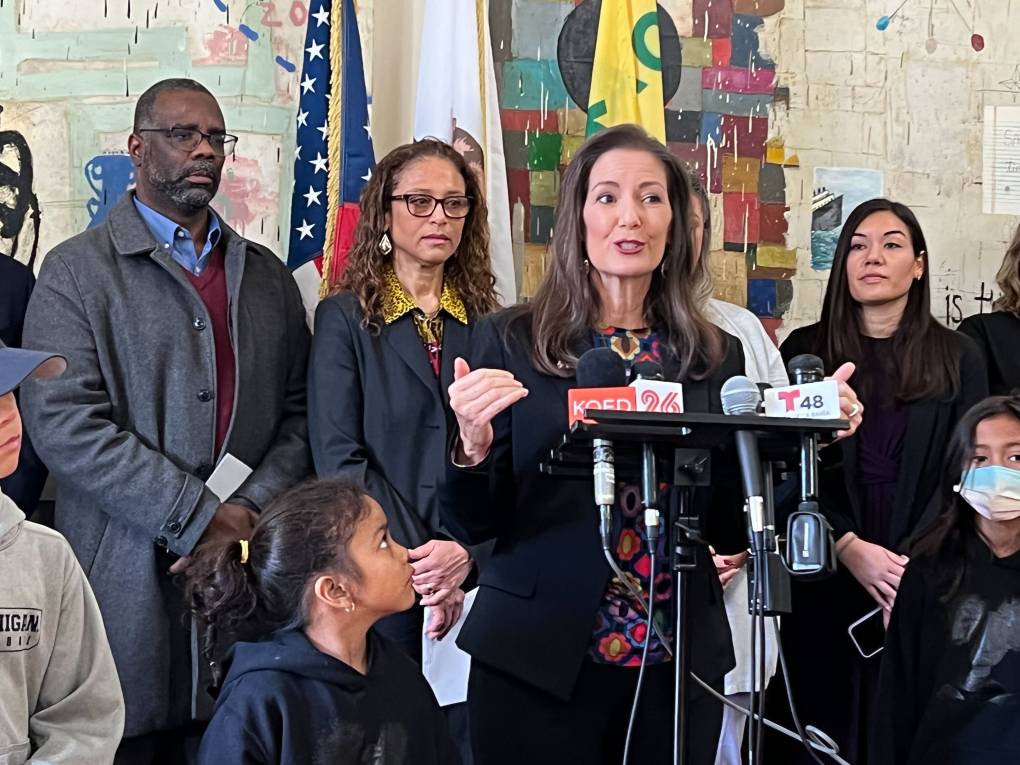
window.__IS_SSR__=true
window.__INITIAL_STATE__={
"attachmentsReducer": {
"audio_0": {
"type": "attachments",
"id": "audio_0",
"imgSizes": {
"kqedFullSize": {
"file": "https://ww2.kqed.org/news/wp-content/themes/KQED-unified/img/audio_bgs/background0.jpg"
}
}
},
"audio_1": {
"type": "attachments",
"id": "audio_1",
"imgSizes": {
"kqedFullSize": {
"file": "https://ww2.kqed.org/news/wp-content/themes/KQED-unified/img/audio_bgs/background1.jpg"
}
}
},
"audio_2": {
"type": "attachments",
"id": "audio_2",
"imgSizes": {
"kqedFullSize": {
"file": "https://ww2.kqed.org/news/wp-content/themes/KQED-unified/img/audio_bgs/background2.jpg"
}
}
},
"audio_3": {
"type": "attachments",
"id": "audio_3",
"imgSizes": {
"kqedFullSize": {
"file": "https://ww2.kqed.org/news/wp-content/themes/KQED-unified/img/audio_bgs/background3.jpg"
}
}
},
"audio_4": {
"type": "attachments",
"id": "audio_4",
"imgSizes": {
"kqedFullSize": {
"file": "https://ww2.kqed.org/news/wp-content/themes/KQED-unified/img/audio_bgs/background4.jpg"
}
}
},
"placeholder": {
"type": "attachments",
"id": "placeholder",
"imgSizes": {
"thumbnail": {
"file": "https://cdn.kqed.org/wp-content/uploads/2024/12/KQED-Default-Image-816638274-2000x1333-1-160x107.jpg",
"width": 160,
"height": 107,
"mimeType": "image/jpeg"
},
"medium": {
"file": "https://cdn.kqed.org/wp-content/uploads/2024/12/KQED-Default-Image-816638274-2000x1333-1-800x533.jpg",
"width": 800,
"height": 533,
"mimeType": "image/jpeg"
},
"medium_large": {
"file": "https://cdn.kqed.org/wp-content/uploads/2024/12/KQED-Default-Image-816638274-2000x1333-1-768x512.jpg",
"width": 768,
"height": 512,
"mimeType": "image/jpeg"
},
"large": {
"file": "https://cdn.kqed.org/wp-content/uploads/2024/12/KQED-Default-Image-816638274-2000x1333-1-1020x680.jpg",
"width": 1020,
"height": 680,
"mimeType": "image/jpeg"
},
"1536x1536": {
"file": "https://cdn.kqed.org/wp-content/uploads/2024/12/KQED-Default-Image-816638274-2000x1333-1-1536x1024.jpg",
"width": 1536,
"height": 1024,
"mimeType": "image/jpeg"
},
"fd-lrg": {
"file": "https://cdn.kqed.org/wp-content/uploads/2024/12/KQED-Default-Image-816638274-2000x1333-1-1536x1024.jpg",
"width": 1536,
"height": 1024,
"mimeType": "image/jpeg"
},
"fd-med": {
"file": "https://cdn.kqed.org/wp-content/uploads/2024/12/KQED-Default-Image-816638274-2000x1333-1-1020x680.jpg",
"width": 1020,
"height": 680,
"mimeType": "image/jpeg"
},
"fd-sm": {
"file": "https://cdn.kqed.org/wp-content/uploads/2024/12/KQED-Default-Image-816638274-2000x1333-1-800x533.jpg",
"width": 800,
"height": 533,
"mimeType": "image/jpeg"
},
"post-thumbnail": {
"file": "https://cdn.kqed.org/wp-content/uploads/2024/12/KQED-Default-Image-816638274-2000x1333-1-672x372.jpg",
"width": 672,
"height": 372,
"mimeType": "image/jpeg"
},
"twentyfourteen-full-width": {
"file": "https://cdn.kqed.org/wp-content/uploads/2024/12/KQED-Default-Image-816638274-2000x1333-1-1038x576.jpg",
"width": 1038,
"height": 576,
"mimeType": "image/jpeg"
},
"xxsmall": {
"file": "https://cdn.kqed.org/wp-content/uploads/2024/12/KQED-Default-Image-816638274-2000x1333-1-160x107.jpg",
"width": 160,
"height": 107,
"mimeType": "image/jpeg"
},
"xsmall": {
"file": "https://cdn.kqed.org/wp-content/uploads/2024/12/KQED-Default-Image-816638274-2000x1333-1-672x372.jpg",
"width": 672,
"height": 372,
"mimeType": "image/jpeg"
},
"small": {
"file": "https://cdn.kqed.org/wp-content/uploads/2024/12/KQED-Default-Image-816638274-2000x1333-1-672x372.jpg",
"width": 672,
"height": 372,
"mimeType": "image/jpeg"
},
"xlarge": {
"file": "https://cdn.kqed.org/wp-content/uploads/2024/12/KQED-Default-Image-816638274-2000x1333-1-1020x680.jpg",
"width": 1020,
"height": 680,
"mimeType": "image/jpeg"
},
"full-width": {
"file": "https://cdn.kqed.org/wp-content/uploads/2024/12/KQED-Default-Image-816638274-2000x1333-1-1920x1280.jpg",
"width": 1920,
"height": 1280,
"mimeType": "image/jpeg"
},
"guest-author-32": {
"file": "https://cdn.kqed.org/wp-content/uploads/2025/01/KQED-Default-Image-816638274-1333x1333-1-160x160.jpg",
"width": 32,
"height": 32,
"mimeType": "image/jpeg"
},
"guest-author-50": {
"file": "https://cdn.kqed.org/wp-content/uploads/2025/01/KQED-Default-Image-816638274-1333x1333-1-160x160.jpg",
"width": 50,
"height": 50,
"mimeType": "image/jpeg"
},
"guest-author-64": {
"file": "https://cdn.kqed.org/wp-content/uploads/2025/01/KQED-Default-Image-816638274-1333x1333-1-160x160.jpg",
"width": 64,
"height": 64,
"mimeType": "image/jpeg"
},
"guest-author-96": {
"file": "https://cdn.kqed.org/wp-content/uploads/2025/01/KQED-Default-Image-816638274-1333x1333-1-160x160.jpg",
"width": 96,
"height": 96,
"mimeType": "image/jpeg"
},
"guest-author-128": {
"file": "https://cdn.kqed.org/wp-content/uploads/2025/01/KQED-Default-Image-816638274-1333x1333-1-160x160.jpg",
"width": 128,
"height": 128,
"mimeType": "image/jpeg"
},
"detail": {
"file": "https://cdn.kqed.org/wp-content/uploads/2025/01/KQED-Default-Image-816638274-1333x1333-1-160x160.jpg",
"width": 160,
"height": 160,
"mimeType": "image/jpeg"
},
"kqedFullSize": {
"file": "https://cdn.kqed.org/wp-content/uploads/2024/12/KQED-Default-Image-816638274-2000x1333-1.jpg",
"width": 2000,
"height": 1333
}
}
},
"news_11936179": {
"type": "attachments",
"id": "news_11936179",
"meta": {
"index": "attachments_1716263798",
"site": "news",
"id": "11936179",
"found": true
},
"parent": 11936175,
"imgSizes": {
"twentyfourteen-full-width": {
"file": "https://ww2.kqed.org/app/uploads/sites/10/2022/12/IMG_2766-1038x576.jpg",
"width": 1038,
"mimeType": "image/jpeg",
"height": 576
},
"thumbnail": {
"file": "https://ww2.kqed.org/app/uploads/sites/10/2022/12/IMG_2766-160x120.jpg",
"width": 160,
"mimeType": "image/jpeg",
"height": 120
},
"post-thumbnail": {
"file": "https://ww2.kqed.org/app/uploads/sites/10/2022/12/IMG_2766-672x372.jpg",
"width": 672,
"mimeType": "image/jpeg",
"height": 372
},
"kqedFullSize": {
"file": "https://ww2.kqed.org/app/uploads/sites/10/2022/12/IMG_2766-scaled.jpg",
"width": 2560,
"height": 1920
},
"2048x2048": {
"file": "https://ww2.kqed.org/app/uploads/sites/10/2022/12/IMG_2766-2048x1536.jpg",
"width": 2048,
"mimeType": "image/jpeg",
"height": 1536
},
"large": {
"file": "https://ww2.kqed.org/app/uploads/sites/10/2022/12/IMG_2766-1020x765.jpg",
"width": 1020,
"mimeType": "image/jpeg",
"height": 765
},
"1536x1536": {
"file": "https://ww2.kqed.org/app/uploads/sites/10/2022/12/IMG_2766-1536x1152.jpg",
"width": 1536,
"mimeType": "image/jpeg",
"height": 1152
},
"full-width": {
"file": "https://ww2.kqed.org/app/uploads/sites/10/2022/12/IMG_2766-1920x1440.jpg",
"width": 1920,
"mimeType": "image/jpeg",
"height": 1440
},
"medium": {
"file": "https://ww2.kqed.org/app/uploads/sites/10/2022/12/IMG_2766-800x600.jpg",
"width": 800,
"mimeType": "image/jpeg",
"height": 600
}
},
"publishDate": 1671728125,
"modified": 1671739540,
"caption": "Oakland Mayor Libby Schaaf at her final news conference Wednesday, Dec. 21, 2022, at City Hall. She announced the implementation of the city's Children's Initiative, a voter-approved measure to expand access to preschool for about 6,000 young children.",
"description": null,
"title": "IMG_2766",
"credit": "Daisy Nguyen/KQED",
"status": "inherit",
"altTag": "A white woman speaks at a press conference with flags behind her and people flanking her.",
"isLoading": false,
"fetchFailed": false
},
"news_11935476": {
"type": "attachments",
"id": "news_11935476",
"meta": {
"index": "attachments_1716263798",
"site": "news",
"id": "11935476",
"found": true
},
"parent": 11935433,
"imgSizes": {
"twentyfourteen-full-width": {
"file": "https://ww2.kqed.org/app/uploads/sites/10/2022/12/RS61657_015_KQED_DaycareYolandaThomas_12142022-qut-1038x576.jpg",
"width": 1038,
"mimeType": "image/jpeg",
"height": 576
},
"thumbnail": {
"file": "https://ww2.kqed.org/app/uploads/sites/10/2022/12/RS61657_015_KQED_DaycareYolandaThomas_12142022-qut-160x107.jpg",
"width": 160,
"mimeType": "image/jpeg",
"height": 107
},
"post-thumbnail": {
"file": "https://ww2.kqed.org/app/uploads/sites/10/2022/12/RS61657_015_KQED_DaycareYolandaThomas_12142022-qut-672x372.jpg",
"width": 672,
"mimeType": "image/jpeg",
"height": 372
},
"kqedFullSize": {
"file": "https://ww2.kqed.org/app/uploads/sites/10/2022/12/RS61657_015_KQED_DaycareYolandaThomas_12142022-qut.jpg",
"width": 1920,
"height": 1280
},
"large": {
"file": "https://ww2.kqed.org/app/uploads/sites/10/2022/12/RS61657_015_KQED_DaycareYolandaThomas_12142022-qut-1020x680.jpg",
"width": 1020,
"mimeType": "image/jpeg",
"height": 680
},
"1536x1536": {
"file": "https://ww2.kqed.org/app/uploads/sites/10/2022/12/RS61657_015_KQED_DaycareYolandaThomas_12142022-qut-1536x1024.jpg",
"width": 1536,
"mimeType": "image/jpeg",
"height": 1024
},
"medium": {
"file": "https://ww2.kqed.org/app/uploads/sites/10/2022/12/RS61657_015_KQED_DaycareYolandaThomas_12142022-qut-800x533.jpg",
"width": 800,
"mimeType": "image/jpeg",
"height": 533
}
},
"publishDate": 1671151791,
"modified": 1671155806,
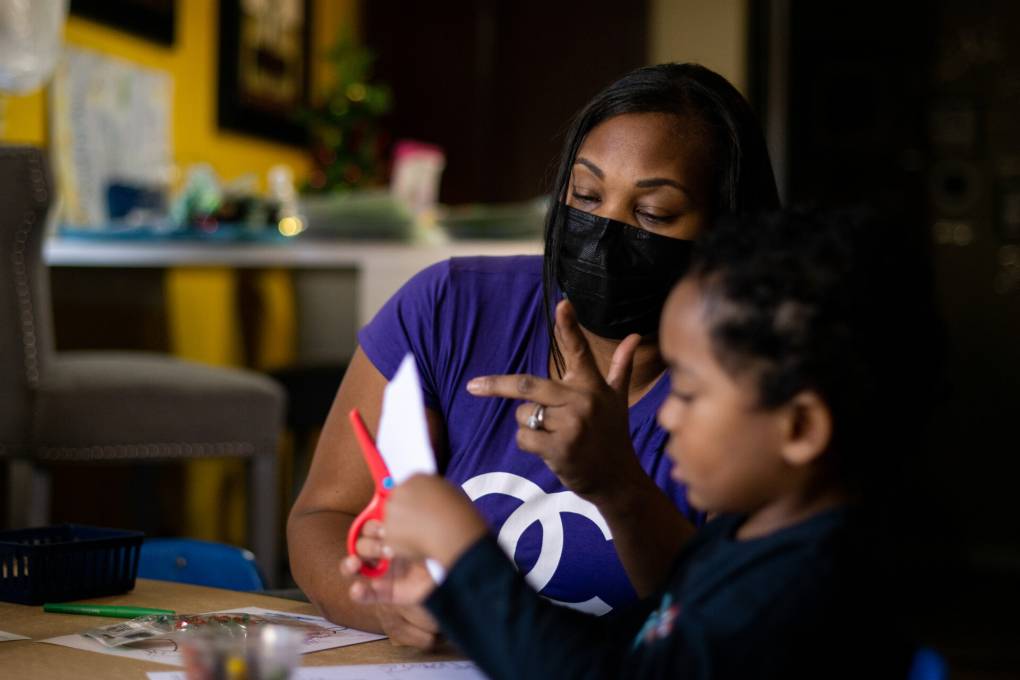
"caption": "Yolanda Thomas works on an art project with a child at the day care she runs from her home in Pittsburg on Dec. 14, 2022.",
"description": null,
"title": "RS61657_015_KQED_DaycareYolandaThomas_12142022-qut",
"credit": "Beth LaBerge/KQED",
"status": "inherit",
"altTag": "A woman wearing a purple t-shirt and black face mask sits next to a child holding red scissors.",
"isLoading": false,
"fetchFailed": false
},
"news_11929192": {
"type": "attachments",
"id": "news_11929192",
"meta": {
"index": "attachments_1716263798",
"site": "news",
"id": "11929192",
"found": true
},
"parent": 11929082,
"imgSizes": {
"twentyfourteen-full-width": {
"file": "https://ww2.kqed.org/app/uploads/sites/10/2022/10/RS52303_021_SanLeandro_KidConnectPreschool_10222021-qut-1038x576.jpg",
"width": 1038,
"mimeType": "image/jpeg",
"height": 576
},
"thumbnail": {
"file": "https://ww2.kqed.org/app/uploads/sites/10/2022/10/RS52303_021_SanLeandro_KidConnectPreschool_10222021-qut-160x107.jpg",
"width": 160,
"mimeType": "image/jpeg",
"height": 107
},
"post-thumbnail": {
"file": "https://ww2.kqed.org/app/uploads/sites/10/2022/10/RS52303_021_SanLeandro_KidConnectPreschool_10222021-qut-672x372.jpg",
"width": 672,
"mimeType": "image/jpeg",
"height": 372
},
"kqedFullSize": {
"file": "https://ww2.kqed.org/app/uploads/sites/10/2022/10/RS52303_021_SanLeandro_KidConnectPreschool_10222021-qut.jpg",
"width": 1920,
"height": 1280
},
"large": {
"file": "https://ww2.kqed.org/app/uploads/sites/10/2022/10/RS52303_021_SanLeandro_KidConnectPreschool_10222021-qut-1020x680.jpg",
"width": 1020,
"mimeType": "image/jpeg",
"height": 680
},
"1536x1536": {
"file": "https://ww2.kqed.org/app/uploads/sites/10/2022/10/RS52303_021_SanLeandro_KidConnectPreschool_10222021-qut-1536x1024.jpg",
"width": 1536,
"mimeType": "image/jpeg",
"height": 1024
},
"medium": {
"file": "https://ww2.kqed.org/app/uploads/sites/10/2022/10/RS52303_021_SanLeandro_KidConnectPreschool_10222021-qut-800x533.jpg",
"width": 800,
"mimeType": "image/jpeg",
"height": 533
}
},
"publishDate": 1666026410,
"modified": 1666027546,
"caption": "A teacher works with students on an art project at Kids Connect Infant Care and Preschool in San Leandro. Changes at the state level as well as in San Francisco mean it could soon be easier for parents to access and navigate the early childhood education system.",
"description": null,
"title": "RS52303_021_SanLeandro_KidConnectPreschool_10222021-qut",
"credit": "Beth LaBerge/KQED",
"status": "inherit",
"altTag": "a young child in a colorful sweater works on an art project at preschool while a teacher helps",
"isLoading": false,
"fetchFailed": false
},
"news_11928121": {
"type": "attachments",
"id": "news_11928121",
"meta": {
"index": "attachments_1716263798",
"site": "news",
"id": "11928121",
"found": true
},
"parent": 11928111,
"imgSizes": {
"twentyfourteen-full-width": {
"file": "https://ww2.kqed.org/app/uploads/sites/10/2022/10/IMG_0041-1038x576.jpg",
"width": 1038,
"mimeType": "image/jpeg",
"height": 576
},
"thumbnail": {
"file": "https://ww2.kqed.org/app/uploads/sites/10/2022/10/IMG_0041-160x120.jpg",
"width": 160,
"mimeType": "image/jpeg",
"height": 120
},
"post-thumbnail": {
"file": "https://ww2.kqed.org/app/uploads/sites/10/2022/10/IMG_0041-672x372.jpg",
"width": 672,
"mimeType": "image/jpeg",
"height": 372
},
"kqedFullSize": {
"file": "https://ww2.kqed.org/app/uploads/sites/10/2022/10/IMG_0041-scaled.jpg",
"width": 2560,
"height": 1920
},
"2048x2048": {
"file": "https://ww2.kqed.org/app/uploads/sites/10/2022/10/IMG_0041-2048x1536.jpg",
"width": 2048,
"mimeType": "image/jpeg",
"height": 1536
},
"large": {
"file": "https://ww2.kqed.org/app/uploads/sites/10/2022/10/IMG_0041-1020x765.jpg",
"width": 1020,
"mimeType": "image/jpeg",
"height": 765
},
"1536x1536": {
"file": "https://ww2.kqed.org/app/uploads/sites/10/2022/10/IMG_0041-1536x1152.jpg",
"width": 1536,
"mimeType": "image/jpeg",
"height": 1152
},
"full-width": {
"file": "https://ww2.kqed.org/app/uploads/sites/10/2022/10/IMG_0041-1920x1440.jpg",
"width": 1920,
"mimeType": "image/jpeg",
"height": 1440
},
"medium": {
"file": "https://ww2.kqed.org/app/uploads/sites/10/2022/10/IMG_0041-800x600.jpg",
"width": 800,
"mimeType": "image/jpeg",
"height": 600
}
},
"publishDate": 1665182014,
"modified": 1665188790,
"caption": "A closed classroom at Old Gallinas Children's Center in San Rafael on Sept. 29, 2022. Funding is available, and plenty of families are waiting to enroll, but a teacher shortage has forced California to close classrooms since the start of the school year. A statewide survey of government-contracted early education programs last month indicate that they could be missing 4,000 to 5,000 teachers.",
"description": null,
"title": "IMG_0041",
"credit": "Daisy Nguyen/KQED",
"status": "inherit",
"altTag": "An empty preschool classroom with chairs on desks.",
"isLoading": false,
"fetchFailed": false
},
"news_11928088": {
"type": "attachments",
"id": "news_11928088",
"meta": {
"index": "attachments_1716263798",
"site": "news",
"id": "11928088",
"found": true
},
"parent": 11928042,
"imgSizes": {
"twentyfourteen-full-width": {
"file": "https://ww2.kqed.org/app/uploads/sites/10/2022/10/09222022_MarisolRosales_CM_PU_1-CM-copy-1038x576.jpg",
"width": 1038,
"mimeType": "image/jpeg",
"height": 576
},
"thumbnail": {
"file": "https://ww2.kqed.org/app/uploads/sites/10/2022/10/09222022_MarisolRosales_CM_PU_1-CM-copy-160x107.jpg",
"width": 160,
"mimeType": "image/jpeg",
"height": 107
},
"post-thumbnail": {
"file": "https://ww2.kqed.org/app/uploads/sites/10/2022/10/09222022_MarisolRosales_CM_PU_1-CM-copy-672x372.jpg",
"width": 672,
"mimeType": "image/jpeg",
"height": 372
},
"kqedFullSize": {
"file": "https://ww2.kqed.org/app/uploads/sites/10/2022/10/09222022_MarisolRosales_CM_PU_1-CM-copy.jpg",
"width": 1568,
"height": 1045
},
"large": {
"file": "https://ww2.kqed.org/app/uploads/sites/10/2022/10/09222022_MarisolRosales_CM_PU_1-CM-copy-1020x680.jpg",
"width": 1020,
"mimeType": "image/jpeg",
"height": 680
},
"1536x1536": {
"file": "https://ww2.kqed.org/app/uploads/sites/10/2022/10/09222022_MarisolRosales_CM_PU_1-CM-copy-1536x1024.jpg",
"width": 1536,
"mimeType": "image/jpeg",
"height": 1024
},
"medium": {
"file": "https://ww2.kqed.org/app/uploads/sites/10/2022/10/09222022_MarisolRosales_CM_PU_1-CM-copy-800x533.jpg",
"width": 800,
"mimeType": "image/jpeg",
"height": 533
}
},
"publishDate": 1665174892,
"modified": 1665175864,
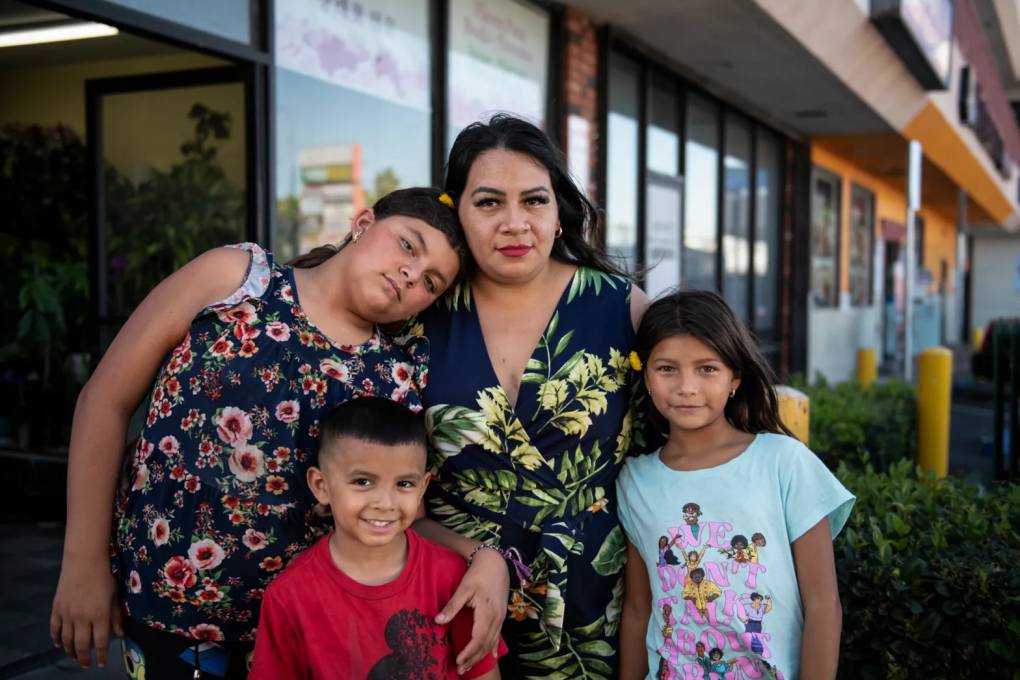
"caption": "Marisol Rosales, a mother of four, stands for a portrait with her three children in Los Angeles on Sept. 22, 2022. With the help of AB 92, Rosales was able to receive a waiver of family fees, and has since enrolled her children in extracurricular activities.",
"description": null,
"title": "09222022_MarisolRosales_CM_PU_1-CM copy",
"credit": "Pablo Unzueta/CalMatters",
"status": "inherit",
"altTag": "A Latina woman stands with three children of varying ages as they all smile for the camera.",
"isLoading": false,
"fetchFailed": false
},
"news_11917447": {
"type": "attachments",
"id": "news_11917447",
"meta": {
"index": "attachments_1716263798",
"site": "news",
"id": "11917447",
"found": true
},
"parent": 11917438,
"imgSizes": {
"twentyfourteen-full-width": {
"file": "https://ww2.kqed.org/app/uploads/sites/10/2022/06/Douglas-Forbes-06202022-1038x576.jpg",
"width": 1038,
"mimeType": "image/jpeg",
"height": 576
},
"thumbnail": {
"file": "https://ww2.kqed.org/app/uploads/sites/10/2022/06/Douglas-Forbes-06202022-160x107.jpg",
"width": 160,
"mimeType": "image/jpeg",
"height": 107
},
"post-thumbnail": {
"file": "https://ww2.kqed.org/app/uploads/sites/10/2022/06/Douglas-Forbes-06202022-672x372.jpg",
"width": 672,
"mimeType": "image/jpeg",
"height": 372
},
"kqedFullSize": {
"file": "https://ww2.kqed.org/app/uploads/sites/10/2022/06/Douglas-Forbes-06202022.jpg",
"width": 1920,
"height": 1279
},
"large": {
"file": "https://ww2.kqed.org/app/uploads/sites/10/2022/06/Douglas-Forbes-06202022-1020x679.jpg",
"width": 1020,
"mimeType": "image/jpeg",
"height": 679
},
"1536x1536": {
"file": "https://ww2.kqed.org/app/uploads/sites/10/2022/06/Douglas-Forbes-06202022-1536x1023.jpg",
"width": 1536,
"mimeType": "image/jpeg",
"height": 1023
},
"medium": {
"file": "https://ww2.kqed.org/app/uploads/sites/10/2022/06/Douglas-Forbes-06202022-800x533.jpg",
"width": 800,
"mimeType": "image/jpeg",
"height": 533
}
},
"publishDate": 1655757302,
"modified": 1655757396,
"caption": "Doug Forbes poses for a portrait in front of the Capitol while holding a picture of his daughter Roxie, who drowned at a day camp in Pasadena a few years ago and his wife Elena Matyas, who passed away recently.\n",
"description": null,
"title": "Douglas-Forbes-06202022",
"credit": "Fred Greaves/CalMatters",
"status": "inherit",
"altTag": "Douglas Forbes stands in front of the California Capitol holding a painting of his late wife and his daughter",
"isLoading": false,
"fetchFailed": false
},
"news_11912774": {
"type": "attachments",
"id": "news_11912774",
"meta": {
"index": "attachments_1716263798",
"site": "news",
"id": "11912774",
"found": true
},
"parent": 11912753,
"imgSizes": {
"twentyfourteen-full-width": {
"file": "https://ww2.kqed.org/app/uploads/sites/10/2022/05/042522-Kids-Mental-Health-DM-CM-20-1038x576.jpg",
"width": 1038,
"mimeType": "image/jpeg",
"height": 576
},
"thumbnail": {
"file": "https://ww2.kqed.org/app/uploads/sites/10/2022/05/042522-Kids-Mental-Health-DM-CM-20-160x107.jpg",
"width": 160,
"mimeType": "image/jpeg",
"height": 107
},
"post-thumbnail": {
"file": "https://ww2.kqed.org/app/uploads/sites/10/2022/05/042522-Kids-Mental-Health-DM-CM-20-672x372.jpg",
"width": 672,
"mimeType": "image/jpeg",
"height": 372
},
"kqedFullSize": {
"file": "https://ww2.kqed.org/app/uploads/sites/10/2022/05/042522-Kids-Mental-Health-DM-CM-20-e1651281176195.jpg",
"width": 1920,
"height": 1280
},
"large": {
"file": "https://ww2.kqed.org/app/uploads/sites/10/2022/05/042522-Kids-Mental-Health-DM-CM-20-1020x680.jpg",
"width": 1020,
"mimeType": "image/jpeg",
"height": 680
},
"1536x1536": {
"file": "https://ww2.kqed.org/app/uploads/sites/10/2022/05/042522-Kids-Mental-Health-DM-CM-20-1536x1024.jpg",
"width": 1536,
"mimeType": "image/jpeg",
"height": 1024
},
"full-width": {
"file": "https://ww2.kqed.org/app/uploads/sites/10/2022/05/042522-Kids-Mental-Health-DM-CM-20-1920x1280.jpg",
"width": 1920,
"mimeType": "image/jpeg",
"height": 1280
},
"medium": {
"file": "https://ww2.kqed.org/app/uploads/sites/10/2022/05/042522-Kids-Mental-Health-DM-CM-20-800x533.jpg",
"width": 800,
"mimeType": "image/jpeg",
"height": 533
}
},
"publishDate": 1651275249,
"modified": 1651515530,
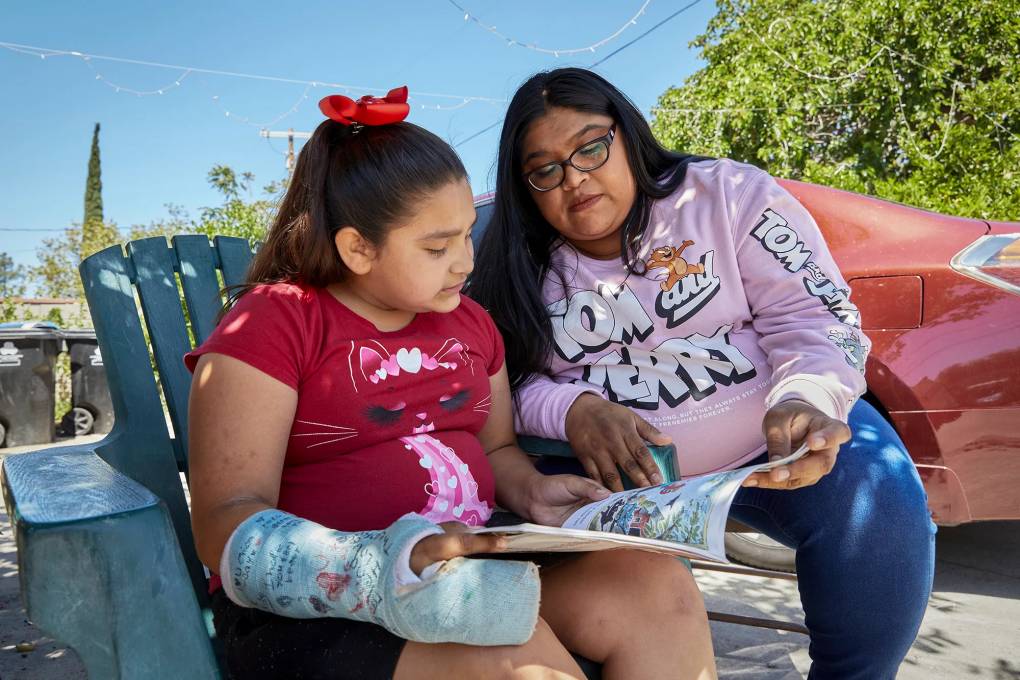
"caption": "Elizabeth Lomeli reads to her daughter, Gisselle, at their home in the Pacoima neighborhood of Los Angeles, on April 23, 2022.",
"description": null,
"title": "042522-Kids-Mental-Health-DM-CM-20",
"credit": "Da'Shaunae Maris/CalMatters",
"status": "inherit",
"altTag": null,
"isLoading": false,
"fetchFailed": false
},
"news_11894531": {
"type": "attachments",
"id": "news_11894531",
"meta": {
"index": "attachments_1716263798",
"site": "news",
"id": "11894531",
"found": true
},
"parent": 11894519,
"imgSizes": {
"twentyfourteen-full-width": {
"file": "https://ww2.kqed.org/app/uploads/sites/10/2021/11/Screen-Shot-2021-11-01-at-11.20.37-AM-1038x576.png",
"width": 1038,
"mimeType": "image/png",
"height": 576
},
"thumbnail": {
"file": "https://ww2.kqed.org/app/uploads/sites/10/2021/11/Screen-Shot-2021-11-01-at-11.20.37-AM-160x106.png",
"width": 160,
"mimeType": "image/png",
"height": 106
},
"post-thumbnail": {
"file": "https://ww2.kqed.org/app/uploads/sites/10/2021/11/Screen-Shot-2021-11-01-at-11.20.37-AM-672x372.png",
"width": 672,
"mimeType": "image/png",
"height": 372
},
"kqedFullSize": {
"file": "https://ww2.kqed.org/app/uploads/sites/10/2021/11/Screen-Shot-2021-11-01-at-11.20.37-AM-e1635791017536.png",
"width": 1564,
"height": 1038
},
"large": {
"file": "https://ww2.kqed.org/app/uploads/sites/10/2021/11/Screen-Shot-2021-11-01-at-11.20.37-AM-1020x677.png",
"width": 1020,
"mimeType": "image/png",
"height": 677
},
"1536x1536": {
"file": "https://ww2.kqed.org/app/uploads/sites/10/2021/11/Screen-Shot-2021-11-01-at-11.20.37-AM-1536x1019.png",
"width": 1536,
"mimeType": "image/png",
"height": 1019
},
"medium": {
"file": "https://ww2.kqed.org/app/uploads/sites/10/2021/11/Screen-Shot-2021-11-01-at-11.20.37-AM-800x531.png",
"width": 800,
"mimeType": "image/png",
"height": 531
}
},
"publishDate": 1635790917,
"modified": 1635810899,
"caption": "During the early morning, Tonya Muhammad walks through the playground of her child care in Hawthorne, making last inspections before children arrive on Oct. 28, 2021. ",
"description": null,
"title": "Screen Shot 2021-11-01 at 11.20.37 AM",
"credit": "Zaydee Sanchez/CalMatters",
"status": "inherit",
"altTag": "Tonya Muhammad walks through the playground of her child care.",
"isLoading": false,
"fetchFailed": false
},
"news_11882375": {
"type": "attachments",
"id": "news_11882375",
"meta": {
"index": "attachments_1716263798",
"site": "news",
"id": "11882375",
"found": true
},
"parent": 11882372,
"imgSizes": {
"twentyfourteen-full-width": {
"file": "https://ww2.kqed.org/app/uploads/sites/10/2021/07/RS49597_004_SanFrancisco_AlexPadillaMissionKids_06012021-qut-1038x576.jpeg",
"width": 1038,
"mimeType": "image/jpeg",
"height": 576
},
"thumbnail": {
"file": "https://ww2.kqed.org/app/uploads/sites/10/2021/07/RS49597_004_SanFrancisco_AlexPadillaMissionKids_06012021-qut-160x107.jpeg",
"width": 160,
"mimeType": "image/jpeg",
"height": 107
},
"post-thumbnail": {
"file": "https://ww2.kqed.org/app/uploads/sites/10/2021/07/RS49597_004_SanFrancisco_AlexPadillaMissionKids_06012021-qut-672x372.jpeg",
"width": 672,
"mimeType": "image/jpeg",
"height": 372
},
"kqedFullSize": {
"file": "https://ww2.kqed.org/app/uploads/sites/10/2021/07/RS49597_004_SanFrancisco_AlexPadillaMissionKids_06012021-qut.jpeg",
"width": 1920,
"height": 1280
},
"large": {
"file": "https://ww2.kqed.org/app/uploads/sites/10/2021/07/RS49597_004_SanFrancisco_AlexPadillaMissionKids_06012021-qut-1020x680.jpeg",
"width": 1020,
"mimeType": "image/jpeg",
"height": 680
},
"1536x1536": {
"file": "https://ww2.kqed.org/app/uploads/sites/10/2021/07/RS49597_004_SanFrancisco_AlexPadillaMissionKids_06012021-qut-1536x1024.jpeg",
"width": 1536,
"mimeType": "image/jpeg",
"height": 1024
},
"medium": {
"file": "https://ww2.kqed.org/app/uploads/sites/10/2021/07/RS49597_004_SanFrancisco_AlexPadillaMissionKids_06012021-qut-800x533.jpeg",
"width": 800,
"mimeType": "image/jpeg",
"height": 533
}
},
"publishDate": 1627243027,
"modified": 1627337095,
"caption": "Children play at Mission Kids Preschool in San Francisco on June 1, 2021 during a visit by then-Sen. Alex Padilla.",
"description": null,
"title": "RS49597_004_SanFrancisco_AlexPadillaMissionKids_06012021-qut",
"credit": "Beth LaBerge/KQED",
"status": "inherit",
"altTag": null,
"isLoading": false,
"fetchFailed": false
},
"news_11777430": {
"type": "attachments",
"id": "news_11777430",
"meta": {
"index": "attachments_1716263798",
"site": "news",
"id": "11777430",
"found": true
},
"parent": 11777328,
"imgSizes": {
"apple_news_ca_landscape_5_5": {
"file": "https://ww2.kqed.org/app/uploads/sites/10/2019/09/iStock-1125881964-1044x783.jpg",
"width": 1044,
"mimeType": "image/jpeg",
"height": 783
},
"apple_news_ca_square_4_0": {
"file": "https://ww2.kqed.org/app/uploads/sites/10/2019/09/iStock-1125881964-470x470.jpg",
"width": 470,
"mimeType": "image/jpeg",
"height": 470
},
"twentyfourteen-full-width": {
"file": "https://ww2.kqed.org/app/uploads/sites/10/2019/09/iStock-1125881964-1038x576.jpg",
"width": 1038,
"mimeType": "image/jpeg",
"height": 576
},
"thumbnail": {
"file": "https://ww2.kqed.org/app/uploads/sites/10/2019/09/iStock-1125881964-160x105.jpg",
"width": 160,
"mimeType": "image/jpeg",
"height": 105
},
"post-thumbnail": {
"file": "https://ww2.kqed.org/app/uploads/sites/10/2019/09/iStock-1125881964-672x372.jpg",
"width": 672,
"mimeType": "image/jpeg",
"height": 372
},
"kqedFullSize": {
"file": "https://ww2.kqed.org/app/uploads/sites/10/2019/09/iStock-1125881964-e1569886516853.jpg",
"width": 1920,
"height": 1260
},
"apple_news_ca_landscape_4_7": {
"file": "https://ww2.kqed.org/app/uploads/sites/10/2019/09/iStock-1125881964-632x474.jpg",
"width": 632,
"mimeType": "image/jpeg",
"height": 474
},
"large": {
"file": "https://ww2.kqed.org/app/uploads/sites/10/2019/09/iStock-1125881964-1020x670.jpg",
"width": 1020,
"mimeType": "image/jpeg",
"height": 670
},
"complete_open_graph": {
"file": "https://ww2.kqed.org/app/uploads/sites/10/2019/09/iStock-1125881964-1200x788.jpg",
"width": 1200,
"mimeType": "image/jpeg",
"height": 788
},
"apple_news_ca_landscape_4_0": {
"file": "https://ww2.kqed.org/app/uploads/sites/10/2019/09/iStock-1125881964-536x402.jpg",
"width": 536,
"mimeType": "image/jpeg",
"height": 402
},
"apple_news_ca_portrait_12_9": {
"file": "https://ww2.kqed.org/app/uploads/sites/10/2019/09/iStock-1125881964-1122x1496.jpg",
"width": 1122,
"mimeType": "image/jpeg",
"height": 1496
},
"medium": {
"file": "https://ww2.kqed.org/app/uploads/sites/10/2019/09/iStock-1125881964-800x525.jpg",
"width": 800,
"mimeType": "image/jpeg",
"height": 525
},
"apple_news_ca_portrait_4_0": {
"file": "https://ww2.kqed.org/app/uploads/sites/10/2019/09/iStock-1125881964-354x472.jpg",
"width": 354,
"mimeType": "image/jpeg",
"height": 472
},
"apple_news_ca_portrait_9_7": {
"file": "https://ww2.kqed.org/app/uploads/sites/10/2019/09/iStock-1125881964-840x1120.jpg",
"width": 840,
"mimeType": "image/jpeg",
"height": 1120
},
"apple_news_ca_landscape_12_9": {
"file": "https://ww2.kqed.org/app/uploads/sites/10/2019/09/iStock-1125881964-1832x1374.jpg",
"width": 1832,
"mimeType": "image/jpeg",
"height": 1374
},
"apple_news_ca_square_9_7": {
"file": "https://ww2.kqed.org/app/uploads/sites/10/2019/09/iStock-1125881964-1104x1104.jpg",
"width": 1104,
"mimeType": "image/jpeg",
"height": 1104
},
"apple_news_ca_portrait_4_7": {
"file": "https://ww2.kqed.org/app/uploads/sites/10/2019/09/iStock-1125881964-414x552.jpg",
"width": 414,
"mimeType": "image/jpeg",
"height": 552
},
"apple_news_ca_square_12_9": {
"file": "https://ww2.kqed.org/app/uploads/sites/10/2019/09/iStock-1125881964-1472x1472.jpg",
"width": 1472,
"mimeType": "image/jpeg",
"height": 1472
},
"apple_news_ca_portrait_5_5": {
"file": "https://ww2.kqed.org/app/uploads/sites/10/2019/09/iStock-1125881964-687x916.jpg",
"width": 687,
"mimeType": "image/jpeg",
"height": 916
},
"full-width": {
"file": "https://ww2.kqed.org/app/uploads/sites/10/2019/09/iStock-1125881964-1920x1260.jpg",
"width": 1920,
"mimeType": "image/jpeg",
"height": 1260
},
"apple_news_ca_square_4_7": {
"file": "https://ww2.kqed.org/app/uploads/sites/10/2019/09/iStock-1125881964-550x550.jpg",
"width": 550,
"mimeType": "image/jpeg",
"height": 550
},
"apple_news_ca_landscape_9_7": {
"file": "https://ww2.kqed.org/app/uploads/sites/10/2019/09/iStock-1125881964-1376x1032.jpg",
"width": 1376,
"mimeType": "image/jpeg",
"height": 1032
},
"apple_news_ca_square_5_5": {
"file": "https://ww2.kqed.org/app/uploads/sites/10/2019/09/iStock-1125881964-912x912.jpg",
"width": 912,
"mimeType": "image/jpeg",
"height": 912
}
},
"publishDate": 1569886397,
"modified": 1605725349,
"caption": "A new California law allowed certain in-home child care providers to unionize.",
"description": null,
"title": "Nursery children playing with teacher in the classroom",
"credit": "Rawpixel/iStock",
"status": "inherit",
"isLoading": false,
"fetchFailed": false
},
"news_11830907": {
"type": "attachments",
"id": "news_11830907",
"meta": {
"index": "attachments_1716263798",
"site": "news",
"id": "11830907",
"found": true
},
"parent": 11830774,
"imgSizes": {
"apple_news_ca_landscape_5_5": {
"file": "https://ww2.kqed.org/app/uploads/sites/10/2020/07/Child-Care-Generic-1044x783.jpg",
"width": 1044,
"mimeType": "image/jpeg",
"height": 783
},
"apple_news_ca_square_4_0": {
"file": "https://ww2.kqed.org/app/uploads/sites/10/2020/07/Child-Care-Generic-470x470.jpg",
"width": 470,
"mimeType": "image/jpeg",
"height": 470
},
"twentyfourteen-full-width": {
"file": "https://ww2.kqed.org/app/uploads/sites/10/2020/07/Child-Care-Generic-1038x576.jpg",
"width": 1038,
"mimeType": "image/jpeg",
"height": 576
},
"thumbnail": {
"file": "https://ww2.kqed.org/app/uploads/sites/10/2020/07/Child-Care-Generic-160x107.jpg",
"width": 160,
"mimeType": "image/jpeg",
"height": 107
},
"post-thumbnail": {
"file": "https://ww2.kqed.org/app/uploads/sites/10/2020/07/Child-Care-Generic-672x372.jpg",
"width": 672,
"mimeType": "image/jpeg",
"height": 372
},
"kqedFullSize": {
"file": "https://ww2.kqed.org/app/uploads/sites/10/2020/07/Child-Care-Generic.jpg",
"width": 1920,
"height": 1280
},
"apple_news_ca_landscape_4_7": {
"file": "https://ww2.kqed.org/app/uploads/sites/10/2020/07/Child-Care-Generic-632x474.jpg",
"width": 632,
"mimeType": "image/jpeg",
"height": 474
},
"large": {
"file": "https://ww2.kqed.org/app/uploads/sites/10/2020/07/Child-Care-Generic-1020x680.jpg",
"width": 1020,
"mimeType": "image/jpeg",
"height": 680
},
"apple_news_ca_landscape_4_0": {
"file": "https://ww2.kqed.org/app/uploads/sites/10/2020/07/Child-Care-Generic-536x402.jpg",
"width": 536,
"mimeType": "image/jpeg",
"height": 402
},
"apple_news_ca_portrait_12_9": {
"file": "https://ww2.kqed.org/app/uploads/sites/10/2020/07/Child-Care-Generic-1122x1280.jpg",
"width": 1122,
"mimeType": "image/jpeg",
"height": 1280
},
"medium": {
"file": "https://ww2.kqed.org/app/uploads/sites/10/2020/07/Child-Care-Generic-800x533.jpg",
"width": 800,
"mimeType": "image/jpeg",
"height": 533
},
"apple_news_ca_portrait_4_0": {
"file": "https://ww2.kqed.org/app/uploads/sites/10/2020/07/Child-Care-Generic-354x472.jpg",
"width": 354,
"mimeType": "image/jpeg",
"height": 472
},
"apple_news_ca_portrait_9_7": {
"file": "https://ww2.kqed.org/app/uploads/sites/10/2020/07/Child-Care-Generic-840x1120.jpg",
"width": 840,
"mimeType": "image/jpeg",
"height": 1120
},
"apple_news_ca_landscape_12_9": {
"file": "https://ww2.kqed.org/app/uploads/sites/10/2020/07/Child-Care-Generic-1832x1280.jpg",
"width": 1832,
"mimeType": "image/jpeg",
"height": 1280
},
"apple_news_ca_square_9_7": {
"file": "https://ww2.kqed.org/app/uploads/sites/10/2020/07/Child-Care-Generic-1104x1104.jpg",
"width": 1104,
"mimeType": "image/jpeg",
"height": 1104
},
"1536x1536": {
"file": "https://ww2.kqed.org/app/uploads/sites/10/2020/07/Child-Care-Generic-1536x1024.jpg",
"width": 1536,
"mimeType": "image/jpeg",
"height": 1024
},
"apple_news_ca_portrait_4_7": {
"file": "https://ww2.kqed.org/app/uploads/sites/10/2020/07/Child-Care-Generic-414x552.jpg",
"width": 414,
"mimeType": "image/jpeg",
"height": 552
},
"apple_news_ca_square_12_9": {
"file": "https://ww2.kqed.org/app/uploads/sites/10/2020/07/Child-Care-Generic-1472x1280.jpg",
"width": 1472,
"mimeType": "image/jpeg",
"height": 1280
},
"apple_news_ca_portrait_5_5": {
"file": "https://ww2.kqed.org/app/uploads/sites/10/2020/07/Child-Care-Generic-687x916.jpg",
"width": 687,
"mimeType": "image/jpeg",
"height": 916
},
"apple_news_ca_square_4_7": {
"file": "https://ww2.kqed.org/app/uploads/sites/10/2020/07/Child-Care-Generic-550x550.jpg",
"width": 550,
"mimeType": "image/jpeg",
"height": 550
},
"apple_news_ca_landscape_9_7": {
"file": "https://ww2.kqed.org/app/uploads/sites/10/2020/07/Child-Care-Generic-1376x1032.jpg",
"width": 1376,
"mimeType": "image/jpeg",
"height": 1032
},
"apple_news_ca_square_5_5": {
"file": "https://ww2.kqed.org/app/uploads/sites/10/2020/07/Child-Care-Generic-912x912.jpg",
"width": 912,
"mimeType": "image/jpeg",
"height": 912
}
},
"publishDate": 1595979553,
"modified": 1595979801,
"caption": "The vote was made possible after Gov. Gavin Newsom signed a bill last fall allowing family child care providers who are paid by the state, and who serve low-income families, to unionize.",
"description": "The vote was made possible after Gov. Gavin Newsom signed a bill last fall allowing family child care providers who are paid by the state, and who serve low-income families, to unionize.",
"title": "Child-Care-Generic",
"credit": "Getty Images",
"status": "inherit",
"isLoading": false,
"fetchFailed": false
},
"news_10978153": {
"type": "attachments",
"id": "news_10978153",
"meta": {
"index": "attachments_1716263798",
"site": "news",
"id": "10978153",
"found": true
},
"parent": 10977377,
"imgSizes": {
"twentyfourteen-full-width": {
"file": "https://ww2.kqed.org/app/uploads/sites/10/2016/06/RS19704_Yolanda-WIlson-2-kids-qut-1038x576.jpg",
"width": 1038,
"mimeType": "image/jpeg",
"height": 576
},
"thumbnail": {
"file": "https://ww2.kqed.org/app/uploads/sites/10/2016/06/RS19704_Yolanda-WIlson-2-kids-qut-400x225.jpg",
"width": 400,
"mimeType": "image/jpeg",
"height": 225
},
"fd-sm": {
"file": "https://ww2.kqed.org/app/uploads/sites/10/2016/06/RS19704_Yolanda-WIlson-2-kids-qut-960x541.jpg",
"width": 960,
"mimeType": "image/jpeg",
"height": 541
},
"post-thumbnail": {
"file": "https://ww2.kqed.org/app/uploads/sites/10/2016/06/RS19704_Yolanda-WIlson-2-kids-qut-672x372.jpg",
"width": 672,
"mimeType": "image/jpeg",
"height": 372
},
"kqedFullSize": {
"file": "https://ww2.kqed.org/app/uploads/sites/10/2016/06/RS19704_Yolanda-WIlson-2-kids-qut.jpg",
"width": 1920,
"height": 1081
},
"large": {
"file": "https://ww2.kqed.org/app/uploads/sites/10/2016/06/RS19704_Yolanda-WIlson-2-kids-qut-1920x1081.jpg",
"width": 1920,
"mimeType": "image/jpeg",
"height": 1081
},
"guest-author-50": {
"file": "https://ww2.kqed.org/app/uploads/sites/10/2016/06/RS19704_Yolanda-WIlson-2-kids-qut-50x50.jpg",
"width": 50,
"mimeType": "image/jpeg",
"height": 50
},
"guest-author-96": {
"file": "https://ww2.kqed.org/app/uploads/sites/10/2016/06/RS19704_Yolanda-WIlson-2-kids-qut-96x96.jpg",
"width": 96,
"mimeType": "image/jpeg",
"height": 96
},
"medium": {
"file": "https://ww2.kqed.org/app/uploads/sites/10/2016/06/RS19704_Yolanda-WIlson-2-kids-qut-800x450.jpg",
"width": 800,
"mimeType": "image/jpeg",
"height": 450
},
"guest-author-64": {
"file": "https://ww2.kqed.org/app/uploads/sites/10/2016/06/RS19704_Yolanda-WIlson-2-kids-qut-64x64.jpg",
"width": 64,
"mimeType": "image/jpeg",
"height": 64
},
"guest-author-32": {
"file": "https://ww2.kqed.org/app/uploads/sites/10/2016/06/RS19704_Yolanda-WIlson-2-kids-qut-32x32.jpg",
"width": 32,
"mimeType": "image/jpeg",
"height": 32
},
"jmtc-small-thumb": {
"file": "https://ww2.kqed.org/app/uploads/sites/10/2016/06/RS19704_Yolanda-WIlson-2-kids-qut-280x150.jpg",
"width": 280,
"mimeType": "image/jpeg",
"height": 150
},
"fd-lrg": {
"file": "https://ww2.kqed.org/app/uploads/sites/10/2016/06/RS19704_Yolanda-WIlson-2-kids-qut-1920x1081.jpg",
"width": 1920,
"mimeType": "image/jpeg",
"height": 1081
},
"fd-med": {
"file": "https://ww2.kqed.org/app/uploads/sites/10/2016/06/RS19704_Yolanda-WIlson-2-kids-qut-1180x664.jpg",
"width": 1180,
"mimeType": "image/jpeg",
"height": 664
},
"detail": {
"file": "https://ww2.kqed.org/app/uploads/sites/10/2016/06/RS19704_Yolanda-WIlson-2-kids-qut-150x150.jpg",
"width": 150,
"mimeType": "image/jpeg",
"height": 150
},
"guest-author-128": {
"file": "https://ww2.kqed.org/app/uploads/sites/10/2016/06/RS19704_Yolanda-WIlson-2-kids-qut-128x128.jpg",
"width": 128,
"mimeType": "image/jpeg",
"height": 128
}
},
"publishDate": 1465079119,
"modified": 1465425450,
"caption": "Yolanda Wilson works for Nancy Mackey's child care center in West Oakland.",
"description": null,
"title": "RS19704_Yolanda WIlson 2 kids-qut",
"credit": "Andrew Stelzer/KQED",
"status": "inherit",
"isLoading": false,
"fetchFailed": false
}
},
"audioPlayerReducer": {
"postId": "stream_live",
"isPaused": true,
"isPlaying": false,
"pfsActive": false,
"pledgeModalIsOpen": true,
"playerDrawerIsOpen": false,
"liveAudioPlayStartedAt": 0,
"liveAudioPlayContext": ""
},
"authorsReducer": {
"byline_news_11928042": {
"type": "authors",
"id": "byline_news_11928042",
"meta": {
"override": true
},
"slug": "byline_news_11928042",
"name": "\u003ca href=\"https://calmatters.org/author/elizabeth-aguilera/\">Elizabeth Aguilera\u003c/a>",
"isLoading": false
},
"byline_news_11917438": {
"type": "authors",
"id": "byline_news_11917438",
"meta": {
"override": true
},
"slug": "byline_news_11917438",
"name": "Elizabeth Aguilera",
"isLoading": false
},
"byline_news_11912753": {
"type": "authors",
"id": "byline_news_11912753",
"meta": {
"override": true
},
"slug": "byline_news_11912753",
"name": "Elizabeth Aguilera",
"isLoading": false
},
"byline_news_11894519": {
"type": "authors",
"id": "byline_news_11894519",
"meta": {
"override": true
},
"slug": "byline_news_11894519",
"name": "Grace Gedye",
"isLoading": false
},
"astupi": {
"type": "authors",
"id": "70",
"meta": {
"index": "authors_1716337520",
"id": "70",
"found": true
},
"name": "Amanda Stupi",
"firstName": "Amanda",
"lastName": "Stupi",
"slug": "astupi",
"email": "astupi@kqed.org",
"display_author_email": false,
"staff_mastheads": [],
"title": "Senior Engagement Producer",
"bio": "Amanda joined KQED Science’s engagement team as a Senior Audience Engagement Strategist in the spring of 2019. She has helped craft messaging around wildfires, the coronavirus pandemic, climate change and many other stories. She has also brought KQED Science to new platforms such as Reddit’s Ask Me Anything series. Prior to joining KQED Science, Amanda spent seven years as an engagement producer with Forum, KQED’s daily live call-in show. She got her start in radio at KALW's weekly call in show, City Visions, before going on to an internship and stint at NPR's Talk of the Nation.\r\n\r\nPrior to journalism, Amanda taught English at Lowell High School. She's a native of Petaluma and currently lives under the \"South San Francisco the Industrial City\" sign in South City. She believes that engagement is vital to news’s future and that good journalism listens as much as it asks questions.",
"avatar": "https://secure.gravatar.com/avatar/e981c503e5c162da701dcaccfbf87e35?s=600&d=blank&r=g",
"twitter": null,
"facebook": null,
"instagram": null,
"linkedin": null,
"sites": [
{
"site": "arts",
"roles": [
"Contributor"
]
},
{
"site": "news",
"roles": [
"editor"
]
},
{
"site": "pop",
"roles": [
"contributor"
]
},
{
"site": "stateofhealth",
"roles": [
"editor"
]
},
{
"site": "science",
"roles": []
},
{
"site": "perspectives",
"roles": [
"editor"
]
}
],
"headData": {
"title": "Amanda Stupi | KQED",
"description": "Senior Engagement Producer",
"ogImgSrc": "https://secure.gravatar.com/avatar/e981c503e5c162da701dcaccfbf87e35?s=600&d=blank&r=g",
"twImgSrc": "https://secure.gravatar.com/avatar/e981c503e5c162da701dcaccfbf87e35?s=600&d=blank&r=g"
},
"isLoading": false,
"link": "/author/astupi"
},
"jmcevoy": {
"type": "authors",
"id": "231",
"meta": {
"index": "authors_1716337520",
"id": "231",
"found": true
},
"name": "Julia McEvoy",
"firstName": "Julia",
"lastName": "McEvoy",
"slug": "jmcevoy",
"email": "jmcevoy@KQED.org",
"display_author_email": true,
"staff_mastheads": [
"news"
],
"title": "KQED Senior Editor",
"bio": "Julia McEvoy is KQED's Senior Editor, Education Equity.\r\n\r\nJulia heads KQED’s education coverage examining inequities students face in Bay Area and California schools, and reports on what it will take to educate the next generation.\r\n\r\nJulia's editorial work has received a Peabody Award, a Casey Medal for Coverage of Children and Families, several Edward R. Murrow awards, as well as awards from the Public Radio News Directors Inc. and the Society for Professional Journalists.",
"avatar": "https://secure.gravatar.com/avatar/aec3ce21abe02b302fd33638abd56a22?s=600&d=blank&r=g",
"twitter": "juliamcevoy1",
"facebook": null,
"instagram": null,
"linkedin": null,
"sites": [
{
"site": "news",
"roles": []
},
{
"site": "stateofhealth",
"roles": [
"author"
]
}
],
"headData": {
"title": "Julia McEvoy | KQED",
"description": "KQED Senior Editor",
"ogImgSrc": "https://secure.gravatar.com/avatar/aec3ce21abe02b302fd33638abd56a22?s=600&d=blank&r=g",
"twImgSrc": "https://secure.gravatar.com/avatar/aec3ce21abe02b302fd33638abd56a22?s=600&d=blank&r=g"
},
"isLoading": false,
"link": "/author/jmcevoy"
},
"korr": {
"type": "authors",
"id": "11200",
"meta": {
"index": "authors_1716337520",
"id": "11200",
"found": true
},
"name": "Katie Orr",
"firstName": "Katie",
"lastName": "Orr",
"slug": "korr",
"email": "korr@kqed.org",
"display_author_email": false,
"staff_mastheads": [],
"title": "KQED Contributor",
"bio": "Katie Orr was a Sacramento-based reporter for KQED's Politics and Government Desk, covering the state Capitol and a variety of issues including women in politics, voting and elections and legislation. Prior to joining KQED in 2016, Katie was state government reporter for Capital Public Radio in Sacramento. She's also worked for KPBS in San Diego, where she covered City Hall.\r\n\r\nKatie received her masters degree in political science from San Diego State University and holds a Bachelors degree in broadcast journalism from Arizona State University.\r\n\r\nIn 2015 Katie won a national Clarion Award for a series of stories she did on women in California politics. She's been honored by the Society for Professional Journalists and, in 2013, was named by \u003cem>The Washington Post\u003c/em> as one of the country's top state Capitol reporters. She's also reported for the award-winning documentary series \u003cem>The View from Here \u003c/em>and was part of the team that won national PRNDI and Gabriel Awards in 2015. She lives in Sacramento with her husband. Twitter: @1KatieOrr",
"avatar": "https://secure.gravatar.com/avatar/41a40b25845adc78f50808670860449e?s=600&d=blank&r=g",
"twitter": "1katieorr",
"facebook": null,
"instagram": null,
"linkedin": null,
"sites": [
{
"site": "news",
"roles": [
"subscriber"
]
},
{
"site": "stateofhealth",
"roles": [
"author"
]
},
{
"site": "forum",
"roles": [
"author"
]
}
],
"headData": {
"title": "Katie Orr | KQED",
"description": "KQED Contributor",
"ogImgSrc": "https://secure.gravatar.com/avatar/41a40b25845adc78f50808670860449e?s=600&d=blank&r=g",
"twImgSrc": "https://secure.gravatar.com/avatar/41a40b25845adc78f50808670860449e?s=600&d=blank&r=g"
},
"isLoading": false,
"link": "/author/korr"
},
"lsarah": {
"type": "authors",
"id": "11626",
"meta": {
"index": "authors_1716337520",
"id": "11626",
"found": true
},
"name": "Lakshmi Sarah",
"firstName": "Lakshmi",
"lastName": "Sarah",
"slug": "lsarah",
"email": "lsarah@kqed.org",
"display_author_email": false,
"staff_mastheads": [],
"title": "Digital Producer",
"bio": "Lakshmi Sarah is an educator, author and journalist with a focus on innovative storytelling. She has worked with newspapers, radio and magazines from Ahmedabad, India to Los Angeles, California. She has written and produced for Die Zeit, Global Voices, AJ+, KQED, Fusion Media Group and the New York Times.",
"avatar": "https://secure.gravatar.com/avatar/652dcaecd8b28826fc17a8b2d6bb4e93?s=600&d=blank&r=g",
"twitter": "lakitalki",
"facebook": null,
"instagram": "https://www.instagram.com/laki.talki/",
"linkedin": "https://www.linkedin.com/in/lakisarah/",
"sites": [
{
"site": "arts",
"roles": []
},
{
"site": "news",
"roles": []
},
{
"site": "bayareabites",
"roles": []
},
{
"site": "science",
"roles": []
}
],
"headData": {
"title": "Lakshmi Sarah | KQED",
"description": "Digital Producer",
"ogImgSrc": "https://secure.gravatar.com/avatar/652dcaecd8b28826fc17a8b2d6bb4e93?s=600&d=blank&r=g",
"twImgSrc": "https://secure.gravatar.com/avatar/652dcaecd8b28826fc17a8b2d6bb4e93?s=600&d=blank&r=g"
},
"isLoading": false,
"link": "/author/lsarah"
},
"nnavarro": {
"type": "authors",
"id": "11756",
"meta": {
"index": "authors_1716337520",
"id": "11756",
"found": true
},
"name": "Natalia Navarro",
"firstName": "Natalia",
"lastName": "Navarro",
"slug": "nnavarro",
"email": "nnavarro@kqed.org",
"display_author_email": true,
"staff_mastheads": [
"news"
],
"title": "Afternoon News Anchor",
"bio": "Natalia Navarro is KQED's afternoon radio news anchor. She came to KQED in 2021 from Colorado Public Radio, where she was a reporter and host. She has received several awards for her work covering daily and breaking news from professional organizations such as the San Francisco Press Club, Society of Professional Journalists and the Colorado Broadcasters Association. Natalia is originally from Tucson, Arizona, where she got her start in journalism writing for the Arizona Daily Star, Arizona Public Media and the Tucson Weekly. Natalia earned her bachelor's degree in journalism and economics, and her master's degree in journalism from the University of Arizona.",
"avatar": "https://secure.gravatar.com/avatar/a2bdb19fd9520bdea295a2d5f9b2ad65ec51cf0bf559fb1cc041d3a0a04d62ad?s=600&d=blank&r=g",
"twitter": "@NataliaVNavarro",
"bluesky": null,
"facebook": null,
"instagram": null,
"linkedin": null,
"sites": [
{
"site": "news",
"roles": [
"editor"
]
}
],
"headData": {
"title": "Natalia Navarro | KQED",
"description": "Afternoon News Anchor",
"ogImgSrc": "https://secure.gravatar.com/avatar/a2bdb19fd9520bdea295a2d5f9b2ad65ec51cf0bf559fb1cc041d3a0a04d62ad?s=600&d=blank&r=g",
"twImgSrc": "https://secure.gravatar.com/avatar/a2bdb19fd9520bdea295a2d5f9b2ad65ec51cf0bf559fb1cc041d3a0a04d62ad?s=600&d=blank&r=g"
},
"isLoading": false,
"link": "/author/nnavarro"
},
"amadrigal": {
"type": "authors",
"id": "11757",
"meta": {
"index": "authors_1716337520",
"id": "11757",
"found": true
},
"name": "Alexis Madrigal",
"firstName": "Alexis",
"lastName": "Madrigal",
"slug": "amadrigal",
"email": "amadrigal@kqed.org",
"display_author_email": true,
"staff_mastheads": [],
"title": "Co-Host Forum",
"bio": "Alexis Madrigal is the co-host of Forum. He is also a contributing writer at \u003cem>The Atlantic \u003c/em>and the co-founder of the COVID Tracking Project. He's the creator of the podcast, \u003cem>Containers\u003c/em>, and has been a staff writer at \u003cem>Wired. \u003c/em>He was a visiting scholar at UC Berkeley's Information School, and is working on a book about Oakland and the Bay Area's revolutionary ideas.",
"avatar": "https://secure.gravatar.com/avatar/ffeee1fe99a3e31957381f377ca63502bdcc0c3dbccaaa701e579a10aa0c5e1f?s=600&d=blank&r=g",
"twitter": "alexismadrigal",
"bluesky": null,
"facebook": null,
"instagram": null,
"linkedin": null,
"sites": [
{
"site": "arts",
"roles": [
"editor"
]
},
{
"site": "news",
"roles": [
"editor"
]
},
{
"site": "forum",
"roles": [
"editor"
]
}
],
"headData": {
"title": "Alexis Madrigal | KQED",
"description": "Co-Host Forum",
"ogImgSrc": "https://secure.gravatar.com/avatar/ffeee1fe99a3e31957381f377ca63502bdcc0c3dbccaaa701e579a10aa0c5e1f?s=600&d=blank&r=g",
"twImgSrc": "https://secure.gravatar.com/avatar/ffeee1fe99a3e31957381f377ca63502bdcc0c3dbccaaa701e579a10aa0c5e1f?s=600&d=blank&r=g"
},
"isLoading": false,
"link": "/author/amadrigal"
},
"daisynguyen": {
"type": "authors",
"id": "11829",
"meta": {
"index": "authors_1716337520",
"id": "11829",
"found": true
},
"name": "Daisy Nguyen",
"firstName": "Daisy",
"lastName": "Nguyen",
"slug": "daisynguyen",
"email": "daisynguyen@kqed.org",
"display_author_email": true,
"staff_mastheads": [
"news"
],
"title": "KQED Contributor",
"bio": "I have covered early childhood education and child care for KQED since 2022. I focus on policies aimed at increasing access to early care and education and how they shape individual lives. I've been a journalist for more than two decades, with most of that time devoted to covering breaking news throughout California for The Associated Press. I grew up in San Francisco and studied at UC Davis and Columbia University's Graduate School of Journalism. I live in Oakland with my husband and two kids.",
"avatar": "https://secure.gravatar.com/avatar/2da2127c27f7143b53ebd419800fd55f?s=600&d=blank&r=g",
"twitter": null,
"facebook": null,
"instagram": null,
"linkedin": "https://www.linkedin.com/in/daisynguyen/",
"sites": [
{
"site": "news",
"roles": [
"author"
]
},
{
"site": "liveblog",
"roles": [
"author"
]
}
],
"headData": {
"title": "Daisy Nguyen | KQED",
"description": "KQED Contributor",
"ogImgSrc": "https://secure.gravatar.com/avatar/2da2127c27f7143b53ebd419800fd55f?s=600&d=blank&r=g",
"twImgSrc": "https://secure.gravatar.com/avatar/2da2127c27f7143b53ebd419800fd55f?s=600&d=blank&r=g"
},
"isLoading": false,
"link": "/author/daisynguyen"
}
},
"pagesReducer": {
"news_tag_child-care": {
"type": "terms",
"id": "news_20754",
"meta": {
"index": "terms_1716263798",
"site": "news",
"id": "20754",
"score": 9.893822
},
"featImg": null,
"name": "child care",
"description": null,
"taxonomy": "tag",
"headData": {
"twImgId": null,
"twTitle": null,
"ogTitle": null,
"ogImgId": null,
"twDescription": null,
"description": null,
"title": "child care Archives | KQED News",
"ogDescription": null
},
"ttid": 20771,
"slug": "child-care",
"isLoading": false,
"title": "child care",
"pageMeta": {
"site": "news",
"WpPageTemplate": "page-topic-editorial",
"currentPage": 6
},
"blocks": [
{
"blockName": "kqed/post-list",
"attrs": {
"layout": "cardArticle2",
"query": "posts/news?tag=child-care",
"seeMore": false,
"paginated": true,
"page": 6
}
},
{
"blockName": "kqed/ad"
}
]
}
},
"pfsSessionReducer": {},
"postsReducer": {
"stream_live": {
"type": "live",
"id": "stream_live",
"audioUrl": "https://streams.kqed.org/kqedradio",
"title": "Live Stream",
"excerpt": "Live Stream information currently unavailable.",
"link": "/radio",
"featImg": "",
"label": {
"name": "KQED Live",
"link": "/"
}
},
"stream_kqedNewscast": {
"type": "posts",
"id": "stream_kqedNewscast",
"audioUrl": "https://www.kqed.org/.stream/anon/radio/RDnews/newscast.mp3?_=1",
"title": "KQED Newscast",
"featImg": "",
"label": {
"name": "88.5 FM",
"link": "/"
}
},
"news_11936175": {
"type": "posts",
"id": "news_11936175",
"meta": {
"index": "posts_1716263798",
"site": "news",
"id": "11936175",
"score": null,
"sort": [
1671739835000
]
},
"guestAuthors": [],
"slug": "outgoing-oakland-mayor-libby-schaaf-touts-start-of-voter-approved-measure-to-fund-early-education",
"title": "Outgoing Oakland Mayor Libby Schaaf Touts Start of Voter-Approved Measure to Fund Early Education",
"publishDate": 1671739835,
"format": "standard",
"headTitle": "Outgoing Oakland Mayor Libby Schaaf Touts Start of Voter-Approved Measure to Fund Early Education | KQED",
"labelTerm": {},
"content": "\u003cp>Outgoing Oakland Mayor Libby Schaaf touted the expansion of affordable preschool for the city’s children most in need of it, in her final news conference on Wednesday.\u003c/p>\n\u003cp>The implementation of \u003ca href=\"https://www.oaklandca.gov/boards-commissions/childrens-initiative-oversight-commission\">the Oakland Children’s Initiative\u003c/a> comes after the city won a court battle over Measure AA, the parcel tax measure approved by voters in 2018 to fund early education and college readiness.\u003c/p>\n\u003cp>The measure authorizes the city to collect $198 a year in parcel tax on single-family homes, and $135 a year per unit of each multiunit residence, totaling about $35 million annually over the next 30 years. About two-thirds of the funds will go toward early childhood education and the other third toward college tuition assistance.\u003c/p>\n\u003cp>Schaaf said she hopes the long-term investment will make an impact for generations to come.\u003c/p>\n\u003cp>“To parents, I hope you each feel a burden lifted off your shoulders, that preschool will be affordable for all children in Oakland, that college will be accessible and affordable … this is something you should expect from your government and, more importantly, from your community,” she said.\u003c/p>\n\u003cp>Jorge Lerma, chair of a commission in charge of providing oversight for the distribution of funds, said the initiative will first target the children who need it most before expanding the preschool program to all of Oakland’s young children.[pullquote align=\"right\" size=\"medium\" citation=\"Oakland Mayor Libby Schaaf\"]‘To parents, I hope you each feel a burden lifted off your shoulders, that preschool will be affordable for all children in Oakland, that college will be accessible and affordable.’[/pullquote]That means about 6,000 of the city’s 14,000 children who are between 3 and 5 years old will be given first dibs on access to Head Start and preschool programs operated by Oakland Unified School District because they come from lower-income households, said Jennifer Cabán, accountability officer for the Children’s Initiative.\u003c/p>\n\u003cp>She said her team will then expand access to the city’s mixed-delivery system of child care, ranging from nonprofit-run early childhood programs to home-based family child care programs.\u003c/p>\n\u003cp>Schaaf noted that the initiative was one of several recent programs benefiting Oakland’s children, including \u003ca href=\"https://oaklandpromise.org/\">Oakland Promise\u003c/a>, a $50 million privately raised endowment to set up college savings accounts for infants and scholarships for public school students from lower-income families. She also mentioned \u003ca href=\"https://www.oaklandundivided.org/\">Oakland Undivided\u003c/a>, an effort borne out of the pandemic to provide home internet access to public school students who didn’t have any.\u003c/p>\n\u003cp>The city temporarily suspended collecting the parcel tax after a group of property owners sought to invalidate the measure. But last year, \u003ca href=\"https://www.sfchronicle.com/eastbay/article/State-appeals-court-rules-in-favor-of-Oakland-s-16739339.php\">a California appeals court in San Francisco ruled that the tax could be reinstated\u003c/a>.\u003c/p>\n\u003cp>Another measure to add \u003ca href=\"https://www.mercurynews.com/2022/07/07/alameda-countys-measure-c-for-child-care-funding-scores-a-legal-win-but-money-cant-flow-yet/\">a 0.5% sales tax in Alameda County to fund more subsidized child care and pediatric health care\u003c/a> for children from lower-income families is still being contested in court.\u003c/p>\n\u003cp>Both measures are examples of \u003ca href=\"https://www.vox.com/policy-and-politics/2022/10/18/23404090/new-mexico-election-result-child-care-early-childhood-prek\">increasing public investment in early childhood education\u003c/a>. The lack of affordable, high-quality early childhood programs, particularly for families with lower incomes, have prompted local governments to create dedicated funding streams for early learning.\u003c/p>\n\u003cp>Across the bay, officials in San Francisco are using funds raised from a commercial rent tax voters passed in 2018 to \u003ca href=\"https://www.sfchronicle.com/eastbay/article/State-appeals-court-rules-in-favor-of-Oakland-s-16739339.php\">raise teachers’ salaries and subsidy rates (PDF)\u003c/a> for child care and early intervention services.\u003c/p>\n\u003cp>[ad fullwidth]\u003c/p>\n\u003cp>\u003c/p>\n",
"blocks": [],
"excerpt": "The implementation of the Oakland Children's Initiative comes after the city won a court battle over Measure AA, the parcel tax measure approved by voters in 2018 to fund early education and college readiness.",
"status": "publish",
"parent": 0,
"modified": 1726598223,
"stats": {
"hasAudio": false,
"hasVideo": false,
"hasChartOrMap": false,
"iframeSrcs": [],
"hasGoogleForm": false,
"hasGallery": false,
"hasHearkenModule": false,
"hasPolis": false,
"paragraphCount": 14,
"wordCount": 582
},
"headData": {
"title": "Outgoing Oakland Mayor Libby Schaaf Touts Start of Voter-Approved Measure to Fund Early Education | KQED",
"description": "The implementation of the Oakland Children's Initiative comes after the city won a court battle over Measure AA, the parcel tax measure approved by voters in 2018 to fund early education and college readiness.",
"ogTitle": "",
"ogDescription": "",
"ogImgId": "",
"twTitle": "",
"twDescription": "",
"twImgId": "",
"schema": {
"@context": "https://schema.org",
"@type": "NewsArticle",
"headline": "Outgoing Oakland Mayor Libby Schaaf Touts Start of Voter-Approved Measure to Fund Early Education",
"datePublished": "2022-12-22T12:10:35-08:00",
"dateModified": "2024-09-17T11:37:03-07:00",
"image": "https://cdn.kqed.org/wp-content/uploads/2020/02/KQED-OG-Image@1x.png",
"isAccessibleForFree": "True",
"publisher": {
"@type": "NewsMediaOrganization",
"@id": "https://www.kqed.org/#organization",
"name": "KQED",
"logo": "https://cdn.kqed.org/wp-content/uploads/2020/02/KQED-OG-Image@1x.png",
"url": "https://www.kqed.org",
"sameAs": [
"https://www.facebook.com/KQED",
"https://twitter.com/KQED",
"https://www.instagram.com/kqed/",
"https://www.tiktok.com/@kqedofficial",
"https://www.linkedin.com/company/kqed",
"https://www.youtube.com/channel/UCeC0IOo7i1P_61zVUWbJ4nw"
]
}
}
},
"source": "Early Childhood Education and Care",
"sourceUrl": "https://www.kqed.org/early-childhood-education-and-care",
"sticky": false,
"excludeFromSiteSearch": "Include",
"articleAge": "0",
"path": "/news/11936175/outgoing-oakland-mayor-libby-schaaf-touts-start-of-voter-approved-measure-to-fund-early-education",
"audioTrackLength": null,
"parsedContent": [
{
"type": "contentString",
"content": "\u003cdiv class=\"post-body\">\u003cp>\u003cp>Outgoing Oakland Mayor Libby Schaaf touted the expansion of affordable preschool for the city’s children most in need of it, in her final news conference on Wednesday.\u003c/p>\n\u003cp>The implementation of \u003ca href=\"https://www.oaklandca.gov/boards-commissions/childrens-initiative-oversight-commission\">the Oakland Children’s Initiative\u003c/a> comes after the city won a court battle over Measure AA, the parcel tax measure approved by voters in 2018 to fund early education and college readiness.\u003c/p>\n\u003cp>The measure authorizes the city to collect $198 a year in parcel tax on single-family homes, and $135 a year per unit of each multiunit residence, totaling about $35 million annually over the next 30 years. About two-thirds of the funds will go toward early childhood education and the other third toward college tuition assistance.\u003c/p>\n\u003cp>Schaaf said she hopes the long-term investment will make an impact for generations to come.\u003c/p>\n\u003cp>“To parents, I hope you each feel a burden lifted off your shoulders, that preschool will be affordable for all children in Oakland, that college will be accessible and affordable … this is something you should expect from your government and, more importantly, from your community,” she said.\u003c/p>\n\u003cp>Jorge Lerma, chair of a commission in charge of providing oversight for the distribution of funds, said the initiative will first target the children who need it most before expanding the preschool program to all of Oakland’s young children.\u003c/p>\u003c/div>",
"attributes": {
"named": {},
"numeric": []
}
},
{
"type": "component",
"content": "‘To parents, I hope you each feel a burden lifted off your shoulders, that preschool will be affordable for all children in Oakland, that college will be accessible and affordable.’",
"name": "pullquote",
"attributes": {
"named": {
"align": "right",
"size": "medium",
"citation": "Oakland Mayor Libby Schaaf",
"label": ""
},
"numeric": []
}
},
{
"type": "contentString",
"content": "\u003cdiv class=\"post-body\">\u003cp>That means about 6,000 of the city’s 14,000 children who are between 3 and 5 years old will be given first dibs on access to Head Start and preschool programs operated by Oakland Unified School District because they come from lower-income households, said Jennifer Cabán, accountability officer for the Children’s Initiative.\u003c/p>\n\u003cp>She said her team will then expand access to the city’s mixed-delivery system of child care, ranging from nonprofit-run early childhood programs to home-based family child care programs.\u003c/p>\n\u003cp>Schaaf noted that the initiative was one of several recent programs benefiting Oakland’s children, including \u003ca href=\"https://oaklandpromise.org/\">Oakland Promise\u003c/a>, a $50 million privately raised endowment to set up college savings accounts for infants and scholarships for public school students from lower-income families. She also mentioned \u003ca href=\"https://www.oaklandundivided.org/\">Oakland Undivided\u003c/a>, an effort borne out of the pandemic to provide home internet access to public school students who didn’t have any.\u003c/p>\n\u003cp>The city temporarily suspended collecting the parcel tax after a group of property owners sought to invalidate the measure. But last year, \u003ca href=\"https://www.sfchronicle.com/eastbay/article/State-appeals-court-rules-in-favor-of-Oakland-s-16739339.php\">a California appeals court in San Francisco ruled that the tax could be reinstated\u003c/a>.\u003c/p>\n\u003cp>Another measure to add \u003ca href=\"https://www.mercurynews.com/2022/07/07/alameda-countys-measure-c-for-child-care-funding-scores-a-legal-win-but-money-cant-flow-yet/\">a 0.5% sales tax in Alameda County to fund more subsidized child care and pediatric health care\u003c/a> for children from lower-income families is still being contested in court.\u003c/p>\n\u003cp>Both measures are examples of \u003ca href=\"https://www.vox.com/policy-and-politics/2022/10/18/23404090/new-mexico-election-result-child-care-early-childhood-prek\">increasing public investment in early childhood education\u003c/a>. The lack of affordable, high-quality early childhood programs, particularly for families with lower incomes, have prompted local governments to create dedicated funding streams for early learning.\u003c/p>\n\u003cp>Across the bay, officials in San Francisco are using funds raised from a commercial rent tax voters passed in 2018 to \u003ca href=\"https://www.sfchronicle.com/eastbay/article/State-appeals-court-rules-in-favor-of-Oakland-s-16739339.php\">raise teachers’ salaries and subsidy rates (PDF)\u003c/a> for child care and early intervention services.\u003c/p>\n\u003cp>\u003c/p>\u003c/div>",
"attributes": {
"named": {},
"numeric": []
}
},
{
"type": "component",
"content": "",
"name": "ad",
"attributes": {
"named": {
"label": "fullwidth"
},
"numeric": [
"fullwidth"
]
}
},
{
"type": "contentString",
"content": "\u003cdiv class=\"post-body\">\u003cp>\u003c/p>\n\u003cp>\u003c/p>\n\u003c/div>\u003c/p>",
"attributes": {
"named": {},
"numeric": []
}
}
],
"link": "/news/11936175/outgoing-oakland-mayor-libby-schaaf-touts-start-of-voter-approved-measure-to-fund-early-education",
"authors": [
"11829"
],
"categories": [
"news_8"
],
"tags": [
"news_20754",
"news_25966",
"news_18085",
"news_32102",
"news_20013",
"news_6905",
"news_23532",
"news_17763"
],
"featImg": "news_11936179",
"label": "source_news_11936175"
},
"news_11935433": {
"type": "posts",
"id": "news_11935433",
"meta": {
"index": "posts_1716263798",
"site": "news",
"id": "11935433",
"score": null,
"sort": [
1671156063000
]
},
"parent": 0,
"labelTerm": {},
"blocks": [],
"publishDate": 1671156063,
"format": "standard",
"title": "All Work and Low Pay: The Struggle of California's In-Home Child Care Providers",
"headTitle": "KQED News",
"content": "\u003cp>The doorbell at Yolanda Thomas’ house in Pittsburg set off a flurry of sound: a barking dog, the high-pitched voices of children and Thomas’ hurried footsteps as she made her way to the door and opened it.\u003c/p>\n\u003cp>She flashed a big smile, her face framed by long braids. She wore black workout pants and a purple T-shirt with “Child Care” written on the front, the two Cs intersecting like the Chanel logo.[pullquote size=\"medium\" align=\"right\" citation=\"Elena Montoya, lead researcher, CSCCE\"]'Until we're really willing to acknowledge that the system is funded through these really low wages that these mostly women of color make in our state, and until we're willing to address that, programs are going to continue to struggle to hire people.'[/pullquote]\u003c/p>\n\u003cp>Signs on the front door explained COVID-19 safety protocols for washing hands and wearing masks. Inside, \u003ca href=\"https://www.cdss.ca.gov/cdssweb/entres/forms/English/pub394L.pdf\">a list of parents’ rights (PDF)\u003c/a> from the California Department of Social Services hung next to a giant collage of kid photos. Binders overflowing with lesson plans sat on a shelf next to a portable crib.\u003c/p>\n\u003cp>Thomas, 46, is one of nearly 25,000 family child care providers in the state who operate licensed day cares and preschools out of their homes. \u003ca href=\"https://cscce.berkeley.edu/publications/report/early-educator-compensation/\">Home child care providers earn the least in a low-paying industry\u003c/a>, according to an August report from UC Berkeley’s Center for the Study of Child Care Employment. They are also less likely to have health coverage than workers at child care centers.\u003c/p>\n\u003cfigure id=\"attachment_11935478\" class=\"wp-caption aligncenter\" style=\"max-width: 800px\">\u003ca href=\"https://ww2.kqed.org/app/uploads/sites/10/2022/12/RS61674_029_KQED_DaycareYolandaThomas_12142022-qut.jpg\">\u003cimg class=\"size-medium wp-image-11935478\" src=\"https://ww2.kqed.org/app/uploads/sites/10/2022/12/RS61674_029_KQED_DaycareYolandaThomas_12142022-qut-800x533.jpg\" alt='A Black woman wearing a purple t-shirt that says \"Child care\" stands outside.' width=\"800\" height=\"533\" srcset=\"https://ww2.kqed.org/app/uploads/sites/10/2022/12/RS61674_029_KQED_DaycareYolandaThomas_12142022-qut-800x533.jpg 800w, https://ww2.kqed.org/app/uploads/sites/10/2022/12/RS61674_029_KQED_DaycareYolandaThomas_12142022-qut-1020x680.jpg 1020w, https://ww2.kqed.org/app/uploads/sites/10/2022/12/RS61674_029_KQED_DaycareYolandaThomas_12142022-qut-160x107.jpg 160w, https://ww2.kqed.org/app/uploads/sites/10/2022/12/RS61674_029_KQED_DaycareYolandaThomas_12142022-qut-1536x1024.jpg 1536w, https://ww2.kqed.org/app/uploads/sites/10/2022/12/RS61674_029_KQED_DaycareYolandaThomas_12142022-qut.jpg 1920w\" sizes=\"(max-width: 800px) 100vw, 800px\">\u003c/a>\u003cfigcaption class=\"wp-caption-text\">Yolanda Thomas stands outside her Pittsburg home, where she runs a day care, on Dec. 14, 2022. \u003ccite>(Beth LaBerge/KQED)\u003c/cite>\u003c/figcaption>\u003c/figure>\n\u003cp>Women of color make up 71% of home care providers, according to a 2020 CSCCE workforce survey published in January, with 37% identifying as Latina, 12% as Black, 12% as Asian and 6% as multiethnic. More than half are over the age of 50, and few have retirement savings.\u003c/p>\n\u003cp>“There are equity implications to a lot of this data,” said Elena Montoya, a lead researcher at CSCCE.\u003c/p>\n\u003cp>In 2019, \u003ca href=\"https://americanprogress.org/wp-content/uploads/2019/09/California.pdf?_ga=2.61482028.1485413797.1664937135-2040335669.1663610119\">60% of Californians lived somewhere in which the number of spots in licensed child care facilities did not meet the demand (PDF)\u003c/a>, according to the Center for American Progress. While the sector added 4,900 jobs in October, CSCCE, citing data compiled by the Bureau of Labor Statistics, reported that \u003ca href=\"https://cscce.berkeley.edu/publications/brief/child-care-sector-jobs-bls-analysis/\">child care employment is 8.4% below what it was in February 2020\u003c/a>.[aside postID=\"news_11928042,news_11929082\" label=\"Related Posts\"]“Until we’re really willing to acknowledge that the system is funded through these really low wages that these mostly women of color make in our state, and until we’re willing to address that, programs are going to continue to struggle to hire people,” Montoya said.\u003c/p>\n\u003cp>The median annual salary range for small family child care providers like Thomas, who is Black, is between $16,200 to $30,000, according to CSCCE. Thomas, who has more than two decades of experience, said she usually earns around $38,000 per year. She earned almost $59,000 in 2021, because she received a one-time revitalization grant from a community investment fund along with other pandemic-related grants from First 5 Contra Costa and the state.\u003c/p>\n\u003cp>“This is a field of service,” she said. “And if you’re not ready to be a servant, then you should not be in this field because everything you do and everything you think about is for someone else’s benefit.”\u003c/p>\n\u003cfigure id=\"attachment_11935475\" class=\"wp-caption aligncenter\" style=\"max-width: 800px\">\u003ca href=\"https://ww2.kqed.org/app/uploads/sites/10/2022/12/RS61650_006_KQED_DaycareYolandaThomas_12142022-qut.jpg\">\u003cimg class=\"size-medium wp-image-11935475\" src=\"https://ww2.kqed.org/app/uploads/sites/10/2022/12/RS61650_006_KQED_DaycareYolandaThomas_12142022-qut-800x533.jpg\" alt=\"A woman wearing a purple t-shirt and black face mask sits with three children at a desk as they do arts and crafts in a building.\" width=\"800\" height=\"533\" srcset=\"https://ww2.kqed.org/app/uploads/sites/10/2022/12/RS61650_006_KQED_DaycareYolandaThomas_12142022-qut-800x533.jpg 800w, https://ww2.kqed.org/app/uploads/sites/10/2022/12/RS61650_006_KQED_DaycareYolandaThomas_12142022-qut-1020x680.jpg 1020w, https://ww2.kqed.org/app/uploads/sites/10/2022/12/RS61650_006_KQED_DaycareYolandaThomas_12142022-qut-160x107.jpg 160w, https://ww2.kqed.org/app/uploads/sites/10/2022/12/RS61650_006_KQED_DaycareYolandaThomas_12142022-qut-1536x1024.jpg 1536w, https://ww2.kqed.org/app/uploads/sites/10/2022/12/RS61650_006_KQED_DaycareYolandaThomas_12142022-qut.jpg 1920w\" sizes=\"(max-width: 800px) 100vw, 800px\">\u003c/a>\u003cfigcaption class=\"wp-caption-text\">Yolanda Thomas works on an art project with the children at her day care at her home in Pittsburg on Dec. 14, 2022. \u003ccite>(Beth LaBerge/KQED)\u003c/cite>\u003c/figcaption>\u003c/figure>\n\u003cp>Thomas serves meals to kids, picks them up from school and helps with homework — the type of full-service care that many families with two working parents need.\u003c/p>\n\u003cp>“This is a mirror of what the children receive at home,” said Thomas, who currently cares for seven children between the ages 8 months and 10 years old. “Me and the parents work hand in hand, whatever they’re going through. We have one family that’s going through divorce, so I make sure to let the child know that they’re okay, that if they ever have a question they can ask me.”\u003c/p>\n\u003cp>That deep connection with families is why some child care providers prefer to work out of their homes instead of in larger child care centers.\u003c/p>\n\u003cp>“It’s more intimate to me,” said Freada Woody, owner and director of Gigi’s Precious Hearts Daycare in Antioch.\u003c/p>\n\u003cp>Woody’s home is also part house and part school. The living room has a large brown couch and a TV. Between them stretches a long table surrounded by colorful plastic chairs for children. The dining room has a wall of cubbies filled with toys and books, and a decorative sign displaying the “Playroom Rules.”\u003c/p>\n\u003cp>Woody, 64, currently watches four children ranging in ages from 10 months to 10 years old. Before the pandemic, she consistently cared for eight kids, she said.\u003c/p>\n\u003cp>She wakes up at 5 a.m. because a lot of the parents she works with have long commutes so the kids get dropped off as early as 6:30 a.m., she said. When the kids arrive, Woody plays calming music. During breakfast, they review school work. After breakfast, Woody drops the older kids off at school and has one-on-one time with her youngest child until noon.\u003c/p>\n\u003cp>“Then I get the other two and I do homework with them,” said Woody, who is Black. “We eat lunch, we talk about our days. We read every day. We do a lot of crafts.”\u003c/p>\n\u003cp>Woody says after the kids get picked up around 6:30 p.m., “we clean and disinfect this whole house. It takes us about an hour and a half to clean. But I have my son and I have my niece. That helps me.”\u003c/p>\n\u003cp>In addition to the almost 25,000 home-based providers who own their businesses, 13,200 paid teacher assistants work in home-based child care across the state. An additional 7,000 teacher assistants — often partners and relatives who share a home with a primary provider — are unpaid.\u003c/p>\n\u003cp>Thomas relies on her husband, Brian Thomas.\u003c/p>\n\u003cfigure id=\"attachment_11935482\" class=\"wp-caption aligncenter\" style=\"max-width: 800px\">\u003ca href=\"https://ww2.kqed.org/app/uploads/sites/10/2022/12/RS61658_013_KQED_DaycareYolandaThomas_12142022-qut.jpg\">\u003cimg class=\"size-medium wp-image-11935482\" src=\"https://ww2.kqed.org/app/uploads/sites/10/2022/12/RS61658_013_KQED_DaycareYolandaThomas_12142022-qut-800x533.jpg\" alt=\"A man wearing a gray hoodie holds a child facing a window in a building.\" width=\"800\" height=\"533\" srcset=\"https://ww2.kqed.org/app/uploads/sites/10/2022/12/RS61658_013_KQED_DaycareYolandaThomas_12142022-qut-800x533.jpg 800w, https://ww2.kqed.org/app/uploads/sites/10/2022/12/RS61658_013_KQED_DaycareYolandaThomas_12142022-qut-1020x680.jpg 1020w, https://ww2.kqed.org/app/uploads/sites/10/2022/12/RS61658_013_KQED_DaycareYolandaThomas_12142022-qut-160x107.jpg 160w, https://ww2.kqed.org/app/uploads/sites/10/2022/12/RS61658_013_KQED_DaycareYolandaThomas_12142022-qut-1536x1024.jpg 1536w, https://ww2.kqed.org/app/uploads/sites/10/2022/12/RS61658_013_KQED_DaycareYolandaThomas_12142022-qut.jpg 1920w\" sizes=\"(max-width: 800px) 100vw, 800px\">\u003c/a>\u003cfigcaption class=\"wp-caption-text\">Brian Thomas, Yolanda's husband, holds one of the children at the day care at their home in Pittsburg on Dec. 14, 2022. \u003ccite>(Beth LaBerge/KQED)\u003c/cite>\u003c/figcaption>\u003c/figure>\n\u003cp>“He’ll do grocery runs. He’ll transport, he’ll go pick up,” said Thomas, who chose to be a home-based provider, in part so she could be at home with her children. “But he’s behind the scenes.”\u003c/p>\n\u003cp>Before Woody became licensed, she watched kids for her family and friends.\u003c/p>\n\u003cp>“They paid me for gas or material because I always did arts,” she said. “I taught the girls how to cook and braid their hair. I taught all the kids how to tie their shoes, but that was just natural stuff that you do.”\u003c/p>\n\u003cp>It wasn’t until a neighbor reported Woody for having an unlicensed day care that she even knew that a license was required to care for more than one child she wasn’t related to. When licensing officials came to Woody’s home to check on the neighbor’s complaint, they asked Woody if she wanted to become licensed.\u003c/p>\n\u003cp>She did, and 14 years later, Woody is licensed to care for up to eight kids. She said she regularly attends professional development training and participates in the \u003ca href=\"https://www.qualitychildcarematters.org/\">Quality Matters program\u003c/a>, an initiative of First 5 Contra Costa to improve child care quality.\u003c/p>\n\u003cp>According to the CSCCE report, the annual median income for teachers at child care centers statewide is $39,500. In the Bay Area, that rises to $45,800. That’s $7,000 more than Thomas typically earns.\u003c/p>\n\u003cp>“I think because we are at home, a lot of legislators, big wigs, parents — just people that don’t know the field — they think because we’re at home, it’s easy, but being at home makes it harder,” Thomas said. “Every day it’s like [family child care providers] have to fight to try to get noticed.”\u003c/p>\n\u003cfigure id=\"attachment_11935477\" class=\"wp-caption aligncenter\" style=\"max-width: 800px\">\u003ca href=\"https://ww2.kqed.org/app/uploads/sites/10/2022/12/RS61659_012_KQED_DaycareYolandaThomas_12142022-qut.jpg\">\u003cimg class=\"size-medium wp-image-11935477\" src=\"https://ww2.kqed.org/app/uploads/sites/10/2022/12/RS61659_012_KQED_DaycareYolandaThomas_12142022-qut-800x533.jpg\" alt=\"An overhead view of a woman wearing a purple t-shirt and black face mask siting with three children at a desk as they do arts and crafts in a building.\" width=\"800\" height=\"533\" srcset=\"https://ww2.kqed.org/app/uploads/sites/10/2022/12/RS61659_012_KQED_DaycareYolandaThomas_12142022-qut-800x533.jpg 800w, https://ww2.kqed.org/app/uploads/sites/10/2022/12/RS61659_012_KQED_DaycareYolandaThomas_12142022-qut-1020x680.jpg 1020w, https://ww2.kqed.org/app/uploads/sites/10/2022/12/RS61659_012_KQED_DaycareYolandaThomas_12142022-qut-160x107.jpg 160w, https://ww2.kqed.org/app/uploads/sites/10/2022/12/RS61659_012_KQED_DaycareYolandaThomas_12142022-qut-1536x1024.jpg 1536w, https://ww2.kqed.org/app/uploads/sites/10/2022/12/RS61659_012_KQED_DaycareYolandaThomas_12142022-qut.jpg 1920w\" sizes=\"(max-width: 800px) 100vw, 800px\">\u003c/a>\u003cfigcaption class=\"wp-caption-text\">Yolanda Thomas works on an art project with the children at the day care she runs from her home in Pittsburg on Dec. 14, 2022. \u003ccite>(Beth LaBerge/KQED)\u003c/cite>\u003c/figcaption>\u003c/figure>\n\u003cp>The more an early childhood education role is paid, the fewer women of color there are in that role. Women of color make up 65% of center-based teachers, but that number dips to 45% for center directors who tend to make the most money.\u003c/p>\n\u003cp>One of CSCCE’s recommendations for policymakers is to make compensation for child care providers equal to that of transitional kindergarten teachers, including paid planning time and increased pay for additional degrees and specializations.\u003c/p>\n\u003cp>Montoya said that compensation should be based on what it costs caregivers to provide quality care, not on market rates or on what parents are able to afford.\u003c/p>\n\u003cp>“Parents just can’t do more and the programs are doing all they can to meet their expenses and pay their workforce,” said Montoya. “It’s a very labor-heavy field.”\u003c/p>\n\u003cp>Because of inflation, Woody is buying smaller plants for gardening lessons. Thomas has changed how she cuts fruit in hopes that three apples can stretch as far as four used to. She now buys generic brands.\u003c/p>\n\u003cp>Woody had money saved that has allowed her to make it through the financial squeeze brought on by the pandemic and rising gas prices. She knows that’s not the case for many providers who have left the field.\u003c/p>\n\u003cp>“People who love this business, they’re not going to be having the opportunity to really do what they want to do because they’re struggling,” Woody said.\u003c/p>\n\u003cp>[ad fullwidth]\u003c/p>\n\u003cp>[ad floatright]\u003c/p>\n",
"stats": {
"hasVideo": false,
"hasChartOrMap": false,
"hasAudio": false,
"hasPolis": false,
"wordCount": 1710,
"hasGoogleForm": false,
"hasGallery": false,
"hasHearkenModule": false,
"iframeSrcs": [],
"paragraphCount": 36
},
"modified": 1673649166,
"excerpt": "The more an early childhood education role is paid, the fewer women of color there are in that role. Women of color make up 65% of center-based teachers, but that number dips to 45% for center directors who tend to make the most money.",
"headData": {
"twImgId": "",
"twTitle": "",
"ogTitle": "",
"ogImgId": "",
"twDescription": "",
"description": "The more an early childhood education role is paid, the fewer women of color there are in that role. Women of color make up 65% of center-based teachers, but that number dips to 45% for center directors who tend to make the most money.",
"title": "All Work and Low Pay: The Struggle of California's In-Home Child Care Providers | KQED",
"ogDescription": "",
"schema": {
"@context": "https://schema.org",
"@type": "NewsArticle",
"headline": "All Work and Low Pay: The Struggle of California's In-Home Child Care Providers",
"datePublished": "2022-12-15T18:01:03-08:00",
"dateModified": "2023-01-13T14:32:46-08:00",
"image": "https://cdn.kqed.org/wp-content/uploads/2020/02/KQED-OG-Image@1x.png",
"isAccessibleForFree": "True",
"publisher": {
"@type": "NewsMediaOrganization",
"@id": "https://www.kqed.org/#organization",
"name": "KQED",
"logo": "https://cdn.kqed.org/wp-content/uploads/2020/02/KQED-OG-Image@1x.png",
"url": "https://www.kqed.org",
"sameAs": [
"https://www.facebook.com/KQED",
"https://twitter.com/KQED",
"https://www.instagram.com/kqed/",
"https://www.tiktok.com/@kqedofficial",
"https://www.linkedin.com/company/kqed",
"https://www.youtube.com/channel/UCeC0IOo7i1P_61zVUWbJ4nw"
]
}
}
},
"guestAuthors": [],
"slug": "all-work-and-low-pay-the-struggle-of-californias-in-home-child-care-providers",
"status": "publish",
"sourceUrl": "https://www.kqed.org/early-childhood-education-and-care",
"excludeFromSiteSearch": "Include",
"source": "Early Childhood Education and Care",
"articleAge": "0",
"path": "/news/11935433/all-work-and-low-pay-the-struggle-of-californias-in-home-child-care-providers",
"audioTrackLength": null,
"parsedContent": [
{
"type": "contentString",
"content": "\u003cdiv class=\"post-body\">\u003cp>\u003cp>The doorbell at Yolanda Thomas’ house in Pittsburg set off a flurry of sound: a barking dog, the high-pitched voices of children and Thomas’ hurried footsteps as she made her way to the door and opened it.\u003c/p>\n\u003cp>She flashed a big smile, her face framed by long braids. She wore black workout pants and a purple T-shirt with “Child Care” written on the front, the two Cs intersecting like the Chanel logo.\u003c/p>\u003c/div>",
"attributes": {
"named": {},
"numeric": []
}
},
{
"type": "component",
"content": "'Until we're really willing to acknowledge that the system is funded through these really low wages that these mostly women of color make in our state, and until we're willing to address that, programs are going to continue to struggle to hire people.'",
"name": "pullquote",
"attributes": {
"named": {
"size": "medium",
"align": "right",
"citation": "Elena Montoya, lead researcher, CSCCE",
"label": ""
},
"numeric": []
}
},
{
"type": "contentString",
"content": "\u003cdiv class=\"post-body\">\u003cp>\u003c/p>\n\u003cp>Signs on the front door explained COVID-19 safety protocols for washing hands and wearing masks. Inside, \u003ca href=\"https://www.cdss.ca.gov/cdssweb/entres/forms/English/pub394L.pdf\">a list of parents’ rights (PDF)\u003c/a> from the California Department of Social Services hung next to a giant collage of kid photos. Binders overflowing with lesson plans sat on a shelf next to a portable crib.\u003c/p>\n\u003cp>Thomas, 46, is one of nearly 25,000 family child care providers in the state who operate licensed day cares and preschools out of their homes. \u003ca href=\"https://cscce.berkeley.edu/publications/report/early-educator-compensation/\">Home child care providers earn the least in a low-paying industry\u003c/a>, according to an August report from UC Berkeley’s Center for the Study of Child Care Employment. They are also less likely to have health coverage than workers at child care centers.\u003c/p>\n\u003cfigure id=\"attachment_11935478\" class=\"wp-caption aligncenter\" style=\"max-width: 800px\">\u003ca href=\"https://ww2.kqed.org/app/uploads/sites/10/2022/12/RS61674_029_KQED_DaycareYolandaThomas_12142022-qut.jpg\">\u003cimg class=\"size-medium wp-image-11935478\" src=\"https://ww2.kqed.org/app/uploads/sites/10/2022/12/RS61674_029_KQED_DaycareYolandaThomas_12142022-qut-800x533.jpg\" alt='A Black woman wearing a purple t-shirt that says \"Child care\" stands outside.' width=\"800\" height=\"533\" srcset=\"https://ww2.kqed.org/app/uploads/sites/10/2022/12/RS61674_029_KQED_DaycareYolandaThomas_12142022-qut-800x533.jpg 800w, https://ww2.kqed.org/app/uploads/sites/10/2022/12/RS61674_029_KQED_DaycareYolandaThomas_12142022-qut-1020x680.jpg 1020w, https://ww2.kqed.org/app/uploads/sites/10/2022/12/RS61674_029_KQED_DaycareYolandaThomas_12142022-qut-160x107.jpg 160w, https://ww2.kqed.org/app/uploads/sites/10/2022/12/RS61674_029_KQED_DaycareYolandaThomas_12142022-qut-1536x1024.jpg 1536w, https://ww2.kqed.org/app/uploads/sites/10/2022/12/RS61674_029_KQED_DaycareYolandaThomas_12142022-qut.jpg 1920w\" sizes=\"(max-width: 800px) 100vw, 800px\">\u003c/a>\u003cfigcaption class=\"wp-caption-text\">Yolanda Thomas stands outside her Pittsburg home, where she runs a day care, on Dec. 14, 2022. \u003ccite>(Beth LaBerge/KQED)\u003c/cite>\u003c/figcaption>\u003c/figure>\n\u003cp>Women of color make up 71% of home care providers, according to a 2020 CSCCE workforce survey published in January, with 37% identifying as Latina, 12% as Black, 12% as Asian and 6% as multiethnic. More than half are over the age of 50, and few have retirement savings.\u003c/p>\n\u003cp>“There are equity implications to a lot of this data,” said Elena Montoya, a lead researcher at CSCCE.\u003c/p>\n\u003cp>In 2019, \u003ca href=\"https://americanprogress.org/wp-content/uploads/2019/09/California.pdf?_ga=2.61482028.1485413797.1664937135-2040335669.1663610119\">60% of Californians lived somewhere in which the number of spots in licensed child care facilities did not meet the demand (PDF)\u003c/a>, according to the Center for American Progress. While the sector added 4,900 jobs in October, CSCCE, citing data compiled by the Bureau of Labor Statistics, reported that \u003ca href=\"https://cscce.berkeley.edu/publications/brief/child-care-sector-jobs-bls-analysis/\">child care employment is 8.4% below what it was in February 2020\u003c/a>.\u003c/p>\u003c/div>",
"attributes": {
"named": {},
"numeric": []
}
},
{
"type": "component",
"content": "",
"name": "aside",
"attributes": {
"named": {
"postid": "news_11928042,news_11929082",
"label": "Related Posts "
},
"numeric": []
}
},
{
"type": "contentString",
"content": "\u003cdiv class=\"post-body\">\u003cp>“Until we’re really willing to acknowledge that the system is funded through these really low wages that these mostly women of color make in our state, and until we’re willing to address that, programs are going to continue to struggle to hire people,” Montoya said.\u003c/p>\n\u003cp>The median annual salary range for small family child care providers like Thomas, who is Black, is between $16,200 to $30,000, according to CSCCE. Thomas, who has more than two decades of experience, said she usually earns around $38,000 per year. She earned almost $59,000 in 2021, because she received a one-time revitalization grant from a community investment fund along with other pandemic-related grants from First 5 Contra Costa and the state.\u003c/p>\n\u003cp>“This is a field of service,” she said. “And if you’re not ready to be a servant, then you should not be in this field because everything you do and everything you think about is for someone else’s benefit.”\u003c/p>\n\u003cfigure id=\"attachment_11935475\" class=\"wp-caption aligncenter\" style=\"max-width: 800px\">\u003ca href=\"https://ww2.kqed.org/app/uploads/sites/10/2022/12/RS61650_006_KQED_DaycareYolandaThomas_12142022-qut.jpg\">\u003cimg class=\"size-medium wp-image-11935475\" src=\"https://ww2.kqed.org/app/uploads/sites/10/2022/12/RS61650_006_KQED_DaycareYolandaThomas_12142022-qut-800x533.jpg\" alt=\"A woman wearing a purple t-shirt and black face mask sits with three children at a desk as they do arts and crafts in a building.\" width=\"800\" height=\"533\" srcset=\"https://ww2.kqed.org/app/uploads/sites/10/2022/12/RS61650_006_KQED_DaycareYolandaThomas_12142022-qut-800x533.jpg 800w, https://ww2.kqed.org/app/uploads/sites/10/2022/12/RS61650_006_KQED_DaycareYolandaThomas_12142022-qut-1020x680.jpg 1020w, https://ww2.kqed.org/app/uploads/sites/10/2022/12/RS61650_006_KQED_DaycareYolandaThomas_12142022-qut-160x107.jpg 160w, https://ww2.kqed.org/app/uploads/sites/10/2022/12/RS61650_006_KQED_DaycareYolandaThomas_12142022-qut-1536x1024.jpg 1536w, https://ww2.kqed.org/app/uploads/sites/10/2022/12/RS61650_006_KQED_DaycareYolandaThomas_12142022-qut.jpg 1920w\" sizes=\"(max-width: 800px) 100vw, 800px\">\u003c/a>\u003cfigcaption class=\"wp-caption-text\">Yolanda Thomas works on an art project with the children at her day care at her home in Pittsburg on Dec. 14, 2022. \u003ccite>(Beth LaBerge/KQED)\u003c/cite>\u003c/figcaption>\u003c/figure>\n\u003cp>Thomas serves meals to kids, picks them up from school and helps with homework — the type of full-service care that many families with two working parents need.\u003c/p>\n\u003cp>“This is a mirror of what the children receive at home,” said Thomas, who currently cares for seven children between the ages 8 months and 10 years old. “Me and the parents work hand in hand, whatever they’re going through. We have one family that’s going through divorce, so I make sure to let the child know that they’re okay, that if they ever have a question they can ask me.”\u003c/p>\n\u003cp>That deep connection with families is why some child care providers prefer to work out of their homes instead of in larger child care centers.\u003c/p>\n\u003cp>“It’s more intimate to me,” said Freada Woody, owner and director of Gigi’s Precious Hearts Daycare in Antioch.\u003c/p>\n\u003cp>Woody’s home is also part house and part school. The living room has a large brown couch and a TV. Between them stretches a long table surrounded by colorful plastic chairs for children. The dining room has a wall of cubbies filled with toys and books, and a decorative sign displaying the “Playroom Rules.”\u003c/p>\n\u003cp>Woody, 64, currently watches four children ranging in ages from 10 months to 10 years old. Before the pandemic, she consistently cared for eight kids, she said.\u003c/p>\n\u003cp>She wakes up at 5 a.m. because a lot of the parents she works with have long commutes so the kids get dropped off as early as 6:30 a.m., she said. When the kids arrive, Woody plays calming music. During breakfast, they review school work. After breakfast, Woody drops the older kids off at school and has one-on-one time with her youngest child until noon.\u003c/p>\n\u003cp>“Then I get the other two and I do homework with them,” said Woody, who is Black. “We eat lunch, we talk about our days. We read every day. We do a lot of crafts.”\u003c/p>\n\u003cp>Woody says after the kids get picked up around 6:30 p.m., “we clean and disinfect this whole house. It takes us about an hour and a half to clean. But I have my son and I have my niece. That helps me.”\u003c/p>\n\u003cp>In addition to the almost 25,000 home-based providers who own their businesses, 13,200 paid teacher assistants work in home-based child care across the state. An additional 7,000 teacher assistants — often partners and relatives who share a home with a primary provider — are unpaid.\u003c/p>\n\u003cp>Thomas relies on her husband, Brian Thomas.\u003c/p>\n\u003cfigure id=\"attachment_11935482\" class=\"wp-caption aligncenter\" style=\"max-width: 800px\">\u003ca href=\"https://ww2.kqed.org/app/uploads/sites/10/2022/12/RS61658_013_KQED_DaycareYolandaThomas_12142022-qut.jpg\">\u003cimg class=\"size-medium wp-image-11935482\" src=\"https://ww2.kqed.org/app/uploads/sites/10/2022/12/RS61658_013_KQED_DaycareYolandaThomas_12142022-qut-800x533.jpg\" alt=\"A man wearing a gray hoodie holds a child facing a window in a building.\" width=\"800\" height=\"533\" srcset=\"https://ww2.kqed.org/app/uploads/sites/10/2022/12/RS61658_013_KQED_DaycareYolandaThomas_12142022-qut-800x533.jpg 800w, https://ww2.kqed.org/app/uploads/sites/10/2022/12/RS61658_013_KQED_DaycareYolandaThomas_12142022-qut-1020x680.jpg 1020w, https://ww2.kqed.org/app/uploads/sites/10/2022/12/RS61658_013_KQED_DaycareYolandaThomas_12142022-qut-160x107.jpg 160w, https://ww2.kqed.org/app/uploads/sites/10/2022/12/RS61658_013_KQED_DaycareYolandaThomas_12142022-qut-1536x1024.jpg 1536w, https://ww2.kqed.org/app/uploads/sites/10/2022/12/RS61658_013_KQED_DaycareYolandaThomas_12142022-qut.jpg 1920w\" sizes=\"(max-width: 800px) 100vw, 800px\">\u003c/a>\u003cfigcaption class=\"wp-caption-text\">Brian Thomas, Yolanda's husband, holds one of the children at the day care at their home in Pittsburg on Dec. 14, 2022. \u003ccite>(Beth LaBerge/KQED)\u003c/cite>\u003c/figcaption>\u003c/figure>\n\u003cp>“He’ll do grocery runs. He’ll transport, he’ll go pick up,” said Thomas, who chose to be a home-based provider, in part so she could be at home with her children. “But he’s behind the scenes.”\u003c/p>\n\u003cp>Before Woody became licensed, she watched kids for her family and friends.\u003c/p>\n\u003cp>“They paid me for gas or material because I always did arts,” she said. “I taught the girls how to cook and braid their hair. I taught all the kids how to tie their shoes, but that was just natural stuff that you do.”\u003c/p>\n\u003cp>It wasn’t until a neighbor reported Woody for having an unlicensed day care that she even knew that a license was required to care for more than one child she wasn’t related to. When licensing officials came to Woody’s home to check on the neighbor’s complaint, they asked Woody if she wanted to become licensed.\u003c/p>\n\u003cp>She did, and 14 years later, Woody is licensed to care for up to eight kids. She said she regularly attends professional development training and participates in the \u003ca href=\"https://www.qualitychildcarematters.org/\">Quality Matters program\u003c/a>, an initiative of First 5 Contra Costa to improve child care quality.\u003c/p>\n\u003cp>According to the CSCCE report, the annual median income for teachers at child care centers statewide is $39,500. In the Bay Area, that rises to $45,800. That’s $7,000 more than Thomas typically earns.\u003c/p>\n\u003cp>“I think because we are at home, a lot of legislators, big wigs, parents — just people that don’t know the field — they think because we’re at home, it’s easy, but being at home makes it harder,” Thomas said. “Every day it’s like [family child care providers] have to fight to try to get noticed.”\u003c/p>\n\u003cfigure id=\"attachment_11935477\" class=\"wp-caption aligncenter\" style=\"max-width: 800px\">\u003ca href=\"https://ww2.kqed.org/app/uploads/sites/10/2022/12/RS61659_012_KQED_DaycareYolandaThomas_12142022-qut.jpg\">\u003cimg class=\"size-medium wp-image-11935477\" src=\"https://ww2.kqed.org/app/uploads/sites/10/2022/12/RS61659_012_KQED_DaycareYolandaThomas_12142022-qut-800x533.jpg\" alt=\"An overhead view of a woman wearing a purple t-shirt and black face mask siting with three children at a desk as they do arts and crafts in a building.\" width=\"800\" height=\"533\" srcset=\"https://ww2.kqed.org/app/uploads/sites/10/2022/12/RS61659_012_KQED_DaycareYolandaThomas_12142022-qut-800x533.jpg 800w, https://ww2.kqed.org/app/uploads/sites/10/2022/12/RS61659_012_KQED_DaycareYolandaThomas_12142022-qut-1020x680.jpg 1020w, https://ww2.kqed.org/app/uploads/sites/10/2022/12/RS61659_012_KQED_DaycareYolandaThomas_12142022-qut-160x107.jpg 160w, https://ww2.kqed.org/app/uploads/sites/10/2022/12/RS61659_012_KQED_DaycareYolandaThomas_12142022-qut-1536x1024.jpg 1536w, https://ww2.kqed.org/app/uploads/sites/10/2022/12/RS61659_012_KQED_DaycareYolandaThomas_12142022-qut.jpg 1920w\" sizes=\"(max-width: 800px) 100vw, 800px\">\u003c/a>\u003cfigcaption class=\"wp-caption-text\">Yolanda Thomas works on an art project with the children at the day care she runs from her home in Pittsburg on Dec. 14, 2022. \u003ccite>(Beth LaBerge/KQED)\u003c/cite>\u003c/figcaption>\u003c/figure>\n\u003cp>The more an early childhood education role is paid, the fewer women of color there are in that role. Women of color make up 65% of center-based teachers, but that number dips to 45% for center directors who tend to make the most money.\u003c/p>\n\u003cp>One of CSCCE’s recommendations for policymakers is to make compensation for child care providers equal to that of transitional kindergarten teachers, including paid planning time and increased pay for additional degrees and specializations.\u003c/p>\n\u003cp>Montoya said that compensation should be based on what it costs caregivers to provide quality care, not on market rates or on what parents are able to afford.\u003c/p>\n\u003cp>“Parents just can’t do more and the programs are doing all they can to meet their expenses and pay their workforce,” said Montoya. “It’s a very labor-heavy field.”\u003c/p>\n\u003cp>Because of inflation, Woody is buying smaller plants for gardening lessons. Thomas has changed how she cuts fruit in hopes that three apples can stretch as far as four used to. She now buys generic brands.\u003c/p>\n\u003cp>Woody had money saved that has allowed her to make it through the financial squeeze brought on by the pandemic and rising gas prices. She knows that’s not the case for many providers who have left the field.\u003c/p>\n\u003cp>“People who love this business, they’re not going to be having the opportunity to really do what they want to do because they’re struggling,” Woody said.\u003c/p>\n\u003cp>\u003c/p>\u003c/div>",
"attributes": {
"named": {},
"numeric": []
}
},
{
"type": "component",
"content": "",
"name": "ad",
"attributes": {
"named": {
"label": "fullwidth"
},
"numeric": [
"fullwidth"
]
}
},
{
"type": "contentString",
"content": "\u003cdiv class=\"post-body\">\u003cp>\u003c/p>\n\u003cp>\u003c/p>\u003c/div>",
"attributes": {
"named": {},
"numeric": []
}
},
{
"type": "component",
"content": "",
"name": "ad",
"attributes": {
"named": {
"label": "floatright"
},
"numeric": [
"floatright"
]
}
},
{
"type": "contentString",
"content": "\u003cdiv class=\"post-body\">\u003cp>\u003c/p>\n\u003c/div>\u003c/p>",
"attributes": {
"named": {},
"numeric": []
}
}
],
"link": "/news/11935433/all-work-and-low-pay-the-struggle-of-californias-in-home-child-care-providers",
"authors": [
"70"
],
"categories": [
"news_18540",
"news_8"
],
"tags": [
"news_20754",
"news_25966",
"news_32102",
"news_20013",
"news_27626",
"news_32172"
],
"featImg": "news_11935476",
"label": "source_news_11935433"
},
"news_11929082": {
"type": "posts",
"id": "news_11929082",
"meta": {
"index": "posts_1716263798",
"site": "news",
"id": "11929082",
"score": null,
"sort": [
1666028766000
]
},
"guestAuthors": [],
"slug": "wondering-how-to-find-affordable-child-care-or-preschool-in-san-francisco-here-are-some-resources",
"title": "San Francisco's New Department of Early Childhood Wants to Make It Easier for Families to Get Subsidized Child Care",
"publishDate": 1666028766,
"format": "standard",
"headTitle": "San Francisco’s New Department of Early Childhood Wants to Make It Easier for Families to Get Subsidized Child Care | KQED",
"labelTerm": {},
"content": "\u003cp>Recent changes in San Francisco and on the statewide level mean it could soon be easier to navigate the process of finding publicly funded care and education for children.\u003c/p>\n\u003cp>This week, San Francisco launched the city’s new \u003ca href=\"https://sfdec.org/\" target=\"_blank\" rel=\"noopener noreferrer\">Department of Early Childhood\u003c/a>. The department promises to provide children under 6 with expanded access to child care and education with the backing of nearly $300 million in funding.\u003c/p>\n\u003cp>[aside label='Early Childhood Education and Care' tag='early-childhood-education-and-care']And at the state level, two recent developments aim to streamline the search and enrollment process: A few weeks ago, Gov. Gavin Newsom signed a bill that will cut layers of red tape for families applying for subsidized child care and preschool. Services for children and families are typically spread across multiple state agencies, forcing parents to go from one office to another to apply for services, frequently redocumenting the same income and other eligibility information. The new law (\u003ca href=\"https://earlyedgecalifornia.org/wp-content/uploads/2022/03/SB-1047-Factsheet_Childcare-for-Infants-and-Toddlers.pdf\" target=\"_blank\" rel=\"noopener noreferrer\">SB 1047, by state Senator Monique Limón, D-Santa Barbara\u003c/a>) cuts the paperwork and eases the enrollment process.\u003c/p>\n\u003cp>On October 11, the state also launched a new search website at \u003ca href=\"http://Mychildcareplan.org\">Mychildcareplan.org\u003c/a>.\u003c/p>\n\u003ch2>What’s the current early childhood education landscape in San Francisco, and how is it changing?\u003c/h2>\n\u003cp>In an interview with KQED’s Natalia Navarro, Ingrid Mezquita, executive director of the new Department of Early Childhood in San Francisco, described the current early care and education system in San Francisco as very decentralized, mirroring most other state and national systems. “They have different tuition rates. They have different funding availability, whether it’s from the state or the feds,” she said.\u003c/p>\n\u003cp>[ad fullwidth]\u003c/p>\n\u003cp>The new department is aiming to unify these resources and services. “Families [will] have access to the information that they need, not only around what’s available in their neighborhood or in the area that they’re looking for, but also what financing is available for their child care,” she said. This will allow families to see whether they are eligible for federal, state or local funding.\u003c/p>\n\u003ch2>How will this new department work to ensure equity in the kinds of families that it serves?\u003c/h2>\n\u003cp>“Our focus is always going to be families who are in greatest need,” Mezquita said. “We want to make sure that the services and supports are meaningful.”\u003c/p>\n\u003cp>Mezquita said their goal is to reduce or eliminate racial disparities. “We’re in this unique position where not only are we going to be funding child care, but we’re also looking at children in a holistic way,” she said. She said this will include looking at comprehensive services and ensuring there are no gaps or missing links to support children and their families.\u003c/p>\n\u003ch2>\u003cstrong>When are you expecting expanded services to be available to families?\u003c/strong>\u003c/h2>\n\u003cp>“We were just approved as a new department, so we’re building that infrastructure,” said Mezquita. “We’ve already expanded eligibility for families who are making up to 110% of area median income, meaning that if you’re making roughly around $120,000 or below, you may be eligible for child care financing through our department.”\u003c/p>\n\u003ch2>How will families benefit from the merging of two separate departments?\u003c/h2>\n\u003cp>Mezquita said the information will soon be in a centralized place, and the department will be able to provide families information in multiple languages, “not only for their child care, but also for their child’s well-being,” she added. “San Francisco has an array of services and supports for families. And one of the most difficult thing has been being able to find them.”\u003c/p>\n\u003ch2>When can San Francisco families access the information?\u003c/h2>\n\u003cp>Mezquita said she’s hoping it will be accessible in the next few months. “We already have a portal, which is where families can find child care: \u003ca href=\"https://www.earlylearningsf.org/#/Dashboard\">Early Learning San Francisco\u003c/a>. You can easily find child care in your area. You can see what you’re eligible for in case you’re eligible for any financial assistance.”\u003c/p>\n\u003ch2>How do I access the California State Preschool Program?\u003c/h2>\n\u003cp>If your family is seeking access to the California State Preschool Program, you’re automatically eligible for the early education program if you’re already enrolled in Medi-Cal, CalFresh, WIC or Head Start.\u003c/p>\n\u003cp>Once your child is enrolled, the new law guarantees two years of care and education. Previously, families were granted only 12 months of service and had to reapply for an extension.\u003c/p>\n\u003ch2>Where can I find affordable, quality child care elsewhere in California?\u003c/h2>\n\u003cp>A new state-funded website helps match families struggling to find affordable, quality care with providers. \u003ca href=\"https://mychildcareplan.org/\" target=\"_blank\" rel=\"noopener noreferrer\">Mychildcareplan.org \u003c/a>launched on October 11, and lists every licensed provider in California and their safety record, including their history of inspections and any citations they may have received; their vacancies; the type of care they provide; and the language(s) spoken at their center.\u003c/p>\n\u003cp>The new website consolidates information from each of the state’s 58 local child care resource and referral agencies, connecting families to child care, financial aid and other services. It also aims to better serve parents and caregivers who may work in one county but live in another.\u003c/p>\n\u003cp>“You can enter your ZIP code, you could enter the city, and then it does radial search depending on … your filters,” said Linda Asato of the California Child Care Resource and Referral Network. “You’re no longer just bound by the information at that one agency.”\u003c/p>\n\u003cp>\u003c/p>\n\u003cp>The website is free and does not charge a subscription fee for parents or providers. It can be used in English, Spanish, traditional Chinese and Vietnamese.\u003c/p>\n\n",
"blocks": [],
"excerpt": "New changes at both the city and state levels aim to streamline the notoriously complex early childhood education system for parents and caregivers, and expand eligibility for financial aid.",
"status": "publish",
"parent": 0,
"modified": 1726598230,
"stats": {
"hasAudio": false,
"hasVideo": false,
"hasChartOrMap": false,
"iframeSrcs": [],
"hasGoogleForm": false,
"hasGallery": false,
"hasHearkenModule": false,
"hasPolis": false,
"paragraphCount": 19,
"wordCount": 973
},
"headData": {
"title": "San Francisco's New Department of Early Childhood Wants to Make It Easier for Families to Get Subsidized Child Care | KQED",
"description": "New changes at both the city and state levels aim to streamline the notoriously complex early childhood education system for parents and caregivers, and expand eligibility for financial aid.",
"ogTitle": "",
"ogDescription": "",
"ogImgId": "",
"twTitle": "",
"twDescription": "",
"twImgId": "",
"schema": {
"@context": "https://schema.org",
"@type": "NewsArticle",
"headline": "San Francisco's New Department of Early Childhood Wants to Make It Easier for Families to Get Subsidized Child Care",
"datePublished": "2022-10-17T10:46:06-07:00",
"dateModified": "2024-09-17T11:37:10-07:00",
"image": "https://cdn.kqed.org/wp-content/uploads/2020/02/KQED-OG-Image@1x.png",
"isAccessibleForFree": "True",
"publisher": {
"@type": "NewsMediaOrganization",
"@id": "https://www.kqed.org/#organization",
"name": "KQED",
"logo": "https://cdn.kqed.org/wp-content/uploads/2020/02/KQED-OG-Image@1x.png",
"url": "https://www.kqed.org",
"sameAs": [
"https://www.facebook.com/KQED",
"https://twitter.com/KQED",
"https://www.instagram.com/kqed/",
"https://www.tiktok.com/@kqedofficial",
"https://www.linkedin.com/company/kqed",
"https://www.youtube.com/channel/UCeC0IOo7i1P_61zVUWbJ4nw"
]
}
}
},
"source": "Early Childhood Education and Care",
"sourceUrl": "https://www.kqed.org/early-childhood-education-and-care",
"audioUrl": "https://traffic.omny.fm/d/clips/0af137ef-751e-4b19-a055-aaef00d2d578/ffca7e9f-6831-4[…]f-aaef00f5a073/4c5a04ae-e4eb-4943-a922-af2f012b3fca/audio.mp3",
"sticky": false,
"excludeFromSiteSearch": "Include",
"path": "/news/11929082/wondering-how-to-find-affordable-child-care-or-preschool-in-san-francisco-here-are-some-resources",
"audioTrackLength": null,
"parsedContent": [
{
"type": "contentString",
"content": "\u003cdiv class=\"post-body\">\u003cp>\u003cp>Recent changes in San Francisco and on the statewide level mean it could soon be easier to navigate the process of finding publicly funded care and education for children.\u003c/p>\n\u003cp>This week, San Francisco launched the city’s new \u003ca href=\"https://sfdec.org/\" target=\"_blank\" rel=\"noopener noreferrer\">Department of Early Childhood\u003c/a>. The department promises to provide children under 6 with expanded access to child care and education with the backing of nearly $300 million in funding.\u003c/p>\n\u003cp>\u003c/p>\u003c/div>",
"attributes": {
"named": {},
"numeric": []
}
},
{
"type": "component",
"content": "",
"name": "aside",
"attributes": {
"named": {
"label": "Early Childhood Education and Care ",
"tag": "early-childhood-education-and-care"
},
"numeric": []
}
},
{
"type": "contentString",
"content": "\u003cdiv class=\"post-body\">\u003cp>And at the state level, two recent developments aim to streamline the search and enrollment process: A few weeks ago, Gov. Gavin Newsom signed a bill that will cut layers of red tape for families applying for subsidized child care and preschool. Services for children and families are typically spread across multiple state agencies, forcing parents to go from one office to another to apply for services, frequently redocumenting the same income and other eligibility information. The new law (\u003ca href=\"https://earlyedgecalifornia.org/wp-content/uploads/2022/03/SB-1047-Factsheet_Childcare-for-Infants-and-Toddlers.pdf\" target=\"_blank\" rel=\"noopener noreferrer\">SB 1047, by state Senator Monique Limón, D-Santa Barbara\u003c/a>) cuts the paperwork and eases the enrollment process.\u003c/p>\n\u003cp>On October 11, the state also launched a new search website at \u003ca href=\"http://Mychildcareplan.org\">Mychildcareplan.org\u003c/a>.\u003c/p>\n\u003ch2>What’s the current early childhood education landscape in San Francisco, and how is it changing?\u003c/h2>\n\u003cp>In an interview with KQED’s Natalia Navarro, Ingrid Mezquita, executive director of the new Department of Early Childhood in San Francisco, described the current early care and education system in San Francisco as very decentralized, mirroring most other state and national systems. “They have different tuition rates. They have different funding availability, whether it’s from the state or the feds,” she said.\u003c/p>\n\u003cp>\u003c/p>\u003c/div>",
"attributes": {
"named": {},
"numeric": []
}
},
{
"type": "component",
"content": "",
"name": "ad",
"attributes": {
"named": {
"label": "fullwidth"
},
"numeric": [
"fullwidth"
]
}
},
{
"type": "contentString",
"content": "\u003cdiv class=\"post-body\">\u003cp>\u003c/p>\n\u003cp>The new department is aiming to unify these resources and services. “Families [will] have access to the information that they need, not only around what’s available in their neighborhood or in the area that they’re looking for, but also what financing is available for their child care,” she said. This will allow families to see whether they are eligible for federal, state or local funding.\u003c/p>\n\u003ch2>How will this new department work to ensure equity in the kinds of families that it serves?\u003c/h2>\n\u003cp>“Our focus is always going to be families who are in greatest need,” Mezquita said. “We want to make sure that the services and supports are meaningful.”\u003c/p>\n\u003cp>Mezquita said their goal is to reduce or eliminate racial disparities. “We’re in this unique position where not only are we going to be funding child care, but we’re also looking at children in a holistic way,” she said. She said this will include looking at comprehensive services and ensuring there are no gaps or missing links to support children and their families.\u003c/p>\n\u003ch2>\u003cstrong>When are you expecting expanded services to be available to families?\u003c/strong>\u003c/h2>\n\u003cp>“We were just approved as a new department, so we’re building that infrastructure,” said Mezquita. “We’ve already expanded eligibility for families who are making up to 110% of area median income, meaning that if you’re making roughly around $120,000 or below, you may be eligible for child care financing through our department.”\u003c/p>\n\u003ch2>How will families benefit from the merging of two separate departments?\u003c/h2>\n\u003cp>Mezquita said the information will soon be in a centralized place, and the department will be able to provide families information in multiple languages, “not only for their child care, but also for their child’s well-being,” she added. “San Francisco has an array of services and supports for families. And one of the most difficult thing has been being able to find them.”\u003c/p>\n\u003ch2>When can San Francisco families access the information?\u003c/h2>\n\u003cp>Mezquita said she’s hoping it will be accessible in the next few months. “We already have a portal, which is where families can find child care: \u003ca href=\"https://www.earlylearningsf.org/#/Dashboard\">Early Learning San Francisco\u003c/a>. You can easily find child care in your area. You can see what you’re eligible for in case you’re eligible for any financial assistance.”\u003c/p>\n\u003ch2>How do I access the California State Preschool Program?\u003c/h2>\n\u003cp>If your family is seeking access to the California State Preschool Program, you’re automatically eligible for the early education program if you’re already enrolled in Medi-Cal, CalFresh, WIC or Head Start.\u003c/p>\n\u003cp>Once your child is enrolled, the new law guarantees two years of care and education. Previously, families were granted only 12 months of service and had to reapply for an extension.\u003c/p>\n\u003ch2>Where can I find affordable, quality child care elsewhere in California?\u003c/h2>\n\u003cp>A new state-funded website helps match families struggling to find affordable, quality care with providers. \u003ca href=\"https://mychildcareplan.org/\" target=\"_blank\" rel=\"noopener noreferrer\">Mychildcareplan.org \u003c/a>launched on October 11, and lists every licensed provider in California and their safety record, including their history of inspections and any citations they may have received; their vacancies; the type of care they provide; and the language(s) spoken at their center.\u003c/p>\n\u003cp>The new website consolidates information from each of the state’s 58 local child care resource and referral agencies, connecting families to child care, financial aid and other services. It also aims to better serve parents and caregivers who may work in one county but live in another.\u003c/p>\n\u003cp>“You can enter your ZIP code, you could enter the city, and then it does radial search depending on … your filters,” said Linda Asato of the California Child Care Resource and Referral Network. “You’re no longer just bound by the information at that one agency.”\u003c/p>\n\u003cp>\u003c/p>\n\u003cp>The website is free and does not charge a subscription fee for parents or providers. It can be used in English, Spanish, traditional Chinese and Vietnamese.\u003c/p>\n\n\u003c/div>\u003c/p>",
"attributes": {
"named": {},
"numeric": []
}
}
],
"link": "/news/11929082/wondering-how-to-find-affordable-child-care-or-preschool-in-san-francisco-here-are-some-resources",
"authors": [
"11626",
"11756",
"11829",
"70"
],
"categories": [
"news_31795",
"news_1758",
"news_18540",
"news_28250",
"news_8"
],
"tags": [
"news_20754",
"news_32102",
"news_17763"
],
"featImg": "news_11929192",
"label": "source_news_11929082"
},
"news_11928111": {
"type": "posts",
"id": "news_11928111",
"meta": {
"index": "posts_1716263798",
"site": "news",
"id": "11928111",
"score": null,
"sort": [
1665406911000
]
},
"parent": 0,
"labelTerm": {},
"blocks": [],
"publishDate": 1665406911,
"format": "standard",
"title": "Teacher Shortages Force Dozens of California Preschools to Close Classrooms",
"headTitle": "KQED News",
"content": "\u003cp>\u003cspan style=\"font-weight: 400\">A severe teacher shortage has forced dozens of preschools\u003c/span>\u003cspan style=\"font-weight: 400\"> in California to shut down some of their classrooms since the start of the school year.\u003c/span>\u003c/p>\n\u003cp>\u003cspan style=\"font-weight: 400\">The funding for these subsidized classrooms is available, and plenty of children from lower-income families are waiting to enroll. But there aren’t enough teachers — a situation that could get worse as the state begins to pour billions of dollars into transitional kindergarten, threatening to destabilize the early education workforce.\u003c/span>\u003c/p>\n\u003cp>\u003cspan style=\"font-weight: 400\">“We have over 25 classrooms that we can put kids in, but we don’t have employees,” said Donna Sneeringer, chief strategy officer at the Child Care Resource Center, which serves children in Head Start programs in Los Angeles and San Bernardino counties. When she began comparing notes with other child care agencies in Southern California, the number grew to 100.\u003c/span>\u003c/p>\n\u003cp>Her findings prompted a statewide survey of government-contracted early education programs last month. According to the survey, which had about a 20% response rate, there are a total of almost 1,300 unfilled teacher positions. That means, overall, these programs serving the state’s children from lower-income families could be missing 4,000 to 5,000 teachers, according to Christopher Maricle, executive director of Head Start California, which conducted the survey along with the advocacy group EveryChild California.\u003c/p>\n\u003cp>\u003cspan style=\"font-weight: 400\">The staggering numbers didn’t surprise him. \u003c/span>\u003c/p>\n\u003cp>\u003cspan style=\"font-weight: 400\">Low wages were driving away early childhood educators, who are overwhelmingly women of color, long before the pandemic began. But \u003c/span>\u003ca href=\"https://medicine.yale.edu/childstudy/news-article/childcare-professionals-endured-higher-rates-of-depression-stress-and-asthma-during-the-pandemic-us-study-reveals/\">\u003cspan style=\"font-weight: 400\">the physical, mental and financial stress they endured during the public health crisis\u003c/span>\u003c/a>\u003cspan style=\"font-weight: 400\">, and the recession, accelerated their Great Resignation. Some teachers moved to more affordable locations, while others chose early retirement or left for better-paying jobs in other industries.\u003c/span>\u003c/p>\n\u003cp>\u003cspan style=\"font-weight: 400\">\u003cspan style=\"font-weight: 400\">Some are also shifting to public schools, where they stand to double their salaries as widening access to transitional kindergarten opens new job opportunities for them — and \u003c/span>\u003ca href=\"https://www.kqed.org/news/11893791/why-californias-universal-transitional-kindergarten-plan-poses-a-threat-to-some-early-childhood-ed-providers\">\u003cspan style=\"font-weight: 400\">threatens to destabilize\u003c/span>\u003c/a>\u003cspan style=\"font-weight: 400\"> the already fragile child care industry.\u003c/span>\u003c/span>\u003c/p>\n\u003cp>\u003cspan style=\"font-weight: 400\">“It’s the perfect, horrible storm,” said Maricle, who thinks the expansion of \u003c/span>\u003cspan style=\"font-weight: 400\">TK starting this school year in California \u003c/span>\u003cspan style=\"font-weight: 400\">exacerbated the staffing problem. “You’ve got inflation, you’ve got a rising minimum wage that makes it more attractive for people who are in Head Start to make similar wages at McDonald’s. Then there was the pandemic, which made it harder to enroll families, and the stress of doing the work really increased for the staff.\u003c/span>\u003c/p>\n\u003cp>\u003cspan style=\"font-weight: 400\">“All of those pressures together are just putting enormous stress on the system.”[pullquote align=\"right\" size=\"medium\" citation=\"Iris Marin-Lima, site manager, Old Gallinas Children's Center\"]'It was really a huge struggle. (I felt) like sometimes crying because really you didn't want to (cancel class) and there was not any other option.'[/pullquote]\u003cspan style=\"font-weight: 400\">TK was established in California a decade ago to provide an extra year of schooling for kids who narrowly miss the cutoff to go to kindergarten. Last year, California lawmakers transformed the state’s early learning system by committing $2.7 billion toward expanding the program to all 4-year-olds. \u003c/span>\u003c/span>\u003c/p>\n\u003cp>\u003cspan style=\"font-weight: 400\">It was a victory for advocates, who asserted that a universal program will lift children’s early development and lead to \u003c/span>\u003ca href=\"https://www.crocus.georgetown.edu/#_ga=2.34377573.530940750.1663795469-1280683115.1663795469\">\u003cspan style=\"font-weight: 400\">long-term success\u003c/span>\u003c/a>\u003cspan style=\"font-weight: 400\">, such as a greater likelihood of graduating high school and attending college. \u003c/span>\u003c/p>\n\u003cp>\u003cspan style=\"font-weight: 400\">By the 2025-26 school year, universal TK could cover more than 300,000 children. To ensure that they get the attention they need, state law requires significantly lowering the student-to-teacher ratio. In previous years, a teacher could lead a TK classroom of up to 31 students. But starting this school year, the ratio dramatically lowered to one teacher for every 12 students.\u003c/span>\u003c/p>\n\u003cp>\u003cspan style=\"font-weight: 400\">The demand will require \u003c/span>\u003ca href=\"https://learningpolicyinstitute.org/product/ca-transitional-kindergarten-workforce-brief\">\u003cspan style=\"font-weight: 400\">upward of 15,500 new teachers and 19,500 teacher aides\u003c/span>\u003c/a>\u003cspan style=\"font-weight: 400\"> by full implementation, according to estimates by the Learning Policy Institute in Palo Alto. \u003c/span>\u003c/p>\n\u003cp>\u003cspan style=\"font-weight: 400\">Tens of thousands of teachers at home- or community-based preschools who already have a college degree and experience working with 4-year-olds \u003c/span>\u003ca href=\"https://cscce.berkeley.edu/publications/data-snapshot/double-or-nothing-potential-tk-wages-for-californias-early-educators/\">\u003cspan style=\"font-weight: 400\">could be qualified to teach TK\u003c/span>\u003c/a>\u003cspan style=\"font-weight: 400\">. In the Bay Area, a preschool teacher making an average salary of $51,500 could earn nearly $85,000 teaching TK, according to the Center for the Study of Child Care Employment at UC Berkeley.\u003c/span>\u003cspan style=\"font-weight: 400\"> \u003c/span>\u003c/p>\n\u003cp>\u003cspan style=\"font-weight: 400\">The state agency in charge of licensing professional educators is working to adopt a credentialing program to teach TK through third grade, and California is investing more than $2.5 billion to train new teachers. \u003c/span>\u003c/p>\n\u003cp>\u003cspan style=\"font-weight: 400\">“It’s fantastic to see, finally, doors are opening for early childhood educators that are beginning to lead to professional wages,” said Scott Moore, CEO of Kidango, the largest provider of subsidized preschools in the Bay Area. \u003c/span>\u003c/p>\n\u003cp>\u003cspan style=\"font-weight: 400\">He said that although his nonprofit has been able to raise teacher salaries from a minimum wage of $11 per hour six years ago to $20 per hour now — and soon, he hopes, a living wage of $26 per hour — it won’t be able to compete with school districts that can provide pensions, retirement and better health care benefits. \u003c/span>\u003c/p>\n\u003cp>\u003cspan style=\"font-weight: 400\">“These are things that teachers deserve and need. So while we know that it means we’ve got to lose some teachers, and that’s hard, we know it’s best for them,” he said. “It makes us work harder to increase our wages and benefits even more.”\u003c/span>\u003c/p>\n\u003cp>[aside label='Early Childhood Education and Care' tag='early-childhood-education-and-care']\u003cspan style=\"font-weight: 400\">He believes more competitive salaries will attract new workers and create a pipeline of teachers starting in early childhood education and advancing to higher grade levels.\u003c/span>\u003c/p>\n\u003cp>\u003cspan style=\"font-weight: 400\">In the meantime, child care providers are offering retention bonuses, pay raises, mental health support and other incentives to try to keep the teachers they have. \u003c/span>\u003c/p>\n\u003cp>\u003cspan style=\"font-weight: 400\">At Old Gallinas Children’s Center in San Rafael, providers closed three classrooms to avoid staff burnout. The school strictly requires one teacher for every eight children. When the omicron variant was spreading in the spring and teachers were calling in sick, managers scrambled to meet that ratio. When they couldn’t, they called parents, sometimes at the last minute, to cancel class.\u003c/span>\u003c/p>\n\u003cp>\u003cspan style=\"font-weight: 400\">“It was really a huge struggle. (I felt) like sometimes crying because really you didn’t want to do it and there was not any other option,” said the school’s site manager, Iris Marin-Lima. \u003c/span>\u003c/p>\n\u003cp>\u003cspan style=\"font-weight: 400\">Before the pandemic, the nonprofit that operates Old Gallinas and other Head Start sites in Marin County served more than 1,000 kids, a majority of them from immigrant households and beginning to learn English. Today, just under 500 are enrolled, according to Chandra Alexandre, CEO of Community Action Marin. \u003c/span>\u003c/p>\n\u003cp>\u003cspan style=\"font-weight: 400\">Although the county has a reputation of being one of the nation’s wealthiest, census figures show 6% of residents live in poverty.\u003c/span>\u003c/p>\n\u003cp>\u003cspan style=\"font-weight: 400\">Many providers blend federal and state funding to better pay teachers and offer year-round, full-day preschool to accommodate working families. Moore, the CEO of Kidango in Fremont, said higher state reimbursement rates for serving 3-year-olds, dual language learners and children with special needs has allowed him to increase wages.\u003c/span>\u003c/p>\n\u003cp>\u003cspan style=\"font-weight: 400\">Local governments are also stepping up.\u003c/span>\u003c/p>\n\u003cp>\u003cspan style=\"font-weight: 400\">In San Francisco, more than 2,000 teachers and assistant teachers are getting a bump in their paychecks this month as the city institutes a $28-per-hour minimum wage by relying on funds from a commercial real estate tax that was passed by voters. In Alameda County, voters passed a sales tax measure in March 2020 to boost child care workers’ wages, but the money is being held in an account pending a legal challenge by a taxpayers’ association.\u003c/span>\u003c/p>\n\u003cp>\u003cspan style=\"font-weight: 400\">Meanwhile, the National Head Start Association is lobbying Congress to increase compensation for teachers by at least $2.5 billion per year. In a \u003c/span>\u003ca href=\"https://nhsa.org/wp-content/uploads/2022/05/2022.05-Workforce-Brief.pdf\">\u003cspan style=\"font-weight: 400\">survey of 900 Head Start grant recipients\u003c/span>\u003c/a>\u003cspan style=\"font-weight: 400\"> nationwide, 90% said they closed classrooms, either temporarily or permanently, due to lack of staff, and 57% said low pay was the top reason for teachers’ departures.\u003c/span>\u003c/p>\n\u003cp>\u003cspan style=\"font-weight: 400\">Maricle said Head Start salaries have not kept pace with the program’s increasingly rigorous requirements for teachers.\u003c/span>\u003c/p>\n\u003cp>\u003cspan style=\"font-weight: 400\">“What we need is for Congress to continue the conversation it had during COVID, which revealed the importance of early childhood care to the entire economy, and pay the people who get bachelor’s degrees and special training in early brain development … those people should be paid professional wages,” he said.\u003c/span>\u003c/p>\n\u003cp>\u003cem>Editor's note: A previous version of this story omitted the full last name of Old Gallinas Children Center’s site manager, as well as an attribution for data about the number of Head Start children served in Marin County.\u003c/em>\u003c/p>\n\u003cp>[ad fullwidth]\u003c/p>\n\u003cp>[ad floatright]\u003c/p>\n",
"stats": {
"hasVideo": false,
"hasChartOrMap": false,
"hasAudio": false,
"hasPolis": false,
"wordCount": 1488,
"hasGoogleForm": false,
"hasGallery": false,
"hasHearkenModule": false,
"iframeSrcs": [],
"paragraphCount": 32
},
"modified": 1670444240,
"excerpt": "California has made funding available for subsidized preschools, and plenty of kids from lower-income families are waiting to enroll. The major sticking point: not enough teachers to keep classrooms open.",
"headData": {
"twImgId": "",
"twTitle": "",
"ogTitle": "",
"ogImgId": "",
"twDescription": "",
"description": "California has made funding available for subsidized preschools, and plenty of kids from lower-income families are waiting to enroll. The major sticking point: not enough teachers to keep classrooms open.",
"title": "Teacher Shortages Force Dozens of California Preschools to Close Classrooms | KQED",
"ogDescription": "",
"schema": {
"@context": "https://schema.org",
"@type": "NewsArticle",
"headline": "Teacher Shortages Force Dozens of California Preschools to Close Classrooms",
"datePublished": "2022-10-10T06:01:51-07:00",
"dateModified": "2022-12-07T12:17:20-08:00",
"image": "https://cdn.kqed.org/wp-content/uploads/2020/02/KQED-OG-Image@1x.png",
"isAccessibleForFree": "True",
"publisher": {
"@type": "NewsMediaOrganization",
"@id": "https://www.kqed.org/#organization",
"name": "KQED",
"logo": "https://cdn.kqed.org/wp-content/uploads/2020/02/KQED-OG-Image@1x.png",
"url": "https://www.kqed.org",
"sameAs": [
"https://www.facebook.com/KQED",
"https://twitter.com/KQED",
"https://www.instagram.com/kqed/",
"https://www.tiktok.com/@kqedofficial",
"https://www.linkedin.com/company/kqed",
"https://www.youtube.com/channel/UCeC0IOo7i1P_61zVUWbJ4nw"
]
}
}
},
"guestAuthors": [],
"slug": "teacher-shortages-force-dozens-of-california-preschools-to-close-classrooms",
"status": "publish",
"sourceUrl": "https://www.kqed.org/early-childhood-education-and-care",
"audioUrl": "https://traffic.omny.fm/d/clips/0af137ef-751e-4b19-a055-aaef00d2d578/ffca7e9f-6831-41c5-bcaf-aaef00f5a073/41985b18-ea65-4354-8464-af2a00faf54a/audio.mp3",
"excludeFromSiteSearch": "Include",
"source": "Early Childhood Education and Care",
"path": "/news/11928111/teacher-shortages-force-dozens-of-california-preschools-to-close-classrooms",
"audioTrackLength": null,
"parsedContent": [
{
"type": "contentString",
"content": "\u003cdiv class=\"post-body\">\u003cp>\u003cp>\u003cspan style=\"font-weight: 400\">A severe teacher shortage has forced dozens of preschools\u003c/span>\u003cspan style=\"font-weight: 400\"> in California to shut down some of their classrooms since the start of the school year.\u003c/span>\u003c/p>\n\u003cp>\u003cspan style=\"font-weight: 400\">The funding for these subsidized classrooms is available, and plenty of children from lower-income families are waiting to enroll. But there aren’t enough teachers — a situation that could get worse as the state begins to pour billions of dollars into transitional kindergarten, threatening to destabilize the early education workforce.\u003c/span>\u003c/p>\n\u003cp>\u003cspan style=\"font-weight: 400\">“We have over 25 classrooms that we can put kids in, but we don’t have employees,” said Donna Sneeringer, chief strategy officer at the Child Care Resource Center, which serves children in Head Start programs in Los Angeles and San Bernardino counties. When she began comparing notes with other child care agencies in Southern California, the number grew to 100.\u003c/span>\u003c/p>\n\u003cp>Her findings prompted a statewide survey of government-contracted early education programs last month. According to the survey, which had about a 20% response rate, there are a total of almost 1,300 unfilled teacher positions. That means, overall, these programs serving the state’s children from lower-income families could be missing 4,000 to 5,000 teachers, according to Christopher Maricle, executive director of Head Start California, which conducted the survey along with the advocacy group EveryChild California.\u003c/p>\n\u003cp>\u003cspan style=\"font-weight: 400\">The staggering numbers didn’t surprise him. \u003c/span>\u003c/p>\n\u003cp>\u003cspan style=\"font-weight: 400\">Low wages were driving away early childhood educators, who are overwhelmingly women of color, long before the pandemic began. But \u003c/span>\u003ca href=\"https://medicine.yale.edu/childstudy/news-article/childcare-professionals-endured-higher-rates-of-depression-stress-and-asthma-during-the-pandemic-us-study-reveals/\">\u003cspan style=\"font-weight: 400\">the physical, mental and financial stress they endured during the public health crisis\u003c/span>\u003c/a>\u003cspan style=\"font-weight: 400\">, and the recession, accelerated their Great Resignation. Some teachers moved to more affordable locations, while others chose early retirement or left for better-paying jobs in other industries.\u003c/span>\u003c/p>\n\u003cp>\u003cspan style=\"font-weight: 400\">\u003cspan style=\"font-weight: 400\">Some are also shifting to public schools, where they stand to double their salaries as widening access to transitional kindergarten opens new job opportunities for them — and \u003c/span>\u003ca href=\"https://www.kqed.org/news/11893791/why-californias-universal-transitional-kindergarten-plan-poses-a-threat-to-some-early-childhood-ed-providers\">\u003cspan style=\"font-weight: 400\">threatens to destabilize\u003c/span>\u003c/a>\u003cspan style=\"font-weight: 400\"> the already fragile child care industry.\u003c/span>\u003c/span>\u003c/p>\n\u003cp>\u003cspan style=\"font-weight: 400\">“It’s the perfect, horrible storm,” said Maricle, who thinks the expansion of \u003c/span>\u003cspan style=\"font-weight: 400\">TK starting this school year in California \u003c/span>\u003cspan style=\"font-weight: 400\">exacerbated the staffing problem. “You’ve got inflation, you’ve got a rising minimum wage that makes it more attractive for people who are in Head Start to make similar wages at McDonald’s. Then there was the pandemic, which made it harder to enroll families, and the stress of doing the work really increased for the staff.\u003c/span>\u003c/p>\n\u003cp>\u003cspan style=\"font-weight: 400\">“All of those pressures together are just putting enormous stress on the system.”\u003c/p>\u003c/div>",
"attributes": {
"named": {},
"numeric": []
}
},
{
"type": "component",
"content": "'It was really a huge struggle. (I felt) like sometimes crying because really you didn't want to (cancel class) and there was not any other option.'",
"name": "pullquote",
"attributes": {
"named": {
"align": "right",
"size": "medium",
"citation": "Iris Marin-Lima, site manager, Old Gallinas Children's Center",
"label": ""
},
"numeric": []
}
},
{
"type": "contentString",
"content": "\u003cdiv class=\"post-body\">\u003cp>\u003cspan style=\"font-weight: 400\">TK was established in California a decade ago to provide an extra year of schooling for kids who narrowly miss the cutoff to go to kindergarten. Last year, California lawmakers transformed the state’s early learning system by committing $2.7 billion toward expanding the program to all 4-year-olds. \u003c/span>\u003c/span>\u003c/p>\n\u003cp>\u003cspan style=\"font-weight: 400\">It was a victory for advocates, who asserted that a universal program will lift children’s early development and lead to \u003c/span>\u003ca href=\"https://www.crocus.georgetown.edu/#_ga=2.34377573.530940750.1663795469-1280683115.1663795469\">\u003cspan style=\"font-weight: 400\">long-term success\u003c/span>\u003c/a>\u003cspan style=\"font-weight: 400\">, such as a greater likelihood of graduating high school and attending college. \u003c/span>\u003c/p>\n\u003cp>\u003cspan style=\"font-weight: 400\">By the 2025-26 school year, universal TK could cover more than 300,000 children. To ensure that they get the attention they need, state law requires significantly lowering the student-to-teacher ratio. In previous years, a teacher could lead a TK classroom of up to 31 students. But starting this school year, the ratio dramatically lowered to one teacher for every 12 students.\u003c/span>\u003c/p>\n\u003cp>\u003cspan style=\"font-weight: 400\">The demand will require \u003c/span>\u003ca href=\"https://learningpolicyinstitute.org/product/ca-transitional-kindergarten-workforce-brief\">\u003cspan style=\"font-weight: 400\">upward of 15,500 new teachers and 19,500 teacher aides\u003c/span>\u003c/a>\u003cspan style=\"font-weight: 400\"> by full implementation, according to estimates by the Learning Policy Institute in Palo Alto. \u003c/span>\u003c/p>\n\u003cp>\u003cspan style=\"font-weight: 400\">Tens of thousands of teachers at home- or community-based preschools who already have a college degree and experience working with 4-year-olds \u003c/span>\u003ca href=\"https://cscce.berkeley.edu/publications/data-snapshot/double-or-nothing-potential-tk-wages-for-californias-early-educators/\">\u003cspan style=\"font-weight: 400\">could be qualified to teach TK\u003c/span>\u003c/a>\u003cspan style=\"font-weight: 400\">. In the Bay Area, a preschool teacher making an average salary of $51,500 could earn nearly $85,000 teaching TK, according to the Center for the Study of Child Care Employment at UC Berkeley.\u003c/span>\u003cspan style=\"font-weight: 400\"> \u003c/span>\u003c/p>\n\u003cp>\u003cspan style=\"font-weight: 400\">The state agency in charge of licensing professional educators is working to adopt a credentialing program to teach TK through third grade, and California is investing more than $2.5 billion to train new teachers. \u003c/span>\u003c/p>\n\u003cp>\u003cspan style=\"font-weight: 400\">“It’s fantastic to see, finally, doors are opening for early childhood educators that are beginning to lead to professional wages,” said Scott Moore, CEO of Kidango, the largest provider of subsidized preschools in the Bay Area. \u003c/span>\u003c/p>\n\u003cp>\u003cspan style=\"font-weight: 400\">He said that although his nonprofit has been able to raise teacher salaries from a minimum wage of $11 per hour six years ago to $20 per hour now — and soon, he hopes, a living wage of $26 per hour — it won’t be able to compete with school districts that can provide pensions, retirement and better health care benefits. \u003c/span>\u003c/p>\n\u003cp>\u003cspan style=\"font-weight: 400\">“These are things that teachers deserve and need. So while we know that it means we’ve got to lose some teachers, and that’s hard, we know it’s best for them,” he said. “It makes us work harder to increase our wages and benefits even more.”\u003c/span>\u003c/p>\n\u003cp>\u003c/p>\u003c/div>",
"attributes": {
"named": {},
"numeric": []
}
},
{
"type": "component",
"content": "",
"name": "aside",
"attributes": {
"named": {
"label": "Early Childhood Education and Care ",
"tag": "early-childhood-education-and-care"
},
"numeric": []
}
},
{
"type": "contentString",
"content": "\u003cdiv class=\"post-body\">\u003cp>\u003cspan style=\"font-weight: 400\">He believes more competitive salaries will attract new workers and create a pipeline of teachers starting in early childhood education and advancing to higher grade levels.\u003c/span>\u003c/p>\n\u003cp>\u003cspan style=\"font-weight: 400\">In the meantime, child care providers are offering retention bonuses, pay raises, mental health support and other incentives to try to keep the teachers they have. \u003c/span>\u003c/p>\n\u003cp>\u003cspan style=\"font-weight: 400\">At Old Gallinas Children’s Center in San Rafael, providers closed three classrooms to avoid staff burnout. The school strictly requires one teacher for every eight children. When the omicron variant was spreading in the spring and teachers were calling in sick, managers scrambled to meet that ratio. When they couldn’t, they called parents, sometimes at the last minute, to cancel class.\u003c/span>\u003c/p>\n\u003cp>\u003cspan style=\"font-weight: 400\">“It was really a huge struggle. (I felt) like sometimes crying because really you didn’t want to do it and there was not any other option,” said the school’s site manager, Iris Marin-Lima. \u003c/span>\u003c/p>\n\u003cp>\u003cspan style=\"font-weight: 400\">Before the pandemic, the nonprofit that operates Old Gallinas and other Head Start sites in Marin County served more than 1,000 kids, a majority of them from immigrant households and beginning to learn English. Today, just under 500 are enrolled, according to Chandra Alexandre, CEO of Community Action Marin. \u003c/span>\u003c/p>\n\u003cp>\u003cspan style=\"font-weight: 400\">Although the county has a reputation of being one of the nation’s wealthiest, census figures show 6% of residents live in poverty.\u003c/span>\u003c/p>\n\u003cp>\u003cspan style=\"font-weight: 400\">Many providers blend federal and state funding to better pay teachers and offer year-round, full-day preschool to accommodate working families. Moore, the CEO of Kidango in Fremont, said higher state reimbursement rates for serving 3-year-olds, dual language learners and children with special needs has allowed him to increase wages.\u003c/span>\u003c/p>\n\u003cp>\u003cspan style=\"font-weight: 400\">Local governments are also stepping up.\u003c/span>\u003c/p>\n\u003cp>\u003cspan style=\"font-weight: 400\">In San Francisco, more than 2,000 teachers and assistant teachers are getting a bump in their paychecks this month as the city institutes a $28-per-hour minimum wage by relying on funds from a commercial real estate tax that was passed by voters. In Alameda County, voters passed a sales tax measure in March 2020 to boost child care workers’ wages, but the money is being held in an account pending a legal challenge by a taxpayers’ association.\u003c/span>\u003c/p>\n\u003cp>\u003cspan style=\"font-weight: 400\">Meanwhile, the National Head Start Association is lobbying Congress to increase compensation for teachers by at least $2.5 billion per year. In a \u003c/span>\u003ca href=\"https://nhsa.org/wp-content/uploads/2022/05/2022.05-Workforce-Brief.pdf\">\u003cspan style=\"font-weight: 400\">survey of 900 Head Start grant recipients\u003c/span>\u003c/a>\u003cspan style=\"font-weight: 400\"> nationwide, 90% said they closed classrooms, either temporarily or permanently, due to lack of staff, and 57% said low pay was the top reason for teachers’ departures.\u003c/span>\u003c/p>\n\u003cp>\u003cspan style=\"font-weight: 400\">Maricle said Head Start salaries have not kept pace with the program’s increasingly rigorous requirements for teachers.\u003c/span>\u003c/p>\n\u003cp>\u003cspan style=\"font-weight: 400\">“What we need is for Congress to continue the conversation it had during COVID, which revealed the importance of early childhood care to the entire economy, and pay the people who get bachelor’s degrees and special training in early brain development … those people should be paid professional wages,” he said.\u003c/span>\u003c/p>\n\u003cp>\u003cem>Editor's note: A previous version of this story omitted the full last name of Old Gallinas Children Center’s site manager, as well as an attribution for data about the number of Head Start children served in Marin County.\u003c/em>\u003c/p>\n\u003cp>\u003c/p>\u003c/div>",
"attributes": {
"named": {},
"numeric": []
}
},
{
"type": "component",
"content": "",
"name": "ad",
"attributes": {
"named": {
"label": "fullwidth"
},
"numeric": [
"fullwidth"
]
}
},
{
"type": "contentString",
"content": "\u003cdiv class=\"post-body\">\u003cp>\u003c/p>\n\u003cp>\u003c/p>\u003c/div>",
"attributes": {
"named": {},
"numeric": []
}
},
{
"type": "component",
"content": "",
"name": "ad",
"attributes": {
"named": {
"label": "floatright"
},
"numeric": [
"floatright"
]
}
},
{
"type": "contentString",
"content": "\u003cdiv class=\"post-body\">\u003cp>\u003c/p>\n\u003c/div>\u003c/p>",
"attributes": {
"named": {},
"numeric": []
}
}
],
"link": "/news/11928111/teacher-shortages-force-dozens-of-california-preschools-to-close-classrooms",
"authors": [
"11829"
],
"categories": [
"news_18540",
"news_8"
],
"tags": [
"news_20754",
"news_32102",
"news_20013",
"news_27626",
"news_17763",
"news_18434"
],
"featImg": "news_11928121",
"label": "source_news_11928111"
},
"news_11928042": {
"type": "posts",
"id": "news_11928042",
"meta": {
"index": "posts_1716263798",
"site": "news",
"id": "11928042",
"score": null,
"sort": [
1665177267000
]
},
"guestAuthors": [],
"slug": "california-families-brace-for-higher-child-care-fees-amid-looming-cut-in-subsidies",
"title": "California Families Brace for Higher Child Care Fees Amid Looming Cut in Subsidies",
"publishDate": 1665177267,
"format": "standard",
"headTitle": "California Families Brace for Higher Child Care Fees Amid Looming Cut in Subsidies | KQED",
"labelTerm": {
"term": 18481,
"site": "news"
},
"content": "\u003cp>During the pandemic, California’s lower-income families that are required to pay a fee to receive subsidized child care got a waiver from paying. That waiver is set to expire next year, worrying parents who have struggled to afford it in the past.\u003c/p>\n\u003cp>Gov. Gavin Newsom \u003ca href=\"https://leginfo.legislature.ca.gov/faces/billTextClient.xhtml?bill_id=202120220AB92\">vetoed a bill\u003c/a> last month that would have made the waiver permanent. Parents say the waiver, which will end in June 2023, allowed them to pay other expenses or get caught up on delinquent bills. Now they will have to stop paying down debt, saving for emergencies and enrolling their children in extra activities like dance lessons to pay the fees instead.\u003c/p>\n\u003cp>In South Los Angeles, Marisol Rosales has already started to save money for the coming bill. Before their fees were waived last year, the family paid $400 a month for child care for their four children. After paying for rent, necessities and child care there was no money left, she said.\u003c/p>\n\u003cp>“They are expecting people that make a little bit of money to pay more money on top of expenses and cost of living and everything else,” Rosales said. “The whole point of why we have the subsidy is because our income is within the limits. So it doesn’t make sense to ask someone to pay another bill that could go toward something else.”[pullquote align=\"right\" size=\"medium\" citation=\"Chris Hoene, executive director, California Budget and Policy Center\"]‘If you are an individual with lower income and you are trying to access subsidized child care, the fees are a barrier. And if you can afford the fees, then the next barrier is finding a provider.’[/pullquote]California helps lower-income families afford child care through several programs. For most families, the programs are free, but \u003ca href=\"https://www.cdss.ca.gov/inforesources/calworks-child-care/program-eligibility\">others must pay a share of their subsidized child care costs\u003c/a> — what the state refers to as a “family fee.” Families pay the fee directly to their child care provider or to the contractor who manages their subsidized child care.\u003c/p>\n\u003cp>Currently, to qualify for state-subsidized child care, a family must earn 85% or less of the state median household income. Those who earn less than 40% of that amount pay nothing for child care. Families earning between 40% and 85% of the state median income pay \u003ca href=\"https://calmatters.org/wp-content/uploads/2022/06/CDSS_Famfeeschedule_SubChildCare_FY2022-23.pdf\">child care fees on a sliding scale\u003c/a> that could be as much as 10% of their household income.\u003c/p>\n\u003cp>For example, a family earning $50,000 a year would pay $175 a month in family fees.\u003c/p>\n\u003cp>The pandemic put a spotlight on the child care challenges facing families with the lowest incomes, who got hit hardest by COVID-19. Many worked service jobs that were frozen or eliminated, or worked essential jobs they were required to do in person. Their circumstances drove state officials to waive the fees.\u003c/p>\n\u003cp>The Department of Social Services, which oversees the state’s subsidized child care program, declined a request for an interview and only responded to questions via email. Spokesperson Scott Murray wrote that more than 26,000 families in various child care assistance programs “may have benefited from family fee waivers in the 2021-22 fiscal year.” He said the agency estimates about $88 million in fees will be waived in this fiscal year, which runs through June 2023.\u003c/p>\n\u003cfigure id=\"attachment_11928091\" class=\"wp-caption alignnone\" style=\"max-width: 1568px\">\u003cimg loading=\"lazy\" decoding=\"async\" class=\"size-full wp-image-11928091\" src=\"https://ww2.kqed.org/app/uploads/sites/10/2022/10/09222022_MarisolRosales_CM_PU_15-CM-copy.jpg\" alt=\"A Latina woman helps her two small kids out of the car, one of the kids is kissing her on the cheek as the other gets out.\" width=\"1568\" height=\"1045\" srcset=\"https://cdn.kqed.org/wp-content/uploads/sites/10/2022/10/09222022_MarisolRosales_CM_PU_15-CM-copy.jpg 1568w, https://cdn.kqed.org/wp-content/uploads/sites/10/2022/10/09222022_MarisolRosales_CM_PU_15-CM-copy-800x533.jpg 800w, https://cdn.kqed.org/wp-content/uploads/sites/10/2022/10/09222022_MarisolRosales_CM_PU_15-CM-copy-1020x680.jpg 1020w, https://cdn.kqed.org/wp-content/uploads/sites/10/2022/10/09222022_MarisolRosales_CM_PU_15-CM-copy-160x107.jpg 160w, https://cdn.kqed.org/wp-content/uploads/sites/10/2022/10/09222022_MarisolRosales_CM_PU_15-CM-copy-1536x1024.jpg 1536w\" sizes=\"(max-width: 1568px) 100vw, 1568px\">\u003cfigcaption class=\"wp-caption-text\">Marisol Rosales and her children go out for dinner in Los Angeles on Sept. 22, 2022. \u003ccite>(Pablo Unzueta/CalMatters)\u003c/cite>\u003c/figcaption>\u003c/figure>\n\u003cp>The family fees were first established in 1998, Murray wrote, and are based on a federal requirement for programs funded by the Child Care and Development Fund, a federal grant program that funds child care nationwide. The \u003ca href=\"https://childcareta.acf.hhs.gov/sites/default/files/public/family_co-payment_brief_0.pdf#:~:text=While%20the%20definition%20did%20not%20change%2C%20the%20Administration,access%20section%20of%20the%20CCDF%20Final%203%20Rule.\">law allows states to set their own fees\u003c/a> and determine the sliding scale for families, but it also outlines how fees “must be affordable and not be a barrier to families receiving assistance.”\u003c/p>\n\u003cp>A legislative analysis of \u003ca href=\"https://leginfo.legislature.ca.gov/faces/billAnalysisClient.xhtml?bill_id=202120220AB92\">the bill that would have permanently waived the fees\u003c/a> found that eliminating the fees for some families and decreasing the fees for others would cost $136 million a year. A 2021 study by the \u003ca href=\"https://calbudgetcenter.org/resources/california-families-pay-high-price-for-subsidized-child-care/\">California Budget and Policy Center\u003c/a> found that the state collects about $68 million annually in child care fees from families with low and moderate incomes.\u003c/p>\n\u003cp>In July of 2020 the state started \u003ca href=\"https://www.cde.ca.gov/sp/cd/ci/mb2019a.asp\">waiving the fees\u003c/a> for some families and eventually agreed to offer waivers to all families for the rest of that fiscal year as part of \u003ca href=\"https://www.calhr.ca.gov/Documents/2021.04.20%20COVID%20Relief%20Agreement.pdf\">its agreement with the Child Care Providers United union\u003c/a>. In 2021, the state and the union again agreed that waivers would continue through June of 2022. This summer the state budgeted $136 million to \u003ca href=\"https://cdss.ca.gov/Portals/9/Additional-Resources/Fiscal-and-Financial-Information/Local-Assistance-Estimates/2022/2022-May-Revision-CCD-Tab.pdf\">extend the waivers\u003c/a> for all families one more year, through June 2023.\u003c/p>\n\u003cp>The benefits of the waiver have been felt by families across the state, said Mary Ignatius, a statewide organizer at Parent Voices, a grassroots organization focused on child care accessibility and affordability.\u003c/p>\n\u003cp>“With the rising costs of just about everything and inflation, and the fact that the child tax credit expired at the federal level, these dollars came at a time of critical importance,” Ignatius said. “Families have been reducing debt, eliminating predatory credit cards, raising credit scores, going back to school full-time … paying down utility bills that were in delinquency, just paying rent and putting their kids in extracurricular activities.”\u003c/p>\n\u003cp>The bill, by San Bernardino Assemblymember Eloise Gómez Reyes, would have \u003ca href=\"https://leginfo.legislature.ca.gov/faces/billTextClient.xhtml?bill_id=202120220AB92\">ended fees\u003c/a> for all families that earn below 75% of the state median income and created a sliding scale for those who earn between 75% and 85%. The fees would amount to no more than 1% of a family’s income.[pullquote align=\"right\" size=\"medium\" citation=\"Mary Ignatius, statewide organizer, Parent Voices\"]‘Scraping together money for these fees instead of spending it on food, on housing, on activities for their children, for bills, for paying down debt — that’s financial pressure. What the state is experiencing pales in comparison.’[/pullquote]Newsom said the bill’s cost was prohibitive, writing in \u003ca href=\"https://www.gov.ca.gov/wp-content/uploads/2022/09/AB-92-VETO-message.pdf?emrc=fee16d\">his veto message for this bill\u003c/a> and several others that state revenue is expected to decrease.\u003c/p>\n\u003cp>Advocates were critical, saying Newsom does not understand the struggle of families that need child care to work.\u003c/p>\n\u003cp>Newsom started his tenure as governor with promises to help families with child care costs and access. Since then, his administration has budgeted for more subsidized child care slots and has led an expansion of transitional kindergarten. Despite this, advocates say the state is still not doing enough for child care providers and struggling families with young children.\u003c/p>\n\u003cp>“There has been some progress made on child care, but the significant reform and expansion that the governor actually promised and signaled in his first budget address hasn’t been there,” said Chris Hoene, executive director of the California Budget and Policy Center.\u003c/p>\n\u003cp>He said the biggest issues that have gone unattended are the lack of child care workers and the low pay rate for those workers. Without these workers, parents struggle to find care, even if they are approved for a subsidy.\u003c/p>\n\u003cp>“If you are an individual with lower income and you are trying to access subsidized child care, the fees are a barrier,” Hoene said. “And if you can afford the fees, then the next barrier is finding a provider.”\u003c/p>\n\u003cp>The bill Newsom vetoed was popular in the Legislature, where it passed with no dissenting votes, and had strong support from parent and child care advocates. \u003ca href=\"https://leginfo.legislature.ca.gov/faces/billAnalysisClient.xhtml?bill_id=202120220AB92\">No opposition was filed against the bill\u003c/a>, according to the Assembly analysis. That’s why Reyes and advocates plan to use the next eight months to try again through the budget process or another bill.\u003c/p>\n\u003cp>For Rosales, the child care fee waiver has given her and her husband a chance to catch up financially. With that $400 a month savings, she got caught up on utility bills and paid off a student loan. Most exciting for her: paying for football for her sons and folklorico dance lessons for her daughters and herself.\u003c/p>\n\u003cp>Learning the traditional Mexican dance was a childhood dream her family could never afford. But this month Rosales dropped the class for herself to start saving money for child care.\u003c/p>\n\u003cp>“I’m already stressing out about the $400 payment that is coming back next year and already trying to cut back on expenses,” she said. “It’s very upsetting. After football season I’m not going to enroll my boys in anything else.”\u003c/p>\n\u003cp>Ignatius, of Parent Voices, said eliminating the fees is critical for the survival of families already living paycheck to paycheck.\u003c/p>\n\u003cp>“Real cost pressures are what families are facing every single day,” she said. “Scraping together money for these fees instead of spending it on food, on housing, on activities for their children, for bills, for paying down debt — that’s financial pressure. What the state is experiencing pales in comparison.”\u003c/p>\n\u003cfigure id=\"attachment_11928090\" class=\"wp-caption alignnone\" style=\"max-width: 2000px\">\u003cimg loading=\"lazy\" decoding=\"async\" class=\"size-full wp-image-11928090\" src=\"https://ww2.kqed.org/app/uploads/sites/10/2022/10/20220926_CalMatters_Micaela_Mota_ML_0119-CM-copy.jpg\" alt=\"A Latina woman in her 30s looks at the camera while standing in front of a white house.\" width=\"2000\" height=\"1333\" srcset=\"https://cdn.kqed.org/wp-content/uploads/sites/10/2022/10/20220926_CalMatters_Micaela_Mota_ML_0119-CM-copy.jpg 2000w, https://cdn.kqed.org/wp-content/uploads/sites/10/2022/10/20220926_CalMatters_Micaela_Mota_ML_0119-CM-copy-800x533.jpg 800w, https://cdn.kqed.org/wp-content/uploads/sites/10/2022/10/20220926_CalMatters_Micaela_Mota_ML_0119-CM-copy-1020x680.jpg 1020w, https://cdn.kqed.org/wp-content/uploads/sites/10/2022/10/20220926_CalMatters_Micaela_Mota_ML_0119-CM-copy-160x107.jpg 160w, https://cdn.kqed.org/wp-content/uploads/sites/10/2022/10/20220926_CalMatters_Micaela_Mota_ML_0119-CM-copy-1536x1024.jpg 1536w, https://cdn.kqed.org/wp-content/uploads/sites/10/2022/10/20220926_CalMatters_Micaela_Mota_ML_0119-CM-copy-1920x1280.jpg 1920w\" sizes=\"(max-width: 2000px) 100vw, 2000px\">\u003cfigcaption class=\"wp-caption-text\">Micaela Mota received a $277 subsidized child care fee waiver from the state. With the waiver set to expire next year, she doesn’t know how she’ll make ends meet. \u003ccite>(Marissa Leshnov/CalMatters)\u003c/cite>\u003c/figcaption>\u003c/figure>\n\u003cp>Richmond mom Micaela Mota has used her $277 in monthly fee savings to pay student loans and PG&E bills and to enroll her son in baseball and swim lessons.\u003c/p>\n\u003cp>“Before that it was, ‘Do I pay PG&E or do I pay for child care?’ and if I don’t pay for child care, how am I able to work?” she said. “It’s this or that in order to move forward to succeed in life.”\u003c/p>\n\u003cp>A school psychologist, she said the fee waiver helped her finish her intern year and her graduate degree. She was also able to stop driving for Uber on Friday and Saturday nights and spent that time with her son instead.\u003c/p>\n\u003cp>“The governor could have been more graceful in what he could provide for us,” Mota said.\u003c/p>\n\u003cp>[ad fullwidth]\u003c/p>\n\u003cp>[ad floatright]\u003c/p>\n",
"blocks": [],
"excerpt": "Families who received a waiver of fees for subsidized child care are feeling anxious after Gov. Newsom vetoed a bill last month that would have permanently extended the waiver beyond June 2023.",
"status": "publish",
"parent": 0,
"modified": 1723498349,
"stats": {
"hasAudio": false,
"hasVideo": false,
"hasChartOrMap": false,
"iframeSrcs": [],
"hasGoogleForm": false,
"hasGallery": false,
"hasHearkenModule": false,
"hasPolis": false,
"paragraphCount": 31,
"wordCount": 1720
},
"headData": {
"title": "California Families Brace for Higher Child Care Fees Amid Looming Cut in Subsidies | KQED",
"description": "Families who received a waiver of fees for subsidized child care are feeling anxious after Gov. Newsom vetoed a bill last month that would have permanently extended the waiver beyond June 2023.",
"ogTitle": "",
"ogDescription": "",
"ogImgId": "",
"twTitle": "",
"twDescription": "",
"twImgId": "",
"schema": {
"@context": "https://schema.org",
"@type": "NewsArticle",
"headline": "California Families Brace for Higher Child Care Fees Amid Looming Cut in Subsidies",
"datePublished": "2022-10-07T14:14:27-07:00",
"dateModified": "2024-08-12T14:32:29-07:00",
"image": "https://cdn.kqed.org/wp-content/uploads/2020/02/KQED-OG-Image@1x.png",
"isAccessibleForFree": "True",
"publisher": {
"@type": "NewsMediaOrganization",
"@id": "https://www.kqed.org/#organization",
"name": "KQED",
"logo": "https://cdn.kqed.org/wp-content/uploads/2020/02/KQED-OG-Image@1x.png",
"url": "https://www.kqed.org",
"sameAs": [
"https://www.facebook.com/KQED",
"https://twitter.com/KQED",
"https://www.instagram.com/kqed/",
"https://www.tiktok.com/@kqedofficial",
"https://www.linkedin.com/company/kqed",
"https://www.youtube.com/channel/UCeC0IOo7i1P_61zVUWbJ4nw"
]
}
}
},
"sticky": false,
"nprByline": "\u003ca href=\"https://calmatters.org/author/elizabeth-aguilera/\">Elizabeth Aguilera\u003c/a>",
"excludeFromSiteSearch": "Include",
"showOnAuthorArchivePages": "No",
"path": "/news/11928042/california-families-brace-for-higher-child-care-fees-amid-looming-cut-in-subsidies",
"audioTrackLength": null,
"parsedContent": [
{
"type": "contentString",
"content": "\u003cdiv class=\"post-body\">\u003cp>\u003cp>During the pandemic, California’s lower-income families that are required to pay a fee to receive subsidized child care got a waiver from paying. That waiver is set to expire next year, worrying parents who have struggled to afford it in the past.\u003c/p>\n\u003cp>Gov. Gavin Newsom \u003ca href=\"https://leginfo.legislature.ca.gov/faces/billTextClient.xhtml?bill_id=202120220AB92\">vetoed a bill\u003c/a> last month that would have made the waiver permanent. Parents say the waiver, which will end in June 2023, allowed them to pay other expenses or get caught up on delinquent bills. Now they will have to stop paying down debt, saving for emergencies and enrolling their children in extra activities like dance lessons to pay the fees instead.\u003c/p>\n\u003cp>In South Los Angeles, Marisol Rosales has already started to save money for the coming bill. Before their fees were waived last year, the family paid $400 a month for child care for their four children. After paying for rent, necessities and child care there was no money left, she said.\u003c/p>\n\u003cp>“They are expecting people that make a little bit of money to pay more money on top of expenses and cost of living and everything else,” Rosales said. “The whole point of why we have the subsidy is because our income is within the limits. So it doesn’t make sense to ask someone to pay another bill that could go toward something else.”\u003c/p>\u003c/div>",
"attributes": {
"named": {},
"numeric": []
}
},
{
"type": "component",
"content": "‘If you are an individual with lower income and you are trying to access subsidized child care, the fees are a barrier. And if you can afford the fees, then the next barrier is finding a provider.’",
"name": "pullquote",
"attributes": {
"named": {
"align": "right",
"size": "medium",
"citation": "Chris Hoene, executive director, California Budget and Policy Center",
"label": ""
},
"numeric": []
}
},
{
"type": "contentString",
"content": "\u003cdiv class=\"post-body\">\u003cp>California helps lower-income families afford child care through several programs. For most families, the programs are free, but \u003ca href=\"https://www.cdss.ca.gov/inforesources/calworks-child-care/program-eligibility\">others must pay a share of their subsidized child care costs\u003c/a> — what the state refers to as a “family fee.” Families pay the fee directly to their child care provider or to the contractor who manages their subsidized child care.\u003c/p>\n\u003cp>Currently, to qualify for state-subsidized child care, a family must earn 85% or less of the state median household income. Those who earn less than 40% of that amount pay nothing for child care. Families earning between 40% and 85% of the state median income pay \u003ca href=\"https://calmatters.org/wp-content/uploads/2022/06/CDSS_Famfeeschedule_SubChildCare_FY2022-23.pdf\">child care fees on a sliding scale\u003c/a> that could be as much as 10% of their household income.\u003c/p>\n\u003cp>For example, a family earning $50,000 a year would pay $175 a month in family fees.\u003c/p>\n\u003cp>The pandemic put a spotlight on the child care challenges facing families with the lowest incomes, who got hit hardest by COVID-19. Many worked service jobs that were frozen or eliminated, or worked essential jobs they were required to do in person. Their circumstances drove state officials to waive the fees.\u003c/p>\n\u003cp>The Department of Social Services, which oversees the state’s subsidized child care program, declined a request for an interview and only responded to questions via email. Spokesperson Scott Murray wrote that more than 26,000 families in various child care assistance programs “may have benefited from family fee waivers in the 2021-22 fiscal year.” He said the agency estimates about $88 million in fees will be waived in this fiscal year, which runs through June 2023.\u003c/p>\n\u003cfigure id=\"attachment_11928091\" class=\"wp-caption alignnone\" style=\"max-width: 1568px\">\u003cimg loading=\"lazy\" decoding=\"async\" class=\"size-full wp-image-11928091\" src=\"https://ww2.kqed.org/app/uploads/sites/10/2022/10/09222022_MarisolRosales_CM_PU_15-CM-copy.jpg\" alt=\"A Latina woman helps her two small kids out of the car, one of the kids is kissing her on the cheek as the other gets out.\" width=\"1568\" height=\"1045\" srcset=\"https://cdn.kqed.org/wp-content/uploads/sites/10/2022/10/09222022_MarisolRosales_CM_PU_15-CM-copy.jpg 1568w, https://cdn.kqed.org/wp-content/uploads/sites/10/2022/10/09222022_MarisolRosales_CM_PU_15-CM-copy-800x533.jpg 800w, https://cdn.kqed.org/wp-content/uploads/sites/10/2022/10/09222022_MarisolRosales_CM_PU_15-CM-copy-1020x680.jpg 1020w, https://cdn.kqed.org/wp-content/uploads/sites/10/2022/10/09222022_MarisolRosales_CM_PU_15-CM-copy-160x107.jpg 160w, https://cdn.kqed.org/wp-content/uploads/sites/10/2022/10/09222022_MarisolRosales_CM_PU_15-CM-copy-1536x1024.jpg 1536w\" sizes=\"(max-width: 1568px) 100vw, 1568px\">\u003cfigcaption class=\"wp-caption-text\">Marisol Rosales and her children go out for dinner in Los Angeles on Sept. 22, 2022. \u003ccite>(Pablo Unzueta/CalMatters)\u003c/cite>\u003c/figcaption>\u003c/figure>\n\u003cp>The family fees were first established in 1998, Murray wrote, and are based on a federal requirement for programs funded by the Child Care and Development Fund, a federal grant program that funds child care nationwide. The \u003ca href=\"https://childcareta.acf.hhs.gov/sites/default/files/public/family_co-payment_brief_0.pdf#:~:text=While%20the%20definition%20did%20not%20change%2C%20the%20Administration,access%20section%20of%20the%20CCDF%20Final%203%20Rule.\">law allows states to set their own fees\u003c/a> and determine the sliding scale for families, but it also outlines how fees “must be affordable and not be a barrier to families receiving assistance.”\u003c/p>\n\u003cp>A legislative analysis of \u003ca href=\"https://leginfo.legislature.ca.gov/faces/billAnalysisClient.xhtml?bill_id=202120220AB92\">the bill that would have permanently waived the fees\u003c/a> found that eliminating the fees for some families and decreasing the fees for others would cost $136 million a year. A 2021 study by the \u003ca href=\"https://calbudgetcenter.org/resources/california-families-pay-high-price-for-subsidized-child-care/\">California Budget and Policy Center\u003c/a> found that the state collects about $68 million annually in child care fees from families with low and moderate incomes.\u003c/p>\n\u003cp>In July of 2020 the state started \u003ca href=\"https://www.cde.ca.gov/sp/cd/ci/mb2019a.asp\">waiving the fees\u003c/a> for some families and eventually agreed to offer waivers to all families for the rest of that fiscal year as part of \u003ca href=\"https://www.calhr.ca.gov/Documents/2021.04.20%20COVID%20Relief%20Agreement.pdf\">its agreement with the Child Care Providers United union\u003c/a>. In 2021, the state and the union again agreed that waivers would continue through June of 2022. This summer the state budgeted $136 million to \u003ca href=\"https://cdss.ca.gov/Portals/9/Additional-Resources/Fiscal-and-Financial-Information/Local-Assistance-Estimates/2022/2022-May-Revision-CCD-Tab.pdf\">extend the waivers\u003c/a> for all families one more year, through June 2023.\u003c/p>\n\u003cp>The benefits of the waiver have been felt by families across the state, said Mary Ignatius, a statewide organizer at Parent Voices, a grassroots organization focused on child care accessibility and affordability.\u003c/p>\n\u003cp>“With the rising costs of just about everything and inflation, and the fact that the child tax credit expired at the federal level, these dollars came at a time of critical importance,” Ignatius said. “Families have been reducing debt, eliminating predatory credit cards, raising credit scores, going back to school full-time … paying down utility bills that were in delinquency, just paying rent and putting their kids in extracurricular activities.”\u003c/p>\n\u003cp>The bill, by San Bernardino Assemblymember Eloise Gómez Reyes, would have \u003ca href=\"https://leginfo.legislature.ca.gov/faces/billTextClient.xhtml?bill_id=202120220AB92\">ended fees\u003c/a> for all families that earn below 75% of the state median income and created a sliding scale for those who earn between 75% and 85%. The fees would amount to no more than 1% of a family’s income.\u003c/p>\u003c/div>",
"attributes": {
"named": {},
"numeric": []
}
},
{
"type": "component",
"content": "‘Scraping together money for these fees instead of spending it on food, on housing, on activities for their children, for bills, for paying down debt — that’s financial pressure. What the state is experiencing pales in comparison.’",
"name": "pullquote",
"attributes": {
"named": {
"align": "right",
"size": "medium",
"citation": "Mary Ignatius, statewide organizer, Parent Voices",
"label": ""
},
"numeric": []
}
},
{
"type": "contentString",
"content": "\u003cdiv class=\"post-body\">\u003cp>Newsom said the bill’s cost was prohibitive, writing in \u003ca href=\"https://www.gov.ca.gov/wp-content/uploads/2022/09/AB-92-VETO-message.pdf?emrc=fee16d\">his veto message for this bill\u003c/a> and several others that state revenue is expected to decrease.\u003c/p>\n\u003cp>Advocates were critical, saying Newsom does not understand the struggle of families that need child care to work.\u003c/p>\n\u003cp>Newsom started his tenure as governor with promises to help families with child care costs and access. Since then, his administration has budgeted for more subsidized child care slots and has led an expansion of transitional kindergarten. Despite this, advocates say the state is still not doing enough for child care providers and struggling families with young children.\u003c/p>\n\u003cp>“There has been some progress made on child care, but the significant reform and expansion that the governor actually promised and signaled in his first budget address hasn’t been there,” said Chris Hoene, executive director of the California Budget and Policy Center.\u003c/p>\n\u003cp>He said the biggest issues that have gone unattended are the lack of child care workers and the low pay rate for those workers. Without these workers, parents struggle to find care, even if they are approved for a subsidy.\u003c/p>\n\u003cp>“If you are an individual with lower income and you are trying to access subsidized child care, the fees are a barrier,” Hoene said. “And if you can afford the fees, then the next barrier is finding a provider.”\u003c/p>\n\u003cp>The bill Newsom vetoed was popular in the Legislature, where it passed with no dissenting votes, and had strong support from parent and child care advocates. \u003ca href=\"https://leginfo.legislature.ca.gov/faces/billAnalysisClient.xhtml?bill_id=202120220AB92\">No opposition was filed against the bill\u003c/a>, according to the Assembly analysis. That’s why Reyes and advocates plan to use the next eight months to try again through the budget process or another bill.\u003c/p>\n\u003cp>For Rosales, the child care fee waiver has given her and her husband a chance to catch up financially. With that $400 a month savings, she got caught up on utility bills and paid off a student loan. Most exciting for her: paying for football for her sons and folklorico dance lessons for her daughters and herself.\u003c/p>\n\u003cp>Learning the traditional Mexican dance was a childhood dream her family could never afford. But this month Rosales dropped the class for herself to start saving money for child care.\u003c/p>\n\u003cp>“I’m already stressing out about the $400 payment that is coming back next year and already trying to cut back on expenses,” she said. “It’s very upsetting. After football season I’m not going to enroll my boys in anything else.”\u003c/p>\n\u003cp>Ignatius, of Parent Voices, said eliminating the fees is critical for the survival of families already living paycheck to paycheck.\u003c/p>\n\u003cp>“Real cost pressures are what families are facing every single day,” she said. “Scraping together money for these fees instead of spending it on food, on housing, on activities for their children, for bills, for paying down debt — that’s financial pressure. What the state is experiencing pales in comparison.”\u003c/p>\n\u003cfigure id=\"attachment_11928090\" class=\"wp-caption alignnone\" style=\"max-width: 2000px\">\u003cimg loading=\"lazy\" decoding=\"async\" class=\"size-full wp-image-11928090\" src=\"https://ww2.kqed.org/app/uploads/sites/10/2022/10/20220926_CalMatters_Micaela_Mota_ML_0119-CM-copy.jpg\" alt=\"A Latina woman in her 30s looks at the camera while standing in front of a white house.\" width=\"2000\" height=\"1333\" srcset=\"https://cdn.kqed.org/wp-content/uploads/sites/10/2022/10/20220926_CalMatters_Micaela_Mota_ML_0119-CM-copy.jpg 2000w, https://cdn.kqed.org/wp-content/uploads/sites/10/2022/10/20220926_CalMatters_Micaela_Mota_ML_0119-CM-copy-800x533.jpg 800w, https://cdn.kqed.org/wp-content/uploads/sites/10/2022/10/20220926_CalMatters_Micaela_Mota_ML_0119-CM-copy-1020x680.jpg 1020w, https://cdn.kqed.org/wp-content/uploads/sites/10/2022/10/20220926_CalMatters_Micaela_Mota_ML_0119-CM-copy-160x107.jpg 160w, https://cdn.kqed.org/wp-content/uploads/sites/10/2022/10/20220926_CalMatters_Micaela_Mota_ML_0119-CM-copy-1536x1024.jpg 1536w, https://cdn.kqed.org/wp-content/uploads/sites/10/2022/10/20220926_CalMatters_Micaela_Mota_ML_0119-CM-copy-1920x1280.jpg 1920w\" sizes=\"(max-width: 2000px) 100vw, 2000px\">\u003cfigcaption class=\"wp-caption-text\">Micaela Mota received a $277 subsidized child care fee waiver from the state. With the waiver set to expire next year, she doesn’t know how she’ll make ends meet. \u003ccite>(Marissa Leshnov/CalMatters)\u003c/cite>\u003c/figcaption>\u003c/figure>\n\u003cp>Richmond mom Micaela Mota has used her $277 in monthly fee savings to pay student loans and PG&E bills and to enroll her son in baseball and swim lessons.\u003c/p>\n\u003cp>“Before that it was, ‘Do I pay PG&E or do I pay for child care?’ and if I don’t pay for child care, how am I able to work?” she said. “It’s this or that in order to move forward to succeed in life.”\u003c/p>\n\u003cp>A school psychologist, she said the fee waiver helped her finish her intern year and her graduate degree. She was also able to stop driving for Uber on Friday and Saturday nights and spent that time with her son instead.\u003c/p>\n\u003cp>“The governor could have been more graceful in what he could provide for us,” Mota said.\u003c/p>\n\u003cp>\u003c/p>\u003c/div>",
"attributes": {
"named": {},
"numeric": []
}
},
{
"type": "component",
"content": "",
"name": "ad",
"attributes": {
"named": {
"label": "fullwidth"
},
"numeric": [
"fullwidth"
]
}
},
{
"type": "contentString",
"content": "\u003cdiv class=\"post-body\">\u003cp>\u003c/p>\n\u003cp>\u003c/p>\u003c/div>",
"attributes": {
"named": {},
"numeric": []
}
},
{
"type": "component",
"content": "",
"name": "ad",
"attributes": {
"named": {
"label": "floatright"
},
"numeric": [
"floatright"
]
}
},
{
"type": "contentString",
"content": "\u003cdiv class=\"post-body\">\u003cp>\u003c/p>\n\u003c/div>\u003c/p>",
"attributes": {
"named": {},
"numeric": []
}
}
],
"link": "/news/11928042/california-families-brace-for-higher-child-care-fees-amid-looming-cut-in-subsidies",
"authors": [
"byline_news_11928042"
],
"categories": [
"news_457",
"news_8"
],
"tags": [
"news_20754",
"news_16",
"news_17968"
],
"affiliates": [
"news_18481"
],
"featImg": "news_11928088",
"label": "news_18481"
},
"news_11917438": {
"type": "posts",
"id": "news_11917438",
"meta": {
"index": "posts_1716263798",
"site": "news",
"id": "11917438",
"score": null,
"sort": [
1655762678000
]
},
"guestAuthors": [],
"slug": "one-familys-quest-to-make-sure-california-creates-more-rules-for-childrens-day-camps",
"title": "One Family's Quest to Make Sure California Creates More Rules for Children's Day Camps",
"publishDate": 1655762678,
"format": "standard",
"headTitle": "One Family’s Quest to Make Sure California Creates More Rules for Children’s Day Camps | KQED",
"labelTerm": {},
"content": "\u003cp>As summer kicks off, more than a million California children are gearing up for horseback riding, swimming, archery, computer coding and hip hop day camps. As parents scout out fun activities for their kids, most are likely unaware of the risks.\u003c/p>\n\u003cp>Unlike child care facilities and schools, children’s day camps are not required to conduct employee background checks, be licensed by the state, require CPR certification or report injuries or deaths to the state. No state agency conducts inspections for child safety, audits lifeguard certifications or reviews safety plans for activities that include zip-lining, swimming and shooting guns.\u003c/p>\n\u003cp>[pullquote size='medium' align='right' citation=\"Doug Forbes, parent\"]‘What we found out was that nobody is watching over these camps. Millions of children are at operations that are completely unlicensed.’[/pullquote]\u003c/p>\n\u003cp>Doug Forbes and his late wife Elena Matyas didn’t know this when they dropped their daughter Roxie off at the Summerkids camp in Altadena one morning in June of 2019.\u003c/p>\n\u003cp>Less than an hour later they were racing toward the same hospital in Pasadena where Roxie was born. Their daughter had drowned in the camp pool. She was 6 years old.\u003c/p>\n\u003cp>Only as the couple sought answers about her final minutes of life did they discover the lack of oversight for children’s day camps in California. They filed an \u003ca href=\"https://calmatters.org/wp-content/uploads/2022/06/ForbesVSummerkidsLawsuit.pdf\">ongoing lawsuit against the camp for wrongful death\u003c/a> and began advocating for state officials to mandate regulations. The camp denies that it was negligent.\u003c/p>\n\u003cp>“What we found out was that nobody is watching over these camps,” Forbes said. “Millions of children are at operations that are completely unlicensed.”\u003c/p>\n\u003cp>There are no statistics on how many camps there are or how many children attend each year. There also is no data on how many kids are injured, abused or die at day camps because the camps do not have to report those statistics.\u003c/p>\n\u003cp>The \u003ca href=\"https://www.acacamps.org/\">American Camp Association\u003c/a>, a camp membership organization, estimates there are more than 700 day camps in California that enroll more than 1.2 million kids each summer. Day camps run for weeks or months during the summer and sometimes during school breaks. Many also offer before and after care to accommodate parents’ work schedules.\u003cbr>\n[ad fullwidth]\u003c/p>\n\u003ch3 id=\"h-regulations-proposed\">Regulations proposed\u003c/h3>\n\u003cp>At the end of May, the state Assembly passed \u003ca href=\"https://leginfo.legislature.ca.gov/faces/billNavClient.xhtml?bill_id=202120220AB1737\">Assembly Bill 1737\u003c/a> to create some oversight for day camps — legislation carried by Pasadena Democratic Assemblymember Chris Holden in response to what happened to Roxie. Its fate is now in the Senate.\u003c/p>\n\u003cp>California can’t have a group of “children who are susceptible to great bodily injury and potential death,” Holden said. “It would be totally irresponsible for us to continue operating this way as a state knowing what we know and the great harm that has happened to children.”\u003c/p>\n\u003cp>California is one of about a dozen states that do not regulate day camps, according to Holden’s office. Most states, including \u003ca href=\"https://www.health.ny.gov/publications/3601/\">New York\u003c/a>, have regulations in place and some cities require camp operators to attend \u003ca href=\"https://www1.nyc.gov/assets/doh/downloads/pdf/about/healthcode/health-code-article48.pdf\">city-run orientations\u003c/a> and follow extensive rules.\u003c/p>\n\u003cp>Holden’s bill would require all day camps to register with the state Department of Social Services, conduct background checks for all staff and require staff be trained as “mandated reporters,” people legally required to report suspicions of abuse. It would also require non-government camps with certain activities like ziplining, archery, river rafting and riflery to submit their operational and emergency plans.\u003c/p>\n\u003cp>[pullquote size='medium' align='right' citation=\"Assemblymember Chris Holden\"]‘It’s very complicated trying to find who will be the regulator of this. Everybody says this needs to happen but no one wants to take hold of it.’[/pullquote]\u003c/p>\n\u003cp>Under the bill, the Department of Social Services would also conduct random, unannounced inspections of all children’s camps annually. The bill exempts government-run camps from most requirements.\u003c/p>\n\u003cp>Currently, the proposal places oversight responsibility with the California Department of Social Services, which oversees child care throughout California. Originally, oversight of day camps was going to fall under the Department of Public Health but that was changed last week. Holden said neither agency wants to take this on.\u003c/p>\n\u003cp>Both agencies refused requests for interviews. In email responses, both departments said they don’t oversee day camps because day camps are not defined in state statute. State law only defines “\u003ca href=\"https://leginfo.legislature.ca.gov/faces/codes_displayText.xhtml?lawCode=HSC&division=13.&title=&part=2.4.&chapter=&article=\">organized camps\u003c/a>,” which are overnight camps where kids stay five nights or more. These fall under the purview of the state Department of Public Health, which leaves oversight to local counties. The state does not require the counties to report anything about the camps.\u003c/p>\n\u003cp>Originally, Holden’s bill included licensing, regular inspections and a designated health supervisor. Those requirements were removed from the bill after lobbying by camp advocates and organizations representing county officials, as well as after meetings with the state departments of Public Health and Social Services. Now, the bill includes registration, random inspections, background checks for all staff and, depending on the type of activities a camp offers, the submission of operational and emergency plans.\u003c/p>\n\u003cp>“It’s very complicated trying to find who will be the regulator of this,” Holden said. “Everybody says this needs to happen but no one wants to take hold of it.”\u003c/p>\n\u003cp>Holden said he intends to try to strengthen the law in future years if this bill is enacted.\u003c/p>\n\u003cp>When Roxie drowned, Los Angeles County Sheriff’s Department \u003ca href=\"https://calmatters.org/wp-content/uploads/2022/06/RoxieForbes_SheriffsIncident-Report.pdf\">reports show that the lifeguards who were poolside didn’t see her\u003c/a> until another camp counselor outside the pool area yelled at them that Roxie was floating face down in the shallow end of the pool.\u003c/p>\n\u003cp>The family’s lawsuit alleges that the camp was negligent and that the camp’s lifeguards were not trained properly.\u003c/p>\n\u003cp>“We both jumped in the car that morning with her, went to camp, kissed her on the lips, said ‘Goodbye, I love you sweetheart.’ And boom, she’s gone,” Forbes said. “A six-year-old was left in a pool in need of help and nobody helped her.”\u003c/p>\n\u003cp>In the \u003ca href=\"https://calmatters.org/wp-content/uploads/2022/06/ForbsVSummerkids_ResponsefromCamp.pdf\">response to the lawsuit\u003c/a>, the camp argues that none of the actions that day were “performed with the requisite malice, oppression, or fraud” for the camp to pay punitive damages.\u003c/p>\n\u003cp>While there are no regulations for day camps the state has extensive regulations for child care facilities. At times, the distinction between the two types of businesses is not clear.\u003c/p>\n\u003cp>After Roxie’s death, the Department of Social Services received two unrelated complaints that the Summerkids camp was operating as an unlicensed child care facility. The agency inspected the camp, determined it was operating an illegal child care program and cited the owners.\u003c/p>\n\u003cp>[aside label=\"More on child care\" tag=\"child-care\"]\u003c/p>\n\u003cp>The state attorney general’s office \u003ca href=\"https://calmatters.org/wp-content/uploads/2022/06/DSSvSummerkidsLawsuit.pdf\">filed a lawsuit against the camp\u003c/a> on behalf of Social Services. It alleges the camp fits the definition of a child care and does not fall under any of the regulatory exclusions, which include health care facilities, cooperative agreements between parents, and public recreation programs. Neither Social Services nor the attorney general’s office would comment on the case, which is ongoing.\u003c/p>\n\u003cp>Despite the lawsuit, \u003ca href=\"https://www.summerkids.net/forms\">Summerkids\u003c/a> is still operating and opened this week for summer camp. The Department of Social Services had asked a judge to shut it down as part of the ongoing lawsuit, but said its request was rejected.\u003c/p>\n\u003cp>Summerkids camp owners are declining interviews because of the pending litigation, said attorney Steve Madison, who is representing the owners in the attorney general’s lawsuit.\u003c/p>\n\u003cp>“Summerkids very much denies that it was negligent in any way or caused the tragic death of Roxie,” said Madison, who is also a \u003ca href=\"https://www.cityofpasadena.net/district6/bio/\">member of the Pasadena city council\u003c/a>. He added that the camp maintains it “paid for the appropriate CPR training” for staff.\u003c/p>\n\u003cp>He said the camp is not a day care facility and never has been. Madison said day care sites are usually indoors and required to have a certain number of kids per square footage and are staffed by certified teachers. Summerkids is held outdoors and is staffed by college kids and alumni campers, he said.\u003c/p>\n\u003cp>“There are numerous day camps in California that are not licensed as day care facilities under the statute that the AG has sued on,” Madison said. “They seem to be saying now that to be a recreational day camp you have to become this square peg in a round hole and apply to be a licensed day care facility.”\u003c/p>\n\u003cp>State law defines child care as providing “nonmedical care to children under 18 years of age in need of personal services, supervision, or assistance essential for sustaining the activities of daily living or for the protection of the individual on less than a 24-hour basis.”\u003c/p>\n\u003cp>The Department of Social Service would not provide a more detailed description of the differences and whether differences have to do with the age of the children, the activities, the hours of the program or how parents view camps for their children. However, in a \u003ca href=\"https://www.cdss.ca.gov/inforesources/child-care-licensing/resources-for-parents\">video on the agency’s website\u003c/a> about understanding licensed and unlicensed care, a narrator explains that one of the exempt groups from child care licensing is “public and non-profit programs designed to provide recreation on a part-time basis.”\u003c/p>\n\u003cp>[pullquote size='medium' align='right' citation=\"Assemblymember Chris Holden\"]‘It would be totally irresponsible for us to continue operating this way as a state knowing what we know and the great harm that has happened to children.’[/pullquote]\u003c/p>\n\u003cp>Cathy Barankin, executive director of the California Collaboration for Youth, said she believes there is a vast difference between child care and day camps. Her organization represents the American Camp Association, Girl and Boy Scouts, and the Western Association of Independent Camps.\u003c/p>\n\u003cp>Barankin said child care facilities operate during the school year, focus on child development and taking care of kids while parents are working, and are conducted mainly indoors by teachers. Day camps, she said, usually happen when kids are out of school, emphasize outdoor activities and are led by camp counselors who are usually college students.\u003c/p>\n\u003cp>Mike Stillson, president of the Western Association of Independent Camps and a camp operator in Los Angeles County, said the differences are also based on the activities of the camp and the duration.\u003c/p>\n\u003cp>“Unfortunately, there is not much clarity from the oversight bodies,” he said.\u003c/p>\n\u003cp>Within weeks of Roxie’s death, her parents started the \u003ca href=\"https://www.meowmeowfoundation.org/\">Meow Meow Foundation\u003c/a>, named after Roxie’s favorite stuffed animal. The mission: to increase awareness about drowning prevention and improve day camp safety.\u003c/p>\n\u003cp>The foundation recently pulled its support from Holden’s bill because it no longer requires licensing and regular inspections, and allows for the American Camp Association to potentially be involved in how day camps report to the state.\u003c/p>\n\u003cp>This is the second time the foundation and the family have withdrawn support for similar proposed regulations — the same thing happened two years ago after a bill was watered down and shelved by its author.\u003c/p>\n\u003cp>Forbes encourages parents to be wary of camps and ask questions. Roxie was born with a rare autoimmune disorder that kept her parents vigilant about her safety. So, he said, when they selected Summerkids, they asked a lot of questions about the protocols and workings of the camp — assuming state licensing and oversight was required.\u003c/p>\n\u003ch3 id=\"h-critics-of-proposed-day-camp-regulations\">Critics of proposed day camp regulations\u003c/h3>\n\u003cp>Some camp operators say they welcome safety regulations but are opposed to the current proposal.\u003c/p>\n\u003cp>“We want to be regulated to make sure as an industry that we are able to provide the safest programs for children,” said Stillson, executive director of Valley Trails Summer day camp in Castaic and Tarzana. “Right now anyone who wants to set up a camp and call themselves a camp can do it, and no one is out there to tell them they can’t.”\u003c/p>\n\u003cp>Even so, Stillson vehemently opposes the bill. He believes the Department of Social Services is not the right agency to oversee day camps, that the bill is too broad and that it should include city- and government-run camps, which serve thousands of children each summer, and that the state should recognize accreditation by the American Camp Association\u003c/p>\n\u003cp>The California Collaboration for Youth also opposes the bill, saying it is too broad and onerous.\u003c/p>\n\u003cp>“Day camps should be narrowly defined and overseen, not open to every single program that services children in the entire state,” she said.\u003c/p>\n\u003cp>Instead, Stillson and Barankin say camps belong under the purview of Public Health, which already oversees and inspects “organized camps.”\u003c/p>\n\u003cp>[pullquote size='medium' align='right' citation=\"President Mike Stillson, Western Association of Independent Camps\"]‘Right now anyone who wants to set up a camp and call themselves a camp can do it, and no one is out there to tell them they can’t.’[/pullquote]\u003c/p>\n\u003cp>Forbes is still watching the bill closely.\u003c/p>\n\u003cp>His wife, Elena Matyas will not see the work the foundation has been doing lead to meaningful change. In March, she died after a second bout with breast cancer, Forbes said — adding that he believes his wife was more susceptible to a recurrence because of her intense grief.\u003c/p>\n\u003cp>So now he lives alone in the home the couple had once been renovating with their daughter in mind. Roxie would be 10 this year.\u003c/p>\n\u003cp>“I live with ghosts. The silence is deafening,” said Forbes, as the family pool glistened unused beyond double glass sliding doors off the dining room. “What I do every day is a constant reminder of despair, but I have to do this work and I don’t want to.”\u003c/p>\n\u003cp>Three days after Roxie died, the Los Angeles County Department of Public Health inspected the pool at the camp and found nine violations. It shut the pool down until those violations were fixed. Counties do oversee public pools but do not regulate day camps.\u003c/p>\n\u003cp>“If (they) would have gone out to inspect Summerkids’ pool before the camp season started, my daughter may be alive right now,” Forbes said. “We must manage each day knowing our little girl’s death could and should have been prevented.”\u003c/p>\n\u003cp>Madison, Summerkids’ attorney, said that the camp tried to get a county permit after Roxie died, but it is exempt from licensing because it is not considered an organized camp. That may change.\u003c/p>\n\u003cp>Last year the Los Angeles County Board of Supervisors voted to create an ordinance that would regulate both day and overnight camps. At the end of June, the board is expected to approve the detailed regulations.\u003c/p>\n\u003cp>Counties are Forbes’ new focus, given the obstacles to strict statewide legislation. He’s got a list of California counties and he’s working his way through it, starting with the most populous.\u003c/p>\n\u003cp>“The camp world is the wild, wild west,” Forbes said. “They want the kids to let loose, but there are consequences.”\u003c/p>\n\u003cp>[ad floatright]\u003c/p>\n",
"blocks": [],
"excerpt": "California day camps operate without background checks, CPR training, child/adult ratios or required reporting of injury and death. ",
"status": "publish",
"parent": 0,
"modified": 1721158747,
"stats": {
"hasAudio": false,
"hasVideo": false,
"hasChartOrMap": false,
"iframeSrcs": [],
"hasGoogleForm": false,
"hasGallery": false,
"hasHearkenModule": false,
"hasPolis": false,
"paragraphCount": 62,
"wordCount": 2575
},
"headData": {
"title": "One Family's Quest to Make Sure California Creates More Rules for Children's Day Camps | KQED",
"description": "California day camps operate without background checks, CPR training, child/adult ratios or required reporting of injury and death. ",
"ogTitle": "",
"ogDescription": "",
"ogImgId": "",
"twTitle": "",
"twDescription": "",
"twImgId": "",
"schema": {
"@context": "https://schema.org",
"@type": "NewsArticle",
"headline": "One Family's Quest to Make Sure California Creates More Rules for Children's Day Camps",
"datePublished": "2022-06-20T15:04:38-07:00",
"dateModified": "2024-07-16T12:39:07-07:00",
"image": "https://cdn.kqed.org/wp-content/uploads/2020/02/KQED-OG-Image@1x.png",
"isAccessibleForFree": "True",
"publisher": {
"@type": "NewsMediaOrganization",
"@id": "https://www.kqed.org/#organization",
"name": "KQED",
"logo": "https://cdn.kqed.org/wp-content/uploads/2020/02/KQED-OG-Image@1x.png",
"url": "https://www.kqed.org",
"sameAs": [
"https://www.facebook.com/KQED",
"https://twitter.com/KQED",
"https://www.instagram.com/kqed/",
"https://www.tiktok.com/@kqedofficial",
"https://www.linkedin.com/company/kqed",
"https://www.youtube.com/channel/UCeC0IOo7i1P_61zVUWbJ4nw"
]
}
}
},
"source": "CalMatters",
"sourceUrl": "https://calmatters.org/children-and-youth/2022/06/day-camps-california-unregulated/",
"sticky": false,
"nprByline": "Elizabeth Aguilera",
"excludeFromSiteSearch": "Include",
"showOnAuthorArchivePages": "No",
"path": "/news/11917438/one-familys-quest-to-make-sure-california-creates-more-rules-for-childrens-day-camps",
"audioTrackLength": null,
"parsedContent": [
{
"type": "contentString",
"content": "\u003cdiv class=\"post-body\">\u003cp>\u003cp>As summer kicks off, more than a million California children are gearing up for horseback riding, swimming, archery, computer coding and hip hop day camps. As parents scout out fun activities for their kids, most are likely unaware of the risks.\u003c/p>\n\u003cp>Unlike child care facilities and schools, children’s day camps are not required to conduct employee background checks, be licensed by the state, require CPR certification or report injuries or deaths to the state. No state agency conducts inspections for child safety, audits lifeguard certifications or reviews safety plans for activities that include zip-lining, swimming and shooting guns.\u003c/p>\n\u003cp>\u003c/p>\u003c/div>",
"attributes": {
"named": {},
"numeric": []
}
},
{
"type": "component",
"content": "‘What we found out was that nobody is watching over these camps. Millions of children are at operations that are completely unlicensed.’",
"name": "pullquote",
"attributes": {
"named": {
"size": "medium",
"align": "right",
"citation": "Doug Forbes, parent",
"label": ""
},
"numeric": []
}
},
{
"type": "contentString",
"content": "\u003cdiv class=\"post-body\">\u003cp>\u003c/p>\n\u003cp>Doug Forbes and his late wife Elena Matyas didn’t know this when they dropped their daughter Roxie off at the Summerkids camp in Altadena one morning in June of 2019.\u003c/p>\n\u003cp>Less than an hour later they were racing toward the same hospital in Pasadena where Roxie was born. Their daughter had drowned in the camp pool. She was 6 years old.\u003c/p>\n\u003cp>Only as the couple sought answers about her final minutes of life did they discover the lack of oversight for children’s day camps in California. They filed an \u003ca href=\"https://calmatters.org/wp-content/uploads/2022/06/ForbesVSummerkidsLawsuit.pdf\">ongoing lawsuit against the camp for wrongful death\u003c/a> and began advocating for state officials to mandate regulations. The camp denies that it was negligent.\u003c/p>\n\u003cp>“What we found out was that nobody is watching over these camps,” Forbes said. “Millions of children are at operations that are completely unlicensed.”\u003c/p>\n\u003cp>There are no statistics on how many camps there are or how many children attend each year. There also is no data on how many kids are injured, abused or die at day camps because the camps do not have to report those statistics.\u003c/p>\n\u003cp>The \u003ca href=\"https://www.acacamps.org/\">American Camp Association\u003c/a>, a camp membership organization, estimates there are more than 700 day camps in California that enroll more than 1.2 million kids each summer. Day camps run for weeks or months during the summer and sometimes during school breaks. Many also offer before and after care to accommodate parents’ work schedules.\u003cbr>\n\u003c/p>\u003c/div>",
"attributes": {
"named": {},
"numeric": []
}
},
{
"type": "component",
"content": "",
"name": "ad",
"attributes": {
"named": {
"label": "fullwidth"
},
"numeric": [
"fullwidth"
]
}
},
{
"type": "contentString",
"content": "\u003cdiv class=\"post-body\">\u003cp>\u003c/p>\n\u003ch3 id=\"h-regulations-proposed\">Regulations proposed\u003c/h3>\n\u003cp>At the end of May, the state Assembly passed \u003ca href=\"https://leginfo.legislature.ca.gov/faces/billNavClient.xhtml?bill_id=202120220AB1737\">Assembly Bill 1737\u003c/a> to create some oversight for day camps — legislation carried by Pasadena Democratic Assemblymember Chris Holden in response to what happened to Roxie. Its fate is now in the Senate.\u003c/p>\n\u003cp>California can’t have a group of “children who are susceptible to great bodily injury and potential death,” Holden said. “It would be totally irresponsible for us to continue operating this way as a state knowing what we know and the great harm that has happened to children.”\u003c/p>\n\u003cp>California is one of about a dozen states that do not regulate day camps, according to Holden’s office. Most states, including \u003ca href=\"https://www.health.ny.gov/publications/3601/\">New York\u003c/a>, have regulations in place and some cities require camp operators to attend \u003ca href=\"https://www1.nyc.gov/assets/doh/downloads/pdf/about/healthcode/health-code-article48.pdf\">city-run orientations\u003c/a> and follow extensive rules.\u003c/p>\n\u003cp>Holden’s bill would require all day camps to register with the state Department of Social Services, conduct background checks for all staff and require staff be trained as “mandated reporters,” people legally required to report suspicions of abuse. It would also require non-government camps with certain activities like ziplining, archery, river rafting and riflery to submit their operational and emergency plans.\u003c/p>\n\u003cp>\u003c/p>\u003c/div>",
"attributes": {
"named": {},
"numeric": []
}
},
{
"type": "component",
"content": "‘It’s very complicated trying to find who will be the regulator of this. Everybody says this needs to happen but no one wants to take hold of it.’",
"name": "pullquote",
"attributes": {
"named": {
"size": "medium",
"align": "right",
"citation": "Assemblymember Chris Holden",
"label": ""
},
"numeric": []
}
},
{
"type": "contentString",
"content": "\u003cdiv class=\"post-body\">\u003cp>\u003c/p>\n\u003cp>Under the bill, the Department of Social Services would also conduct random, unannounced inspections of all children’s camps annually. The bill exempts government-run camps from most requirements.\u003c/p>\n\u003cp>Currently, the proposal places oversight responsibility with the California Department of Social Services, which oversees child care throughout California. Originally, oversight of day camps was going to fall under the Department of Public Health but that was changed last week. Holden said neither agency wants to take this on.\u003c/p>\n\u003cp>Both agencies refused requests for interviews. In email responses, both departments said they don’t oversee day camps because day camps are not defined in state statute. State law only defines “\u003ca href=\"https://leginfo.legislature.ca.gov/faces/codes_displayText.xhtml?lawCode=HSC&division=13.&title=&part=2.4.&chapter=&article=\">organized camps\u003c/a>,” which are overnight camps where kids stay five nights or more. These fall under the purview of the state Department of Public Health, which leaves oversight to local counties. The state does not require the counties to report anything about the camps.\u003c/p>\n\u003cp>Originally, Holden’s bill included licensing, regular inspections and a designated health supervisor. Those requirements were removed from the bill after lobbying by camp advocates and organizations representing county officials, as well as after meetings with the state departments of Public Health and Social Services. Now, the bill includes registration, random inspections, background checks for all staff and, depending on the type of activities a camp offers, the submission of operational and emergency plans.\u003c/p>\n\u003cp>“It’s very complicated trying to find who will be the regulator of this,” Holden said. “Everybody says this needs to happen but no one wants to take hold of it.”\u003c/p>\n\u003cp>Holden said he intends to try to strengthen the law in future years if this bill is enacted.\u003c/p>\n\u003cp>When Roxie drowned, Los Angeles County Sheriff’s Department \u003ca href=\"https://calmatters.org/wp-content/uploads/2022/06/RoxieForbes_SheriffsIncident-Report.pdf\">reports show that the lifeguards who were poolside didn’t see her\u003c/a> until another camp counselor outside the pool area yelled at them that Roxie was floating face down in the shallow end of the pool.\u003c/p>\n\u003cp>The family’s lawsuit alleges that the camp was negligent and that the camp’s lifeguards were not trained properly.\u003c/p>\n\u003cp>“We both jumped in the car that morning with her, went to camp, kissed her on the lips, said ‘Goodbye, I love you sweetheart.’ And boom, she’s gone,” Forbes said. “A six-year-old was left in a pool in need of help and nobody helped her.”\u003c/p>\n\u003cp>In the \u003ca href=\"https://calmatters.org/wp-content/uploads/2022/06/ForbsVSummerkids_ResponsefromCamp.pdf\">response to the lawsuit\u003c/a>, the camp argues that none of the actions that day were “performed with the requisite malice, oppression, or fraud” for the camp to pay punitive damages.\u003c/p>\n\u003cp>While there are no regulations for day camps the state has extensive regulations for child care facilities. At times, the distinction between the two types of businesses is not clear.\u003c/p>\n\u003cp>After Roxie’s death, the Department of Social Services received two unrelated complaints that the Summerkids camp was operating as an unlicensed child care facility. The agency inspected the camp, determined it was operating an illegal child care program and cited the owners.\u003c/p>\n\u003cp>\u003c/p>\u003c/div>",
"attributes": {
"named": {},
"numeric": []
}
},
{
"type": "component",
"content": "",
"name": "aside",
"attributes": {
"named": {
"label": "More on child care ",
"tag": "child-care"
},
"numeric": []
}
},
{
"type": "contentString",
"content": "\u003cdiv class=\"post-body\">\u003cp>\u003c/p>\n\u003cp>The state attorney general’s office \u003ca href=\"https://calmatters.org/wp-content/uploads/2022/06/DSSvSummerkidsLawsuit.pdf\">filed a lawsuit against the camp\u003c/a> on behalf of Social Services. It alleges the camp fits the definition of a child care and does not fall under any of the regulatory exclusions, which include health care facilities, cooperative agreements between parents, and public recreation programs. Neither Social Services nor the attorney general’s office would comment on the case, which is ongoing.\u003c/p>\n\u003cp>Despite the lawsuit, \u003ca href=\"https://www.summerkids.net/forms\">Summerkids\u003c/a> is still operating and opened this week for summer camp. The Department of Social Services had asked a judge to shut it down as part of the ongoing lawsuit, but said its request was rejected.\u003c/p>\n\u003cp>Summerkids camp owners are declining interviews because of the pending litigation, said attorney Steve Madison, who is representing the owners in the attorney general’s lawsuit.\u003c/p>\n\u003cp>“Summerkids very much denies that it was negligent in any way or caused the tragic death of Roxie,” said Madison, who is also a \u003ca href=\"https://www.cityofpasadena.net/district6/bio/\">member of the Pasadena city council\u003c/a>. He added that the camp maintains it “paid for the appropriate CPR training” for staff.\u003c/p>\n\u003cp>He said the camp is not a day care facility and never has been. Madison said day care sites are usually indoors and required to have a certain number of kids per square footage and are staffed by certified teachers. Summerkids is held outdoors and is staffed by college kids and alumni campers, he said.\u003c/p>\n\u003cp>“There are numerous day camps in California that are not licensed as day care facilities under the statute that the AG has sued on,” Madison said. “They seem to be saying now that to be a recreational day camp you have to become this square peg in a round hole and apply to be a licensed day care facility.”\u003c/p>\n\u003cp>State law defines child care as providing “nonmedical care to children under 18 years of age in need of personal services, supervision, or assistance essential for sustaining the activities of daily living or for the protection of the individual on less than a 24-hour basis.”\u003c/p>\n\u003cp>The Department of Social Service would not provide a more detailed description of the differences and whether differences have to do with the age of the children, the activities, the hours of the program or how parents view camps for their children. However, in a \u003ca href=\"https://www.cdss.ca.gov/inforesources/child-care-licensing/resources-for-parents\">video on the agency’s website\u003c/a> about understanding licensed and unlicensed care, a narrator explains that one of the exempt groups from child care licensing is “public and non-profit programs designed to provide recreation on a part-time basis.”\u003c/p>\n\u003cp>\u003c/p>\u003c/div>",
"attributes": {
"named": {},
"numeric": []
}
},
{
"type": "component",
"content": "‘It would be totally irresponsible for us to continue operating this way as a state knowing what we know and the great harm that has happened to children.’",
"name": "pullquote",
"attributes": {
"named": {
"size": "medium",
"align": "right",
"citation": "Assemblymember Chris Holden",
"label": ""
},
"numeric": []
}
},
{
"type": "contentString",
"content": "\u003cdiv class=\"post-body\">\u003cp>\u003c/p>\n\u003cp>Cathy Barankin, executive director of the California Collaboration for Youth, said she believes there is a vast difference between child care and day camps. Her organization represents the American Camp Association, Girl and Boy Scouts, and the Western Association of Independent Camps.\u003c/p>\n\u003cp>Barankin said child care facilities operate during the school year, focus on child development and taking care of kids while parents are working, and are conducted mainly indoors by teachers. Day camps, she said, usually happen when kids are out of school, emphasize outdoor activities and are led by camp counselors who are usually college students.\u003c/p>\n\u003cp>Mike Stillson, president of the Western Association of Independent Camps and a camp operator in Los Angeles County, said the differences are also based on the activities of the camp and the duration.\u003c/p>\n\u003cp>“Unfortunately, there is not much clarity from the oversight bodies,” he said.\u003c/p>\n\u003cp>Within weeks of Roxie’s death, her parents started the \u003ca href=\"https://www.meowmeowfoundation.org/\">Meow Meow Foundation\u003c/a>, named after Roxie’s favorite stuffed animal. The mission: to increase awareness about drowning prevention and improve day camp safety.\u003c/p>\n\u003cp>The foundation recently pulled its support from Holden’s bill because it no longer requires licensing and regular inspections, and allows for the American Camp Association to potentially be involved in how day camps report to the state.\u003c/p>\n\u003cp>This is the second time the foundation and the family have withdrawn support for similar proposed regulations — the same thing happened two years ago after a bill was watered down and shelved by its author.\u003c/p>\n\u003cp>Forbes encourages parents to be wary of camps and ask questions. Roxie was born with a rare autoimmune disorder that kept her parents vigilant about her safety. So, he said, when they selected Summerkids, they asked a lot of questions about the protocols and workings of the camp — assuming state licensing and oversight was required.\u003c/p>\n\u003ch3 id=\"h-critics-of-proposed-day-camp-regulations\">Critics of proposed day camp regulations\u003c/h3>\n\u003cp>Some camp operators say they welcome safety regulations but are opposed to the current proposal.\u003c/p>\n\u003cp>“We want to be regulated to make sure as an industry that we are able to provide the safest programs for children,” said Stillson, executive director of Valley Trails Summer day camp in Castaic and Tarzana. “Right now anyone who wants to set up a camp and call themselves a camp can do it, and no one is out there to tell them they can’t.”\u003c/p>\n\u003cp>Even so, Stillson vehemently opposes the bill. He believes the Department of Social Services is not the right agency to oversee day camps, that the bill is too broad and that it should include city- and government-run camps, which serve thousands of children each summer, and that the state should recognize accreditation by the American Camp Association\u003c/p>\n\u003cp>The California Collaboration for Youth also opposes the bill, saying it is too broad and onerous.\u003c/p>\n\u003cp>“Day camps should be narrowly defined and overseen, not open to every single program that services children in the entire state,” she said.\u003c/p>\n\u003cp>Instead, Stillson and Barankin say camps belong under the purview of Public Health, which already oversees and inspects “organized camps.”\u003c/p>\n\u003cp>\u003c/p>\u003c/div>",
"attributes": {
"named": {},
"numeric": []
}
},
{
"type": "component",
"content": "‘Right now anyone who wants to set up a camp and call themselves a camp can do it, and no one is out there to tell them they can’t.’",
"name": "pullquote",
"attributes": {
"named": {
"size": "medium",
"align": "right",
"citation": "President Mike Stillson, Western Association of Independent Camps",
"label": ""
},
"numeric": []
}
},
{
"type": "contentString",
"content": "\u003cdiv class=\"post-body\">\u003cp>\u003c/p>\n\u003cp>Forbes is still watching the bill closely.\u003c/p>\n\u003cp>His wife, Elena Matyas will not see the work the foundation has been doing lead to meaningful change. In March, she died after a second bout with breast cancer, Forbes said — adding that he believes his wife was more susceptible to a recurrence because of her intense grief.\u003c/p>\n\u003cp>So now he lives alone in the home the couple had once been renovating with their daughter in mind. Roxie would be 10 this year.\u003c/p>\n\u003cp>“I live with ghosts. The silence is deafening,” said Forbes, as the family pool glistened unused beyond double glass sliding doors off the dining room. “What I do every day is a constant reminder of despair, but I have to do this work and I don’t want to.”\u003c/p>\n\u003cp>Three days after Roxie died, the Los Angeles County Department of Public Health inspected the pool at the camp and found nine violations. It shut the pool down until those violations were fixed. Counties do oversee public pools but do not regulate day camps.\u003c/p>\n\u003cp>“If (they) would have gone out to inspect Summerkids’ pool before the camp season started, my daughter may be alive right now,” Forbes said. “We must manage each day knowing our little girl’s death could and should have been prevented.”\u003c/p>\n\u003cp>Madison, Summerkids’ attorney, said that the camp tried to get a county permit after Roxie died, but it is exempt from licensing because it is not considered an organized camp. That may change.\u003c/p>\n\u003cp>Last year the Los Angeles County Board of Supervisors voted to create an ordinance that would regulate both day and overnight camps. At the end of June, the board is expected to approve the detailed regulations.\u003c/p>\n\u003cp>Counties are Forbes’ new focus, given the obstacles to strict statewide legislation. He’s got a list of California counties and he’s working his way through it, starting with the most populous.\u003c/p>\n\u003cp>“The camp world is the wild, wild west,” Forbes said. “They want the kids to let loose, but there are consequences.”\u003c/p>\n\u003cp>\u003c/p>\u003c/div>",
"attributes": {
"named": {},
"numeric": []
}
},
{
"type": "component",
"content": "",
"name": "ad",
"attributes": {
"named": {
"label": "floatright"
},
"numeric": [
"floatright"
]
}
},
{
"type": "contentString",
"content": "\u003cdiv class=\"post-body\">\u003cp>\u003c/p>\n\u003c/div>\u003c/p>",
"attributes": {
"named": {},
"numeric": []
}
}
],
"link": "/news/11917438/one-familys-quest-to-make-sure-california-creates-more-rules-for-childrens-day-camps",
"authors": [
"byline_news_11917438"
],
"categories": [
"news_8"
],
"tags": [
"news_18538",
"news_1153",
"news_2704",
"news_20754"
],
"featImg": "news_11917447",
"label": "source_news_11917438"
},
"news_11912753": {
"type": "posts",
"id": "news_11912753",
"meta": {
"index": "posts_1716263798",
"site": "news",
"id": "11912753",
"score": null,
"sort": [
1651230705000
]
},
"guestAuthors": [],
"slug": "mental-health-advocates-seek-state-funding-to-help-kids-age-5-and-under-in-california",
"title": "Mental Health Advocates Seek State Funding to Help Kids Age 5 and Under in California",
"publishDate": 1651230705,
"format": "standard",
"headTitle": "Mental Health Advocates Seek State Funding to Help Kids Age 5 and Under in California | KQED",
"labelTerm": {},
"content": "\u003cp>While California has committed billions of dollars to support the mental health of K-12 students, little has been dedicated specifically to children 5 and younger.\u003c/p>\n\u003cp>Advocates say this needs to be addressed, and are asking Gov. Gavin Newsom to set aside $250 million in the state budget to support the mental health of infants, toddlers, preschoolers and their parents and caregivers.\u003c/p>\n\u003cp>Kids under 5 account for almost a quarter of all Medi-Cal recipients under 21 but do not receive a proportionate share of health and mental health care compared to older youth, according to Children Now, an advocacy organization focused on the health and welfare of California’s children. At least 43% of those children under 5 have experienced at least one adverse childhood experience. These experiences — including violence, abuse or neglect — have been connected to chronic illnesses later in life, and to death.\u003c/p>\n\u003cp>[aside postID=mindshift_59313 label='Children's Anxiety Screening']\u003c/p>\n\u003cp>“They are very cute and adorable so people don’t see any needs besides feeding and clothing them at this age,” said Lishaun Francis, director of behavioral health for Children Now. “Because they can’t speak about their needs, they can’t say, ‘This is making me sad,’ or, ‘This is not a healthy attachment relationship.’ They can’t express themselves so we take for granted what they need.”\u003c/p>\n\u003cp>[ad fullwidth]\u003c/p>\n\u003cp>Children Now, along with more than 400 organizations, sent a letter to Newsom asking for $250 million over four years to fund organizations that provide mental health support for mainly lower-income infants and toddlers and their families. Advocates say providing support services early helps prevent children from experiencing adverse events, and if they have gone through trauma already it can help them heal and process.\u003c/p>\n\u003cp>The money also would support training for child care providers and other caregivers to ensure they have the skills to help prevent traumatic experiences. Those skills include providing a nurturing relationship with children and helping a child cope with trauma.\u003c/p>\n\u003cp>These needs have increased during the pandemic as children have experienced isolation, family stress over finances and housing, and possibly the death of a parent or loved one to COVID-19.[pullquote size=\"medium\" align=\"right\" citation=\"Lishaun Francis, director of behavioral health, Children Now\"]‘We are essentially asking the state not to forget about very little kids, infants and toddlers.’[/pullquote]Because infants and toddlers can’t express their feelings the way an older child might, there is a perception that they don’t register stressful or traumatic events the way older children might.\u003c/p>\n\u003cp>But young children do experience anxiety, stress, sadness and other emotions related to trauma and they rely on their caregivers to help them make sense of it all, said Dr. Chelsea Lee, a specialist in infant and early childhood mental health at the UC Davis CAARE Center, a mental health clinic serving children who have experienced trauma and abuse.\u003c/p>\n\u003cp>If those experiences are not addressed or prevented early on, a child’s future may be marked by angry outbursts, bad grades and the inability to have a relationship or keep a job, experts said.\u003c/p>\n\u003cp>“The first five years are crucial for setting the foundation for functioning across the life span up to teenage years, adolescence, adulthood and everything,” Lee said. “Early caregiving experiences and nurturing relationships are very important for little kiddos.”\u003c/p>\n\u003cp>Last year, California launched the $4.4 billion Children and Youth Behavioral Health Initiative to redesign behavioral support for kids. But the initiative doesn’t directly address the needs of children younger than kindergarten age.\u003c/p>\n\u003cp>“We are essentially asking the state not to forget about very little kids, infants and toddlers” with the current funding request, Francis said.\u003c/p>\n\u003cp>Putting resources into early intervention is vital for the health and safety of future populations, said Kelly Morehouse-Smith, director of family well-being for the Child Care Resource Center, which operates a home-based family support program in Los Angeles. If there is no intervention or support, issues like aggressive behavior or isolation show up in school and often affect learning, she said.[pullquote size=\"medium\" align=\"right\" citation=\"Kelly Morehouse-Smith, director of family well-being, Child Care Resource Center\"]‘Trauma doesn’t just stay in 0 to 5. It manifests throughout someone’s lifetime.’[/pullquote]“Trauma doesn’t just stay in 0 to 5. It manifests throughout someone’s lifetime,” Morehouse-Smith said. “If you don’t address it at all, then the child hasn’t processed the trauma, doesn’t learn coping skills, and what we see are behaviors that impact the school setting, social settings and family relationships.”\u003c/p>\n\u003cp>That is why Elizabeth Lomeli, a para-educator for the Child Care Resource Center who does home visits with families, worries about her own daughter. When her 8-year-old daughter Gisselle was around 4, she witnessed a lot of infighting among her extended family. Lomeli could not find resources for her daughter until she started school. It took three years for Gisselle to begin therapy.\u003c/p>\n\u003cp>“It impacted her as she was growing — she was very insecure about her being able to do things and was worried about other people,” Lomeli said. “If she had received these services when she was young, she would have had that confidence and received that independence.”\u003c/p>\n\u003cp>\u003c/p>\n\u003cp>Infants and toddlers are unique in how they show stress and trauma, and because they are so young, the outreach takes a two-generational approach, Francis said. Parents and caregivers are part of the formula for ensuring young children are healthy, safe and nurtured, she said.\u003c/p>\n\n",
"blocks": [],
"excerpt": "The mental health of children under 5 has typically been overlooked when it comes to state funding. Advocates aim to change that by asking for $250 million to support the youngest Californians.",
"status": "publish",
"parent": 0,
"modified": 1721132710,
"stats": {
"hasAudio": false,
"hasVideo": false,
"hasChartOrMap": false,
"iframeSrcs": [],
"hasGoogleForm": false,
"hasGallery": false,
"hasHearkenModule": false,
"hasPolis": false,
"paragraphCount": 19,
"wordCount": 970
},
"headData": {
"title": "Mental Health Advocates Seek State Funding to Help Kids Age 5 and Under in California | KQED",
"description": "The mental health of children under 5 has typically been overlooked when it comes to state funding. Advocates aim to change that by asking for $250 million to support the youngest Californians.",
"ogTitle": "",
"ogDescription": "",
"ogImgId": "",
"twTitle": "",
"twDescription": "",
"twImgId": "",
"schema": {
"@context": "https://schema.org",
"@type": "NewsArticle",
"headline": "Mental Health Advocates Seek State Funding to Help Kids Age 5 and Under in California",
"datePublished": "2022-04-29T04:11:45-07:00",
"dateModified": "2024-07-16T05:25:10-07:00",
"image": "https://cdn.kqed.org/wp-content/uploads/2020/02/KQED-OG-Image@1x.png",
"isAccessibleForFree": "True",
"publisher": {
"@type": "NewsMediaOrganization",
"@id": "https://www.kqed.org/#organization",
"name": "KQED",
"logo": "https://cdn.kqed.org/wp-content/uploads/2020/02/KQED-OG-Image@1x.png",
"url": "https://www.kqed.org",
"sameAs": [
"https://www.facebook.com/KQED",
"https://twitter.com/KQED",
"https://www.instagram.com/kqed/",
"https://www.tiktok.com/@kqedofficial",
"https://www.linkedin.com/company/kqed",
"https://www.youtube.com/channel/UCeC0IOo7i1P_61zVUWbJ4nw"
]
}
}
},
"source": "CALMATTERS",
"sourceUrl": "https://calmatters.org",
"sticky": false,
"nprByline": "Elizabeth Aguilera",
"excludeFromSiteSearch": "Include",
"showOnAuthorArchivePages": "No",
"path": "/news/11912753/mental-health-advocates-seek-state-funding-to-help-kids-age-5-and-under-in-california",
"audioTrackLength": null,
"parsedContent": [
{
"type": "contentString",
"content": "\u003cdiv class=\"post-body\">\u003cp>\u003cp>While California has committed billions of dollars to support the mental health of K-12 students, little has been dedicated specifically to children 5 and younger.\u003c/p>\n\u003cp>Advocates say this needs to be addressed, and are asking Gov. Gavin Newsom to set aside $250 million in the state budget to support the mental health of infants, toddlers, preschoolers and their parents and caregivers.\u003c/p>\n\u003cp>Kids under 5 account for almost a quarter of all Medi-Cal recipients under 21 but do not receive a proportionate share of health and mental health care compared to older youth, according to Children Now, an advocacy organization focused on the health and welfare of California’s children. At least 43% of those children under 5 have experienced at least one adverse childhood experience. These experiences — including violence, abuse or neglect — have been connected to chronic illnesses later in life, and to death.\u003c/p>\n\u003cp>\u003c/p>\u003c/div>",
"attributes": {
"named": {},
"numeric": []
}
},
{
"type": "component",
"content": "",
"name": "aside",
"attributes": {
"named": {
"postid": "mindshift_59313",
"label": "label='Children's Anxiety Screening'"
},
"numeric": [
"label='Children's",
"Anxiety",
"Screening'"
]
}
},
{
"type": "contentString",
"content": "\u003cdiv class=\"post-body\">\u003cp>\u003c/p>\n\u003cp>“They are very cute and adorable so people don’t see any needs besides feeding and clothing them at this age,” said Lishaun Francis, director of behavioral health for Children Now. “Because they can’t speak about their needs, they can’t say, ‘This is making me sad,’ or, ‘This is not a healthy attachment relationship.’ They can’t express themselves so we take for granted what they need.”\u003c/p>\n\u003cp>\u003c/p>\u003c/div>",
"attributes": {
"named": {},
"numeric": []
}
},
{
"type": "component",
"content": "",
"name": "ad",
"attributes": {
"named": {
"label": "fullwidth"
},
"numeric": [
"fullwidth"
]
}
},
{
"type": "contentString",
"content": "\u003cdiv class=\"post-body\">\u003cp>\u003c/p>\n\u003cp>Children Now, along with more than 400 organizations, sent a letter to Newsom asking for $250 million over four years to fund organizations that provide mental health support for mainly lower-income infants and toddlers and their families. Advocates say providing support services early helps prevent children from experiencing adverse events, and if they have gone through trauma already it can help them heal and process.\u003c/p>\n\u003cp>The money also would support training for child care providers and other caregivers to ensure they have the skills to help prevent traumatic experiences. Those skills include providing a nurturing relationship with children and helping a child cope with trauma.\u003c/p>\n\u003cp>These needs have increased during the pandemic as children have experienced isolation, family stress over finances and housing, and possibly the death of a parent or loved one to COVID-19.\u003c/p>\u003c/div>",
"attributes": {
"named": {},
"numeric": []
}
},
{
"type": "component",
"content": "‘We are essentially asking the state not to forget about very little kids, infants and toddlers.’",
"name": "pullquote",
"attributes": {
"named": {
"size": "medium",
"align": "right",
"citation": "Lishaun Francis, director of behavioral health, Children Now",
"label": ""
},
"numeric": []
}
},
{
"type": "contentString",
"content": "\u003cdiv class=\"post-body\">\u003cp>Because infants and toddlers can’t express their feelings the way an older child might, there is a perception that they don’t register stressful or traumatic events the way older children might.\u003c/p>\n\u003cp>But young children do experience anxiety, stress, sadness and other emotions related to trauma and they rely on their caregivers to help them make sense of it all, said Dr. Chelsea Lee, a specialist in infant and early childhood mental health at the UC Davis CAARE Center, a mental health clinic serving children who have experienced trauma and abuse.\u003c/p>\n\u003cp>If those experiences are not addressed or prevented early on, a child’s future may be marked by angry outbursts, bad grades and the inability to have a relationship or keep a job, experts said.\u003c/p>\n\u003cp>“The first five years are crucial for setting the foundation for functioning across the life span up to teenage years, adolescence, adulthood and everything,” Lee said. “Early caregiving experiences and nurturing relationships are very important for little kiddos.”\u003c/p>\n\u003cp>Last year, California launched the $4.4 billion Children and Youth Behavioral Health Initiative to redesign behavioral support for kids. But the initiative doesn’t directly address the needs of children younger than kindergarten age.\u003c/p>\n\u003cp>“We are essentially asking the state not to forget about very little kids, infants and toddlers” with the current funding request, Francis said.\u003c/p>\n\u003cp>Putting resources into early intervention is vital for the health and safety of future populations, said Kelly Morehouse-Smith, director of family well-being for the Child Care Resource Center, which operates a home-based family support program in Los Angeles. If there is no intervention or support, issues like aggressive behavior or isolation show up in school and often affect learning, she said.\u003c/p>\u003c/div>",
"attributes": {
"named": {},
"numeric": []
}
},
{
"type": "component",
"content": "‘Trauma doesn’t just stay in 0 to 5. It manifests throughout someone’s lifetime.’",
"name": "pullquote",
"attributes": {
"named": {
"size": "medium",
"align": "right",
"citation": "Kelly Morehouse-Smith, director of family well-being, Child Care Resource Center",
"label": ""
},
"numeric": []
}
},
{
"type": "contentString",
"content": "\u003cdiv class=\"post-body\">\u003cp>“Trauma doesn’t just stay in 0 to 5. It manifests throughout someone’s lifetime,” Morehouse-Smith said. “If you don’t address it at all, then the child hasn’t processed the trauma, doesn’t learn coping skills, and what we see are behaviors that impact the school setting, social settings and family relationships.”\u003c/p>\n\u003cp>That is why Elizabeth Lomeli, a para-educator for the Child Care Resource Center who does home visits with families, worries about her own daughter. When her 8-year-old daughter Gisselle was around 4, she witnessed a lot of infighting among her extended family. Lomeli could not find resources for her daughter until she started school. It took three years for Gisselle to begin therapy.\u003c/p>\n\u003cp>“It impacted her as she was growing — she was very insecure about her being able to do things and was worried about other people,” Lomeli said. “If she had received these services when she was young, she would have had that confidence and received that independence.”\u003c/p>\n\u003cp>\u003c/p>\n\u003cp>Infants and toddlers are unique in how they show stress and trauma, and because they are so young, the outreach takes a two-generational approach, Francis said. Parents and caregivers are part of the formula for ensuring young children are healthy, safe and nurtured, she said.\u003c/p>\n\n\u003c/div>\u003c/p>",
"attributes": {
"named": {},
"numeric": []
}
}
],
"link": "/news/11912753/mental-health-advocates-seek-state-funding-to-help-kids-age-5-and-under-in-california",
"authors": [
"byline_news_11912753"
],
"categories": [
"news_8"
],
"tags": [
"news_20754",
"news_3306",
"news_30826",
"news_2605",
"news_2109",
"news_697"
],
"featImg": "news_11912774",
"label": "source_news_11912753"
},
"news_11894519": {
"type": "posts",
"id": "news_11894519",
"meta": {
"index": "posts_1716263798",
"site": "news",
"id": "11894519",
"score": null,
"sort": [
1635791754000
]
},
"parent": 0,
"labelTerm": {},
"blocks": [],
"publishDate": 1635791754,
"format": "standard",
"disqusTitle": "Why Child Care in California Hasn't Rebounded",
"title": "Why Child Care in California Hasn't Rebounded",
"headTitle": "KQED News",
"content": "\u003cp>For Tonya Muhammad, who runs the Lil Critters family day care in Hawthorne, spring of 2020 was, in a word, “horrible.” The early rush on cleaning supplies meant that she and her husband had to criss-cross Los Angeles to find disinfectant, sourcing bottles of Lysol from a dental supply company and aloe vera from a local nursery to make homemade hand sanitizer.\u003c/p>\n\u003cp>But that wasn’t the worst of it. Muhammad’s assistant left, fearing for the health of her grandmother, whom she lived with. That was in March of 2020, and Muhammad hasn’t been able to find a replacement since, despite posting the job on Indeed and Facebook Jobs and at a nearby community college.\u003c/p>\n\u003cp>“I’ve even paid for fingerprints for a couple [of applicants] and then there’s just no follow-up,” said Muhammad.\u003c/p>\n\u003cp>Without the watchful eyes of a second adult, she’s had to reduce the number of kids she looks after from 14 to 6, and has gone from being a 24-hour day care to operating from 6 a.m. to 5:30 p.m. She estimates that her income from the day care has fallen by more than half.\u003c/p>\n\u003cp>California lost about 27,800 child care workers between February and April of 2020 — or roughly a third of its workforce — according to data from the Bureau of Labor Statistics. From then through September of 2021, about 19,600 have come back. Still, the workforce is about 10% smaller than it was prepandemic.\u003c/p>\n\u003cp>Even before the pandemic, however, there wasn’t enough child care available in California to meet families’ needs. Labor issues that long bubbled below the surface are now driving acute staffing shortages: low pay, long hours and limited benefits. That makes it hard to earn a living in an industry that supports the rest of the economy.\u003c/p>\n\u003cp>Child care providers find themselves stretching across a gap between what parents are able to afford and the wages they need to offer to attract and retain staff.\u003c/p>\n\u003cp>The state of California plays a role here: It reimburses some child care providers who care for lower- and moderate-income families, at rates advocates argue have long been too low. In June, a new union representing home child care providers who work with families receiving state subsidies \u003ca href=\"https://laist.com/news/education/child-care-providers-united-reach-first-labor-contract-california-providers\">won workers a 15% raise from the state\u003c/a>.\u003c/p>\n\u003cp>Still, most Californian child care is provided through the private market. And that system has failed miserably, says Elena Montoya, a senior research and policy associate at UC Berkeley’s Center for the Study of Child Care Employment.\u003c/p>\n\u003cp>“The current [labor] shortage is a result of placing the burden of paying for child care on parents, rather than acknowledging that child care is a public good,” she said.\u003c/p>\n\u003cp>\u003c!-- iframe plugin v.4.3 wordpress.org/plugins/iframe/ -->\u003cbr>\n\u003ciframe src=\"https://infogram.com/sept-incl-childcare-workforce-size-1hxr4zxgz08oo6y\" title=\"sept incl childcare workforce size\" width=\"800\" height=\"745\" scrolling=\"no\" frameborder=\"0\" style=\"border:none;\" allowfullscreen=\"allowfullscreen\" class=\"iframe-class\">\u003c/iframe>\u003c/p>\n\u003cp>A pandemic was the last thing child care providers needed. Day care centers weren’t sure what the COVID-19 rules would be for them and were struggling to secure protective gear, said Cecilia Rojas, resource and referral manager at Crystal Stairs, a Los Angeles-based organization that helps families find child care. Some child care workers quit to take care of their own school-aged children, who were suddenly stuck at home. Others left because they were worried about being exposed to the virus. Parents pulled their kids out of day care, leading to budget shortfalls and closures.\u003c/p>\n\u003cp>Federal and state relief funds did help keep child care facilities open. A \u003ca href=\"https://www.naeyc.org/sites/default/files/wysiwyg/user-74/naeyc_survey_statedatawithquotes_sep2021.pdf\">survey\u003c/a> of early childhood educators conducted by the National Association for the Education of Young Children in early summer found that nearly half of the 1,200 respondents in California said they would have had to close were it not for the aid.\u003c/p>\n\u003cp>But the federal funds, said Montoya, “as important and terrific as they are, they really are a short-term stopgap to avoid the total collapse of the system.”\u003c/p>\n\u003cp>California made a large\u003ca href=\"https://www.gov.ca.gov/2021/07/09/california-roars-back-governor-newsom-signs-historic-education-package-to-reimagine-public-schools/\"> investment in transitional kindergarten\u003c/a> in July, committing $2.7 billion to expand free transitional kindergarten to all 4-year-olds across the state by the school year that starts in 2025. Proponents consider that a game changer; some \u003ca href=\"https://www.kqed.org/news/11893791/why-californias-universal-transitional-kindergarten-plan-poses-a-threat-to-some-early-childhood-ed-providers\">child care operators fear it could undercut their business model\u003c/a> as they lose 4-year-olds whose tuition helps cover the higher cost of caring for infants.[pullquote size=\"medium\" align=\"right\" citation=\"Elena Montoya, a senior research and policy associate\"]'The current [labor] shortage is a result of placing the burden of paying for child care on parents, rather than acknowledging that child care is a public good.'[/pullquote]\u003c/p>\n\u003cp>In the meantime, lots of child care facilities can’t fill their job openings. “Programs are actually having to close for the day or for the week, and it’s not because they don’t have children to serve,” said Nina Buthee, executive director of EveryChild California, an organization that supports early childhood educators. It’s because they’re short-staffed, she said. Buthee says it’s the first time she’s heard of that happening in the 20 years she’s been working on child care issues.\u003c/p>\n\u003cp>\u003c!-- iframe plugin v.4.3 wordpress.org/plugins/iframe/ -->\u003cbr>\n\u003ciframe src=\"https://infogram.com/childcare-work-pay-by-age-ca-1h7k230xw1w9g2x\" title=\"sept incl childcare workforce size\" width=\"800\" height=\"445\" scrolling=\"no\" frameborder=\"0\" style=\"border:none;\" allowfullscreen=\"allowfullscreen\" class=\"iframe-class\">\u003c/iframe>\u003c/p>\n\u003cp>Child care workers earn lower wages than pre-K teachers, who in turn make less than kindergarten teachers, according to data from the Center for the Study of Child Care Employment at Berkeley. There are several factors driving the pay gap.\u003c/p>\n\u003cp>One is that kindergarten teachers are required to have bachelor’s degrees, whereas child care providers typically are not. But there are less quantifiable factors, too.\u003c/p>\n\u003cp>“We’ve undervalued and underpaid caregiving” said Kristin Schumacher, a senior policy analyst at the California Budget and Policy Center, “for as long as it’s been a career choice, and this has sexist and racist roots that can be traced back to slavery.”\u003c/p>\n\u003cp>The lower pay for child care workers also creates a racial pay disparity among early childhood educators, says Montoya, since Black and Latino women are more likely to work with infants and toddlers than their white peers, who are more likely to be preschool or kindergarten teachers. Researchers at the Berkeley center calculated that nationally, Black early educators are paid on average $0.78 less per hour than their white counterparts.\u003c/p>\n\u003cp>The wages are so low that many child care workers have side gigs or second jobs to make ends meet. Muhammad, the owner of Lil Critters, wrote a book about child care and works as a consultant, advising other providers. She now makes about half of her income from those other endeavors.\u003c/p>\n\u003cp>Tonia McMillian, who owns a family child care business in Bellflower and was active in \u003ca href=\"https://calmatters.org/commentary/2019/10/childcare-workers/\">the effort to unionize child care workers\u003c/a>, also teaches CPR classes and runs a catering business. At one point, she said, she was paying her staff minimum wage but only making $4.15 per hour herself, after covering all the costs of running the business. “Something [is] wrong with that picture,” she said.\u003c/p>\n\u003cp>The low wages also mean that child care workers end up on public assistance. In 2018, the Berkeley center found that \u003ca href=\"https://cscce.berkeley.edu/wp-content/uploads/2018/06/2018-Index-California.pdf\">58% of child care workers families’ in California are on one or more public assistance programs\u003c/a>, like CalFresh.\u003c/p>\n\u003cp>One way or the other, there’s public money going to child care workers, says Gemma DiMatteo, research director for California Child Care Resource and Referral Network. “It’s through these social support services, or you could just fund the child care and make sure that the staff is getting paid adequately.”\u003c/p>\n\u003cp>\u003c!-- iframe plugin v.4.3 wordpress.org/plugins/iframe/ -->\u003cbr>\n\u003ciframe src=\"https://infogram.com/childcare-v-all-workers-wages-1ho16vomv9j384n\" title=\"sept incl childcare workforce size\" width=\"800\" height=\"631\" scrolling=\"no\" frameborder=\"0\" style=\"border:none;\" allowfullscreen=\"allowfullscreen\" class=\"iframe-class\">\u003c/iframe>\u003c/p>\n\u003cp>One factor holding down child care providers’ low wages: the state reimbursement rate for care for lower- and moderate-income families. The state uses two rates, depending on the subsidy program. One, known as the regional market rate, is used to subsidize care for parents who have lower incomes and are working or seeking employment. That rate isn’t based on what it costs to provide high-quality child care and pay staff well — it’s based on a state study of what child care providers in different regions charge families. But the market rate isn’t necessarily representative of how much child care providers actually need; it reflects what they think they can reasonably charge parents who are already, in many cases, \u003ca href=\"https://www.epi.org/publication/breaking-the-silence-on-early-child-care-and-education-costs-a-values-based-budget-for-children-parents-and-teachers-in-california/\">paying more than they can afford\u003c/a>.\u003c/p>\n\u003cp>The regional market rate also is often out-of-date. The state conducts the market analysis every couple of years; right now, California is reimbursing some child care providers based on numbers from 2018.\u003c/p>\n\u003cp>Muhammad said that for her, even that 15% increase from the home-based child care providers union won't make a meaningful difference.\u003c/p>\n\u003cp>Child care has been underfunded for so long, said Buthee of EveryChild California, that rate increases need to be huge to make a difference. Making the system whole in California would cost about a billion dollars, she continued. “When you look at the budget, it’s like, ‘Whoa, whoa, whoa, that’s too much money,’” she said, but “that’s just how much it costs to catch up.”\u003c/p>\n\u003cfigure id=\"attachment_11894532\" class=\"wp-caption aligncenter\" style=\"max-width: 1554px\">\u003ca href=\"https://ww2.kqed.org/app/uploads/sites/10/2021/11/Screen-Shot-2021-11-01-at-11.21.01-AM-e1635791098779.png\">\u003cimg class=\"wp-image-11894532 size-full\" src=\"https://ww2.kqed.org/app/uploads/sites/10/2021/11/Screen-Shot-2021-11-01-at-11.21.01-AM-e1635791098779.png\" alt=\"A 'mud kitchen' for children at Tonya Muhammad's day care.\" width=\"1554\" height=\"1032\">\u003c/a>\u003cfigcaption class=\"wp-caption-text\">A 'mud kitchen' for children at Tonya Muhammad's day care in Hawthorne on Oct. 28, 2021. \u003ccite>(Zaydee Sanchez/CalMatters)\u003c/cite>\u003c/figcaption>\u003c/figure>\n\u003cp>Harmit Pabla, who owns Genius Kids, a child care center in Sacramento County that serves more than 100 kids, has had six of his staff of 16 leave over the last year. Three left for reasons directly related to the pandemic and three found different jobs, including at Amazon and Walmart distribution centers. Those companies offered slightly better benefits, said Pabla. As large corporations, they have more buying power to negotiate lower rates with insurance companies. “We can’t compete with the big boys,” Pabla said.\u003c/p>\n\u003cp>He’s getting inquiries from parents about openings, but he said he’s not accepting more children because he can’t find staff.\u003c/p>\n\u003cp>Across California, 77% of early childhood educators surveyed \u003ca href=\"https://www.naeyc.org/sites/default/files/wysiwyg/user-74/naeyc_survey_statedatawithquotes_sep2021.pdf\">identify wages as the main recruitment challenge\u003c/a>. But unlike other industries, where business owners can cover increasing wages by raising prices, lots of child care owners know their customers — parents — can’t afford to pay more.\u003c/p>\n\u003cp>While kids are heading back to in-person school and the coronavirus delta variant appears to be in decline, California’s child care system is not in the clear. The survey by the National Association for the Education of Young Children found that 47% of respondents in California were considering leaving their program or closing their home child care location within the next year.[aside postID=news_11892267,news_11892891,news_11893791 label='Related Posts']\u003c/p>\n\u003cp>That may be especially true for workers who had just gotten their start before the virus made the job more risky and complicated.\u003c/p>\n\u003cp>“Will we lose those excited new educators who could have gone on to become really seasoned, amazing contributors to the field?” asked Krista Olson, a research and policy associate at the Berkeley Center for the Study of Child Care Employment.\u003c/p>\n\u003cp>McMillian, who is 62, hopes to retire from child care soon. “It’s extremely hard to walk away, especially if you don’t have a nest egg,” she said. She’s started working as a child care consultant, and just signed a lease on space to open a sports bar.\u003c/p>\n\u003cp>Muhammad is planning her exit, too. Once she winds down her child care business, she’ll be relying on her other gigs: her consulting, a child care course and book she wrote, a hotline she runs to answer providers’ questions, speaking gigs and more. It will take some time to make sure those projects bring in enough steady income. “I wish it was yesterday,” she said, “but I’m giving myself a year.”\u003c/p>\n\u003cp>[ad fullwidth]\u003c/p>\n\u003cp>[ad floatright]\u003c/p>\n",
"disqusIdentifier": "11894519 https://ww2.kqed.org/news/?p=11894519",
"disqusUrl": "https://ww2.kqed.org/news/2021/11/01/why-child-care-in-california-hasnt-rebounded/",
"stats": {
"hasVideo": false,
"hasChartOrMap": true,
"hasAudio": false,
"hasPolis": false,
"wordCount": 2015,
"hasGoogleForm": false,
"hasGallery": false,
"hasHearkenModule": false,
"iframeSrcs": [
"https://infogram.com/sept-incl-childcare-workforce-size-1hxr4zxgz08oo6y",
"https://infogram.com/childcare-work-pay-by-age-ca-1h7k230xw1w9g2x",
"https://infogram.com/childcare-v-all-workers-wages-1ho16vomv9j384n"
],
"paragraphCount": 40
},
"modified": 1635810932,
"excerpt": "California's child care workforce is still 10% smaller than it was before the pandemic, as low wages contribute to acute staffing shortages.",
"headData": {
"twImgId": "",
"twTitle": "",
"ogTitle": "",
"ogImgId": "",
"twDescription": "",
"description": "California's child care workforce is still 10% smaller than it was before the pandemic, as low wages contribute to acute staffing shortages.",
"title": "Why Child Care in California Hasn't Rebounded | KQED",
"ogDescription": "",
"schema": {
"@context": "https://schema.org",
"@type": "NewsArticle",
"headline": "Why Child Care in California Hasn't Rebounded",
"datePublished": "2021-11-01T11:35:54-07:00",
"dateModified": "2021-11-01T16:55:32-07:00",
"image": "https://cdn.kqed.org/wp-content/uploads/2020/02/KQED-OG-Image@1x.png",
"isAccessibleForFree": "True",
"publisher": {
"@type": "NewsMediaOrganization",
"@id": "https://www.kqed.org/#organization",
"name": "KQED",
"logo": "https://cdn.kqed.org/wp-content/uploads/2020/02/KQED-OG-Image@1x.png",
"url": "https://www.kqed.org",
"sameAs": [
"https://www.facebook.com/KQED",
"https://twitter.com/KQED",
"https://www.instagram.com/kqed/",
"https://www.tiktok.com/@kqedofficial",
"https://www.linkedin.com/company/kqed",
"https://www.youtube.com/channel/UCeC0IOo7i1P_61zVUWbJ4nw"
]
}
}
},
"guestAuthors": [],
"slug": "why-child-care-in-california-hasnt-rebounded",
"status": "publish",
"sourceUrl": "https://calmatters.org",
"nprByline": "Grace Gedye",
"excludeFromSiteSearch": "Include",
"source": "CalMatters",
"path": "/news/11894519/why-child-care-in-california-hasnt-rebounded",
"audioTrackLength": null,
"parsedContent": [
{
"type": "contentString",
"content": "\u003cdiv class=\"post-body\">\u003cp>\u003cp>For Tonya Muhammad, who runs the Lil Critters family day care in Hawthorne, spring of 2020 was, in a word, “horrible.” The early rush on cleaning supplies meant that she and her husband had to criss-cross Los Angeles to find disinfectant, sourcing bottles of Lysol from a dental supply company and aloe vera from a local nursery to make homemade hand sanitizer.\u003c/p>\n\u003cp>But that wasn’t the worst of it. Muhammad’s assistant left, fearing for the health of her grandmother, whom she lived with. That was in March of 2020, and Muhammad hasn’t been able to find a replacement since, despite posting the job on Indeed and Facebook Jobs and at a nearby community college.\u003c/p>\n\u003cp>“I’ve even paid for fingerprints for a couple [of applicants] and then there’s just no follow-up,” said Muhammad.\u003c/p>\n\u003cp>Without the watchful eyes of a second adult, she’s had to reduce the number of kids she looks after from 14 to 6, and has gone from being a 24-hour day care to operating from 6 a.m. to 5:30 p.m. She estimates that her income from the day care has fallen by more than half.\u003c/p>\n\u003cp>California lost about 27,800 child care workers between February and April of 2020 — or roughly a third of its workforce — according to data from the Bureau of Labor Statistics. From then through September of 2021, about 19,600 have come back. Still, the workforce is about 10% smaller than it was prepandemic.\u003c/p>\n\u003cp>Even before the pandemic, however, there wasn’t enough child care available in California to meet families’ needs. Labor issues that long bubbled below the surface are now driving acute staffing shortages: low pay, long hours and limited benefits. That makes it hard to earn a living in an industry that supports the rest of the economy.\u003c/p>\n\u003cp>Child care providers find themselves stretching across a gap between what parents are able to afford and the wages they need to offer to attract and retain staff.\u003c/p>\n\u003cp>The state of California plays a role here: It reimburses some child care providers who care for lower- and moderate-income families, at rates advocates argue have long been too low. In June, a new union representing home child care providers who work with families receiving state subsidies \u003ca href=\"https://laist.com/news/education/child-care-providers-united-reach-first-labor-contract-california-providers\">won workers a 15% raise from the state\u003c/a>.\u003c/p>\n\u003cp>Still, most Californian child care is provided through the private market. And that system has failed miserably, says Elena Montoya, a senior research and policy associate at UC Berkeley’s Center for the Study of Child Care Employment.\u003c/p>\n\u003cp>“The current [labor] shortage is a result of placing the burden of paying for child care on parents, rather than acknowledging that child care is a public good,” she said.\u003c/p>\n\u003cp>\u003c!-- iframe plugin v.4.3 wordpress.org/plugins/iframe/ -->\u003cbr>\n\u003ciframe src=\"https://infogram.com/sept-incl-childcare-workforce-size-1hxr4zxgz08oo6y\" title=\"sept incl childcare workforce size\" width=\"800\" height=\"745\" scrolling=\"no\" frameborder=\"0\" style=\"border:none;\" allowfullscreen=\"allowfullscreen\" class=\"iframe-class\">\u003c/iframe>\u003c/p>\n\u003cp>A pandemic was the last thing child care providers needed. Day care centers weren’t sure what the COVID-19 rules would be for them and were struggling to secure protective gear, said Cecilia Rojas, resource and referral manager at Crystal Stairs, a Los Angeles-based organization that helps families find child care. Some child care workers quit to take care of their own school-aged children, who were suddenly stuck at home. Others left because they were worried about being exposed to the virus. Parents pulled their kids out of day care, leading to budget shortfalls and closures.\u003c/p>\n\u003cp>Federal and state relief funds did help keep child care facilities open. A \u003ca href=\"https://www.naeyc.org/sites/default/files/wysiwyg/user-74/naeyc_survey_statedatawithquotes_sep2021.pdf\">survey\u003c/a> of early childhood educators conducted by the National Association for the Education of Young Children in early summer found that nearly half of the 1,200 respondents in California said they would have had to close were it not for the aid.\u003c/p>\n\u003cp>But the federal funds, said Montoya, “as important and terrific as they are, they really are a short-term stopgap to avoid the total collapse of the system.”\u003c/p>\n\u003cp>California made a large\u003ca href=\"https://www.gov.ca.gov/2021/07/09/california-roars-back-governor-newsom-signs-historic-education-package-to-reimagine-public-schools/\"> investment in transitional kindergarten\u003c/a> in July, committing $2.7 billion to expand free transitional kindergarten to all 4-year-olds across the state by the school year that starts in 2025. Proponents consider that a game changer; some \u003ca href=\"https://www.kqed.org/news/11893791/why-californias-universal-transitional-kindergarten-plan-poses-a-threat-to-some-early-childhood-ed-providers\">child care operators fear it could undercut their business model\u003c/a> as they lose 4-year-olds whose tuition helps cover the higher cost of caring for infants.\u003c/p>\u003c/div>",
"attributes": {
"named": {},
"numeric": []
}
},
{
"type": "component",
"content": "'The current [labor] shortage is a result of placing the burden of paying for child care on parents, rather than acknowledging that child care is a public good.'",
"name": "pullquote",
"attributes": {
"named": {
"size": "medium",
"align": "right",
"citation": "Elena Montoya, a senior research and policy associate",
"label": ""
},
"numeric": []
}
},
{
"type": "contentString",
"content": "\u003cdiv class=\"post-body\">\u003cp>\u003c/p>\n\u003cp>In the meantime, lots of child care facilities can’t fill their job openings. “Programs are actually having to close for the day or for the week, and it’s not because they don’t have children to serve,” said Nina Buthee, executive director of EveryChild California, an organization that supports early childhood educators. It’s because they’re short-staffed, she said. Buthee says it’s the first time she’s heard of that happening in the 20 years she’s been working on child care issues.\u003c/p>\n\u003cp>\u003c!-- iframe plugin v.4.3 wordpress.org/plugins/iframe/ -->\u003cbr>\n\u003ciframe src=\"https://infogram.com/childcare-work-pay-by-age-ca-1h7k230xw1w9g2x\" title=\"sept incl childcare workforce size\" width=\"800\" height=\"445\" scrolling=\"no\" frameborder=\"0\" style=\"border:none;\" allowfullscreen=\"allowfullscreen\" class=\"iframe-class\">\u003c/iframe>\u003c/p>\n\u003cp>Child care workers earn lower wages than pre-K teachers, who in turn make less than kindergarten teachers, according to data from the Center for the Study of Child Care Employment at Berkeley. There are several factors driving the pay gap.\u003c/p>\n\u003cp>One is that kindergarten teachers are required to have bachelor’s degrees, whereas child care providers typically are not. But there are less quantifiable factors, too.\u003c/p>\n\u003cp>“We’ve undervalued and underpaid caregiving” said Kristin Schumacher, a senior policy analyst at the California Budget and Policy Center, “for as long as it’s been a career choice, and this has sexist and racist roots that can be traced back to slavery.”\u003c/p>\n\u003cp>The lower pay for child care workers also creates a racial pay disparity among early childhood educators, says Montoya, since Black and Latino women are more likely to work with infants and toddlers than their white peers, who are more likely to be preschool or kindergarten teachers. Researchers at the Berkeley center calculated that nationally, Black early educators are paid on average $0.78 less per hour than their white counterparts.\u003c/p>\n\u003cp>The wages are so low that many child care workers have side gigs or second jobs to make ends meet. Muhammad, the owner of Lil Critters, wrote a book about child care and works as a consultant, advising other providers. She now makes about half of her income from those other endeavors.\u003c/p>\n\u003cp>Tonia McMillian, who owns a family child care business in Bellflower and was active in \u003ca href=\"https://calmatters.org/commentary/2019/10/childcare-workers/\">the effort to unionize child care workers\u003c/a>, also teaches CPR classes and runs a catering business. At one point, she said, she was paying her staff minimum wage but only making $4.15 per hour herself, after covering all the costs of running the business. “Something [is] wrong with that picture,” she said.\u003c/p>\n\u003cp>The low wages also mean that child care workers end up on public assistance. In 2018, the Berkeley center found that \u003ca href=\"https://cscce.berkeley.edu/wp-content/uploads/2018/06/2018-Index-California.pdf\">58% of child care workers families’ in California are on one or more public assistance programs\u003c/a>, like CalFresh.\u003c/p>\n\u003cp>One way or the other, there’s public money going to child care workers, says Gemma DiMatteo, research director for California Child Care Resource and Referral Network. “It’s through these social support services, or you could just fund the child care and make sure that the staff is getting paid adequately.”\u003c/p>\n\u003cp>\u003c!-- iframe plugin v.4.3 wordpress.org/plugins/iframe/ -->\u003cbr>\n\u003ciframe src=\"https://infogram.com/childcare-v-all-workers-wages-1ho16vomv9j384n\" title=\"sept incl childcare workforce size\" width=\"800\" height=\"631\" scrolling=\"no\" frameborder=\"0\" style=\"border:none;\" allowfullscreen=\"allowfullscreen\" class=\"iframe-class\">\u003c/iframe>\u003c/p>\n\u003cp>One factor holding down child care providers’ low wages: the state reimbursement rate for care for lower- and moderate-income families. The state uses two rates, depending on the subsidy program. One, known as the regional market rate, is used to subsidize care for parents who have lower incomes and are working or seeking employment. That rate isn’t based on what it costs to provide high-quality child care and pay staff well — it’s based on a state study of what child care providers in different regions charge families. But the market rate isn’t necessarily representative of how much child care providers actually need; it reflects what they think they can reasonably charge parents who are already, in many cases, \u003ca href=\"https://www.epi.org/publication/breaking-the-silence-on-early-child-care-and-education-costs-a-values-based-budget-for-children-parents-and-teachers-in-california/\">paying more than they can afford\u003c/a>.\u003c/p>\n\u003cp>The regional market rate also is often out-of-date. The state conducts the market analysis every couple of years; right now, California is reimbursing some child care providers based on numbers from 2018.\u003c/p>\n\u003cp>Muhammad said that for her, even that 15% increase from the home-based child care providers union won't make a meaningful difference.\u003c/p>\n\u003cp>Child care has been underfunded for so long, said Buthee of EveryChild California, that rate increases need to be huge to make a difference. Making the system whole in California would cost about a billion dollars, she continued. “When you look at the budget, it’s like, ‘Whoa, whoa, whoa, that’s too much money,’” she said, but “that’s just how much it costs to catch up.”\u003c/p>\n\u003cfigure id=\"attachment_11894532\" class=\"wp-caption aligncenter\" style=\"max-width: 1554px\">\u003ca href=\"https://ww2.kqed.org/app/uploads/sites/10/2021/11/Screen-Shot-2021-11-01-at-11.21.01-AM-e1635791098779.png\">\u003cimg class=\"wp-image-11894532 size-full\" src=\"https://ww2.kqed.org/app/uploads/sites/10/2021/11/Screen-Shot-2021-11-01-at-11.21.01-AM-e1635791098779.png\" alt=\"A 'mud kitchen' for children at Tonya Muhammad's day care.\" width=\"1554\" height=\"1032\">\u003c/a>\u003cfigcaption class=\"wp-caption-text\">A 'mud kitchen' for children at Tonya Muhammad's day care in Hawthorne on Oct. 28, 2021. \u003ccite>(Zaydee Sanchez/CalMatters)\u003c/cite>\u003c/figcaption>\u003c/figure>\n\u003cp>Harmit Pabla, who owns Genius Kids, a child care center in Sacramento County that serves more than 100 kids, has had six of his staff of 16 leave over the last year. Three left for reasons directly related to the pandemic and three found different jobs, including at Amazon and Walmart distribution centers. Those companies offered slightly better benefits, said Pabla. As large corporations, they have more buying power to negotiate lower rates with insurance companies. “We can’t compete with the big boys,” Pabla said.\u003c/p>\n\u003cp>He’s getting inquiries from parents about openings, but he said he’s not accepting more children because he can’t find staff.\u003c/p>\n\u003cp>Across California, 77% of early childhood educators surveyed \u003ca href=\"https://www.naeyc.org/sites/default/files/wysiwyg/user-74/naeyc_survey_statedatawithquotes_sep2021.pdf\">identify wages as the main recruitment challenge\u003c/a>. But unlike other industries, where business owners can cover increasing wages by raising prices, lots of child care owners know their customers — parents — can’t afford to pay more.\u003c/p>\n\u003cp>While kids are heading back to in-person school and the coronavirus delta variant appears to be in decline, California’s child care system is not in the clear. The survey by the National Association for the Education of Young Children found that 47% of respondents in California were considering leaving their program or closing their home child care location within the next year.\u003c/p>\u003c/div>",
"attributes": {
"named": {},
"numeric": []
}
},
{
"type": "component",
"content": "",
"name": "aside",
"attributes": {
"named": {
"postid": "news_11892267,news_11892891,news_11893791",
"label": "Related Posts "
},
"numeric": []
}
},
{
"type": "contentString",
"content": "\u003cdiv class=\"post-body\">\u003cp>\u003c/p>\n\u003cp>That may be especially true for workers who had just gotten their start before the virus made the job more risky and complicated.\u003c/p>\n\u003cp>“Will we lose those excited new educators who could have gone on to become really seasoned, amazing contributors to the field?” asked Krista Olson, a research and policy associate at the Berkeley Center for the Study of Child Care Employment.\u003c/p>\n\u003cp>McMillian, who is 62, hopes to retire from child care soon. “It’s extremely hard to walk away, especially if you don’t have a nest egg,” she said. She’s started working as a child care consultant, and just signed a lease on space to open a sports bar.\u003c/p>\n\u003cp>Muhammad is planning her exit, too. Once she winds down her child care business, she’ll be relying on her other gigs: her consulting, a child care course and book she wrote, a hotline she runs to answer providers’ questions, speaking gigs and more. It will take some time to make sure those projects bring in enough steady income. “I wish it was yesterday,” she said, “but I’m giving myself a year.”\u003c/p>\n\u003cp>\u003c/p>\u003c/div>",
"attributes": {
"named": {},
"numeric": []
}
},
{
"type": "component",
"content": "",
"name": "ad",
"attributes": {
"named": {
"label": "fullwidth"
},
"numeric": [
"fullwidth"
]
}
},
{
"type": "contentString",
"content": "\u003cdiv class=\"post-body\">\u003cp>\u003c/p>\n\u003cp>\u003c/p>\u003c/div>",
"attributes": {
"named": {},
"numeric": []
}
},
{
"type": "component",
"content": "",
"name": "ad",
"attributes": {
"named": {
"label": "floatright"
},
"numeric": [
"floatright"
]
}
},
{
"type": "contentString",
"content": "\u003cdiv class=\"post-body\">\u003cp>\u003c/p>\n\u003c/div>\u003c/p>",
"attributes": {
"named": {},
"numeric": []
}
}
],
"link": "/news/11894519/why-child-care-in-california-hasnt-rebounded",
"authors": [
"byline_news_11894519"
],
"categories": [
"news_18540",
"news_8"
],
"tags": [
"news_20754",
"news_30168"
],
"featImg": "news_11894531",
"label": "source_news_11894519"
},
"news_11882372": {
"type": "posts",
"id": "news_11882372",
"meta": {
"index": "posts_1716263798",
"site": "news",
"id": "11882372",
"score": null,
"sort": [
1627328417000
]
},
"guestAuthors": [],
"slug": "a-critical-part-of-our-infrastructure-how-california-plans-to-bolster-child-care",
"title": "'A Critical Part of Our Infrastructure': How California Plans to Bolster Child Care",
"publishDate": 1627328417,
"format": "audio",
"headTitle": "‘A Critical Part of Our Infrastructure’: How California Plans to Bolster Child Care | KQED",
"labelTerm": {
"site": "news"
},
"content": "\u003cp>California has almost 3 million children 5 years old and younger. As many parents of young children know, finding affordable, high-quality child care is hard to find — especially in the Bay Area.\u003c/p>\n\u003cp>Hundreds of thousands of families who qualify for child care programs can’t access them because there simply aren’t enough slots. The pandemic, which led to the \u003ca href=\"https://calmatters.org/children-and-youth/2021/03/child-care-centers-close/\" target=\"_blank\" rel=\"noopener noreferrer\">closure of 8,500 care facilities\u003c/a>, only worsened the bottleneck. [pullquote size=\"medium\" align=\"right\" citation=\"Deborah Stipek, professor, Stanford University Graduate School of Education\"]‘Every dollar we invest in those first five years comes back to us multiple times.’[/pullquote]\u003c/p>\n\u003cp>Lack of child care means that in many households, at least one parent, usually the mother, according to labor statistics, isn’t able to work. The pandemic caused a “she-cession” rather than a recession, by disproportionately pulling women out of the workforce for lack of child care, said Democratic state Sen. Nancy Skinner, D-Berkeley, who chairs the California Senate Budget and Fiscal Review Committee.\u003c/p>\n\u003cp>On July 23, California signed a \u003ca href=\"https://apnews.com/article/lifestyle-business-health-government-and-politics-california-ecf40600c46de16e7fb12c3d70d390bf\" target=\"_blank\" rel=\"noopener noreferrer\">first-time contract with 40,000 child care providers\u003c/a> under a new collective bargaining agreement.\u003c/p>\n\u003cp>The contract with \u003ca href=\"https://apnews.com/article/lifestyle-business-health-government-and-politics-california-ecf40600c46de16e7fb12c3d70d390bf\" target=\"_blank\" rel=\"noopener noreferrer\">Child Care Providers United\u003c/a> increased wage rates and began phasing in 200,000 subsidized child care slots that the governor and advocates said are crucial to reopening a state economy pummeled by the pandemic.\u003c/p>\n\u003cp>[ad fullwidth]\u003c/p>\n\u003cp>A state \u003ca href=\"https://leginfo.legislature.ca.gov/faces/billTextClient.xhtml?bill_id=202120220AB131\" target=\"_blank\" rel=\"noopener noreferrer\">bill\u003c/a> also includes $40 million to help providers with training and professional development and $579 million to help child care and preschool providers who suffered during the pandemic.\u003c/p>\n\u003cp>With the new law, “women and parents can get back to work in California,” Skinner said.\u003c/p>\n\u003cp>The bargaining agreement also empowers caregivers who are primarily women, many of them women of color, Gov. Gavin Newsom said.\u003c/p>\n\u003cp>“This is about fundamental infrastructure — the human capital — that’s as important as roads and bridges,” he said.\u003c/p>\n\u003cp>On July 19, \u003ca href=\"https://www.kqed.org/forum/2010101884471/next-steps-for-a-childcare-system-in-crisis\" target=\"_blank\" rel=\"noopener noreferrer\">KQED Forum host Alexis Madrigal\u003c/a> spoke with the following guests to gain a better understanding of some of the child care issues facing the state.\u003c/p>\n\u003cul>\n\u003cli>\u003cstrong>Lea Austin\u003c/strong>, executive director, UC Berkeley Center for the Study of Child Care Employment\u003c/li>\n\u003cli>\u003cstrong>Eileen Boris\u003c/strong>, Hull professor and distinguished professor of feminist studies, UC Santa Barbara\u003c/li>\n\u003cli>\u003cstrong>Deborah Stipek\u003c/strong>, professor, Stanford University Graduate School of Education\u003c/li>\n\u003cli>\u003cstrong>Micaela Mota\u003c/strong>, mother, parent leader, Parent Voices California\u003c/li>\n\u003c/ul>\n\u003cp>\u003cem>The following interview has been edited for length and clarity.\u003c/em>\u003c/p>\n\u003cp>\u003cstrong>Alexis Madrigal:\u003c/strong> \u003cem>What ugly truth did the pandemic reveal about America’s child care system?\u003c/em>\u003c/p>\n\u003cp>\u003cstrong>Lea Austin: \u003c/strong>It really revealed just how fragile and broken our child care system is. We had a system coming into the pandemic where we didn’t have enough child care available for families. It’s incredibly expensive for families, but that still doesn’t actually cover the full cost of what it takes to provide early care and education services. We’re relying on a market and the market doesn’t work. So what that means is the system gets subsidized on the backs of the people doing the work — with incredibly low wages.\u003c/p>\n\u003ch3>The True Cost of Child Care\u003c/h3>\n\u003cp>\u003cem>Your center has done some research into the true cost of child care for very young children. Could you walk us through what those estimates showed?\u003c/em>\u003c/p>\n\u003cp>\u003cstrong>Lea Austin:\u003c/strong> If we were covering the full cost of early care and education in California on the low end, that’s about $30 billion a year for child care and early learning. That’s a system that is acceptable for families, that is universal and a system that is paying the people, mostly women, living wages.\u003c/p>\n\u003cp>Today we have a system where our workforce in child care is 80% of what it was in March of 2020. We didn’t have enough before. We don’t have enough now. And there’s just not enough incentive for people to stay doing this work and to support the robust system that we need.\u003c/p>\n\u003cp>\u003cem>Have we ever done child care well in the United States?\u003c/em>\u003c/p>\n\u003cp>\u003cstrong>Eileen Boris:\u003c/strong> WWII. War has a way of people focusing on what the government can do. It was during WWII, in 1943, that federal money for public facilities was used for child care. After the war, these funds dissipated from the federal government. But California parents and teachers and public organizations running the gamut came together to continue these child care centers in California. In 1957, they actually became part of the Department of Education.\u003c/p>\n\u003cp>But there was a hitch. Once you move from a program, which could benefit us all, to a program that is targeted for those of us with the least resources, then the program becomes stigmatized and it becomes associated not with education, but with uplifting of the poor.\u003c/p>\n\u003cp>\u003cem>As a parent, from your perspective, what would you like to see done?\u003c/em>\u003c/p>\n\u003cp>\u003cstrong>Micaela Mota: \u003c/strong>What I would like to see done is that our country is able to see the importance of what child care means for our nation. I am now a school psychologist and continue to be a mental health provider and child care actually provides the foundation for all of the necessary skills that our children need once they enter school. I want for us to all know the importance of child care. I want us to all to be able to afford child care and see that it’s a necessity — it’s essential.\u003c/p>\n\u003ch3>What California Is Currently Doing\u003c/h3>\n\u003cp>\u003cem>Deborah Stipek, a professor at the Stanford University Graduate School of Education, can you to talk briefly about what California is doing at this moment in time?\u003c/em>\u003c/p>\n\u003cp>\u003cstrong>Deborah Stipek:\u003c/strong> This is really a wonderful time in California because we have a Legislature and governor who I think really appreciates the importance of those early years and the value in investing in the high-quality experiences for children in those early years. The current budget has a number of funding that it points to addressing some of the access problems that we’ve been talking about and also some strategies for increasing quality. These early years in children’s development are laying the foundation for their future social and academic emotional development.\u003c/p>\n\u003cp>We know now with the research, that an enormous amount of brain development occurs in those first five years. The other thing that points to the importance of quality is that if you look at all of the evidence on the long-term benefits of preschool, it comes from very high-quality preschool programs. We can’t assume that just increasing preschool or increasing child care is necessarily going to promote better experiences or long-term benefits for children. We really need to invest also in the quality of that care and those educational programs.\u003c/p>\n\u003ch3>How Important Is Early Childhood Education?\u003c/h3>\n\u003cp>\u003cem>One thing we haven’t touched on is the importance of this kind of early childhood education for educational and life outcomes for kids. How big of a lever is this?\u003c/em>\u003c/p>\n\u003cp>\u003cstrong>Deborah Stipek:\u003c/strong> It can be a pretty big lever. One thing I wanted to mention that I don’t think many people know, is that the achievement gap that we worry about for children in K-12 actually exists before they enter kindergarten. California has a larger achievement gap than most other states in K-12. But the reason it is larger than most other states is that it has an unusually large gap between lower-income children and middle- and upper-income children when they enter kindergarten.\u003c/p>\n\u003cp>By providing high-quality early childhood educational opportunities, we can actually reduce those costs. Not only is the individual benefiting, but society is benefiting. Every dollar we invest in those first five years comes back to us multiple times. It’s just hard to make an argument, I think, for people, for legislators who tend to think short term to get them focused on the long term. [pullquote size=\"medium\" align=\"right\" citation=\"Lea Austin, executive director, UC Berkeley Center for the Study of Child Care Employment\"]‘The problem is a commitment and a valuing of early care and education in California and in this country.’[/pullquote]\u003c/p>\n\u003cp>\u003cem>There is going to be a universal transitional program here in California. Can you tell us a little more about it, and whether you think it’s really going to to make a big impact?\u003c/em>\u003c/p>\n\u003cp>\u003cem>\u003cstrong>Deborah Stipek: \u003c/strong>\u003c/em>Providing care only to people who are eligible because of their very low income, such as in Head Start or in state pre-K is segregating low-income children — which the research suggests is not a good idea.\u003c/p>\n\u003cp>The research has shown that transitional kindergarten actually has many benefits for children. And when the studies have compared children who are in transitional kindergarten to same-age children who are in preschool settings, transitional kindergarten children actually are better prepared academically and they’re no different socially and emotionally.\u003c/p>\n\u003cp>Again, I go back to the training and support of the teachers right now. As you all know, 4-year-olds are very different from 11-year-olds. People need to be well prepared to meet their developmental needs and to provide an appropriate and developmentally appropriate program. I would prefer having what most states have, which is an early childhood teacher credential that really prepares people to focus on young children.\u003c/p>\n\u003ch3>Shifting Value\u003c/h3>\n\u003cp>\u003cem>What’s the way out of this logjam?\u003c/em>\u003c/p>\n\u003cp>\u003cstrong>Lea Austin:\u003c/strong> It’s not that hard. The problem is a commitment and a valuing of early care and education in California and in this country. We know how technically to solve the problem. [aside tag=\"child-care\" label=\"related coverage\"]\u003c/p>\n\u003cp>It’s a matter of saying this is a critical part of our infrastructure. It’s necessary to support families, it’s necessary to support our economy, and it’s necessary to make sure the people doing this work are not worried about feeding their own families. The problem is getting movement on that, getting the general public, and our legislators to support that in full.\u003c/p>\n\u003cp>Some of my colleagues at the Economic Policy Institute have done some estimates to help us understand what the harm is and what the loss is for not doing that. They’ve estimated that parents are foregoing $30-$35 billion in income and lost household income because they either have to leave the labor force, or reduce their hours.\u003c/p>\n\u003cp>There’s a lot that we’re losing now, there’s ways in which people are harmed and there’s a lot we can be doing to make change and improve the system.\u003c/p>\n\u003cp>\u003cem>Listen to \u003ca href=\"https://www.kqed.org/forum/2010101884471/next-steps-for-a-childcare-system-in-crisis\" target=\"_blank\" rel=\"noopener noreferrer\">KQED Forum\u003c/a> to hear the full episode.\u003c/em>\u003c/p>\n\u003cp>[ad floatright]\u003c/p>\n\u003cp>\u003cem>Additional reporting from The Associated Press’s Don Thompson used in this report.\u003c/em>\u003c/p>\n\n",
"blocks": [],
"excerpt": "'This is about fundamental infrastructure — the human capital — that’s as important as roads and bridges,' said Gov. Gavin Newsom.",
"status": "publish",
"parent": 0,
"modified": 1721157053,
"stats": {
"hasAudio": false,
"hasVideo": false,
"hasChartOrMap": false,
"iframeSrcs": [],
"hasGoogleForm": false,
"hasGallery": false,
"hasHearkenModule": false,
"hasPolis": false,
"paragraphCount": 40,
"wordCount": 1830
},
"headData": {
"title": "'A Critical Part of Our Infrastructure': How California Plans to Bolster Child Care | KQED",
"description": "'This is about fundamental infrastructure — the human capital — that’s as important as roads and bridges,' said Gov. Gavin Newsom.",
"ogTitle": "",
"ogDescription": "",
"ogImgId": "",
"twTitle": "",
"twDescription": "",
"twImgId": "",
"schema": {
"@context": "https://schema.org",
"@type": "NewsArticle",
"headline": "'A Critical Part of Our Infrastructure': How California Plans to Bolster Child Care",
"datePublished": "2021-07-26T12:40:17-07:00",
"dateModified": "2024-07-16T12:10:53-07:00",
"image": "https://cdn.kqed.org/wp-content/uploads/2020/02/KQED-OG-Image@1x.png",
"isAccessibleForFree": "True",
"publisher": {
"@type": "NewsMediaOrganization",
"@id": "https://www.kqed.org/#organization",
"name": "KQED",
"logo": "https://cdn.kqed.org/wp-content/uploads/2020/02/KQED-OG-Image@1x.png",
"url": "https://www.kqed.org",
"sameAs": [
"https://www.facebook.com/KQED",
"https://twitter.com/KQED",
"https://www.instagram.com/kqed/",
"https://www.tiktok.com/@kqedofficial",
"https://www.linkedin.com/company/kqed",
"https://www.youtube.com/channel/UCeC0IOo7i1P_61zVUWbJ4nw"
]
}
}
},
"sticky": false,
"path": "/news/11882372/a-critical-part-of-our-infrastructure-how-california-plans-to-bolster-child-care",
"audioTrackLength": null,
"parsedContent": [
{
"type": "contentString",
"content": "\u003cdiv class=\"post-body\">\u003cp>\u003cp>California has almost 3 million children 5 years old and younger. As many parents of young children know, finding affordable, high-quality child care is hard to find — especially in the Bay Area.\u003c/p>\n\u003cp>Hundreds of thousands of families who qualify for child care programs can’t access them because there simply aren’t enough slots. The pandemic, which led to the \u003ca href=\"https://calmatters.org/children-and-youth/2021/03/child-care-centers-close/\" target=\"_blank\" rel=\"noopener noreferrer\">closure of 8,500 care facilities\u003c/a>, only worsened the bottleneck. \u003c/p>\u003c/div>",
"attributes": {
"named": {},
"numeric": []
}
},
{
"type": "component",
"content": "‘Every dollar we invest in those first five years comes back to us multiple times.’",
"name": "pullquote",
"attributes": {
"named": {
"size": "medium",
"align": "right",
"citation": "Deborah Stipek, professor, Stanford University Graduate School of Education",
"label": ""
},
"numeric": []
}
},
{
"type": "contentString",
"content": "\u003cdiv class=\"post-body\">\u003cp>\u003c/p>\n\u003cp>Lack of child care means that in many households, at least one parent, usually the mother, according to labor statistics, isn’t able to work. The pandemic caused a “she-cession” rather than a recession, by disproportionately pulling women out of the workforce for lack of child care, said Democratic state Sen. Nancy Skinner, D-Berkeley, who chairs the California Senate Budget and Fiscal Review Committee.\u003c/p>\n\u003cp>On July 23, California signed a \u003ca href=\"https://apnews.com/article/lifestyle-business-health-government-and-politics-california-ecf40600c46de16e7fb12c3d70d390bf\" target=\"_blank\" rel=\"noopener noreferrer\">first-time contract with 40,000 child care providers\u003c/a> under a new collective bargaining agreement.\u003c/p>\n\u003cp>The contract with \u003ca href=\"https://apnews.com/article/lifestyle-business-health-government-and-politics-california-ecf40600c46de16e7fb12c3d70d390bf\" target=\"_blank\" rel=\"noopener noreferrer\">Child Care Providers United\u003c/a> increased wage rates and began phasing in 200,000 subsidized child care slots that the governor and advocates said are crucial to reopening a state economy pummeled by the pandemic.\u003c/p>\n\u003cp>\u003c/p>\u003c/div>",
"attributes": {
"named": {},
"numeric": []
}
},
{
"type": "component",
"content": "",
"name": "ad",
"attributes": {
"named": {
"label": "fullwidth"
},
"numeric": [
"fullwidth"
]
}
},
{
"type": "contentString",
"content": "\u003cdiv class=\"post-body\">\u003cp>\u003c/p>\n\u003cp>A state \u003ca href=\"https://leginfo.legislature.ca.gov/faces/billTextClient.xhtml?bill_id=202120220AB131\" target=\"_blank\" rel=\"noopener noreferrer\">bill\u003c/a> also includes $40 million to help providers with training and professional development and $579 million to help child care and preschool providers who suffered during the pandemic.\u003c/p>\n\u003cp>With the new law, “women and parents can get back to work in California,” Skinner said.\u003c/p>\n\u003cp>The bargaining agreement also empowers caregivers who are primarily women, many of them women of color, Gov. Gavin Newsom said.\u003c/p>\n\u003cp>“This is about fundamental infrastructure — the human capital — that’s as important as roads and bridges,” he said.\u003c/p>\n\u003cp>On July 19, \u003ca href=\"https://www.kqed.org/forum/2010101884471/next-steps-for-a-childcare-system-in-crisis\" target=\"_blank\" rel=\"noopener noreferrer\">KQED Forum host Alexis Madrigal\u003c/a> spoke with the following guests to gain a better understanding of some of the child care issues facing the state.\u003c/p>\n\u003cul>\n\u003cli>\u003cstrong>Lea Austin\u003c/strong>, executive director, UC Berkeley Center for the Study of Child Care Employment\u003c/li>\n\u003cli>\u003cstrong>Eileen Boris\u003c/strong>, Hull professor and distinguished professor of feminist studies, UC Santa Barbara\u003c/li>\n\u003cli>\u003cstrong>Deborah Stipek\u003c/strong>, professor, Stanford University Graduate School of Education\u003c/li>\n\u003cli>\u003cstrong>Micaela Mota\u003c/strong>, mother, parent leader, Parent Voices California\u003c/li>\n\u003c/ul>\n\u003cp>\u003cem>The following interview has been edited for length and clarity.\u003c/em>\u003c/p>\n\u003cp>\u003cstrong>Alexis Madrigal:\u003c/strong> \u003cem>What ugly truth did the pandemic reveal about America’s child care system?\u003c/em>\u003c/p>\n\u003cp>\u003cstrong>Lea Austin: \u003c/strong>It really revealed just how fragile and broken our child care system is. We had a system coming into the pandemic where we didn’t have enough child care available for families. It’s incredibly expensive for families, but that still doesn’t actually cover the full cost of what it takes to provide early care and education services. We’re relying on a market and the market doesn’t work. So what that means is the system gets subsidized on the backs of the people doing the work — with incredibly low wages.\u003c/p>\n\u003ch3>The True Cost of Child Care\u003c/h3>\n\u003cp>\u003cem>Your center has done some research into the true cost of child care for very young children. Could you walk us through what those estimates showed?\u003c/em>\u003c/p>\n\u003cp>\u003cstrong>Lea Austin:\u003c/strong> If we were covering the full cost of early care and education in California on the low end, that’s about $30 billion a year for child care and early learning. That’s a system that is acceptable for families, that is universal and a system that is paying the people, mostly women, living wages.\u003c/p>\n\u003cp>Today we have a system where our workforce in child care is 80% of what it was in March of 2020. We didn’t have enough before. We don’t have enough now. And there’s just not enough incentive for people to stay doing this work and to support the robust system that we need.\u003c/p>\n\u003cp>\u003cem>Have we ever done child care well in the United States?\u003c/em>\u003c/p>\n\u003cp>\u003cstrong>Eileen Boris:\u003c/strong> WWII. War has a way of people focusing on what the government can do. It was during WWII, in 1943, that federal money for public facilities was used for child care. After the war, these funds dissipated from the federal government. But California parents and teachers and public organizations running the gamut came together to continue these child care centers in California. In 1957, they actually became part of the Department of Education.\u003c/p>\n\u003cp>But there was a hitch. Once you move from a program, which could benefit us all, to a program that is targeted for those of us with the least resources, then the program becomes stigmatized and it becomes associated not with education, but with uplifting of the poor.\u003c/p>\n\u003cp>\u003cem>As a parent, from your perspective, what would you like to see done?\u003c/em>\u003c/p>\n\u003cp>\u003cstrong>Micaela Mota: \u003c/strong>What I would like to see done is that our country is able to see the importance of what child care means for our nation. I am now a school psychologist and continue to be a mental health provider and child care actually provides the foundation for all of the necessary skills that our children need once they enter school. I want for us to all know the importance of child care. I want us to all to be able to afford child care and see that it’s a necessity — it’s essential.\u003c/p>\n\u003ch3>What California Is Currently Doing\u003c/h3>\n\u003cp>\u003cem>Deborah Stipek, a professor at the Stanford University Graduate School of Education, can you to talk briefly about what California is doing at this moment in time?\u003c/em>\u003c/p>\n\u003cp>\u003cstrong>Deborah Stipek:\u003c/strong> This is really a wonderful time in California because we have a Legislature and governor who I think really appreciates the importance of those early years and the value in investing in the high-quality experiences for children in those early years. The current budget has a number of funding that it points to addressing some of the access problems that we’ve been talking about and also some strategies for increasing quality. These early years in children’s development are laying the foundation for their future social and academic emotional development.\u003c/p>\n\u003cp>We know now with the research, that an enormous amount of brain development occurs in those first five years. The other thing that points to the importance of quality is that if you look at all of the evidence on the long-term benefits of preschool, it comes from very high-quality preschool programs. We can’t assume that just increasing preschool or increasing child care is necessarily going to promote better experiences or long-term benefits for children. We really need to invest also in the quality of that care and those educational programs.\u003c/p>\n\u003ch3>How Important Is Early Childhood Education?\u003c/h3>\n\u003cp>\u003cem>One thing we haven’t touched on is the importance of this kind of early childhood education for educational and life outcomes for kids. How big of a lever is this?\u003c/em>\u003c/p>\n\u003cp>\u003cstrong>Deborah Stipek:\u003c/strong> It can be a pretty big lever. One thing I wanted to mention that I don’t think many people know, is that the achievement gap that we worry about for children in K-12 actually exists before they enter kindergarten. California has a larger achievement gap than most other states in K-12. But the reason it is larger than most other states is that it has an unusually large gap between lower-income children and middle- and upper-income children when they enter kindergarten.\u003c/p>\n\u003cp>By providing high-quality early childhood educational opportunities, we can actually reduce those costs. Not only is the individual benefiting, but society is benefiting. Every dollar we invest in those first five years comes back to us multiple times. It’s just hard to make an argument, I think, for people, for legislators who tend to think short term to get them focused on the long term. \u003c/p>\u003c/div>",
"attributes": {
"named": {},
"numeric": []
}
},
{
"type": "component",
"content": "‘The problem is a commitment and a valuing of early care and education in California and in this country.’",
"name": "pullquote",
"attributes": {
"named": {
"size": "medium",
"align": "right",
"citation": "Lea Austin, executive director, UC Berkeley Center for the Study of Child Care Employment",
"label": ""
},
"numeric": []
}
},
{
"type": "contentString",
"content": "\u003cdiv class=\"post-body\">\u003cp>\u003c/p>\n\u003cp>\u003cem>There is going to be a universal transitional program here in California. Can you tell us a little more about it, and whether you think it’s really going to to make a big impact?\u003c/em>\u003c/p>\n\u003cp>\u003cem>\u003cstrong>Deborah Stipek: \u003c/strong>\u003c/em>Providing care only to people who are eligible because of their very low income, such as in Head Start or in state pre-K is segregating low-income children — which the research suggests is not a good idea.\u003c/p>\n\u003cp>The research has shown that transitional kindergarten actually has many benefits for children. And when the studies have compared children who are in transitional kindergarten to same-age children who are in preschool settings, transitional kindergarten children actually are better prepared academically and they’re no different socially and emotionally.\u003c/p>\n\u003cp>Again, I go back to the training and support of the teachers right now. As you all know, 4-year-olds are very different from 11-year-olds. People need to be well prepared to meet their developmental needs and to provide an appropriate and developmentally appropriate program. I would prefer having what most states have, which is an early childhood teacher credential that really prepares people to focus on young children.\u003c/p>\n\u003ch3>Shifting Value\u003c/h3>\n\u003cp>\u003cem>What’s the way out of this logjam?\u003c/em>\u003c/p>\n\u003cp>\u003cstrong>Lea Austin:\u003c/strong> It’s not that hard. The problem is a commitment and a valuing of early care and education in California and in this country. We know how technically to solve the problem. \u003c/p>\u003c/div>",
"attributes": {
"named": {},
"numeric": []
}
},
{
"type": "component",
"content": "",
"name": "aside",
"attributes": {
"named": {
"tag": "child-care",
"label": "related coverage "
},
"numeric": []
}
},
{
"type": "contentString",
"content": "\u003cdiv class=\"post-body\">\u003cp>\u003c/p>\n\u003cp>It’s a matter of saying this is a critical part of our infrastructure. It’s necessary to support families, it’s necessary to support our economy, and it’s necessary to make sure the people doing this work are not worried about feeding their own families. The problem is getting movement on that, getting the general public, and our legislators to support that in full.\u003c/p>\n\u003cp>Some of my colleagues at the Economic Policy Institute have done some estimates to help us understand what the harm is and what the loss is for not doing that. They’ve estimated that parents are foregoing $30-$35 billion in income and lost household income because they either have to leave the labor force, or reduce their hours.\u003c/p>\n\u003cp>There’s a lot that we’re losing now, there’s ways in which people are harmed and there’s a lot we can be doing to make change and improve the system.\u003c/p>\n\u003cp>\u003cem>Listen to \u003ca href=\"https://www.kqed.org/forum/2010101884471/next-steps-for-a-childcare-system-in-crisis\" target=\"_blank\" rel=\"noopener noreferrer\">KQED Forum\u003c/a> to hear the full episode.\u003c/em>\u003c/p>\n\u003cp>\u003c/p>\u003c/div>",
"attributes": {
"named": {},
"numeric": []
}
},
{
"type": "component",
"content": "",
"name": "ad",
"attributes": {
"named": {
"label": "floatright"
},
"numeric": [
"floatright"
]
}
},
{
"type": "contentString",
"content": "\u003cdiv class=\"post-body\">\u003cp>\u003c/p>\n\u003cp>\u003cem>Additional reporting from The Associated Press’s Don Thompson used in this report.\u003c/em>\u003c/p>\n\n\u003c/div>\u003c/p>",
"attributes": {
"named": {},
"numeric": []
}
}
],
"link": "/news/11882372/a-critical-part-of-our-infrastructure-how-california-plans-to-bolster-child-care",
"authors": [
"11757",
"11626"
],
"categories": [
"news_1758",
"news_28250",
"news_8",
"news_13"
],
"tags": [
"news_20754",
"news_2043",
"news_20013",
"news_28844"
],
"featImg": "news_11882375",
"label": "news"
},
"news_11847863": {
"type": "posts",
"id": "news_11847863",
"meta": {
"index": "posts_1716263798",
"site": "news",
"id": "11847863",
"score": null,
"sort": [
1605737453000
]
},
"parent": 0,
"labelTerm": {
"site": "news",
"term": 72
},
"blocks": [],
"publishDate": 1605737453,
"format": "audio",
"disqusTitle": "Child Care System for Families in Need on Verge of Collapse, Warn Providers",
"title": "Child Care System for Families in Need on Verge of Collapse, Warn Providers",
"headTitle": "The California Report | KQED News",
"content": "\u003cp>Child care providers who care for some of California's neediest families have been warning for months that the system is going to collapse if they don’t get help soon. \u003ca href=\"https://www.kqed.org/news/11754857/they-may-be-in-demand-but-child-care-workers-still-struggle-to-make-ends-meet\">In-home providers\u003c/a> already operated on razor-thin margins. Now, those who take care of kids receiving \u003ca href=\"https://www.kqed.org/news/11745428/one-womans-endless-wait-for-state-subsidized-child-care\">state subsidies\u003c/a> for care say their costs and responsibilities are skyrocketing, and support from the state has not kept pace.\u003c/p>\n\u003cp>The newly formed union representing those providers, \u003ca href=\"https://childcareprovidersunited.org/\">Child Care Providers United\u003c/a> (CCPU), filed on Tuesday an unfair labor practice complaint against the state, accusing officials of failing to collaborate with providers on solutions to pandemic-related issues.\u003c/p>\n\u003cp>The complaint states, in part, \"the Governor, through CalHR, has denied CCPU rights guaranteed it by the Childcare Provider Act and refused or failed to meet and confer in good faith.\"\u003c/p>\n\u003cp>The union says nearly 6,000 child care centers have closed since the pandemic started, leaving more than 60,000 kids without access to care — and many child care workers without a job. CCPU Chairman Max Arias said the state needs to pay attention.\u003c/p>\n\u003cp>“With thousands of child care centers already closed and more closing every week, we are at the breaking point,\" Arias said. \"The state can no longer ignore the child care crisis. We demand the state leaders protect the children and families who are counting on child care before the system collapses.”\u003c/p>\n\u003cp>[ad fullwidth]\u003c/p>\n\u003cp>[aside tag=\"child-care\" label=\"related coverage\"]\u003c/p>\n\u003cp>The union is calling on the state to increase reimbursement rates for providers caring for older children participating in distance learning. Currently, providers are only being reimbursed for the time students would typically be in their care if schools were in session as usual, but many providers are now caring for those students all day while providing a space to do distance learning.\u003c/p>\n\u003cp>CCPU also wants California to fully financially support providers who must temporarily shut down after a possible COVID-19 exposure. It also wants the state to follow through on its promise to reimburse fees for families affected by the pandemic — the state has set aside money for reimbursement, but has not yet distributed it.\u003c/p>\n\u003cp>A \u003ca href=\"https://www.americanprogress.org/issues/early-childhood/reports/2020/09/03/489900/true-cost-providing-safe-child-care-coronavirus-pandemic/\">recent study\u003c/a> by the progressive think tank Center for American Progress found that U.S. child care providers are facing, on average, a 47% increase in operating costs during the pandemic. The increase is higher for programs serving 3- and 4-year-olds. In California, the union estimates some providers have seen their costs shoot up by 75%.\u003c/p>\n\u003cp>[pullquote size=\"medium\" align=\"right\" citation=\"Katina Richardson, child care provider\"]'While we provide essential child care to the children of other front-line workers, we have no one to turn to for any slight sense of security ourselves.'[/pullquote]\u003c/p>\n\u003cp>Between increased cleaning costs, unexpected pandemic-related shutdowns and distance learning expenses, in-home providers like Charlotte Neal of Sacramento say they’re exhausted.\u003c/p>\n\u003cp>“We're sanitizing our homes like operating rooms. We're upgrading our Wi-Fi so kids can do distance learning and can stay connected,\" she said. \"And we're helping these precious little children deal with the stress, the trauma of the scary times that we are living in.”\u003c/p>\n\u003cp>Katina Richardson, who runs a day care in Alameda County, said she has put her health and the health of her family at risk to support essential workers. But she's not getting the same support from the government, she said.\u003c/p>\n\u003cp>\"While we provide essential child care to the children of other front-line workers, we have no one to turn to for any slight sense of security ourselves,\" she said.\u003c/p>\n\u003cp>There could be some hope on the horizon for providers, because early budget projections for the state show revenues coming in well above what was expected.\u003c/p>\n\u003cp>A \u003ca href=\"https://lao.ca.gov/Publications/Report/4297\">new report\u003c/a> from the nonpartisan Legislative Analyst’s Office shows tax revenues have actually come in ahead of projections, while the number of people signing up for assistance programs has been below expectations.\u003c/p>\n\u003cp>Legislative Analyst Gabriel Petek said those are among the reasons the state finds itself with a one-time windfall of $26 billion. He’s recommending putting half of it toward budget reserves and paying off borrowing.\u003c/p>\n\u003cp>“The other half of the windfall, we do think it would be reasonable to consider using it for the mitigation of economic hardship or pandemic-related activities,\" Petek said.\u003c/p>\n\u003cp>\u003c/p>\n\u003cp>Child care providers likely hope they'll be among those that get some relief.\u003c/p>\n\n",
"disqusIdentifier": "11847863 https://ww2.kqed.org/news/?p=11847863",
"disqusUrl": "https://ww2.kqed.org/news/2020/11/18/child-care-providers-say-californias-subsidized-system-is-collapsing-under-pandemic-pressure/",
"stats": {
"hasVideo": false,
"hasChartOrMap": false,
"hasAudio": false,
"hasPolis": false,
"wordCount": 750,
"hasGoogleForm": false,
"hasGallery": false,
"hasHearkenModule": false,
"iframeSrcs": [],
"paragraphCount": 21
},
"modified": 1605759240,
"excerpt": "Child Care Providers United filed an unfair labor practice complaint saying that costs and responsibilities are skyrocketing under COVID-19, but support from the state has not kept pace.",
"headData": {
"twImgId": "",
"twTitle": "",
"ogTitle": "",
"ogImgId": "",
"twDescription": "",
"description": "Child Care Providers United filed an unfair labor practice complaint saying that costs and responsibilities are skyrocketing under COVID-19, but support from the state has not kept pace.",
"title": "Child Care System for Families in Need on Verge of Collapse, Warn Providers | KQED",
"ogDescription": "",
"schema": {
"@context": "https://schema.org",
"@type": "NewsArticle",
"headline": "Child Care System for Families in Need on Verge of Collapse, Warn Providers",
"datePublished": "2020-11-18T14:10:53-08:00",
"dateModified": "2020-11-18T20:14:00-08:00",
"image": "https://cdn.kqed.org/wp-content/uploads/2020/02/KQED-OG-Image@1x.png",
"isAccessibleForFree": "True",
"publisher": {
"@type": "NewsMediaOrganization",
"@id": "https://www.kqed.org/#organization",
"name": "KQED",
"logo": "https://cdn.kqed.org/wp-content/uploads/2020/02/KQED-OG-Image@1x.png",
"url": "https://www.kqed.org",
"sameAs": [
"https://www.facebook.com/KQED",
"https://twitter.com/KQED",
"https://www.instagram.com/kqed/",
"https://www.tiktok.com/@kqedofficial",
"https://www.linkedin.com/company/kqed",
"https://www.youtube.com/channel/UCeC0IOo7i1P_61zVUWbJ4nw"
]
}
}
},
"guestAuthors": [],
"slug": "child-care-providers-say-californias-subsidized-system-is-collapsing-under-pandemic-pressure",
"status": "publish",
"audioUrl": "https://traffic.omny.fm/d/clips/0af137ef-751e-4b19-a055-aaef00d2d578/ffca7e9f-6831-41c5-bcaf-aaef00f5a073/8686f8ce-6dfe-4477-b06a-ac7701043785/audio.mp3",
"path": "/news/11847863/child-care-providers-say-californias-subsidized-system-is-collapsing-under-pandemic-pressure",
"audioTrackLength": null,
"parsedContent": [
{
"type": "contentString",
"content": "\u003cdiv class=\"post-body\">\u003cp>\u003cp>Child care providers who care for some of California's neediest families have been warning for months that the system is going to collapse if they don’t get help soon. \u003ca href=\"https://www.kqed.org/news/11754857/they-may-be-in-demand-but-child-care-workers-still-struggle-to-make-ends-meet\">In-home providers\u003c/a> already operated on razor-thin margins. Now, those who take care of kids receiving \u003ca href=\"https://www.kqed.org/news/11745428/one-womans-endless-wait-for-state-subsidized-child-care\">state subsidies\u003c/a> for care say their costs and responsibilities are skyrocketing, and support from the state has not kept pace.\u003c/p>\n\u003cp>The newly formed union representing those providers, \u003ca href=\"https://childcareprovidersunited.org/\">Child Care Providers United\u003c/a> (CCPU), filed on Tuesday an unfair labor practice complaint against the state, accusing officials of failing to collaborate with providers on solutions to pandemic-related issues.\u003c/p>\n\u003cp>The complaint states, in part, \"the Governor, through CalHR, has denied CCPU rights guaranteed it by the Childcare Provider Act and refused or failed to meet and confer in good faith.\"\u003c/p>\n\u003cp>The union says nearly 6,000 child care centers have closed since the pandemic started, leaving more than 60,000 kids without access to care — and many child care workers without a job. CCPU Chairman Max Arias said the state needs to pay attention.\u003c/p>\n\u003cp>“With thousands of child care centers already closed and more closing every week, we are at the breaking point,\" Arias said. \"The state can no longer ignore the child care crisis. We demand the state leaders protect the children and families who are counting on child care before the system collapses.”\u003c/p>\n\u003cp>\u003c/p>\u003c/div>",
"attributes": {
"named": {},
"numeric": []
}
},
{
"type": "component",
"content": "",
"name": "ad",
"attributes": {
"named": {
"label": "fullwidth"
},
"numeric": [
"fullwidth"
]
}
},
{
"type": "contentString",
"content": "\u003cdiv class=\"post-body\">\u003cp>\u003c/p>\n\u003cp>\u003c/p>\u003c/div>",
"attributes": {
"named": {},
"numeric": []
}
},
{
"type": "component",
"content": "",
"name": "aside",
"attributes": {
"named": {
"tag": "child-care",
"label": "related coverage "
},
"numeric": []
}
},
{
"type": "contentString",
"content": "\u003cdiv class=\"post-body\">\u003cp>\u003c/p>\n\u003cp>The union is calling on the state to increase reimbursement rates for providers caring for older children participating in distance learning. Currently, providers are only being reimbursed for the time students would typically be in their care if schools were in session as usual, but many providers are now caring for those students all day while providing a space to do distance learning.\u003c/p>\n\u003cp>CCPU also wants California to fully financially support providers who must temporarily shut down after a possible COVID-19 exposure. It also wants the state to follow through on its promise to reimburse fees for families affected by the pandemic — the state has set aside money for reimbursement, but has not yet distributed it.\u003c/p>\n\u003cp>A \u003ca href=\"https://www.americanprogress.org/issues/early-childhood/reports/2020/09/03/489900/true-cost-providing-safe-child-care-coronavirus-pandemic/\">recent study\u003c/a> by the progressive think tank Center for American Progress found that U.S. child care providers are facing, on average, a 47% increase in operating costs during the pandemic. The increase is higher for programs serving 3- and 4-year-olds. In California, the union estimates some providers have seen their costs shoot up by 75%.\u003c/p>\n\u003cp>\u003c/p>\u003c/div>",
"attributes": {
"named": {},
"numeric": []
}
},
{
"type": "component",
"content": "'While we provide essential child care to the children of other front-line workers, we have no one to turn to for any slight sense of security ourselves.'",
"name": "pullquote",
"attributes": {
"named": {
"size": "medium",
"align": "right",
"citation": "Katina Richardson, child care provider",
"label": ""
},
"numeric": []
}
},
{
"type": "contentString",
"content": "\u003cdiv class=\"post-body\">\u003cp>\u003c/p>\n\u003cp>Between increased cleaning costs, unexpected pandemic-related shutdowns and distance learning expenses, in-home providers like Charlotte Neal of Sacramento say they’re exhausted.\u003c/p>\n\u003cp>“We're sanitizing our homes like operating rooms. We're upgrading our Wi-Fi so kids can do distance learning and can stay connected,\" she said. \"And we're helping these precious little children deal with the stress, the trauma of the scary times that we are living in.”\u003c/p>\n\u003cp>Katina Richardson, who runs a day care in Alameda County, said she has put her health and the health of her family at risk to support essential workers. But she's not getting the same support from the government, she said.\u003c/p>\n\u003cp>\"While we provide essential child care to the children of other front-line workers, we have no one to turn to for any slight sense of security ourselves,\" she said.\u003c/p>\n\u003cp>There could be some hope on the horizon for providers, because early budget projections for the state show revenues coming in well above what was expected.\u003c/p>\n\u003cp>A \u003ca href=\"https://lao.ca.gov/Publications/Report/4297\">new report\u003c/a> from the nonpartisan Legislative Analyst’s Office shows tax revenues have actually come in ahead of projections, while the number of people signing up for assistance programs has been below expectations.\u003c/p>\n\u003cp>Legislative Analyst Gabriel Petek said those are among the reasons the state finds itself with a one-time windfall of $26 billion. He’s recommending putting half of it toward budget reserves and paying off borrowing.\u003c/p>\n\u003cp>“The other half of the windfall, we do think it would be reasonable to consider using it for the mitigation of economic hardship or pandemic-related activities,\" Petek said.\u003c/p>\n\u003cp>\u003c/p>\n\u003cp>Child care providers likely hope they'll be among those that get some relief.\u003c/p>\n\n\u003c/div>\u003c/p>",
"attributes": {
"named": {},
"numeric": []
}
}
],
"link": "/news/11847863/child-care-providers-say-californias-subsidized-system-is-collapsing-under-pandemic-pressure",
"authors": [
"11200"
],
"programs": [
"news_72"
],
"categories": [
"news_1758",
"news_18540",
"news_8",
"news_13"
],
"tags": [
"news_25647",
"news_18538",
"news_20754",
"news_27350",
"news_27504",
"news_27666",
"news_20013",
"news_27660",
"news_17968"
],
"featImg": "news_11777430",
"label": "news_72"
},
"news_11830774": {
"type": "posts",
"id": "news_11830774",
"meta": {
"index": "posts_1716263798",
"site": "news",
"id": "11830774",
"score": null,
"sort": [
1595980306000
]
},
"parent": 0,
"labelTerm": {
"site": "news",
"term": 72
},
"blocks": [],
"publishDate": 1595980306,
"format": "audio",
"disqusTitle": "Tens of Thousands of California Child Care Providers Vote to Unionize",
"title": "Tens of Thousands of California Child Care Providers Vote to Unionize",
"headTitle": "The California Report | KQED News",
"content": "\u003cp>More than 40,000 child care providers across California can now bargain with the state for better pay and benefits after voting overwhelmingly to unionize on Monday.\u003c/p>\n\u003cp>The victory comes after years of fighting to win the right to bargain in an industry that is notorious for low pay and long hours.\u003c/p>\n\u003cp>\"We want and deserve a seat at the table and the state will now recognize us,\" said Nancy Harvey, who runs a child care facility in West Oakland.\u003c/p>\n\u003cp>Ninety-seven percent of those babysitters, early childhood educators and home day care providers — mostly women of color — who voted by mail-in ballot, voted to become \u003ca href=\"https://childcareprovidersunited.org\">Child Care Providers United\u003c/a>. \u003c/p>\n\u003cp>\"As a child I witnessed first-hand seeing the Black Panther Party marching for justice and equality a block away from my home. And here I am today, 58 years young, fighting for some of the same issues that folks were fighting for in the '60s,\" Harvey said.\u003c/p>\n\u003cp>[ad fullwidth]\u003c/p>\n\u003cp>The vote was made possible after Gov. Gavin Newsom signed a bill last fall allowing family child care providers who are paid by the state, and who serve low-income families, to unionize.\u003c/p>\n\u003cp>This decision to unionize comes as the pandemic has caused \u003ca href=\"https://www.kqed.org/news/11830033/california-child-care-system-on-brink-of-collapse-study-says\">one in four child care facilities\u003c/a> to close, according to a recent report from UC Berkeley.\u003c/p>\n\u003cp>The survey of nearly 1,000 providers found that a majority – 80% – are taking care of less children due to health and safety concerns due the pandemic, while centers are simultaneously seeing increased cleaning and staffing costs.\u003c/p>\n\u003cp>[aside postID=news_11830033 hero='https://ww2.kqed.org/app/uploads/sites/10/2016/06/RS19704_Yolanda-WIlson-2-kids-qut-1920x1081.jpg']The governor's office \u003ca href=\"https://www.gov.ca.gov/2020/04/10/governor-newsom-announces-release-of-100-million-to-support-child-care-services-for-essential-workers-and-vulnerable-populations/\">authorized $100 million\u003c/a> to support child care service providers during the coronavirus pandemic. \u003c/p>\n\u003cp>But that money isn't enough, according to the UC Berkeley report, and the industry will need a significant boost to stabilize.\u003c/p>\n\u003cp>Now, with the vote to unionize, child care providers across the state will be able to have a bigger say in their industry.\u003c/p>\n\u003cp>\"This seat at the table means everything. It means everything for your economic security,\" said Lee Saunders, president of the American Federation of State, County and Municipal Employees. \"It means everything for your livelihood and the working families you serve and the affordable accessible child care system (California) needs to rebuild its economy.\"\u003c/p>\n\u003cp>\u003c/p>\n",
"disqusIdentifier": "11830774 https://ww2.kqed.org/news/?p=11830774",
"disqusUrl": "https://ww2.kqed.org/news/2020/07/28/tens-of-thousands-of-california-child-care-providers-vote-to-unionize/",
"stats": {
"hasVideo": false,
"hasChartOrMap": false,
"hasAudio": false,
"hasPolis": false,
"wordCount": 400,
"hasGoogleForm": false,
"hasGallery": false,
"hasHearkenModule": false,
"iframeSrcs": [],
"paragraphCount": 14
},
"modified": 1595983820,
"excerpt": "The vote was made possible after Gov. Gavin Newsom signed a bill last fall allowing family child care providers who are paid by the state, and who serve low-income families, to unionize.",
"headData": {
"twImgId": "",
"twTitle": "",
"ogTitle": "",
"ogImgId": "",
"twDescription": "",
"description": "The vote was made possible after Gov. Gavin Newsom signed a bill last fall allowing family child care providers who are paid by the state, and who serve low-income families, to unionize.",
"title": "Tens of Thousands of California Child Care Providers Vote to Unionize | KQED",
"ogDescription": "",
"schema": {
"@context": "https://schema.org",
"@type": "NewsArticle",
"headline": "Tens of Thousands of California Child Care Providers Vote to Unionize",
"datePublished": "2020-07-28T16:51:46-07:00",
"dateModified": "2020-07-28T17:50:20-07:00",
"image": "https://cdn.kqed.org/wp-content/uploads/2020/02/KQED-OG-Image@1x.png",
"isAccessibleForFree": "True",
"publisher": {
"@type": "NewsMediaOrganization",
"@id": "https://www.kqed.org/#organization",
"name": "KQED",
"logo": "https://cdn.kqed.org/wp-content/uploads/2020/02/KQED-OG-Image@1x.png",
"url": "https://www.kqed.org",
"sameAs": [
"https://www.facebook.com/KQED",
"https://twitter.com/KQED",
"https://www.instagram.com/kqed/",
"https://www.tiktok.com/@kqedofficial",
"https://www.linkedin.com/company/kqed",
"https://www.youtube.com/channel/UCeC0IOo7i1P_61zVUWbJ4nw"
]
}
}
},
"guestAuthors": [],
"slug": "tens-of-thousands-of-california-child-care-providers-vote-to-unionize",
"status": "publish",
"audioUrl": "https://traffic.omny.fm/d/clips/0af137ef-751e-4b19-a055-aaef00d2d578/ffca7e9f-6831-41c5-bcaf-aaef00f5a073/1d5dedad-7186-49e7-9719-ac0600ed9b03/audio.mp3",
"path": "/news/11830774/tens-of-thousands-of-california-child-care-providers-vote-to-unionize",
"audioDuration": 99000,
"audioTrackLength": null,
"parsedContent": [
{
"type": "contentString",
"content": "\u003cdiv class=\"post-body\">\u003cp>\u003cp>More than 40,000 child care providers across California can now bargain with the state for better pay and benefits after voting overwhelmingly to unionize on Monday.\u003c/p>\n\u003cp>The victory comes after years of fighting to win the right to bargain in an industry that is notorious for low pay and long hours.\u003c/p>\n\u003cp>\"We want and deserve a seat at the table and the state will now recognize us,\" said Nancy Harvey, who runs a child care facility in West Oakland.\u003c/p>\n\u003cp>Ninety-seven percent of those babysitters, early childhood educators and home day care providers — mostly women of color — who voted by mail-in ballot, voted to become \u003ca href=\"https://childcareprovidersunited.org\">Child Care Providers United\u003c/a>. \u003c/p>\n\u003cp>\"As a child I witnessed first-hand seeing the Black Panther Party marching for justice and equality a block away from my home. And here I am today, 58 years young, fighting for some of the same issues that folks were fighting for in the '60s,\" Harvey said.\u003c/p>\n\u003cp>\u003c/p>\u003c/div>",
"attributes": {
"named": {},
"numeric": []
}
},
{
"type": "component",
"content": "",
"name": "ad",
"attributes": {
"named": {
"label": "fullwidth"
},
"numeric": [
"fullwidth"
]
}
},
{
"type": "contentString",
"content": "\u003cdiv class=\"post-body\">\u003cp>\u003c/p>\n\u003cp>The vote was made possible after Gov. Gavin Newsom signed a bill last fall allowing family child care providers who are paid by the state, and who serve low-income families, to unionize.\u003c/p>\n\u003cp>This decision to unionize comes as the pandemic has caused \u003ca href=\"https://www.kqed.org/news/11830033/california-child-care-system-on-brink-of-collapse-study-says\">one in four child care facilities\u003c/a> to close, according to a recent report from UC Berkeley.\u003c/p>\n\u003cp>The survey of nearly 1,000 providers found that a majority – 80% – are taking care of less children due to health and safety concerns due the pandemic, while centers are simultaneously seeing increased cleaning and staffing costs.\u003c/p>\n\u003cp>\u003c/p>\u003c/div>",
"attributes": {
"named": {},
"numeric": []
}
},
{
"type": "component",
"content": "",
"name": "aside",
"attributes": {
"named": {
"postid": "news_11830033",
"hero": "https://ww2.kqed.org/app/uploads/sites/10/2016/06/RS19704_Yolanda-WIlson-2-kids-qut-1920x1081.jpg",
"label": ""
},
"numeric": []
}
},
{
"type": "contentString",
"content": "\u003cdiv class=\"post-body\">\u003cp>The governor's office \u003ca href=\"https://www.gov.ca.gov/2020/04/10/governor-newsom-announces-release-of-100-million-to-support-child-care-services-for-essential-workers-and-vulnerable-populations/\">authorized $100 million\u003c/a> to support child care service providers during the coronavirus pandemic. \u003c/p>\n\u003cp>But that money isn't enough, according to the UC Berkeley report, and the industry will need a significant boost to stabilize.\u003c/p>\n\u003cp>Now, with the vote to unionize, child care providers across the state will be able to have a bigger say in their industry.\u003c/p>\n\u003cp>\"This seat at the table means everything. It means everything for your economic security,\" said Lee Saunders, president of the American Federation of State, County and Municipal Employees. \"It means everything for your livelihood and the working families you serve and the affordable accessible child care system (California) needs to rebuild its economy.\"\u003c/p>\n\u003cp>\u003c/p>\n\u003c/div>\u003c/p>",
"attributes": {
"named": {},
"numeric": []
}
}
],
"link": "/news/11830774/tens-of-thousands-of-california-child-care-providers-vote-to-unionize",
"authors": [
"231"
],
"programs": [
"news_72"
],
"categories": [
"news_18540",
"news_8"
],
"tags": [
"news_20754",
"news_25966",
"news_20013",
"news_794"
],
"featImg": "news_11830907",
"label": "news_72"
},
"news_11830033": {
"type": "posts",
"id": "news_11830033",
"meta": {
"index": "posts_1716263798",
"site": "news",
"id": "11830033",
"score": null,
"sort": [
1595419277000
]
},
"parent": 0,
"labelTerm": {
"site": "news",
"term": 72
},
"blocks": [],
"publishDate": 1595419277,
"format": "audio",
"disqusTitle": "California Child Care System on Brink of Collapse, Study Says",
"title": "California Child Care System on Brink of Collapse, Study Says",
"headTitle": "The California Report | KQED News",
"content": "\u003cp>A \u003ca href=\"https://cscce.berkeley.edu/california-child-care-in-crisis-covid-19/\">report out Wednesday\u003c/a> from UC Berkeley’s \u003ca href=\"https://cscce.berkeley.edu/\">Center for the Study of Child Care Employment\u003c/a> finds an already taxed industry is struggling to survive the COVID-19 pandemic. Director of the Center Lea Austin said the coronavirus is having a wide-reaching, negative impact on the child care system.\u003c/p>\n\u003cp>“This workforce is very concerned about their own health risks. It finds that programs are financially struggling,\" she said. \"I think we have had a sense for many months now that the child care system, in the middle of this pandemic, is really on the verge of collapse.”\u003c/p>\n\u003cp>The survey of nearly 1,000 providers shows about 80% are taking care of fewer kids because of health and safety restrictions, which leads to less income. Centers are also seeing increased cleaning and staffing costs. Austin said that scenario is unsustainable for the majority of providers. \u003c/p>\n\u003cp>She said there was already a child care shortage before COVID-19 and the pandemic is going to make it worse.\u003c/p>\n\u003cp>“Bottom line is that there will be less child care available,\" Austin said. \"And if there's less child care available, then there's less opportunity for working parents to be able to utilize child care.\"\u003c/p>\n\u003cp>[ad fullwidth]\u003c/p>\n\u003cp>That could lead to more parents leaving the workforce. Clinical social worker Micaela Mota works with people who have severe mental illness who are also homeless, or vulnerable to becoming homeless. Her work is considered essential by the state and Mota said she couldn't do it without child care for her one-year-old son.\u003c/p>\n\u003cp>\"In order for me to be able to be focused, and in order for me to be able to give my attention to the population that needs their essential workers to be on point, I need child care,\" she said. \"There's no way I can go ahead and try to deescalate one of my clients from having any sort of self-harm with a one-year-old right next to me.\" [pullquote size='medium' align='right' citation='Micaela Mota, clinical social worker ']'There's no way I can go ahead and try to deescalate one of my clients from having any sort of self-harm with a one-year-old right next to me.'[/pullquote]\u003c/p>\n\u003cp>Mota is one of the few lucky essential workers receiving state assistance for child care during the pandemic. Gov. Gavin Newsom \u003ca href=\"https://www.gov.ca.gov/2020/04/10/governor-newsom-announces-release-of-100-million-to-support-child-care-services-for-essential-workers-and-vulnerable-populations/\">authorized $100 million\u003c/a> to support child care services during COVID-19. Half of the money went to providing up to 20,000 limited-term additional state-subsidized slots for child care. The recently passed state budget \u003ca href=\"http://www.ebudget.ca.gov/2020-21/pdf/Enacted/BudgetSummary/K-12Education.pdf\">also included $73 million\u003c/a> to continue paying for that care. In addition, the state received more than $350 million from the federal government for child care-related costs.\u003c/p>\n\u003cp>Still, the money isn't enough to stabilize the industry. The UC Berkeley report finds the system needs a huge boost in government funding to help providers stay open. \u003c/p>\n\u003cp>[aside postID=about_15238 label='Take Our Survey']Austin said the demographic profile of the typical child care providers may also be a factor in why there's not a larger public outcry for more funding of the industry. Providers are overwhelmingly women and, in California, women of color. A group, she notes, whose work has been historically undervalued.\u003c/p>\n\u003cp>\"I think that's part of what's playing out here,\" she said. \"There has long been an expectation that women of color, and low-income women, are serving other families. (But) without attention to what that means for the women providing those services, or to their own families.\"\u003c/p>\n\u003cp>Austin said there were more than 100,000 people in California being paid to provide child care before the pandemic. She said many stand to lose those jobs unless the industry receives more support.\u003c/p>\n\u003cp>\u003c/p>\n",
"disqusIdentifier": "11830033 https://ww2.kqed.org/news/?p=11830033",
"disqusUrl": "https://ww2.kqed.org/news/2020/07/22/california-child-care-system-on-brink-of-collapse-study-says/",
"stats": {
"hasVideo": false,
"hasChartOrMap": false,
"hasAudio": false,
"hasPolis": false,
"wordCount": 635,
"hasGoogleForm": false,
"hasGallery": false,
"hasHearkenModule": false,
"iframeSrcs": [],
"paragraphCount": 14
},
"modified": 1595437188,
"excerpt": "A new report out today paints a grim picture of child care in California amidst the coronavirus outbreak.",
"headData": {
"twImgId": "",
"twTitle": "",
"ogTitle": "",
"ogImgId": "",
"twDescription": "",
"description": "A new report out today paints a grim picture of child care in California amidst the coronavirus outbreak.",
"title": "California Child Care System on Brink of Collapse, Study Says | KQED",
"ogDescription": "",
"schema": {
"@context": "https://schema.org",
"@type": "NewsArticle",
"headline": "California Child Care System on Brink of Collapse, Study Says",
"datePublished": "2020-07-22T05:01:17-07:00",
"dateModified": "2020-07-22T09:59:48-07:00",
"image": "https://cdn.kqed.org/wp-content/uploads/2020/02/KQED-OG-Image@1x.png",
"isAccessibleForFree": "True",
"publisher": {
"@type": "NewsMediaOrganization",
"@id": "https://www.kqed.org/#organization",
"name": "KQED",
"logo": "https://cdn.kqed.org/wp-content/uploads/2020/02/KQED-OG-Image@1x.png",
"url": "https://www.kqed.org",
"sameAs": [
"https://www.facebook.com/KQED",
"https://twitter.com/KQED",
"https://www.instagram.com/kqed/",
"https://www.tiktok.com/@kqedofficial",
"https://www.linkedin.com/company/kqed",
"https://www.youtube.com/channel/UCeC0IOo7i1P_61zVUWbJ4nw"
]
}
}
},
"guestAuthors": [],
"slug": "california-child-care-system-on-brink-of-collapse-study-says",
"status": "publish",
"audioUrl": "https://traffic.omny.fm/d/clips/0af137ef-751e-4b19-a055-aaef00d2d578/ffca7e9f-6831-41c5-bcaf-aaef00f5a073/cec35233-e469-42d1-8400-ac0001024013/audio.mp3",
"path": "/news/11830033/california-child-care-system-on-brink-of-collapse-study-says",
"audioDuration": 105000,
"audioTrackLength": null,
"parsedContent": [
{
"type": "contentString",
"content": "\u003cdiv class=\"post-body\">\u003cp>\u003cp>A \u003ca href=\"https://cscce.berkeley.edu/california-child-care-in-crisis-covid-19/\">report out Wednesday\u003c/a> from UC Berkeley’s \u003ca href=\"https://cscce.berkeley.edu/\">Center for the Study of Child Care Employment\u003c/a> finds an already taxed industry is struggling to survive the COVID-19 pandemic. Director of the Center Lea Austin said the coronavirus is having a wide-reaching, negative impact on the child care system.\u003c/p>\n\u003cp>“This workforce is very concerned about their own health risks. It finds that programs are financially struggling,\" she said. \"I think we have had a sense for many months now that the child care system, in the middle of this pandemic, is really on the verge of collapse.”\u003c/p>\n\u003cp>The survey of nearly 1,000 providers shows about 80% are taking care of fewer kids because of health and safety restrictions, which leads to less income. Centers are also seeing increased cleaning and staffing costs. Austin said that scenario is unsustainable for the majority of providers. \u003c/p>\n\u003cp>She said there was already a child care shortage before COVID-19 and the pandemic is going to make it worse.\u003c/p>\n\u003cp>“Bottom line is that there will be less child care available,\" Austin said. \"And if there's less child care available, then there's less opportunity for working parents to be able to utilize child care.\"\u003c/p>\n\u003cp>\u003c/p>\u003c/div>",
"attributes": {
"named": {},
"numeric": []
}
},
{
"type": "component",
"content": "",
"name": "ad",
"attributes": {
"named": {
"label": "fullwidth"
},
"numeric": [
"fullwidth"
]
}
},
{
"type": "contentString",
"content": "\u003cdiv class=\"post-body\">\u003cp>\u003c/p>\n\u003cp>That could lead to more parents leaving the workforce. Clinical social worker Micaela Mota works with people who have severe mental illness who are also homeless, or vulnerable to becoming homeless. Her work is considered essential by the state and Mota said she couldn't do it without child care for her one-year-old son.\u003c/p>\n\u003cp>\"In order for me to be able to be focused, and in order for me to be able to give my attention to the population that needs their essential workers to be on point, I need child care,\" she said. \"There's no way I can go ahead and try to deescalate one of my clients from having any sort of self-harm with a one-year-old right next to me.\" \u003c/p>\u003c/div>",
"attributes": {
"named": {},
"numeric": []
}
},
{
"type": "component",
"content": "'There's no way I can go ahead and try to deescalate one of my clients from having any sort of self-harm with a one-year-old right next to me.'",
"name": "pullquote",
"attributes": {
"named": {
"size": "medium",
"align": "right",
"citation": "Micaela Mota, clinical social worker ",
"label": ""
},
"numeric": []
}
},
{
"type": "contentString",
"content": "\u003cdiv class=\"post-body\">\u003cp>\u003c/p>\n\u003cp>Mota is one of the few lucky essential workers receiving state assistance for child care during the pandemic. Gov. Gavin Newsom \u003ca href=\"https://www.gov.ca.gov/2020/04/10/governor-newsom-announces-release-of-100-million-to-support-child-care-services-for-essential-workers-and-vulnerable-populations/\">authorized $100 million\u003c/a> to support child care services during COVID-19. Half of the money went to providing up to 20,000 limited-term additional state-subsidized slots for child care. The recently passed state budget \u003ca href=\"http://www.ebudget.ca.gov/2020-21/pdf/Enacted/BudgetSummary/K-12Education.pdf\">also included $73 million\u003c/a> to continue paying for that care. In addition, the state received more than $350 million from the federal government for child care-related costs.\u003c/p>\n\u003cp>Still, the money isn't enough to stabilize the industry. The UC Berkeley report finds the system needs a huge boost in government funding to help providers stay open. \u003c/p>\n\u003cp>\u003c/p>\u003c/div>",
"attributes": {
"named": {},
"numeric": []
}
},
{
"type": "component",
"content": "",
"name": "aside",
"attributes": {
"named": {
"postid": "about_15238",
"label": "Take Our Survey "
},
"numeric": []
}
},
{
"type": "contentString",
"content": "\u003cdiv class=\"post-body\">\u003cp>Austin said the demographic profile of the typical child care providers may also be a factor in why there's not a larger public outcry for more funding of the industry. Providers are overwhelmingly women and, in California, women of color. A group, she notes, whose work has been historically undervalued.\u003c/p>\n\u003cp>\"I think that's part of what's playing out here,\" she said. \"There has long been an expectation that women of color, and low-income women, are serving other families. (But) without attention to what that means for the women providing those services, or to their own families.\"\u003c/p>\n\u003cp>Austin said there were more than 100,000 people in California being paid to provide child care before the pandemic. She said many stand to lose those jobs unless the industry receives more support.\u003c/p>\n\u003cp>\u003c/p>\n\u003c/div>\u003c/p>",
"attributes": {
"named": {},
"numeric": []
}
}
],
"link": "/news/11830033/california-child-care-system-on-brink-of-collapse-study-says",
"authors": [
"11200"
],
"programs": [
"news_72"
],
"categories": [
"news_1758",
"news_8",
"news_13"
],
"tags": [
"news_25647",
"news_20754",
"news_25966",
"news_27350",
"news_27504"
],
"featImg": "news_10978153",
"label": "news_72"
}
},
"podcastsReducer": {
"isFetching": false,
"fetchFailed": false,
"hasFetched": false,
"podcasts": {}
},
"radioProgramsReducer": {
"isFetching": false,
"fetchFailed": false,
"hasFetched": false,
"radioPrograms": {}
},
"radioSearchSegmentsReducer": {},
"programsReducer": {
"all-things-considered": {
"id": "all-things-considered",
"title": "All Things Considered",
"info": "Every weekday, \u003cem>All Things Considered\u003c/em> hosts Robert Siegel, Audie Cornish, Ari Shapiro, and Kelly McEvers present the program's trademark mix of news, interviews, commentaries, reviews, and offbeat features. Michel Martin hosts on the weekends.",
"airtime": "MON-FRI 1pm-2pm, 4:30pm-6:30pm\u003cbr />SAT-SUN 5pm-6pm",
"imageSrc": "https://cdn.kqed.org/wp-content/uploads/2024/04/All-Things-Considered-Podcast-Tile-360x360-1.jpg",
"officialWebsiteLink": "https://www.npr.org/programs/all-things-considered/",
"meta": {
"site": "news",
"source": "npr"
},
"link": "/radio/program/all-things-considered"
},
"american-suburb-podcast": {
"id": "american-suburb-podcast",
"title": "American Suburb: The Podcast",
"tagline": "The flip side of gentrification, told through one town",
"info": "Gentrification is changing cities across America, forcing people from neighborhoods they have long called home. Call them the displaced. Now those priced out of the Bay Area are looking for a better life in an unlikely place. American Suburb follows this migration to one California town along the Delta, 45 miles from San Francisco. But is this once sleepy suburb ready for them?",
"imageSrc": "https://cdn.kqed.org/wp-content/uploads/2024/04/American-Suburb-Podcast-Tile-703x703-1.jpg",
"officialWebsiteLink": "/news/series/american-suburb-podcast",
"meta": {
"site": "news",
"source": "kqed",
"order": 19
},
"link": "/news/series/american-suburb-podcast/",
"subscribe": {
"npr": "https://rpb3r.app.goo.gl/RBrW",
"apple": "https://itunes.apple.com/WebObjects/MZStore.woa/wa/viewPodcast?mt=2&id=1287748328",
"tuneIn": "https://tunein.com/radio/American-Suburb-p1086805/",
"rss": "https://ww2.kqed.org/news/series/american-suburb-podcast/feed/podcast",
"google": "https://podcasts.google.com/feed/aHR0cHM6Ly9mZWVkcy5tZWdhcGhvbmUuZm0vS1FJTkMzMDExODgxNjA5"
}
},
"baycurious": {
"id": "baycurious",
"title": "Bay Curious",
"tagline": "Exploring the Bay Area, one question at a time",
"info": "KQED’s new podcast, Bay Curious, gets to the bottom of the mysteries — both profound and peculiar — that give the Bay Area its unique identity. And we’ll do it with your help! You ask the questions. You decide what Bay Curious investigates. And you join us on the journey to find the answers.",
"imageSrc": "https://cdn.kqed.org/wp-content/uploads/2024/04/Bay-Curious-Podcast-Tile-703x703-1.jpg",
"imageAlt": "KQED Bay Curious",
"officialWebsiteLink": "/news/series/baycurious",
"meta": {
"site": "news",
"source": "kqed",
"order": 3
},
"link": "/podcasts/baycurious",
"subscribe": {
"apple": "https://podcasts.apple.com/us/podcast/bay-curious/id1172473406",
"npr": "https://www.npr.org/podcasts/500557090/bay-curious",
"rss": "https://ww2.kqed.org/news/category/bay-curious-podcast/feed/podcast",
"amazon": "https://music.amazon.com/podcasts/9a90d476-aa04-455d-9a4c-0871ed6216d4/bay-curious",
"stitcher": "https://www.stitcher.com/podcast/kqed/bay-curious",
"spotify": "https://open.spotify.com/show/6O76IdmhixfijmhTZLIJ8k"
}
},
"bbc-world-service": {
"id": "bbc-world-service",
"title": "BBC World Service",
"info": "The day's top stories from BBC News compiled twice daily in the week, once at weekends.",
"airtime": "MON-FRI 9pm-10pm, TUE-FRI 1am-2am",
"imageSrc": "https://cdn.kqed.org/wp-content/uploads/2024/04/BBC-World-Service-Podcast-Tile-360x360-1.jpg",
"officialWebsiteLink": "https://www.bbc.co.uk/sounds/play/live:bbc_world_service",
"meta": {
"site": "news",
"source": "BBC World Service"
},
"link": "/radio/program/bbc-world-service",
"subscribe": {
"apple": "https://itunes.apple.com/us/podcast/global-news-podcast/id135067274?mt=2",
"tuneIn": "https://tunein.com/radio/BBC-World-Service-p455581/",
"rss": "https://podcasts.files.bbci.co.uk/p02nq0gn.rss"
}
},
"californiareport": {
"id": "californiareport",
"title": "The California Report",
"tagline": "California, day by day",
"info": "KQED’s statewide radio news program providing daily coverage of issues, trends and public policy decisions.",
"imageSrc": "https://cdn.kqed.org/wp-content/uploads/2024/04/The-California-Report-Podcast-Tile-703x703-1.jpg",
"imageAlt": "KQED The California Report",
"officialWebsiteLink": "/californiareport",
"meta": {
"site": "news",
"source": "kqed",
"order": 8
},
"link": "/californiareport",
"subscribe": {
"apple": "https://podcasts.apple.com/us/podcast/kqeds-the-california-report/id79681292",
"amazon": "https://music.amazon.com/podcasts/26099305-72af-4542-9dde-ac1807fe36d5/kqed-s-the-california-report",
"npr": "https://www.npr.org/podcasts/432285393/the-california-report",
"stitcher": "https://www.stitcher.com/podcast/kqedfm-kqeds-the-california-report-podcast-8838",
"rss": "https://ww2.kqed.org/news/tag/tcram/feed/podcast"
}
},
"californiareportmagazine": {
"id": "californiareportmagazine",
"title": "The California Report Magazine",
"tagline": "Your state, your stories",
"info": "Every week, The California Report Magazine takes you on a road trip for the ears: to visit the places and meet the people who make California unique. The in-depth storytelling podcast from the California Report.",
"airtime": "FRI 4:30pm-5pm, 6:30pm-7pm, 11pm-11:30pm",
"imageSrc": "https://cdn.kqed.org/wp-content/uploads/2024/04/The-California-Report-Magazine-Podcast-Tile-703x703-1.jpg",
"imageAlt": "KQED The California Report Magazine",
"officialWebsiteLink": "/californiareportmagazine",
"meta": {
"site": "news",
"source": "kqed",
"order": 10
},
"link": "/californiareportmagazine",
"subscribe": {
"apple": "https://podcasts.apple.com/us/podcast/the-california-report-magazine/id1314750545",
"google": "https://podcasts.google.com/feed/aHR0cHM6Ly9mZWVkcy5tZWdhcGhvbmUuZm0vS1FJTkM3NjkwNjk1OTAz",
"npr": "https://www.npr.org/podcasts/564733126/the-california-report-magazine",
"stitcher": "https://www.stitcher.com/podcast/kqed/the-california-report-magazine",
"rss": "https://ww2.kqed.org/news/tag/tcrmag/feed/podcast"
}
},
"city-arts": {
"id": "city-arts",
"title": "City Arts & Lectures",
"info": "A one-hour radio program to hear celebrated writers, artists and thinkers address contemporary ideas and values, often discussing the creative process. Please note: tapes or transcripts are not available",
"imageSrc": "https://ww2.kqed.org/radio/wp-content/uploads/sites/50/2018/05/cityartsandlecture-300x300.jpg",
"officialWebsiteLink": "https://www.cityarts.net/",
"airtime": "SUN 1pm-2pm, TUE 10pm, WED 1am",
"meta": {
"site": "news",
"source": "City Arts & Lectures"
},
"link": "https://www.cityarts.net",
"subscribe": {
"tuneIn": "https://tunein.com/radio/City-Arts-and-Lectures-p692/",
"rss": "https://www.cityarts.net/feed/"
}
},
"closealltabs": {
"id": "closealltabs",
"title": "Close All Tabs",
"tagline": "Your irreverent guide to the trends redefining our world",
"info": "Close All Tabs breaks down how digital culture shapes our world through thoughtful insights and irreverent humor.",
"imageSrc": "https://cdn.kqed.org/wp-content/uploads/2025/02/CAT_2_Tile-scaled.jpg",
"imageAlt": "KQED Close All Tabs",
"officialWebsiteLink": "/podcasts/closealltabs",
"meta": {
"site": "news",
"source": "kqed",
"order": 1
},
"link": "/podcasts/closealltabs",
"subscribe": {
"apple": "https://podcasts.apple.com/us/podcast/close-all-tabs/id214663465",
"rss": "https://feeds.megaphone.fm/KQINC6993880386",
"amazon": "https://music.amazon.com/podcasts/92d9d4ac-67a3-4eed-b10a-fb45d45b1ef2/close-all-tabs",
"spotify": "https://open.spotify.com/show/6LAJFHnGK1pYXYzv6SIol6?si=deb0cae19813417c"
}
},
"code-switch-life-kit": {
"id": "code-switch-life-kit",
"title": "Code Switch / Life Kit",
"info": "\u003cem>Code Switch\u003c/em>, which listeners will hear in the first part of the hour, has fearless and much-needed conversations about race. Hosted by journalists of color, the show tackles the subject of race head-on, exploring how it impacts every part of society — from politics and pop culture to history, sports and more.\u003cbr />\u003cbr />\u003cem>Life Kit\u003c/em>, which will be in the second part of the hour, guides you through spaces and feelings no one prepares you for — from finances to mental health, from workplace microaggressions to imposter syndrome, from relationships to parenting. The show features experts with real world experience and shares their knowledge. Because everyone needs a little help being human.\u003cbr />\u003cbr />\u003ca href=\"https://www.npr.org/podcasts/510312/codeswitch\">\u003cem>Code Switch\u003c/em> offical site and podcast\u003c/a>\u003cbr />\u003ca href=\"https://www.npr.org/lifekit\">\u003cem>Life Kit\u003c/em> offical site and podcast\u003c/a>\u003cbr />",
"airtime": "SUN 9pm-10pm",
"imageSrc": "https://cdn.kqed.org/wp-content/uploads/2024/04/Code-Switch-Life-Kit-Podcast-Tile-360x360-1.jpg",
"meta": {
"site": "radio",
"source": "npr"
},
"link": "/radio/program/code-switch-life-kit",
"subscribe": {
"apple": "https://podcasts.apple.com/podcast/1112190608?mt=2&at=11l79Y&ct=nprdirectory",
"google": "https://podcasts.google.com/feed/aHR0cHM6Ly93d3cubnByLm9yZy9yc3MvcG9kY2FzdC5waHA_aWQ9NTEwMzEy",
"spotify": "https://open.spotify.com/show/3bExJ9JQpkwNhoHvaIIuyV",
"rss": "https://feeds.npr.org/510312/podcast.xml"
}
},
"commonwealth-club": {
"id": "commonwealth-club",
"title": "Commonwealth Club of California Podcast",
"info": "The Commonwealth Club of California is the nation's oldest and largest public affairs forum. As a non-partisan forum, The Club brings to the public airwaves diverse viewpoints on important topics. The Club's weekly radio broadcast - the oldest in the U.S., dating back to 1924 - is carried across the nation on public radio stations and is now podcasting. Our website archive features audio of our recent programs, as well as selected speeches from our long and distinguished history. This podcast feed is usually updated twice a week and is always un-edited.",
"airtime": "THU 10pm, FRI 1am",
"imageSrc": "https://cdn.kqed.org/wp-content/uploads/2024/04/Commonwealth-Club-Podcast-Tile-360x360-1.jpg",
"officialWebsiteLink": "https://www.commonwealthclub.org/podcasts",
"meta": {
"site": "news",
"source": "Commonwealth Club of California"
},
"link": "/radio/program/commonwealth-club",
"subscribe": {
"apple": "https://itunes.apple.com/us/podcast/commonwealth-club-of-california-podcast/id976334034?mt=2",
"google": "https://podcasts.google.com/feed/aHR0cDovL3d3dy5jb21tb253ZWFsdGhjbHViLm9yZy9hdWRpby9wb2RjYXN0L3dlZWtseS54bWw",
"tuneIn": "https://tunein.com/radio/Commonwealth-Club-of-California-p1060/"
}
},
"forum": {
"id": "forum",
"title": "Forum",
"tagline": "The conversation starts here",
"info": "KQED’s live call-in program discussing local, state, national and international issues, as well as in-depth interviews.",
"airtime": "MON-FRI 9am-11am, 10pm-11pm",
"imageSrc": "https://cdn.kqed.org/wp-content/uploads/2024/04/Forum-Podcast-Tile-703x703-1.jpg",
"imageAlt": "KQED Forum with Mina Kim and Alexis Madrigal",
"officialWebsiteLink": "/forum",
"meta": {
"site": "news",
"source": "kqed",
"order": 9
},
"link": "/forum",
"subscribe": {
"apple": "https://podcasts.apple.com/us/podcast/kqeds-forum/id73329719",
"google": "https://podcasts.google.com/feed/aHR0cHM6Ly9mZWVkcy5tZWdhcGhvbmUuZm0vS1FJTkM5NTU3MzgxNjMz",
"npr": "https://www.npr.org/podcasts/432307980/forum",
"stitcher": "https://www.stitcher.com/podcast/kqedfm-kqeds-forum-podcast",
"rss": "https://feeds.megaphone.fm/KQINC9557381633"
}
},
"freakonomics-radio": {
"id": "freakonomics-radio",
"title": "Freakonomics Radio",
"info": "Freakonomics Radio is a one-hour award-winning podcast and public-radio project hosted by Stephen Dubner, with co-author Steve Levitt as a regular guest. It is produced in partnership with WNYC.",
"imageSrc": "https://ww2.kqed.org/news/wp-content/uploads/sites/10/2018/05/freakonomicsRadio.png",
"officialWebsiteLink": "http://freakonomics.com/",
"airtime": "SUN 1am-2am, SAT 3pm-4pm",
"meta": {
"site": "radio",
"source": "WNYC"
},
"link": "/radio/program/freakonomics-radio",
"subscribe": {
"npr": "https://rpb3r.app.goo.gl/4s8b",
"apple": "https://itunes.apple.com/us/podcast/freakonomics-radio/id354668519",
"tuneIn": "https://tunein.com/podcasts/WNYC-Podcasts/Freakonomics-Radio-p272293/",
"rss": "https://feeds.feedburner.com/freakonomicsradio"
}
},
"fresh-air": {
"id": "fresh-air",
"title": "Fresh Air",
"info": "Hosted by Terry Gross, \u003cem>Fresh Air from WHYY\u003c/em> is the Peabody Award-winning weekday magazine of contemporary arts and issues. One of public radio's most popular programs, Fresh Air features intimate conversations with today's biggest luminaries.",
"airtime": "MON-FRI 7pm-8pm",
"imageSrc": "https://cdn.kqed.org/wp-content/uploads/2024/04/Fresh-Air-Podcast-Tile-360x360-1.jpg",
"officialWebsiteLink": "https://www.npr.org/programs/fresh-air/",
"meta": {
"site": "radio",
"source": "npr"
},
"link": "/radio/program/fresh-air",
"subscribe": {
"npr": "https://rpb3r.app.goo.gl/4s8b",
"apple": "https://itunes.apple.com/WebObjects/MZStore.woa/wa/viewPodcast?s=143441&mt=2&id=214089682&at=11l79Y&ct=nprdirectory",
"tuneIn": "https://tunein.com/radio/Fresh-Air-p17/",
"rss": "https://feeds.npr.org/381444908/podcast.xml"
}
},
"here-and-now": {
"id": "here-and-now",
"title": "Here & Now",
"info": "A live production of NPR and WBUR Boston, in collaboration with stations across the country, Here & Now reflects the fluid world of news as it's happening in the middle of the day, with timely, in-depth news, interviews and conversation. Hosted by Robin Young, Jeremy Hobson and Tonya Mosley.",
"airtime": "MON-THU 11am-12pm",
"imageSrc": "https://cdn.kqed.org/wp-content/uploads/2024/04/Here-And-Now-Podcast-Tile-360x360-1.jpg",
"officialWebsiteLink": "http://www.wbur.org/hereandnow",
"meta": {
"site": "news",
"source": "npr"
},
"link": "/radio/program/here-and-now",
"subsdcribe": {
"apple": "https://itunes.apple.com/WebObjects/MZStore.woa/wa/viewPodcast?mt=2&id=426698661",
"tuneIn": "https://tunein.com/radio/Here--Now-p211/",
"rss": "https://feeds.npr.org/510051/podcast.xml"
}
},
"hidden-brain": {
"id": "hidden-brain",
"title": "Hidden Brain",
"info": "Shankar Vedantam uses science and storytelling to reveal the unconscious patterns that drive human behavior, shape our choices and direct our relationships.",
"imageSrc": "https://ww2.kqed.org/radio/wp-content/uploads/sites/50/2018/05/hiddenbrain.jpg",
"officialWebsiteLink": "https://www.npr.org/series/423302056/hidden-brain",
"airtime": "SUN 7pm-8pm",
"meta": {
"site": "news",
"source": "NPR"
},
"link": "/radio/program/hidden-brain",
"subscribe": {
"apple": "https://itunes.apple.com/us/podcast/hidden-brain/id1028908750?mt=2",
"tuneIn": "https://tunein.com/podcasts/Science-Podcasts/Hidden-Brain-p787503/",
"rss": "https://feeds.npr.org/510308/podcast.xml"
}
},
"how-i-built-this": {
"id": "how-i-built-this",
"title": "How I Built This with Guy Raz",
"info": "Guy Raz dives into the stories behind some of the world's best known companies. How I Built This weaves a narrative journey about innovators, entrepreneurs and idealists—and the movements they built.",
"imageSrc": "https://ww2.kqed.org/news/wp-content/uploads/sites/10/2018/05/howIBuiltThis.png",
"officialWebsiteLink": "https://www.npr.org/podcasts/510313/how-i-built-this",
"airtime": "SUN 7:30pm-8pm",
"meta": {
"site": "news",
"source": "npr"
},
"link": "/radio/program/how-i-built-this",
"subscribe": {
"npr": "https://rpb3r.app.goo.gl/3zxy",
"apple": "https://itunes.apple.com/us/podcast/how-i-built-this-with-guy-raz/id1150510297?mt=2",
"tuneIn": "https://tunein.com/podcasts/Arts--Culture-Podcasts/How-I-Built-This-p910896/",
"rss": "https://feeds.npr.org/510313/podcast.xml"
}
},
"hyphenacion": {
"id": "hyphenacion",
"title": "Hyphenación",
"tagline": "Where conversation and cultura meet",
"info": "What kind of no sabo word is Hyphenación? For us, it’s about living within a hyphenation. Like being a third-gen Mexican-American from the Texas border now living that Bay Area Chicano life. Like Xorje! Each week we bring together a couple of hyphenated Latinos to talk all about personal life choices: family, careers, relationships, belonging … everything is on the table. ",
"imageSrc": "https://cdn.kqed.org/wp-content/uploads/2025/03/Hyphenacion_FinalAssets_PodcastTile.png",
"imageAlt": "KQED Hyphenación",
"officialWebsiteLink": "/podcasts/hyphenacion",
"meta": {
"site": "news",
"source": "kqed",
"order": 15
},
"link": "/podcasts/hyphenacion",
"subscribe": {
"apple": "https://podcasts.apple.com/us/podcast/hyphenaci%C3%B3n/id1191591838",
"spotify": "https://open.spotify.com/show/2p3Fifq96nw9BPcmFdIq0o?si=39209f7b25774f38",
"youtube": "https://www.youtube.com/c/kqedarts",
"amazon": "https://music.amazon.com/podcasts/6c3dd23c-93fb-4aab-97ba-1725fa6315f1/hyphenaci%C3%B3n",
"rss": "https://feeds.megaphone.fm/KQINC2275451163"
}
},
"jerrybrown": {
"id": "jerrybrown",
"title": "The Political Mind of Jerry Brown",
"tagline": "Lessons from a lifetime in politics",
"info": "The Political Mind of Jerry Brown brings listeners the wisdom of the former Governor, Mayor, and presidential candidate. Scott Shafer interviewed Brown for more than 40 hours, covering the former governor's life and half-century in the political game – and Brown has some lessons he'd like to share. ",
"imageSrc": "https://cdn.kqed.org/wp-content/uploads/2024/04/The-Political-Mind-of-Jerry-Brown-Podcast-Tile-703x703-1.jpg",
"imageAlt": "KQED The Political Mind of Jerry Brown",
"officialWebsiteLink": "/podcasts/jerrybrown",
"meta": {
"site": "news",
"source": "kqed",
"order": 18
},
"link": "/podcasts/jerrybrown",
"subscribe": {
"npr": "https://www.npr.org/podcasts/790253322/the-political-mind-of-jerry-brown",
"apple": "https://itunes.apple.com/us/podcast/id1492194549",
"rss": "https://ww2.kqed.org/news/series/jerrybrown/feed/podcast/",
"tuneIn": "http://tun.in/pjGcK",
"stitcher": "https://www.stitcher.com/podcast/kqed/the-political-mind-of-jerry-brown",
"spotify": "https://open.spotify.com/show/54C1dmuyFyKMFttY6X2j6r?si=K8SgRCoISNK6ZbjpXrX5-w",
"amazon": "https://music.amazon.com/podcasts/44420f75-3b0e-4301-ab3b-16da6b09e543/the-political-mind-of-jerry-brown"
}
},
"latino-usa": {
"id": "latino-usa",
"title": "Latino USA",
"airtime": "MON 1am-2am, SUN 6pm-7pm",
"info": "Latino USA, the radio journal of news and culture, is the only national, English-language radio program produced from a Latino perspective.",
"imageSrc": "https://ww2.kqed.org/radio/wp-content/uploads/sites/50/2018/04/latinoUsa.jpg",
"officialWebsiteLink": "http://latinousa.org/",
"meta": {
"site": "news",
"source": "npr"
},
"link": "/radio/program/latino-usa",
"subscribe": {
"npr": "https://rpb3r.app.goo.gl/xtTd",
"apple": "https://itunes.apple.com/WebObjects/MZStore.woa/wa/viewPodcast?s=143441&mt=2&id=79681317&at=11l79Y&ct=nprdirectory",
"tuneIn": "https://tunein.com/radio/Latino-USA-p621/",
"rss": "https://feeds.npr.org/510016/podcast.xml"
}
},
"marketplace": {
"id": "marketplace",
"title": "Marketplace",
"info": "Our flagship program, helmed by Kai Ryssdal, examines what the day in money delivered, through stories, conversations, newsworthy numbers and more. Updated Monday through Friday at about 3:30 p.m. PT.",
"airtime": "MON-FRI 4pm-4:30pm, MON-WED 6:30pm-7pm",
"imageSrc": "https://cdn.kqed.org/wp-content/uploads/2024/04/Marketplace-Podcast-Tile-360x360-1.jpg",
"officialWebsiteLink": "https://www.marketplace.org/",
"meta": {
"site": "news",
"source": "American Public Media"
},
"link": "/radio/program/marketplace",
"subscribe": {
"apple": "https://itunes.apple.com/WebObjects/MZStore.woa/wa/viewPodcast?s=143441&mt=2&id=201853034&at=11l79Y&ct=nprdirectory",
"tuneIn": "https://tunein.com/radio/APM-Marketplace-p88/",
"rss": "https://feeds.publicradio.org/public_feeds/marketplace-pm/rss/rss"
}
},
"masters-of-scale": {
"id": "masters-of-scale",
"title": "Masters of Scale",
"info": "Masters of Scale is an original podcast in which LinkedIn co-founder and Greylock Partner Reid Hoffman sets out to describe and prove theories that explain how great entrepreneurs take their companies from zero to a gazillion in ingenious fashion.",
"airtime": "Every other Wednesday June 12 through October 16 at 8pm (repeats Thursdays at 2am)",
"imageSrc": "https://cdn.kqed.org/wp-content/uploads/2024/04/Masters-of-Scale-Podcast-Tile-360x360-1.jpg",
"officialWebsiteLink": "https://mastersofscale.com/",
"meta": {
"site": "radio",
"source": "WaitWhat"
},
"link": "/radio/program/masters-of-scale",
"subscribe": {
"apple": "http://mastersofscale.app.link/",
"rss": "https://rss.art19.com/masters-of-scale"
}
},
"mindshift": {
"id": "mindshift",
"title": "MindShift",
"tagline": "A podcast about the future of learning and how we raise our kids",
"info": "The MindShift podcast explores the innovations in education that are shaping how kids learn. Hosts Ki Sung and Katrina Schwartz introduce listeners to educators, researchers, parents and students who are developing effective ways to improve how kids learn. We cover topics like how fed-up administrators are developing surprising tactics to deal with classroom disruptions; how listening to podcasts are helping kids develop reading skills; the consequences of overparenting; and why interdisciplinary learning can engage students on all ends of the traditional achievement spectrum. This podcast is part of the MindShift education site, a division of KQED News. KQED is an NPR/PBS member station based in San Francisco. You can also visit the MindShift website for episodes and supplemental blog posts or tweet us \u003ca href=\"https://twitter.com/MindShiftKQED\">@MindShiftKQED\u003c/a> or visit us at \u003ca href=\"/mindshift\">MindShift.KQED.org\u003c/a>",
"imageSrc": "https://cdn.kqed.org/wp-content/uploads/2024/04/Mindshift-Podcast-Tile-703x703-1.jpg",
"imageAlt": "KQED MindShift: How We Will Learn",
"officialWebsiteLink": "/mindshift/",
"meta": {
"site": "news",
"source": "kqed",
"order": 12
},
"link": "/podcasts/mindshift",
"subscribe": {
"apple": "https://podcasts.apple.com/us/podcast/mindshift-podcast/id1078765985",
"google": "https://podcasts.google.com/feed/aHR0cHM6Ly9mZWVkcy5tZWdhcGhvbmUuZm0vS1FJTkM1NzY0NjAwNDI5",
"npr": "https://www.npr.org/podcasts/464615685/mind-shift-podcast",
"stitcher": "https://www.stitcher.com/podcast/kqed/stories-teachers-share",
"spotify": "https://open.spotify.com/show/0MxSpNYZKNprFLCl7eEtyx"
}
},
"morning-edition": {
"id": "morning-edition",
"title": "Morning Edition",
"info": "\u003cem>Morning Edition\u003c/em> takes listeners around the country and the world with multi-faceted stories and commentaries every weekday. Hosts Steve Inskeep, David Greene and Rachel Martin bring you the latest breaking news and features to prepare you for the day.",
"airtime": "MON-FRI 3am-9am",
"imageSrc": "https://cdn.kqed.org/wp-content/uploads/2024/04/Morning-Edition-Podcast-Tile-360x360-1.jpg",
"officialWebsiteLink": "https://www.npr.org/programs/morning-edition/",
"meta": {
"site": "news",
"source": "npr"
},
"link": "/radio/program/morning-edition"
},
"onourwatch": {
"id": "onourwatch",
"title": "On Our Watch",
"tagline": "Deeply-reported investigative journalism",
"info": "For decades, the process for how police police themselves has been inconsistent – if not opaque. In some states, like California, these proceedings were completely hidden. After a new police transparency law unsealed scores of internal affairs files, our reporters set out to examine these cases and the shadow world of police discipline. On Our Watch brings listeners into the rooms where officers are questioned and witnesses are interrogated to find out who this system is really protecting. Is it the officers, or the public they've sworn to serve?",
"imageSrc": "https://cdn.kqed.org/wp-content/uploads/2024/04/On-Our-Watch-Podcast-Tile-703x703-1.jpg",
"imageAlt": "On Our Watch from NPR and KQED",
"officialWebsiteLink": "/podcasts/onourwatch",
"meta": {
"site": "news",
"source": "kqed",
"order": 11
},
"link": "/podcasts/onourwatch",
"subscribe": {
"apple": "https://podcasts.apple.com/podcast/id1567098962",
"google": "https://podcasts.google.com/feed/aHR0cHM6Ly9mZWVkcy5ucHIub3JnLzUxMDM2MC9wb2RjYXN0LnhtbD9zYz1nb29nbGVwb2RjYXN0cw",
"npr": "https://rpb3r.app.goo.gl/onourwatch",
"spotify": "https://open.spotify.com/show/0OLWoyizopu6tY1XiuX70x",
"tuneIn": "https://tunein.com/radio/On-Our-Watch-p1436229/",
"stitcher": "https://www.stitcher.com/show/on-our-watch",
"rss": "https://feeds.npr.org/510360/podcast.xml"
}
},
"on-the-media": {
"id": "on-the-media",
"title": "On The Media",
"info": "Our weekly podcast explores how the media 'sausage' is made, casts an incisive eye on fluctuations in the marketplace of ideas, and examines threats to the freedom of information and expression in America and abroad. For one hour a week, the show tries to lift the veil from the process of \"making media,\" especially news media, because it's through that lens that we see the world and the world sees us",
"airtime": "SUN 2pm-3pm, MON 12am-1am",
"imageSrc": "https://ww2.kqed.org/radio/wp-content/uploads/sites/50/2018/04/onTheMedia.png",
"officialWebsiteLink": "https://www.wnycstudios.org/shows/otm",
"meta": {
"site": "news",
"source": "wnyc"
},
"link": "/radio/program/on-the-media",
"subscribe": {
"apple": "https://itunes.apple.com/us/podcast/on-the-media/id73330715?mt=2",
"tuneIn": "https://tunein.com/radio/On-the-Media-p69/",
"rss": "http://feeds.wnyc.org/onthemedia"
}
},
"pbs-newshour": {
"id": "pbs-newshour",
"title": "PBS NewsHour",
"info": "Analysis, background reports and updates from the PBS NewsHour putting today's news in context.",
"airtime": "MON-FRI 3pm-4pm",
"imageSrc": "https://cdn.kqed.org/wp-content/uploads/2024/04/PBS-News-Hour-Podcast-Tile-360x360-1.jpg",
"officialWebsiteLink": "https://www.pbs.org/newshour/",
"meta": {
"site": "news",
"source": "pbs"
},
"link": "/radio/program/pbs-newshour",
"subscribe": {
"apple": "https://itunes.apple.com/us/podcast/pbs-newshour-full-show/id394432287?mt=2",
"tuneIn": "https://tunein.com/radio/PBS-NewsHour---Full-Show-p425698/",
"rss": "https://www.pbs.org/newshour/feeds/rss/podcasts/show"
}
},
"perspectives": {
"id": "perspectives",
"title": "Perspectives",
"tagline": "KQED's series of daily listener commentaries since 1991",
"info": "KQED's series of daily listener commentaries since 1991.",
"imageSrc": "https://cdn.kqed.org/wp-content/uploads/2025/01/Perspectives_Tile_Final.jpg",
"imageAlt": "KQED Perspectives",
"officialWebsiteLink": "/perspectives/",
"meta": {
"site": "radio",
"source": "kqed",
"order": 14
},
"link": "/perspectives",
"subscribe": {
"apple": "https://podcasts.apple.com/us/podcast/id73801135",
"npr": "https://www.npr.org/podcasts/432309616/perspectives",
"rss": "https://ww2.kqed.org/perspectives/category/perspectives/feed/",
"google": "https://podcasts.google.com/feed/aHR0cHM6Ly93dzIua3FlZC5vcmcvcGVyc3BlY3RpdmVzL2NhdGVnb3J5L3BlcnNwZWN0aXZlcy9mZWVkLw"
}
},
"planet-money": {
"id": "planet-money",
"title": "Planet Money",
"info": "The economy explained. Imagine you could call up a friend and say, Meet me at the bar and tell me what's going on with the economy. Now imagine that's actually a fun evening.",
"airtime": "SUN 3pm-4pm",
"imageSrc": "https://ww2.kqed.org/radio/wp-content/uploads/sites/50/2018/04/planetmoney.jpg",
"officialWebsiteLink": "https://www.npr.org/sections/money/",
"meta": {
"site": "news",
"source": "npr"
},
"link": "/radio/program/planet-money",
"subscribe": {
"npr": "https://rpb3r.app.goo.gl/M4f5",
"apple": "https://itunes.apple.com/us/podcast/planet-money/id290783428?mt=2",
"tuneIn": "https://tunein.com/podcasts/Business--Economics-Podcasts/Planet-Money-p164680/",
"rss": "https://feeds.npr.org/510289/podcast.xml"
}
},
"politicalbreakdown": {
"id": "politicalbreakdown",
"title": "Political Breakdown",
"tagline": "Politics from a personal perspective",
"info": "Political Breakdown is a new series that explores the political intersection of California and the nation. Each week hosts Scott Shafer and Marisa Lagos are joined with a new special guest to unpack politics -- with personality — and offer an insider’s glimpse at how politics happens.",
"airtime": "THU 6:30pm-7pm",
"imageSrc": "https://cdn.kqed.org/wp-content/uploads/2024/04/Political-Breakdown-2024-Podcast-Tile-703x703-1.jpg",
"imageAlt": "KQED Political Breakdown",
"officialWebsiteLink": "/podcasts/politicalbreakdown",
"meta": {
"site": "radio",
"source": "kqed",
"order": 5
},
"link": "/podcasts/politicalbreakdown",
"subscribe": {
"apple": "https://podcasts.apple.com/us/podcast/political-breakdown/id1327641087",
"amazon": "https://music.amazon.com/podcasts/e0c2d153-ad36-4c8d-901d-f1da6a724824/political-breakdown",
"npr": "https://www.npr.org/podcasts/572155894/political-breakdown",
"stitcher": "https://www.stitcher.com/podcast/kqed/political-breakdown",
"spotify": "https://open.spotify.com/show/07RVyIjIdk2WDuVehvBMoN",
"rss": "https://ww2.kqed.org/news/tag/political-breakdown/feed/podcast"
}
},
"possible": {
"id": "possible",
"title": "Possible",
"info": "Possible is hosted by entrepreneur Reid Hoffman and writer Aria Finger. Together in Possible, Hoffman and Finger lead enlightening discussions about building a brighter collective future. The show features interviews with visionary guests like Trevor Noah, Sam Altman and Janette Sadik-Khan. Possible paints an optimistic portrait of the world we can create through science, policy, business, art and our shared humanity. It asks: What if everything goes right for once? How can we get there? Each episode also includes a short fiction story generated by advanced AI GPT-4, serving as a thought-provoking springboard to speculate how humanity could leverage technology for good.",
"airtime": "SUN 2pm",
"imageSrc": "https://cdn.kqed.org/wp-content/uploads/2024/04/Possible-Podcast-Tile-360x360-1.jpg",
"officialWebsiteLink": "https://www.possible.fm/",
"meta": {
"site": "news",
"source": "Possible"
},
"link": "/radio/program/possible",
"subscribe": {
"apple": "https://podcasts.apple.com/us/podcast/possible/id1677184070",
"spotify": "https://open.spotify.com/show/730YpdUSNlMyPQwNnyjp4k"
}
},
"pri-the-world": {
"id": "pri-the-world",
"title": "PRI's The World: Latest Edition",
"info": "Each weekday, host Marco Werman and his team of producers bring you the world's most interesting stories in an hour of radio that reminds us just how small our planet really is.",
"airtime": "MON-FRI 2pm-3pm",
"imageSrc": "https://cdn.kqed.org/wp-content/uploads/2024/04/The-World-Podcast-Tile-360x360-1.jpg",
"officialWebsiteLink": "https://www.pri.org/programs/the-world",
"meta": {
"site": "news",
"source": "PRI"
},
"link": "/radio/program/pri-the-world",
"subscribe": {
"apple": "https://itunes.apple.com/us/podcast/pris-the-world-latest-edition/id278196007?mt=2",
"tuneIn": "https://tunein.com/podcasts/News--Politics-Podcasts/PRIs-The-World-p24/",
"rss": "http://feeds.feedburner.com/pri/theworld"
}
},
"radiolab": {
"id": "radiolab",
"title": "Radiolab",
"info": "A two-time Peabody Award-winner, Radiolab is an investigation told through sounds and stories, and centered around one big idea. In the Radiolab world, information sounds like music and science and culture collide. Hosted by Jad Abumrad and Robert Krulwich, the show is designed for listeners who demand skepticism, but appreciate wonder. WNYC Studios is the producer of other leading podcasts including Freakonomics Radio, Death, Sex & Money, On the Media and many more.",
"airtime": "SUN 12am-1am, SAT 2pm-3pm",
"imageSrc": "https://ww2.kqed.org/radio/wp-content/uploads/sites/50/2018/04/radiolab1400.png",
"officialWebsiteLink": "https://www.wnycstudios.org/shows/radiolab/",
"meta": {
"site": "science",
"source": "WNYC"
},
"link": "/radio/program/radiolab",
"subscribe": {
"apple": "https://itunes.apple.com/us/podcast/radiolab/id152249110?mt=2",
"tuneIn": "https://tunein.com/radio/RadioLab-p68032/",
"rss": "https://feeds.wnyc.org/radiolab"
}
},
"reveal": {
"id": "reveal",
"title": "Reveal",
"info": "Created by The Center for Investigative Reporting and PRX, Reveal is public radios first one-hour weekly radio show and podcast dedicated to investigative reporting. Credible, fact based and without a partisan agenda, Reveal combines the power and artistry of driveway moment storytelling with data-rich reporting on critically important issues. The result is stories that inform and inspire, arming our listeners with information to right injustices, hold the powerful accountable and improve lives.Reveal is hosted by Al Letson and showcases the award-winning work of CIR and newsrooms large and small across the nation. In a radio and podcast market crowded with choices, Reveal focuses on important and often surprising stories that illuminate the world for our listeners.",
"airtime": "SAT 4pm-5pm",
"imageSrc": "https://ww2.kqed.org/radio/wp-content/uploads/sites/50/2018/04/reveal300px.png",
"officialWebsiteLink": "https://www.revealnews.org/episodes/",
"meta": {
"site": "news",
"source": "npr"
},
"link": "/radio/program/reveal",
"subscribe": {
"apple": "https://itunes.apple.com/us/podcast/reveal/id886009669",
"tuneIn": "https://tunein.com/radio/Reveal-p679597/",
"rss": "http://feeds.revealradio.org/revealpodcast"
}
},
"rightnowish": {
"id": "rightnowish",
"title": "Rightnowish",
"tagline": "Art is where you find it",
"info": "Rightnowish digs into life in the Bay Area right now… ish. Journalist Pendarvis Harshaw takes us to galleries painted on the sides of liquor stores in West Oakland. We'll dance in warehouses in the Bayview, make smoothies with kids in South Berkeley, and listen to classical music in a 1984 Cutlass Supreme in Richmond. Every week, Pen talks to movers and shakers about how the Bay Area shapes what they create, and how they shape the place we call home.",
"imageSrc": "https://cdn.kqed.org/wp-content/uploads/2024/04/Rightnowish-Podcast-Tile-500x500-1.jpg",
"imageAlt": "KQED Rightnowish with Pendarvis Harshaw",
"officialWebsiteLink": "/podcasts/rightnowish",
"meta": {
"site": "arts",
"source": "kqed",
"order": 16
},
"link": "/podcasts/rightnowish",
"subscribe": {
"npr": "https://www.npr.org/podcasts/721590300/rightnowish",
"rss": "https://ww2.kqed.org/arts/programs/rightnowish/feed/podcast",
"apple": "https://podcasts.apple.com/us/podcast/rightnowish/id1482187648",
"stitcher": "https://www.stitcher.com/podcast/kqed/rightnowish",
"google": "https://podcasts.google.com/feed/aHR0cHM6Ly9mZWVkcy5tZWdhcGhvbmUuZm0vS1FJTkMxMjU5MTY3NDc4",
"spotify": "https://open.spotify.com/show/7kEJuafTzTVan7B78ttz1I"
}
},
"science-friday": {
"id": "science-friday",
"title": "Science Friday",
"info": "Science Friday is a weekly science talk show, broadcast live over public radio stations nationwide. Each week, the show focuses on science topics that are in the news and tries to bring an educated, balanced discussion to bear on the scientific issues at hand. Panels of expert guests join host Ira Flatow, a veteran science journalist, to discuss science and to take questions from listeners during the call-in portion of the program.",
"airtime": "FRI 11am-1pm",
"imageSrc": "https://cdn.kqed.org/wp-content/uploads/2024/04/Science-Friday-Podcast-Tile-360x360-1.jpg",
"officialWebsiteLink": "https://www.wnycstudios.org/shows/science-friday",
"meta": {
"site": "news",
"source": "npr"
},
"link": "/radio/program/science-friday",
"subscribe": {
"apple": "https://itunes.apple.com/WebObjects/MZStore.woa/wa/viewPodcast?s=143441&mt=2&id=73329284&at=11l79Y&ct=nprdirectory",
"tuneIn": "https://tunein.com/radio/Science-Friday-p394/",
"rss": "http://feeds.wnyc.org/science-friday"
}
},
"snap-judgment": {
"id": "snap-judgment",
"title": "Snap Judgment",
"tagline": "Real stories with killer beats",
"info": "The Snap Judgment radio show and podcast mixes real stories with killer beats to produce cinematic, dramatic radio. Snap's musical brand of storytelling dares listeners to see the world through the eyes of another. This is storytelling... with a BEAT!! Snap first aired on public radio stations nationwide in July 2010. Today, Snap Judgment airs on over 450 public radio stations and is brought to the airwaves by KQED & PRX.",
"airtime": "SAT 1pm-2pm, 9pm-10pm",
"imageSrc": "https://cdn.kqed.org/wp-content/uploads/2024/05/Snap-Judgment-Podcast-Tile-703x703-1.jpg",
"imageAlt": "KQED Snap Judgment",
"officialWebsiteLink": "https://snapjudgment.org",
"meta": {
"site": "arts",
"source": "kqed",
"order": 4
},
"link": "https://snapjudgment.org",
"subscribe": {
"apple": "https://podcasts.apple.com/us/podcast/snap-judgment/id283657561",
"npr": "https://www.npr.org/podcasts/449018144/snap-judgment",
"stitcher": "https://www.pandora.com/podcast/snap-judgment/PC:241?source=stitcher-sunset",
"spotify": "https://open.spotify.com/show/3Cct7ZWmxHNAtLgBTqjC5v",
"rss": "https://snap.feed.snapjudgment.org/"
}
},
"soldout": {
"id": "soldout",
"title": "SOLD OUT: Rethinking Housing in America",
"tagline": "A new future for housing",
"info": "Sold Out: Rethinking Housing in America",
"imageSrc": "https://cdn.kqed.org/wp-content/uploads/2024/04/Sold-Out-Podcast-Tile-703x703-1.jpg",
"imageAlt": "KQED Sold Out: Rethinking Housing in America",
"officialWebsiteLink": "/podcasts/soldout",
"meta": {
"site": "news",
"source": "kqed",
"order": 13
},
"link": "/podcasts/soldout",
"subscribe": {
"npr": "https://www.npr.org/podcasts/911586047/s-o-l-d-o-u-t-a-new-future-for-housing",
"apple": "https://podcasts.apple.com/us/podcast/introducing-sold-out-rethinking-housing-in-america/id1531354937",
"rss": "https://feeds.megaphone.fm/soldout",
"spotify": "https://open.spotify.com/show/38dTBSk2ISFoPiyYNoKn1X",
"stitcher": "https://www.stitcher.com/podcast/kqed/sold-out-rethinking-housing-in-america",
"tunein": "https://tunein.com/radio/SOLD-OUT-Rethinking-Housing-in-America-p1365871/"
}
},
"spooked": {
"id": "spooked",
"title": "Spooked",
"tagline": "True-life supernatural stories",
"info": "",
"imageSrc": "https://cdn.kqed.org/wp-content/uploads/2024/10/Spooked-Podcast-Tile-703x703-1.jpg",
"imageAlt": "KQED Spooked",
"officialWebsiteLink": "https://spookedpodcast.org/",
"meta": {
"site": "news",
"source": "kqed",
"order": 7
},
"link": "https://spookedpodcast.org/",
"subscribe": {
"apple": "https://podcasts.apple.com/us/podcast/spooked/id1279361017",
"npr": "https://www.npr.org/podcasts/549547848/snap-judgment-presents-spooked",
"spotify": "https://open.spotify.com/show/76571Rfl3m7PLJQZKQIGCT",
"rss": "https://feeds.simplecast.com/TBotaapn"
}
},
"tech-nation": {
"id": "tech-nation",
"title": "Tech Nation Radio Podcast",
"info": "Tech Nation is a weekly public radio program, hosted by Dr. Moira Gunn. Founded in 1993, it has grown from a simple interview show to a multi-faceted production, featuring conversations with noted technology and science leaders, and a weekly science and technology-related commentary.",
"airtime": "FRI 10pm",
"imageSrc": "https://cdn.kqed.org/wp-content/uploads/2024/04/Tech-Nation-Radio-Podcast-Tile-360x360-1.jpg",
"officialWebsiteLink": "http://technation.podomatic.com/",
"meta": {
"site": "science",
"source": "Tech Nation Media"
},
"link": "/radio/program/tech-nation",
"subscribe": {
"rss": "https://technation.podomatic.com/rss2.xml"
}
},
"ted-radio-hour": {
"id": "ted-radio-hour",
"title": "TED Radio Hour",
"info": "The TED Radio Hour is a journey through fascinating ideas, astonishing inventions, fresh approaches to old problems, and new ways to think and create.",
"airtime": "SUN 3pm-4pm, SAT 10pm-11pm",
"imageSrc": "https://ww2.kqed.org/radio/wp-content/uploads/sites/50/2018/04/tedRadioHour.jpg",
"officialWebsiteLink": "https://www.npr.org/programs/ted-radio-hour/?showDate=2018-06-22",
"meta": {
"site": "news",
"source": "npr"
},
"link": "/radio/program/ted-radio-hour",
"subscribe": {
"npr": "https://rpb3r.app.goo.gl/8vsS",
"apple": "https://itunes.apple.com/WebObjects/MZStore.woa/wa/viewPodcast?s=143441&mt=2&id=523121474&at=11l79Y&ct=nprdirectory",
"tuneIn": "https://tunein.com/radio/TED-Radio-Hour-p418021/",
"rss": "https://feeds.npr.org/510298/podcast.xml"
}
},
"thebay": {
"id": "thebay",
"title": "The Bay",
"tagline": "Local news to keep you rooted",
"info": "Host Devin Katayama walks you through the biggest story of the day with reporters and newsmakers.",
"imageSrc": "https://cdn.kqed.org/wp-content/uploads/2024/04/The-Bay-Podcast-Tile-703x703-1.jpg",
"imageAlt": "KQED The Bay",
"officialWebsiteLink": "/podcasts/thebay",
"meta": {
"site": "radio",
"source": "kqed",
"order": 2
},
"link": "/podcasts/thebay",
"subscribe": {
"apple": "https://podcasts.apple.com/us/podcast/the-bay/id1350043452",
"amazon": "https://music.amazon.com/podcasts/d800ea4c-7a2c-42f2-b861-edaf78a5db0b/the-bay",
"npr": "https://www.npr.org/podcasts/586725995/the-bay",
"stitcher": "https://www.stitcher.com/podcast/kqed/the-bay",
"spotify": "https://open.spotify.com/show/4BIKBKIujizLHlIlBNaAqQ",
"rss": "https://feeds.megaphone.fm/KQINC8259786327"
}
},
"thelatest": {
"id": "thelatest",
"title": "The Latest",
"tagline": "Trusted local news in real time",
"info": "",
"imageSrc": "https://cdn.kqed.org/wp-content/uploads/2025/05/The-Latest-2025-Podcast-Tile-703x703-1.jpg",
"imageAlt": "KQED The Latest",
"officialWebsiteLink": "/thelatest",
"meta": {
"site": "news",
"source": "kqed",
"order": 6
},
"link": "/thelatest",
"subscribe": {
"apple": "https://podcasts.apple.com/us/podcast/the-latest-from-kqed/id1197721799",
"npr": "https://www.npr.org/podcasts/1257949365/the-latest-from-k-q-e-d",
"spotify": "https://open.spotify.com/show/5KIIXMgM9GTi5AepwOYvIZ?si=bd3053fec7244dba",
"rss": "https://feeds.megaphone.fm/KQINC9137121918"
}
},
"theleap": {
"id": "theleap",
"title": "The Leap",
"tagline": "What if you closed your eyes, and jumped?",
"info": "Stories about people making dramatic, risky changes, told by award-winning public radio reporter Judy Campbell.",
"imageSrc": "https://cdn.kqed.org/wp-content/uploads/2024/04/The-Leap-Podcast-Tile-703x703-1.jpg",
"imageAlt": "KQED The Leap",
"officialWebsiteLink": "/podcasts/theleap",
"meta": {
"site": "news",
"source": "kqed",
"order": 17
},
"link": "/podcasts/theleap",
"subscribe": {
"apple": "https://podcasts.apple.com/us/podcast/the-leap/id1046668171",
"npr": "https://www.npr.org/podcasts/447248267/the-leap",
"stitcher": "https://www.stitcher.com/podcast/kqed/the-leap",
"spotify": "https://open.spotify.com/show/3sSlVHHzU0ytLwuGs1SD1U",
"rss": "https://ww2.kqed.org/news/programs/the-leap/feed/podcast"
}
},
"the-moth-radio-hour": {
"id": "the-moth-radio-hour",
"title": "The Moth Radio Hour",
"info": "Since its launch in 1997, The Moth has presented thousands of true stories, told live and without notes, to standing-room-only crowds worldwide. Moth storytellers stand alone, under a spotlight, with only a microphone and a roomful of strangers. The storyteller and the audience embark on a high-wire act of shared experience which is both terrifying and exhilarating. Since 2008, The Moth podcast has featured many of our favorite stories told live on Moth stages around the country. For information on all of our programs and live events, visit themoth.org.",
"airtime": "SAT 8pm-9pm and SUN 11am-12pm",
"imageSrc": "https://ww2.kqed.org/radio/wp-content/uploads/sites/50/2018/04/theMoth.jpg",
"officialWebsiteLink": "https://themoth.org/",
"meta": {
"site": "arts",
"source": "prx"
},
"link": "/radio/program/the-moth-radio-hour",
"subscribe": {
"apple": "https://itunes.apple.com/us/podcast/the-moth-podcast/id275699983?mt=2",
"tuneIn": "https://tunein.com/radio/The-Moth-p273888/",
"rss": "http://feeds.themoth.org/themothpodcast"
}
},
"the-new-yorker-radio-hour": {
"id": "the-new-yorker-radio-hour",
"title": "The New Yorker Radio Hour",
"info": "The New Yorker Radio Hour is a weekly program presented by the magazine's editor, David Remnick, and produced by WNYC Studios and The New Yorker. Each episode features a diverse mix of interviews, profiles, storytelling, and an occasional burst of humor inspired by the magazine, and shaped by its writers, artists, and editors. This isn't a radio version of a magazine, but something all its own, reflecting the rich possibilities of audio storytelling and conversation. Theme music for the show was composed and performed by Merrill Garbus of tUnE-YArDs.",
"airtime": "SAT 10am-11am",
"imageSrc": "https://cdn.kqed.org/wp-content/uploads/2024/04/The-New-Yorker-Podcast-Tile-360x360-1.jpg",
"officialWebsiteLink": "https://www.wnycstudios.org/shows/tnyradiohour",
"meta": {
"site": "arts",
"source": "WNYC"
},
"link": "/radio/program/the-new-yorker-radio-hour",
"subscribe": {
"apple": "https://itunes.apple.com/us/podcast/id1050430296",
"tuneIn": "https://tunein.com/podcasts/WNYC-Podcasts/New-Yorker-Radio-Hour-p803804/",
"rss": "https://feeds.feedburner.com/newyorkerradiohour"
}
},
"the-sam-sanders-show": {
"id": "the-sam-sanders-show",
"title": "The Sam Sanders Show",
"info": "One of public radio's most dynamic voices, Sam Sanders helped launch The NPR Politics Podcast and hosted NPR's hit show It's Been A Minute. Now, the award-winning host returns with something brand new, The Sam Sanders Show. Every week, Sam Sanders and friends dig into the culture that shapes our lives: what's driving the biggest trends, how artists really think, and even the memes you can't stop scrolling past. Sam is beloved for his way of unpacking the world and bringing you up close to fresh currents and engaging conversations. The Sam Sanders Show is smart, funny and always a good time.",
"airtime": "FRI 12-1pm AND SAT 11am-12pm",
"imageSrc": "https://cdn.kqed.org/wp-content/uploads/2025/11/The-Sam-Sanders-Show-Podcast-Tile-400x400-1.jpg",
"officialWebsiteLink": "https://www.kcrw.com/shows/the-sam-sanders-show/latest",
"meta": {
"site": "arts",
"source": "KCRW"
},
"link": "https://www.kcrw.com/shows/the-sam-sanders-show/latest",
"subscribe": {
"rss": "https://feed.cdnstream1.com/zjb/feed/download/ac/28/59/ac28594c-e1d0-4231-8728-61865cdc80e8.xml"
}
},
"the-splendid-table": {
"id": "the-splendid-table",
"title": "The Splendid Table",
"info": "\u003cem>The Splendid Table\u003c/em> hosts our nation's conversations about cooking, sustainability and food culture.",
"imageSrc": "https://cdn.kqed.org/wp-content/uploads/2024/04/The-Splendid-Table-Podcast-Tile-360x360-1.jpg",
"officialWebsiteLink": "https://www.splendidtable.org/",
"airtime": "SUN 10-11 pm",
"meta": {
"site": "radio",
"source": "npr"
},
"link": "/radio/program/the-splendid-table"
},
"this-american-life": {
"id": "this-american-life",
"title": "This American Life",
"info": "This American Life is a weekly public radio show, heard by 2.2 million people on more than 500 stations. Another 2.5 million people download the weekly podcast. It is hosted by Ira Glass, produced in collaboration with Chicago Public Media, delivered to stations by PRX The Public Radio Exchange, and has won all of the major broadcasting awards.",
"airtime": "SAT 12pm-1pm, 7pm-8pm",
"imageSrc": "https://ww2.kqed.org/radio/wp-content/uploads/sites/50/2018/04/thisAmericanLife.png",
"officialWebsiteLink": "https://www.thisamericanlife.org/",
"meta": {
"site": "news",
"source": "wbez"
},
"link": "/radio/program/this-american-life",
"subscribe": {
"apple": "https://itunes.apple.com/WebObjects/MZStore.woa/wa/viewPodcast?s=143441&mt=2&id=201671138&at=11l79Y&ct=nprdirectory",
"rss": "https://www.thisamericanlife.org/podcast/rss.xml"
}
},
"tinydeskradio": {
"id": "tinydeskradio",
"title": "Tiny Desk Radio",
"info": "We're bringing the best of Tiny Desk to the airwaves, only on public radio.",
"airtime": "SUN 8pm and SAT 9pm",
"imageSrc": "https://cdn.kqed.org/wp-content/uploads/2025/04/300x300-For-Member-Station-Logo-Tiny-Desk-Radio-@2x.png",
"officialWebsiteLink": "https://www.npr.org/series/g-s1-52030/tiny-desk-radio",
"meta": {
"site": "news",
"source": "npr"
},
"link": "/radio/program/tinydeskradio",
"subscribe": {
"rss": "https://feeds.npr.org/g-s1-52030/rss.xml"
}
},
"wait-wait-dont-tell-me": {
"id": "wait-wait-dont-tell-me",
"title": "Wait Wait... Don't Tell Me!",
"info": "Peter Sagal and Bill Kurtis host the weekly NPR News quiz show alongside some of the best and brightest news and entertainment personalities.",
"airtime": "SUN 10am-11am, SAT 11am-12pm, SAT 6pm-7pm",
"imageSrc": "https://cdn.kqed.org/wp-content/uploads/2024/04/Wait-Wait-Podcast-Tile-300x300-1.jpg",
"officialWebsiteLink": "https://www.npr.org/programs/wait-wait-dont-tell-me/",
"meta": {
"site": "news",
"source": "npr"
},
"link": "/radio/program/wait-wait-dont-tell-me",
"subscribe": {
"npr": "https://rpb3r.app.goo.gl/Xogv",
"apple": "https://itunes.apple.com/WebObjects/MZStore.woa/wa/viewPodcast?s=143441&mt=2&id=121493804&at=11l79Y&ct=nprdirectory",
"tuneIn": "https://tunein.com/radio/Wait-Wait-Dont-Tell-Me-p46/",
"rss": "https://feeds.npr.org/344098539/podcast.xml"
}
},
"weekend-edition-saturday": {
"id": "weekend-edition-saturday",
"title": "Weekend Edition Saturday",
"info": "Weekend Edition Saturday wraps up the week's news and offers a mix of analysis and features on a wide range of topics, including arts, sports, entertainment, and human interest stories. The two-hour program is hosted by NPR's Peabody Award-winning Scott Simon.",
"airtime": "SAT 5am-10am",
"imageSrc": "https://cdn.kqed.org/wp-content/uploads/2024/04/Weekend-Edition-Podcast-Tile-360x360-1.jpg",
"officialWebsiteLink": "https://www.npr.org/programs/weekend-edition-saturday/",
"meta": {
"site": "news",
"source": "npr"
},
"link": "/radio/program/weekend-edition-saturday"
},
"weekend-edition-sunday": {
"id": "weekend-edition-sunday",
"title": "Weekend Edition Sunday",
"info": "Weekend Edition Sunday features interviews with newsmakers, artists, scientists, politicians, musicians, writers, theologians and historians. The program has covered news events from Nelson Mandela's 1990 release from a South African prison to the capture of Saddam Hussein.",
"airtime": "SUN 5am-10am",
"imageSrc": "https://cdn.kqed.org/wp-content/uploads/2024/04/Weekend-Edition-Podcast-Tile-360x360-1.jpg",
"officialWebsiteLink": "https://www.npr.org/programs/weekend-edition-sunday/",
"meta": {
"site": "news",
"source": "npr"
},
"link": "/radio/program/weekend-edition-sunday"
}
},
"racesReducer": {},
"racesGenElectionReducer": {},
"racesGenElection2026Reducer": {},
"racesGenElection2026PresidentialReducer": {},
"radioSchedulesReducer": {},
"listsReducer": {
"posts/news?tag=child-care": {
"isFetching": false,
"latestQuery": {
"from": 60,
"size": 12
},
"vitalsOnly": false,
"totalRequested": 12,
"isLoading": false,
"isLoadingMore": true,
"total": {
"value": 85,
"relation": "eq"
},
"items": [
"news_11936175",
"news_11935433",
"news_11929082",
"news_11928111",
"news_11928042",
"news_11917438",
"news_11912753",
"news_11894519",
"news_11882372",
"news_11847863",
"news_11830774",
"news_11830033"
],
"complete": true
}
},
"recallGuideReducer": {
"intros": {},
"policy": {},
"candidates": {}
},
"savedArticleReducer": {
"articles": [],
"status": {}
},
"newslettersReducer": {
"isFetching": false,
"fetchFailed": false,
"hasFetched": false,
"newsletters": {},
"isSubscribing": false,
"isUnsubscribing": false,
"subscribedNewsletters": {}
},
"termsReducer": {
"about": {
"name": "About",
"type": "terms",
"id": "about",
"slug": "about",
"link": "/about",
"taxonomy": "site"
},
"arts": {
"name": "Arts & Culture",
"grouping": [
"arts",
"pop",
"trulyca"
],
"description": "KQED Arts provides daily in-depth coverage of the Bay Area's music, art, film, performing arts, literature and arts news, as well as cultural commentary and criticism.",
"type": "terms",
"id": "arts",
"slug": "arts",
"link": "/arts",
"taxonomy": "site"
},
"artschool": {
"name": "Art School",
"parent": "arts",
"type": "terms",
"id": "artschool",
"slug": "artschool",
"link": "/artschool",
"taxonomy": "site"
},
"bayareabites": {
"name": "KQED food",
"grouping": [
"food",
"bayareabites",
"checkplease"
],
"parent": "food",
"type": "terms",
"id": "bayareabites",
"slug": "bayareabites",
"link": "/food",
"taxonomy": "site"
},
"bayareahiphop": {
"name": "Bay Area Hiphop",
"type": "terms",
"id": "bayareahiphop",
"slug": "bayareahiphop",
"link": "/bayareahiphop",
"taxonomy": "site"
},
"campaign21": {
"name": "Campaign 21",
"type": "terms",
"id": "campaign21",
"slug": "campaign21",
"link": "/campaign21",
"taxonomy": "site"
},
"careers": {
"name": "Careers",
"type": "terms",
"id": "careers",
"slug": "careers",
"link": "/careers",
"taxonomy": "site"
},
"checkplease": {
"name": "KQED food",
"grouping": [
"food",
"bayareabites",
"checkplease"
],
"parent": "food",
"type": "terms",
"id": "checkplease",
"slug": "checkplease",
"link": "/food",
"taxonomy": "site"
},
"education": {
"name": "Education",
"grouping": [
"education"
],
"type": "terms",
"id": "education",
"slug": "education",
"link": "/education",
"taxonomy": "site"
},
"elections": {
"name": "Elections",
"type": "terms",
"id": "elections",
"slug": "elections",
"link": "/elections",
"taxonomy": "site"
},
"events": {
"name": "Events",
"type": "terms",
"id": "events",
"slug": "events",
"link": "/events",
"taxonomy": "site"
},
"event": {
"name": "Event",
"alias": "events",
"type": "terms",
"id": "event",
"slug": "event",
"link": "/event",
"taxonomy": "site"
},
"filmschoolshorts": {
"name": "Film School Shorts",
"type": "terms",
"id": "filmschoolshorts",
"slug": "filmschoolshorts",
"link": "/filmschoolshorts",
"taxonomy": "site"
},
"food": {
"name": "KQED food",
"grouping": [
"food",
"bayareabites",
"checkplease"
],
"type": "terms",
"id": "food",
"slug": "food",
"link": "/food",
"taxonomy": "site"
},
"forum": {
"name": "Forum",
"relatedContentQuery": "posts/forum?",
"parent": "news",
"type": "terms",
"id": "forum",
"slug": "forum",
"link": "/forum",
"taxonomy": "site"
},
"futureofyou": {
"name": "Future of You",
"grouping": [
"science",
"futureofyou"
],
"parent": "science",
"type": "terms",
"id": "futureofyou",
"slug": "futureofyou",
"link": "/futureofyou",
"taxonomy": "site"
},
"jpepinheart": {
"name": "KQED food",
"relatedContentQuery": "posts/food,bayareabites,checkplease",
"parent": "food",
"type": "terms",
"id": "jpepinheart",
"slug": "jpepinheart",
"link": "/food",
"taxonomy": "site"
},
"liveblog": {
"name": "Live Blog",
"type": "terms",
"id": "liveblog",
"slug": "liveblog",
"link": "/liveblog",
"taxonomy": "site"
},
"livetv": {
"name": "Live TV",
"parent": "tv",
"type": "terms",
"id": "livetv",
"slug": "livetv",
"link": "/livetv",
"taxonomy": "site"
},
"lowdown": {
"name": "The Lowdown",
"relatedContentQuery": "posts/lowdown?",
"parent": "news",
"type": "terms",
"id": "lowdown",
"slug": "lowdown",
"link": "/lowdown",
"taxonomy": "site"
},
"mindshift": {
"name": "Mindshift",
"parent": "news",
"description": "MindShift explores the future of education by highlighting the innovative – and sometimes counterintuitive – ways educators and parents are helping all children succeed.",
"type": "terms",
"id": "mindshift",
"slug": "mindshift",
"link": "/mindshift",
"taxonomy": "site"
},
"news": {
"name": "News",
"grouping": [
"news",
"forum"
],
"type": "terms",
"id": "news",
"slug": "news",
"link": "/news",
"taxonomy": "site"
},
"newsletters": {
"name": "newsletters",
"type": "terms",
"id": "newsletters",
"slug": "newsletters",
"link": "/newsletters",
"taxonomy": "site"
},
"perspectives": {
"name": "Perspectives",
"parent": "radio",
"type": "terms",
"id": "perspectives",
"slug": "perspectives",
"link": "/perspectives",
"taxonomy": "site"
},
"podcasts": {
"name": "Podcasts",
"type": "terms",
"id": "podcasts",
"slug": "podcasts",
"link": "/podcasts",
"taxonomy": "site"
},
"pop": {
"name": "Pop",
"parent": "arts",
"type": "terms",
"id": "pop",
"slug": "pop",
"link": "/pop",
"taxonomy": "site"
},
"pressroom": {
"name": "Pressroom",
"type": "terms",
"id": "pressroom",
"slug": "pressroom",
"link": "/pressroom",
"taxonomy": "site"
},
"quest": {
"name": "Quest",
"parent": "science",
"type": "terms",
"id": "quest",
"slug": "quest",
"link": "/quest",
"taxonomy": "site"
},
"radio": {
"name": "Radio",
"grouping": [
"forum",
"perspectives"
],
"description": "Listen to KQED Public Radio – home of Forum and The California Report – on 88.5 FM in San Francisco, 89.3 FM in Sacramento, 88.3 FM in Santa Rosa and 88.1 FM in Martinez.",
"type": "terms",
"id": "radio",
"slug": "radio",
"link": "/radio",
"taxonomy": "site"
},
"root": {
"name": "KQED",
"image": "https://ww2.kqed.org/app/uploads/2020/02/KQED-OG-Image@1x.png",
"imageWidth": 1200,
"imageHeight": 630,
"headData": {
"title": "KQED | News, Radio, Podcasts, TV | Public Media for Northern California",
"description": "KQED provides public radio, television, and independent reporting on issues that matter to the Bay Area. We’re the NPR and PBS member station for Northern California."
},
"type": "terms",
"id": "root",
"slug": "root",
"link": "/root",
"taxonomy": "site"
},
"science": {
"name": "Science",
"grouping": [
"science",
"futureofyou"
],
"description": "KQED Science brings you award-winning science and environment coverage from the Bay Area and beyond.",
"type": "terms",
"id": "science",
"slug": "science",
"link": "/science",
"taxonomy": "site"
},
"stateofhealth": {
"name": "State of Health",
"parent": "science",
"type": "terms",
"id": "stateofhealth",
"slug": "stateofhealth",
"link": "/stateofhealth",
"taxonomy": "site"
},
"support": {
"name": "Support",
"type": "terms",
"id": "support",
"slug": "support",
"link": "/support",
"taxonomy": "site"
},
"thedolist": {
"name": "The Do List",
"parent": "arts",
"type": "terms",
"id": "thedolist",
"slug": "thedolist",
"link": "/thedolist",
"taxonomy": "site"
},
"trulyca": {
"name": "Truly CA",
"grouping": [
"arts",
"pop",
"trulyca"
],
"parent": "arts",
"type": "terms",
"id": "trulyca",
"slug": "trulyca",
"link": "/trulyca",
"taxonomy": "site"
},
"tv": {
"name": "TV",
"type": "terms",
"id": "tv",
"slug": "tv",
"link": "/tv",
"taxonomy": "site"
},
"voterguide": {
"name": "Voter Guide",
"parent": "elections",
"alias": "elections",
"type": "terms",
"id": "voterguide",
"slug": "voterguide",
"link": "/voterguide",
"taxonomy": "site"
},
"guiaelectoral": {
"name": "Guia Electoral",
"parent": "elections",
"alias": "elections",
"type": "terms",
"id": "guiaelectoral",
"slug": "guiaelectoral",
"link": "/guiaelectoral",
"taxonomy": "site"
},
"news_tag_child-care": {
"isLoading": true
},
"news_20754": {
"type": "terms",
"id": "news_20754",
"meta": {
"index": "terms_1716263798",
"site": "news",
"id": "20754",
"found": true
},
"relationships": {},
"featImg": null,
"name": "child care",
"description": null,
"taxonomy": "tag",
"headData": {
"twImgId": null,
"twTitle": null,
"ogTitle": null,
"ogImgId": null,
"twDescription": null,
"description": null,
"title": "child care Archives | KQED News",
"ogDescription": null
},
"ttid": 20771,
"slug": "child-care",
"isLoading": false,
"link": "/news/tag/child-care"
},
"source_news_11936175": {
"type": "terms",
"id": "source_news_11936175",
"meta": {
"override": true
},
"name": "Early Childhood Education and Care",
"link": "https://www.kqed.org/early-childhood-education-and-care",
"isLoading": false
},
"source_news_11935433": {
"type": "terms",
"id": "source_news_11935433",
"meta": {
"override": true
},
"name": "Early Childhood Education and Care",
"link": "https://www.kqed.org/early-childhood-education-and-care",
"isLoading": false
},
"source_news_11929082": {
"type": "terms",
"id": "source_news_11929082",
"meta": {
"override": true
},
"name": "Early Childhood Education and Care",
"link": "https://www.kqed.org/early-childhood-education-and-care",
"isLoading": false
},
"source_news_11928111": {
"type": "terms",
"id": "source_news_11928111",
"meta": {
"override": true
},
"name": "Early Childhood Education and Care",
"link": "https://www.kqed.org/early-childhood-education-and-care",
"isLoading": false
},
"source_news_11917438": {
"type": "terms",
"id": "source_news_11917438",
"meta": {
"override": true
},
"name": "CalMatters",
"link": "https://calmatters.org/children-and-youth/2022/06/day-camps-california-unregulated/",
"isLoading": false
},
"source_news_11912753": {
"type": "terms",
"id": "source_news_11912753",
"meta": {
"override": true
},
"name": "CALMATTERS",
"link": "https://calmatters.org",
"isLoading": false
},
"source_news_11894519": {
"type": "terms",
"id": "source_news_11894519",
"meta": {
"override": true
},
"name": "CalMatters",
"link": "https://calmatters.org",
"isLoading": false
},
"news_8": {
"type": "terms",
"id": "news_8",
"meta": {
"index": "terms_1716263798",
"site": "news",
"id": "8",
"found": true
},
"relationships": {},
"featImg": null,
"name": "News",
"description": null,
"taxonomy": "category",
"headData": {
"twImgId": null,
"twTitle": null,
"ogTitle": null,
"ogImgId": null,
"twDescription": null,
"description": null,
"title": "News Archives | KQED News",
"ogDescription": null
},
"ttid": 8,
"slug": "news",
"isLoading": false,
"link": "/news/category/news"
},
"news_25966": {
"type": "terms",
"id": "news_25966",
"meta": {
"index": "terms_1716263798",
"site": "news",
"id": "25966",
"found": true
},
"relationships": {},
"featImg": null,
"name": "child care providers",
"description": null,
"taxonomy": "tag",
"headData": {
"twImgId": null,
"twTitle": null,
"ogTitle": null,
"ogImgId": null,
"twDescription": null,
"description": null,
"title": "child care providers Archives | KQED News",
"ogDescription": null
},
"ttid": 25983,
"slug": "child-care-providers",
"isLoading": false,
"link": "/news/tag/child-care-providers"
},
"news_18085": {
"type": "terms",
"id": "news_18085",
"meta": {
"index": "terms_1716263798",
"site": "news",
"id": "18085",
"found": true
},
"relationships": {},
"name": "College",
"slug": "college",
"taxonomy": "tag",
"description": null,
"featImg": null,
"headData": {
"title": "College | KQED News",
"description": null,
"ogTitle": null,
"ogDescription": null,
"ogImgId": null,
"twTitle": null,
"twDescription": null,
"twImgId": null
},
"ttid": 18119,
"isLoading": false,
"link": "/news/tag/college"
},
"news_32102": {
"type": "terms",
"id": "news_32102",
"meta": {
"index": "terms_1716263798",
"site": "news",
"id": "32102",
"found": true
},
"relationships": {},
"featImg": null,
"name": "early childhood education and care",
"description": null,
"taxonomy": "tag",
"headData": {
"twImgId": null,
"twTitle": null,
"ogTitle": null,
"ogImgId": null,
"twDescription": null,
"description": null,
"title": "early childhood education and care Archives | KQED News",
"ogDescription": null
},
"ttid": 32119,
"slug": "early-childhood-education-and-care",
"isLoading": false,
"link": "/news/tag/early-childhood-education-and-care"
},
"news_20013": {
"type": "terms",
"id": "news_20013",
"meta": {
"index": "terms_1716263798",
"site": "news",
"id": "20013",
"found": true
},
"relationships": {},
"featImg": null,
"name": "education",
"description": null,
"taxonomy": "tag",
"headData": {
"twImgId": null,
"twTitle": null,
"ogTitle": null,
"ogImgId": null,
"twDescription": null,
"description": null,
"title": "education Archives | KQED News",
"ogDescription": null
},
"ttid": 20030,
"slug": "education",
"isLoading": false,
"link": "/news/tag/education"
},
"news_6905": {
"type": "terms",
"id": "news_6905",
"meta": {
"index": "terms_1716263798",
"site": "news",
"id": "6905",
"found": true
},
"relationships": {},
"featImg": null,
"name": "Libby Schaaf",
"description": null,
"taxonomy": "tag",
"headData": {
"twImgId": null,
"twTitle": null,
"ogTitle": null,
"ogImgId": null,
"twDescription": null,
"description": null,
"title": "Libby Schaaf Archives | KQED News",
"ogDescription": null
},
"ttid": 6929,
"slug": "libby-schaaf",
"isLoading": false,
"link": "/news/tag/libby-schaaf"
},
"news_23532": {
"type": "terms",
"id": "news_23532",
"meta": {
"index": "terms_1716263798",
"site": "news",
"id": "23532",
"found": true
},
"relationships": {},
"featImg": null,
"name": "Measure AA",
"description": null,
"taxonomy": "tag",
"headData": {
"twImgId": null,
"twTitle": null,
"ogTitle": null,
"ogImgId": null,
"twDescription": null,
"description": null,
"title": "Measure AA Archives | KQED News",
"ogDescription": null
},
"ttid": 23549,
"slug": "measure-aa",
"isLoading": false,
"link": "/news/tag/measure-aa"
},
"news_17763": {
"type": "terms",
"id": "news_17763",
"meta": {
"index": "terms_1716263798",
"site": "news",
"id": "17763",
"found": true
},
"relationships": {},
"featImg": null,
"name": "preschool",
"description": null,
"taxonomy": "tag",
"headData": {
"twImgId": null,
"twTitle": null,
"ogTitle": null,
"ogImgId": null,
"twDescription": null,
"description": null,
"title": "preschool Archives | KQED News",
"ogDescription": null
},
"ttid": 17797,
"slug": "preschool",
"isLoading": false,
"link": "/news/tag/preschool"
},
"news_18540": {
"type": "terms",
"id": "news_18540",
"meta": {
"index": "terms_1716263798",
"site": "news",
"id": "18540",
"found": true
},
"relationships": {},
"featImg": null,
"name": "Education",
"description": null,
"taxonomy": "category",
"headData": {
"twImgId": null,
"twTitle": null,
"ogTitle": null,
"ogImgId": null,
"twDescription": null,
"description": null,
"title": "Education Archives | KQED News",
"ogDescription": null
},
"ttid": 2595,
"slug": "education",
"isLoading": false,
"link": "/news/category/education"
},
"news_27626": {
"type": "terms",
"id": "news_27626",
"meta": {
"index": "terms_1716263798",
"site": "news",
"id": "27626",
"found": true
},
"relationships": {},
"featImg": null,
"name": "featured-news",
"description": null,
"taxonomy": "tag",
"headData": {
"twImgId": null,
"twTitle": null,
"ogTitle": null,
"ogImgId": null,
"twDescription": null,
"description": null,
"title": "featured-news Archives | KQED News",
"ogDescription": null
},
"ttid": 27643,
"slug": "featured-news",
"isLoading": false,
"link": "/news/tag/featured-news"
},
"news_31795": {
"type": "terms",
"id": "news_31795",
"meta": {
"index": "terms_1716263798",
"site": "news",
"id": "31795",
"found": true
},
"relationships": {},
"featImg": null,
"name": "California",
"description": null,
"taxonomy": "category",
"headData": {
"twImgId": null,
"twTitle": null,
"ogTitle": null,
"ogImgId": null,
"twDescription": null,
"description": null,
"title": "California Archives | KQED News",
"ogDescription": null
},
"ttid": 31812,
"slug": "california",
"isLoading": false,
"link": "/news/category/california"
},
"news_1758": {
"type": "terms",
"id": "news_1758",
"meta": {
"index": "terms_1716263798",
"site": "news",
"id": "1758",
"found": true
},
"relationships": {},
"featImg": null,
"name": "Economy",
"description": null,
"taxonomy": "category",
"headData": {
"twImgId": null,
"twTitle": null,
"ogTitle": null,
"ogImgId": null,
"twDescription": null,
"description": "Full coverage of the economy",
"title": "Economy Archives | KQED News",
"ogDescription": null
},
"ttid": 2648,
"slug": "economy",
"isLoading": false,
"link": "/news/category/economy"
},
"news_28250": {
"type": "terms",
"id": "news_28250",
"meta": {
"index": "terms_1716263798",
"site": "news",
"id": "28250",
"found": true
},
"relationships": {},
"featImg": null,
"name": "Local",
"description": null,
"taxonomy": "category",
"headData": {
"twImgId": null,
"twTitle": null,
"ogTitle": null,
"ogImgId": null,
"twDescription": null,
"description": null,
"title": "Local Archives | KQED News",
"ogDescription": null
},
"ttid": 28267,
"slug": "local",
"isLoading": false,
"link": "/news/category/local"
},
"news_18434": {
"type": "terms",
"id": "news_18434",
"meta": {
"index": "terms_1716263798",
"site": "news",
"id": "18434",
"found": true
},
"relationships": {},
"featImg": null,
"name": "teacher shortage",
"description": null,
"taxonomy": "tag",
"headData": {
"twImgId": null,
"twTitle": null,
"ogTitle": null,
"ogImgId": null,
"twDescription": null,
"description": null,
"title": "teacher shortage Archives | KQED News",
"ogDescription": null
},
"ttid": 18468,
"slug": "teacher-shortage",
"isLoading": false,
"link": "/news/tag/teacher-shortage"
},
"news_457": {
"type": "terms",
"id": "news_457",
"meta": {
"index": "terms_1716263798",
"site": "news",
"id": "457",
"found": true
},
"relationships": {},
"featImg": null,
"name": "Health",
"description": null,
"taxonomy": "category",
"headData": {
"twImgId": null,
"twTitle": null,
"ogTitle": null,
"ogImgId": null,
"twDescription": null,
"description": null,
"title": "Health Archives | KQED News",
"ogDescription": null
},
"ttid": 16998,
"slug": "health",
"isLoading": false,
"link": "/news/category/health"
},
"news_16": {
"type": "terms",
"id": "news_16",
"meta": {
"index": "terms_1716263798",
"site": "news",
"id": "16",
"found": true
},
"relationships": {},
"featImg": null,
"name": "Gavin Newsom",
"description": null,
"taxonomy": "tag",
"headData": {
"twImgId": null,
"twTitle": null,
"ogTitle": null,
"ogImgId": null,
"twDescription": null,
"description": null,
"title": "Gavin Newsom Archives | KQED News",
"ogDescription": null
},
"ttid": 16,
"slug": "gavin-newsom",
"isLoading": false,
"link": "/news/tag/gavin-newsom"
},
"news_17968": {
"type": "terms",
"id": "news_17968",
"meta": {
"index": "terms_1716263798",
"site": "news",
"id": "17968",
"found": true
},
"relationships": {},
"name": "Politics",
"slug": "politics",
"taxonomy": "tag",
"description": null,
"featImg": null,
"headData": {
"title": "Politics | KQED News",
"description": null,
"ogTitle": null,
"ogDescription": null,
"ogImgId": null,
"twTitle": null,
"twDescription": null,
"twImgId": null
},
"ttid": 18002,
"isLoading": false,
"link": "/news/tag/politics"
},
"news_18481": {
"type": "terms",
"id": "news_18481",
"meta": {
"index": "terms_1716263798",
"site": "news",
"id": "18481",
"found": true
},
"relationships": {},
"featImg": null,
"name": "CALmatters",
"description": null,
"taxonomy": "affiliate",
"headData": {
"twImgId": null,
"twTitle": null,
"ogTitle": null,
"ogImgId": null,
"twDescription": null,
"description": null,
"title": "CALmatters Archives | KQED Arts",
"ogDescription": null
},
"ttid": 18515,
"slug": "calmatters",
"isLoading": false,
"link": "/news/affiliate/calmatters"
},
"news_18538": {
"type": "terms",
"id": "news_18538",
"meta": {
"index": "terms_1716263798",
"site": "news",
"id": "18538",
"found": true
},
"relationships": {},
"featImg": null,
"name": "California",
"description": null,
"taxonomy": "tag",
"headData": {
"twImgId": null,
"twTitle": null,
"ogTitle": null,
"ogImgId": null,
"twDescription": null,
"description": null,
"title": "California Archives | KQED News",
"ogDescription": null
},
"ttid": 31,
"slug": "california",
"isLoading": false,
"link": "/news/tag/california"
},
"news_1153": {
"type": "terms",
"id": "news_1153",
"meta": {
"index": "terms_1716263798",
"site": "news",
"id": "1153",
"found": true
},
"relationships": {},
"featImg": null,
"name": "California Department of Public Health",
"description": null,
"taxonomy": "tag",
"headData": {
"twImgId": null,
"twTitle": null,
"ogTitle": null,
"ogImgId": null,
"twDescription": null,
"description": null,
"title": "California Department of Public Health Archives | KQED News",
"ogDescription": null
},
"ttid": 1164,
"slug": "california-department-of-public-health",
"isLoading": false,
"link": "/news/tag/california-department-of-public-health"
},
"news_2704": {
"type": "terms",
"id": "news_2704",
"meta": {
"index": "terms_1716263798",
"site": "news",
"id": "2704",
"found": true
},
"relationships": {},
"featImg": null,
"name": "California Legislature",
"description": null,
"taxonomy": "tag",
"headData": {
"twImgId": null,
"twTitle": null,
"ogTitle": null,
"ogImgId": null,
"twDescription": null,
"description": null,
"title": "California Legislature Archives | KQED News",
"ogDescription": null
},
"ttid": 2722,
"slug": "california-legislature",
"isLoading": false,
"link": "/news/tag/california-legislature"
},
"news_3306": {
"type": "terms",
"id": "news_3306",
"meta": {
"index": "terms_1716263798",
"site": "news",
"id": "3306",
"found": true
},
"relationships": {},
"featImg": null,
"name": "Children Now",
"description": null,
"taxonomy": "tag",
"headData": {
"twImgId": null,
"twTitle": null,
"ogTitle": null,
"ogImgId": null,
"twDescription": null,
"description": null,
"title": "Children Now Archives | KQED News",
"ogDescription": null
},
"ttid": 3324,
"slug": "children-now",
"isLoading": false,
"link": "/news/tag/children-now"
},
"news_30826": {
"type": "terms",
"id": "news_30826",
"meta": {
"index": "terms_1716263798",
"site": "news",
"id": "30826",
"found": true
},
"relationships": {},
"featImg": null,
"name": "children's mental health",
"description": null,
"taxonomy": "tag",
"headData": {
"twImgId": null,
"twTitle": null,
"ogTitle": null,
"ogImgId": null,
"twDescription": null,
"description": null,
"title": "children's mental health Archives | KQED News",
"ogDescription": null
},
"ttid": 30843,
"slug": "childrens-mental-health",
"isLoading": false,
"link": "/news/tag/childrens-mental-health"
},
"news_2605": {
"type": "terms",
"id": "news_2605",
"meta": {
"index": "terms_1716263798",
"site": "news",
"id": "2605",
"found": true
},
"relationships": {},
"featImg": null,
"name": "Medi-Cal",
"description": null,
"taxonomy": "tag",
"headData": {
"twImgId": null,
"twTitle": null,
"ogTitle": null,
"ogImgId": null,
"twDescription": null,
"description": null,
"title": "Medi-Cal Archives | KQED News",
"ogDescription": null
},
"ttid": 2621,
"slug": "medi-cal",
"isLoading": false,
"link": "/news/tag/medi-cal"
},
"news_2109": {
"type": "terms",
"id": "news_2109",
"meta": {
"index": "terms_1716263798",
"site": "news",
"id": "2109",
"found": true
},
"relationships": {},
"featImg": null,
"name": "mental health",
"description": null,
"taxonomy": "tag",
"headData": {
"twImgId": null,
"twTitle": null,
"ogTitle": null,
"ogImgId": null,
"twDescription": null,
"description": null,
"title": "mental health Archives | KQED News",
"ogDescription": null
},
"ttid": 2124,
"slug": "mental-health",
"isLoading": false,
"link": "/news/tag/mental-health"
},
"news_697": {
"type": "terms",
"id": "news_697",
"meta": {
"index": "terms_1716263798",
"site": "news",
"id": "697",
"found": true
},
"relationships": {},
"featImg": null,
"name": "UC Davis",
"description": null,
"taxonomy": "tag",
"headData": {
"twImgId": null,
"twTitle": null,
"ogTitle": null,
"ogImgId": null,
"twDescription": null,
"description": null,
"title": "UC Davis Archives | KQED News",
"ogDescription": null
},
"ttid": 706,
"slug": "uc-davis",
"isLoading": false,
"link": "/news/tag/uc-davis"
},
"news_13": {
"type": "terms",
"id": "news_13",
"meta": {
"index": "terms_1716263798",
"site": "news",
"id": "13",
"found": true
},
"relationships": {},
"name": "Politics",
"slug": "politics",
"taxonomy": "category",
"description": null,
"featImg": null,
"headData": {
"title": "Politics | KQED News",
"description": null,
"ogTitle": null,
"ogDescription": null,
"ogImgId": null,
"twTitle": null,
"twDescription": null,
"twImgId": null
},
"ttid": 13,
"isLoading": false,
"link": "/news/category/politics"
},
"news_2043": {
"type": "terms",
"id": "news_2043",
"meta": {
"index": "terms_1716263798",
"site": "news",
"id": "2043",
"found": true
},
"relationships": {},
"featImg": null,
"name": "children",
"description": null,
"taxonomy": "tag",
"headData": {
"twImgId": null,
"twTitle": null,
"ogTitle": null,
"ogImgId": null,
"twDescription": null,
"description": null,
"title": "children Archives | KQED News",
"ogDescription": null
},
"ttid": 2058,
"slug": "children",
"isLoading": false,
"link": "/news/tag/children"
},
"news_28844": {
"type": "terms",
"id": "news_28844",
"meta": {
"index": "terms_1716263798",
"site": "news",
"id": "28844",
"found": true
},
"relationships": {},
"featImg": null,
"name": "recession",
"description": null,
"taxonomy": "tag",
"headData": {
"twImgId": null,
"twTitle": null,
"ogTitle": null,
"ogImgId": null,
"twDescription": null,
"description": null,
"title": "recession Archives | KQED News",
"ogDescription": null
},
"ttid": 28861,
"slug": "recession",
"isLoading": false,
"link": "/news/tag/recession"
},
"news_72": {
"type": "terms",
"id": "news_72",
"meta": {
"index": "terms_1716263798",
"site": "news",
"id": "72",
"found": true
},
"relationships": {},
"featImg": "https://ww2.kqed.org/app/uploads/sites/10/2014/10/TCR-2-Logo-Web-Banners-03.png",
"name": "The California Report",
"description": null,
"taxonomy": "program",
"headData": {
"twImgId": null,
"twTitle": null,
"ogTitle": null,
"ogImgId": null,
"twDescription": null,
"description": null,
"title": "The California Report Archives | KQED News",
"ogDescription": null
},
"ttid": 6969,
"slug": "the-california-report",
"isLoading": false,
"link": "/news/program/the-california-report"
},
"news_25647": {
"type": "terms",
"id": "news_25647",
"meta": {
"index": "terms_1716263798",
"site": "news",
"id": "25647",
"found": true
},
"relationships": {},
"name": "affordable child care",
"slug": "affordable-child-care",
"taxonomy": "tag",
"description": null,
"featImg": null,
"headData": {
"title": "affordable child care | KQED News",
"description": null,
"ogTitle": null,
"ogDescription": null,
"ogImgId": null,
"twTitle": null,
"twDescription": null,
"twImgId": null,
"metaRobotsNoIndex": "noindex"
},
"ttid": 25664,
"isLoading": false,
"link": "/news/tag/affordable-child-care"
},
"news_27350": {
"type": "terms",
"id": "news_27350",
"meta": {
"index": "terms_1716263798",
"site": "news",
"id": "27350",
"found": true
},
"relationships": {},
"featImg": null,
"name": "coronavirus",
"description": null,
"taxonomy": "tag",
"headData": {
"twImgId": null,
"twTitle": null,
"ogTitle": null,
"ogImgId": null,
"twDescription": null,
"description": null,
"title": "coronavirus Archives | KQED News",
"ogDescription": null
},
"ttid": 27367,
"slug": "coronavirus",
"isLoading": false,
"link": "/news/tag/coronavirus"
},
"news_27504": {
"type": "terms",
"id": "news_27504",
"meta": {
"index": "terms_1716263798",
"site": "news",
"id": "27504",
"found": true
},
"relationships": {},
"featImg": null,
"name": "covid-19",
"description": null,
"taxonomy": "tag",
"headData": {
"twImgId": null,
"twTitle": null,
"ogTitle": null,
"ogImgId": null,
"twDescription": null,
"description": null,
"title": "covid-19 Archives | KQED News",
"ogDescription": null
},
"ttid": 27521,
"slug": "covid-19",
"isLoading": false,
"link": "/news/tag/covid-19"
},
"news_27666": {
"type": "terms",
"id": "news_27666",
"meta": {
"index": "terms_1716263798",
"site": "news",
"id": "27666",
"found": true
},
"relationships": {},
"featImg": null,
"name": "distance learning",
"description": null,
"taxonomy": "tag",
"headData": {
"twImgId": null,
"twTitle": null,
"ogTitle": null,
"ogImgId": null,
"twDescription": null,
"description": null,
"title": "distance learning Archives | KQED News",
"ogDescription": null
},
"ttid": 27683,
"slug": "distance-learning",
"isLoading": false,
"link": "/news/tag/distance-learning"
},
"news_27660": {
"type": "terms",
"id": "news_27660",
"meta": {
"index": "terms_1716263798",
"site": "news",
"id": "27660",
"found": true
},
"relationships": {},
"featImg": null,
"name": "pandemic",
"description": null,
"taxonomy": "tag",
"headData": {
"twImgId": null,
"twTitle": null,
"ogTitle": null,
"ogImgId": null,
"twDescription": null,
"description": null,
"title": "pandemic Archives | KQED News",
"ogDescription": null
},
"ttid": 27677,
"slug": "pandemic",
"isLoading": false,
"link": "/news/tag/pandemic"
},
"news_794": {
"type": "terms",
"id": "news_794",
"meta": {
"index": "terms_1716263798",
"site": "news",
"id": "794",
"found": true
},
"relationships": {},
"name": "Unions",
"slug": "unions",
"taxonomy": "tag",
"description": null,
"featImg": null,
"headData": {
"title": "Unions | KQED News",
"description": null,
"ogTitle": null,
"ogDescription": null,
"ogImgId": null,
"twTitle": null,
"twDescription": null,
"twImgId": null
},
"ttid": 804,
"isLoading": false,
"link": "/news/tag/unions"
}
},
"userPermissionsReducer": {
"wpLoggedIn": false
},
"eventsReducer": {},
"fssReducer": {},
"tvDailyScheduleReducer": {},
"tvWeeklyScheduleReducer": {},
"tvPrimetimeScheduleReducer": {},
"tvMonthlyScheduleReducer": {},
"userAccountReducer": {
"user": {
"email": null,
"emailStatus": "EMAIL_UNVALIDATED",
"loggedStatus": "LOGGED_OUT",
"loggingChecked": false,
"articles": [],
"firstName": null,
"lastName": null,
"phoneNumber": null,
"fetchingMembership": false,
"membershipError": false,
"memberships": [
{
"id": null,
"startDate": null,
"firstName": null,
"lastName": null,
"familyNumber": null,
"memberNumber": null,
"memberSince": null,
"expirationDate": null,
"pfsEligible": false,
"isSustaining": false,
"membershipLevel": "Prospect",
"membershipStatus": "Non Member",
"lastGiftDate": null,
"renewalDate": null,
"lastDonationAmount": null
}
]
},
"authModal": {
"isOpen": false,
"view": "LANDING_VIEW"
},
"error": null
},
"youthMediaReducer": {},
"checkPleaseReducer": {
"filterData": {
"region": {
"key": "Restaurant Region",
"filters": [
"Any Region"
]
},
"cuisine": {
"key": "Restaurant Cuisine",
"filters": [
"Any Cuisine"
]
}
},
"restaurantDataById": {},
"restaurantIdsSorted": [],
"error": null
},
"userAgentReducer": {
"userAgent": "Mozilla/5.0 AppleWebKit/537.36 (KHTML, like Gecko; compatible; ClaudeBot/1.0; +claudebot@anthropic.com)",
"isBot": true
},
"requestOutcomesReducer": {
"notFound": []
}
}