window.__IS_SSR__=true
window.__INITIAL_STATE__={
"attachmentsReducer": {
"audio_0": {
"type": "attachments",
"id": "audio_0",
"imgSizes": {
"kqedFullSize": {
"file": "https://ww2.kqed.org/news/wp-content/themes/KQED-unified/img/audio_bgs/background0.jpg"
}
}
},
"audio_1": {
"type": "attachments",
"id": "audio_1",
"imgSizes": {
"kqedFullSize": {
"file": "https://ww2.kqed.org/news/wp-content/themes/KQED-unified/img/audio_bgs/background1.jpg"
}
}
},
"audio_2": {
"type": "attachments",
"id": "audio_2",
"imgSizes": {
"kqedFullSize": {
"file": "https://ww2.kqed.org/news/wp-content/themes/KQED-unified/img/audio_bgs/background2.jpg"
}
}
},
"audio_3": {
"type": "attachments",
"id": "audio_3",
"imgSizes": {
"kqedFullSize": {
"file": "https://ww2.kqed.org/news/wp-content/themes/KQED-unified/img/audio_bgs/background3.jpg"
}
}
},
"audio_4": {
"type": "attachments",
"id": "audio_4",
"imgSizes": {
"kqedFullSize": {
"file": "https://ww2.kqed.org/news/wp-content/themes/KQED-unified/img/audio_bgs/background4.jpg"
}
}
},
"placeholder": {
"type": "attachments",
"id": "placeholder",
"imgSizes": {
"thumbnail": {
"file": "https://cdn.kqed.org/wp-content/uploads/2024/12/KQED-Default-Image-816638274-2000x1333-1-160x107.jpg",
"width": 160,
"height": 107,
"mimeType": "image/jpeg"
},
"medium": {
"file": "https://cdn.kqed.org/wp-content/uploads/2024/12/KQED-Default-Image-816638274-2000x1333-1-800x533.jpg",
"width": 800,
"height": 533,
"mimeType": "image/jpeg"
},
"medium_large": {
"file": "https://cdn.kqed.org/wp-content/uploads/2024/12/KQED-Default-Image-816638274-2000x1333-1-768x512.jpg",
"width": 768,
"height": 512,
"mimeType": "image/jpeg"
},
"large": {
"file": "https://cdn.kqed.org/wp-content/uploads/2024/12/KQED-Default-Image-816638274-2000x1333-1-1020x680.jpg",
"width": 1020,
"height": 680,
"mimeType": "image/jpeg"
},
"1536x1536": {
"file": "https://cdn.kqed.org/wp-content/uploads/2024/12/KQED-Default-Image-816638274-2000x1333-1-1536x1024.jpg",
"width": 1536,
"height": 1024,
"mimeType": "image/jpeg"
},
"fd-lrg": {
"file": "https://cdn.kqed.org/wp-content/uploads/2024/12/KQED-Default-Image-816638274-2000x1333-1-1536x1024.jpg",
"width": 1536,
"height": 1024,
"mimeType": "image/jpeg"
},
"fd-med": {
"file": "https://cdn.kqed.org/wp-content/uploads/2024/12/KQED-Default-Image-816638274-2000x1333-1-1020x680.jpg",
"width": 1020,
"height": 680,
"mimeType": "image/jpeg"
},
"fd-sm": {
"file": "https://cdn.kqed.org/wp-content/uploads/2024/12/KQED-Default-Image-816638274-2000x1333-1-800x533.jpg",
"width": 800,
"height": 533,
"mimeType": "image/jpeg"
},
"post-thumbnail": {
"file": "https://cdn.kqed.org/wp-content/uploads/2024/12/KQED-Default-Image-816638274-2000x1333-1-672x372.jpg",
"width": 672,
"height": 372,
"mimeType": "image/jpeg"
},
"twentyfourteen-full-width": {
"file": "https://cdn.kqed.org/wp-content/uploads/2024/12/KQED-Default-Image-816638274-2000x1333-1-1038x576.jpg",
"width": 1038,
"height": 576,
"mimeType": "image/jpeg"
},
"xxsmall": {
"file": "https://cdn.kqed.org/wp-content/uploads/2024/12/KQED-Default-Image-816638274-2000x1333-1-160x107.jpg",
"width": 160,
"height": 107,
"mimeType": "image/jpeg"
},
"xsmall": {
"file": "https://cdn.kqed.org/wp-content/uploads/2024/12/KQED-Default-Image-816638274-2000x1333-1-672x372.jpg",
"width": 672,
"height": 372,
"mimeType": "image/jpeg"
},
"small": {
"file": "https://cdn.kqed.org/wp-content/uploads/2024/12/KQED-Default-Image-816638274-2000x1333-1-672x372.jpg",
"width": 672,
"height": 372,
"mimeType": "image/jpeg"
},
"xlarge": {
"file": "https://cdn.kqed.org/wp-content/uploads/2024/12/KQED-Default-Image-816638274-2000x1333-1-1020x680.jpg",
"width": 1020,
"height": 680,
"mimeType": "image/jpeg"
},
"full-width": {
"file": "https://cdn.kqed.org/wp-content/uploads/2024/12/KQED-Default-Image-816638274-2000x1333-1-1920x1280.jpg",
"width": 1920,
"height": 1280,
"mimeType": "image/jpeg"
},
"guest-author-32": {
"file": "https://cdn.kqed.org/wp-content/uploads/2025/01/KQED-Default-Image-816638274-1333x1333-1-160x160.jpg",
"width": 32,
"height": 32,
"mimeType": "image/jpeg"
},
"guest-author-50": {
"file": "https://cdn.kqed.org/wp-content/uploads/2025/01/KQED-Default-Image-816638274-1333x1333-1-160x160.jpg",
"width": 50,
"height": 50,
"mimeType": "image/jpeg"
},
"guest-author-64": {
"file": "https://cdn.kqed.org/wp-content/uploads/2025/01/KQED-Default-Image-816638274-1333x1333-1-160x160.jpg",
"width": 64,
"height": 64,
"mimeType": "image/jpeg"
},
"guest-author-96": {
"file": "https://cdn.kqed.org/wp-content/uploads/2025/01/KQED-Default-Image-816638274-1333x1333-1-160x160.jpg",
"width": 96,
"height": 96,
"mimeType": "image/jpeg"
},
"guest-author-128": {
"file": "https://cdn.kqed.org/wp-content/uploads/2025/01/KQED-Default-Image-816638274-1333x1333-1-160x160.jpg",
"width": 128,
"height": 128,
"mimeType": "image/jpeg"
},
"detail": {
"file": "https://cdn.kqed.org/wp-content/uploads/2025/01/KQED-Default-Image-816638274-1333x1333-1-160x160.jpg",
"width": 160,
"height": 160,
"mimeType": "image/jpeg"
},
"kqedFullSize": {
"file": "https://cdn.kqed.org/wp-content/uploads/2024/12/KQED-Default-Image-816638274-2000x1333-1.jpg",
"width": 2000,
"height": 1333
}
}
},
"news_11815493": {
"type": "attachments",
"id": "news_11815493",
"meta": {
"index": "attachments_1716263798",
"site": "news",
"id": "11815493",
"found": true
},
"parent": 11815358,
"imgSizes": {
"apple_news_ca_landscape_5_5": {
"file": "https://ww2.kqed.org/app/uploads/sites/10/2020/04/GettyImages-1216284644-1044x783.jpg",
"width": 1044,
"mimeType": "image/jpeg",
"height": 783
},
"apple_news_ca_square_4_0": {
"file": "https://ww2.kqed.org/app/uploads/sites/10/2020/04/GettyImages-1216284644-470x470.jpg",
"width": 470,
"mimeType": "image/jpeg",
"height": 470
},
"twentyfourteen-full-width": {
"file": "https://ww2.kqed.org/app/uploads/sites/10/2020/04/GettyImages-1216284644-1038x576.jpg",
"width": 1038,
"mimeType": "image/jpeg",
"height": 576
},
"thumbnail": {
"file": "https://ww2.kqed.org/app/uploads/sites/10/2020/04/GettyImages-1216284644-160x107.jpg",
"width": 160,
"mimeType": "image/jpeg",
"height": 107
},
"post-thumbnail": {
"file": "https://ww2.kqed.org/app/uploads/sites/10/2020/04/GettyImages-1216284644-672x372.jpg",
"width": 672,
"mimeType": "image/jpeg",
"height": 372
},
"kqedFullSize": {
"file": "https://ww2.kqed.org/app/uploads/sites/10/2020/04/GettyImages-1216284644.jpg",
"width": 1920,
"height": 1280
},
"apple_news_ca_landscape_4_7": {
"file": "https://ww2.kqed.org/app/uploads/sites/10/2020/04/GettyImages-1216284644-632x474.jpg",
"width": 632,
"mimeType": "image/jpeg",
"height": 474
},
"large": {
"file": "https://ww2.kqed.org/app/uploads/sites/10/2020/04/GettyImages-1216284644-1020x680.jpg",
"width": 1020,
"mimeType": "image/jpeg",
"height": 680
},
"apple_news_ca_landscape_4_0": {
"file": "https://ww2.kqed.org/app/uploads/sites/10/2020/04/GettyImages-1216284644-536x402.jpg",
"width": 536,
"mimeType": "image/jpeg",
"height": 402
},
"apple_news_ca_portrait_12_9": {
"file": "https://ww2.kqed.org/app/uploads/sites/10/2020/04/GettyImages-1216284644-1122x1280.jpg",
"width": 1122,
"mimeType": "image/jpeg",
"height": 1280
},
"medium": {
"file": "https://ww2.kqed.org/app/uploads/sites/10/2020/04/GettyImages-1216284644-800x533.jpg",
"width": 800,
"mimeType": "image/jpeg",
"height": 533
},
"apple_news_ca_portrait_4_0": {
"file": "https://ww2.kqed.org/app/uploads/sites/10/2020/04/GettyImages-1216284644-354x472.jpg",
"width": 354,
"mimeType": "image/jpeg",
"height": 472
},
"apple_news_ca_portrait_9_7": {
"file": "https://ww2.kqed.org/app/uploads/sites/10/2020/04/GettyImages-1216284644-840x1120.jpg",
"width": 840,
"mimeType": "image/jpeg",
"height": 1120
},
"apple_news_ca_landscape_12_9": {
"file": "https://ww2.kqed.org/app/uploads/sites/10/2020/04/GettyImages-1216284644-1832x1280.jpg",
"width": 1832,
"mimeType": "image/jpeg",
"height": 1280
},
"apple_news_ca_square_9_7": {
"file": "https://ww2.kqed.org/app/uploads/sites/10/2020/04/GettyImages-1216284644-1104x1104.jpg",
"width": 1104,
"mimeType": "image/jpeg",
"height": 1104
},
"apple_news_ca_portrait_4_7": {
"file": "https://ww2.kqed.org/app/uploads/sites/10/2020/04/GettyImages-1216284644-414x552.jpg",
"width": 414,
"mimeType": "image/jpeg",
"height": 552
},
"apple_news_ca_square_12_9": {
"file": "https://ww2.kqed.org/app/uploads/sites/10/2020/04/GettyImages-1216284644-1472x1280.jpg",
"width": 1472,
"mimeType": "image/jpeg",
"height": 1280
},
"apple_news_ca_portrait_5_5": {
"file": "https://ww2.kqed.org/app/uploads/sites/10/2020/04/GettyImages-1216284644-687x916.jpg",
"width": 687,
"mimeType": "image/jpeg",
"height": 916
},
"full-width": {
"file": "https://ww2.kqed.org/app/uploads/sites/10/2020/04/GettyImages-1216284644-1920x1280.jpg",
"width": 1920,
"mimeType": "image/jpeg",
"height": 1280
},
"apple_news_ca_square_4_7": {
"file": "https://ww2.kqed.org/app/uploads/sites/10/2020/04/GettyImages-1216284644-550x550.jpg",
"width": 550,
"mimeType": "image/jpeg",
"height": 550
},
"apple_news_ca_landscape_9_7": {
"file": "https://ww2.kqed.org/app/uploads/sites/10/2020/04/GettyImages-1216284644-1376x1032.jpg",
"width": 1376,
"mimeType": "image/jpeg",
"height": 1032
},
"apple_news_ca_square_5_5": {
"file": "https://ww2.kqed.org/app/uploads/sites/10/2020/04/GettyImages-1216284644-912x912.jpg",
"width": 912,
"mimeType": "image/jpeg",
"height": 912
}
},
"publishDate": 1588291824,
"modified": 1588291917,
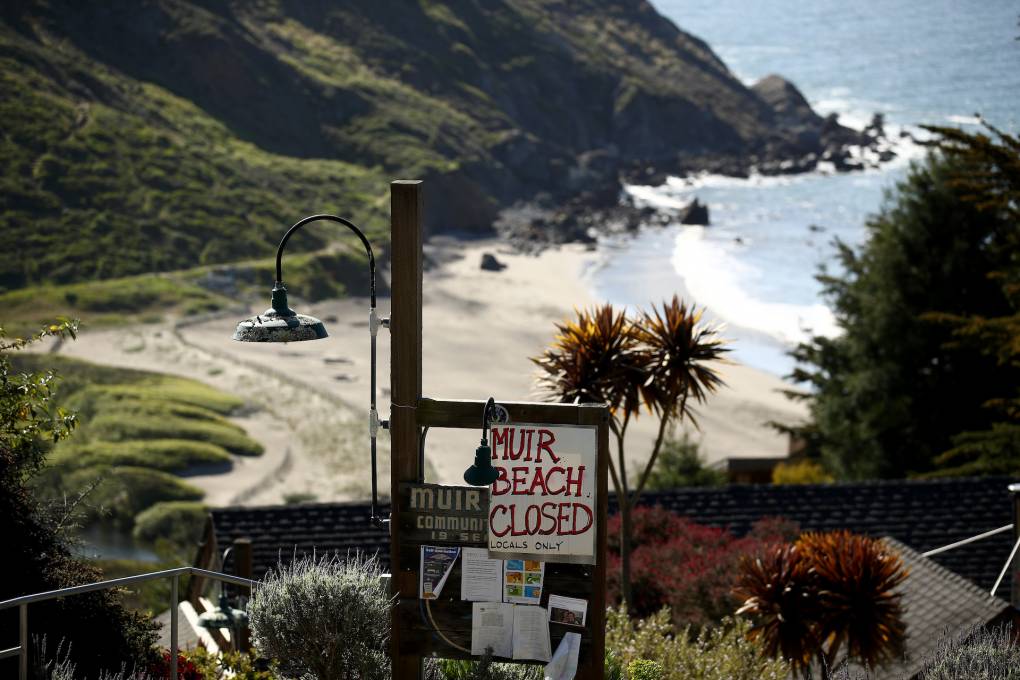
"caption": "A closed sign is displayed above Muir Beach in Marin County on April 1, 2020.",
"description": "A closed sign is displayed above Muir Beach in Marin County on April 1, 2020.",
"title": "Coronavirus Pandemic Causes Climate Of Anxiety And Changing Routines In America",
"credit": "Ezra Shaw/Getty Images",
"status": "inherit",
"isLoading": false,
"fetchFailed": false
},
"news_11813003": {
"type": "attachments",
"id": "news_11813003",
"meta": {
"index": "attachments_1716263798",
"site": "news",
"id": "11813003",
"found": true
},
"parent": 11809015,
"imgSizes": {
"apple_news_ca_landscape_5_5": {
"file": "https://ww2.kqed.org/app/uploads/sites/10/2020/03/RS42458_003_KQED_SanFrancisco_GGP_03302020-qut-1044x783.jpg",
"width": 1044,
"mimeType": "image/jpeg",
"height": 783
},
"apple_news_ca_square_4_0": {
"file": "https://ww2.kqed.org/app/uploads/sites/10/2020/03/RS42458_003_KQED_SanFrancisco_GGP_03302020-qut-470x470.jpg",
"width": 470,
"mimeType": "image/jpeg",
"height": 470
},
"twentyfourteen-full-width": {
"file": "https://ww2.kqed.org/app/uploads/sites/10/2020/03/RS42458_003_KQED_SanFrancisco_GGP_03302020-qut-1038x576.jpg",
"width": 1038,
"mimeType": "image/jpeg",
"height": 576
},
"thumbnail": {
"file": "https://ww2.kqed.org/app/uploads/sites/10/2020/03/RS42458_003_KQED_SanFrancisco_GGP_03302020-qut-160x107.jpg",
"width": 160,
"mimeType": "image/jpeg",
"height": 107
},
"post-thumbnail": {
"file": "https://ww2.kqed.org/app/uploads/sites/10/2020/03/RS42458_003_KQED_SanFrancisco_GGP_03302020-qut-672x372.jpg",
"width": 672,
"mimeType": "image/jpeg",
"height": 372
},
"kqedFullSize": {
"file": "https://ww2.kqed.org/app/uploads/sites/10/2020/03/RS42458_003_KQED_SanFrancisco_GGP_03302020-qut.jpg",
"width": 1920,
"height": 1280
},
"apple_news_ca_landscape_4_7": {
"file": "https://ww2.kqed.org/app/uploads/sites/10/2020/03/RS42458_003_KQED_SanFrancisco_GGP_03302020-qut-632x474.jpg",
"width": 632,
"mimeType": "image/jpeg",
"height": 474
},
"large": {
"file": "https://ww2.kqed.org/app/uploads/sites/10/2020/03/RS42458_003_KQED_SanFrancisco_GGP_03302020-qut-1020x680.jpg",
"width": 1020,
"mimeType": "image/jpeg",
"height": 680
},
"apple_news_ca_landscape_4_0": {
"file": "https://ww2.kqed.org/app/uploads/sites/10/2020/03/RS42458_003_KQED_SanFrancisco_GGP_03302020-qut-536x402.jpg",
"width": 536,
"mimeType": "image/jpeg",
"height": 402
},
"apple_news_ca_portrait_12_9": {
"file": "https://ww2.kqed.org/app/uploads/sites/10/2020/03/RS42458_003_KQED_SanFrancisco_GGP_03302020-qut-1122x1280.jpg",
"width": 1122,
"mimeType": "image/jpeg",
"height": 1280
},
"medium": {
"file": "https://ww2.kqed.org/app/uploads/sites/10/2020/03/RS42458_003_KQED_SanFrancisco_GGP_03302020-qut-800x533.jpg",
"width": 800,
"mimeType": "image/jpeg",
"height": 533
},
"apple_news_ca_portrait_4_0": {
"file": "https://ww2.kqed.org/app/uploads/sites/10/2020/03/RS42458_003_KQED_SanFrancisco_GGP_03302020-qut-354x472.jpg",
"width": 354,
"mimeType": "image/jpeg",
"height": 472
},
"apple_news_ca_portrait_9_7": {
"file": "https://ww2.kqed.org/app/uploads/sites/10/2020/03/RS42458_003_KQED_SanFrancisco_GGP_03302020-qut-840x1120.jpg",
"width": 840,
"mimeType": "image/jpeg",
"height": 1120
},
"apple_news_ca_landscape_12_9": {
"file": "https://ww2.kqed.org/app/uploads/sites/10/2020/03/RS42458_003_KQED_SanFrancisco_GGP_03302020-qut-1832x1280.jpg",
"width": 1832,
"mimeType": "image/jpeg",
"height": 1280
},
"apple_news_ca_square_9_7": {
"file": "https://ww2.kqed.org/app/uploads/sites/10/2020/03/RS42458_003_KQED_SanFrancisco_GGP_03302020-qut-1104x1104.jpg",
"width": 1104,
"mimeType": "image/jpeg",
"height": 1104
},
"apple_news_ca_portrait_4_7": {
"file": "https://ww2.kqed.org/app/uploads/sites/10/2020/03/RS42458_003_KQED_SanFrancisco_GGP_03302020-qut-414x552.jpg",
"width": 414,
"mimeType": "image/jpeg",
"height": 552
},
"apple_news_ca_square_12_9": {
"file": "https://ww2.kqed.org/app/uploads/sites/10/2020/03/RS42458_003_KQED_SanFrancisco_GGP_03302020-qut-1472x1280.jpg",
"width": 1472,
"mimeType": "image/jpeg",
"height": 1280
},
"apple_news_ca_portrait_5_5": {
"file": "https://ww2.kqed.org/app/uploads/sites/10/2020/03/RS42458_003_KQED_SanFrancisco_GGP_03302020-qut-687x916.jpg",
"width": 687,
"mimeType": "image/jpeg",
"height": 916
},
"full-width": {
"file": "https://ww2.kqed.org/app/uploads/sites/10/2020/03/RS42458_003_KQED_SanFrancisco_GGP_03302020-qut-1920x1280.jpg",
"width": 1920,
"mimeType": "image/jpeg",
"height": 1280
},
"apple_news_ca_square_4_7": {
"file": "https://ww2.kqed.org/app/uploads/sites/10/2020/03/RS42458_003_KQED_SanFrancisco_GGP_03302020-qut-550x550.jpg",
"width": 550,
"mimeType": "image/jpeg",
"height": 550
},
"apple_news_ca_landscape_9_7": {
"file": "https://ww2.kqed.org/app/uploads/sites/10/2020/03/RS42458_003_KQED_SanFrancisco_GGP_03302020-qut-1376x1032.jpg",
"width": 1376,
"mimeType": "image/jpeg",
"height": 1032
},
"apple_news_ca_square_5_5": {
"file": "https://ww2.kqed.org/app/uploads/sites/10/2020/03/RS42458_003_KQED_SanFrancisco_GGP_03302020-qut-912x912.jpg",
"width": 912,
"mimeType": "image/jpeg",
"height": 912
}
},
"publishDate": 1587169624,
"modified": 1587169654,
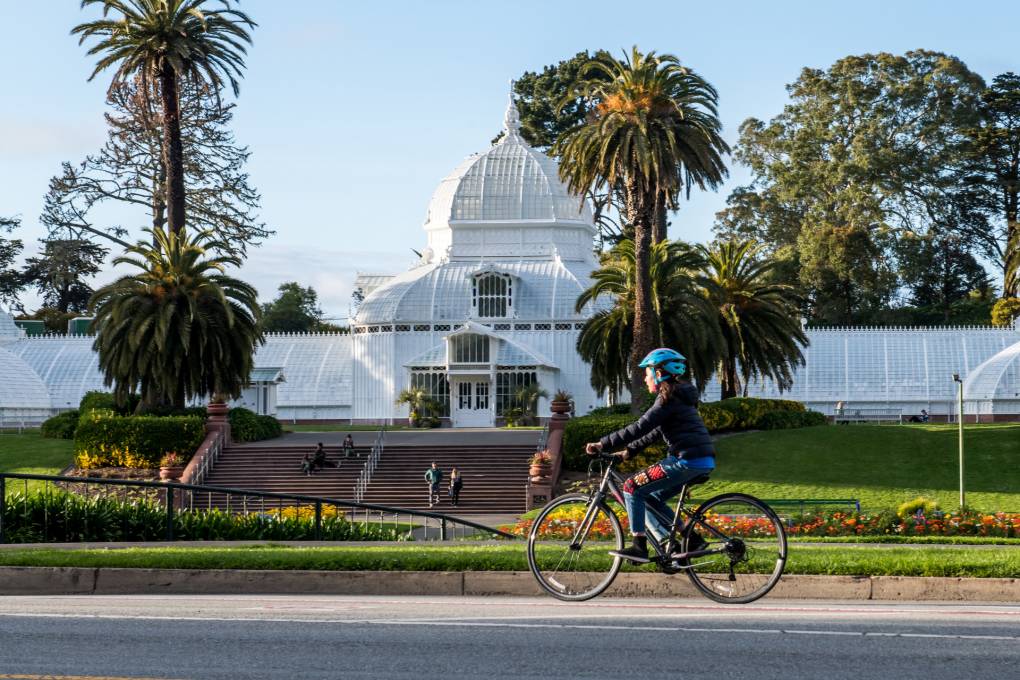
"caption": "A bicyclist goes past the Conservatory of Flowers in Golden Gate Park in San Francisco on March 30, 2020.",
"description": "A bicyclist goes past the Conservatory of Flowers in Golden Gate Park in San Francisco on March 30, 2020.",
"title": "RS42458_003_KQED_SanFrancisco_GGP_03302020-qut",
"credit": "Beth LaBerge/KQED",
"status": "inherit",
"isLoading": false,
"fetchFailed": false
},
"news_11812968": {
"type": "attachments",
"id": "news_11812968",
"meta": {
"index": "attachments_1716263798",
"site": "news",
"id": "11812968",
"found": true
},
"parent": 11808351,
"imgSizes": {
"apple_news_ca_landscape_5_5": {
"file": "https://ww2.kqed.org/app/uploads/sites/10/2020/03/IMG_9367_1920x-1044x783.jpg",
"width": 1044,
"mimeType": "image/jpeg",
"height": 783
},
"apple_news_ca_square_4_0": {
"file": "https://ww2.kqed.org/app/uploads/sites/10/2020/03/IMG_9367_1920x-470x470.jpg",
"width": 470,
"mimeType": "image/jpeg",
"height": 470
},
"twentyfourteen-full-width": {
"file": "https://ww2.kqed.org/app/uploads/sites/10/2020/03/IMG_9367_1920x-1038x576.jpg",
"width": 1038,
"mimeType": "image/jpeg",
"height": 576
},
"thumbnail": {
"file": "https://ww2.kqed.org/app/uploads/sites/10/2020/03/IMG_9367_1920x-160x120.jpg",
"width": 160,
"mimeType": "image/jpeg",
"height": 120
},
"post-thumbnail": {
"file": "https://ww2.kqed.org/app/uploads/sites/10/2020/03/IMG_9367_1920x-672x372.jpg",
"width": 672,
"mimeType": "image/jpeg",
"height": 372
},
"kqedFullSize": {
"file": "https://ww2.kqed.org/app/uploads/sites/10/2020/03/IMG_9367_1920x.jpg",
"width": 1920,
"height": 1440
},
"apple_news_ca_landscape_4_7": {
"file": "https://ww2.kqed.org/app/uploads/sites/10/2020/03/IMG_9367_1920x-632x474.jpg",
"width": 632,
"mimeType": "image/jpeg",
"height": 474
},
"large": {
"file": "https://ww2.kqed.org/app/uploads/sites/10/2020/03/IMG_9367_1920x-1020x765.jpg",
"width": 1020,
"mimeType": "image/jpeg",
"height": 765
},
"apple_news_ca_landscape_4_0": {
"file": "https://ww2.kqed.org/app/uploads/sites/10/2020/03/IMG_9367_1920x-536x402.jpg",
"width": 536,
"mimeType": "image/jpeg",
"height": 402
},
"apple_news_ca_portrait_12_9": {
"file": "https://ww2.kqed.org/app/uploads/sites/10/2020/03/IMG_9367_1920x-1122x1440.jpg",
"width": 1122,
"mimeType": "image/jpeg",
"height": 1440
},
"medium": {
"file": "https://ww2.kqed.org/app/uploads/sites/10/2020/03/IMG_9367_1920x-800x600.jpg",
"width": 800,
"mimeType": "image/jpeg",
"height": 600
},
"apple_news_ca_portrait_4_0": {
"file": "https://ww2.kqed.org/app/uploads/sites/10/2020/03/IMG_9367_1920x-354x472.jpg",
"width": 354,
"mimeType": "image/jpeg",
"height": 472
},
"apple_news_ca_portrait_9_7": {
"file": "https://ww2.kqed.org/app/uploads/sites/10/2020/03/IMG_9367_1920x-840x1120.jpg",
"width": 840,
"mimeType": "image/jpeg",
"height": 1120
},
"apple_news_ca_landscape_12_9": {
"file": "https://ww2.kqed.org/app/uploads/sites/10/2020/03/IMG_9367_1920x-1832x1374.jpg",
"width": 1832,
"mimeType": "image/jpeg",
"height": 1374
},
"apple_news_ca_square_9_7": {
"file": "https://ww2.kqed.org/app/uploads/sites/10/2020/03/IMG_9367_1920x-1104x1104.jpg",
"width": 1104,
"mimeType": "image/jpeg",
"height": 1104
},
"apple_news_ca_portrait_4_7": {
"file": "https://ww2.kqed.org/app/uploads/sites/10/2020/03/IMG_9367_1920x-414x552.jpg",
"width": 414,
"mimeType": "image/jpeg",
"height": 552
},
"apple_news_ca_square_12_9": {
"file": "https://ww2.kqed.org/app/uploads/sites/10/2020/03/IMG_9367_1920x-1472x1440.jpg",
"width": 1472,
"mimeType": "image/jpeg",
"height": 1440
},
"apple_news_ca_portrait_5_5": {
"file": "https://ww2.kqed.org/app/uploads/sites/10/2020/03/IMG_9367_1920x-687x916.jpg",
"width": 687,
"mimeType": "image/jpeg",
"height": 916
},
"full-width": {
"file": "https://ww2.kqed.org/app/uploads/sites/10/2020/03/IMG_9367_1920x-1920x1440.jpg",
"width": 1920,
"mimeType": "image/jpeg",
"height": 1440
},
"apple_news_ca_square_4_7": {
"file": "https://ww2.kqed.org/app/uploads/sites/10/2020/03/IMG_9367_1920x-550x550.jpg",
"width": 550,
"mimeType": "image/jpeg",
"height": 550
},
"apple_news_ca_landscape_9_7": {
"file": "https://ww2.kqed.org/app/uploads/sites/10/2020/03/IMG_9367_1920x-1376x1032.jpg",
"width": 1376,
"mimeType": "image/jpeg",
"height": 1032
},
"apple_news_ca_square_5_5": {
"file": "https://ww2.kqed.org/app/uploads/sites/10/2020/03/IMG_9367_1920x-912x912.jpg",
"width": 912,
"mimeType": "image/jpeg",
"height": 912
}
},
"publishDate": 1587165615,
"modified": 1587165687,
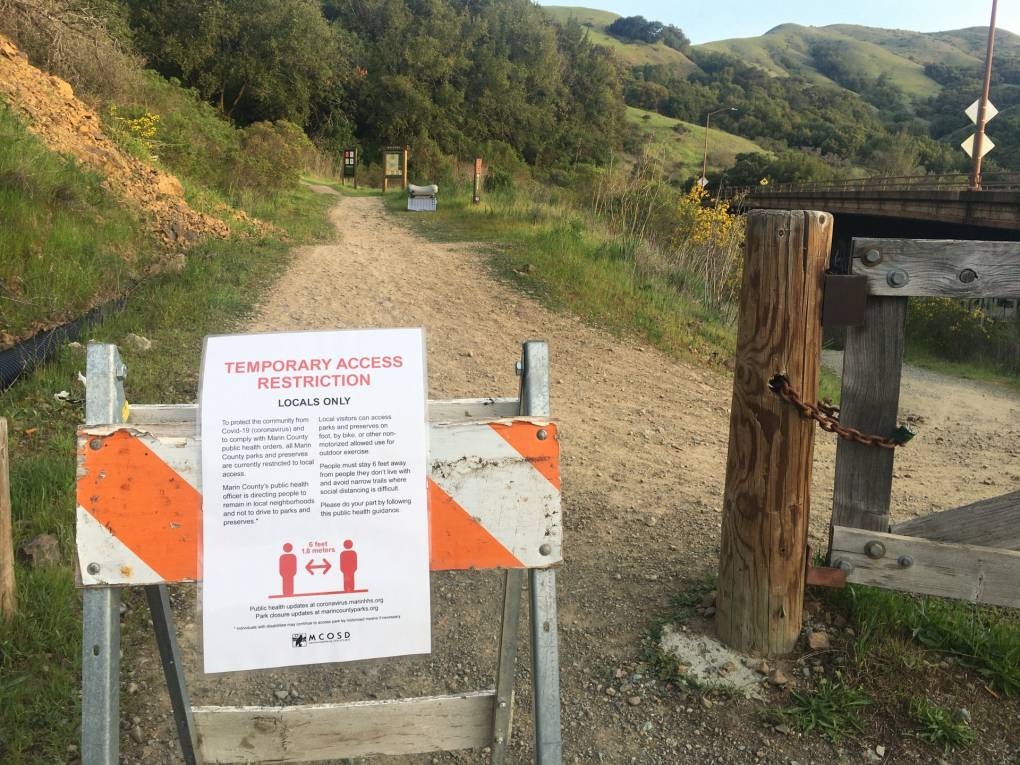
"caption": "On April 9, officials with the Marin County Sheriff's office said they were continuing to see a large number of visitors and have \"issued thousands of warning citations on vehicles parked in violation of the shelter-in-place order.\"",
"description": "On April 9, officials with the Marin County Sheriff's office said they were continuing to see a large number of visitors and have \"issued thousands of warning citations on vehicles parked in violation of the shelter-in-place order.\"",
"title": "IMG_9367_1920x",
"credit": "Mark Fiore/KQED",
"status": "inherit",
"isLoading": false,
"fetchFailed": false
},
"news_11700239": {
"type": "attachments",
"id": "news_11700239",
"meta": {
"index": "attachments_1716263798",
"site": "news",
"id": "11700239",
"found": true
},
"parent": 11700235,
"imgSizes": {
"small": {
"file": "https://ww2.kqed.org/app/uploads/sites/10/2018/10/RS33337_Point-Lobos-1-qut-520x347.jpg",
"width": 520,
"mimeType": "image/jpeg",
"height": 347
},
"twentyfourteen-full-width": {
"file": "https://ww2.kqed.org/app/uploads/sites/10/2018/10/RS33337_Point-Lobos-1-qut-1038x576.jpg",
"width": 1038,
"mimeType": "image/jpeg",
"height": 576
},
"thumbnail": {
"file": "https://ww2.kqed.org/app/uploads/sites/10/2018/10/RS33337_Point-Lobos-1-qut-160x107.jpg",
"width": 160,
"mimeType": "image/jpeg",
"height": 107
},
"fd-sm": {
"file": "https://ww2.kqed.org/app/uploads/sites/10/2018/10/RS33337_Point-Lobos-1-qut-960x640.jpg",
"width": 960,
"mimeType": "image/jpeg",
"height": 640
},
"post-thumbnail": {
"file": "https://ww2.kqed.org/app/uploads/sites/10/2018/10/RS33337_Point-Lobos-1-qut-672x372.jpg",
"width": 672,
"mimeType": "image/jpeg",
"height": 372
},
"xsmall": {
"file": "https://ww2.kqed.org/app/uploads/sites/10/2018/10/RS33337_Point-Lobos-1-qut-375x250.jpg",
"width": 375,
"mimeType": "image/jpeg",
"height": 250
},
"kqedFullSize": {
"file": "https://ww2.kqed.org/app/uploads/sites/10/2018/10/RS33337_Point-Lobos-1-qut.jpg",
"width": 1920,
"height": 1280
},
"large": {
"file": "https://ww2.kqed.org/app/uploads/sites/10/2018/10/RS33337_Point-Lobos-1-qut-1020x680.jpg",
"width": 1020,
"mimeType": "image/jpeg",
"height": 680
},
"xlarge": {
"file": "https://ww2.kqed.org/app/uploads/sites/10/2018/10/RS33337_Point-Lobos-1-qut-1180x787.jpg",
"width": 1180,
"mimeType": "image/jpeg",
"height": 787
},
"complete_open_graph": {
"file": "https://ww2.kqed.org/app/uploads/sites/10/2018/10/RS33337_Point-Lobos-1-qut-1200x800.jpg",
"width": 1200,
"mimeType": "image/jpeg",
"height": 800
},
"guest-author-50": {
"file": "https://ww2.kqed.org/app/uploads/sites/10/2018/10/RS33337_Point-Lobos-1-qut-50x50.jpg",
"width": 50,
"mimeType": "image/jpeg",
"height": 50
},
"guest-author-96": {
"file": "https://ww2.kqed.org/app/uploads/sites/10/2018/10/RS33337_Point-Lobos-1-qut-96x96.jpg",
"width": 96,
"mimeType": "image/jpeg",
"height": 96
},
"medium": {
"file": "https://ww2.kqed.org/app/uploads/sites/10/2018/10/RS33337_Point-Lobos-1-qut-800x533.jpg",
"width": 800,
"mimeType": "image/jpeg",
"height": 533
},
"guest-author-64": {
"file": "https://ww2.kqed.org/app/uploads/sites/10/2018/10/RS33337_Point-Lobos-1-qut-64x64.jpg",
"width": 64,
"mimeType": "image/jpeg",
"height": 64
},
"guest-author-32": {
"file": "https://ww2.kqed.org/app/uploads/sites/10/2018/10/RS33337_Point-Lobos-1-qut-32x32.jpg",
"width": 32,
"mimeType": "image/jpeg",
"height": 32
},
"fd-lrg": {
"file": "https://ww2.kqed.org/app/uploads/sites/10/2018/10/RS33337_Point-Lobos-1-qut-1920x1280.jpg",
"width": 1920,
"mimeType": "image/jpeg",
"height": 1280
},
"fd-med": {
"file": "https://ww2.kqed.org/app/uploads/sites/10/2018/10/RS33337_Point-Lobos-1-qut-1180x787.jpg",
"width": 1180,
"mimeType": "image/jpeg",
"height": 787
},
"full-width": {
"file": "https://ww2.kqed.org/app/uploads/sites/10/2018/10/RS33337_Point-Lobos-1-qut-1920x1280.jpg",
"width": 1920,
"mimeType": "image/jpeg",
"height": 1280
},
"detail": {
"file": "https://ww2.kqed.org/app/uploads/sites/10/2018/10/RS33337_Point-Lobos-1-qut-150x150.jpg",
"width": 150,
"mimeType": "image/jpeg",
"height": 150
},
"guest-author-128": {
"file": "https://ww2.kqed.org/app/uploads/sites/10/2018/10/RS33337_Point-Lobos-1-qut-128x128.jpg",
"width": 128,
"mimeType": "image/jpeg",
"height": 128
},
"xxsmall": {
"file": "https://ww2.kqed.org/app/uploads/sites/10/2018/10/RS33337_Point-Lobos-1-qut-240x160.jpg",
"width": 240,
"mimeType": "image/jpeg",
"height": 160
}
},
"publishDate": 1540147136,
"modified": 1540147179,
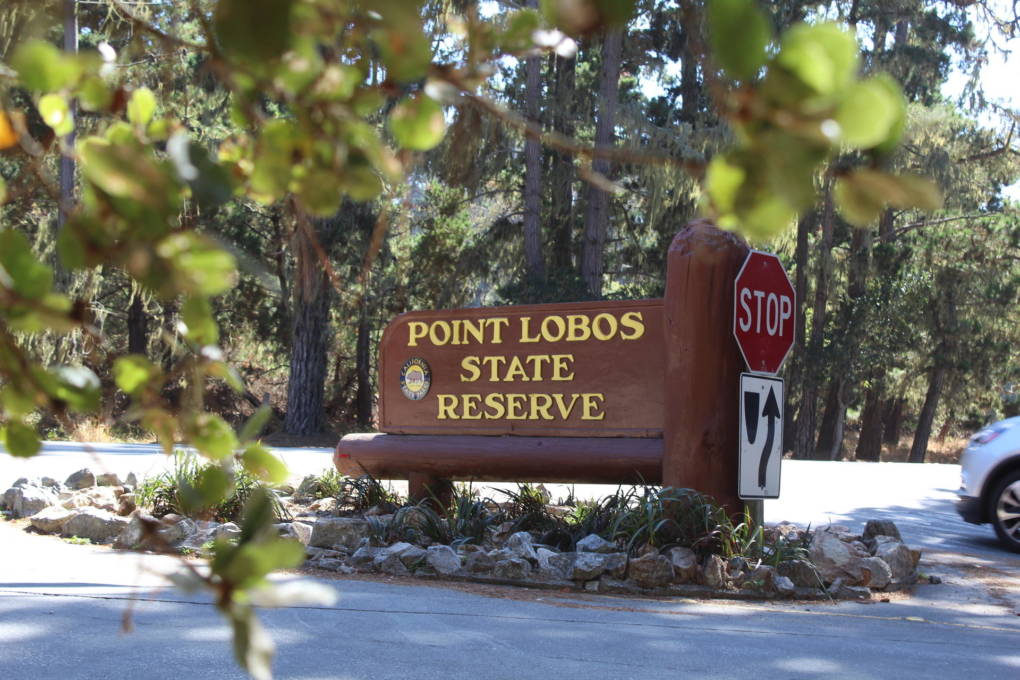
"caption": "Point Lobos State Natural Reserve, south of Carmel, is planning to establish a reservation system because overcrowding is threatening the reserve.",
"description": "Point Lobos State Natural Reserve, south of Carmel, is planning to establish a reservation system because overcrowding is threatening the reserve.",
"title": "RS33337_Point Lobos 1-qut",
"credit": "Erika Mahoney/KAZU",
"status": "inherit",
"isLoading": false,
"fetchFailed": false
},
"news_98504": {
"type": "attachments",
"id": "news_98504",
"meta": {
"index": "attachments_1716263798",
"site": "news",
"id": "98504",
"found": true
},
"parent": 0,
"imgSizes": {
"kqedFullSize": {
"file": "https://ww2.kqed.org/app/uploads/sites/10/2013/06/Henry-Coe-State-Park-rachael-myrow1.jpg",
"width": 600,
"height": 339
}
},
"publishDate": 1370285271,
"modified": 1648510138,
"caption": "Henry Coe State Park",
"description": "Henry Coe State Park rachael myrow",
"title": "Henry Coe State Park rachael myrow",
"credit": "Rachael Myrow/KQED",
"status": "inherit",
"altTag": "Green hills in the distance are offset by dry, yellow grass and wood posts in the foreground.",
"isLoading": false,
"fetchFailed": false
},
"news_93763": {
"type": "attachments",
"id": "news_93763",
"meta": {
"index": "attachments_1716263798",
"site": "news",
"id": "93763",
"found": true
},
"parent": 93740,
"imgSizes": {
"kqedFullSize": {
"file": "https://ww2.kqed.org/app/uploads/sites/10/2013/04/CorralHollow.jpg",
"width": 1212,
"height": 822
}
},
"publishDate": 1365611385,
"modified": 1648511019,
"caption": "Corrall Hollow, looking its best in winter when the hills are as green as they can be. ",
"description": "Corrall Hollow, looking its best in winter when the hills are as green as they can be. ",
"title": "CorralHollow",
"credit": "Courtesy of Jim Town",
"status": "inherit",
"altTag": "A dry riverbed in the foreground contrasts with green hills behind.",
"isLoading": false,
"fetchFailed": false
},
"news_64820": {
"type": "attachments",
"id": "news_64820",
"meta": {
"index": "attachments_1716263798",
"site": "news",
"id": "64820",
"found": true
},
"parent": 64819,
"imgSizes": {
"kqedFullSize": {
"file": "https://ww2.kqed.org/app/uploads/sites/10/2012/05/IMG_3393.jpg",
"width": 4000,
"height": 3000
}
},
"publishDate": 1336524306,
"modified": 1648511501,
"caption": "Hendy Woods in Mendocino, one of the state parks that were set to close.",
"description": "Hendy Woods in Mendocino, one of the state parks that were set to close.",
"title": "IMG_3393",
"credit": "Molly Samuels/KQED",
"status": "inherit",
"altTag": "A path wends through a redwood grove.",
"isLoading": false,
"fetchFailed": false
},
"news_75087": {
"type": "attachments",
"id": "news_75087",
"meta": {
"index": "attachments_1716263798",
"site": "news",
"id": "75087",
"found": true
},
"parent": 75070,
"imgSizes": {
"kqedFullSize": {
"file": "https://ww2.kqed.org/app/uploads/sites/10/2012/09/1-IMG_1610.jpg",
"width": 4000,
"height": 2247
}
},
"publishDate": 1346786289,
"modified": 1648510287,
"caption": "Gazing into a beautiful oak tree at Henry Coe State Park. If we shake the trunk, will money roll down? ",
"description": "Gazing into a beautiful oak tree at Henry Coe State Park. If we shake the trunk, will money roll down? ",
"title": "1-IMG_1610",
"credit": "Rachael Myrow/KQED",
"status": "inherit",
"altTag": "Green leaves fill the branches of a tree against a blue sky.",
"isLoading": false,
"fetchFailed": false
},
"news_73197": {
"type": "attachments",
"id": "news_73197",
"meta": {
"index": "attachments_1716263798",
"site": "news",
"id": "73197",
"found": true
},
"parent": 73191,
"imgSizes": {
"kqedFullSize": {
"file": "https://ww2.kqed.org/app/uploads/sites/10/2012/08/Ruth-Coleman2.jpg",
"width": 248,
"height": 140
}
},
"publishDate": 1344986741,
"modified": 1648511594,
"caption": "Ruth Coleman resigned as California parks director when a special fund was uncovered in her department.",
"description": "Ruth Coleman resigned as California parks director when a special fund was uncovered in her department.",
"title": "Ruth Coleman",
"credit": null,
"status": "inherit",
"altTag": "A woman with a bob smiles at the camera.",
"isLoading": false,
"fetchFailed": false
},
"news_72283": {
"type": "attachments",
"id": "news_72283",
"meta": {
"index": "attachments_1716263798",
"site": "news",
"id": "72283",
"found": true
},
"parent": 72280,
"imgSizes": {
"kqedFullSize": {
"file": "https://ww2.kqed.org/app/uploads/sites/10/2012/08/Benecia-Park.jpg",
"width": 300,
"height": 225
}
},
"publishDate": 1344284298,
"modified": 1648511388,
"caption": "Benicia State Recreation Area",
"description": "Benicia State Recreation Area",
"title": "Benicia Park",
"credit": "Michael Olsen/Flickr",
"status": "inherit",
"altTag": "A sign for Benicia State Recreation Area sits in front of a tree resplendent on a sunny day.",
"isLoading": false,
"fetchFailed": false
},
"news_69067": {
"type": "attachments",
"id": "news_69067",
"meta": {
"index": "attachments_1716263798",
"site": "news",
"id": "69067",
"found": true
},
"parent": 68525,
"imgSizes": {
"kqedFullSize": {
"file": "https://ww2.kqed.org/app/uploads/sites/10/2012/06/1-Benicia.jpg",
"width": 1113,
"height": 626
}
},
"publishDate": 1340915178,
"modified": 1648511698,
"caption": "Benicia State Recreation Area, a favorite for locals to get some sunshine and exercise. It's technically on the closure list, but practically speaking, it's open. ",
"description": "Benicia State Recreation Area, a favorite for locals to get some sunshine and exercise. It's technically on the closure list, but practically speaking, it's open. ",
"title": "1-Benicia",
"credit": "Rachael Myrow/KQED",
"status": "inherit",
"altTag": "People run and walk on a broad path in a park.",
"isLoading": false,
"fetchFailed": false
},
"news_68234": {
"type": "attachments",
"id": "news_68234",
"meta": {
"index": "attachments_1716263798",
"site": "news",
"id": "68234",
"found": true
},
"parent": 68209,
"imgSizes": {
"kqedFullSize": {
"file": "https://ww2.kqed.org/app/uploads/sites/10/2012/06/P0074560_BirdsSQUARE.jpg",
"width": 285,
"height": 285
}
},
"publishDate": 1340046988,
"modified": 1648510418,
"caption": "Grebes take it easy at Turlock Lake, about to be managed by American Land & Leisure Co. ",
"description": "Grebes take it easy at Turlock Lake, about to be managed by American Land & Leisure Co. ",
"title": "Turlock Lake SRA",
"credit": "California Department of Parks & Recreation",
"status": "inherit",
"altTag": "Two grebes coast on blue water",
"isLoading": false,
"fetchFailed": false
}
},
"audioPlayerReducer": {
"postId": "stream_live",
"isPaused": true,
"isPlaying": false,
"pfsActive": false,
"pledgeModalIsOpen": true,
"playerDrawerIsOpen": false,
"liveAudioPlayStartedAt": 0,
"liveAudioPlayContext": ""
},
"authorsReducer": {
"byline_news_11700235": {
"type": "authors",
"id": "byline_news_11700235",
"meta": {
"override": true
},
"slug": "byline_news_11700235",
"name": "\u003cstrong>Erika Mahoney\u003c/strong>",
"isLoading": false
},
"rachael-myrow": {
"type": "authors",
"id": "251",
"meta": {
"index": "authors_1716337520",
"id": "251",
"found": true
},
"name": "Rachael Myrow",
"firstName": "Rachael",
"lastName": "Myrow",
"slug": "rachael-myrow",
"email": "rmyrow@kqed.org",
"display_author_email": true,
"staff_mastheads": [
"news"
],
"title": "Senior Editor of KQED's Silicon Valley News Desk",
"bio": "• I write and edit stories about how Silicon Valley power and policies shape everyday life in California. I’m also passionate about making Bay Area history and culture more accessible to a broad public. • I’ve been a journalist for most of my life, starting in high school with The Franklin Press in Los Angeles, where I grew up. While earning my first degree in English at UC Berkeley, I got my start in public radio at KALX-FM. After completing a second degree in journalism at Cal, I landed my first professional job at Marketplace, then moved on to KPCC (now LAist), and then KQED, where I hosted The California Report for more than seven years. • My reporting has appeared on NPR, The World, WBUR’s \u003ci>Here & Now\u003c/i>, and the BBC. I also guest host for KQED’s \u003ci>Forum\u003c/i>, as well as the Commonwealth Club in San Francisco. • I speak periodically on media, democracy and technology issues, and do voiceover work for documentaries and educational video projects. • Outside of the studio, you'll find me hiking Bay Area trails and whipping up Insta-ready meals in my kitchen. • I do not accept gifts, money, or favors from anyone connected to my reporting, I don't pay people for information, and I do not support or donate to political causes. • I strive to treat the people I report on with fairness, honesty, and respect. I also recognize there are often multiple sides to a story and work to verify information through multiple sources and documentation. If I get something wrong, I correct it.",
"avatar": "https://secure.gravatar.com/avatar/3ed8a3c5f26025e4a805ba634cda8cd764906b97438a6d9ce216b044e340da4e?s=600&d=blank&r=g",
"twitter": "rachaelmyrow",
"bluesky": null,
"facebook": null,
"instagram": null,
"linkedin": "https://www.linkedin.com/in/rachaelmyrow/",
"sites": [
{
"site": "arts",
"roles": [
"administrator"
]
},
{
"site": "news",
"roles": [
"edit_others_posts",
"editor"
]
},
{
"site": "futureofyou",
"roles": [
"editor"
]
},
{
"site": "bayareabites",
"roles": [
"editor"
]
},
{
"site": "stateofhealth",
"roles": [
"editor"
]
},
{
"site": "science",
"roles": [
"editor"
]
},
{
"site": "food",
"roles": [
"editor"
]
},
{
"site": "forum",
"roles": [
"editor"
]
},
{
"site": "liveblog",
"roles": [
"author"
]
}
],
"headData": {
"title": "Rachael Myrow | KQED",
"description": "Senior Editor of KQED's Silicon Valley News Desk",
"ogImgSrc": "https://secure.gravatar.com/avatar/3ed8a3c5f26025e4a805ba634cda8cd764906b97438a6d9ce216b044e340da4e?s=600&d=blank&r=g",
"twImgSrc": "https://secure.gravatar.com/avatar/3ed8a3c5f26025e4a805ba634cda8cd764906b97438a6d9ce216b044e340da4e?s=600&d=blank&r=g"
},
"isLoading": false,
"link": "/author/rachael-myrow"
},
"sdetrow": {
"type": "authors",
"id": "256",
"meta": {
"index": "authors_1716337520",
"id": "256",
"found": true
},
"name": "Scott Detrow",
"firstName": "Scott",
"lastName": "Detrow",
"slug": "sdetrow",
"email": "sdetrow@kqed.org",
"display_author_email": false,
"staff_mastheads": [],
"title": null,
"bio": "Sacramento bureau chief Scott Detrow covers state government, politics and policy for KQED News and its statewide news program, The California Report.",
"avatar": "https://secure.gravatar.com/avatar/3271d0c151ba26452e3417f5ac251c30?s=600&d=blank&r=g",
"twitter": null,
"facebook": null,
"instagram": null,
"linkedin": null,
"sites": [
{
"site": "news",
"roles": [
"subscriber"
]
},
{
"site": "science",
"roles": [
"subscriber"
]
}
],
"headData": {
"title": "Scott Detrow | KQED",
"description": null,
"ogImgSrc": "https://secure.gravatar.com/avatar/3271d0c151ba26452e3417f5ac251c30?s=600&d=blank&r=g",
"twImgSrc": "https://secure.gravatar.com/avatar/3271d0c151ba26452e3417f5ac251c30?s=600&d=blank&r=g"
},
"isLoading": false,
"link": "/author/sdetrow"
},
"mpeterson": {
"type": "authors",
"id": "11223",
"meta": {
"index": "authors_1716337520",
"id": "11223",
"found": true
},
"name": "Molly Peterson",
"firstName": "Molly",
"lastName": "Peterson",
"slug": "mpeterson",
"email": "mpeterson@kqed.org",
"display_author_email": false,
"staff_mastheads": [],
"title": null,
"bio": "Molly Peterson reports for KQED science and news on climate change, catastrophe and risk. Previously she was environment correspondent at Southern California Public Radio. Her work has also appeared at The New York Times, The Guardian, on NPR, at High Country News, on Code Switch, and other national outlets. She has been honored with awards from Public Radio News Directors Incorporated, Investigative Reporters and Editors, the Society for Professional Journalists, the Los Angeles Press Club, and RTNDA Edward R. Murrow awards, among others.",
"avatar": "https://secure.gravatar.com/avatar/7908e2807131f776cc8165c649530b05?s=600&d=blank&r=g",
"twitter": "Mollydacious",
"facebook": null,
"instagram": "https://www.instagram.com/radiomolly/",
"linkedin": null,
"sites": [
{
"site": "news",
"roles": [
"subscriber"
]
},
{
"site": "futureofyou",
"roles": [
"editor"
]
},
{
"site": "science",
"roles": [
"editor"
]
}
],
"headData": {
"title": "Molly Peterson | KQED",
"description": null,
"ogImgSrc": "https://secure.gravatar.com/avatar/7908e2807131f776cc8165c649530b05?s=600&d=blank&r=g",
"twImgSrc": "https://secure.gravatar.com/avatar/7908e2807131f776cc8165c649530b05?s=600&d=blank&r=g"
},
"isLoading": false,
"link": "/author/mpeterson"
},
"mwiley": {
"type": "authors",
"id": "11526",
"meta": {
"index": "authors_1716337520",
"id": "11526",
"found": true
},
"name": "Michelle Wiley",
"firstName": "Michelle",
"lastName": "Wiley",
"slug": "mwiley",
"email": "mwiley@KQED.org",
"display_author_email": true,
"staff_mastheads": [],
"title": null,
"bio": "Michelle Wiley was the senior editor of weekends.",
"avatar": "https://secure.gravatar.com/avatar/3b897d82a09e8587e8e73fa69fbcc635?s=600&d=blank&r=g",
"twitter": "michelleewiley",
"facebook": null,
"instagram": null,
"linkedin": null,
"sites": [
{
"site": "",
"roles": [
"editor"
]
},
{
"site": "arts",
"roles": [
"editor"
]
},
{
"site": "news",
"roles": [
"subscriber"
]
},
{
"site": "lowdown",
"roles": [
"editor"
]
},
{
"site": "science",
"roles": [
"editor"
]
},
{
"site": "podcasts",
"roles": [
"editor"
]
}
],
"headData": {
"title": "Michelle Wiley | KQED",
"description": null,
"ogImgSrc": "https://secure.gravatar.com/avatar/3b897d82a09e8587e8e73fa69fbcc635?s=600&d=blank&r=g",
"twImgSrc": "https://secure.gravatar.com/avatar/3b897d82a09e8587e8e73fa69fbcc635?s=600&d=blank&r=g"
},
"isLoading": false,
"link": "/author/mwiley"
}
},
"pagesReducer": {
"news_tag_california-state-parks": {
"type": "terms",
"id": "news_24345",
"meta": {
"index": "terms_1716263798",
"site": "news",
"id": "24345",
"score": 9.556642
},
"featImg": null,
"name": "California State Parks",
"description": null,
"taxonomy": "tag",
"headData": {
"twImgId": null,
"twTitle": null,
"ogTitle": null,
"ogImgId": null,
"twDescription": null,
"description": null,
"title": "California State Parks Archives | KQED News",
"ogDescription": null
},
"ttid": 24362,
"slug": "california-state-parks",
"isLoading": false,
"title": "California State Parks",
"pageMeta": {
"site": "news",
"WpPageTemplate": "page-topic-editorial",
"currentPage": 5
},
"blocks": [
{
"blockName": "kqed/post-list",
"attrs": {
"layout": "cardArticle2",
"query": "posts/news?tag=california-state-parks",
"seeMore": false,
"paginated": true,
"page": 5
}
},
{
"blockName": "kqed/ad"
}
]
}
},
"pfsSessionReducer": {},
"postsReducer": {
"stream_live": {
"type": "live",
"id": "stream_live",
"audioUrl": "https://streams.kqed.org/kqedradio",
"title": "Live Stream",
"excerpt": "Live Stream information currently unavailable.",
"link": "/radio",
"featImg": "",
"label": {
"name": "KQED Live",
"link": "/"
}
},
"stream_kqedNewscast": {
"type": "posts",
"id": "stream_kqedNewscast",
"audioUrl": "https://www.kqed.org/.stream/anon/radio/RDnews/newscast.mp3?_=1",
"title": "KQED Newscast",
"featImg": "",
"label": {
"name": "88.5 FM",
"link": "/"
}
},
"news_11815358": {
"type": "posts",
"id": "news_11815358",
"meta": {
"index": "posts_1716263798",
"site": "news",
"id": "11815358",
"score": null,
"sort": [
1588293315000
]
},
"guestAuthors": [],
"slug": "are-californias-beaches-closed-or-not-heres-what-you-need-to-know",
"title": "Are California's Beaches Closed or Not? Here's What You Need to Know",
"publishDate": 1588293315,
"format": "standard",
"headTitle": "Are California’s Beaches Closed or Not? Here’s What You Need to Know | KQED",
"labelTerm": {},
"content": "\u003cp>When Bay Area health officials announced their new \u003ca href=\"https://www.kqed.org/news/11814970/bay-area-shelter-in-place-orders-extended-through-may-31\">shelter-in-place orders\u003c/a> earlier this week — which extended orders to the end of May and eased some restrictions on outdoor activities — a collective sigh of relief seemed to be felt across the region.\u003c/p>\n\u003cp>https://twitter.com/MeganSWater/status/1255576849297502209?s=20\u003c/p>\n\u003cp>Then, late Wednesday night, \u003ca href=\"https://www.kqed.org/news/11815276/memo-says-newsom-will-order-all-beaches-closed\">a memo circulated\u003c/a> suggesting that Gov. Gavin Newsom was planning to close all state parks and beaches. Newsom later clarified during his Thursday press conference that not \u003cem>all\u003c/em> state parks and beaches would be closed — just those in areas of Orange County, where large crowds over the past weekend.\u003c/p>\n\u003cp>All this back and forth over the past few days has been … confusing, to say the least. So as folks around the Bay Area gear up to get some fresh air this weekend, here’s what you should know.\u003c/p>\n\u003cp>[ad fullwidth]\u003c/p>\n\u003ch3>Can I go to the beach? What about parks?\u003c/h3>\n\u003cp>Despite what you may have heard, the new order closing state beaches will only apply to Orange County, according to the governor.\u003c/p>\n\u003cp>Meanwhile, Santa Cruz County — which has seen increased crowding at the beach on weekends — has \u003ca href=\"https://www.santacruzhealth.org/Portals/7/Pdfs/Coronavirus/BeachRestrictions.04292020.pdf\">added restrictions\u003c/a> around beach access, including closing the beaches to \u003cem>all\u003c/em> activity from 11 a.m. to 5 p.m.\u003c/p>\n\u003cp>So what does this mean for Bay Area outdoor recreation? The same rules apply as before:\u003c/p>\n\u003cul>\n\u003cli>While many parks and beaches remain open, parking lots at state parks and beaches, as well as several others, will be closed.\u003c/li>\n\u003cli>Officials ask that you maintain social distancing while outdoors.\u003c/li>\n\u003cli>Mask requirements still stand across the Bay Area — so while you’re not required to wear one while taking part in outdoor activities, you’ll want to keep one handy just in case.\u003c/li>\n\u003cli>Several parks and facilities have been closed by local health officials, so \u003ca href=\"https://www.kqed.org/news/11808351/check-has-covid-19-closed-your-bay-area-park\">check before you go\u003c/a>.\u003c/li>\n\u003c/ul>\n\u003cp>As for swimming and surfing? The statewide shelter-in-place order does not place restrictions on swimming or surfing, but stricter local regulations may be in effect.\u003c/p>\n\u003cp>The Bay Area’s new regional shelter-in-place order states that any activity at parks or beaches “must comply with any restrictions on access and use established by the Health Officer, government or other entity that manages such area to reduce crowding and risk of transmission of COVID-19.” So be sure to check whether any additional restrictions on surfing or swimming are in effect at your local beach, and abide by them.\u003c/p>\n\u003cp>\u003ca href=\"https://www.kqed.org/news/11809015/can-i-go-hiking-during-californias-shelter-in-place-yes-but-read-this-first\">Read more about how to get outside and do it safely here\u003c/a>.\u003c/p>\n\u003cp>[aside postID=news_11808351 hero='https://ww2.kqed.org/app/uploads/sites/10/2020/03/IMG_9367_1920x-1020x765.jpg']\u003c/p>\n\u003ch3>What about the new Bay Area shelter-in-place order? Can I go golfing?\u003c/h3>\n\u003cp>Yes and no.\u003c/p>\n\u003cp>The new shelter-in-place order does include some easing of outdoor recreation — including opening up previously closed activities like golf, field access and skate parks — but that order doesn’t go into effect until 11:59 p.m. on Sunday, May 3.\u003c/p>\n\u003cp>Officials with Alameda County say it’s up to local law enforcement to enforce that timing, so it’s worth looking into club or park rules before you head out.\u003c/p>\n\u003ch3>I’m confused — can I get outside this weekend or not?\u003c/h3>\n\u003cp>In short: yes.\u003c/p>\n\u003cp>Both local and state officials are encouraging residents to spend time outside for both your physical and mental health needs, but they emphasize that social distancing measures aimed at slowing the spread of the coronavirus are necessary to keep outdoor spaces open for everyone. So no congregating in groups or holding picnics on the beach.\u003c/p>\n\u003cp>As Newsom put it during his Thursday press briefing: “We want you to enjoy sunsets, we want you to enjoy activities outdoors,” Newsom said. “The only thing we don’t want you to do is linger.”\u003c/p>\n\u003cp>\u003c/p>\n",
"blocks": [],
"excerpt": "There's been a lot of back and forth about restrictions on access to beaches and parks in the state due to the coronavirus. Here's what you need to know.",
"status": "publish",
"parent": 0,
"modified": 1721121754,
"stats": {
"hasAudio": false,
"hasVideo": false,
"hasChartOrMap": false,
"iframeSrcs": [],
"hasGoogleForm": false,
"hasGallery": false,
"hasHearkenModule": false,
"hasPolis": false,
"paragraphCount": 18,
"wordCount": 661
},
"headData": {
"title": "Are California's Beaches Closed or Not? Here's What You Need to Know | KQED",
"description": "There's been a lot of back and forth about restrictions on access to beaches and parks in the state due to the coronavirus. Here's what you need to know.",
"ogTitle": "",
"ogDescription": "",
"ogImgId": "",
"twTitle": "",
"twDescription": "",
"twImgId": "",
"socialDescription": "There's been a lot of back and forth about restrictions on access to beaches and parks in the state due to the coronavirus. Here's what you need to know.",
"schema": {
"@context": "https://schema.org",
"@type": "NewsArticle",
"headline": "Are California's Beaches Closed or Not? Here's What You Need to Know",
"datePublished": "2020-04-30T17:35:15-07:00",
"dateModified": "2024-07-16T02:22:34-07:00",
"image": "https://cdn.kqed.org/wp-content/uploads/2020/02/KQED-OG-Image@1x.png",
"isAccessibleForFree": "True",
"publisher": {
"@type": "NewsMediaOrganization",
"@id": "https://www.kqed.org/#organization",
"name": "KQED",
"logo": "https://cdn.kqed.org/wp-content/uploads/2020/02/KQED-OG-Image@1x.png",
"url": "https://www.kqed.org",
"sameAs": [
"https://www.facebook.com/KQED",
"https://twitter.com/KQED",
"https://www.instagram.com/kqed/",
"https://www.tiktok.com/@kqedofficial",
"https://www.linkedin.com/company/kqed",
"https://www.youtube.com/channel/UCeC0IOo7i1P_61zVUWbJ4nw"
]
}
}
},
"source": "Coronavirus",
"sourceUrl": "https://www.kqed.org/coronavirus",
"sticky": false,
"path": "/news/11815358/are-californias-beaches-closed-or-not-heres-what-you-need-to-know",
"audioTrackLength": null,
"parsedContent": [
{
"type": "contentString",
"content": "\u003cdiv class=\"post-body\">\u003cp>\u003cp>When Bay Area health officials announced their new \u003ca href=\"https://www.kqed.org/news/11814970/bay-area-shelter-in-place-orders-extended-through-may-31\">shelter-in-place orders\u003c/a> earlier this week — which extended orders to the end of May and eased some restrictions on outdoor activities — a collective sigh of relief seemed to be felt across the region.\u003c/p>\u003c/p>\u003c/div>",
"attributes": {
"named": {},
"numeric": []
}
},
{
"type": "component",
"content": "",
"name": "singleTwitterStatus",
"attributes": {
"named": {
"id": "1255576849297502209"
},
"numeric": []
}
},
{
"type": "contentString",
"content": "\u003cdiv class=\"post-body\">\u003cp>\n\u003cp>Then, late Wednesday night, \u003ca href=\"https://www.kqed.org/news/11815276/memo-says-newsom-will-order-all-beaches-closed\">a memo circulated\u003c/a> suggesting that Gov. Gavin Newsom was planning to close all state parks and beaches. Newsom later clarified during his Thursday press conference that not \u003cem>all\u003c/em> state parks and beaches would be closed — just those in areas of Orange County, where large crowds over the past weekend.\u003c/p>\n\u003cp>All this back and forth over the past few days has been … confusing, to say the least. So as folks around the Bay Area gear up to get some fresh air this weekend, here’s what you should know.\u003c/p>\n\u003cp>\u003c/p>\u003c/div>",
"attributes": {
"named": {},
"numeric": []
}
},
{
"type": "component",
"content": "",
"name": "ad",
"attributes": {
"named": {
"label": "fullwidth"
},
"numeric": [
"fullwidth"
]
}
},
{
"type": "contentString",
"content": "\u003cdiv class=\"post-body\">\u003cp>\u003c/p>\n\u003ch3>Can I go to the beach? What about parks?\u003c/h3>\n\u003cp>Despite what you may have heard, the new order closing state beaches will only apply to Orange County, according to the governor.\u003c/p>\n\u003cp>Meanwhile, Santa Cruz County — which has seen increased crowding at the beach on weekends — has \u003ca href=\"https://www.santacruzhealth.org/Portals/7/Pdfs/Coronavirus/BeachRestrictions.04292020.pdf\">added restrictions\u003c/a> around beach access, including closing the beaches to \u003cem>all\u003c/em> activity from 11 a.m. to 5 p.m.\u003c/p>\n\u003cp>So what does this mean for Bay Area outdoor recreation? The same rules apply as before:\u003c/p>\n\u003cul>\n\u003cli>While many parks and beaches remain open, parking lots at state parks and beaches, as well as several others, will be closed.\u003c/li>\n\u003cli>Officials ask that you maintain social distancing while outdoors.\u003c/li>\n\u003cli>Mask requirements still stand across the Bay Area — so while you’re not required to wear one while taking part in outdoor activities, you’ll want to keep one handy just in case.\u003c/li>\n\u003cli>Several parks and facilities have been closed by local health officials, so \u003ca href=\"https://www.kqed.org/news/11808351/check-has-covid-19-closed-your-bay-area-park\">check before you go\u003c/a>.\u003c/li>\n\u003c/ul>\n\u003cp>As for swimming and surfing? The statewide shelter-in-place order does not place restrictions on swimming or surfing, but stricter local regulations may be in effect.\u003c/p>\n\u003cp>The Bay Area’s new regional shelter-in-place order states that any activity at parks or beaches “must comply with any restrictions on access and use established by the Health Officer, government or other entity that manages such area to reduce crowding and risk of transmission of COVID-19.” So be sure to check whether any additional restrictions on surfing or swimming are in effect at your local beach, and abide by them.\u003c/p>\n\u003cp>\u003ca href=\"https://www.kqed.org/news/11809015/can-i-go-hiking-during-californias-shelter-in-place-yes-but-read-this-first\">Read more about how to get outside and do it safely here\u003c/a>.\u003c/p>\n\u003cp>\u003c/p>\u003c/div>",
"attributes": {
"named": {},
"numeric": []
}
},
{
"type": "component",
"content": "",
"name": "aside",
"attributes": {
"named": {
"postid": "news_11808351",
"hero": "https://ww2.kqed.org/app/uploads/sites/10/2020/03/IMG_9367_1920x-1020x765.jpg",
"label": ""
},
"numeric": []
}
},
{
"type": "contentString",
"content": "\u003cdiv class=\"post-body\">\u003cp>\u003c/p>\n\u003ch3>What about the new Bay Area shelter-in-place order? Can I go golfing?\u003c/h3>\n\u003cp>Yes and no.\u003c/p>\n\u003cp>The new shelter-in-place order does include some easing of outdoor recreation — including opening up previously closed activities like golf, field access and skate parks — but that order doesn’t go into effect until 11:59 p.m. on Sunday, May 3.\u003c/p>\n\u003cp>Officials with Alameda County say it’s up to local law enforcement to enforce that timing, so it’s worth looking into club or park rules before you head out.\u003c/p>\n\u003ch3>I’m confused — can I get outside this weekend or not?\u003c/h3>\n\u003cp>In short: yes.\u003c/p>\n\u003cp>Both local and state officials are encouraging residents to spend time outside for both your physical and mental health needs, but they emphasize that social distancing measures aimed at slowing the spread of the coronavirus are necessary to keep outdoor spaces open for everyone. So no congregating in groups or holding picnics on the beach.\u003c/p>\n\u003cp>As Newsom put it during his Thursday press briefing: “We want you to enjoy sunsets, we want you to enjoy activities outdoors,” Newsom said. “The only thing we don’t want you to do is linger.”\u003c/p>\n\u003cp>\u003c/p>\n\u003c/div>\u003c/p>",
"attributes": {
"named": {},
"numeric": []
}
}
],
"link": "/news/11815358/are-californias-beaches-closed-or-not-heres-what-you-need-to-know",
"authors": [
"11526"
],
"categories": [
"news_19906",
"news_457",
"news_8"
],
"tags": [
"news_1386",
"news_3242",
"news_18538",
"news_24345"
],
"featImg": "news_11815493",
"label": "source_news_11815358"
},
"news_11809015": {
"type": "posts",
"id": "news_11809015",
"meta": {
"index": "posts_1716263798",
"site": "news",
"id": "11809015",
"score": null,
"sort": [
1585314094000
]
},
"parent": 0,
"labelTerm": {},
"blocks": [],
"publishDate": 1585314094,
"format": "standard",
"title": "Can I Go Hiking During California's Shelter in Place? Yes, But Read This First",
"headTitle": "Can I Go Hiking During California’s Shelter in Place? Yes, But Read This First | KQED",
"content": "\u003cp>\u003cem>Updated April 17\u003c/em>\u003c/p>\n\u003cp>It’s safe to say that sheltering in place has made many of us stir crazy. There are only so many times you can walk around your apartment or house before you start feeling frustrated and boxed in.\u003c/p>\n\u003cp>Many experts agree that going outside and being in nature can be crucial for both our physical and \u003ca href=\"https://namica.org/mental-health-benefits-of-nature/\">mental\u003c/a> health. And for some, \u003ca href=\"https://www.kqed.org/news/11807639/how-to-shelter-in-place-if-you-live-with-domestic-abuse\">home isn’t a safe place\u003c/a> and getting respite from that environment is not only important — it’s essential.\u003c/p>\n\u003cp>But state and local officials have also warned that unless we follow proper health and safety protocols, they may have to take drastic measures to reduce the risk of spreading COVID-19. Already, the state has \u003ca href=\"https://www.parks.ca.gov/?page_id=30355\">shut off vehicle access\u003c/a> to all state parks and limited trails. And public health officials are \u003ca href=\"https://www.latimes.com/california/story/2020-04-06/coronavirus-deaths-spike-california\">urging residents\u003c/a> to stay home as much as possible and \u003ca href=\"https://www.cdc.gov/coronavirus/2019-ncov/prevent-getting-sick/cloth-face-cover.html\">wear masks\u003c/a> when they go out.\u003c/p>\n\u003cp>So here’s how to get your outside time, and do it \u003ca href=\"https://www.calparks.org/sites/default/files/2020-03/COVID%20Outdoors%20Guide_4.pdf\">the right way\u003c/a>:\u003c/p>\n\u003ch3>Before You Go\u003c/h3>\n\u003cul>\n\u003cli>\u003cstrong>Plan ahead\u003c/strong>: If you’re going to a park or the beach, \u003ca href=\"https://www.kqed.org/news/11808351/check-has-covid-19-closed-your-bay-area-park\">check to make sure\u003c/a> that location is still open. Many parks have also closed their parking lots, playgrounds and restroom facilities, so you’ll want to plan for that, too.\u003c/li>\n\u003cli>\u003cstrong>Pick a place close by\u003c/strong>: Whether it’s a nearby park or just walking around the block, look for nature nearby. Now is not the time to explore or travel far from home.\u003c/li>\n\u003cli>\u003cstrong>Go solo or with members of your household\u003c/strong>: As tempting as it may be to meet up with friends, now is not the time to do so. Do not plan meetups at the park or anywhere else. Instead, opt for hanging out with friends remotely.\u003c/li>\n\u003cli>\u003cb>Wash your hands before you go:\u003c/b> Wash your hands and bring hand sanitizer, if possible.\u003c/li>\n\u003cli>\u003cstrong>Don’t make stops in between\u003c/strong>: Maintain social distancing while you’re on your way — if you’re headed to a park or trail, try to make no stops while you’re going to and from.\u003c/li>\n\u003c/ul>\n\u003ch3>While You’re Out\u003c/h3>\n\u003cul>\n\u003cli>\u003cstrong>Maintain social distancing\u003c/strong>: The Centers for Disease Control and Prevention recommends keeping at least 6 feet of space or more between you and people who are not members of your household. Step off trails to allow others to pass.\u003c/li>\n\u003cli>\u003cstrong>Choose less frequented areas\u003c/strong>: Don’t walk or hike on crowded trails, and don’t park in crowded lots. Signal your presence to others with your voice, a bell or a horn.\u003c/li>\n\u003cli>\u003cstrong>Follow appropriate signage\u003c/strong>: Don’t go into parks or on trails that have been closed.\u003c/li>\n\u003cli>\u003cstrong>Keep pets on a leash\u003c/strong>: Protect your furry friends by keeping them on leash and with you at all times.\u003c/li>\n\u003cli>\u003cstrong>Leave no trace\u003c/strong>: Trash pickup may be limited, so make sure to pack out what you pack in.\u003c/li>\n\u003cli>\u003cstrong>Wear a \u003ca href=\"https://www.kqed.org/news/11810490/masks-to-wear-or-not-to-wear-that-is-the-question\">face covering or mask\u003c/a>\u003c/strong>: Bandanna, t-shirt or homemade mask. San Francisco, as well as several other Bay Area counties, are \u003ca href=\"https://www.kqed.org/news/11812863/san-francisco-to-enforce-face-mask-requirement-as-bay-area-strengthens-mandates\">now requiring\u003c/a> face masks be worn when performing essential activities — like grocery shopping. While residents are not \u003cem>required\u003c/em> to wear a mask while walking, running, hiking or bicycling, officials are encouraging you keep one handy.\u003c/li>\n\u003c/ul>\n\u003ch3>When You Should \u003cstrong>\u003cspan style=\"text-decoration: underline\">Not\u003c/span> Visit a Park\u003c/strong>\u003c/h3>\n\u003cul>\n\u003cli>\u003cstrong>If you’re feeling sick\u003c/strong>: If you, or one of your family members, is experiencing symptoms of COVID-19 or another illness — \u003cstrong>stay home\u003c/strong>.\u003c/li>\n\u003cli>\u003cstrong>If it’s too crowded\u003c/strong>: If you can tell from the parking lot, or from observing the trailhead, that it is too crowded to maintain 6 feet of distance at all times, \u003cstrong>do not go\u003c/strong>.\u003c/li>\n\u003cli>\u003cstrong>If the park is closed\u003c/strong>: If a park has been closed by local officials, \u003cstrong>do not go there\u003c/strong>.\u003c/li>\n\u003c/ul>\n\u003cp>[ad fullwidth]\u003cbr>\nAnd remember, if you can’t visit you can always explore parks \u003ca href=\"https://www.calparks.org/what-were-doing/updates/health\">virtually\u003c/a>.\u003c/p>\n\u003cp>Have fun, stay safe and remember: 6 feet apart!\u003c/p>\n\u003cp>https://twitter.com/TedrickG/status/1241818210757791744?s=20\u003c/p>\n\u003cp>More Bay Area coronavirus resources:\u003c/p>\n\u003cul>\n\u003cli>\u003ca href=\"https://www.kqed.org/news/11808351/check-has-covid-19-closed-your-bay-area-park\">Check: Has COVID-19 Closed Your Bay Area Park?\u003c/a>\u003c/li>\n\u003cli>\u003ca href=\"https://www.kqed.org/science/1959951/can-i-get-covid-19-from-my-dog-6-questions-about-pets-and-the-coronavirus-answered-by-experts\">Can I Get COVID-19 From My Dog? 6 Questions About Pets and the Coronavirus Answered by Experts\u003c/a>\u003c/li>\n\u003cli>\u003ca href=\"https://www.kqed.org/news/11805625/coronavirus-in-the-bay-area-your-questions-answered\">Coronavirus in the Bay Area: Your Questions, Answered\u003c/a>\u003c/li>\n\u003cli>\u003ca href=\"https://www.kqed.org/news/11807823/where-to-donate-n95-masks-and-other-medical-supplies-in-the-bay-area\">Where to Donate N95 Masks and Other Medical Supplies in the Bay Area\u003c/a>\u003c/li>\n\u003c/ul>\n\u003cp>\u003c/p>\n",
"stats": {
"hasVideo": false,
"hasChartOrMap": false,
"hasAudio": false,
"hasPolis": false,
"wordCount": 720,
"hasGoogleForm": false,
"hasGallery": false,
"hasHearkenModule": false,
"iframeSrcs": [],
"paragraphCount": 9
},
"modified": 1701972172,
"excerpt": "Many experts agree that going outside and being in nature can be crucial for both our physical and mental health during the coronavirus pandemic. But it's important that we do it the right way.",
"headData": {
"twImgId": "",
"twTitle": "",
"ogTitle": "",
"ogImgId": "",
"twDescription": "",
"description": "Experts agree getting outside during California's shelter in place order is crucial for physical and mental health. But it's important to do it right.",
"socialDescription": "Experts agree getting outside during California's shelter in place order is crucial for physical and mental health. But it's important to do it right.",
"title": "Can I Go Hiking During California's Shelter in Place? Yes, But Read This First | KQED",
"ogDescription": "",
"schema": {
"@context": "https://schema.org",
"@type": "NewsArticle",
"headline": "Can I Go Hiking During California's Shelter in Place? Yes, But Read This First",
"datePublished": "2020-03-27T06:01:34-07:00",
"dateModified": "2023-12-07T10:02:52-08:00",
"image": "https://cdn.kqed.org/wp-content/uploads/2020/02/KQED-OG-Image@1x.png",
"isAccessibleForFree": "True",
"publisher": {
"@type": "NewsMediaOrganization",
"@id": "https://www.kqed.org/#organization",
"name": "KQED",
"logo": "https://cdn.kqed.org/wp-content/uploads/2020/02/KQED-OG-Image@1x.png",
"url": "https://www.kqed.org",
"sameAs": [
"https://www.facebook.com/KQED",
"https://twitter.com/KQED",
"https://www.instagram.com/kqed/",
"https://www.tiktok.com/@kqedofficial",
"https://www.linkedin.com/company/kqed",
"https://www.youtube.com/channel/UCeC0IOo7i1P_61zVUWbJ4nw"
]
}
}
},
"guestAuthors": [],
"slug": "can-i-go-hiking-during-californias-shelter-in-place-yes-but-read-this-first",
"status": "publish",
"sourceUrl": "https://www.kqed.org/coronavirus",
"sticky": false,
"source": "Coronavirus",
"WpOldSlug": "can-i-go-hiking-during-californias-shelter-in-place-yes-but-read-this-first__trashed",
"path": "/news/11809015/can-i-go-hiking-during-californias-shelter-in-place-yes-but-read-this-first",
"audioTrackLength": null,
"parsedContent": [
{
"type": "contentString",
"content": "\u003cdiv class=\"post-body\">\u003cp>\u003cp>\u003cem>Updated April 17\u003c/em>\u003c/p>\n\u003cp>It’s safe to say that sheltering in place has made many of us stir crazy. There are only so many times you can walk around your apartment or house before you start feeling frustrated and boxed in.\u003c/p>\n\u003cp>Many experts agree that going outside and being in nature can be crucial for both our physical and \u003ca href=\"https://namica.org/mental-health-benefits-of-nature/\">mental\u003c/a> health. And for some, \u003ca href=\"https://www.kqed.org/news/11807639/how-to-shelter-in-place-if-you-live-with-domestic-abuse\">home isn’t a safe place\u003c/a> and getting respite from that environment is not only important — it’s essential.\u003c/p>\n\u003cp>But state and local officials have also warned that unless we follow proper health and safety protocols, they may have to take drastic measures to reduce the risk of spreading COVID-19. Already, the state has \u003ca href=\"https://www.parks.ca.gov/?page_id=30355\">shut off vehicle access\u003c/a> to all state parks and limited trails. And public health officials are \u003ca href=\"https://www.latimes.com/california/story/2020-04-06/coronavirus-deaths-spike-california\">urging residents\u003c/a> to stay home as much as possible and \u003ca href=\"https://www.cdc.gov/coronavirus/2019-ncov/prevent-getting-sick/cloth-face-cover.html\">wear masks\u003c/a> when they go out.\u003c/p>\n\u003cp>So here’s how to get your outside time, and do it \u003ca href=\"https://www.calparks.org/sites/default/files/2020-03/COVID%20Outdoors%20Guide_4.pdf\">the right way\u003c/a>:\u003c/p>\n\u003ch3>Before You Go\u003c/h3>\n\u003cul>\n\u003cli>\u003cstrong>Plan ahead\u003c/strong>: If you’re going to a park or the beach, \u003ca href=\"https://www.kqed.org/news/11808351/check-has-covid-19-closed-your-bay-area-park\">check to make sure\u003c/a> that location is still open. Many parks have also closed their parking lots, playgrounds and restroom facilities, so you’ll want to plan for that, too.\u003c/li>\n\u003cli>\u003cstrong>Pick a place close by\u003c/strong>: Whether it’s a nearby park or just walking around the block, look for nature nearby. Now is not the time to explore or travel far from home.\u003c/li>\n\u003cli>\u003cstrong>Go solo or with members of your household\u003c/strong>: As tempting as it may be to meet up with friends, now is not the time to do so. Do not plan meetups at the park or anywhere else. Instead, opt for hanging out with friends remotely.\u003c/li>\n\u003cli>\u003cb>Wash your hands before you go:\u003c/b> Wash your hands and bring hand sanitizer, if possible.\u003c/li>\n\u003cli>\u003cstrong>Don’t make stops in between\u003c/strong>: Maintain social distancing while you’re on your way — if you’re headed to a park or trail, try to make no stops while you’re going to and from.\u003c/li>\n\u003c/ul>\n\u003ch3>While You’re Out\u003c/h3>\n\u003cul>\n\u003cli>\u003cstrong>Maintain social distancing\u003c/strong>: The Centers for Disease Control and Prevention recommends keeping at least 6 feet of space or more between you and people who are not members of your household. Step off trails to allow others to pass.\u003c/li>\n\u003cli>\u003cstrong>Choose less frequented areas\u003c/strong>: Don’t walk or hike on crowded trails, and don’t park in crowded lots. Signal your presence to others with your voice, a bell or a horn.\u003c/li>\n\u003cli>\u003cstrong>Follow appropriate signage\u003c/strong>: Don’t go into parks or on trails that have been closed.\u003c/li>\n\u003cli>\u003cstrong>Keep pets on a leash\u003c/strong>: Protect your furry friends by keeping them on leash and with you at all times.\u003c/li>\n\u003cli>\u003cstrong>Leave no trace\u003c/strong>: Trash pickup may be limited, so make sure to pack out what you pack in.\u003c/li>\n\u003cli>\u003cstrong>Wear a \u003ca href=\"https://www.kqed.org/news/11810490/masks-to-wear-or-not-to-wear-that-is-the-question\">face covering or mask\u003c/a>\u003c/strong>: Bandanna, t-shirt or homemade mask. San Francisco, as well as several other Bay Area counties, are \u003ca href=\"https://www.kqed.org/news/11812863/san-francisco-to-enforce-face-mask-requirement-as-bay-area-strengthens-mandates\">now requiring\u003c/a> face masks be worn when performing essential activities — like grocery shopping. While residents are not \u003cem>required\u003c/em> to wear a mask while walking, running, hiking or bicycling, officials are encouraging you keep one handy.\u003c/li>\n\u003c/ul>\n\u003ch3>When You Should \u003cstrong>\u003cspan style=\"text-decoration: underline\">Not\u003c/span> Visit a Park\u003c/strong>\u003c/h3>\n\u003cul>\n\u003cli>\u003cstrong>If you’re feeling sick\u003c/strong>: If you, or one of your family members, is experiencing symptoms of COVID-19 or another illness — \u003cstrong>stay home\u003c/strong>.\u003c/li>\n\u003cli>\u003cstrong>If it’s too crowded\u003c/strong>: If you can tell from the parking lot, or from observing the trailhead, that it is too crowded to maintain 6 feet of distance at all times, \u003cstrong>do not go\u003c/strong>.\u003c/li>\n\u003cli>\u003cstrong>If the park is closed\u003c/strong>: If a park has been closed by local officials, \u003cstrong>do not go there\u003c/strong>.\u003c/li>\n\u003c/ul>\n\u003cp>\u003c/p>\u003c/div>",
"attributes": {
"named": {},
"numeric": []
}
},
{
"type": "component",
"content": "",
"name": "ad",
"attributes": {
"named": {
"label": "fullwidth"
},
"numeric": [
"fullwidth"
]
}
},
{
"type": "contentString",
"content": "\u003cdiv class=\"post-body\">\u003cp>\u003cbr>\nAnd remember, if you can’t visit you can always explore parks \u003ca href=\"https://www.calparks.org/what-were-doing/updates/health\">virtually\u003c/a>.\u003c/p>\n\u003cp>Have fun, stay safe and remember: 6 feet apart!\u003c/p>\u003c/p>\u003c/div>",
"attributes": {
"named": {},
"numeric": []
}
},
{
"type": "component",
"content": "",
"name": "singleTwitterStatus",
"attributes": {
"named": {
"id": "1241818210757791744"
},
"numeric": []
}
},
{
"type": "contentString",
"content": "\u003cdiv class=\"post-body\">\u003cp>\n\u003cp>More Bay Area coronavirus resources:\u003c/p>\n\u003cul>\n\u003cli>\u003ca href=\"https://www.kqed.org/news/11808351/check-has-covid-19-closed-your-bay-area-park\">Check: Has COVID-19 Closed Your Bay Area Park?\u003c/a>\u003c/li>\n\u003cli>\u003ca href=\"https://www.kqed.org/science/1959951/can-i-get-covid-19-from-my-dog-6-questions-about-pets-and-the-coronavirus-answered-by-experts\">Can I Get COVID-19 From My Dog? 6 Questions About Pets and the Coronavirus Answered by Experts\u003c/a>\u003c/li>\n\u003cli>\u003ca href=\"https://www.kqed.org/news/11805625/coronavirus-in-the-bay-area-your-questions-answered\">Coronavirus in the Bay Area: Your Questions, Answered\u003c/a>\u003c/li>\n\u003cli>\u003ca href=\"https://www.kqed.org/news/11807823/where-to-donate-n95-masks-and-other-medical-supplies-in-the-bay-area\">Where to Donate N95 Masks and Other Medical Supplies in the Bay Area\u003c/a>\u003c/li>\n\u003c/ul>\n\u003cp>\u003c/p>\n\u003c/div>\u003c/p>",
"attributes": {
"named": {},
"numeric": []
}
}
],
"link": "/news/11809015/can-i-go-hiking-during-californias-shelter-in-place-yes-but-read-this-first",
"authors": [
"11526"
],
"categories": [
"news_457",
"news_8"
],
"tags": [
"news_24345",
"news_27350",
"news_27504",
"news_17925",
"news_2905",
"news_27808"
],
"featImg": "news_11813003",
"label": "source_news_11809015"
},
"news_11808351": {
"type": "posts",
"id": "news_11808351",
"meta": {
"index": "posts_1716263798",
"site": "news",
"id": "11808351",
"score": null,
"sort": [
1585137778000
]
},
"guestAuthors": [],
"slug": "check-has-covid-19-closed-your-bay-area-park",
"title": "Check: Has COVID-19 Closed Your Bay Area Park?",
"publishDate": 1585137778,
"format": "standard",
"headTitle": "Check: Has COVID-19 Closed Your Bay Area Park? | KQED",
"labelTerm": {},
"content": "\u003cp>\u003cem>Updated Thursday, April 30\u003c/em>\u003c/p>\n\u003cp>We’re all going stir crazy, so we’re all headed outside. And that’s become a problem.\u003c/p>\n\u003cp>To maintain social distancing, state and local leaders have taken to changing the rules for outdoor spaces — and warning that they may further curtail recreational options if COVID-19 continues to spread relatively unchecked.\u003c/p>\n\u003cp>For example, due to large crowds in Newport Beach this past weekend, Gov. Gavin Newsom recently announced that the state would \u003ca href=\"https://www.cnn.com/travel/article/california-newsom-close-beaches-parks/index.html\">temporarily close beaches in Orange County\u003c/a> to prevent further spread of COVID-19.\u003c/p>\n\u003cp>While new Bay Area \u003ca href=\"https://www.kqed.org/news/11814970/bay-area-shelter-in-place-orders-extended-through-may-31\">shelter-in-place orders \u003c/a>do ease some restrictions on outdoor activities, those orders don’t go into effect until Sunday, May 3, 2020, at 11:59 p.m. And officials with Alameda County say it’s up to local law enforcement to enforce that timing.\u003c/p>\n\u003cp>[ad fullwidth]\u003c/p>\n\u003cp>On March 29, \u003ca href=\"https://www.parks.ca.gov/?page_id=30350\">vehicle access was closed\u003c/a> for all 280 California state parks. State campgrounds have also been closed for now. And new restrictions — as part of the \u003ca href=\"https://abc7news.com/health/bay-area-reacts-to-strengthened-covid-19-shelter-in-place-orders/6066087/\">extended shelter-in-place order\u003c/a> — have closed enclosed dog parks, sport courts and skateboard parks, among \u003ca href=\"https://www.smcgov.org/sites/smcgov.org/files/Final%203-31%20Order.pdf\">other things\u003c/a>.\u003c/p>\n\u003cp>Additionally, 49 public agencies, nonprofits and indigenous tribes have released guidelines for safe outdoor recreation during the shelter-in-place order. They recommend the following:\u003c/p>\n\u003cul>\n\u003cli>\u003cstrong>Go solo or with your family unit\u003c/strong>: Maintain 6 feet of distance between yourself and people you do not live with. Choose less frequented parks and trails. Do not park in a crowded parking lot or use a crowded trail. Do not hold social gatherings at parks or anywhere.\u003c/li>\n\u003cli>\u003cstrong>Stay close to home and avoid crowds\u003c/strong>: Look for nature nearby, now is not the time to explore or travel far from home. Some parking lots are close, so try not to drive if possible. Visit nature virtually — there are many options online.\u003c/li>\n\u003cli>\u003cstrong>Stay safe and healthy\u003c/strong>: Do not visit parks that have been closed by local authorities. Many restrooms and other facilities have been closed, so plan ahead before you go. Shorten your visit to ensure a safe experience for everyone. Stay home if you, or one of your family members, is sick. Leave no trace — garbage pickup is limited so pack out what you pack in.\u003c/li>\n\u003c/ul>\n\u003cp>We’ve compiled information on some favorite Bay Area parklands organized by county — check here before you head out.\u003c/p>\n\u003cp>\u003ca href=\"https://www.kqed.org/news/11809015/can-i-go-hiking-during-californias-shelter-in-place-yes-but-read-this-first\">\u003cstrong>Remember\u003c/strong>\u003c/a>: No matter where you go to, it’s best to stay at least six feet away from people outside your household and to make sure to follow proper hygiene guidelines.\u003c/p>\n\u003cul>\n\u003cli>\u003ca href=\"#alameda\">Alameda & Contra Costa Counties\u003c/a>\u003c/li>\n\u003cli>\u003ca href=\"#marin\">Marin County\u003c/a>\u003c/li>\n\u003cli>\u003ca href=\"#napa\">Napa County\u003c/a>\u003c/li>\n\u003cli>\u003ca href=\"#sanfrancisco\">San Francisco City and County\u003c/a>\u003c/li>\n\u003cli>\u003ca href=\"#ggnra\">Golden Gate National Recreation Area\u003c/a>\u003c/li>\n\u003cli>\u003ca href=\"#sanmateo\">San Mateo County\u003c/a>\u003c/li>\n\u003cli>\u003ca href=\"#santaclara\">Santa Clara County\u003c/a>\u003c/li>\n\u003cli>\u003ca href=\"#solano\">Solano County\u003c/a>\u003c/li>\n\u003cli>\u003ca href=\"#sonoma\">Sonoma County\u003c/a>\u003c/li>\n\u003c/ul>\n\u003ch3>\u003ca id=\"alameda\">\u003c/a>Alameda & Contra Costa Counties\u003c/h3>\n\u003cp>At East Bay parks in Alameda and Contra Costa counties, parking lots and staging areas, as well as some parks, have been closed until May 3. \u003ca href=\"https://www.ebparks.org/news/covid_19_park_and_trail_updates.htm\">Check here\u003c/a> for a full list.\u003c/p>\n\u003cp>\u003cstrong>Oakland\u003c/strong>\u003c/p>\n\u003cp>Several parks remain open, while buildings in them are closed.\u003c/p>\n\u003cp>“We encourage you to go outdoors and enjoy our parks, keeping a healthy distance from other people so that we help prevent the spread of COVID-19,” Mayor Libby Schaaf said on March 17.\u003c/p>\n\u003cp>\u003cstrong>Berkeley\u003c/strong>\u003c/p>\n\u003cp>All play structures, playgrounds and sport courts (basketball, tennis, volleyball) are closed. So are recreation facilities, including Live Oak Community Center and the Willard Clubhouse.\u003c/p>\n\u003cp>According to the \u003ca href=\"https://www.cityofberkeley.info/Parks_Rec_Waterfront/Trees_Parks/Parks_Information.aspx\">city of Berkeley’s website\u003c/a>, “large parks with enough open space to support social distancing standards remain open.” But authorities caution residents not to “arrange outings to parks with people you don’t live with.”\u003c/p>\n\u003cp>The city skate park, pickleball courts, the sports complex on Gilman Street, pools and multiple mini parks are closed.\u003c/p>\n\u003ch3>\u003ca id=\"marin\">\u003c/a>Marin County\u003c/h3>\n\u003cp>Marin County announced restrictions on access to all parks beginning March 22, under an order of the \u003ca href=\"https://www.marincounty.org/main/county-press-releases/press-releases/2020/hhs-covid-shelterinplace2-033120\">county public health department\u003c/a>. The order extends through May 3, 2020.\u003c/p>\n\u003cp>Officials ask that people not drive to beaches, open spaces or parks outside their neighborhoods. Residents may walk or bike to nearby preserves and parks that are open.\u003c/p>\n\u003cp>Current closures impact more than 18,000 acres managed by Marin County Parks. \u003ca href=\"https://www.marincountyparks.org/parkspreserves/shelter-in-place-closed\">Check here\u003c/a> to see a full list of what restrictions are in place.\u003c/p>\n\u003cp>Additionally, federal authorities say \u003ca href=\"https://www.nps.gov/muwo/index.htm\">Muir Woods\u003c/a>, \u003ca href=\"https://www.nps.gov/aboutus/news/public-health-update.htm\">Alcatraz\u003c/a> and \u003ca href=\"https://www.nps.gov/fopo/index.htm\">Fort Point\u003c/a> are shut down entirely. The campgrounds and visitor center at \u003ca href=\"https://www.nps.gov/pore/index.htm\">Point Reyes\u003c/a> are closed until further notice. Meanwhile, Drakes Beach is already restricted to protect the elephant seal colony there until the end of March. Other rotating closures will protect other seal populations throughout the park until June.\u003c/p>\n\u003ch3>\u003ca id=\"napa\">\u003c/a>Napa County\u003c/h3>\n\u003cp>\u003ca href=\"https://napaoutdoors.org/current-status-parks-trails/\">Parks are open\u003c/a>, but users must comply with social distancing guidance.\u003c/p>\n\u003cp>Officials are asking visitors to manage crowds, and to avoid Robert Louis Stevenson Park for the time being, due to parking issues.\u003c/p>\n\u003ch3>\u003ca id=\"sanfrancisco\">\u003c/a>San Francisco City and County\u003c/h3>\n\u003cp>San Francisco Mayor London Breed has threatened to close parks if people cannot successfully social distance. But, according to officials with \u003ca href=\"https://sfrecpark.org/AlertCenter.aspx?AID=COVID19-Update-Getting-Outside-in-our-Pa-13\">San Francisco Recreation and Parks\u003c/a>, all of their “parks, trails and open spaces remain open to allow people to go outside and get some fresh air.”\u003c/p>\n\u003cp>Park officials recommend individual activities, no group yoga and no swimming. But while parks remain open, most recreational programs and facilities — as well as playgrounds — are currently closed.\u003c/p>\n\u003cp>The city \u003ca href=\"https://sfrecpark.org/AlertCenter.aspx?AID=Park-Street-Closures-JFK-Drive-John-F-Sh-19\">recently closed\u003c/a> portions of John F. Kennedy Drive in Golden Gate Park and John F. Shelley Drive in John McLaren Park to vehicle access in order to support social distancing practices.\u003c/p>\n\u003cp>Officials have \u003ca href=\"https://sfrecpark.org/AlertCenter.aspx?AID=Twin-Peaks-Road-Closed-Updated-List-of-C-16\">also closed\u003c/a> Twin Peaks Road, parking lots at Ocean Beach, Beach Chalet and Marina Green — including Little Marina — and other areas to combat overcrowding. And at \u003ca href=\"https://yerbabuenagardens.com/impact-of-covid-19-on-yerba-buena-gardens/\">Yerba Buena Gardens\u003c/a>, indoor spaces like Metreon — as well as outdoor areas like the carousel and the play circle — are closed until May 1.\u003c/p>\n\u003cp>While city officials are encouraging people to get out, they say that you should choose a park within walking distance if possible.\u003c/p>\n\u003cp>“What we’re asking everyone to do during this health emergency is to limit your trip as much as possible,” said Tamara Barak Aparton, spokesperson for the San Francisco Recreation and Parks Department. “So it’s fine to go outside. Good, even, to get a little exercise. And San Franciscans are very lucky because in this city, everyone lives within a 10-minute walk to a park.”\u003c/p>\n\u003cp>Barak Aparton said park rangers are out at various sites, but are focused on education rather than enforcement.\u003c/p>\n\u003ch3>\u003ca id=\"ggnra\">\u003c/a>Golden Gate National Recreation Area\u003c/h3>\n\u003cp>Officials with the Golden Gate National Recreation Area (GGNRA) have been recommending that people \u003ca href=\"https://twitter.com/GoldenGateNPS/status/1241163886373605382\">practice distancing\u003c/a> and \u003ca href=\"https://twitter.com/GoldenGateNPS/status/1241816945198018566\">try exploring the parklands\u003c/a> from home.\u003c/p>\n\u003cp>Services and operations are \u003ca href=\"https://www.nps.gov/goga/planyourvisit/temporary-facilities-closure-advisory.htm\">closed at these sites\u003c/a> until further notice:\u003c/p>\n\u003cul>\n\u003cli>Muir Woods National Monument\u003c/li>\n\u003cli>Marin Headlands Visitor Center\u003c/li>\n\u003cli>Nike Missile site; Point Bonita Lighthouse\u003c/li>\n\u003cli>Stinson Beach parking\u003c/li>\n\u003cli>Kirby Cove and Bicentennial campgrounds\u003c/li>\n\u003cli>Alcatraz Island\u003c/li>\n\u003cli>Presidio Visitor Center\u003c/li>\n\u003cli>Fort Point National Historic Site\u003c/li>\n\u003cli>Golden Gate Bridge Welcome Center\u003c/li>\n\u003cli>Lands End Lookout\u003c/li>\n\u003c/ul>\n\u003cp>Other GGNRA outdoor spaces and trails remain open to the public, for now, while parking lots and picnic tables are currently closed.\u003c/p>\n\u003ch3>\u003ca id=\"sanmateo\">\u003c/a>San Mateo County\u003c/h3>\n\u003cp>San Mateo County Parks \u003ca href=\"https://parks.smcgov.org/press-release/san-mateo-county-parks-closes-all-parks-slow-spread-covid-19\">closed all parks\u003c/a> on Friday, March 27 to slow the spread of COVID-19. All reservations have been canceled through May 3 and all events are canceled.\u003c/p>\n\u003cp>County officials plan to reopen many parks, beginning May 4. \u003ca href=\"https://parks.smcgov.org/press-release/san-mateo-county-parks-will-reopen-some-parks-may-4\">Check here\u003c/a> for a full list.\u003c/p>\n\u003cp>As of April 9, the \u003ca href=\"https://www.openspace.org/content/novel-coronavirus-updates\">Midpeninsula Open Space Regional preserves\u003c/a> will be closed on Saturdays and Sundays — effective April 11 — by order of the health officer,\u003c/p>\n\u003cp>As for the rest of the week, restrooms at the preserve are closed, but many trails remain open. Preserve managers recommend checking \u003ca href=\"https://www.openspace.org/visit-a-preserve/trail-conditions\">trail conditions\u003c/a> and closures — specifically for Rancho San Antonio County Park and Preserve and the Mount Umunhum area of Sierra Azul. \u003ca href=\"https://www.openspace.org/preserves/windy-hill\">Windy Hill Reserve\u003c/a> and \u003ca href=\"https://www.openspace.org/preserves/long-ridge\">Long Ridge Preserve\u003c/a> are both closed throughout the week\u003c/p>\n\u003ch3>\u003ca id=\"santaclara\">\u003c/a>Santa Clara County\u003c/h3>\n\u003cp>Santa Clara County has \u003ca href=\"https://www.sccgov.org/sites/parks/Pages/covid-19-update.aspx\">suspended all park programming\u003c/a> through May 3, but the parks themselves and trails are open from dawn to dusk.\u003c/p>\n\u003cp>The restrooms at the \u003ca href=\"https://www.openspaceauthority.org/visitors/conditions-safety.html\">Santa Clara Valley Open Space regional preserves\u003c/a> are closed until further notice, and the preserves themselves close at 5 p.m. each day.\u003c/p>\n\u003cp>All youth programs are \u003ca href=\"https://www.sanjoseca.gov/Home/Components/News/News/892/5103\">currently closed\u003c/a> in the city of San Jose, as are community centers, with the exception of senior nutrition programs. Playgrounds in the city have also been closed.\u003c/p>\n\u003ch3>\u003ca id=\"solano\">\u003c/a>Solano County\u003c/h3>\n\u003cp>Solano County parks \u003ca href=\"http://www.solanocounty.com/depts/rm/countypark/homepage.asp\">are closed\u003c/a> through at least May 17.\u003c/p>\n\u003ch3>\u003ca id=\"sonoma\">\u003c/a>Sonoma County\u003c/h3>\n\u003cp>Residents of Sonoma County will be able to \u003ca href=\"https://parks.sonomacounty.ca.gov/Visit/Covid-19-Parks-Status-Updates/\">walk or bike at a park\u003c/a> in their neighborhood starting April 29, according to Dr. Sundari Mase, Sonoma County public health officer. Parks in the area have been closed since March 23.\u003c/p>\n\u003cp>Mase confirmed the “soft opening” during an April 28 meeting of the county Board of Supervisors. According to the Sonoma County parks site, “Residents may access only those parks they can reach by walking or biking from their homes. Driving to a park is not allowed. Park use is limited to walking, hiking, jogging, biking and fishing.”\u003c/p>\n\u003cp>While many parks have opened, all Sonoma County regional parks and trails remain closed. \u003ca href=\"https://parks.sonomacounty.ca.gov/Visit/Covid-19-Parks-Status-Updates/\">Check here for a full list\u003c/a>.\u003c/p>\n\u003cp>All park visitors will still be required to maintain social distancing guidelines, and the parking lots will remain closed except to disabled residents.\u003c/p>\n\u003cp>\u003cem>This post will be updated.\u003c/em>\u003c/p>\n\u003cp>[ad floatright]\u003c/p>\n",
"blocks": [],
"excerpt": "We’ve compiled information on some favorite local parklands organized by county — check here before you head out.",
"status": "publish",
"parent": 0,
"modified": 1721149281,
"stats": {
"hasAudio": false,
"hasVideo": false,
"hasChartOrMap": false,
"iframeSrcs": [],
"hasGoogleForm": false,
"hasGallery": false,
"hasHearkenModule": false,
"hasPolis": false,
"paragraphCount": 48,
"wordCount": 1594
},
"headData": {
"title": "Check: Has COVID-19 Closed Your Bay Area Park? | KQED",
"description": "With parks closing due to coronavirus, we’ve compiled info on Bay Area parklands organized by county. Check here before you head out.",
"ogTitle": "",
"ogDescription": "",
"ogImgId": "",
"twTitle": "",
"twDescription": "",
"twImgId": "",
"socialDescription": "With parks closing due to coronavirus, we’ve compiled info on Bay Area parklands organized by county. Check here before you head out.",
"schema": {
"@context": "https://schema.org",
"@type": "NewsArticle",
"headline": "Check: Has COVID-19 Closed Your Bay Area Park?",
"datePublished": "2020-03-25T05:02:58-07:00",
"dateModified": "2024-07-16T10:01:21-07:00",
"image": "https://cdn.kqed.org/wp-content/uploads/2020/02/KQED-OG-Image@1x.png",
"isAccessibleForFree": "True",
"publisher": {
"@type": "NewsMediaOrganization",
"@id": "https://www.kqed.org/#organization",
"name": "KQED",
"logo": "https://cdn.kqed.org/wp-content/uploads/2020/02/KQED-OG-Image@1x.png",
"url": "https://www.kqed.org",
"sameAs": [
"https://www.facebook.com/KQED",
"https://twitter.com/KQED",
"https://www.instagram.com/kqed/",
"https://www.tiktok.com/@kqedofficial",
"https://www.linkedin.com/company/kqed",
"https://www.youtube.com/channel/UCeC0IOo7i1P_61zVUWbJ4nw"
]
}
}
},
"source": "Coronavirus",
"sourceUrl": "https://www.kqed.org/coronavirus",
"sticky": false,
"path": "/news/11808351/check-has-covid-19-closed-your-bay-area-park",
"audioTrackLength": null,
"parsedContent": [
{
"type": "contentString",
"content": "\u003cdiv class=\"post-body\">\u003cp>\u003cp>\u003cem>Updated Thursday, April 30\u003c/em>\u003c/p>\n\u003cp>We’re all going stir crazy, so we’re all headed outside. And that’s become a problem.\u003c/p>\n\u003cp>To maintain social distancing, state and local leaders have taken to changing the rules for outdoor spaces — and warning that they may further curtail recreational options if COVID-19 continues to spread relatively unchecked.\u003c/p>\n\u003cp>For example, due to large crowds in Newport Beach this past weekend, Gov. Gavin Newsom recently announced that the state would \u003ca href=\"https://www.cnn.com/travel/article/california-newsom-close-beaches-parks/index.html\">temporarily close beaches in Orange County\u003c/a> to prevent further spread of COVID-19.\u003c/p>\n\u003cp>While new Bay Area \u003ca href=\"https://www.kqed.org/news/11814970/bay-area-shelter-in-place-orders-extended-through-may-31\">shelter-in-place orders \u003c/a>do ease some restrictions on outdoor activities, those orders don’t go into effect until Sunday, May 3, 2020, at 11:59 p.m. And officials with Alameda County say it’s up to local law enforcement to enforce that timing.\u003c/p>\n\u003cp>\u003c/p>\u003c/div>",
"attributes": {
"named": {},
"numeric": []
}
},
{
"type": "component",
"content": "",
"name": "ad",
"attributes": {
"named": {
"label": "fullwidth"
},
"numeric": [
"fullwidth"
]
}
},
{
"type": "contentString",
"content": "\u003cdiv class=\"post-body\">\u003cp>\u003c/p>\n\u003cp>On March 29, \u003ca href=\"https://www.parks.ca.gov/?page_id=30350\">vehicle access was closed\u003c/a> for all 280 California state parks. State campgrounds have also been closed for now. And new restrictions — as part of the \u003ca href=\"https://abc7news.com/health/bay-area-reacts-to-strengthened-covid-19-shelter-in-place-orders/6066087/\">extended shelter-in-place order\u003c/a> — have closed enclosed dog parks, sport courts and skateboard parks, among \u003ca href=\"https://www.smcgov.org/sites/smcgov.org/files/Final%203-31%20Order.pdf\">other things\u003c/a>.\u003c/p>\n\u003cp>Additionally, 49 public agencies, nonprofits and indigenous tribes have released guidelines for safe outdoor recreation during the shelter-in-place order. They recommend the following:\u003c/p>\n\u003cul>\n\u003cli>\u003cstrong>Go solo or with your family unit\u003c/strong>: Maintain 6 feet of distance between yourself and people you do not live with. Choose less frequented parks and trails. Do not park in a crowded parking lot or use a crowded trail. Do not hold social gatherings at parks or anywhere.\u003c/li>\n\u003cli>\u003cstrong>Stay close to home and avoid crowds\u003c/strong>: Look for nature nearby, now is not the time to explore or travel far from home. Some parking lots are close, so try not to drive if possible. Visit nature virtually — there are many options online.\u003c/li>\n\u003cli>\u003cstrong>Stay safe and healthy\u003c/strong>: Do not visit parks that have been closed by local authorities. Many restrooms and other facilities have been closed, so plan ahead before you go. Shorten your visit to ensure a safe experience for everyone. Stay home if you, or one of your family members, is sick. Leave no trace — garbage pickup is limited so pack out what you pack in.\u003c/li>\n\u003c/ul>\n\u003cp>We’ve compiled information on some favorite Bay Area parklands organized by county — check here before you head out.\u003c/p>\n\u003cp>\u003ca href=\"https://www.kqed.org/news/11809015/can-i-go-hiking-during-californias-shelter-in-place-yes-but-read-this-first\">\u003cstrong>Remember\u003c/strong>\u003c/a>: No matter where you go to, it’s best to stay at least six feet away from people outside your household and to make sure to follow proper hygiene guidelines.\u003c/p>\n\u003cul>\n\u003cli>\u003ca href=\"#alameda\">Alameda & Contra Costa Counties\u003c/a>\u003c/li>\n\u003cli>\u003ca href=\"#marin\">Marin County\u003c/a>\u003c/li>\n\u003cli>\u003ca href=\"#napa\">Napa County\u003c/a>\u003c/li>\n\u003cli>\u003ca href=\"#sanfrancisco\">San Francisco City and County\u003c/a>\u003c/li>\n\u003cli>\u003ca href=\"#ggnra\">Golden Gate National Recreation Area\u003c/a>\u003c/li>\n\u003cli>\u003ca href=\"#sanmateo\">San Mateo County\u003c/a>\u003c/li>\n\u003cli>\u003ca href=\"#santaclara\">Santa Clara County\u003c/a>\u003c/li>\n\u003cli>\u003ca href=\"#solano\">Solano County\u003c/a>\u003c/li>\n\u003cli>\u003ca href=\"#sonoma\">Sonoma County\u003c/a>\u003c/li>\n\u003c/ul>\n\u003ch3>\u003ca id=\"alameda\">\u003c/a>Alameda & Contra Costa Counties\u003c/h3>\n\u003cp>At East Bay parks in Alameda and Contra Costa counties, parking lots and staging areas, as well as some parks, have been closed until May 3. \u003ca href=\"https://www.ebparks.org/news/covid_19_park_and_trail_updates.htm\">Check here\u003c/a> for a full list.\u003c/p>\n\u003cp>\u003cstrong>Oakland\u003c/strong>\u003c/p>\n\u003cp>Several parks remain open, while buildings in them are closed.\u003c/p>\n\u003cp>“We encourage you to go outdoors and enjoy our parks, keeping a healthy distance from other people so that we help prevent the spread of COVID-19,” Mayor Libby Schaaf said on March 17.\u003c/p>\n\u003cp>\u003cstrong>Berkeley\u003c/strong>\u003c/p>\n\u003cp>All play structures, playgrounds and sport courts (basketball, tennis, volleyball) are closed. So are recreation facilities, including Live Oak Community Center and the Willard Clubhouse.\u003c/p>\n\u003cp>According to the \u003ca href=\"https://www.cityofberkeley.info/Parks_Rec_Waterfront/Trees_Parks/Parks_Information.aspx\">city of Berkeley’s website\u003c/a>, “large parks with enough open space to support social distancing standards remain open.” But authorities caution residents not to “arrange outings to parks with people you don’t live with.”\u003c/p>\n\u003cp>The city skate park, pickleball courts, the sports complex on Gilman Street, pools and multiple mini parks are closed.\u003c/p>\n\u003ch3>\u003ca id=\"marin\">\u003c/a>Marin County\u003c/h3>\n\u003cp>Marin County announced restrictions on access to all parks beginning March 22, under an order of the \u003ca href=\"https://www.marincounty.org/main/county-press-releases/press-releases/2020/hhs-covid-shelterinplace2-033120\">county public health department\u003c/a>. The order extends through May 3, 2020.\u003c/p>\n\u003cp>Officials ask that people not drive to beaches, open spaces or parks outside their neighborhoods. Residents may walk or bike to nearby preserves and parks that are open.\u003c/p>\n\u003cp>Current closures impact more than 18,000 acres managed by Marin County Parks. \u003ca href=\"https://www.marincountyparks.org/parkspreserves/shelter-in-place-closed\">Check here\u003c/a> to see a full list of what restrictions are in place.\u003c/p>\n\u003cp>Additionally, federal authorities say \u003ca href=\"https://www.nps.gov/muwo/index.htm\">Muir Woods\u003c/a>, \u003ca href=\"https://www.nps.gov/aboutus/news/public-health-update.htm\">Alcatraz\u003c/a> and \u003ca href=\"https://www.nps.gov/fopo/index.htm\">Fort Point\u003c/a> are shut down entirely. The campgrounds and visitor center at \u003ca href=\"https://www.nps.gov/pore/index.htm\">Point Reyes\u003c/a> are closed until further notice. Meanwhile, Drakes Beach is already restricted to protect the elephant seal colony there until the end of March. Other rotating closures will protect other seal populations throughout the park until June.\u003c/p>\n\u003ch3>\u003ca id=\"napa\">\u003c/a>Napa County\u003c/h3>\n\u003cp>\u003ca href=\"https://napaoutdoors.org/current-status-parks-trails/\">Parks are open\u003c/a>, but users must comply with social distancing guidance.\u003c/p>\n\u003cp>Officials are asking visitors to manage crowds, and to avoid Robert Louis Stevenson Park for the time being, due to parking issues.\u003c/p>\n\u003ch3>\u003ca id=\"sanfrancisco\">\u003c/a>San Francisco City and County\u003c/h3>\n\u003cp>San Francisco Mayor London Breed has threatened to close parks if people cannot successfully social distance. But, according to officials with \u003ca href=\"https://sfrecpark.org/AlertCenter.aspx?AID=COVID19-Update-Getting-Outside-in-our-Pa-13\">San Francisco Recreation and Parks\u003c/a>, all of their “parks, trails and open spaces remain open to allow people to go outside and get some fresh air.”\u003c/p>\n\u003cp>Park officials recommend individual activities, no group yoga and no swimming. But while parks remain open, most recreational programs and facilities — as well as playgrounds — are currently closed.\u003c/p>\n\u003cp>The city \u003ca href=\"https://sfrecpark.org/AlertCenter.aspx?AID=Park-Street-Closures-JFK-Drive-John-F-Sh-19\">recently closed\u003c/a> portions of John F. Kennedy Drive in Golden Gate Park and John F. Shelley Drive in John McLaren Park to vehicle access in order to support social distancing practices.\u003c/p>\n\u003cp>Officials have \u003ca href=\"https://sfrecpark.org/AlertCenter.aspx?AID=Twin-Peaks-Road-Closed-Updated-List-of-C-16\">also closed\u003c/a> Twin Peaks Road, parking lots at Ocean Beach, Beach Chalet and Marina Green — including Little Marina — and other areas to combat overcrowding. And at \u003ca href=\"https://yerbabuenagardens.com/impact-of-covid-19-on-yerba-buena-gardens/\">Yerba Buena Gardens\u003c/a>, indoor spaces like Metreon — as well as outdoor areas like the carousel and the play circle — are closed until May 1.\u003c/p>\n\u003cp>While city officials are encouraging people to get out, they say that you should choose a park within walking distance if possible.\u003c/p>\n\u003cp>“What we’re asking everyone to do during this health emergency is to limit your trip as much as possible,” said Tamara Barak Aparton, spokesperson for the San Francisco Recreation and Parks Department. “So it’s fine to go outside. Good, even, to get a little exercise. And San Franciscans are very lucky because in this city, everyone lives within a 10-minute walk to a park.”\u003c/p>\n\u003cp>Barak Aparton said park rangers are out at various sites, but are focused on education rather than enforcement.\u003c/p>\n\u003ch3>\u003ca id=\"ggnra\">\u003c/a>Golden Gate National Recreation Area\u003c/h3>\n\u003cp>Officials with the Golden Gate National Recreation Area (GGNRA) have been recommending that people \u003ca href=\"https://twitter.com/GoldenGateNPS/status/1241163886373605382\">practice distancing\u003c/a> and \u003ca href=\"https://twitter.com/GoldenGateNPS/status/1241816945198018566\">try exploring the parklands\u003c/a> from home.\u003c/p>\n\u003cp>Services and operations are \u003ca href=\"https://www.nps.gov/goga/planyourvisit/temporary-facilities-closure-advisory.htm\">closed at these sites\u003c/a> until further notice:\u003c/p>\n\u003cul>\n\u003cli>Muir Woods National Monument\u003c/li>\n\u003cli>Marin Headlands Visitor Center\u003c/li>\n\u003cli>Nike Missile site; Point Bonita Lighthouse\u003c/li>\n\u003cli>Stinson Beach parking\u003c/li>\n\u003cli>Kirby Cove and Bicentennial campgrounds\u003c/li>\n\u003cli>Alcatraz Island\u003c/li>\n\u003cli>Presidio Visitor Center\u003c/li>\n\u003cli>Fort Point National Historic Site\u003c/li>\n\u003cli>Golden Gate Bridge Welcome Center\u003c/li>\n\u003cli>Lands End Lookout\u003c/li>\n\u003c/ul>\n\u003cp>Other GGNRA outdoor spaces and trails remain open to the public, for now, while parking lots and picnic tables are currently closed.\u003c/p>\n\u003ch3>\u003ca id=\"sanmateo\">\u003c/a>San Mateo County\u003c/h3>\n\u003cp>San Mateo County Parks \u003ca href=\"https://parks.smcgov.org/press-release/san-mateo-county-parks-closes-all-parks-slow-spread-covid-19\">closed all parks\u003c/a> on Friday, March 27 to slow the spread of COVID-19. All reservations have been canceled through May 3 and all events are canceled.\u003c/p>\n\u003cp>County officials plan to reopen many parks, beginning May 4. \u003ca href=\"https://parks.smcgov.org/press-release/san-mateo-county-parks-will-reopen-some-parks-may-4\">Check here\u003c/a> for a full list.\u003c/p>\n\u003cp>As of April 9, the \u003ca href=\"https://www.openspace.org/content/novel-coronavirus-updates\">Midpeninsula Open Space Regional preserves\u003c/a> will be closed on Saturdays and Sundays — effective April 11 — by order of the health officer,\u003c/p>\n\u003cp>As for the rest of the week, restrooms at the preserve are closed, but many trails remain open. Preserve managers recommend checking \u003ca href=\"https://www.openspace.org/visit-a-preserve/trail-conditions\">trail conditions\u003c/a> and closures — specifically for Rancho San Antonio County Park and Preserve and the Mount Umunhum area of Sierra Azul. \u003ca href=\"https://www.openspace.org/preserves/windy-hill\">Windy Hill Reserve\u003c/a> and \u003ca href=\"https://www.openspace.org/preserves/long-ridge\">Long Ridge Preserve\u003c/a> are both closed throughout the week\u003c/p>\n\u003ch3>\u003ca id=\"santaclara\">\u003c/a>Santa Clara County\u003c/h3>\n\u003cp>Santa Clara County has \u003ca href=\"https://www.sccgov.org/sites/parks/Pages/covid-19-update.aspx\">suspended all park programming\u003c/a> through May 3, but the parks themselves and trails are open from dawn to dusk.\u003c/p>\n\u003cp>The restrooms at the \u003ca href=\"https://www.openspaceauthority.org/visitors/conditions-safety.html\">Santa Clara Valley Open Space regional preserves\u003c/a> are closed until further notice, and the preserves themselves close at 5 p.m. each day.\u003c/p>\n\u003cp>All youth programs are \u003ca href=\"https://www.sanjoseca.gov/Home/Components/News/News/892/5103\">currently closed\u003c/a> in the city of San Jose, as are community centers, with the exception of senior nutrition programs. Playgrounds in the city have also been closed.\u003c/p>\n\u003ch3>\u003ca id=\"solano\">\u003c/a>Solano County\u003c/h3>\n\u003cp>Solano County parks \u003ca href=\"http://www.solanocounty.com/depts/rm/countypark/homepage.asp\">are closed\u003c/a> through at least May 17.\u003c/p>\n\u003ch3>\u003ca id=\"sonoma\">\u003c/a>Sonoma County\u003c/h3>\n\u003cp>Residents of Sonoma County will be able to \u003ca href=\"https://parks.sonomacounty.ca.gov/Visit/Covid-19-Parks-Status-Updates/\">walk or bike at a park\u003c/a> in their neighborhood starting April 29, according to Dr. Sundari Mase, Sonoma County public health officer. Parks in the area have been closed since March 23.\u003c/p>\n\u003cp>Mase confirmed the “soft opening” during an April 28 meeting of the county Board of Supervisors. According to the Sonoma County parks site, “Residents may access only those parks they can reach by walking or biking from their homes. Driving to a park is not allowed. Park use is limited to walking, hiking, jogging, biking and fishing.”\u003c/p>\n\u003cp>While many parks have opened, all Sonoma County regional parks and trails remain closed. \u003ca href=\"https://parks.sonomacounty.ca.gov/Visit/Covid-19-Parks-Status-Updates/\">Check here for a full list\u003c/a>.\u003c/p>\n\u003cp>All park visitors will still be required to maintain social distancing guidelines, and the parking lots will remain closed except to disabled residents.\u003c/p>\n\u003cp>\u003cem>This post will be updated.\u003c/em>\u003c/p>\n\u003cp>\u003c/p>\u003c/div>",
"attributes": {
"named": {},
"numeric": []
}
},
{
"type": "component",
"content": "",
"name": "ad",
"attributes": {
"named": {
"label": "floatright"
},
"numeric": [
"floatright"
]
}
},
{
"type": "contentString",
"content": "\u003cdiv class=\"post-body\">\u003cp>\u003c/p>\n\u003c/div>\u003c/p>",
"attributes": {
"named": {},
"numeric": []
}
}
],
"link": "/news/11808351/check-has-covid-19-closed-your-bay-area-park",
"authors": [
"11223",
"11526"
],
"categories": [
"news_19906",
"news_8"
],
"tags": [
"news_24345",
"news_27350",
"news_29029",
"news_27504",
"news_2715",
"news_2905",
"news_27808"
],
"featImg": "news_11812968",
"label": "source_news_11808351"
},
"news_11700235": {
"type": "posts",
"id": "news_11700235",
"meta": {
"index": "posts_1716263798",
"site": "news",
"id": "11700235",
"score": null,
"sort": [
1540147719000
]
},
"guestAuthors": [],
"slug": "point-lobos-crown-jewel-of-state-parks-to-require-reservations",
"title": "Point Lobos, ‘Crown Jewel’ of State Parks, to Require Reservations",
"publishDate": 1540147719,
"format": "audio",
"headTitle": "Point Lobos, ‘Crown Jewel’ of State Parks, to Require Reservations | KQED",
"labelTerm": {
"term": 72,
"site": "news"
},
"content": "\u003cp>Point Lobos is preparing to be the first day-use California State Park to roll out a reservation system. Known for its picturesque hiking trails that hug the coastline, Point Lobos has long been called the “crown jewel” of the park system. \u003c/p>\n\u003cp>But visitors are loving it to death.\u003c/p>\n\u003cp>Wearing a full-brimmed khaki hat, Jim Coffin unravels a map of \u003ca href=\"http://www.parks.ca.gov/?page_id=571\" rel=\"noopener\" target=\"_blank\">Point Lobos State Natural Reserve\u003c/a>. The reserve is just south of Carmel. On this day, the Carmel local is playing tour guide.\u003c/p>\n\u003cp>“We have some friends from Denver, and we’re showing them the park,” Coffin says.\u003c/p>\n\u003cp>They head down a trail that weaves between Monterey Cypress trees, traces coastal bluffs and opens up to Whaler’s Cove. Coffin says it’s a must-see for his all of his out-of-town friends. He also says it’s a must they visit during the week. \u003c/p>\n\u003cp>[ad fullwidth]\u003c/p>\n\u003cp>“Because the weekdays are quite a bit less crowded,” he says.\u003c/p>\n\u003cfigure id=\"attachment_11700244\" class=\"wp-caption aligncenter\" style=\"max-width: 800px\">\u003cimg loading=\"lazy\" decoding=\"async\" src=\"https://ww2.kqed.org/news/wp-content/uploads/sites/10/2018/10/RS33339_Point-Lobos-3-qut-800x533.jpg\" alt=\"More than 600,000 people visit Point Lobos State Natural Reserve each year.\" width=\"800\" height=\"533\" class=\"size-medium wp-image-11700244\" srcset=\"https://cdn.kqed.org/wp-content/uploads/sites/10/2018/10/RS33339_Point-Lobos-3-qut-800x533.jpg 800w, https://cdn.kqed.org/wp-content/uploads/sites/10/2018/10/RS33339_Point-Lobos-3-qut-160x107.jpg 160w, https://cdn.kqed.org/wp-content/uploads/sites/10/2018/10/RS33339_Point-Lobos-3-qut-1020x680.jpg 1020w, https://cdn.kqed.org/wp-content/uploads/sites/10/2018/10/RS33339_Point-Lobos-3-qut-1200x800.jpg 1200w, https://cdn.kqed.org/wp-content/uploads/sites/10/2018/10/RS33339_Point-Lobos-3-qut.jpg 1920w, https://cdn.kqed.org/wp-content/uploads/sites/10/2018/10/RS33339_Point-Lobos-3-qut-1180x787.jpg 1180w, https://cdn.kqed.org/wp-content/uploads/sites/10/2018/10/RS33339_Point-Lobos-3-qut-960x640.jpg 960w, https://cdn.kqed.org/wp-content/uploads/sites/10/2018/10/RS33339_Point-Lobos-3-qut-240x160.jpg 240w, https://cdn.kqed.org/wp-content/uploads/sites/10/2018/10/RS33339_Point-Lobos-3-qut-375x250.jpg 375w, https://cdn.kqed.org/wp-content/uploads/sites/10/2018/10/RS33339_Point-Lobos-3-qut-520x347.jpg 520w\" sizes=\"(max-width: 800px) 100vw, 800px\">\u003cfigcaption class=\"wp-caption-text\">More than 600,000 people visit Point Lobos State Natural Reserve each year. \u003ccite>(Erika Mahoney/KAZU)\u003c/cite>\u003c/figcaption>\u003c/figure>\n\u003cp>A busy summer weekend can bring in 6,000 people, far more than what was envisioned decades ago. The state designated Point Lobos as a Natural Reserve in the mid-1930s. That means its unique qualities of land meeting sea garner extra environmental protection for its plants and wildlife. \u003c/p>\n\u003cp>But too many people threaten the ecosystem.\u003c/p>\n\u003cp>California State Parks’ Sean James oversees public safety and public use for the Monterey District’s state parks.\u003c/p>\n\u003cp>“The more people walking on the trails, the more they’re running into each other, the more they kind of walk off trail to get around each other, which damages the side of the trails and causes future erosion spots,” James says.\u003c/p>\n\u003cp>He says too many people can also damage the park’s tide pools and overtax its restroom facilities.\u003c/p>\n\u003cp>To better manage the crowds, California State Parks is planning to require reservations. It would likely be an online system. A pilot could roll out as early as next summer along with a shuttle to bring visitors into the park. Offsite parking for the shuttle may be located in the field at Rio Road and Highway 1.\u003c/p>\n\u003cp>James says the goal of the reservation system is to reduce visitations during peak times, like weekends and holidays, and spread them out to weekdays.\u003c/p>\n\u003cp>As it is now, visitors compete for the park’s 150 parking spots. Even on weekdays, those lots can fill up by 10 a.m. So, visitors end up parking outside the reserve along busy Highway 1.\u003c/p>\n\u003cfigure id=\"attachment_11700240\" class=\"wp-caption aligncenter\" style=\"max-width: 800px\">\u003cimg loading=\"lazy\" decoding=\"async\" src=\"https://ww2.kqed.org/news/wp-content/uploads/sites/10/2018/10/RS33342_Point-Lobos-6-qut-800x533.jpg\" alt=\"Cars line up to get into Point Lobos State Natural Reserve. Visitors compete for 150 parking spots forcing many to park dangerously along Highway 1.\" width=\"800\" height=\"533\" class=\"size-medium wp-image-11700240\" srcset=\"https://cdn.kqed.org/wp-content/uploads/sites/10/2018/10/RS33342_Point-Lobos-6-qut-800x533.jpg 800w, https://cdn.kqed.org/wp-content/uploads/sites/10/2018/10/RS33342_Point-Lobos-6-qut-160x107.jpg 160w, https://cdn.kqed.org/wp-content/uploads/sites/10/2018/10/RS33342_Point-Lobos-6-qut-1020x680.jpg 1020w, https://cdn.kqed.org/wp-content/uploads/sites/10/2018/10/RS33342_Point-Lobos-6-qut-1200x800.jpg 1200w, https://cdn.kqed.org/wp-content/uploads/sites/10/2018/10/RS33342_Point-Lobos-6-qut.jpg 1920w, https://cdn.kqed.org/wp-content/uploads/sites/10/2018/10/RS33342_Point-Lobos-6-qut-1180x787.jpg 1180w, https://cdn.kqed.org/wp-content/uploads/sites/10/2018/10/RS33342_Point-Lobos-6-qut-960x640.jpg 960w, https://cdn.kqed.org/wp-content/uploads/sites/10/2018/10/RS33342_Point-Lobos-6-qut-240x160.jpg 240w, https://cdn.kqed.org/wp-content/uploads/sites/10/2018/10/RS33342_Point-Lobos-6-qut-375x250.jpg 375w, https://cdn.kqed.org/wp-content/uploads/sites/10/2018/10/RS33342_Point-Lobos-6-qut-520x347.jpg 520w\" sizes=\"(max-width: 800px) 100vw, 800px\">\u003cfigcaption class=\"wp-caption-text\">Cars line up to get into Point Lobos State Natural Reserve. Visitors compete for 150 parking spots forcing many to park dangerously along Highway 1. \u003ccite>(Erika Mahoney/KAZU)\u003c/cite>\u003c/figcaption>\u003c/figure>\n\u003cp>“We’ve seen people push strollers across the highway. We’ve seen some older folks trying to get across the highway quickly. And with vehicles coming at usually high rates of speed, it just creates a very unsafe dynamic,” James says.\u003c/p>\n\u003cp>In the long-run, requiring reservations will do three things, according to James: protect the reserve, increase public safety and create a better experience for visitors.\u003c/p>\n\u003cp>“We want the experience when they get here to be the experience that they’ve envisioned as opposed to the experience that you’d expect if you were going to buy a ticket to Disneyland, right? You’d expect it to be crowded and big long lines. That’s not the experience we want at Point Lobos,” James says.\u003c/p>\n\u003cp>But park visitor Mike Valera is not sold on the idea of a reservation system. During their trip to Monterey, he and his wife decided to come out to Point Lobos on a whim.\u003c/p>\n\u003cp>“You know, coming up here in the spur of the moment type of thing, I wouldn’t be real excited if I drive up and, ‘Sorry we’re closed, you needed to make a reservation,’ ” Valera says.\u003c/p>\n\u003cp>Barbara Barnhart, visiting from Colorado with her sister, agrees.\u003c/p>\n\u003cp>“It would have been really hard if we drove up and we couldn’t get in. That would have been really disappointing,” Barnhart says.\u003c/p>\n\u003cp>One of the biggest challenges California State Parks will face is getting the word out about the reservation system. That includes getting it out worldwide since Point Lobos draws international crowds.\u003c/p>\n\u003cfigure id=\"attachment_11700241\" class=\"wp-caption aligncenter\" style=\"max-width: 800px\">\u003cimg loading=\"lazy\" decoding=\"async\" src=\"https://ww2.kqed.org/news/wp-content/uploads/sites/10/2018/10/RS33340_Point-Lobos-4-qut-800x533.jpg\" alt=\"A family from Texas hikes through Point Lobos State Natural Reserve. One of the park's main jobs will be publicizing the new reservation rule as the park attracts visitors from around the world.\" width=\"800\" height=\"533\" class=\"size-medium wp-image-11700241\" srcset=\"https://cdn.kqed.org/wp-content/uploads/sites/10/2018/10/RS33340_Point-Lobos-4-qut-800x533.jpg 800w, https://cdn.kqed.org/wp-content/uploads/sites/10/2018/10/RS33340_Point-Lobos-4-qut-160x107.jpg 160w, https://cdn.kqed.org/wp-content/uploads/sites/10/2018/10/RS33340_Point-Lobos-4-qut-1020x680.jpg 1020w, https://cdn.kqed.org/wp-content/uploads/sites/10/2018/10/RS33340_Point-Lobos-4-qut-1200x800.jpg 1200w, https://cdn.kqed.org/wp-content/uploads/sites/10/2018/10/RS33340_Point-Lobos-4-qut.jpg 1920w, https://cdn.kqed.org/wp-content/uploads/sites/10/2018/10/RS33340_Point-Lobos-4-qut-1180x787.jpg 1180w, https://cdn.kqed.org/wp-content/uploads/sites/10/2018/10/RS33340_Point-Lobos-4-qut-960x640.jpg 960w, https://cdn.kqed.org/wp-content/uploads/sites/10/2018/10/RS33340_Point-Lobos-4-qut-240x160.jpg 240w, https://cdn.kqed.org/wp-content/uploads/sites/10/2018/10/RS33340_Point-Lobos-4-qut-375x250.jpg 375w, https://cdn.kqed.org/wp-content/uploads/sites/10/2018/10/RS33340_Point-Lobos-4-qut-520x347.jpg 520w\" sizes=\"(max-width: 800px) 100vw, 800px\">\u003cfigcaption class=\"wp-caption-text\">A family from Texas hikes through Point Lobos State Natural Reserve. One of the park’s main jobs will be publicizing the new reservation rule as the park attracts visitors from around the world. \u003ccite>(Erika Mahoney/KAZU)\u003c/cite>\u003c/figcaption>\u003c/figure>\n\u003cp>With proper publicity, park visitors Yvonne Bonifer and Dirk Nienhaus say they’re in favor of it. The friends have visited Point Lobos four times now, all the way from Germany. On this trip, they’ve come on a calm weekday morning.\u003c/p>\n\u003cp>“It even should more protect the place as such because, honestly, if it’s getting too crowded and you cannot take beautiful pictures, then it’s not so much fun as it currently is,” Nienhaus says.\u003c/p>\n\u003cp>Point Lobos regular and Marina resident Jo Heeb says while the reservation system will make it harder for locals to spontaneously show up, she understands the need for it.\u003c/p>\n\u003cp>“If you have so many people trampling over the same space, it’s only going to break down the ecosystem. It’s going to break down the area,” Heeb says.\u003c/p>\n\u003cp>\u003c/p>\n\u003cp>State Park’s plan to create a reservation system follows in the footsteps of the National Park Service. In January, Muir Woods National Monument began requiring visitors to \u003ca href=\"https://gomuirwoods.com/\" rel=\"noopener\" target=\"_blank\">reserve a parking spot or shuttle seat\u003c/a>. Yosemite National Park has explored similar options, and Arches National Park is considering a reservation system too.\u003c/p>\n\n",
"blocks": [],
"excerpt": "Point Lobos State Natural Reserve is preparing to be the first day-use California State Park to roll out a reservation system.",
"status": "publish",
"parent": 0,
"modified": 1721154082,
"stats": {
"hasAudio": false,
"hasVideo": false,
"hasChartOrMap": false,
"iframeSrcs": [],
"hasGoogleForm": false,
"hasGallery": false,
"hasHearkenModule": false,
"hasPolis": false,
"paragraphCount": 29,
"wordCount": 992
},
"headData": {
"title": "Point Lobos, ‘Crown Jewel’ of State Parks, to Require Reservations | KQED",
"description": "Point Lobos State Natural Reserve is preparing to be the first day-use California State Park to roll out a reservation system.",
"ogTitle": "",
"ogDescription": "",
"ogImgId": "",
"twTitle": "",
"twDescription": "",
"twImgId": "",
"schema": {
"@context": "https://schema.org",
"@type": "NewsArticle",
"headline": "Point Lobos, ‘Crown Jewel’ of State Parks, to Require Reservations",
"datePublished": "2018-10-21T11:48:39-07:00",
"dateModified": "2024-07-16T11:21:22-07:00",
"image": "https://cdn.kqed.org/wp-content/uploads/2020/02/KQED-OG-Image@1x.png",
"isAccessibleForFree": "True",
"publisher": {
"@type": "NewsMediaOrganization",
"@id": "https://www.kqed.org/#organization",
"name": "KQED",
"logo": "https://cdn.kqed.org/wp-content/uploads/2020/02/KQED-OG-Image@1x.png",
"url": "https://www.kqed.org",
"sameAs": [
"https://www.facebook.com/KQED",
"https://twitter.com/KQED",
"https://www.instagram.com/kqed/",
"https://www.tiktok.com/@kqedofficial",
"https://www.linkedin.com/company/kqed",
"https://www.youtube.com/channel/UCeC0IOo7i1P_61zVUWbJ4nw"
]
}
}
},
"audioUrl": "https://www.kqed.org/.stream/anon/radio/tcr/2018/10/MahoneyPointLobosReservations.mp3",
"sticky": false,
"nprByline": "\u003cstrong>Erika Mahoney\u003c/strong>",
"audioTrackLength": 124,
"path": "/news/11700235/point-lobos-crown-jewel-of-state-parks-to-require-reservations",
"audioDuration": 140000,
"parsedContent": [
{
"type": "contentString",
"content": "\u003cdiv class=\"post-body\">\u003cp>\u003cp>Point Lobos is preparing to be the first day-use California State Park to roll out a reservation system. Known for its picturesque hiking trails that hug the coastline, Point Lobos has long been called the “crown jewel” of the park system. \u003c/p>\n\u003cp>But visitors are loving it to death.\u003c/p>\n\u003cp>Wearing a full-brimmed khaki hat, Jim Coffin unravels a map of \u003ca href=\"http://www.parks.ca.gov/?page_id=571\" rel=\"noopener\" target=\"_blank\">Point Lobos State Natural Reserve\u003c/a>. The reserve is just south of Carmel. On this day, the Carmel local is playing tour guide.\u003c/p>\n\u003cp>“We have some friends from Denver, and we’re showing them the park,” Coffin says.\u003c/p>\n\u003cp>They head down a trail that weaves between Monterey Cypress trees, traces coastal bluffs and opens up to Whaler’s Cove. Coffin says it’s a must-see for his all of his out-of-town friends. He also says it’s a must they visit during the week. \u003c/p>\n\u003cp>\u003c/p>\u003c/div>",
"attributes": {
"named": {},
"numeric": []
}
},
{
"type": "component",
"content": "",
"name": "ad",
"attributes": {
"named": {
"label": "fullwidth"
},
"numeric": [
"fullwidth"
]
}
},
{
"type": "contentString",
"content": "\u003cdiv class=\"post-body\">\u003cp>\u003c/p>\n\u003cp>“Because the weekdays are quite a bit less crowded,” he says.\u003c/p>\n\u003cfigure id=\"attachment_11700244\" class=\"wp-caption aligncenter\" style=\"max-width: 800px\">\u003cimg loading=\"lazy\" decoding=\"async\" src=\"https://ww2.kqed.org/news/wp-content/uploads/sites/10/2018/10/RS33339_Point-Lobos-3-qut-800x533.jpg\" alt=\"More than 600,000 people visit Point Lobos State Natural Reserve each year.\" width=\"800\" height=\"533\" class=\"size-medium wp-image-11700244\" srcset=\"https://cdn.kqed.org/wp-content/uploads/sites/10/2018/10/RS33339_Point-Lobos-3-qut-800x533.jpg 800w, https://cdn.kqed.org/wp-content/uploads/sites/10/2018/10/RS33339_Point-Lobos-3-qut-160x107.jpg 160w, https://cdn.kqed.org/wp-content/uploads/sites/10/2018/10/RS33339_Point-Lobos-3-qut-1020x680.jpg 1020w, https://cdn.kqed.org/wp-content/uploads/sites/10/2018/10/RS33339_Point-Lobos-3-qut-1200x800.jpg 1200w, https://cdn.kqed.org/wp-content/uploads/sites/10/2018/10/RS33339_Point-Lobos-3-qut.jpg 1920w, https://cdn.kqed.org/wp-content/uploads/sites/10/2018/10/RS33339_Point-Lobos-3-qut-1180x787.jpg 1180w, https://cdn.kqed.org/wp-content/uploads/sites/10/2018/10/RS33339_Point-Lobos-3-qut-960x640.jpg 960w, https://cdn.kqed.org/wp-content/uploads/sites/10/2018/10/RS33339_Point-Lobos-3-qut-240x160.jpg 240w, https://cdn.kqed.org/wp-content/uploads/sites/10/2018/10/RS33339_Point-Lobos-3-qut-375x250.jpg 375w, https://cdn.kqed.org/wp-content/uploads/sites/10/2018/10/RS33339_Point-Lobos-3-qut-520x347.jpg 520w\" sizes=\"(max-width: 800px) 100vw, 800px\">\u003cfigcaption class=\"wp-caption-text\">More than 600,000 people visit Point Lobos State Natural Reserve each year. \u003ccite>(Erika Mahoney/KAZU)\u003c/cite>\u003c/figcaption>\u003c/figure>\n\u003cp>A busy summer weekend can bring in 6,000 people, far more than what was envisioned decades ago. The state designated Point Lobos as a Natural Reserve in the mid-1930s. That means its unique qualities of land meeting sea garner extra environmental protection for its plants and wildlife. \u003c/p>\n\u003cp>But too many people threaten the ecosystem.\u003c/p>\n\u003cp>California State Parks’ Sean James oversees public safety and public use for the Monterey District’s state parks.\u003c/p>\n\u003cp>“The more people walking on the trails, the more they’re running into each other, the more they kind of walk off trail to get around each other, which damages the side of the trails and causes future erosion spots,” James says.\u003c/p>\n\u003cp>He says too many people can also damage the park’s tide pools and overtax its restroom facilities.\u003c/p>\n\u003cp>To better manage the crowds, California State Parks is planning to require reservations. It would likely be an online system. A pilot could roll out as early as next summer along with a shuttle to bring visitors into the park. Offsite parking for the shuttle may be located in the field at Rio Road and Highway 1.\u003c/p>\n\u003cp>James says the goal of the reservation system is to reduce visitations during peak times, like weekends and holidays, and spread them out to weekdays.\u003c/p>\n\u003cp>As it is now, visitors compete for the park’s 150 parking spots. Even on weekdays, those lots can fill up by 10 a.m. So, visitors end up parking outside the reserve along busy Highway 1.\u003c/p>\n\u003cfigure id=\"attachment_11700240\" class=\"wp-caption aligncenter\" style=\"max-width: 800px\">\u003cimg loading=\"lazy\" decoding=\"async\" src=\"https://ww2.kqed.org/news/wp-content/uploads/sites/10/2018/10/RS33342_Point-Lobos-6-qut-800x533.jpg\" alt=\"Cars line up to get into Point Lobos State Natural Reserve. Visitors compete for 150 parking spots forcing many to park dangerously along Highway 1.\" width=\"800\" height=\"533\" class=\"size-medium wp-image-11700240\" srcset=\"https://cdn.kqed.org/wp-content/uploads/sites/10/2018/10/RS33342_Point-Lobos-6-qut-800x533.jpg 800w, https://cdn.kqed.org/wp-content/uploads/sites/10/2018/10/RS33342_Point-Lobos-6-qut-160x107.jpg 160w, https://cdn.kqed.org/wp-content/uploads/sites/10/2018/10/RS33342_Point-Lobos-6-qut-1020x680.jpg 1020w, https://cdn.kqed.org/wp-content/uploads/sites/10/2018/10/RS33342_Point-Lobos-6-qut-1200x800.jpg 1200w, https://cdn.kqed.org/wp-content/uploads/sites/10/2018/10/RS33342_Point-Lobos-6-qut.jpg 1920w, https://cdn.kqed.org/wp-content/uploads/sites/10/2018/10/RS33342_Point-Lobos-6-qut-1180x787.jpg 1180w, https://cdn.kqed.org/wp-content/uploads/sites/10/2018/10/RS33342_Point-Lobos-6-qut-960x640.jpg 960w, https://cdn.kqed.org/wp-content/uploads/sites/10/2018/10/RS33342_Point-Lobos-6-qut-240x160.jpg 240w, https://cdn.kqed.org/wp-content/uploads/sites/10/2018/10/RS33342_Point-Lobos-6-qut-375x250.jpg 375w, https://cdn.kqed.org/wp-content/uploads/sites/10/2018/10/RS33342_Point-Lobos-6-qut-520x347.jpg 520w\" sizes=\"(max-width: 800px) 100vw, 800px\">\u003cfigcaption class=\"wp-caption-text\">Cars line up to get into Point Lobos State Natural Reserve. Visitors compete for 150 parking spots forcing many to park dangerously along Highway 1. \u003ccite>(Erika Mahoney/KAZU)\u003c/cite>\u003c/figcaption>\u003c/figure>\n\u003cp>“We’ve seen people push strollers across the highway. We’ve seen some older folks trying to get across the highway quickly. And with vehicles coming at usually high rates of speed, it just creates a very unsafe dynamic,” James says.\u003c/p>\n\u003cp>In the long-run, requiring reservations will do three things, according to James: protect the reserve, increase public safety and create a better experience for visitors.\u003c/p>\n\u003cp>“We want the experience when they get here to be the experience that they’ve envisioned as opposed to the experience that you’d expect if you were going to buy a ticket to Disneyland, right? You’d expect it to be crowded and big long lines. That’s not the experience we want at Point Lobos,” James says.\u003c/p>\n\u003cp>But park visitor Mike Valera is not sold on the idea of a reservation system. During their trip to Monterey, he and his wife decided to come out to Point Lobos on a whim.\u003c/p>\n\u003cp>“You know, coming up here in the spur of the moment type of thing, I wouldn’t be real excited if I drive up and, ‘Sorry we’re closed, you needed to make a reservation,’ ” Valera says.\u003c/p>\n\u003cp>Barbara Barnhart, visiting from Colorado with her sister, agrees.\u003c/p>\n\u003cp>“It would have been really hard if we drove up and we couldn’t get in. That would have been really disappointing,” Barnhart says.\u003c/p>\n\u003cp>One of the biggest challenges California State Parks will face is getting the word out about the reservation system. That includes getting it out worldwide since Point Lobos draws international crowds.\u003c/p>\n\u003cfigure id=\"attachment_11700241\" class=\"wp-caption aligncenter\" style=\"max-width: 800px\">\u003cimg loading=\"lazy\" decoding=\"async\" src=\"https://ww2.kqed.org/news/wp-content/uploads/sites/10/2018/10/RS33340_Point-Lobos-4-qut-800x533.jpg\" alt=\"A family from Texas hikes through Point Lobos State Natural Reserve. One of the park's main jobs will be publicizing the new reservation rule as the park attracts visitors from around the world.\" width=\"800\" height=\"533\" class=\"size-medium wp-image-11700241\" srcset=\"https://cdn.kqed.org/wp-content/uploads/sites/10/2018/10/RS33340_Point-Lobos-4-qut-800x533.jpg 800w, https://cdn.kqed.org/wp-content/uploads/sites/10/2018/10/RS33340_Point-Lobos-4-qut-160x107.jpg 160w, https://cdn.kqed.org/wp-content/uploads/sites/10/2018/10/RS33340_Point-Lobos-4-qut-1020x680.jpg 1020w, https://cdn.kqed.org/wp-content/uploads/sites/10/2018/10/RS33340_Point-Lobos-4-qut-1200x800.jpg 1200w, https://cdn.kqed.org/wp-content/uploads/sites/10/2018/10/RS33340_Point-Lobos-4-qut.jpg 1920w, https://cdn.kqed.org/wp-content/uploads/sites/10/2018/10/RS33340_Point-Lobos-4-qut-1180x787.jpg 1180w, https://cdn.kqed.org/wp-content/uploads/sites/10/2018/10/RS33340_Point-Lobos-4-qut-960x640.jpg 960w, https://cdn.kqed.org/wp-content/uploads/sites/10/2018/10/RS33340_Point-Lobos-4-qut-240x160.jpg 240w, https://cdn.kqed.org/wp-content/uploads/sites/10/2018/10/RS33340_Point-Lobos-4-qut-375x250.jpg 375w, https://cdn.kqed.org/wp-content/uploads/sites/10/2018/10/RS33340_Point-Lobos-4-qut-520x347.jpg 520w\" sizes=\"(max-width: 800px) 100vw, 800px\">\u003cfigcaption class=\"wp-caption-text\">A family from Texas hikes through Point Lobos State Natural Reserve. One of the park’s main jobs will be publicizing the new reservation rule as the park attracts visitors from around the world. \u003ccite>(Erika Mahoney/KAZU)\u003c/cite>\u003c/figcaption>\u003c/figure>\n\u003cp>With proper publicity, park visitors Yvonne Bonifer and Dirk Nienhaus say they’re in favor of it. The friends have visited Point Lobos four times now, all the way from Germany. On this trip, they’ve come on a calm weekday morning.\u003c/p>\n\u003cp>“It even should more protect the place as such because, honestly, if it’s getting too crowded and you cannot take beautiful pictures, then it’s not so much fun as it currently is,” Nienhaus says.\u003c/p>\n\u003cp>Point Lobos regular and Marina resident Jo Heeb says while the reservation system will make it harder for locals to spontaneously show up, she understands the need for it.\u003c/p>\n\u003cp>“If you have so many people trampling over the same space, it’s only going to break down the ecosystem. It’s going to break down the area,” Heeb says.\u003c/p>\n\u003cp>\u003c/p>\n\u003cp>State Park’s plan to create a reservation system follows in the footsteps of the National Park Service. In January, Muir Woods National Monument began requiring visitors to \u003ca href=\"https://gomuirwoods.com/\" rel=\"noopener\" target=\"_blank\">reserve a parking spot or shuttle seat\u003c/a>. Yosemite National Park has explored similar options, and Arches National Park is considering a reservation system too.\u003c/p>\n\n\u003c/div>\u003c/p>",
"attributes": {
"named": {},
"numeric": []
}
}
],
"link": "/news/11700235/point-lobos-crown-jewel-of-state-parks-to-require-reservations",
"authors": [
"byline_news_11700235"
],
"programs": [
"news_72"
],
"categories": [
"news_19906",
"news_8",
"news_356"
],
"tags": [
"news_24345",
"news_2905"
],
"featImg": "news_11700239",
"label": "news_72"
},
"news_98535": {
"type": "posts",
"id": "news_98535",
"meta": {
"index": "posts_1716263798",
"site": "news",
"id": "98535",
"score": null,
"sort": [
1370300461000
]
},
"guestAuthors": [],
"slug": "californias-parks-system-looks-for-solutions",
"title": "California's Parks System Looks For Solutions",
"publishDate": 1370300461,
"format": "aside",
"headTitle": "California’s Parks System Looks For Solutions | KQED",
"labelTerm": {
"term": 6944,
"site": "news"
},
"content": "\u003cp>California’s embattled state parks system is preparing to take a good, long look in the mirror.\u003c/p>\n\u003cp>On Monday morning, State Parks Director Anthony Jackson and Natural Resources Secretary John Laird announced \u003ca href=\"http://www.parksforward.com/\">the formation of a special commission\u003c/a>that will spend the next year and a half analyzing the system’s problems and recommending long-term solutions.\u003c/p>\n\u003cp>The commission will be funded by five major foundations. (\u003ca href=\"http://parksforward.com/funder-statement\">Click here for more details\u003c/a> on who’s funding the project.) Only one member has been named so far — investor Lance Conn — but Jackson said the dozen-member panel will be a diverse group. “Some of them nationally known, some of them prominent from within the state,” said Jackson. “Some academics, some from the business community.”\u003c/p>\n\u003cp>“This is a turnaround effort,” said Conn, who predicted the commission will come up with “bold and innovative changes” to create a stable funding and operation system for California’s parks, after first “establish[ing] and then confront the brutal facts.” \u003c!--more-->Those brutal facts include:\u003c/p>\n\u003cul>\n\u003cli>An uproar when $54 million was discovered sitting on the books undeclared. Audits later determined $34 million of that was unspent money for off-highway vehicle projects. That still left $20 million for which the explanation appears to be that parks department officials feared they would get in trouble and the money would be taken from them to plug state budget holes.\u003c/li>\n\u003cli>Decades’ worth of budget cuts – Laird pegged them at between 60-70 percent over the last two decades – \u003ca href=\"http://www.californiareport.org/specialcoverage/ontherocks/\">that ultimately led to the threatened closure of 70 parks in 2011. \u003c/a>\u003c/li>\n\u003c/ul>\n\u003cp>Those parks ultimately remained open after a 2012 law \u003ca href=\"http://www.parks.ca.gov/pages/26966/files/donor_agreement_ab1478_match_guide_final.pdf\">empowered the Parks Department to seek out private funding partners\u003c/a>, which have contributed nearly $4 million to more than 30 sites. (The same law required the department to create the commission announced this morning.)\u003c/p>\n\u003cp>[ad fullwidth]\u003c/p>\n\u003cp>Jackson said the commission will look at expanding that model. “And that is partnering not just with park associations and foundations, but we have some good examples of partnering with national parks, regional parks,” he said.\u003c/p>\n\u003cp>\u003c/p>\n\u003cp>This won’t be the first commission to look at California’s parks. The Little Hoover Commission examined the system earlier this year. \u003ca href=\"http://articles.latimes.com/2013/mar/26/local/la-me-state-parks-20130326\">As the L.A. Times reported, its findings weren’t pretty:\u003c/a>\u003c/p>\n\u003cblockquote>\u003cp>A report from the nonpartisan Little Hoover Commission released Monday said years of heedless growth had saddled the state with more land than it is equipped to manage, and the lumbering Department of Parks and Recreation has allowed the system to slip into obsolescence.\u003c/p>\n\u003cp>At some park entrances, credit cards are useless because fees must be paid by slipping cash into hollow metal posts. Budget cuts have stalled more than $1 billion in roadwork, bathroom repairs and other badly needed maintenance. Hundreds of thousands of artifacts are locked away in outdated warehouses rather than on display in museums.\u003c/p>\n\u003cp>Organizations that have tried to work with the state have repeatedly been dealt with clumsily, exasperating groups that could prove key to parks’ survival, the report said.\u003c/p>\u003c/blockquote>\n\n",
"blocks": [],
"excerpt": null,
"status": "publish",
"parent": 0,
"modified": 1721105011,
"stats": {
"hasAudio": false,
"hasVideo": false,
"hasChartOrMap": false,
"iframeSrcs": [],
"hasGoogleForm": false,
"hasGallery": false,
"hasHearkenModule": false,
"hasPolis": false,
"paragraphCount": 12,
"wordCount": 527
},
"headData": {
"title": "California's Parks System Looks For Solutions | KQED",
"description": "California’s embattled state parks system is preparing to take a good, long look in the mirror. On Monday morning, State Parks Director Anthony Jackson and Natural Resources Secretary John Laird announced the formation of a special commissionthat will spend the next year and a half analyzing the system’s problems and recommending long-term solutions. The commission",
"ogTitle": "",
"ogDescription": "",
"ogImgId": "",
"twTitle": "",
"twDescription": "",
"twImgId": "",
"schema": {
"@context": "https://schema.org",
"@type": "NewsArticle",
"headline": "California's Parks System Looks For Solutions",
"datePublished": "2013-06-03T16:01:01-07:00",
"dateModified": "2024-07-15T21:43:31-07:00",
"image": "https://cdn.kqed.org/wp-content/uploads/2020/02/KQED-OG-Image@1x.png",
"isAccessibleForFree": "True",
"publisher": {
"@type": "NewsMediaOrganization",
"@id": "https://www.kqed.org/#organization",
"name": "KQED",
"logo": "https://cdn.kqed.org/wp-content/uploads/2020/02/KQED-OG-Image@1x.png",
"url": "https://www.kqed.org",
"sameAs": [
"https://www.facebook.com/KQED",
"https://twitter.com/KQED",
"https://www.instagram.com/kqed/",
"https://www.tiktok.com/@kqedofficial",
"https://www.linkedin.com/company/kqed",
"https://www.youtube.com/channel/UCeC0IOo7i1P_61zVUWbJ4nw"
]
}
}
},
"sticky": false,
"customPermalink": "2013/06/03/98535/",
"excludeFromSiteSearch": "Include",
"path": "/news/98535/californias-parks-system-looks-for-solutions",
"audioTrackLength": null,
"parsedContent": [
{
"type": "contentString",
"content": "\u003cdiv class=\"post-body\">\u003cp>\u003cp>California’s embattled state parks system is preparing to take a good, long look in the mirror.\u003c/p>\n\u003cp>On Monday morning, State Parks Director Anthony Jackson and Natural Resources Secretary John Laird announced \u003ca href=\"http://www.parksforward.com/\">the formation of a special commission\u003c/a>that will spend the next year and a half analyzing the system’s problems and recommending long-term solutions.\u003c/p>\n\u003cp>The commission will be funded by five major foundations. (\u003ca href=\"http://parksforward.com/funder-statement\">Click here for more details\u003c/a> on who’s funding the project.) Only one member has been named so far — investor Lance Conn — but Jackson said the dozen-member panel will be a diverse group. “Some of them nationally known, some of them prominent from within the state,” said Jackson. “Some academics, some from the business community.”\u003c/p>\n\u003cp>“This is a turnaround effort,” said Conn, who predicted the commission will come up with “bold and innovative changes” to create a stable funding and operation system for California’s parks, after first “establish[ing] and then confront the brutal facts.” \u003c!--more-->Those brutal facts include:\u003c/p>\n\u003cul>\n\u003cli>An uproar when $54 million was discovered sitting on the books undeclared. Audits later determined $34 million of that was unspent money for off-highway vehicle projects. That still left $20 million for which the explanation appears to be that parks department officials feared they would get in trouble and the money would be taken from them to plug state budget holes.\u003c/li>\n\u003cli>Decades’ worth of budget cuts – Laird pegged them at between 60-70 percent over the last two decades – \u003ca href=\"http://www.californiareport.org/specialcoverage/ontherocks/\">that ultimately led to the threatened closure of 70 parks in 2011. \u003c/a>\u003c/li>\n\u003c/ul>\n\u003cp>Those parks ultimately remained open after a 2012 law \u003ca href=\"http://www.parks.ca.gov/pages/26966/files/donor_agreement_ab1478_match_guide_final.pdf\">empowered the Parks Department to seek out private funding partners\u003c/a>, which have contributed nearly $4 million to more than 30 sites. (The same law required the department to create the commission announced this morning.)\u003c/p>\n\u003cp>\u003c/p>\u003c/div>",
"attributes": {
"named": {},
"numeric": []
}
},
{
"type": "component",
"content": "",
"name": "ad",
"attributes": {
"named": {
"label": "fullwidth"
},
"numeric": [
"fullwidth"
]
}
},
{
"type": "contentString",
"content": "\u003cdiv class=\"post-body\">\u003cp>\u003c/p>\n\u003cp>Jackson said the commission will look at expanding that model. “And that is partnering not just with park associations and foundations, but we have some good examples of partnering with national parks, regional parks,” he said.\u003c/p>\n\u003cp>\u003c/p>\n\u003cp>This won’t be the first commission to look at California’s parks. The Little Hoover Commission examined the system earlier this year. \u003ca href=\"http://articles.latimes.com/2013/mar/26/local/la-me-state-parks-20130326\">As the L.A. Times reported, its findings weren’t pretty:\u003c/a>\u003c/p>\n\u003cblockquote>\u003cp>A report from the nonpartisan Little Hoover Commission released Monday said years of heedless growth had saddled the state with more land than it is equipped to manage, and the lumbering Department of Parks and Recreation has allowed the system to slip into obsolescence.\u003c/p>\n\u003cp>At some park entrances, credit cards are useless because fees must be paid by slipping cash into hollow metal posts. Budget cuts have stalled more than $1 billion in roadwork, bathroom repairs and other badly needed maintenance. Hundreds of thousands of artifacts are locked away in outdated warehouses rather than on display in museums.\u003c/p>\n\u003cp>Organizations that have tried to work with the state have repeatedly been dealt with clumsily, exasperating groups that could prove key to parks’ survival, the report said.\u003c/p>\u003c/blockquote>\n\n\u003c/div>\u003c/p>",
"attributes": {
"named": {},
"numeric": []
}
}
],
"link": "/news/98535/californias-parks-system-looks-for-solutions",
"authors": [
"256"
],
"programs": [
"news_6944"
],
"categories": [
"news_13"
],
"tags": [
"news_18538",
"news_24345"
],
"featImg": "news_98504",
"label": "news_6944"
},
"news_93740": {
"type": "posts",
"id": "news_93740",
"meta": {
"index": "posts_1716263798",
"site": "news",
"id": "93740",
"score": null,
"sort": [
1365681637000
]
},
"guestAuthors": [],
"slug": "state-plan-to-expand-carnegie-state-park-struggles-to-gain-traction",
"title": "Tussle in Tracy: Off-Roaders, Nature Lovers Fight over State Park's Future",
"publishDate": 1365681637,
"format": "aside",
"headTitle": "Tussle in Tracy: Off-Roaders, Nature Lovers Fight over State Park’s Future | KQED",
"labelTerm": {
"term": 6944,
"site": "news"
},
"content": "\u003cfigure id=\"attachment_93745\" class=\"wp-caption alignright\" style=\"max-width: 158px\">\u003ca href=\"http://ww2.kqed.org/news/2013/04/11/state-plan-to-expand-carnegie-state-park-struggles-to-gain-traction/img_2345/\" rel=\"attachment wp-att-93745\">\u003cimg loading=\"lazy\" decoding=\"async\" class=\" wp-image-93745 \" title=\"Pint-Sized Biker\" src=\"http://ww2.kqed.org/news/wp-content/uploads/sites/10/2013/04/IMG_2345-225x300.jpg\" alt=\"\" width=\"158\" height=\"210\">\u003c/a>\u003cfigcaption class=\"wp-caption-text\">Family fun – or environmental threat on wheels? Jun Bato’s 5-year-old son is one of many children you’ll spot on the trails of Carnegie SVRA. (KQED/Rachael Myrow)\u003c/figcaption>\u003c/figure>\n\u003cp>We’ve heard a lot over the last couple of years about all the money troubles the California state parks have been having—but not all state parks are starved for cash. Eight “off-highway vehicle parks” get a steady stream of gas-tax funds guaranteed by state law. These parks are a different breed from the rest. They’re even run by a separate division within the Department of Parks and Recreation. And in many ways, off-roaders struggle with Californians who have a very different idea of what a park should be. Take, for example, the story of \u003ca href=\"http://ohv.parks.ca.gov/?page_id=1172\">Carnegie State Vehicular Recreation Area\u003c/a>.\u003c/p>\n\u003cp>About an hour’s drive east of San Francisco, Carnegie draws motorcyclists from all over the western United States to tear up and down its hills. The challenge is pretty obvious—climb about 500 feet in a matter of seconds without losing control of your vehicle. It looks exhilarating—and terrifying.\u003c/p>\n\u003cp>\u003c!--more-->\u003c/p>\n\u003cp>\u003cstrong>An Outlet for Kids\u003c/strong>\u003c/p>\n\u003cp>Hamid Majidy of Piedmont loves to come here. He rides a Honda CR 250 dirt bike, and he notes many of the biggest names in the sport have come to Carnegie, too, including California-grown greats like Modesto’s Kenny Roberts and Berkeley’s Brad Lackey.\u003c/p>\n\u003cp>[ad fullwidth]\u003c/p>\n\u003cp>Like many parents who frequent Carnegie, Majidy says the promise of a weekend on dirt bikes is an excellent way to encourage kids (especially boys) to behave at home. “Even though we don’t come out here very often,” Majidy says, “it just motivates them to have something to look forward to other than, you know, playing video games and watching TV all the time.”\u003c/p>\n\u003cp>Although the Diablo Range park is most accessible to motorcycles, other four-wheelers such as sand rails, razors and military jeeps also ply Carnegie’s territory. The state purchased this stretch of 1,300 acres from a private operator in 1979. In the years since, the \u003ca href=\"http://www.parks.ca.gov/\">Department of Parks and Recreation\u003c/a> bought another 3,400 acres.\u003c/p>\n\u003cp>\u003cstrong>Clash Over Environmental Reports\u003c/strong>\u003c/p>\n\u003cp>But that property is still off-limits to off-roaders because the state didn’t do an environmental impact report first. Pre-purchase EIRs weren’t standard practice in the past. But then, most state parks involve a few hiking trails and a parking lot. Local environmentalists argue the need for an EIR at Carnegie should have been obvious from the get-go.\u003c/p>\n\u003cp>One of those environmentalists is Celeste Garamendi, the sister of \u003ca href=\"http://garamendi.house.gov/\">Rep. John Garamendi.\u003c/a> (She’s quick to say he’s not involved in this conflict).\u003c/p>\n\u003cp>Off-road riding damages the land, she says: “It erodes the hillsides. It destroys vegetation. It pollutes the water.”\u003c/p>\n\u003cp>Garamendi married into a local ranching family with big holdings near both Carnegie tracts. She said state parks officials should lay off their expansion plans—and do a better job of caring for what properties it runs now.\u003c/p>\n\u003cp>Where some might see an endless range of undifferentiated rolling hills, Garamendi sees a delicate ecosystem deserving more respect than it gets. “When I first came here [in 1990], I certainly didn’t have an appreciation for what this is,” she says. “Over the years, I’ve come to understand how very special this is.\u003c/p>\n\u003cp>“High ridge tops, cascading canyons, a wonderful riparian Corral Hollow creek, variation in vegetation from savannah grasslands to blue oak woodlands, chaparral, sage, pine forests: all of this is contained within Tesla Park,” she continued.\u003c/p>\n\u003cp>\u003ca href=\"http://www.teslapark.org/\">Tesla Park\u003c/a>? There is no Tesla Park, yet. But Garamendi wants to establish one on the very land the state bought to expand the Carnegie SVRA. (Why name it Tesla, you ask? The area is the former site of \u003ca href=\"http://www.teslapark.org/wp-content/uploads/2009/07/TeslaHistory.pdf\" target=\"_blank\" rel=\"noopener noreferrer\">an industrial town named Tesla\u003c/a>, once the site of the \u003ca href=\"http://www.teslacoalmines.org/Tesla.html\" target=\"_blank\" rel=\"noopener noreferrer\">most productive coal mine in California\u003c/a>. There’s no connection between the proposed park and with Fremont’s Tesla Motors–except for the fact the Teslas are named for the Serbian-American inventor and alternating-current pioneer \u003ca href=\"http://en.wikipedia.org/wiki/Nikola_Tesla\" target=\"_blank\" rel=\"noopener noreferrer\">Nikola Tesla\u003c/a>.)\u003c/p>\n\u003cp>Marilyn Russell, an avid horse rider who taught biology at Livermore High for 33 years, would also like to see a park here. Russell says the hills are home to all kinds of critters, from spadefoot toads and whipsnakes to red-tailed hawks and golden eagles. She adds, with a wink in her eye, “It would be wonderful to connect trails from Yosemite to Mount Diablo and beyond. You know, that’s a vision I have.”\u003c/p>\n\u003cp>It’s not just a question of love for the flora and fauna. Backers of Tesla Park also argue more attention should be paid to the region’s \u003ca href=\"http://www.teslapark.org/wp-content/uploads/2009/07/TeslaHistory.pdf\">history\u003c/a>. In Carnegie, a now-defunct mining site has been cordoned off to protect it from bikers. (The area has also been left free of signage to protect it from archeological poachers, a common problem in California.)\u003c/p>\n\u003cp>Over the last 13 years, the \u003ca href=\"http://ohv.parks.ca.gov/\">Off-Highway Motor Vehicle Recreation Division\u003c/a> of State Parks has launched and abandoned two EIRs for the Carnegie expansion. The division is working now on a third one, which is the first one to consider the old property as well as the new.\u003c/p>\n\u003cp>\u003cstrong>Defining ‘sustainable’\u003c/strong>\u003c/p>\n\u003cp>In an effort to counter accusations that Carnegie isn’t being run properly, park Superintendent Randy Caldera does a lot of monitoring.\u003c/p>\n\u003cp>“Every bare piece of dirt in this park has been GPS’ed, and it’s evaluated annually for soil loss. Pictures are taken,” Caldera explains. “These all are required now to meet our resource code. You can have a denuded area, or an area that doesn’t have vegetation. As long as we’re monitoring it and identifying that, it’s sustainable.”\u003c/p>\n\u003cp>Now, just to be clear, “sustainable” doesn’t mean sustainable for flora and fauna, so much as it means the soil isn’t eroding down the hillside.\u003c/p>\n\u003cfigure id=\"attachment_93929\" class=\"wp-caption alignleft\" style=\"max-width: 300px\">\u003ca href=\"http://ww2.kqed.org/news/2013/04/11/state-plan-to-expand-carnegie-state-park-struggles-to-gain-traction/carnegiegrooves/\" rel=\"attachment wp-att-93929\">\u003cimg loading=\"lazy\" decoding=\"async\" class=\"size-medium wp-image-93929\" src=\"http://ww2.kqed.org/news/wp-content/uploads/sites/10/2013/04/CarnegieGrooves-300x168.jpg\" alt=\"What the grooves look like. (Credit: TeslaPark.org)\" width=\"300\" height=\"168\">\u003c/a>\u003cfigcaption class=\"wp-caption-text\">What the grooves look like. (Credit: TeslaPark.org)\u003c/figcaption>\u003c/figure>\n\u003cp>As Caldera talks, there’s no escaping the visual of deep grooves worn into the hillsides behind him. But the hills outside the park also show evidence of human interference.\u003c/p>\n\u003cp>Diana Mead of Concord comes here on a regular basis with her family, including her 18-year-old son, Logan, who’s become a top competitor on the hill-climb circuit. She’s also an organizer with CORVA, the \u003ca href=\"http://www.corva.org/\">California Off Road Vehicle Association\u003c/a>.\u003c/p>\n\u003cp>\u003cstrong>Impacts on the Landscape\u003c/strong>\u003c/p>\n\u003cp>She points out that ranchers have remade the local landscape. With the naked eye, you can see how nibbling grazers in the area have worn ridges of their own into the hills, (albeit soft horizontal ones that grass grows over quickly). Those small clutches of oak trees surrounded by green in winter, yellow in summer? That’s a new vista, too.\u003c/p>\n\u003cp>“The wide open vistas are not indigenous to this area,” Mead says. “They’re that way because of the cattle. It’s beautiful, but let’s understand: There’s all kinds of human activity that impacts our environment.”\u003c/p>\n\u003cp>\u003ca href=\"http://www.kqed.org/news/openspaces/\" rel=\"attachment wp-att-111261\">\u003cimg loading=\"lazy\" decoding=\"async\" class=\"alignleft size-full wp-image-111261\" src=\"http://ww2.kqed.org/news/wp-content/uploads/sites/10/2013/05/hdpublicplaces-mod.jpg\" alt=\"hdpublicplaces-mod\" width=\"200\" height=\"46\">\u003c/a>Yes, she acknowledges, motorbike trails tear up the hillsides and some of her fellow Californians might find that “abhorrent. I understand that when you see that trail, that that viscerally bothers you in the pit of your stomach.”\u003c/p>\n\u003cp>But she pointed out that ranching carries a cost, too. “I find what cattle do to our water systems to be abhorrent,” she said. “But I’m not a vegetarian, so I kind of understand we need to manage this.”\u003c/p>\n\u003cp>Mead argues off-roaders are trying to operate inside the boundary lines set by the law, the \u003ca href=\"http://ca.regstoday.com/law/prc/ca.regstoday.com/laws/prc/calaw-prc_DIVISION5_CHAPTER1p25.aspx\">Off-Highway Motor Vehicle Act of 1988\u003c/a>. Garamendi counters the law needs to be reassessed.\u003c/p>\n\u003cp>In the coming months, there will be a series of public meetings over Carnegie’s environmental impact report and \u003ca href=\"http://carnegiegeneralplan.com/\">general plan\u003c/a>. The process is expected to wrap up by the end of the year—but that just means the state parks’ Off-Highway Division will then be free to start the approval process with the general parks leadership, the state Finance Department and state lawmakers. That could take another three to four years.\u003c/p>\n\u003cp>Hear the story as it sounded on The California Report:\u003c/p>\n\u003cp>[ad floatright]\u003c/p>\n\u003cp>\u003cem>\u003cstrong>Funds for coverage of California state parks are provided by the S. D. Bechtel, Jr. Foundation.\u003c/strong>\u003c/em>\u003c/p>\n\n",
"blocks": [],
"excerpt": "We’ve heard a lot over the last couple of years about all the money troubles the California state parks have been having—but not all state parks are starved for cash. Eight “off-highway vehicle parks” get a steady stream of gas-tax funds guaranteed by state law. These parks are a different breed from the rest. They’re even run by a separate division within the Department of Parks and Recreation. And in many ways, off-roaders struggle with Californians who have a very different idea of what a park should be.",
"status": "publish",
"parent": 0,
"modified": 1721148704,
"stats": {
"hasAudio": false,
"hasVideo": false,
"hasChartOrMap": false,
"iframeSrcs": [],
"hasGoogleForm": false,
"hasGallery": false,
"hasHearkenModule": false,
"hasPolis": false,
"paragraphCount": 35,
"wordCount": 1467
},
"headData": {
"title": "Tussle in Tracy: Off-Roaders, Nature Lovers Fight over State Park's Future | KQED",
"description": "We’ve heard a lot over the last couple of years about all the money troubles the California state parks have been having—but not all state parks are starved for cash. Eight “off-highway vehicle parks” get a steady stream of gas-tax funds guaranteed by state law. These parks are a different breed from the rest. They’re even run by a separate division within the Department of Parks and Recreation. And in many ways, off-roaders struggle with Californians who have a very different idea of what a park should be.",
"ogTitle": "",
"ogDescription": "",
"ogImgId": "",
"twTitle": "",
"twDescription": "",
"twImgId": "",
"schema": {
"@context": "https://schema.org",
"@type": "NewsArticle",
"headline": "Tussle in Tracy: Off-Roaders, Nature Lovers Fight over State Park's Future",
"datePublished": "2013-04-11T05:00:37-07:00",
"dateModified": "2024-07-16T09:51:44-07:00",
"image": "https://cdn.kqed.org/wp-content/uploads/2020/02/KQED-OG-Image@1x.png",
"isAccessibleForFree": "True",
"publisher": {
"@type": "NewsMediaOrganization",
"@id": "https://www.kqed.org/#organization",
"name": "KQED",
"logo": "https://cdn.kqed.org/wp-content/uploads/2020/02/KQED-OG-Image@1x.png",
"url": "https://www.kqed.org",
"sameAs": [
"https://www.facebook.com/KQED",
"https://twitter.com/KQED",
"https://www.instagram.com/kqed/",
"https://www.tiktok.com/@kqedofficial",
"https://www.linkedin.com/company/kqed",
"https://www.youtube.com/channel/UCeC0IOo7i1P_61zVUWbJ4nw"
]
}
}
},
"sticky": false,
"excludeFromSiteSearch": "Include",
"path": "/news/93740/state-plan-to-expand-carnegie-state-park-struggles-to-gain-traction",
"audioTrackLength": null,
"parsedContent": [
{
"type": "contentString",
"content": "\u003cdiv class=\"post-body\">\u003cp>\u003cfigure id=\"attachment_93745\" class=\"wp-caption alignright\" style=\"max-width: 158px\">\u003ca href=\"http://ww2.kqed.org/news/2013/04/11/state-plan-to-expand-carnegie-state-park-struggles-to-gain-traction/img_2345/\" rel=\"attachment wp-att-93745\">\u003cimg loading=\"lazy\" decoding=\"async\" class=\" wp-image-93745 \" title=\"Pint-Sized Biker\" src=\"http://ww2.kqed.org/news/wp-content/uploads/sites/10/2013/04/IMG_2345-225x300.jpg\" alt=\"\" width=\"158\" height=\"210\">\u003c/a>\u003cfigcaption class=\"wp-caption-text\">Family fun – or environmental threat on wheels? Jun Bato’s 5-year-old son is one of many children you’ll spot on the trails of Carnegie SVRA. (KQED/Rachael Myrow)\u003c/figcaption>\u003c/figure>\n\u003cp>We’ve heard a lot over the last couple of years about all the money troubles the California state parks have been having—but not all state parks are starved for cash. Eight “off-highway vehicle parks” get a steady stream of gas-tax funds guaranteed by state law. These parks are a different breed from the rest. They’re even run by a separate division within the Department of Parks and Recreation. And in many ways, off-roaders struggle with Californians who have a very different idea of what a park should be. Take, for example, the story of \u003ca href=\"http://ohv.parks.ca.gov/?page_id=1172\">Carnegie State Vehicular Recreation Area\u003c/a>.\u003c/p>\n\u003cp>About an hour’s drive east of San Francisco, Carnegie draws motorcyclists from all over the western United States to tear up and down its hills. The challenge is pretty obvious—climb about 500 feet in a matter of seconds without losing control of your vehicle. It looks exhilarating—and terrifying.\u003c/p>\n\u003cp>\u003c!--more-->\u003c/p>\n\u003cp>\u003cstrong>An Outlet for Kids\u003c/strong>\u003c/p>\n\u003cp>Hamid Majidy of Piedmont loves to come here. He rides a Honda CR 250 dirt bike, and he notes many of the biggest names in the sport have come to Carnegie, too, including California-grown greats like Modesto’s Kenny Roberts and Berkeley’s Brad Lackey.\u003c/p>\n\u003cp>\u003c/p>\u003c/div>",
"attributes": {
"named": {},
"numeric": []
}
},
{
"type": "component",
"content": "",
"name": "ad",
"attributes": {
"named": {
"label": "fullwidth"
},
"numeric": [
"fullwidth"
]
}
},
{
"type": "contentString",
"content": "\u003cdiv class=\"post-body\">\u003cp>\u003c/p>\n\u003cp>Like many parents who frequent Carnegie, Majidy says the promise of a weekend on dirt bikes is an excellent way to encourage kids (especially boys) to behave at home. “Even though we don’t come out here very often,” Majidy says, “it just motivates them to have something to look forward to other than, you know, playing video games and watching TV all the time.”\u003c/p>\n\u003cp>Although the Diablo Range park is most accessible to motorcycles, other four-wheelers such as sand rails, razors and military jeeps also ply Carnegie’s territory. The state purchased this stretch of 1,300 acres from a private operator in 1979. In the years since, the \u003ca href=\"http://www.parks.ca.gov/\">Department of Parks and Recreation\u003c/a> bought another 3,400 acres.\u003c/p>\n\u003cp>\u003cstrong>Clash Over Environmental Reports\u003c/strong>\u003c/p>\n\u003cp>But that property is still off-limits to off-roaders because the state didn’t do an environmental impact report first. Pre-purchase EIRs weren’t standard practice in the past. But then, most state parks involve a few hiking trails and a parking lot. Local environmentalists argue the need for an EIR at Carnegie should have been obvious from the get-go.\u003c/p>\n\u003cp>One of those environmentalists is Celeste Garamendi, the sister of \u003ca href=\"http://garamendi.house.gov/\">Rep. John Garamendi.\u003c/a> (She’s quick to say he’s not involved in this conflict).\u003c/p>\n\u003cp>Off-road riding damages the land, she says: “It erodes the hillsides. It destroys vegetation. It pollutes the water.”\u003c/p>\n\u003cp>Garamendi married into a local ranching family with big holdings near both Carnegie tracts. She said state parks officials should lay off their expansion plans—and do a better job of caring for what properties it runs now.\u003c/p>\n\u003cp>Where some might see an endless range of undifferentiated rolling hills, Garamendi sees a delicate ecosystem deserving more respect than it gets. “When I first came here [in 1990], I certainly didn’t have an appreciation for what this is,” she says. “Over the years, I’ve come to understand how very special this is.\u003c/p>\n\u003cp>“High ridge tops, cascading canyons, a wonderful riparian Corral Hollow creek, variation in vegetation from savannah grasslands to blue oak woodlands, chaparral, sage, pine forests: all of this is contained within Tesla Park,” she continued.\u003c/p>\n\u003cp>\u003ca href=\"http://www.teslapark.org/\">Tesla Park\u003c/a>? There is no Tesla Park, yet. But Garamendi wants to establish one on the very land the state bought to expand the Carnegie SVRA. (Why name it Tesla, you ask? The area is the former site of \u003ca href=\"http://www.teslapark.org/wp-content/uploads/2009/07/TeslaHistory.pdf\" target=\"_blank\" rel=\"noopener noreferrer\">an industrial town named Tesla\u003c/a>, once the site of the \u003ca href=\"http://www.teslacoalmines.org/Tesla.html\" target=\"_blank\" rel=\"noopener noreferrer\">most productive coal mine in California\u003c/a>. There’s no connection between the proposed park and with Fremont’s Tesla Motors–except for the fact the Teslas are named for the Serbian-American inventor and alternating-current pioneer \u003ca href=\"http://en.wikipedia.org/wiki/Nikola_Tesla\" target=\"_blank\" rel=\"noopener noreferrer\">Nikola Tesla\u003c/a>.)\u003c/p>\n\u003cp>Marilyn Russell, an avid horse rider who taught biology at Livermore High for 33 years, would also like to see a park here. Russell says the hills are home to all kinds of critters, from spadefoot toads and whipsnakes to red-tailed hawks and golden eagles. She adds, with a wink in her eye, “It would be wonderful to connect trails from Yosemite to Mount Diablo and beyond. You know, that’s a vision I have.”\u003c/p>\n\u003cp>It’s not just a question of love for the flora and fauna. Backers of Tesla Park also argue more attention should be paid to the region’s \u003ca href=\"http://www.teslapark.org/wp-content/uploads/2009/07/TeslaHistory.pdf\">history\u003c/a>. In Carnegie, a now-defunct mining site has been cordoned off to protect it from bikers. (The area has also been left free of signage to protect it from archeological poachers, a common problem in California.)\u003c/p>\n\u003cp>Over the last 13 years, the \u003ca href=\"http://ohv.parks.ca.gov/\">Off-Highway Motor Vehicle Recreation Division\u003c/a> of State Parks has launched and abandoned two EIRs for the Carnegie expansion. The division is working now on a third one, which is the first one to consider the old property as well as the new.\u003c/p>\n\u003cp>\u003cstrong>Defining ‘sustainable’\u003c/strong>\u003c/p>\n\u003cp>In an effort to counter accusations that Carnegie isn’t being run properly, park Superintendent Randy Caldera does a lot of monitoring.\u003c/p>\n\u003cp>“Every bare piece of dirt in this park has been GPS’ed, and it’s evaluated annually for soil loss. Pictures are taken,” Caldera explains. “These all are required now to meet our resource code. You can have a denuded area, or an area that doesn’t have vegetation. As long as we’re monitoring it and identifying that, it’s sustainable.”\u003c/p>\n\u003cp>Now, just to be clear, “sustainable” doesn’t mean sustainable for flora and fauna, so much as it means the soil isn’t eroding down the hillside.\u003c/p>\n\u003cfigure id=\"attachment_93929\" class=\"wp-caption alignleft\" style=\"max-width: 300px\">\u003ca href=\"http://ww2.kqed.org/news/2013/04/11/state-plan-to-expand-carnegie-state-park-struggles-to-gain-traction/carnegiegrooves/\" rel=\"attachment wp-att-93929\">\u003cimg loading=\"lazy\" decoding=\"async\" class=\"size-medium wp-image-93929\" src=\"http://ww2.kqed.org/news/wp-content/uploads/sites/10/2013/04/CarnegieGrooves-300x168.jpg\" alt=\"What the grooves look like. (Credit: TeslaPark.org)\" width=\"300\" height=\"168\">\u003c/a>\u003cfigcaption class=\"wp-caption-text\">What the grooves look like. (Credit: TeslaPark.org)\u003c/figcaption>\u003c/figure>\n\u003cp>As Caldera talks, there’s no escaping the visual of deep grooves worn into the hillsides behind him. But the hills outside the park also show evidence of human interference.\u003c/p>\n\u003cp>Diana Mead of Concord comes here on a regular basis with her family, including her 18-year-old son, Logan, who’s become a top competitor on the hill-climb circuit. She’s also an organizer with CORVA, the \u003ca href=\"http://www.corva.org/\">California Off Road Vehicle Association\u003c/a>.\u003c/p>\n\u003cp>\u003cstrong>Impacts on the Landscape\u003c/strong>\u003c/p>\n\u003cp>She points out that ranchers have remade the local landscape. With the naked eye, you can see how nibbling grazers in the area have worn ridges of their own into the hills, (albeit soft horizontal ones that grass grows over quickly). Those small clutches of oak trees surrounded by green in winter, yellow in summer? That’s a new vista, too.\u003c/p>\n\u003cp>“The wide open vistas are not indigenous to this area,” Mead says. “They’re that way because of the cattle. It’s beautiful, but let’s understand: There’s all kinds of human activity that impacts our environment.”\u003c/p>\n\u003cp>\u003ca href=\"http://www.kqed.org/news/openspaces/\" rel=\"attachment wp-att-111261\">\u003cimg loading=\"lazy\" decoding=\"async\" class=\"alignleft size-full wp-image-111261\" src=\"http://ww2.kqed.org/news/wp-content/uploads/sites/10/2013/05/hdpublicplaces-mod.jpg\" alt=\"hdpublicplaces-mod\" width=\"200\" height=\"46\">\u003c/a>Yes, she acknowledges, motorbike trails tear up the hillsides and some of her fellow Californians might find that “abhorrent. I understand that when you see that trail, that that viscerally bothers you in the pit of your stomach.”\u003c/p>\n\u003cp>But she pointed out that ranching carries a cost, too. “I find what cattle do to our water systems to be abhorrent,” she said. “But I’m not a vegetarian, so I kind of understand we need to manage this.”\u003c/p>\n\u003cp>Mead argues off-roaders are trying to operate inside the boundary lines set by the law, the \u003ca href=\"http://ca.regstoday.com/law/prc/ca.regstoday.com/laws/prc/calaw-prc_DIVISION5_CHAPTER1p25.aspx\">Off-Highway Motor Vehicle Act of 1988\u003c/a>. Garamendi counters the law needs to be reassessed.\u003c/p>\n\u003cp>In the coming months, there will be a series of public meetings over Carnegie’s environmental impact report and \u003ca href=\"http://carnegiegeneralplan.com/\">general plan\u003c/a>. The process is expected to wrap up by the end of the year—but that just means the state parks’ Off-Highway Division will then be free to start the approval process with the general parks leadership, the state Finance Department and state lawmakers. That could take another three to four years.\u003c/p>\n\u003cp>Hear the story as it sounded on The California Report:\u003c/p>\n\u003cp>\u003c/p>\u003c/div>",
"attributes": {
"named": {},
"numeric": []
}
},
{
"type": "component",
"content": "",
"name": "ad",
"attributes": {
"named": {
"label": "floatright"
},
"numeric": [
"floatright"
]
}
},
{
"type": "contentString",
"content": "\u003cdiv class=\"post-body\">\u003cp>\u003c/p>\n\u003cp>\u003cem>\u003cstrong>Funds for coverage of California state parks are provided by the S. D. Bechtel, Jr. Foundation.\u003c/strong>\u003c/em>\u003c/p>\n\n\u003c/div>\u003c/p>",
"attributes": {
"named": {},
"numeric": []
}
}
],
"link": "/news/93740/state-plan-to-expand-carnegie-state-park-struggles-to-gain-traction",
"authors": [
"251"
],
"programs": [
"news_6944"
],
"categories": [
"news_19906",
"news_8"
],
"tags": [
"news_24345",
"news_2461",
"news_2011",
"news_383",
"news_1419",
"news_566",
"news_21068"
],
"featImg": "news_93763",
"label": "news_6944"
},
"news_84679": {
"type": "posts",
"id": "news_84679",
"meta": {
"index": "posts_1716263798",
"site": "news",
"id": "84679",
"score": null,
"sort": [
1357331507000
]
},
"parent": 0,
"labelTerm": {
"site": "news",
"term": 6944
},
"blocks": [],
"publishDate": 1357331507,
"format": "aside",
"disqusTitle": "Audit: Parks Officials Hid Budget Surplus Due to Fear of Cuts; 'Useless Reserve' Went Unspent",
"title": "Audit: Parks Officials Hid Budget Surplus Due to Fear of Cuts; 'Useless Reserve' Went Unspent",
"headTitle": "News Fix | KQED News",
"content": "\u003cp>Released today: The Attorney General’s “Report of Investigation into Discrepancies in Financial Reports Submitted by the California Department of Parks and Recreation.”\u003c/p>\n\u003cp>The audit of the California state parks department sheds light on why senior officials covered up an unreported funding surplus of as much as $29 million for a decade or more. The report says department managers hid the surplus first because they were concerned about future budget cuts, then out of fear of \"embarrassment\" if the cover-up were to be disclosed. The report's executive summary concludes the extra money seems \"to have represented an essentially useless reserve that could not be spent by the Parks Department as there was no legislative appropriation to do so.\"\u003c/p>\n\u003cp>Former State Parks Director Ruth Coleman resigned when the surplus was reported last July. She denied any knowledge of the hidden funds, and the audit found that reports that she was aware of the extra funds are \"unreliable.\"\u003c/p>\n\u003cp>The report says charges that the department also hid more than $34 million in the parks Off-Highway Vehicle fund were unfounded.\u003c/p>\n\u003cp>\u003c!--more-->\u003c/p>\n\u003caside class=\"pullquote alignleft\">\n\u003cul>\n\u003cli style=\"list-style-type: none\">\n\u003cul>\n\u003cli>\u003ca href=\"http://resources.ca.gov/attorney_generals_investigation_into_discrepancies_in_financial_reporting_by_california_state_parks/\">\u003cstrong>Entire report online\u003c/strong>\u003c/a>\u003c/li>\n\u003cli>\u003ca href=\"http://ww2.kqed.org/news/2012/07/20/state-parks-chief-resigns-agency-found-sitting-on-54-million/#interview\" target=\"_blank\" rel=\"noopener noreferrer\">\u003cstrong>Interview w/ former State Parks Chief Ruth Coleman\u003c/strong>\u003c/a> (Jul 2012, News Fix)\u003c/li>\n\u003c/ul>\n\u003c/li>\n\u003c/ul>\n\u003c/aside>\n\u003cp>The \u003ca href=\"http://ww2.kqed.org/news/2012/07/20/state-parks-chief-resigns-agency-found-sitting-on-54-million/\" target=\"_blank\" rel=\"noopener noreferrer\">revelation of the surplus engendered outrage\u003c/a> this summer in light of the scheduled closure of dozens of 70 state parks because of what was thought to be a $22 million budget gap over two fiscal years. But, as The California Report's Rachael Myrow wrote in July, \"Most of those closures did not happen because of near-heroic fundraising from non-profits across the state. (T)he money, [however], could also have prevented cutbacks in hours, staffing and services systemwide.\"\u003c/p>\n\u003cp>[ad fullwidth]\u003c/p>\n\u003cp>Friday's report says the disparity between reported funds and actual funds \"grew unintentionally during a challenging financial budgeting and tracking period from 1995 to 2003.\"\u003c/p>\n\u003cp>But it goes on to implicate a number of department personnel in a deliberate cover-up:\u003c/p>\n\u003cblockquote>\u003cp>It is clear, however, that by no later than 2003, and perhaps as early as 1999, the failure to accurately report all [State Parks Recreation Fund] monies to the [Dept of Finance] became conscious and deliberate. The facts show that former budget officer Becky Brown noticed the growing disparity as early as 1998.\u003c/p>\n\u003cp>By late 2002, when the discrepancy in SPRF balance reports had reached $26.8 million, the budget and accounting officers and their supervisor, Tom Domich, then-manager of fiscal\u003cbr>\nservices, were all aware of the discrepancy. Thereafter, from 2002 to 2012, numerous individuals failed to take appropriate action to ensure the monies were revealed to the DOF. The primary reason consistently given for not doing so was fear that the Department would see its already-reduced general funding cut further if the extra monies in the SPRF were revealed. The embarrassment expected to result from revealing the funds was another motivating factor...\u003c/p>\n\u003cp>Throughout this period of intentional non-disclosure, some Parks employees consistently requested, without success, that their superiors address the issue.\u003c/p>\n\u003cp>Ultimately, Aaron Robertson arrived as head of the Department’s administrative services division and recognized his duty to report the matter up the chain of command, both within and outside the Department. Until then, no one had been willing to report the matter beyond their supervisors. Instead, people have consistently followed the directions of those above them that the fund balance disparity would not be disclosed to the DOF.\u003c/p>\n\u003cp>Conclusively identifying everyone who knew of the funds and gave orders that they not be reported to the DOF is difficult. Reports that former director Ruth Coleman knew of the\u003cbr>\nfunds are unreliable.\u003c/p>\u003c/blockquote>\n\u003cp>The report cites other officials, including Michael Harris, Coleman's chief deputy who was subsequently fired from the department, as having known about the extra funds as well.\u003c/p>\n\u003cp>Read the report's executive summary below. The \u003ca href=\"http://resources.ca.gov/attorney_generals_investigation_into_discrepancies_in_financial_reporting_by_california_state_parks/\" target=\"_blank\" rel=\"noopener noreferrer\">entire report is online here\u003c/a>.\u003c/p>\n\u003cp>\u003c/p>\n\u003cp>\u003ca title=\"View Investigation Into Parks Financial Reporting on Scribd\" href=\"http://www.scribd.com/doc/118995801/Investigation-Into-Parks-Financial-Reporting\">Investigation Into Parks Financial Reporting\u003c/a>\u003c/p>\n\n",
"disqusIdentifier": "84679 http://ww2.kqed.org/news/?p=84679",
"disqusUrl": "https://ww2.kqed.org/news/2013/01/04/california-state-parks-investigation-report-released/",
"stats": {
"hasVideo": false,
"hasChartOrMap": false,
"hasAudio": false,
"hasPolis": false,
"wordCount": 647,
"hasGoogleForm": false,
"hasGallery": false,
"hasHearkenModule": false,
"iframeSrcs": [],
"paragraphCount": 18
},
"modified": 1648511512,
"excerpt": null,
"headData": {
"twImgId": "",
"twTitle": "",
"ogTitle": "",
"ogImgId": "",
"twDescription": "",
"description": "Released today: The Attorney General’s “Report of Investigation into Discrepancies in Financial Reports Submitted by the California Department of Parks and Recreation.” The audit of the California state parks department sheds light on why senior officials covered up an unreported funding surplus of as much as $29 million for a decade or more. The report",
"title": "Audit: Parks Officials Hid Budget Surplus Due to Fear of Cuts; 'Useless Reserve' Went Unspent | KQED",
"ogDescription": "",
"schema": {
"@context": "https://schema.org",
"@type": "NewsArticle",
"headline": "Audit: Parks Officials Hid Budget Surplus Due to Fear of Cuts; 'Useless Reserve' Went Unspent",
"datePublished": "2013-01-04T12:31:47-08:00",
"dateModified": "2022-03-28T16:51:52-07:00",
"image": "https://cdn.kqed.org/wp-content/uploads/2020/02/KQED-OG-Image@1x.png",
"isAccessibleForFree": "True",
"publisher": {
"@type": "NewsMediaOrganization",
"@id": "https://www.kqed.org/#organization",
"name": "KQED",
"logo": "https://cdn.kqed.org/wp-content/uploads/2020/02/KQED-OG-Image@1x.png",
"url": "https://www.kqed.org",
"sameAs": [
"https://www.facebook.com/KQED",
"https://twitter.com/KQED",
"https://www.instagram.com/kqed/",
"https://www.tiktok.com/@kqedofficial",
"https://www.linkedin.com/company/kqed",
"https://www.youtube.com/channel/UCeC0IOo7i1P_61zVUWbJ4nw"
]
}
}
},
"guestAuthors": [],
"slug": "california-state-parks-investigation-report-released",
"status": "publish",
"excludeFromSiteSearch": "Include",
"path": "/news/84679/california-state-parks-investigation-report-released",
"audioTrackLength": null,
"parsedContent": [
{
"type": "contentString",
"content": "\u003cdiv class=\"post-body\">\u003cp>\u003cp>Released today: The Attorney General’s “Report of Investigation into Discrepancies in Financial Reports Submitted by the California Department of Parks and Recreation.”\u003c/p>\n\u003cp>The audit of the California state parks department sheds light on why senior officials covered up an unreported funding surplus of as much as $29 million for a decade or more. The report says department managers hid the surplus first because they were concerned about future budget cuts, then out of fear of \"embarrassment\" if the cover-up were to be disclosed. The report's executive summary concludes the extra money seems \"to have represented an essentially useless reserve that could not be spent by the Parks Department as there was no legislative appropriation to do so.\"\u003c/p>\n\u003cp>Former State Parks Director Ruth Coleman resigned when the surplus was reported last July. She denied any knowledge of the hidden funds, and the audit found that reports that she was aware of the extra funds are \"unreliable.\"\u003c/p>\n\u003cp>The report says charges that the department also hid more than $34 million in the parks Off-Highway Vehicle fund were unfounded.\u003c/p>\n\u003cp>\u003c!--more-->\u003c/p>\n\u003caside class=\"pullquote alignleft\">\n\u003cul>\n\u003cli style=\"list-style-type: none\">\n\u003cul>\n\u003cli>\u003ca href=\"http://resources.ca.gov/attorney_generals_investigation_into_discrepancies_in_financial_reporting_by_california_state_parks/\">\u003cstrong>Entire report online\u003c/strong>\u003c/a>\u003c/li>\n\u003cli>\u003ca href=\"http://ww2.kqed.org/news/2012/07/20/state-parks-chief-resigns-agency-found-sitting-on-54-million/#interview\" target=\"_blank\" rel=\"noopener noreferrer\">\u003cstrong>Interview w/ former State Parks Chief Ruth Coleman\u003c/strong>\u003c/a> (Jul 2012, News Fix)\u003c/li>\n\u003c/ul>\n\u003c/li>\n\u003c/ul>\n\u003c/aside>\n\u003cp>The \u003ca href=\"http://ww2.kqed.org/news/2012/07/20/state-parks-chief-resigns-agency-found-sitting-on-54-million/\" target=\"_blank\" rel=\"noopener noreferrer\">revelation of the surplus engendered outrage\u003c/a> this summer in light of the scheduled closure of dozens of 70 state parks because of what was thought to be a $22 million budget gap over two fiscal years. But, as The California Report's Rachael Myrow wrote in July, \"Most of those closures did not happen because of near-heroic fundraising from non-profits across the state. (T)he money, [however], could also have prevented cutbacks in hours, staffing and services systemwide.\"\u003c/p>\n\u003cp>\u003c/p>\u003c/div>",
"attributes": {
"named": {},
"numeric": []
}
},
{
"type": "component",
"content": "",
"name": "ad",
"attributes": {
"named": {
"label": "fullwidth"
},
"numeric": [
"fullwidth"
]
}
},
{
"type": "contentString",
"content": "\u003cdiv class=\"post-body\">\u003cp>\u003c/p>\n\u003cp>Friday's report says the disparity between reported funds and actual funds \"grew unintentionally during a challenging financial budgeting and tracking period from 1995 to 2003.\"\u003c/p>\n\u003cp>But it goes on to implicate a number of department personnel in a deliberate cover-up:\u003c/p>\n\u003cblockquote>\u003cp>It is clear, however, that by no later than 2003, and perhaps as early as 1999, the failure to accurately report all [State Parks Recreation Fund] monies to the [Dept of Finance] became conscious and deliberate. The facts show that former budget officer Becky Brown noticed the growing disparity as early as 1998.\u003c/p>\n\u003cp>By late 2002, when the discrepancy in SPRF balance reports had reached $26.8 million, the budget and accounting officers and their supervisor, Tom Domich, then-manager of fiscal\u003cbr>\nservices, were all aware of the discrepancy. Thereafter, from 2002 to 2012, numerous individuals failed to take appropriate action to ensure the monies were revealed to the DOF. The primary reason consistently given for not doing so was fear that the Department would see its already-reduced general funding cut further if the extra monies in the SPRF were revealed. The embarrassment expected to result from revealing the funds was another motivating factor...\u003c/p>\n\u003cp>Throughout this period of intentional non-disclosure, some Parks employees consistently requested, without success, that their superiors address the issue.\u003c/p>\n\u003cp>Ultimately, Aaron Robertson arrived as head of the Department’s administrative services division and recognized his duty to report the matter up the chain of command, both within and outside the Department. Until then, no one had been willing to report the matter beyond their supervisors. Instead, people have consistently followed the directions of those above them that the fund balance disparity would not be disclosed to the DOF.\u003c/p>\n\u003cp>Conclusively identifying everyone who knew of the funds and gave orders that they not be reported to the DOF is difficult. Reports that former director Ruth Coleman knew of the\u003cbr>\nfunds are unreliable.\u003c/p>\u003c/blockquote>\n\u003cp>The report cites other officials, including Michael Harris, Coleman's chief deputy who was subsequently fired from the department, as having known about the extra funds as well.\u003c/p>\n\u003cp>Read the report's executive summary below. The \u003ca href=\"http://resources.ca.gov/attorney_generals_investigation_into_discrepancies_in_financial_reporting_by_california_state_parks/\" target=\"_blank\" rel=\"noopener noreferrer\">entire report is online here\u003c/a>.\u003c/p>\n\u003cp>\u003c/p>\n\u003cp>\u003ca title=\"View Investigation Into Parks Financial Reporting on Scribd\" href=\"http://www.scribd.com/doc/118995801/Investigation-Into-Parks-Financial-Reporting\">Investigation Into Parks Financial Reporting\u003c/a>\u003c/p>\n\n\u003c/div>\u003c/p>",
"attributes": {
"named": {},
"numeric": []
}
}
],
"link": "/news/84679/california-state-parks-investigation-report-released",
"authors": [
"251"
],
"programs": [
"news_6944"
],
"categories": [
"news_8"
],
"tags": [
"news_24345",
"news_2461",
"news_2011",
"news_383",
"news_70",
"news_1419"
],
"featImg": "news_64820",
"label": "news_6944"
},
"news_75070": {
"type": "posts",
"id": "news_75070",
"meta": {
"index": "posts_1716263798",
"site": "news",
"id": "75070",
"score": null,
"sort": [
1346806797000
]
},
"guestAuthors": [],
"slug": "icymi-state-parks-bills-on-governor%e2%80%99s-desk",
"title": "Influenced by Scandal, State Parks Legislation Lands on Governor's Desk",
"publishDate": 1346806797,
"format": "standard",
"headTitle": "Influenced by Scandal, State Parks Legislation Lands on Governor’s Desk | KQED",
"labelTerm": {
"term": 6944,
"site": "news"
},
"content": "\u003cp>Now that we’re all back from Labor Day weekend and nursing sunburns, this seems like a good time to review two key bills related to the future of state parks: \u003ca href=\"http://leginfo.ca.gov/cgi-bin/postquery?bill_number=ab_1589&sess=CUR&house=B\">AB 1589\u003c/a> and \u003ca href=\"http://www.leginfo.ca.gov/cgi-bin/postquery?bill_number=ab_1478&sess=CUR&house=A&search_type=bill_update\">AB 1478\u003c/a>.\u003c/p>\n\u003cp>Bear in mind everything parks-related moving through Sacramento now references the summer scandal that exploded when the \u003ca href=\"http://www.sacbee.com/2012/07/21/4646682/hidden-parks-funds-spark-outrage.html\"> Sacramento Bee reported\u003c/a> that the Parks Department kept millions of dollars off the books when they filed annual reports with the Department of Finance, giving the impression a big deficit existed when that was not actually the case. Parks director Ruth Coleman resigned as a result of the scandal.\u003c/p>\n\u003cp>AB 1589, by Assemblymember Jared Huffman (D-San Rafael), requires that the Department of Parks & Recreation develop an “action plan” for generating revenue, as well as for collecting unpaid user fees at state parks. A lot of people are anticipating, to offer one example, a \u003ca href=\"http://www.dmv.ca.gov/online/elp/elp.htm\">special-interest license plate\u003c/a>.\u003c/p>\n\u003cp>AB 1589 also allows taxpayers to redirect portions of their tax refunds to the California State Parks Protection Fund in exchange for an annual state park day-use access pass. \u003c!--more-->AB 1478, by Bob Bloomenfield (D-Woodland Hills) appropriates $10 million from the fund for park maintenance projects and $10 million as matching funds for private grants for parks.\u003c/p>\n\u003cp>AB 1478 is the more interesting bill for Bob Patrie of the Coe Park Preservation Fund. You may recall that organization wrangled a whopping $1 million of private money to keep their beloved local park open another three years.\u003c/p>\n\u003cp>[ad fullwidth]\u003c/p>\n\u003cp>\u003ca href=\"http://www.kqed.org/news/openspaces/\" rel=\"attachment wp-att-111261\">\u003cimg loading=\"lazy\" decoding=\"async\" class=\"alignleft size-full wp-image-111261\" src=\"http://ww2.kqed.org/news/wp-content/uploads/sites/10/2013/05/hdpublicplaces-mod.jpg\" alt=\"hdpublicplaces-mod\" width=\"200\" height=\"46\">\u003c/a>“AB1478 directly impacts our relationship with the DPR,” Patrie writes. He notes that half of the unreported $20.5 million in the State Parks and Recreation Fund will go towards the $1 billion deferred maintenance backlog, “rather than being entirely spent on keeping the threatened 70 parks open – a bad idea. The smell of money in the water.”\u003c/p>\n\u003cp>In late July, the Fund and its sister non-profit, the \u003ca href=\"http://coepark.net/pineridgeassociation/support-coe/pra\">Pine Ridge Association\u003c/a>, issued a \u003ca href=\"http://coepark.net/pineridgeassociation/documents/Summer_2012.pdf\">press release\u003c/a> that more-or-less demanded the state not use the “found” money for purposes other than state parks…a temptation in these budget-strapped times.\u003c/p>\n\u003cp>“There is no doubt, that many of these funds were collected by the DPR from California citizens visiting and enjoying our beautiful state parks,” writes Daniel McCranie, CPPF treasurer and board member (and also the guy who wrote the biggest check to keep Coe open.) “It is both logical and morally correct that these discovered funds be allocated to the department from which they were collected – the California State Parks.”\u003c/p>\n\u003cfigure id=\"attachment_75071\" class=\"wp-caption alignleft\" style=\"max-width: 300px\">\u003ca href=\"http://ww2.kqed.org/news/wp-content/uploads/sites/10/2012/09/1-IMG_1585.jpg\">\u003cimg loading=\"lazy\" decoding=\"async\" class=\"size-medium wp-image-75071\" title=\"1-IMG_1585\" src=\"http://ww2.kqed.org/news/wp-content/uploads/sites/10/2012/09/1-IMG_1585-300x168.jpg\" alt=\"\" width=\"300\" height=\"168\">\u003c/a>\u003cfigcaption class=\"wp-caption-text\">It takes a team to keep a state park like Henry Coe open. Ranger Cameron Bowers and non-profit advocate Bob Patrie (Credit: KQED/Rachael Myrow)\u003c/figcaption>\u003c/figure>\n\u003cp>AB 1478 also prohibits the Department of Parks and Recreation from closing or even proposing the closure of a state park until mid-2014.\u003c/p>\n\u003cp>“For over a year, we were told that there was no alternative [to park closures],” Blumenfield writes KQED. “We were told park closures were a necessary sacrifice as the state faces tough budget challenges. Californians responded by rallying to raise funds to keep them open. This inspiring accomplishment cannot be soiled by the isolated acts of rogue bureaucrats who concealed over $50 million.”\u003c/p>\n\u003cp>About that figure…could be more, could be less. Over the weekend, the Sacramento Bee’s \u003ca href=\"https://twitter.com/matt_weiser\">Matthew Weiser\u003c/a> wrote that the figure most everybody is bandying about ($54 million) … \u003ca href=\"http://www.sacbee.com/2012/09/02/4780548/numbers-on-hidden-funds-in-california.html\">may not be so correct\u003c/a>.\u003c/p>\n\u003cp>About $20 million was in the State Parks and Recreation Fund, as previously mentioned; the rest in “a dedicated pot of money known as the Off Highway Vehicle Trust Fund.”\u003c/p>\n\u003cp>Well, Finance Department chief deputy director Michael Cohen says his agency is no longer sure how much money was hidden in the OHV fund, and that answer will have to wait on three separate investigations by the attorney general, the state auditor and the Legislature. Those could take the rest of the year.\u003c/p>\n\u003cp>The OHV fund serves the state’s eight parks dedicated to off-roaders, among other things. The OHV fund has routinely maintained a large balance. Parks officials have said this was to keep money in reserve to acquire land for new off-roading parks. “Yet the department has not opened a new off-roading park in 15 years,” Reiser notes dryly.\u003c/p>\n\u003cp>Off-roading groups are understandably bitter about this state of affairs – not to mention the $34 million – if that’s what it is.\u003c/p>\n\u003cp>“Is that all?” asks John Stewart, a consultant for the California Association of Four Wheel Drive Clubs.\u003c/p>\n\u003cp>\u003c/p>\n\u003cp>The Governor’s office hasn’t taken a position yet on either bill, or indicated whether he plans to sign one or both, sometime in September.\u003c/p>\n\n",
"blocks": [],
"excerpt": null,
"status": "publish",
"parent": 0,
"modified": 1718482742,
"stats": {
"hasAudio": false,
"hasVideo": false,
"hasChartOrMap": false,
"iframeSrcs": [],
"hasGoogleForm": false,
"hasGallery": false,
"hasHearkenModule": false,
"hasPolis": false,
"paragraphCount": 19,
"wordCount": 820
},
"headData": {
"title": "Influenced by Scandal, State Parks Legislation Lands on Governor's Desk | KQED",
"description": "Now that we're all back from Labor Day weekend and nursing sunburns, this seems like a good time to review two key bills related to the future of state parks: AB 1589 and AB 1478. Bear in mind everything parks-related moving through Sacramento now references the summer scandal that exploded when the Sacramento Bee reported that the Parks Department kept millions of dollars off the books when they filed annual reports with the Department of Finance, giving the impression a big deficit existed when that was not actually the case. Parks director Ruth Coleman resigned as a result of the",
"ogTitle": "",
"ogDescription": "",
"ogImgId": "",
"twTitle": "",
"twDescription": "",
"twImgId": "",
"schema": {
"@context": "https://schema.org",
"@type": "NewsArticle",
"headline": "Influenced by Scandal, State Parks Legislation Lands on Governor's Desk",
"datePublished": "2012-09-04T17:59:57-07:00",
"dateModified": "2024-06-15T13:19:02-07:00",
"image": "https://cdn.kqed.org/wp-content/uploads/2020/02/KQED-OG-Image@1x.png",
"isAccessibleForFree": "True",
"publisher": {
"@type": "NewsMediaOrganization",
"@id": "https://www.kqed.org/#organization",
"name": "KQED",
"logo": "https://cdn.kqed.org/wp-content/uploads/2020/02/KQED-OG-Image@1x.png",
"url": "https://www.kqed.org",
"sameAs": [
"https://www.facebook.com/KQED",
"https://twitter.com/KQED",
"https://www.instagram.com/kqed/",
"https://www.tiktok.com/@kqedofficial",
"https://www.linkedin.com/company/kqed",
"https://www.youtube.com/channel/UCeC0IOo7i1P_61zVUWbJ4nw"
]
}
}
},
"sticky": false,
"customPermalink": "2012/09/04/icymi-state-parks-bills-on-governor%E2%80%99s-desk/",
"excludeFromSiteSearch": "Include",
"articleAge": "0",
"path": "/news/75070/icymi-state-parks-bills-on-governor%e2%80%99s-desk",
"audioTrackLength": null,
"parsedContent": [
{
"type": "contentString",
"content": "\u003cdiv class=\"post-body\">\u003cp>\u003cp>Now that we’re all back from Labor Day weekend and nursing sunburns, this seems like a good time to review two key bills related to the future of state parks: \u003ca href=\"http://leginfo.ca.gov/cgi-bin/postquery?bill_number=ab_1589&sess=CUR&house=B\">AB 1589\u003c/a> and \u003ca href=\"http://www.leginfo.ca.gov/cgi-bin/postquery?bill_number=ab_1478&sess=CUR&house=A&search_type=bill_update\">AB 1478\u003c/a>.\u003c/p>\n\u003cp>Bear in mind everything parks-related moving through Sacramento now references the summer scandal that exploded when the \u003ca href=\"http://www.sacbee.com/2012/07/21/4646682/hidden-parks-funds-spark-outrage.html\"> Sacramento Bee reported\u003c/a> that the Parks Department kept millions of dollars off the books when they filed annual reports with the Department of Finance, giving the impression a big deficit existed when that was not actually the case. Parks director Ruth Coleman resigned as a result of the scandal.\u003c/p>\n\u003cp>AB 1589, by Assemblymember Jared Huffman (D-San Rafael), requires that the Department of Parks & Recreation develop an “action plan” for generating revenue, as well as for collecting unpaid user fees at state parks. A lot of people are anticipating, to offer one example, a \u003ca href=\"http://www.dmv.ca.gov/online/elp/elp.htm\">special-interest license plate\u003c/a>.\u003c/p>\n\u003cp>AB 1589 also allows taxpayers to redirect portions of their tax refunds to the California State Parks Protection Fund in exchange for an annual state park day-use access pass. \u003c!--more-->AB 1478, by Bob Bloomenfield (D-Woodland Hills) appropriates $10 million from the fund for park maintenance projects and $10 million as matching funds for private grants for parks.\u003c/p>\n\u003cp>AB 1478 is the more interesting bill for Bob Patrie of the Coe Park Preservation Fund. You may recall that organization wrangled a whopping $1 million of private money to keep their beloved local park open another three years.\u003c/p>\n\u003cp>\u003c/p>\u003c/div>",
"attributes": {
"named": {},
"numeric": []
}
},
{
"type": "component",
"content": "",
"name": "ad",
"attributes": {
"named": {
"label": "fullwidth"
},
"numeric": [
"fullwidth"
]
}
},
{
"type": "contentString",
"content": "\u003cdiv class=\"post-body\">\u003cp>\u003c/p>\n\u003cp>\u003ca href=\"http://www.kqed.org/news/openspaces/\" rel=\"attachment wp-att-111261\">\u003cimg loading=\"lazy\" decoding=\"async\" class=\"alignleft size-full wp-image-111261\" src=\"http://ww2.kqed.org/news/wp-content/uploads/sites/10/2013/05/hdpublicplaces-mod.jpg\" alt=\"hdpublicplaces-mod\" width=\"200\" height=\"46\">\u003c/a>“AB1478 directly impacts our relationship with the DPR,” Patrie writes. He notes that half of the unreported $20.5 million in the State Parks and Recreation Fund will go towards the $1 billion deferred maintenance backlog, “rather than being entirely spent on keeping the threatened 70 parks open – a bad idea. The smell of money in the water.”\u003c/p>\n\u003cp>In late July, the Fund and its sister non-profit, the \u003ca href=\"http://coepark.net/pineridgeassociation/support-coe/pra\">Pine Ridge Association\u003c/a>, issued a \u003ca href=\"http://coepark.net/pineridgeassociation/documents/Summer_2012.pdf\">press release\u003c/a> that more-or-less demanded the state not use the “found” money for purposes other than state parks…a temptation in these budget-strapped times.\u003c/p>\n\u003cp>“There is no doubt, that many of these funds were collected by the DPR from California citizens visiting and enjoying our beautiful state parks,” writes Daniel McCranie, CPPF treasurer and board member (and also the guy who wrote the biggest check to keep Coe open.) “It is both logical and morally correct that these discovered funds be allocated to the department from which they were collected – the California State Parks.”\u003c/p>\n\u003cfigure id=\"attachment_75071\" class=\"wp-caption alignleft\" style=\"max-width: 300px\">\u003ca href=\"http://ww2.kqed.org/news/wp-content/uploads/sites/10/2012/09/1-IMG_1585.jpg\">\u003cimg loading=\"lazy\" decoding=\"async\" class=\"size-medium wp-image-75071\" title=\"1-IMG_1585\" src=\"http://ww2.kqed.org/news/wp-content/uploads/sites/10/2012/09/1-IMG_1585-300x168.jpg\" alt=\"\" width=\"300\" height=\"168\">\u003c/a>\u003cfigcaption class=\"wp-caption-text\">It takes a team to keep a state park like Henry Coe open. Ranger Cameron Bowers and non-profit advocate Bob Patrie (Credit: KQED/Rachael Myrow)\u003c/figcaption>\u003c/figure>\n\u003cp>AB 1478 also prohibits the Department of Parks and Recreation from closing or even proposing the closure of a state park until mid-2014.\u003c/p>\n\u003cp>“For over a year, we were told that there was no alternative [to park closures],” Blumenfield writes KQED. “We were told park closures were a necessary sacrifice as the state faces tough budget challenges. Californians responded by rallying to raise funds to keep them open. This inspiring accomplishment cannot be soiled by the isolated acts of rogue bureaucrats who concealed over $50 million.”\u003c/p>\n\u003cp>About that figure…could be more, could be less. Over the weekend, the Sacramento Bee’s \u003ca href=\"https://twitter.com/matt_weiser\">Matthew Weiser\u003c/a> wrote that the figure most everybody is bandying about ($54 million) … \u003ca href=\"http://www.sacbee.com/2012/09/02/4780548/numbers-on-hidden-funds-in-california.html\">may not be so correct\u003c/a>.\u003c/p>\n\u003cp>About $20 million was in the State Parks and Recreation Fund, as previously mentioned; the rest in “a dedicated pot of money known as the Off Highway Vehicle Trust Fund.”\u003c/p>\n\u003cp>Well, Finance Department chief deputy director Michael Cohen says his agency is no longer sure how much money was hidden in the OHV fund, and that answer will have to wait on three separate investigations by the attorney general, the state auditor and the Legislature. Those could take the rest of the year.\u003c/p>\n\u003cp>The OHV fund serves the state’s eight parks dedicated to off-roaders, among other things. The OHV fund has routinely maintained a large balance. Parks officials have said this was to keep money in reserve to acquire land for new off-roading parks. “Yet the department has not opened a new off-roading park in 15 years,” Reiser notes dryly.\u003c/p>\n\u003cp>Off-roading groups are understandably bitter about this state of affairs – not to mention the $34 million – if that’s what it is.\u003c/p>\n\u003cp>“Is that all?” asks John Stewart, a consultant for the California Association of Four Wheel Drive Clubs.\u003c/p>\n\u003cp>\u003c/p>\n\u003cp>The Governor’s office hasn’t taken a position yet on either bill, or indicated whether he plans to sign one or both, sometime in September.\u003c/p>\n\n\u003c/div>\u003c/p>",
"attributes": {
"named": {},
"numeric": []
}
}
],
"link": "/news/75070/icymi-state-parks-bills-on-governor%e2%80%99s-desk",
"authors": [
"251"
],
"programs": [
"news_6944"
],
"categories": [
"news_19906",
"news_13"
],
"tags": [
"news_24345",
"news_2582",
"news_2461",
"news_2011",
"news_95",
"news_18541",
"news_70",
"news_1419",
"news_566",
"news_98"
],
"featImg": "news_75087",
"label": "news_6944"
},
"news_70944": {
"type": "posts",
"id": "news_70944",
"meta": {
"index": "posts_1716263798",
"site": "news",
"id": "70944",
"score": null,
"sort": [
1342817455000
]
},
"parent": 0,
"labelTerm": {
"site": "news",
"term": 6944
},
"blocks": [],
"publishDate": 1342817455,
"format": "aside",
"disqusTitle": "State Parks Chief Resigns - Department Found Sitting on $54 Million Surplus",
"title": "State Parks Chief Resigns - Department Found Sitting on $54 Million Surplus",
"headTitle": "News Fix | KQED News",
"content": "\u003cp>Ruth Coleman resigned this morning and her second in command has been fired. The \u003ca href=\"http://www.sacbee.com/2012/07/20/4645141/state-parks-director-resigns.html#storylink=cpy\">\u003cstrong>Sacramento Bee\u003c/strong>\u003c/a> first broke the story.\u003c/p>\n\u003cp>The inciting incident? The department has been sitting on nearly $54 million in surplus money for as long as 12 years. A rainy day fund, perhaps?\u003c/p>\n\u003cp>The moves come in the wake of a scandal, revealed by The Bee on Sunday, in which a deputy director at \u003ca href=\"http://topics.sacbee.com/State+Parks/\" rel=\"nofollow\">State Parks\u003c/a> carried out a secret vacation buyout program for employees at headquarters last year. That buyout cost the state more than $271,000. The Bee submitted a Public Records Act request, started digging, and learned more gob smacking stuff.\u003c/p>\n\u003cblockquote>\u003cp>\u003ca href=\"http://topics.sacbee.com/John+Laird/\" rel=\"nofollow\">John Laird,\u003c/a> secretary of the state Natural Resources Agency, which oversees \u003ca href=\"http://topics.sacbee.com/State+Parks/\" rel=\"nofollow\">State Parks,\u003c/a> told The Bee that investigations have been launched by both the Attorney General's office and the Department of Finance to figure out how -- and why -- the \u003ca href=\"http://topics.sacbee.com/Department+of+Parks+and+Recreation/\" rel=\"nofollow\">Department of Parks and Recreation\u003c/a> squirreled away so much money for so long.\u003c/p>\n\u003caside class=\"pullquote alignleft\">\n\u003cul>\n\u003cli>\u003ca href=\"http://ww2.kqed.org/news/2012/07/20/state-parks-chief-resigns-agency-found-sitting-on-54-million/#updates\">\u003cstrong>Updates on the story\u003c/strong>\u003c/a>\u003c/li>\n\u003cli>\u003ca href=\"//ww2.kqed.org/news/2012/07/20/state-parks-chief-resigns-agency-found-sitting-on-54-million/#interview\">\u003cstrong>Interview with Ruth Coleman\u003c/strong>\u003c/a>\u003c/li>\n\u003c/ul>\n\u003c/aside>\n\u003cp>\"Ruth has stepped up and taken personal responsibility,\" Laird said of Coleman, who is the longest-serving director in the 150-year history of the department. \"It's an incredibly troubling discovery.\"\u003c/p>\n\u003cp>The surplus money consists of $20.3 million in the Parks and Recreation Fund, and $33.5 million in the Off Highway Vehicle Fund, which are the two primary operating funds at the agency. This money was not reported to either Finance or the State Controller's Office, in contrast to normal budgeting procedures.\u003c/p>\u003c/blockquote>\n\u003cp>Bear in mind that 70 state parks were set to close for the want of $22 million dollars over two fiscal years\u003ca>. A reminder: in late June, just ahead of the July 1st \"deadline,\" the Department announced that 65 parks either have a deal, or one in the works, to avoid closure.\u003c/a> The Governor also signed legislation that provides some money to give a little extra time to hash out those couple dozen deals still in the work.\u003c/p>\n\u003cp>\u003ca href=\"http://www.kqed.org/news/openspaces/\" rel=\"attachment wp-att-111261\">\u003cimg class=\"alignleft size-full wp-image-111261\" src=\"http://ww2.kqed.org/news/wp-content/uploads/sites/10/2013/05/hdpublicplaces-mod.jpg\" alt=\"hdpublicplaces-mod\" width=\"200\" height=\"46\">\u003c/a>Most of those closures did not happen because of near-heroic fundraising from non-profits across the state, but the money could also have prevented cutbacks in hours, staffing and services system wide.\u003c/p>\n\u003cp>[ad fullwidth]\u003c/p>\n\u003cp>In an interview Friday morning with The Bee, Laird said the discovered funds are \"one-time\" money and it will be up to the Legislature to decide how to use it. \u003c!--more-->\u003c/p>\n\u003cp>\u003ca name=\"updates\">\u003c/a>\u003c/p>\n\u003cp>\u003cstrong>Update 12 p.m.\u003c/strong>: \u003cem>Paul Rogers covering the story\u003cbr>\n\u003c/em>\u003cbr>\nhttps://twitter.com/PaulRogersSJMN/status/226389317961019395\u003c/p>\n\u003cp>\u003cstrong>Update 12:15 p.m.\u003c/strong> \u003cem>Brown appoints interim director, launches investigation\u003c/em>\u003c/p>\n\u003cp>The California Natural Resources Agency says Gov. Brown has appointed Undersecretary Janelle Beland as acting interim director of Parks. Also from the agency:\u003c/p>\n\u003cblockquote>\u003cp>At the request of Governor Edmund G. Brown Jr., the state Attorney General’s Office is investigating the circumstances surrounding significant budgetary irregularities at the California Department of Parks and Recreation dating back to at least 2000. Governor Brown has also directed the state Department of Finance to conduct a comprehensive audit of Parks’ fiscal controls and the California Natural Resources Agency Secretary John Laird to conduct a sweeping review of Parks’ management.\u003c/p>\n\u003cp>A preliminary investigation into Parks’ finances has revealed that for at least 12 years the department underreported tens of millions of dollars to the state Department of Finance. As a result, the Department of Finance was not aware that the State Parks and Recreation Fund and the Off Highway Vehicle Fund held $20,378,000 and $33,492,000 respectively above their official, most recently reported balances. The underreporting occurred over the course of two prior gubernatorial administrations.\u003c/p>\u003c/blockquote>\n\u003cp>\u003cstrong>Update 12:45 p.m.\u003c/strong> \u003cem>Local park fundraisers speak out\u003c/em>\u003c/p>\n\u003cp>Bob Patrie, who helped line up more than $1 millon in funding to \u003ca href=\"http://www.californiareport.org/archive/R201203120850/a\">keep Henry W. Coe State Park in Morgan Hill\u003c/a> open, had this to say via email:\u003c/p>\n\u003cp>\"These scandals within DPR won't make it any easier for us to raise additional donations to fund an endowment. I'm very disappointed with DPR leadership.\"\u003c/p>\n\u003cp>And from \u003ca href=\"http://ww2.kqed.org/news/2012/07/13/whatever-it-takes-city-of-benicia-pays-calif-to-keep-state-park-open/\">Bob Berman, VP of the Benicia State Parks Association\u003c/a>:\u003c/p>\n\u003cp>\"Well, needless to say I am both shocked and disappointed. If it turns out that this undercounting is true and deliberate, this likely will damage support and sympathy for state parks from members of the State Legislature and the public. This is especially true since so many of the 70 targeted State Parks have not closed because so many nonprofits (such as the Benicia State Parks Association) and their volunteers have stepped forward to keep the parks open.\"\u003c/p>\n\u003cp>\u003cstrong>Update 12:56 p.m.\u003c/strong> \u003cem>Jared Huffman comments\u003c/em>\u003c/p>\n\u003cp>\u003ca href=\"http://asmdc.org/members/a06/\" target=\"_blank\" rel=\"noopener noreferrer\">San Rafael State Assemblyman Jared Huffman\u003c/a> tells KQED's Scott Shafer, the situation is “extremely troubling.”\u003c/p>\n\u003cp>“It’s very distressing. I think like everyone, when you hear this news, it just sort of makes you sick frankly, cause this is not way to manage the public’s money.”\u003c/p>\n\u003cp>But he said he applauds Gov. Brown’s leadership in immediately involving the Attorney General’s office.\u003c/p>\n\u003cp>\u003cstrong>Update 1:50 p.m.\u003c/strong> \u003cem>Coleman blames deputy\u003c/em>\u003c/p>\n\u003cp>\u003ca href=\"http://www.mercurynews.com/california/ci_21121187/california-parks-director-resigns-amid-scandal\">Ruth Coleman spoke to the Mercury News' Paul Rogers\u003c/a>, and she's blaming the scandal on her former deputy, Manuel Lopez:\u003c/p>\n\u003cblockquote>\u003cp>On Sunday, the \u003ca href=\"http://www.sacbee.com/2012/07/15/4631669/unauthorized-vacation-buyouts.html\">Sacramento Bee reported\u003c/a> that former deputy parks director Manuel Lopez had approved $271,000 in vacation buy backs for parks staffers without authorization. Coleman demoted Lopez in October and in May, he resigned under pressure.\u003c/p>\n\u003cp>On Friday, Coleman said that the $54 million in unreported money had been concealed by Lopez.\u003c/p>\n\u003cp>\"It was part of his job,\" she said. \"He did not elevate it to my attention.\"\u003c/p>\n\u003cp>She said she learned of the problem when Lopez's successor, Aaron Robertson, uncovered it as part of an investigation. \u003ca href=\"http://www.mercurynews.com/california/ci_21121187/california-parks-director-resigns-amid-scandal\">Full article\u003c/a>\u003c/p>\u003c/blockquote>\n\u003cp>\u003ca name=\"interview\">\u003c/a>\u003c/p>\n\u003cp>\u003cstrong>Update 2:31 p.m.\u003c/strong> \u003cem>Interview with Coleman\u003c/em>\u003c/p>\n\u003cp>The California Report's Scott Shafer talked to Ruth Coleman this afternoon. Coleman said again she didn’t know about the extra balance of funds. “Once I found out, we took action and we’re cleaning it up, and the administration is going to continue doing that, and I respect their ability to do so.”\u003c/p>\n\u003cp>She said she takes responsibility for the actions of her subordinates, and that she offered her resignation to the governor last night. “I just think that right now, the right [thing] is for me to move on, and take this one for the team.”\u003c/p>\n\u003cp>Coleman said the money isn’t going to solve the park’s ongoing financial issues, but it will help. “It’s important to remember that these funds are still there. They have not been taken from the taxpayers. They’re safe. They can be appropriated subject to the legislature. They should have been day-lighted to finance, but now that they are I think that it’s important to move on.”\u003c/p>\n\u003cp>When asked what her former underling, Lopez, who she says is responsible for concealing the funds, may have been thinking, Coleman said, \"It's so hard to get inside somebody else's head.\" She said that she had heard from another person that Lopez' argument for hiding the funds was that they would have been appropriated for the state general fund anyway, but that the comment was only hearsay.\u003c/p>\n\u003cp>\u003cstrong>Update 3:18 p.m.\u003c/strong> \u003cem>Interview with Sierra Club California Director Kathryn Phillips\u003c/em>\u003c/p>\n\u003cp>Governor Jerry Brown, she says, \"has been signaling his disinterest with an interim person in the top post\" of the Parks Department, referring to the fact Coleman is a holdover from the Schwarzenegger Administration. Phillips says the Governor needs to place somebody he trusts \"inside the horseshoe,\" the California Highway Patrol-guarded section of the Capitol that houses the governor's offices.\u003c/p>\n\u003cp>And yes, the Sierra Club has a list of suggestions for the hiring committee. As well as a list of \"the questions he needs to ask\" candidates. \"Trust us, Jerry! Trust us!\" Phillips says, adding the problems in the Parks Department are \"30 years old.\"\u003c/p>\n\u003cp>[ad floatright]\u003c/p>\n\u003cp>What 30 year old problems? Systemic under-funding by the state; a massive deferred maintenance project pile up; as well as outmoded and inflexible operating procedures (Coleman referenced some of them herself in a recent \u003ca href=\"http://www.kqed.org/a/forum/R201206141000\">Forum\u003c/a> segment).\u003c/p>\n\n",
"disqusIdentifier": "70944 http://ww2.kqed.org/news/?p=70944",
"disqusUrl": "https://ww2.kqed.org/news/2012/07/20/state-parks-chief-resigns-agency-found-sitting-on-54-million/",
"stats": {
"hasVideo": false,
"hasChartOrMap": false,
"hasAudio": false,
"hasPolis": false,
"wordCount": 1378,
"hasGoogleForm": false,
"hasGallery": false,
"hasHearkenModule": false,
"iframeSrcs": [],
"paragraphCount": 42
},
"modified": 1648511604,
"excerpt": null,
"headData": {
"twImgId": "",
"twTitle": "",
"ogTitle": "",
"ogImgId": "",
"twDescription": "",
"description": "Ruth Coleman resigned this morning and her second in command has been fired. The Sacramento Bee first broke the story. The inciting incident? The department has been sitting on nearly $54 million in surplus money for as long as 12 years. A rainy day fund, perhaps? The moves come in the wake of a scandal,",
"title": "State Parks Chief Resigns - Department Found Sitting on $54 Million Surplus | KQED",
"ogDescription": "",
"schema": {
"@context": "https://schema.org",
"@type": "NewsArticle",
"headline": "State Parks Chief Resigns - Department Found Sitting on $54 Million Surplus",
"datePublished": "2012-07-20T13:50:55-07:00",
"dateModified": "2022-03-28T16:53:24-07:00",
"image": "https://cdn.kqed.org/wp-content/uploads/2020/02/KQED-OG-Image@1x.png",
"isAccessibleForFree": "True",
"publisher": {
"@type": "NewsMediaOrganization",
"@id": "https://www.kqed.org/#organization",
"name": "KQED",
"logo": "https://cdn.kqed.org/wp-content/uploads/2020/02/KQED-OG-Image@1x.png",
"url": "https://www.kqed.org",
"sameAs": [
"https://www.facebook.com/KQED",
"https://twitter.com/KQED",
"https://www.instagram.com/kqed/",
"https://www.tiktok.com/@kqedofficial",
"https://www.linkedin.com/company/kqed",
"https://www.youtube.com/channel/UCeC0IOo7i1P_61zVUWbJ4nw"
]
}
}
},
"guestAuthors": [],
"slug": "state-parks-chief-resigns-agency-found-sitting-on-54-million",
"status": "publish",
"excludeFromSiteSearch": "Include",
"path": "/news/70944/state-parks-chief-resigns-agency-found-sitting-on-54-million",
"audioTrackLength": null,
"parsedContent": [
{
"type": "contentString",
"content": "\u003cdiv class=\"post-body\">\u003cp>\u003cp>Ruth Coleman resigned this morning and her second in command has been fired. The \u003ca href=\"http://www.sacbee.com/2012/07/20/4645141/state-parks-director-resigns.html#storylink=cpy\">\u003cstrong>Sacramento Bee\u003c/strong>\u003c/a> first broke the story.\u003c/p>\n\u003cp>The inciting incident? The department has been sitting on nearly $54 million in surplus money for as long as 12 years. A rainy day fund, perhaps?\u003c/p>\n\u003cp>The moves come in the wake of a scandal, revealed by The Bee on Sunday, in which a deputy director at \u003ca href=\"http://topics.sacbee.com/State+Parks/\" rel=\"nofollow\">State Parks\u003c/a> carried out a secret vacation buyout program for employees at headquarters last year. That buyout cost the state more than $271,000. The Bee submitted a Public Records Act request, started digging, and learned more gob smacking stuff.\u003c/p>\n\u003cblockquote>\u003cp>\u003ca href=\"http://topics.sacbee.com/John+Laird/\" rel=\"nofollow\">John Laird,\u003c/a> secretary of the state Natural Resources Agency, which oversees \u003ca href=\"http://topics.sacbee.com/State+Parks/\" rel=\"nofollow\">State Parks,\u003c/a> told The Bee that investigations have been launched by both the Attorney General's office and the Department of Finance to figure out how -- and why -- the \u003ca href=\"http://topics.sacbee.com/Department+of+Parks+and+Recreation/\" rel=\"nofollow\">Department of Parks and Recreation\u003c/a> squirreled away so much money for so long.\u003c/p>\n\u003caside class=\"pullquote alignleft\">\n\u003cul>\n\u003cli>\u003ca href=\"http://ww2.kqed.org/news/2012/07/20/state-parks-chief-resigns-agency-found-sitting-on-54-million/#updates\">\u003cstrong>Updates on the story\u003c/strong>\u003c/a>\u003c/li>\n\u003cli>\u003ca href=\"//ww2.kqed.org/news/2012/07/20/state-parks-chief-resigns-agency-found-sitting-on-54-million/#interview\">\u003cstrong>Interview with Ruth Coleman\u003c/strong>\u003c/a>\u003c/li>\n\u003c/ul>\n\u003c/aside>\n\u003cp>\"Ruth has stepped up and taken personal responsibility,\" Laird said of Coleman, who is the longest-serving director in the 150-year history of the department. \"It's an incredibly troubling discovery.\"\u003c/p>\n\u003cp>The surplus money consists of $20.3 million in the Parks and Recreation Fund, and $33.5 million in the Off Highway Vehicle Fund, which are the two primary operating funds at the agency. This money was not reported to either Finance or the State Controller's Office, in contrast to normal budgeting procedures.\u003c/p>\u003c/blockquote>\n\u003cp>Bear in mind that 70 state parks were set to close for the want of $22 million dollars over two fiscal years\u003ca>. A reminder: in late June, just ahead of the July 1st \"deadline,\" the Department announced that 65 parks either have a deal, or one in the works, to avoid closure.\u003c/a> The Governor also signed legislation that provides some money to give a little extra time to hash out those couple dozen deals still in the work.\u003c/p>\n\u003cp>\u003ca href=\"http://www.kqed.org/news/openspaces/\" rel=\"attachment wp-att-111261\">\u003cimg class=\"alignleft size-full wp-image-111261\" src=\"http://ww2.kqed.org/news/wp-content/uploads/sites/10/2013/05/hdpublicplaces-mod.jpg\" alt=\"hdpublicplaces-mod\" width=\"200\" height=\"46\">\u003c/a>Most of those closures did not happen because of near-heroic fundraising from non-profits across the state, but the money could also have prevented cutbacks in hours, staffing and services system wide.\u003c/p>\n\u003cp>\u003c/p>\u003c/div>",
"attributes": {
"named": {},
"numeric": []
}
},
{
"type": "component",
"content": "",
"name": "ad",
"attributes": {
"named": {
"label": "fullwidth"
},
"numeric": [
"fullwidth"
]
}
},
{
"type": "contentString",
"content": "\u003cdiv class=\"post-body\">\u003cp>\u003c/p>\n\u003cp>In an interview Friday morning with The Bee, Laird said the discovered funds are \"one-time\" money and it will be up to the Legislature to decide how to use it. \u003c!--more-->\u003c/p>\n\u003cp>\u003ca name=\"updates\">\u003c/a>\u003c/p>\n\u003cp>\u003cstrong>Update 12 p.m.\u003c/strong>: \u003cem>Paul Rogers covering the story\u003cbr>\n\u003c/em>\u003cbr>\u003c/p>\u003c/div>",
"attributes": {
"named": {},
"numeric": []
}
},
{
"type": "component",
"content": "",
"name": "singleTwitterStatus",
"attributes": {
"named": {
"id": "226389317961019395"
},
"numeric": []
}
},
{
"type": "contentString",
"content": "\u003cdiv class=\"post-body\">\u003cp>\n\u003cp>\u003cstrong>Update 12:15 p.m.\u003c/strong> \u003cem>Brown appoints interim director, launches investigation\u003c/em>\u003c/p>\n\u003cp>The California Natural Resources Agency says Gov. Brown has appointed Undersecretary Janelle Beland as acting interim director of Parks. Also from the agency:\u003c/p>\n\u003cblockquote>\u003cp>At the request of Governor Edmund G. Brown Jr., the state Attorney General’s Office is investigating the circumstances surrounding significant budgetary irregularities at the California Department of Parks and Recreation dating back to at least 2000. Governor Brown has also directed the state Department of Finance to conduct a comprehensive audit of Parks’ fiscal controls and the California Natural Resources Agency Secretary John Laird to conduct a sweeping review of Parks’ management.\u003c/p>\n\u003cp>A preliminary investigation into Parks’ finances has revealed that for at least 12 years the department underreported tens of millions of dollars to the state Department of Finance. As a result, the Department of Finance was not aware that the State Parks and Recreation Fund and the Off Highway Vehicle Fund held $20,378,000 and $33,492,000 respectively above their official, most recently reported balances. The underreporting occurred over the course of two prior gubernatorial administrations.\u003c/p>\u003c/blockquote>\n\u003cp>\u003cstrong>Update 12:45 p.m.\u003c/strong> \u003cem>Local park fundraisers speak out\u003c/em>\u003c/p>\n\u003cp>Bob Patrie, who helped line up more than $1 millon in funding to \u003ca href=\"http://www.californiareport.org/archive/R201203120850/a\">keep Henry W. Coe State Park in Morgan Hill\u003c/a> open, had this to say via email:\u003c/p>\n\u003cp>\"These scandals within DPR won't make it any easier for us to raise additional donations to fund an endowment. I'm very disappointed with DPR leadership.\"\u003c/p>\n\u003cp>And from \u003ca href=\"http://ww2.kqed.org/news/2012/07/13/whatever-it-takes-city-of-benicia-pays-calif-to-keep-state-park-open/\">Bob Berman, VP of the Benicia State Parks Association\u003c/a>:\u003c/p>\n\u003cp>\"Well, needless to say I am both shocked and disappointed. If it turns out that this undercounting is true and deliberate, this likely will damage support and sympathy for state parks from members of the State Legislature and the public. This is especially true since so many of the 70 targeted State Parks have not closed because so many nonprofits (such as the Benicia State Parks Association) and their volunteers have stepped forward to keep the parks open.\"\u003c/p>\n\u003cp>\u003cstrong>Update 12:56 p.m.\u003c/strong> \u003cem>Jared Huffman comments\u003c/em>\u003c/p>\n\u003cp>\u003ca href=\"http://asmdc.org/members/a06/\" target=\"_blank\" rel=\"noopener noreferrer\">San Rafael State Assemblyman Jared Huffman\u003c/a> tells KQED's Scott Shafer, the situation is “extremely troubling.”\u003c/p>\n\u003cp>“It’s very distressing. I think like everyone, when you hear this news, it just sort of makes you sick frankly, cause this is not way to manage the public’s money.”\u003c/p>\n\u003cp>But he said he applauds Gov. Brown’s leadership in immediately involving the Attorney General’s office.\u003c/p>\n\u003cp>\u003cstrong>Update 1:50 p.m.\u003c/strong> \u003cem>Coleman blames deputy\u003c/em>\u003c/p>\n\u003cp>\u003ca href=\"http://www.mercurynews.com/california/ci_21121187/california-parks-director-resigns-amid-scandal\">Ruth Coleman spoke to the Mercury News' Paul Rogers\u003c/a>, and she's blaming the scandal on her former deputy, Manuel Lopez:\u003c/p>\n\u003cblockquote>\u003cp>On Sunday, the \u003ca href=\"http://www.sacbee.com/2012/07/15/4631669/unauthorized-vacation-buyouts.html\">Sacramento Bee reported\u003c/a> that former deputy parks director Manuel Lopez had approved $271,000 in vacation buy backs for parks staffers without authorization. Coleman demoted Lopez in October and in May, he resigned under pressure.\u003c/p>\n\u003cp>On Friday, Coleman said that the $54 million in unreported money had been concealed by Lopez.\u003c/p>\n\u003cp>\"It was part of his job,\" she said. \"He did not elevate it to my attention.\"\u003c/p>\n\u003cp>She said she learned of the problem when Lopez's successor, Aaron Robertson, uncovered it as part of an investigation. \u003ca href=\"http://www.mercurynews.com/california/ci_21121187/california-parks-director-resigns-amid-scandal\">Full article\u003c/a>\u003c/p>\u003c/blockquote>\n\u003cp>\u003ca name=\"interview\">\u003c/a>\u003c/p>\n\u003cp>\u003cstrong>Update 2:31 p.m.\u003c/strong> \u003cem>Interview with Coleman\u003c/em>\u003c/p>\n\u003cp>The California Report's Scott Shafer talked to Ruth Coleman this afternoon. Coleman said again she didn’t know about the extra balance of funds. “Once I found out, we took action and we’re cleaning it up, and the administration is going to continue doing that, and I respect their ability to do so.”\u003c/p>\n\u003cp>She said she takes responsibility for the actions of her subordinates, and that she offered her resignation to the governor last night. “I just think that right now, the right [thing] is for me to move on, and take this one for the team.”\u003c/p>\n\u003cp>Coleman said the money isn’t going to solve the park’s ongoing financial issues, but it will help. “It’s important to remember that these funds are still there. They have not been taken from the taxpayers. They’re safe. They can be appropriated subject to the legislature. They should have been day-lighted to finance, but now that they are I think that it’s important to move on.”\u003c/p>\n\u003cp>When asked what her former underling, Lopez, who she says is responsible for concealing the funds, may have been thinking, Coleman said, \"It's so hard to get inside somebody else's head.\" She said that she had heard from another person that Lopez' argument for hiding the funds was that they would have been appropriated for the state general fund anyway, but that the comment was only hearsay.\u003c/p>\n\u003cp>\u003cstrong>Update 3:18 p.m.\u003c/strong> \u003cem>Interview with Sierra Club California Director Kathryn Phillips\u003c/em>\u003c/p>\n\u003cp>Governor Jerry Brown, she says, \"has been signaling his disinterest with an interim person in the top post\" of the Parks Department, referring to the fact Coleman is a holdover from the Schwarzenegger Administration. Phillips says the Governor needs to place somebody he trusts \"inside the horseshoe,\" the California Highway Patrol-guarded section of the Capitol that houses the governor's offices.\u003c/p>\n\u003cp>And yes, the Sierra Club has a list of suggestions for the hiring committee. As well as a list of \"the questions he needs to ask\" candidates. \"Trust us, Jerry! Trust us!\" Phillips says, adding the problems in the Parks Department are \"30 years old.\"\u003c/p>\n\u003cp>\u003c/p>\u003c/div>",
"attributes": {
"named": {},
"numeric": []
}
},
{
"type": "component",
"content": "",
"name": "ad",
"attributes": {
"named": {
"label": "floatright"
},
"numeric": [
"floatright"
]
}
},
{
"type": "contentString",
"content": "\u003cdiv class=\"post-body\">\u003cp>\u003c/p>\n\u003cp>What 30 year old problems? Systemic under-funding by the state; a massive deferred maintenance project pile up; as well as outmoded and inflexible operating procedures (Coleman referenced some of them herself in a recent \u003ca href=\"http://www.kqed.org/a/forum/R201206141000\">Forum\u003c/a> segment).\u003c/p>\n\n\u003c/div>\u003c/p>",
"attributes": {
"named": {},
"numeric": []
}
}
],
"link": "/news/70944/state-parks-chief-resigns-agency-found-sitting-on-54-million",
"authors": [
"251"
],
"programs": [
"news_6944"
],
"categories": [
"news_19906",
"news_8"
],
"tags": [
"news_24345",
"news_2461",
"news_2011",
"news_70",
"news_1419",
"news_566"
],
"featImg": "news_73197",
"label": "news_6944"
},
"news_70198": {
"type": "posts",
"id": "news_70198",
"meta": {
"index": "posts_1716263798",
"site": "news",
"id": "70198",
"score": null,
"sort": [
1342205949000
]
},
"guestAuthors": [],
"slug": "whatever-it-takes-city-of-benicia-pays-calif-to-keep-state-park-open",
"title": "Whatever it Takes: City of Benicia Pays Calif. to Keep State Park Maintained",
"publishDate": 1342205949,
"format": "aside",
"headTitle": "Whatever it Takes: City of Benicia Pays Calif. to Keep State Park Maintained | KQED",
"labelTerm": {
"term": 6944,
"site": "news"
},
"content": "\u003cp>\u003ca href=\"http://www.kqed.org/news/openspaces/\" rel=\"attachment wp-att-111261\">\u003cimg loading=\"lazy\" decoding=\"async\" class=\"alignleft size-full wp-image-111261\" src=\"http://ww2.kqed.org/news/wp-content/uploads/sites/10/2013/05/hdpublicplaces-mod.jpg\" alt=\"hdpublicplaces-mod\" width=\"200\" height=\"46\">\u003c/a>After a wee bit of wrangling, the city of Benicia has proposed an 11-month donor agreement with the \u003ca href=\"http://www.parks.ca.gov/\">California Department of Parks and Recreation\u003c/a> to keep the \u003ca href=\"http://www.parks.ca.gov/?page_id=476\">Benicia State Recreation Area\u003c/a> maintained. As previously noted in this space, no state parks are closing, but many are in various states of repair. Enter ye at your own risk, so to speak.\u003c/p>\n\u003cp>In Benicia, the city has agreed to pay the state $15,500 for water service, trash pickup, and some restroom maintenance.\u003c/p>\n\u003cp>“It is not much but it is better than nothing!” writes Bob Berman, VP of the \u003ca href=\"http://protectbeniciastateparks.com/\">Benicia State Parks Association\u003c/a>. “Hopefully the City and State can resolve the liability issue and there can be a more comprehensive agreement.”\u003c/p>\n\u003cp>The liability question? That was an issue I explored on the \u003ca href=\"http://www.californiareport.org/archive/R201206290850/a\">California Report\u003c/a> a couple of weeks ago; we’ll keep you posted.\u003c/p>\n\u003cp>In other, mildly related news…\u003c/p>\n\u003cp>[ad fullwidth]\u003c/p>\n\u003cp>\u003c/p>\n\u003cp>This week, Google announced that new panoramic imagery from five of California’s \u003cstrong>national\u003c/strong> parks is now available via \u003ca href=\"http://google-latlong.blogspot.com/2012/07/street-view-goes-on-road-trip-through.html\">Google Street View\u003c/a>, so that you can now take a virtual hike through\u003ca href=\"http://www.nps.gov/deva/index.htm\"> Death Valley\u003c/a>, \u003ca href=\"http://www.nps.gov/jotr/index.htm\">Joshua Tree\u003c/a>, \u003ca href=\"http://www.nps.gov/redw/index.htm\">Redwood\u003c/a>, \u003ca href=\"http://www.nps.gov/seki/index.htm\">Sequoia & Kings Canyon\u003c/a>, and \u003ca href=\"http://www.nps.gov/yose/index.htm\">Yosemite\u003c/a>.\u003c/p>\n\n",
"blocks": [],
"excerpt": null,
"status": "publish",
"parent": 0,
"modified": 1726010317,
"stats": {
"hasAudio": false,
"hasVideo": false,
"hasChartOrMap": false,
"iframeSrcs": [],
"hasGoogleForm": false,
"hasGallery": false,
"hasHearkenModule": false,
"hasPolis": false,
"paragraphCount": 8,
"wordCount": 200
},
"headData": {
"title": "Whatever it Takes: City of Benicia Pays Calif. to Keep State Park Maintained | KQED",
"description": "After a wee bit of wrangling, the city of Benicia has proposed an 11-month donor agreement with the California Department of Parks and Recreation to keep the Benicia State Recreation Area maintained. As previously noted in this space, no state parks are closing, but many are in various states of repair. Enter ye at your own risk, so to speak. In Benicia, the city has agreed to pay the state $15,500 for water service, trash pickup, and some restroom maintenance. "It is not much but it is better than nothing!" writes Bob Berman, VP of the Benicia State Parks Association.",
"ogTitle": "",
"ogDescription": "",
"ogImgId": "",
"twTitle": "",
"twDescription": "",
"twImgId": "",
"schema": {
"@context": "https://schema.org",
"@type": "NewsArticle",
"headline": "Whatever it Takes: City of Benicia Pays Calif. to Keep State Park Maintained",
"datePublished": "2012-07-13T11:59:09-07:00",
"dateModified": "2024-09-10T16:18:37-07:00",
"image": "https://cdn.kqed.org/wp-content/uploads/2020/02/KQED-OG-Image@1x.png",
"isAccessibleForFree": "True",
"publisher": {
"@type": "NewsMediaOrganization",
"@id": "https://www.kqed.org/#organization",
"name": "KQED",
"logo": "https://cdn.kqed.org/wp-content/uploads/2020/02/KQED-OG-Image@1x.png",
"url": "https://www.kqed.org",
"sameAs": [
"https://www.facebook.com/KQED",
"https://twitter.com/KQED",
"https://www.instagram.com/kqed/",
"https://www.tiktok.com/@kqedofficial",
"https://www.linkedin.com/company/kqed",
"https://www.youtube.com/channel/UCeC0IOo7i1P_61zVUWbJ4nw"
]
}
}
},
"sticky": false,
"excludeFromSiteSearch": "Include",
"path": "/news/70198/whatever-it-takes-city-of-benicia-pays-calif-to-keep-state-park-open",
"audioTrackLength": null,
"parsedContent": [
{
"type": "contentString",
"content": "\u003cdiv class=\"post-body\">\u003cp>\u003cp>\u003ca href=\"http://www.kqed.org/news/openspaces/\" rel=\"attachment wp-att-111261\">\u003cimg loading=\"lazy\" decoding=\"async\" class=\"alignleft size-full wp-image-111261\" src=\"http://ww2.kqed.org/news/wp-content/uploads/sites/10/2013/05/hdpublicplaces-mod.jpg\" alt=\"hdpublicplaces-mod\" width=\"200\" height=\"46\">\u003c/a>After a wee bit of wrangling, the city of Benicia has proposed an 11-month donor agreement with the \u003ca href=\"http://www.parks.ca.gov/\">California Department of Parks and Recreation\u003c/a> to keep the \u003ca href=\"http://www.parks.ca.gov/?page_id=476\">Benicia State Recreation Area\u003c/a> maintained. As previously noted in this space, no state parks are closing, but many are in various states of repair. Enter ye at your own risk, so to speak.\u003c/p>\n\u003cp>In Benicia, the city has agreed to pay the state $15,500 for water service, trash pickup, and some restroom maintenance.\u003c/p>\n\u003cp>“It is not much but it is better than nothing!” writes Bob Berman, VP of the \u003ca href=\"http://protectbeniciastateparks.com/\">Benicia State Parks Association\u003c/a>. “Hopefully the City and State can resolve the liability issue and there can be a more comprehensive agreement.”\u003c/p>\n\u003cp>The liability question? That was an issue I explored on the \u003ca href=\"http://www.californiareport.org/archive/R201206290850/a\">California Report\u003c/a> a couple of weeks ago; we’ll keep you posted.\u003c/p>\n\u003cp>In other, mildly related news…\u003c/p>\n\u003cp>\u003c/p>\u003c/div>",
"attributes": {
"named": {},
"numeric": []
}
},
{
"type": "component",
"content": "",
"name": "ad",
"attributes": {
"named": {
"label": "fullwidth"
},
"numeric": [
"fullwidth"
]
}
},
{
"type": "contentString",
"content": "\u003cdiv class=\"post-body\">\u003cp>\u003c/p>\n\u003cp>\u003c/p>\n\u003cp>This week, Google announced that new panoramic imagery from five of California’s \u003cstrong>national\u003c/strong> parks is now available via \u003ca href=\"http://google-latlong.blogspot.com/2012/07/street-view-goes-on-road-trip-through.html\">Google Street View\u003c/a>, so that you can now take a virtual hike through\u003ca href=\"http://www.nps.gov/deva/index.htm\"> Death Valley\u003c/a>, \u003ca href=\"http://www.nps.gov/jotr/index.htm\">Joshua Tree\u003c/a>, \u003ca href=\"http://www.nps.gov/redw/index.htm\">Redwood\u003c/a>, \u003ca href=\"http://www.nps.gov/seki/index.htm\">Sequoia & Kings Canyon\u003c/a>, and \u003ca href=\"http://www.nps.gov/yose/index.htm\">Yosemite\u003c/a>.\u003c/p>\n\n\u003c/div>\u003c/p>",
"attributes": {
"named": {},
"numeric": []
}
}
],
"link": "/news/70198/whatever-it-takes-city-of-benicia-pays-calif-to-keep-state-park-open",
"authors": [
"251"
],
"programs": [
"news_6944"
],
"categories": [
"news_19906",
"news_457",
"news_10"
],
"tags": [
"news_24345",
"news_18543",
"news_2461",
"news_2011",
"news_70",
"news_1419",
"news_98"
],
"featImg": "news_72283",
"label": "news_6944"
},
"news_68525": {
"type": "posts",
"id": "news_68525",
"meta": {
"index": "posts_1716263798",
"site": "news",
"id": "68525",
"score": null,
"sort": [
1340917530000
]
},
"parent": 0,
"labelTerm": {
"site": "news",
"term": 6944
},
"blocks": [],
"publishDate": 1340917530,
"format": "aside",
"disqusTitle": "Deadline? What Deadline? More State Parks Stay Open",
"title": "Deadline? What Deadline? More State Parks Stay Open",
"headTitle": "News Fix | KQED News",
"content": "\u003cp>\u003ca href=\"http://www.kqed.org/news/openspaces/\" rel=\"attachment wp-att-111261\">\u003cimg class=\"alignleft size-full wp-image-111261\" src=\"http://ww2.kqed.org/news/wp-content/uploads/sites/10/2013/05/hdpublicplaces-mod.jpg\" alt=\"hdpublicplaces-mod\" width=\"200\" height=\"46\">\u003c/a>This just in: the state Department of Parks and Recreation says it's got 65 deals going to keep parks open. Forty of those deals are signed; 25 more are still in the negotiation phase.\u003c/p>\n\u003cp>\u003ca href=\"http://www.parks.ca.gov/?page_id=519\">Candlestick Point\u003c/a> in San Francisco, \u003ca href=\"http://ww2.kqed.org/news/2012/06/26/one-state-park-still-slated-for-closure-candlestick-point/\">recently left for dead\u003c/a>, is now annotated as \"California State Parks Foundation exploring options\" on the \u003ca href=\"http://ww2.kqed.org/news/wp-content/uploads/sites/10/2012/06/Parks-List-6-28-12.pdf\">master list\u003c/a>.\u003c/p>\n\u003cp>That leaves just five parks with \"no partnership, donor or concession agreement,\" as the department puts it. But acting spokesman Clark Blanchard says he's not even willing to count out the Last Five: \u003ca href=\"http://www.parks.ca.gov/?page_id=476\">Benicia State Recreation Area\u003c/a>, the \u003ca href=\"http://www.parks.ca.gov/?page_id=588\">California Mining and Mineral Museum\u003c/a>, \u003ca href=\"http://www.parks.ca.gov/?page_id=528\">Gray Whale Cove State Beach\u003c/a>, \u003ca href=\"http://www.parks.ca.gov/?page_id=615\">Providence Mountains State Recreation Area\u003c/a> and \u003ca href=\"http://www.parks.ca.gov/?page_id=572\">Zmudowski State Beach\u003c/a>.\u003cbr>\n\u003cimg title=\"More...\" src=\"http://ww2.kqed.org/news/wp-includes/js/tinymce/plugins/wordpress/img/trans.gif\" alt=\"\">\u003c/p>\n\u003cp>And groups like the Sierra Club (\"At last some good news!\") and the Natural Resources Defense Council are cheering the language tucked in the Governor's \u003ca href=\"http://www.dof.ca.gov/documents/FullBudgetSummary_web.pdf\">budget summary\u003c/a> out today that $10 million in additional dollars will allows the Parks Department to stretch out rescue- deal talks past July 1st.\u003c/p>\n\u003cp>Another $13 million will help the agency bolster its bottom line with capital improvements like credit card readers for parking fees and solar panels to reduce the energy bill in far-flung properties.\u003c/p>\n\u003cp>[ad fullwidth]\u003c/p>\n\u003cp>As California State Parks Director Ruth Coleman put it on KQED Public Radio's \u003ca href=\"http://www.kqed.org/a/forum/R201206141000\">Forum\u003c/a> show the other day, \"We’re going to continue looking as long as we possibly can to infuse some level of human energy into every one of these parks.\"\u003c/p>\n\u003caside class=\"pullquote alignleft\">\u003ca href=\"http://ww2.kqed.org/news/wp-content/uploads/sites/10/2012/06/Parks-List-6-28-12.pdf\">\u003cstrong>List: Current status of state parks\u003c/strong>\u003c/a>\u003c/aside>\n\u003cp>I went down to Benicia earlier this week, and saw a steady stream of locals enjoying the paved walkway wedged between the 780 and the Southampton Bay Wetland Natural Preserve. Bob Berman of the \u003ca href=\"http://protectbeniciastateparks.com/state-recreation-area.html\">Benicia State Parks Association\u003c/a> told me a couple of new gates will go up to block vehicles on Sunday, but most people walk, jog or cycle in. So what will change? Locals say fewer fishermen will show up for salmon season when that starts in a couple of weeks. It depends on how heavy your tackle is, because you'll have to walk in with it.\u003cbr>\n\u003c!--more-->\u003c/p>\n\u003cfigure id=\"attachment_69073\" class=\"wp-caption alignleft\" style=\"max-width: 168px\">\u003ca href=\"http://ww2.kqed.org/news/wp-content/uploads/sites/10/2012/06/1-parkingcan1.jpg\">\u003cimg class=\"size-medium wp-image-69073\" title=\"1-parkingcan\" src=\"http://ww2.kqed.org/news/wp-content/uploads/sites/10/2012/06/1-parkingcan1-168x300.jpg\" alt=\"\" width=\"168\" height=\"300\">\u003c/a>\u003cfigcaption class=\"wp-caption-text\">There has got to be a better revenue collection system. The Parks Department agrees. (Credit: KQED/Rachael Myrow)\u003c/figcaption>\u003c/figure>\n\u003cp>As I'm going to report for the California Report Friday, many of the rescue deals are only for one year, held together with duct tape and rubber bands. These local groups and the \u003ca href=\"http://www.youtube.com/watch?v=hBwaJv-ffHg\">California State Parks Foundation\u003c/a> are raising lots and lots of private donations, but depending on the park, those donations give local lovers of California wildlife and history another one to five years.\u003c/p>\n\u003cp>For example, Sacramento's 1877 Victorian \u003ca href=\"http://www.sacbee.com/2012/06/27/4591433/state-wont-close-mansion-after.html#storylink=cpy\">Governor's Mansion will remain open\u003c/a>, thanks to local donations from organizations as varied as the grocery chain Raley's and the Church of Scientology. (The Church owned a building opposite the mansion and apparently still holds a soft spot for the former home of 13 governors and their families.)\u003c/p>\n\u003cp>\u003ca href=\"http://www.mydesert.com/article/20120621/NEWS01/206200378/Council-supports-Salton-Sea-effort\">MyDesert.com\u003c/a> reports The Palm Desert City Council voted last week 5-0 to approve a $10,000 grant to the Sea And Desert Interpretive Association's move to keep the Salton Sea State Recreation Area open past June 30.\u003c/p>\n\u003cp>A number of art galleries on First Street in Benicia are still raising money in hopes of saving the Recreation Area. The \u003ca href=\"http://www.beniciapleinair.com/Benicia_Plein_Air_Gallery/Home.html\">Benicia Plein Air Gallery\u003c/a> has a whole wall with wilderness inspired art. 40% of the profits go to support the Association's efforts. The oil refiner Vallero gave $3,000.\u003c/p>\n\u003cp>\u003c/p>\n\u003cp>So again, what can people expect from not-really-closed parks? Padlocked bathrooms, overflowing trash, and a scarcity of people in uniform. But don't get rid of your fishing tackle just yet.\u003c/p>\n\n",
"disqusIdentifier": "68525 http://ww2.kqed.org/news/?p=68525",
"disqusUrl": "https://ww2.kqed.org/news/2012/06/28/deadline-what-deadline-more-state-parks-stay-open/",
"stats": {
"hasVideo": false,
"hasChartOrMap": false,
"hasAudio": false,
"hasPolis": false,
"wordCount": 621,
"hasGoogleForm": false,
"hasGallery": false,
"hasHearkenModule": false,
"iframeSrcs": [],
"paragraphCount": 14
},
"modified": 1648511702,
"excerpt": null,
"headData": {
"twImgId": "",
"twTitle": "",
"ogTitle": "",
"ogImgId": "",
"twDescription": "",
"description": "This just in: the state Department of Parks and Recreation says it's got 65 deals going to keep parks open. Forty of those deals are signed; 25 more are still in the negotiation phase. Candlestick Point in San Francisco, recently left for dead, is now annotated as "California State Parks Foundation exploring options" on the",
"title": "Deadline? What Deadline? More State Parks Stay Open | KQED",
"ogDescription": "",
"schema": {
"@context": "https://schema.org",
"@type": "NewsArticle",
"headline": "Deadline? What Deadline? More State Parks Stay Open",
"datePublished": "2012-06-28T14:05:30-07:00",
"dateModified": "2022-03-28T16:55:02-07:00",
"image": "https://cdn.kqed.org/wp-content/uploads/2020/02/KQED-OG-Image@1x.png",
"isAccessibleForFree": "True",
"publisher": {
"@type": "NewsMediaOrganization",
"@id": "https://www.kqed.org/#organization",
"name": "KQED",
"logo": "https://cdn.kqed.org/wp-content/uploads/2020/02/KQED-OG-Image@1x.png",
"url": "https://www.kqed.org",
"sameAs": [
"https://www.facebook.com/KQED",
"https://twitter.com/KQED",
"https://www.instagram.com/kqed/",
"https://www.tiktok.com/@kqedofficial",
"https://www.linkedin.com/company/kqed",
"https://www.youtube.com/channel/UCeC0IOo7i1P_61zVUWbJ4nw"
]
}
}
},
"guestAuthors": [],
"slug": "deadline-what-deadline-more-state-parks-stay-open",
"status": "publish",
"excludeFromSiteSearch": "Include",
"path": "/news/68525/deadline-what-deadline-more-state-parks-stay-open",
"audioTrackLength": null,
"parsedContent": [
{
"type": "contentString",
"content": "\u003cdiv class=\"post-body\">\u003cp>\u003cp>\u003ca href=\"http://www.kqed.org/news/openspaces/\" rel=\"attachment wp-att-111261\">\u003cimg class=\"alignleft size-full wp-image-111261\" src=\"http://ww2.kqed.org/news/wp-content/uploads/sites/10/2013/05/hdpublicplaces-mod.jpg\" alt=\"hdpublicplaces-mod\" width=\"200\" height=\"46\">\u003c/a>This just in: the state Department of Parks and Recreation says it's got 65 deals going to keep parks open. Forty of those deals are signed; 25 more are still in the negotiation phase.\u003c/p>\n\u003cp>\u003ca href=\"http://www.parks.ca.gov/?page_id=519\">Candlestick Point\u003c/a> in San Francisco, \u003ca href=\"http://ww2.kqed.org/news/2012/06/26/one-state-park-still-slated-for-closure-candlestick-point/\">recently left for dead\u003c/a>, is now annotated as \"California State Parks Foundation exploring options\" on the \u003ca href=\"http://ww2.kqed.org/news/wp-content/uploads/sites/10/2012/06/Parks-List-6-28-12.pdf\">master list\u003c/a>.\u003c/p>\n\u003cp>That leaves just five parks with \"no partnership, donor or concession agreement,\" as the department puts it. But acting spokesman Clark Blanchard says he's not even willing to count out the Last Five: \u003ca href=\"http://www.parks.ca.gov/?page_id=476\">Benicia State Recreation Area\u003c/a>, the \u003ca href=\"http://www.parks.ca.gov/?page_id=588\">California Mining and Mineral Museum\u003c/a>, \u003ca href=\"http://www.parks.ca.gov/?page_id=528\">Gray Whale Cove State Beach\u003c/a>, \u003ca href=\"http://www.parks.ca.gov/?page_id=615\">Providence Mountains State Recreation Area\u003c/a> and \u003ca href=\"http://www.parks.ca.gov/?page_id=572\">Zmudowski State Beach\u003c/a>.\u003cbr>\n\u003cimg title=\"More...\" src=\"http://ww2.kqed.org/news/wp-includes/js/tinymce/plugins/wordpress/img/trans.gif\" alt=\"\">\u003c/p>\n\u003cp>And groups like the Sierra Club (\"At last some good news!\") and the Natural Resources Defense Council are cheering the language tucked in the Governor's \u003ca href=\"http://www.dof.ca.gov/documents/FullBudgetSummary_web.pdf\">budget summary\u003c/a> out today that $10 million in additional dollars will allows the Parks Department to stretch out rescue- deal talks past July 1st.\u003c/p>\n\u003cp>Another $13 million will help the agency bolster its bottom line with capital improvements like credit card readers for parking fees and solar panels to reduce the energy bill in far-flung properties.\u003c/p>\n\u003cp>\u003c/p>\u003c/div>",
"attributes": {
"named": {},
"numeric": []
}
},
{
"type": "component",
"content": "",
"name": "ad",
"attributes": {
"named": {
"label": "fullwidth"
},
"numeric": [
"fullwidth"
]
}
},
{
"type": "contentString",
"content": "\u003cdiv class=\"post-body\">\u003cp>\u003c/p>\n\u003cp>As California State Parks Director Ruth Coleman put it on KQED Public Radio's \u003ca href=\"http://www.kqed.org/a/forum/R201206141000\">Forum\u003c/a> show the other day, \"We’re going to continue looking as long as we possibly can to infuse some level of human energy into every one of these parks.\"\u003c/p>\n\u003caside class=\"pullquote alignleft\">\u003ca href=\"http://ww2.kqed.org/news/wp-content/uploads/sites/10/2012/06/Parks-List-6-28-12.pdf\">\u003cstrong>List: Current status of state parks\u003c/strong>\u003c/a>\u003c/aside>\n\u003cp>I went down to Benicia earlier this week, and saw a steady stream of locals enjoying the paved walkway wedged between the 780 and the Southampton Bay Wetland Natural Preserve. Bob Berman of the \u003ca href=\"http://protectbeniciastateparks.com/state-recreation-area.html\">Benicia State Parks Association\u003c/a> told me a couple of new gates will go up to block vehicles on Sunday, but most people walk, jog or cycle in. So what will change? Locals say fewer fishermen will show up for salmon season when that starts in a couple of weeks. It depends on how heavy your tackle is, because you'll have to walk in with it.\u003cbr>\n\u003c!--more-->\u003c/p>\n\u003cfigure id=\"attachment_69073\" class=\"wp-caption alignleft\" style=\"max-width: 168px\">\u003ca href=\"http://ww2.kqed.org/news/wp-content/uploads/sites/10/2012/06/1-parkingcan1.jpg\">\u003cimg class=\"size-medium wp-image-69073\" title=\"1-parkingcan\" src=\"http://ww2.kqed.org/news/wp-content/uploads/sites/10/2012/06/1-parkingcan1-168x300.jpg\" alt=\"\" width=\"168\" height=\"300\">\u003c/a>\u003cfigcaption class=\"wp-caption-text\">There has got to be a better revenue collection system. The Parks Department agrees. (Credit: KQED/Rachael Myrow)\u003c/figcaption>\u003c/figure>\n\u003cp>As I'm going to report for the California Report Friday, many of the rescue deals are only for one year, held together with duct tape and rubber bands. These local groups and the \u003ca href=\"http://www.youtube.com/watch?v=hBwaJv-ffHg\">California State Parks Foundation\u003c/a> are raising lots and lots of private donations, but depending on the park, those donations give local lovers of California wildlife and history another one to five years.\u003c/p>\n\u003cp>For example, Sacramento's 1877 Victorian \u003ca href=\"http://www.sacbee.com/2012/06/27/4591433/state-wont-close-mansion-after.html#storylink=cpy\">Governor's Mansion will remain open\u003c/a>, thanks to local donations from organizations as varied as the grocery chain Raley's and the Church of Scientology. (The Church owned a building opposite the mansion and apparently still holds a soft spot for the former home of 13 governors and their families.)\u003c/p>\n\u003cp>\u003ca href=\"http://www.mydesert.com/article/20120621/NEWS01/206200378/Council-supports-Salton-Sea-effort\">MyDesert.com\u003c/a> reports The Palm Desert City Council voted last week 5-0 to approve a $10,000 grant to the Sea And Desert Interpretive Association's move to keep the Salton Sea State Recreation Area open past June 30.\u003c/p>\n\u003cp>A number of art galleries on First Street in Benicia are still raising money in hopes of saving the Recreation Area. The \u003ca href=\"http://www.beniciapleinair.com/Benicia_Plein_Air_Gallery/Home.html\">Benicia Plein Air Gallery\u003c/a> has a whole wall with wilderness inspired art. 40% of the profits go to support the Association's efforts. The oil refiner Vallero gave $3,000.\u003c/p>\n\u003cp>\u003c/p>\n\u003cp>So again, what can people expect from not-really-closed parks? Padlocked bathrooms, overflowing trash, and a scarcity of people in uniform. But don't get rid of your fishing tackle just yet.\u003c/p>\n\n\u003c/div>\u003c/p>",
"attributes": {
"named": {},
"numeric": []
}
}
],
"link": "/news/68525/deadline-what-deadline-more-state-parks-stay-open",
"authors": [
"251"
],
"programs": [
"news_6944"
],
"categories": [
"news_19906",
"news_8"
],
"tags": [
"news_24345",
"news_2461",
"news_2011",
"news_70",
"news_1419",
"news_566",
"news_98"
],
"featImg": "news_69067",
"label": "news_6944"
},
"news_68209": {
"type": "posts",
"id": "news_68209",
"meta": {
"index": "posts_1716263798",
"site": "news",
"id": "68209",
"score": null,
"sort": [
1340047904000
]
},
"parent": 0,
"labelTerm": {
"site": "news",
"term": 6944
},
"blocks": [],
"publishDate": 1340047904,
"format": "aside",
"disqusTitle": "The Private Solution for State Parks",
"title": "The Private Solution for State Parks",
"headTitle": "News Fix | KQED News",
"content": "\u003cp>Trust the \u003ca href=\"http://professional.wsj.com/article/SB10001424052702303410404577464724255828622.html?mod=WSJ_hps_MIDDLENexttoWhatsNewsThird&mg=reno-wsj\">Wall Street Journal\u003c/a> to wait until California is close to finalizing park rescue bids from \u003cem>private companies\u003c/em> to wade into coverage of pending state park closures here. There are - what - 50-odd deals at this point? (30 signed, and 25 in the works, according to Ruth Coleman on KQED's \u003ca href=\"http://www.kqed.org/a/forum/R201206141000\">Forum\u003c/a> last week, but sources tell the Journal and KQED even more deals are on the wing.)\u003c/p>\n\u003cp>Nonetheless, it's a good story by \u003ca href=\"https://twitter.com/#%21/maxtaves\">Max Taves\u003c/a>. This would be the state parks agency's first corporate agreement of this kind, under which \u003ca href=\"http://www.americanll.com/\">American Land & Leisure Co\u003c/a>. would take over operations of three state parks for five years: all concessions, visitor services, security - even legal liabilities. Even so, the state still owns the parks: \u003ca href=\"http://www.parks.ca.gov/?page_id=487\">Brannan Island\u003c/a>, \u003ca href=\"http://www.parks.ca.gov/?page_id=459\">Woodson Bridge\u003c/a> and \u003ca href=\"http://www.parks.ca.gov/?page_id=555\">Turlock Lake\u003c/a>. Another three parks, according to the Journal, are also slated for private management: \u003ca href=\"http://www.parks.ca.gov/?page_id=454\">Castle Crags\u003c/a>, \u003ca href=\"http://www.parks.ca.gov/?page_id=426\">Benbow Lake\u003c/a>, and \u003ca href=\"http://www.parks.ca.gov/?page_id=577\">Limekiln\u003c/a>.\u003c!--more-->\u003c/p>\n\u003cblockquote>\u003cp>\"I'm not aware of any state that has concessioned the entire operation of a park to a commercial company,\" said Phil McKnelly, executive director of the National Association of State Park Directors, a nonprofit funded by state parks.\u003c/p>\n\u003cp>Other cash-strapped states have discussed putting their parks under private management but then not gone through with it. Facing the possible closure of 13 of its 30 state parks, Arizona in 2010 considered auctioning off park management to private companies, said its parks director, Bryan Martin. But the state \"was able to engage\" cities, counties and tribes to manage the parks, he said.\u003c/p>\u003c/blockquote>\n\u003cp>Something like that is happening here, too. Last minute negotiations of all kinds are proceeding at a breakneck pace across California. But despite the sense of urgency, with July 1st and the new fiscal year just weeks away, the deals have to pencil out for all sides involved.\u003c/p>\n\u003cp>Revenue generation is a vital priority for every kind of would-be park rescuer - and there's widespread agreement many of the state parks at risk of closing are at risk because they have not done well with revenue generation. In many cases, for things as basic as parking fee collection.\u003c/p>\n\u003cp>\u003ca href=\"http://www.kqed.org/news/openspaces/\" rel=\"attachment wp-att-111261\">\u003cimg class=\"alignright size-full wp-image-111261\" src=\"http://ww2.kqed.org/news/wp-content/uploads/sites/10/2013/05/hdpublicplaces-mod.jpg\" alt=\"hdpublicplaces-mod\" width=\"200\" height=\"46\">\u003c/a>The nonprofit California State Parks Foundation is in the process of doling out a bunch of small grants ($6,000 or less) to help various groups address the logistical problems and deferred maintenance that stand between parks and revenue generation.\u003c/p>\n\u003cp>[ad fullwidth]\u003c/p>\n\u003cp>\u003c/p>\n\u003cp>Speaking of the rescue/reprieve deals with the state, Foundation spokesman Jerry Emory says a couple are putting parks on a path toward long term financial stability. But the rest of the struggling parks, he says, are at risk of closing \u003cem>next\u003c/em> fiscal year. Or the year after that.\u003c/p>\n\n",
"disqusIdentifier": "68209 http://ww2.kqed.org/news/?p=68209",
"disqusUrl": "https://ww2.kqed.org/news/2012/06/18/the-private-solution-for-state-parks/",
"stats": {
"hasVideo": false,
"hasChartOrMap": false,
"hasAudio": false,
"hasPolis": false,
"wordCount": 445,
"hasGoogleForm": false,
"hasGallery": false,
"hasHearkenModule": false,
"iframeSrcs": [],
"paragraphCount": 10
},
"modified": 1648510424,
"excerpt": null,
"headData": {
"twImgId": "",
"twTitle": "",
"ogTitle": "",
"ogImgId": "",
"twDescription": "",
"description": "Trust the Wall Street Journal to wait until California is close to finalizing park rescue bids from private companies to wade into coverage of pending state park closures here. There are - what - 50-odd deals at this point? (30 signed, and 25 in the works, according to Ruth Coleman on KQED's Forum last week,",
"title": "The Private Solution for State Parks | KQED",
"ogDescription": "",
"schema": {
"@context": "https://schema.org",
"@type": "NewsArticle",
"headline": "The Private Solution for State Parks",
"datePublished": "2012-06-18T12:31:44-07:00",
"dateModified": "2022-03-28T16:33:44-07:00",
"image": "https://cdn.kqed.org/wp-content/uploads/2020/02/KQED-OG-Image@1x.png",
"isAccessibleForFree": "True",
"publisher": {
"@type": "NewsMediaOrganization",
"@id": "https://www.kqed.org/#organization",
"name": "KQED",
"logo": "https://cdn.kqed.org/wp-content/uploads/2020/02/KQED-OG-Image@1x.png",
"url": "https://www.kqed.org",
"sameAs": [
"https://www.facebook.com/KQED",
"https://twitter.com/KQED",
"https://www.instagram.com/kqed/",
"https://www.tiktok.com/@kqedofficial",
"https://www.linkedin.com/company/kqed",
"https://www.youtube.com/channel/UCeC0IOo7i1P_61zVUWbJ4nw"
]
}
}
},
"guestAuthors": [],
"slug": "the-private-solution-for-state-parks",
"status": "publish",
"excludeFromSiteSearch": "Include",
"path": "/news/68209/the-private-solution-for-state-parks",
"audioTrackLength": null,
"parsedContent": [
{
"type": "contentString",
"content": "\u003cdiv class=\"post-body\">\u003cp>\u003cp>Trust the \u003ca href=\"http://professional.wsj.com/article/SB10001424052702303410404577464724255828622.html?mod=WSJ_hps_MIDDLENexttoWhatsNewsThird&mg=reno-wsj\">Wall Street Journal\u003c/a> to wait until California is close to finalizing park rescue bids from \u003cem>private companies\u003c/em> to wade into coverage of pending state park closures here. There are - what - 50-odd deals at this point? (30 signed, and 25 in the works, according to Ruth Coleman on KQED's \u003ca href=\"http://www.kqed.org/a/forum/R201206141000\">Forum\u003c/a> last week, but sources tell the Journal and KQED even more deals are on the wing.)\u003c/p>\n\u003cp>Nonetheless, it's a good story by \u003ca href=\"https://twitter.com/#%21/maxtaves\">Max Taves\u003c/a>. This would be the state parks agency's first corporate agreement of this kind, under which \u003ca href=\"http://www.americanll.com/\">American Land & Leisure Co\u003c/a>. would take over operations of three state parks for five years: all concessions, visitor services, security - even legal liabilities. Even so, the state still owns the parks: \u003ca href=\"http://www.parks.ca.gov/?page_id=487\">Brannan Island\u003c/a>, \u003ca href=\"http://www.parks.ca.gov/?page_id=459\">Woodson Bridge\u003c/a> and \u003ca href=\"http://www.parks.ca.gov/?page_id=555\">Turlock Lake\u003c/a>. Another three parks, according to the Journal, are also slated for private management: \u003ca href=\"http://www.parks.ca.gov/?page_id=454\">Castle Crags\u003c/a>, \u003ca href=\"http://www.parks.ca.gov/?page_id=426\">Benbow Lake\u003c/a>, and \u003ca href=\"http://www.parks.ca.gov/?page_id=577\">Limekiln\u003c/a>.\u003c!--more-->\u003c/p>\n\u003cblockquote>\u003cp>\"I'm not aware of any state that has concessioned the entire operation of a park to a commercial company,\" said Phil McKnelly, executive director of the National Association of State Park Directors, a nonprofit funded by state parks.\u003c/p>\n\u003cp>Other cash-strapped states have discussed putting their parks under private management but then not gone through with it. Facing the possible closure of 13 of its 30 state parks, Arizona in 2010 considered auctioning off park management to private companies, said its parks director, Bryan Martin. But the state \"was able to engage\" cities, counties and tribes to manage the parks, he said.\u003c/p>\u003c/blockquote>\n\u003cp>Something like that is happening here, too. Last minute negotiations of all kinds are proceeding at a breakneck pace across California. But despite the sense of urgency, with July 1st and the new fiscal year just weeks away, the deals have to pencil out for all sides involved.\u003c/p>\n\u003cp>Revenue generation is a vital priority for every kind of would-be park rescuer - and there's widespread agreement many of the state parks at risk of closing are at risk because they have not done well with revenue generation. In many cases, for things as basic as parking fee collection.\u003c/p>\n\u003cp>\u003ca href=\"http://www.kqed.org/news/openspaces/\" rel=\"attachment wp-att-111261\">\u003cimg class=\"alignright size-full wp-image-111261\" src=\"http://ww2.kqed.org/news/wp-content/uploads/sites/10/2013/05/hdpublicplaces-mod.jpg\" alt=\"hdpublicplaces-mod\" width=\"200\" height=\"46\">\u003c/a>The nonprofit California State Parks Foundation is in the process of doling out a bunch of small grants ($6,000 or less) to help various groups address the logistical problems and deferred maintenance that stand between parks and revenue generation.\u003c/p>\n\u003cp>\u003c/p>\u003c/div>",
"attributes": {
"named": {},
"numeric": []
}
},
{
"type": "component",
"content": "",
"name": "ad",
"attributes": {
"named": {
"label": "fullwidth"
},
"numeric": [
"fullwidth"
]
}
},
{
"type": "contentString",
"content": "\u003cdiv class=\"post-body\">\u003cp>\u003c/p>\n\u003cp>\u003c/p>\n\u003cp>Speaking of the rescue/reprieve deals with the state, Foundation spokesman Jerry Emory says a couple are putting parks on a path toward long term financial stability. But the rest of the struggling parks, he says, are at risk of closing \u003cem>next\u003c/em> fiscal year. Or the year after that.\u003c/p>\n\n\u003c/div>\u003c/p>",
"attributes": {
"named": {},
"numeric": []
}
}
],
"link": "/news/68209/the-private-solution-for-state-parks",
"authors": [
"251"
],
"programs": [
"news_6944"
],
"categories": [
"news_19906",
"news_8"
],
"tags": [
"news_24345",
"news_2461",
"news_2011",
"news_95",
"news_70",
"news_1419",
"news_566",
"news_98"
],
"featImg": "news_68234",
"label": "news_6944"
}
},
"podcastsReducer": {
"isFetching": false,
"fetchFailed": false,
"hasFetched": false,
"podcasts": {}
},
"radioProgramsReducer": {
"isFetching": false,
"fetchFailed": false,
"hasFetched": false,
"radioPrograms": {}
},
"radioSearchSegmentsReducer": {},
"programsReducer": {
"all-things-considered": {
"id": "all-things-considered",
"title": "All Things Considered",
"info": "Every weekday, \u003cem>All Things Considered\u003c/em> hosts Robert Siegel, Audie Cornish, Ari Shapiro, and Kelly McEvers present the program's trademark mix of news, interviews, commentaries, reviews, and offbeat features. Michel Martin hosts on the weekends.",
"airtime": "MON-FRI 1pm-2pm, 4:30pm-6:30pm\u003cbr />SAT-SUN 5pm-6pm",
"imageSrc": "https://cdn.kqed.org/wp-content/uploads/2024/04/All-Things-Considered-Podcast-Tile-360x360-1.jpg",
"officialWebsiteLink": "https://www.npr.org/programs/all-things-considered/",
"meta": {
"site": "news",
"source": "npr"
},
"link": "/radio/program/all-things-considered"
},
"american-suburb-podcast": {
"id": "american-suburb-podcast",
"title": "American Suburb: The Podcast",
"tagline": "The flip side of gentrification, told through one town",
"info": "Gentrification is changing cities across America, forcing people from neighborhoods they have long called home. Call them the displaced. Now those priced out of the Bay Area are looking for a better life in an unlikely place. American Suburb follows this migration to one California town along the Delta, 45 miles from San Francisco. But is this once sleepy suburb ready for them?",
"imageSrc": "https://cdn.kqed.org/wp-content/uploads/2024/04/American-Suburb-Podcast-Tile-703x703-1.jpg",
"officialWebsiteLink": "/news/series/american-suburb-podcast",
"meta": {
"site": "news",
"source": "kqed",
"order": 19
},
"link": "/news/series/american-suburb-podcast/",
"subscribe": {
"npr": "https://rpb3r.app.goo.gl/RBrW",
"apple": "https://itunes.apple.com/WebObjects/MZStore.woa/wa/viewPodcast?mt=2&id=1287748328",
"tuneIn": "https://tunein.com/radio/American-Suburb-p1086805/",
"rss": "https://ww2.kqed.org/news/series/american-suburb-podcast/feed/podcast",
"google": "https://podcasts.google.com/feed/aHR0cHM6Ly9mZWVkcy5tZWdhcGhvbmUuZm0vS1FJTkMzMDExODgxNjA5"
}
},
"baycurious": {
"id": "baycurious",
"title": "Bay Curious",
"tagline": "Exploring the Bay Area, one question at a time",
"info": "KQED’s new podcast, Bay Curious, gets to the bottom of the mysteries — both profound and peculiar — that give the Bay Area its unique identity. And we’ll do it with your help! You ask the questions. You decide what Bay Curious investigates. And you join us on the journey to find the answers.",
"imageSrc": "https://cdn.kqed.org/wp-content/uploads/2024/04/Bay-Curious-Podcast-Tile-703x703-1.jpg",
"imageAlt": "KQED Bay Curious",
"officialWebsiteLink": "/news/series/baycurious",
"meta": {
"site": "news",
"source": "kqed",
"order": 3
},
"link": "/podcasts/baycurious",
"subscribe": {
"apple": "https://podcasts.apple.com/us/podcast/bay-curious/id1172473406",
"npr": "https://www.npr.org/podcasts/500557090/bay-curious",
"rss": "https://ww2.kqed.org/news/category/bay-curious-podcast/feed/podcast",
"amazon": "https://music.amazon.com/podcasts/9a90d476-aa04-455d-9a4c-0871ed6216d4/bay-curious",
"stitcher": "https://www.stitcher.com/podcast/kqed/bay-curious",
"spotify": "https://open.spotify.com/show/6O76IdmhixfijmhTZLIJ8k"
}
},
"bbc-world-service": {
"id": "bbc-world-service",
"title": "BBC World Service",
"info": "The day's top stories from BBC News compiled twice daily in the week, once at weekends.",
"airtime": "MON-FRI 9pm-10pm, TUE-FRI 1am-2am",
"imageSrc": "https://cdn.kqed.org/wp-content/uploads/2024/04/BBC-World-Service-Podcast-Tile-360x360-1.jpg",
"officialWebsiteLink": "https://www.bbc.co.uk/sounds/play/live:bbc_world_service",
"meta": {
"site": "news",
"source": "BBC World Service"
},
"link": "/radio/program/bbc-world-service",
"subscribe": {
"apple": "https://itunes.apple.com/us/podcast/global-news-podcast/id135067274?mt=2",
"tuneIn": "https://tunein.com/radio/BBC-World-Service-p455581/",
"rss": "https://podcasts.files.bbci.co.uk/p02nq0gn.rss"
}
},
"californiareport": {
"id": "californiareport",
"title": "The California Report",
"tagline": "California, day by day",
"info": "KQED’s statewide radio news program providing daily coverage of issues, trends and public policy decisions.",
"imageSrc": "https://cdn.kqed.org/wp-content/uploads/2024/04/The-California-Report-Podcast-Tile-703x703-1.jpg",
"imageAlt": "KQED The California Report",
"officialWebsiteLink": "/californiareport",
"meta": {
"site": "news",
"source": "kqed",
"order": 8
},
"link": "/californiareport",
"subscribe": {
"apple": "https://podcasts.apple.com/us/podcast/kqeds-the-california-report/id79681292",
"amazon": "https://music.amazon.com/podcasts/26099305-72af-4542-9dde-ac1807fe36d5/kqed-s-the-california-report",
"npr": "https://www.npr.org/podcasts/432285393/the-california-report",
"stitcher": "https://www.stitcher.com/podcast/kqedfm-kqeds-the-california-report-podcast-8838",
"rss": "https://ww2.kqed.org/news/tag/tcram/feed/podcast"
}
},
"californiareportmagazine": {
"id": "californiareportmagazine",
"title": "The California Report Magazine",
"tagline": "Your state, your stories",
"info": "Every week, The California Report Magazine takes you on a road trip for the ears: to visit the places and meet the people who make California unique. The in-depth storytelling podcast from the California Report.",
"airtime": "FRI 4:30pm-5pm, 6:30pm-7pm, 11pm-11:30pm",
"imageSrc": "https://cdn.kqed.org/wp-content/uploads/2024/04/The-California-Report-Magazine-Podcast-Tile-703x703-1.jpg",
"imageAlt": "KQED The California Report Magazine",
"officialWebsiteLink": "/californiareportmagazine",
"meta": {
"site": "news",
"source": "kqed",
"order": 10
},
"link": "/californiareportmagazine",
"subscribe": {
"apple": "https://podcasts.apple.com/us/podcast/the-california-report-magazine/id1314750545",
"google": "https://podcasts.google.com/feed/aHR0cHM6Ly9mZWVkcy5tZWdhcGhvbmUuZm0vS1FJTkM3NjkwNjk1OTAz",
"npr": "https://www.npr.org/podcasts/564733126/the-california-report-magazine",
"stitcher": "https://www.stitcher.com/podcast/kqed/the-california-report-magazine",
"rss": "https://ww2.kqed.org/news/tag/tcrmag/feed/podcast"
}
},
"city-arts": {
"id": "city-arts",
"title": "City Arts & Lectures",
"info": "A one-hour radio program to hear celebrated writers, artists and thinkers address contemporary ideas and values, often discussing the creative process. Please note: tapes or transcripts are not available",
"imageSrc": "https://ww2.kqed.org/radio/wp-content/uploads/sites/50/2018/05/cityartsandlecture-300x300.jpg",
"officialWebsiteLink": "https://www.cityarts.net/",
"airtime": "SUN 1pm-2pm, TUE 10pm, WED 1am",
"meta": {
"site": "news",
"source": "City Arts & Lectures"
},
"link": "https://www.cityarts.net",
"subscribe": {
"tuneIn": "https://tunein.com/radio/City-Arts-and-Lectures-p692/",
"rss": "https://www.cityarts.net/feed/"
}
},
"closealltabs": {
"id": "closealltabs",
"title": "Close All Tabs",
"tagline": "Your irreverent guide to the trends redefining our world",
"info": "Close All Tabs breaks down how digital culture shapes our world through thoughtful insights and irreverent humor.",
"imageSrc": "https://cdn.kqed.org/wp-content/uploads/2025/02/CAT_2_Tile-scaled.jpg",
"imageAlt": "KQED Close All Tabs",
"officialWebsiteLink": "/podcasts/closealltabs",
"meta": {
"site": "news",
"source": "kqed",
"order": 1
},
"link": "/podcasts/closealltabs",
"subscribe": {
"apple": "https://podcasts.apple.com/us/podcast/close-all-tabs/id214663465",
"rss": "https://feeds.megaphone.fm/KQINC6993880386",
"amazon": "https://music.amazon.com/podcasts/92d9d4ac-67a3-4eed-b10a-fb45d45b1ef2/close-all-tabs",
"spotify": "https://open.spotify.com/show/6LAJFHnGK1pYXYzv6SIol6?si=deb0cae19813417c"
}
},
"code-switch-life-kit": {
"id": "code-switch-life-kit",
"title": "Code Switch / Life Kit",
"info": "\u003cem>Code Switch\u003c/em>, which listeners will hear in the first part of the hour, has fearless and much-needed conversations about race. Hosted by journalists of color, the show tackles the subject of race head-on, exploring how it impacts every part of society — from politics and pop culture to history, sports and more.\u003cbr />\u003cbr />\u003cem>Life Kit\u003c/em>, which will be in the second part of the hour, guides you through spaces and feelings no one prepares you for — from finances to mental health, from workplace microaggressions to imposter syndrome, from relationships to parenting. The show features experts with real world experience and shares their knowledge. Because everyone needs a little help being human.\u003cbr />\u003cbr />\u003ca href=\"https://www.npr.org/podcasts/510312/codeswitch\">\u003cem>Code Switch\u003c/em> offical site and podcast\u003c/a>\u003cbr />\u003ca href=\"https://www.npr.org/lifekit\">\u003cem>Life Kit\u003c/em> offical site and podcast\u003c/a>\u003cbr />",
"airtime": "SUN 9pm-10pm",
"imageSrc": "https://cdn.kqed.org/wp-content/uploads/2024/04/Code-Switch-Life-Kit-Podcast-Tile-360x360-1.jpg",
"meta": {
"site": "radio",
"source": "npr"
},
"link": "/radio/program/code-switch-life-kit",
"subscribe": {
"apple": "https://podcasts.apple.com/podcast/1112190608?mt=2&at=11l79Y&ct=nprdirectory",
"google": "https://podcasts.google.com/feed/aHR0cHM6Ly93d3cubnByLm9yZy9yc3MvcG9kY2FzdC5waHA_aWQ9NTEwMzEy",
"spotify": "https://open.spotify.com/show/3bExJ9JQpkwNhoHvaIIuyV",
"rss": "https://feeds.npr.org/510312/podcast.xml"
}
},
"commonwealth-club": {
"id": "commonwealth-club",
"title": "Commonwealth Club of California Podcast",
"info": "The Commonwealth Club of California is the nation's oldest and largest public affairs forum. As a non-partisan forum, The Club brings to the public airwaves diverse viewpoints on important topics. The Club's weekly radio broadcast - the oldest in the U.S., dating back to 1924 - is carried across the nation on public radio stations and is now podcasting. Our website archive features audio of our recent programs, as well as selected speeches from our long and distinguished history. This podcast feed is usually updated twice a week and is always un-edited.",
"airtime": "THU 10pm, FRI 1am",
"imageSrc": "https://cdn.kqed.org/wp-content/uploads/2024/04/Commonwealth-Club-Podcast-Tile-360x360-1.jpg",
"officialWebsiteLink": "https://www.commonwealthclub.org/podcasts",
"meta": {
"site": "news",
"source": "Commonwealth Club of California"
},
"link": "/radio/program/commonwealth-club",
"subscribe": {
"apple": "https://itunes.apple.com/us/podcast/commonwealth-club-of-california-podcast/id976334034?mt=2",
"google": "https://podcasts.google.com/feed/aHR0cDovL3d3dy5jb21tb253ZWFsdGhjbHViLm9yZy9hdWRpby9wb2RjYXN0L3dlZWtseS54bWw",
"tuneIn": "https://tunein.com/radio/Commonwealth-Club-of-California-p1060/"
}
},
"forum": {
"id": "forum",
"title": "Forum",
"tagline": "The conversation starts here",
"info": "KQED’s live call-in program discussing local, state, national and international issues, as well as in-depth interviews.",
"airtime": "MON-FRI 9am-11am, 10pm-11pm",
"imageSrc": "https://cdn.kqed.org/wp-content/uploads/2024/04/Forum-Podcast-Tile-703x703-1.jpg",
"imageAlt": "KQED Forum with Mina Kim and Alexis Madrigal",
"officialWebsiteLink": "/forum",
"meta": {
"site": "news",
"source": "kqed",
"order": 9
},
"link": "/forum",
"subscribe": {
"apple": "https://podcasts.apple.com/us/podcast/kqeds-forum/id73329719",
"google": "https://podcasts.google.com/feed/aHR0cHM6Ly9mZWVkcy5tZWdhcGhvbmUuZm0vS1FJTkM5NTU3MzgxNjMz",
"npr": "https://www.npr.org/podcasts/432307980/forum",
"stitcher": "https://www.stitcher.com/podcast/kqedfm-kqeds-forum-podcast",
"rss": "https://feeds.megaphone.fm/KQINC9557381633"
}
},
"freakonomics-radio": {
"id": "freakonomics-radio",
"title": "Freakonomics Radio",
"info": "Freakonomics Radio is a one-hour award-winning podcast and public-radio project hosted by Stephen Dubner, with co-author Steve Levitt as a regular guest. It is produced in partnership with WNYC.",
"imageSrc": "https://ww2.kqed.org/news/wp-content/uploads/sites/10/2018/05/freakonomicsRadio.png",
"officialWebsiteLink": "http://freakonomics.com/",
"airtime": "SUN 1am-2am, SAT 3pm-4pm",
"meta": {
"site": "radio",
"source": "WNYC"
},
"link": "/radio/program/freakonomics-radio",
"subscribe": {
"npr": "https://rpb3r.app.goo.gl/4s8b",
"apple": "https://itunes.apple.com/us/podcast/freakonomics-radio/id354668519",
"tuneIn": "https://tunein.com/podcasts/WNYC-Podcasts/Freakonomics-Radio-p272293/",
"rss": "https://feeds.feedburner.com/freakonomicsradio"
}
},
"fresh-air": {
"id": "fresh-air",
"title": "Fresh Air",
"info": "Hosted by Terry Gross, \u003cem>Fresh Air from WHYY\u003c/em> is the Peabody Award-winning weekday magazine of contemporary arts and issues. One of public radio's most popular programs, Fresh Air features intimate conversations with today's biggest luminaries.",
"airtime": "MON-FRI 7pm-8pm",
"imageSrc": "https://cdn.kqed.org/wp-content/uploads/2024/04/Fresh-Air-Podcast-Tile-360x360-1.jpg",
"officialWebsiteLink": "https://www.npr.org/programs/fresh-air/",
"meta": {
"site": "radio",
"source": "npr"
},
"link": "/radio/program/fresh-air",
"subscribe": {
"npr": "https://rpb3r.app.goo.gl/4s8b",
"apple": "https://itunes.apple.com/WebObjects/MZStore.woa/wa/viewPodcast?s=143441&mt=2&id=214089682&at=11l79Y&ct=nprdirectory",
"tuneIn": "https://tunein.com/radio/Fresh-Air-p17/",
"rss": "https://feeds.npr.org/381444908/podcast.xml"
}
},
"here-and-now": {
"id": "here-and-now",
"title": "Here & Now",
"info": "A live production of NPR and WBUR Boston, in collaboration with stations across the country, Here & Now reflects the fluid world of news as it's happening in the middle of the day, with timely, in-depth news, interviews and conversation. Hosted by Robin Young, Jeremy Hobson and Tonya Mosley.",
"airtime": "MON-THU 11am-12pm",
"imageSrc": "https://cdn.kqed.org/wp-content/uploads/2024/04/Here-And-Now-Podcast-Tile-360x360-1.jpg",
"officialWebsiteLink": "http://www.wbur.org/hereandnow",
"meta": {
"site": "news",
"source": "npr"
},
"link": "/radio/program/here-and-now",
"subsdcribe": {
"apple": "https://itunes.apple.com/WebObjects/MZStore.woa/wa/viewPodcast?mt=2&id=426698661",
"tuneIn": "https://tunein.com/radio/Here--Now-p211/",
"rss": "https://feeds.npr.org/510051/podcast.xml"
}
},
"hidden-brain": {
"id": "hidden-brain",
"title": "Hidden Brain",
"info": "Shankar Vedantam uses science and storytelling to reveal the unconscious patterns that drive human behavior, shape our choices and direct our relationships.",
"imageSrc": "https://ww2.kqed.org/radio/wp-content/uploads/sites/50/2018/05/hiddenbrain.jpg",
"officialWebsiteLink": "https://www.npr.org/series/423302056/hidden-brain",
"airtime": "SUN 7pm-8pm",
"meta": {
"site": "news",
"source": "NPR"
},
"link": "/radio/program/hidden-brain",
"subscribe": {
"apple": "https://itunes.apple.com/us/podcast/hidden-brain/id1028908750?mt=2",
"tuneIn": "https://tunein.com/podcasts/Science-Podcasts/Hidden-Brain-p787503/",
"rss": "https://feeds.npr.org/510308/podcast.xml"
}
},
"how-i-built-this": {
"id": "how-i-built-this",
"title": "How I Built This with Guy Raz",
"info": "Guy Raz dives into the stories behind some of the world's best known companies. How I Built This weaves a narrative journey about innovators, entrepreneurs and idealists—and the movements they built.",
"imageSrc": "https://ww2.kqed.org/news/wp-content/uploads/sites/10/2018/05/howIBuiltThis.png",
"officialWebsiteLink": "https://www.npr.org/podcasts/510313/how-i-built-this",
"airtime": "SUN 7:30pm-8pm",
"meta": {
"site": "news",
"source": "npr"
},
"link": "/radio/program/how-i-built-this",
"subscribe": {
"npr": "https://rpb3r.app.goo.gl/3zxy",
"apple": "https://itunes.apple.com/us/podcast/how-i-built-this-with-guy-raz/id1150510297?mt=2",
"tuneIn": "https://tunein.com/podcasts/Arts--Culture-Podcasts/How-I-Built-This-p910896/",
"rss": "https://feeds.npr.org/510313/podcast.xml"
}
},
"hyphenacion": {
"id": "hyphenacion",
"title": "Hyphenación",
"tagline": "Where conversation and cultura meet",
"info": "What kind of no sabo word is Hyphenación? For us, it’s about living within a hyphenation. Like being a third-gen Mexican-American from the Texas border now living that Bay Area Chicano life. Like Xorje! Each week we bring together a couple of hyphenated Latinos to talk all about personal life choices: family, careers, relationships, belonging … everything is on the table. ",
"imageSrc": "https://cdn.kqed.org/wp-content/uploads/2025/03/Hyphenacion_FinalAssets_PodcastTile.png",
"imageAlt": "KQED Hyphenación",
"officialWebsiteLink": "/podcasts/hyphenacion",
"meta": {
"site": "news",
"source": "kqed",
"order": 15
},
"link": "/podcasts/hyphenacion",
"subscribe": {
"apple": "https://podcasts.apple.com/us/podcast/hyphenaci%C3%B3n/id1191591838",
"spotify": "https://open.spotify.com/show/2p3Fifq96nw9BPcmFdIq0o?si=39209f7b25774f38",
"youtube": "https://www.youtube.com/c/kqedarts",
"amazon": "https://music.amazon.com/podcasts/6c3dd23c-93fb-4aab-97ba-1725fa6315f1/hyphenaci%C3%B3n",
"rss": "https://feeds.megaphone.fm/KQINC2275451163"
}
},
"jerrybrown": {
"id": "jerrybrown",
"title": "The Political Mind of Jerry Brown",
"tagline": "Lessons from a lifetime in politics",
"info": "The Political Mind of Jerry Brown brings listeners the wisdom of the former Governor, Mayor, and presidential candidate. Scott Shafer interviewed Brown for more than 40 hours, covering the former governor's life and half-century in the political game – and Brown has some lessons he'd like to share. ",
"imageSrc": "https://cdn.kqed.org/wp-content/uploads/2024/04/The-Political-Mind-of-Jerry-Brown-Podcast-Tile-703x703-1.jpg",
"imageAlt": "KQED The Political Mind of Jerry Brown",
"officialWebsiteLink": "/podcasts/jerrybrown",
"meta": {
"site": "news",
"source": "kqed",
"order": 18
},
"link": "/podcasts/jerrybrown",
"subscribe": {
"npr": "https://www.npr.org/podcasts/790253322/the-political-mind-of-jerry-brown",
"apple": "https://itunes.apple.com/us/podcast/id1492194549",
"rss": "https://ww2.kqed.org/news/series/jerrybrown/feed/podcast/",
"tuneIn": "http://tun.in/pjGcK",
"stitcher": "https://www.stitcher.com/podcast/kqed/the-political-mind-of-jerry-brown",
"spotify": "https://open.spotify.com/show/54C1dmuyFyKMFttY6X2j6r?si=K8SgRCoISNK6ZbjpXrX5-w",
"amazon": "https://music.amazon.com/podcasts/44420f75-3b0e-4301-ab3b-16da6b09e543/the-political-mind-of-jerry-brown"
}
},
"latino-usa": {
"id": "latino-usa",
"title": "Latino USA",
"airtime": "MON 1am-2am, SUN 6pm-7pm",
"info": "Latino USA, the radio journal of news and culture, is the only national, English-language radio program produced from a Latino perspective.",
"imageSrc": "https://ww2.kqed.org/radio/wp-content/uploads/sites/50/2018/04/latinoUsa.jpg",
"officialWebsiteLink": "http://latinousa.org/",
"meta": {
"site": "news",
"source": "npr"
},
"link": "/radio/program/latino-usa",
"subscribe": {
"npr": "https://rpb3r.app.goo.gl/xtTd",
"apple": "https://itunes.apple.com/WebObjects/MZStore.woa/wa/viewPodcast?s=143441&mt=2&id=79681317&at=11l79Y&ct=nprdirectory",
"tuneIn": "https://tunein.com/radio/Latino-USA-p621/",
"rss": "https://feeds.npr.org/510016/podcast.xml"
}
},
"marketplace": {
"id": "marketplace",
"title": "Marketplace",
"info": "Our flagship program, helmed by Kai Ryssdal, examines what the day in money delivered, through stories, conversations, newsworthy numbers and more. Updated Monday through Friday at about 3:30 p.m. PT.",
"airtime": "MON-FRI 4pm-4:30pm, MON-WED 6:30pm-7pm",
"imageSrc": "https://cdn.kqed.org/wp-content/uploads/2024/04/Marketplace-Podcast-Tile-360x360-1.jpg",
"officialWebsiteLink": "https://www.marketplace.org/",
"meta": {
"site": "news",
"source": "American Public Media"
},
"link": "/radio/program/marketplace",
"subscribe": {
"apple": "https://itunes.apple.com/WebObjects/MZStore.woa/wa/viewPodcast?s=143441&mt=2&id=201853034&at=11l79Y&ct=nprdirectory",
"tuneIn": "https://tunein.com/radio/APM-Marketplace-p88/",
"rss": "https://feeds.publicradio.org/public_feeds/marketplace-pm/rss/rss"
}
},
"masters-of-scale": {
"id": "masters-of-scale",
"title": "Masters of Scale",
"info": "Masters of Scale is an original podcast in which LinkedIn co-founder and Greylock Partner Reid Hoffman sets out to describe and prove theories that explain how great entrepreneurs take their companies from zero to a gazillion in ingenious fashion.",
"airtime": "Every other Wednesday June 12 through October 16 at 8pm (repeats Thursdays at 2am)",
"imageSrc": "https://cdn.kqed.org/wp-content/uploads/2024/04/Masters-of-Scale-Podcast-Tile-360x360-1.jpg",
"officialWebsiteLink": "https://mastersofscale.com/",
"meta": {
"site": "radio",
"source": "WaitWhat"
},
"link": "/radio/program/masters-of-scale",
"subscribe": {
"apple": "http://mastersofscale.app.link/",
"rss": "https://rss.art19.com/masters-of-scale"
}
},
"mindshift": {
"id": "mindshift",
"title": "MindShift",
"tagline": "A podcast about the future of learning and how we raise our kids",
"info": "The MindShift podcast explores the innovations in education that are shaping how kids learn. Hosts Ki Sung and Katrina Schwartz introduce listeners to educators, researchers, parents and students who are developing effective ways to improve how kids learn. We cover topics like how fed-up administrators are developing surprising tactics to deal with classroom disruptions; how listening to podcasts are helping kids develop reading skills; the consequences of overparenting; and why interdisciplinary learning can engage students on all ends of the traditional achievement spectrum. This podcast is part of the MindShift education site, a division of KQED News. KQED is an NPR/PBS member station based in San Francisco. You can also visit the MindShift website for episodes and supplemental blog posts or tweet us \u003ca href=\"https://twitter.com/MindShiftKQED\">@MindShiftKQED\u003c/a> or visit us at \u003ca href=\"/mindshift\">MindShift.KQED.org\u003c/a>",
"imageSrc": "https://cdn.kqed.org/wp-content/uploads/2024/04/Mindshift-Podcast-Tile-703x703-1.jpg",
"imageAlt": "KQED MindShift: How We Will Learn",
"officialWebsiteLink": "/mindshift/",
"meta": {
"site": "news",
"source": "kqed",
"order": 12
},
"link": "/podcasts/mindshift",
"subscribe": {
"apple": "https://podcasts.apple.com/us/podcast/mindshift-podcast/id1078765985",
"google": "https://podcasts.google.com/feed/aHR0cHM6Ly9mZWVkcy5tZWdhcGhvbmUuZm0vS1FJTkM1NzY0NjAwNDI5",
"npr": "https://www.npr.org/podcasts/464615685/mind-shift-podcast",
"stitcher": "https://www.stitcher.com/podcast/kqed/stories-teachers-share",
"spotify": "https://open.spotify.com/show/0MxSpNYZKNprFLCl7eEtyx"
}
},
"morning-edition": {
"id": "morning-edition",
"title": "Morning Edition",
"info": "\u003cem>Morning Edition\u003c/em> takes listeners around the country and the world with multi-faceted stories and commentaries every weekday. Hosts Steve Inskeep, David Greene and Rachel Martin bring you the latest breaking news and features to prepare you for the day.",
"airtime": "MON-FRI 3am-9am",
"imageSrc": "https://cdn.kqed.org/wp-content/uploads/2024/04/Morning-Edition-Podcast-Tile-360x360-1.jpg",
"officialWebsiteLink": "https://www.npr.org/programs/morning-edition/",
"meta": {
"site": "news",
"source": "npr"
},
"link": "/radio/program/morning-edition"
},
"onourwatch": {
"id": "onourwatch",
"title": "On Our Watch",
"tagline": "Deeply-reported investigative journalism",
"info": "For decades, the process for how police police themselves has been inconsistent – if not opaque. In some states, like California, these proceedings were completely hidden. After a new police transparency law unsealed scores of internal affairs files, our reporters set out to examine these cases and the shadow world of police discipline. On Our Watch brings listeners into the rooms where officers are questioned and witnesses are interrogated to find out who this system is really protecting. Is it the officers, or the public they've sworn to serve?",
"imageSrc": "https://cdn.kqed.org/wp-content/uploads/2024/04/On-Our-Watch-Podcast-Tile-703x703-1.jpg",
"imageAlt": "On Our Watch from NPR and KQED",
"officialWebsiteLink": "/podcasts/onourwatch",
"meta": {
"site": "news",
"source": "kqed",
"order": 11
},
"link": "/podcasts/onourwatch",
"subscribe": {
"apple": "https://podcasts.apple.com/podcast/id1567098962",
"google": "https://podcasts.google.com/feed/aHR0cHM6Ly9mZWVkcy5ucHIub3JnLzUxMDM2MC9wb2RjYXN0LnhtbD9zYz1nb29nbGVwb2RjYXN0cw",
"npr": "https://rpb3r.app.goo.gl/onourwatch",
"spotify": "https://open.spotify.com/show/0OLWoyizopu6tY1XiuX70x",
"tuneIn": "https://tunein.com/radio/On-Our-Watch-p1436229/",
"stitcher": "https://www.stitcher.com/show/on-our-watch",
"rss": "https://feeds.npr.org/510360/podcast.xml"
}
},
"on-the-media": {
"id": "on-the-media",
"title": "On The Media",
"info": "Our weekly podcast explores how the media 'sausage' is made, casts an incisive eye on fluctuations in the marketplace of ideas, and examines threats to the freedom of information and expression in America and abroad. For one hour a week, the show tries to lift the veil from the process of \"making media,\" especially news media, because it's through that lens that we see the world and the world sees us",
"airtime": "SUN 2pm-3pm, MON 12am-1am",
"imageSrc": "https://ww2.kqed.org/radio/wp-content/uploads/sites/50/2018/04/onTheMedia.png",
"officialWebsiteLink": "https://www.wnycstudios.org/shows/otm",
"meta": {
"site": "news",
"source": "wnyc"
},
"link": "/radio/program/on-the-media",
"subscribe": {
"apple": "https://itunes.apple.com/us/podcast/on-the-media/id73330715?mt=2",
"tuneIn": "https://tunein.com/radio/On-the-Media-p69/",
"rss": "http://feeds.wnyc.org/onthemedia"
}
},
"pbs-newshour": {
"id": "pbs-newshour",
"title": "PBS NewsHour",
"info": "Analysis, background reports and updates from the PBS NewsHour putting today's news in context.",
"airtime": "MON-FRI 3pm-4pm",
"imageSrc": "https://cdn.kqed.org/wp-content/uploads/2024/04/PBS-News-Hour-Podcast-Tile-360x360-1.jpg",
"officialWebsiteLink": "https://www.pbs.org/newshour/",
"meta": {
"site": "news",
"source": "pbs"
},
"link": "/radio/program/pbs-newshour",
"subscribe": {
"apple": "https://itunes.apple.com/us/podcast/pbs-newshour-full-show/id394432287?mt=2",
"tuneIn": "https://tunein.com/radio/PBS-NewsHour---Full-Show-p425698/",
"rss": "https://www.pbs.org/newshour/feeds/rss/podcasts/show"
}
},
"perspectives": {
"id": "perspectives",
"title": "Perspectives",
"tagline": "KQED's series of daily listener commentaries since 1991",
"info": "KQED's series of daily listener commentaries since 1991.",
"imageSrc": "https://cdn.kqed.org/wp-content/uploads/2025/01/Perspectives_Tile_Final.jpg",
"imageAlt": "KQED Perspectives",
"officialWebsiteLink": "/perspectives/",
"meta": {
"site": "radio",
"source": "kqed",
"order": 14
},
"link": "/perspectives",
"subscribe": {
"apple": "https://podcasts.apple.com/us/podcast/id73801135",
"npr": "https://www.npr.org/podcasts/432309616/perspectives",
"rss": "https://ww2.kqed.org/perspectives/category/perspectives/feed/",
"google": "https://podcasts.google.com/feed/aHR0cHM6Ly93dzIua3FlZC5vcmcvcGVyc3BlY3RpdmVzL2NhdGVnb3J5L3BlcnNwZWN0aXZlcy9mZWVkLw"
}
},
"planet-money": {
"id": "planet-money",
"title": "Planet Money",
"info": "The economy explained. Imagine you could call up a friend and say, Meet me at the bar and tell me what's going on with the economy. Now imagine that's actually a fun evening.",
"airtime": "SUN 3pm-4pm",
"imageSrc": "https://ww2.kqed.org/radio/wp-content/uploads/sites/50/2018/04/planetmoney.jpg",
"officialWebsiteLink": "https://www.npr.org/sections/money/",
"meta": {
"site": "news",
"source": "npr"
},
"link": "/radio/program/planet-money",
"subscribe": {
"npr": "https://rpb3r.app.goo.gl/M4f5",
"apple": "https://itunes.apple.com/us/podcast/planet-money/id290783428?mt=2",
"tuneIn": "https://tunein.com/podcasts/Business--Economics-Podcasts/Planet-Money-p164680/",
"rss": "https://feeds.npr.org/510289/podcast.xml"
}
},
"politicalbreakdown": {
"id": "politicalbreakdown",
"title": "Political Breakdown",
"tagline": "Politics from a personal perspective",
"info": "Political Breakdown is a new series that explores the political intersection of California and the nation. Each week hosts Scott Shafer and Marisa Lagos are joined with a new special guest to unpack politics -- with personality — and offer an insider’s glimpse at how politics happens.",
"airtime": "THU 6:30pm-7pm",
"imageSrc": "https://cdn.kqed.org/wp-content/uploads/2024/04/Political-Breakdown-2024-Podcast-Tile-703x703-1.jpg",
"imageAlt": "KQED Political Breakdown",
"officialWebsiteLink": "/podcasts/politicalbreakdown",
"meta": {
"site": "radio",
"source": "kqed",
"order": 5
},
"link": "/podcasts/politicalbreakdown",
"subscribe": {
"apple": "https://podcasts.apple.com/us/podcast/political-breakdown/id1327641087",
"amazon": "https://music.amazon.com/podcasts/e0c2d153-ad36-4c8d-901d-f1da6a724824/political-breakdown",
"npr": "https://www.npr.org/podcasts/572155894/political-breakdown",
"stitcher": "https://www.stitcher.com/podcast/kqed/political-breakdown",
"spotify": "https://open.spotify.com/show/07RVyIjIdk2WDuVehvBMoN",
"rss": "https://ww2.kqed.org/news/tag/political-breakdown/feed/podcast"
}
},
"possible": {
"id": "possible",
"title": "Possible",
"info": "Possible is hosted by entrepreneur Reid Hoffman and writer Aria Finger. Together in Possible, Hoffman and Finger lead enlightening discussions about building a brighter collective future. The show features interviews with visionary guests like Trevor Noah, Sam Altman and Janette Sadik-Khan. Possible paints an optimistic portrait of the world we can create through science, policy, business, art and our shared humanity. It asks: What if everything goes right for once? How can we get there? Each episode also includes a short fiction story generated by advanced AI GPT-4, serving as a thought-provoking springboard to speculate how humanity could leverage technology for good.",
"airtime": "SUN 2pm",
"imageSrc": "https://cdn.kqed.org/wp-content/uploads/2024/04/Possible-Podcast-Tile-360x360-1.jpg",
"officialWebsiteLink": "https://www.possible.fm/",
"meta": {
"site": "news",
"source": "Possible"
},
"link": "/radio/program/possible",
"subscribe": {
"apple": "https://podcasts.apple.com/us/podcast/possible/id1677184070",
"spotify": "https://open.spotify.com/show/730YpdUSNlMyPQwNnyjp4k"
}
},
"pri-the-world": {
"id": "pri-the-world",
"title": "PRI's The World: Latest Edition",
"info": "Each weekday, host Marco Werman and his team of producers bring you the world's most interesting stories in an hour of radio that reminds us just how small our planet really is.",
"airtime": "MON-FRI 2pm-3pm",
"imageSrc": "https://cdn.kqed.org/wp-content/uploads/2024/04/The-World-Podcast-Tile-360x360-1.jpg",
"officialWebsiteLink": "https://www.pri.org/programs/the-world",
"meta": {
"site": "news",
"source": "PRI"
},
"link": "/radio/program/pri-the-world",
"subscribe": {
"apple": "https://itunes.apple.com/us/podcast/pris-the-world-latest-edition/id278196007?mt=2",
"tuneIn": "https://tunein.com/podcasts/News--Politics-Podcasts/PRIs-The-World-p24/",
"rss": "http://feeds.feedburner.com/pri/theworld"
}
},
"radiolab": {
"id": "radiolab",
"title": "Radiolab",
"info": "A two-time Peabody Award-winner, Radiolab is an investigation told through sounds and stories, and centered around one big idea. In the Radiolab world, information sounds like music and science and culture collide. Hosted by Jad Abumrad and Robert Krulwich, the show is designed for listeners who demand skepticism, but appreciate wonder. WNYC Studios is the producer of other leading podcasts including Freakonomics Radio, Death, Sex & Money, On the Media and many more.",
"airtime": "SUN 12am-1am, SAT 2pm-3pm",
"imageSrc": "https://ww2.kqed.org/radio/wp-content/uploads/sites/50/2018/04/radiolab1400.png",
"officialWebsiteLink": "https://www.wnycstudios.org/shows/radiolab/",
"meta": {
"site": "science",
"source": "WNYC"
},
"link": "/radio/program/radiolab",
"subscribe": {
"apple": "https://itunes.apple.com/us/podcast/radiolab/id152249110?mt=2",
"tuneIn": "https://tunein.com/radio/RadioLab-p68032/",
"rss": "https://feeds.wnyc.org/radiolab"
}
},
"reveal": {
"id": "reveal",
"title": "Reveal",
"info": "Created by The Center for Investigative Reporting and PRX, Reveal is public radios first one-hour weekly radio show and podcast dedicated to investigative reporting. Credible, fact based and without a partisan agenda, Reveal combines the power and artistry of driveway moment storytelling with data-rich reporting on critically important issues. The result is stories that inform and inspire, arming our listeners with information to right injustices, hold the powerful accountable and improve lives.Reveal is hosted by Al Letson and showcases the award-winning work of CIR and newsrooms large and small across the nation. In a radio and podcast market crowded with choices, Reveal focuses on important and often surprising stories that illuminate the world for our listeners.",
"airtime": "SAT 4pm-5pm",
"imageSrc": "https://ww2.kqed.org/radio/wp-content/uploads/sites/50/2018/04/reveal300px.png",
"officialWebsiteLink": "https://www.revealnews.org/episodes/",
"meta": {
"site": "news",
"source": "npr"
},
"link": "/radio/program/reveal",
"subscribe": {
"apple": "https://itunes.apple.com/us/podcast/reveal/id886009669",
"tuneIn": "https://tunein.com/radio/Reveal-p679597/",
"rss": "http://feeds.revealradio.org/revealpodcast"
}
},
"rightnowish": {
"id": "rightnowish",
"title": "Rightnowish",
"tagline": "Art is where you find it",
"info": "Rightnowish digs into life in the Bay Area right now… ish. Journalist Pendarvis Harshaw takes us to galleries painted on the sides of liquor stores in West Oakland. We'll dance in warehouses in the Bayview, make smoothies with kids in South Berkeley, and listen to classical music in a 1984 Cutlass Supreme in Richmond. Every week, Pen talks to movers and shakers about how the Bay Area shapes what they create, and how they shape the place we call home.",
"imageSrc": "https://cdn.kqed.org/wp-content/uploads/2024/04/Rightnowish-Podcast-Tile-500x500-1.jpg",
"imageAlt": "KQED Rightnowish with Pendarvis Harshaw",
"officialWebsiteLink": "/podcasts/rightnowish",
"meta": {
"site": "arts",
"source": "kqed",
"order": 16
},
"link": "/podcasts/rightnowish",
"subscribe": {
"npr": "https://www.npr.org/podcasts/721590300/rightnowish",
"rss": "https://ww2.kqed.org/arts/programs/rightnowish/feed/podcast",
"apple": "https://podcasts.apple.com/us/podcast/rightnowish/id1482187648",
"stitcher": "https://www.stitcher.com/podcast/kqed/rightnowish",
"google": "https://podcasts.google.com/feed/aHR0cHM6Ly9mZWVkcy5tZWdhcGhvbmUuZm0vS1FJTkMxMjU5MTY3NDc4",
"spotify": "https://open.spotify.com/show/7kEJuafTzTVan7B78ttz1I"
}
},
"science-friday": {
"id": "science-friday",
"title": "Science Friday",
"info": "Science Friday is a weekly science talk show, broadcast live over public radio stations nationwide. Each week, the show focuses on science topics that are in the news and tries to bring an educated, balanced discussion to bear on the scientific issues at hand. Panels of expert guests join host Ira Flatow, a veteran science journalist, to discuss science and to take questions from listeners during the call-in portion of the program.",
"airtime": "FRI 11am-1pm",
"imageSrc": "https://cdn.kqed.org/wp-content/uploads/2024/04/Science-Friday-Podcast-Tile-360x360-1.jpg",
"officialWebsiteLink": "https://www.wnycstudios.org/shows/science-friday",
"meta": {
"site": "news",
"source": "npr"
},
"link": "/radio/program/science-friday",
"subscribe": {
"apple": "https://itunes.apple.com/WebObjects/MZStore.woa/wa/viewPodcast?s=143441&mt=2&id=73329284&at=11l79Y&ct=nprdirectory",
"tuneIn": "https://tunein.com/radio/Science-Friday-p394/",
"rss": "http://feeds.wnyc.org/science-friday"
}
},
"snap-judgment": {
"id": "snap-judgment",
"title": "Snap Judgment",
"tagline": "Real stories with killer beats",
"info": "The Snap Judgment radio show and podcast mixes real stories with killer beats to produce cinematic, dramatic radio. Snap's musical brand of storytelling dares listeners to see the world through the eyes of another. This is storytelling... with a BEAT!! Snap first aired on public radio stations nationwide in July 2010. Today, Snap Judgment airs on over 450 public radio stations and is brought to the airwaves by KQED & PRX.",
"airtime": "SAT 1pm-2pm, 9pm-10pm",
"imageSrc": "https://cdn.kqed.org/wp-content/uploads/2024/05/Snap-Judgment-Podcast-Tile-703x703-1.jpg",
"imageAlt": "KQED Snap Judgment",
"officialWebsiteLink": "https://snapjudgment.org",
"meta": {
"site": "arts",
"source": "kqed",
"order": 4
},
"link": "https://snapjudgment.org",
"subscribe": {
"apple": "https://podcasts.apple.com/us/podcast/snap-judgment/id283657561",
"npr": "https://www.npr.org/podcasts/449018144/snap-judgment",
"stitcher": "https://www.pandora.com/podcast/snap-judgment/PC:241?source=stitcher-sunset",
"spotify": "https://open.spotify.com/show/3Cct7ZWmxHNAtLgBTqjC5v",
"rss": "https://snap.feed.snapjudgment.org/"
}
},
"soldout": {
"id": "soldout",
"title": "SOLD OUT: Rethinking Housing in America",
"tagline": "A new future for housing",
"info": "Sold Out: Rethinking Housing in America",
"imageSrc": "https://cdn.kqed.org/wp-content/uploads/2024/04/Sold-Out-Podcast-Tile-703x703-1.jpg",
"imageAlt": "KQED Sold Out: Rethinking Housing in America",
"officialWebsiteLink": "/podcasts/soldout",
"meta": {
"site": "news",
"source": "kqed",
"order": 13
},
"link": "/podcasts/soldout",
"subscribe": {
"npr": "https://www.npr.org/podcasts/911586047/s-o-l-d-o-u-t-a-new-future-for-housing",
"apple": "https://podcasts.apple.com/us/podcast/introducing-sold-out-rethinking-housing-in-america/id1531354937",
"rss": "https://feeds.megaphone.fm/soldout",
"spotify": "https://open.spotify.com/show/38dTBSk2ISFoPiyYNoKn1X",
"stitcher": "https://www.stitcher.com/podcast/kqed/sold-out-rethinking-housing-in-america",
"tunein": "https://tunein.com/radio/SOLD-OUT-Rethinking-Housing-in-America-p1365871/"
}
},
"spooked": {
"id": "spooked",
"title": "Spooked",
"tagline": "True-life supernatural stories",
"info": "",
"imageSrc": "https://cdn.kqed.org/wp-content/uploads/2024/10/Spooked-Podcast-Tile-703x703-1.jpg",
"imageAlt": "KQED Spooked",
"officialWebsiteLink": "https://spookedpodcast.org/",
"meta": {
"site": "news",
"source": "kqed",
"order": 7
},
"link": "https://spookedpodcast.org/",
"subscribe": {
"apple": "https://podcasts.apple.com/us/podcast/spooked/id1279361017",
"npr": "https://www.npr.org/podcasts/549547848/snap-judgment-presents-spooked",
"spotify": "https://open.spotify.com/show/76571Rfl3m7PLJQZKQIGCT",
"rss": "https://feeds.simplecast.com/TBotaapn"
}
},
"tech-nation": {
"id": "tech-nation",
"title": "Tech Nation Radio Podcast",
"info": "Tech Nation is a weekly public radio program, hosted by Dr. Moira Gunn. Founded in 1993, it has grown from a simple interview show to a multi-faceted production, featuring conversations with noted technology and science leaders, and a weekly science and technology-related commentary.",
"airtime": "FRI 10pm",
"imageSrc": "https://cdn.kqed.org/wp-content/uploads/2024/04/Tech-Nation-Radio-Podcast-Tile-360x360-1.jpg",
"officialWebsiteLink": "http://technation.podomatic.com/",
"meta": {
"site": "science",
"source": "Tech Nation Media"
},
"link": "/radio/program/tech-nation",
"subscribe": {
"rss": "https://technation.podomatic.com/rss2.xml"
}
},
"ted-radio-hour": {
"id": "ted-radio-hour",
"title": "TED Radio Hour",
"info": "The TED Radio Hour is a journey through fascinating ideas, astonishing inventions, fresh approaches to old problems, and new ways to think and create.",
"airtime": "SUN 3pm-4pm, SAT 10pm-11pm",
"imageSrc": "https://ww2.kqed.org/radio/wp-content/uploads/sites/50/2018/04/tedRadioHour.jpg",
"officialWebsiteLink": "https://www.npr.org/programs/ted-radio-hour/?showDate=2018-06-22",
"meta": {
"site": "news",
"source": "npr"
},
"link": "/radio/program/ted-radio-hour",
"subscribe": {
"npr": "https://rpb3r.app.goo.gl/8vsS",
"apple": "https://itunes.apple.com/WebObjects/MZStore.woa/wa/viewPodcast?s=143441&mt=2&id=523121474&at=11l79Y&ct=nprdirectory",
"tuneIn": "https://tunein.com/radio/TED-Radio-Hour-p418021/",
"rss": "https://feeds.npr.org/510298/podcast.xml"
}
},
"thebay": {
"id": "thebay",
"title": "The Bay",
"tagline": "Local news to keep you rooted",
"info": "Host Devin Katayama walks you through the biggest story of the day with reporters and newsmakers.",
"imageSrc": "https://cdn.kqed.org/wp-content/uploads/2024/04/The-Bay-Podcast-Tile-703x703-1.jpg",
"imageAlt": "KQED The Bay",
"officialWebsiteLink": "/podcasts/thebay",
"meta": {
"site": "radio",
"source": "kqed",
"order": 2
},
"link": "/podcasts/thebay",
"subscribe": {
"apple": "https://podcasts.apple.com/us/podcast/the-bay/id1350043452",
"amazon": "https://music.amazon.com/podcasts/d800ea4c-7a2c-42f2-b861-edaf78a5db0b/the-bay",
"npr": "https://www.npr.org/podcasts/586725995/the-bay",
"stitcher": "https://www.stitcher.com/podcast/kqed/the-bay",
"spotify": "https://open.spotify.com/show/4BIKBKIujizLHlIlBNaAqQ",
"rss": "https://feeds.megaphone.fm/KQINC8259786327"
}
},
"thelatest": {
"id": "thelatest",
"title": "The Latest",
"tagline": "Trusted local news in real time",
"info": "",
"imageSrc": "https://cdn.kqed.org/wp-content/uploads/2025/05/The-Latest-2025-Podcast-Tile-703x703-1.jpg",
"imageAlt": "KQED The Latest",
"officialWebsiteLink": "/thelatest",
"meta": {
"site": "news",
"source": "kqed",
"order": 6
},
"link": "/thelatest",
"subscribe": {
"apple": "https://podcasts.apple.com/us/podcast/the-latest-from-kqed/id1197721799",
"npr": "https://www.npr.org/podcasts/1257949365/the-latest-from-k-q-e-d",
"spotify": "https://open.spotify.com/show/5KIIXMgM9GTi5AepwOYvIZ?si=bd3053fec7244dba",
"rss": "https://feeds.megaphone.fm/KQINC9137121918"
}
},
"theleap": {
"id": "theleap",
"title": "The Leap",
"tagline": "What if you closed your eyes, and jumped?",
"info": "Stories about people making dramatic, risky changes, told by award-winning public radio reporter Judy Campbell.",
"imageSrc": "https://cdn.kqed.org/wp-content/uploads/2024/04/The-Leap-Podcast-Tile-703x703-1.jpg",
"imageAlt": "KQED The Leap",
"officialWebsiteLink": "/podcasts/theleap",
"meta": {
"site": "news",
"source": "kqed",
"order": 17
},
"link": "/podcasts/theleap",
"subscribe": {
"apple": "https://podcasts.apple.com/us/podcast/the-leap/id1046668171",
"npr": "https://www.npr.org/podcasts/447248267/the-leap",
"stitcher": "https://www.stitcher.com/podcast/kqed/the-leap",
"spotify": "https://open.spotify.com/show/3sSlVHHzU0ytLwuGs1SD1U",
"rss": "https://ww2.kqed.org/news/programs/the-leap/feed/podcast"
}
},
"the-moth-radio-hour": {
"id": "the-moth-radio-hour",
"title": "The Moth Radio Hour",
"info": "Since its launch in 1997, The Moth has presented thousands of true stories, told live and without notes, to standing-room-only crowds worldwide. Moth storytellers stand alone, under a spotlight, with only a microphone and a roomful of strangers. The storyteller and the audience embark on a high-wire act of shared experience which is both terrifying and exhilarating. Since 2008, The Moth podcast has featured many of our favorite stories told live on Moth stages around the country. For information on all of our programs and live events, visit themoth.org.",
"airtime": "SAT 8pm-9pm and SUN 11am-12pm",
"imageSrc": "https://ww2.kqed.org/radio/wp-content/uploads/sites/50/2018/04/theMoth.jpg",
"officialWebsiteLink": "https://themoth.org/",
"meta": {
"site": "arts",
"source": "prx"
},
"link": "/radio/program/the-moth-radio-hour",
"subscribe": {
"apple": "https://itunes.apple.com/us/podcast/the-moth-podcast/id275699983?mt=2",
"tuneIn": "https://tunein.com/radio/The-Moth-p273888/",
"rss": "http://feeds.themoth.org/themothpodcast"
}
},
"the-new-yorker-radio-hour": {
"id": "the-new-yorker-radio-hour",
"title": "The New Yorker Radio Hour",
"info": "The New Yorker Radio Hour is a weekly program presented by the magazine's editor, David Remnick, and produced by WNYC Studios and The New Yorker. Each episode features a diverse mix of interviews, profiles, storytelling, and an occasional burst of humor inspired by the magazine, and shaped by its writers, artists, and editors. This isn't a radio version of a magazine, but something all its own, reflecting the rich possibilities of audio storytelling and conversation. Theme music for the show was composed and performed by Merrill Garbus of tUnE-YArDs.",
"airtime": "SAT 10am-11am",
"imageSrc": "https://cdn.kqed.org/wp-content/uploads/2024/04/The-New-Yorker-Podcast-Tile-360x360-1.jpg",
"officialWebsiteLink": "https://www.wnycstudios.org/shows/tnyradiohour",
"meta": {
"site": "arts",
"source": "WNYC"
},
"link": "/radio/program/the-new-yorker-radio-hour",
"subscribe": {
"apple": "https://itunes.apple.com/us/podcast/id1050430296",
"tuneIn": "https://tunein.com/podcasts/WNYC-Podcasts/New-Yorker-Radio-Hour-p803804/",
"rss": "https://feeds.feedburner.com/newyorkerradiohour"
}
},
"the-sam-sanders-show": {
"id": "the-sam-sanders-show",
"title": "The Sam Sanders Show",
"info": "One of public radio's most dynamic voices, Sam Sanders helped launch The NPR Politics Podcast and hosted NPR's hit show It's Been A Minute. Now, the award-winning host returns with something brand new, The Sam Sanders Show. Every week, Sam Sanders and friends dig into the culture that shapes our lives: what's driving the biggest trends, how artists really think, and even the memes you can't stop scrolling past. Sam is beloved for his way of unpacking the world and bringing you up close to fresh currents and engaging conversations. The Sam Sanders Show is smart, funny and always a good time.",
"airtime": "FRI 12-1pm AND SAT 11am-12pm",
"imageSrc": "https://cdn.kqed.org/wp-content/uploads/2025/11/The-Sam-Sanders-Show-Podcast-Tile-400x400-1.jpg",
"officialWebsiteLink": "https://www.kcrw.com/shows/the-sam-sanders-show/latest",
"meta": {
"site": "arts",
"source": "KCRW"
},
"link": "https://www.kcrw.com/shows/the-sam-sanders-show/latest",
"subscribe": {
"rss": "https://feed.cdnstream1.com/zjb/feed/download/ac/28/59/ac28594c-e1d0-4231-8728-61865cdc80e8.xml"
}
},
"the-splendid-table": {
"id": "the-splendid-table",
"title": "The Splendid Table",
"info": "\u003cem>The Splendid Table\u003c/em> hosts our nation's conversations about cooking, sustainability and food culture.",
"imageSrc": "https://cdn.kqed.org/wp-content/uploads/2024/04/The-Splendid-Table-Podcast-Tile-360x360-1.jpg",
"officialWebsiteLink": "https://www.splendidtable.org/",
"airtime": "SUN 10-11 pm",
"meta": {
"site": "radio",
"source": "npr"
},
"link": "/radio/program/the-splendid-table"
},
"this-american-life": {
"id": "this-american-life",
"title": "This American Life",
"info": "This American Life is a weekly public radio show, heard by 2.2 million people on more than 500 stations. Another 2.5 million people download the weekly podcast. It is hosted by Ira Glass, produced in collaboration with Chicago Public Media, delivered to stations by PRX The Public Radio Exchange, and has won all of the major broadcasting awards.",
"airtime": "SAT 12pm-1pm, 7pm-8pm",
"imageSrc": "https://ww2.kqed.org/radio/wp-content/uploads/sites/50/2018/04/thisAmericanLife.png",
"officialWebsiteLink": "https://www.thisamericanlife.org/",
"meta": {
"site": "news",
"source": "wbez"
},
"link": "/radio/program/this-american-life",
"subscribe": {
"apple": "https://itunes.apple.com/WebObjects/MZStore.woa/wa/viewPodcast?s=143441&mt=2&id=201671138&at=11l79Y&ct=nprdirectory",
"rss": "https://www.thisamericanlife.org/podcast/rss.xml"
}
},
"tinydeskradio": {
"id": "tinydeskradio",
"title": "Tiny Desk Radio",
"info": "We're bringing the best of Tiny Desk to the airwaves, only on public radio.",
"airtime": "SUN 8pm and SAT 9pm",
"imageSrc": "https://cdn.kqed.org/wp-content/uploads/2025/04/300x300-For-Member-Station-Logo-Tiny-Desk-Radio-@2x.png",
"officialWebsiteLink": "https://www.npr.org/series/g-s1-52030/tiny-desk-radio",
"meta": {
"site": "news",
"source": "npr"
},
"link": "/radio/program/tinydeskradio",
"subscribe": {
"rss": "https://feeds.npr.org/g-s1-52030/rss.xml"
}
},
"wait-wait-dont-tell-me": {
"id": "wait-wait-dont-tell-me",
"title": "Wait Wait... Don't Tell Me!",
"info": "Peter Sagal and Bill Kurtis host the weekly NPR News quiz show alongside some of the best and brightest news and entertainment personalities.",
"airtime": "SUN 10am-11am, SAT 11am-12pm, SAT 6pm-7pm",
"imageSrc": "https://cdn.kqed.org/wp-content/uploads/2024/04/Wait-Wait-Podcast-Tile-300x300-1.jpg",
"officialWebsiteLink": "https://www.npr.org/programs/wait-wait-dont-tell-me/",
"meta": {
"site": "news",
"source": "npr"
},
"link": "/radio/program/wait-wait-dont-tell-me",
"subscribe": {
"npr": "https://rpb3r.app.goo.gl/Xogv",
"apple": "https://itunes.apple.com/WebObjects/MZStore.woa/wa/viewPodcast?s=143441&mt=2&id=121493804&at=11l79Y&ct=nprdirectory",
"tuneIn": "https://tunein.com/radio/Wait-Wait-Dont-Tell-Me-p46/",
"rss": "https://feeds.npr.org/344098539/podcast.xml"
}
},
"weekend-edition-saturday": {
"id": "weekend-edition-saturday",
"title": "Weekend Edition Saturday",
"info": "Weekend Edition Saturday wraps up the week's news and offers a mix of analysis and features on a wide range of topics, including arts, sports, entertainment, and human interest stories. The two-hour program is hosted by NPR's Peabody Award-winning Scott Simon.",
"airtime": "SAT 5am-10am",
"imageSrc": "https://cdn.kqed.org/wp-content/uploads/2024/04/Weekend-Edition-Podcast-Tile-360x360-1.jpg",
"officialWebsiteLink": "https://www.npr.org/programs/weekend-edition-saturday/",
"meta": {
"site": "news",
"source": "npr"
},
"link": "/radio/program/weekend-edition-saturday"
},
"weekend-edition-sunday": {
"id": "weekend-edition-sunday",
"title": "Weekend Edition Sunday",
"info": "Weekend Edition Sunday features interviews with newsmakers, artists, scientists, politicians, musicians, writers, theologians and historians. The program has covered news events from Nelson Mandela's 1990 release from a South African prison to the capture of Saddam Hussein.",
"airtime": "SUN 5am-10am",
"imageSrc": "https://cdn.kqed.org/wp-content/uploads/2024/04/Weekend-Edition-Podcast-Tile-360x360-1.jpg",
"officialWebsiteLink": "https://www.npr.org/programs/weekend-edition-sunday/",
"meta": {
"site": "news",
"source": "npr"
},
"link": "/radio/program/weekend-edition-sunday"
}
},
"racesReducer": {},
"racesGenElectionReducer": {},
"racesGenElection2026Reducer": {},
"radioSchedulesReducer": {},
"listsReducer": {
"posts/news?tag=california-state-parks": {
"isFetching": false,
"latestQuery": {
"from": 48,
"size": 12
},
"vitalsOnly": false,
"totalRequested": 12,
"isLoading": false,
"isLoadingMore": true,
"total": {
"value": 62,
"relation": "eq"
},
"items": [
"news_11815358",
"news_11809015",
"news_11808351",
"news_11700235",
"news_98535",
"news_93740",
"news_84679",
"news_75070",
"news_70944",
"news_70198",
"news_68525",
"news_68209"
],
"complete": true
}
},
"recallGuideReducer": {
"intros": {},
"policy": {},
"candidates": {}
},
"savedArticleReducer": {
"articles": [],
"status": {}
},
"newslettersReducer": {
"isFetching": false,
"fetchFailed": false,
"hasFetched": false,
"newsletters": {},
"isSubscribing": false,
"isUnsubscribing": false,
"subscribedNewsletters": {}
},
"termsReducer": {
"about": {
"name": "About",
"type": "terms",
"id": "about",
"slug": "about",
"link": "/about",
"taxonomy": "site"
},
"arts": {
"name": "Arts & Culture",
"grouping": [
"arts",
"pop",
"trulyca"
],
"description": "KQED Arts provides daily in-depth coverage of the Bay Area's music, art, film, performing arts, literature and arts news, as well as cultural commentary and criticism.",
"type": "terms",
"id": "arts",
"slug": "arts",
"link": "/arts",
"taxonomy": "site"
},
"artschool": {
"name": "Art School",
"parent": "arts",
"type": "terms",
"id": "artschool",
"slug": "artschool",
"link": "/artschool",
"taxonomy": "site"
},
"bayareabites": {
"name": "KQED food",
"grouping": [
"food",
"bayareabites",
"checkplease"
],
"parent": "food",
"type": "terms",
"id": "bayareabites",
"slug": "bayareabites",
"link": "/food",
"taxonomy": "site"
},
"bayareahiphop": {
"name": "Bay Area Hiphop",
"type": "terms",
"id": "bayareahiphop",
"slug": "bayareahiphop",
"link": "/bayareahiphop",
"taxonomy": "site"
},
"campaign21": {
"name": "Campaign 21",
"type": "terms",
"id": "campaign21",
"slug": "campaign21",
"link": "/campaign21",
"taxonomy": "site"
},
"careers": {
"name": "Careers",
"type": "terms",
"id": "careers",
"slug": "careers",
"link": "/careers",
"taxonomy": "site"
},
"checkplease": {
"name": "KQED food",
"grouping": [
"food",
"bayareabites",
"checkplease"
],
"parent": "food",
"type": "terms",
"id": "checkplease",
"slug": "checkplease",
"link": "/food",
"taxonomy": "site"
},
"education": {
"name": "Education",
"grouping": [
"education"
],
"type": "terms",
"id": "education",
"slug": "education",
"link": "/education",
"taxonomy": "site"
},
"elections": {
"name": "Elections",
"type": "terms",
"id": "elections",
"slug": "elections",
"link": "/elections",
"taxonomy": "site"
},
"events": {
"name": "Events",
"type": "terms",
"id": "events",
"slug": "events",
"link": "/events",
"taxonomy": "site"
},
"event": {
"name": "Event",
"alias": "events",
"type": "terms",
"id": "event",
"slug": "event",
"link": "/event",
"taxonomy": "site"
},
"filmschoolshorts": {
"name": "Film School Shorts",
"type": "terms",
"id": "filmschoolshorts",
"slug": "filmschoolshorts",
"link": "/filmschoolshorts",
"taxonomy": "site"
},
"food": {
"name": "KQED food",
"grouping": [
"food",
"bayareabites",
"checkplease"
],
"type": "terms",
"id": "food",
"slug": "food",
"link": "/food",
"taxonomy": "site"
},
"forum": {
"name": "Forum",
"relatedContentQuery": "posts/forum?",
"parent": "news",
"type": "terms",
"id": "forum",
"slug": "forum",
"link": "/forum",
"taxonomy": "site"
},
"futureofyou": {
"name": "Future of You",
"grouping": [
"science",
"futureofyou"
],
"parent": "science",
"type": "terms",
"id": "futureofyou",
"slug": "futureofyou",
"link": "/futureofyou",
"taxonomy": "site"
},
"jpepinheart": {
"name": "KQED food",
"relatedContentQuery": "posts/food,bayareabites,checkplease",
"parent": "food",
"type": "terms",
"id": "jpepinheart",
"slug": "jpepinheart",
"link": "/food",
"taxonomy": "site"
},
"liveblog": {
"name": "Live Blog",
"type": "terms",
"id": "liveblog",
"slug": "liveblog",
"link": "/liveblog",
"taxonomy": "site"
},
"livetv": {
"name": "Live TV",
"parent": "tv",
"type": "terms",
"id": "livetv",
"slug": "livetv",
"link": "/livetv",
"taxonomy": "site"
},
"lowdown": {
"name": "The Lowdown",
"relatedContentQuery": "posts/lowdown?",
"parent": "news",
"type": "terms",
"id": "lowdown",
"slug": "lowdown",
"link": "/lowdown",
"taxonomy": "site"
},
"mindshift": {
"name": "Mindshift",
"parent": "news",
"description": "MindShift explores the future of education by highlighting the innovative – and sometimes counterintuitive – ways educators and parents are helping all children succeed.",
"type": "terms",
"id": "mindshift",
"slug": "mindshift",
"link": "/mindshift",
"taxonomy": "site"
},
"news": {
"name": "News",
"grouping": [
"news",
"forum"
],
"type": "terms",
"id": "news",
"slug": "news",
"link": "/news",
"taxonomy": "site"
},
"newsletters": {
"name": "newsletters",
"type": "terms",
"id": "newsletters",
"slug": "newsletters",
"link": "/newsletters",
"taxonomy": "site"
},
"perspectives": {
"name": "Perspectives",
"parent": "radio",
"type": "terms",
"id": "perspectives",
"slug": "perspectives",
"link": "/perspectives",
"taxonomy": "site"
},
"podcasts": {
"name": "Podcasts",
"type": "terms",
"id": "podcasts",
"slug": "podcasts",
"link": "/podcasts",
"taxonomy": "site"
},
"pop": {
"name": "Pop",
"parent": "arts",
"type": "terms",
"id": "pop",
"slug": "pop",
"link": "/pop",
"taxonomy": "site"
},
"pressroom": {
"name": "Pressroom",
"type": "terms",
"id": "pressroom",
"slug": "pressroom",
"link": "/pressroom",
"taxonomy": "site"
},
"quest": {
"name": "Quest",
"parent": "science",
"type": "terms",
"id": "quest",
"slug": "quest",
"link": "/quest",
"taxonomy": "site"
},
"radio": {
"name": "Radio",
"grouping": [
"forum",
"perspectives"
],
"description": "Listen to KQED Public Radio – home of Forum and The California Report – on 88.5 FM in San Francisco, 89.3 FM in Sacramento, 88.3 FM in Santa Rosa and 88.1 FM in Martinez.",
"type": "terms",
"id": "radio",
"slug": "radio",
"link": "/radio",
"taxonomy": "site"
},
"root": {
"name": "KQED",
"image": "https://ww2.kqed.org/app/uploads/2020/02/KQED-OG-Image@1x.png",
"imageWidth": 1200,
"imageHeight": 630,
"headData": {
"title": "KQED | News, Radio, Podcasts, TV | Public Media for Northern California",
"description": "KQED provides public radio, television, and independent reporting on issues that matter to the Bay Area. We’re the NPR and PBS member station for Northern California."
},
"type": "terms",
"id": "root",
"slug": "root",
"link": "/root",
"taxonomy": "site"
},
"science": {
"name": "Science",
"grouping": [
"science",
"futureofyou"
],
"description": "KQED Science brings you award-winning science and environment coverage from the Bay Area and beyond.",
"type": "terms",
"id": "science",
"slug": "science",
"link": "/science",
"taxonomy": "site"
},
"stateofhealth": {
"name": "State of Health",
"parent": "science",
"type": "terms",
"id": "stateofhealth",
"slug": "stateofhealth",
"link": "/stateofhealth",
"taxonomy": "site"
},
"support": {
"name": "Support",
"type": "terms",
"id": "support",
"slug": "support",
"link": "/support",
"taxonomy": "site"
},
"thedolist": {
"name": "The Do List",
"parent": "arts",
"type": "terms",
"id": "thedolist",
"slug": "thedolist",
"link": "/thedolist",
"taxonomy": "site"
},
"trulyca": {
"name": "Truly CA",
"grouping": [
"arts",
"pop",
"trulyca"
],
"parent": "arts",
"type": "terms",
"id": "trulyca",
"slug": "trulyca",
"link": "/trulyca",
"taxonomy": "site"
},
"tv": {
"name": "TV",
"type": "terms",
"id": "tv",
"slug": "tv",
"link": "/tv",
"taxonomy": "site"
},
"voterguide": {
"name": "Voter Guide",
"parent": "elections",
"alias": "elections",
"type": "terms",
"id": "voterguide",
"slug": "voterguide",
"link": "/voterguide",
"taxonomy": "site"
},
"guiaelectoral": {
"name": "Guia Electoral",
"parent": "elections",
"alias": "elections",
"type": "terms",
"id": "guiaelectoral",
"slug": "guiaelectoral",
"link": "/guiaelectoral",
"taxonomy": "site"
},
"news_tag_california-state-parks": {
"isLoading": true
},
"news_24345": {
"type": "terms",
"id": "news_24345",
"meta": {
"index": "terms_1716263798",
"site": "news",
"id": "24345",
"found": true
},
"relationships": {},
"featImg": null,
"name": "California State Parks",
"description": null,
"taxonomy": "tag",
"headData": {
"twImgId": null,
"twTitle": null,
"ogTitle": null,
"ogImgId": null,
"twDescription": null,
"description": null,
"title": "California State Parks Archives | KQED News",
"ogDescription": null
},
"ttid": 24362,
"slug": "california-state-parks",
"isLoading": false,
"link": "/news/tag/california-state-parks"
},
"source_news_11815358": {
"type": "terms",
"id": "source_news_11815358",
"meta": {
"override": true
},
"name": "Coronavirus",
"link": "https://www.kqed.org/coronavirus",
"isLoading": false
},
"source_news_11809015": {
"type": "terms",
"id": "source_news_11809015",
"meta": {
"override": true
},
"name": "Coronavirus",
"link": "https://www.kqed.org/coronavirus",
"isLoading": false
},
"source_news_11808351": {
"type": "terms",
"id": "source_news_11808351",
"meta": {
"override": true
},
"name": "Coronavirus",
"link": "https://www.kqed.org/coronavirus",
"isLoading": false
},
"news_19906": {
"type": "terms",
"id": "news_19906",
"meta": {
"index": "terms_1716263798",
"site": "news",
"id": "19906",
"found": true
},
"relationships": {},
"featImg": null,
"name": "Environment",
"description": null,
"taxonomy": "category",
"headData": {
"twImgId": null,
"twTitle": null,
"ogTitle": null,
"ogImgId": null,
"twDescription": null,
"description": null,
"title": "Environment Archives | KQED News",
"ogDescription": null
},
"ttid": 19923,
"slug": "environment",
"isLoading": false,
"link": "/news/category/environment"
},
"news_457": {
"type": "terms",
"id": "news_457",
"meta": {
"index": "terms_1716263798",
"site": "news",
"id": "457",
"found": true
},
"relationships": {},
"featImg": null,
"name": "Health",
"description": null,
"taxonomy": "category",
"headData": {
"twImgId": null,
"twTitle": null,
"ogTitle": null,
"ogImgId": null,
"twDescription": null,
"description": null,
"title": "Health Archives | KQED News",
"ogDescription": null
},
"ttid": 16998,
"slug": "health",
"isLoading": false,
"link": "/news/category/health"
},
"news_8": {
"type": "terms",
"id": "news_8",
"meta": {
"index": "terms_1716263798",
"site": "news",
"id": "8",
"found": true
},
"relationships": {},
"featImg": null,
"name": "News",
"description": null,
"taxonomy": "category",
"headData": {
"twImgId": null,
"twTitle": null,
"ogTitle": null,
"ogImgId": null,
"twDescription": null,
"description": null,
"title": "News Archives | KQED News",
"ogDescription": null
},
"ttid": 8,
"slug": "news",
"isLoading": false,
"link": "/news/category/news"
},
"news_1386": {
"type": "terms",
"id": "news_1386",
"meta": {
"index": "terms_1716263798",
"site": "news",
"id": "1386",
"found": true
},
"relationships": {},
"featImg": null,
"name": "Bay Area",
"description": null,
"taxonomy": "tag",
"headData": {
"twImgId": null,
"twTitle": null,
"ogTitle": null,
"ogImgId": null,
"twDescription": null,
"description": null,
"title": "Bay Area Archives | KQED News",
"ogDescription": null
},
"ttid": 1398,
"slug": "bay-area",
"isLoading": false,
"link": "/news/tag/bay-area"
},
"news_3242": {
"type": "terms",
"id": "news_3242",
"meta": {
"index": "terms_1716263798",
"site": "news",
"id": "3242",
"found": true
},
"relationships": {},
"featImg": null,
"name": "beaches",
"description": null,
"taxonomy": "tag",
"headData": {
"twImgId": null,
"twTitle": null,
"ogTitle": null,
"ogImgId": null,
"twDescription": null,
"description": null,
"title": "beaches Archives | KQED News",
"ogDescription": null
},
"ttid": 3260,
"slug": "beaches",
"isLoading": false,
"link": "/news/tag/beaches"
},
"news_18538": {
"type": "terms",
"id": "news_18538",
"meta": {
"index": "terms_1716263798",
"site": "news",
"id": "18538",
"found": true
},
"relationships": {},
"featImg": null,
"name": "California",
"description": null,
"taxonomy": "tag",
"headData": {
"twImgId": null,
"twTitle": null,
"ogTitle": null,
"ogImgId": null,
"twDescription": null,
"description": null,
"title": "California Archives | KQED News",
"ogDescription": null
},
"ttid": 31,
"slug": "california",
"isLoading": false,
"link": "/news/tag/california"
},
"news_27350": {
"type": "terms",
"id": "news_27350",
"meta": {
"index": "terms_1716263798",
"site": "news",
"id": "27350",
"found": true
},
"relationships": {},
"featImg": null,
"name": "coronavirus",
"description": null,
"taxonomy": "tag",
"headData": {
"twImgId": null,
"twTitle": null,
"ogTitle": null,
"ogImgId": null,
"twDescription": null,
"description": null,
"title": "coronavirus Archives | KQED News",
"ogDescription": null
},
"ttid": 27367,
"slug": "coronavirus",
"isLoading": false,
"link": "/news/tag/coronavirus"
},
"news_27504": {
"type": "terms",
"id": "news_27504",
"meta": {
"index": "terms_1716263798",
"site": "news",
"id": "27504",
"found": true
},
"relationships": {},
"featImg": null,
"name": "covid-19",
"description": null,
"taxonomy": "tag",
"headData": {
"twImgId": null,
"twTitle": null,
"ogTitle": null,
"ogImgId": null,
"twDescription": null,
"description": null,
"title": "covid-19 Archives | KQED News",
"ogDescription": null
},
"ttid": 27521,
"slug": "covid-19",
"isLoading": false,
"link": "/news/tag/covid-19"
},
"news_17925": {
"type": "terms",
"id": "news_17925",
"meta": {
"index": "terms_1716263798",
"site": "news",
"id": "17925",
"found": true
},
"relationships": {},
"featImg": null,
"name": "hiking",
"description": null,
"taxonomy": "tag",
"headData": {
"twImgId": null,
"twTitle": null,
"ogTitle": null,
"ogImgId": null,
"twDescription": null,
"description": null,
"title": "hiking Archives | KQED News",
"ogDescription": null
},
"ttid": 17959,
"slug": "hiking",
"isLoading": false,
"link": "/news/tag/hiking"
},
"news_2905": {
"type": "terms",
"id": "news_2905",
"meta": {
"index": "terms_1716263798",
"site": "news",
"id": "2905",
"found": true
},
"relationships": {},
"featImg": null,
"name": "parks",
"description": null,
"taxonomy": "tag",
"headData": {
"twImgId": null,
"twTitle": null,
"ogTitle": null,
"ogImgId": null,
"twDescription": null,
"description": null,
"title": "parks Archives | KQED News",
"ogDescription": null
},
"ttid": 2923,
"slug": "parks",
"isLoading": false,
"link": "/news/tag/parks"
},
"news_27808": {
"type": "terms",
"id": "news_27808",
"meta": {
"index": "terms_1716263798",
"site": "news",
"id": "27808",
"found": true
},
"relationships": {},
"featImg": null,
"name": "resource",
"description": null,
"taxonomy": "tag",
"headData": {
"twImgId": null,
"twTitle": null,
"ogTitle": null,
"ogImgId": null,
"twDescription": null,
"description": null,
"title": "resource Archives | KQED News",
"ogDescription": null
},
"ttid": 27825,
"slug": "resource",
"isLoading": false,
"link": "/news/tag/resource"
},
"news_29029": {
"type": "terms",
"id": "news_29029",
"meta": {
"index": "terms_1716263798",
"site": "news",
"id": "29029",
"found": true
},
"relationships": {},
"featImg": null,
"name": "Coronavirus Resources and Explainers",
"description": null,
"taxonomy": "tag",
"headData": {
"twImgId": null,
"twTitle": null,
"ogTitle": null,
"ogImgId": null,
"twDescription": null,
"description": null,
"title": "Coronavirus Resources and Explainers Archives | KQED News",
"ogDescription": null
},
"ttid": 29046,
"slug": "coronavirus-resources-and-explainers",
"isLoading": false,
"link": "/news/tag/coronavirus-resources-and-explainers"
},
"news_2715": {
"type": "terms",
"id": "news_2715",
"meta": {
"index": "terms_1716263798",
"site": "news",
"id": "2715",
"found": true
},
"relationships": {},
"featImg": null,
"name": "national parks",
"description": null,
"taxonomy": "tag",
"headData": {
"twImgId": null,
"twTitle": null,
"ogTitle": null,
"ogImgId": null,
"twDescription": null,
"description": null,
"title": "national parks Archives | KQED News",
"ogDescription": null
},
"ttid": 2733,
"slug": "national-parks",
"isLoading": false,
"link": "/news/tag/national-parks"
},
"news_72": {
"type": "terms",
"id": "news_72",
"meta": {
"index": "terms_1716263798",
"site": "news",
"id": "72",
"found": true
},
"relationships": {},
"featImg": "https://ww2.kqed.org/app/uploads/sites/10/2014/10/TCR-2-Logo-Web-Banners-03.png",
"name": "The California Report",
"description": null,
"taxonomy": "program",
"headData": {
"twImgId": null,
"twTitle": null,
"ogTitle": null,
"ogImgId": null,
"twDescription": null,
"description": null,
"title": "The California Report Archives | KQED News",
"ogDescription": null
},
"ttid": 6969,
"slug": "the-california-report",
"isLoading": false,
"link": "/news/program/the-california-report"
},
"news_356": {
"type": "terms",
"id": "news_356",
"meta": {
"index": "terms_1716263798",
"site": "news",
"id": "356",
"found": true
},
"relationships": {},
"featImg": null,
"name": "Science",
"description": null,
"taxonomy": "category",
"headData": {
"twImgId": null,
"twTitle": null,
"ogTitle": null,
"ogImgId": null,
"twDescription": null,
"description": null,
"title": "Science Archives | KQED News",
"ogDescription": null
},
"ttid": 364,
"slug": "science",
"isLoading": false,
"link": "/news/category/science"
},
"news_6944": {
"type": "terms",
"id": "news_6944",
"meta": {
"index": "terms_1716263798",
"site": "news",
"id": "6944",
"found": true
},
"relationships": {},
"featImg": "https://ww2.kqed.org/app/uploads/sites/10/2014/10/News-Fix-Logo-Web-Banners-04.png",
"name": "News Fix",
"description": null,
"taxonomy": "program",
"headData": {
"twImgId": null,
"twTitle": null,
"ogTitle": null,
"ogImgId": null,
"twDescription": null,
"description": "The News Fix is a daily news podcast from KQED that breaks down the latest headlines and provides in-depth analysis of the stories that matter to the Bay Area.",
"title": "News Fix - Daily Dose of Bay Area News | KQED",
"ogDescription": null
},
"ttid": 6968,
"slug": "news-fix",
"isLoading": false,
"link": "/news/program/news-fix"
},
"news_13": {
"type": "terms",
"id": "news_13",
"meta": {
"index": "terms_1716263798",
"site": "news",
"id": "13",
"found": true
},
"relationships": {},
"name": "Politics",
"slug": "politics",
"taxonomy": "category",
"description": null,
"featImg": null,
"headData": {
"title": "Politics | KQED News",
"description": null,
"ogTitle": null,
"ogDescription": null,
"ogImgId": null,
"twTitle": null,
"twDescription": null,
"twImgId": null
},
"ttid": 13,
"isLoading": false,
"link": "/news/category/politics"
},
"news_2461": {
"type": "terms",
"id": "news_2461",
"meta": {
"index": "terms_1716263798",
"site": "news",
"id": "2461",
"found": true
},
"relationships": {},
"featImg": null,
"name": "on the rocks",
"description": null,
"taxonomy": "tag",
"headData": {
"twImgId": null,
"twTitle": null,
"ogTitle": null,
"ogImgId": null,
"twDescription": null,
"description": null,
"title": "on the rocks Archives | KQED News",
"ogDescription": null
},
"ttid": 2476,
"slug": "on-the-rocks",
"isLoading": false,
"link": "/news/tag/on-the-rocks"
},
"news_2011": {
"type": "terms",
"id": "news_2011",
"meta": {
"index": "terms_1716263798",
"site": "news",
"id": "2011",
"found": true
},
"relationships": {},
"featImg": null,
"name": "Rachael Myrow",
"description": null,
"taxonomy": "tag",
"headData": {
"twImgId": null,
"twTitle": null,
"ogTitle": null,
"ogImgId": null,
"twDescription": null,
"description": null,
"title": "Rachael Myrow Archives | KQED News",
"ogDescription": null
},
"ttid": 2026,
"slug": "rachael-myrow-2",
"isLoading": false,
"link": "/news/tag/rachael-myrow-2"
},
"news_383": {
"type": "terms",
"id": "news_383",
"meta": {
"index": "terms_1716263798",
"site": "news",
"id": "383",
"found": true
},
"relationships": {},
"featImg": null,
"name": "Recreation",
"description": null,
"taxonomy": "tag",
"headData": {
"twImgId": null,
"twTitle": null,
"ogTitle": null,
"ogImgId": null,
"twDescription": null,
"description": null,
"title": "Recreation Archives | KQED News",
"ogDescription": null
},
"ttid": 391,
"slug": "recreation",
"isLoading": false,
"link": "/news/tag/recreation"
},
"news_1419": {
"type": "terms",
"id": "news_1419",
"meta": {
"index": "terms_1716263798",
"site": "news",
"id": "1419",
"found": true
},
"relationships": {},
"featImg": null,
"name": "state parks",
"description": null,
"taxonomy": "tag",
"headData": {
"twImgId": null,
"twTitle": null,
"ogTitle": null,
"ogImgId": null,
"twDescription": null,
"description": null,
"title": "state parks Archives | KQED News",
"ogDescription": null
},
"ttid": 1431,
"slug": "state-parks",
"isLoading": false,
"link": "/news/tag/state-parks"
},
"news_566": {
"type": "terms",
"id": "news_566",
"meta": {
"index": "terms_1716263798",
"site": "news",
"id": "566",
"found": true
},
"relationships": {},
"featImg": null,
"name": "Tourism",
"description": null,
"taxonomy": "tag",
"headData": {
"twImgId": null,
"twTitle": null,
"ogTitle": null,
"ogImgId": null,
"twDescription": null,
"description": null,
"title": "Tourism Archives | KQED News",
"ogDescription": null
},
"ttid": 575,
"slug": "tourism",
"isLoading": false,
"link": "/news/tag/tourism"
},
"news_21068": {
"type": "terms",
"id": "news_21068",
"meta": {
"index": "terms_1716263798",
"site": "news",
"id": "21068",
"found": true
},
"relationships": {},
"featImg": null,
"name": "Tracy",
"description": null,
"taxonomy": "tag",
"headData": {
"twImgId": null,
"twTitle": null,
"ogTitle": null,
"ogImgId": null,
"twDescription": null,
"description": null,
"title": "Tracy Archives | KQED News",
"ogDescription": null
},
"ttid": 21085,
"slug": "tracy",
"isLoading": false,
"link": "/news/tag/tracy"
},
"news_70": {
"type": "terms",
"id": "news_70",
"meta": {
"index": "terms_1716263798",
"site": "news",
"id": "70",
"found": true
},
"relationships": {},
"featImg": null,
"name": "state budget",
"description": null,
"taxonomy": "tag",
"headData": {
"twImgId": null,
"twTitle": null,
"ogTitle": null,
"ogImgId": null,
"twDescription": null,
"description": null,
"title": "state budget Archives | KQED News",
"ogDescription": null
},
"ttid": 71,
"slug": "state-budget",
"isLoading": false,
"link": "/news/tag/state-budget"
},
"news_2582": {
"type": "terms",
"id": "news_2582",
"meta": {
"index": "terms_1716263798",
"site": "news",
"id": "2582",
"found": true
},
"relationships": {},
"featImg": null,
"name": "government",
"description": null,
"taxonomy": "tag",
"headData": {
"twImgId": null,
"twTitle": null,
"ogTitle": null,
"ogImgId": null,
"twDescription": null,
"description": null,
"title": "government Archives | KQED News",
"ogDescription": null
},
"ttid": 2598,
"slug": "government-2",
"isLoading": false,
"link": "/news/tag/government-2"
},
"news_95": {
"type": "terms",
"id": "news_95",
"meta": {
"index": "terms_1716263798",
"site": "news",
"id": "95",
"found": true
},
"relationships": {},
"featImg": null,
"name": "Sacramento",
"description": null,
"taxonomy": "tag",
"headData": {
"twImgId": null,
"twTitle": null,
"ogTitle": null,
"ogImgId": null,
"twDescription": null,
"description": null,
"title": "Sacramento Archives | KQED News",
"ogDescription": null
},
"ttid": 411,
"slug": "sacramento",
"isLoading": false,
"link": "/news/tag/sacramento"
},
"news_18541": {
"type": "terms",
"id": "news_18541",
"meta": {
"index": "terms_1716263798",
"site": "news",
"id": "18541",
"found": true
},
"relationships": {},
"featImg": null,
"name": "San Jose",
"description": null,
"taxonomy": "tag",
"headData": {
"twImgId": null,
"twTitle": null,
"ogTitle": null,
"ogImgId": null,
"twDescription": null,
"description": null,
"title": "San Jose Archives | KQED News",
"ogDescription": null
},
"ttid": 91,
"slug": "san-jose",
"isLoading": false,
"link": "/news/tag/san-jose"
},
"news_98": {
"type": "terms",
"id": "news_98",
"meta": {
"index": "terms_1716263798",
"site": "news",
"id": "98",
"found": true
},
"relationships": {},
"featImg": null,
"name": "Youth",
"description": null,
"taxonomy": "tag",
"headData": {
"twImgId": null,
"twTitle": null,
"ogTitle": null,
"ogImgId": null,
"twDescription": null,
"description": null,
"title": "Youth Archives | KQED News",
"ogDescription": null
},
"ttid": 101,
"slug": "youth",
"isLoading": false,
"link": "/news/tag/youth"
},
"news_10": {
"type": "terms",
"id": "news_10",
"meta": {
"index": "terms_1716263798",
"site": "news",
"id": "10",
"found": true
},
"relationships": {},
"featImg": null,
"name": "Sports",
"description": null,
"taxonomy": "category",
"headData": {
"twImgId": null,
"twTitle": null,
"ogTitle": null,
"ogImgId": null,
"twDescription": null,
"description": null,
"title": "Sports Archives | KQED News",
"ogDescription": null
},
"ttid": 10,
"slug": "sports",
"isLoading": false,
"link": "/news/category/sports"
},
"news_18543": {
"type": "terms",
"id": "news_18543",
"meta": {
"index": "terms_1716263798",
"site": "news",
"id": "18543",
"found": true
},
"relationships": {},
"featImg": null,
"name": "Health",
"description": null,
"taxonomy": "tag",
"headData": {
"twImgId": null,
"twTitle": null,
"ogTitle": null,
"ogImgId": null,
"twDescription": null,
"description": null,
"title": "Health Archives | KQED News",
"ogDescription": null
},
"ttid": 466,
"slug": "health",
"isLoading": false,
"link": "/news/tag/health"
}
},
"userPermissionsReducer": {
"wpLoggedIn": false
},
"eventsReducer": {},
"fssReducer": {},
"tvDailyScheduleReducer": {},
"tvWeeklyScheduleReducer": {},
"tvPrimetimeScheduleReducer": {},
"tvMonthlyScheduleReducer": {},
"userAccountReducer": {
"user": {
"email": null,
"emailStatus": "EMAIL_UNVALIDATED",
"loggedStatus": "LOGGED_OUT",
"loggingChecked": false,
"articles": [],
"firstName": null,
"lastName": null,
"phoneNumber": null,
"fetchingMembership": false,
"membershipError": false,
"memberships": [
{
"id": null,
"startDate": null,
"firstName": null,
"lastName": null,
"familyNumber": null,
"memberNumber": null,
"memberSince": null,
"expirationDate": null,
"pfsEligible": false,
"isSustaining": false,
"membershipLevel": "Prospect",
"membershipStatus": "Non Member",
"lastGiftDate": null,
"renewalDate": null,
"lastDonationAmount": null
}
]
},
"authModal": {
"isOpen": false,
"view": "LANDING_VIEW"
},
"error": null
},
"youthMediaReducer": {},
"checkPleaseReducer": {
"filterData": {
"region": {
"key": "Restaurant Region",
"filters": [
"Any Region"
]
},
"cuisine": {
"key": "Restaurant Cuisine",
"filters": [
"Any Cuisine"
]
}
},
"restaurantDataById": {},
"restaurantIdsSorted": [],
"error": null
},
"userAgentReducer": {
"userAgent": "Mozilla/5.0 AppleWebKit/537.36 (KHTML, like Gecko; compatible; ClaudeBot/1.0; +claudebot@anthropic.com)",
"isBot": true
},
"requestOutcomesReducer": {
"notFound": []
}
}