window.__IS_SSR__=true
window.__INITIAL_STATE__={
"attachmentsReducer": {
"audio_0": {
"type": "attachments",
"id": "audio_0",
"imgSizes": {
"kqedFullSize": {
"file": "https://ww2.kqed.org/news/wp-content/themes/KQED-unified/img/audio_bgs/background0.jpg"
}
}
},
"audio_1": {
"type": "attachments",
"id": "audio_1",
"imgSizes": {
"kqedFullSize": {
"file": "https://ww2.kqed.org/news/wp-content/themes/KQED-unified/img/audio_bgs/background1.jpg"
}
}
},
"audio_2": {
"type": "attachments",
"id": "audio_2",
"imgSizes": {
"kqedFullSize": {
"file": "https://ww2.kqed.org/news/wp-content/themes/KQED-unified/img/audio_bgs/background2.jpg"
}
}
},
"audio_3": {
"type": "attachments",
"id": "audio_3",
"imgSizes": {
"kqedFullSize": {
"file": "https://ww2.kqed.org/news/wp-content/themes/KQED-unified/img/audio_bgs/background3.jpg"
}
}
},
"audio_4": {
"type": "attachments",
"id": "audio_4",
"imgSizes": {
"kqedFullSize": {
"file": "https://ww2.kqed.org/news/wp-content/themes/KQED-unified/img/audio_bgs/background4.jpg"
}
}
},
"placeholder": {
"type": "attachments",
"id": "placeholder",
"imgSizes": {
"thumbnail": {
"file": "https://cdn.kqed.org/wp-content/uploads/2024/12/KQED-Default-Image-816638274-2000x1333-1-160x107.jpg",
"width": 160,
"height": 107,
"mimeType": "image/jpeg"
},
"medium": {
"file": "https://cdn.kqed.org/wp-content/uploads/2024/12/KQED-Default-Image-816638274-2000x1333-1-800x533.jpg",
"width": 800,
"height": 533,
"mimeType": "image/jpeg"
},
"medium_large": {
"file": "https://cdn.kqed.org/wp-content/uploads/2024/12/KQED-Default-Image-816638274-2000x1333-1-768x512.jpg",
"width": 768,
"height": 512,
"mimeType": "image/jpeg"
},
"large": {
"file": "https://cdn.kqed.org/wp-content/uploads/2024/12/KQED-Default-Image-816638274-2000x1333-1-1020x680.jpg",
"width": 1020,
"height": 680,
"mimeType": "image/jpeg"
},
"1536x1536": {
"file": "https://cdn.kqed.org/wp-content/uploads/2024/12/KQED-Default-Image-816638274-2000x1333-1-1536x1024.jpg",
"width": 1536,
"height": 1024,
"mimeType": "image/jpeg"
},
"fd-lrg": {
"file": "https://cdn.kqed.org/wp-content/uploads/2024/12/KQED-Default-Image-816638274-2000x1333-1-1536x1024.jpg",
"width": 1536,
"height": 1024,
"mimeType": "image/jpeg"
},
"fd-med": {
"file": "https://cdn.kqed.org/wp-content/uploads/2024/12/KQED-Default-Image-816638274-2000x1333-1-1020x680.jpg",
"width": 1020,
"height": 680,
"mimeType": "image/jpeg"
},
"fd-sm": {
"file": "https://cdn.kqed.org/wp-content/uploads/2024/12/KQED-Default-Image-816638274-2000x1333-1-800x533.jpg",
"width": 800,
"height": 533,
"mimeType": "image/jpeg"
},
"post-thumbnail": {
"file": "https://cdn.kqed.org/wp-content/uploads/2024/12/KQED-Default-Image-816638274-2000x1333-1-672x372.jpg",
"width": 672,
"height": 372,
"mimeType": "image/jpeg"
},
"twentyfourteen-full-width": {
"file": "https://cdn.kqed.org/wp-content/uploads/2024/12/KQED-Default-Image-816638274-2000x1333-1-1038x576.jpg",
"width": 1038,
"height": 576,
"mimeType": "image/jpeg"
},
"xxsmall": {
"file": "https://cdn.kqed.org/wp-content/uploads/2024/12/KQED-Default-Image-816638274-2000x1333-1-160x107.jpg",
"width": 160,
"height": 107,
"mimeType": "image/jpeg"
},
"xsmall": {
"file": "https://cdn.kqed.org/wp-content/uploads/2024/12/KQED-Default-Image-816638274-2000x1333-1-672x372.jpg",
"width": 672,
"height": 372,
"mimeType": "image/jpeg"
},
"small": {
"file": "https://cdn.kqed.org/wp-content/uploads/2024/12/KQED-Default-Image-816638274-2000x1333-1-672x372.jpg",
"width": 672,
"height": 372,
"mimeType": "image/jpeg"
},
"xlarge": {
"file": "https://cdn.kqed.org/wp-content/uploads/2024/12/KQED-Default-Image-816638274-2000x1333-1-1020x680.jpg",
"width": 1020,
"height": 680,
"mimeType": "image/jpeg"
},
"full-width": {
"file": "https://cdn.kqed.org/wp-content/uploads/2024/12/KQED-Default-Image-816638274-2000x1333-1-1920x1280.jpg",
"width": 1920,
"height": 1280,
"mimeType": "image/jpeg"
},
"guest-author-32": {
"file": "https://cdn.kqed.org/wp-content/uploads/2025/01/KQED-Default-Image-816638274-1333x1333-1-160x160.jpg",
"width": 32,
"height": 32,
"mimeType": "image/jpeg"
},
"guest-author-50": {
"file": "https://cdn.kqed.org/wp-content/uploads/2025/01/KQED-Default-Image-816638274-1333x1333-1-160x160.jpg",
"width": 50,
"height": 50,
"mimeType": "image/jpeg"
},
"guest-author-64": {
"file": "https://cdn.kqed.org/wp-content/uploads/2025/01/KQED-Default-Image-816638274-1333x1333-1-160x160.jpg",
"width": 64,
"height": 64,
"mimeType": "image/jpeg"
},
"guest-author-96": {
"file": "https://cdn.kqed.org/wp-content/uploads/2025/01/KQED-Default-Image-816638274-1333x1333-1-160x160.jpg",
"width": 96,
"height": 96,
"mimeType": "image/jpeg"
},
"guest-author-128": {
"file": "https://cdn.kqed.org/wp-content/uploads/2025/01/KQED-Default-Image-816638274-1333x1333-1-160x160.jpg",
"width": 128,
"height": 128,
"mimeType": "image/jpeg"
},
"detail": {
"file": "https://cdn.kqed.org/wp-content/uploads/2025/01/KQED-Default-Image-816638274-1333x1333-1-160x160.jpg",
"width": 160,
"height": 160,
"mimeType": "image/jpeg"
},
"kqedFullSize": {
"file": "https://cdn.kqed.org/wp-content/uploads/2024/12/KQED-Default-Image-816638274-2000x1333-1.jpg",
"width": 2000,
"height": 1333
}
}
},
"news_12055106": {
"type": "attachments",
"id": "news_12055106",
"meta": {
"index": "attachments_1716263798",
"site": "news",
"id": "12055106",
"found": true
},
"title": "250904-PRESIDIOHIKES-11-BL-KQED",
"publishDate": 1757351447,
"status": "inherit",
"parent": 12054079,
"modified": 1759962225,
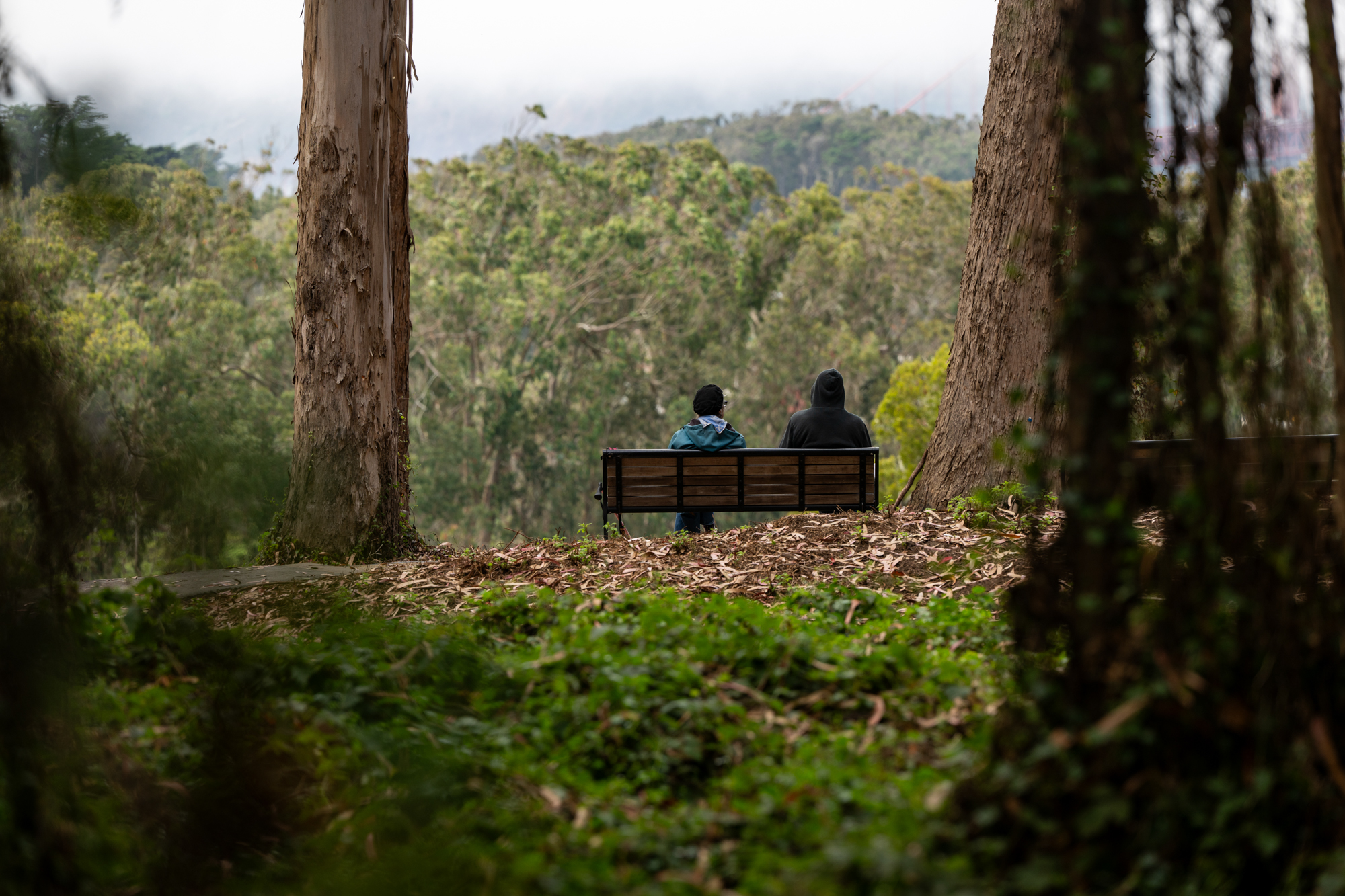
"caption": "Two people sit at Cemetery Overlook in the Presidio of San Francisco on Sept. 4, 2025, which looks out over the National Cemetery and the San Francisco Bay.",
"credit": "Beth LaBerge/KQED",
"altTag": null,
"description": null,
"imgSizes": {
"thumbnail": {
"file": "https://cdn.kqed.org/wp-content/uploads/sites/10/2025/09/250904-PRESIDIOHIKES-11-BL-KQED-160x107.jpg",
"width": 160,
"height": 107,
"mimeType": "image/jpeg"
},
"1536x1536": {
"file": "https://cdn.kqed.org/wp-content/uploads/sites/10/2025/09/250904-PRESIDIOHIKES-11-BL-KQED-1536x1024.jpg",
"width": 1536,
"height": 1024,
"mimeType": "image/jpeg"
},
"post-thumbnail": {
"file": "https://cdn.kqed.org/wp-content/uploads/sites/10/2025/09/250904-PRESIDIOHIKES-11-BL-KQED-672x372.jpg",
"width": 672,
"height": 372,
"mimeType": "image/jpeg"
},
"twentyfourteen-full-width": {
"file": "https://cdn.kqed.org/wp-content/uploads/sites/10/2025/09/250904-PRESIDIOHIKES-11-BL-KQED-1038x576.jpg",
"width": 1038,
"height": 576,
"mimeType": "image/jpeg"
},
"kqedFullSize": {
"file": "https://cdn.kqed.org/wp-content/uploads/sites/10/2025/09/250904-PRESIDIOHIKES-11-BL-KQED.jpg",
"width": 2000,
"height": 1333
}
},
"isLoading": false,
"fetchFailed": false
},
"news_12058255": {
"type": "attachments",
"id": "news_12058255",
"meta": {
"index": "attachments_1716263798",
"site": "news",
"id": "12058255",
"found": true
},
"title": "251001-NATIONAL PARKS SHUTDOWN-MD-08-KQED",
"publishDate": 1759349193,
"status": "inherit",
"parent": 0,
"modified": 1759370717,
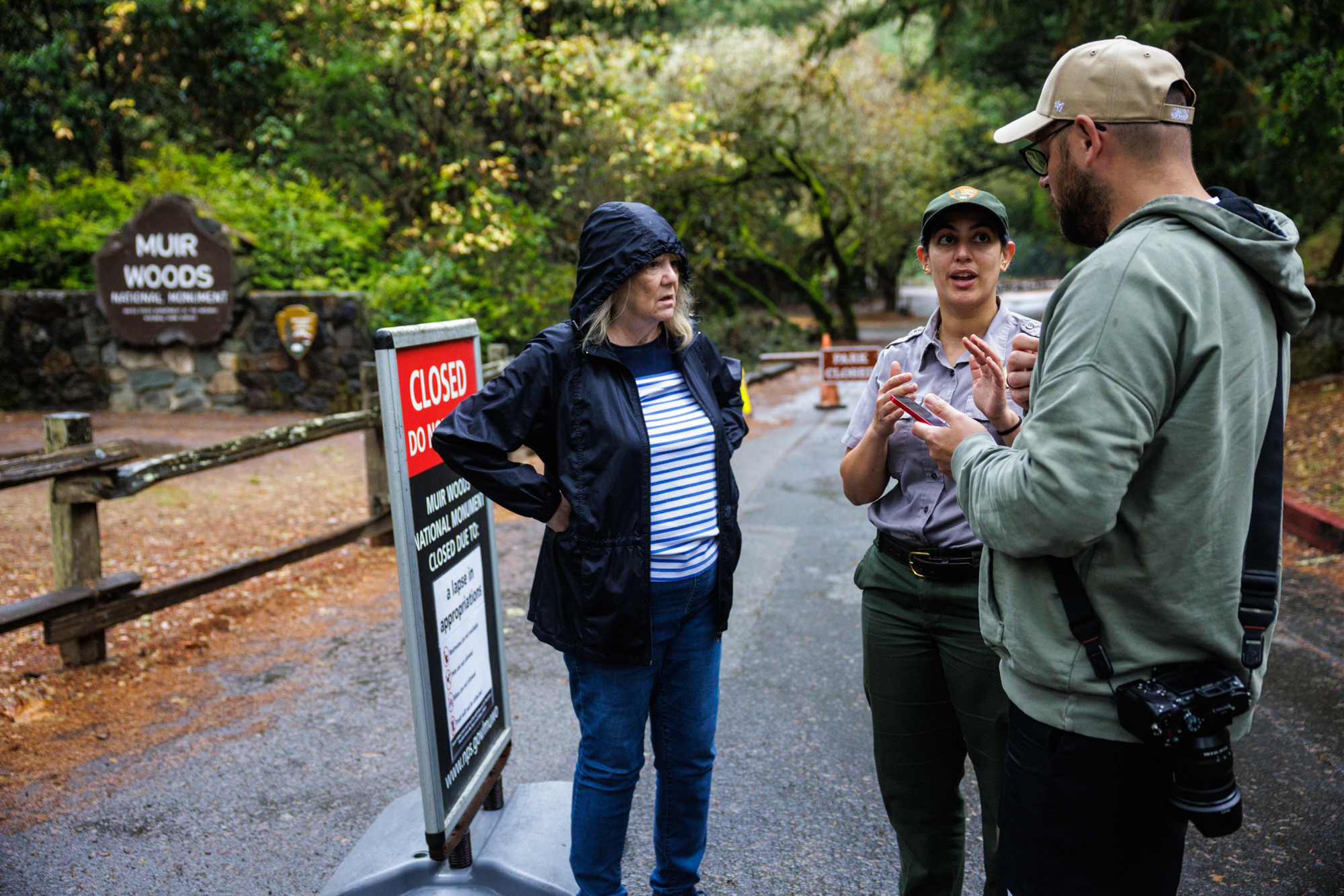
"caption": "Park ranger Heather Calabrese (second from right) explains to visitors at Muir Woods National Monument in Marin County that the park is closed as a consequence of the government shutdown on Oct. 1, 2025.",
"credit": "Martin do Nascimento/KQED",
"altTag": null,
"description": null,
"imgSizes": {
"thumbnail": {
"file": "https://cdn.kqed.org/wp-content/uploads/sites/10/2025/10/251001-NATIONAL-PARKS-SHUTDOWN-MD-08-KQED-160x107.jpg",
"width": 160,
"height": 107,
"mimeType": "image/jpeg"
},
"1536x1536": {
"file": "https://cdn.kqed.org/wp-content/uploads/sites/10/2025/10/251001-NATIONAL-PARKS-SHUTDOWN-MD-08-KQED-1536x1025.jpg",
"width": 1536,
"height": 1025,
"mimeType": "image/jpeg"
},
"post-thumbnail": {
"file": "https://cdn.kqed.org/wp-content/uploads/sites/10/2025/10/251001-NATIONAL-PARKS-SHUTDOWN-MD-08-KQED-672x372.jpg",
"width": 672,
"height": 372,
"mimeType": "image/jpeg"
},
"twentyfourteen-full-width": {
"file": "https://cdn.kqed.org/wp-content/uploads/sites/10/2025/10/251001-NATIONAL-PARKS-SHUTDOWN-MD-08-KQED-1038x576.jpg",
"width": 1038,
"height": 576,
"mimeType": "image/jpeg"
},
"kqedFullSize": {
"file": "https://cdn.kqed.org/wp-content/uploads/sites/10/2025/10/251001-NATIONAL-PARKS-SHUTDOWN-MD-08-KQED.jpg",
"width": 2000,
"height": 1334
}
},
"isLoading": false,
"fetchFailed": false
},
"news_12058157": {
"type": "attachments",
"id": "news_12058157",
"meta": {
"index": "attachments_1716263798",
"site": "news",
"id": "12058157",
"found": true
},
"title": "250912-TrumpsSignageOrder-36-BL_qed",
"publishDate": 1759275286,
"status": "inherit",
"parent": 12058137,
"modified": 1759275313,
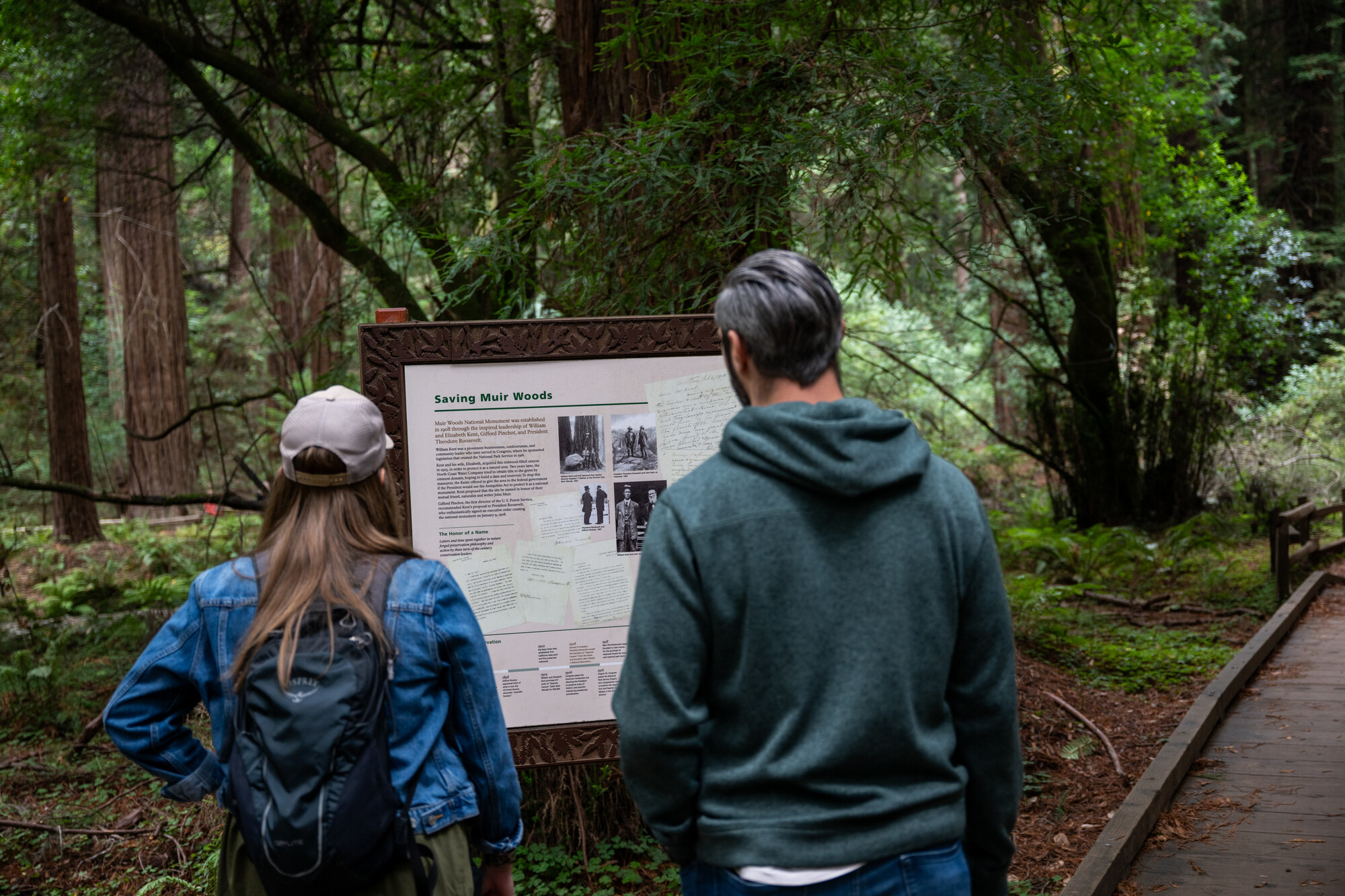
"caption": "Park visitors look at a sign titled \"Saving Muir Woods\" in Founders Grove at Muir Woods National Monument on Sept. 12, 2025. Part of the Golden Gate National Recreation Area, the monument preserves one of the last remaining old-growth coast redwood forests in the Bay Area.",
"credit": "Beth LaBerge/KQED",
"altTag": null,
"description": null,
"imgSizes": {
"thumbnail": {
"file": "https://cdn.kqed.org/wp-content/uploads/sites/10/2025/09/250912-TrumpsSignageOrder-36-BL_qed-160x107.jpg",
"width": 160,
"height": 107,
"mimeType": "image/jpeg"
},
"1536x1536": {
"file": "https://cdn.kqed.org/wp-content/uploads/sites/10/2025/09/250912-TrumpsSignageOrder-36-BL_qed-1536x1024.jpg",
"width": 1536,
"height": 1024,
"mimeType": "image/jpeg"
},
"post-thumbnail": {
"file": "https://cdn.kqed.org/wp-content/uploads/sites/10/2025/09/250912-TrumpsSignageOrder-36-BL_qed-672x372.jpg",
"width": 672,
"height": 372,
"mimeType": "image/jpeg"
},
"twentyfourteen-full-width": {
"file": "https://cdn.kqed.org/wp-content/uploads/sites/10/2025/09/250912-TrumpsSignageOrder-36-BL_qed-1038x576.jpg",
"width": 1038,
"height": 576,
"mimeType": "image/jpeg"
},
"kqedFullSize": {
"file": "https://cdn.kqed.org/wp-content/uploads/sites/10/2025/09/250912-TrumpsSignageOrder-36-BL_qed.jpg",
"width": 2000,
"height": 1333
}
},
"isLoading": false,
"fetchFailed": false
},
"news_12049142": {
"type": "attachments",
"id": "news_12049142",
"meta": {
"index": "attachments_1716263798",
"site": "news",
"id": "12049142",
"found": true
},
"title": "big-sur-is-highway-1-open",
"publishDate": 1753203859,
"status": "inherit",
"parent": 12049138,
"modified": 1753213650,
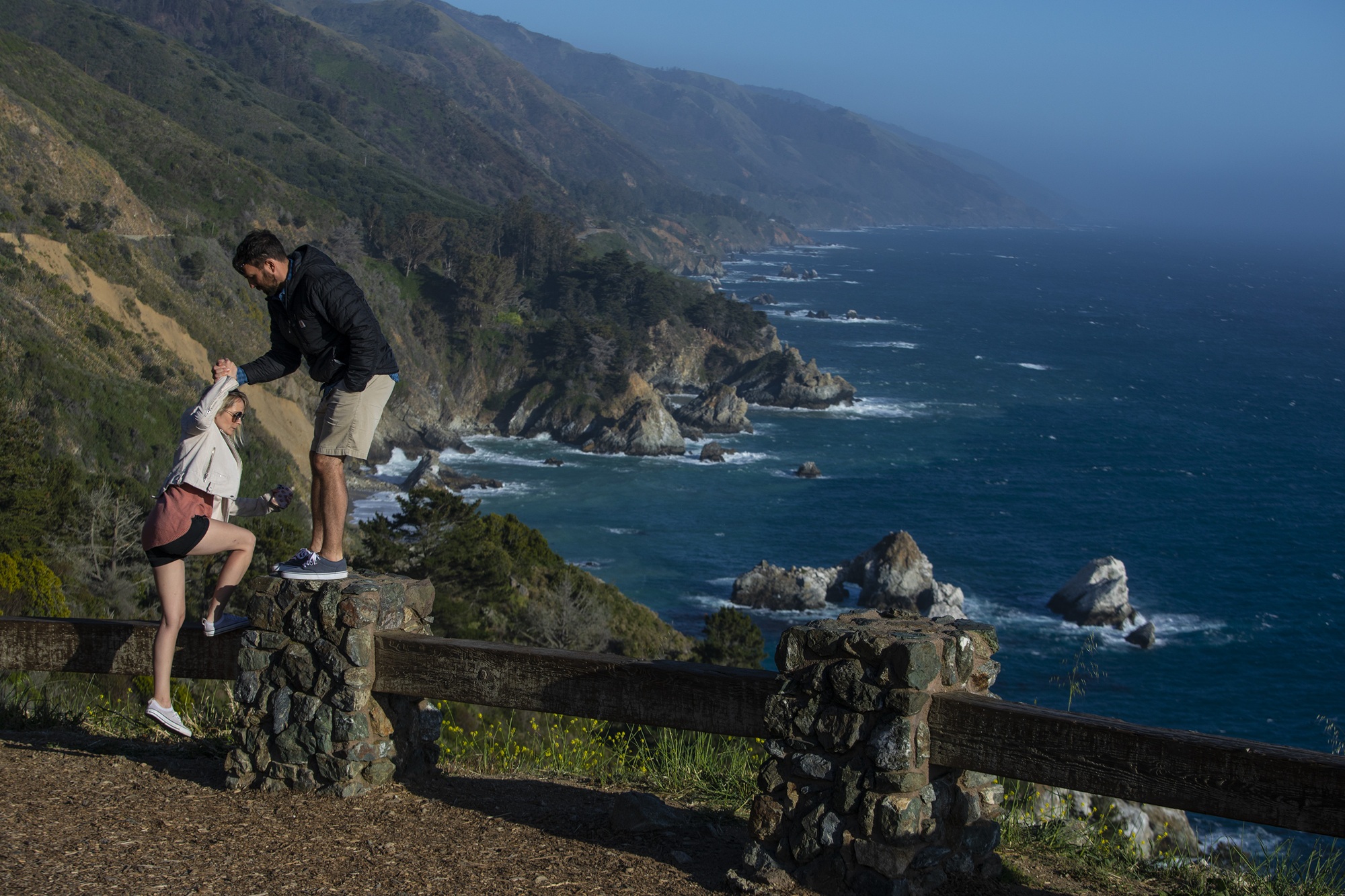
"caption": "A couple climbs a pilaster to get a view south to the coastline of Julia Pfeiffer Burns State Park along California Highway 1 on May 2, 2021, in Big Sur, California. ",
"credit": "Brian van der Brug/Los Angeles Times via Getty Images",
"altTag": null,
"description": null,
"imgSizes": {
"thumbnail": {
"file": "https://cdn.kqed.org/wp-content/uploads/sites/10/2025/07/BigSurGetty-160x107.jpg",
"width": 160,
"height": 107,
"mimeType": "image/jpeg"
},
"1536x1536": {
"file": "https://cdn.kqed.org/wp-content/uploads/sites/10/2025/07/BigSurGetty-1536x1024.jpg",
"width": 1536,
"height": 1024,
"mimeType": "image/jpeg"
},
"post-thumbnail": {
"file": "https://cdn.kqed.org/wp-content/uploads/sites/10/2025/07/BigSurGetty-672x372.jpg",
"width": 672,
"height": 372,
"mimeType": "image/jpeg"
},
"twentyfourteen-full-width": {
"file": "https://cdn.kqed.org/wp-content/uploads/sites/10/2025/07/BigSurGetty-1038x576.jpg",
"width": 1038,
"height": 576,
"mimeType": "image/jpeg"
},
"kqedFullSize": {
"file": "https://cdn.kqed.org/wp-content/uploads/sites/10/2025/07/BigSurGetty.jpg",
"width": 2000,
"height": 1333
}
},
"isLoading": false,
"fetchFailed": false
},
"news_12055808": {
"type": "attachments",
"id": "news_12055808",
"meta": {
"index": "attachments_1716263798",
"site": "news",
"id": "12055808",
"found": true
},
"title": "250912-TRUMPSSIGNAGEORDER-15-BL-KQED",
"publishDate": 1757714612,
"status": "inherit",
"parent": 0,
"modified": 1757714776,
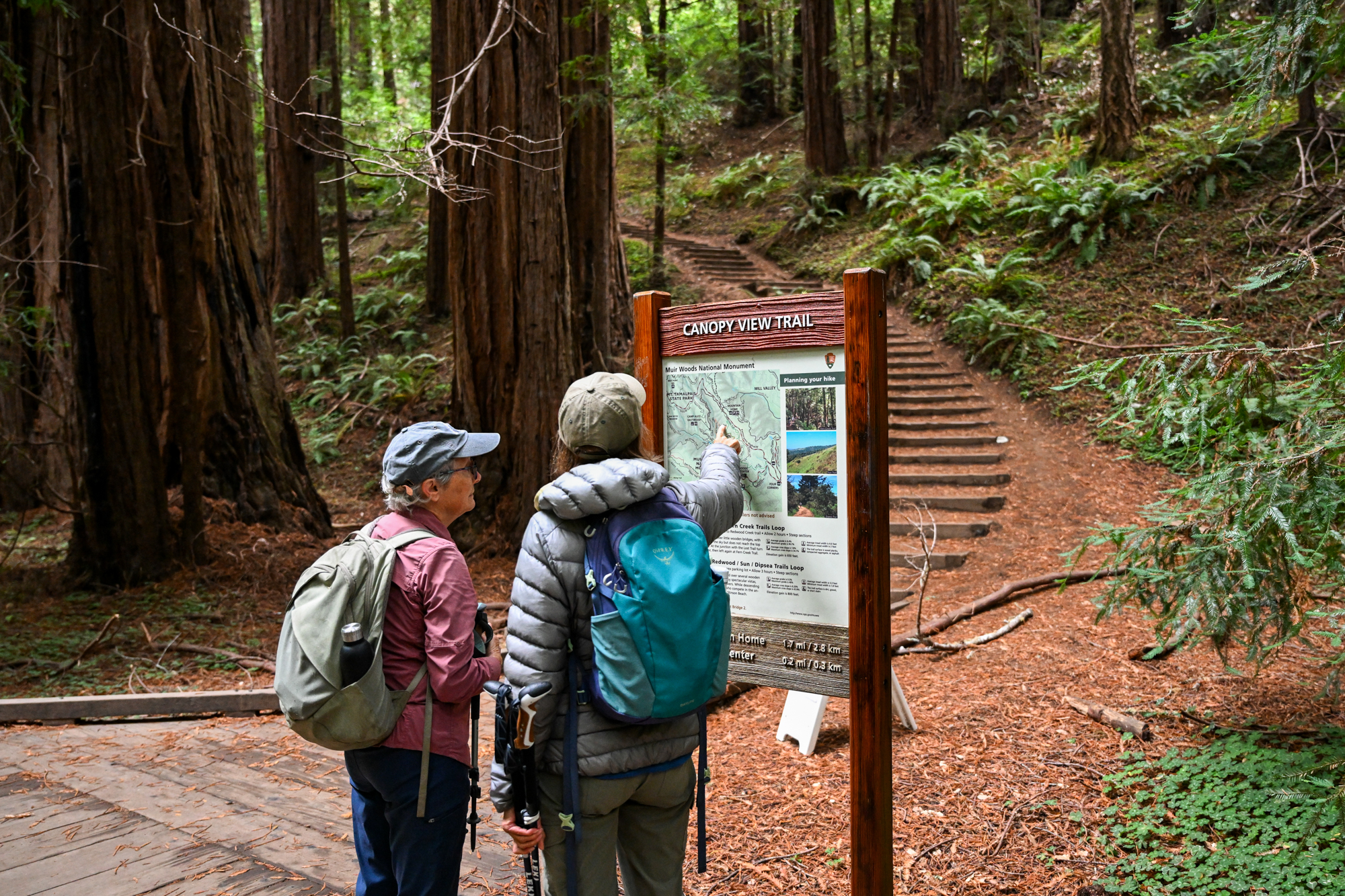
"caption": "Hikers plan their route on the Canopy View Trail at Muir Woods National Monument on Sept. 12, 2025. Part of the Golden Gate National Recreation Area, the monument protects one of the last old-growth coast redwood forests in the Bay Area.",
"credit": "Beth LaBerge/KQED",
"altTag": null,
"description": null,
"imgSizes": {
"thumbnail": {
"file": "https://cdn.kqed.org/wp-content/uploads/sites/10/2025/09/250912-TRUMPSSIGNAGEORDER-15-BL-KQED-160x107.jpg",
"width": 160,
"height": 107,
"mimeType": "image/jpeg"
},
"1536x1536": {
"file": "https://cdn.kqed.org/wp-content/uploads/sites/10/2025/09/250912-TRUMPSSIGNAGEORDER-15-BL-KQED-1536x1024.jpg",
"width": 1536,
"height": 1024,
"mimeType": "image/jpeg"
},
"post-thumbnail": {
"file": "https://cdn.kqed.org/wp-content/uploads/sites/10/2025/09/250912-TRUMPSSIGNAGEORDER-15-BL-KQED-672x372.jpg",
"width": 672,
"height": 372,
"mimeType": "image/jpeg"
},
"twentyfourteen-full-width": {
"file": "https://cdn.kqed.org/wp-content/uploads/sites/10/2025/09/250912-TRUMPSSIGNAGEORDER-15-BL-KQED-1038x576.jpg",
"width": 1038,
"height": 576,
"mimeType": "image/jpeg"
},
"kqedFullSize": {
"file": "https://cdn.kqed.org/wp-content/uploads/sites/10/2025/09/250912-TRUMPSSIGNAGEORDER-15-BL-KQED.jpg",
"width": 2000,
"height": 1333
}
},
"isLoading": false,
"fetchFailed": false
},
"news_12029489": {
"type": "attachments",
"id": "news_12029489",
"meta": {
"index": "attachments_1716263798",
"site": "news",
"id": "12029489",
"found": true
},
"title": "US-POLITICS-ENVIRONMENT-NATURE-PARKS-PROTEST",
"publishDate": 1741040569,
"status": "inherit",
"parent": 12029182,
"modified": 1741040606,
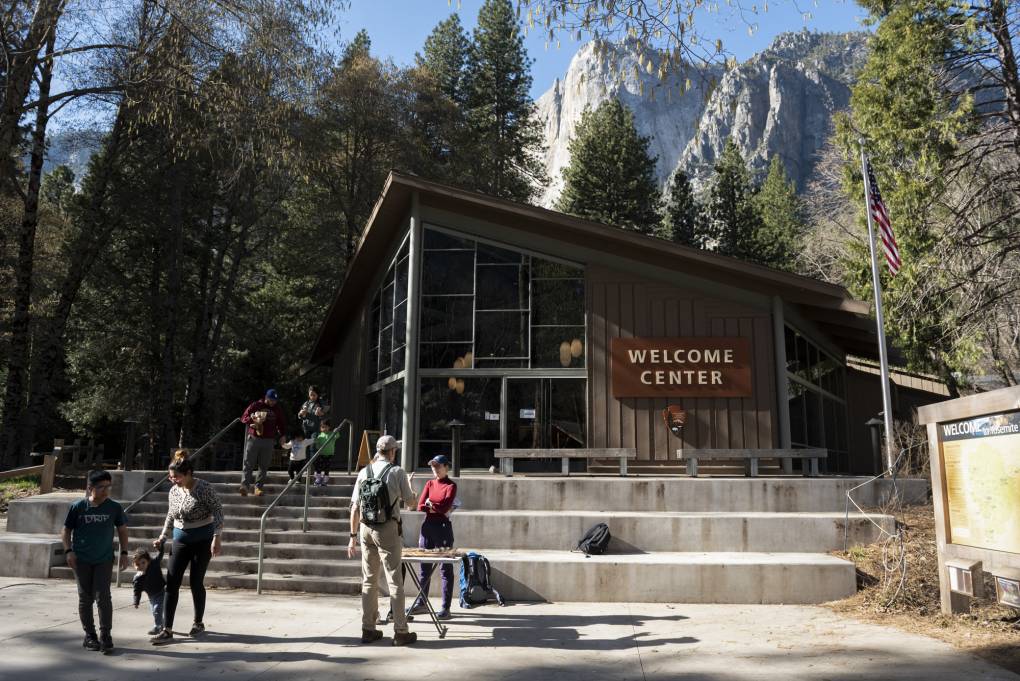
"caption": "A volunteer for the National Park Service welcomes visitors at the Exploration Center in Yosemite Valley, at Yosemite National Park on March 1, 2025.",
"credit": "Laure Andrillon/AFP via Getty",
"altTag": null,
"description": null,
"imgSizes": {
"medium": {
"file": "https://cdn.kqed.org/wp-content/uploads/sites/10/2025/03/CaliforniaPublicLandsGetty1-800x534.jpg",
"width": 800,
"height": 534,
"mimeType": "image/jpeg"
},
"large": {
"file": "https://cdn.kqed.org/wp-content/uploads/sites/10/2025/03/CaliforniaPublicLandsGetty1-1020x681.jpg",
"width": 1020,
"height": 681,
"mimeType": "image/jpeg"
},
"thumbnail": {
"file": "https://cdn.kqed.org/wp-content/uploads/sites/10/2025/03/CaliforniaPublicLandsGetty1-160x107.jpg",
"width": 160,
"height": 107,
"mimeType": "image/jpeg"
},
"1536x1536": {
"file": "https://cdn.kqed.org/wp-content/uploads/sites/10/2025/03/CaliforniaPublicLandsGetty1-1536x1025.jpg",
"width": 1536,
"height": 1025,
"mimeType": "image/jpeg"
},
"post-thumbnail": {
"file": "https://cdn.kqed.org/wp-content/uploads/sites/10/2025/03/CaliforniaPublicLandsGetty1-672x372.jpg",
"width": 672,
"height": 372,
"mimeType": "image/jpeg"
},
"twentyfourteen-full-width": {
"file": "https://cdn.kqed.org/wp-content/uploads/sites/10/2025/03/CaliforniaPublicLandsGetty1-1038x576.jpg",
"width": 1038,
"height": 576,
"mimeType": "image/jpeg"
},
"full-width": {
"file": "https://cdn.kqed.org/wp-content/uploads/sites/10/2025/03/CaliforniaPublicLandsGetty1-1920x1282.jpg",
"width": 1920,
"height": 1282,
"mimeType": "image/jpeg"
},
"kqedFullSize": {
"file": "https://cdn.kqed.org/wp-content/uploads/sites/10/2025/03/CaliforniaPublicLandsGetty1.jpg",
"width": 2000,
"height": 1335
}
},
"isLoading": false,
"fetchFailed": false
},
"news_12053668": {
"type": "attachments",
"id": "news_12053668",
"meta": {
"index": "attachments_1716263798",
"site": "news",
"id": "12053668",
"found": true
},
"title": "250825_ROSIE THE RIVETER PROTEST _ 0006_GH-KQED",
"publishDate": 1756161624,
"status": "inherit",
"parent": 0,
"modified": 1756167145,
"caption": "Kimberley Rodler (center left) cheers during the National Park Service’s 109th birthday celebration at Rosie the Riveter/WWII Home Front National Historical Park in Richmond, California, on Aug. 25, 2025. Rodler, who brought an American flag from her childhood in 1968 and her husband’s hard hat, said she made signs that morning and came to support the event.",
"credit": "Gustavo Hernandez/KQED",
"altTag": null,
"description": null,
"imgSizes": {
"thumbnail": {
"file": "https://cdn.kqed.org/wp-content/uploads/sites/10/2025/08/250825_ROSIE-THE-RIVETER-PROTEST-_-0006_GH-KQED-160x107.jpg",
"width": 160,
"height": 107,
"mimeType": "image/jpeg"
},
"1536x1536": {
"file": "https://cdn.kqed.org/wp-content/uploads/sites/10/2025/08/250825_ROSIE-THE-RIVETER-PROTEST-_-0006_GH-KQED-1536x1025.jpg",
"width": 1536,
"height": 1025,
"mimeType": "image/jpeg"
},
"post-thumbnail": {
"file": "https://cdn.kqed.org/wp-content/uploads/sites/10/2025/08/250825_ROSIE-THE-RIVETER-PROTEST-_-0006_GH-KQED-672x372.jpg",
"width": 672,
"height": 372,
"mimeType": "image/jpeg"
},
"twentyfourteen-full-width": {
"file": "https://cdn.kqed.org/wp-content/uploads/sites/10/2025/08/250825_ROSIE-THE-RIVETER-PROTEST-_-0006_GH-KQED-1038x576.jpg",
"width": 1038,
"height": 576,
"mimeType": "image/jpeg"
},
"kqedFullSize": {
"file": "https://cdn.kqed.org/wp-content/uploads/sites/10/2025/08/250825_ROSIE-THE-RIVETER-PROTEST-_-0006_GH-KQED.jpg",
"width": 2000,
"height": 1334
}
},
"isLoading": false,
"fetchFailed": false
},
"news_12049632": {
"type": "attachments",
"id": "news_12049632",
"meta": {
"index": "attachments_1716263798",
"site": "news",
"id": "12049632",
"found": true
},
"title": "07032019_sonomacoaststatepark_qed",
"publishDate": 1753390231,
"status": "inherit",
"parent": 12049616,
"modified": 1753390255,
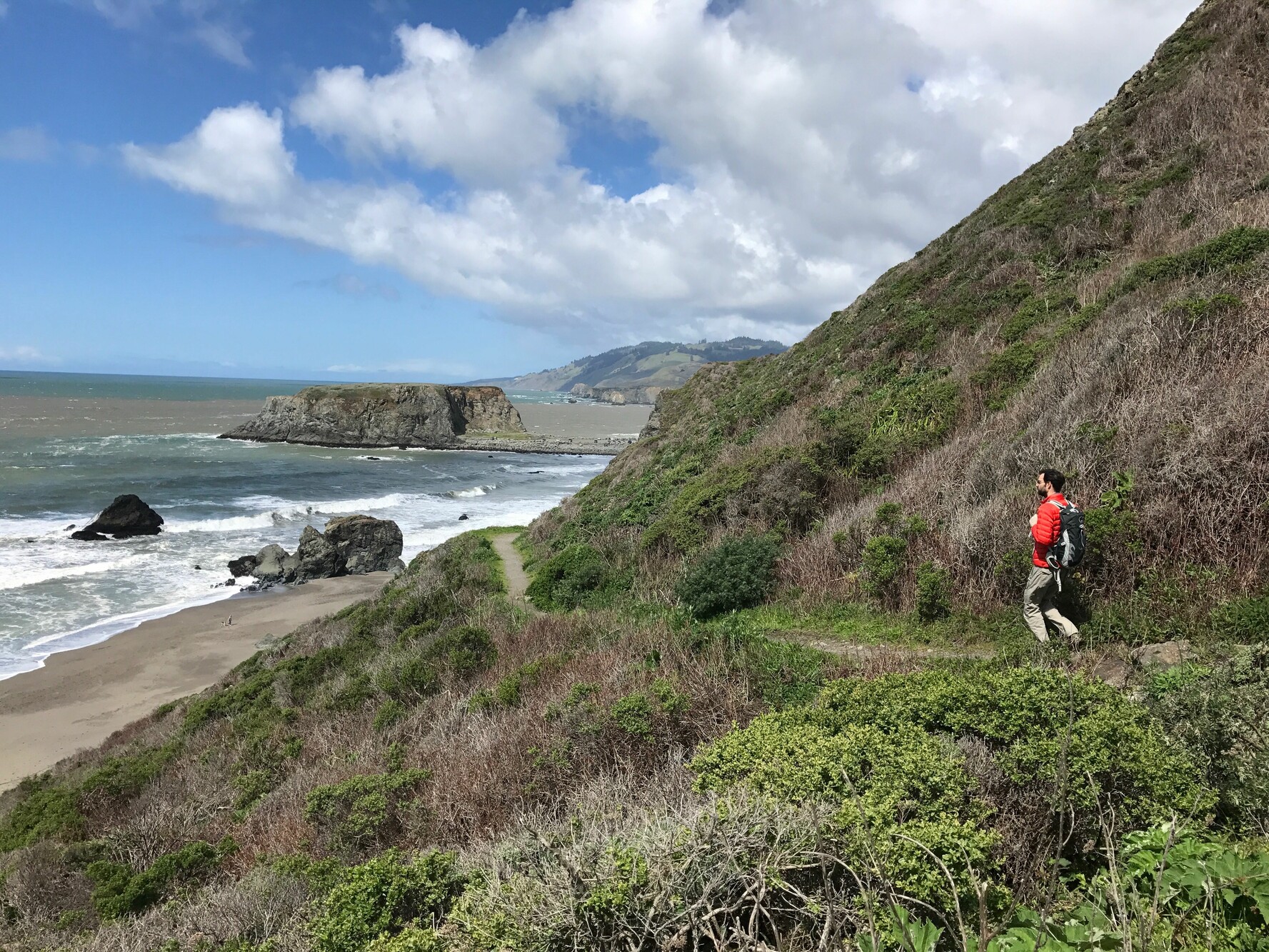
"caption": "A hiker in Sonoma Coast State Park in March 2018.",
"credit": "Miranda Leitsinger/KQED",
"altTag": null,
"description": null,
"imgSizes": {
"thumbnail": {
"file": "https://cdn.kqed.org/wp-content/uploads/sites/10/2025/07/07032019_sonomacoaststatepark_qed-160x120.jpg",
"width": 160,
"height": 120,
"mimeType": "image/jpeg"
},
"1536x1536": {
"file": "https://cdn.kqed.org/wp-content/uploads/sites/10/2025/07/07032019_sonomacoaststatepark_qed-1536x1152.jpg",
"width": 1536,
"height": 1152,
"mimeType": "image/jpeg"
},
"post-thumbnail": {
"file": "https://cdn.kqed.org/wp-content/uploads/sites/10/2025/07/07032019_sonomacoaststatepark_qed-672x372.jpg",
"width": 672,
"height": 372,
"mimeType": "image/jpeg"
},
"twentyfourteen-full-width": {
"file": "https://cdn.kqed.org/wp-content/uploads/sites/10/2025/07/07032019_sonomacoaststatepark_qed-1038x576.jpg",
"width": 1038,
"height": 576,
"mimeType": "image/jpeg"
},
"kqedFullSize": {
"file": "https://cdn.kqed.org/wp-content/uploads/sites/10/2025/07/07032019_sonomacoaststatepark_qed.jpg",
"width": 1777,
"height": 1333
}
},
"isLoading": false,
"fetchFailed": false
},
"news_12049457": {
"type": "attachments",
"id": "news_12049457",
"meta": {
"index": "attachments_1716263798",
"site": "news",
"id": "12049457",
"found": true
},
"title": "Muir Woods Exhibit (1)",
"publishDate": 1753310562,
"status": "inherit",
"parent": 12049405,
"modified": 1758226708,
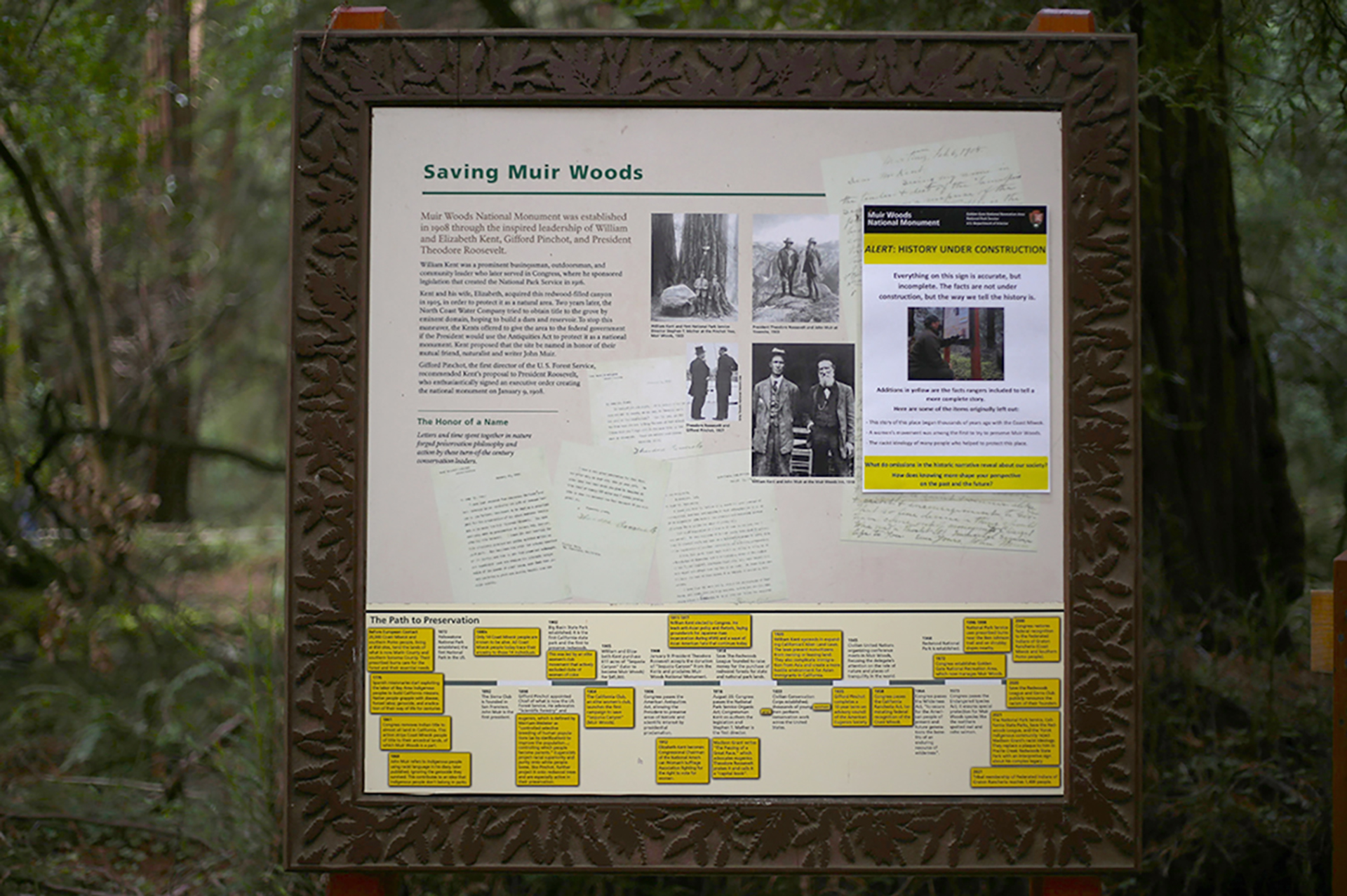
"caption": "The Muir Woods 'History in Construction' Exhibit, which was put up in 2021 to honor previously undocumented contributions to the park's stewardship. Signs like this one were part of the Trump Administration's removal order.",
"credit": "Courtesy of NPS/Jace Ritchey",
"altTag": null,
"description": null,
"imgSizes": {
"thumbnail": {
"file": "https://cdn.kqed.org/wp-content/uploads/sites/10/2025/07/Muir-Woods-Exhibit-1-160x106.png",
"width": 160,
"height": 106,
"mimeType": "image/png"
},
"1536x1536": {
"file": "https://cdn.kqed.org/wp-content/uploads/sites/10/2025/07/Muir-Woods-Exhibit-1-1536x1022.png",
"width": 1536,
"height": 1022,
"mimeType": "image/png"
},
"post-thumbnail": {
"file": "https://cdn.kqed.org/wp-content/uploads/sites/10/2025/07/Muir-Woods-Exhibit-1-672x372.png",
"width": 672,
"height": 372,
"mimeType": "image/png"
},
"twentyfourteen-full-width": {
"file": "https://cdn.kqed.org/wp-content/uploads/sites/10/2025/07/Muir-Woods-Exhibit-1-1038x576.png",
"width": 1038,
"height": 576,
"mimeType": "image/png"
},
"kqedFullSize": {
"file": "https://cdn.kqed.org/wp-content/uploads/sites/10/2025/07/Muir-Woods-Exhibit-1.png",
"width": 1920,
"height": 1277
}
},
"isLoading": false,
"fetchFailed": false
},
"news_11910595": {
"type": "attachments",
"id": "news_11910595",
"meta": {
"index": "attachments_1716263798",
"site": "news",
"id": "11910595",
"found": true
},
"parent": 11910495,
"imgSizes": {
"twentyfourteen-full-width": {
"file": "https://ww2.kqed.org/app/uploads/sites/10/2022/04/RS55017_GettyImages-1387412608-qut-1038x576.jpg",
"width": 1038,
"mimeType": "image/jpeg",
"height": 576
},
"thumbnail": {
"file": "https://ww2.kqed.org/app/uploads/sites/10/2022/04/RS55017_GettyImages-1387412608-qut-160x96.jpg",
"width": 160,
"mimeType": "image/jpeg",
"height": 96
},
"post-thumbnail": {
"file": "https://ww2.kqed.org/app/uploads/sites/10/2022/04/RS55017_GettyImages-1387412608-qut-672x372.jpg",
"width": 672,
"mimeType": "image/jpeg",
"height": 372
},
"kqedFullSize": {
"file": "https://ww2.kqed.org/app/uploads/sites/10/2022/04/RS55017_GettyImages-1387412608-qut.jpg",
"width": 1920,
"height": 1152
},
"large": {
"file": "https://ww2.kqed.org/app/uploads/sites/10/2022/04/RS55017_GettyImages-1387412608-qut-1020x612.jpg",
"width": 1020,
"mimeType": "image/jpeg",
"height": 612
},
"1536x1536": {
"file": "https://ww2.kqed.org/app/uploads/sites/10/2022/04/RS55017_GettyImages-1387412608-qut-1536x922.jpg",
"width": 1536,
"mimeType": "image/jpeg",
"height": 922
},
"medium": {
"file": "https://ww2.kqed.org/app/uploads/sites/10/2022/04/RS55017_GettyImages-1387412608-qut-800x480.jpg",
"width": 800,
"mimeType": "image/jpeg",
"height": 480
}
},
"publishDate": 1649433963,
"modified": 1649434094,
"caption": "People gather on an overlook above the Borrego Badlands in Anza-Borrego Desert State Park.",
"description": null,
"title": "free-state-parks",
"credit": "Mario Tama/Getty Images",
"status": "inherit",
"altTag": "The steep rock cliffs of California's Anza-Borrego Desert State Park photographed at dusk",
"isLoading": false,
"fetchFailed": false
},
"news_12035546": {
"type": "attachments",
"id": "news_12035546",
"meta": {
"index": "attachments_1716263798",
"site": "news",
"id": "12035546",
"found": true
},
"title": "Summer camp",
"publishDate": 1744325866,
"status": "inherit",
"parent": 12035515,
"modified": 1755713318,
"caption": "Look for a spot with ample trees for shade, away from valleys or even a space on a ridgeline for more wind. \n",
"credit": "Twenty47studio/Getty Images",
"altTag": null,
"description": null,
"imgSizes": {
"medium": {
"file": "https://cdn.kqed.org/wp-content/uploads/sites/10/2025/04/GettyImages-1366211065_qed-800x534.jpg",
"width": 800,
"height": 534,
"mimeType": "image/jpeg"
},
"large": {
"file": "https://cdn.kqed.org/wp-content/uploads/sites/10/2025/04/GettyImages-1366211065_qed-1020x681.jpg",
"width": 1020,
"height": 681,
"mimeType": "image/jpeg"
},
"thumbnail": {
"file": "https://cdn.kqed.org/wp-content/uploads/sites/10/2025/04/GettyImages-1366211065_qed-160x107.jpg",
"width": 160,
"height": 107,
"mimeType": "image/jpeg"
},
"1536x1536": {
"file": "https://cdn.kqed.org/wp-content/uploads/sites/10/2025/04/GettyImages-1366211065_qed-1536x1025.jpg",
"width": 1536,
"height": 1025,
"mimeType": "image/jpeg"
},
"post-thumbnail": {
"file": "https://cdn.kqed.org/wp-content/uploads/sites/10/2025/04/GettyImages-1366211065_qed-672x372.jpg",
"width": 672,
"height": 372,
"mimeType": "image/jpeg"
},
"twentyfourteen-full-width": {
"file": "https://cdn.kqed.org/wp-content/uploads/sites/10/2025/04/GettyImages-1366211065_qed-1038x576.jpg",
"width": 1038,
"height": 576,
"mimeType": "image/jpeg"
},
"full-width": {
"file": "https://cdn.kqed.org/wp-content/uploads/sites/10/2025/04/GettyImages-1366211065_qed-1920x1281.jpg",
"width": 1920,
"height": 1281,
"mimeType": "image/jpeg"
},
"kqedFullSize": {
"file": "https://cdn.kqed.org/wp-content/uploads/sites/10/2025/04/GettyImages-1366211065_qed.jpg",
"width": 1998,
"height": 1333
}
},
"isLoading": false,
"fetchFailed": false
},
"news_12027921": {
"type": "attachments",
"id": "news_12027921",
"meta": {
"index": "attachments_1716263798",
"site": "news",
"id": "12027921",
"found": true
},
"title": "230815-BlueForestInitiative-24-BL_qed",
"publishDate": 1740083333,
"status": "inherit",
"parent": 12027914,
"modified": 1740083484,
"caption": "A view of New Bullards Bar Reservoir in the Tahoe National Forest near Camptonville, California, on Aug. 15, 2023.",
"credit": "Beth LaBerge/KQED",
"altTag": null,
"description": null,
"imgSizes": {
"medium": {
"file": "https://cdn.kqed.org/wp-content/uploads/sites/10/2025/02/230815-BlueForestInitiative-24-BL_qed-800x533.jpg",
"width": 800,
"height": 533,
"mimeType": "image/jpeg"
},
"large": {
"file": "https://cdn.kqed.org/wp-content/uploads/sites/10/2025/02/230815-BlueForestInitiative-24-BL_qed-1020x680.jpg",
"width": 1020,
"height": 680,
"mimeType": "image/jpeg"
},
"thumbnail": {
"file": "https://cdn.kqed.org/wp-content/uploads/sites/10/2025/02/230815-BlueForestInitiative-24-BL_qed-160x107.jpg",
"width": 160,
"height": 107,
"mimeType": "image/jpeg"
},
"1536x1536": {
"file": "https://cdn.kqed.org/wp-content/uploads/sites/10/2025/02/230815-BlueForestInitiative-24-BL_qed-1536x1024.jpg",
"width": 1536,
"height": 1024,
"mimeType": "image/jpeg"
},
"post-thumbnail": {
"file": "https://cdn.kqed.org/wp-content/uploads/sites/10/2025/02/230815-BlueForestInitiative-24-BL_qed-672x372.jpg",
"width": 672,
"height": 372,
"mimeType": "image/jpeg"
},
"twentyfourteen-full-width": {
"file": "https://cdn.kqed.org/wp-content/uploads/sites/10/2025/02/230815-BlueForestInitiative-24-BL_qed-1038x576.jpg",
"width": 1038,
"height": 576,
"mimeType": "image/jpeg"
},
"full-width": {
"file": "https://cdn.kqed.org/wp-content/uploads/sites/10/2025/02/230815-BlueForestInitiative-24-BL_qed-1920x1280.jpg",
"width": 1920,
"height": 1280,
"mimeType": "image/jpeg"
},
"kqedFullSize": {
"file": "https://cdn.kqed.org/wp-content/uploads/sites/10/2025/02/230815-BlueForestInitiative-24-BL_qed.jpg",
"width": 2000,
"height": 1333
}
},
"isLoading": false,
"fetchFailed": false
}
},
"audioPlayerReducer": {
"postId": "stream_live",
"isPaused": true,
"isPlaying": false,
"pfsActive": false,
"pledgeModalIsOpen": true,
"playerDrawerIsOpen": false,
"liveAudioPlayStartedAt": 0,
"liveAudioPlayContext": ""
},
"authorsReducer": {
"carlysevern": {
"type": "authors",
"id": "3243",
"meta": {
"index": "authors_1716337520",
"id": "3243",
"found": true
},
"name": "Carly Severn",
"firstName": "Carly",
"lastName": "Severn",
"slug": "carlysevern",
"email": "csevern@kqed.org",
"display_author_email": false,
"staff_mastheads": [
"news"
],
"title": "Senior Editor, Audience News ",
"bio": "Carly is KQED's Senior Editor of Audience News on the Digital News team, and has reported for the California Report Magazine, Bay Curious and KQED Arts. She's formerly the host of \u003ca href=\"http://ww2.kqed.org/pop/category/the-cooler/\" rel=\"noopener noreferrer\">The Cooler\u003c/a> podcast.",
"avatar": "https://secure.gravatar.com/avatar/54037bf5c128fe678f0ef26cec97a93f2e7f220a22d7285703328f12c42c1b1d?s=600&d=blank&r=g",
"twitter": "teacupinthebay",
"bluesky": null,
"facebook": null,
"instagram": null,
"linkedin": null,
"sites": [
{
"site": "",
"roles": [
"editor"
]
},
{
"site": "arts",
"roles": [
"editor"
]
},
{
"site": "news",
"roles": [
"administrator"
]
},
{
"site": "pop",
"roles": [
"editor"
]
},
{
"site": "futureofyou",
"roles": [
"editor"
]
},
{
"site": "about",
"roles": [
"administrator"
]
},
{
"site": "mindshift",
"roles": [
"editor"
]
},
{
"site": "bayareabites",
"roles": [
"editor"
]
},
{
"site": "stateofhealth",
"roles": [
"editor"
]
},
{
"site": "science",
"roles": [
"editor"
]
},
{
"site": "food",
"roles": [
"contributor"
]
},
{
"site": "forum",
"roles": [
"editor"
]
},
{
"site": "perspectives",
"roles": [
"administrator"
]
},
{
"site": "liveblog",
"roles": [
"editor"
]
}
],
"headData": {
"title": "Carly Severn | KQED",
"description": "Senior Editor, Audience News ",
"ogImgSrc": "https://secure.gravatar.com/avatar/54037bf5c128fe678f0ef26cec97a93f2e7f220a22d7285703328f12c42c1b1d?s=600&d=blank&r=g",
"twImgSrc": "https://secure.gravatar.com/avatar/54037bf5c128fe678f0ef26cec97a93f2e7f220a22d7285703328f12c42c1b1d?s=600&d=blank&r=g"
},
"isLoading": false,
"link": "/author/carlysevern"
},
"dventon": {
"type": "authors",
"id": "11088",
"meta": {
"index": "authors_1716337520",
"id": "11088",
"found": true
},
"name": "Danielle Venton",
"firstName": "Danielle",
"lastName": "Venton",
"slug": "dventon",
"email": "dventon@kqed.org",
"display_author_email": true,
"staff_mastheads": [
"science"
],
"title": "Science reporter",
"bio": "Danielle Venton is a reporter for KQED Science. She covers wildfires, space and oceans (though she is prone to sea sickness).\r\n\r\nBefore joining KQED in 2015, Danielle was a staff reporter at KRCB in Sonoma County and a freelancer. She studied science communication at UC Santa Cruz and formerly worked at CERN in Geneva, Switzerland where she wrote about computing. She lives in Sonoma County and enjoys backpacking.",
"avatar": "https://secure.gravatar.com/avatar/37b292b5c40c8d93959c4f48d73b5286f41b7abd8588277e941905a3ed4c801c?s=600&d=blank&r=g",
"twitter": "DanielleVenton",
"bluesky": null,
"facebook": null,
"instagram": null,
"linkedin": null,
"sites": [
{
"site": "arts",
"roles": [
"contributor"
]
},
{
"site": "news",
"roles": [
"editor"
]
},
{
"site": "futureofyou",
"roles": [
"editor"
]
},
{
"site": "science",
"roles": [
"editor"
]
},
{
"site": "liveblog",
"roles": [
"contributor"
]
}
],
"headData": {
"title": "Danielle Venton | KQED",
"description": "Science reporter",
"ogImgSrc": "https://secure.gravatar.com/avatar/37b292b5c40c8d93959c4f48d73b5286f41b7abd8588277e941905a3ed4c801c?s=600&d=blank&r=g",
"twImgSrc": "https://secure.gravatar.com/avatar/37b292b5c40c8d93959c4f48d73b5286f41b7abd8588277e941905a3ed4c801c?s=600&d=blank&r=g"
},
"isLoading": false,
"link": "/author/dventon"
},
"amadrigal": {
"type": "authors",
"id": "11757",
"meta": {
"index": "authors_1716337520",
"id": "11757",
"found": true
},
"name": "Alexis Madrigal",
"firstName": "Alexis",
"lastName": "Madrigal",
"slug": "amadrigal",
"email": "amadrigal@kqed.org",
"display_author_email": true,
"staff_mastheads": [],
"title": "Co-Host Forum",
"bio": "Alexis Madrigal is the co-host of Forum. He is also a contributing writer at \u003cem>The Atlantic \u003c/em>and the co-founder of the COVID Tracking Project. He's the creator of the podcast, \u003cem>Containers\u003c/em>, and has been a staff writer at \u003cem>Wired. \u003c/em>He was a visiting scholar at UC Berkeley's Information School, and is working on a book about Oakland and the Bay Area's revolutionary ideas.",
"avatar": "https://secure.gravatar.com/avatar/ffeee1fe99a3e31957381f377ca63502bdcc0c3dbccaaa701e579a10aa0c5e1f?s=600&d=blank&r=g",
"twitter": "alexismadrigal",
"bluesky": null,
"facebook": null,
"instagram": null,
"linkedin": null,
"sites": [
{
"site": "arts",
"roles": [
"editor"
]
},
{
"site": "news",
"roles": [
"editor"
]
},
{
"site": "forum",
"roles": [
"editor"
]
}
],
"headData": {
"title": "Alexis Madrigal | KQED",
"description": "Co-Host Forum",
"ogImgSrc": "https://secure.gravatar.com/avatar/ffeee1fe99a3e31957381f377ca63502bdcc0c3dbccaaa701e579a10aa0c5e1f?s=600&d=blank&r=g",
"twImgSrc": "https://secure.gravatar.com/avatar/ffeee1fe99a3e31957381f377ca63502bdcc0c3dbccaaa701e579a10aa0c5e1f?s=600&d=blank&r=g"
},
"isLoading": false,
"link": "/author/amadrigal"
},
"jgeha": {
"type": "authors",
"id": "11906",
"meta": {
"index": "authors_1716337520",
"id": "11906",
"found": true
},
"name": "Joseph Geha",
"firstName": "Joseph",
"lastName": "Geha",
"slug": "jgeha",
"email": "jgeha@kqed.org",
"display_author_email": false,
"staff_mastheads": [
"news",
"science"
],
"title": "KQED Contributor",
"bio": null,
"avatar": "https://secure.gravatar.com/avatar/ea84d2b6dd93d6369d453edf19dd583f117cd1759d2d9c9c92f9de77017354fe?s=600&d=blank&r=g",
"twitter": null,
"bluesky": null,
"facebook": null,
"instagram": null,
"linkedin": null,
"sites": [
{
"site": "news",
"roles": [
"editor"
]
},
{
"site": "liveblog",
"roles": [
"author"
]
}
],
"headData": {
"title": "Joseph Geha | KQED",
"description": "KQED Contributor",
"ogImgSrc": "https://secure.gravatar.com/avatar/ea84d2b6dd93d6369d453edf19dd583f117cd1759d2d9c9c92f9de77017354fe?s=600&d=blank&r=g",
"twImgSrc": "https://secure.gravatar.com/avatar/ea84d2b6dd93d6369d453edf19dd583f117cd1759d2d9c9c92f9de77017354fe?s=600&d=blank&r=g"
},
"isLoading": false,
"link": "/author/jgeha"
},
"sarahwright": {
"type": "authors",
"id": "11956",
"meta": {
"index": "authors_1716337520",
"id": "11956",
"found": true
},
"name": "Sarah Wright",
"firstName": "Sarah",
"lastName": "Wright",
"slug": "sarahwright",
"email": "swright@kqed.org",
"display_author_email": true,
"staff_mastheads": [],
"title": "Outdoors Engagement Reporter",
"bio": "Sarah Wright is KQED's Outdoors Engagement Reporter. Originally from Lake Tahoe, she completed a thru-hike of the Pacific Crest Trail in 2019 and was a U.S. Fulbright Program grantee to Argentina in 2023. Her journalism has appeared in The Guardian, The San Francisco Standard, The Palo Alto Weekly and the Half Moon Bay Review.",
"avatar": "https://secure.gravatar.com/avatar/c161a3d6441865cba25e6db4fa561099ad665799e9432e34da2b84d7e371524c?s=600&d=blank&r=g",
"twitter": null,
"bluesky": null,
"facebook": null,
"instagram": null,
"linkedin": null,
"sites": [
{
"site": "arts",
"roles": [
"editor"
]
},
{
"site": "news",
"roles": [
"editor"
]
},
{
"site": "science",
"roles": [
"contributor",
"author"
]
},
{
"site": "forum",
"roles": [
"editor"
]
}
],
"headData": {
"title": "Sarah Wright | KQED",
"description": "Outdoors Engagement Reporter",
"ogImgSrc": "https://secure.gravatar.com/avatar/c161a3d6441865cba25e6db4fa561099ad665799e9432e34da2b84d7e371524c?s=600&d=blank&r=g",
"twImgSrc": "https://secure.gravatar.com/avatar/c161a3d6441865cba25e6db4fa561099ad665799e9432e34da2b84d7e371524c?s=600&d=blank&r=g"
},
"isLoading": false,
"link": "/author/sarahwright"
}
},
"pagesReducer": {
"news_tag_california-state-parks": {
"type": "terms",
"id": "news_24345",
"meta": {
"index": "terms_1716263798",
"site": "news",
"id": "24345",
"score": 9.556642
},
"featImg": null,
"name": "California State Parks",
"description": null,
"taxonomy": "tag",
"headData": {
"twImgId": null,
"twTitle": null,
"ogTitle": null,
"ogImgId": null,
"twDescription": null,
"description": null,
"title": "California State Parks Archives | KQED News",
"ogDescription": null
},
"ttid": 24362,
"slug": "california-state-parks",
"isLoading": false,
"title": "California State Parks",
"pageMeta": {
"site": "news",
"WpPageTemplate": "page-topic-editorial",
"currentPage": 3
},
"blocks": [
{
"blockName": "kqed/post-list",
"attrs": {
"layout": "cardArticle2",
"query": "posts/news?tag=california-state-parks",
"seeMore": false,
"paginated": true,
"page": 3
}
},
{
"blockName": "kqed/ad"
}
]
}
},
"pfsSessionReducer": {},
"postsReducer": {
"stream_live": {
"type": "live",
"id": "stream_live",
"audioUrl": "https://streams.kqed.org/kqedradio",
"title": "Live Stream",
"excerpt": "Live Stream information currently unavailable.",
"link": "/radio",
"featImg": "",
"label": {
"name": "KQED Live",
"link": "/"
}
},
"stream_kqedNewscast": {
"type": "posts",
"id": "stream_kqedNewscast",
"audioUrl": "https://www.kqed.org/.stream/anon/radio/RDnews/newscast.mp3?_=1",
"title": "KQED Newscast",
"featImg": "",
"label": {
"name": "88.5 FM",
"link": "/"
}
},
"news_12054079": {
"type": "posts",
"id": "news_12054079",
"meta": {
"index": "posts_1716263798",
"site": "news",
"id": "12054079",
"score": null,
"sort": [
1760035823000
]
},
"guestAuthors": [],
"slug": "best-hikes-san-francisco-presidio-views-trails-hiking",
"title": "4 Holiday Hikes to Explore the San Francisco Presidio, From Stunning Views to Historic Trails",
"publishDate": 1760035823,
"format": "standard",
"headTitle": "4 Holiday Hikes to Explore the San Francisco Presidio, From Stunning Views to Historic Trails | KQED",
"labelTerm": {
"site": "news"
},
"content": "\u003cp>If there’s one thing about San Francisco that’s unwaveringly impressive, it’s the city’s parks. Every resident has access to some kind of park \u003ca href=\"https://www.cbsnews.com/sanfrancisco/news/in-san-francisco-everyone-lives-within-a-10-minute-walk-of-a-park/\">within a 10-minute walk.\u003c/a>\u003c/p>\n\u003cp>And the west side of the city is particularly blessed — between sprawling Golden Gate Park (it’s bigger than Manhattan’s Central Park) and the Presidio, there are \u003ca href=\"https://sfrecpark.org/419/Who-We-Are\">more than 4,000 acres\u003c/a> of parkland in the city’s boundaries.\u003c/p>\n\u003cfigure id=\"attachment_12054109\" class=\"wp-caption alignnone\" style=\"max-width: 2000px\">\u003cimg loading=\"lazy\" decoding=\"async\" class=\"size-full wp-image-12054109\" src=\"https://cdn.kqed.org/wp-content/uploads/sites/10/2025/08/250604-HikingSFBluffs-03-BL_qed.jpg\" alt=\"\" width=\"2000\" height=\"1333\" srcset=\"https://cdn.kqed.org/wp-content/uploads/sites/10/2025/08/250604-HikingSFBluffs-03-BL_qed.jpg 2000w, https://cdn.kqed.org/wp-content/uploads/sites/10/2025/08/250604-HikingSFBluffs-03-BL_qed-160x107.jpg 160w, https://cdn.kqed.org/wp-content/uploads/sites/10/2025/08/250604-HikingSFBluffs-03-BL_qed-1536x1024.jpg 1536w\" sizes=\"auto, (max-width: 2000px) 100vw, 2000px\">\u003cfigcaption class=\"wp-caption-text\">A jogger runs along part of the Batteries to Bluffs Trail in the Presidio of San Francisco on June 4, 2025. The coastal path offers views of the Golden Gate Bridge and Pacific Ocean, access to historic military sites and Marshall’s Beach. \u003ccite>(Beth LaBerge/KQED)\u003c/cite>\u003c/figcaption>\u003c/figure>\n\u003cp>While Golden Gate Park boasts ample museums and is perfect for a long stroll, if you’re really trying to immerse yourself in nature, consider taking your next hike this holiday weekend to the Presidio, where wildness can be found around every corner.\u003c/p>\n\u003cp>[ad fullwidth]\u003c/p>\n\u003cp>A former U.S. Army site turned national park, the Presidio can feel shockingly wild for how urban it is. Getting lost in its tangles of \u003ca href=\"https://presidio.gov/about/sustainability/creating-a-sustainable-forest\">cypress, redwood and eucalyptus trees\u003c/a> is easy to do.\u003c/p>\n\u003cp>You may even see its \u003ca href=\"https://www.kqed.org/news/12046806/coyotes-are-in-pupping-season-in-the-bay-area-heres-how-to-keep-yourself-and-your-dog-safe\">infamous coyotes,\u003c/a> which inhabit the area and are often responsible for seasonal trail closures.\u003c/p>\n\u003cp>\u003cimg loading=\"lazy\" decoding=\"async\" class=\"aligncenter size-full wp-image-12054103\" src=\"https://cdn.kqed.org/wp-content/uploads/sites/10/2025/08/Trails-Map-Accessible.pdf.jpg\" alt=\"\" width=\"2000\" height=\"1294\" srcset=\"https://cdn.kqed.org/wp-content/uploads/sites/10/2025/08/Trails-Map-Accessible.pdf.jpg 2000w, https://cdn.kqed.org/wp-content/uploads/sites/10/2025/08/Trails-Map-Accessible.pdf-160x104.jpg 160w, https://cdn.kqed.org/wp-content/uploads/sites/10/2025/08/Trails-Map-Accessible.pdf-1536x994.jpg 1536w\" sizes=\"auto, (max-width: 2000px) 100vw, 2000px\">\u003c/p>\n\u003cp>The Presidio’s sheer size, however, can be initially daunting for many would-be explorers. Perhaps you’ve only visited \u003ca href=\"https://presidio.gov/explore/attractions/andy-goldsworthys-wood-line\">Andy Goldsworthy’s ever-decaying \u003cem>Wood Line\u003c/em>\u003c/a> while traveling on \u003ca href=\"https://presidio.gov/explore/attractions/lovers-lane-trail\">Lover’s Lane\u003c/a>, allegedly San Francisco’s oldest footpath. Or maybe you’ve taken on the popular \u003ca href=\"https://www.kqed.org/news/12042938/hiking-along-beautiful-bluffs-can-get-risky-heres-how-to-stay-safe\">Batteries to Bluffs\u003c/a> trail, or the stroll from Crissy Field along \u003ca href=\"https://presidio.gov/explore/attractions/golden-gate-promenade-bay-trail\">Golden Gate Promenade \u003c/a>to \u003ca href=\"https://presidio.gov/explore/attractions/fort-point-national-historic-site\">Fort Point\u003c/a> and the iconic bridge itself.\u003c/p>\n\u003cp>But head inland a bit and you’ll discover the park has far more than meets the eye, including a network of trails that take you through its most hidden, and some of its best, spots. Read on for four of the best hikes to discover the Presidio, from incredible views to off-the-beaten-path finds.\u003c/p>\n\u003cp>A word about safety: The Presidio is home to an active coyote population, so some sections of the park, like sections of the Park Trail and the Bay Area Ridge Trail, are closed to dogs in certain seasons to prevent dog-coyote conflicts. \u003ca href=\"https://presidio.gov/about/sustainability/coyotes-in-the-presidio\">Remember to check for closures\u003c/a> before heading out, keep your dog leashed and abide by all posted signs.\u003c/p>\n\u003ch2>For a Presidio hike with a ‘wilderness’ feel: The Ecology Trail\u003c/h2>\n\u003cp>One of the park’s shortest but most immersive trails is the \u003ca href=\"https://presidio.gov/explore/attractions/ecology-trail\">Ecology Trail\u003c/a>, which winds around a southeastern segment of the park and takes hikers through redwoods, native grasslands and even coastal wetland habitat.\u003c/p>\n\u003cp>The upper trail is pedestrian only, while the lower trail allows bikes. Stop at \u003ca href=\"https://presidio.gov/explore/attractions/inspiration-point-overlook\">Inspiration Point Overlook\u003c/a> for one of the best views in the park, overlooking Angel Island, the Palace of Fine Arts and Alcatraz.\u003c/p>\n\u003cfigure id=\"attachment_12055105\" class=\"wp-caption alignnone\" style=\"max-width: 2000px\">\u003cimg loading=\"lazy\" decoding=\"async\" class=\"size-full wp-image-12055105\" src=\"https://cdn.kqed.org/wp-content/uploads/sites/10/2025/09/250904-PRESIDIOHIKES-09-BL-KQED.jpg\" alt=\"\" width=\"2000\" height=\"1333\" srcset=\"https://cdn.kqed.org/wp-content/uploads/sites/10/2025/09/250904-PRESIDIOHIKES-09-BL-KQED.jpg 2000w, https://cdn.kqed.org/wp-content/uploads/sites/10/2025/09/250904-PRESIDIOHIKES-09-BL-KQED-160x107.jpg 160w, https://cdn.kqed.org/wp-content/uploads/sites/10/2025/09/250904-PRESIDIOHIKES-09-BL-KQED-1536x1024.jpg 1536w\" sizes=\"auto, (max-width: 2000px) 100vw, 2000px\">\u003cfigcaption class=\"wp-caption-text\">Upper Ecology Trail, near Inspiration Point, in the Presidio of San Francisco on Sept. 4, 2025. \u003ccite>(Beth LaBerge/KQED)\u003c/cite>\u003c/figcaption>\u003c/figure>\n\u003cp>Along the way, don’t forget to detour to \u003ca href=\"https://presidio.gov/explore/attractions/el-polin-spring\">El Polín Spring\u003c/a>, a natural spring that was foundational to the Indigenous people who lived in the area and the Spanish and U.S. armies who later occupied it.\u003c/p>\n\u003cp>Part of the Tennessee Hollow Watershed, the site of the spring was also home to \u003ca href=\"https://www.nps.gov/prsf/learn/historyculture/juana-briones.htm\">Doña Juana Briones de Miranda\u003c/a>, among the first settlers of then-Yerba Buena, who lived there with her family in the 1800s.\u003c/p>\n\u003cp>Presidio Trust spokesperson Lisa Petrie said when the park was first established, cleaning up and restoring native habitat to the spring and the surrounding ecosystem was a high priority.[aside postID=news_12052990 hero='https://cdn.kqed.org/wp-content/uploads/sites/10/2025/08/CampingGetty.jpg']Now, \u003ca href=\"https://presidio.gov/about/sustainability\">everything from great horned owls to frogs and even turtles\u003c/a> can be found there, and it’s also the site used to first reintroduce species that have been threatened back into the landscape.\u003c/p>\n\u003cp>“When the habitat was planted there, the area just started to thrive,” she said.\u003c/p>\n\u003cp>To get to the spring from the south, a zig-zagging trail winds downhill through scrubland to a boardwalk and the entrance of the spring, tucked away inside a sheltered oak-tree wildlife hub. Here, you’ll also find a “field station” housing materials for kids to learn about the spring.\u003c/p>\n\u003cp>Nearby signage, which details the importance of the water to native species and the people who lived nearby, encourages visitors to slow down and listen to the birds and the wind as it moves through the three main habitats of the area — wetland, coastal scrub and grassland.\u003c/p>\n\u003cp>“It just makes you feel like you’re in the wilderness,” Petrie said.\u003c/p>\n\u003cp>\u003cem>By the numbers: \u003c/em>The Ecology Trail is 1.4 miles in total and takes about half an hour to complete, but adding on a detour to El Polín Spring will tack on another 15–20 minutes or so.\u003c/p>\n\u003ch2>For a Presidio hike with history: The Park Trail\u003c/h2>\n\u003cp>Bisecting the park north-south is the \u003ca href=\"https://presidio.gov/explore/attractions/park-trail\">Park Trail\u003c/a>, which winds adjacent to the San Francisco National Cemetery, up to the Presidio Golf Course, around Mountain Lake and terminating at the former U.S. Marine Hospital — which is now housing for Presidio residents.\u003c/p>\n\u003cp>One major highlight of the trail is a quick detour to the \u003ca href=\"https://presidio.gov/explore/attractions/national-cemetery-overlook\">National Cemetery Overlook\u003c/a>, also accessible via the Bay Area Ridge Trail. The forest here is dense with green foliage and ivy crawling up eucalyptus trees. Above the cemetery is a place to sit and reflect or meander through a World War I monument adorned with excerpts from \u003ca href=\"https://www.nps.gov/wwim/learn/historyculture/young.htm\">Archibald MacLeish’s poem \u003cem>The Young Dead Soldiers Do Not Speak.\u003c/em>\u003c/a>\u003c/p>\n\u003cfigure id=\"attachment_12055107\" class=\"wp-caption alignnone\" style=\"max-width: 2000px\">\u003cimg loading=\"lazy\" decoding=\"async\" class=\"size-full wp-image-12055107\" src=\"https://cdn.kqed.org/wp-content/uploads/sites/10/2025/09/250904-PRESIDIOHIKES-13-BL-KQED.jpg\" alt=\"\" width=\"2000\" height=\"1333\" srcset=\"https://cdn.kqed.org/wp-content/uploads/sites/10/2025/09/250904-PRESIDIOHIKES-13-BL-KQED.jpg 2000w, https://cdn.kqed.org/wp-content/uploads/sites/10/2025/09/250904-PRESIDIOHIKES-13-BL-KQED-160x107.jpg 160w, https://cdn.kqed.org/wp-content/uploads/sites/10/2025/09/250904-PRESIDIOHIKES-13-BL-KQED-1536x1024.jpg 1536w\" sizes=\"auto, (max-width: 2000px) 100vw, 2000px\">\u003cfigcaption class=\"wp-caption-text\">Cemetery Overlook in the Presidio of San Francisco on Sept. 4, 2025, looks out over the National Cemetery and the San Francisco Bay. \u003ccite>(Beth LaBerge/KQED)\u003c/cite>\u003c/figcaption>\u003c/figure>\n\u003cp>Calvin Anderson, a San Francisco resident who was out walking to the overlook, said his son goes to school not too far away — so he often comes out to Inspiration Point and the Cemetery Overlook, both for the history and the views of the Golden Gate Bridge.\u003c/p>\n\u003cp>“I even have it tattooed on my arm,” he said of the bridge.\u003c/p>\n\u003cp>\u003c!-- iframe plugin v.4.3 wordpress.org/plugins/iframe/ -->\u003cbr>\n\u003ciframe loading=\"lazy\" src=\"https://www.google.com/maps/d/embed?mid=1WaXHWVkgLirukBHy8AuipWBKO60eYUY&ehbc=2E312F\" width=\"1920\" height=\"480\" scrolling=\"yes\" class=\"iframe-class\" frameborder=\"0\">\u003c/iframe>\u003c/p>\n\u003cp>It’s not the only homage along this trail to those lost. At its northernmost end, you’ll find a \u003ca href=\"https://presidio.gov/explore/attractions/presidio-pet-cemetery\">pet cemetery\u003c/a>. Then, as the Park Trail winds its way south, it passes near the \u003ca href=\"https://presidio.gov/explore/attractions/marine-cemetery-vista\">Marine Cemetery Vista\u003c/a> overlooking the park’s dune habitat, which honors merchant mariners who died at the nearby Marine Hospital, whose graves were rediscovered in 1989.\u003c/p>\n\u003cp>\u003cem>By the numbers: \u003c/em>The Park Trail winds north to south for 1.7 miles in total. Add on detours to the National Cemetery Overlook and Marine Cemetery Vista, and it’ll come out closer to 2–2.5 miles for a little under an hour of walking.\u003c/p>\n\u003ch2>For a Presidio hike with art: The Bay Area Ridge Trail\u003c/h2>\n\u003cp>The Bay Area Ridge Trail is a more than 500-mile network of trails that \u003ca href=\"https://ridgetrail.org/\">creates a ring around the entire Bay Area\u003c/a> — and\u003ca href=\"https://presidio.gov/explore/attractions/bay-area-ridge-trail\"> its Presidio segment \u003c/a>is a highlight.\u003c/p>\n\u003cp>Near its southern start, the trail passes next to \u003ca href=\"https://presidio.gov/explore/attractions/andy-goldsworthys-spire\">another Andy Goldsworthy sculpture called \u003cem>Spire\u003c/em>\u003c/a>\u003cem>. \u003c/em>The artist built this artwork from 37 Monterey cypress trees that had to be removed during the park’s restoration, and it’s now surrounded by new trees planted at the time.\u003c/p>\n\u003cfigure id=\"attachment_12055112\" class=\"wp-caption alignnone\" style=\"max-width: 2000px\">\u003cimg loading=\"lazy\" decoding=\"async\" class=\"size-full wp-image-12055112\" src=\"https://cdn.kqed.org/wp-content/uploads/sites/10/2025/09/250904-PRESIDIOHIKES-24-BL-KQED.jpg\" alt=\"\" width=\"2000\" height=\"1333\" srcset=\"https://cdn.kqed.org/wp-content/uploads/sites/10/2025/09/250904-PRESIDIOHIKES-24-BL-KQED.jpg 2000w, https://cdn.kqed.org/wp-content/uploads/sites/10/2025/09/250904-PRESIDIOHIKES-24-BL-KQED-160x107.jpg 160w, https://cdn.kqed.org/wp-content/uploads/sites/10/2025/09/250904-PRESIDIOHIKES-24-BL-KQED-1536x1024.jpg 1536w\" sizes=\"auto, (max-width: 2000px) 100vw, 2000px\">\u003cfigcaption class=\"wp-caption-text\">Tents are setup at Rob Hill Campground, above Immigrant Point Overlook, in the Presidio of San Francisco on Sept. 4, 2025. \u003ccite>(Beth LaBerge/KQED)\u003c/cite>\u003c/figcaption>\u003c/figure>\n\u003cp>As well as being an arresting sight, \u003cem>Spire \u003c/em>is “almost acting like a measuring stick to see the natural progression of the new trees that were planted,” Petrie said. “It’s just a striking moment to be able to consider the various life cycles of trees.”\u003c/p>\n\u003cp>In addition to the National Cemetery Overlook, along the way you’ll skirt the Presidio Golf Course — as well as the \u003ca href=\"https://presidio.gov/explore/attractions/rob-hill-campground\">Rob Hill Campground\u003c/a>, the highest point in the Presidio, which \u003ca href=\"https://rvparksf.com/\">until recently\u003c/a> was the only campground within the city. During World War II, it was a lookout that then became a campground maintained by the Boy Scouts.\u003c/p>\n\u003cp>Today, it welcomes up to 30 people at each site during the summer months. \u003ca href=\"https://www.recreation.gov/camping/campgrounds/10172170\">Rob Hill Group Campground reservations \u003c/a>get snapped up quickly on weekends, but tend to be easy to get on weekdays.\u003c/p>\n\u003cp>Behind the sites themselves is a dune restoration site and a forest with a fire circle. Petrie said if the weather is right, at nighttime while camping, you may even see stars and hear the evocative foghorn in the distance.\u003c/p>\n\u003cp>“You can also really hear the great horned owls up there,” she said.\u003c/p>\n\u003cp>\u003cem>By the numbers: \u003c/em>The total length of this section of the Bay Area Ridge Trail is just 2.5 miles, and takes just under an hour to complete from one end to the other. If you’re planning to hike it point to point, it’s easily accessible by public transit on both ends via the \u003ca href=\"https://www.sfmta.com/routes/1-california\">1 Muni bus\u003c/a> from the south and the \u003ca href=\"https://www.sfmta.com/routes/28-19th-avenue\">28 from the north near the Golden Gate Bridge.\u003c/a> Reservations at Rob Hill Campground cost $92 per night on weekdays and $240 on weekends.\u003c/p>\n\u003ch2>For a Presidio hike with stunning views: Juan Bautista de Anza National Historic Trail\u003c/h2>\n\u003cp>The 1,200-mile \u003ca href=\"https://presidio.gov/explore/attractions/juan-bautista-de-anza-national-historic-trail\">Juan Bautista de Anza Historic Trail \u003c/a>crosses three states and even an international border, \u003ca href=\"https://www.nps.gov/juba/planyourvisit/maps.htm\">following the colonizer’s route\u003c/a> from Sonora, Mexico, to San Francisco in 1776.\u003c/p>\n\u003cp>Luckily for you, its Presidio segment is just under three miles long, following the expedition’s route from Mountain Lake to the Golden Gate Bridge, with a whole lot of vistas along the way.\u003c/p>\n\u003cfigure id=\"attachment_12055110\" class=\"wp-caption alignnone\" style=\"max-width: 2000px\">\u003cimg loading=\"lazy\" decoding=\"async\" class=\"size-full wp-image-12055110\" src=\"https://cdn.kqed.org/wp-content/uploads/sites/10/2025/09/250904-PRESIDIOHIKES-21-BL-KQED.jpg\" alt=\"\" width=\"2000\" height=\"1333\" srcset=\"https://cdn.kqed.org/wp-content/uploads/sites/10/2025/09/250904-PRESIDIOHIKES-21-BL-KQED.jpg 2000w, https://cdn.kqed.org/wp-content/uploads/sites/10/2025/09/250904-PRESIDIOHIKES-21-BL-KQED-160x107.jpg 160w, https://cdn.kqed.org/wp-content/uploads/sites/10/2025/09/250904-PRESIDIOHIKES-21-BL-KQED-1536x1024.jpg 1536w\" sizes=\"auto, (max-width: 2000px) 100vw, 2000px\">\u003cfigcaption class=\"wp-caption-text\">A view from Immigrant Point Overlook in the Presidio of San Francisco on Sept. 4, 2025. \u003ccite>(Beth LaBerge/KQED)\u003c/cite>\u003c/figcaption>\u003c/figure>\n\u003cp>In total, the park has eight scenic overlooks, which Petrie said were key to transforming the Presidio from a military base to a national park site.\u003c/p>\n\u003cp>The least assuming but most unique is the \u003ca href=\"https://presidio.gov/explore/attractions/lobos-valley-overlook\">Lobos Valley Overlook\u003c/a>, which gives a rare west-facing view of Sea Cliff and the Legion of Honor Museum beyond.\u003c/p>\n\u003cp>Then, \u003ca href=\"https://presidio.gov/explore/attractions/immigrant-point-overlook\">Immigrant Point Overlook\u003c/a> perches hikers above the Batteries-to-Bluffs trails, where the expanse of the Pacific Ocean beyond dominates the view, honoring immigrants to the United States who landed on these shores.\u003c/p>\n\u003cp>You’ll also encounter the dramatic \u003ca href=\"https://presidio.gov/explore/attractions/pacific-overlook\">Pacific Overlook\u003c/a> and its hidden picnic tables, and the \u003ca href=\"https://presidio.gov/explore/attractions/golden-gate-overlook\">Golden Gate Overlook\u003c/a>, which Petrie highlighted as one of the most “unusual, head-on” views of the bridge in the park.\u003c/p>\n\u003cp>\u003c!-- iframe plugin v.4.3 wordpress.org/plugins/iframe/ -->\u003cbr>\n\u003ciframe loading=\"lazy\" src=\"https://www.google.com/maps/d/embed?mid=1cMScoOQYrt1ezTgUGz_2P_laW8aJMyg&ehbc=2E312F\" height=\"480\" width=\"100%\" scrolling=\"yes\" class=\"iframe-class\" frameborder=\"0\">\u003c/iframe>\u003c/p>\n\u003cp>While most of the trails in the park are up to two to three miles maximum, Petrie encouraged hikers to get creative to make a full day out of it.\u003c/p>\n\u003cp>“It’s amazing how you can do loops and put the trails together,” Petrie said.\u003c/p>\n\u003cp>\u003cem>By the numbers: \u003c/em>At almost three miles, this section of trail takes around an hour to complete. Don’t forget to stop at \u003ca href=\"https://presidio.gov/explore/attractions/mountain-lake\">Mountain Lake \u003c/a>on your way out for a chance to spot birds and frogs at one of the city’s last natural lakes.\u003c/p>\n\u003cp>https://docs.google.com/forms/d/e/1FAIpQLSeCeDp_MY_h4G6VWj_-VPl-BJlQ3Uya2H0vxRZZd_47BpXwVA/viewform?embedded=true\u003c/p>\n\u003cp>[ad floatright]\u003c/p>\n",
"blocks": [],
"excerpt": "There’s more to this national park than meets the eye. Here are four great trails for discovering the Presidio in San Francisco, from historical walks to stunning views.",
"status": "publish",
"parent": 0,
"modified": 1760040516,
"stats": {
"hasAudio": false,
"hasVideo": false,
"hasChartOrMap": true,
"iframeSrcs": [
"https://www.google.com/maps/d/embed"
],
"hasGoogleForm": true,
"hasGallery": false,
"hasHearkenModule": false,
"hasPolis": false,
"paragraphCount": 46,
"wordCount": 1930
},
"headData": {
"title": "4 Holiday Hikes to Explore the San Francisco Presidio, From Stunning Views to Historic Trails | KQED",
"description": "There’s more to this national park than meets the eye. Here are four great trails for discovering the Presidio in San Francisco, from historical walks to stunning views.",
"ogTitle": "",
"ogDescription": "",
"ogImgId": "",
"twTitle": "",
"twDescription": "",
"twImgId": "",
"schema": {
"@context": "https://schema.org",
"@type": "NewsArticle",
"headline": "4 Holiday Hikes to Explore the San Francisco Presidio, From Stunning Views to Historic Trails",
"datePublished": "2025-10-09T11:50:23-07:00",
"dateModified": "2025-10-09T13:08:36-07:00",
"image": "https://cdn.kqed.org/wp-content/uploads/2020/02/KQED-OG-Image@1x.png",
"isAccessibleForFree": "True",
"publisher": {
"@type": "NewsMediaOrganization",
"@id": "https://www.kqed.org/#organization",
"name": "KQED",
"logo": "https://cdn.kqed.org/wp-content/uploads/2020/02/KQED-OG-Image@1x.png",
"url": "https://www.kqed.org",
"sameAs": [
"https://www.facebook.com/KQED",
"https://twitter.com/KQED",
"https://www.instagram.com/kqed/",
"https://www.tiktok.com/@kqedofficial",
"https://www.linkedin.com/company/kqed",
"https://www.youtube.com/channel/UCeC0IOo7i1P_61zVUWbJ4nw"
]
}
}
},
"primaryCategory": {
"termId": 34168,
"slug": "guides-and-explainers",
"name": "Guides and Explainers"
},
"sticky": false,
"nprStoryId": "kqed-12054079",
"templateType": "standard",
"featuredImageType": "standard",
"excludeFromSiteSearch": "Include",
"articleAge": "0",
"path": "/news/12054079/best-hikes-san-francisco-presidio-views-trails-hiking",
"audioTrackLength": null,
"parsedContent": [
{
"type": "contentString",
"content": "\u003cdiv class=\"post-body\">\u003cp>\u003cp>If there’s one thing about San Francisco that’s unwaveringly impressive, it’s the city’s parks. Every resident has access to some kind of park \u003ca href=\"https://www.cbsnews.com/sanfrancisco/news/in-san-francisco-everyone-lives-within-a-10-minute-walk-of-a-park/\">within a 10-minute walk.\u003c/a>\u003c/p>\n\u003cp>And the west side of the city is particularly blessed — between sprawling Golden Gate Park (it’s bigger than Manhattan’s Central Park) and the Presidio, there are \u003ca href=\"https://sfrecpark.org/419/Who-We-Are\">more than 4,000 acres\u003c/a> of parkland in the city’s boundaries.\u003c/p>\n\u003cfigure id=\"attachment_12054109\" class=\"wp-caption alignnone\" style=\"max-width: 2000px\">\u003cimg loading=\"lazy\" decoding=\"async\" class=\"size-full wp-image-12054109\" src=\"https://cdn.kqed.org/wp-content/uploads/sites/10/2025/08/250604-HikingSFBluffs-03-BL_qed.jpg\" alt=\"\" width=\"2000\" height=\"1333\" srcset=\"https://cdn.kqed.org/wp-content/uploads/sites/10/2025/08/250604-HikingSFBluffs-03-BL_qed.jpg 2000w, https://cdn.kqed.org/wp-content/uploads/sites/10/2025/08/250604-HikingSFBluffs-03-BL_qed-160x107.jpg 160w, https://cdn.kqed.org/wp-content/uploads/sites/10/2025/08/250604-HikingSFBluffs-03-BL_qed-1536x1024.jpg 1536w\" sizes=\"auto, (max-width: 2000px) 100vw, 2000px\">\u003cfigcaption class=\"wp-caption-text\">A jogger runs along part of the Batteries to Bluffs Trail in the Presidio of San Francisco on June 4, 2025. The coastal path offers views of the Golden Gate Bridge and Pacific Ocean, access to historic military sites and Marshall’s Beach. \u003ccite>(Beth LaBerge/KQED)\u003c/cite>\u003c/figcaption>\u003c/figure>\n\u003cp>While Golden Gate Park boasts ample museums and is perfect for a long stroll, if you’re really trying to immerse yourself in nature, consider taking your next hike this holiday weekend to the Presidio, where wildness can be found around every corner.\u003c/p>\n\u003cp>\u003c/p>\u003c/div>",
"attributes": {
"named": {},
"numeric": []
}
},
{
"type": "component",
"content": "",
"name": "ad",
"attributes": {
"named": {
"label": "fullwidth"
},
"numeric": [
"fullwidth"
]
}
},
{
"type": "contentString",
"content": "\u003cdiv class=\"post-body\">\u003cp>\u003c/p>\n\u003cp>A former U.S. Army site turned national park, the Presidio can feel shockingly wild for how urban it is. Getting lost in its tangles of \u003ca href=\"https://presidio.gov/about/sustainability/creating-a-sustainable-forest\">cypress, redwood and eucalyptus trees\u003c/a> is easy to do.\u003c/p>\n\u003cp>You may even see its \u003ca href=\"https://www.kqed.org/news/12046806/coyotes-are-in-pupping-season-in-the-bay-area-heres-how-to-keep-yourself-and-your-dog-safe\">infamous coyotes,\u003c/a> which inhabit the area and are often responsible for seasonal trail closures.\u003c/p>\n\u003cp>\u003cimg loading=\"lazy\" decoding=\"async\" class=\"aligncenter size-full wp-image-12054103\" src=\"https://cdn.kqed.org/wp-content/uploads/sites/10/2025/08/Trails-Map-Accessible.pdf.jpg\" alt=\"\" width=\"2000\" height=\"1294\" srcset=\"https://cdn.kqed.org/wp-content/uploads/sites/10/2025/08/Trails-Map-Accessible.pdf.jpg 2000w, https://cdn.kqed.org/wp-content/uploads/sites/10/2025/08/Trails-Map-Accessible.pdf-160x104.jpg 160w, https://cdn.kqed.org/wp-content/uploads/sites/10/2025/08/Trails-Map-Accessible.pdf-1536x994.jpg 1536w\" sizes=\"auto, (max-width: 2000px) 100vw, 2000px\">\u003c/p>\n\u003cp>The Presidio’s sheer size, however, can be initially daunting for many would-be explorers. Perhaps you’ve only visited \u003ca href=\"https://presidio.gov/explore/attractions/andy-goldsworthys-wood-line\">Andy Goldsworthy’s ever-decaying \u003cem>Wood Line\u003c/em>\u003c/a> while traveling on \u003ca href=\"https://presidio.gov/explore/attractions/lovers-lane-trail\">Lover’s Lane\u003c/a>, allegedly San Francisco’s oldest footpath. Or maybe you’ve taken on the popular \u003ca href=\"https://www.kqed.org/news/12042938/hiking-along-beautiful-bluffs-can-get-risky-heres-how-to-stay-safe\">Batteries to Bluffs\u003c/a> trail, or the stroll from Crissy Field along \u003ca href=\"https://presidio.gov/explore/attractions/golden-gate-promenade-bay-trail\">Golden Gate Promenade \u003c/a>to \u003ca href=\"https://presidio.gov/explore/attractions/fort-point-national-historic-site\">Fort Point\u003c/a> and the iconic bridge itself.\u003c/p>\n\u003cp>But head inland a bit and you’ll discover the park has far more than meets the eye, including a network of trails that take you through its most hidden, and some of its best, spots. Read on for four of the best hikes to discover the Presidio, from incredible views to off-the-beaten-path finds.\u003c/p>\n\u003cp>A word about safety: The Presidio is home to an active coyote population, so some sections of the park, like sections of the Park Trail and the Bay Area Ridge Trail, are closed to dogs in certain seasons to prevent dog-coyote conflicts. \u003ca href=\"https://presidio.gov/about/sustainability/coyotes-in-the-presidio\">Remember to check for closures\u003c/a> before heading out, keep your dog leashed and abide by all posted signs.\u003c/p>\n\u003ch2>For a Presidio hike with a ‘wilderness’ feel: The Ecology Trail\u003c/h2>\n\u003cp>One of the park’s shortest but most immersive trails is the \u003ca href=\"https://presidio.gov/explore/attractions/ecology-trail\">Ecology Trail\u003c/a>, which winds around a southeastern segment of the park and takes hikers through redwoods, native grasslands and even coastal wetland habitat.\u003c/p>\n\u003cp>The upper trail is pedestrian only, while the lower trail allows bikes. Stop at \u003ca href=\"https://presidio.gov/explore/attractions/inspiration-point-overlook\">Inspiration Point Overlook\u003c/a> for one of the best views in the park, overlooking Angel Island, the Palace of Fine Arts and Alcatraz.\u003c/p>\n\u003cfigure id=\"attachment_12055105\" class=\"wp-caption alignnone\" style=\"max-width: 2000px\">\u003cimg loading=\"lazy\" decoding=\"async\" class=\"size-full wp-image-12055105\" src=\"https://cdn.kqed.org/wp-content/uploads/sites/10/2025/09/250904-PRESIDIOHIKES-09-BL-KQED.jpg\" alt=\"\" width=\"2000\" height=\"1333\" srcset=\"https://cdn.kqed.org/wp-content/uploads/sites/10/2025/09/250904-PRESIDIOHIKES-09-BL-KQED.jpg 2000w, https://cdn.kqed.org/wp-content/uploads/sites/10/2025/09/250904-PRESIDIOHIKES-09-BL-KQED-160x107.jpg 160w, https://cdn.kqed.org/wp-content/uploads/sites/10/2025/09/250904-PRESIDIOHIKES-09-BL-KQED-1536x1024.jpg 1536w\" sizes=\"auto, (max-width: 2000px) 100vw, 2000px\">\u003cfigcaption class=\"wp-caption-text\">Upper Ecology Trail, near Inspiration Point, in the Presidio of San Francisco on Sept. 4, 2025. \u003ccite>(Beth LaBerge/KQED)\u003c/cite>\u003c/figcaption>\u003c/figure>\n\u003cp>Along the way, don’t forget to detour to \u003ca href=\"https://presidio.gov/explore/attractions/el-polin-spring\">El Polín Spring\u003c/a>, a natural spring that was foundational to the Indigenous people who lived in the area and the Spanish and U.S. armies who later occupied it.\u003c/p>\n\u003cp>Part of the Tennessee Hollow Watershed, the site of the spring was also home to \u003ca href=\"https://www.nps.gov/prsf/learn/historyculture/juana-briones.htm\">Doña Juana Briones de Miranda\u003c/a>, among the first settlers of then-Yerba Buena, who lived there with her family in the 1800s.\u003c/p>\n\u003cp>Presidio Trust spokesperson Lisa Petrie said when the park was first established, cleaning up and restoring native habitat to the spring and the surrounding ecosystem was a high priority.\u003c/p>\u003c/div>",
"attributes": {
"named": {},
"numeric": []
}
},
{
"type": "component",
"content": "",
"name": "aside",
"attributes": {
"named": {
"postid": "news_12052990",
"hero": "https://cdn.kqed.org/wp-content/uploads/sites/10/2025/08/CampingGetty.jpg",
"label": ""
},
"numeric": []
}
},
{
"type": "contentString",
"content": "\u003cdiv class=\"post-body\">\u003cp>Now, \u003ca href=\"https://presidio.gov/about/sustainability\">everything from great horned owls to frogs and even turtles\u003c/a> can be found there, and it’s also the site used to first reintroduce species that have been threatened back into the landscape.\u003c/p>\n\u003cp>“When the habitat was planted there, the area just started to thrive,” she said.\u003c/p>\n\u003cp>To get to the spring from the south, a zig-zagging trail winds downhill through scrubland to a boardwalk and the entrance of the spring, tucked away inside a sheltered oak-tree wildlife hub. Here, you’ll also find a “field station” housing materials for kids to learn about the spring.\u003c/p>\n\u003cp>Nearby signage, which details the importance of the water to native species and the people who lived nearby, encourages visitors to slow down and listen to the birds and the wind as it moves through the three main habitats of the area — wetland, coastal scrub and grassland.\u003c/p>\n\u003cp>“It just makes you feel like you’re in the wilderness,” Petrie said.\u003c/p>\n\u003cp>\u003cem>By the numbers: \u003c/em>The Ecology Trail is 1.4 miles in total and takes about half an hour to complete, but adding on a detour to El Polín Spring will tack on another 15–20 minutes or so.\u003c/p>\n\u003ch2>For a Presidio hike with history: The Park Trail\u003c/h2>\n\u003cp>Bisecting the park north-south is the \u003ca href=\"https://presidio.gov/explore/attractions/park-trail\">Park Trail\u003c/a>, which winds adjacent to the San Francisco National Cemetery, up to the Presidio Golf Course, around Mountain Lake and terminating at the former U.S. Marine Hospital — which is now housing for Presidio residents.\u003c/p>\n\u003cp>One major highlight of the trail is a quick detour to the \u003ca href=\"https://presidio.gov/explore/attractions/national-cemetery-overlook\">National Cemetery Overlook\u003c/a>, also accessible via the Bay Area Ridge Trail. The forest here is dense with green foliage and ivy crawling up eucalyptus trees. Above the cemetery is a place to sit and reflect or meander through a World War I monument adorned with excerpts from \u003ca href=\"https://www.nps.gov/wwim/learn/historyculture/young.htm\">Archibald MacLeish’s poem \u003cem>The Young Dead Soldiers Do Not Speak.\u003c/em>\u003c/a>\u003c/p>\n\u003cfigure id=\"attachment_12055107\" class=\"wp-caption alignnone\" style=\"max-width: 2000px\">\u003cimg loading=\"lazy\" decoding=\"async\" class=\"size-full wp-image-12055107\" src=\"https://cdn.kqed.org/wp-content/uploads/sites/10/2025/09/250904-PRESIDIOHIKES-13-BL-KQED.jpg\" alt=\"\" width=\"2000\" height=\"1333\" srcset=\"https://cdn.kqed.org/wp-content/uploads/sites/10/2025/09/250904-PRESIDIOHIKES-13-BL-KQED.jpg 2000w, https://cdn.kqed.org/wp-content/uploads/sites/10/2025/09/250904-PRESIDIOHIKES-13-BL-KQED-160x107.jpg 160w, https://cdn.kqed.org/wp-content/uploads/sites/10/2025/09/250904-PRESIDIOHIKES-13-BL-KQED-1536x1024.jpg 1536w\" sizes=\"auto, (max-width: 2000px) 100vw, 2000px\">\u003cfigcaption class=\"wp-caption-text\">Cemetery Overlook in the Presidio of San Francisco on Sept. 4, 2025, looks out over the National Cemetery and the San Francisco Bay. \u003ccite>(Beth LaBerge/KQED)\u003c/cite>\u003c/figcaption>\u003c/figure>\n\u003cp>Calvin Anderson, a San Francisco resident who was out walking to the overlook, said his son goes to school not too far away — so he often comes out to Inspiration Point and the Cemetery Overlook, both for the history and the views of the Golden Gate Bridge.\u003c/p>\n\u003cp>“I even have it tattooed on my arm,” he said of the bridge.\u003c/p>\n\u003cp>\u003c!-- iframe plugin v.4.3 wordpress.org/plugins/iframe/ -->\u003cbr>\n\u003ciframe loading=\"lazy\" src=\"https://www.google.com/maps/d/embed?mid=1WaXHWVkgLirukBHy8AuipWBKO60eYUY&ehbc=2E312F\" width=\"1920\" height=\"480\" scrolling=\"yes\" class=\"iframe-class\" frameborder=\"0\">\u003c/iframe>\u003c/p>\n\u003cp>It’s not the only homage along this trail to those lost. At its northernmost end, you’ll find a \u003ca href=\"https://presidio.gov/explore/attractions/presidio-pet-cemetery\">pet cemetery\u003c/a>. Then, as the Park Trail winds its way south, it passes near the \u003ca href=\"https://presidio.gov/explore/attractions/marine-cemetery-vista\">Marine Cemetery Vista\u003c/a> overlooking the park’s dune habitat, which honors merchant mariners who died at the nearby Marine Hospital, whose graves were rediscovered in 1989.\u003c/p>\n\u003cp>\u003cem>By the numbers: \u003c/em>The Park Trail winds north to south for 1.7 miles in total. Add on detours to the National Cemetery Overlook and Marine Cemetery Vista, and it’ll come out closer to 2–2.5 miles for a little under an hour of walking.\u003c/p>\n\u003ch2>For a Presidio hike with art: The Bay Area Ridge Trail\u003c/h2>\n\u003cp>The Bay Area Ridge Trail is a more than 500-mile network of trails that \u003ca href=\"https://ridgetrail.org/\">creates a ring around the entire Bay Area\u003c/a> — and\u003ca href=\"https://presidio.gov/explore/attractions/bay-area-ridge-trail\"> its Presidio segment \u003c/a>is a highlight.\u003c/p>\n\u003cp>Near its southern start, the trail passes next to \u003ca href=\"https://presidio.gov/explore/attractions/andy-goldsworthys-spire\">another Andy Goldsworthy sculpture called \u003cem>Spire\u003c/em>\u003c/a>\u003cem>. \u003c/em>The artist built this artwork from 37 Monterey cypress trees that had to be removed during the park’s restoration, and it’s now surrounded by new trees planted at the time.\u003c/p>\n\u003cfigure id=\"attachment_12055112\" class=\"wp-caption alignnone\" style=\"max-width: 2000px\">\u003cimg loading=\"lazy\" decoding=\"async\" class=\"size-full wp-image-12055112\" src=\"https://cdn.kqed.org/wp-content/uploads/sites/10/2025/09/250904-PRESIDIOHIKES-24-BL-KQED.jpg\" alt=\"\" width=\"2000\" height=\"1333\" srcset=\"https://cdn.kqed.org/wp-content/uploads/sites/10/2025/09/250904-PRESIDIOHIKES-24-BL-KQED.jpg 2000w, https://cdn.kqed.org/wp-content/uploads/sites/10/2025/09/250904-PRESIDIOHIKES-24-BL-KQED-160x107.jpg 160w, https://cdn.kqed.org/wp-content/uploads/sites/10/2025/09/250904-PRESIDIOHIKES-24-BL-KQED-1536x1024.jpg 1536w\" sizes=\"auto, (max-width: 2000px) 100vw, 2000px\">\u003cfigcaption class=\"wp-caption-text\">Tents are setup at Rob Hill Campground, above Immigrant Point Overlook, in the Presidio of San Francisco on Sept. 4, 2025. \u003ccite>(Beth LaBerge/KQED)\u003c/cite>\u003c/figcaption>\u003c/figure>\n\u003cp>As well as being an arresting sight, \u003cem>Spire \u003c/em>is “almost acting like a measuring stick to see the natural progression of the new trees that were planted,” Petrie said. “It’s just a striking moment to be able to consider the various life cycles of trees.”\u003c/p>\n\u003cp>In addition to the National Cemetery Overlook, along the way you’ll skirt the Presidio Golf Course — as well as the \u003ca href=\"https://presidio.gov/explore/attractions/rob-hill-campground\">Rob Hill Campground\u003c/a>, the highest point in the Presidio, which \u003ca href=\"https://rvparksf.com/\">until recently\u003c/a> was the only campground within the city. During World War II, it was a lookout that then became a campground maintained by the Boy Scouts.\u003c/p>\n\u003cp>Today, it welcomes up to 30 people at each site during the summer months. \u003ca href=\"https://www.recreation.gov/camping/campgrounds/10172170\">Rob Hill Group Campground reservations \u003c/a>get snapped up quickly on weekends, but tend to be easy to get on weekdays.\u003c/p>\n\u003cp>Behind the sites themselves is a dune restoration site and a forest with a fire circle. Petrie said if the weather is right, at nighttime while camping, you may even see stars and hear the evocative foghorn in the distance.\u003c/p>\n\u003cp>“You can also really hear the great horned owls up there,” she said.\u003c/p>\n\u003cp>\u003cem>By the numbers: \u003c/em>The total length of this section of the Bay Area Ridge Trail is just 2.5 miles, and takes just under an hour to complete from one end to the other. If you’re planning to hike it point to point, it’s easily accessible by public transit on both ends via the \u003ca href=\"https://www.sfmta.com/routes/1-california\">1 Muni bus\u003c/a> from the south and the \u003ca href=\"https://www.sfmta.com/routes/28-19th-avenue\">28 from the north near the Golden Gate Bridge.\u003c/a> Reservations at Rob Hill Campground cost $92 per night on weekdays and $240 on weekends.\u003c/p>\n\u003ch2>For a Presidio hike with stunning views: Juan Bautista de Anza National Historic Trail\u003c/h2>\n\u003cp>The 1,200-mile \u003ca href=\"https://presidio.gov/explore/attractions/juan-bautista-de-anza-national-historic-trail\">Juan Bautista de Anza Historic Trail \u003c/a>crosses three states and even an international border, \u003ca href=\"https://www.nps.gov/juba/planyourvisit/maps.htm\">following the colonizer’s route\u003c/a> from Sonora, Mexico, to San Francisco in 1776.\u003c/p>\n\u003cp>Luckily for you, its Presidio segment is just under three miles long, following the expedition’s route from Mountain Lake to the Golden Gate Bridge, with a whole lot of vistas along the way.\u003c/p>\n\u003cfigure id=\"attachment_12055110\" class=\"wp-caption alignnone\" style=\"max-width: 2000px\">\u003cimg loading=\"lazy\" decoding=\"async\" class=\"size-full wp-image-12055110\" src=\"https://cdn.kqed.org/wp-content/uploads/sites/10/2025/09/250904-PRESIDIOHIKES-21-BL-KQED.jpg\" alt=\"\" width=\"2000\" height=\"1333\" srcset=\"https://cdn.kqed.org/wp-content/uploads/sites/10/2025/09/250904-PRESIDIOHIKES-21-BL-KQED.jpg 2000w, https://cdn.kqed.org/wp-content/uploads/sites/10/2025/09/250904-PRESIDIOHIKES-21-BL-KQED-160x107.jpg 160w, https://cdn.kqed.org/wp-content/uploads/sites/10/2025/09/250904-PRESIDIOHIKES-21-BL-KQED-1536x1024.jpg 1536w\" sizes=\"auto, (max-width: 2000px) 100vw, 2000px\">\u003cfigcaption class=\"wp-caption-text\">A view from Immigrant Point Overlook in the Presidio of San Francisco on Sept. 4, 2025. \u003ccite>(Beth LaBerge/KQED)\u003c/cite>\u003c/figcaption>\u003c/figure>\n\u003cp>In total, the park has eight scenic overlooks, which Petrie said were key to transforming the Presidio from a military base to a national park site.\u003c/p>\n\u003cp>The least assuming but most unique is the \u003ca href=\"https://presidio.gov/explore/attractions/lobos-valley-overlook\">Lobos Valley Overlook\u003c/a>, which gives a rare west-facing view of Sea Cliff and the Legion of Honor Museum beyond.\u003c/p>\n\u003cp>Then, \u003ca href=\"https://presidio.gov/explore/attractions/immigrant-point-overlook\">Immigrant Point Overlook\u003c/a> perches hikers above the Batteries-to-Bluffs trails, where the expanse of the Pacific Ocean beyond dominates the view, honoring immigrants to the United States who landed on these shores.\u003c/p>\n\u003cp>You’ll also encounter the dramatic \u003ca href=\"https://presidio.gov/explore/attractions/pacific-overlook\">Pacific Overlook\u003c/a> and its hidden picnic tables, and the \u003ca href=\"https://presidio.gov/explore/attractions/golden-gate-overlook\">Golden Gate Overlook\u003c/a>, which Petrie highlighted as one of the most “unusual, head-on” views of the bridge in the park.\u003c/p>\n\u003cp>\u003c!-- iframe plugin v.4.3 wordpress.org/plugins/iframe/ -->\u003cbr>\n\u003ciframe loading=\"lazy\" src=\"https://www.google.com/maps/d/embed?mid=1cMScoOQYrt1ezTgUGz_2P_laW8aJMyg&ehbc=2E312F\" height=\"480\" width=\"100%\" scrolling=\"yes\" class=\"iframe-class\" frameborder=\"0\">\u003c/iframe>\u003c/p>\n\u003cp>While most of the trails in the park are up to two to three miles maximum, Petrie encouraged hikers to get creative to make a full day out of it.\u003c/p>\n\u003cp>“It’s amazing how you can do loops and put the trails together,” Petrie said.\u003c/p>\n\u003cp>\u003cem>By the numbers: \u003c/em>At almost three miles, this section of trail takes around an hour to complete. Don’t forget to stop at \u003ca href=\"https://presidio.gov/explore/attractions/mountain-lake\">Mountain Lake \u003c/a>on your way out for a chance to spot birds and frogs at one of the city’s last natural lakes.\u003c/p>\u003c/p>\u003cp>\u003cdiv class='utils-parseShortcode-shortcodes-__shortcodes__shortcodeWrapper'>\n \u003ciframe\n src='https://docs.google.com/forms/d/e/1FAIpQLSeCeDp_MY_h4G6VWj_-VPl-BJlQ3Uya2H0vxRZZd_47BpXwVA/viewform?embedded=true?embedded=true'\n title='https://docs.google.com/forms/d/e/1FAIpQLSeCeDp_MY_h4G6VWj_-VPl-BJlQ3Uya2H0vxRZZd_47BpXwVA/viewform?embedded=true'\n width='760' height='500'\n frameborder='0'\n marginheight='0' marginwidth='0'>\u003c/iframe>\u003c/div>\u003c/p>\u003cp>\u003cp>\u003c/p>\u003c/div>",
"attributes": {
"named": {},
"numeric": []
}
},
{
"type": "component",
"content": "",
"name": "ad",
"attributes": {
"named": {
"label": "floatright"
},
"numeric": [
"floatright"
]
}
},
{
"type": "contentString",
"content": "\u003cdiv class=\"post-body\">\u003cp>\u003c/p>\n\u003c/div>\u003c/p>",
"attributes": {
"named": {},
"numeric": []
}
}
],
"link": "/news/12054079/best-hikes-san-francisco-presidio-views-trails-hiking",
"authors": [
"11956"
],
"categories": [
"news_31795",
"news_34168",
"news_28250",
"news_8"
],
"tags": [
"news_32707",
"news_18538",
"news_24345",
"news_29828",
"news_17925",
"news_21950",
"news_5663",
"news_38",
"news_4170"
],
"featImg": "news_12055106",
"label": "news"
},
"news_12058298": {
"type": "posts",
"id": "news_12058298",
"meta": {
"index": "posts_1716263798",
"site": "news",
"id": "12058298",
"score": null,
"sort": [
1759362750000
]
},
"guestAuthors": [],
"slug": "at-muir-woods-tourists-heartbroken-over-national-park-closure-during-shutdown",
"title": "At Muir Woods, Tourists ‘Heartbroken’ Over National Park Closure During Shutdown",
"publishDate": 1759362750,
"format": "standard",
"headTitle": "At Muir Woods, Tourists ‘Heartbroken’ Over National Park Closure During Shutdown | KQED",
"labelTerm": {
"site": "news"
},
"content": "\u003cp>As visitors arrived at the entrance to Muir Woods National Monument on Wednesday morning, they were greeted by a sign: “Closed due to a lapse in appropriations.”\u003c/p>\n\u003cp>In other words, the \u003ca href=\"https://www.kqed.org/news/12057777\">federal government had shut down\u003c/a> at 12:01 that day.\u003c/p>\n\u003cp>A National Park Service ranger greeted people by the closed gate, explaining the closure and recommending alternatives such as \u003ca href=\"https://parks.marincounty.gov/parkspreserves/preserves/roys-redwoods\">Roy’s Redwoods Preserve\u003c/a>, about 45 minutes north, and hikes around \u003ca href=\"https://www.parks.ca.gov/?page_id=471\">Mt. Tamalpais\u003c/a> — a California state park that remains open.\u003c/p>\n\u003cp>[ad fullwidth]\u003c/p>\n\u003cp>The shutdown has left Bay Area parks in mixed states. Muir Woods is fully closed. Alcatraz Island is slated to stay open. Other sites like Point Reyes National Seashore and Fort Point have partial closures, with some parking lots blocked or bathrooms locked.\u003c/p>\n\u003cp>Even park staff said they \u003ca href=\"https://www.kqed.org/news/12058137/government-shutdown-2025-national-parks-planning-memo\">didn’t learn the plan\u003c/a> until Tuesday afternoon.\u003c/p>\n\u003cp>One NPS superintendent, who was on a call with parks leadership on Tuesday, spoke to KQED on condition of anonymity for fear of retaliation and losing their job, said this didn’t take place until 3 p.m. that afternoon.\u003c/p>\n\u003cfigure id=\"attachment_12058343\" class=\"wp-caption aligncenter\" style=\"max-width: 2000px\">\u003cimg loading=\"lazy\" decoding=\"async\" class=\"size-full wp-image-12058343\" src=\"https://cdn.kqed.org/wp-content/uploads/sites/10/2025/10/251001-NATIONAL-PARKS-SHUTDOWN-MD-03-1-KQED.jpg\" alt=\"\" width=\"2000\" height=\"1333\" srcset=\"https://cdn.kqed.org/wp-content/uploads/sites/10/2025/10/251001-NATIONAL-PARKS-SHUTDOWN-MD-03-1-KQED.jpg 2000w, https://cdn.kqed.org/wp-content/uploads/sites/10/2025/10/251001-NATIONAL-PARKS-SHUTDOWN-MD-03-1-KQED-160x107.jpg 160w, https://cdn.kqed.org/wp-content/uploads/sites/10/2025/10/251001-NATIONAL-PARKS-SHUTDOWN-MD-03-1-KQED-1536x1024.jpg 1536w\" sizes=\"auto, (max-width: 2000px) 100vw, 2000px\">\u003cfigcaption class=\"wp-caption-text\">A visitor takes a photos of a sign indicating that Muir Woods National Monument in Marin County, CA is closed as a consequence of the government shutdown on Oct. 1, 2025. \u003ccite>(Martin do Nascimento/KQED)\u003c/cite>\u003c/figcaption>\u003c/figure>\n\u003cp>The NPS had submitted a closure plan last week, but staff didn’t get direction from the Department of the Interior until the last minute. KQED has reached out to NPS and DOI for comment, and has not yet received a response.\u003c/p>\n\u003cp>The superintendent told KQED they were told to report on Wednesday and submit their closure plan, which included making a formal request for any essential employees they believed needed to continue working — and to then instruct everyone else to set out-of-office notifications on their emails and phones.\u003c/p>\n\u003cp>Then, “I’ll finalize any time sheets and lock the doors,” they said on Tuesday night.\u003c/p>\n\u003cp>At Muir Woods, tourists like Amelia Lei Cabatit expressed confusion.\u003c/p>\n\u003cp>“I thought I was being clever when I Googled and it said yesterday night that parks would remain open,” she said.\u003c/p>\n\u003cp>Cabatit came to California all the way from Hong Kong. Muir Woods was at the top of her list, she said, along with Yosemite, where she has reservations next week.\u003c/p>\n\u003cp>\u003ca href=\"https://www.nps.gov/yose/index.htm\">Yosemite remains partially open\u003c/a> with \u003ca href=\"https://www.mariposagazette.com/articles/yosemite-remains-open-but-with-limited-visitor-services/\">reports of reduced staffing\u003c/a>, but Cabatit fears it’s unlikely the shutdown will be resolved in time.\u003c/p>\n\u003cp>“Honestly, I’m heartbroken,” she said. “I’ve been everywhere from Africa to the Galapagos to Costa Rica. I tell you, there’s nothing as beautiful as California parks.”\u003c/p>\n\u003ch2>The impact on visitors — and the land\u003c/h2>\n\u003cp>Running national parks on a “skeleton crew” is going to be an issue for visitors, the superintendent warned, especially considering \u003ca href=\"https://www.nps.gov/subjects/socialscience/visitor-use-statistics-dashboard.htm#:~:text=The%20National%20Park%20Service%20reported,2%25\">visitor numbers\u003c/a> continue to rise.\u003c/p>\n\u003cp>More than 40 former superintendents \u003ca href=\"https://www.kqed.org/news/12057777/with-a-government-shutdown-looming-heres-how-the-bay-area-could-be-affected\">signed a letter\u003c/a> to Interior Secretary Doug Burgum last week, \u003ca href=\"https://www.kqed.org/news/12058137/government-shutdown-2025-national-parks-planning-memo\">raising the alarm about\u003c/a> what keeping some parks open with no staff could mean for visitors and the parks’ ecology itself.[aside postID=news_12058294 hero='https://cdn.kqed.org/wp-content/uploads/sites/10/2025/10/GettyImages-2238183191-scaled.jpg']They warned the safety of visitors is at stake, as there won’t be staff to direct them and emergency response times may be slower due to low staffing.\u003c/p>\n\u003cp>“If people go into Yosemite and they [don’t] know where to go or what to do, they’ll be on their own,” said Don Neubacher, former park superintendent for Yosemite and Point Reyes national parks.\u003c/p>\n\u003cp>Unsupervised visitors can also cause damage to parks, as happened at Joshua Tree National Park during the 2018–19 government shutdown, where bathrooms overflowed, pounds of trash accumulated, vehicles went off-road and iconic \u003ca href=\"https://www.nytimes.com/2019/01/29/us/joshua-tree-shutdown.html\">Joshua trees were cut down\u003c/a>.\u003c/p>\n\u003cp>“What we saw last time required dozens of volunteers to step up and fill the gap left by lack of maintenance and lack of law enforcement,” said Kenji Haroutunian, executive director of the nonprofit Friends of Joshua Tree. His group was one of those that helped maintain and clean up the park during and after the shutdown, and had urged NPS leaders to close Joshua Tree for the duration of any shutdown.\u003c/p>\n\u003cp>Instead, Haroutunian said, the park’s “partial opening” will once again “require some of the community to step up … to support the skeleton crew that’s likely to be in place for the foreseeable future.”\u003c/p>\n\u003ch2>The longer-term picture for parks\u003c/h2>\n\u003cp>Russell Galipeau, former superintendent of Channel Islands National Park, said focusing only on human impacts of the shutdown misses another major issue: the consequences for research across NPS land.\u003c/p>\n\u003cp>While they’re not considered “essential” under a government shutdown, staff like wildlife biologists who help manage bear populations and monitor ecosystems are just as important — and their work, too, will get shut down, Galipeau warned.\u003c/p>\n\u003cfigure id=\"attachment_10898045\" class=\"wp-caption aligncenter\" style=\"max-width: 1920px\">\u003cimg loading=\"lazy\" decoding=\"async\" class=\"size-full wp-image-10898045\" src=\"https://cdn.kqed.org/wp-content/uploads/sites/10/2016/03/channeleagles.jpg\" alt=\"A breeding pair of bald eagles atop their nest in Channel Islands National Park.\" width=\"1920\" height=\"1121\" srcset=\"https://cdn.kqed.org/wp-content/uploads/sites/10/2016/03/channeleagles.jpg 1920w, https://cdn.kqed.org/wp-content/uploads/sites/10/2016/03/channeleagles-400x234.jpg 400w, https://cdn.kqed.org/wp-content/uploads/sites/10/2016/03/channeleagles-800x467.jpg 800w, https://cdn.kqed.org/wp-content/uploads/sites/10/2016/03/channeleagles-1180x689.jpg 1180w, https://cdn.kqed.org/wp-content/uploads/sites/10/2016/03/channeleagles-960x561.jpg 960w\" sizes=\"auto, (max-width: 1920px) 100vw, 1920px\">\u003cfigcaption class=\"wp-caption-text\">A breeding pair of bald eagles atop their nest in Channel Islands National Park. \u003ccite>(Courtesy National Park Service)\u003c/cite>\u003c/figcaption>\u003c/figure>\n\u003cp>“We forget that these parks, these natural areas, they don’t manage themselves,” he said. “Sometimes, intervention is necessary.”\u003c/p>\n\u003cp>At the Channel Islands, that means 40 years of data monitoring the health of the kelp forest or local populations of pinnipeds will now have a shutdown-sized hole — along with monitoring of fish populations to help inform fishing policy.\u003c/p>\n\u003cp>“All those programs get shut down, and so we no longer have that canary in the coal mine that’s giving us an indicator of the health of not just the park, not just the ecosystem, but the place we live,” Galipeau said.[aside postID=news_12058137 hero='https://cdn.kqed.org/wp-content/uploads/sites/10/2025/09/250912-TrumpsSignageOrder-36-BL_qed.jpg']Galipeau said he was especially worried about smaller or less-visited parks like Manzanar National Historic Site — concerns echoed by that park’s former superintendent, Bernadette Johnson. Manzanar’s remote location in the Eastern Sierra doesn’t have onsite worker housing, and the park was already only open four days a week due to lack of staffing and budget.\u003c/p>\n\u003cp>“Small parks like Manzanar really can’t afford to lose any other bodies at all,” Johnson said. “It’s already been bare bones.”\u003c/p>\n\u003cp>She noted that it’s not just the parks that will lose income, including entrance fees, during the shutdown: Bookstores, coffee shops, and even nearby towns will all lose out on dollars while parks are closed. But Galipeau said that the current shutdown plan, which prioritizes keeping parks that \u003cem>can \u003c/em>collect entrance fees open, is a dangerous game, too. “Now all of a sudden, we’re letting money drive everything,” he said.\u003c/p>\n\u003cp>Under President Donald Trump’s second administration, Galipeau said, it’s been especially hard to find out what the plans for national parks are — and what the future might hold. “In the past, you could talk to people more openly,” he said. “You could understand what their shutdown plans were.”\u003c/p>\n\u003cp>“It’s very hard to get anybody to talk to us,” he said. “Because they don’t know what’s going to happen to them if they’ll be perceived as non-loyalists.”\u003c/p>\n\u003cp>\u003cem>This story contains reporting by KQED’s \u003c/em>\u003ca href=\"https://www.kqed.org/author/kmizuguchi\">\u003cem>Keith Mizuguchi\u003c/em>\u003c/a>\u003cem> and \u003c/em>\u003ca href=\"https://www.kqed.org/author/carlysevern\">\u003cem>Carly Severn\u003c/em>\u003c/a>\u003c/p>\n\u003cp>[ad floatright]\u003c/p>\n",
"blocks": [],
"excerpt": "As some national parks close their doors entirely during the shutdown, visitors and advocates are dismayed by what’s unfolding.",
"status": "publish",
"parent": 0,
"modified": 1761760660,
"stats": {
"hasAudio": false,
"hasVideo": false,
"hasChartOrMap": false,
"iframeSrcs": [],
"hasGoogleForm": false,
"hasGallery": false,
"hasHearkenModule": false,
"hasPolis": false,
"paragraphCount": 32,
"wordCount": 1275
},
"headData": {
"title": "At Muir Woods, Tourists ‘Heartbroken’ Over National Park Closure During Shutdown | KQED",
"description": "As some national parks close their doors entirely during the shutdown, visitors and advocates are dismayed by what’s unfolding.",
"ogTitle": "",
"ogDescription": "",
"ogImgId": "",
"twTitle": "",
"twDescription": "",
"twImgId": "",
"schema": {
"@context": "https://schema.org",
"@type": "NewsArticle",
"headline": "At Muir Woods, Tourists ‘Heartbroken’ Over National Park Closure During Shutdown",
"datePublished": "2025-10-01T16:52:30-07:00",
"dateModified": "2025-10-29T10:57:40-07:00",
"image": "https://cdn.kqed.org/wp-content/uploads/2020/02/KQED-OG-Image@1x.png",
"isAccessibleForFree": "True",
"publisher": {
"@type": "NewsMediaOrganization",
"@id": "https://www.kqed.org/#organization",
"name": "KQED",
"logo": "https://cdn.kqed.org/wp-content/uploads/2020/02/KQED-OG-Image@1x.png",
"url": "https://www.kqed.org",
"sameAs": [
"https://www.facebook.com/KQED",
"https://twitter.com/KQED",
"https://www.instagram.com/kqed/",
"https://www.tiktok.com/@kqedofficial",
"https://www.linkedin.com/company/kqed",
"https://www.youtube.com/channel/UCeC0IOo7i1P_61zVUWbJ4nw"
]
}
}
},
"primaryCategory": {
"termId": 34168,
"slug": "guides-and-explainers",
"name": "Guides and Explainers"
},
"audioUrl": "https://traffic.omny.fm/d/clips/0af137ef-751e-4b19-a055-aaef00d2d578/ffca7e9f-6831-41c5-bcaf-aaef00f5a073/12cc96de-63e0-470d-8443-b36b0116c0e4/audio.mp3",
"sticky": false,
"nprStoryId": "kqed-12058298",
"templateType": "standard",
"featuredImageType": "standard",
"excludeFromSiteSearch": "Include",
"articleAge": "0",
"path": "/news/12058298/at-muir-woods-tourists-heartbroken-over-national-park-closure-during-shutdown",
"audioTrackLength": null,
"parsedContent": [
{
"type": "contentString",
"content": "\u003cdiv class=\"post-body\">\u003cp>\u003cp>As visitors arrived at the entrance to Muir Woods National Monument on Wednesday morning, they were greeted by a sign: “Closed due to a lapse in appropriations.”\u003c/p>\n\u003cp>In other words, the \u003ca href=\"https://www.kqed.org/news/12057777\">federal government had shut down\u003c/a> at 12:01 that day.\u003c/p>\n\u003cp>A National Park Service ranger greeted people by the closed gate, explaining the closure and recommending alternatives such as \u003ca href=\"https://parks.marincounty.gov/parkspreserves/preserves/roys-redwoods\">Roy’s Redwoods Preserve\u003c/a>, about 45 minutes north, and hikes around \u003ca href=\"https://www.parks.ca.gov/?page_id=471\">Mt. Tamalpais\u003c/a> — a California state park that remains open.\u003c/p>\n\u003cp>\u003c/p>\u003c/div>",
"attributes": {
"named": {},
"numeric": []
}
},
{
"type": "component",
"content": "",
"name": "ad",
"attributes": {
"named": {
"label": "fullwidth"
},
"numeric": [
"fullwidth"
]
}
},
{
"type": "contentString",
"content": "\u003cdiv class=\"post-body\">\u003cp>\u003c/p>\n\u003cp>The shutdown has left Bay Area parks in mixed states. Muir Woods is fully closed. Alcatraz Island is slated to stay open. Other sites like Point Reyes National Seashore and Fort Point have partial closures, with some parking lots blocked or bathrooms locked.\u003c/p>\n\u003cp>Even park staff said they \u003ca href=\"https://www.kqed.org/news/12058137/government-shutdown-2025-national-parks-planning-memo\">didn’t learn the plan\u003c/a> until Tuesday afternoon.\u003c/p>\n\u003cp>One NPS superintendent, who was on a call with parks leadership on Tuesday, spoke to KQED on condition of anonymity for fear of retaliation and losing their job, said this didn’t take place until 3 p.m. that afternoon.\u003c/p>\n\u003cfigure id=\"attachment_12058343\" class=\"wp-caption aligncenter\" style=\"max-width: 2000px\">\u003cimg loading=\"lazy\" decoding=\"async\" class=\"size-full wp-image-12058343\" src=\"https://cdn.kqed.org/wp-content/uploads/sites/10/2025/10/251001-NATIONAL-PARKS-SHUTDOWN-MD-03-1-KQED.jpg\" alt=\"\" width=\"2000\" height=\"1333\" srcset=\"https://cdn.kqed.org/wp-content/uploads/sites/10/2025/10/251001-NATIONAL-PARKS-SHUTDOWN-MD-03-1-KQED.jpg 2000w, https://cdn.kqed.org/wp-content/uploads/sites/10/2025/10/251001-NATIONAL-PARKS-SHUTDOWN-MD-03-1-KQED-160x107.jpg 160w, https://cdn.kqed.org/wp-content/uploads/sites/10/2025/10/251001-NATIONAL-PARKS-SHUTDOWN-MD-03-1-KQED-1536x1024.jpg 1536w\" sizes=\"auto, (max-width: 2000px) 100vw, 2000px\">\u003cfigcaption class=\"wp-caption-text\">A visitor takes a photos of a sign indicating that Muir Woods National Monument in Marin County, CA is closed as a consequence of the government shutdown on Oct. 1, 2025. \u003ccite>(Martin do Nascimento/KQED)\u003c/cite>\u003c/figcaption>\u003c/figure>\n\u003cp>The NPS had submitted a closure plan last week, but staff didn’t get direction from the Department of the Interior until the last minute. KQED has reached out to NPS and DOI for comment, and has not yet received a response.\u003c/p>\n\u003cp>The superintendent told KQED they were told to report on Wednesday and submit their closure plan, which included making a formal request for any essential employees they believed needed to continue working — and to then instruct everyone else to set out-of-office notifications on their emails and phones.\u003c/p>\n\u003cp>Then, “I’ll finalize any time sheets and lock the doors,” they said on Tuesday night.\u003c/p>\n\u003cp>At Muir Woods, tourists like Amelia Lei Cabatit expressed confusion.\u003c/p>\n\u003cp>“I thought I was being clever when I Googled and it said yesterday night that parks would remain open,” she said.\u003c/p>\n\u003cp>Cabatit came to California all the way from Hong Kong. Muir Woods was at the top of her list, she said, along with Yosemite, where she has reservations next week.\u003c/p>\n\u003cp>\u003ca href=\"https://www.nps.gov/yose/index.htm\">Yosemite remains partially open\u003c/a> with \u003ca href=\"https://www.mariposagazette.com/articles/yosemite-remains-open-but-with-limited-visitor-services/\">reports of reduced staffing\u003c/a>, but Cabatit fears it’s unlikely the shutdown will be resolved in time.\u003c/p>\n\u003cp>“Honestly, I’m heartbroken,” she said. “I’ve been everywhere from Africa to the Galapagos to Costa Rica. I tell you, there’s nothing as beautiful as California parks.”\u003c/p>\n\u003ch2>The impact on visitors — and the land\u003c/h2>\n\u003cp>Running national parks on a “skeleton crew” is going to be an issue for visitors, the superintendent warned, especially considering \u003ca href=\"https://www.nps.gov/subjects/socialscience/visitor-use-statistics-dashboard.htm#:~:text=The%20National%20Park%20Service%20reported,2%25\">visitor numbers\u003c/a> continue to rise.\u003c/p>\n\u003cp>More than 40 former superintendents \u003ca href=\"https://www.kqed.org/news/12057777/with-a-government-shutdown-looming-heres-how-the-bay-area-could-be-affected\">signed a letter\u003c/a> to Interior Secretary Doug Burgum last week, \u003ca href=\"https://www.kqed.org/news/12058137/government-shutdown-2025-national-parks-planning-memo\">raising the alarm about\u003c/a> what keeping some parks open with no staff could mean for visitors and the parks’ ecology itself.\u003c/p>\u003c/div>",
"attributes": {
"named": {},
"numeric": []
}
},
{
"type": "component",
"content": "",
"name": "aside",
"attributes": {
"named": {
"postid": "news_12058294",
"hero": "https://cdn.kqed.org/wp-content/uploads/sites/10/2025/10/GettyImages-2238183191-scaled.jpg",
"label": ""
},
"numeric": []
}
},
{
"type": "contentString",
"content": "\u003cdiv class=\"post-body\">\u003cp>They warned the safety of visitors is at stake, as there won’t be staff to direct them and emergency response times may be slower due to low staffing.\u003c/p>\n\u003cp>“If people go into Yosemite and they [don’t] know where to go or what to do, they’ll be on their own,” said Don Neubacher, former park superintendent for Yosemite and Point Reyes national parks.\u003c/p>\n\u003cp>Unsupervised visitors can also cause damage to parks, as happened at Joshua Tree National Park during the 2018–19 government shutdown, where bathrooms overflowed, pounds of trash accumulated, vehicles went off-road and iconic \u003ca href=\"https://www.nytimes.com/2019/01/29/us/joshua-tree-shutdown.html\">Joshua trees were cut down\u003c/a>.\u003c/p>\n\u003cp>“What we saw last time required dozens of volunteers to step up and fill the gap left by lack of maintenance and lack of law enforcement,” said Kenji Haroutunian, executive director of the nonprofit Friends of Joshua Tree. His group was one of those that helped maintain and clean up the park during and after the shutdown, and had urged NPS leaders to close Joshua Tree for the duration of any shutdown.\u003c/p>\n\u003cp>Instead, Haroutunian said, the park’s “partial opening” will once again “require some of the community to step up … to support the skeleton crew that’s likely to be in place for the foreseeable future.”\u003c/p>\n\u003ch2>The longer-term picture for parks\u003c/h2>\n\u003cp>Russell Galipeau, former superintendent of Channel Islands National Park, said focusing only on human impacts of the shutdown misses another major issue: the consequences for research across NPS land.\u003c/p>\n\u003cp>While they’re not considered “essential” under a government shutdown, staff like wildlife biologists who help manage bear populations and monitor ecosystems are just as important — and their work, too, will get shut down, Galipeau warned.\u003c/p>\n\u003cfigure id=\"attachment_10898045\" class=\"wp-caption aligncenter\" style=\"max-width: 1920px\">\u003cimg loading=\"lazy\" decoding=\"async\" class=\"size-full wp-image-10898045\" src=\"https://cdn.kqed.org/wp-content/uploads/sites/10/2016/03/channeleagles.jpg\" alt=\"A breeding pair of bald eagles atop their nest in Channel Islands National Park.\" width=\"1920\" height=\"1121\" srcset=\"https://cdn.kqed.org/wp-content/uploads/sites/10/2016/03/channeleagles.jpg 1920w, https://cdn.kqed.org/wp-content/uploads/sites/10/2016/03/channeleagles-400x234.jpg 400w, https://cdn.kqed.org/wp-content/uploads/sites/10/2016/03/channeleagles-800x467.jpg 800w, https://cdn.kqed.org/wp-content/uploads/sites/10/2016/03/channeleagles-1180x689.jpg 1180w, https://cdn.kqed.org/wp-content/uploads/sites/10/2016/03/channeleagles-960x561.jpg 960w\" sizes=\"auto, (max-width: 1920px) 100vw, 1920px\">\u003cfigcaption class=\"wp-caption-text\">A breeding pair of bald eagles atop their nest in Channel Islands National Park. \u003ccite>(Courtesy National Park Service)\u003c/cite>\u003c/figcaption>\u003c/figure>\n\u003cp>“We forget that these parks, these natural areas, they don’t manage themselves,” he said. “Sometimes, intervention is necessary.”\u003c/p>\n\u003cp>At the Channel Islands, that means 40 years of data monitoring the health of the kelp forest or local populations of pinnipeds will now have a shutdown-sized hole — along with monitoring of fish populations to help inform fishing policy.\u003c/p>\n\u003cp>“All those programs get shut down, and so we no longer have that canary in the coal mine that’s giving us an indicator of the health of not just the park, not just the ecosystem, but the place we live,” Galipeau said.\u003c/p>\u003c/div>",
"attributes": {
"named": {},
"numeric": []
}
},
{
"type": "component",
"content": "",
"name": "aside",
"attributes": {
"named": {
"postid": "news_12058137",
"hero": "https://cdn.kqed.org/wp-content/uploads/sites/10/2025/09/250912-TrumpsSignageOrder-36-BL_qed.jpg",
"label": ""
},
"numeric": []
}
},
{
"type": "contentString",
"content": "\u003cdiv class=\"post-body\">\u003cp>Galipeau said he was especially worried about smaller or less-visited parks like Manzanar National Historic Site — concerns echoed by that park’s former superintendent, Bernadette Johnson. Manzanar’s remote location in the Eastern Sierra doesn’t have onsite worker housing, and the park was already only open four days a week due to lack of staffing and budget.\u003c/p>\n\u003cp>“Small parks like Manzanar really can’t afford to lose any other bodies at all,” Johnson said. “It’s already been bare bones.”\u003c/p>\n\u003cp>She noted that it’s not just the parks that will lose income, including entrance fees, during the shutdown: Bookstores, coffee shops, and even nearby towns will all lose out on dollars while parks are closed. But Galipeau said that the current shutdown plan, which prioritizes keeping parks that \u003cem>can \u003c/em>collect entrance fees open, is a dangerous game, too. “Now all of a sudden, we’re letting money drive everything,” he said.\u003c/p>\n\u003cp>Under President Donald Trump’s second administration, Galipeau said, it’s been especially hard to find out what the plans for national parks are — and what the future might hold. “In the past, you could talk to people more openly,” he said. “You could understand what their shutdown plans were.”\u003c/p>\n\u003cp>“It’s very hard to get anybody to talk to us,” he said. “Because they don’t know what’s going to happen to them if they’ll be perceived as non-loyalists.”\u003c/p>\n\u003cp>\u003cem>This story contains reporting by KQED’s \u003c/em>\u003ca href=\"https://www.kqed.org/author/kmizuguchi\">\u003cem>Keith Mizuguchi\u003c/em>\u003c/a>\u003cem> and \u003c/em>\u003ca href=\"https://www.kqed.org/author/carlysevern\">\u003cem>Carly Severn\u003c/em>\u003c/a>\u003c/p>\n\u003cp>\u003c/p>\u003c/div>",
"attributes": {
"named": {},
"numeric": []
}
},
{
"type": "component",
"content": "",
"name": "ad",
"attributes": {
"named": {
"label": "floatright"
},
"numeric": [
"floatright"
]
}
},
{
"type": "contentString",
"content": "\u003cdiv class=\"post-body\">\u003cp>\u003c/p>\n\u003c/div>\u003c/p>",
"attributes": {
"named": {},
"numeric": []
}
}
],
"link": "/news/12058298/at-muir-woods-tourists-heartbroken-over-national-park-closure-during-shutdown",
"authors": [
"11956"
],
"categories": [
"news_31795",
"news_34168",
"news_34551",
"news_8",
"news_13"
],
"tags": [
"news_32707",
"news_36020",
"news_24345",
"news_1323",
"news_35888",
"news_27626",
"news_34957",
"news_1204",
"news_19904",
"news_2715",
"news_35724"
],
"featImg": "news_12058255",
"label": "news"
},
"news_12058137": {
"type": "posts",
"id": "news_12058137",
"meta": {
"index": "posts_1716263798",
"site": "news",
"id": "12058137",
"score": null,
"sort": [
1759280102000
]
},
"guestAuthors": [],
"slug": "government-shutdown-2025-national-parks-planning-memo",
"title": "‘Going to Be Chaos’: Advocates Alarmed by Last-Minute National Parks Shutdown Plans",
"publishDate": 1759280102,
"format": "standard",
"headTitle": "‘Going to Be Chaos’: Advocates Alarmed by Last-Minute National Parks Shutdown Plans | KQED",
"labelTerm": {
"site": "news"
},
"content": "\u003cp>\u003ca href=\"https://www.kqed.org/forum/2010101911415/federal-government-shutdown-looms-large-ahead-of-midnight-deadline\">The federal government shut down\u003c/a> at 12:01 a.m. Wednesday, after Congress failed to \u003ca href=\"https://www.kqed.org/news/tag/government-shutdown\">pass stop-gap government funding\u003c/a> by Tuesday’s deadline.\u003c/p>\n\u003cp>And with hours to go, the \u003ca href=\"https://www.kqed.org/news/tag/national-parks-service\">National Park Service\u003c/a> shared a last-minute contingency plan that would keep many park sites open but without full staffing.\u003c/p>\n\u003cp>According to an internal NPS memo obtained by KQED, national park sites that \u003cem>can\u003c/em> be made physically inaccessible to the public will be closed off. But all other NPS sites, including those with roads and trails that are accessible to the public, will now remain open according to the memo.\u003c/p>\n\u003cul>\n\u003cli>\u003cstrong>Jump straight to: \u003ca href=\"#national-park-closures-bay-area\">What national parks will be closed in the Bay Area?\u003c/a>\u003c/strong>\u003c/li>\n\u003c/ul>\n\u003cp>\u003ca href=\"https://www.doi.gov/sites/default/files/documents/2025-09/doi-nps-lapse-plan2025930508.pdf\">An expanded version of the NPS plan\u003c/a> was posted online later Tuesday, with an estimate that over 9,000 staff nationwide — out of a total NPS workforce of 14,500 — are expected to be furloughed in the event of a shutdown.\u003c/p>\n\u003cp>The shutdown will see federal workers around the country — including NPS staff — go without pay, with those employees deemed “essential” required to work through the period regardless. Under \u003ca href=\"https://www.doi.gov/sites/default/files/documents/2025-09/doi-nps-lapse-plan2025930508.pdf\">the NPS shutdown plan posted online\u003c/a>, just over 5,000 NPS staff would be categorized as essential.\u003c/p>\n\u003cp>[ad fullwidth]\u003c/p>\n\u003cp>Advocates for America’s national parks have expressed alarm at the last-minute nature of this planning for park closures. Superintendents were only informed during a meeting late Tuesday afternoon about which sites would remain open — followed by the email memo shortly after — according to Jesse Chakrin, executive director of the Fund for People in Parks, an advocacy group that works with small or lesser-known parks in the West.\u003c/p>\n\u003cp>Chakrin said this is the tightest turnaround for shutdown planning he’s seen by a large margin. “They’re asking for each park unit to make a plan, including staffing numbers and associated costs for a shutdown, which is happening in hours,” he said.\u003c/p>\n\u003cfigure id=\"attachment_12029489\" class=\"wp-caption aligncenter\" style=\"max-width: 2000px\">\u003cimg loading=\"lazy\" decoding=\"async\" class=\"size-full wp-image-12029489\" src=\"https://cdn.kqed.org/wp-content/uploads/sites/10/2025/03/CaliforniaPublicLandsGetty1.jpg\" alt=\"\" width=\"2000\" height=\"1335\" srcset=\"https://cdn.kqed.org/wp-content/uploads/sites/10/2025/03/CaliforniaPublicLandsGetty1.jpg 2000w, https://cdn.kqed.org/wp-content/uploads/sites/10/2025/03/CaliforniaPublicLandsGetty1-800x534.jpg 800w, https://cdn.kqed.org/wp-content/uploads/sites/10/2025/03/CaliforniaPublicLandsGetty1-1020x681.jpg 1020w, https://cdn.kqed.org/wp-content/uploads/sites/10/2025/03/CaliforniaPublicLandsGetty1-160x107.jpg 160w, https://cdn.kqed.org/wp-content/uploads/sites/10/2025/03/CaliforniaPublicLandsGetty1-1536x1025.jpg 1536w, https://cdn.kqed.org/wp-content/uploads/sites/10/2025/03/CaliforniaPublicLandsGetty1-1920x1282.jpg 1920w\" sizes=\"auto, (max-width: 2000px) 100vw, 2000px\">\u003cfigcaption class=\"wp-caption-text\">A volunteer for the National Park Service welcomes visitors at the Exploration Center in Yosemite Valley, at Yosemite National Park on March 1, 2025. \u003ccite>(Laure Andrillon/AFP via Getty)\u003c/cite>\u003c/figcaption>\u003c/figure>\n\u003cp>“This would have been something that would have taken at least all hands, weeks to prepare for in any other administration,” Chakrin said.\u003c/p>\n\u003ch2>\u003ca id=\"national-park-closures-bay-area\">\u003c/a>National park closures in the Bay Area\u003c/h2>\n\u003cp>The Golden Gate National Recreation Area, which manages many of the Bay Area’s national park sites, has released a list of \u003ca href=\"https://www.nps.gov/goga/planyourvisit/park-status-during-2025-lapse.htm\">which parks are closed as of Wednesday and which will remain open.\u003c/a> They include:\u003c/p>\n\u003cul>\n\u003cli>Muir Woods National Monument: Closed\u003c/li>\n\u003cli>Alcatraz Island: Temporarily closed on Wednesday, but “reopening for its regular schedule on October 2 with all facilities OPEN”\u003c/li>\n\u003cli>Fort Point: Interior, parking lot and Long Avenue and Marine Drive closed, with restrooms open\u003c/li>\n\u003cli>China Beach: Closed\u003c/li>\n\u003cli>Ocean Beach: Sloat Blvd parking lot closed, with bathrooms open\u003c/li>\n\u003cli>Stinson Beach: Parking lot closed, with bathrooms open\u003c/li>\n\u003cli>Muir Beach and Muir Beach Overlook: Parking lot closed, with bathrooms open.\u003c/li>\n\u003c/ul>\n\u003cp>Point Reyes National Seashore is open, but with \u003ca href=\"https://www.nps.gov/pore/planyourvisit/conditions.htm\">certain bathroom closures\u003c/a>.\u003c/p>\n\u003cp>A spokesperson for the Presidio, which is financially independent from NPS, said that site would remain fully open to the public.\u003c/p>\n\u003ch2>‘Morale is already rock bottom’\u003c/h2>\n\u003cp>The NPS’s email memo to staff “sounds to me like it will be a mixture of open and closed with as much open as possible,” Chakrin said. But he expressed concern about the “haphazard” nature of the planning and confusing language contained in the memo.\u003c/p>\n\u003cp>“It looks like a lot of this was cut and pasted from different plans,” he said, calling the memo “not very well thought out.” KQED has contacted NPS to request comment on its shutdown planning.[aside postID=news_12057777 hero='https://cdn.kqed.org/wp-content/uploads/sites/10/2025/09/GETTYIMAGES-2236770685-KQED_1.jpg']The memo states that parks that collect entrance fees will be staying open to do what they can to collect those fees and use them to run the park during the shutdown, Chakrin explained. Those that don’t collect fees may be able to pull from those same pots of cash to keep extremely limited services going.\u003c/p>\n\u003cp>While peak summer tourism season is over, fall is still a busy time for parks in the Bay Area and across the country. NPS \u003ca href=\"https://www.nps.gov/subjects/socialscience/visitor-use-statistics-dashboard.htm#:~:text=The%20National%20Park%20Service%20reported,2%25\">data\u003c/a> shows nearly 30 million people visited parks in October of last year.\u003c/p>\n\u003cp>As federal staff, NPS employees will have to wait for backpay after a shutdown ends, while some will be required to work unpaid through the period as “essential” staff. Parks staff have grown increasingly worried, however, that they will be the \u003ca href=\"https://www.politico.com/news/2025/09/24/white-house-firings-shutdown-00579909\">target of firings Trump has proposed\u003c/a> — on top of the \u003ca href=\"https://www.npca.org/articles/9551-staffing-crisis-at-national-parks-reaches-breaking-point-new-data-shows-24\">reported 24% reduction in staff \u003c/a>that parks have already seen this year.\u003c/p>\n\u003cfigure id=\"attachment_11691329\" class=\"wp-caption aligncenter\" style=\"max-width: 1920px\">\u003cimg loading=\"lazy\" decoding=\"async\" class=\"size-full wp-image-11691329\" src=\"https://cdn.kqed.org/wp-content/uploads/sites/10/2018/09/RS30208_DSC_1071-qut.jpg\" alt=\"\" width=\"1920\" height=\"1280\" srcset=\"https://cdn.kqed.org/wp-content/uploads/sites/10/2018/09/RS30208_DSC_1071-qut.jpg 1920w, https://cdn.kqed.org/wp-content/uploads/sites/10/2018/09/RS30208_DSC_1071-qut-160x107.jpg 160w, https://cdn.kqed.org/wp-content/uploads/sites/10/2018/09/RS30208_DSC_1071-qut-800x533.jpg 800w, https://cdn.kqed.org/wp-content/uploads/sites/10/2018/09/RS30208_DSC_1071-qut-1020x680.jpg 1020w, https://cdn.kqed.org/wp-content/uploads/sites/10/2018/09/RS30208_DSC_1071-qut-1200x800.jpg 1200w, https://cdn.kqed.org/wp-content/uploads/sites/10/2018/09/RS30208_DSC_1071-qut-1180x787.jpg 1180w, https://cdn.kqed.org/wp-content/uploads/sites/10/2018/09/RS30208_DSC_1071-qut-960x640.jpg 960w, https://cdn.kqed.org/wp-content/uploads/sites/10/2018/09/RS30208_DSC_1071-qut-240x160.jpg 240w, https://cdn.kqed.org/wp-content/uploads/sites/10/2018/09/RS30208_DSC_1071-qut-375x250.jpg 375w, https://cdn.kqed.org/wp-content/uploads/sites/10/2018/09/RS30208_DSC_1071-qut-520x347.jpg 520w\" sizes=\"auto, (max-width: 1920px) 100vw, 1920px\">\u003cfigcaption class=\"wp-caption-text\">Point Reyes National Seashore. \u003ccite>(Carly Severn/KQED)\u003c/cite>\u003c/figcaption>\u003c/figure>\n\u003cp>“Morale is already rock bottom with park staff,” said Don Neubacher, former park superintendent for Yosemite and Point Reyes national parks.\u003c/p>\n\u003cp>Parks advocates warn that keeping parks open with such skeletal resources is a bad idea for both the parks and the people who visit them. Late last week, a group of more than 40 former park superintendents \u003ca href=\"https://www.kqed.org/news/12057777/with-a-government-shutdown-looming-heres-how-the-bay-area-could-be-affected\">signed a letter\u003c/a> calling on the administration to close parks to avoid damage to fragile ecosystems and harm to visitors.\u003c/p>\n\u003cp>The last government shutdown over the winter of 2018–19 lasted 35 days, and resulted in vandalism, garbage and long-term damage by visitors to California’s Joshua Tree National Park while most of its park rangers were furloughed.\u003c/p>\n\u003cp>“This type of both open and closed type of situation is really confusing,” Chakrin said. “It’s confusing for the folks that are trying to manage parks responsibly and for the public trying to visit them responsibly.”\u003c/p>\n\u003cp>“I think it is going to be chaos,” he said.\u003c/p>\n\u003cp>\u003cem>This story contains reporting from KQED’s \u003ca href=\"https://www.kqed.org/author/abandlamudi\">Adhiti Bandlamudi\u003c/a>.\u003c/em>\u003c/p>\n\u003cp>\u003c/p>\n",
"blocks": [],
"excerpt": "Many parks will stay open during a federal government shutdown, but confusion persists about what visitors can expect.",
"status": "publish",
"parent": 0,
"modified": 1761760800,
"stats": {
"hasAudio": false,
"hasVideo": false,
"hasChartOrMap": false,
"iframeSrcs": [],
"hasGoogleForm": false,
"hasGallery": false,
"hasHearkenModule": false,
"hasPolis": false,
"paragraphCount": 23,
"wordCount": 1004
},
"headData": {
"title": "‘Going to Be Chaos’: Advocates Alarmed by Last-Minute National Parks Shutdown Plans | KQED",
"description": "Many parks will stay open during a federal government shutdown, but confusion persists about what visitors can expect.",
"ogTitle": "",
"ogDescription": "",
"ogImgId": "",
"twTitle": "",
"twDescription": "",
"twImgId": "",
"schema": {
"@context": "https://schema.org",
"@type": "NewsArticle",
"headline": "‘Going to Be Chaos’: Advocates Alarmed by Last-Minute National Parks Shutdown Plans",
"datePublished": "2025-09-30T17:55:02-07:00",
"dateModified": "2025-10-29T11:00:00-07:00",
"image": "https://cdn.kqed.org/wp-content/uploads/2020/02/KQED-OG-Image@1x.png",
"isAccessibleForFree": "True",
"publisher": {
"@type": "NewsMediaOrganization",
"@id": "https://www.kqed.org/#organization",
"name": "KQED",
"logo": "https://cdn.kqed.org/wp-content/uploads/2020/02/KQED-OG-Image@1x.png",
"url": "https://www.kqed.org",
"sameAs": [
"https://www.facebook.com/KQED",
"https://twitter.com/KQED",
"https://www.instagram.com/kqed/",
"https://www.tiktok.com/@kqedofficial",
"https://www.linkedin.com/company/kqed",
"https://www.youtube.com/channel/UCeC0IOo7i1P_61zVUWbJ4nw"
]
}
}
},
"primaryCategory": {
"termId": 34168,
"slug": "guides-and-explainers",
"name": "Guides and Explainers"
},
"sticky": false,
"nprStoryId": "kqed-12058137",
"templateType": "standard",
"featuredImageType": "standard",
"excludeFromSiteSearch": "Include",
"articleAge": "0",
"path": "/news/12058137/government-shutdown-2025-national-parks-planning-memo",
"audioTrackLength": null,
"parsedContent": [
{
"type": "contentString",
"content": "\u003cdiv class=\"post-body\">\u003cp>\u003cp>\u003ca href=\"https://www.kqed.org/forum/2010101911415/federal-government-shutdown-looms-large-ahead-of-midnight-deadline\">The federal government shut down\u003c/a> at 12:01 a.m. Wednesday, after Congress failed to \u003ca href=\"https://www.kqed.org/news/tag/government-shutdown\">pass stop-gap government funding\u003c/a> by Tuesday’s deadline.\u003c/p>\n\u003cp>And with hours to go, the \u003ca href=\"https://www.kqed.org/news/tag/national-parks-service\">National Park Service\u003c/a> shared a last-minute contingency plan that would keep many park sites open but without full staffing.\u003c/p>\n\u003cp>According to an internal NPS memo obtained by KQED, national park sites that \u003cem>can\u003c/em> be made physically inaccessible to the public will be closed off. But all other NPS sites, including those with roads and trails that are accessible to the public, will now remain open according to the memo.\u003c/p>\n\u003cul>\n\u003cli>\u003cstrong>Jump straight to: \u003ca href=\"#national-park-closures-bay-area\">What national parks will be closed in the Bay Area?\u003c/a>\u003c/strong>\u003c/li>\n\u003c/ul>\n\u003cp>\u003ca href=\"https://www.doi.gov/sites/default/files/documents/2025-09/doi-nps-lapse-plan2025930508.pdf\">An expanded version of the NPS plan\u003c/a> was posted online later Tuesday, with an estimate that over 9,000 staff nationwide — out of a total NPS workforce of 14,500 — are expected to be furloughed in the event of a shutdown.\u003c/p>\n\u003cp>The shutdown will see federal workers around the country — including NPS staff — go without pay, with those employees deemed “essential” required to work through the period regardless. Under \u003ca href=\"https://www.doi.gov/sites/default/files/documents/2025-09/doi-nps-lapse-plan2025930508.pdf\">the NPS shutdown plan posted online\u003c/a>, just over 5,000 NPS staff would be categorized as essential.\u003c/p>\n\u003cp>\u003c/p>\u003c/div>",
"attributes": {
"named": {},
"numeric": []
}
},
{
"type": "component",
"content": "",
"name": "ad",
"attributes": {
"named": {
"label": "fullwidth"
},
"numeric": [
"fullwidth"
]
}
},
{
"type": "contentString",
"content": "\u003cdiv class=\"post-body\">\u003cp>\u003c/p>\n\u003cp>Advocates for America’s national parks have expressed alarm at the last-minute nature of this planning for park closures. Superintendents were only informed during a meeting late Tuesday afternoon about which sites would remain open — followed by the email memo shortly after — according to Jesse Chakrin, executive director of the Fund for People in Parks, an advocacy group that works with small or lesser-known parks in the West.\u003c/p>\n\u003cp>Chakrin said this is the tightest turnaround for shutdown planning he’s seen by a large margin. “They’re asking for each park unit to make a plan, including staffing numbers and associated costs for a shutdown, which is happening in hours,” he said.\u003c/p>\n\u003cfigure id=\"attachment_12029489\" class=\"wp-caption aligncenter\" style=\"max-width: 2000px\">\u003cimg loading=\"lazy\" decoding=\"async\" class=\"size-full wp-image-12029489\" src=\"https://cdn.kqed.org/wp-content/uploads/sites/10/2025/03/CaliforniaPublicLandsGetty1.jpg\" alt=\"\" width=\"2000\" height=\"1335\" srcset=\"https://cdn.kqed.org/wp-content/uploads/sites/10/2025/03/CaliforniaPublicLandsGetty1.jpg 2000w, https://cdn.kqed.org/wp-content/uploads/sites/10/2025/03/CaliforniaPublicLandsGetty1-800x534.jpg 800w, https://cdn.kqed.org/wp-content/uploads/sites/10/2025/03/CaliforniaPublicLandsGetty1-1020x681.jpg 1020w, https://cdn.kqed.org/wp-content/uploads/sites/10/2025/03/CaliforniaPublicLandsGetty1-160x107.jpg 160w, https://cdn.kqed.org/wp-content/uploads/sites/10/2025/03/CaliforniaPublicLandsGetty1-1536x1025.jpg 1536w, https://cdn.kqed.org/wp-content/uploads/sites/10/2025/03/CaliforniaPublicLandsGetty1-1920x1282.jpg 1920w\" sizes=\"auto, (max-width: 2000px) 100vw, 2000px\">\u003cfigcaption class=\"wp-caption-text\">A volunteer for the National Park Service welcomes visitors at the Exploration Center in Yosemite Valley, at Yosemite National Park on March 1, 2025. \u003ccite>(Laure Andrillon/AFP via Getty)\u003c/cite>\u003c/figcaption>\u003c/figure>\n\u003cp>“This would have been something that would have taken at least all hands, weeks to prepare for in any other administration,” Chakrin said.\u003c/p>\n\u003ch2>\u003ca id=\"national-park-closures-bay-area\">\u003c/a>National park closures in the Bay Area\u003c/h2>\n\u003cp>The Golden Gate National Recreation Area, which manages many of the Bay Area’s national park sites, has released a list of \u003ca href=\"https://www.nps.gov/goga/planyourvisit/park-status-during-2025-lapse.htm\">which parks are closed as of Wednesday and which will remain open.\u003c/a> They include:\u003c/p>\n\u003cul>\n\u003cli>Muir Woods National Monument: Closed\u003c/li>\n\u003cli>Alcatraz Island: Temporarily closed on Wednesday, but “reopening for its regular schedule on October 2 with all facilities OPEN”\u003c/li>\n\u003cli>Fort Point: Interior, parking lot and Long Avenue and Marine Drive closed, with restrooms open\u003c/li>\n\u003cli>China Beach: Closed\u003c/li>\n\u003cli>Ocean Beach: Sloat Blvd parking lot closed, with bathrooms open\u003c/li>\n\u003cli>Stinson Beach: Parking lot closed, with bathrooms open\u003c/li>\n\u003cli>Muir Beach and Muir Beach Overlook: Parking lot closed, with bathrooms open.\u003c/li>\n\u003c/ul>\n\u003cp>Point Reyes National Seashore is open, but with \u003ca href=\"https://www.nps.gov/pore/planyourvisit/conditions.htm\">certain bathroom closures\u003c/a>.\u003c/p>\n\u003cp>A spokesperson for the Presidio, which is financially independent from NPS, said that site would remain fully open to the public.\u003c/p>\n\u003ch2>‘Morale is already rock bottom’\u003c/h2>\n\u003cp>The NPS’s email memo to staff “sounds to me like it will be a mixture of open and closed with as much open as possible,” Chakrin said. But he expressed concern about the “haphazard” nature of the planning and confusing language contained in the memo.\u003c/p>\n\u003cp>“It looks like a lot of this was cut and pasted from different plans,” he said, calling the memo “not very well thought out.” KQED has contacted NPS to request comment on its shutdown planning.\u003c/p>\u003c/div>",
"attributes": {
"named": {},
"numeric": []
}
},
{
"type": "component",
"content": "",
"name": "aside",
"attributes": {
"named": {
"postid": "news_12057777",
"hero": "https://cdn.kqed.org/wp-content/uploads/sites/10/2025/09/GETTYIMAGES-2236770685-KQED_1.jpg",
"label": ""
},
"numeric": []
}
},
{
"type": "contentString",
"content": "\u003cdiv class=\"post-body\">\u003cp>The memo states that parks that collect entrance fees will be staying open to do what they can to collect those fees and use them to run the park during the shutdown, Chakrin explained. Those that don’t collect fees may be able to pull from those same pots of cash to keep extremely limited services going.\u003c/p>\n\u003cp>While peak summer tourism season is over, fall is still a busy time for parks in the Bay Area and across the country. NPS \u003ca href=\"https://www.nps.gov/subjects/socialscience/visitor-use-statistics-dashboard.htm#:~:text=The%20National%20Park%20Service%20reported,2%25\">data\u003c/a> shows nearly 30 million people visited parks in October of last year.\u003c/p>\n\u003cp>As federal staff, NPS employees will have to wait for backpay after a shutdown ends, while some will be required to work unpaid through the period as “essential” staff. Parks staff have grown increasingly worried, however, that they will be the \u003ca href=\"https://www.politico.com/news/2025/09/24/white-house-firings-shutdown-00579909\">target of firings Trump has proposed\u003c/a> — on top of the \u003ca href=\"https://www.npca.org/articles/9551-staffing-crisis-at-national-parks-reaches-breaking-point-new-data-shows-24\">reported 24% reduction in staff \u003c/a>that parks have already seen this year.\u003c/p>\n\u003cfigure id=\"attachment_11691329\" class=\"wp-caption aligncenter\" style=\"max-width: 1920px\">\u003cimg loading=\"lazy\" decoding=\"async\" class=\"size-full wp-image-11691329\" src=\"https://cdn.kqed.org/wp-content/uploads/sites/10/2018/09/RS30208_DSC_1071-qut.jpg\" alt=\"\" width=\"1920\" height=\"1280\" srcset=\"https://cdn.kqed.org/wp-content/uploads/sites/10/2018/09/RS30208_DSC_1071-qut.jpg 1920w, https://cdn.kqed.org/wp-content/uploads/sites/10/2018/09/RS30208_DSC_1071-qut-160x107.jpg 160w, https://cdn.kqed.org/wp-content/uploads/sites/10/2018/09/RS30208_DSC_1071-qut-800x533.jpg 800w, https://cdn.kqed.org/wp-content/uploads/sites/10/2018/09/RS30208_DSC_1071-qut-1020x680.jpg 1020w, https://cdn.kqed.org/wp-content/uploads/sites/10/2018/09/RS30208_DSC_1071-qut-1200x800.jpg 1200w, https://cdn.kqed.org/wp-content/uploads/sites/10/2018/09/RS30208_DSC_1071-qut-1180x787.jpg 1180w, https://cdn.kqed.org/wp-content/uploads/sites/10/2018/09/RS30208_DSC_1071-qut-960x640.jpg 960w, https://cdn.kqed.org/wp-content/uploads/sites/10/2018/09/RS30208_DSC_1071-qut-240x160.jpg 240w, https://cdn.kqed.org/wp-content/uploads/sites/10/2018/09/RS30208_DSC_1071-qut-375x250.jpg 375w, https://cdn.kqed.org/wp-content/uploads/sites/10/2018/09/RS30208_DSC_1071-qut-520x347.jpg 520w\" sizes=\"auto, (max-width: 1920px) 100vw, 1920px\">\u003cfigcaption class=\"wp-caption-text\">Point Reyes National Seashore. \u003ccite>(Carly Severn/KQED)\u003c/cite>\u003c/figcaption>\u003c/figure>\n\u003cp>“Morale is already rock bottom with park staff,” said Don Neubacher, former park superintendent for Yosemite and Point Reyes national parks.\u003c/p>\n\u003cp>Parks advocates warn that keeping parks open with such skeletal resources is a bad idea for both the parks and the people who visit them. Late last week, a group of more than 40 former park superintendents \u003ca href=\"https://www.kqed.org/news/12057777/with-a-government-shutdown-looming-heres-how-the-bay-area-could-be-affected\">signed a letter\u003c/a> calling on the administration to close parks to avoid damage to fragile ecosystems and harm to visitors.\u003c/p>\n\u003cp>The last government shutdown over the winter of 2018–19 lasted 35 days, and resulted in vandalism, garbage and long-term damage by visitors to California’s Joshua Tree National Park while most of its park rangers were furloughed.\u003c/p>\n\u003cp>“This type of both open and closed type of situation is really confusing,” Chakrin said. “It’s confusing for the folks that are trying to manage parks responsibly and for the public trying to visit them responsibly.”\u003c/p>\n\u003cp>“I think it is going to be chaos,” he said.\u003c/p>\n\u003cp>\u003cem>This story contains reporting from KQED’s \u003ca href=\"https://www.kqed.org/author/abandlamudi\">Adhiti Bandlamudi\u003c/a>.\u003c/em>\u003c/p>\n\u003cp>\u003c/p>\n\u003c/div>\u003c/p>",
"attributes": {
"named": {},
"numeric": []
}
}
],
"link": "/news/12058137/government-shutdown-2025-national-parks-planning-memo",
"authors": [
"11956",
"3243"
],
"categories": [
"news_31795",
"news_34168",
"news_34551",
"news_8",
"news_13"
],
"tags": [
"news_32707",
"news_36020",
"news_24345",
"news_1323",
"news_35888",
"news_27626",
"news_34957",
"news_1204",
"news_19904",
"news_2715",
"news_35724"
],
"featImg": "news_12058157",
"label": "news"
},
"news_12056298": {
"type": "posts",
"id": "news_12056298",
"meta": {
"index": "posts_1716263798",
"site": "news",
"id": "12056298",
"score": null,
"sort": [
1758135650000
]
},
"guestAuthors": [],
"slug": "4-million-acres-of-californias-public-lands-are-road-free-trump-wants-to-change-that",
"title": "4 Million Acres of California's Public Lands Are Road-Free. Trump Wants to Change That",
"publishDate": 1758135650,
"format": "standard",
"headTitle": "4 Million Acres of California’s Public Lands Are Road-Free. Trump Wants to Change That | KQED",
"labelTerm": {
"site": "news"
},
"content": "\u003cp>A 2025 proposal from President Donald Trump’s administration would open up nearly 4 million acres of land in California to logging and road construction — by rescinding the so-called “Roadless Rule” law.\u003c/p>\n\u003cp>With \u003ca href=\"https://www.federalregister.gov/documents/2025/08/29/2025-16581/special-areas-roadless-area-conservation-national-forest-system-lands\">the deadline for giving public comment\u003c/a> on Friday, advocates for protecting public lands are urging members of the public to speak up in defense of these wilderness places. But what’s really at stake — and why is the Trump administration going after roadless lands?\u003c/p>\n\u003cp>We break down the Roadless Rule, the debate around these lands and what a change in the law might mean for public lands in California.\u003c/p>\n\u003cp>[ad fullwidth]\u003c/p>\n\u003ch2>Jump straight to:\u003c/h2>\n\u003cul>\n\u003cli>\u003cstrong>\u003ca href=\"#WhydoestheTrump\">Why does the Trump administration want to open up these areas to roads?\u003c/a>\u003c/strong>\u003c/li>\n\u003cli>\u003cstrong>\u003ca href=\"#Whatpubliclands\">What public lands are at stake?\u003c/a>\u003c/strong>\u003c/li>\n\u003cli>\u003cstrong>\u003ca href=\"#Isthisreallygoing\">Is this really going to help with wildfire mitigation?\u003c/a>\u003c/strong>\u003c/li>\n\u003cli>\u003cstrong>\u003ca href=\"#Whathappensnext\">What happens next, and how can I weigh in?\u003c/a>\u003c/strong>\u003c/li>\n\u003c/ul>\n\u003ch2>\u003ca id=\"WhydoestheTrump\">\u003c/a>What is the Trump administration proposing and why?\u003c/h2>\n\u003cp>Almost a quarter of a century ago, the 2001 Roadless Area Conservation Rule identified nearly 45 million acres of U.S. National Forest land where the construction of roads would be prohibited — effectively making timber logging and harvesting impossible in these spaces.\u003c/p>\n\u003cp>The \u003ca href=\"https://clintonwhitehouse5.archives.gov/WH/new/html/Fri_Jan_5_151122_2001.html\">2001 rule was first instituted by former President Bill Clinton\u003c/a>, with the intent of not only preserving national forests but also protecting vital ecosystems and watersheds throughout the country. By bisecting wilderness areas, \u003ca href=\"https://www.fhwa.dot.gov/clas/ctip/wildlife_crossing_structures/ch_2.aspx#:~:text=As%20a%20result%2C%20today%20many,may%20be%20blocked%20or%20altered.\">roads are known to be harmful to ecosystems\u003c/a> by separating wildlife, rerouting water and introducing humans and machinery to a landscape that isn’t used to these interruptions.\u003c/p>\n\u003cfigure id=\"attachment_12056324\" class=\"wp-caption aligncenter\" style=\"max-width: 2560px\">\u003ca href=\"https://cdn.kqed.org/wp-content/uploads/sites/10/2025/09/GettyImages-2230843397-scaled.jpg\">\u003cimg loading=\"lazy\" decoding=\"async\" class=\"wp-image-12056324 size-full\" src=\"https://cdn.kqed.org/wp-content/uploads/sites/10/2025/09/GettyImages-2230843397-scaled.jpg\" alt=\"\" width=\"2560\" height=\"1707\" srcset=\"https://cdn.kqed.org/wp-content/uploads/sites/10/2025/09/GettyImages-2230843397-scaled.jpg 2560w, https://cdn.kqed.org/wp-content/uploads/sites/10/2025/09/GettyImages-2230843397-2000x1333.jpg 2000w, https://cdn.kqed.org/wp-content/uploads/sites/10/2025/09/GettyImages-2230843397-160x107.jpg 160w, https://cdn.kqed.org/wp-content/uploads/sites/10/2025/09/GettyImages-2230843397-1536x1024.jpg 1536w, https://cdn.kqed.org/wp-content/uploads/sites/10/2025/09/GettyImages-2230843397-2048x1365.jpg 2048w\" sizes=\"auto, (max-width: 2560px) 100vw, 2560px\">\u003c/a>\u003cfigcaption class=\"wp-caption-text\">An aerial view of the Trinity Alps in northern California on June 25, 2025. \u003ccite>(Marli Miller/UCG/Universal Images Group via Getty Images)\u003c/cite>\u003c/figcaption>\u003c/figure>\n\u003cp>Earlier this summer, the U.S. Department of Agriculture, led by Secretary Brooke Rollins, submitted a “\u003ca href=\"https://www.federalregister.gov/documents/2025/08/29/2025-16581/special-areas-roadless-area-conservation-national-forest-system-lands\">notice of intent\u003c/a>” to rescind the Roadless Rule.\u003c/p>\n\u003cp>The change, the administration claims, is to help prevent wildfires — both by opening up access for firefighters in these densely forested areas and also to perform forest management, like forest thinning, to help reduce the fire risk in these forests.\u003c/p>\n\u003ch2>\u003ca id=\"Whatpubliclands\">\u003c/a>If the Roadless Rule is rescinded, what lands might be affected?\u003c/h2>\n\u003cp>In California alone, 4 million acres would potentially be opened up to roadbuilding. Not all Forest Service land is roadless, but in California, \u003ca href=\"https://www.congress.gov/crs-product/R46504\">roadless lands constitute 21% of Forest Service land, and 4% of the whole state overall. \u003c/a>\u003c/p>\n\u003cp>That includes lands surrounding Lake Tahoe, Yosemite National Park and other parts of the Sierra Nevada and Sierra Foothills. Farther north, areas like Mendocino, the Trinity Alps and Castle Crags could be opened up with new roads. The law also covers parts of the Big Sur and the San Gabriel Mountains to the south.[aside postID=news_12046147 hero='https://cdn.kqed.org/wp-content/uploads/sites/10/2025/06/452872414_qed.jpg']An analysis by the National Parks Conservation Association found that 30% of the affected lands are within 30 miles of national parks, including along the Pacific Crest Trail in California. The \u003ca href=\"https://www.pcta.org/2025/scrapping-the-roadless-rule-will-harm-the-pct-96600/\">Pacific Crest Trail Association said around 9% of the trail\u003c/a>, which stretches from Canada to Mexico through some of the West Coast’s most rugged lands, \u003ca href=\"https://pcta.maps.arcgis.com/apps/instant/basic/index.html?appid=39ee0c9dd291447a843a1f9a14d20541\">would be affected\u003c/a>.\u003c/p>\n\u003cp>While \u003ca href=\"https://www.usda.gov/about-usda/news/press-releases/2025/06/23/secretary-rollins-rescinds-roadless-rule-eliminating-impediment-responsible-forest-management\">the Trump administration argues\u003c/a> building roads and strategically logging forests could reduce wildfire risks in these areas, public lands advocates like the \u003ca href=\"https://www.outdooralliance.org/roadless\">Outdoor Alliance\u003c/a>, the \u003ca href=\"https://www.npca.org/articles/10409-hands-off-public-lands-parks-group-decries-proposed-rollback-of-roadless\">National Parks Conservation Association\u003c/a> and the \u003ca href=\"https://www.sierraclub.org/press-releases/2025/08/trump-administration-attempt-repeal-roadless-rule-met-widespread-opposition\">Sierra Club\u003c/a> say the wildfire argument is a red herring for the administration’s real goal: to \u003ca href=\"https://www.whitehouse.gov/presidential-actions/2025/03/immediate-expansion-of-american-timber-production/\">open up more public lands for extraction\u003c/a>.\u003c/p>\n\u003cp>Advocates also point to \u003ca href=\"https://www.wilderness.org/sites/default/files/media/file/Summary%20NFS%20roads%20fire%20paper%20-%202025.pdf\">studies\u003c/a> that show \u003ca href=\"https://www.pacificbio.org/publications/wildfire_studies/Roads_And_Wildfires_2007.pdf\">fires are much more likely to start in areas with roads\u003c/a>.\u003c/p>\n\u003cp>“Everyone who cares for America’s national parks and public lands should be deeply alarmed about attempts to dismantle the roadless rule,” wrote Beau Kiklis, associate director of energy and landscape conservation for the NPCA, in a statement to KQED. “This is nothing short of another brazen attempt to sell off America’s public lands, by opening up these forest lands for industrial logging, roadbuilding and other development.”\u003c/p>\n\u003cp>Environmental advocates also worry that these lands being opened to roads and logging may affect sources of clean water — like freshwater rivers across California — that millions of people rely on for their drinking water.\u003c/p>\n\u003ch2>\u003ca id=\"Isthisreallygoing\">\u003c/a>What do wildfire and forestry experts say?\u003c/h2>\n\u003cp>Supporters of Trump’s proposal say that while \u003ca href=\"https://readyforwildfire.org/prevent-wildfire/\">humans start 95% of wildfires in California and worldwide\u003c/a> — and roads undoubtedly allow people to travel \u003cem>into \u003c/em>the wilderness — roads can also play a part in wildfire mitigation and firefighting. Fires need to be accessed to be fought, and the roadways themselves can often serve as firebreaks, \u003ca href=\"https://www.fs.usda.gov/inside-fs/leadership/its-time-common-sense-roadless-reform\">Forest Service Chief Tom Schultz said,\u003c/a> saying 8 million acres of roadless areas have burned since 2001. Some experts even say that \u003ca href=\"https://www.npr.org/2025/08/29/nx-s1-5521379/trump-administration-forest-roads-roadless-rule-firefighters-wildfire#:~:text=While%20the%20Roadless%20Rule%20prohibits,the%20area%20would%20normally%20have.\">a “surgical” approach\u003c/a> to building new roads could be beneficial.\u003c/p>\n\u003cp>The Hotshot Wakeup, a podcast and blog run by wildland firefighters, \u003ca href=\"https://thehotshotwakeup.substack.com/p/forest-service-chief-applauds-usda\">spoke out in defense of maintaining \u003cem>existing \u003c/em>roads\u003c/a>, saying unmaintained wilderness roads often set back firefighters — but did not weigh in on whether the Roadless Rule should be rescinded.\u003c/p>\n\u003cfigure id=\"attachment_12055321\" class=\"wp-caption aligncenter\" style=\"max-width: 2000px\">\u003ca href=\"https://cdn.kqed.org/wp-content/uploads/sites/10/2025/09/Garnet-Fire-AP.jpg\">\u003cimg loading=\"lazy\" decoding=\"async\" class=\"size-full wp-image-12055321\" src=\"https://cdn.kqed.org/wp-content/uploads/sites/10/2025/09/Garnet-Fire-AP.jpg\" alt=\"\" width=\"2000\" height=\"1333\" srcset=\"https://cdn.kqed.org/wp-content/uploads/sites/10/2025/09/Garnet-Fire-AP.jpg 2000w, https://cdn.kqed.org/wp-content/uploads/sites/10/2025/09/Garnet-Fire-AP-160x107.jpg 160w, https://cdn.kqed.org/wp-content/uploads/sites/10/2025/09/Garnet-Fire-AP-1536x1024.jpg 1536w\" sizes=\"auto, (max-width: 2000px) 100vw, 2000px\">\u003c/a>\u003cfigcaption class=\"wp-caption-text\">A plane drops fire retardant on the Garnet Fire on Aug. 26, 2025, in Fresno County, California. \u003ccite>(Ethan Swope/AP Photo)\u003c/cite>\u003c/figcaption>\u003c/figure>\n\u003cp>But opponents of the potential repeal say the rule already allows roads to be constructed if one is \u003ca href=\"https://www.congress.gov/crs-product/R46504\">“needed to protect health and safety in cases of imminent danger, such as wildfire\u003c/a>.” And \u003ca href=\"https://earthjustice.org/feature/timeline-of-the-roadless-rule\">one former Forest Service chief told NPR\u003c/a> that the rule also includes exceptions for small-scale logging in the case of habitat protection or to reduce wildfire risk.\u003c/p>\n\u003cp>A \u003ca href=\"https://calmatters.org/environment/2025/06/roadless-rule-repeal-california-forests/#:~:text=The%20roadless%20rule%20already%20allows,the%20risk%20of%20severe%20wildfires.\">\u003cem>CalMatters\u003c/em> analysis found\u003c/a> that the California Forestry Association, while in support of the Trump administration’s proposed repeal, doesn’t see the Roadless Rule as a “significant impediment” to fire management.\u003c/p>\n\u003ch2>\u003ca id=\"Whathappensnext\">\u003c/a>What happens next, and how can I weigh in?\u003c/h2>\n\u003cp>As part of the public process under the National Environmental Policy Act, the rescission is subject to a public comment period, which ends on Friday, Sept. 19. \u003ca href=\"https://www.federalregister.gov/documents/2025/08/29/2025-16581/special-areas-roadless-area-conservation-national-forest-system-lands\">Public comments can be submitted via the Federal Register, the federal government’s journal.\u003c/a>[aside postID=news_12055659 hero='https://cdn.kqed.org/wp-content/uploads/sites/10/2025/09/250912-TRUMPSSIGNAGEORDER-15-BL-KQED.jpg']Once public comments are in, the Forest Service must prepare an environmental impact statement, which the agency said \u003ca href=\"https://www.regulations.gov/document/FS-2025-0001-0001\">it aims to do by March 2026\u003c/a>. That, too, will be subject to public comment before the administration can fully end the rule by late 2026.\u003c/p>\n\u003cp>Public comment is part of the NEPA process, and environmental reviews can slow down implementation of a policy so much that it never gets implemented, but the comments themselves can’t directly block a proposal like this one.\u003c/p>\n\u003cp>\u003ca href=\"https://www.regulations.gov/document/FS-2025-0001-0001\">But past challenges to the rule have succeeded in the courts\u003c/a>, and organizations like \u003ca href=\"https://earthjustice.org/feature/timeline-of-the-roadless-rule\">Earthjustice have vowed to continue their fight to maintain the rule. \u003c/a>\u003c/p>\n\u003cp>In fact, the rule has faced legal challenges since its inception in 2001, including pushback by former President George W. Bush’s administration and the first Trump administration, and multiple legal challenges from individual states, which sought to establish their own rules. So far, California Gov. Gavin Newsom has not weighed in on this attempt to rescind the rule or whether California would protect its roadless wilderness in other ways.\u003c/p>\n\u003cp>[ad floatright]\u003c/p>\n",
"blocks": [],
"excerpt": "In another attempt to change how public lands are used — and by whom — the Trump administration wants to roll back the decades-old 'Roadless Rule' that keeps certain wildernesses logging-free.",
"status": "publish",
"parent": 0,
"modified": 1758135719,
"stats": {
"hasAudio": false,
"hasVideo": false,
"hasChartOrMap": false,
"iframeSrcs": [],
"hasGoogleForm": false,
"hasGallery": false,
"hasHearkenModule": false,
"hasPolis": false,
"paragraphCount": 23,
"wordCount": 1238
},
"headData": {
"title": "4 Million Acres of California's Public Lands Are Road-Free. Trump Wants to Change That | KQED",
"description": "In another attempt to change how public lands are used — and by whom — the Trump administration wants to roll back the decades-old 'Roadless Rule' that keeps certain wildernesses logging-free.",
"ogTitle": "",
"ogDescription": "",
"ogImgId": "",
"twTitle": "",
"twDescription": "",
"twImgId": "",
"schema": {
"@context": "https://schema.org",
"@type": "NewsArticle",
"headline": "4 Million Acres of California's Public Lands Are Road-Free. Trump Wants to Change That",
"datePublished": "2025-09-17T12:00:50-07:00",
"dateModified": "2025-09-17T12:01:59-07:00",
"image": "https://cdn.kqed.org/wp-content/uploads/2020/02/KQED-OG-Image@1x.png",
"isAccessibleForFree": "True",
"publisher": {
"@type": "NewsMediaOrganization",
"@id": "https://www.kqed.org/#organization",
"name": "KQED",
"logo": "https://cdn.kqed.org/wp-content/uploads/2020/02/KQED-OG-Image@1x.png",
"url": "https://www.kqed.org",
"sameAs": [
"https://www.facebook.com/KQED",
"https://twitter.com/KQED",
"https://www.instagram.com/kqed/",
"https://www.tiktok.com/@kqedofficial",
"https://www.linkedin.com/company/kqed",
"https://www.youtube.com/channel/UCeC0IOo7i1P_61zVUWbJ4nw"
]
}
}
},
"primaryCategory": {
"termId": 19906,
"slug": "environment",
"name": "Environment"
},
"sticky": false,
"nprStoryId": "kqed-12056298",
"templateType": "standard",
"featuredImageType": "standard",
"excludeFromSiteSearch": "Include",
"articleAge": "0",
"path": "/news/12056298/4-million-acres-of-californias-public-lands-are-road-free-trump-wants-to-change-that",
"audioTrackLength": null,
"parsedContent": [
{
"type": "contentString",
"content": "\u003cdiv class=\"post-body\">\u003cp>\u003cp>A 2025 proposal from President Donald Trump’s administration would open up nearly 4 million acres of land in California to logging and road construction — by rescinding the so-called “Roadless Rule” law.\u003c/p>\n\u003cp>With \u003ca href=\"https://www.federalregister.gov/documents/2025/08/29/2025-16581/special-areas-roadless-area-conservation-national-forest-system-lands\">the deadline for giving public comment\u003c/a> on Friday, advocates for protecting public lands are urging members of the public to speak up in defense of these wilderness places. But what’s really at stake — and why is the Trump administration going after roadless lands?\u003c/p>\n\u003cp>We break down the Roadless Rule, the debate around these lands and what a change in the law might mean for public lands in California.\u003c/p>\n\u003cp>\u003c/p>\u003c/div>",
"attributes": {
"named": {},
"numeric": []
}
},
{
"type": "component",
"content": "",
"name": "ad",
"attributes": {
"named": {
"label": "fullwidth"
},
"numeric": [
"fullwidth"
]
}
},
{
"type": "contentString",
"content": "\u003cdiv class=\"post-body\">\u003cp>\u003c/p>\n\u003ch2>Jump straight to:\u003c/h2>\n\u003cul>\n\u003cli>\u003cstrong>\u003ca href=\"#WhydoestheTrump\">Why does the Trump administration want to open up these areas to roads?\u003c/a>\u003c/strong>\u003c/li>\n\u003cli>\u003cstrong>\u003ca href=\"#Whatpubliclands\">What public lands are at stake?\u003c/a>\u003c/strong>\u003c/li>\n\u003cli>\u003cstrong>\u003ca href=\"#Isthisreallygoing\">Is this really going to help with wildfire mitigation?\u003c/a>\u003c/strong>\u003c/li>\n\u003cli>\u003cstrong>\u003ca href=\"#Whathappensnext\">What happens next, and how can I weigh in?\u003c/a>\u003c/strong>\u003c/li>\n\u003c/ul>\n\u003ch2>\u003ca id=\"WhydoestheTrump\">\u003c/a>What is the Trump administration proposing and why?\u003c/h2>\n\u003cp>Almost a quarter of a century ago, the 2001 Roadless Area Conservation Rule identified nearly 45 million acres of U.S. National Forest land where the construction of roads would be prohibited — effectively making timber logging and harvesting impossible in these spaces.\u003c/p>\n\u003cp>The \u003ca href=\"https://clintonwhitehouse5.archives.gov/WH/new/html/Fri_Jan_5_151122_2001.html\">2001 rule was first instituted by former President Bill Clinton\u003c/a>, with the intent of not only preserving national forests but also protecting vital ecosystems and watersheds throughout the country. By bisecting wilderness areas, \u003ca href=\"https://www.fhwa.dot.gov/clas/ctip/wildlife_crossing_structures/ch_2.aspx#:~:text=As%20a%20result%2C%20today%20many,may%20be%20blocked%20or%20altered.\">roads are known to be harmful to ecosystems\u003c/a> by separating wildlife, rerouting water and introducing humans and machinery to a landscape that isn’t used to these interruptions.\u003c/p>\n\u003cfigure id=\"attachment_12056324\" class=\"wp-caption aligncenter\" style=\"max-width: 2560px\">\u003ca href=\"https://cdn.kqed.org/wp-content/uploads/sites/10/2025/09/GettyImages-2230843397-scaled.jpg\">\u003cimg loading=\"lazy\" decoding=\"async\" class=\"wp-image-12056324 size-full\" src=\"https://cdn.kqed.org/wp-content/uploads/sites/10/2025/09/GettyImages-2230843397-scaled.jpg\" alt=\"\" width=\"2560\" height=\"1707\" srcset=\"https://cdn.kqed.org/wp-content/uploads/sites/10/2025/09/GettyImages-2230843397-scaled.jpg 2560w, https://cdn.kqed.org/wp-content/uploads/sites/10/2025/09/GettyImages-2230843397-2000x1333.jpg 2000w, https://cdn.kqed.org/wp-content/uploads/sites/10/2025/09/GettyImages-2230843397-160x107.jpg 160w, https://cdn.kqed.org/wp-content/uploads/sites/10/2025/09/GettyImages-2230843397-1536x1024.jpg 1536w, https://cdn.kqed.org/wp-content/uploads/sites/10/2025/09/GettyImages-2230843397-2048x1365.jpg 2048w\" sizes=\"auto, (max-width: 2560px) 100vw, 2560px\">\u003c/a>\u003cfigcaption class=\"wp-caption-text\">An aerial view of the Trinity Alps in northern California on June 25, 2025. \u003ccite>(Marli Miller/UCG/Universal Images Group via Getty Images)\u003c/cite>\u003c/figcaption>\u003c/figure>\n\u003cp>Earlier this summer, the U.S. Department of Agriculture, led by Secretary Brooke Rollins, submitted a “\u003ca href=\"https://www.federalregister.gov/documents/2025/08/29/2025-16581/special-areas-roadless-area-conservation-national-forest-system-lands\">notice of intent\u003c/a>” to rescind the Roadless Rule.\u003c/p>\n\u003cp>The change, the administration claims, is to help prevent wildfires — both by opening up access for firefighters in these densely forested areas and also to perform forest management, like forest thinning, to help reduce the fire risk in these forests.\u003c/p>\n\u003ch2>\u003ca id=\"Whatpubliclands\">\u003c/a>If the Roadless Rule is rescinded, what lands might be affected?\u003c/h2>\n\u003cp>In California alone, 4 million acres would potentially be opened up to roadbuilding. Not all Forest Service land is roadless, but in California, \u003ca href=\"https://www.congress.gov/crs-product/R46504\">roadless lands constitute 21% of Forest Service land, and 4% of the whole state overall. \u003c/a>\u003c/p>\n\u003cp>That includes lands surrounding Lake Tahoe, Yosemite National Park and other parts of the Sierra Nevada and Sierra Foothills. Farther north, areas like Mendocino, the Trinity Alps and Castle Crags could be opened up with new roads. The law also covers parts of the Big Sur and the San Gabriel Mountains to the south.\u003c/p>\u003c/div>",
"attributes": {
"named": {},
"numeric": []
}
},
{
"type": "component",
"content": "",
"name": "aside",
"attributes": {
"named": {
"postid": "news_12046147",
"hero": "https://cdn.kqed.org/wp-content/uploads/sites/10/2025/06/452872414_qed.jpg",
"label": ""
},
"numeric": []
}
},
{
"type": "contentString",
"content": "\u003cdiv class=\"post-body\">\u003cp>An analysis by the National Parks Conservation Association found that 30% of the affected lands are within 30 miles of national parks, including along the Pacific Crest Trail in California. The \u003ca href=\"https://www.pcta.org/2025/scrapping-the-roadless-rule-will-harm-the-pct-96600/\">Pacific Crest Trail Association said around 9% of the trail\u003c/a>, which stretches from Canada to Mexico through some of the West Coast’s most rugged lands, \u003ca href=\"https://pcta.maps.arcgis.com/apps/instant/basic/index.html?appid=39ee0c9dd291447a843a1f9a14d20541\">would be affected\u003c/a>.\u003c/p>\n\u003cp>While \u003ca href=\"https://www.usda.gov/about-usda/news/press-releases/2025/06/23/secretary-rollins-rescinds-roadless-rule-eliminating-impediment-responsible-forest-management\">the Trump administration argues\u003c/a> building roads and strategically logging forests could reduce wildfire risks in these areas, public lands advocates like the \u003ca href=\"https://www.outdooralliance.org/roadless\">Outdoor Alliance\u003c/a>, the \u003ca href=\"https://www.npca.org/articles/10409-hands-off-public-lands-parks-group-decries-proposed-rollback-of-roadless\">National Parks Conservation Association\u003c/a> and the \u003ca href=\"https://www.sierraclub.org/press-releases/2025/08/trump-administration-attempt-repeal-roadless-rule-met-widespread-opposition\">Sierra Club\u003c/a> say the wildfire argument is a red herring for the administration’s real goal: to \u003ca href=\"https://www.whitehouse.gov/presidential-actions/2025/03/immediate-expansion-of-american-timber-production/\">open up more public lands for extraction\u003c/a>.\u003c/p>\n\u003cp>Advocates also point to \u003ca href=\"https://www.wilderness.org/sites/default/files/media/file/Summary%20NFS%20roads%20fire%20paper%20-%202025.pdf\">studies\u003c/a> that show \u003ca href=\"https://www.pacificbio.org/publications/wildfire_studies/Roads_And_Wildfires_2007.pdf\">fires are much more likely to start in areas with roads\u003c/a>.\u003c/p>\n\u003cp>“Everyone who cares for America’s national parks and public lands should be deeply alarmed about attempts to dismantle the roadless rule,” wrote Beau Kiklis, associate director of energy and landscape conservation for the NPCA, in a statement to KQED. “This is nothing short of another brazen attempt to sell off America’s public lands, by opening up these forest lands for industrial logging, roadbuilding and other development.”\u003c/p>\n\u003cp>Environmental advocates also worry that these lands being opened to roads and logging may affect sources of clean water — like freshwater rivers across California — that millions of people rely on for their drinking water.\u003c/p>\n\u003ch2>\u003ca id=\"Isthisreallygoing\">\u003c/a>What do wildfire and forestry experts say?\u003c/h2>\n\u003cp>Supporters of Trump’s proposal say that while \u003ca href=\"https://readyforwildfire.org/prevent-wildfire/\">humans start 95% of wildfires in California and worldwide\u003c/a> — and roads undoubtedly allow people to travel \u003cem>into \u003c/em>the wilderness — roads can also play a part in wildfire mitigation and firefighting. Fires need to be accessed to be fought, and the roadways themselves can often serve as firebreaks, \u003ca href=\"https://www.fs.usda.gov/inside-fs/leadership/its-time-common-sense-roadless-reform\">Forest Service Chief Tom Schultz said,\u003c/a> saying 8 million acres of roadless areas have burned since 2001. Some experts even say that \u003ca href=\"https://www.npr.org/2025/08/29/nx-s1-5521379/trump-administration-forest-roads-roadless-rule-firefighters-wildfire#:~:text=While%20the%20Roadless%20Rule%20prohibits,the%20area%20would%20normally%20have.\">a “surgical” approach\u003c/a> to building new roads could be beneficial.\u003c/p>\n\u003cp>The Hotshot Wakeup, a podcast and blog run by wildland firefighters, \u003ca href=\"https://thehotshotwakeup.substack.com/p/forest-service-chief-applauds-usda\">spoke out in defense of maintaining \u003cem>existing \u003c/em>roads\u003c/a>, saying unmaintained wilderness roads often set back firefighters — but did not weigh in on whether the Roadless Rule should be rescinded.\u003c/p>\n\u003cfigure id=\"attachment_12055321\" class=\"wp-caption aligncenter\" style=\"max-width: 2000px\">\u003ca href=\"https://cdn.kqed.org/wp-content/uploads/sites/10/2025/09/Garnet-Fire-AP.jpg\">\u003cimg loading=\"lazy\" decoding=\"async\" class=\"size-full wp-image-12055321\" src=\"https://cdn.kqed.org/wp-content/uploads/sites/10/2025/09/Garnet-Fire-AP.jpg\" alt=\"\" width=\"2000\" height=\"1333\" srcset=\"https://cdn.kqed.org/wp-content/uploads/sites/10/2025/09/Garnet-Fire-AP.jpg 2000w, https://cdn.kqed.org/wp-content/uploads/sites/10/2025/09/Garnet-Fire-AP-160x107.jpg 160w, https://cdn.kqed.org/wp-content/uploads/sites/10/2025/09/Garnet-Fire-AP-1536x1024.jpg 1536w\" sizes=\"auto, (max-width: 2000px) 100vw, 2000px\">\u003c/a>\u003cfigcaption class=\"wp-caption-text\">A plane drops fire retardant on the Garnet Fire on Aug. 26, 2025, in Fresno County, California. \u003ccite>(Ethan Swope/AP Photo)\u003c/cite>\u003c/figcaption>\u003c/figure>\n\u003cp>But opponents of the potential repeal say the rule already allows roads to be constructed if one is \u003ca href=\"https://www.congress.gov/crs-product/R46504\">“needed to protect health and safety in cases of imminent danger, such as wildfire\u003c/a>.” And \u003ca href=\"https://earthjustice.org/feature/timeline-of-the-roadless-rule\">one former Forest Service chief told NPR\u003c/a> that the rule also includes exceptions for small-scale logging in the case of habitat protection or to reduce wildfire risk.\u003c/p>\n\u003cp>A \u003ca href=\"https://calmatters.org/environment/2025/06/roadless-rule-repeal-california-forests/#:~:text=The%20roadless%20rule%20already%20allows,the%20risk%20of%20severe%20wildfires.\">\u003cem>CalMatters\u003c/em> analysis found\u003c/a> that the California Forestry Association, while in support of the Trump administration’s proposed repeal, doesn’t see the Roadless Rule as a “significant impediment” to fire management.\u003c/p>\n\u003ch2>\u003ca id=\"Whathappensnext\">\u003c/a>What happens next, and how can I weigh in?\u003c/h2>\n\u003cp>As part of the public process under the National Environmental Policy Act, the rescission is subject to a public comment period, which ends on Friday, Sept. 19. \u003ca href=\"https://www.federalregister.gov/documents/2025/08/29/2025-16581/special-areas-roadless-area-conservation-national-forest-system-lands\">Public comments can be submitted via the Federal Register, the federal government’s journal.\u003c/a>\u003c/p>\u003c/div>",
"attributes": {
"named": {},
"numeric": []
}
},
{
"type": "component",
"content": "",
"name": "aside",
"attributes": {
"named": {
"postid": "news_12055659",
"hero": "https://cdn.kqed.org/wp-content/uploads/sites/10/2025/09/250912-TRUMPSSIGNAGEORDER-15-BL-KQED.jpg",
"label": ""
},
"numeric": []
}
},
{
"type": "contentString",
"content": "\u003cdiv class=\"post-body\">\u003cp>Once public comments are in, the Forest Service must prepare an environmental impact statement, which the agency said \u003ca href=\"https://www.regulations.gov/document/FS-2025-0001-0001\">it aims to do by March 2026\u003c/a>. That, too, will be subject to public comment before the administration can fully end the rule by late 2026.\u003c/p>\n\u003cp>Public comment is part of the NEPA process, and environmental reviews can slow down implementation of a policy so much that it never gets implemented, but the comments themselves can’t directly block a proposal like this one.\u003c/p>\n\u003cp>\u003ca href=\"https://www.regulations.gov/document/FS-2025-0001-0001\">But past challenges to the rule have succeeded in the courts\u003c/a>, and organizations like \u003ca href=\"https://earthjustice.org/feature/timeline-of-the-roadless-rule\">Earthjustice have vowed to continue their fight to maintain the rule. \u003c/a>\u003c/p>\n\u003cp>In fact, the rule has faced legal challenges since its inception in 2001, including pushback by former President George W. Bush’s administration and the first Trump administration, and multiple legal challenges from individual states, which sought to establish their own rules. So far, California Gov. Gavin Newsom has not weighed in on this attempt to rescind the rule or whether California would protect its roadless wilderness in other ways.\u003c/p>\n\u003cp>\u003c/p>\u003c/div>",
"attributes": {
"named": {},
"numeric": []
}
},
{
"type": "component",
"content": "",
"name": "ad",
"attributes": {
"named": {
"label": "floatright"
},
"numeric": [
"floatright"
]
}
},
{
"type": "contentString",
"content": "\u003cdiv class=\"post-body\">\u003cp>\u003c/p>\n\u003c/div>\u003c/p>",
"attributes": {
"named": {},
"numeric": []
}
}
],
"link": "/news/12056298/4-million-acres-of-californias-public-lands-are-road-free-trump-wants-to-change-that",
"authors": [
"11956"
],
"categories": [
"news_31795",
"news_19906",
"news_34168",
"news_34551",
"news_8",
"news_13"
],
"tags": [
"news_32707",
"news_18538",
"news_24345",
"news_19204",
"news_1323",
"news_20023",
"news_34377",
"news_19904",
"news_2715",
"news_17968",
"news_1419"
],
"featImg": "news_12049142",
"label": "news"
},
"news_12055659": {
"type": "posts",
"id": "news_12055659",
"meta": {
"index": "posts_1716263798",
"site": "news",
"id": "12055659",
"score": null,
"sort": [
1757937617000
]
},
"guestAuthors": [],
"slug": "national-park-service-california-yosemite-muir-woods-trump-executive-order",
"title": "As Trump Targets National Parks that 'Disparage Americans,’ Advocates Warn California History Is At Stake",
"publishDate": 1757937617,
"format": "standard",
"headTitle": "As Trump Targets National Parks that ‘Disparage Americans,’ Advocates Warn California History Is At Stake | KQED",
"labelTerm": {
"site": "news"
},
"content": "\u003cp>When U.S. National Park Service staff found out this spring that they were being instructed to \u003ca href=\"https://www.kqed.org/news/12049405/muir-woods-national-monument-exhibit-removal-trump-executive-order-national-parks-history-under-construction-sticky-notes\">scrub entire parks of any materials that “inappropriately disparage Americans past or living”\u003c/a> reactions among workers ranged from disbelief to anger.\u003c/p>\n\u003cp>“Sometimes I’m raging. Sometimes I’m in denial,” said one park superintendent, who spoke on condition of anonymity for fear of retaliation and losing their job.\u003c/p>\n\u003cp>It had already been a chaotic year for national parks under President Donald Trump’s second administration. First came the \u003ca href=\"https://www.kqed.org/news/12030343/layoffs-have-hit-the-beloved-national-park-service-how-will-it-affect-your-visit\">attempt to fire thousands of employees\u003c/a> of the National Park Service and impose a hiring freeze — followed by \u003ca href=\"https://www.pbs.org/newshour/show/how-funding-cuts-to-national-parks-may-harm-the-communities-around-them\">threats to cut billions in funding\u003c/a> and \u003ca href=\"https://www.kqed.org/news/12046147/incredibly-short-sighted-land-conservation-groups-rally-against-gop-proposal-to-sell-off-public-lands-like-tahoe\">sell off federal lands\u003c/a>, including some less popular \u003ca href=\"https://www.eenews.net/articles/trump-plan-could-offload-hundreds-of-national-park-sites-to-states/\">national parks\u003c/a>.\u003c/p>\n\u003cp>[ad fullwidth]\u003c/p>\n\u003cp>Then, in March, Trump issued an executive order called “\u003ca href=\"https://www.kqed.org/news/12049405/muir-woods-national-monument-exhibit-removal-trump-executive-order-national-parks-history-under-construction-sticky-notes\">Restoring Truth and Sanity to American History\u003c/a>.” It ordered staff working at all National Park Service locations to remove any content that casts Americans in a negative light from parks, monuments and memorials.\u003c/p>\n\u003cp>It’s thrown staff into further chaos.\u003c/p>\n\u003cfigure id=\"attachment_12029489\" class=\"wp-caption aligncenter\" style=\"max-width: 2000px\">\u003ca href=\"https://cdn.kqed.org/wp-content/uploads/sites/10/2025/03/CaliforniaPublicLandsGetty1.jpg\">\u003cimg loading=\"lazy\" decoding=\"async\" class=\"size-full wp-image-12029489\" src=\"https://cdn.kqed.org/wp-content/uploads/sites/10/2025/03/CaliforniaPublicLandsGetty1.jpg\" alt=\"\" width=\"2000\" height=\"1335\" srcset=\"https://cdn.kqed.org/wp-content/uploads/sites/10/2025/03/CaliforniaPublicLandsGetty1.jpg 2000w, https://cdn.kqed.org/wp-content/uploads/sites/10/2025/03/CaliforniaPublicLandsGetty1-800x534.jpg 800w, https://cdn.kqed.org/wp-content/uploads/sites/10/2025/03/CaliforniaPublicLandsGetty1-1020x681.jpg 1020w, https://cdn.kqed.org/wp-content/uploads/sites/10/2025/03/CaliforniaPublicLandsGetty1-160x107.jpg 160w, https://cdn.kqed.org/wp-content/uploads/sites/10/2025/03/CaliforniaPublicLandsGetty1-1536x1025.jpg 1536w, https://cdn.kqed.org/wp-content/uploads/sites/10/2025/03/CaliforniaPublicLandsGetty1-1920x1282.jpg 1920w\" sizes=\"auto, (max-width: 2000px) 100vw, 2000px\">\u003c/a>\u003cfigcaption class=\"wp-caption-text\">A volunteer for the National Park Service welcomes visitors at the Exploration Center in Yosemite Valley, at Yosemite National Park on March 1, 2025. \u003ccite>(Laure Andrillon/AFP via Getty)\u003c/cite>\u003c/figcaption>\u003c/figure>\n\u003cp>“Things that would normally take us years to do, like exhibit development, we’re trying to figure out how to wholesale make changes that many of us are morally opposed to in weeks,” the anonymous superintendent said. “It’s kind of wild.”\u003c/p>\n\u003cp>Many parks staffers are wary of \u003ca href=\"https://www.kqed.org/news/12053078/yosemite-biologist-fired-after-hanging-transgender-pride-flag-from-el-capitan\">speaking up\u003c/a> on the record. “There’s worry and fear that telling the truth can get them in trouble,” said Neal Desai, Pacific regional director for the National Parks Conservation Association.\u003c/p>\n\u003cp>Across the nation, from Yosemite National Park in California to the Smithsonian Institution in Washington, D.C., staff are now grappling with what the anonymous superintendent called a “Herculean” task: Inspect, document and potentially change or cover up thousands of signs ahead of a looming September deadline from the federal government.\u003c/p>\n\u003cp>On Monday, \u003cem>The Washington Post\u003c/em> reported that the Trump administration has already ordered \u003ca href=\"https://www.washingtonpost.com/climate-environment/2025/09/15/national-parks-slavery-information-removal/\">the removal of exhibits related to slavery at multiple parks\u003c/a>, including at Harpers Ferry National Historic Park in West Virginia and the President’s House Site in Philadelphia.\u003c/p>\n\u003cp>Staff and advocates at California’s iconic national parks say they’re especially worried about the potential threat to the state’s cultural memory — and that the very nature of historical truth is now at stake.\u003c/p>\n\u003cul>\n\u003cli>\u003cem>\u003cstrong>\u003ca href=\"#contact-author\">Want to contact this story’s author?\u003c/a>\u003c/strong>\u003c/em>\u003c/li>\n\u003c/ul>\n\u003ch2>Chaos and confusion\u003c/h2>\n\u003cp>\u003ca href=\"https://www.whitehouse.gov/presidential-actions/2025/03/restoring-truth-and-sanity-to-american-history/\">Trump’s order\u003c/a> addressed what it called a “distorted narrative” about American history — one the White House claimed was permeating the country’s national parks, monuments and other federal institutions.\u003c/p>\n\u003cp>In demanding the signage review, Trump instructed parks staff to “focus on the greatness of the achievements and progress of the American people” and “the beauty, abundance, and grandeur of the American landscape.”[aside postID=news_12049405 hero='https://cdn.kqed.org/wp-content/uploads/sites/10/2025/07/Muir-Woods-Exhibit-1.png']“Interpretive materials that disproportionately emphasize negative aspects of U.S. history or historical figures, without acknowledging broader context or national progress, can unintentionally distort understanding rather than enrich it,” the National Park Service told KQED in an emailed statement.\u003c/p>\n\u003cp>The dismay and disbelief among park staff were instantaneous. “This is the fascist playbook,” said one park ranger, who also wished to remain anonymous for fear of retaliation. “You silence the voices that are inconvenient to you, and you control history, you control the narratives.”\u003c/p>\n\u003cp>U.S. Department of the Interior Secretary Doug Burgum\u003ca href=\"https://www.doi.gov/document-library/secretary-order/so-3431-restoring-truth-and-sanity-american-history\"> doubled down on Trump’s order in May\u003c/a>, further instructing parks to report on any statues or monuments that had been \u003cem>removed \u003c/em>since 2020 at the height of the Black Lives Matter movement, including Confederate monuments.\u003c/p>\n\u003cp>Waysigns, interpretive signs, exhibits, brochures, films screened within park buildings, even merchandise sold in park kiosks and bookstores — according to the orders, all of it had to be entered into a federal database for the government’s review. \u003ca href=\"https://www.npr.org/2025/06/10/nx-s1-5429773/national-park-service-signs\">Staff were also ordered to post new signs around parks land\u003c/a> urging the public to submit feedback online about parks and their signage.\u003c/p>\n\u003cp>“Frankly, it’s unlike anything we’ve ever seen in this country,” California Rep. Jared Huffman, who serves on the House Committee on Natural Resources, told KQED. In August, Huffman \u003ca href=\"https://democrats-naturalresources.house.gov/imo/media/doc/FINAL_Format_Opposition%20to%20Censorship%20at%20NPS.pdf\">co-authored a letter\u003c/a> in response to the White House’s orders, requesting the rationale for \u003ca href=\"https://www.kqed.org/news/12056560/north-bay-lawmaker-calls-out-trump-for-whitewashing-national-parks\">“ongoing efforts to rewrite history,”\u003c/a> and asking for more information about \u003cem>who \u003c/em>within the federal government would ultimately decide what can or can’t go in national parks.\u003c/p>\n\u003cfigure id=\"attachment_12055103\" class=\"wp-caption aligncenter\" style=\"max-width: 2000px\">\u003ca href=\"https://cdn.kqed.org/wp-content/uploads/sites/10/2025/09/250904-PRESIDIOHIKES-04-BL-KQED.jpg\">\u003cimg loading=\"lazy\" decoding=\"async\" class=\"size-full wp-image-12055103\" src=\"https://cdn.kqed.org/wp-content/uploads/sites/10/2025/09/250904-PRESIDIOHIKES-04-BL-KQED.jpg\" alt=\"\" width=\"2000\" height=\"1333\" srcset=\"https://cdn.kqed.org/wp-content/uploads/sites/10/2025/09/250904-PRESIDIOHIKES-04-BL-KQED.jpg 2000w, https://cdn.kqed.org/wp-content/uploads/sites/10/2025/09/250904-PRESIDIOHIKES-04-BL-KQED-160x107.jpg 160w, https://cdn.kqed.org/wp-content/uploads/sites/10/2025/09/250904-PRESIDIOHIKES-04-BL-KQED-1536x1024.jpg 1536w\" sizes=\"auto, (max-width: 2000px) 100vw, 2000px\">\u003c/a>\u003cfigcaption class=\"wp-caption-text\">Inspiration Point overlook in the Presidio of San Francisco on Sept. 4, 2025, looks out over the Bay and Alcatraz. \u003ccite>(Beth LaBerge/KQED)\u003c/cite>\u003c/figcaption>\u003c/figure>\n\u003cp>And in a state with as many parks resources and visitorship as California, the orders required a particularly enormous undertaking. The state has nine major national parks — the most of any state across the country — including Yosemite and Joshua Tree, each of which regularly receives 3 to 4 million visitors annually.\u003c/p>\n\u003cp>That’s not to mention \u003ca href=\"https://www.nps.gov/findapark/index.htm?s=CA&ps=21\">the dozens of smaller national historic landmarks, smaller parks, monuments and historic trails\u003c/a> on a scale matched only by Washington, D.C., including Alcatraz, the Presidio and Fort Point just in the Bay Area.\u003c/p>\n\u003ch2>Unknown judges, unclear timeline\u003c/h2>\n\u003cp>Who exactly within the federal government would make the final decisions on thousands of signs — covering hundreds of years of history — remains unclear.\u003c/p>\n\u003cp>Huffman said he has yet to receive any response to the Committee on Natural Resources’ queries. And the NPS did not respond to KQED’s query on who is evaluating submissions, saying only that they are done “manually.”[aside postID=news_12030343 hero='https://cdn.kqed.org/wp-content/uploads/sites/10/2025/03/CaliforniaPublicLandGetty2-1020x681.jpg']As first \u003ca href=\"https://www.nytimes.com/2025/06/13/climate/national-parks-trump-americans-censorship.html\">reported by \u003cem>The New York Times\u003c/em>\u003c/a>, the federal government originally told parks they’d know which exhibits were slated for removal by Wednesday. The anonymous superintendent said staff were initially told that a panel of subject matter experts would issue a memo on what should ultimately be removed.\u003c/p>\n\u003cp>But in mid-August, they were told they’d instead only “receive an email that identified which submissions were in conflict, but not tell us what exactly was considered problematic or why,” the superintendent said. And when the emails came, they didn’t make clear exactly \u003cem>when \u003c/em>staff should pull down any material that had been, in the government’s words, “found to be out of conformance.” (The NPS did not respond to KQED’s questions about the timeline for removals.)\u003c/p>\n\u003cp>Ultimately, the confusing rollout has put the onus on parks staff to “determine what someone thought was in conflict” with the order, the superintendent said, and then decide themselves how to move forward in a way they think the federal government wants.\u003c/p>\n\u003cp>“Which is really frustrating,” they said. “Do we change a word in a sentence, or do we take down a whole exhibit? Or somewhere in between?”\u003c/p>\n\u003cp>But one of the first high-profile examples of such removal has already happened here in California — offering insight into the kind of history that’s being targeted.\u003c/p>\n\u003ch2>Change already comes for California\u003c/h2>\n\u003cp>With its towering redwoods, Muir Woods National Monument is one of California’s most popular parks, with annual visitorship of \u003ca href=\"https://www.nps.gov/muwo/planyourvisit/reservations.htm#:~:text=In%20the%20last%20decade%20Muir,thereby%20improving%20the%20visitor%20experience.\">more than a million people.\u003c/a>\u003c/p>\n\u003cp>In 2021, Muir Woods park rangers developed \u003ca href=\"https://www.kqed.org/news/12049405/muir-woods-national-monument-exhibit-removal-trump-executive-order-national-parks-history-under-construction-sticky-notes\">an exhibit called “History Under Construction,”\u003c/a> which took the form of sticky notes placed on a permanent sign. The sticky notes represented an effort to add context to the park’s history, highlighting the foundational roles of women and Indigenous people in its creation and the oftentimes racist and violent past of its more notable founders.\u003c/p>\n\u003cfigure id=\"attachment_12055806\" class=\"wp-caption aligncenter\" style=\"max-width: 2000px\">\u003ca href=\"https://cdn.kqed.org/wp-content/uploads/sites/10/2025/09/250912-TRUMPSSIGNAGEORDER-04-BL-KQED.jpg\">\u003cimg loading=\"lazy\" decoding=\"async\" class=\"size-full wp-image-12055806\" src=\"https://cdn.kqed.org/wp-content/uploads/sites/10/2025/09/250912-TRUMPSSIGNAGEORDER-04-BL-KQED.jpg\" alt=\"\" width=\"2000\" height=\"1333\" srcset=\"https://cdn.kqed.org/wp-content/uploads/sites/10/2025/09/250912-TRUMPSSIGNAGEORDER-04-BL-KQED.jpg 2000w, https://cdn.kqed.org/wp-content/uploads/sites/10/2025/09/250912-TRUMPSSIGNAGEORDER-04-BL-KQED-160x107.jpg 160w, https://cdn.kqed.org/wp-content/uploads/sites/10/2025/09/250912-TRUMPSSIGNAGEORDER-04-BL-KQED-1536x1024.jpg 1536w\" sizes=\"auto, (max-width: 2000px) 100vw, 2000px\">\u003c/a>\u003cfigcaption class=\"wp-caption-text\">Christine Lehnertz, president & CEO of the Golden Gate National Parks Conservancy, stands in Muir Woods National Monument on Sept. 12, 2025. The park is home to some of the last remaining stands of old-growth coast redwoods in the Bay Area. \u003ccite>(Beth LaBerge/KQED)\u003c/cite>\u003c/figcaption>\u003c/figure>\n\u003cp>“Part of our duty in the National Park Service is to tell the full story” of Muir Woods’ stewardship, the exhibit read.\u003c/p>\n\u003cp>But in mid-July, \u003ca href=\"https://www.kqed.org/news/12049405/muir-woods-national-monument-exhibit-removal-trump-executive-order-national-parks-history-under-construction-sticky-notes\">Muir Woods staff removed the sticky note exhibit altogether\u003c/a>, with a spokesperson for the Golden Gate National Recreation Area confirming its removal was prompted by Trump’s executive order.\u003c/p>\n\u003cp>The swiftness of the Muir Woods removal was jarring to some observers. “We were surprised that changes happened at Muir Woods so quickly,” said Chris Lehnertz, president and CEO of the \u003ca href=\"https://www.parksconservancy.org/\">Golden Gate National Parks Conservancy\u003c/a>, the nonprofit partner of the \u003ca href=\"https://www.nps.gov/goga/index.htm\">Golden Gate National Recreation Area\u003c/a>, which manages Muir Woods.\u003c/p>\n\u003cp>The Muir Woods removal was ordered by a higher-up outside of the park, according to Lehnertz and an anonymous source with knowledge of the exhibit’s development. The National Park Service did not reply to KQED’s request for confirmation of the directive’s source.\u003c/p>\n\u003cp>The federal government has yet to make widespread directives to parks staff to enact removals. Yet preemptive changes within other national parks have already been witnessed — with apparent anxiety over landing in the White House’s crosshairs even pre-dating the “Restoring Truth and Sanity” executive order.[aside postID=news_12049014 hero='https://cdn.kqed.org/wp-content/uploads/sites/10/2025/07/S_ElYose1_ENLARGED.jpg']As \u003ca href=\"https://www.resistancerangers.org/rangers-uncensored\">documented by the Resistance Rangers advocacy group\u003c/a>, the website for New York’s \u003ca href=\"https://web.archive.org/web/diff/20250526052358/20250604180857/https:/www.nps.gov/ston/learn/historyculture.htm\">Stonewall National Monument\u003c/a> was altered in February to \u003ca href=\"https://www.npr.org/2025/02/14/g-s1-48923/stonewall-monument-transgender-park-service\">remove references to transgender people\u003c/a>. Language on other national park websites was removed in February and then restored, including information about \u003ca href=\"https://www.nytimes.com/2025/04/08/us/politics/national-park-service-harriet-tubman-underground-railroad-dei.html\">abolitionist leader Harriet Tubman\u003c/a> on an NPS webpage about the Underground Railroad.\u003c/p>\n\u003cp>In the Bay Area, \u003ca href=\"https://richmondside.org/2025/02/04/rosie-riveter-museum-temporarily-removes-lgbtq-exhibit/\">as reported by \u003cem>Richmondside,\u003c/em>\u003c/a> a handful of staff members at \u003ca href=\"https://www.nps.gov/rori/index.htm\">Rosie the Riveter World War II Homefront National Historic Park\u003c/a> briefly removed an exhibit focused on the LGBTQ+ history of the region right after Trump’s inauguration in January, before putting it back up a few days later.\u003c/p>\n\u003cp>“It’s an anxious time to be a superintendent,” Lehnertz said.\u003c/p>\n\u003cp>Donna Graves, an independent historian who helped develop the Rosie the Riveter Park back in 2000, said Rosie is the kind of national park site where “inclusive storytelling permeates every aspect of the exhibits in the visitor center, the handouts, the films that are shown.”\u003c/p>\n\u003cp>Parks staff found themselves in a quandary, said Graves, \u003ca href=\"https://www.kqed.org/news/12053628/richmond-rally-national-parks-trump-white-house-rosie-the-riveter-world-war-ii-homefront\">who organized a rally against the order in August\u003c/a>. Should employees submit every piece of content in the park for federal review, “seeing it as sort of flooding the zone”?\u003c/p>\n\u003cp>“Others took the stance of, ‘Well, we’re not ‘\u003ca href=\"https://www.whitehouse.gov/presidential-actions/2025/03/restoring-truth-and-sanity-to-american-history/\">\u003cem>inappropriately’\u003c/em>\u003c/a> disparaging anybody. We think what we’re doing is appropriate,’” Graves said. “So they did not report any content.”\u003c/p>\n\u003ch2>‘Hard history’\u003c/h2>\n\u003cp>The idea of taking a second look at history isn’t actually new for the National Park Service.\u003c/p>\n\u003cp>Lehnertz said when Jonathan Jarvis was parks director from 2009 to 2017, he made a sweeping effort to broaden the narratives on display, shifting from a previous focus on military and political history to including individuals’ stories, expanding the timeline to before the country’s founding and “opening up the story” of American history, she said.\u003c/p>\n\u003cfigure id=\"attachment_12055735\" class=\"wp-caption aligncenter\" style=\"max-width: 1999px\">\u003ca href=\"https://cdn.kqed.org/wp-content/uploads/sites/10/2025/09/250911-TRUMP-PARK-SIGNAGE-MD-07_qed.jpg\">\u003cimg loading=\"lazy\" decoding=\"async\" class=\"size-full wp-image-12055735\" src=\"https://cdn.kqed.org/wp-content/uploads/sites/10/2025/09/250911-TRUMP-PARK-SIGNAGE-MD-07_qed.jpg\" alt=\"\" width=\"1999\" height=\"1333\" srcset=\"https://cdn.kqed.org/wp-content/uploads/sites/10/2025/09/250911-TRUMP-PARK-SIGNAGE-MD-07_qed.jpg 1999w, https://cdn.kqed.org/wp-content/uploads/sites/10/2025/09/250911-TRUMP-PARK-SIGNAGE-MD-07_qed-160x107.jpg 160w, https://cdn.kqed.org/wp-content/uploads/sites/10/2025/09/250911-TRUMP-PARK-SIGNAGE-MD-07_qed-1536x1024.jpg 1536w\" sizes=\"auto, (max-width: 1999px) 100vw, 1999px\">\u003c/a>\u003cfigcaption class=\"wp-caption-text\">Jonathan Jarvis sits outside of his home in Pinole on Sept. 11, 2025. \u003ccite>(Martin do Nascimento/KQED)\u003c/cite>\u003c/figcaption>\u003c/figure>\n\u003cp>Jarvis, she said, “helped us understand that the preamble to the Constitution — ‘We, the people’ — means ‘We, \u003cem>all \u003c/em>the people; we, \u003cem>all \u003c/em>the stories.’ And that means hard history sometimes,” she said.\u003c/p>\n\u003cp>By contrast, the Trump administration’s approach to revisiting history “isn’t an honest exercise,” argued National Parks Conservation Association’s Desai.\u003c/p>\n\u003cp>“It’s premeditated — there’s a goal in mind at the end,” Desai said. “They’re not really looking at all these things in a critical way or in a scholarly way. It’s about: ‘We want to erase certain parts of history, and clamp down on the Park Service from providing Americans with a full picture.’”\u003c/p>\n\u003cp>Jarvis — who lives in Contra Costa County after retiring from NPS — agreed. Had he still been at the helm of national parks, Jarvis said, he’d have “gone upstairs and told them this was a really stupid idea.”\u003c/p>\n\u003cp>“Just the task of it in of itself is completely daunting,” he said. “To think that there’s going to be somebody back there with either the intelligence — or the capacity — to somehow give a ‘Yes’ or ‘No’ to a sign that is in some visitor center in \u003ca href=\"https://www.nps.gov/dino/index.htm\">Dinosaur National Monument\u003c/a> that talks about evolution.”\u003c/p>\n\u003cp>“It’s absurd,” he said.\u003c/p>\n\u003ch2>‘Going backwards’\u003c/h2>\n\u003cp>The federal government’s orders are forcing national parks around the country to review hundreds of years of history — events that often sharply illustrate the human cost of that state’s development.\u003c/p>\n\u003cp>In states including \u003cspan style=\"font-weight: 400;\">Pennsylvania\u003c/span>, Florida, Tennessee and Louisiana, \u003ca href=\"https://www.nytimes.com/2025/07/22/climate/trump-national-park-service-history-changes.html?unlocked_article_code=1.YU8.pD7e.gGRCQPevwA7m&smid=url-share\">staff have been asked to flag mentions of slavery\u003c/a> for possible removal.[aside postID=news_12054083 hero='https://cdn.kqed.org/wp-content/uploads/sites/10/2025/03/CaliforniaPublicLandsGetty1-1020x681.jpg']In California, where the arrival of white settlers in the 1840s and the subsequent Gold Rush sparked \u003ca href=\"https://www.history.com/articles/native-american-genocide-california-apology\">a decades-long genocide of Native Americans\u003c/a> that killed tens of thousands of people, parks staffers must decide how to deal with this state’s painful history around its Indigenous communities.\u003c/p>\n\u003cp>When Sharaya Souza, co-founder of the \u003ca href=\"https://americanindianculturaldistrict.org/\">American Indian Cultural District in San Francisco\u003c/a> who previously served on the \u003ca href=\"https://nahc.ca.gov/\">California Native American Heritage Commission\u003c/a>, first heard about the changes National Park Service staff had made to their own Muir Woods “History Under Construction” exhibit, she said she was “sad but not surprised.” (Souza spoke to KQED on her own behalf and not for the organizations she works with.)\u003c/p>\n\u003cp>Souza, who is Taos Pueblo, Ute and Kiowa — in addition to being of both Spanish and Brazilian heritage — also pointed out just how small the additions acknowledging Indigenous history on the NPS sign had been. “That’s all [Native people] got: Post-it notes.”\u003c/p>\n\u003cp>Souza has worked to elevate Indigenous history across the Bay Area — including a \u003ca href=\"https://americanindianculturaldistrict.org/indigenizesf\">current partnership with the San Francisco Museum of Modern Art\u003c/a>, which, via an effort known as placekeeping, aims to identify and reimagine statues, monuments and street names in the city that honor people who contributed to the genocide of Native Americans. This kind of work is “letting people know the full history of what happened here,” Souza said. “And yes, some of it was a hard history.”\u003c/p>\n\u003cp>\u003ca href=\"https://www.kqed.org/news/11826151/how-do-we-heal-toppling-the-myth-of-junipero-serra\">The state’s history of violence toward its Native communities\u003c/a> has \u003ca href=\"https://www.hcn.org/issues/51-7/tribal-affairs-indigenous-educators-fight-for-an-accurate-history-of-california-missions/\">long gone ignored in California\u003c/a>, but in recent years, many national parks across California have \u003ca href=\"https://www.nps.gov/places/000/yosemite-museum.htm\">begun to acknowledge\u003c/a> that brutal history in their programming or signage — even though Souza said there’s still a long way to go.\u003c/p>\n\u003cp>And tribes’ relationships with the parks haven’t always been smooth either, advocate Morning Star Gali said. A member of the Ajumawi band of the Pit River Tribe and the founder of \u003ca href=\"https://www.indigenousjustice.org/\">Indigenous Justice\u003c/a>, Gali is also the California Tribal and Community Liaison for the International Indian Treaty Council, coordinating the \u003ca href=\"https://www.iitc.org/2024-indigenous-peoples-day-alcatraz-sunrise-gathering/\">annual Sunrise Gathering for Alcatraz Island\u003c/a>. She has been driving work to \u003ca href=\"https://legiscan.com/CA/text/AB2022/id/2571917\">remove racist place names\u003c/a> and add signage, particularly to NPS sites like Alcatraz, that acknowledge its Indigenous history.\u003c/p>\n\u003cp>Gali said that while staff and leadership at some parks have \u003ca href=\"https://www.parks.ca.gov/?page_id=30927\">supported their efforts\u003c/a>, many are limited in the changes they can make — and others have dragged their feet in allowing tribes to access and use their sacred land or have scrutinized their practices and religious expression.\u003c/p>\n\u003cfigure id=\"attachment_12055805\" class=\"wp-caption aligncenter\" style=\"max-width: 2000px\">\u003ca href=\"https://cdn.kqed.org/wp-content/uploads/sites/10/2025/09/250912-TRUMP-PARK-SIGNS-MD-04-KQED.jpg\">\u003cimg loading=\"lazy\" decoding=\"async\" class=\"size-full wp-image-12055805\" src=\"https://cdn.kqed.org/wp-content/uploads/sites/10/2025/09/250912-TRUMP-PARK-SIGNS-MD-04-KQED.jpg\" alt=\"\" width=\"2000\" height=\"1334\" srcset=\"https://cdn.kqed.org/wp-content/uploads/sites/10/2025/09/250912-TRUMP-PARK-SIGNS-MD-04-KQED.jpg 2000w, https://cdn.kqed.org/wp-content/uploads/sites/10/2025/09/250912-TRUMP-PARK-SIGNS-MD-04-KQED-160x107.jpg 160w, https://cdn.kqed.org/wp-content/uploads/sites/10/2025/09/250912-TRUMP-PARK-SIGNS-MD-04-KQED-1536x1025.jpg 1536w\" sizes=\"auto, (max-width: 2000px) 100vw, 2000px\">\u003c/a>\u003cfigcaption class=\"wp-caption-text\">Morning Star Gali stands in front of Wahpepah’s Kitchen at Fruitvale Station in Oakland on Sept. 12, 2025. \u003ccite>(Martin do Nascimento/KQED)\u003c/cite>\u003c/figcaption>\u003c/figure>\n\u003cp>“Where do we go when we’re shut out of our sacred places?” she said. “Where do we go when we’re no longer allowed into both state and federal sites?”\u003c/p>\n\u003cp>Souza agreed: “We’ve kind of become \u003ca href=\"https://en.wikipedia.org/wiki/The_Indian_in_the_Cupboard\">the Indian in the Cupboard\u003c/a>,” she said. “You take them out when you want to play with them.”\u003c/p>\n\u003cp>“But you put them back in the cupboard when it comes to actually elevating that truth-telling, and it’s out of some sort of fear that it’s going to increase ‘a sense of national shame,’” she said, \u003ca href=\"https://www.whitehouse.gov/presidential-actions/2025/03/restoring-truth-and-sanity-to-american-history/\">referencing the language used in Trump’s executive order\u003c/a>.\u003c/p>\n\u003cp>“I’m a little afraid of the direction that we are going,” Souza said. “That we’re going backwards from all the progress that we’ve made over the years.”\u003c/p>\n\u003ch2>‘A white nationalist effort’\u003c/h2>\n\u003cp>Another aspect of California history that many worry could be erased: the imprisonment of Japanese Americans during World War II.\u003c/p>\n\u003cp>These events are commemorated at the National Park Service’s \u003ca href=\"https://www.nps.gov/manz/index.htm\">Manzanar National Historic Site\u003c/a> in the Eastern Sierra, where around 11,000 people were incarcerated. Around the country, well over \u003ca href=\"https://www.pbslearningmedia.org/resource/japanese-american-incarceration-during-ww2/asian-americans-video/\">100,000 people were imprisoned\u003c/a> this way.[aside postID=news_12047124 hero='https://cdn.kqed.org/wp-content/uploads/sites/10/2025/07/Sonora-Pass-3-1-2000x1276.jpg']Survivors of Japanese American incarceration have been \u003ca href=\"https://www.kqed.org/news/12021919/bay-area-japanese-americans-draw-on-wwii-trauma-resist-deportation-threats\">among the most vocal\u003c/a> against the Trump administration’s detainment and deportation of immigrants, after the president used the same law deployed against them in the 1940s — the Alien Enemies Act of 1798 — \u003ca href=\"https://www.npr.org/2025/04/18/nx-s1-5369579/supreme-court-block-deportations-venezuelans\">to attempt to deport Venezuelans being held at a Texas detention center\u003c/a>.\u003c/p>\n\u003cp>Now, advocates are worried the history they’ve fought so hard to tell \u003ca href=\"https://www.mammothtimes.com/news/never-again-is-now-day-of-action-held-in-defense-of-national-parks-history/article_3de956aa-c1ca-4e9d-b0ea-2ebc99f6031d.html\">will be at risk once again\u003c/a>. The story told at Manzanar is “a cautionary tale,” said Bruce Embrey, who co-chairs the Manzanar Committee that his mother, who was incarcerated at Manzanar, co-founded in 1970.\u003c/p>\n\u003cp>For Embrey, the signage review at parks like Manzanar is “a white nationalist effort to erase our history,” he said — and he believes that “if they cannot rewrite the narrative of the Smithsonian or Manzanar or the various sites around this country, they will close them.”\u003c/p>\n\u003cp>Lehnertz said it’s stories like those on display at Manzanar that are most needed in parks.\u003c/p>\n\u003cfigure id=\"attachment_10614867\" class=\"wp-caption aligncenter\" style=\"max-width: 1920px\">\u003ca href=\"https://cdn.kqed.org/wp-content/uploads/sites/10/2015/07/Barracks.jpg\">\u003cimg loading=\"lazy\" decoding=\"async\" class=\"size-full wp-image-10614867\" src=\"https://cdn.kqed.org/wp-content/uploads/sites/10/2015/07/Barracks.jpg\" alt=\"A reconstructed barrack at the Manzanar National Historic Site, west of Death Valley.\" width=\"1920\" height=\"1158\" srcset=\"https://cdn.kqed.org/wp-content/uploads/sites/10/2015/07/Barracks.jpg 1920w, https://cdn.kqed.org/wp-content/uploads/sites/10/2015/07/Barracks-400x241.jpg 400w, https://cdn.kqed.org/wp-content/uploads/sites/10/2015/07/Barracks-800x483.jpg 800w, https://cdn.kqed.org/wp-content/uploads/sites/10/2015/07/Barracks-1440x869.jpg 1440w, https://cdn.kqed.org/wp-content/uploads/sites/10/2015/07/Barracks-1400x844.jpg 1400w, https://cdn.kqed.org/wp-content/uploads/sites/10/2015/07/Barracks-1180x712.jpg 1180w, https://cdn.kqed.org/wp-content/uploads/sites/10/2015/07/Barracks-960x579.jpg 960w\" sizes=\"auto, (max-width: 1920px) 100vw, 1920px\">\u003c/a>\u003cfigcaption class=\"wp-caption-text\">A reconstructed barrack at the Manzanar National Historic Site, west of Death Valley. \u003ccite>(Susan Valot)\u003c/cite>\u003c/figcaption>\u003c/figure>\n\u003cp>“The United States does not put its history into secret boxes,” she said. “It shares its history openly, and that’s what makes America great, is our willingness to sometimes disagree.”\u003c/p>\n\u003cp>“And our willingness to commit resources to a rigorous understanding of history, even when it disagrees with our family’s experience of history,” she said.\u003c/p>\n\u003ch2>An uncertain future\u003c/h2>\n\u003cp>Regardless of the federal government’s final decisions, many staffers are worried about the degrading effect that any hasty revision of information will have on the parks — and on visitors.\u003c/p>\n\u003cp>Normally, the anonymous superintendent said, they would work with historians, biologists and other subject matter experts to help develop park signage.[aside postID=news_12053628 hero='https://cdn.kqed.org/wp-content/uploads/sites/10/2025/08/250825_ROSIE-THE-RIVETER-PROTEST-_-0006_GH-KQED.jpg']Signs also have to be accessible — often featuring braille or sitting at wheelchair height — and parks staff will often consult with tribal communities or descendants of the historical figure they’re writing about. Parks advocates have even argued the changes demanded by the executive order violate their \u003ca href=\"https://www.nps.gov/articles/000/cultural-and-natural-resource-consultation.htm\">legal obligation to consult with tribes\u003c/a> before making significant changes to parks.\u003c/p>\n\u003cp>“We’re talking millions of dollars here in terms of process and years of work to do a full exhibit, and the signage, and all the interpretive materials that go with,” former NPS leader Jarvis said.\u003c/p>\n\u003cp>In the absence of those funds, covered-up signs will likely become a familiar sight to visitors, said Jesse Chakrin, the executive director of \u003ca href=\"https://www.peopleinparks.org/index.html\">Fund for People in Parks\u003c/a>. Chakrin’s group works with small or lesser-known parks in the West on elements like signage that aren’t typically funded by federal dollars — “a long and slow process,” which can cost up to $5,000 for a single sign.\u003c/p>\n\u003cp>In an era of reduced staffing, Chakrin said, these signs “may be the only way that a visitor actually better understands the park location that they’re in.”\u003c/p>\n\u003cp>But Chakrin’s biggest concern is that even if no more sign removal orders ever materialize, the order is so broad — and the penalties so nebulous — that parks staff will simply self-censor out of fear of retribution.\u003c/p>\n\u003cfigure id=\"attachment_12055812\" class=\"wp-caption aligncenter\" style=\"max-width: 2000px\">\u003ca href=\"https://cdn.kqed.org/wp-content/uploads/sites/10/2025/09/250912-TRUMPSSIGNAGEORDER-42-BL-KQED.jpg\">\u003cimg loading=\"lazy\" decoding=\"async\" class=\"size-full wp-image-12055812\" src=\"https://cdn.kqed.org/wp-content/uploads/sites/10/2025/09/250912-TRUMPSSIGNAGEORDER-42-BL-KQED.jpg\" alt=\"\" width=\"2000\" height=\"1333\" srcset=\"https://cdn.kqed.org/wp-content/uploads/sites/10/2025/09/250912-TRUMPSSIGNAGEORDER-42-BL-KQED.jpg 2000w, https://cdn.kqed.org/wp-content/uploads/sites/10/2025/09/250912-TRUMPSSIGNAGEORDER-42-BL-KQED-160x107.jpg 160w, https://cdn.kqed.org/wp-content/uploads/sites/10/2025/09/250912-TRUMPSSIGNAGEORDER-42-BL-KQED-1536x1024.jpg 1536w\" sizes=\"auto, (max-width: 2000px) 100vw, 2000px\">\u003c/a>\u003cfigcaption class=\"wp-caption-text\">The entrance to Muir Woods National Monument on Sept. 12, 2025. Part of the Golden Gate National Recreation Area, the monument protects one of the last old-growth coast redwood forests in the Bay Area. \u003ccite>(Beth LaBerge/KQED)\u003c/cite>\u003c/figcaption>\u003c/figure>\n\u003cp>“People will stop telling full and complete stories,” he said. “People will start to think about the ways that they can be careful so as to not offend.”\u003c/p>\n\u003cp>This puts parks staff in a moral quandary, Jarvis said, with many feeling the order runs counter to the park service’s mission “to tell these stories authentically and based on the best scholarship in science.”\u003c/p>\n\u003cp>“It’s essentially a violation of that responsibility,” he said.\u003c/p>\n\u003ch2>Visitors speak up\u003c/h2>\n\u003cp>Amid all this turmoil, staff and advocates say that visitors have yet to see the biggest effects of the orders. Nonprofit partners like “friends” groups have been backfilling a lot of public-facing roles, as have seasonal staff.\u003c/p>\n\u003cp>“Visitors aren’t really seeing the full impact because of this veneer, this facade, of keeping parks ‘open and accessible’,” the superintendent said — referring to \u003ca href=\"https://www.doi.gov/document-library/secretary-order/so-3426-ensuring-national-parks-are-open-and-accessible\">another secretarial order\u003c/a> that mandates parks keep functioning even amid \u003ca href=\"https://federalnewsnetwork.com/hiring-retention/2025/02/what-the-hiring-freeze-means-for-the-national-park-service-as-it-was-just-about-to-start-finding-seasonal-employees/\">severe staffing shortages\u003c/a>.[aside postID=news_12053078 hero='https://cdn.kqed.org/wp-content/uploads/sites/10/2025/08/YosemiteTransFlagGetty.jpg']“Meanwhile, everything on the back end is falling apart.”\u003c/p>\n\u003cp>One thing that might give parks staff solace: Across California, the federally mandated signs urging the public to join the review of parks signage have so far not borne much fruit for the Trump administration.\u003c/p>\n\u003cp>According to a copy of the public submissions received by California parks and provided to KQED by the National Parks Conservation Association, out of around 300 entries across the state’s national parks sites from June and July of this year, just four were elevated for review — all of which critiqued the Muir Woods “History Under Construction” exhibit.\u003c/p>\n\u003cp>A handful of others alerted parks staff to infrastructure issues with bathrooms or fading signs that need replacing. But nearly all of the rest of the submissions were either in praise of rangers and parks staff or offering complimentary views of existing signage.\u003c/p>\n\u003cp>And hundreds of public comments were submitted specifically in protest of the signage order — commending displays at parks that highlighted Indigenous history and climate change. Manzanar, especially, wrote one visitor, “is an example that the beauty and grandeur of our constitution can never be taken for granted,” making reference to \u003ca href=\"https://www.whitehouse.gov/presidential-actions/2025/03/restoring-truth-and-sanity-to-american-history/\">the language of Trump’s executive order\u003c/a>. Another comment about Yosemite urged parks staff to “continue to educate people about the Native Americans who were displaced in this area.”\u003c/p>\n\u003cfigure id=\"attachment_12053665\" class=\"wp-caption alignnone\" style=\"max-width: 2000px\">\u003cimg loading=\"lazy\" decoding=\"async\" class=\"size-full wp-image-12053665\" src=\"https://cdn.kqed.org/wp-content/uploads/sites/10/2025/08/250825_ROSIE-THE-RIVETER-PROTEST-_-0002_GH-KQED.jpg\" alt=\"\" width=\"2000\" height=\"1333\" srcset=\"https://cdn.kqed.org/wp-content/uploads/sites/10/2025/08/250825_ROSIE-THE-RIVETER-PROTEST-_-0002_GH-KQED.jpg 2000w, https://cdn.kqed.org/wp-content/uploads/sites/10/2025/08/250825_ROSIE-THE-RIVETER-PROTEST-_-0002_GH-KQED-160x107.jpg 160w, https://cdn.kqed.org/wp-content/uploads/sites/10/2025/08/250825_ROSIE-THE-RIVETER-PROTEST-_-0002_GH-KQED-1536x1024.jpg 1536w\" sizes=\"auto, (max-width: 2000px) 100vw, 2000px\">\u003cfigcaption class=\"wp-caption-text\">Supporters line the walkway with signs spelling “Protect Our Park” during the National Parks Conservation Association’s Day of Action at Rosie the Riveter/WWII Home Front National Historical Park in Richmond, California, on Aug. 25, 2025. \u003ccite>(Gustavo Hernandez/KQED)\u003c/cite>\u003c/figcaption>\u003c/figure>\n\u003cp>Parks advocates said the results of the public submissions give them hope that, amid everything, park visitors see the value in telling the whole story of American history.\u003c/p>\n\u003cp>“History aims to improve the nation by learning the lessons of the past,” Lehnertz said. “And the openness of any individual American to learning that, in my experience, has been 99% to 1%.”\u003c/p>\n\u003cp>Or as Graves put it: “They’ve said over and over — ‘We want to know the whole truth. Don’t dumb down our history.’”\u003c/p>\n\u003cp>\u003cstrong>\u003ca id=\"contact-author\">\u003c/a>\u003cem>Reporter Sarah Wright can be securely reached on Signal: @sarahfbw.153\u003c/em>\u003c/strong>\u003c/p>\n\u003cp>[ad floatright]\u003c/p>\n",
"blocks": [],
"excerpt": "Everything from national park exhibits to gift store merchandise is now under review by the Trump administration for materials that \"inappropriately disparage Americans.\" Advocates ask: What will this mean for California parks like Yosemite?\r\n",
"status": "publish",
"parent": 0,
"modified": 1758374267,
"stats": {
"hasAudio": false,
"hasVideo": false,
"hasChartOrMap": false,
"iframeSrcs": [],
"hasGoogleForm": false,
"hasGallery": false,
"hasHearkenModule": false,
"hasPolis": false,
"paragraphCount": 84,
"wordCount": 4218
},
"headData": {
"title": "As Trump Targets National Parks that 'Disparage Americans,’ Advocates Warn California History Is At Stake | KQED",
"description": "Everything from national park exhibits to gift store merchandise is now under review by the Trump administration for materials that "inappropriately disparage Americans." Advocates ask: What will this mean for California parks like Yosemite?\r\n",
"ogTitle": "",
"ogDescription": "",
"ogImgId": "",
"twTitle": "",
"twDescription": "",
"twImgId": "",
"schema": {
"@context": "https://schema.org",
"@type": "NewsArticle",
"headline": "As Trump Targets National Parks that 'Disparage Americans,’ Advocates Warn California History Is At Stake",
"datePublished": "2025-09-15T05:00:17-07:00",
"dateModified": "2025-09-20T06:17:47-07:00",
"image": "https://cdn.kqed.org/wp-content/uploads/2020/02/KQED-OG-Image@1x.png",
"isAccessibleForFree": "True",
"publisher": {
"@type": "NewsMediaOrganization",
"@id": "https://www.kqed.org/#organization",
"name": "KQED",
"logo": "https://cdn.kqed.org/wp-content/uploads/2020/02/KQED-OG-Image@1x.png",
"url": "https://www.kqed.org",
"sameAs": [
"https://www.facebook.com/KQED",
"https://twitter.com/KQED",
"https://www.instagram.com/kqed/",
"https://www.tiktok.com/@kqedofficial",
"https://www.linkedin.com/company/kqed",
"https://www.youtube.com/channel/UCeC0IOo7i1P_61zVUWbJ4nw"
]
}
}
},
"primaryCategory": {
"termId": 31795,
"slug": "california",
"name": "California"
},
"audioUrl": "https://traffic.omny.fm/d/clips/0af137ef-751e-4b19-a055-aaef00d2d578/ffca7e9f-6831-41c5-bcaf-aaef00f5a073/6170f540-3616-429a-80b1-b35a010d43ed/audio.mp3",
"sticky": false,
"nprStoryId": "kqed-12055659",
"templateType": "standard",
"featuredImageType": "standard",
"excludeFromSiteSearch": "Include",
"articleAge": "0",
"path": "/news/12055659/national-park-service-california-yosemite-muir-woods-trump-executive-order",
"audioTrackLength": null,
"parsedContent": [
{
"type": "contentString",
"content": "\u003cdiv class=\"post-body\">\u003cp>\u003cp>When U.S. National Park Service staff found out this spring that they were being instructed to \u003ca href=\"https://www.kqed.org/news/12049405/muir-woods-national-monument-exhibit-removal-trump-executive-order-national-parks-history-under-construction-sticky-notes\">scrub entire parks of any materials that “inappropriately disparage Americans past or living”\u003c/a> reactions among workers ranged from disbelief to anger.\u003c/p>\n\u003cp>“Sometimes I’m raging. Sometimes I’m in denial,” said one park superintendent, who spoke on condition of anonymity for fear of retaliation and losing their job.\u003c/p>\n\u003cp>It had already been a chaotic year for national parks under President Donald Trump’s second administration. First came the \u003ca href=\"https://www.kqed.org/news/12030343/layoffs-have-hit-the-beloved-national-park-service-how-will-it-affect-your-visit\">attempt to fire thousands of employees\u003c/a> of the National Park Service and impose a hiring freeze — followed by \u003ca href=\"https://www.pbs.org/newshour/show/how-funding-cuts-to-national-parks-may-harm-the-communities-around-them\">threats to cut billions in funding\u003c/a> and \u003ca href=\"https://www.kqed.org/news/12046147/incredibly-short-sighted-land-conservation-groups-rally-against-gop-proposal-to-sell-off-public-lands-like-tahoe\">sell off federal lands\u003c/a>, including some less popular \u003ca href=\"https://www.eenews.net/articles/trump-plan-could-offload-hundreds-of-national-park-sites-to-states/\">national parks\u003c/a>.\u003c/p>\n\u003cp>\u003c/p>\u003c/div>",
"attributes": {
"named": {},
"numeric": []
}
},
{
"type": "component",
"content": "",
"name": "ad",
"attributes": {
"named": {
"label": "fullwidth"
},
"numeric": [
"fullwidth"
]
}
},
{
"type": "contentString",
"content": "\u003cdiv class=\"post-body\">\u003cp>\u003c/p>\n\u003cp>Then, in March, Trump issued an executive order called “\u003ca href=\"https://www.kqed.org/news/12049405/muir-woods-national-monument-exhibit-removal-trump-executive-order-national-parks-history-under-construction-sticky-notes\">Restoring Truth and Sanity to American History\u003c/a>.” It ordered staff working at all National Park Service locations to remove any content that casts Americans in a negative light from parks, monuments and memorials.\u003c/p>\n\u003cp>It’s thrown staff into further chaos.\u003c/p>\n\u003cfigure id=\"attachment_12029489\" class=\"wp-caption aligncenter\" style=\"max-width: 2000px\">\u003ca href=\"https://cdn.kqed.org/wp-content/uploads/sites/10/2025/03/CaliforniaPublicLandsGetty1.jpg\">\u003cimg loading=\"lazy\" decoding=\"async\" class=\"size-full wp-image-12029489\" src=\"https://cdn.kqed.org/wp-content/uploads/sites/10/2025/03/CaliforniaPublicLandsGetty1.jpg\" alt=\"\" width=\"2000\" height=\"1335\" srcset=\"https://cdn.kqed.org/wp-content/uploads/sites/10/2025/03/CaliforniaPublicLandsGetty1.jpg 2000w, https://cdn.kqed.org/wp-content/uploads/sites/10/2025/03/CaliforniaPublicLandsGetty1-800x534.jpg 800w, https://cdn.kqed.org/wp-content/uploads/sites/10/2025/03/CaliforniaPublicLandsGetty1-1020x681.jpg 1020w, https://cdn.kqed.org/wp-content/uploads/sites/10/2025/03/CaliforniaPublicLandsGetty1-160x107.jpg 160w, https://cdn.kqed.org/wp-content/uploads/sites/10/2025/03/CaliforniaPublicLandsGetty1-1536x1025.jpg 1536w, https://cdn.kqed.org/wp-content/uploads/sites/10/2025/03/CaliforniaPublicLandsGetty1-1920x1282.jpg 1920w\" sizes=\"auto, (max-width: 2000px) 100vw, 2000px\">\u003c/a>\u003cfigcaption class=\"wp-caption-text\">A volunteer for the National Park Service welcomes visitors at the Exploration Center in Yosemite Valley, at Yosemite National Park on March 1, 2025. \u003ccite>(Laure Andrillon/AFP via Getty)\u003c/cite>\u003c/figcaption>\u003c/figure>\n\u003cp>“Things that would normally take us years to do, like exhibit development, we’re trying to figure out how to wholesale make changes that many of us are morally opposed to in weeks,” the anonymous superintendent said. “It’s kind of wild.”\u003c/p>\n\u003cp>Many parks staffers are wary of \u003ca href=\"https://www.kqed.org/news/12053078/yosemite-biologist-fired-after-hanging-transgender-pride-flag-from-el-capitan\">speaking up\u003c/a> on the record. “There’s worry and fear that telling the truth can get them in trouble,” said Neal Desai, Pacific regional director for the National Parks Conservation Association.\u003c/p>\n\u003cp>Across the nation, from Yosemite National Park in California to the Smithsonian Institution in Washington, D.C., staff are now grappling with what the anonymous superintendent called a “Herculean” task: Inspect, document and potentially change or cover up thousands of signs ahead of a looming September deadline from the federal government.\u003c/p>\n\u003cp>On Monday, \u003cem>The Washington Post\u003c/em> reported that the Trump administration has already ordered \u003ca href=\"https://www.washingtonpost.com/climate-environment/2025/09/15/national-parks-slavery-information-removal/\">the removal of exhibits related to slavery at multiple parks\u003c/a>, including at Harpers Ferry National Historic Park in West Virginia and the President’s House Site in Philadelphia.\u003c/p>\n\u003cp>Staff and advocates at California’s iconic national parks say they’re especially worried about the potential threat to the state’s cultural memory — and that the very nature of historical truth is now at stake.\u003c/p>\n\u003cul>\n\u003cli>\u003cem>\u003cstrong>\u003ca href=\"#contact-author\">Want to contact this story’s author?\u003c/a>\u003c/strong>\u003c/em>\u003c/li>\n\u003c/ul>\n\u003ch2>Chaos and confusion\u003c/h2>\n\u003cp>\u003ca href=\"https://www.whitehouse.gov/presidential-actions/2025/03/restoring-truth-and-sanity-to-american-history/\">Trump’s order\u003c/a> addressed what it called a “distorted narrative” about American history — one the White House claimed was permeating the country’s national parks, monuments and other federal institutions.\u003c/p>\n\u003cp>In demanding the signage review, Trump instructed parks staff to “focus on the greatness of the achievements and progress of the American people” and “the beauty, abundance, and grandeur of the American landscape.”\u003c/p>\u003c/div>",
"attributes": {
"named": {},
"numeric": []
}
},
{
"type": "component",
"content": "",
"name": "aside",
"attributes": {
"named": {
"postid": "news_12049405",
"hero": "https://cdn.kqed.org/wp-content/uploads/sites/10/2025/07/Muir-Woods-Exhibit-1.png",
"label": ""
},
"numeric": []
}
},
{
"type": "contentString",
"content": "\u003cdiv class=\"post-body\">\u003cp>“Interpretive materials that disproportionately emphasize negative aspects of U.S. history or historical figures, without acknowledging broader context or national progress, can unintentionally distort understanding rather than enrich it,” the National Park Service told KQED in an emailed statement.\u003c/p>\n\u003cp>The dismay and disbelief among park staff were instantaneous. “This is the fascist playbook,” said one park ranger, who also wished to remain anonymous for fear of retaliation. “You silence the voices that are inconvenient to you, and you control history, you control the narratives.”\u003c/p>\n\u003cp>U.S. Department of the Interior Secretary Doug Burgum\u003ca href=\"https://www.doi.gov/document-library/secretary-order/so-3431-restoring-truth-and-sanity-american-history\"> doubled down on Trump’s order in May\u003c/a>, further instructing parks to report on any statues or monuments that had been \u003cem>removed \u003c/em>since 2020 at the height of the Black Lives Matter movement, including Confederate monuments.\u003c/p>\n\u003cp>Waysigns, interpretive signs, exhibits, brochures, films screened within park buildings, even merchandise sold in park kiosks and bookstores — according to the orders, all of it had to be entered into a federal database for the government’s review. \u003ca href=\"https://www.npr.org/2025/06/10/nx-s1-5429773/national-park-service-signs\">Staff were also ordered to post new signs around parks land\u003c/a> urging the public to submit feedback online about parks and their signage.\u003c/p>\n\u003cp>“Frankly, it’s unlike anything we’ve ever seen in this country,” California Rep. Jared Huffman, who serves on the House Committee on Natural Resources, told KQED. In August, Huffman \u003ca href=\"https://democrats-naturalresources.house.gov/imo/media/doc/FINAL_Format_Opposition%20to%20Censorship%20at%20NPS.pdf\">co-authored a letter\u003c/a> in response to the White House’s orders, requesting the rationale for \u003ca href=\"https://www.kqed.org/news/12056560/north-bay-lawmaker-calls-out-trump-for-whitewashing-national-parks\">“ongoing efforts to rewrite history,”\u003c/a> and asking for more information about \u003cem>who \u003c/em>within the federal government would ultimately decide what can or can’t go in national parks.\u003c/p>\n\u003cfigure id=\"attachment_12055103\" class=\"wp-caption aligncenter\" style=\"max-width: 2000px\">\u003ca href=\"https://cdn.kqed.org/wp-content/uploads/sites/10/2025/09/250904-PRESIDIOHIKES-04-BL-KQED.jpg\">\u003cimg loading=\"lazy\" decoding=\"async\" class=\"size-full wp-image-12055103\" src=\"https://cdn.kqed.org/wp-content/uploads/sites/10/2025/09/250904-PRESIDIOHIKES-04-BL-KQED.jpg\" alt=\"\" width=\"2000\" height=\"1333\" srcset=\"https://cdn.kqed.org/wp-content/uploads/sites/10/2025/09/250904-PRESIDIOHIKES-04-BL-KQED.jpg 2000w, https://cdn.kqed.org/wp-content/uploads/sites/10/2025/09/250904-PRESIDIOHIKES-04-BL-KQED-160x107.jpg 160w, https://cdn.kqed.org/wp-content/uploads/sites/10/2025/09/250904-PRESIDIOHIKES-04-BL-KQED-1536x1024.jpg 1536w\" sizes=\"auto, (max-width: 2000px) 100vw, 2000px\">\u003c/a>\u003cfigcaption class=\"wp-caption-text\">Inspiration Point overlook in the Presidio of San Francisco on Sept. 4, 2025, looks out over the Bay and Alcatraz. \u003ccite>(Beth LaBerge/KQED)\u003c/cite>\u003c/figcaption>\u003c/figure>\n\u003cp>And in a state with as many parks resources and visitorship as California, the orders required a particularly enormous undertaking. The state has nine major national parks — the most of any state across the country — including Yosemite and Joshua Tree, each of which regularly receives 3 to 4 million visitors annually.\u003c/p>\n\u003cp>That’s not to mention \u003ca href=\"https://www.nps.gov/findapark/index.htm?s=CA&ps=21\">the dozens of smaller national historic landmarks, smaller parks, monuments and historic trails\u003c/a> on a scale matched only by Washington, D.C., including Alcatraz, the Presidio and Fort Point just in the Bay Area.\u003c/p>\n\u003ch2>Unknown judges, unclear timeline\u003c/h2>\n\u003cp>Who exactly within the federal government would make the final decisions on thousands of signs — covering hundreds of years of history — remains unclear.\u003c/p>\n\u003cp>Huffman said he has yet to receive any response to the Committee on Natural Resources’ queries. And the NPS did not respond to KQED’s query on who is evaluating submissions, saying only that they are done “manually.”\u003c/p>\u003c/div>",
"attributes": {
"named": {},
"numeric": []
}
},
{
"type": "component",
"content": "",
"name": "aside",
"attributes": {
"named": {
"postid": "news_12030343",
"hero": "https://cdn.kqed.org/wp-content/uploads/sites/10/2025/03/CaliforniaPublicLandGetty2-1020x681.jpg",
"label": ""
},
"numeric": []
}
},
{
"type": "contentString",
"content": "\u003cdiv class=\"post-body\">\u003cp>As first \u003ca href=\"https://www.nytimes.com/2025/06/13/climate/national-parks-trump-americans-censorship.html\">reported by \u003cem>The New York Times\u003c/em>\u003c/a>, the federal government originally told parks they’d know which exhibits were slated for removal by Wednesday. The anonymous superintendent said staff were initially told that a panel of subject matter experts would issue a memo on what should ultimately be removed.\u003c/p>\n\u003cp>But in mid-August, they were told they’d instead only “receive an email that identified which submissions were in conflict, but not tell us what exactly was considered problematic or why,” the superintendent said. And when the emails came, they didn’t make clear exactly \u003cem>when \u003c/em>staff should pull down any material that had been, in the government’s words, “found to be out of conformance.” (The NPS did not respond to KQED’s questions about the timeline for removals.)\u003c/p>\n\u003cp>Ultimately, the confusing rollout has put the onus on parks staff to “determine what someone thought was in conflict” with the order, the superintendent said, and then decide themselves how to move forward in a way they think the federal government wants.\u003c/p>\n\u003cp>“Which is really frustrating,” they said. “Do we change a word in a sentence, or do we take down a whole exhibit? Or somewhere in between?”\u003c/p>\n\u003cp>But one of the first high-profile examples of such removal has already happened here in California — offering insight into the kind of history that’s being targeted.\u003c/p>\n\u003ch2>Change already comes for California\u003c/h2>\n\u003cp>With its towering redwoods, Muir Woods National Monument is one of California’s most popular parks, with annual visitorship of \u003ca href=\"https://www.nps.gov/muwo/planyourvisit/reservations.htm#:~:text=In%20the%20last%20decade%20Muir,thereby%20improving%20the%20visitor%20experience.\">more than a million people.\u003c/a>\u003c/p>\n\u003cp>In 2021, Muir Woods park rangers developed \u003ca href=\"https://www.kqed.org/news/12049405/muir-woods-national-monument-exhibit-removal-trump-executive-order-national-parks-history-under-construction-sticky-notes\">an exhibit called “History Under Construction,”\u003c/a> which took the form of sticky notes placed on a permanent sign. The sticky notes represented an effort to add context to the park’s history, highlighting the foundational roles of women and Indigenous people in its creation and the oftentimes racist and violent past of its more notable founders.\u003c/p>\n\u003cfigure id=\"attachment_12055806\" class=\"wp-caption aligncenter\" style=\"max-width: 2000px\">\u003ca href=\"https://cdn.kqed.org/wp-content/uploads/sites/10/2025/09/250912-TRUMPSSIGNAGEORDER-04-BL-KQED.jpg\">\u003cimg loading=\"lazy\" decoding=\"async\" class=\"size-full wp-image-12055806\" src=\"https://cdn.kqed.org/wp-content/uploads/sites/10/2025/09/250912-TRUMPSSIGNAGEORDER-04-BL-KQED.jpg\" alt=\"\" width=\"2000\" height=\"1333\" srcset=\"https://cdn.kqed.org/wp-content/uploads/sites/10/2025/09/250912-TRUMPSSIGNAGEORDER-04-BL-KQED.jpg 2000w, https://cdn.kqed.org/wp-content/uploads/sites/10/2025/09/250912-TRUMPSSIGNAGEORDER-04-BL-KQED-160x107.jpg 160w, https://cdn.kqed.org/wp-content/uploads/sites/10/2025/09/250912-TRUMPSSIGNAGEORDER-04-BL-KQED-1536x1024.jpg 1536w\" sizes=\"auto, (max-width: 2000px) 100vw, 2000px\">\u003c/a>\u003cfigcaption class=\"wp-caption-text\">Christine Lehnertz, president & CEO of the Golden Gate National Parks Conservancy, stands in Muir Woods National Monument on Sept. 12, 2025. The park is home to some of the last remaining stands of old-growth coast redwoods in the Bay Area. \u003ccite>(Beth LaBerge/KQED)\u003c/cite>\u003c/figcaption>\u003c/figure>\n\u003cp>“Part of our duty in the National Park Service is to tell the full story” of Muir Woods’ stewardship, the exhibit read.\u003c/p>\n\u003cp>But in mid-July, \u003ca href=\"https://www.kqed.org/news/12049405/muir-woods-national-monument-exhibit-removal-trump-executive-order-national-parks-history-under-construction-sticky-notes\">Muir Woods staff removed the sticky note exhibit altogether\u003c/a>, with a spokesperson for the Golden Gate National Recreation Area confirming its removal was prompted by Trump’s executive order.\u003c/p>\n\u003cp>The swiftness of the Muir Woods removal was jarring to some observers. “We were surprised that changes happened at Muir Woods so quickly,” said Chris Lehnertz, president and CEO of the \u003ca href=\"https://www.parksconservancy.org/\">Golden Gate National Parks Conservancy\u003c/a>, the nonprofit partner of the \u003ca href=\"https://www.nps.gov/goga/index.htm\">Golden Gate National Recreation Area\u003c/a>, which manages Muir Woods.\u003c/p>\n\u003cp>The Muir Woods removal was ordered by a higher-up outside of the park, according to Lehnertz and an anonymous source with knowledge of the exhibit’s development. The National Park Service did not reply to KQED’s request for confirmation of the directive’s source.\u003c/p>\n\u003cp>The federal government has yet to make widespread directives to parks staff to enact removals. Yet preemptive changes within other national parks have already been witnessed — with apparent anxiety over landing in the White House’s crosshairs even pre-dating the “Restoring Truth and Sanity” executive order.\u003c/p>\u003c/div>",
"attributes": {
"named": {},
"numeric": []
}
},
{
"type": "component",
"content": "",
"name": "aside",
"attributes": {
"named": {
"postid": "news_12049014",
"hero": "https://cdn.kqed.org/wp-content/uploads/sites/10/2025/07/S_ElYose1_ENLARGED.jpg",
"label": ""
},
"numeric": []
}
},
{
"type": "contentString",
"content": "\u003cdiv class=\"post-body\">\u003cp>As \u003ca href=\"https://www.resistancerangers.org/rangers-uncensored\">documented by the Resistance Rangers advocacy group\u003c/a>, the website for New York’s \u003ca href=\"https://web.archive.org/web/diff/20250526052358/20250604180857/https:/www.nps.gov/ston/learn/historyculture.htm\">Stonewall National Monument\u003c/a> was altered in February to \u003ca href=\"https://www.npr.org/2025/02/14/g-s1-48923/stonewall-monument-transgender-park-service\">remove references to transgender people\u003c/a>. Language on other national park websites was removed in February and then restored, including information about \u003ca href=\"https://www.nytimes.com/2025/04/08/us/politics/national-park-service-harriet-tubman-underground-railroad-dei.html\">abolitionist leader Harriet Tubman\u003c/a> on an NPS webpage about the Underground Railroad.\u003c/p>\n\u003cp>In the Bay Area, \u003ca href=\"https://richmondside.org/2025/02/04/rosie-riveter-museum-temporarily-removes-lgbtq-exhibit/\">as reported by \u003cem>Richmondside,\u003c/em>\u003c/a> a handful of staff members at \u003ca href=\"https://www.nps.gov/rori/index.htm\">Rosie the Riveter World War II Homefront National Historic Park\u003c/a> briefly removed an exhibit focused on the LGBTQ+ history of the region right after Trump’s inauguration in January, before putting it back up a few days later.\u003c/p>\n\u003cp>“It’s an anxious time to be a superintendent,” Lehnertz said.\u003c/p>\n\u003cp>Donna Graves, an independent historian who helped develop the Rosie the Riveter Park back in 2000, said Rosie is the kind of national park site where “inclusive storytelling permeates every aspect of the exhibits in the visitor center, the handouts, the films that are shown.”\u003c/p>\n\u003cp>Parks staff found themselves in a quandary, said Graves, \u003ca href=\"https://www.kqed.org/news/12053628/richmond-rally-national-parks-trump-white-house-rosie-the-riveter-world-war-ii-homefront\">who organized a rally against the order in August\u003c/a>. Should employees submit every piece of content in the park for federal review, “seeing it as sort of flooding the zone”?\u003c/p>\n\u003cp>“Others took the stance of, ‘Well, we’re not ‘\u003ca href=\"https://www.whitehouse.gov/presidential-actions/2025/03/restoring-truth-and-sanity-to-american-history/\">\u003cem>inappropriately’\u003c/em>\u003c/a> disparaging anybody. We think what we’re doing is appropriate,’” Graves said. “So they did not report any content.”\u003c/p>\n\u003ch2>‘Hard history’\u003c/h2>\n\u003cp>The idea of taking a second look at history isn’t actually new for the National Park Service.\u003c/p>\n\u003cp>Lehnertz said when Jonathan Jarvis was parks director from 2009 to 2017, he made a sweeping effort to broaden the narratives on display, shifting from a previous focus on military and political history to including individuals’ stories, expanding the timeline to before the country’s founding and “opening up the story” of American history, she said.\u003c/p>\n\u003cfigure id=\"attachment_12055735\" class=\"wp-caption aligncenter\" style=\"max-width: 1999px\">\u003ca href=\"https://cdn.kqed.org/wp-content/uploads/sites/10/2025/09/250911-TRUMP-PARK-SIGNAGE-MD-07_qed.jpg\">\u003cimg loading=\"lazy\" decoding=\"async\" class=\"size-full wp-image-12055735\" src=\"https://cdn.kqed.org/wp-content/uploads/sites/10/2025/09/250911-TRUMP-PARK-SIGNAGE-MD-07_qed.jpg\" alt=\"\" width=\"1999\" height=\"1333\" srcset=\"https://cdn.kqed.org/wp-content/uploads/sites/10/2025/09/250911-TRUMP-PARK-SIGNAGE-MD-07_qed.jpg 1999w, https://cdn.kqed.org/wp-content/uploads/sites/10/2025/09/250911-TRUMP-PARK-SIGNAGE-MD-07_qed-160x107.jpg 160w, https://cdn.kqed.org/wp-content/uploads/sites/10/2025/09/250911-TRUMP-PARK-SIGNAGE-MD-07_qed-1536x1024.jpg 1536w\" sizes=\"auto, (max-width: 1999px) 100vw, 1999px\">\u003c/a>\u003cfigcaption class=\"wp-caption-text\">Jonathan Jarvis sits outside of his home in Pinole on Sept. 11, 2025. \u003ccite>(Martin do Nascimento/KQED)\u003c/cite>\u003c/figcaption>\u003c/figure>\n\u003cp>Jarvis, she said, “helped us understand that the preamble to the Constitution — ‘We, the people’ — means ‘We, \u003cem>all \u003c/em>the people; we, \u003cem>all \u003c/em>the stories.’ And that means hard history sometimes,” she said.\u003c/p>\n\u003cp>By contrast, the Trump administration’s approach to revisiting history “isn’t an honest exercise,” argued National Parks Conservation Association’s Desai.\u003c/p>\n\u003cp>“It’s premeditated — there’s a goal in mind at the end,” Desai said. “They’re not really looking at all these things in a critical way or in a scholarly way. It’s about: ‘We want to erase certain parts of history, and clamp down on the Park Service from providing Americans with a full picture.’”\u003c/p>\n\u003cp>Jarvis — who lives in Contra Costa County after retiring from NPS — agreed. Had he still been at the helm of national parks, Jarvis said, he’d have “gone upstairs and told them this was a really stupid idea.”\u003c/p>\n\u003cp>“Just the task of it in of itself is completely daunting,” he said. “To think that there’s going to be somebody back there with either the intelligence — or the capacity — to somehow give a ‘Yes’ or ‘No’ to a sign that is in some visitor center in \u003ca href=\"https://www.nps.gov/dino/index.htm\">Dinosaur National Monument\u003c/a> that talks about evolution.”\u003c/p>\n\u003cp>“It’s absurd,” he said.\u003c/p>\n\u003ch2>‘Going backwards’\u003c/h2>\n\u003cp>The federal government’s orders are forcing national parks around the country to review hundreds of years of history — events that often sharply illustrate the human cost of that state’s development.\u003c/p>\n\u003cp>In states including \u003cspan style=\"font-weight: 400;\">Pennsylvania\u003c/span>, Florida, Tennessee and Louisiana, \u003ca href=\"https://www.nytimes.com/2025/07/22/climate/trump-national-park-service-history-changes.html?unlocked_article_code=1.YU8.pD7e.gGRCQPevwA7m&smid=url-share\">staff have been asked to flag mentions of slavery\u003c/a> for possible removal.\u003c/p>\u003c/div>",
"attributes": {
"named": {},
"numeric": []
}
},
{
"type": "component",
"content": "",
"name": "aside",
"attributes": {
"named": {
"postid": "news_12054083",
"hero": "https://cdn.kqed.org/wp-content/uploads/sites/10/2025/03/CaliforniaPublicLandsGetty1-1020x681.jpg",
"label": ""
},
"numeric": []
}
},
{
"type": "contentString",
"content": "\u003cdiv class=\"post-body\">\u003cp>In California, where the arrival of white settlers in the 1840s and the subsequent Gold Rush sparked \u003ca href=\"https://www.history.com/articles/native-american-genocide-california-apology\">a decades-long genocide of Native Americans\u003c/a> that killed tens of thousands of people, parks staffers must decide how to deal with this state’s painful history around its Indigenous communities.\u003c/p>\n\u003cp>When Sharaya Souza, co-founder of the \u003ca href=\"https://americanindianculturaldistrict.org/\">American Indian Cultural District in San Francisco\u003c/a> who previously served on the \u003ca href=\"https://nahc.ca.gov/\">California Native American Heritage Commission\u003c/a>, first heard about the changes National Park Service staff had made to their own Muir Woods “History Under Construction” exhibit, she said she was “sad but not surprised.” (Souza spoke to KQED on her own behalf and not for the organizations she works with.)\u003c/p>\n\u003cp>Souza, who is Taos Pueblo, Ute and Kiowa — in addition to being of both Spanish and Brazilian heritage — also pointed out just how small the additions acknowledging Indigenous history on the NPS sign had been. “That’s all [Native people] got: Post-it notes.”\u003c/p>\n\u003cp>Souza has worked to elevate Indigenous history across the Bay Area — including a \u003ca href=\"https://americanindianculturaldistrict.org/indigenizesf\">current partnership with the San Francisco Museum of Modern Art\u003c/a>, which, via an effort known as placekeeping, aims to identify and reimagine statues, monuments and street names in the city that honor people who contributed to the genocide of Native Americans. This kind of work is “letting people know the full history of what happened here,” Souza said. “And yes, some of it was a hard history.”\u003c/p>\n\u003cp>\u003ca href=\"https://www.kqed.org/news/11826151/how-do-we-heal-toppling-the-myth-of-junipero-serra\">The state’s history of violence toward its Native communities\u003c/a> has \u003ca href=\"https://www.hcn.org/issues/51-7/tribal-affairs-indigenous-educators-fight-for-an-accurate-history-of-california-missions/\">long gone ignored in California\u003c/a>, but in recent years, many national parks across California have \u003ca href=\"https://www.nps.gov/places/000/yosemite-museum.htm\">begun to acknowledge\u003c/a> that brutal history in their programming or signage — even though Souza said there’s still a long way to go.\u003c/p>\n\u003cp>And tribes’ relationships with the parks haven’t always been smooth either, advocate Morning Star Gali said. A member of the Ajumawi band of the Pit River Tribe and the founder of \u003ca href=\"https://www.indigenousjustice.org/\">Indigenous Justice\u003c/a>, Gali is also the California Tribal and Community Liaison for the International Indian Treaty Council, coordinating the \u003ca href=\"https://www.iitc.org/2024-indigenous-peoples-day-alcatraz-sunrise-gathering/\">annual Sunrise Gathering for Alcatraz Island\u003c/a>. She has been driving work to \u003ca href=\"https://legiscan.com/CA/text/AB2022/id/2571917\">remove racist place names\u003c/a> and add signage, particularly to NPS sites like Alcatraz, that acknowledge its Indigenous history.\u003c/p>\n\u003cp>Gali said that while staff and leadership at some parks have \u003ca href=\"https://www.parks.ca.gov/?page_id=30927\">supported their efforts\u003c/a>, many are limited in the changes they can make — and others have dragged their feet in allowing tribes to access and use their sacred land or have scrutinized their practices and religious expression.\u003c/p>\n\u003cfigure id=\"attachment_12055805\" class=\"wp-caption aligncenter\" style=\"max-width: 2000px\">\u003ca href=\"https://cdn.kqed.org/wp-content/uploads/sites/10/2025/09/250912-TRUMP-PARK-SIGNS-MD-04-KQED.jpg\">\u003cimg loading=\"lazy\" decoding=\"async\" class=\"size-full wp-image-12055805\" src=\"https://cdn.kqed.org/wp-content/uploads/sites/10/2025/09/250912-TRUMP-PARK-SIGNS-MD-04-KQED.jpg\" alt=\"\" width=\"2000\" height=\"1334\" srcset=\"https://cdn.kqed.org/wp-content/uploads/sites/10/2025/09/250912-TRUMP-PARK-SIGNS-MD-04-KQED.jpg 2000w, https://cdn.kqed.org/wp-content/uploads/sites/10/2025/09/250912-TRUMP-PARK-SIGNS-MD-04-KQED-160x107.jpg 160w, https://cdn.kqed.org/wp-content/uploads/sites/10/2025/09/250912-TRUMP-PARK-SIGNS-MD-04-KQED-1536x1025.jpg 1536w\" sizes=\"auto, (max-width: 2000px) 100vw, 2000px\">\u003c/a>\u003cfigcaption class=\"wp-caption-text\">Morning Star Gali stands in front of Wahpepah’s Kitchen at Fruitvale Station in Oakland on Sept. 12, 2025. \u003ccite>(Martin do Nascimento/KQED)\u003c/cite>\u003c/figcaption>\u003c/figure>\n\u003cp>“Where do we go when we’re shut out of our sacred places?” she said. “Where do we go when we’re no longer allowed into both state and federal sites?”\u003c/p>\n\u003cp>Souza agreed: “We’ve kind of become \u003ca href=\"https://en.wikipedia.org/wiki/The_Indian_in_the_Cupboard\">the Indian in the Cupboard\u003c/a>,” she said. “You take them out when you want to play with them.”\u003c/p>\n\u003cp>“But you put them back in the cupboard when it comes to actually elevating that truth-telling, and it’s out of some sort of fear that it’s going to increase ‘a sense of national shame,’” she said, \u003ca href=\"https://www.whitehouse.gov/presidential-actions/2025/03/restoring-truth-and-sanity-to-american-history/\">referencing the language used in Trump’s executive order\u003c/a>.\u003c/p>\n\u003cp>“I’m a little afraid of the direction that we are going,” Souza said. “That we’re going backwards from all the progress that we’ve made over the years.”\u003c/p>\n\u003ch2>‘A white nationalist effort’\u003c/h2>\n\u003cp>Another aspect of California history that many worry could be erased: the imprisonment of Japanese Americans during World War II.\u003c/p>\n\u003cp>These events are commemorated at the National Park Service’s \u003ca href=\"https://www.nps.gov/manz/index.htm\">Manzanar National Historic Site\u003c/a> in the Eastern Sierra, where around 11,000 people were incarcerated. Around the country, well over \u003ca href=\"https://www.pbslearningmedia.org/resource/japanese-american-incarceration-during-ww2/asian-americans-video/\">100,000 people were imprisoned\u003c/a> this way.\u003c/p>\u003c/div>",
"attributes": {
"named": {},
"numeric": []
}
},
{
"type": "component",
"content": "",
"name": "aside",
"attributes": {
"named": {
"postid": "news_12047124",
"hero": "https://cdn.kqed.org/wp-content/uploads/sites/10/2025/07/Sonora-Pass-3-1-2000x1276.jpg",
"label": ""
},
"numeric": []
}
},
{
"type": "contentString",
"content": "\u003cdiv class=\"post-body\">\u003cp>Survivors of Japanese American incarceration have been \u003ca href=\"https://www.kqed.org/news/12021919/bay-area-japanese-americans-draw-on-wwii-trauma-resist-deportation-threats\">among the most vocal\u003c/a> against the Trump administration’s detainment and deportation of immigrants, after the president used the same law deployed against them in the 1940s — the Alien Enemies Act of 1798 — \u003ca href=\"https://www.npr.org/2025/04/18/nx-s1-5369579/supreme-court-block-deportations-venezuelans\">to attempt to deport Venezuelans being held at a Texas detention center\u003c/a>.\u003c/p>\n\u003cp>Now, advocates are worried the history they’ve fought so hard to tell \u003ca href=\"https://www.mammothtimes.com/news/never-again-is-now-day-of-action-held-in-defense-of-national-parks-history/article_3de956aa-c1ca-4e9d-b0ea-2ebc99f6031d.html\">will be at risk once again\u003c/a>. The story told at Manzanar is “a cautionary tale,” said Bruce Embrey, who co-chairs the Manzanar Committee that his mother, who was incarcerated at Manzanar, co-founded in 1970.\u003c/p>\n\u003cp>For Embrey, the signage review at parks like Manzanar is “a white nationalist effort to erase our history,” he said — and he believes that “if they cannot rewrite the narrative of the Smithsonian or Manzanar or the various sites around this country, they will close them.”\u003c/p>\n\u003cp>Lehnertz said it’s stories like those on display at Manzanar that are most needed in parks.\u003c/p>\n\u003cfigure id=\"attachment_10614867\" class=\"wp-caption aligncenter\" style=\"max-width: 1920px\">\u003ca href=\"https://cdn.kqed.org/wp-content/uploads/sites/10/2015/07/Barracks.jpg\">\u003cimg loading=\"lazy\" decoding=\"async\" class=\"size-full wp-image-10614867\" src=\"https://cdn.kqed.org/wp-content/uploads/sites/10/2015/07/Barracks.jpg\" alt=\"A reconstructed barrack at the Manzanar National Historic Site, west of Death Valley.\" width=\"1920\" height=\"1158\" srcset=\"https://cdn.kqed.org/wp-content/uploads/sites/10/2015/07/Barracks.jpg 1920w, https://cdn.kqed.org/wp-content/uploads/sites/10/2015/07/Barracks-400x241.jpg 400w, https://cdn.kqed.org/wp-content/uploads/sites/10/2015/07/Barracks-800x483.jpg 800w, https://cdn.kqed.org/wp-content/uploads/sites/10/2015/07/Barracks-1440x869.jpg 1440w, https://cdn.kqed.org/wp-content/uploads/sites/10/2015/07/Barracks-1400x844.jpg 1400w, https://cdn.kqed.org/wp-content/uploads/sites/10/2015/07/Barracks-1180x712.jpg 1180w, https://cdn.kqed.org/wp-content/uploads/sites/10/2015/07/Barracks-960x579.jpg 960w\" sizes=\"auto, (max-width: 1920px) 100vw, 1920px\">\u003c/a>\u003cfigcaption class=\"wp-caption-text\">A reconstructed barrack at the Manzanar National Historic Site, west of Death Valley. \u003ccite>(Susan Valot)\u003c/cite>\u003c/figcaption>\u003c/figure>\n\u003cp>“The United States does not put its history into secret boxes,” she said. “It shares its history openly, and that’s what makes America great, is our willingness to sometimes disagree.”\u003c/p>\n\u003cp>“And our willingness to commit resources to a rigorous understanding of history, even when it disagrees with our family’s experience of history,” she said.\u003c/p>\n\u003ch2>An uncertain future\u003c/h2>\n\u003cp>Regardless of the federal government’s final decisions, many staffers are worried about the degrading effect that any hasty revision of information will have on the parks — and on visitors.\u003c/p>\n\u003cp>Normally, the anonymous superintendent said, they would work with historians, biologists and other subject matter experts to help develop park signage.\u003c/p>\u003c/div>",
"attributes": {
"named": {},
"numeric": []
}
},
{
"type": "component",
"content": "",
"name": "aside",
"attributes": {
"named": {
"postid": "news_12053628",
"hero": "https://cdn.kqed.org/wp-content/uploads/sites/10/2025/08/250825_ROSIE-THE-RIVETER-PROTEST-_-0006_GH-KQED.jpg",
"label": ""
},
"numeric": []
}
},
{
"type": "contentString",
"content": "\u003cdiv class=\"post-body\">\u003cp>Signs also have to be accessible — often featuring braille or sitting at wheelchair height — and parks staff will often consult with tribal communities or descendants of the historical figure they’re writing about. Parks advocates have even argued the changes demanded by the executive order violate their \u003ca href=\"https://www.nps.gov/articles/000/cultural-and-natural-resource-consultation.htm\">legal obligation to consult with tribes\u003c/a> before making significant changes to parks.\u003c/p>\n\u003cp>“We’re talking millions of dollars here in terms of process and years of work to do a full exhibit, and the signage, and all the interpretive materials that go with,” former NPS leader Jarvis said.\u003c/p>\n\u003cp>In the absence of those funds, covered-up signs will likely become a familiar sight to visitors, said Jesse Chakrin, the executive director of \u003ca href=\"https://www.peopleinparks.org/index.html\">Fund for People in Parks\u003c/a>. Chakrin’s group works with small or lesser-known parks in the West on elements like signage that aren’t typically funded by federal dollars — “a long and slow process,” which can cost up to $5,000 for a single sign.\u003c/p>\n\u003cp>In an era of reduced staffing, Chakrin said, these signs “may be the only way that a visitor actually better understands the park location that they’re in.”\u003c/p>\n\u003cp>But Chakrin’s biggest concern is that even if no more sign removal orders ever materialize, the order is so broad — and the penalties so nebulous — that parks staff will simply self-censor out of fear of retribution.\u003c/p>\n\u003cfigure id=\"attachment_12055812\" class=\"wp-caption aligncenter\" style=\"max-width: 2000px\">\u003ca href=\"https://cdn.kqed.org/wp-content/uploads/sites/10/2025/09/250912-TRUMPSSIGNAGEORDER-42-BL-KQED.jpg\">\u003cimg loading=\"lazy\" decoding=\"async\" class=\"size-full wp-image-12055812\" src=\"https://cdn.kqed.org/wp-content/uploads/sites/10/2025/09/250912-TRUMPSSIGNAGEORDER-42-BL-KQED.jpg\" alt=\"\" width=\"2000\" height=\"1333\" srcset=\"https://cdn.kqed.org/wp-content/uploads/sites/10/2025/09/250912-TRUMPSSIGNAGEORDER-42-BL-KQED.jpg 2000w, https://cdn.kqed.org/wp-content/uploads/sites/10/2025/09/250912-TRUMPSSIGNAGEORDER-42-BL-KQED-160x107.jpg 160w, https://cdn.kqed.org/wp-content/uploads/sites/10/2025/09/250912-TRUMPSSIGNAGEORDER-42-BL-KQED-1536x1024.jpg 1536w\" sizes=\"auto, (max-width: 2000px) 100vw, 2000px\">\u003c/a>\u003cfigcaption class=\"wp-caption-text\">The entrance to Muir Woods National Monument on Sept. 12, 2025. Part of the Golden Gate National Recreation Area, the monument protects one of the last old-growth coast redwood forests in the Bay Area. \u003ccite>(Beth LaBerge/KQED)\u003c/cite>\u003c/figcaption>\u003c/figure>\n\u003cp>“People will stop telling full and complete stories,” he said. “People will start to think about the ways that they can be careful so as to not offend.”\u003c/p>\n\u003cp>This puts parks staff in a moral quandary, Jarvis said, with many feeling the order runs counter to the park service’s mission “to tell these stories authentically and based on the best scholarship in science.”\u003c/p>\n\u003cp>“It’s essentially a violation of that responsibility,” he said.\u003c/p>\n\u003ch2>Visitors speak up\u003c/h2>\n\u003cp>Amid all this turmoil, staff and advocates say that visitors have yet to see the biggest effects of the orders. Nonprofit partners like “friends” groups have been backfilling a lot of public-facing roles, as have seasonal staff.\u003c/p>\n\u003cp>“Visitors aren’t really seeing the full impact because of this veneer, this facade, of keeping parks ‘open and accessible’,” the superintendent said — referring to \u003ca href=\"https://www.doi.gov/document-library/secretary-order/so-3426-ensuring-national-parks-are-open-and-accessible\">another secretarial order\u003c/a> that mandates parks keep functioning even amid \u003ca href=\"https://federalnewsnetwork.com/hiring-retention/2025/02/what-the-hiring-freeze-means-for-the-national-park-service-as-it-was-just-about-to-start-finding-seasonal-employees/\">severe staffing shortages\u003c/a>.\u003c/p>\u003c/div>",
"attributes": {
"named": {},
"numeric": []
}
},
{
"type": "component",
"content": "",
"name": "aside",
"attributes": {
"named": {
"postid": "news_12053078",
"hero": "https://cdn.kqed.org/wp-content/uploads/sites/10/2025/08/YosemiteTransFlagGetty.jpg",
"label": ""
},
"numeric": []
}
},
{
"type": "contentString",
"content": "\u003cdiv class=\"post-body\">\u003cp>“Meanwhile, everything on the back end is falling apart.”\u003c/p>\n\u003cp>One thing that might give parks staff solace: Across California, the federally mandated signs urging the public to join the review of parks signage have so far not borne much fruit for the Trump administration.\u003c/p>\n\u003cp>According to a copy of the public submissions received by California parks and provided to KQED by the National Parks Conservation Association, out of around 300 entries across the state’s national parks sites from June and July of this year, just four were elevated for review — all of which critiqued the Muir Woods “History Under Construction” exhibit.\u003c/p>\n\u003cp>A handful of others alerted parks staff to infrastructure issues with bathrooms or fading signs that need replacing. But nearly all of the rest of the submissions were either in praise of rangers and parks staff or offering complimentary views of existing signage.\u003c/p>\n\u003cp>And hundreds of public comments were submitted specifically in protest of the signage order — commending displays at parks that highlighted Indigenous history and climate change. Manzanar, especially, wrote one visitor, “is an example that the beauty and grandeur of our constitution can never be taken for granted,” making reference to \u003ca href=\"https://www.whitehouse.gov/presidential-actions/2025/03/restoring-truth-and-sanity-to-american-history/\">the language of Trump’s executive order\u003c/a>. Another comment about Yosemite urged parks staff to “continue to educate people about the Native Americans who were displaced in this area.”\u003c/p>\n\u003cfigure id=\"attachment_12053665\" class=\"wp-caption alignnone\" style=\"max-width: 2000px\">\u003cimg loading=\"lazy\" decoding=\"async\" class=\"size-full wp-image-12053665\" src=\"https://cdn.kqed.org/wp-content/uploads/sites/10/2025/08/250825_ROSIE-THE-RIVETER-PROTEST-_-0002_GH-KQED.jpg\" alt=\"\" width=\"2000\" height=\"1333\" srcset=\"https://cdn.kqed.org/wp-content/uploads/sites/10/2025/08/250825_ROSIE-THE-RIVETER-PROTEST-_-0002_GH-KQED.jpg 2000w, https://cdn.kqed.org/wp-content/uploads/sites/10/2025/08/250825_ROSIE-THE-RIVETER-PROTEST-_-0002_GH-KQED-160x107.jpg 160w, https://cdn.kqed.org/wp-content/uploads/sites/10/2025/08/250825_ROSIE-THE-RIVETER-PROTEST-_-0002_GH-KQED-1536x1024.jpg 1536w\" sizes=\"auto, (max-width: 2000px) 100vw, 2000px\">\u003cfigcaption class=\"wp-caption-text\">Supporters line the walkway with signs spelling “Protect Our Park” during the National Parks Conservation Association’s Day of Action at Rosie the Riveter/WWII Home Front National Historical Park in Richmond, California, on Aug. 25, 2025. \u003ccite>(Gustavo Hernandez/KQED)\u003c/cite>\u003c/figcaption>\u003c/figure>\n\u003cp>Parks advocates said the results of the public submissions give them hope that, amid everything, park visitors see the value in telling the whole story of American history.\u003c/p>\n\u003cp>“History aims to improve the nation by learning the lessons of the past,” Lehnertz said. “And the openness of any individual American to learning that, in my experience, has been 99% to 1%.”\u003c/p>\n\u003cp>Or as Graves put it: “They’ve said over and over — ‘We want to know the whole truth. Don’t dumb down our history.’”\u003c/p>\n\u003cp>\u003cstrong>\u003ca id=\"contact-author\">\u003c/a>\u003cem>Reporter Sarah Wright can be securely reached on Signal: @sarahfbw.153\u003c/em>\u003c/strong>\u003c/p>\n\u003cp>\u003c/p>\u003c/div>",
"attributes": {
"named": {},
"numeric": []
}
},
{
"type": "component",
"content": "",
"name": "ad",
"attributes": {
"named": {
"label": "floatright"
},
"numeric": [
"floatright"
]
}
},
{
"type": "contentString",
"content": "\u003cdiv class=\"post-body\">\u003cp>\u003c/p>\n\u003c/div>\u003c/p>",
"attributes": {
"named": {},
"numeric": []
}
}
],
"link": "/news/12055659/national-park-service-california-yosemite-muir-woods-trump-executive-order",
"authors": [
"11956"
],
"categories": [
"news_31795",
"news_34168",
"news_34551",
"news_8",
"news_13"
],
"tags": [
"news_32707",
"news_18538",
"news_24345",
"news_1323",
"news_34377",
"news_19904",
"news_2715",
"news_17968",
"news_1419"
],
"featImg": "news_12055808",
"label": "news"
},
"news_12054083": {
"type": "posts",
"id": "news_12054083",
"meta": {
"index": "posts_1716263798",
"site": "news",
"id": "12054083",
"score": null,
"sort": [
1756423117000
]
},
"guestAuthors": [],
"slug": "yosemite-sequoia-and-kings-canyon-workers-unionize-amid-fears-of-further-firings",
"title": "National Parks Staff at Yosemite and Sequoia Unionize, Citing DOGE Firings and Working Conditions",
"publishDate": 1756423117,
"format": "standard",
"headTitle": "National Parks Staff at Yosemite and Sequoia Unionize, Citing DOGE Firings and Working Conditions | KQED",
"labelTerm": {
"site": "news"
},
"content": "\u003cp>More than 600 staff across Yosemite and Sequoia & Kings Canyon National Parks have unionized after results of a summer election were \u003ca href=\"https://nffe.org/press-release/workers-at-yosemite-sequoia-kings-canyon-national-parks-organize-a-union-under-nffe/\">certified this week.\u003c/a>\u003c/p>\n\u003cp>According to the National Federation of Federal Employees, a union that represents employees of the federal government, 97% of employees voted to elect NFFE as their union representative. The voting lasted from July 22 to Aug. 19, and included both permanent and seasonal employees.\u003c/p>\n\u003cp>The NFFE already represents workers at a number of national parks across the country, including Yellowstone and Cuyahoga Valley National Parks. At the two California parks, all National Park Service employees — from park rangers to researchers to first responders — will be eligible for the union.\u003c/p>\n\u003cp>[ad fullwidth]\u003c/p>\n\u003cp>According to one park ranger who was part of the parks’ unionizing effort, who wished to remain anonymous for fear of retaliation, said the move was largely driven by the White House’s \u003ca href=\"https://www.kqed.org/news/12041320/in-crisis-mode-former-national-park-leaders-say-cuts-will-hit-public-lands-hard\">mass layoff of parks workers\u003c/a> in February — many of whom were reinstated as the legality of the firings is being \u003ca href=\"https://federalnewsnetwork.com/federal-report/2025/08/courts-ready-to-hear-arguments-on-fired-probationary-feds-cases/\">debated in court. \u003c/a>\u003c/p>\n\u003cp>“These firings kind of tipped over the scale,” the ranger said. “We need to have some protections, and I wish that we had had them before February, but better late than never.” (KQED has reached out to NPS for comment on the unionization.)\u003c/p>\n\u003ch2>‘Someone on our side’\u003c/h2>\n\u003cp>Under President Donald Trump’s second administration, National Park Service staff have found themselves increasingly under fire. In addition to the February layoffs and his \u003ca href=\"https://www.npr.org/2025/06/08/nx-s1-5424547/trumps-efforts-to-cut-national-parks-budget-faces-bipartisan-pushback\">proposal to slash the National Park Service’s budget\u003c/a>, Trump issued an executive order in March directing parks staff — and visitors — to \u003ca href=\"https://www.kqed.org/news/12049405/muir-woods-national-monument-exhibit-removal-trump-executive-order-national-parks-history-under-construction-sticky-notes\">flag any content on display within national parks that “inappropriately disparage[s] Americans past or living”\u003c/a> for removal.\u003c/p>\n\u003cp>\u003ca href=\"https://www.npca.org/articles/9551-staffing-crisis-at-national-parks-reaches-breaking-point-new-data-shows-24\">Permanent staffing at national parks around the United States has fallen 24% \u003c/a>since Trump took office, according to the National Parks Conservation Association.\u003c/p>\n\u003cfigure id=\"attachment_12029490\" class=\"wp-caption aligncenter\" style=\"max-width: 2000px\">\u003cimg loading=\"lazy\" decoding=\"async\" class=\"size-full wp-image-12029490\" src=\"https://cdn.kqed.org/wp-content/uploads/sites/10/2025/03/CaliforniaPublicLandGetty2.jpg\" alt=\"\" width=\"2000\" height=\"1335\" srcset=\"https://cdn.kqed.org/wp-content/uploads/sites/10/2025/03/CaliforniaPublicLandGetty2.jpg 2000w, https://cdn.kqed.org/wp-content/uploads/sites/10/2025/03/CaliforniaPublicLandGetty2-800x534.jpg 800w, https://cdn.kqed.org/wp-content/uploads/sites/10/2025/03/CaliforniaPublicLandGetty2-1020x681.jpg 1020w, https://cdn.kqed.org/wp-content/uploads/sites/10/2025/03/CaliforniaPublicLandGetty2-160x107.jpg 160w, https://cdn.kqed.org/wp-content/uploads/sites/10/2025/03/CaliforniaPublicLandGetty2-1536x1025.jpg 1536w, https://cdn.kqed.org/wp-content/uploads/sites/10/2025/03/CaliforniaPublicLandGetty2-1920x1282.jpg 1920w\" sizes=\"auto, (max-width: 2000px) 100vw, 2000px\">\u003cfigcaption class=\"wp-caption-text\">People demonstrate against federal employee layoffs at Yosemite National Park on March 1, 2025. \u003ccite>(Laure Andrillon/AFP via Getty)\u003c/cite>\u003c/figcaption>\u003c/figure>\n\u003cp>When it comes to contract negotiations, National President of the NFFE Randy Erwin said the union also hopes to address longstanding issues facing national parks workers like low pay and what he called “deplorable” housing conditions.\u003c/p>\n\u003cp>“They’re tired of their agencies and the work that they do being threatened,” he said, “and they understand that through a union, they can protect themselves and solve a lot of the problems that they’re dealing with right now.”\u003c/p>\n\u003cp>The park ranger who spoke to KQED echoed Erwin’s concerns about housing and other workplace safety issues, noting that while this year has brought \u003ca href=\"https://www.kqed.org/news/12053628/richmond-rally-national-parks-trump-white-house-rosie-the-riveter-world-war-ii-homefront\">unprecedented challenges to their workforce\u003c/a>, workers have long been calling for better working conditions.[aside postID=news_12053078 hero='https://cdn.kqed.org/wp-content/uploads/sites/10/2025/08/YosemiteTransFlagGetty.jpg']Park staff’s requests have included hazard pay for working outside amid \u003ca href=\"https://www.kqed.org/science/1926793/protecting-your-health-from-toxic-wildfire-smoke\">dangerous levels of wildfire smoke\u003c/a> and employer-provided housing that’s safe from contaminants like hantavirus — a disease \u003ca href=\"https://www.outsideonline.com/adventure-travel/national-parks/death-yosemite-story-behind-last-summers-hantavirus-outbreak/?scope=anon\">that has long posed a health problem at Yosemite\u003c/a>. That’s on top of their concerns that rising rent costs at the employer-provided housing are outpacing their pay increases, the ranger said.\u003c/p>\n\u003cp>“Our employer is not just responsible for our salary and workplace, but also they’re our landlord,” the ranger said. “So they control our rent, they control our housing quality … and so it just makes sense that there should be a contract that goes the other direction as well.”\u003c/p>\n\u003cp>Erwin said the union may face obstacles in negotiating with the federal government, as NFFE has been “\u003ca href=\"https://nffe.org/press-release/nffe-urges-house-members-to-sign-discharge-petition-to-force-vote-on-restoring-collective-bargaining-rights-for-federal-workers/\">getting all kinds of pushback from this administration in collective bargaining\u003c/a>.”\u003c/p>\n\u003cp>But in the near term, the ranger told KQED that park workers will have access to something new: legal representation should they get fired or be subject to any illegal practices.\u003c/p>\n\u003cp>“The union can hold [the administration] to some level of accountability, to do their diligence,” he said. “That would go a long ways in all of this — to feel like there’s someone on our side.”\u003c/p>\n\u003cp>\u003c/p>\n",
"blocks": [],
"excerpt": "February mass firings brought new urgency to the unionization effort.",
"status": "publish",
"parent": 0,
"modified": 1756426716,
"stats": {
"hasAudio": false,
"hasVideo": false,
"hasChartOrMap": false,
"iframeSrcs": [],
"hasGoogleForm": false,
"hasGallery": false,
"hasHearkenModule": false,
"hasPolis": false,
"paragraphCount": 16,
"wordCount": 711
},
"headData": {
"title": "National Parks Staff at Yosemite and Sequoia Unionize, Citing DOGE Firings and Working Conditions | KQED",
"description": "February mass firings brought new urgency to the unionization effort.",
"ogTitle": "",
"ogDescription": "",
"ogImgId": "",
"twTitle": "",
"twDescription": "",
"twImgId": "",
"schema": {
"@context": "https://schema.org",
"@type": "NewsArticle",
"headline": "National Parks Staff at Yosemite and Sequoia Unionize, Citing DOGE Firings and Working Conditions",
"datePublished": "2025-08-28T16:18:37-07:00",
"dateModified": "2025-08-28T17:18:36-07:00",
"image": "https://cdn.kqed.org/wp-content/uploads/2020/02/KQED-OG-Image@1x.png",
"isAccessibleForFree": "True",
"publisher": {
"@type": "NewsMediaOrganization",
"@id": "https://www.kqed.org/#organization",
"name": "KQED",
"logo": "https://cdn.kqed.org/wp-content/uploads/2020/02/KQED-OG-Image@1x.png",
"url": "https://www.kqed.org",
"sameAs": [
"https://www.facebook.com/KQED",
"https://twitter.com/KQED",
"https://www.instagram.com/kqed/",
"https://www.tiktok.com/@kqedofficial",
"https://www.linkedin.com/company/kqed",
"https://www.youtube.com/channel/UCeC0IOo7i1P_61zVUWbJ4nw"
]
}
}
},
"primaryCategory": {
"termId": 8,
"slug": "news",
"name": "News"
},
"sticky": false,
"nprStoryId": "kqed-12054083",
"templateType": "standard",
"featuredImageType": "standard",
"excludeFromSiteSearch": "Include",
"articleAge": "0",
"path": "/news/12054083/yosemite-sequoia-and-kings-canyon-workers-unionize-amid-fears-of-further-firings",
"audioTrackLength": null,
"parsedContent": [
{
"type": "contentString",
"content": "\u003cdiv class=\"post-body\">\u003cp>\u003cp>More than 600 staff across Yosemite and Sequoia & Kings Canyon National Parks have unionized after results of a summer election were \u003ca href=\"https://nffe.org/press-release/workers-at-yosemite-sequoia-kings-canyon-national-parks-organize-a-union-under-nffe/\">certified this week.\u003c/a>\u003c/p>\n\u003cp>According to the National Federation of Federal Employees, a union that represents employees of the federal government, 97% of employees voted to elect NFFE as their union representative. The voting lasted from July 22 to Aug. 19, and included both permanent and seasonal employees.\u003c/p>\n\u003cp>The NFFE already represents workers at a number of national parks across the country, including Yellowstone and Cuyahoga Valley National Parks. At the two California parks, all National Park Service employees — from park rangers to researchers to first responders — will be eligible for the union.\u003c/p>\n\u003cp>\u003c/p>\u003c/div>",
"attributes": {
"named": {},
"numeric": []
}
},
{
"type": "component",
"content": "",
"name": "ad",
"attributes": {
"named": {
"label": "fullwidth"
},
"numeric": [
"fullwidth"
]
}
},
{
"type": "contentString",
"content": "\u003cdiv class=\"post-body\">\u003cp>\u003c/p>\n\u003cp>According to one park ranger who was part of the parks’ unionizing effort, who wished to remain anonymous for fear of retaliation, said the move was largely driven by the White House’s \u003ca href=\"https://www.kqed.org/news/12041320/in-crisis-mode-former-national-park-leaders-say-cuts-will-hit-public-lands-hard\">mass layoff of parks workers\u003c/a> in February — many of whom were reinstated as the legality of the firings is being \u003ca href=\"https://federalnewsnetwork.com/federal-report/2025/08/courts-ready-to-hear-arguments-on-fired-probationary-feds-cases/\">debated in court. \u003c/a>\u003c/p>\n\u003cp>“These firings kind of tipped over the scale,” the ranger said. “We need to have some protections, and I wish that we had had them before February, but better late than never.” (KQED has reached out to NPS for comment on the unionization.)\u003c/p>\n\u003ch2>‘Someone on our side’\u003c/h2>\n\u003cp>Under President Donald Trump’s second administration, National Park Service staff have found themselves increasingly under fire. In addition to the February layoffs and his \u003ca href=\"https://www.npr.org/2025/06/08/nx-s1-5424547/trumps-efforts-to-cut-national-parks-budget-faces-bipartisan-pushback\">proposal to slash the National Park Service’s budget\u003c/a>, Trump issued an executive order in March directing parks staff — and visitors — to \u003ca href=\"https://www.kqed.org/news/12049405/muir-woods-national-monument-exhibit-removal-trump-executive-order-national-parks-history-under-construction-sticky-notes\">flag any content on display within national parks that “inappropriately disparage[s] Americans past or living”\u003c/a> for removal.\u003c/p>\n\u003cp>\u003ca href=\"https://www.npca.org/articles/9551-staffing-crisis-at-national-parks-reaches-breaking-point-new-data-shows-24\">Permanent staffing at national parks around the United States has fallen 24% \u003c/a>since Trump took office, according to the National Parks Conservation Association.\u003c/p>\n\u003cfigure id=\"attachment_12029490\" class=\"wp-caption aligncenter\" style=\"max-width: 2000px\">\u003cimg loading=\"lazy\" decoding=\"async\" class=\"size-full wp-image-12029490\" src=\"https://cdn.kqed.org/wp-content/uploads/sites/10/2025/03/CaliforniaPublicLandGetty2.jpg\" alt=\"\" width=\"2000\" height=\"1335\" srcset=\"https://cdn.kqed.org/wp-content/uploads/sites/10/2025/03/CaliforniaPublicLandGetty2.jpg 2000w, https://cdn.kqed.org/wp-content/uploads/sites/10/2025/03/CaliforniaPublicLandGetty2-800x534.jpg 800w, https://cdn.kqed.org/wp-content/uploads/sites/10/2025/03/CaliforniaPublicLandGetty2-1020x681.jpg 1020w, https://cdn.kqed.org/wp-content/uploads/sites/10/2025/03/CaliforniaPublicLandGetty2-160x107.jpg 160w, https://cdn.kqed.org/wp-content/uploads/sites/10/2025/03/CaliforniaPublicLandGetty2-1536x1025.jpg 1536w, https://cdn.kqed.org/wp-content/uploads/sites/10/2025/03/CaliforniaPublicLandGetty2-1920x1282.jpg 1920w\" sizes=\"auto, (max-width: 2000px) 100vw, 2000px\">\u003cfigcaption class=\"wp-caption-text\">People demonstrate against federal employee layoffs at Yosemite National Park on March 1, 2025. \u003ccite>(Laure Andrillon/AFP via Getty)\u003c/cite>\u003c/figcaption>\u003c/figure>\n\u003cp>When it comes to contract negotiations, National President of the NFFE Randy Erwin said the union also hopes to address longstanding issues facing national parks workers like low pay and what he called “deplorable” housing conditions.\u003c/p>\n\u003cp>“They’re tired of their agencies and the work that they do being threatened,” he said, “and they understand that through a union, they can protect themselves and solve a lot of the problems that they’re dealing with right now.”\u003c/p>\n\u003cp>The park ranger who spoke to KQED echoed Erwin’s concerns about housing and other workplace safety issues, noting that while this year has brought \u003ca href=\"https://www.kqed.org/news/12053628/richmond-rally-national-parks-trump-white-house-rosie-the-riveter-world-war-ii-homefront\">unprecedented challenges to their workforce\u003c/a>, workers have long been calling for better working conditions.\u003c/p>\u003c/div>",
"attributes": {
"named": {},
"numeric": []
}
},
{
"type": "component",
"content": "",
"name": "aside",
"attributes": {
"named": {
"postid": "news_12053078",
"hero": "https://cdn.kqed.org/wp-content/uploads/sites/10/2025/08/YosemiteTransFlagGetty.jpg",
"label": ""
},
"numeric": []
}
},
{
"type": "contentString",
"content": "\u003cdiv class=\"post-body\">\u003cp>Park staff’s requests have included hazard pay for working outside amid \u003ca href=\"https://www.kqed.org/science/1926793/protecting-your-health-from-toxic-wildfire-smoke\">dangerous levels of wildfire smoke\u003c/a> and employer-provided housing that’s safe from contaminants like hantavirus — a disease \u003ca href=\"https://www.outsideonline.com/adventure-travel/national-parks/death-yosemite-story-behind-last-summers-hantavirus-outbreak/?scope=anon\">that has long posed a health problem at Yosemite\u003c/a>. That’s on top of their concerns that rising rent costs at the employer-provided housing are outpacing their pay increases, the ranger said.\u003c/p>\n\u003cp>“Our employer is not just responsible for our salary and workplace, but also they’re our landlord,” the ranger said. “So they control our rent, they control our housing quality … and so it just makes sense that there should be a contract that goes the other direction as well.”\u003c/p>\n\u003cp>Erwin said the union may face obstacles in negotiating with the federal government, as NFFE has been “\u003ca href=\"https://nffe.org/press-release/nffe-urges-house-members-to-sign-discharge-petition-to-force-vote-on-restoring-collective-bargaining-rights-for-federal-workers/\">getting all kinds of pushback from this administration in collective bargaining\u003c/a>.”\u003c/p>\n\u003cp>But in the near term, the ranger told KQED that park workers will have access to something new: legal representation should they get fired or be subject to any illegal practices.\u003c/p>\n\u003cp>“The union can hold [the administration] to some level of accountability, to do their diligence,” he said. “That would go a long ways in all of this — to feel like there’s someone on our side.”\u003c/p>\n\u003cp>\u003c/p>\n\u003c/div>\u003c/p>",
"attributes": {
"named": {},
"numeric": []
}
}
],
"link": "/news/12054083/yosemite-sequoia-and-kings-canyon-workers-unionize-amid-fears-of-further-firings",
"authors": [
"11956"
],
"categories": [
"news_31795",
"news_34168",
"news_34551",
"news_8",
"news_13"
],
"tags": [
"news_32707",
"news_18538",
"news_24345",
"news_1323",
"news_27626",
"news_19904",
"news_20482",
"news_2715",
"news_35725",
"news_17968",
"news_17603",
"news_4746"
],
"featImg": "news_12029489",
"label": "news"
},
"news_12053628": {
"type": "posts",
"id": "news_12053628",
"meta": {
"index": "posts_1716263798",
"site": "news",
"id": "12053628",
"score": null,
"sort": [
1756206049000
]
},
"guestAuthors": [],
"slug": "richmond-rally-national-parks-trump-white-house-rosie-the-riveter-world-war-ii-homefront",
"title": "‘Under Attack': As Trump Targets National Parks, Supporters Rally in East Bay",
"publishDate": 1756206049,
"format": "standard",
"headTitle": "‘Under Attack’: As Trump Targets National Parks, Supporters Rally in East Bay | KQED",
"labelTerm": {
"site": "news"
},
"content": "\u003cp>\u003cem>Updated 4 p.m. Wednesday \u003c/em>\u003c/p>\n\u003cp>On Monday morning, a large crowd gathered on the Richmond waterfront outside the \u003ca href=\"https://www.nps.gov/rori/index.htm\">Rosie the Riveter World War II Homefront National Historic Park\u003c/a> visitor center — the same day that the \u003ca href=\"https://www.instagram.com/reel/DNyKve1XM4T/\">National Park Service turned 109 \u003c/a>years old.\u003c/p>\n\u003cp>The people assembled were there for a day of action called “Protect Our Parks, Save Our Histories,” in protest at \u003ca href=\"https://www.npr.org/2025/06/08/nx-s1-5424547/trumps-efforts-to-cut-national-parks-budget-faces-bipartisan-pushback\">attempts by President Donald Trump’s second administration to defund national parks\u003c/a> — and what organizers called the White House’s effort to “erase inclusive narratives from public interpretation.”\u003c/p>\n\u003cp>Many held signs in support of the park service and its staff, while a chain of people held placards that spelled out “PROTECT OUR PARKS.”\u003c/p>\n\u003cp>[ad fullwidth]\u003c/p>\n\u003cp>For independent historian Donna Graves, who led the development of the Rosie the Riveter site a quarter of a century ago and organized Monday’s day of action outside the museum, the choice of this date was important.\u003c/p>\n\u003cp>“Rosie the Riveter is celebrating its 25th anniversary,” she said. “Ironically, as it hits that milestone, it is doing so in an atmosphere that would not have allowed this park to be born.”\u003c/p>\n\u003cp>Or as retired National Park Service employee and event co-organizer Naomi Torres said: “National parks are under attack.”\u003c/p>\n\u003ch2>‘That’s not American’\u003c/h2>\n\u003cp>The rally follows seven months of actions by the Trump administration that parks leaders say have eroded staffing levels, morale and public trust in national parks.\u003c/p>\n\u003cp>These include the February \u003ca href=\"https://www.npr.org/2025/02/26/nx-s1-5307908/national-parks-layoffs-visitors-disruptions\">firing of over a thousand NPS staff across the country \u003c/a>as part of a \u003ca href=\"https://www.npr.org/2025/02/07/nx-s1-5288988/doge-elon-musk-staff-trump\">broader plan to cut federal spending\u003c/a>. Although the parks service was authorized to \u003ca href=\"https://www.npca.org/articles/7538-parks-group-welcomes-reinstatement-of-probationary-park-staff-but-warns-of\">reinstate those probationary workers\u003c/a>, \u003ca href=\"https://www.npca.org/articles/9551-staffing-crisis-at-national-parks-reaches-breaking-point-new-data-shows-24\">permanent staffing at national parks around the United States has fallen 24%\u003c/a> since Trump took office, according to the National Parks Conservation Association.\u003c/p>\n\u003cfigure id=\"attachment_12053674\" class=\"wp-caption aligncenter\" style=\"max-width: 2000px\">\u003cimg loading=\"lazy\" decoding=\"async\" class=\"wp-image-12053674 size-full\" src=\"https://cdn.kqed.org/wp-content/uploads/sites/10/2025/08/250825_ROSIE-THE-RIVETER-PROTEST-_-0016_GH-KQED.jpg\" alt=\"\" width=\"2000\" height=\"1333\" srcset=\"https://cdn.kqed.org/wp-content/uploads/sites/10/2025/08/250825_ROSIE-THE-RIVETER-PROTEST-_-0016_GH-KQED.jpg 2000w, https://cdn.kqed.org/wp-content/uploads/sites/10/2025/08/250825_ROSIE-THE-RIVETER-PROTEST-_-0016_GH-KQED-160x107.jpg 160w, https://cdn.kqed.org/wp-content/uploads/sites/10/2025/08/250825_ROSIE-THE-RIVETER-PROTEST-_-0016_GH-KQED-1536x1024.jpg 1536w\" sizes=\"auto, (max-width: 2000px) 100vw, 2000px\">\u003cfigcaption class=\"wp-caption-text\">Kimberley Rodler attends the National Park Service’s 109th birthday celebration at Rosie the Riveter/WWII Home Front National Historical Park in Richmond, California, on Aug. 25, 2025. \u003ccite>(Gustavo Hernandez/KQED)\u003c/cite>\u003c/figcaption>\u003c/figure>\n\u003cp>In March, \u003ca href=\"https://www.kqed.org/news/12049405/muir-woods-national-monument-exhibit-removal-trump-executive-order-national-parks-history-under-construction-sticky-notes\">Trump issued an executive order titled “Restoring Truth and Sanity to American History,”\u003c/a> aimed at the “distorted narrative” that Trump claimed was permeating the United States’ national parks, monuments and other federal institutions like the Smithsonian.\u003c/p>\n\u003cp>The order included a \u003ca href=\"https://www.whitehouse.gov/presidential-actions/2025/03/restoring-truth-and-sanity-to-american-history/\">directive for parks staff — and visitors — to flag any content \u003c/a>on display within national parks that “inappropriately disparage[s] Americans past or living”. \u003ca href=\"https://www.nytimes.com/2025/07/22/climate/trump-national-park-service-history-changes.html?smid=nytcore-ios-share&referringSource=articleShare\">According to the \u003cem>New York Times\u003c/em>\u003c/a>, the Trump administration said it would finalize this review on Sept. 17.\u003c/p>\n\u003cp>The Rosie the Riveter World War II Homefront National Historic Park was established in 2000. This site focuses not just on the local community’s role in supporting the war effort, but also the stories of those fighting for their freedom at home, like incarcerated Japanese Americans, the LGBTQ+ community and Black Americans facing housing discrimination — an educational focus that Graves and other advocates fear could put this park in the crosshairs of the Trump administration’s review.\u003c/p>\n\u003cfigure id=\"attachment_12053672\" class=\"wp-caption aligncenter\" style=\"max-width: 2000px\">\u003cimg loading=\"lazy\" decoding=\"async\" class=\"size-full wp-image-12053672\" src=\"https://cdn.kqed.org/wp-content/uploads/sites/10/2025/08/250825_ROSIE-THE-RIVETER-PROTEST-_-0012_GH-KQED.jpg\" alt=\"\" width=\"2000\" height=\"1333\" srcset=\"https://cdn.kqed.org/wp-content/uploads/sites/10/2025/08/250825_ROSIE-THE-RIVETER-PROTEST-_-0012_GH-KQED.jpg 2000w, https://cdn.kqed.org/wp-content/uploads/sites/10/2025/08/250825_ROSIE-THE-RIVETER-PROTEST-_-0012_GH-KQED-160x107.jpg 160w, https://cdn.kqed.org/wp-content/uploads/sites/10/2025/08/250825_ROSIE-THE-RIVETER-PROTEST-_-0012_GH-KQED-1536x1024.jpg 1536w\" sizes=\"auto, (max-width: 2000px) 100vw, 2000px\">\u003cfigcaption class=\"wp-caption-text\">Flora Ninomiya (left), whose Japanese American family lost their Richmond home and business during World War II incarceration, converses with an event attendant during the National Park Service’s 109th birthday event at Rosie the Riveter/WWII Home Front National Historical Park on Aug. 25, 2025. \u003ccite>(Gustavo Hernandez/KQED)\u003c/cite>\u003c/figcaption>\u003c/figure>\n\u003cp>According to \u003cem>Richmondside\u003c/em>, a handful of staff members at the park \u003ca href=\"https://richmondside.org/2025/02/04/rosie-riveter-museum-temporarily-removes-lgbtq-exhibit/\">even briefly removed an exhibit \u003c/a>focused on the LGBTQ+ history of the region back in January, before putting it back up a few days later.\u003c/p>\n\u003cp>One of the speakers at Monday’s event was \u003ca href=\"https://www.kqed.org/arts/13835709/its-horrifying-10-bay-area-artists-speak-out-on-child-detainment-at-the-border\">Flora Ninomiya, who was incarcerated\u003c/a> during World War II alongside her family and \u003ca href=\"https://www.kqed.org/news/12025052/we-really-need-to-fight-japanese-americans-who-remember-internment-vow-to-resist-trump\">thousands of other Japanese Americans\u003c/a>.\u003c/p>\n\u003cp>Her story is part of the fabric of history, she said, and is at risk of being lost if funding gets cut from national parks — and if certain narratives are erased.\u003c/p>\n\u003cp>“I think it’s really critical, especially at this time \u003ca href=\"https://www.kqed.org/news/12025647/what-to-do-if-you-encounter-ice\">when our government is taking immigrants, many of them who are legally here\u003c/a>,” Ninomiya said. “That’s not American. That is certainly not what I want my government to be doing.”\u003c/p>\n\u003ch2>‘Dismantling an institution’\u003c/h2>\n\u003cp>Jon Jarvis, who served as \u003ca href=\"https://www.nps.gov/articles/director-jonathan-jarvis.htm\">director of the National Park Service from 2009 to 2016\u003c/a> and spoke at Monday’s rally, said the second Trump administration’s attacks on parks are unprecedented.\u003c/p>\n\u003cp>“Never in my now-almost-50 years of working in conservation have I seen such a direct attempt at essentially dismantling an institution that has served the American people for well over 100 years,” Jarvis told the crowd assembled on the Richmond waterfront.\u003c/p>\n\u003cfigure id=\"attachment_12053673\" class=\"wp-caption aligncenter\" style=\"max-width: 2000px\">\u003cimg loading=\"lazy\" decoding=\"async\" class=\"wp-image-12053673 size-full\" src=\"https://cdn.kqed.org/wp-content/uploads/sites/10/2025/08/250825_ROSIE-THE-RIVETER-PROTEST-_-0015_GH-KQED.jpg\" alt=\"\" width=\"2000\" height=\"1333\" srcset=\"https://cdn.kqed.org/wp-content/uploads/sites/10/2025/08/250825_ROSIE-THE-RIVETER-PROTEST-_-0015_GH-KQED.jpg 2000w, https://cdn.kqed.org/wp-content/uploads/sites/10/2025/08/250825_ROSIE-THE-RIVETER-PROTEST-_-0015_GH-KQED-160x107.jpg 160w, https://cdn.kqed.org/wp-content/uploads/sites/10/2025/08/250825_ROSIE-THE-RIVETER-PROTEST-_-0015_GH-KQED-1536x1024.jpg 1536w\" sizes=\"auto, (max-width: 2000px) 100vw, 2000px\">\u003cfigcaption class=\"wp-caption-text\">Jon Jarvis, who served as the 18th director of the National Park Service from 2009 to 2016, speaks during the agency’s 109th birthday celebration and Day of Action at Rosie the Riveter/WWII Home Front National Historical Park in Richmond, California, on Aug. 25, 2025. \u003ccite>(Gustavo Hernandez/KQED)\u003c/cite>\u003c/figcaption>\u003c/figure>\n\u003cp>Jarvis told KQED that the various orders from the administration have created an air of frustration and confusion among parks staff who are dedicated to carrying out their roles as educators and stewards of history. He described Trump’s executive order as counter to the park service’s mission “to tell these stories authentically and based on the best scholarship in science — it’s essentially a violation of that responsibility,” he said.\u003c/p>\n\u003cp>Jarvis said Rosie the Riveter is among \u003ca href=\"https://www.eenews.net/articles/trump-plan-could-offload-hundreds-of-national-park-sites-to-states/\">the many smaller national parks sites that some Republicans have proposed offloading to state or local jurisdiction\u003c/a>. For him, this place is “a microcosm of all the issues that are facing the National Park Service,” because of \u003ca href=\"https://www.worldwariimonuments.org/items/show/28\">its history as a community-led park\u003c/a> — making it “in many ways the perfect place” for Monday’s rally, he said.[aside postID=news_12053078 hero='https://cdn.kqed.org/wp-content/uploads/sites/10/2025/08/YosemiteTransFlagGetty.jpg']“When the administration says, ‘We want you to shut the hell up,’ they’re basically telling the community to shut up,” Jarvis said. “And they’re telling this community … that they don’t count, their history is not relevant. It’s a crime.”\u003c/p>\n\u003cp>This air of defiance was on display among speakers and the assembled crowd at Monday’s event, as attendees held up signs with messages like “Resist” and “History is not just white men.”\u003c/p>\n\u003cp>“Our parks must remain places where the real stories of our history are told and not changed for political convenience — and you’re not going to let that happen, right?” Contra Costa County Supervisor John Gioia asked the crowd, who echoed “Right!” in unison.\u003c/p>\n\u003cp>Kimberley Rodler, a former National Park Service employee and San Rafael resident who was in attendance wearing \u003ca href=\"https://www.kqed.org/arts/10919734/watch-a-thousand-rosie-the-riveters-set-a-world-record-in-richmond\">Rosie the Riveter’s signature red lipstick and bandana\u003c/a>, said she is driven to act in defense of national parks by exactly those kinds of stories told at the museum.\u003c/p>\n\u003cp>“The little things add up,” Rodler said.\u003c/p>\n\u003cp>Monday’s speakers did not include any current parks staffers, and Torres informed the assembled crowd that staff had requested that anyone visiting the museum that day did not bring their signs or placards inside with them.\u003c/p>\n\u003cp>The National Park Service told KQED the request was made “to protect the historic resources within the center and to ensure the safety of all park visitors,” in light of the park not having “\u003ca href=\"https://www.kqed.org/news/12053078/yosemite-biologist-fired-after-hanging-transgender-pride-flag-from-el-capitan\">a designated First Amendment area\u003c/a>.”\u003c/p>\n\u003ch2>‘The good, the bad and the shameful’\u003c/h2>\n\u003cp>Over the next few weeks, parks are expected to get the results of any submissions they’ve received about \u003ca href=\"https://www.kqed.org/news/12049405/muir-woods-national-monument-exhibit-removal-trump-executive-order-national-parks-history-under-construction-sticky-notes\">materials that “inappropriately disparage Americans”\u003c/a> — and staff may then be asked to revise, remove or cover up any public-facing materials on display.\u003c/p>\n\u003cp>“I’m not sure how parks are going to handle that,” Graves said. “When I think about Rosie the Riveter, that kind of inclusive storytelling permeates every aspect of the exhibits.”\u003c/p>\n\u003cfigure id=\"attachment_12053665\" class=\"wp-caption aligncenter\" style=\"max-width: 2000px\">\u003cimg loading=\"lazy\" decoding=\"async\" class=\"size-full wp-image-12053665\" src=\"https://cdn.kqed.org/wp-content/uploads/sites/10/2025/08/250825_ROSIE-THE-RIVETER-PROTEST-_-0002_GH-KQED.jpg\" alt=\"\" width=\"2000\" height=\"1333\" srcset=\"https://cdn.kqed.org/wp-content/uploads/sites/10/2025/08/250825_ROSIE-THE-RIVETER-PROTEST-_-0002_GH-KQED.jpg 2000w, https://cdn.kqed.org/wp-content/uploads/sites/10/2025/08/250825_ROSIE-THE-RIVETER-PROTEST-_-0002_GH-KQED-160x107.jpg 160w, https://cdn.kqed.org/wp-content/uploads/sites/10/2025/08/250825_ROSIE-THE-RIVETER-PROTEST-_-0002_GH-KQED-1536x1024.jpg 1536w\" sizes=\"auto, (max-width: 2000px) 100vw, 2000px\">\u003cfigcaption class=\"wp-caption-text\">Supporters line the walkway with signs spelling “Protect Our Park” during the National Parks Conservation Association’s Day of Action at Rosie the Riveter/WWII Home Front National Historical Park in Richmond, Calif., on Aug. 25, 2025. \u003ccite>(Gustavo Hernandez/KQED)\u003c/cite>\u003c/figcaption>\u003c/figure>\n\u003cp>To Torres, telling the multifaceted stories of American history, “the good and the bad and the shameful,” is the only way to avoid repeating them today. “We cannot move forward as a country unless we think critically about our past and our future,” she said.\u003c/p>\n\u003cp>Graves agreed, saying that for parks staff, taking down or revising history would be akin to the “moral injury” soldiers face when they have to compromise their ethics in the line of battle.\u003c/p>\n\u003cp>“We want to tell history accurately,” Graves said. “We want to get the facts straight and the stories correct.”\u003c/p>\n\u003cp>“It’s about representing so many people who are American, who did build this country and who should be included in the way we tell the American story,” she said.\u003c/p>\n\u003cp>[ad floatright]\u003c/p>\n",
"blocks": [],
"excerpt": "At Rosie the Riveter World War II Homefront National Historic Park in Richmond, defenders of parks assembled on the waterfront to protest the White House's efforts.",
"status": "publish",
"parent": 0,
"modified": 1757020259,
"stats": {
"hasAudio": false,
"hasVideo": false,
"hasChartOrMap": false,
"iframeSrcs": [],
"hasGoogleForm": false,
"hasGallery": false,
"hasHearkenModule": false,
"hasPolis": false,
"paragraphCount": 34,
"wordCount": 1570
},
"headData": {
"title": "‘Under Attack': As Trump Targets National Parks, Supporters Rally in East Bay | KQED",
"description": "At Rosie the Riveter World War II Homefront National Historic Park in Richmond, defenders of parks assembled on the waterfront to protest the White House's efforts.",
"ogTitle": "",
"ogDescription": "",
"ogImgId": "",
"twTitle": "",
"twDescription": "",
"twImgId": "",
"schema": {
"@context": "https://schema.org",
"@type": "NewsArticle",
"headline": "‘Under Attack': As Trump Targets National Parks, Supporters Rally in East Bay",
"datePublished": "2025-08-26T04:00:49-07:00",
"dateModified": "2025-09-04T14:10:59-07:00",
"image": "https://cdn.kqed.org/wp-content/uploads/2020/02/KQED-OG-Image@1x.png",
"isAccessibleForFree": "True",
"publisher": {
"@type": "NewsMediaOrganization",
"@id": "https://www.kqed.org/#organization",
"name": "KQED",
"logo": "https://cdn.kqed.org/wp-content/uploads/2020/02/KQED-OG-Image@1x.png",
"url": "https://www.kqed.org",
"sameAs": [
"https://www.facebook.com/KQED",
"https://twitter.com/KQED",
"https://www.instagram.com/kqed/",
"https://www.tiktok.com/@kqedofficial",
"https://www.linkedin.com/company/kqed",
"https://www.youtube.com/channel/UCeC0IOo7i1P_61zVUWbJ4nw"
]
}
}
},
"primaryCategory": {
"termId": 8,
"slug": "news",
"name": "News"
},
"audioUrl": "https://traffic.omny.fm/d/clips/0af137ef-751e-4b19-a055-aaef00d2d578/ffca7e9f-6831-4[…]f-aaef00f5a073/82aac4eb-de7b-4ceb-ab6b-b347013058a4/audio.mp3",
"sticky": false,
"nprStoryId": "kqed-12053628",
"templateType": "standard",
"featuredImageType": "standard",
"excludeFromSiteSearch": "Include",
"articleAge": "0",
"path": "/news/12053628/richmond-rally-national-parks-trump-white-house-rosie-the-riveter-world-war-ii-homefront",
"audioTrackLength": null,
"parsedContent": [
{
"type": "contentString",
"content": "\u003cdiv class=\"post-body\">\u003cp>\u003cp>\u003cem>Updated 4 p.m. Wednesday \u003c/em>\u003c/p>\n\u003cp>On Monday morning, a large crowd gathered on the Richmond waterfront outside the \u003ca href=\"https://www.nps.gov/rori/index.htm\">Rosie the Riveter World War II Homefront National Historic Park\u003c/a> visitor center — the same day that the \u003ca href=\"https://www.instagram.com/reel/DNyKve1XM4T/\">National Park Service turned 109 \u003c/a>years old.\u003c/p>\n\u003cp>The people assembled were there for a day of action called “Protect Our Parks, Save Our Histories,” in protest at \u003ca href=\"https://www.npr.org/2025/06/08/nx-s1-5424547/trumps-efforts-to-cut-national-parks-budget-faces-bipartisan-pushback\">attempts by President Donald Trump’s second administration to defund national parks\u003c/a> — and what organizers called the White House’s effort to “erase inclusive narratives from public interpretation.”\u003c/p>\n\u003cp>Many held signs in support of the park service and its staff, while a chain of people held placards that spelled out “PROTECT OUR PARKS.”\u003c/p>\n\u003cp>\u003c/p>\u003c/div>",
"attributes": {
"named": {},
"numeric": []
}
},
{
"type": "component",
"content": "",
"name": "ad",
"attributes": {
"named": {
"label": "fullwidth"
},
"numeric": [
"fullwidth"
]
}
},
{
"type": "contentString",
"content": "\u003cdiv class=\"post-body\">\u003cp>\u003c/p>\n\u003cp>For independent historian Donna Graves, who led the development of the Rosie the Riveter site a quarter of a century ago and organized Monday’s day of action outside the museum, the choice of this date was important.\u003c/p>\n\u003cp>“Rosie the Riveter is celebrating its 25th anniversary,” she said. “Ironically, as it hits that milestone, it is doing so in an atmosphere that would not have allowed this park to be born.”\u003c/p>\n\u003cp>Or as retired National Park Service employee and event co-organizer Naomi Torres said: “National parks are under attack.”\u003c/p>\n\u003ch2>‘That’s not American’\u003c/h2>\n\u003cp>The rally follows seven months of actions by the Trump administration that parks leaders say have eroded staffing levels, morale and public trust in national parks.\u003c/p>\n\u003cp>These include the February \u003ca href=\"https://www.npr.org/2025/02/26/nx-s1-5307908/national-parks-layoffs-visitors-disruptions\">firing of over a thousand NPS staff across the country \u003c/a>as part of a \u003ca href=\"https://www.npr.org/2025/02/07/nx-s1-5288988/doge-elon-musk-staff-trump\">broader plan to cut federal spending\u003c/a>. Although the parks service was authorized to \u003ca href=\"https://www.npca.org/articles/7538-parks-group-welcomes-reinstatement-of-probationary-park-staff-but-warns-of\">reinstate those probationary workers\u003c/a>, \u003ca href=\"https://www.npca.org/articles/9551-staffing-crisis-at-national-parks-reaches-breaking-point-new-data-shows-24\">permanent staffing at national parks around the United States has fallen 24%\u003c/a> since Trump took office, according to the National Parks Conservation Association.\u003c/p>\n\u003cfigure id=\"attachment_12053674\" class=\"wp-caption aligncenter\" style=\"max-width: 2000px\">\u003cimg loading=\"lazy\" decoding=\"async\" class=\"wp-image-12053674 size-full\" src=\"https://cdn.kqed.org/wp-content/uploads/sites/10/2025/08/250825_ROSIE-THE-RIVETER-PROTEST-_-0016_GH-KQED.jpg\" alt=\"\" width=\"2000\" height=\"1333\" srcset=\"https://cdn.kqed.org/wp-content/uploads/sites/10/2025/08/250825_ROSIE-THE-RIVETER-PROTEST-_-0016_GH-KQED.jpg 2000w, https://cdn.kqed.org/wp-content/uploads/sites/10/2025/08/250825_ROSIE-THE-RIVETER-PROTEST-_-0016_GH-KQED-160x107.jpg 160w, https://cdn.kqed.org/wp-content/uploads/sites/10/2025/08/250825_ROSIE-THE-RIVETER-PROTEST-_-0016_GH-KQED-1536x1024.jpg 1536w\" sizes=\"auto, (max-width: 2000px) 100vw, 2000px\">\u003cfigcaption class=\"wp-caption-text\">Kimberley Rodler attends the National Park Service’s 109th birthday celebration at Rosie the Riveter/WWII Home Front National Historical Park in Richmond, California, on Aug. 25, 2025. \u003ccite>(Gustavo Hernandez/KQED)\u003c/cite>\u003c/figcaption>\u003c/figure>\n\u003cp>In March, \u003ca href=\"https://www.kqed.org/news/12049405/muir-woods-national-monument-exhibit-removal-trump-executive-order-national-parks-history-under-construction-sticky-notes\">Trump issued an executive order titled “Restoring Truth and Sanity to American History,”\u003c/a> aimed at the “distorted narrative” that Trump claimed was permeating the United States’ national parks, monuments and other federal institutions like the Smithsonian.\u003c/p>\n\u003cp>The order included a \u003ca href=\"https://www.whitehouse.gov/presidential-actions/2025/03/restoring-truth-and-sanity-to-american-history/\">directive for parks staff — and visitors — to flag any content \u003c/a>on display within national parks that “inappropriately disparage[s] Americans past or living”. \u003ca href=\"https://www.nytimes.com/2025/07/22/climate/trump-national-park-service-history-changes.html?smid=nytcore-ios-share&referringSource=articleShare\">According to the \u003cem>New York Times\u003c/em>\u003c/a>, the Trump administration said it would finalize this review on Sept. 17.\u003c/p>\n\u003cp>The Rosie the Riveter World War II Homefront National Historic Park was established in 2000. This site focuses not just on the local community’s role in supporting the war effort, but also the stories of those fighting for their freedom at home, like incarcerated Japanese Americans, the LGBTQ+ community and Black Americans facing housing discrimination — an educational focus that Graves and other advocates fear could put this park in the crosshairs of the Trump administration’s review.\u003c/p>\n\u003cfigure id=\"attachment_12053672\" class=\"wp-caption aligncenter\" style=\"max-width: 2000px\">\u003cimg loading=\"lazy\" decoding=\"async\" class=\"size-full wp-image-12053672\" src=\"https://cdn.kqed.org/wp-content/uploads/sites/10/2025/08/250825_ROSIE-THE-RIVETER-PROTEST-_-0012_GH-KQED.jpg\" alt=\"\" width=\"2000\" height=\"1333\" srcset=\"https://cdn.kqed.org/wp-content/uploads/sites/10/2025/08/250825_ROSIE-THE-RIVETER-PROTEST-_-0012_GH-KQED.jpg 2000w, https://cdn.kqed.org/wp-content/uploads/sites/10/2025/08/250825_ROSIE-THE-RIVETER-PROTEST-_-0012_GH-KQED-160x107.jpg 160w, https://cdn.kqed.org/wp-content/uploads/sites/10/2025/08/250825_ROSIE-THE-RIVETER-PROTEST-_-0012_GH-KQED-1536x1024.jpg 1536w\" sizes=\"auto, (max-width: 2000px) 100vw, 2000px\">\u003cfigcaption class=\"wp-caption-text\">Flora Ninomiya (left), whose Japanese American family lost their Richmond home and business during World War II incarceration, converses with an event attendant during the National Park Service’s 109th birthday event at Rosie the Riveter/WWII Home Front National Historical Park on Aug. 25, 2025. \u003ccite>(Gustavo Hernandez/KQED)\u003c/cite>\u003c/figcaption>\u003c/figure>\n\u003cp>According to \u003cem>Richmondside\u003c/em>, a handful of staff members at the park \u003ca href=\"https://richmondside.org/2025/02/04/rosie-riveter-museum-temporarily-removes-lgbtq-exhibit/\">even briefly removed an exhibit \u003c/a>focused on the LGBTQ+ history of the region back in January, before putting it back up a few days later.\u003c/p>\n\u003cp>One of the speakers at Monday’s event was \u003ca href=\"https://www.kqed.org/arts/13835709/its-horrifying-10-bay-area-artists-speak-out-on-child-detainment-at-the-border\">Flora Ninomiya, who was incarcerated\u003c/a> during World War II alongside her family and \u003ca href=\"https://www.kqed.org/news/12025052/we-really-need-to-fight-japanese-americans-who-remember-internment-vow-to-resist-trump\">thousands of other Japanese Americans\u003c/a>.\u003c/p>\n\u003cp>Her story is part of the fabric of history, she said, and is at risk of being lost if funding gets cut from national parks — and if certain narratives are erased.\u003c/p>\n\u003cp>“I think it’s really critical, especially at this time \u003ca href=\"https://www.kqed.org/news/12025647/what-to-do-if-you-encounter-ice\">when our government is taking immigrants, many of them who are legally here\u003c/a>,” Ninomiya said. “That’s not American. That is certainly not what I want my government to be doing.”\u003c/p>\n\u003ch2>‘Dismantling an institution’\u003c/h2>\n\u003cp>Jon Jarvis, who served as \u003ca href=\"https://www.nps.gov/articles/director-jonathan-jarvis.htm\">director of the National Park Service from 2009 to 2016\u003c/a> and spoke at Monday’s rally, said the second Trump administration’s attacks on parks are unprecedented.\u003c/p>\n\u003cp>“Never in my now-almost-50 years of working in conservation have I seen such a direct attempt at essentially dismantling an institution that has served the American people for well over 100 years,” Jarvis told the crowd assembled on the Richmond waterfront.\u003c/p>\n\u003cfigure id=\"attachment_12053673\" class=\"wp-caption aligncenter\" style=\"max-width: 2000px\">\u003cimg loading=\"lazy\" decoding=\"async\" class=\"wp-image-12053673 size-full\" src=\"https://cdn.kqed.org/wp-content/uploads/sites/10/2025/08/250825_ROSIE-THE-RIVETER-PROTEST-_-0015_GH-KQED.jpg\" alt=\"\" width=\"2000\" height=\"1333\" srcset=\"https://cdn.kqed.org/wp-content/uploads/sites/10/2025/08/250825_ROSIE-THE-RIVETER-PROTEST-_-0015_GH-KQED.jpg 2000w, https://cdn.kqed.org/wp-content/uploads/sites/10/2025/08/250825_ROSIE-THE-RIVETER-PROTEST-_-0015_GH-KQED-160x107.jpg 160w, https://cdn.kqed.org/wp-content/uploads/sites/10/2025/08/250825_ROSIE-THE-RIVETER-PROTEST-_-0015_GH-KQED-1536x1024.jpg 1536w\" sizes=\"auto, (max-width: 2000px) 100vw, 2000px\">\u003cfigcaption class=\"wp-caption-text\">Jon Jarvis, who served as the 18th director of the National Park Service from 2009 to 2016, speaks during the agency’s 109th birthday celebration and Day of Action at Rosie the Riveter/WWII Home Front National Historical Park in Richmond, California, on Aug. 25, 2025. \u003ccite>(Gustavo Hernandez/KQED)\u003c/cite>\u003c/figcaption>\u003c/figure>\n\u003cp>Jarvis told KQED that the various orders from the administration have created an air of frustration and confusion among parks staff who are dedicated to carrying out their roles as educators and stewards of history. He described Trump’s executive order as counter to the park service’s mission “to tell these stories authentically and based on the best scholarship in science — it’s essentially a violation of that responsibility,” he said.\u003c/p>\n\u003cp>Jarvis said Rosie the Riveter is among \u003ca href=\"https://www.eenews.net/articles/trump-plan-could-offload-hundreds-of-national-park-sites-to-states/\">the many smaller national parks sites that some Republicans have proposed offloading to state or local jurisdiction\u003c/a>. For him, this place is “a microcosm of all the issues that are facing the National Park Service,” because of \u003ca href=\"https://www.worldwariimonuments.org/items/show/28\">its history as a community-led park\u003c/a> — making it “in many ways the perfect place” for Monday’s rally, he said.\u003c/p>\u003c/div>",
"attributes": {
"named": {},
"numeric": []
}
},
{
"type": "component",
"content": "",
"name": "aside",
"attributes": {
"named": {
"postid": "news_12053078",
"hero": "https://cdn.kqed.org/wp-content/uploads/sites/10/2025/08/YosemiteTransFlagGetty.jpg",
"label": ""
},
"numeric": []
}
},
{
"type": "contentString",
"content": "\u003cdiv class=\"post-body\">\u003cp>“When the administration says, ‘We want you to shut the hell up,’ they’re basically telling the community to shut up,” Jarvis said. “And they’re telling this community … that they don’t count, their history is not relevant. It’s a crime.”\u003c/p>\n\u003cp>This air of defiance was on display among speakers and the assembled crowd at Monday’s event, as attendees held up signs with messages like “Resist” and “History is not just white men.”\u003c/p>\n\u003cp>“Our parks must remain places where the real stories of our history are told and not changed for political convenience — and you’re not going to let that happen, right?” Contra Costa County Supervisor John Gioia asked the crowd, who echoed “Right!” in unison.\u003c/p>\n\u003cp>Kimberley Rodler, a former National Park Service employee and San Rafael resident who was in attendance wearing \u003ca href=\"https://www.kqed.org/arts/10919734/watch-a-thousand-rosie-the-riveters-set-a-world-record-in-richmond\">Rosie the Riveter’s signature red lipstick and bandana\u003c/a>, said she is driven to act in defense of national parks by exactly those kinds of stories told at the museum.\u003c/p>\n\u003cp>“The little things add up,” Rodler said.\u003c/p>\n\u003cp>Monday’s speakers did not include any current parks staffers, and Torres informed the assembled crowd that staff had requested that anyone visiting the museum that day did not bring their signs or placards inside with them.\u003c/p>\n\u003cp>The National Park Service told KQED the request was made “to protect the historic resources within the center and to ensure the safety of all park visitors,” in light of the park not having “\u003ca href=\"https://www.kqed.org/news/12053078/yosemite-biologist-fired-after-hanging-transgender-pride-flag-from-el-capitan\">a designated First Amendment area\u003c/a>.”\u003c/p>\n\u003ch2>‘The good, the bad and the shameful’\u003c/h2>\n\u003cp>Over the next few weeks, parks are expected to get the results of any submissions they’ve received about \u003ca href=\"https://www.kqed.org/news/12049405/muir-woods-national-monument-exhibit-removal-trump-executive-order-national-parks-history-under-construction-sticky-notes\">materials that “inappropriately disparage Americans”\u003c/a> — and staff may then be asked to revise, remove or cover up any public-facing materials on display.\u003c/p>\n\u003cp>“I’m not sure how parks are going to handle that,” Graves said. “When I think about Rosie the Riveter, that kind of inclusive storytelling permeates every aspect of the exhibits.”\u003c/p>\n\u003cfigure id=\"attachment_12053665\" class=\"wp-caption aligncenter\" style=\"max-width: 2000px\">\u003cimg loading=\"lazy\" decoding=\"async\" class=\"size-full wp-image-12053665\" src=\"https://cdn.kqed.org/wp-content/uploads/sites/10/2025/08/250825_ROSIE-THE-RIVETER-PROTEST-_-0002_GH-KQED.jpg\" alt=\"\" width=\"2000\" height=\"1333\" srcset=\"https://cdn.kqed.org/wp-content/uploads/sites/10/2025/08/250825_ROSIE-THE-RIVETER-PROTEST-_-0002_GH-KQED.jpg 2000w, https://cdn.kqed.org/wp-content/uploads/sites/10/2025/08/250825_ROSIE-THE-RIVETER-PROTEST-_-0002_GH-KQED-160x107.jpg 160w, https://cdn.kqed.org/wp-content/uploads/sites/10/2025/08/250825_ROSIE-THE-RIVETER-PROTEST-_-0002_GH-KQED-1536x1024.jpg 1536w\" sizes=\"auto, (max-width: 2000px) 100vw, 2000px\">\u003cfigcaption class=\"wp-caption-text\">Supporters line the walkway with signs spelling “Protect Our Park” during the National Parks Conservation Association’s Day of Action at Rosie the Riveter/WWII Home Front National Historical Park in Richmond, Calif., on Aug. 25, 2025. \u003ccite>(Gustavo Hernandez/KQED)\u003c/cite>\u003c/figcaption>\u003c/figure>\n\u003cp>To Torres, telling the multifaceted stories of American history, “the good and the bad and the shameful,” is the only way to avoid repeating them today. “We cannot move forward as a country unless we think critically about our past and our future,” she said.\u003c/p>\n\u003cp>Graves agreed, saying that for parks staff, taking down or revising history would be akin to the “moral injury” soldiers face when they have to compromise their ethics in the line of battle.\u003c/p>\n\u003cp>“We want to tell history accurately,” Graves said. “We want to get the facts straight and the stories correct.”\u003c/p>\n\u003cp>“It’s about representing so many people who are American, who did build this country and who should be included in the way we tell the American story,” she said.\u003c/p>\n\u003cp>\u003c/p>\u003c/div>",
"attributes": {
"named": {},
"numeric": []
}
},
{
"type": "component",
"content": "",
"name": "ad",
"attributes": {
"named": {
"label": "floatright"
},
"numeric": [
"floatright"
]
}
},
{
"type": "contentString",
"content": "\u003cdiv class=\"post-body\">\u003cp>\u003c/p>\n\u003c/div>\u003c/p>",
"attributes": {
"named": {},
"numeric": []
}
}
],
"link": "/news/12053628/richmond-rally-national-parks-trump-white-house-rosie-the-riveter-world-war-ii-homefront",
"authors": [
"11956"
],
"categories": [
"news_31795",
"news_34168",
"news_28250",
"news_8",
"news_13"
],
"tags": [
"news_32707",
"news_18538",
"news_24345",
"news_1323",
"news_27626",
"news_2715",
"news_35725",
"news_21950",
"news_17968"
],
"featImg": "news_12053668",
"label": "news"
},
"news_12049616": {
"type": "posts",
"id": "news_12049616",
"meta": {
"index": "posts_1716263798",
"site": "news",
"id": "12049616",
"score": null,
"sort": [
1753441244000
]
},
"guestAuthors": [],
"slug": "public-lands-blm-california-united-states-hiking-camping-under-threat-josh-jackson-enduring-wild",
"title": "‘Get Out There and See’: As America’s Public Lands Come Under Threat, Here’s Why They’re Worth Saving",
"publishDate": 1753441244,
"format": "standard",
"headTitle": "‘Get Out There and See’: As America’s Public Lands Come Under Threat, Here’s Why They’re Worth Saving | KQED",
"labelTerm": {
"term": 18537,
"site": "news"
},
"content": "\u003cp>Earlier this summer, \u003ca href=\"https://www.kqed.org/news/12046147/incredibly-short-sighted-land-conservation-groups-rally-against-gop-proposal-to-sell-off-public-lands-like-tahoe\">Republicans in Congress proposed a massive selloff of public lands\u003c/a> across the United States, arguing that these lands would be better off in private hands to be used for housing or other economically driven uses like mining or drilling.\u003c/p>\n\u003cp>The pushback to the proposal from the public, joined by outdoors and land conservation advocacy groups, was swift and loud. But while the proposal was \u003ca href=\"https://thehill.com/policy/energy-environment/5375473-senate-removes-provision-that-would-sell-off-public-lands-from-megabill/\">ultimately scrapped from this year’s so-called “Big Beautiful Bill” budget\u003c/a>, the idea of selling off public lands remains alive and well in lawmakers’ minds, most notably Sen. Mike Lee of Utah, \u003ca href=\"https://x.com/SenMikeLee/status/1939132778605388207\">who promised to bring the proposal back in the future.\u003c/a>\u003c/p>\n\u003cp>Public lands make up around half of the land in the state of California. That includes around \u003ca href=\"https://www.blm.gov/about/what-we-manage/california\">15 million acres of Bureau of Land Management lands\u003c/a> that themselves comprise around 15% of the state, but “these BLM lands have been under threat to land sale, to private developers and land barons, \u003ca href=\"https://www.blm.gov/about/history/history-by-region/california\">since their inception in 1946,\u003c/a>” said Josh Jackson, author of \u003cem>The Enduring Wild: A Journey into California’s Public Lands\u003c/em>. For Jackson, this recent effort to sell this land “wasn’t a great surprise.”\u003c/p>\n\u003cp>[ad fullwidth]\u003c/p>\n\u003cp>“We don’t have the Eiffel Tower, we don’t have the Great Barrier Reef or the Great Wall of China, but what we have in America, and what makes us so unique, is our public land system across the West that we’ve set aside,” said Jackson. “It’s one of the unique things that we get to experience here in the States.”\u003c/p>\n\u003cp>\u003ca href=\"https://www.kqed.org/forum/2010101910647/the-threat-to-california-public-lands\">KQED Forum spoke to Jackson \u003c/a>about the history of public lands, the crucial role they play in California conservation, why they’re under threat and how you can get out and discover them for yourself.\u003c/p>\n\u003cp>\u003cem>This interview has been edited for brevity and clarity.\u003c/em>\u003c/p>\n\u003cul>\n\u003cli>\u003cstrong>Jump straight to: \u003ca href=\"#HowyoucanmakethemostofBLMlandnearyouwithcampingandhiking\">How you can make the most of BLM land near you with camping and hiking?\u003c/a>\u003c/strong>\u003c/li>\n\u003c/ul>\n\u003ch2>How did this latest Republican effort to sell public lands come about?\u003c/h2>\n\u003cp>\u003cstrong>Josh Jackson: \u003c/strong>It came at the last minute in the first reconciliation package from the House of Natural Resources to \u003ca href=\"https://stateline.org/2025/06/04/long-thwarted-efforts-to-sell-public-lands-see-new-life-under-trump/\">sell off roughly half a million acres of BLM land\u003c/a> in Nevada and Utah.\u003c/p>\n\u003cp>Thankfully, thanks to a really robust group of people around the West, that land sale was kind of taken out of the reconciliation package, only to be added later by Mike Lee, Senator of Utah.\u003c/p>\n\u003cp>That proposal was much more dire: \u003ca href=\"https://www.google.com/search?q=1.5+million+acress+sell+off&rlz=1C1GCCA_enUS1161US1161&oq=1.5+million+acress+sell+off&gs_lcrp=EgZjaHJvbWUyBggAEEUYOTIICAEQABgWGB4yDQgCEAAYhgMYgAQYigUyDQgDEAAYhgMYgAQYigUyCggEEAAYgAQYogQyCggFEAAYogQYiQUyCggGEAAYogQYiQUyCggHEAAYgAQYogQyCggIEAAYgAQYogTSAQg1NjE0ajBqNKgCALACAA&sourceid=chrome&ie=UTF-8&safe=active&ssui=on\">up to 1.5 million acres of BLM land to be sold off across the West\u003c/a>. And then, also thanks to bipartisan support against these land sales, which was \u003ca href=\"https://www.latimes.com/environment/story/2025-06-24/public-lands-sell-off-halted-mike-lee\">taken out of the reconciliation package as well.\u003c/a>\u003c/p>\n\u003ch2>What’s the history of public lands in the U.S.?\u003c/h2>\n\u003cp>\u003cstrong>Josh Jackson\u003c/strong>: Behind every story of the places I was going was a heartbreaking story of loss. Through genocide at times and lopsided deals with the government and a number of other factors,\u003ca href=\"https://www.loc.gov/classroom-materials/immigration/native-american/removing-native-americans-from-their-land/\"> these Indigenous peoples who lived and engaged with these landscapes were booted off.\u003c/a>\u003c/p>\n\u003cp>Most of the BLM land is in the Western 11 states and in Alaska. We have \u003ca href=\"https://www.blm.gov/about/what-we-manage\">245 million acres\u003c/a> across those states. It’s mostly desert, a lot of sea of sagebrush in places like Nevada and Eastern California. You’ve got red rock country in Utah, but then you have these really isolated pockets of BLM lands, for example, in the northwest in California’s King Range in the Lost Coast area, which is old-growth forest of Douglas fir and redwoods.\u003c/p>\n\u003cfigure id=\"attachment_11716102\" class=\"wp-caption aligncenter\" style=\"max-width: 1920px\">\u003cimg loading=\"lazy\" decoding=\"async\" class=\"size-full wp-image-11716102\" src=\"https://cdn.kqed.org/wp-content/uploads/sites/10/2019/01/img_7376_wide-e848890206768711978760ed1053bb57e3f367b7-e1546701706131.jpg\" alt=\"\" width=\"1920\" height=\"1080\" srcset=\"https://cdn.kqed.org/wp-content/uploads/sites/10/2019/01/img_7376_wide-e848890206768711978760ed1053bb57e3f367b7-e1546701706131.jpg 1920w, https://cdn.kqed.org/wp-content/uploads/sites/10/2019/01/img_7376_wide-e848890206768711978760ed1053bb57e3f367b7-e1546701706131-160x90.jpg 160w, https://cdn.kqed.org/wp-content/uploads/sites/10/2019/01/img_7376_wide-e848890206768711978760ed1053bb57e3f367b7-e1546701706131-800x450.jpg 800w, https://cdn.kqed.org/wp-content/uploads/sites/10/2019/01/img_7376_wide-e848890206768711978760ed1053bb57e3f367b7-e1546701706131-1020x574.jpg 1020w, https://cdn.kqed.org/wp-content/uploads/sites/10/2019/01/img_7376_wide-e848890206768711978760ed1053bb57e3f367b7-e1546701706131-1200x675.jpg 1200w\" sizes=\"auto, (max-width: 1920px) 100vw, 1920px\">\u003cfigcaption class=\"wp-caption-text\">The Eastern Sierra Nevada near Mammoth Lakes. \u003ccite>(Kirk Siegler/NPR)\u003c/cite>\u003c/figcaption>\u003c/figure>\n\u003cp>These 245 million acres: historians often \u003ca href=\"https://www.blm.gov/about/history#:~:text=Our%20Heritage%2C%20Our%20Future,%2C%20historical%2C%20and%20cultural%20resources.\">refer to them as the “leftover lands.”\u003c/a> They weren’t picked up during \u003ca href=\"https://www.nps.gov/home/learn/historyculture/abouthomesteadactlaw.htm\">the Homestead Act\u003c/a>. They weren’t bought by railroads or developers or land barons. The other federal land management agencies did not even pick them up. … As I started diving into the history of these landscapes, I started thinking of them as the scrappy underdogs of our public lands. These places that not many people know about or understand, or even visit.\u003c/p>\n\u003cp>And \u003ca href=\"https://www.aldoleopold.org/about/aldo-leopold\">Aldo Leopold\u003c/a>, one of the great writers and thinkers and ecologists of the 20th century, wrote, “American conservation is, I fear, still concerned for the most part with showpieces. We have not yet learned to think in terms of small cogs and wheels.”\u003c/p>\n\u003cp>I started to think of these BLM lands as the small cogs and wheels of present-day conservation.\u003c/p>\n\u003ch2>What purpose do BLM and other public lands serve today?\u003c/h2>\n\u003cp>These landscapes that maybe don’t have that same blast of scenic beauty that the national parks have, they serve as really important ecological places for different flora and fauna. These are landscapes that are on the edges of national parks and national forest and provide these really amazing wildlife corridors that are really important. So even if you look out on these places that look like an empty landscape, these are places that wildlife roam.[aside postID=news_12049405 hero='https://cdn.kqed.org/wp-content/uploads/sites/10/2025/07/Muir-Woods-Exhibit-1.png']\u003ca href=\"https://www.blm.gov/programs/national-conservation-lands/california/carrizo-plain-national-monument\">The Carrizo Plain\u003c/a> is the last largest intact native grassland we have in California. The Sacramento and San Joaquin valleys that run through the heart of the state used to be these really diverse, vibrant grasslands. Between agriculture and private ownership, these lands have been turned into a different thing. But we have this last vestige of grassland in the 250,000-acre Carrizo Plain National Monument. It’s only three hours outside of Los Angeles, and it’s this really wonderful place.\u003c/p>\n\u003cp>This is where a lot of endangered species live, and there’s a lake that, when it fills up after a lot of rain, becomes an important flyover stop for migrating birds. And it’s really important to Indigenous history: Some of the most elaborate rock art in the world is found in the Carrizo Plain at a place called \u003ca href=\"https://www.blm.gov/visit/painted-rock\">Painted Rock\u003c/a>.\u003c/p>\n\u003cp>Because of agriculture and private land ownership, we’ve boxed in these species that rely on the Carrizo Plain. Luckily, in 2001, \u003ca href=\"https://clintonwhitehouse5.archives.gov/library/hot_releases/January_17_2001_13.html\">it was protected as a national monument under the Clinton administration\u003c/a>.\u003c/p>\n\u003cp>\u003ca href=\"https://theodorepayne.org/learn/wildflower-hotline/\">The superbloom\u003c/a> is one of those things that \u003ca href=\"https://www.kqed.org/science/1996323/where-to-see-wildflowers-near-you-in-the-bay-area\">draws a lot of people\u003c/a>. But to a place like the Carrizo Plain, it’s important that people get out there and see these BLM lands.\u003c/p>\n\u003ch2>What’s the case for making some BLM land private?\u003c/h2>\n\u003cp>The BLM is already authorized to sell small plots of land, and if you’re near one of those or you think that it would be better off, and the BLM could sell it off, that’s an option. They don’t need any Congressional act to be passed.\u003c/p>\n\u003cp>In 1998, the \u003ca href=\"https://www.blm.gov/programs/lands-and-realty/regional-information/nevada/snplma\">Southern Nevada Public Land Management Act\u003c/a> allowed for the sale of BLM lands around Las Vegas to be turned into housing and development. But a lot of those lands weren’t just sold off. They were also traded for other private lands, like in more ecologically sensitive areas.\u003c/p>\n\u003cfigure id=\"attachment_12047193\" class=\"wp-caption aligncenter\" style=\"max-width: 2560px\">\u003cimg loading=\"lazy\" decoding=\"async\" class=\"size-full wp-image-12047193\" src=\"https://cdn.kqed.org/wp-content/uploads/sites/10/2025/07/Sonora-Pass-3-1-scaled.jpg\" alt=\"\" width=\"2560\" height=\"1634\" srcset=\"https://cdn.kqed.org/wp-content/uploads/sites/10/2025/07/Sonora-Pass-3-1-scaled.jpg 2560w, https://cdn.kqed.org/wp-content/uploads/sites/10/2025/07/Sonora-Pass-3-1-2000x1276.jpg 2000w, https://cdn.kqed.org/wp-content/uploads/sites/10/2025/07/Sonora-Pass-3-1-160x102.jpg 160w, https://cdn.kqed.org/wp-content/uploads/sites/10/2025/07/Sonora-Pass-3-1-1536x980.jpg 1536w, https://cdn.kqed.org/wp-content/uploads/sites/10/2025/07/Sonora-Pass-3-1-2048x1307.jpg 2048w\" sizes=\"auto, (max-width: 2560px) 100vw, 2560px\">\u003cfigcaption class=\"wp-caption-text\">At 9,600 feet, Sonora Pass features sweeping views of the Sierra Nevada Mountain Range, including waterfalls, wildflowers and high alpine lakes. \u003ccite>(Courtesy of Amanda Carlson/Mono County Tourism)\u003c/cite>\u003c/figcaption>\u003c/figure>\n\u003cp>But even in those places, \u003ca href=\"https://www.leg.state.nv.us/App/InterimCommittee/REL/Document/23817?rewrote=1\">85% of the sales went directly back to the state of Nevada for conservation\u003c/a> and for new parks around Las Vegas, and they were traded off for lands up in the northwest of Nevada, near Lake Tahoe, that were important habitats or on the edge of conservation areas. That took ten years to hammer out all the details, with lots of compromise involved from both sides of the aisle.\u003c/p>\n\u003cp>I think it’s an important lesson that really good bipartisan laws take a lot of time and compromise to develop, and the opposite was happening in the last couple of months, where these giant land sales were thrown in without a lot of support from either side of the aisle. Let alone all of the constituents that represent these places.\u003c/p>\n\u003ch2>\u003ca id=\"HowyoucanmakethemostofBLMlandnearyouwithcampingandhiking\">\u003c/a>How can you enjoy BLM land?\u003c/h2>\n\u003cp>On BLM land in California, \u003ca href=\"https://www.blm.gov/blog/2025-06-26/blm-public-lands-know-you-go\">we have 60-plus campgrounds\u003c/a> that are all no-reservation. \u003ca href=\"https://www.blm.gov/programs/recreation/camping\">The fees are typically free to about $10 a night\u003c/a>. Those are the easiest places to access BLM land, as are places like national monuments. But you’re often on your own trying to figure out where these places are, how to access them and what road conditions are like.\u003c/p>\n\u003cp>I would typically build an itinerary before I even left, which was really important to understand, not just the landscape I was going to, in the flora and fauna [and] Indigenous history that existed there, but also how to get there safely.\u003c/p>\n\u003cp>I would always \u003ca href=\"https://www.blm.gov/office/california-state-office\">call the local BLM field office\u003c/a>. They were so incredibly helpful because they could give you up-to-date road conditions. And then I used an app called \u003ca href=\"https://www.onxmaps.com/offroad/app\">onX Off-Road \u003c/a>that allowed me to download offline maps before I went to a landscape, so I never was lost, even if I didn’t have cell reception.\u003c/p>\n\u003cp>It’s kind of an amazing part of being out in the West. If you have the right toolkit, lots of water, sunscreen, a tent and a sleeping bag, \u003ca href=\"https://www.kqed.org/news/11920867/how-to-find-free-camping-in-californias-national-forests\">you can pull over and camp on BLM land almost anywhere. \u003c/a>\u003c/p>\n\u003cp>[ad floatright]\u003c/p>\n",
"blocks": [],
"excerpt": "One author gives his perspective after touring remote public lands across California. ",
"status": "publish",
"parent": 0,
"modified": 1753393027,
"stats": {
"hasAudio": false,
"hasVideo": false,
"hasChartOrMap": false,
"iframeSrcs": [],
"hasGoogleForm": false,
"hasGallery": false,
"hasHearkenModule": false,
"hasPolis": false,
"paragraphCount": 28,
"wordCount": 1593
},
"headData": {
"title": "‘Get Out There and See’: As America’s Public Lands Come Under Threat, Here’s Why They’re Worth Saving | KQED",
"description": "One author gives his perspective after touring remote public lands across California. ",
"ogTitle": "",
"ogDescription": "",
"ogImgId": "",
"twTitle": "",
"twDescription": "",
"twImgId": "",
"schema": {
"@context": "https://schema.org",
"@type": "NewsArticle",
"headline": "‘Get Out There and See’: As America’s Public Lands Come Under Threat, Here’s Why They’re Worth Saving",
"datePublished": "2025-07-25T04:00:44-07:00",
"dateModified": "2025-07-24T14:37:07-07:00",
"image": "https://cdn.kqed.org/wp-content/uploads/2020/02/KQED-OG-Image@1x.png",
"isAccessibleForFree": "True",
"publisher": {
"@type": "NewsMediaOrganization",
"@id": "https://www.kqed.org/#organization",
"name": "KQED",
"logo": "https://cdn.kqed.org/wp-content/uploads/2020/02/KQED-OG-Image@1x.png",
"url": "https://www.kqed.org",
"sameAs": [
"https://www.facebook.com/KQED",
"https://twitter.com/KQED",
"https://www.instagram.com/kqed/",
"https://www.tiktok.com/@kqedofficial",
"https://www.linkedin.com/company/kqed",
"https://www.youtube.com/channel/UCeC0IOo7i1P_61zVUWbJ4nw"
]
}
}
},
"primaryCategory": {
"termId": 8,
"slug": "news",
"name": "News"
},
"sticky": false,
"templateType": "standard",
"featuredImageType": "standard",
"excludeFromSiteSearch": "Include",
"articleAge": "0",
"path": "/news/12049616/public-lands-blm-california-united-states-hiking-camping-under-threat-josh-jackson-enduring-wild",
"audioTrackLength": null,
"parsedContent": [
{
"type": "contentString",
"content": "\u003cdiv class=\"post-body\">\u003cp>\u003cp>Earlier this summer, \u003ca href=\"https://www.kqed.org/news/12046147/incredibly-short-sighted-land-conservation-groups-rally-against-gop-proposal-to-sell-off-public-lands-like-tahoe\">Republicans in Congress proposed a massive selloff of public lands\u003c/a> across the United States, arguing that these lands would be better off in private hands to be used for housing or other economically driven uses like mining or drilling.\u003c/p>\n\u003cp>The pushback to the proposal from the public, joined by outdoors and land conservation advocacy groups, was swift and loud. But while the proposal was \u003ca href=\"https://thehill.com/policy/energy-environment/5375473-senate-removes-provision-that-would-sell-off-public-lands-from-megabill/\">ultimately scrapped from this year’s so-called “Big Beautiful Bill” budget\u003c/a>, the idea of selling off public lands remains alive and well in lawmakers’ minds, most notably Sen. Mike Lee of Utah, \u003ca href=\"https://x.com/SenMikeLee/status/1939132778605388207\">who promised to bring the proposal back in the future.\u003c/a>\u003c/p>\n\u003cp>Public lands make up around half of the land in the state of California. That includes around \u003ca href=\"https://www.blm.gov/about/what-we-manage/california\">15 million acres of Bureau of Land Management lands\u003c/a> that themselves comprise around 15% of the state, but “these BLM lands have been under threat to land sale, to private developers and land barons, \u003ca href=\"https://www.blm.gov/about/history/history-by-region/california\">since their inception in 1946,\u003c/a>” said Josh Jackson, author of \u003cem>The Enduring Wild: A Journey into California’s Public Lands\u003c/em>. For Jackson, this recent effort to sell this land “wasn’t a great surprise.”\u003c/p>\n\u003cp>\u003c/p>\u003c/div>",
"attributes": {
"named": {},
"numeric": []
}
},
{
"type": "component",
"content": "",
"name": "ad",
"attributes": {
"named": {
"label": "fullwidth"
},
"numeric": [
"fullwidth"
]
}
},
{
"type": "contentString",
"content": "\u003cdiv class=\"post-body\">\u003cp>\u003c/p>\n\u003cp>“We don’t have the Eiffel Tower, we don’t have the Great Barrier Reef or the Great Wall of China, but what we have in America, and what makes us so unique, is our public land system across the West that we’ve set aside,” said Jackson. “It’s one of the unique things that we get to experience here in the States.”\u003c/p>\n\u003cp>\u003ca href=\"https://www.kqed.org/forum/2010101910647/the-threat-to-california-public-lands\">KQED Forum spoke to Jackson \u003c/a>about the history of public lands, the crucial role they play in California conservation, why they’re under threat and how you can get out and discover them for yourself.\u003c/p>\n\u003cp>\u003cem>This interview has been edited for brevity and clarity.\u003c/em>\u003c/p>\n\u003cul>\n\u003cli>\u003cstrong>Jump straight to: \u003ca href=\"#HowyoucanmakethemostofBLMlandnearyouwithcampingandhiking\">How you can make the most of BLM land near you with camping and hiking?\u003c/a>\u003c/strong>\u003c/li>\n\u003c/ul>\n\u003ch2>How did this latest Republican effort to sell public lands come about?\u003c/h2>\n\u003cp>\u003cstrong>Josh Jackson: \u003c/strong>It came at the last minute in the first reconciliation package from the House of Natural Resources to \u003ca href=\"https://stateline.org/2025/06/04/long-thwarted-efforts-to-sell-public-lands-see-new-life-under-trump/\">sell off roughly half a million acres of BLM land\u003c/a> in Nevada and Utah.\u003c/p>\n\u003cp>Thankfully, thanks to a really robust group of people around the West, that land sale was kind of taken out of the reconciliation package, only to be added later by Mike Lee, Senator of Utah.\u003c/p>\n\u003cp>That proposal was much more dire: \u003ca href=\"https://www.google.com/search?q=1.5+million+acress+sell+off&rlz=1C1GCCA_enUS1161US1161&oq=1.5+million+acress+sell+off&gs_lcrp=EgZjaHJvbWUyBggAEEUYOTIICAEQABgWGB4yDQgCEAAYhgMYgAQYigUyDQgDEAAYhgMYgAQYigUyCggEEAAYgAQYogQyCggFEAAYogQYiQUyCggGEAAYogQYiQUyCggHEAAYgAQYogQyCggIEAAYgAQYogTSAQg1NjE0ajBqNKgCALACAA&sourceid=chrome&ie=UTF-8&safe=active&ssui=on\">up to 1.5 million acres of BLM land to be sold off across the West\u003c/a>. And then, also thanks to bipartisan support against these land sales, which was \u003ca href=\"https://www.latimes.com/environment/story/2025-06-24/public-lands-sell-off-halted-mike-lee\">taken out of the reconciliation package as well.\u003c/a>\u003c/p>\n\u003ch2>What’s the history of public lands in the U.S.?\u003c/h2>\n\u003cp>\u003cstrong>Josh Jackson\u003c/strong>: Behind every story of the places I was going was a heartbreaking story of loss. Through genocide at times and lopsided deals with the government and a number of other factors,\u003ca href=\"https://www.loc.gov/classroom-materials/immigration/native-american/removing-native-americans-from-their-land/\"> these Indigenous peoples who lived and engaged with these landscapes were booted off.\u003c/a>\u003c/p>\n\u003cp>Most of the BLM land is in the Western 11 states and in Alaska. We have \u003ca href=\"https://www.blm.gov/about/what-we-manage\">245 million acres\u003c/a> across those states. It’s mostly desert, a lot of sea of sagebrush in places like Nevada and Eastern California. You’ve got red rock country in Utah, but then you have these really isolated pockets of BLM lands, for example, in the northwest in California’s King Range in the Lost Coast area, which is old-growth forest of Douglas fir and redwoods.\u003c/p>\n\u003cfigure id=\"attachment_11716102\" class=\"wp-caption aligncenter\" style=\"max-width: 1920px\">\u003cimg loading=\"lazy\" decoding=\"async\" class=\"size-full wp-image-11716102\" src=\"https://cdn.kqed.org/wp-content/uploads/sites/10/2019/01/img_7376_wide-e848890206768711978760ed1053bb57e3f367b7-e1546701706131.jpg\" alt=\"\" width=\"1920\" height=\"1080\" srcset=\"https://cdn.kqed.org/wp-content/uploads/sites/10/2019/01/img_7376_wide-e848890206768711978760ed1053bb57e3f367b7-e1546701706131.jpg 1920w, https://cdn.kqed.org/wp-content/uploads/sites/10/2019/01/img_7376_wide-e848890206768711978760ed1053bb57e3f367b7-e1546701706131-160x90.jpg 160w, https://cdn.kqed.org/wp-content/uploads/sites/10/2019/01/img_7376_wide-e848890206768711978760ed1053bb57e3f367b7-e1546701706131-800x450.jpg 800w, https://cdn.kqed.org/wp-content/uploads/sites/10/2019/01/img_7376_wide-e848890206768711978760ed1053bb57e3f367b7-e1546701706131-1020x574.jpg 1020w, https://cdn.kqed.org/wp-content/uploads/sites/10/2019/01/img_7376_wide-e848890206768711978760ed1053bb57e3f367b7-e1546701706131-1200x675.jpg 1200w\" sizes=\"auto, (max-width: 1920px) 100vw, 1920px\">\u003cfigcaption class=\"wp-caption-text\">The Eastern Sierra Nevada near Mammoth Lakes. \u003ccite>(Kirk Siegler/NPR)\u003c/cite>\u003c/figcaption>\u003c/figure>\n\u003cp>These 245 million acres: historians often \u003ca href=\"https://www.blm.gov/about/history#:~:text=Our%20Heritage%2C%20Our%20Future,%2C%20historical%2C%20and%20cultural%20resources.\">refer to them as the “leftover lands.”\u003c/a> They weren’t picked up during \u003ca href=\"https://www.nps.gov/home/learn/historyculture/abouthomesteadactlaw.htm\">the Homestead Act\u003c/a>. They weren’t bought by railroads or developers or land barons. The other federal land management agencies did not even pick them up. … As I started diving into the history of these landscapes, I started thinking of them as the scrappy underdogs of our public lands. These places that not many people know about or understand, or even visit.\u003c/p>\n\u003cp>And \u003ca href=\"https://www.aldoleopold.org/about/aldo-leopold\">Aldo Leopold\u003c/a>, one of the great writers and thinkers and ecologists of the 20th century, wrote, “American conservation is, I fear, still concerned for the most part with showpieces. We have not yet learned to think in terms of small cogs and wheels.”\u003c/p>\n\u003cp>I started to think of these BLM lands as the small cogs and wheels of present-day conservation.\u003c/p>\n\u003ch2>What purpose do BLM and other public lands serve today?\u003c/h2>\n\u003cp>These landscapes that maybe don’t have that same blast of scenic beauty that the national parks have, they serve as really important ecological places for different flora and fauna. These are landscapes that are on the edges of national parks and national forest and provide these really amazing wildlife corridors that are really important. So even if you look out on these places that look like an empty landscape, these are places that wildlife roam.\u003c/p>\u003c/div>",
"attributes": {
"named": {},
"numeric": []
}
},
{
"type": "component",
"content": "",
"name": "aside",
"attributes": {
"named": {
"postid": "news_12049405",
"hero": "https://cdn.kqed.org/wp-content/uploads/sites/10/2025/07/Muir-Woods-Exhibit-1.png",
"label": ""
},
"numeric": []
}
},
{
"type": "contentString",
"content": "\u003cdiv class=\"post-body\">\u003cp>\u003ca href=\"https://www.blm.gov/programs/national-conservation-lands/california/carrizo-plain-national-monument\">The Carrizo Plain\u003c/a> is the last largest intact native grassland we have in California. The Sacramento and San Joaquin valleys that run through the heart of the state used to be these really diverse, vibrant grasslands. Between agriculture and private ownership, these lands have been turned into a different thing. But we have this last vestige of grassland in the 250,000-acre Carrizo Plain National Monument. It’s only three hours outside of Los Angeles, and it’s this really wonderful place.\u003c/p>\n\u003cp>This is where a lot of endangered species live, and there’s a lake that, when it fills up after a lot of rain, becomes an important flyover stop for migrating birds. And it’s really important to Indigenous history: Some of the most elaborate rock art in the world is found in the Carrizo Plain at a place called \u003ca href=\"https://www.blm.gov/visit/painted-rock\">Painted Rock\u003c/a>.\u003c/p>\n\u003cp>Because of agriculture and private land ownership, we’ve boxed in these species that rely on the Carrizo Plain. Luckily, in 2001, \u003ca href=\"https://clintonwhitehouse5.archives.gov/library/hot_releases/January_17_2001_13.html\">it was protected as a national monument under the Clinton administration\u003c/a>.\u003c/p>\n\u003cp>\u003ca href=\"https://theodorepayne.org/learn/wildflower-hotline/\">The superbloom\u003c/a> is one of those things that \u003ca href=\"https://www.kqed.org/science/1996323/where-to-see-wildflowers-near-you-in-the-bay-area\">draws a lot of people\u003c/a>. But to a place like the Carrizo Plain, it’s important that people get out there and see these BLM lands.\u003c/p>\n\u003ch2>What’s the case for making some BLM land private?\u003c/h2>\n\u003cp>The BLM is already authorized to sell small plots of land, and if you’re near one of those or you think that it would be better off, and the BLM could sell it off, that’s an option. They don’t need any Congressional act to be passed.\u003c/p>\n\u003cp>In 1998, the \u003ca href=\"https://www.blm.gov/programs/lands-and-realty/regional-information/nevada/snplma\">Southern Nevada Public Land Management Act\u003c/a> allowed for the sale of BLM lands around Las Vegas to be turned into housing and development. But a lot of those lands weren’t just sold off. They were also traded for other private lands, like in more ecologically sensitive areas.\u003c/p>\n\u003cfigure id=\"attachment_12047193\" class=\"wp-caption aligncenter\" style=\"max-width: 2560px\">\u003cimg loading=\"lazy\" decoding=\"async\" class=\"size-full wp-image-12047193\" src=\"https://cdn.kqed.org/wp-content/uploads/sites/10/2025/07/Sonora-Pass-3-1-scaled.jpg\" alt=\"\" width=\"2560\" height=\"1634\" srcset=\"https://cdn.kqed.org/wp-content/uploads/sites/10/2025/07/Sonora-Pass-3-1-scaled.jpg 2560w, https://cdn.kqed.org/wp-content/uploads/sites/10/2025/07/Sonora-Pass-3-1-2000x1276.jpg 2000w, https://cdn.kqed.org/wp-content/uploads/sites/10/2025/07/Sonora-Pass-3-1-160x102.jpg 160w, https://cdn.kqed.org/wp-content/uploads/sites/10/2025/07/Sonora-Pass-3-1-1536x980.jpg 1536w, https://cdn.kqed.org/wp-content/uploads/sites/10/2025/07/Sonora-Pass-3-1-2048x1307.jpg 2048w\" sizes=\"auto, (max-width: 2560px) 100vw, 2560px\">\u003cfigcaption class=\"wp-caption-text\">At 9,600 feet, Sonora Pass features sweeping views of the Sierra Nevada Mountain Range, including waterfalls, wildflowers and high alpine lakes. \u003ccite>(Courtesy of Amanda Carlson/Mono County Tourism)\u003c/cite>\u003c/figcaption>\u003c/figure>\n\u003cp>But even in those places, \u003ca href=\"https://www.leg.state.nv.us/App/InterimCommittee/REL/Document/23817?rewrote=1\">85% of the sales went directly back to the state of Nevada for conservation\u003c/a> and for new parks around Las Vegas, and they were traded off for lands up in the northwest of Nevada, near Lake Tahoe, that were important habitats or on the edge of conservation areas. That took ten years to hammer out all the details, with lots of compromise involved from both sides of the aisle.\u003c/p>\n\u003cp>I think it’s an important lesson that really good bipartisan laws take a lot of time and compromise to develop, and the opposite was happening in the last couple of months, where these giant land sales were thrown in without a lot of support from either side of the aisle. Let alone all of the constituents that represent these places.\u003c/p>\n\u003ch2>\u003ca id=\"HowyoucanmakethemostofBLMlandnearyouwithcampingandhiking\">\u003c/a>How can you enjoy BLM land?\u003c/h2>\n\u003cp>On BLM land in California, \u003ca href=\"https://www.blm.gov/blog/2025-06-26/blm-public-lands-know-you-go\">we have 60-plus campgrounds\u003c/a> that are all no-reservation. \u003ca href=\"https://www.blm.gov/programs/recreation/camping\">The fees are typically free to about $10 a night\u003c/a>. Those are the easiest places to access BLM land, as are places like national monuments. But you’re often on your own trying to figure out where these places are, how to access them and what road conditions are like.\u003c/p>\n\u003cp>I would typically build an itinerary before I even left, which was really important to understand, not just the landscape I was going to, in the flora and fauna [and] Indigenous history that existed there, but also how to get there safely.\u003c/p>\n\u003cp>I would always \u003ca href=\"https://www.blm.gov/office/california-state-office\">call the local BLM field office\u003c/a>. They were so incredibly helpful because they could give you up-to-date road conditions. And then I used an app called \u003ca href=\"https://www.onxmaps.com/offroad/app\">onX Off-Road \u003c/a>that allowed me to download offline maps before I went to a landscape, so I never was lost, even if I didn’t have cell reception.\u003c/p>\n\u003cp>It’s kind of an amazing part of being out in the West. If you have the right toolkit, lots of water, sunscreen, a tent and a sleeping bag, \u003ca href=\"https://www.kqed.org/news/11920867/how-to-find-free-camping-in-californias-national-forests\">you can pull over and camp on BLM land almost anywhere. \u003c/a>\u003c/p>\n\u003cp>\u003c/p>\u003c/div>",
"attributes": {
"named": {},
"numeric": []
}
},
{
"type": "component",
"content": "",
"name": "ad",
"attributes": {
"named": {
"label": "floatright"
},
"numeric": [
"floatright"
]
}
},
{
"type": "contentString",
"content": "\u003cdiv class=\"post-body\">\u003cp>\u003c/p>\n\u003c/div>\u003c/p>",
"attributes": {
"named": {},
"numeric": []
}
}
],
"link": "/news/12049616/public-lands-blm-california-united-states-hiking-camping-under-threat-josh-jackson-enduring-wild",
"authors": [
"11956",
"11757"
],
"programs": [
"news_18537"
],
"categories": [
"news_31795",
"news_34168",
"news_8",
"news_13"
],
"tags": [
"news_32707",
"news_21256",
"news_18538",
"news_24345",
"news_1323",
"news_27626",
"news_29828",
"news_17925",
"news_1430",
"news_21950",
"news_3034",
"news_17968",
"news_35145",
"news_4747",
"news_1419"
],
"featImg": "news_12049632",
"label": "news_18537"
},
"news_12049405": {
"type": "posts",
"id": "news_12049405",
"meta": {
"index": "posts_1716263798",
"site": "news",
"id": "12049405",
"score": null,
"sort": [
1753311931000
]
},
"guestAuthors": [],
"slug": "muir-woods-national-monument-exhibit-removal-trump-executive-order-national-parks-history-under-construction-sticky-notes",
"title": "What’s Going on With the Muir Woods Exhibit Removal?",
"publishDate": 1753311931,
"format": "standard",
"headTitle": "What’s Going on With the Muir Woods Exhibit Removal? | KQED",
"labelTerm": {
"site": "news"
},
"content": "\u003cp>Staff at \u003ca href=\"https://www.nps.gov/muwo/\">Muir Woods National Monument\u003c/a> in Marin County have removed signage that spotlighted Indigenous history, women’s contributions to the park and instances of racism in the space’s history — following \u003ca href=\"https://www.whitehouse.gov/presidential-actions/2025/03/restoring-truth-and-sanity-to-american-history/\">an executive order from President Donald Trump.\u003c/a>\u003c/p>\n\u003cp>The March 27 executive order criticized materials, monuments and signage within the Department of the Interior’s jurisdiction — which includes national parks — that “rewrite our Nation’s history” and “undermine the remarkable achievements of the United States by casting its founding principles and historical milestones in a negative light.”\u003c/p>\n\u003cp>As reported by outlets like \u003ca href=\"https://19thnews.org/2025/07/public-lands-women-monuments-erasure/\">the\u003cem> 19th\u003c/em>\u003c/a>, \u003ca href=\"https://www.nytimes.com/2025/07/22/climate/trump-national-park-service-history-changes.html?unlocked_article_code=1.YU8.pD7e.gGRCQPevwA7m&smid=url-share\">the\u003cem> New York Times\u003c/em>\u003c/a> and \u003cem>POLITICO\u003c/em>’s \u003ca href=\"https://www.eenews.net/articles/burgum-asked-park-rangers-to-flag-negative-us-history-theyre-delivering/\">\u003cem>E&E News\u003c/em>\u003c/a>, the White House directed national parks staff to flag any signage that could violate the order.\u003c/p>\n\u003cp>[ad fullwidth]\u003c/p>\n\u003cp>In a statement to the \u003ca href=\"https://www.nytimes.com/2025/07/22/climate/trump-national-park-service-history-changes.html\">\u003cem>New York Times\u003c/em>\u003c/a>, a spokesperson for the Golden Gate National Recreation Area, Joshua Winchell, confirmed that last week Muir Woods staff had removed sticky notes that were \u003ca href=\"https://www.sfgate.com/california-parks/article/muir-woods-national-park-history-timeline-project-16414800.php\">added to existing signage in 2021\u003c/a>. These notes were accompanied by a poster explaining the staff’s aim “to tell the full story” of Muir Woods — for example, by acknowledging the role of Native American stewardship in the redwoods’ history.\u003c/p>\n\u003cp>“The stories protected at our national parks bring us closer together as a country, not further apart,” said Alan Spears, senior director for cultural resources at the \u003ca href=\"https://www.npca.org/\">National Parks Conservation Association\u003c/a>, in a statement emailed to KQED. “Our history is complex, and as national park advocates, we trust national park staff to navigate those complexities and do their jobs without interference.”\u003c/p>\n\u003cp>“Great countries don’t hide from or sanitize their history,” Spears said.\u003c/p>\n\u003cp>Here’s what you need to know about the signs, why they were removed and what’s happening at other national parks across the country.\u003c/p>\n\u003ch2>What was removed at Muir Woods and why?\u003c/h2>\n\u003cp>\u003ca href=\"https://www.sfgate.com/california-parks/article/muir-woods-national-park-history-timeline-project-16414800.php\">The now-removed sticky notes at Muir Woods\u003c/a> were part of a 2021 exhibit called “\u003ca href=\"https://www.nps.gov/articles/history-under-construction.htm\">History Under Construction\u003c/a>” developed by park rangers at the national monument.\u003c/p>\n\u003cp>As an accompanying poster — also now removed — explained, staff made the sticky note additions to the existing signage in an effort to add context to the park’s history, highlighting the foundational roles of women and Indigenous people in its creation and the oftentimes racist and violent past of its more notable founders.\u003c/p>\n\u003cfigure id=\"attachment_11740793\" class=\"wp-caption aligncenter\" style=\"max-width: 1920px\">\u003cimg loading=\"lazy\" decoding=\"async\" class=\"size-full wp-image-11740793\" src=\"https://cdn.kqed.org/wp-content/uploads/sites/10/2019/04/RS29830_Redwoods_007-qut.jpg\" alt=\"\" width=\"1920\" height=\"1282\" srcset=\"https://cdn.kqed.org/wp-content/uploads/sites/10/2019/04/RS29830_Redwoods_007-qut.jpg 1920w, https://cdn.kqed.org/wp-content/uploads/sites/10/2019/04/RS29830_Redwoods_007-qut-160x107.jpg 160w, https://cdn.kqed.org/wp-content/uploads/sites/10/2019/04/RS29830_Redwoods_007-qut-800x534.jpg 800w, https://cdn.kqed.org/wp-content/uploads/sites/10/2019/04/RS29830_Redwoods_007-qut-1020x681.jpg 1020w, https://cdn.kqed.org/wp-content/uploads/sites/10/2019/04/RS29830_Redwoods_007-qut-1200x801.jpg 1200w\" sizes=\"auto, (max-width: 1920px) 100vw, 1920px\">\u003cfigcaption class=\"wp-caption-text\">Redwood trees in Muir Woods \u003ccite>(Lauren Hanussak/KQED)\u003c/cite>\u003c/figcaption>\u003c/figure>\n\u003cp>“This sign credits influential, philanthropic white men with saving Muir Woods,” the poster read. “While they undoubtedly contributed to the forest becoming a national monument, part of our duty in the national parks service is to tell the full story of how that happened.”\u003c/p>\n\u003cp>“Everything on this sign is true but incomplete,” the poster read.\u003c/p>\n\u003cp>In particular, the sticky notes pointed out founder Gifford Pinchot’s ties to the American Eugenics Society, John Muir’s use of racist language against Indigenous people in his writing and Congressman William Kent’s work on legislation that targeted Asian immigrants.\u003c/p>\n\u003ch2>What was in the executive order around materials in national parks?\u003c/h2>\n\u003cp>In March, Trump issued an executive order, called “\u003ca href=\"https://www.whitehouse.gov/presidential-actions/2025/03/restoring-truth-and-sanity-to-american-history/\">Restoring Truth and Sanity to American History,\u003c/a>” which took aim at what the White House called a “distorted narrative” that Trump claimed was permeating the United States’ national parks, monuments and other federal institutions like the Smithsonian.\u003c/p>\n\u003cp>“Under this historical revision, our Nation’s unparalleled legacy of advancing liberty, individual rights, and human happiness is reconstructed as inherently racist, sexist, oppressive, or otherwise irredeemably flawed,” Trump wrote.\u003c/p>\n\u003cfigure id=\"attachment_11741058\" class=\"wp-caption aligncenter\" style=\"max-width: 2048px\">\u003cimg loading=\"lazy\" decoding=\"async\" class=\"size-full wp-image-11741058\" src=\"https://cdn.kqed.org/wp-content/uploads/sites/10/2019/04/RS36596_GettyImages-177068764.jpg\" alt=\"\" width=\"2048\" height=\"1372\" srcset=\"https://cdn.kqed.org/wp-content/uploads/sites/10/2019/04/RS36596_GettyImages-177068764.jpg 2048w, https://cdn.kqed.org/wp-content/uploads/sites/10/2019/04/RS36596_GettyImages-177068764-160x107.jpg 160w, https://cdn.kqed.org/wp-content/uploads/sites/10/2019/04/RS36596_GettyImages-177068764-800x536.jpg 800w, https://cdn.kqed.org/wp-content/uploads/sites/10/2019/04/RS36596_GettyImages-177068764-1020x683.jpg 1020w, https://cdn.kqed.org/wp-content/uploads/sites/10/2019/04/RS36596_GettyImages-177068764-1200x804.jpg 1200w, https://cdn.kqed.org/wp-content/uploads/sites/10/2019/04/RS36596_GettyImages-177068764-1920x1286.jpg 1920w\" sizes=\"auto, (max-width: 2048px) 100vw, 2048px\">\u003cfigcaption class=\"wp-caption-text\">Majestic coastal redwoods in Muir Woods National Monument \u003ccite>(Justin Sullivan/Getty Images)\u003c/cite>\u003c/figcaption>\u003c/figure>\n\u003cp>\u003ca href=\"https://www.npca.org/articles/8858-new-order-threatens-park-service-s-efforts-to-protect-and-explore-american\">The Trump administration\u003c/a> also instructed staff at national parks to publicly post signs with QR codes inviting visitors to themselves report any signage they found to “inappropriately disparage Americans past or living.”\u003c/p>\n\u003cp>The order then gave parks a deadline: By mid-July, they had to flag any materials for possible editing or removal, which the Trump administration said it would carry out by \u003ca href=\"https://www.nytimes.com/2025/07/22/climate/trump-national-park-service-history-changes.html?smid=nytcore-ios-share&referringSource=articleShare\">Sept. 17, according to the \u003cem>New York Times\u003c/em>\u003c/a>.\u003c/p>\n\u003cp>The order stated that Secretary of the Interior Doug Burgum would review materials “within the Department of the Interior’s jurisdiction” for “improper partisan ideology” and then take action to ensure they did not “contain descriptions, depictions, or other content that inappropriately disparage Americans past or living (including persons living in colonial times).”\u003c/p>\n\u003cp>Many cultural and outdoor organizations swiftly decried the order, including the \u003ca href=\"https://www.historians.org/news/historians-defend-the-smithsonian/\">American Historical Association\u003c/a> and the \u003ca href=\"https://www.sierraclub.org/press-releases/2025/05/sierra-club-statement-interior-attempt-erase-truth-and-history-public-lands\">Sierra Club\u003c/a>. Some visitors, too, \u003ca href=\"https://www.npr.org/2025/06/26/nx-s1-5444323/national-park-trump-signs\">used the opportunity to criticize the administration’s order\u003c/a> — or \u003ca href=\"https://www.forbes.com/sites/suzannerowankelleher/2025/06/30/national-parks-snitch-signs-backfiring/\">praise parks staff\u003c/a> — rather than flag parks content for removal.\u003c/p>\n\u003ch2>So what happened at Muir Woods?\u003c/h2>\n\u003cp>Muir Woods officials did not respond to KQED’s request for comment. But Golden Gate National Recreation Area spokesperson Winchell said the sticky notes had been removed last week pending a review following the executive order.[aside postID=news_12049014 hero='https://cdn.kqed.org/wp-content/uploads/sites/10/2025/07/S_ElYose1_ENLARGED.jpg']“As we implement the order, we will review all signs in the park as well as all the public input we receive about the signs,” Winchell told the \u003cem>New York Times\u003c/em>. \u003ca href=\"https://www.nps.gov/articles/history-under-construction.htm\">The “History Under Construction” webpage \u003c/a>at \u003ca href=\"http://nps.gov\">nps.gov\u003c/a>, with full details of the exhibit and the additions made, is still online.\u003c/p>\n\u003cp>Elizabeth Villano, a former park ranger at Muir Woods who worked on the 2021 sticky notes, \u003ca href=\"https://www.sfgate.com/california-parks/article/muir-woods-national-monument-history-erased-20781301.php\">told SFGate\u003c/a> that to her, “the biggest irony is that the Trump administration says it wants to tell a more balanced version of history, and that’s exactly what this sign did.”\u003c/p>\n\u003cp>“It didn’t remove anything,” Villano said. “It just layered in what had been missing.”\u003c/p>\n\u003cp>“National park staff have made tremendous strides in recent decades, teaching the facts about difficult topics like slavery, racism and climate change,” NPCA’s Spears said.\u003c/p>\n\u003cp>“If some of these proposed changes are made, visitors may miss out on the full picture of history and nature that they deserve at our parks,” he said.\u003c/p>\n\u003ch2>Why are some parks staff complying with Trump’s executive order?\u003c/h2>\n\u003cp>“If park staff don’t comply with this directive, they may lose their jobs,” Spears said.\u003c/p>\n\u003cp>In February, the Trump administration \u003ca href=\"https://www.npr.org/2025/02/26/nx-s1-5307908/national-parks-layoffs-visitors-disruptions\">fired over a thousand NPS staff across the country \u003c/a>as part of a \u003ca href=\"https://www.npr.org/2025/02/07/nx-s1-5288988/doge-elon-musk-staff-trump\">broader plan \u003c/a>to cut federal spending. Although the parks service was authorized to \u003ca href=\"https://www.npca.org/articles/7538-parks-group-welcomes-reinstatement-of-probationary-park-staff-but-warns-of\">reinstate those probationary workers in March\u003c/a>, \u003ca href=\"https://www.npca.org/articles/9551-staffing-crisis-at-national-parks-reaches-breaking-point-new-data-shows-24\">permanent staffing at national parks around the United States has fallen 24%\u003c/a> since Trump took office, according to NPCA.\u003c/p>\n\u003cfigure id=\"attachment_12029490\" class=\"wp-caption aligncenter\" style=\"max-width: 2000px\">\u003cimg loading=\"lazy\" decoding=\"async\" class=\"size-full wp-image-12029490\" src=\"https://cdn.kqed.org/wp-content/uploads/sites/10/2025/03/CaliforniaPublicLandGetty2.jpg\" alt=\"\" width=\"2000\" height=\"1335\" srcset=\"https://cdn.kqed.org/wp-content/uploads/sites/10/2025/03/CaliforniaPublicLandGetty2.jpg 2000w, https://cdn.kqed.org/wp-content/uploads/sites/10/2025/03/CaliforniaPublicLandGetty2-800x534.jpg 800w, https://cdn.kqed.org/wp-content/uploads/sites/10/2025/03/CaliforniaPublicLandGetty2-1020x681.jpg 1020w, https://cdn.kqed.org/wp-content/uploads/sites/10/2025/03/CaliforniaPublicLandGetty2-160x107.jpg 160w, https://cdn.kqed.org/wp-content/uploads/sites/10/2025/03/CaliforniaPublicLandGetty2-1536x1025.jpg 1536w, https://cdn.kqed.org/wp-content/uploads/sites/10/2025/03/CaliforniaPublicLandGetty2-1920x1282.jpg 1920w\" sizes=\"auto, (max-width: 2000px) 100vw, 2000px\">\u003cfigcaption class=\"wp-caption-text\">People demonstrate against federal employee layoffs at Yosemite National Park on March 1, 2025. \u003ccite>(Laure Andrillon/AFP via Getty)\u003c/cite>\u003c/figcaption>\u003c/figure>\n\u003cp>In that time, the White House has \u003ca href=\"https://www.kqed.org/news/12041320/in-crisis-mode-former-national-park-leaders-say-cuts-will-hit-public-lands-hard\">threatened deep cuts\u003c/a> to national parks budgets, which \u003ca href=\"https://www.npr.org/2025/06/23/nx-s1-5393641/trump-budget-cuts-national-parks-joshua-tree-safety\">some staff say has created a cloud of uncertainty in the department and at parks all over the country.\u003c/a>\u003c/p>\n\u003cp>“Policies like these do not help Park Service staff protect these incredible places,” Spears said. “The administration is making their jobs harder and killing their morale, at a time when Park Service staff numbers dwindle near historic lows.”\u003c/p>\n\u003ch2>What are other parks doing in light of the executive order?\u003c/h2>\n\u003cp>\u003cem>The New York Times\u003c/em> investigation reports that Muir Woods appears to be the first park to have actually changed or removed its signage ahead of the White House deadline, but employees at other parks across the country have also flagged exhibits for their “inappropriate” language.\u003c/p>\n\u003cp>That includes: exhibits naming slave owners and describing violence against enslaved people at \u003ca href=\"https://www.nps.gov/cari/index.htm\">Cane River Creole National Historical Park\u003c/a> in Louisiana; signs discussing sea level rise and erosion at \u003ca href=\"https://www.nps.gov/caha/index.htm\">Cape Hatteras National Seashore\u003c/a> in North Carolina; and wording on the U.S. government’s removal and imprisonment of Native Americans at \u003ca href=\"https://www.nps.gov/casa/index.htm\">Castillo de San Marcos National Monument\u003c/a> in Florida, the National Parks Conservation Association said.\u003c/p>\n\u003cp>“Americans count on our parks to tell truthful stories and accurate information,” Spears said. “The public can handle the truth.”\u003c/p>\n\u003cp>\u003cem>KQED’s \u003c/em>\u003ca href=\"https://www.kqed.org/author/carlysevern\">\u003cem>Carly Severn\u003c/em>\u003c/a>\u003cem> contributed to this report.\u003c/em>\u003c/p>\n\u003cp>[ad floatright]\u003c/p>\n",
"blocks": [],
"excerpt": "Park staff at Muir Woods National Monument in the Bay Area took down an exhibit annotating the park’s history, in compliance with a Trump executive order. Here’s what to know.",
"status": "publish",
"parent": 0,
"modified": 1753316625,
"stats": {
"hasAudio": false,
"hasVideo": false,
"hasChartOrMap": false,
"iframeSrcs": [],
"hasGoogleForm": false,
"hasGallery": false,
"hasHearkenModule": false,
"hasPolis": false,
"paragraphCount": 33,
"wordCount": 1396
},
"headData": {
"title": "What’s Going on With the Muir Woods Exhibit Removal? | KQED",
"description": "Park staff at Muir Woods National Monument in the Bay Area took down an exhibit annotating the park’s history, in compliance with a Trump executive order. Here’s what to know.",
"ogTitle": "",
"ogDescription": "",
"ogImgId": "",
"twTitle": "",
"twDescription": "",
"twImgId": "",
"schema": {
"@context": "https://schema.org",
"@type": "NewsArticle",
"headline": "What’s Going on With the Muir Woods Exhibit Removal?",
"datePublished": "2025-07-23T16:05:31-07:00",
"dateModified": "2025-07-23T17:23:45-07:00",
"image": "https://cdn.kqed.org/wp-content/uploads/2020/02/KQED-OG-Image@1x.png",
"isAccessibleForFree": "True",
"publisher": {
"@type": "NewsMediaOrganization",
"@id": "https://www.kqed.org/#organization",
"name": "KQED",
"logo": "https://cdn.kqed.org/wp-content/uploads/2020/02/KQED-OG-Image@1x.png",
"url": "https://www.kqed.org",
"sameAs": [
"https://www.facebook.com/KQED",
"https://twitter.com/KQED",
"https://www.instagram.com/kqed/",
"https://www.tiktok.com/@kqedofficial",
"https://www.linkedin.com/company/kqed",
"https://www.youtube.com/channel/UCeC0IOo7i1P_61zVUWbJ4nw"
]
}
}
},
"primaryCategory": {
"termId": 8,
"slug": "news",
"name": "News"
},
"sticky": false,
"nprStoryId": "kqed-12049405",
"templateType": "standard",
"featuredImageType": "standard",
"excludeFromSiteSearch": "Include",
"articleAge": "0",
"path": "/news/12049405/muir-woods-national-monument-exhibit-removal-trump-executive-order-national-parks-history-under-construction-sticky-notes",
"audioTrackLength": null,
"parsedContent": [
{
"type": "contentString",
"content": "\u003cdiv class=\"post-body\">\u003cp>\u003cp>Staff at \u003ca href=\"https://www.nps.gov/muwo/\">Muir Woods National Monument\u003c/a> in Marin County have removed signage that spotlighted Indigenous history, women’s contributions to the park and instances of racism in the space’s history — following \u003ca href=\"https://www.whitehouse.gov/presidential-actions/2025/03/restoring-truth-and-sanity-to-american-history/\">an executive order from President Donald Trump.\u003c/a>\u003c/p>\n\u003cp>The March 27 executive order criticized materials, monuments and signage within the Department of the Interior’s jurisdiction — which includes national parks — that “rewrite our Nation’s history” and “undermine the remarkable achievements of the United States by casting its founding principles and historical milestones in a negative light.”\u003c/p>\n\u003cp>As reported by outlets like \u003ca href=\"https://19thnews.org/2025/07/public-lands-women-monuments-erasure/\">the\u003cem> 19th\u003c/em>\u003c/a>, \u003ca href=\"https://www.nytimes.com/2025/07/22/climate/trump-national-park-service-history-changes.html?unlocked_article_code=1.YU8.pD7e.gGRCQPevwA7m&smid=url-share\">the\u003cem> New York Times\u003c/em>\u003c/a> and \u003cem>POLITICO\u003c/em>’s \u003ca href=\"https://www.eenews.net/articles/burgum-asked-park-rangers-to-flag-negative-us-history-theyre-delivering/\">\u003cem>E&E News\u003c/em>\u003c/a>, the White House directed national parks staff to flag any signage that could violate the order.\u003c/p>\n\u003cp>\u003c/p>\u003c/div>",
"attributes": {
"named": {},
"numeric": []
}
},
{
"type": "component",
"content": "",
"name": "ad",
"attributes": {
"named": {
"label": "fullwidth"
},
"numeric": [
"fullwidth"
]
}
},
{
"type": "contentString",
"content": "\u003cdiv class=\"post-body\">\u003cp>\u003c/p>\n\u003cp>In a statement to the \u003ca href=\"https://www.nytimes.com/2025/07/22/climate/trump-national-park-service-history-changes.html\">\u003cem>New York Times\u003c/em>\u003c/a>, a spokesperson for the Golden Gate National Recreation Area, Joshua Winchell, confirmed that last week Muir Woods staff had removed sticky notes that were \u003ca href=\"https://www.sfgate.com/california-parks/article/muir-woods-national-park-history-timeline-project-16414800.php\">added to existing signage in 2021\u003c/a>. These notes were accompanied by a poster explaining the staff’s aim “to tell the full story” of Muir Woods — for example, by acknowledging the role of Native American stewardship in the redwoods’ history.\u003c/p>\n\u003cp>“The stories protected at our national parks bring us closer together as a country, not further apart,” said Alan Spears, senior director for cultural resources at the \u003ca href=\"https://www.npca.org/\">National Parks Conservation Association\u003c/a>, in a statement emailed to KQED. “Our history is complex, and as national park advocates, we trust national park staff to navigate those complexities and do their jobs without interference.”\u003c/p>\n\u003cp>“Great countries don’t hide from or sanitize their history,” Spears said.\u003c/p>\n\u003cp>Here’s what you need to know about the signs, why they were removed and what’s happening at other national parks across the country.\u003c/p>\n\u003ch2>What was removed at Muir Woods and why?\u003c/h2>\n\u003cp>\u003ca href=\"https://www.sfgate.com/california-parks/article/muir-woods-national-park-history-timeline-project-16414800.php\">The now-removed sticky notes at Muir Woods\u003c/a> were part of a 2021 exhibit called “\u003ca href=\"https://www.nps.gov/articles/history-under-construction.htm\">History Under Construction\u003c/a>” developed by park rangers at the national monument.\u003c/p>\n\u003cp>As an accompanying poster — also now removed — explained, staff made the sticky note additions to the existing signage in an effort to add context to the park’s history, highlighting the foundational roles of women and Indigenous people in its creation and the oftentimes racist and violent past of its more notable founders.\u003c/p>\n\u003cfigure id=\"attachment_11740793\" class=\"wp-caption aligncenter\" style=\"max-width: 1920px\">\u003cimg loading=\"lazy\" decoding=\"async\" class=\"size-full wp-image-11740793\" src=\"https://cdn.kqed.org/wp-content/uploads/sites/10/2019/04/RS29830_Redwoods_007-qut.jpg\" alt=\"\" width=\"1920\" height=\"1282\" srcset=\"https://cdn.kqed.org/wp-content/uploads/sites/10/2019/04/RS29830_Redwoods_007-qut.jpg 1920w, https://cdn.kqed.org/wp-content/uploads/sites/10/2019/04/RS29830_Redwoods_007-qut-160x107.jpg 160w, https://cdn.kqed.org/wp-content/uploads/sites/10/2019/04/RS29830_Redwoods_007-qut-800x534.jpg 800w, https://cdn.kqed.org/wp-content/uploads/sites/10/2019/04/RS29830_Redwoods_007-qut-1020x681.jpg 1020w, https://cdn.kqed.org/wp-content/uploads/sites/10/2019/04/RS29830_Redwoods_007-qut-1200x801.jpg 1200w\" sizes=\"auto, (max-width: 1920px) 100vw, 1920px\">\u003cfigcaption class=\"wp-caption-text\">Redwood trees in Muir Woods \u003ccite>(Lauren Hanussak/KQED)\u003c/cite>\u003c/figcaption>\u003c/figure>\n\u003cp>“This sign credits influential, philanthropic white men with saving Muir Woods,” the poster read. “While they undoubtedly contributed to the forest becoming a national monument, part of our duty in the national parks service is to tell the full story of how that happened.”\u003c/p>\n\u003cp>“Everything on this sign is true but incomplete,” the poster read.\u003c/p>\n\u003cp>In particular, the sticky notes pointed out founder Gifford Pinchot’s ties to the American Eugenics Society, John Muir’s use of racist language against Indigenous people in his writing and Congressman William Kent’s work on legislation that targeted Asian immigrants.\u003c/p>\n\u003ch2>What was in the executive order around materials in national parks?\u003c/h2>\n\u003cp>In March, Trump issued an executive order, called “\u003ca href=\"https://www.whitehouse.gov/presidential-actions/2025/03/restoring-truth-and-sanity-to-american-history/\">Restoring Truth and Sanity to American History,\u003c/a>” which took aim at what the White House called a “distorted narrative” that Trump claimed was permeating the United States’ national parks, monuments and other federal institutions like the Smithsonian.\u003c/p>\n\u003cp>“Under this historical revision, our Nation’s unparalleled legacy of advancing liberty, individual rights, and human happiness is reconstructed as inherently racist, sexist, oppressive, or otherwise irredeemably flawed,” Trump wrote.\u003c/p>\n\u003cfigure id=\"attachment_11741058\" class=\"wp-caption aligncenter\" style=\"max-width: 2048px\">\u003cimg loading=\"lazy\" decoding=\"async\" class=\"size-full wp-image-11741058\" src=\"https://cdn.kqed.org/wp-content/uploads/sites/10/2019/04/RS36596_GettyImages-177068764.jpg\" alt=\"\" width=\"2048\" height=\"1372\" srcset=\"https://cdn.kqed.org/wp-content/uploads/sites/10/2019/04/RS36596_GettyImages-177068764.jpg 2048w, https://cdn.kqed.org/wp-content/uploads/sites/10/2019/04/RS36596_GettyImages-177068764-160x107.jpg 160w, https://cdn.kqed.org/wp-content/uploads/sites/10/2019/04/RS36596_GettyImages-177068764-800x536.jpg 800w, https://cdn.kqed.org/wp-content/uploads/sites/10/2019/04/RS36596_GettyImages-177068764-1020x683.jpg 1020w, https://cdn.kqed.org/wp-content/uploads/sites/10/2019/04/RS36596_GettyImages-177068764-1200x804.jpg 1200w, https://cdn.kqed.org/wp-content/uploads/sites/10/2019/04/RS36596_GettyImages-177068764-1920x1286.jpg 1920w\" sizes=\"auto, (max-width: 2048px) 100vw, 2048px\">\u003cfigcaption class=\"wp-caption-text\">Majestic coastal redwoods in Muir Woods National Monument \u003ccite>(Justin Sullivan/Getty Images)\u003c/cite>\u003c/figcaption>\u003c/figure>\n\u003cp>\u003ca href=\"https://www.npca.org/articles/8858-new-order-threatens-park-service-s-efforts-to-protect-and-explore-american\">The Trump administration\u003c/a> also instructed staff at national parks to publicly post signs with QR codes inviting visitors to themselves report any signage they found to “inappropriately disparage Americans past or living.”\u003c/p>\n\u003cp>The order then gave parks a deadline: By mid-July, they had to flag any materials for possible editing or removal, which the Trump administration said it would carry out by \u003ca href=\"https://www.nytimes.com/2025/07/22/climate/trump-national-park-service-history-changes.html?smid=nytcore-ios-share&referringSource=articleShare\">Sept. 17, according to the \u003cem>New York Times\u003c/em>\u003c/a>.\u003c/p>\n\u003cp>The order stated that Secretary of the Interior Doug Burgum would review materials “within the Department of the Interior’s jurisdiction” for “improper partisan ideology” and then take action to ensure they did not “contain descriptions, depictions, or other content that inappropriately disparage Americans past or living (including persons living in colonial times).”\u003c/p>\n\u003cp>Many cultural and outdoor organizations swiftly decried the order, including the \u003ca href=\"https://www.historians.org/news/historians-defend-the-smithsonian/\">American Historical Association\u003c/a> and the \u003ca href=\"https://www.sierraclub.org/press-releases/2025/05/sierra-club-statement-interior-attempt-erase-truth-and-history-public-lands\">Sierra Club\u003c/a>. Some visitors, too, \u003ca href=\"https://www.npr.org/2025/06/26/nx-s1-5444323/national-park-trump-signs\">used the opportunity to criticize the administration’s order\u003c/a> — or \u003ca href=\"https://www.forbes.com/sites/suzannerowankelleher/2025/06/30/national-parks-snitch-signs-backfiring/\">praise parks staff\u003c/a> — rather than flag parks content for removal.\u003c/p>\n\u003ch2>So what happened at Muir Woods?\u003c/h2>\n\u003cp>Muir Woods officials did not respond to KQED’s request for comment. But Golden Gate National Recreation Area spokesperson Winchell said the sticky notes had been removed last week pending a review following the executive order.\u003c/p>\u003c/div>",
"attributes": {
"named": {},
"numeric": []
}
},
{
"type": "component",
"content": "",
"name": "aside",
"attributes": {
"named": {
"postid": "news_12049014",
"hero": "https://cdn.kqed.org/wp-content/uploads/sites/10/2025/07/S_ElYose1_ENLARGED.jpg",
"label": ""
},
"numeric": []
}
},
{
"type": "contentString",
"content": "\u003cdiv class=\"post-body\">\u003cp>“As we implement the order, we will review all signs in the park as well as all the public input we receive about the signs,” Winchell told the \u003cem>New York Times\u003c/em>. \u003ca href=\"https://www.nps.gov/articles/history-under-construction.htm\">The “History Under Construction” webpage \u003c/a>at \u003ca href=\"http://nps.gov\">nps.gov\u003c/a>, with full details of the exhibit and the additions made, is still online.\u003c/p>\n\u003cp>Elizabeth Villano, a former park ranger at Muir Woods who worked on the 2021 sticky notes, \u003ca href=\"https://www.sfgate.com/california-parks/article/muir-woods-national-monument-history-erased-20781301.php\">told SFGate\u003c/a> that to her, “the biggest irony is that the Trump administration says it wants to tell a more balanced version of history, and that’s exactly what this sign did.”\u003c/p>\n\u003cp>“It didn’t remove anything,” Villano said. “It just layered in what had been missing.”\u003c/p>\n\u003cp>“National park staff have made tremendous strides in recent decades, teaching the facts about difficult topics like slavery, racism and climate change,” NPCA’s Spears said.\u003c/p>\n\u003cp>“If some of these proposed changes are made, visitors may miss out on the full picture of history and nature that they deserve at our parks,” he said.\u003c/p>\n\u003ch2>Why are some parks staff complying with Trump’s executive order?\u003c/h2>\n\u003cp>“If park staff don’t comply with this directive, they may lose their jobs,” Spears said.\u003c/p>\n\u003cp>In February, the Trump administration \u003ca href=\"https://www.npr.org/2025/02/26/nx-s1-5307908/national-parks-layoffs-visitors-disruptions\">fired over a thousand NPS staff across the country \u003c/a>as part of a \u003ca href=\"https://www.npr.org/2025/02/07/nx-s1-5288988/doge-elon-musk-staff-trump\">broader plan \u003c/a>to cut federal spending. Although the parks service was authorized to \u003ca href=\"https://www.npca.org/articles/7538-parks-group-welcomes-reinstatement-of-probationary-park-staff-but-warns-of\">reinstate those probationary workers in March\u003c/a>, \u003ca href=\"https://www.npca.org/articles/9551-staffing-crisis-at-national-parks-reaches-breaking-point-new-data-shows-24\">permanent staffing at national parks around the United States has fallen 24%\u003c/a> since Trump took office, according to NPCA.\u003c/p>\n\u003cfigure id=\"attachment_12029490\" class=\"wp-caption aligncenter\" style=\"max-width: 2000px\">\u003cimg loading=\"lazy\" decoding=\"async\" class=\"size-full wp-image-12029490\" src=\"https://cdn.kqed.org/wp-content/uploads/sites/10/2025/03/CaliforniaPublicLandGetty2.jpg\" alt=\"\" width=\"2000\" height=\"1335\" srcset=\"https://cdn.kqed.org/wp-content/uploads/sites/10/2025/03/CaliforniaPublicLandGetty2.jpg 2000w, https://cdn.kqed.org/wp-content/uploads/sites/10/2025/03/CaliforniaPublicLandGetty2-800x534.jpg 800w, https://cdn.kqed.org/wp-content/uploads/sites/10/2025/03/CaliforniaPublicLandGetty2-1020x681.jpg 1020w, https://cdn.kqed.org/wp-content/uploads/sites/10/2025/03/CaliforniaPublicLandGetty2-160x107.jpg 160w, https://cdn.kqed.org/wp-content/uploads/sites/10/2025/03/CaliforniaPublicLandGetty2-1536x1025.jpg 1536w, https://cdn.kqed.org/wp-content/uploads/sites/10/2025/03/CaliforniaPublicLandGetty2-1920x1282.jpg 1920w\" sizes=\"auto, (max-width: 2000px) 100vw, 2000px\">\u003cfigcaption class=\"wp-caption-text\">People demonstrate against federal employee layoffs at Yosemite National Park on March 1, 2025. \u003ccite>(Laure Andrillon/AFP via Getty)\u003c/cite>\u003c/figcaption>\u003c/figure>\n\u003cp>In that time, the White House has \u003ca href=\"https://www.kqed.org/news/12041320/in-crisis-mode-former-national-park-leaders-say-cuts-will-hit-public-lands-hard\">threatened deep cuts\u003c/a> to national parks budgets, which \u003ca href=\"https://www.npr.org/2025/06/23/nx-s1-5393641/trump-budget-cuts-national-parks-joshua-tree-safety\">some staff say has created a cloud of uncertainty in the department and at parks all over the country.\u003c/a>\u003c/p>\n\u003cp>“Policies like these do not help Park Service staff protect these incredible places,” Spears said. “The administration is making their jobs harder and killing their morale, at a time when Park Service staff numbers dwindle near historic lows.”\u003c/p>\n\u003ch2>What are other parks doing in light of the executive order?\u003c/h2>\n\u003cp>\u003cem>The New York Times\u003c/em> investigation reports that Muir Woods appears to be the first park to have actually changed or removed its signage ahead of the White House deadline, but employees at other parks across the country have also flagged exhibits for their “inappropriate” language.\u003c/p>\n\u003cp>That includes: exhibits naming slave owners and describing violence against enslaved people at \u003ca href=\"https://www.nps.gov/cari/index.htm\">Cane River Creole National Historical Park\u003c/a> in Louisiana; signs discussing sea level rise and erosion at \u003ca href=\"https://www.nps.gov/caha/index.htm\">Cape Hatteras National Seashore\u003c/a> in North Carolina; and wording on the U.S. government’s removal and imprisonment of Native Americans at \u003ca href=\"https://www.nps.gov/casa/index.htm\">Castillo de San Marcos National Monument\u003c/a> in Florida, the National Parks Conservation Association said.\u003c/p>\n\u003cp>“Americans count on our parks to tell truthful stories and accurate information,” Spears said. “The public can handle the truth.”\u003c/p>\n\u003cp>\u003cem>KQED’s \u003c/em>\u003ca href=\"https://www.kqed.org/author/carlysevern\">\u003cem>Carly Severn\u003c/em>\u003c/a>\u003cem> contributed to this report.\u003c/em>\u003c/p>\n\u003cp>\u003c/p>\u003c/div>",
"attributes": {
"named": {},
"numeric": []
}
},
{
"type": "component",
"content": "",
"name": "ad",
"attributes": {
"named": {
"label": "floatright"
},
"numeric": [
"floatright"
]
}
},
{
"type": "contentString",
"content": "\u003cdiv class=\"post-body\">\u003cp>\u003c/p>\n\u003c/div>\u003c/p>",
"attributes": {
"named": {},
"numeric": []
}
}
],
"link": "/news/12049405/muir-woods-national-monument-exhibit-removal-trump-executive-order-national-parks-history-under-construction-sticky-notes",
"authors": [
"11956"
],
"categories": [
"news_31795",
"news_34168",
"news_8",
"news_13"
],
"tags": [
"news_32707",
"news_18538",
"news_24345",
"news_1323",
"news_29828",
"news_17925",
"news_3971",
"news_2715",
"news_21950",
"news_17968"
],
"featImg": "news_12049457",
"label": "news"
},
"news_11910495": {
"type": "posts",
"id": "news_11910495",
"meta": {
"index": "posts_1716263798",
"site": "news",
"id": "11910495",
"score": null,
"sort": [
1750861509000
]
},
"guestAuthors": [],
"slug": "how-to-get-free-entry-to-california-state-parks-with-your-library-card",
"title": "Unlock Free Entry to California’s State Parks with Your Library Card",
"publishDate": 1750861509,
"format": "image",
"headTitle": "Unlock Free Entry to California’s State Parks with Your Library Card | KQED",
"labelTerm": {
"site": "news"
},
"content": "\u003cp>\u003cem>Updated June 30\u003c/em>\u003c/p>\n\u003cp>Summer in the Bay Area is here. And if you’re itching to explore our state, and you have a library card, you can check out a free pass to over 200 state parks around California.\u003c/p>\n\u003cp>Through the \u003ca href=\"https://www.parks.ca.gov/?page_id=30806\">California State Library Parks Pass program, \u003c/a>each of the state’s libraries — of which there are over 1,180 — are offering cardholders a limited number of passes to most state parks, \u003ca href=\"#validstateparks\">including many state parks around the Bay Area.\u003c/a> Since the program was launched in 2022, over a quarter of a million passes have been checked out statewide.\u003c/p>\n\u003cp>If you’re a library cardholder, each pass gives you free day-entry to a California state park near you for one passenger vehicle (with up to nine people in it) — or one highway-licensed motorcycle. And depending on how your local library is handling the program, you’ll be able to keep and use that pass for a certain amount of time before having to return it.[aside postID='science_1983522,news_11953853,news_11953794' label='More Outdoor Guides']\u003c/p>\n\u003cp>And if you’re hoping to take advantage of this program soon, there’s good news: After the state legislature eliminated $6.75 million in funding for the pass program, which would have shuttered it on Dec. 31, it’s now been announced that this money has been restored to the state budget. Now, the pass program will continue at least through 2026.\u003c/p>\n\u003cp>According to figures from the California State Library, there have been over 284,000 pass checkouts since the program launched in April 2022 through March 2025 — with 134,784 of those passes checked out since July 2024.\u003c/p>\n\u003cp>\u003ca href=\"https://www.parks.ca.gov/pages/712/files/fact%20sheet%20parks%20150th%20anniversary%20final.pdf\">California’s state park system is the largest in the nation (PDF)\u003c/a>, with \u003ca href=\"https://www.parks.ca.gov/Find-a-Park\">a large number of parks accessible within the Bay Area\u003c/a> itself. And \u003ca href=\"https://www.kqed.org/mindshift/50949/suffering-from-nature-deficit-disorder-try-forest-bathing\">getting into nature has documented health benefits\u003c/a> — and the state says \u003ca href=\"https://www.parks.ca.gov/NewsRelease/1078\">this program is about helping more Californians explore the outdoors\u003c/a>, and reducing financial barriers to entry.\u003c/p>\n\u003cp>Keep reading to find out how to get free entry to California’s state parks — and which other \u003ca href=\"#californiastateparkpass\">free or low-cost passes to state parks\u003c/a> are available.\u003c/p>\n\u003ch2>Which state parks will accept the California State Library Parks Pass?\u003c/h2>\n\u003cp>The pass is valid for use any day of the week, including holidays (but only if space in the park is available). Still, it’s important to note that not every state park in California will accept the California State Library Parks Pass.\u003c/p>\n\u003cfigure id=\"attachment_11910594\" class=\"wp-caption alignnone\" style=\"max-width: 1920px\">\u003cimg loading=\"lazy\" decoding=\"async\" class=\"size-full wp-image-11910594\" src=\"https://ww2.kqed.org/app/uploads/sites/10/2022/04/RS55018_GettyImages-148204289-qut.jpg\" alt=\"Soaring California redwoods photographed from below\" width=\"1920\" height=\"1280\" srcset=\"https://cdn.kqed.org/wp-content/uploads/sites/10/2022/04/RS55018_GettyImages-148204289-qut.jpg 1920w, https://cdn.kqed.org/wp-content/uploads/sites/10/2022/04/RS55018_GettyImages-148204289-qut-800x533.jpg 800w, https://cdn.kqed.org/wp-content/uploads/sites/10/2022/04/RS55018_GettyImages-148204289-qut-1020x680.jpg 1020w, https://cdn.kqed.org/wp-content/uploads/sites/10/2022/04/RS55018_GettyImages-148204289-qut-160x107.jpg 160w, https://cdn.kqed.org/wp-content/uploads/sites/10/2022/04/RS55018_GettyImages-148204289-qut-1536x1024.jpg 1536w\" sizes=\"auto, (max-width: 1920px) 100vw, 1920px\">\u003cfigcaption class=\"wp-caption-text\">Old-growth redwood trees in Armstrong Woods State Natural Reserve in Guerneville. \u003ccite>(George Rose/Getty Images)\u003c/cite>\u003c/figcaption>\u003c/figure>\n\u003cul>\n\u003cli>\u003cstrong>\u003ca href=\"#tellus\">Tell us: What else would you like to read a guide to?\u003c/a>\u003c/strong>\u003c/li>\n\u003c/ul>\n\u003cp>The California Department of Parks and Recreation say the pass won’t be accepted “at units operated by federal and local government, private agencies or concessionaires.” In the Bay Area, for example, Angel Island, Pacifica State Beach and San Bruno Mountain State Park won’t accept a California State Library Parks Pass for free entry.[aside postID=mindshift_50949 hero='https://ww2.kqed.org/app/uploads/sites/23/2018/04/gettyimages-937327264-0ffed8630d3555e1c7389d3af280fffec4bcf9ef-1180x885.jpg']Still, there are a lot of state parks in the Bay Area where you \u003cem>can\u003c/em> use the pass. These include \u003ca href=\"https://www.parks.ca.gov/?page_id=471\">Mount Tamalpais State Park\u003c/a>, \u003ca href=\"https://www.parks.ca.gov/?page_id=531\">Half Moon Bay State Beach\u003c/a>, \u003ca href=\"https://www.parks.ca.gov/?page_id=517\">Mount Diablo State Park\u003c/a>, \u003ca href=\"https://www.parks.ca.gov/?page_id=538\">Castle Rock State Park\u003c/a> and \u003ca href=\"https://www.parks.ca.gov/?page_id=533\">Pigeon Point Light Station State Historic Park\u003c/a> and \u003ca href=\"https://www.parks.ca.gov/?page_id=540\">Big Basin Redwoods State Park\u003c/a> — the oldest state park in California, founded in 1902. Jump to a list of the \u003ca href=\"#validstateparks\">state parks around the Bay Area that will accept the California State Library Parks Pass.\u003c/a>\u003c/p>\n\u003cp>Take a look at:\u003c/p>\n\u003cul>\n\u003cli>The full list of \u003ca href=\"#validstateparks\">California state parks that offer free entry with a California State Library Parks Pass\u003c/a>.\u003c/li>\n\u003cli>The\u003ca href=\"https://www.parks.ca.gov/?page_id=30813\"> state parks that \u003cem>won’t\u003c/em> accept a California State Library Parks Pass\u003c/a>.\u003c/li>\n\u003cli>A list of \u003ca href=\"https://www.parks.ca.gov/?page_id=23474\">some of California’s most notable state parks\u003c/a>, if you’re hoping to use the pass to travel further afield.\u003c/li>\n\u003cli>A \u003ca href=\"https://www.parks.ca.gov/?page_id=30812\">FAQ about the California State Library Parks Pass program\u003c/a>.\u003c/li>\n\u003c/ul>\n\u003ch2>How can I check out a California State Library Parks Pass from my local library?\u003c/h2>\n\u003cp>Each library may have different preferences for how you check out a pass, but your best bet is almost certainly by visiting in person.\u003c/p>\n\u003cp>Different public libraries have received different numbers of passes, with the minimum being three passes per library.\u003c/p>\n\u003cul>\n\u003cli>\u003cstrong>Jump to: \u003ca href=\"#librarycard\">How to get a library card (if you don’t have one yet).\u003c/a>\u003c/strong>\u003c/li>\n\u003c/ul>\n\u003cp>If you have a library card with a public library system that has multiple locations — like in San Francisco or Oakland, for example — the California State Library Parks Passes most likely will be spread out between these locations. Contact your local branch ahead of time to confirm the location of the pass.\u003c/p>\n\u003cp>Your library gets to decide how many days you can keep a pass, so make sure you know that return date when you check out a pass.[aside postID='news_11953792,news_11953167,news_11943906' label='More Guides Like This']Your library may also allow you to place a hold on a pass, just like you would a book — this is, for example, what the San Francisco Public Library allows for cardholders. You may be able to place a hold on a pass in person at your local library, or online by logging into your library card account. Placing a hold on a pass could be a good way to plan in advance for an upcoming trip where you want to use the free pass.\u003c/p>\n\u003cp>\u003ca href=\"https://www.library.ca.gov/branches/\">Find your nearest local library.\u003c/a>\u003c/p>\n\u003ch2>How much money will I be saving by using a California State Library Parks Pass?\u003c/h2>\n\u003cp>Entry fees usually vary between state parks, and often go up around peak visit weekends or holidays.\u003c/p>\n\u003cp>The \u003ca href=\"https://store.parks.ca.gov/category/default-category/park-passes/\">California Explorer Annual Day Use Pass typically costs $195\u003c/a>, but doesn’t cover all state parks in California.\u003c/p>\n\u003cfigure id=\"attachment_11910593\" class=\"wp-caption alignnone\" style=\"max-width: 1920px\">\u003cimg loading=\"lazy\" decoding=\"async\" class=\"wp-image-11910593 size-full\" src=\"https://ww2.kqed.org/app/uploads/sites/10/2022/04/RS55016_GettyImages-1379725445-qut.jpg\" alt=\"A view up a sandy shoreline alongside steep, shaded, rocky cliffs, with the sun shining on receding waves.\" width=\"1920\" height=\"1308\" srcset=\"https://cdn.kqed.org/wp-content/uploads/sites/10/2022/04/RS55016_GettyImages-1379725445-qut.jpg 1920w, https://cdn.kqed.org/wp-content/uploads/sites/10/2022/04/RS55016_GettyImages-1379725445-qut-800x545.jpg 800w, https://cdn.kqed.org/wp-content/uploads/sites/10/2022/04/RS55016_GettyImages-1379725445-qut-1020x695.jpg 1020w, https://cdn.kqed.org/wp-content/uploads/sites/10/2022/04/RS55016_GettyImages-1379725445-qut-160x109.jpg 160w, https://cdn.kqed.org/wp-content/uploads/sites/10/2022/04/RS55016_GettyImages-1379725445-qut-1536x1046.jpg 1536w\" sizes=\"auto, (max-width: 1920px) 100vw, 1920px\">\u003cfigcaption class=\"wp-caption-text\">Gaviota State Park in Gaviota, one of the state parks that will accept the California State Library Parks Pass. \u003ccite>(George Rose/Getty Images)\u003c/cite>\u003c/figcaption>\u003c/figure>\n\u003ch2>How long can I keep the pass?\u003c/h2>\n\u003cp>That’ll really depend on your local library — because each library gets to decide how long a pass can be checked out.\u003c/p>\n\u003cp>Contact your local library to find out how long they’re loaning their passes for, and to make sure you return your pass in a timely manner so the next person can enjoy it.\u003c/p>\n\u003ch2>Can I use the pass to enter multiple state parks that accept it?\u003c/h2>\n\u003cp>Yes, you can use it to enter as many eligible state parks as you like during the loan period.\u003c/p>\n\u003cp>This is another reason placing a hold on a pass may be a helpful way to plan ahead for a few days of travel (or a road trip) to enable you to visit multiple state parks.\u003c/p>\n\u003ch2>What’s the catch?\u003c/h2>\n\u003cp>Remember that not all state parks are participating in this program, and the passes don’t cover camping fees. The Department of Parks and Recreation also says that the pass won’t cover “per-person entry or tour fees (such as museums), boat use, camping, group use or sites, special events, additional/extra vehicle fees, sanitation disposal use or … supplemental fees.”\u003c/p>\n\u003cp>Also, libraries can decide on the number of days a pass can be checked out, and each library will get a minimum of just three passes to give out. So if your local library doesn’t have many passes on offer, and they allow cardholders to keep a pass for several days, you may have to wait for your turn.\u003c/p>\n\u003cfigure id=\"attachment_11910592\" class=\"wp-caption alignnone\" style=\"max-width: 1920px\">\u003cimg loading=\"lazy\" decoding=\"async\" class=\"size-full wp-image-11910592\" src=\"https://ww2.kqed.org/app/uploads/sites/10/2022/04/RS55015_GettyImages-547363506-qut.jpg\" alt=\"\" width=\"1920\" height=\"1280\" srcset=\"https://cdn.kqed.org/wp-content/uploads/sites/10/2022/04/RS55015_GettyImages-547363506-qut.jpg 1920w, https://cdn.kqed.org/wp-content/uploads/sites/10/2022/04/RS55015_GettyImages-547363506-qut-800x533.jpg 800w, https://cdn.kqed.org/wp-content/uploads/sites/10/2022/04/RS55015_GettyImages-547363506-qut-1020x680.jpg 1020w, https://cdn.kqed.org/wp-content/uploads/sites/10/2022/04/RS55015_GettyImages-547363506-qut-160x107.jpg 160w, https://cdn.kqed.org/wp-content/uploads/sites/10/2022/04/RS55015_GettyImages-547363506-qut-1536x1024.jpg 1536w\" sizes=\"auto, (max-width: 1920px) 100vw, 1920px\">\u003cfigcaption class=\"wp-caption-text\">Mount Diablo State Park in Alamo, with the tallest mountain in the San Francisco Bay Area, July 2016. \u003ccite>(Smith Collection/Gado/Getty Images)\u003c/cite>\u003c/figcaption>\u003c/figure>\n\u003ch2>\u003ca id=\"librarycard\">\u003c/a>What if I don’t have a library card?\u003c/h2>\n\u003cp>Getting a library card is fairly simple, and will allow you to access not only a California State Library Parks Pass, but also the full range of your local library’s books, media, records and library services like laptop and internet access.\u003c/p>\n\u003cp>To apply for a library card, you must:\u003c/p>\n\u003cul>\n\u003cli>Be a California resident.\u003c/li>\n\u003cli>Provide a government-issued photo ID such as your valid driver’s license, state ID, passport, consulate ID card or active military ID.\u003c/li>\n\u003c/ul>\n\u003cp>\u003ca href=\"https://www.library.ca.gov/branches/\">Find your local library near you.\u003c/a> You may be able to apply for a library card in person or online — but be sure to check whether the pandemic has changed your local library’s opening times if you go in person.\u003c/p>\n\u003cp>[ad fullwidth]\u003c/p>\n\u003ch2>\u003ca id=\"validstateparks\">\u003c/a>Which California state parks offer free entry with a Library Parks Pass?\u003c/h2>\n\u003cp>Take a look at the \u003ca href=\"https://www.parks.ca.gov/Find-a-Park\">California Department of Parks and Recreation’s map\u003c/a> (toggle “show map”) to find the state parks nearest you, or \u003ca href=\"https://www.parks.ca.gov/?page_id=21805\">find the state park you’re looking for in this full list\u003c/a>.\u003c/p>\n\u003cp>You can also \u003ca href=\"https://www.parks.ca.gov/?page_id=30813\">see the list of state parks where you \u003cem>can’t\u003c/em> use a California State Library Parks Pass\u003c/a>.\u003c/p>\n\u003cp>Here are the state parks around the Bay Area that are currently offering free entry with a California State Library Parks Pass:\u003c/p>\n\u003cul>\n\u003cli>\u003ca href=\"https://www.parks.ca.gov/?page_id=22880\">Albany State Marine Reserve\u003c/a>, Albany\u003c/li>\n\u003cli>\u003ca href=\"https://www.parks.ca.gov/?page_id=450\">Armstrong Redwoods State Natural Reserve\u003c/a>, Guerneville\u003c/li>\n\u003cli>\u003ca href=\"https://www.parks.ca.gov/?page_id=482\">Bale Grist Mill State Historic Park\u003c/a>, St. Helena\u003c/li>\n\u003cli>\u003ca href=\"https://www.parks.ca.gov/?page_id=527\">Bean Hollow State Beach\u003c/a>, near Pescadero\u003c/li>\n\u003cli>\u003ca href=\"https://www.parks.ca.gov/?page_id=475\">Benicia Capitol State Historic Park\u003c/a>, Benicia\u003c/li>\n\u003cli>\u003ca href=\"https://www.parks.ca.gov/?page_id=476\">Benicia State Recreation Area\u003c/a>, Benicia\u003c/li>\n\u003cli>\u003ca href=\"https://www.parks.ca.gov/?page_id=562\">Bethany Reservoir State Recreation Area\u003c/a>, Byron (near Livermore)\u003c/li>\n\u003cli>\u003ca href=\"https://www.parks.ca.gov/?page_id=540\">Big Basin Redwoods State Park\u003c/a>, Boulder Creek\u003c/li>\n\u003cli>\u003ca href=\"https://www.parks.ca.gov/?page_id=477\">Bothe-Napa Valley State Park\u003c/a>, Calistoga\u003c/li>\n\u003cli>\u003ca href=\"https://www.parks.ca.gov/?page_id=487\">Brannan Island State Recreation Area\u003c/a>, Rio Vista\u003c/li>\n\u003cli>\u003ca href=\"https://www.parks.ca.gov/?page_id=535\">Burleigh H. Murray Ranch Park Property\u003c/a>, Half Moon Bay\u003c/li>\n\u003cli>\u003ca href=\"https://www.parks.ca.gov/?page_id=536\">Butano State Park\u003c/a>, Pescadero\u003c/li>\n\u003cli>\u003ca href=\"https://www.parks.ca.gov/?page_id=519\">Candlestick Point State Recreation Area, \u003c/a>San Francisco\u003c/li>\n\u003cli>\u003ca href=\"https://www.parks.ca.gov/?page_id=538\">Castle Rock State Park\u003c/a>, Los Gatos\u003c/li>\n\u003cli>\u003ca href=\"https://www.parks.ca.gov/?page_id=466\">China Camp State Park\u003c/a>, San Rafael\u003c/li>\n\u003cli>\u003ca href=\"https://www.parks.ca.gov/?page_id=492\">Delta Meadows Park Property\u003c/a>, Vallejo\u003c/li>\n\u003cli>\u003ca href=\"https://www.parks.ca.gov/?page_id=22881\">Emeryville Crescent State Marine Reserve\u003c/a>, Emeryville\u003c/li>\n\u003cli>\u003ca href=\"https://www.parks.ca.gov/?page_id=490\">Franks Tract State Recreation Area\u003c/a>, Bethel Island\u003c/li>\n\u003cli>\u003ca href=\"https://www.parks.ca.gov/?page_id=528\">Gray Whale Cove State Beach\u003c/a>, Half Moon Bay\u003c/li>\n\u003cli>\u003ca href=\"https://www.parks.ca.gov/?page_id=531\">Half Moon Bay State Beach\u003c/a>, Half Moon Bay\u003c/li>\n\u003cli>\u003ca href=\"https://www.parks.ca.gov/?page_id=478\">Jack London State Historic Park\u003c/a>, Glen Ellen\u003c/li>\n\u003cli>\u003ca href=\"https://www.parks.ca.gov/?page_id=24343\">Locke Boarding House Museum Point of Interest\u003c/a>, Locke\u003c/li>\n\u003cli>\u003ca href=\"https://www.parks.ca.gov/?page_id=520\">McLaughlin Eastshore State Park State Seashore\u003c/a>, Berkeley\u003c/li>\n\u003cli>\u003ca href=\"https://www.parks.ca.gov/?page_id=532\">Montara State Beach\u003c/a>, Montara\u003c/li>\n\u003cli>\u003ca href=\"https://www.parks.ca.gov/?page_id=517\">Mount Diablo State Park\u003c/a>, Walnut Creek\u003c/li>\n\u003cli>\u003ca href=\"https://www.parks.ca.gov/?page_id=471\">Mount Tamalpais State Park\u003c/a>, Mill Valley\u003c/li>\n\u003cli>\u003ca href=\"https://www.parks.ca.gov/?page_id=465\">Olompali State Historic Park\u003c/a>, Novato\u003c/li>\n\u003cli>\u003ca href=\"https://www.parks.ca.gov/?page_id=522\">Pescadero State Beach\u003c/a>, Pescadero\u003c/li>\n\u003cli>\u003ca href=\"https://www.parks.ca.gov/?page_id=533\">Pigeon Point Light Station State Historic Park\u003c/a>, Pescadero\u003c/li>\n\u003cli>\u003ca href=\"https://www.parks.ca.gov/?page_id=521\">Pomponio State Beach\u003c/a>, San Gregorio\u003c/li>\n\u003cli>\u003ca href=\"https://www.parks.ca.gov/?page_id=539\">Portola Redwoods State Park\u003c/a>, La Honda\u003c/li>\n\u003cli>\u003ca href=\"https://www.parks.ca.gov/?page_id=469\">Samuel P. Taylor State Park\u003c/a>, Lagunitas\u003c/li>\n\u003cli>\u003ca href=\"https://www.parks.ca.gov/?page_id=529\">San Gregorio State Beach\u003c/a>, San Gregorio\u003c/li>\n\u003cli>\u003ca href=\"https://www.parks.ca.gov/?page_id=481\">Sugarloaf Ridge State Park\u003c/a>, Kenwood\u003c/li>\n\u003cli>\u003ca href=\"https://www.parks.ca.gov/?page_id=530\">Thornton State Beach\u003c/a>, Daly City\u003c/li>\n\u003cli>\u003ca href=\"https://www.parks.ca.gov/?page_id=470\">Tomales Bay State Park\u003c/a>, Inverness\u003c/li>\n\u003cli>\u003ca href=\"https://www.parks.ca.gov/?page_id=480\">Trione-Annadel State Park\u003c/a>, Santa Rosa.\u003c/li>\n\u003c/ul>\n\u003cfigure id=\"attachment_11919845\" class=\"wp-caption alignnone\" style=\"max-width: 1920px\">\u003cimg loading=\"lazy\" decoding=\"async\" class=\"size-full wp-image-11919845\" src=\"https://cdn.kqed.org/wp-content/uploads/sites/10/2022/07/RS56328_011_KQED_BigBasinRedwoods_05262022-qut.jpg\" alt=\"\" width=\"1920\" height=\"1278\" srcset=\"https://cdn.kqed.org/wp-content/uploads/sites/10/2022/07/RS56328_011_KQED_BigBasinRedwoods_05262022-qut.jpg 1920w, https://cdn.kqed.org/wp-content/uploads/sites/10/2022/07/RS56328_011_KQED_BigBasinRedwoods_05262022-qut-800x533.jpg 800w, https://cdn.kqed.org/wp-content/uploads/sites/10/2022/07/RS56328_011_KQED_BigBasinRedwoods_05262022-qut-1020x679.jpg 1020w, https://cdn.kqed.org/wp-content/uploads/sites/10/2022/07/RS56328_011_KQED_BigBasinRedwoods_05262022-qut-160x107.jpg 160w, https://cdn.kqed.org/wp-content/uploads/sites/10/2022/07/RS56328_011_KQED_BigBasinRedwoods_05262022-qut-1536x1022.jpg 1536w\" sizes=\"auto, (max-width: 1920px) 100vw, 1920px\">\u003cfigcaption class=\"wp-caption-text\">Chris Spohrer, state parks superintendent in the Santa Cruz area, stands in front of burned redwood trees at Big Basin Redwoods State Park on May 26, 2022. \u003ccite>(Beth LaBerge/KQED)\u003c/cite>\u003c/figcaption>\u003c/figure>\n\u003ch2>\u003ca id=\"californiastateparkpass\">\u003c/a>How else can I save money visiting California state parks?\u003c/h2>\n\u003cp>Except where otherwise noted, these passes can be used at every California state park, excluding units operated by federal and local government, private agencies or concessionaires (like Angel Island in the Bay Area).\u003c/p>\n\u003cp>\u003cstrong>California State Park Adventure Pass (free)\u003c/strong>\u003c/p>\n\u003cp>If there’s a fourth grader in your household, you’re eligible for a \u003ca href=\"https://www.parks.ca.gov/AdventurePass\">California State Park Adventure Pass\u003c/a>, which gives one family (up to three adults and other kids) and friends who can fit in the same car free entry to \u003ca href=\"https://www.parks.ca.gov/?page_id=30667\">54 participating state parks.\u003c/a> The pass is valid for the one-year period during which the child is in the fourth grade, from September 1 to August 31. In the Bay Area, participating parks include \u003ca href=\"https://www.parks.ca.gov/?page_id=478\">Jack London State Historic Park\u003c/a> in Glen Ellen, \u003ca href=\"https://www.parks.ca.gov/?page_id=469\">Samuel P. Taylor State Park\u003c/a> in Lagunitas and \u003ca href=\"https://www.parks.ca.gov/?page_id=1179\">Hollister Hills State Vehicular Recreation Area\u003c/a> (Gabilan Mountains outside San José).\u003c/p>\n\u003cp>Read more on \u003ca href=\"https://www.parks.ca.gov/AdventurePass\">how to get a California State Park Adventure Pass\u003c/a>.\u003c/p>\n\u003cp id=\"GoldenBear\">\u003cstrong>\u003ca href=\"https://www.parks.ca.gov/?page_id=30960\">Golden Bear Pass\u003c/a> \u003c/strong>(free)\u003c/p>\n\u003cp>Valid for the calendar year, this pass gives free vehicle day-use \u003ca href=\"https://www.parks.ca.gov/pages/737/files/Golden%20Bear%20Park%20Acceptance%20List%20ADA.pdf\">access to certain California state parks (PDF)\u003c/a> for CalWORKs recipients, SSI recipients, and people whose incomes fall under a certain threshold.\u003c/p>\n\u003cp>In 2023, the Golden Bear Pass was also expanded to participants of California’s \u003ca href=\"https://www.cdss.ca.gov/inforesources/tribal-tanf\">Tribal Temporary Assistance for Needy Families (TANF)\u003c/a>.\u003c/p>\n\u003cp>\u003ca href=\"https://www.parks.ca.gov/?page_id=30960\">Read more about how to get a Golden Bear Pass.\u003c/a>\u003c/p>\n\u003cp>\u003cstrong>\u003ca href=\"https://www.parks.ca.gov/?page_id=30961\">Senior Golden Bear Pass\u003c/a> ($20)\u003c/strong>\u003c/p>\n\u003cp>People age 62 years and older, along with their spouse or domestic partner, can get \u003ca href=\"https://www.parks.ca.gov/pages/737/files/Limited%20Use%20Golden%20Bear%20Park%20Acceptance%20List%20ADA.pdf\">free entry to many state parks (PDF)\u003c/a> during \u003ca href=\"https://www.parks.ca.gov/pages/737/files/Limited%20Use%20Golden%20Bear%20Park%20Acceptance%20List%20ADA.pdf\">non-peak season (PDF)\u003c/a> with this pass, which was formerly known as the Limited Use Golden Bear Pass.\u003c/p>\n\u003cp>\u003ca href=\"https://www.parks.ca.gov/?page_id=30961\">Read more about how to get a Limited Use Golden Bear Pass.\u003c/a>\u003c/p>\n\u003cp>\u003cstrong>\u003ca href=\"https://www.parks.ca.gov/?page_id=30959\">Disabled Discount Pass\u003c/a> ($3.50 for a 50% discount)\u003c/strong>\u003c/p>\n\u003cp>This $3.50 lifetime pass gives individuals with permanent disabilities a 50% discount on vehicle day-use, family camping and boat-use fees.\u003c/p>\n\u003cp>\u003cstrong>\u003ca href=\"https://www.parks.ca.gov/?page_id=30958\">Distinguished Veteran Pass\u003c/a> (free)\u003c/strong>\u003c/p>\n\u003cp>A lifetime pass for honorably discharged veterans living in California who also meet \u003ca href=\"https://www.parks.ca.gov/?page_id=30958\">certain requirements listed here\u003c/a>. Pass holders can use all basic facilities (day-use, camping and boating) in California state parks for free.\u003c/p>\n\u003ch2>\u003ca id=\"tellus\">\u003c/a>Tell us: What else do you need information about?\u003c/h2>\n\u003cp>At KQED News, we know that it can sometimes be hard to track down the answers to navigate life in the Bay Area. We’ve published \u003ca href=\"https://www.kqed.org/news/tag/coronavirus-resources-and-explainers\">clear, practical explainers and guides about COVID\u003c/a>, \u003ca href=\"https://www.kqed.org/news/11936674/how-to-prepare-for-this-weeks-atmospheric-river-storm-sandbags-emergency-kits-and-more\">how to cope with intense winter weather\u003c/a> and \u003ca href=\"https://www.kqed.org/news/11821950/how-to-safely-attend-a-protest-in-the-bay-area\">how to exercise your right to protest safely\u003c/a>.\u003c/p>\n\u003cp>So tell us: What do you need to know more about? Tell us, and you could see your question answered online or on social media. What you submit will make our reporting stronger, and help us decide what to cover here on our site, and on KQED Public Radio, too.\u003c/p>\n\u003cp>[hearken id=\"10483\" src=\"https://modules.wearehearken.com/kqed/embed/10483.js\"]\u003c/p>\n\u003cp>\u003cem>An earlier version of this story first published on July 27, 2023.\u003c/em>\u003c/p>\n\u003cp>[ad floatright]\u003c/p>\n",
"blocks": [],
"excerpt": "See which California state parks, including many around the Bay Area, you can get into for free with the California State Library Parks Pass.",
"status": "publish",
"parent": 0,
"modified": 1751317776,
"stats": {
"hasAudio": false,
"hasVideo": false,
"hasChartOrMap": false,
"iframeSrcs": [],
"hasGoogleForm": false,
"hasGallery": false,
"hasHearkenModule": true,
"hasPolis": false,
"paragraphCount": 50,
"wordCount": 2300
},
"headData": {
"title": "Free Entry to California State Parks with Your Library Card | KQED",
"description": "Use your library card to gain free access to over 200 California state parks. Find out how to check out a pass and explore nature without spending a dime!",
"ogTitle": "",
"ogDescription": "",
"ogImgId": "",
"twTitle": "",
"twDescription": "",
"twImgId": "",
"socialTitle": "Free Entry to California State Parks with Your Library Card | KQED",
"socialDescription": "Use your library card to gain free access to over 200 California state parks. Find out how to check out a pass and explore nature without spending a dime!",
"schema": {
"@context": "https://schema.org",
"@type": "NewsArticle",
"headline": "Unlock Free Entry to California’s State Parks with Your Library Card",
"datePublished": "2025-06-25T07:25:09-07:00",
"dateModified": "2025-06-30T14:09:36-07:00",
"image": "https://cdn.kqed.org/wp-content/uploads/2020/02/KQED-OG-Image@1x.png",
"isAccessibleForFree": "True",
"publisher": {
"@type": "NewsMediaOrganization",
"@id": "https://www.kqed.org/#organization",
"name": "KQED",
"logo": "https://cdn.kqed.org/wp-content/uploads/2020/02/KQED-OG-Image@1x.png",
"url": "https://www.kqed.org",
"sameAs": [
"https://www.facebook.com/KQED",
"https://twitter.com/KQED",
"https://www.instagram.com/kqed/",
"https://www.tiktok.com/@kqedofficial",
"https://www.linkedin.com/company/kqed",
"https://www.youtube.com/channel/UCeC0IOo7i1P_61zVUWbJ4nw"
]
}
}
},
"primaryCategory": {
"termId": 8,
"slug": "news",
"name": "News"
},
"sticky": false,
"templateType": "standard",
"featuredImageType": "standard",
"excludeFromSiteSearch": "Include",
"articleAge": "0",
"path": "/news/11910495/how-to-get-free-entry-to-california-state-parks-with-your-library-card",
"audioTrackLength": null,
"parsedContent": [
{
"type": "contentString",
"content": "\u003cdiv class=\"post-body\">\u003cp>\u003cp>\u003cem>Updated June 30\u003c/em>\u003c/p>\n\u003cp>Summer in the Bay Area is here. And if you’re itching to explore our state, and you have a library card, you can check out a free pass to over 200 state parks around California.\u003c/p>\n\u003cp>Through the \u003ca href=\"https://www.parks.ca.gov/?page_id=30806\">California State Library Parks Pass program, \u003c/a>each of the state’s libraries — of which there are over 1,180 — are offering cardholders a limited number of passes to most state parks, \u003ca href=\"#validstateparks\">including many state parks around the Bay Area.\u003c/a> Since the program was launched in 2022, over a quarter of a million passes have been checked out statewide.\u003c/p>\n\u003cp>If you’re a library cardholder, each pass gives you free day-entry to a California state park near you for one passenger vehicle (with up to nine people in it) — or one highway-licensed motorcycle. And depending on how your local library is handling the program, you’ll be able to keep and use that pass for a certain amount of time before having to return it.\u003c/p>\u003c/div>",
"attributes": {
"named": {},
"numeric": []
}
},
{
"type": "component",
"content": "",
"name": "aside",
"attributes": {
"named": {
"postid": "science_1983522,news_11953853,news_11953794",
"label": "More Outdoor Guides "
},
"numeric": []
}
},
{
"type": "contentString",
"content": "\u003cdiv class=\"post-body\">\u003cp>\u003c/p>\n\u003cp>And if you’re hoping to take advantage of this program soon, there’s good news: After the state legislature eliminated $6.75 million in funding for the pass program, which would have shuttered it on Dec. 31, it’s now been announced that this money has been restored to the state budget. Now, the pass program will continue at least through 2026.\u003c/p>\n\u003cp>According to figures from the California State Library, there have been over 284,000 pass checkouts since the program launched in April 2022 through March 2025 — with 134,784 of those passes checked out since July 2024.\u003c/p>\n\u003cp>\u003ca href=\"https://www.parks.ca.gov/pages/712/files/fact%20sheet%20parks%20150th%20anniversary%20final.pdf\">California’s state park system is the largest in the nation (PDF)\u003c/a>, with \u003ca href=\"https://www.parks.ca.gov/Find-a-Park\">a large number of parks accessible within the Bay Area\u003c/a> itself. And \u003ca href=\"https://www.kqed.org/mindshift/50949/suffering-from-nature-deficit-disorder-try-forest-bathing\">getting into nature has documented health benefits\u003c/a> — and the state says \u003ca href=\"https://www.parks.ca.gov/NewsRelease/1078\">this program is about helping more Californians explore the outdoors\u003c/a>, and reducing financial barriers to entry.\u003c/p>\n\u003cp>Keep reading to find out how to get free entry to California’s state parks — and which other \u003ca href=\"#californiastateparkpass\">free or low-cost passes to state parks\u003c/a> are available.\u003c/p>\n\u003ch2>Which state parks will accept the California State Library Parks Pass?\u003c/h2>\n\u003cp>The pass is valid for use any day of the week, including holidays (but only if space in the park is available). Still, it’s important to note that not every state park in California will accept the California State Library Parks Pass.\u003c/p>\n\u003cfigure id=\"attachment_11910594\" class=\"wp-caption alignnone\" style=\"max-width: 1920px\">\u003cimg loading=\"lazy\" decoding=\"async\" class=\"size-full wp-image-11910594\" src=\"https://ww2.kqed.org/app/uploads/sites/10/2022/04/RS55018_GettyImages-148204289-qut.jpg\" alt=\"Soaring California redwoods photographed from below\" width=\"1920\" height=\"1280\" srcset=\"https://cdn.kqed.org/wp-content/uploads/sites/10/2022/04/RS55018_GettyImages-148204289-qut.jpg 1920w, https://cdn.kqed.org/wp-content/uploads/sites/10/2022/04/RS55018_GettyImages-148204289-qut-800x533.jpg 800w, https://cdn.kqed.org/wp-content/uploads/sites/10/2022/04/RS55018_GettyImages-148204289-qut-1020x680.jpg 1020w, https://cdn.kqed.org/wp-content/uploads/sites/10/2022/04/RS55018_GettyImages-148204289-qut-160x107.jpg 160w, https://cdn.kqed.org/wp-content/uploads/sites/10/2022/04/RS55018_GettyImages-148204289-qut-1536x1024.jpg 1536w\" sizes=\"auto, (max-width: 1920px) 100vw, 1920px\">\u003cfigcaption class=\"wp-caption-text\">Old-growth redwood trees in Armstrong Woods State Natural Reserve in Guerneville. \u003ccite>(George Rose/Getty Images)\u003c/cite>\u003c/figcaption>\u003c/figure>\n\u003cul>\n\u003cli>\u003cstrong>\u003ca href=\"#tellus\">Tell us: What else would you like to read a guide to?\u003c/a>\u003c/strong>\u003c/li>\n\u003c/ul>\n\u003cp>The California Department of Parks and Recreation say the pass won’t be accepted “at units operated by federal and local government, private agencies or concessionaires.” In the Bay Area, for example, Angel Island, Pacifica State Beach and San Bruno Mountain State Park won’t accept a California State Library Parks Pass for free entry.\u003c/p>\u003c/div>",
"attributes": {
"named": {},
"numeric": []
}
},
{
"type": "component",
"content": "",
"name": "aside",
"attributes": {
"named": {
"postid": "mindshift_50949",
"hero": "https://ww2.kqed.org/app/uploads/sites/23/2018/04/gettyimages-937327264-0ffed8630d3555e1c7389d3af280fffec4bcf9ef-1180x885.jpg",
"label": ""
},
"numeric": []
}
},
{
"type": "contentString",
"content": "\u003cdiv class=\"post-body\">\u003cp>Still, there are a lot of state parks in the Bay Area where you \u003cem>can\u003c/em> use the pass. These include \u003ca href=\"https://www.parks.ca.gov/?page_id=471\">Mount Tamalpais State Park\u003c/a>, \u003ca href=\"https://www.parks.ca.gov/?page_id=531\">Half Moon Bay State Beach\u003c/a>, \u003ca href=\"https://www.parks.ca.gov/?page_id=517\">Mount Diablo State Park\u003c/a>, \u003ca href=\"https://www.parks.ca.gov/?page_id=538\">Castle Rock State Park\u003c/a> and \u003ca href=\"https://www.parks.ca.gov/?page_id=533\">Pigeon Point Light Station State Historic Park\u003c/a> and \u003ca href=\"https://www.parks.ca.gov/?page_id=540\">Big Basin Redwoods State Park\u003c/a> — the oldest state park in California, founded in 1902. Jump to a list of the \u003ca href=\"#validstateparks\">state parks around the Bay Area that will accept the California State Library Parks Pass.\u003c/a>\u003c/p>\n\u003cp>Take a look at:\u003c/p>\n\u003cul>\n\u003cli>The full list of \u003ca href=\"#validstateparks\">California state parks that offer free entry with a California State Library Parks Pass\u003c/a>.\u003c/li>\n\u003cli>The\u003ca href=\"https://www.parks.ca.gov/?page_id=30813\"> state parks that \u003cem>won’t\u003c/em> accept a California State Library Parks Pass\u003c/a>.\u003c/li>\n\u003cli>A list of \u003ca href=\"https://www.parks.ca.gov/?page_id=23474\">some of California’s most notable state parks\u003c/a>, if you’re hoping to use the pass to travel further afield.\u003c/li>\n\u003cli>A \u003ca href=\"https://www.parks.ca.gov/?page_id=30812\">FAQ about the California State Library Parks Pass program\u003c/a>.\u003c/li>\n\u003c/ul>\n\u003ch2>How can I check out a California State Library Parks Pass from my local library?\u003c/h2>\n\u003cp>Each library may have different preferences for how you check out a pass, but your best bet is almost certainly by visiting in person.\u003c/p>\n\u003cp>Different public libraries have received different numbers of passes, with the minimum being three passes per library.\u003c/p>\n\u003cul>\n\u003cli>\u003cstrong>Jump to: \u003ca href=\"#librarycard\">How to get a library card (if you don’t have one yet).\u003c/a>\u003c/strong>\u003c/li>\n\u003c/ul>\n\u003cp>If you have a library card with a public library system that has multiple locations — like in San Francisco or Oakland, for example — the California State Library Parks Passes most likely will be spread out between these locations. Contact your local branch ahead of time to confirm the location of the pass.\u003c/p>\n\u003cp>Your library gets to decide how many days you can keep a pass, so make sure you know that return date when you check out a pass.\u003c/p>\u003c/div>",
"attributes": {
"named": {},
"numeric": []
}
},
{
"type": "component",
"content": "",
"name": "aside",
"attributes": {
"named": {
"postid": "news_11953792,news_11953167,news_11943906",
"label": "More Guides Like This "
},
"numeric": []
}
},
{
"type": "contentString",
"content": "\u003cdiv class=\"post-body\">\u003cp>Your library may also allow you to place a hold on a pass, just like you would a book — this is, for example, what the San Francisco Public Library allows for cardholders. You may be able to place a hold on a pass in person at your local library, or online by logging into your library card account. Placing a hold on a pass could be a good way to plan in advance for an upcoming trip where you want to use the free pass.\u003c/p>\n\u003cp>\u003ca href=\"https://www.library.ca.gov/branches/\">Find your nearest local library.\u003c/a>\u003c/p>\n\u003ch2>How much money will I be saving by using a California State Library Parks Pass?\u003c/h2>\n\u003cp>Entry fees usually vary between state parks, and often go up around peak visit weekends or holidays.\u003c/p>\n\u003cp>The \u003ca href=\"https://store.parks.ca.gov/category/default-category/park-passes/\">California Explorer Annual Day Use Pass typically costs $195\u003c/a>, but doesn’t cover all state parks in California.\u003c/p>\n\u003cfigure id=\"attachment_11910593\" class=\"wp-caption alignnone\" style=\"max-width: 1920px\">\u003cimg loading=\"lazy\" decoding=\"async\" class=\"wp-image-11910593 size-full\" src=\"https://ww2.kqed.org/app/uploads/sites/10/2022/04/RS55016_GettyImages-1379725445-qut.jpg\" alt=\"A view up a sandy shoreline alongside steep, shaded, rocky cliffs, with the sun shining on receding waves.\" width=\"1920\" height=\"1308\" srcset=\"https://cdn.kqed.org/wp-content/uploads/sites/10/2022/04/RS55016_GettyImages-1379725445-qut.jpg 1920w, https://cdn.kqed.org/wp-content/uploads/sites/10/2022/04/RS55016_GettyImages-1379725445-qut-800x545.jpg 800w, https://cdn.kqed.org/wp-content/uploads/sites/10/2022/04/RS55016_GettyImages-1379725445-qut-1020x695.jpg 1020w, https://cdn.kqed.org/wp-content/uploads/sites/10/2022/04/RS55016_GettyImages-1379725445-qut-160x109.jpg 160w, https://cdn.kqed.org/wp-content/uploads/sites/10/2022/04/RS55016_GettyImages-1379725445-qut-1536x1046.jpg 1536w\" sizes=\"auto, (max-width: 1920px) 100vw, 1920px\">\u003cfigcaption class=\"wp-caption-text\">Gaviota State Park in Gaviota, one of the state parks that will accept the California State Library Parks Pass. \u003ccite>(George Rose/Getty Images)\u003c/cite>\u003c/figcaption>\u003c/figure>\n\u003ch2>How long can I keep the pass?\u003c/h2>\n\u003cp>That’ll really depend on your local library — because each library gets to decide how long a pass can be checked out.\u003c/p>\n\u003cp>Contact your local library to find out how long they’re loaning their passes for, and to make sure you return your pass in a timely manner so the next person can enjoy it.\u003c/p>\n\u003ch2>Can I use the pass to enter multiple state parks that accept it?\u003c/h2>\n\u003cp>Yes, you can use it to enter as many eligible state parks as you like during the loan period.\u003c/p>\n\u003cp>This is another reason placing a hold on a pass may be a helpful way to plan ahead for a few days of travel (or a road trip) to enable you to visit multiple state parks.\u003c/p>\n\u003ch2>What’s the catch?\u003c/h2>\n\u003cp>Remember that not all state parks are participating in this program, and the passes don’t cover camping fees. The Department of Parks and Recreation also says that the pass won’t cover “per-person entry or tour fees (such as museums), boat use, camping, group use or sites, special events, additional/extra vehicle fees, sanitation disposal use or … supplemental fees.”\u003c/p>\n\u003cp>Also, libraries can decide on the number of days a pass can be checked out, and each library will get a minimum of just three passes to give out. So if your local library doesn’t have many passes on offer, and they allow cardholders to keep a pass for several days, you may have to wait for your turn.\u003c/p>\n\u003cfigure id=\"attachment_11910592\" class=\"wp-caption alignnone\" style=\"max-width: 1920px\">\u003cimg loading=\"lazy\" decoding=\"async\" class=\"size-full wp-image-11910592\" src=\"https://ww2.kqed.org/app/uploads/sites/10/2022/04/RS55015_GettyImages-547363506-qut.jpg\" alt=\"\" width=\"1920\" height=\"1280\" srcset=\"https://cdn.kqed.org/wp-content/uploads/sites/10/2022/04/RS55015_GettyImages-547363506-qut.jpg 1920w, https://cdn.kqed.org/wp-content/uploads/sites/10/2022/04/RS55015_GettyImages-547363506-qut-800x533.jpg 800w, https://cdn.kqed.org/wp-content/uploads/sites/10/2022/04/RS55015_GettyImages-547363506-qut-1020x680.jpg 1020w, https://cdn.kqed.org/wp-content/uploads/sites/10/2022/04/RS55015_GettyImages-547363506-qut-160x107.jpg 160w, https://cdn.kqed.org/wp-content/uploads/sites/10/2022/04/RS55015_GettyImages-547363506-qut-1536x1024.jpg 1536w\" sizes=\"auto, (max-width: 1920px) 100vw, 1920px\">\u003cfigcaption class=\"wp-caption-text\">Mount Diablo State Park in Alamo, with the tallest mountain in the San Francisco Bay Area, July 2016. \u003ccite>(Smith Collection/Gado/Getty Images)\u003c/cite>\u003c/figcaption>\u003c/figure>\n\u003ch2>\u003ca id=\"librarycard\">\u003c/a>What if I don’t have a library card?\u003c/h2>\n\u003cp>Getting a library card is fairly simple, and will allow you to access not only a California State Library Parks Pass, but also the full range of your local library’s books, media, records and library services like laptop and internet access.\u003c/p>\n\u003cp>To apply for a library card, you must:\u003c/p>\n\u003cul>\n\u003cli>Be a California resident.\u003c/li>\n\u003cli>Provide a government-issued photo ID such as your valid driver’s license, state ID, passport, consulate ID card or active military ID.\u003c/li>\n\u003c/ul>\n\u003cp>\u003ca href=\"https://www.library.ca.gov/branches/\">Find your local library near you.\u003c/a> You may be able to apply for a library card in person or online — but be sure to check whether the pandemic has changed your local library’s opening times if you go in person.\u003c/p>\n\u003cp>\u003c/p>\u003c/div>",
"attributes": {
"named": {},
"numeric": []
}
},
{
"type": "component",
"content": "",
"name": "ad",
"attributes": {
"named": {
"label": "fullwidth"
},
"numeric": [
"fullwidth"
]
}
},
{
"type": "contentString",
"content": "\u003cdiv class=\"post-body\">\u003cp>\u003c/p>\n\u003ch2>\u003ca id=\"validstateparks\">\u003c/a>Which California state parks offer free entry with a Library Parks Pass?\u003c/h2>\n\u003cp>Take a look at the \u003ca href=\"https://www.parks.ca.gov/Find-a-Park\">California Department of Parks and Recreation’s map\u003c/a> (toggle “show map”) to find the state parks nearest you, or \u003ca href=\"https://www.parks.ca.gov/?page_id=21805\">find the state park you’re looking for in this full list\u003c/a>.\u003c/p>\n\u003cp>You can also \u003ca href=\"https://www.parks.ca.gov/?page_id=30813\">see the list of state parks where you \u003cem>can’t\u003c/em> use a California State Library Parks Pass\u003c/a>.\u003c/p>\n\u003cp>Here are the state parks around the Bay Area that are currently offering free entry with a California State Library Parks Pass:\u003c/p>\n\u003cul>\n\u003cli>\u003ca href=\"https://www.parks.ca.gov/?page_id=22880\">Albany State Marine Reserve\u003c/a>, Albany\u003c/li>\n\u003cli>\u003ca href=\"https://www.parks.ca.gov/?page_id=450\">Armstrong Redwoods State Natural Reserve\u003c/a>, Guerneville\u003c/li>\n\u003cli>\u003ca href=\"https://www.parks.ca.gov/?page_id=482\">Bale Grist Mill State Historic Park\u003c/a>, St. Helena\u003c/li>\n\u003cli>\u003ca href=\"https://www.parks.ca.gov/?page_id=527\">Bean Hollow State Beach\u003c/a>, near Pescadero\u003c/li>\n\u003cli>\u003ca href=\"https://www.parks.ca.gov/?page_id=475\">Benicia Capitol State Historic Park\u003c/a>, Benicia\u003c/li>\n\u003cli>\u003ca href=\"https://www.parks.ca.gov/?page_id=476\">Benicia State Recreation Area\u003c/a>, Benicia\u003c/li>\n\u003cli>\u003ca href=\"https://www.parks.ca.gov/?page_id=562\">Bethany Reservoir State Recreation Area\u003c/a>, Byron (near Livermore)\u003c/li>\n\u003cli>\u003ca href=\"https://www.parks.ca.gov/?page_id=540\">Big Basin Redwoods State Park\u003c/a>, Boulder Creek\u003c/li>\n\u003cli>\u003ca href=\"https://www.parks.ca.gov/?page_id=477\">Bothe-Napa Valley State Park\u003c/a>, Calistoga\u003c/li>\n\u003cli>\u003ca href=\"https://www.parks.ca.gov/?page_id=487\">Brannan Island State Recreation Area\u003c/a>, Rio Vista\u003c/li>\n\u003cli>\u003ca href=\"https://www.parks.ca.gov/?page_id=535\">Burleigh H. Murray Ranch Park Property\u003c/a>, Half Moon Bay\u003c/li>\n\u003cli>\u003ca href=\"https://www.parks.ca.gov/?page_id=536\">Butano State Park\u003c/a>, Pescadero\u003c/li>\n\u003cli>\u003ca href=\"https://www.parks.ca.gov/?page_id=519\">Candlestick Point State Recreation Area, \u003c/a>San Francisco\u003c/li>\n\u003cli>\u003ca href=\"https://www.parks.ca.gov/?page_id=538\">Castle Rock State Park\u003c/a>, Los Gatos\u003c/li>\n\u003cli>\u003ca href=\"https://www.parks.ca.gov/?page_id=466\">China Camp State Park\u003c/a>, San Rafael\u003c/li>\n\u003cli>\u003ca href=\"https://www.parks.ca.gov/?page_id=492\">Delta Meadows Park Property\u003c/a>, Vallejo\u003c/li>\n\u003cli>\u003ca href=\"https://www.parks.ca.gov/?page_id=22881\">Emeryville Crescent State Marine Reserve\u003c/a>, Emeryville\u003c/li>\n\u003cli>\u003ca href=\"https://www.parks.ca.gov/?page_id=490\">Franks Tract State Recreation Area\u003c/a>, Bethel Island\u003c/li>\n\u003cli>\u003ca href=\"https://www.parks.ca.gov/?page_id=528\">Gray Whale Cove State Beach\u003c/a>, Half Moon Bay\u003c/li>\n\u003cli>\u003ca href=\"https://www.parks.ca.gov/?page_id=531\">Half Moon Bay State Beach\u003c/a>, Half Moon Bay\u003c/li>\n\u003cli>\u003ca href=\"https://www.parks.ca.gov/?page_id=478\">Jack London State Historic Park\u003c/a>, Glen Ellen\u003c/li>\n\u003cli>\u003ca href=\"https://www.parks.ca.gov/?page_id=24343\">Locke Boarding House Museum Point of Interest\u003c/a>, Locke\u003c/li>\n\u003cli>\u003ca href=\"https://www.parks.ca.gov/?page_id=520\">McLaughlin Eastshore State Park State Seashore\u003c/a>, Berkeley\u003c/li>\n\u003cli>\u003ca href=\"https://www.parks.ca.gov/?page_id=532\">Montara State Beach\u003c/a>, Montara\u003c/li>\n\u003cli>\u003ca href=\"https://www.parks.ca.gov/?page_id=517\">Mount Diablo State Park\u003c/a>, Walnut Creek\u003c/li>\n\u003cli>\u003ca href=\"https://www.parks.ca.gov/?page_id=471\">Mount Tamalpais State Park\u003c/a>, Mill Valley\u003c/li>\n\u003cli>\u003ca href=\"https://www.parks.ca.gov/?page_id=465\">Olompali State Historic Park\u003c/a>, Novato\u003c/li>\n\u003cli>\u003ca href=\"https://www.parks.ca.gov/?page_id=522\">Pescadero State Beach\u003c/a>, Pescadero\u003c/li>\n\u003cli>\u003ca href=\"https://www.parks.ca.gov/?page_id=533\">Pigeon Point Light Station State Historic Park\u003c/a>, Pescadero\u003c/li>\n\u003cli>\u003ca href=\"https://www.parks.ca.gov/?page_id=521\">Pomponio State Beach\u003c/a>, San Gregorio\u003c/li>\n\u003cli>\u003ca href=\"https://www.parks.ca.gov/?page_id=539\">Portola Redwoods State Park\u003c/a>, La Honda\u003c/li>\n\u003cli>\u003ca href=\"https://www.parks.ca.gov/?page_id=469\">Samuel P. Taylor State Park\u003c/a>, Lagunitas\u003c/li>\n\u003cli>\u003ca href=\"https://www.parks.ca.gov/?page_id=529\">San Gregorio State Beach\u003c/a>, San Gregorio\u003c/li>\n\u003cli>\u003ca href=\"https://www.parks.ca.gov/?page_id=481\">Sugarloaf Ridge State Park\u003c/a>, Kenwood\u003c/li>\n\u003cli>\u003ca href=\"https://www.parks.ca.gov/?page_id=530\">Thornton State Beach\u003c/a>, Daly City\u003c/li>\n\u003cli>\u003ca href=\"https://www.parks.ca.gov/?page_id=470\">Tomales Bay State Park\u003c/a>, Inverness\u003c/li>\n\u003cli>\u003ca href=\"https://www.parks.ca.gov/?page_id=480\">Trione-Annadel State Park\u003c/a>, Santa Rosa.\u003c/li>\n\u003c/ul>\n\u003cfigure id=\"attachment_11919845\" class=\"wp-caption alignnone\" style=\"max-width: 1920px\">\u003cimg loading=\"lazy\" decoding=\"async\" class=\"size-full wp-image-11919845\" src=\"https://cdn.kqed.org/wp-content/uploads/sites/10/2022/07/RS56328_011_KQED_BigBasinRedwoods_05262022-qut.jpg\" alt=\"\" width=\"1920\" height=\"1278\" srcset=\"https://cdn.kqed.org/wp-content/uploads/sites/10/2022/07/RS56328_011_KQED_BigBasinRedwoods_05262022-qut.jpg 1920w, https://cdn.kqed.org/wp-content/uploads/sites/10/2022/07/RS56328_011_KQED_BigBasinRedwoods_05262022-qut-800x533.jpg 800w, https://cdn.kqed.org/wp-content/uploads/sites/10/2022/07/RS56328_011_KQED_BigBasinRedwoods_05262022-qut-1020x679.jpg 1020w, https://cdn.kqed.org/wp-content/uploads/sites/10/2022/07/RS56328_011_KQED_BigBasinRedwoods_05262022-qut-160x107.jpg 160w, https://cdn.kqed.org/wp-content/uploads/sites/10/2022/07/RS56328_011_KQED_BigBasinRedwoods_05262022-qut-1536x1022.jpg 1536w\" sizes=\"auto, (max-width: 1920px) 100vw, 1920px\">\u003cfigcaption class=\"wp-caption-text\">Chris Spohrer, state parks superintendent in the Santa Cruz area, stands in front of burned redwood trees at Big Basin Redwoods State Park on May 26, 2022. \u003ccite>(Beth LaBerge/KQED)\u003c/cite>\u003c/figcaption>\u003c/figure>\n\u003ch2>\u003ca id=\"californiastateparkpass\">\u003c/a>How else can I save money visiting California state parks?\u003c/h2>\n\u003cp>Except where otherwise noted, these passes can be used at every California state park, excluding units operated by federal and local government, private agencies or concessionaires (like Angel Island in the Bay Area).\u003c/p>\n\u003cp>\u003cstrong>California State Park Adventure Pass (free)\u003c/strong>\u003c/p>\n\u003cp>If there’s a fourth grader in your household, you’re eligible for a \u003ca href=\"https://www.parks.ca.gov/AdventurePass\">California State Park Adventure Pass\u003c/a>, which gives one family (up to three adults and other kids) and friends who can fit in the same car free entry to \u003ca href=\"https://www.parks.ca.gov/?page_id=30667\">54 participating state parks.\u003c/a> The pass is valid for the one-year period during which the child is in the fourth grade, from September 1 to August 31. In the Bay Area, participating parks include \u003ca href=\"https://www.parks.ca.gov/?page_id=478\">Jack London State Historic Park\u003c/a> in Glen Ellen, \u003ca href=\"https://www.parks.ca.gov/?page_id=469\">Samuel P. Taylor State Park\u003c/a> in Lagunitas and \u003ca href=\"https://www.parks.ca.gov/?page_id=1179\">Hollister Hills State Vehicular Recreation Area\u003c/a> (Gabilan Mountains outside San José).\u003c/p>\n\u003cp>Read more on \u003ca href=\"https://www.parks.ca.gov/AdventurePass\">how to get a California State Park Adventure Pass\u003c/a>.\u003c/p>\n\u003cp id=\"GoldenBear\">\u003cstrong>\u003ca href=\"https://www.parks.ca.gov/?page_id=30960\">Golden Bear Pass\u003c/a> \u003c/strong>(free)\u003c/p>\n\u003cp>Valid for the calendar year, this pass gives free vehicle day-use \u003ca href=\"https://www.parks.ca.gov/pages/737/files/Golden%20Bear%20Park%20Acceptance%20List%20ADA.pdf\">access to certain California state parks (PDF)\u003c/a> for CalWORKs recipients, SSI recipients, and people whose incomes fall under a certain threshold.\u003c/p>\n\u003cp>In 2023, the Golden Bear Pass was also expanded to participants of California’s \u003ca href=\"https://www.cdss.ca.gov/inforesources/tribal-tanf\">Tribal Temporary Assistance for Needy Families (TANF)\u003c/a>.\u003c/p>\n\u003cp>\u003ca href=\"https://www.parks.ca.gov/?page_id=30960\">Read more about how to get a Golden Bear Pass.\u003c/a>\u003c/p>\n\u003cp>\u003cstrong>\u003ca href=\"https://www.parks.ca.gov/?page_id=30961\">Senior Golden Bear Pass\u003c/a> ($20)\u003c/strong>\u003c/p>\n\u003cp>People age 62 years and older, along with their spouse or domestic partner, can get \u003ca href=\"https://www.parks.ca.gov/pages/737/files/Limited%20Use%20Golden%20Bear%20Park%20Acceptance%20List%20ADA.pdf\">free entry to many state parks (PDF)\u003c/a> during \u003ca href=\"https://www.parks.ca.gov/pages/737/files/Limited%20Use%20Golden%20Bear%20Park%20Acceptance%20List%20ADA.pdf\">non-peak season (PDF)\u003c/a> with this pass, which was formerly known as the Limited Use Golden Bear Pass.\u003c/p>\n\u003cp>\u003ca href=\"https://www.parks.ca.gov/?page_id=30961\">Read more about how to get a Limited Use Golden Bear Pass.\u003c/a>\u003c/p>\n\u003cp>\u003cstrong>\u003ca href=\"https://www.parks.ca.gov/?page_id=30959\">Disabled Discount Pass\u003c/a> ($3.50 for a 50% discount)\u003c/strong>\u003c/p>\n\u003cp>This $3.50 lifetime pass gives individuals with permanent disabilities a 50% discount on vehicle day-use, family camping and boat-use fees.\u003c/p>\n\u003cp>\u003cstrong>\u003ca href=\"https://www.parks.ca.gov/?page_id=30958\">Distinguished Veteran Pass\u003c/a> (free)\u003c/strong>\u003c/p>\n\u003cp>A lifetime pass for honorably discharged veterans living in California who also meet \u003ca href=\"https://www.parks.ca.gov/?page_id=30958\">certain requirements listed here\u003c/a>. Pass holders can use all basic facilities (day-use, camping and boating) in California state parks for free.\u003c/p>\n\u003ch2>\u003ca id=\"tellus\">\u003c/a>Tell us: What else do you need information about?\u003c/h2>\n\u003cp>At KQED News, we know that it can sometimes be hard to track down the answers to navigate life in the Bay Area. We’ve published \u003ca href=\"https://www.kqed.org/news/tag/coronavirus-resources-and-explainers\">clear, practical explainers and guides about COVID\u003c/a>, \u003ca href=\"https://www.kqed.org/news/11936674/how-to-prepare-for-this-weeks-atmospheric-river-storm-sandbags-emergency-kits-and-more\">how to cope with intense winter weather\u003c/a> and \u003ca href=\"https://www.kqed.org/news/11821950/how-to-safely-attend-a-protest-in-the-bay-area\">how to exercise your right to protest safely\u003c/a>.\u003c/p>\n\u003cp>So tell us: What do you need to know more about? Tell us, and you could see your question answered online or on social media. What you submit will make our reporting stronger, and help us decide what to cover here on our site, and on KQED Public Radio, too.\u003c/p>\n\u003cp>\u003c/p>\u003c/div>",
"attributes": {
"named": {},
"numeric": []
}
},
{
"type": "component",
"content": "",
"name": "hearken",
"attributes": {
"named": {
"id": "10483",
"src": "https://modules.wearehearken.com/kqed/embed/10483.js",
"label": ""
},
"numeric": []
}
},
{
"type": "contentString",
"content": "\u003cdiv class=\"post-body\">\u003cp>\u003c/p>\n\u003cp>\u003cem>An earlier version of this story first published on July 27, 2023.\u003c/em>\u003c/p>\n\u003cp>\u003c/p>\u003c/div>",
"attributes": {
"named": {},
"numeric": []
}
},
{
"type": "component",
"content": "",
"name": "ad",
"attributes": {
"named": {
"label": "floatright"
},
"numeric": [
"floatright"
]
}
},
{
"type": "contentString",
"content": "\u003cdiv class=\"post-body\">\u003cp>\u003c/p>\n\u003c/div>\u003c/p>",
"attributes": {
"named": {},
"numeric": []
}
}
],
"link": "/news/11910495/how-to-get-free-entry-to-california-state-parks-with-your-library-card",
"authors": [
"3243"
],
"categories": [
"news_18540",
"news_19906",
"news_8"
],
"tags": [
"news_32707",
"news_129",
"news_24345",
"news_20013",
"news_18179",
"news_28147",
"news_21950",
"news_2504",
"news_2905",
"news_23243",
"news_1419"
],
"featImg": "news_11910595",
"label": "news"
},
"news_12035515": {
"type": "posts",
"id": "news_12035515",
"meta": {
"index": "posts_1716263798",
"site": "news",
"id": "12035515",
"score": null,
"sort": [
1744455615000
]
},
"guestAuthors": [],
"slug": "where-to-go-camping-in-the-south-bay",
"title": "Where to Go Camping in the South Bay",
"publishDate": 1744455615,
"format": "standard",
"headTitle": "Where to Go Camping in the South Bay | KQED",
"labelTerm": {
"site": "news"
},
"content": "\u003cp>Access to nature — and the abundance of beautiful campgrounds within driving distance — is one of the big perks of life in the Bay Area.\u003c/p>\n\u003cp>But if you’ve assumed you’ll always need to travel several hours to go camping, good news: There are actually a wealth of campsites right on your doorstep if you live in or near the South Bay.\u003c/p>\n\u003cp>Keep reading for some excellent options for camping within Santa Clara County (or very nearby), with a focus on campsites run by the county park system. Some include options for RV camping, and even one with yurts, if pitching a tent just isn’t your thing.\u003c/p>\n\u003cp>[ad fullwidth]\u003c/p>\n\u003cp>A quick note about reserving camping sites: For both Santa Clara County Parks and State Parks, reservations typically open six months in advance. You can reserve county park sites at \u003ca href=\"https://parks.santaclaracounty.gov\">parks.santaclaracounty.gov\u003c/a>, and state parks at \u003ca href=\"http://reservecalifornia.com\">ReserveCalifornia.com\u003c/a> (apart from \u003ca href=\"https://www.parks.ca.gov/?page_id=26658\">Castle Rock State Park, which uses a different system\u003c/a>).\u003c/p>\n\u003cp>You can also \u003ca href=\"https://www.kqed.org/news/11953853/how-to-find-a-camping-spot-in-california-when-they-always-seem-to-be-fully-booked\">read more tips and tricks for successfully securing a camping spot in California\u003c/a>, especially when they always seem to be booked.\u003c/p>\n\u003ch2>\u003cstrong>Joseph D. Grant County Park \u003c/strong>\u003c/h2>\n\u003cp>At just under 11,000 acres, Joseph D. Grant is the largest park of 28 in the Santa Clara County Park system, just east of the San José foothills off Mount Hamilton Road.\u003c/p>\n\u003cp>[aside postID=news_11953853 hero='https://ww2.kqed.org/app/uploads/sites/10/2023/06/RS66535_GettyImages-523679818-1-qut-1020x686.jpg']\u003c/p>\n\u003cp>“I always say Joseph D. Grant is sort of that hidden gem,” said Nadine Abousalem, the senior communications officer for the park system. “It does give you that state park feel, but it’s a county park. It’s just wide open space — it’s beautiful.”\u003c/p>\n\u003cp>In addition to \u003ca href=\"https://parks.santaclaracounty.gov/things-do/camp/tent-campsites\">almost 40 tent camping sites\u003c/a>, Joseph D. Grant County Park offers eight equestrian sites where visitors can bring their horses and trailers and offers \u003ca href=\"https://www.kqed.org/science/1993717/where-to-watch-perseids-meteor-shower-peak-bay-area-best-places-to-see\">great stargazing opportunities\u003c/a> for overnight campers.\u003c/p>\n\u003cp>\u003ca href=\"https://gooutsideandplay.org/reservation/camping/index.asp\">\u003cstrong>Reserve a campsite at Joseph D. Grant County Park\u003c/strong>\u003c/a>\u003c/p>\n\u003ch2>\u003cstrong>Mount Madonna County Park\u003c/strong>\u003c/h2>\n\u003cp>Santa Clara County calls Mount Madonna one of the county’s “most majestic” spots, and given that this county park allows you to bask among the towering redwoods just an hour from downtown San José, you might be inclined to agree.[aside postID=science_1996323 hero='https://cdn.kqed.org/wp-content/uploads/sites/35/2023/03/GettyImages-1141101456-1020x680.jpg']The park has room for all kinds of visitors, with around 120 campsites offering spaces for tents, RVs, horse trailers and group camping. Mount Madonna is also the only park in the county system to offer \u003ca href=\"https://parks.santaclaracounty.gov/things-do/camp/yurts\">a small — but very popular — selection of yurts for camping\u003c/a>, which include bunk beds and futons, depending on size.\u003c/p>\n\u003cp>An added bonus: During the summer, when temperatures are peaking across the region, the dense forests of the Santa Cruz Mountain range help make the park \u003ca href=\"https://www.kqed.org/science/1984306/best-bay-area-hikes-fall-cool-temperatures\">a slightly cooler respite\u003c/a>.\u003c/p>\n\u003cp>\u003ca href=\"https://gooutsideandplay.org/reservation/camping/index.asp\">\u003cstrong>Reserve a campsite at Mount Madonna County Park\u003c/strong>\u003c/a>\u003c/p>\n\u003ch2>\u003cstrong>Henry W. Coe State Park \u003c/strong>\u003c/h2>\n\u003cp>Henry W. Coe State Park is actually the largest state park in Northern California, sprawling across nearly 90,000 acres in the Diablo Mountain Range. Offering canyons, creeks and miles of trails, this rugged terrain is particularly beautiful in springtime, when it fills with \u003ca href=\"https://www.kqed.org/science/1996323/where-to-see-wildflowers-near-you-in-the-bay-area\">wildflowers\u003c/a>.\u003c/p>\n\u003cp>The huge park offers \u003ca href=\"https://www.parks.ca.gov/?page_id=25829\">traditional 20 drive-in campsites,\u003c/a> including “primitive” campsites, as well as hike-in group camping spots — along with plenty of activities like fishing, mountain biking and backpacking by permit.\u003c/p>\n\u003cp>\u003ca href=\"https://reservecalifornia.com/Web/Default.aspx#!park/656\">\u003cstrong>Reserve a campsite at Henry W. Coe State Park\u003c/strong>\u003c/a>\u003c/p>\n\u003ch2>\u003cstrong>Castle Rock State Park \u003c/strong>\u003c/h2>\n\u003cp>Largely in Santa Cruz County, Castle Rock State Park also extends into portions of San Mateo and Santa Clara counties and connects with other regional open space preserves.[aside postID=news_11910495 hero='https://cdn.kqed.org/wp-content/uploads/sites/10/2022/04/RS55017_GettyImages-1387412608-qut.jpg']This state park is famous for its sandstone outcroppings, including its namesake Castle Rock, and offers a superb place for rock climbing, as well as 34 miles of trails among forests filled with evergreens and black oaks.\u003c/p>\n\u003cp>The park offers over 20 primitive camping sites with water and pit toilets to trail hikers at the Castle Rock trail camp. But unlike other state parks, you can’t make a reservation through \u003ca href=\"http://reservecalifornia.com\">ReserveCalifornia.com\u003c/a> and should instead use the \u003ca href=\"https://www.parks.ca.gov/?page_id=26658\">Backcountry Trail Camp Request Form\u003c/a>. Five of these sites will also be available to walk-ins without a reservation on a first-come, first-served basis.\u003c/p>\n\u003cp>\u003ca href=\"https://www.parks.ca.gov/?page_id=26658\">\u003cstrong>Reserve a campsite at Castle Rock State Park\u003c/strong>\u003c/a>\u003c/p>\n\u003ch2>\u003cstrong>Sanborn County Park\u003c/strong>\u003c/h2>\n\u003cp>Abutting Castle Rock State Park and other nature preserves, Sanborn County Park spreads over more than 3,400 acres of redwoods and tanbark oaks and offers \u003ca href=\"https://parks.santaclaracounty.gov/things-do/camp/tent-campsites\">33 hike-in campsites\u003c/a> for people willing to make a roughly 20-minute trek to their site.[aside postID=news_11979339 hero='https://cdn.kqed.org/wp-content/uploads/sites/10/2024/03/GettyImages-1244474782_qut.jpg']With its 18 miles of trails, Sanborn County Park also offers accommodations for RV camping, and picnicking, and is surprisingly close to downtown Los Gatos and Saratoga.\u003c/p>\n\u003cp>The park is also one of several county facilities that offer spaces for rent for weddings and other events in Sequoia Peterson Grove.\u003c/p>\n\u003cp>\u003ca href=\"https://gooutsideandplay.org/reservation/camping/index.asp\">\u003cstrong>Reserve a campsite at Sanborn County Park\u003c/strong>\u003c/a>\u003c/p>\n\u003ch2>\u003cstrong>Coyote Lake in Harvey Bear Ranch County Park\u003c/strong>\u003c/h2>\n\u003cp>Perhaps best known for its fishing and recreational boating opportunities in the 3-mile long Coyote Lake reservoir, \u003ca href=\"https://parks.santaclaracounty.gov/locations/coyote-lake-harvey-bear-ranch-county-park\">Harvey Bear Ranch Park\u003c/a> in the hills east of Gilroy also offers 33 miles of trails for hiking, biking and equestrians.\u003c/p>\n\u003cp>Visitors who want more time to explore the park’s nearly 7,000 acres can stay overnight in any of 73 campsites for tents or RVs, including group camping sites.\u003c/p>\n\u003cp>\u003ca href=\"https://gooutsideandplay.org/reservation/camping/index.asp\">\u003cstrong>Reserve a campsite at Coyote Lake\u003c/strong>\u003c/a>\u003c/p>\n\u003ch2>\u003cstrong>Uvas Canyon County Park \u003c/strong>\u003c/h2>\n\u003cp>With just over 1,100 acres of lush woodlands and several spots to enjoy flowing natural waterways and waterfalls, Uvas Canyon County Park, to the west of Morgan Hill, is a sure bet to lift your spirits.\u003c/p>\n\u003cp>With around 7 miles of hiking trails, \u003ca href=\"https://parks.santaclaracounty.gov/things-do/camp/tent-campsites\">the park offers 25 sites for tent campers\u003c/a>, as well as group camping areas.\u003c/p>\n\u003cp>Online reviewers call Uvas Canyon “\u003ca href=\"https://www.alltrails.com/parks/us/california/uvas-canyon-county-park\">remote, yet very accessible\u003c/a>,” and a place where you can find “\u003ca href=\"https://www.tripadvisor.com/ShowUserReviews-g32744-d3514214-r953077773-Uvas_Canyon_County_Park-Morgan_Hill_California.html\">peace and tranquility\u003c/a>.” Be aware that at the time of publication, the county said that large vehicles, trailers, and RVs are \u003ca href=\"https://gooutsideandplay.org/reservation/camping/index.asp\">“not recommended” to visit Uvas Canyon\u003c/a> due to narrow road conditions.\u003c/p>\n\u003cp>\u003ca href=\"https://gooutsideandplay.org/reservation/camping/index.asp\">\u003cstrong>Reserve a campsite at Uvas Canyon County Park\u003c/strong>\u003c/a>\u003c/p>\n\u003cp>\u003cem>This story contains reporting by KQED’s Carly Severn.\u003c/em>\u003c/p>\n\u003cp>[ad floatright]\u003c/p>\n",
"blocks": [],
"excerpt": "You don’t have to drive hours to go camping if you live in the South Bay. We’ve rounded up a selection of beautiful campsites within a short distance of San José.",
"status": "publish",
"parent": 0,
"modified": 1744476779,
"stats": {
"hasAudio": false,
"hasVideo": false,
"hasChartOrMap": false,
"iframeSrcs": [],
"hasGoogleForm": false,
"hasGallery": false,
"hasHearkenModule": false,
"hasPolis": false,
"paragraphCount": 32,
"wordCount": 1111
},
"headData": {
"title": "Where to Go Camping in the South Bay | KQED",
"description": "You don’t have to drive hours to go camping if you live in the South Bay. We’ve rounded up a selection of beautiful campsites within a short distance of San José.",
"ogTitle": "",
"ogDescription": "",
"ogImgId": "",
"twTitle": "",
"twDescription": "",
"twImgId": "",
"schema": {
"@context": "https://schema.org",
"@type": "NewsArticle",
"headline": "Where to Go Camping in the South Bay",
"datePublished": "2025-04-12T04:00:15-07:00",
"dateModified": "2025-04-12T09:52:59-07:00",
"image": "https://cdn.kqed.org/wp-content/uploads/2020/02/KQED-OG-Image@1x.png",
"isAccessibleForFree": "True",
"publisher": {
"@type": "NewsMediaOrganization",
"@id": "https://www.kqed.org/#organization",
"name": "KQED",
"logo": "https://cdn.kqed.org/wp-content/uploads/2020/02/KQED-OG-Image@1x.png",
"url": "https://www.kqed.org",
"sameAs": [
"https://www.facebook.com/KQED",
"https://twitter.com/KQED",
"https://www.instagram.com/kqed/",
"https://www.tiktok.com/@kqedofficial",
"https://www.linkedin.com/company/kqed",
"https://www.youtube.com/channel/UCeC0IOo7i1P_61zVUWbJ4nw"
]
}
}
},
"sticky": false,
"nprStoryId": "kqed-12035515",
"templateType": "standard",
"featuredImageType": "standard",
"excludeFromSiteSearch": "Include",
"articleAge": "0",
"path": "/news/12035515/where-to-go-camping-in-the-south-bay",
"audioTrackLength": null,
"parsedContent": [
{
"type": "contentString",
"content": "\u003cdiv class=\"post-body\">\u003cp>\u003cp>Access to nature — and the abundance of beautiful campgrounds within driving distance — is one of the big perks of life in the Bay Area.\u003c/p>\n\u003cp>But if you’ve assumed you’ll always need to travel several hours to go camping, good news: There are actually a wealth of campsites right on your doorstep if you live in or near the South Bay.\u003c/p>\n\u003cp>Keep reading for some excellent options for camping within Santa Clara County (or very nearby), with a focus on campsites run by the county park system. Some include options for RV camping, and even one with yurts, if pitching a tent just isn’t your thing.\u003c/p>\n\u003cp>\u003c/p>\u003c/div>",
"attributes": {
"named": {},
"numeric": []
}
},
{
"type": "component",
"content": "",
"name": "ad",
"attributes": {
"named": {
"label": "fullwidth"
},
"numeric": [
"fullwidth"
]
}
},
{
"type": "contentString",
"content": "\u003cdiv class=\"post-body\">\u003cp>\u003c/p>\n\u003cp>A quick note about reserving camping sites: For both Santa Clara County Parks and State Parks, reservations typically open six months in advance. You can reserve county park sites at \u003ca href=\"https://parks.santaclaracounty.gov\">parks.santaclaracounty.gov\u003c/a>, and state parks at \u003ca href=\"http://reservecalifornia.com\">ReserveCalifornia.com\u003c/a> (apart from \u003ca href=\"https://www.parks.ca.gov/?page_id=26658\">Castle Rock State Park, which uses a different system\u003c/a>).\u003c/p>\n\u003cp>You can also \u003ca href=\"https://www.kqed.org/news/11953853/how-to-find-a-camping-spot-in-california-when-they-always-seem-to-be-fully-booked\">read more tips and tricks for successfully securing a camping spot in California\u003c/a>, especially when they always seem to be booked.\u003c/p>\n\u003ch2>\u003cstrong>Joseph D. Grant County Park \u003c/strong>\u003c/h2>\n\u003cp>At just under 11,000 acres, Joseph D. Grant is the largest park of 28 in the Santa Clara County Park system, just east of the San José foothills off Mount Hamilton Road.\u003c/p>\n\u003cp>\u003c/p>\u003c/div>",
"attributes": {
"named": {},
"numeric": []
}
},
{
"type": "component",
"content": "",
"name": "aside",
"attributes": {
"named": {
"postid": "news_11953853",
"hero": "https://ww2.kqed.org/app/uploads/sites/10/2023/06/RS66535_GettyImages-523679818-1-qut-1020x686.jpg",
"label": ""
},
"numeric": []
}
},
{
"type": "contentString",
"content": "\u003cdiv class=\"post-body\">\u003cp>\u003c/p>\n\u003cp>“I always say Joseph D. Grant is sort of that hidden gem,” said Nadine Abousalem, the senior communications officer for the park system. “It does give you that state park feel, but it’s a county park. It’s just wide open space — it’s beautiful.”\u003c/p>\n\u003cp>In addition to \u003ca href=\"https://parks.santaclaracounty.gov/things-do/camp/tent-campsites\">almost 40 tent camping sites\u003c/a>, Joseph D. Grant County Park offers eight equestrian sites where visitors can bring their horses and trailers and offers \u003ca href=\"https://www.kqed.org/science/1993717/where-to-watch-perseids-meteor-shower-peak-bay-area-best-places-to-see\">great stargazing opportunities\u003c/a> for overnight campers.\u003c/p>\n\u003cp>\u003ca href=\"https://gooutsideandplay.org/reservation/camping/index.asp\">\u003cstrong>Reserve a campsite at Joseph D. Grant County Park\u003c/strong>\u003c/a>\u003c/p>\n\u003ch2>\u003cstrong>Mount Madonna County Park\u003c/strong>\u003c/h2>\n\u003cp>Santa Clara County calls Mount Madonna one of the county’s “most majestic” spots, and given that this county park allows you to bask among the towering redwoods just an hour from downtown San José, you might be inclined to agree.\u003c/p>\u003c/div>",
"attributes": {
"named": {},
"numeric": []
}
},
{
"type": "component",
"content": "",
"name": "aside",
"attributes": {
"named": {
"postid": "science_1996323",
"hero": "https://cdn.kqed.org/wp-content/uploads/sites/35/2023/03/GettyImages-1141101456-1020x680.jpg",
"label": ""
},
"numeric": []
}
},
{
"type": "contentString",
"content": "\u003cdiv class=\"post-body\">\u003cp>The park has room for all kinds of visitors, with around 120 campsites offering spaces for tents, RVs, horse trailers and group camping. Mount Madonna is also the only park in the county system to offer \u003ca href=\"https://parks.santaclaracounty.gov/things-do/camp/yurts\">a small — but very popular — selection of yurts for camping\u003c/a>, which include bunk beds and futons, depending on size.\u003c/p>\n\u003cp>An added bonus: During the summer, when temperatures are peaking across the region, the dense forests of the Santa Cruz Mountain range help make the park \u003ca href=\"https://www.kqed.org/science/1984306/best-bay-area-hikes-fall-cool-temperatures\">a slightly cooler respite\u003c/a>.\u003c/p>\n\u003cp>\u003ca href=\"https://gooutsideandplay.org/reservation/camping/index.asp\">\u003cstrong>Reserve a campsite at Mount Madonna County Park\u003c/strong>\u003c/a>\u003c/p>\n\u003ch2>\u003cstrong>Henry W. Coe State Park \u003c/strong>\u003c/h2>\n\u003cp>Henry W. Coe State Park is actually the largest state park in Northern California, sprawling across nearly 90,000 acres in the Diablo Mountain Range. Offering canyons, creeks and miles of trails, this rugged terrain is particularly beautiful in springtime, when it fills with \u003ca href=\"https://www.kqed.org/science/1996323/where-to-see-wildflowers-near-you-in-the-bay-area\">wildflowers\u003c/a>.\u003c/p>\n\u003cp>The huge park offers \u003ca href=\"https://www.parks.ca.gov/?page_id=25829\">traditional 20 drive-in campsites,\u003c/a> including “primitive” campsites, as well as hike-in group camping spots — along with plenty of activities like fishing, mountain biking and backpacking by permit.\u003c/p>\n\u003cp>\u003ca href=\"https://reservecalifornia.com/Web/Default.aspx#!park/656\">\u003cstrong>Reserve a campsite at Henry W. Coe State Park\u003c/strong>\u003c/a>\u003c/p>\n\u003ch2>\u003cstrong>Castle Rock State Park \u003c/strong>\u003c/h2>\n\u003cp>Largely in Santa Cruz County, Castle Rock State Park also extends into portions of San Mateo and Santa Clara counties and connects with other regional open space preserves.\u003c/p>\u003c/div>",
"attributes": {
"named": {},
"numeric": []
}
},
{
"type": "component",
"content": "",
"name": "aside",
"attributes": {
"named": {
"postid": "news_11910495",
"hero": "https://cdn.kqed.org/wp-content/uploads/sites/10/2022/04/RS55017_GettyImages-1387412608-qut.jpg",
"label": ""
},
"numeric": []
}
},
{
"type": "contentString",
"content": "\u003cdiv class=\"post-body\">\u003cp>This state park is famous for its sandstone outcroppings, including its namesake Castle Rock, and offers a superb place for rock climbing, as well as 34 miles of trails among forests filled with evergreens and black oaks.\u003c/p>\n\u003cp>The park offers over 20 primitive camping sites with water and pit toilets to trail hikers at the Castle Rock trail camp. But unlike other state parks, you can’t make a reservation through \u003ca href=\"http://reservecalifornia.com\">ReserveCalifornia.com\u003c/a> and should instead use the \u003ca href=\"https://www.parks.ca.gov/?page_id=26658\">Backcountry Trail Camp Request Form\u003c/a>. Five of these sites will also be available to walk-ins without a reservation on a first-come, first-served basis.\u003c/p>\n\u003cp>\u003ca href=\"https://www.parks.ca.gov/?page_id=26658\">\u003cstrong>Reserve a campsite at Castle Rock State Park\u003c/strong>\u003c/a>\u003c/p>\n\u003ch2>\u003cstrong>Sanborn County Park\u003c/strong>\u003c/h2>\n\u003cp>Abutting Castle Rock State Park and other nature preserves, Sanborn County Park spreads over more than 3,400 acres of redwoods and tanbark oaks and offers \u003ca href=\"https://parks.santaclaracounty.gov/things-do/camp/tent-campsites\">33 hike-in campsites\u003c/a> for people willing to make a roughly 20-minute trek to their site.\u003c/p>\u003c/div>",
"attributes": {
"named": {},
"numeric": []
}
},
{
"type": "component",
"content": "",
"name": "aside",
"attributes": {
"named": {
"postid": "news_11979339",
"hero": "https://cdn.kqed.org/wp-content/uploads/sites/10/2024/03/GettyImages-1244474782_qut.jpg",
"label": ""
},
"numeric": []
}
},
{
"type": "contentString",
"content": "\u003cdiv class=\"post-body\">\u003cp>With its 18 miles of trails, Sanborn County Park also offers accommodations for RV camping, and picnicking, and is surprisingly close to downtown Los Gatos and Saratoga.\u003c/p>\n\u003cp>The park is also one of several county facilities that offer spaces for rent for weddings and other events in Sequoia Peterson Grove.\u003c/p>\n\u003cp>\u003ca href=\"https://gooutsideandplay.org/reservation/camping/index.asp\">\u003cstrong>Reserve a campsite at Sanborn County Park\u003c/strong>\u003c/a>\u003c/p>\n\u003ch2>\u003cstrong>Coyote Lake in Harvey Bear Ranch County Park\u003c/strong>\u003c/h2>\n\u003cp>Perhaps best known for its fishing and recreational boating opportunities in the 3-mile long Coyote Lake reservoir, \u003ca href=\"https://parks.santaclaracounty.gov/locations/coyote-lake-harvey-bear-ranch-county-park\">Harvey Bear Ranch Park\u003c/a> in the hills east of Gilroy also offers 33 miles of trails for hiking, biking and equestrians.\u003c/p>\n\u003cp>Visitors who want more time to explore the park’s nearly 7,000 acres can stay overnight in any of 73 campsites for tents or RVs, including group camping sites.\u003c/p>\n\u003cp>\u003ca href=\"https://gooutsideandplay.org/reservation/camping/index.asp\">\u003cstrong>Reserve a campsite at Coyote Lake\u003c/strong>\u003c/a>\u003c/p>\n\u003ch2>\u003cstrong>Uvas Canyon County Park \u003c/strong>\u003c/h2>\n\u003cp>With just over 1,100 acres of lush woodlands and several spots to enjoy flowing natural waterways and waterfalls, Uvas Canyon County Park, to the west of Morgan Hill, is a sure bet to lift your spirits.\u003c/p>\n\u003cp>With around 7 miles of hiking trails, \u003ca href=\"https://parks.santaclaracounty.gov/things-do/camp/tent-campsites\">the park offers 25 sites for tent campers\u003c/a>, as well as group camping areas.\u003c/p>\n\u003cp>Online reviewers call Uvas Canyon “\u003ca href=\"https://www.alltrails.com/parks/us/california/uvas-canyon-county-park\">remote, yet very accessible\u003c/a>,” and a place where you can find “\u003ca href=\"https://www.tripadvisor.com/ShowUserReviews-g32744-d3514214-r953077773-Uvas_Canyon_County_Park-Morgan_Hill_California.html\">peace and tranquility\u003c/a>.” Be aware that at the time of publication, the county said that large vehicles, trailers, and RVs are \u003ca href=\"https://gooutsideandplay.org/reservation/camping/index.asp\">“not recommended” to visit Uvas Canyon\u003c/a> due to narrow road conditions.\u003c/p>\n\u003cp>\u003ca href=\"https://gooutsideandplay.org/reservation/camping/index.asp\">\u003cstrong>Reserve a campsite at Uvas Canyon County Park\u003c/strong>\u003c/a>\u003c/p>\n\u003cp>\u003cem>This story contains reporting by KQED’s Carly Severn.\u003c/em>\u003c/p>\n\u003cp>\u003c/p>\u003c/div>",
"attributes": {
"named": {},
"numeric": []
}
},
{
"type": "component",
"content": "",
"name": "ad",
"attributes": {
"named": {
"label": "floatright"
},
"numeric": [
"floatright"
]
}
},
{
"type": "contentString",
"content": "\u003cdiv class=\"post-body\">\u003cp>\u003c/p>\n\u003c/div>\u003c/p>",
"attributes": {
"named": {},
"numeric": []
}
}
],
"link": "/news/12035515/where-to-go-camping-in-the-south-bay",
"authors": [
"11906"
],
"categories": [
"news_19906",
"news_34168",
"news_8",
"news_10"
],
"tags": [
"news_32707",
"news_24345",
"news_27626",
"news_17925",
"news_2905",
"news_18541",
"news_18188",
"news_566"
],
"featImg": "news_12035546",
"label": "news"
},
"news_12027914": {
"type": "posts",
"id": "news_12027914",
"meta": {
"index": "posts_1716263798",
"site": "news",
"id": "12027914",
"score": null,
"sort": [
1740168136000
]
},
"guestAuthors": [],
"slug": "wide-us-forest-service-layoffs-leave-safety-projects-delayed-fire-crews-depleted",
"title": "Wide US Forest Service Layoffs Leave Safety Projects Delayed, Fire Crews Depleted",
"publishDate": 1740168136,
"format": "standard",
"headTitle": "Wide US Forest Service Layoffs Leave Safety Projects Delayed, Fire Crews Depleted | KQED",
"labelTerm": {
"site": "news"
},
"content": "\u003cp>Biologists, trail builders, maintenance workers, foresters, mapping experts — these are all examples of positions that have been terminated in widespread layoffs affecting U.S. Forest Service employees.\u003c/p>\n\u003cp>A spokesperson with the U.S. Department of Agriculture confirmed to \u003ca href=\"https://www.npr.org/transcripts/nx-s1-5300050\">NPR and Oregon Public Broadcasting\u003c/a> that 2,000 mostly probationary workers were fired in the Forest Service, though\u003ca href=\"https://news.bloomberglaw.com/daily-labor-report/us-forest-service-to-terminate-3-400-workers-union-leader-says\"> the union representing\u003c/a> them estimates 3,400 are being laid off. Some workers were told low performance was the grounds for their dismissal despite receiving excellent performance reviews, according to \u003ca href=\"https://www.reuters.com/world/us/federal-workers-were-fired-for-performance-their-records-say-otherwise-2025-02-20/\">documents seen by Reuters\u003c/a>.\u003c/p>\n\u003cp>These layoffs, experts said, leave Californians at greater \u003ca href=\"https://www.kqed.org/news/12027096/trump-wants-states-to-clean-up-forests-to-stop-wildfires-but-his-administration-cut-off-funds\">risk of fire on federal lands\u003c/a> and will delay mitigation projects designed to protect communities.\u003c/p>\n\u003cp>[ad fullwidth]\u003c/p>\n\u003cp>Riva Duncan, a longtime Forest Service manager and fire chief who is now retired, said there was “no doubt” communities near federal lands would be less prepared going into the 2025 fire season.\u003c/p>\n\u003cp>The firing of thousands of federal workers is part of the Trump administration’s plan to dramatically \u003ca href=\"https://www.kqed.org/news/12024788/suspicion-anger-grow-among-california-federal-employees-over-trumps-resignation-proposal\">scale back the size of the federal government\u003c/a>. The orders were meant to exclude firefighters, but many of those Forest Service workers who were laid off were trained and qualified in wildland firefighting and would step in as backup firefighters on crews or engines when fires got intense and resources were stretched thin, providing surge capacity. If firefighting units — such as an engine or the elite ground crews known as hotshots — are not fully staffed, they can’t be assigned to a fire.\u003c/p>\n\u003cfigure id=\"attachment_11990788\" class=\"wp-caption alignnone\" style=\"max-width: 1920px\">\u003ca href=\"https://cdn.kqed.org/wp-content/uploads/sites/10/2017/10/GettyImages-2157340569_qut.jpg\">\u003cimg loading=\"lazy\" decoding=\"async\" class=\"size-full wp-image-11990788\" src=\"https://cdn.kqed.org/wp-content/uploads/sites/10/2017/10/GettyImages-2157340569_qut.jpg\" alt=\"\" width=\"1920\" height=\"1281\" srcset=\"https://cdn.kqed.org/wp-content/uploads/sites/10/2017/10/GettyImages-2157340569_qut.jpg 1920w, https://cdn.kqed.org/wp-content/uploads/sites/10/2017/10/GettyImages-2157340569_qut-800x534.jpg 800w, https://cdn.kqed.org/wp-content/uploads/sites/10/2017/10/GettyImages-2157340569_qut-1020x681.jpg 1020w, https://cdn.kqed.org/wp-content/uploads/sites/10/2017/10/GettyImages-2157340569_qut-160x107.jpg 160w, https://cdn.kqed.org/wp-content/uploads/sites/10/2017/10/GettyImages-2157340569_qut-1536x1025.jpg 1536w\" sizes=\"auto, (max-width: 1920px) 100vw, 1920px\">\u003c/a>\u003cfigcaption class=\"wp-caption-text\">A U.S. Forest Service firefighter sets a controlled burn as the Post Fire burns through Castaic, California, on June 16, 2024. \u003ccite>(DAVID SWANSON/AFP via Getty Images)\u003c/cite>\u003c/figcaption>\u003c/figure>\n\u003cp>“They are instrumental in providing fire support to the crews,” said Duncan, who is now vice president of Grassroots Wildland Firefighters, an advocacy group for federal firefighters. “But also, if their own forest or national park has fires any time of the year, that’s who’s there. So those are the people who help them out on their local units when there’s a fire or prescribed burn.”\u003c/p>\n\u003cp>In addition to the effect on fire response, Duncan said, mitigation work that is done ahead of fires will also be slowed. Projects like fire breaks, vegetation removal or \u003ca href=\"https://www.kqed.org/news/12021125/la-fires-renew-debate-over-prescribed-burns-and-fire-preparedness-in-california\">prescribed burning\u003c/a> can save lives and homes when a fire breaks out, but they must be done legally.\u003c/p>\n\u003cp>“The agencies have to go through the environmental analysis process dictated by law,” Duncan said. “And a lot of these folks are the ones doing that work — the archeologists, for example. And so they’re doing all that planning before a match hits the ground or a chipper starts chipping. We don’t know who’s going to be able to do that work [now].”\u003c/p>\n\u003cp>During the Los Angeles firestorm of early January, Elon Musk blamed the destruction of homes in part on the lack of fire breaks and brush clearing in messages posted on his social media platform X.\u003c/p>\n\u003cp>[aside postID=news_12021125 hero='https://cdn.kqed.org/wp-content/uploads/sites/10/2023/10/IMG_7960-scaled-e1736446701514.jpg']\u003c/p>\n\u003cp>President Trump has said Musk is in \u003ca href=\"https://www.reuters.com/world/us/trump-appears-contradict-white-house-says-elon-musk-charge-doge-2025-02-20/\">charge of the Department of Government Efficiency, or DOGE — the newly created initiative leading the push to do away with large swaths of the federal government —\u003c/a> though White House court filings have said he is an advisor with no power to make decisions.\u003c/p>\n\u003cp>Forest Service biologist Ben Vizzachero was one of those professionals who helped get mitigation projects done, indirectly, who no longer has a job. He learned first via a phone call from his supervisor that his job would be cut as part of DOGE’s trimming effort.\u003c/p>\n\u003cp>“A big part of my work was making sure a project complied with the law,” said Vizzachero, who was recently hired at the Los Padres National Forest and was still in the agency’s one-year probationary period.\u003c/p>\n\u003cp>“Biology can be the bottleneck preventing projects from going forward,” Vizzachero said.\u003c/p>\n\u003cp>He had been working on several community wildfire protection plans designed to foresee and mitigate fire risk, including plans for Santa Barbara, San Luis Obispo and Monterey. He handed that work over to a biologist on staff who still has their job but who already had a full plate of other projects. The result, he said, is that the plan will move slower.\u003c/p>\n\u003cp>Vizzachero said he was drawn to a career in public service because it’s a way to help people and the natural world. Personal stories from other federal workers have echoed this sentiment.\u003c/p>\n\u003cfigure id=\"attachment_11954241\" class=\"wp-caption alignnone\" style=\"max-width: 2560px\">\u003ca href=\"https://cdn.kqed.org/wp-content/uploads/sites/10/2023/06/AP23177646988222-scaled.jpg\">\u003cimg loading=\"lazy\" decoding=\"async\" class=\"size-full wp-image-11954241\" src=\"https://cdn.kqed.org/wp-content/uploads/sites/10/2023/06/AP23177646988222-scaled.jpg\" alt=\"A Forest Service crew feeds foliage into a wood chipper in the woods.\" width=\"2560\" height=\"1707\" srcset=\"https://cdn.kqed.org/wp-content/uploads/sites/10/2023/06/AP23177646988222-scaled.jpg 2560w, https://cdn.kqed.org/wp-content/uploads/sites/10/2023/06/AP23177646988222-800x533.jpg 800w, https://cdn.kqed.org/wp-content/uploads/sites/10/2023/06/AP23177646988222-1020x680.jpg 1020w, https://cdn.kqed.org/wp-content/uploads/sites/10/2023/06/AP23177646988222-160x107.jpg 160w, https://cdn.kqed.org/wp-content/uploads/sites/10/2023/06/AP23177646988222-1536x1024.jpg 1536w, https://cdn.kqed.org/wp-content/uploads/sites/10/2023/06/AP23177646988222-2048x1365.jpg 2048w, https://cdn.kqed.org/wp-content/uploads/sites/10/2023/06/AP23177646988222-1920x1280.jpg 1920w\" sizes=\"auto, (max-width: 2560px) 100vw, 2560px\">\u003c/a>\u003cfigcaption class=\"wp-caption-text\">US Forest Service crew members put tree branches into a wood chipper as they prepare the area for a prescribed burn in the Tahoe National Forest on June 6, 2023, near Downieville, Sierra County. \u003ccite>(Godofredo A. Vásquez/AP)\u003c/cite>\u003c/figcaption>\u003c/figure>\n\u003cp>“Ultimately,” he said, “this is not about me. Our public lands, our forests, is what makes America great. Our [public lands] system has been a model across the world.”\u003c/p>\n\u003cp>The layoffs will leave communities and forests at greater risk of fire and will make it harder for the public to enjoy their own outdoors. Vizzachero noted that even the relatively low-paid workers who emptied trash cans and cleaned up campgrounds had been fired.\u003c/p>\n\u003cp>Another concern for the fire season is that hiring has been put on pause for permanent and seasonal positions, although the Forest Service signaled that seasonal hiring will be allowed.\u003c/p>\n\u003cp>Jackie Rappaport, a firefighter volunteering in Yosemite National Park, hoped to get hired into either a seasonal or permanent position.\u003c/p>\n\u003cp>“They got word today seasonal positions got approved, which is great,” Rappaport said, speaking on Thursday from the site of a pile burn in Foresta, north of El Portal. “But the [permanent positions] are still up in the air and nobody has any idea.”\u003c/p>\n\u003cp>Some of the applicants for seasonal positions might not be able to accept their positions, she noted, because they applied many months ago for these jobs and may have taken other ones.\u003c/p>\n\u003cp>“Even if they get every seasonal [position filled] here, there’s pretty large staffing issues,” she said, estimating there were a dozen permanent positions open.\u003c/p>\n\u003cp>“So the engines still can’t operate at the level they’re supposed to be able to because there’s no one filling those roles,” she said.\u003c/p>\n\u003cp>Rep. Doug LaMalfa (R–Richvale) did not respond to an inquiry about how the layoffs could affect safety in his district. LaMalfa represents an area of far Northern California that has been affected by some of the worst fires in the state, including the Camp Fire and the Dixie Fire.\u003c/p>\n\u003cp>[ad floatright]\u003c/p>\n",
"blocks": [],
"excerpt": "Experts say the layoffs, part of President Trump’s push to reduce the federal government, will leave Californians at greater risk of fire on federal lands.",
"status": "publish",
"parent": 0,
"modified": 1740183106,
"stats": {
"hasAudio": false,
"hasVideo": false,
"hasChartOrMap": false,
"iframeSrcs": [],
"hasGoogleForm": false,
"hasGallery": false,
"hasHearkenModule": false,
"hasPolis": false,
"paragraphCount": 27,
"wordCount": 1145
},
"headData": {
"title": "Wide US Forest Service Layoffs Leave Safety Projects Delayed, Fire Crews Depleted | KQED",
"description": "Experts say the layoffs, part of President Trump’s push to reduce the federal government, will leave Californians at greater risk of fire on federal lands.",
"ogTitle": "",
"ogDescription": "",
"ogImgId": "",
"twTitle": "",
"twDescription": "",
"twImgId": "",
"schema": {
"@context": "https://schema.org",
"@type": "NewsArticle",
"headline": "Wide US Forest Service Layoffs Leave Safety Projects Delayed, Fire Crews Depleted",
"datePublished": "2025-02-21T12:02:16-08:00",
"dateModified": "2025-02-21T16:11:46-08:00",
"image": "https://cdn.kqed.org/wp-content/uploads/2020/02/KQED-OG-Image@1x.png",
"isAccessibleForFree": "True",
"publisher": {
"@type": "NewsMediaOrganization",
"@id": "https://www.kqed.org/#organization",
"name": "KQED",
"logo": "https://cdn.kqed.org/wp-content/uploads/2020/02/KQED-OG-Image@1x.png",
"url": "https://www.kqed.org",
"sameAs": [
"https://www.facebook.com/KQED",
"https://twitter.com/KQED",
"https://www.instagram.com/kqed/",
"https://www.tiktok.com/@kqedofficial",
"https://www.linkedin.com/company/kqed",
"https://www.youtube.com/channel/UCeC0IOo7i1P_61zVUWbJ4nw"
]
}
}
},
"sticky": false,
"nprStoryId": "kqed-12027914",
"excludeFromSiteSearch": "Include",
"articleAge": "0",
"path": "/news/12027914/wide-us-forest-service-layoffs-leave-safety-projects-delayed-fire-crews-depleted",
"audioTrackLength": null,
"parsedContent": [
{
"type": "contentString",
"content": "\u003cdiv class=\"post-body\">\u003cp>\u003cp>Biologists, trail builders, maintenance workers, foresters, mapping experts — these are all examples of positions that have been terminated in widespread layoffs affecting U.S. Forest Service employees.\u003c/p>\n\u003cp>A spokesperson with the U.S. Department of Agriculture confirmed to \u003ca href=\"https://www.npr.org/transcripts/nx-s1-5300050\">NPR and Oregon Public Broadcasting\u003c/a> that 2,000 mostly probationary workers were fired in the Forest Service, though\u003ca href=\"https://news.bloomberglaw.com/daily-labor-report/us-forest-service-to-terminate-3-400-workers-union-leader-says\"> the union representing\u003c/a> them estimates 3,400 are being laid off. Some workers were told low performance was the grounds for their dismissal despite receiving excellent performance reviews, according to \u003ca href=\"https://www.reuters.com/world/us/federal-workers-were-fired-for-performance-their-records-say-otherwise-2025-02-20/\">documents seen by Reuters\u003c/a>.\u003c/p>\n\u003cp>These layoffs, experts said, leave Californians at greater \u003ca href=\"https://www.kqed.org/news/12027096/trump-wants-states-to-clean-up-forests-to-stop-wildfires-but-his-administration-cut-off-funds\">risk of fire on federal lands\u003c/a> and will delay mitigation projects designed to protect communities.\u003c/p>\n\u003cp>\u003c/p>\u003c/div>",
"attributes": {
"named": {},
"numeric": []
}
},
{
"type": "component",
"content": "",
"name": "ad",
"attributes": {
"named": {
"label": "fullwidth"
},
"numeric": [
"fullwidth"
]
}
},
{
"type": "contentString",
"content": "\u003cdiv class=\"post-body\">\u003cp>\u003c/p>\n\u003cp>Riva Duncan, a longtime Forest Service manager and fire chief who is now retired, said there was “no doubt” communities near federal lands would be less prepared going into the 2025 fire season.\u003c/p>\n\u003cp>The firing of thousands of federal workers is part of the Trump administration’s plan to dramatically \u003ca href=\"https://www.kqed.org/news/12024788/suspicion-anger-grow-among-california-federal-employees-over-trumps-resignation-proposal\">scale back the size of the federal government\u003c/a>. The orders were meant to exclude firefighters, but many of those Forest Service workers who were laid off were trained and qualified in wildland firefighting and would step in as backup firefighters on crews or engines when fires got intense and resources were stretched thin, providing surge capacity. If firefighting units — such as an engine or the elite ground crews known as hotshots — are not fully staffed, they can’t be assigned to a fire.\u003c/p>\n\u003cfigure id=\"attachment_11990788\" class=\"wp-caption alignnone\" style=\"max-width: 1920px\">\u003ca href=\"https://cdn.kqed.org/wp-content/uploads/sites/10/2017/10/GettyImages-2157340569_qut.jpg\">\u003cimg loading=\"lazy\" decoding=\"async\" class=\"size-full wp-image-11990788\" src=\"https://cdn.kqed.org/wp-content/uploads/sites/10/2017/10/GettyImages-2157340569_qut.jpg\" alt=\"\" width=\"1920\" height=\"1281\" srcset=\"https://cdn.kqed.org/wp-content/uploads/sites/10/2017/10/GettyImages-2157340569_qut.jpg 1920w, https://cdn.kqed.org/wp-content/uploads/sites/10/2017/10/GettyImages-2157340569_qut-800x534.jpg 800w, https://cdn.kqed.org/wp-content/uploads/sites/10/2017/10/GettyImages-2157340569_qut-1020x681.jpg 1020w, https://cdn.kqed.org/wp-content/uploads/sites/10/2017/10/GettyImages-2157340569_qut-160x107.jpg 160w, https://cdn.kqed.org/wp-content/uploads/sites/10/2017/10/GettyImages-2157340569_qut-1536x1025.jpg 1536w\" sizes=\"auto, (max-width: 1920px) 100vw, 1920px\">\u003c/a>\u003cfigcaption class=\"wp-caption-text\">A U.S. Forest Service firefighter sets a controlled burn as the Post Fire burns through Castaic, California, on June 16, 2024. \u003ccite>(DAVID SWANSON/AFP via Getty Images)\u003c/cite>\u003c/figcaption>\u003c/figure>\n\u003cp>“They are instrumental in providing fire support to the crews,” said Duncan, who is now vice president of Grassroots Wildland Firefighters, an advocacy group for federal firefighters. “But also, if their own forest or national park has fires any time of the year, that’s who’s there. So those are the people who help them out on their local units when there’s a fire or prescribed burn.”\u003c/p>\n\u003cp>In addition to the effect on fire response, Duncan said, mitigation work that is done ahead of fires will also be slowed. Projects like fire breaks, vegetation removal or \u003ca href=\"https://www.kqed.org/news/12021125/la-fires-renew-debate-over-prescribed-burns-and-fire-preparedness-in-california\">prescribed burning\u003c/a> can save lives and homes when a fire breaks out, but they must be done legally.\u003c/p>\n\u003cp>“The agencies have to go through the environmental analysis process dictated by law,” Duncan said. “And a lot of these folks are the ones doing that work — the archeologists, for example. And so they’re doing all that planning before a match hits the ground or a chipper starts chipping. We don’t know who’s going to be able to do that work [now].”\u003c/p>\n\u003cp>During the Los Angeles firestorm of early January, Elon Musk blamed the destruction of homes in part on the lack of fire breaks and brush clearing in messages posted on his social media platform X.\u003c/p>\n\u003cp>\u003c/p>\u003c/div>",
"attributes": {
"named": {},
"numeric": []
}
},
{
"type": "component",
"content": "",
"name": "aside",
"attributes": {
"named": {
"postid": "news_12021125",
"hero": "https://cdn.kqed.org/wp-content/uploads/sites/10/2023/10/IMG_7960-scaled-e1736446701514.jpg",
"label": ""
},
"numeric": []
}
},
{
"type": "contentString",
"content": "\u003cdiv class=\"post-body\">\u003cp>\u003c/p>\n\u003cp>President Trump has said Musk is in \u003ca href=\"https://www.reuters.com/world/us/trump-appears-contradict-white-house-says-elon-musk-charge-doge-2025-02-20/\">charge of the Department of Government Efficiency, or DOGE — the newly created initiative leading the push to do away with large swaths of the federal government —\u003c/a> though White House court filings have said he is an advisor with no power to make decisions.\u003c/p>\n\u003cp>Forest Service biologist Ben Vizzachero was one of those professionals who helped get mitigation projects done, indirectly, who no longer has a job. He learned first via a phone call from his supervisor that his job would be cut as part of DOGE’s trimming effort.\u003c/p>\n\u003cp>“A big part of my work was making sure a project complied with the law,” said Vizzachero, who was recently hired at the Los Padres National Forest and was still in the agency’s one-year probationary period.\u003c/p>\n\u003cp>“Biology can be the bottleneck preventing projects from going forward,” Vizzachero said.\u003c/p>\n\u003cp>He had been working on several community wildfire protection plans designed to foresee and mitigate fire risk, including plans for Santa Barbara, San Luis Obispo and Monterey. He handed that work over to a biologist on staff who still has their job but who already had a full plate of other projects. The result, he said, is that the plan will move slower.\u003c/p>\n\u003cp>Vizzachero said he was drawn to a career in public service because it’s a way to help people and the natural world. Personal stories from other federal workers have echoed this sentiment.\u003c/p>\n\u003cfigure id=\"attachment_11954241\" class=\"wp-caption alignnone\" style=\"max-width: 2560px\">\u003ca href=\"https://cdn.kqed.org/wp-content/uploads/sites/10/2023/06/AP23177646988222-scaled.jpg\">\u003cimg loading=\"lazy\" decoding=\"async\" class=\"size-full wp-image-11954241\" src=\"https://cdn.kqed.org/wp-content/uploads/sites/10/2023/06/AP23177646988222-scaled.jpg\" alt=\"A Forest Service crew feeds foliage into a wood chipper in the woods.\" width=\"2560\" height=\"1707\" srcset=\"https://cdn.kqed.org/wp-content/uploads/sites/10/2023/06/AP23177646988222-scaled.jpg 2560w, https://cdn.kqed.org/wp-content/uploads/sites/10/2023/06/AP23177646988222-800x533.jpg 800w, https://cdn.kqed.org/wp-content/uploads/sites/10/2023/06/AP23177646988222-1020x680.jpg 1020w, https://cdn.kqed.org/wp-content/uploads/sites/10/2023/06/AP23177646988222-160x107.jpg 160w, https://cdn.kqed.org/wp-content/uploads/sites/10/2023/06/AP23177646988222-1536x1024.jpg 1536w, https://cdn.kqed.org/wp-content/uploads/sites/10/2023/06/AP23177646988222-2048x1365.jpg 2048w, https://cdn.kqed.org/wp-content/uploads/sites/10/2023/06/AP23177646988222-1920x1280.jpg 1920w\" sizes=\"auto, (max-width: 2560px) 100vw, 2560px\">\u003c/a>\u003cfigcaption class=\"wp-caption-text\">US Forest Service crew members put tree branches into a wood chipper as they prepare the area for a prescribed burn in the Tahoe National Forest on June 6, 2023, near Downieville, Sierra County. \u003ccite>(Godofredo A. Vásquez/AP)\u003c/cite>\u003c/figcaption>\u003c/figure>\n\u003cp>“Ultimately,” he said, “this is not about me. Our public lands, our forests, is what makes America great. Our [public lands] system has been a model across the world.”\u003c/p>\n\u003cp>The layoffs will leave communities and forests at greater risk of fire and will make it harder for the public to enjoy their own outdoors. Vizzachero noted that even the relatively low-paid workers who emptied trash cans and cleaned up campgrounds had been fired.\u003c/p>\n\u003cp>Another concern for the fire season is that hiring has been put on pause for permanent and seasonal positions, although the Forest Service signaled that seasonal hiring will be allowed.\u003c/p>\n\u003cp>Jackie Rappaport, a firefighter volunteering in Yosemite National Park, hoped to get hired into either a seasonal or permanent position.\u003c/p>\n\u003cp>“They got word today seasonal positions got approved, which is great,” Rappaport said, speaking on Thursday from the site of a pile burn in Foresta, north of El Portal. “But the [permanent positions] are still up in the air and nobody has any idea.”\u003c/p>\n\u003cp>Some of the applicants for seasonal positions might not be able to accept their positions, she noted, because they applied many months ago for these jobs and may have taken other ones.\u003c/p>\n\u003cp>“Even if they get every seasonal [position filled] here, there’s pretty large staffing issues,” she said, estimating there were a dozen permanent positions open.\u003c/p>\n\u003cp>“So the engines still can’t operate at the level they’re supposed to be able to because there’s no one filling those roles,” she said.\u003c/p>\n\u003cp>Rep. Doug LaMalfa (R–Richvale) did not respond to an inquiry about how the layoffs could affect safety in his district. LaMalfa represents an area of far Northern California that has been affected by some of the worst fires in the state, including the Camp Fire and the Dixie Fire.\u003c/p>\n\u003cp>\u003c/p>\u003c/div>",
"attributes": {
"named": {},
"numeric": []
}
},
{
"type": "component",
"content": "",
"name": "ad",
"attributes": {
"named": {
"label": "floatright"
},
"numeric": [
"floatright"
]
}
},
{
"type": "contentString",
"content": "\u003cdiv class=\"post-body\">\u003cp>\u003c/p>\n\u003c/div>\u003c/p>",
"attributes": {
"named": {},
"numeric": []
}
}
],
"link": "/news/12027914/wide-us-forest-service-layoffs-leave-safety-projects-delayed-fire-crews-depleted",
"authors": [
"11088"
],
"categories": [
"news_31795",
"news_34551",
"news_8",
"news_13"
],
"tags": [
"news_18538",
"news_24345",
"news_1323",
"news_20466",
"news_27626",
"news_34377",
"news_28199",
"news_34974",
"news_23932",
"news_19904",
"news_352",
"news_2715",
"news_17968",
"news_20792"
],
"featImg": "news_12027921",
"label": "news"
}
},
"podcastsReducer": {
"isFetching": false,
"fetchFailed": false,
"hasFetched": false,
"podcasts": {}
},
"radioProgramsReducer": {
"isFetching": false,
"fetchFailed": false,
"hasFetched": false,
"radioPrograms": {}
},
"radioSearchSegmentsReducer": {},
"programsReducer": {
"all-things-considered": {
"id": "all-things-considered",
"title": "All Things Considered",
"info": "Every weekday, \u003cem>All Things Considered\u003c/em> hosts Robert Siegel, Audie Cornish, Ari Shapiro, and Kelly McEvers present the program's trademark mix of news, interviews, commentaries, reviews, and offbeat features. Michel Martin hosts on the weekends.",
"airtime": "MON-FRI 1pm-2pm, 4:30pm-6:30pm\u003cbr />SAT-SUN 5pm-6pm",
"imageSrc": "https://cdn.kqed.org/wp-content/uploads/2024/04/All-Things-Considered-Podcast-Tile-360x360-1.jpg",
"officialWebsiteLink": "https://www.npr.org/programs/all-things-considered/",
"meta": {
"site": "news",
"source": "npr"
},
"link": "/radio/program/all-things-considered"
},
"american-suburb-podcast": {
"id": "american-suburb-podcast",
"title": "American Suburb: The Podcast",
"tagline": "The flip side of gentrification, told through one town",
"info": "Gentrification is changing cities across America, forcing people from neighborhoods they have long called home. Call them the displaced. Now those priced out of the Bay Area are looking for a better life in an unlikely place. American Suburb follows this migration to one California town along the Delta, 45 miles from San Francisco. But is this once sleepy suburb ready for them?",
"imageSrc": "https://cdn.kqed.org/wp-content/uploads/2024/04/American-Suburb-Podcast-Tile-703x703-1.jpg",
"officialWebsiteLink": "/news/series/american-suburb-podcast",
"meta": {
"site": "news",
"source": "kqed",
"order": 19
},
"link": "/news/series/american-suburb-podcast/",
"subscribe": {
"npr": "https://rpb3r.app.goo.gl/RBrW",
"apple": "https://itunes.apple.com/WebObjects/MZStore.woa/wa/viewPodcast?mt=2&id=1287748328",
"tuneIn": "https://tunein.com/radio/American-Suburb-p1086805/",
"rss": "https://ww2.kqed.org/news/series/american-suburb-podcast/feed/podcast",
"google": "https://podcasts.google.com/feed/aHR0cHM6Ly9mZWVkcy5tZWdhcGhvbmUuZm0vS1FJTkMzMDExODgxNjA5"
}
},
"baycurious": {
"id": "baycurious",
"title": "Bay Curious",
"tagline": "Exploring the Bay Area, one question at a time",
"info": "KQED’s new podcast, Bay Curious, gets to the bottom of the mysteries — both profound and peculiar — that give the Bay Area its unique identity. And we’ll do it with your help! You ask the questions. You decide what Bay Curious investigates. And you join us on the journey to find the answers.",
"imageSrc": "https://cdn.kqed.org/wp-content/uploads/2024/04/Bay-Curious-Podcast-Tile-703x703-1.jpg",
"imageAlt": "KQED Bay Curious",
"officialWebsiteLink": "/news/series/baycurious",
"meta": {
"site": "news",
"source": "kqed",
"order": 3
},
"link": "/podcasts/baycurious",
"subscribe": {
"apple": "https://podcasts.apple.com/us/podcast/bay-curious/id1172473406",
"npr": "https://www.npr.org/podcasts/500557090/bay-curious",
"rss": "https://ww2.kqed.org/news/category/bay-curious-podcast/feed/podcast",
"amazon": "https://music.amazon.com/podcasts/9a90d476-aa04-455d-9a4c-0871ed6216d4/bay-curious",
"stitcher": "https://www.stitcher.com/podcast/kqed/bay-curious",
"spotify": "https://open.spotify.com/show/6O76IdmhixfijmhTZLIJ8k"
}
},
"bbc-world-service": {
"id": "bbc-world-service",
"title": "BBC World Service",
"info": "The day's top stories from BBC News compiled twice daily in the week, once at weekends.",
"airtime": "MON-FRI 9pm-10pm, TUE-FRI 1am-2am",
"imageSrc": "https://cdn.kqed.org/wp-content/uploads/2024/04/BBC-World-Service-Podcast-Tile-360x360-1.jpg",
"officialWebsiteLink": "https://www.bbc.co.uk/sounds/play/live:bbc_world_service",
"meta": {
"site": "news",
"source": "BBC World Service"
},
"link": "/radio/program/bbc-world-service",
"subscribe": {
"apple": "https://itunes.apple.com/us/podcast/global-news-podcast/id135067274?mt=2",
"tuneIn": "https://tunein.com/radio/BBC-World-Service-p455581/",
"rss": "https://podcasts.files.bbci.co.uk/p02nq0gn.rss"
}
},
"californiareport": {
"id": "californiareport",
"title": "The California Report",
"tagline": "California, day by day",
"info": "KQED’s statewide radio news program providing daily coverage of issues, trends and public policy decisions.",
"imageSrc": "https://cdn.kqed.org/wp-content/uploads/2024/04/The-California-Report-Podcast-Tile-703x703-1.jpg",
"imageAlt": "KQED The California Report",
"officialWebsiteLink": "/californiareport",
"meta": {
"site": "news",
"source": "kqed",
"order": 8
},
"link": "/californiareport",
"subscribe": {
"apple": "https://podcasts.apple.com/us/podcast/kqeds-the-california-report/id79681292",
"amazon": "https://music.amazon.com/podcasts/26099305-72af-4542-9dde-ac1807fe36d5/kqed-s-the-california-report",
"npr": "https://www.npr.org/podcasts/432285393/the-california-report",
"stitcher": "https://www.stitcher.com/podcast/kqedfm-kqeds-the-california-report-podcast-8838",
"rss": "https://ww2.kqed.org/news/tag/tcram/feed/podcast"
}
},
"californiareportmagazine": {
"id": "californiareportmagazine",
"title": "The California Report Magazine",
"tagline": "Your state, your stories",
"info": "Every week, The California Report Magazine takes you on a road trip for the ears: to visit the places and meet the people who make California unique. The in-depth storytelling podcast from the California Report.",
"airtime": "FRI 4:30pm-5pm, 6:30pm-7pm, 11pm-11:30pm",
"imageSrc": "https://cdn.kqed.org/wp-content/uploads/2024/04/The-California-Report-Magazine-Podcast-Tile-703x703-1.jpg",
"imageAlt": "KQED The California Report Magazine",
"officialWebsiteLink": "/californiareportmagazine",
"meta": {
"site": "news",
"source": "kqed",
"order": 10
},
"link": "/californiareportmagazine",
"subscribe": {
"apple": "https://podcasts.apple.com/us/podcast/the-california-report-magazine/id1314750545",
"google": "https://podcasts.google.com/feed/aHR0cHM6Ly9mZWVkcy5tZWdhcGhvbmUuZm0vS1FJTkM3NjkwNjk1OTAz",
"npr": "https://www.npr.org/podcasts/564733126/the-california-report-magazine",
"stitcher": "https://www.stitcher.com/podcast/kqed/the-california-report-magazine",
"rss": "https://ww2.kqed.org/news/tag/tcrmag/feed/podcast"
}
},
"city-arts": {
"id": "city-arts",
"title": "City Arts & Lectures",
"info": "A one-hour radio program to hear celebrated writers, artists and thinkers address contemporary ideas and values, often discussing the creative process. Please note: tapes or transcripts are not available",
"imageSrc": "https://ww2.kqed.org/radio/wp-content/uploads/sites/50/2018/05/cityartsandlecture-300x300.jpg",
"officialWebsiteLink": "https://www.cityarts.net/",
"airtime": "SUN 1pm-2pm, TUE 10pm, WED 1am",
"meta": {
"site": "news",
"source": "City Arts & Lectures"
},
"link": "https://www.cityarts.net",
"subscribe": {
"tuneIn": "https://tunein.com/radio/City-Arts-and-Lectures-p692/",
"rss": "https://www.cityarts.net/feed/"
}
},
"closealltabs": {
"id": "closealltabs",
"title": "Close All Tabs",
"tagline": "Your irreverent guide to the trends redefining our world",
"info": "Close All Tabs breaks down how digital culture shapes our world through thoughtful insights and irreverent humor.",
"imageSrc": "https://cdn.kqed.org/wp-content/uploads/2025/02/CAT_2_Tile-scaled.jpg",
"imageAlt": "KQED Close All Tabs",
"officialWebsiteLink": "/podcasts/closealltabs",
"meta": {
"site": "news",
"source": "kqed",
"order": 1
},
"link": "/podcasts/closealltabs",
"subscribe": {
"apple": "https://podcasts.apple.com/us/podcast/close-all-tabs/id214663465",
"rss": "https://feeds.megaphone.fm/KQINC6993880386",
"amazon": "https://music.amazon.com/podcasts/92d9d4ac-67a3-4eed-b10a-fb45d45b1ef2/close-all-tabs",
"spotify": "https://open.spotify.com/show/6LAJFHnGK1pYXYzv6SIol6?si=deb0cae19813417c"
}
},
"code-switch-life-kit": {
"id": "code-switch-life-kit",
"title": "Code Switch / Life Kit",
"info": "\u003cem>Code Switch\u003c/em>, which listeners will hear in the first part of the hour, has fearless and much-needed conversations about race. Hosted by journalists of color, the show tackles the subject of race head-on, exploring how it impacts every part of society — from politics and pop culture to history, sports and more.\u003cbr />\u003cbr />\u003cem>Life Kit\u003c/em>, which will be in the second part of the hour, guides you through spaces and feelings no one prepares you for — from finances to mental health, from workplace microaggressions to imposter syndrome, from relationships to parenting. The show features experts with real world experience and shares their knowledge. Because everyone needs a little help being human.\u003cbr />\u003cbr />\u003ca href=\"https://www.npr.org/podcasts/510312/codeswitch\">\u003cem>Code Switch\u003c/em> offical site and podcast\u003c/a>\u003cbr />\u003ca href=\"https://www.npr.org/lifekit\">\u003cem>Life Kit\u003c/em> offical site and podcast\u003c/a>\u003cbr />",
"airtime": "SUN 9pm-10pm",
"imageSrc": "https://cdn.kqed.org/wp-content/uploads/2024/04/Code-Switch-Life-Kit-Podcast-Tile-360x360-1.jpg",
"meta": {
"site": "radio",
"source": "npr"
},
"link": "/radio/program/code-switch-life-kit",
"subscribe": {
"apple": "https://podcasts.apple.com/podcast/1112190608?mt=2&at=11l79Y&ct=nprdirectory",
"google": "https://podcasts.google.com/feed/aHR0cHM6Ly93d3cubnByLm9yZy9yc3MvcG9kY2FzdC5waHA_aWQ9NTEwMzEy",
"spotify": "https://open.spotify.com/show/3bExJ9JQpkwNhoHvaIIuyV",
"rss": "https://feeds.npr.org/510312/podcast.xml"
}
},
"commonwealth-club": {
"id": "commonwealth-club",
"title": "Commonwealth Club of California Podcast",
"info": "The Commonwealth Club of California is the nation's oldest and largest public affairs forum. As a non-partisan forum, The Club brings to the public airwaves diverse viewpoints on important topics. The Club's weekly radio broadcast - the oldest in the U.S., dating back to 1924 - is carried across the nation on public radio stations and is now podcasting. Our website archive features audio of our recent programs, as well as selected speeches from our long and distinguished history. This podcast feed is usually updated twice a week and is always un-edited.",
"airtime": "THU 10pm, FRI 1am",
"imageSrc": "https://cdn.kqed.org/wp-content/uploads/2024/04/Commonwealth-Club-Podcast-Tile-360x360-1.jpg",
"officialWebsiteLink": "https://www.commonwealthclub.org/podcasts",
"meta": {
"site": "news",
"source": "Commonwealth Club of California"
},
"link": "/radio/program/commonwealth-club",
"subscribe": {
"apple": "https://itunes.apple.com/us/podcast/commonwealth-club-of-california-podcast/id976334034?mt=2",
"google": "https://podcasts.google.com/feed/aHR0cDovL3d3dy5jb21tb253ZWFsdGhjbHViLm9yZy9hdWRpby9wb2RjYXN0L3dlZWtseS54bWw",
"tuneIn": "https://tunein.com/radio/Commonwealth-Club-of-California-p1060/"
}
},
"forum": {
"id": "forum",
"title": "Forum",
"tagline": "The conversation starts here",
"info": "KQED’s live call-in program discussing local, state, national and international issues, as well as in-depth interviews.",
"airtime": "MON-FRI 9am-11am, 10pm-11pm",
"imageSrc": "https://cdn.kqed.org/wp-content/uploads/2024/04/Forum-Podcast-Tile-703x703-1.jpg",
"imageAlt": "KQED Forum with Mina Kim and Alexis Madrigal",
"officialWebsiteLink": "/forum",
"meta": {
"site": "news",
"source": "kqed",
"order": 9
},
"link": "/forum",
"subscribe": {
"apple": "https://podcasts.apple.com/us/podcast/kqeds-forum/id73329719",
"google": "https://podcasts.google.com/feed/aHR0cHM6Ly9mZWVkcy5tZWdhcGhvbmUuZm0vS1FJTkM5NTU3MzgxNjMz",
"npr": "https://www.npr.org/podcasts/432307980/forum",
"stitcher": "https://www.stitcher.com/podcast/kqedfm-kqeds-forum-podcast",
"rss": "https://feeds.megaphone.fm/KQINC9557381633"
}
},
"freakonomics-radio": {
"id": "freakonomics-radio",
"title": "Freakonomics Radio",
"info": "Freakonomics Radio is a one-hour award-winning podcast and public-radio project hosted by Stephen Dubner, with co-author Steve Levitt as a regular guest. It is produced in partnership with WNYC.",
"imageSrc": "https://ww2.kqed.org/news/wp-content/uploads/sites/10/2018/05/freakonomicsRadio.png",
"officialWebsiteLink": "http://freakonomics.com/",
"airtime": "SUN 1am-2am, SAT 3pm-4pm",
"meta": {
"site": "radio",
"source": "WNYC"
},
"link": "/radio/program/freakonomics-radio",
"subscribe": {
"npr": "https://rpb3r.app.goo.gl/4s8b",
"apple": "https://itunes.apple.com/us/podcast/freakonomics-radio/id354668519",
"tuneIn": "https://tunein.com/podcasts/WNYC-Podcasts/Freakonomics-Radio-p272293/",
"rss": "https://feeds.feedburner.com/freakonomicsradio"
}
},
"fresh-air": {
"id": "fresh-air",
"title": "Fresh Air",
"info": "Hosted by Terry Gross, \u003cem>Fresh Air from WHYY\u003c/em> is the Peabody Award-winning weekday magazine of contemporary arts and issues. One of public radio's most popular programs, Fresh Air features intimate conversations with today's biggest luminaries.",
"airtime": "MON-FRI 7pm-8pm",
"imageSrc": "https://cdn.kqed.org/wp-content/uploads/2024/04/Fresh-Air-Podcast-Tile-360x360-1.jpg",
"officialWebsiteLink": "https://www.npr.org/programs/fresh-air/",
"meta": {
"site": "radio",
"source": "npr"
},
"link": "/radio/program/fresh-air",
"subscribe": {
"npr": "https://rpb3r.app.goo.gl/4s8b",
"apple": "https://itunes.apple.com/WebObjects/MZStore.woa/wa/viewPodcast?s=143441&mt=2&id=214089682&at=11l79Y&ct=nprdirectory",
"tuneIn": "https://tunein.com/radio/Fresh-Air-p17/",
"rss": "https://feeds.npr.org/381444908/podcast.xml"
}
},
"here-and-now": {
"id": "here-and-now",
"title": "Here & Now",
"info": "A live production of NPR and WBUR Boston, in collaboration with stations across the country, Here & Now reflects the fluid world of news as it's happening in the middle of the day, with timely, in-depth news, interviews and conversation. Hosted by Robin Young, Jeremy Hobson and Tonya Mosley.",
"airtime": "MON-THU 11am-12pm",
"imageSrc": "https://cdn.kqed.org/wp-content/uploads/2024/04/Here-And-Now-Podcast-Tile-360x360-1.jpg",
"officialWebsiteLink": "http://www.wbur.org/hereandnow",
"meta": {
"site": "news",
"source": "npr"
},
"link": "/radio/program/here-and-now",
"subsdcribe": {
"apple": "https://itunes.apple.com/WebObjects/MZStore.woa/wa/viewPodcast?mt=2&id=426698661",
"tuneIn": "https://tunein.com/radio/Here--Now-p211/",
"rss": "https://feeds.npr.org/510051/podcast.xml"
}
},
"hidden-brain": {
"id": "hidden-brain",
"title": "Hidden Brain",
"info": "Shankar Vedantam uses science and storytelling to reveal the unconscious patterns that drive human behavior, shape our choices and direct our relationships.",
"imageSrc": "https://ww2.kqed.org/radio/wp-content/uploads/sites/50/2018/05/hiddenbrain.jpg",
"officialWebsiteLink": "https://www.npr.org/series/423302056/hidden-brain",
"airtime": "SUN 7pm-8pm",
"meta": {
"site": "news",
"source": "NPR"
},
"link": "/radio/program/hidden-brain",
"subscribe": {
"apple": "https://itunes.apple.com/us/podcast/hidden-brain/id1028908750?mt=2",
"tuneIn": "https://tunein.com/podcasts/Science-Podcasts/Hidden-Brain-p787503/",
"rss": "https://feeds.npr.org/510308/podcast.xml"
}
},
"how-i-built-this": {
"id": "how-i-built-this",
"title": "How I Built This with Guy Raz",
"info": "Guy Raz dives into the stories behind some of the world's best known companies. How I Built This weaves a narrative journey about innovators, entrepreneurs and idealists—and the movements they built.",
"imageSrc": "https://ww2.kqed.org/news/wp-content/uploads/sites/10/2018/05/howIBuiltThis.png",
"officialWebsiteLink": "https://www.npr.org/podcasts/510313/how-i-built-this",
"airtime": "SUN 7:30pm-8pm",
"meta": {
"site": "news",
"source": "npr"
},
"link": "/radio/program/how-i-built-this",
"subscribe": {
"npr": "https://rpb3r.app.goo.gl/3zxy",
"apple": "https://itunes.apple.com/us/podcast/how-i-built-this-with-guy-raz/id1150510297?mt=2",
"tuneIn": "https://tunein.com/podcasts/Arts--Culture-Podcasts/How-I-Built-This-p910896/",
"rss": "https://feeds.npr.org/510313/podcast.xml"
}
},
"hyphenacion": {
"id": "hyphenacion",
"title": "Hyphenación",
"tagline": "Where conversation and cultura meet",
"info": "What kind of no sabo word is Hyphenación? For us, it’s about living within a hyphenation. Like being a third-gen Mexican-American from the Texas border now living that Bay Area Chicano life. Like Xorje! Each week we bring together a couple of hyphenated Latinos to talk all about personal life choices: family, careers, relationships, belonging … everything is on the table. ",
"imageSrc": "https://cdn.kqed.org/wp-content/uploads/2025/03/Hyphenacion_FinalAssets_PodcastTile.png",
"imageAlt": "KQED Hyphenación",
"officialWebsiteLink": "/podcasts/hyphenacion",
"meta": {
"site": "news",
"source": "kqed",
"order": 15
},
"link": "/podcasts/hyphenacion",
"subscribe": {
"apple": "https://podcasts.apple.com/us/podcast/hyphenaci%C3%B3n/id1191591838",
"spotify": "https://open.spotify.com/show/2p3Fifq96nw9BPcmFdIq0o?si=39209f7b25774f38",
"youtube": "https://www.youtube.com/c/kqedarts",
"amazon": "https://music.amazon.com/podcasts/6c3dd23c-93fb-4aab-97ba-1725fa6315f1/hyphenaci%C3%B3n",
"rss": "https://feeds.megaphone.fm/KQINC2275451163"
}
},
"jerrybrown": {
"id": "jerrybrown",
"title": "The Political Mind of Jerry Brown",
"tagline": "Lessons from a lifetime in politics",
"info": "The Political Mind of Jerry Brown brings listeners the wisdom of the former Governor, Mayor, and presidential candidate. Scott Shafer interviewed Brown for more than 40 hours, covering the former governor's life and half-century in the political game – and Brown has some lessons he'd like to share. ",
"imageSrc": "https://cdn.kqed.org/wp-content/uploads/2024/04/The-Political-Mind-of-Jerry-Brown-Podcast-Tile-703x703-1.jpg",
"imageAlt": "KQED The Political Mind of Jerry Brown",
"officialWebsiteLink": "/podcasts/jerrybrown",
"meta": {
"site": "news",
"source": "kqed",
"order": 18
},
"link": "/podcasts/jerrybrown",
"subscribe": {
"npr": "https://www.npr.org/podcasts/790253322/the-political-mind-of-jerry-brown",
"apple": "https://itunes.apple.com/us/podcast/id1492194549",
"rss": "https://ww2.kqed.org/news/series/jerrybrown/feed/podcast/",
"tuneIn": "http://tun.in/pjGcK",
"stitcher": "https://www.stitcher.com/podcast/kqed/the-political-mind-of-jerry-brown",
"spotify": "https://open.spotify.com/show/54C1dmuyFyKMFttY6X2j6r?si=K8SgRCoISNK6ZbjpXrX5-w",
"amazon": "https://music.amazon.com/podcasts/44420f75-3b0e-4301-ab3b-16da6b09e543/the-political-mind-of-jerry-brown"
}
},
"latino-usa": {
"id": "latino-usa",
"title": "Latino USA",
"airtime": "MON 1am-2am, SUN 6pm-7pm",
"info": "Latino USA, the radio journal of news and culture, is the only national, English-language radio program produced from a Latino perspective.",
"imageSrc": "https://ww2.kqed.org/radio/wp-content/uploads/sites/50/2018/04/latinoUsa.jpg",
"officialWebsiteLink": "http://latinousa.org/",
"meta": {
"site": "news",
"source": "npr"
},
"link": "/radio/program/latino-usa",
"subscribe": {
"npr": "https://rpb3r.app.goo.gl/xtTd",
"apple": "https://itunes.apple.com/WebObjects/MZStore.woa/wa/viewPodcast?s=143441&mt=2&id=79681317&at=11l79Y&ct=nprdirectory",
"tuneIn": "https://tunein.com/radio/Latino-USA-p621/",
"rss": "https://feeds.npr.org/510016/podcast.xml"
}
},
"marketplace": {
"id": "marketplace",
"title": "Marketplace",
"info": "Our flagship program, helmed by Kai Ryssdal, examines what the day in money delivered, through stories, conversations, newsworthy numbers and more. Updated Monday through Friday at about 3:30 p.m. PT.",
"airtime": "MON-FRI 4pm-4:30pm, MON-WED 6:30pm-7pm",
"imageSrc": "https://cdn.kqed.org/wp-content/uploads/2024/04/Marketplace-Podcast-Tile-360x360-1.jpg",
"officialWebsiteLink": "https://www.marketplace.org/",
"meta": {
"site": "news",
"source": "American Public Media"
},
"link": "/radio/program/marketplace",
"subscribe": {
"apple": "https://itunes.apple.com/WebObjects/MZStore.woa/wa/viewPodcast?s=143441&mt=2&id=201853034&at=11l79Y&ct=nprdirectory",
"tuneIn": "https://tunein.com/radio/APM-Marketplace-p88/",
"rss": "https://feeds.publicradio.org/public_feeds/marketplace-pm/rss/rss"
}
},
"masters-of-scale": {
"id": "masters-of-scale",
"title": "Masters of Scale",
"info": "Masters of Scale is an original podcast in which LinkedIn co-founder and Greylock Partner Reid Hoffman sets out to describe and prove theories that explain how great entrepreneurs take their companies from zero to a gazillion in ingenious fashion.",
"airtime": "Every other Wednesday June 12 through October 16 at 8pm (repeats Thursdays at 2am)",
"imageSrc": "https://cdn.kqed.org/wp-content/uploads/2024/04/Masters-of-Scale-Podcast-Tile-360x360-1.jpg",
"officialWebsiteLink": "https://mastersofscale.com/",
"meta": {
"site": "radio",
"source": "WaitWhat"
},
"link": "/radio/program/masters-of-scale",
"subscribe": {
"apple": "http://mastersofscale.app.link/",
"rss": "https://rss.art19.com/masters-of-scale"
}
},
"mindshift": {
"id": "mindshift",
"title": "MindShift",
"tagline": "A podcast about the future of learning and how we raise our kids",
"info": "The MindShift podcast explores the innovations in education that are shaping how kids learn. Hosts Ki Sung and Katrina Schwartz introduce listeners to educators, researchers, parents and students who are developing effective ways to improve how kids learn. We cover topics like how fed-up administrators are developing surprising tactics to deal with classroom disruptions; how listening to podcasts are helping kids develop reading skills; the consequences of overparenting; and why interdisciplinary learning can engage students on all ends of the traditional achievement spectrum. This podcast is part of the MindShift education site, a division of KQED News. KQED is an NPR/PBS member station based in San Francisco. You can also visit the MindShift website for episodes and supplemental blog posts or tweet us \u003ca href=\"https://twitter.com/MindShiftKQED\">@MindShiftKQED\u003c/a> or visit us at \u003ca href=\"/mindshift\">MindShift.KQED.org\u003c/a>",
"imageSrc": "https://cdn.kqed.org/wp-content/uploads/2024/04/Mindshift-Podcast-Tile-703x703-1.jpg",
"imageAlt": "KQED MindShift: How We Will Learn",
"officialWebsiteLink": "/mindshift/",
"meta": {
"site": "news",
"source": "kqed",
"order": 12
},
"link": "/podcasts/mindshift",
"subscribe": {
"apple": "https://podcasts.apple.com/us/podcast/mindshift-podcast/id1078765985",
"google": "https://podcasts.google.com/feed/aHR0cHM6Ly9mZWVkcy5tZWdhcGhvbmUuZm0vS1FJTkM1NzY0NjAwNDI5",
"npr": "https://www.npr.org/podcasts/464615685/mind-shift-podcast",
"stitcher": "https://www.stitcher.com/podcast/kqed/stories-teachers-share",
"spotify": "https://open.spotify.com/show/0MxSpNYZKNprFLCl7eEtyx"
}
},
"morning-edition": {
"id": "morning-edition",
"title": "Morning Edition",
"info": "\u003cem>Morning Edition\u003c/em> takes listeners around the country and the world with multi-faceted stories and commentaries every weekday. Hosts Steve Inskeep, David Greene and Rachel Martin bring you the latest breaking news and features to prepare you for the day.",
"airtime": "MON-FRI 3am-9am",
"imageSrc": "https://cdn.kqed.org/wp-content/uploads/2024/04/Morning-Edition-Podcast-Tile-360x360-1.jpg",
"officialWebsiteLink": "https://www.npr.org/programs/morning-edition/",
"meta": {
"site": "news",
"source": "npr"
},
"link": "/radio/program/morning-edition"
},
"onourwatch": {
"id": "onourwatch",
"title": "On Our Watch",
"tagline": "Deeply-reported investigative journalism",
"info": "For decades, the process for how police police themselves has been inconsistent – if not opaque. In some states, like California, these proceedings were completely hidden. After a new police transparency law unsealed scores of internal affairs files, our reporters set out to examine these cases and the shadow world of police discipline. On Our Watch brings listeners into the rooms where officers are questioned and witnesses are interrogated to find out who this system is really protecting. Is it the officers, or the public they've sworn to serve?",
"imageSrc": "https://cdn.kqed.org/wp-content/uploads/2024/04/On-Our-Watch-Podcast-Tile-703x703-1.jpg",
"imageAlt": "On Our Watch from NPR and KQED",
"officialWebsiteLink": "/podcasts/onourwatch",
"meta": {
"site": "news",
"source": "kqed",
"order": 11
},
"link": "/podcasts/onourwatch",
"subscribe": {
"apple": "https://podcasts.apple.com/podcast/id1567098962",
"google": "https://podcasts.google.com/feed/aHR0cHM6Ly9mZWVkcy5ucHIub3JnLzUxMDM2MC9wb2RjYXN0LnhtbD9zYz1nb29nbGVwb2RjYXN0cw",
"npr": "https://rpb3r.app.goo.gl/onourwatch",
"spotify": "https://open.spotify.com/show/0OLWoyizopu6tY1XiuX70x",
"tuneIn": "https://tunein.com/radio/On-Our-Watch-p1436229/",
"stitcher": "https://www.stitcher.com/show/on-our-watch",
"rss": "https://feeds.npr.org/510360/podcast.xml"
}
},
"on-the-media": {
"id": "on-the-media",
"title": "On The Media",
"info": "Our weekly podcast explores how the media 'sausage' is made, casts an incisive eye on fluctuations in the marketplace of ideas, and examines threats to the freedom of information and expression in America and abroad. For one hour a week, the show tries to lift the veil from the process of \"making media,\" especially news media, because it's through that lens that we see the world and the world sees us",
"airtime": "SUN 2pm-3pm, MON 12am-1am",
"imageSrc": "https://ww2.kqed.org/radio/wp-content/uploads/sites/50/2018/04/onTheMedia.png",
"officialWebsiteLink": "https://www.wnycstudios.org/shows/otm",
"meta": {
"site": "news",
"source": "wnyc"
},
"link": "/radio/program/on-the-media",
"subscribe": {
"apple": "https://itunes.apple.com/us/podcast/on-the-media/id73330715?mt=2",
"tuneIn": "https://tunein.com/radio/On-the-Media-p69/",
"rss": "http://feeds.wnyc.org/onthemedia"
}
},
"pbs-newshour": {
"id": "pbs-newshour",
"title": "PBS NewsHour",
"info": "Analysis, background reports and updates from the PBS NewsHour putting today's news in context.",
"airtime": "MON-FRI 3pm-4pm",
"imageSrc": "https://cdn.kqed.org/wp-content/uploads/2024/04/PBS-News-Hour-Podcast-Tile-360x360-1.jpg",
"officialWebsiteLink": "https://www.pbs.org/newshour/",
"meta": {
"site": "news",
"source": "pbs"
},
"link": "/radio/program/pbs-newshour",
"subscribe": {
"apple": "https://itunes.apple.com/us/podcast/pbs-newshour-full-show/id394432287?mt=2",
"tuneIn": "https://tunein.com/radio/PBS-NewsHour---Full-Show-p425698/",
"rss": "https://www.pbs.org/newshour/feeds/rss/podcasts/show"
}
},
"perspectives": {
"id": "perspectives",
"title": "Perspectives",
"tagline": "KQED's series of daily listener commentaries since 1991",
"info": "KQED's series of daily listener commentaries since 1991.",
"imageSrc": "https://cdn.kqed.org/wp-content/uploads/2025/01/Perspectives_Tile_Final.jpg",
"imageAlt": "KQED Perspectives",
"officialWebsiteLink": "/perspectives/",
"meta": {
"site": "radio",
"source": "kqed",
"order": 14
},
"link": "/perspectives",
"subscribe": {
"apple": "https://podcasts.apple.com/us/podcast/id73801135",
"npr": "https://www.npr.org/podcasts/432309616/perspectives",
"rss": "https://ww2.kqed.org/perspectives/category/perspectives/feed/",
"google": "https://podcasts.google.com/feed/aHR0cHM6Ly93dzIua3FlZC5vcmcvcGVyc3BlY3RpdmVzL2NhdGVnb3J5L3BlcnNwZWN0aXZlcy9mZWVkLw"
}
},
"planet-money": {
"id": "planet-money",
"title": "Planet Money",
"info": "The economy explained. Imagine you could call up a friend and say, Meet me at the bar and tell me what's going on with the economy. Now imagine that's actually a fun evening.",
"airtime": "SUN 3pm-4pm",
"imageSrc": "https://ww2.kqed.org/radio/wp-content/uploads/sites/50/2018/04/planetmoney.jpg",
"officialWebsiteLink": "https://www.npr.org/sections/money/",
"meta": {
"site": "news",
"source": "npr"
},
"link": "/radio/program/planet-money",
"subscribe": {
"npr": "https://rpb3r.app.goo.gl/M4f5",
"apple": "https://itunes.apple.com/us/podcast/planet-money/id290783428?mt=2",
"tuneIn": "https://tunein.com/podcasts/Business--Economics-Podcasts/Planet-Money-p164680/",
"rss": "https://feeds.npr.org/510289/podcast.xml"
}
},
"politicalbreakdown": {
"id": "politicalbreakdown",
"title": "Political Breakdown",
"tagline": "Politics from a personal perspective",
"info": "Political Breakdown is a new series that explores the political intersection of California and the nation. Each week hosts Scott Shafer and Marisa Lagos are joined with a new special guest to unpack politics -- with personality — and offer an insider’s glimpse at how politics happens.",
"airtime": "THU 6:30pm-7pm",
"imageSrc": "https://cdn.kqed.org/wp-content/uploads/2024/04/Political-Breakdown-2024-Podcast-Tile-703x703-1.jpg",
"imageAlt": "KQED Political Breakdown",
"officialWebsiteLink": "/podcasts/politicalbreakdown",
"meta": {
"site": "radio",
"source": "kqed",
"order": 5
},
"link": "/podcasts/politicalbreakdown",
"subscribe": {
"apple": "https://podcasts.apple.com/us/podcast/political-breakdown/id1327641087",
"amazon": "https://music.amazon.com/podcasts/e0c2d153-ad36-4c8d-901d-f1da6a724824/political-breakdown",
"npr": "https://www.npr.org/podcasts/572155894/political-breakdown",
"stitcher": "https://www.stitcher.com/podcast/kqed/political-breakdown",
"spotify": "https://open.spotify.com/show/07RVyIjIdk2WDuVehvBMoN",
"rss": "https://ww2.kqed.org/news/tag/political-breakdown/feed/podcast"
}
},
"possible": {
"id": "possible",
"title": "Possible",
"info": "Possible is hosted by entrepreneur Reid Hoffman and writer Aria Finger. Together in Possible, Hoffman and Finger lead enlightening discussions about building a brighter collective future. The show features interviews with visionary guests like Trevor Noah, Sam Altman and Janette Sadik-Khan. Possible paints an optimistic portrait of the world we can create through science, policy, business, art and our shared humanity. It asks: What if everything goes right for once? How can we get there? Each episode also includes a short fiction story generated by advanced AI GPT-4, serving as a thought-provoking springboard to speculate how humanity could leverage technology for good.",
"airtime": "SUN 2pm",
"imageSrc": "https://cdn.kqed.org/wp-content/uploads/2024/04/Possible-Podcast-Tile-360x360-1.jpg",
"officialWebsiteLink": "https://www.possible.fm/",
"meta": {
"site": "news",
"source": "Possible"
},
"link": "/radio/program/possible",
"subscribe": {
"apple": "https://podcasts.apple.com/us/podcast/possible/id1677184070",
"spotify": "https://open.spotify.com/show/730YpdUSNlMyPQwNnyjp4k"
}
},
"pri-the-world": {
"id": "pri-the-world",
"title": "PRI's The World: Latest Edition",
"info": "Each weekday, host Marco Werman and his team of producers bring you the world's most interesting stories in an hour of radio that reminds us just how small our planet really is.",
"airtime": "MON-FRI 2pm-3pm",
"imageSrc": "https://cdn.kqed.org/wp-content/uploads/2024/04/The-World-Podcast-Tile-360x360-1.jpg",
"officialWebsiteLink": "https://www.pri.org/programs/the-world",
"meta": {
"site": "news",
"source": "PRI"
},
"link": "/radio/program/pri-the-world",
"subscribe": {
"apple": "https://itunes.apple.com/us/podcast/pris-the-world-latest-edition/id278196007?mt=2",
"tuneIn": "https://tunein.com/podcasts/News--Politics-Podcasts/PRIs-The-World-p24/",
"rss": "http://feeds.feedburner.com/pri/theworld"
}
},
"radiolab": {
"id": "radiolab",
"title": "Radiolab",
"info": "A two-time Peabody Award-winner, Radiolab is an investigation told through sounds and stories, and centered around one big idea. In the Radiolab world, information sounds like music and science and culture collide. Hosted by Jad Abumrad and Robert Krulwich, the show is designed for listeners who demand skepticism, but appreciate wonder. WNYC Studios is the producer of other leading podcasts including Freakonomics Radio, Death, Sex & Money, On the Media and many more.",
"airtime": "SUN 12am-1am, SAT 2pm-3pm",
"imageSrc": "https://ww2.kqed.org/radio/wp-content/uploads/sites/50/2018/04/radiolab1400.png",
"officialWebsiteLink": "https://www.wnycstudios.org/shows/radiolab/",
"meta": {
"site": "science",
"source": "WNYC"
},
"link": "/radio/program/radiolab",
"subscribe": {
"apple": "https://itunes.apple.com/us/podcast/radiolab/id152249110?mt=2",
"tuneIn": "https://tunein.com/radio/RadioLab-p68032/",
"rss": "https://feeds.wnyc.org/radiolab"
}
},
"reveal": {
"id": "reveal",
"title": "Reveal",
"info": "Created by The Center for Investigative Reporting and PRX, Reveal is public radios first one-hour weekly radio show and podcast dedicated to investigative reporting. Credible, fact based and without a partisan agenda, Reveal combines the power and artistry of driveway moment storytelling with data-rich reporting on critically important issues. The result is stories that inform and inspire, arming our listeners with information to right injustices, hold the powerful accountable and improve lives.Reveal is hosted by Al Letson and showcases the award-winning work of CIR and newsrooms large and small across the nation. In a radio and podcast market crowded with choices, Reveal focuses on important and often surprising stories that illuminate the world for our listeners.",
"airtime": "SAT 4pm-5pm",
"imageSrc": "https://ww2.kqed.org/radio/wp-content/uploads/sites/50/2018/04/reveal300px.png",
"officialWebsiteLink": "https://www.revealnews.org/episodes/",
"meta": {
"site": "news",
"source": "npr"
},
"link": "/radio/program/reveal",
"subscribe": {
"apple": "https://itunes.apple.com/us/podcast/reveal/id886009669",
"tuneIn": "https://tunein.com/radio/Reveal-p679597/",
"rss": "http://feeds.revealradio.org/revealpodcast"
}
},
"rightnowish": {
"id": "rightnowish",
"title": "Rightnowish",
"tagline": "Art is where you find it",
"info": "Rightnowish digs into life in the Bay Area right now… ish. Journalist Pendarvis Harshaw takes us to galleries painted on the sides of liquor stores in West Oakland. We'll dance in warehouses in the Bayview, make smoothies with kids in South Berkeley, and listen to classical music in a 1984 Cutlass Supreme in Richmond. Every week, Pen talks to movers and shakers about how the Bay Area shapes what they create, and how they shape the place we call home.",
"imageSrc": "https://cdn.kqed.org/wp-content/uploads/2024/04/Rightnowish-Podcast-Tile-500x500-1.jpg",
"imageAlt": "KQED Rightnowish with Pendarvis Harshaw",
"officialWebsiteLink": "/podcasts/rightnowish",
"meta": {
"site": "arts",
"source": "kqed",
"order": 16
},
"link": "/podcasts/rightnowish",
"subscribe": {
"npr": "https://www.npr.org/podcasts/721590300/rightnowish",
"rss": "https://ww2.kqed.org/arts/programs/rightnowish/feed/podcast",
"apple": "https://podcasts.apple.com/us/podcast/rightnowish/id1482187648",
"stitcher": "https://www.stitcher.com/podcast/kqed/rightnowish",
"google": "https://podcasts.google.com/feed/aHR0cHM6Ly9mZWVkcy5tZWdhcGhvbmUuZm0vS1FJTkMxMjU5MTY3NDc4",
"spotify": "https://open.spotify.com/show/7kEJuafTzTVan7B78ttz1I"
}
},
"science-friday": {
"id": "science-friday",
"title": "Science Friday",
"info": "Science Friday is a weekly science talk show, broadcast live over public radio stations nationwide. Each week, the show focuses on science topics that are in the news and tries to bring an educated, balanced discussion to bear on the scientific issues at hand. Panels of expert guests join host Ira Flatow, a veteran science journalist, to discuss science and to take questions from listeners during the call-in portion of the program.",
"airtime": "FRI 11am-1pm",
"imageSrc": "https://cdn.kqed.org/wp-content/uploads/2024/04/Science-Friday-Podcast-Tile-360x360-1.jpg",
"officialWebsiteLink": "https://www.wnycstudios.org/shows/science-friday",
"meta": {
"site": "news",
"source": "npr"
},
"link": "/radio/program/science-friday",
"subscribe": {
"apple": "https://itunes.apple.com/WebObjects/MZStore.woa/wa/viewPodcast?s=143441&mt=2&id=73329284&at=11l79Y&ct=nprdirectory",
"tuneIn": "https://tunein.com/radio/Science-Friday-p394/",
"rss": "http://feeds.wnyc.org/science-friday"
}
},
"snap-judgment": {
"id": "snap-judgment",
"title": "Snap Judgment",
"tagline": "Real stories with killer beats",
"info": "The Snap Judgment radio show and podcast mixes real stories with killer beats to produce cinematic, dramatic radio. Snap's musical brand of storytelling dares listeners to see the world through the eyes of another. This is storytelling... with a BEAT!! Snap first aired on public radio stations nationwide in July 2010. Today, Snap Judgment airs on over 450 public radio stations and is brought to the airwaves by KQED & PRX.",
"airtime": "SAT 1pm-2pm, 9pm-10pm",
"imageSrc": "https://cdn.kqed.org/wp-content/uploads/2024/05/Snap-Judgment-Podcast-Tile-703x703-1.jpg",
"imageAlt": "KQED Snap Judgment",
"officialWebsiteLink": "https://snapjudgment.org",
"meta": {
"site": "arts",
"source": "kqed",
"order": 4
},
"link": "https://snapjudgment.org",
"subscribe": {
"apple": "https://podcasts.apple.com/us/podcast/snap-judgment/id283657561",
"npr": "https://www.npr.org/podcasts/449018144/snap-judgment",
"stitcher": "https://www.pandora.com/podcast/snap-judgment/PC:241?source=stitcher-sunset",
"spotify": "https://open.spotify.com/show/3Cct7ZWmxHNAtLgBTqjC5v",
"rss": "https://snap.feed.snapjudgment.org/"
}
},
"soldout": {
"id": "soldout",
"title": "SOLD OUT: Rethinking Housing in America",
"tagline": "A new future for housing",
"info": "Sold Out: Rethinking Housing in America",
"imageSrc": "https://cdn.kqed.org/wp-content/uploads/2024/04/Sold-Out-Podcast-Tile-703x703-1.jpg",
"imageAlt": "KQED Sold Out: Rethinking Housing in America",
"officialWebsiteLink": "/podcasts/soldout",
"meta": {
"site": "news",
"source": "kqed",
"order": 13
},
"link": "/podcasts/soldout",
"subscribe": {
"npr": "https://www.npr.org/podcasts/911586047/s-o-l-d-o-u-t-a-new-future-for-housing",
"apple": "https://podcasts.apple.com/us/podcast/introducing-sold-out-rethinking-housing-in-america/id1531354937",
"rss": "https://feeds.megaphone.fm/soldout",
"spotify": "https://open.spotify.com/show/38dTBSk2ISFoPiyYNoKn1X",
"stitcher": "https://www.stitcher.com/podcast/kqed/sold-out-rethinking-housing-in-america",
"tunein": "https://tunein.com/radio/SOLD-OUT-Rethinking-Housing-in-America-p1365871/"
}
},
"spooked": {
"id": "spooked",
"title": "Spooked",
"tagline": "True-life supernatural stories",
"info": "",
"imageSrc": "https://cdn.kqed.org/wp-content/uploads/2024/10/Spooked-Podcast-Tile-703x703-1.jpg",
"imageAlt": "KQED Spooked",
"officialWebsiteLink": "https://spookedpodcast.org/",
"meta": {
"site": "news",
"source": "kqed",
"order": 7
},
"link": "https://spookedpodcast.org/",
"subscribe": {
"apple": "https://podcasts.apple.com/us/podcast/spooked/id1279361017",
"npr": "https://www.npr.org/podcasts/549547848/snap-judgment-presents-spooked",
"spotify": "https://open.spotify.com/show/76571Rfl3m7PLJQZKQIGCT",
"rss": "https://feeds.simplecast.com/TBotaapn"
}
},
"tech-nation": {
"id": "tech-nation",
"title": "Tech Nation Radio Podcast",
"info": "Tech Nation is a weekly public radio program, hosted by Dr. Moira Gunn. Founded in 1993, it has grown from a simple interview show to a multi-faceted production, featuring conversations with noted technology and science leaders, and a weekly science and technology-related commentary.",
"airtime": "FRI 10pm",
"imageSrc": "https://cdn.kqed.org/wp-content/uploads/2024/04/Tech-Nation-Radio-Podcast-Tile-360x360-1.jpg",
"officialWebsiteLink": "http://technation.podomatic.com/",
"meta": {
"site": "science",
"source": "Tech Nation Media"
},
"link": "/radio/program/tech-nation",
"subscribe": {
"rss": "https://technation.podomatic.com/rss2.xml"
}
},
"ted-radio-hour": {
"id": "ted-radio-hour",
"title": "TED Radio Hour",
"info": "The TED Radio Hour is a journey through fascinating ideas, astonishing inventions, fresh approaches to old problems, and new ways to think and create.",
"airtime": "SUN 3pm-4pm, SAT 10pm-11pm",
"imageSrc": "https://ww2.kqed.org/radio/wp-content/uploads/sites/50/2018/04/tedRadioHour.jpg",
"officialWebsiteLink": "https://www.npr.org/programs/ted-radio-hour/?showDate=2018-06-22",
"meta": {
"site": "news",
"source": "npr"
},
"link": "/radio/program/ted-radio-hour",
"subscribe": {
"npr": "https://rpb3r.app.goo.gl/8vsS",
"apple": "https://itunes.apple.com/WebObjects/MZStore.woa/wa/viewPodcast?s=143441&mt=2&id=523121474&at=11l79Y&ct=nprdirectory",
"tuneIn": "https://tunein.com/radio/TED-Radio-Hour-p418021/",
"rss": "https://feeds.npr.org/510298/podcast.xml"
}
},
"thebay": {
"id": "thebay",
"title": "The Bay",
"tagline": "Local news to keep you rooted",
"info": "Host Devin Katayama walks you through the biggest story of the day with reporters and newsmakers.",
"imageSrc": "https://cdn.kqed.org/wp-content/uploads/2024/04/The-Bay-Podcast-Tile-703x703-1.jpg",
"imageAlt": "KQED The Bay",
"officialWebsiteLink": "/podcasts/thebay",
"meta": {
"site": "radio",
"source": "kqed",
"order": 2
},
"link": "/podcasts/thebay",
"subscribe": {
"apple": "https://podcasts.apple.com/us/podcast/the-bay/id1350043452",
"amazon": "https://music.amazon.com/podcasts/d800ea4c-7a2c-42f2-b861-edaf78a5db0b/the-bay",
"npr": "https://www.npr.org/podcasts/586725995/the-bay",
"stitcher": "https://www.stitcher.com/podcast/kqed/the-bay",
"spotify": "https://open.spotify.com/show/4BIKBKIujizLHlIlBNaAqQ",
"rss": "https://feeds.megaphone.fm/KQINC8259786327"
}
},
"thelatest": {
"id": "thelatest",
"title": "The Latest",
"tagline": "Trusted local news in real time",
"info": "",
"imageSrc": "https://cdn.kqed.org/wp-content/uploads/2025/05/The-Latest-2025-Podcast-Tile-703x703-1.jpg",
"imageAlt": "KQED The Latest",
"officialWebsiteLink": "/thelatest",
"meta": {
"site": "news",
"source": "kqed",
"order": 6
},
"link": "/thelatest",
"subscribe": {
"apple": "https://podcasts.apple.com/us/podcast/the-latest-from-kqed/id1197721799",
"npr": "https://www.npr.org/podcasts/1257949365/the-latest-from-k-q-e-d",
"spotify": "https://open.spotify.com/show/5KIIXMgM9GTi5AepwOYvIZ?si=bd3053fec7244dba",
"rss": "https://feeds.megaphone.fm/KQINC9137121918"
}
},
"theleap": {
"id": "theleap",
"title": "The Leap",
"tagline": "What if you closed your eyes, and jumped?",
"info": "Stories about people making dramatic, risky changes, told by award-winning public radio reporter Judy Campbell.",
"imageSrc": "https://cdn.kqed.org/wp-content/uploads/2024/04/The-Leap-Podcast-Tile-703x703-1.jpg",
"imageAlt": "KQED The Leap",
"officialWebsiteLink": "/podcasts/theleap",
"meta": {
"site": "news",
"source": "kqed",
"order": 17
},
"link": "/podcasts/theleap",
"subscribe": {
"apple": "https://podcasts.apple.com/us/podcast/the-leap/id1046668171",
"npr": "https://www.npr.org/podcasts/447248267/the-leap",
"stitcher": "https://www.stitcher.com/podcast/kqed/the-leap",
"spotify": "https://open.spotify.com/show/3sSlVHHzU0ytLwuGs1SD1U",
"rss": "https://ww2.kqed.org/news/programs/the-leap/feed/podcast"
}
},
"the-moth-radio-hour": {
"id": "the-moth-radio-hour",
"title": "The Moth Radio Hour",
"info": "Since its launch in 1997, The Moth has presented thousands of true stories, told live and without notes, to standing-room-only crowds worldwide. Moth storytellers stand alone, under a spotlight, with only a microphone and a roomful of strangers. The storyteller and the audience embark on a high-wire act of shared experience which is both terrifying and exhilarating. Since 2008, The Moth podcast has featured many of our favorite stories told live on Moth stages around the country. For information on all of our programs and live events, visit themoth.org.",
"airtime": "SAT 8pm-9pm and SUN 11am-12pm",
"imageSrc": "https://ww2.kqed.org/radio/wp-content/uploads/sites/50/2018/04/theMoth.jpg",
"officialWebsiteLink": "https://themoth.org/",
"meta": {
"site": "arts",
"source": "prx"
},
"link": "/radio/program/the-moth-radio-hour",
"subscribe": {
"apple": "https://itunes.apple.com/us/podcast/the-moth-podcast/id275699983?mt=2",
"tuneIn": "https://tunein.com/radio/The-Moth-p273888/",
"rss": "http://feeds.themoth.org/themothpodcast"
}
},
"the-new-yorker-radio-hour": {
"id": "the-new-yorker-radio-hour",
"title": "The New Yorker Radio Hour",
"info": "The New Yorker Radio Hour is a weekly program presented by the magazine's editor, David Remnick, and produced by WNYC Studios and The New Yorker. Each episode features a diverse mix of interviews, profiles, storytelling, and an occasional burst of humor inspired by the magazine, and shaped by its writers, artists, and editors. This isn't a radio version of a magazine, but something all its own, reflecting the rich possibilities of audio storytelling and conversation. Theme music for the show was composed and performed by Merrill Garbus of tUnE-YArDs.",
"airtime": "SAT 10am-11am",
"imageSrc": "https://cdn.kqed.org/wp-content/uploads/2024/04/The-New-Yorker-Podcast-Tile-360x360-1.jpg",
"officialWebsiteLink": "https://www.wnycstudios.org/shows/tnyradiohour",
"meta": {
"site": "arts",
"source": "WNYC"
},
"link": "/radio/program/the-new-yorker-radio-hour",
"subscribe": {
"apple": "https://itunes.apple.com/us/podcast/id1050430296",
"tuneIn": "https://tunein.com/podcasts/WNYC-Podcasts/New-Yorker-Radio-Hour-p803804/",
"rss": "https://feeds.feedburner.com/newyorkerradiohour"
}
},
"the-sam-sanders-show": {
"id": "the-sam-sanders-show",
"title": "The Sam Sanders Show",
"info": "One of public radio's most dynamic voices, Sam Sanders helped launch The NPR Politics Podcast and hosted NPR's hit show It's Been A Minute. Now, the award-winning host returns with something brand new, The Sam Sanders Show. Every week, Sam Sanders and friends dig into the culture that shapes our lives: what's driving the biggest trends, how artists really think, and even the memes you can't stop scrolling past. Sam is beloved for his way of unpacking the world and bringing you up close to fresh currents and engaging conversations. The Sam Sanders Show is smart, funny and always a good time.",
"airtime": "FRI 12-1pm AND SAT 11am-12pm",
"imageSrc": "https://cdn.kqed.org/wp-content/uploads/2025/11/The-Sam-Sanders-Show-Podcast-Tile-400x400-1.jpg",
"officialWebsiteLink": "https://www.kcrw.com/shows/the-sam-sanders-show/latest",
"meta": {
"site": "arts",
"source": "KCRW"
},
"link": "https://www.kcrw.com/shows/the-sam-sanders-show/latest",
"subscribe": {
"rss": "https://feed.cdnstream1.com/zjb/feed/download/ac/28/59/ac28594c-e1d0-4231-8728-61865cdc80e8.xml"
}
},
"the-splendid-table": {
"id": "the-splendid-table",
"title": "The Splendid Table",
"info": "\u003cem>The Splendid Table\u003c/em> hosts our nation's conversations about cooking, sustainability and food culture.",
"imageSrc": "https://cdn.kqed.org/wp-content/uploads/2024/04/The-Splendid-Table-Podcast-Tile-360x360-1.jpg",
"officialWebsiteLink": "https://www.splendidtable.org/",
"airtime": "SUN 10-11 pm",
"meta": {
"site": "radio",
"source": "npr"
},
"link": "/radio/program/the-splendid-table"
},
"this-american-life": {
"id": "this-american-life",
"title": "This American Life",
"info": "This American Life is a weekly public radio show, heard by 2.2 million people on more than 500 stations. Another 2.5 million people download the weekly podcast. It is hosted by Ira Glass, produced in collaboration with Chicago Public Media, delivered to stations by PRX The Public Radio Exchange, and has won all of the major broadcasting awards.",
"airtime": "SAT 12pm-1pm, 7pm-8pm",
"imageSrc": "https://ww2.kqed.org/radio/wp-content/uploads/sites/50/2018/04/thisAmericanLife.png",
"officialWebsiteLink": "https://www.thisamericanlife.org/",
"meta": {
"site": "news",
"source": "wbez"
},
"link": "/radio/program/this-american-life",
"subscribe": {
"apple": "https://itunes.apple.com/WebObjects/MZStore.woa/wa/viewPodcast?s=143441&mt=2&id=201671138&at=11l79Y&ct=nprdirectory",
"rss": "https://www.thisamericanlife.org/podcast/rss.xml"
}
},
"tinydeskradio": {
"id": "tinydeskradio",
"title": "Tiny Desk Radio",
"info": "We're bringing the best of Tiny Desk to the airwaves, only on public radio.",
"airtime": "SUN 8pm and SAT 9pm",
"imageSrc": "https://cdn.kqed.org/wp-content/uploads/2025/04/300x300-For-Member-Station-Logo-Tiny-Desk-Radio-@2x.png",
"officialWebsiteLink": "https://www.npr.org/series/g-s1-52030/tiny-desk-radio",
"meta": {
"site": "news",
"source": "npr"
},
"link": "/radio/program/tinydeskradio",
"subscribe": {
"rss": "https://feeds.npr.org/g-s1-52030/rss.xml"
}
},
"wait-wait-dont-tell-me": {
"id": "wait-wait-dont-tell-me",
"title": "Wait Wait... Don't Tell Me!",
"info": "Peter Sagal and Bill Kurtis host the weekly NPR News quiz show alongside some of the best and brightest news and entertainment personalities.",
"airtime": "SUN 10am-11am, SAT 11am-12pm, SAT 6pm-7pm",
"imageSrc": "https://cdn.kqed.org/wp-content/uploads/2024/04/Wait-Wait-Podcast-Tile-300x300-1.jpg",
"officialWebsiteLink": "https://www.npr.org/programs/wait-wait-dont-tell-me/",
"meta": {
"site": "news",
"source": "npr"
},
"link": "/radio/program/wait-wait-dont-tell-me",
"subscribe": {
"npr": "https://rpb3r.app.goo.gl/Xogv",
"apple": "https://itunes.apple.com/WebObjects/MZStore.woa/wa/viewPodcast?s=143441&mt=2&id=121493804&at=11l79Y&ct=nprdirectory",
"tuneIn": "https://tunein.com/radio/Wait-Wait-Dont-Tell-Me-p46/",
"rss": "https://feeds.npr.org/344098539/podcast.xml"
}
},
"weekend-edition-saturday": {
"id": "weekend-edition-saturday",
"title": "Weekend Edition Saturday",
"info": "Weekend Edition Saturday wraps up the week's news and offers a mix of analysis and features on a wide range of topics, including arts, sports, entertainment, and human interest stories. The two-hour program is hosted by NPR's Peabody Award-winning Scott Simon.",
"airtime": "SAT 5am-10am",
"imageSrc": "https://cdn.kqed.org/wp-content/uploads/2024/04/Weekend-Edition-Podcast-Tile-360x360-1.jpg",
"officialWebsiteLink": "https://www.npr.org/programs/weekend-edition-saturday/",
"meta": {
"site": "news",
"source": "npr"
},
"link": "/radio/program/weekend-edition-saturday"
},
"weekend-edition-sunday": {
"id": "weekend-edition-sunday",
"title": "Weekend Edition Sunday",
"info": "Weekend Edition Sunday features interviews with newsmakers, artists, scientists, politicians, musicians, writers, theologians and historians. The program has covered news events from Nelson Mandela's 1990 release from a South African prison to the capture of Saddam Hussein.",
"airtime": "SUN 5am-10am",
"imageSrc": "https://cdn.kqed.org/wp-content/uploads/2024/04/Weekend-Edition-Podcast-Tile-360x360-1.jpg",
"officialWebsiteLink": "https://www.npr.org/programs/weekend-edition-sunday/",
"meta": {
"site": "news",
"source": "npr"
},
"link": "/radio/program/weekend-edition-sunday"
}
},
"racesReducer": {},
"racesGenElectionReducer": {},
"racesGenElection2026Reducer": {},
"radioSchedulesReducer": {},
"listsReducer": {
"posts/news?tag=california-state-parks": {
"isFetching": false,
"latestQuery": {
"from": 24,
"size": 12
},
"vitalsOnly": false,
"totalRequested": 12,
"isLoading": false,
"isLoadingMore": true,
"total": {
"value": 62,
"relation": "eq"
},
"items": [
"news_12054079",
"news_12058298",
"news_12058137",
"news_12056298",
"news_12055659",
"news_12054083",
"news_12053628",
"news_12049616",
"news_12049405",
"news_11910495",
"news_12035515",
"news_12027914"
],
"complete": true
}
},
"recallGuideReducer": {
"intros": {},
"policy": {},
"candidates": {}
},
"savedArticleReducer": {
"articles": [],
"status": {}
},
"newslettersReducer": {
"isFetching": false,
"fetchFailed": false,
"hasFetched": false,
"newsletters": {},
"isSubscribing": false,
"isUnsubscribing": false,
"subscribedNewsletters": {}
},
"termsReducer": {
"about": {
"name": "About",
"type": "terms",
"id": "about",
"slug": "about",
"link": "/about",
"taxonomy": "site"
},
"arts": {
"name": "Arts & Culture",
"grouping": [
"arts",
"pop",
"trulyca"
],
"description": "KQED Arts provides daily in-depth coverage of the Bay Area's music, art, film, performing arts, literature and arts news, as well as cultural commentary and criticism.",
"type": "terms",
"id": "arts",
"slug": "arts",
"link": "/arts",
"taxonomy": "site"
},
"artschool": {
"name": "Art School",
"parent": "arts",
"type": "terms",
"id": "artschool",
"slug": "artschool",
"link": "/artschool",
"taxonomy": "site"
},
"bayareabites": {
"name": "KQED food",
"grouping": [
"food",
"bayareabites",
"checkplease"
],
"parent": "food",
"type": "terms",
"id": "bayareabites",
"slug": "bayareabites",
"link": "/food",
"taxonomy": "site"
},
"bayareahiphop": {
"name": "Bay Area Hiphop",
"type": "terms",
"id": "bayareahiphop",
"slug": "bayareahiphop",
"link": "/bayareahiphop",
"taxonomy": "site"
},
"campaign21": {
"name": "Campaign 21",
"type": "terms",
"id": "campaign21",
"slug": "campaign21",
"link": "/campaign21",
"taxonomy": "site"
},
"careers": {
"name": "Careers",
"type": "terms",
"id": "careers",
"slug": "careers",
"link": "/careers",
"taxonomy": "site"
},
"checkplease": {
"name": "KQED food",
"grouping": [
"food",
"bayareabites",
"checkplease"
],
"parent": "food",
"type": "terms",
"id": "checkplease",
"slug": "checkplease",
"link": "/food",
"taxonomy": "site"
},
"education": {
"name": "Education",
"grouping": [
"education"
],
"type": "terms",
"id": "education",
"slug": "education",
"link": "/education",
"taxonomy": "site"
},
"elections": {
"name": "Elections",
"type": "terms",
"id": "elections",
"slug": "elections",
"link": "/elections",
"taxonomy": "site"
},
"events": {
"name": "Events",
"type": "terms",
"id": "events",
"slug": "events",
"link": "/events",
"taxonomy": "site"
},
"event": {
"name": "Event",
"alias": "events",
"type": "terms",
"id": "event",
"slug": "event",
"link": "/event",
"taxonomy": "site"
},
"filmschoolshorts": {
"name": "Film School Shorts",
"type": "terms",
"id": "filmschoolshorts",
"slug": "filmschoolshorts",
"link": "/filmschoolshorts",
"taxonomy": "site"
},
"food": {
"name": "KQED food",
"grouping": [
"food",
"bayareabites",
"checkplease"
],
"type": "terms",
"id": "food",
"slug": "food",
"link": "/food",
"taxonomy": "site"
},
"forum": {
"name": "Forum",
"relatedContentQuery": "posts/forum?",
"parent": "news",
"type": "terms",
"id": "forum",
"slug": "forum",
"link": "/forum",
"taxonomy": "site"
},
"futureofyou": {
"name": "Future of You",
"grouping": [
"science",
"futureofyou"
],
"parent": "science",
"type": "terms",
"id": "futureofyou",
"slug": "futureofyou",
"link": "/futureofyou",
"taxonomy": "site"
},
"jpepinheart": {
"name": "KQED food",
"relatedContentQuery": "posts/food,bayareabites,checkplease",
"parent": "food",
"type": "terms",
"id": "jpepinheart",
"slug": "jpepinheart",
"link": "/food",
"taxonomy": "site"
},
"liveblog": {
"name": "Live Blog",
"type": "terms",
"id": "liveblog",
"slug": "liveblog",
"link": "/liveblog",
"taxonomy": "site"
},
"livetv": {
"name": "Live TV",
"parent": "tv",
"type": "terms",
"id": "livetv",
"slug": "livetv",
"link": "/livetv",
"taxonomy": "site"
},
"lowdown": {
"name": "The Lowdown",
"relatedContentQuery": "posts/lowdown?",
"parent": "news",
"type": "terms",
"id": "lowdown",
"slug": "lowdown",
"link": "/lowdown",
"taxonomy": "site"
},
"mindshift": {
"name": "Mindshift",
"parent": "news",
"description": "MindShift explores the future of education by highlighting the innovative – and sometimes counterintuitive – ways educators and parents are helping all children succeed.",
"type": "terms",
"id": "mindshift",
"slug": "mindshift",
"link": "/mindshift",
"taxonomy": "site"
},
"news": {
"name": "News",
"grouping": [
"news",
"forum"
],
"type": "terms",
"id": "news",
"slug": "news",
"link": "/news",
"taxonomy": "site"
},
"newsletters": {
"name": "newsletters",
"type": "terms",
"id": "newsletters",
"slug": "newsletters",
"link": "/newsletters",
"taxonomy": "site"
},
"perspectives": {
"name": "Perspectives",
"parent": "radio",
"type": "terms",
"id": "perspectives",
"slug": "perspectives",
"link": "/perspectives",
"taxonomy": "site"
},
"podcasts": {
"name": "Podcasts",
"type": "terms",
"id": "podcasts",
"slug": "podcasts",
"link": "/podcasts",
"taxonomy": "site"
},
"pop": {
"name": "Pop",
"parent": "arts",
"type": "terms",
"id": "pop",
"slug": "pop",
"link": "/pop",
"taxonomy": "site"
},
"pressroom": {
"name": "Pressroom",
"type": "terms",
"id": "pressroom",
"slug": "pressroom",
"link": "/pressroom",
"taxonomy": "site"
},
"quest": {
"name": "Quest",
"parent": "science",
"type": "terms",
"id": "quest",
"slug": "quest",
"link": "/quest",
"taxonomy": "site"
},
"radio": {
"name": "Radio",
"grouping": [
"forum",
"perspectives"
],
"description": "Listen to KQED Public Radio – home of Forum and The California Report – on 88.5 FM in San Francisco, 89.3 FM in Sacramento, 88.3 FM in Santa Rosa and 88.1 FM in Martinez.",
"type": "terms",
"id": "radio",
"slug": "radio",
"link": "/radio",
"taxonomy": "site"
},
"root": {
"name": "KQED",
"image": "https://ww2.kqed.org/app/uploads/2020/02/KQED-OG-Image@1x.png",
"imageWidth": 1200,
"imageHeight": 630,
"headData": {
"title": "KQED | News, Radio, Podcasts, TV | Public Media for Northern California",
"description": "KQED provides public radio, television, and independent reporting on issues that matter to the Bay Area. We’re the NPR and PBS member station for Northern California."
},
"type": "terms",
"id": "root",
"slug": "root",
"link": "/root",
"taxonomy": "site"
},
"science": {
"name": "Science",
"grouping": [
"science",
"futureofyou"
],
"description": "KQED Science brings you award-winning science and environment coverage from the Bay Area and beyond.",
"type": "terms",
"id": "science",
"slug": "science",
"link": "/science",
"taxonomy": "site"
},
"stateofhealth": {
"name": "State of Health",
"parent": "science",
"type": "terms",
"id": "stateofhealth",
"slug": "stateofhealth",
"link": "/stateofhealth",
"taxonomy": "site"
},
"support": {
"name": "Support",
"type": "terms",
"id": "support",
"slug": "support",
"link": "/support",
"taxonomy": "site"
},
"thedolist": {
"name": "The Do List",
"parent": "arts",
"type": "terms",
"id": "thedolist",
"slug": "thedolist",
"link": "/thedolist",
"taxonomy": "site"
},
"trulyca": {
"name": "Truly CA",
"grouping": [
"arts",
"pop",
"trulyca"
],
"parent": "arts",
"type": "terms",
"id": "trulyca",
"slug": "trulyca",
"link": "/trulyca",
"taxonomy": "site"
},
"tv": {
"name": "TV",
"type": "terms",
"id": "tv",
"slug": "tv",
"link": "/tv",
"taxonomy": "site"
},
"voterguide": {
"name": "Voter Guide",
"parent": "elections",
"alias": "elections",
"type": "terms",
"id": "voterguide",
"slug": "voterguide",
"link": "/voterguide",
"taxonomy": "site"
},
"guiaelectoral": {
"name": "Guia Electoral",
"parent": "elections",
"alias": "elections",
"type": "terms",
"id": "guiaelectoral",
"slug": "guiaelectoral",
"link": "/guiaelectoral",
"taxonomy": "site"
},
"news_tag_california-state-parks": {
"isLoading": true
},
"news_24345": {
"type": "terms",
"id": "news_24345",
"meta": {
"index": "terms_1716263798",
"site": "news",
"id": "24345",
"found": true
},
"relationships": {},
"featImg": null,
"name": "California State Parks",
"description": null,
"taxonomy": "tag",
"headData": {
"twImgId": null,
"twTitle": null,
"ogTitle": null,
"ogImgId": null,
"twDescription": null,
"description": null,
"title": "California State Parks Archives | KQED News",
"ogDescription": null
},
"ttid": 24362,
"slug": "california-state-parks",
"isLoading": false,
"link": "/news/tag/california-state-parks"
},
"news_31795": {
"type": "terms",
"id": "news_31795",
"meta": {
"index": "terms_1716263798",
"site": "news",
"id": "31795",
"found": true
},
"relationships": {},
"featImg": null,
"name": "California",
"description": null,
"taxonomy": "category",
"headData": {
"twImgId": null,
"twTitle": null,
"ogTitle": null,
"ogImgId": null,
"twDescription": null,
"description": null,
"title": "California Archives | KQED News",
"ogDescription": null
},
"ttid": 31812,
"slug": "california",
"isLoading": false,
"link": "/news/category/california"
},
"news_34168": {
"type": "terms",
"id": "news_34168",
"meta": {
"index": "terms_1716263798",
"site": "news",
"id": "34168",
"found": true
},
"relationships": {},
"name": "Guides and Explainers",
"slug": "guides-and-explainers",
"taxonomy": "category",
"description": null,
"featImg": null,
"headData": {
"title": "Guides and Explainers Archives | KQED News",
"description": null,
"ogTitle": null,
"ogDescription": null,
"ogImgId": null,
"twTitle": null,
"twDescription": null,
"twImgId": null
},
"ttid": 34185,
"isLoading": false,
"link": "/news/category/guides-and-explainers"
},
"news_28250": {
"type": "terms",
"id": "news_28250",
"meta": {
"index": "terms_1716263798",
"site": "news",
"id": "28250",
"found": true
},
"relationships": {},
"featImg": null,
"name": "Local",
"description": null,
"taxonomy": "category",
"headData": {
"twImgId": null,
"twTitle": null,
"ogTitle": null,
"ogImgId": null,
"twDescription": null,
"description": null,
"title": "Local Archives | KQED News",
"ogDescription": null
},
"ttid": 28267,
"slug": "local",
"isLoading": false,
"link": "/news/category/local"
},
"news_8": {
"type": "terms",
"id": "news_8",
"meta": {
"index": "terms_1716263798",
"site": "news",
"id": "8",
"found": true
},
"relationships": {},
"featImg": null,
"name": "News",
"description": null,
"taxonomy": "category",
"headData": {
"twImgId": null,
"twTitle": null,
"ogTitle": null,
"ogImgId": null,
"twDescription": null,
"description": null,
"title": "News Archives | KQED News",
"ogDescription": null
},
"ttid": 8,
"slug": "news",
"isLoading": false,
"link": "/news/category/news"
},
"news_32707": {
"type": "terms",
"id": "news_32707",
"meta": {
"index": "terms_1716263798",
"site": "news",
"id": "32707",
"found": true
},
"relationships": {},
"featImg": null,
"name": "audience-news",
"description": null,
"taxonomy": "tag",
"headData": {
"twImgId": null,
"twTitle": null,
"ogTitle": null,
"ogImgId": null,
"twDescription": null,
"description": null,
"title": "audience-news Archives | KQED News",
"ogDescription": null
},
"ttid": 32724,
"slug": "audience-news",
"isLoading": false,
"link": "/news/tag/audience-news"
},
"news_18538": {
"type": "terms",
"id": "news_18538",
"meta": {
"index": "terms_1716263798",
"site": "news",
"id": "18538",
"found": true
},
"relationships": {},
"featImg": null,
"name": "California",
"description": null,
"taxonomy": "tag",
"headData": {
"twImgId": null,
"twTitle": null,
"ogTitle": null,
"ogImgId": null,
"twDescription": null,
"description": null,
"title": "California Archives | KQED News",
"ogDescription": null
},
"ttid": 31,
"slug": "california",
"isLoading": false,
"link": "/news/tag/california"
},
"news_29828": {
"type": "terms",
"id": "news_29828",
"meta": {
"index": "terms_1716263798",
"site": "news",
"id": "29828",
"found": true
},
"relationships": {},
"featImg": null,
"name": "hikes",
"description": null,
"taxonomy": "tag",
"headData": {
"twImgId": null,
"twTitle": null,
"ogTitle": null,
"ogImgId": null,
"twDescription": null,
"description": null,
"title": "hikes Archives | KQED News",
"ogDescription": null
},
"ttid": 29845,
"slug": "hikes",
"isLoading": false,
"link": "/news/tag/hikes"
},
"news_17925": {
"type": "terms",
"id": "news_17925",
"meta": {
"index": "terms_1716263798",
"site": "news",
"id": "17925",
"found": true
},
"relationships": {},
"featImg": null,
"name": "hiking",
"description": null,
"taxonomy": "tag",
"headData": {
"twImgId": null,
"twTitle": null,
"ogTitle": null,
"ogImgId": null,
"twDescription": null,
"description": null,
"title": "hiking Archives | KQED News",
"ogDescription": null
},
"ttid": 17959,
"slug": "hiking",
"isLoading": false,
"link": "/news/tag/hiking"
},
"news_21950": {
"type": "terms",
"id": "news_21950",
"meta": {
"index": "terms_1716263798",
"site": "news",
"id": "21950",
"found": true
},
"relationships": {},
"featImg": null,
"name": "nature",
"description": null,
"taxonomy": "tag",
"headData": {
"twImgId": null,
"twTitle": null,
"ogTitle": null,
"ogImgId": null,
"twDescription": null,
"description": null,
"title": "nature Archives | KQED News",
"ogDescription": null
},
"ttid": 21967,
"slug": "nature",
"isLoading": false,
"link": "/news/tag/nature"
},
"news_5663": {
"type": "terms",
"id": "news_5663",
"meta": {
"index": "terms_1716263798",
"site": "news",
"id": "5663",
"found": true
},
"relationships": {},
"featImg": null,
"name": "Presidio",
"description": null,
"taxonomy": "tag",
"headData": {
"twImgId": null,
"twTitle": null,
"ogTitle": null,
"ogImgId": null,
"twDescription": null,
"description": null,
"title": "Presidio Archives | KQED News",
"ogDescription": null
},
"ttid": 5687,
"slug": "presidio",
"isLoading": false,
"link": "/news/tag/presidio"
},
"news_38": {
"type": "terms",
"id": "news_38",
"meta": {
"index": "terms_1716263798",
"site": "news",
"id": "38",
"found": true
},
"relationships": {},
"featImg": null,
"name": "San Francisco",
"description": null,
"taxonomy": "tag",
"headData": {
"twImgId": null,
"twTitle": null,
"ogTitle": null,
"ogImgId": null,
"twDescription": null,
"description": null,
"title": "San Francisco Archives | KQED News",
"ogDescription": null
},
"ttid": 58,
"slug": "san-francisco",
"isLoading": false,
"link": "/news/tag/san-francisco"
},
"news_4170": {
"type": "terms",
"id": "news_4170",
"meta": {
"index": "terms_1716263798",
"site": "news",
"id": "4170",
"found": true
},
"relationships": {},
"featImg": null,
"name": "the Presidio",
"description": null,
"taxonomy": "tag",
"headData": {
"twImgId": null,
"twTitle": null,
"ogTitle": null,
"ogImgId": null,
"twDescription": null,
"description": null,
"title": "the Presidio Archives | KQED News",
"ogDescription": null
},
"ttid": 4189,
"slug": "the-presidio",
"isLoading": false,
"link": "/news/tag/the-presidio"
},
"news_33738": {
"type": "terms",
"id": "news_33738",
"meta": {
"index": "terms_1716263798",
"site": "news",
"id": "33738",
"found": true
},
"relationships": {},
"featImg": null,
"name": "California",
"description": null,
"taxonomy": "interest",
"headData": {
"twImgId": null,
"twTitle": null,
"ogTitle": null,
"ogImgId": null,
"twDescription": null,
"description": null,
"title": "California Archives | KQED News",
"ogDescription": null
},
"ttid": 33755,
"slug": "california",
"isLoading": false,
"link": "/news/interest/california"
},
"news_33733": {
"type": "terms",
"id": "news_33733",
"meta": {
"index": "terms_1716263798",
"site": "news",
"id": "33733",
"found": true
},
"relationships": {},
"featImg": null,
"name": "News",
"description": null,
"taxonomy": "interest",
"headData": {
"twImgId": null,
"twTitle": null,
"ogTitle": null,
"ogImgId": null,
"twDescription": null,
"description": null,
"title": "News Archives | KQED News",
"ogDescription": null
},
"ttid": 33750,
"slug": "news",
"isLoading": false,
"link": "/news/interest/news"
},
"news_33729": {
"type": "terms",
"id": "news_33729",
"meta": {
"index": "terms_1716263798",
"site": "news",
"id": "33729",
"found": true
},
"relationships": {},
"featImg": null,
"name": "San Francisco",
"description": null,
"taxonomy": "interest",
"headData": {
"twImgId": null,
"twTitle": null,
"ogTitle": null,
"ogImgId": null,
"twDescription": null,
"description": null,
"title": "San Francisco Archives | KQED News",
"ogDescription": null
},
"ttid": 33746,
"slug": "san-francisco",
"isLoading": false,
"link": "/news/interest/san-francisco"
},
"news_34551": {
"type": "terms",
"id": "news_34551",
"meta": {
"index": "terms_1716263798",
"site": "news",
"id": "34551",
"found": true
},
"relationships": {},
"name": "Labor",
"slug": "labor",
"taxonomy": "category",
"description": "We examine worker safety, workplace regulation, employment trends and union organizing.",
"featImg": null,
"headData": {
"title": "Labor | KQED News",
"description": "We examine worker safety, workplace regulation, employment trends and union organizing.",
"ogTitle": null,
"ogDescription": null,
"ogImgId": null,
"twTitle": null,
"twDescription": null,
"twImgId": null
},
"ttid": 34568,
"isLoading": false,
"link": "/news/category/labor"
},
"news_13": {
"type": "terms",
"id": "news_13",
"meta": {
"index": "terms_1716263798",
"site": "news",
"id": "13",
"found": true
},
"relationships": {},
"name": "Politics",
"slug": "politics",
"taxonomy": "category",
"description": null,
"featImg": null,
"headData": {
"title": "Politics | KQED News",
"description": null,
"ogTitle": null,
"ogDescription": null,
"ogImgId": null,
"twTitle": null,
"twDescription": null,
"twImgId": null
},
"ttid": 13,
"isLoading": false,
"link": "/news/category/politics"
},
"news_36020": {
"type": "terms",
"id": "news_36020",
"meta": {
"index": "terms_1716263798",
"site": "news",
"id": "36020",
"found": true
},
"relationships": {},
"name": "audience-shutdown",
"slug": "audience-shutdown",
"taxonomy": "tag",
"description": null,
"featImg": null,
"headData": {
"title": "audience-shutdown | KQED News",
"description": null,
"ogTitle": null,
"ogDescription": null,
"ogImgId": null,
"twTitle": null,
"twDescription": null,
"twImgId": null
},
"ttid": 36037,
"isLoading": false,
"link": "/news/tag/audience-shutdown"
},
"news_1323": {
"type": "terms",
"id": "news_1323",
"meta": {
"index": "terms_1716263798",
"site": "news",
"id": "1323",
"found": true
},
"relationships": {},
"featImg": null,
"name": "Donald Trump",
"description": null,
"taxonomy": "tag",
"headData": {
"twImgId": null,
"twTitle": null,
"ogTitle": null,
"ogImgId": null,
"twDescription": null,
"description": null,
"title": "Donald Trump Archives | KQED News",
"ogDescription": null
},
"ttid": 1335,
"slug": "donald-trump",
"isLoading": false,
"link": "/news/tag/donald-trump"
},
"news_35888": {
"type": "terms",
"id": "news_35888",
"meta": {
"index": "terms_1716263798",
"site": "news",
"id": "35888",
"found": true
},
"relationships": {},
"name": "featured-audience-news",
"slug": "featured-audience-news",
"taxonomy": "tag",
"description": null,
"featImg": null,
"headData": {
"title": "featured-audience-news | KQED News",
"description": null,
"ogTitle": null,
"ogDescription": null,
"ogImgId": null,
"twTitle": null,
"twDescription": null,
"twImgId": null
},
"ttid": 35905,
"isLoading": false,
"link": "/news/tag/featured-audience-news"
},
"news_27626": {
"type": "terms",
"id": "news_27626",
"meta": {
"index": "terms_1716263798",
"site": "news",
"id": "27626",
"found": true
},
"relationships": {},
"featImg": null,
"name": "featured-news",
"description": null,
"taxonomy": "tag",
"headData": {
"twImgId": null,
"twTitle": null,
"ogTitle": null,
"ogImgId": null,
"twDescription": null,
"description": null,
"title": "featured-news Archives | KQED News",
"ogDescription": null
},
"ttid": 27643,
"slug": "featured-news",
"isLoading": false,
"link": "/news/tag/featured-news"
},
"news_34957": {
"type": "terms",
"id": "news_34957",
"meta": {
"index": "terms_1716263798",
"site": "news",
"id": "34957",
"found": true
},
"relationships": {},
"name": "federal employees",
"slug": "federal-employees",
"taxonomy": "tag",
"description": null,
"featImg": null,
"headData": {
"title": "federal employees | KQED News",
"description": null,
"ogTitle": null,
"ogDescription": null,
"ogImgId": null,
"twTitle": null,
"twDescription": null,
"twImgId": null
},
"ttid": 34974,
"isLoading": false,
"link": "/news/tag/federal-employees"
},
"news_1204": {
"type": "terms",
"id": "news_1204",
"meta": {
"index": "terms_1716263798",
"site": "news",
"id": "1204",
"found": true
},
"relationships": {},
"featImg": null,
"name": "government shutdown",
"description": null,
"taxonomy": "tag",
"headData": {
"twImgId": null,
"twTitle": null,
"ogTitle": null,
"ogImgId": null,
"twDescription": null,
"description": null,
"title": "government shutdown Archives | KQED News",
"ogDescription": null
},
"ttid": 1216,
"slug": "government-shutdown",
"isLoading": false,
"link": "/news/tag/government-shutdown"
},
"news_19904": {
"type": "terms",
"id": "news_19904",
"meta": {
"index": "terms_1716263798",
"site": "news",
"id": "19904",
"found": true
},
"relationships": {},
"name": "Labor",
"slug": "labor",
"taxonomy": "tag",
"description": null,
"featImg": null,
"headData": {
"title": "Labor | KQED News",
"description": null,
"ogTitle": null,
"ogDescription": null,
"ogImgId": null,
"twTitle": null,
"twDescription": null,
"twImgId": null
},
"ttid": 19921,
"isLoading": false,
"link": "/news/tag/labor"
},
"news_2715": {
"type": "terms",
"id": "news_2715",
"meta": {
"index": "terms_1716263798",
"site": "news",
"id": "2715",
"found": true
},
"relationships": {},
"featImg": null,
"name": "national parks",
"description": null,
"taxonomy": "tag",
"headData": {
"twImgId": null,
"twTitle": null,
"ogTitle": null,
"ogImgId": null,
"twDescription": null,
"description": null,
"title": "national parks Archives | KQED News",
"ogDescription": null
},
"ttid": 2733,
"slug": "national-parks",
"isLoading": false,
"link": "/news/tag/national-parks"
},
"news_35724": {
"type": "terms",
"id": "news_35724",
"meta": {
"index": "terms_1716263798",
"site": "news",
"id": "35724",
"found": true
},
"relationships": {},
"name": "Parks Service",
"slug": "parks-service",
"taxonomy": "tag",
"description": null,
"featImg": null,
"headData": {
"title": "Parks Service | KQED News",
"description": null,
"ogTitle": null,
"ogDescription": null,
"ogImgId": null,
"twTitle": null,
"twDescription": null,
"twImgId": null
},
"ttid": 35741,
"isLoading": false,
"link": "/news/tag/parks-service"
},
"news_33734": {
"type": "terms",
"id": "news_33734",
"meta": {
"index": "terms_1716263798",
"site": "news",
"id": "33734",
"found": true
},
"relationships": {},
"featImg": null,
"name": "Local Politics",
"description": null,
"taxonomy": "interest",
"headData": {
"twImgId": null,
"twTitle": null,
"ogTitle": null,
"ogImgId": null,
"twDescription": null,
"description": null,
"title": "Local Politics Archives | KQED News",
"ogDescription": null
},
"ttid": 33751,
"slug": "local-politics",
"isLoading": false,
"link": "/news/interest/local-politics"
},
"news_19906": {
"type": "terms",
"id": "news_19906",
"meta": {
"index": "terms_1716263798",
"site": "news",
"id": "19906",
"found": true
},
"relationships": {},
"featImg": null,
"name": "Environment",
"description": null,
"taxonomy": "category",
"headData": {
"twImgId": null,
"twTitle": null,
"ogTitle": null,
"ogImgId": null,
"twDescription": null,
"description": null,
"title": "Environment Archives | KQED News",
"ogDescription": null
},
"ttid": 19923,
"slug": "environment",
"isLoading": false,
"link": "/news/category/environment"
},
"news_19204": {
"type": "terms",
"id": "news_19204",
"meta": {
"index": "terms_1716263798",
"site": "news",
"id": "19204",
"found": true
},
"relationships": {},
"featImg": null,
"name": "climate",
"description": null,
"taxonomy": "tag",
"headData": {
"twImgId": null,
"twTitle": null,
"ogTitle": null,
"ogImgId": null,
"twDescription": null,
"description": null,
"title": "climate Archives | KQED News",
"ogDescription": null
},
"ttid": 19221,
"slug": "climate",
"isLoading": false,
"link": "/news/tag/climate"
},
"news_20023": {
"type": "terms",
"id": "news_20023",
"meta": {
"index": "terms_1716263798",
"site": "news",
"id": "20023",
"found": true
},
"relationships": {},
"featImg": null,
"name": "environment",
"description": null,
"taxonomy": "tag",
"headData": {
"twImgId": null,
"twTitle": null,
"ogTitle": null,
"ogImgId": null,
"twDescription": null,
"description": null,
"title": "environment Archives | KQED News",
"ogDescription": null
},
"ttid": 20040,
"slug": "environment",
"isLoading": false,
"link": "/news/tag/environment"
},
"news_34377": {
"type": "terms",
"id": "news_34377",
"meta": {
"index": "terms_1716263798",
"site": "news",
"id": "34377",
"found": true
},
"relationships": {},
"name": "featured-politics",
"slug": "featured-politics",
"taxonomy": "tag",
"description": null,
"featImg": null,
"headData": {
"title": "featured-politics Archives | KQED News",
"description": null,
"ogTitle": null,
"ogDescription": null,
"ogImgId": null,
"twTitle": null,
"twDescription": null,
"twImgId": null
},
"ttid": 34394,
"isLoading": false,
"link": "/news/tag/featured-politics"
},
"news_17968": {
"type": "terms",
"id": "news_17968",
"meta": {
"index": "terms_1716263798",
"site": "news",
"id": "17968",
"found": true
},
"relationships": {},
"name": "Politics",
"slug": "politics",
"taxonomy": "tag",
"description": null,
"featImg": null,
"headData": {
"title": "Politics | KQED News",
"description": null,
"ogTitle": null,
"ogDescription": null,
"ogImgId": null,
"twTitle": null,
"twDescription": null,
"twImgId": null
},
"ttid": 18002,
"isLoading": false,
"link": "/news/tag/politics"
},
"news_1419": {
"type": "terms",
"id": "news_1419",
"meta": {
"index": "terms_1716263798",
"site": "news",
"id": "1419",
"found": true
},
"relationships": {},
"featImg": null,
"name": "state parks",
"description": null,
"taxonomy": "tag",
"headData": {
"twImgId": null,
"twTitle": null,
"ogTitle": null,
"ogImgId": null,
"twDescription": null,
"description": null,
"title": "state parks Archives | KQED News",
"ogDescription": null
},
"ttid": 1431,
"slug": "state-parks",
"isLoading": false,
"link": "/news/tag/state-parks"
},
"news_33750": {
"type": "terms",
"id": "news_33750",
"meta": {
"index": "terms_1716263798",
"site": "news",
"id": "33750",
"found": true
},
"relationships": {},
"featImg": null,
"name": "Climate",
"description": null,
"taxonomy": "interest",
"headData": {
"twImgId": null,
"twTitle": null,
"ogTitle": null,
"ogImgId": null,
"twDescription": null,
"description": null,
"title": "Climate Archives | KQED News",
"ogDescription": null
},
"ttid": 33767,
"slug": "climate",
"isLoading": false,
"link": "/news/interest/climate"
},
"news_20482": {
"type": "terms",
"id": "news_20482",
"meta": {
"index": "terms_1716263798",
"site": "news",
"id": "20482",
"found": true
},
"relationships": {},
"featImg": null,
"name": "labor unions",
"description": null,
"taxonomy": "tag",
"headData": {
"twImgId": null,
"twTitle": null,
"ogTitle": null,
"ogImgId": null,
"twDescription": null,
"description": null,
"title": "labor unions Archives | KQED News",
"ogDescription": null
},
"ttid": 20499,
"slug": "labor-unions",
"isLoading": false,
"link": "/news/tag/labor-unions"
},
"news_35725": {
"type": "terms",
"id": "news_35725",
"meta": {
"index": "terms_1716263798",
"site": "news",
"id": "35725",
"found": true
},
"relationships": {},
"name": "National Parks Service",
"slug": "national-parks-service",
"taxonomy": "tag",
"description": null,
"featImg": null,
"headData": {
"title": "National Parks Service | KQED News",
"description": null,
"ogTitle": null,
"ogDescription": null,
"ogImgId": null,
"twTitle": null,
"twDescription": null,
"twImgId": null
},
"ttid": 35742,
"isLoading": false,
"link": "/news/tag/national-parks-service"
},
"news_17603": {
"type": "terms",
"id": "news_17603",
"meta": {
"index": "terms_1716263798",
"site": "news",
"id": "17603",
"found": true
},
"relationships": {},
"featImg": null,
"name": "Yosemite",
"description": null,
"taxonomy": "tag",
"headData": {
"twImgId": null,
"twTitle": null,
"ogTitle": null,
"ogImgId": null,
"twDescription": null,
"description": null,
"title": "Yosemite Archives | KQED News",
"ogDescription": null
},
"ttid": 17637,
"slug": "yosemite",
"isLoading": false,
"link": "/news/tag/yosemite"
},
"news_4746": {
"type": "terms",
"id": "news_4746",
"meta": {
"index": "terms_1716263798",
"site": "news",
"id": "4746",
"found": true
},
"relationships": {},
"featImg": null,
"name": "Yosemite National Park",
"description": null,
"taxonomy": "tag",
"headData": {
"twImgId": null,
"twTitle": null,
"ogTitle": null,
"ogImgId": null,
"twDescription": null,
"description": null,
"title": "Yosemite National Park Archives | KQED News",
"ogDescription": null
},
"ttid": 4765,
"slug": "yosemite-national-park",
"isLoading": false,
"link": "/news/tag/yosemite-national-park"
},
"news_18537": {
"type": "terms",
"id": "news_18537",
"meta": {
"index": "terms_1716263798",
"site": "news",
"id": "18537",
"found": true
},
"relationships": {},
"featImg": "https://ww2.kqed.org/app/uploads/sites/10/2014/10/Forum-Logo-Web-Banners-06.png",
"name": "Forum",
"description": null,
"taxonomy": "program",
"headData": {
"twImgId": null,
"twTitle": null,
"ogTitle": null,
"ogImgId": null,
"twDescription": null,
"description": null,
"title": "Forum Archives | KQED News",
"ogDescription": null
},
"ttid": 7076,
"slug": "forum",
"isLoading": false,
"link": "/news/program/forum"
},
"news_21256": {
"type": "terms",
"id": "news_21256",
"meta": {
"index": "terms_1716263798",
"site": "news",
"id": "21256",
"found": true
},
"relationships": {},
"featImg": null,
"name": "Bureau of Land Management",
"description": null,
"taxonomy": "tag",
"headData": {
"twImgId": null,
"twTitle": null,
"ogTitle": null,
"ogImgId": null,
"twDescription": null,
"description": null,
"title": "Bureau of Land Management Archives | KQED News",
"ogDescription": null
},
"ttid": 21273,
"slug": "bureau-of-land-management",
"isLoading": false,
"link": "/news/tag/bureau-of-land-management"
},
"news_1430": {
"type": "terms",
"id": "news_1430",
"meta": {
"index": "terms_1716263798",
"site": "news",
"id": "1430",
"found": true
},
"relationships": {},
"featImg": null,
"name": "Lake Tahoe",
"description": null,
"taxonomy": "tag",
"headData": {
"twImgId": null,
"twTitle": null,
"ogTitle": null,
"ogImgId": null,
"twDescription": null,
"description": null,
"title": "Lake Tahoe Archives | KQED News",
"ogDescription": null
},
"ttid": 1442,
"slug": "lake-tahoe",
"isLoading": false,
"link": "/news/tag/lake-tahoe"
},
"news_3034": {
"type": "terms",
"id": "news_3034",
"meta": {
"index": "terms_1716263798",
"site": "news",
"id": "3034",
"found": true
},
"relationships": {},
"featImg": null,
"name": "Nevada",
"description": null,
"taxonomy": "tag",
"headData": {
"twImgId": null,
"twTitle": null,
"ogTitle": null,
"ogImgId": null,
"twDescription": null,
"description": null,
"title": "Nevada Archives | KQED News",
"ogDescription": null
},
"ttid": 3052,
"slug": "nevada",
"isLoading": false,
"link": "/news/tag/nevada"
},
"news_35145": {
"type": "terms",
"id": "news_35145",
"meta": {
"index": "terms_1716263798",
"site": "news",
"id": "35145",
"found": true
},
"relationships": {},
"name": "public lands",
"slug": "public-lands",
"taxonomy": "tag",
"description": null,
"featImg": null,
"headData": {
"title": "public lands | KQED News",
"description": null,
"ogTitle": null,
"ogDescription": null,
"ogImgId": null,
"twTitle": null,
"twDescription": null,
"twImgId": null
},
"ttid": 35162,
"isLoading": false,
"link": "/news/tag/public-lands"
},
"news_4747": {
"type": "terms",
"id": "news_4747",
"meta": {
"index": "terms_1716263798",
"site": "news",
"id": "4747",
"found": true
},
"relationships": {},
"featImg": null,
"name": "Sierra Nevada",
"description": null,
"taxonomy": "tag",
"headData": {
"twImgId": null,
"twTitle": null,
"ogTitle": null,
"ogImgId": null,
"twDescription": null,
"description": null,
"title": "Sierra Nevada Archives | KQED News",
"ogDescription": null
},
"ttid": 4766,
"slug": "sierra-nevada",
"isLoading": false,
"link": "/news/tag/sierra-nevada"
},
"news_3971": {
"type": "terms",
"id": "news_3971",
"meta": {
"index": "terms_1716263798",
"site": "news",
"id": "3971",
"found": true
},
"relationships": {},
"featImg": null,
"name": "muir woods",
"description": null,
"taxonomy": "tag",
"headData": {
"twImgId": null,
"twTitle": null,
"ogTitle": null,
"ogImgId": null,
"twDescription": null,
"description": null,
"title": "muir woods Archives | KQED News",
"ogDescription": null
},
"ttid": 3990,
"slug": "muir-woods",
"isLoading": false,
"link": "/news/tag/muir-woods"
},
"news_18540": {
"type": "terms",
"id": "news_18540",
"meta": {
"index": "terms_1716263798",
"site": "news",
"id": "18540",
"found": true
},
"relationships": {},
"featImg": null,
"name": "Education",
"description": null,
"taxonomy": "category",
"headData": {
"twImgId": null,
"twTitle": null,
"ogTitle": null,
"ogImgId": null,
"twDescription": null,
"description": null,
"title": "Education Archives | KQED News",
"ogDescription": null
},
"ttid": 2595,
"slug": "education",
"isLoading": false,
"link": "/news/category/education"
},
"news_129": {
"type": "terms",
"id": "news_129",
"meta": {
"index": "terms_1716263798",
"site": "news",
"id": "129",
"found": true
},
"relationships": {},
"featImg": null,
"name": "Berkeley",
"description": null,
"taxonomy": "tag",
"headData": {
"twImgId": null,
"twTitle": null,
"ogTitle": null,
"ogImgId": null,
"twDescription": null,
"description": null,
"title": "Berkeley Archives | KQED News",
"ogDescription": null
},
"ttid": 133,
"slug": "berkeley",
"isLoading": false,
"link": "/news/tag/berkeley"
},
"news_20013": {
"type": "terms",
"id": "news_20013",
"meta": {
"index": "terms_1716263798",
"site": "news",
"id": "20013",
"found": true
},
"relationships": {},
"featImg": null,
"name": "education",
"description": null,
"taxonomy": "tag",
"headData": {
"twImgId": null,
"twTitle": null,
"ogTitle": null,
"ogImgId": null,
"twDescription": null,
"description": null,
"title": "education Archives | KQED News",
"ogDescription": null
},
"ttid": 20030,
"slug": "education",
"isLoading": false,
"link": "/news/tag/education"
},
"news_18179": {
"type": "terms",
"id": "news_18179",
"meta": {
"index": "terms_1716263798",
"site": "news",
"id": "18179",
"found": true
},
"relationships": {},
"featImg": null,
"name": "libraries",
"description": null,
"taxonomy": "tag",
"headData": {
"twImgId": null,
"twTitle": null,
"ogTitle": null,
"ogImgId": null,
"twDescription": null,
"description": null,
"title": "libraries Archives | KQED News",
"ogDescription": null
},
"ttid": 18213,
"slug": "libraries",
"isLoading": false,
"link": "/news/tag/libraries"
},
"news_28147": {
"type": "terms",
"id": "news_28147",
"meta": {
"index": "terms_1716263798",
"site": "news",
"id": "28147",
"found": true
},
"relationships": {},
"featImg": null,
"name": "library",
"description": null,
"taxonomy": "tag",
"headData": {
"twImgId": null,
"twTitle": null,
"ogTitle": null,
"ogImgId": null,
"twDescription": null,
"description": null,
"title": "library Archives | KQED News",
"ogDescription": null
},
"ttid": 28164,
"slug": "library",
"isLoading": false,
"link": "/news/tag/library"
},
"news_2504": {
"type": "terms",
"id": "news_2504",
"meta": {
"index": "terms_1716263798",
"site": "news",
"id": "2504",
"found": true
},
"relationships": {},
"featImg": null,
"name": "Oakland Public Library",
"description": null,
"taxonomy": "tag",
"headData": {
"twImgId": null,
"twTitle": null,
"ogTitle": null,
"ogImgId": null,
"twDescription": null,
"description": null,
"title": "Oakland Public Library Archives | KQED News",
"ogDescription": null
},
"ttid": 2519,
"slug": "oakland-public-library",
"isLoading": false,
"link": "/news/tag/oakland-public-library"
},
"news_2905": {
"type": "terms",
"id": "news_2905",
"meta": {
"index": "terms_1716263798",
"site": "news",
"id": "2905",
"found": true
},
"relationships": {},
"featImg": null,
"name": "parks",
"description": null,
"taxonomy": "tag",
"headData": {
"twImgId": null,
"twTitle": null,
"ogTitle": null,
"ogImgId": null,
"twDescription": null,
"description": null,
"title": "parks Archives | KQED News",
"ogDescription": null
},
"ttid": 2923,
"slug": "parks",
"isLoading": false,
"link": "/news/tag/parks"
},
"news_23243": {
"type": "terms",
"id": "news_23243",
"meta": {
"index": "terms_1716263798",
"site": "news",
"id": "23243",
"found": true
},
"relationships": {},
"featImg": null,
"name": "San Francisco Public Library",
"description": null,
"taxonomy": "tag",
"headData": {
"twImgId": null,
"twTitle": null,
"ogTitle": null,
"ogImgId": null,
"twDescription": null,
"description": null,
"title": "San Francisco Public Library Archives | KQED News",
"ogDescription": null
},
"ttid": 23260,
"slug": "san-francisco-public-library",
"isLoading": false,
"link": "/news/tag/san-francisco-public-library"
},
"news_10": {
"type": "terms",
"id": "news_10",
"meta": {
"index": "terms_1716263798",
"site": "news",
"id": "10",
"found": true
},
"relationships": {},
"featImg": null,
"name": "Sports",
"description": null,
"taxonomy": "category",
"headData": {
"twImgId": null,
"twTitle": null,
"ogTitle": null,
"ogImgId": null,
"twDescription": null,
"description": null,
"title": "Sports Archives | KQED News",
"ogDescription": null
},
"ttid": 10,
"slug": "sports",
"isLoading": false,
"link": "/news/category/sports"
},
"news_18541": {
"type": "terms",
"id": "news_18541",
"meta": {
"index": "terms_1716263798",
"site": "news",
"id": "18541",
"found": true
},
"relationships": {},
"featImg": null,
"name": "San Jose",
"description": null,
"taxonomy": "tag",
"headData": {
"twImgId": null,
"twTitle": null,
"ogTitle": null,
"ogImgId": null,
"twDescription": null,
"description": null,
"title": "San Jose Archives | KQED News",
"ogDescription": null
},
"ttid": 91,
"slug": "san-jose",
"isLoading": false,
"link": "/news/tag/san-jose"
},
"news_18188": {
"type": "terms",
"id": "news_18188",
"meta": {
"index": "terms_1716263798",
"site": "news",
"id": "18188",
"found": true
},
"relationships": {},
"featImg": null,
"name": "Santa Clara County",
"description": null,
"taxonomy": "tag",
"headData": {
"twImgId": null,
"twTitle": null,
"ogTitle": null,
"ogImgId": null,
"twDescription": null,
"description": null,
"title": "Santa Clara County Archives | KQED News",
"ogDescription": null
},
"ttid": 18222,
"slug": "santa-clara-county",
"isLoading": false,
"link": "/news/tag/santa-clara-county"
},
"news_566": {
"type": "terms",
"id": "news_566",
"meta": {
"index": "terms_1716263798",
"site": "news",
"id": "566",
"found": true
},
"relationships": {},
"featImg": null,
"name": "Tourism",
"description": null,
"taxonomy": "tag",
"headData": {
"twImgId": null,
"twTitle": null,
"ogTitle": null,
"ogImgId": null,
"twDescription": null,
"description": null,
"title": "Tourism Archives | KQED News",
"ogDescription": null
},
"ttid": 575,
"slug": "tourism",
"isLoading": false,
"link": "/news/tag/tourism"
},
"news_33744": {
"type": "terms",
"id": "news_33744",
"meta": {
"index": "terms_1716263798",
"site": "news",
"id": "33744",
"found": true
},
"relationships": {},
"featImg": null,
"name": "Peninsula",
"description": null,
"taxonomy": "interest",
"headData": {
"twImgId": null,
"twTitle": null,
"ogTitle": null,
"ogImgId": null,
"twDescription": null,
"description": null,
"title": "Peninsula Archives | KQED News",
"ogDescription": null
},
"ttid": 33761,
"slug": "peninsula",
"isLoading": false,
"link": "/news/interest/peninsula"
},
"news_33731": {
"type": "terms",
"id": "news_33731",
"meta": {
"index": "terms_1716263798",
"site": "news",
"id": "33731",
"found": true
},
"relationships": {},
"featImg": null,
"name": "South Bay",
"description": null,
"taxonomy": "interest",
"headData": {
"twImgId": null,
"twTitle": null,
"ogTitle": null,
"ogImgId": null,
"twDescription": null,
"description": null,
"title": "South Bay Archives | KQED News",
"ogDescription": null
},
"ttid": 33748,
"slug": "south-bay",
"isLoading": false,
"link": "/news/interest/south-bay"
},
"news_20466": {
"type": "terms",
"id": "news_20466",
"meta": {
"index": "terms_1716263798",
"site": "news",
"id": "20466",
"found": true
},
"relationships": {},
"featImg": null,
"name": "Executive Order",
"description": null,
"taxonomy": "tag",
"headData": {
"twImgId": null,
"twTitle": null,
"ogTitle": null,
"ogImgId": null,
"twDescription": null,
"description": null,
"title": "Executive Order Archives | KQED News",
"ogDescription": null
},
"ttid": 20483,
"slug": "executive-order",
"isLoading": false,
"link": "/news/tag/executive-order"
},
"news_28199": {
"type": "terms",
"id": "news_28199",
"meta": {
"index": "terms_1716263798",
"site": "news",
"id": "28199",
"found": true
},
"relationships": {},
"featImg": null,
"name": "featured-science",
"description": null,
"taxonomy": "tag",
"headData": {
"twImgId": null,
"twTitle": null,
"ogTitle": null,
"ogImgId": null,
"twDescription": null,
"description": null,
"title": "featured-science Archives | KQED News",
"ogDescription": null
},
"ttid": 28216,
"slug": "featured-science",
"isLoading": false,
"link": "/news/tag/featured-science"
},
"news_34974": {
"type": "terms",
"id": "news_34974",
"meta": {
"index": "terms_1716263798",
"site": "news",
"id": "34974",
"found": true
},
"relationships": {},
"name": "federal workers",
"slug": "federal-workers",
"taxonomy": "tag",
"description": null,
"featImg": null,
"headData": {
"title": "federal workers | KQED News",
"description": null,
"ogTitle": null,
"ogDescription": null,
"ogImgId": null,
"twTitle": null,
"twDescription": null,
"twImgId": null
},
"ttid": 34991,
"isLoading": false,
"link": "/news/tag/federal-workers"
},
"news_23932": {
"type": "terms",
"id": "news_23932",
"meta": {
"index": "terms_1716263798",
"site": "news",
"id": "23932",
"found": true
},
"relationships": {},
"featImg": null,
"name": "forest management",
"description": null,
"taxonomy": "tag",
"headData": {
"twImgId": null,
"twTitle": null,
"ogTitle": null,
"ogImgId": null,
"twDescription": null,
"description": null,
"title": "forest management Archives | KQED News",
"ogDescription": null
},
"ttid": 23949,
"slug": "forest-management",
"isLoading": false,
"link": "/news/tag/forest-management"
},
"news_352": {
"type": "terms",
"id": "news_352",
"meta": {
"index": "terms_1716263798",
"site": "news",
"id": "352",
"found": true
},
"relationships": {},
"featImg": null,
"name": "layoffs",
"description": null,
"taxonomy": "tag",
"headData": {
"twImgId": null,
"twTitle": null,
"ogTitle": null,
"ogImgId": null,
"twDescription": null,
"description": null,
"title": "layoffs Archives | KQED News",
"ogDescription": null
},
"ttid": 360,
"slug": "layoffs",
"isLoading": false,
"link": "/news/tag/layoffs"
},
"news_20792": {
"type": "terms",
"id": "news_20792",
"meta": {
"index": "terms_1716263798",
"site": "news",
"id": "20792",
"found": true
},
"relationships": {},
"featImg": null,
"name": "U.S. Forest Service",
"description": null,
"taxonomy": "tag",
"headData": {
"twImgId": null,
"twTitle": null,
"ogTitle": null,
"ogImgId": null,
"twDescription": null,
"description": null,
"title": "U.S. Forest Service Archives | KQED News",
"ogDescription": null
},
"ttid": 20809,
"slug": "u-s-forest-service",
"isLoading": false,
"link": "/news/tag/u-s-forest-service"
},
"news_33737": {
"type": "terms",
"id": "news_33737",
"meta": {
"index": "terms_1716263798",
"site": "news",
"id": "33737",
"found": true
},
"relationships": {},
"featImg": null,
"name": "Science",
"description": null,
"taxonomy": "interest",
"headData": {
"twImgId": null,
"twTitle": null,
"ogTitle": null,
"ogImgId": null,
"twDescription": null,
"description": null,
"title": "Science Archives | KQED News",
"ogDescription": null
},
"ttid": 33754,
"slug": "science",
"isLoading": false,
"link": "/news/interest/science"
}
},
"userPermissionsReducer": {
"wpLoggedIn": false
},
"eventsReducer": {},
"fssReducer": {},
"tvDailyScheduleReducer": {},
"tvWeeklyScheduleReducer": {},
"tvPrimetimeScheduleReducer": {},
"tvMonthlyScheduleReducer": {},
"userAccountReducer": {
"user": {
"email": null,
"emailStatus": "EMAIL_UNVALIDATED",
"loggedStatus": "LOGGED_OUT",
"loggingChecked": false,
"articles": [],
"firstName": null,
"lastName": null,
"phoneNumber": null,
"fetchingMembership": false,
"membershipError": false,
"memberships": [
{
"id": null,
"startDate": null,
"firstName": null,
"lastName": null,
"familyNumber": null,
"memberNumber": null,
"memberSince": null,
"expirationDate": null,
"pfsEligible": false,
"isSustaining": false,
"membershipLevel": "Prospect",
"membershipStatus": "Non Member",
"lastGiftDate": null,
"renewalDate": null,
"lastDonationAmount": null
}
]
},
"authModal": {
"isOpen": false,
"view": "LANDING_VIEW"
},
"error": null
},
"youthMediaReducer": {},
"checkPleaseReducer": {
"filterData": {
"region": {
"key": "Restaurant Region",
"filters": [
"Any Region"
]
},
"cuisine": {
"key": "Restaurant Cuisine",
"filters": [
"Any Cuisine"
]
}
},
"restaurantDataById": {},
"restaurantIdsSorted": [],
"error": null
},
"userAgentReducer": {
"userAgent": "Mozilla/5.0 AppleWebKit/537.36 (KHTML, like Gecko; compatible; ClaudeBot/1.0; +claudebot@anthropic.com)",
"isBot": true
},
"requestOutcomesReducer": {
"notFound": []
}
}