window.__IS_SSR__=true
window.__INITIAL_STATE__={
"attachmentsReducer": {
"audio_0": {
"type": "attachments",
"id": "audio_0",
"imgSizes": {
"kqedFullSize": {
"file": "https://ww2.kqed.org/news/wp-content/themes/KQED-unified/img/audio_bgs/background0.jpg"
}
}
},
"audio_1": {
"type": "attachments",
"id": "audio_1",
"imgSizes": {
"kqedFullSize": {
"file": "https://ww2.kqed.org/news/wp-content/themes/KQED-unified/img/audio_bgs/background1.jpg"
}
}
},
"audio_2": {
"type": "attachments",
"id": "audio_2",
"imgSizes": {
"kqedFullSize": {
"file": "https://ww2.kqed.org/news/wp-content/themes/KQED-unified/img/audio_bgs/background2.jpg"
}
}
},
"audio_3": {
"type": "attachments",
"id": "audio_3",
"imgSizes": {
"kqedFullSize": {
"file": "https://ww2.kqed.org/news/wp-content/themes/KQED-unified/img/audio_bgs/background3.jpg"
}
}
},
"audio_4": {
"type": "attachments",
"id": "audio_4",
"imgSizes": {
"kqedFullSize": {
"file": "https://ww2.kqed.org/news/wp-content/themes/KQED-unified/img/audio_bgs/background4.jpg"
}
}
},
"placeholder": {
"type": "attachments",
"id": "placeholder",
"imgSizes": {
"thumbnail": {
"file": "https://cdn.kqed.org/wp-content/uploads/2024/12/KQED-Default-Image-816638274-2000x1333-1-160x107.jpg",
"width": 160,
"height": 107,
"mimeType": "image/jpeg"
},
"medium": {
"file": "https://cdn.kqed.org/wp-content/uploads/2024/12/KQED-Default-Image-816638274-2000x1333-1-800x533.jpg",
"width": 800,
"height": 533,
"mimeType": "image/jpeg"
},
"medium_large": {
"file": "https://cdn.kqed.org/wp-content/uploads/2024/12/KQED-Default-Image-816638274-2000x1333-1-768x512.jpg",
"width": 768,
"height": 512,
"mimeType": "image/jpeg"
},
"large": {
"file": "https://cdn.kqed.org/wp-content/uploads/2024/12/KQED-Default-Image-816638274-2000x1333-1-1020x680.jpg",
"width": 1020,
"height": 680,
"mimeType": "image/jpeg"
},
"1536x1536": {
"file": "https://cdn.kqed.org/wp-content/uploads/2024/12/KQED-Default-Image-816638274-2000x1333-1-1536x1024.jpg",
"width": 1536,
"height": 1024,
"mimeType": "image/jpeg"
},
"fd-lrg": {
"file": "https://cdn.kqed.org/wp-content/uploads/2024/12/KQED-Default-Image-816638274-2000x1333-1-1536x1024.jpg",
"width": 1536,
"height": 1024,
"mimeType": "image/jpeg"
},
"fd-med": {
"file": "https://cdn.kqed.org/wp-content/uploads/2024/12/KQED-Default-Image-816638274-2000x1333-1-1020x680.jpg",
"width": 1020,
"height": 680,
"mimeType": "image/jpeg"
},
"fd-sm": {
"file": "https://cdn.kqed.org/wp-content/uploads/2024/12/KQED-Default-Image-816638274-2000x1333-1-800x533.jpg",
"width": 800,
"height": 533,
"mimeType": "image/jpeg"
},
"post-thumbnail": {
"file": "https://cdn.kqed.org/wp-content/uploads/2024/12/KQED-Default-Image-816638274-2000x1333-1-672x372.jpg",
"width": 672,
"height": 372,
"mimeType": "image/jpeg"
},
"twentyfourteen-full-width": {
"file": "https://cdn.kqed.org/wp-content/uploads/2024/12/KQED-Default-Image-816638274-2000x1333-1-1038x576.jpg",
"width": 1038,
"height": 576,
"mimeType": "image/jpeg"
},
"xxsmall": {
"file": "https://cdn.kqed.org/wp-content/uploads/2024/12/KQED-Default-Image-816638274-2000x1333-1-160x107.jpg",
"width": 160,
"height": 107,
"mimeType": "image/jpeg"
},
"xsmall": {
"file": "https://cdn.kqed.org/wp-content/uploads/2024/12/KQED-Default-Image-816638274-2000x1333-1-672x372.jpg",
"width": 672,
"height": 372,
"mimeType": "image/jpeg"
},
"small": {
"file": "https://cdn.kqed.org/wp-content/uploads/2024/12/KQED-Default-Image-816638274-2000x1333-1-672x372.jpg",
"width": 672,
"height": 372,
"mimeType": "image/jpeg"
},
"xlarge": {
"file": "https://cdn.kqed.org/wp-content/uploads/2024/12/KQED-Default-Image-816638274-2000x1333-1-1020x680.jpg",
"width": 1020,
"height": 680,
"mimeType": "image/jpeg"
},
"full-width": {
"file": "https://cdn.kqed.org/wp-content/uploads/2024/12/KQED-Default-Image-816638274-2000x1333-1-1920x1280.jpg",
"width": 1920,
"height": 1280,
"mimeType": "image/jpeg"
},
"guest-author-32": {
"file": "https://cdn.kqed.org/wp-content/uploads/2025/01/KQED-Default-Image-816638274-1333x1333-1-160x160.jpg",
"width": 32,
"height": 32,
"mimeType": "image/jpeg"
},
"guest-author-50": {
"file": "https://cdn.kqed.org/wp-content/uploads/2025/01/KQED-Default-Image-816638274-1333x1333-1-160x160.jpg",
"width": 50,
"height": 50,
"mimeType": "image/jpeg"
},
"guest-author-64": {
"file": "https://cdn.kqed.org/wp-content/uploads/2025/01/KQED-Default-Image-816638274-1333x1333-1-160x160.jpg",
"width": 64,
"height": 64,
"mimeType": "image/jpeg"
},
"guest-author-96": {
"file": "https://cdn.kqed.org/wp-content/uploads/2025/01/KQED-Default-Image-816638274-1333x1333-1-160x160.jpg",
"width": 96,
"height": 96,
"mimeType": "image/jpeg"
},
"guest-author-128": {
"file": "https://cdn.kqed.org/wp-content/uploads/2025/01/KQED-Default-Image-816638274-1333x1333-1-160x160.jpg",
"width": 128,
"height": 128,
"mimeType": "image/jpeg"
},
"detail": {
"file": "https://cdn.kqed.org/wp-content/uploads/2025/01/KQED-Default-Image-816638274-1333x1333-1-160x160.jpg",
"width": 160,
"height": 160,
"mimeType": "image/jpeg"
},
"kqedFullSize": {
"file": "https://cdn.kqed.org/wp-content/uploads/2024/12/KQED-Default-Image-816638274-2000x1333-1.jpg",
"width": 2000,
"height": 1333
}
}
},
"news_11926920": {
"type": "attachments",
"id": "news_11926920",
"meta": {
"index": "attachments_1716263798",
"site": "news",
"id": "11926920",
"found": true
},
"parent": 11926841,
"imgSizes": {
"twentyfourteen-full-width": {
"file": "https://ww2.kqed.org/app/uploads/sites/10/2022/09/GettyImages-1322077042-1024x576.jpg",
"width": 1024,
"mimeType": "image/jpeg",
"height": 576
},
"thumbnail": {
"file": "https://ww2.kqed.org/app/uploads/sites/10/2022/09/GettyImages-1322077042-160x111.jpg",
"width": 160,
"mimeType": "image/jpeg",
"height": 111
},
"post-thumbnail": {
"file": "https://ww2.kqed.org/app/uploads/sites/10/2022/09/GettyImages-1322077042-672x372.jpg",
"width": 672,
"mimeType": "image/jpeg",
"height": 372
},
"kqedFullSize": {
"file": "https://ww2.kqed.org/app/uploads/sites/10/2022/09/GettyImages-1322077042.jpg",
"width": 1024,
"height": 709
},
"large": {
"file": "https://ww2.kqed.org/app/uploads/sites/10/2022/09/GettyImages-1322077042-1020x706.jpg",
"width": 1020,
"mimeType": "image/jpeg",
"height": 706
},
"medium": {
"file": "https://ww2.kqed.org/app/uploads/sites/10/2022/09/GettyImages-1322077042-800x554.jpg",
"width": 800,
"mimeType": "image/jpeg",
"height": 554
}
},
"publishDate": 1664322407,
"modified": 1664390102,
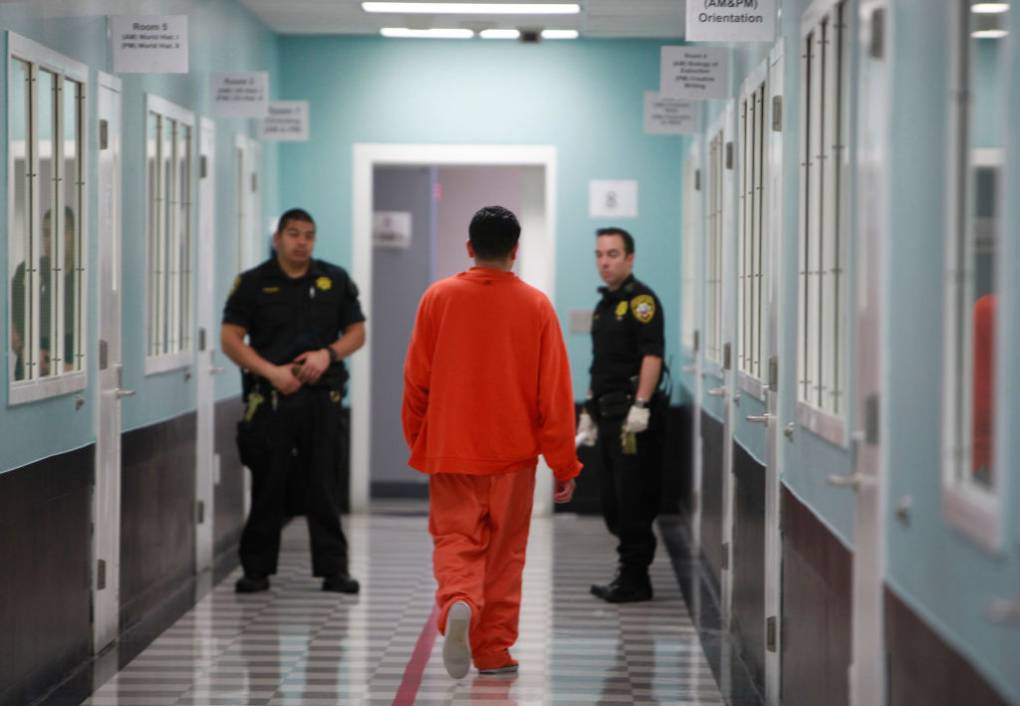
"caption": "Juan Alay returns to his creative writing class at the Five Keys Charter School in San Francisco County Jail No. 5, San Bruno Complex, on Monday, Jan. 28, 2013, in San Bruno.",
"description": null,
"title": "Juan Alay returns to his Creative Writing class at the Five Keys Charter School in San Francisco County Jail #5 - San Bruno Complex on Monday, January 28, 2013 in San Bruno, Calif.",
"credit": "Lea Suzuki/The San Francisco Chronicle via Getty Images",
"status": "inherit",
"altTag": "A man dressed in an orange jumpsuit walks towards two men dressed in correctional officer uniforms in a facility.",
"isLoading": false,
"fetchFailed": false
},
"news_11924503": {
"type": "attachments",
"id": "news_11924503",
"meta": {
"index": "attachments_1716263798",
"site": "news",
"id": "11924503",
"found": true
},
"parent": 11924388,
"imgSizes": {
"twentyfourteen-full-width": {
"file": "https://ww2.kqed.org/app/uploads/sites/10/2022/09/6.21.22-Vision-Act-Rally_Joyce-Xi-46-1-1038x576.jpg",
"width": 1038,
"mimeType": "image/jpeg",
"height": 576
},
"thumbnail": {
"file": "https://ww2.kqed.org/app/uploads/sites/10/2022/09/6.21.22-Vision-Act-Rally_Joyce-Xi-46-1-160x101.jpg",
"width": 160,
"mimeType": "image/jpeg",
"height": 101
},
"post-thumbnail": {
"file": "https://ww2.kqed.org/app/uploads/sites/10/2022/09/6.21.22-Vision-Act-Rally_Joyce-Xi-46-1-672x372.jpg",
"width": 672,
"mimeType": "image/jpeg",
"height": 372
},
"kqedFullSize": {
"file": "https://ww2.kqed.org/app/uploads/sites/10/2022/09/6.21.22-Vision-Act-Rally_Joyce-Xi-46-1-scaled.jpg",
"width": 2560,
"height": 1616
},
"2048x2048": {
"file": "https://ww2.kqed.org/app/uploads/sites/10/2022/09/6.21.22-Vision-Act-Rally_Joyce-Xi-46-1-2048x1292.jpg",
"width": 2048,
"mimeType": "image/jpeg",
"height": 1292
},
"large": {
"file": "https://ww2.kqed.org/app/uploads/sites/10/2022/09/6.21.22-Vision-Act-Rally_Joyce-Xi-46-1-1020x644.jpg",
"width": 1020,
"mimeType": "image/jpeg",
"height": 644
},
"1536x1536": {
"file": "https://ww2.kqed.org/app/uploads/sites/10/2022/09/6.21.22-Vision-Act-Rally_Joyce-Xi-46-1-1536x969.jpg",
"width": 1536,
"mimeType": "image/jpeg",
"height": 969
},
"full-width": {
"file": "https://ww2.kqed.org/app/uploads/sites/10/2022/09/6.21.22-Vision-Act-Rally_Joyce-Xi-46-1-1920x1212.jpg",
"width": 1920,
"mimeType": "image/jpeg",
"height": 1212
},
"medium": {
"file": "https://ww2.kqed.org/app/uploads/sites/10/2022/09/6.21.22-Vision-Act-Rally_Joyce-Xi-46-1-800x505.jpg",
"width": 800,
"mimeType": "image/jpeg",
"height": 505
}
},
"publishDate": 1662132849,
"modified": 1662132990,
"caption": "Immigration activists rally in Sacramento on June 21, 2022, urging lawmakers to pass the VISION Act, which would have stopped prison-to-ICE transfers in California.",
"description": null,
"title": "6.21.22 Vision Act Rally_Joyce Xi-46",
"credit": "Joyce Xi, courtesy of the Asian Law Caucus",
"status": "inherit",
"altTag": "A groups of people march down the street. One woman holds a sign that says: 'Gov. Newsom Pass the #VISION ACT.'",
"isLoading": false,
"fetchFailed": false
},
"news_11918083": {
"type": "attachments",
"id": "news_11918083",
"meta": {
"index": "attachments_1716263798",
"site": "news",
"id": "11918083",
"found": true
},
"parent": 11918025,
"imgSizes": {
"twentyfourteen-full-width": {
"file": "https://ww2.kqed.org/app/uploads/sites/10/2022/06/Halden-Prison_June-2022-1038x576.jpg",
"width": 1038,
"mimeType": "image/jpeg",
"height": 576
},
"thumbnail": {
"file": "https://ww2.kqed.org/app/uploads/sites/10/2022/06/Halden-Prison_June-2022-160x120.jpg",
"width": 160,
"mimeType": "image/jpeg",
"height": 120
},
"post-thumbnail": {
"file": "https://ww2.kqed.org/app/uploads/sites/10/2022/06/Halden-Prison_June-2022-672x372.jpg",
"width": 672,
"mimeType": "image/jpeg",
"height": 372
},
"kqedFullSize": {
"file": "https://ww2.kqed.org/app/uploads/sites/10/2022/06/Halden-Prison_June-2022-scaled.jpg",
"width": 2560,
"height": 1920
},
"2048x2048": {
"file": "https://ww2.kqed.org/app/uploads/sites/10/2022/06/Halden-Prison_June-2022-2048x1536.jpg",
"width": 2048,
"mimeType": "image/jpeg",
"height": 1536
},
"large": {
"file": "https://ww2.kqed.org/app/uploads/sites/10/2022/06/Halden-Prison_June-2022-1020x765.jpg",
"width": 1020,
"mimeType": "image/jpeg",
"height": 765
},
"1536x1536": {
"file": "https://ww2.kqed.org/app/uploads/sites/10/2022/06/Halden-Prison_June-2022-1536x1152.jpg",
"width": 1536,
"mimeType": "image/jpeg",
"height": 1152
},
"full-width": {
"file": "https://ww2.kqed.org/app/uploads/sites/10/2022/06/Halden-Prison_June-2022-1920x1440.jpg",
"width": 1920,
"mimeType": "image/jpeg",
"height": 1440
},
"medium": {
"file": "https://ww2.kqed.org/app/uploads/sites/10/2022/06/Halden-Prison_June-2022-800x600.jpg",
"width": 800,
"mimeType": "image/jpeg",
"height": 600
}
},
"publishDate": 1656364456,
"modified": 1656441345,
"caption": "A group of California visitors, affiliated with the Uncuffed podcast — a show made by people in state prisons — heads into Halden Prison in Oslo, Norway, this month.",
"description": null,
"title": "Halden Prison_June 2022",
"credit": "Courtesy of KALW",
"status": "inherit",
"altTag": "A small group of people stand outside a prison facility in Norway. They're facing a large gray wall which looks like concrete.",
"isLoading": false,
"fetchFailed": false
},
"news_11917005": {
"type": "attachments",
"id": "news_11917005",
"meta": {
"index": "attachments_1716263798",
"site": "news",
"id": "11917005",
"found": true
},
"parent": 11916962,
"imgSizes": {
"twentyfourteen-full-width": {
"file": "https://ww2.kqed.org/app/uploads/sites/10/2022/06/GettyImages-1172021652-1024x576.jpg",
"width": 1024,
"mimeType": "image/jpeg",
"height": 576
},
"thumbnail": {
"file": "https://ww2.kqed.org/app/uploads/sites/10/2022/06/GettyImages-1172021652-160x107.jpg",
"width": 160,
"mimeType": "image/jpeg",
"height": 107
},
"post-thumbnail": {
"file": "https://ww2.kqed.org/app/uploads/sites/10/2022/06/GettyImages-1172021652-672x372.jpg",
"width": 672,
"mimeType": "image/jpeg",
"height": 372
},
"kqedFullSize": {
"file": "https://ww2.kqed.org/app/uploads/sites/10/2022/06/GettyImages-1172021652.jpg",
"width": 1024,
"height": 683
},
"large": {
"file": "https://ww2.kqed.org/app/uploads/sites/10/2022/06/GettyImages-1172021652-1020x680.jpg",
"width": 1020,
"mimeType": "image/jpeg",
"height": 680
},
"medium": {
"file": "https://ww2.kqed.org/app/uploads/sites/10/2022/06/GettyImages-1172021652-800x534.jpg",
"width": 800,
"mimeType": "image/jpeg",
"height": 534
}
},
"publishDate": 1655154480,
"modified": 1695573222,
"caption": "Trucks move containers in and out of the Ben E. Nutter terminal at the Port of Oakland on Sept. 3, 2019, in Oakland. ",
"description": null,
"title": "Markets Drop As U.S. And China Impose New Tariffs",
"credit": "Justin Sullivan/Getty Images",
"status": "inherit",
"altTag": "Two bright green containers on flatbed trucks (the white cab of one truck is visible), with lettering on the side that says \"Evergreen\" in white, sit in a shipping yard. Around them are many other flatbeds, carrying mostly blue or red containers. In the distance, on the left, you can see a sliver of the San Francisco Bay; the Bay Bridge crosses the entire frame, and beyond that is the SF skyline, including the Salesforce and Transamerica towers.",
"isLoading": false,
"fetchFailed": false
},
"news_11875997": {
"type": "attachments",
"id": "news_11875997",
"meta": {
"index": "attachments_1716263798",
"site": "news",
"id": "11875997",
"found": true
},
"parent": 11875968,
"imgSizes": {
"twentyfourteen-full-width": {
"file": "https://ww2.kqed.org/app/uploads/sites/10/2021/05/1235_01-open-bars-1038x576.png",
"width": 1038,
"mimeType": "image/png",
"height": 576
},
"thumbnail": {
"file": "https://ww2.kqed.org/app/uploads/sites/10/2021/05/1235_01-open-bars-160x90.png",
"width": 160,
"mimeType": "image/png",
"height": 90
},
"post-thumbnail": {
"file": "https://ww2.kqed.org/app/uploads/sites/10/2021/05/1235_01-open-bars-672x372.png",
"width": 672,
"mimeType": "image/png",
"height": 372
},
"kqedFullSize": {
"file": "https://ww2.kqed.org/app/uploads/sites/10/2021/05/1235_01-open-bars.png",
"width": 1674,
"height": 940
},
"large": {
"file": "https://ww2.kqed.org/app/uploads/sites/10/2021/05/1235_01-open-bars-1020x573.png",
"width": 1020,
"mimeType": "image/png",
"height": 573
},
"1536x1536": {
"file": "https://ww2.kqed.org/app/uploads/sites/10/2021/05/1235_01-open-bars-1536x863.png",
"width": 1536,
"mimeType": "image/png",
"height": 863
},
"medium": {
"file": "https://ww2.kqed.org/app/uploads/sites/10/2021/05/1235_01-open-bars-800x449.png",
"width": 800,
"mimeType": "image/png",
"height": 449
}
},
"publishDate": 1622245279,
"modified": 1643659427,
"caption": "San Quentin is the oldest state prison in California. Gov. Gavin Newsom is moving to dismantle the nation's largest death row by moving all condemned inmates to other prisons within two years. The goal is to turn the section of San Quentin State Prison into \"a positive, healing environment.\" ",
"description": "San Quentin is the oldest state prison in California. In some parts of the prison, cell doors are bars, not solid, and five floors share an open atrium. ",
"title": "San Quentin tiers with open bars",
"credit": "Monica Lam/KQED",
"status": "inherit",
"altTag": "San Quentin tiers with open bars",
"isLoading": false,
"fetchFailed": false
},
"news_11897612": {
"type": "attachments",
"id": "news_11897612",
"meta": {
"index": "attachments_1716263798",
"site": "news",
"id": "11897612",
"found": true
},
"parent": 11897603,
"imgSizes": {
"twentyfourteen-full-width": {
"file": "https://ww2.kqed.org/app/uploads/sites/10/2021/11/amicus_112921_final-1038x576.png",
"width": 1038,
"mimeType": "image/png",
"height": 576
},
"thumbnail": {
"file": "https://ww2.kqed.org/app/uploads/sites/10/2021/11/amicus_112921_final-160x103.png",
"width": 160,
"mimeType": "image/png",
"height": 103
},
"post-thumbnail": {
"file": "https://ww2.kqed.org/app/uploads/sites/10/2021/11/amicus_112921_final-672x372.png",
"width": 672,
"mimeType": "image/png",
"height": 372
},
"kqedFullSize": {
"file": "https://ww2.kqed.org/app/uploads/sites/10/2021/11/amicus_112921_final.png",
"width": 1920,
"height": 1231
},
"large": {
"file": "https://ww2.kqed.org/app/uploads/sites/10/2021/11/amicus_112921_final-1020x654.png",
"width": 1020,
"mimeType": "image/png",
"height": 654
},
"1536x1536": {
"file": "https://ww2.kqed.org/app/uploads/sites/10/2021/11/amicus_112921_final-1536x985.png",
"width": 1536,
"mimeType": "image/png",
"height": 985
},
"medium": {
"file": "https://ww2.kqed.org/app/uploads/sites/10/2021/11/amicus_112921_final-800x513.png",
"width": 800,
"mimeType": "image/png",
"height": 513
}
},
"publishDate": 1638224217,
"modified": 1638224297,
"caption": null,
"description": null,
"title": "amicus_112921_final",
"credit": null,
"status": "inherit",
"altTag": "Cartoon: a prison guard holding a \"no vax mandate\" sign is arm in arm with a COVID-19 character and Gov. Newsom. The governor holds a briefcase of money from the prison guards union. Caption is \"Amicus Covidae, friend of covid.\"",
"isLoading": false,
"fetchFailed": false
},
"news_11891235": {
"type": "attachments",
"id": "news_11891235",
"meta": {
"index": "attachments_1716263798",
"site": "news",
"id": "11891235",
"found": true
},
"title": "ICE Holds Immigrants At Adelanto Detention Facility",
"publishDate": 1633541835,
"status": "inherit",
"parent": 11891221,
"modified": 1633551042,
"caption": "This U.S. immigration processing center in Adelanto, California, is operated by GEO Group, a Florida-based company specializing in privatized corrections.",
"credit": "John Moore/Getty Images",
"altTag": "On a modern, low-slung building with no windows, a big sign reading 'GEO' hangs on an exterior wall.",
"description": "Field office director Dave Marin walks into the Adelanto Detention Facility on November 15, 2013 in Adelanto, California. The facility, the largest and newest Immigration and Customs Enforcement (ICE), detention center in California, houses an average of 1,100 immigrants in custody pending a decision in their immigration cases or awaiting deportation.",
"imgSizes": {
"medium": {
"file": "https://cdn.kqed.org/wp-content/uploads/sites/10/2021/10/GettyImages-450371215-800x533.jpg",
"width": 800,
"height": 533,
"mimeType": "image/jpeg"
},
"large": {
"file": "https://cdn.kqed.org/wp-content/uploads/sites/10/2021/10/GettyImages-450371215-1020x680.jpg",
"width": 1020,
"height": 680,
"mimeType": "image/jpeg"
},
"thumbnail": {
"file": "https://cdn.kqed.org/wp-content/uploads/sites/10/2021/10/GettyImages-450371215-160x107.jpg",
"width": 160,
"height": 107,
"mimeType": "image/jpeg"
},
"1536x1536": {
"file": "https://cdn.kqed.org/wp-content/uploads/sites/10/2021/10/GettyImages-450371215-1536x1024.jpg",
"width": 1536,
"height": 1024,
"mimeType": "image/jpeg"
},
"2048x2048": {
"file": "https://cdn.kqed.org/wp-content/uploads/sites/10/2021/10/GettyImages-450371215-2048x1365.jpg",
"width": 2048,
"height": 1365,
"mimeType": "image/jpeg"
},
"post-thumbnail": {
"file": "https://cdn.kqed.org/wp-content/uploads/sites/10/2021/10/GettyImages-450371215-672x372.jpg",
"width": 672,
"height": 372,
"mimeType": "image/jpeg"
},
"twentyfourteen-full-width": {
"file": "https://cdn.kqed.org/wp-content/uploads/sites/10/2021/10/GettyImages-450371215-1038x576.jpg",
"width": 1038,
"height": 576,
"mimeType": "image/jpeg"
},
"full-width": {
"file": "https://cdn.kqed.org/wp-content/uploads/sites/10/2021/10/GettyImages-450371215-1920x1280.jpg",
"width": 1920,
"height": 1280,
"mimeType": "image/jpeg"
},
"kqedFullSize": {
"file": "https://cdn.kqed.org/wp-content/uploads/sites/10/2021/10/GettyImages-450371215-scaled-e1769711263847.jpg",
"width": 2000,
"height": 1334
}
},
"isLoading": false,
"fetchFailed": false
},
"news_11888757": {
"type": "attachments",
"id": "news_11888757",
"meta": {
"index": "attachments_1716263798",
"site": "news",
"id": "11888757",
"found": true
},
"parent": 11888753,
"imgSizes": {
"twentyfourteen-full-width": {
"file": "https://ww2.kqed.org/app/uploads/sites/10/2021/09/SanQuentin-flickr-1038x576.jpg",
"width": 1038,
"mimeType": "image/jpeg",
"height": 576
},
"thumbnail": {
"file": "https://ww2.kqed.org/app/uploads/sites/10/2021/09/SanQuentin-flickr-160x90.jpg",
"width": 160,
"mimeType": "image/jpeg",
"height": 90
},
"post-thumbnail": {
"file": "https://ww2.kqed.org/app/uploads/sites/10/2021/09/SanQuentin-flickr-672x372.jpg",
"width": 672,
"mimeType": "image/jpeg",
"height": 372
},
"kqedFullSize": {
"file": "https://ww2.kqed.org/app/uploads/sites/10/2021/09/SanQuentin-flickr.jpg",
"width": 1920,
"height": 1080
},
"large": {
"file": "https://ww2.kqed.org/app/uploads/sites/10/2021/09/SanQuentin-flickr-1020x574.jpg",
"width": 1020,
"mimeType": "image/jpeg",
"height": 574
},
"1536x1536": {
"file": "https://ww2.kqed.org/app/uploads/sites/10/2021/09/SanQuentin-flickr-1536x864.jpg",
"width": 1536,
"mimeType": "image/jpeg",
"height": 864
},
"medium": {
"file": "https://ww2.kqed.org/app/uploads/sites/10/2021/09/SanQuentin-flickr-800x450.jpg",
"width": 800,
"mimeType": "image/jpeg",
"height": 450
}
},
"publishDate": 1631745374,
"modified": 1631824115,
"caption": "San Quentin State Prison sits on prime bayfront real estate. It has been there over 160 years.",
"description": null,
"title": "SanQuentin-flickr",
"credit": "\u003ca href=\"https://www.flickr.com/photos/livenature/11660594894/\">Franco Folini\u003c/a>/Flickr",
"status": "inherit",
"altTag": "A lush view of San Quentin, jutting out into serene blue water.",
"isLoading": false,
"fetchFailed": false
},
"news_11851627": {
"type": "attachments",
"id": "news_11851627",
"meta": {
"index": "attachments_1716263798",
"site": "news",
"id": "11851627",
"found": true
},
"parent": 11851491,
"imgSizes": {
"apple_news_ca_landscape_5_5": {
"file": "https://ww2.kqed.org/app/uploads/sites/10/2020/12/RS46427_IMG_2895-qut-1044x783.jpg",
"width": 1044,
"mimeType": "image/jpeg",
"height": 783
},
"apple_news_ca_square_4_0": {
"file": "https://ww2.kqed.org/app/uploads/sites/10/2020/12/RS46427_IMG_2895-qut-470x470.jpg",
"width": 470,
"mimeType": "image/jpeg",
"height": 470
},
"twentyfourteen-full-width": {
"file": "https://ww2.kqed.org/app/uploads/sites/10/2020/12/RS46427_IMG_2895-qut-1038x576.jpg",
"width": 1038,
"mimeType": "image/jpeg",
"height": 576
},
"thumbnail": {
"file": "https://ww2.kqed.org/app/uploads/sites/10/2020/12/RS46427_IMG_2895-qut-160x120.jpg",
"width": 160,
"mimeType": "image/jpeg",
"height": 120
},
"post-thumbnail": {
"file": "https://ww2.kqed.org/app/uploads/sites/10/2020/12/RS46427_IMG_2895-qut-672x372.jpg",
"width": 672,
"mimeType": "image/jpeg",
"height": 372
},
"kqedFullSize": {
"file": "https://ww2.kqed.org/app/uploads/sites/10/2020/12/RS46427_IMG_2895-qut.jpg",
"width": 1920,
"height": 1440
},
"apple_news_ca_landscape_4_7": {
"file": "https://ww2.kqed.org/app/uploads/sites/10/2020/12/RS46427_IMG_2895-qut-632x474.jpg",
"width": 632,
"mimeType": "image/jpeg",
"height": 474
},
"large": {
"file": "https://ww2.kqed.org/app/uploads/sites/10/2020/12/RS46427_IMG_2895-qut-1020x765.jpg",
"width": 1020,
"mimeType": "image/jpeg",
"height": 765
},
"apple_news_ca_landscape_4_0": {
"file": "https://ww2.kqed.org/app/uploads/sites/10/2020/12/RS46427_IMG_2895-qut-536x402.jpg",
"width": 536,
"mimeType": "image/jpeg",
"height": 402
},
"apple_news_ca_portrait_12_9": {
"file": "https://ww2.kqed.org/app/uploads/sites/10/2020/12/RS46427_IMG_2895-qut-1122x1440.jpg",
"width": 1122,
"mimeType": "image/jpeg",
"height": 1440
},
"medium": {
"file": "https://ww2.kqed.org/app/uploads/sites/10/2020/12/RS46427_IMG_2895-qut-800x600.jpg",
"width": 800,
"mimeType": "image/jpeg",
"height": 600
},
"apple_news_ca_portrait_4_0": {
"file": "https://ww2.kqed.org/app/uploads/sites/10/2020/12/RS46427_IMG_2895-qut-354x472.jpg",
"width": 354,
"mimeType": "image/jpeg",
"height": 472
},
"apple_news_ca_portrait_9_7": {
"file": "https://ww2.kqed.org/app/uploads/sites/10/2020/12/RS46427_IMG_2895-qut-840x1120.jpg",
"width": 840,
"mimeType": "image/jpeg",
"height": 1120
},
"apple_news_ca_landscape_12_9": {
"file": "https://ww2.kqed.org/app/uploads/sites/10/2020/12/RS46427_IMG_2895-qut-1832x1374.jpg",
"width": 1832,
"mimeType": "image/jpeg",
"height": 1374
},
"apple_news_ca_square_9_7": {
"file": "https://ww2.kqed.org/app/uploads/sites/10/2020/12/RS46427_IMG_2895-qut-1104x1104.jpg",
"width": 1104,
"mimeType": "image/jpeg",
"height": 1104
},
"1536x1536": {
"file": "https://ww2.kqed.org/app/uploads/sites/10/2020/12/RS46427_IMG_2895-qut-1536x1152.jpg",
"width": 1536,
"mimeType": "image/jpeg",
"height": 1152
},
"apple_news_ca_portrait_4_7": {
"file": "https://ww2.kqed.org/app/uploads/sites/10/2020/12/RS46427_IMG_2895-qut-414x552.jpg",
"width": 414,
"mimeType": "image/jpeg",
"height": 552
},
"apple_news_ca_square_12_9": {
"file": "https://ww2.kqed.org/app/uploads/sites/10/2020/12/RS46427_IMG_2895-qut-1472x1440.jpg",
"width": 1472,
"mimeType": "image/jpeg",
"height": 1440
},
"apple_news_ca_portrait_5_5": {
"file": "https://ww2.kqed.org/app/uploads/sites/10/2020/12/RS46427_IMG_2895-qut-687x916.jpg",
"width": 687,
"mimeType": "image/jpeg",
"height": 916
},
"apple_news_ca_square_4_7": {
"file": "https://ww2.kqed.org/app/uploads/sites/10/2020/12/RS46427_IMG_2895-qut-550x550.jpg",
"width": 550,
"mimeType": "image/jpeg",
"height": 550
},
"apple_news_ca_landscape_9_7": {
"file": "https://ww2.kqed.org/app/uploads/sites/10/2020/12/RS46427_IMG_2895-qut-1376x1032.jpg",
"width": 1376,
"mimeType": "image/jpeg",
"height": 1032
},
"apple_news_ca_square_5_5": {
"file": "https://ww2.kqed.org/app/uploads/sites/10/2020/12/RS46427_IMG_2895-qut-912x912.jpg",
"width": 912,
"mimeType": "image/jpeg",
"height": 912
}
},
"publishDate": 1608236199,
"modified": 1608320995,
"caption": "Salinas resident Elijah Ramirez spent three and a half years in the state Department of Juvenile Justice for attempted murder during a street fight, where he was shot four times. Ramirez says the state lockup didn't support his physical or mental healing.",
"description": "Salinas resident Elijah Ramirez spent three and a half years in the state Department of Juvenile Justice for attempted murder after he was shot four times in a street fight. Ramirez says the state lockup didn't support his physical or mental healing.",
"title": "RS46427_IMG_2895-qut",
"credit": "Marisa Lagos/KQED",
"status": "inherit",
"altTag": null,
"isLoading": false,
"fetchFailed": false
},
"news_11862090": {
"type": "attachments",
"id": "news_11862090",
"meta": {
"index": "attachments_1716263798",
"site": "news",
"id": "11862090",
"found": true
},
"parent": 11862087,
"imgSizes": {
"apple_news_ca_landscape_5_5": {
"file": "https://ww2.kqed.org/app/uploads/sites/10/2021/02/avenal_01-1044x783.jpg",
"width": 1044,
"mimeType": "image/jpeg",
"height": 783
},
"apple_news_ca_square_4_0": {
"file": "https://ww2.kqed.org/app/uploads/sites/10/2021/02/avenal_01-470x470.jpg",
"width": 470,
"mimeType": "image/jpeg",
"height": 470
},
"twentyfourteen-full-width": {
"file": "https://ww2.kqed.org/app/uploads/sites/10/2021/02/avenal_01-1038x576.jpg",
"width": 1038,
"mimeType": "image/jpeg",
"height": 576
},
"thumbnail": {
"file": "https://ww2.kqed.org/app/uploads/sites/10/2021/02/avenal_01-160x107.jpg",
"width": 160,
"mimeType": "image/jpeg",
"height": 107
},
"post-thumbnail": {
"file": "https://ww2.kqed.org/app/uploads/sites/10/2021/02/avenal_01-672x372.jpg",
"width": 672,
"mimeType": "image/jpeg",
"height": 372
},
"kqedFullSize": {
"file": "https://ww2.kqed.org/app/uploads/sites/10/2021/02/avenal_01.jpg",
"width": 1350,
"height": 900
},
"apple_news_ca_landscape_4_7": {
"file": "https://ww2.kqed.org/app/uploads/sites/10/2021/02/avenal_01-632x474.jpg",
"width": 632,
"mimeType": "image/jpeg",
"height": 474
},
"large": {
"file": "https://ww2.kqed.org/app/uploads/sites/10/2021/02/avenal_01-1020x680.jpg",
"width": 1020,
"mimeType": "image/jpeg",
"height": 680
},
"apple_news_ca_landscape_4_0": {
"file": "https://ww2.kqed.org/app/uploads/sites/10/2021/02/avenal_01-536x402.jpg",
"width": 536,
"mimeType": "image/jpeg",
"height": 402
},
"apple_news_ca_portrait_12_9": {
"file": "https://ww2.kqed.org/app/uploads/sites/10/2021/02/avenal_01-1122x900.jpg",
"width": 1122,
"mimeType": "image/jpeg",
"height": 900
},
"medium": {
"file": "https://ww2.kqed.org/app/uploads/sites/10/2021/02/avenal_01-800x533.jpg",
"width": 800,
"mimeType": "image/jpeg",
"height": 533
},
"apple_news_ca_portrait_4_0": {
"file": "https://ww2.kqed.org/app/uploads/sites/10/2021/02/avenal_01-354x472.jpg",
"width": 354,
"mimeType": "image/jpeg",
"height": 472
},
"apple_news_ca_portrait_9_7": {
"file": "https://ww2.kqed.org/app/uploads/sites/10/2021/02/avenal_01-840x900.jpg",
"width": 840,
"mimeType": "image/jpeg",
"height": 900
},
"apple_news_ca_square_9_7": {
"file": "https://ww2.kqed.org/app/uploads/sites/10/2021/02/avenal_01-1104x900.jpg",
"width": 1104,
"mimeType": "image/jpeg",
"height": 900
},
"apple_news_ca_portrait_4_7": {
"file": "https://ww2.kqed.org/app/uploads/sites/10/2021/02/avenal_01-414x552.jpg",
"width": 414,
"mimeType": "image/jpeg",
"height": 552
},
"apple_news_ca_portrait_5_5": {
"file": "https://ww2.kqed.org/app/uploads/sites/10/2021/02/avenal_01-687x900.jpg",
"width": 687,
"mimeType": "image/jpeg",
"height": 900
},
"apple_news_ca_square_4_7": {
"file": "https://ww2.kqed.org/app/uploads/sites/10/2021/02/avenal_01-550x550.jpg",
"width": 550,
"mimeType": "image/jpeg",
"height": 550
},
"apple_news_ca_square_5_5": {
"file": "https://ww2.kqed.org/app/uploads/sites/10/2021/02/avenal_01-912x900.jpg",
"width": 912,
"mimeType": "image/jpeg",
"height": 900
}
},
"publishDate": 1614280267,
"modified": 1614292287,
"caption": "With more than 3,600 confirmed cases among inmates and staff members, Avenal State Prison has the country’s largest COVID-19 clusters of any prison.",
"description": null,
"title": "avenal_01",
"credit": "Courtesy of the California Department of Corrections and Rehabilitation",
"status": "inherit",
"altTag": null,
"isLoading": false,
"fetchFailed": false
},
"news_11418538": {
"type": "attachments",
"id": "news_11418538",
"meta": {
"index": "attachments_1716263798",
"site": "news",
"id": "11418538",
"found": true
},
"parent": 11418506,
"imgSizes": {
"small": {
"file": "https://ww2.kqed.org/app/uploads/sites/10/2017/04/11510_transform-520x390.jpg",
"width": 520,
"mimeType": "image/jpeg",
"height": 390
},
"twentyfourteen-full-width": {
"file": "https://ww2.kqed.org/app/uploads/sites/10/2017/04/11510_transform-1038x576.jpg",
"width": 1038,
"mimeType": "image/jpeg",
"height": 576
},
"thumbnail": {
"file": "https://ww2.kqed.org/app/uploads/sites/10/2017/04/11510_transform-160x120.jpg",
"width": 160,
"mimeType": "image/jpeg",
"height": 120
},
"fd-sm": {
"file": "https://ww2.kqed.org/app/uploads/sites/10/2017/04/11510_transform-960x720.jpg",
"width": 960,
"mimeType": "image/jpeg",
"height": 720
},
"post-thumbnail": {
"file": "https://ww2.kqed.org/app/uploads/sites/10/2017/04/11510_transform-672x372.jpg",
"width": 672,
"mimeType": "image/jpeg",
"height": 372
},
"xsmall": {
"file": "https://ww2.kqed.org/app/uploads/sites/10/2017/04/11510_transform-375x281.jpg",
"width": 375,
"mimeType": "image/jpeg",
"height": 281
},
"kqedFullSize": {
"file": "https://ww2.kqed.org/app/uploads/sites/10/2017/04/11510_transform.jpg",
"width": 1920,
"height": 1440
},
"large": {
"file": "https://ww2.kqed.org/app/uploads/sites/10/2017/04/11510_transform-1020x765.jpg",
"width": 1020,
"mimeType": "image/jpeg",
"height": 765
},
"xlarge": {
"file": "https://ww2.kqed.org/app/uploads/sites/10/2017/04/11510_transform-1180x885.jpg",
"width": 1180,
"mimeType": "image/jpeg",
"height": 885
},
"guest-author-50": {
"file": "https://ww2.kqed.org/app/uploads/sites/10/2017/04/11510_transform-50x50.jpg",
"width": 50,
"mimeType": "image/jpeg",
"height": 50
},
"guest-author-96": {
"file": "https://ww2.kqed.org/app/uploads/sites/10/2017/04/11510_transform-96x96.jpg",
"width": 96,
"mimeType": "image/jpeg",
"height": 96
},
"medium": {
"file": "https://ww2.kqed.org/app/uploads/sites/10/2017/04/11510_transform-800x600.jpg",
"width": 800,
"mimeType": "image/jpeg",
"height": 600
},
"guest-author-64": {
"file": "https://ww2.kqed.org/app/uploads/sites/10/2017/04/11510_transform-64x64.jpg",
"width": 64,
"mimeType": "image/jpeg",
"height": 64
},
"guest-author-32": {
"file": "https://ww2.kqed.org/app/uploads/sites/10/2017/04/11510_transform-32x32.jpg",
"width": 32,
"mimeType": "image/jpeg",
"height": 32
},
"fd-lrg": {
"file": "https://ww2.kqed.org/app/uploads/sites/10/2017/04/11510_transform-1920x1440.jpg",
"width": 1920,
"mimeType": "image/jpeg",
"height": 1440
},
"fd-med": {
"file": "https://ww2.kqed.org/app/uploads/sites/10/2017/04/11510_transform-1180x885.jpg",
"width": 1180,
"mimeType": "image/jpeg",
"height": 885
},
"full-width": {
"file": "https://ww2.kqed.org/app/uploads/sites/10/2017/04/11510_transform-1920x1440.jpg",
"width": 1920,
"mimeType": "image/jpeg",
"height": 1440
},
"detail": {
"file": "https://ww2.kqed.org/app/uploads/sites/10/2017/04/11510_transform-150x150.jpg",
"width": 150,
"mimeType": "image/jpeg",
"height": 150
},
"guest-author-128": {
"file": "https://ww2.kqed.org/app/uploads/sites/10/2017/04/11510_transform-128x128.jpg",
"width": 128,
"mimeType": "image/jpeg",
"height": 128
},
"xxsmall": {
"file": "https://ww2.kqed.org/app/uploads/sites/10/2017/04/11510_transform-240x180.jpg",
"width": 240,
"mimeType": "image/jpeg",
"height": 180
}
},
"publishDate": 1492716360,
"modified": 1607553769,
"caption": "Prisons confine inmates during group therapy in metal cages, also known as therapeutic modules, at California State Prison in Sacramento.",
"description": null,
"title": "11510_transform",
"credit": "Julie Small/KQED",
"status": "inherit",
"altTag": null,
"isLoading": false,
"fetchFailed": false
},
"news_11842901": {
"type": "attachments",
"id": "news_11842901",
"meta": {
"index": "attachments_1716263798",
"site": "news",
"id": "11842901",
"found": true
},
"parent": 11842892,
"imgSizes": {
"apple_news_ca_landscape_5_5": {
"file": "https://ww2.kqed.org/app/uploads/sites/10/2020/10/fix_101920_final-1044x783.png",
"width": 1044,
"mimeType": "image/png",
"height": 783
},
"apple_news_ca_square_4_0": {
"file": "https://ww2.kqed.org/app/uploads/sites/10/2020/10/fix_101920_final-470x470.png",
"width": 470,
"mimeType": "image/png",
"height": 470
},
"twentyfourteen-full-width": {
"file": "https://ww2.kqed.org/app/uploads/sites/10/2020/10/fix_101920_final-1038x576.png",
"width": 1038,
"mimeType": "image/png",
"height": 576
},
"thumbnail": {
"file": "https://ww2.kqed.org/app/uploads/sites/10/2020/10/fix_101920_final-160x90.png",
"width": 160,
"mimeType": "image/png",
"height": 90
},
"post-thumbnail": {
"file": "https://ww2.kqed.org/app/uploads/sites/10/2020/10/fix_101920_final-672x372.png",
"width": 672,
"mimeType": "image/png",
"height": 372
},
"kqedFullSize": {
"file": "https://ww2.kqed.org/app/uploads/sites/10/2020/10/fix_101920_final.png",
"width": 1920,
"height": 1079
},
"apple_news_ca_landscape_4_7": {
"file": "https://ww2.kqed.org/app/uploads/sites/10/2020/10/fix_101920_final-632x474.png",
"width": 632,
"mimeType": "image/png",
"height": 474
},
"large": {
"file": "https://ww2.kqed.org/app/uploads/sites/10/2020/10/fix_101920_final-1020x573.png",
"width": 1020,
"mimeType": "image/png",
"height": 573
},
"apple_news_ca_landscape_4_0": {
"file": "https://ww2.kqed.org/app/uploads/sites/10/2020/10/fix_101920_final-536x402.png",
"width": 536,
"mimeType": "image/png",
"height": 402
},
"apple_news_ca_portrait_12_9": {
"file": "https://ww2.kqed.org/app/uploads/sites/10/2020/10/fix_101920_final-1122x1079.png",
"width": 1122,
"mimeType": "image/png",
"height": 1079
},
"medium": {
"file": "https://ww2.kqed.org/app/uploads/sites/10/2020/10/fix_101920_final-800x450.png",
"width": 800,
"mimeType": "image/png",
"height": 450
},
"apple_news_ca_portrait_4_0": {
"file": "https://ww2.kqed.org/app/uploads/sites/10/2020/10/fix_101920_final-354x472.png",
"width": 354,
"mimeType": "image/png",
"height": 472
},
"apple_news_ca_portrait_9_7": {
"file": "https://ww2.kqed.org/app/uploads/sites/10/2020/10/fix_101920_final-840x1079.png",
"width": 840,
"mimeType": "image/png",
"height": 1079
},
"apple_news_ca_landscape_12_9": {
"file": "https://ww2.kqed.org/app/uploads/sites/10/2020/10/fix_101920_final-1832x1079.png",
"width": 1832,
"mimeType": "image/png",
"height": 1079
},
"apple_news_ca_square_9_7": {
"file": "https://ww2.kqed.org/app/uploads/sites/10/2020/10/fix_101920_final-1104x1079.png",
"width": 1104,
"mimeType": "image/png",
"height": 1079
},
"1536x1536": {
"file": "https://ww2.kqed.org/app/uploads/sites/10/2020/10/fix_101920_final-1536x863.png",
"width": 1536,
"mimeType": "image/png",
"height": 863
},
"apple_news_ca_portrait_4_7": {
"file": "https://ww2.kqed.org/app/uploads/sites/10/2020/10/fix_101920_final-414x552.png",
"width": 414,
"mimeType": "image/png",
"height": 552
},
"apple_news_ca_square_12_9": {
"file": "https://ww2.kqed.org/app/uploads/sites/10/2020/10/fix_101920_final-1472x1079.png",
"width": 1472,
"mimeType": "image/png",
"height": 1079
},
"apple_news_ca_portrait_5_5": {
"file": "https://ww2.kqed.org/app/uploads/sites/10/2020/10/fix_101920_final-687x916.png",
"width": 687,
"mimeType": "image/png",
"height": 916
},
"apple_news_ca_square_4_7": {
"file": "https://ww2.kqed.org/app/uploads/sites/10/2020/10/fix_101920_final-550x550.png",
"width": 550,
"mimeType": "image/png",
"height": 550
},
"apple_news_ca_landscape_9_7": {
"file": "https://ww2.kqed.org/app/uploads/sites/10/2020/10/fix_101920_final-1376x1032.png",
"width": 1376,
"mimeType": "image/png",
"height": 1032
},
"apple_news_ca_square_5_5": {
"file": "https://ww2.kqed.org/app/uploads/sites/10/2020/10/fix_101920_final-912x912.png",
"width": 912,
"mimeType": "image/png",
"height": 912
}
},
"publishDate": 1603148263,
"modified": 1603148310,
"caption": null,
"description": null,
"title": "fix_101920_final",
"credit": null,
"status": "inherit",
"isLoading": false,
"fetchFailed": false
}
},
"audioPlayerReducer": {
"postId": "stream_live",
"isPaused": true,
"isPlaying": false,
"pfsActive": false,
"pledgeModalIsOpen": true,
"playerDrawerIsOpen": false,
"liveAudioPlayStartedAt": 0,
"liveAudioPlayContext": ""
},
"authorsReducer": {
"byline_news_11926841": {
"type": "authors",
"id": "byline_news_11926841",
"meta": {
"override": true
},
"slug": "byline_news_11926841",
"name": "\u003ca href=\"https://calmatters.org/author/nigelduara\">Nigel Duara\u003c/a>",
"isLoading": false
},
"byline_news_11924388": {
"type": "authors",
"id": "byline_news_11924388",
"meta": {
"override": true
},
"slug": "byline_news_11924388",
"name": "Don Thompson\u003cbr>The Associated Press",
"isLoading": false
},
"byline_news_11916962": {
"type": "authors",
"id": "byline_news_11916962",
"meta": {
"override": true
},
"slug": "byline_news_11916962",
"name": "\u003ca href=\"https://calmatters.org/author/nigelduara\">Nigel Duara\u003c/a>",
"isLoading": false
},
"byline_news_11903391": {
"type": "authors",
"id": "byline_news_11903391",
"meta": {
"override": true
},
"slug": "byline_news_11903391",
"name": "Don Thompson \u003cbr> The Associated Press",
"isLoading": false
},
"byline_news_11891221": {
"type": "authors",
"id": "byline_news_11891221",
"meta": {
"override": true
},
"slug": "byline_news_11891221",
"name": "\u003ca href=\"https://www.npr.org/people/930959243/jaclyn-diaz\">Jaclyn Diaz\u003c/a>",
"isLoading": false
},
"byline_news_11888753": {
"type": "authors",
"id": "byline_news_11888753",
"meta": {
"override": true
},
"slug": "byline_news_11888753",
"name": "Katrina Schwartz and Kelly O'Mara",
"isLoading": false
},
"byline_news_11879759": {
"type": "authors",
"id": "byline_news_11879759",
"meta": {
"override": true
},
"slug": "byline_news_11879759",
"name": "Don Thompson\u003cbr>Associated Press",
"isLoading": false
},
"byline_news_11862087": {
"type": "authors",
"id": "byline_news_11862087",
"meta": {
"override": true
},
"slug": "byline_news_11862087",
"name": "\u003ca href=\"https://khn.org/news/author/kerry-klein-valley-public-radio/\">Kerry Klein, Valley Public Radio\u003c/a>",
"isLoading": false
},
"byline_news_11849703": {
"type": "authors",
"id": "byline_news_11849703",
"meta": {
"override": true
},
"slug": "byline_news_11849703",
"name": "Holly McDede",
"isLoading": false
},
"markfiore": {
"type": "authors",
"id": "3236",
"meta": {
"index": "authors_1716337520",
"id": "3236",
"found": true
},
"name": "Mark Fiore",
"firstName": "Mark",
"lastName": "Fiore",
"slug": "markfiore",
"email": "mark@markfiore.com",
"display_author_email": false,
"staff_mastheads": [
"news"
],
"title": "KQED News Cartoonist",
"bio": "\u003ca href=\"http://www.MarkFiore.com\">MarkFiore.com\u003c/a> | \u003ca href=\"https://twitter.com/markfiore\">Follow on Twitter\u003c/a> | \u003ca href=\"https://www.facebook.com/pages/Mark-Fiore-Animated-Political-Cartoons/94451707396?ref=bookmarks\">Facebook\u003c/a> | \u003ca href=\"mailto:mark@markfiore.com\">email\u003c/a>\r\n\r\nPulitzer Prize-winner, Mark Fiore, who the Wall Street Journal has called “the undisputed guru of the form,” creates animated political cartoons in San Francisco, where his work has been featured regularly on the San Francisco Chronicle’s web site, SFGate.com. His work has appeared on Newsweek.com, Slate.com, CBSNews.com, MotherJones.com, DailyKos.com and NPR’s web site. Fiore’s political animation has appeared on CNN, Frontline, Bill Moyers Journal, Salon.com and cable and broadcast outlets across the globe.\r\n\r\nBeginning his professional life by drawing traditional political cartoons for newspapers, Fiore’s work appeared in publications ranging from the Washington Post to the Los Angeles Times. In the late 1990s, he began to experiment with animating political cartoons and, after a short stint at the San Jose Mercury News as their staff cartoonist, Fiore devoted all his energies to animation.\r\nGrowing up in California, Fiore also spent a good portion of his life in the backwoods of Idaho. It was this combination that shaped him politically. Mark majored in political science at Colorado College, where, in a perfect send-off for a cartoonist, he received his diploma in 1991 as commencement speaker Dick Cheney smiled approvingly.\r\nMark Fiore was awarded the Pulitzer Prize for political cartooning in 2010, a Robert F. Kennedy Journalism Award in 2004 and has twice received an Online Journalism Award for commentary from the Online News Association (2002, 2008). Fiore has received two awards for his work in new media from the National Cartoonists Society (2001, 2002), and in 2006 received The James Madison Freedom of Information Award from The Society of Professional Journalists.",
"avatar": "https://secure.gravatar.com/avatar/fc4e2a612b15b67bad0c6f0e1db4ca9b?s=600&d=blank&r=g",
"twitter": "MarkFiore",
"facebook": null,
"instagram": "https://www.instagram.com/markfiore/?hl=en",
"linkedin": null,
"sites": [
{
"site": "arts",
"roles": [
"contributor"
]
},
{
"site": "news",
"roles": [
"editor"
]
},
{
"site": "futureofyou",
"roles": [
"editor"
]
},
{
"site": "science",
"roles": [
"editor"
]
}
],
"headData": {
"title": "Mark Fiore | KQED",
"description": "KQED News Cartoonist",
"ogImgSrc": "https://secure.gravatar.com/avatar/fc4e2a612b15b67bad0c6f0e1db4ca9b?s=600&d=blank&r=g",
"twImgSrc": "https://secure.gravatar.com/avatar/fc4e2a612b15b67bad0c6f0e1db4ca9b?s=600&d=blank&r=g"
},
"isLoading": false,
"link": "/author/markfiore"
},
"bwatt": {
"type": "authors",
"id": "11238",
"meta": {
"index": "authors_1716337520",
"id": "11238",
"found": true
},
"name": "Brian Watt",
"firstName": "Brian",
"lastName": "Watt",
"slug": "bwatt",
"email": "bwatt@KQED.org",
"display_author_email": false,
"staff_mastheads": [
"news"
],
"title": "Morning News Anchor",
"bio": "Brian Watt is KQED's morning radio news anchor. He joined the KQED News team in April of 2016. Prior to that, he worked as a Reporter for KPCC in Los Angeles and a producer at \u003cem>Marketplace.\u003c/em>\r\n\r\nDuring eight years at KPCC, Brian covered business and economics, and his work won several awards. In 2008, he won the Los Angeles Press Club’s first-place award for Business and Financial Reporting, Broadcast. He’s also received honorable mention and been first runner up for the Press Club’s Radio Journalist of the Year. He won two Golden Mike awards from the Radio and TV News Association of Southern California.\r\n\r\nBrian holds degrees in theater from Yale University and the Sorbonne, and has worked as an actor in France, Italy, Brazil, Hungary and . . . Hollywood. He appeared in a few television shows, including \u003cem>The West Wing, Judging Amy\u003c/em> and \u003cem>The District.\u003c/em>\r\n\r\nEmail: bwatt@KQED.org Twitter: @RadioBWatt",
"avatar": "https://secure.gravatar.com/avatar/55393ff57ed34e2be773ba4789dd6a19?s=600&d=blank&r=g",
"twitter": "@RadioBWatt",
"facebook": null,
"instagram": null,
"linkedin": null,
"sites": [
{
"site": "arts",
"roles": [
"contributor"
]
},
{
"site": "news",
"roles": [
"editor"
]
}
],
"headData": {
"title": "Brian Watt | KQED",
"description": "Morning News Anchor",
"ogImgSrc": "https://secure.gravatar.com/avatar/55393ff57ed34e2be773ba4789dd6a19?s=600&d=blank&r=g",
"twImgSrc": "https://secure.gravatar.com/avatar/55393ff57ed34e2be773ba4789dd6a19?s=600&d=blank&r=g"
},
"isLoading": false,
"link": "/author/bwatt"
},
"agonzalez": {
"type": "authors",
"id": "11724",
"meta": {
"index": "authors_1716337520",
"id": "11724",
"found": true
},
"name": "Alexander Gonzalez",
"firstName": "Alexander",
"lastName": "Gonzalez",
"slug": "agonzalez",
"email": "AlexanderGonzalez@KQED.org",
"display_author_email": false,
"staff_mastheads": [
"news"
],
"title": "KQED Contributor",
"bio": null,
"avatar": "https://secure.gravatar.com/avatar/9e291ed34e154df4c662edf858b641d70b4859939bfe40be478408f9dfd057d2?s=600&d=blank&r=g",
"twitter": null,
"bluesky": null,
"facebook": null,
"instagram": null,
"linkedin": null,
"sites": [
{
"site": "arts",
"roles": [
"editor"
]
},
{
"site": "news",
"roles": [
"editor"
]
},
{
"site": "science",
"roles": [
"editor"
]
}
],
"headData": {
"title": "Alexander Gonzalez | KQED",
"description": "KQED Contributor",
"ogImgSrc": "https://secure.gravatar.com/avatar/9e291ed34e154df4c662edf858b641d70b4859939bfe40be478408f9dfd057d2?s=600&d=blank&r=g",
"twImgSrc": "https://secure.gravatar.com/avatar/9e291ed34e154df4c662edf858b641d70b4859939bfe40be478408f9dfd057d2?s=600&d=blank&r=g"
},
"isLoading": false,
"link": "/author/agonzalez"
}
},
"pagesReducer": {
"news_tag_california-prisons": {
"type": "terms",
"id": "news_616",
"meta": {
"index": "terms_1716263798",
"site": "news",
"id": "616",
"score": 10.407496
},
"featImg": null,
"name": "California prisons",
"description": null,
"taxonomy": "tag",
"headData": {
"twImgId": null,
"twTitle": null,
"ogTitle": null,
"ogImgId": null,
"twDescription": null,
"description": null,
"title": "California prisons Archives | KQED News",
"ogDescription": null
},
"ttid": 625,
"slug": "california-prisons",
"isLoading": false,
"title": "California prisons",
"pageMeta": {
"site": "news",
"WpPageTemplate": "page-topic-editorial",
"currentPage": 5
},
"blocks": [
{
"blockName": "kqed/post-list",
"attrs": {
"layout": "cardArticle2",
"query": "posts/news?tag=california-prisons",
"seeMore": false,
"paginated": true,
"page": 5
}
},
{
"blockName": "kqed/ad"
}
]
}
},
"pfsSessionReducer": {},
"postsReducer": {
"stream_live": {
"type": "live",
"id": "stream_live",
"audioUrl": "https://hls.kqed.org/hls/kqed_app/playlist.m3u8",
"title": "Live Stream",
"excerpt": "Live Stream information currently unavailable.",
"link": "/radio",
"featImg": "",
"label": {
"name": "KQED Live",
"link": "/"
}
},
"stream_kqedNewscast": {
"type": "posts",
"id": "stream_kqedNewscast",
"audioUrl": "https://www.kqed.org/.stream/anon/radio/RDnews/newscast.mp3?_=1",
"title": "KQED Newscast",
"featImg": "",
"label": {
"name": "88.5 FM",
"link": "/"
}
},
"news_11926841": {
"type": "posts",
"id": "news_11926841",
"meta": {
"index": "posts_1716263798",
"site": "news",
"id": "11926841",
"score": null,
"sort": [
1664385719000
]
},
"parent": 0,
"labelTerm": {},
"blocks": [],
"publishDate": 1664385719,
"format": "standard",
"disqusTitle": "'Mandela' Bill Would Limit Solitary Confinement in California Prisons and Jails",
"title": "'Mandela' Bill Would Limit Solitary Confinement in California Prisons and Jails",
"headTitle": "KQED News",
"content": "\u003cp>In solitary confinement, a formerly incarcerated California man recalled, there were two kinds of people: One kind would read books in their cells, exercise and do and redo crossword puzzles. The other kind would scream and curse, refuse to dress and throw their feces at the walls.\u003c/p>\n\u003cp>The goal in solitary confinement, he said, was to avoid becoming the second kind of person.\u003c/p>\n\u003cp>“There’s one that’s resilient and one that’s not so resilient,” said the man, a former member of the Mexican Mafia who asked CalMatters not to use his name for fear of retaliation. “I’ve seen people go over the edge.”\u003c/p>\n\u003cp>The man spent several consecutive years in solitary confinement at a California prison — a circumstance some lawmakers want to change. A \u003ca href=\"https://leginfo.legislature.ca.gov/faces/billNavClient.xhtml?bill_id=202120220AB2632\">bill before Gov. Gavin Newsom \u003c/a>would limit solitary confinement in California to 15 consecutive days, and no more than 45 days out of 180.\u003c/p>\n\u003cp>Assembly Bill 2632, named the “California Mandela Act” after former political prisoner and president of South Africa Nelson Mandela, would be the most wide-ranging change to solitary confinement in any state, limiting the practice in all California prisons, jails and immigration detention facilities. Its contentious passage through the Legislature ended largely on party-line votes, with Republicans continuing to raise an alarm about the bill’s potential costs.[pullquote size=\"medium\" align=\"right\" citation=\"Keramet Reiter, criminologist, University of California, Irvine\"]'This isn't the first time that people have looked around and said, 'Wow, this seems like a really damaging practice, let's get rid of it.' We've been looking around and saying that since the 1800s.'[/pullquote]\u003c/p>\n\u003cp>Proponents of limiting or doing away with solitary confinement have long argued it is inhumane, ineffective and tantamount to torture. Law enforcement groups have asked Newsom to veto the bill, arguing that prison and jail officials, not legislators, should determine when and where to use solitary confinement.\u003c/p>\n\u003cp>The formerly incarcerated man — who spent decades alone in 8-by-10 cells at multiple California prisons, much of it in solitary — has a surprising outlook.\u003c/p>\n\u003cp>He thinks eliminating solitary confinement is a bad idea.\u003c/p>\n\u003cp>“That’s crazy,” he said. “I don’t think there’s much thought put into it. I believe they think it’s detrimental to the psyche of the individuals who are being housed there.\u003c/p>\n\u003cp>“But without some kind of deterrent, I mean, you go whack a guy and you get 15 days in the hole and you’re back in a regular general population yard.”[aside postID=\"news_11923753,news_11925791\" label=\"Related Posts\"]Solitary confinement in California takes many forms. There are few regulations and no universal definition, but generally, solitary confinement means spending 22 to 23 hours per day in a single cell, usually about the size of an elevator.\u003c/p>\n\u003cp>The bill before Newsom also bans solitary confinement entirely for anyone younger than 26 or older than 59; people who are pregnant or recently had a baby or a miscarriage; and people who experience a physical or mental disability.\u003c/p>\n\u003cp>The bill would make California the first state to ban solitary confinement in immigration detention. Last year, New York legislators enacted a similar 15-day limit on solitary confinement in prisons and jails.\u003c/p>\n\u003cp>Margot Mendelson, legal director of the Prison Law Office, which co-sponsored the bill, said the formerly incarcerated man mischaracterizes the bill and oversimplifies its impact. The proposal would not require corrections officials to put someone back in the general population, and “disciplinary measures would still be in place,” she said. It’s the practice of solitary confinement for 22 or 23 hours a day that would end.\u003c/p>\n\u003cp>“It creates the culture of deprivation and violence itself,” Mendelson said. “People do get better, places are more peaceful, reentry is more successful when we bring programming and relationships and social contacts back to these spaces.”\u003c/p>\n\u003ch2 id=\"h-solitary-confinement-in-and-out-of-favor\">Solitary confinement in and out of favor\u003c/h2>\n\u003cp>Research conducted in the last 20 years has shown solitary confinement to be harmful to the people incarcerated, as well as expensive and \u003ca href=\"https://ajph.aphapublications.org/doi/full/10.2105/AJPH.2014.302205\">ineffective in rehabilitation\u003c/a>. The \u003ca href=\"https://ajph.aphapublications.org/doi/10.2105/AJPH.2019.305375\">health effects cited include depression and anxiety\u003c/a>, but also hallucinations and hypersensitivity to sounds and smells. Suicidal ideation and attempts are far higher for those in solitary confinement than the general population, some of the same research shows.\u003c/p>\n\u003cp>In 2015, the United Nations defined any period of isolation beyond 15 days as torture. In a 2016 editorial, \u003ca href=\"https://www.washingtonpost.com/opinions/barack-obama-why-we-must-rethink-solitary-confinement/2016/01/25/29a361f2-c384-11e5-8965-0607e0e265ce_story.html\">former President Barack Obama called solitary confinement “an affront to our common humanity.”\u003c/a>\u003c/p>\n\u003cp>But it’s become one of the most regularly used tools by prison and jail administrators to punish violence or sequester disruptive people and, sometimes, as a protective measure for former police officers or other incarcerated people who would be obvious targets inside.\u003c/p>\n\u003cp>“The practice is incredibly resilient,” said Keramet Reiter, a University of California, Irvine, criminologist who has done extensive research on solitary confinement.\u003c/p>\n\u003cp>“This isn’t the first time that people have looked around and said, ‘Wow, this seems like a really damaging practice, let’s get rid of it.’ We’ve been looking around and saying that since the 1800s,” she said.\u003c/p>\n\u003cp>The U.S. experiment with solitary confinement began as early as the 1780s, waned in the 1800s and was largely abandoned in the early 1900s.\u003c/p>\n\u003cp>But beginning in the 1980s, prisons brought back solitary confinement, and its use exploded: By 1997, \u003ca href=\"https://ajph.aphapublications.org/doi/10.2105/AJPH.2019.305375\">nearly every state had a super-maximum security prison\u003c/a>. In \u003ca href=\"https://law.yale.edu/centers-workshops/arthur-liman-center-public-interest-law/liman-center-publications/time-cell-2021\">a snapshot of prison populations in 2021\u003c/a>, Yale Law School researchers said there were between 41,000 and 48,000 people in solitary confinement in the U.S.\u003c/p>\n\u003cp>For California, it has remained a contentious issue.\u003c/p>\n\u003cp>After a series of hunger strikes across California prisons for two months in the summer of 2011, the Department of Corrections and Rehabilitation reached a settlement in federal court with incarcerated people in Pelican Bay State Prison held in solitary confinement for decades based on their perceived gang affiliations.\u003c/p>\n\u003cp>The \u003ca href=\"https://clearinghouse.net/case/12103/\">2015 settlement\u003c/a> ended the department’s practice of indefinite detention in solitary confinement. But a federal judge ruled in February that the department continues to violate the terms of the agreement \u003ca href=\"https://ccrjustice.org/home/press-center/press-releases/court-finds-continued-systemic-constitutional-violations-california\">by fabricating or exaggerating reports\u003c/a> from confidential informants that put people back in solitary.\u003c/p>\n\u003ch2>The view from inside\u003c/h2>\n\u003cp>Solitary confinement in California prisons isn’t what’s sometimes portrayed on television: a pitch-black cell with a hole in the floor. That, Reiter said, was indeed the practice in some Southern states in the 1970s and 1980s but isn’t the case here, where prison and jail officials have some leeway in defining the practice.\u003c/p>\n\u003cp>Inside the solitary cellblocks of one California prison, the walls were yellowing, according to the formerly incarcerated man and member of the Mexican Mafia. Instead of bars, incarcerated people peered out through perforated steel. Everything was concrete, even the bed frames.\u003c/p>\n\u003cp>People were close enough to hear each other, but calling out to others earned them a “115,” California prison code for a disciplinary report. The formerly incarcerated man said he was still able to give commands to other Mexican Mafia gang members, either from his cell or in meetings at the prison law library. “I used to run a whole crew from the SHU [special housing unit],” he said.\u003c/p>\n\u003cp>The varying definitions of solitary confinement in California make tracking the number of people in solitary difficult.\u003c/p>\n\u003cp>“We know that there are other units around the state under different names that are called step-down units or other things like that where, in practice, people are still spending 22, 23, 24 hours a day in solitary confinement,” Reiter said.\u003c/p>\n\u003cp>And that’s one of her concerns about the bill: If prison and jail officials can simply call solitary confinement another name, then they probably will.\u003c/p>\n\u003cp>The state prison system is one version of solitary confinement, but the 58 counties each have their own jails with their own definitions of the practice.\u003c/p>\n\u003cp>Mendelson, of the Prison Law Office, described the county incarceration system in California as “the Wild West for solitary confinement.”\u003c/p>\n\u003cp>“There is nothing limiting the totally unprincipled and excessive use of solitary confinement in county jail,” said Mendelson, who has regular contact with incarcerated people at jails in Northern California.\u003c/p>\n\u003cp>In those county jails, Butte County Sheriff Kory Honea said he’s faced with a changing population, and he needs solitary confinement to deal with it.\u003c/p>\n\u003cp>Prison realignment, mandated by \u003ca href=\"https://leginfo.legislature.ca.gov/faces/billAnalysisClient.xhtml?bill_id=201120120AB109\">Assembly Bill 109 in 2011\u003c/a>, reduced prison populations in part by housing more people at county jails. Honea, who is also the president of the California State Sheriffs’ Association, said that led to a “more criminally sophisticated inmate.”\u003c/p>\n\u003cp>“You’re dealing with people who have long criminal histories and prior experience in state prison,” Honea said.\u003c/p>\n\u003cp>“Then those prison politics, which used to not be so prevalent in county jails, now are far more prevalent,” he said. “The last 12 years, there are increased assaults on staff. Our facilities generally were not designed to meet the needs of these individuals.”\u003c/p>\n\u003cp>Honea said he and other sheriffs also need to be able to use long-term solitary confinement for disruptive people suffering from mental health disorders who put themselves and others in danger.\u003c/p>\n\u003cp>“I’m not suggesting solitary is a solution to mental health. The impact that solitary confinement and administrative segregation can have on mental health is out there,” Honea said. “But we can deal with that without simply mandating something that would apply across the state.”\u003c/p>\n\u003cp>The sheriffs’ association wrote in opposition to the bill that the Board of State and Community Corrections, rather than the Legislature, should regulate the use of solitary confinement. The board sets standards for prisons and jails and conducts inspections.\u003c/p>\n\u003ch2>Costs disputed\u003c/h2>\n\u003cp>The projected cost to the California prison system is \u003ca href=\"https://apnews.com/article/covid-health-california-immigration-government-and-politics-17e5a54ddcdfabbed3df83bc39df93c7\">$1.3 billion up front\u003c/a>, with another $200 million per year to pay for more staff. The costs to county jails would vary by location. Honea said he did not yet know the potential cost to the Butte County Jail should Newsom approve the measure.\u003c/p>\n\u003cp>But the bill’s supporters argue the measure would actually save the state money. \u003ca href=\"https://imadvocates.org/wp-content/uploads/2022/07/Solitary-Cost-Report-AB2632.pdf\">In a report published in July\u003c/a>, the nonprofit Immigration Defense Advocates argued that solitary units “require more custody staff.” Closing down solitary confinement facilities and repurposing them for other uses would be “covered by the massive savings generated by this transition,” the report found.\u003c/p>\n\u003cp>Solitary confinement is usually reserved for disruptive or violent people, or validated gang members. But at least one formerly incarcerated Californian, \u003ca href=\"https://solitarywatch.org/2020/09/02/inside-the-hole-enduring-solitary-confinement-in-california/\">author Kenneth E. Hartman, wrote in 2020 on the website Solitary Watch\u003c/a> that he was put in solitary confinement for political reasons.\u003c/p>\n\u003cp>Hartman was convicted of murder and sentenced to life without parole in 1980; former Gov. Jerry Brown commuted his sentence in 2017.\u003c/p>\n\u003cp>Hartman contends the reasons he was placed in solitary confinement included testifying against the prison system in federal court, organizing a letter-writing campaign to legislators and encouraging fellow incarcerated people to sign political petitions.\u003c/p>\n\u003cp>The Department of Corrections and Rehabilitation did not respond to a request for comment on Hartman’s allegations.\u003c/p>\n\u003cp>“When you look at solitary, what you see is people who are challenging the system in some way,” Reiter said. “Challenging its categories, challenging its rules, and that makes it harder to reform, right? Because these are the people that the system is struggling to deal with.”\u003c/p>\n\u003cp>Mendelson of the Prison Law Office said limiting solitary confinement doesn’t mean the prison or jail is unable to take any disciplinary measures at all.\u003c/p>\n\u003cp>For instance, she said, a facility would still be permitted to house a problematic person in a single cell. But the additional burdens of solitary confinement — 22 or 23 hours per day in a cell, with no opportunity for education or socialization — would end.\u003c/p>\n\u003cp>“That doesn’t mean there can’t be a significant set of consequences,” Mendelson said. “Those consequences just can’t be torture, which is what solitary confinement is.”\u003c/p>\n\u003cp>The former member of the Mexican Mafia doubts that approach.\u003c/p>\n\u003cp>“Look, is it a bad place? Sure,” he said. “But they have to have bad places for bad people.”\u003c/p>\n\u003cp>[ad fullwidth]\u003c/p>\n\u003cp>[ad floatright]\u003c/p>\n",
"disqusIdentifier": "11926841 https://ww2.kqed.org/news/?p=11926841",
"disqusUrl": "https://ww2.kqed.org/news/2022/09/28/mandela-bill-would-limit-solitary-confinement-in-california-prisons-and-jails/",
"stats": {
"hasVideo": false,
"hasChartOrMap": false,
"hasAudio": false,
"hasPolis": false,
"wordCount": 2119,
"hasGoogleForm": false,
"hasGallery": false,
"hasHearkenModule": false,
"iframeSrcs": [],
"paragraphCount": 54
},
"modified": 1664390995,
"excerpt": "A bill before Gov. Gavin Newsom would make the nation’s most wide-ranging changes to solitary confinement.",
"headData": {
"twImgId": "",
"twTitle": "",
"ogTitle": "",
"ogImgId": "",
"twDescription": "",
"description": "A bill before Gov. Gavin Newsom would make the nation’s most wide-ranging changes to solitary confinement.",
"title": "'Mandela' Bill Would Limit Solitary Confinement in California Prisons and Jails | KQED",
"ogDescription": "",
"schema": {
"@context": "https://schema.org",
"@type": "NewsArticle",
"headline": "'Mandela' Bill Would Limit Solitary Confinement in California Prisons and Jails",
"datePublished": "2022-09-28T10:21:59-07:00",
"dateModified": "2022-09-28T11:49:55-07:00",
"image": "https://cdn.kqed.org/wp-content/uploads/2020/02/KQED-OG-Image@1x.png",
"isAccessibleForFree": "True",
"publisher": {
"@type": "NewsMediaOrganization",
"@id": "https://www.kqed.org/#organization",
"name": "KQED",
"logo": "https://cdn.kqed.org/wp-content/uploads/2020/02/KQED-OG-Image@1x.png",
"url": "https://www.kqed.org",
"sameAs": [
"https://www.facebook.com/KQED",
"https://twitter.com/KQED",
"https://www.instagram.com/kqed/",
"https://www.tiktok.com/@kqedofficial",
"https://www.linkedin.com/company/kqed",
"https://www.youtube.com/channel/UCeC0IOo7i1P_61zVUWbJ4nw"
]
}
}
},
"guestAuthors": [],
"slug": "mandela-bill-would-limit-solitary-confinement-in-california-prisons-and-jails",
"status": "publish",
"sourceUrl": "https://calmatters.org/",
"nprByline": "\u003ca href=\"https://calmatters.org/author/nigelduara\">Nigel Duara\u003c/a>",
"excludeFromSiteSearch": "Include",
"source": "CalMatters",
"showOnAuthorArchivePages": "No",
"path": "/news/11926841/mandela-bill-would-limit-solitary-confinement-in-california-prisons-and-jails",
"audioTrackLength": null,
"parsedContent": [
{
"type": "contentString",
"content": "\u003cdiv class=\"post-body\">\u003cp>\u003cp>In solitary confinement, a formerly incarcerated California man recalled, there were two kinds of people: One kind would read books in their cells, exercise and do and redo crossword puzzles. The other kind would scream and curse, refuse to dress and throw their feces at the walls.\u003c/p>\n\u003cp>The goal in solitary confinement, he said, was to avoid becoming the second kind of person.\u003c/p>\n\u003cp>“There’s one that’s resilient and one that’s not so resilient,” said the man, a former member of the Mexican Mafia who asked CalMatters not to use his name for fear of retaliation. “I’ve seen people go over the edge.”\u003c/p>\n\u003cp>The man spent several consecutive years in solitary confinement at a California prison — a circumstance some lawmakers want to change. A \u003ca href=\"https://leginfo.legislature.ca.gov/faces/billNavClient.xhtml?bill_id=202120220AB2632\">bill before Gov. Gavin Newsom \u003c/a>would limit solitary confinement in California to 15 consecutive days, and no more than 45 days out of 180.\u003c/p>\n\u003cp>Assembly Bill 2632, named the “California Mandela Act” after former political prisoner and president of South Africa Nelson Mandela, would be the most wide-ranging change to solitary confinement in any state, limiting the practice in all California prisons, jails and immigration detention facilities. Its contentious passage through the Legislature ended largely on party-line votes, with Republicans continuing to raise an alarm about the bill’s potential costs.\u003c/p>\u003c/div>",
"attributes": {
"named": {},
"numeric": []
}
},
{
"type": "component",
"content": "'This isn't the first time that people have looked around and said, 'Wow, this seems like a really damaging practice, let's get rid of it.' We've been looking around and saying that since the 1800s.'",
"name": "pullquote",
"attributes": {
"named": {
"size": "medium",
"align": "right",
"citation": "Keramet Reiter, criminologist, University of California, Irvine",
"label": ""
},
"numeric": []
}
},
{
"type": "contentString",
"content": "\u003cdiv class=\"post-body\">\u003cp>\u003c/p>\n\u003cp>Proponents of limiting or doing away with solitary confinement have long argued it is inhumane, ineffective and tantamount to torture. Law enforcement groups have asked Newsom to veto the bill, arguing that prison and jail officials, not legislators, should determine when and where to use solitary confinement.\u003c/p>\n\u003cp>The formerly incarcerated man — who spent decades alone in 8-by-10 cells at multiple California prisons, much of it in solitary — has a surprising outlook.\u003c/p>\n\u003cp>He thinks eliminating solitary confinement is a bad idea.\u003c/p>\n\u003cp>“That’s crazy,” he said. “I don’t think there’s much thought put into it. I believe they think it’s detrimental to the psyche of the individuals who are being housed there.\u003c/p>\n\u003cp>“But without some kind of deterrent, I mean, you go whack a guy and you get 15 days in the hole and you’re back in a regular general population yard.”\u003c/p>\u003c/div>",
"attributes": {
"named": {},
"numeric": []
}
},
{
"type": "component",
"content": "",
"name": "aside",
"attributes": {
"named": {
"postid": "news_11923753,news_11925791",
"label": "Related Posts "
},
"numeric": []
}
},
{
"type": "contentString",
"content": "\u003cdiv class=\"post-body\">\u003cp>Solitary confinement in California takes many forms. There are few regulations and no universal definition, but generally, solitary confinement means spending 22 to 23 hours per day in a single cell, usually about the size of an elevator.\u003c/p>\n\u003cp>The bill before Newsom also bans solitary confinement entirely for anyone younger than 26 or older than 59; people who are pregnant or recently had a baby or a miscarriage; and people who experience a physical or mental disability.\u003c/p>\n\u003cp>The bill would make California the first state to ban solitary confinement in immigration detention. Last year, New York legislators enacted a similar 15-day limit on solitary confinement in prisons and jails.\u003c/p>\n\u003cp>Margot Mendelson, legal director of the Prison Law Office, which co-sponsored the bill, said the formerly incarcerated man mischaracterizes the bill and oversimplifies its impact. The proposal would not require corrections officials to put someone back in the general population, and “disciplinary measures would still be in place,” she said. It’s the practice of solitary confinement for 22 or 23 hours a day that would end.\u003c/p>\n\u003cp>“It creates the culture of deprivation and violence itself,” Mendelson said. “People do get better, places are more peaceful, reentry is more successful when we bring programming and relationships and social contacts back to these spaces.”\u003c/p>\n\u003ch2 id=\"h-solitary-confinement-in-and-out-of-favor\">Solitary confinement in and out of favor\u003c/h2>\n\u003cp>Research conducted in the last 20 years has shown solitary confinement to be harmful to the people incarcerated, as well as expensive and \u003ca href=\"https://ajph.aphapublications.org/doi/full/10.2105/AJPH.2014.302205\">ineffective in rehabilitation\u003c/a>. The \u003ca href=\"https://ajph.aphapublications.org/doi/10.2105/AJPH.2019.305375\">health effects cited include depression and anxiety\u003c/a>, but also hallucinations and hypersensitivity to sounds and smells. Suicidal ideation and attempts are far higher for those in solitary confinement than the general population, some of the same research shows.\u003c/p>\n\u003cp>In 2015, the United Nations defined any period of isolation beyond 15 days as torture. In a 2016 editorial, \u003ca href=\"https://www.washingtonpost.com/opinions/barack-obama-why-we-must-rethink-solitary-confinement/2016/01/25/29a361f2-c384-11e5-8965-0607e0e265ce_story.html\">former President Barack Obama called solitary confinement “an affront to our common humanity.”\u003c/a>\u003c/p>\n\u003cp>But it’s become one of the most regularly used tools by prison and jail administrators to punish violence or sequester disruptive people and, sometimes, as a protective measure for former police officers or other incarcerated people who would be obvious targets inside.\u003c/p>\n\u003cp>“The practice is incredibly resilient,” said Keramet Reiter, a University of California, Irvine, criminologist who has done extensive research on solitary confinement.\u003c/p>\n\u003cp>“This isn’t the first time that people have looked around and said, ‘Wow, this seems like a really damaging practice, let’s get rid of it.’ We’ve been looking around and saying that since the 1800s,” she said.\u003c/p>\n\u003cp>The U.S. experiment with solitary confinement began as early as the 1780s, waned in the 1800s and was largely abandoned in the early 1900s.\u003c/p>\n\u003cp>But beginning in the 1980s, prisons brought back solitary confinement, and its use exploded: By 1997, \u003ca href=\"https://ajph.aphapublications.org/doi/10.2105/AJPH.2019.305375\">nearly every state had a super-maximum security prison\u003c/a>. In \u003ca href=\"https://law.yale.edu/centers-workshops/arthur-liman-center-public-interest-law/liman-center-publications/time-cell-2021\">a snapshot of prison populations in 2021\u003c/a>, Yale Law School researchers said there were between 41,000 and 48,000 people in solitary confinement in the U.S.\u003c/p>\n\u003cp>For California, it has remained a contentious issue.\u003c/p>\n\u003cp>After a series of hunger strikes across California prisons for two months in the summer of 2011, the Department of Corrections and Rehabilitation reached a settlement in federal court with incarcerated people in Pelican Bay State Prison held in solitary confinement for decades based on their perceived gang affiliations.\u003c/p>\n\u003cp>The \u003ca href=\"https://clearinghouse.net/case/12103/\">2015 settlement\u003c/a> ended the department’s practice of indefinite detention in solitary confinement. But a federal judge ruled in February that the department continues to violate the terms of the agreement \u003ca href=\"https://ccrjustice.org/home/press-center/press-releases/court-finds-continued-systemic-constitutional-violations-california\">by fabricating or exaggerating reports\u003c/a> from confidential informants that put people back in solitary.\u003c/p>\n\u003ch2>The view from inside\u003c/h2>\n\u003cp>Solitary confinement in California prisons isn’t what’s sometimes portrayed on television: a pitch-black cell with a hole in the floor. That, Reiter said, was indeed the practice in some Southern states in the 1970s and 1980s but isn’t the case here, where prison and jail officials have some leeway in defining the practice.\u003c/p>\n\u003cp>Inside the solitary cellblocks of one California prison, the walls were yellowing, according to the formerly incarcerated man and member of the Mexican Mafia. Instead of bars, incarcerated people peered out through perforated steel. Everything was concrete, even the bed frames.\u003c/p>\n\u003cp>People were close enough to hear each other, but calling out to others earned them a “115,” California prison code for a disciplinary report. The formerly incarcerated man said he was still able to give commands to other Mexican Mafia gang members, either from his cell or in meetings at the prison law library. “I used to run a whole crew from the SHU [special housing unit],” he said.\u003c/p>\n\u003cp>The varying definitions of solitary confinement in California make tracking the number of people in solitary difficult.\u003c/p>\n\u003cp>“We know that there are other units around the state under different names that are called step-down units or other things like that where, in practice, people are still spending 22, 23, 24 hours a day in solitary confinement,” Reiter said.\u003c/p>\n\u003cp>And that’s one of her concerns about the bill: If prison and jail officials can simply call solitary confinement another name, then they probably will.\u003c/p>\n\u003cp>The state prison system is one version of solitary confinement, but the 58 counties each have their own jails with their own definitions of the practice.\u003c/p>\n\u003cp>Mendelson, of the Prison Law Office, described the county incarceration system in California as “the Wild West for solitary confinement.”\u003c/p>\n\u003cp>“There is nothing limiting the totally unprincipled and excessive use of solitary confinement in county jail,” said Mendelson, who has regular contact with incarcerated people at jails in Northern California.\u003c/p>\n\u003cp>In those county jails, Butte County Sheriff Kory Honea said he’s faced with a changing population, and he needs solitary confinement to deal with it.\u003c/p>\n\u003cp>Prison realignment, mandated by \u003ca href=\"https://leginfo.legislature.ca.gov/faces/billAnalysisClient.xhtml?bill_id=201120120AB109\">Assembly Bill 109 in 2011\u003c/a>, reduced prison populations in part by housing more people at county jails. Honea, who is also the president of the California State Sheriffs’ Association, said that led to a “more criminally sophisticated inmate.”\u003c/p>\n\u003cp>“You’re dealing with people who have long criminal histories and prior experience in state prison,” Honea said.\u003c/p>\n\u003cp>“Then those prison politics, which used to not be so prevalent in county jails, now are far more prevalent,” he said. “The last 12 years, there are increased assaults on staff. Our facilities generally were not designed to meet the needs of these individuals.”\u003c/p>\n\u003cp>Honea said he and other sheriffs also need to be able to use long-term solitary confinement for disruptive people suffering from mental health disorders who put themselves and others in danger.\u003c/p>\n\u003cp>“I’m not suggesting solitary is a solution to mental health. The impact that solitary confinement and administrative segregation can have on mental health is out there,” Honea said. “But we can deal with that without simply mandating something that would apply across the state.”\u003c/p>\n\u003cp>The sheriffs’ association wrote in opposition to the bill that the Board of State and Community Corrections, rather than the Legislature, should regulate the use of solitary confinement. The board sets standards for prisons and jails and conducts inspections.\u003c/p>\n\u003ch2>Costs disputed\u003c/h2>\n\u003cp>The projected cost to the California prison system is \u003ca href=\"https://apnews.com/article/covid-health-california-immigration-government-and-politics-17e5a54ddcdfabbed3df83bc39df93c7\">$1.3 billion up front\u003c/a>, with another $200 million per year to pay for more staff. The costs to county jails would vary by location. Honea said he did not yet know the potential cost to the Butte County Jail should Newsom approve the measure.\u003c/p>\n\u003cp>But the bill’s supporters argue the measure would actually save the state money. \u003ca href=\"https://imadvocates.org/wp-content/uploads/2022/07/Solitary-Cost-Report-AB2632.pdf\">In a report published in July\u003c/a>, the nonprofit Immigration Defense Advocates argued that solitary units “require more custody staff.” Closing down solitary confinement facilities and repurposing them for other uses would be “covered by the massive savings generated by this transition,” the report found.\u003c/p>\n\u003cp>Solitary confinement is usually reserved for disruptive or violent people, or validated gang members. But at least one formerly incarcerated Californian, \u003ca href=\"https://solitarywatch.org/2020/09/02/inside-the-hole-enduring-solitary-confinement-in-california/\">author Kenneth E. Hartman, wrote in 2020 on the website Solitary Watch\u003c/a> that he was put in solitary confinement for political reasons.\u003c/p>\n\u003cp>Hartman was convicted of murder and sentenced to life without parole in 1980; former Gov. Jerry Brown commuted his sentence in 2017.\u003c/p>\n\u003cp>Hartman contends the reasons he was placed in solitary confinement included testifying against the prison system in federal court, organizing a letter-writing campaign to legislators and encouraging fellow incarcerated people to sign political petitions.\u003c/p>\n\u003cp>The Department of Corrections and Rehabilitation did not respond to a request for comment on Hartman’s allegations.\u003c/p>\n\u003cp>“When you look at solitary, what you see is people who are challenging the system in some way,” Reiter said. “Challenging its categories, challenging its rules, and that makes it harder to reform, right? Because these are the people that the system is struggling to deal with.”\u003c/p>\n\u003cp>Mendelson of the Prison Law Office said limiting solitary confinement doesn’t mean the prison or jail is unable to take any disciplinary measures at all.\u003c/p>\n\u003cp>For instance, she said, a facility would still be permitted to house a problematic person in a single cell. But the additional burdens of solitary confinement — 22 or 23 hours per day in a cell, with no opportunity for education or socialization — would end.\u003c/p>\n\u003cp>“That doesn’t mean there can’t be a significant set of consequences,” Mendelson said. “Those consequences just can’t be torture, which is what solitary confinement is.”\u003c/p>\n\u003cp>The former member of the Mexican Mafia doubts that approach.\u003c/p>\n\u003cp>“Look, is it a bad place? Sure,” he said. “But they have to have bad places for bad people.”\u003c/p>\n\u003cp>\u003c/p>\u003c/div>",
"attributes": {
"named": {},
"numeric": []
}
},
{
"type": "component",
"content": "",
"name": "ad",
"attributes": {
"named": {
"label": "fullwidth"
},
"numeric": [
"fullwidth"
]
}
},
{
"type": "contentString",
"content": "\u003cdiv class=\"post-body\">\u003cp>\u003c/p>\n\u003cp>\u003c/p>\u003c/div>",
"attributes": {
"named": {},
"numeric": []
}
},
{
"type": "component",
"content": "",
"name": "ad",
"attributes": {
"named": {
"label": "floatright"
},
"numeric": [
"floatright"
]
}
},
{
"type": "contentString",
"content": "\u003cdiv class=\"post-body\">\u003cp>\u003c/p>\n\u003c/div>\u003c/p>",
"attributes": {
"named": {},
"numeric": []
}
}
],
"link": "/news/11926841/mandela-bill-would-limit-solitary-confinement-in-california-prisons-and-jails",
"authors": [
"byline_news_11926841"
],
"categories": [
"news_8"
],
"tags": [
"news_616",
"news_31695",
"news_3113",
"news_31694"
],
"featImg": "news_11926920",
"label": "source_news_11926841"
},
"news_11924388": {
"type": "posts",
"id": "news_11924388",
"meta": {
"index": "posts_1716263798",
"site": "news",
"id": "11924388",
"score": null,
"sort": [
1662069904000
]
},
"guestAuthors": [],
"slug": "effort-to-block-prison-to-ice-transfers-in-california-fails-in-final-hours-of-legislative-session",
"title": "Effort to Block Prison-to-ICE Transfers in California Fails in Final Hours of Legislative Session",
"publishDate": 1662069904,
"format": "standard",
"headTitle": "Effort to Block Prison-to-ICE Transfers in California Fails in Final Hours of Legislative Session | KQED",
"labelTerm": {
"site": "news"
},
"content": "\u003cp>California lawmakers rejected a bill that would have blocked state prisons and jails from transferring noncitizens to federal immigration custody after the completion of their sentences.\u003c/p>\n\u003cp>The so-called \u003ca class=\"Link\" href=\"https://leginfo.legislature.ca.gov/faces/billTextClient.xhtml?bill_id=202120220AB937\" target=\"_blank\" rel=\"noopener noreferrer\">VISION Act\u003c/a>, which overwhelmingly passed the state Assembly last year, fell three votes short of the 21 needed for approval in the Senate late Wednesday, as lawmakers rushed to wrap up the legislative session.\u003c/p>\n\u003cp>Gov. Gavin Newsom vetoed similar legislation in 2019, saying then that it could “negatively impact prison operations.” The measure also faced stiff opposition from Republican lawmakers and law enforcement organizations, citing public safety concerns.\u003c/p>\n\u003cp>The Peace Officers Research Association of California said the bill would put “local law enforcement in a no-win situation, having to choose between state and federal laws.”\u003c/p>\n\u003cp>State law prohibits local police and sheriffs from cooperating with U.S. Immigration and Customs Enforcement for some crimes, but those rules don’t apply to the prison system.\u003c/p>\n\u003cp>[ad fullwidth]\u003c/p>\n\u003cp>The state transferred more than 1,400 incarcerated people to immigration authorities in 2020, according to the \u003ca href=\"https://www.asianprisonersupport.com/\">Asian Prisoner Support Committee\u003c/a>, an advocacy group.\u003c/p>\n\u003cp>State corrections officials estimated that the bill, had it become law, could have cost the state an additional $22 million a year to supervise more than 2,500 parolees who otherwise would have been deported.\u003c/p>\n\u003cp>Illinois, Oregon and Washington, D.C., have already ended such transfers, as have at least eight California counties.\u003c/p>\n\u003cp>State Sen. Susan Eggman, of Stockton, was among the few Democrats who also opposed the bill.\u003c/p>\n\u003cp>“Our immigration system is broken. It needs to be fixed. I can’t do that at my level,” Eggman said, noting her background as a trained social worker and someone who firmly believes in redemption. “But on this bill, I cannot support it … because at the end of the day, the job I do have is to ensure my community is safe and to do everything I can to ensure the safety of my constituents.”\u003c/p>\n\u003cp>The transfer issue \u003ca href=\"https://www.kqed.org/news/11923465/immigrant-advocates-make-final-push-to-pass-bill-ending-prison-to-ice-transfers-in-california\">had drawn increased attention\u003c/a> in recent years after a number of noncitizen \u003ca href=\"https://apnews.com/article/bills-california-immigration-united-states-prisons-a9e4543eb6c5dbb662f09cfc4fe618f3\">incarcerated firefighters\u003c/a>, who risked their lives battling California blazes, were subsequently turned over to ICE when their sentences ended.\u003c/p>\n\u003cp>[aside label=\"related coverage\" tag=\"vision-act\"]“Whether you are an American citizen or … a refugee, if you have served your time, you have a right to be treated equally in the state of California,” Assemblymember Wendy Carrillo, D-Los Angeles, argued in support of her bill, AB 937, in advance of the Senate’s consideration. She said the state’s current policy “has created a dual justice system” that allows for deportations.\u003c/p>\n\u003cp>Supporters in the Senate said it’s unfair that people who have served their time are subjected to more punishment because they are not citizens, a process they argue effectively inflicts “double punishment.” Many are U.S. residents who fled Southeast Asia as children with their families after the Vietnam War and landed in impoverished and violent neighborhoods, they said.\u003c/p>\n\u003cp>Activists rallied unsuccessfully last month to \u003ca href=\"https://www.sfchronicle.com/eastbay/article/He-barely-remembers-Cambodia-He-may-be-deported-17378205.php\">stop immigration officials from deporting Phoeun You\u003c/a>, a man who had been granted parole earlier this year after spending a quarter century behind bars at San Quentin State Prison for a 1995 homicide. You, 48, was sent to Cambodia, a country he hadn’t set foot in since he was 4 years old, when his family fled the Khmer Rouge genocide in the 1970s.\u003c/p>\n\u003cp>“Yes, they made mistakes as young people and they were incarcerated and punished, but have transformed decades later,” said state Sen. Richard Pan, D-Sacramento. “It’s time to end this violence against the AAPI community.”\u003c/p>\n\u003cp>State Sen. Scott Wiener, D-San Francisco, said the California Department of Corrections and Rehabilitation is being “incredibly arrogant” and basically “flipping us the bird” when lawmakers and voters have the power to set sentences for crimes.\u003c/p>\n\u003cp>“They paid their debt to the state of California, they did their time,” Wiener said.\u003c/p>\n\u003cp>More than 300 faith leaders signed a letter supporting the bill, which also had the backing of United Farm Workers co-founder Dolores Huerta.\u003c/p>\n\u003cp>“What is happening right now is totally inhumane,” Huerta said during an online news conference before the Senate’s consideration. “This is double jeopardy.”\u003c/p>\n\u003cp>The bill’s supporters held it out as another litmus test for Newsom, a Democrat frequently mentioned as a possible presidential contender.\u003c/p>\n\u003cp>Salvador Sarmiento, legislative director for the National Day Laborer Organizing Network, said the measure “is a test whether Gavin Newsom is the type of leadership the country needs right now.”\u003c/p>\n\u003cp>\u003c/p>\n\u003cp>\u003cem>KQED’s Matthew Green and Tyche Hendricks contributed reporting to this story.\u003c/em>\u003c/p>\n\n",
"blocks": [],
"excerpt": "The so-called VISION Act, which overwhelmingly passed the state Assembly last year, fell three votes short of the 21 needed for approval in the Senate.",
"status": "publish",
"parent": 0,
"modified": 1721158592,
"stats": {
"hasAudio": false,
"hasVideo": false,
"hasChartOrMap": false,
"iframeSrcs": [],
"hasGoogleForm": false,
"hasGallery": false,
"hasHearkenModule": false,
"hasPolis": false,
"paragraphCount": 24,
"wordCount": 805
},
"headData": {
"title": "Effort to Block Prison-to-ICE Transfers in California Fails in Final Hours of Legislative Session | KQED",
"description": "The so-called VISION Act, which overwhelmingly passed the state Assembly last year, fell three votes short of the 21 needed for approval in the Senate.",
"ogTitle": "",
"ogDescription": "",
"ogImgId": "",
"twTitle": "",
"twDescription": "",
"twImgId": "",
"schema": {
"@context": "https://schema.org",
"@type": "NewsArticle",
"headline": "Effort to Block Prison-to-ICE Transfers in California Fails in Final Hours of Legislative Session",
"datePublished": "2022-09-01T15:05:04-07:00",
"dateModified": "2024-07-16T12:36:32-07:00",
"image": "https://cdn.kqed.org/wp-content/uploads/2020/02/KQED-OG-Image@1x.png",
"isAccessibleForFree": "True",
"publisher": {
"@type": "NewsMediaOrganization",
"@id": "https://www.kqed.org/#organization",
"name": "KQED",
"logo": "https://cdn.kqed.org/wp-content/uploads/2020/02/KQED-OG-Image@1x.png",
"url": "https://www.kqed.org",
"sameAs": [
"https://www.facebook.com/KQED",
"https://twitter.com/KQED",
"https://www.instagram.com/kqed/",
"https://www.tiktok.com/@kqedofficial",
"https://www.linkedin.com/company/kqed",
"https://www.youtube.com/channel/UCeC0IOo7i1P_61zVUWbJ4nw"
]
}
}
},
"audioUrl": "https://traffic.omny.fm/d/clips/0af137ef-751e-4b19-a055-aaef00d2d578/ffca7e9f-6831-4[…]f-aaef00f5a073/fc4c520d-b748-4265-8128-af04010a5f2d/audio.mp3",
"sticky": false,
"nprByline": "Don Thompson\u003cbr>The Associated Press",
"excludeFromSiteSearch": "Include",
"showOnAuthorArchivePages": "No",
"path": "/news/11924388/effort-to-block-prison-to-ice-transfers-in-california-fails-in-final-hours-of-legislative-session",
"audioTrackLength": null,
"parsedContent": [
{
"type": "contentString",
"content": "\u003cdiv class=\"post-body\">\u003cp>\u003cp>California lawmakers rejected a bill that would have blocked state prisons and jails from transferring noncitizens to federal immigration custody after the completion of their sentences.\u003c/p>\n\u003cp>The so-called \u003ca class=\"Link\" href=\"https://leginfo.legislature.ca.gov/faces/billTextClient.xhtml?bill_id=202120220AB937\" target=\"_blank\" rel=\"noopener noreferrer\">VISION Act\u003c/a>, which overwhelmingly passed the state Assembly last year, fell three votes short of the 21 needed for approval in the Senate late Wednesday, as lawmakers rushed to wrap up the legislative session.\u003c/p>\n\u003cp>Gov. Gavin Newsom vetoed similar legislation in 2019, saying then that it could “negatively impact prison operations.” The measure also faced stiff opposition from Republican lawmakers and law enforcement organizations, citing public safety concerns.\u003c/p>\n\u003cp>The Peace Officers Research Association of California said the bill would put “local law enforcement in a no-win situation, having to choose between state and federal laws.”\u003c/p>\n\u003cp>State law prohibits local police and sheriffs from cooperating with U.S. Immigration and Customs Enforcement for some crimes, but those rules don’t apply to the prison system.\u003c/p>\n\u003cp>\u003c/p>\u003c/div>",
"attributes": {
"named": {},
"numeric": []
}
},
{
"type": "component",
"content": "",
"name": "ad",
"attributes": {
"named": {
"label": "fullwidth"
},
"numeric": [
"fullwidth"
]
}
},
{
"type": "contentString",
"content": "\u003cdiv class=\"post-body\">\u003cp>\u003c/p>\n\u003cp>The state transferred more than 1,400 incarcerated people to immigration authorities in 2020, according to the \u003ca href=\"https://www.asianprisonersupport.com/\">Asian Prisoner Support Committee\u003c/a>, an advocacy group.\u003c/p>\n\u003cp>State corrections officials estimated that the bill, had it become law, could have cost the state an additional $22 million a year to supervise more than 2,500 parolees who otherwise would have been deported.\u003c/p>\n\u003cp>Illinois, Oregon and Washington, D.C., have already ended such transfers, as have at least eight California counties.\u003c/p>\n\u003cp>State Sen. Susan Eggman, of Stockton, was among the few Democrats who also opposed the bill.\u003c/p>\n\u003cp>“Our immigration system is broken. It needs to be fixed. I can’t do that at my level,” Eggman said, noting her background as a trained social worker and someone who firmly believes in redemption. “But on this bill, I cannot support it … because at the end of the day, the job I do have is to ensure my community is safe and to do everything I can to ensure the safety of my constituents.”\u003c/p>\n\u003cp>The transfer issue \u003ca href=\"https://www.kqed.org/news/11923465/immigrant-advocates-make-final-push-to-pass-bill-ending-prison-to-ice-transfers-in-california\">had drawn increased attention\u003c/a> in recent years after a number of noncitizen \u003ca href=\"https://apnews.com/article/bills-california-immigration-united-states-prisons-a9e4543eb6c5dbb662f09cfc4fe618f3\">incarcerated firefighters\u003c/a>, who risked their lives battling California blazes, were subsequently turned over to ICE when their sentences ended.\u003c/p>\n\u003cp>\u003c/p>\u003c/div>",
"attributes": {
"named": {},
"numeric": []
}
},
{
"type": "component",
"content": "",
"name": "aside",
"attributes": {
"named": {
"label": "related coverage ",
"tag": "vision-act"
},
"numeric": []
}
},
{
"type": "contentString",
"content": "\u003cdiv class=\"post-body\">\u003cp>“Whether you are an American citizen or … a refugee, if you have served your time, you have a right to be treated equally in the state of California,” Assemblymember Wendy Carrillo, D-Los Angeles, argued in support of her bill, AB 937, in advance of the Senate’s consideration. She said the state’s current policy “has created a dual justice system” that allows for deportations.\u003c/p>\n\u003cp>Supporters in the Senate said it’s unfair that people who have served their time are subjected to more punishment because they are not citizens, a process they argue effectively inflicts “double punishment.” Many are U.S. residents who fled Southeast Asia as children with their families after the Vietnam War and landed in impoverished and violent neighborhoods, they said.\u003c/p>\n\u003cp>Activists rallied unsuccessfully last month to \u003ca href=\"https://www.sfchronicle.com/eastbay/article/He-barely-remembers-Cambodia-He-may-be-deported-17378205.php\">stop immigration officials from deporting Phoeun You\u003c/a>, a man who had been granted parole earlier this year after spending a quarter century behind bars at San Quentin State Prison for a 1995 homicide. You, 48, was sent to Cambodia, a country he hadn’t set foot in since he was 4 years old, when his family fled the Khmer Rouge genocide in the 1970s.\u003c/p>\n\u003cp>“Yes, they made mistakes as young people and they were incarcerated and punished, but have transformed decades later,” said state Sen. Richard Pan, D-Sacramento. “It’s time to end this violence against the AAPI community.”\u003c/p>\n\u003cp>State Sen. Scott Wiener, D-San Francisco, said the California Department of Corrections and Rehabilitation is being “incredibly arrogant” and basically “flipping us the bird” when lawmakers and voters have the power to set sentences for crimes.\u003c/p>\n\u003cp>“They paid their debt to the state of California, they did their time,” Wiener said.\u003c/p>\n\u003cp>More than 300 faith leaders signed a letter supporting the bill, which also had the backing of United Farm Workers co-founder Dolores Huerta.\u003c/p>\n\u003cp>“What is happening right now is totally inhumane,” Huerta said during an online news conference before the Senate’s consideration. “This is double jeopardy.”\u003c/p>\n\u003cp>The bill’s supporters held it out as another litmus test for Newsom, a Democrat frequently mentioned as a possible presidential contender.\u003c/p>\n\u003cp>Salvador Sarmiento, legislative director for the National Day Laborer Organizing Network, said the measure “is a test whether Gavin Newsom is the type of leadership the country needs right now.”\u003c/p>\n\u003cp>\u003c/p>\n\u003cp>\u003cem>KQED’s Matthew Green and Tyche Hendricks contributed reporting to this story.\u003c/em>\u003c/p>\n\n\u003c/div>\u003c/p>",
"attributes": {
"named": {},
"numeric": []
}
}
],
"link": "/news/11924388/effort-to-block-prison-to-ice-transfers-in-california-fails-in-final-hours-of-legislative-session",
"authors": [
"byline_news_11924388"
],
"categories": [
"news_1169",
"news_6188",
"news_8"
],
"tags": [
"news_616",
"news_1629",
"news_21027",
"news_20202",
"news_20584"
],
"featImg": "news_11924503",
"label": "news"
},
"news_11918025": {
"type": "posts",
"id": "news_11918025",
"meta": {
"index": "posts_1716263798",
"site": "news",
"id": "11918025",
"score": null,
"sort": [
1656421248000
]
},
"parent": 0,
"labelTerm": {
"site": "news"
},
"blocks": [],
"publishDate": 1656421248,
"format": "standard",
"disqusTitle": "San José Artist Isiah Daniels on What California Can Learn From Norway's Prison System",
"title": "San José Artist Isiah Daniels on What California Can Learn From Norway's Prison System",
"headTitle": "KQED News",
"content": "\u003cp>A California bill, which will be heard in the state Senate’s Public Safety committee Tuesday, intends to take the state’s prisons in a more Norwegian direction.\u003c/p>\n\u003cp>\"It’s almost as if you're part of a dorm, and you're working with other folks to help each other,\" said Stockton Assemblymember Carlos Villapudua, who’s proposing \u003ca href=\"https://leginfo.legislature.ca.gov/faces/billTextClient.xhtml?bill_id=202120220AB2730\">AB 2730\u003c/a>, about what he's learned about prisons there.\u003c/p>\n\u003cp>The measure would create a jobs-training pilot program, preparing incarcerated folks for employment. Participants also would be housed in a communal setting — a version of Norway’s model.\u003c/p>\n\u003cp>Incarcerated Norwegians can move freely, wear their own clothes — rather than uniforms — and cook their own food.\u003c/p>\n\u003cp>\"You're going to bed positive instead of going to bed behind bars,\" Villapudua said. \"We need to get out of institutional life and make it more of a community and give those folks that have made a mistake in their lives, you know, give them a second chance, a third chance at life so they can be part of society again.\"\u003c/p>\n\u003cp>[ad fullwidth]\u003c/p>\n\u003cp>The goal is to ultimately help reduce California’s high recidivism rate — which a 2019 state auditor's report estimated at an average of 50%. Meanwhile, Norway saw its recidivism rate drop from around 70% to 20% after \u003ca href=\"https://magazine.ucsf.edu/norways-humane-approach-prisons-can-work-here-too\">significant reforms in the '90s\u003c/a>.\u003c/p>\n\u003cp>Isiah Daniels, a San José visual artist, saw firsthand what prison life is like in Norway. He was formerly incarcerated at San Quentin and recently flew for the first time in decades, to visit Oslo as part of the first-ever \u003ca href=\"https://twitter.com/PrisonRadioUK/status/1536984875718389760?s=20&t=r5LDgSNwHI_XonvY3yLGGA\">international Prison Radio conference\u003c/a>.\u003c/p>\n\u003cp>Daniels, who serves on the advisory board of the \u003ca href=\"https://www.weareuncuffed.org/\">Uncuffed\u003c/a> podcast, a show made by people in California prisons in partnership with Bay Area sister station KALW, talked about his experience with KQED morning host Brian Watt.\u003c/p>\n\u003cp>\u003cem>This interview has been edited for brevity and clarity.\u003c/em>\u003c/p>\n\u003cp>\u003cstrong>BRIAN WATT: When you landed in Oslo, Norway, to do this tour, what was going through your mind?\u003c/strong>\u003c/p>\n\u003cp>\u003cstrong>ISIAH DANIELS:\u003c/strong> Initially, I was very nervous about just going back into a prison period, especially after spending 21 years in a prison myself. I've overcome a lot of things that didn't quite go my way or I didn't feel good about. Overcoming things is just a matter of saying, you got to do this.\u003c/p>\n\u003cfigure id=\"attachment_11918084\" class=\"wp-caption alignleft\" style=\"max-width: 800px\">\u003cimg class=\"wp-image-11918084 size-medium\" src=\"https://ww2.kqed.org/app/uploads/sites/10/2022/06/Isiah-Daniels_portrait_credit_Thanh-Tran-800x1067.jpg\" alt=\"\" width=\"800\" height=\"1067\" srcset=\"https://ww2.kqed.org/app/uploads/sites/10/2022/06/Isiah-Daniels_portrait_credit_Thanh-Tran-800x1067.jpg 800w, https://ww2.kqed.org/app/uploads/sites/10/2022/06/Isiah-Daniels_portrait_credit_Thanh-Tran-1020x1360.jpg 1020w, https://ww2.kqed.org/app/uploads/sites/10/2022/06/Isiah-Daniels_portrait_credit_Thanh-Tran-160x213.jpg 160w, https://ww2.kqed.org/app/uploads/sites/10/2022/06/Isiah-Daniels_portrait_credit_Thanh-Tran-1152x1536.jpg 1152w, https://ww2.kqed.org/app/uploads/sites/10/2022/06/Isiah-Daniels_portrait_credit_Thanh-Tran.jpg 1200w\" sizes=\"(max-width: 800px) 100vw, 800px\">\u003cfigcaption class=\"wp-caption-text\">Isiah Daniels, a member of the advisory board of KALW's Uncuffed podcast, speaks about his impressions of a visit to The Red Cross, a bike shop and reentry resource staffed by formerly incarcerated people. \u003ccite>(Thanh Tran)\u003c/cite>\u003c/figcaption>\u003c/figure>\n\u003cp>\u003cstrong>What did Halden Prison look like?\u003c/strong>\u003c/p>\n\u003cp>Nothing that I've seen before. When we pulled up to the exterior wall ... I didn't see any barbed wire. I didn't see guard towers. I didn't see anyone standing there with a gun in their hand.\u003c/p>\n\u003cp>And then we walked in and we walked through a metal detector — I'm ready to pull my shoes off and take my shirt. I'm used to going through metal detectors — but it was nothing like that. They barely checked us.\u003c/p>\n\u003cp>It reminded you of a setting in some movie where there's trees. There are sections laid out to where the guys can go and sit at a park bench. They can walk off into the woods and channel their thoughts.\u003c/p>\n\u003cp>\u003cstrong>As part of this visit, were you able to speak with incarcerated people or correctional officers?\u003c/strong>\u003c/p>\n\u003cp>Yes, we had a correctional officer, who was more of a guide than an officer. What she mainly did was get us from one point to another. What I was doing was walking out onto the yard, look around and see who was out there, and then mosey this way a little bit and just introduce myself.\u003c/p>\n\u003cp>\u003cstrong>What's a conversation that stands out to you?\u003c/strong>\u003c/p>\n\u003cp>I think the one that stood out the most to me was their perception of the guards. They called them friends. They called them help. One of them called him \"little brother.\"\u003c/p>\n\u003cp>\u003cstrong>Wow. “Little brother” in Norwegian, I'm going to assume\u003c/strong>.\u003c/p>\n\u003cp>One guy was kind of interpreting something from the guy. He said they're just like family. He said, these guards, they care about me. They care about us. They care about our education. They care about our success. They even care about our families.\u003c/p>\n\u003cp>Most of the guys we talked to told us more about the United States than some of us even knew. Because what they do, they watch us and they question, why are we like this?[aside label=\"Related Stories\" tag=\"prison-reform\"]You know, I seen a guy that's in prison and I said to him, you all have no space. He said, \"Oh, it doesn't matter.\" He kind of bumped the guard with his elbow, and they started laughing. In California, you would have been in a headlock driven to the ground. He said, \"No, it's not like that. Here we shake hands, we say goodbye.\"\u003c/p>\n\u003cp>Had it been like this system over here in Norway, I mean, I wonder how much better my life would have been.\u003c/p>\n\u003cp>\u003cstrong>This obviously sounds very nice and very ideal, but what did you hear about the challenges facing Norway's prisons?\u003c/strong>\u003c/p>\n\u003cp>So we went to a part of the prison where they actually have their family visits. This is where they bring men to teach them how to become fathers. They let the kids come in, the wives, and they learn to be fathers. [But] they closed it. That was one of the things that caught my attention.\u003c/p>\n\u003cp>\u003cstrong>So it's not as straightforward as it might appear when you go into a really nice facility.\u003c/strong>\u003c/p>\n\u003cp>Correct. It seems that there's a funding issue, but that does not stop [prison officials] from still being in the mindset of we don't have to torture these guys.\u003c/p>\n\u003cp>\u003cstrong>It seems like you would be the perfect person to answer this question because I know California is not the only state looking at Norway-style prison reform: Is this the way to go in the United States?\u003c/strong>\u003c/p>\n\u003cp>[ad floatright]\u003c/p>\n\u003cp>We could have already done it. It's amazing how we can fly this far across the country to a place to look at a model of a prison system that we could have already done ourselves — if we wanted to. And I say “if we wanted to” because what it takes to get our prisons [to be] like their prisons, is people just doing it.\u003c/p>\n\n",
"disqusIdentifier": "11918025 https://ww2.kqed.org/news/?p=11918025",
"disqusUrl": "https://ww2.kqed.org/news/2022/06/28/san-jose-artist-isiah-daniels-on-what-california-can-learn-from-norways-prison-system/",
"stats": {
"hasVideo": false,
"hasChartOrMap": false,
"hasAudio": false,
"hasPolis": false,
"wordCount": 1105,
"hasGoogleForm": false,
"hasGallery": false,
"hasHearkenModule": false,
"iframeSrcs": [],
"paragraphCount": 31
},
"modified": 1656450173,
"excerpt": "In Norway, prisoners can move freely, wear their own clothes and cook their own food.",
"headData": {
"twImgId": "",
"twTitle": "",
"ogTitle": "",
"ogImgId": "",
"twDescription": "",
"description": "In Norway, prisoners can move freely, wear their own clothes and cook their own food.",
"title": "San José Artist Isiah Daniels on What California Can Learn From Norway's Prison System | KQED",
"ogDescription": "",
"schema": {
"@context": "https://schema.org",
"@type": "NewsArticle",
"headline": "San José Artist Isiah Daniels on What California Can Learn From Norway's Prison System",
"datePublished": "2022-06-28T06:00:48-07:00",
"dateModified": "2022-06-28T14:02:53-07:00",
"image": "https://cdn.kqed.org/wp-content/uploads/2020/02/KQED-OG-Image@1x.png",
"isAccessibleForFree": "True",
"publisher": {
"@type": "NewsMediaOrganization",
"@id": "https://www.kqed.org/#organization",
"name": "KQED",
"logo": "https://cdn.kqed.org/wp-content/uploads/2020/02/KQED-OG-Image@1x.png",
"url": "https://www.kqed.org",
"sameAs": [
"https://www.facebook.com/KQED",
"https://twitter.com/KQED",
"https://www.instagram.com/kqed/",
"https://www.tiktok.com/@kqedofficial",
"https://www.linkedin.com/company/kqed",
"https://www.youtube.com/channel/UCeC0IOo7i1P_61zVUWbJ4nw"
]
}
}
},
"guestAuthors": [],
"slug": "san-jose-artist-isiah-daniels-on-what-california-can-learn-from-norways-prison-system",
"status": "publish",
"audioUrl": "https://traffic.omny.fm/d/clips/0af137ef-751e-4b19-a055-aaef00d2d578/ffca7e9f-6831-4[…]f-aaef00f5a073/b43725b8-df07-4983-a1bd-aec20125b498/audio.mp3",
"excludeFromSiteSearch": "Include",
"path": "/news/11918025/san-jose-artist-isiah-daniels-on-what-california-can-learn-from-norways-prison-system",
"audioTrackLength": null,
"parsedContent": [
{
"type": "contentString",
"content": "\u003cdiv class=\"post-body\">\u003cp>\u003cp>A California bill, which will be heard in the state Senate’s Public Safety committee Tuesday, intends to take the state’s prisons in a more Norwegian direction.\u003c/p>\n\u003cp>\"It’s almost as if you're part of a dorm, and you're working with other folks to help each other,\" said Stockton Assemblymember Carlos Villapudua, who’s proposing \u003ca href=\"https://leginfo.legislature.ca.gov/faces/billTextClient.xhtml?bill_id=202120220AB2730\">AB 2730\u003c/a>, about what he's learned about prisons there.\u003c/p>\n\u003cp>The measure would create a jobs-training pilot program, preparing incarcerated folks for employment. Participants also would be housed in a communal setting — a version of Norway’s model.\u003c/p>\n\u003cp>Incarcerated Norwegians can move freely, wear their own clothes — rather than uniforms — and cook their own food.\u003c/p>\n\u003cp>\"You're going to bed positive instead of going to bed behind bars,\" Villapudua said. \"We need to get out of institutional life and make it more of a community and give those folks that have made a mistake in their lives, you know, give them a second chance, a third chance at life so they can be part of society again.\"\u003c/p>\n\u003cp>\u003c/p>\u003c/div>",
"attributes": {
"named": {},
"numeric": []
}
},
{
"type": "component",
"content": "",
"name": "ad",
"attributes": {
"named": {
"label": "fullwidth"
},
"numeric": [
"fullwidth"
]
}
},
{
"type": "contentString",
"content": "\u003cdiv class=\"post-body\">\u003cp>\u003c/p>\n\u003cp>The goal is to ultimately help reduce California’s high recidivism rate — which a 2019 state auditor's report estimated at an average of 50%. Meanwhile, Norway saw its recidivism rate drop from around 70% to 20% after \u003ca href=\"https://magazine.ucsf.edu/norways-humane-approach-prisons-can-work-here-too\">significant reforms in the '90s\u003c/a>.\u003c/p>\n\u003cp>Isiah Daniels, a San José visual artist, saw firsthand what prison life is like in Norway. He was formerly incarcerated at San Quentin and recently flew for the first time in decades, to visit Oslo as part of the first-ever \u003ca href=\"https://twitter.com/PrisonRadioUK/status/1536984875718389760?s=20&t=r5LDgSNwHI_XonvY3yLGGA\">international Prison Radio conference\u003c/a>.\u003c/p>\n\u003cp>Daniels, who serves on the advisory board of the \u003ca href=\"https://www.weareuncuffed.org/\">Uncuffed\u003c/a> podcast, a show made by people in California prisons in partnership with Bay Area sister station KALW, talked about his experience with KQED morning host Brian Watt.\u003c/p>\n\u003cp>\u003cem>This interview has been edited for brevity and clarity.\u003c/em>\u003c/p>\n\u003cp>\u003cstrong>BRIAN WATT: When you landed in Oslo, Norway, to do this tour, what was going through your mind?\u003c/strong>\u003c/p>\n\u003cp>\u003cstrong>ISIAH DANIELS:\u003c/strong> Initially, I was very nervous about just going back into a prison period, especially after spending 21 years in a prison myself. I've overcome a lot of things that didn't quite go my way or I didn't feel good about. Overcoming things is just a matter of saying, you got to do this.\u003c/p>\n\u003cfigure id=\"attachment_11918084\" class=\"wp-caption alignleft\" style=\"max-width: 800px\">\u003cimg class=\"wp-image-11918084 size-medium\" src=\"https://ww2.kqed.org/app/uploads/sites/10/2022/06/Isiah-Daniels_portrait_credit_Thanh-Tran-800x1067.jpg\" alt=\"\" width=\"800\" height=\"1067\" srcset=\"https://ww2.kqed.org/app/uploads/sites/10/2022/06/Isiah-Daniels_portrait_credit_Thanh-Tran-800x1067.jpg 800w, https://ww2.kqed.org/app/uploads/sites/10/2022/06/Isiah-Daniels_portrait_credit_Thanh-Tran-1020x1360.jpg 1020w, https://ww2.kqed.org/app/uploads/sites/10/2022/06/Isiah-Daniels_portrait_credit_Thanh-Tran-160x213.jpg 160w, https://ww2.kqed.org/app/uploads/sites/10/2022/06/Isiah-Daniels_portrait_credit_Thanh-Tran-1152x1536.jpg 1152w, https://ww2.kqed.org/app/uploads/sites/10/2022/06/Isiah-Daniels_portrait_credit_Thanh-Tran.jpg 1200w\" sizes=\"(max-width: 800px) 100vw, 800px\">\u003cfigcaption class=\"wp-caption-text\">Isiah Daniels, a member of the advisory board of KALW's Uncuffed podcast, speaks about his impressions of a visit to The Red Cross, a bike shop and reentry resource staffed by formerly incarcerated people. \u003ccite>(Thanh Tran)\u003c/cite>\u003c/figcaption>\u003c/figure>\n\u003cp>\u003cstrong>What did Halden Prison look like?\u003c/strong>\u003c/p>\n\u003cp>Nothing that I've seen before. When we pulled up to the exterior wall ... I didn't see any barbed wire. I didn't see guard towers. I didn't see anyone standing there with a gun in their hand.\u003c/p>\n\u003cp>And then we walked in and we walked through a metal detector — I'm ready to pull my shoes off and take my shirt. I'm used to going through metal detectors — but it was nothing like that. They barely checked us.\u003c/p>\n\u003cp>It reminded you of a setting in some movie where there's trees. There are sections laid out to where the guys can go and sit at a park bench. They can walk off into the woods and channel their thoughts.\u003c/p>\n\u003cp>\u003cstrong>As part of this visit, were you able to speak with incarcerated people or correctional officers?\u003c/strong>\u003c/p>\n\u003cp>Yes, we had a correctional officer, who was more of a guide than an officer. What she mainly did was get us from one point to another. What I was doing was walking out onto the yard, look around and see who was out there, and then mosey this way a little bit and just introduce myself.\u003c/p>\n\u003cp>\u003cstrong>What's a conversation that stands out to you?\u003c/strong>\u003c/p>\n\u003cp>I think the one that stood out the most to me was their perception of the guards. They called them friends. They called them help. One of them called him \"little brother.\"\u003c/p>\n\u003cp>\u003cstrong>Wow. “Little brother” in Norwegian, I'm going to assume\u003c/strong>.\u003c/p>\n\u003cp>One guy was kind of interpreting something from the guy. He said they're just like family. He said, these guards, they care about me. They care about us. They care about our education. They care about our success. They even care about our families.\u003c/p>\n\u003cp>Most of the guys we talked to told us more about the United States than some of us even knew. Because what they do, they watch us and they question, why are we like this?\u003c/p>\u003c/div>",
"attributes": {
"named": {},
"numeric": []
}
},
{
"type": "component",
"content": "",
"name": "aside",
"attributes": {
"named": {
"label": "Related Stories ",
"tag": "prison-reform"
},
"numeric": []
}
},
{
"type": "contentString",
"content": "\u003cdiv class=\"post-body\">\u003cp>You know, I seen a guy that's in prison and I said to him, you all have no space. He said, \"Oh, it doesn't matter.\" He kind of bumped the guard with his elbow, and they started laughing. In California, you would have been in a headlock driven to the ground. He said, \"No, it's not like that. Here we shake hands, we say goodbye.\"\u003c/p>\n\u003cp>Had it been like this system over here in Norway, I mean, I wonder how much better my life would have been.\u003c/p>\n\u003cp>\u003cstrong>This obviously sounds very nice and very ideal, but what did you hear about the challenges facing Norway's prisons?\u003c/strong>\u003c/p>\n\u003cp>So we went to a part of the prison where they actually have their family visits. This is where they bring men to teach them how to become fathers. They let the kids come in, the wives, and they learn to be fathers. [But] they closed it. That was one of the things that caught my attention.\u003c/p>\n\u003cp>\u003cstrong>So it's not as straightforward as it might appear when you go into a really nice facility.\u003c/strong>\u003c/p>\n\u003cp>Correct. It seems that there's a funding issue, but that does not stop [prison officials] from still being in the mindset of we don't have to torture these guys.\u003c/p>\n\u003cp>\u003cstrong>It seems like you would be the perfect person to answer this question because I know California is not the only state looking at Norway-style prison reform: Is this the way to go in the United States?\u003c/strong>\u003c/p>\n\u003cp>\u003c/p>\u003c/div>",
"attributes": {
"named": {},
"numeric": []
}
},
{
"type": "component",
"content": "",
"name": "ad",
"attributes": {
"named": {
"label": "floatright"
},
"numeric": [
"floatright"
]
}
},
{
"type": "contentString",
"content": "\u003cdiv class=\"post-body\">\u003cp>\u003c/p>\n\u003cp>We could have already done it. It's amazing how we can fly this far across the country to a place to look at a model of a prison system that we could have already done ourselves — if we wanted to. And I say “if we wanted to” because what it takes to get our prisons [to be] like their prisons, is people just doing it.\u003c/p>\n\n\u003c/div>\u003c/p>",
"attributes": {
"named": {},
"numeric": []
}
}
],
"link": "/news/11918025/san-jose-artist-isiah-daniels-on-what-california-can-learn-from-norways-prison-system",
"authors": [
"11724",
"11238"
],
"categories": [
"news_8"
],
"tags": [
"news_616",
"news_27626",
"news_2842",
"news_1305",
"news_24020"
],
"featImg": "news_11918083",
"label": "news"
},
"news_11916962": {
"type": "posts",
"id": "news_11916962",
"meta": {
"index": "posts_1716263798",
"site": "news",
"id": "11916962",
"score": null,
"sort": [
1655157759000
]
},
"guestAuthors": [],
"slug": "new-bill-seeks-to-model-california-prison-reforms-after-norways-success",
"title": "New Bill Seeks to Model California Prison Reforms After Norway's Success",
"publishDate": 1655157759,
"format": "standard",
"headTitle": "New Bill Seeks to Model California Prison Reforms After Norway’s Success | KQED",
"labelTerm": {},
"content": "\u003cp>California has a recidivism problem.\u003c/p>\n\u003cp>Two-thirds of people incarcerated in the state will return to prison within three years, either through new offenses or parole violations, according to California Department of Corrections and Rehabilitation data.\u003c/p>\n\u003cp>In Norway, by contrast, recidivism is down from 60%-70% in the 1980s to about 20% today. The country credits the change to reforms that prioritize rehabilitation over punishment — and to its guiding question on prison policy: \u003ca href=\"https://www.nytimes.com/roomfordebate/2012/12/18/prison-could-be-productive/norways-prisons-are-doing-something-right\">When prisoners are released, what kind of neighbor does society want them to be?\u003c/a>[pullquote size=\"medium\" align=\"right\" citation=\"Assemblymember Carlos Villapudua (D-Stockton)\"]‘The key is to separate folks who know they made a mistake and know they’re going to be normal citizens again, not being in there faking it. If you fake it, you go back to general population.’[/pullquote]\u003c/p>\n\u003cp>Prisons in Norway and parts of Western Europe deemphasize the institutional aspects of incarcerated life. Prisoners get to wear their own clothes, cook their own food and have relative freedom of movement within the prison walls.\u003c/p>\n\u003cp>Democratic Assemblymember Carlos Villapudua of Stockton read about the Norwegian model last year and offered up a scaled-down version this year for California.\u003c/p>\n\u003cp>The bill, \u003ca href=\"https://leginfo.legislature.ca.gov/faces/billTextClient.xhtml?bill_id=202120220AB2730\">AB 2730\u003c/a>, passed unanimously and now heads to the Senate, with the support of both prison reform advocates and the union representing prison guards.[aside postID=\"news_11916767,news_11909454,news_11904298\" label=\"Related Posts\"]The idea is that prisoners with two years or less left on their sentences would be chosen by the warden and moved into a campus on prison grounds where they would cook their own food, do their own laundry and make their own beds. And most importantly to Villapudua, they would get job training in areas that need more workers.\u003c/p>\n\u003cp>For Villapudua’s district, that means training truck drivers to combat \u003ca href=\"https://www.cbsnews.com/news/truck-driver-shortage-biden-administration/\">a shortage of truckers willing to take on long-haul routes\u003c/a>. For some incarcerated people, that means getting a Class A driver’s license to drive big rigs before they are released.\u003c/p>\n\u003cp>“That way, by the time they get out, they already have their Class A license and they know who their bosses are,” Villapudua said. “That’s how much a desperate need this field has. Their first week, maybe even before they get out, they may have a paycheck because [trucking companies] now have signing bonuses.”\u003c/p>\n\u003cp>Villapudua said he’s helped four formerly incarcerated people get Class A licenses and connected them with employers, for jobs he said pay more than $80,000. But the process, he said, is backward.\u003c/p>\n\u003cp>Instead of waiting for people to be released, facing their first days outside a prison trying to find employment, Villapudua said it makes more sense to use their last two years inside for job training.\u003c/p>\n\u003cp>The idea of \u003ca href=\"https://www.detroitnews.com/story/news/special-reports/2019/10/11/states-put-norway-style-prison-reforms-to-work/1682876001/\">a more communal model for U.S. prisons has started to take hold\u003c/a> in several states, part of a long-running effort by the California-based Prison Law Project to fly legislators to Norway where they can see the model firsthand.\u003c/p>\n\u003cp>In North Dakota, about \u003ca href=\"https://www.themarshallproject.org/2017/10/31/i-did-it-norway\">a dozen incarcerated people live in a trailer\u003c/a> called the Transitional Housing Unit, living in their own rooms with locking doors. In Connecticut, \u003ca href=\"https://www.theatlantic.com/politics/archive/2017/07/connecticut-prison-malloy/533565/\">they’re able to take a manufacturing course at a local community college\u003c/a>. In Idaho, the Marshall Project reported, \u003ca href=\"https://www.themarshallproject.org/2017/10/31/i-did-it-norway\">a prisoner, a guard and their families went fishing together\u003c/a>.\u003c/p>\n\u003cp>“Can we snap our fingers and turn California prisons into Norway? No,” said Sharon Dolovich, director of the UCLA Prison Law and Policy Program. “But this is an urgently needed step to transform the experience of incarceration into what it’s actually supposed to represent.”\u003c/p>\n\u003cp>Despite Norway’s success around recidivism, the prison system there came to international attention in the last decade for a different reason: \u003ca href=\"https://www.newyorker.com/magazine/2015/05/25/the-inexplicable\">Anders Breivik\u003c/a>, the man who killed 77 people in bomb and gun attacks in 2011, alleged in\u003ca href=\"https://www.theguardian.com/world/2016/apr/20/anders-behring-breiviks-human-rights-violated-in-prison-norway-court-rules\"> a 2016 lawsuit\u003c/a> that he was being mistreated.\u003c/p>\n\u003cp>\u003ca href=\"https://www.bbc.com/news/magazine-35813470\">That’s when most people learned about his accommodations\u003c/a>: three separate cells, access to video games and the freedom to cook his own food. According to the BBC, he built a gingerbread house as part of a prison competition.\u003c/p>\n\u003cp>That’s not quite what Villapudua said he envisions in California.\u003c/p>\n\u003cp>“People always think reform is a bad word,” Villapudua said. “The key is to separate folks who know they made a mistake and know they’re going to be normal citizens again, not being in there faking it. If you fake it, you go back to general population.”\u003c/p>\n\u003cp>The bill passed unanimously in the Assembly public safety and appropriations committees, and again on the Assembly floor in May.\u003c/p>\n\u003cp>It doesn’t come with money attached, so if passed and signed by the governor, the California prison system would have to pay for it within its own budget, which is $14.2 billion in 2022-2023.\u003c/p>\n\u003cp>No specific conviction would disqualify incarcerated people from participation, something Dolovich said is an important aspect of the bill that allows for a much wider spectrum of people to participate.\u003c/p>\n\u003cp>Villapudua said he deliberately left the program open to everyone, not just the “non-non-nons,” a colloquial phrase indicating people with sentences that are non-violent, non-serious, and non-sexual.\u003c/p>\n\u003cp>“Everybody’s so ready to exclude the very people we’re trying to help,” Dolovich said. “Who are these elusive non-non-nons?”\u003c/p>\n\u003cp>Not all the details are hammered out, Villapudua said, and questions remain. Would people leave the prison to work in the outside world? Can they get jobs as dockworkers at ports, which require background checks?\u003c/p>\n\u003cp>In a letter of support to the Legislature, California Correctional Peace Officers Association lobbyist Matthew Easley wrote that \u003ca href=\"https://calmatters.org/wp-content/uploads/2022/06/AB-2730-Support-CCPOA.pdf\">the bill would be an improvement over vocational programs offered today\u003c/a>. In his letter, he derided existing programs as often having “no correlation to the needs of the communities to which inmates will be released” and failing to prepare them for employment.\u003c/p>\n\u003cp>And, he said, the community setting would help incarcerated people who want rehabilitation by separating them from those who don’t.\u003c/p>\n\u003cp>“Even with the appropriate motivations and intentions, the pressures found from fellow inmates can be too great to keep to the straight and narrow,” Easley wrote on May 23. “Prison politics can often be inescapable when programs and housing are delivered in the same environment as those who have no intention of improving themselves.”\u003c/p>\n\u003cp>[ad fullwidth]\u003c/p>\n\u003cp>[ad floatright]\u003c/p>\n",
"blocks": [],
"excerpt": "A bill that passed the Assembly would create a 'community campus' on prison grounds where incarcerated people cook their own food and secure jobs before their release.",
"status": "publish",
"parent": 0,
"modified": 1721125977,
"stats": {
"hasAudio": false,
"hasVideo": false,
"hasChartOrMap": false,
"iframeSrcs": [],
"hasGoogleForm": false,
"hasGallery": false,
"hasHearkenModule": false,
"hasPolis": false,
"paragraphCount": 28,
"wordCount": 1119
},
"headData": {
"title": "New Bill Seeks to Model California Prison Reforms After Norway's Success | KQED",
"description": "A bill that passed the Assembly would create a 'community campus' on prison grounds where incarcerated people cook their own food and secure jobs before their release.",
"ogTitle": "",
"ogDescription": "",
"ogImgId": "",
"twTitle": "",
"twDescription": "",
"twImgId": "",
"schema": {
"@context": "https://schema.org",
"@type": "NewsArticle",
"headline": "New Bill Seeks to Model California Prison Reforms After Norway's Success",
"datePublished": "2022-06-13T15:02:39-07:00",
"dateModified": "2024-07-16T03:32:57-07:00",
"image": "https://cdn.kqed.org/wp-content/uploads/2020/02/KQED-OG-Image@1x.png",
"isAccessibleForFree": "True",
"publisher": {
"@type": "NewsMediaOrganization",
"@id": "https://www.kqed.org/#organization",
"name": "KQED",
"logo": "https://cdn.kqed.org/wp-content/uploads/2020/02/KQED-OG-Image@1x.png",
"url": "https://www.kqed.org",
"sameAs": [
"https://www.facebook.com/KQED",
"https://twitter.com/KQED",
"https://www.instagram.com/kqed/",
"https://www.tiktok.com/@kqedofficial",
"https://www.linkedin.com/company/kqed",
"https://www.youtube.com/channel/UCeC0IOo7i1P_61zVUWbJ4nw"
]
}
}
},
"source": "CalMatters",
"sourceUrl": "https://calmatters.org",
"sticky": false,
"nprByline": "\u003ca href=\"https://calmatters.org/author/nigelduara\">Nigel Duara\u003c/a>",
"excludeFromSiteSearch": "Include",
"showOnAuthorArchivePages": "No",
"path": "/news/11916962/new-bill-seeks-to-model-california-prison-reforms-after-norways-success",
"audioTrackLength": null,
"parsedContent": [
{
"type": "contentString",
"content": "\u003cdiv class=\"post-body\">\u003cp>\u003cp>California has a recidivism problem.\u003c/p>\n\u003cp>Two-thirds of people incarcerated in the state will return to prison within three years, either through new offenses or parole violations, according to California Department of Corrections and Rehabilitation data.\u003c/p>\n\u003cp>In Norway, by contrast, recidivism is down from 60%-70% in the 1980s to about 20% today. The country credits the change to reforms that prioritize rehabilitation over punishment — and to its guiding question on prison policy: \u003ca href=\"https://www.nytimes.com/roomfordebate/2012/12/18/prison-could-be-productive/norways-prisons-are-doing-something-right\">When prisoners are released, what kind of neighbor does society want them to be?\u003c/a>\u003c/p>\u003c/div>",
"attributes": {
"named": {},
"numeric": []
}
},
{
"type": "component",
"content": "‘The key is to separate folks who know they made a mistake and know they’re going to be normal citizens again, not being in there faking it. If you fake it, you go back to general population.’",
"name": "pullquote",
"attributes": {
"named": {
"size": "medium",
"align": "right",
"citation": "Assemblymember Carlos Villapudua (D-Stockton)",
"label": ""
},
"numeric": []
}
},
{
"type": "contentString",
"content": "\u003cdiv class=\"post-body\">\u003cp>\u003c/p>\n\u003cp>Prisons in Norway and parts of Western Europe deemphasize the institutional aspects of incarcerated life. Prisoners get to wear their own clothes, cook their own food and have relative freedom of movement within the prison walls.\u003c/p>\n\u003cp>Democratic Assemblymember Carlos Villapudua of Stockton read about the Norwegian model last year and offered up a scaled-down version this year for California.\u003c/p>\n\u003cp>The bill, \u003ca href=\"https://leginfo.legislature.ca.gov/faces/billTextClient.xhtml?bill_id=202120220AB2730\">AB 2730\u003c/a>, passed unanimously and now heads to the Senate, with the support of both prison reform advocates and the union representing prison guards.\u003c/p>\u003c/div>",
"attributes": {
"named": {},
"numeric": []
}
},
{
"type": "component",
"content": "",
"name": "aside",
"attributes": {
"named": {
"postid": "news_11916767,news_11909454,news_11904298",
"label": "Related Posts "
},
"numeric": []
}
},
{
"type": "contentString",
"content": "\u003cdiv class=\"post-body\">\u003cp>The idea is that prisoners with two years or less left on their sentences would be chosen by the warden and moved into a campus on prison grounds where they would cook their own food, do their own laundry and make their own beds. And most importantly to Villapudua, they would get job training in areas that need more workers.\u003c/p>\n\u003cp>For Villapudua’s district, that means training truck drivers to combat \u003ca href=\"https://www.cbsnews.com/news/truck-driver-shortage-biden-administration/\">a shortage of truckers willing to take on long-haul routes\u003c/a>. For some incarcerated people, that means getting a Class A driver’s license to drive big rigs before they are released.\u003c/p>\n\u003cp>“That way, by the time they get out, they already have their Class A license and they know who their bosses are,” Villapudua said. “That’s how much a desperate need this field has. Their first week, maybe even before they get out, they may have a paycheck because [trucking companies] now have signing bonuses.”\u003c/p>\n\u003cp>Villapudua said he’s helped four formerly incarcerated people get Class A licenses and connected them with employers, for jobs he said pay more than $80,000. But the process, he said, is backward.\u003c/p>\n\u003cp>Instead of waiting for people to be released, facing their first days outside a prison trying to find employment, Villapudua said it makes more sense to use their last two years inside for job training.\u003c/p>\n\u003cp>The idea of \u003ca href=\"https://www.detroitnews.com/story/news/special-reports/2019/10/11/states-put-norway-style-prison-reforms-to-work/1682876001/\">a more communal model for U.S. prisons has started to take hold\u003c/a> in several states, part of a long-running effort by the California-based Prison Law Project to fly legislators to Norway where they can see the model firsthand.\u003c/p>\n\u003cp>In North Dakota, about \u003ca href=\"https://www.themarshallproject.org/2017/10/31/i-did-it-norway\">a dozen incarcerated people live in a trailer\u003c/a> called the Transitional Housing Unit, living in their own rooms with locking doors. In Connecticut, \u003ca href=\"https://www.theatlantic.com/politics/archive/2017/07/connecticut-prison-malloy/533565/\">they’re able to take a manufacturing course at a local community college\u003c/a>. In Idaho, the Marshall Project reported, \u003ca href=\"https://www.themarshallproject.org/2017/10/31/i-did-it-norway\">a prisoner, a guard and their families went fishing together\u003c/a>.\u003c/p>\n\u003cp>“Can we snap our fingers and turn California prisons into Norway? No,” said Sharon Dolovich, director of the UCLA Prison Law and Policy Program. “But this is an urgently needed step to transform the experience of incarceration into what it’s actually supposed to represent.”\u003c/p>\n\u003cp>Despite Norway’s success around recidivism, the prison system there came to international attention in the last decade for a different reason: \u003ca href=\"https://www.newyorker.com/magazine/2015/05/25/the-inexplicable\">Anders Breivik\u003c/a>, the man who killed 77 people in bomb and gun attacks in 2011, alleged in\u003ca href=\"https://www.theguardian.com/world/2016/apr/20/anders-behring-breiviks-human-rights-violated-in-prison-norway-court-rules\"> a 2016 lawsuit\u003c/a> that he was being mistreated.\u003c/p>\n\u003cp>\u003ca href=\"https://www.bbc.com/news/magazine-35813470\">That’s when most people learned about his accommodations\u003c/a>: three separate cells, access to video games and the freedom to cook his own food. According to the BBC, he built a gingerbread house as part of a prison competition.\u003c/p>\n\u003cp>That’s not quite what Villapudua said he envisions in California.\u003c/p>\n\u003cp>“People always think reform is a bad word,” Villapudua said. “The key is to separate folks who know they made a mistake and know they’re going to be normal citizens again, not being in there faking it. If you fake it, you go back to general population.”\u003c/p>\n\u003cp>The bill passed unanimously in the Assembly public safety and appropriations committees, and again on the Assembly floor in May.\u003c/p>\n\u003cp>It doesn’t come with money attached, so if passed and signed by the governor, the California prison system would have to pay for it within its own budget, which is $14.2 billion in 2022-2023.\u003c/p>\n\u003cp>No specific conviction would disqualify incarcerated people from participation, something Dolovich said is an important aspect of the bill that allows for a much wider spectrum of people to participate.\u003c/p>\n\u003cp>Villapudua said he deliberately left the program open to everyone, not just the “non-non-nons,” a colloquial phrase indicating people with sentences that are non-violent, non-serious, and non-sexual.\u003c/p>\n\u003cp>“Everybody’s so ready to exclude the very people we’re trying to help,” Dolovich said. “Who are these elusive non-non-nons?”\u003c/p>\n\u003cp>Not all the details are hammered out, Villapudua said, and questions remain. Would people leave the prison to work in the outside world? Can they get jobs as dockworkers at ports, which require background checks?\u003c/p>\n\u003cp>In a letter of support to the Legislature, California Correctional Peace Officers Association lobbyist Matthew Easley wrote that \u003ca href=\"https://calmatters.org/wp-content/uploads/2022/06/AB-2730-Support-CCPOA.pdf\">the bill would be an improvement over vocational programs offered today\u003c/a>. In his letter, he derided existing programs as often having “no correlation to the needs of the communities to which inmates will be released” and failing to prepare them for employment.\u003c/p>\n\u003cp>And, he said, the community setting would help incarcerated people who want rehabilitation by separating them from those who don’t.\u003c/p>\n\u003cp>“Even with the appropriate motivations and intentions, the pressures found from fellow inmates can be too great to keep to the straight and narrow,” Easley wrote on May 23. “Prison politics can often be inescapable when programs and housing are delivered in the same environment as those who have no intention of improving themselves.”\u003c/p>\n\u003cp>\u003c/p>\u003c/div>",
"attributes": {
"named": {},
"numeric": []
}
},
{
"type": "component",
"content": "",
"name": "ad",
"attributes": {
"named": {
"label": "fullwidth"
},
"numeric": [
"fullwidth"
]
}
},
{
"type": "contentString",
"content": "\u003cdiv class=\"post-body\">\u003cp>\u003c/p>\n\u003cp>\u003c/p>\u003c/div>",
"attributes": {
"named": {},
"numeric": []
}
},
{
"type": "component",
"content": "",
"name": "ad",
"attributes": {
"named": {
"label": "floatright"
},
"numeric": [
"floatright"
]
}
},
{
"type": "contentString",
"content": "\u003cdiv class=\"post-body\">\u003cp>\u003c/p>\n\u003c/div>\u003c/p>",
"attributes": {
"named": {},
"numeric": []
}
}
],
"link": "/news/11916962/new-bill-seeks-to-model-california-prison-reforms-after-norways-success",
"authors": [
"byline_news_11916962"
],
"categories": [
"news_8"
],
"tags": [
"news_616",
"news_17725",
"news_24020"
],
"featImg": "news_11917005",
"label": "source_news_11916962"
},
"news_11903391": {
"type": "posts",
"id": "news_11903391",
"meta": {
"index": "posts_1716263798",
"site": "news",
"id": "11903391",
"score": null,
"sort": [
1643655607000
]
},
"guestAuthors": [],
"slug": "california-moves-to-dismantle-death-row-at-san-quentin",
"title": "California Moves to Dismantle Death Row at San Quentin",
"publishDate": 1643655607,
"format": "standard",
"headTitle": "California Moves to Dismantle Death Row at San Quentin | KQED",
"labelTerm": {
"site": "news"
},
"content": "\u003cp>Gov. Gavin Newsom, who three years ago placed a moratorium on executions, now is moving to dismantle the United States’ largest death row by moving all condemned inmates to other prisons within two years.\u003c/p>\n\u003cp>The goal is to turn the section at San Quentin State Prison into a “positive, healing environment.” Newsom said Monday it’s an outgrowth of his opposition to what he believes is a deeply flawed system, one that “gets my blood boiling.”\u003c/p>\n\u003cp>“The prospect of your ending up on death row has more to do with your wealth and race than it does your guilt or innocence,” he said. “We talk about justice, we preach justice, but as a nation, we don’t practice it on death row.”\u003c/p>\n\u003cp>[pullquote align=\"right\" size=\"medium\" citation=\"Gov. Gavin Newsom\"]‘The prospect of your ending up on death row has more to do with your wealth and race than it does your guilt or innocence.’[/pullquote]California, which last carried out an execution in 2006, is one of 28 states that maintain death rows, along with the U.S. government, according to the Death Penalty Information Center.\u003c/p>\n\u003cp>While other states like Illinois have abolished executions, California is merging its condemned inmates into the general prison population with no expectation that any will face execution anytime in the near future.\u003c/p>\n\u003cp>“We are starting the process of closing death row to repurpose and transform the current housing units into something innovative and anchored in rehabilitation,” California Department of Corrections and Rehabilitation spokesperson Vicky Waters told The Associated Press.\u003c/p>\n\u003cp>Oregon similarly transferred its much smaller condemned population to other inmate housing two years ago.\u003c/p>\n\u003cp>Newsom imposed a moratorium on executions in 2019 and shut down the state’s execution chamber at San Quentin, north of San Francisco. Now his administration is turning on its head a 2016 voter-approved initiative intended to expedite executions by capitalizing on one provision that allows inmates to be moved off death row.\u003c/p>\n\u003cp>“The underlying motive of the administration is to mainstream as many of these condemned murderers as possible,” said Michael Rushford, president of the Criminal Justice Legal Foundation, which backed the initiative. “Our objective was to speed up the process.”\u003c/p>\n\u003cp>He added he doesn’t think victims are happy with the administration’s decision.\u003c/p>\n\u003cp>“They’re moving condemned murderers into facilities that are going to make their lives better and offer them more amenities, while the victims still mourn the death of their family member,” Rushford said.\u003cbr>\n[ad fullwidth]\u003cbr>\nNewsom said voters approved the move, though he doubts many understood the provision.\u003c/p>\n\u003cp>“When they affirmed the death penalty, they also affirmed a responsibility … to actually move that population on death row out and to get them working,” Newsom said.\u003c/p>\n\u003cp>Newsom is “pouring more salt on the wounds of the victims,” countered Crime Victims United president Nina Salarno. “He’s usurping the law.’”\u003c/p>\n\u003cp>Actor Mike Farrell, president of the group Death Penalty Focus, which opposes the death penalty, said he is thrilled with the idea but concerned by transfers he said could turn condemned inmates into “very ripe targets” for other prisoners.\u003c/p>\n\u003cp>“We’re talking about people who have been in a specific kind of isolation for decades,” living with the prospect of execution, Farrell said. “To simply move them without very serious consideration of their needs, their personal issues, their psychological state and their safety would be a hideous mistake.”\u003c/p>\n\u003cp>[pullquote align=\"right\" size=\"medium\" citation=\"Mike Farrell, actor and president, Death Penalty Focus\"]‘We’re talking about people who have been in a specific kind of isolation for decades.’[/pullquote]Corrections officials began a voluntary two-year pilot program in January 2020 that as of Friday had moved 116 of the state’s 673 condemned male inmates to one of seven other prisons that have maximum security facilities and are surrounded by lethal electrified fences.\u003c/p>\n\u003cp>They intend to submit permanent proposed regulations within weeks that would make the transfers mandatory and “allow for the repurposing of all death row housing units,” Waters said.\u003c/p>\n\u003cp>The ballot measure approved six years ago also required condemned inmates to participate in prison jobs, with 70% of the money going to restitution for their victims, and corrections officials said that’s their goal with the transfers. By the end of last year, more than $49,000 in restitution had been collected under the pilot program.\u003c/p>\n\u003cp>Newsom’s proposed budget for the fiscal year starting July 1 seeks $1.5 million to find new uses for the vacant condemned housing.\u003c/p>\n\u003cp>[aside postID=\"news_11900595\" hero=\"https://ww2.kqed.org/app/uploads/sites/10/2021/10/RS44233_GettyImages-1253314486-qut-1020x664.jpg\"]It notes that death row and its supporting activities are in the same area as facilities used for rehabilitation programs for medium-security San Quentin inmates. The money would be used to hire a consultant to “develop options for [the] space focused on creating a positive, healing environment to provide increased rehabilitative, educational and health care opportunities.”\u003c/p>\n\u003cp>San Quentin’s never-used $853,000 execution chamber is in a separate area of the prison, and there are no plans to “repurpose” that area, Waters said.\u003c/p>\n\u003cp>California voters supported the death penalty in 2012 and 2016. An advisory panel to Newsom and lawmakers, the Committee on Revision of the Penal Code, in November became the latest to recommend repealing the death penalty, calling it “beyond repair.”\u003c/p>\n\u003cp>Under the state’s transfer program, condemned inmates moved to other prisons can be housed in solitary or disciplinary confinement if officials decide they cannot be safely housed with others, although they are supposed to be interspersed with other inmates. Inmates on death row are housed one to a cell, but the transferred inmates can be housed with others if it’s deemed safe.\u003c/p>\n\u003cp>“There have been no safety concerns, and no major disciplinary issues have occurred,” Waters said.\u003c/p>\n\u003cp>[aside label ='Related Coverage' tag='gavin-newsom']When it comes to jobs and other rehabilitation activities, condemned inmates outside death row are treated similarly to inmates serving sentences of life without parole. That includes a variety of jobs such as maintenance and administrative duties, according to prison officials.\u003c/p>\n\u003cp>The condemned inmates are counted more often and are constantly supervised during activities, officials said.\u003c/p>\n\u003cp>Before they are moved, they are “carefully screened to determine whether they can safely participate in the program,” according to the department. That includes things like each inmate’s security level; medical, psychiatric and other needs; their behavior; safety concerns and notoriety.\u003c/p>\n\u003cp>Female condemned inmates are housed at the Central California Women’s Facility in Chowchilla. They can transfer to less restrictive housing within the same prison, and eight of the 21 have done so.\u003cbr>\n[ad fullwidth]\u003c/p>\n\u003cp>[ad floatright]\u003c/p>\n",
"blocks": [],
"excerpt": "State officials announced on Monday their intention to dismantle the death row at San Quentin, the largest in the United States, by moving all condemned inmates to other prisons.",
"status": "publish",
"parent": 0,
"modified": 1738778207,
"stats": {
"hasAudio": false,
"hasVideo": false,
"hasChartOrMap": false,
"iframeSrcs": [],
"hasGoogleForm": false,
"hasGallery": false,
"hasHearkenModule": false,
"hasPolis": false,
"paragraphCount": 29,
"wordCount": 1179
},
"headData": {
"title": "California Moves to Dismantle Death Row at San Quentin | KQED",
"description": "State officials announced on Monday their intention to dismantle the death row at San Quentin, the largest in the United States, by moving all condemned inmates to other prisons.",
"ogTitle": "",
"ogDescription": "",
"ogImgId": "",
"twTitle": "",
"twDescription": "",
"twImgId": "",
"schema": {
"@context": "https://schema.org",
"@type": "NewsArticle",
"headline": "California Moves to Dismantle Death Row at San Quentin",
"datePublished": "2022-01-31T11:00:07-08:00",
"dateModified": "2025-02-05T09:56:47-08:00",
"image": "https://cdn.kqed.org/wp-content/uploads/2020/02/KQED-OG-Image@1x.png",
"isAccessibleForFree": "True",
"publisher": {
"@type": "NewsMediaOrganization",
"@id": "https://www.kqed.org/#organization",
"name": "KQED",
"logo": "https://cdn.kqed.org/wp-content/uploads/2020/02/KQED-OG-Image@1x.png",
"url": "https://www.kqed.org",
"sameAs": [
"https://www.facebook.com/KQED",
"https://twitter.com/KQED",
"https://www.instagram.com/kqed/",
"https://www.tiktok.com/@kqedofficial",
"https://www.linkedin.com/company/kqed",
"https://www.youtube.com/channel/UCeC0IOo7i1P_61zVUWbJ4nw"
]
}
}
},
"sticky": false,
"nprByline": "Don Thompson \u003cbr> The Associated Press",
"excludeFromSiteSearch": "Include",
"showOnAuthorArchivePages": "No",
"path": "/news/11903391/california-moves-to-dismantle-death-row-at-san-quentin",
"audioTrackLength": null,
"parsedContent": [
{
"type": "contentString",
"content": "\u003cdiv class=\"post-body\">\u003cp>\u003cp>Gov. Gavin Newsom, who three years ago placed a moratorium on executions, now is moving to dismantle the United States’ largest death row by moving all condemned inmates to other prisons within two years.\u003c/p>\n\u003cp>The goal is to turn the section at San Quentin State Prison into a “positive, healing environment.” Newsom said Monday it’s an outgrowth of his opposition to what he believes is a deeply flawed system, one that “gets my blood boiling.”\u003c/p>\n\u003cp>“The prospect of your ending up on death row has more to do with your wealth and race than it does your guilt or innocence,” he said. “We talk about justice, we preach justice, but as a nation, we don’t practice it on death row.”\u003c/p>\n\u003cp>\u003c/p>\u003c/div>",
"attributes": {
"named": {},
"numeric": []
}
},
{
"type": "component",
"content": "‘The prospect of your ending up on death row has more to do with your wealth and race than it does your guilt or innocence.’",
"name": "pullquote",
"attributes": {
"named": {
"align": "right",
"size": "medium",
"citation": "Gov. Gavin Newsom",
"label": ""
},
"numeric": []
}
},
{
"type": "contentString",
"content": "\u003cdiv class=\"post-body\">\u003cp>California, which last carried out an execution in 2006, is one of 28 states that maintain death rows, along with the U.S. government, according to the Death Penalty Information Center.\u003c/p>\n\u003cp>While other states like Illinois have abolished executions, California is merging its condemned inmates into the general prison population with no expectation that any will face execution anytime in the near future.\u003c/p>\n\u003cp>“We are starting the process of closing death row to repurpose and transform the current housing units into something innovative and anchored in rehabilitation,” California Department of Corrections and Rehabilitation spokesperson Vicky Waters told The Associated Press.\u003c/p>\n\u003cp>Oregon similarly transferred its much smaller condemned population to other inmate housing two years ago.\u003c/p>\n\u003cp>Newsom imposed a moratorium on executions in 2019 and shut down the state’s execution chamber at San Quentin, north of San Francisco. Now his administration is turning on its head a 2016 voter-approved initiative intended to expedite executions by capitalizing on one provision that allows inmates to be moved off death row.\u003c/p>\n\u003cp>“The underlying motive of the administration is to mainstream as many of these condemned murderers as possible,” said Michael Rushford, president of the Criminal Justice Legal Foundation, which backed the initiative. “Our objective was to speed up the process.”\u003c/p>\n\u003cp>He added he doesn’t think victims are happy with the administration’s decision.\u003c/p>\n\u003cp>“They’re moving condemned murderers into facilities that are going to make their lives better and offer them more amenities, while the victims still mourn the death of their family member,” Rushford said.\u003cbr>\n\u003c/p>\u003c/div>",
"attributes": {
"named": {},
"numeric": []
}
},
{
"type": "component",
"content": "",
"name": "ad",
"attributes": {
"named": {
"label": "fullwidth"
},
"numeric": [
"fullwidth"
]
}
},
{
"type": "contentString",
"content": "\u003cdiv class=\"post-body\">\u003cp>\u003cbr>\nNewsom said voters approved the move, though he doubts many understood the provision.\u003c/p>\n\u003cp>“When they affirmed the death penalty, they also affirmed a responsibility … to actually move that population on death row out and to get them working,” Newsom said.\u003c/p>\n\u003cp>Newsom is “pouring more salt on the wounds of the victims,” countered Crime Victims United president Nina Salarno. “He’s usurping the law.’”\u003c/p>\n\u003cp>Actor Mike Farrell, president of the group Death Penalty Focus, which opposes the death penalty, said he is thrilled with the idea but concerned by transfers he said could turn condemned inmates into “very ripe targets” for other prisoners.\u003c/p>\n\u003cp>“We’re talking about people who have been in a specific kind of isolation for decades,” living with the prospect of execution, Farrell said. “To simply move them without very serious consideration of their needs, their personal issues, their psychological state and their safety would be a hideous mistake.”\u003c/p>\n\u003cp>\u003c/p>\u003c/div>",
"attributes": {
"named": {},
"numeric": []
}
},
{
"type": "component",
"content": "‘We’re talking about people who have been in a specific kind of isolation for decades.’",
"name": "pullquote",
"attributes": {
"named": {
"align": "right",
"size": "medium",
"citation": "Mike Farrell, actor and president, Death Penalty Focus",
"label": ""
},
"numeric": []
}
},
{
"type": "contentString",
"content": "\u003cdiv class=\"post-body\">\u003cp>Corrections officials began a voluntary two-year pilot program in January 2020 that as of Friday had moved 116 of the state’s 673 condemned male inmates to one of seven other prisons that have maximum security facilities and are surrounded by lethal electrified fences.\u003c/p>\n\u003cp>They intend to submit permanent proposed regulations within weeks that would make the transfers mandatory and “allow for the repurposing of all death row housing units,” Waters said.\u003c/p>\n\u003cp>The ballot measure approved six years ago also required condemned inmates to participate in prison jobs, with 70% of the money going to restitution for their victims, and corrections officials said that’s their goal with the transfers. By the end of last year, more than $49,000 in restitution had been collected under the pilot program.\u003c/p>\n\u003cp>Newsom’s proposed budget for the fiscal year starting July 1 seeks $1.5 million to find new uses for the vacant condemned housing.\u003c/p>\n\u003cp>\u003c/p>\u003c/div>",
"attributes": {
"named": {},
"numeric": []
}
},
{
"type": "component",
"content": "",
"name": "aside",
"attributes": {
"named": {
"postid": "news_11900595",
"hero": "https://ww2.kqed.org/app/uploads/sites/10/2021/10/RS44233_GettyImages-1253314486-qut-1020x664.jpg",
"label": ""
},
"numeric": []
}
},
{
"type": "contentString",
"content": "\u003cdiv class=\"post-body\">\u003cp>It notes that death row and its supporting activities are in the same area as facilities used for rehabilitation programs for medium-security San Quentin inmates. The money would be used to hire a consultant to “develop options for [the] space focused on creating a positive, healing environment to provide increased rehabilitative, educational and health care opportunities.”\u003c/p>\n\u003cp>San Quentin’s never-used $853,000 execution chamber is in a separate area of the prison, and there are no plans to “repurpose” that area, Waters said.\u003c/p>\n\u003cp>California voters supported the death penalty in 2012 and 2016. An advisory panel to Newsom and lawmakers, the Committee on Revision of the Penal Code, in November became the latest to recommend repealing the death penalty, calling it “beyond repair.”\u003c/p>\n\u003cp>Under the state’s transfer program, condemned inmates moved to other prisons can be housed in solitary or disciplinary confinement if officials decide they cannot be safely housed with others, although they are supposed to be interspersed with other inmates. Inmates on death row are housed one to a cell, but the transferred inmates can be housed with others if it’s deemed safe.\u003c/p>\n\u003cp>“There have been no safety concerns, and no major disciplinary issues have occurred,” Waters said.\u003c/p>\n\u003cp>\u003c/p>\u003c/div>",
"attributes": {
"named": {},
"numeric": []
}
},
{
"type": "component",
"content": "",
"name": "aside",
"attributes": {
"named": {
"label": "Related Coverage ",
"tag": "gavin-newsom"
},
"numeric": []
}
},
{
"type": "contentString",
"content": "\u003cdiv class=\"post-body\">\u003cp>When it comes to jobs and other rehabilitation activities, condemned inmates outside death row are treated similarly to inmates serving sentences of life without parole. That includes a variety of jobs such as maintenance and administrative duties, according to prison officials.\u003c/p>\n\u003cp>The condemned inmates are counted more often and are constantly supervised during activities, officials said.\u003c/p>\n\u003cp>Before they are moved, they are “carefully screened to determine whether they can safely participate in the program,” according to the department. That includes things like each inmate’s security level; medical, psychiatric and other needs; their behavior; safety concerns and notoriety.\u003c/p>\n\u003cp>Female condemned inmates are housed at the Central California Women’s Facility in Chowchilla. They can transfer to less restrictive housing within the same prison, and eight of the 21 have done so.\u003cbr>\n\u003c/p>\u003c/div>",
"attributes": {
"named": {},
"numeric": []
}
},
{
"type": "component",
"content": "",
"name": "ad",
"attributes": {
"named": {
"label": "fullwidth"
},
"numeric": [
"fullwidth"
]
}
},
{
"type": "contentString",
"content": "\u003cdiv class=\"post-body\">\u003cp>\u003c/p>\n\u003cp>\u003c/p>\u003c/div>",
"attributes": {
"named": {},
"numeric": []
}
},
{
"type": "component",
"content": "",
"name": "ad",
"attributes": {
"named": {
"label": "floatright"
},
"numeric": [
"floatright"
]
}
},
{
"type": "contentString",
"content": "\u003cdiv class=\"post-body\">\u003cp>\u003c/p>\n\u003c/div>\u003c/p>",
"attributes": {
"named": {},
"numeric": []
}
}
],
"link": "/news/11903391/california-moves-to-dismantle-death-row-at-san-quentin",
"authors": [
"byline_news_11903391"
],
"categories": [
"news_34167",
"news_6188",
"news_28250",
"news_8"
],
"tags": [
"news_616",
"news_20126",
"news_17725",
"news_18282",
"news_18972",
"news_19954",
"news_3729",
"news_1471",
"news_486",
"news_23"
],
"featImg": "news_11875997",
"label": "news"
},
"news_11897603": {
"type": "posts",
"id": "news_11897603",
"meta": {
"index": "posts_1716263798",
"site": "news",
"id": "11897603",
"score": null,
"sort": [
1638230738000
]
},
"guestAuthors": [],
"slug": "courtroom-bffs",
"title": "Courtroom BFFs",
"publishDate": 1638230738,
"format": "aside",
"headTitle": "Courtroom BFFs | KQED",
"labelTerm": {
"term": 18515,
"site": "news"
},
"content": "\u003cp>\u003ca href=\"https://ww2.kqed.org/app/uploads/sites/10/2021/11/amicus_112921_final.png\">\u003cimg loading=\"lazy\" decoding=\"async\" class=\"alignnone size-full wp-image-11897612\" src=\"https://ww2.kqed.org/app/uploads/sites/10/2021/11/amicus_112921_final.png\" alt='Cartoon: a prison guard holding a \"no vax mandate\" sign is arm in arm with a COVID-19 character and Gov. Newsom. The governor holds a briefcase of money from the prison guards union. Caption is \"Amicus Covidae, friend of covid.\"' width=\"1920\" height=\"1231\" srcset=\"https://cdn.kqed.org/wp-content/uploads/sites/10/2021/11/amicus_112921_final.png 1920w, https://cdn.kqed.org/wp-content/uploads/sites/10/2021/11/amicus_112921_final-800x513.png 800w, https://cdn.kqed.org/wp-content/uploads/sites/10/2021/11/amicus_112921_final-1020x654.png 1020w, https://cdn.kqed.org/wp-content/uploads/sites/10/2021/11/amicus_112921_final-160x103.png 160w, https://cdn.kqed.org/wp-content/uploads/sites/10/2021/11/amicus_112921_final-1536x985.png 1536w\" sizes=\"auto, (max-width: 1920px) 100vw, 1920px\">\u003c/a>\u003c/p>\n\u003cp>Handing Gov. Gavin Newsom and the prison guards union a temporary victory, the \u003ca href=\"https://bit.ly/fioreprisonvaccinemandate\">9th Circuit Court of Appeals on Friday blocked a COVID-19 vaccine mandate for prison workers\u003c/a> from taking effect.\u003c/p>\n\u003cp>You read that right: Newsom and the California Correctional Peace Officers Association have been on the same side in court, fighting against mandatory vaccines for people who work in prisons — even as the virus has infected more than half of the state’s incarcerated population since the pandemic began last year.\u003c/p>\n\u003cp>Meanwhile, our pro-science governor has pushed vaccine mandates … unless you’re in the \u003ca href=\"https://calmatters.org/justice/criminal-justice/2021/09/covid-vaccine-mandate-prison-guards-california/?mc_cid=0ef88bd688&mc_eid=d3b9709405\">union that oh-so-coincidentally gave him a million and a half dollars\u003c/a> to fend off the recent effort to recall him.\u003c/p>\n\u003cp>How’s that for some clear (as mud) public health messaging?\u003c/p>\n\u003cp>[ad fullwidth]\u003c/p>\n\u003cp>\u003c/p>\n",
"blocks": [],
"excerpt": "Handing Gov. Gavin Newsom and the prison guards union a temporary victory, the 9th Circuit Court of Appeals on Friday blocked a vaccine mandate for prison workers from taking effect.",
"status": "publish",
"parent": 0,
"modified": 1740615368,
"stats": {
"hasAudio": false,
"hasVideo": false,
"hasChartOrMap": false,
"iframeSrcs": [],
"hasGoogleForm": false,
"hasGallery": false,
"hasHearkenModule": false,
"hasPolis": false,
"paragraphCount": 7,
"wordCount": 137
},
"headData": {
"title": "Courtroom BFFs | KQED",
"description": "Handing Gov. Gavin Newsom and the prison guards union a temporary victory, the 9th Circuit Court of Appeals on Friday blocked a vaccine mandate for prison workers from taking effect.",
"ogTitle": "",
"ogDescription": "",
"ogImgId": "",
"twTitle": "",
"twDescription": "",
"twImgId": "",
"schema": {
"@context": "https://schema.org",
"@type": "NewsArticle",
"headline": "Courtroom BFFs",
"datePublished": "2021-11-29T16:05:38-08:00",
"dateModified": "2025-02-26T16:16:08-08:00",
"image": "https://cdn.kqed.org/wp-content/uploads/2020/02/KQED-OG-Image@1x.png",
"isAccessibleForFree": "True",
"publisher": {
"@type": "NewsMediaOrganization",
"@id": "https://www.kqed.org/#organization",
"name": "KQED",
"logo": "https://cdn.kqed.org/wp-content/uploads/2020/02/KQED-OG-Image@1x.png",
"url": "https://www.kqed.org",
"sameAs": [
"https://www.facebook.com/KQED",
"https://twitter.com/KQED",
"https://www.instagram.com/kqed/",
"https://www.tiktok.com/@kqedofficial",
"https://www.linkedin.com/company/kqed",
"https://www.youtube.com/channel/UCeC0IOo7i1P_61zVUWbJ4nw"
]
}
}
},
"sticky": false,
"excludeFromSiteSearch": "Include",
"path": "/news/11897603/courtroom-bffs",
"audioTrackLength": null,
"parsedContent": [
{
"type": "contentString",
"content": "\u003cdiv class=\"post-body\">\u003cp>\u003cp>\u003ca href=\"https://ww2.kqed.org/app/uploads/sites/10/2021/11/amicus_112921_final.png\">\u003cimg loading=\"lazy\" decoding=\"async\" class=\"alignnone size-full wp-image-11897612\" src=\"https://ww2.kqed.org/app/uploads/sites/10/2021/11/amicus_112921_final.png\" alt='Cartoon: a prison guard holding a \"no vax mandate\" sign is arm in arm with a COVID-19 character and Gov. Newsom. The governor holds a briefcase of money from the prison guards union. Caption is \"Amicus Covidae, friend of covid.\"' width=\"1920\" height=\"1231\" srcset=\"https://cdn.kqed.org/wp-content/uploads/sites/10/2021/11/amicus_112921_final.png 1920w, https://cdn.kqed.org/wp-content/uploads/sites/10/2021/11/amicus_112921_final-800x513.png 800w, https://cdn.kqed.org/wp-content/uploads/sites/10/2021/11/amicus_112921_final-1020x654.png 1020w, https://cdn.kqed.org/wp-content/uploads/sites/10/2021/11/amicus_112921_final-160x103.png 160w, https://cdn.kqed.org/wp-content/uploads/sites/10/2021/11/amicus_112921_final-1536x985.png 1536w\" sizes=\"auto, (max-width: 1920px) 100vw, 1920px\">\u003c/a>\u003c/p>\n\u003cp>Handing Gov. Gavin Newsom and the prison guards union a temporary victory, the \u003ca href=\"https://bit.ly/fioreprisonvaccinemandate\">9th Circuit Court of Appeals on Friday blocked a COVID-19 vaccine mandate for prison workers\u003c/a> from taking effect.\u003c/p>\n\u003cp>You read that right: Newsom and the California Correctional Peace Officers Association have been on the same side in court, fighting against mandatory vaccines for people who work in prisons — even as the virus has infected more than half of the state’s incarcerated population since the pandemic began last year.\u003c/p>\n\u003cp>Meanwhile, our pro-science governor has pushed vaccine mandates … unless you’re in the \u003ca href=\"https://calmatters.org/justice/criminal-justice/2021/09/covid-vaccine-mandate-prison-guards-california/?mc_cid=0ef88bd688&mc_eid=d3b9709405\">union that oh-so-coincidentally gave him a million and a half dollars\u003c/a> to fend off the recent effort to recall him.\u003c/p>\n\u003cp>How’s that for some clear (as mud) public health messaging?\u003c/p>\n\u003cp>\u003c/p>\u003c/div>",
"attributes": {
"named": {},
"numeric": []
}
},
{
"type": "component",
"content": "",
"name": "ad",
"attributes": {
"named": {
"label": "fullwidth"
},
"numeric": [
"fullwidth"
]
}
},
{
"type": "contentString",
"content": "\u003cdiv class=\"post-body\">\u003cp>\u003c/p>\n\u003cp>\u003c/p>\n\u003c/div>\u003c/p>",
"attributes": {
"named": {},
"numeric": []
}
}
],
"link": "/news/11897603/courtroom-bffs",
"authors": [
"3236"
],
"series": [
"news_18515"
],
"categories": [
"news_34167",
"news_457",
"news_6188",
"news_8",
"news_13"
],
"tags": [
"news_26658",
"news_1628",
"news_616",
"news_1629",
"news_27350",
"news_28801",
"news_27504",
"news_17725",
"news_16",
"news_20949",
"news_27660",
"news_1471"
],
"featImg": "news_11897612",
"label": "news_18515"
},
"news_11891221": {
"type": "posts",
"id": "news_11891221",
"meta": {
"index": "posts_1716263798",
"site": "news",
"id": "11891221",
"score": null,
"sort": [
1633542347000
]
},
"parent": 0,
"labelTerm": {
"site": "news",
"term": 253
},
"blocks": [],
"publishDate": 1633542347,
"format": "standard",
"disqusTitle": "A Federal Court Blocks California's Ban on Private Detention Centers",
"title": "A Federal Court Blocks California's Ban on Private Detention Centers",
"headTitle": "NPR | KQED News",
"content": "\u003cp>A split federal appeals court in California ruled on Tuesday that a state law banning private detention facilities can't be enforced because it likely will intrude on the immigration authority held by the federal government.\u003c/p>\n\u003cp>The \u003ca href=\"https://cdn.ca9.uscourts.gov/datastore/opinions/2021/10/05/20-56172.pdf\">2-1 decision\u003c/a> from the U.S. Court of Appeals for the 9th Circuit also reverses an earlier trial court's dismissal of prior challenges to California's \u003ca href=\"https://leginfo.legislature.ca.gov/faces/billTextClient.xhtml?bill_id=201920200AB32\">AB 32\u003c/a>.\u003c/p>\n\u003cp>Gov. Gavin Newsom signed the ban into law in 2019. It sought to curtail California's cooperation with the federal government on immigration detention by slowly closing private detention facilities in the state by 2028.\u003c/p>\n\u003cp>A lawsuit challenging the rule was brought by the Trump administration and GEO Group, a company that operates two private immigration detention centers. The Biden administration pursued this lawsuit after Donald Trump left office, \u003ca href=\"https://www.npr.org/2021/06/15/1006728924/biden-wants-to-end-for-profit-immigrant-detention-his-administration-isnt-so-sur\">despite campaign promises by Biden\u003c/a> that he would close privately run detention centers.\u003cbr>\n[ad fullwidth]\u003cbr>\nIn his decision, Judge Kenneth Lee wrote that Congress granted the secretary of the Department of Homeland Security \"broad discretion over immigrant detention, including the right to contract with private companies to operate detention facilities.\"\u003c/p>\n\u003cp>Lee wrote, \"AB 32 cannot stand because it conflicts with this federal power and discretion given to the Secretary in an area that remains in the exclusive realm of the federal government, and it bars the Secretary from doing what federal immigration law explicitly permits him or her to do.\"\u003c/p>\n\u003cp>Judge Bridget Bade and Lee, who were in the majority, were appointed by then-President Donald Trump. The dissenter, Judge Mary Murguia, is the sole member appointed by a Democratic president.\u003c/p>\n\u003cp>Murguia wrote in her dissent that AB 32 actually said \"nothing about immigration, and it did not mention the federal government. Therefore, there was no justification for treating AB 32 as a regulation of immigration rather than one of health and safety.\"\u003c/p>\n\u003cp>Although the law was applied to immigration detention centers in the state, it didn't apply to only those locations, but rather to a variety of federal and state facilities, she said.\u003c/p>\n\u003cp>California Attorney General Rob Bonta indicated that the state plans to appeal the court's decision.\u003c/p>\n\u003cp>\"California is committed to protecting the health and safety of all people, irrespective of whether they are in custody or civil detention,\" Bonta said in a statement Tuesday. \"When we passed AB 32, we sent a clear message that putting an end to for-profit detention centers is key to achieving that goal. Prisons and detention centers shouldn't be places of profit.\"\u003c/p>\n\u003cp>https://twitter.com/AGRobBonta/status/1445482719610241032\u003c/p>\n\u003cp>This ruling comes as the Biden administration is facing a major surge in immigration, particularly from Haitian migrants, to the U.S. border.\u003c/p>\n\u003cp>[aside label ='Related Coverage' tag='prisons']Refugee admissions to the U.S. fell to a record low during the 2021 budget year, despite Biden's pledge to reverse restrictions under the Trump administration, The Associated Press reported this week. A total of 11,445 refugees were allowed into the country during the budget year that ended Thursday — far below the nation's cap of 62,500 for the 2021 budget year that Biden set in May.\u003c/p>\n\u003cp>Advocates shared concerns Tuesday over allowing privately run immigration detention centers to stay open in the face of the ongoing crush at the border.\u003c/p>\n\u003cp>The \u003ca href=\"https://docs.google.com/document/d/1-MFJfacM0j1VuoieB6swCP-0NaBpL4yHyjFihtl-e14/edit\">Dignity Not Detention Coalition, which pushed for the passage of AB 32, said in a statement\u003c/a>, \"The long record of medical neglect and systemic abuses plaguing detention — and the anti-Blackness and racism deeply embedded in the system — must not be swept under the rug. Today's ruling is a stark lesson about the threat unchecked corporate power poses to the democratic process.\"\u003cbr>\n[ad fullwidth]\u003c/p>\n\u003cp>\u003c/p>\n",
"disqusIdentifier": "11891221 https://ww2.kqed.org/news/?p=11891221",
"disqusUrl": "https://ww2.kqed.org/news/2021/10/06/a-federal-court-blocks-californias-ban-on-private-detention-centers/",
"stats": {
"hasVideo": false,
"hasChartOrMap": false,
"hasAudio": false,
"hasPolis": false,
"wordCount": 618,
"hasGoogleForm": false,
"hasGallery": false,
"hasHearkenModule": false,
"iframeSrcs": [],
"paragraphCount": 15
},
"modified": 1633551060,
"excerpt": "After California passed AB 32 in 2018, the Trump administration and a private prison company that operates two private immigration detention center challenged the law in the courts.",
"headData": {
"twImgId": "",
"twTitle": "",
"ogTitle": "",
"ogImgId": "",
"twDescription": "",
"description": "After California passed AB 32 in 2018, the Trump administration and a private prison company that operates two private immigration detention center challenged the law in the courts.",
"title": "A Federal Court Blocks California's Ban on Private Detention Centers | KQED",
"ogDescription": "",
"schema": {
"@context": "https://schema.org",
"@type": "NewsArticle",
"headline": "A Federal Court Blocks California's Ban on Private Detention Centers",
"datePublished": "2021-10-06T10:45:47-07:00",
"dateModified": "2021-10-06T13:11:00-07:00",
"image": "https://cdn.kqed.org/wp-content/uploads/2020/02/KQED-OG-Image@1x.png",
"isAccessibleForFree": "True",
"publisher": {
"@type": "NewsMediaOrganization",
"@id": "https://www.kqed.org/#organization",
"name": "KQED",
"logo": "https://cdn.kqed.org/wp-content/uploads/2020/02/KQED-OG-Image@1x.png",
"url": "https://www.kqed.org",
"sameAs": [
"https://www.facebook.com/KQED",
"https://twitter.com/KQED",
"https://www.instagram.com/kqed/",
"https://www.tiktok.com/@kqedofficial",
"https://www.linkedin.com/company/kqed",
"https://www.youtube.com/channel/UCeC0IOo7i1P_61zVUWbJ4nw"
]
}
}
},
"guestAuthors": [],
"slug": "a-federal-court-blocks-californias-ban-on-private-detention-centers",
"status": "publish",
"nprByline": "\u003ca href=\"https://www.npr.org/people/930959243/jaclyn-diaz\">Jaclyn Diaz\u003c/a>",
"path": "/news/11891221/a-federal-court-blocks-californias-ban-on-private-detention-centers",
"audioTrackLength": null,
"parsedContent": [
{
"type": "contentString",
"content": "\u003cdiv class=\"post-body\">\u003cp>\u003cp>A split federal appeals court in California ruled on Tuesday that a state law banning private detention facilities can't be enforced because it likely will intrude on the immigration authority held by the federal government.\u003c/p>\n\u003cp>The \u003ca href=\"https://cdn.ca9.uscourts.gov/datastore/opinions/2021/10/05/20-56172.pdf\">2-1 decision\u003c/a> from the U.S. Court of Appeals for the 9th Circuit also reverses an earlier trial court's dismissal of prior challenges to California's \u003ca href=\"https://leginfo.legislature.ca.gov/faces/billTextClient.xhtml?bill_id=201920200AB32\">AB 32\u003c/a>.\u003c/p>\n\u003cp>Gov. Gavin Newsom signed the ban into law in 2019. It sought to curtail California's cooperation with the federal government on immigration detention by slowly closing private detention facilities in the state by 2028.\u003c/p>\n\u003cp>A lawsuit challenging the rule was brought by the Trump administration and GEO Group, a company that operates two private immigration detention centers. The Biden administration pursued this lawsuit after Donald Trump left office, \u003ca href=\"https://www.npr.org/2021/06/15/1006728924/biden-wants-to-end-for-profit-immigrant-detention-his-administration-isnt-so-sur\">despite campaign promises by Biden\u003c/a> that he would close privately run detention centers.\u003cbr>\n\u003c/p>\u003c/div>",
"attributes": {
"named": {},
"numeric": []
}
},
{
"type": "component",
"content": "",
"name": "ad",
"attributes": {
"named": {
"label": "fullwidth"
},
"numeric": [
"fullwidth"
]
}
},
{
"type": "contentString",
"content": "\u003cdiv class=\"post-body\">\u003cp>\u003cbr>\nIn his decision, Judge Kenneth Lee wrote that Congress granted the secretary of the Department of Homeland Security \"broad discretion over immigrant detention, including the right to contract with private companies to operate detention facilities.\"\u003c/p>\n\u003cp>Lee wrote, \"AB 32 cannot stand because it conflicts with this federal power and discretion given to the Secretary in an area that remains in the exclusive realm of the federal government, and it bars the Secretary from doing what federal immigration law explicitly permits him or her to do.\"\u003c/p>\n\u003cp>Judge Bridget Bade and Lee, who were in the majority, were appointed by then-President Donald Trump. The dissenter, Judge Mary Murguia, is the sole member appointed by a Democratic president.\u003c/p>\n\u003cp>Murguia wrote in her dissent that AB 32 actually said \"nothing about immigration, and it did not mention the federal government. Therefore, there was no justification for treating AB 32 as a regulation of immigration rather than one of health and safety.\"\u003c/p>\n\u003cp>Although the law was applied to immigration detention centers in the state, it didn't apply to only those locations, but rather to a variety of federal and state facilities, she said.\u003c/p>\n\u003cp>California Attorney General Rob Bonta indicated that the state plans to appeal the court's decision.\u003c/p>\n\u003cp>\"California is committed to protecting the health and safety of all people, irrespective of whether they are in custody or civil detention,\" Bonta said in a statement Tuesday. \"When we passed AB 32, we sent a clear message that putting an end to for-profit detention centers is key to achieving that goal. Prisons and detention centers shouldn't be places of profit.\"\u003c/p>\u003c/p>\u003c/div>",
"attributes": {
"named": {},
"numeric": []
}
},
{
"type": "component",
"content": "",
"name": "singleTwitterStatus",
"attributes": {
"named": {
"id": "1445482719610241032"
},
"numeric": []
}
},
{
"type": "contentString",
"content": "\u003cdiv class=\"post-body\">\u003cp>\n\u003cp>This ruling comes as the Biden administration is facing a major surge in immigration, particularly from Haitian migrants, to the U.S. border.\u003c/p>\n\u003cp>\u003c/p>\u003c/div>",
"attributes": {
"named": {},
"numeric": []
}
},
{
"type": "component",
"content": "",
"name": "aside",
"attributes": {
"named": {
"label": "Related Coverage ",
"tag": "prisons"
},
"numeric": []
}
},
{
"type": "contentString",
"content": "\u003cdiv class=\"post-body\">\u003cp>Refugee admissions to the U.S. fell to a record low during the 2021 budget year, despite Biden's pledge to reverse restrictions under the Trump administration, The Associated Press reported this week. A total of 11,445 refugees were allowed into the country during the budget year that ended Thursday — far below the nation's cap of 62,500 for the 2021 budget year that Biden set in May.\u003c/p>\n\u003cp>Advocates shared concerns Tuesday over allowing privately run immigration detention centers to stay open in the face of the ongoing crush at the border.\u003c/p>\n\u003cp>The \u003ca href=\"https://docs.google.com/document/d/1-MFJfacM0j1VuoieB6swCP-0NaBpL4yHyjFihtl-e14/edit\">Dignity Not Detention Coalition, which pushed for the passage of AB 32, said in a statement\u003c/a>, \"The long record of medical neglect and systemic abuses plaguing detention — and the anti-Blackness and racism deeply embedded in the system — must not be swept under the rug. Today's ruling is a stark lesson about the threat unchecked corporate power poses to the democratic process.\"\u003cbr>\n\u003c/p>\u003c/div>",
"attributes": {
"named": {},
"numeric": []
}
},
{
"type": "component",
"content": "",
"name": "ad",
"attributes": {
"named": {
"label": "fullwidth"
},
"numeric": [
"fullwidth"
]
}
},
{
"type": "contentString",
"content": "\u003cdiv class=\"post-body\">\u003cp>\u003c/p>\n\u003cp>\u003c/p>\n\u003c/div>\u003c/p>",
"attributes": {
"named": {},
"numeric": []
}
}
],
"link": "/news/11891221/a-federal-court-blocks-californias-ban-on-private-detention-centers",
"authors": [
"byline_news_11891221"
],
"categories": [
"news_1169",
"news_6188",
"news_8"
],
"tags": [
"news_245",
"news_616",
"news_26724",
"news_29994",
"news_24020",
"news_2728",
"news_3674",
"news_17907"
],
"affiliates": [
"news_253"
],
"featImg": "news_11891235",
"label": "news_253"
},
"news_11888753": {
"type": "posts",
"id": "news_11888753",
"meta": {
"index": "posts_1716263798",
"site": "news",
"id": "11888753",
"score": null,
"sort": [
1631786457000
]
},
"parent": 0,
"labelTerm": {},
"blocks": [],
"publishDate": 1631786457,
"format": "image",
"title": "From Floating Prison to Million-Dollar Views: How San Quentin Ended Up in Marin County",
"headTitle": "From Floating Prison to Million-Dollar Views: How San Quentin Ended Up in Marin County | KQED",
"content": "\u003cp>The drive west across the Richmond-San Rafael Bridge offers majestic views of San Francisco’s skyline, the Bay Bridge, and the turquoise water of San Francisco Bay. Looming in the distance is Mount Tamalpais and beautiful Marin County, known for its tony real estate and great hiking. Off to the left as the bridge touches down in Marin, right on the water, is San Quentin State Prison, California’s only death row for men.\u003c/p>\n\u003cp>Terese O’Malley has long wondered how this famous prison came to be located in Marin County, and whether state officials have ever considered moving it.\u003c/p>\n\u003ch3>California’s first prison\u003c/h3>\n\u003cp>San Quentin was built more than 160 years ago, just four years after California became a state. It’s the oldest prison in California.\u003c/p>\n\u003cp>[baycuriouspodcastinfo]\u003c/p>\n\u003cp>When miners and other fortune seekers began flooding into San Francisco during the Gold Rush, crime spiked. Soon the jail in San Francisco was overflowing, so the authorities began locking people up on prison ships.\u003c/p>\n\u003cp>[ad fullwidth]\u003c/p>\n\u003cp>“San Quentin began as a private prison,” said Lieutenant Samuel Robinson, communications officer at San Quentin Prison. “It was a prison ship docked at Angel Island.” The ship was called The Waban.\u003c/p>\n\u003cp>The state Legislature approved the purchase of 20 acres at what was then called Punta de Quentin — meaning Quentin Point — in 1852. \u003ca href=\"https://teachinprison.berkeley.edu/our-work/general-resources-2/\">The site was named for a Coast Miwok chief and warrior named Quentin\u003c/a>. The “San” came from Americans’ erroneous perception that it was a Spanish name and that all Spanish names started with “San.”\u003c/p>\n\u003cp>The state paid $10,000 — about $320,000 in today’s dollars — for the land that would become San Quentin State Prison. That might seem like a steal, but back then the area was isolated. There were no bridges and overland travel was arduous. Punta de Quentin was remote.\u003c/p>\n\u003cp>“None of this was here,” Robinson said. “It was just hills and marshland. It was land that really no one wanted.”\u003c/p>\n\u003cp>The Waban docked near Punta de Quentin, and the inmates continued to live on board for another two years while they built the prison. They dug rocks from a quarry up the road and built the original cell block — now administrative buildings.\u003c/p>\n\u003cfigure id=\"attachment_11888762\" class=\"wp-caption aligncenter\" style=\"max-width: 1920px\">\u003cimg decoding=\"async\" loading=\"lazy\" class=\"wp-image-11888762 size-full\" src=\"https://ww2.kqed.org/app/uploads/sites/10/2021/09/SanQuentinFascade.jpg\" alt=\"The white turret-like facade and guard toward of the prison, beyond the parking lot.\" width=\"1920\" height=\"1280\" srcset=\"https://ww2.kqed.org/app/uploads/sites/10/2021/09/SanQuentinFascade.jpg 1920w, https://ww2.kqed.org/app/uploads/sites/10/2021/09/SanQuentinFascade-800x533.jpg 800w, https://ww2.kqed.org/app/uploads/sites/10/2021/09/SanQuentinFascade-1020x680.jpg 1020w, https://ww2.kqed.org/app/uploads/sites/10/2021/09/SanQuentinFascade-160x107.jpg 160w, https://ww2.kqed.org/app/uploads/sites/10/2021/09/SanQuentinFascade-1536x1024.jpg 1536w\" sizes=\"(max-width: 1920px) 100vw, 1920px\">\u003cfigcaption class=\"wp-caption-text\">The castle-like facade of San Quentin State Prison was added in the 1890s. \u003ccite>(Justin Sullivan/Getty Images)\u003c/cite>\u003c/figcaption>\u003c/figure>\n\u003cp>“Inmates on the boat were marched off the boat every day to the hills here around San Quentin, where they literally made big rocks into little rocks and they built, essentially, what has become the facade of our facility,” Robinson said.\u003c/p>\n\u003cp>Since that time the prison has grown and changed. The first prisoners living on the Waban numbered between 50 and 60. Now, San Quentin houses nearly 4,000 prisoners. The prison has changed in many other ways as well, starting with its status as a privately owned facility. That meant its owner could lease the inmates’ labor out to the highest bidder, \u003ca href=\"https://www.foundsf.org/index.php?title=San_Quentin_Prison:_The_Origins_of_the_California_%22Corrections%22_System\">which quickly led to corruption and abuse\u003c/a>. After numerous complaints, the state took over San Quentin in 1855.\u003c/p>\n\u003cp>All of the state’s executions take place at San Quentin. The first was back in 1893. Since then, the state has executed more than 400 people here, the last one in 2006. In 2019, Governor Gavin Newsom issued a moratorium on the death penalty. Still, more than 700 men are housed on death row at San Quentin now — awaiting an uncertain future.\u003c/p>\n\u003cp>https://www.youtube.com/watch?v=JsSw0tjBEeM\u003c/p>\n\u003ch3>Inside the prison\u003c/h3>\n\u003cp>Entering the prison is a process. Visitors pass by a guardhouse to enter the outer layer of the complex, where the administrative buildings and staff housing are located. There was once even a school here for staff children. To get to where the inmates live, visitors pass through the prison’s original gate, a portico built wide and tall enough to fit a horse and buggy, to enter the “Plaza.” On the right is a chapel, to the left the cell blocks. Straight ahead is the hospital.\u003c/p>\n\u003cp>The oldest building in the complex is the dungeon, now used for storage. But the remnants of this 1850s building are thought to be the oldest public work still standing. Its history speaks of a brutal past.\u003c/p>\n\u003cfigure id=\"attachment_11888766\" class=\"wp-caption aligncenter\" style=\"max-width: 628px\">\u003cimg decoding=\"async\" loading=\"lazy\" class=\"wp-image-11888766 size-full\" src=\"https://ww2.kqed.org/app/uploads/sites/10/2021/09/SanQuentin-constructing-spanish-blocks.jpg\" alt=\"Black-and-white photo of a dirt patch with buildings and a hill behind.\" width=\"628\" height=\"377\" srcset=\"https://ww2.kqed.org/app/uploads/sites/10/2021/09/SanQuentin-constructing-spanish-blocks.jpg 628w, https://ww2.kqed.org/app/uploads/sites/10/2021/09/SanQuentin-constructing-spanish-blocks-160x96.jpg 160w\" sizes=\"(max-width: 628px) 100vw, 628px\">\u003cfigcaption class=\"wp-caption-text\">Construction of the Old Spanish Blocks. \u003ccite>(Courtesy San Quentin State Prison)\u003c/cite>\u003c/figcaption>\u003c/figure>\n\u003cp>“Each one of these wells had big solid black doors in front of it,” Robinson explained. “So no matter what perspective you were in, you’re securely locked away in the dark. The reason why there is no bed in there, because we’d lock a minimum of one up to six guys in a well together.”\u003c/p>\n\u003cp>The prisoners slept on the floor. They were given three buckets, one with water and two that were empty. The dungeon hasn’t been used since 1943 when the warden at the time, Clinton Duffy, had the huge metal doors melted down so the dungeon could never be used again.\u003c/p>\n\u003cp>The dungeon is a reminder of California’s barbarous history and is one of the oldest remaining buildings in the state.\u003c/p>\n\u003cp>“Marin wasn’t really here before San Quentin,” Robinson said. “So really history in California — we’re standing on site right here at San Quentin. This is history.”\u003c/p>\n\u003ch3>Why is San Quentin still located in Marin?\u003c/h3>\n\u003cp>It’s pretty easy to understand how San Quentin came to be in Marin: The land was cheap, there was a deep-water port for the prison ship to dock while they built the main building, there was a quarry up the road and there was bedrock for the foundation. What’s less clear is why the state never moved the prison. It sits on valuable land and operates in an expensive region. Couldn’t the state save money by moving it somewhere cheaper and selling the land?\u003c/p>\n\u003cfigure id=\"attachment_11888764\" class=\"wp-caption aligncenter\" style=\"max-width: 720px\">\u003cimg decoding=\"async\" loading=\"lazy\" class=\"wp-image-11888764 size-full\" src=\"https://ww2.kqed.org/app/uploads/sites/10/2021/09/SanQuentin-guard-tower.jpg\" alt=\"Four black-and-white aerial photos show the parking lot, the facade, outbuildings and the bay.\" width=\"720\" height=\"576\" srcset=\"https://ww2.kqed.org/app/uploads/sites/10/2021/09/SanQuentin-guard-tower.jpg 720w, https://ww2.kqed.org/app/uploads/sites/10/2021/09/SanQuentin-guard-tower-160x128.jpg 160w\" sizes=\"(max-width: 720px) 100vw, 720px\">\u003cfigcaption class=\"wp-caption-text\">Four photos in a grid show different perspectives from guard tower No. 1 at San Quentin State Prison. \u003ccite>(Courtesy San Quentin State Prison)\u003c/cite>\u003c/figcaption>\u003c/figure>\n\u003cp>It’s not so simple. The state considered a prison expansion back in 2002. Joe Nation, Marin’s state Assemblymember at the time, had some ideas for how San Quentin could be used differently.\u003c/p>\n\u003cp>“I just thought there were other opportunities for it,” Nation said. “Part of it was the deep-water ferry port that I thought would make a lot of sense.”\u003c/p>\n\u003cp>A deep-water ferry port would allow the Larkspur ferry to avoid the shallow no wake zones it currently travels through. And, Nation thought the county could connect it to the SMART train, or maybe build some much needed housing.\u003c/p>\n\u003cp>“I thought if you made it a transit hub, if you made it so that people could actually live there, work there, or commute on the ferry to the East Bay or to San Francisco, that made a lot of sense,” Nation said.\u003c/p>\n\u003cp>But no one else in the state Legislature had much enthusiasm for his ideas and there was significant local pushback. People living nearby didn’t want the noise and congestion such a project would bring. Plus, the prison is a good neighbor. It’s tucked away, with few comings and goings. Many Marin County residents don’t think much about it.\u003c/p>\n\u003cp>Also, because San Quentin is located in the Bay Area, its inmates have access to more programs and services than many other prisons. And, the prison employs people in good jobs. If it moved, those jobs would leave, too.\u003c/p>\n\u003cp>It’s hard to change the status quo, and the prison isn’t likely to move anytime soon.\u003c/p>\n\u003cp>Meanwhile, there’s a whole world going on behind walls few Bay Area residents pass through.\u003c/p>\n\u003cp>[emailsignup newslettername=\"baycurious\" align=\"right\"]\u003c/p>\n\u003cp>“There are people who have hope in a new day and a new future,” Robinson said. “[They have hope] that laws may change to benefit them, that they’ve worked to become better people themselves. And so it’s just not this place where people are sitting in the corners conniving to do bad things all the time. I think you see humanity within the walls, all aspects of it, good and bad.”\u003c/p>\n\u003cp>Recently, San Quentin has been the site of one of the deadliest outbreaks of the coronavirus in the state’s prison system. Over 2,200 people were infected — two-thirds of the prison — and 29 people died. \u003ca href=\"https://www.kqed.org/news/11865491/after-a-year-of-covid-19-outbreaks-california-prisons-reckon-with-mistakes\">The long-term effects of the outbreak are still being felt.\u003c/a>\u003c/p>\n\u003cp>In April, our colleagues on the podcast \u003ca href=\"https://www.kqed.org/news/11871338/the-lasting-impact-of-covid-19-in-san-quentin-state-prison\">The Bay interviewed a man currently incarcerated at San Quentin\u003c/a> to learn more about what it was like to live through the last year on the inside. It’s an important perspective to hear alongside this history of the prison.\u003c/p>\n\u003cp>For more information about\u003ca href=\"https://www.kqed.org/news/11875968/court-hearing-examines-whether-san-quentins-deadly-covid-19-outbreak-could-have-been-prevented\"> the COVID-19 outbreak at San Quentin and its aftermath\u003c/a>, follow the ongoing reporting from our KQED News colleagues.\u003c/p>\n\u003cp>[ad floatright]\u003c/p>\n\u003cp>[baycuriousquestion]\u003c/p>\n\n",
"stats": {
"hasVideo": true,
"hasChartOrMap": false,
"hasAudio": false,
"hasPolis": false,
"wordCount": 1542,
"hasGoogleForm": false,
"hasGallery": false,
"hasHearkenModule": true,
"iframeSrcs": [],
"paragraphCount": 36
},
"modified": 1700534703,
"excerpt": "San Quentin State Prison sits on a beautiful point jutting out into the San Francisco Bay. How did it get such a stunning location?",
"headData": {
"twImgId": "",
"twTitle": "",
"ogTitle": "",
"ogImgId": "",
"twDescription": "",
"description": "San Quentin State Prison sits on a beautiful point jutting out into the San Francisco Bay. How did it get such a stunning location?",
"title": "From Floating Prison to Million-Dollar Views: How San Quentin Ended Up in Marin County | KQED",
"ogDescription": "",
"schema": {
"@context": "https://schema.org",
"@type": "NewsArticle",
"headline": "From Floating Prison to Million-Dollar Views: How San Quentin Ended Up in Marin County",
"datePublished": "2021-09-16T03:00:57-07:00",
"dateModified": "2023-11-20T18:45:03-08:00",
"image": "https://cdn.kqed.org/wp-content/uploads/2020/02/KQED-OG-Image@1x.png",
"isAccessibleForFree": "True",
"publisher": {
"@type": "NewsMediaOrganization",
"@id": "https://www.kqed.org/#organization",
"name": "KQED",
"logo": "https://cdn.kqed.org/wp-content/uploads/2020/02/KQED-OG-Image@1x.png",
"url": "https://www.kqed.org",
"sameAs": [
"https://www.facebook.com/KQED",
"https://twitter.com/KQED",
"https://www.instagram.com/kqed/",
"https://www.tiktok.com/@kqedofficial",
"https://www.linkedin.com/company/kqed",
"https://www.youtube.com/channel/UCeC0IOo7i1P_61zVUWbJ4nw"
]
}
}
},
"guestAuthors": [],
"slug": "how-san-quentin-prison-got-its-primo-real-estate",
"status": "publish",
"sourceUrl": "https://www.kqed.org/podcasts/baycurious",
"audioUrl": "https://www.podtrac.com/pts/redirect.mp3/traffic.megaphone.fm/KQINC1199028791.mp3?updated=1631743552",
"nprByline": "Katrina Schwartz and Kelly O'Mara",
"source": "Bay Curious",
"path": "/news/11888753/how-san-quentin-prison-got-its-primo-real-estate",
"audioTrackLength": null,
"parsedContent": [
{
"type": "contentString",
"content": "\u003cdiv class=\"post-body\">\u003cp>\u003cp>The drive west across the Richmond-San Rafael Bridge offers majestic views of San Francisco’s skyline, the Bay Bridge, and the turquoise water of San Francisco Bay. Looming in the distance is Mount Tamalpais and beautiful Marin County, known for its tony real estate and great hiking. Off to the left as the bridge touches down in Marin, right on the water, is San Quentin State Prison, California’s only death row for men.\u003c/p>\n\u003cp>Terese O’Malley has long wondered how this famous prison came to be located in Marin County, and whether state officials have ever considered moving it.\u003c/p>\n\u003ch3>California’s first prison\u003c/h3>\n\u003cp>San Quentin was built more than 160 years ago, just four years after California became a state. It’s the oldest prison in California.\u003c/p>\n\u003cp>\u003c/p>\u003cp>\u003caside class=\"alignleft utils-parseShortcode-shortcodes-__bayCuriousPodcastShortcode__bayCurious\">\u003cimg src=https://cdn.kqed.org/wp-content/uploads/2023/02/bayCuriousLogo.png alt=\"Bay Curious Podcast\" loading=\"lazy\" />\n \u003ca href=\"/news/series/baycurious\">Bay Curious\u003c/a> is a podcast that answers your questions about the Bay Area.\n Subscribe on \u003ca href=\"https://itunes.apple.com/us/podcast/bay-curious/id1172473406\" target=\"_blank\" rel=\"noopener noreferrer\">Apple Podcasts\u003c/a>,\n \u003ca href=\"http://www.npr.org/podcasts/500557090/bay-curious\" target=\"_blank\" rel=\"noopener noreferrer\">NPR One\u003c/a> or your favorite podcast platform.\u003c/aside>\u003c/p>\u003cp>\u003c/p>\n\u003cp>When miners and other fortune seekers began flooding into San Francisco during the Gold Rush, crime spiked. Soon the jail in San Francisco was overflowing, so the authorities began locking people up on prison ships.\u003c/p>\n\u003cp>\u003c/p>\u003c/div>",
"attributes": {
"named": {},
"numeric": []
}
},
{
"type": "component",
"content": "",
"name": "ad",
"attributes": {
"named": {
"label": "fullwidth"
},
"numeric": [
"fullwidth"
]
}
},
{
"type": "contentString",
"content": "\u003cdiv class=\"post-body\">\u003cp>\u003c/p>\n\u003cp>“San Quentin began as a private prison,” said Lieutenant Samuel Robinson, communications officer at San Quentin Prison. “It was a prison ship docked at Angel Island.” The ship was called The Waban.\u003c/p>\n\u003cp>The state Legislature approved the purchase of 20 acres at what was then called Punta de Quentin — meaning Quentin Point — in 1852. \u003ca href=\"https://teachinprison.berkeley.edu/our-work/general-resources-2/\">The site was named for a Coast Miwok chief and warrior named Quentin\u003c/a>. The “San” came from Americans’ erroneous perception that it was a Spanish name and that all Spanish names started with “San.”\u003c/p>\n\u003cp>The state paid $10,000 — about $320,000 in today’s dollars — for the land that would become San Quentin State Prison. That might seem like a steal, but back then the area was isolated. There were no bridges and overland travel was arduous. Punta de Quentin was remote.\u003c/p>\n\u003cp>“None of this was here,” Robinson said. “It was just hills and marshland. It was land that really no one wanted.”\u003c/p>\n\u003cp>The Waban docked near Punta de Quentin, and the inmates continued to live on board for another two years while they built the prison. They dug rocks from a quarry up the road and built the original cell block — now administrative buildings.\u003c/p>\n\u003cfigure id=\"attachment_11888762\" class=\"wp-caption aligncenter\" style=\"max-width: 1920px\">\u003cimg decoding=\"async\" loading=\"lazy\" class=\"wp-image-11888762 size-full\" src=\"https://ww2.kqed.org/app/uploads/sites/10/2021/09/SanQuentinFascade.jpg\" alt=\"The white turret-like facade and guard toward of the prison, beyond the parking lot.\" width=\"1920\" height=\"1280\" srcset=\"https://ww2.kqed.org/app/uploads/sites/10/2021/09/SanQuentinFascade.jpg 1920w, https://ww2.kqed.org/app/uploads/sites/10/2021/09/SanQuentinFascade-800x533.jpg 800w, https://ww2.kqed.org/app/uploads/sites/10/2021/09/SanQuentinFascade-1020x680.jpg 1020w, https://ww2.kqed.org/app/uploads/sites/10/2021/09/SanQuentinFascade-160x107.jpg 160w, https://ww2.kqed.org/app/uploads/sites/10/2021/09/SanQuentinFascade-1536x1024.jpg 1536w\" sizes=\"(max-width: 1920px) 100vw, 1920px\">\u003cfigcaption class=\"wp-caption-text\">The castle-like facade of San Quentin State Prison was added in the 1890s. \u003ccite>(Justin Sullivan/Getty Images)\u003c/cite>\u003c/figcaption>\u003c/figure>\n\u003cp>“Inmates on the boat were marched off the boat every day to the hills here around San Quentin, where they literally made big rocks into little rocks and they built, essentially, what has become the facade of our facility,” Robinson said.\u003c/p>\n\u003cp>Since that time the prison has grown and changed. The first prisoners living on the Waban numbered between 50 and 60. Now, San Quentin houses nearly 4,000 prisoners. The prison has changed in many other ways as well, starting with its status as a privately owned facility. That meant its owner could lease the inmates’ labor out to the highest bidder, \u003ca href=\"https://www.foundsf.org/index.php?title=San_Quentin_Prison:_The_Origins_of_the_California_%22Corrections%22_System\">which quickly led to corruption and abuse\u003c/a>. After numerous complaints, the state took over San Quentin in 1855.\u003c/p>\n\u003cp>All of the state’s executions take place at San Quentin. The first was back in 1893. Since then, the state has executed more than 400 people here, the last one in 2006. In 2019, Governor Gavin Newsom issued a moratorium on the death penalty. Still, more than 700 men are housed on death row at San Quentin now — awaiting an uncertain future.\u003c/p>\u003c/p>\u003cp>\u003cspan class='utils-parseShortcode-shortcodes-__youtubeShortcode__embedYoutube'>\n \u003cspan class='utils-parseShortcode-shortcodes-__youtubeShortcode__embedYoutubeInside'>\n \u003ciframe\n loading='lazy'\n class='utils-parseShortcode-shortcodes-__youtubeShortcode__youtubePlayer'\n type='text/html'\n src='//www.youtube.com/embed/JsSw0tjBEeM'\n title='//www.youtube.com/embed/JsSw0tjBEeM'\n allowfullscreen='true'\n style='border:0;'>\u003c/iframe>\n \u003c/span>\n \u003c/span>\u003c/p>\u003cp>\u003ch3>Inside the prison\u003c/h3>\n\u003cp>Entering the prison is a process. Visitors pass by a guardhouse to enter the outer layer of the complex, where the administrative buildings and staff housing are located. There was once even a school here for staff children. To get to where the inmates live, visitors pass through the prison’s original gate, a portico built wide and tall enough to fit a horse and buggy, to enter the “Plaza.” On the right is a chapel, to the left the cell blocks. Straight ahead is the hospital.\u003c/p>\n\u003cp>The oldest building in the complex is the dungeon, now used for storage. But the remnants of this 1850s building are thought to be the oldest public work still standing. Its history speaks of a brutal past.\u003c/p>\n\u003cfigure id=\"attachment_11888766\" class=\"wp-caption aligncenter\" style=\"max-width: 628px\">\u003cimg decoding=\"async\" loading=\"lazy\" class=\"wp-image-11888766 size-full\" src=\"https://ww2.kqed.org/app/uploads/sites/10/2021/09/SanQuentin-constructing-spanish-blocks.jpg\" alt=\"Black-and-white photo of a dirt patch with buildings and a hill behind.\" width=\"628\" height=\"377\" srcset=\"https://ww2.kqed.org/app/uploads/sites/10/2021/09/SanQuentin-constructing-spanish-blocks.jpg 628w, https://ww2.kqed.org/app/uploads/sites/10/2021/09/SanQuentin-constructing-spanish-blocks-160x96.jpg 160w\" sizes=\"(max-width: 628px) 100vw, 628px\">\u003cfigcaption class=\"wp-caption-text\">Construction of the Old Spanish Blocks. \u003ccite>(Courtesy San Quentin State Prison)\u003c/cite>\u003c/figcaption>\u003c/figure>\n\u003cp>“Each one of these wells had big solid black doors in front of it,” Robinson explained. “So no matter what perspective you were in, you’re securely locked away in the dark. The reason why there is no bed in there, because we’d lock a minimum of one up to six guys in a well together.”\u003c/p>\n\u003cp>The prisoners slept on the floor. They were given three buckets, one with water and two that were empty. The dungeon hasn’t been used since 1943 when the warden at the time, Clinton Duffy, had the huge metal doors melted down so the dungeon could never be used again.\u003c/p>\n\u003cp>The dungeon is a reminder of California’s barbarous history and is one of the oldest remaining buildings in the state.\u003c/p>\n\u003cp>“Marin wasn’t really here before San Quentin,” Robinson said. “So really history in California — we’re standing on site right here at San Quentin. This is history.”\u003c/p>\n\u003ch3>Why is San Quentin still located in Marin?\u003c/h3>\n\u003cp>It’s pretty easy to understand how San Quentin came to be in Marin: The land was cheap, there was a deep-water port for the prison ship to dock while they built the main building, there was a quarry up the road and there was bedrock for the foundation. What’s less clear is why the state never moved the prison. It sits on valuable land and operates in an expensive region. Couldn’t the state save money by moving it somewhere cheaper and selling the land?\u003c/p>\n\u003cfigure id=\"attachment_11888764\" class=\"wp-caption aligncenter\" style=\"max-width: 720px\">\u003cimg decoding=\"async\" loading=\"lazy\" class=\"wp-image-11888764 size-full\" src=\"https://ww2.kqed.org/app/uploads/sites/10/2021/09/SanQuentin-guard-tower.jpg\" alt=\"Four black-and-white aerial photos show the parking lot, the facade, outbuildings and the bay.\" width=\"720\" height=\"576\" srcset=\"https://ww2.kqed.org/app/uploads/sites/10/2021/09/SanQuentin-guard-tower.jpg 720w, https://ww2.kqed.org/app/uploads/sites/10/2021/09/SanQuentin-guard-tower-160x128.jpg 160w\" sizes=\"(max-width: 720px) 100vw, 720px\">\u003cfigcaption class=\"wp-caption-text\">Four photos in a grid show different perspectives from guard tower No. 1 at San Quentin State Prison. \u003ccite>(Courtesy San Quentin State Prison)\u003c/cite>\u003c/figcaption>\u003c/figure>\n\u003cp>It’s not so simple. The state considered a prison expansion back in 2002. Joe Nation, Marin’s state Assemblymember at the time, had some ideas for how San Quentin could be used differently.\u003c/p>\n\u003cp>“I just thought there were other opportunities for it,” Nation said. “Part of it was the deep-water ferry port that I thought would make a lot of sense.”\u003c/p>\n\u003cp>A deep-water ferry port would allow the Larkspur ferry to avoid the shallow no wake zones it currently travels through. And, Nation thought the county could connect it to the SMART train, or maybe build some much needed housing.\u003c/p>\n\u003cp>“I thought if you made it a transit hub, if you made it so that people could actually live there, work there, or commute on the ferry to the East Bay or to San Francisco, that made a lot of sense,” Nation said.\u003c/p>\n\u003cp>But no one else in the state Legislature had much enthusiasm for his ideas and there was significant local pushback. People living nearby didn’t want the noise and congestion such a project would bring. Plus, the prison is a good neighbor. It’s tucked away, with few comings and goings. Many Marin County residents don’t think much about it.\u003c/p>\n\u003cp>Also, because San Quentin is located in the Bay Area, its inmates have access to more programs and services than many other prisons. And, the prison employs people in good jobs. If it moved, those jobs would leave, too.\u003c/p>\n\u003cp>It’s hard to change the status quo, and the prison isn’t likely to move anytime soon.\u003c/p>\n\u003cp>Meanwhile, there’s a whole world going on behind walls few Bay Area residents pass through.\u003c/p>\n\u003cp>\u003c/p>\u003c/div>",
"attributes": {
"named": {},
"numeric": []
}
},
{
"type": "component",
"content": "",
"name": "emailsignup",
"attributes": {
"named": {
"newslettername": "baycurious",
"align": "right",
"label": ""
},
"numeric": []
}
},
{
"type": "contentString",
"content": "\u003cdiv class=\"post-body\">\u003cp>\u003c/p>\n\u003cp>“There are people who have hope in a new day and a new future,” Robinson said. “[They have hope] that laws may change to benefit them, that they’ve worked to become better people themselves. And so it’s just not this place where people are sitting in the corners conniving to do bad things all the time. I think you see humanity within the walls, all aspects of it, good and bad.”\u003c/p>\n\u003cp>Recently, San Quentin has been the site of one of the deadliest outbreaks of the coronavirus in the state’s prison system. Over 2,200 people were infected — two-thirds of the prison — and 29 people died. \u003ca href=\"https://www.kqed.org/news/11865491/after-a-year-of-covid-19-outbreaks-california-prisons-reckon-with-mistakes\">The long-term effects of the outbreak are still being felt.\u003c/a>\u003c/p>\n\u003cp>In April, our colleagues on the podcast \u003ca href=\"https://www.kqed.org/news/11871338/the-lasting-impact-of-covid-19-in-san-quentin-state-prison\">The Bay interviewed a man currently incarcerated at San Quentin\u003c/a> to learn more about what it was like to live through the last year on the inside. It’s an important perspective to hear alongside this history of the prison.\u003c/p>\n\u003cp>For more information about\u003ca href=\"https://www.kqed.org/news/11875968/court-hearing-examines-whether-san-quentins-deadly-covid-19-outbreak-could-have-been-prevented\"> the COVID-19 outbreak at San Quentin and its aftermath\u003c/a>, follow the ongoing reporting from our KQED News colleagues.\u003c/p>\n\u003cp>\u003c/p>\u003c/div>",
"attributes": {
"named": {},
"numeric": []
}
},
{
"type": "component",
"content": "",
"name": "ad",
"attributes": {
"named": {
"label": "floatright"
},
"numeric": [
"floatright"
]
}
},
{
"type": "contentString",
"content": "\u003cdiv class=\"post-body\">\u003cp>\u003c/p>\n\u003cp>\u003c/p>\u003c/div>",
"attributes": {
"named": {},
"numeric": []
}
},
{
"type": "component",
"content": "",
"name": "baycuriousquestion",
"attributes": {
"named": {
"label": ""
},
"numeric": []
}
},
{
"type": "contentString",
"content": "\u003cdiv class=\"post-body\">\u003cp>\u003c/p>\n\n\u003c/div>\u003c/p>",
"attributes": {
"named": {},
"numeric": []
}
}
],
"link": "/news/11888753/how-san-quentin-prison-got-its-primo-real-estate",
"authors": [
"byline_news_11888753"
],
"programs": [
"news_33523"
],
"series": [
"news_17986"
],
"categories": [
"news_28250",
"news_8",
"news_33520"
],
"tags": [
"news_3631",
"news_616",
"news_23"
],
"featImg": "news_11888757",
"label": "source_news_11888753"
},
"news_11879759": {
"type": "posts",
"id": "news_11879759",
"meta": {
"index": "posts_1716263798",
"site": "news",
"id": "11879759",
"score": null,
"sort": [
1625000869000
]
},
"parent": 0,
"labelTerm": {
"site": "news"
},
"blocks": [],
"publishDate": 1625000869,
"format": "standard",
"disqusTitle": "California Moves to Phase Out State-Run Youth Prisons",
"title": "California Moves to Phase Out State-Run Youth Prisons",
"headTitle": "KQED News",
"content": "\u003cp>California is phasing out its state-run youth prisons and shifting the responsibility to counties.\u003c/p>\n\u003cp>Advocates said the move reflects their belief that children who commit crimes can be reformed and are better served when held closer to their homes.\u003c/p>\n\u003cp>But supporters and skeptics said there is plenty of uncertainty ahead as the three remaining state-run youth lockups stop admitting new people starting Thursday, and prepare to shut down by 2023. \u003ca href=\"https://www.latimes.com/california/story/2021-02-15/california-youth-prisons-closing-criminal-justice-reform\">Oversight of juvenile offenders\u003c/a> will now shift from the state corrections department to the California Health and Human Services Agency.\u003c/p>\n\u003cp>That change in mindset “has a lot of potential to be far more effective,” said Jessica Heldman, a juvenile justice expert at the University of San Diego School of Law, “as well as of course make communities safer” by having the needs of the youthful offenders identified and met so they can be reformed.\u003c/p>\n\u003cp>The state-run system has a troubled history marked by inmate suicides, abuse and brawls. The shift to local control is the final step in a lengthy reform effort driven in part by a class-action lawsuit and incentives for counties to keep their young offenders out of the state system.\u003c/p>\n\u003cp>[ad fullwidth]\u003c/p>\n\u003cp>The first facility for troubled youth — the San Francisco Industrial School — was created by the Legislature in 1859. Two years later, the State Reform School in Marysville opened for boys ages 8 to 18. At one point, the state system included 11 lockups holding about 10,000 youth.\u003c/p>\n\u003cp>That youth offender population has dwindled to about 750. About 16% are serving time for homicide, 37% for assault, 33% for robbery and 9% for rape or other sex offenses. A disproportionate 59% are Hispanic and 29% are Black.\u003c/p>\n\u003cp>Until now, youths as young as 12 could be sent to the facilities and remain there, in some cases, until age 25, though many are transferred to adult prisons when they turn 18. New admissions will now be overseen by 58 county probation departments.\u003c/p>\n\u003cp>Teens 14 and older who once could have gone to a state facility can instead be housed in county “secure youth treatment facilities” at the direction of juvenile court judges.\u003c/p>\n\u003cp>That's a troubling replication of state lockups at the local level, said Meredith Desautels, a staff attorney at the Youth Law Center in San Francisco.\u003c/p>\n\u003cp>“My major concern is that what we’re actually going to see is youth who never would have gone to [state facilities] spending more time in secure confinement than they would have prior to the closure,” she said.\u003c/p>\n\u003cp>[aside label=\"related coverage\" tag=\"juvenile-justice\"]Counties are determined to make the law work, said Larry Morse, legislative director with the California District Attorneys Association. Yet, \"frankly the details are still a little opaque and we have not really been able to sort through exactly how this will unfold.”\u003c/p>\n\u003cp>Prosecutors want to know where youths who commit “the most egregious and horrifying crimes” will be held and how they will be helped, he said.\u003c/p>\n\u003cp>County officials fear smaller counties could have difficulty providing specialized programs for youths who commit sex crimes, for instance, or have serious mental health needs.\u003c/p>\n\u003cp>The state will ramp up to sending counties $212 million annually to help pay for their new responsibilities — about $225,000 per youth.\u003c/p>\n\u003cp>But the California State Association of Counties said the funding formula punishes counties that relied most on the state-run system and therefore need the greatest help developing local alternatives.\u003c/p>\n\u003cp>County probation officers, meanwhile, will be trying to find a balance between reform advocates' focus on rehabilitation and juvenile judges who, at prosecutors' requests, could still send 16- and 17-year-olds to adult prisons for the most serious crimes.\u003c/p>\n\u003cp>California counties already handle about 35,000 juvenile offenders, more than 3,600 of them held in juvenile halls, camps and ranches. But when juvenile court judges in the past were faced with the most recalcitrant or troubled youth, they had the option of sending them to the state Division of Juvenile Justice.\u003c/p>\n\u003cp>With that option gone, officials and advocates alike are looking for guidance from the nascent state Office of Youth and Community Restoration.\u003c/p>\n\u003cp>A consortium of 40 youth advocacy groups recently asked lawmakers to budget $30 million for the office — four times what Gov. Gavin Newsom most recently proposed — to provide better oversight of the entire juvenile justice system, not just those who previously went into state custody.\u003c/p>\n\u003cp>“It’s been mass confusion at the county level with very little guidance at the state level,” said attorney Frankie Guzman, director of the California Youth Justice Initiative at the National Center for Youth Law, who spent six years in California’s youth prisons for armed robbery.\u003c/p>\n\u003cp>Heldman, from University of San Diego, cautioned that the state can’t simply absolve itself of responsibility for the youth population it is now pushing back to the counties.\u003c/p>\n\u003cp>But state Sen. María Elena Durazo, D-Los Angeles, promised that her budget subcommittee will oversee a proper transition, “so that all young people remain in our communities instead of being held in youth prisons far away from the resources and support they need to heal trauma and change the course of their lives.”\u003c/p>\n\u003cp>\u003c/p>\n\u003cp>“This was a moment of hope,” Durazo said of lawmakers’ vote for the shift. “It was also a recognition that we had to get it right, and it would not be easy.”\u003c/p>\n\n",
"disqusIdentifier": "11879759 https://ww2.kqed.org/news/?p=11879759",
"disqusUrl": "https://ww2.kqed.org/news/2021/06/29/california-moves-to-phase-out-state-run-youth-prisons/",
"stats": {
"hasVideo": false,
"hasChartOrMap": false,
"hasAudio": false,
"hasPolis": false,
"wordCount": 930,
"hasGoogleForm": false,
"hasGallery": false,
"hasHearkenModule": false,
"iframeSrcs": [],
"paragraphCount": 26
},
"modified": 1625010625,
"excerpt": "The state is shifting the responsibility to counties, a move that reflects advocates contention that youth offenders are better served when kept closer to their homes.",
"headData": {
"twImgId": "",
"twTitle": "",
"ogTitle": "",
"ogImgId": "",
"twDescription": "",
"description": "The state is shifting the responsibility to counties, a move that reflects advocates contention that youth offenders are better served when kept closer to their homes.",
"title": "California Moves to Phase Out State-Run Youth Prisons | KQED",
"ogDescription": "",
"schema": {
"@context": "https://schema.org",
"@type": "NewsArticle",
"headline": "California Moves to Phase Out State-Run Youth Prisons",
"datePublished": "2021-06-29T14:07:49-07:00",
"dateModified": "2021-06-29T16:50:25-07:00",
"image": "https://cdn.kqed.org/wp-content/uploads/2020/02/KQED-OG-Image@1x.png",
"isAccessibleForFree": "True",
"publisher": {
"@type": "NewsMediaOrganization",
"@id": "https://www.kqed.org/#organization",
"name": "KQED",
"logo": "https://cdn.kqed.org/wp-content/uploads/2020/02/KQED-OG-Image@1x.png",
"url": "https://www.kqed.org",
"sameAs": [
"https://www.facebook.com/KQED",
"https://twitter.com/KQED",
"https://www.instagram.com/kqed/",
"https://www.tiktok.com/@kqedofficial",
"https://www.linkedin.com/company/kqed",
"https://www.youtube.com/channel/UCeC0IOo7i1P_61zVUWbJ4nw"
]
}
}
},
"guestAuthors": [],
"slug": "california-moves-to-phase-out-state-run-youth-prisons",
"status": "publish",
"nprByline": "Don Thompson\u003cbr>Associated Press",
"path": "/news/11879759/california-moves-to-phase-out-state-run-youth-prisons",
"audioTrackLength": null,
"parsedContent": [
{
"type": "contentString",
"content": "\u003cdiv class=\"post-body\">\u003cp>\u003cp>California is phasing out its state-run youth prisons and shifting the responsibility to counties.\u003c/p>\n\u003cp>Advocates said the move reflects their belief that children who commit crimes can be reformed and are better served when held closer to their homes.\u003c/p>\n\u003cp>But supporters and skeptics said there is plenty of uncertainty ahead as the three remaining state-run youth lockups stop admitting new people starting Thursday, and prepare to shut down by 2023. \u003ca href=\"https://www.latimes.com/california/story/2021-02-15/california-youth-prisons-closing-criminal-justice-reform\">Oversight of juvenile offenders\u003c/a> will now shift from the state corrections department to the California Health and Human Services Agency.\u003c/p>\n\u003cp>That change in mindset “has a lot of potential to be far more effective,” said Jessica Heldman, a juvenile justice expert at the University of San Diego School of Law, “as well as of course make communities safer” by having the needs of the youthful offenders identified and met so they can be reformed.\u003c/p>\n\u003cp>The state-run system has a troubled history marked by inmate suicides, abuse and brawls. The shift to local control is the final step in a lengthy reform effort driven in part by a class-action lawsuit and incentives for counties to keep their young offenders out of the state system.\u003c/p>\n\u003cp>\u003c/p>\u003c/div>",
"attributes": {
"named": {},
"numeric": []
}
},
{
"type": "component",
"content": "",
"name": "ad",
"attributes": {
"named": {
"label": "fullwidth"
},
"numeric": [
"fullwidth"
]
}
},
{
"type": "contentString",
"content": "\u003cdiv class=\"post-body\">\u003cp>\u003c/p>\n\u003cp>The first facility for troubled youth — the San Francisco Industrial School — was created by the Legislature in 1859. Two years later, the State Reform School in Marysville opened for boys ages 8 to 18. At one point, the state system included 11 lockups holding about 10,000 youth.\u003c/p>\n\u003cp>That youth offender population has dwindled to about 750. About 16% are serving time for homicide, 37% for assault, 33% for robbery and 9% for rape or other sex offenses. A disproportionate 59% are Hispanic and 29% are Black.\u003c/p>\n\u003cp>Until now, youths as young as 12 could be sent to the facilities and remain there, in some cases, until age 25, though many are transferred to adult prisons when they turn 18. New admissions will now be overseen by 58 county probation departments.\u003c/p>\n\u003cp>Teens 14 and older who once could have gone to a state facility can instead be housed in county “secure youth treatment facilities” at the direction of juvenile court judges.\u003c/p>\n\u003cp>That's a troubling replication of state lockups at the local level, said Meredith Desautels, a staff attorney at the Youth Law Center in San Francisco.\u003c/p>\n\u003cp>“My major concern is that what we’re actually going to see is youth who never would have gone to [state facilities] spending more time in secure confinement than they would have prior to the closure,” she said.\u003c/p>\n\u003cp>\u003c/p>\u003c/div>",
"attributes": {
"named": {},
"numeric": []
}
},
{
"type": "component",
"content": "",
"name": "aside",
"attributes": {
"named": {
"label": "related coverage ",
"tag": "juvenile-justice"
},
"numeric": []
}
},
{
"type": "contentString",
"content": "\u003cdiv class=\"post-body\">\u003cp>Counties are determined to make the law work, said Larry Morse, legislative director with the California District Attorneys Association. Yet, \"frankly the details are still a little opaque and we have not really been able to sort through exactly how this will unfold.”\u003c/p>\n\u003cp>Prosecutors want to know where youths who commit “the most egregious and horrifying crimes” will be held and how they will be helped, he said.\u003c/p>\n\u003cp>County officials fear smaller counties could have difficulty providing specialized programs for youths who commit sex crimes, for instance, or have serious mental health needs.\u003c/p>\n\u003cp>The state will ramp up to sending counties $212 million annually to help pay for their new responsibilities — about $225,000 per youth.\u003c/p>\n\u003cp>But the California State Association of Counties said the funding formula punishes counties that relied most on the state-run system and therefore need the greatest help developing local alternatives.\u003c/p>\n\u003cp>County probation officers, meanwhile, will be trying to find a balance between reform advocates' focus on rehabilitation and juvenile judges who, at prosecutors' requests, could still send 16- and 17-year-olds to adult prisons for the most serious crimes.\u003c/p>\n\u003cp>California counties already handle about 35,000 juvenile offenders, more than 3,600 of them held in juvenile halls, camps and ranches. But when juvenile court judges in the past were faced with the most recalcitrant or troubled youth, they had the option of sending them to the state Division of Juvenile Justice.\u003c/p>\n\u003cp>With that option gone, officials and advocates alike are looking for guidance from the nascent state Office of Youth and Community Restoration.\u003c/p>\n\u003cp>A consortium of 40 youth advocacy groups recently asked lawmakers to budget $30 million for the office — four times what Gov. Gavin Newsom most recently proposed — to provide better oversight of the entire juvenile justice system, not just those who previously went into state custody.\u003c/p>\n\u003cp>“It’s been mass confusion at the county level with very little guidance at the state level,” said attorney Frankie Guzman, director of the California Youth Justice Initiative at the National Center for Youth Law, who spent six years in California’s youth prisons for armed robbery.\u003c/p>\n\u003cp>Heldman, from University of San Diego, cautioned that the state can’t simply absolve itself of responsibility for the youth population it is now pushing back to the counties.\u003c/p>\n\u003cp>But state Sen. María Elena Durazo, D-Los Angeles, promised that her budget subcommittee will oversee a proper transition, “so that all young people remain in our communities instead of being held in youth prisons far away from the resources and support they need to heal trauma and change the course of their lives.”\u003c/p>\n\u003cp>\u003c/p>\n\u003cp>“This was a moment of hope,” Durazo said of lawmakers’ vote for the shift. “It was also a recognition that we had to get it right, and it would not be easy.”\u003c/p>\n\n\u003c/div>\u003c/p>",
"attributes": {
"named": {},
"numeric": []
}
}
],
"link": "/news/11879759/california-moves-to-phase-out-state-run-youth-prisons",
"authors": [
"byline_news_11879759"
],
"categories": [
"news_8"
],
"tags": [
"news_616",
"news_1107",
"news_29630"
],
"featImg": "news_11851627",
"label": "news"
},
"news_11862087": {
"type": "posts",
"id": "news_11862087",
"meta": {
"index": "posts_1716263798",
"site": "news",
"id": "11862087",
"score": null,
"sort": [
1614289076000
]
},
"guestAuthors": [],
"slug": "california-prison-authorities-have-yet-to-learn-lessons-from-major-covid-19-outbreaks-advocates-warn",
"title": "California Prison Authorities Have Yet to Learn Lessons From Major COVID-19 Outbreaks, Advocates Warn",
"publishDate": 1614289076,
"format": "standard",
"headTitle": "California Prison Authorities Have Yet to Learn Lessons From Major COVID-19 Outbreaks, Advocates Warn | KQED",
"labelTerm": {},
"content": "\u003cp>When news of the pandemic first reached the men incarcerated at Avenal State Prison in Central California, inmate Ed Welker said the prevailing mood was panic. “We were like, ‘Yeah, it’s going to come in here and it’s going to spread like wildfire and we’re all going to get it,’ ” he said. “And that’s exactly what happened.”\u003c/p>\n\u003cp>Almost a year later, \u003ca href=\"https://www.cdcr.ca.gov/covid19/population-status-tracking/\">94% of Avenal’s incarcerated men have contracted COVID-19 and eight have died\u003c/a>. With more than 3,600 confirmed cases among prisoners and staff members, the facility tops the list of the country’s largest COVID-19 clusters in prisons compiled by \u003ca href=\"https://www.nytimes.com/interactive/2020/us/coronavirus-us-cases.html\">The New York Times\u003c/a> and the \u003ca href=\"https://uclacovidbehindbars.org/\">UCLA COVID-19 Behind Bars Data Project\u003c/a>.\u003c/p>\n\u003cp>Calling the prison system’s response to the pandemic “nonchalant,” “incompetent” and at times “negligent,” Welker and his fellow inmates described a crowded and dangerous living situation. Inmates interviewed by Valley Public Radio said physical distancing was nearly impossible, and constant moves in and out of quarantine were confusing and disruptive. The postponement of visits and rehabilitative programs left the men with little opportunity to vent their frustrations.\u003c/p>\n\u003cp>“It’s chaos over here, man,” said John Walker, 50, an inmate interviewed via the prison system’s collect-calling service during the fall surge in cases. “That’s why the mental health program’s blowing up.”\u003c/p>\n\u003cp>Similar grievances have been voiced by prisoners across the country, who have contracted the virus at a rate more than three times that of the general population, according to \u003ca href=\"http://themarshallproject.org/2020/12/18/1-in-5-prisoners-in-the-u-s-has-had-covid-19\">an analysis\u003c/a> by The Associated Press and The Marshall Project, a nonprofit newsroom dedicated to the U.S. criminal justice system. Lawsuits and criminal justice advocates detail a pandemic response in prisons and jails that has ranged from careless to egregious.\u003c/p>\n\u003cfigure id=\"attachment_11862099\" class=\"wp-caption alignnone\" style=\"max-width: 1536px\">\u003cimg loading=\"lazy\" decoding=\"async\" class=\"wp-image-11862099 size-full\" src=\"https://ww2.kqed.org/app/uploads/sites/10/2021/02/avenal_02.jpg\" alt=\"\" width=\"1536\" height=\"1024\" srcset=\"https://cdn.kqed.org/wp-content/uploads/sites/10/2021/02/avenal_02.jpg 1536w, https://cdn.kqed.org/wp-content/uploads/sites/10/2021/02/avenal_02-800x533.jpg 800w, https://cdn.kqed.org/wp-content/uploads/sites/10/2021/02/avenal_02-1020x680.jpg 1020w, https://cdn.kqed.org/wp-content/uploads/sites/10/2021/02/avenal_02-160x107.jpg 160w\" sizes=\"auto, (max-width: 1536px) 100vw, 1536px\">\u003cfigcaption class=\"wp-caption-text\">The exterior of Avenal State Prison. A recent report by The Marshall Project points at California’s prisons as a case study showing how outbreaks tend to recur in overcrowded prisons. \u003ccite>(Courtesy of California Department of Corrections and Rehabilitation)\u003c/cite>\u003c/figcaption>\u003c/figure>\n\u003cp>California’s prison authority denies many of these men’s claims and instead points to the long list of precautions the agency has adopted since the pandemic began. Dana Simas, press secretary at the California Department of Corrections and Rehabilitation, wrote in an email that state and Avenal officials “are continuously working with public health and health care experts to address this unprecedented pandemic and protect those who live and work in our state prisons.”\u003c/p>\n\u003cp>The virus continues to devastate prison populations and employees. Despite a dramatic drop in new infections since the holidays, more than \u003ca href=\"https://www.themarshallproject.org/2020/05/01/a-state-by-state-look-at-coronavirus-in-prisons\">15,000 inmates\u003c/a> nationwide have contracted the virus in the past three weeks, according to The Marshall Project. California’s facilities serve as a case study in which outbreaks recur while prison advocates argue that officials failed to enact a critical precaution: relieving overcrowding.\u003c/p>\n\u003cp>“There has not been the political will to do what’s necessary to keep people safe, which is to dramatically reduce prison and jail populations,” said \u003ca href=\"https://law.ucla.edu/faculty/faculty-profiles/aaron-littman\">Aaron Littman\u003c/a>, a teaching fellow at UCLA School of Law and deputy director of the COVID-19 Behind Bars Data Project.\u003c/p>\n\u003cp>Early in the pandemic, corrections agencies across the country put in place measures to prevent outbreaks, mandating masks and physical distancing, setting aside housing units specifically for quarantined inmates, and establishing testing protocols for staffers and the incarcerated.\u003c/p>\n\u003cp>“The measures are important, the measures help … but those are not sufficient,” said Littman.\u003c/p>\n\u003cp>Horrific errors occurred. In late May, for instance, a transfer of a handful of inmates later discovered to have been COVID-positive sparked an outbreak that killed 29 people and infected 2,600 others at San Quentin State Prison in Northern California.\u003cbr>\n[aside postID=\"news_11843335\" hero=\"https://ww2.kqed.org/app/uploads/sites/10/2020/10/1920_Avenal-1020x574.jpg\"]\u003cbr>\nDecision-makers disagree about what’s safe. At Avenal, as in all of California’s prisons, labor contracts permit guards to work different shifts in different buildings, despite the fact that many academic experts and \u003ca href=\"https://www.cdc.gov/coronavirus/2019-ncov/community/correction-detention/guidance-correctional-detention.html\">the Centers for Disease Control and Prevention discourage the practice\u003c/a>.\u003c/p>\n\u003cp>The public health director of Kings County, where Avenal is located, tried to order the prison to temporarily freeze staff assignments in May, but \u003ca href=\"https://www.kvpr.org/post/avenal-s-prison-labor-contract-allows-actions-cdc-and-kings-county-warned-could-spread-covid-19#stream/0\">the state prison authority politely informed him the county has no jurisdiction over a state-run facility\u003c/a>. “The response to us was, ‘Well, because of labor agreements, we can’t do that,’ ” said Kings County Supervisor Craig Pedersen. “It was one of the most frustrating interactions we had, I think, in this process.”\u003c/p>\n\u003cp>Workplace culture may also undermine well-intentioned precautions. In a review published in October, California’s Office of the Inspector General, the state prison watchdog, \u003ca href=\"https://www.oig.ca.gov/wp-content/uploads/2020/10/OIG-COVID-19-Review-Series-Part-2-%E2%80%93-Face-Coverings-and-PPE.pdf\">reported that staff members failed to properly wear masks at two-thirds of the prisons it inspected\u003c/a>. The report concluded lax enforcement was to blame.\u003c/p>\n\u003cp>Still, like Littman, many advocates and academics say preventive measures can accomplish little in such tightly packed environments. “Our review of the evidence indicates that relieving population pressures in jails, prisons, and detention centers greatly facilitates adherence to CDC guidelines, controlling COVID-19 outbreaks, and reducing health risks, particularly for medically vulnerable people,” members of the \u003ca href=\"https://www.nap.edu/catalog/25945/decarcerating-correctional-facilities-during-covid-19-advancing-health-equity-and\">National Academies of Sciences, Engineering and Medicine\u003c/a> wrote in an October report. “Smaller populations make it easier for correctional officials to place individuals in single cells, have sufficient resources for testing, and safely quarantine individuals after exposure to an infected person.”\u003c/p>\n\u003cfigure id=\"attachment_11862104\" class=\"wp-caption alignnone\" style=\"max-width: 2048px\">\u003cimg loading=\"lazy\" decoding=\"async\" class=\"size-full wp-image-11862104\" src=\"https://ww2.kqed.org/app/uploads/sites/10/2021/02/Avenal_protest.jpg\" alt=\"\" width=\"2048\" height=\"1365\" srcset=\"https://cdn.kqed.org/wp-content/uploads/sites/10/2021/02/Avenal_protest.jpg 2048w, https://cdn.kqed.org/wp-content/uploads/sites/10/2021/02/Avenal_protest-800x533.jpg 800w, https://cdn.kqed.org/wp-content/uploads/sites/10/2021/02/Avenal_protest-1020x680.jpg 1020w, https://cdn.kqed.org/wp-content/uploads/sites/10/2021/02/Avenal_protest-160x107.jpg 160w, https://cdn.kqed.org/wp-content/uploads/sites/10/2021/02/Avenal_protest-1536x1024.jpg 1536w, https://cdn.kqed.org/wp-content/uploads/sites/10/2021/02/Avenal_protest-1920x1280.jpg 1920w\" sizes=\"auto, (max-width: 2048px) 100vw, 2048px\">\u003cfigcaption class=\"wp-caption-text\">Protesters gather outside Avenal State Prison on June 6, 2020. At this prison in Central California, 94% of the incarcerated men had contracted COVID-19 and eight have died. \u003ccite>(Courtesy of Colby Lenz)\u003c/cite>\u003c/figcaption>\u003c/figure>\n\u003cp>When the pandemic began, 1.5 million inmates were housed in roughly \u003ca href=\"https://www.prisonpolicy.org/reports/pie2020.html\">1,900 state and federal prisons\u003c/a>, many of which were not just crowded but overcrowded. California’s prisons were stuffed with an average of 30% more inmates than they were designed to house. Avenal’s occupancy was nearly 50% beyond capacity.\u003c/p>\n\u003cp>Since March, the state corrections department has granted early releases to 19,000 inmates due to medical and other circumstances, but a federal judge argued it hasn’t been enough. “I have cajoled, begged and pleaded with the governor and the secretary to release a very significantly higher number of inmates beyond their current release efforts,” U.S. District Judge Jon Tigar said during a January hearing for an ongoing court case regarding medical care within the state’s prisons. “With all appreciation for the efforts they have made, those requests have fallen on deaf ears.”\u003c/p>\n\u003cp>It’s not just the incarcerated who are contracting COVID-19 at alarming rates. Throughout the country, nearly \u003ca href=\"https://www.themarshallproject.org/2020/05/01/a-state-by-state-look-at-coronavirus-in-prisons#staff-cases\">103,000 prison employees\u003c/a> have tested positive for the virus and 184 have died, a sum that doesn’t begin to account for the infections transmitted beyond prison walls to families and communities.\u003cbr>\n[ad fullwidth]\u003cbr>\n“It’s a huge concern,” said Jeff Garner, executive director of the nonprofit Kings Community Action Organization in rural Kings County, where three state prisons provide jobs for more than 4,300 people. “The prisons are a huge employer in our county. Whether it’s employees or clients, it’s kind of like those six degrees of separation.”\u003c/p>\n\u003cp>Just 40 miles from Avenal, on the other side of this agricultural county in the San Joaquin Valley, is the California Substance Abuse Treatment Facility and State Prison, Corcoran, ranked by The New York Times as the country’s second-largest cluster of COVID-19 in prison. Kings County health officials have not responded to multiple requests for comment about how these two prison outbreaks have contributed to community transmission of the virus.\u003c/p>\n\u003cfigure id=\"attachment_11862101\" class=\"wp-caption alignnone\" style=\"max-width: 2048px\">\u003cimg loading=\"lazy\" decoding=\"async\" class=\"wp-image-11862101 size-full\" src=\"https://ww2.kqed.org/app/uploads/sites/10/2021/02/satf_02.jpg\" alt=\"\" width=\"2048\" height=\"1365\" srcset=\"https://cdn.kqed.org/wp-content/uploads/sites/10/2021/02/satf_02.jpg 2048w, https://cdn.kqed.org/wp-content/uploads/sites/10/2021/02/satf_02-800x533.jpg 800w, https://cdn.kqed.org/wp-content/uploads/sites/10/2021/02/satf_02-1020x680.jpg 1020w, https://cdn.kqed.org/wp-content/uploads/sites/10/2021/02/satf_02-160x107.jpg 160w, https://cdn.kqed.org/wp-content/uploads/sites/10/2021/02/satf_02-1536x1024.jpg 1536w, https://cdn.kqed.org/wp-content/uploads/sites/10/2021/02/satf_02-1920x1280.jpg 1920w\" sizes=\"auto, (max-width: 2048px) 100vw, 2048px\">\u003cfigcaption class=\"wp-caption-text\">The second-largest cluster of COVID-19 cases in the nation is also in Kings County at the California Substance Abuse Treatment Facility and State Prison in Corcoran, California. \u003ccite>(Courtesy of California Department of Corrections and Rehabilitation)\u003c/cite>\u003c/figcaption>\u003c/figure>\n\u003cp>Could the arrival of the vaccines finally put a stop to COVID-19 in prisons? In December, nearly 500 academics and public health experts \u003ca href=\"https://docs.google.com/document/d/1Rlz5lCDHLCJ4Pnhl0mdNl3VeRSuBu8QWblRtjXu6zN0/edit#heading=h.gjdgxs\">signed a letter\u003c/a> to the CDC calling for prisoners and correctional employees to receive priority access. At least nine states included incarcerated people \u003ca href=\"https://www.prisonpolicy.org/blog/2020/12/08/covid-vaccination-plans/\">in the first tier of vaccination plans\u003c/a>, while 15 included prison staffers, according to the Prison Policy Initiative, a research organization that studies mass incarceration.\u003c/p>\n\u003cp>California began offering vaccines to medically vulnerable inmates at a limited number of facilities in December. By mid-February, the state had vaccinated \u003ca href=\"https://www.cdcr.ca.gov/covid19/\">close to 35,800 inmates and 24,900 correctional staffers.\u003c/a>\u003c/p>\n\u003cp>[aside label ='Related Coverage' tag='prisons']Ed Welker, 58, hasn’t been offered a vaccine yet, but he said he’s not interested. Despite the \u003ca href=\"https://covid.cdc.gov/covid-data-tracker/?CDC_AA_refVal=https%3A%2F%2Fwww.cdc.gov%2Fcoronavirus%2F2019-ncov%2Fcases-updates%2Fcases-in-us.html#vaccinations\">63 million\u003c/a> doses that have already been shot into American arms, he’s wary of long-term side effects — and he also feels that, at Avenal, the vaccine is obsolete. “For this particular population, I think it’s a waste of time and money, because everybody here for the most part has had” COVID-19, he said.\u003c/p>\n\u003cp>Although Welker said many inmates share his views, they appear to be in a minority: In a recent court filing, state officials reported that more than two-thirds of incarcerated people who’ve been offered the vaccine have accepted it.\u003c/p>\n\u003cp>Still, Welker argues that getting vaccinated, like masking and physical distancing, is a moral imperative for correctional staffers, who could bring the virus back to the prison. “They signed up for this,” he said. “It’s their job to protect us.”\u003c/p>\n\u003cp>\u003cem>Kerry Klein is a reporter with Valley Public Radio. \u003c/em>\u003c/p>\n\u003cp>\u003cem>This story is from a reporting partnership that includes \u003ca href=\"https://www.kvpr.org/\">Valley Public Radio\u003c/a>, \u003ca href=\"https://www.npr.org/\">NPR\u003c/a> and KHN, an editorially independent program of \u003ca href=\"https://www.kff.org/\">KFF\u003c/a>.\u003c/em>\u003c/p>\n\u003cp>\u003ca href=\"https://khn.org/morning-briefing/\">Subscribe\u003c/a> to KHN’s free Morning Briefing.\u003c/p>\n\u003cp>\u003cimg decoding=\"async\" src=\"https://ssl.google-analytics.com/collect?v=1&t=event&ec=Republish&tid=UA-53070700-2&z=1614279992310&cid=215ff375-8839-40ce-9e8e-ac5ef5e5d8da&ea=https%3A%2F%2Fkhn.org%2Fnews%2Farticle%2Flessons-from-california-prison-where-covid-spread-like-wildfire%2F&el=Lessons%20From%20California%20Prison%20Where%20Covid%20%E2%80%98Spread%20Like%20Wildfire%E2%80%99\">\u003c/p>\n\u003cp>[ad floatright]\u003c/p>\n",
"blocks": [],
"excerpt": "Months after Avenal State Prison reported that 94% of the men incarcerated in it had contracted COVID-19, advocates are still pushing for California to reduce overcrowding in its prisons as the best way to prevent future outbreaks.",
"status": "publish",
"parent": 0,
"modified": 1738782765,
"stats": {
"hasAudio": false,
"hasVideo": false,
"hasChartOrMap": false,
"iframeSrcs": [],
"hasGoogleForm": false,
"hasGallery": false,
"hasHearkenModule": false,
"hasPolis": false,
"paragraphCount": 28,
"wordCount": 1700
},
"headData": {
"title": "California Prison Authorities Have Yet to Learn Lessons From Major COVID-19 Outbreaks, Advocates Warn | KQED",
"description": "Months after Avenal State Prison reported that 94% of the men incarcerated in it had contracted COVID-19, advocates are still pushing for California to reduce overcrowding in its prisons as the best way to prevent future outbreaks.",
"ogTitle": "",
"ogDescription": "",
"ogImgId": "",
"twTitle": "",
"twDescription": "",
"twImgId": "",
"schema": {
"@context": "https://schema.org",
"@type": "NewsArticle",
"headline": "California Prison Authorities Have Yet to Learn Lessons From Major COVID-19 Outbreaks, Advocates Warn",
"datePublished": "2021-02-25T13:37:56-08:00",
"dateModified": "2025-02-05T11:12:45-08:00",
"image": "https://cdn.kqed.org/wp-content/uploads/2020/02/KQED-OG-Image@1x.png",
"isAccessibleForFree": "True",
"publisher": {
"@type": "NewsMediaOrganization",
"@id": "https://www.kqed.org/#organization",
"name": "KQED",
"logo": "https://cdn.kqed.org/wp-content/uploads/2020/02/KQED-OG-Image@1x.png",
"url": "https://www.kqed.org",
"sameAs": [
"https://www.facebook.com/KQED",
"https://twitter.com/KQED",
"https://www.instagram.com/kqed/",
"https://www.tiktok.com/@kqedofficial",
"https://www.linkedin.com/company/kqed",
"https://www.youtube.com/channel/UCeC0IOo7i1P_61zVUWbJ4nw"
]
}
}
},
"source": "KHN",
"sourceUrl": "https://khn.org/",
"sticky": false,
"nprByline": "\u003ca href=\"https://khn.org/news/author/kerry-klein-valley-public-radio/\">Kerry Klein, Valley Public Radio\u003c/a>",
"path": "/news/11862087/california-prison-authorities-have-yet-to-learn-lessons-from-major-covid-19-outbreaks-advocates-warn",
"audioTrackLength": null,
"parsedContent": [
{
"type": "contentString",
"content": "\u003cdiv class=\"post-body\">\u003cp>\u003cp>When news of the pandemic first reached the men incarcerated at Avenal State Prison in Central California, inmate Ed Welker said the prevailing mood was panic. “We were like, ‘Yeah, it’s going to come in here and it’s going to spread like wildfire and we’re all going to get it,’ ” he said. “And that’s exactly what happened.”\u003c/p>\n\u003cp>Almost a year later, \u003ca href=\"https://www.cdcr.ca.gov/covid19/population-status-tracking/\">94% of Avenal’s incarcerated men have contracted COVID-19 and eight have died\u003c/a>. With more than 3,600 confirmed cases among prisoners and staff members, the facility tops the list of the country’s largest COVID-19 clusters in prisons compiled by \u003ca href=\"https://www.nytimes.com/interactive/2020/us/coronavirus-us-cases.html\">The New York Times\u003c/a> and the \u003ca href=\"https://uclacovidbehindbars.org/\">UCLA COVID-19 Behind Bars Data Project\u003c/a>.\u003c/p>\n\u003cp>Calling the prison system’s response to the pandemic “nonchalant,” “incompetent” and at times “negligent,” Welker and his fellow inmates described a crowded and dangerous living situation. Inmates interviewed by Valley Public Radio said physical distancing was nearly impossible, and constant moves in and out of quarantine were confusing and disruptive. The postponement of visits and rehabilitative programs left the men with little opportunity to vent their frustrations.\u003c/p>\n\u003cp>“It’s chaos over here, man,” said John Walker, 50, an inmate interviewed via the prison system’s collect-calling service during the fall surge in cases. “That’s why the mental health program’s blowing up.”\u003c/p>\n\u003cp>Similar grievances have been voiced by prisoners across the country, who have contracted the virus at a rate more than three times that of the general population, according to \u003ca href=\"http://themarshallproject.org/2020/12/18/1-in-5-prisoners-in-the-u-s-has-had-covid-19\">an analysis\u003c/a> by The Associated Press and The Marshall Project, a nonprofit newsroom dedicated to the U.S. criminal justice system. Lawsuits and criminal justice advocates detail a pandemic response in prisons and jails that has ranged from careless to egregious.\u003c/p>\n\u003cfigure id=\"attachment_11862099\" class=\"wp-caption alignnone\" style=\"max-width: 1536px\">\u003cimg loading=\"lazy\" decoding=\"async\" class=\"wp-image-11862099 size-full\" src=\"https://ww2.kqed.org/app/uploads/sites/10/2021/02/avenal_02.jpg\" alt=\"\" width=\"1536\" height=\"1024\" srcset=\"https://cdn.kqed.org/wp-content/uploads/sites/10/2021/02/avenal_02.jpg 1536w, https://cdn.kqed.org/wp-content/uploads/sites/10/2021/02/avenal_02-800x533.jpg 800w, https://cdn.kqed.org/wp-content/uploads/sites/10/2021/02/avenal_02-1020x680.jpg 1020w, https://cdn.kqed.org/wp-content/uploads/sites/10/2021/02/avenal_02-160x107.jpg 160w\" sizes=\"auto, (max-width: 1536px) 100vw, 1536px\">\u003cfigcaption class=\"wp-caption-text\">The exterior of Avenal State Prison. A recent report by The Marshall Project points at California’s prisons as a case study showing how outbreaks tend to recur in overcrowded prisons. \u003ccite>(Courtesy of California Department of Corrections and Rehabilitation)\u003c/cite>\u003c/figcaption>\u003c/figure>\n\u003cp>California’s prison authority denies many of these men’s claims and instead points to the long list of precautions the agency has adopted since the pandemic began. Dana Simas, press secretary at the California Department of Corrections and Rehabilitation, wrote in an email that state and Avenal officials “are continuously working with public health and health care experts to address this unprecedented pandemic and protect those who live and work in our state prisons.”\u003c/p>\n\u003cp>The virus continues to devastate prison populations and employees. Despite a dramatic drop in new infections since the holidays, more than \u003ca href=\"https://www.themarshallproject.org/2020/05/01/a-state-by-state-look-at-coronavirus-in-prisons\">15,000 inmates\u003c/a> nationwide have contracted the virus in the past three weeks, according to The Marshall Project. California’s facilities serve as a case study in which outbreaks recur while prison advocates argue that officials failed to enact a critical precaution: relieving overcrowding.\u003c/p>\n\u003cp>“There has not been the political will to do what’s necessary to keep people safe, which is to dramatically reduce prison and jail populations,” said \u003ca href=\"https://law.ucla.edu/faculty/faculty-profiles/aaron-littman\">Aaron Littman\u003c/a>, a teaching fellow at UCLA School of Law and deputy director of the COVID-19 Behind Bars Data Project.\u003c/p>\n\u003cp>Early in the pandemic, corrections agencies across the country put in place measures to prevent outbreaks, mandating masks and physical distancing, setting aside housing units specifically for quarantined inmates, and establishing testing protocols for staffers and the incarcerated.\u003c/p>\n\u003cp>“The measures are important, the measures help … but those are not sufficient,” said Littman.\u003c/p>\n\u003cp>Horrific errors occurred. In late May, for instance, a transfer of a handful of inmates later discovered to have been COVID-positive sparked an outbreak that killed 29 people and infected 2,600 others at San Quentin State Prison in Northern California.\u003cbr>\n\u003c/p>\u003c/div>",
"attributes": {
"named": {},
"numeric": []
}
},
{
"type": "component",
"content": "",
"name": "aside",
"attributes": {
"named": {
"postid": "news_11843335",
"hero": "https://ww2.kqed.org/app/uploads/sites/10/2020/10/1920_Avenal-1020x574.jpg",
"label": ""
},
"numeric": []
}
},
{
"type": "contentString",
"content": "\u003cdiv class=\"post-body\">\u003cp>\u003cbr>\nDecision-makers disagree about what’s safe. At Avenal, as in all of California’s prisons, labor contracts permit guards to work different shifts in different buildings, despite the fact that many academic experts and \u003ca href=\"https://www.cdc.gov/coronavirus/2019-ncov/community/correction-detention/guidance-correctional-detention.html\">the Centers for Disease Control and Prevention discourage the practice\u003c/a>.\u003c/p>\n\u003cp>The public health director of Kings County, where Avenal is located, tried to order the prison to temporarily freeze staff assignments in May, but \u003ca href=\"https://www.kvpr.org/post/avenal-s-prison-labor-contract-allows-actions-cdc-and-kings-county-warned-could-spread-covid-19#stream/0\">the state prison authority politely informed him the county has no jurisdiction over a state-run facility\u003c/a>. “The response to us was, ‘Well, because of labor agreements, we can’t do that,’ ” said Kings County Supervisor Craig Pedersen. “It was one of the most frustrating interactions we had, I think, in this process.”\u003c/p>\n\u003cp>Workplace culture may also undermine well-intentioned precautions. In a review published in October, California’s Office of the Inspector General, the state prison watchdog, \u003ca href=\"https://www.oig.ca.gov/wp-content/uploads/2020/10/OIG-COVID-19-Review-Series-Part-2-%E2%80%93-Face-Coverings-and-PPE.pdf\">reported that staff members failed to properly wear masks at two-thirds of the prisons it inspected\u003c/a>. The report concluded lax enforcement was to blame.\u003c/p>\n\u003cp>Still, like Littman, many advocates and academics say preventive measures can accomplish little in such tightly packed environments. “Our review of the evidence indicates that relieving population pressures in jails, prisons, and detention centers greatly facilitates adherence to CDC guidelines, controlling COVID-19 outbreaks, and reducing health risks, particularly for medically vulnerable people,” members of the \u003ca href=\"https://www.nap.edu/catalog/25945/decarcerating-correctional-facilities-during-covid-19-advancing-health-equity-and\">National Academies of Sciences, Engineering and Medicine\u003c/a> wrote in an October report. “Smaller populations make it easier for correctional officials to place individuals in single cells, have sufficient resources for testing, and safely quarantine individuals after exposure to an infected person.”\u003c/p>\n\u003cfigure id=\"attachment_11862104\" class=\"wp-caption alignnone\" style=\"max-width: 2048px\">\u003cimg loading=\"lazy\" decoding=\"async\" class=\"size-full wp-image-11862104\" src=\"https://ww2.kqed.org/app/uploads/sites/10/2021/02/Avenal_protest.jpg\" alt=\"\" width=\"2048\" height=\"1365\" srcset=\"https://cdn.kqed.org/wp-content/uploads/sites/10/2021/02/Avenal_protest.jpg 2048w, https://cdn.kqed.org/wp-content/uploads/sites/10/2021/02/Avenal_protest-800x533.jpg 800w, https://cdn.kqed.org/wp-content/uploads/sites/10/2021/02/Avenal_protest-1020x680.jpg 1020w, https://cdn.kqed.org/wp-content/uploads/sites/10/2021/02/Avenal_protest-160x107.jpg 160w, https://cdn.kqed.org/wp-content/uploads/sites/10/2021/02/Avenal_protest-1536x1024.jpg 1536w, https://cdn.kqed.org/wp-content/uploads/sites/10/2021/02/Avenal_protest-1920x1280.jpg 1920w\" sizes=\"auto, (max-width: 2048px) 100vw, 2048px\">\u003cfigcaption class=\"wp-caption-text\">Protesters gather outside Avenal State Prison on June 6, 2020. At this prison in Central California, 94% of the incarcerated men had contracted COVID-19 and eight have died. \u003ccite>(Courtesy of Colby Lenz)\u003c/cite>\u003c/figcaption>\u003c/figure>\n\u003cp>When the pandemic began, 1.5 million inmates were housed in roughly \u003ca href=\"https://www.prisonpolicy.org/reports/pie2020.html\">1,900 state and federal prisons\u003c/a>, many of which were not just crowded but overcrowded. California’s prisons were stuffed with an average of 30% more inmates than they were designed to house. Avenal’s occupancy was nearly 50% beyond capacity.\u003c/p>\n\u003cp>Since March, the state corrections department has granted early releases to 19,000 inmates due to medical and other circumstances, but a federal judge argued it hasn’t been enough. “I have cajoled, begged and pleaded with the governor and the secretary to release a very significantly higher number of inmates beyond their current release efforts,” U.S. District Judge Jon Tigar said during a January hearing for an ongoing court case regarding medical care within the state’s prisons. “With all appreciation for the efforts they have made, those requests have fallen on deaf ears.”\u003c/p>\n\u003cp>It’s not just the incarcerated who are contracting COVID-19 at alarming rates. Throughout the country, nearly \u003ca href=\"https://www.themarshallproject.org/2020/05/01/a-state-by-state-look-at-coronavirus-in-prisons#staff-cases\">103,000 prison employees\u003c/a> have tested positive for the virus and 184 have died, a sum that doesn’t begin to account for the infections transmitted beyond prison walls to families and communities.\u003cbr>\n\u003c/p>\u003c/div>",
"attributes": {
"named": {},
"numeric": []
}
},
{
"type": "component",
"content": "",
"name": "ad",
"attributes": {
"named": {
"label": "fullwidth"
},
"numeric": [
"fullwidth"
]
}
},
{
"type": "contentString",
"content": "\u003cdiv class=\"post-body\">\u003cp>\u003cbr>\n“It’s a huge concern,” said Jeff Garner, executive director of the nonprofit Kings Community Action Organization in rural Kings County, where three state prisons provide jobs for more than 4,300 people. “The prisons are a huge employer in our county. Whether it’s employees or clients, it’s kind of like those six degrees of separation.”\u003c/p>\n\u003cp>Just 40 miles from Avenal, on the other side of this agricultural county in the San Joaquin Valley, is the California Substance Abuse Treatment Facility and State Prison, Corcoran, ranked by The New York Times as the country’s second-largest cluster of COVID-19 in prison. Kings County health officials have not responded to multiple requests for comment about how these two prison outbreaks have contributed to community transmission of the virus.\u003c/p>\n\u003cfigure id=\"attachment_11862101\" class=\"wp-caption alignnone\" style=\"max-width: 2048px\">\u003cimg loading=\"lazy\" decoding=\"async\" class=\"wp-image-11862101 size-full\" src=\"https://ww2.kqed.org/app/uploads/sites/10/2021/02/satf_02.jpg\" alt=\"\" width=\"2048\" height=\"1365\" srcset=\"https://cdn.kqed.org/wp-content/uploads/sites/10/2021/02/satf_02.jpg 2048w, https://cdn.kqed.org/wp-content/uploads/sites/10/2021/02/satf_02-800x533.jpg 800w, https://cdn.kqed.org/wp-content/uploads/sites/10/2021/02/satf_02-1020x680.jpg 1020w, https://cdn.kqed.org/wp-content/uploads/sites/10/2021/02/satf_02-160x107.jpg 160w, https://cdn.kqed.org/wp-content/uploads/sites/10/2021/02/satf_02-1536x1024.jpg 1536w, https://cdn.kqed.org/wp-content/uploads/sites/10/2021/02/satf_02-1920x1280.jpg 1920w\" sizes=\"auto, (max-width: 2048px) 100vw, 2048px\">\u003cfigcaption class=\"wp-caption-text\">The second-largest cluster of COVID-19 cases in the nation is also in Kings County at the California Substance Abuse Treatment Facility and State Prison in Corcoran, California. \u003ccite>(Courtesy of California Department of Corrections and Rehabilitation)\u003c/cite>\u003c/figcaption>\u003c/figure>\n\u003cp>Could the arrival of the vaccines finally put a stop to COVID-19 in prisons? In December, nearly 500 academics and public health experts \u003ca href=\"https://docs.google.com/document/d/1Rlz5lCDHLCJ4Pnhl0mdNl3VeRSuBu8QWblRtjXu6zN0/edit#heading=h.gjdgxs\">signed a letter\u003c/a> to the CDC calling for prisoners and correctional employees to receive priority access. At least nine states included incarcerated people \u003ca href=\"https://www.prisonpolicy.org/blog/2020/12/08/covid-vaccination-plans/\">in the first tier of vaccination plans\u003c/a>, while 15 included prison staffers, according to the Prison Policy Initiative, a research organization that studies mass incarceration.\u003c/p>\n\u003cp>California began offering vaccines to medically vulnerable inmates at a limited number of facilities in December. By mid-February, the state had vaccinated \u003ca href=\"https://www.cdcr.ca.gov/covid19/\">close to 35,800 inmates and 24,900 correctional staffers.\u003c/a>\u003c/p>\n\u003cp>\u003c/p>\u003c/div>",
"attributes": {
"named": {},
"numeric": []
}
},
{
"type": "component",
"content": "",
"name": "aside",
"attributes": {
"named": {
"label": "Related Coverage ",
"tag": "prisons"
},
"numeric": []
}
},
{
"type": "contentString",
"content": "\u003cdiv class=\"post-body\">\u003cp>Ed Welker, 58, hasn’t been offered a vaccine yet, but he said he’s not interested. Despite the \u003ca href=\"https://covid.cdc.gov/covid-data-tracker/?CDC_AA_refVal=https%3A%2F%2Fwww.cdc.gov%2Fcoronavirus%2F2019-ncov%2Fcases-updates%2Fcases-in-us.html#vaccinations\">63 million\u003c/a> doses that have already been shot into American arms, he’s wary of long-term side effects — and he also feels that, at Avenal, the vaccine is obsolete. “For this particular population, I think it’s a waste of time and money, because everybody here for the most part has had” COVID-19, he said.\u003c/p>\n\u003cp>Although Welker said many inmates share his views, they appear to be in a minority: In a recent court filing, state officials reported that more than two-thirds of incarcerated people who’ve been offered the vaccine have accepted it.\u003c/p>\n\u003cp>Still, Welker argues that getting vaccinated, like masking and physical distancing, is a moral imperative for correctional staffers, who could bring the virus back to the prison. “They signed up for this,” he said. “It’s their job to protect us.”\u003c/p>\n\u003cp>\u003cem>Kerry Klein is a reporter with Valley Public Radio. \u003c/em>\u003c/p>\n\u003cp>\u003cem>This story is from a reporting partnership that includes \u003ca href=\"https://www.kvpr.org/\">Valley Public Radio\u003c/a>, \u003ca href=\"https://www.npr.org/\">NPR\u003c/a> and KHN, an editorially independent program of \u003ca href=\"https://www.kff.org/\">KFF\u003c/a>.\u003c/em>\u003c/p>\n\u003cp>\u003ca href=\"https://khn.org/morning-briefing/\">Subscribe\u003c/a> to KHN’s free Morning Briefing.\u003c/p>\n\u003cp>\u003cimg decoding=\"async\" src=\"https://ssl.google-analytics.com/collect?v=1&t=event&ec=Republish&tid=UA-53070700-2&z=1614279992310&cid=215ff375-8839-40ce-9e8e-ac5ef5e5d8da&ea=https%3A%2F%2Fkhn.org%2Fnews%2Farticle%2Flessons-from-california-prison-where-covid-spread-like-wildfire%2F&el=Lessons%20From%20California%20Prison%20Where%20Covid%20%E2%80%98Spread%20Like%20Wildfire%E2%80%99\">\u003c/p>\n\u003cp>\u003c/p>\u003c/div>",
"attributes": {
"named": {},
"numeric": []
}
},
{
"type": "component",
"content": "",
"name": "ad",
"attributes": {
"named": {
"label": "floatright"
},
"numeric": [
"floatright"
]
}
},
{
"type": "contentString",
"content": "\u003cdiv class=\"post-body\">\u003cp>\u003c/p>\n\u003c/div>\u003c/p>",
"attributes": {
"named": {},
"numeric": []
}
}
],
"link": "/news/11862087/california-prison-authorities-have-yet-to-learn-lessons-from-major-covid-19-outbreaks-advocates-warn",
"authors": [
"byline_news_11862087"
],
"categories": [
"news_6188",
"news_8"
],
"tags": [
"news_28846",
"news_616",
"news_3149",
"news_27350",
"news_27980",
"news_1471"
],
"featImg": "news_11862090",
"label": "source_news_11862087"
},
"news_11849703": {
"type": "posts",
"id": "news_11849703",
"meta": {
"index": "posts_1716263798",
"site": "news",
"id": "11849703",
"score": null,
"sort": [
1607550698000
]
},
"guestAuthors": [],
"slug": "thousands-of-california-inmates-waiting-for-access-to-addiction-treatment",
"title": "Thousands of California Inmates Waiting for Access to Addiction Treatment",
"publishDate": 1607550698,
"format": "standard",
"headTitle": "Thousands of California Inmates Waiting for Access to Addiction Treatment | KQED",
"labelTerm": {
"site": "news"
},
"content": "\u003cp>More than 6,000 California prison inmates are awaiting the doctor’s appointments they need to receive addiction-treatment medication, according to a prisoner advocacy group.\u003c/p>\n\u003cp>Attorneys with the Berkeley-based Prison Law Office say many of them have faced months of delays, including one man who had an appointment rescheduled three times over multiple months after being found unconscious in his cell from an apparent opioid overdose.\u003c/p>\n\u003cp>[pullquote align=\"right\" size=\"medium\" citation=\"Steven Fama, Prison Law Office attorney\"]‘When you don’t have treatment and you have an opioid use disorder, many are going to turn to the underground economy and obtain drugs, which are unfortunately widely available in prison.’[/pullquote]\u003c/p>\n\u003cp>“He needed the services, needed them urgently,” said Steven Fama, a senior staff attorney with the group, which is representing plaintiffs in a longstanding lawsuit over medical care in the state prison system. “When you don’t have treatment and you have an opioid use disorder, many are going to turn to the underground economy and obtain drugs, which are unfortunately widely available in prison.”\u003c/p>\n\u003cp>Delays in treatment for addiction can also have fatal consequences. Recent \u003ca href=\"https://ascpjournal.biomedcentral.com/articles/10.1186/s13722-019-0145-5\">research\u003c/a> has shown that opioid-related overdoses are among the leading causes of death among people released from jails or prisons. That factor is particularly pertinent now as thousands of jail and prison inmates have been \u003ca href=\"https://www.kqed.org/news/11811822/amid-pandemic-state-releases-thousands-of-prisoners-but-will-they-have-support-at-home\">granted early release\u003c/a> in an effort to curb the spread of COVID-19 in crowded prisons.\u003c/p>\n\u003cp>Fama said he has requested monthly reports from prison officials to determine whether additional doctor’s appointments are being offered to those seeking addiction medication. The next report is expected in January.\u003c/p>\n\u003cp>[ad fullwidth]“They understand our concerns and recognize there is a substantial backlog,” he said. “What’s not clear yet is how quickly the backlog can be reduced.”\u003c/p>\n\u003cp>Despite concern about delays, Fama also acknowledged that California’s prisons are ahead of the curve in terms of addiction treatment. In fact, some addiction policy experts say that the state’s prisons are still doing far more than those elsewhere in the country, many of which don’t provide any kind of medication for substance-abuse disorders.\u003c/p>\n\u003cp>California’s sweeping treatment program was launched in response to years of \u003ca href=\"https://cchcs.ca.gov/wp-content/uploads/sites/60/MS/2018-Inmate-Death-Reviews.pdf\">rising opioid-related overdoses\u003c/a> in its prisons. A 2017 \u003ca href=\"https://cchcs.ca.gov/wp-content/uploads/sites/60/Reports/Drug-Treatment-Program.pdf\">analysis\u003c/a> of inmate deaths found that the fatality rate from drug overdoses in California prisons was three times higher than in any other prison system in the country.\u003c/p>\n\u003cp>Ike Dodson, a spokesman for the California Department of Corrections and Rehabilitation, said in a statement that state prisons began offering a comprehensive drug rehabilitation program at the start of this year. There has been “tremendous interest from the inmate population” he said, noting that over 6,600 inmates in 35 state prisons currently receive medication-assisted treatment.\u003c/p>\n\u003cp>[aside label=\"related coverage\" tag=\"california-prisons\"]In response to claims about the backlog, Dodson said that prison officials are “working every day to grow one of the world’s largest treatment programs involving [medication-assisted treatment] in a correctional setting. It’s happening during a global pandemic, with rising cases in both communities and within our system.”\u003c/p>\n\u003cp>Donna Strugar-Fritsch, a correctional health consultant with Health Management Associates, said she’s not surprised by the backlog, particularly because Buprenorphine, a medication used to ease the pain of opioid withdrawal and reduce cravings, can only be prescribed by a physician with special waivers and training. The handful of other states with medication-assisted treatment programs inside prisons, like Connecticut and New Hampshire, have dealt with similar hurdles, despite having much smaller inmate populations, she said.\u003c/p>\n\u003cp>“It’s kind of what we call a pig in a python. There’s a great demand at first because no one’s ever had access to the treatment before,” Strugar-Fritsch said. “Some of it is artificial and needs to be culled out. Some of it is there are more people in the prison system that had cravings for years and still do and would like some relief from that.”\u003c/p>\n\u003cp>Strugar-Fritsch said it’s significant that jails and prisons in California have continued to provide medication-assisted treatment at all during the pandemic, given the string of major COVID-19 outbreaks in multiple facilities.\u003c/p>\n\u003cp>“A lot of prisons and jails basically said, ‘No one is getting health care anymore unless it’s an emergency because we can’t take people out of their cells,’ ” she said.\u003c/p>\n\u003cp>\u003c/p>\n",
"blocks": [],
"excerpt": "More than 6,000 California prison inmates are awaiting the doctor's appointments they need to receive addiction-treatment medication, according to a prisoner advocacy group. Still, the state's prisons offer more robust addiction treatment than do most others.",
"status": "publish",
"parent": 0,
"modified": 1738095762,
"stats": {
"hasAudio": false,
"hasVideo": false,
"hasChartOrMap": false,
"iframeSrcs": [],
"hasGoogleForm": false,
"hasGallery": false,
"hasHearkenModule": false,
"hasPolis": false,
"paragraphCount": 16,
"wordCount": 781
},
"headData": {
"title": "Thousands of California Inmates Waiting for Access to Addiction Treatment | KQED",
"description": "More than 6,000 California prison inmates are awaiting the doctor's appointments they need to receive addiction-treatment medication, according to a prisoner advocacy group. Still, the state's prisons offer more robust addiction treatment than do most others.",
"ogTitle": "",
"ogDescription": "",
"ogImgId": "",
"twTitle": "",
"twDescription": "",
"twImgId": "",
"schema": {
"@context": "https://schema.org",
"@type": "NewsArticle",
"headline": "Thousands of California Inmates Waiting for Access to Addiction Treatment",
"datePublished": "2020-12-09T13:51:38-08:00",
"dateModified": "2025-01-28T12:22:42-08:00",
"image": "https://cdn.kqed.org/wp-content/uploads/2020/02/KQED-OG-Image@1x.png",
"isAccessibleForFree": "True",
"publisher": {
"@type": "NewsMediaOrganization",
"@id": "https://www.kqed.org/#organization",
"name": "KQED",
"logo": "https://cdn.kqed.org/wp-content/uploads/2020/02/KQED-OG-Image@1x.png",
"url": "https://www.kqed.org",
"sameAs": [
"https://www.facebook.com/KQED",
"https://twitter.com/KQED",
"https://www.instagram.com/kqed/",
"https://www.tiktok.com/@kqedofficial",
"https://www.linkedin.com/company/kqed",
"https://www.youtube.com/channel/UCeC0IOo7i1P_61zVUWbJ4nw"
]
}
}
},
"sticky": false,
"nprByline": "Holly McDede",
"path": "/news/11849703/thousands-of-california-inmates-waiting-for-access-to-addiction-treatment",
"audioTrackLength": null,
"parsedContent": [
{
"type": "contentString",
"content": "\u003cdiv class=\"post-body\">\u003cp>\u003cp>More than 6,000 California prison inmates are awaiting the doctor’s appointments they need to receive addiction-treatment medication, according to a prisoner advocacy group.\u003c/p>\n\u003cp>Attorneys with the Berkeley-based Prison Law Office say many of them have faced months of delays, including one man who had an appointment rescheduled three times over multiple months after being found unconscious in his cell from an apparent opioid overdose.\u003c/p>\n\u003cp>\u003c/p>\u003c/div>",
"attributes": {
"named": {},
"numeric": []
}
},
{
"type": "component",
"content": "‘When you don’t have treatment and you have an opioid use disorder, many are going to turn to the underground economy and obtain drugs, which are unfortunately widely available in prison.’",
"name": "pullquote",
"attributes": {
"named": {
"align": "right",
"size": "medium",
"citation": "Steven Fama, Prison Law Office attorney",
"label": ""
},
"numeric": []
}
},
{
"type": "contentString",
"content": "\u003cdiv class=\"post-body\">\u003cp>\u003c/p>\n\u003cp>“He needed the services, needed them urgently,” said Steven Fama, a senior staff attorney with the group, which is representing plaintiffs in a longstanding lawsuit over medical care in the state prison system. “When you don’t have treatment and you have an opioid use disorder, many are going to turn to the underground economy and obtain drugs, which are unfortunately widely available in prison.”\u003c/p>\n\u003cp>Delays in treatment for addiction can also have fatal consequences. Recent \u003ca href=\"https://ascpjournal.biomedcentral.com/articles/10.1186/s13722-019-0145-5\">research\u003c/a> has shown that opioid-related overdoses are among the leading causes of death among people released from jails or prisons. That factor is particularly pertinent now as thousands of jail and prison inmates have been \u003ca href=\"https://www.kqed.org/news/11811822/amid-pandemic-state-releases-thousands-of-prisoners-but-will-they-have-support-at-home\">granted early release\u003c/a> in an effort to curb the spread of COVID-19 in crowded prisons.\u003c/p>\n\u003cp>Fama said he has requested monthly reports from prison officials to determine whether additional doctor’s appointments are being offered to those seeking addiction medication. The next report is expected in January.\u003c/p>\n\u003cp>\u003c/p>\u003c/div>",
"attributes": {
"named": {},
"numeric": []
}
},
{
"type": "component",
"content": "",
"name": "ad",
"attributes": {
"named": {
"label": "fullwidth"
},
"numeric": [
"fullwidth"
]
}
},
{
"type": "contentString",
"content": "\u003cdiv class=\"post-body\">\u003cp>“They understand our concerns and recognize there is a substantial backlog,” he said. “What’s not clear yet is how quickly the backlog can be reduced.”\u003c/p>\n\u003cp>Despite concern about delays, Fama also acknowledged that California’s prisons are ahead of the curve in terms of addiction treatment. In fact, some addiction policy experts say that the state’s prisons are still doing far more than those elsewhere in the country, many of which don’t provide any kind of medication for substance-abuse disorders.\u003c/p>\n\u003cp>California’s sweeping treatment program was launched in response to years of \u003ca href=\"https://cchcs.ca.gov/wp-content/uploads/sites/60/MS/2018-Inmate-Death-Reviews.pdf\">rising opioid-related overdoses\u003c/a> in its prisons. A 2017 \u003ca href=\"https://cchcs.ca.gov/wp-content/uploads/sites/60/Reports/Drug-Treatment-Program.pdf\">analysis\u003c/a> of inmate deaths found that the fatality rate from drug overdoses in California prisons was three times higher than in any other prison system in the country.\u003c/p>\n\u003cp>Ike Dodson, a spokesman for the California Department of Corrections and Rehabilitation, said in a statement that state prisons began offering a comprehensive drug rehabilitation program at the start of this year. There has been “tremendous interest from the inmate population” he said, noting that over 6,600 inmates in 35 state prisons currently receive medication-assisted treatment.\u003c/p>\n\u003cp>\u003c/p>\u003c/div>",
"attributes": {
"named": {},
"numeric": []
}
},
{
"type": "component",
"content": "",
"name": "aside",
"attributes": {
"named": {
"label": "related coverage ",
"tag": "california-prisons"
},
"numeric": []
}
},
{
"type": "contentString",
"content": "\u003cdiv class=\"post-body\">\u003cp>In response to claims about the backlog, Dodson said that prison officials are “working every day to grow one of the world’s largest treatment programs involving [medication-assisted treatment] in a correctional setting. It’s happening during a global pandemic, with rising cases in both communities and within our system.”\u003c/p>\n\u003cp>Donna Strugar-Fritsch, a correctional health consultant with Health Management Associates, said she’s not surprised by the backlog, particularly because Buprenorphine, a medication used to ease the pain of opioid withdrawal and reduce cravings, can only be prescribed by a physician with special waivers and training. The handful of other states with medication-assisted treatment programs inside prisons, like Connecticut and New Hampshire, have dealt with similar hurdles, despite having much smaller inmate populations, she said.\u003c/p>\n\u003cp>“It’s kind of what we call a pig in a python. There’s a great demand at first because no one’s ever had access to the treatment before,” Strugar-Fritsch said. “Some of it is artificial and needs to be culled out. Some of it is there are more people in the prison system that had cravings for years and still do and would like some relief from that.”\u003c/p>\n\u003cp>Strugar-Fritsch said it’s significant that jails and prisons in California have continued to provide medication-assisted treatment at all during the pandemic, given the string of major COVID-19 outbreaks in multiple facilities.\u003c/p>\n\u003cp>“A lot of prisons and jails basically said, ‘No one is getting health care anymore unless it’s an emergency because we can’t take people out of their cells,’ ” she said.\u003c/p>\n\u003cp>\u003c/p>\n\u003c/div>\u003c/p>",
"attributes": {
"named": {},
"numeric": []
}
}
],
"link": "/news/11849703/thousands-of-california-inmates-waiting-for-access-to-addiction-treatment",
"authors": [
"byline_news_11849703"
],
"categories": [
"news_457",
"news_8"
],
"tags": [
"news_616",
"news_1629",
"news_25959",
"news_22774"
],
"featImg": "news_11418538",
"label": "news"
},
"news_11842892": {
"type": "posts",
"id": "news_11842892",
"meta": {
"index": "posts_1716263798",
"site": "news",
"id": "11842892",
"score": null,
"sort": [
1603149668000
]
},
"guestAuthors": [],
"slug": "not-quite-free",
"title": "Not Quite Free . . .",
"publishDate": 1603149668,
"format": "standard",
"headTitle": "Not Quite Free . . . | KQED",
"labelTerm": {
"term": 18515,
"site": "news"
},
"content": "\u003cp>Nearly 5.2 million U.S. citizens \u003ca href=\"http://bit.ly/fioredisenfranchised\">won’t be able to vote\u003c/a> in the upcoming election due to state voting restrictions related to current or previous felony convictions.\u003c/p>\n\u003cp>The Sentencing Project \u003ca href=\"https://www.sentencingproject.org/wp-content/uploads/2020/10/Locked-Out-2020.pdf\">released a report\u003c/a> that breaks down felon disenfranchisement by state, highlighting the fact that voting restrictions disproportionately impact African Americans.\u003c/p>\n\u003cp>Over 2.2 million people who have already completed their sentences (including parole and probation) live in states where it is no easy task to regain the right to vote.\u003c/p>\n\u003cp>If you’ve done your time and are living and working among friends, neighbors and coworkers, shouldn’t you be guaranteed the right to vote?\u003c/p>\n\u003cp>[ad fullwidth]\u003c/p>\n\u003cp>\u003c/p>\n",
"blocks": [],
"excerpt": "Nearly 5.2 million U.S. citizens won't be able to vote in the upcoming election due to state voting restrictions related to current or previous felony convictions. ",
"status": "publish",
"parent": 0,
"modified": 1722892193,
"stats": {
"hasAudio": false,
"hasVideo": false,
"hasChartOrMap": false,
"iframeSrcs": [],
"hasGoogleForm": false,
"hasGallery": false,
"hasHearkenModule": false,
"hasPolis": false,
"paragraphCount": 6,
"wordCount": 112
},
"headData": {
"title": "Not Quite Free . . . | KQED",
"description": "Nearly 5.2 million U.S. citizens won't be able to vote in the upcoming election due to state voting restrictions related to current or previous felony convictions. ",
"ogTitle": "",
"ogDescription": "",
"ogImgId": "",
"twTitle": "",
"twDescription": "",
"twImgId": "",
"schema": {
"@context": "https://schema.org",
"@type": "NewsArticle",
"headline": "Not Quite Free . . .",
"datePublished": "2020-10-19T16:21:08-07:00",
"dateModified": "2024-08-05T14:09:53-07:00",
"image": "https://cdn.kqed.org/wp-content/uploads/2020/02/KQED-OG-Image@1x.png",
"isAccessibleForFree": "True",
"publisher": {
"@type": "NewsMediaOrganization",
"@id": "https://www.kqed.org/#organization",
"name": "KQED",
"logo": "https://cdn.kqed.org/wp-content/uploads/2020/02/KQED-OG-Image@1x.png",
"url": "https://www.kqed.org",
"sameAs": [
"https://www.facebook.com/KQED",
"https://twitter.com/KQED",
"https://www.instagram.com/kqed/",
"https://www.tiktok.com/@kqedofficial",
"https://www.linkedin.com/company/kqed",
"https://www.youtube.com/channel/UCeC0IOo7i1P_61zVUWbJ4nw"
]
}
}
},
"sticky": false,
"path": "/news/11842892/not-quite-free",
"audioTrackLength": null,
"parsedContent": [
{
"type": "contentString",
"content": "\u003cdiv class=\"post-body\">\u003cp>\u003cp>Nearly 5.2 million U.S. citizens \u003ca href=\"http://bit.ly/fioredisenfranchised\">won’t be able to vote\u003c/a> in the upcoming election due to state voting restrictions related to current or previous felony convictions.\u003c/p>\n\u003cp>The Sentencing Project \u003ca href=\"https://www.sentencingproject.org/wp-content/uploads/2020/10/Locked-Out-2020.pdf\">released a report\u003c/a> that breaks down felon disenfranchisement by state, highlighting the fact that voting restrictions disproportionately impact African Americans.\u003c/p>\n\u003cp>Over 2.2 million people who have already completed their sentences (including parole and probation) live in states where it is no easy task to regain the right to vote.\u003c/p>\n\u003cp>If you’ve done your time and are living and working among friends, neighbors and coworkers, shouldn’t you be guaranteed the right to vote?\u003c/p>\n\u003cp>\u003c/p>\u003c/div>",
"attributes": {
"named": {},
"numeric": []
}
},
{
"type": "component",
"content": "",
"name": "ad",
"attributes": {
"named": {
"label": "fullwidth"
},
"numeric": [
"fullwidth"
]
}
},
{
"type": "contentString",
"content": "\u003cdiv class=\"post-body\">\u003cp>\u003c/p>\n\u003cp>\u003c/p>\n\u003c/div>\u003c/p>",
"attributes": {
"named": {},
"numeric": []
}
}
],
"link": "/news/11842892/not-quite-free",
"authors": [
"3236"
],
"series": [
"news_18515"
],
"categories": [
"news_6188",
"news_13"
],
"tags": [
"news_616",
"news_28756",
"news_20949",
"news_17968",
"news_2027"
],
"featImg": "news_11842901",
"label": "news_18515"
}
},
"podcastsReducer": {
"isFetching": false,
"fetchFailed": false,
"hasFetched": false,
"podcasts": {}
},
"radioProgramsReducer": {
"isFetching": false,
"fetchFailed": false,
"hasFetched": false,
"radioPrograms": {}
},
"radioSearchSegmentsReducer": {},
"programsReducer": {
"all-things-considered": {
"id": "all-things-considered",
"title": "All Things Considered",
"info": "Every weekday, \u003cem>All Things Considered\u003c/em> hosts Robert Siegel, Audie Cornish, Ari Shapiro, and Kelly McEvers present the program's trademark mix of news, interviews, commentaries, reviews, and offbeat features. Michel Martin hosts on the weekends.",
"airtime": "MON-FRI 1pm-2pm, 4:30pm-6:30pm\u003cbr />SAT-SUN 5pm-6pm",
"imageSrc": "https://cdn.kqed.org/wp-content/uploads/2024/04/All-Things-Considered-Podcast-Tile-360x360-1.jpg",
"officialWebsiteLink": "https://www.npr.org/programs/all-things-considered/",
"meta": {
"site": "news",
"source": "npr"
},
"link": "/radio/program/all-things-considered"
},
"american-suburb-podcast": {
"id": "american-suburb-podcast",
"title": "American Suburb: The Podcast",
"tagline": "The flip side of gentrification, told through one town",
"info": "Gentrification is changing cities across America, forcing people from neighborhoods they have long called home. Call them the displaced. Now those priced out of the Bay Area are looking for a better life in an unlikely place. American Suburb follows this migration to one California town along the Delta, 45 miles from San Francisco. But is this once sleepy suburb ready for them?",
"imageSrc": "https://cdn.kqed.org/wp-content/uploads/2024/04/American-Suburb-Podcast-Tile-703x703-1.jpg",
"officialWebsiteLink": "/news/series/american-suburb-podcast",
"meta": {
"site": "news",
"source": "kqed",
"order": 19
},
"link": "/news/series/american-suburb-podcast/",
"subscribe": {
"npr": "https://rpb3r.app.goo.gl/RBrW",
"apple": "https://itunes.apple.com/WebObjects/MZStore.woa/wa/viewPodcast?mt=2&id=1287748328",
"tuneIn": "https://tunein.com/radio/American-Suburb-p1086805/",
"rss": "https://ww2.kqed.org/news/series/american-suburb-podcast/feed/podcast",
"google": "https://podcasts.google.com/feed/aHR0cHM6Ly9mZWVkcy5tZWdhcGhvbmUuZm0vS1FJTkMzMDExODgxNjA5"
}
},
"baycurious": {
"id": "baycurious",
"title": "Bay Curious",
"tagline": "Exploring the Bay Area, one question at a time",
"info": "KQED’s new podcast, Bay Curious, gets to the bottom of the mysteries — both profound and peculiar — that give the Bay Area its unique identity. And we’ll do it with your help! You ask the questions. You decide what Bay Curious investigates. And you join us on the journey to find the answers.",
"imageSrc": "https://cdn.kqed.org/wp-content/uploads/2024/04/Bay-Curious-Podcast-Tile-703x703-1.jpg",
"imageAlt": "KQED Bay Curious",
"officialWebsiteLink": "/news/series/baycurious",
"meta": {
"site": "news",
"source": "kqed",
"order": 3
},
"link": "/podcasts/baycurious",
"subscribe": {
"apple": "https://podcasts.apple.com/us/podcast/bay-curious/id1172473406",
"npr": "https://www.npr.org/podcasts/500557090/bay-curious",
"rss": "https://ww2.kqed.org/news/category/bay-curious-podcast/feed/podcast",
"amazon": "https://music.amazon.com/podcasts/9a90d476-aa04-455d-9a4c-0871ed6216d4/bay-curious",
"stitcher": "https://www.stitcher.com/podcast/kqed/bay-curious",
"spotify": "https://open.spotify.com/show/6O76IdmhixfijmhTZLIJ8k"
}
},
"bbc-world-service": {
"id": "bbc-world-service",
"title": "BBC World Service",
"info": "The day's top stories from BBC News compiled twice daily in the week, once at weekends.",
"airtime": "MON-FRI 9pm-10pm, TUE-FRI 1am-2am",
"imageSrc": "https://cdn.kqed.org/wp-content/uploads/2024/04/BBC-World-Service-Podcast-Tile-360x360-1.jpg",
"officialWebsiteLink": "https://www.bbc.co.uk/sounds/play/live:bbc_world_service",
"meta": {
"site": "news",
"source": "BBC World Service"
},
"link": "/radio/program/bbc-world-service",
"subscribe": {
"apple": "https://itunes.apple.com/us/podcast/global-news-podcast/id135067274?mt=2",
"tuneIn": "https://tunein.com/radio/BBC-World-Service-p455581/",
"rss": "https://podcasts.files.bbci.co.uk/p02nq0gn.rss"
}
},
"californiareport": {
"id": "californiareport",
"title": "The California Report",
"tagline": "California, day by day",
"info": "KQED’s statewide radio news program providing daily coverage of issues, trends and public policy decisions.",
"imageSrc": "https://cdn.kqed.org/wp-content/uploads/2024/04/The-California-Report-Podcast-Tile-703x703-1.jpg",
"imageAlt": "KQED The California Report",
"officialWebsiteLink": "/californiareport",
"meta": {
"site": "news",
"source": "kqed",
"order": 8
},
"link": "/californiareport",
"subscribe": {
"apple": "https://podcasts.apple.com/us/podcast/kqeds-the-california-report/id79681292",
"amazon": "https://music.amazon.com/podcasts/26099305-72af-4542-9dde-ac1807fe36d5/kqed-s-the-california-report",
"npr": "https://www.npr.org/podcasts/432285393/the-california-report",
"stitcher": "https://www.stitcher.com/podcast/kqedfm-kqeds-the-california-report-podcast-8838",
"rss": "https://ww2.kqed.org/news/tag/tcram/feed/podcast"
}
},
"californiareportmagazine": {
"id": "californiareportmagazine",
"title": "The California Report Magazine",
"tagline": "Your state, your stories",
"info": "Every week, The California Report Magazine takes you on a road trip for the ears: to visit the places and meet the people who make California unique. The in-depth storytelling podcast from the California Report.",
"airtime": "FRI 4:30pm-5pm, 6:30pm-7pm, 11pm-11:30pm",
"imageSrc": "https://cdn.kqed.org/wp-content/uploads/2024/04/The-California-Report-Magazine-Podcast-Tile-703x703-1.jpg",
"imageAlt": "KQED The California Report Magazine",
"officialWebsiteLink": "/californiareportmagazine",
"meta": {
"site": "news",
"source": "kqed",
"order": 10
},
"link": "/californiareportmagazine",
"subscribe": {
"apple": "https://podcasts.apple.com/us/podcast/the-california-report-magazine/id1314750545",
"google": "https://podcasts.google.com/feed/aHR0cHM6Ly9mZWVkcy5tZWdhcGhvbmUuZm0vS1FJTkM3NjkwNjk1OTAz",
"npr": "https://www.npr.org/podcasts/564733126/the-california-report-magazine",
"stitcher": "https://www.stitcher.com/podcast/kqed/the-california-report-magazine",
"rss": "https://ww2.kqed.org/news/tag/tcrmag/feed/podcast"
}
},
"city-arts": {
"id": "city-arts",
"title": "City Arts & Lectures",
"info": "A one-hour radio program to hear celebrated writers, artists and thinkers address contemporary ideas and values, often discussing the creative process. Please note: tapes or transcripts are not available",
"imageSrc": "https://ww2.kqed.org/radio/wp-content/uploads/sites/50/2018/05/cityartsandlecture-300x300.jpg",
"officialWebsiteLink": "https://www.cityarts.net/",
"airtime": "SUN 1pm-2pm, TUE 10pm, WED 1am",
"meta": {
"site": "news",
"source": "City Arts & Lectures"
},
"link": "https://www.cityarts.net",
"subscribe": {
"tuneIn": "https://tunein.com/radio/City-Arts-and-Lectures-p692/",
"rss": "https://www.cityarts.net/feed/"
}
},
"closealltabs": {
"id": "closealltabs",
"title": "Close All Tabs",
"tagline": "Your irreverent guide to the trends redefining our world",
"info": "Close All Tabs breaks down how digital culture shapes our world through thoughtful insights and irreverent humor.",
"imageSrc": "https://cdn.kqed.org/wp-content/uploads/2025/02/CAT_2_Tile-scaled.jpg",
"imageAlt": "KQED Close All Tabs",
"officialWebsiteLink": "/podcasts/closealltabs",
"meta": {
"site": "news",
"source": "kqed",
"order": 1
},
"link": "/podcasts/closealltabs",
"subscribe": {
"apple": "https://podcasts.apple.com/us/podcast/close-all-tabs/id214663465",
"rss": "https://feeds.megaphone.fm/KQINC6993880386",
"amazon": "https://music.amazon.com/podcasts/92d9d4ac-67a3-4eed-b10a-fb45d45b1ef2/close-all-tabs",
"spotify": "https://open.spotify.com/show/6LAJFHnGK1pYXYzv6SIol6?si=deb0cae19813417c"
}
},
"code-switch-life-kit": {
"id": "code-switch-life-kit",
"title": "Code Switch / Life Kit",
"info": "\u003cem>Code Switch\u003c/em>, which listeners will hear in the first part of the hour, has fearless and much-needed conversations about race. Hosted by journalists of color, the show tackles the subject of race head-on, exploring how it impacts every part of society — from politics and pop culture to history, sports and more.\u003cbr />\u003cbr />\u003cem>Life Kit\u003c/em>, which will be in the second part of the hour, guides you through spaces and feelings no one prepares you for — from finances to mental health, from workplace microaggressions to imposter syndrome, from relationships to parenting. The show features experts with real world experience and shares their knowledge. Because everyone needs a little help being human.\u003cbr />\u003cbr />\u003ca href=\"https://www.npr.org/podcasts/510312/codeswitch\">\u003cem>Code Switch\u003c/em> offical site and podcast\u003c/a>\u003cbr />\u003ca href=\"https://www.npr.org/lifekit\">\u003cem>Life Kit\u003c/em> offical site and podcast\u003c/a>\u003cbr />",
"airtime": "SUN 9pm-10pm",
"imageSrc": "https://cdn.kqed.org/wp-content/uploads/2024/04/Code-Switch-Life-Kit-Podcast-Tile-360x360-1.jpg",
"meta": {
"site": "radio",
"source": "npr"
},
"link": "/radio/program/code-switch-life-kit",
"subscribe": {
"apple": "https://podcasts.apple.com/podcast/1112190608?mt=2&at=11l79Y&ct=nprdirectory",
"google": "https://podcasts.google.com/feed/aHR0cHM6Ly93d3cubnByLm9yZy9yc3MvcG9kY2FzdC5waHA_aWQ9NTEwMzEy",
"spotify": "https://open.spotify.com/show/3bExJ9JQpkwNhoHvaIIuyV",
"rss": "https://feeds.npr.org/510312/podcast.xml"
}
},
"commonwealth-club": {
"id": "commonwealth-club",
"title": "Commonwealth Club of California Podcast",
"info": "The Commonwealth Club of California is the nation's oldest and largest public affairs forum. As a non-partisan forum, The Club brings to the public airwaves diverse viewpoints on important topics. The Club's weekly radio broadcast - the oldest in the U.S., dating back to 1924 - is carried across the nation on public radio stations and is now podcasting. Our website archive features audio of our recent programs, as well as selected speeches from our long and distinguished history. This podcast feed is usually updated twice a week and is always un-edited.",
"airtime": "THU 10pm, FRI 1am",
"imageSrc": "https://cdn.kqed.org/wp-content/uploads/2024/04/Commonwealth-Club-Podcast-Tile-360x360-1.jpg",
"officialWebsiteLink": "https://www.commonwealthclub.org/podcasts",
"meta": {
"site": "news",
"source": "Commonwealth Club of California"
},
"link": "/radio/program/commonwealth-club",
"subscribe": {
"apple": "https://itunes.apple.com/us/podcast/commonwealth-club-of-california-podcast/id976334034?mt=2",
"google": "https://podcasts.google.com/feed/aHR0cDovL3d3dy5jb21tb253ZWFsdGhjbHViLm9yZy9hdWRpby9wb2RjYXN0L3dlZWtseS54bWw",
"tuneIn": "https://tunein.com/radio/Commonwealth-Club-of-California-p1060/"
}
},
"forum": {
"id": "forum",
"title": "Forum",
"tagline": "The conversation starts here",
"info": "KQED’s live call-in program discussing local, state, national and international issues, as well as in-depth interviews.",
"airtime": "MON-FRI 9am-11am, 10pm-11pm",
"imageSrc": "https://cdn.kqed.org/wp-content/uploads/2024/04/Forum-Podcast-Tile-703x703-1.jpg",
"imageAlt": "KQED Forum with Mina Kim and Alexis Madrigal",
"officialWebsiteLink": "/forum",
"meta": {
"site": "news",
"source": "kqed",
"order": 9
},
"link": "/forum",
"subscribe": {
"apple": "https://podcasts.apple.com/us/podcast/kqeds-forum/id73329719",
"google": "https://podcasts.google.com/feed/aHR0cHM6Ly9mZWVkcy5tZWdhcGhvbmUuZm0vS1FJTkM5NTU3MzgxNjMz",
"npr": "https://www.npr.org/podcasts/432307980/forum",
"stitcher": "https://www.stitcher.com/podcast/kqedfm-kqeds-forum-podcast",
"rss": "https://feeds.megaphone.fm/KQINC9557381633"
}
},
"freakonomics-radio": {
"id": "freakonomics-radio",
"title": "Freakonomics Radio",
"info": "Freakonomics Radio is a one-hour award-winning podcast and public-radio project hosted by Stephen Dubner, with co-author Steve Levitt as a regular guest. It is produced in partnership with WNYC.",
"imageSrc": "https://ww2.kqed.org/news/wp-content/uploads/sites/10/2018/05/freakonomicsRadio.png",
"officialWebsiteLink": "http://freakonomics.com/",
"airtime": "SUN 1am-2am, SAT 3pm-4pm",
"meta": {
"site": "radio",
"source": "WNYC"
},
"link": "/radio/program/freakonomics-radio",
"subscribe": {
"npr": "https://rpb3r.app.goo.gl/4s8b",
"apple": "https://itunes.apple.com/us/podcast/freakonomics-radio/id354668519",
"tuneIn": "https://tunein.com/podcasts/WNYC-Podcasts/Freakonomics-Radio-p272293/",
"rss": "https://feeds.feedburner.com/freakonomicsradio"
}
},
"fresh-air": {
"id": "fresh-air",
"title": "Fresh Air",
"info": "Hosted by Terry Gross, \u003cem>Fresh Air from WHYY\u003c/em> is the Peabody Award-winning weekday magazine of contemporary arts and issues. One of public radio's most popular programs, Fresh Air features intimate conversations with today's biggest luminaries.",
"airtime": "MON-FRI 7pm-8pm",
"imageSrc": "https://cdn.kqed.org/wp-content/uploads/2024/04/Fresh-Air-Podcast-Tile-360x360-1.jpg",
"officialWebsiteLink": "https://www.npr.org/programs/fresh-air/",
"meta": {
"site": "radio",
"source": "npr"
},
"link": "/radio/program/fresh-air",
"subscribe": {
"npr": "https://rpb3r.app.goo.gl/4s8b",
"apple": "https://itunes.apple.com/WebObjects/MZStore.woa/wa/viewPodcast?s=143441&mt=2&id=214089682&at=11l79Y&ct=nprdirectory",
"tuneIn": "https://tunein.com/radio/Fresh-Air-p17/",
"rss": "https://feeds.npr.org/381444908/podcast.xml"
}
},
"here-and-now": {
"id": "here-and-now",
"title": "Here & Now",
"info": "A live production of NPR and WBUR Boston, in collaboration with stations across the country, Here & Now reflects the fluid world of news as it's happening in the middle of the day, with timely, in-depth news, interviews and conversation. Hosted by Robin Young, Jeremy Hobson and Tonya Mosley.",
"airtime": "MON-THU 11am-12pm",
"imageSrc": "https://cdn.kqed.org/wp-content/uploads/2024/04/Here-And-Now-Podcast-Tile-360x360-1.jpg",
"officialWebsiteLink": "http://www.wbur.org/hereandnow",
"meta": {
"site": "news",
"source": "npr"
},
"link": "/radio/program/here-and-now",
"subsdcribe": {
"apple": "https://itunes.apple.com/WebObjects/MZStore.woa/wa/viewPodcast?mt=2&id=426698661",
"tuneIn": "https://tunein.com/radio/Here--Now-p211/",
"rss": "https://feeds.npr.org/510051/podcast.xml"
}
},
"hidden-brain": {
"id": "hidden-brain",
"title": "Hidden Brain",
"info": "Shankar Vedantam uses science and storytelling to reveal the unconscious patterns that drive human behavior, shape our choices and direct our relationships.",
"imageSrc": "https://ww2.kqed.org/radio/wp-content/uploads/sites/50/2018/05/hiddenbrain.jpg",
"officialWebsiteLink": "https://www.npr.org/series/423302056/hidden-brain",
"airtime": "SUN 7pm-8pm",
"meta": {
"site": "news",
"source": "NPR"
},
"link": "/radio/program/hidden-brain",
"subscribe": {
"apple": "https://itunes.apple.com/us/podcast/hidden-brain/id1028908750?mt=2",
"tuneIn": "https://tunein.com/podcasts/Science-Podcasts/Hidden-Brain-p787503/",
"rss": "https://feeds.npr.org/510308/podcast.xml"
}
},
"how-i-built-this": {
"id": "how-i-built-this",
"title": "How I Built This with Guy Raz",
"info": "Guy Raz dives into the stories behind some of the world's best known companies. How I Built This weaves a narrative journey about innovators, entrepreneurs and idealists—and the movements they built.",
"imageSrc": "https://ww2.kqed.org/news/wp-content/uploads/sites/10/2018/05/howIBuiltThis.png",
"officialWebsiteLink": "https://www.npr.org/podcasts/510313/how-i-built-this",
"airtime": "SUN 7:30pm-8pm",
"meta": {
"site": "news",
"source": "npr"
},
"link": "/radio/program/how-i-built-this",
"subscribe": {
"npr": "https://rpb3r.app.goo.gl/3zxy",
"apple": "https://itunes.apple.com/us/podcast/how-i-built-this-with-guy-raz/id1150510297?mt=2",
"tuneIn": "https://tunein.com/podcasts/Arts--Culture-Podcasts/How-I-Built-This-p910896/",
"rss": "https://feeds.npr.org/510313/podcast.xml"
}
},
"hyphenacion": {
"id": "hyphenacion",
"title": "Hyphenación",
"tagline": "Where conversation and cultura meet",
"info": "What kind of no sabo word is Hyphenación? For us, it’s about living within a hyphenation. Like being a third-gen Mexican-American from the Texas border now living that Bay Area Chicano life. Like Xorje! Each week we bring together a couple of hyphenated Latinos to talk all about personal life choices: family, careers, relationships, belonging … everything is on the table. ",
"imageSrc": "https://cdn.kqed.org/wp-content/uploads/2025/03/Hyphenacion_FinalAssets_PodcastTile.png",
"imageAlt": "KQED Hyphenación",
"officialWebsiteLink": "/podcasts/hyphenacion",
"meta": {
"site": "news",
"source": "kqed",
"order": 15
},
"link": "/podcasts/hyphenacion",
"subscribe": {
"apple": "https://podcasts.apple.com/us/podcast/hyphenaci%C3%B3n/id1191591838",
"spotify": "https://open.spotify.com/show/2p3Fifq96nw9BPcmFdIq0o?si=39209f7b25774f38",
"youtube": "https://www.youtube.com/c/kqedarts",
"amazon": "https://music.amazon.com/podcasts/6c3dd23c-93fb-4aab-97ba-1725fa6315f1/hyphenaci%C3%B3n",
"rss": "https://feeds.megaphone.fm/KQINC2275451163"
}
},
"jerrybrown": {
"id": "jerrybrown",
"title": "The Political Mind of Jerry Brown",
"tagline": "Lessons from a lifetime in politics",
"info": "The Political Mind of Jerry Brown brings listeners the wisdom of the former Governor, Mayor, and presidential candidate. Scott Shafer interviewed Brown for more than 40 hours, covering the former governor's life and half-century in the political game – and Brown has some lessons he'd like to share. ",
"imageSrc": "https://cdn.kqed.org/wp-content/uploads/2024/04/The-Political-Mind-of-Jerry-Brown-Podcast-Tile-703x703-1.jpg",
"imageAlt": "KQED The Political Mind of Jerry Brown",
"officialWebsiteLink": "/podcasts/jerrybrown",
"meta": {
"site": "news",
"source": "kqed",
"order": 18
},
"link": "/podcasts/jerrybrown",
"subscribe": {
"npr": "https://www.npr.org/podcasts/790253322/the-political-mind-of-jerry-brown",
"apple": "https://itunes.apple.com/us/podcast/id1492194549",
"rss": "https://ww2.kqed.org/news/series/jerrybrown/feed/podcast/",
"tuneIn": "http://tun.in/pjGcK",
"stitcher": "https://www.stitcher.com/podcast/kqed/the-political-mind-of-jerry-brown",
"spotify": "https://open.spotify.com/show/54C1dmuyFyKMFttY6X2j6r?si=K8SgRCoISNK6ZbjpXrX5-w",
"amazon": "https://music.amazon.com/podcasts/44420f75-3b0e-4301-ab3b-16da6b09e543/the-political-mind-of-jerry-brown"
}
},
"latino-usa": {
"id": "latino-usa",
"title": "Latino USA",
"airtime": "MON 1am-2am, SUN 6pm-7pm",
"info": "Latino USA, the radio journal of news and culture, is the only national, English-language radio program produced from a Latino perspective.",
"imageSrc": "https://ww2.kqed.org/radio/wp-content/uploads/sites/50/2018/04/latinoUsa.jpg",
"officialWebsiteLink": "http://latinousa.org/",
"meta": {
"site": "news",
"source": "npr"
},
"link": "/radio/program/latino-usa",
"subscribe": {
"npr": "https://rpb3r.app.goo.gl/xtTd",
"apple": "https://itunes.apple.com/WebObjects/MZStore.woa/wa/viewPodcast?s=143441&mt=2&id=79681317&at=11l79Y&ct=nprdirectory",
"tuneIn": "https://tunein.com/radio/Latino-USA-p621/",
"rss": "https://feeds.npr.org/510016/podcast.xml"
}
},
"marketplace": {
"id": "marketplace",
"title": "Marketplace",
"info": "Our flagship program, helmed by Kai Ryssdal, examines what the day in money delivered, through stories, conversations, newsworthy numbers and more. Updated Monday through Friday at about 3:30 p.m. PT.",
"airtime": "MON-FRI 4pm-4:30pm, MON-WED 6:30pm-7pm",
"imageSrc": "https://cdn.kqed.org/wp-content/uploads/2024/04/Marketplace-Podcast-Tile-360x360-1.jpg",
"officialWebsiteLink": "https://www.marketplace.org/",
"meta": {
"site": "news",
"source": "American Public Media"
},
"link": "/radio/program/marketplace",
"subscribe": {
"apple": "https://itunes.apple.com/WebObjects/MZStore.woa/wa/viewPodcast?s=143441&mt=2&id=201853034&at=11l79Y&ct=nprdirectory",
"tuneIn": "https://tunein.com/radio/APM-Marketplace-p88/",
"rss": "https://feeds.publicradio.org/public_feeds/marketplace-pm/rss/rss"
}
},
"masters-of-scale": {
"id": "masters-of-scale",
"title": "Masters of Scale",
"info": "Masters of Scale is an original podcast in which LinkedIn co-founder and Greylock Partner Reid Hoffman sets out to describe and prove theories that explain how great entrepreneurs take their companies from zero to a gazillion in ingenious fashion.",
"airtime": "Every other Wednesday June 12 through October 16 at 8pm (repeats Thursdays at 2am)",
"imageSrc": "https://cdn.kqed.org/wp-content/uploads/2024/04/Masters-of-Scale-Podcast-Tile-360x360-1.jpg",
"officialWebsiteLink": "https://mastersofscale.com/",
"meta": {
"site": "radio",
"source": "WaitWhat"
},
"link": "/radio/program/masters-of-scale",
"subscribe": {
"apple": "http://mastersofscale.app.link/",
"rss": "https://rss.art19.com/masters-of-scale"
}
},
"mindshift": {
"id": "mindshift",
"title": "MindShift",
"tagline": "A podcast about the future of learning and how we raise our kids",
"info": "The MindShift podcast explores the innovations in education that are shaping how kids learn. Hosts Ki Sung and Katrina Schwartz introduce listeners to educators, researchers, parents and students who are developing effective ways to improve how kids learn. We cover topics like how fed-up administrators are developing surprising tactics to deal with classroom disruptions; how listening to podcasts are helping kids develop reading skills; the consequences of overparenting; and why interdisciplinary learning can engage students on all ends of the traditional achievement spectrum. This podcast is part of the MindShift education site, a division of KQED News. KQED is an NPR/PBS member station based in San Francisco. You can also visit the MindShift website for episodes and supplemental blog posts or tweet us \u003ca href=\"https://twitter.com/MindShiftKQED\">@MindShiftKQED\u003c/a> or visit us at \u003ca href=\"/mindshift\">MindShift.KQED.org\u003c/a>",
"imageSrc": "https://cdn.kqed.org/wp-content/uploads/2024/04/Mindshift-Podcast-Tile-703x703-1.jpg",
"imageAlt": "KQED MindShift: How We Will Learn",
"officialWebsiteLink": "/mindshift/",
"meta": {
"site": "news",
"source": "kqed",
"order": 12
},
"link": "/podcasts/mindshift",
"subscribe": {
"apple": "https://podcasts.apple.com/us/podcast/mindshift-podcast/id1078765985",
"google": "https://podcasts.google.com/feed/aHR0cHM6Ly9mZWVkcy5tZWdhcGhvbmUuZm0vS1FJTkM1NzY0NjAwNDI5",
"npr": "https://www.npr.org/podcasts/464615685/mind-shift-podcast",
"stitcher": "https://www.stitcher.com/podcast/kqed/stories-teachers-share",
"spotify": "https://open.spotify.com/show/0MxSpNYZKNprFLCl7eEtyx"
}
},
"morning-edition": {
"id": "morning-edition",
"title": "Morning Edition",
"info": "\u003cem>Morning Edition\u003c/em> takes listeners around the country and the world with multi-faceted stories and commentaries every weekday. Hosts Steve Inskeep, David Greene and Rachel Martin bring you the latest breaking news and features to prepare you for the day.",
"airtime": "MON-FRI 3am-9am",
"imageSrc": "https://cdn.kqed.org/wp-content/uploads/2024/04/Morning-Edition-Podcast-Tile-360x360-1.jpg",
"officialWebsiteLink": "https://www.npr.org/programs/morning-edition/",
"meta": {
"site": "news",
"source": "npr"
},
"link": "/radio/program/morning-edition"
},
"onourwatch": {
"id": "onourwatch",
"title": "On Our Watch",
"tagline": "Deeply-reported investigative journalism",
"info": "For decades, the process for how police police themselves has been inconsistent – if not opaque. In some states, like California, these proceedings were completely hidden. After a new police transparency law unsealed scores of internal affairs files, our reporters set out to examine these cases and the shadow world of police discipline. On Our Watch brings listeners into the rooms where officers are questioned and witnesses are interrogated to find out who this system is really protecting. Is it the officers, or the public they've sworn to serve?",
"imageSrc": "https://cdn.kqed.org/wp-content/uploads/2024/04/On-Our-Watch-Podcast-Tile-703x703-1.jpg",
"imageAlt": "On Our Watch from NPR and KQED",
"officialWebsiteLink": "/podcasts/onourwatch",
"meta": {
"site": "news",
"source": "kqed",
"order": 11
},
"link": "/podcasts/onourwatch",
"subscribe": {
"apple": "https://podcasts.apple.com/podcast/id1567098962",
"google": "https://podcasts.google.com/feed/aHR0cHM6Ly9mZWVkcy5ucHIub3JnLzUxMDM2MC9wb2RjYXN0LnhtbD9zYz1nb29nbGVwb2RjYXN0cw",
"npr": "https://rpb3r.app.goo.gl/onourwatch",
"spotify": "https://open.spotify.com/show/0OLWoyizopu6tY1XiuX70x",
"tuneIn": "https://tunein.com/radio/On-Our-Watch-p1436229/",
"stitcher": "https://www.stitcher.com/show/on-our-watch",
"rss": "https://feeds.npr.org/510360/podcast.xml"
}
},
"on-the-media": {
"id": "on-the-media",
"title": "On The Media",
"info": "Our weekly podcast explores how the media 'sausage' is made, casts an incisive eye on fluctuations in the marketplace of ideas, and examines threats to the freedom of information and expression in America and abroad. For one hour a week, the show tries to lift the veil from the process of \"making media,\" especially news media, because it's through that lens that we see the world and the world sees us",
"airtime": "SUN 2pm-3pm, MON 12am-1am",
"imageSrc": "https://ww2.kqed.org/radio/wp-content/uploads/sites/50/2018/04/onTheMedia.png",
"officialWebsiteLink": "https://www.wnycstudios.org/shows/otm",
"meta": {
"site": "news",
"source": "wnyc"
},
"link": "/radio/program/on-the-media",
"subscribe": {
"apple": "https://itunes.apple.com/us/podcast/on-the-media/id73330715?mt=2",
"tuneIn": "https://tunein.com/radio/On-the-Media-p69/",
"rss": "http://feeds.wnyc.org/onthemedia"
}
},
"pbs-newshour": {
"id": "pbs-newshour",
"title": "PBS NewsHour",
"info": "Analysis, background reports and updates from the PBS NewsHour putting today's news in context.",
"airtime": "MON-FRI 3pm-4pm",
"imageSrc": "https://cdn.kqed.org/wp-content/uploads/2024/04/PBS-News-Hour-Podcast-Tile-360x360-1.jpg",
"officialWebsiteLink": "https://www.pbs.org/newshour/",
"meta": {
"site": "news",
"source": "pbs"
},
"link": "/radio/program/pbs-newshour",
"subscribe": {
"apple": "https://itunes.apple.com/us/podcast/pbs-newshour-full-show/id394432287?mt=2",
"tuneIn": "https://tunein.com/radio/PBS-NewsHour---Full-Show-p425698/",
"rss": "https://www.pbs.org/newshour/feeds/rss/podcasts/show"
}
},
"perspectives": {
"id": "perspectives",
"title": "Perspectives",
"tagline": "KQED's series of daily listener commentaries since 1991",
"info": "KQED's series of daily listener commentaries since 1991.",
"imageSrc": "https://cdn.kqed.org/wp-content/uploads/2025/01/Perspectives_Tile_Final.jpg",
"imageAlt": "KQED Perspectives",
"officialWebsiteLink": "/perspectives/",
"meta": {
"site": "radio",
"source": "kqed",
"order": 14
},
"link": "/perspectives",
"subscribe": {
"apple": "https://podcasts.apple.com/us/podcast/id73801135",
"npr": "https://www.npr.org/podcasts/432309616/perspectives",
"rss": "https://ww2.kqed.org/perspectives/category/perspectives/feed/",
"google": "https://podcasts.google.com/feed/aHR0cHM6Ly93dzIua3FlZC5vcmcvcGVyc3BlY3RpdmVzL2NhdGVnb3J5L3BlcnNwZWN0aXZlcy9mZWVkLw"
}
},
"planet-money": {
"id": "planet-money",
"title": "Planet Money",
"info": "The economy explained. Imagine you could call up a friend and say, Meet me at the bar and tell me what's going on with the economy. Now imagine that's actually a fun evening.",
"airtime": "SUN 3pm-4pm",
"imageSrc": "https://ww2.kqed.org/radio/wp-content/uploads/sites/50/2018/04/planetmoney.jpg",
"officialWebsiteLink": "https://www.npr.org/sections/money/",
"meta": {
"site": "news",
"source": "npr"
},
"link": "/radio/program/planet-money",
"subscribe": {
"npr": "https://rpb3r.app.goo.gl/M4f5",
"apple": "https://itunes.apple.com/us/podcast/planet-money/id290783428?mt=2",
"tuneIn": "https://tunein.com/podcasts/Business--Economics-Podcasts/Planet-Money-p164680/",
"rss": "https://feeds.npr.org/510289/podcast.xml"
}
},
"politicalbreakdown": {
"id": "politicalbreakdown",
"title": "Political Breakdown",
"tagline": "Politics from a personal perspective",
"info": "Political Breakdown is a new series that explores the political intersection of California and the nation. Each week hosts Scott Shafer and Marisa Lagos are joined with a new special guest to unpack politics -- with personality — and offer an insider’s glimpse at how politics happens.",
"airtime": "THU 6:30pm-7pm",
"imageSrc": "https://cdn.kqed.org/wp-content/uploads/2024/04/Political-Breakdown-2024-Podcast-Tile-703x703-1.jpg",
"imageAlt": "KQED Political Breakdown",
"officialWebsiteLink": "/podcasts/politicalbreakdown",
"meta": {
"site": "radio",
"source": "kqed",
"order": 5
},
"link": "/podcasts/politicalbreakdown",
"subscribe": {
"apple": "https://podcasts.apple.com/us/podcast/political-breakdown/id1327641087",
"amazon": "https://music.amazon.com/podcasts/e0c2d153-ad36-4c8d-901d-f1da6a724824/political-breakdown",
"npr": "https://www.npr.org/podcasts/572155894/political-breakdown",
"stitcher": "https://www.stitcher.com/podcast/kqed/political-breakdown",
"spotify": "https://open.spotify.com/show/07RVyIjIdk2WDuVehvBMoN",
"rss": "https://ww2.kqed.org/news/tag/political-breakdown/feed/podcast"
}
},
"possible": {
"id": "possible",
"title": "Possible",
"info": "Possible is hosted by entrepreneur Reid Hoffman and writer Aria Finger. Together in Possible, Hoffman and Finger lead enlightening discussions about building a brighter collective future. The show features interviews with visionary guests like Trevor Noah, Sam Altman and Janette Sadik-Khan. Possible paints an optimistic portrait of the world we can create through science, policy, business, art and our shared humanity. It asks: What if everything goes right for once? How can we get there? Each episode also includes a short fiction story generated by advanced AI GPT-4, serving as a thought-provoking springboard to speculate how humanity could leverage technology for good.",
"airtime": "SUN 2pm",
"imageSrc": "https://cdn.kqed.org/wp-content/uploads/2024/04/Possible-Podcast-Tile-360x360-1.jpg",
"officialWebsiteLink": "https://www.possible.fm/",
"meta": {
"site": "news",
"source": "Possible"
},
"link": "/radio/program/possible",
"subscribe": {
"apple": "https://podcasts.apple.com/us/podcast/possible/id1677184070",
"spotify": "https://open.spotify.com/show/730YpdUSNlMyPQwNnyjp4k"
}
},
"pri-the-world": {
"id": "pri-the-world",
"title": "PRI's The World: Latest Edition",
"info": "Each weekday, host Marco Werman and his team of producers bring you the world's most interesting stories in an hour of radio that reminds us just how small our planet really is.",
"airtime": "MON-FRI 2pm-3pm",
"imageSrc": "https://cdn.kqed.org/wp-content/uploads/2024/04/The-World-Podcast-Tile-360x360-1.jpg",
"officialWebsiteLink": "https://www.pri.org/programs/the-world",
"meta": {
"site": "news",
"source": "PRI"
},
"link": "/radio/program/pri-the-world",
"subscribe": {
"apple": "https://itunes.apple.com/us/podcast/pris-the-world-latest-edition/id278196007?mt=2",
"tuneIn": "https://tunein.com/podcasts/News--Politics-Podcasts/PRIs-The-World-p24/",
"rss": "http://feeds.feedburner.com/pri/theworld"
}
},
"radiolab": {
"id": "radiolab",
"title": "Radiolab",
"info": "A two-time Peabody Award-winner, Radiolab is an investigation told through sounds and stories, and centered around one big idea. In the Radiolab world, information sounds like music and science and culture collide. Hosted by Jad Abumrad and Robert Krulwich, the show is designed for listeners who demand skepticism, but appreciate wonder. WNYC Studios is the producer of other leading podcasts including Freakonomics Radio, Death, Sex & Money, On the Media and many more.",
"airtime": "SUN 12am-1am, SAT 2pm-3pm",
"imageSrc": "https://ww2.kqed.org/radio/wp-content/uploads/sites/50/2018/04/radiolab1400.png",
"officialWebsiteLink": "https://www.wnycstudios.org/shows/radiolab/",
"meta": {
"site": "science",
"source": "WNYC"
},
"link": "/radio/program/radiolab",
"subscribe": {
"apple": "https://itunes.apple.com/us/podcast/radiolab/id152249110?mt=2",
"tuneIn": "https://tunein.com/radio/RadioLab-p68032/",
"rss": "https://feeds.wnyc.org/radiolab"
}
},
"reveal": {
"id": "reveal",
"title": "Reveal",
"info": "Created by The Center for Investigative Reporting and PRX, Reveal is public radios first one-hour weekly radio show and podcast dedicated to investigative reporting. Credible, fact based and without a partisan agenda, Reveal combines the power and artistry of driveway moment storytelling with data-rich reporting on critically important issues. The result is stories that inform and inspire, arming our listeners with information to right injustices, hold the powerful accountable and improve lives.Reveal is hosted by Al Letson and showcases the award-winning work of CIR and newsrooms large and small across the nation. In a radio and podcast market crowded with choices, Reveal focuses on important and often surprising stories that illuminate the world for our listeners.",
"airtime": "SAT 4pm-5pm",
"imageSrc": "https://ww2.kqed.org/radio/wp-content/uploads/sites/50/2018/04/reveal300px.png",
"officialWebsiteLink": "https://www.revealnews.org/episodes/",
"meta": {
"site": "news",
"source": "npr"
},
"link": "/radio/program/reveal",
"subscribe": {
"apple": "https://itunes.apple.com/us/podcast/reveal/id886009669",
"tuneIn": "https://tunein.com/radio/Reveal-p679597/",
"rss": "http://feeds.revealradio.org/revealpodcast"
}
},
"rightnowish": {
"id": "rightnowish",
"title": "Rightnowish",
"tagline": "Art is where you find it",
"info": "Rightnowish digs into life in the Bay Area right now… ish. Journalist Pendarvis Harshaw takes us to galleries painted on the sides of liquor stores in West Oakland. We'll dance in warehouses in the Bayview, make smoothies with kids in South Berkeley, and listen to classical music in a 1984 Cutlass Supreme in Richmond. Every week, Pen talks to movers and shakers about how the Bay Area shapes what they create, and how they shape the place we call home.",
"imageSrc": "https://cdn.kqed.org/wp-content/uploads/2024/04/Rightnowish-Podcast-Tile-500x500-1.jpg",
"imageAlt": "KQED Rightnowish with Pendarvis Harshaw",
"officialWebsiteLink": "/podcasts/rightnowish",
"meta": {
"site": "arts",
"source": "kqed",
"order": 16
},
"link": "/podcasts/rightnowish",
"subscribe": {
"npr": "https://www.npr.org/podcasts/721590300/rightnowish",
"rss": "https://ww2.kqed.org/arts/programs/rightnowish/feed/podcast",
"apple": "https://podcasts.apple.com/us/podcast/rightnowish/id1482187648",
"stitcher": "https://www.stitcher.com/podcast/kqed/rightnowish",
"google": "https://podcasts.google.com/feed/aHR0cHM6Ly9mZWVkcy5tZWdhcGhvbmUuZm0vS1FJTkMxMjU5MTY3NDc4",
"spotify": "https://open.spotify.com/show/7kEJuafTzTVan7B78ttz1I"
}
},
"science-friday": {
"id": "science-friday",
"title": "Science Friday",
"info": "Science Friday is a weekly science talk show, broadcast live over public radio stations nationwide. Each week, the show focuses on science topics that are in the news and tries to bring an educated, balanced discussion to bear on the scientific issues at hand. Panels of expert guests join host Ira Flatow, a veteran science journalist, to discuss science and to take questions from listeners during the call-in portion of the program.",
"airtime": "FRI 11am-1pm",
"imageSrc": "https://cdn.kqed.org/wp-content/uploads/2024/04/Science-Friday-Podcast-Tile-360x360-1.jpg",
"officialWebsiteLink": "https://www.wnycstudios.org/shows/science-friday",
"meta": {
"site": "news",
"source": "npr"
},
"link": "/radio/program/science-friday",
"subscribe": {
"apple": "https://itunes.apple.com/WebObjects/MZStore.woa/wa/viewPodcast?s=143441&mt=2&id=73329284&at=11l79Y&ct=nprdirectory",
"tuneIn": "https://tunein.com/radio/Science-Friday-p394/",
"rss": "http://feeds.wnyc.org/science-friday"
}
},
"snap-judgment": {
"id": "snap-judgment",
"title": "Snap Judgment",
"tagline": "Real stories with killer beats",
"info": "The Snap Judgment radio show and podcast mixes real stories with killer beats to produce cinematic, dramatic radio. Snap's musical brand of storytelling dares listeners to see the world through the eyes of another. This is storytelling... with a BEAT!! Snap first aired on public radio stations nationwide in July 2010. Today, Snap Judgment airs on over 450 public radio stations and is brought to the airwaves by KQED & PRX.",
"airtime": "SAT 1pm-2pm, 9pm-10pm",
"imageSrc": "https://cdn.kqed.org/wp-content/uploads/2024/05/Snap-Judgment-Podcast-Tile-703x703-1.jpg",
"imageAlt": "KQED Snap Judgment",
"officialWebsiteLink": "https://snapjudgment.org",
"meta": {
"site": "arts",
"source": "kqed",
"order": 4
},
"link": "https://snapjudgment.org",
"subscribe": {
"apple": "https://podcasts.apple.com/us/podcast/snap-judgment/id283657561",
"npr": "https://www.npr.org/podcasts/449018144/snap-judgment",
"stitcher": "https://www.pandora.com/podcast/snap-judgment/PC:241?source=stitcher-sunset",
"spotify": "https://open.spotify.com/show/3Cct7ZWmxHNAtLgBTqjC5v",
"rss": "https://snap.feed.snapjudgment.org/"
}
},
"soldout": {
"id": "soldout",
"title": "SOLD OUT: Rethinking Housing in America",
"tagline": "A new future for housing",
"info": "Sold Out: Rethinking Housing in America",
"imageSrc": "https://cdn.kqed.org/wp-content/uploads/2024/04/Sold-Out-Podcast-Tile-703x703-1.jpg",
"imageAlt": "KQED Sold Out: Rethinking Housing in America",
"officialWebsiteLink": "/podcasts/soldout",
"meta": {
"site": "news",
"source": "kqed",
"order": 13
},
"link": "/podcasts/soldout",
"subscribe": {
"npr": "https://www.npr.org/podcasts/911586047/s-o-l-d-o-u-t-a-new-future-for-housing",
"apple": "https://podcasts.apple.com/us/podcast/introducing-sold-out-rethinking-housing-in-america/id1531354937",
"rss": "https://feeds.megaphone.fm/soldout",
"spotify": "https://open.spotify.com/show/38dTBSk2ISFoPiyYNoKn1X",
"stitcher": "https://www.stitcher.com/podcast/kqed/sold-out-rethinking-housing-in-america",
"tunein": "https://tunein.com/radio/SOLD-OUT-Rethinking-Housing-in-America-p1365871/"
}
},
"spooked": {
"id": "spooked",
"title": "Spooked",
"tagline": "True-life supernatural stories",
"info": "",
"imageSrc": "https://cdn.kqed.org/wp-content/uploads/2024/10/Spooked-Podcast-Tile-703x703-1.jpg",
"imageAlt": "KQED Spooked",
"officialWebsiteLink": "https://spookedpodcast.org/",
"meta": {
"site": "news",
"source": "kqed",
"order": 7
},
"link": "https://spookedpodcast.org/",
"subscribe": {
"apple": "https://podcasts.apple.com/us/podcast/spooked/id1279361017",
"npr": "https://www.npr.org/podcasts/549547848/snap-judgment-presents-spooked",
"spotify": "https://open.spotify.com/show/76571Rfl3m7PLJQZKQIGCT",
"rss": "https://feeds.simplecast.com/TBotaapn"
}
},
"tech-nation": {
"id": "tech-nation",
"title": "Tech Nation Radio Podcast",
"info": "Tech Nation is a weekly public radio program, hosted by Dr. Moira Gunn. Founded in 1993, it has grown from a simple interview show to a multi-faceted production, featuring conversations with noted technology and science leaders, and a weekly science and technology-related commentary.",
"airtime": "FRI 10pm",
"imageSrc": "https://cdn.kqed.org/wp-content/uploads/2024/04/Tech-Nation-Radio-Podcast-Tile-360x360-1.jpg",
"officialWebsiteLink": "http://technation.podomatic.com/",
"meta": {
"site": "science",
"source": "Tech Nation Media"
},
"link": "/radio/program/tech-nation",
"subscribe": {
"rss": "https://technation.podomatic.com/rss2.xml"
}
},
"ted-radio-hour": {
"id": "ted-radio-hour",
"title": "TED Radio Hour",
"info": "The TED Radio Hour is a journey through fascinating ideas, astonishing inventions, fresh approaches to old problems, and new ways to think and create.",
"airtime": "SUN 3pm-4pm, SAT 10pm-11pm",
"imageSrc": "https://ww2.kqed.org/radio/wp-content/uploads/sites/50/2018/04/tedRadioHour.jpg",
"officialWebsiteLink": "https://www.npr.org/programs/ted-radio-hour/?showDate=2018-06-22",
"meta": {
"site": "news",
"source": "npr"
},
"link": "/radio/program/ted-radio-hour",
"subscribe": {
"npr": "https://rpb3r.app.goo.gl/8vsS",
"apple": "https://itunes.apple.com/WebObjects/MZStore.woa/wa/viewPodcast?s=143441&mt=2&id=523121474&at=11l79Y&ct=nprdirectory",
"tuneIn": "https://tunein.com/radio/TED-Radio-Hour-p418021/",
"rss": "https://feeds.npr.org/510298/podcast.xml"
}
},
"thebay": {
"id": "thebay",
"title": "The Bay",
"tagline": "Local news to keep you rooted",
"info": "Host Devin Katayama walks you through the biggest story of the day with reporters and newsmakers.",
"imageSrc": "https://cdn.kqed.org/wp-content/uploads/2024/04/The-Bay-Podcast-Tile-703x703-1.jpg",
"imageAlt": "KQED The Bay",
"officialWebsiteLink": "/podcasts/thebay",
"meta": {
"site": "radio",
"source": "kqed",
"order": 2
},
"link": "/podcasts/thebay",
"subscribe": {
"apple": "https://podcasts.apple.com/us/podcast/the-bay/id1350043452",
"amazon": "https://music.amazon.com/podcasts/d800ea4c-7a2c-42f2-b861-edaf78a5db0b/the-bay",
"npr": "https://www.npr.org/podcasts/586725995/the-bay",
"stitcher": "https://www.stitcher.com/podcast/kqed/the-bay",
"spotify": "https://open.spotify.com/show/4BIKBKIujizLHlIlBNaAqQ",
"rss": "https://feeds.megaphone.fm/KQINC8259786327"
}
},
"thelatest": {
"id": "thelatest",
"title": "The Latest",
"tagline": "Trusted local news in real time",
"info": "",
"imageSrc": "https://cdn.kqed.org/wp-content/uploads/2025/05/The-Latest-2025-Podcast-Tile-703x703-1.jpg",
"imageAlt": "KQED The Latest",
"officialWebsiteLink": "/thelatest",
"meta": {
"site": "news",
"source": "kqed",
"order": 6
},
"link": "/thelatest",
"subscribe": {
"apple": "https://podcasts.apple.com/us/podcast/the-latest-from-kqed/id1197721799",
"npr": "https://www.npr.org/podcasts/1257949365/the-latest-from-k-q-e-d",
"spotify": "https://open.spotify.com/show/5KIIXMgM9GTi5AepwOYvIZ?si=bd3053fec7244dba",
"rss": "https://feeds.megaphone.fm/KQINC9137121918"
}
},
"theleap": {
"id": "theleap",
"title": "The Leap",
"tagline": "What if you closed your eyes, and jumped?",
"info": "Stories about people making dramatic, risky changes, told by award-winning public radio reporter Judy Campbell.",
"imageSrc": "https://cdn.kqed.org/wp-content/uploads/2024/04/The-Leap-Podcast-Tile-703x703-1.jpg",
"imageAlt": "KQED The Leap",
"officialWebsiteLink": "/podcasts/theleap",
"meta": {
"site": "news",
"source": "kqed",
"order": 17
},
"link": "/podcasts/theleap",
"subscribe": {
"apple": "https://podcasts.apple.com/us/podcast/the-leap/id1046668171",
"npr": "https://www.npr.org/podcasts/447248267/the-leap",
"stitcher": "https://www.stitcher.com/podcast/kqed/the-leap",
"spotify": "https://open.spotify.com/show/3sSlVHHzU0ytLwuGs1SD1U",
"rss": "https://ww2.kqed.org/news/programs/the-leap/feed/podcast"
}
},
"the-moth-radio-hour": {
"id": "the-moth-radio-hour",
"title": "The Moth Radio Hour",
"info": "Since its launch in 1997, The Moth has presented thousands of true stories, told live and without notes, to standing-room-only crowds worldwide. Moth storytellers stand alone, under a spotlight, with only a microphone and a roomful of strangers. The storyteller and the audience embark on a high-wire act of shared experience which is both terrifying and exhilarating. Since 2008, The Moth podcast has featured many of our favorite stories told live on Moth stages around the country. For information on all of our programs and live events, visit themoth.org.",
"airtime": "SAT 8pm-9pm and SUN 11am-12pm",
"imageSrc": "https://ww2.kqed.org/radio/wp-content/uploads/sites/50/2018/04/theMoth.jpg",
"officialWebsiteLink": "https://themoth.org/",
"meta": {
"site": "arts",
"source": "prx"
},
"link": "/radio/program/the-moth-radio-hour",
"subscribe": {
"apple": "https://itunes.apple.com/us/podcast/the-moth-podcast/id275699983?mt=2",
"tuneIn": "https://tunein.com/radio/The-Moth-p273888/",
"rss": "http://feeds.themoth.org/themothpodcast"
}
},
"the-new-yorker-radio-hour": {
"id": "the-new-yorker-radio-hour",
"title": "The New Yorker Radio Hour",
"info": "The New Yorker Radio Hour is a weekly program presented by the magazine's editor, David Remnick, and produced by WNYC Studios and The New Yorker. Each episode features a diverse mix of interviews, profiles, storytelling, and an occasional burst of humor inspired by the magazine, and shaped by its writers, artists, and editors. This isn't a radio version of a magazine, but something all its own, reflecting the rich possibilities of audio storytelling and conversation. Theme music for the show was composed and performed by Merrill Garbus of tUnE-YArDs.",
"airtime": "SAT 10am-11am",
"imageSrc": "https://cdn.kqed.org/wp-content/uploads/2024/04/The-New-Yorker-Podcast-Tile-360x360-1.jpg",
"officialWebsiteLink": "https://www.wnycstudios.org/shows/tnyradiohour",
"meta": {
"site": "arts",
"source": "WNYC"
},
"link": "/radio/program/the-new-yorker-radio-hour",
"subscribe": {
"apple": "https://itunes.apple.com/us/podcast/id1050430296",
"tuneIn": "https://tunein.com/podcasts/WNYC-Podcasts/New-Yorker-Radio-Hour-p803804/",
"rss": "https://feeds.feedburner.com/newyorkerradiohour"
}
},
"the-sam-sanders-show": {
"id": "the-sam-sanders-show",
"title": "The Sam Sanders Show",
"info": "One of public radio's most dynamic voices, Sam Sanders helped launch The NPR Politics Podcast and hosted NPR's hit show It's Been A Minute. Now, the award-winning host returns with something brand new, The Sam Sanders Show. Every week, Sam Sanders and friends dig into the culture that shapes our lives: what's driving the biggest trends, how artists really think, and even the memes you can't stop scrolling past. Sam is beloved for his way of unpacking the world and bringing you up close to fresh currents and engaging conversations. The Sam Sanders Show is smart, funny and always a good time.",
"airtime": "FRI 12-1pm AND SAT 11am-12pm",
"imageSrc": "https://cdn.kqed.org/wp-content/uploads/2025/11/The-Sam-Sanders-Show-Podcast-Tile-400x400-1.jpg",
"officialWebsiteLink": "https://www.kcrw.com/shows/the-sam-sanders-show/latest",
"meta": {
"site": "arts",
"source": "KCRW"
},
"link": "https://www.kcrw.com/shows/the-sam-sanders-show/latest",
"subscribe": {
"rss": "https://feed.cdnstream1.com/zjb/feed/download/ac/28/59/ac28594c-e1d0-4231-8728-61865cdc80e8.xml"
}
},
"the-splendid-table": {
"id": "the-splendid-table",
"title": "The Splendid Table",
"info": "\u003cem>The Splendid Table\u003c/em> hosts our nation's conversations about cooking, sustainability and food culture.",
"imageSrc": "https://cdn.kqed.org/wp-content/uploads/2024/04/The-Splendid-Table-Podcast-Tile-360x360-1.jpg",
"officialWebsiteLink": "https://www.splendidtable.org/",
"airtime": "SUN 10-11 pm",
"meta": {
"site": "radio",
"source": "npr"
},
"link": "/radio/program/the-splendid-table"
},
"this-american-life": {
"id": "this-american-life",
"title": "This American Life",
"info": "This American Life is a weekly public radio show, heard by 2.2 million people on more than 500 stations. Another 2.5 million people download the weekly podcast. It is hosted by Ira Glass, produced in collaboration with Chicago Public Media, delivered to stations by PRX The Public Radio Exchange, and has won all of the major broadcasting awards.",
"airtime": "SAT 12pm-1pm, 7pm-8pm",
"imageSrc": "https://ww2.kqed.org/radio/wp-content/uploads/sites/50/2018/04/thisAmericanLife.png",
"officialWebsiteLink": "https://www.thisamericanlife.org/",
"meta": {
"site": "news",
"source": "wbez"
},
"link": "/radio/program/this-american-life",
"subscribe": {
"apple": "https://itunes.apple.com/WebObjects/MZStore.woa/wa/viewPodcast?s=143441&mt=2&id=201671138&at=11l79Y&ct=nprdirectory",
"rss": "https://www.thisamericanlife.org/podcast/rss.xml"
}
},
"tinydeskradio": {
"id": "tinydeskradio",
"title": "Tiny Desk Radio",
"info": "We're bringing the best of Tiny Desk to the airwaves, only on public radio.",
"airtime": "SUN 8pm and SAT 9pm",
"imageSrc": "https://cdn.kqed.org/wp-content/uploads/2025/04/300x300-For-Member-Station-Logo-Tiny-Desk-Radio-@2x.png",
"officialWebsiteLink": "https://www.npr.org/series/g-s1-52030/tiny-desk-radio",
"meta": {
"site": "news",
"source": "npr"
},
"link": "/radio/program/tinydeskradio",
"subscribe": {
"rss": "https://feeds.npr.org/g-s1-52030/rss.xml"
}
},
"wait-wait-dont-tell-me": {
"id": "wait-wait-dont-tell-me",
"title": "Wait Wait... Don't Tell Me!",
"info": "Peter Sagal and Bill Kurtis host the weekly NPR News quiz show alongside some of the best and brightest news and entertainment personalities.",
"airtime": "SUN 10am-11am, SAT 11am-12pm, SAT 6pm-7pm",
"imageSrc": "https://cdn.kqed.org/wp-content/uploads/2024/04/Wait-Wait-Podcast-Tile-300x300-1.jpg",
"officialWebsiteLink": "https://www.npr.org/programs/wait-wait-dont-tell-me/",
"meta": {
"site": "news",
"source": "npr"
},
"link": "/radio/program/wait-wait-dont-tell-me",
"subscribe": {
"npr": "https://rpb3r.app.goo.gl/Xogv",
"apple": "https://itunes.apple.com/WebObjects/MZStore.woa/wa/viewPodcast?s=143441&mt=2&id=121493804&at=11l79Y&ct=nprdirectory",
"tuneIn": "https://tunein.com/radio/Wait-Wait-Dont-Tell-Me-p46/",
"rss": "https://feeds.npr.org/344098539/podcast.xml"
}
},
"weekend-edition-saturday": {
"id": "weekend-edition-saturday",
"title": "Weekend Edition Saturday",
"info": "Weekend Edition Saturday wraps up the week's news and offers a mix of analysis and features on a wide range of topics, including arts, sports, entertainment, and human interest stories. The two-hour program is hosted by NPR's Peabody Award-winning Scott Simon.",
"airtime": "SAT 5am-10am",
"imageSrc": "https://cdn.kqed.org/wp-content/uploads/2024/04/Weekend-Edition-Podcast-Tile-360x360-1.jpg",
"officialWebsiteLink": "https://www.npr.org/programs/weekend-edition-saturday/",
"meta": {
"site": "news",
"source": "npr"
},
"link": "/radio/program/weekend-edition-saturday"
},
"weekend-edition-sunday": {
"id": "weekend-edition-sunday",
"title": "Weekend Edition Sunday",
"info": "Weekend Edition Sunday features interviews with newsmakers, artists, scientists, politicians, musicians, writers, theologians and historians. The program has covered news events from Nelson Mandela's 1990 release from a South African prison to the capture of Saddam Hussein.",
"airtime": "SUN 5am-10am",
"imageSrc": "https://cdn.kqed.org/wp-content/uploads/2024/04/Weekend-Edition-Podcast-Tile-360x360-1.jpg",
"officialWebsiteLink": "https://www.npr.org/programs/weekend-edition-sunday/",
"meta": {
"site": "news",
"source": "npr"
},
"link": "/radio/program/weekend-edition-sunday"
}
},
"racesReducer": {},
"racesGenElectionReducer": {},
"racesGenElection2026Reducer": {},
"racesGeneralEl2026Reducer": {},
"radioSchedulesReducer": {},
"listsReducer": {
"posts/news?tag=california-prisons": {
"isFetching": false,
"latestQuery": {
"from": 48,
"size": 12
},
"vitalsOnly": false,
"totalRequested": 12,
"isLoading": false,
"isLoadingMore": true,
"total": {
"value": 157,
"relation": "eq"
},
"items": [
"news_11926841",
"news_11924388",
"news_11918025",
"news_11916962",
"news_11903391",
"news_11897603",
"news_11891221",
"news_11888753",
"news_11879759",
"news_11862087",
"news_11849703",
"news_11842892"
],
"complete": true
}
},
"recallGuideReducer": {
"intros": {},
"policy": {},
"candidates": {}
},
"savedArticleReducer": {
"articles": [],
"status": {}
},
"newslettersReducer": {
"isFetching": false,
"fetchFailed": false,
"hasFetched": false,
"newsletters": {},
"isSubscribing": false,
"isUnsubscribing": false,
"subscribedNewsletters": {}
},
"termsReducer": {
"about": {
"name": "About",
"type": "terms",
"id": "about",
"slug": "about",
"link": "/about",
"taxonomy": "site"
},
"arts": {
"name": "Arts & Culture",
"grouping": [
"arts",
"pop",
"trulyca"
],
"description": "KQED Arts provides daily in-depth coverage of the Bay Area's music, art, film, performing arts, literature and arts news, as well as cultural commentary and criticism.",
"type": "terms",
"id": "arts",
"slug": "arts",
"link": "/arts",
"taxonomy": "site"
},
"artschool": {
"name": "Art School",
"parent": "arts",
"type": "terms",
"id": "artschool",
"slug": "artschool",
"link": "/artschool",
"taxonomy": "site"
},
"bayareabites": {
"name": "KQED food",
"grouping": [
"food",
"bayareabites",
"checkplease"
],
"parent": "food",
"type": "terms",
"id": "bayareabites",
"slug": "bayareabites",
"link": "/food",
"taxonomy": "site"
},
"bayareahiphop": {
"name": "Bay Area Hiphop",
"type": "terms",
"id": "bayareahiphop",
"slug": "bayareahiphop",
"link": "/bayareahiphop",
"taxonomy": "site"
},
"campaign21": {
"name": "Campaign 21",
"type": "terms",
"id": "campaign21",
"slug": "campaign21",
"link": "/campaign21",
"taxonomy": "site"
},
"careers": {
"name": "Careers",
"type": "terms",
"id": "careers",
"slug": "careers",
"link": "/careers",
"taxonomy": "site"
},
"checkplease": {
"name": "KQED food",
"grouping": [
"food",
"bayareabites",
"checkplease"
],
"parent": "food",
"type": "terms",
"id": "checkplease",
"slug": "checkplease",
"link": "/food",
"taxonomy": "site"
},
"education": {
"name": "Education",
"grouping": [
"education"
],
"type": "terms",
"id": "education",
"slug": "education",
"link": "/education",
"taxonomy": "site"
},
"elections": {
"name": "Elections",
"type": "terms",
"id": "elections",
"slug": "elections",
"link": "/elections",
"taxonomy": "site"
},
"events": {
"name": "Events",
"type": "terms",
"id": "events",
"slug": "events",
"link": "/events",
"taxonomy": "site"
},
"event": {
"name": "Event",
"alias": "events",
"type": "terms",
"id": "event",
"slug": "event",
"link": "/event",
"taxonomy": "site"
},
"filmschoolshorts": {
"name": "Film School Shorts",
"type": "terms",
"id": "filmschoolshorts",
"slug": "filmschoolshorts",
"link": "/filmschoolshorts",
"taxonomy": "site"
},
"food": {
"name": "KQED food",
"grouping": [
"food",
"bayareabites",
"checkplease"
],
"type": "terms",
"id": "food",
"slug": "food",
"link": "/food",
"taxonomy": "site"
},
"forum": {
"name": "Forum",
"relatedContentQuery": "posts/forum?",
"parent": "news",
"type": "terms",
"id": "forum",
"slug": "forum",
"link": "/forum",
"taxonomy": "site"
},
"futureofyou": {
"name": "Future of You",
"grouping": [
"science",
"futureofyou"
],
"parent": "science",
"type": "terms",
"id": "futureofyou",
"slug": "futureofyou",
"link": "/futureofyou",
"taxonomy": "site"
},
"jpepinheart": {
"name": "KQED food",
"relatedContentQuery": "posts/food,bayareabites,checkplease",
"parent": "food",
"type": "terms",
"id": "jpepinheart",
"slug": "jpepinheart",
"link": "/food",
"taxonomy": "site"
},
"liveblog": {
"name": "Live Blog",
"type": "terms",
"id": "liveblog",
"slug": "liveblog",
"link": "/liveblog",
"taxonomy": "site"
},
"livetv": {
"name": "Live TV",
"parent": "tv",
"type": "terms",
"id": "livetv",
"slug": "livetv",
"link": "/livetv",
"taxonomy": "site"
},
"lowdown": {
"name": "The Lowdown",
"relatedContentQuery": "posts/lowdown?",
"parent": "news",
"type": "terms",
"id": "lowdown",
"slug": "lowdown",
"link": "/lowdown",
"taxonomy": "site"
},
"mindshift": {
"name": "Mindshift",
"parent": "news",
"description": "MindShift explores the future of education by highlighting the innovative – and sometimes counterintuitive – ways educators and parents are helping all children succeed.",
"type": "terms",
"id": "mindshift",
"slug": "mindshift",
"link": "/mindshift",
"taxonomy": "site"
},
"news": {
"name": "News",
"grouping": [
"news",
"forum"
],
"type": "terms",
"id": "news",
"slug": "news",
"link": "/news",
"taxonomy": "site"
},
"newsletters": {
"name": "newsletters",
"type": "terms",
"id": "newsletters",
"slug": "newsletters",
"link": "/newsletters",
"taxonomy": "site"
},
"perspectives": {
"name": "Perspectives",
"parent": "radio",
"type": "terms",
"id": "perspectives",
"slug": "perspectives",
"link": "/perspectives",
"taxonomy": "site"
},
"podcasts": {
"name": "Podcasts",
"type": "terms",
"id": "podcasts",
"slug": "podcasts",
"link": "/podcasts",
"taxonomy": "site"
},
"pop": {
"name": "Pop",
"parent": "arts",
"type": "terms",
"id": "pop",
"slug": "pop",
"link": "/pop",
"taxonomy": "site"
},
"pressroom": {
"name": "Pressroom",
"type": "terms",
"id": "pressroom",
"slug": "pressroom",
"link": "/pressroom",
"taxonomy": "site"
},
"quest": {
"name": "Quest",
"parent": "science",
"type": "terms",
"id": "quest",
"slug": "quest",
"link": "/quest",
"taxonomy": "site"
},
"radio": {
"name": "Radio",
"grouping": [
"forum",
"perspectives"
],
"description": "Listen to KQED Public Radio – home of Forum and The California Report – on 88.5 FM in San Francisco, 89.3 FM in Sacramento, 88.3 FM in Santa Rosa and 88.1 FM in Martinez.",
"type": "terms",
"id": "radio",
"slug": "radio",
"link": "/radio",
"taxonomy": "site"
},
"root": {
"name": "KQED",
"image": "https://ww2.kqed.org/app/uploads/2020/02/KQED-OG-Image@1x.png",
"imageWidth": 1200,
"imageHeight": 630,
"headData": {
"title": "KQED | News, Radio, Podcasts, TV | Public Media for Northern California",
"description": "KQED provides public radio, television, and independent reporting on issues that matter to the Bay Area. We’re the NPR and PBS member station for Northern California."
},
"type": "terms",
"id": "root",
"slug": "root",
"link": "/root",
"taxonomy": "site"
},
"science": {
"name": "Science",
"grouping": [
"science",
"futureofyou"
],
"description": "KQED Science brings you award-winning science and environment coverage from the Bay Area and beyond.",
"type": "terms",
"id": "science",
"slug": "science",
"link": "/science",
"taxonomy": "site"
},
"stateofhealth": {
"name": "State of Health",
"parent": "science",
"type": "terms",
"id": "stateofhealth",
"slug": "stateofhealth",
"link": "/stateofhealth",
"taxonomy": "site"
},
"support": {
"name": "Support",
"type": "terms",
"id": "support",
"slug": "support",
"link": "/support",
"taxonomy": "site"
},
"thedolist": {
"name": "The Do List",
"parent": "arts",
"type": "terms",
"id": "thedolist",
"slug": "thedolist",
"link": "/thedolist",
"taxonomy": "site"
},
"trulyca": {
"name": "Truly CA",
"grouping": [
"arts",
"pop",
"trulyca"
],
"parent": "arts",
"type": "terms",
"id": "trulyca",
"slug": "trulyca",
"link": "/trulyca",
"taxonomy": "site"
},
"tv": {
"name": "TV",
"type": "terms",
"id": "tv",
"slug": "tv",
"link": "/tv",
"taxonomy": "site"
},
"voterguide": {
"name": "Voter Guide",
"parent": "elections",
"alias": "elections",
"type": "terms",
"id": "voterguide",
"slug": "voterguide",
"link": "/voterguide",
"taxonomy": "site"
},
"guiaelectoral": {
"name": "Guia Electoral",
"parent": "elections",
"alias": "elections",
"type": "terms",
"id": "guiaelectoral",
"slug": "guiaelectoral",
"link": "/guiaelectoral",
"taxonomy": "site"
},
"news_tag_california-prisons": {
"isLoading": true
},
"news_616": {
"type": "terms",
"id": "news_616",
"meta": {
"index": "terms_1716263798",
"site": "news",
"id": "616",
"found": true
},
"relationships": {},
"featImg": null,
"name": "California prisons",
"description": null,
"taxonomy": "tag",
"headData": {
"twImgId": null,
"twTitle": null,
"ogTitle": null,
"ogImgId": null,
"twDescription": null,
"description": null,
"title": "California prisons Archives | KQED News",
"ogDescription": null
},
"ttid": 625,
"slug": "california-prisons",
"isLoading": false,
"link": "/news/tag/california-prisons"
},
"source_news_11926841": {
"type": "terms",
"id": "source_news_11926841",
"meta": {
"override": true
},
"name": "CalMatters",
"link": "https://calmatters.org/",
"isLoading": false
},
"source_news_11916962": {
"type": "terms",
"id": "source_news_11916962",
"meta": {
"override": true
},
"name": "CalMatters",
"link": "https://calmatters.org",
"isLoading": false
},
"source_news_11888753": {
"type": "terms",
"id": "source_news_11888753",
"meta": {
"override": true
},
"name": "Bay Curious",
"link": "https://www.kqed.org/podcasts/baycurious",
"isLoading": false
},
"source_news_11862087": {
"type": "terms",
"id": "source_news_11862087",
"meta": {
"override": true
},
"name": "KHN",
"link": "https://khn.org/",
"isLoading": false
},
"news_8": {
"type": "terms",
"id": "news_8",
"meta": {
"index": "terms_1716263798",
"site": "news",
"id": "8",
"found": true
},
"relationships": {},
"featImg": null,
"name": "News",
"description": null,
"taxonomy": "category",
"headData": {
"twImgId": null,
"twTitle": null,
"ogTitle": null,
"ogImgId": null,
"twDescription": null,
"description": null,
"title": "News Archives | KQED News",
"ogDescription": null
},
"ttid": 8,
"slug": "news",
"isLoading": false,
"link": "/news/category/news"
},
"news_3113": {
"type": "terms",
"id": "news_3113",
"meta": {
"index": "terms_1716263798",
"site": "news",
"id": "3113",
"found": true
},
"relationships": {},
"featImg": null,
"name": "solitary confinement",
"description": null,
"taxonomy": "tag",
"headData": {
"twImgId": null,
"twTitle": null,
"ogTitle": null,
"ogImgId": null,
"twDescription": null,
"description": null,
"title": "solitary confinement Archives | KQED News",
"ogDescription": null
},
"ttid": 3131,
"slug": "solitary-confinement",
"isLoading": false,
"link": "/news/tag/solitary-confinement"
},
"news_31694": {
"type": "terms",
"id": "news_31694",
"meta": {
"index": "terms_1716263798",
"site": "news",
"id": "31694",
"found": true
},
"relationships": {},
"name": "state prison system",
"slug": "state-prison-system",
"taxonomy": "tag",
"description": null,
"featImg": null,
"headData": {
"title": "state prison system | KQED News",
"description": null,
"ogTitle": null,
"ogDescription": null,
"ogImgId": null,
"twTitle": null,
"twDescription": null,
"twImgId": null,
"metaRobotsNoIndex": "noindex"
},
"ttid": 31711,
"isLoading": false,
"link": "/news/tag/state-prison-system"
},
"news_1169": {
"type": "terms",
"id": "news_1169",
"meta": {
"index": "terms_1716263798",
"site": "news",
"id": "1169",
"found": true
},
"relationships": {},
"featImg": null,
"name": "Immigration",
"description": null,
"taxonomy": "category",
"headData": {
"twImgId": null,
"twTitle": null,
"ogTitle": null,
"ogImgId": null,
"twDescription": null,
"description": null,
"title": "Immigration Archives | KQED News",
"ogDescription": null
},
"ttid": 1180,
"slug": "immigration",
"isLoading": false,
"link": "/news/category/immigration"
},
"news_6188": {
"type": "terms",
"id": "news_6188",
"meta": {
"index": "terms_1716263798",
"site": "news",
"id": "6188",
"found": true
},
"relationships": {},
"featImg": null,
"name": "Law and Justice",
"description": null,
"taxonomy": "category",
"headData": {
"twImgId": null,
"twTitle": null,
"ogTitle": null,
"ogImgId": null,
"twDescription": null,
"description": null,
"title": "Law and Justice Archives | KQED News",
"ogDescription": null
},
"ttid": 6212,
"slug": "law-and-justice",
"isLoading": false,
"link": "/news/category/law-and-justice"
},
"news_1629": {
"type": "terms",
"id": "news_1629",
"meta": {
"index": "terms_1716263798",
"site": "news",
"id": "1629",
"found": true
},
"relationships": {},
"featImg": null,
"name": "CDCR",
"description": null,
"taxonomy": "tag",
"headData": {
"twImgId": null,
"twTitle": null,
"ogTitle": null,
"ogImgId": null,
"twDescription": null,
"description": null,
"title": "CDCR Archives | KQED News",
"ogDescription": null
},
"ttid": 1641,
"slug": "cdcr",
"isLoading": false,
"link": "/news/tag/cdcr"
},
"news_21027": {
"type": "terms",
"id": "news_21027",
"meta": {
"index": "terms_1716263798",
"site": "news",
"id": "21027",
"found": true
},
"relationships": {},
"featImg": null,
"name": "ICE",
"description": null,
"taxonomy": "tag",
"headData": {
"twImgId": null,
"twTitle": null,
"ogTitle": null,
"ogImgId": null,
"twDescription": null,
"description": null,
"title": "ICE Archives | KQED News",
"ogDescription": null
},
"ttid": 21044,
"slug": "ice",
"isLoading": false,
"link": "/news/tag/ice"
},
"news_20202": {
"type": "terms",
"id": "news_20202",
"meta": {
"index": "terms_1716263798",
"site": "news",
"id": "20202",
"found": true
},
"relationships": {},
"featImg": null,
"name": "immigration",
"description": null,
"taxonomy": "tag",
"headData": {
"twImgId": null,
"twTitle": null,
"ogTitle": null,
"ogImgId": null,
"twDescription": null,
"description": null,
"title": "immigration Archives | KQED News",
"ogDescription": null
},
"ttid": 20219,
"slug": "immigration",
"isLoading": false,
"link": "/news/tag/immigration"
},
"news_20584": {
"type": "terms",
"id": "news_20584",
"meta": {
"index": "terms_1716263798",
"site": "news",
"id": "20584",
"found": true
},
"relationships": {},
"featImg": null,
"name": "immigration detention",
"description": null,
"taxonomy": "tag",
"headData": {
"twImgId": null,
"twTitle": null,
"ogTitle": null,
"ogImgId": null,
"twDescription": null,
"description": null,
"title": "immigration detention Archives | KQED News",
"ogDescription": null
},
"ttid": 20601,
"slug": "immigration-detention",
"isLoading": false,
"link": "/news/tag/immigration-detention"
},
"news_27626": {
"type": "terms",
"id": "news_27626",
"meta": {
"index": "terms_1716263798",
"site": "news",
"id": "27626",
"found": true
},
"relationships": {},
"featImg": null,
"name": "featured-news",
"description": null,
"taxonomy": "tag",
"headData": {
"twImgId": null,
"twTitle": null,
"ogTitle": null,
"ogImgId": null,
"twDescription": null,
"description": null,
"title": "featured-news Archives | KQED News",
"ogDescription": null
},
"ttid": 27643,
"slug": "featured-news",
"isLoading": false,
"link": "/news/tag/featured-news"
},
"news_2842": {
"type": "terms",
"id": "news_2842",
"meta": {
"index": "terms_1716263798",
"site": "news",
"id": "2842",
"found": true
},
"relationships": {},
"featImg": null,
"name": "incarceration",
"description": null,
"taxonomy": "tag",
"headData": {
"twImgId": null,
"twTitle": null,
"ogTitle": null,
"ogImgId": null,
"twDescription": null,
"description": null,
"title": "incarceration Archives | KQED News",
"ogDescription": null
},
"ttid": 2860,
"slug": "incarceration",
"isLoading": false,
"link": "/news/tag/incarceration"
},
"news_1305": {
"type": "terms",
"id": "news_1305",
"meta": {
"index": "terms_1716263798",
"site": "news",
"id": "1305",
"found": true
},
"relationships": {},
"featImg": null,
"name": "prison guards",
"description": null,
"taxonomy": "tag",
"headData": {
"twImgId": null,
"twTitle": null,
"ogTitle": null,
"ogImgId": null,
"twDescription": null,
"description": null,
"title": "prison guards Archives | KQED News",
"ogDescription": null
},
"ttid": 1317,
"slug": "prison-guards",
"isLoading": false,
"link": "/news/tag/prison-guards"
},
"news_24020": {
"type": "terms",
"id": "news_24020",
"meta": {
"index": "terms_1716263798",
"site": "news",
"id": "24020",
"found": true
},
"relationships": {},
"featImg": null,
"name": "prison reform",
"description": null,
"taxonomy": "tag",
"headData": {
"twImgId": null,
"twTitle": null,
"ogTitle": null,
"ogImgId": null,
"twDescription": null,
"description": null,
"title": "prison reform Archives | KQED News",
"ogDescription": null
},
"ttid": 24037,
"slug": "prison-reform",
"isLoading": false,
"link": "/news/tag/prison-reform"
},
"news_17725": {
"type": "terms",
"id": "news_17725",
"meta": {
"index": "terms_1716263798",
"site": "news",
"id": "17725",
"found": true
},
"relationships": {},
"featImg": null,
"name": "criminal justice",
"description": null,
"taxonomy": "tag",
"headData": {
"twImgId": null,
"twTitle": null,
"ogTitle": null,
"ogImgId": null,
"twDescription": null,
"description": null,
"title": "criminal justice Archives | KQED News",
"ogDescription": null
},
"ttid": 17759,
"slug": "criminal-justice",
"isLoading": false,
"link": "/news/tag/criminal-justice"
},
"news_34167": {
"type": "terms",
"id": "news_34167",
"meta": {
"index": "terms_1716263798",
"site": "news",
"id": "34167",
"found": true
},
"relationships": {},
"name": "Criminal Justice",
"slug": "criminal-justice",
"taxonomy": "category",
"description": null,
"featImg": null,
"headData": {
"title": "Criminal Justice Archives | KQED News",
"description": null,
"ogTitle": null,
"ogDescription": null,
"ogImgId": null,
"twTitle": null,
"twDescription": null,
"twImgId": null
},
"ttid": 34184,
"isLoading": false,
"link": "/news/category/criminal-justice"
},
"news_28250": {
"type": "terms",
"id": "news_28250",
"meta": {
"index": "terms_1716263798",
"site": "news",
"id": "28250",
"found": true
},
"relationships": {},
"featImg": null,
"name": "Local",
"description": null,
"taxonomy": "category",
"headData": {
"twImgId": null,
"twTitle": null,
"ogTitle": null,
"ogImgId": null,
"twDescription": null,
"description": null,
"title": "Local Archives | KQED News",
"ogDescription": null
},
"ttid": 28267,
"slug": "local",
"isLoading": false,
"link": "/news/category/local"
},
"news_20126": {
"type": "terms",
"id": "news_20126",
"meta": {
"index": "terms_1716263798",
"site": "news",
"id": "20126",
"found": true
},
"relationships": {},
"featImg": null,
"name": "capital punishment",
"description": null,
"taxonomy": "tag",
"headData": {
"twImgId": null,
"twTitle": null,
"ogTitle": null,
"ogImgId": null,
"twDescription": null,
"description": null,
"title": "capital punishment Archives | KQED News",
"ogDescription": null
},
"ttid": 20143,
"slug": "capital-punishment",
"isLoading": false,
"link": "/news/tag/capital-punishment"
},
"news_18282": {
"type": "terms",
"id": "news_18282",
"meta": {
"index": "terms_1716263798",
"site": "news",
"id": "18282",
"found": true
},
"relationships": {},
"featImg": null,
"name": "death penalty",
"description": null,
"taxonomy": "tag",
"headData": {
"twImgId": null,
"twTitle": null,
"ogTitle": null,
"ogImgId": null,
"twDescription": null,
"description": null,
"title": "death penalty Archives | KQED News",
"ogDescription": null
},
"ttid": 18316,
"slug": "death-penalty",
"isLoading": false,
"link": "/news/tag/death-penalty"
},
"news_18972": {
"type": "terms",
"id": "news_18972",
"meta": {
"index": "terms_1716263798",
"site": "news",
"id": "18972",
"found": true
},
"relationships": {},
"featImg": null,
"name": "death row",
"description": null,
"taxonomy": "tag",
"headData": {
"twImgId": null,
"twTitle": null,
"ogTitle": null,
"ogImgId": null,
"twDescription": null,
"description": null,
"title": "death row Archives | KQED News",
"ogDescription": null
},
"ttid": 18989,
"slug": "death-row",
"isLoading": false,
"link": "/news/tag/death-row"
},
"news_19954": {
"type": "terms",
"id": "news_19954",
"meta": {
"index": "terms_1716263798",
"site": "news",
"id": "19954",
"found": true
},
"relationships": {},
"featImg": null,
"name": "Law and Justice",
"description": null,
"taxonomy": "tag",
"headData": {
"twImgId": null,
"twTitle": null,
"ogTitle": null,
"ogImgId": null,
"twDescription": null,
"description": null,
"title": "Law and Justice Archives | KQED News",
"ogDescription": null
},
"ttid": 19971,
"slug": "law-and-justice",
"isLoading": false,
"link": "/news/tag/law-and-justice"
},
"news_3729": {
"type": "terms",
"id": "news_3729",
"meta": {
"index": "terms_1716263798",
"site": "news",
"id": "3729",
"found": true
},
"relationships": {},
"featImg": null,
"name": "Marin County",
"description": null,
"taxonomy": "tag",
"headData": {
"twImgId": null,
"twTitle": null,
"ogTitle": null,
"ogImgId": null,
"twDescription": null,
"description": null,
"title": "Marin County Archives | KQED News",
"ogDescription": null
},
"ttid": 3747,
"slug": "marin-county",
"isLoading": false,
"link": "/news/tag/marin-county"
},
"news_1471": {
"type": "terms",
"id": "news_1471",
"meta": {
"index": "terms_1716263798",
"site": "news",
"id": "1471",
"found": true
},
"relationships": {},
"featImg": null,
"name": "prisons",
"description": null,
"taxonomy": "tag",
"headData": {
"twImgId": null,
"twTitle": null,
"ogTitle": null,
"ogImgId": null,
"twDescription": null,
"description": null,
"title": "prisons Archives | KQED News",
"ogDescription": null
},
"ttid": 1483,
"slug": "prisons",
"isLoading": false,
"link": "/news/tag/prisons"
},
"news_486": {
"type": "terms",
"id": "news_486",
"meta": {
"index": "terms_1716263798",
"site": "news",
"id": "486",
"found": true
},
"relationships": {},
"featImg": null,
"name": "San Quentin",
"description": null,
"taxonomy": "tag",
"headData": {
"twImgId": null,
"twTitle": null,
"ogTitle": null,
"ogImgId": null,
"twDescription": null,
"description": null,
"title": "San Quentin Archives | KQED News",
"ogDescription": null
},
"ttid": 495,
"slug": "san-quentin",
"isLoading": false,
"link": "/news/tag/san-quentin"
},
"news_23": {
"type": "terms",
"id": "news_23",
"meta": {
"index": "terms_1716263798",
"site": "news",
"id": "23",
"found": true
},
"relationships": {},
"featImg": null,
"name": "San Quentin State Prison",
"description": null,
"taxonomy": "tag",
"headData": {
"twImgId": null,
"twTitle": null,
"ogTitle": null,
"ogImgId": null,
"twDescription": null,
"description": null,
"title": "San Quentin State Prison Archives | KQED News",
"ogDescription": null
},
"ttid": 23,
"slug": "san-quentin-state-prison",
"isLoading": false,
"link": "/news/tag/san-quentin-state-prison"
},
"news_18515": {
"type": "terms",
"id": "news_18515",
"meta": {
"index": "terms_1716263798",
"site": "news",
"id": "18515",
"found": true
},
"relationships": {},
"featImg": "https://ww2.kqed.org/app/uploads/sites/10/2015/09/DrawnBayHeader.jpg",
"name": "Mark Fiore: Drawn to the Bay",
"description": "\"Mark Fiore: Drawn to the Bay\" is a look at the Bay Area through the eyes of a longtime local cartoonist. Sometimes current, sometimes quirky, always interesting and engaging, you can find Drawn to the Bay here and on KQED’s Facebook, Twitter and Instagram feeds Monday through Friday. Mark Fiore is a Pulitzer Prize-winning political animator and cartoonist who hatched in California before the Intertubes were even invented.\r\n",
"taxonomy": "series",
"headData": {
"twImgId": null,
"twTitle": null,
"ogTitle": null,
"ogImgId": null,
"twDescription": null,
"description": "\"Mark Fiore: Drawn to the Bay\" is a look at the Bay Area through the eyes of a longtime local cartoonist. Sometimes current, sometimes quirky, always interesting and engaging, you can find Drawn to the Bay here and on KQED’s Facebook, Twitter and Instagram feeds Monday through Friday. Mark Fiore is a Pulitzer Prize-winning political animator and cartoonist who hatched in California before the Intertubes were even invented.",
"title": "Mark Fiore: Drawn to the Bay Archives | KQED News",
"ogDescription": null
},
"ttid": 18549,
"slug": "mark-fiore-drawn-to-the-bay",
"isLoading": false,
"link": "/news/series/mark-fiore-drawn-to-the-bay"
},
"news_457": {
"type": "terms",
"id": "news_457",
"meta": {
"index": "terms_1716263798",
"site": "news",
"id": "457",
"found": true
},
"relationships": {},
"featImg": null,
"name": "Health",
"description": null,
"taxonomy": "category",
"headData": {
"twImgId": null,
"twTitle": null,
"ogTitle": null,
"ogImgId": null,
"twDescription": null,
"description": null,
"title": "Health Archives | KQED News",
"ogDescription": null
},
"ttid": 16998,
"slug": "health",
"isLoading": false,
"link": "/news/category/health"
},
"news_13": {
"type": "terms",
"id": "news_13",
"meta": {
"index": "terms_1716263798",
"site": "news",
"id": "13",
"found": true
},
"relationships": {},
"name": "Politics",
"slug": "politics",
"taxonomy": "category",
"description": null,
"featImg": null,
"headData": {
"title": "Politics | KQED News",
"description": null,
"ogTitle": null,
"ogDescription": null,
"ogImgId": null,
"twTitle": null,
"twDescription": null,
"twImgId": null
},
"ttid": 13,
"isLoading": false,
"link": "/news/category/politics"
},
"news_26658": {
"type": "terms",
"id": "news_26658",
"meta": {
"index": "terms_1716263798",
"site": "news",
"id": "26658",
"found": true
},
"relationships": {},
"featImg": null,
"name": "California Department of Correction and Rehabilitation",
"description": null,
"taxonomy": "tag",
"headData": {
"twImgId": null,
"twTitle": null,
"ogTitle": null,
"ogImgId": null,
"twDescription": null,
"description": null,
"title": "California Department of Correction and Rehabilitation Archives | KQED News",
"ogDescription": null
},
"ttid": 26675,
"slug": "california-department-of-correction-and-rehabilitation",
"isLoading": false,
"link": "/news/tag/california-department-of-correction-and-rehabilitation"
},
"news_1628": {
"type": "terms",
"id": "news_1628",
"meta": {
"index": "terms_1716263798",
"site": "news",
"id": "1628",
"found": true
},
"relationships": {},
"featImg": null,
"name": "California Department of Corrections and Rehabilitation",
"description": null,
"taxonomy": "tag",
"headData": {
"twImgId": null,
"twTitle": null,
"ogTitle": null,
"ogImgId": null,
"twDescription": null,
"description": null,
"title": "California Department of Corrections and Rehabilitation Archives | KQED News",
"ogDescription": null
},
"ttid": 1640,
"slug": "california-department-of-corrections-and-rehabilitation",
"isLoading": false,
"link": "/news/tag/california-department-of-corrections-and-rehabilitation"
},
"news_27350": {
"type": "terms",
"id": "news_27350",
"meta": {
"index": "terms_1716263798",
"site": "news",
"id": "27350",
"found": true
},
"relationships": {},
"featImg": null,
"name": "coronavirus",
"description": null,
"taxonomy": "tag",
"headData": {
"twImgId": null,
"twTitle": null,
"ogTitle": null,
"ogImgId": null,
"twDescription": null,
"description": null,
"title": "coronavirus Archives | KQED News",
"ogDescription": null
},
"ttid": 27367,
"slug": "coronavirus",
"isLoading": false,
"link": "/news/tag/coronavirus"
},
"news_28801": {
"type": "terms",
"id": "news_28801",
"meta": {
"index": "terms_1716263798",
"site": "news",
"id": "28801",
"found": true
},
"relationships": {},
"name": "COVID vaccines",
"slug": "covid-vaccines",
"taxonomy": "tag",
"description": null,
"featImg": null,
"headData": {
"title": "COVID vaccines | KQED News",
"description": null,
"ogTitle": null,
"ogDescription": null,
"ogImgId": null,
"twTitle": null,
"twDescription": null,
"twImgId": null
},
"ttid": 28818,
"isLoading": false,
"link": "/news/tag/covid-vaccines"
},
"news_27504": {
"type": "terms",
"id": "news_27504",
"meta": {
"index": "terms_1716263798",
"site": "news",
"id": "27504",
"found": true
},
"relationships": {},
"featImg": null,
"name": "covid-19",
"description": null,
"taxonomy": "tag",
"headData": {
"twImgId": null,
"twTitle": null,
"ogTitle": null,
"ogImgId": null,
"twDescription": null,
"description": null,
"title": "covid-19 Archives | KQED News",
"ogDescription": null
},
"ttid": 27521,
"slug": "covid-19",
"isLoading": false,
"link": "/news/tag/covid-19"
},
"news_16": {
"type": "terms",
"id": "news_16",
"meta": {
"index": "terms_1716263798",
"site": "news",
"id": "16",
"found": true
},
"relationships": {},
"featImg": null,
"name": "Gavin Newsom",
"description": null,
"taxonomy": "tag",
"headData": {
"twImgId": null,
"twTitle": null,
"ogTitle": null,
"ogImgId": null,
"twDescription": null,
"description": null,
"title": "Gavin Newsom Archives | KQED News",
"ogDescription": null
},
"ttid": 16,
"slug": "gavin-newsom",
"isLoading": false,
"link": "/news/tag/gavin-newsom"
},
"news_20949": {
"type": "terms",
"id": "news_20949",
"meta": {
"index": "terms_1716263798",
"site": "news",
"id": "20949",
"found": true
},
"relationships": {},
"featImg": null,
"name": "mark-fiore-drawn-to-the-bay-featured",
"description": null,
"taxonomy": "tag",
"headData": {
"twImgId": null,
"twTitle": null,
"ogTitle": null,
"ogImgId": null,
"twDescription": null,
"description": null,
"title": "mark-fiore-drawn-to-the-bay-featured Archives | KQED News",
"ogDescription": null
},
"ttid": 20966,
"slug": "mark-fiore-drawn-to-the-bay-featured",
"isLoading": false,
"link": "/news/tag/mark-fiore-drawn-to-the-bay-featured"
},
"news_27660": {
"type": "terms",
"id": "news_27660",
"meta": {
"index": "terms_1716263798",
"site": "news",
"id": "27660",
"found": true
},
"relationships": {},
"featImg": null,
"name": "pandemic",
"description": null,
"taxonomy": "tag",
"headData": {
"twImgId": null,
"twTitle": null,
"ogTitle": null,
"ogImgId": null,
"twDescription": null,
"description": null,
"title": "pandemic Archives | KQED News",
"ogDescription": null
},
"ttid": 27677,
"slug": "pandemic",
"isLoading": false,
"link": "/news/tag/pandemic"
},
"news_245": {
"type": "terms",
"id": "news_245",
"meta": {
"index": "terms_1716263798",
"site": "news",
"id": "245",
"found": true
},
"relationships": {},
"name": "AB 32",
"slug": "ab-32",
"taxonomy": "tag",
"description": null,
"featImg": null,
"headData": {
"title": "AB 32 | KQED News",
"description": null,
"ogTitle": null,
"ogDescription": null,
"ogImgId": null,
"twTitle": null,
"twDescription": null,
"twImgId": null,
"metaRobotsNoIndex": "noindex"
},
"ttid": 253,
"isLoading": false,
"link": "/news/tag/ab-32"
},
"news_26724": {
"type": "terms",
"id": "news_26724",
"meta": {
"index": "terms_1716263798",
"site": "news",
"id": "26724",
"found": true
},
"relationships": {},
"featImg": null,
"name": "for-profit prisons",
"description": null,
"taxonomy": "tag",
"headData": {
"twImgId": null,
"twTitle": null,
"ogTitle": null,
"ogImgId": null,
"twDescription": null,
"description": null,
"title": "for-profit prisons Archives | KQED News",
"ogDescription": null
},
"ttid": 26741,
"slug": "for-profit-prisons",
"isLoading": false,
"link": "/news/tag/for-profit-prisons"
},
"news_2728": {
"type": "terms",
"id": "news_2728",
"meta": {
"index": "terms_1716263798",
"site": "news",
"id": "2728",
"found": true
},
"relationships": {},
"featImg": null,
"name": "private prisons",
"description": null,
"taxonomy": "tag",
"headData": {
"twImgId": null,
"twTitle": null,
"ogTitle": null,
"ogImgId": null,
"twDescription": null,
"description": null,
"title": "private prisons Archives | KQED News",
"ogDescription": null
},
"ttid": 2746,
"slug": "private-prisons",
"isLoading": false,
"link": "/news/tag/private-prisons"
},
"news_3674": {
"type": "terms",
"id": "news_3674",
"meta": {
"index": "terms_1716263798",
"site": "news",
"id": "3674",
"found": true
},
"relationships": {},
"featImg": null,
"name": "Rob Bonta",
"description": null,
"taxonomy": "tag",
"headData": {
"twImgId": null,
"twTitle": null,
"ogTitle": null,
"ogImgId": null,
"twDescription": null,
"description": null,
"title": "Rob Bonta Archives | KQED News",
"ogDescription": null
},
"ttid": 3692,
"slug": "rob-bonta",
"isLoading": false,
"link": "/news/tag/rob-bonta"
},
"news_17907": {
"type": "terms",
"id": "news_17907",
"meta": {
"index": "terms_1716263798",
"site": "news",
"id": "17907",
"found": true
},
"relationships": {},
"featImg": null,
"name": "U.S. 9th Circuit Court of Appeals",
"description": null,
"taxonomy": "tag",
"headData": {
"twImgId": null,
"twTitle": null,
"ogTitle": null,
"ogImgId": null,
"twDescription": null,
"description": null,
"title": "U.S. 9th Circuit Court of Appeals Archives | KQED News",
"ogDescription": null
},
"ttid": 17941,
"slug": "u-s-9th-circuit-court-of-appeals",
"isLoading": false,
"link": "/news/tag/u-s-9th-circuit-court-of-appeals"
},
"news_253": {
"type": "terms",
"id": "news_253",
"meta": {
"index": "terms_1716263798",
"site": "news",
"id": "253",
"found": true
},
"relationships": {},
"featImg": null,
"name": "NPR",
"description": null,
"taxonomy": "affiliate",
"headData": {
"twImgId": null,
"twTitle": null,
"ogTitle": null,
"ogImgId": null,
"twDescription": null,
"description": "KQED is the NPR station for the Bay Area, providing award-winning news, programming, and community engagement.",
"title": "NPR Archives - Get the Latest News and Reports from California | KQED",
"ogDescription": null
},
"ttid": 7083,
"slug": "npr",
"isLoading": false,
"link": "/news/affiliate/npr"
},
"news_33523": {
"type": "terms",
"id": "news_33523",
"meta": {
"index": "terms_1716263798",
"site": "news",
"id": "33523",
"found": true
},
"relationships": {},
"featImg": null,
"name": "Bay Curious",
"description": null,
"taxonomy": "program",
"headData": {
"twImgId": null,
"twTitle": null,
"ogTitle": null,
"ogImgId": null,
"twDescription": null,
"description": null,
"title": "Bay Curious Archives | KQED News",
"ogDescription": null
},
"ttid": 33540,
"slug": "bay-curious",
"isLoading": false,
"link": "/news/program/bay-curious"
},
"news_17986": {
"type": "terms",
"id": "news_17986",
"meta": {
"index": "terms_1716263798",
"site": "news",
"id": "17986",
"found": true
},
"relationships": {},
"featImg": "https://ww2.kqed.org/app/uploads/sites/10/2016/11/BayCuriousLogoFinal01-e1493662037229.png",
"name": "Bay Curious",
"description": "\u003ch2>A podcast exploring the Bay Area one question at a time\u003c/h2>\r\n\r\n\u003caside>\r\n\u003cdiv style=\"width: 100%; padding-right: 20px;\">\r\n\r\nKQED’s \u003cstrong>Bay Curious\u003c/strong> gets to the bottom of the mysteries — both profound and peculiar — that give the Bay Area its unique identity. And we’ll do it with your help! You ask the questions. You decide what Bay Curious investigates. And you join us on the journey to find the answers.\r\n\u003cbr />\r\n\u003cspan class=\"alignleft\">\u003ca href=\"https://itunes.apple.com/us/podcast/id1172473406\">\u003cimg width=\"75px\" src=\"https://ww2.kqed.org/news/wp-content/uploads/sites/10/2016/11/DownloadOniTunes_100x100.png\">\u003c/a> \u003ca href=\"https://goo.gl/app/playmusic?ibi=com.google.PlayMusic&isi=691797987&ius=googleplaymusic&link=https://play.google.com/music/m/Ipi2mc5aqfen4nr2daayiziiyuy?t%3DBay_Curious\">\u003cimg width=\"75px\" src=\"https://ww2.kqed.org/news/wp-content/uploads/sites/10/2016/11/Google_Play_100x100.png\">\u003c/a>\u003c/span>\u003c/div>\r\n\u003c/aside> \r\n\u003ch2>What's your question?\u003c/h2>\r\n\u003cdiv id=\"huxq6\" class=\"curiosity-module\" data-pym-src=\"//modules.wearehearken.com/kqed/curiosity_modules/133\">\u003c/div>\r\n\u003cscript src=\"//assets.wearehearken.com/production/thirdparty/p.m.js\">\u003c/script>\r\n\u003ch2>Bay Curious monthly newsletter\u003c/h2>\r\nWe're launching it soon! \u003ca href=\"https://docs.google.com/forms/d/e/1FAIpQLSdEtzbyNbSQkRHCCAkKhoGiAl3Bd0zWxhk0ZseJ1KH_o_ZDjQ/viewform\" target=\"_blank\">Sign up\u003c/a> so you don't miss it when it drops.\r\n",
"taxonomy": "series",
"headData": {
"twImgId": null,
"twTitle": null,
"ogTitle": null,
"ogImgId": null,
"twDescription": null,
"description": "A podcast exploring the Bay Area one question at a time KQED’s Bay Curious gets to the bottom of the mysteries — both profound and peculiar — that give the Bay Area its unique identity. And we’ll do it with your help! You ask the questions. You decide what Bay Curious investigates. And you join us on the journey to find the answers. What's your question? Bay Curious monthly newsletter We're launching it soon! Sign up so you don't miss it when it drops.",
"title": "Bay Curious Archives | KQED News",
"ogDescription": null
},
"ttid": 18020,
"slug": "baycurious",
"isLoading": false,
"link": "/news/series/baycurious"
},
"news_33520": {
"type": "terms",
"id": "news_33520",
"meta": {
"index": "terms_1716263798",
"site": "news",
"id": "33520",
"found": true
},
"relationships": {},
"featImg": null,
"name": "Podcast",
"description": null,
"taxonomy": "category",
"headData": {
"twImgId": null,
"twTitle": null,
"ogTitle": null,
"ogImgId": null,
"twDescription": null,
"description": null,
"title": "Podcast Archives | KQED News",
"ogDescription": null
},
"ttid": 33537,
"slug": "podcast",
"isLoading": false,
"link": "/news/category/podcast"
},
"news_3631": {
"type": "terms",
"id": "news_3631",
"meta": {
"index": "terms_1716263798",
"site": "news",
"id": "3631",
"found": true
},
"relationships": {},
"featImg": null,
"name": "Bay Area History",
"description": null,
"taxonomy": "tag",
"headData": {
"twImgId": null,
"twTitle": null,
"ogTitle": null,
"ogImgId": null,
"twDescription": null,
"description": null,
"title": "Bay Area History Archives | KQED News",
"ogDescription": null
},
"ttid": 3649,
"slug": "bay-area-history",
"isLoading": false,
"link": "/news/tag/bay-area-history"
},
"news_1107": {
"type": "terms",
"id": "news_1107",
"meta": {
"index": "terms_1716263798",
"site": "news",
"id": "1107",
"found": true
},
"relationships": {},
"featImg": null,
"name": "juvenile justice",
"description": null,
"taxonomy": "tag",
"headData": {
"twImgId": null,
"twTitle": null,
"ogTitle": null,
"ogImgId": null,
"twDescription": null,
"description": null,
"title": "juvenile justice Archives | KQED News",
"ogDescription": null
},
"ttid": 1118,
"slug": "juvenile-justice",
"isLoading": false,
"link": "/news/tag/juvenile-justice"
},
"news_28846": {
"type": "terms",
"id": "news_28846",
"meta": {
"index": "terms_1716263798",
"site": "news",
"id": "28846",
"found": true
},
"relationships": {},
"name": "avenal state prison",
"slug": "avenal-state-prison",
"taxonomy": "tag",
"description": null,
"featImg": null,
"headData": {
"title": "avenal state prison | KQED News",
"description": null,
"ogTitle": null,
"ogDescription": null,
"ogImgId": null,
"twTitle": null,
"twDescription": null,
"twImgId": null,
"metaRobotsNoIndex": "noindex"
},
"ttid": 28863,
"isLoading": false,
"link": "/news/tag/avenal-state-prison"
},
"news_3149": {
"type": "terms",
"id": "news_3149",
"meta": {
"index": "terms_1716263798",
"site": "news",
"id": "3149",
"found": true
},
"relationships": {},
"featImg": null,
"name": "California State Prison",
"description": null,
"taxonomy": "tag",
"headData": {
"twImgId": null,
"twTitle": null,
"ogTitle": null,
"ogImgId": null,
"twDescription": null,
"description": null,
"title": "California State Prison Archives | KQED News",
"ogDescription": null
},
"ttid": 3167,
"slug": "california-state-prison",
"isLoading": false,
"link": "/news/tag/california-state-prison"
},
"news_27980": {
"type": "terms",
"id": "news_27980",
"meta": {
"index": "terms_1716263798",
"site": "news",
"id": "27980",
"found": true
},
"relationships": {},
"featImg": null,
"name": "Coronavirus deaths",
"description": null,
"taxonomy": "tag",
"headData": {
"twImgId": null,
"twTitle": null,
"ogTitle": null,
"ogImgId": null,
"twDescription": null,
"description": null,
"title": "Coronavirus deaths Archives | KQED News",
"ogDescription": null
},
"ttid": 27997,
"slug": "coronavirus-deaths",
"isLoading": false,
"link": "/news/tag/coronavirus-deaths"
},
"news_25959": {
"type": "terms",
"id": "news_25959",
"meta": {
"index": "terms_1716263798",
"site": "news",
"id": "25959",
"found": true
},
"relationships": {},
"featImg": null,
"name": "drug treatment",
"description": null,
"taxonomy": "tag",
"headData": {
"twImgId": null,
"twTitle": null,
"ogTitle": null,
"ogImgId": null,
"twDescription": null,
"description": null,
"title": "drug treatment Archives | KQED News",
"ogDescription": null
},
"ttid": 25976,
"slug": "drug-treatment",
"isLoading": false,
"link": "/news/tag/drug-treatment"
},
"news_22774": {
"type": "terms",
"id": "news_22774",
"meta": {
"index": "terms_1716263798",
"site": "news",
"id": "22774",
"found": true
},
"relationships": {},
"featImg": null,
"name": "opioids",
"description": null,
"taxonomy": "tag",
"headData": {
"twImgId": null,
"twTitle": null,
"ogTitle": null,
"ogImgId": null,
"twDescription": null,
"description": null,
"title": "opioids Archives | KQED News",
"ogDescription": null
},
"ttid": 22791,
"slug": "opioids",
"isLoading": false,
"link": "/news/tag/opioids"
},
"news_28756": {
"type": "terms",
"id": "news_28756",
"meta": {
"index": "terms_1716263798",
"site": "news",
"id": "28756",
"found": true
},
"relationships": {},
"name": "Election 2020",
"slug": "election-2020",
"taxonomy": "tag",
"description": null,
"featImg": null,
"headData": {
"title": "Election 2020 | KQED News",
"description": null,
"ogTitle": null,
"ogDescription": null,
"ogImgId": null,
"twTitle": null,
"twDescription": null,
"twImgId": null
},
"ttid": 28773,
"isLoading": false,
"link": "/news/tag/election-2020"
},
"news_17968": {
"type": "terms",
"id": "news_17968",
"meta": {
"index": "terms_1716263798",
"site": "news",
"id": "17968",
"found": true
},
"relationships": {},
"name": "Politics",
"slug": "politics",
"taxonomy": "tag",
"description": null,
"featImg": null,
"headData": {
"title": "Politics | KQED News",
"description": null,
"ogTitle": null,
"ogDescription": null,
"ogImgId": null,
"twTitle": null,
"twDescription": null,
"twImgId": null
},
"ttid": 18002,
"isLoading": false,
"link": "/news/tag/politics"
},
"news_2027": {
"type": "terms",
"id": "news_2027",
"meta": {
"index": "terms_1716263798",
"site": "news",
"id": "2027",
"found": true
},
"relationships": {},
"featImg": null,
"name": "voting",
"description": null,
"taxonomy": "tag",
"headData": {
"twImgId": null,
"twTitle": null,
"ogTitle": null,
"ogImgId": null,
"twDescription": null,
"description": null,
"title": "voting Archives | KQED News",
"ogDescription": null
},
"ttid": 2042,
"slug": "voting",
"isLoading": false,
"link": "/news/tag/voting"
}
},
"userPermissionsReducer": {
"wpLoggedIn": false
},
"eventsReducer": {},
"fssReducer": {},
"tvDailyScheduleReducer": {},
"tvWeeklyScheduleReducer": {},
"tvPrimetimeScheduleReducer": {},
"tvMonthlyScheduleReducer": {},
"userAccountReducer": {
"user": {
"email": null,
"emailStatus": "EMAIL_UNVALIDATED",
"loggedStatus": "LOGGED_OUT",
"loggingChecked": false,
"articles": [],
"firstName": null,
"lastName": null,
"phoneNumber": null,
"fetchingMembership": false,
"membershipError": false,
"memberships": [
{
"id": null,
"startDate": null,
"firstName": null,
"lastName": null,
"familyNumber": null,
"memberNumber": null,
"memberSince": null,
"expirationDate": null,
"pfsEligible": false,
"isSustaining": false,
"membershipLevel": "Prospect",
"membershipStatus": "Non Member",
"lastGiftDate": null,
"renewalDate": null,
"lastDonationAmount": null
}
]
},
"authModal": {
"isOpen": false,
"view": "LANDING_VIEW"
},
"error": null
},
"youthMediaReducer": {},
"checkPleaseReducer": {
"filterData": {
"region": {
"key": "Restaurant Region",
"filters": [
"Any Region"
]
},
"cuisine": {
"key": "Restaurant Cuisine",
"filters": [
"Any Cuisine"
]
}
},
"restaurantDataById": {},
"restaurantIdsSorted": [],
"error": null
},
"userAgentReducer": {
"userAgent": "Mozilla/5.0 AppleWebKit/537.36 (KHTML, like Gecko; compatible; ClaudeBot/1.0; +claudebot@anthropic.com)",
"isBot": true
},
"requestOutcomesReducer": {
"notFound": []
},
"navPromosReducer": {
"isFetching": false,
"fetchFailed": false,
"hasFetched": true,
"promos": {
"news": {},
"podcasts-radio": {},
"video-tv": {},
"events": {},
"support": {}
}
}
}