window.__IS_SSR__=true
window.__INITIAL_STATE__={
"attachmentsReducer": {
"audio_0": {
"type": "attachments",
"id": "audio_0",
"imgSizes": {
"kqedFullSize": {
"file": "https://ww2.kqed.org/news/wp-content/themes/KQED-unified/img/audio_bgs/background0.jpg"
}
}
},
"audio_1": {
"type": "attachments",
"id": "audio_1",
"imgSizes": {
"kqedFullSize": {
"file": "https://ww2.kqed.org/news/wp-content/themes/KQED-unified/img/audio_bgs/background1.jpg"
}
}
},
"audio_2": {
"type": "attachments",
"id": "audio_2",
"imgSizes": {
"kqedFullSize": {
"file": "https://ww2.kqed.org/news/wp-content/themes/KQED-unified/img/audio_bgs/background2.jpg"
}
}
},
"audio_3": {
"type": "attachments",
"id": "audio_3",
"imgSizes": {
"kqedFullSize": {
"file": "https://ww2.kqed.org/news/wp-content/themes/KQED-unified/img/audio_bgs/background3.jpg"
}
}
},
"audio_4": {
"type": "attachments",
"id": "audio_4",
"imgSizes": {
"kqedFullSize": {
"file": "https://ww2.kqed.org/news/wp-content/themes/KQED-unified/img/audio_bgs/background4.jpg"
}
}
},
"placeholder": {
"type": "attachments",
"id": "placeholder",
"imgSizes": {
"thumbnail": {
"file": "https://cdn.kqed.org/wp-content/uploads/2024/12/KQED-Default-Image-816638274-2000x1333-1-160x107.jpg",
"width": 160,
"height": 107,
"mimeType": "image/jpeg"
},
"medium": {
"file": "https://cdn.kqed.org/wp-content/uploads/2024/12/KQED-Default-Image-816638274-2000x1333-1-800x533.jpg",
"width": 800,
"height": 533,
"mimeType": "image/jpeg"
},
"medium_large": {
"file": "https://cdn.kqed.org/wp-content/uploads/2024/12/KQED-Default-Image-816638274-2000x1333-1-768x512.jpg",
"width": 768,
"height": 512,
"mimeType": "image/jpeg"
},
"large": {
"file": "https://cdn.kqed.org/wp-content/uploads/2024/12/KQED-Default-Image-816638274-2000x1333-1-1020x680.jpg",
"width": 1020,
"height": 680,
"mimeType": "image/jpeg"
},
"1536x1536": {
"file": "https://cdn.kqed.org/wp-content/uploads/2024/12/KQED-Default-Image-816638274-2000x1333-1-1536x1024.jpg",
"width": 1536,
"height": 1024,
"mimeType": "image/jpeg"
},
"fd-lrg": {
"file": "https://cdn.kqed.org/wp-content/uploads/2024/12/KQED-Default-Image-816638274-2000x1333-1-1536x1024.jpg",
"width": 1536,
"height": 1024,
"mimeType": "image/jpeg"
},
"fd-med": {
"file": "https://cdn.kqed.org/wp-content/uploads/2024/12/KQED-Default-Image-816638274-2000x1333-1-1020x680.jpg",
"width": 1020,
"height": 680,
"mimeType": "image/jpeg"
},
"fd-sm": {
"file": "https://cdn.kqed.org/wp-content/uploads/2024/12/KQED-Default-Image-816638274-2000x1333-1-800x533.jpg",
"width": 800,
"height": 533,
"mimeType": "image/jpeg"
},
"post-thumbnail": {
"file": "https://cdn.kqed.org/wp-content/uploads/2024/12/KQED-Default-Image-816638274-2000x1333-1-672x372.jpg",
"width": 672,
"height": 372,
"mimeType": "image/jpeg"
},
"twentyfourteen-full-width": {
"file": "https://cdn.kqed.org/wp-content/uploads/2024/12/KQED-Default-Image-816638274-2000x1333-1-1038x576.jpg",
"width": 1038,
"height": 576,
"mimeType": "image/jpeg"
},
"xxsmall": {
"file": "https://cdn.kqed.org/wp-content/uploads/2024/12/KQED-Default-Image-816638274-2000x1333-1-160x107.jpg",
"width": 160,
"height": 107,
"mimeType": "image/jpeg"
},
"xsmall": {
"file": "https://cdn.kqed.org/wp-content/uploads/2024/12/KQED-Default-Image-816638274-2000x1333-1-672x372.jpg",
"width": 672,
"height": 372,
"mimeType": "image/jpeg"
},
"small": {
"file": "https://cdn.kqed.org/wp-content/uploads/2024/12/KQED-Default-Image-816638274-2000x1333-1-672x372.jpg",
"width": 672,
"height": 372,
"mimeType": "image/jpeg"
},
"xlarge": {
"file": "https://cdn.kqed.org/wp-content/uploads/2024/12/KQED-Default-Image-816638274-2000x1333-1-1020x680.jpg",
"width": 1020,
"height": 680,
"mimeType": "image/jpeg"
},
"full-width": {
"file": "https://cdn.kqed.org/wp-content/uploads/2024/12/KQED-Default-Image-816638274-2000x1333-1-1920x1280.jpg",
"width": 1920,
"height": 1280,
"mimeType": "image/jpeg"
},
"guest-author-32": {
"file": "https://cdn.kqed.org/wp-content/uploads/2025/01/KQED-Default-Image-816638274-1333x1333-1-160x160.jpg",
"width": 32,
"height": 32,
"mimeType": "image/jpeg"
},
"guest-author-50": {
"file": "https://cdn.kqed.org/wp-content/uploads/2025/01/KQED-Default-Image-816638274-1333x1333-1-160x160.jpg",
"width": 50,
"height": 50,
"mimeType": "image/jpeg"
},
"guest-author-64": {
"file": "https://cdn.kqed.org/wp-content/uploads/2025/01/KQED-Default-Image-816638274-1333x1333-1-160x160.jpg",
"width": 64,
"height": 64,
"mimeType": "image/jpeg"
},
"guest-author-96": {
"file": "https://cdn.kqed.org/wp-content/uploads/2025/01/KQED-Default-Image-816638274-1333x1333-1-160x160.jpg",
"width": 96,
"height": 96,
"mimeType": "image/jpeg"
},
"guest-author-128": {
"file": "https://cdn.kqed.org/wp-content/uploads/2025/01/KQED-Default-Image-816638274-1333x1333-1-160x160.jpg",
"width": 128,
"height": 128,
"mimeType": "image/jpeg"
},
"detail": {
"file": "https://cdn.kqed.org/wp-content/uploads/2025/01/KQED-Default-Image-816638274-1333x1333-1-160x160.jpg",
"width": 160,
"height": 160,
"mimeType": "image/jpeg"
},
"kqedFullSize": {
"file": "https://cdn.kqed.org/wp-content/uploads/2024/12/KQED-Default-Image-816638274-2000x1333-1.jpg",
"width": 2000,
"height": 1333
}
}
},
"news_11991830": {
"type": "attachments",
"id": "news_11991830",
"meta": {
"index": "attachments_1716263798",
"site": "news",
"id": "11991830",
"found": true
},
"title": "Aging Prisoners Make Up Fastest Growing Segment Of Nation's Prison Population",
"publishDate": 1719339583,
"status": "inherit",
"parent": 11991812,
"modified": 1719343299,
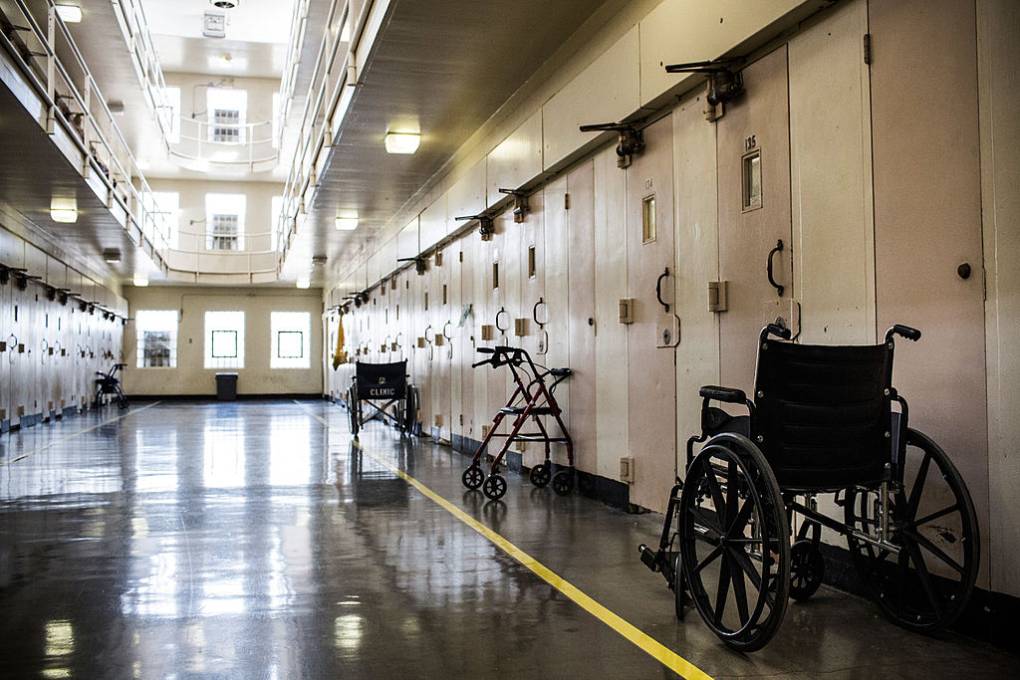
"caption": "Wheelchairs and walkers sit outside prison cells at California Medical Facility (CMF) on Dec. 17, 2013, in Vacaville. ",
"credit": "Andrew Burton/Getty Images",
"altTag": "Wheelchairs and walkers sit outside prison cells.",
"description": null,
"imgSizes": {
"medium": {
"file": "https://cdn.kqed.org/wp-content/uploads/sites/10/2024/06/GettyImages-457461807-800x534.jpg",
"width": 800,
"height": 534,
"mimeType": "image/jpeg"
},
"large": {
"file": "https://cdn.kqed.org/wp-content/uploads/sites/10/2024/06/GettyImages-457461807-1020x680.jpg",
"width": 1020,
"height": 680,
"mimeType": "image/jpeg"
},
"thumbnail": {
"file": "https://cdn.kqed.org/wp-content/uploads/sites/10/2024/06/GettyImages-457461807-160x107.jpg",
"width": 160,
"height": 107,
"mimeType": "image/jpeg"
},
"post-thumbnail": {
"file": "https://cdn.kqed.org/wp-content/uploads/sites/10/2024/06/GettyImages-457461807-672x372.jpg",
"width": 672,
"height": 372,
"mimeType": "image/jpeg"
},
"twentyfourteen-full-width": {
"file": "https://cdn.kqed.org/wp-content/uploads/sites/10/2024/06/GettyImages-457461807-1024x576.jpg",
"width": 1024,
"height": 576,
"mimeType": "image/jpeg"
},
"kqedFullSize": {
"file": "https://cdn.kqed.org/wp-content/uploads/sites/10/2024/06/GettyImages-457461807.jpg",
"width": 1024,
"height": 683
}
},
"isLoading": false,
"fetchFailed": false
},
"news_11991748": {
"type": "attachments",
"id": "news_11991748",
"meta": {
"index": "attachments_1716263798",
"site": "news",
"id": "11991748",
"found": true
},
"title": "051024_Newsom-Budget_FG_CM_15-1",
"publishDate": 1719266104,
"status": "inherit",
"parent": 11991747,
"modified": 1719269062,
"caption": "Gov. Gavin Newsom addresses the media during a press conference unveiling his revised 2024–25 budget proposal at the Capitol Annex Swing Space in Sacramento on May 10, 2024. ",
"credit": "Photo by Fred Greaves/CalMatters",
"altTag": "A white man wearing a business suit stands behind a podium with flags on both sides and a state logo above him while gesturing with his left hand.",
"description": null,
"imgSizes": {
"medium": {
"file": "https://cdn.kqed.org/wp-content/uploads/sites/10/2024/06/051024_Newsom-Budget_FG_CM_15-1-800x533.jpg",
"width": 800,
"height": 533,
"mimeType": "image/jpeg"
},
"large": {
"file": "https://cdn.kqed.org/wp-content/uploads/sites/10/2024/06/051024_Newsom-Budget_FG_CM_15-1-1020x680.jpg",
"width": 1020,
"height": 680,
"mimeType": "image/jpeg"
},
"thumbnail": {
"file": "https://cdn.kqed.org/wp-content/uploads/sites/10/2024/06/051024_Newsom-Budget_FG_CM_15-1-160x107.jpg",
"width": 160,
"height": 107,
"mimeType": "image/jpeg"
},
"1536x1536": {
"file": "https://cdn.kqed.org/wp-content/uploads/sites/10/2024/06/051024_Newsom-Budget_FG_CM_15-1-1536x1024.jpg",
"width": 1536,
"height": 1024,
"mimeType": "image/jpeg"
},
"post-thumbnail": {
"file": "https://cdn.kqed.org/wp-content/uploads/sites/10/2024/06/051024_Newsom-Budget_FG_CM_15-1-672x372.jpg",
"width": 672,
"height": 372,
"mimeType": "image/jpeg"
},
"twentyfourteen-full-width": {
"file": "https://cdn.kqed.org/wp-content/uploads/sites/10/2024/06/051024_Newsom-Budget_FG_CM_15-1-1038x576.jpg",
"width": 1038,
"height": 576,
"mimeType": "image/jpeg"
},
"full-width": {
"file": "https://cdn.kqed.org/wp-content/uploads/sites/10/2024/06/051024_Newsom-Budget_FG_CM_15-1-1920x1280.jpg",
"width": 1920,
"height": 1280,
"mimeType": "image/jpeg"
},
"kqedFullSize": {
"file": "https://cdn.kqed.org/wp-content/uploads/sites/10/2024/06/051024_Newsom-Budget_FG_CM_15-1.jpg",
"width": 2000,
"height": 1333
}
},
"isLoading": false,
"fetchFailed": false
},
"news_11983897": {
"type": "attachments",
"id": "news_11983897",
"meta": {
"index": "attachments_1716263798",
"site": "news",
"id": "11983897",
"found": true
},
"parent": 11983896,
"imgSizes": {
"twentyfourteen-full-width": {
"file": "https://cdn.kqed.org/wp-content/uploads/sites/10/2024/04/031524_Timothy-Jackson_AH_CM_02-1038x576.jpg",
"width": 1038,
"mimeType": "image/jpeg",
"height": 576
},
"thumbnail": {
"file": "https://cdn.kqed.org/wp-content/uploads/sites/10/2024/04/031524_Timothy-Jackson_AH_CM_02-160x107.jpg",
"width": 160,
"mimeType": "image/jpeg",
"height": 107
},
"post-thumbnail": {
"file": "https://cdn.kqed.org/wp-content/uploads/sites/10/2024/04/031524_Timothy-Jackson_AH_CM_02-672x372.jpg",
"width": 672,
"mimeType": "image/jpeg",
"height": 372
},
"kqedFullSize": {
"file": "https://cdn.kqed.org/wp-content/uploads/sites/10/2024/04/031524_Timothy-Jackson_AH_CM_02.jpg",
"width": 2000,
"height": 1333
},
"large": {
"file": "https://cdn.kqed.org/wp-content/uploads/sites/10/2024/04/031524_Timothy-Jackson_AH_CM_02-1020x680.jpg",
"width": 1020,
"mimeType": "image/jpeg",
"height": 680
},
"1536x1536": {
"file": "https://cdn.kqed.org/wp-content/uploads/sites/10/2024/04/031524_Timothy-Jackson_AH_CM_02-1536x1024.jpg",
"width": 1536,
"mimeType": "image/jpeg",
"height": 1024
},
"full-width": {
"file": "https://cdn.kqed.org/wp-content/uploads/sites/10/2024/04/031524_Timothy-Jackson_AH_CM_02-1920x1280.jpg",
"width": 1920,
"mimeType": "image/jpeg",
"height": 1280
},
"medium": {
"file": "https://cdn.kqed.org/wp-content/uploads/sites/10/2024/04/031524_Timothy-Jackson_AH_CM_02-800x533.jpg",
"width": 800,
"mimeType": "image/jpeg",
"height": 533
}
},
"publishDate": 1713980740,
"modified": 1713986795,
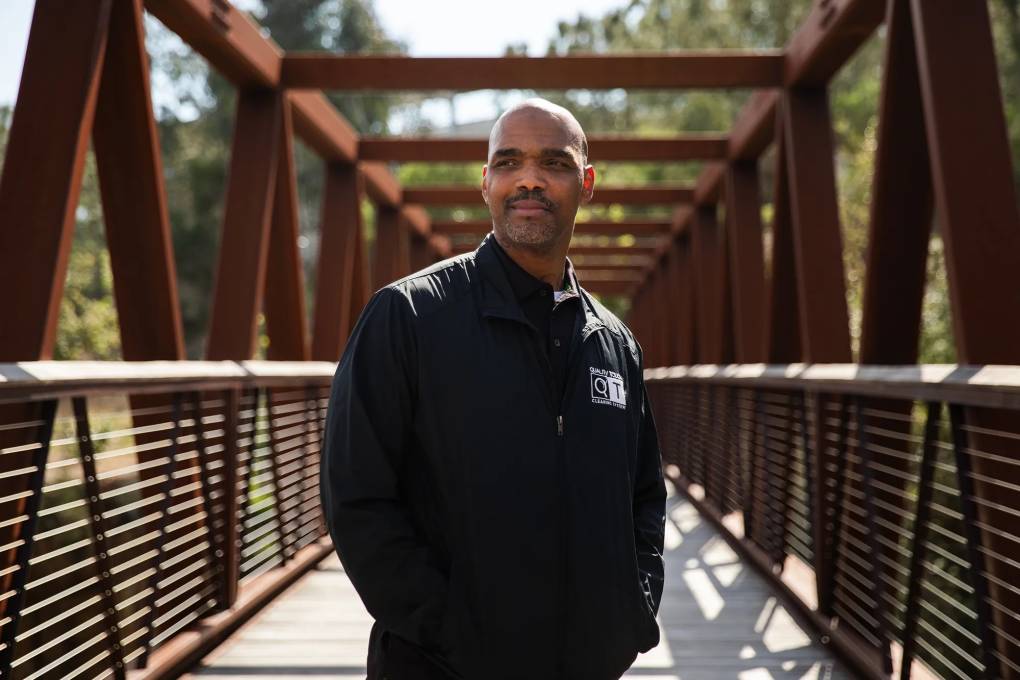
"caption": "Timothy Jackson at Torrey Pines Science Park in San Diego on March 15, 2024. Jackson started his own cleaning business after taking entrepreneurship training while incarcerated.",
"description": null,
"title": "031524_Timothy-Jackson_AH_CM_02",
"credit": "Adriana Heldiz/CalMatters",
"status": "inherit",
"altTag": "A Black man in a cleaning uniform stands on a bridge.",
"isLoading": false,
"fetchFailed": false
},
"news_11983401": {
"type": "attachments",
"id": "news_11983401",
"meta": {
"index": "attachments_1716263798",
"site": "news",
"id": "11983401",
"found": true
},
"parent": 11983396,
"imgSizes": {
"twentyfourteen-full-width": {
"file": "https://cdn.kqed.org/wp-content/uploads/sites/10/2024/04/GettyImages-1210676401-1024x576.jpg",
"width": 1024,
"mimeType": "image/jpeg",
"height": 576
},
"thumbnail": {
"file": "https://cdn.kqed.org/wp-content/uploads/sites/10/2024/04/GettyImages-1210676401-160x107.jpg",
"width": 160,
"mimeType": "image/jpeg",
"height": 107
},
"post-thumbnail": {
"file": "https://cdn.kqed.org/wp-content/uploads/sites/10/2024/04/GettyImages-1210676401-672x372.jpg",
"width": 672,
"mimeType": "image/jpeg",
"height": 372
},
"kqedFullSize": {
"file": "https://cdn.kqed.org/wp-content/uploads/sites/10/2024/04/GettyImages-1210676401.jpg",
"width": 1024,
"height": 683
},
"large": {
"file": "https://cdn.kqed.org/wp-content/uploads/sites/10/2024/04/GettyImages-1210676401-1020x680.jpg",
"width": 1020,
"mimeType": "image/jpeg",
"height": 680
},
"medium": {
"file": "https://cdn.kqed.org/wp-content/uploads/sites/10/2024/04/GettyImages-1210676401-800x534.jpg",
"width": 800,
"mimeType": "image/jpeg",
"height": 534
}
},
"publishDate": 1713480720,
"modified": 1713908390,
"caption": "Incarcerated women sew protective masks at Las Colinas Women's Detention Facility in Santee, San Diego County, on April 22, 2020. ",
"description": null,
"title": "US-HEALTH-VIRUS-PRISON",
"credit": "Sandy Huffaker/AFP via Getty Images",
"status": "inherit",
"altTag": "Incarcerated women in beige outfits work at sewing tables.",
"isLoading": false,
"fetchFailed": false
},
"news_11973407": {
"type": "attachments",
"id": "news_11973407",
"meta": {
"index": "attachments_1716263798",
"site": "news",
"id": "11973407",
"found": true
},
"parent": 11973393,
"imgSizes": {
"twentyfourteen-full-width": {
"file": "https://cdn.kqed.org/wp-content/uploads/sites/10/2024/01/258_KQED_NewFolsomPrisonSacramento_04132023-qut-1038x576.jpg",
"width": 1038,
"mimeType": "image/jpeg",
"height": 576
},
"thumbnail": {
"file": "https://cdn.kqed.org/wp-content/uploads/sites/10/2024/01/258_KQED_NewFolsomPrisonSacramento_04132023-qut-160x107.jpg",
"width": 160,
"mimeType": "image/jpeg",
"height": 107
},
"post-thumbnail": {
"file": "https://cdn.kqed.org/wp-content/uploads/sites/10/2024/01/258_KQED_NewFolsomPrisonSacramento_04132023-qut-672x372.jpg",
"width": 672,
"mimeType": "image/jpeg",
"height": 372
},
"kqedFullSize": {
"file": "https://cdn.kqed.org/wp-content/uploads/sites/10/2024/01/258_KQED_NewFolsomPrisonSacramento_04132023-qut.jpg",
"width": 1920,
"height": 1280
},
"large": {
"file": "https://cdn.kqed.org/wp-content/uploads/sites/10/2024/01/258_KQED_NewFolsomPrisonSacramento_04132023-qut-1020x680.jpg",
"width": 1020,
"mimeType": "image/jpeg",
"height": 680
},
"1536x1536": {
"file": "https://cdn.kqed.org/wp-content/uploads/sites/10/2024/01/258_KQED_NewFolsomPrisonSacramento_04132023-qut-1536x1024.jpg",
"width": 1536,
"mimeType": "image/jpeg",
"height": 1024
},
"medium": {
"file": "https://cdn.kqed.org/wp-content/uploads/sites/10/2024/01/258_KQED_NewFolsomPrisonSacramento_04132023-qut-800x533.jpg",
"width": 800,
"mimeType": "image/jpeg",
"height": 533
}
},
"publishDate": 1706037170,
"modified": 1706045920,
"caption": "The East Gate of Folsom Prison in Folsom, California, on April 13, 2023.",
"description": null,
"title": "The East Gate of Folsom Prison in Sacramento on April 13, 2023.",
"credit": "Beth LaBerge/KQED",
"status": "inherit",
"altTag": "The outside of Folsom Prison.",
"isLoading": false,
"fetchFailed": false
},
"news_11969362": {
"type": "attachments",
"id": "news_11969362",
"meta": {
"index": "attachments_1716263798",
"site": "news",
"id": "11969362",
"found": true
},
"parent": 11969359,
"imgSizes": {
"twentyfourteen-full-width": {
"file": "https://cdn.kqed.org/wp-content/uploads/sites/10/2023/12/230726-SAN-QUENTIN-MHN-12-qut-1038x576.jpg",
"width": 1038,
"mimeType": "image/jpeg",
"height": 576
},
"thumbnail": {
"file": "https://cdn.kqed.org/wp-content/uploads/sites/10/2023/12/230726-SAN-QUENTIN-MHN-12-qut-160x107.jpg",
"width": 160,
"mimeType": "image/jpeg",
"height": 107
},
"post-thumbnail": {
"file": "https://cdn.kqed.org/wp-content/uploads/sites/10/2023/12/230726-SAN-QUENTIN-MHN-12-qut-672x372.jpg",
"width": 672,
"mimeType": "image/jpeg",
"height": 372
},
"kqedFullSize": {
"file": "https://cdn.kqed.org/wp-content/uploads/sites/10/2023/12/230726-SAN-QUENTIN-MHN-12-qut.jpg",
"width": 1920,
"height": 1280
},
"large": {
"file": "https://cdn.kqed.org/wp-content/uploads/sites/10/2023/12/230726-SAN-QUENTIN-MHN-12-qut-1020x680.jpg",
"width": 1020,
"mimeType": "image/jpeg",
"height": 680
},
"1536x1536": {
"file": "https://cdn.kqed.org/wp-content/uploads/sites/10/2023/12/230726-SAN-QUENTIN-MHN-12-qut-1536x1024.jpg",
"width": 1536,
"mimeType": "image/jpeg",
"height": 1024
},
"medium": {
"file": "https://cdn.kqed.org/wp-content/uploads/sites/10/2023/12/230726-SAN-QUENTIN-MHN-12-qut-800x533.jpg",
"width": 800,
"mimeType": "image/jpeg",
"height": 533
}
},
"publishDate": 1701998597,
"modified": 1702060032,
"caption": "Incarcerated people walk around a track at San Quentin State Prison in Marin County on July 26, 2023. ",
"description": null,
"title": "230726-SAN QUENTIN-MHN-12-qut",
"credit": "Martin do Nascimento",
"status": "inherit",
"altTag": "Men in blue uniforms walk around a large asphalt yard behind a locked fence.",
"isLoading": false,
"fetchFailed": false
},
"news_11968489": {
"type": "attachments",
"id": "news_11968489",
"meta": {
"index": "attachments_1716263798",
"site": "news",
"id": "11968489",
"found": true
},
"parent": 11968486,
"imgSizes": {
"twentyfourteen-full-width": {
"file": "https://ww2.kqed.org/app/uploads/sites/10/2023/11/TheBay_iTunesTile_01-1020x1020-1-big-1020x576.jpeg",
"width": 1020,
"mimeType": "image/jpeg",
"height": 576
},
"thumbnail": {
"file": "https://ww2.kqed.org/app/uploads/sites/10/2023/11/TheBay_iTunesTile_01-1020x1020-1-big-160x160.jpeg",
"width": 160,
"mimeType": "image/jpeg",
"height": 160
},
"post-thumbnail": {
"file": "https://ww2.kqed.org/app/uploads/sites/10/2023/11/TheBay_iTunesTile_01-1020x1020-1-big-672x372.jpeg",
"width": 672,
"mimeType": "image/jpeg",
"height": 372
},
"kqedFullSize": {
"file": "https://ww2.kqed.org/app/uploads/sites/10/2023/11/TheBay_iTunesTile_01-1020x1020-1-big.jpeg",
"width": 1020,
"height": 1020
},
"medium": {
"file": "https://ww2.kqed.org/app/uploads/sites/10/2023/11/TheBay_iTunesTile_01-1020x1020-1-big-800x800.jpeg",
"width": 800,
"mimeType": "image/jpeg",
"height": 800
}
},
"publishDate": 1701208049,
"modified": 1701208065,
"caption": null,
"description": null,
"title": "The-Bay-Tile",
"credit": null,
"status": "inherit",
"altTag": null,
"isLoading": false,
"fetchFailed": false
},
"news_11967747": {
"type": "attachments",
"id": "news_11967747",
"meta": {
"index": "attachments_1716263798",
"site": "news",
"id": "11967747",
"found": true
},
"parent": 11967728,
"imgSizes": {
"twentyfourteen-full-width": {
"file": "https://ww2.kqed.org/app/uploads/sites/10/2023/11/GettyImages-1210676459-1024x576.jpg",
"width": 1024,
"mimeType": "image/jpeg",
"height": 576
},
"thumbnail": {
"file": "https://ww2.kqed.org/app/uploads/sites/10/2023/11/GettyImages-1210676459-160x106.jpg",
"width": 160,
"mimeType": "image/jpeg",
"height": 106
},
"post-thumbnail": {
"file": "https://ww2.kqed.org/app/uploads/sites/10/2023/11/GettyImages-1210676459-672x372.jpg",
"width": 672,
"mimeType": "image/jpeg",
"height": 372
},
"kqedFullSize": {
"file": "https://ww2.kqed.org/app/uploads/sites/10/2023/11/GettyImages-1210676459.jpg",
"width": 1024,
"height": 680
},
"large": {
"file": "https://ww2.kqed.org/app/uploads/sites/10/2023/11/GettyImages-1210676459-1020x677.jpg",
"width": 1020,
"mimeType": "image/jpeg",
"height": 677
},
"medium": {
"file": "https://ww2.kqed.org/app/uploads/sites/10/2023/11/GettyImages-1210676459-800x531.jpg",
"width": 800,
"mimeType": "image/jpeg",
"height": 531
}
},
"publishDate": 1700182063,
"modified": 1700253743,
"caption": "Incarcerated women work in the laundry room at Las Colinas Women's Detention Facility in Santee, California, on April 22, 2020.",
"description": null,
"title": "US-HEALTH-VIRUS-PRISON",
"credit": "Sandy Huffaker/AFP via Getty Images",
"status": "inherit",
"altTag": "A group of female workers, in prison uniforms, fold sheets in an industrial laundry facility.",
"isLoading": false,
"fetchFailed": false
},
"news_11964041": {
"type": "attachments",
"id": "news_11964041",
"meta": {
"index": "attachments_1716263798",
"site": "news",
"id": "11964041",
"found": true
},
"parent": 0,
"imgSizes": {
"twentyfourteen-full-width": {
"file": "https://ww2.kqed.org/app/uploads/sites/10/2023/10/IMG_0434-1038x576.jpg",
"width": 1038,
"mimeType": "image/jpeg",
"height": 576
},
"thumbnail": {
"file": "https://ww2.kqed.org/app/uploads/sites/10/2023/10/IMG_0434-160x103.jpg",
"width": 160,
"mimeType": "image/jpeg",
"height": 103
},
"post-thumbnail": {
"file": "https://ww2.kqed.org/app/uploads/sites/10/2023/10/IMG_0434-672x372.jpg",
"width": 672,
"mimeType": "image/jpeg",
"height": 372
},
"kqedFullSize": {
"file": "https://ww2.kqed.org/app/uploads/sites/10/2023/10/IMG_0434.jpg",
"width": 1920,
"height": 1240
},
"large": {
"file": "https://ww2.kqed.org/app/uploads/sites/10/2023/10/IMG_0434-1020x659.jpg",
"width": 1020,
"mimeType": "image/jpeg",
"height": 659
},
"1536x1536": {
"file": "https://ww2.kqed.org/app/uploads/sites/10/2023/10/IMG_0434-1536x992.jpg",
"width": 1536,
"mimeType": "image/jpeg",
"height": 992
},
"medium": {
"file": "https://ww2.kqed.org/app/uploads/sites/10/2023/10/IMG_0434-800x517.jpg",
"width": 800,
"mimeType": "image/jpeg",
"height": 517
}
},
"publishDate": 1696981622,
"modified": 1697050132,
"caption": "A recent state law aims to make prison safer for transgender people. But for many trans women it hasn’t worked out that way.",
"description": null,
"title": "IMG_0434",
"credit": "Anna Vignet/KQED",
"status": "inherit",
"altTag": "An illustration of a Black woman with her hair tied back in a bun. It's a side profile shot of her upper torso and face. She is trapped within enclosing walls and shadows surround her. Her face is solemn.",
"isLoading": false,
"fetchFailed": false
},
"news_11957688": {
"type": "attachments",
"id": "news_11957688",
"meta": {
"index": "attachments_1716263798",
"site": "news",
"id": "11957688",
"found": true
},
"parent": 11957664,
"imgSizes": {
"twentyfourteen-full-width": {
"file": "https://ww2.kqed.org/app/uploads/sites/10/2023/08/110822-KernValleyPrison-LV_CM_04-1038x576.jpg",
"width": 1038,
"mimeType": "image/jpeg",
"height": 576
},
"thumbnail": {
"file": "https://ww2.kqed.org/app/uploads/sites/10/2023/08/110822-KernValleyPrison-LV_CM_04-160x107.jpg",
"width": 160,
"mimeType": "image/jpeg",
"height": 107
},
"post-thumbnail": {
"file": "https://ww2.kqed.org/app/uploads/sites/10/2023/08/110822-KernValleyPrison-LV_CM_04-672x372.jpg",
"width": 672,
"mimeType": "image/jpeg",
"height": 372
},
"kqedFullSize": {
"file": "https://ww2.kqed.org/app/uploads/sites/10/2023/08/110822-KernValleyPrison-LV_CM_04.jpg",
"width": 2000,
"height": 1333
},
"large": {
"file": "https://ww2.kqed.org/app/uploads/sites/10/2023/08/110822-KernValleyPrison-LV_CM_04-1020x680.jpg",
"width": 1020,
"mimeType": "image/jpeg",
"height": 680
},
"1536x1536": {
"file": "https://ww2.kqed.org/app/uploads/sites/10/2023/08/110822-KernValleyPrison-LV_CM_04-1536x1024.jpg",
"width": 1536,
"mimeType": "image/jpeg",
"height": 1024
},
"full-width": {
"file": "https://ww2.kqed.org/app/uploads/sites/10/2023/08/110822-KernValleyPrison-LV_CM_04-1920x1280.jpg",
"width": 1920,
"mimeType": "image/jpeg",
"height": 1280
},
"medium": {
"file": "https://ww2.kqed.org/app/uploads/sites/10/2023/08/110822-KernValleyPrison-LV_CM_04-800x533.jpg",
"width": 800,
"mimeType": "image/jpeg",
"height": 533
}
},
"publishDate": 1691533575,
"modified": 1691533662,
"caption": "Guard towers outside of Kern Valley State Prison on Nov. 15, 2022. ",
"description": null,
"title": "110822-KernValleyPrison-LV_CM_04",
"credit": "Larry Valenzuela, CalMatters/CatchLight Local",
"status": "inherit",
"altTag": "A white tower and building in the background surrounded by a fence.",
"isLoading": false,
"fetchFailed": false
},
"news_11954407": {
"type": "attachments",
"id": "news_11954407",
"meta": {
"index": "attachments_1716263798",
"site": "news",
"id": "11954407",
"found": true
},
"parent": 11954394,
"imgSizes": {
"twentyfourteen-full-width": {
"file": "https://ww2.kqed.org/app/uploads/sites/10/2023/06/AP23175562153322-1038x576.jpg",
"width": 1038,
"mimeType": "image/jpeg",
"height": 576
},
"thumbnail": {
"file": "https://ww2.kqed.org/app/uploads/sites/10/2023/06/AP23175562153322-160x107.jpg",
"width": 160,
"mimeType": "image/jpeg",
"height": 107
},
"post-thumbnail": {
"file": "https://ww2.kqed.org/app/uploads/sites/10/2023/06/AP23175562153322-672x372.jpg",
"width": 672,
"mimeType": "image/jpeg",
"height": 372
},
"kqedFullSize": {
"file": "https://ww2.kqed.org/app/uploads/sites/10/2023/06/AP23175562153322-scaled.jpg",
"width": 2560,
"height": 1707
},
"2048x2048": {
"file": "https://ww2.kqed.org/app/uploads/sites/10/2023/06/AP23175562153322-2048x1365.jpg",
"width": 2048,
"mimeType": "image/jpeg",
"height": 1365
},
"large": {
"file": "https://ww2.kqed.org/app/uploads/sites/10/2023/06/AP23175562153322-1020x680.jpg",
"width": 1020,
"mimeType": "image/jpeg",
"height": 680
},
"1536x1536": {
"file": "https://ww2.kqed.org/app/uploads/sites/10/2023/06/AP23175562153322-1536x1024.jpg",
"width": 1536,
"mimeType": "image/jpeg",
"height": 1024
},
"full-width": {
"file": "https://ww2.kqed.org/app/uploads/sites/10/2023/06/AP23175562153322-1920x1280.jpg",
"width": 1920,
"mimeType": "image/jpeg",
"height": 1280
},
"medium": {
"file": "https://ww2.kqed.org/app/uploads/sites/10/2023/06/AP23175562153322-800x533.jpg",
"width": 800,
"mimeType": "image/jpeg",
"height": 533
}
},
"publishDate": 1687985678,
"modified": 1687985780,
"caption": "A prisoner applauds as Lambert Pabriaga, right, and Eric Pomatto, center, walk into their graduation ceremony at Folsom State Prison on Thursday, May 25, 2023. Pabriaga and Pomatto earned their bachelor's degrees in communications in prison through the Transforming Outcomes Project at Sacramento State University.",
"description": null,
"title": "Left Behind Bars Pell Grants",
"credit": "Jae C. Hong/AP",
"status": "inherit",
"altTag": "Three young men in black graduation gowns walk through a prison courtyard, as a man in a blue gown looks on.",
"isLoading": false,
"fetchFailed": false
},
"news_11892562": {
"type": "attachments",
"id": "news_11892562",
"meta": {
"index": "attachments_1716263798",
"site": "news",
"id": "11892562",
"found": true
},
"parent": 11892561,
"imgSizes": {
"twentyfourteen-full-width": {
"file": "https://ww2.kqed.org/app/uploads/sites/10/2021/10/RS44233_GettyImages-1253314486-qut-1038x576.jpg",
"width": 1038,
"mimeType": "image/jpeg",
"height": 576
},
"thumbnail": {
"file": "https://ww2.kqed.org/app/uploads/sites/10/2021/10/RS44233_GettyImages-1253314486-qut-160x104.jpg",
"width": 160,
"mimeType": "image/jpeg",
"height": 104
},
"post-thumbnail": {
"file": "https://ww2.kqed.org/app/uploads/sites/10/2021/10/RS44233_GettyImages-1253314486-qut-672x372.jpg",
"width": 672,
"mimeType": "image/jpeg",
"height": 372
},
"kqedFullSize": {
"file": "https://ww2.kqed.org/app/uploads/sites/10/2021/10/RS44233_GettyImages-1253314486-qut.jpg",
"width": 1920,
"height": 1250
},
"large": {
"file": "https://ww2.kqed.org/app/uploads/sites/10/2021/10/RS44233_GettyImages-1253314486-qut-1020x664.jpg",
"width": 1020,
"mimeType": "image/jpeg",
"height": 664
},
"1536x1536": {
"file": "https://ww2.kqed.org/app/uploads/sites/10/2021/10/RS44233_GettyImages-1253314486-qut-1536x1000.jpg",
"width": 1536,
"mimeType": "image/jpeg",
"height": 1000
},
"medium": {
"file": "https://ww2.kqed.org/app/uploads/sites/10/2021/10/RS44233_GettyImages-1253314486-qut-800x521.jpg",
"width": 800,
"mimeType": "image/jpeg",
"height": 521
}
},
"publishDate": 1634398751,
"modified": 1679013142,
"caption": "A California Department of Corrections and Rehabilitation officer wears a protective mask as he stands guard at the front gate of San Quentin State Prison on June 29, 2020, in Marin County.",
"description": null,
"title": null,
"credit": "Justin Sullivan/Getty Images",
"status": "inherit",
"altTag": "A man in uniform stands next to a sign that says \"California State Prison, San Quentin,\" with the castle-like facade of the prison behind him.",
"isLoading": false,
"fetchFailed": false
}
},
"audioPlayerReducer": {
"postId": "stream_live",
"isPaused": true,
"isPlaying": false,
"pfsActive": false,
"pledgeModalIsOpen": true,
"playerDrawerIsOpen": false,
"liveAudioPlayStartedAt": 0,
"liveAudioPlayContext": ""
},
"authorsReducer": {
"byline_news_11991812": {
"type": "authors",
"id": "byline_news_11991812",
"meta": {
"override": true
},
"slug": "byline_news_11991812",
"name": "Shaanth Nanguneri, CalMatters",
"isLoading": false
},
"byline_news_11991747": {
"type": "authors",
"id": "byline_news_11991747",
"meta": {
"override": true
},
"slug": "byline_news_11991747",
"name": "Alexei Koseff, CalMatters",
"isLoading": false
},
"byline_news_11983896": {
"type": "authors",
"id": "byline_news_11983896",
"meta": {
"override": true
},
"slug": "byline_news_11983896",
"name": "\u003ca href=\"https://calmatters.org/author/levi-sumagaysay/\">Levi Sumagaysay\u003c/a>",
"isLoading": false
},
"byline_news_11973393": {
"type": "authors",
"id": "byline_news_11973393",
"meta": {
"override": true
},
"slug": "byline_news_11973393",
"name": "Kristen Hwang and Nigel Duara",
"isLoading": false
},
"byline_news_11969359": {
"type": "authors",
"id": "byline_news_11969359",
"meta": {
"override": true
},
"slug": "byline_news_11969359",
"name": "Christopher Weber\u003cbr>Associated Press",
"isLoading": false
},
"byline_news_11964027": {
"type": "authors",
"id": "byline_news_11964027",
"meta": {
"override": true
},
"slug": "byline_news_11964027",
"name": "\u003ca href=\"https://www.novemberinmysoul.com/about/#62b093f21c801819ce513743\">Lee Romney and Jenny Johnson\u003c/a>",
"isLoading": false
},
"byline_news_11957664": {
"type": "authors",
"id": "byline_news_11957664",
"meta": {
"override": true
},
"slug": "byline_news_11957664",
"name": "\u003ca href=\"https://calmatters.org/author/anabelsosa/\">Anabel Sosa\u003c/a>",
"isLoading": false
},
"byline_news_11954394": {
"type": "authors",
"id": "byline_news_11954394",
"meta": {
"override": true
},
"slug": "byline_news_11954394",
"name": "Aaron Morrison\u003cbr>The Associated Press",
"isLoading": false
},
"mlagos": {
"type": "authors",
"id": "3239",
"meta": {
"index": "authors_1716337520",
"id": "3239",
"found": true
},
"name": "Marisa Lagos",
"firstName": "Marisa",
"lastName": "Lagos",
"slug": "mlagos",
"email": "mlagos@kqed.org",
"display_author_email": false,
"staff_mastheads": [
"news"
],
"title": "KQED Contributor",
"bio": "Marisa Lagos is a correspondent for KQED’s California Politics and Government Desk and co-hosts the award-winning show and podcast, Political Breakdown. At KQED, Lagos also conducts reporting, analysis and investigations into state, local and national politics for radio, TV, online and onstage. In 2022, she and co-host, Scott Shafer, moderated the only gubernatorial debate in California. In 2020, the \u003ci>Washington Post\u003c/i> named her one of the top political journalists in California; she was nominated for a Peabody and won several other awards for her work investigating the 2017 California wildfires. She has worked at the \u003ci>San Francisco Chronicle\u003c/i>, \u003ci>San Francisco Examiner\u003c/i> and \u003ci>Los Angeles Times\u003c/i>. A UC Santa Barbara graduate, she lives in San Francisco with her two sons and husband.",
"avatar": "https://secure.gravatar.com/avatar/a261a0d3696fc066871ef96b85b5e7d2?s=600&d=blank&r=g",
"twitter": "@mlagos",
"facebook": null,
"instagram": null,
"linkedin": null,
"sites": [
{
"site": "arts",
"roles": [
"author"
]
},
{
"site": "news",
"roles": [
"editor"
]
},
{
"site": "science",
"roles": [
"editor"
]
},
{
"site": "forum",
"roles": [
"author"
]
},
{
"site": "liveblog",
"roles": [
"author"
]
}
],
"headData": {
"title": "Marisa Lagos | KQED",
"description": "KQED Contributor",
"ogImgSrc": "https://secure.gravatar.com/avatar/a261a0d3696fc066871ef96b85b5e7d2?s=600&d=blank&r=g",
"twImgSrc": "https://secure.gravatar.com/avatar/a261a0d3696fc066871ef96b85b5e7d2?s=600&d=blank&r=g"
},
"isLoading": false,
"link": "/author/mlagos"
},
"ecruzguevarra": {
"type": "authors",
"id": "8654",
"meta": {
"index": "authors_1716337520",
"id": "8654",
"found": true
},
"name": "Ericka Cruz Guevarra",
"firstName": "Ericka",
"lastName": "Cruz Guevarra",
"slug": "ecruzguevarra",
"email": "ecruzguevarra@kqed.org",
"display_author_email": true,
"staff_mastheads": [
"news"
],
"title": "Producer, The Bay Podcast",
"bio": "Ericka Cruz Guevarra is host of \u003ca href=\"https://www.kqed.org/podcasts/thebay\">\u003cem>The Bay\u003c/em>\u003c/a> podcast at KQED. Before host, she was the show’s producer. Her work in that capacity includes a three-part reported series on policing in Vallejo, which won a 2020 excellence in journalism award from the Society of Professional Journalists. Ericka has worked as a breaking news reporter at Oregon Public Broadcasting, helped produce the Code Switch podcast, and was KQED’s inaugural Raul Ramirez Diversity Fund intern. She’s also an alumna of NPR’s Next Generation Radio program. Send her an email if you have strong feelings about whether Fairfield and Suisun City are the Bay. Ericka is represented by SAG-AFTRA.",
"avatar": "https://secure.gravatar.com/avatar/accefc1de4bafc7e234b69bcb9b6f6536c130fd84709bc3069ef11a78787e1bb?s=600&d=blank&r=g",
"twitter": "NotoriousECG",
"bluesky": null,
"facebook": null,
"instagram": null,
"linkedin": null,
"sites": [
{
"site": "arts",
"roles": [
"subscriber"
]
},
{
"site": "news",
"roles": [
"editor",
"manage_categories"
]
},
{
"site": "futureofyou",
"roles": [
"subscriber"
]
},
{
"site": "stateofhealth",
"roles": [
"subscriber"
]
},
{
"site": "science",
"roles": [
"editor"
]
},
{
"site": "forum",
"roles": [
"subscriber"
]
}
],
"headData": {
"title": "Ericka Cruz Guevarra | KQED",
"description": "Producer, The Bay Podcast",
"ogImgSrc": "https://secure.gravatar.com/avatar/accefc1de4bafc7e234b69bcb9b6f6536c130fd84709bc3069ef11a78787e1bb?s=600&d=blank&r=g",
"twImgSrc": "https://secure.gravatar.com/avatar/accefc1de4bafc7e234b69bcb9b6f6536c130fd84709bc3069ef11a78787e1bb?s=600&d=blank&r=g"
},
"isLoading": false,
"link": "/author/ecruzguevarra"
},
"fjhabvala": {
"type": "authors",
"id": "8659",
"meta": {
"index": "authors_1716337520",
"id": "8659",
"found": true
},
"name": "Farida Jhabvala Romero",
"firstName": "Farida",
"lastName": "Jhabvala Romero",
"slug": "fjhabvala",
"email": "fjhabvala@kqed.org",
"display_author_email": true,
"staff_mastheads": [
"news"
],
"title": "KQED Contributor",
"bio": "Farida Jhabvala Romero is a Labor Correspondent for KQED. She previously covered immigration. Farida was \u003ca href=\"https://www.ccnma.org/2022-most-influential-latina-journalists\">named\u003c/a> one of the 10 Most Influential Latina Journalists in California in 2022 by the California Chicano News Media Association. Her work has won awards from the Society of Professional Journalists (Northern California), as well as a national and regional Edward M. Murrow Award for the collaborative reporting projects “Dangerous Air” and “Graying California.” Before joining KQED, Farida worked as a producer at Radio Bilingüe, a national public radio network. Farida earned her master’s degree in journalism from Stanford University.",
"avatar": "https://secure.gravatar.com/avatar/f9f022d4e2609741874222a1e9d41f48fea74011aa7c615eef91d9a50c944ebe?s=600&d=blank&r=g",
"twitter": "FaridaJhabvala",
"bluesky": null,
"facebook": null,
"instagram": null,
"linkedin": "https://www.linkedin.com/in/faridajhabvala/",
"sites": [
{
"site": "news",
"roles": [
"editor"
]
},
{
"site": "stateofhealth",
"roles": [
"author"
]
},
{
"site": "liveblog",
"roles": [
"author"
]
}
],
"headData": {
"title": "Farida Jhabvala Romero | KQED",
"description": "KQED Contributor",
"ogImgSrc": "https://secure.gravatar.com/avatar/f9f022d4e2609741874222a1e9d41f48fea74011aa7c615eef91d9a50c944ebe?s=600&d=blank&r=g",
"twImgSrc": "https://secure.gravatar.com/avatar/f9f022d4e2609741874222a1e9d41f48fea74011aa7c615eef91d9a50c944ebe?s=600&d=blank&r=g"
},
"isLoading": false,
"link": "/author/fjhabvala"
},
"amontecillo": {
"type": "authors",
"id": "11649",
"meta": {
"index": "authors_1716337520",
"id": "11649",
"found": true
},
"name": "Alan Montecillo",
"firstName": "Alan",
"lastName": "Montecillo",
"slug": "amontecillo",
"email": "amontecillo@kqed.org",
"display_author_email": false,
"staff_mastheads": [
"news"
],
"title": "KQED Contributor",
"bio": "Alan Montecillo is the senior editor of \u003cem>\u003ca href=\"http://kqed.org/thebay\">The Bay\u003c/a>, \u003c/em> KQED's local news podcast. Before moving to the Bay Area, he worked as a senior talk show producer for WILL in Champaign-Urbana, Illinois and at Oregon Public Broadcasting in Portland, Oregon. He has won journalism awards from the Society of Professional Journalists Northern California, the Public Media Journalists Association, The Signal Awards, and has also received a regional Edward R. Murrow award. Alan is a Filipino American from Hong Kong and a graduate of Reed College.",
"avatar": "https://secure.gravatar.com/avatar/268f53a2066899ea9efdd8a5900218b17c822d9862cbc9326cccec53ef41d349?s=600&d=blank&r=g",
"twitter": "alanmontecillo",
"bluesky": null,
"facebook": null,
"instagram": null,
"linkedin": null,
"sites": [
{
"site": "",
"roles": [
"editor"
]
},
{
"site": "news",
"roles": [
"editor",
"manage_categories"
]
}
],
"headData": {
"title": "Alan Montecillo | KQED",
"description": "KQED Contributor",
"ogImgSrc": "https://secure.gravatar.com/avatar/268f53a2066899ea9efdd8a5900218b17c822d9862cbc9326cccec53ef41d349?s=600&d=blank&r=g",
"twImgSrc": "https://secure.gravatar.com/avatar/268f53a2066899ea9efdd8a5900218b17c822d9862cbc9326cccec53ef41d349?s=600&d=blank&r=g"
},
"isLoading": false,
"link": "/author/amontecillo"
},
"mesquinca": {
"type": "authors",
"id": "11802",
"meta": {
"index": "authors_1716337520",
"id": "11802",
"found": true
},
"name": "Maria Esquinca",
"firstName": "Maria",
"lastName": "Esquinca",
"slug": "mesquinca",
"email": "mesquinca@kqed.org",
"display_author_email": false,
"staff_mastheads": [],
"title": "Producer, The Bay",
"bio": "María Esquinca is a producer of The Bay. Before that, she was a New York Women’s Foundation IGNITE Fellow at Latino USA. She worked at Radio Bilingue where she covered the San Joaquin Valley. Maria has interned at WLRN, News 21, The New York Times Student Journalism Institute and at Crain’s Detroit Business as a Dow Jones News Fund Business Reporting Intern. She is an MFA graduate from the University of Miami. In 2017, she graduated from the Walter Cronkite School of Journalism and Mass Communication with a Master of Mass Communication. A fronteriza, she was born in Ciudad Juárez, Chihuahua, Mexico and grew up in El Paso, Texas.",
"avatar": "https://secure.gravatar.com/avatar/77cedba18aae91da775038ba06dcd8d0?s=600&d=blank&r=g",
"twitter": "@m_esquinca",
"facebook": null,
"instagram": null,
"linkedin": null,
"sites": [
{
"site": "news",
"roles": []
}
],
"headData": {
"title": "Maria Esquinca | KQED",
"description": "Producer, The Bay",
"ogImgSrc": "https://secure.gravatar.com/avatar/77cedba18aae91da775038ba06dcd8d0?s=600&d=blank&r=g",
"twImgSrc": "https://secure.gravatar.com/avatar/77cedba18aae91da775038ba06dcd8d0?s=600&d=blank&r=g"
},
"isLoading": false,
"link": "/author/mesquinca"
}
},
"pagesReducer": {
"news_tag_california-prisons": {
"type": "terms",
"id": "news_616",
"meta": {
"index": "terms_1716263798",
"site": "news",
"id": "616",
"score": 10.407496
},
"featImg": null,
"name": "California prisons",
"description": null,
"taxonomy": "tag",
"headData": {
"twImgId": null,
"twTitle": null,
"ogTitle": null,
"ogImgId": null,
"twDescription": null,
"description": null,
"title": "California prisons Archives | KQED News",
"ogDescription": null
},
"ttid": 625,
"slug": "california-prisons",
"isLoading": false,
"title": "California prisons",
"pageMeta": {
"site": "news",
"WpPageTemplate": "page-topic-editorial",
"currentPage": 4
},
"blocks": [
{
"blockName": "kqed/post-list",
"attrs": {
"layout": "cardArticle2",
"query": "posts/news?tag=california-prisons",
"seeMore": false,
"paginated": true,
"page": 4
}
},
{
"blockName": "kqed/ad"
}
]
}
},
"pfsSessionReducer": {},
"postsReducer": {
"stream_live": {
"type": "live",
"id": "stream_live",
"audioUrl": "https://hls.kqed.org/hls/kqed_app/playlist.m3u8",
"title": "Live Stream",
"excerpt": "Live Stream information currently unavailable.",
"link": "/radio",
"featImg": "",
"label": {
"name": "KQED Live",
"link": "/"
}
},
"stream_kqedNewscast": {
"type": "posts",
"id": "stream_kqedNewscast",
"audioUrl": "https://www.kqed.org/.stream/anon/radio/RDnews/newscast.mp3?_=1",
"title": "KQED Newscast",
"featImg": "",
"label": {
"name": "88.5 FM",
"link": "/"
}
},
"news_11991812": {
"type": "posts",
"id": "news_11991812",
"meta": {
"index": "posts_1716263798",
"site": "news",
"id": "11991812",
"score": null,
"sort": [
1719342026000
]
},
"guestAuthors": [],
"slug": "bay-area-prison-jobs-for-disabled-workers-in-jeopardy-amid-union-dispute",
"title": "Bay Area Prison Jobs for Disabled Workers in Jeopardy Amid Union Dispute",
"publishDate": 1719342026,
"format": "standard",
"headTitle": "Bay Area Prison Jobs for Disabled Workers in Jeopardy Amid Union Dispute | KQED",
"labelTerm": {
"term": 18481,
"site": "news"
},
"content": "\u003cp>A long-simmering dispute between California’s largest state employee union and a nonprofit organization that hires disabled workers is coming to a head this summer, and dozens of people could lose their jobs.\u003c/p>\n\u003cp>\u003ca href=\"https://www.seiu1000.org/\" target=\"_blank\" rel=\"noreferrer noopener\">SEIU Local 1000\u003c/a>, for several years, has been trying to push the state’s correctional health care system to terminate its contracts with nonprofit PRIDE Industries at two state prisons where it employs dozens of disabled workers and others who are recovering from addictions.\u003c/p>\n\u003cp>The union contends that those contracts violate protections against outsourcing in civil service and that the state has not made a good-faith effort to fill the positions with state employees.\u003c/p>\n\u003cp>Time is running out on PRIDE’s contract for the California Medical Facility in Vacaville and its 74 custodial workers. Last year, the state agency that enforces contracts and personnel decisions found that the prison system had not given a compelling reason to outsource the jobs to PRIDE, setting in motion the dissolution of the nonprofit’s work at that site.\u003c/p>\n\u003cp>“The evidence submitted by the parties show that the contracted work is essentially janitorial and custodial services in a medical environment that are and can be capably performed by civil service custodians,” wrote Suzanne Ambrose, executive officer of the board, in the May 2023 ruling. She gave the facility six months to terminate the contract.\u003c/p>\n\u003cp>[ad fullwidth]\u003c/p>\n\u003cp>That deadline has since been extended twice until November 2024. As it approaches, many PRIDE workers will have to compete for about 45 positions to replace the PRIDE workers next year. The prisons also could hire inmate workers, a plan that PRIDE argues won’t guarantee the facility remains at necessary hygienic standards.\u003c/p>\n\u003cp>PRIDE, for nine years, has held onto its contracts providing janitorial services at state prisons in Stockton and Vacaville despite pressure from Local 1000. It won the work through \u003ca href=\"https://cchcs.ca.gov/\" target=\"_blank\" rel=\"noreferrer noopener\">California Correctional Health Care Services\u003c/a>, which oversees prison health care. The agency argued it could not fill custodial jobs on its own, and it relied on PRIDE to do the work.\u003c/p>\n\u003cp>“The reason our contract is being challenged by the union is to put pressure on (state prisons) to hire and retain civil service workers,” PRIDE spokeswoman Kat Maudru wrote in a statement to CalMatters. Prison officials “should first be required to focus on maintaining services for the positions that are already allocated to civil service, contracted disabled workforce should not be forced into losing their jobs.”\u003c/p>\n\u003cp>The nonprofit brought workers to the Legislature in 2018, when they shared their success stories and helped persuade lawmakers from both parties to allow the company to continue doing business. That secured them a reprieve when the \u003ca href=\"https://www.sacbee.com/news/politics-government/the-state-worker/article213059444.html\" target=\"_blank\" rel=\"noreferrer noopener\">Stockton contract was on the line\u003c/a>.\u003c/p>\n\u003cp>The company repeated that strategy earlier this year in an appeal to lawmakers for the Vacaville contract.\u003c/p>\n\u003ch2>California prison jobs changed lives\u003c/h2>\n\u003cp>\u003ca href=\"https://www.prideindustries.com/our-stories/services-for-people-with-disabilities-launch-a-leader\" target=\"_blank\" rel=\"noreferrer noopener\">Chelsea Davis\u003c/a>, a PRIDE operations manager, told lawmakers she struggled for years with her mental health — and she never expected to find a steady job. That changed when she joined PRIDE in an entry-level position at the Stockton facility that allowed her to keep her doctor’s appointments and treatment plan for addiction.\u003c/p>\n\u003cp>“They trained me, they guided me, they gave me hope,” Davis, who’s coming up on her fifth year with PRIDE, told a budget subcommittee.\u003c/p>\n\u003cp>[aside postID=\"news_11794850,news_11986871,news_11987204\" label=\"Related Stories\"]Stories like Davis’ appeared to resonate with two Assembly members, Democrat \u003ca href=\"https://digitaldemocracy.calmatters.org/legislators/james-ramos-149649\" target=\"_blank\" rel=\"noreferrer noopener\">James Ramos \u003c/a>of San Bernardino and Republican \u003ca href=\"https://digitaldemocracy.calmatters.org/legislators/tom-lackey-10\" target=\"_blank\" rel=\"noreferrer noopener\">Tom Lackey\u003c/a> of Palmdale, who grilled state prison officials on their handling of the dispute. They questioned why PRIDE employees could not be directly hired as civil servants.\u003c/p>\n\u003cp>The two lawmakers later wrote to the State Personnel Board on April 26 in an attempt to protect the PRIDE workers, resulting in the November 2024 extension. The lawmakers asked for an even longer extension.\u003c/p>\n\u003cp>“PRIDE employees have demonstrated their ability to provide a high level of service to support a critical need for the state,” they wrote to Ambrose, asking for an extension on the PRIDE contract through November 2025 so that “interested stakeholders” could reach a “viable, long-term long-term solution.”\u003c/p>\n\u003ch2>Anti-nepotism rules in California government\u003c/h2>\n\u003cp>State government has strict personnel rules that are intended to \u003ca href=\"https://www.sacbee.com/news/politics-government/the-state-worker/article247870500.html\" target=\"_blank\" rel=\"noreferrer noopener\">prevent nepotism and favoritism\u003c/a> from influencing hiring decisions, particularly in rank-and-file jobs. That’s why the prisons can’t simply hire the PRIDE workers into state jobs.\u003c/p>\n\u003cp>“We are doing everything possible to ensure that there are town halls organized so that we can support PRIDE employees,” Vinay Behl, deputy director of the California Department of Corrections and Rehabilitation fiscal services department, said at the April \u003ca href=\"https://digitaldemocracy.calmatters.org/people/183228\" target=\"_blank\" rel=\"noreferrer noopener\">subcommittee hearing\u003c/a>. “We value the partnership, and we will do an outreach to ensure that the pride employees get all the information necessary for employment.”\u003c/p>\n\u003cp>Duane Reeder, deputy director of the state’s prison health care system, told lawmakers he had no concerns about filling the positions given “the amount of interest.”\u003c/p>\n\u003cp>Both PRIDE and Local 1000 supporters say the jobs would be valuable for their workers. The Pride positions are designed to aid those who are reentering the workforce after significant life setbacks. Those workers might need help holding a job or getting one in the first place.\u003c/p>\n\u003cp>Custodians represented by Local 1000 are paid 15% more than the market average in total compensation, according to a \u003ca href=\"https://www.calhr.ca.gov/state-hr-professionals/Pages/2021-California-State-Employee-Total-Compensation-Report.aspx\" target=\"_blank\" rel=\"noreferrer noopener\">2021 state salary survey\u003c/a>. They accrue pensions and benefits through the California Public Employees’ Retirement System. They tend to enjoy better job security than their counterparts in the private sector. Recent job postings show the state expects to pay salaries of about $48,000 to $60,000 a year for custodial positions at the Vacaville prison.\u003c/p>\n\u003cp>In a written statement, a leader from Local 1000 said the union has long supported bringing the Pride workers into civil service.\u003c/p>\n\u003cp>[ad floatright]\u003c/p>\n\u003cp>“We’ve continued to encourage the State to make the necessary workplace accessibility improvements to be able to hire the PRIDE Industries workers directly so that they, too, can have access to a career in state service,” said Eric Murray, a bargaining chairperson for the union. “Despite our ongoing efforts since 2016, the state has not taken the necessary actions. This needless reliance on outsourcing must end.”\u003c/p>\n\n",
"blocks": [],
"excerpt": "Workers hired through a nonprofit could lose their jobs at a California state prison this fall. The State Personnel Board found their contract violated state outsourcing rules.",
"status": "publish",
"parent": 0,
"modified": 1719343303,
"stats": {
"hasAudio": false,
"hasVideo": false,
"hasChartOrMap": false,
"iframeSrcs": [],
"hasGoogleForm": false,
"hasGallery": false,
"hasHearkenModule": false,
"hasPolis": false,
"paragraphCount": 24,
"wordCount": 1075
},
"headData": {
"title": "Bay Area Prison Jobs for Disabled Workers in Jeopardy Amid Union Dispute | KQED",
"description": "Workers hired through a nonprofit could lose their jobs at a California state prison this fall. The State Personnel Board found their contract violated state outsourcing rules.",
"ogTitle": "",
"ogDescription": "",
"ogImgId": "",
"twTitle": "",
"twDescription": "",
"twImgId": "",
"schema": {
"@context": "https://schema.org",
"@type": "NewsArticle",
"headline": "Bay Area Prison Jobs for Disabled Workers in Jeopardy Amid Union Dispute",
"datePublished": "2024-06-25T12:00:26-07:00",
"dateModified": "2024-06-25T12:21:43-07:00",
"image": "https://cdn.kqed.org/wp-content/uploads/2020/02/KQED-OG-Image@1x.png",
"isAccessibleForFree": "True",
"publisher": {
"@type": "NewsMediaOrganization",
"@id": "https://www.kqed.org/#organization",
"name": "KQED",
"logo": "https://cdn.kqed.org/wp-content/uploads/2020/02/KQED-OG-Image@1x.png",
"url": "https://www.kqed.org",
"sameAs": [
"https://www.facebook.com/KQED",
"https://twitter.com/KQED",
"https://www.instagram.com/kqed/",
"https://www.tiktok.com/@kqedofficial",
"https://www.linkedin.com/company/kqed",
"https://www.youtube.com/channel/UCeC0IOo7i1P_61zVUWbJ4nw"
]
}
}
},
"sticky": false,
"nprByline": "Shaanth Nanguneri, CalMatters",
"nprStoryId": "kqed-11991812",
"excludeFromSiteSearch": "Include",
"showOnAuthorArchivePages": "No",
"articleAge": "0",
"path": "/news/11991812/bay-area-prison-jobs-for-disabled-workers-in-jeopardy-amid-union-dispute",
"audioTrackLength": null,
"parsedContent": [
{
"type": "contentString",
"content": "\u003cdiv class=\"post-body\">\u003cp>\u003cp>A long-simmering dispute between California’s largest state employee union and a nonprofit organization that hires disabled workers is coming to a head this summer, and dozens of people could lose their jobs.\u003c/p>\n\u003cp>\u003ca href=\"https://www.seiu1000.org/\" target=\"_blank\" rel=\"noreferrer noopener\">SEIU Local 1000\u003c/a>, for several years, has been trying to push the state’s correctional health care system to terminate its contracts with nonprofit PRIDE Industries at two state prisons where it employs dozens of disabled workers and others who are recovering from addictions.\u003c/p>\n\u003cp>The union contends that those contracts violate protections against outsourcing in civil service and that the state has not made a good-faith effort to fill the positions with state employees.\u003c/p>\n\u003cp>Time is running out on PRIDE’s contract for the California Medical Facility in Vacaville and its 74 custodial workers. Last year, the state agency that enforces contracts and personnel decisions found that the prison system had not given a compelling reason to outsource the jobs to PRIDE, setting in motion the dissolution of the nonprofit’s work at that site.\u003c/p>\n\u003cp>“The evidence submitted by the parties show that the contracted work is essentially janitorial and custodial services in a medical environment that are and can be capably performed by civil service custodians,” wrote Suzanne Ambrose, executive officer of the board, in the May 2023 ruling. She gave the facility six months to terminate the contract.\u003c/p>\n\u003cp>\u003c/p>\u003c/div>",
"attributes": {
"named": {},
"numeric": []
}
},
{
"type": "component",
"content": "",
"name": "ad",
"attributes": {
"named": {
"label": "fullwidth"
},
"numeric": [
"fullwidth"
]
}
},
{
"type": "contentString",
"content": "\u003cdiv class=\"post-body\">\u003cp>\u003c/p>\n\u003cp>That deadline has since been extended twice until November 2024. As it approaches, many PRIDE workers will have to compete for about 45 positions to replace the PRIDE workers next year. The prisons also could hire inmate workers, a plan that PRIDE argues won’t guarantee the facility remains at necessary hygienic standards.\u003c/p>\n\u003cp>PRIDE, for nine years, has held onto its contracts providing janitorial services at state prisons in Stockton and Vacaville despite pressure from Local 1000. It won the work through \u003ca href=\"https://cchcs.ca.gov/\" target=\"_blank\" rel=\"noreferrer noopener\">California Correctional Health Care Services\u003c/a>, which oversees prison health care. The agency argued it could not fill custodial jobs on its own, and it relied on PRIDE to do the work.\u003c/p>\n\u003cp>“The reason our contract is being challenged by the union is to put pressure on (state prisons) to hire and retain civil service workers,” PRIDE spokeswoman Kat Maudru wrote in a statement to CalMatters. Prison officials “should first be required to focus on maintaining services for the positions that are already allocated to civil service, contracted disabled workforce should not be forced into losing their jobs.”\u003c/p>\n\u003cp>The nonprofit brought workers to the Legislature in 2018, when they shared their success stories and helped persuade lawmakers from both parties to allow the company to continue doing business. That secured them a reprieve when the \u003ca href=\"https://www.sacbee.com/news/politics-government/the-state-worker/article213059444.html\" target=\"_blank\" rel=\"noreferrer noopener\">Stockton contract was on the line\u003c/a>.\u003c/p>\n\u003cp>The company repeated that strategy earlier this year in an appeal to lawmakers for the Vacaville contract.\u003c/p>\n\u003ch2>California prison jobs changed lives\u003c/h2>\n\u003cp>\u003ca href=\"https://www.prideindustries.com/our-stories/services-for-people-with-disabilities-launch-a-leader\" target=\"_blank\" rel=\"noreferrer noopener\">Chelsea Davis\u003c/a>, a PRIDE operations manager, told lawmakers she struggled for years with her mental health — and she never expected to find a steady job. That changed when she joined PRIDE in an entry-level position at the Stockton facility that allowed her to keep her doctor’s appointments and treatment plan for addiction.\u003c/p>\n\u003cp>“They trained me, they guided me, they gave me hope,” Davis, who’s coming up on her fifth year with PRIDE, told a budget subcommittee.\u003c/p>\n\u003cp>\u003c/p>\u003c/div>",
"attributes": {
"named": {},
"numeric": []
}
},
{
"type": "component",
"content": "",
"name": "aside",
"attributes": {
"named": {
"postid": "news_11794850,news_11986871,news_11987204",
"label": "Related Stories "
},
"numeric": []
}
},
{
"type": "contentString",
"content": "\u003cdiv class=\"post-body\">\u003cp>Stories like Davis’ appeared to resonate with two Assembly members, Democrat \u003ca href=\"https://digitaldemocracy.calmatters.org/legislators/james-ramos-149649\" target=\"_blank\" rel=\"noreferrer noopener\">James Ramos \u003c/a>of San Bernardino and Republican \u003ca href=\"https://digitaldemocracy.calmatters.org/legislators/tom-lackey-10\" target=\"_blank\" rel=\"noreferrer noopener\">Tom Lackey\u003c/a> of Palmdale, who grilled state prison officials on their handling of the dispute. They questioned why PRIDE employees could not be directly hired as civil servants.\u003c/p>\n\u003cp>The two lawmakers later wrote to the State Personnel Board on April 26 in an attempt to protect the PRIDE workers, resulting in the November 2024 extension. The lawmakers asked for an even longer extension.\u003c/p>\n\u003cp>“PRIDE employees have demonstrated their ability to provide a high level of service to support a critical need for the state,” they wrote to Ambrose, asking for an extension on the PRIDE contract through November 2025 so that “interested stakeholders” could reach a “viable, long-term long-term solution.”\u003c/p>\n\u003ch2>Anti-nepotism rules in California government\u003c/h2>\n\u003cp>State government has strict personnel rules that are intended to \u003ca href=\"https://www.sacbee.com/news/politics-government/the-state-worker/article247870500.html\" target=\"_blank\" rel=\"noreferrer noopener\">prevent nepotism and favoritism\u003c/a> from influencing hiring decisions, particularly in rank-and-file jobs. That’s why the prisons can’t simply hire the PRIDE workers into state jobs.\u003c/p>\n\u003cp>“We are doing everything possible to ensure that there are town halls organized so that we can support PRIDE employees,” Vinay Behl, deputy director of the California Department of Corrections and Rehabilitation fiscal services department, said at the April \u003ca href=\"https://digitaldemocracy.calmatters.org/people/183228\" target=\"_blank\" rel=\"noreferrer noopener\">subcommittee hearing\u003c/a>. “We value the partnership, and we will do an outreach to ensure that the pride employees get all the information necessary for employment.”\u003c/p>\n\u003cp>Duane Reeder, deputy director of the state’s prison health care system, told lawmakers he had no concerns about filling the positions given “the amount of interest.”\u003c/p>\n\u003cp>Both PRIDE and Local 1000 supporters say the jobs would be valuable for their workers. The Pride positions are designed to aid those who are reentering the workforce after significant life setbacks. Those workers might need help holding a job or getting one in the first place.\u003c/p>\n\u003cp>Custodians represented by Local 1000 are paid 15% more than the market average in total compensation, according to a \u003ca href=\"https://www.calhr.ca.gov/state-hr-professionals/Pages/2021-California-State-Employee-Total-Compensation-Report.aspx\" target=\"_blank\" rel=\"noreferrer noopener\">2021 state salary survey\u003c/a>. They accrue pensions and benefits through the California Public Employees’ Retirement System. They tend to enjoy better job security than their counterparts in the private sector. Recent job postings show the state expects to pay salaries of about $48,000 to $60,000 a year for custodial positions at the Vacaville prison.\u003c/p>\n\u003cp>In a written statement, a leader from Local 1000 said the union has long supported bringing the Pride workers into civil service.\u003c/p>\n\u003cp>\u003c/p>\u003c/div>",
"attributes": {
"named": {},
"numeric": []
}
},
{
"type": "component",
"content": "",
"name": "ad",
"attributes": {
"named": {
"label": "floatright"
},
"numeric": [
"floatright"
]
}
},
{
"type": "contentString",
"content": "\u003cdiv class=\"post-body\">\u003cp>\u003c/p>\n\u003cp>“We’ve continued to encourage the State to make the necessary workplace accessibility improvements to be able to hire the PRIDE Industries workers directly so that they, too, can have access to a career in state service,” said Eric Murray, a bargaining chairperson for the union. “Despite our ongoing efforts since 2016, the state has not taken the necessary actions. This needless reliance on outsourcing must end.”\u003c/p>\n\n\u003c/div>\u003c/p>",
"attributes": {
"named": {},
"numeric": []
}
}
],
"link": "/news/11991812/bay-area-prison-jobs-for-disabled-workers-in-jeopardy-amid-union-dispute",
"authors": [
"byline_news_11991812"
],
"categories": [
"news_8"
],
"tags": [
"news_616",
"news_25262",
"news_24939",
"news_2727",
"news_20482"
],
"affiliates": [
"news_18481"
],
"featImg": "news_11991830",
"label": "news_18481"
},
"news_11991747": {
"type": "posts",
"id": "news_11991747",
"meta": {
"index": "posts_1716263798",
"site": "news",
"id": "11991747",
"score": null,
"sort": [
1719325805000
]
},
"guestAuthors": [],
"slug": "heres-what-you-should-know-about-californias-budget-deal",
"title": "Here's What You Should Know About California's Budget Deal",
"publishDate": 1719325805,
"format": "standard",
"headTitle": "Here’s What You Should Know About California’s Budget Deal | KQED",
"labelTerm": {
"term": 18481,
"site": "news"
},
"content": "\u003cp>California will make widespread cuts to state government operations, prisons, housing programs and health care workforce development in order to maintain its social safety net as it moves to close a multibillion-dollar budget deficit.\u003c/p>\n\u003cp>The \u003ca href=\"https://www.gov.ca.gov/wp-content/uploads/2024/06/2024-Budget-Agreement-.pdf\">$297.9 billion spending plan\u003c/a>, announced on Saturday by Gov. Gavin Newsom, Senate President Pro Tem \u003ca href=\"https://digitaldemocracy.calmatters.org/legislators/mike-mcguire-93\">Mike McGuire\u003c/a> and Assembly Speaker \u003ca href=\"https://digitaldemocracy.calmatters.org/legislators/robert-rivas-165041\">Robert Rivas\u003c/a>, also relies on reserves and pauses some business tax credits to address a remaining revenue gap estimated at $56 billion over the next two years.\u003c/p>\n\u003cp>“This agreement sets the state on a path for long-term fiscal stability — addressing the current shortfall and strengthening budget resilience down the road,” Newsom \u003ca href=\"https://www.gov.ca.gov/2024/06/22/california-leaders-announce-2024-state-budget-agreement/\">said in a statement\u003c/a>. “We’re making sure to preserve programs that serve millions of Californians, including key funding for education, health care, expanded behavioral health services, and combatting homelessness.”\u003c/p>\n\u003cp>The Legislature \u003ca href=\"https://calmatters.org/politics/capitol/2024/06/california-budget-deficit-legislature-newsom/\">passed a budget more than a week ago\u003c/a> to meet a statutory deadline, but it did not represent a final deal with Newsom as they continued to negotiate over whether to repurpose billions of dollars \u003ca href=\"https://calmatters.org/health/2024/05/medi-cal-health-care-budget/\">earmarked to increase payments\u003c/a> for health care providers who treat low-income patients and whether to further delay \u003ca href=\"https://calmatters.org/health/2024/05/minimum-wage-health-care-deadline/\">minimum wage increases for health care workers\u003c/a>, among other issues.\u003c/p>\n\u003cp>\u003ca href=\"https://www.gov.ca.gov/wp-content/uploads/2024/06/2024-Budget-Agreement-.pdf\">Their agreement\u003c/a> — which the Democratic-controlled Legislature is expected to vote on \u003ca href=\"https://jasonsisney.substack.com/p/governor-and-legislative-leaders-588\">through a series of bills this week\u003c/a> ahead of the July 1 start of the new fiscal year — does claw back the funding intended for Medi-Cal provider rates. It pushes back the \u003ca href=\"https://calmatters.org/health/2024/06/health-care-minimum-wage/\">health care wage hikes\u003c/a> until at least October and potentially until next year, depending on the strength of revenue collections in the coming months. Despite heavy opposition from labor unions, the move could save California hundreds of millions of dollars.\u003c/p>\n\u003cp>[ad fullwidth]\u003c/p>\n\u003cp>The plan makes $16 billion in cuts, including a blanket 7.95% reduction in funding for nearly all state departments and the elimination of thousands of vacant positions, which are collectively expected to save nearly $3.7 billion. The Department of Corrections and Rehabilitation will take an additional $385 million cut at the urging of progressive lawmakers, far higher than what Newsom had originally sought \u003ca href=\"https://calmatters.org/justice/2024/05/californa-prison-closures-deficit/\">for the shrinking prison system\u003c/a>.\u003c/p>\n\u003cp>Other major reductions include $1.1 billion from various affordable housing programs, $746 million for health care workforce development and $500 million to build student housing. A scholarship program for middle-class college students will lose $110 million annually, about a fifth of \u003ca href=\"https://calmatters.org/education/higher-education/2024/06/financial-aid-california-budget/\">what the governor had originally sought to cut\u003c/a>.\u003c/p>\n\u003cp>More than $3 billion in previously promised funding to expand food benefits to undocumented immigrants, increase pay for providers who care for people with developmental disabilities, add new subsidized child care slots and \u003ca href=\"https://calmatters.org/economy/technology/2024/05/california-broadband-funding/\">build out broadband internet\u003c/a> will be delayed.\u003c/p>\n\u003cp>[aside postID=\"news_11986893,news_11990465,news_11985798\" label=\"Related Stories\"]This will allow the state to protect what Newsom and legislative leaders touted in their announcement as “core programs,” including an expansion of Medi-Cal, California’s health care program for the poor, to all adults regardless of their immigration status, as well as increased funding for behavioral health, welfare grants and supplemental income for seniors. Local governments will receive another \u003ca href=\"https://calmatters.org/housing/homelessness/2022/11/california-homeless-newsom-funding-reversal/\">$1 billion to address homelessness\u003c/a>.\u003c/p>\n\u003cp>The budget deal shrinks a proposed cut to school funding following a \u003ca href=\"https://calmatters.org/newsletter/california-budget-schools-funding/\">tense negotiation with education groups\u003c/a> during which teachers unions ran a television advertising campaign criticizing Newsom. About $5.5 billion will be delayed until future years.\u003c/p>\n\u003cp>“\u003ca href=\"https://abgt.assembly.ca.gov/system/files/2024-06/floor-report-of-the-2024-25-budget-june-22-2024.pdf\">The Assembly\u003c/a> fought hard to protect the public services that matter most to Californians, and we are delivering a budget that prioritizes affordability and long-term stability,” Rivas, a Salinas Democrat, said in a statement.\u003c/p>\n\u003cp>As part of their agreement, Newsom and the Legislature will pursue several additional measures to address the circumstances that led to California’s steep deficit. While the state experienced a \u003ca href=\"https://calmatters.org/explainers/california-budget-whiplash/\">historic surplus just two years ago\u003c/a>, a delay in tax collections last year caused by winter storms shielded the extent of California’s weakening fiscal condition until after the governor and lawmakers had already committed to too much new spending.\u003c/p>\n\u003cp>The budget deal proposes legislation, to be taken up in August, that will require the state to set aside a portion of future projected surpluses so that it cannot be spent until the money is collected. It also suggests putting a constitutional amendment before voters in 2026 to grow California’s main reserve account.\u003c/p>\n\u003cp>In the meantime, the state plans to dip into that rainy day fund, pulling out more than $12 billion over the next two years to address the fiscal shortfall. It will also suspend the net operating loss for companies with more than $1 million in taxable income and limit business tax credits to $5 million annually — strategies that it previously employed at the height of the coronavirus pandemic — to raise an estimated nearly $15 billion in new revenue over the next three years.\u003c/p>\n\u003cp>\u003c/p>\n\u003cp>“Make no mistake: This is a tough budget year, but it also isn’t the budget situation we were originally fearing,” McGuire, a Healdsburg Democrat, said in a statement. “\u003ca href=\"https://sbud.senate.ca.gov/system/files/2024-06/budget-act-of-2024-key-highlights.pdf\">This balanced budget\u003c/a> helps tackle some of our toughest challenges with resources to combat the homelessness crisis, investments in housing, and funding to fight wildfires and retail theft.”\u003c/p>\n\n",
"blocks": [],
"excerpt": "Gov. Newsom and legislative leaders announced an agreement to bridge the state budget deficit by dipping into reserves and reducing some spending. ",
"status": "publish",
"parent": 0,
"modified": 1740530292,
"stats": {
"hasAudio": false,
"hasVideo": false,
"hasChartOrMap": false,
"iframeSrcs": [],
"hasGoogleForm": false,
"hasGallery": false,
"hasHearkenModule": false,
"hasPolis": false,
"paragraphCount": 17,
"wordCount": 886
},
"headData": {
"title": "Here's What You Should Know About California's Budget Deal | KQED",
"description": "Gov. Newsom and legislative leaders announced an agreement to bridge the state budget deficit by dipping into reserves and reducing some spending. ",
"ogTitle": "",
"ogDescription": "",
"ogImgId": "",
"twTitle": "",
"twDescription": "",
"twImgId": "",
"schema": {
"@context": "https://schema.org",
"@type": "NewsArticle",
"headline": "Here's What You Should Know About California's Budget Deal",
"datePublished": "2024-06-25T07:30:05-07:00",
"dateModified": "2025-02-25T16:38:12-08:00",
"image": "https://cdn.kqed.org/wp-content/uploads/2020/02/KQED-OG-Image@1x.png",
"isAccessibleForFree": "True",
"publisher": {
"@type": "NewsMediaOrganization",
"@id": "https://www.kqed.org/#organization",
"name": "KQED",
"logo": "https://cdn.kqed.org/wp-content/uploads/2020/02/KQED-OG-Image@1x.png",
"url": "https://www.kqed.org",
"sameAs": [
"https://www.facebook.com/KQED",
"https://twitter.com/KQED",
"https://www.instagram.com/kqed/",
"https://www.tiktok.com/@kqedofficial",
"https://www.linkedin.com/company/kqed",
"https://www.youtube.com/channel/UCeC0IOo7i1P_61zVUWbJ4nw"
]
}
}
},
"sticky": false,
"nprByline": "Alexei Koseff, CalMatters",
"nprStoryId": "kqed-11991747",
"excludeFromSiteSearch": "Include",
"showOnAuthorArchivePages": "No",
"articleAge": "0",
"path": "/news/11991747/heres-what-you-should-know-about-californias-budget-deal",
"audioTrackLength": null,
"parsedContent": [
{
"type": "contentString",
"content": "\u003cdiv class=\"post-body\">\u003cp>\u003cp>California will make widespread cuts to state government operations, prisons, housing programs and health care workforce development in order to maintain its social safety net as it moves to close a multibillion-dollar budget deficit.\u003c/p>\n\u003cp>The \u003ca href=\"https://www.gov.ca.gov/wp-content/uploads/2024/06/2024-Budget-Agreement-.pdf\">$297.9 billion spending plan\u003c/a>, announced on Saturday by Gov. Gavin Newsom, Senate President Pro Tem \u003ca href=\"https://digitaldemocracy.calmatters.org/legislators/mike-mcguire-93\">Mike McGuire\u003c/a> and Assembly Speaker \u003ca href=\"https://digitaldemocracy.calmatters.org/legislators/robert-rivas-165041\">Robert Rivas\u003c/a>, also relies on reserves and pauses some business tax credits to address a remaining revenue gap estimated at $56 billion over the next two years.\u003c/p>\n\u003cp>“This agreement sets the state on a path for long-term fiscal stability — addressing the current shortfall and strengthening budget resilience down the road,” Newsom \u003ca href=\"https://www.gov.ca.gov/2024/06/22/california-leaders-announce-2024-state-budget-agreement/\">said in a statement\u003c/a>. “We’re making sure to preserve programs that serve millions of Californians, including key funding for education, health care, expanded behavioral health services, and combatting homelessness.”\u003c/p>\n\u003cp>The Legislature \u003ca href=\"https://calmatters.org/politics/capitol/2024/06/california-budget-deficit-legislature-newsom/\">passed a budget more than a week ago\u003c/a> to meet a statutory deadline, but it did not represent a final deal with Newsom as they continued to negotiate over whether to repurpose billions of dollars \u003ca href=\"https://calmatters.org/health/2024/05/medi-cal-health-care-budget/\">earmarked to increase payments\u003c/a> for health care providers who treat low-income patients and whether to further delay \u003ca href=\"https://calmatters.org/health/2024/05/minimum-wage-health-care-deadline/\">minimum wage increases for health care workers\u003c/a>, among other issues.\u003c/p>\n\u003cp>\u003ca href=\"https://www.gov.ca.gov/wp-content/uploads/2024/06/2024-Budget-Agreement-.pdf\">Their agreement\u003c/a> — which the Democratic-controlled Legislature is expected to vote on \u003ca href=\"https://jasonsisney.substack.com/p/governor-and-legislative-leaders-588\">through a series of bills this week\u003c/a> ahead of the July 1 start of the new fiscal year — does claw back the funding intended for Medi-Cal provider rates. It pushes back the \u003ca href=\"https://calmatters.org/health/2024/06/health-care-minimum-wage/\">health care wage hikes\u003c/a> until at least October and potentially until next year, depending on the strength of revenue collections in the coming months. Despite heavy opposition from labor unions, the move could save California hundreds of millions of dollars.\u003c/p>\n\u003cp>\u003c/p>\u003c/div>",
"attributes": {
"named": {},
"numeric": []
}
},
{
"type": "component",
"content": "",
"name": "ad",
"attributes": {
"named": {
"label": "fullwidth"
},
"numeric": [
"fullwidth"
]
}
},
{
"type": "contentString",
"content": "\u003cdiv class=\"post-body\">\u003cp>\u003c/p>\n\u003cp>The plan makes $16 billion in cuts, including a blanket 7.95% reduction in funding for nearly all state departments and the elimination of thousands of vacant positions, which are collectively expected to save nearly $3.7 billion. The Department of Corrections and Rehabilitation will take an additional $385 million cut at the urging of progressive lawmakers, far higher than what Newsom had originally sought \u003ca href=\"https://calmatters.org/justice/2024/05/californa-prison-closures-deficit/\">for the shrinking prison system\u003c/a>.\u003c/p>\n\u003cp>Other major reductions include $1.1 billion from various affordable housing programs, $746 million for health care workforce development and $500 million to build student housing. A scholarship program for middle-class college students will lose $110 million annually, about a fifth of \u003ca href=\"https://calmatters.org/education/higher-education/2024/06/financial-aid-california-budget/\">what the governor had originally sought to cut\u003c/a>.\u003c/p>\n\u003cp>More than $3 billion in previously promised funding to expand food benefits to undocumented immigrants, increase pay for providers who care for people with developmental disabilities, add new subsidized child care slots and \u003ca href=\"https://calmatters.org/economy/technology/2024/05/california-broadband-funding/\">build out broadband internet\u003c/a> will be delayed.\u003c/p>\n\u003cp>\u003c/p>\u003c/div>",
"attributes": {
"named": {},
"numeric": []
}
},
{
"type": "component",
"content": "",
"name": "aside",
"attributes": {
"named": {
"postid": "news_11986893,news_11990465,news_11985798",
"label": "Related Stories "
},
"numeric": []
}
},
{
"type": "contentString",
"content": "\u003cdiv class=\"post-body\">\u003cp>This will allow the state to protect what Newsom and legislative leaders touted in their announcement as “core programs,” including an expansion of Medi-Cal, California’s health care program for the poor, to all adults regardless of their immigration status, as well as increased funding for behavioral health, welfare grants and supplemental income for seniors. Local governments will receive another \u003ca href=\"https://calmatters.org/housing/homelessness/2022/11/california-homeless-newsom-funding-reversal/\">$1 billion to address homelessness\u003c/a>.\u003c/p>\n\u003cp>The budget deal shrinks a proposed cut to school funding following a \u003ca href=\"https://calmatters.org/newsletter/california-budget-schools-funding/\">tense negotiation with education groups\u003c/a> during which teachers unions ran a television advertising campaign criticizing Newsom. About $5.5 billion will be delayed until future years.\u003c/p>\n\u003cp>“\u003ca href=\"https://abgt.assembly.ca.gov/system/files/2024-06/floor-report-of-the-2024-25-budget-june-22-2024.pdf\">The Assembly\u003c/a> fought hard to protect the public services that matter most to Californians, and we are delivering a budget that prioritizes affordability and long-term stability,” Rivas, a Salinas Democrat, said in a statement.\u003c/p>\n\u003cp>As part of their agreement, Newsom and the Legislature will pursue several additional measures to address the circumstances that led to California’s steep deficit. While the state experienced a \u003ca href=\"https://calmatters.org/explainers/california-budget-whiplash/\">historic surplus just two years ago\u003c/a>, a delay in tax collections last year caused by winter storms shielded the extent of California’s weakening fiscal condition until after the governor and lawmakers had already committed to too much new spending.\u003c/p>\n\u003cp>The budget deal proposes legislation, to be taken up in August, that will require the state to set aside a portion of future projected surpluses so that it cannot be spent until the money is collected. It also suggests putting a constitutional amendment before voters in 2026 to grow California’s main reserve account.\u003c/p>\n\u003cp>In the meantime, the state plans to dip into that rainy day fund, pulling out more than $12 billion over the next two years to address the fiscal shortfall. It will also suspend the net operating loss for companies with more than $1 million in taxable income and limit business tax credits to $5 million annually — strategies that it previously employed at the height of the coronavirus pandemic — to raise an estimated nearly $15 billion in new revenue over the next three years.\u003c/p>\n\u003cp>\u003c/p>\n\u003cp>“Make no mistake: This is a tough budget year, but it also isn’t the budget situation we were originally fearing,” McGuire, a Healdsburg Democrat, said in a statement. “\u003ca href=\"https://sbud.senate.ca.gov/system/files/2024-06/budget-act-of-2024-key-highlights.pdf\">This balanced budget\u003c/a> helps tackle some of our toughest challenges with resources to combat the homelessness crisis, investments in housing, and funding to fight wildfires and retail theft.”\u003c/p>\n\n\u003c/div>\u003c/p>",
"attributes": {
"named": {},
"numeric": []
}
}
],
"link": "/news/11991747/heres-what-you-should-know-about-californias-budget-deal",
"authors": [
"byline_news_11991747"
],
"categories": [
"news_18540",
"news_6266",
"news_8",
"news_13"
],
"tags": [
"news_3921",
"news_616",
"news_22178",
"news_20013",
"news_27626",
"news_23122",
"news_16",
"news_18543",
"news_4020"
],
"affiliates": [
"news_18481"
],
"featImg": "news_11991748",
"label": "news_18481"
},
"news_11983896": {
"type": "posts",
"id": "news_11983896",
"meta": {
"index": "posts_1716263798",
"site": "news",
"id": "11983896",
"score": null,
"sort": [
1713992432000
]
},
"guestAuthors": [],
"slug": "its-got-to-start-on-the-inside-how-this-training-program-for-people-in-prison-aims-to-keep-them-from-returning",
"title": "'It’s Got to Start on the Inside': How a Business-Training Program for People in Prison Aims to Keep Them From Returning",
"publishDate": 1713992432,
"format": "standard",
"headTitle": "‘It’s Got to Start on the Inside’: How a Business-Training Program for People in Prison Aims to Keep Them From Returning | KQED",
"labelTerm": {
"term": 18481,
"site": "news"
},
"content": "\u003cp>Timothy Jackson never thought about becoming an entrepreneur until he spent 12 years in prison.\u003c/p>\n\u003cp>That’s where he came across and got inspired by other formerly incarcerated people who had started their own businesses. He then enrolled in a training program that gave him the skills and confidence to do the same.\u003c/p>\n\u003cp>“I saw people come back from the program empowered — they were changed,” Jackson said.\u003c/p>\n\u003cp>Now, he owns and runs Quality Touch Cleaning Systems, a San Diego-area business he started mostly to keep himself employed. He oversees five employees plus a couple of independent contractors and has clients in biotech, health care and other industries.\u003c/p>\n\u003cp>Jackson, 43, marveled at how far he’s come since he got out of prison in 2017 and started his business a year later. “Five, six years later, and I’m signing checks,” he said. “This is crazy.”\u003c/p>\n\u003cp>[ad fullwidth]\u003c/p>\n\u003cp>Defy Ventures is a national nonprofit organization that runs the program that helped Jackson eventually launch his business. Its chief executive, Andrew Glazier, said the six- to nine-month program teaches employment-readiness and business skills to people in prison.\u003c/p>\n\u003cp>The program also addresses “self-limiting beliefs,” he said. “It’s about coming to terms with past trauma and creating a new narrative for yourself that isn’t based on liabilities of your past.”\u003c/p>\n\u003cp>The organization is one of many around the nation trying to minimize recidivism rates through its in-prison and community programs. Defy’s definition of recidivism aligns with the federal one: a return to prison if convicted of a crime or because of a parole violation. Defy — which is funded with public and private money — said its graduates have a 10% recidivism rate at the one-year mark and 15% at the three-year mark, compared with the U.S. rate of 20% and 39%, respectively, according to the most recent \u003ca href=\"https://bjs.ojp.gov/library/publications/recidivism-prisoners-released-34-states-2012-5-year-follow-period-2012-2017\">federal data\u003c/a>.\u003c/p>\n\u003cp>Jackson, who was among a cohort of almost 100 people who went through the program, placed second in a business-pitch competition. Defy awarded him a $7,000 grant to help start his business and connected him with a mentor, who Jackson said “was there every step of the way” and who has become like family to him.\u003c/p>\n\u003ch2 id=\"h-california-an-outlier\" class=\"wp-block-heading\">California an ‘outlier’\u003c/h2>\n\u003cp>Defy’s programs operate in 11 prisons in California and nearly a dozen in eight other states. Glazier said California and Wisconsin are the only two states that help provide grants for its programs, and the rest of its funding comes from corporations and foundations. Last year, 18% of the organization’s funding, or about $245,000, came from the California Department of Corrections and Rehabilitation, the California Community Reinvestment Grants Program and federal funds.\u003c/p>\n\u003cp>Glazier said California is an outlier not just because it provides funding but also because of its openness to programs like Defy’s. “Access and space are just as important as the funding,” he said.\u003c/p>\n\u003cp>“It’s got to start on the inside,” Glazier added, saying programs like Defy’s end up saving state money in the long run, given that the cost of housing a prisoner in California is \u003ca href=\"https://calmatters.org/justice/2024/01/california-prison-cost-per-inmate/#:~:text=The%20cost%20of%20imprisoning%20one,according%20to%20state%20finance%20documents.\">now more than $132,000 a year\u003c/a>. “If you wait till people come home, by and large, it’s too late.”[aside label=\"related coverage\" tag=\"recidivism\"]A total of 936 people took part in Defy’s prison programs last year, 497 of them in California. The organization helped an additional 168 people nationwide with career and re-entry services after they were released from prison, 123 of whom were in the state. And 19 of its graduates launched businesses last year, 10 in California.\u003c/p>\n\u003cp>Among Defy’s funders is Checkr, a San Francisco-based software company that does background checks for employers. Checkr advocates for fair-chance hiring and says its workforce is 5% formerly incarcerated people. In California, the Fair Chance Act prohibits employers with five or more employees from asking about potential employees’ conviction history before making them a job offer. And \u003ca href=\"https://calmatters.org/justice/2024/03/california-criminal-records-expungement-law/\">a new state law\u003c/a> that took effect last year allows for most people with felony convictions to ask for their records to be cleared.\u003c/p>\n\u003cp>Checkr Foundation, the company’s fledgling philanthropic arm, recently awarded Defy a $25,000 grant. The foundation’s executive director is Ken Oliver, who \u003ca href=\"https://www.reuters.com/legal/government/prisoner-philanthropist-remarkable-journey-ken-oliver-2021-12-09/\">spent more than two decades in prison\u003c/a> and has been advocating for formerly incarcerated people since he got out in 2019.\u003c/p>\n\u003cp>Oliver said Checkr just launched an apprenticeship program, bringing in nine men and women at “all levels of the business, giving them nice salaries for being fresh out of prison, and benefits.”\u003c/p>\n\u003cp>He said that kind of support can do wonders for formerly incarcerated people since society tends to “judge” them — a sentiment echoed by several such people who spoke with CalMatters, all of whom faced challenges getting a job when they first got out of jail or prison.\u003c/p>\n\u003cp>“Give people a job for $80,000, all of a sudden they’re model citizens,” Oliver said.\u003c/p>\n\u003ch2 id=\"h-post-prison-success-stories\" class=\"wp-block-heading\">Post-prison success stories\u003c/h2>\n\u003cp>Other Defy graduates already have jobs at Checkr.\u003c/p>\n\u003cp>They include Jaylene Leslie of Contra Costa County, who went through Defy’s training program after she got out of Santa Rita County Jail in Dublin and had trouble finding a job because of her record. After she finished Defy’s program, she won some grants to start a catering business and did that for a while. Then, she landed a job at Checkr, where she has been for the past six years, most recently on the customer-success team.\u003c/p>\n\u003cp>Leslie, who is 55, said that at one point, she had lost “everything — job, house, car.” But getting a job at Checkr helped her get those things back. “If I didn’t have the compensation from a full-time tech position, I don’t think I’d be able to live in the Bay Area,” she said.\u003c/p>\n\u003cp>Adam Garcia, who lives near Grass Valley, an hour northeast of Sacramento, has similar feelings about Defy — and Checkr. That’s why, despite completing an almost 20-year prison sentence in 2019, he returns to prison to volunteer and try to inspire others. Garcia, 43, went through Defy’s program, then eventually got a job at Checkr, where he is on the talent team and will soon be a recruiter.\u003c/p>\n\u003cp>About 10 years into his sentence, Garcia said, “I didn’t want to hurt my family anymore.”\u003c/p>\n\u003cp>So he thought, “If I get a whole bunch of certificates, let me do the song and dance for the [parole] board so I can get out of prison.” But after the various programs and group sessions he attended, he said his mindset genuinely began to change.\u003c/p>\n\u003cp>All of that prepared him for Defy’s program. Garcia likened its “very intensive curriculum” to a semester in college. The program only has a 65% graduation rate, according to Glazier, its CEO.\u003c/p>\n\u003cp>Garcia, who entered the program with about a year to go in his sentence, said it also provided him with a laptop and a gift card to Men’s Wearhouse when he got out of prison.\u003c/p>\n\u003cp>Now, at Checkr, he is doing some of the things he was previously volunteering to do “and getting paid for it,” Garcia said. “I was excited for myself and excited that the company was investing in me and people like me.”\u003c/p>\n\u003cp>[ad floatright]\u003c/p>\n\u003cp>Jackson, the cleaning business owner, is similarly enthusiastic about how his life has changed. He said going through the Defy program helped him “transition from hope to transformation.”\u003c/p>\n\n",
"blocks": [],
"excerpt": "The program, run by a national nonprofit, offers intensive multi-month training on employment readiness and business skills for people in prison.",
"status": "publish",
"parent": 0,
"modified": 1721125968,
"stats": {
"hasAudio": false,
"hasVideo": false,
"hasChartOrMap": false,
"iframeSrcs": [],
"hasGoogleForm": false,
"hasGallery": false,
"hasHearkenModule": false,
"hasPolis": false,
"paragraphCount": 29,
"wordCount": 1333
},
"headData": {
"title": "'It’s Got to Start on the Inside': How a Business-Training Program for People in Prison Aims to Keep Them From Returning | KQED",
"description": "The program, run by a national nonprofit, offers intensive multi-month training on employment readiness and business skills for people in prison.",
"ogTitle": "",
"ogDescription": "",
"ogImgId": "",
"twTitle": "",
"twDescription": "",
"twImgId": "",
"schema": {
"@context": "https://schema.org",
"@type": "NewsArticle",
"headline": "'It’s Got to Start on the Inside': How a Business-Training Program for People in Prison Aims to Keep Them From Returning",
"datePublished": "2024-04-24T14:00:32-07:00",
"dateModified": "2024-07-16T03:32:48-07:00",
"image": "https://cdn.kqed.org/wp-content/uploads/2020/02/KQED-OG-Image@1x.png",
"isAccessibleForFree": "True",
"publisher": {
"@type": "NewsMediaOrganization",
"@id": "https://www.kqed.org/#organization",
"name": "KQED",
"logo": "https://cdn.kqed.org/wp-content/uploads/2020/02/KQED-OG-Image@1x.png",
"url": "https://www.kqed.org",
"sameAs": [
"https://www.facebook.com/KQED",
"https://twitter.com/KQED",
"https://www.instagram.com/kqed/",
"https://www.tiktok.com/@kqedofficial",
"https://www.linkedin.com/company/kqed",
"https://www.youtube.com/channel/UCeC0IOo7i1P_61zVUWbJ4nw"
]
}
}
},
"sticky": false,
"nprByline": "\u003ca href=\"https://calmatters.org/author/levi-sumagaysay/\">Levi Sumagaysay\u003c/a>",
"excludeFromSiteSearch": "Include",
"showOnAuthorArchivePages": "No",
"articleAge": "0",
"path": "/news/11983896/its-got-to-start-on-the-inside-how-this-training-program-for-people-in-prison-aims-to-keep-them-from-returning",
"audioTrackLength": null,
"parsedContent": [
{
"type": "contentString",
"content": "\u003cdiv class=\"post-body\">\u003cp>\u003cp>Timothy Jackson never thought about becoming an entrepreneur until he spent 12 years in prison.\u003c/p>\n\u003cp>That’s where he came across and got inspired by other formerly incarcerated people who had started their own businesses. He then enrolled in a training program that gave him the skills and confidence to do the same.\u003c/p>\n\u003cp>“I saw people come back from the program empowered — they were changed,” Jackson said.\u003c/p>\n\u003cp>Now, he owns and runs Quality Touch Cleaning Systems, a San Diego-area business he started mostly to keep himself employed. He oversees five employees plus a couple of independent contractors and has clients in biotech, health care and other industries.\u003c/p>\n\u003cp>Jackson, 43, marveled at how far he’s come since he got out of prison in 2017 and started his business a year later. “Five, six years later, and I’m signing checks,” he said. “This is crazy.”\u003c/p>\n\u003cp>\u003c/p>\u003c/div>",
"attributes": {
"named": {},
"numeric": []
}
},
{
"type": "component",
"content": "",
"name": "ad",
"attributes": {
"named": {
"label": "fullwidth"
},
"numeric": [
"fullwidth"
]
}
},
{
"type": "contentString",
"content": "\u003cdiv class=\"post-body\">\u003cp>\u003c/p>\n\u003cp>Defy Ventures is a national nonprofit organization that runs the program that helped Jackson eventually launch his business. Its chief executive, Andrew Glazier, said the six- to nine-month program teaches employment-readiness and business skills to people in prison.\u003c/p>\n\u003cp>The program also addresses “self-limiting beliefs,” he said. “It’s about coming to terms with past trauma and creating a new narrative for yourself that isn’t based on liabilities of your past.”\u003c/p>\n\u003cp>The organization is one of many around the nation trying to minimize recidivism rates through its in-prison and community programs. Defy’s definition of recidivism aligns with the federal one: a return to prison if convicted of a crime or because of a parole violation. Defy — which is funded with public and private money — said its graduates have a 10% recidivism rate at the one-year mark and 15% at the three-year mark, compared with the U.S. rate of 20% and 39%, respectively, according to the most recent \u003ca href=\"https://bjs.ojp.gov/library/publications/recidivism-prisoners-released-34-states-2012-5-year-follow-period-2012-2017\">federal data\u003c/a>.\u003c/p>\n\u003cp>Jackson, who was among a cohort of almost 100 people who went through the program, placed second in a business-pitch competition. Defy awarded him a $7,000 grant to help start his business and connected him with a mentor, who Jackson said “was there every step of the way” and who has become like family to him.\u003c/p>\n\u003ch2 id=\"h-california-an-outlier\" class=\"wp-block-heading\">California an ‘outlier’\u003c/h2>\n\u003cp>Defy’s programs operate in 11 prisons in California and nearly a dozen in eight other states. Glazier said California and Wisconsin are the only two states that help provide grants for its programs, and the rest of its funding comes from corporations and foundations. Last year, 18% of the organization’s funding, or about $245,000, came from the California Department of Corrections and Rehabilitation, the California Community Reinvestment Grants Program and federal funds.\u003c/p>\n\u003cp>Glazier said California is an outlier not just because it provides funding but also because of its openness to programs like Defy’s. “Access and space are just as important as the funding,” he said.\u003c/p>\n\u003cp>“It’s got to start on the inside,” Glazier added, saying programs like Defy’s end up saving state money in the long run, given that the cost of housing a prisoner in California is \u003ca href=\"https://calmatters.org/justice/2024/01/california-prison-cost-per-inmate/#:~:text=The%20cost%20of%20imprisoning%20one,according%20to%20state%20finance%20documents.\">now more than $132,000 a year\u003c/a>. “If you wait till people come home, by and large, it’s too late.”\u003c/p>\u003c/div>",
"attributes": {
"named": {},
"numeric": []
}
},
{
"type": "component",
"content": "",
"name": "aside",
"attributes": {
"named": {
"label": "related coverage ",
"tag": "recidivism"
},
"numeric": []
}
},
{
"type": "contentString",
"content": "\u003cdiv class=\"post-body\">\u003cp>A total of 936 people took part in Defy’s prison programs last year, 497 of them in California. The organization helped an additional 168 people nationwide with career and re-entry services after they were released from prison, 123 of whom were in the state. And 19 of its graduates launched businesses last year, 10 in California.\u003c/p>\n\u003cp>Among Defy’s funders is Checkr, a San Francisco-based software company that does background checks for employers. Checkr advocates for fair-chance hiring and says its workforce is 5% formerly incarcerated people. In California, the Fair Chance Act prohibits employers with five or more employees from asking about potential employees’ conviction history before making them a job offer. And \u003ca href=\"https://calmatters.org/justice/2024/03/california-criminal-records-expungement-law/\">a new state law\u003c/a> that took effect last year allows for most people with felony convictions to ask for their records to be cleared.\u003c/p>\n\u003cp>Checkr Foundation, the company’s fledgling philanthropic arm, recently awarded Defy a $25,000 grant. The foundation’s executive director is Ken Oliver, who \u003ca href=\"https://www.reuters.com/legal/government/prisoner-philanthropist-remarkable-journey-ken-oliver-2021-12-09/\">spent more than two decades in prison\u003c/a> and has been advocating for formerly incarcerated people since he got out in 2019.\u003c/p>\n\u003cp>Oliver said Checkr just launched an apprenticeship program, bringing in nine men and women at “all levels of the business, giving them nice salaries for being fresh out of prison, and benefits.”\u003c/p>\n\u003cp>He said that kind of support can do wonders for formerly incarcerated people since society tends to “judge” them — a sentiment echoed by several such people who spoke with CalMatters, all of whom faced challenges getting a job when they first got out of jail or prison.\u003c/p>\n\u003cp>“Give people a job for $80,000, all of a sudden they’re model citizens,” Oliver said.\u003c/p>\n\u003ch2 id=\"h-post-prison-success-stories\" class=\"wp-block-heading\">Post-prison success stories\u003c/h2>\n\u003cp>Other Defy graduates already have jobs at Checkr.\u003c/p>\n\u003cp>They include Jaylene Leslie of Contra Costa County, who went through Defy’s training program after she got out of Santa Rita County Jail in Dublin and had trouble finding a job because of her record. After she finished Defy’s program, she won some grants to start a catering business and did that for a while. Then, she landed a job at Checkr, where she has been for the past six years, most recently on the customer-success team.\u003c/p>\n\u003cp>Leslie, who is 55, said that at one point, she had lost “everything — job, house, car.” But getting a job at Checkr helped her get those things back. “If I didn’t have the compensation from a full-time tech position, I don’t think I’d be able to live in the Bay Area,” she said.\u003c/p>\n\u003cp>Adam Garcia, who lives near Grass Valley, an hour northeast of Sacramento, has similar feelings about Defy — and Checkr. That’s why, despite completing an almost 20-year prison sentence in 2019, he returns to prison to volunteer and try to inspire others. Garcia, 43, went through Defy’s program, then eventually got a job at Checkr, where he is on the talent team and will soon be a recruiter.\u003c/p>\n\u003cp>About 10 years into his sentence, Garcia said, “I didn’t want to hurt my family anymore.”\u003c/p>\n\u003cp>So he thought, “If I get a whole bunch of certificates, let me do the song and dance for the [parole] board so I can get out of prison.” But after the various programs and group sessions he attended, he said his mindset genuinely began to change.\u003c/p>\n\u003cp>All of that prepared him for Defy’s program. Garcia likened its “very intensive curriculum” to a semester in college. The program only has a 65% graduation rate, according to Glazier, its CEO.\u003c/p>\n\u003cp>Garcia, who entered the program with about a year to go in his sentence, said it also provided him with a laptop and a gift card to Men’s Wearhouse when he got out of prison.\u003c/p>\n\u003cp>Now, at Checkr, he is doing some of the things he was previously volunteering to do “and getting paid for it,” Garcia said. “I was excited for myself and excited that the company was investing in me and people like me.”\u003c/p>\n\u003cp>\u003c/p>\u003c/div>",
"attributes": {
"named": {},
"numeric": []
}
},
{
"type": "component",
"content": "",
"name": "ad",
"attributes": {
"named": {
"label": "floatright"
},
"numeric": [
"floatright"
]
}
},
{
"type": "contentString",
"content": "\u003cdiv class=\"post-body\">\u003cp>\u003c/p>\n\u003cp>Jackson, the cleaning business owner, is similarly enthusiastic about how his life has changed. He said going through the Defy program helped him “transition from hope to transformation.”\u003c/p>\n\n\u003c/div>\u003c/p>",
"attributes": {
"named": {},
"numeric": []
}
}
],
"link": "/news/11983896/its-got-to-start-on-the-inside-how-this-training-program-for-people-in-prison-aims-to-keep-them-from-returning",
"authors": [
"byline_news_11983896"
],
"categories": [
"news_8"
],
"tags": [
"news_26658",
"news_616",
"news_1629",
"news_17725",
"news_2842"
],
"affiliates": [
"news_18481"
],
"featImg": "news_11983897",
"label": "news_18481"
},
"news_11983846": {
"type": "posts",
"id": "news_11983846",
"meta": {
"index": "posts_1716263798",
"site": "news",
"id": "11983846",
"score": null,
"sort": [
1713909559000
]
},
"parent": 0,
"labelTerm": {
"site": "news"
},
"blocks": [],
"publishDate": 1713909559,
"format": "standard",
"title": "State Prisons Offset New Inmate Wage Hikes by Cutting Hours for Some Workers",
"headTitle": "State Prisons Offset New Inmate Wage Hikes by Cutting Hours for Some Workers | KQED",
"content": "\u003cp>California prison officials recently boosted wages for tens of thousands of incarcerated workers. Most, however, will still make less than $1 per hour, and many may not see an increase in total earnings because their hours will be cut.\u003c/p>\n\u003cp>Pay rates now generally range from $0.16 to $0.74 per hour, depending on skill levels, double the previous decades-old rate, according to \u003ca href=\"https://www.cdcr.ca.gov/regulations/wp-content/uploads/sites/171/2024/04/Inmate-Pay_Approval.pdf\">new regulations\u003c/a> that went into effect on April 16.\u003c/p>\n\u003cp>The increase is intended to incentivize incarcerated people to take jobs for their own rehabilitation, said the California Department of Corrections and Rehabilitation, which also eliminated all unpaid job assignments.\u003c/p>\n\u003cp>“New wages will also help workers meet restitution payments for crime victims and save more money in preparation for release,” Tessa Outhyse, a CDCR spokesperson, said in a statement. “In addition to a paycheck, work assignments build technical and social skills, instill accountability and responsibility, and prepare incarcerated people for careers after release.”\u003c/p>\n\u003cp>Nearly 39,000 incarcerated people have job assignments in state prisons, doing everything from construction and maintenance to custodial and food services.\u003c/p>\n\u003cp>[ad fullwidth]\u003c/p>\n\u003cp>About 1,200 incarcerated firefighters, who are on a separate pay scale, will also now make anywhere from $5.80 to $10.24 a day, a significant increase over the previous daily range of $2.90 to $5.13. Cal Fire also pays an additional $1 per hour for crews battling active fires.\u003c/p>\n\u003cp>[aside label=\"more on California prisons\" tag=\"cdcr\"]However, an overall pay increase may not materialize for many incarcerated workers. Outhyse confirmed that as CDCR boosts wages, it also plans to reduce up to three-quarters of its full-time job offerings to half-time — although it said it is “not conducting a wholesale reduction.”\u003c/p>\n\u003cp>“CDCR is exploring the introduction of some flexibility in this area to accommodate institution budget requirements as well as the possibility of increasing inmates’ flexibility to participate in rehabilitative program assignments,” the agency wrote in response to public comment concerns.\u003c/p>\n\u003cp>Prisoner rights advocates \u003ca href=\"https://www.kqed.org/news/11967728/california-prison-officials-aim-to-raise-hourly-minimum-wage-to-at-least-16-cents\">pushed for a much higher pay increase\u003c/a>, one closer to California’s minimum wage of $16 an hour, without reductions in full-time jobs.\u003c/p>\n\u003cp>Jacob Hutt, an attorney with the Prison Law Office, said the new wages are not setting up people in custody to succeed when released.\u003c/p>\n\u003cp>“By paying people a slave wage right now, they are all but ensuring that people are going to end up in poverty once they leave custody,” he said.\u003c/p>\n\u003cp>In addition, CDCR often \u003ca href=\"https://www.cdcr.ca.gov/family-resources/send-money/\">deducts up to 55%\u003c/a> of an incarcerated workers’ wages for administrative costs and restitution fees for crime victims, Hutt added, further reducing their net pay and ability to purchase canteen items.\u003c/p>\n\u003cp>\u003c/p>\n\u003cp>“Even when you don’t consider the fact that so many of these workers are actually not going to receive any pay increase because they’re being forced from full-time to half-time, the minimum pay raise is just so ridiculously low,” he said.\u003c/p>\n\n",
"stats": {
"hasVideo": false,
"hasChartOrMap": false,
"hasAudio": false,
"hasPolis": false,
"wordCount": 503,
"hasGoogleForm": false,
"hasGallery": false,
"hasHearkenModule": false,
"iframeSrcs": [],
"paragraphCount": 15
},
"modified": 1714152949,
"excerpt": "Starting this month, pay rates will now generally range from $0.16 to $0.74 per hour, double the previous decades-old rate. But many full-time jobs will be cut to half-time.",
"headData": {
"twImgId": "",
"twTitle": "",
"ogTitle": "",
"ogImgId": "",
"twDescription": "",
"description": "Starting this month, pay rates will now generally range from $0.16 to $0.74 per hour, double the previous decades-old rate. But many full-time jobs will be cut to half-time.",
"title": "State Prisons Offset New Inmate Wage Hikes by Cutting Hours for Some Workers | KQED",
"ogDescription": "",
"schema": {
"@context": "https://schema.org",
"@type": "NewsArticle",
"headline": "State Prisons Offset New Inmate Wage Hikes by Cutting Hours for Some Workers",
"datePublished": "2024-04-23T14:59:19-07:00",
"dateModified": "2024-04-26T10:35:49-07:00",
"image": "https://cdn.kqed.org/wp-content/uploads/2020/02/KQED-OG-Image@1x.png",
"isAccessibleForFree": "True",
"publisher": {
"@type": "NewsMediaOrganization",
"@id": "https://www.kqed.org/#organization",
"name": "KQED",
"logo": "https://cdn.kqed.org/wp-content/uploads/2020/02/KQED-OG-Image@1x.png",
"url": "https://www.kqed.org",
"sameAs": [
"https://www.facebook.com/KQED",
"https://twitter.com/KQED",
"https://www.instagram.com/kqed/",
"https://www.tiktok.com/@kqedofficial",
"https://www.linkedin.com/company/kqed",
"https://www.youtube.com/channel/UCeC0IOo7i1P_61zVUWbJ4nw"
]
}
}
},
"guestAuthors": [],
"slug": "state-prisons-offset-new-inmate-wage-hikes-by-cutting-hours-for-some-workers",
"status": "publish",
"audioUrl": "https://traffic.omny.fm/d/clips/0af137ef-751e-4b19-a055-aaef00d2d578/ffca7e9f-6831-41c5-bcaf-aaef00f5a073/d363e635-0274-4e10-aea0-b15a00f64069/audio.mp3",
"excludeFromSiteSearch": "Include",
"sticky": false,
"WpOldSlug": "state-prisons-offset-new-inmate-wage-hikes-by-cutting-hours-for-workers",
"articleAge": "0",
"path": "/news/11983846/state-prisons-offset-new-inmate-wage-hikes-by-cutting-hours-for-some-workers",
"audioTrackLength": null,
"parsedContent": [
{
"type": "contentString",
"content": "\u003cdiv class=\"post-body\">\u003cp>\u003cp>California prison officials recently boosted wages for tens of thousands of incarcerated workers. Most, however, will still make less than $1 per hour, and many may not see an increase in total earnings because their hours will be cut.\u003c/p>\n\u003cp>Pay rates now generally range from $0.16 to $0.74 per hour, depending on skill levels, double the previous decades-old rate, according to \u003ca href=\"https://www.cdcr.ca.gov/regulations/wp-content/uploads/sites/171/2024/04/Inmate-Pay_Approval.pdf\">new regulations\u003c/a> that went into effect on April 16.\u003c/p>\n\u003cp>The increase is intended to incentivize incarcerated people to take jobs for their own rehabilitation, said the California Department of Corrections and Rehabilitation, which also eliminated all unpaid job assignments.\u003c/p>\n\u003cp>“New wages will also help workers meet restitution payments for crime victims and save more money in preparation for release,” Tessa Outhyse, a CDCR spokesperson, said in a statement. “In addition to a paycheck, work assignments build technical and social skills, instill accountability and responsibility, and prepare incarcerated people for careers after release.”\u003c/p>\n\u003cp>Nearly 39,000 incarcerated people have job assignments in state prisons, doing everything from construction and maintenance to custodial and food services.\u003c/p>\n\u003cp>\u003c/p>\u003c/div>",
"attributes": {
"named": {},
"numeric": []
}
},
{
"type": "component",
"content": "",
"name": "ad",
"attributes": {
"named": {
"label": "fullwidth"
},
"numeric": [
"fullwidth"
]
}
},
{
"type": "contentString",
"content": "\u003cdiv class=\"post-body\">\u003cp>\u003c/p>\n\u003cp>About 1,200 incarcerated firefighters, who are on a separate pay scale, will also now make anywhere from $5.80 to $10.24 a day, a significant increase over the previous daily range of $2.90 to $5.13. Cal Fire also pays an additional $1 per hour for crews battling active fires.\u003c/p>\n\u003cp>\u003c/p>\u003c/div>",
"attributes": {
"named": {},
"numeric": []
}
},
{
"type": "component",
"content": "",
"name": "aside",
"attributes": {
"named": {
"label": "more on California prisons ",
"tag": "cdcr"
},
"numeric": []
}
},
{
"type": "contentString",
"content": "\u003cdiv class=\"post-body\">\u003cp>However, an overall pay increase may not materialize for many incarcerated workers. Outhyse confirmed that as CDCR boosts wages, it also plans to reduce up to three-quarters of its full-time job offerings to half-time — although it said it is “not conducting a wholesale reduction.”\u003c/p>\n\u003cp>“CDCR is exploring the introduction of some flexibility in this area to accommodate institution budget requirements as well as the possibility of increasing inmates’ flexibility to participate in rehabilitative program assignments,” the agency wrote in response to public comment concerns.\u003c/p>\n\u003cp>Prisoner rights advocates \u003ca href=\"https://www.kqed.org/news/11967728/california-prison-officials-aim-to-raise-hourly-minimum-wage-to-at-least-16-cents\">pushed for a much higher pay increase\u003c/a>, one closer to California’s minimum wage of $16 an hour, without reductions in full-time jobs.\u003c/p>\n\u003cp>Jacob Hutt, an attorney with the Prison Law Office, said the new wages are not setting up people in custody to succeed when released.\u003c/p>\n\u003cp>“By paying people a slave wage right now, they are all but ensuring that people are going to end up in poverty once they leave custody,” he said.\u003c/p>\n\u003cp>In addition, CDCR often \u003ca href=\"https://www.cdcr.ca.gov/family-resources/send-money/\">deducts up to 55%\u003c/a> of an incarcerated workers’ wages for administrative costs and restitution fees for crime victims, Hutt added, further reducing their net pay and ability to purchase canteen items.\u003c/p>\n\u003cp>\u003c/p>\n\u003cp>“Even when you don’t consider the fact that so many of these workers are actually not going to receive any pay increase because they’re being forced from full-time to half-time, the minimum pay raise is just so ridiculously low,” he said.\u003c/p>\n\n\u003c/div>\u003c/p>",
"attributes": {
"named": {},
"numeric": []
}
}
],
"link": "/news/11983846/state-prisons-offset-new-inmate-wage-hikes-by-cutting-hours-for-some-workers",
"authors": [
"8659"
],
"categories": [
"news_8"
],
"tags": [
"news_26658",
"news_616",
"news_1629",
"news_17725",
"news_27626"
],
"featImg": "news_11983401",
"label": "news"
},
"news_11973393": {
"type": "posts",
"id": "news_11973393",
"meta": {
"index": "posts_1716263798",
"site": "news",
"id": "11973393",
"score": null,
"sort": [
1706047221000
]
},
"parent": 0,
"labelTerm": {},
"blocks": [],
"publishDate": 1706047221,
"format": "standard",
"title": "California Incarceration Expenses Double Top Private University Tuition",
"headTitle": "California Incarceration Expenses Double Top Private University Tuition | KQED",
"content": "\u003cp>The cost of imprisoning one person in California has increased by more than 90% in the past decade, reaching a record-breaking $132,860 annually, according to state finance documents.\u003c/p>\n\u003cp>That’s nearly twice as expensive as the annual undergraduate tuition — $66,640 — at the University of Southern California, the most costly private university in the state.\u003c/p>\n\u003cp>California’s spending per inmate jumped steeply during the COVID-19 pandemic, and it continued to increase despite recent cost-cutting moves, including Gov. Gavin Newsom’s recent move to close three state prisons.\u003c/p>\n\u003cp>It’s propelled by lucrative employee compensation deals and costly mandates to improve health care behind bars, according to fiscal analyses by the nonpartisan Legislative Analyst’s Office. \u003ca href=\"https://calmatters.org/politics/2024/01/newsom-budget-california/\">Newsom’s most recent budget proposal\u003c/a> includes $18.1 billion for the Department of Corrections and Rehabilitation, up from $15.7 billion when he took office in 2019.\u003c/p>\n\u003cp>Some lawmakers and advocates have argued California should focus on rehabilitation and shut down additional prisons to save money in the face of what the governor’s office projects to be a $38 billion deficit.\u003c/p>\n\u003cp>[ad fullwidth]\u003c/p>\n\u003cp>Last year, the Legislative Analyst’s Office suggested the state could close as many as \u003ca href=\"https://calmatters.org/justice/2023/02/how-many-prisons-does-california-need/\">five more state prisons\u003c/a> because of California’s declining inmate population.\u003c/p>\n\u003cp>That would stand to save upwards of $1 billion in operating costs and even more money on unfunded capital improvement projects, the report said.\u003c/p>\n\u003cp>Newsom’s three closures and the cancellation of a contract for a fourth privately run prison save the state an estimated $667 million over the next year, according to the Department of Finance, but the savings are not enough to offset increased operational and employee costs. [pullquote size=\"medium\" align=\"right\" citation=\"H.D. Palmer, spokesperson, Department of Finance\"]‘We remain committed to meeting the needs of staff and the incarcerated population while right-sizing California’s prison system as the prison population declines over time.’[/pullquote]The California Correctional Peace Officers Association, which represents 26,000 prison guards, last summer \u003ca href=\"https://calmatters.org/justice/2023/08/ccpoa-contract-2023-california-prisons/\">negotiated a contract\u003c/a> with successive 3% raises and other perks that will cost the state roughly $1 billion over the next three years. The \u003ca href=\"https://calmatters.org/health/2023/09/california-union-contract-doctor-bonuses/\">prison doctors’ union\u003c/a>, which represents 1,700 employees, also negotiated a two-year contract with a combined 5.5% general salary increase and a range of other incentives. The Newsom administration estimates it will cost $234 million over three years.\u003c/p>\n\u003cp>But Newsom, at least for now, is not recommending any additional prison closures. Instead, his state budget proposal recommends keeping prisons open with fewer inmates in them to provide more space for rehabilitative programs.\u003c/p>\n\u003cp>“The administration is not currently proposing any additional prison closures,” H.D. Palmer, spokesperson for the Department of Finance, said in a statement. “We remain committed to meeting the needs of staff and the incarcerated population while right-sizing California’s prison system as the prison population declines over time and to addressing space needs as the state transforms the carceral system to one more focused on rehabilitation.”\u003c/p>\n\u003cfigure id=\"attachment_11973408\" class=\"wp-caption aligncenter\" style=\"max-width: 1920px\">\u003cimg loading=\"lazy\" decoding=\"async\" class=\"size-full wp-image-11973408\" src=\"https://cdn.kqed.org/wp-content/uploads/sites/10/2024/01/237_KQED_NewFolsomPrisonSacramento_04132023-qut.jpg\" alt='A sign at Folsom Prison reads, \"All Prisoners Must Exit Vehicle Until Cleared By Officer.\"' width=\"1920\" height=\"1280\" srcset=\"https://cdn.kqed.org/wp-content/uploads/sites/10/2024/01/237_KQED_NewFolsomPrisonSacramento_04132023-qut.jpg 1920w, https://cdn.kqed.org/wp-content/uploads/sites/10/2024/01/237_KQED_NewFolsomPrisonSacramento_04132023-qut-800x533.jpg 800w, https://cdn.kqed.org/wp-content/uploads/sites/10/2024/01/237_KQED_NewFolsomPrisonSacramento_04132023-qut-1020x680.jpg 1020w, https://cdn.kqed.org/wp-content/uploads/sites/10/2024/01/237_KQED_NewFolsomPrisonSacramento_04132023-qut-160x107.jpg 160w, https://cdn.kqed.org/wp-content/uploads/sites/10/2024/01/237_KQED_NewFolsomPrisonSacramento_04132023-qut-1536x1024.jpg 1536w\" sizes=\"(max-width: 1920px) 100vw, 1920px\">\u003cfigcaption class=\"wp-caption-text\">An entrance to California State Prison, known as New Folsom Prison, on April 13, 2023. \u003ccite>(Beth LaBerge/KQED)\u003c/cite>\u003c/figcaption>\u003c/figure>\n\u003cp>Opponents of mass incarceration say the administration’s argument for keeping empty prison beds open doesn’t align with how the money is spent. [pullquote size=\"medium\" align=\"right\" citation=\"Brian Kaneda, deputy director, Californians United for a Responsible Budget\"]‘This is a cash grab by [the corrections department].’[/pullquote]“This is a cash grab by [the corrections department],” said Brian Kaneda, deputy director of the prison abolitionist group Californians United for a Responsible Budget. Newsom has touted \u003ca href=\"https://calmatters.org/justice/2024/01/san-quentin-correctional-officer/\">transforming San Quentin State Prison\u003c/a> into a rehabilitation center, but advocates like Kaneda and state advisory groups say the plan is vague.\u003c/p>\n\u003cp>Rehabilitation costs, which currently include prisoner education and activities, only make up a fraction of total correctional spending — roughly 3% — over the past decade, according to state budget documents.\u003c/p>\n\u003cp>In a written statement, the corrections department said its spending plan “judiciously uses taxpayer dollars in a manner that balances the need for cost-efficiency while maximizing public safety, the wellbeing of incarcerated people and successful rehabilitation.”\u003c/p>\n\u003ch2>Costs in California prisons\u003c/h2>\n\u003cp>The actual cost to house a prisoner is much closer to $15,000, said Caitlin O’Neil, a criminal justice analyst for the nonpartisan Legislative Analyst’s Office. Direct costs include things such as food and clothing, while the remaining 91% of spending per prisoner comes from \u003ca href=\"https://www.lao.ca.gov/PolicyAreas/CJ/6_cj_inmatecost\">fixed costs like salaries and facility upkeep\u003c/a>.\u003c/p>\n\u003cp>She found that compensation for employees at the corrections department increased by 43% between 2010 and 2019 — from $110,000 to $158,000 — nearly \u003ca href=\"https://lao.ca.gov/Publications/Report/4145\">triple the inflation rate\u003c/a>.\u003c/p>\n\u003cp>Last summer, the state prison guard contract included $10,000 bonuses for officers at certain prisons and a new guaranteed 401k contribution in addition to regular pension benefits. [aside postID=news_11965926 hero='https://ww2.kqed.org/app/uploads/sites/10/2023/10/005_Sharon_230929_076-KQED-1020x680.jpg']The state’s current savings from prison closures, about $200 million per facility, is not nearly enough to offset those pay and benefits boosts.\u003c/p>\n\u003cp>“We would have to close one or more prisons per year just to offset employee compensation increases that happen regularly,” O’Neil said.\u003c/p>\n\u003cp>The peace officers’ union did not respond to requests for comment. Prison labor advocates often argue that jobs are dangerous and difficult to staff, warranting high compensation benefits.\u003c/p>\n\u003cp>The union can be a force in the Capitol. It has contributed \u003ca href=\"https://www.followthemoney.org/show-me?dt=1&s=CA&law-exi=1&law-ot=S,H&law-y=2023&d-eid=3286\">$2.2 million to the campaigns\u003c/a> of current state legislators, and it gave \u003ca href=\"https://cal-access.sos.ca.gov/Campaign/Committees/Detail.aspx?id=1302403&view=contributions&session=2021\">$1.75 million to help Newsom\u003c/a> defeat a 2021 recall campaign. It also recently contributed\u003ca href=\"https://cal-access.sos.ca.gov/Campaign/Committees/Detail.aspx?id=1302403&view=late2\"> $1 million to support Proposition 1\u003c/a>, the measure Newsom placed on the March ballot to build housing and treatment facilities for people with serious mental health conditions.\u003c/p>\n\u003cp>Despite a precipitous decline in prison populations, corrections spending has remained relatively stable. In 2018, the average daily prison population topped 120,000 compared to a projected 90,240 people in 2024. That’s a 25% decrease. In contrast, correctional spending as a share of the total state budget has barely dropped from 7% to 6% in the same period.\u003c/p>\n\u003cp>\u003c!-- iframe plugin v.4.3 wordpress.org/plugins/iframe/ -->\u003cbr>\n\u003ciframe loading=\"lazy\" title=\"Over the past decade, the number of California inmates has dropped an estimated 25%\" aria-label=\"Column Chart\" id=\"datawrapper-chart-ymn5Y\" src=\"https://datawrapper.dwcdn.net/ymn5Y/6/\" scrolling=\"no\" frameborder=\"0\" style=\"width: 0; min-width: 100% !important; border: none;\" height=\"250\" data-external=\"1\" width=\"100%\" class=\"iframe-class\">\u003c/iframe>\u003c/p>\n\u003cp>\u003c!-- iframe plugin v.4.3 wordpress.org/plugins/iframe/ -->\u003cbr>\n\u003ciframe loading=\"lazy\" title=\"At the same time, the California corrections department budget has increased\" aria-label=\"Column Chart\" id=\"datawrapper-chart-vYJdC\" src=\"https://datawrapper.dwcdn.net/vYJdC/5/\" scrolling=\"no\" frameborder=\"0\" style=\"width: 0; min-width: 100% !important; border: none;\" height=\"300\" data-external=\"1\" width=\"100%\" class=\"iframe-class\">\u003c/iframe>\u003c/p>\n\u003cp>\u003c!-- iframe plugin v.4.3 wordpress.org/plugins/iframe/ -->\u003cbr>\n\u003ciframe loading=\"lazy\" title=\"The cost per inmate is up 91%, with average medical spending more than doubled\" aria-label=\"Grouped Columns\" id=\"datawrapper-chart-7pZZu\" src=\"https://datawrapper.dwcdn.net/7pZZu/5/\" scrolling=\"no\" frameborder=\"0\" style=\"width: 0; min-width: 100% !important; border: none;\" height=\"400\" data-external=\"1\" width=\"100%\" class=\"iframe-class\">\u003c/iframe>\u003c/p>\n\u003cp>What should be good news to opponents of mass incarceration — decreasing populations — has not resulted in a leaner criminal justice system. [pullquote size=\"medium\" align=\"right\" citation=\"Brian Kaneda, deputy director, Californians United for a Responsible Budget\"]‘If you have $700 million in annual savings from prison closure, but you’re spending hundreds of millions of dollars on new prison infrastructure … that starts to show why the math isn’t mathing.’[/pullquote]“If you have $700 million in annual savings from prison closure, but you’re spending hundreds of millions of dollars on new prison infrastructure and giving prison guards a billion-dollar raise [over three years], that starts to show why the math isn’t mathing,” Kaneda said.\u003c/p>\n\u003cp>But wholesale cuts to correctional spending don’t necessarily always equate to better prison conditions, said \u003ca href=\"https://www.fordham.edu/school-of-law/faculty/directory/full-time/john-pfaff/\">John Pfaff\u003c/a>, a law professor at Fordham University.\u003c/p>\n\u003cp>“If you don’t cut [budgets] carefully, that makes prisons worse places to be. It makes them more dangerous, more traumatic,” Pfaff said. “I say that as someone who is not a fan at all of prisons as a general institution.”\u003c/p>\n\u003ch2>Prison medical costs soar\u003c/h2>\n\u003cp>Medical care is one area of increased spending where the state, under court order, is trying to improve prison conditions.\u003c/p>\n\u003cp>The average cost per person for medical care has more than doubled in the past 10 years, and total health care spending by the corrections department has increased by about 67%. Although the recent prison closures have cut about 2,700 correctional positions, medical spending has eaten up those savings.\u003c/p>\n\u003cp>Prison officials \u003ca href=\"https://calmatters.org/politics/2023/08/california-union-prison-doctor-strike-vote/\">struggle to hire highly trained medical professionals\u003c/a> when they can easily find work elsewhere. The vacancy rate for psychiatrists exceeds 50% at some state hospitals and prisons, according to court documents filed in an ongoing lawsuit about prison conditions and safety, and 20% of positions for primary care doctors are empty.\u003c/p>\n\u003cp>To fill the gap, California has spent more than $1.1 billion on temporary medical staff over the past five years, according to documents obtained by CalMatters through the California Public Records Act.\u003c/p>\n\u003cp>The state tried to combat chronic staff shortages in the \u003ca href=\"https://calmatters.org/health/2023/09/california-union-contract-doctor-bonuses/\">latest contract signed with the prison doctor’s union\u003c/a>, offering $42,000 bonuses on top of raises.\u003c/p>\n\u003ch2>Should California close more prisons?\u003c/h2>\n\u003cp>Former Assembly Budget Chair Phil Ting, a Democrat from San Francisco, said corrections is the only state program where having fewer people translates into more spending. In 2022, Ting proposed \u003ca href=\"https://a19.asmdc.org/news/20221209-sac-bee-newsom-has-closed-3-prisons-now-lawmakers-are-planning-shut-more\">closing three more prisons\u003c/a> to bring down fixed costs and account for the shrinking number of prisoners. [aside postID=news_11969359 hero='https://cdn.kqed.org/wp-content/uploads/sites/10/2023/12/230726-SAN-QUENTIN-MHN-12-qut-1020x680.jpg']“If we were educating 50% less kids, you’d see the funding go down. If we had 50% less people in health care or 50% fewer families using CalFresh, the programs would go down,” Ting said. “So how is it at a time when the prison population has not just gone down a little bit, has gone down significantly, that spending increased?”\u003c/p>\n\u003cp>There were roughly 15,000 empty beds last year in prisons across the state, according to the Legislative Analyst’s Office. That number, driven largely by decades of sentencing changes and court-ordered mandates to decrease prison crowding, is expected to reach 20,000 over the next three years.\u003c/p>\n\u003cp>“We’re not not talking about some very small number where they want to keep a little bit of a buffer,” Ting said. “They want to keep three to five empty prisons up and running.”\u003c/p>\n\u003cp>Ting, who is no longer the budget chair, said he may still push to shut down more prisons this year.\u003c/p>\n\u003cp>[ad floatright]\u003c/p>\n",
"stats": {
"hasVideo": false,
"hasChartOrMap": true,
"hasAudio": false,
"hasPolis": false,
"wordCount": 1719,
"hasGoogleForm": false,
"hasGallery": false,
"hasHearkenModule": false,
"iframeSrcs": [
"https://datawrapper.dwcdn.net/ymn5Y/6/",
"https://datawrapper.dwcdn.net/vYJdC/5/",
"https://datawrapper.dwcdn.net/7pZZu/5/"
],
"paragraphCount": 37
},
"modified": 1706045989,
"excerpt": "In California, this sharp increase was heightened by the pandemic and persists due to medical expenses for incarcerated individuals and increased compensation for guards and staff.",
"headData": {
"twImgId": "",
"twTitle": "",
"ogTitle": "",
"ogImgId": "",
"twDescription": "",
"description": "In California, this sharp increase was heightened by the pandemic and persists due to medical expenses for incarcerated individuals and increased compensation for guards and staff.",
"title": "California Incarceration Expenses Double Top Private University Tuition | KQED",
"ogDescription": "",
"schema": {
"@context": "https://schema.org",
"@type": "NewsArticle",
"headline": "California Incarceration Expenses Double Top Private University Tuition",
"datePublished": "2024-01-23T14:00:21-08:00",
"dateModified": "2024-01-23T13:39:49-08:00",
"image": "https://cdn.kqed.org/wp-content/uploads/2020/02/KQED-OG-Image@1x.png",
"isAccessibleForFree": "True",
"publisher": {
"@type": "NewsMediaOrganization",
"@id": "https://www.kqed.org/#organization",
"name": "KQED",
"logo": "https://cdn.kqed.org/wp-content/uploads/2020/02/KQED-OG-Image@1x.png",
"url": "https://www.kqed.org",
"sameAs": [
"https://www.facebook.com/KQED",
"https://twitter.com/KQED",
"https://www.instagram.com/kqed/",
"https://www.tiktok.com/@kqedofficial",
"https://www.linkedin.com/company/kqed",
"https://www.youtube.com/channel/UCeC0IOo7i1P_61zVUWbJ4nw"
]
}
}
},
"guestAuthors": [],
"slug": "california-incarceration-expenses-double-top-private-university-tuition",
"status": "publish",
"sourceUrl": "https://calmatters.org/",
"nprByline": "Kristen Hwang and Nigel Duara",
"excludeFromSiteSearch": "Include",
"sticky": false,
"source": "CalMatters",
"showOnAuthorArchivePages": "No",
"articleAge": "0",
"path": "/news/11973393/california-incarceration-expenses-double-top-private-university-tuition",
"audioTrackLength": null,
"parsedContent": [
{
"type": "contentString",
"content": "\u003cdiv class=\"post-body\">\u003cp>\u003cp>The cost of imprisoning one person in California has increased by more than 90% in the past decade, reaching a record-breaking $132,860 annually, according to state finance documents.\u003c/p>\n\u003cp>That’s nearly twice as expensive as the annual undergraduate tuition — $66,640 — at the University of Southern California, the most costly private university in the state.\u003c/p>\n\u003cp>California’s spending per inmate jumped steeply during the COVID-19 pandemic, and it continued to increase despite recent cost-cutting moves, including Gov. Gavin Newsom’s recent move to close three state prisons.\u003c/p>\n\u003cp>It’s propelled by lucrative employee compensation deals and costly mandates to improve health care behind bars, according to fiscal analyses by the nonpartisan Legislative Analyst’s Office. \u003ca href=\"https://calmatters.org/politics/2024/01/newsom-budget-california/\">Newsom’s most recent budget proposal\u003c/a> includes $18.1 billion for the Department of Corrections and Rehabilitation, up from $15.7 billion when he took office in 2019.\u003c/p>\n\u003cp>Some lawmakers and advocates have argued California should focus on rehabilitation and shut down additional prisons to save money in the face of what the governor’s office projects to be a $38 billion deficit.\u003c/p>\n\u003cp>\u003c/p>\u003c/div>",
"attributes": {
"named": {},
"numeric": []
}
},
{
"type": "component",
"content": "",
"name": "ad",
"attributes": {
"named": {
"label": "fullwidth"
},
"numeric": [
"fullwidth"
]
}
},
{
"type": "contentString",
"content": "\u003cdiv class=\"post-body\">\u003cp>\u003c/p>\n\u003cp>Last year, the Legislative Analyst’s Office suggested the state could close as many as \u003ca href=\"https://calmatters.org/justice/2023/02/how-many-prisons-does-california-need/\">five more state prisons\u003c/a> because of California’s declining inmate population.\u003c/p>\n\u003cp>That would stand to save upwards of $1 billion in operating costs and even more money on unfunded capital improvement projects, the report said.\u003c/p>\n\u003cp>Newsom’s three closures and the cancellation of a contract for a fourth privately run prison save the state an estimated $667 million over the next year, according to the Department of Finance, but the savings are not enough to offset increased operational and employee costs. \u003c/p>\u003c/div>",
"attributes": {
"named": {},
"numeric": []
}
},
{
"type": "component",
"content": "‘We remain committed to meeting the needs of staff and the incarcerated population while right-sizing California’s prison system as the prison population declines over time.’",
"name": "pullquote",
"attributes": {
"named": {
"size": "medium",
"align": "right",
"citation": "H.D. Palmer, spokesperson, Department of Finance",
"label": ""
},
"numeric": []
}
},
{
"type": "contentString",
"content": "\u003cdiv class=\"post-body\">\u003cp>The California Correctional Peace Officers Association, which represents 26,000 prison guards, last summer \u003ca href=\"https://calmatters.org/justice/2023/08/ccpoa-contract-2023-california-prisons/\">negotiated a contract\u003c/a> with successive 3% raises and other perks that will cost the state roughly $1 billion over the next three years. The \u003ca href=\"https://calmatters.org/health/2023/09/california-union-contract-doctor-bonuses/\">prison doctors’ union\u003c/a>, which represents 1,700 employees, also negotiated a two-year contract with a combined 5.5% general salary increase and a range of other incentives. The Newsom administration estimates it will cost $234 million over three years.\u003c/p>\n\u003cp>But Newsom, at least for now, is not recommending any additional prison closures. Instead, his state budget proposal recommends keeping prisons open with fewer inmates in them to provide more space for rehabilitative programs.\u003c/p>\n\u003cp>“The administration is not currently proposing any additional prison closures,” H.D. Palmer, spokesperson for the Department of Finance, said in a statement. “We remain committed to meeting the needs of staff and the incarcerated population while right-sizing California’s prison system as the prison population declines over time and to addressing space needs as the state transforms the carceral system to one more focused on rehabilitation.”\u003c/p>\n\u003cfigure id=\"attachment_11973408\" class=\"wp-caption aligncenter\" style=\"max-width: 1920px\">\u003cimg loading=\"lazy\" decoding=\"async\" class=\"size-full wp-image-11973408\" src=\"https://cdn.kqed.org/wp-content/uploads/sites/10/2024/01/237_KQED_NewFolsomPrisonSacramento_04132023-qut.jpg\" alt='A sign at Folsom Prison reads, \"All Prisoners Must Exit Vehicle Until Cleared By Officer.\"' width=\"1920\" height=\"1280\" srcset=\"https://cdn.kqed.org/wp-content/uploads/sites/10/2024/01/237_KQED_NewFolsomPrisonSacramento_04132023-qut.jpg 1920w, https://cdn.kqed.org/wp-content/uploads/sites/10/2024/01/237_KQED_NewFolsomPrisonSacramento_04132023-qut-800x533.jpg 800w, https://cdn.kqed.org/wp-content/uploads/sites/10/2024/01/237_KQED_NewFolsomPrisonSacramento_04132023-qut-1020x680.jpg 1020w, https://cdn.kqed.org/wp-content/uploads/sites/10/2024/01/237_KQED_NewFolsomPrisonSacramento_04132023-qut-160x107.jpg 160w, https://cdn.kqed.org/wp-content/uploads/sites/10/2024/01/237_KQED_NewFolsomPrisonSacramento_04132023-qut-1536x1024.jpg 1536w\" sizes=\"(max-width: 1920px) 100vw, 1920px\">\u003cfigcaption class=\"wp-caption-text\">An entrance to California State Prison, known as New Folsom Prison, on April 13, 2023. \u003ccite>(Beth LaBerge/KQED)\u003c/cite>\u003c/figcaption>\u003c/figure>\n\u003cp>Opponents of mass incarceration say the administration’s argument for keeping empty prison beds open doesn’t align with how the money is spent. \u003c/p>\u003c/div>",
"attributes": {
"named": {},
"numeric": []
}
},
{
"type": "component",
"content": "‘This is a cash grab by [the corrections department].’",
"name": "pullquote",
"attributes": {
"named": {
"size": "medium",
"align": "right",
"citation": "Brian Kaneda, deputy director, Californians United for a Responsible Budget",
"label": ""
},
"numeric": []
}
},
{
"type": "contentString",
"content": "\u003cdiv class=\"post-body\">\u003cp>“This is a cash grab by [the corrections department],” said Brian Kaneda, deputy director of the prison abolitionist group Californians United for a Responsible Budget. Newsom has touted \u003ca href=\"https://calmatters.org/justice/2024/01/san-quentin-correctional-officer/\">transforming San Quentin State Prison\u003c/a> into a rehabilitation center, but advocates like Kaneda and state advisory groups say the plan is vague.\u003c/p>\n\u003cp>Rehabilitation costs, which currently include prisoner education and activities, only make up a fraction of total correctional spending — roughly 3% — over the past decade, according to state budget documents.\u003c/p>\n\u003cp>In a written statement, the corrections department said its spending plan “judiciously uses taxpayer dollars in a manner that balances the need for cost-efficiency while maximizing public safety, the wellbeing of incarcerated people and successful rehabilitation.”\u003c/p>\n\u003ch2>Costs in California prisons\u003c/h2>\n\u003cp>The actual cost to house a prisoner is much closer to $15,000, said Caitlin O’Neil, a criminal justice analyst for the nonpartisan Legislative Analyst’s Office. Direct costs include things such as food and clothing, while the remaining 91% of spending per prisoner comes from \u003ca href=\"https://www.lao.ca.gov/PolicyAreas/CJ/6_cj_inmatecost\">fixed costs like salaries and facility upkeep\u003c/a>.\u003c/p>\n\u003cp>She found that compensation for employees at the corrections department increased by 43% between 2010 and 2019 — from $110,000 to $158,000 — nearly \u003ca href=\"https://lao.ca.gov/Publications/Report/4145\">triple the inflation rate\u003c/a>.\u003c/p>\n\u003cp>Last summer, the state prison guard contract included $10,000 bonuses for officers at certain prisons and a new guaranteed 401k contribution in addition to regular pension benefits. \u003c/p>\u003c/div>",
"attributes": {
"named": {},
"numeric": []
}
},
{
"type": "component",
"content": "",
"name": "aside",
"attributes": {
"named": {
"postid": "news_11965926",
"hero": "https://ww2.kqed.org/app/uploads/sites/10/2023/10/005_Sharon_230929_076-KQED-1020x680.jpg",
"label": ""
},
"numeric": []
}
},
{
"type": "contentString",
"content": "\u003cdiv class=\"post-body\">\u003cp>The state’s current savings from prison closures, about $200 million per facility, is not nearly enough to offset those pay and benefits boosts.\u003c/p>\n\u003cp>“We would have to close one or more prisons per year just to offset employee compensation increases that happen regularly,” O’Neil said.\u003c/p>\n\u003cp>The peace officers’ union did not respond to requests for comment. Prison labor advocates often argue that jobs are dangerous and difficult to staff, warranting high compensation benefits.\u003c/p>\n\u003cp>The union can be a force in the Capitol. It has contributed \u003ca href=\"https://www.followthemoney.org/show-me?dt=1&s=CA&law-exi=1&law-ot=S,H&law-y=2023&d-eid=3286\">$2.2 million to the campaigns\u003c/a> of current state legislators, and it gave \u003ca href=\"https://cal-access.sos.ca.gov/Campaign/Committees/Detail.aspx?id=1302403&view=contributions&session=2021\">$1.75 million to help Newsom\u003c/a> defeat a 2021 recall campaign. It also recently contributed\u003ca href=\"https://cal-access.sos.ca.gov/Campaign/Committees/Detail.aspx?id=1302403&view=late2\"> $1 million to support Proposition 1\u003c/a>, the measure Newsom placed on the March ballot to build housing and treatment facilities for people with serious mental health conditions.\u003c/p>\n\u003cp>Despite a precipitous decline in prison populations, corrections spending has remained relatively stable. In 2018, the average daily prison population topped 120,000 compared to a projected 90,240 people in 2024. That’s a 25% decrease. In contrast, correctional spending as a share of the total state budget has barely dropped from 7% to 6% in the same period.\u003c/p>\n\u003cp>\u003c!-- iframe plugin v.4.3 wordpress.org/plugins/iframe/ -->\u003cbr>\n\u003ciframe loading=\"lazy\" title=\"Over the past decade, the number of California inmates has dropped an estimated 25%\" aria-label=\"Column Chart\" id=\"datawrapper-chart-ymn5Y\" src=\"https://datawrapper.dwcdn.net/ymn5Y/6/\" scrolling=\"no\" frameborder=\"0\" style=\"width: 0; min-width: 100% !important; border: none;\" height=\"250\" data-external=\"1\" width=\"100%\" class=\"iframe-class\">\u003c/iframe>\u003c/p>\n\u003cp>\u003c!-- iframe plugin v.4.3 wordpress.org/plugins/iframe/ -->\u003cbr>\n\u003ciframe loading=\"lazy\" title=\"At the same time, the California corrections department budget has increased\" aria-label=\"Column Chart\" id=\"datawrapper-chart-vYJdC\" src=\"https://datawrapper.dwcdn.net/vYJdC/5/\" scrolling=\"no\" frameborder=\"0\" style=\"width: 0; min-width: 100% !important; border: none;\" height=\"300\" data-external=\"1\" width=\"100%\" class=\"iframe-class\">\u003c/iframe>\u003c/p>\n\u003cp>\u003c!-- iframe plugin v.4.3 wordpress.org/plugins/iframe/ -->\u003cbr>\n\u003ciframe loading=\"lazy\" title=\"The cost per inmate is up 91%, with average medical spending more than doubled\" aria-label=\"Grouped Columns\" id=\"datawrapper-chart-7pZZu\" src=\"https://datawrapper.dwcdn.net/7pZZu/5/\" scrolling=\"no\" frameborder=\"0\" style=\"width: 0; min-width: 100% !important; border: none;\" height=\"400\" data-external=\"1\" width=\"100%\" class=\"iframe-class\">\u003c/iframe>\u003c/p>\n\u003cp>What should be good news to opponents of mass incarceration — decreasing populations — has not resulted in a leaner criminal justice system. \u003c/p>\u003c/div>",
"attributes": {
"named": {},
"numeric": []
}
},
{
"type": "component",
"content": "‘If you have $700 million in annual savings from prison closure, but you’re spending hundreds of millions of dollars on new prison infrastructure … that starts to show why the math isn’t mathing.’",
"name": "pullquote",
"attributes": {
"named": {
"size": "medium",
"align": "right",
"citation": "Brian Kaneda, deputy director, Californians United for a Responsible Budget",
"label": ""
},
"numeric": []
}
},
{
"type": "contentString",
"content": "\u003cdiv class=\"post-body\">\u003cp>“If you have $700 million in annual savings from prison closure, but you’re spending hundreds of millions of dollars on new prison infrastructure and giving prison guards a billion-dollar raise [over three years], that starts to show why the math isn’t mathing,” Kaneda said.\u003c/p>\n\u003cp>But wholesale cuts to correctional spending don’t necessarily always equate to better prison conditions, said \u003ca href=\"https://www.fordham.edu/school-of-law/faculty/directory/full-time/john-pfaff/\">John Pfaff\u003c/a>, a law professor at Fordham University.\u003c/p>\n\u003cp>“If you don’t cut [budgets] carefully, that makes prisons worse places to be. It makes them more dangerous, more traumatic,” Pfaff said. “I say that as someone who is not a fan at all of prisons as a general institution.”\u003c/p>\n\u003ch2>Prison medical costs soar\u003c/h2>\n\u003cp>Medical care is one area of increased spending where the state, under court order, is trying to improve prison conditions.\u003c/p>\n\u003cp>The average cost per person for medical care has more than doubled in the past 10 years, and total health care spending by the corrections department has increased by about 67%. Although the recent prison closures have cut about 2,700 correctional positions, medical spending has eaten up those savings.\u003c/p>\n\u003cp>Prison officials \u003ca href=\"https://calmatters.org/politics/2023/08/california-union-prison-doctor-strike-vote/\">struggle to hire highly trained medical professionals\u003c/a> when they can easily find work elsewhere. The vacancy rate for psychiatrists exceeds 50% at some state hospitals and prisons, according to court documents filed in an ongoing lawsuit about prison conditions and safety, and 20% of positions for primary care doctors are empty.\u003c/p>\n\u003cp>To fill the gap, California has spent more than $1.1 billion on temporary medical staff over the past five years, according to documents obtained by CalMatters through the California Public Records Act.\u003c/p>\n\u003cp>The state tried to combat chronic staff shortages in the \u003ca href=\"https://calmatters.org/health/2023/09/california-union-contract-doctor-bonuses/\">latest contract signed with the prison doctor’s union\u003c/a>, offering $42,000 bonuses on top of raises.\u003c/p>\n\u003ch2>Should California close more prisons?\u003c/h2>\n\u003cp>Former Assembly Budget Chair Phil Ting, a Democrat from San Francisco, said corrections is the only state program where having fewer people translates into more spending. In 2022, Ting proposed \u003ca href=\"https://a19.asmdc.org/news/20221209-sac-bee-newsom-has-closed-3-prisons-now-lawmakers-are-planning-shut-more\">closing three more prisons\u003c/a> to bring down fixed costs and account for the shrinking number of prisoners. \u003c/p>\u003c/div>",
"attributes": {
"named": {},
"numeric": []
}
},
{
"type": "component",
"content": "",
"name": "aside",
"attributes": {
"named": {
"postid": "news_11969359",
"hero": "https://cdn.kqed.org/wp-content/uploads/sites/10/2023/12/230726-SAN-QUENTIN-MHN-12-qut-1020x680.jpg",
"label": ""
},
"numeric": []
}
},
{
"type": "contentString",
"content": "\u003cdiv class=\"post-body\">\u003cp>“If we were educating 50% less kids, you’d see the funding go down. If we had 50% less people in health care or 50% fewer families using CalFresh, the programs would go down,” Ting said. “So how is it at a time when the prison population has not just gone down a little bit, has gone down significantly, that spending increased?”\u003c/p>\n\u003cp>There were roughly 15,000 empty beds last year in prisons across the state, according to the Legislative Analyst’s Office. That number, driven largely by decades of sentencing changes and court-ordered mandates to decrease prison crowding, is expected to reach 20,000 over the next three years.\u003c/p>\n\u003cp>“We’re not not talking about some very small number where they want to keep a little bit of a buffer,” Ting said. “They want to keep three to five empty prisons up and running.”\u003c/p>\n\u003cp>Ting, who is no longer the budget chair, said he may still push to shut down more prisons this year.\u003c/p>\n\u003cp>\u003c/p>\u003c/div>",
"attributes": {
"named": {},
"numeric": []
}
},
{
"type": "component",
"content": "",
"name": "ad",
"attributes": {
"named": {
"label": "floatright"
},
"numeric": [
"floatright"
]
}
},
{
"type": "contentString",
"content": "\u003cdiv class=\"post-body\">\u003cp>\u003c/p>\n\u003c/div>\u003c/p>",
"attributes": {
"named": {},
"numeric": []
}
}
],
"link": "/news/11973393/california-incarceration-expenses-double-top-private-university-tuition",
"authors": [
"byline_news_11973393"
],
"categories": [
"news_8"
],
"tags": [
"news_616",
"news_27626",
"news_16",
"news_2842"
],
"affiliates": [
"news_18481"
],
"featImg": "news_11973407",
"label": "source_news_11973393"
},
"news_11969359": {
"type": "posts",
"id": "news_11969359",
"meta": {
"index": "posts_1716263798",
"site": "news",
"id": "11969359",
"score": null,
"sort": [
1702060214000
]
},
"guestAuthors": [],
"slug": "hundred-of-californians-released-from-prison-could-receive-2400-under-new-state-program",
"title": "Hundreds of Californians Released From Prison Could Receive $2,400 Under New State Program",
"publishDate": 1702060214,
"format": "standard",
"headTitle": "Hundreds of Californians Released From Prison Could Receive $2,400 Under New State Program | KQED",
"labelTerm": {
"site": "news"
},
"content": "\u003cp>Hundreds of Californians released from prisons could receive direct cash payments of $2,400 — along with counseling, job search assistance and other support — under a first-in-the-nation program aimed at easing the transition out of incarceration and reducing recidivism.\u003c/p>\n\u003cp>Recipients will get the money over a series of payments after meeting certain milestones, such as showing progress in finding places to live and work, according to an announcement this week by the Center for Employment Opportunities, which will run the program.\u003c/p>\n\u003cp>The goal is to give people a chance “to cover their most essential needs” like bus fare and food during the crucial early days after exiting incarceration, said Samuel Schaeffer, CEO of the national nonprofit that helps those leaving lockups find jobs and achieve financial security.\u003c/p>\n\u003cp>“The first three to six months are the riskiest when many people end up back in prison,” Schaeffer said Thursday. “We want to take advantage of this moment to immediately connect people with services, with financial support, to avoid recidivism.”[aside label=\"More on California Prisons\" tag=\"california-prisons\"]The governor’s Workforce Development Board, devoted to improving the state’s labor pool, is providing a $6.9 million grant to boost community-based organizations and expand so-called re-entry services for the formerly incarcerated.\u003c/p>\n\u003cp>About $2 million of that will go directly to formerly incarcerated people through cash payments totaling about $2,400 each. Schaeffer’s group said the money will be paid incrementally upon reaching milestones like participating in employment interview preparation meetings with a jobs coach, making progress toward earning an industry credential or certificate; and creating a budget and opening a bank account.\u003c/p>\n\u003cp>Schaeffer said the new program is a “game changer” and the first of its kind in the nation, one he hopes other states will copy.\u003c/p>\n\u003cp>He said his group distributes money and coordinates services with local groups that provide career training and mental health counseling, among other resources. The program got a sort of test run at the height of the COVID-19 pandemic when the Center for Employment Opportunities was tasked with distributing direct payments to about 10,000 formerly incarcerated people struggling financially.\u003c/p>\n\u003cp>Schaeffer said that to promote equitable access to the funds, the center recommends its partners impose limited eligibility criteria for receiving payments. And there are no rules for how the money can be spent.\u003c/p>\n\u003cp>Advocates say people returning from incarceration often struggle to find places to live and work as they try to reintegrate back into their communities. Around 60% of formerly incarcerated individuals remain unemployed within the first year of being home, the center estimates.\u003cbr>\n[ad fullwidth]\u003cbr>\nState Assemblyman Tom Lackey, a Republican from Palmdale who often focuses on justice system issues, said he applauds any attempt to reduce recidivism. But he worries this new program lacks a way to track progress and ensure taxpayers are getting their money’s worth.\u003c/p>\n\u003cp>“If we are going to issue stipends without parameters for accountability, I worry about the return on our investment as it relates to outcomes and community safety,” Lackey said in a statement on Thursday.\u003c/p>\n\u003cp>Schaeffer said he expects his organization to be flexible as the program rolls out, “to keep on refining it and keep on getting smarter on how to use it” and ensure every dollar counts.\u003c/p>\n\u003cp>“I wish this partnership had existed while I was in re-entry,” said Carmen Garcia, who was formerly incarcerated and is now director of the Root & Rebound, a nonprofit offering legal advocacy for people leaving prison.\u003c/p>\n\u003cp>He said the expanded program will allow groups like his to “offer these expanded services to more people who are working to rebuild their lives after incarceration.”\u003c/p>\n\u003cp>\u003c/p>\n",
"blocks": [],
"excerpt": "Aimed at easing the transition out of incarceration and reducing recidivism, the first-in-the-nation initiative will also include counseling, job-search assistance and other support. ",
"status": "publish",
"parent": 0,
"modified": 1721125973,
"stats": {
"hasAudio": false,
"hasVideo": false,
"hasChartOrMap": false,
"iframeSrcs": [],
"hasGoogleForm": false,
"hasGallery": false,
"hasHearkenModule": false,
"hasPolis": false,
"paragraphCount": 14,
"wordCount": 638
},
"headData": {
"title": "Hundreds of Californians Released From Prison Could Receive $2,400 Under New State Program | KQED",
"description": "Aimed at easing the transition out of incarceration and reducing recidivism, the first-in-the-nation initiative will also include counseling, job-search assistance and other support. ",
"ogTitle": "",
"ogDescription": "",
"ogImgId": "",
"twTitle": "",
"twDescription": "",
"twImgId": "",
"schema": {
"@context": "https://schema.org",
"@type": "NewsArticle",
"headline": "Hundreds of Californians Released From Prison Could Receive $2,400 Under New State Program",
"datePublished": "2023-12-08T10:30:14-08:00",
"dateModified": "2024-07-16T03:32:53-07:00",
"image": "https://cdn.kqed.org/wp-content/uploads/2020/02/KQED-OG-Image@1x.png",
"isAccessibleForFree": "True",
"publisher": {
"@type": "NewsMediaOrganization",
"@id": "https://www.kqed.org/#organization",
"name": "KQED",
"logo": "https://cdn.kqed.org/wp-content/uploads/2020/02/KQED-OG-Image@1x.png",
"url": "https://www.kqed.org",
"sameAs": [
"https://www.facebook.com/KQED",
"https://twitter.com/KQED",
"https://www.instagram.com/kqed/",
"https://www.tiktok.com/@kqedofficial",
"https://www.linkedin.com/company/kqed",
"https://www.youtube.com/channel/UCeC0IOo7i1P_61zVUWbJ4nw"
]
}
}
},
"sticky": false,
"nprByline": "Christopher Weber\u003cbr>Associated Press",
"excludeFromSiteSearch": "Include",
"showOnAuthorArchivePages": "No",
"articleAge": "0",
"path": "/news/11969359/hundred-of-californians-released-from-prison-could-receive-2400-under-new-state-program",
"audioTrackLength": null,
"parsedContent": [
{
"type": "contentString",
"content": "\u003cdiv class=\"post-body\">\u003cp>\u003cp>Hundreds of Californians released from prisons could receive direct cash payments of $2,400 — along with counseling, job search assistance and other support — under a first-in-the-nation program aimed at easing the transition out of incarceration and reducing recidivism.\u003c/p>\n\u003cp>Recipients will get the money over a series of payments after meeting certain milestones, such as showing progress in finding places to live and work, according to an announcement this week by the Center for Employment Opportunities, which will run the program.\u003c/p>\n\u003cp>The goal is to give people a chance “to cover their most essential needs” like bus fare and food during the crucial early days after exiting incarceration, said Samuel Schaeffer, CEO of the national nonprofit that helps those leaving lockups find jobs and achieve financial security.\u003c/p>\n\u003cp>“The first three to six months are the riskiest when many people end up back in prison,” Schaeffer said Thursday. “We want to take advantage of this moment to immediately connect people with services, with financial support, to avoid recidivism.”\u003c/p>\u003c/div>",
"attributes": {
"named": {},
"numeric": []
}
},
{
"type": "component",
"content": "",
"name": "aside",
"attributes": {
"named": {
"label": "More on California Prisons ",
"tag": "california-prisons"
},
"numeric": []
}
},
{
"type": "contentString",
"content": "\u003cdiv class=\"post-body\">\u003cp>The governor’s Workforce Development Board, devoted to improving the state’s labor pool, is providing a $6.9 million grant to boost community-based organizations and expand so-called re-entry services for the formerly incarcerated.\u003c/p>\n\u003cp>About $2 million of that will go directly to formerly incarcerated people through cash payments totaling about $2,400 each. Schaeffer’s group said the money will be paid incrementally upon reaching milestones like participating in employment interview preparation meetings with a jobs coach, making progress toward earning an industry credential or certificate; and creating a budget and opening a bank account.\u003c/p>\n\u003cp>Schaeffer said the new program is a “game changer” and the first of its kind in the nation, one he hopes other states will copy.\u003c/p>\n\u003cp>He said his group distributes money and coordinates services with local groups that provide career training and mental health counseling, among other resources. The program got a sort of test run at the height of the COVID-19 pandemic when the Center for Employment Opportunities was tasked with distributing direct payments to about 10,000 formerly incarcerated people struggling financially.\u003c/p>\n\u003cp>Schaeffer said that to promote equitable access to the funds, the center recommends its partners impose limited eligibility criteria for receiving payments. And there are no rules for how the money can be spent.\u003c/p>\n\u003cp>Advocates say people returning from incarceration often struggle to find places to live and work as they try to reintegrate back into their communities. Around 60% of formerly incarcerated individuals remain unemployed within the first year of being home, the center estimates.\u003cbr>\n\u003c/p>\u003c/div>",
"attributes": {
"named": {},
"numeric": []
}
},
{
"type": "component",
"content": "",
"name": "ad",
"attributes": {
"named": {
"label": "fullwidth"
},
"numeric": [
"fullwidth"
]
}
},
{
"type": "contentString",
"content": "\u003cdiv class=\"post-body\">\u003cp>\u003cbr>\nState Assemblyman Tom Lackey, a Republican from Palmdale who often focuses on justice system issues, said he applauds any attempt to reduce recidivism. But he worries this new program lacks a way to track progress and ensure taxpayers are getting their money’s worth.\u003c/p>\n\u003cp>“If we are going to issue stipends without parameters for accountability, I worry about the return on our investment as it relates to outcomes and community safety,” Lackey said in a statement on Thursday.\u003c/p>\n\u003cp>Schaeffer said he expects his organization to be flexible as the program rolls out, “to keep on refining it and keep on getting smarter on how to use it” and ensure every dollar counts.\u003c/p>\n\u003cp>“I wish this partnership had existed while I was in re-entry,” said Carmen Garcia, who was formerly incarcerated and is now director of the Root & Rebound, a nonprofit offering legal advocacy for people leaving prison.\u003c/p>\n\u003cp>He said the expanded program will allow groups like his to “offer these expanded services to more people who are working to rebuild their lives after incarceration.”\u003c/p>\n\u003cp>\u003c/p>\n\u003c/div>\u003c/p>",
"attributes": {
"named": {},
"numeric": []
}
}
],
"link": "/news/11969359/hundred-of-californians-released-from-prison-could-receive-2400-under-new-state-program",
"authors": [
"byline_news_11969359"
],
"categories": [
"news_8"
],
"tags": [
"news_26658",
"news_616",
"news_1629",
"news_17725",
"news_27626",
"news_23"
],
"featImg": "news_11969362",
"label": "news"
},
"news_11968486": {
"type": "posts",
"id": "news_11968486",
"meta": {
"index": "posts_1716263798",
"site": "news",
"id": "11968486",
"score": null,
"sort": [
1701255606000
]
},
"parent": 0,
"labelTerm": {},
"blocks": [],
"publishDate": 1701255606,
"format": "audio",
"title": "The Bay’s November News Roundup: Transit Funding, Prison Wages, and Tupac Shakur Way",
"headTitle": "The Bay’s November News Roundup: Transit Funding, Prison Wages, and Tupac Shakur Way | KQED",
"content": "\u003cp>\u003ca href=\"#episode-transcript\">\u003ci>\u003cspan style=\"font-weight: 400\">View the full episode transcript.\u003c/span>\u003c/i>\u003c/a>\u003c/p>\n\u003cp>In this edition of The Bay’s monthly news roundup (our last one of the year!), Ericka, Maria and Alan talk about how public transit agencies have temporarily averted a fiscal cliff, a proposal to increase the minimum wage for incarcerated workers, and the newly unveiled Tupac Shakur Way in Oakland.\u003c/p>\n\u003cp>\u003cb>Links: \u003c/b>\u003c/p>\n\u003cul>\n\u003cli>\u003ca href=\"https://www.kqed.org/liveblog/bay-area-transportation-news#in-transit-why-a-transportation-and-transit-blog\">In Transit: Bay Area Transportation News on Everything That Moves\u003c/a>\u003c/li>\n\u003cli>\u003cb>KQED: \u003c/b>\u003ca href=\"https://www.kqed.org/news/11967728/california-prison-officials-aim-to-raise-hourly-minimum-wage-to-at-least-16-cents\">\u003cspan style=\"font-weight: 400\">California Prison Officials Aim to Raise Hourly Minimum Wage for Incarcerated Workers — to at Least 16 Cents\u003c/span>\u003c/a>\u003c/li>\n\u003cli>\u003cb>KQED:\u003c/b>\u003ca href=\"https://www.kqed.org/arts/13937563/tupac-shakur-way-oakland-street-renaming\"> \u003cspan style=\"font-weight: 400\">‘Tupac Shakur Way’ Unveiled in Oakland as Rap Icon Gets His Own Street\u003c/span>\u003c/a>\u003c/li>\n\u003c/ul>\n\u003cp>\u003c!-- iframe plugin v.4.3 wordpress.org/plugins/iframe/ -->\u003cbr>\n\u003ciframe loading=\"lazy\" frameborder=\"0\" height=\"200\" scrolling=\"no\" src=\"https://playlist.megaphone.fm/?e=KQINC9612865389\" width=\"100%\" class=\"iframe-class\">\u003c/iframe>\u003c/p>\n\u003ch2 id=\"episode-transcript\">Episode Transcript\u003c/h2>\n\u003cp>\u003ci>\u003cspan style=\"font-weight: 400\">This is a computer-generated transcript. While our team has reviewed it, there may be errors.\u003c/span>\u003c/i>\u003c/p>\n\u003cp>[ad fullwidth]\u003c/p>\n\u003cp>\u003cstrong>Ericka Cruz Guevarra: \u003c/strong>I’m Ericka Cruz Guevarra and welcome to the bay. Local news to keep you rooted. And it’s time for our November news roundup. That time of the month where I sit down with the rest of the Bay team to discuss some of the stories that we’ve been following this month. I’ll have you all introduce yourselves.\u003c/p>\n\u003cp>\u003cstrong>Alan Montecillo: \u003c/strong>Hi, this is Alan Montecillo and I’m the senior editor of the Bay.\u003c/p>\n\u003cp>\u003cstrong>Maria Esquinca: \u003c/strong>And I’m Maria Esquinca, and I’m the producer for the Bay.\u003c/p>\n\u003cp>\u003cstrong>Ericka Cruz Guevarra: \u003c/strong>And we are. I feel like in kind of the middle of holiday season, I feel like a lot of people are definitely feeling like, let’s just get to the holidays, y’all.\u003c/p>\n\u003cp>\u003cstrong>Alan Montecillo: \u003c/strong>Yeah. Another busy news month. We had APEC in town was APEC epic. I’ll let you all decide that the news cycle keeps going, but for a lot of people too, it’s it’s just trying to get through the last few weeks before the winter holidays.\u003c/p>\n\u003cp>\u003cstrong>Ericka Cruz Guevarra: \u003c/strong>And it’s cold.\u003c/p>\n\u003cp>\u003cstrong>Maria Esquinca: \u003c/strong>It’s so cold.\u003c/p>\n\u003cp>\u003cstrong>Ericka Cruz Guevarra: \u003c/strong>It is so cold. I just want to, like, stay in my bed and cuddle with my big old cat.\u003c/p>\n\u003cp>\u003cstrong>Alan Montecillo: \u003c/strong>It’s Bay Area cold, but it is cold.\u003c/p>\n\u003cp>\u003cstrong>Maria Esquinca: \u003c/strong>It’s cozy season.\u003c/p>\n\u003cp>\u003cstrong>Ericka Cruz Guevarra: \u003c/strong>It is. And this is also probably going to be our last news roundup of the year, actually. And so let’s kick it off. Alan, I want to start with you. You got some good news about Barton Muni, which I feel like we don’t get much of these days.\u003c/p>\n\u003cp>\u003cstrong>Alan Montecillo: \u003c/strong>Yeah, good news for people who like transit. Bart and the S.F. MTA and transit agencies across the region have avoided the devastating fiscal cliff for now. Basically, the state legislature approved $1.1 billion for transit agencies across the state, $352 million for Bart, $308 million for Muni for the next two fiscal years.\u003c/p>\n\u003cp>\u003cstrong>Ericka Cruz Guevarra: \u003c/strong>This is, of course, been a huge problem, especially since the pandemic, which really impacted services like Bart. So what exactly is this money going to do?\u003c/p>\n\u003cp>\u003cstrong>Alan Montecillo: \u003c/strong>Essentially my understanding is this is just there to keep services afloat. Ever since pandemic relief funding ran out and frankly, ever since the pandemic caused such a huge drop off in ridership. You know, agencies that are so reliant on fares are just facing huge budget deficits. And so without money to close those gaps, our agencies would likely have to make major cuts in service. That would probably reduce ridership, which would probably reduce revenue, which would probably result in cuts to service and on and on and on.\u003c/p>\n\u003cp>\u003cstrong>Maria Esquinca: \u003c/strong>Okay. So this sounds like a lot of money that’s going to help the agencies for now. But are there any strings attached?\u003c/p>\n\u003cp>\u003cstrong>Alan Montecillo: \u003c/strong>Yes. And I think this is the interesting part of it. In order to access these funds, all transit agencies, not just Bart and SFO, to have to do a few things. One is that they have to continue to follow through with efforts across the region to basically increase coordination among all the transit agencies. So there’s already work around things like getting the schedules integrated, changing the payment system. We’re going to be soon moving to a system where you don’t have to have a clipper card to pay. You can actually use your debit card or credit card.\u003c/p>\n\u003cp>\u003cstrong>Alan Montecillo: \u003c/strong>They also must submit reports on what they’re going to continue to do to improve public safety. As we know, that’s been a major concern among many riders. And then there’s another provision which is specific to Bart, which is that they must complete their work on replacing their fare gates, more than 700 fare gates specifically. This is a measure to stop fare evasion. So Bart is and must continue to replace them with fare gates that are bigger, that are basically harder to jump over. They have to complete that work by 2025.\u003c/p>\n\u003cp>\u003cstrong>Maria Esquinca: \u003c/strong>So these millions of dollars, they’re going to last until 2026. But what is going to happen to these agencies after that?\u003c/p>\n\u003cp>\u003cstrong>Alan Montecillo: \u003c/strong>Well, the timing of this is interesting because this money is allocated for the next two fiscal years. It’s not a long term structural solution to keeping transit agencies afloat. It kicks the can down the road. Many people, including members of the Metropolitan Transportation Commission, which is the agency that oversees transit in the Bay Area, have already floated the idea of a ballot measure in 2026 that could raise up to $1 billion for transit agencies. So essentially, Bart and Muni especially are kind of on the clock for the next few years to make these improvements, to basically make the case to the public.\u003c/p>\n\u003cp>\u003cstrong>Alan Montecillo: \u003c/strong>We’ve talked about this before, that, hey, we should continue to fund transit. Who knows, right. In 2026, maybe people will say, hey, like, you know, Bart and Muni are back, it’s clean and feel safe and maybe people will want to reward that. Or maybe it won’t. This is sort of the beginning of what I think is 2 to 3 year window for transit to really, I think, make the case to voters and to legislators that transit should continue to be funded and that taxpayers should continue to help keep the agencies afloat.\u003c/p>\n\u003cp>\u003cstrong>Ericka Cruz Guevarra: \u003c/strong>Well, definitely something we’re going to be following here on the bay. And also, I wanted to just shout out Dan Brekke, our transportation editor here at KQED, who’s actually got a new live blog about transportation news. And everything that moves in the Bay Area is called In Transit. We’ll also leave a link in our show notes to that new blog. All right, Alan, thank you so much for that one. Coming up after the break, we’re going to talk about a proposal to pay working inmates more in California prisons. And Tupac Shakur, way in Oakland. Stay with us.\u003c/p>\n\u003cp>\u003cstrong>Ericka Cruz Guevarra: \u003c/strong>Maria, I want to move on to you. What story have you been following this month?\u003c/p>\n\u003cp>\u003cstrong>Maria Esquinca: \u003c/strong>So the story that I’ve been following is a proposal by the California Department of Corrections and Rehabilitation, commonly known as CDCr. And they’re proposing to increase wages for prisoners. What they have is a piece schedule. And this pay schedule is divided based on the way they categorize skills. And they’re starting at the lowest skill from $0.08 an hour to $0.16 an hour. The highest wage increase we would see is people that get paid $0.37 an hour would get paid $0.74 an hour.\u003c/p>\n\u003cp>\u003cstrong>Alan Montecillo: \u003c/strong>What are these wages for? I assume they’re for jobs. What kinds of jobs are we talking about?\u003c/p>\n\u003cp>\u003cstrong>Maria Esquinca: \u003c/strong>Yeah, so we’re talking about jobs that people do in state prisons, and that can vary from maintenance jobs to custodial jobs to food to critical service. And based on all these different types of of jobs, people are categorized into various skill levels or specialized kind of skills and that determines their wages. And so what this proposal will do is double it for every skill level that people are categorized in.\u003c/p>\n\u003cp>\u003cstrong>Ericka Cruz Guevarra: \u003c/strong>Why is this happening?\u003c/p>\n\u003cp>\u003cstrong>Maria Esquinca: \u003c/strong>So CDCr is saying that the reason they’re proposing these wage increases is to help workers retain their jobs. That will help support their rehabilitation, that it’ll give them greater buying power. And some prisoners have to do what is called restitution payments, which is money that they pay back to the state for their crime. And so they’re also arguing that this will help them meet those payments.\u003c/p>\n\u003cp>\u003cstrong>Ericka Cruz Guevarra: \u003c/strong>Okay. So, Maria, this is what CDCr is proposing, but what do advocacy groups think of this?\u003c/p>\n\u003cp>\u003cstrong>Maria Esquinca: \u003c/strong>Farida Jhabvala Romero who reported the story for KQED, spoke to Lawrence Cox, who worked as an inmate in California state prisons for seven years.\u003c/p>\n\u003cp>\u003cstrong>Lawrence Cox: \u003c/strong>The jobs I did were behind the wall in the kitchen, helping prepare food for the entire prison complex. I did janitorial services sanitizing the area, the showers.\u003c/p>\n\u003cp>\u003cstrong>Maria Esquinca: \u003c/strong>He talks about what people use this money for.\u003c/p>\n\u003cp>\u003cstrong>Lawrence Cox: \u003c/strong>Food, I need hygiene. Of course they feed us. But if anyone knows that’s been there, the food is deplorable.\u003c/p>\n\u003cp>\u003cstrong>Maria Esquinca: \u003c/strong>And he also says that this proposal is shameful. This sort of increase is still nothing about the money that they make in prison was already not enough to cover any of these things. He talks about how people in prison want to also support their family and that the wages that they make already are not enough. And this increase is really, in his words, shameful to continue.\u003c/p>\n\u003cp>\u003cstrong>Lawrence Cox: \u003c/strong>The practices of. Exploiting individuals is deplorable. Like it’s sorry. Give me an increase in 16 cent. I still I still can’t do anything with it.\u003c/p>\n\u003cp>\u003cstrong>Ericka Cruz Guevarra: \u003c/strong>Well, I guess, what do you think we should make of this story then, Maria? I mean, we we really are still talking about nickels and dimes here, people getting paid. I mean, like not even a dollar an hour for their work.\u003c/p>\n\u003cp>\u003cstrong>Maria Esquinca: \u003c/strong>Yeah. I think I also struggled with like, how to interpret this because I think at face value it seems like in like proposal to increase someone’s wages seems like a great idea. But I think like critics who are following this story, who work in prison reform or who advocate for prisoners, call this proposal grossly insufficient. They also argue that they’re not sure how people in prison will even make more money because part of this proposal is to cut most of these full time jobs into part time jobs. There has been a lot of criticism about prisons in general, and there has been a lot of conversations about abolition.\u003c/p>\n\u003cp>\u003cstrong>Maria Esquinca: \u003c/strong>I think this story scratches at the surface of conditions that might seem to better the lives of prisoners. But at the end of the day, we’re still talking about a pay schedule that has remained unchanged for the past 30 years. And so I think we’re it sort of returns us to the same place where we began, where there’s people that are like Lauren’s that rejected the idea that this is going to better the lives of people in prison in any way. And so I think it forces us to, again, think of what would actually better the lives of people in prison and what do people in prison actually want?\u003c/p>\n\u003cp>\u003cstrong>Ericka Cruz Guevarra: \u003c/strong>And lastly, we have my story out of Oakland, where earlier this month, in a star studded ceremony, Tupac Shakur Way was unveiled near Lake Merritt along a portion of MacArthur Boulevard where Tupac Shakur lived in the early 90s. There were a bunch of folks there, E-40, M.C. Hammer and even members of Tupac Shakur’s family, including his siblings.\u003c/p>\n\u003cp>\u003cstrong>Alan Montecillo: \u003c/strong>So Tupac born in New York. But I think a lot of people also probably know about his Bay Area ties. I’m sure some of that came up at the ceremony as well.\u003c/p>\n\u003cp>\u003cstrong>Ericka Cruz Guevarra: \u003c/strong>Yeah. I mean, like you said, Tupac was born in New York City, but he lived in a bunch of different cities throughout his life, like Baltimore, famously Marin City, Santa Rosa, Richmond, Los Angeles. But Tupac kind of famously claimed Oakland in a 1993 interview as the place where he says that he learned the game.\u003c/p>\n\u003cp>\u003cstrong>Tupac Shakur: \u003c/strong>The game is now one person. The game is just end. Game is ending. It was just a rough year. Somebody just woke it up inside me, you know what I’m saying? Like the lack of religion. And I just saw it and I saw it in Oakland. I saw it living in Oakland. I saw it thriving in Oakland. And that’s that was never no other city I lived in. So I give all my love to Oakland. If I’m acclaimed somewhere, I’m a claim Oakland.\u003c/p>\n\u003cp>\u003cstrong>Ericka Cruz Guevarra: \u003c/strong>So this effort to name a street after Tupac was actually spearheaded by his sister, a council member, Carol Fife, hip hop historian Leroy McCarthy, and one of Tupac’s closest friends, Ray Love, who really talked about how Oakland had a huge influence on his artistic development and also his political mindset. His mom was part of the Black Panther Party.\u003c/p>\n\u003cp>\u003cstrong>Ericka Cruz Guevarra: \u003c/strong>His friends and family say that Oakland is really where the birth of hip hop was based for them, especially around digital underground. And also, Tupac famously sued the Oakland Police Department in 1991 after they allegedly slammed and arrested him for jaywalking. He just has a lot of roots here. And as you heard in that clip, he gives all his love to Oakland.\u003c/p>\n\u003cp>\u003cstrong>Maria Esquinca: \u003c/strong>Tupac is also really known for his political outspokenness. I’m curious how you’re thinking of him in a moment like this as well.\u003c/p>\n\u003cp>\u003cstrong>Ericka Cruz Guevarra: \u003c/strong>Yeah, I mean, we’ve seen a lot of other hip hop legends being honored in this way all around the Bay Area. We had E-40 in Vallejo. He had to store in East Oakland. And at the ceremony, you heard a lot of people really wanting to honor Tupac’s importance to Oakland, but also hip hop culture at large, especially in this 50th anniversary of hip hop this year. And Councilmember Carroll Fife actually talked about how the naming of this street honoring Tupac is really about preserving some of what Tupac was trying to tell us back in the day.\u003c/p>\n\u003cp>\u003cstrong>Carroll Fife: \u003c/strong>He said Oakland gave him his game. Right. And it’s done that for a lot of us, Right. It’s done that for a lot of us. So let’s remember the game that it gave. Let’s remember we got to pour into our city. We got to pour into solutions. We got to pour into what we know he stood for, regardless of what the press and everybody else was trying. And we loved him.\u003c/p>\n\u003cp>\u003cstrong>Ericka Cruz Guevarra: \u003c/strong>This idea of really kind of pouring into solutions at a time where there is just so much conflict going on in the world and really honoring some of the things that he really stood for.\u003c/p>\n\u003cp>\u003cem>[Music] \u003c/em>\u003c/p>\n\u003cp>\u003cstrong>Ericka Cruz Guevarra: \u003c/strong>All right. And this is, again, probably our last news roundup of the year. Maria Elena and I, we really tried a new thing with this, so we’ll probably keep doing that next year. Hope you liked them as much as we did to John. Enjoy doing these little roundups.\u003c/p>\n\u003cp>\u003cstrong>Maria Esquinca: \u003c/strong>Oh yeah.\u003c/p>\n\u003cp>\u003cstrong>Alan Montecillo: \u003c/strong>It’s fine.\u003c/p>\n\u003cp>\u003cstrong>Alan Montecillo: \u003c/strong>No, it’s been fun. It’s nice to get to shake up the format a little bit and to make more space for four more stories.\u003c/p>\n\u003cp>\u003cstrong>Maria Esquinca: \u003c/strong>Yeah. And it’s always nice talking to the two of you in person and chatting, and I hope listeners enjoy it as much as we have.\u003c/p>\n\u003cp>\u003cstrong>Alan Montecillo: \u003c/strong>Right. Alan and Maria, thank you.\u003c/p>\n\u003cp>\u003cstrong>Maria Esquinca: \u003c/strong>Thank you.\u003c/p>\n\u003cp>\u003cstrong>Alan Montecillo: \u003c/strong>Thanks.\u003c/p>\n\u003cp>[ad floatright]\u003c/p>\n\u003cp>\u003cstrong>Ericka Cruz Guevarra: \u003c/strong>And I’m Ericka Cruz Guevarra. The Bay is a production of member supported KQED in San Francisco. Thank you for listening.\u003c/p>\n\n",
"stats": {
"hasVideo": false,
"hasChartOrMap": false,
"hasAudio": true,
"hasPolis": false,
"wordCount": 2833,
"hasGoogleForm": false,
"hasGallery": false,
"hasHearkenModule": false,
"iframeSrcs": [],
"paragraphCount": 64
},
"modified": 1702492913,
"excerpt": null,
"headData": {
"twImgId": "",
"twTitle": "",
"ogTitle": "",
"ogImgId": "",
"twDescription": "",
"description": "View the full episode transcript. In this edition of The Bay's monthly news roundup (our last one of the year!), Ericka, Maria and Alan talk about how public transit agencies have temporarily averted a fiscal cliff, a proposal to increase the minimum wage for incarcerated workers, and the newly unveiled Tupac Shakur Way in Oakland. Links: In Transit: Bay Area Transportation News on Everything That Moves KQED: California Prison Officials Aim to Raise Hourly Minimum Wage for Incarcerated Workers — to at Least 16 Cents KQED: 'Tupac Shakur Way' Unveiled in Oakland as Rap Icon Gets His Own Street Episode",
"title": "The Bay’s November News Roundup: Transit Funding, Prison Wages, and Tupac Shakur Way | KQED",
"ogDescription": "",
"schema": {
"@context": "https://schema.org",
"@type": "NewsArticle",
"headline": "The Bay’s November News Roundup: Transit Funding, Prison Wages, and Tupac Shakur Way",
"datePublished": "2023-11-29T03:00:06-08:00",
"dateModified": "2023-12-13T10:41:53-08:00",
"image": "https://cdn.kqed.org/wp-content/uploads/2020/02/KQED-OG-Image@1x.png",
"isAccessibleForFree": "True",
"publisher": {
"@type": "NewsMediaOrganization",
"@id": "https://www.kqed.org/#organization",
"name": "KQED",
"logo": "https://cdn.kqed.org/wp-content/uploads/2020/02/KQED-OG-Image@1x.png",
"url": "https://www.kqed.org",
"sameAs": [
"https://www.facebook.com/KQED",
"https://twitter.com/KQED",
"https://www.instagram.com/kqed/",
"https://www.tiktok.com/@kqedofficial",
"https://www.linkedin.com/company/kqed",
"https://www.youtube.com/channel/UCeC0IOo7i1P_61zVUWbJ4nw"
]
}
}
},
"guestAuthors": [],
"slug": "the-bays-november-news-roundup-bart-bailout-prison-wages-tupac-shakur-way",
"status": "publish",
"sourceUrl": "https://www.podtrac.com/pts/redirect.mp3/chrt.fm/track/G6C7C3/traffic.megaphone.fm/KQINC9612865389.mp3?updated=1701208122",
"audioUrl": "https://www.podtrac.com/pts/redirect.mp3/chrt.fm/track/G6C7C3/traffic.megaphone.fm/KQINC9612865389.mp3?updated=1701208122",
"excludeFromSiteSearch": "Include",
"sticky": false,
"source": "The Bay",
"articleAge": "0",
"path": "/news/11968486/the-bays-november-news-roundup-bart-bailout-prison-wages-tupac-shakur-way",
"audioTrackLength": null,
"parsedContent": [
{
"type": "contentString",
"content": "\u003cdiv class=\"post-body\">\u003cp>\u003cp>\u003ca href=\"#episode-transcript\">\u003ci>\u003cspan style=\"font-weight: 400\">View the full episode transcript.\u003c/span>\u003c/i>\u003c/a>\u003c/p>\n\u003cp>In this edition of The Bay’s monthly news roundup (our last one of the year!), Ericka, Maria and Alan talk about how public transit agencies have temporarily averted a fiscal cliff, a proposal to increase the minimum wage for incarcerated workers, and the newly unveiled Tupac Shakur Way in Oakland.\u003c/p>\n\u003cp>\u003cb>Links: \u003c/b>\u003c/p>\n\u003cul>\n\u003cli>\u003ca href=\"https://www.kqed.org/liveblog/bay-area-transportation-news#in-transit-why-a-transportation-and-transit-blog\">In Transit: Bay Area Transportation News on Everything That Moves\u003c/a>\u003c/li>\n\u003cli>\u003cb>KQED: \u003c/b>\u003ca href=\"https://www.kqed.org/news/11967728/california-prison-officials-aim-to-raise-hourly-minimum-wage-to-at-least-16-cents\">\u003cspan style=\"font-weight: 400\">California Prison Officials Aim to Raise Hourly Minimum Wage for Incarcerated Workers — to at Least 16 Cents\u003c/span>\u003c/a>\u003c/li>\n\u003cli>\u003cb>KQED:\u003c/b>\u003ca href=\"https://www.kqed.org/arts/13937563/tupac-shakur-way-oakland-street-renaming\"> \u003cspan style=\"font-weight: 400\">‘Tupac Shakur Way’ Unveiled in Oakland as Rap Icon Gets His Own Street\u003c/span>\u003c/a>\u003c/li>\n\u003c/ul>\n\u003cp>\u003c!-- iframe plugin v.4.3 wordpress.org/plugins/iframe/ -->\u003cbr>\n\u003ciframe loading=\"lazy\" frameborder=\"0\" height=\"200\" scrolling=\"no\" src=\"https://playlist.megaphone.fm/?e=KQINC9612865389\" width=\"100%\" class=\"iframe-class\">\u003c/iframe>\u003c/div>",
"attributes": {
"named": {},
"numeric": []
}
},
{
"type": "contentString",
"content": "\u003cdiv class=\"post-content post-body\">\u003ch2 id=\"episode-transcript\">Episode Transcript\u003c/h2>\n\u003cp>\u003ci>\u003cspan style=\"font-weight: 400\">This is a computer-generated transcript. While our team has reviewed it, there may be errors.\u003c/span>\u003c/i>\u003c/p>\n\u003cp>\u003c/p>\n\u003cp>\u003cstrong>Ericka Cruz Guevarra: \u003c/strong>I’m Ericka Cruz Guevarra and welcome to the bay. Local news to keep you rooted. And it’s time for our November news roundup. That time of the month where I sit down with the rest of the Bay team to discuss some of the stories that we’ve been following this month. I’ll have you all introduce yourselves.\u003c/p>\n\u003cp>\u003cstrong>Alan Montecillo: \u003c/strong>Hi, this is Alan Montecillo and I’m the senior editor of the Bay.\u003c/p>\n\u003cp>\u003cstrong>Maria Esquinca: \u003c/strong>And I’m Maria Esquinca, and I’m the producer for the Bay.\u003c/p>\n\u003cp>\u003cstrong>Ericka Cruz Guevarra: \u003c/strong>And we are. I feel like in kind of the middle of holiday season, I feel like a lot of people are definitely feeling like, let’s just get to the holidays, y’all.\u003c/p>\n\u003cp>\u003cstrong>Alan Montecillo: \u003c/strong>Yeah. Another busy news month. We had APEC in town was APEC epic. I’ll let you all decide that the news cycle keeps going, but for a lot of people too, it’s it’s just trying to get through the last few weeks before the winter holidays.\u003c/p>\n\u003cp>\u003cstrong>Ericka Cruz Guevarra: \u003c/strong>And it’s cold.\u003c/p>\n\u003cp>\u003cstrong>Maria Esquinca: \u003c/strong>It’s so cold.\u003c/p>\n\u003cp>\u003cstrong>Ericka Cruz Guevarra: \u003c/strong>It is so cold. I just want to, like, stay in my bed and cuddle with my big old cat.\u003c/p>\n\u003cp>\u003cstrong>Alan Montecillo: \u003c/strong>It’s Bay Area cold, but it is cold.\u003c/p>\n\u003cp>\u003cstrong>Maria Esquinca: \u003c/strong>It’s cozy season.\u003c/p>\n\u003cp>\u003cstrong>Ericka Cruz Guevarra: \u003c/strong>It is. And this is also probably going to be our last news roundup of the year, actually. And so let’s kick it off. Alan, I want to start with you. You got some good news about Barton Muni, which I feel like we don’t get much of these days.\u003c/p>\n\u003cp>\u003cstrong>Alan Montecillo: \u003c/strong>Yeah, good news for people who like transit. Bart and the S.F. MTA and transit agencies across the region have avoided the devastating fiscal cliff for now. Basically, the state legislature approved $1.1 billion for transit agencies across the state, $352 million for Bart, $308 million for Muni for the next two fiscal years.\u003c/p>\n\u003cp>\u003cstrong>Ericka Cruz Guevarra: \u003c/strong>This is, of course, been a huge problem, especially since the pandemic, which really impacted services like Bart. So what exactly is this money going to do?\u003c/p>\n\u003cp>\u003cstrong>Alan Montecillo: \u003c/strong>Essentially my understanding is this is just there to keep services afloat. Ever since pandemic relief funding ran out and frankly, ever since the pandemic caused such a huge drop off in ridership. You know, agencies that are so reliant on fares are just facing huge budget deficits. And so without money to close those gaps, our agencies would likely have to make major cuts in service. That would probably reduce ridership, which would probably reduce revenue, which would probably result in cuts to service and on and on and on.\u003c/p>\n\u003cp>\u003cstrong>Maria Esquinca: \u003c/strong>Okay. So this sounds like a lot of money that’s going to help the agencies for now. But are there any strings attached?\u003c/p>\n\u003cp>\u003cstrong>Alan Montecillo: \u003c/strong>Yes. And I think this is the interesting part of it. In order to access these funds, all transit agencies, not just Bart and SFO, to have to do a few things. One is that they have to continue to follow through with efforts across the region to basically increase coordination among all the transit agencies. So there’s already work around things like getting the schedules integrated, changing the payment system. We’re going to be soon moving to a system where you don’t have to have a clipper card to pay. You can actually use your debit card or credit card.\u003c/p>\n\u003cp>\u003cstrong>Alan Montecillo: \u003c/strong>They also must submit reports on what they’re going to continue to do to improve public safety. As we know, that’s been a major concern among many riders. And then there’s another provision which is specific to Bart, which is that they must complete their work on replacing their fare gates, more than 700 fare gates specifically. This is a measure to stop fare evasion. So Bart is and must continue to replace them with fare gates that are bigger, that are basically harder to jump over. They have to complete that work by 2025.\u003c/p>\n\u003cp>\u003cstrong>Maria Esquinca: \u003c/strong>So these millions of dollars, they’re going to last until 2026. But what is going to happen to these agencies after that?\u003c/p>\n\u003cp>\u003cstrong>Alan Montecillo: \u003c/strong>Well, the timing of this is interesting because this money is allocated for the next two fiscal years. It’s not a long term structural solution to keeping transit agencies afloat. It kicks the can down the road. Many people, including members of the Metropolitan Transportation Commission, which is the agency that oversees transit in the Bay Area, have already floated the idea of a ballot measure in 2026 that could raise up to $1 billion for transit agencies. So essentially, Bart and Muni especially are kind of on the clock for the next few years to make these improvements, to basically make the case to the public.\u003c/p>\n\u003cp>\u003cstrong>Alan Montecillo: \u003c/strong>We’ve talked about this before, that, hey, we should continue to fund transit. Who knows, right. In 2026, maybe people will say, hey, like, you know, Bart and Muni are back, it’s clean and feel safe and maybe people will want to reward that. Or maybe it won’t. This is sort of the beginning of what I think is 2 to 3 year window for transit to really, I think, make the case to voters and to legislators that transit should continue to be funded and that taxpayers should continue to help keep the agencies afloat.\u003c/p>\n\u003cp>\u003cstrong>Ericka Cruz Guevarra: \u003c/strong>Well, definitely something we’re going to be following here on the bay. And also, I wanted to just shout out Dan Brekke, our transportation editor here at KQED, who’s actually got a new live blog about transportation news. And everything that moves in the Bay Area is called In Transit. We’ll also leave a link in our show notes to that new blog. All right, Alan, thank you so much for that one. Coming up after the break, we’re going to talk about a proposal to pay working inmates more in California prisons. And Tupac Shakur, way in Oakland. Stay with us.\u003c/p>\n\u003cp>\u003cstrong>Ericka Cruz Guevarra: \u003c/strong>Maria, I want to move on to you. What story have you been following this month?\u003c/p>\n\u003cp>\u003cstrong>Maria Esquinca: \u003c/strong>So the story that I’ve been following is a proposal by the California Department of Corrections and Rehabilitation, commonly known as CDCr. And they’re proposing to increase wages for prisoners. What they have is a piece schedule. And this pay schedule is divided based on the way they categorize skills. And they’re starting at the lowest skill from $0.08 an hour to $0.16 an hour. The highest wage increase we would see is people that get paid $0.37 an hour would get paid $0.74 an hour.\u003c/p>\n\u003cp>\u003cstrong>Alan Montecillo: \u003c/strong>What are these wages for? I assume they’re for jobs. What kinds of jobs are we talking about?\u003c/p>\n\u003cp>\u003cstrong>Maria Esquinca: \u003c/strong>Yeah, so we’re talking about jobs that people do in state prisons, and that can vary from maintenance jobs to custodial jobs to food to critical service. And based on all these different types of of jobs, people are categorized into various skill levels or specialized kind of skills and that determines their wages. And so what this proposal will do is double it for every skill level that people are categorized in.\u003c/p>\n\u003cp>\u003cstrong>Ericka Cruz Guevarra: \u003c/strong>Why is this happening?\u003c/p>\n\u003cp>\u003cstrong>Maria Esquinca: \u003c/strong>So CDCr is saying that the reason they’re proposing these wage increases is to help workers retain their jobs. That will help support their rehabilitation, that it’ll give them greater buying power. And some prisoners have to do what is called restitution payments, which is money that they pay back to the state for their crime. And so they’re also arguing that this will help them meet those payments.\u003c/p>\n\u003cp>\u003cstrong>Ericka Cruz Guevarra: \u003c/strong>Okay. So, Maria, this is what CDCr is proposing, but what do advocacy groups think of this?\u003c/p>\n\u003cp>\u003cstrong>Maria Esquinca: \u003c/strong>Farida Jhabvala Romero who reported the story for KQED, spoke to Lawrence Cox, who worked as an inmate in California state prisons for seven years.\u003c/p>\n\u003cp>\u003cstrong>Lawrence Cox: \u003c/strong>The jobs I did were behind the wall in the kitchen, helping prepare food for the entire prison complex. I did janitorial services sanitizing the area, the showers.\u003c/p>\n\u003cp>\u003cstrong>Maria Esquinca: \u003c/strong>He talks about what people use this money for.\u003c/p>\n\u003cp>\u003cstrong>Lawrence Cox: \u003c/strong>Food, I need hygiene. Of course they feed us. But if anyone knows that’s been there, the food is deplorable.\u003c/p>\n\u003cp>\u003cstrong>Maria Esquinca: \u003c/strong>And he also says that this proposal is shameful. This sort of increase is still nothing about the money that they make in prison was already not enough to cover any of these things. He talks about how people in prison want to also support their family and that the wages that they make already are not enough. And this increase is really, in his words, shameful to continue.\u003c/p>\n\u003cp>\u003cstrong>Lawrence Cox: \u003c/strong>The practices of. Exploiting individuals is deplorable. Like it’s sorry. Give me an increase in 16 cent. I still I still can’t do anything with it.\u003c/p>\n\u003cp>\u003cstrong>Ericka Cruz Guevarra: \u003c/strong>Well, I guess, what do you think we should make of this story then, Maria? I mean, we we really are still talking about nickels and dimes here, people getting paid. I mean, like not even a dollar an hour for their work.\u003c/p>\n\u003cp>\u003cstrong>Maria Esquinca: \u003c/strong>Yeah. I think I also struggled with like, how to interpret this because I think at face value it seems like in like proposal to increase someone’s wages seems like a great idea. But I think like critics who are following this story, who work in prison reform or who advocate for prisoners, call this proposal grossly insufficient. They also argue that they’re not sure how people in prison will even make more money because part of this proposal is to cut most of these full time jobs into part time jobs. There has been a lot of criticism about prisons in general, and there has been a lot of conversations about abolition.\u003c/p>\n\u003cp>\u003cstrong>Maria Esquinca: \u003c/strong>I think this story scratches at the surface of conditions that might seem to better the lives of prisoners. But at the end of the day, we’re still talking about a pay schedule that has remained unchanged for the past 30 years. And so I think we’re it sort of returns us to the same place where we began, where there’s people that are like Lauren’s that rejected the idea that this is going to better the lives of people in prison in any way. And so I think it forces us to, again, think of what would actually better the lives of people in prison and what do people in prison actually want?\u003c/p>\n\u003cp>\u003cstrong>Ericka Cruz Guevarra: \u003c/strong>And lastly, we have my story out of Oakland, where earlier this month, in a star studded ceremony, Tupac Shakur Way was unveiled near Lake Merritt along a portion of MacArthur Boulevard where Tupac Shakur lived in the early 90s. There were a bunch of folks there, E-40, M.C. Hammer and even members of Tupac Shakur’s family, including his siblings.\u003c/p>\n\u003cp>\u003cstrong>Alan Montecillo: \u003c/strong>So Tupac born in New York. But I think a lot of people also probably know about his Bay Area ties. I’m sure some of that came up at the ceremony as well.\u003c/p>\n\u003cp>\u003cstrong>Ericka Cruz Guevarra: \u003c/strong>Yeah. I mean, like you said, Tupac was born in New York City, but he lived in a bunch of different cities throughout his life, like Baltimore, famously Marin City, Santa Rosa, Richmond, Los Angeles. But Tupac kind of famously claimed Oakland in a 1993 interview as the place where he says that he learned the game.\u003c/p>\n\u003cp>\u003cstrong>Tupac Shakur: \u003c/strong>The game is now one person. The game is just end. Game is ending. It was just a rough year. Somebody just woke it up inside me, you know what I’m saying? Like the lack of religion. And I just saw it and I saw it in Oakland. I saw it living in Oakland. I saw it thriving in Oakland. And that’s that was never no other city I lived in. So I give all my love to Oakland. If I’m acclaimed somewhere, I’m a claim Oakland.\u003c/p>\n\u003cp>\u003cstrong>Ericka Cruz Guevarra: \u003c/strong>So this effort to name a street after Tupac was actually spearheaded by his sister, a council member, Carol Fife, hip hop historian Leroy McCarthy, and one of Tupac’s closest friends, Ray Love, who really talked about how Oakland had a huge influence on his artistic development and also his political mindset. His mom was part of the Black Panther Party.\u003c/p>\n\u003cp>\u003cstrong>Ericka Cruz Guevarra: \u003c/strong>His friends and family say that Oakland is really where the birth of hip hop was based for them, especially around digital underground. And also, Tupac famously sued the Oakland Police Department in 1991 after they allegedly slammed and arrested him for jaywalking. He just has a lot of roots here. And as you heard in that clip, he gives all his love to Oakland.\u003c/p>\n\u003cp>\u003cstrong>Maria Esquinca: \u003c/strong>Tupac is also really known for his political outspokenness. I’m curious how you’re thinking of him in a moment like this as well.\u003c/p>\n\u003cp>\u003cstrong>Ericka Cruz Guevarra: \u003c/strong>Yeah, I mean, we’ve seen a lot of other hip hop legends being honored in this way all around the Bay Area. We had E-40 in Vallejo. He had to store in East Oakland. And at the ceremony, you heard a lot of people really wanting to honor Tupac’s importance to Oakland, but also hip hop culture at large, especially in this 50th anniversary of hip hop this year. And Councilmember Carroll Fife actually talked about how the naming of this street honoring Tupac is really about preserving some of what Tupac was trying to tell us back in the day.\u003c/p>\n\u003cp>\u003cstrong>Carroll Fife: \u003c/strong>He said Oakland gave him his game. Right. And it’s done that for a lot of us, Right. It’s done that for a lot of us. So let’s remember the game that it gave. Let’s remember we got to pour into our city. We got to pour into solutions. We got to pour into what we know he stood for, regardless of what the press and everybody else was trying. And we loved him.\u003c/p>\n\u003cp>\u003cstrong>Ericka Cruz Guevarra: \u003c/strong>This idea of really kind of pouring into solutions at a time where there is just so much conflict going on in the world and really honoring some of the things that he really stood for.\u003c/p>\n\u003cp>\u003cem>[Music] \u003c/em>\u003c/p>\n\u003cp>\u003cstrong>Ericka Cruz Guevarra: \u003c/strong>All right. And this is, again, probably our last news roundup of the year. Maria Elena and I, we really tried a new thing with this, so we’ll probably keep doing that next year. Hope you liked them as much as we did to John. Enjoy doing these little roundups.\u003c/p>\n\u003cp>\u003cstrong>Maria Esquinca: \u003c/strong>Oh yeah.\u003c/p>\n\u003cp>\u003cstrong>Alan Montecillo: \u003c/strong>It’s fine.\u003c/p>\n\u003cp>\u003cstrong>Alan Montecillo: \u003c/strong>No, it’s been fun. It’s nice to get to shake up the format a little bit and to make more space for four more stories.\u003c/p>\n\u003cp>\u003cstrong>Maria Esquinca: \u003c/strong>Yeah. And it’s always nice talking to the two of you in person and chatting, and I hope listeners enjoy it as much as we have.\u003c/p>\n\u003cp>\u003cstrong>Alan Montecillo: \u003c/strong>Right. Alan and Maria, thank you.\u003c/p>\n\u003cp>\u003cstrong>Maria Esquinca: \u003c/strong>Thank you.\u003c/p>\n\u003cp>\u003cstrong>Alan Montecillo: \u003c/strong>Thanks.\u003c/p>\n\u003cp>\u003c/p>\n\u003cp>\u003cstrong>Ericka Cruz Guevarra: \u003c/strong>And I’m Ericka Cruz Guevarra. The Bay is a production of member supported KQED in San Francisco. Thank you for listening.\u003c/p>\n\n\u003c/div>"
}
],
"link": "/news/11968486/the-bays-november-news-roundup-bart-bailout-prison-wages-tupac-shakur-way",
"authors": [
"8654",
"11802",
"11649"
],
"categories": [
"news_8"
],
"tags": [
"news_269",
"news_616",
"news_18",
"news_22598"
],
"featImg": "news_11968489",
"label": "source_news_11968486"
},
"news_11967728": {
"type": "posts",
"id": "news_11967728",
"meta": {
"index": "posts_1716263798",
"site": "news",
"id": "11967728",
"score": null,
"sort": [
1700258457000
]
},
"parent": 0,
"labelTerm": {
"site": "news"
},
"blocks": [],
"publishDate": 1700258457,
"format": "standard",
"title": "California Prison Officials Aim to Raise Hourly Minimum Wage for Incarcerated Workers — to at Least 16 Cents",
"headTitle": "California Prison Officials Aim to Raise Hourly Minimum Wage for Incarcerated Workers — to at Least 16 Cents | KQED",
"content": "\u003cp>\u003cem>\u003ca href=\"#correction\">This story contains a correction.\u003c/a>\u003c/em>\u003c/p>\n\u003cp>Over the seven years Lawrence Cox worked as an inmate in California state prisons, he washed kitchen dishes and pans and cleaned urinals and dormitories.\u003c/p>\n\u003cp>Cox said he was never paid more than 18 cents an hour and was not paid at all for some work assignments.\u003c/p>\n\u003cp>California’s Department of Corrections and Rehabilitation then deducted about half of his meager earnings to cover court-imposed restitution fines.\u003c/p>\n\u003cp>When Cox was eventually released last year, he was entitled under \u003ca href=\"https://law.justia.com/codes/california/2007/pen/2700-2717.html\">state law\u003c/a> to collect $200, but received no additional compensation for his many years of labor.\u003c/p>\n\u003cp>[ad fullwidth]\u003c/p>\n\u003cp>“Like a lot of people, I got out with really nothing,” said Cox, 39. He said he was lucky to get financial help from loved ones, but it was still difficult for him to afford housing, transportation and other basic services as he tried to reestablish himself after serving time.\u003c/p>\n\u003cp>\u003ca href=\"https://www.cdcr.ca.gov/regulations/wp-content/uploads/sites/171/2023/10/NCR-23-11-Inmate-Pay-Rates-Schedules-and-Exceptions.pdf\">Under a recent CDCR proposal\u003c/a>, tens of thousands of incarcerated workers in state prisons would get marginal wage increases, but most would still earn well under $1 per hour.\u003c/p>\n\u003cp>The plan calls for doubling the minimum wage — from its current rate of just 8 cents an hour to 16 cents. Incarcerated people with the highest skill levels or in lead positions would earn as much as 74 cents an hour, up from 37 cents.\u003c/p>\n\u003cp>The agency is seeking public comment on the proposed changes through Nov. 22.\u003c/p>\n\u003cp>Nearly 39,000 incarcerated people have job assignments in state prisons, doing everything from construction and maintenance work to custodial, food and clerical services, among a host of other \u003ca href=\"https://calmatters.org/wp-content/uploads/2022/06/202120220ACA3_Senate-Appropriations-4.pdf\">jobs\u003c/a>. Some also \u003ca href=\"https://www.calpia.ca.gov/about/\">manufacture\u003c/a> products like office furniture, license plates, cell phone equipment and eyewear.\u003c/p>\n\u003cp>[aside label=\"related coverage\" tag=\"prisons\"]More than 1,000 incarcerated firefighters across the state would also receive a pay hike. Under the new proposal, they would earn a maximum daily rate ranging between $5.80 to $10.24, about double their current daily rate of $2.90 to $5.13 — which includes an additional $1 per hour when battling active fires.\u003c/p>\n\u003cp>CDCR said these wage increases would incentivize incarcerated workers to retain jobs that support their rehabilitation and would give them greater “buying power” for canteen hygiene and food items. It would also provide the state with more firefighting personnel, the agency noted.\u003c/p>\n\u003cp>“It is the responsibility of CDCR to ensure its inmate population is treated with dignity and has the resources and skills needed to transition back to society. This responsibility extends to fair compensation for jobs performed while incarcerated,” CDCR said in its \u003ca href=\"https://www.cdcr.ca.gov/regulations/wp-content/uploads/sites/171/2023/10/NCR-23-11-Inmate-Pay-Rates-Schedules-and-Exceptions.pdf\">notice\u003c/a> of the regulation changes.\u003c/p>\n\u003cp>Increased compensation will also help workers meet restitution-payment requirements for crime victims and save more money for after their release, Tessa Outhyse, a CDCR spokesperson, said in an email to KQED.\u003c/p>\n\u003cp>The proposed regulations would additionally eliminate all unpaid work assignments, Outhyse added, although it would also reduce a majority of full-time job assignments to half-time.\u003c/p>\n\u003cp>“CDCR values the contributions of its incarcerated workers and is committed to its mission to prepare people in its custody to successfully return to their communities,” Outhyse said.\u003c/p>\n\u003cp>But some living wage advocates have slammed CDCR’s proposed pay increases, calling them grossly insufficient.\u003c/p>\n\u003cp>Members of the \u003ca href=\"https://onefairwage.site/wp-content/uploads/2023/04/CA_NeedsLivingWage_2304.pdf\">California Living Wage For All Coalition \u003c/a>have questioned how incarcerated people will make more money, even with a wage hike, if their total hours are cut. They also argue that subminimum wages contribute to recidivism, as incarcerated people are often released into abject poverty.\u003c/p>\n\u003cp>“It’s shameful,” said Cox, who now works as a policy and organizing associate at \u003ca href=\"https://prisonerswithchildren.org\">Legal Services for Prisoners with Children\u003c/a>, an Oakland-based nonprofit. “To continue the practice of exploiting individuals is just deplorable. An increase to 16 cents … I still can’t do anything with it.”\u003c/p>\n\u003cp>California’s pay schedule for incarcerated workers has remained largely unchanged for the last 30 years. The state’s hourly pay rate is well below the national average, which was 39 cents in 2017, according to CDCR.\u003c/p>\n\u003cp>Advocates argue the state has the ability to pay incarcerated workers higher wages. They point to the California Prison Industry Authority’s \u003ca href=\"https://jointventureprogram.calpia.ca.gov/workers-wages/\">Joint Venture Program\u003c/a>, which offers incarcerated workers comparable wages to those outside prison. The program boasts \u003ca href=\"https://jointventureprogram.calpia.ca.gov/benefits/\">a 9% recidivism rate\u003c/a>, drastically lower than for CDCR’s general population, although only 13 incarcerated workers are currently participating in it.\u003c/p>\n\u003cp>The Thirteenth Amendment of the U.S. Constitution forbids slavery and involuntary servitude except to punish crime. California’s law contains that \u003ca href=\"https://law.justia.com/constitution/california/article-i/section-6/#:~:text=SEC.,prohibited%20except%20to%20punish%20crime.\">same exemption\u003c/a>, which allows CDCR to compel incarcerated people to work, regardless of the wages.\u003c/p>\n\u003cp>Voters in several states, including Oregon and Alabama, recently approved measures removing\u003ca href=\"https://apnews.com/article/politics-united-states-government-california-nevada-constitutions-cd220ed1abfd63c5971ee1394756c7e7\"> involuntary servitude\u003c/a> from their constitutions. However, a proposed \u003ca href=\"https://leginfo.legislature.ca.gov/faces/billHistoryClient.xhtml?bill_id=202320240ACA8\">constitutional amendment\u003c/a> in California to prohibit involuntary servitude as a punishment to a crime is being considered in the state Legislature.\u003c/p>\n\u003cp>Additionally, a \u003ca href=\"https://leginfo.legislature.ca.gov/faces/billNavClient.xhtml?bill_id=202120220SB1371\">bill\u003c/a> to require CDCR to adopt a five-year plan to increase incarcerated workers’ wages was vetoed by Gov. Gavin Newsom last year because of its fiscal impact, estimated at more than $400 million per year.\u003c/p>\n\u003cp>Newsom \u003ca href=\"https://www.gov.ca.gov/wp-content/uploads/2022/09/SB-1371-VETO.pdf?emrc=bdd649\">argued\u003c/a> that with lower-than-expected revenues, the state must prioritize existing obligations and priorities, such as education and health care.\u003c/p>\n\u003cp>\u003c/p>\n\u003cp>\u003cem>\u003ca id=\"correction\">\u003c/a>January 29: An earlier version of this story incorrectly stated that a California constitutional amendment to prohibit all forms of involuntary servitude died in the state Legislature last year. This story has been edited to correct the inaccuracy that the measure is still being considered by the state Legislature.\u003c/em>\u003c/p>\n\n",
"stats": {
"hasVideo": false,
"hasChartOrMap": false,
"hasAudio": false,
"hasPolis": false,
"wordCount": 943,
"hasGoogleForm": false,
"hasGallery": false,
"hasHearkenModule": false,
"iframeSrcs": [],
"paragraphCount": 28
},
"modified": 1706553825,
"excerpt": "Tens of thousands of incarcerated workers in California could soon get a slight wage increase, but most would still earn well under $1 an hour.",
"headData": {
"twImgId": "",
"twTitle": "",
"ogTitle": "",
"ogImgId": "",
"twDescription": "",
"description": "Tens of thousands of incarcerated workers in California could soon get a slight wage increase, but most would still earn well under $1 an hour.",
"title": "California Prison Officials Aim to Raise Hourly Minimum Wage for Incarcerated Workers — to at Least 16 Cents | KQED",
"ogDescription": "",
"schema": {
"@context": "https://schema.org",
"@type": "NewsArticle",
"headline": "California Prison Officials Aim to Raise Hourly Minimum Wage for Incarcerated Workers — to at Least 16 Cents",
"datePublished": "2023-11-17T14:00:57-08:00",
"dateModified": "2024-01-29T10:43:45-08:00",
"image": "https://cdn.kqed.org/wp-content/uploads/2020/02/KQED-OG-Image@1x.png",
"isAccessibleForFree": "True",
"publisher": {
"@type": "NewsMediaOrganization",
"@id": "https://www.kqed.org/#organization",
"name": "KQED",
"logo": "https://cdn.kqed.org/wp-content/uploads/2020/02/KQED-OG-Image@1x.png",
"url": "https://www.kqed.org",
"sameAs": [
"https://www.facebook.com/KQED",
"https://twitter.com/KQED",
"https://www.instagram.com/kqed/",
"https://www.tiktok.com/@kqedofficial",
"https://www.linkedin.com/company/kqed",
"https://www.youtube.com/channel/UCeC0IOo7i1P_61zVUWbJ4nw"
]
}
}
},
"guestAuthors": [],
"slug": "california-prison-officials-aim-to-raise-hourly-minimum-wage-to-at-least-16-cents",
"status": "publish",
"excludeFromSiteSearch": "Include",
"sticky": false,
"articleAge": "0",
"path": "/news/11967728/california-prison-officials-aim-to-raise-hourly-minimum-wage-to-at-least-16-cents",
"audioTrackLength": null,
"parsedContent": [
{
"type": "contentString",
"content": "\u003cdiv class=\"post-body\">\u003cp>\u003cp>\u003cem>\u003ca href=\"#correction\">This story contains a correction.\u003c/a>\u003c/em>\u003c/p>\n\u003cp>Over the seven years Lawrence Cox worked as an inmate in California state prisons, he washed kitchen dishes and pans and cleaned urinals and dormitories.\u003c/p>\n\u003cp>Cox said he was never paid more than 18 cents an hour and was not paid at all for some work assignments.\u003c/p>\n\u003cp>California’s Department of Corrections and Rehabilitation then deducted about half of his meager earnings to cover court-imposed restitution fines.\u003c/p>\n\u003cp>When Cox was eventually released last year, he was entitled under \u003ca href=\"https://law.justia.com/codes/california/2007/pen/2700-2717.html\">state law\u003c/a> to collect $200, but received no additional compensation for his many years of labor.\u003c/p>\n\u003cp>\u003c/p>\u003c/div>",
"attributes": {
"named": {},
"numeric": []
}
},
{
"type": "component",
"content": "",
"name": "ad",
"attributes": {
"named": {
"label": "fullwidth"
},
"numeric": [
"fullwidth"
]
}
},
{
"type": "contentString",
"content": "\u003cdiv class=\"post-body\">\u003cp>\u003c/p>\n\u003cp>“Like a lot of people, I got out with really nothing,” said Cox, 39. He said he was lucky to get financial help from loved ones, but it was still difficult for him to afford housing, transportation and other basic services as he tried to reestablish himself after serving time.\u003c/p>\n\u003cp>\u003ca href=\"https://www.cdcr.ca.gov/regulations/wp-content/uploads/sites/171/2023/10/NCR-23-11-Inmate-Pay-Rates-Schedules-and-Exceptions.pdf\">Under a recent CDCR proposal\u003c/a>, tens of thousands of incarcerated workers in state prisons would get marginal wage increases, but most would still earn well under $1 per hour.\u003c/p>\n\u003cp>The plan calls for doubling the minimum wage — from its current rate of just 8 cents an hour to 16 cents. Incarcerated people with the highest skill levels or in lead positions would earn as much as 74 cents an hour, up from 37 cents.\u003c/p>\n\u003cp>The agency is seeking public comment on the proposed changes through Nov. 22.\u003c/p>\n\u003cp>Nearly 39,000 incarcerated people have job assignments in state prisons, doing everything from construction and maintenance work to custodial, food and clerical services, among a host of other \u003ca href=\"https://calmatters.org/wp-content/uploads/2022/06/202120220ACA3_Senate-Appropriations-4.pdf\">jobs\u003c/a>. Some also \u003ca href=\"https://www.calpia.ca.gov/about/\">manufacture\u003c/a> products like office furniture, license plates, cell phone equipment and eyewear.\u003c/p>\n\u003cp>\u003c/p>\u003c/div>",
"attributes": {
"named": {},
"numeric": []
}
},
{
"type": "component",
"content": "",
"name": "aside",
"attributes": {
"named": {
"label": "related coverage ",
"tag": "prisons"
},
"numeric": []
}
},
{
"type": "contentString",
"content": "\u003cdiv class=\"post-body\">\u003cp>More than 1,000 incarcerated firefighters across the state would also receive a pay hike. Under the new proposal, they would earn a maximum daily rate ranging between $5.80 to $10.24, about double their current daily rate of $2.90 to $5.13 — which includes an additional $1 per hour when battling active fires.\u003c/p>\n\u003cp>CDCR said these wage increases would incentivize incarcerated workers to retain jobs that support their rehabilitation and would give them greater “buying power” for canteen hygiene and food items. It would also provide the state with more firefighting personnel, the agency noted.\u003c/p>\n\u003cp>“It is the responsibility of CDCR to ensure its inmate population is treated with dignity and has the resources and skills needed to transition back to society. This responsibility extends to fair compensation for jobs performed while incarcerated,” CDCR said in its \u003ca href=\"https://www.cdcr.ca.gov/regulations/wp-content/uploads/sites/171/2023/10/NCR-23-11-Inmate-Pay-Rates-Schedules-and-Exceptions.pdf\">notice\u003c/a> of the regulation changes.\u003c/p>\n\u003cp>Increased compensation will also help workers meet restitution-payment requirements for crime victims and save more money for after their release, Tessa Outhyse, a CDCR spokesperson, said in an email to KQED.\u003c/p>\n\u003cp>The proposed regulations would additionally eliminate all unpaid work assignments, Outhyse added, although it would also reduce a majority of full-time job assignments to half-time.\u003c/p>\n\u003cp>“CDCR values the contributions of its incarcerated workers and is committed to its mission to prepare people in its custody to successfully return to their communities,” Outhyse said.\u003c/p>\n\u003cp>But some living wage advocates have slammed CDCR’s proposed pay increases, calling them grossly insufficient.\u003c/p>\n\u003cp>Members of the \u003ca href=\"https://onefairwage.site/wp-content/uploads/2023/04/CA_NeedsLivingWage_2304.pdf\">California Living Wage For All Coalition \u003c/a>have questioned how incarcerated people will make more money, even with a wage hike, if their total hours are cut. They also argue that subminimum wages contribute to recidivism, as incarcerated people are often released into abject poverty.\u003c/p>\n\u003cp>“It’s shameful,” said Cox, who now works as a policy and organizing associate at \u003ca href=\"https://prisonerswithchildren.org\">Legal Services for Prisoners with Children\u003c/a>, an Oakland-based nonprofit. “To continue the practice of exploiting individuals is just deplorable. An increase to 16 cents … I still can’t do anything with it.”\u003c/p>\n\u003cp>California’s pay schedule for incarcerated workers has remained largely unchanged for the last 30 years. The state’s hourly pay rate is well below the national average, which was 39 cents in 2017, according to CDCR.\u003c/p>\n\u003cp>Advocates argue the state has the ability to pay incarcerated workers higher wages. They point to the California Prison Industry Authority’s \u003ca href=\"https://jointventureprogram.calpia.ca.gov/workers-wages/\">Joint Venture Program\u003c/a>, which offers incarcerated workers comparable wages to those outside prison. The program boasts \u003ca href=\"https://jointventureprogram.calpia.ca.gov/benefits/\">a 9% recidivism rate\u003c/a>, drastically lower than for CDCR’s general population, although only 13 incarcerated workers are currently participating in it.\u003c/p>\n\u003cp>The Thirteenth Amendment of the U.S. Constitution forbids slavery and involuntary servitude except to punish crime. California’s law contains that \u003ca href=\"https://law.justia.com/constitution/california/article-i/section-6/#:~:text=SEC.,prohibited%20except%20to%20punish%20crime.\">same exemption\u003c/a>, which allows CDCR to compel incarcerated people to work, regardless of the wages.\u003c/p>\n\u003cp>Voters in several states, including Oregon and Alabama, recently approved measures removing\u003ca href=\"https://apnews.com/article/politics-united-states-government-california-nevada-constitutions-cd220ed1abfd63c5971ee1394756c7e7\"> involuntary servitude\u003c/a> from their constitutions. However, a proposed \u003ca href=\"https://leginfo.legislature.ca.gov/faces/billHistoryClient.xhtml?bill_id=202320240ACA8\">constitutional amendment\u003c/a> in California to prohibit involuntary servitude as a punishment to a crime is being considered in the state Legislature.\u003c/p>\n\u003cp>Additionally, a \u003ca href=\"https://leginfo.legislature.ca.gov/faces/billNavClient.xhtml?bill_id=202120220SB1371\">bill\u003c/a> to require CDCR to adopt a five-year plan to increase incarcerated workers’ wages was vetoed by Gov. Gavin Newsom last year because of its fiscal impact, estimated at more than $400 million per year.\u003c/p>\n\u003cp>Newsom \u003ca href=\"https://www.gov.ca.gov/wp-content/uploads/2022/09/SB-1371-VETO.pdf?emrc=bdd649\">argued\u003c/a> that with lower-than-expected revenues, the state must prioritize existing obligations and priorities, such as education and health care.\u003c/p>\n\u003cp>\u003c/p>\n\u003cp>\u003cem>\u003ca id=\"correction\">\u003c/a>January 29: An earlier version of this story incorrectly stated that a California constitutional amendment to prohibit all forms of involuntary servitude died in the state Legislature last year. This story has been edited to correct the inaccuracy that the measure is still being considered by the state Legislature.\u003c/em>\u003c/p>\n\n\u003c/div>\u003c/p>",
"attributes": {
"named": {},
"numeric": []
}
}
],
"link": "/news/11967728/california-prison-officials-aim-to-raise-hourly-minimum-wage-to-at-least-16-cents",
"authors": [
"8659"
],
"categories": [
"news_8"
],
"tags": [
"news_1628",
"news_616",
"news_1629",
"news_27626",
"news_33501",
"news_19904",
"news_33502",
"news_33500"
],
"featImg": "news_11967747",
"label": "news"
},
"news_11964027": {
"type": "posts",
"id": "news_11964027",
"meta": {
"index": "posts_1716263798",
"site": "news",
"id": "11964027",
"score": null,
"sort": [
1697209258000
]
},
"guestAuthors": [],
"slug": "california-prisons-fail-to-uphold-transgender-rights-despite-state-law",
"title": "California Prisons Fail to Uphold Transgender Rights Despite State Law",
"publishDate": 1697209258,
"format": "standard",
"headTitle": "California Prisons Fail to Uphold Transgender Rights Despite State Law | KQED",
"labelTerm": {
"term": 26731,
"site": "news"
},
"content": "\u003cp>\u003cem>Warning: There are descriptions of physical and sexual violence in this piece. Also, where legal names and chosen names differ, we’re using chosen names.\u003c/em>\u003c/p>\n\u003cp>[dropcap]S[/dropcap]yiaah Skylit had been stuck in solitary confinement at a maximum-security men’s prison for months when, in the fall of 2020, she got the news that gave her hope: Gov. Gavin Newsom had signed the \u003ca href=\"https://leginfo.legislature.ca.gov/faces/billTextClient.xhtml?bill_id=201920200SB132\">Transgender Respect, Agency and Dignity Act\u003c/a>.\u003c/p>\n\u003cp>Authored by state Sen. Scott Wiener (D-San Francisco), the law requires California prison staff to use the chosen pronouns of incarcerated people who are intersex or identify as nonbinary or transgender, as Skylit does.\u003c/p>\n\u003cp>It allows those incarcerated people to \u003ca href=\"https://www.cdcr.ca.gov/prea/sb-132-faqs/\">select a gender preference for the guards who search them\u003c/a>. Most significantly, it mandates that prison officials, under most circumstances, honor requests to be housed at the type of facility — male or female — that aligns with the incarcerated person’s gender identity.\u003c/p>\n\u003cp>For six years, the California Department of Corrections and Rehabilitation bounced Skylit from one men’s prison to another. At each, safety proved elusive. By 2020, she was isolated in a cell for her own protection after brutal attacks by people she was incarcerated with and, \u003ca href=\"https://www.documentcloud.org/documents/23991903-syiaahkvsp2ndamendedcomplaint2022-03-03\">a lawsuit alleges (PDF)\u003c/a>, by guards.\u003c/p>\n\u003cp>The prospect of serving out her remaining sentence in a women’s facility seemed nothing short of a miracle.\u003c/p>\n\u003cp>[ad fullwidth]\u003c/p>\n\u003cp>“For me, what it felt like was a sanctuary,” she said in one of several dozen interviews with KQED over the course of a year. “A place to be who you were meant to be without any retaliation, without any violence, without any judgment.”\u003c/p>\n\u003cp>Decades have passed since simply \u003ca href=\"https://www.kqed.org/news/11917624/how-a-young-gay-man-survived-one-of-the-darkest-eras-in-california-queer-history\">being LGBTQ+ was considered a crime and a mental illness\u003c/a>. But bias and marginalization still lead to high rates of criminalization, especially for \u003ca href=\"https://transequality.org/sites/default/files/docs/resources/NTDS_Report.pdf\">Black trans women (PDF)\u003c/a> like Skylit. Once incarcerated, harsh prison conditions take a serious toll on mental health.\u003c/p>\n\u003cp>\u003ca href=\"https://cpb-us-e2.wpmucdn.com/sites.uci.edu/dist/0/1149/files/2013/06/BulletinVol2Issue2.pdf\">Studies (PDF)\u003c/a>, \u003ca href=\"https://transequality.org/sites/default/files/docs/usts/USTS%20Full%20Report%20-%20FINAL%201.6.17.pdf\">surveys (PDF)\u003c/a> and \u003ca href=\"https://bjs.ojp.gov/content/pub/pdf/pdca15.pdf\">federal data (PDF)\u003c/a> show that trans women held in men’s prisons are sexually and physically assaulted at rates as much as 13 times higher than cisgender men. When they report assaults or fears for their safety, they’re often met with \u003ca href=\"https://www.documentcloud.org/documents/23991938-tni-coalition-letter-to-governor-newsom-71723pdf-2\">staff retaliation (PDF)\u003c/a>. It’s not uncommon for trans women to harm themselves — just to get to the safety of a prison mental health bed. Skylit had lived that, too.\u003c/p>\n\u003cp>[pullquote size=\"medium\" align=\"right\" citation=\"Syiaah Skylit, transgender woman in California prison\"]‘For me, what it felt like was a sanctuary. A place to be who you were meant to be without any retaliation, without any violence, without any judgment.’[/pullquote]The Transgender Respect, Agency and Dignity Act promised an end to those nightmares.\u003c/p>\n\u003cp>“No more having to hide in fear,” Skylit said. “No more having to be quiet about who I really am. I was excited. I couldn’t wait.”\u003c/p>\n\u003cp>This story is a result of a year-long investigation into the effectiveness of the legislation that aimed to reduce the trauma of transgender women in California’s prisons. KQED’s reporters interviewed a dozen incarcerated people and reviewed data along with several hundred pages of prison grievances, disciplinary records and legal filings. The reporting revealed that trans women like Skylit and many others transferred to a women’s prison under the new law have not found the sanctuary they were seeking.\u003c/p>\n\u003cp>For Skylit, the nightmares have only gotten worse.\u003c/p>\n\u003ch2>Living with secrets\u003c/h2>\n\u003cp>Skylit grew up in Compton. When she was 5, she and her siblings entered the foster care system after their mother suffered a mental health break. When Skylit was 14, her mother died by apparent suicide, and the following year, she said, “I tried to kill myself by running in front of a moving train.”\u003c/p>\n\u003cp>She was physically uninjured but sent to a psychiatric hospital. It wouldn’t be the last time she’d tried to take her own life.\u003c/p>\n\u003cfigure id=\"attachment_11964099\" class=\"wp-caption alignleft\" style=\"max-width: 800px\">\u003cimg loading=\"lazy\" decoding=\"async\" class=\"size-medium wp-image-11964099\" src=\"https://ww2.kqed.org/app/uploads/sites/10/2023/10/Free-Syiaah-social-KQED-800x949.jpg\" alt=\"\" width=\"800\" height=\"949\" srcset=\"https://cdn.kqed.org/wp-content/uploads/sites/10/2023/10/Free-Syiaah-social-KQED-800x949.jpg 800w, https://cdn.kqed.org/wp-content/uploads/sites/10/2023/10/Free-Syiaah-social-KQED-1020x1210.jpg 1020w, https://cdn.kqed.org/wp-content/uploads/sites/10/2023/10/Free-Syiaah-social-KQED-160x190.jpg 160w, https://cdn.kqed.org/wp-content/uploads/sites/10/2023/10/Free-Syiaah-social-KQED-1295x1536.jpg 1295w, https://cdn.kqed.org/wp-content/uploads/sites/10/2023/10/Free-Syiaah-social-KQED.jpg 1686w\" sizes=\"auto, (max-width: 800px) 100vw, 800px\">\u003cfigcaption class=\"wp-caption-text\">In August 2020, as Syiaah Skylit sat in solitary confinement at Kern Valley State Prison for her own protection, transgender advocates launched a Change.org campaign urging clemency for her. She helped with the design of the artwork. \u003ccite>(Courtesy of Syiaah Skylit, Micah Bazant and Freddie Francis)\u003c/cite>\u003c/figcaption>\u003c/figure>\n\u003cp>Skylit is a slight 5 feet, 5 inches tall with a big, dimpled smile. As a teen and living as a boy, she was bullied for being a flashy dresser, for the way she carried herself. She experimented with a gay relationship, but it left her feeling “confused.” The adults in her life were religious and viewed LGBTQ+ people as sinners. Her brothers were gang members. She did what they asked of her, she said, because “I didn’t want to look weak.”\u003c/p>\n\u003cp>“I couldn’t come out and be myself around people like my family and my friends that I grew up with,” Skylit said. “I grew up in a hard-ass neighborhood. That ain’t about to fly.”\u003c/p>\n\u003cp>Still, she harbored a secret she never shared with her brothers, one even she didn’t fully comprehend.\u003c/p>\n\u003cp>“I would dress up. I would put makeup on. All I understood as a person was, ‘Hey, I like this,’” she said. “So if I like this, why is it so bad? Am I a bad person?”\u003c/p>\n\u003cp>A stint in juvenile detention didn’t stop Skylit from setting her sights on a bright future. She finished high school on time, enrolled in community college, worked multiple jobs and, for a while, paid her rent. But anxiety, depression and drug use interrupted her stability. She’d already been homeless once when, facing eviction in 2012, she and a friend robbed a convenience store in San Bernardino County. It yielded little, so they robbed a Los Angeles County jewelry store — and got caught.\u003c/p>\n\u003cp>At 22, Skylit was facing criminal trials in both counties.\u003c/p>\n\u003cp>[pullquote size=\"medium\" align=\"right\" citation=\"Syiaah Skylit, transgender woman in California prison\"]‘I couldn’t come out and be myself around people like my family and my friends that I grew up with. I grew up in a hard-ass neighborhood. That ain’t about to fly.’[/pullquote]Her first stop was a San Bernardino County jail, where she came out as gay to get to the relative safety of what was then called the “alternative lifestyles tank.” According to a \u003ca href=\"https://www.documentcloud.org/documents/23999484-syiaah2015sanbernardinocolawsuit\">class-action lawsuit (DOC)\u003c/a>, the conditions were distressing: discrimination by staff and denial of basic services. Skylit, under her legal name, was among the named plaintiffs. A settlement led to \u003ca href=\"https://www.documentcloud.org/documents/24002812-sanbernardinoinjunctiverelief\">significant reforms (DOC)\u003c/a>. It was in that jail, she said, where she first learned to advocate for her rights, even in the face of retaliation.\u003c/p>\n\u003cp>It’s also where she first encountered openly transgender women and was blown away by their courage and joyful confidence. In their midst, Skylit said, she at last felt free of judgment, open to self-acceptance. Her next stop — a stint in the segregated LGBTQ+ tank at the Los Angeles County jail — only reinforced those feelings.\u003c/p>\n\u003cp>“That’s when I got a taste of all the ‘T’ and I was just living it,” she said of the ‘T’ for Transgender in the alphabet soup of LGBTQ+. “It was like discovering myself.”\u003c/p>\n\u003cp>She was sentenced to 16 years in prison. It may seem paradoxical, but incarceration gave Skylit breathing room to explore her gender identity. In court, she apologized to her robbery victims. Then, she made a promise to herself to use “every second, every minute” of her time inside “to really find out who I am. I mean, this is a once-in-a-lifetime opportunity that I felt I had.”\u003c/p>\n\u003cp>Skylit entered California’s prison system for men in December 2015. Soon, she chose her new name. “Syiaah” is an acronym — sexy, young, intelligent, ambitious, authentic and heroic. She picked “Sky” as “an inspiration to reach higher limits.” And “lit” is a nod to her hip-hop Compton roots “to be vibrant, live.”\u003c/p>\n\u003cp>“Put it together, it’s ‘I keep the sky lit’,” she said.\u003c/p>\n\u003cp>In keeping with the up-to-date \u003ca href=\"https://www.documentcloud.org/documents/24002874-ama-medical-spectrum-of-gender-d-295312\">medical (DOC)\u003c/a> and \u003ca href=\"https://www.psychiatry.org/psychiatrists/diversity/education/transgender-and-gender-nonconforming-patients\">psychiatric\u003c/a> understanding of gender identity, the Transgender Respect, Agency and Dignity Act doesn’t require incarcerated people to be on hormone replacement therapy or to be interested in gender-affirming surgeries to be transferred to housing that aligns with their sense of safety. During Skylit’s early years in prison, that wasn’t the case.\u003c/p>\n\u003cp>[aside postID=news_11957664 hero='https://ww2.kqed.org/app/uploads/sites/10/2023/08/110822-KernValleyPrison-LV_CM_04-1020x680.jpg']The California Department of Corrections and Rehabilitation \u003cem>did\u003c/em> consider such transfer requests. The federal Prison Rape Elimination Act had since 2012 \u003ca href=\"https://www.prearesourcecenter.org/frequently-asked-questions/does-policy-houses-transgender-or-intersex-inmates-based-exclusively\">forbidden\u003c/a> the department from housing prisoners based solely on external genital anatomy. But the CDCR did it on a case-by-case basis, and the tiny number granted all happened to be for trans women who’d had gender-affirming genital surgery.\u003c/p>\n\u003cp>Not everybody wants that. Gender identity and gender transition are deeply personal. Skylit’s records show she declared her transgender identity on a special CDCR form about a year after arrival — and soon after started \u003ca href=\"https://www.documentcloud.org/documents/24018578-skylit-2019-housing-complaint\">asking to be transferred to a women’s prison (DOC)\u003c/a>. That went nowhere. So Skylit worked to stay true to her transition, even as she was funneled through a series of men’s prisons.\u003c/p>\n\u003cp>“When I tapped into it, despite the long time I was facing, I was happy,” she said. “But that happiness turned into survival real fast.”\u003c/p>\n\u003ch2>Met by violence\u003c/h2>\n\u003cp>Almost immediately, Skylit’s gender identity and small stature made her a target. On several occasions, she said, correctional officers placed her in cells with large men who specifically requested her and then pressured her for sex. When she filed grievances in an attempt to switch cells or responded to physical assaults by fighting, she said, staff responded with Rule Violation Reports, known as RVRs.\u003c/p>\n\u003cp>“The more I would push back,” she said, “the more they would attack me with RVRs.”\u003c/p>\n\u003cp>Still, Skylit pressed on. She requested hormone replacement therapy, and by the time those treatments started, in 2018, she’d been moved to Mule Creek State Prison near the small Sierra foothills town of Ione. It’s one of a dozen or so facilities in the state designated as “transgender hubs.” That means, medical and mental services for trans prisoners are concentrated there, as are prison commissary items unavailable elsewhere, such as sports bras and makeup for trans women, and boxer shorts for trans men.\u003c/p>\n\u003cp>Skylit could finally stop MacGyvering her fashion looks. She could style her hair, wear makeup and earrings. On the prison yard, she said she found a sense of belonging with her trans sisters.\u003c/p>\n\u003cp>“We were out there,” she said. “Having fun, protecting each other.”\u003c/p>\n\u003cp>But even at men’s prisons designated as transgender hubs, trans women were mixed with cisgender men in common areas and their assigned cells. The truer Skylit felt to herself, she said, the greater the danger she experienced.\u003c/p>\n\u003cp>“Yeah, it’s OK to come out and you got a nice little outfit on, but guess what you just did?” she said. “You just called attention to yourself and now you have certain people who are making sexual advances towards you, and some of them don’t stop.”\u003c/p>\n\u003cp>Some of her trans sisters exchanged sex for safety. But even that was no guarantee of safety. Skylit wept while recounting how a close friend staggered out of her cell “with a huge gash in her skull, busted lip, trying to get out of the room that she placed herself in because she wanted to be \u003cem>herself\u003c/em>. And she couldn’t complain to the officers, because they’re not gonna do anything.”\u003c/p>\n\u003cp>[pullquote size=\"medium\" align=\"right\" citation=\"Syiaah Skylit, transgender woman in California prison\"]‘Either I’m gonna be who I wanna be or I’m gonna end up dead. Girl, I can’t be dead and be myself at the same time.’[/pullquote]So Skylit found herself facing a soul-crushing choice between her safety and her identity. Skylit drew a line against assault. That meant more fights and more disciplinary write-ups. The hormone treatments caused muscle weakness, so she made another compromise. She began stopping and starting the medications depending on the danger she was facing.\u003c/p>\n\u003cp>“Either I’m gonna be who I wanna be or I’m gonna end up dead,” she said. “Girl, I can’t be dead and be myself at the same time.”\u003c/p>\n\u003cp>As a survival strategy it made sense, but abruptly going on and off hormones brings on acute mood swings. It also heightens \u003ca href=\"https://www.psychiatry.org/psychiatrists/diversity/education/transgender-and-gender-nonconforming-patients/gender-dysphoria-diagnosis\">gender dysphoria\u003c/a>, a mental health diagnosis associated with distress a person can feel at being a gender other than the one assigned at birth. Skylit had experienced that for most of her life, as she hid her true gender identity, and it caused depression, anxiety and suicidal thoughts.\u003c/p>\n\u003cp>As Skylit juggled these stressors, prison officials transferred her again — this time to Kern Valley State Prison, a maximum-security facility in the Central Valley town of Delano that houses some of the state’s most violent offenders. Among them, transgender advocates \u003ca href=\"https://prisonhealth.news/2021/10/29/lgbtq-prison-testimonies-dakota-rose-in-california/\">note\u003c/a>, are gang members known to target LGBTQ+ people in prisons. That’s where she \u003ca href=\"https://sfbayview.com/2021/05/trans-woman-seeks-release-from-cdcr-custody-after-attacks/\">hit a new low\u003c/a>.\u003c/p>\n\u003cp>According to Skylit and a \u003ca href=\"https://www.documentcloud.org/documents/23991903-syiaahkvsp2ndamendedcomplaint2022-03-03\">lawsuit filed on her behalf (DOC),\u003c/a> she was assaulted twice by incarcerated men and witnessed gruesome attacks on two other trans women. Terrified, she says she asked to speak to a sergeant about her safety concerns. Instead, she alleges, two officers followed her into her cell. One pulled down her pants, ran a baton along her bottom and threatened to rape her with it.\u003c/p>\n\u003cp>“And I’m just sitting there like this can’t be real,” she said.\u003c/p>\n\u003cp>[aside postID=news_11954055 hero='https://ww2.kqed.org/app/uploads/sites/10/2023/06/230626-CALIFORNIA-PRISONERS-AP-RP-KQED-1020x735.jpg']That night, she drank from a bottle of laundry detergent in a desperate attempt to get sent to a mental health crisis unit. An officer stripped her of her clothes and left her lying naked in her cell next to the empty bottle. The next day, an officer pepper sprayed her at close range. Others beat her with batons. CDCR does not comment on active litigation. In legal filings, the named officers have denied wrongdoing.\u003c/p>\n\u003cp>Finally, Skylit said, a sergeant agreed to isolate her for her protection. That’s \u003ca href=\"https://www.vera.org/news/violence-torture-and-isolation-what-its-like-to-be-trans-in-prison\">a common fate for trans women\u003c/a>.\u003c/p>\n\u003cp>“It’s sad to be thankful for complete solitary confinement, isolation,” she said.\u003c/p>\n\u003cp>She would stay there for seven months.\u003c/p>\n\u003cp>Skylit had sought help from various attorneys. One responded. Jen Orthwein is a forensic psychologist who once treated transgender clients behind prison walls. They later co-founded a queer-owned law firm to challenge the harsh conditions they’d witnessed. Orthwein worked with other transgender advocates to launch a \u003ca href=\"https://www.change.org/p/gavin-newsom-call-for-the-immediate-release-of-syiaah-skylit-from-cdcr-custody-blacktranslivesmatter?utm_source=share_petition&utm_medium=custom_url&recruited_by_id=cc830240-3ea3-11e9-a4df-e5579d49cec9\">petition\u003c/a> for clemency on Skylit’s behalf.\u003c/p>\n\u003cp>Meanwhile, with colored pencils and paper, Skylit got to work crafting a series of illustrated \u003ca href=\"https://www.documentcloud.org/documents/24018571-its-a-colorful-world-by-syiaah-skylit\">children’s books (DOC)\u003c/a> featuring gender-non-conforming characters. Among them is a rainbow-colored kid named Unique, who is fully embraced by loving parents but bullied on the playground for delighting in toys conventionally meant for both boys and girls.\u003c/p>\n\u003cp>The project helped Skylit reimagine her traumatic past. She also hoped her books might make their way into the world and change the mindset of young readers “to where they’re not growing into hatred, but actually out of it.” She finished two, got started on a third. And that’s where she was when Orthewin gave her the good news. The Transgender Respect, Agency and Dignity Act was state law.\u003c/p>\n\u003cfigure id=\"attachment_11964104\" class=\"wp-caption aligncenter\" style=\"max-width: 800px\">\u003cimg loading=\"lazy\" decoding=\"async\" class=\"size-medium wp-image-11964104\" src=\"https://ww2.kqed.org/app/uploads/sites/10/2023/10/231011-ITS-A-COLORFUL-WORLD-2-KQED-800x533.jpg\" alt=\"Scans of two pages of drawing and text from a hand written book.\" width=\"800\" height=\"533\" srcset=\"https://cdn.kqed.org/wp-content/uploads/sites/10/2023/10/231011-ITS-A-COLORFUL-WORLD-2-KQED-800x533.jpg 800w, https://cdn.kqed.org/wp-content/uploads/sites/10/2023/10/231011-ITS-A-COLORFUL-WORLD-2-KQED-1020x680.jpg 1020w, https://cdn.kqed.org/wp-content/uploads/sites/10/2023/10/231011-ITS-A-COLORFUL-WORLD-2-KQED-160x107.jpg 160w, https://cdn.kqed.org/wp-content/uploads/sites/10/2023/10/231011-ITS-A-COLORFUL-WORLD-2-KQED-1536x1024.jpg 1536w, https://cdn.kqed.org/wp-content/uploads/sites/10/2023/10/231011-ITS-A-COLORFUL-WORLD-2-KQED-1920x1280.jpg 1920w, https://cdn.kqed.org/wp-content/uploads/sites/10/2023/10/231011-ITS-A-COLORFUL-WORLD-2-KQED.jpg 2000w\" sizes=\"auto, (max-width: 800px) 100vw, 800px\">\u003cfigcaption class=\"wp-caption-text\">Excerpts from ‘It’s a Colorful World.’ \u003ccite>(Courtesy of Syiaah Skylit)\u003c/cite>\u003c/figcaption>\u003c/figure>\n\u003cp>“It was like a prayer had been answered,” Skylit said. “Like, ‘This is it!’ This is going to be the beginning of Syiaah Skylit at her best, at completely being herself.”\u003c/p>\n\u003ch2>New perils\u003c/h2>\n\u003cp>Wiener’s bill was years in the making, and he’s quick to note that top CDCR officials were on board. They welcomed advocates to join a working group to brainstorm solutions to unsafe conditions and sought input directly from incarcerated transgender people. The Office of Inspector General detailed in \u003ca href=\"https://www.oig.ca.gov/wp-content/uploads/2020/09/Special-Review-Incarcerated-Transgender-Nonbinary-Intersex-Individuals.pdf\">a 2020 report (PDF)\u003c/a> the painful responses to those surveys.\u003c/p>\n\u003cp>Laws in \u003ca href=\"https://www.acluct.org/en/know-your-rights/know-your-rights-trans-people-who-are-incarcerated-connecticut\">Connecticut\u003c/a>, \u003ca href=\"https://www.documentcloud.org/documents/23991974-952-management-of-gender-diverse-and-intersex-inmates-final-version\">Rhode Island (DOC)\u003c/a> and \u003ca href=\"https://lgbtqbar.org/bar-news/tiproject/ma/\">Massachusetts\u003c/a> call for similar reforms, while \u003ca href=\"https://www.aclu-nj.org/en/press-releases/settlement-nj-civil-rights-suit-promises-necessary-reform-affirming-transgender\">New Jersey\u003c/a> has made comparable policy changes in response to litigation. But advocates who helped craft California’s law say it is the most expansive.\u003c/p>\n\u003cp>Wiener said in an interview that he knew at the start that the magnitude of changes mandated by the law required patience and that it would take time to implement. More recently, though, he’s grown deeply concerned about the way his legislation has played out on the ground. Because, he said, even with senior CDCR management on board, “the culture in the individual prisons is just so challenging that it doesn’t translate.”\u003c/p>\n\u003cfigure id=\"attachment_11964100\" class=\"wp-caption aligncenter\" style=\"max-width: 800px\">\u003cimg loading=\"lazy\" decoding=\"async\" class=\"size-medium wp-image-11964100\" src=\"https://ww2.kqed.org/app/uploads/sites/10/2023/10/SenWienerAtSanQuentinTransRemembranceDay-2019-KQED-800x539.jpg\" alt='A group of people, most wearing the same uniform of blue shirts and pants, stand together holding signs and joined by a person wearing a suit helping to hold a banner reading \"trans lives matter.\"' width=\"800\" height=\"539\" srcset=\"https://cdn.kqed.org/wp-content/uploads/sites/10/2023/10/SenWienerAtSanQuentinTransRemembranceDay-2019-KQED-800x539.jpg 800w, https://cdn.kqed.org/wp-content/uploads/sites/10/2023/10/SenWienerAtSanQuentinTransRemembranceDay-2019-KQED-1020x687.jpg 1020w, https://cdn.kqed.org/wp-content/uploads/sites/10/2023/10/SenWienerAtSanQuentinTransRemembranceDay-2019-KQED-160x108.jpg 160w, https://cdn.kqed.org/wp-content/uploads/sites/10/2023/10/SenWienerAtSanQuentinTransRemembranceDay-2019-KQED-1536x1035.jpg 1536w, https://cdn.kqed.org/wp-content/uploads/sites/10/2023/10/SenWienerAtSanQuentinTransRemembranceDay-2019-KQED-1920x1294.jpg 1920w, https://cdn.kqed.org/wp-content/uploads/sites/10/2023/10/SenWienerAtSanQuentinTransRemembranceDay-2019-KQED.jpg 2000w\" sizes=\"auto, (max-width: 800px) 100vw, 800px\">\u003cfigcaption class=\"wp-caption-text\">Sen. Scott Wiener (D-San Francisco) attends CDCR’s first Transgender Remembrance Day in 2019, organized jointly by trans and cisgender incarcerated people. Wiener had already authored the bill that would become the Transgender Respect, Agency and Dignity Act, with buy-in from top CDCR officials. \u003ccite>(California Department of Corrections and Rehabilitation)\u003c/cite>\u003c/figcaption>\u003c/figure>\n\u003cp>Officials chose the Central California Women’s Facility, or CCWF, in Chowchilla as the prison where all the trans women would go first. It’s a facility with a \u003ca href=\"https://prisonlaw.com/wp-content/uploads/2016/08/16.08.18-Prison-Law-Office-report-on-CCWF.pdf\">troubled history (PDF)\u003c/a> when it comes to staff accountability.\u003c/p>\n\u003cp>Of a dozen CCWF prisoners interviewed by KQED, all said they heard correctional staff express hostility to the new law even before the transfers began, warning the cisgender population that fakers and sexual predators were heading their way.\u003c/p>\n\u003cp>Tasha Brown, a cisgender woman, said she heard guards say, “The doors were going to be open for people to come in to violate us, to rape us.”\u003c/p>\n\u003cp>Tomas Green, a transgender man, said he heard guards “telling women here that the trans women were men and that they were gonna get raped.”\u003c/p>\n\u003cp>[aside postID=news_11936438 hero='https://ww2.kqed.org/app/uploads/sites/10/2022/12/1920px-CentralCaliforniaWomensFacility-1020x816.jpeg']Alexanne Danis, a cisgender woman, said she heard a lieutenant openly state that the transfers “don’t belong here, that they have to leave.”\u003c/p>\n\u003cp>Officers and fellow cisgender incarcerated people, Danis said, also spoke about driving the new transfers out, “saying that they were gonna stage stuff and that they were gonna make it sound worse than it was if anything did happen.”\u003c/p>\n\u003cp>Michelle Calvin was one of the first transgender women to arrive at CCWF. She helped work on Wiener’s legislation and has since transferred to the lower-security California Institution for Women. She heard the characterizations by staff that trans women were “gonna come over here and rape y’all and beat y’all up and take y’all stuff.”\u003c/p>\n\u003cp>The power to reverse the law, she heard officers tell incarcerated people, rested in their hands: “Take your house back. Take your prison back.”\u003c/p>\n\u003cp>Advocates who helped craft the law were well aware of this toxic environment. They say they pressed officials to allow them to hold a town hall at the women’s prison to defuse these narratives before the transfers began. It never happened.\u003c/p>\n\u003cp>Meanwhile, the trans women who began arriving in the first half of 2021 had no idea what they were stepping into.\u003c/p>\n\u003cp>Orthwein, Skylit’s attorney, was part of the working group that informed the new law and said key CDCR decisions around implementation proved harmful. The new arrivals were held in segregation for their first month. There, they were issued new prison identification numbers beginning with a distinctive two-letter combination. Instead of “some semblance of privacy about their transgender status,” which advocates had pressed for, this immediately outed them, feeding hostility and rejection.\u003c/p>\n\u003cp>CCWF houses people in dorms, as many as eight to a room. Without exception, the trans women interviewed by KQED said they have been refused entry to dorms by prisoners who viewed them as “men.”\u003c/p>\n\u003cp>On Skylit’s first day in the general population, in mid-July 2021, guards started writing her up for minor violations. Within a month, she was in solitary confinement, accused of having a consensual relationship with her cisgender female bunkmate.\u003c/p>\n\u003cp>Sex is against prison rules systemwide, but every CCWF prisoner interviewed for this piece said it’s extremely common, especially in women’s prisons.\u003c/p>\n\u003cp>[pullquote size=\"medium\" align=\"right\" citation=\"Tomas Green, transgender man in California prison\"]‘At the end of the day, we’re humans. I’m not saying every relationship in here is just peachy perfect, no. You have a lot of relationships in here that are toxic — fight, argue. But that’s life in the free world.’[/pullquote]“Yes, you’re not supposed to have sex but it happens. It’s natural and there’s nothing that’s gonna stop it from happening,” said Giovanni Gonzales, a transgender man who runs a group to educate peers about gender identity.\u003c/p>\n\u003cp>Relationships form quickly.\u003c/p>\n\u003cp>“At the end of the day, we’re humans,” Green said. “I’m not saying every relationship in here is just peachy perfect, no. You have a lot of relationships in here that are toxic — fight, argue. But that’s life in the free world.”\u003c/p>\n\u003cp>Still, while sex and intimacy may be universal, punishment is not.\u003c/p>\n\u003cp>Gonzales and Green said staff often turn a blind eye to cisgender women who couple up, especially if they express their gender in stereotypically feminine ways. If a transgender man is caught being amorous, they said, a rule violation is more likely. As for the trans women who were just arriving at CCWF, a harsher set of unwritten rules seemed to apply.\u003c/p>\n\u003cp>One cisgender couple in Skylit’s dorm had been having regular sex without consequence, she said. As Skylit was handcuffed and written up for her relationship, she asked an officer why she was going to isolation and the bunkmate wasn’t. He replied, “Because you’re a man and she’s a woman.”\u003c/p>\n\u003cp>At a hearing to discuss her situation, records show that Acting Warden Michael Pallares told her he would push to send her back to men’s prison. She claimed he was hostile, “calling me a predator, saying that I’m preying on women.”\u003c/p>\n\u003cp>In men’s prison, Skylit had lived in constant fear of sexual assault. Now \u003cem>she \u003c/em>was cast as a sexual predator. Her disciplinary paperwork relied on “confidential sources” to suggest she was faking her status because she “displays very masculine behavior when with the inmate population.”\u003c/p>\n\u003cp>In isolation, according to grievances and a government claim filed by Orthwein, Skylit’s gender identity was undermined. She had trouble accessing her hormones and was denied a razor for 40 days straight. She grew a full beard.\u003c/p>\n\u003cp>“People screaming at me, yelling at me, calling me a man, and I need to go back to the men’s prison,” she said. “‘Look at the hair on yo’ face.’ [I was] pleading, pleading, pleading, ‘Please give me a razor, please give me a razor,’ and denied every time.”\u003c/p>\n\u003cp>A psychologist misgendered Skylit in a report, yet \u003ca href=\"https://www.documentcloud.org/documents/24018435-psychologist-note-razors-clothing\">noted (DOC)\u003c/a> that an extended stay in isolation would likely increase her mental health symptoms.\u003c/p>\n\u003cp>In the months that followed, Skylit was sent multiple times to a mental health unit for being suicidal. She was bumped up to a more intensive level of mental health care. Yet she remained in solitary confinement for eight months. Then, without explanation, Pallares released her to the general population.\u003c/p>\n\u003cp>Her freedom wouldn’t last.\u003c/p>\n\u003ch2>‘What did you all do to our homegirl?’\u003c/h2>\n\u003cp>Skylit’s time in isolation had taken a toll. On the yard, she said she made enemies when she responded to threats and harassment with aggressive posturing and language. She said she tried not to engage, hanging out and playing cards every day with a couple of other trans women and one cisgender woman who was sweet on her.\u003c/p>\n\u003cp>“We would hold hands,” she said. “We would hug, we would kiss.”\u003c/p>\n\u003cp>Prison officials aren’t supposed to penalize trans women more harshly for breaking rules that cisgender prisoners also break, like the one forbidding any behavior that could lead to sex. But the atmosphere around these relationships, interviews and records reveal, was tense and complex.\u003c/p>\n\u003cp>While some cisgender women feared or lashed out at the new arrivals, others were eager to partner with them. Of a half-dozen transgender women at CCWF who were interviewed by KQED, the five who have not had gender-affirming genital surgery, said they’ve been subject to sexual advances.\u003c/p>\n\u003cp>[aside postID=news_11955680 hero='https://ww2.kqed.org/app/uploads/sites/10/2023/07/GettyImages-180517172-1020x680.jpg']Meanwhile, \u003ca href=\"https://www.documentcloud.org/documents/24016207-mossgroup-sb132-cdcr-assessment-report\">a report (DOC)\u003c/a> on the implementation of the new law commissioned by CDCR found that a “sexualized environment, including being sexually pressured or pursued,” was among the reasons given by transgender women who voluntarily returned to men’s prison. Other reasons included “hostile reception from staff or incarcerated individuals,” “false allegations to be removed from room” and “issues with getting hygiene items, such as razors.”\u003c/p>\n\u003cp>In men’s prison, Skylit said, consensual sex generally went unpunished. That made it hard for her to imagine just how much the bond with her new “bestie” would cost her.\u003c/p>\n\u003cp>On May 19, 2022, Skylit and her friends were on the yard drinking prison-made wine, disciplinary records show. Skylit and her girlfriend were kissing. A few minutes after Skylit went to use the porta-potty, she said, the girlfriend followed her in and started throwing up.\u003c/p>\n\u003cp>Skylit said she was holding her hair back when Calvin, one of the trans friends she played cards with, let her know a guard was approaching. Skylit stepped out and asked a couple of other people to check on the girlfriend.\u003c/p>\n\u003cp>They “opened the door and they say, ‘What did you all do to our homegirl? We don’t know what you two doing, we don’t know what’s going on over here,’” Skylit recounted. “And I said, ‘We just been drinking and she was in the thing throwing up.’ But now, it’s a commotion. It’s a crowd coming up.”\u003c/p>\n\u003cp>According to Skylit and two other witnesses, the girlfriend came out, and the guard scolded them. “She was like, ‘I’m OK bestie, I love you so much,’ and I hugged her and I walked away.”\u003c/p>\n\u003cp>Rumors about a rape started circulating. Skylit said she heard it “from like one or two people. It wasn’t \u003cem>big\u003c/em> until the next day.”\u003c/p>\n\u003cp>[pullquote size=\"medium\" align=\"right\" citation=\"Syiaah Skylit, transgender woman in California prison\"]‘They were surrounding me and pushing me and spitting on me and swinging at me.’[/pullquote]By then, a fictional narrative had taken shape: In those few moments inside the porta-potty, Skylit had committed rape, while Calvin stood guard. To be clear, prison officials never accused her of rape or sexual assault. The girlfriend told them — and KQED — that it never happened. Still, the rumors proved to be Skylit’s undoing.\u003c/p>\n\u003cp>That next day, according to Skylit and five witnesses, as she was returning from a mental health appointment, she was roughed up on the yard by 12 to 15 incarcerated people who called her “nothing but a rapist.”\u003c/p>\n\u003cp>“They were surrounding me and pushing me and spitting on me and swinging at me,” she said.\u003c/p>\n\u003cp>KQED obtained video of the incident through a public records request. There’s no audio, but the grainy image shows Skylit, who had a pass to be on the yard, doing an about-face as a group of incarcerated people in civilian clothes approached her. One appears to throw liquid at her. A few shove and punch her. She gets agitated. At one point, it’s clear that she’s yelling. But she mostly keeps her arms crossed. She never hits back. Still, she is the only one punished.\u003c/p>\n\u003cp>https://youtu.be/nS5qpi-NXfE\u003c/p>\n\u003cp>\u003cem>As Syiaah Skylit, wearing a long-sleeved white shirt under her prison blues, walked through the yard at Central California Women’s Facility in May 2022, she was accosted by incarcerated people who accused her of being a rapist. Courtesy of the California Department of Corrections and Rehabilitation.\u003c/em>\u003c/p>\n\u003cp>She’d been out of solitary confinement for just four weeks. She went right back in — and she hasn’t come out in more than a year.\u003c/p>\n\u003cp>A sergeant who, the video shows, does not walk out to the yard until Skylit is handcuffed, wrote her \u003ca href=\"https://www.documentcloud.org/documents/24018553-referring-to-sexual-intercourse-through-rape\">rule violation report (DOC)\u003c/a>. He states that he heard her yell, “I’m gonna f- you bitches,” and a few variations on that theme. Then, using her legal name, he adds an editorial aside: “It should be known that when [Skylit] mentioned f-, [Skylit] was referring to sexual intercourse through rape.”\u003c/p>\n\u003cp>CCWF initially accused Skylit of “threatening the life of a prisoner,” and referred her to the local district attorney for felony prosecution. It didn’t stick. Ultimately, her writeup was reduced to “behavior which could lead to violence.”\u003c/p>\n\u003cp>[pullquote size=\"medium\" align=\"right\" citation=\"Syiaah Skylit, transgender woman in California prison\"]‘It’s sad to be thankful for complete solitary confinement, isolation.’[/pullquote]In her defense, Skylit pointed to the video as evidence that she wasn’t the aggressor and that others had committed violence against \u003cem>her.\u003c/em> Records show that the senior hearing officer called the video “irrelevant.”\u003c/p>\n\u003cp>CDCR does not comment on specific incarcerated people. Asked to respond to the behavior of the sergeant, it said state regulations forbid discrimination by staff and grant incarcerated people the right to be treated “respectfully, impartially, and fairly by all employees.”\u003c/p>\n\u003cp>Skylit was far from alone in experiencing false allegations. Of the trans women at CCWF interviewed by KQED, each said they had been similarly targeted by others who were incarcerated and even by staff. Most were sent to solitary confinement pending investigations. Some were already there when they said they were framed.\u003c/p>\n\u003cp>Fancy Lipsey, records show, spent seven months in isolation after she was physically assaulted by other incarcerated people. As soon as she got out, a cisgender woman “went over to the officers and told them that I touched her vagina and her breasts in the dayroom.”\u003c/p>\n\u003cp>They reviewed the video on the spot “and saw that I was nowhere near this woman.” Still, they told Lipsey they were taking her back to solitary confinement. That’s when she cut her wrists, ending up on suicide watch instead.\u003c/p>\n\u003cp>Calvin said she was punished after a roommate “went up to the program office and said I supposedly choked” another cisgender woman in their dorm in the middle of the night. The allegation came days after the alleged assault, which no one witnessed or reported at the time. Calvin said it took months to clear her name.\u003c/p>\n\u003cp>Tremayne Carroll, a trans woman who uses a wheelchair, said that after she rebuffed sexual advances from a cisgender woman, that woman yelled to guards that Carroll had sexually assaulted her. When that went nowhere, the woman changed her story and said the two had had consensual sex.\u003c/p>\n\u003cp>Freddy Fox, an intersex prisoner who identifies as a trans woman and goes by “Foxy,” said she landed in solitary confinement after being assaulted. Alone in her cell in the weeks that followed, she was verbally harassed and accused of sexual impropriety.\u003c/p>\n\u003cp>“They would allege that I had exposed myself, then I’d have to go to the cameras to show that I did not expose myself,” Foxy said. The officers would then reduce the write-up to a lesser violation, she said, “but it’s still a sexual misconduct! That was the go-to thing in 2021 when we first arrived.”\u003c/p>\n\u003ch2>‘Porta-potty rapist’\u003c/h2>\n\u003cp>Skylit’s case stands out in one crucial way: The false rape allegation went viral. Her chosen and legal names ended up all \u003ca href=\"https://reduxx.info/exclusive-female-inmate-reports-rape-occurred-in-california-womens-prison/\">over the internet.\u003c/a> One outlet called her the perpetrator of a “\u003ca href=\"https://justthenews.com/government/courts-law/alleged-port-potty-rape-throws-harsh-glare-california-coed-prison-law-after\">port-a-potty rape\u003c/a>.”\u003c/p>\n\u003cp>That’s because, as soon as the Transgender Respect, Agency and Dignity Act went into effect, an anti-trans organization called the Women’s Liberation Front started working to roll it back.\u003c/p>\n\u003cp>In November 2021, it filed \u003ca href=\"https://www.documentcloud.org/documents/22276203-chandlervcdcrcomplaint\">a lawsuit (DOC)\u003c/a> in federal court alleging the law violates the constitutional rights of cisgender women by forcing them to be housed with trans women who still have male genitalia. Simply having them there, the pending suit alleges, “substantially” increases the risk “of sexual harassment, sexual assault, rape, and physical violence, and to psychological fear of such harms.”\u003c/p>\n\u003cp>The Women’s Liberation Front was looking for a villain. The rumors about Skylit fit its narrative perfectly. Even though there were no eyewitnesses, no prison investigation and a girlfriend who \u003ca href=\"https://www.documentcloud.org/documents/22276218-43-3-asia-davis-declaration\">said the rape never happened (DOC)\u003c/a>, attorneys for the organization gathered hearsay declarations. The attorney handed them over to anti-trans websites and \u003ca href=\"https://www.documentcloud.org/documents/22276220-decl-of-plaintiff-supporter-mimi-lee-alleging-rape-of-ad-in-opposition-to-dismissal-033113109979\">attached them to a motion in the legal docket (DOC)\u003c/a>, making the declarations public record.\u003c/p>\n\u003cp>On the tier in solitary confinement, the taunts of “porta-potty rapist” have been endless.\u003c/p>\n\u003cp>[aside label='More on LGBTQI+ Rights' tag='transgender-rights']“I tell people, stop calling me that,” Skylit said. “Then, I’m a problem because I say things like, ‘Well, if I’m a rapist, then you a rapist,’ and then it’s like, ‘Oh, now he’s a threat, he’s arguing, he’s aggressive.’ I’m in a cage. By myself.”\u003c/p>\n\u003cp>Skylit said cisgender incarcerated people have threatened to stab her, even chop off her penis. They’ve done it in front of officers without consequence. Yet just about every time she has erupted with verbal threats, she is written up. Prison officials have used the outbursts, and the enemies she’s made, as justification to keep her in solitary confinement, labeling her a “threat to the management and security of the institution.”\u003c/p>\n\u003cp>Some prisoners in solitary confinement — what CDCR calls restricted housing — are allowed cellmates for company. Skylit has had to cell alone. Some are allowed onto an open yard. But Skylit was designated a potential threat to others, so she has had to exercise in a cage that’s about 12-by-8 feet, often surrounded by other incarcerated people who insult her. When she attends her mental health groups, she is among those who must sit in a cage the size of a telephone booth called a “therapeutic module.”\u003c/p>\n\u003cp>Multiple \u003ca href=\"https://www.ncbi.nlm.nih.gov/pmc/articles/PMC6987940/\">studies \u003c/a>confirm how damaging long-term solitary confinement is to mental health. So it’s no surprise that Skylit has struggled. Records show she has harmed herself on several occasions, once punching the wall until her hand bled. After that incident, for a few weeks in August 2022, she was medicated against her will with high doses of antipsychotic drugs. Too drugged to mount a defense, she was found guilty of multiple rule violations.\u003c/p>\n\u003cp>A judge determined the prison violated her civil rights by force-medicating her. For Skylit, it was an important victory. But the whole experience eroded her faith in the prison mental health system. As the months ticked by, she went off all her medications — not just the hormones, but also the ones that treat depression, anxiety and post-traumatic stress disorder.\u003c/p>\n\u003ch2>Shattered trust\u003c/h2>\n\u003cp>It’s important to note that many cisgender incarcerated people at CCWF with histories of sexual victimization were truly scared of the newly arriving transgender women. Some still are. The fear-mongering from staff and outside anti-trans groups has not helped. But those fears appear to be unfounded.\u003c/p>\n\u003cp>KQED requested discipline data from CCWF. In the two years after the new law took effect, staff did not issue a single rule violation for physical or sexual violence to the trans women who came over from men’s prisons.\u003c/p>\n\u003cp>Meanwhile, write-ups for violence were common in the rest of the prison population, including for fighting, assault and battery on prisoners and staff, and even inciting a riot. The data also show that the new arrivals under the law were six times more likely than other CCWF prisoners to be punished for behavior that could lead to consensual sex.\u003c/p>\n\u003cp>As it happens, there was a violent predator at CCWF. Allegedly, there was more than one and they weren’t transgender women. They were cisgender men, employees of the state.\u003c/p>\n\u003cp>In May 2023, as Skylit struggled to hold onto herself in her solitary cell, she heard the news that Gregory Rodriguez, a longtime guard at CCWF, was facing a 96-count criminal complaint for allegedly sexually assaulting more than a dozen incarcerated women over the course of years.\u003c/p>\n\u003cp>He’d been allowed to retire in August 2022 while under investigation. In addition to those charges, six women filed lawsuits under Jane Roe or Jane Doe pseudonyms against Rodriguez in federal court, contending he lured them to a suite of offices where there are no cameras and forcibly raped them. One of these alleged assaults took place on May 20, 2022, the same day that the crowd surrounded Skylit and called \u003cem>her\u003c/em> a rapist.\u003c/p>\n\u003cp>CDCR \u003ca href=\"https://www.sacbee.com/news/local/crime/article280162624.html\">settled those suits\u003c/a> earlier this month for $3.7 million. More lawsuits have been filed alleging sexual assaults by CCWF employees. Four of the named victims are transgender women, Skylit among them. Her \u003ca href=\"https://www.documentcloud.org/documents/24018568-skylitsexabusecomplaintaug14_2023\">lawsuit (DOC)\u003c/a> contends that Rodriguez and Pallares, the warden who called her a predator, each demanded sexual favors from her in the spring of 2022 “for the purpose of humiliating, degrading and demeaning” her.\u003c/p>\n\u003cp>“For him to have me come into that room, it’s just so dirty,” Skylit said. “I feel dirty.”\u003c/p>\n\u003cp>Pallares was demoted in January after the Rodriguez scandal broke. Currently, an associate warden at Pleasant Valley State Prison, he declined comment. Prison officials wouldn’t say whether Pallares was under investigation. But in a statement, officials said CDCR investigates all sexual assault allegations, and “resolutely condemns any staff member who violates their oath and shatters the trust of the public.”\u003c/p>\n\u003cp>[pullquote size=\"medium\" align=\"right\" citation=\"Syiaah Skylit, transgender woman in California prison\"]‘I don’t even understand who I am anymore. I’m full of anger. Hatred, ooh, hatred is huge for me right now. I’m lost, I’m completely lost.’[/pullquote]The totality of Skylit’s experience has left \u003cem>her \u003c/em>shattered.\u003c/p>\n\u003cp>“They come to my door every day asking me if I want to take my hormones. No, I don’t want to take no hormones,” she told KQED in March after 10 months of isolation. “I don’t even understand who I am anymore. I’m full of anger. Hatred, ooh, hatred is huge for me right now. I’m lost, I’m completely lost.”\u003c/p>\n\u003cp>Spending more than two years in solitary confinement means she hasn’t had access to the kind of programming that would earn her good-time credits and earlier release, like school, work and vocational training. She has never laid a finger on another prisoner or an officer, but her disciplinary write-ups have nevertheless added more than a year to her original 16-year sentence.\u003c/p>\n\u003cp>Prison officials are again recommending that Skylit be returned to a men’s prison. It requires a hearing that’s already been postponed for 17 months. She’s flip-flopped on whether to go back voluntarily. Being stuck in a box is destroying her, she said, and getting back into the general population may help her get out sooner. But with being falsely labeled a rapist, she’s terrified.\u003c/p>\n\u003cp>“They will kill me,” she said.\u003c/p>\n\u003cp>If she does end up back in men’s prison, she shared in an emotional phone call, she plans to keep her gender identity secret. To prepare for the possibility, she started working out so she could fight for her life. She sold her earrings. And she cut off all her hair. She’d been growing it out for more than eight years, ever since those trans women in county jail lit a fire inside her.\u003c/p>\n\u003cp>Making herself “bald-headed” as she said, was a painful act of surrender.\u003c/p>\n\u003cp>Skylit also threw away the trans-friendly children’s books she’d worked so hard to bring to life.\u003c/p>\n\u003cp>“I told myself, I’m not gonna get emotional or emo with this stuff no more,” she said.\u003c/p>\n\u003ch2>A path forward\u003c/h2>\n\u003cp>California’s law was meant to protect transgender women, but the culture at CCWF and rising anti-trans fervor all over the country have exposed them to new traumas. Implementation has been slow. A \u003ca href=\"https://www.oig.ca.gov/wp-content/uploads/2023/08/Special-Review-No.-22-01.pdf\">report (PDF)\u003c/a> issued in late August by the current inspector general noted a “significant backlog” in transfer requests.\u003c/p>\n\u003cp>Of nearly 400 incarcerated people who’ve requested housing transfers under the law — the vast majority transgender women asking to move to women’s prison — more than 300 are still waiting for a committee to hear their case. Many live in daily fear of sexual and physical assault, said A.D. Lewis, an attorney who runs Trans Beyond Bars, a project for the Berkeley-based Prison Law Office.\u003c/p>\n\u003cp>A transgender man, Lewis regularly communicates with trans-incarcerated people.\u003c/p>\n\u003cp>The three dozen or so trans women who made it to CCWF — most during the first six months of implementation — are the vanguard. Many, like Skylit, have suffered. A small number have been transferred to the California Institution for Women, a lower security prison in San Bernardino County, where they say conditions are slightly better.\u003c/p>\n\u003cp>[pullquote size=\"medium\" align=\"right\" citation=\"Jen Orthwein, forensic psychologist, co-founder of Medina Orthwein LLP\"]‘These systems are so built to destroy people, and if they survive and get out, they’re not better and they’re often much worse.’[/pullquote]In a statement, CDCR said it is working to implement some of the changes \u003ca href=\"https://www.documentcloud.org/documents/24016207-mossgroup-sb132-cdcr-assessment-report\">recommended by outside consultants (DOC)\u003c/a> earlier this year and is committed to providing “a safe, humane, respectful and rehabilitative environment for all incarcerated people, including the transgender, non-binary and intersex community.”\u003c/p>\n\u003cp>Advocates acknowledge that the cycles of harm continue.\u003c/p>\n\u003cp>“Instead of respecting trans people’s self-determination and prioritizing their safety, as the law requires,” Lewis said, correctional staff and other incarcerated people have used it “to put a target on trans peoples’ back.”\u003c/p>\n\u003cp>Shortly after prison officials received KQED’s questions for this story in September, CCWF revoked all phone privileges for Skylit and others in solitary confinement. In an email to KQED after the initial publication of this story, a CDCR official said the revocation of phone privileges was a policy change ending what had been a temporary, more liberal phone privileges policy instituted in the early days of the COVID pandemic. \u003c/p>\n\u003cp>Skylit’s attorney worries about the impact of the trauma on her future.\u003c/p>\n\u003cp>“These systems are so built to destroy people, and if they survive and get out, they’re not better and they’re often much worse,” Orthwein said.\u003c/p>\n\u003cp>In a letter sent in July 2023 to Newsom, nearly two-dozen advocacy and legal organizations pressing for better treatment for transgender, nonbinary and intersex prisoners \u003ca href=\"https://www.documentcloud.org/documents/23991938-tni-coalition-letter-to-governor-newsom-71723pdf-2\">urged clemency (DOC)\u003c/a> for those who have experienced harm in prison.\u003c/p>\n\u003cp>Wiener, meanwhile, expressed deep frustration with the pace of implementation. In response to KQED’s findings, he said he was “horrified to hear how trans women are being treated in women’s prison, both by the prisons and by other inmates. The fact that they’re being treated harshly and slandered, called rapists when they’re not, it’s terrifying and we’re not going to just let this go.”\u003c/p>\n\u003cp>\u003cem>Lee Romney is a longtime journalist who spent 23 years at the \u003c/em>Los Angeles Times\u003cem>. Jennifer Johnson is a former career public defender who helped launch San Francisco’s Behavioral Health Court. This reporting, supported by the Fund for Investigative Journalism and the California Health Care Foundation, is part of a forthcoming podcast they’re co-creating. Called \u003c/em>\u003ca href=\"https://www.novemberinmysoul.com/\">\u003cem>November In My Soul\u003c/em>\u003c/a>\u003cem>, it explores the way bias makes its way into our intertwined mental health and criminal legal systems.\u003c/em>\u003c/p>\n\u003cp>\u003cem>This story has been updated.\u003c/em>\u003c/p>\n\u003cp>[ad floatright]\u003c/p>\n",
"blocks": [],
"excerpt": "California’s Transgender Respect, Agency and Dignity Act was meant to protect transgender people, but the culture at state prisons and rising anti-trans fervor throughout the country have exposed them to new traumas.",
"status": "publish",
"parent": 0,
"modified": 1738782735,
"stats": {
"hasAudio": false,
"hasVideo": false,
"hasChartOrMap": false,
"iframeSrcs": [],
"hasGoogleForm": false,
"hasGallery": false,
"hasHearkenModule": false,
"hasPolis": false,
"paragraphCount": 155,
"wordCount": 7792
},
"headData": {
"title": "California Prisons Fail to Uphold Transgender Rights Despite State Law | KQED",
"description": "California’s Transgender Respect, Agency and Dignity Act was meant to protect transgender people, but the culture at state prisons and rising anti-trans fervor throughout the country have exposed them to new traumas.",
"ogTitle": "",
"ogDescription": "",
"ogImgId": "",
"twTitle": "",
"twDescription": "",
"twImgId": "",
"schema": {
"@context": "https://schema.org",
"@type": "NewsArticle",
"headline": "California Prisons Fail to Uphold Transgender Rights Despite State Law",
"datePublished": "2023-10-13T08:00:58-07:00",
"dateModified": "2025-02-05T11:12:15-08:00",
"image": "https://cdn.kqed.org/wp-content/uploads/2020/02/KQED-OG-Image@1x.png",
"isAccessibleForFree": "True",
"publisher": {
"@type": "NewsMediaOrganization",
"@id": "https://www.kqed.org/#organization",
"name": "KQED",
"logo": "https://cdn.kqed.org/wp-content/uploads/2020/02/KQED-OG-Image@1x.png",
"url": "https://www.kqed.org",
"sameAs": [
"https://www.facebook.com/KQED",
"https://twitter.com/KQED",
"https://www.instagram.com/kqed/",
"https://www.tiktok.com/@kqedofficial",
"https://www.linkedin.com/company/kqed",
"https://www.youtube.com/channel/UCeC0IOo7i1P_61zVUWbJ4nw"
]
}
}
},
"audioUrl": "https://www.podtrac.com/pts/redirect.mp3/chrt.fm/track/G6C7C3/traffic.megaphone.fm/KQINC2105203052.mp3?updated=1697154277",
"sticky": false,
"nprByline": "\u003ca href=\"https://www.novemberinmysoul.com/about/#62b093f21c801819ce513743\">Lee Romney and Jenny Johnson\u003c/a>",
"excludeFromSiteSearch": "Include",
"showOnAuthorArchivePages": "No",
"articleAge": "0",
"path": "/news/11964027/california-prisons-fail-to-uphold-transgender-rights-despite-state-law",
"audioTrackLength": null,
"parsedContent": [
{
"type": "contentString",
"content": "\u003cdiv class=\"post-body\">\u003cp>\u003cp>\u003cem>Warning: There are descriptions of physical and sexual violence in this piece. Also, where legal names and chosen names differ, we’re using chosen names.\u003c/em>\u003c/p>\n\u003cp>\u003c/p>\u003cp>\u003cspan class=\"utils-parseShortcode-shortcodes-__dropcapShortcode__dropcap\">S\u003c/span>\u003c/p>\u003cp>yiaah Skylit had been stuck in solitary confinement at a maximum-security men’s prison for months when, in the fall of 2020, she got the news that gave her hope: Gov. Gavin Newsom had signed the \u003ca href=\"https://leginfo.legislature.ca.gov/faces/billTextClient.xhtml?bill_id=201920200SB132\">Transgender Respect, Agency and Dignity Act\u003c/a>.\u003c/p>\n\u003cp>Authored by state Sen. Scott Wiener (D-San Francisco), the law requires California prison staff to use the chosen pronouns of incarcerated people who are intersex or identify as nonbinary or transgender, as Skylit does.\u003c/p>\n\u003cp>It allows those incarcerated people to \u003ca href=\"https://www.cdcr.ca.gov/prea/sb-132-faqs/\">select a gender preference for the guards who search them\u003c/a>. Most significantly, it mandates that prison officials, under most circumstances, honor requests to be housed at the type of facility — male or female — that aligns with the incarcerated person’s gender identity.\u003c/p>\n\u003cp>For six years, the California Department of Corrections and Rehabilitation bounced Skylit from one men’s prison to another. At each, safety proved elusive. By 2020, she was isolated in a cell for her own protection after brutal attacks by people she was incarcerated with and, \u003ca href=\"https://www.documentcloud.org/documents/23991903-syiaahkvsp2ndamendedcomplaint2022-03-03\">a lawsuit alleges (PDF)\u003c/a>, by guards.\u003c/p>\n\u003cp>The prospect of serving out her remaining sentence in a women’s facility seemed nothing short of a miracle.\u003c/p>\n\u003cp>\u003c/p>\u003c/div>",
"attributes": {
"named": {},
"numeric": []
}
},
{
"type": "component",
"content": "",
"name": "ad",
"attributes": {
"named": {
"label": "fullwidth"
},
"numeric": [
"fullwidth"
]
}
},
{
"type": "contentString",
"content": "\u003cdiv class=\"post-body\">\u003cp>\u003c/p>\n\u003cp>“For me, what it felt like was a sanctuary,” she said in one of several dozen interviews with KQED over the course of a year. “A place to be who you were meant to be without any retaliation, without any violence, without any judgment.”\u003c/p>\n\u003cp>Decades have passed since simply \u003ca href=\"https://www.kqed.org/news/11917624/how-a-young-gay-man-survived-one-of-the-darkest-eras-in-california-queer-history\">being LGBTQ+ was considered a crime and a mental illness\u003c/a>. But bias and marginalization still lead to high rates of criminalization, especially for \u003ca href=\"https://transequality.org/sites/default/files/docs/resources/NTDS_Report.pdf\">Black trans women (PDF)\u003c/a> like Skylit. Once incarcerated, harsh prison conditions take a serious toll on mental health.\u003c/p>\n\u003cp>\u003ca href=\"https://cpb-us-e2.wpmucdn.com/sites.uci.edu/dist/0/1149/files/2013/06/BulletinVol2Issue2.pdf\">Studies (PDF)\u003c/a>, \u003ca href=\"https://transequality.org/sites/default/files/docs/usts/USTS%20Full%20Report%20-%20FINAL%201.6.17.pdf\">surveys (PDF)\u003c/a> and \u003ca href=\"https://bjs.ojp.gov/content/pub/pdf/pdca15.pdf\">federal data (PDF)\u003c/a> show that trans women held in men’s prisons are sexually and physically assaulted at rates as much as 13 times higher than cisgender men. When they report assaults or fears for their safety, they’re often met with \u003ca href=\"https://www.documentcloud.org/documents/23991938-tni-coalition-letter-to-governor-newsom-71723pdf-2\">staff retaliation (PDF)\u003c/a>. It’s not uncommon for trans women to harm themselves — just to get to the safety of a prison mental health bed. Skylit had lived that, too.\u003c/p>\n\u003cp>\u003c/p>\u003c/div>",
"attributes": {
"named": {},
"numeric": []
}
},
{
"type": "component",
"content": "‘For me, what it felt like was a sanctuary. A place to be who you were meant to be without any retaliation, without any violence, without any judgment.’",
"name": "pullquote",
"attributes": {
"named": {
"size": "medium",
"align": "right",
"citation": "Syiaah Skylit, transgender woman in California prison",
"label": ""
},
"numeric": []
}
},
{
"type": "contentString",
"content": "\u003cdiv class=\"post-body\">\u003cp>The Transgender Respect, Agency and Dignity Act promised an end to those nightmares.\u003c/p>\n\u003cp>“No more having to hide in fear,” Skylit said. “No more having to be quiet about who I really am. I was excited. I couldn’t wait.”\u003c/p>\n\u003cp>This story is a result of a year-long investigation into the effectiveness of the legislation that aimed to reduce the trauma of transgender women in California’s prisons. KQED’s reporters interviewed a dozen incarcerated people and reviewed data along with several hundred pages of prison grievances, disciplinary records and legal filings. The reporting revealed that trans women like Skylit and many others transferred to a women’s prison under the new law have not found the sanctuary they were seeking.\u003c/p>\n\u003cp>For Skylit, the nightmares have only gotten worse.\u003c/p>\n\u003ch2>Living with secrets\u003c/h2>\n\u003cp>Skylit grew up in Compton. When she was 5, she and her siblings entered the foster care system after their mother suffered a mental health break. When Skylit was 14, her mother died by apparent suicide, and the following year, she said, “I tried to kill myself by running in front of a moving train.”\u003c/p>\n\u003cp>She was physically uninjured but sent to a psychiatric hospital. It wouldn’t be the last time she’d tried to take her own life.\u003c/p>\n\u003cfigure id=\"attachment_11964099\" class=\"wp-caption alignleft\" style=\"max-width: 800px\">\u003cimg loading=\"lazy\" decoding=\"async\" class=\"size-medium wp-image-11964099\" src=\"https://ww2.kqed.org/app/uploads/sites/10/2023/10/Free-Syiaah-social-KQED-800x949.jpg\" alt=\"\" width=\"800\" height=\"949\" srcset=\"https://cdn.kqed.org/wp-content/uploads/sites/10/2023/10/Free-Syiaah-social-KQED-800x949.jpg 800w, https://cdn.kqed.org/wp-content/uploads/sites/10/2023/10/Free-Syiaah-social-KQED-1020x1210.jpg 1020w, https://cdn.kqed.org/wp-content/uploads/sites/10/2023/10/Free-Syiaah-social-KQED-160x190.jpg 160w, https://cdn.kqed.org/wp-content/uploads/sites/10/2023/10/Free-Syiaah-social-KQED-1295x1536.jpg 1295w, https://cdn.kqed.org/wp-content/uploads/sites/10/2023/10/Free-Syiaah-social-KQED.jpg 1686w\" sizes=\"auto, (max-width: 800px) 100vw, 800px\">\u003cfigcaption class=\"wp-caption-text\">In August 2020, as Syiaah Skylit sat in solitary confinement at Kern Valley State Prison for her own protection, transgender advocates launched a Change.org campaign urging clemency for her. She helped with the design of the artwork. \u003ccite>(Courtesy of Syiaah Skylit, Micah Bazant and Freddie Francis)\u003c/cite>\u003c/figcaption>\u003c/figure>\n\u003cp>Skylit is a slight 5 feet, 5 inches tall with a big, dimpled smile. As a teen and living as a boy, she was bullied for being a flashy dresser, for the way she carried herself. She experimented with a gay relationship, but it left her feeling “confused.” The adults in her life were religious and viewed LGBTQ+ people as sinners. Her brothers were gang members. She did what they asked of her, she said, because “I didn’t want to look weak.”\u003c/p>\n\u003cp>“I couldn’t come out and be myself around people like my family and my friends that I grew up with,” Skylit said. “I grew up in a hard-ass neighborhood. That ain’t about to fly.”\u003c/p>\n\u003cp>Still, she harbored a secret she never shared with her brothers, one even she didn’t fully comprehend.\u003c/p>\n\u003cp>“I would dress up. I would put makeup on. All I understood as a person was, ‘Hey, I like this,’” she said. “So if I like this, why is it so bad? Am I a bad person?”\u003c/p>\n\u003cp>A stint in juvenile detention didn’t stop Skylit from setting her sights on a bright future. She finished high school on time, enrolled in community college, worked multiple jobs and, for a while, paid her rent. But anxiety, depression and drug use interrupted her stability. She’d already been homeless once when, facing eviction in 2012, she and a friend robbed a convenience store in San Bernardino County. It yielded little, so they robbed a Los Angeles County jewelry store — and got caught.\u003c/p>\n\u003cp>At 22, Skylit was facing criminal trials in both counties.\u003c/p>\n\u003cp>\u003c/p>\u003c/div>",
"attributes": {
"named": {},
"numeric": []
}
},
{
"type": "component",
"content": "‘I couldn’t come out and be myself around people like my family and my friends that I grew up with. I grew up in a hard-ass neighborhood. That ain’t about to fly.’",
"name": "pullquote",
"attributes": {
"named": {
"size": "medium",
"align": "right",
"citation": "Syiaah Skylit, transgender woman in California prison",
"label": ""
},
"numeric": []
}
},
{
"type": "contentString",
"content": "\u003cdiv class=\"post-body\">\u003cp>Her first stop was a San Bernardino County jail, where she came out as gay to get to the relative safety of what was then called the “alternative lifestyles tank.” According to a \u003ca href=\"https://www.documentcloud.org/documents/23999484-syiaah2015sanbernardinocolawsuit\">class-action lawsuit (DOC)\u003c/a>, the conditions were distressing: discrimination by staff and denial of basic services. Skylit, under her legal name, was among the named plaintiffs. A settlement led to \u003ca href=\"https://www.documentcloud.org/documents/24002812-sanbernardinoinjunctiverelief\">significant reforms (DOC)\u003c/a>. It was in that jail, she said, where she first learned to advocate for her rights, even in the face of retaliation.\u003c/p>\n\u003cp>It’s also where she first encountered openly transgender women and was blown away by their courage and joyful confidence. In their midst, Skylit said, she at last felt free of judgment, open to self-acceptance. Her next stop — a stint in the segregated LGBTQ+ tank at the Los Angeles County jail — only reinforced those feelings.\u003c/p>\n\u003cp>“That’s when I got a taste of all the ‘T’ and I was just living it,” she said of the ‘T’ for Transgender in the alphabet soup of LGBTQ+. “It was like discovering myself.”\u003c/p>\n\u003cp>She was sentenced to 16 years in prison. It may seem paradoxical, but incarceration gave Skylit breathing room to explore her gender identity. In court, she apologized to her robbery victims. Then, she made a promise to herself to use “every second, every minute” of her time inside “to really find out who I am. I mean, this is a once-in-a-lifetime opportunity that I felt I had.”\u003c/p>\n\u003cp>Skylit entered California’s prison system for men in December 2015. Soon, she chose her new name. “Syiaah” is an acronym — sexy, young, intelligent, ambitious, authentic and heroic. She picked “Sky” as “an inspiration to reach higher limits.” And “lit” is a nod to her hip-hop Compton roots “to be vibrant, live.”\u003c/p>\n\u003cp>“Put it together, it’s ‘I keep the sky lit’,” she said.\u003c/p>\n\u003cp>In keeping with the up-to-date \u003ca href=\"https://www.documentcloud.org/documents/24002874-ama-medical-spectrum-of-gender-d-295312\">medical (DOC)\u003c/a> and \u003ca href=\"https://www.psychiatry.org/psychiatrists/diversity/education/transgender-and-gender-nonconforming-patients\">psychiatric\u003c/a> understanding of gender identity, the Transgender Respect, Agency and Dignity Act doesn’t require incarcerated people to be on hormone replacement therapy or to be interested in gender-affirming surgeries to be transferred to housing that aligns with their sense of safety. During Skylit’s early years in prison, that wasn’t the case.\u003c/p>\n\u003cp>\u003c/p>\u003c/div>",
"attributes": {
"named": {},
"numeric": []
}
},
{
"type": "component",
"content": "",
"name": "aside",
"attributes": {
"named": {
"postid": "news_11957664",
"hero": "https://ww2.kqed.org/app/uploads/sites/10/2023/08/110822-KernValleyPrison-LV_CM_04-1020x680.jpg",
"label": ""
},
"numeric": []
}
},
{
"type": "contentString",
"content": "\u003cdiv class=\"post-body\">\u003cp>The California Department of Corrections and Rehabilitation \u003cem>did\u003c/em> consider such transfer requests. The federal Prison Rape Elimination Act had since 2012 \u003ca href=\"https://www.prearesourcecenter.org/frequently-asked-questions/does-policy-houses-transgender-or-intersex-inmates-based-exclusively\">forbidden\u003c/a> the department from housing prisoners based solely on external genital anatomy. But the CDCR did it on a case-by-case basis, and the tiny number granted all happened to be for trans women who’d had gender-affirming genital surgery.\u003c/p>\n\u003cp>Not everybody wants that. Gender identity and gender transition are deeply personal. Skylit’s records show she declared her transgender identity on a special CDCR form about a year after arrival — and soon after started \u003ca href=\"https://www.documentcloud.org/documents/24018578-skylit-2019-housing-complaint\">asking to be transferred to a women’s prison (DOC)\u003c/a>. That went nowhere. So Skylit worked to stay true to her transition, even as she was funneled through a series of men’s prisons.\u003c/p>\n\u003cp>“When I tapped into it, despite the long time I was facing, I was happy,” she said. “But that happiness turned into survival real fast.”\u003c/p>\n\u003ch2>Met by violence\u003c/h2>\n\u003cp>Almost immediately, Skylit’s gender identity and small stature made her a target. On several occasions, she said, correctional officers placed her in cells with large men who specifically requested her and then pressured her for sex. When she filed grievances in an attempt to switch cells or responded to physical assaults by fighting, she said, staff responded with Rule Violation Reports, known as RVRs.\u003c/p>\n\u003cp>“The more I would push back,” she said, “the more they would attack me with RVRs.”\u003c/p>\n\u003cp>Still, Skylit pressed on. She requested hormone replacement therapy, and by the time those treatments started, in 2018, she’d been moved to Mule Creek State Prison near the small Sierra foothills town of Ione. It’s one of a dozen or so facilities in the state designated as “transgender hubs.” That means, medical and mental services for trans prisoners are concentrated there, as are prison commissary items unavailable elsewhere, such as sports bras and makeup for trans women, and boxer shorts for trans men.\u003c/p>\n\u003cp>Skylit could finally stop MacGyvering her fashion looks. She could style her hair, wear makeup and earrings. On the prison yard, she said she found a sense of belonging with her trans sisters.\u003c/p>\n\u003cp>“We were out there,” she said. “Having fun, protecting each other.”\u003c/p>\n\u003cp>But even at men’s prisons designated as transgender hubs, trans women were mixed with cisgender men in common areas and their assigned cells. The truer Skylit felt to herself, she said, the greater the danger she experienced.\u003c/p>\n\u003cp>“Yeah, it’s OK to come out and you got a nice little outfit on, but guess what you just did?” she said. “You just called attention to yourself and now you have certain people who are making sexual advances towards you, and some of them don’t stop.”\u003c/p>\n\u003cp>Some of her trans sisters exchanged sex for safety. But even that was no guarantee of safety. Skylit wept while recounting how a close friend staggered out of her cell “with a huge gash in her skull, busted lip, trying to get out of the room that she placed herself in because she wanted to be \u003cem>herself\u003c/em>. And she couldn’t complain to the officers, because they’re not gonna do anything.”\u003c/p>\n\u003cp>\u003c/p>\u003c/div>",
"attributes": {
"named": {},
"numeric": []
}
},
{
"type": "component",
"content": "‘Either I’m gonna be who I wanna be or I’m gonna end up dead. Girl, I can’t be dead and be myself at the same time.’",
"name": "pullquote",
"attributes": {
"named": {
"size": "medium",
"align": "right",
"citation": "Syiaah Skylit, transgender woman in California prison",
"label": ""
},
"numeric": []
}
},
{
"type": "contentString",
"content": "\u003cdiv class=\"post-body\">\u003cp>So Skylit found herself facing a soul-crushing choice between her safety and her identity. Skylit drew a line against assault. That meant more fights and more disciplinary write-ups. The hormone treatments caused muscle weakness, so she made another compromise. She began stopping and starting the medications depending on the danger she was facing.\u003c/p>\n\u003cp>“Either I’m gonna be who I wanna be or I’m gonna end up dead,” she said. “Girl, I can’t be dead and be myself at the same time.”\u003c/p>\n\u003cp>As a survival strategy it made sense, but abruptly going on and off hormones brings on acute mood swings. It also heightens \u003ca href=\"https://www.psychiatry.org/psychiatrists/diversity/education/transgender-and-gender-nonconforming-patients/gender-dysphoria-diagnosis\">gender dysphoria\u003c/a>, a mental health diagnosis associated with distress a person can feel at being a gender other than the one assigned at birth. Skylit had experienced that for most of her life, as she hid her true gender identity, and it caused depression, anxiety and suicidal thoughts.\u003c/p>\n\u003cp>As Skylit juggled these stressors, prison officials transferred her again — this time to Kern Valley State Prison, a maximum-security facility in the Central Valley town of Delano that houses some of the state’s most violent offenders. Among them, transgender advocates \u003ca href=\"https://prisonhealth.news/2021/10/29/lgbtq-prison-testimonies-dakota-rose-in-california/\">note\u003c/a>, are gang members known to target LGBTQ+ people in prisons. That’s where she \u003ca href=\"https://sfbayview.com/2021/05/trans-woman-seeks-release-from-cdcr-custody-after-attacks/\">hit a new low\u003c/a>.\u003c/p>\n\u003cp>According to Skylit and a \u003ca href=\"https://www.documentcloud.org/documents/23991903-syiaahkvsp2ndamendedcomplaint2022-03-03\">lawsuit filed on her behalf (DOC),\u003c/a> she was assaulted twice by incarcerated men and witnessed gruesome attacks on two other trans women. Terrified, she says she asked to speak to a sergeant about her safety concerns. Instead, she alleges, two officers followed her into her cell. One pulled down her pants, ran a baton along her bottom and threatened to rape her with it.\u003c/p>\n\u003cp>“And I’m just sitting there like this can’t be real,” she said.\u003c/p>\n\u003cp>\u003c/p>\u003c/div>",
"attributes": {
"named": {},
"numeric": []
}
},
{
"type": "component",
"content": "",
"name": "aside",
"attributes": {
"named": {
"postid": "news_11954055",
"hero": "https://ww2.kqed.org/app/uploads/sites/10/2023/06/230626-CALIFORNIA-PRISONERS-AP-RP-KQED-1020x735.jpg",
"label": ""
},
"numeric": []
}
},
{
"type": "contentString",
"content": "\u003cdiv class=\"post-body\">\u003cp>That night, she drank from a bottle of laundry detergent in a desperate attempt to get sent to a mental health crisis unit. An officer stripped her of her clothes and left her lying naked in her cell next to the empty bottle. The next day, an officer pepper sprayed her at close range. Others beat her with batons. CDCR does not comment on active litigation. In legal filings, the named officers have denied wrongdoing.\u003c/p>\n\u003cp>Finally, Skylit said, a sergeant agreed to isolate her for her protection. That’s \u003ca href=\"https://www.vera.org/news/violence-torture-and-isolation-what-its-like-to-be-trans-in-prison\">a common fate for trans women\u003c/a>.\u003c/p>\n\u003cp>“It’s sad to be thankful for complete solitary confinement, isolation,” she said.\u003c/p>\n\u003cp>She would stay there for seven months.\u003c/p>\n\u003cp>Skylit had sought help from various attorneys. One responded. Jen Orthwein is a forensic psychologist who once treated transgender clients behind prison walls. They later co-founded a queer-owned law firm to challenge the harsh conditions they’d witnessed. Orthwein worked with other transgender advocates to launch a \u003ca href=\"https://www.change.org/p/gavin-newsom-call-for-the-immediate-release-of-syiaah-skylit-from-cdcr-custody-blacktranslivesmatter?utm_source=share_petition&utm_medium=custom_url&recruited_by_id=cc830240-3ea3-11e9-a4df-e5579d49cec9\">petition\u003c/a> for clemency on Skylit’s behalf.\u003c/p>\n\u003cp>Meanwhile, with colored pencils and paper, Skylit got to work crafting a series of illustrated \u003ca href=\"https://www.documentcloud.org/documents/24018571-its-a-colorful-world-by-syiaah-skylit\">children’s books (DOC)\u003c/a> featuring gender-non-conforming characters. Among them is a rainbow-colored kid named Unique, who is fully embraced by loving parents but bullied on the playground for delighting in toys conventionally meant for both boys and girls.\u003c/p>\n\u003cp>The project helped Skylit reimagine her traumatic past. She also hoped her books might make their way into the world and change the mindset of young readers “to where they’re not growing into hatred, but actually out of it.” She finished two, got started on a third. And that’s where she was when Orthewin gave her the good news. The Transgender Respect, Agency and Dignity Act was state law.\u003c/p>\n\u003cfigure id=\"attachment_11964104\" class=\"wp-caption aligncenter\" style=\"max-width: 800px\">\u003cimg loading=\"lazy\" decoding=\"async\" class=\"size-medium wp-image-11964104\" src=\"https://ww2.kqed.org/app/uploads/sites/10/2023/10/231011-ITS-A-COLORFUL-WORLD-2-KQED-800x533.jpg\" alt=\"Scans of two pages of drawing and text from a hand written book.\" width=\"800\" height=\"533\" srcset=\"https://cdn.kqed.org/wp-content/uploads/sites/10/2023/10/231011-ITS-A-COLORFUL-WORLD-2-KQED-800x533.jpg 800w, https://cdn.kqed.org/wp-content/uploads/sites/10/2023/10/231011-ITS-A-COLORFUL-WORLD-2-KQED-1020x680.jpg 1020w, https://cdn.kqed.org/wp-content/uploads/sites/10/2023/10/231011-ITS-A-COLORFUL-WORLD-2-KQED-160x107.jpg 160w, https://cdn.kqed.org/wp-content/uploads/sites/10/2023/10/231011-ITS-A-COLORFUL-WORLD-2-KQED-1536x1024.jpg 1536w, https://cdn.kqed.org/wp-content/uploads/sites/10/2023/10/231011-ITS-A-COLORFUL-WORLD-2-KQED-1920x1280.jpg 1920w, https://cdn.kqed.org/wp-content/uploads/sites/10/2023/10/231011-ITS-A-COLORFUL-WORLD-2-KQED.jpg 2000w\" sizes=\"auto, (max-width: 800px) 100vw, 800px\">\u003cfigcaption class=\"wp-caption-text\">Excerpts from ‘It’s a Colorful World.’ \u003ccite>(Courtesy of Syiaah Skylit)\u003c/cite>\u003c/figcaption>\u003c/figure>\n\u003cp>“It was like a prayer had been answered,” Skylit said. “Like, ‘This is it!’ This is going to be the beginning of Syiaah Skylit at her best, at completely being herself.”\u003c/p>\n\u003ch2>New perils\u003c/h2>\n\u003cp>Wiener’s bill was years in the making, and he’s quick to note that top CDCR officials were on board. They welcomed advocates to join a working group to brainstorm solutions to unsafe conditions and sought input directly from incarcerated transgender people. The Office of Inspector General detailed in \u003ca href=\"https://www.oig.ca.gov/wp-content/uploads/2020/09/Special-Review-Incarcerated-Transgender-Nonbinary-Intersex-Individuals.pdf\">a 2020 report (PDF)\u003c/a> the painful responses to those surveys.\u003c/p>\n\u003cp>Laws in \u003ca href=\"https://www.acluct.org/en/know-your-rights/know-your-rights-trans-people-who-are-incarcerated-connecticut\">Connecticut\u003c/a>, \u003ca href=\"https://www.documentcloud.org/documents/23991974-952-management-of-gender-diverse-and-intersex-inmates-final-version\">Rhode Island (DOC)\u003c/a> and \u003ca href=\"https://lgbtqbar.org/bar-news/tiproject/ma/\">Massachusetts\u003c/a> call for similar reforms, while \u003ca href=\"https://www.aclu-nj.org/en/press-releases/settlement-nj-civil-rights-suit-promises-necessary-reform-affirming-transgender\">New Jersey\u003c/a> has made comparable policy changes in response to litigation. But advocates who helped craft California’s law say it is the most expansive.\u003c/p>\n\u003cp>Wiener said in an interview that he knew at the start that the magnitude of changes mandated by the law required patience and that it would take time to implement. More recently, though, he’s grown deeply concerned about the way his legislation has played out on the ground. Because, he said, even with senior CDCR management on board, “the culture in the individual prisons is just so challenging that it doesn’t translate.”\u003c/p>\n\u003cfigure id=\"attachment_11964100\" class=\"wp-caption aligncenter\" style=\"max-width: 800px\">\u003cimg loading=\"lazy\" decoding=\"async\" class=\"size-medium wp-image-11964100\" src=\"https://ww2.kqed.org/app/uploads/sites/10/2023/10/SenWienerAtSanQuentinTransRemembranceDay-2019-KQED-800x539.jpg\" alt='A group of people, most wearing the same uniform of blue shirts and pants, stand together holding signs and joined by a person wearing a suit helping to hold a banner reading \"trans lives matter.\"' width=\"800\" height=\"539\" srcset=\"https://cdn.kqed.org/wp-content/uploads/sites/10/2023/10/SenWienerAtSanQuentinTransRemembranceDay-2019-KQED-800x539.jpg 800w, https://cdn.kqed.org/wp-content/uploads/sites/10/2023/10/SenWienerAtSanQuentinTransRemembranceDay-2019-KQED-1020x687.jpg 1020w, https://cdn.kqed.org/wp-content/uploads/sites/10/2023/10/SenWienerAtSanQuentinTransRemembranceDay-2019-KQED-160x108.jpg 160w, https://cdn.kqed.org/wp-content/uploads/sites/10/2023/10/SenWienerAtSanQuentinTransRemembranceDay-2019-KQED-1536x1035.jpg 1536w, https://cdn.kqed.org/wp-content/uploads/sites/10/2023/10/SenWienerAtSanQuentinTransRemembranceDay-2019-KQED-1920x1294.jpg 1920w, https://cdn.kqed.org/wp-content/uploads/sites/10/2023/10/SenWienerAtSanQuentinTransRemembranceDay-2019-KQED.jpg 2000w\" sizes=\"auto, (max-width: 800px) 100vw, 800px\">\u003cfigcaption class=\"wp-caption-text\">Sen. Scott Wiener (D-San Francisco) attends CDCR’s first Transgender Remembrance Day in 2019, organized jointly by trans and cisgender incarcerated people. Wiener had already authored the bill that would become the Transgender Respect, Agency and Dignity Act, with buy-in from top CDCR officials. \u003ccite>(California Department of Corrections and Rehabilitation)\u003c/cite>\u003c/figcaption>\u003c/figure>\n\u003cp>Officials chose the Central California Women’s Facility, or CCWF, in Chowchilla as the prison where all the trans women would go first. It’s a facility with a \u003ca href=\"https://prisonlaw.com/wp-content/uploads/2016/08/16.08.18-Prison-Law-Office-report-on-CCWF.pdf\">troubled history (PDF)\u003c/a> when it comes to staff accountability.\u003c/p>\n\u003cp>Of a dozen CCWF prisoners interviewed by KQED, all said they heard correctional staff express hostility to the new law even before the transfers began, warning the cisgender population that fakers and sexual predators were heading their way.\u003c/p>\n\u003cp>Tasha Brown, a cisgender woman, said she heard guards say, “The doors were going to be open for people to come in to violate us, to rape us.”\u003c/p>\n\u003cp>Tomas Green, a transgender man, said he heard guards “telling women here that the trans women were men and that they were gonna get raped.”\u003c/p>\n\u003cp>\u003c/p>\u003c/div>",
"attributes": {
"named": {},
"numeric": []
}
},
{
"type": "component",
"content": "",
"name": "aside",
"attributes": {
"named": {
"postid": "news_11936438",
"hero": "https://ww2.kqed.org/app/uploads/sites/10/2022/12/1920px-CentralCaliforniaWomensFacility-1020x816.jpeg",
"label": ""
},
"numeric": []
}
},
{
"type": "contentString",
"content": "\u003cdiv class=\"post-body\">\u003cp>Alexanne Danis, a cisgender woman, said she heard a lieutenant openly state that the transfers “don’t belong here, that they have to leave.”\u003c/p>\n\u003cp>Officers and fellow cisgender incarcerated people, Danis said, also spoke about driving the new transfers out, “saying that they were gonna stage stuff and that they were gonna make it sound worse than it was if anything did happen.”\u003c/p>\n\u003cp>Michelle Calvin was one of the first transgender women to arrive at CCWF. She helped work on Wiener’s legislation and has since transferred to the lower-security California Institution for Women. She heard the characterizations by staff that trans women were “gonna come over here and rape y’all and beat y’all up and take y’all stuff.”\u003c/p>\n\u003cp>The power to reverse the law, she heard officers tell incarcerated people, rested in their hands: “Take your house back. Take your prison back.”\u003c/p>\n\u003cp>Advocates who helped craft the law were well aware of this toxic environment. They say they pressed officials to allow them to hold a town hall at the women’s prison to defuse these narratives before the transfers began. It never happened.\u003c/p>\n\u003cp>Meanwhile, the trans women who began arriving in the first half of 2021 had no idea what they were stepping into.\u003c/p>\n\u003cp>Orthwein, Skylit’s attorney, was part of the working group that informed the new law and said key CDCR decisions around implementation proved harmful. The new arrivals were held in segregation for their first month. There, they were issued new prison identification numbers beginning with a distinctive two-letter combination. Instead of “some semblance of privacy about their transgender status,” which advocates had pressed for, this immediately outed them, feeding hostility and rejection.\u003c/p>\n\u003cp>CCWF houses people in dorms, as many as eight to a room. Without exception, the trans women interviewed by KQED said they have been refused entry to dorms by prisoners who viewed them as “men.”\u003c/p>\n\u003cp>On Skylit’s first day in the general population, in mid-July 2021, guards started writing her up for minor violations. Within a month, she was in solitary confinement, accused of having a consensual relationship with her cisgender female bunkmate.\u003c/p>\n\u003cp>Sex is against prison rules systemwide, but every CCWF prisoner interviewed for this piece said it’s extremely common, especially in women’s prisons.\u003c/p>\n\u003cp>\u003c/p>\u003c/div>",
"attributes": {
"named": {},
"numeric": []
}
},
{
"type": "component",
"content": "‘At the end of the day, we’re humans. I’m not saying every relationship in here is just peachy perfect, no. You have a lot of relationships in here that are toxic — fight, argue. But that’s life in the free world.’",
"name": "pullquote",
"attributes": {
"named": {
"size": "medium",
"align": "right",
"citation": "Tomas Green, transgender man in California prison",
"label": ""
},
"numeric": []
}
},
{
"type": "contentString",
"content": "\u003cdiv class=\"post-body\">\u003cp>“Yes, you’re not supposed to have sex but it happens. It’s natural and there’s nothing that’s gonna stop it from happening,” said Giovanni Gonzales, a transgender man who runs a group to educate peers about gender identity.\u003c/p>\n\u003cp>Relationships form quickly.\u003c/p>\n\u003cp>“At the end of the day, we’re humans,” Green said. “I’m not saying every relationship in here is just peachy perfect, no. You have a lot of relationships in here that are toxic — fight, argue. But that’s life in the free world.”\u003c/p>\n\u003cp>Still, while sex and intimacy may be universal, punishment is not.\u003c/p>\n\u003cp>Gonzales and Green said staff often turn a blind eye to cisgender women who couple up, especially if they express their gender in stereotypically feminine ways. If a transgender man is caught being amorous, they said, a rule violation is more likely. As for the trans women who were just arriving at CCWF, a harsher set of unwritten rules seemed to apply.\u003c/p>\n\u003cp>One cisgender couple in Skylit’s dorm had been having regular sex without consequence, she said. As Skylit was handcuffed and written up for her relationship, she asked an officer why she was going to isolation and the bunkmate wasn’t. He replied, “Because you’re a man and she’s a woman.”\u003c/p>\n\u003cp>At a hearing to discuss her situation, records show that Acting Warden Michael Pallares told her he would push to send her back to men’s prison. She claimed he was hostile, “calling me a predator, saying that I’m preying on women.”\u003c/p>\n\u003cp>In men’s prison, Skylit had lived in constant fear of sexual assault. Now \u003cem>she \u003c/em>was cast as a sexual predator. Her disciplinary paperwork relied on “confidential sources” to suggest she was faking her status because she “displays very masculine behavior when with the inmate population.”\u003c/p>\n\u003cp>In isolation, according to grievances and a government claim filed by Orthwein, Skylit’s gender identity was undermined. She had trouble accessing her hormones and was denied a razor for 40 days straight. She grew a full beard.\u003c/p>\n\u003cp>“People screaming at me, yelling at me, calling me a man, and I need to go back to the men’s prison,” she said. “‘Look at the hair on yo’ face.’ [I was] pleading, pleading, pleading, ‘Please give me a razor, please give me a razor,’ and denied every time.”\u003c/p>\n\u003cp>A psychologist misgendered Skylit in a report, yet \u003ca href=\"https://www.documentcloud.org/documents/24018435-psychologist-note-razors-clothing\">noted (DOC)\u003c/a> that an extended stay in isolation would likely increase her mental health symptoms.\u003c/p>\n\u003cp>In the months that followed, Skylit was sent multiple times to a mental health unit for being suicidal. She was bumped up to a more intensive level of mental health care. Yet she remained in solitary confinement for eight months. Then, without explanation, Pallares released her to the general population.\u003c/p>\n\u003cp>Her freedom wouldn’t last.\u003c/p>\n\u003ch2>‘What did you all do to our homegirl?’\u003c/h2>\n\u003cp>Skylit’s time in isolation had taken a toll. On the yard, she said she made enemies when she responded to threats and harassment with aggressive posturing and language. She said she tried not to engage, hanging out and playing cards every day with a couple of other trans women and one cisgender woman who was sweet on her.\u003c/p>\n\u003cp>“We would hold hands,” she said. “We would hug, we would kiss.”\u003c/p>\n\u003cp>Prison officials aren’t supposed to penalize trans women more harshly for breaking rules that cisgender prisoners also break, like the one forbidding any behavior that could lead to sex. But the atmosphere around these relationships, interviews and records reveal, was tense and complex.\u003c/p>\n\u003cp>While some cisgender women feared or lashed out at the new arrivals, others were eager to partner with them. Of a half-dozen transgender women at CCWF who were interviewed by KQED, the five who have not had gender-affirming genital surgery, said they’ve been subject to sexual advances.\u003c/p>\n\u003cp>\u003c/p>\u003c/div>",
"attributes": {
"named": {},
"numeric": []
}
},
{
"type": "component",
"content": "",
"name": "aside",
"attributes": {
"named": {
"postid": "news_11955680",
"hero": "https://ww2.kqed.org/app/uploads/sites/10/2023/07/GettyImages-180517172-1020x680.jpg",
"label": ""
},
"numeric": []
}
},
{
"type": "contentString",
"content": "\u003cdiv class=\"post-body\">\u003cp>Meanwhile, \u003ca href=\"https://www.documentcloud.org/documents/24016207-mossgroup-sb132-cdcr-assessment-report\">a report (DOC)\u003c/a> on the implementation of the new law commissioned by CDCR found that a “sexualized environment, including being sexually pressured or pursued,” was among the reasons given by transgender women who voluntarily returned to men’s prison. Other reasons included “hostile reception from staff or incarcerated individuals,” “false allegations to be removed from room” and “issues with getting hygiene items, such as razors.”\u003c/p>\n\u003cp>In men’s prison, Skylit said, consensual sex generally went unpunished. That made it hard for her to imagine just how much the bond with her new “bestie” would cost her.\u003c/p>\n\u003cp>On May 19, 2022, Skylit and her friends were on the yard drinking prison-made wine, disciplinary records show. Skylit and her girlfriend were kissing. A few minutes after Skylit went to use the porta-potty, she said, the girlfriend followed her in and started throwing up.\u003c/p>\n\u003cp>Skylit said she was holding her hair back when Calvin, one of the trans friends she played cards with, let her know a guard was approaching. Skylit stepped out and asked a couple of other people to check on the girlfriend.\u003c/p>\n\u003cp>They “opened the door and they say, ‘What did you all do to our homegirl? We don’t know what you two doing, we don’t know what’s going on over here,’” Skylit recounted. “And I said, ‘We just been drinking and she was in the thing throwing up.’ But now, it’s a commotion. It’s a crowd coming up.”\u003c/p>\n\u003cp>According to Skylit and two other witnesses, the girlfriend came out, and the guard scolded them. “She was like, ‘I’m OK bestie, I love you so much,’ and I hugged her and I walked away.”\u003c/p>\n\u003cp>Rumors about a rape started circulating. Skylit said she heard it “from like one or two people. It wasn’t \u003cem>big\u003c/em> until the next day.”\u003c/p>\n\u003cp>\u003c/p>\u003c/div>",
"attributes": {
"named": {},
"numeric": []
}
},
{
"type": "component",
"content": "‘They were surrounding me and pushing me and spitting on me and swinging at me.’",
"name": "pullquote",
"attributes": {
"named": {
"size": "medium",
"align": "right",
"citation": "Syiaah Skylit, transgender woman in California prison",
"label": ""
},
"numeric": []
}
},
{
"type": "contentString",
"content": "\u003cdiv class=\"post-body\">\u003cp>By then, a fictional narrative had taken shape: In those few moments inside the porta-potty, Skylit had committed rape, while Calvin stood guard. To be clear, prison officials never accused her of rape or sexual assault. The girlfriend told them — and KQED — that it never happened. Still, the rumors proved to be Skylit’s undoing.\u003c/p>\n\u003cp>That next day, according to Skylit and five witnesses, as she was returning from a mental health appointment, she was roughed up on the yard by 12 to 15 incarcerated people who called her “nothing but a rapist.”\u003c/p>\n\u003cp>“They were surrounding me and pushing me and spitting on me and swinging at me,” she said.\u003c/p>\n\u003cp>KQED obtained video of the incident through a public records request. There’s no audio, but the grainy image shows Skylit, who had a pass to be on the yard, doing an about-face as a group of incarcerated people in civilian clothes approached her. One appears to throw liquid at her. A few shove and punch her. She gets agitated. At one point, it’s clear that she’s yelling. But she mostly keeps her arms crossed. She never hits back. Still, she is the only one punished.\u003c/p>\u003c/p>\u003cp>\u003cspan class='utils-parseShortcode-shortcodes-__youtubeShortcode__embedYoutube'>\n \u003cspan class='utils-parseShortcode-shortcodes-__youtubeShortcode__embedYoutubeInside'>\n \u003ciframe\n loading='lazy'\n class='utils-parseShortcode-shortcodes-__youtubeShortcode__youtubePlayer'\n type='text/html'\n src='//www.youtube.com/embed/nS5qpi-NXfE'\n title='//www.youtube.com/embed/nS5qpi-NXfE'\n allowfullscreen='true'\n style='border:0;'>\u003c/iframe>\n \u003c/span>\n \u003c/span>\u003c/p>\u003cp>\u003cp>\u003cem>As Syiaah Skylit, wearing a long-sleeved white shirt under her prison blues, walked through the yard at Central California Women’s Facility in May 2022, she was accosted by incarcerated people who accused her of being a rapist. Courtesy of the California Department of Corrections and Rehabilitation.\u003c/em>\u003c/p>\n\u003cp>She’d been out of solitary confinement for just four weeks. She went right back in — and she hasn’t come out in more than a year.\u003c/p>\n\u003cp>A sergeant who, the video shows, does not walk out to the yard until Skylit is handcuffed, wrote her \u003ca href=\"https://www.documentcloud.org/documents/24018553-referring-to-sexual-intercourse-through-rape\">rule violation report (DOC)\u003c/a>. He states that he heard her yell, “I’m gonna f- you bitches,” and a few variations on that theme. Then, using her legal name, he adds an editorial aside: “It should be known that when [Skylit] mentioned f-, [Skylit] was referring to sexual intercourse through rape.”\u003c/p>\n\u003cp>CCWF initially accused Skylit of “threatening the life of a prisoner,” and referred her to the local district attorney for felony prosecution. It didn’t stick. Ultimately, her writeup was reduced to “behavior which could lead to violence.”\u003c/p>\n\u003cp>\u003c/p>\u003c/div>",
"attributes": {
"named": {},
"numeric": []
}
},
{
"type": "component",
"content": "‘It’s sad to be thankful for complete solitary confinement, isolation.’",
"name": "pullquote",
"attributes": {
"named": {
"size": "medium",
"align": "right",
"citation": "Syiaah Skylit, transgender woman in California prison",
"label": ""
},
"numeric": []
}
},
{
"type": "contentString",
"content": "\u003cdiv class=\"post-body\">\u003cp>In her defense, Skylit pointed to the video as evidence that she wasn’t the aggressor and that others had committed violence against \u003cem>her.\u003c/em> Records show that the senior hearing officer called the video “irrelevant.”\u003c/p>\n\u003cp>CDCR does not comment on specific incarcerated people. Asked to respond to the behavior of the sergeant, it said state regulations forbid discrimination by staff and grant incarcerated people the right to be treated “respectfully, impartially, and fairly by all employees.”\u003c/p>\n\u003cp>Skylit was far from alone in experiencing false allegations. Of the trans women at CCWF interviewed by KQED, each said they had been similarly targeted by others who were incarcerated and even by staff. Most were sent to solitary confinement pending investigations. Some were already there when they said they were framed.\u003c/p>\n\u003cp>Fancy Lipsey, records show, spent seven months in isolation after she was physically assaulted by other incarcerated people. As soon as she got out, a cisgender woman “went over to the officers and told them that I touched her vagina and her breasts in the dayroom.”\u003c/p>\n\u003cp>They reviewed the video on the spot “and saw that I was nowhere near this woman.” Still, they told Lipsey they were taking her back to solitary confinement. That’s when she cut her wrists, ending up on suicide watch instead.\u003c/p>\n\u003cp>Calvin said she was punished after a roommate “went up to the program office and said I supposedly choked” another cisgender woman in their dorm in the middle of the night. The allegation came days after the alleged assault, which no one witnessed or reported at the time. Calvin said it took months to clear her name.\u003c/p>\n\u003cp>Tremayne Carroll, a trans woman who uses a wheelchair, said that after she rebuffed sexual advances from a cisgender woman, that woman yelled to guards that Carroll had sexually assaulted her. When that went nowhere, the woman changed her story and said the two had had consensual sex.\u003c/p>\n\u003cp>Freddy Fox, an intersex prisoner who identifies as a trans woman and goes by “Foxy,” said she landed in solitary confinement after being assaulted. Alone in her cell in the weeks that followed, she was verbally harassed and accused of sexual impropriety.\u003c/p>\n\u003cp>“They would allege that I had exposed myself, then I’d have to go to the cameras to show that I did not expose myself,” Foxy said. The officers would then reduce the write-up to a lesser violation, she said, “but it’s still a sexual misconduct! That was the go-to thing in 2021 when we first arrived.”\u003c/p>\n\u003ch2>‘Porta-potty rapist’\u003c/h2>\n\u003cp>Skylit’s case stands out in one crucial way: The false rape allegation went viral. Her chosen and legal names ended up all \u003ca href=\"https://reduxx.info/exclusive-female-inmate-reports-rape-occurred-in-california-womens-prison/\">over the internet.\u003c/a> One outlet called her the perpetrator of a “\u003ca href=\"https://justthenews.com/government/courts-law/alleged-port-potty-rape-throws-harsh-glare-california-coed-prison-law-after\">port-a-potty rape\u003c/a>.”\u003c/p>\n\u003cp>That’s because, as soon as the Transgender Respect, Agency and Dignity Act went into effect, an anti-trans organization called the Women’s Liberation Front started working to roll it back.\u003c/p>\n\u003cp>In November 2021, it filed \u003ca href=\"https://www.documentcloud.org/documents/22276203-chandlervcdcrcomplaint\">a lawsuit (DOC)\u003c/a> in federal court alleging the law violates the constitutional rights of cisgender women by forcing them to be housed with trans women who still have male genitalia. Simply having them there, the pending suit alleges, “substantially” increases the risk “of sexual harassment, sexual assault, rape, and physical violence, and to psychological fear of such harms.”\u003c/p>\n\u003cp>The Women’s Liberation Front was looking for a villain. The rumors about Skylit fit its narrative perfectly. Even though there were no eyewitnesses, no prison investigation and a girlfriend who \u003ca href=\"https://www.documentcloud.org/documents/22276218-43-3-asia-davis-declaration\">said the rape never happened (DOC)\u003c/a>, attorneys for the organization gathered hearsay declarations. The attorney handed them over to anti-trans websites and \u003ca href=\"https://www.documentcloud.org/documents/22276220-decl-of-plaintiff-supporter-mimi-lee-alleging-rape-of-ad-in-opposition-to-dismissal-033113109979\">attached them to a motion in the legal docket (DOC)\u003c/a>, making the declarations public record.\u003c/p>\n\u003cp>On the tier in solitary confinement, the taunts of “porta-potty rapist” have been endless.\u003c/p>\n\u003cp>\u003c/p>\u003c/div>",
"attributes": {
"named": {},
"numeric": []
}
},
{
"type": "component",
"content": "",
"name": "aside",
"attributes": {
"named": {
"label": "More on LGBTQI+ Rights ",
"tag": "transgender-rights"
},
"numeric": []
}
},
{
"type": "contentString",
"content": "\u003cdiv class=\"post-body\">\u003cp>“I tell people, stop calling me that,” Skylit said. “Then, I’m a problem because I say things like, ‘Well, if I’m a rapist, then you a rapist,’ and then it’s like, ‘Oh, now he’s a threat, he’s arguing, he’s aggressive.’ I’m in a cage. By myself.”\u003c/p>\n\u003cp>Skylit said cisgender incarcerated people have threatened to stab her, even chop off her penis. They’ve done it in front of officers without consequence. Yet just about every time she has erupted with verbal threats, she is written up. Prison officials have used the outbursts, and the enemies she’s made, as justification to keep her in solitary confinement, labeling her a “threat to the management and security of the institution.”\u003c/p>\n\u003cp>Some prisoners in solitary confinement — what CDCR calls restricted housing — are allowed cellmates for company. Skylit has had to cell alone. Some are allowed onto an open yard. But Skylit was designated a potential threat to others, so she has had to exercise in a cage that’s about 12-by-8 feet, often surrounded by other incarcerated people who insult her. When she attends her mental health groups, she is among those who must sit in a cage the size of a telephone booth called a “therapeutic module.”\u003c/p>\n\u003cp>Multiple \u003ca href=\"https://www.ncbi.nlm.nih.gov/pmc/articles/PMC6987940/\">studies \u003c/a>confirm how damaging long-term solitary confinement is to mental health. So it’s no surprise that Skylit has struggled. Records show she has harmed herself on several occasions, once punching the wall until her hand bled. After that incident, for a few weeks in August 2022, she was medicated against her will with high doses of antipsychotic drugs. Too drugged to mount a defense, she was found guilty of multiple rule violations.\u003c/p>\n\u003cp>A judge determined the prison violated her civil rights by force-medicating her. For Skylit, it was an important victory. But the whole experience eroded her faith in the prison mental health system. As the months ticked by, she went off all her medications — not just the hormones, but also the ones that treat depression, anxiety and post-traumatic stress disorder.\u003c/p>\n\u003ch2>Shattered trust\u003c/h2>\n\u003cp>It’s important to note that many cisgender incarcerated people at CCWF with histories of sexual victimization were truly scared of the newly arriving transgender women. Some still are. The fear-mongering from staff and outside anti-trans groups has not helped. But those fears appear to be unfounded.\u003c/p>\n\u003cp>KQED requested discipline data from CCWF. In the two years after the new law took effect, staff did not issue a single rule violation for physical or sexual violence to the trans women who came over from men’s prisons.\u003c/p>\n\u003cp>Meanwhile, write-ups for violence were common in the rest of the prison population, including for fighting, assault and battery on prisoners and staff, and even inciting a riot. The data also show that the new arrivals under the law were six times more likely than other CCWF prisoners to be punished for behavior that could lead to consensual sex.\u003c/p>\n\u003cp>As it happens, there was a violent predator at CCWF. Allegedly, there was more than one and they weren’t transgender women. They were cisgender men, employees of the state.\u003c/p>\n\u003cp>In May 2023, as Skylit struggled to hold onto herself in her solitary cell, she heard the news that Gregory Rodriguez, a longtime guard at CCWF, was facing a 96-count criminal complaint for allegedly sexually assaulting more than a dozen incarcerated women over the course of years.\u003c/p>\n\u003cp>He’d been allowed to retire in August 2022 while under investigation. In addition to those charges, six women filed lawsuits under Jane Roe or Jane Doe pseudonyms against Rodriguez in federal court, contending he lured them to a suite of offices where there are no cameras and forcibly raped them. One of these alleged assaults took place on May 20, 2022, the same day that the crowd surrounded Skylit and called \u003cem>her\u003c/em> a rapist.\u003c/p>\n\u003cp>CDCR \u003ca href=\"https://www.sacbee.com/news/local/crime/article280162624.html\">settled those suits\u003c/a> earlier this month for $3.7 million. More lawsuits have been filed alleging sexual assaults by CCWF employees. Four of the named victims are transgender women, Skylit among them. Her \u003ca href=\"https://www.documentcloud.org/documents/24018568-skylitsexabusecomplaintaug14_2023\">lawsuit (DOC)\u003c/a> contends that Rodriguez and Pallares, the warden who called her a predator, each demanded sexual favors from her in the spring of 2022 “for the purpose of humiliating, degrading and demeaning” her.\u003c/p>\n\u003cp>“For him to have me come into that room, it’s just so dirty,” Skylit said. “I feel dirty.”\u003c/p>\n\u003cp>Pallares was demoted in January after the Rodriguez scandal broke. Currently, an associate warden at Pleasant Valley State Prison, he declined comment. Prison officials wouldn’t say whether Pallares was under investigation. But in a statement, officials said CDCR investigates all sexual assault allegations, and “resolutely condemns any staff member who violates their oath and shatters the trust of the public.”\u003c/p>\n\u003cp>\u003c/p>\u003c/div>",
"attributes": {
"named": {},
"numeric": []
}
},
{
"type": "component",
"content": "‘I don’t even understand who I am anymore. I’m full of anger. Hatred, ooh, hatred is huge for me right now. I’m lost, I’m completely lost.’",
"name": "pullquote",
"attributes": {
"named": {
"size": "medium",
"align": "right",
"citation": "Syiaah Skylit, transgender woman in California prison",
"label": ""
},
"numeric": []
}
},
{
"type": "contentString",
"content": "\u003cdiv class=\"post-body\">\u003cp>The totality of Skylit’s experience has left \u003cem>her \u003c/em>shattered.\u003c/p>\n\u003cp>“They come to my door every day asking me if I want to take my hormones. No, I don’t want to take no hormones,” she told KQED in March after 10 months of isolation. “I don’t even understand who I am anymore. I’m full of anger. Hatred, ooh, hatred is huge for me right now. I’m lost, I’m completely lost.”\u003c/p>\n\u003cp>Spending more than two years in solitary confinement means she hasn’t had access to the kind of programming that would earn her good-time credits and earlier release, like school, work and vocational training. She has never laid a finger on another prisoner or an officer, but her disciplinary write-ups have nevertheless added more than a year to her original 16-year sentence.\u003c/p>\n\u003cp>Prison officials are again recommending that Skylit be returned to a men’s prison. It requires a hearing that’s already been postponed for 17 months. She’s flip-flopped on whether to go back voluntarily. Being stuck in a box is destroying her, she said, and getting back into the general population may help her get out sooner. But with being falsely labeled a rapist, she’s terrified.\u003c/p>\n\u003cp>“They will kill me,” she said.\u003c/p>\n\u003cp>If she does end up back in men’s prison, she shared in an emotional phone call, she plans to keep her gender identity secret. To prepare for the possibility, she started working out so she could fight for her life. She sold her earrings. And she cut off all her hair. She’d been growing it out for more than eight years, ever since those trans women in county jail lit a fire inside her.\u003c/p>\n\u003cp>Making herself “bald-headed” as she said, was a painful act of surrender.\u003c/p>\n\u003cp>Skylit also threw away the trans-friendly children’s books she’d worked so hard to bring to life.\u003c/p>\n\u003cp>“I told myself, I’m not gonna get emotional or emo with this stuff no more,” she said.\u003c/p>\n\u003ch2>A path forward\u003c/h2>\n\u003cp>California’s law was meant to protect transgender women, but the culture at CCWF and rising anti-trans fervor all over the country have exposed them to new traumas. Implementation has been slow. A \u003ca href=\"https://www.oig.ca.gov/wp-content/uploads/2023/08/Special-Review-No.-22-01.pdf\">report (PDF)\u003c/a> issued in late August by the current inspector general noted a “significant backlog” in transfer requests.\u003c/p>\n\u003cp>Of nearly 400 incarcerated people who’ve requested housing transfers under the law — the vast majority transgender women asking to move to women’s prison — more than 300 are still waiting for a committee to hear their case. Many live in daily fear of sexual and physical assault, said A.D. Lewis, an attorney who runs Trans Beyond Bars, a project for the Berkeley-based Prison Law Office.\u003c/p>\n\u003cp>A transgender man, Lewis regularly communicates with trans-incarcerated people.\u003c/p>\n\u003cp>The three dozen or so trans women who made it to CCWF — most during the first six months of implementation — are the vanguard. Many, like Skylit, have suffered. A small number have been transferred to the California Institution for Women, a lower security prison in San Bernardino County, where they say conditions are slightly better.\u003c/p>\n\u003cp>\u003c/p>\u003c/div>",
"attributes": {
"named": {},
"numeric": []
}
},
{
"type": "component",
"content": "‘These systems are so built to destroy people, and if they survive and get out, they’re not better and they’re often much worse.’",
"name": "pullquote",
"attributes": {
"named": {
"size": "medium",
"align": "right",
"citation": "Jen Orthwein, forensic psychologist, co-founder of Medina Orthwein LLP",
"label": ""
},
"numeric": []
}
},
{
"type": "contentString",
"content": "\u003cdiv class=\"post-body\">\u003cp>In a statement, CDCR said it is working to implement some of the changes \u003ca href=\"https://www.documentcloud.org/documents/24016207-mossgroup-sb132-cdcr-assessment-report\">recommended by outside consultants (DOC)\u003c/a> earlier this year and is committed to providing “a safe, humane, respectful and rehabilitative environment for all incarcerated people, including the transgender, non-binary and intersex community.”\u003c/p>\n\u003cp>Advocates acknowledge that the cycles of harm continue.\u003c/p>\n\u003cp>“Instead of respecting trans people’s self-determination and prioritizing their safety, as the law requires,” Lewis said, correctional staff and other incarcerated people have used it “to put a target on trans peoples’ back.”\u003c/p>\n\u003cp>Shortly after prison officials received KQED’s questions for this story in September, CCWF revoked all phone privileges for Skylit and others in solitary confinement. In an email to KQED after the initial publication of this story, a CDCR official said the revocation of phone privileges was a policy change ending what had been a temporary, more liberal phone privileges policy instituted in the early days of the COVID pandemic. \u003c/p>\n\u003cp>Skylit’s attorney worries about the impact of the trauma on her future.\u003c/p>\n\u003cp>“These systems are so built to destroy people, and if they survive and get out, they’re not better and they’re often much worse,” Orthwein said.\u003c/p>\n\u003cp>In a letter sent in July 2023 to Newsom, nearly two-dozen advocacy and legal organizations pressing for better treatment for transgender, nonbinary and intersex prisoners \u003ca href=\"https://www.documentcloud.org/documents/23991938-tni-coalition-letter-to-governor-newsom-71723pdf-2\">urged clemency (DOC)\u003c/a> for those who have experienced harm in prison.\u003c/p>\n\u003cp>Wiener, meanwhile, expressed deep frustration with the pace of implementation. In response to KQED’s findings, he said he was “horrified to hear how trans women are being treated in women’s prison, both by the prisons and by other inmates. The fact that they’re being treated harshly and slandered, called rapists when they’re not, it’s terrifying and we’re not going to just let this go.”\u003c/p>\n\u003cp>\u003cem>Lee Romney is a longtime journalist who spent 23 years at the \u003c/em>Los Angeles Times\u003cem>. Jennifer Johnson is a former career public defender who helped launch San Francisco’s Behavioral Health Court. This reporting, supported by the Fund for Investigative Journalism and the California Health Care Foundation, is part of a forthcoming podcast they’re co-creating. Called \u003c/em>\u003ca href=\"https://www.novemberinmysoul.com/\">\u003cem>November In My Soul\u003c/em>\u003c/a>\u003cem>, it explores the way bias makes its way into our intertwined mental health and criminal legal systems.\u003c/em>\u003c/p>\n\u003cp>\u003cem>This story has been updated.\u003c/em>\u003c/p>\n\u003cp>\u003c/p>\u003c/div>",
"attributes": {
"named": {},
"numeric": []
}
},
{
"type": "component",
"content": "",
"name": "ad",
"attributes": {
"named": {
"label": "floatright"
},
"numeric": [
"floatright"
]
}
},
{
"type": "contentString",
"content": "\u003cdiv class=\"post-body\">\u003cp>\u003c/p>\n\u003c/div>\u003c/p>",
"attributes": {
"named": {},
"numeric": []
}
}
],
"link": "/news/11964027/california-prisons-fail-to-uphold-transgender-rights-despite-state-law",
"authors": [
"byline_news_11964027"
],
"programs": [
"news_72",
"news_26731"
],
"categories": [
"news_34167",
"news_6188",
"news_8",
"news_33520"
],
"tags": [
"news_18538",
"news_616",
"news_3149",
"news_1629",
"news_17725",
"news_27626",
"news_20004",
"news_24732",
"news_116",
"news_1471",
"news_2717",
"news_1527",
"news_20851",
"news_30162",
"news_2486"
],
"featImg": "news_11964041",
"label": "news_26731"
},
"news_11957664": {
"type": "posts",
"id": "news_11957664",
"meta": {
"index": "posts_1716263798",
"site": "news",
"id": "11957664",
"score": null,
"sort": [
1691591459000
]
},
"parent": 0,
"labelTerm": {
"site": "news",
"term": 18481
},
"blocks": [],
"publishDate": 1691591459,
"format": "standard",
"title": "Advocates Push Back Against California Prisons' Strip-Search Policy",
"headTitle": "Advocates Push Back Against California Prisons’ Strip-Search Policy | KQED",
"content": "\u003cp>Renee Espinoza thought her first strip search at the hands of a California correctional officer guard would be her last. It happened during a visit to Centinela State Prison to see her incarcerated husband.\u003c/p>\n\u003cp>A few months later it happened again. And then again.\u003c/p>\n\u003cp>“It was the same process each time. I sign a paper saying it’s ok to search me, they escort me to the same locker room,” Renee said.\u003c/p>\n\u003cp>Before each search, she filled out the so-called Form 888, a requirement for each visitor who consents to an unclothed search. The first search felt procedural and normal, she recalled. On the second search, she noticed the female officers in the room had mirrors and used a flashlight.\u003c/p>\n\u003cp>[ad fullwidth]\u003c/p>\n\u003cp>On the third search, the correctional officer was more aggressive. “She was asking me to spread my genitals wider. And I’m just like, ‘there’s nothing in there!’ How much wider do you need me to open? How much lower do you need me to bend? What else do you need me to do?”\u003c/p>\n\u003cp>Espinoza shared her story last week with other families of state prisoners who are trying to make sense of a proposed change in search policy at the California Department of Corrections and Rehabilitation.\u003c/p>\n\u003cp>The department, which is facing pressure to stem the flow of drugs and cell phones into prisons, plans to make procedural changes that officials said would be minimal and meant to provide more clarity and consistency about the rights for those being searched.\u003c/p>\n\u003cp>“The only change these regulations implement is in regard to proposed changes to (the state prison system’s) Form 888, which works to include clarity and consistency with existing language describing the search process and the rights of those being searched. The search process itself will remain unchanged,” wrote Alia Cruz, a spokesperson for the corrections agency, in an email.[pullquote size=\"medium\" align=\"right\" citation=\"Sharon Dolovich, law professor and director, UCLA Prison Law and Policy Program\"]‘All this does is expand the scope of discretion to make it easier to justify … I suspect they are already strip-searching anyone they want.’[/pullquote]But one of the proposed changes in the regulation includes language that suggests correctional officers could have more discretion to perform a strip search. That change would lower the threshold for an officer to request a search from “probable cause” to “reasonable suspicion.”\u003c/p>\n\u003cp>Advocates are worried it could lead to unnecessarily invasive interactions between prisoners’ loved ones and correctional officers.\u003c/p>\n\u003cp>“People who run the visits already have a lot of discretion,” said Sharon Dolovich, a law professor who directs the UCLA Prison Law and Policy Program. “All this does is expand the scope of discretion to make it easier to justify … I suspect they are already strip-searching anyone they want.”\u003c/p>\n\u003cp>Attorney Eric Sapp of Legal Services for Prisoners with Children, an Oakland-based organization, met with families last week ahead of a scheduled public comment hearing on the regulation. He called the proposed change unlawful, inconsistent with other regulations, and said it was “concerning” that the department doesn’t explicitly say whether touching is allowed during unclothed searches.\u003c/p>\n\u003cp>“We do think it’s unreasonable that they want to change and harmonize those regulations by lowering ‘probable cause’ to ‘reasonable suspicion’ rather than doing the exact opposite,” he said, suggesting that the standard should remain at probable cause.\u003c/p>\n\u003cp>Cruz, the department’s spokesperson, said the proposed regulation is not intended to change the threshold for searches. She said the standards for strip and cavity searches would remain “unchanged” and would continue to be used only after less invasive means.\u003c/p>\n\u003cp>“Unclothed searches are completely voluntary unless a search warrant is presented. Unclothed searches are used very sparingly, and only when all other contraband interdiction efforts have been exhausted,” said Cruz. “Contraband interdiction efforts to be used before an unclothed search is proposed includes walk-through metal detectors and hand-held metal detectors.”\u003c/p>\n\u003cp>Declining a search has a consequence for prison visitors. It means they would not get to meet their incarcerated loved ones, which in some cases could waste an hours-long drive to an institution.\u003c/p>\n\u003ch2>Why is the prison search policy coming up now?\u003c/h2>\n\u003cp>California’s corrections agency put forward the proposed policy six months after an Office of Inspector General audit called attention to the flow of contraband into prisons, including during the pandemic when visitor restrictions were in place.\u003c/p>\n\u003cp>The report found the Department of Corrections had weak contraband prevention efforts in place and ultimately “allowed” the problem to continue. The inspector general urged the department to strengthen oversight of who and what comes into prisons to keep out drugs, including by searching staff more frequently and making more use of narcotic-detecting canines.\u003c/p>\n\u003cp>California state prisons recorded 1,274 overdoses between March 2019 and February 2020. In the following 12 months — after pandemic restrictions took effect — overdoses declined to 796, according to California Correctional Health Care Services.\u003c/p>\n\u003cp>Although the number of overdoses went down, the cases revealed that drugs found their way into prisons even when families couldn’t visit. Some avenues included staff, contractors, official visitors and mail.\u003c/p>\n\u003cp>Between 2021 and 2022, \u003ca href=\"https://www.cdcr.ca.gov/contraband-interdiction/\">64 visitors were arrested\u003c/a> across all state prisons for attempting to bring in contraband. In the same year, six prison employees and 46 non-visitors were also arrested, according to the department’s Office of Research. The number of visitors arrested are down from 286 in 2018 and 186 in 2019.\u003c/p>\n\u003cp>Drug delivery methods have gotten more outlandish. Recently two men were charged for using \u003ca href=\"https://www.latimes.com/california/story/2023-04-09/drones-drug-smuggling-california-prisons#\">drones to drop drugs, vape pens, MP3 players and phones into prison yards\u003c/a> across seven prison facilities, according to the \u003cem>Los Angeles Times\u003c/em>.\u003c/p>\n\u003cp>Asked to comment on the proposed search changes, Shaun Spillane, a spokesperson for the Inspector General’s office, said there is value in the decision to update policies.\u003c/p>\n\u003cp>“Although drugs still made it into prisons while visitation was suspended during the COVID-19 pandemic, it is important that the department have an effective search process for people who visit prisons,” Spillane said.\u003c/p>\n\u003ch2>California prison visits as a civil right\u003c/h2>\n\u003cp>The request to update search policies comes in the midst of the Newsom administration’s campaign to make prisons friendlier to families. He signed a law last month that \u003ca href=\"https://leginfo.legislature.ca.gov/faces/billTextClient.xhtml?bill_id=202320240AB1226\">allows prisoners to be housed in facilities closer\u003c/a> to where their children under 18 live.\u003c/p>\n\u003cp>The Newsom administration in 2021 added a \u003ca href=\"https://www.cdcr.ca.gov/news/2021/07/30/california-department-of-corrections-and-rehabilitation-to-launch-third-day-of-in-person-visiting-in-august/\">third day of weekly visitation\u003c/a> at all institutions to make family visits more accessible.\u003c/p>\n\u003cp>Research shows that \u003ca href=\"https://www.ojp.gov/ncjrs/virtual-library/abstracts/family-ties-during-imprisonment-do-they-influence-future-criminal#:~:text=Five%20empirical%20studies%20of%20the,disciplinary%20infractions%2C%20and%20lower%20recidivism.\">maintaining close family ties while incarcerated\u003c/a> contributes to positive parole outcomes and lowers the likelihood of recidivism.\u003c/p>\n\u003cp>But families say that with intimidating visitor policies in place, they will feel less inclined to visit. Others say they would refuse a search in protest, even if it means losing their visit.\u003c/p>\n\u003cp>“Close connections to loved ones on the outside is the single biggest predictor of success for re-entry, so why wouldn’t the CDCR try to enhance the experience and enhance the ability for people to visit rather than increasingly burden it?” Dolovich, the professor from UCLA, said.\u003c/p>\n\u003cp>Angel Rice, the wife of a prisoner and advocate at Empowering Women Impacted by Incarceration, said that after COVID-19, the department started giving families more freedom during the holidays.\u003c/p>\n\u003cp>Now, children and mothers are allowed to make Christmas ornaments and picture frames and decorate gingerbread houses.\u003c/p>\n\u003cp>“That is a small part of them doing something in a positive manner to make us feel like it’s family,” Rice said. “This is the Department of Rehabilitation. And these little events matter. They make a difference as far as preparing them to come home.”\u003c/p>\n\u003cp>The Legislature also has advanced a few bills this year to make family ties with prisoners more accessible.\u003c/p>\n\u003cp>One, sponsored by Assemblymember Miguel Santiago of Los Angeles, \u003ca href=\"https://leginfo.legislature.ca.gov/faces/billTextClient.xhtml?bill_id=202320240AB958\">would make visitation a civil right for prisoners\u003c/a> and restrict the Department of Corrections’ power to deny a person from visiting. Newsom \u003ca href=\"https://www.gov.ca.gov/wp-content/uploads/2021/10/AB-990-PDF.pdf\">vetoed a version of this bill (PDF)\u003c/a> in 2021, on the basis that he thought the legislation could lead to costly litigation from individuals denied visitation for what may be valid security concerns.\u003c/p>\n\u003cp>On Wednesday, the department is scheduled to hold a public comment hearing about the new search regulations. Advocates have already proposed alternatives to the visitor policy, including raising the standard for an officer to request a strip search, or using non-intrusive technologies instead.\u003c/p>\n\u003cp>“These proposed changes in particular are unnecessary and dangerous, creating grave potential for abuse and causing undue burdens on visitors,” Sapp wrote in a letter to the department days before the public comment period ends. “We urge that significant changes be made before any regulations in this area are adopted.”\u003c/p>\n\u003cp>If approved, the department will put in a request for good cause, which would enact the policy immediately.\u003c/p>\n\u003cp>[ad floatright]\u003c/p>\n",
"stats": {
"hasVideo": false,
"hasChartOrMap": false,
"hasAudio": false,
"hasPolis": false,
"wordCount": 1542,
"hasGoogleForm": false,
"hasGallery": false,
"hasHearkenModule": false,
"iframeSrcs": [],
"paragraphCount": 38
},
"modified": 1691539867,
"excerpt": "Gov. Gavin Newsom wants to make prisons a friendlier place for inmate families. An updated strip-search policy has some worried that families will face intrusive encounters during their visits.",
"headData": {
"twImgId": "",
"twTitle": "",
"ogTitle": "",
"ogImgId": "",
"twDescription": "",
"description": "Gov. Gavin Newsom wants to make prisons a friendlier place for inmate families. An updated strip-search policy has some worried that families will face intrusive encounters during their visits.",
"title": "Advocates Push Back Against California Prisons' Strip-Search Policy | KQED",
"ogDescription": "",
"schema": {
"@context": "https://schema.org",
"@type": "NewsArticle",
"headline": "Advocates Push Back Against California Prisons' Strip-Search Policy",
"datePublished": "2023-08-09T07:30:59-07:00",
"dateModified": "2023-08-08T17:11:07-07:00",
"image": "https://cdn.kqed.org/wp-content/uploads/2020/02/KQED-OG-Image@1x.png",
"isAccessibleForFree": "True",
"publisher": {
"@type": "NewsMediaOrganization",
"@id": "https://www.kqed.org/#organization",
"name": "KQED",
"logo": "https://cdn.kqed.org/wp-content/uploads/2020/02/KQED-OG-Image@1x.png",
"url": "https://www.kqed.org",
"sameAs": [
"https://www.facebook.com/KQED",
"https://twitter.com/KQED",
"https://www.instagram.com/kqed/",
"https://www.tiktok.com/@kqedofficial",
"https://www.linkedin.com/company/kqed",
"https://www.youtube.com/channel/UCeC0IOo7i1P_61zVUWbJ4nw"
]
}
}
},
"guestAuthors": [],
"slug": "california-prisons-have-a-drug-problem-a-strip-search-policy-takes-aim-at-visitors",
"status": "publish",
"nprByline": "\u003ca href=\"https://calmatters.org/author/anabelsosa/\">Anabel Sosa\u003c/a>",
"excludeFromSiteSearch": "Include",
"showOnAuthorArchivePages": "No",
"articleAge": "0",
"path": "/news/11957664/california-prisons-have-a-drug-problem-a-strip-search-policy-takes-aim-at-visitors",
"audioTrackLength": null,
"parsedContent": [
{
"type": "contentString",
"content": "\u003cdiv class=\"post-body\">\u003cp>\u003cp>Renee Espinoza thought her first strip search at the hands of a California correctional officer guard would be her last. It happened during a visit to Centinela State Prison to see her incarcerated husband.\u003c/p>\n\u003cp>A few months later it happened again. And then again.\u003c/p>\n\u003cp>“It was the same process each time. I sign a paper saying it’s ok to search me, they escort me to the same locker room,” Renee said.\u003c/p>\n\u003cp>Before each search, she filled out the so-called Form 888, a requirement for each visitor who consents to an unclothed search. The first search felt procedural and normal, she recalled. On the second search, she noticed the female officers in the room had mirrors and used a flashlight.\u003c/p>\n\u003cp>\u003c/p>\u003c/div>",
"attributes": {
"named": {},
"numeric": []
}
},
{
"type": "component",
"content": "",
"name": "ad",
"attributes": {
"named": {
"label": "fullwidth"
},
"numeric": [
"fullwidth"
]
}
},
{
"type": "contentString",
"content": "\u003cdiv class=\"post-body\">\u003cp>\u003c/p>\n\u003cp>On the third search, the correctional officer was more aggressive. “She was asking me to spread my genitals wider. And I’m just like, ‘there’s nothing in there!’ How much wider do you need me to open? How much lower do you need me to bend? What else do you need me to do?”\u003c/p>\n\u003cp>Espinoza shared her story last week with other families of state prisoners who are trying to make sense of a proposed change in search policy at the California Department of Corrections and Rehabilitation.\u003c/p>\n\u003cp>The department, which is facing pressure to stem the flow of drugs and cell phones into prisons, plans to make procedural changes that officials said would be minimal and meant to provide more clarity and consistency about the rights for those being searched.\u003c/p>\n\u003cp>“The only change these regulations implement is in regard to proposed changes to (the state prison system’s) Form 888, which works to include clarity and consistency with existing language describing the search process and the rights of those being searched. The search process itself will remain unchanged,” wrote Alia Cruz, a spokesperson for the corrections agency, in an email.\u003c/p>\u003c/div>",
"attributes": {
"named": {},
"numeric": []
}
},
{
"type": "component",
"content": "‘All this does is expand the scope of discretion to make it easier to justify … I suspect they are already strip-searching anyone they want.’",
"name": "pullquote",
"attributes": {
"named": {
"size": "medium",
"align": "right",
"citation": "Sharon Dolovich, law professor and director, UCLA Prison Law and Policy Program",
"label": ""
},
"numeric": []
}
},
{
"type": "contentString",
"content": "\u003cdiv class=\"post-body\">\u003cp>But one of the proposed changes in the regulation includes language that suggests correctional officers could have more discretion to perform a strip search. That change would lower the threshold for an officer to request a search from “probable cause” to “reasonable suspicion.”\u003c/p>\n\u003cp>Advocates are worried it could lead to unnecessarily invasive interactions between prisoners’ loved ones and correctional officers.\u003c/p>\n\u003cp>“People who run the visits already have a lot of discretion,” said Sharon Dolovich, a law professor who directs the UCLA Prison Law and Policy Program. “All this does is expand the scope of discretion to make it easier to justify … I suspect they are already strip-searching anyone they want.”\u003c/p>\n\u003cp>Attorney Eric Sapp of Legal Services for Prisoners with Children, an Oakland-based organization, met with families last week ahead of a scheduled public comment hearing on the regulation. He called the proposed change unlawful, inconsistent with other regulations, and said it was “concerning” that the department doesn’t explicitly say whether touching is allowed during unclothed searches.\u003c/p>\n\u003cp>“We do think it’s unreasonable that they want to change and harmonize those regulations by lowering ‘probable cause’ to ‘reasonable suspicion’ rather than doing the exact opposite,” he said, suggesting that the standard should remain at probable cause.\u003c/p>\n\u003cp>Cruz, the department’s spokesperson, said the proposed regulation is not intended to change the threshold for searches. She said the standards for strip and cavity searches would remain “unchanged” and would continue to be used only after less invasive means.\u003c/p>\n\u003cp>“Unclothed searches are completely voluntary unless a search warrant is presented. Unclothed searches are used very sparingly, and only when all other contraband interdiction efforts have been exhausted,” said Cruz. “Contraband interdiction efforts to be used before an unclothed search is proposed includes walk-through metal detectors and hand-held metal detectors.”\u003c/p>\n\u003cp>Declining a search has a consequence for prison visitors. It means they would not get to meet their incarcerated loved ones, which in some cases could waste an hours-long drive to an institution.\u003c/p>\n\u003ch2>Why is the prison search policy coming up now?\u003c/h2>\n\u003cp>California’s corrections agency put forward the proposed policy six months after an Office of Inspector General audit called attention to the flow of contraband into prisons, including during the pandemic when visitor restrictions were in place.\u003c/p>\n\u003cp>The report found the Department of Corrections had weak contraband prevention efforts in place and ultimately “allowed” the problem to continue. The inspector general urged the department to strengthen oversight of who and what comes into prisons to keep out drugs, including by searching staff more frequently and making more use of narcotic-detecting canines.\u003c/p>\n\u003cp>California state prisons recorded 1,274 overdoses between March 2019 and February 2020. In the following 12 months — after pandemic restrictions took effect — overdoses declined to 796, according to California Correctional Health Care Services.\u003c/p>\n\u003cp>Although the number of overdoses went down, the cases revealed that drugs found their way into prisons even when families couldn’t visit. Some avenues included staff, contractors, official visitors and mail.\u003c/p>\n\u003cp>Between 2021 and 2022, \u003ca href=\"https://www.cdcr.ca.gov/contraband-interdiction/\">64 visitors were arrested\u003c/a> across all state prisons for attempting to bring in contraband. In the same year, six prison employees and 46 non-visitors were also arrested, according to the department’s Office of Research. The number of visitors arrested are down from 286 in 2018 and 186 in 2019.\u003c/p>\n\u003cp>Drug delivery methods have gotten more outlandish. Recently two men were charged for using \u003ca href=\"https://www.latimes.com/california/story/2023-04-09/drones-drug-smuggling-california-prisons#\">drones to drop drugs, vape pens, MP3 players and phones into prison yards\u003c/a> across seven prison facilities, according to the \u003cem>Los Angeles Times\u003c/em>.\u003c/p>\n\u003cp>Asked to comment on the proposed search changes, Shaun Spillane, a spokesperson for the Inspector General’s office, said there is value in the decision to update policies.\u003c/p>\n\u003cp>“Although drugs still made it into prisons while visitation was suspended during the COVID-19 pandemic, it is important that the department have an effective search process for people who visit prisons,” Spillane said.\u003c/p>\n\u003ch2>California prison visits as a civil right\u003c/h2>\n\u003cp>The request to update search policies comes in the midst of the Newsom administration’s campaign to make prisons friendlier to families. He signed a law last month that \u003ca href=\"https://leginfo.legislature.ca.gov/faces/billTextClient.xhtml?bill_id=202320240AB1226\">allows prisoners to be housed in facilities closer\u003c/a> to where their children under 18 live.\u003c/p>\n\u003cp>The Newsom administration in 2021 added a \u003ca href=\"https://www.cdcr.ca.gov/news/2021/07/30/california-department-of-corrections-and-rehabilitation-to-launch-third-day-of-in-person-visiting-in-august/\">third day of weekly visitation\u003c/a> at all institutions to make family visits more accessible.\u003c/p>\n\u003cp>Research shows that \u003ca href=\"https://www.ojp.gov/ncjrs/virtual-library/abstracts/family-ties-during-imprisonment-do-they-influence-future-criminal#:~:text=Five%20empirical%20studies%20of%20the,disciplinary%20infractions%2C%20and%20lower%20recidivism.\">maintaining close family ties while incarcerated\u003c/a> contributes to positive parole outcomes and lowers the likelihood of recidivism.\u003c/p>\n\u003cp>But families say that with intimidating visitor policies in place, they will feel less inclined to visit. Others say they would refuse a search in protest, even if it means losing their visit.\u003c/p>\n\u003cp>“Close connections to loved ones on the outside is the single biggest predictor of success for re-entry, so why wouldn’t the CDCR try to enhance the experience and enhance the ability for people to visit rather than increasingly burden it?” Dolovich, the professor from UCLA, said.\u003c/p>\n\u003cp>Angel Rice, the wife of a prisoner and advocate at Empowering Women Impacted by Incarceration, said that after COVID-19, the department started giving families more freedom during the holidays.\u003c/p>\n\u003cp>Now, children and mothers are allowed to make Christmas ornaments and picture frames and decorate gingerbread houses.\u003c/p>\n\u003cp>“That is a small part of them doing something in a positive manner to make us feel like it’s family,” Rice said. “This is the Department of Rehabilitation. And these little events matter. They make a difference as far as preparing them to come home.”\u003c/p>\n\u003cp>The Legislature also has advanced a few bills this year to make family ties with prisoners more accessible.\u003c/p>\n\u003cp>One, sponsored by Assemblymember Miguel Santiago of Los Angeles, \u003ca href=\"https://leginfo.legislature.ca.gov/faces/billTextClient.xhtml?bill_id=202320240AB958\">would make visitation a civil right for prisoners\u003c/a> and restrict the Department of Corrections’ power to deny a person from visiting. Newsom \u003ca href=\"https://www.gov.ca.gov/wp-content/uploads/2021/10/AB-990-PDF.pdf\">vetoed a version of this bill (PDF)\u003c/a> in 2021, on the basis that he thought the legislation could lead to costly litigation from individuals denied visitation for what may be valid security concerns.\u003c/p>\n\u003cp>On Wednesday, the department is scheduled to hold a public comment hearing about the new search regulations. Advocates have already proposed alternatives to the visitor policy, including raising the standard for an officer to request a strip search, or using non-intrusive technologies instead.\u003c/p>\n\u003cp>“These proposed changes in particular are unnecessary and dangerous, creating grave potential for abuse and causing undue burdens on visitors,” Sapp wrote in a letter to the department days before the public comment period ends. “We urge that significant changes be made before any regulations in this area are adopted.”\u003c/p>\n\u003cp>If approved, the department will put in a request for good cause, which would enact the policy immediately.\u003c/p>\n\u003cp>\u003c/p>\u003c/div>",
"attributes": {
"named": {},
"numeric": []
}
},
{
"type": "component",
"content": "",
"name": "ad",
"attributes": {
"named": {
"label": "floatright"
},
"numeric": [
"floatright"
]
}
},
{
"type": "contentString",
"content": "\u003cdiv class=\"post-body\">\u003cp>\u003c/p>\n\u003c/div>\u003c/p>",
"attributes": {
"named": {},
"numeric": []
}
}
],
"link": "/news/11957664/california-prisons-have-a-drug-problem-a-strip-search-policy-takes-aim-at-visitors",
"authors": [
"byline_news_11957664"
],
"categories": [
"news_6188",
"news_8"
],
"tags": [
"news_1628",
"news_616",
"news_2587",
"news_32994",
"news_32993"
],
"affiliates": [
"news_18481"
],
"featImg": "news_11957688",
"label": "news_18481"
},
"news_11954394": {
"type": "posts",
"id": "news_11954394",
"meta": {
"index": "posts_1716263798",
"site": "news",
"id": "11954394",
"score": null,
"sort": [
1688043644000
]
},
"parent": 0,
"labelTerm": {
"site": "news"
},
"blocks": [],
"publishDate": 1688043644,
"format": "standard",
"title": "Thousands More People in US Prisons Can Soon Go to College for Free",
"headTitle": "Thousands More People in US Prisons Can Soon Go to College for Free | KQED",
"content": "\u003cp>The graduates lined up, brushing off their gowns and adjusting each others’ tassels and stoles. As the graduation march played, the 85 men appeared to hoots and cheers from their families. They marched to a stage surrounded by barbed wire fence.[pullquote align=\"right\" size=\"medium\" citation=\"Gerald Massey, college student at Folsom State Prison\"]‘I feel, honestly, that God opened the doors and I just walked through them.’[/pullquote]For these were no ordinary graduates. Their black commencement garb almost hid the aqua and navy-blue prison uniforms they wore as they received college degrees, high school diplomas and vocational certificates earned while they served time at California’s Folsom State Prison.\u003c/p>\n\u003cp>Thousands of prisoners throughout the United States get their college degrees behind bars, most of them paid for by \u003ca href=\"https://apnews.com/article/biden-education-higher-pell-grant-fce8a300f7d7400283891dc223cbc378\">the federal Pell Grant program\u003c/a>, which offers tuition aid to lower-income undergraduates who have persevered through challenging circumstances.\u003c/p>\n\u003cp>That program is about to expand exponentially next month, giving about 30,000 more students behind bars some $130 million in financial aid per year.\u003c/p>\n\u003ch2>A solid investment\u003c/h2>\n\u003cp>The new rules, which overturn a \u003ca href=\"https://apnews.com/article/student-loan-relief-pell-grant-ban-972513f72b873d730b1c0a513b5c5b04\">1994 ban on Pell Grants for prisoners\u003c/a>, begin to address decades of policy during the “tough on crime” 1970s–2000 that brought about mass incarceration and stark racial disparities in the nation’s booming prison system that now holds nearly 2 million people behind bars.\u003c/p>\n\u003cp>For people in prison who get their college degrees, including those at Folsom who received grants during an experimental period that started in 2016, it can be the difference between a decent life ahead or ending up back behind bars. Finding a job is difficult with a criminal conviction, and a college degree can be an invaluable advantage.\u003c/p>\n\u003cp>Gerald Massey, one of 11 Folsom students graduating with a degree from the Sacramento State University, has served nine years of a 15-year-to-life sentence for a drunken driving incident that resulted in the death of his close friend.\u003c/p>\n\u003cp>“The last day I talked to him, he was telling me, I should go back to college,” Massey said. “So when I came into prison and I saw an opportunity to go to college, I took it.”\u003c/p>\n\u003cp>https://youtu.be/EcFLk23792A\u003c/p>\n\u003cp>It costs roughly $106,000 per year to incarcerate one adult in California, and about $20,000 to have that person earn a bachelor’s degree through the Transforming Outcomes Project at Sacramento State, or TOPSS.\u003c/p>\n\u003cp>If a prisoner receives parole with a degree, never reoffends, gets a job earning a good salary and pays taxes, then the expansion of prison education shouldn’t be a hard sell, said David Zuckerman, the project’s interim director.\u003c/p>\n\u003cp>“I would say that return on investment is better than anything I’ve ever invested in,” he said.\u003c/p>\n\u003ch2>Major policy shift\u003c/h2>\n\u003cp>That doesn’t mean the idea is always popular. Using taxpayer money to give college aid to people who’ve broken the law — especially those convicted of violent crimes — can be controversial. When the Obama administration offered a limited number of Pell Grants to prisoners through executive action in 2015, some prominent Republicans opposed it, arguing in favor of improving the existing federal job training and reentry programs instead.\u003c/p>\n\u003cp>The ban on Pell Grants for prisoners caused the hundreds of college-in-prison programs that existed in the 1970s and 1980s to go almost entirely extinct by the late 1990s.\u003c/p>\n\u003cp>Congress voted to lift the ban in 2020, and since then, about 200 Pell-eligible college programs — like the one at Folsom — have been running in 48 states, Washington, D.C. and Puerto Rico. Under the coming expansion, any college can apply to use Pell Grant funding to serve incarcerated students, and, if approved, launch its own program.\u003c/p>\n\u003cp>Since entering the White House, President Joe Biden has strongly supported giving Pell Grants to prisoners. That’s a big turnaround — the Violent Crime Control and Law Enforcement Act of 1994, championed by the former Delaware senator, was what barred prisoners from getting Pell Grants in the first place. Biden has since said that he didn’t agree with that part of the compromise legislation.\u003c/p>\n\u003cfigure id=\"attachment_11954450\" class=\"wp-caption alignnone\" style=\"max-width: 2560px\">\u003ca href=\"https://ww2.kqed.org/app/uploads/sites/10/2023/06/AP23175561834858-scaled.jpg\">\u003cimg decoding=\"async\" loading=\"lazy\" class=\"size-full wp-image-11954450\" src=\"https://ww2.kqed.org/app/uploads/sites/10/2023/06/AP23175561834858-scaled.jpg\" alt=\"A group of men, wearing blue prison shirts, walk out of a fenced yard, past a mural of a person in a gown, that says: 'More than a number.'\" width=\"2560\" height=\"1707\" srcset=\"https://ww2.kqed.org/app/uploads/sites/10/2023/06/AP23175561834858-scaled.jpg 2560w, https://ww2.kqed.org/app/uploads/sites/10/2023/06/AP23175561834858-800x533.jpg 800w, https://ww2.kqed.org/app/uploads/sites/10/2023/06/AP23175561834858-1020x680.jpg 1020w, https://ww2.kqed.org/app/uploads/sites/10/2023/06/AP23175561834858-160x107.jpg 160w, https://ww2.kqed.org/app/uploads/sites/10/2023/06/AP23175561834858-1536x1024.jpg 1536w, https://ww2.kqed.org/app/uploads/sites/10/2023/06/AP23175561834858-2048x1365.jpg 2048w, https://ww2.kqed.org/app/uploads/sites/10/2023/06/AP23175561834858-1920x1280.jpg 1920w\" sizes=\"(max-width: 2560px) 100vw, 2560px\">\u003c/a>\u003cfigcaption class=\"wp-caption-text\">From right, Jamal Lewis, Lambert Pabriaga and Sherman Dorsey — all college students in prison, majoring in communications — walk to their class at Folsom State Prison on, May 3, 2023. \u003ccite>(Jae C. Hong/AP)\u003c/cite>\u003c/figcaption>\u003c/figure>\n\u003cp>The California Department of Corrections and Rehabilitation had 200 students enrolled in bachelor’s degree programs this spring, and has partnered with eight universities across the state. The goal, says CDCR spokesperson Terri Hardy: transforming prisoners’ lives through education.\u003c/p>\n\u003cp>Aside from students dressed in prisoner blues, classes inside Folsom Prison look and feel like any college class. Instructors give incarcerated students the same assignments as they do to pupils back on campus.\u003c/p>\n\u003ch2>‘A big accomplishment’\u003c/h2>\n\u003cp>The students in the Folsom classes come from many different backgrounds. They are Black, white, Hispanic, young, middle aged and senior. Massey, who got his communications degree, is of South Asian heritage.\u003c/p>\n\u003cp>[ad fullwidth]\u003c/p>\n\u003cp>Born in San Francisco to parents who immigrated to the U.S. from Pakistan, Massey recalls growing up feeling like an outsider. Although most people of his background are Muslim, his family members belonged to a small Christian community in Karachi.\u003c/p>\n\u003cp>In primary school, he was a target for bullies. He remembers, as a teen, seeking acceptance from the wrong people. When he completed high school, Massey joined the Air Force.\u003c/p>\n\u003cp>“After 9/11, I went in and some people thought I was a terrorist trying to infiltrate,” he said. “It really bothered me. So when I got out of the military, I didn’t want anything to do with them.”\u003c/p>\n\u003cp>Massey enrolled in college after one year in the military, but dropped out. Later, he became a certified nursing assistant and held the job for 10 years. He married and had two children.[aside label=\"More on prison education programs\" postID=\"news_11949943,news_11851182,news_11775030\"]But he said his addiction to alcohol and a marijuana habit knocked him off course.\u003c/p>\n\u003cp>“I was living like a little kid and I had my own little kids,” Massey said. “And I thought if I do the bare minimum, that’s OK.”\u003c/p>\n\u003cp>He said prison forced him to take responsibility for his actions. He got focused, sought rehabilitation for alcoholism and restarted his pursuit of education. He also took up barbering to make money.\u003c/p>\n\u003cp>On commencement day, Massey was the last of his classmates to put on his cap and gown. He was a member of the ceremony’s honor guard — his prison uniform was decorated with a white aiguillette, the ornamental braided cord denoting his military service.\u003c/p>\n\u003cp>“It’s a big accomplishment,” Massey said. “I feel, honestly, that God opened the doors and I just walked through them.”\u003c/p>\n\u003cp>At the ceremony, Massey found his mom, wife and daughter for a long-awaited celebratory embrace. He reserved the longest and tightest embrace for his 9-year-old daughter, Grace. Her small frame collapsed into his outstretched arms, as his wife, Jacq’lene, looked on.\u003c/p>\n\u003cp>“There’s so many different facets and things that can happen when you’re incarcerated, but this kept him focused on his goals,” Jacq’lene said. “Having the resources and the ability to participate in programs like that really helped him, but it actually helps us, too.”\u003c/p>\n\u003cp>“There’s the domino effect — it’s good for our kids to see that. It’s good for me to see that,” she said.\u003c/p>\n\u003cp>In addition to his communications degree, Massey earned degrees in theology and biblical studies. His post-release options began to materialize ahead of graduation. State commissioners have deemed him fit for parole, and he expects to be released any day. A nonprofit group that assists incarcerated military veterans met with him in May to set up transitional housing, food, clothing and health care insurance for his eventual reentry.\u003c/p>\n\u003cfigure id=\"attachment_11954449\" class=\"wp-caption alignnone\" style=\"max-width: 2560px\">\u003ca href=\"https://ww2.kqed.org/app/uploads/sites/10/2023/06/AP23175561715729-scaled.jpg\">\u003cimg decoding=\"async\" loading=\"lazy\" class=\"size-full wp-image-11954449\" src=\"https://ww2.kqed.org/app/uploads/sites/10/2023/06/AP23175561715729-scaled.jpg\" alt=\"A Black man in a blue prison shirt sits at a table in front of a laptop in a classroom, while another man, of South Asian descent, also in a prison shirt, looks over his shoulder. \" width=\"2560\" height=\"1707\" srcset=\"https://ww2.kqed.org/app/uploads/sites/10/2023/06/AP23175561715729-scaled.jpg 2560w, https://ww2.kqed.org/app/uploads/sites/10/2023/06/AP23175561715729-800x533.jpg 800w, https://ww2.kqed.org/app/uploads/sites/10/2023/06/AP23175561715729-1020x680.jpg 1020w, https://ww2.kqed.org/app/uploads/sites/10/2023/06/AP23175561715729-160x107.jpg 160w, https://ww2.kqed.org/app/uploads/sites/10/2023/06/AP23175561715729-1536x1024.jpg 1536w, https://ww2.kqed.org/app/uploads/sites/10/2023/06/AP23175561715729-2048x1365.jpg 2048w, https://ww2.kqed.org/app/uploads/sites/10/2023/06/AP23175561715729-1920x1280.jpg 1920w\" sizes=\"(max-width: 2560px) 100vw, 2560px\">\u003c/a>\u003cfigcaption class=\"wp-caption-text\">Gerald Massey, center standing, works with Sherman Dorsey in a classroom at Folsom State Prison on May 3, 2023. Many more prisoners like Massey and Dorsey will have opportunities to leave prison with bachelor’s degrees, when new federal rules on financial aid for higher education take effect in July. \u003ccite>(Jae C. Hong/AP)\u003c/cite>\u003c/figcaption>\u003c/figure>\n\u003cp>“There’s a radio station I listen to, a Christian radio station, that I’ve been thinking one day I would like to work for,” Massey said. “They are always talking about redemption stories. So I would like to share my redemption story, one day.”\u003c/p>\n\u003ch2>Work in progress\u003c/h2>\n\u003cp>College-in-prison programs aren’t perfect. Many prisons barely have enough room to accommodate \u003ca href=\"https://apnews.com/article/prison-pandemic-shutdowns-rehabilitation-education-programs-d0aab915c2cd130543025f5bffeb6672\">the few educational and rehabilitation programs\u003c/a> that already exist. Prisons will have to figure out how to make space and get the technology to help students succeed.\u003c/p>\n\u003cp>Racial imbalances in prison college enrollment and completion rates are also a growing concern for advocates. People of color make up a disproportionate segment of the U.S. prison population, but have been underrepresented in the college programs, compared to their white peers, according to \u003ca href=\"https://www.vera.org/publications/second-chance-pell-six-years-of-expanding-access-to-education-in-prison\">a six-year Vera Institute of Justice study\u003c/a> of Pell Grant experimental programs in prison.\u003c/p>\n\u003cp>Prisoners with a record of good behavior get preference for the rehabilitative and prison college programs. Black and Hispanic prisoners are more likely to face discipline.\u003c/p>\n\u003cp>“If you’re tying discipline to college access, then … those folks are not going to have as much access,” said Margaret diZerega, who directs the Vera Institute’s Unlocking Potential initiative, which is focused on expanding college programs in prison. “Let’s get them into college and set them on a different trajectory.”[pullquote align=\"right\" size=\"medium\" citation=\"Margaret diZerega, director of the Vera Institute’s Unlocking Potential initiative\"]‘Let’s get them into college and set them on a different trajectory.’[/pullquote]It’s not yet clear if the Pell Grant expansion will grow or narrow racial disparities. The U.S. Department of Education did not respond to the AP’s inquiry on this issue before publication.\u003c/p>\n\u003cp>“For America to be a country of second chances, we must uphold education’s promise of a better life for people who’ve been impacted by the criminal justice system,” U.S. Secretary of Education Miguel Cardona said in a written statement to the AP.\u003c/p>\n\u003cp>Pell Grants will “provide meaningful opportunities for redemption and rehabilitation, reduce recidivism rates, and empower incarcerated people to build brighter futures for themselves, their families, and our communities,” he said.\u003c/p>\n\u003ch2>Redemption personified\u003c/h2>\n\u003cp>Of the 11 men getting Bachelor’s degrees in the jubilant ceremony at Folsom Prison last month, one was no longer a prisoner.\u003c/p>\n\u003cp>Michael Love, who had paroled from Folsom Prison five months earlier, came back to give the valedictory speech. He wore a suit and tie underneath his cap and gown.\u003c/p>\n\u003cp>To his classmates, Love is a tangible example of what is possible for their own redemption journeys.\u003c/p>\n\u003cp>After serving more than 35 years in prison, the 55-year-old is currently enrolled in a Master’s program at Sacramento State. He’s been hired as a teaching aide and will teach freshmen communications students in the fall, and is also working as a mentor with Project Rebound, an organization that assists formerly incarcerated people.\u003c/p>\n\u003cp>“You have just as much value as anyone in the community,” he told the other prisoners in his speech. “You are loved. I love you, that’s why I’m here.”\u003c/p>\n\u003cfigure id=\"attachment_11954448\" class=\"wp-caption alignnone\" style=\"max-width: 2560px\">\u003ca href=\"https://ww2.kqed.org/app/uploads/sites/10/2023/06/AP23175561470530-scaled.jpg\">\u003cimg decoding=\"async\" loading=\"lazy\" class=\"size-full wp-image-11954448\" src=\"https://ww2.kqed.org/app/uploads/sites/10/2023/06/AP23175561470530-scaled.jpg\" alt=\"A group of men of mixed ages, wearing graduation caps and gowns on top of blue prison gowns, gather in a large room.\" width=\"2560\" height=\"1707\" srcset=\"https://ww2.kqed.org/app/uploads/sites/10/2023/06/AP23175561470530-scaled.jpg 2560w, https://ww2.kqed.org/app/uploads/sites/10/2023/06/AP23175561470530-800x533.jpg 800w, https://ww2.kqed.org/app/uploads/sites/10/2023/06/AP23175561470530-1020x680.jpg 1020w, https://ww2.kqed.org/app/uploads/sites/10/2023/06/AP23175561470530-160x107.jpg 160w, https://ww2.kqed.org/app/uploads/sites/10/2023/06/AP23175561470530-1536x1024.jpg 1536w, https://ww2.kqed.org/app/uploads/sites/10/2023/06/AP23175561470530-2048x1365.jpg 2048w, https://ww2.kqed.org/app/uploads/sites/10/2023/06/AP23175561470530-1920x1280.jpg 1920w\" sizes=\"(max-width: 2560px) 100vw, 2560px\">\u003c/a>\u003cfigcaption class=\"wp-caption-text\">Incarcerated graduates, who finished various educational and vocational programs in prison, wait for the start of their graduation ceremony at Folsom State Prison on May 25, 2023. \u003ccite>(Jae C. Hong/AP)\u003c/cite>\u003c/figcaption>\u003c/figure>\n\u003cp>For many of the prisoners, it was the graduation that their families never imagined they’d get to see. One 28-year-old attendee met his father in person for the first time, as his dad received a GED.\u003c/p>\n\u003cp>As the ceremony wrapped, Robert Nelsen, the outgoing president of Sacramento State University, choked up with tears. On the cusp of retirement, this was the last ceremony he would preside over as a university president.\u003c/p>\n\u003cp>“There is one final tradition and that is to move the tassel — not yet, not yet, not yet — from the right to the left,” Nelsen instructed, amid laughter from the audience and graduates.\u003c/p>\n\u003cp>“The left side is where your heart is,” the university president said. “When you move that tassel, you are moving education and the love of education into your heart forever.”\u003c/p>\n\u003cp>The ceremony was done. Many graduates joined their loved ones inside a visitation hall for slices of white and chocolate sheet cake and cups of punch.\u003c/p>\n\u003cp>The graduates walked back to their housing units with more than just hope for what their futures might bring. One day, they’ll walk out of the prison gates with college degrees — ones that don’t bear an asterisk revealing they earned them while in prison.\u003c/p>\n\u003cp>They’ll walk toward a second chance.\u003c/p>\n\u003cp>[ad floatright]\u003c/p>\n",
"stats": {
"hasVideo": false,
"hasChartOrMap": false,
"hasAudio": false,
"hasPolis": false,
"wordCount": 2262,
"hasGoogleForm": false,
"hasGallery": false,
"hasHearkenModule": false,
"iframeSrcs": [],
"paragraphCount": 50
},
"modified": 1688018264,
"excerpt": "A federal program allowing US prisoners to earn college degrees in prison is about to expand exponentially, providing financial aid to thousands more students behind bars. ",
"headData": {
"twImgId": "",
"twTitle": "",
"ogTitle": "",
"ogImgId": "",
"twDescription": "",
"description": "A federal program allowing US prisoners to earn college degrees in prison is about to expand exponentially, providing financial aid to thousands more students behind bars. ",
"title": "Thousands More People in US Prisons Can Soon Go to College for Free | KQED",
"ogDescription": "",
"schema": {
"@context": "https://schema.org",
"@type": "NewsArticle",
"headline": "Thousands More People in US Prisons Can Soon Go to College for Free",
"datePublished": "2023-06-29T06:00:44-07:00",
"dateModified": "2023-06-28T22:57:44-07:00",
"image": "https://cdn.kqed.org/wp-content/uploads/2020/02/KQED-OG-Image@1x.png",
"isAccessibleForFree": "True",
"publisher": {
"@type": "NewsMediaOrganization",
"@id": "https://www.kqed.org/#organization",
"name": "KQED",
"logo": "https://cdn.kqed.org/wp-content/uploads/2020/02/KQED-OG-Image@1x.png",
"url": "https://www.kqed.org",
"sameAs": [
"https://www.facebook.com/KQED",
"https://twitter.com/KQED",
"https://www.instagram.com/kqed/",
"https://www.tiktok.com/@kqedofficial",
"https://www.linkedin.com/company/kqed",
"https://www.youtube.com/channel/UCeC0IOo7i1P_61zVUWbJ4nw"
]
}
}
},
"guestAuthors": [],
"slug": "thousands-more-people-in-u-s-prisons-can-soon-go-to-college-for-free",
"status": "publish",
"nprByline": "Aaron Morrison\u003cbr>The Associated Press",
"excludeFromSiteSearch": "Include",
"showOnAuthorArchivePages": "No",
"articleAge": "0",
"path": "/news/11954394/thousands-more-people-in-u-s-prisons-can-soon-go-to-college-for-free",
"audioTrackLength": null,
"parsedContent": [
{
"type": "contentString",
"content": "\u003cdiv class=\"post-body\">\u003cp>\u003cp>The graduates lined up, brushing off their gowns and adjusting each others’ tassels and stoles. As the graduation march played, the 85 men appeared to hoots and cheers from their families. They marched to a stage surrounded by barbed wire fence.\u003c/p>\u003c/div>",
"attributes": {
"named": {},
"numeric": []
}
},
{
"type": "component",
"content": "‘I feel, honestly, that God opened the doors and I just walked through them.’",
"name": "pullquote",
"attributes": {
"named": {
"align": "right",
"size": "medium",
"citation": "Gerald Massey, college student at Folsom State Prison",
"label": ""
},
"numeric": []
}
},
{
"type": "contentString",
"content": "\u003cdiv class=\"post-body\">\u003cp>For these were no ordinary graduates. Their black commencement garb almost hid the aqua and navy-blue prison uniforms they wore as they received college degrees, high school diplomas and vocational certificates earned while they served time at California’s Folsom State Prison.\u003c/p>\n\u003cp>Thousands of prisoners throughout the United States get their college degrees behind bars, most of them paid for by \u003ca href=\"https://apnews.com/article/biden-education-higher-pell-grant-fce8a300f7d7400283891dc223cbc378\">the federal Pell Grant program\u003c/a>, which offers tuition aid to lower-income undergraduates who have persevered through challenging circumstances.\u003c/p>\n\u003cp>That program is about to expand exponentially next month, giving about 30,000 more students behind bars some $130 million in financial aid per year.\u003c/p>\n\u003ch2>A solid investment\u003c/h2>\n\u003cp>The new rules, which overturn a \u003ca href=\"https://apnews.com/article/student-loan-relief-pell-grant-ban-972513f72b873d730b1c0a513b5c5b04\">1994 ban on Pell Grants for prisoners\u003c/a>, begin to address decades of policy during the “tough on crime” 1970s–2000 that brought about mass incarceration and stark racial disparities in the nation’s booming prison system that now holds nearly 2 million people behind bars.\u003c/p>\n\u003cp>For people in prison who get their college degrees, including those at Folsom who received grants during an experimental period that started in 2016, it can be the difference between a decent life ahead or ending up back behind bars. Finding a job is difficult with a criminal conviction, and a college degree can be an invaluable advantage.\u003c/p>\n\u003cp>Gerald Massey, one of 11 Folsom students graduating with a degree from the Sacramento State University, has served nine years of a 15-year-to-life sentence for a drunken driving incident that resulted in the death of his close friend.\u003c/p>\n\u003cp>“The last day I talked to him, he was telling me, I should go back to college,” Massey said. “So when I came into prison and I saw an opportunity to go to college, I took it.”\u003c/p>\u003c/p>\u003cp>\u003cspan class='utils-parseShortcode-shortcodes-__youtubeShortcode__embedYoutube'>\n \u003cspan class='utils-parseShortcode-shortcodes-__youtubeShortcode__embedYoutubeInside'>\n \u003ciframe\n loading='lazy'\n class='utils-parseShortcode-shortcodes-__youtubeShortcode__youtubePlayer'\n type='text/html'\n src='//www.youtube.com/embed/EcFLk23792A'\n title='//www.youtube.com/embed/EcFLk23792A'\n allowfullscreen='true'\n style='border:0;'>\u003c/iframe>\n \u003c/span>\n \u003c/span>\u003c/p>\u003cp>\u003cp>It costs roughly $106,000 per year to incarcerate one adult in California, and about $20,000 to have that person earn a bachelor’s degree through the Transforming Outcomes Project at Sacramento State, or TOPSS.\u003c/p>\n\u003cp>If a prisoner receives parole with a degree, never reoffends, gets a job earning a good salary and pays taxes, then the expansion of prison education shouldn’t be a hard sell, said David Zuckerman, the project’s interim director.\u003c/p>\n\u003cp>“I would say that return on investment is better than anything I’ve ever invested in,” he said.\u003c/p>\n\u003ch2>Major policy shift\u003c/h2>\n\u003cp>That doesn’t mean the idea is always popular. Using taxpayer money to give college aid to people who’ve broken the law — especially those convicted of violent crimes — can be controversial. When the Obama administration offered a limited number of Pell Grants to prisoners through executive action in 2015, some prominent Republicans opposed it, arguing in favor of improving the existing federal job training and reentry programs instead.\u003c/p>\n\u003cp>The ban on Pell Grants for prisoners caused the hundreds of college-in-prison programs that existed in the 1970s and 1980s to go almost entirely extinct by the late 1990s.\u003c/p>\n\u003cp>Congress voted to lift the ban in 2020, and since then, about 200 Pell-eligible college programs — like the one at Folsom — have been running in 48 states, Washington, D.C. and Puerto Rico. Under the coming expansion, any college can apply to use Pell Grant funding to serve incarcerated students, and, if approved, launch its own program.\u003c/p>\n\u003cp>Since entering the White House, President Joe Biden has strongly supported giving Pell Grants to prisoners. That’s a big turnaround — the Violent Crime Control and Law Enforcement Act of 1994, championed by the former Delaware senator, was what barred prisoners from getting Pell Grants in the first place. Biden has since said that he didn’t agree with that part of the compromise legislation.\u003c/p>\n\u003cfigure id=\"attachment_11954450\" class=\"wp-caption alignnone\" style=\"max-width: 2560px\">\u003ca href=\"https://ww2.kqed.org/app/uploads/sites/10/2023/06/AP23175561834858-scaled.jpg\">\u003cimg decoding=\"async\" loading=\"lazy\" class=\"size-full wp-image-11954450\" src=\"https://ww2.kqed.org/app/uploads/sites/10/2023/06/AP23175561834858-scaled.jpg\" alt=\"A group of men, wearing blue prison shirts, walk out of a fenced yard, past a mural of a person in a gown, that says: 'More than a number.'\" width=\"2560\" height=\"1707\" srcset=\"https://ww2.kqed.org/app/uploads/sites/10/2023/06/AP23175561834858-scaled.jpg 2560w, https://ww2.kqed.org/app/uploads/sites/10/2023/06/AP23175561834858-800x533.jpg 800w, https://ww2.kqed.org/app/uploads/sites/10/2023/06/AP23175561834858-1020x680.jpg 1020w, https://ww2.kqed.org/app/uploads/sites/10/2023/06/AP23175561834858-160x107.jpg 160w, https://ww2.kqed.org/app/uploads/sites/10/2023/06/AP23175561834858-1536x1024.jpg 1536w, https://ww2.kqed.org/app/uploads/sites/10/2023/06/AP23175561834858-2048x1365.jpg 2048w, https://ww2.kqed.org/app/uploads/sites/10/2023/06/AP23175561834858-1920x1280.jpg 1920w\" sizes=\"(max-width: 2560px) 100vw, 2560px\">\u003c/a>\u003cfigcaption class=\"wp-caption-text\">From right, Jamal Lewis, Lambert Pabriaga and Sherman Dorsey — all college students in prison, majoring in communications — walk to their class at Folsom State Prison on, May 3, 2023. \u003ccite>(Jae C. Hong/AP)\u003c/cite>\u003c/figcaption>\u003c/figure>\n\u003cp>The California Department of Corrections and Rehabilitation had 200 students enrolled in bachelor’s degree programs this spring, and has partnered with eight universities across the state. The goal, says CDCR spokesperson Terri Hardy: transforming prisoners’ lives through education.\u003c/p>\n\u003cp>Aside from students dressed in prisoner blues, classes inside Folsom Prison look and feel like any college class. Instructors give incarcerated students the same assignments as they do to pupils back on campus.\u003c/p>\n\u003ch2>‘A big accomplishment’\u003c/h2>\n\u003cp>The students in the Folsom classes come from many different backgrounds. They are Black, white, Hispanic, young, middle aged and senior. Massey, who got his communications degree, is of South Asian heritage.\u003c/p>\n\u003cp>\u003c/p>\u003c/div>",
"attributes": {
"named": {},
"numeric": []
}
},
{
"type": "component",
"content": "",
"name": "ad",
"attributes": {
"named": {
"label": "fullwidth"
},
"numeric": [
"fullwidth"
]
}
},
{
"type": "contentString",
"content": "\u003cdiv class=\"post-body\">\u003cp>\u003c/p>\n\u003cp>Born in San Francisco to parents who immigrated to the U.S. from Pakistan, Massey recalls growing up feeling like an outsider. Although most people of his background are Muslim, his family members belonged to a small Christian community in Karachi.\u003c/p>\n\u003cp>In primary school, he was a target for bullies. He remembers, as a teen, seeking acceptance from the wrong people. When he completed high school, Massey joined the Air Force.\u003c/p>\n\u003cp>“After 9/11, I went in and some people thought I was a terrorist trying to infiltrate,” he said. “It really bothered me. So when I got out of the military, I didn’t want anything to do with them.”\u003c/p>\n\u003cp>Massey enrolled in college after one year in the military, but dropped out. Later, he became a certified nursing assistant and held the job for 10 years. He married and had two children.\u003c/p>\u003c/div>",
"attributes": {
"named": {},
"numeric": []
}
},
{
"type": "component",
"content": "",
"name": "aside",
"attributes": {
"named": {
"label": "More on prison education programs ",
"postid": "news_11949943,news_11851182,news_11775030"
},
"numeric": []
}
},
{
"type": "contentString",
"content": "\u003cdiv class=\"post-body\">\u003cp>But he said his addiction to alcohol and a marijuana habit knocked him off course.\u003c/p>\n\u003cp>“I was living like a little kid and I had my own little kids,” Massey said. “And I thought if I do the bare minimum, that’s OK.”\u003c/p>\n\u003cp>He said prison forced him to take responsibility for his actions. He got focused, sought rehabilitation for alcoholism and restarted his pursuit of education. He also took up barbering to make money.\u003c/p>\n\u003cp>On commencement day, Massey was the last of his classmates to put on his cap and gown. He was a member of the ceremony’s honor guard — his prison uniform was decorated with a white aiguillette, the ornamental braided cord denoting his military service.\u003c/p>\n\u003cp>“It’s a big accomplishment,” Massey said. “I feel, honestly, that God opened the doors and I just walked through them.”\u003c/p>\n\u003cp>At the ceremony, Massey found his mom, wife and daughter for a long-awaited celebratory embrace. He reserved the longest and tightest embrace for his 9-year-old daughter, Grace. Her small frame collapsed into his outstretched arms, as his wife, Jacq’lene, looked on.\u003c/p>\n\u003cp>“There’s so many different facets and things that can happen when you’re incarcerated, but this kept him focused on his goals,” Jacq’lene said. “Having the resources and the ability to participate in programs like that really helped him, but it actually helps us, too.”\u003c/p>\n\u003cp>“There’s the domino effect — it’s good for our kids to see that. It’s good for me to see that,” she said.\u003c/p>\n\u003cp>In addition to his communications degree, Massey earned degrees in theology and biblical studies. His post-release options began to materialize ahead of graduation. State commissioners have deemed him fit for parole, and he expects to be released any day. A nonprofit group that assists incarcerated military veterans met with him in May to set up transitional housing, food, clothing and health care insurance for his eventual reentry.\u003c/p>\n\u003cfigure id=\"attachment_11954449\" class=\"wp-caption alignnone\" style=\"max-width: 2560px\">\u003ca href=\"https://ww2.kqed.org/app/uploads/sites/10/2023/06/AP23175561715729-scaled.jpg\">\u003cimg decoding=\"async\" loading=\"lazy\" class=\"size-full wp-image-11954449\" src=\"https://ww2.kqed.org/app/uploads/sites/10/2023/06/AP23175561715729-scaled.jpg\" alt=\"A Black man in a blue prison shirt sits at a table in front of a laptop in a classroom, while another man, of South Asian descent, also in a prison shirt, looks over his shoulder. \" width=\"2560\" height=\"1707\" srcset=\"https://ww2.kqed.org/app/uploads/sites/10/2023/06/AP23175561715729-scaled.jpg 2560w, https://ww2.kqed.org/app/uploads/sites/10/2023/06/AP23175561715729-800x533.jpg 800w, https://ww2.kqed.org/app/uploads/sites/10/2023/06/AP23175561715729-1020x680.jpg 1020w, https://ww2.kqed.org/app/uploads/sites/10/2023/06/AP23175561715729-160x107.jpg 160w, https://ww2.kqed.org/app/uploads/sites/10/2023/06/AP23175561715729-1536x1024.jpg 1536w, https://ww2.kqed.org/app/uploads/sites/10/2023/06/AP23175561715729-2048x1365.jpg 2048w, https://ww2.kqed.org/app/uploads/sites/10/2023/06/AP23175561715729-1920x1280.jpg 1920w\" sizes=\"(max-width: 2560px) 100vw, 2560px\">\u003c/a>\u003cfigcaption class=\"wp-caption-text\">Gerald Massey, center standing, works with Sherman Dorsey in a classroom at Folsom State Prison on May 3, 2023. Many more prisoners like Massey and Dorsey will have opportunities to leave prison with bachelor’s degrees, when new federal rules on financial aid for higher education take effect in July. \u003ccite>(Jae C. Hong/AP)\u003c/cite>\u003c/figcaption>\u003c/figure>\n\u003cp>“There’s a radio station I listen to, a Christian radio station, that I’ve been thinking one day I would like to work for,” Massey said. “They are always talking about redemption stories. So I would like to share my redemption story, one day.”\u003c/p>\n\u003ch2>Work in progress\u003c/h2>\n\u003cp>College-in-prison programs aren’t perfect. Many prisons barely have enough room to accommodate \u003ca href=\"https://apnews.com/article/prison-pandemic-shutdowns-rehabilitation-education-programs-d0aab915c2cd130543025f5bffeb6672\">the few educational and rehabilitation programs\u003c/a> that already exist. Prisons will have to figure out how to make space and get the technology to help students succeed.\u003c/p>\n\u003cp>Racial imbalances in prison college enrollment and completion rates are also a growing concern for advocates. People of color make up a disproportionate segment of the U.S. prison population, but have been underrepresented in the college programs, compared to their white peers, according to \u003ca href=\"https://www.vera.org/publications/second-chance-pell-six-years-of-expanding-access-to-education-in-prison\">a six-year Vera Institute of Justice study\u003c/a> of Pell Grant experimental programs in prison.\u003c/p>\n\u003cp>Prisoners with a record of good behavior get preference for the rehabilitative and prison college programs. Black and Hispanic prisoners are more likely to face discipline.\u003c/p>\n\u003cp>“If you’re tying discipline to college access, then … those folks are not going to have as much access,” said Margaret diZerega, who directs the Vera Institute’s Unlocking Potential initiative, which is focused on expanding college programs in prison. “Let’s get them into college and set them on a different trajectory.”\u003c/p>\u003c/div>",
"attributes": {
"named": {},
"numeric": []
}
},
{
"type": "component",
"content": "‘Let’s get them into college and set them on a different trajectory.’",
"name": "pullquote",
"attributes": {
"named": {
"align": "right",
"size": "medium",
"citation": "Margaret diZerega, director of the Vera Institute’s Unlocking Potential initiative",
"label": ""
},
"numeric": []
}
},
{
"type": "contentString",
"content": "\u003cdiv class=\"post-body\">\u003cp>It’s not yet clear if the Pell Grant expansion will grow or narrow racial disparities. The U.S. Department of Education did not respond to the AP’s inquiry on this issue before publication.\u003c/p>\n\u003cp>“For America to be a country of second chances, we must uphold education’s promise of a better life for people who’ve been impacted by the criminal justice system,” U.S. Secretary of Education Miguel Cardona said in a written statement to the AP.\u003c/p>\n\u003cp>Pell Grants will “provide meaningful opportunities for redemption and rehabilitation, reduce recidivism rates, and empower incarcerated people to build brighter futures for themselves, their families, and our communities,” he said.\u003c/p>\n\u003ch2>Redemption personified\u003c/h2>\n\u003cp>Of the 11 men getting Bachelor’s degrees in the jubilant ceremony at Folsom Prison last month, one was no longer a prisoner.\u003c/p>\n\u003cp>Michael Love, who had paroled from Folsom Prison five months earlier, came back to give the valedictory speech. He wore a suit and tie underneath his cap and gown.\u003c/p>\n\u003cp>To his classmates, Love is a tangible example of what is possible for their own redemption journeys.\u003c/p>\n\u003cp>After serving more than 35 years in prison, the 55-year-old is currently enrolled in a Master’s program at Sacramento State. He’s been hired as a teaching aide and will teach freshmen communications students in the fall, and is also working as a mentor with Project Rebound, an organization that assists formerly incarcerated people.\u003c/p>\n\u003cp>“You have just as much value as anyone in the community,” he told the other prisoners in his speech. “You are loved. I love you, that’s why I’m here.”\u003c/p>\n\u003cfigure id=\"attachment_11954448\" class=\"wp-caption alignnone\" style=\"max-width: 2560px\">\u003ca href=\"https://ww2.kqed.org/app/uploads/sites/10/2023/06/AP23175561470530-scaled.jpg\">\u003cimg decoding=\"async\" loading=\"lazy\" class=\"size-full wp-image-11954448\" src=\"https://ww2.kqed.org/app/uploads/sites/10/2023/06/AP23175561470530-scaled.jpg\" alt=\"A group of men of mixed ages, wearing graduation caps and gowns on top of blue prison gowns, gather in a large room.\" width=\"2560\" height=\"1707\" srcset=\"https://ww2.kqed.org/app/uploads/sites/10/2023/06/AP23175561470530-scaled.jpg 2560w, https://ww2.kqed.org/app/uploads/sites/10/2023/06/AP23175561470530-800x533.jpg 800w, https://ww2.kqed.org/app/uploads/sites/10/2023/06/AP23175561470530-1020x680.jpg 1020w, https://ww2.kqed.org/app/uploads/sites/10/2023/06/AP23175561470530-160x107.jpg 160w, https://ww2.kqed.org/app/uploads/sites/10/2023/06/AP23175561470530-1536x1024.jpg 1536w, https://ww2.kqed.org/app/uploads/sites/10/2023/06/AP23175561470530-2048x1365.jpg 2048w, https://ww2.kqed.org/app/uploads/sites/10/2023/06/AP23175561470530-1920x1280.jpg 1920w\" sizes=\"(max-width: 2560px) 100vw, 2560px\">\u003c/a>\u003cfigcaption class=\"wp-caption-text\">Incarcerated graduates, who finished various educational and vocational programs in prison, wait for the start of their graduation ceremony at Folsom State Prison on May 25, 2023. \u003ccite>(Jae C. Hong/AP)\u003c/cite>\u003c/figcaption>\u003c/figure>\n\u003cp>For many of the prisoners, it was the graduation that their families never imagined they’d get to see. One 28-year-old attendee met his father in person for the first time, as his dad received a GED.\u003c/p>\n\u003cp>As the ceremony wrapped, Robert Nelsen, the outgoing president of Sacramento State University, choked up with tears. On the cusp of retirement, this was the last ceremony he would preside over as a university president.\u003c/p>\n\u003cp>“There is one final tradition and that is to move the tassel — not yet, not yet, not yet — from the right to the left,” Nelsen instructed, amid laughter from the audience and graduates.\u003c/p>\n\u003cp>“The left side is where your heart is,” the university president said. “When you move that tassel, you are moving education and the love of education into your heart forever.”\u003c/p>\n\u003cp>The ceremony was done. Many graduates joined their loved ones inside a visitation hall for slices of white and chocolate sheet cake and cups of punch.\u003c/p>\n\u003cp>The graduates walked back to their housing units with more than just hope for what their futures might bring. One day, they’ll walk out of the prison gates with college degrees — ones that don’t bear an asterisk revealing they earned them while in prison.\u003c/p>\n\u003cp>They’ll walk toward a second chance.\u003c/p>\n\u003cp>\u003c/p>\u003c/div>",
"attributes": {
"named": {},
"numeric": []
}
},
{
"type": "component",
"content": "",
"name": "ad",
"attributes": {
"named": {
"label": "floatright"
},
"numeric": [
"floatright"
]
}
},
{
"type": "contentString",
"content": "\u003cdiv class=\"post-body\">\u003cp>\u003c/p>\n\u003c/div>\u003c/p>",
"attributes": {
"named": {},
"numeric": []
}
}
],
"link": "/news/11954394/thousands-more-people-in-u-s-prisons-can-soon-go-to-college-for-free",
"authors": [
"byline_news_11954394"
],
"categories": [
"news_6188",
"news_8"
],
"tags": [
"news_616",
"news_17725",
"news_30805",
"news_32876",
"news_32874",
"news_32875",
"news_1471",
"news_32877"
],
"featImg": "news_11954407",
"label": "news"
},
"news_11943855": {
"type": "posts",
"id": "news_11943855",
"meta": {
"index": "posts_1716263798",
"site": "news",
"id": "11943855",
"score": null,
"sort": [
1679014156000
]
},
"guestAuthors": [],
"slug": "were-turning-a-new-page-infamous-san-quentin-prison-to-be-transformed-into-rehabilitation-center",
"title": "'Turning a New Page': Infamous San Quentin Prison to Become Hub for Rehabilitation",
"publishDate": 1679014156,
"format": "standard",
"headTitle": "‘Turning a New Page’: Infamous San Quentin Prison to Become Hub for Rehabilitation | KQED",
"labelTerm": {
"site": "news"
},
"content": "\u003cp>\u003ci data-stringify-type=\"italic\">Updated 1:30 p.m., Friday\u003c/i>\u003c/p>\n\u003cp>San Quentin, California’s \u003ca href=\"https://www.cdcr.ca.gov/facility-locator/sq/\">oldest state prison\u003c/a>, and among its most notorious, will be transformed into a rehabilitative facility, where incarcerated people at lower risk of misconduct can receive education and training in preparation for their release, Gov. Gavin Newsom announced Friday.\u003c/p>\n\u003cp>Under the proposal, the Marin County lockup, which currently \u003ca href=\"https://www.cdcr.ca.gov/research/wp-content/uploads/sites/174/2023/03/Tpop1d230315.pdf\">incarcerates about 3,900 people\u003c/a>, including 546 on death row, will be transformed by 2025 into what Newsom hopes will be a world-class rehabilitation center based loosely on a Scandinavian model of incarceration.\u003c/p>\n\u003cp>“We want to be the preeminent restorative justice facility in the world — that’s the goal,” Newsom said Friday, \u003ca href=\"https://www.youtube.com/watch?v=Qo1caB_7Sok\">during a visit to the prison\u003c/a>, which he said will be renamed the San Quentin Rehabilitation Center.\u003c/p>\n\u003cp>Full details of the plan were not immediately clear, but Newsom said it would build on the innovative programs San Quentin is already known for, such as an accredited junior college and an \u003ca href=\"https://sanquentinnews.com/\">award-winning newspaper\u003c/a> and \u003ca href=\"https://www.earhustlesq.com/\">podcast\u003c/a>.\u003c/p>\n\u003cp>The new direction — which Newsom dubbed the “California Model” — will be aimed at ensuring people inside the prison receive the tools and resources they need — from therapy to education and job training — to succeed in the outside world and steer clear of additional criminal behavior, he said.\u003c/p>\n\u003cp>The transformation will be data-driven, Newsom said, and inspired by “wildly successful” approaches in places like Norway, which has one of the lowest recidivism rates in the world.\u003c/p>\n\u003cp>In \u003ca href=\"https://apnews.com/article/science-norway-europe-oslo-crime-bdd56073c42dc2066640095d7e62b048\">maximum-security Norwegian prisons\u003c/a>, cells often look more like dorm rooms with additional furniture such as chairs, desks and even TVs, and incarcerated people have access to kitchens and activities like basketball.\u003c/p>\n\u003cp>The announcement comes \u003ca href=\"https://www.kqed.org/news/11732471/gov-newsom-to-end-death-penalty-by-executive-order-political-fallout-likely\">four years after Newsom declared a moratorium on the death penalty in California\u003c/a>, with all remaining people on San Quentin’s death row \u003ca href=\"https://apnews.com/article/california-death-row-closed-prisons-gavin-newsom-d59ae606239abadb2dfa03be71e54649\">slated to eventually be transferred\u003c/a> to other prisons in the state.\u003c/p>\n\u003cp>“Sentences are not being changed, I want to make that crystal clear,” said Newsom, a staunch opponent of the death penalty. He noted that those currently on San Quentin’s death row will be assessed individually to determine risk of violent behavior, with the goal of integrating them all into the general prison population by the end of 2024.\u003c/p>\n\u003cp>California’s prison population has been falling for years, the result of criminal justice reforms instituted after the U.S. Supreme Court in 2011 \u003ca href=\"https://www.npr.org/2011/05/23/136579580/california-is-ordered-to-cut-its-prison-population\">ordered the state to slim down its overcrowded lockups\u003c/a>. Newsom already shut down one prison in 2021, with a second scheduled to shutter this summer and a third set to close by 2025.\u003c/p>\n\u003cp>[aside postID=news_11888753,news_11942302 \u003cspan style=\"font-weight: 400;\">align\u003c/span>\u003ci>\u003cspan style=\"font-weight: 400;\">='\u003c/span>\u003c/i>\u003cspan style=\"font-weight: 400;\">left' \u003c/span> label='More on the history of San Quentin']Just the first two closures will save the state about $300 million a year, officials estimate.\u003c/p>\n\u003cp>But Newsom’s attempted transformation of San Quentin — a facility located on a scenic point jutting into the San Francisco Bay, in one of the wealthiest areas of the state — will be his most visible prison reform to date.\u003c/p>\n\u003cp>The prison, which has the largest death row population in the country, is widely recognized for having housed a slew of high-profile people convicted of heinous offenses, including cult leader Charles Manson and Scott Peterson, and was the site of violent uprisings in the 1960s and ’70s. More recently, however, the facility has garnered attention for adopting some of the \u003ca href=\"https://www.neh.gov/about/awards/national-humanities-medals/prison-university-project#:~:text=The%20Prison%20University%20Project%20at,earn%20college%20credits%2C%20tuition%20free.\">most innovative prison education and training programs\u003c/a> in the nation.\u003c/p>\n\u003cp>“We’re making progress. But we’re not doing justice to the ‘R’ in ‘CDCR,’” Newsom said, referring to the California Department of Corrections and Rehabilitation, which oversees the state’s sprawling prison system. “We have to be in the homecoming business. It’s not just about rehabilitation, it’s about homecoming. You want folks coming back feeling better.”\u003c/p>\n\u003cp>Although California’s recidivism rate has declined in recent years, it remains stubbornly high: \u003ca href=\"https://www.bsa.ca.gov/pdfs/reports/2018-113.pdf\">On average nearly 50% of people who leave the prison system reoffend\u003c/a>, according to a 2019 state audit.\u003c/p>\n\u003cp>“Where’s the public safety in that?” said Newsom. He noted that 800 people are released from San Quentin every year, and the primary goal should be keeping them from committing another crime and ending back in the system.\u003c/p>\n\u003cp>Supporters of criminal justice reform cheered the announcement. Among them was Jay Jordan, CEO of the Alliance for Safety and Justice, a national network of crime survivors that advocates for less incarceration and more support for both criminal offenders and victims.\u003c/p>\n\u003cp>Jordan spent years in California prisons after being convicted of robbery at the age of 18. Behind bars, he was able to receive therapy for the first time in his life, and that alone helped change everything, he said.\u003c/p>\n\u003cp>Making San Quentin an institution entirely dedicated to providing that kind of support marks a huge shift in California’s approach to punishment and rehabilitation, Jordan added.\u003c/p>\n\u003cp>“It signifies that we’re turning a new page in California’s history. We’re not just going to warehouse people in prison and then they get out and they’re not successful,” he said. “We’re actually going to have solutions where people … are going to places to get what they need to stop the cycle of crime.”\u003c/p>\n\u003cp>Many of the details remain to be worked out, including specific timelines and how to physically transform a 171-year-old building full of concrete cells and outdated buildings into a rehabilitative space. Newsom included $20 million in his January budget proposal to aid in San Quentin’s transition, and he plans to name a group of experts to oversee the changes.\u003c/p>\n\u003cp>Dan Seeman, who advised both Newsom and his predecessor, Gov. Jerry Brown, on criminal justice policy, said the plan will not only save money but eventually make California safer.\u003c/p>\n\u003cp>“You close the prisons — but this is the next step to make sure it’s successful,” he said. “We have the ability, due to the lower population, to realize savings from prison closures, but that in and of itself can’t be the only approach. We have to pair it with efforts to reduce recidivism, and initiatives like this are ways to do that at relatively low cost to taxpayers.”\u003c/p>\n\u003cp>Seeman said the Norway model Newsom is so inspired by is based on a wholly different philosophy of incarceration.\u003c/p>\n\u003cp>“I think in other countries such as Norway, they view the loss of liberty as the punishment,” he said. “They’re more intentional about what is done during folks’ time in custody to make sure they come out better neighbors and productive members of society.”\u003c/p>\n\u003cp>That means using the time people spend behind bars to help them move past all the things that drove them to commit crimes in the first place, he said.\u003c/p>\n\u003cp>\u003cem>Correction (March 17): This story originally stated there were nearly 700 people on death row in San Quentin. In fact, there are currently a total of 668 people — including 21 women — on death row in all of California. Of those, 546 men are now on San Quentin’s death row. Since the \u003ca href=\"https://ballotpedia.org/California_Proposition_66,_Death_Penalty_Procedures_(2016)\">passage of Proposition 66\u003c/a> in 2016, 101 other people formerly on death row have been transferred to other institutions. \u003c/em>\u003c/p>\n\u003cp>\u003ci>This story includes reporting from KQED’s Matthew Green and The Associated Press.\u003c/i>\u003cbr>\n[ad fullwidth]\u003c/p>\n\u003cp>[ad floatright]\u003c/p>\n",
"blocks": [],
"excerpt": "Under a plan Gov. Gavin Newsom is expected to announce Friday, the state will attempt to transform the 171-year-old Marin County lockup into a world-class rehabilitation center based loosely on a Scandinavian criminal justice model.",
"status": "publish",
"parent": 0,
"modified": 1730494442,
"stats": {
"hasAudio": false,
"hasVideo": false,
"hasChartOrMap": false,
"iframeSrcs": [],
"hasGoogleForm": false,
"hasGallery": false,
"hasHearkenModule": false,
"hasPolis": false,
"paragraphCount": 30,
"wordCount": 1274
},
"headData": {
"title": "'Turning a New Page': Infamous San Quentin Prison to Become Hub for Rehabilitation | KQED",
"description": "Under a plan Gov. Gavin Newsom is expected to announce Friday, the state will attempt to transform the 171-year-old Marin County lockup into a world-class rehabilitation center based loosely on a Scandinavian criminal justice model.",
"ogTitle": "",
"ogDescription": "",
"ogImgId": "",
"twTitle": "",
"twDescription": "",
"twImgId": "",
"schema": {
"@context": "https://schema.org",
"@type": "NewsArticle",
"headline": "'Turning a New Page': Infamous San Quentin Prison to Become Hub for Rehabilitation",
"datePublished": "2023-03-16T17:49:16-07:00",
"dateModified": "2024-11-01T13:54:02-07:00",
"image": "https://cdn.kqed.org/wp-content/uploads/2020/02/KQED-OG-Image@1x.png",
"isAccessibleForFree": "True",
"publisher": {
"@type": "NewsMediaOrganization",
"@id": "https://www.kqed.org/#organization",
"name": "KQED",
"logo": "https://cdn.kqed.org/wp-content/uploads/2020/02/KQED-OG-Image@1x.png",
"url": "https://www.kqed.org",
"sameAs": [
"https://www.facebook.com/KQED",
"https://twitter.com/KQED",
"https://www.instagram.com/kqed/",
"https://www.tiktok.com/@kqedofficial",
"https://www.linkedin.com/company/kqed",
"https://www.youtube.com/channel/UCeC0IOo7i1P_61zVUWbJ4nw"
]
}
}
},
"sticky": false,
"excludeFromSiteSearch": "Include",
"articleAge": "0",
"path": "/news/11943855/were-turning-a-new-page-infamous-san-quentin-prison-to-be-transformed-into-rehabilitation-center",
"audioTrackLength": null,
"parsedContent": [
{
"type": "contentString",
"content": "\u003cdiv class=\"post-body\">\u003cp>\u003cp>\u003ci data-stringify-type=\"italic\">Updated 1:30 p.m., Friday\u003c/i>\u003c/p>\n\u003cp>San Quentin, California’s \u003ca href=\"https://www.cdcr.ca.gov/facility-locator/sq/\">oldest state prison\u003c/a>, and among its most notorious, will be transformed into a rehabilitative facility, where incarcerated people at lower risk of misconduct can receive education and training in preparation for their release, Gov. Gavin Newsom announced Friday.\u003c/p>\n\u003cp>Under the proposal, the Marin County lockup, which currently \u003ca href=\"https://www.cdcr.ca.gov/research/wp-content/uploads/sites/174/2023/03/Tpop1d230315.pdf\">incarcerates about 3,900 people\u003c/a>, including 546 on death row, will be transformed by 2025 into what Newsom hopes will be a world-class rehabilitation center based loosely on a Scandinavian model of incarceration.\u003c/p>\n\u003cp>“We want to be the preeminent restorative justice facility in the world — that’s the goal,” Newsom said Friday, \u003ca href=\"https://www.youtube.com/watch?v=Qo1caB_7Sok\">during a visit to the prison\u003c/a>, which he said will be renamed the San Quentin Rehabilitation Center.\u003c/p>\n\u003cp>Full details of the plan were not immediately clear, but Newsom said it would build on the innovative programs San Quentin is already known for, such as an accredited junior college and an \u003ca href=\"https://sanquentinnews.com/\">award-winning newspaper\u003c/a> and \u003ca href=\"https://www.earhustlesq.com/\">podcast\u003c/a>.\u003c/p>\n\u003cp>The new direction — which Newsom dubbed the “California Model” — will be aimed at ensuring people inside the prison receive the tools and resources they need — from therapy to education and job training — to succeed in the outside world and steer clear of additional criminal behavior, he said.\u003c/p>\n\u003cp>The transformation will be data-driven, Newsom said, and inspired by “wildly successful” approaches in places like Norway, which has one of the lowest recidivism rates in the world.\u003c/p>\n\u003cp>In \u003ca href=\"https://apnews.com/article/science-norway-europe-oslo-crime-bdd56073c42dc2066640095d7e62b048\">maximum-security Norwegian prisons\u003c/a>, cells often look more like dorm rooms with additional furniture such as chairs, desks and even TVs, and incarcerated people have access to kitchens and activities like basketball.\u003c/p>\n\u003cp>The announcement comes \u003ca href=\"https://www.kqed.org/news/11732471/gov-newsom-to-end-death-penalty-by-executive-order-political-fallout-likely\">four years after Newsom declared a moratorium on the death penalty in California\u003c/a>, with all remaining people on San Quentin’s death row \u003ca href=\"https://apnews.com/article/california-death-row-closed-prisons-gavin-newsom-d59ae606239abadb2dfa03be71e54649\">slated to eventually be transferred\u003c/a> to other prisons in the state.\u003c/p>\n\u003cp>“Sentences are not being changed, I want to make that crystal clear,” said Newsom, a staunch opponent of the death penalty. He noted that those currently on San Quentin’s death row will be assessed individually to determine risk of violent behavior, with the goal of integrating them all into the general prison population by the end of 2024.\u003c/p>\n\u003cp>California’s prison population has been falling for years, the result of criminal justice reforms instituted after the U.S. Supreme Court in 2011 \u003ca href=\"https://www.npr.org/2011/05/23/136579580/california-is-ordered-to-cut-its-prison-population\">ordered the state to slim down its overcrowded lockups\u003c/a>. Newsom already shut down one prison in 2021, with a second scheduled to shutter this summer and a third set to close by 2025.\u003c/p>\n\u003cp>\u003c/p>\u003c/div>",
"attributes": {
"named": {},
"numeric": []
}
},
{
"type": "component",
"content": "",
"name": "aside",
"attributes": {
"named": {
"postid": "news_11888753,news_11942302",
"label": "More on the history of San Quentin \u003cspan style=\"font-weight: 400;\">align\u003c/span>\u003ci>\u003cspan style=\"font-weight: 400;\">='\u003c/span>\u003c/i>\u003cspan style=\"font-weight: 400;\">left' \u003c/span>"
},
"numeric": [
"\u003cspan",
"style=\"font-weight:",
"400;\">align\u003c/span>\u003ci>\u003cspan",
"style=\"font-weight:",
"400;\">='\u003c/span>\u003c/i>\u003cspan",
"style=\"font-weight:",
"400;\">left'",
"\u003c/span>"
]
}
},
{
"type": "contentString",
"content": "\u003cdiv class=\"post-body\">\u003cp>Just the first two closures will save the state about $300 million a year, officials estimate.\u003c/p>\n\u003cp>But Newsom’s attempted transformation of San Quentin — a facility located on a scenic point jutting into the San Francisco Bay, in one of the wealthiest areas of the state — will be his most visible prison reform to date.\u003c/p>\n\u003cp>The prison, which has the largest death row population in the country, is widely recognized for having housed a slew of high-profile people convicted of heinous offenses, including cult leader Charles Manson and Scott Peterson, and was the site of violent uprisings in the 1960s and ’70s. More recently, however, the facility has garnered attention for adopting some of the \u003ca href=\"https://www.neh.gov/about/awards/national-humanities-medals/prison-university-project#:~:text=The%20Prison%20University%20Project%20at,earn%20college%20credits%2C%20tuition%20free.\">most innovative prison education and training programs\u003c/a> in the nation.\u003c/p>\n\u003cp>“We’re making progress. But we’re not doing justice to the ‘R’ in ‘CDCR,’” Newsom said, referring to the California Department of Corrections and Rehabilitation, which oversees the state’s sprawling prison system. “We have to be in the homecoming business. It’s not just about rehabilitation, it’s about homecoming. You want folks coming back feeling better.”\u003c/p>\n\u003cp>Although California’s recidivism rate has declined in recent years, it remains stubbornly high: \u003ca href=\"https://www.bsa.ca.gov/pdfs/reports/2018-113.pdf\">On average nearly 50% of people who leave the prison system reoffend\u003c/a>, according to a 2019 state audit.\u003c/p>\n\u003cp>“Where’s the public safety in that?” said Newsom. He noted that 800 people are released from San Quentin every year, and the primary goal should be keeping them from committing another crime and ending back in the system.\u003c/p>\n\u003cp>Supporters of criminal justice reform cheered the announcement. Among them was Jay Jordan, CEO of the Alliance for Safety and Justice, a national network of crime survivors that advocates for less incarceration and more support for both criminal offenders and victims.\u003c/p>\n\u003cp>Jordan spent years in California prisons after being convicted of robbery at the age of 18. Behind bars, he was able to receive therapy for the first time in his life, and that alone helped change everything, he said.\u003c/p>\n\u003cp>Making San Quentin an institution entirely dedicated to providing that kind of support marks a huge shift in California’s approach to punishment and rehabilitation, Jordan added.\u003c/p>\n\u003cp>“It signifies that we’re turning a new page in California’s history. We’re not just going to warehouse people in prison and then they get out and they’re not successful,” he said. “We’re actually going to have solutions where people … are going to places to get what they need to stop the cycle of crime.”\u003c/p>\n\u003cp>Many of the details remain to be worked out, including specific timelines and how to physically transform a 171-year-old building full of concrete cells and outdated buildings into a rehabilitative space. Newsom included $20 million in his January budget proposal to aid in San Quentin’s transition, and he plans to name a group of experts to oversee the changes.\u003c/p>\n\u003cp>Dan Seeman, who advised both Newsom and his predecessor, Gov. Jerry Brown, on criminal justice policy, said the plan will not only save money but eventually make California safer.\u003c/p>\n\u003cp>“You close the prisons — but this is the next step to make sure it’s successful,” he said. “We have the ability, due to the lower population, to realize savings from prison closures, but that in and of itself can’t be the only approach. We have to pair it with efforts to reduce recidivism, and initiatives like this are ways to do that at relatively low cost to taxpayers.”\u003c/p>\n\u003cp>Seeman said the Norway model Newsom is so inspired by is based on a wholly different philosophy of incarceration.\u003c/p>\n\u003cp>“I think in other countries such as Norway, they view the loss of liberty as the punishment,” he said. “They’re more intentional about what is done during folks’ time in custody to make sure they come out better neighbors and productive members of society.”\u003c/p>\n\u003cp>That means using the time people spend behind bars to help them move past all the things that drove them to commit crimes in the first place, he said.\u003c/p>\n\u003cp>\u003cem>Correction (March 17): This story originally stated there were nearly 700 people on death row in San Quentin. In fact, there are currently a total of 668 people — including 21 women — on death row in all of California. Of those, 546 men are now on San Quentin’s death row. Since the \u003ca href=\"https://ballotpedia.org/California_Proposition_66,_Death_Penalty_Procedures_(2016)\">passage of Proposition 66\u003c/a> in 2016, 101 other people formerly on death row have been transferred to other institutions. \u003c/em>\u003c/p>\n\u003cp>\u003ci>This story includes reporting from KQED’s Matthew Green and The Associated Press.\u003c/i>\u003cbr>\n\u003c/p>\u003c/div>",
"attributes": {
"named": {},
"numeric": []
}
},
{
"type": "component",
"content": "",
"name": "ad",
"attributes": {
"named": {
"label": "fullwidth"
},
"numeric": [
"fullwidth"
]
}
},
{
"type": "contentString",
"content": "\u003cdiv class=\"post-body\">\u003cp>\u003c/p>\n\u003cp>\u003c/p>\u003c/div>",
"attributes": {
"named": {},
"numeric": []
}
},
{
"type": "component",
"content": "",
"name": "ad",
"attributes": {
"named": {
"label": "floatright"
},
"numeric": [
"floatright"
]
}
},
{
"type": "contentString",
"content": "\u003cdiv class=\"post-body\">\u003cp>\u003c/p>\n\u003c/div>\u003c/p>",
"attributes": {
"named": {},
"numeric": []
}
}
],
"link": "/news/11943855/were-turning-a-new-page-infamous-san-quentin-prison-to-be-transformed-into-rehabilitation-center",
"authors": [
"3239"
],
"categories": [
"news_8",
"news_13"
],
"tags": [
"news_18538",
"news_616",
"news_17725",
"news_16",
"news_17968",
"news_486",
"news_23"
],
"featImg": "news_11892562",
"label": "news"
}
},
"podcastsReducer": {
"isFetching": false,
"fetchFailed": false,
"hasFetched": false,
"podcasts": {}
},
"radioProgramsReducer": {
"isFetching": false,
"fetchFailed": false,
"hasFetched": false,
"radioPrograms": {}
},
"radioSearchSegmentsReducer": {},
"programsReducer": {
"all-things-considered": {
"id": "all-things-considered",
"title": "All Things Considered",
"info": "Every weekday, \u003cem>All Things Considered\u003c/em> hosts Robert Siegel, Audie Cornish, Ari Shapiro, and Kelly McEvers present the program's trademark mix of news, interviews, commentaries, reviews, and offbeat features. Michel Martin hosts on the weekends.",
"airtime": "MON-FRI 1pm-2pm, 4:30pm-6:30pm\u003cbr />SAT-SUN 5pm-6pm",
"imageSrc": "https://cdn.kqed.org/wp-content/uploads/2024/04/All-Things-Considered-Podcast-Tile-360x360-1.jpg",
"officialWebsiteLink": "https://www.npr.org/programs/all-things-considered/",
"meta": {
"site": "news",
"source": "npr"
},
"link": "/radio/program/all-things-considered"
},
"american-suburb-podcast": {
"id": "american-suburb-podcast",
"title": "American Suburb: The Podcast",
"tagline": "The flip side of gentrification, told through one town",
"info": "Gentrification is changing cities across America, forcing people from neighborhoods they have long called home. Call them the displaced. Now those priced out of the Bay Area are looking for a better life in an unlikely place. American Suburb follows this migration to one California town along the Delta, 45 miles from San Francisco. But is this once sleepy suburb ready for them?",
"imageSrc": "https://cdn.kqed.org/wp-content/uploads/2024/04/American-Suburb-Podcast-Tile-703x703-1.jpg",
"officialWebsiteLink": "/news/series/american-suburb-podcast",
"meta": {
"site": "news",
"source": "kqed",
"order": 19
},
"link": "/news/series/american-suburb-podcast/",
"subscribe": {
"npr": "https://rpb3r.app.goo.gl/RBrW",
"apple": "https://itunes.apple.com/WebObjects/MZStore.woa/wa/viewPodcast?mt=2&id=1287748328",
"tuneIn": "https://tunein.com/radio/American-Suburb-p1086805/",
"rss": "https://ww2.kqed.org/news/series/american-suburb-podcast/feed/podcast",
"google": "https://podcasts.google.com/feed/aHR0cHM6Ly9mZWVkcy5tZWdhcGhvbmUuZm0vS1FJTkMzMDExODgxNjA5"
}
},
"baycurious": {
"id": "baycurious",
"title": "Bay Curious",
"tagline": "Exploring the Bay Area, one question at a time",
"info": "KQED’s new podcast, Bay Curious, gets to the bottom of the mysteries — both profound and peculiar — that give the Bay Area its unique identity. And we’ll do it with your help! You ask the questions. You decide what Bay Curious investigates. And you join us on the journey to find the answers.",
"imageSrc": "https://cdn.kqed.org/wp-content/uploads/2024/04/Bay-Curious-Podcast-Tile-703x703-1.jpg",
"imageAlt": "KQED Bay Curious",
"officialWebsiteLink": "/news/series/baycurious",
"meta": {
"site": "news",
"source": "kqed",
"order": 3
},
"link": "/podcasts/baycurious",
"subscribe": {
"apple": "https://podcasts.apple.com/us/podcast/bay-curious/id1172473406",
"npr": "https://www.npr.org/podcasts/500557090/bay-curious",
"rss": "https://ww2.kqed.org/news/category/bay-curious-podcast/feed/podcast",
"amazon": "https://music.amazon.com/podcasts/9a90d476-aa04-455d-9a4c-0871ed6216d4/bay-curious",
"stitcher": "https://www.stitcher.com/podcast/kqed/bay-curious",
"spotify": "https://open.spotify.com/show/6O76IdmhixfijmhTZLIJ8k"
}
},
"bbc-world-service": {
"id": "bbc-world-service",
"title": "BBC World Service",
"info": "The day's top stories from BBC News compiled twice daily in the week, once at weekends.",
"airtime": "MON-FRI 9pm-10pm, TUE-FRI 1am-2am",
"imageSrc": "https://cdn.kqed.org/wp-content/uploads/2024/04/BBC-World-Service-Podcast-Tile-360x360-1.jpg",
"officialWebsiteLink": "https://www.bbc.co.uk/sounds/play/live:bbc_world_service",
"meta": {
"site": "news",
"source": "BBC World Service"
},
"link": "/radio/program/bbc-world-service",
"subscribe": {
"apple": "https://itunes.apple.com/us/podcast/global-news-podcast/id135067274?mt=2",
"tuneIn": "https://tunein.com/radio/BBC-World-Service-p455581/",
"rss": "https://podcasts.files.bbci.co.uk/p02nq0gn.rss"
}
},
"californiareport": {
"id": "californiareport",
"title": "The California Report",
"tagline": "California, day by day",
"info": "KQED’s statewide radio news program providing daily coverage of issues, trends and public policy decisions.",
"imageSrc": "https://cdn.kqed.org/wp-content/uploads/2024/04/The-California-Report-Podcast-Tile-703x703-1.jpg",
"imageAlt": "KQED The California Report",
"officialWebsiteLink": "/californiareport",
"meta": {
"site": "news",
"source": "kqed",
"order": 8
},
"link": "/californiareport",
"subscribe": {
"apple": "https://podcasts.apple.com/us/podcast/kqeds-the-california-report/id79681292",
"amazon": "https://music.amazon.com/podcasts/26099305-72af-4542-9dde-ac1807fe36d5/kqed-s-the-california-report",
"npr": "https://www.npr.org/podcasts/432285393/the-california-report",
"stitcher": "https://www.stitcher.com/podcast/kqedfm-kqeds-the-california-report-podcast-8838",
"rss": "https://ww2.kqed.org/news/tag/tcram/feed/podcast"
}
},
"californiareportmagazine": {
"id": "californiareportmagazine",
"title": "The California Report Magazine",
"tagline": "Your state, your stories",
"info": "Every week, The California Report Magazine takes you on a road trip for the ears: to visit the places and meet the people who make California unique. The in-depth storytelling podcast from the California Report.",
"airtime": "FRI 4:30pm-5pm, 6:30pm-7pm, 11pm-11:30pm",
"imageSrc": "https://cdn.kqed.org/wp-content/uploads/2024/04/The-California-Report-Magazine-Podcast-Tile-703x703-1.jpg",
"imageAlt": "KQED The California Report Magazine",
"officialWebsiteLink": "/californiareportmagazine",
"meta": {
"site": "news",
"source": "kqed",
"order": 10
},
"link": "/californiareportmagazine",
"subscribe": {
"apple": "https://podcasts.apple.com/us/podcast/the-california-report-magazine/id1314750545",
"google": "https://podcasts.google.com/feed/aHR0cHM6Ly9mZWVkcy5tZWdhcGhvbmUuZm0vS1FJTkM3NjkwNjk1OTAz",
"npr": "https://www.npr.org/podcasts/564733126/the-california-report-magazine",
"stitcher": "https://www.stitcher.com/podcast/kqed/the-california-report-magazine",
"rss": "https://ww2.kqed.org/news/tag/tcrmag/feed/podcast"
}
},
"city-arts": {
"id": "city-arts",
"title": "City Arts & Lectures",
"info": "A one-hour radio program to hear celebrated writers, artists and thinkers address contemporary ideas and values, often discussing the creative process. Please note: tapes or transcripts are not available",
"imageSrc": "https://ww2.kqed.org/radio/wp-content/uploads/sites/50/2018/05/cityartsandlecture-300x300.jpg",
"officialWebsiteLink": "https://www.cityarts.net/",
"airtime": "SUN 1pm-2pm, TUE 10pm, WED 1am",
"meta": {
"site": "news",
"source": "City Arts & Lectures"
},
"link": "https://www.cityarts.net",
"subscribe": {
"tuneIn": "https://tunein.com/radio/City-Arts-and-Lectures-p692/",
"rss": "https://www.cityarts.net/feed/"
}
},
"closealltabs": {
"id": "closealltabs",
"title": "Close All Tabs",
"tagline": "Your irreverent guide to the trends redefining our world",
"info": "Close All Tabs breaks down how digital culture shapes our world through thoughtful insights and irreverent humor.",
"imageSrc": "https://cdn.kqed.org/wp-content/uploads/2025/02/CAT_2_Tile-scaled.jpg",
"imageAlt": "KQED Close All Tabs",
"officialWebsiteLink": "/podcasts/closealltabs",
"meta": {
"site": "news",
"source": "kqed",
"order": 1
},
"link": "/podcasts/closealltabs",
"subscribe": {
"apple": "https://podcasts.apple.com/us/podcast/close-all-tabs/id214663465",
"rss": "https://feeds.megaphone.fm/KQINC6993880386",
"amazon": "https://music.amazon.com/podcasts/92d9d4ac-67a3-4eed-b10a-fb45d45b1ef2/close-all-tabs",
"spotify": "https://open.spotify.com/show/6LAJFHnGK1pYXYzv6SIol6?si=deb0cae19813417c"
}
},
"code-switch-life-kit": {
"id": "code-switch-life-kit",
"title": "Code Switch / Life Kit",
"info": "\u003cem>Code Switch\u003c/em>, which listeners will hear in the first part of the hour, has fearless and much-needed conversations about race. Hosted by journalists of color, the show tackles the subject of race head-on, exploring how it impacts every part of society — from politics and pop culture to history, sports and more.\u003cbr />\u003cbr />\u003cem>Life Kit\u003c/em>, which will be in the second part of the hour, guides you through spaces and feelings no one prepares you for — from finances to mental health, from workplace microaggressions to imposter syndrome, from relationships to parenting. The show features experts with real world experience and shares their knowledge. Because everyone needs a little help being human.\u003cbr />\u003cbr />\u003ca href=\"https://www.npr.org/podcasts/510312/codeswitch\">\u003cem>Code Switch\u003c/em> offical site and podcast\u003c/a>\u003cbr />\u003ca href=\"https://www.npr.org/lifekit\">\u003cem>Life Kit\u003c/em> offical site and podcast\u003c/a>\u003cbr />",
"airtime": "SUN 9pm-10pm",
"imageSrc": "https://cdn.kqed.org/wp-content/uploads/2024/04/Code-Switch-Life-Kit-Podcast-Tile-360x360-1.jpg",
"meta": {
"site": "radio",
"source": "npr"
},
"link": "/radio/program/code-switch-life-kit",
"subscribe": {
"apple": "https://podcasts.apple.com/podcast/1112190608?mt=2&at=11l79Y&ct=nprdirectory",
"google": "https://podcasts.google.com/feed/aHR0cHM6Ly93d3cubnByLm9yZy9yc3MvcG9kY2FzdC5waHA_aWQ9NTEwMzEy",
"spotify": "https://open.spotify.com/show/3bExJ9JQpkwNhoHvaIIuyV",
"rss": "https://feeds.npr.org/510312/podcast.xml"
}
},
"commonwealth-club": {
"id": "commonwealth-club",
"title": "Commonwealth Club of California Podcast",
"info": "The Commonwealth Club of California is the nation's oldest and largest public affairs forum. As a non-partisan forum, The Club brings to the public airwaves diverse viewpoints on important topics. The Club's weekly radio broadcast - the oldest in the U.S., dating back to 1924 - is carried across the nation on public radio stations and is now podcasting. Our website archive features audio of our recent programs, as well as selected speeches from our long and distinguished history. This podcast feed is usually updated twice a week and is always un-edited.",
"airtime": "THU 10pm, FRI 1am",
"imageSrc": "https://cdn.kqed.org/wp-content/uploads/2024/04/Commonwealth-Club-Podcast-Tile-360x360-1.jpg",
"officialWebsiteLink": "https://www.commonwealthclub.org/podcasts",
"meta": {
"site": "news",
"source": "Commonwealth Club of California"
},
"link": "/radio/program/commonwealth-club",
"subscribe": {
"apple": "https://itunes.apple.com/us/podcast/commonwealth-club-of-california-podcast/id976334034?mt=2",
"google": "https://podcasts.google.com/feed/aHR0cDovL3d3dy5jb21tb253ZWFsdGhjbHViLm9yZy9hdWRpby9wb2RjYXN0L3dlZWtseS54bWw",
"tuneIn": "https://tunein.com/radio/Commonwealth-Club-of-California-p1060/"
}
},
"forum": {
"id": "forum",
"title": "Forum",
"tagline": "The conversation starts here",
"info": "KQED’s live call-in program discussing local, state, national and international issues, as well as in-depth interviews.",
"airtime": "MON-FRI 9am-11am, 10pm-11pm",
"imageSrc": "https://cdn.kqed.org/wp-content/uploads/2024/04/Forum-Podcast-Tile-703x703-1.jpg",
"imageAlt": "KQED Forum with Mina Kim and Alexis Madrigal",
"officialWebsiteLink": "/forum",
"meta": {
"site": "news",
"source": "kqed",
"order": 9
},
"link": "/forum",
"subscribe": {
"apple": "https://podcasts.apple.com/us/podcast/kqeds-forum/id73329719",
"google": "https://podcasts.google.com/feed/aHR0cHM6Ly9mZWVkcy5tZWdhcGhvbmUuZm0vS1FJTkM5NTU3MzgxNjMz",
"npr": "https://www.npr.org/podcasts/432307980/forum",
"stitcher": "https://www.stitcher.com/podcast/kqedfm-kqeds-forum-podcast",
"rss": "https://feeds.megaphone.fm/KQINC9557381633"
}
},
"freakonomics-radio": {
"id": "freakonomics-radio",
"title": "Freakonomics Radio",
"info": "Freakonomics Radio is a one-hour award-winning podcast and public-radio project hosted by Stephen Dubner, with co-author Steve Levitt as a regular guest. It is produced in partnership with WNYC.",
"imageSrc": "https://ww2.kqed.org/news/wp-content/uploads/sites/10/2018/05/freakonomicsRadio.png",
"officialWebsiteLink": "http://freakonomics.com/",
"airtime": "SUN 1am-2am, SAT 3pm-4pm",
"meta": {
"site": "radio",
"source": "WNYC"
},
"link": "/radio/program/freakonomics-radio",
"subscribe": {
"npr": "https://rpb3r.app.goo.gl/4s8b",
"apple": "https://itunes.apple.com/us/podcast/freakonomics-radio/id354668519",
"tuneIn": "https://tunein.com/podcasts/WNYC-Podcasts/Freakonomics-Radio-p272293/",
"rss": "https://feeds.feedburner.com/freakonomicsradio"
}
},
"fresh-air": {
"id": "fresh-air",
"title": "Fresh Air",
"info": "Hosted by Terry Gross, \u003cem>Fresh Air from WHYY\u003c/em> is the Peabody Award-winning weekday magazine of contemporary arts and issues. One of public radio's most popular programs, Fresh Air features intimate conversations with today's biggest luminaries.",
"airtime": "MON-FRI 7pm-8pm",
"imageSrc": "https://cdn.kqed.org/wp-content/uploads/2024/04/Fresh-Air-Podcast-Tile-360x360-1.jpg",
"officialWebsiteLink": "https://www.npr.org/programs/fresh-air/",
"meta": {
"site": "radio",
"source": "npr"
},
"link": "/radio/program/fresh-air",
"subscribe": {
"npr": "https://rpb3r.app.goo.gl/4s8b",
"apple": "https://itunes.apple.com/WebObjects/MZStore.woa/wa/viewPodcast?s=143441&mt=2&id=214089682&at=11l79Y&ct=nprdirectory",
"tuneIn": "https://tunein.com/radio/Fresh-Air-p17/",
"rss": "https://feeds.npr.org/381444908/podcast.xml"
}
},
"here-and-now": {
"id": "here-and-now",
"title": "Here & Now",
"info": "A live production of NPR and WBUR Boston, in collaboration with stations across the country, Here & Now reflects the fluid world of news as it's happening in the middle of the day, with timely, in-depth news, interviews and conversation. Hosted by Robin Young, Jeremy Hobson and Tonya Mosley.",
"airtime": "MON-THU 11am-12pm",
"imageSrc": "https://cdn.kqed.org/wp-content/uploads/2024/04/Here-And-Now-Podcast-Tile-360x360-1.jpg",
"officialWebsiteLink": "http://www.wbur.org/hereandnow",
"meta": {
"site": "news",
"source": "npr"
},
"link": "/radio/program/here-and-now",
"subsdcribe": {
"apple": "https://itunes.apple.com/WebObjects/MZStore.woa/wa/viewPodcast?mt=2&id=426698661",
"tuneIn": "https://tunein.com/radio/Here--Now-p211/",
"rss": "https://feeds.npr.org/510051/podcast.xml"
}
},
"hidden-brain": {
"id": "hidden-brain",
"title": "Hidden Brain",
"info": "Shankar Vedantam uses science and storytelling to reveal the unconscious patterns that drive human behavior, shape our choices and direct our relationships.",
"imageSrc": "https://ww2.kqed.org/radio/wp-content/uploads/sites/50/2018/05/hiddenbrain.jpg",
"officialWebsiteLink": "https://www.npr.org/series/423302056/hidden-brain",
"airtime": "SUN 7pm-8pm",
"meta": {
"site": "news",
"source": "NPR"
},
"link": "/radio/program/hidden-brain",
"subscribe": {
"apple": "https://itunes.apple.com/us/podcast/hidden-brain/id1028908750?mt=2",
"tuneIn": "https://tunein.com/podcasts/Science-Podcasts/Hidden-Brain-p787503/",
"rss": "https://feeds.npr.org/510308/podcast.xml"
}
},
"how-i-built-this": {
"id": "how-i-built-this",
"title": "How I Built This with Guy Raz",
"info": "Guy Raz dives into the stories behind some of the world's best known companies. How I Built This weaves a narrative journey about innovators, entrepreneurs and idealists—and the movements they built.",
"imageSrc": "https://ww2.kqed.org/news/wp-content/uploads/sites/10/2018/05/howIBuiltThis.png",
"officialWebsiteLink": "https://www.npr.org/podcasts/510313/how-i-built-this",
"airtime": "SUN 7:30pm-8pm",
"meta": {
"site": "news",
"source": "npr"
},
"link": "/radio/program/how-i-built-this",
"subscribe": {
"npr": "https://rpb3r.app.goo.gl/3zxy",
"apple": "https://itunes.apple.com/us/podcast/how-i-built-this-with-guy-raz/id1150510297?mt=2",
"tuneIn": "https://tunein.com/podcasts/Arts--Culture-Podcasts/How-I-Built-This-p910896/",
"rss": "https://feeds.npr.org/510313/podcast.xml"
}
},
"hyphenacion": {
"id": "hyphenacion",
"title": "Hyphenación",
"tagline": "Where conversation and cultura meet",
"info": "What kind of no sabo word is Hyphenación? For us, it’s about living within a hyphenation. Like being a third-gen Mexican-American from the Texas border now living that Bay Area Chicano life. Like Xorje! Each week we bring together a couple of hyphenated Latinos to talk all about personal life choices: family, careers, relationships, belonging … everything is on the table. ",
"imageSrc": "https://cdn.kqed.org/wp-content/uploads/2025/03/Hyphenacion_FinalAssets_PodcastTile.png",
"imageAlt": "KQED Hyphenación",
"officialWebsiteLink": "/podcasts/hyphenacion",
"meta": {
"site": "news",
"source": "kqed",
"order": 15
},
"link": "/podcasts/hyphenacion",
"subscribe": {
"apple": "https://podcasts.apple.com/us/podcast/hyphenaci%C3%B3n/id1191591838",
"spotify": "https://open.spotify.com/show/2p3Fifq96nw9BPcmFdIq0o?si=39209f7b25774f38",
"youtube": "https://www.youtube.com/c/kqedarts",
"amazon": "https://music.amazon.com/podcasts/6c3dd23c-93fb-4aab-97ba-1725fa6315f1/hyphenaci%C3%B3n",
"rss": "https://feeds.megaphone.fm/KQINC2275451163"
}
},
"jerrybrown": {
"id": "jerrybrown",
"title": "The Political Mind of Jerry Brown",
"tagline": "Lessons from a lifetime in politics",
"info": "The Political Mind of Jerry Brown brings listeners the wisdom of the former Governor, Mayor, and presidential candidate. Scott Shafer interviewed Brown for more than 40 hours, covering the former governor's life and half-century in the political game – and Brown has some lessons he'd like to share. ",
"imageSrc": "https://cdn.kqed.org/wp-content/uploads/2024/04/The-Political-Mind-of-Jerry-Brown-Podcast-Tile-703x703-1.jpg",
"imageAlt": "KQED The Political Mind of Jerry Brown",
"officialWebsiteLink": "/podcasts/jerrybrown",
"meta": {
"site": "news",
"source": "kqed",
"order": 18
},
"link": "/podcasts/jerrybrown",
"subscribe": {
"npr": "https://www.npr.org/podcasts/790253322/the-political-mind-of-jerry-brown",
"apple": "https://itunes.apple.com/us/podcast/id1492194549",
"rss": "https://ww2.kqed.org/news/series/jerrybrown/feed/podcast/",
"tuneIn": "http://tun.in/pjGcK",
"stitcher": "https://www.stitcher.com/podcast/kqed/the-political-mind-of-jerry-brown",
"spotify": "https://open.spotify.com/show/54C1dmuyFyKMFttY6X2j6r?si=K8SgRCoISNK6ZbjpXrX5-w",
"amazon": "https://music.amazon.com/podcasts/44420f75-3b0e-4301-ab3b-16da6b09e543/the-political-mind-of-jerry-brown"
}
},
"latino-usa": {
"id": "latino-usa",
"title": "Latino USA",
"airtime": "MON 1am-2am, SUN 6pm-7pm",
"info": "Latino USA, the radio journal of news and culture, is the only national, English-language radio program produced from a Latino perspective.",
"imageSrc": "https://ww2.kqed.org/radio/wp-content/uploads/sites/50/2018/04/latinoUsa.jpg",
"officialWebsiteLink": "http://latinousa.org/",
"meta": {
"site": "news",
"source": "npr"
},
"link": "/radio/program/latino-usa",
"subscribe": {
"npr": "https://rpb3r.app.goo.gl/xtTd",
"apple": "https://itunes.apple.com/WebObjects/MZStore.woa/wa/viewPodcast?s=143441&mt=2&id=79681317&at=11l79Y&ct=nprdirectory",
"tuneIn": "https://tunein.com/radio/Latino-USA-p621/",
"rss": "https://feeds.npr.org/510016/podcast.xml"
}
},
"marketplace": {
"id": "marketplace",
"title": "Marketplace",
"info": "Our flagship program, helmed by Kai Ryssdal, examines what the day in money delivered, through stories, conversations, newsworthy numbers and more. Updated Monday through Friday at about 3:30 p.m. PT.",
"airtime": "MON-FRI 4pm-4:30pm, MON-WED 6:30pm-7pm",
"imageSrc": "https://cdn.kqed.org/wp-content/uploads/2024/04/Marketplace-Podcast-Tile-360x360-1.jpg",
"officialWebsiteLink": "https://www.marketplace.org/",
"meta": {
"site": "news",
"source": "American Public Media"
},
"link": "/radio/program/marketplace",
"subscribe": {
"apple": "https://itunes.apple.com/WebObjects/MZStore.woa/wa/viewPodcast?s=143441&mt=2&id=201853034&at=11l79Y&ct=nprdirectory",
"tuneIn": "https://tunein.com/radio/APM-Marketplace-p88/",
"rss": "https://feeds.publicradio.org/public_feeds/marketplace-pm/rss/rss"
}
},
"masters-of-scale": {
"id": "masters-of-scale",
"title": "Masters of Scale",
"info": "Masters of Scale is an original podcast in which LinkedIn co-founder and Greylock Partner Reid Hoffman sets out to describe and prove theories that explain how great entrepreneurs take their companies from zero to a gazillion in ingenious fashion.",
"airtime": "Every other Wednesday June 12 through October 16 at 8pm (repeats Thursdays at 2am)",
"imageSrc": "https://cdn.kqed.org/wp-content/uploads/2024/04/Masters-of-Scale-Podcast-Tile-360x360-1.jpg",
"officialWebsiteLink": "https://mastersofscale.com/",
"meta": {
"site": "radio",
"source": "WaitWhat"
},
"link": "/radio/program/masters-of-scale",
"subscribe": {
"apple": "http://mastersofscale.app.link/",
"rss": "https://rss.art19.com/masters-of-scale"
}
},
"mindshift": {
"id": "mindshift",
"title": "MindShift",
"tagline": "A podcast about the future of learning and how we raise our kids",
"info": "The MindShift podcast explores the innovations in education that are shaping how kids learn. Hosts Ki Sung and Katrina Schwartz introduce listeners to educators, researchers, parents and students who are developing effective ways to improve how kids learn. We cover topics like how fed-up administrators are developing surprising tactics to deal with classroom disruptions; how listening to podcasts are helping kids develop reading skills; the consequences of overparenting; and why interdisciplinary learning can engage students on all ends of the traditional achievement spectrum. This podcast is part of the MindShift education site, a division of KQED News. KQED is an NPR/PBS member station based in San Francisco. You can also visit the MindShift website for episodes and supplemental blog posts or tweet us \u003ca href=\"https://twitter.com/MindShiftKQED\">@MindShiftKQED\u003c/a> or visit us at \u003ca href=\"/mindshift\">MindShift.KQED.org\u003c/a>",
"imageSrc": "https://cdn.kqed.org/wp-content/uploads/2024/04/Mindshift-Podcast-Tile-703x703-1.jpg",
"imageAlt": "KQED MindShift: How We Will Learn",
"officialWebsiteLink": "/mindshift/",
"meta": {
"site": "news",
"source": "kqed",
"order": 12
},
"link": "/podcasts/mindshift",
"subscribe": {
"apple": "https://podcasts.apple.com/us/podcast/mindshift-podcast/id1078765985",
"google": "https://podcasts.google.com/feed/aHR0cHM6Ly9mZWVkcy5tZWdhcGhvbmUuZm0vS1FJTkM1NzY0NjAwNDI5",
"npr": "https://www.npr.org/podcasts/464615685/mind-shift-podcast",
"stitcher": "https://www.stitcher.com/podcast/kqed/stories-teachers-share",
"spotify": "https://open.spotify.com/show/0MxSpNYZKNprFLCl7eEtyx"
}
},
"morning-edition": {
"id": "morning-edition",
"title": "Morning Edition",
"info": "\u003cem>Morning Edition\u003c/em> takes listeners around the country and the world with multi-faceted stories and commentaries every weekday. Hosts Steve Inskeep, David Greene and Rachel Martin bring you the latest breaking news and features to prepare you for the day.",
"airtime": "MON-FRI 3am-9am",
"imageSrc": "https://cdn.kqed.org/wp-content/uploads/2024/04/Morning-Edition-Podcast-Tile-360x360-1.jpg",
"officialWebsiteLink": "https://www.npr.org/programs/morning-edition/",
"meta": {
"site": "news",
"source": "npr"
},
"link": "/radio/program/morning-edition"
},
"onourwatch": {
"id": "onourwatch",
"title": "On Our Watch",
"tagline": "Deeply-reported investigative journalism",
"info": "For decades, the process for how police police themselves has been inconsistent – if not opaque. In some states, like California, these proceedings were completely hidden. After a new police transparency law unsealed scores of internal affairs files, our reporters set out to examine these cases and the shadow world of police discipline. On Our Watch brings listeners into the rooms where officers are questioned and witnesses are interrogated to find out who this system is really protecting. Is it the officers, or the public they've sworn to serve?",
"imageSrc": "https://cdn.kqed.org/wp-content/uploads/2024/04/On-Our-Watch-Podcast-Tile-703x703-1.jpg",
"imageAlt": "On Our Watch from NPR and KQED",
"officialWebsiteLink": "/podcasts/onourwatch",
"meta": {
"site": "news",
"source": "kqed",
"order": 11
},
"link": "/podcasts/onourwatch",
"subscribe": {
"apple": "https://podcasts.apple.com/podcast/id1567098962",
"google": "https://podcasts.google.com/feed/aHR0cHM6Ly9mZWVkcy5ucHIub3JnLzUxMDM2MC9wb2RjYXN0LnhtbD9zYz1nb29nbGVwb2RjYXN0cw",
"npr": "https://rpb3r.app.goo.gl/onourwatch",
"spotify": "https://open.spotify.com/show/0OLWoyizopu6tY1XiuX70x",
"tuneIn": "https://tunein.com/radio/On-Our-Watch-p1436229/",
"stitcher": "https://www.stitcher.com/show/on-our-watch",
"rss": "https://feeds.npr.org/510360/podcast.xml"
}
},
"on-the-media": {
"id": "on-the-media",
"title": "On The Media",
"info": "Our weekly podcast explores how the media 'sausage' is made, casts an incisive eye on fluctuations in the marketplace of ideas, and examines threats to the freedom of information and expression in America and abroad. For one hour a week, the show tries to lift the veil from the process of \"making media,\" especially news media, because it's through that lens that we see the world and the world sees us",
"airtime": "SUN 2pm-3pm, MON 12am-1am",
"imageSrc": "https://ww2.kqed.org/radio/wp-content/uploads/sites/50/2018/04/onTheMedia.png",
"officialWebsiteLink": "https://www.wnycstudios.org/shows/otm",
"meta": {
"site": "news",
"source": "wnyc"
},
"link": "/radio/program/on-the-media",
"subscribe": {
"apple": "https://itunes.apple.com/us/podcast/on-the-media/id73330715?mt=2",
"tuneIn": "https://tunein.com/radio/On-the-Media-p69/",
"rss": "http://feeds.wnyc.org/onthemedia"
}
},
"pbs-newshour": {
"id": "pbs-newshour",
"title": "PBS NewsHour",
"info": "Analysis, background reports and updates from the PBS NewsHour putting today's news in context.",
"airtime": "MON-FRI 3pm-4pm",
"imageSrc": "https://cdn.kqed.org/wp-content/uploads/2024/04/PBS-News-Hour-Podcast-Tile-360x360-1.jpg",
"officialWebsiteLink": "https://www.pbs.org/newshour/",
"meta": {
"site": "news",
"source": "pbs"
},
"link": "/radio/program/pbs-newshour",
"subscribe": {
"apple": "https://itunes.apple.com/us/podcast/pbs-newshour-full-show/id394432287?mt=2",
"tuneIn": "https://tunein.com/radio/PBS-NewsHour---Full-Show-p425698/",
"rss": "https://www.pbs.org/newshour/feeds/rss/podcasts/show"
}
},
"perspectives": {
"id": "perspectives",
"title": "Perspectives",
"tagline": "KQED's series of daily listener commentaries since 1991",
"info": "KQED's series of daily listener commentaries since 1991.",
"imageSrc": "https://cdn.kqed.org/wp-content/uploads/2025/01/Perspectives_Tile_Final.jpg",
"imageAlt": "KQED Perspectives",
"officialWebsiteLink": "/perspectives/",
"meta": {
"site": "radio",
"source": "kqed",
"order": 14
},
"link": "/perspectives",
"subscribe": {
"apple": "https://podcasts.apple.com/us/podcast/id73801135",
"npr": "https://www.npr.org/podcasts/432309616/perspectives",
"rss": "https://ww2.kqed.org/perspectives/category/perspectives/feed/",
"google": "https://podcasts.google.com/feed/aHR0cHM6Ly93dzIua3FlZC5vcmcvcGVyc3BlY3RpdmVzL2NhdGVnb3J5L3BlcnNwZWN0aXZlcy9mZWVkLw"
}
},
"planet-money": {
"id": "planet-money",
"title": "Planet Money",
"info": "The economy explained. Imagine you could call up a friend and say, Meet me at the bar and tell me what's going on with the economy. Now imagine that's actually a fun evening.",
"airtime": "SUN 3pm-4pm",
"imageSrc": "https://ww2.kqed.org/radio/wp-content/uploads/sites/50/2018/04/planetmoney.jpg",
"officialWebsiteLink": "https://www.npr.org/sections/money/",
"meta": {
"site": "news",
"source": "npr"
},
"link": "/radio/program/planet-money",
"subscribe": {
"npr": "https://rpb3r.app.goo.gl/M4f5",
"apple": "https://itunes.apple.com/us/podcast/planet-money/id290783428?mt=2",
"tuneIn": "https://tunein.com/podcasts/Business--Economics-Podcasts/Planet-Money-p164680/",
"rss": "https://feeds.npr.org/510289/podcast.xml"
}
},
"politicalbreakdown": {
"id": "politicalbreakdown",
"title": "Political Breakdown",
"tagline": "Politics from a personal perspective",
"info": "Political Breakdown is a new series that explores the political intersection of California and the nation. Each week hosts Scott Shafer and Marisa Lagos are joined with a new special guest to unpack politics -- with personality — and offer an insider’s glimpse at how politics happens.",
"airtime": "THU 6:30pm-7pm",
"imageSrc": "https://cdn.kqed.org/wp-content/uploads/2024/04/Political-Breakdown-2024-Podcast-Tile-703x703-1.jpg",
"imageAlt": "KQED Political Breakdown",
"officialWebsiteLink": "/podcasts/politicalbreakdown",
"meta": {
"site": "radio",
"source": "kqed",
"order": 5
},
"link": "/podcasts/politicalbreakdown",
"subscribe": {
"apple": "https://podcasts.apple.com/us/podcast/political-breakdown/id1327641087",
"amazon": "https://music.amazon.com/podcasts/e0c2d153-ad36-4c8d-901d-f1da6a724824/political-breakdown",
"npr": "https://www.npr.org/podcasts/572155894/political-breakdown",
"stitcher": "https://www.stitcher.com/podcast/kqed/political-breakdown",
"spotify": "https://open.spotify.com/show/07RVyIjIdk2WDuVehvBMoN",
"rss": "https://ww2.kqed.org/news/tag/political-breakdown/feed/podcast"
}
},
"possible": {
"id": "possible",
"title": "Possible",
"info": "Possible is hosted by entrepreneur Reid Hoffman and writer Aria Finger. Together in Possible, Hoffman and Finger lead enlightening discussions about building a brighter collective future. The show features interviews with visionary guests like Trevor Noah, Sam Altman and Janette Sadik-Khan. Possible paints an optimistic portrait of the world we can create through science, policy, business, art and our shared humanity. It asks: What if everything goes right for once? How can we get there? Each episode also includes a short fiction story generated by advanced AI GPT-4, serving as a thought-provoking springboard to speculate how humanity could leverage technology for good.",
"airtime": "SUN 2pm",
"imageSrc": "https://cdn.kqed.org/wp-content/uploads/2024/04/Possible-Podcast-Tile-360x360-1.jpg",
"officialWebsiteLink": "https://www.possible.fm/",
"meta": {
"site": "news",
"source": "Possible"
},
"link": "/radio/program/possible",
"subscribe": {
"apple": "https://podcasts.apple.com/us/podcast/possible/id1677184070",
"spotify": "https://open.spotify.com/show/730YpdUSNlMyPQwNnyjp4k"
}
},
"pri-the-world": {
"id": "pri-the-world",
"title": "PRI's The World: Latest Edition",
"info": "Each weekday, host Marco Werman and his team of producers bring you the world's most interesting stories in an hour of radio that reminds us just how small our planet really is.",
"airtime": "MON-FRI 2pm-3pm",
"imageSrc": "https://cdn.kqed.org/wp-content/uploads/2024/04/The-World-Podcast-Tile-360x360-1.jpg",
"officialWebsiteLink": "https://www.pri.org/programs/the-world",
"meta": {
"site": "news",
"source": "PRI"
},
"link": "/radio/program/pri-the-world",
"subscribe": {
"apple": "https://itunes.apple.com/us/podcast/pris-the-world-latest-edition/id278196007?mt=2",
"tuneIn": "https://tunein.com/podcasts/News--Politics-Podcasts/PRIs-The-World-p24/",
"rss": "http://feeds.feedburner.com/pri/theworld"
}
},
"radiolab": {
"id": "radiolab",
"title": "Radiolab",
"info": "A two-time Peabody Award-winner, Radiolab is an investigation told through sounds and stories, and centered around one big idea. In the Radiolab world, information sounds like music and science and culture collide. Hosted by Jad Abumrad and Robert Krulwich, the show is designed for listeners who demand skepticism, but appreciate wonder. WNYC Studios is the producer of other leading podcasts including Freakonomics Radio, Death, Sex & Money, On the Media and many more.",
"airtime": "SUN 12am-1am, SAT 2pm-3pm",
"imageSrc": "https://ww2.kqed.org/radio/wp-content/uploads/sites/50/2018/04/radiolab1400.png",
"officialWebsiteLink": "https://www.wnycstudios.org/shows/radiolab/",
"meta": {
"site": "science",
"source": "WNYC"
},
"link": "/radio/program/radiolab",
"subscribe": {
"apple": "https://itunes.apple.com/us/podcast/radiolab/id152249110?mt=2",
"tuneIn": "https://tunein.com/radio/RadioLab-p68032/",
"rss": "https://feeds.wnyc.org/radiolab"
}
},
"reveal": {
"id": "reveal",
"title": "Reveal",
"info": "Created by The Center for Investigative Reporting and PRX, Reveal is public radios first one-hour weekly radio show and podcast dedicated to investigative reporting. Credible, fact based and without a partisan agenda, Reveal combines the power and artistry of driveway moment storytelling with data-rich reporting on critically important issues. The result is stories that inform and inspire, arming our listeners with information to right injustices, hold the powerful accountable and improve lives.Reveal is hosted by Al Letson and showcases the award-winning work of CIR and newsrooms large and small across the nation. In a radio and podcast market crowded with choices, Reveal focuses on important and often surprising stories that illuminate the world for our listeners.",
"airtime": "SAT 4pm-5pm",
"imageSrc": "https://ww2.kqed.org/radio/wp-content/uploads/sites/50/2018/04/reveal300px.png",
"officialWebsiteLink": "https://www.revealnews.org/episodes/",
"meta": {
"site": "news",
"source": "npr"
},
"link": "/radio/program/reveal",
"subscribe": {
"apple": "https://itunes.apple.com/us/podcast/reveal/id886009669",
"tuneIn": "https://tunein.com/radio/Reveal-p679597/",
"rss": "http://feeds.revealradio.org/revealpodcast"
}
},
"rightnowish": {
"id": "rightnowish",
"title": "Rightnowish",
"tagline": "Art is where you find it",
"info": "Rightnowish digs into life in the Bay Area right now… ish. Journalist Pendarvis Harshaw takes us to galleries painted on the sides of liquor stores in West Oakland. We'll dance in warehouses in the Bayview, make smoothies with kids in South Berkeley, and listen to classical music in a 1984 Cutlass Supreme in Richmond. Every week, Pen talks to movers and shakers about how the Bay Area shapes what they create, and how they shape the place we call home.",
"imageSrc": "https://cdn.kqed.org/wp-content/uploads/2024/04/Rightnowish-Podcast-Tile-500x500-1.jpg",
"imageAlt": "KQED Rightnowish with Pendarvis Harshaw",
"officialWebsiteLink": "/podcasts/rightnowish",
"meta": {
"site": "arts",
"source": "kqed",
"order": 16
},
"link": "/podcasts/rightnowish",
"subscribe": {
"npr": "https://www.npr.org/podcasts/721590300/rightnowish",
"rss": "https://ww2.kqed.org/arts/programs/rightnowish/feed/podcast",
"apple": "https://podcasts.apple.com/us/podcast/rightnowish/id1482187648",
"stitcher": "https://www.stitcher.com/podcast/kqed/rightnowish",
"google": "https://podcasts.google.com/feed/aHR0cHM6Ly9mZWVkcy5tZWdhcGhvbmUuZm0vS1FJTkMxMjU5MTY3NDc4",
"spotify": "https://open.spotify.com/show/7kEJuafTzTVan7B78ttz1I"
}
},
"science-friday": {
"id": "science-friday",
"title": "Science Friday",
"info": "Science Friday is a weekly science talk show, broadcast live over public radio stations nationwide. Each week, the show focuses on science topics that are in the news and tries to bring an educated, balanced discussion to bear on the scientific issues at hand. Panels of expert guests join host Ira Flatow, a veteran science journalist, to discuss science and to take questions from listeners during the call-in portion of the program.",
"airtime": "FRI 11am-1pm",
"imageSrc": "https://cdn.kqed.org/wp-content/uploads/2024/04/Science-Friday-Podcast-Tile-360x360-1.jpg",
"officialWebsiteLink": "https://www.wnycstudios.org/shows/science-friday",
"meta": {
"site": "news",
"source": "npr"
},
"link": "/radio/program/science-friday",
"subscribe": {
"apple": "https://itunes.apple.com/WebObjects/MZStore.woa/wa/viewPodcast?s=143441&mt=2&id=73329284&at=11l79Y&ct=nprdirectory",
"tuneIn": "https://tunein.com/radio/Science-Friday-p394/",
"rss": "http://feeds.wnyc.org/science-friday"
}
},
"snap-judgment": {
"id": "snap-judgment",
"title": "Snap Judgment",
"tagline": "Real stories with killer beats",
"info": "The Snap Judgment radio show and podcast mixes real stories with killer beats to produce cinematic, dramatic radio. Snap's musical brand of storytelling dares listeners to see the world through the eyes of another. This is storytelling... with a BEAT!! Snap first aired on public radio stations nationwide in July 2010. Today, Snap Judgment airs on over 450 public radio stations and is brought to the airwaves by KQED & PRX.",
"airtime": "SAT 1pm-2pm, 9pm-10pm",
"imageSrc": "https://cdn.kqed.org/wp-content/uploads/2024/05/Snap-Judgment-Podcast-Tile-703x703-1.jpg",
"imageAlt": "KQED Snap Judgment",
"officialWebsiteLink": "https://snapjudgment.org",
"meta": {
"site": "arts",
"source": "kqed",
"order": 4
},
"link": "https://snapjudgment.org",
"subscribe": {
"apple": "https://podcasts.apple.com/us/podcast/snap-judgment/id283657561",
"npr": "https://www.npr.org/podcasts/449018144/snap-judgment",
"stitcher": "https://www.pandora.com/podcast/snap-judgment/PC:241?source=stitcher-sunset",
"spotify": "https://open.spotify.com/show/3Cct7ZWmxHNAtLgBTqjC5v",
"rss": "https://snap.feed.snapjudgment.org/"
}
},
"soldout": {
"id": "soldout",
"title": "SOLD OUT: Rethinking Housing in America",
"tagline": "A new future for housing",
"info": "Sold Out: Rethinking Housing in America",
"imageSrc": "https://cdn.kqed.org/wp-content/uploads/2024/04/Sold-Out-Podcast-Tile-703x703-1.jpg",
"imageAlt": "KQED Sold Out: Rethinking Housing in America",
"officialWebsiteLink": "/podcasts/soldout",
"meta": {
"site": "news",
"source": "kqed",
"order": 13
},
"link": "/podcasts/soldout",
"subscribe": {
"npr": "https://www.npr.org/podcasts/911586047/s-o-l-d-o-u-t-a-new-future-for-housing",
"apple": "https://podcasts.apple.com/us/podcast/introducing-sold-out-rethinking-housing-in-america/id1531354937",
"rss": "https://feeds.megaphone.fm/soldout",
"spotify": "https://open.spotify.com/show/38dTBSk2ISFoPiyYNoKn1X",
"stitcher": "https://www.stitcher.com/podcast/kqed/sold-out-rethinking-housing-in-america",
"tunein": "https://tunein.com/radio/SOLD-OUT-Rethinking-Housing-in-America-p1365871/"
}
},
"spooked": {
"id": "spooked",
"title": "Spooked",
"tagline": "True-life supernatural stories",
"info": "",
"imageSrc": "https://cdn.kqed.org/wp-content/uploads/2024/10/Spooked-Podcast-Tile-703x703-1.jpg",
"imageAlt": "KQED Spooked",
"officialWebsiteLink": "https://spookedpodcast.org/",
"meta": {
"site": "news",
"source": "kqed",
"order": 7
},
"link": "https://spookedpodcast.org/",
"subscribe": {
"apple": "https://podcasts.apple.com/us/podcast/spooked/id1279361017",
"npr": "https://www.npr.org/podcasts/549547848/snap-judgment-presents-spooked",
"spotify": "https://open.spotify.com/show/76571Rfl3m7PLJQZKQIGCT",
"rss": "https://feeds.simplecast.com/TBotaapn"
}
},
"tech-nation": {
"id": "tech-nation",
"title": "Tech Nation Radio Podcast",
"info": "Tech Nation is a weekly public radio program, hosted by Dr. Moira Gunn. Founded in 1993, it has grown from a simple interview show to a multi-faceted production, featuring conversations with noted technology and science leaders, and a weekly science and technology-related commentary.",
"airtime": "FRI 10pm",
"imageSrc": "https://cdn.kqed.org/wp-content/uploads/2024/04/Tech-Nation-Radio-Podcast-Tile-360x360-1.jpg",
"officialWebsiteLink": "http://technation.podomatic.com/",
"meta": {
"site": "science",
"source": "Tech Nation Media"
},
"link": "/radio/program/tech-nation",
"subscribe": {
"rss": "https://technation.podomatic.com/rss2.xml"
}
},
"ted-radio-hour": {
"id": "ted-radio-hour",
"title": "TED Radio Hour",
"info": "The TED Radio Hour is a journey through fascinating ideas, astonishing inventions, fresh approaches to old problems, and new ways to think and create.",
"airtime": "SUN 3pm-4pm, SAT 10pm-11pm",
"imageSrc": "https://ww2.kqed.org/radio/wp-content/uploads/sites/50/2018/04/tedRadioHour.jpg",
"officialWebsiteLink": "https://www.npr.org/programs/ted-radio-hour/?showDate=2018-06-22",
"meta": {
"site": "news",
"source": "npr"
},
"link": "/radio/program/ted-radio-hour",
"subscribe": {
"npr": "https://rpb3r.app.goo.gl/8vsS",
"apple": "https://itunes.apple.com/WebObjects/MZStore.woa/wa/viewPodcast?s=143441&mt=2&id=523121474&at=11l79Y&ct=nprdirectory",
"tuneIn": "https://tunein.com/radio/TED-Radio-Hour-p418021/",
"rss": "https://feeds.npr.org/510298/podcast.xml"
}
},
"thebay": {
"id": "thebay",
"title": "The Bay",
"tagline": "Local news to keep you rooted",
"info": "Host Devin Katayama walks you through the biggest story of the day with reporters and newsmakers.",
"imageSrc": "https://cdn.kqed.org/wp-content/uploads/2024/04/The-Bay-Podcast-Tile-703x703-1.jpg",
"imageAlt": "KQED The Bay",
"officialWebsiteLink": "/podcasts/thebay",
"meta": {
"site": "radio",
"source": "kqed",
"order": 2
},
"link": "/podcasts/thebay",
"subscribe": {
"apple": "https://podcasts.apple.com/us/podcast/the-bay/id1350043452",
"amazon": "https://music.amazon.com/podcasts/d800ea4c-7a2c-42f2-b861-edaf78a5db0b/the-bay",
"npr": "https://www.npr.org/podcasts/586725995/the-bay",
"stitcher": "https://www.stitcher.com/podcast/kqed/the-bay",
"spotify": "https://open.spotify.com/show/4BIKBKIujizLHlIlBNaAqQ",
"rss": "https://feeds.megaphone.fm/KQINC8259786327"
}
},
"thelatest": {
"id": "thelatest",
"title": "The Latest",
"tagline": "Trusted local news in real time",
"info": "",
"imageSrc": "https://cdn.kqed.org/wp-content/uploads/2025/05/The-Latest-2025-Podcast-Tile-703x703-1.jpg",
"imageAlt": "KQED The Latest",
"officialWebsiteLink": "/thelatest",
"meta": {
"site": "news",
"source": "kqed",
"order": 6
},
"link": "/thelatest",
"subscribe": {
"apple": "https://podcasts.apple.com/us/podcast/the-latest-from-kqed/id1197721799",
"npr": "https://www.npr.org/podcasts/1257949365/the-latest-from-k-q-e-d",
"spotify": "https://open.spotify.com/show/5KIIXMgM9GTi5AepwOYvIZ?si=bd3053fec7244dba",
"rss": "https://feeds.megaphone.fm/KQINC9137121918"
}
},
"theleap": {
"id": "theleap",
"title": "The Leap",
"tagline": "What if you closed your eyes, and jumped?",
"info": "Stories about people making dramatic, risky changes, told by award-winning public radio reporter Judy Campbell.",
"imageSrc": "https://cdn.kqed.org/wp-content/uploads/2024/04/The-Leap-Podcast-Tile-703x703-1.jpg",
"imageAlt": "KQED The Leap",
"officialWebsiteLink": "/podcasts/theleap",
"meta": {
"site": "news",
"source": "kqed",
"order": 17
},
"link": "/podcasts/theleap",
"subscribe": {
"apple": "https://podcasts.apple.com/us/podcast/the-leap/id1046668171",
"npr": "https://www.npr.org/podcasts/447248267/the-leap",
"stitcher": "https://www.stitcher.com/podcast/kqed/the-leap",
"spotify": "https://open.spotify.com/show/3sSlVHHzU0ytLwuGs1SD1U",
"rss": "https://ww2.kqed.org/news/programs/the-leap/feed/podcast"
}
},
"the-moth-radio-hour": {
"id": "the-moth-radio-hour",
"title": "The Moth Radio Hour",
"info": "Since its launch in 1997, The Moth has presented thousands of true stories, told live and without notes, to standing-room-only crowds worldwide. Moth storytellers stand alone, under a spotlight, with only a microphone and a roomful of strangers. The storyteller and the audience embark on a high-wire act of shared experience which is both terrifying and exhilarating. Since 2008, The Moth podcast has featured many of our favorite stories told live on Moth stages around the country. For information on all of our programs and live events, visit themoth.org.",
"airtime": "SAT 8pm-9pm and SUN 11am-12pm",
"imageSrc": "https://ww2.kqed.org/radio/wp-content/uploads/sites/50/2018/04/theMoth.jpg",
"officialWebsiteLink": "https://themoth.org/",
"meta": {
"site": "arts",
"source": "prx"
},
"link": "/radio/program/the-moth-radio-hour",
"subscribe": {
"apple": "https://itunes.apple.com/us/podcast/the-moth-podcast/id275699983?mt=2",
"tuneIn": "https://tunein.com/radio/The-Moth-p273888/",
"rss": "http://feeds.themoth.org/themothpodcast"
}
},
"the-new-yorker-radio-hour": {
"id": "the-new-yorker-radio-hour",
"title": "The New Yorker Radio Hour",
"info": "The New Yorker Radio Hour is a weekly program presented by the magazine's editor, David Remnick, and produced by WNYC Studios and The New Yorker. Each episode features a diverse mix of interviews, profiles, storytelling, and an occasional burst of humor inspired by the magazine, and shaped by its writers, artists, and editors. This isn't a radio version of a magazine, but something all its own, reflecting the rich possibilities of audio storytelling and conversation. Theme music for the show was composed and performed by Merrill Garbus of tUnE-YArDs.",
"airtime": "SAT 10am-11am",
"imageSrc": "https://cdn.kqed.org/wp-content/uploads/2024/04/The-New-Yorker-Podcast-Tile-360x360-1.jpg",
"officialWebsiteLink": "https://www.wnycstudios.org/shows/tnyradiohour",
"meta": {
"site": "arts",
"source": "WNYC"
},
"link": "/radio/program/the-new-yorker-radio-hour",
"subscribe": {
"apple": "https://itunes.apple.com/us/podcast/id1050430296",
"tuneIn": "https://tunein.com/podcasts/WNYC-Podcasts/New-Yorker-Radio-Hour-p803804/",
"rss": "https://feeds.feedburner.com/newyorkerradiohour"
}
},
"the-sam-sanders-show": {
"id": "the-sam-sanders-show",
"title": "The Sam Sanders Show",
"info": "One of public radio's most dynamic voices, Sam Sanders helped launch The NPR Politics Podcast and hosted NPR's hit show It's Been A Minute. Now, the award-winning host returns with something brand new, The Sam Sanders Show. Every week, Sam Sanders and friends dig into the culture that shapes our lives: what's driving the biggest trends, how artists really think, and even the memes you can't stop scrolling past. Sam is beloved for his way of unpacking the world and bringing you up close to fresh currents and engaging conversations. The Sam Sanders Show is smart, funny and always a good time.",
"airtime": "FRI 12-1pm AND SAT 11am-12pm",
"imageSrc": "https://cdn.kqed.org/wp-content/uploads/2025/11/The-Sam-Sanders-Show-Podcast-Tile-400x400-1.jpg",
"officialWebsiteLink": "https://www.kcrw.com/shows/the-sam-sanders-show/latest",
"meta": {
"site": "arts",
"source": "KCRW"
},
"link": "https://www.kcrw.com/shows/the-sam-sanders-show/latest",
"subscribe": {
"rss": "https://feed.cdnstream1.com/zjb/feed/download/ac/28/59/ac28594c-e1d0-4231-8728-61865cdc80e8.xml"
}
},
"the-splendid-table": {
"id": "the-splendid-table",
"title": "The Splendid Table",
"info": "\u003cem>The Splendid Table\u003c/em> hosts our nation's conversations about cooking, sustainability and food culture.",
"imageSrc": "https://cdn.kqed.org/wp-content/uploads/2024/04/The-Splendid-Table-Podcast-Tile-360x360-1.jpg",
"officialWebsiteLink": "https://www.splendidtable.org/",
"airtime": "SUN 10-11 pm",
"meta": {
"site": "radio",
"source": "npr"
},
"link": "/radio/program/the-splendid-table"
},
"this-american-life": {
"id": "this-american-life",
"title": "This American Life",
"info": "This American Life is a weekly public radio show, heard by 2.2 million people on more than 500 stations. Another 2.5 million people download the weekly podcast. It is hosted by Ira Glass, produced in collaboration with Chicago Public Media, delivered to stations by PRX The Public Radio Exchange, and has won all of the major broadcasting awards.",
"airtime": "SAT 12pm-1pm, 7pm-8pm",
"imageSrc": "https://ww2.kqed.org/radio/wp-content/uploads/sites/50/2018/04/thisAmericanLife.png",
"officialWebsiteLink": "https://www.thisamericanlife.org/",
"meta": {
"site": "news",
"source": "wbez"
},
"link": "/radio/program/this-american-life",
"subscribe": {
"apple": "https://itunes.apple.com/WebObjects/MZStore.woa/wa/viewPodcast?s=143441&mt=2&id=201671138&at=11l79Y&ct=nprdirectory",
"rss": "https://www.thisamericanlife.org/podcast/rss.xml"
}
},
"tinydeskradio": {
"id": "tinydeskradio",
"title": "Tiny Desk Radio",
"info": "We're bringing the best of Tiny Desk to the airwaves, only on public radio.",
"airtime": "SUN 8pm and SAT 9pm",
"imageSrc": "https://cdn.kqed.org/wp-content/uploads/2025/04/300x300-For-Member-Station-Logo-Tiny-Desk-Radio-@2x.png",
"officialWebsiteLink": "https://www.npr.org/series/g-s1-52030/tiny-desk-radio",
"meta": {
"site": "news",
"source": "npr"
},
"link": "/radio/program/tinydeskradio",
"subscribe": {
"rss": "https://feeds.npr.org/g-s1-52030/rss.xml"
}
},
"wait-wait-dont-tell-me": {
"id": "wait-wait-dont-tell-me",
"title": "Wait Wait... Don't Tell Me!",
"info": "Peter Sagal and Bill Kurtis host the weekly NPR News quiz show alongside some of the best and brightest news and entertainment personalities.",
"airtime": "SUN 10am-11am, SAT 11am-12pm, SAT 6pm-7pm",
"imageSrc": "https://cdn.kqed.org/wp-content/uploads/2024/04/Wait-Wait-Podcast-Tile-300x300-1.jpg",
"officialWebsiteLink": "https://www.npr.org/programs/wait-wait-dont-tell-me/",
"meta": {
"site": "news",
"source": "npr"
},
"link": "/radio/program/wait-wait-dont-tell-me",
"subscribe": {
"npr": "https://rpb3r.app.goo.gl/Xogv",
"apple": "https://itunes.apple.com/WebObjects/MZStore.woa/wa/viewPodcast?s=143441&mt=2&id=121493804&at=11l79Y&ct=nprdirectory",
"tuneIn": "https://tunein.com/radio/Wait-Wait-Dont-Tell-Me-p46/",
"rss": "https://feeds.npr.org/344098539/podcast.xml"
}
},
"weekend-edition-saturday": {
"id": "weekend-edition-saturday",
"title": "Weekend Edition Saturday",
"info": "Weekend Edition Saturday wraps up the week's news and offers a mix of analysis and features on a wide range of topics, including arts, sports, entertainment, and human interest stories. The two-hour program is hosted by NPR's Peabody Award-winning Scott Simon.",
"airtime": "SAT 5am-10am",
"imageSrc": "https://cdn.kqed.org/wp-content/uploads/2024/04/Weekend-Edition-Podcast-Tile-360x360-1.jpg",
"officialWebsiteLink": "https://www.npr.org/programs/weekend-edition-saturday/",
"meta": {
"site": "news",
"source": "npr"
},
"link": "/radio/program/weekend-edition-saturday"
},
"weekend-edition-sunday": {
"id": "weekend-edition-sunday",
"title": "Weekend Edition Sunday",
"info": "Weekend Edition Sunday features interviews with newsmakers, artists, scientists, politicians, musicians, writers, theologians and historians. The program has covered news events from Nelson Mandela's 1990 release from a South African prison to the capture of Saddam Hussein.",
"airtime": "SUN 5am-10am",
"imageSrc": "https://cdn.kqed.org/wp-content/uploads/2024/04/Weekend-Edition-Podcast-Tile-360x360-1.jpg",
"officialWebsiteLink": "https://www.npr.org/programs/weekend-edition-sunday/",
"meta": {
"site": "news",
"source": "npr"
},
"link": "/radio/program/weekend-edition-sunday"
}
},
"racesReducer": {},
"racesGenElectionReducer": {},
"racesGenElection2026Reducer": {},
"racesGeneralEl2026Reducer": {},
"radioSchedulesReducer": {},
"listsReducer": {
"posts/news?tag=california-prisons": {
"isFetching": false,
"latestQuery": {
"from": 36,
"size": 12
},
"vitalsOnly": false,
"totalRequested": 12,
"isLoading": false,
"isLoadingMore": true,
"total": {
"value": 157,
"relation": "eq"
},
"items": [
"news_11991812",
"news_11991747",
"news_11983896",
"news_11983846",
"news_11973393",
"news_11969359",
"news_11968486",
"news_11967728",
"news_11964027",
"news_11957664",
"news_11954394",
"news_11943855"
],
"complete": true
}
},
"recallGuideReducer": {
"intros": {},
"policy": {},
"candidates": {}
},
"savedArticleReducer": {
"articles": [],
"status": {}
},
"newslettersReducer": {
"isFetching": false,
"fetchFailed": false,
"hasFetched": false,
"newsletters": {},
"isSubscribing": false,
"isUnsubscribing": false,
"subscribedNewsletters": {}
},
"termsReducer": {
"about": {
"name": "About",
"type": "terms",
"id": "about",
"slug": "about",
"link": "/about",
"taxonomy": "site"
},
"arts": {
"name": "Arts & Culture",
"grouping": [
"arts",
"pop",
"trulyca"
],
"description": "KQED Arts provides daily in-depth coverage of the Bay Area's music, art, film, performing arts, literature and arts news, as well as cultural commentary and criticism.",
"type": "terms",
"id": "arts",
"slug": "arts",
"link": "/arts",
"taxonomy": "site"
},
"artschool": {
"name": "Art School",
"parent": "arts",
"type": "terms",
"id": "artschool",
"slug": "artschool",
"link": "/artschool",
"taxonomy": "site"
},
"bayareabites": {
"name": "KQED food",
"grouping": [
"food",
"bayareabites",
"checkplease"
],
"parent": "food",
"type": "terms",
"id": "bayareabites",
"slug": "bayareabites",
"link": "/food",
"taxonomy": "site"
},
"bayareahiphop": {
"name": "Bay Area Hiphop",
"type": "terms",
"id": "bayareahiphop",
"slug": "bayareahiphop",
"link": "/bayareahiphop",
"taxonomy": "site"
},
"campaign21": {
"name": "Campaign 21",
"type": "terms",
"id": "campaign21",
"slug": "campaign21",
"link": "/campaign21",
"taxonomy": "site"
},
"careers": {
"name": "Careers",
"type": "terms",
"id": "careers",
"slug": "careers",
"link": "/careers",
"taxonomy": "site"
},
"checkplease": {
"name": "KQED food",
"grouping": [
"food",
"bayareabites",
"checkplease"
],
"parent": "food",
"type": "terms",
"id": "checkplease",
"slug": "checkplease",
"link": "/food",
"taxonomy": "site"
},
"education": {
"name": "Education",
"grouping": [
"education"
],
"type": "terms",
"id": "education",
"slug": "education",
"link": "/education",
"taxonomy": "site"
},
"elections": {
"name": "Elections",
"type": "terms",
"id": "elections",
"slug": "elections",
"link": "/elections",
"taxonomy": "site"
},
"events": {
"name": "Events",
"type": "terms",
"id": "events",
"slug": "events",
"link": "/events",
"taxonomy": "site"
},
"event": {
"name": "Event",
"alias": "events",
"type": "terms",
"id": "event",
"slug": "event",
"link": "/event",
"taxonomy": "site"
},
"filmschoolshorts": {
"name": "Film School Shorts",
"type": "terms",
"id": "filmschoolshorts",
"slug": "filmschoolshorts",
"link": "/filmschoolshorts",
"taxonomy": "site"
},
"food": {
"name": "KQED food",
"grouping": [
"food",
"bayareabites",
"checkplease"
],
"type": "terms",
"id": "food",
"slug": "food",
"link": "/food",
"taxonomy": "site"
},
"forum": {
"name": "Forum",
"relatedContentQuery": "posts/forum?",
"parent": "news",
"type": "terms",
"id": "forum",
"slug": "forum",
"link": "/forum",
"taxonomy": "site"
},
"futureofyou": {
"name": "Future of You",
"grouping": [
"science",
"futureofyou"
],
"parent": "science",
"type": "terms",
"id": "futureofyou",
"slug": "futureofyou",
"link": "/futureofyou",
"taxonomy": "site"
},
"jpepinheart": {
"name": "KQED food",
"relatedContentQuery": "posts/food,bayareabites,checkplease",
"parent": "food",
"type": "terms",
"id": "jpepinheart",
"slug": "jpepinheart",
"link": "/food",
"taxonomy": "site"
},
"liveblog": {
"name": "Live Blog",
"type": "terms",
"id": "liveblog",
"slug": "liveblog",
"link": "/liveblog",
"taxonomy": "site"
},
"livetv": {
"name": "Live TV",
"parent": "tv",
"type": "terms",
"id": "livetv",
"slug": "livetv",
"link": "/livetv",
"taxonomy": "site"
},
"lowdown": {
"name": "The Lowdown",
"relatedContentQuery": "posts/lowdown?",
"parent": "news",
"type": "terms",
"id": "lowdown",
"slug": "lowdown",
"link": "/lowdown",
"taxonomy": "site"
},
"mindshift": {
"name": "Mindshift",
"parent": "news",
"description": "MindShift explores the future of education by highlighting the innovative – and sometimes counterintuitive – ways educators and parents are helping all children succeed.",
"type": "terms",
"id": "mindshift",
"slug": "mindshift",
"link": "/mindshift",
"taxonomy": "site"
},
"news": {
"name": "News",
"grouping": [
"news",
"forum"
],
"type": "terms",
"id": "news",
"slug": "news",
"link": "/news",
"taxonomy": "site"
},
"newsletters": {
"name": "newsletters",
"type": "terms",
"id": "newsletters",
"slug": "newsletters",
"link": "/newsletters",
"taxonomy": "site"
},
"perspectives": {
"name": "Perspectives",
"parent": "radio",
"type": "terms",
"id": "perspectives",
"slug": "perspectives",
"link": "/perspectives",
"taxonomy": "site"
},
"podcasts": {
"name": "Podcasts",
"type": "terms",
"id": "podcasts",
"slug": "podcasts",
"link": "/podcasts",
"taxonomy": "site"
},
"pop": {
"name": "Pop",
"parent": "arts",
"type": "terms",
"id": "pop",
"slug": "pop",
"link": "/pop",
"taxonomy": "site"
},
"pressroom": {
"name": "Pressroom",
"type": "terms",
"id": "pressroom",
"slug": "pressroom",
"link": "/pressroom",
"taxonomy": "site"
},
"quest": {
"name": "Quest",
"parent": "science",
"type": "terms",
"id": "quest",
"slug": "quest",
"link": "/quest",
"taxonomy": "site"
},
"radio": {
"name": "Radio",
"grouping": [
"forum",
"perspectives"
],
"description": "Listen to KQED Public Radio – home of Forum and The California Report – on 88.5 FM in San Francisco, 89.3 FM in Sacramento, 88.3 FM in Santa Rosa and 88.1 FM in Martinez.",
"type": "terms",
"id": "radio",
"slug": "radio",
"link": "/radio",
"taxonomy": "site"
},
"root": {
"name": "KQED",
"image": "https://ww2.kqed.org/app/uploads/2020/02/KQED-OG-Image@1x.png",
"imageWidth": 1200,
"imageHeight": 630,
"headData": {
"title": "KQED | News, Radio, Podcasts, TV | Public Media for Northern California",
"description": "KQED provides public radio, television, and independent reporting on issues that matter to the Bay Area. We’re the NPR and PBS member station for Northern California."
},
"type": "terms",
"id": "root",
"slug": "root",
"link": "/root",
"taxonomy": "site"
},
"science": {
"name": "Science",
"grouping": [
"science",
"futureofyou"
],
"description": "KQED Science brings you award-winning science and environment coverage from the Bay Area and beyond.",
"type": "terms",
"id": "science",
"slug": "science",
"link": "/science",
"taxonomy": "site"
},
"stateofhealth": {
"name": "State of Health",
"parent": "science",
"type": "terms",
"id": "stateofhealth",
"slug": "stateofhealth",
"link": "/stateofhealth",
"taxonomy": "site"
},
"support": {
"name": "Support",
"type": "terms",
"id": "support",
"slug": "support",
"link": "/support",
"taxonomy": "site"
},
"thedolist": {
"name": "The Do List",
"parent": "arts",
"type": "terms",
"id": "thedolist",
"slug": "thedolist",
"link": "/thedolist",
"taxonomy": "site"
},
"trulyca": {
"name": "Truly CA",
"grouping": [
"arts",
"pop",
"trulyca"
],
"parent": "arts",
"type": "terms",
"id": "trulyca",
"slug": "trulyca",
"link": "/trulyca",
"taxonomy": "site"
},
"tv": {
"name": "TV",
"type": "terms",
"id": "tv",
"slug": "tv",
"link": "/tv",
"taxonomy": "site"
},
"voterguide": {
"name": "Voter Guide",
"parent": "elections",
"alias": "elections",
"type": "terms",
"id": "voterguide",
"slug": "voterguide",
"link": "/voterguide",
"taxonomy": "site"
},
"guiaelectoral": {
"name": "Guia Electoral",
"parent": "elections",
"alias": "elections",
"type": "terms",
"id": "guiaelectoral",
"slug": "guiaelectoral",
"link": "/guiaelectoral",
"taxonomy": "site"
},
"news_tag_california-prisons": {
"isLoading": true
},
"news_616": {
"type": "terms",
"id": "news_616",
"meta": {
"index": "terms_1716263798",
"site": "news",
"id": "616",
"found": true
},
"relationships": {},
"featImg": null,
"name": "California prisons",
"description": null,
"taxonomy": "tag",
"headData": {
"twImgId": null,
"twTitle": null,
"ogTitle": null,
"ogImgId": null,
"twDescription": null,
"description": null,
"title": "California prisons Archives | KQED News",
"ogDescription": null
},
"ttid": 625,
"slug": "california-prisons",
"isLoading": false,
"link": "/news/tag/california-prisons"
},
"source_news_11973393": {
"type": "terms",
"id": "source_news_11973393",
"meta": {
"override": true
},
"name": "CalMatters",
"link": "https://calmatters.org/",
"isLoading": false
},
"source_news_11968486": {
"type": "terms",
"id": "source_news_11968486",
"meta": {
"override": true
},
"name": "The Bay",
"link": "https://www.podtrac.com/pts/redirect.mp3/chrt.fm/track/G6C7C3/traffic.megaphone.fm/KQINC9612865389.mp3?updated=1701208122",
"isLoading": false
},
"news_8": {
"type": "terms",
"id": "news_8",
"meta": {
"index": "terms_1716263798",
"site": "news",
"id": "8",
"found": true
},
"relationships": {},
"featImg": null,
"name": "News",
"description": null,
"taxonomy": "category",
"headData": {
"twImgId": null,
"twTitle": null,
"ogTitle": null,
"ogImgId": null,
"twDescription": null,
"description": null,
"title": "News Archives | KQED News",
"ogDescription": null
},
"ttid": 8,
"slug": "news",
"isLoading": false,
"link": "/news/category/news"
},
"news_25262": {
"type": "terms",
"id": "news_25262",
"meta": {
"index": "terms_1716263798",
"site": "news",
"id": "25262",
"found": true
},
"relationships": {},
"featImg": null,
"name": "disability rights",
"description": null,
"taxonomy": "tag",
"headData": {
"twImgId": null,
"twTitle": null,
"ogTitle": null,
"ogImgId": null,
"twDescription": null,
"description": null,
"title": "disability rights Archives | KQED News",
"ogDescription": null
},
"ttid": 25279,
"slug": "disability-rights",
"isLoading": false,
"link": "/news/tag/disability-rights"
},
"news_24939": {
"type": "terms",
"id": "news_24939",
"meta": {
"index": "terms_1716263798",
"site": "news",
"id": "24939",
"found": true
},
"relationships": {},
"featImg": null,
"name": "health care workers",
"description": null,
"taxonomy": "tag",
"headData": {
"twImgId": null,
"twTitle": null,
"ogTitle": null,
"ogImgId": null,
"twDescription": null,
"description": null,
"title": "health care workers Archives | KQED News",
"ogDescription": null
},
"ttid": 24956,
"slug": "health-care-workers",
"isLoading": false,
"link": "/news/tag/health-care-workers"
},
"news_2727": {
"type": "terms",
"id": "news_2727",
"meta": {
"index": "terms_1716263798",
"site": "news",
"id": "2727",
"found": true
},
"relationships": {},
"featImg": null,
"name": "inmates",
"description": null,
"taxonomy": "tag",
"headData": {
"twImgId": null,
"twTitle": null,
"ogTitle": null,
"ogImgId": null,
"twDescription": null,
"description": null,
"title": "inmates Archives | KQED News",
"ogDescription": null
},
"ttid": 2745,
"slug": "inmates",
"isLoading": false,
"link": "/news/tag/inmates"
},
"news_20482": {
"type": "terms",
"id": "news_20482",
"meta": {
"index": "terms_1716263798",
"site": "news",
"id": "20482",
"found": true
},
"relationships": {},
"featImg": null,
"name": "labor unions",
"description": null,
"taxonomy": "tag",
"headData": {
"twImgId": null,
"twTitle": null,
"ogTitle": null,
"ogImgId": null,
"twDescription": null,
"description": null,
"title": "labor unions Archives | KQED News",
"ogDescription": null
},
"ttid": 20499,
"slug": "labor-unions",
"isLoading": false,
"link": "/news/tag/labor-unions"
},
"news_18481": {
"type": "terms",
"id": "news_18481",
"meta": {
"index": "terms_1716263798",
"site": "news",
"id": "18481",
"found": true
},
"relationships": {},
"featImg": null,
"name": "CALmatters",
"description": null,
"taxonomy": "affiliate",
"headData": {
"twImgId": null,
"twTitle": null,
"ogTitle": null,
"ogImgId": null,
"twDescription": null,
"description": null,
"title": "CALmatters Archives | KQED Arts",
"ogDescription": null
},
"ttid": 18515,
"slug": "calmatters",
"isLoading": false,
"link": "/news/affiliate/calmatters"
},
"news_33738": {
"type": "terms",
"id": "news_33738",
"meta": {
"index": "terms_1716263798",
"site": "news",
"id": "33738",
"found": true
},
"relationships": {},
"featImg": null,
"name": "California",
"description": null,
"taxonomy": "interest",
"headData": {
"twImgId": null,
"twTitle": null,
"ogTitle": null,
"ogImgId": null,
"twDescription": null,
"description": null,
"title": "California Archives | KQED News",
"ogDescription": null
},
"ttid": 33755,
"slug": "california",
"isLoading": false,
"link": "/news/interest/california"
},
"news_33745": {
"type": "terms",
"id": "news_33745",
"meta": {
"index": "terms_1716263798",
"site": "news",
"id": "33745",
"found": true
},
"relationships": {},
"featImg": null,
"name": "Criminal Justice",
"description": null,
"taxonomy": "interest",
"headData": {
"twImgId": null,
"twTitle": null,
"ogTitle": null,
"ogImgId": null,
"twDescription": null,
"description": null,
"title": "Criminal Justice Archives | KQED News",
"ogDescription": null
},
"ttid": 33762,
"slug": "criminal-justice",
"isLoading": false,
"link": "/news/interest/criminal-justice"
},
"news_18540": {
"type": "terms",
"id": "news_18540",
"meta": {
"index": "terms_1716263798",
"site": "news",
"id": "18540",
"found": true
},
"relationships": {},
"featImg": null,
"name": "Education",
"description": null,
"taxonomy": "category",
"headData": {
"twImgId": null,
"twTitle": null,
"ogTitle": null,
"ogImgId": null,
"twDescription": null,
"description": null,
"title": "Education Archives | KQED News",
"ogDescription": null
},
"ttid": 2595,
"slug": "education",
"isLoading": false,
"link": "/news/category/education"
},
"news_6266": {
"type": "terms",
"id": "news_6266",
"meta": {
"index": "terms_1716263798",
"site": "news",
"id": "6266",
"found": true
},
"relationships": {},
"featImg": null,
"name": "Housing",
"description": null,
"taxonomy": "category",
"headData": {
"twImgId": null,
"twTitle": null,
"ogTitle": null,
"ogImgId": null,
"twDescription": null,
"description": null,
"title": "Housing Archives | KQED News",
"ogDescription": null
},
"ttid": 6290,
"slug": "housing",
"isLoading": false,
"link": "/news/category/housing"
},
"news_13": {
"type": "terms",
"id": "news_13",
"meta": {
"index": "terms_1716263798",
"site": "news",
"id": "13",
"found": true
},
"relationships": {},
"name": "Politics",
"slug": "politics",
"taxonomy": "category",
"description": null,
"featImg": null,
"headData": {
"title": "Politics | KQED News",
"description": null,
"ogTitle": null,
"ogDescription": null,
"ogImgId": null,
"twTitle": null,
"twDescription": null,
"twImgId": null
},
"ttid": 13,
"isLoading": false,
"link": "/news/category/politics"
},
"news_3921": {
"type": "terms",
"id": "news_3921",
"meta": {
"index": "terms_1716263798",
"site": "news",
"id": "3921",
"found": true
},
"relationships": {},
"featImg": null,
"name": "affordable housing",
"description": null,
"taxonomy": "tag",
"headData": {
"twImgId": null,
"twTitle": null,
"ogTitle": null,
"ogImgId": null,
"twDescription": null,
"description": null,
"title": "affordable housing Archives | KQED News",
"ogDescription": null
},
"ttid": 3940,
"slug": "affordable-housing",
"isLoading": false,
"link": "/news/tag/affordable-housing"
},
"news_22178": {
"type": "terms",
"id": "news_22178",
"meta": {
"index": "terms_1716263798",
"site": "news",
"id": "22178",
"found": true
},
"relationships": {},
"featImg": null,
"name": "California State Budget",
"description": null,
"taxonomy": "tag",
"headData": {
"twImgId": null,
"twTitle": null,
"ogTitle": null,
"ogImgId": null,
"twDescription": null,
"description": null,
"title": "California State Budget Archives | KQED News",
"ogDescription": null
},
"ttid": 22195,
"slug": "california-state-budget",
"isLoading": false,
"link": "/news/tag/california-state-budget"
},
"news_20013": {
"type": "terms",
"id": "news_20013",
"meta": {
"index": "terms_1716263798",
"site": "news",
"id": "20013",
"found": true
},
"relationships": {},
"featImg": null,
"name": "education",
"description": null,
"taxonomy": "tag",
"headData": {
"twImgId": null,
"twTitle": null,
"ogTitle": null,
"ogImgId": null,
"twDescription": null,
"description": null,
"title": "education Archives | KQED News",
"ogDescription": null
},
"ttid": 20030,
"slug": "education",
"isLoading": false,
"link": "/news/tag/education"
},
"news_27626": {
"type": "terms",
"id": "news_27626",
"meta": {
"index": "terms_1716263798",
"site": "news",
"id": "27626",
"found": true
},
"relationships": {},
"featImg": null,
"name": "featured-news",
"description": null,
"taxonomy": "tag",
"headData": {
"twImgId": null,
"twTitle": null,
"ogTitle": null,
"ogImgId": null,
"twDescription": null,
"description": null,
"title": "featured-news Archives | KQED News",
"ogDescription": null
},
"ttid": 27643,
"slug": "featured-news",
"isLoading": false,
"link": "/news/tag/featured-news"
},
"news_23122": {
"type": "terms",
"id": "news_23122",
"meta": {
"index": "terms_1716263798",
"site": "news",
"id": "23122",
"found": true
},
"relationships": {},
"featImg": null,
"name": "food assistance",
"description": null,
"taxonomy": "tag",
"headData": {
"twImgId": null,
"twTitle": null,
"ogTitle": null,
"ogImgId": null,
"twDescription": null,
"description": null,
"title": "food assistance Archives | KQED News",
"ogDescription": null
},
"ttid": 23139,
"slug": "food-assistance",
"isLoading": false,
"link": "/news/tag/food-assistance"
},
"news_16": {
"type": "terms",
"id": "news_16",
"meta": {
"index": "terms_1716263798",
"site": "news",
"id": "16",
"found": true
},
"relationships": {},
"featImg": null,
"name": "Gavin Newsom",
"description": null,
"taxonomy": "tag",
"headData": {
"twImgId": null,
"twTitle": null,
"ogTitle": null,
"ogImgId": null,
"twDescription": null,
"description": null,
"title": "Gavin Newsom Archives | KQED News",
"ogDescription": null
},
"ttid": 16,
"slug": "gavin-newsom",
"isLoading": false,
"link": "/news/tag/gavin-newsom"
},
"news_18543": {
"type": "terms",
"id": "news_18543",
"meta": {
"index": "terms_1716263798",
"site": "news",
"id": "18543",
"found": true
},
"relationships": {},
"featImg": null,
"name": "Health",
"description": null,
"taxonomy": "tag",
"headData": {
"twImgId": null,
"twTitle": null,
"ogTitle": null,
"ogImgId": null,
"twDescription": null,
"description": null,
"title": "Health Archives | KQED News",
"ogDescription": null
},
"ttid": 466,
"slug": "health",
"isLoading": false,
"link": "/news/tag/health"
},
"news_4020": {
"type": "terms",
"id": "news_4020",
"meta": {
"index": "terms_1716263798",
"site": "news",
"id": "4020",
"found": true
},
"relationships": {},
"name": "Homelessness",
"slug": "homelessness",
"taxonomy": "tag",
"description": null,
"featImg": null,
"headData": {
"title": "Homelessness | KQED News",
"description": null,
"ogTitle": null,
"ogDescription": null,
"ogImgId": null,
"twTitle": null,
"twDescription": null,
"twImgId": null,
"metaRobotsNoIndex": "index"
},
"ttid": 4039,
"isLoading": false,
"link": "/news/tag/homelessness"
},
"news_33734": {
"type": "terms",
"id": "news_33734",
"meta": {
"index": "terms_1716263798",
"site": "news",
"id": "33734",
"found": true
},
"relationships": {},
"featImg": null,
"name": "Local Politics",
"description": null,
"taxonomy": "interest",
"headData": {
"twImgId": null,
"twTitle": null,
"ogTitle": null,
"ogImgId": null,
"twDescription": null,
"description": null,
"title": "Local Politics Archives | KQED News",
"ogDescription": null
},
"ttid": 33751,
"slug": "local-politics",
"isLoading": false,
"link": "/news/interest/local-politics"
},
"news_26658": {
"type": "terms",
"id": "news_26658",
"meta": {
"index": "terms_1716263798",
"site": "news",
"id": "26658",
"found": true
},
"relationships": {},
"featImg": null,
"name": "California Department of Correction and Rehabilitation",
"description": null,
"taxonomy": "tag",
"headData": {
"twImgId": null,
"twTitle": null,
"ogTitle": null,
"ogImgId": null,
"twDescription": null,
"description": null,
"title": "California Department of Correction and Rehabilitation Archives | KQED News",
"ogDescription": null
},
"ttid": 26675,
"slug": "california-department-of-correction-and-rehabilitation",
"isLoading": false,
"link": "/news/tag/california-department-of-correction-and-rehabilitation"
},
"news_1629": {
"type": "terms",
"id": "news_1629",
"meta": {
"index": "terms_1716263798",
"site": "news",
"id": "1629",
"found": true
},
"relationships": {},
"featImg": null,
"name": "CDCR",
"description": null,
"taxonomy": "tag",
"headData": {
"twImgId": null,
"twTitle": null,
"ogTitle": null,
"ogImgId": null,
"twDescription": null,
"description": null,
"title": "CDCR Archives | KQED News",
"ogDescription": null
},
"ttid": 1641,
"slug": "cdcr",
"isLoading": false,
"link": "/news/tag/cdcr"
},
"news_17725": {
"type": "terms",
"id": "news_17725",
"meta": {
"index": "terms_1716263798",
"site": "news",
"id": "17725",
"found": true
},
"relationships": {},
"featImg": null,
"name": "criminal justice",
"description": null,
"taxonomy": "tag",
"headData": {
"twImgId": null,
"twTitle": null,
"ogTitle": null,
"ogImgId": null,
"twDescription": null,
"description": null,
"title": "criminal justice Archives | KQED News",
"ogDescription": null
},
"ttid": 17759,
"slug": "criminal-justice",
"isLoading": false,
"link": "/news/tag/criminal-justice"
},
"news_2842": {
"type": "terms",
"id": "news_2842",
"meta": {
"index": "terms_1716263798",
"site": "news",
"id": "2842",
"found": true
},
"relationships": {},
"featImg": null,
"name": "incarceration",
"description": null,
"taxonomy": "tag",
"headData": {
"twImgId": null,
"twTitle": null,
"ogTitle": null,
"ogImgId": null,
"twDescription": null,
"description": null,
"title": "incarceration Archives | KQED News",
"ogDescription": null
},
"ttid": 2860,
"slug": "incarceration",
"isLoading": false,
"link": "/news/tag/incarceration"
},
"news_23": {
"type": "terms",
"id": "news_23",
"meta": {
"index": "terms_1716263798",
"site": "news",
"id": "23",
"found": true
},
"relationships": {},
"featImg": null,
"name": "San Quentin State Prison",
"description": null,
"taxonomy": "tag",
"headData": {
"twImgId": null,
"twTitle": null,
"ogTitle": null,
"ogImgId": null,
"twDescription": null,
"description": null,
"title": "San Quentin State Prison Archives | KQED News",
"ogDescription": null
},
"ttid": 23,
"slug": "san-quentin-state-prison",
"isLoading": false,
"link": "/news/tag/san-quentin-state-prison"
},
"news_269": {
"type": "terms",
"id": "news_269",
"meta": {
"index": "terms_1716263798",
"site": "news",
"id": "269",
"found": true
},
"relationships": {},
"featImg": null,
"name": "BART",
"description": null,
"taxonomy": "tag",
"headData": {
"twImgId": null,
"twTitle": null,
"ogTitle": null,
"ogImgId": null,
"twDescription": null,
"description": null,
"title": "BART Archives | KQED News",
"ogDescription": null
},
"ttid": 277,
"slug": "bart",
"isLoading": false,
"link": "/news/tag/bart"
},
"news_22598": {
"type": "terms",
"id": "news_22598",
"meta": {
"index": "terms_1716263798",
"site": "news",
"id": "22598",
"found": true
},
"relationships": {},
"featImg": null,
"name": "The Bay",
"description": "\u003cimg class=\"alignnone size-medium wp-image-11638190\" src=\"https://ww2.kqed.org/news/wp-content/uploads/sites/10/2018/02/TheBay_1200x6301.png\" alt=\"\" />\r\n\u003cbr/>\r\n\r\nEvery good story starts local. So that’s where we start. \u003ci>The Bay\u003c/i> is storytelling for daily news. KQED host Devin Katayama talks with reporters to help us make sense of what’s happening in the Bay Area. One story. One conversation. One idea.\r\n\r\n\u003cstrong>Subscribe to The Bay:\u003c/strong>\r\n\r\n\u003ca href=\"https://itunes.apple.com/us/podcast/the-bay/id1350043452?mt=2\">\u003cimg src=\"https://ww2.kqed.org/news/wp-content/uploads/sites/10/2018/01/Listen_on_Apple_Podcasts_sRGB_US-e1515635079510.png\" />\u003c/a>",
"taxonomy": "tag",
"headData": {
"twImgId": null,
"twTitle": null,
"ogTitle": null,
"ogImgId": null,
"twDescription": null,
"description": "Every good story starts local. So that’s where we start. The Bay is storytelling for daily news. KQED host Devin Katayama talks with reporters to help us make sense of what’s happening in the Bay Area. One story. One conversation. One idea. Subscribe to The Bay:",
"title": "The Bay Archives | KQED News",
"ogDescription": null
},
"ttid": 22615,
"slug": "the-bay",
"isLoading": false,
"link": "/news/tag/the-bay"
},
"news_1628": {
"type": "terms",
"id": "news_1628",
"meta": {
"index": "terms_1716263798",
"site": "news",
"id": "1628",
"found": true
},
"relationships": {},
"featImg": null,
"name": "California Department of Corrections and Rehabilitation",
"description": null,
"taxonomy": "tag",
"headData": {
"twImgId": null,
"twTitle": null,
"ogTitle": null,
"ogImgId": null,
"twDescription": null,
"description": null,
"title": "California Department of Corrections and Rehabilitation Archives | KQED News",
"ogDescription": null
},
"ttid": 1640,
"slug": "california-department-of-corrections-and-rehabilitation",
"isLoading": false,
"link": "/news/tag/california-department-of-corrections-and-rehabilitation"
},
"news_19904": {
"type": "terms",
"id": "news_19904",
"meta": {
"index": "terms_1716263798",
"site": "news",
"id": "19904",
"found": true
},
"relationships": {},
"name": "Labor",
"slug": "labor",
"taxonomy": "tag",
"description": null,
"featImg": null,
"headData": {
"title": "Labor | KQED News",
"description": null,
"ogTitle": null,
"ogDescription": null,
"ogImgId": null,
"twTitle": null,
"twDescription": null,
"twImgId": null
},
"ttid": 19921,
"isLoading": false,
"link": "/news/tag/labor"
},
"news_72": {
"type": "terms",
"id": "news_72",
"meta": {
"index": "terms_1716263798",
"site": "news",
"id": "72",
"found": true
},
"relationships": {},
"featImg": "https://ww2.kqed.org/app/uploads/sites/10/2014/10/TCR-2-Logo-Web-Banners-03.png",
"name": "The California Report",
"description": null,
"taxonomy": "program",
"headData": {
"twImgId": null,
"twTitle": null,
"ogTitle": null,
"ogImgId": null,
"twDescription": null,
"description": null,
"title": "The California Report Archives | KQED News",
"ogDescription": null
},
"ttid": 6969,
"slug": "the-california-report",
"isLoading": false,
"link": "/news/program/the-california-report"
},
"news_26731": {
"type": "terms",
"id": "news_26731",
"meta": {
"index": "terms_1716263798",
"site": "news",
"id": "26731",
"found": true
},
"relationships": {},
"featImg": null,
"name": "The California Report Magazine",
"description": null,
"taxonomy": "program",
"headData": {
"twImgId": null,
"twTitle": null,
"ogTitle": null,
"ogImgId": null,
"twDescription": null,
"description": null,
"title": "The California Report Magazine Archives | KQED News",
"ogDescription": null
},
"ttid": 26748,
"slug": "the-california-report-magazine",
"isLoading": false,
"link": "/news/program/the-california-report-magazine"
},
"news_34167": {
"type": "terms",
"id": "news_34167",
"meta": {
"index": "terms_1716263798",
"site": "news",
"id": "34167",
"found": true
},
"relationships": {},
"name": "Criminal Justice",
"slug": "criminal-justice",
"taxonomy": "category",
"description": null,
"featImg": null,
"headData": {
"title": "Criminal Justice Archives | KQED News",
"description": null,
"ogTitle": null,
"ogDescription": null,
"ogImgId": null,
"twTitle": null,
"twDescription": null,
"twImgId": null
},
"ttid": 34184,
"isLoading": false,
"link": "/news/category/criminal-justice"
},
"news_6188": {
"type": "terms",
"id": "news_6188",
"meta": {
"index": "terms_1716263798",
"site": "news",
"id": "6188",
"found": true
},
"relationships": {},
"featImg": null,
"name": "Law and Justice",
"description": null,
"taxonomy": "category",
"headData": {
"twImgId": null,
"twTitle": null,
"ogTitle": null,
"ogImgId": null,
"twDescription": null,
"description": null,
"title": "Law and Justice Archives | KQED News",
"ogDescription": null
},
"ttid": 6212,
"slug": "law-and-justice",
"isLoading": false,
"link": "/news/category/law-and-justice"
},
"news_33520": {
"type": "terms",
"id": "news_33520",
"meta": {
"index": "terms_1716263798",
"site": "news",
"id": "33520",
"found": true
},
"relationships": {},
"featImg": null,
"name": "Podcast",
"description": null,
"taxonomy": "category",
"headData": {
"twImgId": null,
"twTitle": null,
"ogTitle": null,
"ogImgId": null,
"twDescription": null,
"description": null,
"title": "Podcast Archives | KQED News",
"ogDescription": null
},
"ttid": 33537,
"slug": "podcast",
"isLoading": false,
"link": "/news/category/podcast"
},
"news_18538": {
"type": "terms",
"id": "news_18538",
"meta": {
"index": "terms_1716263798",
"site": "news",
"id": "18538",
"found": true
},
"relationships": {},
"featImg": null,
"name": "California",
"description": null,
"taxonomy": "tag",
"headData": {
"twImgId": null,
"twTitle": null,
"ogTitle": null,
"ogImgId": null,
"twDescription": null,
"description": null,
"title": "California Archives | KQED News",
"ogDescription": null
},
"ttid": 31,
"slug": "california",
"isLoading": false,
"link": "/news/tag/california"
},
"news_3149": {
"type": "terms",
"id": "news_3149",
"meta": {
"index": "terms_1716263798",
"site": "news",
"id": "3149",
"found": true
},
"relationships": {},
"featImg": null,
"name": "California State Prison",
"description": null,
"taxonomy": "tag",
"headData": {
"twImgId": null,
"twTitle": null,
"ogTitle": null,
"ogImgId": null,
"twDescription": null,
"description": null,
"title": "California State Prison Archives | KQED News",
"ogDescription": null
},
"ttid": 3167,
"slug": "california-state-prison",
"isLoading": false,
"link": "/news/tag/california-state-prison"
},
"news_20004": {
"type": "terms",
"id": "news_20004",
"meta": {
"index": "terms_1716263798",
"site": "news",
"id": "20004",
"found": true
},
"relationships": {},
"featImg": null,
"name": "LGBTQ",
"description": null,
"taxonomy": "tag",
"headData": {
"twImgId": null,
"twTitle": null,
"ogTitle": null,
"ogImgId": null,
"twDescription": null,
"description": null,
"title": "LGBTQ Archives | KQED News",
"ogDescription": null
},
"ttid": 20021,
"slug": "lgbtq",
"isLoading": false,
"link": "/news/tag/lgbtq"
},
"news_24732": {
"type": "terms",
"id": "news_24732",
"meta": {
"index": "terms_1716263798",
"site": "news",
"id": "24732",
"found": true
},
"relationships": {},
"featImg": null,
"name": "nonbinary",
"description": null,
"taxonomy": "tag",
"headData": {
"twImgId": null,
"twTitle": null,
"ogTitle": null,
"ogImgId": null,
"twDescription": null,
"description": null,
"title": "nonbinary Archives | KQED News",
"ogDescription": null
},
"ttid": 24749,
"slug": "nonbinary",
"isLoading": false,
"link": "/news/tag/nonbinary"
},
"news_116": {
"type": "terms",
"id": "news_116",
"meta": {
"index": "terms_1716263798",
"site": "news",
"id": "116",
"found": true
},
"relationships": {},
"featImg": null,
"name": "police",
"description": null,
"taxonomy": "tag",
"headData": {
"twImgId": null,
"twTitle": null,
"ogTitle": null,
"ogImgId": null,
"twDescription": null,
"description": null,
"title": "police Archives | KQED News",
"ogDescription": null
},
"ttid": 120,
"slug": "police",
"isLoading": false,
"link": "/news/tag/police"
},
"news_1471": {
"type": "terms",
"id": "news_1471",
"meta": {
"index": "terms_1716263798",
"site": "news",
"id": "1471",
"found": true
},
"relationships": {},
"featImg": null,
"name": "prisons",
"description": null,
"taxonomy": "tag",
"headData": {
"twImgId": null,
"twTitle": null,
"ogTitle": null,
"ogImgId": null,
"twDescription": null,
"description": null,
"title": "prisons Archives | KQED News",
"ogDescription": null
},
"ttid": 1483,
"slug": "prisons",
"isLoading": false,
"link": "/news/tag/prisons"
},
"news_2717": {
"type": "terms",
"id": "news_2717",
"meta": {
"index": "terms_1716263798",
"site": "news",
"id": "2717",
"found": true
},
"relationships": {},
"featImg": null,
"name": "San Bernardino",
"description": null,
"taxonomy": "tag",
"headData": {
"twImgId": null,
"twTitle": null,
"ogTitle": null,
"ogImgId": null,
"twDescription": null,
"description": null,
"title": "San Bernardino Archives | KQED News",
"ogDescription": null
},
"ttid": 2735,
"slug": "san-bernardino",
"isLoading": false,
"link": "/news/tag/san-bernardino"
},
"news_1527": {
"type": "terms",
"id": "news_1527",
"meta": {
"index": "terms_1716263798",
"site": "news",
"id": "1527",
"found": true
},
"relationships": {},
"featImg": null,
"name": "sexual assault",
"description": null,
"taxonomy": "tag",
"headData": {
"twImgId": null,
"twTitle": null,
"ogTitle": null,
"ogImgId": null,
"twDescription": null,
"description": null,
"title": "sexual assault Archives | KQED News",
"ogDescription": null
},
"ttid": 1539,
"slug": "sexual-assault",
"isLoading": false,
"link": "/news/tag/sexual-assault"
},
"news_20851": {
"type": "terms",
"id": "news_20851",
"meta": {
"index": "terms_1716263798",
"site": "news",
"id": "20851",
"found": true
},
"relationships": {},
"featImg": null,
"name": "The California Report",
"description": null,
"taxonomy": "tag",
"headData": {
"twImgId": null,
"twTitle": null,
"ogTitle": null,
"ogImgId": null,
"twDescription": null,
"description": null,
"title": "The California Report Archives | KQED News",
"ogDescription": null
},
"ttid": 20868,
"slug": "the-california-report",
"isLoading": false,
"link": "/news/tag/the-california-report"
},
"news_30162": {
"type": "terms",
"id": "news_30162",
"meta": {
"index": "terms_1716263798",
"site": "news",
"id": "30162",
"found": true
},
"relationships": {},
"featImg": null,
"name": "The California Report Magazine",
"description": null,
"taxonomy": "tag",
"headData": {
"twImgId": null,
"twTitle": null,
"ogTitle": null,
"ogImgId": null,
"twDescription": null,
"description": null,
"title": "The California Report Magazine Archives | KQED News",
"ogDescription": null
},
"ttid": 30179,
"slug": "the-california-report-magazine",
"isLoading": false,
"link": "/news/tag/the-california-report-magazine"
},
"news_2486": {
"type": "terms",
"id": "news_2486",
"meta": {
"index": "terms_1716263798",
"site": "news",
"id": "2486",
"found": true
},
"relationships": {},
"featImg": null,
"name": "transgender",
"description": null,
"taxonomy": "tag",
"headData": {
"twImgId": null,
"twTitle": null,
"ogTitle": null,
"ogImgId": null,
"twDescription": null,
"description": null,
"title": "transgender Archives | KQED News",
"ogDescription": null
},
"ttid": 2501,
"slug": "transgender",
"isLoading": false,
"link": "/news/tag/transgender"
},
"news_2587": {
"type": "terms",
"id": "news_2587",
"meta": {
"index": "terms_1716263798",
"site": "news",
"id": "2587",
"found": true
},
"relationships": {},
"featImg": null,
"name": "drugs",
"description": null,
"taxonomy": "tag",
"headData": {
"twImgId": null,
"twTitle": null,
"ogTitle": null,
"ogImgId": null,
"twDescription": null,
"description": null,
"title": "drugs Archives | KQED News",
"ogDescription": null
},
"ttid": 2603,
"slug": "drugs",
"isLoading": false,
"link": "/news/tag/drugs"
},
"news_30805": {
"type": "terms",
"id": "news_30805",
"meta": {
"index": "terms_1716263798",
"site": "news",
"id": "30805",
"found": true
},
"relationships": {},
"name": "Folsom State Prison",
"slug": "folsom-state-prison",
"taxonomy": "tag",
"description": null,
"featImg": null,
"headData": {
"title": "Folsom State Prison | KQED News",
"description": null,
"ogTitle": null,
"ogDescription": null,
"ogImgId": null,
"twTitle": null,
"twDescription": null,
"twImgId": null,
"metaRobotsNoIndex": "noindex"
},
"ttid": 30822,
"isLoading": false,
"link": "/news/tag/folsom-state-prison"
},
"news_32877": {
"type": "terms",
"id": "news_32877",
"meta": {
"index": "terms_1716263798",
"site": "news",
"id": "32877",
"found": true
},
"relationships": {},
"name": "sacramento state university",
"slug": "sacramento-state-university",
"taxonomy": "tag",
"description": null,
"featImg": null,
"headData": {
"title": "sacramento state university | KQED News",
"description": null,
"ogTitle": null,
"ogDescription": null,
"ogImgId": null,
"twTitle": null,
"twDescription": null,
"twImgId": null,
"metaRobotsNoIndex": "noindex"
},
"ttid": 32894,
"isLoading": false,
"link": "/news/tag/sacramento-state-university"
},
"news_17968": {
"type": "terms",
"id": "news_17968",
"meta": {
"index": "terms_1716263798",
"site": "news",
"id": "17968",
"found": true
},
"relationships": {},
"name": "Politics",
"slug": "politics",
"taxonomy": "tag",
"description": null,
"featImg": null,
"headData": {
"title": "Politics | KQED News",
"description": null,
"ogTitle": null,
"ogDescription": null,
"ogImgId": null,
"twTitle": null,
"twDescription": null,
"twImgId": null
},
"ttid": 18002,
"isLoading": false,
"link": "/news/tag/politics"
},
"news_486": {
"type": "terms",
"id": "news_486",
"meta": {
"index": "terms_1716263798",
"site": "news",
"id": "486",
"found": true
},
"relationships": {},
"featImg": null,
"name": "San Quentin",
"description": null,
"taxonomy": "tag",
"headData": {
"twImgId": null,
"twTitle": null,
"ogTitle": null,
"ogImgId": null,
"twDescription": null,
"description": null,
"title": "San Quentin Archives | KQED News",
"ogDescription": null
},
"ttid": 495,
"slug": "san-quentin",
"isLoading": false,
"link": "/news/tag/san-quentin"
}
},
"userPermissionsReducer": {
"wpLoggedIn": false
},
"eventsReducer": {},
"fssReducer": {},
"tvDailyScheduleReducer": {},
"tvWeeklyScheduleReducer": {},
"tvPrimetimeScheduleReducer": {},
"tvMonthlyScheduleReducer": {},
"userAccountReducer": {
"user": {
"email": null,
"emailStatus": "EMAIL_UNVALIDATED",
"loggedStatus": "LOGGED_OUT",
"loggingChecked": false,
"articles": [],
"firstName": null,
"lastName": null,
"phoneNumber": null,
"fetchingMembership": false,
"membershipError": false,
"memberships": [
{
"id": null,
"startDate": null,
"firstName": null,
"lastName": null,
"familyNumber": null,
"memberNumber": null,
"memberSince": null,
"expirationDate": null,
"pfsEligible": false,
"isSustaining": false,
"membershipLevel": "Prospect",
"membershipStatus": "Non Member",
"lastGiftDate": null,
"renewalDate": null,
"lastDonationAmount": null
}
]
},
"authModal": {
"isOpen": false,
"view": "LANDING_VIEW"
},
"error": null
},
"youthMediaReducer": {},
"checkPleaseReducer": {
"filterData": {
"region": {
"key": "Restaurant Region",
"filters": [
"Any Region"
]
},
"cuisine": {
"key": "Restaurant Cuisine",
"filters": [
"Any Cuisine"
]
}
},
"restaurantDataById": {},
"restaurantIdsSorted": [],
"error": null
},
"userAgentReducer": {
"userAgent": "Mozilla/5.0 AppleWebKit/537.36 (KHTML, like Gecko; compatible; ClaudeBot/1.0; +claudebot@anthropic.com)",
"isBot": true
},
"requestOutcomesReducer": {
"notFound": []
},
"navPromosReducer": {
"isFetching": false,
"fetchFailed": false,
"hasFetched": true,
"promos": {
"news": {},
"podcasts-radio": {},
"video-tv": {},
"events": {},
"support": {}
}
}
}