window.__IS_SSR__=true
window.__INITIAL_STATE__={
"attachmentsReducer": {
"audio_0": {
"type": "attachments",
"id": "audio_0",
"imgSizes": {
"kqedFullSize": {
"file": "https://ww2.kqed.org/news/wp-content/themes/KQED-unified/img/audio_bgs/background0.jpg"
}
}
},
"audio_1": {
"type": "attachments",
"id": "audio_1",
"imgSizes": {
"kqedFullSize": {
"file": "https://ww2.kqed.org/news/wp-content/themes/KQED-unified/img/audio_bgs/background1.jpg"
}
}
},
"audio_2": {
"type": "attachments",
"id": "audio_2",
"imgSizes": {
"kqedFullSize": {
"file": "https://ww2.kqed.org/news/wp-content/themes/KQED-unified/img/audio_bgs/background2.jpg"
}
}
},
"audio_3": {
"type": "attachments",
"id": "audio_3",
"imgSizes": {
"kqedFullSize": {
"file": "https://ww2.kqed.org/news/wp-content/themes/KQED-unified/img/audio_bgs/background3.jpg"
}
}
},
"audio_4": {
"type": "attachments",
"id": "audio_4",
"imgSizes": {
"kqedFullSize": {
"file": "https://ww2.kqed.org/news/wp-content/themes/KQED-unified/img/audio_bgs/background4.jpg"
}
}
},
"placeholder": {
"type": "attachments",
"id": "placeholder",
"imgSizes": {
"thumbnail": {
"file": "https://cdn.kqed.org/wp-content/uploads/2024/12/KQED-Default-Image-816638274-2000x1333-1-160x107.jpg",
"width": 160,
"height": 107,
"mimeType": "image/jpeg"
},
"medium": {
"file": "https://cdn.kqed.org/wp-content/uploads/2024/12/KQED-Default-Image-816638274-2000x1333-1-800x533.jpg",
"width": 800,
"height": 533,
"mimeType": "image/jpeg"
},
"medium_large": {
"file": "https://cdn.kqed.org/wp-content/uploads/2024/12/KQED-Default-Image-816638274-2000x1333-1-768x512.jpg",
"width": 768,
"height": 512,
"mimeType": "image/jpeg"
},
"large": {
"file": "https://cdn.kqed.org/wp-content/uploads/2024/12/KQED-Default-Image-816638274-2000x1333-1-1020x680.jpg",
"width": 1020,
"height": 680,
"mimeType": "image/jpeg"
},
"1536x1536": {
"file": "https://cdn.kqed.org/wp-content/uploads/2024/12/KQED-Default-Image-816638274-2000x1333-1-1536x1024.jpg",
"width": 1536,
"height": 1024,
"mimeType": "image/jpeg"
},
"fd-lrg": {
"file": "https://cdn.kqed.org/wp-content/uploads/2024/12/KQED-Default-Image-816638274-2000x1333-1-1536x1024.jpg",
"width": 1536,
"height": 1024,
"mimeType": "image/jpeg"
},
"fd-med": {
"file": "https://cdn.kqed.org/wp-content/uploads/2024/12/KQED-Default-Image-816638274-2000x1333-1-1020x680.jpg",
"width": 1020,
"height": 680,
"mimeType": "image/jpeg"
},
"fd-sm": {
"file": "https://cdn.kqed.org/wp-content/uploads/2024/12/KQED-Default-Image-816638274-2000x1333-1-800x533.jpg",
"width": 800,
"height": 533,
"mimeType": "image/jpeg"
},
"post-thumbnail": {
"file": "https://cdn.kqed.org/wp-content/uploads/2024/12/KQED-Default-Image-816638274-2000x1333-1-672x372.jpg",
"width": 672,
"height": 372,
"mimeType": "image/jpeg"
},
"twentyfourteen-full-width": {
"file": "https://cdn.kqed.org/wp-content/uploads/2024/12/KQED-Default-Image-816638274-2000x1333-1-1038x576.jpg",
"width": 1038,
"height": 576,
"mimeType": "image/jpeg"
},
"xxsmall": {
"file": "https://cdn.kqed.org/wp-content/uploads/2024/12/KQED-Default-Image-816638274-2000x1333-1-160x107.jpg",
"width": 160,
"height": 107,
"mimeType": "image/jpeg"
},
"xsmall": {
"file": "https://cdn.kqed.org/wp-content/uploads/2024/12/KQED-Default-Image-816638274-2000x1333-1-672x372.jpg",
"width": 672,
"height": 372,
"mimeType": "image/jpeg"
},
"small": {
"file": "https://cdn.kqed.org/wp-content/uploads/2024/12/KQED-Default-Image-816638274-2000x1333-1-672x372.jpg",
"width": 672,
"height": 372,
"mimeType": "image/jpeg"
},
"xlarge": {
"file": "https://cdn.kqed.org/wp-content/uploads/2024/12/KQED-Default-Image-816638274-2000x1333-1-1020x680.jpg",
"width": 1020,
"height": 680,
"mimeType": "image/jpeg"
},
"full-width": {
"file": "https://cdn.kqed.org/wp-content/uploads/2024/12/KQED-Default-Image-816638274-2000x1333-1-1920x1280.jpg",
"width": 1920,
"height": 1280,
"mimeType": "image/jpeg"
},
"guest-author-32": {
"file": "https://cdn.kqed.org/wp-content/uploads/2025/01/KQED-Default-Image-816638274-1333x1333-1-160x160.jpg",
"width": 32,
"height": 32,
"mimeType": "image/jpeg"
},
"guest-author-50": {
"file": "https://cdn.kqed.org/wp-content/uploads/2025/01/KQED-Default-Image-816638274-1333x1333-1-160x160.jpg",
"width": 50,
"height": 50,
"mimeType": "image/jpeg"
},
"guest-author-64": {
"file": "https://cdn.kqed.org/wp-content/uploads/2025/01/KQED-Default-Image-816638274-1333x1333-1-160x160.jpg",
"width": 64,
"height": 64,
"mimeType": "image/jpeg"
},
"guest-author-96": {
"file": "https://cdn.kqed.org/wp-content/uploads/2025/01/KQED-Default-Image-816638274-1333x1333-1-160x160.jpg",
"width": 96,
"height": 96,
"mimeType": "image/jpeg"
},
"guest-author-128": {
"file": "https://cdn.kqed.org/wp-content/uploads/2025/01/KQED-Default-Image-816638274-1333x1333-1-160x160.jpg",
"width": 128,
"height": 128,
"mimeType": "image/jpeg"
},
"detail": {
"file": "https://cdn.kqed.org/wp-content/uploads/2025/01/KQED-Default-Image-816638274-1333x1333-1-160x160.jpg",
"width": 160,
"height": 160,
"mimeType": "image/jpeg"
},
"kqedFullSize": {
"file": "https://cdn.kqed.org/wp-content/uploads/2024/12/KQED-Default-Image-816638274-2000x1333-1.jpg",
"width": 2000,
"height": 1333
}
}
},
"news_12090735": {
"type": "attachments",
"id": "news_12090735",
"meta": {
"index": "attachments_1716263798",
"site": "news",
"id": "12090735",
"found": true
},
"title": "260630-CCWFTOUR-11-BL-KQED",
"publishDate": 1783977163,
"status": "inherit",
"parent": 0,
"modified": 1793135162,
"caption": "Incarcerated women walk through a yard at the Central California Women's Facility (CCWF) prison in Chowchilla, California, on June 30, 2026, the largest women’s correctional facility in the state. California has tentatively agreed to pay millions to women pepper-sprayed by correctional officers during a 2024 mass use-of-force event. \r\n\r\n",
"credit": "Beth LaBerge/KQED",
"altTag": null,
"description": null,
"imgSizes": {
"thumbnail": {
"file": "https://cdn.kqed.org/wp-content/uploads/sites/10/2026/07/260630-CCWFTOUR-11-BL-KQED-160x107.jpg",
"width": 160,
"height": 107,
"mimeType": "image/jpeg"
},
"1536x1536": {
"file": "https://cdn.kqed.org/wp-content/uploads/sites/10/2026/07/260630-CCWFTOUR-11-BL-KQED-1536x1024.jpg",
"width": 1536,
"height": 1024,
"mimeType": "image/jpeg"
},
"post-thumbnail": {
"file": "https://cdn.kqed.org/wp-content/uploads/sites/10/2026/07/260630-CCWFTOUR-11-BL-KQED-672x372.jpg",
"width": 672,
"height": 372,
"mimeType": "image/jpeg"
},
"twentyfourteen-full-width": {
"file": "https://cdn.kqed.org/wp-content/uploads/sites/10/2026/07/260630-CCWFTOUR-11-BL-KQED-1038x576.jpg",
"width": 1038,
"height": 576,
"mimeType": "image/jpeg"
},
"npr-cds-wide": {
"file": "https://cdn.kqed.org/wp-content/uploads/sites/10/2026/07/260630-CCWFTOUR-11-BL-KQED-1200x675.jpg",
"width": 1200,
"height": 675,
"mimeType": "image/jpeg"
},
"npr-cds-square": {
"file": "https://cdn.kqed.org/wp-content/uploads/sites/10/2026/07/260630-CCWFTOUR-11-BL-KQED-600x600.jpg",
"width": 600,
"height": 600,
"mimeType": "image/jpeg"
},
"kqedFullSize": {
"file": "https://cdn.kqed.org/wp-content/uploads/sites/10/2026/07/260630-CCWFTOUR-11-BL-KQED.jpg",
"width": 2000,
"height": 1333
}
},
"isLoading": false,
"fetchFailed": false
},
"news_12104613": {
"type": "attachments",
"id": "news_12104613",
"meta": {
"index": "attachments_1716263798",
"site": "news",
"id": "12104613",
"found": true
},
"title": "260630-CCWFTour-131-BL",
"publishDate": 1792095433,
"status": "inherit",
"parent": 0,
"modified": 1792183315,
"caption": "An incarcerated woman sits on the ground during an emergency response at the Central California Women's Facility (CCWF) prison in Chowchilla, California, on June 30, 2026, the largest women’s correctional facility in the state.",
"credit": "Beth LaBerge/KQED",
"altTag": null,
"description": null,
"imgSizes": {
"thumbnail": {
"file": "https://cdn.kqed.org/wp-content/uploads/sites/10/2026/10/260630-CCWFTour-131-BL-bee4b824-160x107.jpg",
"width": 160,
"height": 107,
"mimeType": "image/jpeg"
},
"1536x1536": {
"file": "https://cdn.kqed.org/wp-content/uploads/sites/10/2026/10/260630-CCWFTour-131-BL-bee4b824-1536x1024.jpg",
"width": 1536,
"height": 1024,
"mimeType": "image/jpeg"
},
"post-thumbnail": {
"file": "https://cdn.kqed.org/wp-content/uploads/sites/10/2026/10/260630-CCWFTour-131-BL-bee4b824-672x372.jpg",
"width": 672,
"height": 372,
"mimeType": "image/jpeg"
},
"twentyfourteen-full-width": {
"file": "https://cdn.kqed.org/wp-content/uploads/sites/10/2026/10/260630-CCWFTour-131-BL-bee4b824-1038x576.jpg",
"width": 1038,
"height": 576,
"mimeType": "image/jpeg"
},
"npr-cds-wide": {
"file": "https://cdn.kqed.org/wp-content/uploads/sites/10/2026/10/260630-CCWFTour-131-BL-bee4b824-1200x675.jpg",
"width": 1200,
"height": 675,
"mimeType": "image/jpeg"
},
"npr-cds-square": {
"file": "https://cdn.kqed.org/wp-content/uploads/sites/10/2026/10/260630-CCWFTour-131-BL-bee4b824-600x600.jpg",
"width": 600,
"height": 600,
"mimeType": "image/jpeg"
},
"kqedFullSize": {
"file": "https://cdn.kqed.org/wp-content/uploads/sites/10/2026/10/260630-CCWFTour-131-BL-bee4b824.jpg",
"width": 2000,
"height": 1333
}
},
"isLoading": false,
"fetchFailed": false
},
"news_12097417": {
"type": "attachments",
"id": "news_12097417",
"meta": {
"index": "attachments_1716263798",
"site": "news",
"id": "12097417",
"found": true
},
"title": "CM01",
"publishDate": 1787951626,
"status": "inherit",
"parent": 12097387,
"modified": 1787951663,
"caption": "Grace Coleman on Aug.13, 2026, at California Institution for Women in Chino, one of two women’s state prisons in California. She focuses her time on rehabilitation and mental health while serving a life sentence for two DUI homicides. \n",
"credit": "Brian L. Frank for CalMatters/CatchLight",
"altTag": null,
"description": null,
"imgSizes": {
"thumbnail": {
"file": "https://cdn.kqed.org/wp-content/uploads/sites/10/2026/08/CM01-160x107.jpg",
"width": 160,
"height": 107,
"mimeType": "image/jpeg"
},
"1536x1536": {
"file": "https://cdn.kqed.org/wp-content/uploads/sites/10/2026/08/CM01-1536x1024.jpg",
"width": 1536,
"height": 1024,
"mimeType": "image/jpeg"
},
"post-thumbnail": {
"file": "https://cdn.kqed.org/wp-content/uploads/sites/10/2026/08/CM01-672x372.jpg",
"width": 672,
"height": 372,
"mimeType": "image/jpeg"
},
"twentyfourteen-full-width": {
"file": "https://cdn.kqed.org/wp-content/uploads/sites/10/2026/08/CM01-1038x576.jpg",
"width": 1038,
"height": 576,
"mimeType": "image/jpeg"
},
"npr-cds-wide": {
"file": "https://cdn.kqed.org/wp-content/uploads/sites/10/2026/08/CM01-1200x675.jpg",
"width": 1200,
"height": 675,
"mimeType": "image/jpeg"
},
"npr-cds-square": {
"file": "https://cdn.kqed.org/wp-content/uploads/sites/10/2026/08/CM01-600x600.jpg",
"width": 600,
"height": 600,
"mimeType": "image/jpeg"
},
"kqedFullSize": {
"file": "https://cdn.kqed.org/wp-content/uploads/sites/10/2026/08/CM01.jpg",
"width": 2000,
"height": 1333
}
},
"isLoading": false,
"fetchFailed": false
},
"news_12095350": {
"type": "attachments",
"id": "news_12095350",
"meta": {
"index": "attachments_1716263798",
"site": "news",
"id": "12095350",
"found": true
},
"title": "tidepools",
"publishDate": 1786728635,
"status": "inherit",
"parent": 12095307,
"modified": 1786728688,
"caption": "Marine biologist Greg Rouse, standing, and chemist Steve Taylor collect seawater and sand from La Jolla tide pools.",
"credit": "Lucas Brady Woods/LAist",
"altTag": null,
"description": null,
"imgSizes": {
"thumbnail": {
"file": "https://cdn.kqed.org/wp-content/uploads/sites/10/2026/08/tidepools-160x120.jpg",
"width": 160,
"height": 120,
"mimeType": "image/jpeg"
},
"post-thumbnail": {
"file": "https://cdn.kqed.org/wp-content/uploads/sites/10/2026/08/tidepools-672x372.jpg",
"width": 672,
"height": 372,
"mimeType": "image/jpeg"
},
"twentyfourteen-full-width": {
"file": "https://cdn.kqed.org/wp-content/uploads/sites/10/2026/08/tidepools-1038x576.jpg",
"width": 1038,
"height": 576,
"mimeType": "image/jpeg"
},
"npr-cds-wide": {
"file": "https://cdn.kqed.org/wp-content/uploads/sites/10/2026/08/tidepools-1200x675.jpg",
"width": 1200,
"height": 675,
"mimeType": "image/jpeg"
},
"npr-cds-square": {
"file": "https://cdn.kqed.org/wp-content/uploads/sites/10/2026/08/tidepools-600x600.jpg",
"width": 600,
"height": 600,
"mimeType": "image/jpeg"
},
"kqedFullSize": {
"file": "https://cdn.kqed.org/wp-content/uploads/sites/10/2026/08/tidepools.jpg",
"width": 1344,
"height": 1008
}
},
"isLoading": false,
"fetchFailed": false
},
"news_12090740": {
"type": "attachments",
"id": "news_12090740",
"meta": {
"index": "attachments_1716263798",
"site": "news",
"id": "12090740",
"found": true
},
"title": "260630-CCWFTOUR-34-BL-KQED",
"publishDate": 1783977189,
"status": "inherit",
"parent": 12092691,
"modified": 1786659496,
"caption": "Incarcerated women walk through a Receiving and Release (R&R) yard at the Central California Women's Facility in Chowchilla, California, on June 30, 2026. The prison is the largest women's correctional facility in California, and the R&R yard is used to process incarcerated people entering and leaving the facility.",
"credit": "Beth LaBerge/KQED",
"altTag": null,
"description": null,
"imgSizes": {
"thumbnail": {
"file": "https://cdn.kqed.org/wp-content/uploads/sites/10/2026/07/260630-CCWFTOUR-34-BL-KQED-160x107.jpg",
"width": 160,
"height": 107,
"mimeType": "image/jpeg"
},
"1536x1536": {
"file": "https://cdn.kqed.org/wp-content/uploads/sites/10/2026/07/260630-CCWFTOUR-34-BL-KQED-1536x1024.jpg",
"width": 1536,
"height": 1024,
"mimeType": "image/jpeg"
},
"post-thumbnail": {
"file": "https://cdn.kqed.org/wp-content/uploads/sites/10/2026/07/260630-CCWFTOUR-34-BL-KQED-672x372.jpg",
"width": 672,
"height": 372,
"mimeType": "image/jpeg"
},
"twentyfourteen-full-width": {
"file": "https://cdn.kqed.org/wp-content/uploads/sites/10/2026/07/260630-CCWFTOUR-34-BL-KQED-1038x576.jpg",
"width": 1038,
"height": 576,
"mimeType": "image/jpeg"
},
"npr-cds-wide": {
"file": "https://cdn.kqed.org/wp-content/uploads/sites/10/2026/07/260630-CCWFTOUR-34-BL-KQED-1200x675.jpg",
"width": 1200,
"height": 675,
"mimeType": "image/jpeg"
},
"npr-cds-square": {
"file": "https://cdn.kqed.org/wp-content/uploads/sites/10/2026/07/260630-CCWFTOUR-34-BL-KQED-600x600.jpg",
"width": 600,
"height": 600,
"mimeType": "image/jpeg"
},
"kqedFullSize": {
"file": "https://cdn.kqed.org/wp-content/uploads/sites/10/2026/07/260630-CCWFTOUR-34-BL-KQED.jpg",
"width": 2000,
"height": 1333
}
},
"isLoading": false,
"fetchFailed": false
},
"news_12092852": {
"type": "attachments",
"id": "news_12092852",
"meta": {
"index": "attachments_1716263798",
"site": "news",
"id": "12092852",
"found": true
},
"title": "092122-ROB-BONTA-GUN-CONTROL-DEPARTMENT-MHN-08-CM",
"publishDate": 1785259679,
"status": "inherit",
"parent": 12092843,
"modified": 1785259702,
"caption": "Assemblymember Mia Bonta announces the creation of the Office of Gun Violence Prevention within the California Department of Justice at a press event in San Francisco on Sept. 21, 2022. ",
"credit": "Martin do Nascimento/CalMatters",
"altTag": null,
"description": null,
"imgSizes": {
"thumbnail": {
"file": "https://cdn.kqed.org/wp-content/uploads/sites/10/2026/07/092122-ROB-BONTA-GUN-CONTROL-DEPARTMENT-MHN-08-CM-160x107.jpeg",
"width": 160,
"height": 107,
"mimeType": "image/jpeg"
},
"1536x1536": {
"file": "https://cdn.kqed.org/wp-content/uploads/sites/10/2026/07/092122-ROB-BONTA-GUN-CONTROL-DEPARTMENT-MHN-08-CM-1536x1024.jpeg",
"width": 1536,
"height": 1024,
"mimeType": "image/jpeg"
},
"post-thumbnail": {
"file": "https://cdn.kqed.org/wp-content/uploads/sites/10/2026/07/092122-ROB-BONTA-GUN-CONTROL-DEPARTMENT-MHN-08-CM-672x372.jpeg",
"width": 672,
"height": 372,
"mimeType": "image/jpeg"
},
"twentyfourteen-full-width": {
"file": "https://cdn.kqed.org/wp-content/uploads/sites/10/2026/07/092122-ROB-BONTA-GUN-CONTROL-DEPARTMENT-MHN-08-CM-1038x576.jpeg",
"width": 1038,
"height": 576,
"mimeType": "image/jpeg"
},
"npr-cds-wide": {
"file": "https://cdn.kqed.org/wp-content/uploads/sites/10/2026/07/092122-ROB-BONTA-GUN-CONTROL-DEPARTMENT-MHN-08-CM-1200x675.jpeg",
"width": 1200,
"height": 675,
"mimeType": "image/jpeg"
},
"npr-cds-square": {
"file": "https://cdn.kqed.org/wp-content/uploads/sites/10/2026/07/092122-ROB-BONTA-GUN-CONTROL-DEPARTMENT-MHN-08-CM-600x600.jpeg",
"width": 600,
"height": 600,
"mimeType": "image/jpeg"
},
"kqedFullSize": {
"file": "https://cdn.kqed.org/wp-content/uploads/sites/10/2026/07/092122-ROB-BONTA-GUN-CONTROL-DEPARTMENT-MHN-08-CM.jpeg",
"width": 2000,
"height": 1333
}
},
"isLoading": false,
"fetchFailed": false
},
"news_11992341": {
"type": "attachments",
"id": "news_11992341",
"meta": {
"index": "attachments_1716263798",
"site": "news",
"id": "11992341",
"found": true
},
"title": "006_KQED_NEWFOLSOMPRISONSACRAMENTO_04132023-KQED",
"publishDate": 1719530043,
"status": "inherit",
"parent": 12088386,
"modified": 1782161688,
"caption": "A watch tower at California State Prison, Sacramento, on April 13, 2023.",
"credit": "Beth LaBerge/KQED",
"altTag": "A watchtower at a prison, with prison walls and barbed wire in the foreground.",
"description": null,
"imgSizes": {
"medium": {
"file": "https://cdn.kqed.org/wp-content/uploads/sites/10/2024/06/006_KQED_NEWFOLSOMPRISONSACRAMENTO_04132023-KQED-800x533.jpg",
"width": 800,
"height": 533,
"mimeType": "image/jpeg"
},
"large": {
"file": "https://cdn.kqed.org/wp-content/uploads/sites/10/2024/06/006_KQED_NEWFOLSOMPRISONSACRAMENTO_04132023-KQED-1020x680.jpg",
"width": 1020,
"height": 680,
"mimeType": "image/jpeg"
},
"thumbnail": {
"file": "https://cdn.kqed.org/wp-content/uploads/sites/10/2024/06/006_KQED_NEWFOLSOMPRISONSACRAMENTO_04132023-KQED-160x107.jpg",
"width": 160,
"height": 107,
"mimeType": "image/jpeg"
},
"1536x1536": {
"file": "https://cdn.kqed.org/wp-content/uploads/sites/10/2024/06/006_KQED_NEWFOLSOMPRISONSACRAMENTO_04132023-KQED-1536x1024.jpg",
"width": 1536,
"height": 1024,
"mimeType": "image/jpeg"
},
"post-thumbnail": {
"file": "https://cdn.kqed.org/wp-content/uploads/sites/10/2024/06/006_KQED_NEWFOLSOMPRISONSACRAMENTO_04132023-KQED-672x372.jpg",
"width": 672,
"height": 372,
"mimeType": "image/jpeg"
},
"twentyfourteen-full-width": {
"file": "https://cdn.kqed.org/wp-content/uploads/sites/10/2024/06/006_KQED_NEWFOLSOMPRISONSACRAMENTO_04132023-KQED-1038x576.jpg",
"width": 1038,
"height": 576,
"mimeType": "image/jpeg"
},
"full-width": {
"file": "https://cdn.kqed.org/wp-content/uploads/sites/10/2024/06/006_KQED_NEWFOLSOMPRISONSACRAMENTO_04132023-KQED-1920x1280.jpg",
"width": 1920,
"height": 1280,
"mimeType": "image/jpeg"
},
"kqedFullSize": {
"file": "https://cdn.kqed.org/wp-content/uploads/sites/10/2024/06/006_KQED_NEWFOLSOMPRISONSACRAMENTO_04132023-KQED.jpg",
"width": 2000,
"height": 1333
}
},
"isLoading": false,
"fetchFailed": false
},
"news_12088389": {
"type": "attachments",
"id": "news_12088389",
"meta": {
"index": "attachments_1716263798",
"site": "news",
"id": "12088389",
"found": true
},
"title": "052626_Project-Rebound_JAH_03_CM",
"publishDate": 1782161120,
"status": "inherit",
"parent": 12088386,
"modified": 1782161136,
"caption": "Garret Eiferman, a graduate student, inside the Project Rebound study room at Cal State Northridge on May 26, 2026. ",
"credit": "Jules Hotz for CalMatters",
"altTag": null,
"description": null,
"imgSizes": {
"thumbnail": {
"file": "https://cdn.kqed.org/wp-content/uploads/sites/10/2026/06/052626_Project-Rebound_JAH_03_CM-160x107.jpeg",
"width": 160,
"height": 107,
"mimeType": "image/jpeg"
},
"1536x1536": {
"file": "https://cdn.kqed.org/wp-content/uploads/sites/10/2026/06/052626_Project-Rebound_JAH_03_CM-1536x1024.jpeg",
"width": 1536,
"height": 1024,
"mimeType": "image/jpeg"
},
"post-thumbnail": {
"file": "https://cdn.kqed.org/wp-content/uploads/sites/10/2026/06/052626_Project-Rebound_JAH_03_CM-672x372.jpeg",
"width": 672,
"height": 372,
"mimeType": "image/jpeg"
},
"twentyfourteen-full-width": {
"file": "https://cdn.kqed.org/wp-content/uploads/sites/10/2026/06/052626_Project-Rebound_JAH_03_CM-1038x576.jpeg",
"width": 1038,
"height": 576,
"mimeType": "image/jpeg"
},
"npr-cds-wide": {
"file": "https://cdn.kqed.org/wp-content/uploads/sites/10/2026/06/052626_Project-Rebound_JAH_03_CM-1200x675.jpeg",
"width": 1200,
"height": 675,
"mimeType": "image/jpeg"
},
"npr-cds-square": {
"file": "https://cdn.kqed.org/wp-content/uploads/sites/10/2026/06/052626_Project-Rebound_JAH_03_CM-600x600.jpeg",
"width": 600,
"height": 600,
"mimeType": "image/jpeg"
},
"kqedFullSize": {
"file": "https://cdn.kqed.org/wp-content/uploads/sites/10/2026/06/052626_Project-Rebound_JAH_03_CM.jpeg",
"width": 2000,
"height": 1333
}
},
"isLoading": false,
"fetchFailed": false
},
"news_11983294": {
"type": "attachments",
"id": "news_11983294",
"meta": {
"index": "attachments_1716263798",
"site": "news",
"id": "11983294",
"found": true
},
"parent": 11983285,
"imgSizes": {
"twentyfourteen-full-width": {
"file": "https://cdn.kqed.org/wp-content/uploads/sites/10/2024/04/240408-FCIDublin-018-BL_qut-1038x576.jpg",
"width": 1038,
"mimeType": "image/jpeg",
"height": 576
},
"thumbnail": {
"file": "https://cdn.kqed.org/wp-content/uploads/sites/10/2024/04/240408-FCIDublin-018-BL_qut-160x107.jpg",
"width": 160,
"mimeType": "image/jpeg",
"height": 107
},
"post-thumbnail": {
"file": "https://cdn.kqed.org/wp-content/uploads/sites/10/2024/04/240408-FCIDublin-018-BL_qut-672x372.jpg",
"width": 672,
"mimeType": "image/jpeg",
"height": 372
},
"kqedFullSize": {
"file": "https://cdn.kqed.org/wp-content/uploads/sites/10/2024/04/240408-FCIDublin-018-BL_qut.jpg",
"width": 1920,
"height": 1280
},
"large": {
"file": "https://cdn.kqed.org/wp-content/uploads/sites/10/2024/04/240408-FCIDublin-018-BL_qut-1020x680.jpg",
"width": 1020,
"mimeType": "image/jpeg",
"height": 680
},
"1536x1536": {
"file": "https://cdn.kqed.org/wp-content/uploads/sites/10/2024/04/240408-FCIDublin-018-BL_qut-1536x1024.jpg",
"width": 1536,
"mimeType": "image/jpeg",
"height": 1024
},
"medium": {
"file": "https://cdn.kqed.org/wp-content/uploads/sites/10/2024/04/240408-FCIDublin-018-BL_qut-800x533.jpg",
"width": 800,
"mimeType": "image/jpeg",
"height": 533
}
},
"publishDate": 1713395313,
"modified": 1713398577,
"caption": "The Federal Correctional Institution, Dublin, a prison for women on April 8, 2024.",
"description": null,
"title": "240408-FCIDublin-018-BL_qut",
"credit": "Beth LaBerge/KQED",
"status": "inherit",
"altTag": "A photo of a large prison behind a fence.",
"isLoading": false,
"fetchFailed": false
},
"news_12080006": {
"type": "attachments",
"id": "news_12080006",
"meta": {
"index": "attachments_1716263798",
"site": "news",
"id": "12080006",
"found": true
},
"title": "CDCRChowchilla1",
"publishDate": 1776272685,
"status": "inherit",
"parent": 12079668,
"modified": 1776277140,
"caption": "A woman lies on a stretcher outside the facility after a 2024 use-of-force incident at the Central California Women’s Facility, where 13 women were injured. CDCR later settled a $1.9 million lawsuit, and a separate class-action lawsuit alleges denial of medical care and excessive force. ",
"credit": "Courtesy of California Department of Corrections and Rehabilitation",
"altTag": null,
"description": null,
"imgSizes": {
"thumbnail": {
"file": "https://cdn.kqed.org/wp-content/uploads/sites/10/2026/04/CDCRChowchilla1-160x120.jpg",
"width": 160,
"height": 120,
"mimeType": "image/jpeg"
},
"1536x1536": {
"file": "https://cdn.kqed.org/wp-content/uploads/sites/10/2026/04/CDCRChowchilla1-1536x1152.jpg",
"width": 1536,
"height": 1152,
"mimeType": "image/jpeg"
},
"post-thumbnail": {
"file": "https://cdn.kqed.org/wp-content/uploads/sites/10/2026/04/CDCRChowchilla1-672x372.jpg",
"width": 672,
"height": 372,
"mimeType": "image/jpeg"
},
"twentyfourteen-full-width": {
"file": "https://cdn.kqed.org/wp-content/uploads/sites/10/2026/04/CDCRChowchilla1-1038x576.jpg",
"width": 1038,
"height": 576,
"mimeType": "image/jpeg"
},
"npr-cds-wide": {
"file": "https://cdn.kqed.org/wp-content/uploads/sites/10/2026/04/CDCRChowchilla1-1200x675.jpg",
"width": 1200,
"height": 675,
"mimeType": "image/jpeg"
},
"npr-cds-square": {
"file": "https://cdn.kqed.org/wp-content/uploads/sites/10/2026/04/CDCRChowchilla1-600x600.jpg",
"width": 600,
"height": 600,
"mimeType": "image/jpeg"
},
"kqedFullSize": {
"file": "https://cdn.kqed.org/wp-content/uploads/sites/10/2026/04/CDCRChowchilla1.jpg",
"width": 2000,
"height": 1500
}
},
"isLoading": false,
"fetchFailed": false
},
"news_12054792": {
"type": "attachments",
"id": "news_12054792",
"meta": {
"index": "attachments_1716263798",
"site": "news",
"id": "12054792",
"found": true
},
"title": "PrisonHeatCM2",
"publishDate": 1757093843,
"status": "inherit",
"parent": 12054658,
"modified": 1757093871,
"caption": "The Central California Women’s Facility in Chowchilla in 2008.",
"credit": "Tomas O’Valle/Fresno Bee via Reuters",
"altTag": null,
"description": null,
"imgSizes": {
"thumbnail": {
"file": "https://cdn.kqed.org/wp-content/uploads/sites/10/2025/09/PrisonHeatCM2-160x107.jpg",
"width": 160,
"height": 107,
"mimeType": "image/jpeg"
},
"1536x1536": {
"file": "https://cdn.kqed.org/wp-content/uploads/sites/10/2025/09/PrisonHeatCM2-1536x1024.jpg",
"width": 1536,
"height": 1024,
"mimeType": "image/jpeg"
},
"post-thumbnail": {
"file": "https://cdn.kqed.org/wp-content/uploads/sites/10/2025/09/PrisonHeatCM2-672x372.jpg",
"width": 672,
"height": 372,
"mimeType": "image/jpeg"
},
"twentyfourteen-full-width": {
"file": "https://cdn.kqed.org/wp-content/uploads/sites/10/2025/09/PrisonHeatCM2-1038x576.jpg",
"width": 1038,
"height": 576,
"mimeType": "image/jpeg"
},
"kqedFullSize": {
"file": "https://cdn.kqed.org/wp-content/uploads/sites/10/2025/09/PrisonHeatCM2.jpg",
"width": 2000,
"height": 1333
}
},
"isLoading": false,
"fetchFailed": false
},
"news_12071906": {
"type": "attachments",
"id": "news_12071906",
"meta": {
"index": "attachments_1716263798",
"site": "news",
"id": "12071906",
"found": true
},
"title": "EchoesOfIsolation_01",
"publishDate": 1770056333,
"status": "inherit",
"parent": 12071751,
"modified": 1770056374,
"caption": "Craig Canary, 55, in his Security Housing Unit (SHU) cell at Pelican Bay supermax prison in California in 2014. He had spent about a year in this cell while officials investigated whether he was in a prison gang.",
"credit": "Brian L. Frank/CatchLight",
"altTag": null,
"description": null,
"imgSizes": {
"thumbnail": {
"file": "https://cdn.kqed.org/wp-content/uploads/sites/10/2026/02/EchoesOfIsolation_01-160x106.jpg",
"width": 160,
"height": 106,
"mimeType": "image/jpeg"
},
"post-thumbnail": {
"file": "https://cdn.kqed.org/wp-content/uploads/sites/10/2026/02/EchoesOfIsolation_01-672x372.jpg",
"width": 672,
"height": 372,
"mimeType": "image/jpeg"
},
"twentyfourteen-full-width": {
"file": "https://cdn.kqed.org/wp-content/uploads/sites/10/2026/02/EchoesOfIsolation_01-1038x576.jpg",
"width": 1038,
"height": 576,
"mimeType": "image/jpeg"
},
"npr-cds-wide": {
"file": "https://cdn.kqed.org/wp-content/uploads/sites/10/2026/02/EchoesOfIsolation_01-1200x675.jpg",
"width": 1200,
"height": 675,
"mimeType": "image/jpeg"
},
"kqedFullSize": {
"file": "https://cdn.kqed.org/wp-content/uploads/sites/10/2026/02/EchoesOfIsolation_01.jpg",
"width": 1500,
"height": 998
}
},
"isLoading": false,
"fetchFailed": false
}
},
"audioPlayerReducer": {
"postId": "stream_live",
"isPaused": true,
"isPlaying": false,
"pfsActive": false,
"pledgeModalIsOpen": true,
"playerDrawerIsOpen": false,
"liveAudioPlayStartedAt": 0,
"liveAudioPlayContext": ""
},
"authorsReducer": {
"byline_news_12097387": {
"type": "authors",
"id": "byline_news_12097387",
"meta": {
"override": true
},
"slug": "byline_news_12097387",
"name": "Joe Garcia, CalMatters",
"isLoading": false
},
"byline_news_12092843": {
"type": "authors",
"id": "byline_news_12092843",
"meta": {
"override": true
},
"slug": "byline_news_12092843",
"name": "Ryan Sabalow, CalMatters",
"isLoading": false
},
"byline_news_12092691": {
"type": "authors",
"id": "byline_news_12092691",
"meta": {
"override": true
},
"slug": "byline_news_12092691",
"name": "Cayla Mihalovich, CalMatters",
"isLoading": false
},
"byline_news_12088386": {
"type": "authors",
"id": "byline_news_12088386",
"meta": {
"override": true
},
"slug": "byline_news_12088386",
"name": "Ella Carter-Klauschie, CalMatters",
"isLoading": false
},
"byline_news_12071751": {
"type": "authors",
"id": "byline_news_12071751",
"meta": {
"override": true
},
"slug": "byline_news_12071751",
"name": "Christie Thompson, The Marshall Project and Brian L. Frank, CatchLight",
"isLoading": false
},
"slewis": {
"type": "authors",
"id": "8676",
"meta": {
"index": "authors_1716337520",
"id": "8676",
"found": true
},
"name": "Sukey Lewis",
"firstName": "Sukey",
"lastName": "Lewis",
"slug": "slewis",
"email": "slewis@kqed.org",
"display_author_email": true,
"staff_mastheads": [
"news"
],
"title": "KQED Contributor",
"bio": "Sukey Lewis is a criminal justice reporter and host of \u003cem>On Our Watch\u003c/em>, a new podcast from NPR and KQED about the shadow world of police discipline. In 2018, she co-founded the California Reporting Project, a coalition of newsrooms across the state focused on obtaining previously sealed internal affairs records from law enforcement. In addition to her reporting on police accountability, Sukey has investigated the bail bonds industry, California's wildfires and the high cost of prison phone calls. Sukey earned a master's degree in journalism from the University of California at Berkeley. Send news tips to slewis@kqed.org.",
"avatar": "https://secure.gravatar.com/avatar/03fd6b21024f99d8b0a1966654586de7?s=600&d=blank&r=g",
"twitter": "SukeyLewis",
"facebook": null,
"instagram": null,
"linkedin": null,
"sites": [
{
"site": "news",
"roles": [
"author",
"edit_others_posts"
]
}
],
"headData": {
"title": "Sukey Lewis | KQED",
"description": "KQED Contributor",
"ogImgSrc": "https://secure.gravatar.com/avatar/03fd6b21024f99d8b0a1966654586de7?s=600&d=blank&r=g",
"twImgSrc": "https://secure.gravatar.com/avatar/03fd6b21024f99d8b0a1966654586de7?s=600&d=blank&r=g"
},
"isLoading": false,
"link": "/author/slewis"
},
"kmizuguchi": {
"type": "authors",
"id": "11739",
"meta": {
"index": "authors_1716337520",
"id": "11739",
"found": true
},
"name": "Keith Mizuguchi",
"firstName": "Keith",
"lastName": "Mizuguchi",
"slug": "kmizuguchi",
"email": "kmizuguchi@kqed.org",
"display_author_email": false,
"staff_mastheads": [],
"title": "KQED Contributor",
"bio": null,
"avatar": "https://secure.gravatar.com/avatar/64d8a7de0723d4099b9fe4e915136103febcc20809abce228ee4415bcb237023?s=600&d=blank&r=g",
"twitter": null,
"bluesky": null,
"facebook": null,
"instagram": null,
"linkedin": null,
"sites": [
{
"site": "news",
"roles": [
"editor"
]
},
{
"site": "science",
"roles": [
"editor"
]
}
],
"headData": {
"title": "Keith Mizuguchi | KQED",
"description": "KQED Contributor",
"ogImgSrc": "https://secure.gravatar.com/avatar/64d8a7de0723d4099b9fe4e915136103febcc20809abce228ee4415bcb237023?s=600&d=blank&r=g",
"twImgSrc": "https://secure.gravatar.com/avatar/64d8a7de0723d4099b9fe4e915136103febcc20809abce228ee4415bcb237023?s=600&d=blank&r=g"
},
"isLoading": false,
"link": "/author/kmizuguchi"
},
"mbolanos": {
"type": "authors",
"id": "11895",
"meta": {
"index": "authors_1716337520",
"id": "11895",
"found": true
},
"name": "Madi Bolaños",
"firstName": "Madi",
"lastName": "Bolaños",
"slug": "mbolanos",
"email": "mbolanos@kqed.org",
"display_author_email": false,
"staff_mastheads": [],
"title": "KQED Contributor",
"bio": null,
"avatar": "https://secure.gravatar.com/avatar/bd4f24b4071fa0e2cd7942694b9448f67120b84624ed564accc131458d195a30?s=600&d=blank&r=g",
"twitter": null,
"bluesky": null,
"facebook": null,
"instagram": null,
"linkedin": null,
"sites": [
{
"site": "news",
"roles": [
"author"
]
}
],
"headData": {
"title": "Madi Bolaños | KQED",
"description": "KQED Contributor",
"ogImgSrc": "https://secure.gravatar.com/avatar/bd4f24b4071fa0e2cd7942694b9448f67120b84624ed564accc131458d195a30?s=600&d=blank&r=g",
"twImgSrc": "https://secure.gravatar.com/avatar/bd4f24b4071fa0e2cd7942694b9448f67120b84624ed564accc131458d195a30?s=600&d=blank&r=g"
},
"isLoading": false,
"link": "/author/mbolanos"
},
"kdebenedetti": {
"type": "authors",
"id": "11913",
"meta": {
"index": "authors_1716337520",
"id": "11913",
"found": true
},
"name": "Katie DeBenedetti",
"firstName": "Katie",
"lastName": "DeBenedetti",
"slug": "kdebenedetti",
"email": "kdebenedetti@kqed.org",
"display_author_email": false,
"staff_mastheads": [
"news",
"science"
],
"title": "KQED Contributor",
"bio": "Katie DeBenedetti is a digital reporter covering daily news for the Express Desk. Prior to joining KQED as a culture reporting intern in January 2024, she covered education and city government for the Napa Valley Register.",
"avatar": "https://secure.gravatar.com/avatar/6e31073cb8f7e4214ab03f42771d0f45?s=600&d=blank&r=g",
"twitter": null,
"facebook": null,
"instagram": null,
"linkedin": null,
"sites": [
{
"site": "news",
"roles": [
"author"
]
},
{
"site": "science",
"roles": [
"author"
]
},
{
"site": "liveblog",
"roles": [
"author"
]
}
],
"headData": {
"title": "Katie DeBenedetti | KQED",
"description": "KQED Contributor",
"ogImgSrc": "https://secure.gravatar.com/avatar/6e31073cb8f7e4214ab03f42771d0f45?s=600&d=blank&r=g",
"twImgSrc": "https://secure.gravatar.com/avatar/6e31073cb8f7e4214ab03f42771d0f45?s=600&d=blank&r=g"
},
"isLoading": false,
"link": "/author/kdebenedetti"
}
},
"pagesReducer": {
"news_tag_california-prisons": {
"type": "terms",
"id": "news_616",
"meta": {
"index": "terms_1716263798",
"site": "news",
"id": "616",
"score": 10.407496
},
"featImg": null,
"name": "California prisons",
"description": null,
"taxonomy": "tag",
"headData": {
"twImgId": null,
"twTitle": null,
"ogTitle": null,
"ogImgId": null,
"twDescription": null,
"description": null,
"title": "California prisons Archives | KQED News",
"ogDescription": null
},
"ttid": 625,
"slug": "california-prisons",
"isLoading": false,
"title": "California prisons",
"pageMeta": {
"site": "news",
"WpPageTemplate": "page-topic-editorial",
"currentPage": 1
},
"blocks": [
{
"blockName": "kqed/post-list",
"attrs": {
"layout": "cardArticle2",
"query": "posts/news?tag=california-prisons",
"seeMore": false,
"paginated": true,
"page": 1
}
},
{
"blockName": "kqed/ad"
}
]
}
},
"pfsSessionReducer": {},
"postsReducer": {
"stream_live": {
"type": "live",
"id": "stream_live",
"audioUrl": "https://hls.kqed.org/hls/kqed_app/playlist.m3u8",
"title": "Live Stream",
"excerpt": "Live Stream information currently unavailable.",
"link": "/radio",
"featImg": "",
"label": {
"name": "KQED Live",
"link": "/"
}
},
"stream_kqedNewscast": {
"type": "posts",
"id": "stream_kqedNewscast",
"audioUrl": "https://www.kqed.org/.stream/anon/radio/RDnews/newscast.mp3?_=1",
"title": "KQED Newscast",
"featImg": "",
"label": {
"name": "88.5 FM",
"link": "/"
}
},
"news_12106700": {
"type": "posts",
"id": "news_12106700",
"meta": {
"index": "posts_1716263798",
"site": "news",
"id": "12106700",
"score": null,
"sort": [
1793192400000
]
},
"guestAuthors": [],
"slug": "california-to-pay-10-million-to-settle-class-action-over-women-gassed-at-chowchilla-prison",
"title": "California Agrees to Pay $10 Million in Class Action Over Women Gassed at Chowchilla Prison",
"publishDate": 1793192400,
"format": "standard",
"headTitle": "California Agrees to Pay $10 Million in Class Action Over Women Gassed at Chowchilla Prison | KQED",
"labelTerm": {
"site": "news"
},
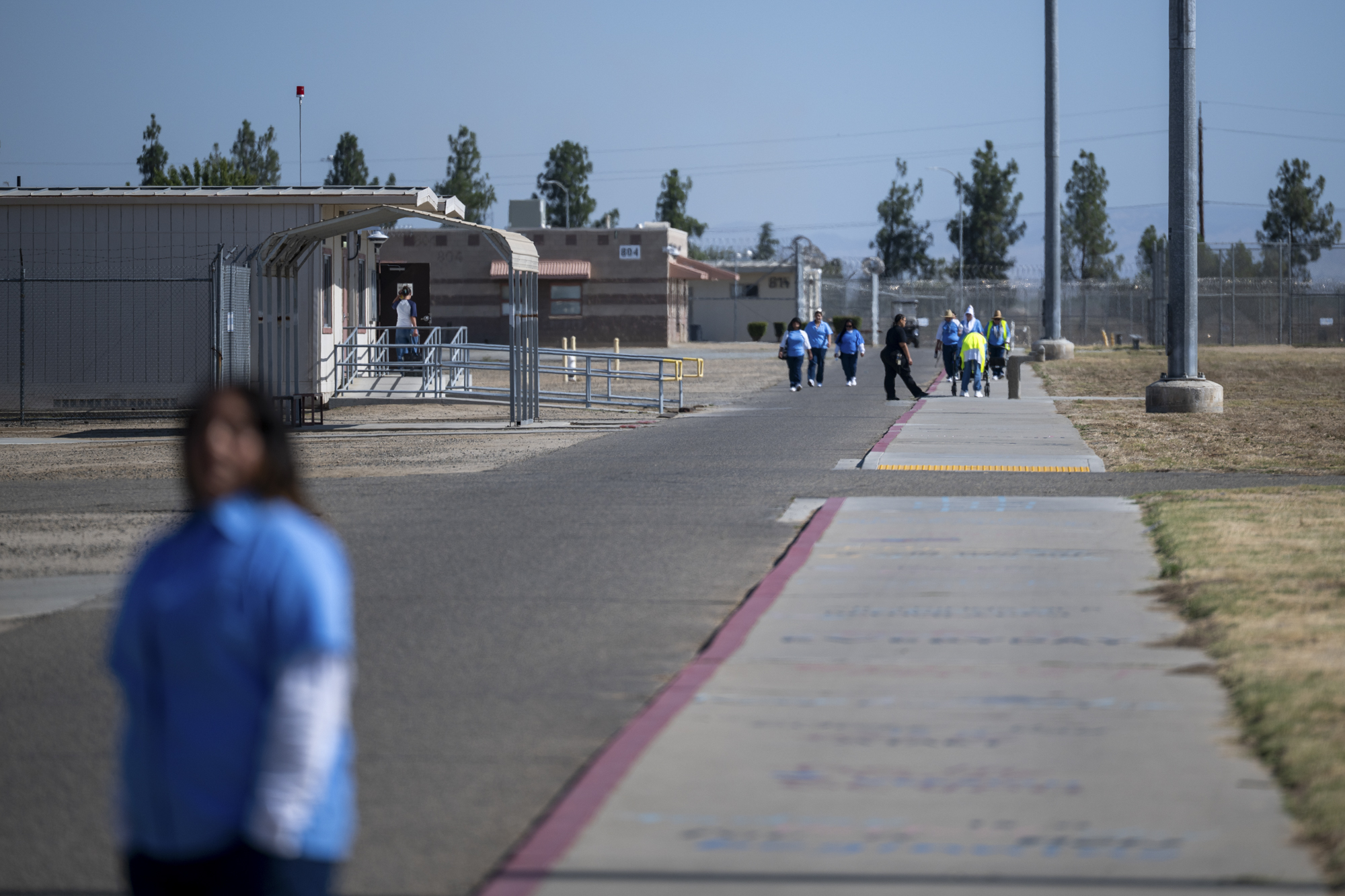
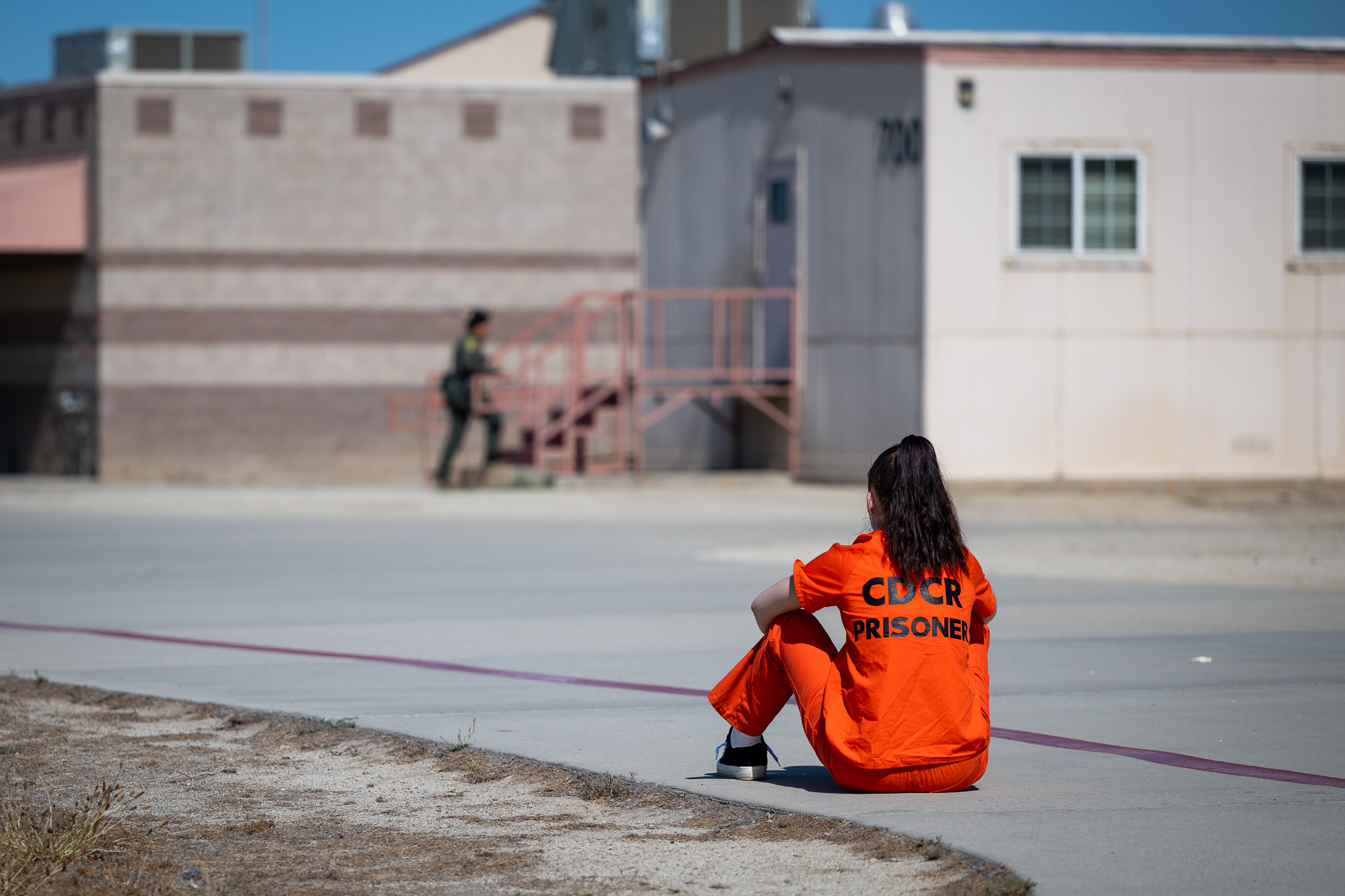
"content": "\n\u003cp class=\"wp-block-paragraph\">California has reached a tentative $10 million agreement to settle a class-action lawsuit filed on behalf of incarcerated women at the \u003ca href=\"https://www.kqed.org/news/tag/central-california-womens-facility\">Central California Women’s Facility\u003c/a> who were held in a crowded dining hall and sprayed with tear gas and pepper spray in 2024.\u003c/p>\n\n\n\n\u003cp class=\"wp-block-paragraph\">“There’s no amount of money that can fix what we went through that day,” said Angelina Hernandez, who is no longer in prison. “I have really bad PTSD. It really messed me up in a lot of different ways.”\u003c/p>\n\n\n\n\u003cp class=\"wp-block-paragraph\">On the morning of Aug. 2, 2024, correctional officers at the Chowchilla facility moved more than 150 women to the dining hall to conduct a massive search of their unit, according to the suit, and seize any personal belongings that did not fit in a 6-cubic-foot box. \u003c/p>\n\n\n\n\u003cfigure class=\"wp-block-embed is-type-video is-provider-youtube wp-block-embed-youtube wp-embed-aspect-16-9 wp-has-aspect-ratio\">\u003cdiv class=\"wp-block-embed__wrapper\">\nhttps://www.youtube.com/watch?v=-a8Fb2UwB1c&t=6s\n\u003c/div>\u003c/figure>\n\n\n\n\u003cp class=\"wp-block-paragraph\">After hours of being confined to the cafeteria without food, water or access to medication, tensions became heightened. Women shouted at the officers and banged on the tables, according to internal documents obtained by KQED. \u003c/p>\n\n\n\n\u003cp class=\"wp-block-paragraph\">Officers deployed chemical grenades and pepper spray on the women — first inside the chow hall, and then again after the women were zip-tied and seated in the yard outside. At least one woman named Christina Wind was also beaten by officers with batons. Women suffered injuries ranging from seizures, stroke and loss of eyesight. \u003c/p>\n\n\n\n\u003cp class=\"wp-block-paragraph\">During the incident, officers were captured on body camera saying things like “Put them down with gas,” and “Fun, fun, fun, baby,” according to internal documents. \u003c/p>\n\n\n\n\n\n\u003cp class=\"wp-block-paragraph\">The mass use-of-force event led to the largest corrective action related to a single incident in state history, according to the California Department of Corrections and Rehabilitation. Three correctional officers were fired and 31 more received discipline, ranging from reprimands to pay cuts. Several officers are still appealing those actions. \u003c/p>\n\n\n\n\u003cp class=\"wp-block-paragraph\">Under the agreement, $7.45 million would be split among the class members, while $2.5 million would go to their attorneys. Another lawsuit filed on behalf of 13 women who were injured during the incident was settled for \u003ca href=\"https://www.kqed.org/news/12077737/california-agrees-to-1-9m-settlement-in-prison-use-of-force-case\">$1.9 million in March\u003c/a>, bringing the combined value of the settlements to nearly $12 million.\u003c/p>\n\n\n\n\u003cp class=\"wp-block-paragraph\">“It was a gross violation of constitutional rights,” said attorney Mark Merin, who represents the women in the class action. “The state obviously recognizes that on some level and is coming forward with substantial compensation.”\u003c/p>\n\n\n\n\u003cp class=\"wp-block-paragraph\">The prison agency has not admitted fault in either suit. CDCR Press Secretary Terri Hardy said in an email that the agency cannot comment on active litigation, but that the department “continues its commitment to safe and constitutional operations at all institutions.”\u003c/p>\n\n\n\n\u003cp class=\"wp-block-paragraph\">A \u003ca href=\"https://www.kqed.org/news/12104812/put-them-down-with-gas-kqed-investigation-finds-abuse-and-retaliation-at-chowchilla-prison\">KQED investigation found\u003c/a> the mass use-of-force incident was carried out amid a striking rise in sexual assault complaints —known as Prison Rape Elimination Act complaints — at the prison. \u003c/p>\n\n\n\n\u003cp class=\"wp-block-paragraph\">Five women told KQED they believed the incident was intended to stop the flood of PREA complaints. But those allegations of retaliation were not looked into by the agency, according to documents obtained by KQED.\u003c/p>\n\n\n\n\u003cfigure class=\"wp-block-image size-full\">\u003cimg loading=\"lazy\" decoding=\"async\" width=\"2000\" height=\"1333\" src=\"https://cdn.kqed.org/wp-content/uploads/sites/10/2026/07/260630-CCWFTOUR-23-BL-KQED.jpg\" alt=\"\" class=\"wp-image-12090738\" srcset=\"https://cdn.kqed.org/wp-content/uploads/sites/10/2026/07/260630-CCWFTOUR-23-BL-KQED.jpg 2000w, https://cdn.kqed.org/wp-content/uploads/sites/10/2026/07/260630-CCWFTOUR-23-BL-KQED-160x107.jpg 160w, https://cdn.kqed.org/wp-content/uploads/sites/10/2026/07/260630-CCWFTOUR-23-BL-KQED-1536x1024.jpg 1536w\" sizes=\"auto, (max-width: 2000px) 100vw, 2000px\" />\u003cfigcaption class=\"wp-element-caption\">Officers lead an incarcerated woman through a Receiving and Release (R&R) yard at the Central California Women’s Facility in Chowchilla, California, on June 30, 2026. The prison is the largest women’s correctional facility in California, and the R&R yard is used to process incarcerated people entering and leaving the facility. (Beth LaBerge/KQED)\u003c/figcaption>\u003c/figure>\n\n\n\n\u003cp class=\"wp-block-paragraph\">Hardy wrote that CDCR “has implemented significant reforms to strengthen investigative processes, enhance facility oversight, expand fixed and Body Worn camera coverage, and improve PREA reporting pathways.” And she said the agency “is fully committed” to supporting sexual assault victims. \u003c/p>\n\n\n\n\u003cp class=\"wp-block-paragraph\">Last month, the CCWF warden \u003ca href=\"https://www.kqed.org/news/12100922/warden-of-californias-largest-womens-prison-reassigned-amid-scrutiny-over-sexual-abuse\">was transferred and demoted\u003c/a>, amid a new investigation into sexual abuse by officers at the prison. \u003c/p>\n\n\n\n\u003cp class=\"wp-block-paragraph\">A judge is set to review the settlement agreement on Dec. 4. If it is approved, claim forms and notices will be mailed to the 142 women represented in the lawsuit.\u003c/p>\n\n\n\n\u003cp class=\"wp-block-paragraph\">“I feel like [CDCR] should do a lot more,” Hernandez said. “I feel like all those officers [involved in Aug. 2] should be walked off.”\u003c/p>\n",
"blocks": [
{
"blockName": "core/paragraph",
"attrs": {
"dropCap": false
},
"innerHTML": "\n\u003cp>California has reached a tentative $10 million agreement to settle a class-action lawsuit filed on behalf of incarcerated women at the \u003ca href=\"https://www.kqed.org/news/tag/central-california-womens-facility\">Central California Women’s Facility\u003c/a> who were held in a crowded dining hall and sprayed with tear gas and pepper spray in 2024.\u003c/p>\n",
"innerContent": [
"\n\u003cp>California has reached a tentative $10 million agreement to settle a class-action lawsuit filed on behalf of incarcerated women at the \u003ca href=\"https://www.kqed.org/news/tag/central-california-womens-facility\">Central California Women’s Facility\u003c/a> who were held in a crowded dining hall and sprayed with tear gas and pepper spray in 2024.\u003c/p>\n"
],
"innerBlocks": []
},
{
"blockName": "core/paragraph",
"attrs": {
"dropCap": false
},
"innerHTML": "\n\u003cp>“There’s no amount of money that can fix what we went through that day,” said Angelina Hernandez, who is no longer in prison. “I have really bad PTSD. It really messed me up in a lot of different ways.”\u003c/p>\n",
"innerContent": [
"\n\u003cp>“There’s no amount of money that can fix what we went through that day,” said Angelina Hernandez, who is no longer in prison. “I have really bad PTSD. It really messed me up in a lot of different ways.”\u003c/p>\n"
],
"innerBlocks": []
},
{
"blockName": "core/paragraph",
"attrs": {
"dropCap": false
},
"innerHTML": "\n\u003cp>On the morning of Aug. 2, 2024, correctional officers at the Chowchilla facility moved more than 150 women to the dining hall to conduct a massive search of their unit, according to the suit, and seize any personal belongings that did not fit in a 6-cubic-foot box. \u003c/p>\n",
"innerContent": [
"\n\u003cp>On the morning of Aug. 2, 2024, correctional officers at the Chowchilla facility moved more than 150 women to the dining hall to conduct a massive search of their unit, according to the suit, and seize any personal belongings that did not fit in a 6-cubic-foot box. \u003c/p>\n"
],
"innerBlocks": []
},
{
"blockName": "core/embed",
"attrs": {
"url": "https://www.youtube.com/watch?v=-a8Fb2UwB1c&t=6s",
"type": "video",
"providerNameSlug": "youtube",
"responsive": true,
"className": "wp-embed-aspect-16-9 wp-has-aspect-ratio",
"allowResponsive": true,
"previewable": true
},
"innerHTML": "\n\u003cfigure class=\"wp-block-embed is-type-video is-provider-youtube wp-block-embed-youtube wp-embed-aspect-16-9 wp-has-aspect-ratio\">\u003cdiv class=\"wp-block-embed__wrapper\">\nhttps://www.youtube.com/watch?v=-a8Fb2UwB1c&t=6s\n\u003c/div>\u003c/figure>\n",
"innerContent": [
"\n\u003cfigure class=\"wp-block-embed is-type-video is-provider-youtube wp-block-embed-youtube wp-embed-aspect-16-9 wp-has-aspect-ratio\">\u003cdiv class=\"wp-block-embed__wrapper\">\nhttps://www.youtube.com/watch?v=-a8Fb2UwB1c&t=6s\n\u003c/div>\u003c/figure>\n"
],
"innerBlocks": []
},
{
"blockName": "core/paragraph",
"attrs": {
"dropCap": false
},
"innerHTML": "\n\u003cp>After hours of being confined to the cafeteria without food, water or access to medication, tensions became heightened. Women shouted at the officers and banged on the tables, according to internal documents obtained by KQED. \u003c/p>\n",
"innerContent": [
"\n\u003cp>After hours of being confined to the cafeteria without food, water or access to medication, tensions became heightened. Women shouted at the officers and banged on the tables, according to internal documents obtained by KQED. \u003c/p>\n"
],
"innerBlocks": []
},
{
"blockName": "core/paragraph",
"attrs": {
"dropCap": false
},
"innerHTML": "\n\u003cp>Officers deployed chemical grenades and pepper spray on the women — first inside the chow hall, and then again after the women were zip-tied and seated in the yard outside. At least one woman named Christina Wind was also beaten by officers with batons. Women suffered injuries ranging from seizures, stroke and loss of eyesight. \u003c/p>\n",
"innerContent": [
"\n\u003cp>Officers deployed chemical grenades and pepper spray on the women — first inside the chow hall, and then again after the women were zip-tied and seated in the yard outside. At least one woman named Christina Wind was also beaten by officers with batons. Women suffered injuries ranging from seizures, stroke and loss of eyesight. \u003c/p>\n"
],
"innerBlocks": []
},
{
"blockName": "core/paragraph",
"attrs": {
"dropCap": false
},
"innerHTML": "\n\u003cp>During the incident, officers were captured on body camera saying things like “Put them down with gas,” and “Fun, fun, fun, baby,” according to internal documents. \u003c/p>\n",
"innerContent": [
"\n\u003cp>During the incident, officers were captured on body camera saying things like “Put them down with gas,” and “Fun, fun, fun, baby,” according to internal documents. \u003c/p>\n"
],
"innerBlocks": []
},
{
"blockName": "kqed-v2/related-articles",
"attrs": {
"postIds": [
"news_12104812"
],
"label": "Related Articles",
"maxPosts": 1,
"showImages": false,
"heroImage": "https://cdn.kqed.org/wp-content/uploads/sites/10/2026/10/260630-CCWFTour-131-BL-bee4b824.jpg",
"query": "",
"labelWasCleared": false,
"heroImageAlt": "",
"heroImageLink": "",
"labelLink": "",
"alignment": "right",
"target": "_self",
"manualLinks": [],
"posts": []
},
"innerHTML": "",
"innerContent": [],
"innerBlocks": []
},
{
"blockName": "core/paragraph",
"attrs": {
"dropCap": false
},
"innerHTML": "\n\u003cp>The mass use-of-force event led to the largest corrective action related to a single incident in state history, according to the California Department of Corrections and Rehabilitation. Three correctional officers were fired and 31 more received discipline, ranging from reprimands to pay cuts. Several officers are still appealing those actions. \u003c/p>\n",
"innerContent": [
"\n\u003cp>The mass use-of-force event led to the largest corrective action related to a single incident in state history, according to the California Department of Corrections and Rehabilitation. Three correctional officers were fired and 31 more received discipline, ranging from reprimands to pay cuts. Several officers are still appealing those actions. \u003c/p>\n"
],
"innerBlocks": []
},
{
"blockName": "core/paragraph",
"attrs": {
"dropCap": false
},
"innerHTML": "\n\u003cp>Under the agreement, $7.45 million would be split among the class members, while $2.5 million would go to their attorneys. Another lawsuit filed on behalf of 13 women who were injured during the incident was settled for \u003ca href=\"https://www.kqed.org/news/12077737/california-agrees-to-1-9m-settlement-in-prison-use-of-force-case\">$1.9 million in March\u003c/a>, bringing the combined value of the settlements to nearly $12 million.\u003c/p>\n",
"innerContent": [
"\n\u003cp>Under the agreement, $7.45 million would be split among the class members, while $2.5 million would go to their attorneys. Another lawsuit filed on behalf of 13 women who were injured during the incident was settled for \u003ca href=\"https://www.kqed.org/news/12077737/california-agrees-to-1-9m-settlement-in-prison-use-of-force-case\">$1.9 million in March\u003c/a>, bringing the combined value of the settlements to nearly $12 million.\u003c/p>\n"
],
"innerBlocks": []
},
{
"blockName": "core/paragraph",
"attrs": {
"dropCap": false
},
"innerHTML": "\n\u003cp>“It was a gross violation of constitutional rights,” said attorney Mark Merin, who represents the women in the class action. “The state obviously recognizes that on some level and is coming forward with substantial compensation.”\u003c/p>\n",
"innerContent": [
"\n\u003cp>“It was a gross violation of constitutional rights,” said attorney Mark Merin, who represents the women in the class action. “The state obviously recognizes that on some level and is coming forward with substantial compensation.”\u003c/p>\n"
],
"innerBlocks": []
},
{
"blockName": "core/paragraph",
"attrs": {
"dropCap": false
},
"innerHTML": "\n\u003cp>The prison agency has not admitted fault in either suit. CDCR Press Secretary Terri Hardy said in an email that the agency cannot comment on active litigation, but that the department “continues its commitment to safe and constitutional operations at all institutions.”\u003c/p>\n",
"innerContent": [
"\n\u003cp>The prison agency has not admitted fault in either suit. CDCR Press Secretary Terri Hardy said in an email that the agency cannot comment on active litigation, but that the department “continues its commitment to safe and constitutional operations at all institutions.”\u003c/p>\n"
],
"innerBlocks": []
},
{
"blockName": "core/paragraph",
"attrs": {
"dropCap": false
},
"innerHTML": "\n\u003cp>A \u003ca href=\"https://www.kqed.org/news/12104812/put-them-down-with-gas-kqed-investigation-finds-abuse-and-retaliation-at-chowchilla-prison\">KQED investigation found\u003c/a> the mass use-of-force incident was carried out amid a striking rise in sexual assault complaints —known as Prison Rape Elimination Act complaints — at the prison. \u003c/p>\n",
"innerContent": [
"\n\u003cp>A \u003ca href=\"https://www.kqed.org/news/12104812/put-them-down-with-gas-kqed-investigation-finds-abuse-and-retaliation-at-chowchilla-prison\">KQED investigation found\u003c/a> the mass use-of-force incident was carried out amid a striking rise in sexual assault complaints —known as Prison Rape Elimination Act complaints — at the prison. \u003c/p>\n"
],
"innerBlocks": []
},
{
"blockName": "core/paragraph",
"attrs": {
"dropCap": false
},
"innerHTML": "\n\u003cp>Five women told KQED they believed the incident was intended to stop the flood of PREA complaints. But those allegations of retaliation were not looked into by the agency, according to documents obtained by KQED.\u003c/p>\n",
"innerContent": [
"\n\u003cp>Five women told KQED they believed the incident was intended to stop the flood of PREA complaints. But those allegations of retaliation were not looked into by the agency, according to documents obtained by KQED.\u003c/p>\n"
],
"innerBlocks": []
},
{
"blockName": "core/image",
"attrs": {
"id": 12090738,
"sizeSlug": "full",
"linkDestination": "none",
"alt": "",
"srcset": "https://cdn.kqed.org/wp-content/uploads/sites/10/2026/07/260630-CCWFTOUR-23-BL-KQED.jpg 2000w, https://cdn.kqed.org/wp-content/uploads/sites/10/2026/07/260630-CCWFTOUR-23-BL-KQED-160x107.jpg 160w, https://cdn.kqed.org/wp-content/uploads/sites/10/2026/07/260630-CCWFTOUR-23-BL-KQED-1536x1024.jpg 1536w",
"sizes": "(min-width: 992px) min(100vw, 1536px), (min-width: 768px) min(100vw, 1280px), min(100vw, 1020px)",
"isDecorative": false
},
"innerHTML": "\n\u003cfigure class=\"wp-block-image size-full\">\u003cimg src=\"https://cdn.kqed.org/wp-content/uploads/sites/10/2026/07/260630-CCWFTOUR-23-BL-KQED.jpg\" alt=\"\" class=\"wp-image-12090738\" srcset=\"https://cdn.kqed.org/wp-content/uploads/sites/10/2026/07/260630-CCWFTOUR-23-BL-KQED.jpg 2000w, https://cdn.kqed.org/wp-content/uploads/sites/10/2026/07/260630-CCWFTOUR-23-BL-KQED-160x107.jpg 160w, https://cdn.kqed.org/wp-content/uploads/sites/10/2026/07/260630-CCWFTOUR-23-BL-KQED-1536x1024.jpg 1536w\" sizes=\"(min-width: 992px) min(100vw, 1536px), (min-width: 768px) min(100vw, 1280px), min(100vw, 1020px)\"/>\u003cfigcaption class=\"wp-element-caption\">Officers lead an incarcerated woman through a Receiving and Release (R&R) yard at the Central California Women’s Facility in Chowchilla, California, on June 30, 2026. The prison is the largest women’s correctional facility in California, and the R&R yard is used to process incarcerated people entering and leaving the facility.\u003ccite class=\"wp-inline-image-credit\"> (Beth LaBerge/KQED)\u003c/cite>\u003c/figcaption>\u003c/figure>\n",
"innerContent": [
"\n\u003cfigure class=\"wp-block-image size-full\">\u003cimg src=\"https://cdn.kqed.org/wp-content/uploads/sites/10/2026/07/260630-CCWFTOUR-23-BL-KQED.jpg\" alt=\"\" class=\"wp-image-12090738\"/>\u003cfigcaption class=\"wp-element-caption\">Officers lead an incarcerated woman through a Receiving and Release (R&R) yard at the Central California Women’s Facility in Chowchilla, California, on June 30, 2026. The prison is the largest women’s correctional facility in California, and the R&R yard is used to process incarcerated people entering and leaving the facility.\u003ccite class=\"wp-inline-image-credit\"> (Beth LaBerge/KQED)\u003c/cite>\u003c/figcaption>\u003c/figure>\n"
],
"innerBlocks": []
},
{
"blockName": "core/paragraph",
"attrs": {
"dropCap": false
},
"innerHTML": "\n\u003cp>Hardy wrote that CDCR “has implemented significant reforms to strengthen investigative processes, enhance facility oversight, expand fixed and Body Worn camera coverage, and improve PREA reporting pathways.” And she said the agency “is fully committed” to supporting sexual assault victims. \u003c/p>\n",
"innerContent": [
"\n\u003cp>Hardy wrote that CDCR “has implemented significant reforms to strengthen investigative processes, enhance facility oversight, expand fixed and Body Worn camera coverage, and improve PREA reporting pathways.” And she said the agency “is fully committed” to supporting sexual assault victims. \u003c/p>\n"
],
"innerBlocks": []
},
{
"blockName": "core/paragraph",
"attrs": {
"dropCap": false
},
"innerHTML": "\n\u003cp>Last month, the CCWF warden \u003ca href=\"https://www.kqed.org/news/12100922/warden-of-californias-largest-womens-prison-reassigned-amid-scrutiny-over-sexual-abuse\">was transferred and demoted\u003c/a>, amid a new investigation into sexual abuse by officers at the prison. \u003c/p>\n",
"innerContent": [
"\n\u003cp>Last month, the CCWF warden \u003ca href=\"https://www.kqed.org/news/12100922/warden-of-californias-largest-womens-prison-reassigned-amid-scrutiny-over-sexual-abuse\">was transferred and demoted\u003c/a>, amid a new investigation into sexual abuse by officers at the prison. \u003c/p>\n"
],
"innerBlocks": []
},
{
"blockName": "core/paragraph",
"attrs": {
"dropCap": false
},
"innerHTML": "\n\u003cp>A judge is set to review the settlement agreement on Dec. 4. If it is approved, claim forms and notices will be mailed to the 142 women represented in the lawsuit.\u003c/p>\n",
"innerContent": [
"\n\u003cp>A judge is set to review the settlement agreement on Dec. 4. If it is approved, claim forms and notices will be mailed to the 142 women represented in the lawsuit.\u003c/p>\n"
],
"innerBlocks": []
},
{
"blockName": "core/paragraph",
"attrs": {
"dropCap": false
},
"innerHTML": "\n\u003cp>“I feel like [CDCR] should do a lot more,” Hernandez said. “I feel like all those officers [involved in Aug. 2] should be walked off.”\u003c/p>\n",
"innerContent": [
"\n\u003cp>“I feel like [CDCR] should do a lot more,” Hernandez said. “I feel like all those officers [involved in Aug. 2] should be walked off.”\u003c/p>\n"
],
"innerBlocks": []
}
],
"excerpt": "The operation at the Central California Women’s Facility resulted in the largest corrective action related to a single incident in state history.",
"status": "publish",
"parent": 0,
"modified": 1793206605,
"stats": {
"hasAudio": false,
"hasVideo": false,
"hasChartOrMap": false,
"iframeSrcs": [],
"hasGoogleForm": false,
"hasGallery": false,
"hasHearkenModule": false,
"hasPolis": false,
"paragraphCount": 0,
"wordCount": 694
},
"headData": {
"title": "California Agrees to Pay $10 Million in Class Action Over Women Gassed at Chowchilla Prison | KQED",
"description": "The operation at the Central California Women’s Facility resulted in the largest corrective action related to a single incident in state history.",
"ogTitle": "",
"ogDescription": "",
"ogImgId": "",
"twTitle": "",
"twDescription": "",
"twImgId": "",
"schema": {
"@context": "https://schema.org",
"@type": "NewsArticle",
"headline": "California Agrees to Pay $10 Million in Class Action Over Women Gassed at Chowchilla Prison",
"datePublished": "2026-10-28T06:00:00-07:00",
"dateModified": "2026-10-28T09:56:45-07:00",
"image": "https://cdn.kqed.org/wp-content/uploads/2020/02/KQED-OG-Image@1x.png",
"isAccessibleForFree": "True",
"publisher": {
"@type": "NewsMediaOrganization",
"@id": "https://www.kqed.org/#organization",
"name": "KQED",
"logo": "https://cdn.kqed.org/wp-content/uploads/2020/02/KQED-OG-Image@1x.png",
"url": "https://www.kqed.org",
"sameAs": [
"https://www.facebook.com/KQED",
"https://twitter.com/KQED",
"https://www.instagram.com/kqed/",
"https://www.tiktok.com/@kqedofficial",
"https://www.linkedin.com/company/kqed",
"https://www.youtube.com/channel/UCeC0IOo7i1P_61zVUWbJ4nw"
]
}
}
},
"primaryCategory": {
"termId": 6188,
"slug": "law-and-justice",
"name": "Law and Justice"
},
"sticky": false,
"nprStoryId": "kqed-12106700",
"templateType": "standard",
"featuredImageType": "standard",
"excludeFromSiteSearch": "Include",
"articleAge": "0",
"path": "/news/12106700/california-to-pay-10-million-to-settle-class-action-over-women-gassed-at-chowchilla-prison",
"audioTrackLength": null,
"parsedContent": [
{
"type": "contentString",
"content": "\u003cdiv class=\"post-body\">\u003cp>\n\u003cp class=\"wp-block-paragraph\">California has reached a tentative $10 million agreement to settle a class-action lawsuit filed on behalf of incarcerated women at the \u003ca href=\"https://www.kqed.org/news/tag/central-california-womens-facility\">Central California Women’s Facility\u003c/a> who were held in a crowded dining hall and sprayed with tear gas and pepper spray in 2024.\u003c/p>\n\n\n\n\u003cp class=\"wp-block-paragraph\">“There’s no amount of money that can fix what we went through that day,” said Angelina Hernandez, who is no longer in prison. “I have really bad PTSD. It really messed me up in a lot of different ways.”\u003c/p>\n\n\n\n\u003cp class=\"wp-block-paragraph\">On the morning of Aug. 2, 2024, correctional officers at the Chowchilla facility moved more than 150 women to the dining hall to conduct a massive search of their unit, according to the suit, and seize any personal belongings that did not fit in a 6-cubic-foot box. \u003c/p>\n\n\n\n\u003cfigure class=\"wp-block-embed is-type-video is-provider-youtube wp-block-embed-youtube wp-embed-aspect-16-9 wp-has-aspect-ratio\">\u003cdiv class=\"wp-block-embed__wrapper\">\u003c/p>\u003cp>\u003cspan class='utils-parseShortcode-shortcodes-__youtubeShortcode__embedYoutube'>\n \u003cspan class='utils-parseShortcode-shortcodes-__youtubeShortcode__embedYoutubeInside'>\n \u003ciframe\n loading='lazy'\n class='utils-parseShortcode-shortcodes-__youtubeShortcode__youtubePlayer'\n type='text/html'\n src='//www.youtube.com/embed/-a8Fb2UwB1c'\n title='//www.youtube.com/embed/-a8Fb2UwB1c'\n allowfullscreen='true'\n style='border:0;'>\u003c/iframe>\n \u003c/span>\n \u003c/span>\u003c/p>\u003cp>\u003c/div>\u003c/figure>\n\n\n\n\u003cp class=\"wp-block-paragraph\">After hours of being confined to the cafeteria without food, water or access to medication, tensions became heightened. Women shouted at the officers and banged on the tables, according to internal documents obtained by KQED. \u003c/p>\n\n\n\n\u003cp class=\"wp-block-paragraph\">Officers deployed chemical grenades and pepper spray on the women — first inside the chow hall, and then again after the women were zip-tied and seated in the yard outside. At least one woman named Christina Wind was also beaten by officers with batons. Women suffered injuries ranging from seizures, stroke and loss of eyesight. \u003c/p>\n\n\n\n\u003cp class=\"wp-block-paragraph\">During the incident, officers were captured on body camera saying things like “Put them down with gas,” and “Fun, fun, fun, baby,” according to internal documents. \u003c/p>\n\n\n\n\n\n\u003cp class=\"wp-block-paragraph\">The mass use-of-force event led to the largest corrective action related to a single incident in state history, according to the California Department of Corrections and Rehabilitation. Three correctional officers were fired and 31 more received discipline, ranging from reprimands to pay cuts. Several officers are still appealing those actions. \u003c/p>\n\n\n\n\u003cp class=\"wp-block-paragraph\">Under the agreement, $7.45 million would be split among the class members, while $2.5 million would go to their attorneys. Another lawsuit filed on behalf of 13 women who were injured during the incident was settled for \u003ca href=\"https://www.kqed.org/news/12077737/california-agrees-to-1-9m-settlement-in-prison-use-of-force-case\">$1.9 million in March\u003c/a>, bringing the combined value of the settlements to nearly $12 million.\u003c/p>\n\n\n\n\u003cp class=\"wp-block-paragraph\">“It was a gross violation of constitutional rights,” said attorney Mark Merin, who represents the women in the class action. “The state obviously recognizes that on some level and is coming forward with substantial compensation.”\u003c/p>\n\n\n\n\u003cp class=\"wp-block-paragraph\">The prison agency has not admitted fault in either suit. CDCR Press Secretary Terri Hardy said in an email that the agency cannot comment on active litigation, but that the department “continues its commitment to safe and constitutional operations at all institutions.”\u003c/p>\n\n\n\n\u003cp class=\"wp-block-paragraph\">A \u003ca href=\"https://www.kqed.org/news/12104812/put-them-down-with-gas-kqed-investigation-finds-abuse-and-retaliation-at-chowchilla-prison\">KQED investigation found\u003c/a> the mass use-of-force incident was carried out amid a striking rise in sexual assault complaints —known as Prison Rape Elimination Act complaints — at the prison. \u003c/p>\n\n\n\n\u003cp class=\"wp-block-paragraph\">Five women told KQED they believed the incident was intended to stop the flood of PREA complaints. But those allegations of retaliation were not looked into by the agency, according to documents obtained by KQED.\u003c/p>\n\n\n\n\u003cfigure class=\"wp-block-image size-full\">\u003cimg loading=\"lazy\" decoding=\"async\" width=\"2000\" height=\"1333\" src=\"https://cdn.kqed.org/wp-content/uploads/sites/10/2026/07/260630-CCWFTOUR-23-BL-KQED.jpg\" alt=\"\" class=\"wp-image-12090738\" srcset=\"https://cdn.kqed.org/wp-content/uploads/sites/10/2026/07/260630-CCWFTOUR-23-BL-KQED.jpg 2000w, https://cdn.kqed.org/wp-content/uploads/sites/10/2026/07/260630-CCWFTOUR-23-BL-KQED-160x107.jpg 160w, https://cdn.kqed.org/wp-content/uploads/sites/10/2026/07/260630-CCWFTOUR-23-BL-KQED-1536x1024.jpg 1536w\" sizes=\"auto, (max-width: 2000px) 100vw, 2000px\" />\u003cfigcaption class=\"wp-element-caption\">Officers lead an incarcerated woman through a Receiving and Release (R&R) yard at the Central California Women’s Facility in Chowchilla, California, on June 30, 2026. The prison is the largest women’s correctional facility in California, and the R&R yard is used to process incarcerated people entering and leaving the facility. (Beth LaBerge/KQED)\u003c/figcaption>\u003c/figure>\n\n\n\n\u003cp class=\"wp-block-paragraph\">Hardy wrote that CDCR “has implemented significant reforms to strengthen investigative processes, enhance facility oversight, expand fixed and Body Worn camera coverage, and improve PREA reporting pathways.” And she said the agency “is fully committed” to supporting sexual assault victims. \u003c/p>\n\n\n\n\u003cp class=\"wp-block-paragraph\">Last month, the CCWF warden \u003ca href=\"https://www.kqed.org/news/12100922/warden-of-californias-largest-womens-prison-reassigned-amid-scrutiny-over-sexual-abuse\">was transferred and demoted\u003c/a>, amid a new investigation into sexual abuse by officers at the prison. \u003c/p>\n\n\n\n\u003cp class=\"wp-block-paragraph\">A judge is set to review the settlement agreement on Dec. 4. If it is approved, claim forms and notices will be mailed to the 142 women represented in the lawsuit.\u003c/p>\n\n\n\n\u003cp class=\"wp-block-paragraph\">“I feel like [CDCR] should do a lot more,” Hernandez said. “I feel like all those officers [involved in Aug. 2] should be walked off.”\u003c/p>\n\u003c/div>\u003c/p>",
"attributes": {
"named": {},
"numeric": []
}
}
],
"link": "/news/12106700/california-to-pay-10-million-to-settle-class-action-over-women-gassed-at-chowchilla-prison",
"authors": [
"11895",
"8676"
],
"categories": [
"news_31795",
"news_34167",
"news_6188",
"news_8"
],
"tags": [
"news_37276",
"news_18538",
"news_616",
"news_37493",
"news_4750",
"news_27626",
"news_1305",
"news_32043",
"news_1917"
],
"featImg": "news_12090735",
"label": "news"
},
"news_12104812": {
"type": "posts",
"id": "news_12104812",
"meta": {
"index": "posts_1716263798",
"site": "news",
"id": "12104812",
"score": null,
"sort": [
1792418400000
]
},
"guestAuthors": [],
"slug": "put-them-down-with-gas-kqed-investigation-finds-abuse-and-retaliation-at-chowchilla-prison",
"title": "‘Put Them Down With Gas’: KQED Investigation Finds Abuse and Retaliation at Chowchilla Prison",
"publishDate": 1792418400,
"format": "standard",
"headTitle": "‘Put Them Down With Gas’: KQED Investigation Finds Abuse and Retaliation at Chowchilla Prison | KQED",
"labelTerm": {
"site": "news"
},
"content": "\n\u003cp>\u003cem>Hear more of the story on the podcast \u003ca href=\"https://snapjudgment.org/we-are-jane-doe/\">‘We Are Jane Doe,\u003c/a>’ from KQED’s Snap Studios.\u003c/em>\u003c/p>\n\n\n\n\u003cp>Aliksandria Prout was at home the evening of Aug. 2, 2024, when her phone rang. It was her former cellmate at the \u003ca href=\"https://www.kqed.org/news/tag/central-california-womens-facility\">Central California Women’s Facility\u003c/a>. Catrina Cameron was nearly incoherent over the prison phone line. \u003c/p>\n\n\n\n\u003cp>“She told me she couldn’t see outta one eye,” Prout said. Cameron told Prout that correctional officers had sprayed her and dozens of other women with tear gas and pepper spray. “Our other cellmate had gotten beat up by correctional staff.”\u003c/p>\n\n\n\n\u003cp>Prout could barely grasp the enormity of the incident. As the public would later learn, correctional officers had removed 159 women from a CCWF housing unit, confined them for more than four hours in a dining hall without food, water or medication, and then unleashed streams of pepper spray and chemical blast grenades on them when tensions escalated. \u003c/p>\n\n\n\n\u003cp>Later, as the prisoners sat outside on the hot, dusty yard with their hands zip-tied behind their backs, officers again used tear gas and pepper grenades on them.\u003c/p>\n\n\n\u003cdiv class=\"wp-block-image\">\n\u003cfigure class=\"aligncenter size-full\">\u003cimg loading=\"lazy\" decoding=\"async\" width=\"2000\" height=\"1213\" src=\"https://cdn.kqed.org/wp-content/uploads/sites/10/2026/10/Screenshot_DiningHall-deb186ea.jpg\" alt=\"\" class=\"wp-image-12104593\" srcset=\"https://cdn.kqed.org/wp-content/uploads/sites/10/2026/10/Screenshot_DiningHall-deb186ea.jpg 2000w, https://cdn.kqed.org/wp-content/uploads/sites/10/2026/10/Screenshot_DiningHall-deb186ea-160x97.jpg 160w, https://cdn.kqed.org/wp-content/uploads/sites/10/2026/10/Screenshot_DiningHall-deb186ea-1536x932.jpg 1536w\" sizes=\"auto, (max-width: 2000px) 100vw, 2000px\" />\u003cfigcaption class=\"wp-element-caption\">Surveillance footage obtained by KQED through a public records request shows officers throwing chemical blast grenades at incarcerated women in the dining hall at the Central California Women’s Facility on Aug. 2, 2024. (Courtesy of California Department of Corrections and Rehabilitation)\u003c/figcaption>\u003c/figure>\n\u003c/div>\n\n\n\u003cp>A retired prison administrator who reviewed footage of the incident told KQED: “It looks like they’re lining ’em up for the firing squad.” \u003c/p>\n\n\n\n\u003cp>Women suffered injuries including stroke, blindness and seizures. “I didn’t know what they were doing to us or why, but I needed help, and I need somebody out there to know,” Cameron later recalled. \u003c/p>\n\n\n\n\u003cp>On the phone with her friend, Prout felt sick. The 33-year-old nursing student and mother of three had been out of prison for nearly two years, but she hadn’t been able to leave it behind. \u003c/p>\n\n\n\n\u003cp>In just a couple of months, Prout was set to testify against the now-infamous former correctional officer, Gregory Rodriguez, who’d been charged with sexually assaulting more than a dozen women at the facility in Chowchilla, about 35 miles from Fresno. \u003c/p>\n\n\n\n\u003cp>And now, her close friend and former cellmate had been attacked by officers in the chow hall. She couldn’t help but think her efforts to expose Rodriguez were connected to what had just happened to Cameron and more than 150 women in her old unit.\u003c/p>\n\n\n\u003cdiv class=\"wp-block-image\">\n\u003cfigure class=\"aligncenter size-full\">\u003cimg loading=\"lazy\" decoding=\"async\" width=\"2000\" height=\"1333\" src=\"https://cdn.kqed.org/wp-content/uploads/sites/10/2026/10/260819-CCWFPortraits-04-BL-5587a320.jpg\" alt=\"\" class=\"wp-image-12104581\" srcset=\"https://cdn.kqed.org/wp-content/uploads/sites/10/2026/10/260819-CCWFPortraits-04-BL-5587a320.jpg 2000w, https://cdn.kqed.org/wp-content/uploads/sites/10/2026/10/260819-CCWFPortraits-04-BL-5587a320-160x107.jpg 160w, https://cdn.kqed.org/wp-content/uploads/sites/10/2026/10/260819-CCWFPortraits-04-BL-5587a320-1536x1024.jpg 1536w\" sizes=\"auto, (max-width: 2000px) 100vw, 2000px\" />\u003cfigcaption class=\"wp-element-caption\">Aliksandria Prout sits in her home office, surrounded by legal paperwork, on Aug. 19, 2026. (Beth LaBerge/KQED)\u003c/figcaption>\u003c/figure>\n\u003c/div>\n\n\n\u003cp>Prout’s concerns were well-founded, according to a two-year KQED investigation into “Operation Breakdown,” as the incident was called in internal documents.\u003c/p>\n\n\n\n\u003cp>Interviews with more than a dozen women, a KQED analysis of six years’ worth of sexual assault complaints, trial transcripts, court filings, leaked internal affairs interviews and hundreds of disciplinary documents revealed a pattern of retaliation against incarcerated women who reported assault, failure to investigate those assaults and the dysfunctional accountability system that allowed staff sexual exploitation of women to flourish.\u003c/p>\n\n\n\n\u003cp>A recent U.S. Department of Justice investigation reached a similar conclusion, finding an “unbroken pattern” of sexual abuse and retaliation in California’s women’s prisons dating back more than two decades. CCWF is one of just two women’s penitentiaries in the state and is one of the largest women’s prisons in the world, with a population of more than 2,000 women, nonbinary and trans people held inside.\u003c/p>\n\n\n\n\u003cfigure class=\"wp-block-gallery has-nested-images columns-default is-cropped wp-block-gallery-5 is-layout-flex wp-block-gallery-is-layout-flex\">\n\u003cfigure class=\"wp-block-image size-large\">\u003cimg loading=\"lazy\" decoding=\"async\" width=\"2000\" height=\"1333\" data-id=\"12104586\" src=\"https://cdn.kqed.org/wp-content/uploads/sites/10/2026/10/260630-CCWFTour-51-BL-2bb5aa03.jpg\" alt=\"\" class=\"wp-image-12104586\" srcset=\"https://cdn.kqed.org/wp-content/uploads/sites/10/2026/10/260630-CCWFTour-51-BL-2bb5aa03.jpg 2000w, https://cdn.kqed.org/wp-content/uploads/sites/10/2026/10/260630-CCWFTour-51-BL-2bb5aa03-160x107.jpg 160w, https://cdn.kqed.org/wp-content/uploads/sites/10/2026/10/260630-CCWFTour-51-BL-2bb5aa03-1536x1024.jpg 1536w\" sizes=\"auto, (max-width: 2000px) 100vw, 2000px\" />\u003cfigcaption class=\"wp-element-caption\">Rape crisis center signs hang in a housing unit at the Central California Women’s Facility on June 30, 2026.\u003c/figcaption>\u003c/figure>\n\n\n\n\u003cfigure class=\"wp-block-image size-large\">\u003cimg loading=\"lazy\" decoding=\"async\" width=\"2000\" height=\"1333\" data-id=\"12104629\" src=\"https://cdn.kqed.org/wp-content/uploads/sites/10/2026/10/260630-CCWFTour-120-BL-5d00dae8.jpg\" alt=\"\" class=\"wp-image-12104629\" srcset=\"https://cdn.kqed.org/wp-content/uploads/sites/10/2026/10/260630-CCWFTour-120-BL-5d00dae8.jpg 2000w, https://cdn.kqed.org/wp-content/uploads/sites/10/2026/10/260630-CCWFTour-120-BL-5d00dae8-160x107.jpg 160w, https://cdn.kqed.org/wp-content/uploads/sites/10/2026/10/260630-CCWFTour-120-BL-5d00dae8-1536x1024.jpg 1536w\" sizes=\"auto, (max-width: 2000px) 100vw, 2000px\" />\u003cfigcaption class=\"wp-element-caption\">Resources hang on the wall at the housing unit. (Beth LaBerge/KQED)\u003c/figcaption>\u003c/figure>\n\u003c/figure>\n\n\n\n\u003cp>In the wake of the DOJ’s report, and as KQED neared publication of this investigation, \u003ca href=\"https://www.kqed.org/news/12100922/warden-of-californias-largest-womens-prison-reassigned-amid-scrutiny-over-sexual-abuse\">the warden at CCWF, Anissa De La Cruz, was demoted and transferred\u003c/a>, and multiple officers were put under investigation for sexual abuse. \u003c/p>\n\n\n\n\u003cp>The California Department of Corrections and Rehabilitation (CDCR) said the agency cannot comment on personnel decisions or the ongoing investigation. It said the agency is “fully committed to protecting victims of sexual assault.” \u003c/p>\n\n\n\n\u003cp>CDCR Press Secretary Terri Hardy said in an email that the department conducted its own investigation into the events of Aug. 2, investigating 95 employees and disciplining 34 for their conduct, including firing three for excessive force and dishonesty. Initially, the department moved to discipline 41 staff members, but that number dropped as correctional officers filed appeals, some of which are still pending. \u003c/p>\n\n\n\u003cp>\u003c!-- iframe plugin v.4.3 wordpress.org/plugins/iframe/ -->\u003cbr />\n\u003ciframe loading=\"lazy\" src=\"https://datawrapper.dwcdn.net/wZ89a/5/\" width=\"800\" height=\"800\" scrolling=\"yes\" class=\"iframe-class\" frameborder=\"0\">\u003c/iframe>\u003c/p>\n\n\n\n\u003cp>CDCR said the case was the largest corrective action stemming from a single incident in its history. Yet, key questions about the operation’s connection to a rising tide of sexual assault complaints remain unanswered. \u003c/p>\n\n\n\n\u003cp>A KQED analysis of six years of \u003ca href=\"https://www.prearesourcecenter.org/about/prison-rape-elimination-act\">Prison Rape Elimination Act (PREA)\u003c/a> data obtained from CDCR showed that the rate of sexual misconduct complaints against staff at CCWF increased by about 1,800% from 2022 to 2023. CDCR did not answer questions about this data.\u003c/p>\n\n\n\n\u003cp>Prout’s experience illuminates a pervasive culture of sexual abuse at CCWF, helps explain why women suddenly started coming forward in 2023, and reveals what the officers charged with keeping people safe in custody did in response.\u003c/p>\n\n\n\n\u003ch2 class=\"wp-block-heading\">Ali’s story\u003c/h2>\n\n\n\n\u003cp>In May 2022, Prout had been at CCWF for just a few days when correctional officer Gregory Rodriguez stopped her as she walked to a medical appointment. He asked her to pull down her N95 mask so he could verify her identity.\u003c/p>\n\n\n\n\u003cp>“He said, ‘You have beautiful lips and beautiful eyes,’” Prout told KQED.\u003c/p>\n\n\n\n\u003cp>Three days later, an officer gave Prout a paper pass, known as a ducat, allowing her to move through the prison. \u003c/p>\n\n\n\n\u003cp>“They told me I had an attorney visit,” she said. An officer escorted her to the Board of Parole Hearings room, where such visits are usually held.\u003c/p>\n\n\n\u003cdiv class=\"wp-block-image\">\n\u003cfigure class=\"aligncenter size-full\">\u003cimg loading=\"lazy\" decoding=\"async\" width=\"2000\" height=\"1333\" src=\"https://cdn.kqed.org/wp-content/uploads/sites/10/2026/10/260819-CCWFPortraits-01-BL-3762f796.jpg\" alt=\"\" class=\"wp-image-12104579\" srcset=\"https://cdn.kqed.org/wp-content/uploads/sites/10/2026/10/260819-CCWFPortraits-01-BL-3762f796.jpg 2000w, https://cdn.kqed.org/wp-content/uploads/sites/10/2026/10/260819-CCWFPortraits-01-BL-3762f796-160x107.jpg 160w, https://cdn.kqed.org/wp-content/uploads/sites/10/2026/10/260819-CCWFPortraits-01-BL-3762f796-1536x1024.jpg 1536w\" sizes=\"auto, (max-width: 2000px) 100vw, 2000px\" />\u003cfigcaption class=\"wp-element-caption\">Aliksandria Prout at her home. (Beth LaBerge/KQED)\u003c/figcaption>\u003c/figure>\n\u003c/div>\n\n\n\u003cp>But there was no attorney visit. Instead, she saw Rodriguez. This is the first time she has spoken to the media about what happened in that room. \u003c/p>\n\n\n\n\u003cp>Rodriguez came close and tried to kiss her. He lifted her shirt and then turned her around on a chair beneath a window. Prout remembers staring at the officer’s boot, propped against the left side of the green upholstered chair. \u003c/p>\n\n\n\n\u003cp>“What really upset me was he didn’t use protection,” she said. \u003c/p>\n\n\n\n\u003cp>When it was over, Prout said, Rodriguez warned her that if she told anyone, she could face disciplinary action, which could mean more time in prison. \u003c/p>\n\n\n\u003cdiv class=\"wp-block-image\">\n\u003cfigure class=\"aligncenter size-full\">\u003cimg loading=\"lazy\" decoding=\"async\" width=\"2000\" height=\"1140\" src=\"https://cdn.kqed.org/wp-content/uploads/sites/10/2026/10/Ducat-05202022-ee786799.jpg\" alt=\"\" class=\"wp-image-12104526\" srcset=\"https://cdn.kqed.org/wp-content/uploads/sites/10/2026/10/Ducat-05202022-ee786799.jpg 2000w, https://cdn.kqed.org/wp-content/uploads/sites/10/2026/10/Ducat-05202022-ee786799-160x91.jpg 160w, https://cdn.kqed.org/wp-content/uploads/sites/10/2026/10/Ducat-05202022-ee786799-1536x876.jpg 1536w\" sizes=\"auto, (max-width: 2000px) 100vw, 2000px\" />\u003cfigcaption class=\"wp-element-caption\">A pass issued for a fraudulent attorney visit on May 20, 2022, is among the evidence Aliksandria Prout saved following her sexual assault. (Courtesy of Aliksandria Prout)\u003c/figcaption>\u003c/figure>\n\u003c/div>\n\n\n\u003cp>KQED heard similar stories from other women at the prison. Eight women said they feared disciplinary write-ups, repeated cell searches and other retaliation if they reported sexual assault by staff. In a statement, CDCR said it is committed to protecting victims of sexual assault and that “sexual abuse, harassment and retaliation against incarcerated people is unacceptable.”\u003c/p>\n\n\n\n\u003cp>At the time, Prout stayed silent, but she made sure to keep track of the multiple times Rodriguez called her back to that room. When she was paroled after just a few months in prison, Prout began contacting attorneys. \u003c/p>\n\n\n\n\u003cp>She found out that CDCR’s Office of Internal Affairs was already investigating Rodriguez. They ultimately identified 22 potential victims, including Prout, and worked with the Madera County District Attorney’s Office to arrest the former officer in May of 2023. The case, in which Prout testified as a \u003ca href=\"https://snapjudgment.org/we-are-jane-doe/\">Jane Doe\u003c/a>, attracted national attention. Rodriguez was convicted on 64 counts of sexual abuse, including rape and sexual battery. He was sentenced to 224 years in prison.\u003c/p>\n\n\n\n\u003cp>In an email to KQED, a prison spokesperson wrote that Rodriguez’s sentence “reaffirms CDCR’s own internal investigation” and that the department “condemns any staff member — especially a peace officer who is entrusted to enforce the law — who violates their oath and public trust.”\u003c/p>\n\n\n\u003cdiv class=\"wp-block-image\">\n\u003cfigure class=\"aligncenter size-full\">\u003cimg loading=\"lazy\" decoding=\"async\" width=\"2000\" height=\"1334\" src=\"https://cdn.kqed.org/wp-content/uploads/sites/10/2026/10/CCWFFootage_05202022-70fb2fc8.jpg\" alt=\"\" class=\"wp-image-12104522\" srcset=\"https://cdn.kqed.org/wp-content/uploads/sites/10/2026/10/CCWFFootage_05202022-70fb2fc8.jpg 2000w, https://cdn.kqed.org/wp-content/uploads/sites/10/2026/10/CCWFFootage_05202022-70fb2fc8-160x107.jpg 160w, https://cdn.kqed.org/wp-content/uploads/sites/10/2026/10/CCWFFootage_05202022-70fb2fc8-1536x1025.jpg 1536w\" sizes=\"auto, (max-width: 2000px) 100vw, 2000px\" />\u003cfigcaption class=\"wp-element-caption\">A screenshot of an internal affairs investigation report obtained by KQED through a public records request from an investigation led by Special Agent Dustin Baker. (California Department of Corrections and Rehabilitation)\u003c/figcaption>\u003c/figure>\n\u003c/div>\n\n\n\u003cp>The department also said that then-Warden Michael Pallares was transferred to Pleasant Valley State Prison, where he was made associate warden.\u003c/p>\n\n\n\n\u003cp>However, documents recently obtained by KQED reveal troubling new details about that investigation. The internal affairs report showed there was a six-month window in which investigators and CDCR leadership were notified of Rodriguez’s misconduct and failed to act. During that period, he assaulted at least six women, including Prout, numerous times. \u003c/p>\n\n\n\n\u003cp>Before Prout even arrived at CCWF, a woman had already told investigators that Rodriguez summoned her to the Board of Parole Hearings room for fake attorney visits and sexually assaulted her on three occasions. \u003c/p>\n\n\n\n\u003cp>Still, Rodriguez remained at his job until Aug. 17, 2022, when he was finally reassigned to the mailroom. He retired shortly after that. CDCR did not answer questions about why it took so long to stop Rodriguez’s abuse.\u003c/p>\n\n\n\u003cdiv class=\"wp-block-image\">\n\u003cfigure class=\"aligncenter size-full\">\u003cimg loading=\"lazy\" decoding=\"async\" width=\"2000\" height=\"1333\" src=\"https://cdn.kqed.org/wp-content/uploads/sites/10/2026/10/260819-CCWFPortraits-05-BL-646d2faf.jpg\" alt=\"\" class=\"wp-image-12104582\" srcset=\"https://cdn.kqed.org/wp-content/uploads/sites/10/2026/10/260819-CCWFPortraits-05-BL-646d2faf.jpg 2000w, https://cdn.kqed.org/wp-content/uploads/sites/10/2026/10/260819-CCWFPortraits-05-BL-646d2faf-160x107.jpg 160w, https://cdn.kqed.org/wp-content/uploads/sites/10/2026/10/260819-CCWFPortraits-05-BL-646d2faf-1536x1024.jpg 1536w\" sizes=\"auto, (max-width: 2000px) 100vw, 2000px\" />\u003cfigcaption class=\"wp-element-caption\">Aliksandria Prout holds documents related to her case at her home. (Beth LaBerge/KQED)\u003c/figcaption>\u003c/figure>\n\u003c/div>\n\n\n\u003cp>Rodriguez had been flagged before. All the way back in 2014, someone had reported potential relations between Rodriguez and a young woman identified in the trial transcripts as Nicole Doe. An investigation was done at the time, but the allegations against Rodriguez were dismissed. \u003c/p>\n\n\n\n\u003cp>Nicole Doe was sent to solitary confinement for more than six months and then transferred to another prison.\u003c/p>\n\n\n\n\u003cp>“I was treated like I was the problem,” Nicole Doe said at trial. \u003c/p>\n\n\n\n\u003cp>In 2019, a female co-worker reported Rodriguez for sexual harassment. Rodriguez tried to kiss her and get her to go into the staff restroom at work, this woman told investigators. \u003c/p>\n\n\n\n\u003cp>“I’ll be quick, I’ll be quick,” she recalled Rodriguez saying, according to internal documents.\u003c/p>\n\n\n\u003cdiv class=\"wp-block-image\">\n\u003cfigure class=\"aligncenter size-full\">\u003cimg loading=\"lazy\" decoding=\"async\" width=\"2000\" height=\"1333\" src=\"https://cdn.kqed.org/wp-content/uploads/sites/10/2026/10/260630-CCWFTour-62-BL-aad30f85.jpg\" alt=\"\" class=\"wp-image-12104588\" srcset=\"https://cdn.kqed.org/wp-content/uploads/sites/10/2026/10/260630-CCWFTour-62-BL-aad30f85.jpg 2000w, https://cdn.kqed.org/wp-content/uploads/sites/10/2026/10/260630-CCWFTour-62-BL-aad30f85-160x107.jpg 160w, https://cdn.kqed.org/wp-content/uploads/sites/10/2026/10/260630-CCWFTour-62-BL-aad30f85-1536x1024.jpg 1536w\" sizes=\"auto, (max-width: 2000px) 100vw, 2000px\" />\u003cfigcaption class=\"wp-element-caption\">A sign hangs above a doorway to a housing unit at the Central California Women’s Facility on June 30, 2026. (Beth LaBerge/KQED)\u003c/figcaption>\u003c/figure>\n\u003c/div>\n\n\n\u003cp>Rodriguez was reprimanded and told not to do it again, according to trial testimony. \u003c/p>\n\n\n\n\u003cp>The internal affairs report appeared to show that no other officers were disciplined in connection with Rodriguez’s years of criminal abuse.\u003c/p>\n\n\n\n\u003cp>Prout said other officers must have known. They were often responsible for issuing ducats like the ones she received. The police of the prison, Investigative Services Unit officers, had an office right across the hall from the room where Rodriguez repeatedly called women in order to assault them. Prout, concerned she might be pregnant, had also gone to the prison clinic after that first assault.\u003c/p>\n\n\n\n\u003cp>“They told me that if I wanted a pregnancy or STD test,” Prout testified at trial, “I had to admit to engaging in risky behavior, and that if I did that, it would add more time onto my sentence.” \u003c/p>\n\n\n\n\u003ch2 class=\"wp-block-heading\">Ripple effects\u003c/h2>\n\n\n\n\u003cp>Rodriguez’s 2023 arrest also drew the attention of state lawmakers, who convened a \u003ca href=\"https://womenscaucus.legislature.ca.gov/node/434\">special hearing on sexual abuse\u003c/a> inside California’s women’s prisons. \u003c/p>\n\n\n\n\u003cp>While \u003ca href=\"https://www.kqed.org/news/11786495/metoo-behind-bars-new-records-shed-light-on-sexual-abuse-inside-state-womens-prisons\">allegations of sexual abuse by officers have persisted for years\u003c/a>, the Rodriguez case, along with the \u003ca href=\"https://www.kqed.org/news/11958308/dublin-womens-prison-faces-class-action-lawsuit-over-sexual-abuse-scandal\">wide-ranging scandal of abuse at the federal prison\u003c/a> in Dublin, California, brought renewed urgency to the issue.\u003c/p>\n\n\n\n\u003cp>“It was a real pivotal moment,” said Amika Mota, executive director of the prison advocacy nonprofit Sister Warriors Freedom Coalition, who spoke at that hearing. “I feel like it’s kind of when Pandora’s Box opened.”\u003c/p>\n\n\n\u003cdiv class=\"wp-block-image\">\n\u003cfigure class=\"aligncenter size-full\">\u003cimg loading=\"lazy\" decoding=\"async\" width=\"2000\" height=\"1333\" src=\"https://cdn.kqed.org/wp-content/uploads/sites/10/2026/10/260630-CCWFTour-108-BL-253d6f4d.jpg\" alt=\"\" class=\"wp-image-12104589\" srcset=\"https://cdn.kqed.org/wp-content/uploads/sites/10/2026/10/260630-CCWFTour-108-BL-253d6f4d.jpg 2000w, https://cdn.kqed.org/wp-content/uploads/sites/10/2026/10/260630-CCWFTour-108-BL-253d6f4d-160x107.jpg 160w, https://cdn.kqed.org/wp-content/uploads/sites/10/2026/10/260630-CCWFTour-108-BL-253d6f4d-1536x1024.jpg 1536w\" sizes=\"auto, (max-width: 2000px) 100vw, 2000px\" />\u003cfigcaption class=\"wp-element-caption\">A fitness facility at the Central California Women’s Facility on June 30, 2026. (Beth LaBerge/KQED)\u003c/figcaption>\u003c/figure>\n\u003c/div>\n\n\n\u003cp>The Legislature allocated funds to create a sexual-abuse response and prevention working group. As part of that, CCWF began allowing incarcerated people to gather inside the prison gym for town halls organized by Sister Warriors and other advocacy groups.\u003c/p>\n\n\n\n\u003cp>Advocates stood watch at the doors of the gym to ensure correctional officers did not enter.\u003c/p>\n\n\n\n\u003cp>“ In the 30 years that I had been there, never had the prison allowed such a large group of us to gather with guests and without staff present,” said Elizabeth Lozano, one of the incarcerated women who was there. \u003c/p>\n\n\n\n\u003cp>For the first time, Lozano spoke about the terror and violation she felt when being groped by a correctional officer. “There’s things that happen where it’s out of your control,” she told KQED.\u003c/p>\n\n\n\n\u003cp>In October of 2023, CDCR agreed to pay Prout $1.2 million to settle a civil suit she’d filed. Hundreds of lawsuits have been filed against CDCR since Rodriguez’s arrest, alleging sexual abuse by him and dozens of officers. The cases became so numerous they were consolidated into a single coordinated proceeding that is still moving through the Sacramento Superior Court.\u003c/p>\n\n\n\n\u003cp>As civil claims and Prison Rape Elimination Act (PREA) complaints began to rise, five women, including Antoinette Yancey, who served on the prison’s inmate advisory council, said in interviews with KQED or in legal filings that they were warned that the complaints needed to stop. \u003c/p>\n\n\n\n\u003cfigure class=\"wp-block-gallery has-nested-images columns-default is-cropped wp-block-gallery-6 is-layout-flex wp-block-gallery-is-layout-flex\">\n\u003cfigure class=\"wp-block-image size-large\">\u003cimg loading=\"lazy\" decoding=\"async\" width=\"2000\" height=\"1333\" data-id=\"12104583\" src=\"https://cdn.kqed.org/wp-content/uploads/sites/10/2026/10/260630-CCWFTour-112-BL-e5d10b8a.jpg\" alt=\"\" class=\"wp-image-12104583\" srcset=\"https://cdn.kqed.org/wp-content/uploads/sites/10/2026/10/260630-CCWFTour-112-BL-e5d10b8a.jpg 2000w, https://cdn.kqed.org/wp-content/uploads/sites/10/2026/10/260630-CCWFTour-112-BL-e5d10b8a-160x107.jpg 160w, https://cdn.kqed.org/wp-content/uploads/sites/10/2026/10/260630-CCWFTour-112-BL-e5d10b8a-1536x1024.jpg 1536w\" sizes=\"auto, (max-width: 2000px) 100vw, 2000px\" />\u003cfigcaption class=\"wp-element-caption\">Rape crisis center and Prison Rape Elimination Act (PREA) informational signs hang in a housing unit at the Central California Women’s Facility on June 30, 2026. (Beth LaBerge/KQED)\u003c/figcaption>\u003c/figure>\n\n\n\n\u003cfigure class=\"wp-block-image size-large\">\u003cimg loading=\"lazy\" decoding=\"async\" width=\"2000\" height=\"1333\" data-id=\"12104618\" src=\"https://cdn.kqed.org/wp-content/uploads/sites/10/2026/10/260630-CCWFTour-123-BL-7f4a99ab.jpg\" alt=\"\" class=\"wp-image-12104618\" srcset=\"https://cdn.kqed.org/wp-content/uploads/sites/10/2026/10/260630-CCWFTour-123-BL-7f4a99ab.jpg 2000w, https://cdn.kqed.org/wp-content/uploads/sites/10/2026/10/260630-CCWFTour-123-BL-7f4a99ab-160x107.jpg 160w, https://cdn.kqed.org/wp-content/uploads/sites/10/2026/10/260630-CCWFTour-123-BL-7f4a99ab-1536x1024.jpg 1536w\" sizes=\"auto, (max-width: 2000px) 100vw, 2000px\" />\u003cfigcaption class=\"wp-element-caption\">Incarcerated women walk through a yard on June 30, 2026. (Beth LaBerge/KQED)\u003c/figcaption>\u003c/figure>\n\u003c/figure>\n\n\n\n\u003cp>During a smaller search about a month before Operation Breakdown, Yancey said that Sgt. Isidro Arroyo confronted her, saying, “The PREA, the staff assaults, the complaints and all the 602s [prison grievances] all of that stuff needs to stop.\u003c/p>\n\n\n\n\u003cp>“If the complaints do not stop, then I’m going to lock you guys down, take all your privileges, and this is gonna continue until the complaints stop,” Yancey recalled Arroyo saying.\u003c/p>\n\n\n\n\u003cp>Yancey said she told him this was neither legal nor fair and refused to discourage women from filing sexual-abuse complaints. She also said she brought up this incident with Arroyo during a regular inmate advisory council meeting with leadership of the prison.\u003c/p>\n\n\n\n\u003cp>CDCR declined to make Arroyo available for an interview and did not respond to questions about this incident. \u003c/p>\n\n\n\n\u003ch2 class=\"wp-block-heading\">‘These bitches need to know’\u003c/h2>\n\n\n\n\u003cp>In the days leading up to Operation Breakdown, then-Warden Anissa De La Cruz was not at the prison, so Chief Deputy Warden Cynthia Rojas was in charge.\u003c/p>\n\n\n\n\u003cp>On Aug. 1, 2024, acting Capt. Carlos Mendoza and Associate Warden Stephanie Torres came to Rojas about problems with prisoners smoking and being “disruptive” in a housing area called D Yard, according to internal affairs interviews that were leaked on YouTube and later taken down. \u003c/p>\n\n\n\n\u003cp>“We need to gain control of that fucking unit,” Rojas said, according to one of those leaked tapes.\u003c/p>\n\n\n\u003cdiv class=\"wp-block-image\">\n\u003cfigure class=\"aligncenter size-full\">\u003cimg loading=\"lazy\" decoding=\"async\" width=\"2000\" height=\"1333\" src=\"https://cdn.kqed.org/wp-content/uploads/sites/10/2026/10/260630-CCWFTour-132-BL-1167e155.jpg\" alt=\"\" class=\"wp-image-12104631\" srcset=\"https://cdn.kqed.org/wp-content/uploads/sites/10/2026/10/260630-CCWFTour-132-BL-1167e155.jpg 2000w, https://cdn.kqed.org/wp-content/uploads/sites/10/2026/10/260630-CCWFTour-132-BL-1167e155-160x107.jpg 160w, https://cdn.kqed.org/wp-content/uploads/sites/10/2026/10/260630-CCWFTour-132-BL-1167e155-1536x1024.jpg 1536w\" sizes=\"auto, (max-width: 2000px) 100vw, 2000px\" />\u003cfigcaption class=\"wp-element-caption\">Incarcerated women walk through a Receiving and Release (R&R) yard at the Central California Women’s Facility on June 30, 2026. The R&R yard is used to process incarcerated people entering and leaving the facility. (Beth LaBerge/KQED)\u003c/figcaption>\u003c/figure>\n\u003c/div>\n\n\n\u003cp>Rojas and her staff planned a massive search-and-seizure operation to look for contraband and enforce prison property limits for the entire unit. Under CDCR regulations, each incarcerated person’s state-issued and approved personal belongings must fit within 6 cubic feet of space — about the size of a mini-fridge.\u003c/p>\n\n\n\n\u003cp>Torres’ name was redacted in the investigation report, but KQED was able to identify her by comparing her statements to leaked internal affairs interviews and details about her role in the prison. She said the chief deputy warden gave her and Mendoza about a four-and-a-half-hour window to plan a search that would normally take days. \u003c/p>\n\n\n\n\u003cp>Torres and Mendoza later told internal affairs investigators that they “questioned the reasoning and urgency” for the search, according to the report. The two senior staff members said that Rojas told them, “these bitches need to know who’s in control,” and that De La Cruz had directed her to “do what I know how to do.” \u003c/p>\n\n\n\n\u003cp>Mendoza sent an email to De La Cruz, Rojas, Torres and other prison leaders late that Thursday afternoon, laying out the basics, including breaking the prisoners down to 6 cubic feet, using K-9 and searching the building.\u003c/p>\n\n\n\n\u003cp>Operation Breakdown was set for the next day.\u003c/p>\n\n\n\n\u003ch2 class=\"wp-block-heading\">‘Fun, fun, fun, baby’\u003c/h2>\n\n\n\n\u003cp>On Aug. 2, Torres described a “skeleton crew of managerial staff” on site. Prison officials had to bring in officers who were still in training, according to the report. Two trainees said it was their first day working inside a prison. And despite initiating and planning Operation Breakdown, Rojas was also not at work that day. But when the acting captain of D Yard called her around midday, she said. \u003c/p>\n\n\n\n\u003cp>“Boss, we just went code three,” Mendoza said, according to Rojas’ leaked interview with internal affairs.\u003c/p>\n\n\n\n\u003cp>“What the fuck? What do you mean we went code three?” Rojas said.\u003c/p>\n\n\n\u003cdiv class=\"wp-block-image\">\n\u003cfigure class=\"aligncenter size-full\">\u003cimg loading=\"lazy\" decoding=\"async\" width=\"2000\" height=\"1333\" src=\"https://cdn.kqed.org/wp-content/uploads/sites/10/2026/10/260630-CCWFTour-78-BL-d639420e.jpg\" alt=\"\" class=\"wp-image-12104591\" srcset=\"https://cdn.kqed.org/wp-content/uploads/sites/10/2026/10/260630-CCWFTour-78-BL-d639420e.jpg 2000w, https://cdn.kqed.org/wp-content/uploads/sites/10/2026/10/260630-CCWFTour-78-BL-d639420e-160x107.jpg 160w, https://cdn.kqed.org/wp-content/uploads/sites/10/2026/10/260630-CCWFTour-78-BL-d639420e-1536x1024.jpg 1536w\" sizes=\"auto, (max-width: 2000px) 100vw, 2000px\" />\u003cfigcaption class=\"wp-element-caption\">A cafeteria at the Central California Women’s Facility on June 30, 2026. (Beth LaBerge/KQED)\u003c/figcaption>\u003c/figure>\n\u003c/div>\n\n\n\u003cp>The 159 incarcerated women on D Yard had been taken out of their cells and crowded into the dining hall first thing that morning. As the morning wore on, the scope of the search became apparent, according to a dozen women who were there that day. \u003c/p>\n\n\n\n\u003cp>They watched through the windows of the chow hall as their pillows, shoes, clothing, TVs and even some mattresses were taken or thrown away.\u003c/p>\n\n\n\n\u003cp>“People been here for 20 years,” said Wisdom Muhammad, who is out of prison now. “You throwing away they sentimental things that they have. You feel me? Like stuff that’s unreplaceable, and all that stuff is just hot trash.”\u003c/p>\n\n\n\n\u003cp>Around 12:20 p.m., one of the people being held in the dining hall had a seizure. An alarm sounded, and officers filed into the dining hall in a skirmish line carrying MK-46 pepper sprayers and chemical grenades, surveillance footage and internal records showed. Things quickly escalated.\u003c/p>\n\n\n\n\n\n\u003cp>After more than four hours in the sweltering Central Valley heat without food, water or medication, the people being held in the dining hall were frustrated, according to at least a dozen women who were there. They shouted at the officers. They banged on the tables and windows.\u003c/p>\n\n\n\n\u003cp>Yancey said she pointed to Arroyo and then to herself, trying to signal that she wanted to speak with him. He did not acknowledge her.\u003c/p>\n\n\n\n\u003cp>Mendoza handed Arroyo a chemical blast grenade and instructed him to “put ’em down with the gas,” according to internal disciplinary documents obtained by KQED.\u003c/p>\n\n\n\n\u003cp>Mendoza was recorded on body camera directing officers to “go gas” and placing chemical grenades in the hands of subordinates, according to disciplinary documents. He later told them he “took the initiative to be the response supervisor” at the dining hall.\u003c/p>\n\n\n\n\u003cp>The scrimmage line unleashed chemical blast grenades and pepper spray on the crowd of incarcerated people, sending them scrambling toward the back of the room, surveillance video reviewed by KQED showed.\u003c/p>\n\n\n\n\u003cp>According to a leaked internal affairs interview, correctional officer Jordan R. Chavira told another officer that he had entered the dining hall and “started dumping it, dude,” referring to chemical agents. \u003c/p>\n\n\n\n\u003cfigure class=\"wp-block-embed is-type-video is-provider-youtube wp-block-embed-youtube wp-embed-aspect-16-9 wp-has-aspect-ratio\">\u003cdiv class=\"wp-block-embed__wrapper\">\nhttps://www.youtube.com/watch?v=pIU0P9TO2-w&t=37s\n\u003c/div>\u003c/figure>\n\n\n\n\u003cp>One by one, the women’s hands were zip-tied behind their backs and eventually were walked outside to the yard, surveillance footage showed.\u003c/p>\n\n\n\n\u003cp>Yancey assumed the officers were going to start letting them go back into their housing unit. \u003c/p>\n\n\n\n\u003cp>Instead, as the incarcerated people sat under the baking sun in 90-degree weather, the officers formed a half circle around them, according to surveillance footage.\u003c/p>\n\n\n\n\u003cp>One woman, hands zip-tied behind her back, got up and took four steps to sit by another woman. Just then, the officers started throwing grenades filled with tear gas or pepper spray at the entire group. At least 15 blast grenades were deployed, according to KQED’s analysis of the disciplinary documents. \u003c/p>\n\n\n\n\u003cp>As the assault died down, multiple women were carried off the field on stretchers. According to leaked internal affairs tapes, Chavira was captured on his body-worn camera approaching another officer and saying, “Fun, fun, fun, baby.”\u003c/p>\n\n\n\u003cdiv class=\"wp-block-image\">\n\u003cfigure class=\"aligncenter size-full\">\u003cimg loading=\"lazy\" decoding=\"async\" width=\"2000\" height=\"1268\" src=\"https://cdn.kqed.org/wp-content/uploads/sites/10/2026/10/Screenshot_OutsideDiningHall-244ce2c7.jpg\" alt=\"\" class=\"wp-image-12104609\" srcset=\"https://cdn.kqed.org/wp-content/uploads/sites/10/2026/10/Screenshot_OutsideDiningHall-244ce2c7.jpg 2000w, https://cdn.kqed.org/wp-content/uploads/sites/10/2026/10/Screenshot_OutsideDiningHall-244ce2c7-160x101.jpg 160w, https://cdn.kqed.org/wp-content/uploads/sites/10/2026/10/Screenshot_OutsideDiningHall-244ce2c7-1536x974.jpg 1536w\" sizes=\"auto, (max-width: 2000px) 100vw, 2000px\" />\u003cfigcaption class=\"wp-element-caption\">Surveillance footage obtained by KQED through a public records request shows an incarcerated woman secured to a stretcher outside the dining hall at the Central California Women’s Facility on Aug. 2, 2024. (Courtesy of California Department of Corrections and Rehabilitation)\u003c/figcaption>\u003c/figure>\n\u003c/div>\n\n\n\u003cp>Chavira told investigators he made those remarks in “the heat of the moment” and that he was being sarcastic.\u003c/p>\n\n\n\n\u003cp>Mendoza and Chavira were charged with inexcusable neglect of duty, dishonesty, willful disobedience and excessive force; both were fired. Arroyo received a 10% salary reduction for seven pay periods and has returned to work at CCWF.\u003c/p>\n\n\n\n\u003cp>KQED was unable to reach Mendoza. Multiple attempts to reach Chavira were unsuccessful.\u003c/p>\n\n\n\n\u003cp>“To me, if you can openly spray people as if they’re rats or roaches, like they’re not human, you completely disregard their humanity,” said Lozano, who was there on Aug. 2. “You’re sadistic. You’re an abuser.” \u003c/p>\n\n\n\n\u003ch2 class=\"wp-block-heading\">Two investigations, different questions\u003c/h2>\n\n\n\n\u003cp>Thirteen women, including Catrina Cameron and Antionette Yancey, filed a suit against the state for their injuries during the Aug. 2 incident, alleging the incident was tied to reports of sexual assault. CDCR admitted no fault, but paid the group $1.9 million to settle the case. A separate class action lawsuit is still pending.\u003c/p>\n\n\n\n\u003cp>CDCR’s internal investigation focused on the conduct of individual employees during the operation: who gave orders, who followed them and whether the force they used complied with department policy.\u003c/p>\n\n\n\n\u003cp>But newly disclosed documents obtained by KQED reveal that the operation was plagued by staffing shortages, lack of planning and oversight failures. Vital questions about why this operation was rushed out were never answered. \u003c/p>\n\n\n\u003cdiv class=\"wp-block-image\">\n\u003cfigure class=\"aligncenter size-full\">\u003cimg loading=\"lazy\" decoding=\"async\" width=\"2000\" height=\"1333\" src=\"https://cdn.kqed.org/wp-content/uploads/sites/10/2026/10/260630-CCWFTour-130-BL-89511a0e.jpg\" alt=\"\" class=\"wp-image-12104612\" srcset=\"https://cdn.kqed.org/wp-content/uploads/sites/10/2026/10/260630-CCWFTour-130-BL-89511a0e.jpg 2000w, https://cdn.kqed.org/wp-content/uploads/sites/10/2026/10/260630-CCWFTour-130-BL-89511a0e-160x107.jpg 160w, https://cdn.kqed.org/wp-content/uploads/sites/10/2026/10/260630-CCWFTour-130-BL-89511a0e-1536x1024.jpg 1536w\" sizes=\"auto, (max-width: 2000px) 100vw, 2000px\" />\u003cfigcaption class=\"wp-element-caption\">Officers escort an incarcerated woman wearing a spit hood through a yard at the Central California Women’s Facility on June 30, 2026 (Beth LaBerge/KQED)\u003c/figcaption>\u003c/figure>\n\u003c/div>\n\n\n\u003cp>“I still don’t understand that,” Torres told internal affairs. “I wish to understand it, and in some ways, I don’t wish to understand it. It doesn’t make sense.” \u003c/p>\n\n\n\n\u003cp>CDCR Administrator Angela Kent is retired now, but at the time she served as the associate director of Female Offender Programs and Services. In her 27 years in law enforcement, she had never seen anything like the use of force on Aug. 2, she told KQED. \u003c/p>\n\n\n\n\u003cp>“I absolutely felt that every officer, supervisor and manager involved should be fired,” Kent said. At the time, she urged the department to release the body-worn camera footage along with a statement, “immediately, in line with the industry standard.” As of publication, CDCR still has not released the body-worn camera footage.\u003c/p>\n\n\n\n\u003cp>Chief Deputy Warden Rojas, who’d approved the operation but wasn’t there to oversee it, was not disciplined, according to documents obtained by KQED. In a leaked interview, she was questioned about the statement that Torres and Mendoza told investigators about. \u003c/p>\n\n\n\n\u003cp>“Did you make the statement, ‘These bitches need to be reminded who’s in charge,’ or words to that effect?” the investigator said.\u003c/p>\n\n\n\n\n\n\u003cp>“Not that I recall,” she said.\u003c/p>\n\n\n\n\u003cp>Rojas was later promoted and is now acting warden at the second-largest men’s prison in the state, the Correctional Training Facility in Soledad, which currently holds about 4,000 people in custody, according to CDCR’s website. CDCR declined to make Rojas available for an interview.\u003c/p>\n\n\n\n\u003cp>In the documents obtained by KQED and the leaked internal affairs tapes, CDCR did not determine why the operation was launched or whether it was connected to the growing number of sexual-abuse complaints.\u003c/p>\n\n\n\n\u003cp>“There is no doubt in my mind that if you start to empower women that are incarcerated and you start to give credibility to their voice that there’s gonna be tremendous resistance,” Kent said. \u003c/p>\n\n\n\n\u003cp>A month after the Aug. 2 incident, the U.S. Department of Justice launched a broad civil rights investigation into sexual abuse and retaliation at California’s women’s prisons. \u003c/p>\n\n\n\n\u003cp>Federal investigators examined the incident within the context of rising reports of sexual misconduct, allegations that staff punished women for speaking up and what the department described as longstanding failures to protect them. \u003ca href=\"https://www.justice.gov/crt/media/1457771/dl\">The department released its findings last month\u003c/a>.\u003c/p>\n\n\n\n\u003cp>“Women were not being protected,” Assistant U.S. Attorney Alexandra Young told KQED. “It was the cycle that’s continuing to happen.”\u003c/p>\n\n\n\n\u003cp>In response, CDCR said it takes every allegation seriously and remains committed to accountability and safety. The agency pointed to federal Prison Rape Elimination Act audits that found both women’s prisons met all 45 standards evaluated.\u003c/p>\n\n\n\n\u003cp>Those audits measure whether a facility has policies and practices designed to comply with PREA; they do not determine whether abuse occurred in every reported case.\u003c/p>\n\n\n\u003cdiv class=\"wp-block-image\">\n\u003cfigure class=\"aligncenter size-full\">\u003cimg loading=\"lazy\" decoding=\"async\" width=\"2000\" height=\"1333\" src=\"https://cdn.kqed.org/wp-content/uploads/sites/10/2026/10/260630-CCWFTour-113-BL-feaf958a.jpg\" alt=\"\" class=\"wp-image-12104594\" srcset=\"https://cdn.kqed.org/wp-content/uploads/sites/10/2026/10/260630-CCWFTour-113-BL-feaf958a.jpg 2000w, https://cdn.kqed.org/wp-content/uploads/sites/10/2026/10/260630-CCWFTour-113-BL-feaf958a-160x107.jpg 160w, https://cdn.kqed.org/wp-content/uploads/sites/10/2026/10/260630-CCWFTour-113-BL-feaf958a-1536x1024.jpg 1536w\" sizes=\"auto, (max-width: 2000px) 100vw, 2000px\" />\u003cfigcaption class=\"wp-element-caption\">A mural covers the side of a fitness facility at the Central California Women’s Facility on June 30, 2026. (Beth LaBerge/KQED)\u003c/figcaption>\u003c/figure>\n\u003c/div>\n\n\n\u003cp>KQED’s analysis of PREA complaint data obtained from CDCR showed that in 2025, the year following the Aug. 2 incident, the rate of complaints being filed against staff at CCWF fell by about 75%. CDCR did not answer questions about this data. There are likely many reasons for this sudden decline, but multiple people at the prison said they no longer felt safe to file complaints.\u003c/p>\n\n\n\n\u003cp>One incarcerated woman, who was a victim of Rodriguez’s and spoke to KQED on the condition of anonymity because she is afraid for her safety, said if she had to do it over again, she would not report Rodriguez. \u003c/p>\n\n\n\n\u003cp>KQED’s analysis of PREA complaints found another trend: As complaints rose in 2023 and 2024, the department appeared unable to keep up. As of the most recent data, more than 2,000 complaints across California’s state prisons had not been adjudicated. CDCR did not answer questions about this data. \u003c/p>\n\n\n\n\u003cp>For many of the women who remain incarcerated at CCWF, Operation Breakdown has left lasting scars. Cameron said she has not set foot in the dining hall since Aug. 2 and that she still has not regained sight in one of her eyes. \u003c/p>\n\n\n\n\u003cp>Yancey said she still sees officers who were involved in the operation regularly. “They work in this building. They’re still antagonistic towards us.”\u003c/p>\n\n\n\n\u003cp>When asked whether the operation had succeeded in frightening women into silence, Cameron said it may have deterred many, but not everyone.\u003c/p>\n\n\n\n\u003cp>“Hopefully, the more of us who start to speak, the more will follow,” she said. “What happens in the dark always comes to light.”\u003c/p>\n\n\n\n\u003cp>\u003cem>Anna Sussman contributed reporting to this story. \u003c/em>\u003c/p>\n\n\n\n\u003cp>\u003cem>Jeremy Sanchez Rue, associate professor of practice for UC Berkeley Journalism School, was the data editor for this series. AI tools were used to assist with the data analysis for this story.\u003c/em>\u003c/p>\n\n\n\n\u003cp>\u003cem>This story was produced with support from \u003c/em>\u003ca href=\"https://www.kqed.org/californianewsroom\">The California Newsroom\u003c/a>\u003cem>, a collaboration of public media outlets throughout the state, with NPR as its national partner.\u003c/em>\u003c/p>\n",
"blocks": [
{
"blockName": "core/paragraph",
"attrs": {
"dropCap": false
},
"innerHTML": "\n\u003cp>\u003cem>Hear more of the story on the podcast \u003ca href=\"https://snapjudgment.org/we-are-jane-doe/\">‘We Are Jane Doe,\u003c/a>’ from KQED’s Snap Studios.\u003c/em>\u003c/p>\n",
"innerContent": [
"\n\u003cp>\u003cem>Hear more of the story on the podcast \u003ca href=\"https://snapjudgment.org/we-are-jane-doe/\">‘We Are Jane Doe,\u003c/a>’ from KQED’s Snap Studios.\u003c/em>\u003c/p>\n"
],
"innerBlocks": []
},
{
"blockName": "core/paragraph",
"attrs": {
"dropCap": false
},
"innerHTML": "\n\u003cp>Aliksandria Prout was at home the evening of Aug. 2, 2024, when her phone rang. It was her former cellmate at the \u003ca href=\"https://www.kqed.org/news/tag/central-california-womens-facility\">Central California Women’s Facility\u003c/a>. Catrina Cameron was nearly incoherent over the prison phone line. \u003c/p>\n",
"innerContent": [
"\n\u003cp>Aliksandria Prout was at home the evening of Aug. 2, 2024, when her phone rang. It was her former cellmate at the \u003ca href=\"https://www.kqed.org/news/tag/central-california-womens-facility\">Central California Women’s Facility\u003c/a>. Catrina Cameron was nearly incoherent over the prison phone line. \u003c/p>\n"
],
"innerBlocks": []
},
{
"blockName": "core/paragraph",
"attrs": {
"dropCap": false
},
"innerHTML": "\n\u003cp>“She told me she couldn’t see outta one eye,” Prout said. Cameron told Prout that correctional officers had sprayed her and dozens of other women with tear gas and pepper spray. “Our other cellmate had gotten beat up by correctional staff.”\u003c/p>\n",
"innerContent": [
"\n\u003cp>“She told me she couldn’t see outta one eye,” Prout said. Cameron told Prout that correctional officers had sprayed her and dozens of other women with tear gas and pepper spray. “Our other cellmate had gotten beat up by correctional staff.”\u003c/p>\n"
],
"innerBlocks": []
},
{
"blockName": "core/paragraph",
"attrs": {
"dropCap": false
},
"innerHTML": "\n\u003cp>Prout could barely grasp the enormity of the incident. As the public would later learn, correctional officers had removed 159 women from a CCWF housing unit, confined them for more than four hours in a dining hall without food, water or medication, and then unleashed streams of pepper spray and chemical blast grenades on them when tensions escalated. \u003c/p>\n",
"innerContent": [
"\n\u003cp>Prout could barely grasp the enormity of the incident. As the public would later learn, correctional officers had removed 159 women from a CCWF housing unit, confined them for more than four hours in a dining hall without food, water or medication, and then unleashed streams of pepper spray and chemical blast grenades on them when tensions escalated. \u003c/p>\n"
],
"innerBlocks": []
},
{
"blockName": "core/paragraph",
"attrs": {
"dropCap": false
},
"innerHTML": "\n\u003cp>Later, as the prisoners sat outside on the hot, dusty yard with their hands zip-tied behind their backs, officers again used tear gas and pepper grenades on them.\u003c/p>\n",
"innerContent": [
"\n\u003cp>Later, as the prisoners sat outside on the hot, dusty yard with their hands zip-tied behind their backs, officers again used tear gas and pepper grenades on them.\u003c/p>\n"
],
"innerBlocks": []
},
{
"blockName": "core/image",
"attrs": {
"id": 12104593,
"sizeSlug": "full",
"linkDestination": "none",
"align": "center",
"alt": "",
"srcset": "https://cdn.kqed.org/wp-content/uploads/sites/10/2026/10/Screenshot_DiningHall-deb186ea.jpg 2000w, https://cdn.kqed.org/wp-content/uploads/sites/10/2026/10/Screenshot_DiningHall-deb186ea-160x97.jpg 160w, https://cdn.kqed.org/wp-content/uploads/sites/10/2026/10/Screenshot_DiningHall-deb186ea-1536x932.jpg 1536w",
"sizes": "(min-width: 992px) min(100vw, 1536px), (min-width: 768px) min(100vw, 1280px), min(100vw, 1020px)"
},
"innerHTML": "\n\u003cfigure class=\"wp-block-image aligncenter size-full\">\u003cimg src=\"https://cdn.kqed.org/wp-content/uploads/sites/10/2026/10/Screenshot_DiningHall-deb186ea.jpg\" alt=\"\" class=\"wp-image-12104593\" srcset=\"https://cdn.kqed.org/wp-content/uploads/sites/10/2026/10/Screenshot_DiningHall-deb186ea.jpg 2000w, https://cdn.kqed.org/wp-content/uploads/sites/10/2026/10/Screenshot_DiningHall-deb186ea-160x97.jpg 160w, https://cdn.kqed.org/wp-content/uploads/sites/10/2026/10/Screenshot_DiningHall-deb186ea-1536x932.jpg 1536w\" sizes=\"(min-width: 992px) min(100vw, 1536px), (min-width: 768px) min(100vw, 1280px), min(100vw, 1020px)\"/>\u003cfigcaption class=\"wp-element-caption\">Surveillance footage obtained by KQED through a public records request shows officers throwing chemical blast grenades at incarcerated women in the dining hall at the Central California Women’s Facility on Aug. 2, 2024. \u003ccite class=\"wp-inline-image-credit\"> (Courtesy of California Department of Corrections and Rehabilitation)\u003c/cite>\u003c/figcaption>\u003c/figure>\n",
"innerContent": [
"\n\u003cfigure class=\"wp-block-image aligncenter size-full\">\u003cimg src=\"https://cdn.kqed.org/wp-content/uploads/sites/10/2026/10/Screenshot_DiningHall-deb186ea.jpg\" alt=\"\" class=\"wp-image-12104593\"/>\u003cfigcaption class=\"wp-element-caption\">Surveillance footage obtained by KQED through a public records request shows officers throwing chemical blast grenades at incarcerated women in the dining hall at the Central California Women’s Facility on Aug. 2, 2024. \u003ccite class=\"wp-inline-image-credit\"> (Courtesy of California Department of Corrections and Rehabilitation)\u003c/cite>\u003c/figcaption>\u003c/figure>\n"
],
"innerBlocks": []
},
{
"blockName": "core/paragraph",
"attrs": {
"dropCap": false
},
"innerHTML": "\n\u003cp>A retired prison administrator who reviewed footage of the incident told KQED: “It looks like they’re lining ’em up for the firing squad.” \u003c/p>\n",
"innerContent": [
"\n\u003cp>A retired prison administrator who reviewed footage of the incident told KQED: “It looks like they’re lining ’em up for the firing squad.” \u003c/p>\n"
],
"innerBlocks": []
},
{
"blockName": "core/paragraph",
"attrs": {
"dropCap": false
},
"innerHTML": "\n\u003cp>Women suffered injuries including stroke, blindness and seizures. “I didn’t know what they were doing to us or why, but I needed help, and I need somebody out there to know,” Cameron later recalled. \u003c/p>\n",
"innerContent": [
"\n\u003cp>Women suffered injuries including stroke, blindness and seizures. “I didn’t know what they were doing to us or why, but I needed help, and I need somebody out there to know,” Cameron later recalled. \u003c/p>\n"
],
"innerBlocks": []
},
{
"blockName": "core/paragraph",
"attrs": {
"dropCap": false
},
"innerHTML": "\n\u003cp>On the phone with her friend, Prout felt sick. The 33-year-old nursing student and mother of three had been out of prison for nearly two years, but she hadn’t been able to leave it behind. \u003c/p>\n",
"innerContent": [
"\n\u003cp>On the phone with her friend, Prout felt sick. The 33-year-old nursing student and mother of three had been out of prison for nearly two years, but she hadn’t been able to leave it behind. \u003c/p>\n"
],
"innerBlocks": []
},
{
"blockName": "core/paragraph",
"attrs": {
"dropCap": false
},
"innerHTML": "\n\u003cp>In just a couple of months, Prout was set to testify against the now-infamous former correctional officer, Gregory Rodriguez, who’d been charged with sexually assaulting more than a dozen women at the facility in Chowchilla, about 35 miles from Fresno. \u003c/p>\n",
"innerContent": [
"\n\u003cp>In just a couple of months, Prout was set to testify against the now-infamous former correctional officer, Gregory Rodriguez, who’d been charged with sexually assaulting more than a dozen women at the facility in Chowchilla, about 35 miles from Fresno. \u003c/p>\n"
],
"innerBlocks": []
},
{
"blockName": "core/paragraph",
"attrs": {
"dropCap": false
},
"innerHTML": "\n\u003cp>And now, her close friend and former cellmate had been attacked by officers in the chow hall. She couldn’t help but think her efforts to expose Rodriguez were connected to what had just happened to Cameron and more than 150 women in her old unit.\u003c/p>\n",
"innerContent": [
"\n\u003cp>And now, her close friend and former cellmate had been attacked by officers in the chow hall. She couldn’t help but think her efforts to expose Rodriguez were connected to what had just happened to Cameron and more than 150 women in her old unit.\u003c/p>\n"
],
"innerBlocks": []
},
{
"blockName": "core/image",
"attrs": {
"id": 12104581,
"sizeSlug": "full",
"linkDestination": "none",
"align": "center",
"alt": "",
"srcset": "https://cdn.kqed.org/wp-content/uploads/sites/10/2026/10/260819-CCWFPortraits-04-BL-5587a320.jpg 2000w, https://cdn.kqed.org/wp-content/uploads/sites/10/2026/10/260819-CCWFPortraits-04-BL-5587a320-160x107.jpg 160w, https://cdn.kqed.org/wp-content/uploads/sites/10/2026/10/260819-CCWFPortraits-04-BL-5587a320-1536x1024.jpg 1536w",
"sizes": "(min-width: 992px) min(100vw, 1536px), (min-width: 768px) min(100vw, 1280px), min(100vw, 1020px)"
},
"innerHTML": "\n\u003cfigure class=\"wp-block-image aligncenter size-full\">\u003cimg src=\"https://cdn.kqed.org/wp-content/uploads/sites/10/2026/10/260819-CCWFPortraits-04-BL-5587a320.jpg\" alt=\"\" class=\"wp-image-12104581\" srcset=\"https://cdn.kqed.org/wp-content/uploads/sites/10/2026/10/260819-CCWFPortraits-04-BL-5587a320.jpg 2000w, https://cdn.kqed.org/wp-content/uploads/sites/10/2026/10/260819-CCWFPortraits-04-BL-5587a320-160x107.jpg 160w, https://cdn.kqed.org/wp-content/uploads/sites/10/2026/10/260819-CCWFPortraits-04-BL-5587a320-1536x1024.jpg 1536w\" sizes=\"(min-width: 992px) min(100vw, 1536px), (min-width: 768px) min(100vw, 1280px), min(100vw, 1020px)\"/>\u003cfigcaption class=\"wp-element-caption\">Aliksandria Prout sits in her home office, surrounded by legal paperwork, on Aug. 19, 2026.\u003ccite class=\"wp-inline-image-credit\"> (Beth LaBerge/KQED)\u003c/cite>\u003c/figcaption>\u003c/figure>\n",
"innerContent": [
"\n\u003cfigure class=\"wp-block-image aligncenter size-full\">\u003cimg src=\"https://cdn.kqed.org/wp-content/uploads/sites/10/2026/10/260819-CCWFPortraits-04-BL-5587a320.jpg\" alt=\"\" class=\"wp-image-12104581\"/>\u003cfigcaption class=\"wp-element-caption\">Aliksandria Prout sits in her home office, surrounded by legal paperwork, on Aug. 19, 2026.\u003ccite class=\"wp-inline-image-credit\"> (Beth LaBerge/KQED)\u003c/cite>\u003c/figcaption>\u003c/figure>\n"
],
"innerBlocks": []
},
{
"blockName": "core/paragraph",
"attrs": {
"dropCap": false
},
"innerHTML": "\n\u003cp>Prout’s concerns were well-founded, according to a two-year KQED investigation into “Operation Breakdown,” as the incident was called in internal documents.\u003c/p>\n",
"innerContent": [
"\n\u003cp>Prout’s concerns were well-founded, according to a two-year KQED investigation into “Operation Breakdown,” as the incident was called in internal documents.\u003c/p>\n"
],
"innerBlocks": []
},
{
"blockName": "core/paragraph",
"attrs": {
"dropCap": false
},
"innerHTML": "\n\u003cp>Interviews with more than a dozen women, a KQED analysis of six years’ worth of sexual assault complaints, trial transcripts, court filings, leaked internal affairs interviews and hundreds of disciplinary documents revealed a pattern of retaliation against incarcerated women who reported assault, failure to investigate those assaults and the dysfunctional accountability system that allowed staff sexual exploitation of women to flourish.\u003c/p>\n",
"innerContent": [
"\n\u003cp>Interviews with more than a dozen women, a KQED analysis of six years’ worth of sexual assault complaints, trial transcripts, court filings, leaked internal affairs interviews and hundreds of disciplinary documents revealed a pattern of retaliation against incarcerated women who reported assault, failure to investigate those assaults and the dysfunctional accountability system that allowed staff sexual exploitation of women to flourish.\u003c/p>\n"
],
"innerBlocks": []
},
{
"blockName": "core/paragraph",
"attrs": {
"dropCap": false
},
"innerHTML": "\n\u003cp>A recent U.S. Department of Justice investigation reached a similar conclusion, finding an “unbroken pattern” of sexual abuse and retaliation in California’s women’s prisons dating back more than two decades. CCWF is one of just two women’s penitentiaries in the state and is one of the largest women’s prisons in the world, with a population of more than 2,000 women, nonbinary and trans people held inside.\u003c/p>\n",
"innerContent": [
"\n\u003cp>A recent U.S. Department of Justice investigation reached a similar conclusion, finding an “unbroken pattern” of sexual abuse and retaliation in California’s women’s prisons dating back more than two decades. CCWF is one of just two women’s penitentiaries in the state and is one of the largest women’s prisons in the world, with a population of more than 2,000 women, nonbinary and trans people held inside.\u003c/p>\n"
],
"innerBlocks": []
},
{
"blockName": "core/gallery",
"attrs": {
"linkTo": "none",
"images": [],
"ids": [],
"shortCodeTransforms": [],
"imageCrop": true,
"randomOrder": false,
"fixedHeight": true,
"sizeSlug": "large",
"allowResize": false,
"aspectRatio": "auto"
},
"innerHTML": "\n\u003cfigure class=\"wp-block-gallery has-nested-images columns-default is-cropped\">\n\n\u003c/figure>\n",
"innerContent": [
"\n\u003cfigure class=\"wp-block-gallery has-nested-images columns-default is-cropped\">",
null,
"\n\n",
null,
"\u003c/figure>\n"
],
"innerBlocks": [
{
"blockName": "core/image",
"attrs": {
"id": 12104586,
"sizeSlug": "large",
"linkDestination": "none",
"alt": ""
},
"innerBlocks": [],
"innerHTML": "\n\u003cfigure class=\"wp-block-image size-large\">\u003cimg src=\"https://cdn.kqed.org/wp-content/uploads/sites/10/2026/10/260630-CCWFTour-51-BL-2bb5aa03.jpg\" alt=\"\" class=\"wp-image-12104586\"/>\u003cfigcaption class=\"wp-element-caption\">Rape crisis center signs hang in a housing unit at the Central California Women’s Facility on June 30, 2026.\u003c/figcaption>\u003c/figure>\n",
"innerContent": [
"\n\u003cfigure class=\"wp-block-image size-large\">\u003cimg src=\"https://cdn.kqed.org/wp-content/uploads/sites/10/2026/10/260630-CCWFTour-51-BL-2bb5aa03.jpg\" alt=\"\" class=\"wp-image-12104586\"/>\u003cfigcaption class=\"wp-element-caption\">Rape crisis center signs hang in a housing unit at the Central California Women’s Facility on June 30, 2026.\u003c/figcaption>\u003c/figure>\n"
]
},
{
"blockName": "core/image",
"attrs": {
"id": 12104629,
"sizeSlug": "large",
"linkDestination": "none",
"alt": ""
},
"innerBlocks": [],
"innerHTML": "\n\u003cfigure class=\"wp-block-image size-large\">\u003cimg src=\"https://cdn.kqed.org/wp-content/uploads/sites/10/2026/10/260630-CCWFTour-120-BL-5d00dae8.jpg\" alt=\"\" class=\"wp-image-12104629\"/>\u003cfigcaption class=\"wp-element-caption\">Resources hang on the wall at the housing unit.\u003c/figcaption>\u003c/figure>\n",
"innerContent": [
"\n\u003cfigure class=\"wp-block-image size-large\">\u003cimg src=\"https://cdn.kqed.org/wp-content/uploads/sites/10/2026/10/260630-CCWFTour-120-BL-5d00dae8.jpg\" alt=\"\" class=\"wp-image-12104629\"/>\u003cfigcaption class=\"wp-element-caption\">Resources hang on the wall at the housing unit.\u003c/figcaption>\u003c/figure>\n"
]
}
]
},
{
"blockName": "core/paragraph",
"attrs": {
"dropCap": false
},
"innerHTML": "\n\u003cp>In the wake of the DOJ’s report, and as KQED neared publication of this investigation, \u003ca href=\"https://www.kqed.org/news/12100922/warden-of-californias-largest-womens-prison-reassigned-amid-scrutiny-over-sexual-abuse\">the warden at CCWF, Anissa De La Cruz, was demoted and transferred\u003c/a>, and multiple officers were put under investigation for sexual abuse. \u003c/p>\n",
"innerContent": [
"\n\u003cp>In the wake of the DOJ’s report, and as KQED neared publication of this investigation, \u003ca href=\"https://www.kqed.org/news/12100922/warden-of-californias-largest-womens-prison-reassigned-amid-scrutiny-over-sexual-abuse\">the warden at CCWF, Anissa De La Cruz, was demoted and transferred\u003c/a>, and multiple officers were put under investigation for sexual abuse. \u003c/p>\n"
],
"innerBlocks": []
},
{
"blockName": "core/paragraph",
"attrs": {
"dropCap": false
},
"innerHTML": "\n\u003cp>The California Department of Corrections and Rehabilitation (CDCR) said the agency cannot comment on personnel decisions or the ongoing investigation. It said the agency is “fully committed to protecting victims of sexual assault.” \u003c/p>\n",
"innerContent": [
"\n\u003cp>The California Department of Corrections and Rehabilitation (CDCR) said the agency cannot comment on personnel decisions or the ongoing investigation. It said the agency is “fully committed to protecting victims of sexual assault.” \u003c/p>\n"
],
"innerBlocks": []
},
{
"blockName": "core/paragraph",
"attrs": {
"dropCap": false
},
"innerHTML": "\n\u003cp>CDCR Press Secretary Terri Hardy said in an email that the department conducted its own investigation into the events of Aug. 2, investigating 95 employees and disciplining 34 for their conduct, including firing three for excessive force and dishonesty. Initially, the department moved to discipline 41 staff members, but that number dropped as correctional officers filed appeals, some of which are still pending. \u003c/p>\n",
"innerContent": [
"\n\u003cp>CDCR Press Secretary Terri Hardy said in an email that the department conducted its own investigation into the events of Aug. 2, investigating 95 employees and disciplining 34 for their conduct, including firing three for excessive force and dishonesty. Initially, the department moved to discipline 41 staff members, but that number dropped as correctional officers filed appeals, some of which are still pending. \u003c/p>\n"
],
"innerBlocks": []
},
{
"blockName": "core/shortcode",
"attrs": {
"shortcode_type": "self_closing",
"shortcode_name": "iframe",
"src": "https://datawrapper.dwcdn.net/wZ89a/5/",
"width": "800",
"height": "800"
},
"innerHTML": "\n[iframe src=\"https://datawrapper.dwcdn.net/wZ89a/5/\" width=\"800\" height=\"800\"]\n",
"innerContent": [
"\n[iframe src=\"https://datawrapper.dwcdn.net/wZ89a/5/\" width=\"800\" height=\"800\"]\n"
],
"innerBlocks": []
},
{
"blockName": "core/paragraph",
"attrs": {
"dropCap": false
},
"innerHTML": "\n\u003cp>CDCR said the case was the largest corrective action stemming from a single incident in its history. Yet, key questions about the operation’s connection to a rising tide of sexual assault complaints remain unanswered. \u003c/p>\n",
"innerContent": [
"\n\u003cp>CDCR said the case was the largest corrective action stemming from a single incident in its history. Yet, key questions about the operation’s connection to a rising tide of sexual assault complaints remain unanswered. \u003c/p>\n"
],
"innerBlocks": []
},
{
"blockName": "core/paragraph",
"attrs": {
"dropCap": false
},
"innerHTML": "\n\u003cp>A KQED analysis of six years of \u003ca href=\"https://www.prearesourcecenter.org/about/prison-rape-elimination-act\">Prison Rape Elimination Act (PREA)\u003c/a> data obtained from CDCR showed that the rate of sexual misconduct complaints against staff at CCWF increased by about 1,800% from 2022 to 2023. CDCR did not answer questions about this data.\u003c/p>\n",
"innerContent": [
"\n\u003cp>A KQED analysis of six years of \u003ca href=\"https://www.prearesourcecenter.org/about/prison-rape-elimination-act\">Prison Rape Elimination Act (PREA)\u003c/a> data obtained from CDCR showed that the rate of sexual misconduct complaints against staff at CCWF increased by about 1,800% from 2022 to 2023. CDCR did not answer questions about this data.\u003c/p>\n"
],
"innerBlocks": []
},
{
"blockName": "core/paragraph",
"attrs": {
"dropCap": false
},
"innerHTML": "\n\u003cp>Prout’s experience illuminates a pervasive culture of sexual abuse at CCWF, helps explain why women suddenly started coming forward in 2023, and reveals what the officers charged with keeping people safe in custody did in response.\u003c/p>\n",
"innerContent": [
"\n\u003cp>Prout’s experience illuminates a pervasive culture of sexual abuse at CCWF, helps explain why women suddenly started coming forward in 2023, and reveals what the officers charged with keeping people safe in custody did in response.\u003c/p>\n"
],
"innerBlocks": []
},
{
"blockName": "core/heading",
"attrs": {
"text": "Ali’s story",
"level": 2
},
"innerHTML": "\n\u003ch2 class=\"wp-block-heading\">Ali’s story\u003c/h2>\n",
"innerContent": [
"\n\u003ch2 class=\"wp-block-heading\">Ali’s story\u003c/h2>\n"
],
"innerBlocks": []
},
{
"blockName": "core/paragraph",
"attrs": {
"dropCap": false
},
"innerHTML": "\n\u003cp>In May 2022, Prout had been at CCWF for just a few days when correctional officer Gregory Rodriguez stopped her as she walked to a medical appointment. He asked her to pull down her N95 mask so he could verify her identity.\u003c/p>\n",
"innerContent": [
"\n\u003cp>In May 2022, Prout had been at CCWF for just a few days when correctional officer Gregory Rodriguez stopped her as she walked to a medical appointment. He asked her to pull down her N95 mask so he could verify her identity.\u003c/p>\n"
],
"innerBlocks": []
},
{
"blockName": "core/paragraph",
"attrs": {
"dropCap": false
},
"innerHTML": "\n\u003cp>“He said, ‘You have beautiful lips and beautiful eyes,’” Prout told KQED.\u003c/p>\n",
"innerContent": [
"\n\u003cp>“He said, ‘You have beautiful lips and beautiful eyes,’” Prout told KQED.\u003c/p>\n"
],
"innerBlocks": []
},
{
"blockName": "core/paragraph",
"attrs": {
"dropCap": false
},
"innerHTML": "\n\u003cp>Three days later, an officer gave Prout a paper pass, known as a ducat, allowing her to move through the prison. \u003c/p>\n",
"innerContent": [
"\n\u003cp>Three days later, an officer gave Prout a paper pass, known as a ducat, allowing her to move through the prison. \u003c/p>\n"
],
"innerBlocks": []
},
{
"blockName": "core/paragraph",
"attrs": {
"dropCap": false
},
"innerHTML": "\n\u003cp>“They told me I had an attorney visit,” she said. An officer escorted her to the Board of Parole Hearings room, where such visits are usually held.\u003c/p>\n",
"innerContent": [
"\n\u003cp>“They told me I had an attorney visit,” she said. An officer escorted her to the Board of Parole Hearings room, where such visits are usually held.\u003c/p>\n"
],
"innerBlocks": []
},
{
"blockName": "core/image",
"attrs": {
"id": 12104579,
"sizeSlug": "full",
"linkDestination": "none",
"align": "center",
"alt": "",
"srcset": "https://cdn.kqed.org/wp-content/uploads/sites/10/2026/10/260819-CCWFPortraits-01-BL-3762f796.jpg 2000w, https://cdn.kqed.org/wp-content/uploads/sites/10/2026/10/260819-CCWFPortraits-01-BL-3762f796-160x107.jpg 160w, https://cdn.kqed.org/wp-content/uploads/sites/10/2026/10/260819-CCWFPortraits-01-BL-3762f796-1536x1024.jpg 1536w",
"sizes": "(min-width: 992px) min(100vw, 1536px), (min-width: 768px) min(100vw, 1280px), min(100vw, 1020px)"
},
"innerHTML": "\n\u003cfigure class=\"wp-block-image aligncenter size-full\">\u003cimg src=\"https://cdn.kqed.org/wp-content/uploads/sites/10/2026/10/260819-CCWFPortraits-01-BL-3762f796.jpg\" alt=\"\" class=\"wp-image-12104579\" srcset=\"https://cdn.kqed.org/wp-content/uploads/sites/10/2026/10/260819-CCWFPortraits-01-BL-3762f796.jpg 2000w, https://cdn.kqed.org/wp-content/uploads/sites/10/2026/10/260819-CCWFPortraits-01-BL-3762f796-160x107.jpg 160w, https://cdn.kqed.org/wp-content/uploads/sites/10/2026/10/260819-CCWFPortraits-01-BL-3762f796-1536x1024.jpg 1536w\" sizes=\"(min-width: 992px) min(100vw, 1536px), (min-width: 768px) min(100vw, 1280px), min(100vw, 1020px)\"/>\u003cfigcaption class=\"wp-element-caption\">Aliksandria Prout at her home.\u003ccite class=\"wp-inline-image-credit\"> (Beth LaBerge/KQED)\u003c/cite>\u003c/figcaption>\u003c/figure>\n",
"innerContent": [
"\n\u003cfigure class=\"wp-block-image aligncenter size-full\">\u003cimg src=\"https://cdn.kqed.org/wp-content/uploads/sites/10/2026/10/260819-CCWFPortraits-01-BL-3762f796.jpg\" alt=\"\" class=\"wp-image-12104579\"/>\u003cfigcaption class=\"wp-element-caption\">Aliksandria Prout at her home.\u003ccite class=\"wp-inline-image-credit\"> (Beth LaBerge/KQED)\u003c/cite>\u003c/figcaption>\u003c/figure>\n"
],
"innerBlocks": []
},
{
"blockName": "core/paragraph",
"attrs": {
"dropCap": false
},
"innerHTML": "\n\u003cp>But there was no attorney visit. Instead, she saw Rodriguez. This is the first time she has spoken to the media about what happened in that room. \u003c/p>\n",
"innerContent": [
"\n\u003cp>But there was no attorney visit. Instead, she saw Rodriguez. This is the first time she has spoken to the media about what happened in that room. \u003c/p>\n"
],
"innerBlocks": []
},
{
"blockName": "core/paragraph",
"attrs": {
"dropCap": false
},
"innerHTML": "\n\u003cp>Rodriguez came close and tried to kiss her. He lifted her shirt and then turned her around on a chair beneath a window. Prout remembers staring at the officer’s boot, propped against the left side of the green upholstered chair. \u003c/p>\n",
"innerContent": [
"\n\u003cp>Rodriguez came close and tried to kiss her. He lifted her shirt and then turned her around on a chair beneath a window. Prout remembers staring at the officer’s boot, propped against the left side of the green upholstered chair. \u003c/p>\n"
],
"innerBlocks": []
},
{
"blockName": "core/paragraph",
"attrs": {
"dropCap": false
},
"innerHTML": "\n\u003cp>“What really upset me was he didn’t use protection,” she said. \u003c/p>\n",
"innerContent": [
"\n\u003cp>“What really upset me was he didn’t use protection,” she said. \u003c/p>\n"
],
"innerBlocks": []
},
{
"blockName": "core/paragraph",
"attrs": {
"dropCap": false
},
"innerHTML": "\n\u003cp>When it was over, Prout said, Rodriguez warned her that if she told anyone, she could face disciplinary action, which could mean more time in prison. \u003c/p>\n",
"innerContent": [
"\n\u003cp>When it was over, Prout said, Rodriguez warned her that if she told anyone, she could face disciplinary action, which could mean more time in prison. \u003c/p>\n"
],
"innerBlocks": []
},
{
"blockName": "core/image",
"attrs": {
"id": 12104526,
"sizeSlug": "full",
"linkDestination": "none",
"align": "center",
"alt": "",
"srcset": "https://cdn.kqed.org/wp-content/uploads/sites/10/2026/10/Ducat-05202022-ee786799.jpg 2000w, https://cdn.kqed.org/wp-content/uploads/sites/10/2026/10/Ducat-05202022-ee786799-160x91.jpg 160w, https://cdn.kqed.org/wp-content/uploads/sites/10/2026/10/Ducat-05202022-ee786799-1536x876.jpg 1536w",
"sizes": "(min-width: 992px) min(100vw, 1536px), (min-width: 768px) min(100vw, 1280px), min(100vw, 1020px)"
},
"innerHTML": "\n\u003cfigure class=\"wp-block-image aligncenter size-full\">\u003cimg src=\"https://cdn.kqed.org/wp-content/uploads/sites/10/2026/10/Ducat-05202022-ee786799.jpg\" alt=\"\" class=\"wp-image-12104526\" srcset=\"https://cdn.kqed.org/wp-content/uploads/sites/10/2026/10/Ducat-05202022-ee786799.jpg 2000w, https://cdn.kqed.org/wp-content/uploads/sites/10/2026/10/Ducat-05202022-ee786799-160x91.jpg 160w, https://cdn.kqed.org/wp-content/uploads/sites/10/2026/10/Ducat-05202022-ee786799-1536x876.jpg 1536w\" sizes=\"(min-width: 992px) min(100vw, 1536px), (min-width: 768px) min(100vw, 1280px), min(100vw, 1020px)\"/>\u003cfigcaption class=\"wp-element-caption\">A pass issued for a fraudulent attorney visit on May 20, 2022, is among the evidence Aliksandria Prout saved following her sexual assault.\u003ccite class=\"wp-inline-image-credit\"> (Courtesy of Aliksandria Prout)\u003c/cite>\u003c/figcaption>\u003c/figure>\n",
"innerContent": [
"\n\u003cfigure class=\"wp-block-image aligncenter size-full\">\u003cimg src=\"https://cdn.kqed.org/wp-content/uploads/sites/10/2026/10/Ducat-05202022-ee786799.jpg\" alt=\"\" class=\"wp-image-12104526\"/>\u003cfigcaption class=\"wp-element-caption\">A pass issued for a fraudulent attorney visit on May 20, 2022, is among the evidence Aliksandria Prout saved following her sexual assault.\u003ccite class=\"wp-inline-image-credit\"> (Courtesy of Aliksandria Prout)\u003c/cite>\u003c/figcaption>\u003c/figure>\n"
],
"innerBlocks": []
},
{
"blockName": "core/paragraph",
"attrs": {
"dropCap": false
},
"innerHTML": "\n\u003cp>KQED heard similar stories from other women at the prison. Eight women said they feared disciplinary write-ups, repeated cell searches and other retaliation if they reported sexual assault by staff. In a statement, CDCR said it is committed to protecting victims of sexual assault and that “sexual abuse, harassment and retaliation against incarcerated people is unacceptable.”\u003c/p>\n",
"innerContent": [
"\n\u003cp>KQED heard similar stories from other women at the prison. Eight women said they feared disciplinary write-ups, repeated cell searches and other retaliation if they reported sexual assault by staff. In a statement, CDCR said it is committed to protecting victims of sexual assault and that “sexual abuse, harassment and retaliation against incarcerated people is unacceptable.”\u003c/p>\n"
],
"innerBlocks": []
},
{
"blockName": "core/paragraph",
"attrs": {
"dropCap": false
},
"innerHTML": "\n\u003cp>At the time, Prout stayed silent, but she made sure to keep track of the multiple times Rodriguez called her back to that room. When she was paroled after just a few months in prison, Prout began contacting attorneys. \u003c/p>\n",
"innerContent": [
"\n\u003cp>At the time, Prout stayed silent, but she made sure to keep track of the multiple times Rodriguez called her back to that room. When she was paroled after just a few months in prison, Prout began contacting attorneys. \u003c/p>\n"
],
"innerBlocks": []
},
{
"blockName": "core/paragraph",
"attrs": {
"dropCap": false
},
"innerHTML": "\n\u003cp>She found out that CDCR’s Office of Internal Affairs was already investigating Rodriguez. They ultimately identified 22 potential victims, including Prout, and worked with the Madera County District Attorney’s Office to arrest the former officer in May of 2023. The case, in which Prout testified as a \u003ca href=\"https://snapjudgment.org/we-are-jane-doe/\">Jane Doe\u003c/a>, attracted national attention. Rodriguez was convicted on 64 counts of sexual abuse, including rape and sexual battery. He was sentenced to 224 years in prison.\u003c/p>\n",
"innerContent": [
"\n\u003cp>She found out that CDCR’s Office of Internal Affairs was already investigating Rodriguez. They ultimately identified 22 potential victims, including Prout, and worked with the Madera County District Attorney’s Office to arrest the former officer in May of 2023. The case, in which Prout testified as a \u003ca href=\"https://snapjudgment.org/we-are-jane-doe/\">Jane Doe\u003c/a>, attracted national attention. Rodriguez was convicted on 64 counts of sexual abuse, including rape and sexual battery. He was sentenced to 224 years in prison.\u003c/p>\n"
],
"innerBlocks": []
},
{
"blockName": "core/paragraph",
"attrs": {
"dropCap": false
},
"innerHTML": "\n\u003cp>In an email to KQED, a prison spokesperson wrote that Rodriguez’s sentence “reaffirms CDCR’s own internal investigation” and that the department “condemns any staff member — especially a peace officer who is entrusted to enforce the law — who violates their oath and public trust.”\u003c/p>\n",
"innerContent": [
"\n\u003cp>In an email to KQED, a prison spokesperson wrote that Rodriguez’s sentence “reaffirms CDCR’s own internal investigation” and that the department “condemns any staff member — especially a peace officer who is entrusted to enforce the law — who violates their oath and public trust.”\u003c/p>\n"
],
"innerBlocks": []
},
{
"blockName": "core/image",
"attrs": {
"id": 12104522,
"sizeSlug": "full",
"linkDestination": "none",
"align": "center",
"alt": "",
"srcset": "https://cdn.kqed.org/wp-content/uploads/sites/10/2026/10/CCWFFootage_05202022-70fb2fc8.jpg 2000w, https://cdn.kqed.org/wp-content/uploads/sites/10/2026/10/CCWFFootage_05202022-70fb2fc8-160x107.jpg 160w, https://cdn.kqed.org/wp-content/uploads/sites/10/2026/10/CCWFFootage_05202022-70fb2fc8-1536x1025.jpg 1536w",
"sizes": "(min-width: 992px) min(100vw, 1536px), (min-width: 768px) min(100vw, 1280px), min(100vw, 1020px)"
},
"innerHTML": "\n\u003cfigure class=\"wp-block-image aligncenter size-full\">\u003cimg src=\"https://cdn.kqed.org/wp-content/uploads/sites/10/2026/10/CCWFFootage_05202022-70fb2fc8.jpg\" alt=\"\" class=\"wp-image-12104522\" srcset=\"https://cdn.kqed.org/wp-content/uploads/sites/10/2026/10/CCWFFootage_05202022-70fb2fc8.jpg 2000w, https://cdn.kqed.org/wp-content/uploads/sites/10/2026/10/CCWFFootage_05202022-70fb2fc8-160x107.jpg 160w, https://cdn.kqed.org/wp-content/uploads/sites/10/2026/10/CCWFFootage_05202022-70fb2fc8-1536x1025.jpg 1536w\" sizes=\"(min-width: 992px) min(100vw, 1536px), (min-width: 768px) min(100vw, 1280px), min(100vw, 1020px)\"/>\u003cfigcaption class=\"wp-element-caption\">A screenshot of an internal affairs investigation report obtained by KQED through a public records request from an investigation led by Special Agent Dustin Baker.\u003ccite class=\"wp-inline-image-credit\"> (California Department of Corrections and Rehabilitation)\u003c/cite>\u003c/figcaption>\u003c/figure>\n",
"innerContent": [
"\n\u003cfigure class=\"wp-block-image aligncenter size-full\">\u003cimg src=\"https://cdn.kqed.org/wp-content/uploads/sites/10/2026/10/CCWFFootage_05202022-70fb2fc8.jpg\" alt=\"\" class=\"wp-image-12104522\"/>\u003cfigcaption class=\"wp-element-caption\">A screenshot of an internal affairs investigation report obtained by KQED through a public records request from an investigation led by Special Agent Dustin Baker.\u003ccite class=\"wp-inline-image-credit\"> (California Department of Corrections and Rehabilitation)\u003c/cite>\u003c/figcaption>\u003c/figure>\n"
],
"innerBlocks": []
},
{
"blockName": "core/paragraph",
"attrs": {
"dropCap": false
},
"innerHTML": "\n\u003cp>The department also said that then-Warden Michael Pallares was transferred to Pleasant Valley State Prison, where he was made associate warden.\u003c/p>\n",
"innerContent": [
"\n\u003cp>The department also said that then-Warden Michael Pallares was transferred to Pleasant Valley State Prison, where he was made associate warden.\u003c/p>\n"
],
"innerBlocks": []
},
{
"blockName": "core/paragraph",
"attrs": {
"dropCap": false
},
"innerHTML": "\n\u003cp>However, documents recently obtained by KQED reveal troubling new details about that investigation. The internal affairs report showed there was a six-month window in which investigators and CDCR leadership were notified of Rodriguez’s misconduct and failed to act. During that period, he assaulted at least six women, including Prout, numerous times. \u003c/p>\n",
"innerContent": [
"\n\u003cp>However, documents recently obtained by KQED reveal troubling new details about that investigation. The internal affairs report showed there was a six-month window in which investigators and CDCR leadership were notified of Rodriguez’s misconduct and failed to act. During that period, he assaulted at least six women, including Prout, numerous times. \u003c/p>\n"
],
"innerBlocks": []
},
{
"blockName": "core/paragraph",
"attrs": {
"dropCap": false
},
"innerHTML": "\n\u003cp>Before Prout even arrived at CCWF, a woman had already told investigators that Rodriguez summoned her to the Board of Parole Hearings room for fake attorney visits and sexually assaulted her on three occasions. \u003c/p>\n",
"innerContent": [
"\n\u003cp>Before Prout even arrived at CCWF, a woman had already told investigators that Rodriguez summoned her to the Board of Parole Hearings room for fake attorney visits and sexually assaulted her on three occasions. \u003c/p>\n"
],
"innerBlocks": []
},
{
"blockName": "core/paragraph",
"attrs": {
"dropCap": false
},
"innerHTML": "\n\u003cp>Still, Rodriguez remained at his job until Aug. 17, 2022, when he was finally reassigned to the mailroom. He retired shortly after that. CDCR did not answer questions about why it took so long to stop Rodriguez’s abuse.\u003c/p>\n",
"innerContent": [
"\n\u003cp>Still, Rodriguez remained at his job until Aug. 17, 2022, when he was finally reassigned to the mailroom. He retired shortly after that. CDCR did not answer questions about why it took so long to stop Rodriguez’s abuse.\u003c/p>\n"
],
"innerBlocks": []
},
{
"blockName": "core/image",
"attrs": {
"id": 12104582,
"sizeSlug": "full",
"linkDestination": "none",
"align": "center",
"alt": "",
"srcset": "https://cdn.kqed.org/wp-content/uploads/sites/10/2026/10/260819-CCWFPortraits-05-BL-646d2faf.jpg 2000w, https://cdn.kqed.org/wp-content/uploads/sites/10/2026/10/260819-CCWFPortraits-05-BL-646d2faf-160x107.jpg 160w, https://cdn.kqed.org/wp-content/uploads/sites/10/2026/10/260819-CCWFPortraits-05-BL-646d2faf-1536x1024.jpg 1536w",
"sizes": "(min-width: 992px) min(100vw, 1536px), (min-width: 768px) min(100vw, 1280px), min(100vw, 1020px)"
},
"innerHTML": "\n\u003cfigure class=\"wp-block-image aligncenter size-full\">\u003cimg src=\"https://cdn.kqed.org/wp-content/uploads/sites/10/2026/10/260819-CCWFPortraits-05-BL-646d2faf.jpg\" alt=\"\" class=\"wp-image-12104582\" srcset=\"https://cdn.kqed.org/wp-content/uploads/sites/10/2026/10/260819-CCWFPortraits-05-BL-646d2faf.jpg 2000w, https://cdn.kqed.org/wp-content/uploads/sites/10/2026/10/260819-CCWFPortraits-05-BL-646d2faf-160x107.jpg 160w, https://cdn.kqed.org/wp-content/uploads/sites/10/2026/10/260819-CCWFPortraits-05-BL-646d2faf-1536x1024.jpg 1536w\" sizes=\"(min-width: 992px) min(100vw, 1536px), (min-width: 768px) min(100vw, 1280px), min(100vw, 1020px)\"/>\u003cfigcaption class=\"wp-element-caption\">Aliksandria Prout holds documents related to her case at her home.\u003ccite class=\"wp-inline-image-credit\"> (Beth LaBerge/KQED)\u003c/cite>\u003c/figcaption>\u003c/figure>\n",
"innerContent": [
"\n\u003cfigure class=\"wp-block-image aligncenter size-full\">\u003cimg src=\"https://cdn.kqed.org/wp-content/uploads/sites/10/2026/10/260819-CCWFPortraits-05-BL-646d2faf.jpg\" alt=\"\" class=\"wp-image-12104582\"/>\u003cfigcaption class=\"wp-element-caption\">Aliksandria Prout holds documents related to her case at her home.\u003ccite class=\"wp-inline-image-credit\"> (Beth LaBerge/KQED)\u003c/cite>\u003c/figcaption>\u003c/figure>\n"
],
"innerBlocks": []
},
{
"blockName": "core/paragraph",
"attrs": {
"dropCap": false
},
"innerHTML": "\n\u003cp>Rodriguez had been flagged before. All the way back in 2014, someone had reported potential relations between Rodriguez and a young woman identified in the trial transcripts as Nicole Doe. An investigation was done at the time, but the allegations against Rodriguez were dismissed. \u003c/p>\n",
"innerContent": [
"\n\u003cp>Rodriguez had been flagged before. All the way back in 2014, someone had reported potential relations between Rodriguez and a young woman identified in the trial transcripts as Nicole Doe. An investigation was done at the time, but the allegations against Rodriguez were dismissed. \u003c/p>\n"
],
"innerBlocks": []
},
{
"blockName": "core/paragraph",
"attrs": {
"dropCap": false
},
"innerHTML": "\n\u003cp>Nicole Doe was sent to solitary confinement for more than six months and then transferred to another prison.\u003c/p>\n",
"innerContent": [
"\n\u003cp>Nicole Doe was sent to solitary confinement for more than six months and then transferred to another prison.\u003c/p>\n"
],
"innerBlocks": []
},
{
"blockName": "core/paragraph",
"attrs": {
"dropCap": false
},
"innerHTML": "\n\u003cp>“I was treated like I was the problem,” Nicole Doe said at trial. \u003c/p>\n",
"innerContent": [
"\n\u003cp>“I was treated like I was the problem,” Nicole Doe said at trial. \u003c/p>\n"
],
"innerBlocks": []
},
{
"blockName": "core/paragraph",
"attrs": {
"dropCap": false
},
"innerHTML": "\n\u003cp>In 2019, a female co-worker reported Rodriguez for sexual harassment. Rodriguez tried to kiss her and get her to go into the staff restroom at work, this woman told investigators. \u003c/p>\n",
"innerContent": [
"\n\u003cp>In 2019, a female co-worker reported Rodriguez for sexual harassment. Rodriguez tried to kiss her and get her to go into the staff restroom at work, this woman told investigators. \u003c/p>\n"
],
"innerBlocks": []
},
{
"blockName": "core/paragraph",
"attrs": {
"dropCap": false
},
"innerHTML": "\n\u003cp>“I’ll be quick, I’ll be quick,” she recalled Rodriguez saying, according to internal documents.\u003c/p>\n",
"innerContent": [
"\n\u003cp>“I’ll be quick, I’ll be quick,” she recalled Rodriguez saying, according to internal documents.\u003c/p>\n"
],
"innerBlocks": []
},
{
"blockName": "core/image",
"attrs": {
"id": 12104588,
"sizeSlug": "full",
"linkDestination": "none",
"align": "center",
"alt": "",
"srcset": "https://cdn.kqed.org/wp-content/uploads/sites/10/2026/10/260630-CCWFTour-62-BL-aad30f85.jpg 2000w, https://cdn.kqed.org/wp-content/uploads/sites/10/2026/10/260630-CCWFTour-62-BL-aad30f85-160x107.jpg 160w, https://cdn.kqed.org/wp-content/uploads/sites/10/2026/10/260630-CCWFTour-62-BL-aad30f85-1536x1024.jpg 1536w",
"sizes": "(min-width: 992px) min(100vw, 1536px), (min-width: 768px) min(100vw, 1280px), min(100vw, 1020px)"
},
"innerHTML": "\n\u003cfigure class=\"wp-block-image aligncenter size-full\">\u003cimg src=\"https://cdn.kqed.org/wp-content/uploads/sites/10/2026/10/260630-CCWFTour-62-BL-aad30f85.jpg\" alt=\"\" class=\"wp-image-12104588\" srcset=\"https://cdn.kqed.org/wp-content/uploads/sites/10/2026/10/260630-CCWFTour-62-BL-aad30f85.jpg 2000w, https://cdn.kqed.org/wp-content/uploads/sites/10/2026/10/260630-CCWFTour-62-BL-aad30f85-160x107.jpg 160w, https://cdn.kqed.org/wp-content/uploads/sites/10/2026/10/260630-CCWFTour-62-BL-aad30f85-1536x1024.jpg 1536w\" sizes=\"(min-width: 992px) min(100vw, 1536px), (min-width: 768px) min(100vw, 1280px), min(100vw, 1020px)\"/>\u003cfigcaption class=\"wp-element-caption\">A sign hangs above a doorway to a housing unit at the Central California Women’s Facility on June 30, 2026. \u003ccite class=\"wp-inline-image-credit\"> (Beth LaBerge/KQED)\u003c/cite>\u003c/figcaption>\u003c/figure>\n",
"innerContent": [
"\n\u003cfigure class=\"wp-block-image aligncenter size-full\">\u003cimg src=\"https://cdn.kqed.org/wp-content/uploads/sites/10/2026/10/260630-CCWFTour-62-BL-aad30f85.jpg\" alt=\"\" class=\"wp-image-12104588\"/>\u003cfigcaption class=\"wp-element-caption\">A sign hangs above a doorway to a housing unit at the Central California Women’s Facility on June 30, 2026. \u003ccite class=\"wp-inline-image-credit\"> (Beth LaBerge/KQED)\u003c/cite>\u003c/figcaption>\u003c/figure>\n"
],
"innerBlocks": []
},
{
"blockName": "core/paragraph",
"attrs": {
"dropCap": false
},
"innerHTML": "\n\u003cp>Rodriguez was reprimanded and told not to do it again, according to trial testimony. \u003c/p>\n",
"innerContent": [
"\n\u003cp>Rodriguez was reprimanded and told not to do it again, according to trial testimony. \u003c/p>\n"
],
"innerBlocks": []
},
{
"blockName": "core/paragraph",
"attrs": {
"dropCap": false
},
"innerHTML": "\n\u003cp>The internal affairs report appeared to show that no other officers were disciplined in connection with Rodriguez’s years of criminal abuse.\u003c/p>\n",
"innerContent": [
"\n\u003cp>The internal affairs report appeared to show that no other officers were disciplined in connection with Rodriguez’s years of criminal abuse.\u003c/p>\n"
],
"innerBlocks": []
},
{
"blockName": "core/paragraph",
"attrs": {
"dropCap": false
},
"innerHTML": "\n\u003cp>Prout said other officers must have known. They were often responsible for issuing ducats like the ones she received. The police of the prison, Investigative Services Unit officers, had an office right across the hall from the room where Rodriguez repeatedly called women in order to assault them. Prout, concerned she might be pregnant, had also gone to the prison clinic after that first assault.\u003c/p>\n",
"innerContent": [
"\n\u003cp>Prout said other officers must have known. They were often responsible for issuing ducats like the ones she received. The police of the prison, Investigative Services Unit officers, had an office right across the hall from the room where Rodriguez repeatedly called women in order to assault them. Prout, concerned she might be pregnant, had also gone to the prison clinic after that first assault.\u003c/p>\n"
],
"innerBlocks": []
},
{
"blockName": "core/paragraph",
"attrs": {
"dropCap": false
},
"innerHTML": "\n\u003cp>“They told me that if I wanted a pregnancy or STD test,” Prout testified at trial, “I had to admit to engaging in risky behavior, and that if I did that, it would add more time onto my sentence.” \u003c/p>\n",
"innerContent": [
"\n\u003cp>“They told me that if I wanted a pregnancy or STD test,” Prout testified at trial, “I had to admit to engaging in risky behavior, and that if I did that, it would add more time onto my sentence.” \u003c/p>\n"
],
"innerBlocks": []
},
{
"blockName": "core/heading",
"attrs": {
"text": "Ripple effects",
"level": 2
},
"innerHTML": "\n\u003ch2 class=\"wp-block-heading\">Ripple effects\u003c/h2>\n",
"innerContent": [
"\n\u003ch2 class=\"wp-block-heading\">Ripple effects\u003c/h2>\n"
],
"innerBlocks": []
},
{
"blockName": "core/paragraph",
"attrs": {
"dropCap": false
},
"innerHTML": "\n\u003cp>Rodriguez’s 2023 arrest also drew the attention of state lawmakers, who convened a \u003ca href=\"https://womenscaucus.legislature.ca.gov/node/434\">special hearing on sexual abuse\u003c/a> inside California’s women’s prisons. \u003c/p>\n",
"innerContent": [
"\n\u003cp>Rodriguez’s 2023 arrest also drew the attention of state lawmakers, who convened a \u003ca href=\"https://womenscaucus.legislature.ca.gov/node/434\">special hearing on sexual abuse\u003c/a> inside California’s women’s prisons. \u003c/p>\n"
],
"innerBlocks": []
},
{
"blockName": "core/paragraph",
"attrs": {
"dropCap": false
},
"innerHTML": "\n\u003cp>While \u003ca href=\"https://www.kqed.org/news/11786495/metoo-behind-bars-new-records-shed-light-on-sexual-abuse-inside-state-womens-prisons\">allegations of sexual abuse by officers have persisted for years\u003c/a>, the Rodriguez case, along with the \u003ca href=\"https://www.kqed.org/news/11958308/dublin-womens-prison-faces-class-action-lawsuit-over-sexual-abuse-scandal\">wide-ranging scandal of abuse at the federal prison\u003c/a> in Dublin, California, brought renewed urgency to the issue.\u003c/p>\n",
"innerContent": [
"\n\u003cp>While \u003ca href=\"https://www.kqed.org/news/11786495/metoo-behind-bars-new-records-shed-light-on-sexual-abuse-inside-state-womens-prisons\">allegations of sexual abuse by officers have persisted for years\u003c/a>, the Rodriguez case, along with the \u003ca href=\"https://www.kqed.org/news/11958308/dublin-womens-prison-faces-class-action-lawsuit-over-sexual-abuse-scandal\">wide-ranging scandal of abuse at the federal prison\u003c/a> in Dublin, California, brought renewed urgency to the issue.\u003c/p>\n"
],
"innerBlocks": []
},
{
"blockName": "core/paragraph",
"attrs": {
"dropCap": false
},
"innerHTML": "\n\u003cp>“It was a real pivotal moment,” said Amika Mota, executive director of the prison advocacy nonprofit Sister Warriors Freedom Coalition, who spoke at that hearing. “I feel like it’s kind of when Pandora’s Box opened.”\u003c/p>\n",
"innerContent": [
"\n\u003cp>“It was a real pivotal moment,” said Amika Mota, executive director of the prison advocacy nonprofit Sister Warriors Freedom Coalition, who spoke at that hearing. “I feel like it’s kind of when Pandora’s Box opened.”\u003c/p>\n"
],
"innerBlocks": []
},
{
"blockName": "core/image",
"attrs": {
"id": 12104589,
"sizeSlug": "full",
"linkDestination": "none",
"align": "center",
"alt": "",
"srcset": "https://cdn.kqed.org/wp-content/uploads/sites/10/2026/10/260630-CCWFTour-108-BL-253d6f4d.jpg 2000w, https://cdn.kqed.org/wp-content/uploads/sites/10/2026/10/260630-CCWFTour-108-BL-253d6f4d-160x107.jpg 160w, https://cdn.kqed.org/wp-content/uploads/sites/10/2026/10/260630-CCWFTour-108-BL-253d6f4d-1536x1024.jpg 1536w",
"sizes": "(min-width: 992px) min(100vw, 1536px), (min-width: 768px) min(100vw, 1280px), min(100vw, 1020px)"
},
"innerHTML": "\n\u003cfigure class=\"wp-block-image aligncenter size-full\">\u003cimg src=\"https://cdn.kqed.org/wp-content/uploads/sites/10/2026/10/260630-CCWFTour-108-BL-253d6f4d.jpg\" alt=\"\" class=\"wp-image-12104589\" srcset=\"https://cdn.kqed.org/wp-content/uploads/sites/10/2026/10/260630-CCWFTour-108-BL-253d6f4d.jpg 2000w, https://cdn.kqed.org/wp-content/uploads/sites/10/2026/10/260630-CCWFTour-108-BL-253d6f4d-160x107.jpg 160w, https://cdn.kqed.org/wp-content/uploads/sites/10/2026/10/260630-CCWFTour-108-BL-253d6f4d-1536x1024.jpg 1536w\" sizes=\"(min-width: 992px) min(100vw, 1536px), (min-width: 768px) min(100vw, 1280px), min(100vw, 1020px)\"/>\u003cfigcaption class=\"wp-element-caption\">A fitness facility at the Central California Women’s Facility on June 30, 2026.\u003ccite class=\"wp-inline-image-credit\"> (Beth LaBerge/KQED)\u003c/cite>\u003c/figcaption>\u003c/figure>\n",
"innerContent": [
"\n\u003cfigure class=\"wp-block-image aligncenter size-full\">\u003cimg src=\"https://cdn.kqed.org/wp-content/uploads/sites/10/2026/10/260630-CCWFTour-108-BL-253d6f4d.jpg\" alt=\"\" class=\"wp-image-12104589\"/>\u003cfigcaption class=\"wp-element-caption\">A fitness facility at the Central California Women’s Facility on June 30, 2026.\u003ccite class=\"wp-inline-image-credit\"> (Beth LaBerge/KQED)\u003c/cite>\u003c/figcaption>\u003c/figure>\n"
],
"innerBlocks": []
},
{
"blockName": "core/paragraph",
"attrs": {
"dropCap": false
},
"innerHTML": "\n\u003cp>The Legislature allocated funds to create a sexual-abuse response and prevention working group. As part of that, CCWF began allowing incarcerated people to gather inside the prison gym for town halls organized by Sister Warriors and other advocacy groups.\u003c/p>\n",
"innerContent": [
"\n\u003cp>The Legislature allocated funds to create a sexual-abuse response and prevention working group. As part of that, CCWF began allowing incarcerated people to gather inside the prison gym for town halls organized by Sister Warriors and other advocacy groups.\u003c/p>\n"
],
"innerBlocks": []
},
{
"blockName": "core/paragraph",
"attrs": {
"dropCap": false
},
"innerHTML": "\n\u003cp>Advocates stood watch at the doors of the gym to ensure correctional officers did not enter.\u003c/p>\n",
"innerContent": [
"\n\u003cp>Advocates stood watch at the doors of the gym to ensure correctional officers did not enter.\u003c/p>\n"
],
"innerBlocks": []
},
{
"blockName": "core/paragraph",
"attrs": {
"dropCap": false
},
"innerHTML": "\n\u003cp>“ In the 30 years that I had been there, never had the prison allowed such a large group of us to gather with guests and without staff present,” said Elizabeth Lozano, one of the incarcerated women who was there. \u003c/p>\n",
"innerContent": [
"\n\u003cp>“ In the 30 years that I had been there, never had the prison allowed such a large group of us to gather with guests and without staff present,” said Elizabeth Lozano, one of the incarcerated women who was there. \u003c/p>\n"
],
"innerBlocks": []
},
{
"blockName": "core/paragraph",
"attrs": {
"dropCap": false
},
"innerHTML": "\n\u003cp>For the first time, Lozano spoke about the terror and violation she felt when being groped by a correctional officer. “There’s things that happen where it’s out of your control,” she told KQED.\u003c/p>\n",
"innerContent": [
"\n\u003cp>For the first time, Lozano spoke about the terror and violation she felt when being groped by a correctional officer. “There’s things that happen where it’s out of your control,” she told KQED.\u003c/p>\n"
],
"innerBlocks": []
},
{
"blockName": "core/paragraph",
"attrs": {
"dropCap": false
},
"innerHTML": "\n\u003cp>In October of 2023, CDCR agreed to pay Prout $1.2 million to settle a civil suit she’d filed. Hundreds of lawsuits have been filed against CDCR since Rodriguez’s arrest, alleging sexual abuse by him and dozens of officers. The cases became so numerous they were consolidated into a single coordinated proceeding that is still moving through the Sacramento Superior Court.\u003c/p>\n",
"innerContent": [
"\n\u003cp>In October of 2023, CDCR agreed to pay Prout $1.2 million to settle a civil suit she’d filed. Hundreds of lawsuits have been filed against CDCR since Rodriguez’s arrest, alleging sexual abuse by him and dozens of officers. The cases became so numerous they were consolidated into a single coordinated proceeding that is still moving through the Sacramento Superior Court.\u003c/p>\n"
],
"innerBlocks": []
},
{
"blockName": "core/paragraph",
"attrs": {
"dropCap": false
},
"innerHTML": "\n\u003cp>As civil claims and Prison Rape Elimination Act (PREA) complaints began to rise, five women, including Antoinette Yancey, who served on the prison’s inmate advisory council, said in interviews with KQED or in legal filings that they were warned that the complaints needed to stop. \u003c/p>\n",
"innerContent": [
"\n\u003cp>As civil claims and Prison Rape Elimination Act (PREA) complaints began to rise, five women, including Antoinette Yancey, who served on the prison’s inmate advisory council, said in interviews with KQED or in legal filings that they were warned that the complaints needed to stop. \u003c/p>\n"
],
"innerBlocks": []
},
{
"blockName": "core/gallery",
"attrs": {
"linkTo": "none",
"images": [],
"ids": [],
"shortCodeTransforms": [],
"imageCrop": true,
"randomOrder": false,
"fixedHeight": true,
"sizeSlug": "large",
"allowResize": false,
"aspectRatio": "auto"
},
"innerHTML": "\n\u003cfigure class=\"wp-block-gallery has-nested-images columns-default is-cropped\">\n\n\u003c/figure>\n",
"innerContent": [
"\n\u003cfigure class=\"wp-block-gallery has-nested-images columns-default is-cropped\">",
null,
"\n\n",
null,
"\u003c/figure>\n"
],
"innerBlocks": [
{
"blockName": "core/image",
"attrs": {
"id": 12104583,
"sizeSlug": "large",
"linkDestination": "none",
"alt": ""
},
"innerBlocks": [],
"innerHTML": "\n\u003cfigure class=\"wp-block-image size-large\">\u003cimg src=\"https://cdn.kqed.org/wp-content/uploads/sites/10/2026/10/260630-CCWFTour-112-BL-e5d10b8a.jpg\" alt=\"\" class=\"wp-image-12104583\"/>\u003cfigcaption class=\"wp-element-caption\">Rape crisis center and Prison Rape Elimination Act (PREA) informational signs hang in a housing unit at the Central California Women’s Facility on June 30, 2026.\u003c/figcaption>\u003c/figure>\n",
"innerContent": [
"\n\u003cfigure class=\"wp-block-image size-large\">\u003cimg src=\"https://cdn.kqed.org/wp-content/uploads/sites/10/2026/10/260630-CCWFTour-112-BL-e5d10b8a.jpg\" alt=\"\" class=\"wp-image-12104583\"/>\u003cfigcaption class=\"wp-element-caption\">Rape crisis center and Prison Rape Elimination Act (PREA) informational signs hang in a housing unit at the Central California Women’s Facility on June 30, 2026.\u003c/figcaption>\u003c/figure>\n"
]
},
{
"blockName": "core/image",
"attrs": {
"id": 12104618,
"sizeSlug": "large",
"linkDestination": "none",
"alt": ""
},
"innerBlocks": [],
"innerHTML": "\n\u003cfigure class=\"wp-block-image size-large\">\u003cimg src=\"https://cdn.kqed.org/wp-content/uploads/sites/10/2026/10/260630-CCWFTour-123-BL-7f4a99ab.jpg\" alt=\"\" class=\"wp-image-12104618\"/>\u003cfigcaption class=\"wp-element-caption\">Incarcerated women walk through a yard on June 30, 2026.\u003c/figcaption>\u003c/figure>\n",
"innerContent": [
"\n\u003cfigure class=\"wp-block-image size-large\">\u003cimg src=\"https://cdn.kqed.org/wp-content/uploads/sites/10/2026/10/260630-CCWFTour-123-BL-7f4a99ab.jpg\" alt=\"\" class=\"wp-image-12104618\"/>\u003cfigcaption class=\"wp-element-caption\">Incarcerated women walk through a yard on June 30, 2026.\u003c/figcaption>\u003c/figure>\n"
]
}
]
},
{
"blockName": "core/paragraph",
"attrs": {
"dropCap": false
},
"innerHTML": "\n\u003cp>During a smaller search about a month before Operation Breakdown, Yancey said that Sgt. Isidro Arroyo confronted her, saying, “The PREA, the staff assaults, the complaints and all the 602s [prison grievances] all of that stuff needs to stop.\u003c/p>\n",
"innerContent": [
"\n\u003cp>During a smaller search about a month before Operation Breakdown, Yancey said that Sgt. Isidro Arroyo confronted her, saying, “The PREA, the staff assaults, the complaints and all the 602s [prison grievances] all of that stuff needs to stop.\u003c/p>\n"
],
"innerBlocks": []
},
{
"blockName": "core/paragraph",
"attrs": {
"dropCap": false
},
"innerHTML": "\n\u003cp>“If the complaints do not stop, then I’m going to lock you guys down, take all your privileges, and this is gonna continue until the complaints stop,” Yancey recalled Arroyo saying.\u003c/p>\n",
"innerContent": [
"\n\u003cp>“If the complaints do not stop, then I’m going to lock you guys down, take all your privileges, and this is gonna continue until the complaints stop,” Yancey recalled Arroyo saying.\u003c/p>\n"
],
"innerBlocks": []
},
{
"blockName": "core/paragraph",
"attrs": {
"dropCap": false
},
"innerHTML": "\n\u003cp>Yancey said she told him this was neither legal nor fair and refused to discourage women from filing sexual-abuse complaints. She also said she brought up this incident with Arroyo during a regular inmate advisory council meeting with leadership of the prison.\u003c/p>\n",
"innerContent": [
"\n\u003cp>Yancey said she told him this was neither legal nor fair and refused to discourage women from filing sexual-abuse complaints. She also said she brought up this incident with Arroyo during a regular inmate advisory council meeting with leadership of the prison.\u003c/p>\n"
],
"innerBlocks": []
},
{
"blockName": "core/paragraph",
"attrs": {
"dropCap": false
},
"innerHTML": "\n\u003cp>CDCR declined to make Arroyo available for an interview and did not respond to questions about this incident. \u003c/p>\n",
"innerContent": [
"\n\u003cp>CDCR declined to make Arroyo available for an interview and did not respond to questions about this incident. \u003c/p>\n"
],
"innerBlocks": []
},
{
"blockName": "core/heading",
"attrs": {
"text": "‘These bitches need to know’",
"level": 2
},
"innerHTML": "\n\u003ch2 class=\"wp-block-heading\">‘These bitches need to know’\u003c/h2>\n",
"innerContent": [
"\n\u003ch2 class=\"wp-block-heading\">‘These bitches need to know’\u003c/h2>\n"
],
"innerBlocks": []
},
{
"blockName": "core/paragraph",
"attrs": {
"dropCap": false
},
"innerHTML": "\n\u003cp>In the days leading up to Operation Breakdown, then-Warden Anissa De La Cruz was not at the prison, so Chief Deputy Warden Cynthia Rojas was in charge.\u003c/p>\n",
"innerContent": [
"\n\u003cp>In the days leading up to Operation Breakdown, then-Warden Anissa De La Cruz was not at the prison, so Chief Deputy Warden Cynthia Rojas was in charge.\u003c/p>\n"
],
"innerBlocks": []
},
{
"blockName": "core/paragraph",
"attrs": {
"dropCap": false
},
"innerHTML": "\n\u003cp>On Aug. 1, 2024, acting Capt. Carlos Mendoza and Associate Warden Stephanie Torres came to Rojas about problems with prisoners smoking and being “disruptive” in a housing area called D Yard, according to internal affairs interviews that were leaked on YouTube and later taken down. \u003c/p>\n",
"innerContent": [
"\n\u003cp>On Aug. 1, 2024, acting Capt. Carlos Mendoza and Associate Warden Stephanie Torres came to Rojas about problems with prisoners smoking and being “disruptive” in a housing area called D Yard, according to internal affairs interviews that were leaked on YouTube and later taken down. \u003c/p>\n"
],
"innerBlocks": []
},
{
"blockName": "core/paragraph",
"attrs": {
"dropCap": false
},
"innerHTML": "\n\u003cp>“We need to gain control of that fucking unit,” Rojas said, according to one of those leaked tapes.\u003c/p>\n",
"innerContent": [
"\n\u003cp>“We need to gain control of that fucking unit,” Rojas said, according to one of those leaked tapes.\u003c/p>\n"
],
"innerBlocks": []
},
{
"blockName": "core/image",
"attrs": {
"id": 12104631,
"sizeSlug": "full",
"linkDestination": "none",
"align": "center",
"alt": "",
"srcset": "https://cdn.kqed.org/wp-content/uploads/sites/10/2026/10/260630-CCWFTour-132-BL-1167e155.jpg 2000w, https://cdn.kqed.org/wp-content/uploads/sites/10/2026/10/260630-CCWFTour-132-BL-1167e155-160x107.jpg 160w, https://cdn.kqed.org/wp-content/uploads/sites/10/2026/10/260630-CCWFTour-132-BL-1167e155-1536x1024.jpg 1536w",
"sizes": "(min-width: 992px) min(100vw, 1536px), (min-width: 768px) min(100vw, 1280px), min(100vw, 1020px)"
},
"innerHTML": "\n\u003cfigure class=\"wp-block-image aligncenter size-full\">\u003cimg src=\"https://cdn.kqed.org/wp-content/uploads/sites/10/2026/10/260630-CCWFTour-132-BL-1167e155.jpg\" alt=\"\" class=\"wp-image-12104631\" srcset=\"https://cdn.kqed.org/wp-content/uploads/sites/10/2026/10/260630-CCWFTour-132-BL-1167e155.jpg 2000w, https://cdn.kqed.org/wp-content/uploads/sites/10/2026/10/260630-CCWFTour-132-BL-1167e155-160x107.jpg 160w, https://cdn.kqed.org/wp-content/uploads/sites/10/2026/10/260630-CCWFTour-132-BL-1167e155-1536x1024.jpg 1536w\" sizes=\"(min-width: 992px) min(100vw, 1536px), (min-width: 768px) min(100vw, 1280px), min(100vw, 1020px)\"/>\u003cfigcaption class=\"wp-element-caption\">Incarcerated women walk through a Receiving and Release (R&R) yard at the Central California Women’s Facility on June 30, 2026. The R&R yard is used to process incarcerated people entering and leaving the facility.\u003ccite class=\"wp-inline-image-credit\"> (Beth LaBerge/KQED)\u003c/cite>\u003c/figcaption>\u003c/figure>\n",
"innerContent": [
"\n\u003cfigure class=\"wp-block-image aligncenter size-full\">\u003cimg src=\"https://cdn.kqed.org/wp-content/uploads/sites/10/2026/10/260630-CCWFTour-132-BL-1167e155.jpg\" alt=\"\" class=\"wp-image-12104631\"/>\u003cfigcaption class=\"wp-element-caption\">Incarcerated women walk through a Receiving and Release (R&R) yard at the Central California Women’s Facility on June 30, 2026. The R&R yard is used to process incarcerated people entering and leaving the facility.\u003ccite class=\"wp-inline-image-credit\"> (Beth LaBerge/KQED)\u003c/cite>\u003c/figcaption>\u003c/figure>\n"
],
"innerBlocks": []
},
{
"blockName": "core/paragraph",
"attrs": {
"dropCap": false
},
"innerHTML": "\n\u003cp>Rojas and her staff planned a massive search-and-seizure operation to look for contraband and enforce prison property limits for the entire unit. Under CDCR regulations, each incarcerated person’s state-issued and approved personal belongings must fit within 6 cubic feet of space — about the size of a mini-fridge.\u003c/p>\n",
"innerContent": [
"\n\u003cp>Rojas and her staff planned a massive search-and-seizure operation to look for contraband and enforce prison property limits for the entire unit. Under CDCR regulations, each incarcerated person’s state-issued and approved personal belongings must fit within 6 cubic feet of space — about the size of a mini-fridge.\u003c/p>\n"
],
"innerBlocks": []
},
{
"blockName": "core/paragraph",
"attrs": {
"dropCap": false
},
"innerHTML": "\n\u003cp>Torres’ name was redacted in the investigation report, but KQED was able to identify her by comparing her statements to leaked internal affairs interviews and details about her role in the prison. She said the chief deputy warden gave her and Mendoza about a four-and-a-half-hour window to plan a search that would normally take days. \u003c/p>\n",
"innerContent": [
"\n\u003cp>Torres’ name was redacted in the investigation report, but KQED was able to identify her by comparing her statements to leaked internal affairs interviews and details about her role in the prison. She said the chief deputy warden gave her and Mendoza about a four-and-a-half-hour window to plan a search that would normally take days. \u003c/p>\n"
],
"innerBlocks": []
},
{
"blockName": "core/paragraph",
"attrs": {
"dropCap": false
},
"innerHTML": "\n\u003cp>Torres and Mendoza later told internal affairs investigators that they “questioned the reasoning and urgency” for the search, according to the report. The two senior staff members said that Rojas told them, “these bitches need to know who’s in control,” and that De La Cruz had directed her to “do what I know how to do.” \u003c/p>\n",
"innerContent": [
"\n\u003cp>Torres and Mendoza later told internal affairs investigators that they “questioned the reasoning and urgency” for the search, according to the report. The two senior staff members said that Rojas told them, “these bitches need to know who’s in control,” and that De La Cruz had directed her to “do what I know how to do.” \u003c/p>\n"
],
"innerBlocks": []
},
{
"blockName": "core/paragraph",
"attrs": {
"dropCap": false
},
"innerHTML": "\n\u003cp>Mendoza sent an email to De La Cruz, Rojas, Torres and other prison leaders late that Thursday afternoon, laying out the basics, including breaking the prisoners down to 6 cubic feet, using K-9 and searching the building.\u003c/p>\n",
"innerContent": [
"\n\u003cp>Mendoza sent an email to De La Cruz, Rojas, Torres and other prison leaders late that Thursday afternoon, laying out the basics, including breaking the prisoners down to 6 cubic feet, using K-9 and searching the building.\u003c/p>\n"
],
"innerBlocks": []
},
{
"blockName": "core/paragraph",
"attrs": {
"dropCap": false
},
"innerHTML": "\n\u003cp>Operation Breakdown was set for the next day.\u003c/p>\n",
"innerContent": [
"\n\u003cp>Operation Breakdown was set for the next day.\u003c/p>\n"
],
"innerBlocks": []
},
{
"blockName": "core/heading",
"attrs": {
"text": "‘Fun, fun, fun, baby’",
"level": 2
},
"innerHTML": "\n\u003ch2 class=\"wp-block-heading\">‘Fun, fun, fun, baby’\u003c/h2>\n",
"innerContent": [
"\n\u003ch2 class=\"wp-block-heading\">‘Fun, fun, fun, baby’\u003c/h2>\n"
],
"innerBlocks": []
},
{
"blockName": "core/paragraph",
"attrs": {
"dropCap": false
},
"innerHTML": "\n\u003cp>On Aug. 2, Torres described a “skeleton crew of managerial staff” on site. Prison officials had to bring in officers who were still in training, according to the report. Two trainees said it was their first day working inside a prison. And despite initiating and planning Operation Breakdown, Rojas was also not at work that day. But when the acting captain of D Yard called her around midday, she said. \u003c/p>\n",
"innerContent": [
"\n\u003cp>On Aug. 2, Torres described a “skeleton crew of managerial staff” on site. Prison officials had to bring in officers who were still in training, according to the report. Two trainees said it was their first day working inside a prison. And despite initiating and planning Operation Breakdown, Rojas was also not at work that day. But when the acting captain of D Yard called her around midday, she said. \u003c/p>\n"
],
"innerBlocks": []
},
{
"blockName": "core/paragraph",
"attrs": {
"dropCap": false
},
"innerHTML": "\n\u003cp>“Boss, we just went code three,” Mendoza said, according to Rojas’ leaked interview with internal affairs.\u003c/p>\n",
"innerContent": [
"\n\u003cp>“Boss, we just went code three,” Mendoza said, according to Rojas’ leaked interview with internal affairs.\u003c/p>\n"
],
"innerBlocks": []
},
{
"blockName": "core/paragraph",
"attrs": {
"dropCap": false
},
"innerHTML": "\n\u003cp>“What the fuck? What do you mean we went code three?” Rojas said.\u003c/p>\n",
"innerContent": [
"\n\u003cp>“What the fuck? What do you mean we went code three?” Rojas said.\u003c/p>\n"
],
"innerBlocks": []
},
{
"blockName": "core/image",
"attrs": {
"id": 12104591,
"sizeSlug": "full",
"linkDestination": "none",
"align": "center",
"alt": "",
"srcset": "https://cdn.kqed.org/wp-content/uploads/sites/10/2026/10/260630-CCWFTour-78-BL-d639420e.jpg 2000w, https://cdn.kqed.org/wp-content/uploads/sites/10/2026/10/260630-CCWFTour-78-BL-d639420e-160x107.jpg 160w, https://cdn.kqed.org/wp-content/uploads/sites/10/2026/10/260630-CCWFTour-78-BL-d639420e-1536x1024.jpg 1536w",
"sizes": "(min-width: 992px) min(100vw, 1536px), (min-width: 768px) min(100vw, 1280px), min(100vw, 1020px)"
},
"innerHTML": "\n\u003cfigure class=\"wp-block-image aligncenter size-full\">\u003cimg src=\"https://cdn.kqed.org/wp-content/uploads/sites/10/2026/10/260630-CCWFTour-78-BL-d639420e.jpg\" alt=\"\" class=\"wp-image-12104591\" srcset=\"https://cdn.kqed.org/wp-content/uploads/sites/10/2026/10/260630-CCWFTour-78-BL-d639420e.jpg 2000w, https://cdn.kqed.org/wp-content/uploads/sites/10/2026/10/260630-CCWFTour-78-BL-d639420e-160x107.jpg 160w, https://cdn.kqed.org/wp-content/uploads/sites/10/2026/10/260630-CCWFTour-78-BL-d639420e-1536x1024.jpg 1536w\" sizes=\"(min-width: 992px) min(100vw, 1536px), (min-width: 768px) min(100vw, 1280px), min(100vw, 1020px)\"/>\u003cfigcaption class=\"wp-element-caption\">A cafeteria at the Central California Women’s Facility on June 30, 2026.\u003ccite class=\"wp-inline-image-credit\"> (Beth LaBerge/KQED)\u003c/cite>\u003c/figcaption>\u003c/figure>\n",
"innerContent": [
"\n\u003cfigure class=\"wp-block-image aligncenter size-full\">\u003cimg src=\"https://cdn.kqed.org/wp-content/uploads/sites/10/2026/10/260630-CCWFTour-78-BL-d639420e.jpg\" alt=\"\" class=\"wp-image-12104591\"/>\u003cfigcaption class=\"wp-element-caption\">A cafeteria at the Central California Women’s Facility on June 30, 2026.\u003ccite class=\"wp-inline-image-credit\"> (Beth LaBerge/KQED)\u003c/cite>\u003c/figcaption>\u003c/figure>\n"
],
"innerBlocks": []
},
{
"blockName": "core/paragraph",
"attrs": {
"dropCap": false
},
"innerHTML": "\n\u003cp>The 159 incarcerated women on D Yard had been taken out of their cells and crowded into the dining hall first thing that morning. As the morning wore on, the scope of the search became apparent, according to a dozen women who were there that day. \u003c/p>\n",
"innerContent": [
"\n\u003cp>The 159 incarcerated women on D Yard had been taken out of their cells and crowded into the dining hall first thing that morning. As the morning wore on, the scope of the search became apparent, according to a dozen women who were there that day. \u003c/p>\n"
],
"innerBlocks": []
},
{
"blockName": "core/paragraph",
"attrs": {
"dropCap": false
},
"innerHTML": "\n\u003cp>They watched through the windows of the chow hall as their pillows, shoes, clothing, TVs and even some mattresses were taken or thrown away.\u003c/p>\n",
"innerContent": [
"\n\u003cp>They watched through the windows of the chow hall as their pillows, shoes, clothing, TVs and even some mattresses were taken or thrown away.\u003c/p>\n"
],
"innerBlocks": []
},
{
"blockName": "core/paragraph",
"attrs": {
"dropCap": false
},
"innerHTML": "\n\u003cp>“People been here for 20 years,” said Wisdom Muhammad, who is out of prison now. “You throwing away they sentimental things that they have. You feel me? Like stuff that’s unreplaceable, and all that stuff is just hot trash.”\u003c/p>\n",
"innerContent": [
"\n\u003cp>“People been here for 20 years,” said Wisdom Muhammad, who is out of prison now. “You throwing away they sentimental things that they have. You feel me? Like stuff that’s unreplaceable, and all that stuff is just hot trash.”\u003c/p>\n"
],
"innerBlocks": []
},
{
"blockName": "core/paragraph",
"attrs": {
"dropCap": false
},
"innerHTML": "\n\u003cp>Around 12:20 p.m., one of the people being held in the dining hall had a seizure. An alarm sounded, and officers filed into the dining hall in a skirmish line carrying MK-46 pepper sprayers and chemical grenades, surveillance footage and internal records showed. Things quickly escalated.\u003c/p>\n",
"innerContent": [
"\n\u003cp>Around 12:20 p.m., one of the people being held in the dining hall had a seizure. An alarm sounded, and officers filed into the dining hall in a skirmish line carrying MK-46 pepper sprayers and chemical grenades, surveillance footage and internal records showed. Things quickly escalated.\u003c/p>\n"
],
"innerBlocks": []
},
{
"blockName": "kqed-v2/related-articles",
"attrs": {
"postIds": [
"news_12079668"
],
"label": "Related Articles",
"maxPosts": 1,
"showImages": false,
"heroImage": "https://cdn.kqed.org/wp-content/uploads/sites/10/2026/04/CDCRChowchilla1.jpg",
"query": "",
"labelWasCleared": false,
"heroImageAlt": "",
"heroImageLink": "",
"labelLink": "",
"alignment": "right",
"target": "_self",
"manualLinks": [],
"posts": []
},
"innerHTML": "",
"innerContent": [],
"innerBlocks": []
},
{
"blockName": "core/paragraph",
"attrs": {
"dropCap": false
},
"innerHTML": "\n\u003cp>After more than four hours in the sweltering Central Valley heat without food, water or medication, the people being held in the dining hall were frustrated, according to at least a dozen women who were there. They shouted at the officers. They banged on the tables and windows.\u003c/p>\n",
"innerContent": [
"\n\u003cp>After more than four hours in the sweltering Central Valley heat without food, water or medication, the people being held in the dining hall were frustrated, according to at least a dozen women who were there. They shouted at the officers. They banged on the tables and windows.\u003c/p>\n"
],
"innerBlocks": []
},
{
"blockName": "core/paragraph",
"attrs": {
"dropCap": false
},
"innerHTML": "\n\u003cp>Yancey said she pointed to Arroyo and then to herself, trying to signal that she wanted to speak with him. He did not acknowledge her.\u003c/p>\n",
"innerContent": [
"\n\u003cp>Yancey said she pointed to Arroyo and then to herself, trying to signal that she wanted to speak with him. He did not acknowledge her.\u003c/p>\n"
],
"innerBlocks": []
},
{
"blockName": "core/paragraph",
"attrs": {
"dropCap": false
},
"innerHTML": "\n\u003cp>Mendoza handed Arroyo a chemical blast grenade and instructed him to “put ’em down with the gas,” according to internal disciplinary documents obtained by KQED.\u003c/p>\n",
"innerContent": [
"\n\u003cp>Mendoza handed Arroyo a chemical blast grenade and instructed him to “put ’em down with the gas,” according to internal disciplinary documents obtained by KQED.\u003c/p>\n"
],
"innerBlocks": []
},
{
"blockName": "core/paragraph",
"attrs": {
"dropCap": false
},
"innerHTML": "\n\u003cp>Mendoza was recorded on body camera directing officers to “go gas” and placing chemical grenades in the hands of subordinates, according to disciplinary documents. He later told them he “took the initiative to be the response supervisor” at the dining hall.\u003c/p>\n",
"innerContent": [
"\n\u003cp>Mendoza was recorded on body camera directing officers to “go gas” and placing chemical grenades in the hands of subordinates, according to disciplinary documents. He later told them he “took the initiative to be the response supervisor” at the dining hall.\u003c/p>\n"
],
"innerBlocks": []
},
{
"blockName": "core/paragraph",
"attrs": {
"dropCap": false
},
"innerHTML": "\n\u003cp>The scrimmage line unleashed chemical blast grenades and pepper spray on the crowd of incarcerated people, sending them scrambling toward the back of the room, surveillance video reviewed by KQED showed.\u003c/p>\n",
"innerContent": [
"\n\u003cp>The scrimmage line unleashed chemical blast grenades and pepper spray on the crowd of incarcerated people, sending them scrambling toward the back of the room, surveillance video reviewed by KQED showed.\u003c/p>\n"
],
"innerBlocks": []
},
{
"blockName": "core/paragraph",
"attrs": {
"dropCap": false
},
"innerHTML": "\n\u003cp>According to a leaked internal affairs interview, correctional officer Jordan R. Chavira told another officer that he had entered the dining hall and “started dumping it, dude,” referring to chemical agents. \u003c/p>\n",
"innerContent": [
"\n\u003cp>According to a leaked internal affairs interview, correctional officer Jordan R. Chavira told another officer that he had entered the dining hall and “started dumping it, dude,” referring to chemical agents. \u003c/p>\n"
],
"innerBlocks": []
},
{
"blockName": "core/embed",
"attrs": {
"url": "https://www.youtube.com/watch?v=pIU0P9TO2-w&t=37s",
"type": "video",
"providerNameSlug": "youtube",
"responsive": true,
"className": "wp-embed-aspect-16-9 wp-has-aspect-ratio",
"allowResponsive": true,
"previewable": true
},
"innerHTML": "\n\u003cfigure class=\"wp-block-embed is-type-video is-provider-youtube wp-block-embed-youtube wp-embed-aspect-16-9 wp-has-aspect-ratio\">\u003cdiv class=\"wp-block-embed__wrapper\">\nhttps://www.youtube.com/watch?v=pIU0P9TO2-w&t=37s\n\u003c/div>\u003c/figure>\n",
"innerContent": [
"\n\u003cfigure class=\"wp-block-embed is-type-video is-provider-youtube wp-block-embed-youtube wp-embed-aspect-16-9 wp-has-aspect-ratio\">\u003cdiv class=\"wp-block-embed__wrapper\">\nhttps://www.youtube.com/watch?v=pIU0P9TO2-w&t=37s\n\u003c/div>\u003c/figure>\n"
],
"innerBlocks": []
},
{
"blockName": "core/paragraph",
"attrs": {
"dropCap": false
},
"innerHTML": "\n\u003cp>One by one, the women’s hands were zip-tied behind their backs and eventually were walked outside to the yard, surveillance footage showed.\u003c/p>\n",
"innerContent": [
"\n\u003cp>One by one, the women’s hands were zip-tied behind their backs and eventually were walked outside to the yard, surveillance footage showed.\u003c/p>\n"
],
"innerBlocks": []
},
{
"blockName": "core/paragraph",
"attrs": {
"dropCap": false
},
"innerHTML": "\n\u003cp>Yancey assumed the officers were going to start letting them go back into their housing unit. \u003c/p>\n",
"innerContent": [
"\n\u003cp>Yancey assumed the officers were going to start letting them go back into their housing unit. \u003c/p>\n"
],
"innerBlocks": []
},
{
"blockName": "core/paragraph",
"attrs": {
"dropCap": false
},
"innerHTML": "\n\u003cp>Instead, as the incarcerated people sat under the baking sun in 90-degree weather, the officers formed a half circle around them, according to surveillance footage.\u003c/p>\n",
"innerContent": [
"\n\u003cp>Instead, as the incarcerated people sat under the baking sun in 90-degree weather, the officers formed a half circle around them, according to surveillance footage.\u003c/p>\n"
],
"innerBlocks": []
},
{
"blockName": "core/paragraph",
"attrs": {
"dropCap": false
},
"innerHTML": "\n\u003cp>One woman, hands zip-tied behind her back, got up and took four steps to sit by another woman. Just then, the officers started throwing grenades filled with tear gas or pepper spray at the entire group. At least 15 blast grenades were deployed, according to KQED’s analysis of the disciplinary documents. \u003c/p>\n",
"innerContent": [
"\n\u003cp>One woman, hands zip-tied behind her back, got up and took four steps to sit by another woman. Just then, the officers started throwing grenades filled with tear gas or pepper spray at the entire group. At least 15 blast grenades were deployed, according to KQED’s analysis of the disciplinary documents. \u003c/p>\n"
],
"innerBlocks": []
},
{
"blockName": "core/paragraph",
"attrs": {
"dropCap": false
},
"innerHTML": "\n\u003cp>As the assault died down, multiple women were carried off the field on stretchers. According to leaked internal affairs tapes, Chavira was captured on his body-worn camera approaching another officer and saying, “Fun, fun, fun, baby.”\u003c/p>\n",
"innerContent": [
"\n\u003cp>As the assault died down, multiple women were carried off the field on stretchers. According to leaked internal affairs tapes, Chavira was captured on his body-worn camera approaching another officer and saying, “Fun, fun, fun, baby.”\u003c/p>\n"
],
"innerBlocks": []
},
{
"blockName": "core/image",
"attrs": {
"id": 12104609,
"sizeSlug": "full",
"linkDestination": "none",
"align": "center",
"alt": "",
"srcset": "https://cdn.kqed.org/wp-content/uploads/sites/10/2026/10/Screenshot_OutsideDiningHall-244ce2c7.jpg 2000w, https://cdn.kqed.org/wp-content/uploads/sites/10/2026/10/Screenshot_OutsideDiningHall-244ce2c7-160x101.jpg 160w, https://cdn.kqed.org/wp-content/uploads/sites/10/2026/10/Screenshot_OutsideDiningHall-244ce2c7-1536x974.jpg 1536w",
"sizes": "(min-width: 992px) min(100vw, 1536px), (min-width: 768px) min(100vw, 1280px), min(100vw, 1020px)"
},
"innerHTML": "\n\u003cfigure class=\"wp-block-image aligncenter size-full\">\u003cimg src=\"https://cdn.kqed.org/wp-content/uploads/sites/10/2026/10/Screenshot_OutsideDiningHall-244ce2c7.jpg\" alt=\"\" class=\"wp-image-12104609\" srcset=\"https://cdn.kqed.org/wp-content/uploads/sites/10/2026/10/Screenshot_OutsideDiningHall-244ce2c7.jpg 2000w, https://cdn.kqed.org/wp-content/uploads/sites/10/2026/10/Screenshot_OutsideDiningHall-244ce2c7-160x101.jpg 160w, https://cdn.kqed.org/wp-content/uploads/sites/10/2026/10/Screenshot_OutsideDiningHall-244ce2c7-1536x974.jpg 1536w\" sizes=\"(min-width: 992px) min(100vw, 1536px), (min-width: 768px) min(100vw, 1280px), min(100vw, 1020px)\"/>\u003cfigcaption class=\"wp-element-caption\">Surveillance footage obtained by KQED through a public records request shows an incarcerated woman secured to a stretcher outside the dining hall at the Central California Women’s Facility on Aug. 2, 2024.\u003ccite class=\"wp-inline-image-credit\"> (Courtesy of California Department of Corrections and Rehabilitation)\u003c/cite>\u003c/figcaption>\u003c/figure>\n",
"innerContent": [
"\n\u003cfigure class=\"wp-block-image aligncenter size-full\">\u003cimg src=\"https://cdn.kqed.org/wp-content/uploads/sites/10/2026/10/Screenshot_OutsideDiningHall-244ce2c7.jpg\" alt=\"\" class=\"wp-image-12104609\"/>\u003cfigcaption class=\"wp-element-caption\">Surveillance footage obtained by KQED through a public records request shows an incarcerated woman secured to a stretcher outside the dining hall at the Central California Women’s Facility on Aug. 2, 2024.\u003ccite class=\"wp-inline-image-credit\"> (Courtesy of California Department of Corrections and Rehabilitation)\u003c/cite>\u003c/figcaption>\u003c/figure>\n"
],
"innerBlocks": []
},
{
"blockName": "core/paragraph",
"attrs": {
"dropCap": false
},
"innerHTML": "\n\u003cp>Chavira told investigators he made those remarks in “the heat of the moment” and that he was being sarcastic.\u003c/p>\n",
"innerContent": [
"\n\u003cp>Chavira told investigators he made those remarks in “the heat of the moment” and that he was being sarcastic.\u003c/p>\n"
],
"innerBlocks": []
},
{
"blockName": "core/paragraph",
"attrs": {
"dropCap": false
},
"innerHTML": "\n\u003cp>Mendoza and Chavira were charged with inexcusable neglect of duty, dishonesty, willful disobedience and excessive force; both were fired. Arroyo received a 10% salary reduction for seven pay periods and has returned to work at CCWF.\u003c/p>\n",
"innerContent": [
"\n\u003cp>Mendoza and Chavira were charged with inexcusable neglect of duty, dishonesty, willful disobedience and excessive force; both were fired. Arroyo received a 10% salary reduction for seven pay periods and has returned to work at CCWF.\u003c/p>\n"
],
"innerBlocks": []
},
{
"blockName": "core/paragraph",
"attrs": {
"dropCap": false
},
"innerHTML": "\n\u003cp>KQED was unable to reach Mendoza. Multiple attempts to reach Chavira were unsuccessful.\u003c/p>\n",
"innerContent": [
"\n\u003cp>KQED was unable to reach Mendoza. Multiple attempts to reach Chavira were unsuccessful.\u003c/p>\n"
],
"innerBlocks": []
},
{
"blockName": "core/paragraph",
"attrs": {
"dropCap": false
},
"innerHTML": "\n\u003cp>“To me, if you can openly spray people as if they’re rats or roaches, like they’re not human, you completely disregard their humanity,” said Lozano, who was there on Aug. 2. “You’re sadistic. You’re an abuser.” \u003c/p>\n",
"innerContent": [
"\n\u003cp>“To me, if you can openly spray people as if they’re rats or roaches, like they’re not human, you completely disregard their humanity,” said Lozano, who was there on Aug. 2. “You’re sadistic. You’re an abuser.” \u003c/p>\n"
],
"innerBlocks": []
},
{
"blockName": "core/heading",
"attrs": {
"text": "Two investigations, different questions",
"level": 2
},
"innerHTML": "\n\u003ch2 class=\"wp-block-heading\">Two investigations, different questions\u003c/h2>\n",
"innerContent": [
"\n\u003ch2 class=\"wp-block-heading\">Two investigations, different questions\u003c/h2>\n"
],
"innerBlocks": []
},
{
"blockName": "core/paragraph",
"attrs": {
"dropCap": false
},
"innerHTML": "\n\u003cp>Thirteen women, including Catrina Cameron and Antionette Yancey, filed a suit against the state for their injuries during the Aug. 2 incident, alleging the incident was tied to reports of sexual assault. CDCR admitted no fault, but paid the group $1.9 million to settle the case. A separate class action lawsuit is still pending.\u003c/p>\n",
"innerContent": [
"\n\u003cp>Thirteen women, including Catrina Cameron and Antionette Yancey, filed a suit against the state for their injuries during the Aug. 2 incident, alleging the incident was tied to reports of sexual assault. CDCR admitted no fault, but paid the group $1.9 million to settle the case. A separate class action lawsuit is still pending.\u003c/p>\n"
],
"innerBlocks": []
},
{
"blockName": "core/paragraph",
"attrs": {
"dropCap": false
},
"innerHTML": "\n\u003cp>CDCR’s internal investigation focused on the conduct of individual employees during the operation: who gave orders, who followed them and whether the force they used complied with department policy.\u003c/p>\n",
"innerContent": [
"\n\u003cp>CDCR’s internal investigation focused on the conduct of individual employees during the operation: who gave orders, who followed them and whether the force they used complied with department policy.\u003c/p>\n"
],
"innerBlocks": []
},
{
"blockName": "core/paragraph",
"attrs": {
"dropCap": false
},
"innerHTML": "\n\u003cp>But newly disclosed documents obtained by KQED reveal that the operation was plagued by staffing shortages, lack of planning and oversight failures. Vital questions about why this operation was rushed out were never answered. \u003c/p>\n",
"innerContent": [
"\n\u003cp>But newly disclosed documents obtained by KQED reveal that the operation was plagued by staffing shortages, lack of planning and oversight failures. Vital questions about why this operation was rushed out were never answered. \u003c/p>\n"
],
"innerBlocks": []
},
{
"blockName": "core/image",
"attrs": {
"id": 12104612,
"sizeSlug": "full",
"linkDestination": "none",
"align": "center",
"alt": "",
"srcset": "https://cdn.kqed.org/wp-content/uploads/sites/10/2026/10/260630-CCWFTour-130-BL-89511a0e.jpg 2000w, https://cdn.kqed.org/wp-content/uploads/sites/10/2026/10/260630-CCWFTour-130-BL-89511a0e-160x107.jpg 160w, https://cdn.kqed.org/wp-content/uploads/sites/10/2026/10/260630-CCWFTour-130-BL-89511a0e-1536x1024.jpg 1536w",
"sizes": "(min-width: 992px) min(100vw, 1536px), (min-width: 768px) min(100vw, 1280px), min(100vw, 1020px)"
},
"innerHTML": "\n\u003cfigure class=\"wp-block-image aligncenter size-full\">\u003cimg src=\"https://cdn.kqed.org/wp-content/uploads/sites/10/2026/10/260630-CCWFTour-130-BL-89511a0e.jpg\" alt=\"\" class=\"wp-image-12104612\" srcset=\"https://cdn.kqed.org/wp-content/uploads/sites/10/2026/10/260630-CCWFTour-130-BL-89511a0e.jpg 2000w, https://cdn.kqed.org/wp-content/uploads/sites/10/2026/10/260630-CCWFTour-130-BL-89511a0e-160x107.jpg 160w, https://cdn.kqed.org/wp-content/uploads/sites/10/2026/10/260630-CCWFTour-130-BL-89511a0e-1536x1024.jpg 1536w\" sizes=\"(min-width: 992px) min(100vw, 1536px), (min-width: 768px) min(100vw, 1280px), min(100vw, 1020px)\"/>\u003cfigcaption class=\"wp-element-caption\">Officers escort an incarcerated woman wearing a spit hood through a yard at the Central California Women’s Facility on June 30, 2026\u003ccite class=\"wp-inline-image-credit\"> (Beth LaBerge/KQED)\u003c/cite>\u003c/figcaption>\u003c/figure>\n",
"innerContent": [
"\n\u003cfigure class=\"wp-block-image aligncenter size-full\">\u003cimg src=\"https://cdn.kqed.org/wp-content/uploads/sites/10/2026/10/260630-CCWFTour-130-BL-89511a0e.jpg\" alt=\"\" class=\"wp-image-12104612\"/>\u003cfigcaption class=\"wp-element-caption\">Officers escort an incarcerated woman wearing a spit hood through a yard at the Central California Women’s Facility on June 30, 2026\u003ccite class=\"wp-inline-image-credit\"> (Beth LaBerge/KQED)\u003c/cite>\u003c/figcaption>\u003c/figure>\n"
],
"innerBlocks": []
},
{
"blockName": "core/paragraph",
"attrs": {
"dropCap": false
},
"innerHTML": "\n\u003cp>“I still don’t understand that,” Torres told internal affairs. “I wish to understand it, and in some ways, I don’t wish to understand it. It doesn’t make sense.” \u003c/p>\n",
"innerContent": [
"\n\u003cp>“I still don’t understand that,” Torres told internal affairs. “I wish to understand it, and in some ways, I don’t wish to understand it. It doesn’t make sense.” \u003c/p>\n"
],
"innerBlocks": []
},
{
"blockName": "core/paragraph",
"attrs": {
"dropCap": false
},
"innerHTML": "\n\u003cp>CDCR Administrator Angela Kent is retired now, but at the time she served as the associate director of Female Offender Programs and Services. In her 27 years in law enforcement, she had never seen anything like the use of force on Aug. 2, she told KQED. \u003c/p>\n",
"innerContent": [
"\n\u003cp>CDCR Administrator Angela Kent is retired now, but at the time she served as the associate director of Female Offender Programs and Services. In her 27 years in law enforcement, she had never seen anything like the use of force on Aug. 2, she told KQED. \u003c/p>\n"
],
"innerBlocks": []
},
{
"blockName": "core/paragraph",
"attrs": {
"dropCap": false
},
"innerHTML": "\n\u003cp>“I absolutely felt that every officer, supervisor and manager involved should be fired,” Kent said. At the time, she urged the department to release the body-worn camera footage along with a statement, “immediately, in line with the industry standard.” As of publication, CDCR still has not released the body-worn camera footage.\u003c/p>\n",
"innerContent": [
"\n\u003cp>“I absolutely felt that every officer, supervisor and manager involved should be fired,” Kent said. At the time, she urged the department to release the body-worn camera footage along with a statement, “immediately, in line with the industry standard.” As of publication, CDCR still has not released the body-worn camera footage.\u003c/p>\n"
],
"innerBlocks": []
},
{
"blockName": "core/paragraph",
"attrs": {
"dropCap": false
},
"innerHTML": "\n\u003cp>Chief Deputy Warden Rojas, who’d approved the operation but wasn’t there to oversee it, was not disciplined, according to documents obtained by KQED. In a leaked interview, she was questioned about the statement that Torres and Mendoza told investigators about. \u003c/p>\n",
"innerContent": [
"\n\u003cp>Chief Deputy Warden Rojas, who’d approved the operation but wasn’t there to oversee it, was not disciplined, according to documents obtained by KQED. In a leaked interview, she was questioned about the statement that Torres and Mendoza told investigators about. \u003c/p>\n"
],
"innerBlocks": []
},
{
"blockName": "core/paragraph",
"attrs": {
"dropCap": false
},
"innerHTML": "\n\u003cp>“Did you make the statement, ‘These bitches need to be reminded who’s in charge,’ or words to that effect?” the investigator said.\u003c/p>\n",
"innerContent": [
"\n\u003cp>“Did you make the statement, ‘These bitches need to be reminded who’s in charge,’ or words to that effect?” the investigator said.\u003c/p>\n"
],
"innerBlocks": []
},
{
"blockName": "kqed-v2/related-articles",
"attrs": {
"postIds": [
"news_12095240"
],
"label": "Related Articles",
"maxPosts": 1,
"showImages": false,
"heroImage": "https://cdn.kqed.org/wp-content/uploads/sites/10/2026/07/260630-CCWFTOUR-23-BL-KQED.jpg",
"query": "",
"labelWasCleared": false,
"heroImageAlt": "",
"heroImageLink": "",
"labelLink": "",
"alignment": "right",
"target": "_self",
"manualLinks": [],
"posts": []
},
"innerHTML": "",
"innerContent": [],
"innerBlocks": []
},
{
"blockName": "core/paragraph",
"attrs": {
"dropCap": false
},
"innerHTML": "\n\u003cp>“Not that I recall,” she said.\u003c/p>\n",
"innerContent": [
"\n\u003cp>“Not that I recall,” she said.\u003c/p>\n"
],
"innerBlocks": []
},
{
"blockName": "core/paragraph",
"attrs": {
"dropCap": false
},
"innerHTML": "\n\u003cp>Rojas was later promoted and is now acting warden at the second-largest men’s prison in the state, the Correctional Training Facility in Soledad, which currently holds about 4,000 people in custody, according to CDCR’s website. CDCR declined to make Rojas available for an interview.\u003c/p>\n",
"innerContent": [
"\n\u003cp>Rojas was later promoted and is now acting warden at the second-largest men’s prison in the state, the Correctional Training Facility in Soledad, which currently holds about 4,000 people in custody, according to CDCR’s website. CDCR declined to make Rojas available for an interview.\u003c/p>\n"
],
"innerBlocks": []
},
{
"blockName": "core/paragraph",
"attrs": {
"dropCap": false
},
"innerHTML": "\n\u003cp>In the documents obtained by KQED and the leaked internal affairs tapes, CDCR did not determine why the operation was launched or whether it was connected to the growing number of sexual-abuse complaints.\u003c/p>\n",
"innerContent": [
"\n\u003cp>In the documents obtained by KQED and the leaked internal affairs tapes, CDCR did not determine why the operation was launched or whether it was connected to the growing number of sexual-abuse complaints.\u003c/p>\n"
],
"innerBlocks": []
},
{
"blockName": "core/paragraph",
"attrs": {
"dropCap": false
},
"innerHTML": "\n\u003cp>“There is no doubt in my mind that if you start to empower women that are incarcerated and you start to give credibility to their voice that there’s gonna be tremendous resistance,” Kent said. \u003c/p>\n",
"innerContent": [
"\n\u003cp>“There is no doubt in my mind that if you start to empower women that are incarcerated and you start to give credibility to their voice that there’s gonna be tremendous resistance,” Kent said. \u003c/p>\n"
],
"innerBlocks": []
},
{
"blockName": "core/paragraph",
"attrs": {
"dropCap": false
},
"innerHTML": "\n\u003cp>A month after the Aug. 2 incident, the U.S. Department of Justice launched a broad civil rights investigation into sexual abuse and retaliation at California’s women’s prisons. \u003c/p>\n",
"innerContent": [
"\n\u003cp>A month after the Aug. 2 incident, the U.S. Department of Justice launched a broad civil rights investigation into sexual abuse and retaliation at California’s women’s prisons. \u003c/p>\n"
],
"innerBlocks": []
},
{
"blockName": "core/paragraph",
"attrs": {
"dropCap": false
},
"innerHTML": "\n\u003cp>Federal investigators examined the incident within the context of rising reports of sexual misconduct, allegations that staff punished women for speaking up and what the department described as longstanding failures to protect them. \u003ca href=\"https://www.justice.gov/crt/media/1457771/dl\">The department released its findings last month\u003c/a>.\u003c/p>\n",
"innerContent": [
"\n\u003cp>Federal investigators examined the incident within the context of rising reports of sexual misconduct, allegations that staff punished women for speaking up and what the department described as longstanding failures to protect them. \u003ca href=\"https://www.justice.gov/crt/media/1457771/dl\">The department released its findings last month\u003c/a>.\u003c/p>\n"
],
"innerBlocks": []
},
{
"blockName": "core/paragraph",
"attrs": {
"dropCap": false
},
"innerHTML": "\n\u003cp>“Women were not being protected,” Assistant U.S. Attorney Alexandra Young told KQED. “It was the cycle that’s continuing to happen.”\u003c/p>\n",
"innerContent": [
"\n\u003cp>“Women were not being protected,” Assistant U.S. Attorney Alexandra Young told KQED. “It was the cycle that’s continuing to happen.”\u003c/p>\n"
],
"innerBlocks": []
},
{
"blockName": "core/paragraph",
"attrs": {
"dropCap": false
},
"innerHTML": "\n\u003cp>In response, CDCR said it takes every allegation seriously and remains committed to accountability and safety. The agency pointed to federal Prison Rape Elimination Act audits that found both women’s prisons met all 45 standards evaluated.\u003c/p>\n",
"innerContent": [
"\n\u003cp>In response, CDCR said it takes every allegation seriously and remains committed to accountability and safety. The agency pointed to federal Prison Rape Elimination Act audits that found both women’s prisons met all 45 standards evaluated.\u003c/p>\n"
],
"innerBlocks": []
},
{
"blockName": "core/paragraph",
"attrs": {
"dropCap": false
},
"innerHTML": "\n\u003cp>Those audits measure whether a facility has policies and practices designed to comply with PREA; they do not determine whether abuse occurred in every reported case.\u003c/p>\n",
"innerContent": [
"\n\u003cp>Those audits measure whether a facility has policies and practices designed to comply with PREA; they do not determine whether abuse occurred in every reported case.\u003c/p>\n"
],
"innerBlocks": []
},
{
"blockName": "core/image",
"attrs": {
"id": 12104594,
"sizeSlug": "full",
"linkDestination": "none",
"align": "center",
"alt": "",
"srcset": "https://cdn.kqed.org/wp-content/uploads/sites/10/2026/10/260630-CCWFTour-113-BL-feaf958a.jpg 2000w, https://cdn.kqed.org/wp-content/uploads/sites/10/2026/10/260630-CCWFTour-113-BL-feaf958a-160x107.jpg 160w, https://cdn.kqed.org/wp-content/uploads/sites/10/2026/10/260630-CCWFTour-113-BL-feaf958a-1536x1024.jpg 1536w",
"sizes": "(min-width: 992px) min(100vw, 1536px), (min-width: 768px) min(100vw, 1280px), min(100vw, 1020px)"
},
"innerHTML": "\n\u003cfigure class=\"wp-block-image aligncenter size-full\">\u003cimg src=\"https://cdn.kqed.org/wp-content/uploads/sites/10/2026/10/260630-CCWFTour-113-BL-feaf958a.jpg\" alt=\"\" class=\"wp-image-12104594\" srcset=\"https://cdn.kqed.org/wp-content/uploads/sites/10/2026/10/260630-CCWFTour-113-BL-feaf958a.jpg 2000w, https://cdn.kqed.org/wp-content/uploads/sites/10/2026/10/260630-CCWFTour-113-BL-feaf958a-160x107.jpg 160w, https://cdn.kqed.org/wp-content/uploads/sites/10/2026/10/260630-CCWFTour-113-BL-feaf958a-1536x1024.jpg 1536w\" sizes=\"(min-width: 992px) min(100vw, 1536px), (min-width: 768px) min(100vw, 1280px), min(100vw, 1020px)\"/>\u003cfigcaption class=\"wp-element-caption\">A mural covers the side of a fitness facility at the Central California Women’s Facility on June 30, 2026.\u003ccite class=\"wp-inline-image-credit\"> (Beth LaBerge/KQED)\u003c/cite>\u003c/figcaption>\u003c/figure>\n",
"innerContent": [
"\n\u003cfigure class=\"wp-block-image aligncenter size-full\">\u003cimg src=\"https://cdn.kqed.org/wp-content/uploads/sites/10/2026/10/260630-CCWFTour-113-BL-feaf958a.jpg\" alt=\"\" class=\"wp-image-12104594\"/>\u003cfigcaption class=\"wp-element-caption\">A mural covers the side of a fitness facility at the Central California Women’s Facility on June 30, 2026.\u003ccite class=\"wp-inline-image-credit\"> (Beth LaBerge/KQED)\u003c/cite>\u003c/figcaption>\u003c/figure>\n"
],
"innerBlocks": []
},
{
"blockName": "core/paragraph",
"attrs": {
"dropCap": false
},
"innerHTML": "\n\u003cp>KQED’s analysis of PREA complaint data obtained from CDCR showed that in 2025, the year following the Aug. 2 incident, the rate of complaints being filed against staff at CCWF fell by about 75%. CDCR did not answer questions about this data. There are likely many reasons for this sudden decline, but multiple people at the prison said they no longer felt safe to file complaints.\u003c/p>\n",
"innerContent": [
"\n\u003cp>KQED’s analysis of PREA complaint data obtained from CDCR showed that in 2025, the year following the Aug. 2 incident, the rate of complaints being filed against staff at CCWF fell by about 75%. CDCR did not answer questions about this data. There are likely many reasons for this sudden decline, but multiple people at the prison said they no longer felt safe to file complaints.\u003c/p>\n"
],
"innerBlocks": []
},
{
"blockName": "core/paragraph",
"attrs": {
"dropCap": false
},
"innerHTML": "\n\u003cp>One incarcerated woman, who was a victim of Rodriguez’s and spoke to KQED on the condition of anonymity because she is afraid for her safety, said if she had to do it over again, she would not report Rodriguez. \u003c/p>\n",
"innerContent": [
"\n\u003cp>One incarcerated woman, who was a victim of Rodriguez’s and spoke to KQED on the condition of anonymity because she is afraid for her safety, said if she had to do it over again, she would not report Rodriguez. \u003c/p>\n"
],
"innerBlocks": []
},
{
"blockName": "core/paragraph",
"attrs": {
"dropCap": false
},
"innerHTML": "\n\u003cp>KQED’s analysis of PREA complaints found another trend: As complaints rose in 2023 and 2024, the department appeared unable to keep up. As of the most recent data, more than 2,000 complaints across California’s state prisons had not been adjudicated. CDCR did not answer questions about this data. \u003c/p>\n",
"innerContent": [
"\n\u003cp>KQED’s analysis of PREA complaints found another trend: As complaints rose in 2023 and 2024, the department appeared unable to keep up. As of the most recent data, more than 2,000 complaints across California’s state prisons had not been adjudicated. CDCR did not answer questions about this data. \u003c/p>\n"
],
"innerBlocks": []
},
{
"blockName": "core/paragraph",
"attrs": {
"dropCap": false
},
"innerHTML": "\n\u003cp>For many of the women who remain incarcerated at CCWF, Operation Breakdown has left lasting scars. Cameron said she has not set foot in the dining hall since Aug. 2 and that she still has not regained sight in one of her eyes. \u003c/p>\n",
"innerContent": [
"\n\u003cp>For many of the women who remain incarcerated at CCWF, Operation Breakdown has left lasting scars. Cameron said she has not set foot in the dining hall since Aug. 2 and that she still has not regained sight in one of her eyes. \u003c/p>\n"
],
"innerBlocks": []
},
{
"blockName": "core/paragraph",
"attrs": {
"dropCap": false
},
"innerHTML": "\n\u003cp>Yancey said she still sees officers who were involved in the operation regularly. “They work in this building. They’re still antagonistic towards us.”\u003c/p>\n",
"innerContent": [
"\n\u003cp>Yancey said she still sees officers who were involved in the operation regularly. “They work in this building. They’re still antagonistic towards us.”\u003c/p>\n"
],
"innerBlocks": []
},
{
"blockName": "core/paragraph",
"attrs": {
"dropCap": false
},
"innerHTML": "\n\u003cp>When asked whether the operation had succeeded in frightening women into silence, Cameron said it may have deterred many, but not everyone.\u003c/p>\n",
"innerContent": [
"\n\u003cp>When asked whether the operation had succeeded in frightening women into silence, Cameron said it may have deterred many, but not everyone.\u003c/p>\n"
],
"innerBlocks": []
},
{
"blockName": "core/paragraph",
"attrs": {
"dropCap": false
},
"innerHTML": "\n\u003cp>“Hopefully, the more of us who start to speak, the more will follow,” she said. “What happens in the dark always comes to light.”\u003c/p>\n",
"innerContent": [
"\n\u003cp>“Hopefully, the more of us who start to speak, the more will follow,” she said. “What happens in the dark always comes to light.”\u003c/p>\n"
],
"innerBlocks": []
},
{
"blockName": "core/paragraph",
"attrs": {
"dropCap": false
},
"innerHTML": "\n\u003cp>\u003cem>Anna Sussman contributed reporting to this story. \u003c/em>\u003c/p>\n",
"innerContent": [
"\n\u003cp>\u003cem>Anna Sussman contributed reporting to this story. \u003c/em>\u003c/p>\n"
],
"innerBlocks": []
},
{
"blockName": "core/paragraph",
"attrs": {
"dropCap": false
},
"innerHTML": "\n\u003cp>\u003cem>Jeremy Sanchez Rue, associate professor of practice for UC Berkeley Journalism School, was the data editor for this series. AI tools were used to assist with the data analysis for this story.\u003c/em>\u003c/p>\n",
"innerContent": [
"\n\u003cp>\u003cem>Jeremy Sanchez Rue, associate professor of practice for UC Berkeley Journalism School, was the data editor for this series. AI tools were used to assist with the data analysis for this story.\u003c/em>\u003c/p>\n"
],
"innerBlocks": []
},
{
"blockName": "core/paragraph",
"attrs": {
"dropCap": false
},
"innerHTML": "\n\u003cp>\u003cem>This story was produced with support from \u003c/em>\u003ca href=\"https://www.kqed.org/californianewsroom\">The California Newsroom\u003c/a>\u003cem>, a collaboration of public media outlets throughout the state, with NPR as its national partner.\u003c/em>\u003c/p>\n",
"innerContent": [
"\n\u003cp>\u003cem>This story was produced with support from \u003c/em>\u003ca href=\"https://www.kqed.org/californianewsroom\">The California Newsroom\u003c/a>\u003cem>, a collaboration of public media outlets throughout the state, with NPR as its national partner.\u003c/em>\u003c/p>\n"
],
"innerBlocks": []
}
],
"excerpt": "More than a dozen current and formerly incarcerated women spoke to KQED about a pattern of sexual abuse and retaliation that persists at the largest women’s prison in California.",
"status": "publish",
"parent": 0,
"modified": 1792611547,
"stats": {
"hasAudio": false,
"hasVideo": false,
"hasChartOrMap": true,
"iframeSrcs": [
"https://datawrapper.dwcdn.net/wZ89a/5/"
],
"hasGoogleForm": false,
"hasGallery": false,
"hasHearkenModule": false,
"hasPolis": false,
"paragraphCount": 115,
"wordCount": 4539
},
"headData": {
"title": "‘Put Them Down With Gas’: KQED Investigation Finds Abuse and Retaliation at Chowchilla Prison | KQED",
"description": "More than a dozen current and formerly incarcerated women spoke to KQED about a pattern of sexual abuse and retaliation that persists at the largest women’s prison in California.",
"ogTitle": "",
"ogDescription": "",
"ogImgId": "",
"twTitle": "",
"twDescription": "",
"twImgId": "",
"schema": {
"@context": "https://schema.org",
"@type": "NewsArticle",
"headline": "‘Put Them Down With Gas’: KQED Investigation Finds Abuse and Retaliation at Chowchilla Prison",
"datePublished": "2026-10-19T07:00:00-07:00",
"dateModified": "2026-10-21T12:39:07-07:00",
"image": "https://cdn.kqed.org/wp-content/uploads/2020/02/KQED-OG-Image@1x.png",
"isAccessibleForFree": "True",
"publisher": {
"@type": "NewsMediaOrganization",
"@id": "https://www.kqed.org/#organization",
"name": "KQED",
"logo": "https://cdn.kqed.org/wp-content/uploads/2020/02/KQED-OG-Image@1x.png",
"url": "https://www.kqed.org",
"sameAs": [
"https://www.facebook.com/KQED",
"https://twitter.com/KQED",
"https://www.instagram.com/kqed/",
"https://www.tiktok.com/@kqedofficial",
"https://www.linkedin.com/company/kqed",
"https://www.youtube.com/channel/UCeC0IOo7i1P_61zVUWbJ4nw"
]
}
}
},
"primaryCategory": {
"termId": 31795,
"slug": "california",
"name": "California"
},
"sticky": false,
"nprStoryId": "kqed-12104812",
"templateType": "standard",
"featuredImageType": "standard",
"excludeFromSiteSearch": "Include",
"articleAge": "0",
"path": "/news/12104812/put-them-down-with-gas-kqed-investigation-finds-abuse-and-retaliation-at-chowchilla-prison",
"audioTrackLength": null,
"parsedContent": [
{
"type": "contentString",
"content": "\u003cdiv class=\"post-body\">\u003cp>\n\u003cp>\u003cem>Hear more of the story on the podcast \u003ca href=\"https://snapjudgment.org/we-are-jane-doe/\">‘We Are Jane Doe,\u003c/a>’ from KQED’s Snap Studios.\u003c/em>\u003c/p>\n\n\n\n\u003cp>Aliksandria Prout was at home the evening of Aug. 2, 2024, when her phone rang. It was her former cellmate at the \u003ca href=\"https://www.kqed.org/news/tag/central-california-womens-facility\">Central California Women’s Facility\u003c/a>. Catrina Cameron was nearly incoherent over the prison phone line. \u003c/p>\n\n\n\n\u003cp>“She told me she couldn’t see outta one eye,” Prout said. Cameron told Prout that correctional officers had sprayed her and dozens of other women with tear gas and pepper spray. “Our other cellmate had gotten beat up by correctional staff.”\u003c/p>\n\n\n\n\u003cp>Prout could barely grasp the enormity of the incident. As the public would later learn, correctional officers had removed 159 women from a CCWF housing unit, confined them for more than four hours in a dining hall without food, water or medication, and then unleashed streams of pepper spray and chemical blast grenades on them when tensions escalated. \u003c/p>\n\n\n\n\u003cp>Later, as the prisoners sat outside on the hot, dusty yard with their hands zip-tied behind their backs, officers again used tear gas and pepper grenades on them.\u003c/p>\n\n\n\u003cdiv class=\"wp-block-image\">\n\u003cfigure class=\"aligncenter size-full\">\u003cimg loading=\"lazy\" decoding=\"async\" width=\"2000\" height=\"1213\" src=\"https://cdn.kqed.org/wp-content/uploads/sites/10/2026/10/Screenshot_DiningHall-deb186ea.jpg\" alt=\"\" class=\"wp-image-12104593\" srcset=\"https://cdn.kqed.org/wp-content/uploads/sites/10/2026/10/Screenshot_DiningHall-deb186ea.jpg 2000w, https://cdn.kqed.org/wp-content/uploads/sites/10/2026/10/Screenshot_DiningHall-deb186ea-160x97.jpg 160w, https://cdn.kqed.org/wp-content/uploads/sites/10/2026/10/Screenshot_DiningHall-deb186ea-1536x932.jpg 1536w\" sizes=\"auto, (max-width: 2000px) 100vw, 2000px\" />\u003cfigcaption class=\"wp-element-caption\">Surveillance footage obtained by KQED through a public records request shows officers throwing chemical blast grenades at incarcerated women in the dining hall at the Central California Women’s Facility on Aug. 2, 2024. (Courtesy of California Department of Corrections and Rehabilitation)\u003c/figcaption>\u003c/figure>\n\u003c/div>\n\n\n\u003cp>A retired prison administrator who reviewed footage of the incident told KQED: “It looks like they’re lining ’em up for the firing squad.” \u003c/p>\n\n\n\n\u003cp>Women suffered injuries including stroke, blindness and seizures. “I didn’t know what they were doing to us or why, but I needed help, and I need somebody out there to know,” Cameron later recalled. \u003c/p>\n\n\n\n\u003cp>On the phone with her friend, Prout felt sick. The 33-year-old nursing student and mother of three had been out of prison for nearly two years, but she hadn’t been able to leave it behind. \u003c/p>\n\n\n\n\u003cp>In just a couple of months, Prout was set to testify against the now-infamous former correctional officer, Gregory Rodriguez, who’d been charged with sexually assaulting more than a dozen women at the facility in Chowchilla, about 35 miles from Fresno. \u003c/p>\n\n\n\n\u003cp>And now, her close friend and former cellmate had been attacked by officers in the chow hall. She couldn’t help but think her efforts to expose Rodriguez were connected to what had just happened to Cameron and more than 150 women in her old unit.\u003c/p>\n\n\n\u003cdiv class=\"wp-block-image\">\n\u003cfigure class=\"aligncenter size-full\">\u003cimg loading=\"lazy\" decoding=\"async\" width=\"2000\" height=\"1333\" src=\"https://cdn.kqed.org/wp-content/uploads/sites/10/2026/10/260819-CCWFPortraits-04-BL-5587a320.jpg\" alt=\"\" class=\"wp-image-12104581\" srcset=\"https://cdn.kqed.org/wp-content/uploads/sites/10/2026/10/260819-CCWFPortraits-04-BL-5587a320.jpg 2000w, https://cdn.kqed.org/wp-content/uploads/sites/10/2026/10/260819-CCWFPortraits-04-BL-5587a320-160x107.jpg 160w, https://cdn.kqed.org/wp-content/uploads/sites/10/2026/10/260819-CCWFPortraits-04-BL-5587a320-1536x1024.jpg 1536w\" sizes=\"auto, (max-width: 2000px) 100vw, 2000px\" />\u003cfigcaption class=\"wp-element-caption\">Aliksandria Prout sits in her home office, surrounded by legal paperwork, on Aug. 19, 2026. (Beth LaBerge/KQED)\u003c/figcaption>\u003c/figure>\n\u003c/div>\n\n\n\u003cp>Prout’s concerns were well-founded, according to a two-year KQED investigation into “Operation Breakdown,” as the incident was called in internal documents.\u003c/p>\n\n\n\n\u003cp>Interviews with more than a dozen women, a KQED analysis of six years’ worth of sexual assault complaints, trial transcripts, court filings, leaked internal affairs interviews and hundreds of disciplinary documents revealed a pattern of retaliation against incarcerated women who reported assault, failure to investigate those assaults and the dysfunctional accountability system that allowed staff sexual exploitation of women to flourish.\u003c/p>\n\n\n\n\u003cp>A recent U.S. Department of Justice investigation reached a similar conclusion, finding an “unbroken pattern” of sexual abuse and retaliation in California’s women’s prisons dating back more than two decades. CCWF is one of just two women’s penitentiaries in the state and is one of the largest women’s prisons in the world, with a population of more than 2,000 women, nonbinary and trans people held inside.\u003c/p>\n\n\n\n\u003cfigure class=\"wp-block-gallery has-nested-images columns-default is-cropped wp-block-gallery-5 is-layout-flex wp-block-gallery-is-layout-flex\">\n\u003cfigure class=\"wp-block-image size-large\">\u003cimg loading=\"lazy\" decoding=\"async\" width=\"2000\" height=\"1333\" data-id=\"12104586\" src=\"https://cdn.kqed.org/wp-content/uploads/sites/10/2026/10/260630-CCWFTour-51-BL-2bb5aa03.jpg\" alt=\"\" class=\"wp-image-12104586\" srcset=\"https://cdn.kqed.org/wp-content/uploads/sites/10/2026/10/260630-CCWFTour-51-BL-2bb5aa03.jpg 2000w, https://cdn.kqed.org/wp-content/uploads/sites/10/2026/10/260630-CCWFTour-51-BL-2bb5aa03-160x107.jpg 160w, https://cdn.kqed.org/wp-content/uploads/sites/10/2026/10/260630-CCWFTour-51-BL-2bb5aa03-1536x1024.jpg 1536w\" sizes=\"auto, (max-width: 2000px) 100vw, 2000px\" />\u003cfigcaption class=\"wp-element-caption\">Rape crisis center signs hang in a housing unit at the Central California Women’s Facility on June 30, 2026.\u003c/figcaption>\u003c/figure>\n\n\n\n\u003cfigure class=\"wp-block-image size-large\">\u003cimg loading=\"lazy\" decoding=\"async\" width=\"2000\" height=\"1333\" data-id=\"12104629\" src=\"https://cdn.kqed.org/wp-content/uploads/sites/10/2026/10/260630-CCWFTour-120-BL-5d00dae8.jpg\" alt=\"\" class=\"wp-image-12104629\" srcset=\"https://cdn.kqed.org/wp-content/uploads/sites/10/2026/10/260630-CCWFTour-120-BL-5d00dae8.jpg 2000w, https://cdn.kqed.org/wp-content/uploads/sites/10/2026/10/260630-CCWFTour-120-BL-5d00dae8-160x107.jpg 160w, https://cdn.kqed.org/wp-content/uploads/sites/10/2026/10/260630-CCWFTour-120-BL-5d00dae8-1536x1024.jpg 1536w\" sizes=\"auto, (max-width: 2000px) 100vw, 2000px\" />\u003cfigcaption class=\"wp-element-caption\">Resources hang on the wall at the housing unit. (Beth LaBerge/KQED)\u003c/figcaption>\u003c/figure>\n\u003c/figure>\n\n\n\n\u003cp>In the wake of the DOJ’s report, and as KQED neared publication of this investigation, \u003ca href=\"https://www.kqed.org/news/12100922/warden-of-californias-largest-womens-prison-reassigned-amid-scrutiny-over-sexual-abuse\">the warden at CCWF, Anissa De La Cruz, was demoted and transferred\u003c/a>, and multiple officers were put under investigation for sexual abuse. \u003c/p>\n\n\n\n\u003cp>The California Department of Corrections and Rehabilitation (CDCR) said the agency cannot comment on personnel decisions or the ongoing investigation. It said the agency is “fully committed to protecting victims of sexual assault.” \u003c/p>\n\n\n\n\u003cp>CDCR Press Secretary Terri Hardy said in an email that the department conducted its own investigation into the events of Aug. 2, investigating 95 employees and disciplining 34 for their conduct, including firing three for excessive force and dishonesty. Initially, the department moved to discipline 41 staff members, but that number dropped as correctional officers filed appeals, some of which are still pending. \u003c/p>\n\n\n\u003cp>\u003c!-- iframe plugin v.4.3 wordpress.org/plugins/iframe/ -->\u003cbr />\n\u003ciframe loading=\"lazy\" src=\"https://datawrapper.dwcdn.net/wZ89a/5/\" width=\"800\" height=\"800\" scrolling=\"yes\" class=\"iframe-class\" frameborder=\"0\">\u003c/iframe>\u003c/p>\n\n\n\n\u003cp>CDCR said the case was the largest corrective action stemming from a single incident in its history. Yet, key questions about the operation’s connection to a rising tide of sexual assault complaints remain unanswered. \u003c/p>\n\n\n\n\u003cp>A KQED analysis of six years of \u003ca href=\"https://www.prearesourcecenter.org/about/prison-rape-elimination-act\">Prison Rape Elimination Act (PREA)\u003c/a> data obtained from CDCR showed that the rate of sexual misconduct complaints against staff at CCWF increased by about 1,800% from 2022 to 2023. CDCR did not answer questions about this data.\u003c/p>\n\n\n\n\u003cp>Prout’s experience illuminates a pervasive culture of sexual abuse at CCWF, helps explain why women suddenly started coming forward in 2023, and reveals what the officers charged with keeping people safe in custody did in response.\u003c/p>\n\n\n\n\u003ch2 class=\"wp-block-heading\">Ali’s story\u003c/h2>\n\n\n\n\u003cp>In May 2022, Prout had been at CCWF for just a few days when correctional officer Gregory Rodriguez stopped her as she walked to a medical appointment. He asked her to pull down her N95 mask so he could verify her identity.\u003c/p>\n\n\n\n\u003cp>“He said, ‘You have beautiful lips and beautiful eyes,’” Prout told KQED.\u003c/p>\n\n\n\n\u003cp>Three days later, an officer gave Prout a paper pass, known as a ducat, allowing her to move through the prison. \u003c/p>\n\n\n\n\u003cp>“They told me I had an attorney visit,” she said. An officer escorted her to the Board of Parole Hearings room, where such visits are usually held.\u003c/p>\n\n\n\u003cdiv class=\"wp-block-image\">\n\u003cfigure class=\"aligncenter size-full\">\u003cimg loading=\"lazy\" decoding=\"async\" width=\"2000\" height=\"1333\" src=\"https://cdn.kqed.org/wp-content/uploads/sites/10/2026/10/260819-CCWFPortraits-01-BL-3762f796.jpg\" alt=\"\" class=\"wp-image-12104579\" srcset=\"https://cdn.kqed.org/wp-content/uploads/sites/10/2026/10/260819-CCWFPortraits-01-BL-3762f796.jpg 2000w, https://cdn.kqed.org/wp-content/uploads/sites/10/2026/10/260819-CCWFPortraits-01-BL-3762f796-160x107.jpg 160w, https://cdn.kqed.org/wp-content/uploads/sites/10/2026/10/260819-CCWFPortraits-01-BL-3762f796-1536x1024.jpg 1536w\" sizes=\"auto, (max-width: 2000px) 100vw, 2000px\" />\u003cfigcaption class=\"wp-element-caption\">Aliksandria Prout at her home. (Beth LaBerge/KQED)\u003c/figcaption>\u003c/figure>\n\u003c/div>\n\n\n\u003cp>But there was no attorney visit. Instead, she saw Rodriguez. This is the first time she has spoken to the media about what happened in that room. \u003c/p>\n\n\n\n\u003cp>Rodriguez came close and tried to kiss her. He lifted her shirt and then turned her around on a chair beneath a window. Prout remembers staring at the officer’s boot, propped against the left side of the green upholstered chair. \u003c/p>\n\n\n\n\u003cp>“What really upset me was he didn’t use protection,” she said. \u003c/p>\n\n\n\n\u003cp>When it was over, Prout said, Rodriguez warned her that if she told anyone, she could face disciplinary action, which could mean more time in prison. \u003c/p>\n\n\n\u003cdiv class=\"wp-block-image\">\n\u003cfigure class=\"aligncenter size-full\">\u003cimg loading=\"lazy\" decoding=\"async\" width=\"2000\" height=\"1140\" src=\"https://cdn.kqed.org/wp-content/uploads/sites/10/2026/10/Ducat-05202022-ee786799.jpg\" alt=\"\" class=\"wp-image-12104526\" srcset=\"https://cdn.kqed.org/wp-content/uploads/sites/10/2026/10/Ducat-05202022-ee786799.jpg 2000w, https://cdn.kqed.org/wp-content/uploads/sites/10/2026/10/Ducat-05202022-ee786799-160x91.jpg 160w, https://cdn.kqed.org/wp-content/uploads/sites/10/2026/10/Ducat-05202022-ee786799-1536x876.jpg 1536w\" sizes=\"auto, (max-width: 2000px) 100vw, 2000px\" />\u003cfigcaption class=\"wp-element-caption\">A pass issued for a fraudulent attorney visit on May 20, 2022, is among the evidence Aliksandria Prout saved following her sexual assault. (Courtesy of Aliksandria Prout)\u003c/figcaption>\u003c/figure>\n\u003c/div>\n\n\n\u003cp>KQED heard similar stories from other women at the prison. Eight women said they feared disciplinary write-ups, repeated cell searches and other retaliation if they reported sexual assault by staff. In a statement, CDCR said it is committed to protecting victims of sexual assault and that “sexual abuse, harassment and retaliation against incarcerated people is unacceptable.”\u003c/p>\n\n\n\n\u003cp>At the time, Prout stayed silent, but she made sure to keep track of the multiple times Rodriguez called her back to that room. When she was paroled after just a few months in prison, Prout began contacting attorneys. \u003c/p>\n\n\n\n\u003cp>She found out that CDCR’s Office of Internal Affairs was already investigating Rodriguez. They ultimately identified 22 potential victims, including Prout, and worked with the Madera County District Attorney’s Office to arrest the former officer in May of 2023. The case, in which Prout testified as a \u003ca href=\"https://snapjudgment.org/we-are-jane-doe/\">Jane Doe\u003c/a>, attracted national attention. Rodriguez was convicted on 64 counts of sexual abuse, including rape and sexual battery. He was sentenced to 224 years in prison.\u003c/p>\n\n\n\n\u003cp>In an email to KQED, a prison spokesperson wrote that Rodriguez’s sentence “reaffirms CDCR’s own internal investigation” and that the department “condemns any staff member — especially a peace officer who is entrusted to enforce the law — who violates their oath and public trust.”\u003c/p>\n\n\n\u003cdiv class=\"wp-block-image\">\n\u003cfigure class=\"aligncenter size-full\">\u003cimg loading=\"lazy\" decoding=\"async\" width=\"2000\" height=\"1334\" src=\"https://cdn.kqed.org/wp-content/uploads/sites/10/2026/10/CCWFFootage_05202022-70fb2fc8.jpg\" alt=\"\" class=\"wp-image-12104522\" srcset=\"https://cdn.kqed.org/wp-content/uploads/sites/10/2026/10/CCWFFootage_05202022-70fb2fc8.jpg 2000w, https://cdn.kqed.org/wp-content/uploads/sites/10/2026/10/CCWFFootage_05202022-70fb2fc8-160x107.jpg 160w, https://cdn.kqed.org/wp-content/uploads/sites/10/2026/10/CCWFFootage_05202022-70fb2fc8-1536x1025.jpg 1536w\" sizes=\"auto, (max-width: 2000px) 100vw, 2000px\" />\u003cfigcaption class=\"wp-element-caption\">A screenshot of an internal affairs investigation report obtained by KQED through a public records request from an investigation led by Special Agent Dustin Baker. (California Department of Corrections and Rehabilitation)\u003c/figcaption>\u003c/figure>\n\u003c/div>\n\n\n\u003cp>The department also said that then-Warden Michael Pallares was transferred to Pleasant Valley State Prison, where he was made associate warden.\u003c/p>\n\n\n\n\u003cp>However, documents recently obtained by KQED reveal troubling new details about that investigation. The internal affairs report showed there was a six-month window in which investigators and CDCR leadership were notified of Rodriguez’s misconduct and failed to act. During that period, he assaulted at least six women, including Prout, numerous times. \u003c/p>\n\n\n\n\u003cp>Before Prout even arrived at CCWF, a woman had already told investigators that Rodriguez summoned her to the Board of Parole Hearings room for fake attorney visits and sexually assaulted her on three occasions. \u003c/p>\n\n\n\n\u003cp>Still, Rodriguez remained at his job until Aug. 17, 2022, when he was finally reassigned to the mailroom. He retired shortly after that. CDCR did not answer questions about why it took so long to stop Rodriguez’s abuse.\u003c/p>\n\n\n\u003cdiv class=\"wp-block-image\">\n\u003cfigure class=\"aligncenter size-full\">\u003cimg loading=\"lazy\" decoding=\"async\" width=\"2000\" height=\"1333\" src=\"https://cdn.kqed.org/wp-content/uploads/sites/10/2026/10/260819-CCWFPortraits-05-BL-646d2faf.jpg\" alt=\"\" class=\"wp-image-12104582\" srcset=\"https://cdn.kqed.org/wp-content/uploads/sites/10/2026/10/260819-CCWFPortraits-05-BL-646d2faf.jpg 2000w, https://cdn.kqed.org/wp-content/uploads/sites/10/2026/10/260819-CCWFPortraits-05-BL-646d2faf-160x107.jpg 160w, https://cdn.kqed.org/wp-content/uploads/sites/10/2026/10/260819-CCWFPortraits-05-BL-646d2faf-1536x1024.jpg 1536w\" sizes=\"auto, (max-width: 2000px) 100vw, 2000px\" />\u003cfigcaption class=\"wp-element-caption\">Aliksandria Prout holds documents related to her case at her home. (Beth LaBerge/KQED)\u003c/figcaption>\u003c/figure>\n\u003c/div>\n\n\n\u003cp>Rodriguez had been flagged before. All the way back in 2014, someone had reported potential relations between Rodriguez and a young woman identified in the trial transcripts as Nicole Doe. An investigation was done at the time, but the allegations against Rodriguez were dismissed. \u003c/p>\n\n\n\n\u003cp>Nicole Doe was sent to solitary confinement for more than six months and then transferred to another prison.\u003c/p>\n\n\n\n\u003cp>“I was treated like I was the problem,” Nicole Doe said at trial. \u003c/p>\n\n\n\n\u003cp>In 2019, a female co-worker reported Rodriguez for sexual harassment. Rodriguez tried to kiss her and get her to go into the staff restroom at work, this woman told investigators. \u003c/p>\n\n\n\n\u003cp>“I’ll be quick, I’ll be quick,” she recalled Rodriguez saying, according to internal documents.\u003c/p>\n\n\n\u003cdiv class=\"wp-block-image\">\n\u003cfigure class=\"aligncenter size-full\">\u003cimg loading=\"lazy\" decoding=\"async\" width=\"2000\" height=\"1333\" src=\"https://cdn.kqed.org/wp-content/uploads/sites/10/2026/10/260630-CCWFTour-62-BL-aad30f85.jpg\" alt=\"\" class=\"wp-image-12104588\" srcset=\"https://cdn.kqed.org/wp-content/uploads/sites/10/2026/10/260630-CCWFTour-62-BL-aad30f85.jpg 2000w, https://cdn.kqed.org/wp-content/uploads/sites/10/2026/10/260630-CCWFTour-62-BL-aad30f85-160x107.jpg 160w, https://cdn.kqed.org/wp-content/uploads/sites/10/2026/10/260630-CCWFTour-62-BL-aad30f85-1536x1024.jpg 1536w\" sizes=\"auto, (max-width: 2000px) 100vw, 2000px\" />\u003cfigcaption class=\"wp-element-caption\">A sign hangs above a doorway to a housing unit at the Central California Women’s Facility on June 30, 2026. (Beth LaBerge/KQED)\u003c/figcaption>\u003c/figure>\n\u003c/div>\n\n\n\u003cp>Rodriguez was reprimanded and told not to do it again, according to trial testimony. \u003c/p>\n\n\n\n\u003cp>The internal affairs report appeared to show that no other officers were disciplined in connection with Rodriguez’s years of criminal abuse.\u003c/p>\n\n\n\n\u003cp>Prout said other officers must have known. They were often responsible for issuing ducats like the ones she received. The police of the prison, Investigative Services Unit officers, had an office right across the hall from the room where Rodriguez repeatedly called women in order to assault them. Prout, concerned she might be pregnant, had also gone to the prison clinic after that first assault.\u003c/p>\n\n\n\n\u003cp>“They told me that if I wanted a pregnancy or STD test,” Prout testified at trial, “I had to admit to engaging in risky behavior, and that if I did that, it would add more time onto my sentence.” \u003c/p>\n\n\n\n\u003ch2 class=\"wp-block-heading\">Ripple effects\u003c/h2>\n\n\n\n\u003cp>Rodriguez’s 2023 arrest also drew the attention of state lawmakers, who convened a \u003ca href=\"https://womenscaucus.legislature.ca.gov/node/434\">special hearing on sexual abuse\u003c/a> inside California’s women’s prisons. \u003c/p>\n\n\n\n\u003cp>While \u003ca href=\"https://www.kqed.org/news/11786495/metoo-behind-bars-new-records-shed-light-on-sexual-abuse-inside-state-womens-prisons\">allegations of sexual abuse by officers have persisted for years\u003c/a>, the Rodriguez case, along with the \u003ca href=\"https://www.kqed.org/news/11958308/dublin-womens-prison-faces-class-action-lawsuit-over-sexual-abuse-scandal\">wide-ranging scandal of abuse at the federal prison\u003c/a> in Dublin, California, brought renewed urgency to the issue.\u003c/p>\n\n\n\n\u003cp>“It was a real pivotal moment,” said Amika Mota, executive director of the prison advocacy nonprofit Sister Warriors Freedom Coalition, who spoke at that hearing. “I feel like it’s kind of when Pandora’s Box opened.”\u003c/p>\n\n\n\u003cdiv class=\"wp-block-image\">\n\u003cfigure class=\"aligncenter size-full\">\u003cimg loading=\"lazy\" decoding=\"async\" width=\"2000\" height=\"1333\" src=\"https://cdn.kqed.org/wp-content/uploads/sites/10/2026/10/260630-CCWFTour-108-BL-253d6f4d.jpg\" alt=\"\" class=\"wp-image-12104589\" srcset=\"https://cdn.kqed.org/wp-content/uploads/sites/10/2026/10/260630-CCWFTour-108-BL-253d6f4d.jpg 2000w, https://cdn.kqed.org/wp-content/uploads/sites/10/2026/10/260630-CCWFTour-108-BL-253d6f4d-160x107.jpg 160w, https://cdn.kqed.org/wp-content/uploads/sites/10/2026/10/260630-CCWFTour-108-BL-253d6f4d-1536x1024.jpg 1536w\" sizes=\"auto, (max-width: 2000px) 100vw, 2000px\" />\u003cfigcaption class=\"wp-element-caption\">A fitness facility at the Central California Women’s Facility on June 30, 2026. (Beth LaBerge/KQED)\u003c/figcaption>\u003c/figure>\n\u003c/div>\n\n\n\u003cp>The Legislature allocated funds to create a sexual-abuse response and prevention working group. As part of that, CCWF began allowing incarcerated people to gather inside the prison gym for town halls organized by Sister Warriors and other advocacy groups.\u003c/p>\n\n\n\n\u003cp>Advocates stood watch at the doors of the gym to ensure correctional officers did not enter.\u003c/p>\n\n\n\n\u003cp>“ In the 30 years that I had been there, never had the prison allowed such a large group of us to gather with guests and without staff present,” said Elizabeth Lozano, one of the incarcerated women who was there. \u003c/p>\n\n\n\n\u003cp>For the first time, Lozano spoke about the terror and violation she felt when being groped by a correctional officer. “There’s things that happen where it’s out of your control,” she told KQED.\u003c/p>\n\n\n\n\u003cp>In October of 2023, CDCR agreed to pay Prout $1.2 million to settle a civil suit she’d filed. Hundreds of lawsuits have been filed against CDCR since Rodriguez’s arrest, alleging sexual abuse by him and dozens of officers. The cases became so numerous they were consolidated into a single coordinated proceeding that is still moving through the Sacramento Superior Court.\u003c/p>\n\n\n\n\u003cp>As civil claims and Prison Rape Elimination Act (PREA) complaints began to rise, five women, including Antoinette Yancey, who served on the prison’s inmate advisory council, said in interviews with KQED or in legal filings that they were warned that the complaints needed to stop. \u003c/p>\n\n\n\n\u003cfigure class=\"wp-block-gallery has-nested-images columns-default is-cropped wp-block-gallery-6 is-layout-flex wp-block-gallery-is-layout-flex\">\n\u003cfigure class=\"wp-block-image size-large\">\u003cimg loading=\"lazy\" decoding=\"async\" width=\"2000\" height=\"1333\" data-id=\"12104583\" src=\"https://cdn.kqed.org/wp-content/uploads/sites/10/2026/10/260630-CCWFTour-112-BL-e5d10b8a.jpg\" alt=\"\" class=\"wp-image-12104583\" srcset=\"https://cdn.kqed.org/wp-content/uploads/sites/10/2026/10/260630-CCWFTour-112-BL-e5d10b8a.jpg 2000w, https://cdn.kqed.org/wp-content/uploads/sites/10/2026/10/260630-CCWFTour-112-BL-e5d10b8a-160x107.jpg 160w, https://cdn.kqed.org/wp-content/uploads/sites/10/2026/10/260630-CCWFTour-112-BL-e5d10b8a-1536x1024.jpg 1536w\" sizes=\"auto, (max-width: 2000px) 100vw, 2000px\" />\u003cfigcaption class=\"wp-element-caption\">Rape crisis center and Prison Rape Elimination Act (PREA) informational signs hang in a housing unit at the Central California Women’s Facility on June 30, 2026. (Beth LaBerge/KQED)\u003c/figcaption>\u003c/figure>\n\n\n\n\u003cfigure class=\"wp-block-image size-large\">\u003cimg loading=\"lazy\" decoding=\"async\" width=\"2000\" height=\"1333\" data-id=\"12104618\" src=\"https://cdn.kqed.org/wp-content/uploads/sites/10/2026/10/260630-CCWFTour-123-BL-7f4a99ab.jpg\" alt=\"\" class=\"wp-image-12104618\" srcset=\"https://cdn.kqed.org/wp-content/uploads/sites/10/2026/10/260630-CCWFTour-123-BL-7f4a99ab.jpg 2000w, https://cdn.kqed.org/wp-content/uploads/sites/10/2026/10/260630-CCWFTour-123-BL-7f4a99ab-160x107.jpg 160w, https://cdn.kqed.org/wp-content/uploads/sites/10/2026/10/260630-CCWFTour-123-BL-7f4a99ab-1536x1024.jpg 1536w\" sizes=\"auto, (max-width: 2000px) 100vw, 2000px\" />\u003cfigcaption class=\"wp-element-caption\">Incarcerated women walk through a yard on June 30, 2026. (Beth LaBerge/KQED)\u003c/figcaption>\u003c/figure>\n\u003c/figure>\n\n\n\n\u003cp>During a smaller search about a month before Operation Breakdown, Yancey said that Sgt. Isidro Arroyo confronted her, saying, “The PREA, the staff assaults, the complaints and all the 602s [prison grievances] all of that stuff needs to stop.\u003c/p>\n\n\n\n\u003cp>“If the complaints do not stop, then I’m going to lock you guys down, take all your privileges, and this is gonna continue until the complaints stop,” Yancey recalled Arroyo saying.\u003c/p>\n\n\n\n\u003cp>Yancey said she told him this was neither legal nor fair and refused to discourage women from filing sexual-abuse complaints. She also said she brought up this incident with Arroyo during a regular inmate advisory council meeting with leadership of the prison.\u003c/p>\n\n\n\n\u003cp>CDCR declined to make Arroyo available for an interview and did not respond to questions about this incident. \u003c/p>\n\n\n\n\u003ch2 class=\"wp-block-heading\">‘These bitches need to know’\u003c/h2>\n\n\n\n\u003cp>In the days leading up to Operation Breakdown, then-Warden Anissa De La Cruz was not at the prison, so Chief Deputy Warden Cynthia Rojas was in charge.\u003c/p>\n\n\n\n\u003cp>On Aug. 1, 2024, acting Capt. Carlos Mendoza and Associate Warden Stephanie Torres came to Rojas about problems with prisoners smoking and being “disruptive” in a housing area called D Yard, according to internal affairs interviews that were leaked on YouTube and later taken down. \u003c/p>\n\n\n\n\u003cp>“We need to gain control of that fucking unit,” Rojas said, according to one of those leaked tapes.\u003c/p>\n\n\n\u003cdiv class=\"wp-block-image\">\n\u003cfigure class=\"aligncenter size-full\">\u003cimg loading=\"lazy\" decoding=\"async\" width=\"2000\" height=\"1333\" src=\"https://cdn.kqed.org/wp-content/uploads/sites/10/2026/10/260630-CCWFTour-132-BL-1167e155.jpg\" alt=\"\" class=\"wp-image-12104631\" srcset=\"https://cdn.kqed.org/wp-content/uploads/sites/10/2026/10/260630-CCWFTour-132-BL-1167e155.jpg 2000w, https://cdn.kqed.org/wp-content/uploads/sites/10/2026/10/260630-CCWFTour-132-BL-1167e155-160x107.jpg 160w, https://cdn.kqed.org/wp-content/uploads/sites/10/2026/10/260630-CCWFTour-132-BL-1167e155-1536x1024.jpg 1536w\" sizes=\"auto, (max-width: 2000px) 100vw, 2000px\" />\u003cfigcaption class=\"wp-element-caption\">Incarcerated women walk through a Receiving and Release (R&R) yard at the Central California Women’s Facility on June 30, 2026. The R&R yard is used to process incarcerated people entering and leaving the facility. (Beth LaBerge/KQED)\u003c/figcaption>\u003c/figure>\n\u003c/div>\n\n\n\u003cp>Rojas and her staff planned a massive search-and-seizure operation to look for contraband and enforce prison property limits for the entire unit. Under CDCR regulations, each incarcerated person’s state-issued and approved personal belongings must fit within 6 cubic feet of space — about the size of a mini-fridge.\u003c/p>\n\n\n\n\u003cp>Torres’ name was redacted in the investigation report, but KQED was able to identify her by comparing her statements to leaked internal affairs interviews and details about her role in the prison. She said the chief deputy warden gave her and Mendoza about a four-and-a-half-hour window to plan a search that would normally take days. \u003c/p>\n\n\n\n\u003cp>Torres and Mendoza later told internal affairs investigators that they “questioned the reasoning and urgency” for the search, according to the report. The two senior staff members said that Rojas told them, “these bitches need to know who’s in control,” and that De La Cruz had directed her to “do what I know how to do.” \u003c/p>\n\n\n\n\u003cp>Mendoza sent an email to De La Cruz, Rojas, Torres and other prison leaders late that Thursday afternoon, laying out the basics, including breaking the prisoners down to 6 cubic feet, using K-9 and searching the building.\u003c/p>\n\n\n\n\u003cp>Operation Breakdown was set for the next day.\u003c/p>\n\n\n\n\u003ch2 class=\"wp-block-heading\">‘Fun, fun, fun, baby’\u003c/h2>\n\n\n\n\u003cp>On Aug. 2, Torres described a “skeleton crew of managerial staff” on site. Prison officials had to bring in officers who were still in training, according to the report. Two trainees said it was their first day working inside a prison. And despite initiating and planning Operation Breakdown, Rojas was also not at work that day. But when the acting captain of D Yard called her around midday, she said. \u003c/p>\n\n\n\n\u003cp>“Boss, we just went code three,” Mendoza said, according to Rojas’ leaked interview with internal affairs.\u003c/p>\n\n\n\n\u003cp>“What the fuck? What do you mean we went code three?” Rojas said.\u003c/p>\n\n\n\u003cdiv class=\"wp-block-image\">\n\u003cfigure class=\"aligncenter size-full\">\u003cimg loading=\"lazy\" decoding=\"async\" width=\"2000\" height=\"1333\" src=\"https://cdn.kqed.org/wp-content/uploads/sites/10/2026/10/260630-CCWFTour-78-BL-d639420e.jpg\" alt=\"\" class=\"wp-image-12104591\" srcset=\"https://cdn.kqed.org/wp-content/uploads/sites/10/2026/10/260630-CCWFTour-78-BL-d639420e.jpg 2000w, https://cdn.kqed.org/wp-content/uploads/sites/10/2026/10/260630-CCWFTour-78-BL-d639420e-160x107.jpg 160w, https://cdn.kqed.org/wp-content/uploads/sites/10/2026/10/260630-CCWFTour-78-BL-d639420e-1536x1024.jpg 1536w\" sizes=\"auto, (max-width: 2000px) 100vw, 2000px\" />\u003cfigcaption class=\"wp-element-caption\">A cafeteria at the Central California Women’s Facility on June 30, 2026. (Beth LaBerge/KQED)\u003c/figcaption>\u003c/figure>\n\u003c/div>\n\n\n\u003cp>The 159 incarcerated women on D Yard had been taken out of their cells and crowded into the dining hall first thing that morning. As the morning wore on, the scope of the search became apparent, according to a dozen women who were there that day. \u003c/p>\n\n\n\n\u003cp>They watched through the windows of the chow hall as their pillows, shoes, clothing, TVs and even some mattresses were taken or thrown away.\u003c/p>\n\n\n\n\u003cp>“People been here for 20 years,” said Wisdom Muhammad, who is out of prison now. “You throwing away they sentimental things that they have. You feel me? Like stuff that’s unreplaceable, and all that stuff is just hot trash.”\u003c/p>\n\n\n\n\u003cp>Around 12:20 p.m., one of the people being held in the dining hall had a seizure. An alarm sounded, and officers filed into the dining hall in a skirmish line carrying MK-46 pepper sprayers and chemical grenades, surveillance footage and internal records showed. Things quickly escalated.\u003c/p>\n\n\n\n\n\n\u003cp>After more than four hours in the sweltering Central Valley heat without food, water or medication, the people being held in the dining hall were frustrated, according to at least a dozen women who were there. They shouted at the officers. They banged on the tables and windows.\u003c/p>\n\n\n\n\u003cp>Yancey said she pointed to Arroyo and then to herself, trying to signal that she wanted to speak with him. He did not acknowledge her.\u003c/p>\n\n\n\n\u003cp>Mendoza handed Arroyo a chemical blast grenade and instructed him to “put ’em down with the gas,” according to internal disciplinary documents obtained by KQED.\u003c/p>\n\n\n\n\u003cp>Mendoza was recorded on body camera directing officers to “go gas” and placing chemical grenades in the hands of subordinates, according to disciplinary documents. He later told them he “took the initiative to be the response supervisor” at the dining hall.\u003c/p>\n\n\n\n\u003cp>The scrimmage line unleashed chemical blast grenades and pepper spray on the crowd of incarcerated people, sending them scrambling toward the back of the room, surveillance video reviewed by KQED showed.\u003c/p>\n\n\n\n\u003cp>According to a leaked internal affairs interview, correctional officer Jordan R. Chavira told another officer that he had entered the dining hall and “started dumping it, dude,” referring to chemical agents. \u003c/p>\n\n\n\n\u003cfigure class=\"wp-block-embed is-type-video is-provider-youtube wp-block-embed-youtube wp-embed-aspect-16-9 wp-has-aspect-ratio\">\u003cdiv class=\"wp-block-embed__wrapper\">\u003c/p>\u003cp>\u003cspan class='utils-parseShortcode-shortcodes-__youtubeShortcode__embedYoutube'>\n \u003cspan class='utils-parseShortcode-shortcodes-__youtubeShortcode__embedYoutubeInside'>\n \u003ciframe\n loading='lazy'\n class='utils-parseShortcode-shortcodes-__youtubeShortcode__youtubePlayer'\n type='text/html'\n src='//www.youtube.com/embed/pIU0P9TO2-w'\n title='//www.youtube.com/embed/pIU0P9TO2-w'\n allowfullscreen='true'\n style='border:0;'>\u003c/iframe>\n \u003c/span>\n \u003c/span>\u003c/p>\u003cp>\u003c/div>\u003c/figure>\n\n\n\n\u003cp>One by one, the women’s hands were zip-tied behind their backs and eventually were walked outside to the yard, surveillance footage showed.\u003c/p>\n\n\n\n\u003cp>Yancey assumed the officers were going to start letting them go back into their housing unit. \u003c/p>\n\n\n\n\u003cp>Instead, as the incarcerated people sat under the baking sun in 90-degree weather, the officers formed a half circle around them, according to surveillance footage.\u003c/p>\n\n\n\n\u003cp>One woman, hands zip-tied behind her back, got up and took four steps to sit by another woman. Just then, the officers started throwing grenades filled with tear gas or pepper spray at the entire group. At least 15 blast grenades were deployed, according to KQED’s analysis of the disciplinary documents. \u003c/p>\n\n\n\n\u003cp>As the assault died down, multiple women were carried off the field on stretchers. According to leaked internal affairs tapes, Chavira was captured on his body-worn camera approaching another officer and saying, “Fun, fun, fun, baby.”\u003c/p>\n\n\n\u003cdiv class=\"wp-block-image\">\n\u003cfigure class=\"aligncenter size-full\">\u003cimg loading=\"lazy\" decoding=\"async\" width=\"2000\" height=\"1268\" src=\"https://cdn.kqed.org/wp-content/uploads/sites/10/2026/10/Screenshot_OutsideDiningHall-244ce2c7.jpg\" alt=\"\" class=\"wp-image-12104609\" srcset=\"https://cdn.kqed.org/wp-content/uploads/sites/10/2026/10/Screenshot_OutsideDiningHall-244ce2c7.jpg 2000w, https://cdn.kqed.org/wp-content/uploads/sites/10/2026/10/Screenshot_OutsideDiningHall-244ce2c7-160x101.jpg 160w, https://cdn.kqed.org/wp-content/uploads/sites/10/2026/10/Screenshot_OutsideDiningHall-244ce2c7-1536x974.jpg 1536w\" sizes=\"auto, (max-width: 2000px) 100vw, 2000px\" />\u003cfigcaption class=\"wp-element-caption\">Surveillance footage obtained by KQED through a public records request shows an incarcerated woman secured to a stretcher outside the dining hall at the Central California Women’s Facility on Aug. 2, 2024. (Courtesy of California Department of Corrections and Rehabilitation)\u003c/figcaption>\u003c/figure>\n\u003c/div>\n\n\n\u003cp>Chavira told investigators he made those remarks in “the heat of the moment” and that he was being sarcastic.\u003c/p>\n\n\n\n\u003cp>Mendoza and Chavira were charged with inexcusable neglect of duty, dishonesty, willful disobedience and excessive force; both were fired. Arroyo received a 10% salary reduction for seven pay periods and has returned to work at CCWF.\u003c/p>\n\n\n\n\u003cp>KQED was unable to reach Mendoza. Multiple attempts to reach Chavira were unsuccessful.\u003c/p>\n\n\n\n\u003cp>“To me, if you can openly spray people as if they’re rats or roaches, like they’re not human, you completely disregard their humanity,” said Lozano, who was there on Aug. 2. “You’re sadistic. You’re an abuser.” \u003c/p>\n\n\n\n\u003ch2 class=\"wp-block-heading\">Two investigations, different questions\u003c/h2>\n\n\n\n\u003cp>Thirteen women, including Catrina Cameron and Antionette Yancey, filed a suit against the state for their injuries during the Aug. 2 incident, alleging the incident was tied to reports of sexual assault. CDCR admitted no fault, but paid the group $1.9 million to settle the case. A separate class action lawsuit is still pending.\u003c/p>\n\n\n\n\u003cp>CDCR’s internal investigation focused on the conduct of individual employees during the operation: who gave orders, who followed them and whether the force they used complied with department policy.\u003c/p>\n\n\n\n\u003cp>But newly disclosed documents obtained by KQED reveal that the operation was plagued by staffing shortages, lack of planning and oversight failures. Vital questions about why this operation was rushed out were never answered. \u003c/p>\n\n\n\u003cdiv class=\"wp-block-image\">\n\u003cfigure class=\"aligncenter size-full\">\u003cimg loading=\"lazy\" decoding=\"async\" width=\"2000\" height=\"1333\" src=\"https://cdn.kqed.org/wp-content/uploads/sites/10/2026/10/260630-CCWFTour-130-BL-89511a0e.jpg\" alt=\"\" class=\"wp-image-12104612\" srcset=\"https://cdn.kqed.org/wp-content/uploads/sites/10/2026/10/260630-CCWFTour-130-BL-89511a0e.jpg 2000w, https://cdn.kqed.org/wp-content/uploads/sites/10/2026/10/260630-CCWFTour-130-BL-89511a0e-160x107.jpg 160w, https://cdn.kqed.org/wp-content/uploads/sites/10/2026/10/260630-CCWFTour-130-BL-89511a0e-1536x1024.jpg 1536w\" sizes=\"auto, (max-width: 2000px) 100vw, 2000px\" />\u003cfigcaption class=\"wp-element-caption\">Officers escort an incarcerated woman wearing a spit hood through a yard at the Central California Women’s Facility on June 30, 2026 (Beth LaBerge/KQED)\u003c/figcaption>\u003c/figure>\n\u003c/div>\n\n\n\u003cp>“I still don’t understand that,” Torres told internal affairs. “I wish to understand it, and in some ways, I don’t wish to understand it. It doesn’t make sense.” \u003c/p>\n\n\n\n\u003cp>CDCR Administrator Angela Kent is retired now, but at the time she served as the associate director of Female Offender Programs and Services. In her 27 years in law enforcement, she had never seen anything like the use of force on Aug. 2, she told KQED. \u003c/p>\n\n\n\n\u003cp>“I absolutely felt that every officer, supervisor and manager involved should be fired,” Kent said. At the time, she urged the department to release the body-worn camera footage along with a statement, “immediately, in line with the industry standard.” As of publication, CDCR still has not released the body-worn camera footage.\u003c/p>\n\n\n\n\u003cp>Chief Deputy Warden Rojas, who’d approved the operation but wasn’t there to oversee it, was not disciplined, according to documents obtained by KQED. In a leaked interview, she was questioned about the statement that Torres and Mendoza told investigators about. \u003c/p>\n\n\n\n\u003cp>“Did you make the statement, ‘These bitches need to be reminded who’s in charge,’ or words to that effect?” the investigator said.\u003c/p>\n\n\n\n\n\n\u003cp>“Not that I recall,” she said.\u003c/p>\n\n\n\n\u003cp>Rojas was later promoted and is now acting warden at the second-largest men’s prison in the state, the Correctional Training Facility in Soledad, which currently holds about 4,000 people in custody, according to CDCR’s website. CDCR declined to make Rojas available for an interview.\u003c/p>\n\n\n\n\u003cp>In the documents obtained by KQED and the leaked internal affairs tapes, CDCR did not determine why the operation was launched or whether it was connected to the growing number of sexual-abuse complaints.\u003c/p>\n\n\n\n\u003cp>“There is no doubt in my mind that if you start to empower women that are incarcerated and you start to give credibility to their voice that there’s gonna be tremendous resistance,” Kent said. \u003c/p>\n\n\n\n\u003cp>A month after the Aug. 2 incident, the U.S. Department of Justice launched a broad civil rights investigation into sexual abuse and retaliation at California’s women’s prisons. \u003c/p>\n\n\n\n\u003cp>Federal investigators examined the incident within the context of rising reports of sexual misconduct, allegations that staff punished women for speaking up and what the department described as longstanding failures to protect them. \u003ca href=\"https://www.justice.gov/crt/media/1457771/dl\">The department released its findings last month\u003c/a>.\u003c/p>\n\n\n\n\u003cp>“Women were not being protected,” Assistant U.S. Attorney Alexandra Young told KQED. “It was the cycle that’s continuing to happen.”\u003c/p>\n\n\n\n\u003cp>In response, CDCR said it takes every allegation seriously and remains committed to accountability and safety. The agency pointed to federal Prison Rape Elimination Act audits that found both women’s prisons met all 45 standards evaluated.\u003c/p>\n\n\n\n\u003cp>Those audits measure whether a facility has policies and practices designed to comply with PREA; they do not determine whether abuse occurred in every reported case.\u003c/p>\n\n\n\u003cdiv class=\"wp-block-image\">\n\u003cfigure class=\"aligncenter size-full\">\u003cimg loading=\"lazy\" decoding=\"async\" width=\"2000\" height=\"1333\" src=\"https://cdn.kqed.org/wp-content/uploads/sites/10/2026/10/260630-CCWFTour-113-BL-feaf958a.jpg\" alt=\"\" class=\"wp-image-12104594\" srcset=\"https://cdn.kqed.org/wp-content/uploads/sites/10/2026/10/260630-CCWFTour-113-BL-feaf958a.jpg 2000w, https://cdn.kqed.org/wp-content/uploads/sites/10/2026/10/260630-CCWFTour-113-BL-feaf958a-160x107.jpg 160w, https://cdn.kqed.org/wp-content/uploads/sites/10/2026/10/260630-CCWFTour-113-BL-feaf958a-1536x1024.jpg 1536w\" sizes=\"auto, (max-width: 2000px) 100vw, 2000px\" />\u003cfigcaption class=\"wp-element-caption\">A mural covers the side of a fitness facility at the Central California Women’s Facility on June 30, 2026. (Beth LaBerge/KQED)\u003c/figcaption>\u003c/figure>\n\u003c/div>\n\n\n\u003cp>KQED’s analysis of PREA complaint data obtained from CDCR showed that in 2025, the year following the Aug. 2 incident, the rate of complaints being filed against staff at CCWF fell by about 75%. CDCR did not answer questions about this data. There are likely many reasons for this sudden decline, but multiple people at the prison said they no longer felt safe to file complaints.\u003c/p>\n\n\n\n\u003cp>One incarcerated woman, who was a victim of Rodriguez’s and spoke to KQED on the condition of anonymity because she is afraid for her safety, said if she had to do it over again, she would not report Rodriguez. \u003c/p>\n\n\n\n\u003cp>KQED’s analysis of PREA complaints found another trend: As complaints rose in 2023 and 2024, the department appeared unable to keep up. As of the most recent data, more than 2,000 complaints across California’s state prisons had not been adjudicated. CDCR did not answer questions about this data. \u003c/p>\n\n\n\n\u003cp>For many of the women who remain incarcerated at CCWF, Operation Breakdown has left lasting scars. Cameron said she has not set foot in the dining hall since Aug. 2 and that she still has not regained sight in one of her eyes. \u003c/p>\n\n\n\n\u003cp>Yancey said she still sees officers who were involved in the operation regularly. “They work in this building. They’re still antagonistic towards us.”\u003c/p>\n\n\n\n\u003cp>When asked whether the operation had succeeded in frightening women into silence, Cameron said it may have deterred many, but not everyone.\u003c/p>\n\n\n\n\u003cp>“Hopefully, the more of us who start to speak, the more will follow,” she said. “What happens in the dark always comes to light.”\u003c/p>\n\n\n\n\u003cp>\u003cem>Anna Sussman contributed reporting to this story. \u003c/em>\u003c/p>\n\n\n\n\u003cp>\u003cem>Jeremy Sanchez Rue, associate professor of practice for UC Berkeley Journalism School, was the data editor for this series. AI tools were used to assist with the data analysis for this story.\u003c/em>\u003c/p>\n\n\n\n\u003cp>\u003cem>This story was produced with support from \u003c/em>\u003ca href=\"https://www.kqed.org/californianewsroom\">The California Newsroom\u003c/a>\u003cem>, a collaboration of public media outlets throughout the state, with NPR as its national partner.\u003c/em>\u003c/p>\n\u003c/div>\u003c/p>",
"attributes": {
"named": {},
"numeric": []
}
}
],
"link": "/news/12104812/put-them-down-with-gas-kqed-investigation-finds-abuse-and-retaliation-at-chowchilla-prison",
"authors": [
"11895",
"8676"
],
"categories": [
"news_31795",
"news_34167",
"news_6188",
"news_8"
],
"tags": [
"news_37276",
"news_18538",
"news_36765",
"news_616",
"news_36672",
"news_37493",
"news_4750",
"news_19954",
"news_1305",
"news_1471",
"news_2700",
"news_32043"
],
"featImg": "news_12104613",
"label": "news"
},
"news_12097387": {
"type": "posts",
"id": "news_12097387",
"meta": {
"index": "posts_1716263798",
"site": "news",
"id": "12097387",
"score": null,
"sort": [
1788116400000
]
},
"guestAuthors": [],
"slug": "she-made-a-fatal-choice-at-22-now-shes-in-prison-figuring-herself-out-1-day-at-a-time",
"title": "She Made a Fatal Choice at 22. Now She’s in Prison, Figuring Herself Out 1 Day at a Time",
"publishDate": 1788116400,
"format": "standard",
"headTitle": "She Made a Fatal Choice at 22. Now She’s in Prison, Figuring Herself Out 1 Day at a Time | KQED",
"labelTerm": {},
"content": "\n\u003cp>\u003cem>Welcome to CalMatters, the only nonprofit newsroom devoted solely to covering issues that affect all Californians. Sign up for \u003ca href=\"https://calmatters.org/subscribe-to-calmatters/whatmatters\">WhatMatters\u003c/a> to receive the latest news and commentary on the most important issues in the Golden State.\u003c/em>\u003c/p>\n\n\n\n\u003cp class=\"wp-block-kqed-v2-dropcap-paragraph dropcap-paragraph\">\u003cspan class=\"dropcap\">G\u003c/span>race Coleman thinks about her crime a lot — like all the time, every day. Killing two people while driving drunk forced her to start seeing herself through an unfiltered lens of accountability. Since the day after that terrible night in late 2020, she has moved forward through her incarceration and shaped a path into recovery, rehabilitation and mental wellness.\u003c/p>\n\n\n\n\u003cp>“It’s not even just as simple as, oh, I wake up in prison every day and that in itself is a reminder of the harm that I’ve caused,” she said. “It’s the way that I choose to live my life. It’s being in AA. It’s being a part of these DUI programs. Sharing my story in those spaces, that’s what keeps me sober.”\u003c/p>\n\n\n\n\u003cp>Her story is not pretty. \u003c/p>\n\n\n\n\u003cp>On Dec. 8, 2020, Coleman sped through a red light and smashed into a car carrying a family of five. Gabriela Andrade and Henry Saldana-Mejia died. Strapped in the backseat, their three young daughters were injured but lived.\u003c/p>\n\n\n\n\u003cp>\u003ca href=\"https://calmatters.org/investigation/2025/12/california-roadway-deaths-inaction/\">DUI homicides\u003c/a> leave surviving victims and communities looking for answers. Without direct intent to harm, the offender can be left struggling to reconcile what they did with who they are.\u003c/p>\n\n\n\n\u003cp>Some grasp for ways to change for the better. They start searching within themselves for the underlying causes of their behavior.\u003c/p>\n\n\n\n\u003cp>More than \u003ca href=\"https://www.ots.ca.gov/grants/alcohol-impaired-driving/\">1,300\u003c/a> alcohol-related driving deaths occur each year in California, but it’s hard to say just how many people are \u003ca href=\"https://calmatters.org/investigation/2025/04/license-to-kill/\">actually prosecuted and convicted\u003c/a> for causing these DUI fatalities. Murder statutes do not differentiate whether a homicide charge is attributed to drunk driving.\u003c/p>\n\n\n\n\u003cp>Coleman faces an era of incarceration where the \u003ca href=\"https://calmatters.org/justice/2026/02/whats-next-california-prisons/\">concept of rehabilitation\u003c/a> continues to evolve. Gov. \u003ca href=\"https://calmatters.org/justice/2026/02/san-quentin-rehabilitation-center/\">Gavin Newsom\u003c/a> has emphasized prison \u003ca href=\"https://www.cdcr.ca.gov/the-california-model/\">reforms\u003c/a> that aim to prepare people for parole and reentry back into society. Decades of mass incarceration and tough-on-crime policies have slowly given way to trauma-informed programming and better second chance opportunities for those willing to wrestle with the \u003cem>why\u003c/em> of what they did. \u003c/p>\n\n\n\n\u003cp>It’s an arduous journey of self-reflection that many offenders are not prepared to face early on. Some take years or even decades. Some never reach that point. But Coleman did not hesitate to start working on herself right away.\u003c/p>\n\n\n\n\u003cp>“In the beginning, I was like, all right — I clearly got to get therapy,” she said. “I need to get my mental health in check. Clearly something is wrong with me if I just woke up and found out I killed people. This doesn’t just happen.”\u003c/p>\n\n\n\u003cdiv class=\"wp-block-image\">\n\u003cfigure class=\"aligncenter size-full\">\u003cimg loading=\"lazy\" decoding=\"async\" width=\"2000\" height=\"1333\" src=\"https://cdn.kqed.org/wp-content/uploads/sites/10/2026/08/CM1.jpg\" alt=\"\" class=\"wp-image-12097393\" srcset=\"https://cdn.kqed.org/wp-content/uploads/sites/10/2026/08/CM1.jpg 2000w, https://cdn.kqed.org/wp-content/uploads/sites/10/2026/08/CM1-160x107.jpg 160w, https://cdn.kqed.org/wp-content/uploads/sites/10/2026/08/CM1-1536x1024.jpg 1536w\" sizes=\"auto, (max-width: 2000px) 100vw, 2000px\" />\u003cfigcaption class=\"wp-element-caption\">Coleman co-facilitates Responsibly Driven, a self-help curriculum specifically designed to help DUI offenders analyze their flawed decision-making patterns and learn to overcome them. (Brian L. Frank for CalMatters/CatchLight)\u003c/figcaption>\u003c/figure>\n\u003c/div>\n\n\n\u003cp>While awaiting trial in Orange County Jail, Coleman met with surviving relatives of Andrade and Saldan-Mejia. It’s rare for criminal offenders to get such an opportunity — even rarer before being convicted. But her defense attorney, judge, prosecutor and the lawyer representing the victims’ family helped facilitate the face-to-face sit-down. Coleman listened to their pain, felt their loss and did her best to answer questions through her own tears.\u003c/p>\n\n\n\n\u003cp>“As a daughter, and as an only daughter, I knew that feeling that my parents were my everything,” she said. “And I just couldn’t even, like, stand the fact that I had taken away the two most important people in a child’s life.”\u003c/p>\n\n\n\n\u003cp>Soon after that 2022 meeting, Coleman pleaded guilty to two counts of murder and accepted a 21 years-to-life prison sentence.\u003c/p>\n\n\n\n\u003cp>“For me, it definitely started with that day,” she said. “Like, any bit of denial that I was stuck in was gone. Any bit of selfishness that I still had — and caring about myself and what was going to happen to me — didn’t seem to matter as much anymore.\u003c/p>\n\n\n\n\u003cp>“But it definitely at the same time brought a sense of hope versus just like all of this devastating hopelessness.”\u003c/p>\n\n\n\n\u003cp>Jeff Roberts represented the family of Coleman’s victims and remembers her from that private meeting in 2022. He also interviewed her during depositions for a civil wrongful death lawsuit. “I did get to know Grace a little bit, and I know she’s got a story too,” said Roberts. “She had a bit of a broken situation, even though she seemed like a young lady of privilege.”\u003c/p>\n\n\n\n\u003cp>Roberts would like to see Coleman emerge from prison ready to continue sharing her story and help others avoid drunken driving and substance abuse. He was surprised to learn her sentence does not carry a definitive and clear release date.\u003c/p>\n\n\n\n\u003cp>“Grace needed to serve a good length of time,” said Roberts. “But I don’t think she needed to serve a life sentence, because quite frankly — that she killed two people and left three people orphaned \u003cem>is\u003c/em> a life sentence. Emotionally, she won’t forget about that.” \u003c/p>\n\n\n\n\u003ch2 class=\"wp-block-heading\">Mental health while under arrest\u003c/h2>\n\n\n\n\u003cp>Coleman’s dark reality began in a hospital bed after the crash. She woke up groggy, confused, in pain and sedated. Her left arm was in a sling. Her right wrist was handcuffed to the bed’s metal safety railing.\u003c/p>\n\n\n\n\u003cp>A nurse knew few details, but told her the horrible news while a police officer watched in silence.\u003c/p>\n\n\n\n\u003cp>“I didn’t know what happened, who I killed, how I even got into my car that night,” said Coleman. “Because the last thing I remembered, I was nowhere near my car — so I had a lot of questions.”\u003c/p>\n\n\n\n\u003cp>After a few days, they moved her to a medical unit inside the jail. Everywhere was under COVID lockdown at the time. Visits were nonexistent. Communication was sparse. It took weeks for Coleman to piece together all the facts.\u003c/p>\n\n\n\n\u003cp>Coleman’s boyfriend had driven her home moments before the crash. A day fueled by alcohol, drugs and the tense dynamics of a toxic relationship should have ended when he left her wobbling toward her front door, keys in hand. But in a blackout state, she went to her Range Rover and took off.\u003c/p>\n\n\n\n\u003cp>Right away in jail, she started seeing a private mental health specialist who was allowed in the jail despite the pandemic lockdowns. Coleman said she’d always believed in the value of therapy, but this was the first time she dove in and embraced the help.\u003c/p>\n\n\n\u003cdiv class=\"wp-block-image\">\n\u003cfigure class=\"aligncenter size-full\">\u003cimg loading=\"lazy\" decoding=\"async\" width=\"2000\" height=\"1333\" src=\"https://cdn.kqed.org/wp-content/uploads/sites/10/2026/08/CM2.jpg\" alt=\"\" class=\"wp-image-12097396\" srcset=\"https://cdn.kqed.org/wp-content/uploads/sites/10/2026/08/CM2.jpg 2000w, https://cdn.kqed.org/wp-content/uploads/sites/10/2026/08/CM2-160x107.jpg 160w, https://cdn.kqed.org/wp-content/uploads/sites/10/2026/08/CM2-1536x1024.jpg 1536w\" sizes=\"auto, (max-width: 2000px) 100vw, 2000px\" />\u003cfigcaption class=\"wp-element-caption\">Coleman inside her room in the Latham unit at California Institution for Women. Positive affirmations and photos with childhood friends keep her eyes on the hope of parole. (Brian L. Frank for CalMatters/CatchLight)\u003c/figcaption>\u003c/figure>\n\u003c/div>\n\n\n\u003cp>“I talk about it like an identity crisis because you’re stripping yourself, stripping away layers of yourself and going through such a huge transition in your life,” said Coleman.\u003c/p>\n\n\n\n\u003cp>Weekly therapy sessions and clarity from her newfound sobriety helped Coleman analyze the root causes of her substance abuse. She realized how a fundamental lack of self-worth contributed to codependency issues and people-pleasing belief systems. For years, she’d been the girl who always said yes to everything — always \u003cem>wanted\u003c/em> to say yes.\u003c/p>\n\n\n\n\u003cp>“The crime would have never happened without deep levels of alcoholism, and then, bringing it back to the reasons why I drank or how I even ended up in these alcoholic states,” she said.\u003c/p>\n\n\n\n\u003cp>As a 22-year-old white girl from Laguna Beach, Coleman feared how other people in jail would react to her privilege and affluence. The story of her crime stayed on the local television news. Everyone knew her face. To survive socially, she needed to connect and empathize with those around her. She needed to walk with both humility and self-assurance.\u003c/p>\n\n\n\n\u003cfigure class=\"wp-block-gallery has-nested-images columns-default is-cropped wp-block-gallery-1 is-layout-flex wp-block-gallery-is-layout-flex\">\n\u003cfigure class=\"wp-block-image size-large\">\u003cimg loading=\"lazy\" decoding=\"async\" width=\"682\" height=\"1023\" data-id=\"12097399\" src=\"https://cdn.kqed.org/wp-content/uploads/sites/10/2026/08/CM3.jpg\" alt=\"\" class=\"wp-image-12097399\" srcset=\"https://cdn.kqed.org/wp-content/uploads/sites/10/2026/08/CM3.jpg 682w, https://cdn.kqed.org/wp-content/uploads/sites/10/2026/08/CM3-160x240.jpg 160w\" sizes=\"auto, (max-width: 682px) 100vw, 682px\" />\u003cfigcaption class=\"wp-element-caption\">A photograph of Coleman and her best friend hangs in her locker. (Brian L. Frank for CalMatters/CatchLight)\u003c/figcaption>\u003c/figure>\n\n\n\n\u003cfigure class=\"wp-block-image size-large\">\u003cimg loading=\"lazy\" decoding=\"async\" width=\"682\" height=\"1023\" data-id=\"12097398\" src=\"https://cdn.kqed.org/wp-content/uploads/sites/10/2026/08/CM4.jpg\" alt=\"\" class=\"wp-image-12097398\" srcset=\"https://cdn.kqed.org/wp-content/uploads/sites/10/2026/08/CM4.jpg 682w, https://cdn.kqed.org/wp-content/uploads/sites/10/2026/08/CM4-160x240.jpg 160w\" sizes=\"auto, (max-width: 682px) 100vw, 682px\" />\u003cfigcaption class=\"wp-element-caption\">Coleman practices yoga and meditation in the backyard of Latham unit, where she’s currently housed. (Brian L. Frank for CalMatters/CatchLight)\u003c/figcaption>\u003c/figure>\n\u003c/figure>\n\n\n\n\u003cp>She turned to her faith in God to quell the crippling anxiety and stress — the same demons she’d once fiercely self-medicated against with alcohol, weed and Xanax. The jail offered hardly any rehabilitative programming, but Coleman did whatever she could think of to stay motivated and productive. \u003c/p>\n\n\n\n\u003cp>“There was no way that I was going to be able to move forward without creating some sort of spiritual foundation in order for me to even have a reason worth living,” she said.\u003c/p>\n\n\n\n\u003cp>She organized nondenominational worship groups and recovery groups with other women in the jail. She also began writing down and collecting positive affirmations. She found community through cooking and sharing meals. She exercised fervently and looked for spaces in the small cramped housing to meditate and do yoga.\u003c/p>\n\n\n\n\u003cp>When high school and college friends visited her, they were startled with how healthy and well she looked. Their last images of her before jail were of her using and being high all the time. They liked seeing the bright, clear-headed person they’d always known she could be.\u003c/p>\n\n\n\n\u003cp>“That party girl version of me was something that I had to let go of,” she said. “I struggled with that for sure because I felt it was like a part of who I was — being fun and being social. But I realized I could be all of those things without needing to be like, you know, that horrible blacked out friend.”\u003c/p>\n\n\n\n\u003ch2 class=\"wp-block-heading\">Welcome to life in prison\u003c/h2>\n\n\n\n\u003cp>The plea deal represented Coleman’s desire to move forward. Although naive to the prison system, she learned during her 18 months in jail how the California Department of Corrections and Rehabilitation could offer her better opportunities for self-help programming and education.\u003c/p>\n\n\n\n\u003cp>As soon as Coleman arrived at her first prison in the fall of 2022, other DUI offenders welcomed her into support groups. She listened to stories similar to hers. She realized she did not need to deal with the trauma of her remorse, guilt and shame alone.\u003c/p>\n\n\n\n\u003cp>She also found healing and catharsis through sharing her experience with others. She became heavily involved in the Alcoholics Anonymous community. She discovered \u003ca href=\"https://www.cdcr.ca.gov/insidecdcr/2019/11/18/ccwf-program-targets-distracted-and-drunk-driving/\">FADD — Felons Against Distracted and Drunk Driving\u003c/a>.\u003c/p>\n\n\n\u003cdiv class=\"wp-block-image\">\n\u003cfigure class=\"aligncenter size-full\">\u003cimg loading=\"lazy\" decoding=\"async\" width=\"2000\" height=\"1333\" src=\"https://cdn.kqed.org/wp-content/uploads/sites/10/2026/08/CM5.jpg\" alt=\"\" class=\"wp-image-12097401\" srcset=\"https://cdn.kqed.org/wp-content/uploads/sites/10/2026/08/CM5.jpg 2000w, https://cdn.kqed.org/wp-content/uploads/sites/10/2026/08/CM5-160x107.jpg 160w, https://cdn.kqed.org/wp-content/uploads/sites/10/2026/08/CM5-1536x1024.jpg 1536w\" sizes=\"auto, (max-width: 2000px) 100vw, 2000px\" />\u003cfigcaption class=\"wp-element-caption\">Coleman stays busy but finds solace in quiet moments. She wonders how to manage and cope with the indefinite years of incarceration still ahead. (Brian L. Frank for CalMatters/CatchLight)\u003c/figcaption>\u003c/figure>\n\u003c/div>\n\n\n\u003cp>The road through mental health therapy, however, became more difficult with the transition into prison. Coleman maintained some phone sessions with her private therapist, but it was never the same as their in-person conversations. \u003c/p>\n\n\n\n\u003cp>And relying on the prison healthcare system at Central California Women’s Facility meant a barrage of randomly assigned psychiatrists and psychologists with different styles of treatment, different strategies and different agendas.\u003c/p>\n\n\n\n\u003cp>Within prison culture, seeking and receiving mental health care left Coleman vulnerable to stigmatization and judgment from her peers. Participating in therapy or being on prescribed medication can be perceived as signs of weakness. People worry about how the parole board might react to psychiatric diagnoses.\u003c/p>\n\n\n\n\n\n\u003cp>“I come from the generation who very much believe in mental health and therapy as a positive thing and, like, a healthy thing,” said Coleman. “So coming into the prison system and there being this whole stigma, but also fear of it, was very different to me.”\u003c/p>\n\n\n\n\u003cp>She found herself at a crossroads as she adapted to the rigors of long-term incarceration. Many offenders her age might choose to continue with the same lifestyle that brought them to prison. They fight. They act out. They indulge in contraband and substance abuse.\u003c/p>\n\n\n\n\u003cp>Coleman chose a different crowd. Her focus on self-help and rehabilitation put her in circles with women two to three times her age who’d been in the system for decades.\u003c/p>\n\n\n\n\u003cp>“Everybody’s older than me,” she said. “I’m always the youngest by like 20 years.”\u003c/p>\n\n\n\n\u003cp>She saw how parole hearings do not equate to a guarantee of release. All around her, she observed the effects of aging in prison. It made her question her own future.\u003c/p>\n\n\n\n\u003cp>“I look at older women in here and especially like older women who do the same things I do,” she said. “Because one day, they could be me or I could be them. Having a life sentence, I know that my way home isn’t promised.”\u003c/p>\n\n\n\n\u003ch2 class=\"wp-block-heading\">Mental health decisions\u003c/h2>\n\n\n\n\u003cp>Because steadfast sobriety is so central to her recovery and rehabilitative mindset, Coleman believed that antidepressant or anti-anxiety medication could be a step backward. She declined psychiatrists’ offers of prescriptions.\u003c/p>\n\n\n\n\u003cp>Exercise, yoga and support groups continued to be her go-tos for finding stability. Her faith in a higher power kept her grounded.\u003c/p>\n\n\n\n\u003cp>In October 2023, Coleman transferred to the lower-security facility of California Institute for Women in Chino. It offers a more relaxed atmosphere and better rehabilitative opportunities.\u003c/p>\n\n\n\u003cdiv class=\"wp-block-image\">\n\u003cfigure class=\"aligncenter size-full\">\u003cimg loading=\"lazy\" decoding=\"async\" width=\"2000\" height=\"1333\" src=\"https://cdn.kqed.org/wp-content/uploads/sites/10/2026/08/CM6.jpg\" alt=\"\" class=\"wp-image-12097404\" srcset=\"https://cdn.kqed.org/wp-content/uploads/sites/10/2026/08/CM6.jpg 2000w, https://cdn.kqed.org/wp-content/uploads/sites/10/2026/08/CM6-160x107.jpg 160w, https://cdn.kqed.org/wp-content/uploads/sites/10/2026/08/CM6-1536x1024.jpg 1536w\" sizes=\"auto, (max-width: 2000px) 100vw, 2000px\" />\u003cfigcaption class=\"wp-element-caption\">Most rehabilitative self-help programs in prison rely on support from outside volunteers. But California Institution for Women’s Responsibly Driven cohort is solely organized and facilitated from within the incarcerated community. (Brian L. Frank for CalMatters/CatchLight)\u003c/figcaption>\u003c/figure>\n\u003c/div>\n\n\n\u003cp>She began leading yoga classes and found programs that fit her needs and personality. At home in AA meetings, she quickly became a lead facilitator. She joined \u003ca href=\"https://www.amazon.com/Responsibly-Driven-Impaired-Prevention-Curriculum/dp/0999766228\">Responsibly Driven\u003c/a>, a group with a specialized curriculum aimed at unraveling the decision-making processes behind substance abuse. \u003c/p>\n\n\n\n\u003cp>She applied herself to a vocational job assignment in audio-video production training and joined the prison’s newsletter team. Her community leaders brought her onto the Inmate Advisory Council.\u003c/p>\n\n\n\n\u003cp>But there was still a lot of turmoil inside her head.\u003c/p>\n\n\n\n\u003cp>Sabrina Limon befriended Coleman when she first arrived. They bonded over their mutual commitment to sobriety and working the 12 steps of AA.\u003c/p>\n\n\n\u003cdiv class=\"wp-block-image\">\n\u003cfigure class=\"aligncenter size-full\">\u003cimg loading=\"lazy\" decoding=\"async\" width=\"2000\" height=\"1333\" src=\"https://cdn.kqed.org/wp-content/uploads/sites/10/2026/08/CM7.jpg\" alt=\"\" class=\"wp-image-12097407\" srcset=\"https://cdn.kqed.org/wp-content/uploads/sites/10/2026/08/CM7.jpg 2000w, https://cdn.kqed.org/wp-content/uploads/sites/10/2026/08/CM7-160x107.jpg 160w, https://cdn.kqed.org/wp-content/uploads/sites/10/2026/08/CM7-1536x1024.jpg 1536w\" sizes=\"auto, (max-width: 2000px) 100vw, 2000px\" />\u003cfigcaption class=\"wp-element-caption\">Coleman and others share their experiences and learn to take accountability for their actions. Groups like Responsibly Driven and Alcoholics Anonymous allow them a safe space to open up and be vulnerable. (Brian L. Frank for CalMatters/CatchLight)\u003c/figcaption>\u003c/figure>\n\u003c/div>\n\n\n\u003cp>“You could see her anxiety just all over her face and body language,” said Limon. “It just looked like she was searching to find, like, ‘What am I supposed to be doing? Where do I go?’ And you could really, really see that anxiety on her.”\u003c/p>\n\n\n\n\u003cp>Incarcerated since 2016, the 46-year-old Limon experienced bouts of anxiety and struggled with depression herself but remained leery of seeking mental health services. “There’s a lot of rumors on the yard that, you know, the parole board’s gonna look down on that. There’s like this fear.” \u003c/p>\n\n\n\n\u003cp>California Institute for Women started an onsite guidance center to make mental health resources more accessible. Individuals can participate in self-help groups led by psychologists or get one-on-one therapy sessions without being classified as patients.\u003c/p>\n\n\n\u003cdiv class=\"wp-block-image\">\n\u003cfigure class=\"aligncenter size-full\">\u003cimg loading=\"lazy\" decoding=\"async\" width=\"2000\" height=\"1333\" src=\"https://cdn.kqed.org/wp-content/uploads/sites/10/2026/08/CM8.jpg\" alt=\"\" class=\"wp-image-12097410\" srcset=\"https://cdn.kqed.org/wp-content/uploads/sites/10/2026/08/CM8.jpg 2000w, https://cdn.kqed.org/wp-content/uploads/sites/10/2026/08/CM8-160x107.jpg 160w, https://cdn.kqed.org/wp-content/uploads/sites/10/2026/08/CM8-1536x1024.jpg 1536w\" sizes=\"auto, (max-width: 2000px) 100vw, 2000px\" />\u003cfigcaption class=\"wp-element-caption\">Yoga and spirituality help Coleman stay positive while serving her time. She gathers with other women before leading a yoga class. (Brian L. Frank for CalMatters/CatchLight)\u003c/figcaption>\u003c/figure>\n\u003c/div>\n\n\n\u003cp>The open-door policy made it easy for Coleman to talk to someone and pursue the right kind of treatment. She soon decided to sign up for patient care. She also became more confident that her sobriety shouldn’t prevent her from taking antidepressant and anti-anxiety medications while under psychiatric supervision.\u003c/p>\n\n\n\n\u003cp>“Anxiety is a part of, like, my daily life,” said Coleman. “It’s something that I ignored for a very long time, and why I turned to alcoholism and smoking weed in the first place, so I think acknowledging my anxiety today is really important.”\u003c/p>\n\n\n\n\u003cp>Limon noticed the difference therapy made in Coleman’s life and appreciated her willingness to talk about it honestly. It inspired her to seek her own treatment.\u003c/p>\n\n\n\n\u003cp>“I’ve seen such a change in Grace as far as her anxiety goes and really working on her mental health one-on-one with a therapist,” said Limon. “I decided I’m gonna go check it out for myself. And sure enough, thanks to Grace, now I have a therapist. It’s wonderful. It’s helping me so much.”\u003c/p>\n\n\n\n\u003ch2 class=\"wp-block-heading\">Rehabilitation and parole\u003c/h2>\n\n\n\n\u003cp>Coleman qualifies as a youth offender because she committed her crime at age 22. Under current law, that means she can go before \u003ca href=\"http://dcr.ca.gov/bph/\">California’s Board of Parole Hearings\u003c/a> in 2033.\u003c/p>\n\n\n\n\u003cp>Her first chance at freedom will depend on what she does and the choices she makes between now and then. The parole board will look to see who she has become.\u003c/p>\n\n\n\n\u003cp>“Rehabilitation isn’t presented to us on a silver platter or silver bunk beds,” said Coleman. “It’s something that we actively work for.”\u003c/p>\n\n\n\u003cdiv class=\"wp-block-image\">\n\u003cfigure class=\"aligncenter size-full\">\u003cimg loading=\"lazy\" decoding=\"async\" width=\"2000\" height=\"1333\" src=\"https://cdn.kqed.org/wp-content/uploads/sites/10/2026/08/CM9.jpg\" alt=\"\" class=\"wp-image-12097412\" srcset=\"https://cdn.kqed.org/wp-content/uploads/sites/10/2026/08/CM9.jpg 2000w, https://cdn.kqed.org/wp-content/uploads/sites/10/2026/08/CM9-160x107.jpg 160w, https://cdn.kqed.org/wp-content/uploads/sites/10/2026/08/CM9-1536x1024.jpg 1536w\" sizes=\"auto, (max-width: 2000px) 100vw, 2000px\" />\u003cfigcaption class=\"wp-element-caption\">Coleman with Rocky, one of six rescue dogs she and her peers train as service animals in California Institution for Women’s Puppy Program. (Brian L. Frank for CalMatters/CatchLight)\u003c/figcaption>\u003c/figure>\n\u003c/div>\n\n\n\u003cp>Coleman runs laps out on the facility’s main rec yard to clear her head, even on days when the Southern California heat of Chino exceeds 90 degrees. But it’s her yoga mat that she says will always be her best safe space.\u003c/p>\n\n\n\n\u003cp>One way or another, illicit drugs find their way into the general population of most prisons. Substance abuse and drug trafficking remain obstacles a person focused on rehabilitation must continually stay clear of and navigate around. \u003c/p>\n\n\n\n\u003cp>Coleman lives in a housing unit where residents choose to abide by a code of integrity. In the unit, participants of the \u003ca href=\"https://www.caninesupportteams.org/prison-pup-program\">Puppy Program\u003c/a> care for and train rescue animals to become service dogs. They are required to maintain a disciplinary-free record and consent to drug testing.\u003c/p>\n\n\n\n\u003cp>“You see a lot of people who want to start doing better and who want to be in, like, a better living environment to stay sober,” she said. “They come over here so that they feel like they have a positive support system to get out of the mix.”\u003c/p>\n\n\n\u003cdiv class=\"wp-block-image\">\n\u003cfigure class=\"aligncenter size-full\">\u003cimg loading=\"lazy\" decoding=\"async\" width=\"2000\" height=\"1333\" src=\"https://cdn.kqed.org/wp-content/uploads/sites/10/2026/08/CM10.jpg\" alt=\"\" class=\"wp-image-12097414\" srcset=\"https://cdn.kqed.org/wp-content/uploads/sites/10/2026/08/CM10.jpg 2000w, https://cdn.kqed.org/wp-content/uploads/sites/10/2026/08/CM10-160x107.jpg 160w, https://cdn.kqed.org/wp-content/uploads/sites/10/2026/08/CM10-1536x1024.jpg 1536w\" sizes=\"auto, (max-width: 2000px) 100vw, 2000px\" />\u003cfigcaption class=\"wp-element-caption\">Coleman and Rocky walk together down a hallway where each door opens to a two-person cell. Unless her security level goes up, Coleman will remain at CIW until she earns parole. (Brian L. Frank for CalMatters/CatchLight)\u003c/figcaption>\u003c/figure>\n\u003c/div>\n\n\n\u003cp>Coleman fills her days with meaningful work and interacts with volunteer organizations from the outside. She contributes to \u003ca href=\"https://csw.ucla.edu/research/feminist-anti-carceral-studies/uc-sentencing-project/\">University of California’s Sentencing Project\u003c/a> as a storytelling participant. \u003ca href=\"https://www.poeticjustice.org/\">Poetic Justice\u003c/a> gives her a creative outlet to express her trauma and healing through poetry. \u003ca href=\"https://www.thereevolution.org/\">ReEvolution\u003c/a> brings formerly incarcerated mentors and advocates inside the prison to discuss restorative justice and circles of harm — harm experienced and harm caused. \u003c/p>\n\n\n\n\u003cp>Barbara Van Sickle, ReEvolution’s executive director, goes into the prison regularly and has spent lots of time with Coleman in group settings.\u003c/p>\n\n\n\n\u003cp>“I’ve seen her get to a place where she’s living in responsibility, accountability, and remorse, and not feeling that she can move forward,” said Van Sickle. “But I believe she’s working through that with a lot of introspection and is beginning to find her value again.”\u003c/p>\n\n\n\n\u003cp>\u003cem>Joe Garcia is a California Local News fellow.\u003c/em>\u003c/p>\n\n\n\n\u003cp>\u003cem>This story was produced jointly by CalMatters & CatchLight as part of our \u003c/em>\u003ca href=\"https://www.catchlight.io/mental-health\">\u003cem>mental health initiative\u003c/em>\u003c/a>\u003cem>.\u003c/em>\u003c/p>\n\n\n\n\u003cp>\u003cem>This story was reported with support from the Rosalynn Carter Fellowship for Mental Health Journalism.\u003c/em>\u003c/p>\n\n\n\n\u003cp>\u003cem>This article was \u003ca href=\"https://calmatters.org/justice/2026/08/california-prisons-rehabilitation-after-dui/\">originally published on CalMatters\u003c/a> and was republished under the \u003ca href=\"https://creativecommons.org/licenses/by-nc-nd/4.0/\">Creative Commons Attribution-NonCommercial-NoDerivatives\u003c/a> license.\u003c/em>\u003c/p>\n",
"blocks": [
{
"blockName": "core/paragraph",
"attrs": {
"dropCap": false
},
"innerHTML": "\n\u003cp>\u003cem>Welcome to CalMatters, the only nonprofit newsroom devoted solely to covering issues that affect all Californians. Sign up for \u003ca href=\"https://calmatters.org/subscribe-to-calmatters/whatmatters\">WhatMatters\u003c/a> to receive the latest news and commentary on the most important issues in the Golden State.\u003c/em>\u003c/p>\n",
"innerContent": [
"\n\u003cp>\u003cem>Welcome to CalMatters, the only nonprofit newsroom devoted solely to covering issues that affect all Californians. Sign up for \u003ca href=\"https://calmatters.org/subscribe-to-calmatters/whatmatters\">WhatMatters\u003c/a> to receive the latest news and commentary on the most important issues in the Golden State.\u003c/em>\u003c/p>\n"
],
"innerBlocks": []
},
{
"blockName": "kqed-v2/dropcap-paragraph",
"attrs": {
"content": "Grace Coleman thinks about her crime a lot — like all the time, every day. Killing two people while driving drunk forced her to start seeing herself through an unfiltered lens of accountability. Since the day after that terrible night in late 2020, she has moved forward through her incarceration and shaped a path into recovery, rehabilitation and mental wellness."
},
"innerHTML": "\n\u003cp class=\"wp-block-kqed-v2-dropcap-paragraph dropcap-paragraph\">\u003cspan class=\"dropcap\">G\u003c/span>race Coleman thinks about her crime a lot — like all the time, every day. Killing two people while driving drunk forced her to start seeing herself through an unfiltered lens of accountability. Since the day after that terrible night in late 2020, she has moved forward through her incarceration and shaped a path into recovery, rehabilitation and mental wellness.\u003c/p>\n",
"innerContent": [
"\n\u003cp class=\"wp-block-kqed-v2-dropcap-paragraph dropcap-paragraph\">\u003cspan class=\"dropcap\">G\u003c/span>race Coleman thinks about her crime a lot — like all the time, every day. Killing two people while driving drunk forced her to start seeing herself through an unfiltered lens of accountability. Since the day after that terrible night in late 2020, she has moved forward through her incarceration and shaped a path into recovery, rehabilitation and mental wellness.\u003c/p>\n"
],
"innerBlocks": []
},
{
"blockName": "core/paragraph",
"attrs": {
"dropCap": false
},
"innerHTML": "\n\u003cp>“It’s not even just as simple as, oh, I wake up in prison every day and that in itself is a reminder of the harm that I’ve caused,” she said. “It’s the way that I choose to live my life. It’s being in AA. It’s being a part of these DUI programs. Sharing my story in those spaces, that’s what keeps me sober.”\u003c/p>\n",
"innerContent": [
"\n\u003cp>“It’s not even just as simple as, oh, I wake up in prison every day and that in itself is a reminder of the harm that I’ve caused,” she said. “It’s the way that I choose to live my life. It’s being in AA. It’s being a part of these DUI programs. Sharing my story in those spaces, that’s what keeps me sober.”\u003c/p>\n"
],
"innerBlocks": []
},
{
"blockName": "core/paragraph",
"attrs": {
"dropCap": false
},
"innerHTML": "\n\u003cp>Her story is not pretty. \u003c/p>\n",
"innerContent": [
"\n\u003cp>Her story is not pretty. \u003c/p>\n"
],
"innerBlocks": []
},
{
"blockName": "core/paragraph",
"attrs": {
"dropCap": false
},
"innerHTML": "\n\u003cp>On Dec. 8, 2020, Coleman sped through a red light and smashed into a car carrying a family of five. Gabriela Andrade and Henry Saldana-Mejia died. Strapped in the backseat, their three young daughters were injured but lived.\u003c/p>\n",
"innerContent": [
"\n\u003cp>On Dec. 8, 2020, Coleman sped through a red light and smashed into a car carrying a family of five. Gabriela Andrade and Henry Saldana-Mejia died. Strapped in the backseat, their three young daughters were injured but lived.\u003c/p>\n"
],
"innerBlocks": []
},
{
"blockName": "core/paragraph",
"attrs": {
"dropCap": false
},
"innerHTML": "\n\u003cp>\u003ca href=\"https://calmatters.org/investigation/2025/12/california-roadway-deaths-inaction/\">DUI homicides\u003c/a> leave surviving victims and communities looking for answers. Without direct intent to harm, the offender can be left struggling to reconcile what they did with who they are.\u003c/p>\n",
"innerContent": [
"\n\u003cp>\u003ca href=\"https://calmatters.org/investigation/2025/12/california-roadway-deaths-inaction/\">DUI homicides\u003c/a> leave surviving victims and communities looking for answers. Without direct intent to harm, the offender can be left struggling to reconcile what they did with who they are.\u003c/p>\n"
],
"innerBlocks": []
},
{
"blockName": "core/paragraph",
"attrs": {
"dropCap": false
},
"innerHTML": "\n\u003cp>Some grasp for ways to change for the better. They start searching within themselves for the underlying causes of their behavior.\u003c/p>\n",
"innerContent": [
"\n\u003cp>Some grasp for ways to change for the better. They start searching within themselves for the underlying causes of their behavior.\u003c/p>\n"
],
"innerBlocks": []
},
{
"blockName": "core/paragraph",
"attrs": {
"dropCap": false
},
"innerHTML": "\n\u003cp>More than \u003ca href=\"https://www.ots.ca.gov/grants/alcohol-impaired-driving/\">1,300\u003c/a> alcohol-related driving deaths occur each year in California, but it’s hard to say just how many people are \u003ca href=\"https://calmatters.org/investigation/2025/04/license-to-kill/\">actually prosecuted and convicted\u003c/a> for causing these DUI fatalities. Murder statutes do not differentiate whether a homicide charge is attributed to drunk driving.\u003c/p>\n",
"innerContent": [
"\n\u003cp>More than \u003ca href=\"https://www.ots.ca.gov/grants/alcohol-impaired-driving/\">1,300\u003c/a> alcohol-related driving deaths occur each year in California, but it’s hard to say just how many people are \u003ca href=\"https://calmatters.org/investigation/2025/04/license-to-kill/\">actually prosecuted and convicted\u003c/a> for causing these DUI fatalities. Murder statutes do not differentiate whether a homicide charge is attributed to drunk driving.\u003c/p>\n"
],
"innerBlocks": []
},
{
"blockName": "core/paragraph",
"attrs": {
"dropCap": false
},
"innerHTML": "\n\u003cp>Coleman faces an era of incarceration where the \u003ca href=\"https://calmatters.org/justice/2026/02/whats-next-california-prisons/\">concept of rehabilitation\u003c/a> continues to evolve. Gov. \u003ca href=\"https://calmatters.org/justice/2026/02/san-quentin-rehabilitation-center/\">Gavin Newsom\u003c/a> has emphasized prison \u003ca href=\"https://www.cdcr.ca.gov/the-california-model/\">reforms\u003c/a> that aim to prepare people for parole and reentry back into society. Decades of mass incarceration and tough-on-crime policies have slowly given way to trauma-informed programming and better second chance opportunities for those willing to wrestle with the \u003cem>why\u003c/em> of what they did. \u003c/p>\n",
"innerContent": [
"\n\u003cp>Coleman faces an era of incarceration where the \u003ca href=\"https://calmatters.org/justice/2026/02/whats-next-california-prisons/\">concept of rehabilitation\u003c/a> continues to evolve. Gov. \u003ca href=\"https://calmatters.org/justice/2026/02/san-quentin-rehabilitation-center/\">Gavin Newsom\u003c/a> has emphasized prison \u003ca href=\"https://www.cdcr.ca.gov/the-california-model/\">reforms\u003c/a> that aim to prepare people for parole and reentry back into society. Decades of mass incarceration and tough-on-crime policies have slowly given way to trauma-informed programming and better second chance opportunities for those willing to wrestle with the \u003cem>why\u003c/em> of what they did. \u003c/p>\n"
],
"innerBlocks": []
},
{
"blockName": "core/paragraph",
"attrs": {
"dropCap": false
},
"innerHTML": "\n\u003cp>It’s an arduous journey of self-reflection that many offenders are not prepared to face early on. Some take years or even decades. Some never reach that point. But Coleman did not hesitate to start working on herself right away.\u003c/p>\n",
"innerContent": [
"\n\u003cp>It’s an arduous journey of self-reflection that many offenders are not prepared to face early on. Some take years or even decades. Some never reach that point. But Coleman did not hesitate to start working on herself right away.\u003c/p>\n"
],
"innerBlocks": []
},
{
"blockName": "core/paragraph",
"attrs": {
"dropCap": false
},
"innerHTML": "\n\u003cp>“In the beginning, I was like, all right — I clearly got to get therapy,” she said. “I need to get my mental health in check. Clearly something is wrong with me if I just woke up and found out I killed people. This doesn’t just happen.”\u003c/p>\n",
"innerContent": [
"\n\u003cp>“In the beginning, I was like, all right — I clearly got to get therapy,” she said. “I need to get my mental health in check. Clearly something is wrong with me if I just woke up and found out I killed people. This doesn’t just happen.”\u003c/p>\n"
],
"innerBlocks": []
},
{
"blockName": "core/image",
"attrs": {
"id": 12097393,
"sizeSlug": "full",
"linkDestination": "none",
"align": "center",
"alt": "",
"srcset": "https://cdn.kqed.org/wp-content/uploads/sites/10/2026/08/CM1.jpg 2000w, https://cdn.kqed.org/wp-content/uploads/sites/10/2026/08/CM1-160x107.jpg 160w, https://cdn.kqed.org/wp-content/uploads/sites/10/2026/08/CM1-1536x1024.jpg 1536w",
"sizes": "(min-width: 992px) min(100vw, 1536px), (min-width: 768px) min(100vw, 1280px), min(100vw, 1020px)"
},
"innerHTML": "\n\u003cfigure class=\"wp-block-image aligncenter size-full\">\u003cimg src=\"https://cdn.kqed.org/wp-content/uploads/sites/10/2026/08/CM1.jpg\" alt=\"\" class=\"wp-image-12097393\" srcset=\"https://cdn.kqed.org/wp-content/uploads/sites/10/2026/08/CM1.jpg 2000w, https://cdn.kqed.org/wp-content/uploads/sites/10/2026/08/CM1-160x107.jpg 160w, https://cdn.kqed.org/wp-content/uploads/sites/10/2026/08/CM1-1536x1024.jpg 1536w\" sizes=\"(min-width: 992px) min(100vw, 1536px), (min-width: 768px) min(100vw, 1280px), min(100vw, 1020px)\"/>\u003cfigcaption class=\"wp-element-caption\">Coleman co-facilitates Responsibly Driven, a self-help curriculum specifically designed to help DUI offenders analyze their flawed decision-making patterns and learn to overcome them. \u003ccite class=\"wp-inline-image-credit\"> (Brian L. Frank for CalMatters/CatchLight)\u003c/cite>\u003c/figcaption>\u003c/figure>\n",
"innerContent": [
"\n\u003cfigure class=\"wp-block-image aligncenter size-full\">\u003cimg src=\"https://cdn.kqed.org/wp-content/uploads/sites/10/2026/08/CM1.jpg\" alt=\"\" class=\"wp-image-12097393\"/>\u003cfigcaption class=\"wp-element-caption\">Coleman co-facilitates Responsibly Driven, a self-help curriculum specifically designed to help DUI offenders analyze their flawed decision-making patterns and learn to overcome them. \u003ccite class=\"wp-inline-image-credit\"> (Brian L. Frank for CalMatters/CatchLight)\u003c/cite>\u003c/figcaption>\u003c/figure>\n"
],
"innerBlocks": []
},
{
"blockName": "core/paragraph",
"attrs": {
"dropCap": false
},
"innerHTML": "\n\u003cp>While awaiting trial in Orange County Jail, Coleman met with surviving relatives of Andrade and Saldan-Mejia. It’s rare for criminal offenders to get such an opportunity — even rarer before being convicted. But her defense attorney, judge, prosecutor and the lawyer representing the victims’ family helped facilitate the face-to-face sit-down. Coleman listened to their pain, felt their loss and did her best to answer questions through her own tears.\u003c/p>\n",
"innerContent": [
"\n\u003cp>While awaiting trial in Orange County Jail, Coleman met with surviving relatives of Andrade and Saldan-Mejia. It’s rare for criminal offenders to get such an opportunity — even rarer before being convicted. But her defense attorney, judge, prosecutor and the lawyer representing the victims’ family helped facilitate the face-to-face sit-down. Coleman listened to their pain, felt their loss and did her best to answer questions through her own tears.\u003c/p>\n"
],
"innerBlocks": []
},
{
"blockName": "core/paragraph",
"attrs": {
"dropCap": false
},
"innerHTML": "\n\u003cp>“As a daughter, and as an only daughter, I knew that feeling that my parents were my everything,” she said. “And I just couldn’t even, like, stand the fact that I had taken away the two most important people in a child’s life.”\u003c/p>\n",
"innerContent": [
"\n\u003cp>“As a daughter, and as an only daughter, I knew that feeling that my parents were my everything,” she said. “And I just couldn’t even, like, stand the fact that I had taken away the two most important people in a child’s life.”\u003c/p>\n"
],
"innerBlocks": []
},
{
"blockName": "core/paragraph",
"attrs": {
"dropCap": false
},
"innerHTML": "\n\u003cp>Soon after that 2022 meeting, Coleman pleaded guilty to two counts of murder and accepted a 21 years-to-life prison sentence.\u003c/p>\n",
"innerContent": [
"\n\u003cp>Soon after that 2022 meeting, Coleman pleaded guilty to two counts of murder and accepted a 21 years-to-life prison sentence.\u003c/p>\n"
],
"innerBlocks": []
},
{
"blockName": "core/paragraph",
"attrs": {
"dropCap": false
},
"innerHTML": "\n\u003cp>“For me, it definitely started with that day,” she said. “Like, any bit of denial that I was stuck in was gone. Any bit of selfishness that I still had — and caring about myself and what was going to happen to me — didn’t seem to matter as much anymore.\u003c/p>\n",
"innerContent": [
"\n\u003cp>“For me, it definitely started with that day,” she said. “Like, any bit of denial that I was stuck in was gone. Any bit of selfishness that I still had — and caring about myself and what was going to happen to me — didn’t seem to matter as much anymore.\u003c/p>\n"
],
"innerBlocks": []
},
{
"blockName": "core/paragraph",
"attrs": {
"dropCap": false
},
"innerHTML": "\n\u003cp>“But it definitely at the same time brought a sense of hope versus just like all of this devastating hopelessness.”\u003c/p>\n",
"innerContent": [
"\n\u003cp>“But it definitely at the same time brought a sense of hope versus just like all of this devastating hopelessness.”\u003c/p>\n"
],
"innerBlocks": []
},
{
"blockName": "core/paragraph",
"attrs": {
"dropCap": false
},
"innerHTML": "\n\u003cp>Jeff Roberts represented the family of Coleman’s victims and remembers her from that private meeting in 2022. He also interviewed her during depositions for a civil wrongful death lawsuit. “I did get to know Grace a little bit, and I know she’s got a story too,” said Roberts. “She had a bit of a broken situation, even though she seemed like a young lady of privilege.”\u003c/p>\n",
"innerContent": [
"\n\u003cp>Jeff Roberts represented the family of Coleman’s victims and remembers her from that private meeting in 2022. He also interviewed her during depositions for a civil wrongful death lawsuit. “I did get to know Grace a little bit, and I know she’s got a story too,” said Roberts. “She had a bit of a broken situation, even though she seemed like a young lady of privilege.”\u003c/p>\n"
],
"innerBlocks": []
},
{
"blockName": "core/paragraph",
"attrs": {
"dropCap": false
},
"innerHTML": "\n\u003cp>Roberts would like to see Coleman emerge from prison ready to continue sharing her story and help others avoid drunken driving and substance abuse. He was surprised to learn her sentence does not carry a definitive and clear release date.\u003c/p>\n",
"innerContent": [
"\n\u003cp>Roberts would like to see Coleman emerge from prison ready to continue sharing her story and help others avoid drunken driving and substance abuse. He was surprised to learn her sentence does not carry a definitive and clear release date.\u003c/p>\n"
],
"innerBlocks": []
},
{
"blockName": "core/paragraph",
"attrs": {
"dropCap": false
},
"innerHTML": "\n\u003cp>“Grace needed to serve a good length of time,” said Roberts. “But I don’t think she needed to serve a life sentence, because quite frankly — that she killed two people and left three people orphaned \u003cem>is\u003c/em> a life sentence. Emotionally, she won’t forget about that.” \u003c/p>\n",
"innerContent": [
"\n\u003cp>“Grace needed to serve a good length of time,” said Roberts. “But I don’t think she needed to serve a life sentence, because quite frankly — that she killed two people and left three people orphaned \u003cem>is\u003c/em> a life sentence. Emotionally, she won’t forget about that.” \u003c/p>\n"
],
"innerBlocks": []
},
{
"blockName": "core/heading",
"attrs": {
"text": "Mental health while under arrest",
"level": 2
},
"innerHTML": "\n\u003ch2 class=\"wp-block-heading\">Mental health while under arrest\u003c/h2>\n",
"innerContent": [
"\n\u003ch2 class=\"wp-block-heading\">Mental health while under arrest\u003c/h2>\n"
],
"innerBlocks": []
},
{
"blockName": "core/paragraph",
"attrs": {
"dropCap": false
},
"innerHTML": "\n\u003cp>Coleman’s dark reality began in a hospital bed after the crash. She woke up groggy, confused, in pain and sedated. Her left arm was in a sling. Her right wrist was handcuffed to the bed’s metal safety railing.\u003c/p>\n",
"innerContent": [
"\n\u003cp>Coleman’s dark reality began in a hospital bed after the crash. She woke up groggy, confused, in pain and sedated. Her left arm was in a sling. Her right wrist was handcuffed to the bed’s metal safety railing.\u003c/p>\n"
],
"innerBlocks": []
},
{
"blockName": "core/paragraph",
"attrs": {
"dropCap": false
},
"innerHTML": "\n\u003cp>A nurse knew few details, but told her the horrible news while a police officer watched in silence.\u003c/p>\n",
"innerContent": [
"\n\u003cp>A nurse knew few details, but told her the horrible news while a police officer watched in silence.\u003c/p>\n"
],
"innerBlocks": []
},
{
"blockName": "core/paragraph",
"attrs": {
"dropCap": false
},
"innerHTML": "\n\u003cp>“I didn’t know what happened, who I killed, how I even got into my car that night,” said Coleman. “Because the last thing I remembered, I was nowhere near my car — so I had a lot of questions.”\u003c/p>\n",
"innerContent": [
"\n\u003cp>“I didn’t know what happened, who I killed, how I even got into my car that night,” said Coleman. “Because the last thing I remembered, I was nowhere near my car — so I had a lot of questions.”\u003c/p>\n"
],
"innerBlocks": []
},
{
"blockName": "core/paragraph",
"attrs": {
"dropCap": false
},
"innerHTML": "\n\u003cp>After a few days, they moved her to a medical unit inside the jail. Everywhere was under COVID lockdown at the time. Visits were nonexistent. Communication was sparse. It took weeks for Coleman to piece together all the facts.\u003c/p>\n",
"innerContent": [
"\n\u003cp>After a few days, they moved her to a medical unit inside the jail. Everywhere was under COVID lockdown at the time. Visits were nonexistent. Communication was sparse. It took weeks for Coleman to piece together all the facts.\u003c/p>\n"
],
"innerBlocks": []
},
{
"blockName": "core/paragraph",
"attrs": {
"dropCap": false
},
"innerHTML": "\n\u003cp>Coleman’s boyfriend had driven her home moments before the crash. A day fueled by alcohol, drugs and the tense dynamics of a toxic relationship should have ended when he left her wobbling toward her front door, keys in hand. But in a blackout state, she went to her Range Rover and took off.\u003c/p>\n",
"innerContent": [
"\n\u003cp>Coleman’s boyfriend had driven her home moments before the crash. A day fueled by alcohol, drugs and the tense dynamics of a toxic relationship should have ended when he left her wobbling toward her front door, keys in hand. But in a blackout state, she went to her Range Rover and took off.\u003c/p>\n"
],
"innerBlocks": []
},
{
"blockName": "core/paragraph",
"attrs": {
"dropCap": false
},
"innerHTML": "\n\u003cp>Right away in jail, she started seeing a private mental health specialist who was allowed in the jail despite the pandemic lockdowns. Coleman said she’d always believed in the value of therapy, but this was the first time she dove in and embraced the help.\u003c/p>\n",
"innerContent": [
"\n\u003cp>Right away in jail, she started seeing a private mental health specialist who was allowed in the jail despite the pandemic lockdowns. Coleman said she’d always believed in the value of therapy, but this was the first time she dove in and embraced the help.\u003c/p>\n"
],
"innerBlocks": []
},
{
"blockName": "core/image",
"attrs": {
"id": 12097396,
"sizeSlug": "full",
"linkDestination": "none",
"align": "center",
"alt": "",
"srcset": "https://cdn.kqed.org/wp-content/uploads/sites/10/2026/08/CM2.jpg 2000w, https://cdn.kqed.org/wp-content/uploads/sites/10/2026/08/CM2-160x107.jpg 160w, https://cdn.kqed.org/wp-content/uploads/sites/10/2026/08/CM2-1536x1024.jpg 1536w",
"sizes": "(min-width: 992px) min(100vw, 1536px), (min-width: 768px) min(100vw, 1280px), min(100vw, 1020px)"
},
"innerHTML": "\n\u003cfigure class=\"wp-block-image aligncenter size-full\">\u003cimg src=\"https://cdn.kqed.org/wp-content/uploads/sites/10/2026/08/CM2.jpg\" alt=\"\" class=\"wp-image-12097396\" srcset=\"https://cdn.kqed.org/wp-content/uploads/sites/10/2026/08/CM2.jpg 2000w, https://cdn.kqed.org/wp-content/uploads/sites/10/2026/08/CM2-160x107.jpg 160w, https://cdn.kqed.org/wp-content/uploads/sites/10/2026/08/CM2-1536x1024.jpg 1536w\" sizes=\"(min-width: 992px) min(100vw, 1536px), (min-width: 768px) min(100vw, 1280px), min(100vw, 1020px)\"/>\u003cfigcaption class=\"wp-element-caption\">Coleman inside her room in the Latham unit at California Institution for Women. Positive affirmations and photos with childhood friends keep her eyes on the hope of parole.\u003ccite class=\"wp-inline-image-credit\"> (Brian L. Frank for CalMatters/CatchLight)\u003c/cite>\u003c/figcaption>\u003c/figure>\n",
"innerContent": [
"\n\u003cfigure class=\"wp-block-image aligncenter size-full\">\u003cimg src=\"https://cdn.kqed.org/wp-content/uploads/sites/10/2026/08/CM2.jpg\" alt=\"\" class=\"wp-image-12097396\"/>\u003cfigcaption class=\"wp-element-caption\">Coleman inside her room in the Latham unit at California Institution for Women. Positive affirmations and photos with childhood friends keep her eyes on the hope of parole.\u003ccite class=\"wp-inline-image-credit\"> (Brian L. Frank for CalMatters/CatchLight)\u003c/cite>\u003c/figcaption>\u003c/figure>\n"
],
"innerBlocks": []
},
{
"blockName": "core/paragraph",
"attrs": {
"dropCap": false
},
"innerHTML": "\n\u003cp>“I talk about it like an identity crisis because you’re stripping yourself, stripping away layers of yourself and going through such a huge transition in your life,” said Coleman.\u003c/p>\n",
"innerContent": [
"\n\u003cp>“I talk about it like an identity crisis because you’re stripping yourself, stripping away layers of yourself and going through such a huge transition in your life,” said Coleman.\u003c/p>\n"
],
"innerBlocks": []
},
{
"blockName": "core/paragraph",
"attrs": {
"dropCap": false
},
"innerHTML": "\n\u003cp>Weekly therapy sessions and clarity from her newfound sobriety helped Coleman analyze the root causes of her substance abuse. She realized how a fundamental lack of self-worth contributed to codependency issues and people-pleasing belief systems. For years, she’d been the girl who always said yes to everything — always \u003cem>wanted\u003c/em> to say yes.\u003c/p>\n",
"innerContent": [
"\n\u003cp>Weekly therapy sessions and clarity from her newfound sobriety helped Coleman analyze the root causes of her substance abuse. She realized how a fundamental lack of self-worth contributed to codependency issues and people-pleasing belief systems. For years, she’d been the girl who always said yes to everything — always \u003cem>wanted\u003c/em> to say yes.\u003c/p>\n"
],
"innerBlocks": []
},
{
"blockName": "core/paragraph",
"attrs": {
"dropCap": false
},
"innerHTML": "\n\u003cp>“The crime would have never happened without deep levels of alcoholism, and then, bringing it back to the reasons why I drank or how I even ended up in these alcoholic states,” she said.\u003c/p>\n",
"innerContent": [
"\n\u003cp>“The crime would have never happened without deep levels of alcoholism, and then, bringing it back to the reasons why I drank or how I even ended up in these alcoholic states,” she said.\u003c/p>\n"
],
"innerBlocks": []
},
{
"blockName": "core/paragraph",
"attrs": {
"dropCap": false
},
"innerHTML": "\n\u003cp>As a 22-year-old white girl from Laguna Beach, Coleman feared how other people in jail would react to her privilege and affluence. The story of her crime stayed on the local television news. Everyone knew her face. To survive socially, she needed to connect and empathize with those around her. She needed to walk with both humility and self-assurance.\u003c/p>\n",
"innerContent": [
"\n\u003cp>As a 22-year-old white girl from Laguna Beach, Coleman feared how other people in jail would react to her privilege and affluence. The story of her crime stayed on the local television news. Everyone knew her face. To survive socially, she needed to connect and empathize with those around her. She needed to walk with both humility and self-assurance.\u003c/p>\n"
],
"innerBlocks": []
},
{
"blockName": "core/gallery",
"attrs": {
"linkTo": "none",
"images": [],
"ids": [],
"shortCodeTransforms": [],
"imageCrop": true,
"randomOrder": false,
"fixedHeight": true,
"sizeSlug": "large",
"allowResize": false,
"aspectRatio": "auto"
},
"innerHTML": "\n\u003cfigure class=\"wp-block-gallery has-nested-images columns-default is-cropped\">\n\n\u003c/figure>\n",
"innerContent": [
"\n\u003cfigure class=\"wp-block-gallery has-nested-images columns-default is-cropped\">",
null,
"\n\n",
null,
"\u003c/figure>\n"
],
"innerBlocks": [
{
"blockName": "core/image",
"attrs": {
"id": 12097399,
"sizeSlug": "large",
"linkDestination": "none",
"alt": ""
},
"innerBlocks": [],
"innerHTML": "\n\u003cfigure class=\"wp-block-image size-large\">\u003cimg src=\"https://cdn.kqed.org/wp-content/uploads/sites/10/2026/08/CM3.jpg\" alt=\"\" class=\"wp-image-12097399\"/>\u003cfigcaption class=\"wp-element-caption\">A photograph of Coleman and her best friend hangs in her locker. \u003c/figcaption>\u003c/figure>\n",
"innerContent": [
"\n\u003cfigure class=\"wp-block-image size-large\">\u003cimg src=\"https://cdn.kqed.org/wp-content/uploads/sites/10/2026/08/CM3.jpg\" alt=\"\" class=\"wp-image-12097399\"/>\u003cfigcaption class=\"wp-element-caption\">A photograph of Coleman and her best friend hangs in her locker. \u003c/figcaption>\u003c/figure>\n"
]
},
{
"blockName": "core/image",
"attrs": {
"id": 12097398,
"sizeSlug": "large",
"linkDestination": "none",
"alt": ""
},
"innerBlocks": [],
"innerHTML": "\n\u003cfigure class=\"wp-block-image size-large\">\u003cimg src=\"https://cdn.kqed.org/wp-content/uploads/sites/10/2026/08/CM4.jpg\" alt=\"\" class=\"wp-image-12097398\"/>\u003cfigcaption class=\"wp-element-caption\">Coleman practices yoga and meditation in the backyard of Latham unit, where she’s currently housed.\u003c/figcaption>\u003c/figure>\n",
"innerContent": [
"\n\u003cfigure class=\"wp-block-image size-large\">\u003cimg src=\"https://cdn.kqed.org/wp-content/uploads/sites/10/2026/08/CM4.jpg\" alt=\"\" class=\"wp-image-12097398\"/>\u003cfigcaption class=\"wp-element-caption\">Coleman practices yoga and meditation in the backyard of Latham unit, where she’s currently housed.\u003c/figcaption>\u003c/figure>\n"
]
}
]
},
{
"blockName": "core/paragraph",
"attrs": {
"dropCap": false
},
"innerHTML": "\n\u003cp>She turned to her faith in God to quell the crippling anxiety and stress — the same demons she’d once fiercely self-medicated against with alcohol, weed and Xanax. The jail offered hardly any rehabilitative programming, but Coleman did whatever she could think of to stay motivated and productive. \u003c/p>\n",
"innerContent": [
"\n\u003cp>She turned to her faith in God to quell the crippling anxiety and stress — the same demons she’d once fiercely self-medicated against with alcohol, weed and Xanax. The jail offered hardly any rehabilitative programming, but Coleman did whatever she could think of to stay motivated and productive. \u003c/p>\n"
],
"innerBlocks": []
},
{
"blockName": "core/paragraph",
"attrs": {
"dropCap": false
},
"innerHTML": "\n\u003cp>“There was no way that I was going to be able to move forward without creating some sort of spiritual foundation in order for me to even have a reason worth living,” she said.\u003c/p>\n",
"innerContent": [
"\n\u003cp>“There was no way that I was going to be able to move forward without creating some sort of spiritual foundation in order for me to even have a reason worth living,” she said.\u003c/p>\n"
],
"innerBlocks": []
},
{
"blockName": "core/paragraph",
"attrs": {
"dropCap": false
},
"innerHTML": "\n\u003cp>She organized nondenominational worship groups and recovery groups with other women in the jail. She also began writing down and collecting positive affirmations. She found community through cooking and sharing meals. She exercised fervently and looked for spaces in the small cramped housing to meditate and do yoga.\u003c/p>\n",
"innerContent": [
"\n\u003cp>She organized nondenominational worship groups and recovery groups with other women in the jail. She also began writing down and collecting positive affirmations. She found community through cooking and sharing meals. She exercised fervently and looked for spaces in the small cramped housing to meditate and do yoga.\u003c/p>\n"
],
"innerBlocks": []
},
{
"blockName": "core/paragraph",
"attrs": {
"dropCap": false
},
"innerHTML": "\n\u003cp>When high school and college friends visited her, they were startled with how healthy and well she looked. Their last images of her before jail were of her using and being high all the time. They liked seeing the bright, clear-headed person they’d always known she could be.\u003c/p>\n",
"innerContent": [
"\n\u003cp>When high school and college friends visited her, they were startled with how healthy and well she looked. Their last images of her before jail were of her using and being high all the time. They liked seeing the bright, clear-headed person they’d always known she could be.\u003c/p>\n"
],
"innerBlocks": []
},
{
"blockName": "core/paragraph",
"attrs": {
"dropCap": false
},
"innerHTML": "\n\u003cp>“That party girl version of me was something that I had to let go of,” she said. “I struggled with that for sure because I felt it was like a part of who I was — being fun and being social. But I realized I could be all of those things without needing to be like, you know, that horrible blacked out friend.”\u003c/p>\n",
"innerContent": [
"\n\u003cp>“That party girl version of me was something that I had to let go of,” she said. “I struggled with that for sure because I felt it was like a part of who I was — being fun and being social. But I realized I could be all of those things without needing to be like, you know, that horrible blacked out friend.”\u003c/p>\n"
],
"innerBlocks": []
},
{
"blockName": "core/heading",
"attrs": {
"text": "Welcome to life in prison",
"level": 2
},
"innerHTML": "\n\u003ch2 class=\"wp-block-heading\">Welcome to life in prison\u003c/h2>\n",
"innerContent": [
"\n\u003ch2 class=\"wp-block-heading\">Welcome to life in prison\u003c/h2>\n"
],
"innerBlocks": []
},
{
"blockName": "core/paragraph",
"attrs": {
"dropCap": false
},
"innerHTML": "\n\u003cp>The plea deal represented Coleman’s desire to move forward. Although naive to the prison system, she learned during her 18 months in jail how the California Department of Corrections and Rehabilitation could offer her better opportunities for self-help programming and education.\u003c/p>\n",
"innerContent": [
"\n\u003cp>The plea deal represented Coleman’s desire to move forward. Although naive to the prison system, she learned during her 18 months in jail how the California Department of Corrections and Rehabilitation could offer her better opportunities for self-help programming and education.\u003c/p>\n"
],
"innerBlocks": []
},
{
"blockName": "core/paragraph",
"attrs": {
"dropCap": false
},
"innerHTML": "\n\u003cp>As soon as Coleman arrived at her first prison in the fall of 2022, other DUI offenders welcomed her into support groups. She listened to stories similar to hers. She realized she did not need to deal with the trauma of her remorse, guilt and shame alone.\u003c/p>\n",
"innerContent": [
"\n\u003cp>As soon as Coleman arrived at her first prison in the fall of 2022, other DUI offenders welcomed her into support groups. She listened to stories similar to hers. She realized she did not need to deal with the trauma of her remorse, guilt and shame alone.\u003c/p>\n"
],
"innerBlocks": []
},
{
"blockName": "core/paragraph",
"attrs": {
"dropCap": false
},
"innerHTML": "\n\u003cp>She also found healing and catharsis through sharing her experience with others. She became heavily involved in the Alcoholics Anonymous community. She discovered \u003ca href=\"https://www.cdcr.ca.gov/insidecdcr/2019/11/18/ccwf-program-targets-distracted-and-drunk-driving/\">FADD — Felons Against Distracted and Drunk Driving\u003c/a>.\u003c/p>\n",
"innerContent": [
"\n\u003cp>She also found healing and catharsis through sharing her experience with others. She became heavily involved in the Alcoholics Anonymous community. She discovered \u003ca href=\"https://www.cdcr.ca.gov/insidecdcr/2019/11/18/ccwf-program-targets-distracted-and-drunk-driving/\">FADD — Felons Against Distracted and Drunk Driving\u003c/a>.\u003c/p>\n"
],
"innerBlocks": []
},
{
"blockName": "core/image",
"attrs": {
"id": 12097401,
"sizeSlug": "full",
"linkDestination": "none",
"align": "center",
"alt": "",
"srcset": "https://cdn.kqed.org/wp-content/uploads/sites/10/2026/08/CM5.jpg 2000w, https://cdn.kqed.org/wp-content/uploads/sites/10/2026/08/CM5-160x107.jpg 160w, https://cdn.kqed.org/wp-content/uploads/sites/10/2026/08/CM5-1536x1024.jpg 1536w",
"sizes": "(min-width: 992px) min(100vw, 1536px), (min-width: 768px) min(100vw, 1280px), min(100vw, 1020px)"
},
"innerHTML": "\n\u003cfigure class=\"wp-block-image aligncenter size-full\">\u003cimg src=\"https://cdn.kqed.org/wp-content/uploads/sites/10/2026/08/CM5.jpg\" alt=\"\" class=\"wp-image-12097401\" srcset=\"https://cdn.kqed.org/wp-content/uploads/sites/10/2026/08/CM5.jpg 2000w, https://cdn.kqed.org/wp-content/uploads/sites/10/2026/08/CM5-160x107.jpg 160w, https://cdn.kqed.org/wp-content/uploads/sites/10/2026/08/CM5-1536x1024.jpg 1536w\" sizes=\"(min-width: 992px) min(100vw, 1536px), (min-width: 768px) min(100vw, 1280px), min(100vw, 1020px)\"/>\u003cfigcaption class=\"wp-element-caption\">Coleman stays busy but finds solace in quiet moments. She wonders how to manage and cope with the indefinite years of incarceration still ahead. \u003ccite class=\"wp-inline-image-credit\"> (Brian L. Frank for CalMatters/CatchLight)\u003c/cite>\u003c/figcaption>\u003c/figure>\n",
"innerContent": [
"\n\u003cfigure class=\"wp-block-image aligncenter size-full\">\u003cimg src=\"https://cdn.kqed.org/wp-content/uploads/sites/10/2026/08/CM5.jpg\" alt=\"\" class=\"wp-image-12097401\"/>\u003cfigcaption class=\"wp-element-caption\">Coleman stays busy but finds solace in quiet moments. She wonders how to manage and cope with the indefinite years of incarceration still ahead. \u003ccite class=\"wp-inline-image-credit\"> (Brian L. Frank for CalMatters/CatchLight)\u003c/cite>\u003c/figcaption>\u003c/figure>\n"
],
"innerBlocks": []
},
{
"blockName": "core/paragraph",
"attrs": {
"dropCap": false
},
"innerHTML": "\n\u003cp>The road through mental health therapy, however, became more difficult with the transition into prison. Coleman maintained some phone sessions with her private therapist, but it was never the same as their in-person conversations. \u003c/p>\n",
"innerContent": [
"\n\u003cp>The road through mental health therapy, however, became more difficult with the transition into prison. Coleman maintained some phone sessions with her private therapist, but it was never the same as their in-person conversations. \u003c/p>\n"
],
"innerBlocks": []
},
{
"blockName": "core/paragraph",
"attrs": {
"dropCap": false
},
"innerHTML": "\n\u003cp>And relying on the prison healthcare system at Central California Women’s Facility meant a barrage of randomly assigned psychiatrists and psychologists with different styles of treatment, different strategies and different agendas.\u003c/p>\n",
"innerContent": [
"\n\u003cp>And relying on the prison healthcare system at Central California Women’s Facility meant a barrage of randomly assigned psychiatrists and psychologists with different styles of treatment, different strategies and different agendas.\u003c/p>\n"
],
"innerBlocks": []
},
{
"blockName": "core/paragraph",
"attrs": {
"dropCap": false
},
"innerHTML": "\n\u003cp>Within prison culture, seeking and receiving mental health care left Coleman vulnerable to stigmatization and judgment from her peers. Participating in therapy or being on prescribed medication can be perceived as signs of weakness. People worry about how the parole board might react to psychiatric diagnoses.\u003c/p>\n",
"innerContent": [
"\n\u003cp>Within prison culture, seeking and receiving mental health care left Coleman vulnerable to stigmatization and judgment from her peers. Participating in therapy or being on prescribed medication can be perceived as signs of weakness. People worry about how the parole board might react to psychiatric diagnoses.\u003c/p>\n"
],
"innerBlocks": []
},
{
"blockName": "kqed-v2/related-articles",
"attrs": {
"postIds": [
"news_12095240"
],
"label": "Related Articles",
"maxPosts": 1,
"showImages": false,
"heroImage": "https://cdn.kqed.org/wp-content/uploads/sites/10/2026/07/260630-CCWFTOUR-34-BL-KQED.jpg",
"query": "",
"labelWasCleared": false,
"heroImageAlt": "",
"heroImageLink": "",
"labelLink": "",
"alignment": "right",
"target": "_self",
"manualLinks": [],
"posts": []
},
"innerHTML": "",
"innerContent": [],
"innerBlocks": []
},
{
"blockName": "core/paragraph",
"attrs": {
"dropCap": false
},
"innerHTML": "\n\u003cp>“I come from the generation who very much believe in mental health and therapy as a positive thing and, like, a healthy thing,” said Coleman. “So coming into the prison system and there being this whole stigma, but also fear of it, was very different to me.”\u003c/p>\n",
"innerContent": [
"\n\u003cp>“I come from the generation who very much believe in mental health and therapy as a positive thing and, like, a healthy thing,” said Coleman. “So coming into the prison system and there being this whole stigma, but also fear of it, was very different to me.”\u003c/p>\n"
],
"innerBlocks": []
},
{
"blockName": "core/paragraph",
"attrs": {
"dropCap": false
},
"innerHTML": "\n\u003cp>She found herself at a crossroads as she adapted to the rigors of long-term incarceration. Many offenders her age might choose to continue with the same lifestyle that brought them to prison. They fight. They act out. They indulge in contraband and substance abuse.\u003c/p>\n",
"innerContent": [
"\n\u003cp>She found herself at a crossroads as she adapted to the rigors of long-term incarceration. Many offenders her age might choose to continue with the same lifestyle that brought them to prison. They fight. They act out. They indulge in contraband and substance abuse.\u003c/p>\n"
],
"innerBlocks": []
},
{
"blockName": "core/paragraph",
"attrs": {
"dropCap": false
},
"innerHTML": "\n\u003cp>Coleman chose a different crowd. Her focus on self-help and rehabilitation put her in circles with women two to three times her age who’d been in the system for decades.\u003c/p>\n",
"innerContent": [
"\n\u003cp>Coleman chose a different crowd. Her focus on self-help and rehabilitation put her in circles with women two to three times her age who’d been in the system for decades.\u003c/p>\n"
],
"innerBlocks": []
},
{
"blockName": "core/paragraph",
"attrs": {
"dropCap": false
},
"innerHTML": "\n\u003cp>“Everybody’s older than me,” she said. “I’m always the youngest by like 20 years.”\u003c/p>\n",
"innerContent": [
"\n\u003cp>“Everybody’s older than me,” she said. “I’m always the youngest by like 20 years.”\u003c/p>\n"
],
"innerBlocks": []
},
{
"blockName": "core/paragraph",
"attrs": {
"dropCap": false
},
"innerHTML": "\n\u003cp>She saw how parole hearings do not equate to a guarantee of release. All around her, she observed the effects of aging in prison. It made her question her own future.\u003c/p>\n",
"innerContent": [
"\n\u003cp>She saw how parole hearings do not equate to a guarantee of release. All around her, she observed the effects of aging in prison. It made her question her own future.\u003c/p>\n"
],
"innerBlocks": []
},
{
"blockName": "core/paragraph",
"attrs": {
"dropCap": false
},
"innerHTML": "\n\u003cp>“I look at older women in here and especially like older women who do the same things I do,” she said. “Because one day, they could be me or I could be them. Having a life sentence, I know that my way home isn’t promised.”\u003c/p>\n",
"innerContent": [
"\n\u003cp>“I look at older women in here and especially like older women who do the same things I do,” she said. “Because one day, they could be me or I could be them. Having a life sentence, I know that my way home isn’t promised.”\u003c/p>\n"
],
"innerBlocks": []
},
{
"blockName": "core/heading",
"attrs": {
"text": "Mental health decisions",
"level": 2
},
"innerHTML": "\n\u003ch2 class=\"wp-block-heading\">Mental health decisions\u003c/h2>\n",
"innerContent": [
"\n\u003ch2 class=\"wp-block-heading\">Mental health decisions\u003c/h2>\n"
],
"innerBlocks": []
},
{
"blockName": "core/paragraph",
"attrs": {
"dropCap": false
},
"innerHTML": "\n\u003cp>Because steadfast sobriety is so central to her recovery and rehabilitative mindset, Coleman believed that antidepressant or anti-anxiety medication could be a step backward. She declined psychiatrists’ offers of prescriptions.\u003c/p>\n",
"innerContent": [
"\n\u003cp>Because steadfast sobriety is so central to her recovery and rehabilitative mindset, Coleman believed that antidepressant or anti-anxiety medication could be a step backward. She declined psychiatrists’ offers of prescriptions.\u003c/p>\n"
],
"innerBlocks": []
},
{
"blockName": "core/paragraph",
"attrs": {
"dropCap": false
},
"innerHTML": "\n\u003cp>Exercise, yoga and support groups continued to be her go-tos for finding stability. Her faith in a higher power kept her grounded.\u003c/p>\n",
"innerContent": [
"\n\u003cp>Exercise, yoga and support groups continued to be her go-tos for finding stability. Her faith in a higher power kept her grounded.\u003c/p>\n"
],
"innerBlocks": []
},
{
"blockName": "core/paragraph",
"attrs": {
"dropCap": false
},
"innerHTML": "\n\u003cp>In October 2023, Coleman transferred to the lower-security facility of California Institute for Women in Chino. It offers a more relaxed atmosphere and better rehabilitative opportunities.\u003c/p>\n",
"innerContent": [
"\n\u003cp>In October 2023, Coleman transferred to the lower-security facility of California Institute for Women in Chino. It offers a more relaxed atmosphere and better rehabilitative opportunities.\u003c/p>\n"
],
"innerBlocks": []
},
{
"blockName": "core/image",
"attrs": {
"id": 12097404,
"sizeSlug": "full",
"linkDestination": "none",
"align": "center",
"alt": "",
"srcset": "https://cdn.kqed.org/wp-content/uploads/sites/10/2026/08/CM6.jpg 2000w, https://cdn.kqed.org/wp-content/uploads/sites/10/2026/08/CM6-160x107.jpg 160w, https://cdn.kqed.org/wp-content/uploads/sites/10/2026/08/CM6-1536x1024.jpg 1536w",
"sizes": "(min-width: 992px) min(100vw, 1536px), (min-width: 768px) min(100vw, 1280px), min(100vw, 1020px)"
},
"innerHTML": "\n\u003cfigure class=\"wp-block-image aligncenter size-full\">\u003cimg src=\"https://cdn.kqed.org/wp-content/uploads/sites/10/2026/08/CM6.jpg\" alt=\"\" class=\"wp-image-12097404\" srcset=\"https://cdn.kqed.org/wp-content/uploads/sites/10/2026/08/CM6.jpg 2000w, https://cdn.kqed.org/wp-content/uploads/sites/10/2026/08/CM6-160x107.jpg 160w, https://cdn.kqed.org/wp-content/uploads/sites/10/2026/08/CM6-1536x1024.jpg 1536w\" sizes=\"(min-width: 992px) min(100vw, 1536px), (min-width: 768px) min(100vw, 1280px), min(100vw, 1020px)\"/>\u003cfigcaption class=\"wp-element-caption\">Most rehabilitative self-help programs in prison rely on support from outside volunteers. But California Institution for Women’s Responsibly Driven cohort is solely organized and facilitated from within the incarcerated community.\u003ccite class=\"wp-inline-image-credit\"> (Brian L. Frank for CalMatters/CatchLight)\u003c/cite>\u003c/figcaption>\u003c/figure>\n",
"innerContent": [
"\n\u003cfigure class=\"wp-block-image aligncenter size-full\">\u003cimg src=\"https://cdn.kqed.org/wp-content/uploads/sites/10/2026/08/CM6.jpg\" alt=\"\" class=\"wp-image-12097404\"/>\u003cfigcaption class=\"wp-element-caption\">Most rehabilitative self-help programs in prison rely on support from outside volunteers. But California Institution for Women’s Responsibly Driven cohort is solely organized and facilitated from within the incarcerated community.\u003ccite class=\"wp-inline-image-credit\"> (Brian L. Frank for CalMatters/CatchLight)\u003c/cite>\u003c/figcaption>\u003c/figure>\n"
],
"innerBlocks": []
},
{
"blockName": "core/paragraph",
"attrs": {
"dropCap": false
},
"innerHTML": "\n\u003cp>She began leading yoga classes and found programs that fit her needs and personality. At home in AA meetings, she quickly became a lead facilitator. She joined \u003ca href=\"https://www.amazon.com/Responsibly-Driven-Impaired-Prevention-Curriculum/dp/0999766228\">Responsibly Driven\u003c/a>, a group with a specialized curriculum aimed at unraveling the decision-making processes behind substance abuse. \u003c/p>\n",
"innerContent": [
"\n\u003cp>She began leading yoga classes and found programs that fit her needs and personality. At home in AA meetings, she quickly became a lead facilitator. She joined \u003ca href=\"https://www.amazon.com/Responsibly-Driven-Impaired-Prevention-Curriculum/dp/0999766228\">Responsibly Driven\u003c/a>, a group with a specialized curriculum aimed at unraveling the decision-making processes behind substance abuse. \u003c/p>\n"
],
"innerBlocks": []
},
{
"blockName": "core/paragraph",
"attrs": {
"dropCap": false
},
"innerHTML": "\n\u003cp>She applied herself to a vocational job assignment in audio-video production training and joined the prison’s newsletter team. Her community leaders brought her onto the Inmate Advisory Council.\u003c/p>\n",
"innerContent": [
"\n\u003cp>She applied herself to a vocational job assignment in audio-video production training and joined the prison’s newsletter team. Her community leaders brought her onto the Inmate Advisory Council.\u003c/p>\n"
],
"innerBlocks": []
},
{
"blockName": "core/paragraph",
"attrs": {
"dropCap": false
},
"innerHTML": "\n\u003cp>But there was still a lot of turmoil inside her head.\u003c/p>\n",
"innerContent": [
"\n\u003cp>But there was still a lot of turmoil inside her head.\u003c/p>\n"
],
"innerBlocks": []
},
{
"blockName": "core/paragraph",
"attrs": {
"dropCap": false
},
"innerHTML": "\n\u003cp>Sabrina Limon befriended Coleman when she first arrived. They bonded over their mutual commitment to sobriety and working the 12 steps of AA.\u003c/p>\n",
"innerContent": [
"\n\u003cp>Sabrina Limon befriended Coleman when she first arrived. They bonded over their mutual commitment to sobriety and working the 12 steps of AA.\u003c/p>\n"
],
"innerBlocks": []
},
{
"blockName": "core/image",
"attrs": {
"id": 12097407,
"sizeSlug": "full",
"linkDestination": "none",
"align": "center",
"alt": "",
"srcset": "https://cdn.kqed.org/wp-content/uploads/sites/10/2026/08/CM7.jpg 2000w, https://cdn.kqed.org/wp-content/uploads/sites/10/2026/08/CM7-160x107.jpg 160w, https://cdn.kqed.org/wp-content/uploads/sites/10/2026/08/CM7-1536x1024.jpg 1536w",
"sizes": "(min-width: 992px) min(100vw, 1536px), (min-width: 768px) min(100vw, 1280px), min(100vw, 1020px)"
},
"innerHTML": "\n\u003cfigure class=\"wp-block-image aligncenter size-full\">\u003cimg src=\"https://cdn.kqed.org/wp-content/uploads/sites/10/2026/08/CM7.jpg\" alt=\"\" class=\"wp-image-12097407\" srcset=\"https://cdn.kqed.org/wp-content/uploads/sites/10/2026/08/CM7.jpg 2000w, https://cdn.kqed.org/wp-content/uploads/sites/10/2026/08/CM7-160x107.jpg 160w, https://cdn.kqed.org/wp-content/uploads/sites/10/2026/08/CM7-1536x1024.jpg 1536w\" sizes=\"(min-width: 992px) min(100vw, 1536px), (min-width: 768px) min(100vw, 1280px), min(100vw, 1020px)\"/>\u003cfigcaption class=\"wp-element-caption\">Coleman and others share their experiences and learn to take accountability for their actions. Groups like Responsibly Driven and Alcoholics Anonymous allow them a safe space to open up and be vulnerable.\u003ccite class=\"wp-inline-image-credit\"> (Brian L. Frank for CalMatters/CatchLight)\u003c/cite>\u003c/figcaption>\u003c/figure>\n",
"innerContent": [
"\n\u003cfigure class=\"wp-block-image aligncenter size-full\">\u003cimg src=\"https://cdn.kqed.org/wp-content/uploads/sites/10/2026/08/CM7.jpg\" alt=\"\" class=\"wp-image-12097407\"/>\u003cfigcaption class=\"wp-element-caption\">Coleman and others share their experiences and learn to take accountability for their actions. Groups like Responsibly Driven and Alcoholics Anonymous allow them a safe space to open up and be vulnerable.\u003ccite class=\"wp-inline-image-credit\"> (Brian L. Frank for CalMatters/CatchLight)\u003c/cite>\u003c/figcaption>\u003c/figure>\n"
],
"innerBlocks": []
},
{
"blockName": "core/paragraph",
"attrs": {
"dropCap": false
},
"innerHTML": "\n\u003cp>“You could see her anxiety just all over her face and body language,” said Limon. “It just looked like she was searching to find, like, ‘What am I supposed to be doing? Where do I go?’ And you could really, really see that anxiety on her.”\u003c/p>\n",
"innerContent": [
"\n\u003cp>“You could see her anxiety just all over her face and body language,” said Limon. “It just looked like she was searching to find, like, ‘What am I supposed to be doing? Where do I go?’ And you could really, really see that anxiety on her.”\u003c/p>\n"
],
"innerBlocks": []
},
{
"blockName": "core/paragraph",
"attrs": {
"dropCap": false
},
"innerHTML": "\n\u003cp>Incarcerated since 2016, the 46-year-old Limon experienced bouts of anxiety and struggled with depression herself but remained leery of seeking mental health services. “There’s a lot of rumors on the yard that, you know, the parole board’s gonna look down on that. There’s like this fear.” \u003c/p>\n",
"innerContent": [
"\n\u003cp>Incarcerated since 2016, the 46-year-old Limon experienced bouts of anxiety and struggled with depression herself but remained leery of seeking mental health services. “There’s a lot of rumors on the yard that, you know, the parole board’s gonna look down on that. There’s like this fear.” \u003c/p>\n"
],
"innerBlocks": []
},
{
"blockName": "core/paragraph",
"attrs": {
"dropCap": false
},
"innerHTML": "\n\u003cp>California Institute for Women started an onsite guidance center to make mental health resources more accessible. Individuals can participate in self-help groups led by psychologists or get one-on-one therapy sessions without being classified as patients.\u003c/p>\n",
"innerContent": [
"\n\u003cp>California Institute for Women started an onsite guidance center to make mental health resources more accessible. Individuals can participate in self-help groups led by psychologists or get one-on-one therapy sessions without being classified as patients.\u003c/p>\n"
],
"innerBlocks": []
},
{
"blockName": "core/image",
"attrs": {
"id": 12097410,
"sizeSlug": "full",
"linkDestination": "none",
"align": "center",
"alt": "",
"srcset": "https://cdn.kqed.org/wp-content/uploads/sites/10/2026/08/CM8.jpg 2000w, https://cdn.kqed.org/wp-content/uploads/sites/10/2026/08/CM8-160x107.jpg 160w, https://cdn.kqed.org/wp-content/uploads/sites/10/2026/08/CM8-1536x1024.jpg 1536w",
"sizes": "(min-width: 992px) min(100vw, 1536px), (min-width: 768px) min(100vw, 1280px), min(100vw, 1020px)"
},
"innerHTML": "\n\u003cfigure class=\"wp-block-image aligncenter size-full\">\u003cimg src=\"https://cdn.kqed.org/wp-content/uploads/sites/10/2026/08/CM8.jpg\" alt=\"\" class=\"wp-image-12097410\" srcset=\"https://cdn.kqed.org/wp-content/uploads/sites/10/2026/08/CM8.jpg 2000w, https://cdn.kqed.org/wp-content/uploads/sites/10/2026/08/CM8-160x107.jpg 160w, https://cdn.kqed.org/wp-content/uploads/sites/10/2026/08/CM8-1536x1024.jpg 1536w\" sizes=\"(min-width: 992px) min(100vw, 1536px), (min-width: 768px) min(100vw, 1280px), min(100vw, 1020px)\"/>\u003cfigcaption class=\"wp-element-caption\">Yoga and spirituality help Coleman stay positive while serving her time. She gathers with other women before leading a yoga class. \u003ccite class=\"wp-inline-image-credit\"> (Brian L. Frank for CalMatters/CatchLight)\u003c/cite>\u003c/figcaption>\u003c/figure>\n",
"innerContent": [
"\n\u003cfigure class=\"wp-block-image aligncenter size-full\">\u003cimg src=\"https://cdn.kqed.org/wp-content/uploads/sites/10/2026/08/CM8.jpg\" alt=\"\" class=\"wp-image-12097410\"/>\u003cfigcaption class=\"wp-element-caption\">Yoga and spirituality help Coleman stay positive while serving her time. She gathers with other women before leading a yoga class. \u003ccite class=\"wp-inline-image-credit\"> (Brian L. Frank for CalMatters/CatchLight)\u003c/cite>\u003c/figcaption>\u003c/figure>\n"
],
"innerBlocks": []
},
{
"blockName": "core/paragraph",
"attrs": {
"dropCap": false
},
"innerHTML": "\n\u003cp>The open-door policy made it easy for Coleman to talk to someone and pursue the right kind of treatment. She soon decided to sign up for patient care. She also became more confident that her sobriety shouldn’t prevent her from taking antidepressant and anti-anxiety medications while under psychiatric supervision.\u003c/p>\n",
"innerContent": [
"\n\u003cp>The open-door policy made it easy for Coleman to talk to someone and pursue the right kind of treatment. She soon decided to sign up for patient care. She also became more confident that her sobriety shouldn’t prevent her from taking antidepressant and anti-anxiety medications while under psychiatric supervision.\u003c/p>\n"
],
"innerBlocks": []
},
{
"blockName": "core/paragraph",
"attrs": {
"dropCap": false
},
"innerHTML": "\n\u003cp>“Anxiety is a part of, like, my daily life,” said Coleman. “It’s something that I ignored for a very long time, and why I turned to alcoholism and smoking weed in the first place, so I think acknowledging my anxiety today is really important.”\u003c/p>\n",
"innerContent": [
"\n\u003cp>“Anxiety is a part of, like, my daily life,” said Coleman. “It’s something that I ignored for a very long time, and why I turned to alcoholism and smoking weed in the first place, so I think acknowledging my anxiety today is really important.”\u003c/p>\n"
],
"innerBlocks": []
},
{
"blockName": "core/paragraph",
"attrs": {
"dropCap": false
},
"innerHTML": "\n\u003cp>Limon noticed the difference therapy made in Coleman’s life and appreciated her willingness to talk about it honestly. It inspired her to seek her own treatment.\u003c/p>\n",
"innerContent": [
"\n\u003cp>Limon noticed the difference therapy made in Coleman’s life and appreciated her willingness to talk about it honestly. It inspired her to seek her own treatment.\u003c/p>\n"
],
"innerBlocks": []
},
{
"blockName": "core/paragraph",
"attrs": {
"dropCap": false
},
"innerHTML": "\n\u003cp>“I’ve seen such a change in Grace as far as her anxiety goes and really working on her mental health one-on-one with a therapist,” said Limon. “I decided I’m gonna go check it out for myself. And sure enough, thanks to Grace, now I have a therapist. It’s wonderful. It’s helping me so much.”\u003c/p>\n",
"innerContent": [
"\n\u003cp>“I’ve seen such a change in Grace as far as her anxiety goes and really working on her mental health one-on-one with a therapist,” said Limon. “I decided I’m gonna go check it out for myself. And sure enough, thanks to Grace, now I have a therapist. It’s wonderful. It’s helping me so much.”\u003c/p>\n"
],
"innerBlocks": []
},
{
"blockName": "core/heading",
"attrs": {
"text": "Rehabilitation and parole",
"level": 2
},
"innerHTML": "\n\u003ch2 class=\"wp-block-heading\">Rehabilitation and parole\u003c/h2>\n",
"innerContent": [
"\n\u003ch2 class=\"wp-block-heading\">Rehabilitation and parole\u003c/h2>\n"
],
"innerBlocks": []
},
{
"blockName": "core/paragraph",
"attrs": {
"dropCap": false
},
"innerHTML": "\n\u003cp>Coleman qualifies as a youth offender because she committed her crime at age 22. Under current law, that means she can go before \u003ca href=\"http://dcr.ca.gov/bph/\">California’s Board of Parole Hearings\u003c/a> in 2033.\u003c/p>\n",
"innerContent": [
"\n\u003cp>Coleman qualifies as a youth offender because she committed her crime at age 22. Under current law, that means she can go before \u003ca href=\"http://dcr.ca.gov/bph/\">California’s Board of Parole Hearings\u003c/a> in 2033.\u003c/p>\n"
],
"innerBlocks": []
},
{
"blockName": "core/paragraph",
"attrs": {
"dropCap": false
},
"innerHTML": "\n\u003cp>Her first chance at freedom will depend on what she does and the choices she makes between now and then. The parole board will look to see who she has become.\u003c/p>\n",
"innerContent": [
"\n\u003cp>Her first chance at freedom will depend on what she does and the choices she makes between now and then. The parole board will look to see who she has become.\u003c/p>\n"
],
"innerBlocks": []
},
{
"blockName": "core/paragraph",
"attrs": {
"dropCap": false
},
"innerHTML": "\n\u003cp>“Rehabilitation isn’t presented to us on a silver platter or silver bunk beds,” said Coleman. “It’s something that we actively work for.”\u003c/p>\n",
"innerContent": [
"\n\u003cp>“Rehabilitation isn’t presented to us on a silver platter or silver bunk beds,” said Coleman. “It’s something that we actively work for.”\u003c/p>\n"
],
"innerBlocks": []
},
{
"blockName": "core/image",
"attrs": {
"id": 12097412,
"sizeSlug": "full",
"linkDestination": "none",
"align": "center",
"alt": "",
"srcset": "https://cdn.kqed.org/wp-content/uploads/sites/10/2026/08/CM9.jpg 2000w, https://cdn.kqed.org/wp-content/uploads/sites/10/2026/08/CM9-160x107.jpg 160w, https://cdn.kqed.org/wp-content/uploads/sites/10/2026/08/CM9-1536x1024.jpg 1536w",
"sizes": "(min-width: 992px) min(100vw, 1536px), (min-width: 768px) min(100vw, 1280px), min(100vw, 1020px)"
},
"innerHTML": "\n\u003cfigure class=\"wp-block-image aligncenter size-full\">\u003cimg src=\"https://cdn.kqed.org/wp-content/uploads/sites/10/2026/08/CM9.jpg\" alt=\"\" class=\"wp-image-12097412\" srcset=\"https://cdn.kqed.org/wp-content/uploads/sites/10/2026/08/CM9.jpg 2000w, https://cdn.kqed.org/wp-content/uploads/sites/10/2026/08/CM9-160x107.jpg 160w, https://cdn.kqed.org/wp-content/uploads/sites/10/2026/08/CM9-1536x1024.jpg 1536w\" sizes=\"(min-width: 992px) min(100vw, 1536px), (min-width: 768px) min(100vw, 1280px), min(100vw, 1020px)\"/>\u003cfigcaption class=\"wp-element-caption\">Coleman with Rocky, one of six rescue dogs she and her peers train as service animals in California Institution for Women’s Puppy Program. \u003ccite class=\"wp-inline-image-credit\"> (Brian L. Frank for CalMatters/CatchLight)\u003c/cite>\u003c/figcaption>\u003c/figure>\n",
"innerContent": [
"\n\u003cfigure class=\"wp-block-image aligncenter size-full\">\u003cimg src=\"https://cdn.kqed.org/wp-content/uploads/sites/10/2026/08/CM9.jpg\" alt=\"\" class=\"wp-image-12097412\"/>\u003cfigcaption class=\"wp-element-caption\">Coleman with Rocky, one of six rescue dogs she and her peers train as service animals in California Institution for Women’s Puppy Program. \u003ccite class=\"wp-inline-image-credit\"> (Brian L. Frank for CalMatters/CatchLight)\u003c/cite>\u003c/figcaption>\u003c/figure>\n"
],
"innerBlocks": []
},
{
"blockName": "core/paragraph",
"attrs": {
"dropCap": false
},
"innerHTML": "\n\u003cp>Coleman runs laps out on the facility’s main rec yard to clear her head, even on days when the Southern California heat of Chino exceeds 90 degrees. But it’s her yoga mat that she says will always be her best safe space.\u003c/p>\n",
"innerContent": [
"\n\u003cp>Coleman runs laps out on the facility’s main rec yard to clear her head, even on days when the Southern California heat of Chino exceeds 90 degrees. But it’s her yoga mat that she says will always be her best safe space.\u003c/p>\n"
],
"innerBlocks": []
},
{
"blockName": "core/paragraph",
"attrs": {
"dropCap": false
},
"innerHTML": "\n\u003cp>One way or another, illicit drugs find their way into the general population of most prisons. Substance abuse and drug trafficking remain obstacles a person focused on rehabilitation must continually stay clear of and navigate around. \u003c/p>\n",
"innerContent": [
"\n\u003cp>One way or another, illicit drugs find their way into the general population of most prisons. Substance abuse and drug trafficking remain obstacles a person focused on rehabilitation must continually stay clear of and navigate around. \u003c/p>\n"
],
"innerBlocks": []
},
{
"blockName": "core/paragraph",
"attrs": {
"dropCap": false
},
"innerHTML": "\n\u003cp>Coleman lives in a housing unit where residents choose to abide by a code of integrity. In the unit, participants of the \u003ca href=\"https://www.caninesupportteams.org/prison-pup-program\">Puppy Program\u003c/a> care for and train rescue animals to become service dogs. They are required to maintain a disciplinary-free record and consent to drug testing.\u003c/p>\n",
"innerContent": [
"\n\u003cp>Coleman lives in a housing unit where residents choose to abide by a code of integrity. In the unit, participants of the \u003ca href=\"https://www.caninesupportteams.org/prison-pup-program\">Puppy Program\u003c/a> care for and train rescue animals to become service dogs. They are required to maintain a disciplinary-free record and consent to drug testing.\u003c/p>\n"
],
"innerBlocks": []
},
{
"blockName": "core/paragraph",
"attrs": {
"dropCap": false
},
"innerHTML": "\n\u003cp>“You see a lot of people who want to start doing better and who want to be in, like, a better living environment to stay sober,” she said. “They come over here so that they feel like they have a positive support system to get out of the mix.”\u003c/p>\n",
"innerContent": [
"\n\u003cp>“You see a lot of people who want to start doing better and who want to be in, like, a better living environment to stay sober,” she said. “They come over here so that they feel like they have a positive support system to get out of the mix.”\u003c/p>\n"
],
"innerBlocks": []
},
{
"blockName": "core/image",
"attrs": {
"id": 12097414,
"sizeSlug": "full",
"linkDestination": "none",
"align": "center",
"alt": "",
"srcset": "https://cdn.kqed.org/wp-content/uploads/sites/10/2026/08/CM10.jpg 2000w, https://cdn.kqed.org/wp-content/uploads/sites/10/2026/08/CM10-160x107.jpg 160w, https://cdn.kqed.org/wp-content/uploads/sites/10/2026/08/CM10-1536x1024.jpg 1536w",
"sizes": "(min-width: 992px) min(100vw, 1536px), (min-width: 768px) min(100vw, 1280px), min(100vw, 1020px)"
},
"innerHTML": "\n\u003cfigure class=\"wp-block-image aligncenter size-full\">\u003cimg src=\"https://cdn.kqed.org/wp-content/uploads/sites/10/2026/08/CM10.jpg\" alt=\"\" class=\"wp-image-12097414\" srcset=\"https://cdn.kqed.org/wp-content/uploads/sites/10/2026/08/CM10.jpg 2000w, https://cdn.kqed.org/wp-content/uploads/sites/10/2026/08/CM10-160x107.jpg 160w, https://cdn.kqed.org/wp-content/uploads/sites/10/2026/08/CM10-1536x1024.jpg 1536w\" sizes=\"(min-width: 992px) min(100vw, 1536px), (min-width: 768px) min(100vw, 1280px), min(100vw, 1020px)\"/>\u003cfigcaption class=\"wp-element-caption\">Coleman and Rocky walk together down a hallway where each door opens to a two-person cell. Unless her security level goes up, Coleman will remain at CIW until she earns parole. \u003ccite class=\"wp-inline-image-credit\"> (Brian L. Frank for CalMatters/CatchLight)\u003c/cite>\u003c/figcaption>\u003c/figure>\n",
"innerContent": [
"\n\u003cfigure class=\"wp-block-image aligncenter size-full\">\u003cimg src=\"https://cdn.kqed.org/wp-content/uploads/sites/10/2026/08/CM10.jpg\" alt=\"\" class=\"wp-image-12097414\"/>\u003cfigcaption class=\"wp-element-caption\">Coleman and Rocky walk together down a hallway where each door opens to a two-person cell. Unless her security level goes up, Coleman will remain at CIW until she earns parole. \u003ccite class=\"wp-inline-image-credit\"> (Brian L. Frank for CalMatters/CatchLight)\u003c/cite>\u003c/figcaption>\u003c/figure>\n"
],
"innerBlocks": []
},
{
"blockName": "core/paragraph",
"attrs": {
"dropCap": false
},
"innerHTML": "\n\u003cp>Coleman fills her days with meaningful work and interacts with volunteer organizations from the outside. She contributes to \u003ca href=\"https://csw.ucla.edu/research/feminist-anti-carceral-studies/uc-sentencing-project/\">University of California’s Sentencing Project\u003c/a> as a storytelling participant. \u003ca href=\"https://www.poeticjustice.org/\">Poetic Justice\u003c/a> gives her a creative outlet to express her trauma and healing through poetry. \u003ca href=\"https://www.thereevolution.org/\">ReEvolution\u003c/a> brings formerly incarcerated mentors and advocates inside the prison to discuss restorative justice and circles of harm — harm experienced and harm caused. \u003c/p>\n",
"innerContent": [
"\n\u003cp>Coleman fills her days with meaningful work and interacts with volunteer organizations from the outside. She contributes to \u003ca href=\"https://csw.ucla.edu/research/feminist-anti-carceral-studies/uc-sentencing-project/\">University of California’s Sentencing Project\u003c/a> as a storytelling participant. \u003ca href=\"https://www.poeticjustice.org/\">Poetic Justice\u003c/a> gives her a creative outlet to express her trauma and healing through poetry. \u003ca href=\"https://www.thereevolution.org/\">ReEvolution\u003c/a> brings formerly incarcerated mentors and advocates inside the prison to discuss restorative justice and circles of harm — harm experienced and harm caused. \u003c/p>\n"
],
"innerBlocks": []
},
{
"blockName": "core/paragraph",
"attrs": {
"dropCap": false
},
"innerHTML": "\n\u003cp>Barbara Van Sickle, ReEvolution’s executive director, goes into the prison regularly and has spent lots of time with Coleman in group settings.\u003c/p>\n",
"innerContent": [
"\n\u003cp>Barbara Van Sickle, ReEvolution’s executive director, goes into the prison regularly and has spent lots of time with Coleman in group settings.\u003c/p>\n"
],
"innerBlocks": []
},
{
"blockName": "core/paragraph",
"attrs": {
"dropCap": false
},
"innerHTML": "\n\u003cp>“I’ve seen her get to a place where she’s living in responsibility, accountability, and remorse, and not feeling that she can move forward,” said Van Sickle. “But I believe she’s working through that with a lot of introspection and is beginning to find her value again.”\u003c/p>\n",
"innerContent": [
"\n\u003cp>“I’ve seen her get to a place where she’s living in responsibility, accountability, and remorse, and not feeling that she can move forward,” said Van Sickle. “But I believe she’s working through that with a lot of introspection and is beginning to find her value again.”\u003c/p>\n"
],
"innerBlocks": []
},
{
"blockName": "core/paragraph",
"attrs": {
"dropCap": false
},
"innerHTML": "\n\u003cp>\u003cem>Joe Garcia is a California Local News fellow.\u003c/em>\u003c/p>\n",
"innerContent": [
"\n\u003cp>\u003cem>Joe Garcia is a California Local News fellow.\u003c/em>\u003c/p>\n"
],
"innerBlocks": []
},
{
"blockName": "core/paragraph",
"attrs": {
"dropCap": false
},
"innerHTML": "\n\u003cp>\u003cem>This story was produced jointly by CalMatters & CatchLight as part of our \u003c/em>\u003ca href=\"https://www.catchlight.io/mental-health\">\u003cem>mental health initiative\u003c/em>\u003c/a>\u003cem>.\u003c/em>\u003c/p>\n",
"innerContent": [
"\n\u003cp>\u003cem>This story was produced jointly by CalMatters & CatchLight as part of our \u003c/em>\u003ca href=\"https://www.catchlight.io/mental-health\">\u003cem>mental health initiative\u003c/em>\u003c/a>\u003cem>.\u003c/em>\u003c/p>\n"
],
"innerBlocks": []
},
{
"blockName": "core/paragraph",
"attrs": {
"dropCap": false
},
"innerHTML": "\n\u003cp>\u003cem>This story was reported with support from the Rosalynn Carter Fellowship for Mental Health Journalism.\u003c/em>\u003c/p>\n",
"innerContent": [
"\n\u003cp>\u003cem>This story was reported with support from the Rosalynn Carter Fellowship for Mental Health Journalism.\u003c/em>\u003c/p>\n"
],
"innerBlocks": []
},
{
"blockName": "core/paragraph",
"attrs": {
"dropCap": false
},
"innerHTML": "\n\u003cp>\u003cem>This article was \u003ca href=\"https://calmatters.org/justice/2026/08/california-prisons-rehabilitation-after-dui/\">originally published on CalMatters\u003c/a> and was republished under the \u003ca href=\"https://creativecommons.org/licenses/by-nc-nd/4.0/\">Creative Commons Attribution-NonCommercial-NoDerivatives\u003c/a> license.\u003c/em>\u003c/p>\n",
"innerContent": [
"\n\u003cp>\u003cem>This article was \u003ca href=\"https://calmatters.org/justice/2026/08/california-prisons-rehabilitation-after-dui/\">originally published on CalMatters\u003c/a> and was republished under the \u003ca href=\"https://creativecommons.org/licenses/by-nc-nd/4.0/\">Creative Commons Attribution-NonCommercial-NoDerivatives\u003c/a> license.\u003c/em>\u003c/p>\n"
],
"innerBlocks": []
}
],
"excerpt": "Grace Coleman caused a terrible crime and realized she needed help to rebuild herself. She’s finding it in a California prison.",
"status": "publish",
"parent": 0,
"modified": 1787952960,
"stats": {
"hasAudio": false,
"hasVideo": false,
"hasChartOrMap": false,
"iframeSrcs": [],
"hasGoogleForm": false,
"hasGallery": false,
"hasHearkenModule": false,
"hasPolis": false,
"paragraphCount": 73,
"wordCount": 3265
},
"headData": {
"title": "She Made a Fatal Choice at 22. Now She’s in Prison, Figuring Herself Out 1 Day at a Time | KQED",
"description": "Grace Coleman caused a terrible crime and realized she needed help to rebuild herself. She’s finding it in a California prison.",
"ogTitle": "",
"ogDescription": "",
"ogImgId": "",
"twTitle": "",
"twDescription": "",
"twImgId": "",
"schema": {
"@context": "https://schema.org",
"@type": "NewsArticle",
"headline": "She Made a Fatal Choice at 22. Now She’s in Prison, Figuring Herself Out 1 Day at a Time",
"datePublished": "2026-08-30T12:00:00-07:00",
"dateModified": "2026-08-28T14:36:00-07:00",
"image": "https://cdn.kqed.org/wp-content/uploads/2020/02/KQED-OG-Image@1x.png",
"isAccessibleForFree": "True",
"publisher": {
"@type": "NewsMediaOrganization",
"@id": "https://www.kqed.org/#organization",
"name": "KQED",
"logo": "https://cdn.kqed.org/wp-content/uploads/2020/02/KQED-OG-Image@1x.png",
"url": "https://www.kqed.org",
"sameAs": [
"https://www.facebook.com/KQED",
"https://twitter.com/KQED",
"https://www.instagram.com/kqed/",
"https://www.tiktok.com/@kqedofficial",
"https://www.linkedin.com/company/kqed",
"https://www.youtube.com/channel/UCeC0IOo7i1P_61zVUWbJ4nw"
]
}
}
},
"primaryCategory": {
"termId": 31795,
"slug": "california",
"name": "California"
},
"source": "CalMatters",
"sourceUrl": "https://calmatters.org/",
"sticky": false,
"nprByline": "Joe Garcia, CalMatters",
"templateType": "standard",
"featuredImageType": "standard",
"excludeFromSiteSearch": "Include",
"showOnAuthorArchivePages": "No",
"articleAge": "0",
"path": "/news/12097387/she-made-a-fatal-choice-at-22-now-shes-in-prison-figuring-herself-out-1-day-at-a-time",
"audioTrackLength": null,
"parsedContent": [
{
"type": "contentString",
"content": "\u003cdiv class=\"post-body\">\u003cp>\n\u003cp>\u003cem>Welcome to CalMatters, the only nonprofit newsroom devoted solely to covering issues that affect all Californians. Sign up for \u003ca href=\"https://calmatters.org/subscribe-to-calmatters/whatmatters\">WhatMatters\u003c/a> to receive the latest news and commentary on the most important issues in the Golden State.\u003c/em>\u003c/p>\n\n\n\n\u003cp class=\"wp-block-kqed-v2-dropcap-paragraph dropcap-paragraph\">\u003cspan class=\"dropcap\">G\u003c/span>race Coleman thinks about her crime a lot — like all the time, every day. Killing two people while driving drunk forced her to start seeing herself through an unfiltered lens of accountability. Since the day after that terrible night in late 2020, she has moved forward through her incarceration and shaped a path into recovery, rehabilitation and mental wellness.\u003c/p>\n\n\n\n\u003cp>“It’s not even just as simple as, oh, I wake up in prison every day and that in itself is a reminder of the harm that I’ve caused,” she said. “It’s the way that I choose to live my life. It’s being in AA. It’s being a part of these DUI programs. Sharing my story in those spaces, that’s what keeps me sober.”\u003c/p>\n\n\n\n\u003cp>Her story is not pretty. \u003c/p>\n\n\n\n\u003cp>On Dec. 8, 2020, Coleman sped through a red light and smashed into a car carrying a family of five. Gabriela Andrade and Henry Saldana-Mejia died. Strapped in the backseat, their three young daughters were injured but lived.\u003c/p>\n\n\n\n\u003cp>\u003ca href=\"https://calmatters.org/investigation/2025/12/california-roadway-deaths-inaction/\">DUI homicides\u003c/a> leave surviving victims and communities looking for answers. Without direct intent to harm, the offender can be left struggling to reconcile what they did with who they are.\u003c/p>\n\n\n\n\u003cp>Some grasp for ways to change for the better. They start searching within themselves for the underlying causes of their behavior.\u003c/p>\n\n\n\n\u003cp>More than \u003ca href=\"https://www.ots.ca.gov/grants/alcohol-impaired-driving/\">1,300\u003c/a> alcohol-related driving deaths occur each year in California, but it’s hard to say just how many people are \u003ca href=\"https://calmatters.org/investigation/2025/04/license-to-kill/\">actually prosecuted and convicted\u003c/a> for causing these DUI fatalities. Murder statutes do not differentiate whether a homicide charge is attributed to drunk driving.\u003c/p>\n\n\n\n\u003cp>Coleman faces an era of incarceration where the \u003ca href=\"https://calmatters.org/justice/2026/02/whats-next-california-prisons/\">concept of rehabilitation\u003c/a> continues to evolve. Gov. \u003ca href=\"https://calmatters.org/justice/2026/02/san-quentin-rehabilitation-center/\">Gavin Newsom\u003c/a> has emphasized prison \u003ca href=\"https://www.cdcr.ca.gov/the-california-model/\">reforms\u003c/a> that aim to prepare people for parole and reentry back into society. Decades of mass incarceration and tough-on-crime policies have slowly given way to trauma-informed programming and better second chance opportunities for those willing to wrestle with the \u003cem>why\u003c/em> of what they did. \u003c/p>\n\n\n\n\u003cp>It’s an arduous journey of self-reflection that many offenders are not prepared to face early on. Some take years or even decades. Some never reach that point. But Coleman did not hesitate to start working on herself right away.\u003c/p>\n\n\n\n\u003cp>“In the beginning, I was like, all right — I clearly got to get therapy,” she said. “I need to get my mental health in check. Clearly something is wrong with me if I just woke up and found out I killed people. This doesn’t just happen.”\u003c/p>\n\n\n\u003cdiv class=\"wp-block-image\">\n\u003cfigure class=\"aligncenter size-full\">\u003cimg loading=\"lazy\" decoding=\"async\" width=\"2000\" height=\"1333\" src=\"https://cdn.kqed.org/wp-content/uploads/sites/10/2026/08/CM1.jpg\" alt=\"\" class=\"wp-image-12097393\" srcset=\"https://cdn.kqed.org/wp-content/uploads/sites/10/2026/08/CM1.jpg 2000w, https://cdn.kqed.org/wp-content/uploads/sites/10/2026/08/CM1-160x107.jpg 160w, https://cdn.kqed.org/wp-content/uploads/sites/10/2026/08/CM1-1536x1024.jpg 1536w\" sizes=\"auto, (max-width: 2000px) 100vw, 2000px\" />\u003cfigcaption class=\"wp-element-caption\">Coleman co-facilitates Responsibly Driven, a self-help curriculum specifically designed to help DUI offenders analyze their flawed decision-making patterns and learn to overcome them. (Brian L. Frank for CalMatters/CatchLight)\u003c/figcaption>\u003c/figure>\n\u003c/div>\n\n\n\u003cp>While awaiting trial in Orange County Jail, Coleman met with surviving relatives of Andrade and Saldan-Mejia. It’s rare for criminal offenders to get such an opportunity — even rarer before being convicted. But her defense attorney, judge, prosecutor and the lawyer representing the victims’ family helped facilitate the face-to-face sit-down. Coleman listened to their pain, felt their loss and did her best to answer questions through her own tears.\u003c/p>\n\n\n\n\u003cp>“As a daughter, and as an only daughter, I knew that feeling that my parents were my everything,” she said. “And I just couldn’t even, like, stand the fact that I had taken away the two most important people in a child’s life.”\u003c/p>\n\n\n\n\u003cp>Soon after that 2022 meeting, Coleman pleaded guilty to two counts of murder and accepted a 21 years-to-life prison sentence.\u003c/p>\n\n\n\n\u003cp>“For me, it definitely started with that day,” she said. “Like, any bit of denial that I was stuck in was gone. Any bit of selfishness that I still had — and caring about myself and what was going to happen to me — didn’t seem to matter as much anymore.\u003c/p>\n\n\n\n\u003cp>“But it definitely at the same time brought a sense of hope versus just like all of this devastating hopelessness.”\u003c/p>\n\n\n\n\u003cp>Jeff Roberts represented the family of Coleman’s victims and remembers her from that private meeting in 2022. He also interviewed her during depositions for a civil wrongful death lawsuit. “I did get to know Grace a little bit, and I know she’s got a story too,” said Roberts. “She had a bit of a broken situation, even though she seemed like a young lady of privilege.”\u003c/p>\n\n\n\n\u003cp>Roberts would like to see Coleman emerge from prison ready to continue sharing her story and help others avoid drunken driving and substance abuse. He was surprised to learn her sentence does not carry a definitive and clear release date.\u003c/p>\n\n\n\n\u003cp>“Grace needed to serve a good length of time,” said Roberts. “But I don’t think she needed to serve a life sentence, because quite frankly — that she killed two people and left three people orphaned \u003cem>is\u003c/em> a life sentence. Emotionally, she won’t forget about that.” \u003c/p>\n\n\n\n\u003ch2 class=\"wp-block-heading\">Mental health while under arrest\u003c/h2>\n\n\n\n\u003cp>Coleman’s dark reality began in a hospital bed after the crash. She woke up groggy, confused, in pain and sedated. Her left arm was in a sling. Her right wrist was handcuffed to the bed’s metal safety railing.\u003c/p>\n\n\n\n\u003cp>A nurse knew few details, but told her the horrible news while a police officer watched in silence.\u003c/p>\n\n\n\n\u003cp>“I didn’t know what happened, who I killed, how I even got into my car that night,” said Coleman. “Because the last thing I remembered, I was nowhere near my car — so I had a lot of questions.”\u003c/p>\n\n\n\n\u003cp>After a few days, they moved her to a medical unit inside the jail. Everywhere was under COVID lockdown at the time. Visits were nonexistent. Communication was sparse. It took weeks for Coleman to piece together all the facts.\u003c/p>\n\n\n\n\u003cp>Coleman’s boyfriend had driven her home moments before the crash. A day fueled by alcohol, drugs and the tense dynamics of a toxic relationship should have ended when he left her wobbling toward her front door, keys in hand. But in a blackout state, she went to her Range Rover and took off.\u003c/p>\n\n\n\n\u003cp>Right away in jail, she started seeing a private mental health specialist who was allowed in the jail despite the pandemic lockdowns. Coleman said she’d always believed in the value of therapy, but this was the first time she dove in and embraced the help.\u003c/p>\n\n\n\u003cdiv class=\"wp-block-image\">\n\u003cfigure class=\"aligncenter size-full\">\u003cimg loading=\"lazy\" decoding=\"async\" width=\"2000\" height=\"1333\" src=\"https://cdn.kqed.org/wp-content/uploads/sites/10/2026/08/CM2.jpg\" alt=\"\" class=\"wp-image-12097396\" srcset=\"https://cdn.kqed.org/wp-content/uploads/sites/10/2026/08/CM2.jpg 2000w, https://cdn.kqed.org/wp-content/uploads/sites/10/2026/08/CM2-160x107.jpg 160w, https://cdn.kqed.org/wp-content/uploads/sites/10/2026/08/CM2-1536x1024.jpg 1536w\" sizes=\"auto, (max-width: 2000px) 100vw, 2000px\" />\u003cfigcaption class=\"wp-element-caption\">Coleman inside her room in the Latham unit at California Institution for Women. Positive affirmations and photos with childhood friends keep her eyes on the hope of parole. (Brian L. Frank for CalMatters/CatchLight)\u003c/figcaption>\u003c/figure>\n\u003c/div>\n\n\n\u003cp>“I talk about it like an identity crisis because you’re stripping yourself, stripping away layers of yourself and going through such a huge transition in your life,” said Coleman.\u003c/p>\n\n\n\n\u003cp>Weekly therapy sessions and clarity from her newfound sobriety helped Coleman analyze the root causes of her substance abuse. She realized how a fundamental lack of self-worth contributed to codependency issues and people-pleasing belief systems. For years, she’d been the girl who always said yes to everything — always \u003cem>wanted\u003c/em> to say yes.\u003c/p>\n\n\n\n\u003cp>“The crime would have never happened without deep levels of alcoholism, and then, bringing it back to the reasons why I drank or how I even ended up in these alcoholic states,” she said.\u003c/p>\n\n\n\n\u003cp>As a 22-year-old white girl from Laguna Beach, Coleman feared how other people in jail would react to her privilege and affluence. The story of her crime stayed on the local television news. Everyone knew her face. To survive socially, she needed to connect and empathize with those around her. She needed to walk with both humility and self-assurance.\u003c/p>\n\n\n\n\u003cfigure class=\"wp-block-gallery has-nested-images columns-default is-cropped wp-block-gallery-1 is-layout-flex wp-block-gallery-is-layout-flex\">\n\u003cfigure class=\"wp-block-image size-large\">\u003cimg loading=\"lazy\" decoding=\"async\" width=\"682\" height=\"1023\" data-id=\"12097399\" src=\"https://cdn.kqed.org/wp-content/uploads/sites/10/2026/08/CM3.jpg\" alt=\"\" class=\"wp-image-12097399\" srcset=\"https://cdn.kqed.org/wp-content/uploads/sites/10/2026/08/CM3.jpg 682w, https://cdn.kqed.org/wp-content/uploads/sites/10/2026/08/CM3-160x240.jpg 160w\" sizes=\"auto, (max-width: 682px) 100vw, 682px\" />\u003cfigcaption class=\"wp-element-caption\">A photograph of Coleman and her best friend hangs in her locker. (Brian L. Frank for CalMatters/CatchLight)\u003c/figcaption>\u003c/figure>\n\n\n\n\u003cfigure class=\"wp-block-image size-large\">\u003cimg loading=\"lazy\" decoding=\"async\" width=\"682\" height=\"1023\" data-id=\"12097398\" src=\"https://cdn.kqed.org/wp-content/uploads/sites/10/2026/08/CM4.jpg\" alt=\"\" class=\"wp-image-12097398\" srcset=\"https://cdn.kqed.org/wp-content/uploads/sites/10/2026/08/CM4.jpg 682w, https://cdn.kqed.org/wp-content/uploads/sites/10/2026/08/CM4-160x240.jpg 160w\" sizes=\"auto, (max-width: 682px) 100vw, 682px\" />\u003cfigcaption class=\"wp-element-caption\">Coleman practices yoga and meditation in the backyard of Latham unit, where she’s currently housed. (Brian L. Frank for CalMatters/CatchLight)\u003c/figcaption>\u003c/figure>\n\u003c/figure>\n\n\n\n\u003cp>She turned to her faith in God to quell the crippling anxiety and stress — the same demons she’d once fiercely self-medicated against with alcohol, weed and Xanax. The jail offered hardly any rehabilitative programming, but Coleman did whatever she could think of to stay motivated and productive. \u003c/p>\n\n\n\n\u003cp>“There was no way that I was going to be able to move forward without creating some sort of spiritual foundation in order for me to even have a reason worth living,” she said.\u003c/p>\n\n\n\n\u003cp>She organized nondenominational worship groups and recovery groups with other women in the jail. She also began writing down and collecting positive affirmations. She found community through cooking and sharing meals. She exercised fervently and looked for spaces in the small cramped housing to meditate and do yoga.\u003c/p>\n\n\n\n\u003cp>When high school and college friends visited her, they were startled with how healthy and well she looked. Their last images of her before jail were of her using and being high all the time. They liked seeing the bright, clear-headed person they’d always known she could be.\u003c/p>\n\n\n\n\u003cp>“That party girl version of me was something that I had to let go of,” she said. “I struggled with that for sure because I felt it was like a part of who I was — being fun and being social. But I realized I could be all of those things without needing to be like, you know, that horrible blacked out friend.”\u003c/p>\n\n\n\n\u003ch2 class=\"wp-block-heading\">Welcome to life in prison\u003c/h2>\n\n\n\n\u003cp>The plea deal represented Coleman’s desire to move forward. Although naive to the prison system, she learned during her 18 months in jail how the California Department of Corrections and Rehabilitation could offer her better opportunities for self-help programming and education.\u003c/p>\n\n\n\n\u003cp>As soon as Coleman arrived at her first prison in the fall of 2022, other DUI offenders welcomed her into support groups. She listened to stories similar to hers. She realized she did not need to deal with the trauma of her remorse, guilt and shame alone.\u003c/p>\n\n\n\n\u003cp>She also found healing and catharsis through sharing her experience with others. She became heavily involved in the Alcoholics Anonymous community. She discovered \u003ca href=\"https://www.cdcr.ca.gov/insidecdcr/2019/11/18/ccwf-program-targets-distracted-and-drunk-driving/\">FADD — Felons Against Distracted and Drunk Driving\u003c/a>.\u003c/p>\n\n\n\u003cdiv class=\"wp-block-image\">\n\u003cfigure class=\"aligncenter size-full\">\u003cimg loading=\"lazy\" decoding=\"async\" width=\"2000\" height=\"1333\" src=\"https://cdn.kqed.org/wp-content/uploads/sites/10/2026/08/CM5.jpg\" alt=\"\" class=\"wp-image-12097401\" srcset=\"https://cdn.kqed.org/wp-content/uploads/sites/10/2026/08/CM5.jpg 2000w, https://cdn.kqed.org/wp-content/uploads/sites/10/2026/08/CM5-160x107.jpg 160w, https://cdn.kqed.org/wp-content/uploads/sites/10/2026/08/CM5-1536x1024.jpg 1536w\" sizes=\"auto, (max-width: 2000px) 100vw, 2000px\" />\u003cfigcaption class=\"wp-element-caption\">Coleman stays busy but finds solace in quiet moments. She wonders how to manage and cope with the indefinite years of incarceration still ahead. (Brian L. Frank for CalMatters/CatchLight)\u003c/figcaption>\u003c/figure>\n\u003c/div>\n\n\n\u003cp>The road through mental health therapy, however, became more difficult with the transition into prison. Coleman maintained some phone sessions with her private therapist, but it was never the same as their in-person conversations. \u003c/p>\n\n\n\n\u003cp>And relying on the prison healthcare system at Central California Women’s Facility meant a barrage of randomly assigned psychiatrists and psychologists with different styles of treatment, different strategies and different agendas.\u003c/p>\n\n\n\n\u003cp>Within prison culture, seeking and receiving mental health care left Coleman vulnerable to stigmatization and judgment from her peers. Participating in therapy or being on prescribed medication can be perceived as signs of weakness. People worry about how the parole board might react to psychiatric diagnoses.\u003c/p>\n\n\n\n\n\n\u003cp>“I come from the generation who very much believe in mental health and therapy as a positive thing and, like, a healthy thing,” said Coleman. “So coming into the prison system and there being this whole stigma, but also fear of it, was very different to me.”\u003c/p>\n\n\n\n\u003cp>She found herself at a crossroads as she adapted to the rigors of long-term incarceration. Many offenders her age might choose to continue with the same lifestyle that brought them to prison. They fight. They act out. They indulge in contraband and substance abuse.\u003c/p>\n\n\n\n\u003cp>Coleman chose a different crowd. Her focus on self-help and rehabilitation put her in circles with women two to three times her age who’d been in the system for decades.\u003c/p>\n\n\n\n\u003cp>“Everybody’s older than me,” she said. “I’m always the youngest by like 20 years.”\u003c/p>\n\n\n\n\u003cp>She saw how parole hearings do not equate to a guarantee of release. All around her, she observed the effects of aging in prison. It made her question her own future.\u003c/p>\n\n\n\n\u003cp>“I look at older women in here and especially like older women who do the same things I do,” she said. “Because one day, they could be me or I could be them. Having a life sentence, I know that my way home isn’t promised.”\u003c/p>\n\n\n\n\u003ch2 class=\"wp-block-heading\">Mental health decisions\u003c/h2>\n\n\n\n\u003cp>Because steadfast sobriety is so central to her recovery and rehabilitative mindset, Coleman believed that antidepressant or anti-anxiety medication could be a step backward. She declined psychiatrists’ offers of prescriptions.\u003c/p>\n\n\n\n\u003cp>Exercise, yoga and support groups continued to be her go-tos for finding stability. Her faith in a higher power kept her grounded.\u003c/p>\n\n\n\n\u003cp>In October 2023, Coleman transferred to the lower-security facility of California Institute for Women in Chino. It offers a more relaxed atmosphere and better rehabilitative opportunities.\u003c/p>\n\n\n\u003cdiv class=\"wp-block-image\">\n\u003cfigure class=\"aligncenter size-full\">\u003cimg loading=\"lazy\" decoding=\"async\" width=\"2000\" height=\"1333\" src=\"https://cdn.kqed.org/wp-content/uploads/sites/10/2026/08/CM6.jpg\" alt=\"\" class=\"wp-image-12097404\" srcset=\"https://cdn.kqed.org/wp-content/uploads/sites/10/2026/08/CM6.jpg 2000w, https://cdn.kqed.org/wp-content/uploads/sites/10/2026/08/CM6-160x107.jpg 160w, https://cdn.kqed.org/wp-content/uploads/sites/10/2026/08/CM6-1536x1024.jpg 1536w\" sizes=\"auto, (max-width: 2000px) 100vw, 2000px\" />\u003cfigcaption class=\"wp-element-caption\">Most rehabilitative self-help programs in prison rely on support from outside volunteers. But California Institution for Women’s Responsibly Driven cohort is solely organized and facilitated from within the incarcerated community. (Brian L. Frank for CalMatters/CatchLight)\u003c/figcaption>\u003c/figure>\n\u003c/div>\n\n\n\u003cp>She began leading yoga classes and found programs that fit her needs and personality. At home in AA meetings, she quickly became a lead facilitator. She joined \u003ca href=\"https://www.amazon.com/Responsibly-Driven-Impaired-Prevention-Curriculum/dp/0999766228\">Responsibly Driven\u003c/a>, a group with a specialized curriculum aimed at unraveling the decision-making processes behind substance abuse. \u003c/p>\n\n\n\n\u003cp>She applied herself to a vocational job assignment in audio-video production training and joined the prison’s newsletter team. Her community leaders brought her onto the Inmate Advisory Council.\u003c/p>\n\n\n\n\u003cp>But there was still a lot of turmoil inside her head.\u003c/p>\n\n\n\n\u003cp>Sabrina Limon befriended Coleman when she first arrived. They bonded over their mutual commitment to sobriety and working the 12 steps of AA.\u003c/p>\n\n\n\u003cdiv class=\"wp-block-image\">\n\u003cfigure class=\"aligncenter size-full\">\u003cimg loading=\"lazy\" decoding=\"async\" width=\"2000\" height=\"1333\" src=\"https://cdn.kqed.org/wp-content/uploads/sites/10/2026/08/CM7.jpg\" alt=\"\" class=\"wp-image-12097407\" srcset=\"https://cdn.kqed.org/wp-content/uploads/sites/10/2026/08/CM7.jpg 2000w, https://cdn.kqed.org/wp-content/uploads/sites/10/2026/08/CM7-160x107.jpg 160w, https://cdn.kqed.org/wp-content/uploads/sites/10/2026/08/CM7-1536x1024.jpg 1536w\" sizes=\"auto, (max-width: 2000px) 100vw, 2000px\" />\u003cfigcaption class=\"wp-element-caption\">Coleman and others share their experiences and learn to take accountability for their actions. Groups like Responsibly Driven and Alcoholics Anonymous allow them a safe space to open up and be vulnerable. (Brian L. Frank for CalMatters/CatchLight)\u003c/figcaption>\u003c/figure>\n\u003c/div>\n\n\n\u003cp>“You could see her anxiety just all over her face and body language,” said Limon. “It just looked like she was searching to find, like, ‘What am I supposed to be doing? Where do I go?’ And you could really, really see that anxiety on her.”\u003c/p>\n\n\n\n\u003cp>Incarcerated since 2016, the 46-year-old Limon experienced bouts of anxiety and struggled with depression herself but remained leery of seeking mental health services. “There’s a lot of rumors on the yard that, you know, the parole board’s gonna look down on that. There’s like this fear.” \u003c/p>\n\n\n\n\u003cp>California Institute for Women started an onsite guidance center to make mental health resources more accessible. Individuals can participate in self-help groups led by psychologists or get one-on-one therapy sessions without being classified as patients.\u003c/p>\n\n\n\u003cdiv class=\"wp-block-image\">\n\u003cfigure class=\"aligncenter size-full\">\u003cimg loading=\"lazy\" decoding=\"async\" width=\"2000\" height=\"1333\" src=\"https://cdn.kqed.org/wp-content/uploads/sites/10/2026/08/CM8.jpg\" alt=\"\" class=\"wp-image-12097410\" srcset=\"https://cdn.kqed.org/wp-content/uploads/sites/10/2026/08/CM8.jpg 2000w, https://cdn.kqed.org/wp-content/uploads/sites/10/2026/08/CM8-160x107.jpg 160w, https://cdn.kqed.org/wp-content/uploads/sites/10/2026/08/CM8-1536x1024.jpg 1536w\" sizes=\"auto, (max-width: 2000px) 100vw, 2000px\" />\u003cfigcaption class=\"wp-element-caption\">Yoga and spirituality help Coleman stay positive while serving her time. She gathers with other women before leading a yoga class. (Brian L. Frank for CalMatters/CatchLight)\u003c/figcaption>\u003c/figure>\n\u003c/div>\n\n\n\u003cp>The open-door policy made it easy for Coleman to talk to someone and pursue the right kind of treatment. She soon decided to sign up for patient care. She also became more confident that her sobriety shouldn’t prevent her from taking antidepressant and anti-anxiety medications while under psychiatric supervision.\u003c/p>\n\n\n\n\u003cp>“Anxiety is a part of, like, my daily life,” said Coleman. “It’s something that I ignored for a very long time, and why I turned to alcoholism and smoking weed in the first place, so I think acknowledging my anxiety today is really important.”\u003c/p>\n\n\n\n\u003cp>Limon noticed the difference therapy made in Coleman’s life and appreciated her willingness to talk about it honestly. It inspired her to seek her own treatment.\u003c/p>\n\n\n\n\u003cp>“I’ve seen such a change in Grace as far as her anxiety goes and really working on her mental health one-on-one with a therapist,” said Limon. “I decided I’m gonna go check it out for myself. And sure enough, thanks to Grace, now I have a therapist. It’s wonderful. It’s helping me so much.”\u003c/p>\n\n\n\n\u003ch2 class=\"wp-block-heading\">Rehabilitation and parole\u003c/h2>\n\n\n\n\u003cp>Coleman qualifies as a youth offender because she committed her crime at age 22. Under current law, that means she can go before \u003ca href=\"http://dcr.ca.gov/bph/\">California’s Board of Parole Hearings\u003c/a> in 2033.\u003c/p>\n\n\n\n\u003cp>Her first chance at freedom will depend on what she does and the choices she makes between now and then. The parole board will look to see who she has become.\u003c/p>\n\n\n\n\u003cp>“Rehabilitation isn’t presented to us on a silver platter or silver bunk beds,” said Coleman. “It’s something that we actively work for.”\u003c/p>\n\n\n\u003cdiv class=\"wp-block-image\">\n\u003cfigure class=\"aligncenter size-full\">\u003cimg loading=\"lazy\" decoding=\"async\" width=\"2000\" height=\"1333\" src=\"https://cdn.kqed.org/wp-content/uploads/sites/10/2026/08/CM9.jpg\" alt=\"\" class=\"wp-image-12097412\" srcset=\"https://cdn.kqed.org/wp-content/uploads/sites/10/2026/08/CM9.jpg 2000w, https://cdn.kqed.org/wp-content/uploads/sites/10/2026/08/CM9-160x107.jpg 160w, https://cdn.kqed.org/wp-content/uploads/sites/10/2026/08/CM9-1536x1024.jpg 1536w\" sizes=\"auto, (max-width: 2000px) 100vw, 2000px\" />\u003cfigcaption class=\"wp-element-caption\">Coleman with Rocky, one of six rescue dogs she and her peers train as service animals in California Institution for Women’s Puppy Program. (Brian L. Frank for CalMatters/CatchLight)\u003c/figcaption>\u003c/figure>\n\u003c/div>\n\n\n\u003cp>Coleman runs laps out on the facility’s main rec yard to clear her head, even on days when the Southern California heat of Chino exceeds 90 degrees. But it’s her yoga mat that she says will always be her best safe space.\u003c/p>\n\n\n\n\u003cp>One way or another, illicit drugs find their way into the general population of most prisons. Substance abuse and drug trafficking remain obstacles a person focused on rehabilitation must continually stay clear of and navigate around. \u003c/p>\n\n\n\n\u003cp>Coleman lives in a housing unit where residents choose to abide by a code of integrity. In the unit, participants of the \u003ca href=\"https://www.caninesupportteams.org/prison-pup-program\">Puppy Program\u003c/a> care for and train rescue animals to become service dogs. They are required to maintain a disciplinary-free record and consent to drug testing.\u003c/p>\n\n\n\n\u003cp>“You see a lot of people who want to start doing better and who want to be in, like, a better living environment to stay sober,” she said. “They come over here so that they feel like they have a positive support system to get out of the mix.”\u003c/p>\n\n\n\u003cdiv class=\"wp-block-image\">\n\u003cfigure class=\"aligncenter size-full\">\u003cimg loading=\"lazy\" decoding=\"async\" width=\"2000\" height=\"1333\" src=\"https://cdn.kqed.org/wp-content/uploads/sites/10/2026/08/CM10.jpg\" alt=\"\" class=\"wp-image-12097414\" srcset=\"https://cdn.kqed.org/wp-content/uploads/sites/10/2026/08/CM10.jpg 2000w, https://cdn.kqed.org/wp-content/uploads/sites/10/2026/08/CM10-160x107.jpg 160w, https://cdn.kqed.org/wp-content/uploads/sites/10/2026/08/CM10-1536x1024.jpg 1536w\" sizes=\"auto, (max-width: 2000px) 100vw, 2000px\" />\u003cfigcaption class=\"wp-element-caption\">Coleman and Rocky walk together down a hallway where each door opens to a two-person cell. Unless her security level goes up, Coleman will remain at CIW until she earns parole. (Brian L. Frank for CalMatters/CatchLight)\u003c/figcaption>\u003c/figure>\n\u003c/div>\n\n\n\u003cp>Coleman fills her days with meaningful work and interacts with volunteer organizations from the outside. She contributes to \u003ca href=\"https://csw.ucla.edu/research/feminist-anti-carceral-studies/uc-sentencing-project/\">University of California’s Sentencing Project\u003c/a> as a storytelling participant. \u003ca href=\"https://www.poeticjustice.org/\">Poetic Justice\u003c/a> gives her a creative outlet to express her trauma and healing through poetry. \u003ca href=\"https://www.thereevolution.org/\">ReEvolution\u003c/a> brings formerly incarcerated mentors and advocates inside the prison to discuss restorative justice and circles of harm — harm experienced and harm caused. \u003c/p>\n\n\n\n\u003cp>Barbara Van Sickle, ReEvolution’s executive director, goes into the prison regularly and has spent lots of time with Coleman in group settings.\u003c/p>\n\n\n\n\u003cp>“I’ve seen her get to a place where she’s living in responsibility, accountability, and remorse, and not feeling that she can move forward,” said Van Sickle. “But I believe she’s working through that with a lot of introspection and is beginning to find her value again.”\u003c/p>\n\n\n\n\u003cp>\u003cem>Joe Garcia is a California Local News fellow.\u003c/em>\u003c/p>\n\n\n\n\u003cp>\u003cem>This story was produced jointly by CalMatters & CatchLight as part of our \u003c/em>\u003ca href=\"https://www.catchlight.io/mental-health\">\u003cem>mental health initiative\u003c/em>\u003c/a>\u003cem>.\u003c/em>\u003c/p>\n\n\n\n\u003cp>\u003cem>This story was reported with support from the Rosalynn Carter Fellowship for Mental Health Journalism.\u003c/em>\u003c/p>\n\n\n\n\u003cp>\u003cem>This article was \u003ca href=\"https://calmatters.org/justice/2026/08/california-prisons-rehabilitation-after-dui/\">originally published on CalMatters\u003c/a> and was republished under the \u003ca href=\"https://creativecommons.org/licenses/by-nc-nd/4.0/\">Creative Commons Attribution-NonCommercial-NoDerivatives\u003c/a> license.\u003c/em>\u003c/p>\n\u003c/div>\u003c/p>",
"attributes": {
"named": {},
"numeric": []
}
}
],
"link": "/news/12097387/she-made-a-fatal-choice-at-22-now-shes-in-prison-figuring-herself-out-1-day-at-a-time",
"authors": [
"byline_news_12097387"
],
"categories": [
"news_31795",
"news_34167",
"news_6188",
"news_8"
],
"tags": [
"news_18538",
"news_616",
"news_36096",
"news_27626",
"news_28654",
"news_37342",
"news_32043"
],
"featImg": "news_12097417",
"label": "source_news_12097387"
},
"news_12095307": {
"type": "posts",
"id": "news_12095307",
"meta": {
"index": "posts_1716263798",
"site": "news",
"id": "12095307",
"score": null,
"sort": [
1786748504000
]
},
"guestAuthors": [],
"slug": "scientists-are-building-a-noahs-ark-of-californias-tide-pools",
"title": "Scientists Are Building a 'Noah’s Ark' of California’s Tide Pools",
"publishDate": 1786748504,
"format": "standard",
"headTitle": "Scientists Are Building a ‘Noah’s Ark’ of California’s Tide Pools | KQED",
"labelTerm": {},
"content": "\u003cp>\u003cstrong>Here are the morning’s top stories on Friday, August 14, 2026\u003c/strong>\u003c/p>\n\n\n\n\u003cul class=\"wp-block-list\">\n\u003cli>Dinosaur bones and taxidermied animals get most of the attention at the Natural History Museum in LA County. But researchers are excited about \u003ca href=\"https://laist.com/news/climate-environment/california-tide-pools-natural-history-museum-la\">a new collection\u003c/a> that could have big implications for monitoring climate change. \u003c/li>\n\n\n\n\u003cli>The U.S. Department of Justice says California is \u003ca href=\"https://www.kqed.org/news/12095240/us-doj-finds-unbroken-pattern-of-sexual-abuse-by-california-prison-staff\">failing to protect incarcerated women \u003c/a>from sexual abuse and harassment by prison staff. \u003c/li>\n\n\n\n\u003cli>A federal judge says she’s leaning toward ruling that federal immigration agents \u003ca href=\"https://calmatters.org/investigation/2026/08/los-angeles-warrantless-immigration-arrests-blocked/\">can not make warrantless arrests\u003c/a> under most circumstances in Los Angeles.\u003c/li>\n\u003c/ul>\n\n\n\n\u003ch2 class=\"wp-block-heading\">\u003ca href=\"https://laist.com/news/climate-environment/california-tide-pools-natural-history-museum-la\">Inside the effort to comprehensively document California’s tide pools\u003c/a>\u003c/h2>\n\n\n\n\u003cp>On an overcast morning in July, marine biologist Greg Rouse knelt next to a large tide pool near La Jolla’s Bird Rock. “This place is incredibly diverse in habitats,” Rouse said, scooping a sample of seawater into a plastic bag.\u003c/p>\n\n\n\n\u003cp>A few miles down the beach, in his seaside lab at the Scripps Institution of Oceanography at UC San Diego, Rouse separated the sampled water into a petri dish. At first glance it was just water and some floating ocean debris.\u003c/p>\n\n\n\n\u003cp>But when Rouse slid the petri dish under a microscope, hundreds of nearly-microscopic animals burst into life on a high-resolution monitor: shrimps and snails, pillbug-like isopods, worms of all sorts of different shapes, and at least one bright-orange sea slug. Sampling tide pools like this is fairly routine for Rouse, but lately, it has been part of something bigger. Rouse is leading the first phase of an effort to document California’s intertidal ecosystems. That means logging every organism found in the tidal seawater, sand and rocks from San Diego to the Oregon border over the next two years. “It’s a baseline of what is here right now,” Rouse said. “It’s a shame we didn’t do this 20 or 40 years ago. But in those times, we didn’t really have the DNA technology and the cost efficiency that we have these days.”\u003c/p>\n\n\n\n\u003cp>The project, called the California Intertidal Biodiversity DNA Barcode Library project, is ambitious. Nothing of this scale has been attempted in the U.S. It’s being led by a coalition of top research institutions, including Scripps, the Los Angeles County Museum of Natural History, the California Ocean Protection Council and the Southern California Coastal Research Project. The goal is to create a comprehensive picture of California’s tidal habitats by focusing on the algae and invertebrates that live in them, including their DNA profiles. Scientists say that will let them more effectively track changes in those ecosystems.\u003c/p>\n\n\n\n\u003cp>[ad fullwidth]\u003c/p>\n\u003cp>The intertidal region is made up of the narrow strip of coastline that alternates between being submerged at high tide and exposed at low tide. It’s habitats are some of the most vulnerable to the effects of climate change, including \u003ca href=\"https://laist.com/news/climate-environment/what-a-persistent-ocean-heatwave-means-for-sea-life-and-a-possible-el-nino-year\" target=\"_blank\" rel=\"noreferrer noopener\">\u003cu>rising water temperatures\u003c/u>\u003c/a> and \u003ca href=\"https://laist.com/news/climate-environment/high-tides-rising-sea-levels-long-beach\" target=\"_blank\" rel=\"noreferrer noopener\">\u003cu>sea levels\u003c/u>\u003c/a>. The two-year project launched with $10 million in state funding earlier this year but kicked into high gear this summer.\u003c/p>\n\n\n\n\u003cp>Last month, Rouse led a group of dozens of scientists to the tide pools, where they pulled more than 7,000 samples from the area around Bird Rock. “Anything we could see, we took. But also we took a lot of stuff you can’t see back to the lab and had many people on microscopes finding all the tiny creatures,” Rouse said. “Because most of the diversity is actually too small to see.” Testing is still underway, but so far the samples represent 1,600 species of invertebrates and algae, hundreds of which could be new to science.\u003c/p>\n\n\n\n\u003ch2 class=\"wp-block-heading\">\u003cstrong>\u003ca href=\"https://www.kqed.org/news/12095240/us-doj-finds-unbroken-pattern-of-sexual-abuse-by-california-prison-staff\">US DOJ finds ‘unbroken pattern’ of sexual abuse by California prison staff\u003c/a>\u003c/strong>\u003c/h2>\n\n\n\n\u003cp>\u003ca href=\"https://www.kqed.org/news/12079668/i-thought-i-was-going-to-die-video-shows-mass-force-at-california-womens-prison\">California prison officials\u003c/a> have failed to protect incarcerated women from sexual abuse and harassment by staff for years, the U.S. Department of Justice \u003ca target=\"_blank\" rel=\"noreferrer noopener\" href=\"https://www.justice.gov/opa/pr/justice-department-finds-california-womens-prisons-violate-constitution-failing-protect\">said\u003c/a> in a new report.\u003c/p>\n\n\n\n\u003cp>The Justice Department \u003ca href=\"https://www.justice.gov/archives/opa/pr/justice-department-announces-civil-rights-investigation-correctional-staff-sexual-abuse-two\" target=\"_blank\" rel=\"noreferrer noopener\">began\u003c/a> investigating the Central California Women’s Facility in Chowchilla and the California Institution for Women in Chino nearly two years ago after hundreds of incarcerated women \u003ca href=\"https://www.kqed.org/news/12003230/feds-investigate-california-prisons-where-women-say-culture-of-impunity-surrounded-abuse\">filed legal claims\u003c/a> alleging sexual exploitation by staff and an officer was \u003ca href=\"https://www.cdcr.ca.gov/news/2022/12/28/cdcr-refers-internal-investigation-into-former-correctional-officer-to-district-attorney-for-charges-of-sexual-misconduct-of-incarcerated-women/\" target=\"_blank\" rel=\"noreferrer noopener\">arrested\u003c/a> for sexually abusing at least 22 women. The department reviewed 350 allegations of sexual misconduct, interviewed prisoners and looked at body-worn camera footage. \u003c/p>\n\n\n\n\u003cp>In a \u003ca href=\"https://www.justice.gov/crt/media/1457771/dl\" target=\"_blank\" rel=\"noreferrer noopener\">report\u003c/a> released Thursday, investigators said they found an “unbroken pattern” of staff sexual assault dating back over 20 years at California’s two women’s prisons. The department concluded that prison officials knew women faced a substantial risk of sexual abuse but failed to adequately protect them. Investigators pointed to gaps in surveillance camera coverage, a lack of confidential reporting options, inadequate investigations and failures to hold staff accountable — systemic problems the DOJ said amount to “deliberate indifference” and violate incarcerated women’s constitutional rights.\u003c/p>\n\n\n\n\u003cp>“None of this should be surprising to CDCR [California Department of Corrections and Rehabilitation], none of it should be surprising to the Legislature,” said Amika Mota, executive director of the prison advocacy organization Sister Warriors Freedom Coalition. Survivors have spent years speaking out at “hearings, in town halls, in reports,” she said, trying to get officials to address sexual abuse by prison staff.\u003c/p>\n\n\n\n\u003cp>State prison officials say they have a zero-tolerance policy for sexual assault by staff, and that they have taken steps to improve reporting options and expand the use of cameras. But Assistant U.S. Attorney Alexandra Young said those reforms have not fixed the underlying problems. “Women were not being protected,” Young said in an interview with KQED. “It was the cycle that’s continuing to happen.”\u003c/p>\n\n\n\n\u003ch2 class=\"wp-block-heading\">\u003cstrong>\u003ca href=\"https://calmatters.org/investigation/2026/08/los-angeles-warrantless-immigration-arrests-blocked/\">Federal judge poised to restrict immigration arrest tactics in Los Angeles raids\u003c/a>\u003c/strong>\u003c/h2>\n\n\n\n\u003cp>A judge on Thursday indicated that she’s inclined to order federal immigration agents to stop arresting people without warrants in Los Angeles if they haven’t assessed their flight risk. \u003c/p>\n\n\n\n\u003cp>If she grants the order, it would be one of the most significant so far in a wide-ranging lawsuit over the government’s ongoing immigration raids in Southern California. It would force agents to fundamentally change the way they’ve conducted the sweeps at the heart of President Donald Trump’s mass deportation campaign.\u003c/p>\n\n\n\n\u003cp>Since 1946, federal law has allowed immigration officers to arrest someone without a warrant only when they have probable cause both that the person is in the country unlawfully and that they are likely to escape before a warrant can be obtained. Courts have long held that to mean that agents are required to consider the person’s ties to the community, like a person having a job, a home and a family in the community where the arrest occurs. However, in raids in Southern California and across the country, supervisors have told agents to “get out and start grabbing people,” and agents have ambushed people without knowing their immigration history and targeted Latinos at places like car washes and bus stops, court records and body camera footage show. \u003c/p>\n\n\n\n\u003cp>Last month, plaintiffs attorneys in the \u003ca href=\"https://calmatters.org/justice/2026/07/immigration-agent-text-messages/\">lawsuit filed with the court\u003c/a> text messages and body cam footage that showed federal agents using racial slurs to identify targets in the Los Angeles raids. They argued the evidence showed immigration agents simply detained people who looked Latino. U.S. District Judge Maame Ewusi-Mensah Frimpong’s tentative ruling Thursday means agents would need to obtain “individualized, pre-arrest probable cause determinations of flight risk” in the city and the areas surrounding Los Angeles, home to 19 million people. \u003c/p>\n\n\n\n\u003cp>\u003c/p>\n\n\n\n\u003cp>[ad floatright]\u003c/p>\n\u003cp>\u003c/p>\n\n",
"blocks": [
{
"blockName": "core/paragraph",
"attrs": {
"dropCap": false
},
"innerHTML": "\n\u003cp>\u003cstrong>Here are the morning’s top stories on Friday, August 14, 2026\u003c/strong>\u003c/p>\n",
"innerContent": [
"\n\u003cp>\u003cstrong>Here are the morning’s top stories on Friday, August 14, 2026\u003c/strong>\u003c/p>\n"
],
"innerBlocks": []
},
{
"blockName": "core/list",
"attrs": {
"items": [
"Dinosaur bones and taxidermied animals get most of the attention at the Natural History Museum in LA County. But researchers are excited about a new collection that could have big implications for monitoring climate change. ",
"The U.S. Department of Justice says California is failing to protect incarcerated women from sexual abuse and harassment by prison staff. ",
"A federal judge says she’s leaning toward ruling that federal immigration agents can not make warrantless arrests under most circumstances in Los Angeles."
],
"ordered": false,
"values": ""
},
"innerHTML": "\n\u003cul class=\"wp-block-list\">\n\n\n\n\u003c/ul>\n",
"innerContent": [
"\n\u003cul class=\"wp-block-list\">",
null,
"\n\n",
null,
"\n\n",
null,
"\u003c/ul>\n"
],
"innerBlocks": [
{
"blockName": "core/list-item",
"attrs": [],
"innerBlocks": [],
"innerHTML": "\n\u003cli>Dinosaur bones and taxidermied animals get most of the attention at the Natural History Museum in LA County. But researchers are excited about \u003ca href=\"https://laist.com/news/climate-environment/california-tide-pools-natural-history-museum-la\">a new collection\u003c/a> that could have big implications for monitoring climate change. \u003c/li>\n",
"innerContent": [
"\n\u003cli>Dinosaur bones and taxidermied animals get most of the attention at the Natural History Museum in LA County. But researchers are excited about \u003ca href=\"https://laist.com/news/climate-environment/california-tide-pools-natural-history-museum-la\">a new collection\u003c/a> that could have big implications for monitoring climate change. \u003c/li>\n"
]
},
{
"blockName": "core/list-item",
"attrs": [],
"innerBlocks": [],
"innerHTML": "\n\u003cli>The U.S. Department of Justice says California is \u003ca href=\"https://www.kqed.org/news/12095240/us-doj-finds-unbroken-pattern-of-sexual-abuse-by-california-prison-staff\">failing to protect incarcerated women \u003c/a>from sexual abuse and harassment by prison staff. \u003c/li>\n",
"innerContent": [
"\n\u003cli>The U.S. Department of Justice says California is \u003ca href=\"https://www.kqed.org/news/12095240/us-doj-finds-unbroken-pattern-of-sexual-abuse-by-california-prison-staff\">failing to protect incarcerated women \u003c/a>from sexual abuse and harassment by prison staff. \u003c/li>\n"
]
},
{
"blockName": "core/list-item",
"attrs": [],
"innerBlocks": [],
"innerHTML": "\n\u003cli>A federal judge says she’s leaning toward ruling that federal immigration agents \u003ca href=\"https://calmatters.org/investigation/2026/08/los-angeles-warrantless-immigration-arrests-blocked/\">can not make warrantless arrests\u003c/a> under most circumstances in Los Angeles.\u003c/li>\n",
"innerContent": [
"\n\u003cli>A federal judge says she’s leaning toward ruling that federal immigration agents \u003ca href=\"https://calmatters.org/investigation/2026/08/los-angeles-warrantless-immigration-arrests-blocked/\">can not make warrantless arrests\u003c/a> under most circumstances in Los Angeles.\u003c/li>\n"
]
}
]
},
{
"blockName": "core/heading",
"attrs": {
"text": "Inside the effort to comprehensively document California’s tide pools",
"level": 2
},
"innerHTML": "\n\u003ch2 class=\"wp-block-heading\">\u003ca href=\"https://laist.com/news/climate-environment/california-tide-pools-natural-history-museum-la\">Inside the effort to comprehensively document California’s tide pools\u003c/a>\u003c/h2>\n",
"innerContent": [
"\n\u003ch2 class=\"wp-block-heading\">\u003ca href=\"https://laist.com/news/climate-environment/california-tide-pools-natural-history-museum-la\">Inside the effort to comprehensively document California’s tide pools\u003c/a>\u003c/h2>\n"
],
"innerBlocks": []
},
{
"blockName": "core/paragraph",
"attrs": {
"dropCap": false
},
"innerHTML": "\n\u003cp>On an overcast morning in July, marine biologist Greg Rouse knelt next to a large tide pool near La Jolla’s Bird Rock. “This place is incredibly diverse in habitats,” Rouse said, scooping a sample of seawater into a plastic bag.\u003c/p>\n",
"innerContent": [
"\n\u003cp>On an overcast morning in July, marine biologist Greg Rouse knelt next to a large tide pool near La Jolla’s Bird Rock. “This place is incredibly diverse in habitats,” Rouse said, scooping a sample of seawater into a plastic bag.\u003c/p>\n"
],
"innerBlocks": []
},
{
"blockName": "core/paragraph",
"attrs": {
"dropCap": false
},
"innerHTML": "\n\u003cp>A few miles down the beach, in his seaside lab at the Scripps Institution of Oceanography at UC San Diego, Rouse separated the sampled water into a petri dish. At first glance it was just water and some floating ocean debris.\u003c/p>\n",
"innerContent": [
"\n\u003cp>A few miles down the beach, in his seaside lab at the Scripps Institution of Oceanography at UC San Diego, Rouse separated the sampled water into a petri dish. At first glance it was just water and some floating ocean debris.\u003c/p>\n"
],
"innerBlocks": []
},
{
"blockName": "core/paragraph",
"attrs": {
"dropCap": false
},
"innerHTML": "\n\u003cp>But when Rouse slid the petri dish under a microscope, hundreds of nearly-microscopic animals burst into life on a high-resolution monitor: shrimps and snails, pillbug-like isopods, worms of all sorts of different shapes, and at least one bright-orange sea slug. Sampling tide pools like this is fairly routine for Rouse, but lately, it has been part of something bigger. Rouse is leading the first phase of an effort to document California’s intertidal ecosystems. That means logging every organism found in the tidal seawater, sand and rocks from San Diego to the Oregon border over the next two years. “It’s a baseline of what is here right now,” Rouse said. “It’s a shame we didn’t do this 20 or 40 years ago. But in those times, we didn’t really have the DNA technology and the cost efficiency that we have these days.”\u003c/p>\n",
"innerContent": [
"\n\u003cp>But when Rouse slid the petri dish under a microscope, hundreds of nearly-microscopic animals burst into life on a high-resolution monitor: shrimps and snails, pillbug-like isopods, worms of all sorts of different shapes, and at least one bright-orange sea slug. Sampling tide pools like this is fairly routine for Rouse, but lately, it has been part of something bigger. Rouse is leading the first phase of an effort to document California’s intertidal ecosystems. That means logging every organism found in the tidal seawater, sand and rocks from San Diego to the Oregon border over the next two years. “It’s a baseline of what is here right now,” Rouse said. “It’s a shame we didn’t do this 20 or 40 years ago. But in those times, we didn’t really have the DNA technology and the cost efficiency that we have these days.”\u003c/p>\n"
],
"innerBlocks": []
},
{
"blockName": "core/paragraph",
"attrs": {
"dropCap": false
},
"innerHTML": "\n\u003cp>The project, called the California Intertidal Biodiversity DNA Barcode Library project, is ambitious. Nothing of this scale has been attempted in the U.S. It’s being led by a coalition of top research institutions, including Scripps, the Los Angeles County Museum of Natural History, the California Ocean Protection Council and the Southern California Coastal Research Project. The goal is to create a comprehensive picture of California’s tidal habitats by focusing on the algae and invertebrates that live in them, including their DNA profiles. Scientists say that will let them more effectively track changes in those ecosystems.\u003c/p>\n",
"innerContent": [
"\n\u003cp>The project, called the California Intertidal Biodiversity DNA Barcode Library project, is ambitious. Nothing of this scale has been attempted in the U.S. It’s being led by a coalition of top research institutions, including Scripps, the Los Angeles County Museum of Natural History, the California Ocean Protection Council and the Southern California Coastal Research Project. The goal is to create a comprehensive picture of California’s tidal habitats by focusing on the algae and invertebrates that live in them, including their DNA profiles. Scientists say that will let them more effectively track changes in those ecosystems.\u003c/p>\n"
],
"innerBlocks": []
},
{
"blockName": "kqed/ad",
"attrs": {
"format": "fullwidth"
},
"innerBlocks": [],
"innerHTML": "",
"innerContent": []
},
{
"blockName": "core/paragraph",
"attrs": {
"dropCap": false
},
"innerHTML": "\n\u003cp>The intertidal region is made up of the narrow strip of coastline that alternates between being submerged at high tide and exposed at low tide. It’s habitats are some of the most vulnerable to the effects of climate change, including \u003ca href=\"https://laist.com/news/climate-environment/what-a-persistent-ocean-heatwave-means-for-sea-life-and-a-possible-el-nino-year\" target=\"_blank\" rel=\"noreferrer noopener\">\u003cu>rising water temperatures\u003c/u>\u003c/a> and \u003ca href=\"https://laist.com/news/climate-environment/high-tides-rising-sea-levels-long-beach\" target=\"_blank\" rel=\"noreferrer noopener\">\u003cu>sea levels\u003c/u>\u003c/a>. The two-year project launched with $10 million in state funding earlier this year but kicked into high gear this summer.\u003c/p>\n",
"innerContent": [
"\n\u003cp>The intertidal region is made up of the narrow strip of coastline that alternates between being submerged at high tide and exposed at low tide. It’s habitats are some of the most vulnerable to the effects of climate change, including \u003ca href=\"https://laist.com/news/climate-environment/what-a-persistent-ocean-heatwave-means-for-sea-life-and-a-possible-el-nino-year\" target=\"_blank\" rel=\"noreferrer noopener\">\u003cu>rising water temperatures\u003c/u>\u003c/a> and \u003ca href=\"https://laist.com/news/climate-environment/high-tides-rising-sea-levels-long-beach\" target=\"_blank\" rel=\"noreferrer noopener\">\u003cu>sea levels\u003c/u>\u003c/a>. The two-year project launched with $10 million in state funding earlier this year but kicked into high gear this summer.\u003c/p>\n"
],
"innerBlocks": []
},
{
"blockName": "core/paragraph",
"attrs": {
"dropCap": false
},
"innerHTML": "\n\u003cp>Last month, Rouse led a group of dozens of scientists to the tide pools, where they pulled more than 7,000 samples from the area around Bird Rock. “Anything we could see, we took. But also we took a lot of stuff you can’t see back to the lab and had many people on microscopes finding all the tiny creatures,” Rouse said. “Because most of the diversity is actually too small to see.” Testing is still underway, but so far the samples represent 1,600 species of invertebrates and algae, hundreds of which could be new to science.\u003c/p>\n",
"innerContent": [
"\n\u003cp>Last month, Rouse led a group of dozens of scientists to the tide pools, where they pulled more than 7,000 samples from the area around Bird Rock. “Anything we could see, we took. But also we took a lot of stuff you can’t see back to the lab and had many people on microscopes finding all the tiny creatures,” Rouse said. “Because most of the diversity is actually too small to see.” Testing is still underway, but so far the samples represent 1,600 species of invertebrates and algae, hundreds of which could be new to science.\u003c/p>\n"
],
"innerBlocks": []
},
{
"blockName": "core/heading",
"attrs": {
"text": "US DOJ finds ‘unbroken pattern’ of sexual abuse by California prison staff",
"level": 2
},
"innerHTML": "\n\u003ch2 class=\"wp-block-heading\">\u003cstrong>\u003ca href=\"https://www.kqed.org/news/12095240/us-doj-finds-unbroken-pattern-of-sexual-abuse-by-california-prison-staff\">US DOJ finds ‘unbroken pattern’ of sexual abuse by California prison staff\u003c/a>\u003c/strong>\u003c/h2>\n",
"innerContent": [
"\n\u003ch2 class=\"wp-block-heading\">\u003cstrong>\u003ca href=\"https://www.kqed.org/news/12095240/us-doj-finds-unbroken-pattern-of-sexual-abuse-by-california-prison-staff\">US DOJ finds ‘unbroken pattern’ of sexual abuse by California prison staff\u003c/a>\u003c/strong>\u003c/h2>\n"
],
"innerBlocks": []
},
{
"blockName": "core/paragraph",
"attrs": {
"dropCap": false
},
"innerHTML": "\n\u003cp>\u003ca href=\"https://www.kqed.org/news/12079668/i-thought-i-was-going-to-die-video-shows-mass-force-at-california-womens-prison\">California prison officials\u003c/a> have failed to protect incarcerated women from sexual abuse and harassment by staff for years, the U.S. Department of Justice \u003ca target=\"_blank\" rel=\"noreferrer noopener\" href=\"https://www.justice.gov/opa/pr/justice-department-finds-california-womens-prisons-violate-constitution-failing-protect\">said\u003c/a> in a new report.\u003c/p>\n",
"innerContent": [
"\n\u003cp>\u003ca href=\"https://www.kqed.org/news/12079668/i-thought-i-was-going-to-die-video-shows-mass-force-at-california-womens-prison\">California prison officials\u003c/a> have failed to protect incarcerated women from sexual abuse and harassment by staff for years, the U.S. Department of Justice \u003ca target=\"_blank\" rel=\"noreferrer noopener\" href=\"https://www.justice.gov/opa/pr/justice-department-finds-california-womens-prisons-violate-constitution-failing-protect\">said\u003c/a> in a new report.\u003c/p>\n"
],
"innerBlocks": []
},
{
"blockName": "core/paragraph",
"attrs": {
"dropCap": false
},
"innerHTML": "\n\u003cp>The Justice Department \u003ca href=\"https://www.justice.gov/archives/opa/pr/justice-department-announces-civil-rights-investigation-correctional-staff-sexual-abuse-two\" target=\"_blank\" rel=\"noreferrer noopener\">began\u003c/a> investigating the Central California Women’s Facility in Chowchilla and the California Institution for Women in Chino nearly two years ago after hundreds of incarcerated women \u003ca href=\"https://www.kqed.org/news/12003230/feds-investigate-california-prisons-where-women-say-culture-of-impunity-surrounded-abuse\">filed legal claims\u003c/a> alleging sexual exploitation by staff and an officer was \u003ca href=\"https://www.cdcr.ca.gov/news/2022/12/28/cdcr-refers-internal-investigation-into-former-correctional-officer-to-district-attorney-for-charges-of-sexual-misconduct-of-incarcerated-women/\" target=\"_blank\" rel=\"noreferrer noopener\">arrested\u003c/a> for sexually abusing at least 22 women. The department reviewed 350 allegations of sexual misconduct, interviewed prisoners and looked at body-worn camera footage. \u003c/p>\n",
"innerContent": [
"\n\u003cp>The Justice Department \u003ca href=\"https://www.justice.gov/archives/opa/pr/justice-department-announces-civil-rights-investigation-correctional-staff-sexual-abuse-two\" target=\"_blank\" rel=\"noreferrer noopener\">began\u003c/a> investigating the Central California Women’s Facility in Chowchilla and the California Institution for Women in Chino nearly two years ago after hundreds of incarcerated women \u003ca href=\"https://www.kqed.org/news/12003230/feds-investigate-california-prisons-where-women-say-culture-of-impunity-surrounded-abuse\">filed legal claims\u003c/a> alleging sexual exploitation by staff and an officer was \u003ca href=\"https://www.cdcr.ca.gov/news/2022/12/28/cdcr-refers-internal-investigation-into-former-correctional-officer-to-district-attorney-for-charges-of-sexual-misconduct-of-incarcerated-women/\" target=\"_blank\" rel=\"noreferrer noopener\">arrested\u003c/a> for sexually abusing at least 22 women. The department reviewed 350 allegations of sexual misconduct, interviewed prisoners and looked at body-worn camera footage. \u003c/p>\n"
],
"innerBlocks": []
},
{
"blockName": "core/paragraph",
"attrs": {
"dropCap": false
},
"innerHTML": "\n\u003cp>In a \u003ca href=\"https://www.justice.gov/crt/media/1457771/dl\" target=\"_blank\" rel=\"noreferrer noopener\">report\u003c/a> released Thursday, investigators said they found an “unbroken pattern” of staff sexual assault dating back over 20 years at California’s two women’s prisons. The department concluded that prison officials knew women faced a substantial risk of sexual abuse but failed to adequately protect them. Investigators pointed to gaps in surveillance camera coverage, a lack of confidential reporting options, inadequate investigations and failures to hold staff accountable — systemic problems the DOJ said amount to “deliberate indifference” and violate incarcerated women’s constitutional rights.\u003c/p>\n",
"innerContent": [
"\n\u003cp>In a \u003ca href=\"https://www.justice.gov/crt/media/1457771/dl\" target=\"_blank\" rel=\"noreferrer noopener\">report\u003c/a> released Thursday, investigators said they found an “unbroken pattern” of staff sexual assault dating back over 20 years at California’s two women’s prisons. The department concluded that prison officials knew women faced a substantial risk of sexual abuse but failed to adequately protect them. Investigators pointed to gaps in surveillance camera coverage, a lack of confidential reporting options, inadequate investigations and failures to hold staff accountable — systemic problems the DOJ said amount to “deliberate indifference” and violate incarcerated women’s constitutional rights.\u003c/p>\n"
],
"innerBlocks": []
},
{
"blockName": "core/paragraph",
"attrs": {
"dropCap": false
},
"innerHTML": "\n\u003cp>“None of this should be surprising to CDCR [California Department of Corrections and Rehabilitation], none of it should be surprising to the Legislature,” said Amika Mota, executive director of the prison advocacy organization Sister Warriors Freedom Coalition. Survivors have spent years speaking out at “hearings, in town halls, in reports,” she said, trying to get officials to address sexual abuse by prison staff.\u003c/p>\n",
"innerContent": [
"\n\u003cp>“None of this should be surprising to CDCR [California Department of Corrections and Rehabilitation], none of it should be surprising to the Legislature,” said Amika Mota, executive director of the prison advocacy organization Sister Warriors Freedom Coalition. Survivors have spent years speaking out at “hearings, in town halls, in reports,” she said, trying to get officials to address sexual abuse by prison staff.\u003c/p>\n"
],
"innerBlocks": []
},
{
"blockName": "core/paragraph",
"attrs": {
"dropCap": false
},
"innerHTML": "\n\u003cp>State prison officials say they have a zero-tolerance policy for sexual assault by staff, and that they have taken steps to improve reporting options and expand the use of cameras. But Assistant U.S. Attorney Alexandra Young said those reforms have not fixed the underlying problems. “Women were not being protected,” Young said in an interview with KQED. “It was the cycle that’s continuing to happen.”\u003c/p>\n",
"innerContent": [
"\n\u003cp>State prison officials say they have a zero-tolerance policy for sexual assault by staff, and that they have taken steps to improve reporting options and expand the use of cameras. But Assistant U.S. Attorney Alexandra Young said those reforms have not fixed the underlying problems. “Women were not being protected,” Young said in an interview with KQED. “It was the cycle that’s continuing to happen.”\u003c/p>\n"
],
"innerBlocks": []
},
{
"blockName": "core/heading",
"attrs": {
"text": "Federal judge poised to restrict immigration arrest tactics in Los Angeles raids",
"level": 2
},
"innerHTML": "\n\u003ch2 class=\"wp-block-heading\">\u003cstrong>\u003ca href=\"https://calmatters.org/investigation/2026/08/los-angeles-warrantless-immigration-arrests-blocked/\">Federal judge poised to restrict immigration arrest tactics in Los Angeles raids\u003c/a>\u003c/strong>\u003c/h2>\n",
"innerContent": [
"\n\u003ch2 class=\"wp-block-heading\">\u003cstrong>\u003ca href=\"https://calmatters.org/investigation/2026/08/los-angeles-warrantless-immigration-arrests-blocked/\">Federal judge poised to restrict immigration arrest tactics in Los Angeles raids\u003c/a>\u003c/strong>\u003c/h2>\n"
],
"innerBlocks": []
},
{
"blockName": "core/paragraph",
"attrs": {
"dropCap": false
},
"innerHTML": "\n\u003cp>A judge on Thursday indicated that she’s inclined to order federal immigration agents to stop arresting people without warrants in Los Angeles if they haven’t assessed their flight risk. \u003c/p>\n",
"innerContent": [
"\n\u003cp>A judge on Thursday indicated that she’s inclined to order federal immigration agents to stop arresting people without warrants in Los Angeles if they haven’t assessed their flight risk. \u003c/p>\n"
],
"innerBlocks": []
},
{
"blockName": "core/paragraph",
"attrs": {
"dropCap": false
},
"innerHTML": "\n\u003cp>If she grants the order, it would be one of the most significant so far in a wide-ranging lawsuit over the government’s ongoing immigration raids in Southern California. It would force agents to fundamentally change the way they’ve conducted the sweeps at the heart of President Donald Trump’s mass deportation campaign.\u003c/p>\n",
"innerContent": [
"\n\u003cp>If she grants the order, it would be one of the most significant so far in a wide-ranging lawsuit over the government’s ongoing immigration raids in Southern California. It would force agents to fundamentally change the way they’ve conducted the sweeps at the heart of President Donald Trump’s mass deportation campaign.\u003c/p>\n"
],
"innerBlocks": []
},
{
"blockName": "core/paragraph",
"attrs": {
"dropCap": false
},
"innerHTML": "\n\u003cp>Since 1946, federal law has allowed immigration officers to arrest someone without a warrant only when they have probable cause both that the person is in the country unlawfully and that they are likely to escape before a warrant can be obtained. Courts have long held that to mean that agents are required to consider the person’s ties to the community, like a person having a job, a home and a family in the community where the arrest occurs. However, in raids in Southern California and across the country, supervisors have told agents to “get out and start grabbing people,” and agents have ambushed people without knowing their immigration history and targeted Latinos at places like car washes and bus stops, court records and body camera footage show. \u003c/p>\n",
"innerContent": [
"\n\u003cp>Since 1946, federal law has allowed immigration officers to arrest someone without a warrant only when they have probable cause both that the person is in the country unlawfully and that they are likely to escape before a warrant can be obtained. Courts have long held that to mean that agents are required to consider the person’s ties to the community, like a person having a job, a home and a family in the community where the arrest occurs. However, in raids in Southern California and across the country, supervisors have told agents to “get out and start grabbing people,” and agents have ambushed people without knowing their immigration history and targeted Latinos at places like car washes and bus stops, court records and body camera footage show. \u003c/p>\n"
],
"innerBlocks": []
},
{
"blockName": "core/paragraph",
"attrs": {
"dropCap": false
},
"innerHTML": "\n\u003cp>Last month, plaintiffs attorneys in the \u003ca href=\"https://calmatters.org/justice/2026/07/immigration-agent-text-messages/\">lawsuit filed with the court\u003c/a> text messages and body cam footage that showed federal agents using racial slurs to identify targets in the Los Angeles raids. They argued the evidence showed immigration agents simply detained people who looked Latino. U.S. District Judge Maame Ewusi-Mensah Frimpong’s tentative ruling Thursday means agents would need to obtain “individualized, pre-arrest probable cause determinations of flight risk” in the city and the areas surrounding Los Angeles, home to 19 million people. \u003c/p>\n",
"innerContent": [
"\n\u003cp>Last month, plaintiffs attorneys in the \u003ca href=\"https://calmatters.org/justice/2026/07/immigration-agent-text-messages/\">lawsuit filed with the court\u003c/a> text messages and body cam footage that showed federal agents using racial slurs to identify targets in the Los Angeles raids. They argued the evidence showed immigration agents simply detained people who looked Latino. U.S. District Judge Maame Ewusi-Mensah Frimpong’s tentative ruling Thursday means agents would need to obtain “individualized, pre-arrest probable cause determinations of flight risk” in the city and the areas surrounding Los Angeles, home to 19 million people. \u003c/p>\n"
],
"innerBlocks": []
},
{
"blockName": "kqed/ad",
"attrs": {
"format": "floatright"
},
"innerBlocks": [],
"innerHTML": "",
"innerContent": []
},
{
"blockName": "core/paragraph",
"attrs": {
"dropCap": false
},
"innerHTML": "\n\u003cp>\u003c/p>\n",
"innerContent": [
"\n\u003cp>\u003c/p>\n"
],
"innerBlocks": []
},
{
"blockName": "core/paragraph",
"attrs": {
"dropCap": false
},
"innerHTML": "\n\u003cp>\u003c/p>\n",
"innerContent": [
"\n\u003cp>\u003c/p>\n"
],
"innerBlocks": []
}
],
"excerpt": "It will help better track the effects of climate change on the ecosystem.",
"status": "publish",
"parent": 0,
"modified": 1786748516,
"stats": {
"hasAudio": false,
"hasVideo": false,
"hasChartOrMap": false,
"iframeSrcs": [],
"hasGoogleForm": false,
"hasGallery": false,
"hasHearkenModule": false,
"hasPolis": false,
"paragraphCount": 20,
"wordCount": 1322
},
"headData": {
"title": "Scientists Are Building a 'Noah’s Ark' of California’s Tide Pools | KQED",
"description": "It will help better track the effects of climate change on the ecosystem.",
"ogTitle": "",
"ogDescription": "",
"ogImgId": "",
"twTitle": "",
"twDescription": "",
"twImgId": "",
"schema": {
"@context": "https://schema.org",
"@type": "NewsArticle",
"headline": "Scientists Are Building a 'Noah’s Ark' of California’s Tide Pools",
"datePublished": "2026-08-14T16:01:44-07:00",
"dateModified": "2026-08-14T16:01:56-07:00",
"image": "https://cdn.kqed.org/wp-content/uploads/2020/02/KQED-OG-Image@1x.png",
"isAccessibleForFree": "True",
"publisher": {
"@type": "NewsMediaOrganization",
"@id": "https://www.kqed.org/#organization",
"name": "KQED",
"logo": "https://cdn.kqed.org/wp-content/uploads/2020/02/KQED-OG-Image@1x.png",
"url": "https://www.kqed.org",
"sameAs": [
"https://www.facebook.com/KQED",
"https://twitter.com/KQED",
"https://www.instagram.com/kqed/",
"https://www.tiktok.com/@kqedofficial",
"https://www.linkedin.com/company/kqed",
"https://www.youtube.com/channel/UCeC0IOo7i1P_61zVUWbJ4nw"
]
}
}
},
"primaryCategory": {
"termId": 33520,
"slug": "podcast",
"name": "Podcast"
},
"source": "The California Report",
"sourceUrl": "https://www.kqed.org/news/tag/tcrarchive/",
"audioUrl": "https://www.podtrac.com/pts/redirect.mp3/traffic.megaphone.fm/KQINC6784715518.mp3",
"sticky": false,
"nprStoryId": "kqed-12095307",
"templateType": "standard",
"featuredImageType": "standard",
"excludeFromSiteSearch": "Include",
"articleAge": "0",
"path": "/news/12095307/scientists-are-building-a-noahs-ark-of-californias-tide-pools",
"audioTrackLength": null,
"parsedContent": [
{
"type": "contentString",
"content": "\u003cdiv class=\"post-body\">\u003cp>\u003cp>\u003cstrong>Here are the morning’s top stories on Friday, August 14, 2026\u003c/strong>\u003c/p>\n\n\n\n\u003cul class=\"wp-block-list\">\n\u003cli>Dinosaur bones and taxidermied animals get most of the attention at the Natural History Museum in LA County. But researchers are excited about \u003ca href=\"https://laist.com/news/climate-environment/california-tide-pools-natural-history-museum-la\">a new collection\u003c/a> that could have big implications for monitoring climate change. \u003c/li>\n\n\n\n\u003cli>The U.S. Department of Justice says California is \u003ca href=\"https://www.kqed.org/news/12095240/us-doj-finds-unbroken-pattern-of-sexual-abuse-by-california-prison-staff\">failing to protect incarcerated women \u003c/a>from sexual abuse and harassment by prison staff. \u003c/li>\n\n\n\n\u003cli>A federal judge says she’s leaning toward ruling that federal immigration agents \u003ca href=\"https://calmatters.org/investigation/2026/08/los-angeles-warrantless-immigration-arrests-blocked/\">can not make warrantless arrests\u003c/a> under most circumstances in Los Angeles.\u003c/li>\n\u003c/ul>\n\n\n\n\u003ch2 class=\"wp-block-heading\">\u003ca href=\"https://laist.com/news/climate-environment/california-tide-pools-natural-history-museum-la\">Inside the effort to comprehensively document California’s tide pools\u003c/a>\u003c/h2>\n\n\n\n\u003cp>On an overcast morning in July, marine biologist Greg Rouse knelt next to a large tide pool near La Jolla’s Bird Rock. “This place is incredibly diverse in habitats,” Rouse said, scooping a sample of seawater into a plastic bag.\u003c/p>\n\n\n\n\u003cp>A few miles down the beach, in his seaside lab at the Scripps Institution of Oceanography at UC San Diego, Rouse separated the sampled water into a petri dish. At first glance it was just water and some floating ocean debris.\u003c/p>\n\n\n\n\u003cp>But when Rouse slid the petri dish under a microscope, hundreds of nearly-microscopic animals burst into life on a high-resolution monitor: shrimps and snails, pillbug-like isopods, worms of all sorts of different shapes, and at least one bright-orange sea slug. Sampling tide pools like this is fairly routine for Rouse, but lately, it has been part of something bigger. Rouse is leading the first phase of an effort to document California’s intertidal ecosystems. That means logging every organism found in the tidal seawater, sand and rocks from San Diego to the Oregon border over the next two years. “It’s a baseline of what is here right now,” Rouse said. “It’s a shame we didn’t do this 20 or 40 years ago. But in those times, we didn’t really have the DNA technology and the cost efficiency that we have these days.”\u003c/p>\n\n\n\n\u003cp>The project, called the California Intertidal Biodiversity DNA Barcode Library project, is ambitious. Nothing of this scale has been attempted in the U.S. It’s being led by a coalition of top research institutions, including Scripps, the Los Angeles County Museum of Natural History, the California Ocean Protection Council and the Southern California Coastal Research Project. The goal is to create a comprehensive picture of California’s tidal habitats by focusing on the algae and invertebrates that live in them, including their DNA profiles. Scientists say that will let them more effectively track changes in those ecosystems.\u003c/p>\n\n\n\n\u003cp>\u003c/p>\u003c/div>",
"attributes": {
"named": {},
"numeric": []
}
},
{
"type": "component",
"content": "",
"name": "ad",
"attributes": {
"named": {
"label": "fullwidth"
},
"numeric": [
"fullwidth"
]
}
},
{
"type": "contentString",
"content": "\u003cdiv class=\"post-body\">\u003cp>\u003c/p>\n\u003cp>The intertidal region is made up of the narrow strip of coastline that alternates between being submerged at high tide and exposed at low tide. It’s habitats are some of the most vulnerable to the effects of climate change, including \u003ca href=\"https://laist.com/news/climate-environment/what-a-persistent-ocean-heatwave-means-for-sea-life-and-a-possible-el-nino-year\" target=\"_blank\" rel=\"noreferrer noopener\">\u003cu>rising water temperatures\u003c/u>\u003c/a> and \u003ca href=\"https://laist.com/news/climate-environment/high-tides-rising-sea-levels-long-beach\" target=\"_blank\" rel=\"noreferrer noopener\">\u003cu>sea levels\u003c/u>\u003c/a>. The two-year project launched with $10 million in state funding earlier this year but kicked into high gear this summer.\u003c/p>\n\n\n\n\u003cp>Last month, Rouse led a group of dozens of scientists to the tide pools, where they pulled more than 7,000 samples from the area around Bird Rock. “Anything we could see, we took. But also we took a lot of stuff you can’t see back to the lab and had many people on microscopes finding all the tiny creatures,” Rouse said. “Because most of the diversity is actually too small to see.” Testing is still underway, but so far the samples represent 1,600 species of invertebrates and algae, hundreds of which could be new to science.\u003c/p>\n\n\n\n\u003ch2 class=\"wp-block-heading\">\u003cstrong>\u003ca href=\"https://www.kqed.org/news/12095240/us-doj-finds-unbroken-pattern-of-sexual-abuse-by-california-prison-staff\">US DOJ finds ‘unbroken pattern’ of sexual abuse by California prison staff\u003c/a>\u003c/strong>\u003c/h2>\n\n\n\n\u003cp>\u003ca href=\"https://www.kqed.org/news/12079668/i-thought-i-was-going-to-die-video-shows-mass-force-at-california-womens-prison\">California prison officials\u003c/a> have failed to protect incarcerated women from sexual abuse and harassment by staff for years, the U.S. Department of Justice \u003ca target=\"_blank\" rel=\"noreferrer noopener\" href=\"https://www.justice.gov/opa/pr/justice-department-finds-california-womens-prisons-violate-constitution-failing-protect\">said\u003c/a> in a new report.\u003c/p>\n\n\n\n\u003cp>The Justice Department \u003ca href=\"https://www.justice.gov/archives/opa/pr/justice-department-announces-civil-rights-investigation-correctional-staff-sexual-abuse-two\" target=\"_blank\" rel=\"noreferrer noopener\">began\u003c/a> investigating the Central California Women’s Facility in Chowchilla and the California Institution for Women in Chino nearly two years ago after hundreds of incarcerated women \u003ca href=\"https://www.kqed.org/news/12003230/feds-investigate-california-prisons-where-women-say-culture-of-impunity-surrounded-abuse\">filed legal claims\u003c/a> alleging sexual exploitation by staff and an officer was \u003ca href=\"https://www.cdcr.ca.gov/news/2022/12/28/cdcr-refers-internal-investigation-into-former-correctional-officer-to-district-attorney-for-charges-of-sexual-misconduct-of-incarcerated-women/\" target=\"_blank\" rel=\"noreferrer noopener\">arrested\u003c/a> for sexually abusing at least 22 women. The department reviewed 350 allegations of sexual misconduct, interviewed prisoners and looked at body-worn camera footage. \u003c/p>\n\n\n\n\u003cp>In a \u003ca href=\"https://www.justice.gov/crt/media/1457771/dl\" target=\"_blank\" rel=\"noreferrer noopener\">report\u003c/a> released Thursday, investigators said they found an “unbroken pattern” of staff sexual assault dating back over 20 years at California’s two women’s prisons. The department concluded that prison officials knew women faced a substantial risk of sexual abuse but failed to adequately protect them. Investigators pointed to gaps in surveillance camera coverage, a lack of confidential reporting options, inadequate investigations and failures to hold staff accountable — systemic problems the DOJ said amount to “deliberate indifference” and violate incarcerated women’s constitutional rights.\u003c/p>\n\n\n\n\u003cp>“None of this should be surprising to CDCR [California Department of Corrections and Rehabilitation], none of it should be surprising to the Legislature,” said Amika Mota, executive director of the prison advocacy organization Sister Warriors Freedom Coalition. Survivors have spent years speaking out at “hearings, in town halls, in reports,” she said, trying to get officials to address sexual abuse by prison staff.\u003c/p>\n\n\n\n\u003cp>State prison officials say they have a zero-tolerance policy for sexual assault by staff, and that they have taken steps to improve reporting options and expand the use of cameras. But Assistant U.S. Attorney Alexandra Young said those reforms have not fixed the underlying problems. “Women were not being protected,” Young said in an interview with KQED. “It was the cycle that’s continuing to happen.”\u003c/p>\n\n\n\n\u003ch2 class=\"wp-block-heading\">\u003cstrong>\u003ca href=\"https://calmatters.org/investigation/2026/08/los-angeles-warrantless-immigration-arrests-blocked/\">Federal judge poised to restrict immigration arrest tactics in Los Angeles raids\u003c/a>\u003c/strong>\u003c/h2>\n\n\n\n\u003cp>A judge on Thursday indicated that she’s inclined to order federal immigration agents to stop arresting people without warrants in Los Angeles if they haven’t assessed their flight risk. \u003c/p>\n\n\n\n\u003cp>If she grants the order, it would be one of the most significant so far in a wide-ranging lawsuit over the government’s ongoing immigration raids in Southern California. It would force agents to fundamentally change the way they’ve conducted the sweeps at the heart of President Donald Trump’s mass deportation campaign.\u003c/p>\n\n\n\n\u003cp>Since 1946, federal law has allowed immigration officers to arrest someone without a warrant only when they have probable cause both that the person is in the country unlawfully and that they are likely to escape before a warrant can be obtained. Courts have long held that to mean that agents are required to consider the person’s ties to the community, like a person having a job, a home and a family in the community where the arrest occurs. However, in raids in Southern California and across the country, supervisors have told agents to “get out and start grabbing people,” and agents have ambushed people without knowing their immigration history and targeted Latinos at places like car washes and bus stops, court records and body camera footage show. \u003c/p>\n\n\n\n\u003cp>Last month, plaintiffs attorneys in the \u003ca href=\"https://calmatters.org/justice/2026/07/immigration-agent-text-messages/\">lawsuit filed with the court\u003c/a> text messages and body cam footage that showed federal agents using racial slurs to identify targets in the Los Angeles raids. They argued the evidence showed immigration agents simply detained people who looked Latino. U.S. District Judge Maame Ewusi-Mensah Frimpong’s tentative ruling Thursday means agents would need to obtain “individualized, pre-arrest probable cause determinations of flight risk” in the city and the areas surrounding Los Angeles, home to 19 million people. \u003c/p>\n\n\n\n\u003cp>\u003c/p>\n\n\n\n\u003cp>\u003c/p>\u003c/div>",
"attributes": {
"named": {},
"numeric": []
}
},
{
"type": "component",
"content": "",
"name": "ad",
"attributes": {
"named": {
"label": "floatright"
},
"numeric": [
"floatright"
]
}
},
{
"type": "contentString",
"content": "\u003cdiv class=\"post-body\">\u003cp>\u003c/p>\n\u003cp>\u003c/p>\n\n\u003c/div>\u003c/p>",
"attributes": {
"named": {},
"numeric": []
}
}
],
"link": "/news/12095307/scientists-are-building-a-noahs-ark-of-californias-tide-pools",
"authors": [
"11739"
],
"programs": [
"news_72"
],
"categories": [
"news_33520",
"news_34018"
],
"tags": [
"news_37341",
"news_616",
"news_255",
"news_32894",
"news_37339",
"news_35278",
"news_37342",
"news_4",
"news_2700",
"news_21998",
"news_21268",
"news_37340",
"news_37343"
],
"featImg": "news_12095350",
"label": "source_news_12095307"
},
"news_12095240": {
"type": "posts",
"id": "news_12095240",
"meta": {
"index": "posts_1716263798",
"site": "news",
"id": "12095240",
"score": null,
"sort": [
1786730359000
]
},
"guestAuthors": [],
"slug": "us-doj-finds-unbroken-pattern-of-sexual-abuse-by-california-prison-staff",
"title": "US DOJ Finds ‘Unbroken Pattern’ of Sexual Abuse by California Prison Staff",
"publishDate": 1786730359,
"format": "standard",
"headTitle": "US DOJ Finds ‘Unbroken Pattern’ of Sexual Abuse by California Prison Staff | KQED",
"labelTerm": {
"site": "news"
},
"content": "\u003cp>\u003ca href=\"https://www.kqed.org/news/12079668/i-thought-i-was-going-to-die-video-shows-mass-force-at-california-womens-prison\">California prison officials\u003c/a> have failed to protect incarcerated women from sexual abuse and harassment by staff for years, the U.S. Department of Justice \u003ca href=\"https://www.justice.gov/opa/pr/justice-department-finds-california-womens-prisons-violate-constitution-failing-protect\">said\u003c/a> in a new report.\u003c/p>\n\n\n\n\u003cp>The Justice Department \u003ca href=\"https://www.justice.gov/archives/opa/pr/justice-department-announces-civil-rights-investigation-correctional-staff-sexual-abuse-two\">began\u003c/a> investigating the Central California Women’s Facility in Chowchilla and the California Institution for Women in Chino nearly two years ago after hundreds of incarcerated women \u003ca href=\"https://www.kqed.org/news/12003230/feds-investigate-california-prisons-where-women-say-culture-of-impunity-surrounded-abuse\">filed legal claims\u003c/a> alleging sexual exploitation by staff and an officer was \u003ca href=\"https://www.cdcr.ca.gov/news/2022/12/28/cdcr-refers-internal-investigation-into-former-correctional-officer-to-district-attorney-for-charges-of-sexual-misconduct-of-incarcerated-women/\">arrested\u003c/a> for sexually abusing at least 22 women. \u003c/p>\n\n\n\n\u003cp>The department reviewed 350 allegations of sexual misconduct, interviewed prisoners and looked at body-worn camera footage. \u003c/p>\n\n\n\n\u003cfigure class=\"wp-block-image size-full\">\u003cimg loading=\"lazy\" decoding=\"async\" width=\"2000\" height=\"1333\" src=\"https://cdn.kqed.org/wp-content/uploads/sites/10/2026/07/260630-CCWFTOUR-31-BL-KQED.jpg\" alt=\"\" class=\"wp-image-12090739\" srcset=\"https://cdn.kqed.org/wp-content/uploads/sites/10/2026/07/260630-CCWFTOUR-31-BL-KQED.jpg 2000w, https://cdn.kqed.org/wp-content/uploads/sites/10/2026/07/260630-CCWFTOUR-31-BL-KQED-160x107.jpg 160w, https://cdn.kqed.org/wp-content/uploads/sites/10/2026/07/260630-CCWFTOUR-31-BL-KQED-1536x1024.jpg 1536w\" sizes=\"auto, (max-width: 2000px) 100vw, 2000px\">\u003cfigcaption class=\"wp-element-caption\">A Receiving and Release (R&R) yard at the Central California Women’s Facility in Chowchilla, Calif., on June 30, 2026. The prison is the largest women’s correctional facility in California, and the R&R yard is used to process incarcerated people entering and leaving the facility. (Beth LaBerge/KQED)\u003c/figcaption>\u003c/figure>\n\n\n\n\u003cp>In a \u003ca href=\"https://www.justice.gov/crt/media/1457771/dl\">report\u003c/a> released Thursday, investigators said they found an “unbroken pattern” of staff sexual assault dating back over 20 years at California’s two women’s prisons. The department concluded that prison officials knew women faced a substantial risk of sexual abuse but failed to adequately protect them. \u003c/p>\n\n\n\n\u003cp>Investigators pointed to gaps in surveillance camera coverage, a lack of confidential reporting options, inadequate investigations and failures to hold staff accountable — systemic problems the DOJ said amount to “deliberate indifference” and violate incarcerated women’s constitutional rights.\u003c/p>\n\n\n\n\n\n\u003cp>[ad fullwidth]\u003c/p>\n\u003cp>“None of this should be surprising to CDCR [California Department of Corrections and Rehabilitation], none of it should be surprising to the Legislature,” said Amika Mota, executive director of the prison advocacy organization Sister Warriors Freedom Coalition. Survivors have spent years speaking out at “hearings, in town halls, in reports,” she said, trying to get officials to address sexual abuse by prison staff.\u003c/p>\n\n\n\n\u003cp>State prison officials say they have a zero-tolerance policy for sexual assault by staff, and that they have taken steps to improve reporting options and expand the use of cameras. But Assistant U.S. Attorney Alexandra Young said those reforms have not fixed the underlying problems. \u003c/p>\n\n\n\n\u003cp>“Women were not being protected,” Young said in an interview with KQED. “It was the cycle that’s continuing to happen.”\u003c/p>\n\n\n\n\u003cp>At the prison in Chowchilla, federal investigators found blind spots around its Plant Operations area and in prison kitchens. Women at both prisons told investigators that kitchen storage rooms without cameras are known as “sugar rooms,” because sugar is stored there and because sexual activity can occur there without detection. Investigators also found abandoned buildings where abuse had occurred.\u003c/p>\n\n\n\n\u003cfigure class=\"wp-block-image size-full\">\u003cimg loading=\"lazy\" decoding=\"async\" width=\"2000\" height=\"1333\" src=\"https://cdn.kqed.org/wp-content/uploads/sites/10/2026/07/260630-CCWFTOUR-23-BL-KQED.jpg\" alt=\"\" class=\"wp-image-12090738\" srcset=\"https://cdn.kqed.org/wp-content/uploads/sites/10/2026/07/260630-CCWFTOUR-23-BL-KQED.jpg 2000w, https://cdn.kqed.org/wp-content/uploads/sites/10/2026/07/260630-CCWFTOUR-23-BL-KQED-160x107.jpg 160w, https://cdn.kqed.org/wp-content/uploads/sites/10/2026/07/260630-CCWFTOUR-23-BL-KQED-1536x1024.jpg 1536w\" sizes=\"auto, (max-width: 2000px) 100vw, 2000px\">\u003cfigcaption class=\"wp-element-caption\">Officers lead an incarcerated woman through a Receiving and Release (R&R) yard at the Central California Women’s Facility in Chowchilla, Calif., on June 30, 2026. The prison is the largest women’s correctional facility in California, and the R&R yard is used to process incarcerated people entering and leaving the facility. (Beth LaBerge/KQED)\u003c/figcaption>\u003c/figure>\n\n\n\n\u003cp>“Things like that were extremely concerning,” Young said. \u003c/p>\n\n\n\n\u003cp>The report also found correctional officers failed to properly use body-worn cameras, at times turning them off in violation of prison policy. The report pointed out that only correctional officers are required to wear body cameras, despite confirmed cases of sexual misconduct by other staff, including a cook, mental health counselor and work-program staff.\u003c/p>\n\n\n\n\u003cp>The report details several cases where the state confirmed allegations of sexual assault.\u003c/p>\n\n\n\n\u003cp>Former correctional officer Gregory Rodriguez was \u003ca href=\"https://www.kqed.org/news/12022075/former-guard-california-womens-prison-found-guilty-59-counts-sexual-abuse\">accused of sexually abusing\u003c/a> dozens of women at CCWF over a decade. California’s corrections department substantiated allegations that he engaged in sexual acts with 21 incarcerated women. Federal investigators said they became aware of more than 65 alleged victims of Rodriguez.\u003c/p>\n\n\n\n\u003cp>Some women reported that Rodriguez assaulted them in a parole hearing room that did not have cameras. In 2023, the Madera County district attorney charged Rodriguez with 97 criminal counts involving 13 women. He was convicted last year on 64 counts and sentenced to 224 years in prison.\u003c/p>\n\n\n\n\u003cp>At the California Institution for Women, the report points to cases dating back more than a decade, including correctional officers who were convicted or disciplined for sexually abusing incarcerated women.\u003c/p>\n\n\n\n\u003cp>The hundreds of allegations reviewed by federal investigators likely capture only a portion of the abuse, according to Mota. While she said reporting increased in recent years as more survivors began speaking out, many cases still go unreported for fear of retaliation.\u003c/p>\n\n\n\n\u003cfigure class=\"wp-block-image size-full\">\u003cimg loading=\"lazy\" decoding=\"async\" width=\"2000\" height=\"1333\" src=\"https://cdn.kqed.org/wp-content/uploads/sites/10/2026/07/260630-CCWFTOUR-73-BL-KQED.jpg\" alt=\"\" class=\"wp-image-12090742\" srcset=\"https://cdn.kqed.org/wp-content/uploads/sites/10/2026/07/260630-CCWFTOUR-73-BL-KQED.jpg 2000w, https://cdn.kqed.org/wp-content/uploads/sites/10/2026/07/260630-CCWFTOUR-73-BL-KQED-160x107.jpg 160w, https://cdn.kqed.org/wp-content/uploads/sites/10/2026/07/260630-CCWFTOUR-73-BL-KQED-1536x1024.jpg 1536w\" sizes=\"auto, (max-width: 2000px) 100vw, 2000px\">\u003cfigcaption class=\"wp-element-caption\">Officers escort an incarcerated woman through a yard at the Central California Women’s Facility (CCWF) prison in Chowchilla, Calif., on June 30, 2026, the largest women’s correctional facility in the state. (Beth LaBerge/KQED)\u003c/figcaption>\u003c/figure>\n\n\n\n\u003cp>The report underscored those fears, finding that the system meant to allow incarcerated women to report sexual assault was not truly confidential. \u003c/p>\n\n\n\n\u003cp>Written grievances, known as 602s, are scanned into an online system accessible to staff at the prisons. In one case, CDCR found that an officer improperly accessed the files of 11 incarcerated women. Nine had accused him of sexual misconduct.\u003c/p>\n\n\n\n\u003cp>Women described officers issuing disciplinary violations, searching their cells, taking their property and restricting privileges after complaints were made. \u003c/p>\n\n\n\n\u003cp>Some women said they waited until they were released, transferred to another prison or retained an attorney before reporting alleged abuse. \u003c/p>\n\n\n\n\u003cp>The federal report also concluded that an August 2024 mass \u003ca href=\"https://www.kqed.org/news/12004368/like-a-war-zone-prison-officers-used-unprecedented-force-in-august-attack-incarcerated-women-say\">use-of-force incident\u003c/a> at CCWF was retaliation for women reporting staff sexual abuse. Young said DOJ investigators spent significant time interviewing women and reviewing files related to the incident, which resulted in injuries ranging from seizures to blindness. \u003c/p>\n\n\n\n\u003cp>CDCR reached a \u003ca href=\"https://www.kqed.org/news/12077737/california-agrees-to-1-9m-settlement-in-prison-use-of-force-case\">$1.9 million settlement \u003c/a>in April with 13 women injured during the incident. Its investigators imposed termination, retraining and other corrective actions after concluding that 41 employees violated department policy.\u003c/p>\n\n\n\n\u003cp>Federal investigators found cases in which potential DNA evidence wasn’t tested, accused staff or witnesses weren’t interviewed, and investigations stretched on for months or even years. In one case, the investigation took so long that CDCR missed its one-year deadline to discipline the officer. \u003c/p>\n\n\n\n\u003cfigure class=\"wp-block-image size-full\">\u003cimg loading=\"lazy\" decoding=\"async\" width=\"2000\" height=\"1333\" src=\"https://cdn.kqed.org/wp-content/uploads/sites/10/2026/07/260630-CCWFTOUR-22-BL-KQED.jpg\" alt=\"\" class=\"wp-image-12090737\" srcset=\"https://cdn.kqed.org/wp-content/uploads/sites/10/2026/07/260630-CCWFTOUR-22-BL-KQED.jpg 2000w, https://cdn.kqed.org/wp-content/uploads/sites/10/2026/07/260630-CCWFTOUR-22-BL-KQED-160x107.jpg 160w, https://cdn.kqed.org/wp-content/uploads/sites/10/2026/07/260630-CCWFTOUR-22-BL-KQED-1536x1024.jpg 1536w\" sizes=\"auto, (max-width: 2000px) 100vw, 2000px\">\u003cfigcaption class=\"wp-element-caption\">A Receiving and Release (R&R) yard at the Central California Women’s Facility in Chowchilla, Calif., on June 30, 2026. The prison is the largest women’s correctional facility in California, and the R&R yard is used to process incarcerated people entering and leaving the facility. (Beth LaBerge/KQED)\u003c/figcaption>\u003c/figure>\n\n\n\n\u003cp>And the state’s Office of the Inspector General of prisons found that 86% of CDCR disciplinary and criminal investigations reviewed during the first half of 2025 were either “inadequate” or “needs improvement,” according to the report. \u003c/p>\n\n\n\n\u003cp>Young said investigators found that, even when women made credible allegations of sexual abuse, investigations could stall for over a year and sometimes ended without substantiation of the allegations, even when parts of their accounts were corroborated.\u003c/p>\n\n\n\n\u003cp>In a written statement, CDCR said it takes “every allegation seriously” and “remains dedicated to ensuring accountability, strengthening protections, and maintaining institutions that ensure the personal safety of all individuals.” The department also cited audits under the federal Prison Rape Elimination Act, which found both prisons met all 45 standards evaluated.\u003c/p>\n\n\n\n\u003cp>The Justice Department is requiring California to better protect prisoners from staff sexual abuse by expanding camera coverage, requiring broader use of body-worn cameras, establishing confidential reporting options independent of the agency, and strengthening investigations and protections against retaliation.\u003c/p>\n\n\n\n\u003cp>“The state must confront the persistent failure of its own employees to prevent and address sexual abuse at these facilities and the systemic breakdowns that have permitted these conditions to persist,” First Assistant U.S. Attorney Bill Essayli for the Central District of California said in a statement. “This report should serve as a turning point.”\u003c/p>\n\n\n\n\u003cfigure class=\"wp-block-image size-full\">\u003cimg loading=\"lazy\" decoding=\"async\" width=\"2000\" height=\"1333\" src=\"https://cdn.kqed.org/wp-content/uploads/sites/10/2026/07/260630-CCWFTOUR-60-BL-KQED.jpg\" alt=\"\" class=\"wp-image-12090741\" srcset=\"https://cdn.kqed.org/wp-content/uploads/sites/10/2026/07/260630-CCWFTOUR-60-BL-KQED.jpg 2000w, https://cdn.kqed.org/wp-content/uploads/sites/10/2026/07/260630-CCWFTOUR-60-BL-KQED-160x107.jpg 160w, https://cdn.kqed.org/wp-content/uploads/sites/10/2026/07/260630-CCWFTOUR-60-BL-KQED-1536x1024.jpg 1536w\" sizes=\"auto, (max-width: 2000px) 100vw, 2000px\">\u003cfigcaption class=\"wp-element-caption\">An officer speaks with an incarcerated woman in a wheelchair at the Central California Women’s Facility (CCWF) prison in Chowchilla, Calif., on June 30, 2026, the largest women’s correctional facility in the state. (Beth LaBerge/KQED)\u003c/figcaption>\u003c/figure>\n\n\n\n\u003cp>CDCR said in a statement the agency looks forward to working with the DOJ “regarding their recommendations.”\u003c/p>\n\n\n\n\u003cp>The DOJ also called for penalties, including possible termination, for staff who improperly share information about grievances, and meaningful consequences for staff found to have retaliated against people who report sexual abuse.\u003c/p>\n\n\n\n\u003cp>The department said the U.S. attorney general could sue the state in 49 days if California fails to act.\u003c/p>\n\n\n\n\u003cp>Antoinette Yancey, who is incarcerated at Central California Women’s Facility, said she hopes the federal findings lead to real accountability.\u003c/p>\n\n\n\n\u003cp>“Some of us are in here for far less than what has been done to us, doing life sentences and decades’ worth of time, while we’re also being preyed upon,” Yancey said. “And it’s just not fair.”\u003c/p>\n\n\n\n\u003cp>[ad floatright]\u003c/p>\n\u003cp>\u003cem>This reporting was possible in part by funding from the Poynter Institute.\u003c/em>\u003c/p>\n\n",
"blocks": [
{
"blockName": "core/paragraph",
"attrs": {
"dropCap": false
},
"innerHTML": "\n\u003cp>\u003ca href=\"https://www.kqed.org/news/12079668/i-thought-i-was-going-to-die-video-shows-mass-force-at-california-womens-prison\">California prison officials\u003c/a> have failed to protect incarcerated women from sexual abuse and harassment by staff for years, the U.S. Department of Justice \u003ca href=\"https://www.justice.gov/opa/pr/justice-department-finds-california-womens-prisons-violate-constitution-failing-protect\">said\u003c/a> in a new report.\u003c/p>\n",
"innerContent": [
"\n\u003cp>\u003ca href=\"https://www.kqed.org/news/12079668/i-thought-i-was-going-to-die-video-shows-mass-force-at-california-womens-prison\">California prison officials\u003c/a> have failed to protect incarcerated women from sexual abuse and harassment by staff for years, the U.S. Department of Justice \u003ca href=\"https://www.justice.gov/opa/pr/justice-department-finds-california-womens-prisons-violate-constitution-failing-protect\">said\u003c/a> in a new report.\u003c/p>\n"
],
"innerBlocks": []
},
{
"blockName": "core/paragraph",
"attrs": {
"dropCap": false
},
"innerHTML": "\n\u003cp>The Justice Department \u003ca href=\"https://www.justice.gov/archives/opa/pr/justice-department-announces-civil-rights-investigation-correctional-staff-sexual-abuse-two\">began\u003c/a> investigating the Central California Women’s Facility in Chowchilla and the California Institution for Women in Chino nearly two years ago after hundreds of incarcerated women \u003ca href=\"https://www.kqed.org/news/12003230/feds-investigate-california-prisons-where-women-say-culture-of-impunity-surrounded-abuse\">filed legal claims\u003c/a> alleging sexual exploitation by staff and an officer was \u003ca href=\"https://www.cdcr.ca.gov/news/2022/12/28/cdcr-refers-internal-investigation-into-former-correctional-officer-to-district-attorney-for-charges-of-sexual-misconduct-of-incarcerated-women/\">arrested\u003c/a> for sexually abusing at least 22 women. \u003c/p>\n",
"innerContent": [
"\n\u003cp>The Justice Department \u003ca href=\"https://www.justice.gov/archives/opa/pr/justice-department-announces-civil-rights-investigation-correctional-staff-sexual-abuse-two\">began\u003c/a> investigating the Central California Women’s Facility in Chowchilla and the California Institution for Women in Chino nearly two years ago after hundreds of incarcerated women \u003ca href=\"https://www.kqed.org/news/12003230/feds-investigate-california-prisons-where-women-say-culture-of-impunity-surrounded-abuse\">filed legal claims\u003c/a> alleging sexual exploitation by staff and an officer was \u003ca href=\"https://www.cdcr.ca.gov/news/2022/12/28/cdcr-refers-internal-investigation-into-former-correctional-officer-to-district-attorney-for-charges-of-sexual-misconduct-of-incarcerated-women/\">arrested\u003c/a> for sexually abusing at least 22 women. \u003c/p>\n"
],
"innerBlocks": []
},
{
"blockName": "core/paragraph",
"attrs": {
"dropCap": false
},
"innerHTML": "\n\u003cp>The department reviewed 350 allegations of sexual misconduct, interviewed prisoners and looked at body-worn camera footage. \u003c/p>\n",
"innerContent": [
"\n\u003cp>The department reviewed 350 allegations of sexual misconduct, interviewed prisoners and looked at body-worn camera footage. \u003c/p>\n"
],
"innerBlocks": []
},
{
"blockName": "core/image",
"attrs": {
"id": 12090739,
"sizeSlug": "full",
"linkDestination": "none",
"imageCredit": "Beth LaBerge/KQED",
"srcset": "https://cdn.kqed.org/wp-content/uploads/sites/10/2026/07/260630-CCWFTOUR-31-BL-KQED.jpg 2000w, https://cdn.kqed.org/wp-content/uploads/sites/10/2026/07/260630-CCWFTOUR-31-BL-KQED-160x107.jpg 160w, https://cdn.kqed.org/wp-content/uploads/sites/10/2026/07/260630-CCWFTOUR-31-BL-KQED-1536x1024.jpg 1536w",
"sizes": "(min-width: 992px) min(100vw, 1536px), (min-width: 768px) min(100vw, 1280px), min(100vw, 1020px)",
"alt": ""
},
"innerHTML": "\n\u003cfigure class=\"wp-block-image size-full\">\u003cimg src=\"https://cdn.kqed.org/wp-content/uploads/sites/10/2026/07/260630-CCWFTOUR-31-BL-KQED.jpg\" alt=\"\" class=\"wp-image-12090739\" srcset=\"https://cdn.kqed.org/wp-content/uploads/sites/10/2026/07/260630-CCWFTOUR-31-BL-KQED.jpg 2000w, https://cdn.kqed.org/wp-content/uploads/sites/10/2026/07/260630-CCWFTOUR-31-BL-KQED-160x107.jpg 160w, https://cdn.kqed.org/wp-content/uploads/sites/10/2026/07/260630-CCWFTOUR-31-BL-KQED-1536x1024.jpg 1536w\" sizes=\"(min-width: 992px) min(100vw, 1536px), (min-width: 768px) min(100vw, 1280px), min(100vw, 1020px)\" />\u003cfigcaption class=\"wp-element-caption\">A Receiving and Release (R&R) yard at the Central California Women’s Facility in Chowchilla, Calif., on June 30, 2026. The prison is the largest women’s correctional facility in California, and the R&R yard is used to process incarcerated people entering and leaving the facility.\u003c/figcaption>\u003c/figure>\n",
"innerContent": [
"\n\u003cfigure class=\"wp-block-image size-full\">\u003cimg src=\"https://cdn.kqed.org/wp-content/uploads/sites/10/2026/07/260630-CCWFTOUR-31-BL-KQED.jpg\" alt=\"\" class=\"wp-image-12090739\" />\u003cfigcaption class=\"wp-element-caption\">A Receiving and Release (R&R) yard at the Central California Women’s Facility in Chowchilla, Calif., on June 30, 2026. The prison is the largest women’s correctional facility in California, and the R&R yard is used to process incarcerated people entering and leaving the facility.\u003c/figcaption>\u003c/figure>\n"
],
"innerBlocks": []
},
{
"blockName": "core/paragraph",
"attrs": {
"dropCap": false
},
"innerHTML": "\n\u003cp>In a \u003ca href=\"https://www.justice.gov/crt/media/1457771/dl\">report\u003c/a> released Thursday, investigators said they found an “unbroken pattern” of staff sexual assault dating back over 20 years at California’s two women’s prisons. The department concluded that prison officials knew women faced a substantial risk of sexual abuse but failed to adequately protect them. \u003c/p>\n",
"innerContent": [
"\n\u003cp>In a \u003ca href=\"https://www.justice.gov/crt/media/1457771/dl\">report\u003c/a> released Thursday, investigators said they found an “unbroken pattern” of staff sexual assault dating back over 20 years at California’s two women’s prisons. The department concluded that prison officials knew women faced a substantial risk of sexual abuse but failed to adequately protect them. \u003c/p>\n"
],
"innerBlocks": []
},
{
"blockName": "core/paragraph",
"attrs": {
"dropCap": false
},
"innerHTML": "\n\u003cp>Investigators pointed to gaps in surveillance camera coverage, a lack of confidential reporting options, inadequate investigations and failures to hold staff accountable — systemic problems the DOJ said amount to “deliberate indifference” and violate incarcerated women’s constitutional rights.\u003c/p>\n",
"innerContent": [
"\n\u003cp>Investigators pointed to gaps in surveillance camera coverage, a lack of confidential reporting options, inadequate investigations and failures to hold staff accountable — systemic problems the DOJ said amount to “deliberate indifference” and violate incarcerated women’s constitutional rights.\u003c/p>\n"
],
"innerBlocks": []
},
{
"blockName": "kqed-v2/related-articles",
"attrs": {
"postIds": [
"news_12079668"
],
"label": "Related Articles",
"maxPosts": 1,
"showImages": false,
"heroImage": "https://cdn.kqed.org/wp-content/uploads/sites/10/2026/04/CDCRChowchilla1.jpg",
"query": "",
"labelWasCleared": false,
"heroImageAlt": "",
"heroImageLink": "",
"labelLink": "",
"alignment": "right",
"target": "_self",
"manualLinks": [],
"posts": []
},
"innerHTML": "",
"innerContent": [],
"innerBlocks": []
},
{
"blockName": "core/paragraph",
"attrs": {
"dropCap": false
},
"innerHTML": "\n\u003cp>“None of this should be surprising to CDCR [California Department of Corrections and Rehabilitation], none of it should be surprising to the Legislature,” said Amika Mota, executive director of the prison advocacy organization Sister Warriors Freedom Coalition. Survivors have spent years speaking out at “hearings, in town halls, in reports,” she said, trying to get officials to address sexual abuse by prison staff.\u003c/p>\n",
"innerContent": [
"\n\u003cp>“None of this should be surprising to CDCR [California Department of Corrections and Rehabilitation], none of it should be surprising to the Legislature,” said Amika Mota, executive director of the prison advocacy organization Sister Warriors Freedom Coalition. Survivors have spent years speaking out at “hearings, in town halls, in reports,” she said, trying to get officials to address sexual abuse by prison staff.\u003c/p>\n"
],
"innerBlocks": []
},
{
"blockName": "kqed/ad",
"attrs": {
"format": "fullwidth"
},
"innerBlocks": [],
"innerHTML": "",
"innerContent": []
},
{
"blockName": "core/paragraph",
"attrs": {
"dropCap": false
},
"innerHTML": "\n\u003cp>State prison officials say they have a zero-tolerance policy for sexual assault by staff, and that they have taken steps to improve reporting options and expand the use of cameras. But Assistant U.S. Attorney Alexandra Young said those reforms have not fixed the underlying problems. \u003c/p>\n",
"innerContent": [
"\n\u003cp>State prison officials say they have a zero-tolerance policy for sexual assault by staff, and that they have taken steps to improve reporting options and expand the use of cameras. But Assistant U.S. Attorney Alexandra Young said those reforms have not fixed the underlying problems. \u003c/p>\n"
],
"innerBlocks": []
},
{
"blockName": "core/paragraph",
"attrs": {
"dropCap": false
},
"innerHTML": "\n\u003cp>“Women were not being protected,” Young said in an interview with KQED. “It was the cycle that’s continuing to happen.”\u003c/p>\n",
"innerContent": [
"\n\u003cp>“Women were not being protected,” Young said in an interview with KQED. “It was the cycle that’s continuing to happen.”\u003c/p>\n"
],
"innerBlocks": []
},
{
"blockName": "core/paragraph",
"attrs": {
"dropCap": false
},
"innerHTML": "\n\u003cp>At the prison in Chowchilla, federal investigators found blind spots around its Plant Operations area and in prison kitchens. Women at both prisons told investigators that kitchen storage rooms without cameras are known as “sugar rooms,” because sugar is stored there and because sexual activity can occur there without detection. Investigators also found abandoned buildings where abuse had occurred.\u003c/p>\n",
"innerContent": [
"\n\u003cp>At the prison in Chowchilla, federal investigators found blind spots around its Plant Operations area and in prison kitchens. Women at both prisons told investigators that kitchen storage rooms without cameras are known as “sugar rooms,” because sugar is stored there and because sexual activity can occur there without detection. Investigators also found abandoned buildings where abuse had occurred.\u003c/p>\n"
],
"innerBlocks": []
},
{
"blockName": "core/image",
"attrs": {
"id": 12090738,
"sizeSlug": "full",
"linkDestination": "none",
"imageCredit": "Beth LaBerge/KQED",
"srcset": "https://cdn.kqed.org/wp-content/uploads/sites/10/2026/07/260630-CCWFTOUR-23-BL-KQED.jpg 2000w, https://cdn.kqed.org/wp-content/uploads/sites/10/2026/07/260630-CCWFTOUR-23-BL-KQED-160x107.jpg 160w, https://cdn.kqed.org/wp-content/uploads/sites/10/2026/07/260630-CCWFTOUR-23-BL-KQED-1536x1024.jpg 1536w",
"sizes": "(min-width: 992px) min(100vw, 1536px), (min-width: 768px) min(100vw, 1280px), min(100vw, 1020px)",
"alt": ""
},
"innerHTML": "\n\u003cfigure class=\"wp-block-image size-full\">\u003cimg src=\"https://cdn.kqed.org/wp-content/uploads/sites/10/2026/07/260630-CCWFTOUR-23-BL-KQED.jpg\" alt=\"\" class=\"wp-image-12090738\" srcset=\"https://cdn.kqed.org/wp-content/uploads/sites/10/2026/07/260630-CCWFTOUR-23-BL-KQED.jpg 2000w, https://cdn.kqed.org/wp-content/uploads/sites/10/2026/07/260630-CCWFTOUR-23-BL-KQED-160x107.jpg 160w, https://cdn.kqed.org/wp-content/uploads/sites/10/2026/07/260630-CCWFTOUR-23-BL-KQED-1536x1024.jpg 1536w\" sizes=\"(min-width: 992px) min(100vw, 1536px), (min-width: 768px) min(100vw, 1280px), min(100vw, 1020px)\" />\u003cfigcaption class=\"wp-element-caption\">Officers lead an incarcerated woman through a Receiving and Release (R&R) yard at the Central California Women’s Facility in Chowchilla, Calif., on June 30, 2026. The prison is the largest women’s correctional facility in California, and the R&R yard is used to process incarcerated people entering and leaving the facility.\u003c/figcaption>\u003c/figure>\n",
"innerContent": [
"\n\u003cfigure class=\"wp-block-image size-full\">\u003cimg src=\"https://cdn.kqed.org/wp-content/uploads/sites/10/2026/07/260630-CCWFTOUR-23-BL-KQED.jpg\" alt=\"\" class=\"wp-image-12090738\" />\u003cfigcaption class=\"wp-element-caption\">Officers lead an incarcerated woman through a Receiving and Release (R&R) yard at the Central California Women’s Facility in Chowchilla, Calif., on June 30, 2026. The prison is the largest women’s correctional facility in California, and the R&R yard is used to process incarcerated people entering and leaving the facility.\u003c/figcaption>\u003c/figure>\n"
],
"innerBlocks": []
},
{
"blockName": "core/paragraph",
"attrs": {
"dropCap": false
},
"innerHTML": "\n\u003cp>“Things like that were extremely concerning,” Young said. \u003c/p>\n",
"innerContent": [
"\n\u003cp>“Things like that were extremely concerning,” Young said. \u003c/p>\n"
],
"innerBlocks": []
},
{
"blockName": "core/paragraph",
"attrs": {
"dropCap": false
},
"innerHTML": "\n\u003cp>The report also found correctional officers failed to properly use body-worn cameras, at times turning them off in violation of prison policy. The report pointed out that only correctional officers are required to wear body cameras, despite confirmed cases of sexual misconduct by other staff, including a cook, mental health counselor and work-program staff.\u003c/p>\n",
"innerContent": [
"\n\u003cp>The report also found correctional officers failed to properly use body-worn cameras, at times turning them off in violation of prison policy. The report pointed out that only correctional officers are required to wear body cameras, despite confirmed cases of sexual misconduct by other staff, including a cook, mental health counselor and work-program staff.\u003c/p>\n"
],
"innerBlocks": []
},
{
"blockName": "core/paragraph",
"attrs": {
"dropCap": false
},
"innerHTML": "\n\u003cp>The report details several cases where the state confirmed allegations of sexual assault.\u003c/p>\n",
"innerContent": [
"\n\u003cp>The report details several cases where the state confirmed allegations of sexual assault.\u003c/p>\n"
],
"innerBlocks": []
},
{
"blockName": "core/paragraph",
"attrs": {
"dropCap": false
},
"innerHTML": "\n\u003cp>Former correctional officer Gregory Rodriguez was \u003ca href=\"https://www.kqed.org/news/12022075/former-guard-california-womens-prison-found-guilty-59-counts-sexual-abuse\">accused of sexually abusing\u003c/a> dozens of women at CCWF over a decade. California’s corrections department substantiated allegations that he engaged in sexual acts with 21 incarcerated women. Federal investigators said they became aware of more than 65 alleged victims of Rodriguez.\u003c/p>\n",
"innerContent": [
"\n\u003cp>Former correctional officer Gregory Rodriguez was \u003ca href=\"https://www.kqed.org/news/12022075/former-guard-california-womens-prison-found-guilty-59-counts-sexual-abuse\">accused of sexually abusing\u003c/a> dozens of women at CCWF over a decade. California’s corrections department substantiated allegations that he engaged in sexual acts with 21 incarcerated women. Federal investigators said they became aware of more than 65 alleged victims of Rodriguez.\u003c/p>\n"
],
"innerBlocks": []
},
{
"blockName": "core/paragraph",
"attrs": {
"dropCap": false
},
"innerHTML": "\n\u003cp>Some women reported that Rodriguez assaulted them in a parole hearing room that did not have cameras. In 2023, the Madera County district attorney charged Rodriguez with 97 criminal counts involving 13 women. He was convicted last year on 64 counts and sentenced to 224 years in prison.\u003c/p>\n",
"innerContent": [
"\n\u003cp>Some women reported that Rodriguez assaulted them in a parole hearing room that did not have cameras. In 2023, the Madera County district attorney charged Rodriguez with 97 criminal counts involving 13 women. He was convicted last year on 64 counts and sentenced to 224 years in prison.\u003c/p>\n"
],
"innerBlocks": []
},
{
"blockName": "core/paragraph",
"attrs": {
"dropCap": false
},
"innerHTML": "\n\u003cp>At the California Institution for Women, the report points to cases dating back more than a decade, including correctional officers who were convicted or disciplined for sexually abusing incarcerated women.\u003c/p>\n",
"innerContent": [
"\n\u003cp>At the California Institution for Women, the report points to cases dating back more than a decade, including correctional officers who were convicted or disciplined for sexually abusing incarcerated women.\u003c/p>\n"
],
"innerBlocks": []
},
{
"blockName": "core/paragraph",
"attrs": {
"dropCap": false
},
"innerHTML": "\n\u003cp>The hundreds of allegations reviewed by federal investigators likely capture only a portion of the abuse, according to Mota. While she said reporting increased in recent years as more survivors began speaking out, many cases still go unreported for fear of retaliation.\u003c/p>\n",
"innerContent": [
"\n\u003cp>The hundreds of allegations reviewed by federal investigators likely capture only a portion of the abuse, according to Mota. While she said reporting increased in recent years as more survivors began speaking out, many cases still go unreported for fear of retaliation.\u003c/p>\n"
],
"innerBlocks": []
},
{
"blockName": "core/image",
"attrs": {
"id": 12090742,
"sizeSlug": "full",
"linkDestination": "none",
"imageCredit": "Beth LaBerge/KQED",
"srcset": "https://cdn.kqed.org/wp-content/uploads/sites/10/2026/07/260630-CCWFTOUR-73-BL-KQED.jpg 2000w, https://cdn.kqed.org/wp-content/uploads/sites/10/2026/07/260630-CCWFTOUR-73-BL-KQED-160x107.jpg 160w, https://cdn.kqed.org/wp-content/uploads/sites/10/2026/07/260630-CCWFTOUR-73-BL-KQED-1536x1024.jpg 1536w",
"sizes": "(min-width: 992px) min(100vw, 1536px), (min-width: 768px) min(100vw, 1280px), min(100vw, 1020px)",
"alt": ""
},
"innerHTML": "\n\u003cfigure class=\"wp-block-image size-full\">\u003cimg src=\"https://cdn.kqed.org/wp-content/uploads/sites/10/2026/07/260630-CCWFTOUR-73-BL-KQED.jpg\" alt=\"\" class=\"wp-image-12090742\" srcset=\"https://cdn.kqed.org/wp-content/uploads/sites/10/2026/07/260630-CCWFTOUR-73-BL-KQED.jpg 2000w, https://cdn.kqed.org/wp-content/uploads/sites/10/2026/07/260630-CCWFTOUR-73-BL-KQED-160x107.jpg 160w, https://cdn.kqed.org/wp-content/uploads/sites/10/2026/07/260630-CCWFTOUR-73-BL-KQED-1536x1024.jpg 1536w\" sizes=\"(min-width: 992px) min(100vw, 1536px), (min-width: 768px) min(100vw, 1280px), min(100vw, 1020px)\" />\u003cfigcaption class=\"wp-element-caption\">Officers escort an incarcerated woman through a yard at the Central California Women’s Facility (CCWF) prison in Chowchilla, Calif., on June 30, 2026, the largest women’s correctional facility in the state.\u003c/figcaption>\u003c/figure>\n",
"innerContent": [
"\n\u003cfigure class=\"wp-block-image size-full\">\u003cimg src=\"https://cdn.kqed.org/wp-content/uploads/sites/10/2026/07/260630-CCWFTOUR-73-BL-KQED.jpg\" alt=\"\" class=\"wp-image-12090742\" />\u003cfigcaption class=\"wp-element-caption\">Officers escort an incarcerated woman through a yard at the Central California Women’s Facility (CCWF) prison in Chowchilla, Calif., on June 30, 2026, the largest women’s correctional facility in the state.\u003c/figcaption>\u003c/figure>\n"
],
"innerBlocks": []
},
{
"blockName": "core/paragraph",
"attrs": {
"dropCap": false
},
"innerHTML": "\n\u003cp>The report underscored those fears, finding that the system meant to allow incarcerated women to report sexual assault was not truly confidential. \u003c/p>\n",
"innerContent": [
"\n\u003cp>The report underscored those fears, finding that the system meant to allow incarcerated women to report sexual assault was not truly confidential. \u003c/p>\n"
],
"innerBlocks": []
},
{
"blockName": "core/paragraph",
"attrs": {
"dropCap": false
},
"innerHTML": "\n\u003cp>Written grievances, known as 602s, are scanned into an online system accessible to staff at the prisons. In one case, CDCR found that an officer improperly accessed the files of 11 incarcerated women. Nine had accused him of sexual misconduct.\u003c/p>\n",
"innerContent": [
"\n\u003cp>Written grievances, known as 602s, are scanned into an online system accessible to staff at the prisons. In one case, CDCR found that an officer improperly accessed the files of 11 incarcerated women. Nine had accused him of sexual misconduct.\u003c/p>\n"
],
"innerBlocks": []
},
{
"blockName": "core/paragraph",
"attrs": {
"dropCap": false
},
"innerHTML": "\n\u003cp>Women described officers issuing disciplinary violations, searching their cells, taking their property and restricting privileges after complaints were made. \u003c/p>\n",
"innerContent": [
"\n\u003cp>Women described officers issuing disciplinary violations, searching their cells, taking their property and restricting privileges after complaints were made. \u003c/p>\n"
],
"innerBlocks": []
},
{
"blockName": "core/paragraph",
"attrs": {
"dropCap": false
},
"innerHTML": "\n\u003cp>Some women said they waited until they were released, transferred to another prison or retained an attorney before reporting alleged abuse. \u003c/p>\n",
"innerContent": [
"\n\u003cp>Some women said they waited until they were released, transferred to another prison or retained an attorney before reporting alleged abuse. \u003c/p>\n"
],
"innerBlocks": []
},
{
"blockName": "core/paragraph",
"attrs": {
"dropCap": false
},
"innerHTML": "\n\u003cp>The federal report also concluded that an August 2024 mass \u003ca href=\"https://www.kqed.org/news/12004368/like-a-war-zone-prison-officers-used-unprecedented-force-in-august-attack-incarcerated-women-say\">use-of-force incident\u003c/a> at CCWF was retaliation for women reporting staff sexual abuse. Young said DOJ investigators spent significant time interviewing women and reviewing files related to the incident, which resulted in injuries ranging from seizures to blindness. \u003c/p>\n",
"innerContent": [
"\n\u003cp>The federal report also concluded that an August 2024 mass \u003ca href=\"https://www.kqed.org/news/12004368/like-a-war-zone-prison-officers-used-unprecedented-force-in-august-attack-incarcerated-women-say\">use-of-force incident\u003c/a> at CCWF was retaliation for women reporting staff sexual abuse. Young said DOJ investigators spent significant time interviewing women and reviewing files related to the incident, which resulted in injuries ranging from seizures to blindness. \u003c/p>\n"
],
"innerBlocks": []
},
{
"blockName": "core/paragraph",
"attrs": {
"dropCap": false
},
"innerHTML": "\n\u003cp>CDCR reached a \u003ca href=\"https://www.kqed.org/news/12077737/california-agrees-to-1-9m-settlement-in-prison-use-of-force-case\">$1.9 million settlement \u003c/a>in April with 13 women injured during the incident. Its investigators imposed termination, retraining and other corrective actions after concluding that 41 employees violated department policy.\u003c/p>\n",
"innerContent": [
"\n\u003cp>CDCR reached a \u003ca href=\"https://www.kqed.org/news/12077737/california-agrees-to-1-9m-settlement-in-prison-use-of-force-case\">$1.9 million settlement \u003c/a>in April with 13 women injured during the incident. Its investigators imposed termination, retraining and other corrective actions after concluding that 41 employees violated department policy.\u003c/p>\n"
],
"innerBlocks": []
},
{
"blockName": "core/paragraph",
"attrs": {
"dropCap": false
},
"innerHTML": "\n\u003cp>Federal investigators found cases in which potential DNA evidence wasn’t tested, accused staff or witnesses weren’t interviewed, and investigations stretched on for months or even years. In one case, the investigation took so long that CDCR missed its one-year deadline to discipline the officer. \u003c/p>\n",
"innerContent": [
"\n\u003cp>Federal investigators found cases in which potential DNA evidence wasn’t tested, accused staff or witnesses weren’t interviewed, and investigations stretched on for months or even years. In one case, the investigation took so long that CDCR missed its one-year deadline to discipline the officer. \u003c/p>\n"
],
"innerBlocks": []
},
{
"blockName": "core/image",
"attrs": {
"id": 12090737,
"sizeSlug": "full",
"linkDestination": "none",
"imageCredit": "Beth LaBerge/KQED",
"srcset": "https://cdn.kqed.org/wp-content/uploads/sites/10/2026/07/260630-CCWFTOUR-22-BL-KQED.jpg 2000w, https://cdn.kqed.org/wp-content/uploads/sites/10/2026/07/260630-CCWFTOUR-22-BL-KQED-160x107.jpg 160w, https://cdn.kqed.org/wp-content/uploads/sites/10/2026/07/260630-CCWFTOUR-22-BL-KQED-1536x1024.jpg 1536w",
"sizes": "(min-width: 992px) min(100vw, 1536px), (min-width: 768px) min(100vw, 1280px), min(100vw, 1020px)",
"alt": ""
},
"innerHTML": "\n\u003cfigure class=\"wp-block-image size-full\">\u003cimg src=\"https://cdn.kqed.org/wp-content/uploads/sites/10/2026/07/260630-CCWFTOUR-22-BL-KQED.jpg\" alt=\"\" class=\"wp-image-12090737\" srcset=\"https://cdn.kqed.org/wp-content/uploads/sites/10/2026/07/260630-CCWFTOUR-22-BL-KQED.jpg 2000w, https://cdn.kqed.org/wp-content/uploads/sites/10/2026/07/260630-CCWFTOUR-22-BL-KQED-160x107.jpg 160w, https://cdn.kqed.org/wp-content/uploads/sites/10/2026/07/260630-CCWFTOUR-22-BL-KQED-1536x1024.jpg 1536w\" sizes=\"(min-width: 992px) min(100vw, 1536px), (min-width: 768px) min(100vw, 1280px), min(100vw, 1020px)\" />\u003cfigcaption class=\"wp-element-caption\">A Receiving and Release (R&R) yard at the Central California Women’s Facility in Chowchilla, Calif., on June 30, 2026. The prison is the largest women’s correctional facility in California, and the R&R yard is used to process incarcerated people entering and leaving the facility.\u003c/figcaption>\u003c/figure>\n",
"innerContent": [
"\n\u003cfigure class=\"wp-block-image size-full\">\u003cimg src=\"https://cdn.kqed.org/wp-content/uploads/sites/10/2026/07/260630-CCWFTOUR-22-BL-KQED.jpg\" alt=\"\" class=\"wp-image-12090737\" />\u003cfigcaption class=\"wp-element-caption\">A Receiving and Release (R&R) yard at the Central California Women’s Facility in Chowchilla, Calif., on June 30, 2026. The prison is the largest women’s correctional facility in California, and the R&R yard is used to process incarcerated people entering and leaving the facility.\u003c/figcaption>\u003c/figure>\n"
],
"innerBlocks": []
},
{
"blockName": "core/paragraph",
"attrs": {
"dropCap": false
},
"innerHTML": "\n\u003cp>And the state’s Office of the Inspector General of prisons found that 86% of CDCR disciplinary and criminal investigations reviewed during the first half of 2025 were either “inadequate” or “needs improvement,” according to the report. \u003c/p>\n",
"innerContent": [
"\n\u003cp>And the state’s Office of the Inspector General of prisons found that 86% of CDCR disciplinary and criminal investigations reviewed during the first half of 2025 were either “inadequate” or “needs improvement,” according to the report. \u003c/p>\n"
],
"innerBlocks": []
},
{
"blockName": "core/paragraph",
"attrs": {
"dropCap": false
},
"innerHTML": "\n\u003cp>Young said investigators found that, even when women made credible allegations of sexual abuse, investigations could stall for over a year and sometimes ended without substantiation of the allegations, even when parts of their accounts were corroborated.\u003c/p>\n",
"innerContent": [
"\n\u003cp>Young said investigators found that, even when women made credible allegations of sexual abuse, investigations could stall for over a year and sometimes ended without substantiation of the allegations, even when parts of their accounts were corroborated.\u003c/p>\n"
],
"innerBlocks": []
},
{
"blockName": "core/paragraph",
"attrs": {
"dropCap": false
},
"innerHTML": "\n\u003cp>In a written statement, CDCR said it takes “every allegation seriously” and “remains dedicated to ensuring accountability, strengthening protections, and maintaining institutions that ensure the personal safety of all individuals.” The department also cited audits under the federal Prison Rape Elimination Act, which found both prisons met all 45 standards evaluated.\u003c/p>\n",
"innerContent": [
"\n\u003cp>In a written statement, CDCR said it takes “every allegation seriously” and “remains dedicated to ensuring accountability, strengthening protections, and maintaining institutions that ensure the personal safety of all individuals.” The department also cited audits under the federal Prison Rape Elimination Act, which found both prisons met all 45 standards evaluated.\u003c/p>\n"
],
"innerBlocks": []
},
{
"blockName": "core/paragraph",
"attrs": {
"dropCap": false
},
"innerHTML": "\n\u003cp>The Justice Department is requiring California to better protect prisoners from staff sexual abuse by expanding camera coverage, requiring broader use of body-worn cameras, establishing confidential reporting options independent of the agency, and strengthening investigations and protections against retaliation.\u003c/p>\n",
"innerContent": [
"\n\u003cp>The Justice Department is requiring California to better protect prisoners from staff sexual abuse by expanding camera coverage, requiring broader use of body-worn cameras, establishing confidential reporting options independent of the agency, and strengthening investigations and protections against retaliation.\u003c/p>\n"
],
"innerBlocks": []
},
{
"blockName": "core/paragraph",
"attrs": {
"dropCap": false
},
"innerHTML": "\n\u003cp>“The state must confront the persistent failure of its own employees to prevent and address sexual abuse at these facilities and the systemic breakdowns that have permitted these conditions to persist,” First Assistant U.S. Attorney Bill Essayli for the Central District of California said in a statement. “This report should serve as a turning point.”\u003c/p>\n",
"innerContent": [
"\n\u003cp>“The state must confront the persistent failure of its own employees to prevent and address sexual abuse at these facilities and the systemic breakdowns that have permitted these conditions to persist,” First Assistant U.S. Attorney Bill Essayli for the Central District of California said in a statement. “This report should serve as a turning point.”\u003c/p>\n"
],
"innerBlocks": []
},
{
"blockName": "core/image",
"attrs": {
"id": 12090741,
"sizeSlug": "full",
"linkDestination": "none",
"imageCredit": "Beth LaBerge/KQED",
"srcset": "https://cdn.kqed.org/wp-content/uploads/sites/10/2026/07/260630-CCWFTOUR-60-BL-KQED.jpg 2000w, https://cdn.kqed.org/wp-content/uploads/sites/10/2026/07/260630-CCWFTOUR-60-BL-KQED-160x107.jpg 160w, https://cdn.kqed.org/wp-content/uploads/sites/10/2026/07/260630-CCWFTOUR-60-BL-KQED-1536x1024.jpg 1536w",
"sizes": "(min-width: 992px) min(100vw, 1536px), (min-width: 768px) min(100vw, 1280px), min(100vw, 1020px)",
"alt": ""
},
"innerHTML": "\n\u003cfigure class=\"wp-block-image size-full\">\u003cimg src=\"https://cdn.kqed.org/wp-content/uploads/sites/10/2026/07/260630-CCWFTOUR-60-BL-KQED.jpg\" alt=\"\" class=\"wp-image-12090741\" srcset=\"https://cdn.kqed.org/wp-content/uploads/sites/10/2026/07/260630-CCWFTOUR-60-BL-KQED.jpg 2000w, https://cdn.kqed.org/wp-content/uploads/sites/10/2026/07/260630-CCWFTOUR-60-BL-KQED-160x107.jpg 160w, https://cdn.kqed.org/wp-content/uploads/sites/10/2026/07/260630-CCWFTOUR-60-BL-KQED-1536x1024.jpg 1536w\" sizes=\"(min-width: 992px) min(100vw, 1536px), (min-width: 768px) min(100vw, 1280px), min(100vw, 1020px)\" />\u003cfigcaption class=\"wp-element-caption\">An officer speaks with an incarcerated woman in a wheelchair at the Central California Women’s Facility (CCWF) prison in Chowchilla, Calif., on June 30, 2026, the largest women’s correctional facility in the state.\u003c/figcaption>\u003c/figure>\n",
"innerContent": [
"\n\u003cfigure class=\"wp-block-image size-full\">\u003cimg src=\"https://cdn.kqed.org/wp-content/uploads/sites/10/2026/07/260630-CCWFTOUR-60-BL-KQED.jpg\" alt=\"\" class=\"wp-image-12090741\" />\u003cfigcaption class=\"wp-element-caption\">An officer speaks with an incarcerated woman in a wheelchair at the Central California Women’s Facility (CCWF) prison in Chowchilla, Calif., on June 30, 2026, the largest women’s correctional facility in the state.\u003c/figcaption>\u003c/figure>\n"
],
"innerBlocks": []
},
{
"blockName": "core/paragraph",
"attrs": {
"dropCap": false
},
"innerHTML": "\n\u003cp>CDCR said in a statement the agency looks forward to working with the DOJ “regarding their recommendations.”\u003c/p>\n",
"innerContent": [
"\n\u003cp>CDCR said in a statement the agency looks forward to working with the DOJ “regarding their recommendations.”\u003c/p>\n"
],
"innerBlocks": []
},
{
"blockName": "core/paragraph",
"attrs": {
"dropCap": false
},
"innerHTML": "\n\u003cp>The DOJ also called for penalties, including possible termination, for staff who improperly share information about grievances, and meaningful consequences for staff found to have retaliated against people who report sexual abuse.\u003c/p>\n",
"innerContent": [
"\n\u003cp>The DOJ also called for penalties, including possible termination, for staff who improperly share information about grievances, and meaningful consequences for staff found to have retaliated against people who report sexual abuse.\u003c/p>\n"
],
"innerBlocks": []
},
{
"blockName": "core/paragraph",
"attrs": {
"dropCap": false
},
"innerHTML": "\n\u003cp>The department said the U.S. attorney general could sue the state in 49 days if California fails to act.\u003c/p>\n",
"innerContent": [
"\n\u003cp>The department said the U.S. attorney general could sue the state in 49 days if California fails to act.\u003c/p>\n"
],
"innerBlocks": []
},
{
"blockName": "core/paragraph",
"attrs": {
"dropCap": false
},
"innerHTML": "\n\u003cp>Antoinette Yancey, who is incarcerated at Central California Women’s Facility, said she hopes the federal findings lead to real accountability.\u003c/p>\n",
"innerContent": [
"\n\u003cp>Antoinette Yancey, who is incarcerated at Central California Women’s Facility, said she hopes the federal findings lead to real accountability.\u003c/p>\n"
],
"innerBlocks": []
},
{
"blockName": "core/paragraph",
"attrs": {
"dropCap": false
},
"innerHTML": "\n\u003cp>“Some of us are in here for far less than what has been done to us, doing life sentences and decades’ worth of time, while we’re also being preyed upon,” Yancey said. “And it’s just not fair.”\u003c/p>\n",
"innerContent": [
"\n\u003cp>“Some of us are in here for far less than what has been done to us, doing life sentences and decades’ worth of time, while we’re also being preyed upon,” Yancey said. “And it’s just not fair.”\u003c/p>\n"
],
"innerBlocks": []
},
{
"blockName": "kqed/ad",
"attrs": {
"format": "floatright"
},
"innerBlocks": [],
"innerHTML": "",
"innerContent": []
},
{
"blockName": "core/paragraph",
"attrs": {
"dropCap": false
},
"innerHTML": "\n\u003cp>\u003cem>This reporting was possible in part by funding from the Poynter Institute.\u003c/em>\u003c/p>\n",
"innerContent": [
"\n\u003cp>\u003cem>This reporting was possible in part by funding from the Poynter Institute.\u003c/em>\u003c/p>\n"
],
"innerBlocks": []
}
],
"excerpt": "A two-year federal investigation found decades of staff sexual abuse against incarcerated women at the state’s correctional facilities.",
"status": "publish",
"parent": 0,
"modified": 1786739483,
"stats": {
"hasAudio": false,
"hasVideo": false,
"hasChartOrMap": false,
"iframeSrcs": [],
"hasGoogleForm": false,
"hasGallery": false,
"hasHearkenModule": false,
"hasPolis": false,
"paragraphCount": 36,
"wordCount": 1521
},
"headData": {
"title": "US DOJ Finds ‘Unbroken Pattern’ of Sexual Abuse by California Prison Staff | KQED",
"description": "A two-year federal investigation found decades of staff sexual abuse against incarcerated women at the state’s correctional facilities.",
"ogTitle": "",
"ogDescription": "",
"ogImgId": "",
"twTitle": "",
"twDescription": "",
"twImgId": "",
"schema": {
"@context": "https://schema.org",
"@type": "NewsArticle",
"headline": "US DOJ Finds ‘Unbroken Pattern’ of Sexual Abuse by California Prison Staff",
"datePublished": "2026-08-14T10:59:19-07:00",
"dateModified": "2026-08-14T13:31:23-07:00",
"image": "https://cdn.kqed.org/wp-content/uploads/2020/02/KQED-OG-Image@1x.png",
"isAccessibleForFree": "True",
"publisher": {
"@type": "NewsMediaOrganization",
"@id": "https://www.kqed.org/#organization",
"name": "KQED",
"logo": "https://cdn.kqed.org/wp-content/uploads/2020/02/KQED-OG-Image@1x.png",
"url": "https://www.kqed.org",
"sameAs": [
"https://www.facebook.com/KQED",
"https://twitter.com/KQED",
"https://www.instagram.com/kqed/",
"https://www.tiktok.com/@kqedofficial",
"https://www.linkedin.com/company/kqed",
"https://www.youtube.com/channel/UCeC0IOo7i1P_61zVUWbJ4nw"
]
}
}
},
"primaryCategory": {
"termId": 6188,
"slug": "law-and-justice",
"name": "Law and Justice"
},
"sticky": false,
"nprStoryId": "kqed-12095240",
"templateType": "standard",
"featuredImageType": "standard",
"excludeFromSiteSearch": "Include",
"articleAge": "0",
"path": "/news/12095240/us-doj-finds-unbroken-pattern-of-sexual-abuse-by-california-prison-staff",
"audioTrackLength": null,
"parsedContent": [
{
"type": "contentString",
"content": "\u003cdiv class=\"post-body\">\u003cp>\u003cp>\u003ca href=\"https://www.kqed.org/news/12079668/i-thought-i-was-going-to-die-video-shows-mass-force-at-california-womens-prison\">California prison officials\u003c/a> have failed to protect incarcerated women from sexual abuse and harassment by staff for years, the U.S. Department of Justice \u003ca href=\"https://www.justice.gov/opa/pr/justice-department-finds-california-womens-prisons-violate-constitution-failing-protect\">said\u003c/a> in a new report.\u003c/p>\n\n\n\n\u003cp>The Justice Department \u003ca href=\"https://www.justice.gov/archives/opa/pr/justice-department-announces-civil-rights-investigation-correctional-staff-sexual-abuse-two\">began\u003c/a> investigating the Central California Women’s Facility in Chowchilla and the California Institution for Women in Chino nearly two years ago after hundreds of incarcerated women \u003ca href=\"https://www.kqed.org/news/12003230/feds-investigate-california-prisons-where-women-say-culture-of-impunity-surrounded-abuse\">filed legal claims\u003c/a> alleging sexual exploitation by staff and an officer was \u003ca href=\"https://www.cdcr.ca.gov/news/2022/12/28/cdcr-refers-internal-investigation-into-former-correctional-officer-to-district-attorney-for-charges-of-sexual-misconduct-of-incarcerated-women/\">arrested\u003c/a> for sexually abusing at least 22 women. \u003c/p>\n\n\n\n\u003cp>The department reviewed 350 allegations of sexual misconduct, interviewed prisoners and looked at body-worn camera footage. \u003c/p>\n\n\n\n\u003cfigure class=\"wp-block-image size-full\">\u003cimg loading=\"lazy\" decoding=\"async\" width=\"2000\" height=\"1333\" src=\"https://cdn.kqed.org/wp-content/uploads/sites/10/2026/07/260630-CCWFTOUR-31-BL-KQED.jpg\" alt=\"\" class=\"wp-image-12090739\" srcset=\"https://cdn.kqed.org/wp-content/uploads/sites/10/2026/07/260630-CCWFTOUR-31-BL-KQED.jpg 2000w, https://cdn.kqed.org/wp-content/uploads/sites/10/2026/07/260630-CCWFTOUR-31-BL-KQED-160x107.jpg 160w, https://cdn.kqed.org/wp-content/uploads/sites/10/2026/07/260630-CCWFTOUR-31-BL-KQED-1536x1024.jpg 1536w\" sizes=\"auto, (max-width: 2000px) 100vw, 2000px\">\u003cfigcaption class=\"wp-element-caption\">A Receiving and Release (R&R) yard at the Central California Women’s Facility in Chowchilla, Calif., on June 30, 2026. The prison is the largest women’s correctional facility in California, and the R&R yard is used to process incarcerated people entering and leaving the facility. (Beth LaBerge/KQED)\u003c/figcaption>\u003c/figure>\n\n\n\n\u003cp>In a \u003ca href=\"https://www.justice.gov/crt/media/1457771/dl\">report\u003c/a> released Thursday, investigators said they found an “unbroken pattern” of staff sexual assault dating back over 20 years at California’s two women’s prisons. The department concluded that prison officials knew women faced a substantial risk of sexual abuse but failed to adequately protect them. \u003c/p>\n\n\n\n\u003cp>Investigators pointed to gaps in surveillance camera coverage, a lack of confidential reporting options, inadequate investigations and failures to hold staff accountable — systemic problems the DOJ said amount to “deliberate indifference” and violate incarcerated women’s constitutional rights.\u003c/p>\n\n\n\n\n\n\u003cp>\u003c/p>\u003c/div>",
"attributes": {
"named": {},
"numeric": []
}
},
{
"type": "component",
"content": "",
"name": "ad",
"attributes": {
"named": {
"label": "fullwidth"
},
"numeric": [
"fullwidth"
]
}
},
{
"type": "contentString",
"content": "\u003cdiv class=\"post-body\">\u003cp>\u003c/p>\n\u003cp>“None of this should be surprising to CDCR [California Department of Corrections and Rehabilitation], none of it should be surprising to the Legislature,” said Amika Mota, executive director of the prison advocacy organization Sister Warriors Freedom Coalition. Survivors have spent years speaking out at “hearings, in town halls, in reports,” she said, trying to get officials to address sexual abuse by prison staff.\u003c/p>\n\n\n\n\u003cp>State prison officials say they have a zero-tolerance policy for sexual assault by staff, and that they have taken steps to improve reporting options and expand the use of cameras. But Assistant U.S. Attorney Alexandra Young said those reforms have not fixed the underlying problems. \u003c/p>\n\n\n\n\u003cp>“Women were not being protected,” Young said in an interview with KQED. “It was the cycle that’s continuing to happen.”\u003c/p>\n\n\n\n\u003cp>At the prison in Chowchilla, federal investigators found blind spots around its Plant Operations area and in prison kitchens. Women at both prisons told investigators that kitchen storage rooms without cameras are known as “sugar rooms,” because sugar is stored there and because sexual activity can occur there without detection. Investigators also found abandoned buildings where abuse had occurred.\u003c/p>\n\n\n\n\u003cfigure class=\"wp-block-image size-full\">\u003cimg loading=\"lazy\" decoding=\"async\" width=\"2000\" height=\"1333\" src=\"https://cdn.kqed.org/wp-content/uploads/sites/10/2026/07/260630-CCWFTOUR-23-BL-KQED.jpg\" alt=\"\" class=\"wp-image-12090738\" srcset=\"https://cdn.kqed.org/wp-content/uploads/sites/10/2026/07/260630-CCWFTOUR-23-BL-KQED.jpg 2000w, https://cdn.kqed.org/wp-content/uploads/sites/10/2026/07/260630-CCWFTOUR-23-BL-KQED-160x107.jpg 160w, https://cdn.kqed.org/wp-content/uploads/sites/10/2026/07/260630-CCWFTOUR-23-BL-KQED-1536x1024.jpg 1536w\" sizes=\"auto, (max-width: 2000px) 100vw, 2000px\">\u003cfigcaption class=\"wp-element-caption\">Officers lead an incarcerated woman through a Receiving and Release (R&R) yard at the Central California Women’s Facility in Chowchilla, Calif., on June 30, 2026. The prison is the largest women’s correctional facility in California, and the R&R yard is used to process incarcerated people entering and leaving the facility. (Beth LaBerge/KQED)\u003c/figcaption>\u003c/figure>\n\n\n\n\u003cp>“Things like that were extremely concerning,” Young said. \u003c/p>\n\n\n\n\u003cp>The report also found correctional officers failed to properly use body-worn cameras, at times turning them off in violation of prison policy. The report pointed out that only correctional officers are required to wear body cameras, despite confirmed cases of sexual misconduct by other staff, including a cook, mental health counselor and work-program staff.\u003c/p>\n\n\n\n\u003cp>The report details several cases where the state confirmed allegations of sexual assault.\u003c/p>\n\n\n\n\u003cp>Former correctional officer Gregory Rodriguez was \u003ca href=\"https://www.kqed.org/news/12022075/former-guard-california-womens-prison-found-guilty-59-counts-sexual-abuse\">accused of sexually abusing\u003c/a> dozens of women at CCWF over a decade. California’s corrections department substantiated allegations that he engaged in sexual acts with 21 incarcerated women. Federal investigators said they became aware of more than 65 alleged victims of Rodriguez.\u003c/p>\n\n\n\n\u003cp>Some women reported that Rodriguez assaulted them in a parole hearing room that did not have cameras. In 2023, the Madera County district attorney charged Rodriguez with 97 criminal counts involving 13 women. He was convicted last year on 64 counts and sentenced to 224 years in prison.\u003c/p>\n\n\n\n\u003cp>At the California Institution for Women, the report points to cases dating back more than a decade, including correctional officers who were convicted or disciplined for sexually abusing incarcerated women.\u003c/p>\n\n\n\n\u003cp>The hundreds of allegations reviewed by federal investigators likely capture only a portion of the abuse, according to Mota. While she said reporting increased in recent years as more survivors began speaking out, many cases still go unreported for fear of retaliation.\u003c/p>\n\n\n\n\u003cfigure class=\"wp-block-image size-full\">\u003cimg loading=\"lazy\" decoding=\"async\" width=\"2000\" height=\"1333\" src=\"https://cdn.kqed.org/wp-content/uploads/sites/10/2026/07/260630-CCWFTOUR-73-BL-KQED.jpg\" alt=\"\" class=\"wp-image-12090742\" srcset=\"https://cdn.kqed.org/wp-content/uploads/sites/10/2026/07/260630-CCWFTOUR-73-BL-KQED.jpg 2000w, https://cdn.kqed.org/wp-content/uploads/sites/10/2026/07/260630-CCWFTOUR-73-BL-KQED-160x107.jpg 160w, https://cdn.kqed.org/wp-content/uploads/sites/10/2026/07/260630-CCWFTOUR-73-BL-KQED-1536x1024.jpg 1536w\" sizes=\"auto, (max-width: 2000px) 100vw, 2000px\">\u003cfigcaption class=\"wp-element-caption\">Officers escort an incarcerated woman through a yard at the Central California Women’s Facility (CCWF) prison in Chowchilla, Calif., on June 30, 2026, the largest women’s correctional facility in the state. (Beth LaBerge/KQED)\u003c/figcaption>\u003c/figure>\n\n\n\n\u003cp>The report underscored those fears, finding that the system meant to allow incarcerated women to report sexual assault was not truly confidential. \u003c/p>\n\n\n\n\u003cp>Written grievances, known as 602s, are scanned into an online system accessible to staff at the prisons. In one case, CDCR found that an officer improperly accessed the files of 11 incarcerated women. Nine had accused him of sexual misconduct.\u003c/p>\n\n\n\n\u003cp>Women described officers issuing disciplinary violations, searching their cells, taking their property and restricting privileges after complaints were made. \u003c/p>\n\n\n\n\u003cp>Some women said they waited until they were released, transferred to another prison or retained an attorney before reporting alleged abuse. \u003c/p>\n\n\n\n\u003cp>The federal report also concluded that an August 2024 mass \u003ca href=\"https://www.kqed.org/news/12004368/like-a-war-zone-prison-officers-used-unprecedented-force-in-august-attack-incarcerated-women-say\">use-of-force incident\u003c/a> at CCWF was retaliation for women reporting staff sexual abuse. Young said DOJ investigators spent significant time interviewing women and reviewing files related to the incident, which resulted in injuries ranging from seizures to blindness. \u003c/p>\n\n\n\n\u003cp>CDCR reached a \u003ca href=\"https://www.kqed.org/news/12077737/california-agrees-to-1-9m-settlement-in-prison-use-of-force-case\">$1.9 million settlement \u003c/a>in April with 13 women injured during the incident. Its investigators imposed termination, retraining and other corrective actions after concluding that 41 employees violated department policy.\u003c/p>\n\n\n\n\u003cp>Federal investigators found cases in which potential DNA evidence wasn’t tested, accused staff or witnesses weren’t interviewed, and investigations stretched on for months or even years. In one case, the investigation took so long that CDCR missed its one-year deadline to discipline the officer. \u003c/p>\n\n\n\n\u003cfigure class=\"wp-block-image size-full\">\u003cimg loading=\"lazy\" decoding=\"async\" width=\"2000\" height=\"1333\" src=\"https://cdn.kqed.org/wp-content/uploads/sites/10/2026/07/260630-CCWFTOUR-22-BL-KQED.jpg\" alt=\"\" class=\"wp-image-12090737\" srcset=\"https://cdn.kqed.org/wp-content/uploads/sites/10/2026/07/260630-CCWFTOUR-22-BL-KQED.jpg 2000w, https://cdn.kqed.org/wp-content/uploads/sites/10/2026/07/260630-CCWFTOUR-22-BL-KQED-160x107.jpg 160w, https://cdn.kqed.org/wp-content/uploads/sites/10/2026/07/260630-CCWFTOUR-22-BL-KQED-1536x1024.jpg 1536w\" sizes=\"auto, (max-width: 2000px) 100vw, 2000px\">\u003cfigcaption class=\"wp-element-caption\">A Receiving and Release (R&R) yard at the Central California Women’s Facility in Chowchilla, Calif., on June 30, 2026. The prison is the largest women’s correctional facility in California, and the R&R yard is used to process incarcerated people entering and leaving the facility. (Beth LaBerge/KQED)\u003c/figcaption>\u003c/figure>\n\n\n\n\u003cp>And the state’s Office of the Inspector General of prisons found that 86% of CDCR disciplinary and criminal investigations reviewed during the first half of 2025 were either “inadequate” or “needs improvement,” according to the report. \u003c/p>\n\n\n\n\u003cp>Young said investigators found that, even when women made credible allegations of sexual abuse, investigations could stall for over a year and sometimes ended without substantiation of the allegations, even when parts of their accounts were corroborated.\u003c/p>\n\n\n\n\u003cp>In a written statement, CDCR said it takes “every allegation seriously” and “remains dedicated to ensuring accountability, strengthening protections, and maintaining institutions that ensure the personal safety of all individuals.” The department also cited audits under the federal Prison Rape Elimination Act, which found both prisons met all 45 standards evaluated.\u003c/p>\n\n\n\n\u003cp>The Justice Department is requiring California to better protect prisoners from staff sexual abuse by expanding camera coverage, requiring broader use of body-worn cameras, establishing confidential reporting options independent of the agency, and strengthening investigations and protections against retaliation.\u003c/p>\n\n\n\n\u003cp>“The state must confront the persistent failure of its own employees to prevent and address sexual abuse at these facilities and the systemic breakdowns that have permitted these conditions to persist,” First Assistant U.S. Attorney Bill Essayli for the Central District of California said in a statement. “This report should serve as a turning point.”\u003c/p>\n\n\n\n\u003cfigure class=\"wp-block-image size-full\">\u003cimg loading=\"lazy\" decoding=\"async\" width=\"2000\" height=\"1333\" src=\"https://cdn.kqed.org/wp-content/uploads/sites/10/2026/07/260630-CCWFTOUR-60-BL-KQED.jpg\" alt=\"\" class=\"wp-image-12090741\" srcset=\"https://cdn.kqed.org/wp-content/uploads/sites/10/2026/07/260630-CCWFTOUR-60-BL-KQED.jpg 2000w, https://cdn.kqed.org/wp-content/uploads/sites/10/2026/07/260630-CCWFTOUR-60-BL-KQED-160x107.jpg 160w, https://cdn.kqed.org/wp-content/uploads/sites/10/2026/07/260630-CCWFTOUR-60-BL-KQED-1536x1024.jpg 1536w\" sizes=\"auto, (max-width: 2000px) 100vw, 2000px\">\u003cfigcaption class=\"wp-element-caption\">An officer speaks with an incarcerated woman in a wheelchair at the Central California Women’s Facility (CCWF) prison in Chowchilla, Calif., on June 30, 2026, the largest women’s correctional facility in the state. (Beth LaBerge/KQED)\u003c/figcaption>\u003c/figure>\n\n\n\n\u003cp>CDCR said in a statement the agency looks forward to working with the DOJ “regarding their recommendations.”\u003c/p>\n\n\n\n\u003cp>The DOJ also called for penalties, including possible termination, for staff who improperly share information about grievances, and meaningful consequences for staff found to have retaliated against people who report sexual abuse.\u003c/p>\n\n\n\n\u003cp>The department said the U.S. attorney general could sue the state in 49 days if California fails to act.\u003c/p>\n\n\n\n\u003cp>Antoinette Yancey, who is incarcerated at Central California Women’s Facility, said she hopes the federal findings lead to real accountability.\u003c/p>\n\n\n\n\u003cp>“Some of us are in here for far less than what has been done to us, doing life sentences and decades’ worth of time, while we’re also being preyed upon,” Yancey said. “And it’s just not fair.”\u003c/p>\n\n\n\n\u003cp>\u003c/p>\u003c/div>",
"attributes": {
"named": {},
"numeric": []
}
},
{
"type": "component",
"content": "",
"name": "ad",
"attributes": {
"named": {
"label": "floatright"
},
"numeric": [
"floatright"
]
}
},
{
"type": "contentString",
"content": "\u003cdiv class=\"post-body\">\u003cp>\u003c/p>\n\u003cp>\u003cem>This reporting was possible in part by funding from the Poynter Institute.\u003c/em>\u003c/p>\n\n\u003c/div>\u003c/p>",
"attributes": {
"named": {},
"numeric": []
}
}
],
"link": "/news/12095240/us-doj-finds-unbroken-pattern-of-sexual-abuse-by-california-prison-staff",
"authors": [
"11895"
],
"categories": [
"news_31795",
"news_34167",
"news_6188",
"news_8"
],
"tags": [
"news_18538",
"news_616",
"news_36672",
"news_22009",
"news_32212",
"news_28654",
"news_1305",
"news_2700",
"news_2838",
"news_20058",
"news_25418",
"news_32043",
"news_1917"
],
"featImg": "news_12090740",
"label": "news"
},
"news_12092843": {
"type": "posts",
"id": "news_12092843",
"meta": {
"index": "posts_1716263798",
"site": "news",
"id": "12092843",
"score": null,
"sort": [
1785265239000
]
},
"guestAuthors": [],
"slug": "california-bill-would-let-abuse-victims-use-trauma-as-legal-defense-for-violent-crimes",
"title": "California Bill Would Let Abuse Victims Use Trauma as Legal Defense for Violent Crimes",
"publishDate": 1785265239,
"format": "standard",
"headTitle": "California Bill Would Let Abuse Victims Use Trauma as Legal Defense for Violent Crimes | KQED",
"labelTerm": {},
"content": "\u003cp>\u003c!-- Creative Commons Attribution-NonCommercial-NoDerivatives https://creativecommons.org/licenses/by-nc-nd/4.0/ -->\u003c/p>\n\u003cp>\u003cem>This story was originally published by \u003ca href=\"https://calmatters.org/\">CalMatters\u003c/a>. \u003ca href=\"https://calmatters.org/subscribe-to-calmatters/\">Sign up\u003c/a> for their newsletters.\u003c/em>\u003c/p>\n\u003cp>Susan Bustamante isn’t giving up.\u003c/p>\n\u003cp>The \u003ca href=\"https://www.kqed.org/news/tag/formerly-incarcerated\">formerly incarcerated\u003c/a> 71-year-old woman has repeatedly made the long trip from Orange County to Sacramento to urge lawmakers to pass legislation she believes would help her fellow domestic abuse victims facing criminal charges.\u003c/p>\n\u003cp>Each time, lawmakers seemed supportive — and then killed her bill in secret.\u003c/p>\n\u003cp>She hopes the fourth year in a row will be different.\u003c/p>\n\u003cp>[ad fullwidth]\u003c/p>\n\u003cp>Bustamante is again pushing \u003ca href=\"https://calmatters.digitaldemocracy.org/bills/ca_202520260ab910\">for a measure\u003c/a>, which police and prosecutors oppose, that would allow survivors of human trafficking and intimate partner or sexual violence to cite their abuse as a legal defense when facing charges for violent crimes, with the exception of most murder cases.\u003c/p>\n\u003cp>Those already convicted could also petition a judge to vacate their convictions. If the judge approves, their arrests and convictions would be treated as though they never happened. Their case files would be sealed and destroyed. Any fines and unpaid restitution to victims would be waived.\u003c/p>\n\u003cp>“I’m willing to fight for those who are not in the position that I am right now to be able to open my mouth and … fight for this,” she told CalMatters in an interview on Friday.\u003c/p>\n\u003cfigure id=\"attachment_11612882\" class=\"wp-caption aligncenter\" style=\"max-width: 1920px\">\u003cimg loading=\"lazy\" decoding=\"async\" class=\"size-full wp-image-11612882\" src=\"https://cdn.kqed.org/wp-content/uploads/sites/10/2017/08/RS26272_iStock-508624160-qut-1.jpg\" alt=\"A gavel, pen and a piece of paper on a desk.\" width=\"1920\" height=\"1223\" srcset=\"https://cdn.kqed.org/wp-content/uploads/sites/10/2017/08/RS26272_iStock-508624160-qut-1.jpg 1920w, https://cdn.kqed.org/wp-content/uploads/sites/10/2017/08/RS26272_iStock-508624160-qut-1-160x102.jpg 160w, https://cdn.kqed.org/wp-content/uploads/sites/10/2017/08/RS26272_iStock-508624160-qut-1-800x510.jpg 800w, https://cdn.kqed.org/wp-content/uploads/sites/10/2017/08/RS26272_iStock-508624160-qut-1-1020x650.jpg 1020w, https://cdn.kqed.org/wp-content/uploads/sites/10/2017/08/RS26272_iStock-508624160-qut-1-1180x752.jpg 1180w, https://cdn.kqed.org/wp-content/uploads/sites/10/2017/08/RS26272_iStock-508624160-qut-1-960x612.jpg 960w, https://cdn.kqed.org/wp-content/uploads/sites/10/2017/08/RS26272_iStock-508624160-qut-1-240x153.jpg 240w, https://cdn.kqed.org/wp-content/uploads/sites/10/2017/08/RS26272_iStock-508624160-qut-1-375x239.jpg 375w, https://cdn.kqed.org/wp-content/uploads/sites/10/2017/08/RS26272_iStock-508624160-qut-1-520x331.jpg 520w\" sizes=\"auto, (max-width: 1920px) 100vw, 1920px\">\u003cfigcaption class=\"wp-caption-text\">Gavel and judgement on desk. \u003ccite>(iStock/Getty Images)\u003c/cite>\u003c/figcaption>\u003c/figure>\n\u003cp>In 1987, Bustamante was sentenced to life in prison without the possibility of parole.\u003c/p>\n\u003cp>Prosecutors alleged she hired her brother to kill her husband, Steven Bustamante, and helped dispose of his body for a $100,000 life insurance payout she split with her sibling.\u003c/p>\n\u003cp>Bustamante said she wasn’t allowed to tell jurors in her two-day trial about how her husband beat her and repeatedly threatened to kill her. She said she only asked her brother for help.\u003c/p>\n\u003cp>“The idea that he would kill Steven never occurred to me,” she \u003ca href=\"https://calmatters.digitaldemocracy.org/hearings/279741#t=1247&f=94052f474607e36bd84b74ff97bca3fb\">told lawmakers\u003c/a> last month.[aside postID=news_12092384 hero='https://cdn.kqed.org/wp-content/uploads/sites/10/2025/05/008_KQED_630Sansome_02052020_1470_qed.jpg']“Later, he called me to say that Steven was dead. He threatened to call the police and say I planned it. He blackmailed me for Steven’s insurance. I was afraid of having my daughters taken from me, so I gave in.”\u003c/p>\n\u003cp>Former California Gov. Jerry Brown commuted Bustamante’s sentence in 2017 after learning her story and reviewing her spotless prison record. Bustamante was freed the next year after three decades behind bars.\u003c/p>\n\u003cp>Bustamante said she would not qualify to have her case vacated under the measure.\u003c/p>\n\u003cp>California law already allows defendants to cite abuse they experienced and call in expert witnesses who can explain how their suffering affected their behavior. Judges also can factor in a defendant’s history with human trafficking and domestic violence during sentencing. This bill takes it further by allowing them to cite their abuse as a legal defense when charged with a violent crime.\u003c/p>\n\u003cp>California law also allows those charged with or convicted of nonviolent offenses to petition courts for similar legal relief.\u003c/p>\n\u003ch2>Appropriations committees kill bills\u003c/h2>\n\u003cp>In the years since her release, Bustamante got involved with nonprofits that help people such as her navigate their past abuse and incarceration as they seek to reintegrate into life outside of prison.\u003c/p>\n\u003cp>Bustamante first testified before the Legislature about the need for the bill in 2023.\u003c/p>\n\u003cp>Since then, each year at least one of the Legislature’s two public safety committees approved similar legislation before an appropriations committee killed it.\u003c/p>\n\u003cp>Twice a year, the Legislature’s two appropriations committees meet to quickly and with no debate kill hundreds of bills.\u003c/p>\n\u003cfigure id=\"attachment_12076630\" class=\"wp-caption aligncenter\" style=\"max-width: 1980px\">\u003cimg loading=\"lazy\" decoding=\"async\" class=\"size-full wp-image-12076630\" src=\"https://cdn.kqed.org/wp-content/uploads/sites/10/2026/03/GettyImages-2231342596.jpg\" alt=\"\" width=\"1980\" height=\"1320\" srcset=\"https://cdn.kqed.org/wp-content/uploads/sites/10/2026/03/GettyImages-2231342596.jpg 1980w, https://cdn.kqed.org/wp-content/uploads/sites/10/2026/03/GettyImages-2231342596-160x107.jpg 160w, https://cdn.kqed.org/wp-content/uploads/sites/10/2026/03/GettyImages-2231342596-1536x1024.jpg 1536w\" sizes=\"auto, (max-width: 1980px) 100vw, 1980px\">\u003cfigcaption class=\"wp-caption-text\">Democratic Assemblymember Mia Bonta speaks during a meeting of the California State Assembly at the California State Capitol on Aug. 21, 2025, in Sacramento, California. \u003ccite>(Justin Sullivan via Getty Images)\u003c/cite>\u003c/figcaption>\u003c/figure>\n\u003cp>As \u003ca href=\"https://calmatters.org/politics/2024/09/california-secret-negotiations-public-transparency/\">CalMatters has reported\u003c/a>, powerful special interest groups, the governor’s office and state agencies secretly lobby the committees to kill bills. Legislative leaders also use the committees to kill politically touchy measures that lawmakers prefer not to go on record voting against in public hearings.\u003c/p>\n\u003cp>The Senate Appropriations Committee is expected to hear Oakland Democratic Assemblymember \u003ca href=\"https://calmatters.digitaldemocracy.org/legislators/mia-bonta-165422\">Mia Bonta\u003c/a>’s abuse bill next month.\u003c/p>\n\u003cp>Riverside Democratic Sen. \u003ca href=\"https://calmatters.digitaldemocracy.org/legislators/sabrina-cervantes-36813\">Sabrina Cervantes\u003c/a>, the new chairperson of the Senate Appropriations Committee, declined to comment through a spokesperson.\u003c/p>\n\u003ch2>Why DAs and police oppose\u003c/h2>\n\u003cp>Law enforcement officials fear Bonta’s \u003ca href=\"https://calmatters.digitaldemocracy.org/bills/ca_202520260ab910\">Assembly Bill 910\u003c/a> would allow violent criminals, including rapists, kidnappers and child molesters, to burden California’s backlogged judiciary system with a rash of petitions to vacate their convictions.\u003c/p>\n\u003cp>They say it’s an especially troubling example of how progressive Democrats keep trying to water down penalties for dangerous criminals, with little thought to their victims.\u003c/p>\n\u003cp>“To basically allow them to walk away from a violent crime in terms of accountability is just absurd policy,” said Greg Totten, a former Ventura County district attorney who heads the state’s DA association.\u003c/p>\n\u003cfigure id=\"attachment_12090740\" class=\"wp-caption aligncenter\" style=\"max-width: 2000px\">\u003cimg loading=\"lazy\" decoding=\"async\" class=\"size-full wp-image-12090740\" src=\"https://cdn.kqed.org/wp-content/uploads/sites/10/2026/07/260630-CCWFTOUR-34-BL-KQED.jpg\" alt=\"\" width=\"2000\" height=\"1333\" srcset=\"https://cdn.kqed.org/wp-content/uploads/sites/10/2026/07/260630-CCWFTOUR-34-BL-KQED.jpg 2000w, https://cdn.kqed.org/wp-content/uploads/sites/10/2026/07/260630-CCWFTOUR-34-BL-KQED-160x107.jpg 160w, https://cdn.kqed.org/wp-content/uploads/sites/10/2026/07/260630-CCWFTOUR-34-BL-KQED-1536x1024.jpg 1536w\" sizes=\"auto, (max-width: 2000px) 100vw, 2000px\">\u003cfigcaption class=\"wp-caption-text\">Incarcerated women walk through a Receiving and Release (R&R) yard at the Central California Women’s Facility in Chowchilla, California, on June 30, 2026. The prison is the largest women’s correctional facility in California, and the R&R yard is used to process incarcerated people entering and leaving the facility. \u003ccite>(Beth LaBerge/KQED)\u003c/cite>\u003c/figcaption>\u003c/figure>\n\u003cp>Totten noted that defendants already have the right to argue they were abused or trafficked during sentencing hearings.\u003c/p>\n\u003cp>Bonta didn’t return an interview request, but she told the Senate Public Safety Committee last month that “AB 910 is a second chance bill, a dignity bill.”\u003c/p>\n\u003cp>“Survivors should not spend their lives paying for abuse they endured,” \u003ca href=\"https://calmatters.digitaldemocracy.org/hearings/279741#t=189&f=d2050ee5bcaed3b6b12f71276b4ee4cb\">she said\u003c/a>. At least 17 organizations, including ACLU California Action and the San Francisco Public Defender’s Office, support the bill, according to the CalMatters \u003ca href=\"https://calmatters.digitaldemocracy.org/\">Digital Democracy database\u003c/a>.\u003c/p>\n\u003cp>Supporters argue hardly anyone convicted of violent crimes actually would qualify under the proposed new law.\u003c/p>\n\u003cp>For the few who do, advocates say it would be much cheaper to allow abuse victims to reintegrate into society without their felony convictions being used against them as they look for jobs, housing and other support.\u003c/p>\n\u003cp>“If even one person is granted relief under this bill, it will pay for itself,” said Leigh LaChapelle, director of policy and advocacy at the Coalition to Abolish Slavery and Trafficking.\u003c/p>\n\u003cp>\u003cem>This article was \u003ca href=\"https://calmatters.org/justice/2026/07/california-abuse-survivors-violent-convictions/\">originally published on CalMatters\u003c/a> and was republished under the \u003ca href=\"https://creativecommons.org/licenses/by-nc-nd/4.0/\">Creative Commons Attribution-NonCommercial-NoDerivatives\u003c/a> license.\u003c/em>\u003c/p>\n\u003cp>[ad floatright]\u003c/p>\n",
"blocks": [],
"excerpt": "For the fourth year in a row, California lawmakers are weighing whether to give violent criminals the legal right to cite abuse in their legal defense.",
"status": "publish",
"parent": 0,
"modified": 1785266071,
"stats": {
"hasAudio": false,
"hasVideo": false,
"hasChartOrMap": false,
"iframeSrcs": [],
"hasGoogleForm": false,
"hasGallery": false,
"hasHearkenModule": false,
"hasPolis": false,
"paragraphCount": 36,
"wordCount": 1088
},
"headData": {
"title": "California Bill Would Let Abuse Victims Use Trauma as Legal Defense for Violent Crimes | KQED",
"description": "For the fourth year in a row, California lawmakers are weighing whether to give violent criminals the legal right to cite abuse in their legal defense.",
"ogTitle": "",
"ogDescription": "",
"ogImgId": "",
"twTitle": "",
"twDescription": "",
"twImgId": "",
"schema": {
"@context": "https://schema.org",
"@type": "NewsArticle",
"headline": "California Bill Would Let Abuse Victims Use Trauma as Legal Defense for Violent Crimes",
"datePublished": "2026-07-28T12:00:39-07:00",
"dateModified": "2026-07-28T12:14:31-07:00",
"image": "https://cdn.kqed.org/wp-content/uploads/2020/02/KQED-OG-Image@1x.png",
"isAccessibleForFree": "True",
"publisher": {
"@type": "NewsMediaOrganization",
"@id": "https://www.kqed.org/#organization",
"name": "KQED",
"logo": "https://cdn.kqed.org/wp-content/uploads/2020/02/KQED-OG-Image@1x.png",
"url": "https://www.kqed.org",
"sameAs": [
"https://www.facebook.com/KQED",
"https://twitter.com/KQED",
"https://www.instagram.com/kqed/",
"https://www.tiktok.com/@kqedofficial",
"https://www.linkedin.com/company/kqed",
"https://www.youtube.com/channel/UCeC0IOo7i1P_61zVUWbJ4nw"
]
}
}
},
"primaryCategory": {
"termId": 34167,
"slug": "criminal-justice",
"name": "Criminal Justice"
},
"source": "CalMatters",
"sourceUrl": "https://calmatters.org/",
"sticky": false,
"nprByline": "Ryan Sabalow, CalMatters",
"nprStoryId": "kqed-12092843",
"templateType": "standard",
"featuredImageType": "standard",
"excludeFromSiteSearch": "Include",
"showOnAuthorArchivePages": "No",
"articleAge": "0",
"path": "/news/12092843/california-bill-would-let-abuse-victims-use-trauma-as-legal-defense-for-violent-crimes",
"audioTrackLength": null,
"parsedContent": [
{
"type": "contentString",
"content": "\u003cdiv class=\"post-body\">\u003cp>\u003cp>\u003c!-- Creative Commons Attribution-NonCommercial-NoDerivatives https://creativecommons.org/licenses/by-nc-nd/4.0/ -->\u003c/p>\n\u003cp>\u003cem>This story was originally published by \u003ca href=\"https://calmatters.org/\">CalMatters\u003c/a>. \u003ca href=\"https://calmatters.org/subscribe-to-calmatters/\">Sign up\u003c/a> for their newsletters.\u003c/em>\u003c/p>\n\u003cp>Susan Bustamante isn’t giving up.\u003c/p>\n\u003cp>The \u003ca href=\"https://www.kqed.org/news/tag/formerly-incarcerated\">formerly incarcerated\u003c/a> 71-year-old woman has repeatedly made the long trip from Orange County to Sacramento to urge lawmakers to pass legislation she believes would help her fellow domestic abuse victims facing criminal charges.\u003c/p>\n\u003cp>Each time, lawmakers seemed supportive — and then killed her bill in secret.\u003c/p>\n\u003cp>She hopes the fourth year in a row will be different.\u003c/p>\n\u003cp>\u003c/p>\u003c/div>",
"attributes": {
"named": {},
"numeric": []
}
},
{
"type": "component",
"content": "",
"name": "ad",
"attributes": {
"named": {
"label": "fullwidth"
},
"numeric": [
"fullwidth"
]
}
},
{
"type": "contentString",
"content": "\u003cdiv class=\"post-body\">\u003cp>\u003c/p>\n\u003cp>Bustamante is again pushing \u003ca href=\"https://calmatters.digitaldemocracy.org/bills/ca_202520260ab910\">for a measure\u003c/a>, which police and prosecutors oppose, that would allow survivors of human trafficking and intimate partner or sexual violence to cite their abuse as a legal defense when facing charges for violent crimes, with the exception of most murder cases.\u003c/p>\n\u003cp>Those already convicted could also petition a judge to vacate their convictions. If the judge approves, their arrests and convictions would be treated as though they never happened. Their case files would be sealed and destroyed. Any fines and unpaid restitution to victims would be waived.\u003c/p>\n\u003cp>“I’m willing to fight for those who are not in the position that I am right now to be able to open my mouth and … fight for this,” she told CalMatters in an interview on Friday.\u003c/p>\n\u003cfigure id=\"attachment_11612882\" class=\"wp-caption aligncenter\" style=\"max-width: 1920px\">\u003cimg loading=\"lazy\" decoding=\"async\" class=\"size-full wp-image-11612882\" src=\"https://cdn.kqed.org/wp-content/uploads/sites/10/2017/08/RS26272_iStock-508624160-qut-1.jpg\" alt=\"A gavel, pen and a piece of paper on a desk.\" width=\"1920\" height=\"1223\" srcset=\"https://cdn.kqed.org/wp-content/uploads/sites/10/2017/08/RS26272_iStock-508624160-qut-1.jpg 1920w, https://cdn.kqed.org/wp-content/uploads/sites/10/2017/08/RS26272_iStock-508624160-qut-1-160x102.jpg 160w, https://cdn.kqed.org/wp-content/uploads/sites/10/2017/08/RS26272_iStock-508624160-qut-1-800x510.jpg 800w, https://cdn.kqed.org/wp-content/uploads/sites/10/2017/08/RS26272_iStock-508624160-qut-1-1020x650.jpg 1020w, https://cdn.kqed.org/wp-content/uploads/sites/10/2017/08/RS26272_iStock-508624160-qut-1-1180x752.jpg 1180w, https://cdn.kqed.org/wp-content/uploads/sites/10/2017/08/RS26272_iStock-508624160-qut-1-960x612.jpg 960w, https://cdn.kqed.org/wp-content/uploads/sites/10/2017/08/RS26272_iStock-508624160-qut-1-240x153.jpg 240w, https://cdn.kqed.org/wp-content/uploads/sites/10/2017/08/RS26272_iStock-508624160-qut-1-375x239.jpg 375w, https://cdn.kqed.org/wp-content/uploads/sites/10/2017/08/RS26272_iStock-508624160-qut-1-520x331.jpg 520w\" sizes=\"auto, (max-width: 1920px) 100vw, 1920px\">\u003cfigcaption class=\"wp-caption-text\">Gavel and judgement on desk. \u003ccite>(iStock/Getty Images)\u003c/cite>\u003c/figcaption>\u003c/figure>\n\u003cp>In 1987, Bustamante was sentenced to life in prison without the possibility of parole.\u003c/p>\n\u003cp>Prosecutors alleged she hired her brother to kill her husband, Steven Bustamante, and helped dispose of his body for a $100,000 life insurance payout she split with her sibling.\u003c/p>\n\u003cp>Bustamante said she wasn’t allowed to tell jurors in her two-day trial about how her husband beat her and repeatedly threatened to kill her. She said she only asked her brother for help.\u003c/p>\n\u003cp>“The idea that he would kill Steven never occurred to me,” she \u003ca href=\"https://calmatters.digitaldemocracy.org/hearings/279741#t=1247&f=94052f474607e36bd84b74ff97bca3fb\">told lawmakers\u003c/a> last month.\u003c/p>\u003c/div>",
"attributes": {
"named": {},
"numeric": []
}
},
{
"type": "component",
"content": "",
"name": "aside",
"attributes": {
"named": {
"postid": "news_12092384",
"hero": "https://cdn.kqed.org/wp-content/uploads/sites/10/2025/05/008_KQED_630Sansome_02052020_1470_qed.jpg",
"label": ""
},
"numeric": []
}
},
{
"type": "contentString",
"content": "\u003cdiv class=\"post-body\">\u003cp>“Later, he called me to say that Steven was dead. He threatened to call the police and say I planned it. He blackmailed me for Steven’s insurance. I was afraid of having my daughters taken from me, so I gave in.”\u003c/p>\n\u003cp>Former California Gov. Jerry Brown commuted Bustamante’s sentence in 2017 after learning her story and reviewing her spotless prison record. Bustamante was freed the next year after three decades behind bars.\u003c/p>\n\u003cp>Bustamante said she would not qualify to have her case vacated under the measure.\u003c/p>\n\u003cp>California law already allows defendants to cite abuse they experienced and call in expert witnesses who can explain how their suffering affected their behavior. Judges also can factor in a defendant’s history with human trafficking and domestic violence during sentencing. This bill takes it further by allowing them to cite their abuse as a legal defense when charged with a violent crime.\u003c/p>\n\u003cp>California law also allows those charged with or convicted of nonviolent offenses to petition courts for similar legal relief.\u003c/p>\n\u003ch2>Appropriations committees kill bills\u003c/h2>\n\u003cp>In the years since her release, Bustamante got involved with nonprofits that help people such as her navigate their past abuse and incarceration as they seek to reintegrate into life outside of prison.\u003c/p>\n\u003cp>Bustamante first testified before the Legislature about the need for the bill in 2023.\u003c/p>\n\u003cp>Since then, each year at least one of the Legislature’s two public safety committees approved similar legislation before an appropriations committee killed it.\u003c/p>\n\u003cp>Twice a year, the Legislature’s two appropriations committees meet to quickly and with no debate kill hundreds of bills.\u003c/p>\n\u003cfigure id=\"attachment_12076630\" class=\"wp-caption aligncenter\" style=\"max-width: 1980px\">\u003cimg loading=\"lazy\" decoding=\"async\" class=\"size-full wp-image-12076630\" src=\"https://cdn.kqed.org/wp-content/uploads/sites/10/2026/03/GettyImages-2231342596.jpg\" alt=\"\" width=\"1980\" height=\"1320\" srcset=\"https://cdn.kqed.org/wp-content/uploads/sites/10/2026/03/GettyImages-2231342596.jpg 1980w, https://cdn.kqed.org/wp-content/uploads/sites/10/2026/03/GettyImages-2231342596-160x107.jpg 160w, https://cdn.kqed.org/wp-content/uploads/sites/10/2026/03/GettyImages-2231342596-1536x1024.jpg 1536w\" sizes=\"auto, (max-width: 1980px) 100vw, 1980px\">\u003cfigcaption class=\"wp-caption-text\">Democratic Assemblymember Mia Bonta speaks during a meeting of the California State Assembly at the California State Capitol on Aug. 21, 2025, in Sacramento, California. \u003ccite>(Justin Sullivan via Getty Images)\u003c/cite>\u003c/figcaption>\u003c/figure>\n\u003cp>As \u003ca href=\"https://calmatters.org/politics/2024/09/california-secret-negotiations-public-transparency/\">CalMatters has reported\u003c/a>, powerful special interest groups, the governor’s office and state agencies secretly lobby the committees to kill bills. Legislative leaders also use the committees to kill politically touchy measures that lawmakers prefer not to go on record voting against in public hearings.\u003c/p>\n\u003cp>The Senate Appropriations Committee is expected to hear Oakland Democratic Assemblymember \u003ca href=\"https://calmatters.digitaldemocracy.org/legislators/mia-bonta-165422\">Mia Bonta\u003c/a>’s abuse bill next month.\u003c/p>\n\u003cp>Riverside Democratic Sen. \u003ca href=\"https://calmatters.digitaldemocracy.org/legislators/sabrina-cervantes-36813\">Sabrina Cervantes\u003c/a>, the new chairperson of the Senate Appropriations Committee, declined to comment through a spokesperson.\u003c/p>\n\u003ch2>Why DAs and police oppose\u003c/h2>\n\u003cp>Law enforcement officials fear Bonta’s \u003ca href=\"https://calmatters.digitaldemocracy.org/bills/ca_202520260ab910\">Assembly Bill 910\u003c/a> would allow violent criminals, including rapists, kidnappers and child molesters, to burden California’s backlogged judiciary system with a rash of petitions to vacate their convictions.\u003c/p>\n\u003cp>They say it’s an especially troubling example of how progressive Democrats keep trying to water down penalties for dangerous criminals, with little thought to their victims.\u003c/p>\n\u003cp>“To basically allow them to walk away from a violent crime in terms of accountability is just absurd policy,” said Greg Totten, a former Ventura County district attorney who heads the state’s DA association.\u003c/p>\n\u003cfigure id=\"attachment_12090740\" class=\"wp-caption aligncenter\" style=\"max-width: 2000px\">\u003cimg loading=\"lazy\" decoding=\"async\" class=\"size-full wp-image-12090740\" src=\"https://cdn.kqed.org/wp-content/uploads/sites/10/2026/07/260630-CCWFTOUR-34-BL-KQED.jpg\" alt=\"\" width=\"2000\" height=\"1333\" srcset=\"https://cdn.kqed.org/wp-content/uploads/sites/10/2026/07/260630-CCWFTOUR-34-BL-KQED.jpg 2000w, https://cdn.kqed.org/wp-content/uploads/sites/10/2026/07/260630-CCWFTOUR-34-BL-KQED-160x107.jpg 160w, https://cdn.kqed.org/wp-content/uploads/sites/10/2026/07/260630-CCWFTOUR-34-BL-KQED-1536x1024.jpg 1536w\" sizes=\"auto, (max-width: 2000px) 100vw, 2000px\">\u003cfigcaption class=\"wp-caption-text\">Incarcerated women walk through a Receiving and Release (R&R) yard at the Central California Women’s Facility in Chowchilla, California, on June 30, 2026. The prison is the largest women’s correctional facility in California, and the R&R yard is used to process incarcerated people entering and leaving the facility. \u003ccite>(Beth LaBerge/KQED)\u003c/cite>\u003c/figcaption>\u003c/figure>\n\u003cp>Totten noted that defendants already have the right to argue they were abused or trafficked during sentencing hearings.\u003c/p>\n\u003cp>Bonta didn’t return an interview request, but she told the Senate Public Safety Committee last month that “AB 910 is a second chance bill, a dignity bill.”\u003c/p>\n\u003cp>“Survivors should not spend their lives paying for abuse they endured,” \u003ca href=\"https://calmatters.digitaldemocracy.org/hearings/279741#t=189&f=d2050ee5bcaed3b6b12f71276b4ee4cb\">she said\u003c/a>. At least 17 organizations, including ACLU California Action and the San Francisco Public Defender’s Office, support the bill, according to the CalMatters \u003ca href=\"https://calmatters.digitaldemocracy.org/\">Digital Democracy database\u003c/a>.\u003c/p>\n\u003cp>Supporters argue hardly anyone convicted of violent crimes actually would qualify under the proposed new law.\u003c/p>\n\u003cp>For the few who do, advocates say it would be much cheaper to allow abuse victims to reintegrate into society without their felony convictions being used against them as they look for jobs, housing and other support.\u003c/p>\n\u003cp>“If even one person is granted relief under this bill, it will pay for itself,” said Leigh LaChapelle, director of policy and advocacy at the Coalition to Abolish Slavery and Trafficking.\u003c/p>\n\u003cp>\u003cem>This article was \u003ca href=\"https://calmatters.org/justice/2026/07/california-abuse-survivors-violent-convictions/\">originally published on CalMatters\u003c/a> and was republished under the \u003ca href=\"https://creativecommons.org/licenses/by-nc-nd/4.0/\">Creative Commons Attribution-NonCommercial-NoDerivatives\u003c/a> license.\u003c/em>\u003c/p>\n\u003cp>\u003c/p>\u003c/div>",
"attributes": {
"named": {},
"numeric": []
}
},
{
"type": "component",
"content": "",
"name": "ad",
"attributes": {
"named": {
"label": "floatright"
},
"numeric": [
"floatright"
]
}
},
{
"type": "contentString",
"content": "\u003cdiv class=\"post-body\">\u003cp>\u003c/p>\n\u003c/div>\u003c/p>",
"attributes": {
"named": {},
"numeric": []
}
}
],
"link": "/news/12092843/california-bill-would-let-abuse-victims-use-trauma-as-legal-defense-for-violent-crimes",
"authors": [
"byline_news_12092843"
],
"categories": [
"news_34167",
"news_8",
"news_13"
],
"tags": [
"news_3144",
"news_616",
"news_32212",
"news_685",
"news_29347"
],
"affiliates": [
"news_18481"
],
"featImg": "news_12092852",
"label": "source_news_12092843"
},
"news_12092691": {
"type": "posts",
"id": "news_12092691",
"meta": {
"index": "posts_1716263798",
"site": "news",
"id": "12092691",
"score": null,
"sort": [
1785175738000
]
},
"guestAuthors": [],
"slug": "why-california-prisons-are-using-their-own-employees-as-human-fire-alarms",
"title": "Why California Prisons Are Using Their Own Employees as Human Fire Alarms",
"publishDate": 1785175738,
"format": "standard",
"headTitle": "Why California Prisons Are Using Their Own Employees as Human Fire Alarms | KQED",
"labelTerm": {},
"content": "\u003cp>\u003c!-- Creative Commons Attribution-NonCommercial-NoDerivatives https://creativecommons.org/licenses/by-nc-nd/4.0/ -->\u003c/p>\n\u003cp>\u003cem>This story was originally published by \u003ca href=\"https://calmatters.org/\">CalMatters\u003c/a>. \u003ca href=\"https://calmatters.org/subscribe-to-calmatters/\">Sign up\u003c/a> for their newsletters.\u003c/em>\u003c/p>\n\u003cp>\u003ca href=\"https://www.kqed.org/news/tag/prisons\">California prisons\u003c/a> are increasingly relying on an unusual fire alarm system: humans.\u003c/p>\n\u003cp>Between 2020 and 2025, the California Department of Corrections and Rehabilitation has spent nearly $50 million on “fire watch” staffing costs. In recent years, prison employees have spent roughly 270,000 hours monitoring for smoke or fire.\u003c/p>\n\u003cp>They patrol prisons and visually inspect different areas during their shifts, according to job postings reviewed by CalMatters.\u003c/p>\n\u003cp>[ad fullwidth]\u003c/p>\n\u003cp>That’s because the majority of California’s 31 prisons have deficient fire alarm systems and it would cost $1.5 billion to replace them all, according to the department’s \u003ca href=\"https://www.cdcr.ca.gov/fpcm/wp-content/uploads/sites/184/2026/01/2025_MPAR-ADA_Final.pdf\">annual report\u003c/a> submitted in January.\u003c/p>\n\u003cp>In the face of outdated, malfunctioning and inoperable fire alarm systems, the Office of the State Fire Marshal ordered the department to run fire watch coverage until it repairs or replaces its fire alarm systems.\u003c/p>\n\u003cp>“This process has come at a significant expense to the department in staff costs for fire watch coverage,” corrections officials wrote in a \u003ca href=\"https://bcp.dof.ca.gov/2627/FY2627_ORG5225_BCP8797.pdf\">recent $15.2 million budget request\u003c/a> to support next year’s coverage.\u003c/p>\n\u003cfigure id=\"attachment_12090740\" class=\"wp-caption aligncenter\" style=\"max-width: 2000px\">\u003cimg loading=\"lazy\" decoding=\"async\" class=\"size-full wp-image-12090740\" src=\"https://cdn.kqed.org/wp-content/uploads/sites/10/2026/07/260630-CCWFTOUR-34-BL-KQED.jpg\" alt=\"\" width=\"2000\" height=\"1333\" srcset=\"https://cdn.kqed.org/wp-content/uploads/sites/10/2026/07/260630-CCWFTOUR-34-BL-KQED.jpg 2000w, https://cdn.kqed.org/wp-content/uploads/sites/10/2026/07/260630-CCWFTOUR-34-BL-KQED-160x107.jpg 160w, https://cdn.kqed.org/wp-content/uploads/sites/10/2026/07/260630-CCWFTOUR-34-BL-KQED-1536x1024.jpg 1536w\" sizes=\"auto, (max-width: 2000px) 100vw, 2000px\">\u003cfigcaption class=\"wp-caption-text\">Incarcerated women walk through a Receiving and Release (R&R) yard at the Central California Women’s Facility in Chowchilla, California, on June 30, 2026. The prison is the largest women’s correctional facility in California, and the R&R yard is used to process incarcerated people entering and leaving the facility. \u003ccite>(Beth LaBerge/KQED)\u003c/cite>\u003c/figcaption>\u003c/figure>\n\u003cp>It’s a drop in the bucket for the department’s $14.6 billion budget, but costs continue to balloon.\u003c/p>\n\u003cp>The department in June said it was on track to spend roughly $40 million for last year’s fire watch coverage, according to the Legislative Analyst’s Office. That’s roughly $25 million over its budgeted authority, the office said.\u003c/p>\n\u003cp>Replacing a single prison’s fire alarm system costs between $3 million and $87 million, according to estimates in the system’s facilities master plan.\u003c/p>\n\u003cp>Caitlin O’Neil, who monitors the corrections budget as a principal fiscal and policy analyst at the Legislative Analyst’s Office, said the department has historically used correctional officers for fire coverage because the assignment requires keys and access to move about the prison freely. Their fire watch hours are typically coded to overtime.[aside postID=news_12088448 hero='https://cdn.kqed.org/wp-content/uploads/sites/10/2026/06/bailey-photo-2-scaled-e1782232782432.jpeg']The base pay for an experienced correctional officer is $9,647 a month, \u003ca href=\"https://www.calhr.ca.gov/about-calhr/divisions-programs/financial-management-division/compensation-surveys/2024-correctional-officer-total-compensation-survey/\">according to a 2024 salary survey\u003c/a>.\u003c/p>\n\u003cp>But O’Neil said the department is exploring whether it can achieve fire watch coverage with a lower cost job classification — recognizing that correctional officers have more capabilities than just looking for fires.\u003c/p>\n\u003cp>According to O’Neil, the department is piloting a fire watch program at Solano State Prison. There, fire watch positions are classified as an “office assistant” and report to a correctional sergeant.\u003c/p>\n\u003cp>The pay for that position tops out at $4,357 a month, according to a job ad.\u003c/p>\n\u003cp>Royal Ramey, a formerly incarcerated firefighter who co-founded the nonprofit organization Forestry and Fire Recruitment Program, said fire safety inside correctional institutions is non-negotiable.\u003c/p>\n\u003cp>“People who are incarcerated, as well as the staff inside these facilities deserve reliable systems and strong emergency protections that keep everyone safe,” he said. “In situations involving fire emergency response, there can be no gaps in protection. But the priority must also remain protecting lives while continuing to advance permanent and reliable infrastructure solutions.”\u003c/p>\n\u003cp>But Matt Cate, who was California’s corrections secretary under former Govs. Arnold Schwarzenegger and Jerry Brown, said he was skeptical about the spending because people are paid to stand around and look for a problem that doesn’t exist.\u003c/p>\n\u003cfigure id=\"attachment_12045131\" class=\"wp-caption aligncenter\" style=\"max-width: 2000px\">\u003cimg loading=\"lazy\" decoding=\"async\" class=\"size-full wp-image-12045131\" src=\"https://cdn.kqed.org/wp-content/uploads/sites/10/2025/06/110822-KernValleyPrison-LV_CM_04-copy.jpg\" alt=\"\" width=\"2000\" height=\"1333\" srcset=\"https://cdn.kqed.org/wp-content/uploads/sites/10/2025/06/110822-KernValleyPrison-LV_CM_04-copy.jpg 2000w, https://cdn.kqed.org/wp-content/uploads/sites/10/2025/06/110822-KernValleyPrison-LV_CM_04-copy-160x107.jpg 160w, https://cdn.kqed.org/wp-content/uploads/sites/10/2025/06/110822-KernValleyPrison-LV_CM_04-copy-1536x1024.jpg 1536w\" sizes=\"auto, (max-width: 2000px) 100vw, 2000px\">\u003cfigcaption class=\"wp-caption-text\">Guard towers outside of Kern Valley State Prison on Nov. 15, 2022. \u003ccite>(Larry Valenzuela/CalMatters/CatchLight Local)\u003c/cite>\u003c/figcaption>\u003c/figure>\n\u003cp>“Large-scale fires in prisons are extremely rare because prisons are made of concrete and steel,” he said. “There’s a fire department attached to each prison and there are people throughout the prison who are there all the time. It’s staffed 24-7.”\u003c/p>\n\u003cp>According to Cate, the state has “very strict” regulations to manage fire risk in prisons.\u003c/p>\n\u003cp>He said that puts the department in a position of either upgrading its fire alarm systems for hundreds of millions of dollars or requesting incremental cash each year to meet those regulations.\u003c/p>\n\u003cp>“It’s a little like deciding, do we buy the house or do we rent?” he said. “It’s ultimately the governor’s office and the Legislature who have to decide how much to invest versus how much to plug the problem through adding additional staff.”\u003c/p>\n\u003cp>Kristen Cowan, who studies the impacts of \u003ca href=\"https://agupubs.onlinelibrary.wiley.com/doi/full/10.1029/2025GH001569\">extreme weather disasters in prisons and jails\u003c/a> as an assistant professor at the University of Buffalo, said she did not know it was legal for prisons to have inoperable fire alarm systems.\u003c/p>\n\u003cp>“This is baseline disaster preparedness,” she said. “It’s certainly concerning to know that that (technology) is missing. It makes you wonder what else is missing in the facilities.”\u003c/p>\n\u003cfigure id=\"attachment_12039575\" class=\"wp-caption aligncenter\" style=\"max-width: 2000px\">\u003cimg loading=\"lazy\" decoding=\"async\" class=\"size-full wp-image-12039575\" src=\"https://cdn.kqed.org/wp-content/uploads/sites/10/2025/05/050525-Corcoran-State-Prison-GR-Getty-01-CM-copy.jpg\" alt=\"\" width=\"2000\" height=\"1333\" srcset=\"https://cdn.kqed.org/wp-content/uploads/sites/10/2025/05/050525-Corcoran-State-Prison-GR-Getty-01-CM-copy.jpg 2000w, https://cdn.kqed.org/wp-content/uploads/sites/10/2025/05/050525-Corcoran-State-Prison-GR-Getty-01-CM-copy-800x533.jpg 800w, https://cdn.kqed.org/wp-content/uploads/sites/10/2025/05/050525-Corcoran-State-Prison-GR-Getty-01-CM-copy-1020x680.jpg 1020w, https://cdn.kqed.org/wp-content/uploads/sites/10/2025/05/050525-Corcoran-State-Prison-GR-Getty-01-CM-copy-160x107.jpg 160w, https://cdn.kqed.org/wp-content/uploads/sites/10/2025/05/050525-Corcoran-State-Prison-GR-Getty-01-CM-copy-1536x1024.jpg 1536w, https://cdn.kqed.org/wp-content/uploads/sites/10/2025/05/050525-Corcoran-State-Prison-GR-Getty-01-CM-copy-1920x1280.jpg 1920w\" sizes=\"auto, (max-width: 2000px) 100vw, 2000px\">\u003cfigcaption class=\"wp-caption-text\">Two California state prisons had to create evacuation plans in 2023 when flooding approached them. They did not ultimately evacuate, but the near-disaster raised concerns about emergency planning. Here, rising water from the intermittent Tulare Lake approached one of the prisons on April 13, 2023. \u003ccite>(George Rose/Getty Images)\u003c/cite>\u003c/figcaption>\u003c/figure>\n\u003cp>Cowan said the department’s reliance on fire watch positions in lieu of up-to-date technology could create big delays in fire detection, risking more injuries, deaths, and detrimental health impacts from smoke exposure.\u003c/p>\n\u003cp>“We wouldn’t let anyone else live in a place that doesn’t have a smoke detector,” she said.\u003c/p>\n\u003cp>\u003cem>Cayla Mihalovich is a California Local News fellow.\u003c/em>\u003c/p>\n\u003cp>\u003cem>This article was \u003ca href=\"https://calmatters.org/justice/2026/07/prisons-fire-watch/\">originally published on CalMatters\u003c/a> and was republished under the \u003ca href=\"https://creativecommons.org/licenses/by-nc-nd/4.0/\">Creative Commons Attribution-NonCommercial-NoDerivatives\u003c/a> license.\u003c/em>\u003c/p>\n\u003cp>\u003c/p>\n",
"blocks": [],
"excerpt": "California spends tens of millions dollars every year paying prison employees to look for smoke and fire. Replacing fire alarms costs much more.",
"status": "publish",
"parent": 0,
"modified": 1785175694,
"stats": {
"hasAudio": false,
"hasVideo": false,
"hasChartOrMap": false,
"iframeSrcs": [],
"hasGoogleForm": false,
"hasGallery": false,
"hasHearkenModule": false,
"hasPolis": false,
"paragraphCount": 30,
"wordCount": 1034
},
"headData": {
"title": "Why California Prisons Are Using Their Own Employees as Human Fire Alarms | KQED",
"description": "California spends tens of millions dollars every year paying prison employees to look for smoke and fire. Replacing fire alarms costs much more.",
"ogTitle": "",
"ogDescription": "",
"ogImgId": "",
"twTitle": "",
"twDescription": "",
"twImgId": "",
"schema": {
"@context": "https://schema.org",
"@type": "NewsArticle",
"headline": "Why California Prisons Are Using Their Own Employees as Human Fire Alarms",
"datePublished": "2026-07-27T11:08:58-07:00",
"dateModified": "2026-07-27T11:08:14-07:00",
"image": "https://cdn.kqed.org/wp-content/uploads/2020/02/KQED-OG-Image@1x.png",
"isAccessibleForFree": "True",
"publisher": {
"@type": "NewsMediaOrganization",
"@id": "https://www.kqed.org/#organization",
"name": "KQED",
"logo": "https://cdn.kqed.org/wp-content/uploads/2020/02/KQED-OG-Image@1x.png",
"url": "https://www.kqed.org",
"sameAs": [
"https://www.facebook.com/KQED",
"https://twitter.com/KQED",
"https://www.instagram.com/kqed/",
"https://www.tiktok.com/@kqedofficial",
"https://www.linkedin.com/company/kqed",
"https://www.youtube.com/channel/UCeC0IOo7i1P_61zVUWbJ4nw"
]
}
}
},
"primaryCategory": {
"termId": 31795,
"slug": "california",
"name": "California"
},
"source": "CalMatters",
"sourceUrl": "https://calmatters.org/",
"sticky": false,
"nprByline": "Cayla Mihalovich, CalMatters",
"nprStoryId": "kqed-12092691",
"templateType": "standard",
"featuredImageType": "standard",
"excludeFromSiteSearch": "Include",
"showOnAuthorArchivePages": "No",
"articleAge": "0",
"path": "/news/12092691/why-california-prisons-are-using-their-own-employees-as-human-fire-alarms",
"audioTrackLength": null,
"parsedContent": [
{
"type": "contentString",
"content": "\u003cdiv class=\"post-body\">\u003cp>\u003cp>\u003c!-- Creative Commons Attribution-NonCommercial-NoDerivatives https://creativecommons.org/licenses/by-nc-nd/4.0/ -->\u003c/p>\n\u003cp>\u003cem>This story was originally published by \u003ca href=\"https://calmatters.org/\">CalMatters\u003c/a>. \u003ca href=\"https://calmatters.org/subscribe-to-calmatters/\">Sign up\u003c/a> for their newsletters.\u003c/em>\u003c/p>\n\u003cp>\u003ca href=\"https://www.kqed.org/news/tag/prisons\">California prisons\u003c/a> are increasingly relying on an unusual fire alarm system: humans.\u003c/p>\n\u003cp>Between 2020 and 2025, the California Department of Corrections and Rehabilitation has spent nearly $50 million on “fire watch” staffing costs. In recent years, prison employees have spent roughly 270,000 hours monitoring for smoke or fire.\u003c/p>\n\u003cp>They patrol prisons and visually inspect different areas during their shifts, according to job postings reviewed by CalMatters.\u003c/p>\n\u003cp>\u003c/p>\u003c/div>",
"attributes": {
"named": {},
"numeric": []
}
},
{
"type": "component",
"content": "",
"name": "ad",
"attributes": {
"named": {
"label": "fullwidth"
},
"numeric": [
"fullwidth"
]
}
},
{
"type": "contentString",
"content": "\u003cdiv class=\"post-body\">\u003cp>\u003c/p>\n\u003cp>That’s because the majority of California’s 31 prisons have deficient fire alarm systems and it would cost $1.5 billion to replace them all, according to the department’s \u003ca href=\"https://www.cdcr.ca.gov/fpcm/wp-content/uploads/sites/184/2026/01/2025_MPAR-ADA_Final.pdf\">annual report\u003c/a> submitted in January.\u003c/p>\n\u003cp>In the face of outdated, malfunctioning and inoperable fire alarm systems, the Office of the State Fire Marshal ordered the department to run fire watch coverage until it repairs or replaces its fire alarm systems.\u003c/p>\n\u003cp>“This process has come at a significant expense to the department in staff costs for fire watch coverage,” corrections officials wrote in a \u003ca href=\"https://bcp.dof.ca.gov/2627/FY2627_ORG5225_BCP8797.pdf\">recent $15.2 million budget request\u003c/a> to support next year’s coverage.\u003c/p>\n\u003cfigure id=\"attachment_12090740\" class=\"wp-caption aligncenter\" style=\"max-width: 2000px\">\u003cimg loading=\"lazy\" decoding=\"async\" class=\"size-full wp-image-12090740\" src=\"https://cdn.kqed.org/wp-content/uploads/sites/10/2026/07/260630-CCWFTOUR-34-BL-KQED.jpg\" alt=\"\" width=\"2000\" height=\"1333\" srcset=\"https://cdn.kqed.org/wp-content/uploads/sites/10/2026/07/260630-CCWFTOUR-34-BL-KQED.jpg 2000w, https://cdn.kqed.org/wp-content/uploads/sites/10/2026/07/260630-CCWFTOUR-34-BL-KQED-160x107.jpg 160w, https://cdn.kqed.org/wp-content/uploads/sites/10/2026/07/260630-CCWFTOUR-34-BL-KQED-1536x1024.jpg 1536w\" sizes=\"auto, (max-width: 2000px) 100vw, 2000px\">\u003cfigcaption class=\"wp-caption-text\">Incarcerated women walk through a Receiving and Release (R&R) yard at the Central California Women’s Facility in Chowchilla, California, on June 30, 2026. The prison is the largest women’s correctional facility in California, and the R&R yard is used to process incarcerated people entering and leaving the facility. \u003ccite>(Beth LaBerge/KQED)\u003c/cite>\u003c/figcaption>\u003c/figure>\n\u003cp>It’s a drop in the bucket for the department’s $14.6 billion budget, but costs continue to balloon.\u003c/p>\n\u003cp>The department in June said it was on track to spend roughly $40 million for last year’s fire watch coverage, according to the Legislative Analyst’s Office. That’s roughly $25 million over its budgeted authority, the office said.\u003c/p>\n\u003cp>Replacing a single prison’s fire alarm system costs between $3 million and $87 million, according to estimates in the system’s facilities master plan.\u003c/p>\n\u003cp>Caitlin O’Neil, who monitors the corrections budget as a principal fiscal and policy analyst at the Legislative Analyst’s Office, said the department has historically used correctional officers for fire coverage because the assignment requires keys and access to move about the prison freely. Their fire watch hours are typically coded to overtime.\u003c/p>\u003c/div>",
"attributes": {
"named": {},
"numeric": []
}
},
{
"type": "component",
"content": "",
"name": "aside",
"attributes": {
"named": {
"postid": "news_12088448",
"hero": "https://cdn.kqed.org/wp-content/uploads/sites/10/2026/06/bailey-photo-2-scaled-e1782232782432.jpeg",
"label": ""
},
"numeric": []
}
},
{
"type": "contentString",
"content": "\u003cdiv class=\"post-body\">\u003cp>The base pay for an experienced correctional officer is $9,647 a month, \u003ca href=\"https://www.calhr.ca.gov/about-calhr/divisions-programs/financial-management-division/compensation-surveys/2024-correctional-officer-total-compensation-survey/\">according to a 2024 salary survey\u003c/a>.\u003c/p>\n\u003cp>But O’Neil said the department is exploring whether it can achieve fire watch coverage with a lower cost job classification — recognizing that correctional officers have more capabilities than just looking for fires.\u003c/p>\n\u003cp>According to O’Neil, the department is piloting a fire watch program at Solano State Prison. There, fire watch positions are classified as an “office assistant” and report to a correctional sergeant.\u003c/p>\n\u003cp>The pay for that position tops out at $4,357 a month, according to a job ad.\u003c/p>\n\u003cp>Royal Ramey, a formerly incarcerated firefighter who co-founded the nonprofit organization Forestry and Fire Recruitment Program, said fire safety inside correctional institutions is non-negotiable.\u003c/p>\n\u003cp>“People who are incarcerated, as well as the staff inside these facilities deserve reliable systems and strong emergency protections that keep everyone safe,” he said. “In situations involving fire emergency response, there can be no gaps in protection. But the priority must also remain protecting lives while continuing to advance permanent and reliable infrastructure solutions.”\u003c/p>\n\u003cp>But Matt Cate, who was California’s corrections secretary under former Govs. Arnold Schwarzenegger and Jerry Brown, said he was skeptical about the spending because people are paid to stand around and look for a problem that doesn’t exist.\u003c/p>\n\u003cfigure id=\"attachment_12045131\" class=\"wp-caption aligncenter\" style=\"max-width: 2000px\">\u003cimg loading=\"lazy\" decoding=\"async\" class=\"size-full wp-image-12045131\" src=\"https://cdn.kqed.org/wp-content/uploads/sites/10/2025/06/110822-KernValleyPrison-LV_CM_04-copy.jpg\" alt=\"\" width=\"2000\" height=\"1333\" srcset=\"https://cdn.kqed.org/wp-content/uploads/sites/10/2025/06/110822-KernValleyPrison-LV_CM_04-copy.jpg 2000w, https://cdn.kqed.org/wp-content/uploads/sites/10/2025/06/110822-KernValleyPrison-LV_CM_04-copy-160x107.jpg 160w, https://cdn.kqed.org/wp-content/uploads/sites/10/2025/06/110822-KernValleyPrison-LV_CM_04-copy-1536x1024.jpg 1536w\" sizes=\"auto, (max-width: 2000px) 100vw, 2000px\">\u003cfigcaption class=\"wp-caption-text\">Guard towers outside of Kern Valley State Prison on Nov. 15, 2022. \u003ccite>(Larry Valenzuela/CalMatters/CatchLight Local)\u003c/cite>\u003c/figcaption>\u003c/figure>\n\u003cp>“Large-scale fires in prisons are extremely rare because prisons are made of concrete and steel,” he said. “There’s a fire department attached to each prison and there are people throughout the prison who are there all the time. It’s staffed 24-7.”\u003c/p>\n\u003cp>According to Cate, the state has “very strict” regulations to manage fire risk in prisons.\u003c/p>\n\u003cp>He said that puts the department in a position of either upgrading its fire alarm systems for hundreds of millions of dollars or requesting incremental cash each year to meet those regulations.\u003c/p>\n\u003cp>“It’s a little like deciding, do we buy the house or do we rent?” he said. “It’s ultimately the governor’s office and the Legislature who have to decide how much to invest versus how much to plug the problem through adding additional staff.”\u003c/p>\n\u003cp>Kristen Cowan, who studies the impacts of \u003ca href=\"https://agupubs.onlinelibrary.wiley.com/doi/full/10.1029/2025GH001569\">extreme weather disasters in prisons and jails\u003c/a> as an assistant professor at the University of Buffalo, said she did not know it was legal for prisons to have inoperable fire alarm systems.\u003c/p>\n\u003cp>“This is baseline disaster preparedness,” she said. “It’s certainly concerning to know that that (technology) is missing. It makes you wonder what else is missing in the facilities.”\u003c/p>\n\u003cfigure id=\"attachment_12039575\" class=\"wp-caption aligncenter\" style=\"max-width: 2000px\">\u003cimg loading=\"lazy\" decoding=\"async\" class=\"size-full wp-image-12039575\" src=\"https://cdn.kqed.org/wp-content/uploads/sites/10/2025/05/050525-Corcoran-State-Prison-GR-Getty-01-CM-copy.jpg\" alt=\"\" width=\"2000\" height=\"1333\" srcset=\"https://cdn.kqed.org/wp-content/uploads/sites/10/2025/05/050525-Corcoran-State-Prison-GR-Getty-01-CM-copy.jpg 2000w, https://cdn.kqed.org/wp-content/uploads/sites/10/2025/05/050525-Corcoran-State-Prison-GR-Getty-01-CM-copy-800x533.jpg 800w, https://cdn.kqed.org/wp-content/uploads/sites/10/2025/05/050525-Corcoran-State-Prison-GR-Getty-01-CM-copy-1020x680.jpg 1020w, https://cdn.kqed.org/wp-content/uploads/sites/10/2025/05/050525-Corcoran-State-Prison-GR-Getty-01-CM-copy-160x107.jpg 160w, https://cdn.kqed.org/wp-content/uploads/sites/10/2025/05/050525-Corcoran-State-Prison-GR-Getty-01-CM-copy-1536x1024.jpg 1536w, https://cdn.kqed.org/wp-content/uploads/sites/10/2025/05/050525-Corcoran-State-Prison-GR-Getty-01-CM-copy-1920x1280.jpg 1920w\" sizes=\"auto, (max-width: 2000px) 100vw, 2000px\">\u003cfigcaption class=\"wp-caption-text\">Two California state prisons had to create evacuation plans in 2023 when flooding approached them. They did not ultimately evacuate, but the near-disaster raised concerns about emergency planning. Here, rising water from the intermittent Tulare Lake approached one of the prisons on April 13, 2023. \u003ccite>(George Rose/Getty Images)\u003c/cite>\u003c/figcaption>\u003c/figure>\n\u003cp>Cowan said the department’s reliance on fire watch positions in lieu of up-to-date technology could create big delays in fire detection, risking more injuries, deaths, and detrimental health impacts from smoke exposure.\u003c/p>\n\u003cp>“We wouldn’t let anyone else live in a place that doesn’t have a smoke detector,” she said.\u003c/p>\n\u003cp>\u003cem>Cayla Mihalovich is a California Local News fellow.\u003c/em>\u003c/p>\n\u003cp>\u003cem>This article was \u003ca href=\"https://calmatters.org/justice/2026/07/prisons-fire-watch/\">originally published on CalMatters\u003c/a> and was republished under the \u003ca href=\"https://creativecommons.org/licenses/by-nc-nd/4.0/\">Creative Commons Attribution-NonCommercial-NoDerivatives\u003c/a> license.\u003c/em>\u003c/p>\n\u003cp>\u003c/p>\n\u003c/div>\u003c/p>",
"attributes": {
"named": {},
"numeric": []
}
}
],
"link": "/news/12092691/why-california-prisons-are-using-their-own-employees-as-human-fire-alarms",
"authors": [
"byline_news_12092691"
],
"categories": [
"news_31795",
"news_6188",
"news_8"
],
"tags": [
"news_616",
"news_4462",
"news_2936",
"news_23938"
],
"affiliates": [
"news_18481"
],
"featImg": "news_11992341",
"label": "source_news_12092691"
},
"news_12088386": {
"type": "posts",
"id": "news_12088386",
"meta": {
"index": "posts_1716263798",
"site": "news",
"id": "12088386",
"score": null,
"sort": [
1782163851000
]
},
"guestAuthors": [],
"slug": "california-gave-every-student-in-prison-a-laptop-how-community-colleges-are-using-them",
"title": "California Gave Every Student in Prison a Laptop. How Community Colleges Are Using Them",
"publishDate": 1782163851,
"format": "standard",
"headTitle": "California Gave Every Student in Prison a Laptop. How Community Colleges Are Using Them | KQED",
"labelTerm": {},
"content": "\u003cp>\u003c!-- Creative Commons Attribution-NonCommercial-NoDerivatives https://creativecommons.org/licenses/by-nc-nd/4.0/ -->\u003c/p>\n\u003cfigure>\u003c/figure>\n\u003cp>\u003cem>This story was originally published by \u003ca href=\"https://calmatters.org/\">CalMatters\u003c/a>. \u003ca href=\"https://calmatters.org/subscribe-to-calmatters/\">Sign up\u003c/a> for their newsletters.\u003c/em>\u003c/p>\n\u003cp>Across \u003ca href=\"https://www.kqed.org/news/tag/california\">California\u003c/a>, every incarcerated individual taking a college course now has a tool those of us on the outside take for granted: a laptop.\u003c/p>\n\u003cp>In the past three years, the prison system spent $23.2 million to distribute 30,000 laptops to all incarcerated students.\u003c/p>\n\u003cp>Almost half of those went to the 13,000 inmates enrolled in community college, who are increasingly doing their coursework online.\u003c/p>\n\u003cp>[ad fullwidth]\u003c/p>\n\u003cp>The growth of online learning marks a shift away from correspondence courses, where inmates receive assignments in physical packets, fill them out, and mail them back to colleges, with limited feedback.\u003c/p>\n\u003cp>While some community colleges still offer those types of courses, the laptops are starting to replace the packets.\u003c/p>\n\u003cp>Meanwhile, students and faculty alike debate whether online courses are as effective as in-person courses. Some teachers say online options reduce disruptions when students have to miss class due to court hearings or prison lockdowns.\u003c/p>\n\u003cfigure id=\"attachment_12088391\" class=\"wp-caption aligncenter\" style=\"max-width: 2000px\">\u003cimg loading=\"lazy\" decoding=\"async\" class=\"size-full wp-image-12088391\" src=\"https://cdn.kqed.org/wp-content/uploads/sites/10/2026/06/052626_Project-Rebound_JAH_13_CM.jpeg\" alt=\"\" width=\"2000\" height=\"1333\" srcset=\"https://cdn.kqed.org/wp-content/uploads/sites/10/2026/06/052626_Project-Rebound_JAH_13_CM.jpeg 2000w, https://cdn.kqed.org/wp-content/uploads/sites/10/2026/06/052626_Project-Rebound_JAH_13_CM-160x107.jpeg 160w, https://cdn.kqed.org/wp-content/uploads/sites/10/2026/06/052626_Project-Rebound_JAH_13_CM-1536x1024.jpeg 1536w\" sizes=\"auto, (max-width: 2000px) 100vw, 2000px\">\u003cfigcaption class=\"wp-caption-text\">The Project Rebound study room at Cal State Northridge on May 26, 2026. \u003ccite>(Jules Hotz for CalMatters)\u003c/cite>\u003c/figcaption>\u003c/figure>\n\u003cp>Some students say they prefer in-person courses because they can build invaluable connections. In either mode of learning, inmates say using laptops helps them prepare for life on the outside.\u003c/p>\n\u003cp>“The more we understand about today’s world, the better we’ll be equipped to get out into the workforce as things continue to change,” incarcerated student Richard Moye said in an interview. “We don’t want to get left behind. … Tech literacy is of the utmost importance behind prison walls.”\u003c/p>\n\u003ch2>Online courses could increase enrollment\u003c/h2>\n\u003cp>In 2024, the state Legislative Analyst’s Office \u003ca href=\"https://lao.ca.gov/reports/2024/4913/CC-Programs-State-Prisons-070124.pdf\">recommended\u003c/a> improving the California Community Colleges’ prison education program, called Rising Scholars.\u003c/p>\n\u003cp>The Legislature’s spending and policy adviser recommended addressing limited classroom space by offering more online courses. The office also suggested Rising Scholars prioritize enrollment for students still pursuing their first degrees, to allow for greater student access.\u003c/p>\n\u003cp>Today, 104 of the 116 community colleges in the state partner with prisons to provide courses and degree programs. According to data tracked by the community colleges, over 21,000 courses took place in prisons during fall 2025.\u003c/p>\n\u003cfigure id=\"attachment_12088394\" class=\"wp-caption aligncenter\" style=\"max-width: 2000px\">\u003cimg loading=\"lazy\" decoding=\"async\" class=\"size-full wp-image-12088394\" src=\"https://cdn.kqed.org/wp-content/uploads/sites/10/2026/06/052626_Project-Rebound_JAH_18_CM.jpeg\" alt=\"\" width=\"2000\" height=\"1333\" srcset=\"https://cdn.kqed.org/wp-content/uploads/sites/10/2026/06/052626_Project-Rebound_JAH_18_CM.jpeg 2000w, https://cdn.kqed.org/wp-content/uploads/sites/10/2026/06/052626_Project-Rebound_JAH_18_CM-160x107.jpeg 160w, https://cdn.kqed.org/wp-content/uploads/sites/10/2026/06/052626_Project-Rebound_JAH_18_CM-1536x1024.jpeg 1536w\" sizes=\"auto, (max-width: 2000px) 100vw, 2000px\">\u003cfigcaption class=\"wp-caption-text\">Garret Eiferman, a graduate student, uses one of the computers inside the Project Rebound study room at Cal State Northridge on May 26, 2026. \u003ccite>(Jules Hotz for CalMatters)\u003c/cite>\u003c/figcaption>\u003c/figure>\n\u003cp>Twenty colleges offer courses in person, with a faculty member commuting to the prison to teach the course. The rest teach courses either online or, with diminishing frequency, via mail correspondence, according to the California Community Colleges Chancellor’s Office.\u003c/p>\n\u003cp>The true number of online versus mail correspondence courses taken by incarcerated community college students is unknown. While community colleges have the option to track courses using the data labels “correspondence” or “text one-way,” there is no consistency as far as which ones they use, according to the Chancellor’s Office.\u003c/p>\n\u003cp>In-person classes can be difficult to get into because of enrollment caps and limited classroom space. The average in-person course generally ranges from 18 to 40 students.[aside postID=news_12087201 hero='https://cdn.kqed.org/wp-content/uploads/sites/10/2026/06/CollegeGraduationGetty.jpg']Many colleges enroll students on a first-come, first-served basis, enabling people on their second or third degree to “crowd out” those on their first degree, according to Orlando Sanchez Zavala, a policy analyst for the Legislative Analyst’s Office.\u003c/p>\n\u003cp>Sanchez Zavala said prioritizing enrollment for people pursuing their first degree would have the most impact on lowering recidivism rates.\u003c/p>\n\u003cp>Leaving prison with a degree can make parolees eligible for a wider range of jobs, and more prepared to enter the workforce, reducing their likelihood of reoffending.\u003c/p>\n\u003cp>According to the prison system’s recidivism report, during the 2018-2019 fiscal year, those who earned an associate’s degree while incarcerated had a 8.5% conviction rate in the three years after getting out, compared to a 41.9% conviction rate for all individuals released that same year.\u003c/p>\n\u003cp>Sanchez Zavala also suggested utilizing correspondence and online classes to open more courses with lower enrollment caps, allowing more incarcerated people to access community college.\u003c/p>\n\u003ch2>Incarcerated students face multiple barriers\u003c/h2>\n\u003cp>For in-person courses, a major challenge is finding classroom space in prisons. Though prisons have classrooms, they are also used for other programming and group meetings. Sometimes, classes take place in gyms or dining areas.\u003c/p>\n\u003cp>Joseph Bruno Martinez, 40, said he struggled to get into classes when he was incarcerated at high-security facilities, where institution-wide lockdowns sometimes interrupted learning.\u003c/p>\n\u003cp>Formerly incarcerated student Garret Eiferman, 56, said he found that prison correctional officers were not always amenable to helping incarcerated students complete degrees.\u003c/p>\n\u003cfigure id=\"attachment_12054782\" class=\"wp-caption aligncenter\" style=\"max-width: 2000px\">\u003cimg loading=\"lazy\" decoding=\"async\" class=\"size-full wp-image-12054782\" src=\"https://cdn.kqed.org/wp-content/uploads/sites/10/2025/09/PrisonHeatCM1.jpg\" alt=\"\" width=\"2000\" height=\"1333\" srcset=\"https://cdn.kqed.org/wp-content/uploads/sites/10/2025/09/PrisonHeatCM1.jpg 2000w, https://cdn.kqed.org/wp-content/uploads/sites/10/2025/09/PrisonHeatCM1-160x107.jpg 160w, https://cdn.kqed.org/wp-content/uploads/sites/10/2025/09/PrisonHeatCM1-1536x1024.jpg 1536w\" sizes=\"auto, (max-width: 2000px) 100vw, 2000px\">\u003cfigcaption class=\"wp-caption-text\">Guard towers outside Kern Valley State Prison on Nov. 15, 2022. \u003ccite>(Larry Valenzuela/CalMatters via CatchLight Local)\u003c/cite>\u003c/figcaption>\u003c/figure>\n\u003cp>He had to build relationships with officers so he could use the classrooms past 7 p.m., and, at times, even convince officers to allow his classmates to leave their buildings to attend class.\u003c/p>\n\u003cp>He cited other obstacles to his instruction as well, including out-of-date textbooks with the hard covers ripped off for safety reasons, little to no feedback on his correspondence coursework, and challenges balancing work and other prison programs with classes.\u003c/p>\n\u003cp>Though he didn’t take any online-only courses when he was in prison, Eiferman said he can see the benefits for students as they grapple with the obstacles he went through trying to take in-person courses.\u003c/p>\n\u003ch2>Online courses improve tech literacy\u003c/h2>\n\u003cp>The new laptops offer much to the inmates: education, enrichment, and — for those who will go free one day — future employment.\u003c/p>\n\u003cp>For Moye, online education is important for technology literacy. Moye, 44, has been incarcerated for 16 years and takes courses online and in-person through Solano Community College at California Medical Facility in Vacaville.\u003c/p>\n\u003cp>Moye said a lack of emphasis on tech literacy in prisons is a “disservice to this community” as jobs on the outside require applicants to be skilled at using computers and other tech. Online learning is closing this gap for incarcerated people.\u003c/p>\n\u003cfigure id=\"attachment_12088395\" class=\"wp-caption aligncenter\" style=\"max-width: 2000px\">\u003cimg loading=\"lazy\" decoding=\"async\" class=\"size-full wp-image-12088395\" src=\"https://cdn.kqed.org/wp-content/uploads/sites/10/2026/06/052626_Project-Rebound_JAH_23_CM.jpeg\" alt=\"\" width=\"2000\" height=\"1333\" srcset=\"https://cdn.kqed.org/wp-content/uploads/sites/10/2026/06/052626_Project-Rebound_JAH_23_CM.jpeg 2000w, https://cdn.kqed.org/wp-content/uploads/sites/10/2026/06/052626_Project-Rebound_JAH_23_CM-160x107.jpeg 160w, https://cdn.kqed.org/wp-content/uploads/sites/10/2026/06/052626_Project-Rebound_JAH_23_CM-1536x1024.jpeg 1536w\" sizes=\"auto, (max-width: 2000px) 100vw, 2000px\">\u003cfigcaption class=\"wp-caption-text\">Graduate student Garret Eiferman at Cal State Northridge campus on May 26, 2026. \u003ccite>(Jules Hotz for CalMatters)\u003c/cite>\u003c/figcaption>\u003c/figure>\n\u003cp>Students and teachers told CalMatters they now complete much of their coursework and grading through the online learning site Canvas, which is used across the state’s higher education systems for assigning and submitting work, as well as messaging between students and instructors.\u003c/p>\n\u003cp>Isela Ocegueda is the vice president of instruction at Coastline College and teaches an online English course to incarcerated students. She says using Canvas streamlines an incarcerated student’s transition from school on the inside to school on the outside. At her college, 80% of instruction is online.\u003c/p>\n\u003cp>Until 2023, Coastline College provided courses in prisons through mail-in correspondence. The college calls its new online format “Canvas-supported correspondence.” Ocegueda says the online format allows instructors to offer more creative assignments and thorough feedback. Her first assignment to her English class last semester was a journal entry, in which she asked students to introduce themselves and tell her how she can help them throughout the class.\u003c/p>\n\u003cp>The class final is a research paper, on which Ocegueda can give instant feedback and edits to students who can turn in multiple drafts, which was nearly impossible through snail-mail correspondence.\u003c/p>\n\u003cp>“Imagine just trying to receive essays in the mail and then make your corrections and then send them back,” Ocegueda said. “That was really hard to do in the mail version of correspondence. … Canvas-supported correspondence allows more for that writing process to actually happen.”\u003c/p>\n\u003ch2>Obstacles to online instruction\u003c/h2>\n\u003cp>While major improvements to Wi-Fi connectivity and research materials for inmate coursework have been made, there are still obstacles.\u003c/p>\n\u003cp>Wi-Fi access varies from prison to prison, and it can often take up to a week for students to get reading materials approved by prison librarians for them to access.\u003c/p>\n\u003cp>Students at Pelican Bay State Prison in Del Norte County and California Institution for Women in San Bernardino County say they can’t access Canvas in their cells due to a lack of Wi-Fi, while students at Folsom State Prison and San Quentin Rehabilitation Center say they are able to complete coursework from their cells, where the Wi-Fi is strong.\u003c/p>\n\u003cfigure id=\"attachment_11992341\" class=\"wp-caption aligncenter\" style=\"max-width: 2000px\">\u003cimg loading=\"lazy\" decoding=\"async\" class=\"size-full wp-image-11992341\" src=\"https://cdn.kqed.org/wp-content/uploads/sites/10/2024/06/006_KQED_NEWFOLSOMPRISONSACRAMENTO_04132023-KQED.jpg\" alt=\"A watchtower at a prison, with prison walls and barbed wire in the foreground.\" width=\"2000\" height=\"1333\" srcset=\"https://cdn.kqed.org/wp-content/uploads/sites/10/2024/06/006_KQED_NEWFOLSOMPRISONSACRAMENTO_04132023-KQED.jpg 2000w, https://cdn.kqed.org/wp-content/uploads/sites/10/2024/06/006_KQED_NEWFOLSOMPRISONSACRAMENTO_04132023-KQED-800x533.jpg 800w, https://cdn.kqed.org/wp-content/uploads/sites/10/2024/06/006_KQED_NEWFOLSOMPRISONSACRAMENTO_04132023-KQED-1020x680.jpg 1020w, https://cdn.kqed.org/wp-content/uploads/sites/10/2024/06/006_KQED_NEWFOLSOMPRISONSACRAMENTO_04132023-KQED-160x107.jpg 160w, https://cdn.kqed.org/wp-content/uploads/sites/10/2024/06/006_KQED_NEWFOLSOMPRISONSACRAMENTO_04132023-KQED-1536x1024.jpg 1536w, https://cdn.kqed.org/wp-content/uploads/sites/10/2024/06/006_KQED_NEWFOLSOMPRISONSACRAMENTO_04132023-KQED-1920x1280.jpg 1920w\" sizes=\"auto, (max-width: 2000px) 100vw, 2000px\">\u003cfigcaption class=\"wp-caption-text\">A watch tower at California State Prison, Sacramento, on April 13, 2023. \u003ccite>(Beth LaBerge/KQED)\u003c/cite>\u003c/figcaption>\u003c/figure>\n\u003cp>According to a state prison system spokesperson, inmates have Wi-Fi access in the housing units at all but four state prisons. All prisons have Wi-Fi in education areas and classrooms, though signal strength may vary, according to the spokesperson.\u003c/p>\n\u003cp>Some students pursuing bachelor’s degrees in prisons \u003ca href=\"https://calmatters.org/education/higher-education/2025/08/prison-education/\">reported\u003c/a> to CalMatters last year ongoing challenges with Wi-Fi and limited access to research materials, with some wishing they could do a simple Google search for information.\u003c/p>\n\u003cp>Solano College English professor Ben Brookeshire’s main teaching challenge is delay in students accessing what he calls the “information space.” Some documents his students might need to explore on digital research libraries require approval from prison librarians.\u003c/p>\n\u003ch2>In-person courses boost engagement\u003c/h2>\n\u003cp>Eiferman, now a Cal State Northridge graduate student, did most of his in-prison coursework via correspondence courses from Palo Verde and Coastline colleges from 2009 to 2019.\u003c/p>\n\u003cp>Eiferman holds an associate in arts, an associate in science and a business certificate from his time incarcerated. He was also pursuing a U.S. history degree when he paroled in 2020.\u003c/p>\n\u003cp>“The bulk of my interaction with professors during the degree completion was very minimal. It’s distance learning, so that means it’s all done with an envelope and a stamp, and feedback was never a thing,” Eiferman said. “It was extremely challenging to transfer out here to the university, thinking that I knew stuff that I didn’t or stuff that I knew that needed to be retaught and relearned correctly.”\u003c/p>\n\u003cfigure id=\"attachment_12088396\" class=\"wp-caption aligncenter\" style=\"max-width: 1980px\">\u003cimg loading=\"lazy\" decoding=\"async\" class=\"size-full wp-image-12088396\" src=\"https://cdn.kqed.org/wp-content/uploads/sites/10/2026/06/GettyImages-2230923952.jpg\" alt=\"\" width=\"1980\" height=\"1320\" srcset=\"https://cdn.kqed.org/wp-content/uploads/sites/10/2026/06/GettyImages-2230923952.jpg 1980w, https://cdn.kqed.org/wp-content/uploads/sites/10/2026/06/GettyImages-2230923952-160x107.jpg 160w, https://cdn.kqed.org/wp-content/uploads/sites/10/2026/06/GettyImages-2230923952-1536x1024.jpg 1536w\" sizes=\"auto, (max-width: 1980px) 100vw, 1980px\">\u003cfigcaption class=\"wp-caption-text\">California State University, Northridge on Friday, Aug. 22, 2025. \u003ccite>(Myung J. Chun/Los Angeles Times via Getty Images)\u003c/cite>\u003c/figcaption>\u003c/figure>\n\u003cp>Eiferman took his first in-person course through Bakersfield College at Golden State Community Correctional Facility, a medium-security prison in the southern San Joaquin Valley.\u003c/p>\n\u003cp>It was a math class, a subject he had always struggled with, but Eiferman said he had “aha moments” and was even able to help teach his fellow students. He said he took people “under his wings” to conduct “spirit building” and encourage them to stay in class.\u003c/p>\n\u003cp>Moye said in-person classes allow students to more clearly understand teachers’ expectations. They also offer group interaction, peer support, tutoring and collaboration on class assignments.\u003c/p>\n\u003cp>Data tracked by the community college system indicates a 77% success rate for internet-based and correspondence instruction, and an 85% success rate for in-person instruction, for incarcerated students in spring 2025.[aside postID=news_12086323 hero='https://cdn.kqed.org/wp-content/uploads/sites/10/2025/09/250923-ASPIRE-SAFETY-CONDITIONS-MD-02-KQED-1.jpg']“Success” means the student earned a C or higher, or a “pass” in non-letter graded courses. Incarcerated students have a success rate 10% higher than community college students overall in in-person courses.\u003c/p>\n\u003cp>“I’m a fan of in-person learning,” Moye said. “That’s my favorite style of learning, because to me, it resembles most what’s going on in society. If we’re trying to prepare incarcerated men and women for society, we have to have it look as much like society as possible.”\u003c/p>\n\u003cp>Brookeshire said he has seen his peers debate the merits of online versus in-person courses in the prisons. He said he knows online courses are inevitable, but he strictly teaches in person because it’s the best way for him to connect with students.\u003c/p>\n\u003cp>“I’m very passionate,” Brookshire said. “I really believe there’s magic in a classroom, and I really believe that face-to-face instruction is irreplaceable.”\u003c/p>\n\u003cp>\u003cem>Joe Garcia contributed to this story.\u003c/em>\u003c/p>\n\u003cp>\u003cem>Ella Carter-Klauschie is a contributor with the College Journalism Network, a collaboration between CalMatters and student journalists from across California. CalMatters higher education coverage is supported by a grant from the College Futures Foundation.\u003c/em>\u003c/p>\n\u003cp>\u003cem>This article was \u003ca href=\"https://calmatters.org/education/2026/06/california-community-college-prisons-laptops-online-classes/\">originally published on CalMatters\u003c/a> and was republished under the \u003ca href=\"https://creativecommons.org/licenses/by-nc-nd/4.0/\">Creative Commons Attribution-NonCommercial-NoDerivatives\u003c/a> license.\u003c/em>\u003c/p>\n\u003cp>[ad floatright]\u003c/p>\n",
"blocks": [],
"excerpt": "California prisons have given 30,000 laptops to incarcerated students. Inmates say using technology prepares them to enter the workforce.",
"status": "publish",
"parent": 0,
"modified": 1782164208,
"stats": {
"hasAudio": false,
"hasVideo": false,
"hasChartOrMap": false,
"iframeSrcs": [],
"hasGoogleForm": false,
"hasGallery": false,
"hasHearkenModule": false,
"hasPolis": false,
"paragraphCount": 55,
"wordCount": 2124
},
"headData": {
"title": "California Gave Every Student in Prison a Laptop. How Community Colleges Are Using Them | KQED",
"description": "California prisons have given 30,000 laptops to incarcerated students. Inmates say using technology prepares them to enter the workforce.",
"ogTitle": "",
"ogDescription": "",
"ogImgId": "",
"twTitle": "",
"twDescription": "",
"twImgId": "",
"schema": {
"@context": "https://schema.org",
"@type": "NewsArticle",
"headline": "California Gave Every Student in Prison a Laptop. How Community Colleges Are Using Them",
"datePublished": "2026-06-22T14:30:51-07:00",
"dateModified": "2026-06-22T14:36:48-07:00",
"image": "https://cdn.kqed.org/wp-content/uploads/2020/02/KQED-OG-Image@1x.png",
"isAccessibleForFree": "True",
"publisher": {
"@type": "NewsMediaOrganization",
"@id": "https://www.kqed.org/#organization",
"name": "KQED",
"logo": "https://cdn.kqed.org/wp-content/uploads/2020/02/KQED-OG-Image@1x.png",
"url": "https://www.kqed.org",
"sameAs": [
"https://www.facebook.com/KQED",
"https://twitter.com/KQED",
"https://www.instagram.com/kqed/",
"https://www.tiktok.com/@kqedofficial",
"https://www.linkedin.com/company/kqed",
"https://www.youtube.com/channel/UCeC0IOo7i1P_61zVUWbJ4nw"
]
}
}
},
"primaryCategory": {
"termId": 18540,
"slug": "education",
"name": "Education"
},
"source": "CalMatters",
"sourceUrl": "https://calmatters.org/",
"sticky": false,
"nprByline": "Ella Carter-Klauschie, CalMatters",
"nprStoryId": "kqed-12088386",
"templateType": "standard",
"featuredImageType": "standard",
"excludeFromSiteSearch": "Include",
"showOnAuthorArchivePages": "No",
"articleAge": "0",
"path": "/news/12088386/california-gave-every-student-in-prison-a-laptop-how-community-colleges-are-using-them",
"audioTrackLength": null,
"parsedContent": [
{
"type": "contentString",
"content": "\u003cdiv class=\"post-body\">\u003cp>\u003cp>\u003c!-- Creative Commons Attribution-NonCommercial-NoDerivatives https://creativecommons.org/licenses/by-nc-nd/4.0/ -->\u003c/p>\n\u003cfigure>\u003c/figure>\n\u003cp>\u003cem>This story was originally published by \u003ca href=\"https://calmatters.org/\">CalMatters\u003c/a>. \u003ca href=\"https://calmatters.org/subscribe-to-calmatters/\">Sign up\u003c/a> for their newsletters.\u003c/em>\u003c/p>\n\u003cp>Across \u003ca href=\"https://www.kqed.org/news/tag/california\">California\u003c/a>, every incarcerated individual taking a college course now has a tool those of us on the outside take for granted: a laptop.\u003c/p>\n\u003cp>In the past three years, the prison system spent $23.2 million to distribute 30,000 laptops to all incarcerated students.\u003c/p>\n\u003cp>Almost half of those went to the 13,000 inmates enrolled in community college, who are increasingly doing their coursework online.\u003c/p>\n\u003cp>\u003c/p>\u003c/div>",
"attributes": {
"named": {},
"numeric": []
}
},
{
"type": "component",
"content": "",
"name": "ad",
"attributes": {
"named": {
"label": "fullwidth"
},
"numeric": [
"fullwidth"
]
}
},
{
"type": "contentString",
"content": "\u003cdiv class=\"post-body\">\u003cp>\u003c/p>\n\u003cp>The growth of online learning marks a shift away from correspondence courses, where inmates receive assignments in physical packets, fill them out, and mail them back to colleges, with limited feedback.\u003c/p>\n\u003cp>While some community colleges still offer those types of courses, the laptops are starting to replace the packets.\u003c/p>\n\u003cp>Meanwhile, students and faculty alike debate whether online courses are as effective as in-person courses. Some teachers say online options reduce disruptions when students have to miss class due to court hearings or prison lockdowns.\u003c/p>\n\u003cfigure id=\"attachment_12088391\" class=\"wp-caption aligncenter\" style=\"max-width: 2000px\">\u003cimg loading=\"lazy\" decoding=\"async\" class=\"size-full wp-image-12088391\" src=\"https://cdn.kqed.org/wp-content/uploads/sites/10/2026/06/052626_Project-Rebound_JAH_13_CM.jpeg\" alt=\"\" width=\"2000\" height=\"1333\" srcset=\"https://cdn.kqed.org/wp-content/uploads/sites/10/2026/06/052626_Project-Rebound_JAH_13_CM.jpeg 2000w, https://cdn.kqed.org/wp-content/uploads/sites/10/2026/06/052626_Project-Rebound_JAH_13_CM-160x107.jpeg 160w, https://cdn.kqed.org/wp-content/uploads/sites/10/2026/06/052626_Project-Rebound_JAH_13_CM-1536x1024.jpeg 1536w\" sizes=\"auto, (max-width: 2000px) 100vw, 2000px\">\u003cfigcaption class=\"wp-caption-text\">The Project Rebound study room at Cal State Northridge on May 26, 2026. \u003ccite>(Jules Hotz for CalMatters)\u003c/cite>\u003c/figcaption>\u003c/figure>\n\u003cp>Some students say they prefer in-person courses because they can build invaluable connections. In either mode of learning, inmates say using laptops helps them prepare for life on the outside.\u003c/p>\n\u003cp>“The more we understand about today’s world, the better we’ll be equipped to get out into the workforce as things continue to change,” incarcerated student Richard Moye said in an interview. “We don’t want to get left behind. … Tech literacy is of the utmost importance behind prison walls.”\u003c/p>\n\u003ch2>Online courses could increase enrollment\u003c/h2>\n\u003cp>In 2024, the state Legislative Analyst’s Office \u003ca href=\"https://lao.ca.gov/reports/2024/4913/CC-Programs-State-Prisons-070124.pdf\">recommended\u003c/a> improving the California Community Colleges’ prison education program, called Rising Scholars.\u003c/p>\n\u003cp>The Legislature’s spending and policy adviser recommended addressing limited classroom space by offering more online courses. The office also suggested Rising Scholars prioritize enrollment for students still pursuing their first degrees, to allow for greater student access.\u003c/p>\n\u003cp>Today, 104 of the 116 community colleges in the state partner with prisons to provide courses and degree programs. According to data tracked by the community colleges, over 21,000 courses took place in prisons during fall 2025.\u003c/p>\n\u003cfigure id=\"attachment_12088394\" class=\"wp-caption aligncenter\" style=\"max-width: 2000px\">\u003cimg loading=\"lazy\" decoding=\"async\" class=\"size-full wp-image-12088394\" src=\"https://cdn.kqed.org/wp-content/uploads/sites/10/2026/06/052626_Project-Rebound_JAH_18_CM.jpeg\" alt=\"\" width=\"2000\" height=\"1333\" srcset=\"https://cdn.kqed.org/wp-content/uploads/sites/10/2026/06/052626_Project-Rebound_JAH_18_CM.jpeg 2000w, https://cdn.kqed.org/wp-content/uploads/sites/10/2026/06/052626_Project-Rebound_JAH_18_CM-160x107.jpeg 160w, https://cdn.kqed.org/wp-content/uploads/sites/10/2026/06/052626_Project-Rebound_JAH_18_CM-1536x1024.jpeg 1536w\" sizes=\"auto, (max-width: 2000px) 100vw, 2000px\">\u003cfigcaption class=\"wp-caption-text\">Garret Eiferman, a graduate student, uses one of the computers inside the Project Rebound study room at Cal State Northridge on May 26, 2026. \u003ccite>(Jules Hotz for CalMatters)\u003c/cite>\u003c/figcaption>\u003c/figure>\n\u003cp>Twenty colleges offer courses in person, with a faculty member commuting to the prison to teach the course. The rest teach courses either online or, with diminishing frequency, via mail correspondence, according to the California Community Colleges Chancellor’s Office.\u003c/p>\n\u003cp>The true number of online versus mail correspondence courses taken by incarcerated community college students is unknown. While community colleges have the option to track courses using the data labels “correspondence” or “text one-way,” there is no consistency as far as which ones they use, according to the Chancellor’s Office.\u003c/p>\n\u003cp>In-person classes can be difficult to get into because of enrollment caps and limited classroom space. The average in-person course generally ranges from 18 to 40 students.\u003c/p>\u003c/div>",
"attributes": {
"named": {},
"numeric": []
}
},
{
"type": "component",
"content": "",
"name": "aside",
"attributes": {
"named": {
"postid": "news_12087201",
"hero": "https://cdn.kqed.org/wp-content/uploads/sites/10/2026/06/CollegeGraduationGetty.jpg",
"label": ""
},
"numeric": []
}
},
{
"type": "contentString",
"content": "\u003cdiv class=\"post-body\">\u003cp>Many colleges enroll students on a first-come, first-served basis, enabling people on their second or third degree to “crowd out” those on their first degree, according to Orlando Sanchez Zavala, a policy analyst for the Legislative Analyst’s Office.\u003c/p>\n\u003cp>Sanchez Zavala said prioritizing enrollment for people pursuing their first degree would have the most impact on lowering recidivism rates.\u003c/p>\n\u003cp>Leaving prison with a degree can make parolees eligible for a wider range of jobs, and more prepared to enter the workforce, reducing their likelihood of reoffending.\u003c/p>\n\u003cp>According to the prison system’s recidivism report, during the 2018-2019 fiscal year, those who earned an associate’s degree while incarcerated had a 8.5% conviction rate in the three years after getting out, compared to a 41.9% conviction rate for all individuals released that same year.\u003c/p>\n\u003cp>Sanchez Zavala also suggested utilizing correspondence and online classes to open more courses with lower enrollment caps, allowing more incarcerated people to access community college.\u003c/p>\n\u003ch2>Incarcerated students face multiple barriers\u003c/h2>\n\u003cp>For in-person courses, a major challenge is finding classroom space in prisons. Though prisons have classrooms, they are also used for other programming and group meetings. Sometimes, classes take place in gyms or dining areas.\u003c/p>\n\u003cp>Joseph Bruno Martinez, 40, said he struggled to get into classes when he was incarcerated at high-security facilities, where institution-wide lockdowns sometimes interrupted learning.\u003c/p>\n\u003cp>Formerly incarcerated student Garret Eiferman, 56, said he found that prison correctional officers were not always amenable to helping incarcerated students complete degrees.\u003c/p>\n\u003cfigure id=\"attachment_12054782\" class=\"wp-caption aligncenter\" style=\"max-width: 2000px\">\u003cimg loading=\"lazy\" decoding=\"async\" class=\"size-full wp-image-12054782\" src=\"https://cdn.kqed.org/wp-content/uploads/sites/10/2025/09/PrisonHeatCM1.jpg\" alt=\"\" width=\"2000\" height=\"1333\" srcset=\"https://cdn.kqed.org/wp-content/uploads/sites/10/2025/09/PrisonHeatCM1.jpg 2000w, https://cdn.kqed.org/wp-content/uploads/sites/10/2025/09/PrisonHeatCM1-160x107.jpg 160w, https://cdn.kqed.org/wp-content/uploads/sites/10/2025/09/PrisonHeatCM1-1536x1024.jpg 1536w\" sizes=\"auto, (max-width: 2000px) 100vw, 2000px\">\u003cfigcaption class=\"wp-caption-text\">Guard towers outside Kern Valley State Prison on Nov. 15, 2022. \u003ccite>(Larry Valenzuela/CalMatters via CatchLight Local)\u003c/cite>\u003c/figcaption>\u003c/figure>\n\u003cp>He had to build relationships with officers so he could use the classrooms past 7 p.m., and, at times, even convince officers to allow his classmates to leave their buildings to attend class.\u003c/p>\n\u003cp>He cited other obstacles to his instruction as well, including out-of-date textbooks with the hard covers ripped off for safety reasons, little to no feedback on his correspondence coursework, and challenges balancing work and other prison programs with classes.\u003c/p>\n\u003cp>Though he didn’t take any online-only courses when he was in prison, Eiferman said he can see the benefits for students as they grapple with the obstacles he went through trying to take in-person courses.\u003c/p>\n\u003ch2>Online courses improve tech literacy\u003c/h2>\n\u003cp>The new laptops offer much to the inmates: education, enrichment, and — for those who will go free one day — future employment.\u003c/p>\n\u003cp>For Moye, online education is important for technology literacy. Moye, 44, has been incarcerated for 16 years and takes courses online and in-person through Solano Community College at California Medical Facility in Vacaville.\u003c/p>\n\u003cp>Moye said a lack of emphasis on tech literacy in prisons is a “disservice to this community” as jobs on the outside require applicants to be skilled at using computers and other tech. Online learning is closing this gap for incarcerated people.\u003c/p>\n\u003cfigure id=\"attachment_12088395\" class=\"wp-caption aligncenter\" style=\"max-width: 2000px\">\u003cimg loading=\"lazy\" decoding=\"async\" class=\"size-full wp-image-12088395\" src=\"https://cdn.kqed.org/wp-content/uploads/sites/10/2026/06/052626_Project-Rebound_JAH_23_CM.jpeg\" alt=\"\" width=\"2000\" height=\"1333\" srcset=\"https://cdn.kqed.org/wp-content/uploads/sites/10/2026/06/052626_Project-Rebound_JAH_23_CM.jpeg 2000w, https://cdn.kqed.org/wp-content/uploads/sites/10/2026/06/052626_Project-Rebound_JAH_23_CM-160x107.jpeg 160w, https://cdn.kqed.org/wp-content/uploads/sites/10/2026/06/052626_Project-Rebound_JAH_23_CM-1536x1024.jpeg 1536w\" sizes=\"auto, (max-width: 2000px) 100vw, 2000px\">\u003cfigcaption class=\"wp-caption-text\">Graduate student Garret Eiferman at Cal State Northridge campus on May 26, 2026. \u003ccite>(Jules Hotz for CalMatters)\u003c/cite>\u003c/figcaption>\u003c/figure>\n\u003cp>Students and teachers told CalMatters they now complete much of their coursework and grading through the online learning site Canvas, which is used across the state’s higher education systems for assigning and submitting work, as well as messaging between students and instructors.\u003c/p>\n\u003cp>Isela Ocegueda is the vice president of instruction at Coastline College and teaches an online English course to incarcerated students. She says using Canvas streamlines an incarcerated student’s transition from school on the inside to school on the outside. At her college, 80% of instruction is online.\u003c/p>\n\u003cp>Until 2023, Coastline College provided courses in prisons through mail-in correspondence. The college calls its new online format “Canvas-supported correspondence.” Ocegueda says the online format allows instructors to offer more creative assignments and thorough feedback. Her first assignment to her English class last semester was a journal entry, in which she asked students to introduce themselves and tell her how she can help them throughout the class.\u003c/p>\n\u003cp>The class final is a research paper, on which Ocegueda can give instant feedback and edits to students who can turn in multiple drafts, which was nearly impossible through snail-mail correspondence.\u003c/p>\n\u003cp>“Imagine just trying to receive essays in the mail and then make your corrections and then send them back,” Ocegueda said. “That was really hard to do in the mail version of correspondence. … Canvas-supported correspondence allows more for that writing process to actually happen.”\u003c/p>\n\u003ch2>Obstacles to online instruction\u003c/h2>\n\u003cp>While major improvements to Wi-Fi connectivity and research materials for inmate coursework have been made, there are still obstacles.\u003c/p>\n\u003cp>Wi-Fi access varies from prison to prison, and it can often take up to a week for students to get reading materials approved by prison librarians for them to access.\u003c/p>\n\u003cp>Students at Pelican Bay State Prison in Del Norte County and California Institution for Women in San Bernardino County say they can’t access Canvas in their cells due to a lack of Wi-Fi, while students at Folsom State Prison and San Quentin Rehabilitation Center say they are able to complete coursework from their cells, where the Wi-Fi is strong.\u003c/p>\n\u003cfigure id=\"attachment_11992341\" class=\"wp-caption aligncenter\" style=\"max-width: 2000px\">\u003cimg loading=\"lazy\" decoding=\"async\" class=\"size-full wp-image-11992341\" src=\"https://cdn.kqed.org/wp-content/uploads/sites/10/2024/06/006_KQED_NEWFOLSOMPRISONSACRAMENTO_04132023-KQED.jpg\" alt=\"A watchtower at a prison, with prison walls and barbed wire in the foreground.\" width=\"2000\" height=\"1333\" srcset=\"https://cdn.kqed.org/wp-content/uploads/sites/10/2024/06/006_KQED_NEWFOLSOMPRISONSACRAMENTO_04132023-KQED.jpg 2000w, https://cdn.kqed.org/wp-content/uploads/sites/10/2024/06/006_KQED_NEWFOLSOMPRISONSACRAMENTO_04132023-KQED-800x533.jpg 800w, https://cdn.kqed.org/wp-content/uploads/sites/10/2024/06/006_KQED_NEWFOLSOMPRISONSACRAMENTO_04132023-KQED-1020x680.jpg 1020w, https://cdn.kqed.org/wp-content/uploads/sites/10/2024/06/006_KQED_NEWFOLSOMPRISONSACRAMENTO_04132023-KQED-160x107.jpg 160w, https://cdn.kqed.org/wp-content/uploads/sites/10/2024/06/006_KQED_NEWFOLSOMPRISONSACRAMENTO_04132023-KQED-1536x1024.jpg 1536w, https://cdn.kqed.org/wp-content/uploads/sites/10/2024/06/006_KQED_NEWFOLSOMPRISONSACRAMENTO_04132023-KQED-1920x1280.jpg 1920w\" sizes=\"auto, (max-width: 2000px) 100vw, 2000px\">\u003cfigcaption class=\"wp-caption-text\">A watch tower at California State Prison, Sacramento, on April 13, 2023. \u003ccite>(Beth LaBerge/KQED)\u003c/cite>\u003c/figcaption>\u003c/figure>\n\u003cp>According to a state prison system spokesperson, inmates have Wi-Fi access in the housing units at all but four state prisons. All prisons have Wi-Fi in education areas and classrooms, though signal strength may vary, according to the spokesperson.\u003c/p>\n\u003cp>Some students pursuing bachelor’s degrees in prisons \u003ca href=\"https://calmatters.org/education/higher-education/2025/08/prison-education/\">reported\u003c/a> to CalMatters last year ongoing challenges with Wi-Fi and limited access to research materials, with some wishing they could do a simple Google search for information.\u003c/p>\n\u003cp>Solano College English professor Ben Brookeshire’s main teaching challenge is delay in students accessing what he calls the “information space.” Some documents his students might need to explore on digital research libraries require approval from prison librarians.\u003c/p>\n\u003ch2>In-person courses boost engagement\u003c/h2>\n\u003cp>Eiferman, now a Cal State Northridge graduate student, did most of his in-prison coursework via correspondence courses from Palo Verde and Coastline colleges from 2009 to 2019.\u003c/p>\n\u003cp>Eiferman holds an associate in arts, an associate in science and a business certificate from his time incarcerated. He was also pursuing a U.S. history degree when he paroled in 2020.\u003c/p>\n\u003cp>“The bulk of my interaction with professors during the degree completion was very minimal. It’s distance learning, so that means it’s all done with an envelope and a stamp, and feedback was never a thing,” Eiferman said. “It was extremely challenging to transfer out here to the university, thinking that I knew stuff that I didn’t or stuff that I knew that needed to be retaught and relearned correctly.”\u003c/p>\n\u003cfigure id=\"attachment_12088396\" class=\"wp-caption aligncenter\" style=\"max-width: 1980px\">\u003cimg loading=\"lazy\" decoding=\"async\" class=\"size-full wp-image-12088396\" src=\"https://cdn.kqed.org/wp-content/uploads/sites/10/2026/06/GettyImages-2230923952.jpg\" alt=\"\" width=\"1980\" height=\"1320\" srcset=\"https://cdn.kqed.org/wp-content/uploads/sites/10/2026/06/GettyImages-2230923952.jpg 1980w, https://cdn.kqed.org/wp-content/uploads/sites/10/2026/06/GettyImages-2230923952-160x107.jpg 160w, https://cdn.kqed.org/wp-content/uploads/sites/10/2026/06/GettyImages-2230923952-1536x1024.jpg 1536w\" sizes=\"auto, (max-width: 1980px) 100vw, 1980px\">\u003cfigcaption class=\"wp-caption-text\">California State University, Northridge on Friday, Aug. 22, 2025. \u003ccite>(Myung J. Chun/Los Angeles Times via Getty Images)\u003c/cite>\u003c/figcaption>\u003c/figure>\n\u003cp>Eiferman took his first in-person course through Bakersfield College at Golden State Community Correctional Facility, a medium-security prison in the southern San Joaquin Valley.\u003c/p>\n\u003cp>It was a math class, a subject he had always struggled with, but Eiferman said he had “aha moments” and was even able to help teach his fellow students. He said he took people “under his wings” to conduct “spirit building” and encourage them to stay in class.\u003c/p>\n\u003cp>Moye said in-person classes allow students to more clearly understand teachers’ expectations. They also offer group interaction, peer support, tutoring and collaboration on class assignments.\u003c/p>\n\u003cp>Data tracked by the community college system indicates a 77% success rate for internet-based and correspondence instruction, and an 85% success rate for in-person instruction, for incarcerated students in spring 2025.\u003c/p>\u003c/div>",
"attributes": {
"named": {},
"numeric": []
}
},
{
"type": "component",
"content": "",
"name": "aside",
"attributes": {
"named": {
"postid": "news_12086323",
"hero": "https://cdn.kqed.org/wp-content/uploads/sites/10/2025/09/250923-ASPIRE-SAFETY-CONDITIONS-MD-02-KQED-1.jpg",
"label": ""
},
"numeric": []
}
},
{
"type": "contentString",
"content": "\u003cdiv class=\"post-body\">\u003cp>“Success” means the student earned a C or higher, or a “pass” in non-letter graded courses. Incarcerated students have a success rate 10% higher than community college students overall in in-person courses.\u003c/p>\n\u003cp>“I’m a fan of in-person learning,” Moye said. “That’s my favorite style of learning, because to me, it resembles most what’s going on in society. If we’re trying to prepare incarcerated men and women for society, we have to have it look as much like society as possible.”\u003c/p>\n\u003cp>Brookeshire said he has seen his peers debate the merits of online versus in-person courses in the prisons. He said he knows online courses are inevitable, but he strictly teaches in person because it’s the best way for him to connect with students.\u003c/p>\n\u003cp>“I’m very passionate,” Brookshire said. “I really believe there’s magic in a classroom, and I really believe that face-to-face instruction is irreplaceable.”\u003c/p>\n\u003cp>\u003cem>Joe Garcia contributed to this story.\u003c/em>\u003c/p>\n\u003cp>\u003cem>Ella Carter-Klauschie is a contributor with the College Journalism Network, a collaboration between CalMatters and student journalists from across California. CalMatters higher education coverage is supported by a grant from the College Futures Foundation.\u003c/em>\u003c/p>\n\u003cp>\u003cem>This article was \u003ca href=\"https://calmatters.org/education/2026/06/california-community-college-prisons-laptops-online-classes/\">originally published on CalMatters\u003c/a> and was republished under the \u003ca href=\"https://creativecommons.org/licenses/by-nc-nd/4.0/\">Creative Commons Attribution-NonCommercial-NoDerivatives\u003c/a> license.\u003c/em>\u003c/p>\n\u003cp>\u003c/p>\u003c/div>",
"attributes": {
"named": {},
"numeric": []
}
},
{
"type": "component",
"content": "",
"name": "ad",
"attributes": {
"named": {
"label": "floatright"
},
"numeric": [
"floatright"
]
}
},
{
"type": "contentString",
"content": "\u003cdiv class=\"post-body\">\u003cp>\u003c/p>\n\u003c/div>\u003c/p>",
"attributes": {
"named": {},
"numeric": []
}
}
],
"link": "/news/12088386/california-gave-every-student-in-prison-a-laptop-how-community-colleges-are-using-them",
"authors": [
"byline_news_12088386"
],
"categories": [
"news_34167",
"news_18540",
"news_8"
],
"tags": [
"news_616",
"news_221",
"news_20013",
"news_30805",
"news_24020"
],
"affiliates": [
"news_18481"
],
"featImg": "news_12088389",
"label": "source_news_12088386"
},
"news_12082440": {
"type": "posts",
"id": "news_12082440",
"meta": {
"index": "posts_1716263798",
"site": "news",
"id": "12082440",
"score": null,
"sort": [
1778022888000
]
},
"guestAuthors": [],
"slug": "advocates-urge-demolition-of-fci-dublin-raising-worries-it-could-become-ice-jail",
"title": "Advocates Urge Demolition of FCI Dublin, Raising Worries It Could Become ICE Jail",
"publishDate": 1778022888,
"format": "standard",
"headTitle": "Advocates Urge Demolition of FCI Dublin, Raising Worries It Could Become ICE Jail | KQED",
"labelTerm": {
"site": "news"
},
"content": "\u003cp>Advocates who have been pushing for the demolition of a former East Bay prison site doubled down on their calls Tuesday, citing escalating concerns that it could be repurposed into an \u003ca href=\"https://www.kqed.org/immigration\">immigration\u003c/a> detention facility.\u003c/p>\n\u003cp>The fate of \u003ca href=\"https://www.kqed.org/news/tag/federal-correctional-institution-in-dublin\">FCI Dublin\u003c/a> has been in question since the correctional facility, which operated as a women’s prison for decades, was shuttered in 2024 over widespread sexual abuse and unsafe living conditions. Now, as the Federal Bureau of Prisons prepares to transfer ownership of the site, a group of residents, faith leaders and community organizations representing formerly incarcerated women and immigrants is speaking out.\u003c/p>\n\u003cp>“The ICE detention system is plagued by the very same kinds of abuses and neglect that folks survived at FCI Dublin,” Susan Beaty, an attorney with the California Collaborative for Immigrant Justice, said during a press conference held by the ICE Out of Dublin Coalition. “Demolishing the facility is the only way to mitigate the really serious environmental dangers that are present and ensure that these unsafe buildings [and this] property isn’t used to incarcerate people in the future.”\u003c/p>\n\u003cp>[ad fullwidth]\u003c/p>\n\u003cp>On Friday, the Bureau of Prisons issued an environmental assessment of the site, marking the first step in transferring it to the General Services Administration, a federal agency that manages government-owned assets. The GSA will make a final determination on what to do with the Dublin site — including whether to hand it over to another interested federal agency.\u003c/p>\n\u003cp>While there’s no firm timeline on when the transfer might happen, Beaty said last week’s report kicked off a minimum 30-day period for public comments. BOP will be required to publish and review that feedback before making its final decision.\u003c/p>\n\u003cp>For months, the ICE Out of Dublin Coalition has expressed concerns that the GSA might transfer the property to the Department of Homeland Security as part of its efforts to expand Immigration and Customs Enforcement detention capacity across the U.S.\u003c/p>\n\u003cfigure id=\"attachment_11655009\" class=\"wp-caption aligncenter\" style=\"max-width: 2000px\">\u003cimg loading=\"lazy\" decoding=\"async\" class=\"wp-image-11655009 size-full\" src=\"https://cdn.kqed.org/wp-content/uploads/sites/10/2018/03/GettyImages-95655181-e1778022473831.jpg\" alt=\"\" width=\"2000\" height=\"1332\">\u003cfigcaption class=\"wp-caption-text\">The Department of Homeland Security main office is shown Jan. 8, 2010, in Washington, D.C. \u003ccite>(Win McNamee/Getty Images)\u003c/cite>\u003c/figcaption>\u003c/figure>\n\u003cp>An ICE spokesperson told KQED on Tuesday that the agency does not have plans to convert Dublin into a detention facility. Advocates, however, said the Bureau of Prisons has not disavowed the possibility.\u003c/p>\n\u003cp>The advocates believe the site should not be used for any carceral use, citing unsafe conditions and infrastructure hazards. The environmental assessment cited a range of environmental hazards, including a leaking sewer system, diesel fuel contamination, asbestos and mold.\u003c/p>\n\u003cp>Aimee Chavira, who was previously incarcerated at FCI Dublin, said that when she worked in the prison’s safety department, she and other women were told to paint over mold ahead of facility inspections, and that brown water sometimes came out of spigots meant for drinking.\u003c/p>\n\u003cp>“This prison is not livable for anyone, not ICE detention, not immigrants,” she said during Tuesday’s press conference. “Girls started getting sick, I got sick.”[aside postID=news_12082287 hero='https://cdn.kqed.org/wp-content/uploads/sites/10/2026/01/250820-ICEActivity-05_qed.jpg']Dublin’s correctional facility was shut down in April 2024 amid a major \u003ca href=\"https://www.kqed.org/news/12064817/after-2-mistrials-in-east-bay-prison-abuse-case-federal-prosecutors-wont-try-again\">sexual abuse scandal\u003c/a>, in which at least eight former staffers, including the former warden and chaplain, have been sentenced.\u003c/p>\n\u003cp>“For the government to say ‘We want another facility or an ICE facility,’ that would mean more issues at hand,” Chavira said. “If our rights were violated under these circumstances, what gives anybody the thought [that] it’s going to change?”\u003c/p>\n\u003cp>Since Trump took office in January 2025, ICE has \u003ca href=\"https://calmatters.org/justice/2026/04/new-ice-detention-center-mcfarland/\">opened two detention centers\u003c/a> in California — the Central Valley Annex and California City Detention Facility — both on former state prison sites. The president’s landmark “One Big Beautiful Bill Act” last summer provided \u003ca href=\"https://www.npr.org/2026/01/21/nx-s1-5674887/ice-budget-funding-congress-trump\">$45 billion to expand ICE detention\u003c/a>, in order to “help ICE law enforcement carry out the largest deportation effort in American history,” an ICE spokesperson said via email.\u003c/p>\n\u003cp>Beaty said GSA is actively pursuing additional properties for ICE and has created an “ICE Surge Team.”\u003c/p>\n\u003cp>She said the Dublin site is vulnerable because CCIJ believes the agency is specifically targeting Northern California, where there aren’t any active detention centers — the farthest north of California’s eight ICE detention centers is in Bakersfield.\u003c/p>\n\u003cp>“ICE is specifically eyeing Northern California because thanks to many years of successful community organizing, the ICE contracts in the region were ended,” Beaty said.\u003c/p>\n\u003cfigure id=\"attachment_12070625\" class=\"wp-caption aligncenter\" style=\"max-width: 2000px\">\u003cimg loading=\"lazy\" decoding=\"async\" class=\"size-full wp-image-12070625\" src=\"https://cdn.kqed.org/wp-content/uploads/sites/10/2026/01/AP26020828446819-KQED.jpg\" alt=\"\" width=\"2000\" height=\"1333\" srcset=\"https://cdn.kqed.org/wp-content/uploads/sites/10/2026/01/AP26020828446819-KQED.jpg 2000w, https://cdn.kqed.org/wp-content/uploads/sites/10/2026/01/AP26020828446819-KQED-160x107.jpg 160w, https://cdn.kqed.org/wp-content/uploads/sites/10/2026/01/AP26020828446819-KQED-1536x1024.jpg 1536w\" sizes=\"auto, (max-width: 2000px) 100vw, 2000px\">\u003cfigcaption class=\"wp-caption-text\">Sen. Adam Schiff, D-California, right, and Sen. Alex Padilla, D-California, field questions after a visit to an immigration detention center on Jan. 20, 2026, in California City, California. \u003ccite>(Marcio Jose Sanchez/AP Photo)\u003c/cite>\u003c/figcaption>\u003c/figure>\n\u003cp>“This limits ICE’s ability to conduct mass enforcement in the region, and it’s part of why we here in the Bay Area have not seen the level of ICE terror that other parts of California have seen,” she continued.\u003c/p>\n\u003cp>In February, California Sens. Adam Schiff and Alex Padilla, along with East Bay Rep. Mark DeSaulnier, sent a letter to then-Department of Homeland Security head Kristi Noem urging her not to repurpose the Dublin facility as an immigration jail, and asking questions about whether there were plans to do so in the works.\u003c/p>\n\u003cp>At the time, Padilla told KQED he found conditions at the new \u003ca href=\"https://www.kqed.org/news/12070519/california-senators-visit-immigration-jail-ahead-of-looming-ice-funding-bill-deadline\">California City facility, where he’d just visited\u003c/a>, “deplorable.”\u003c/p>\n\u003cp>Dublin’s City Council and the Alameda County Board of Supervisors have also both passed resolutions opposing reopening or repurposing the site for any detention or correctional use in the future, citing staff misconduct and dangerous infrastructure issues.\u003c/p>\n\u003cp>“There can be no doubt about the will of the people. We do not want an ICE detention facility in our community,” said the Rev. Kelly Miller-Sanchez, the pastor of Resurrection Lutheran Church in Dublin. “FCI Dublin is a site where horrific human rights abuses occurred. It is stained with the blood of its survivors, and it is a blot upon the history of our beautiful city. Turning this site into an ICE detention facility would compound the injuries, both physical and moral, that this site has already caused.”\u003c/p>\n\u003cp>\u003c/p>\n",
"blocks": [],
"excerpt": "A new report from the Federal Bureau of Prisons marks the first step in transferring the East Bay site, potentially to another agency like the Department of Homeland Security.",
"status": "publish",
"parent": 0,
"modified": 1778022888,
"stats": {
"hasAudio": false,
"hasVideo": false,
"hasChartOrMap": false,
"iframeSrcs": [],
"hasGoogleForm": false,
"hasGallery": false,
"hasHearkenModule": false,
"hasPolis": false,
"paragraphCount": 22,
"wordCount": 1060
},
"headData": {
"title": "Advocates Urge Demolition of FCI Dublin, Raising Worries It Could Become ICE Jail | KQED",
"description": "A new report from the Federal Bureau of Prisons marks the first step in transferring the East Bay site, potentially to another agency like the Department of Homeland Security.",
"ogTitle": "",
"ogDescription": "",
"ogImgId": "",
"twTitle": "",
"twDescription": "",
"twImgId": "",
"schema": {
"@context": "https://schema.org",
"@type": "NewsArticle",
"headline": "Advocates Urge Demolition of FCI Dublin, Raising Worries It Could Become ICE Jail",
"datePublished": "2026-05-05T16:14:48-07:00",
"dateModified": "2026-05-05T16:14:48-07:00",
"image": "https://cdn.kqed.org/wp-content/uploads/2020/02/KQED-OG-Image@1x.png",
"isAccessibleForFree": "True",
"publisher": {
"@type": "NewsMediaOrganization",
"@id": "https://www.kqed.org/#organization",
"name": "KQED",
"logo": "https://cdn.kqed.org/wp-content/uploads/2020/02/KQED-OG-Image@1x.png",
"url": "https://www.kqed.org",
"sameAs": [
"https://www.facebook.com/KQED",
"https://twitter.com/KQED",
"https://www.instagram.com/kqed/",
"https://www.tiktok.com/@kqedofficial",
"https://www.linkedin.com/company/kqed",
"https://www.youtube.com/channel/UCeC0IOo7i1P_61zVUWbJ4nw"
]
}
}
},
"primaryCategory": {
"termId": 1169,
"slug": "immigration",
"name": "Immigration"
},
"sticky": false,
"nprStoryId": "kqed-12082440",
"templateType": "standard",
"featuredImageType": "standard",
"excludeFromSiteSearch": "Include",
"articleAge": "0",
"path": "/news/12082440/advocates-urge-demolition-of-fci-dublin-raising-worries-it-could-become-ice-jail",
"audioTrackLength": null,
"parsedContent": [
{
"type": "contentString",
"content": "\u003cdiv class=\"post-body\">\u003cp>\u003cp>Advocates who have been pushing for the demolition of a former East Bay prison site doubled down on their calls Tuesday, citing escalating concerns that it could be repurposed into an \u003ca href=\"https://www.kqed.org/immigration\">immigration\u003c/a> detention facility.\u003c/p>\n\u003cp>The fate of \u003ca href=\"https://www.kqed.org/news/tag/federal-correctional-institution-in-dublin\">FCI Dublin\u003c/a> has been in question since the correctional facility, which operated as a women’s prison for decades, was shuttered in 2024 over widespread sexual abuse and unsafe living conditions. Now, as the Federal Bureau of Prisons prepares to transfer ownership of the site, a group of residents, faith leaders and community organizations representing formerly incarcerated women and immigrants is speaking out.\u003c/p>\n\u003cp>“The ICE detention system is plagued by the very same kinds of abuses and neglect that folks survived at FCI Dublin,” Susan Beaty, an attorney with the California Collaborative for Immigrant Justice, said during a press conference held by the ICE Out of Dublin Coalition. “Demolishing the facility is the only way to mitigate the really serious environmental dangers that are present and ensure that these unsafe buildings [and this] property isn’t used to incarcerate people in the future.”\u003c/p>\n\u003cp>\u003c/p>\u003c/div>",
"attributes": {
"named": {},
"numeric": []
}
},
{
"type": "component",
"content": "",
"name": "ad",
"attributes": {
"named": {
"label": "fullwidth"
},
"numeric": [
"fullwidth"
]
}
},
{
"type": "contentString",
"content": "\u003cdiv class=\"post-body\">\u003cp>\u003c/p>\n\u003cp>On Friday, the Bureau of Prisons issued an environmental assessment of the site, marking the first step in transferring it to the General Services Administration, a federal agency that manages government-owned assets. The GSA will make a final determination on what to do with the Dublin site — including whether to hand it over to another interested federal agency.\u003c/p>\n\u003cp>While there’s no firm timeline on when the transfer might happen, Beaty said last week’s report kicked off a minimum 30-day period for public comments. BOP will be required to publish and review that feedback before making its final decision.\u003c/p>\n\u003cp>For months, the ICE Out of Dublin Coalition has expressed concerns that the GSA might transfer the property to the Department of Homeland Security as part of its efforts to expand Immigration and Customs Enforcement detention capacity across the U.S.\u003c/p>\n\u003cfigure id=\"attachment_11655009\" class=\"wp-caption aligncenter\" style=\"max-width: 2000px\">\u003cimg loading=\"lazy\" decoding=\"async\" class=\"wp-image-11655009 size-full\" src=\"https://cdn.kqed.org/wp-content/uploads/sites/10/2018/03/GettyImages-95655181-e1778022473831.jpg\" alt=\"\" width=\"2000\" height=\"1332\">\u003cfigcaption class=\"wp-caption-text\">The Department of Homeland Security main office is shown Jan. 8, 2010, in Washington, D.C. \u003ccite>(Win McNamee/Getty Images)\u003c/cite>\u003c/figcaption>\u003c/figure>\n\u003cp>An ICE spokesperson told KQED on Tuesday that the agency does not have plans to convert Dublin into a detention facility. Advocates, however, said the Bureau of Prisons has not disavowed the possibility.\u003c/p>\n\u003cp>The advocates believe the site should not be used for any carceral use, citing unsafe conditions and infrastructure hazards. The environmental assessment cited a range of environmental hazards, including a leaking sewer system, diesel fuel contamination, asbestos and mold.\u003c/p>\n\u003cp>Aimee Chavira, who was previously incarcerated at FCI Dublin, said that when she worked in the prison’s safety department, she and other women were told to paint over mold ahead of facility inspections, and that brown water sometimes came out of spigots meant for drinking.\u003c/p>\n\u003cp>“This prison is not livable for anyone, not ICE detention, not immigrants,” she said during Tuesday’s press conference. “Girls started getting sick, I got sick.”\u003c/p>\u003c/div>",
"attributes": {
"named": {},
"numeric": []
}
},
{
"type": "component",
"content": "",
"name": "aside",
"attributes": {
"named": {
"postid": "news_12082287",
"hero": "https://cdn.kqed.org/wp-content/uploads/sites/10/2026/01/250820-ICEActivity-05_qed.jpg",
"label": ""
},
"numeric": []
}
},
{
"type": "contentString",
"content": "\u003cdiv class=\"post-body\">\u003cp>Dublin’s correctional facility was shut down in April 2024 amid a major \u003ca href=\"https://www.kqed.org/news/12064817/after-2-mistrials-in-east-bay-prison-abuse-case-federal-prosecutors-wont-try-again\">sexual abuse scandal\u003c/a>, in which at least eight former staffers, including the former warden and chaplain, have been sentenced.\u003c/p>\n\u003cp>“For the government to say ‘We want another facility or an ICE facility,’ that would mean more issues at hand,” Chavira said. “If our rights were violated under these circumstances, what gives anybody the thought [that] it’s going to change?”\u003c/p>\n\u003cp>Since Trump took office in January 2025, ICE has \u003ca href=\"https://calmatters.org/justice/2026/04/new-ice-detention-center-mcfarland/\">opened two detention centers\u003c/a> in California — the Central Valley Annex and California City Detention Facility — both on former state prison sites. The president’s landmark “One Big Beautiful Bill Act” last summer provided \u003ca href=\"https://www.npr.org/2026/01/21/nx-s1-5674887/ice-budget-funding-congress-trump\">$45 billion to expand ICE detention\u003c/a>, in order to “help ICE law enforcement carry out the largest deportation effort in American history,” an ICE spokesperson said via email.\u003c/p>\n\u003cp>Beaty said GSA is actively pursuing additional properties for ICE and has created an “ICE Surge Team.”\u003c/p>\n\u003cp>She said the Dublin site is vulnerable because CCIJ believes the agency is specifically targeting Northern California, where there aren’t any active detention centers — the farthest north of California’s eight ICE detention centers is in Bakersfield.\u003c/p>\n\u003cp>“ICE is specifically eyeing Northern California because thanks to many years of successful community organizing, the ICE contracts in the region were ended,” Beaty said.\u003c/p>\n\u003cfigure id=\"attachment_12070625\" class=\"wp-caption aligncenter\" style=\"max-width: 2000px\">\u003cimg loading=\"lazy\" decoding=\"async\" class=\"size-full wp-image-12070625\" src=\"https://cdn.kqed.org/wp-content/uploads/sites/10/2026/01/AP26020828446819-KQED.jpg\" alt=\"\" width=\"2000\" height=\"1333\" srcset=\"https://cdn.kqed.org/wp-content/uploads/sites/10/2026/01/AP26020828446819-KQED.jpg 2000w, https://cdn.kqed.org/wp-content/uploads/sites/10/2026/01/AP26020828446819-KQED-160x107.jpg 160w, https://cdn.kqed.org/wp-content/uploads/sites/10/2026/01/AP26020828446819-KQED-1536x1024.jpg 1536w\" sizes=\"auto, (max-width: 2000px) 100vw, 2000px\">\u003cfigcaption class=\"wp-caption-text\">Sen. Adam Schiff, D-California, right, and Sen. Alex Padilla, D-California, field questions after a visit to an immigration detention center on Jan. 20, 2026, in California City, California. \u003ccite>(Marcio Jose Sanchez/AP Photo)\u003c/cite>\u003c/figcaption>\u003c/figure>\n\u003cp>“This limits ICE’s ability to conduct mass enforcement in the region, and it’s part of why we here in the Bay Area have not seen the level of ICE terror that other parts of California have seen,” she continued.\u003c/p>\n\u003cp>In February, California Sens. Adam Schiff and Alex Padilla, along with East Bay Rep. Mark DeSaulnier, sent a letter to then-Department of Homeland Security head Kristi Noem urging her not to repurpose the Dublin facility as an immigration jail, and asking questions about whether there were plans to do so in the works.\u003c/p>\n\u003cp>At the time, Padilla told KQED he found conditions at the new \u003ca href=\"https://www.kqed.org/news/12070519/california-senators-visit-immigration-jail-ahead-of-looming-ice-funding-bill-deadline\">California City facility, where he’d just visited\u003c/a>, “deplorable.”\u003c/p>\n\u003cp>Dublin’s City Council and the Alameda County Board of Supervisors have also both passed resolutions opposing reopening or repurposing the site for any detention or correctional use in the future, citing staff misconduct and dangerous infrastructure issues.\u003c/p>\n\u003cp>“There can be no doubt about the will of the people. We do not want an ICE detention facility in our community,” said the Rev. Kelly Miller-Sanchez, the pastor of Resurrection Lutheran Church in Dublin. “FCI Dublin is a site where horrific human rights abuses occurred. It is stained with the blood of its survivors, and it is a blot upon the history of our beautiful city. Turning this site into an ICE detention facility would compound the injuries, both physical and moral, that this site has already caused.”\u003c/p>\n\u003cp>\u003c/p>\n\u003c/div>\u003c/p>",
"attributes": {
"named": {},
"numeric": []
}
}
],
"link": "/news/12082440/advocates-urge-demolition-of-fci-dublin-raising-worries-it-could-become-ice-jail",
"authors": [
"11913"
],
"categories": [
"news_1169",
"news_8",
"news_13"
],
"tags": [
"news_32044",
"news_616",
"news_27240",
"news_3543",
"news_33723",
"news_33888",
"news_22215",
"news_20202",
"news_36435",
"news_1471",
"news_22226",
"news_20529"
],
"featImg": "news_11983294",
"label": "news"
},
"news_12079668": {
"type": "posts",
"id": "news_12079668",
"meta": {
"index": "posts_1716263798",
"site": "news",
"id": "12079668",
"score": null,
"sort": [
1776279629000
]
},
"guestAuthors": [],
"slug": "i-thought-i-was-going-to-die-video-shows-mass-force-at-california-womens-prison",
"title": "‘I Thought I Was Going to Die’: Video Shows Mass Force at California Women’s Prison",
"publishDate": 1776279629,
"format": "standard",
"headTitle": "‘I Thought I Was Going to Die’: Video Shows Mass Force at California Women’s Prison | KQED",
"labelTerm": {
"site": "news"
},
"content": "\u003cp>Surveillance footage newly obtained by KQED sheds light on a \u003ca href=\"https://www.kqed.org/news/12004368/like-a-war-zone-prison-officers-used-unprecedented-force-in-august-attack-incarcerated-women-say\">mass use-of-force incident\u003c/a> at the \u003ca href=\"https://www.cdcr.ca.gov/facility-locator/ccwf/\">Central California Women’s Facility\u003c/a> in 2024. The incident resulted in discipline for more than 40 staff members, according to the California Department of Corrections and Rehabilitation, and $1.9 million in payouts to some of the women injured during the incident.\u003c/p>\n\u003cp>On the morning of Aug. 2, 2024, officers relocated more than 150 women to the dining hall in order to conduct a large-scale search of their cells. The women were held there for hours without access to food or medication, as tensions built and temperatures rose above 100 degrees, according to court filings. Officers deployed chemical agents, batons and physical force on dozens of incarcerated people.\u003c/p>\n\u003cp>The surveillance footage, obtained through a public records request to\u003ca href=\"https://www.kqed.org/news/tag/california-department-of-corrections-and-rehabilitation\"> CDCR\u003c/a>, provides the first detailed view of how the incident unfolded. CDCR has not released officers’ body-camera video or disciplinary records requested by KQED. Previously leaked footage edited and made public by a \u003ca href=\"https://hectorbravoshow.com/\">former correctional lieutenant turned YouTuber\u003c/a> provided only limited insight into the incident.\u003c/p>\n\u003cp>[ad fullwidth]\u003c/p>\n\u003cp>Angelina Hernandez, who was inside the dining hall at the time and has since been released, said watching the footage again was emotional.\u003c/p>\n\u003cp>“I really thought I was going to die that day,” Hernandez said. “These officers are supposed to protect us, not attack us.”\u003c/p>\n\u003cp>Dozens of officers file into the chow hall around 12:30 p.m. and form what appears to be a skirmish line, many holding pepper spray canisters at the ready, the footage shows. Over several minutes, more officers join the formation, growing to what appears to be 40 to 50 officers positioned across the room.\u003c/p>\n\u003cp>While there is no audio captured on the surveillance footage, things appear tense with some of the incarcerated women gesticulating and shouting at the line of officers.\u003c/p>\n\u003cp>https://youtu.be/-a8Fb2UwB1c\u003c/p>\n\u003cp>An officer appears to yell and gesture for the women to step back. As they begin to move, multiple officers start deploying pepper spray and throwing grenades filled with mace, also known as OC (oleoresin capsicum). The women crouch down and run to the wall on the other side of the room as officers advance and continue to spray them repeatedly.\u003c/p>\n\u003cp>Kenneth Jimenez, a retired lieutenant who reviewed the footage, said officers must be facing an imminent threat in order to justify deploying force. Jimenez is familiar with use of force policy, which he taught to both peace officers and civilians across the state.\u003c/p>\n\u003cp>“I don’t see anybody approaching in a threatening manner,” he said as he watched the video. “I don’t see anything that’s imminent,” Jimenez added that instead of using force officers could have instead restrained a small number of individuals and removed them from the scene.\u003c/p>\n\u003cp>CDCR did not answer specific questions about whether the force used was excessive, but said policies were violated that day and that “corrective action” was taken.[aside postID=news_12004368 hero='https://cdn.kqed.org/wp-content/uploads/sites/10/2024/09/CentralCaliforniaWomensFacility-1020x816.jpg']About five minutes after officers began to deploy pepper spray and OC grenades, a woman appears to be struggling with some kind of physical impairment as another woman holds her up from behind. As they move forward, an officer sprays them at close range.\u003c/p>\n\u003cp>That moment could be interpreted differently depending on what officers perceived, according to Jimenez.\u003c/p>\n\u003cp>“If it’s articulated that they thought she was attacking them, then they wouldn’t be outside of policy because she was moving towards them,” he said.\u003c/p>\n\u003cp>Both incarcerated women are then taken to the ground and surrounded by multiple officers. It is a chaotic moment that is difficult to make out because CDCR has blurred the faces of the incarcerated women.\u003c/p>\n\u003cp>While several officers appear to be restraining the women on the ground, officers also punch and use batons on them.\u003c/p>\n\u003cp>Hernandez recalled her confusion as officers gave them loud and contradictory orders. And she said that, no matter what they did, the officers continued to spray them and throw OC grenades.\u003c/p>\n\u003cp>“They threw so many bombs at us that day,” she said. “It was even funny.”\u003c/p>\n\u003cp>After the officers cornered the women against the wall, they zip-tied their hands behind their backs and walked them outside. Surveillance cameras overlooking the outdoor yard captured officers again using chemical agents around 12:40 p.m.\u003c/p>\n\u003cfigure id=\"attachment_12079991\" class=\"wp-caption aligncenter\" style=\"max-width: 2000px\">\u003cimg loading=\"lazy\" decoding=\"async\" class=\"size-full wp-image-12079991\" src=\"https://cdn.kqed.org/wp-content/uploads/sites/10/2026/04/Screenshot-2026-04-14-at-4.13.17-PM-scaled-e1776274108111.jpeg\" alt=\"\" width=\"2000\" height=\"1120\">\u003cfigcaption class=\"wp-caption-text\">Incarcerated women crouch while others run for safety after officers deployed pepper spray and OC grenades during a 2024 use-of-force incident at the Central California Women’s Facility. \u003ccite>(Courtesy of California Department of Corrections and Rehabilitation )\u003c/cite>\u003c/figcaption>\u003c/figure>\n\u003cp>The footage appears to show a woman starting to cough and another woman getting up to walk over to her. Officers throw multiple OC grenades toward the group, prompting the women to run in the opposite direction, where they get hit again by a different set of officers.\u003c/p>\n\u003cp>“I just didn’t see the necessity for a grenade,” Jimenez said. “Everyone just joined the party.”\u003c/p>\n\u003cp>Several women are later seen being carried or transported on stretchers to medical staff.\u003c/p>\n\u003cp>\u003ca href=\"https://www.kqed.org/news/12077737/california-agrees-to-1-9m-settlement-in-prison-use-of-force-case\">CDCR settled a $1.9 million lawsuit in March\u003c/a> filed by 13 women who were hurt that day. Another class-action lawsuit tied to the incident alleges that officers denied incarcerated women medical treatment and used excessive force.\u003c/p>\n\u003cp>CDCR did not respond to a detailed list of questions about specific moments in the video. The agency said that the 41 staff members who were disciplined received punishments ranging from transfers to termination.\u003c/p>\n\u003cp>In a statement, California Correctional Peace Officers Association President Neil Flood said large-scale responses are common in prison emergencies, which he described as “chaotic, fast-moving and dangerous.” He added that while the union supports accountability when policy violations are found, it also expects disciplinary actions to follow due process protections for officers.\u003c/p>\n\u003cp>At least five officers have filed a legal action arguing that the agency unfairly disciplined and transferred them following the incident. They allege that CDCR reassigned them to other prisons without due process and without being given the opportunity to challenge those actions before the State Personnel Board. CDCR has denied their claims.\u003c/p>\n\u003cp>That petition is still pending.\u003c/p>\n\u003cp>\u003cem>This reporting was made possible in part by funding from the Poynter Institute.\u003c/em>\u003c/p>\n\u003cp>[ad floatright]\u003c/p>\n",
"blocks": [],
"excerpt": "KQED obtained surveillance footage showing correctional officers using pepper spray, OC grenades and batons on incarcerated women during a 2024 incident at California’s Central California Women’s Facility. ",
"status": "publish",
"parent": 0,
"modified": 1776347657,
"stats": {
"hasAudio": false,
"hasVideo": false,
"hasChartOrMap": false,
"iframeSrcs": [],
"hasGoogleForm": false,
"hasGallery": false,
"hasHearkenModule": false,
"hasPolis": false,
"paragraphCount": 29,
"wordCount": 1083
},
"headData": {
"title": "‘I Thought I Was Going to Die’: Video Shows Mass Force at California Women’s Prison | KQED",
"description": "KQED obtained surveillance footage showing correctional officers using pepper spray, OC grenades and batons on incarcerated women during a 2024 incident at California’s Central California Women’s Facility. ",
"ogTitle": "",
"ogDescription": "",
"ogImgId": "",
"twTitle": "",
"twDescription": "",
"twImgId": "",
"schema": {
"@context": "https://schema.org",
"@type": "NewsArticle",
"headline": "‘I Thought I Was Going to Die’: Video Shows Mass Force at California Women’s Prison",
"datePublished": "2026-04-15T12:00:29-07:00",
"dateModified": "2026-04-16T06:54:17-07:00",
"image": "https://cdn.kqed.org/wp-content/uploads/2020/02/KQED-OG-Image@1x.png",
"isAccessibleForFree": "True",
"publisher": {
"@type": "NewsMediaOrganization",
"@id": "https://www.kqed.org/#organization",
"name": "KQED",
"logo": "https://cdn.kqed.org/wp-content/uploads/2020/02/KQED-OG-Image@1x.png",
"url": "https://www.kqed.org",
"sameAs": [
"https://www.facebook.com/KQED",
"https://twitter.com/KQED",
"https://www.instagram.com/kqed/",
"https://www.tiktok.com/@kqedofficial",
"https://www.linkedin.com/company/kqed",
"https://www.youtube.com/channel/UCeC0IOo7i1P_61zVUWbJ4nw"
]
}
}
},
"primaryCategory": {
"termId": 34167,
"slug": "criminal-justice",
"name": "Criminal Justice"
},
"sticky": false,
"nprStoryId": "kqed-12079668",
"templateType": "standard",
"featuredImageType": "standard",
"excludeFromSiteSearch": "Include",
"articleAge": "0",
"path": "/news/12079668/i-thought-i-was-going-to-die-video-shows-mass-force-at-california-womens-prison",
"audioTrackLength": null,
"parsedContent": [
{
"type": "contentString",
"content": "\u003cdiv class=\"post-body\">\u003cp>\u003cp>Surveillance footage newly obtained by KQED sheds light on a \u003ca href=\"https://www.kqed.org/news/12004368/like-a-war-zone-prison-officers-used-unprecedented-force-in-august-attack-incarcerated-women-say\">mass use-of-force incident\u003c/a> at the \u003ca href=\"https://www.cdcr.ca.gov/facility-locator/ccwf/\">Central California Women’s Facility\u003c/a> in 2024. The incident resulted in discipline for more than 40 staff members, according to the California Department of Corrections and Rehabilitation, and $1.9 million in payouts to some of the women injured during the incident.\u003c/p>\n\u003cp>On the morning of Aug. 2, 2024, officers relocated more than 150 women to the dining hall in order to conduct a large-scale search of their cells. The women were held there for hours without access to food or medication, as tensions built and temperatures rose above 100 degrees, according to court filings. Officers deployed chemical agents, batons and physical force on dozens of incarcerated people.\u003c/p>\n\u003cp>The surveillance footage, obtained through a public records request to\u003ca href=\"https://www.kqed.org/news/tag/california-department-of-corrections-and-rehabilitation\"> CDCR\u003c/a>, provides the first detailed view of how the incident unfolded. CDCR has not released officers’ body-camera video or disciplinary records requested by KQED. Previously leaked footage edited and made public by a \u003ca href=\"https://hectorbravoshow.com/\">former correctional lieutenant turned YouTuber\u003c/a> provided only limited insight into the incident.\u003c/p>\n\u003cp>\u003c/p>\u003c/div>",
"attributes": {
"named": {},
"numeric": []
}
},
{
"type": "component",
"content": "",
"name": "ad",
"attributes": {
"named": {
"label": "fullwidth"
},
"numeric": [
"fullwidth"
]
}
},
{
"type": "contentString",
"content": "\u003cdiv class=\"post-body\">\u003cp>\u003c/p>\n\u003cp>Angelina Hernandez, who was inside the dining hall at the time and has since been released, said watching the footage again was emotional.\u003c/p>\n\u003cp>“I really thought I was going to die that day,” Hernandez said. “These officers are supposed to protect us, not attack us.”\u003c/p>\n\u003cp>Dozens of officers file into the chow hall around 12:30 p.m. and form what appears to be a skirmish line, many holding pepper spray canisters at the ready, the footage shows. Over several minutes, more officers join the formation, growing to what appears to be 40 to 50 officers positioned across the room.\u003c/p>\n\u003cp>While there is no audio captured on the surveillance footage, things appear tense with some of the incarcerated women gesticulating and shouting at the line of officers.\u003c/p>\u003c/p>\u003cp>\u003cspan class='utils-parseShortcode-shortcodes-__youtubeShortcode__embedYoutube'>\n \u003cspan class='utils-parseShortcode-shortcodes-__youtubeShortcode__embedYoutubeInside'>\n \u003ciframe\n loading='lazy'\n class='utils-parseShortcode-shortcodes-__youtubeShortcode__youtubePlayer'\n type='text/html'\n src='//www.youtube.com/embed/-a8Fb2UwB1c'\n title='//www.youtube.com/embed/-a8Fb2UwB1c'\n allowfullscreen='true'\n style='border:0;'>\u003c/iframe>\n \u003c/span>\n \u003c/span>\u003c/p>\u003cp>\u003cp>An officer appears to yell and gesture for the women to step back. As they begin to move, multiple officers start deploying pepper spray and throwing grenades filled with mace, also known as OC (oleoresin capsicum). The women crouch down and run to the wall on the other side of the room as officers advance and continue to spray them repeatedly.\u003c/p>\n\u003cp>Kenneth Jimenez, a retired lieutenant who reviewed the footage, said officers must be facing an imminent threat in order to justify deploying force. Jimenez is familiar with use of force policy, which he taught to both peace officers and civilians across the state.\u003c/p>\n\u003cp>“I don’t see anybody approaching in a threatening manner,” he said as he watched the video. “I don’t see anything that’s imminent,” Jimenez added that instead of using force officers could have instead restrained a small number of individuals and removed them from the scene.\u003c/p>\n\u003cp>CDCR did not answer specific questions about whether the force used was excessive, but said policies were violated that day and that “corrective action” was taken.\u003c/p>\u003c/div>",
"attributes": {
"named": {},
"numeric": []
}
},
{
"type": "component",
"content": "",
"name": "aside",
"attributes": {
"named": {
"postid": "news_12004368",
"hero": "https://cdn.kqed.org/wp-content/uploads/sites/10/2024/09/CentralCaliforniaWomensFacility-1020x816.jpg",
"label": ""
},
"numeric": []
}
},
{
"type": "contentString",
"content": "\u003cdiv class=\"post-body\">\u003cp>About five minutes after officers began to deploy pepper spray and OC grenades, a woman appears to be struggling with some kind of physical impairment as another woman holds her up from behind. As they move forward, an officer sprays them at close range.\u003c/p>\n\u003cp>That moment could be interpreted differently depending on what officers perceived, according to Jimenez.\u003c/p>\n\u003cp>“If it’s articulated that they thought she was attacking them, then they wouldn’t be outside of policy because she was moving towards them,” he said.\u003c/p>\n\u003cp>Both incarcerated women are then taken to the ground and surrounded by multiple officers. It is a chaotic moment that is difficult to make out because CDCR has blurred the faces of the incarcerated women.\u003c/p>\n\u003cp>While several officers appear to be restraining the women on the ground, officers also punch and use batons on them.\u003c/p>\n\u003cp>Hernandez recalled her confusion as officers gave them loud and contradictory orders. And she said that, no matter what they did, the officers continued to spray them and throw OC grenades.\u003c/p>\n\u003cp>“They threw so many bombs at us that day,” she said. “It was even funny.”\u003c/p>\n\u003cp>After the officers cornered the women against the wall, they zip-tied their hands behind their backs and walked them outside. Surveillance cameras overlooking the outdoor yard captured officers again using chemical agents around 12:40 p.m.\u003c/p>\n\u003cfigure id=\"attachment_12079991\" class=\"wp-caption aligncenter\" style=\"max-width: 2000px\">\u003cimg loading=\"lazy\" decoding=\"async\" class=\"size-full wp-image-12079991\" src=\"https://cdn.kqed.org/wp-content/uploads/sites/10/2026/04/Screenshot-2026-04-14-at-4.13.17-PM-scaled-e1776274108111.jpeg\" alt=\"\" width=\"2000\" height=\"1120\">\u003cfigcaption class=\"wp-caption-text\">Incarcerated women crouch while others run for safety after officers deployed pepper spray and OC grenades during a 2024 use-of-force incident at the Central California Women’s Facility. \u003ccite>(Courtesy of California Department of Corrections and Rehabilitation )\u003c/cite>\u003c/figcaption>\u003c/figure>\n\u003cp>The footage appears to show a woman starting to cough and another woman getting up to walk over to her. Officers throw multiple OC grenades toward the group, prompting the women to run in the opposite direction, where they get hit again by a different set of officers.\u003c/p>\n\u003cp>“I just didn’t see the necessity for a grenade,” Jimenez said. “Everyone just joined the party.”\u003c/p>\n\u003cp>Several women are later seen being carried or transported on stretchers to medical staff.\u003c/p>\n\u003cp>\u003ca href=\"https://www.kqed.org/news/12077737/california-agrees-to-1-9m-settlement-in-prison-use-of-force-case\">CDCR settled a $1.9 million lawsuit in March\u003c/a> filed by 13 women who were hurt that day. Another class-action lawsuit tied to the incident alleges that officers denied incarcerated women medical treatment and used excessive force.\u003c/p>\n\u003cp>CDCR did not respond to a detailed list of questions about specific moments in the video. The agency said that the 41 staff members who were disciplined received punishments ranging from transfers to termination.\u003c/p>\n\u003cp>In a statement, California Correctional Peace Officers Association President Neil Flood said large-scale responses are common in prison emergencies, which he described as “chaotic, fast-moving and dangerous.” He added that while the union supports accountability when policy violations are found, it also expects disciplinary actions to follow due process protections for officers.\u003c/p>\n\u003cp>At least five officers have filed a legal action arguing that the agency unfairly disciplined and transferred them following the incident. They allege that CDCR reassigned them to other prisons without due process and without being given the opportunity to challenge those actions before the State Personnel Board. CDCR has denied their claims.\u003c/p>\n\u003cp>That petition is still pending.\u003c/p>\n\u003cp>\u003cem>This reporting was made possible in part by funding from the Poynter Institute.\u003c/em>\u003c/p>\n\u003cp>\u003c/p>\u003c/div>",
"attributes": {
"named": {},
"numeric": []
}
},
{
"type": "component",
"content": "",
"name": "ad",
"attributes": {
"named": {
"label": "floatright"
},
"numeric": [
"floatright"
]
}
},
{
"type": "contentString",
"content": "\u003cdiv class=\"post-body\">\u003cp>\u003c/p>\n\u003c/div>\u003c/p>",
"attributes": {
"named": {},
"numeric": []
}
}
],
"link": "/news/12079668/i-thought-i-was-going-to-die-video-shows-mass-force-at-california-womens-prison",
"authors": [
"11895"
],
"categories": [
"news_31795",
"news_34167",
"news_8"
],
"tags": [
"news_18538",
"news_616",
"news_1629",
"news_17626",
"news_17725",
"news_27626",
"news_1471",
"news_32043",
"news_1917"
],
"featImg": "news_12080006",
"label": "news"
},
"news_12077737": {
"type": "posts",
"id": "news_12077737",
"meta": {
"index": "posts_1716263798",
"site": "news",
"id": "12077737",
"score": null,
"sort": [
1774623647000
]
},
"guestAuthors": [],
"slug": "california-agrees-to-1-9m-settlement-in-prison-use-of-force-case",
"title": "California Agrees to $1.9 Million Settlement in Prison Use-of-Force Case",
"publishDate": 1774623647,
"format": "standard",
"headTitle": "California Agrees to $1.9 Million Settlement in Prison Use-of-Force Case | KQED",
"labelTerm": {
"site": "news"
},
"content": "\u003cp>The California Department of Corrections and Rehabilitation has agreed to pay $1.9 million to settle a lawsuit filed by 13 women who say correctional officers injured them during a \u003ca href=\"https://www.kqed.org/news/12004368/like-a-war-zone-prison-officers-used-unprecedented-force-in-august-attack-incarcerated-women-say\">mass use-of-force incident\u003c/a> at the Central California Women’s Facility in 2024.\u003c/p>\n\u003cp>The plaintiffs say they suffered seizures, respiratory distress and long-term vision problems after officers used batons, physical force and chemical agents on them.\u003c/p>\n\u003cp>“I couldn’t breathe. My lungs were on fire … I thought I was going to die,” plaintiff Wisdom Muhammad said in a recent interview at her home in Los Angeles.\u003c/p>\n\u003cp>[ad fullwidth]\u003c/p>\n\u003cp>The women received settlements ranging from $200,000 to $50,000 each, based on the severity of their injuries, according to their attorney Robert Chalfant.\u003c/p>\n\u003cp>“Sexual abuse of inmates, excessive force, cruel and unusual punishment, retaliation, those things need to stop,” Chalfant said. “And the only way those things stop is through lawsuits and forcing the payment of large amounts of money so that people take notice of what’s happening.”\u003c/p>\n\u003cp>In an email, CDCR spokesperson Mary Xjimenez said the agency has reviewed the incident and has taken corrective action.\u003c/p>\n\u003cp>More than 41 staff members were found to have violated policy, making it one of the largest disciplinary actions issued against \u003ca href=\"https://www.kqed.org/news/tag/california-department-of-corrections-and-rehabilitation\">CDCR\u003c/a> staff in a single incident, according to CDCR. Punishment ranged from transfers to termination, CDCR said, but the department has not yet responded to a public records request for disciplinary documents related to the incident.\u003c/p>\n\u003cfigure id=\"attachment_11993411\" class=\"wp-caption aligncenter\" style=\"max-width: 1742px\">\u003cimg loading=\"lazy\" decoding=\"async\" class=\"size-full wp-image-11993411\" src=\"https://cdn.kqed.org/wp-content/uploads/sites/10/2024/07/GettyImages-1322060041_qed.jpg\" alt=\"\" width=\"1742\" height=\"1333\" srcset=\"https://cdn.kqed.org/wp-content/uploads/sites/10/2024/07/GettyImages-1322060041_qed.jpg 1742w, https://cdn.kqed.org/wp-content/uploads/sites/10/2024/07/GettyImages-1322060041_qed-800x612.jpg 800w, https://cdn.kqed.org/wp-content/uploads/sites/10/2024/07/GettyImages-1322060041_qed-1020x781.jpg 1020w, https://cdn.kqed.org/wp-content/uploads/sites/10/2024/07/GettyImages-1322060041_qed-160x122.jpg 160w, https://cdn.kqed.org/wp-content/uploads/sites/10/2024/07/GettyImages-1322060041_qed-1536x1175.jpg 1536w\" sizes=\"auto, (max-width: 1742px) 100vw, 1742px\">\u003cfigcaption class=\"wp-caption-text\">Incarcerated people stand together in a yard at Central California Women’s Facility in Chowchilla, Madera County. \u003ccite>(Lea Suzuki/The San Francisco Chronicle via Getty Images)\u003c/cite>\u003c/figcaption>\u003c/figure>\n\u003cp>The \u003ca href=\"https://www.kqed.org/news/12004477/incarcerated-women-say-officers-used-unprecedented-force-in-august-attack\">Aug. 2, 2024\u003c/a>, incident began when officers removed more than 150 women from their cells and locked them in the dining hall while staff conducted a large-scale search of their cells. As temperatures in the Chowchilla facility climbed to more than 100 degrees and time wore on, the women began to ask for water, food and medication.\u003c/p>\n\u003cp>Prison officials have said that the incarcerated population “became disruptive.” Officers used physical force, batons and chemical agents to “stop the incident,” according to a review from the Office of the Inspector General.\u003c/p>\n\u003cp>The complaint claims the women were complying with the officers’ orders and that the force was excessive and unnecessary. It also alleges that some women were denied or delayed medical care after being injured, leaving them with lasting physical and psychological harm.[aside postID=news_12004368 hero='https://cdn.kqed.org/wp-content/uploads/sites/10/2024/09/CentralCaliforniaWomensFacility-1020x816.jpg']A total of 109 incarcerated persons were medically evaluated, CDCR said, and three were transported to an outside medical facility for a short time. In the wake of the incident, CDCR also said it made mental health staff and resources available to those affected.\u003c/p>\n\u003cp>Staff were also retrained after the incident on how to respond to alarms and on the appropriate use of force, according to CDCR.\u003c/p>\n\u003cp>The women involved in the suit have a broader claim about this incident as well, that it was retaliation for sexual assault complaints that they had filed against correctional staff.\u003c/p>\n\u003cp>The women’s prison in Chowchilla has been plagued by \u003ca href=\"https://www.kqed.org/news/11786495/metoo-behind-bars-new-records-shed-light-on-sexual-abuse-inside-state-womens-prisons\">reports of sexual assault for years\u003c/a>. In one high-profile case, at least 22 women accused correctional officer Gregory Rodriguez of sexual abuse dating back to 2014. The state ultimately paid millions of dollars to settle those claims. Rodriguez was criminally charged and \u003ca href=\"https://www.kqed.org/news/12022075/former-guard-california-womens-prison-found-guilty-59-counts-sexual-abuse\">sentenced to 224 years\u003c/a> in prison.\u003c/p>\n\u003cp>Last year, an \u003ca href=\"https://www.oig.ca.gov/wp-content/uploads/2025/12/Staff-Misconduct-Monitoring-Report-January-June-2025.pdf\">audit \u003c/a>by the Office of Inspector General found that at least 279 women had sued the department, accusing at least 83 prison employees of sexual misconduct. The audit describes “a wave” of lawsuits filed by currently and formerly incarcerated people alleging staff sexual assault, harassment and misconduct. In response to the lawsuits, the department approved 402 investigations.\u003c/p>\n\u003cp>The U.S. Department of Justice is also investigating allegations of sexual abuse and staff misconduct at California women’s prisons.\u003c/p>\n\u003cfigure id=\"attachment_12003275\" class=\"wp-caption aligncenter\" style=\"max-width: 2000px\">\u003cimg loading=\"lazy\" decoding=\"async\" class=\"size-full wp-image-12003275\" src=\"https://cdn.kqed.org/wp-content/uploads/sites/10/2024/09/USDeptofJusticeGetty.jpg\" alt=\"\" width=\"2000\" height=\"1333\" srcset=\"https://cdn.kqed.org/wp-content/uploads/sites/10/2024/09/USDeptofJusticeGetty.jpg 2000w, https://cdn.kqed.org/wp-content/uploads/sites/10/2024/09/USDeptofJusticeGetty-800x533.jpg 800w, https://cdn.kqed.org/wp-content/uploads/sites/10/2024/09/USDeptofJusticeGetty-1020x680.jpg 1020w, https://cdn.kqed.org/wp-content/uploads/sites/10/2024/09/USDeptofJusticeGetty-160x107.jpg 160w, https://cdn.kqed.org/wp-content/uploads/sites/10/2024/09/USDeptofJusticeGetty-1536x1024.jpg 1536w, https://cdn.kqed.org/wp-content/uploads/sites/10/2024/09/USDeptofJusticeGetty-1920x1280.jpg 1920w\" sizes=\"auto, (max-width: 2000px) 100vw, 2000px\">\u003cfigcaption class=\"wp-caption-text\">The U.S. Department of Justice has launched a civil rights investigation into staff sexual abuse allegations at two women’s prisons in Chowchilla and Chino, following a series of lawsuits and similar abuses at federal facilities like FCI Dublin, which was closed due to widespread misconduct. \u003ccite>(J. David Ake/Getty Images)\u003c/cite>\u003c/figcaption>\u003c/figure>\n\u003cp>In the settlement reached this past week, CDCR did not agree to any policy changes or other non-monetary terms, and did not admit to wrongdoing.\u003c/p>\n\u003cp>“The Department’s focus remains on the safety, security, and well-being of both the incarcerated population and staff,” Xjimenez said.\u003c/p>\n\u003cp>Another class action lawsuit tied to the Aug. 2 incident is still pending. That case, known as \u003ca href=\"https://www.courtlistener.com/docket/70350459/1/pc-hooper-v-de-la-cruz/\">Hooper v. State of California\u003c/a>, raises similar claims that medical care was delayed or denied and that the use of force was excessive and retaliatory. It is set to go to mediation in May, according to court filings.\u003c/p>\n\u003cp>CDCR said it could not comment on pending litigation.\u003c/p>\n\u003cp>Chalfant said that many of his clients were scared to come forward. The incarcerated woman told him that correctional officers continued to reference the lawsuit and retaliate against them by writing them up for minor infractions and searching their belongings up to the day of the settlement.\u003c/p>\n\u003cp>“If individuals’ rights are violated in state prisons, lawyers are going to take those cases,” Chalfant said. “[These women] don’t lose their constitutional rights when [they] go into a prison facility.”\u003c/p>\n\u003cp>\u003c/p>\n",
"blocks": [],
"excerpt": "California will pay $1.9 million to settle a lawsuit alleging corrections officers used excessive force, batons and chemical agents on women at the Central California Women’s Facility, causing serious injuries, raising concerns about retaliation. ",
"status": "publish",
"parent": 0,
"modified": 1774625478,
"stats": {
"hasAudio": false,
"hasVideo": false,
"hasChartOrMap": false,
"iframeSrcs": [],
"hasGoogleForm": false,
"hasGallery": false,
"hasHearkenModule": false,
"hasPolis": false,
"paragraphCount": 23,
"wordCount": 934
},
"headData": {
"title": "California Agrees to $1.9 Million Settlement in Prison Use-of-Force Case | KQED",
"description": "California will pay $1.9 million to settle a lawsuit alleging corrections officers used excessive force, batons and chemical agents on women at the Central California Women’s Facility, causing serious injuries, raising concerns about retaliation. ",
"ogTitle": "",
"ogDescription": "",
"ogImgId": "",
"twTitle": "",
"twDescription": "",
"twImgId": "",
"schema": {
"@context": "https://schema.org",
"@type": "NewsArticle",
"headline": "California Agrees to $1.9 Million Settlement in Prison Use-of-Force Case",
"datePublished": "2026-03-27T08:00:47-07:00",
"dateModified": "2026-03-27T08:31:18-07:00",
"image": "https://cdn.kqed.org/wp-content/uploads/2020/02/KQED-OG-Image@1x.png",
"isAccessibleForFree": "True",
"publisher": {
"@type": "NewsMediaOrganization",
"@id": "https://www.kqed.org/#organization",
"name": "KQED",
"logo": "https://cdn.kqed.org/wp-content/uploads/2020/02/KQED-OG-Image@1x.png",
"url": "https://www.kqed.org",
"sameAs": [
"https://www.facebook.com/KQED",
"https://twitter.com/KQED",
"https://www.instagram.com/kqed/",
"https://www.tiktok.com/@kqedofficial",
"https://www.linkedin.com/company/kqed",
"https://www.youtube.com/channel/UCeC0IOo7i1P_61zVUWbJ4nw"
]
}
}
},
"primaryCategory": {
"termId": 34167,
"slug": "criminal-justice",
"name": "Criminal Justice"
},
"sticky": false,
"nprStoryId": "kqed-12077737",
"templateType": "standard",
"featuredImageType": "standard",
"excludeFromSiteSearch": "Include",
"articleAge": "0",
"path": "/news/12077737/california-agrees-to-1-9m-settlement-in-prison-use-of-force-case",
"audioTrackLength": null,
"parsedContent": [
{
"type": "contentString",
"content": "\u003cdiv class=\"post-body\">\u003cp>\u003cp>The California Department of Corrections and Rehabilitation has agreed to pay $1.9 million to settle a lawsuit filed by 13 women who say correctional officers injured them during a \u003ca href=\"https://www.kqed.org/news/12004368/like-a-war-zone-prison-officers-used-unprecedented-force-in-august-attack-incarcerated-women-say\">mass use-of-force incident\u003c/a> at the Central California Women’s Facility in 2024.\u003c/p>\n\u003cp>The plaintiffs say they suffered seizures, respiratory distress and long-term vision problems after officers used batons, physical force and chemical agents on them.\u003c/p>\n\u003cp>“I couldn’t breathe. My lungs were on fire … I thought I was going to die,” plaintiff Wisdom Muhammad said in a recent interview at her home in Los Angeles.\u003c/p>\n\u003cp>\u003c/p>\u003c/div>",
"attributes": {
"named": {},
"numeric": []
}
},
{
"type": "component",
"content": "",
"name": "ad",
"attributes": {
"named": {
"label": "fullwidth"
},
"numeric": [
"fullwidth"
]
}
},
{
"type": "contentString",
"content": "\u003cdiv class=\"post-body\">\u003cp>\u003c/p>\n\u003cp>The women received settlements ranging from $200,000 to $50,000 each, based on the severity of their injuries, according to their attorney Robert Chalfant.\u003c/p>\n\u003cp>“Sexual abuse of inmates, excessive force, cruel and unusual punishment, retaliation, those things need to stop,” Chalfant said. “And the only way those things stop is through lawsuits and forcing the payment of large amounts of money so that people take notice of what’s happening.”\u003c/p>\n\u003cp>In an email, CDCR spokesperson Mary Xjimenez said the agency has reviewed the incident and has taken corrective action.\u003c/p>\n\u003cp>More than 41 staff members were found to have violated policy, making it one of the largest disciplinary actions issued against \u003ca href=\"https://www.kqed.org/news/tag/california-department-of-corrections-and-rehabilitation\">CDCR\u003c/a> staff in a single incident, according to CDCR. Punishment ranged from transfers to termination, CDCR said, but the department has not yet responded to a public records request for disciplinary documents related to the incident.\u003c/p>\n\u003cfigure id=\"attachment_11993411\" class=\"wp-caption aligncenter\" style=\"max-width: 1742px\">\u003cimg loading=\"lazy\" decoding=\"async\" class=\"size-full wp-image-11993411\" src=\"https://cdn.kqed.org/wp-content/uploads/sites/10/2024/07/GettyImages-1322060041_qed.jpg\" alt=\"\" width=\"1742\" height=\"1333\" srcset=\"https://cdn.kqed.org/wp-content/uploads/sites/10/2024/07/GettyImages-1322060041_qed.jpg 1742w, https://cdn.kqed.org/wp-content/uploads/sites/10/2024/07/GettyImages-1322060041_qed-800x612.jpg 800w, https://cdn.kqed.org/wp-content/uploads/sites/10/2024/07/GettyImages-1322060041_qed-1020x781.jpg 1020w, https://cdn.kqed.org/wp-content/uploads/sites/10/2024/07/GettyImages-1322060041_qed-160x122.jpg 160w, https://cdn.kqed.org/wp-content/uploads/sites/10/2024/07/GettyImages-1322060041_qed-1536x1175.jpg 1536w\" sizes=\"auto, (max-width: 1742px) 100vw, 1742px\">\u003cfigcaption class=\"wp-caption-text\">Incarcerated people stand together in a yard at Central California Women’s Facility in Chowchilla, Madera County. \u003ccite>(Lea Suzuki/The San Francisco Chronicle via Getty Images)\u003c/cite>\u003c/figcaption>\u003c/figure>\n\u003cp>The \u003ca href=\"https://www.kqed.org/news/12004477/incarcerated-women-say-officers-used-unprecedented-force-in-august-attack\">Aug. 2, 2024\u003c/a>, incident began when officers removed more than 150 women from their cells and locked them in the dining hall while staff conducted a large-scale search of their cells. As temperatures in the Chowchilla facility climbed to more than 100 degrees and time wore on, the women began to ask for water, food and medication.\u003c/p>\n\u003cp>Prison officials have said that the incarcerated population “became disruptive.” Officers used physical force, batons and chemical agents to “stop the incident,” according to a review from the Office of the Inspector General.\u003c/p>\n\u003cp>The complaint claims the women were complying with the officers’ orders and that the force was excessive and unnecessary. It also alleges that some women were denied or delayed medical care after being injured, leaving them with lasting physical and psychological harm.\u003c/p>\u003c/div>",
"attributes": {
"named": {},
"numeric": []
}
},
{
"type": "component",
"content": "",
"name": "aside",
"attributes": {
"named": {
"postid": "news_12004368",
"hero": "https://cdn.kqed.org/wp-content/uploads/sites/10/2024/09/CentralCaliforniaWomensFacility-1020x816.jpg",
"label": ""
},
"numeric": []
}
},
{
"type": "contentString",
"content": "\u003cdiv class=\"post-body\">\u003cp>A total of 109 incarcerated persons were medically evaluated, CDCR said, and three were transported to an outside medical facility for a short time. In the wake of the incident, CDCR also said it made mental health staff and resources available to those affected.\u003c/p>\n\u003cp>Staff were also retrained after the incident on how to respond to alarms and on the appropriate use of force, according to CDCR.\u003c/p>\n\u003cp>The women involved in the suit have a broader claim about this incident as well, that it was retaliation for sexual assault complaints that they had filed against correctional staff.\u003c/p>\n\u003cp>The women’s prison in Chowchilla has been plagued by \u003ca href=\"https://www.kqed.org/news/11786495/metoo-behind-bars-new-records-shed-light-on-sexual-abuse-inside-state-womens-prisons\">reports of sexual assault for years\u003c/a>. In one high-profile case, at least 22 women accused correctional officer Gregory Rodriguez of sexual abuse dating back to 2014. The state ultimately paid millions of dollars to settle those claims. Rodriguez was criminally charged and \u003ca href=\"https://www.kqed.org/news/12022075/former-guard-california-womens-prison-found-guilty-59-counts-sexual-abuse\">sentenced to 224 years\u003c/a> in prison.\u003c/p>\n\u003cp>Last year, an \u003ca href=\"https://www.oig.ca.gov/wp-content/uploads/2025/12/Staff-Misconduct-Monitoring-Report-January-June-2025.pdf\">audit \u003c/a>by the Office of Inspector General found that at least 279 women had sued the department, accusing at least 83 prison employees of sexual misconduct. The audit describes “a wave” of lawsuits filed by currently and formerly incarcerated people alleging staff sexual assault, harassment and misconduct. In response to the lawsuits, the department approved 402 investigations.\u003c/p>\n\u003cp>The U.S. Department of Justice is also investigating allegations of sexual abuse and staff misconduct at California women’s prisons.\u003c/p>\n\u003cfigure id=\"attachment_12003275\" class=\"wp-caption aligncenter\" style=\"max-width: 2000px\">\u003cimg loading=\"lazy\" decoding=\"async\" class=\"size-full wp-image-12003275\" src=\"https://cdn.kqed.org/wp-content/uploads/sites/10/2024/09/USDeptofJusticeGetty.jpg\" alt=\"\" width=\"2000\" height=\"1333\" srcset=\"https://cdn.kqed.org/wp-content/uploads/sites/10/2024/09/USDeptofJusticeGetty.jpg 2000w, https://cdn.kqed.org/wp-content/uploads/sites/10/2024/09/USDeptofJusticeGetty-800x533.jpg 800w, https://cdn.kqed.org/wp-content/uploads/sites/10/2024/09/USDeptofJusticeGetty-1020x680.jpg 1020w, https://cdn.kqed.org/wp-content/uploads/sites/10/2024/09/USDeptofJusticeGetty-160x107.jpg 160w, https://cdn.kqed.org/wp-content/uploads/sites/10/2024/09/USDeptofJusticeGetty-1536x1024.jpg 1536w, https://cdn.kqed.org/wp-content/uploads/sites/10/2024/09/USDeptofJusticeGetty-1920x1280.jpg 1920w\" sizes=\"auto, (max-width: 2000px) 100vw, 2000px\">\u003cfigcaption class=\"wp-caption-text\">The U.S. Department of Justice has launched a civil rights investigation into staff sexual abuse allegations at two women’s prisons in Chowchilla and Chino, following a series of lawsuits and similar abuses at federal facilities like FCI Dublin, which was closed due to widespread misconduct. \u003ccite>(J. David Ake/Getty Images)\u003c/cite>\u003c/figcaption>\u003c/figure>\n\u003cp>In the settlement reached this past week, CDCR did not agree to any policy changes or other non-monetary terms, and did not admit to wrongdoing.\u003c/p>\n\u003cp>“The Department’s focus remains on the safety, security, and well-being of both the incarcerated population and staff,” Xjimenez said.\u003c/p>\n\u003cp>Another class action lawsuit tied to the Aug. 2 incident is still pending. That case, known as \u003ca href=\"https://www.courtlistener.com/docket/70350459/1/pc-hooper-v-de-la-cruz/\">Hooper v. State of California\u003c/a>, raises similar claims that medical care was delayed or denied and that the use of force was excessive and retaliatory. It is set to go to mediation in May, according to court filings.\u003c/p>\n\u003cp>CDCR said it could not comment on pending litigation.\u003c/p>\n\u003cp>Chalfant said that many of his clients were scared to come forward. The incarcerated woman told him that correctional officers continued to reference the lawsuit and retaliate against them by writing them up for minor infractions and searching their belongings up to the day of the settlement.\u003c/p>\n\u003cp>“If individuals’ rights are violated in state prisons, lawyers are going to take those cases,” Chalfant said. “[These women] don’t lose their constitutional rights when [they] go into a prison facility.”\u003c/p>\n\u003cp>\u003c/p>\n\u003c/div>\u003c/p>",
"attributes": {
"named": {},
"numeric": []
}
}
],
"link": "/news/12077737/california-agrees-to-1-9m-settlement-in-prison-use-of-force-case",
"authors": [
"11895"
],
"categories": [
"news_31795",
"news_34167",
"news_6188",
"news_8"
],
"tags": [
"news_18538",
"news_1628",
"news_616",
"news_1629",
"news_311",
"news_17725",
"news_22009",
"news_27626",
"news_21891",
"news_1305",
"news_2700",
"news_1527",
"news_32043",
"news_1917"
],
"featImg": "news_12054792",
"label": "news"
},
"news_12071751": {
"type": "posts",
"id": "news_12071751",
"meta": {
"index": "posts_1716263798",
"site": "news",
"id": "12071751",
"score": null,
"sort": [
1770130851000
]
},
"guestAuthors": [],
"slug": "echoes-of-isolation",
"title": "Echoes of Isolation",
"publishDate": 1770130851,
"format": "standard",
"headTitle": "Echoes of Isolation | KQED",
"labelTerm": {
"site": "news"
},
"content": "\u003cp>\u003cstrong>\u003cem>This \u003c/em>\u003c/strong>\u003ca href=\"https://www.themarshallproject.org/2026/01/28/california-los-angeles-prison-solitary\">\u003cstrong>\u003cem>story\u003c/em>\u003c/strong>\u003c/a>\u003cstrong>\u003cem> was produced in collaboration between The Marshall Project and CatchLight as part of a three-year \u003c/em>\u003c/strong>\u003ca href=\"https://www.catchlight.io/mental-health-details\">\u003cstrong>\u003cem>Mental Health Visual Desk Reporting Initiative.\u003c/em>\u003c/strong>\u003c/a>\u003c/p>\n\u003cp>One morning in July 2013, tens of thousands of California prisoners made history when they refused to eat. They were participating in a state-wide hunger strike, protesting policies that kept people locked in solitary confinement indefinitely. Hundreds of people in Pelican Bay State Prison, the state’s supermax facility near the Oregon state line, had been in \u003ca href=\"https://ccrjustice.org/sites/default/files/attach/2016/10/resource-PB-monitoring-stats.pdf\">isolation for over a decade\u003c/a>.\u003c/p>\n\u003cp>Most were sent to solitary, known as the Security Housing Unit (SHU), for being labeled gang members. But that designation could be based on evidence as thin as reading a certain book, knowing someone in a gang, or sketching an Aztec warrior, incarcerated people and attorneys reported.\u003c/p>\n\u003cp>After 60 days of refusing food, and along with a \u003ca href=\"https://ccrjustice.org/home/what-we-do/our-cases/ashker-v-brown\">concurrent lawsuit\u003c/a>, the hunger strikers ultimately won \u003ca href=\"https://ccrjustice.org/sites/default/files/attach/2015/08/2015-09-01-Ashker-settlement-summary.pdf\">major policy changes\u003c/a> from the California corrections department. Among them was an agreement to move most people in long-term solitary back into the general population, giving many a renewed chance at parole. Now, back in the community and over a decade since the protest, these men are working to rebuild their lives, help others inside, and make sense of the trauma they endured.\u003c/p>\n\u003cp>[ad fullwidth]\u003c/p>\n\u003cp>Photographer Brian L. Frank has been capturing this journey through portraits of people who were in solitary and who participated in the 2013 strike. The project primarily took place at Alcatraz, a site whose history echoes the experience of those in Pelican Bay. As a federal penitentiary, Alcatraz housed men who were deemed too dangerous for other facilities. Most were locked in small single cells. The prison, which closed in 1963, has since become a national park with exhibits exploring the \u003ca href=\"https://www.nps.gov/goga/thebiglockup.htm\">past and present\u003c/a> of incarceration in the U.S.\u003c/p>\n\u003cp>Frank had photographed men inside the Pelican Bay SHU in 2014, on assignment for The Atlantic magazine. “It was a traumatizing and defining experience,” he said. “To think that I might be the only human from outside the prison they really spoke to, maybe in 10 years. It was something that stuck with me.”\u003c/p>\n\u003cfigure id=\"attachment_12071908\" class=\"wp-caption aligncenter\" style=\"max-width: 1500px\">\u003cimg loading=\"lazy\" decoding=\"async\" class=\"size-full wp-image-12071908\" src=\"https://cdn.kqed.org/wp-content/uploads/sites/10/2026/02/EchoesOfIsolation_02.jpg\" alt=\"\" width=\"1500\" height=\"998\" srcset=\"https://cdn.kqed.org/wp-content/uploads/sites/10/2026/02/EchoesOfIsolation_02.jpg 1500w, https://cdn.kqed.org/wp-content/uploads/sites/10/2026/02/EchoesOfIsolation_02-160x106.jpg 160w\" sizes=\"auto, (max-width: 1500px) 100vw, 1500px\">\u003cfigcaption class=\"wp-caption-text\">An incarcerated man paces in the “exercise yard” of the solitary unit at Pelican Bay prison in 2014. SHU prisoners spend roughly 23 hours a day in their cells and often less than an hour in the concrete yard, with a partially open roof — their only exposure to sunlight and fresh air. \u003ccite>(Brian L. Frank/CatchLight)\u003c/cite>\u003c/figcaption>\u003c/figure>\n\u003cp>Participants in the portrait series include strike leaders like Sitawa Jamaa, one of four members of the Short Corridor Collective who \u003ca href=\"https://nymag.com/news/features/solitary-secure-housing-units-2014-2/?src=longreads\">organized the strike\u003c/a>. The Collective formed when its members were isolated in a specific section of Pelican Bay’s SHU, intended to cut them off from members of their alleged gangs. Instead, the four men formed a multiracial coalition that drafted an “agreement to end hostilities” among incarcerated people and planned the protest.\u003c/p>\n\u003cp>“I don’t care what label you put on any of us, you can’t keep us in the hole because of a label,” Jamaa said. “They keep you in there forever, unless you snitch. That ain’t fair. I never had an incident in 34 years.”\u003c/p>\n\u003cp>Frank also photographed hunger striker Jack Morris in Los Angeles. Morris, who spent over 30 years in solitary confinement, came home in 2017 and now runs the reentry program for a community health clinic. “When I think of guys having to do time in solitary confinement, I can’t even begin to make a suggestion as to how to endure that,” he said. “Because I don’t know if I could survive again.”\u003c/p>\n\u003cfigure id=\"attachment_12071909\" class=\"wp-caption aligncenter\" style=\"max-width: 2000px\">\u003cimg loading=\"lazy\" decoding=\"async\" class=\"wp-image-12071909 size-full\" src=\"https://cdn.kqed.org/wp-content/uploads/sites/10/2026/02/EchoesOfIsolation_03.jpg\" alt=\"\" width=\"2000\" height=\"1494\" srcset=\"https://cdn.kqed.org/wp-content/uploads/sites/10/2026/02/EchoesOfIsolation_03.jpg 2000w, https://cdn.kqed.org/wp-content/uploads/sites/10/2026/02/EchoesOfIsolation_03-160x120.jpg 160w, https://cdn.kqed.org/wp-content/uploads/sites/10/2026/02/EchoesOfIsolation_03-1536x1147.jpg 1536w\" sizes=\"auto, (max-width: 2000px) 100vw, 2000px\">\u003cfigcaption class=\"wp-caption-text\">Solitary confinement cell at the Solitary Housing Unit (SHU) at Pelican Bay penitentiary. \u003ccite>(Brian L. Frank/CatchLight)\u003c/cite>\u003c/figcaption>\u003c/figure>\n\u003cp>While in the SHU at Pelican Bay, men were alone in their cells for roughly 23 hours a day, with every meal provided through a slot in their door. Many said they never received a phone call, unless a family member died. Visits with loved ones were behind a thick plexiglass window. And any time spent outside their cells to exercise took place in an open-air cement room, with walls so high they couldn’t see their surroundings.\u003c/p>\n\u003cp>“I had guys ask me, ‘Where are we in the world, where are we in the state?’” said psychologist Craig Haney, who studies the mental toll of long-term isolation. He has interviewed over 100 men in the SHU at Pelican Bay as an expert witness. “They could have been on Mars because they never got visually in contact with the world around them.”\u003c/p>\n\u003cp>When it was built in the late 1980s, the solitary unit at Pelican Bay was a new kind of incarceration, Haney said. Human contact between incarcerated people and officers was largely eliminated. Cell doors were operated by the push of a button, messages were communicated via intercom, and surveillance was done with cameras instead of officers making rounds.[aside postID=news_12059022 hero='https://cdn.kqed.org/wp-content/uploads/sites/10/2024/12/258_KQED_NewFolsomPrisonSacramento_04132023-1020x680.jpg']Haney’s research found that such prolonged isolation led to paranoia, anxiety, despair, anger and, eventually, numbness among people in the SHU. “When you’re in the SHU, you don’t feel,” said Frank Reyna, who spent 20 years in solitary at Pelican Bay. “If you feel, you start getting weak. When people die, you just move on. You lose your emotions.”\u003c/p>\n\u003cp>Prison officials had built a fortress designed to keep people away from each other. But locked alone in their cells, the men at Pelican Bay found any way they could to connect — by talking through their cell doors, the vents in the walls, or in cracks in the corners of their recreation cages.\u003cem> \u003c/em>\u003c/p>\n\u003cp>People found different ways to pass time, and make what meaning they could. Jamaa organized reading groups on his tier, with men taking turns reading different passages to each other and analyzing the text. Many spent hours in the morning with fastidious workout routines. During the strike, Brian James at Corcoran prison, south of Fresno, found himself counting and re-counting the perforations on his cell door.\u003c/p>\n\u003cp>There were only three ways out of the SHU, prisoners concluded: “snitch, parole, or die.” To snitch meant to provide information on another alleged gang member, and open yourself to the risk of retaliatory violence. Parole was unlikely for those whom prison officials had deemed among “the worst of the worst.” The only way out of the Pelican Bay SHU, hunger strikers reasoned, was in a body bag. They had nothing to lose.\u003c/p>\n\u003cp>When the strike began, “there was something in front of me to reach for, or hope for,” said James. “You spend your life inside of a box alone. So to know I’m in solidarity with [so many] people, it gave me that push in the right direction. I immediately knew we were a part of something really big.”\u003c/p>\n\u003cfigure id=\"attachment_12071918\" class=\"wp-caption aligncenter\" style=\"max-width: 2000px\">\u003cimg loading=\"lazy\" decoding=\"async\" class=\"size-full wp-image-12071918\" src=\"https://cdn.kqed.org/wp-content/uploads/sites/10/2026/02/EchoesOfIsolation_04.jpg\" alt=\"\" width=\"2000\" height=\"1466\" srcset=\"https://cdn.kqed.org/wp-content/uploads/sites/10/2026/02/EchoesOfIsolation_04.jpg 2000w, https://cdn.kqed.org/wp-content/uploads/sites/10/2026/02/EchoesOfIsolation_04-160x117.jpg 160w, https://cdn.kqed.org/wp-content/uploads/sites/10/2026/02/EchoesOfIsolation_04-1536x1126.jpg 1536w\" sizes=\"auto, (max-width: 2000px) 100vw, 2000px\">\u003cfigcaption class=\"wp-caption-text\">Rows of concertina wire and flood lighting surround the solitary unit at Pelican Bay in 2014. \u003ccite>(Brian L. Frank/CatchLight)\u003c/cite>\u003c/figcaption>\u003c/figure>\n\u003cp>Participants remember how, after a few days of fasting, the tier grew quiet. Where there used to be the sounds of morning exercise routines and chatter between cells, people began to spend more time in bed, conserving their energy.\u003c/p>\n\u003cp>Meanwhile, a growing chorus of activists outside the prison were amplifying their message. The strike made international news. Celebrities like Danny Glover and Jay Leno lent their support. Groups held frequent rallies outside state prisons.\u003c/p>\n\u003cp>Dolores Canales’ son was on hunger strike in the SHU in Corcoran prison. She and other family members organized the California Families Against Solitary Confinement to pressure the corrections department to change their policies. “I felt like they would probably let them starve to death before meeting any demands,” she said. “There was such an urgency that if we did not do something, it would never change.”\u003c/p>\n\u003cfigure id=\"attachment_12071919\" class=\"wp-caption aligncenter\" style=\"max-width: 2560px\">\u003cimg loading=\"lazy\" decoding=\"async\" class=\"size-full wp-image-12071919\" src=\"https://cdn.kqed.org/wp-content/uploads/sites/10/2026/02/EchoesOfIsolation_06-scaled.jpg\" alt=\"\" width=\"2560\" height=\"1705\" srcset=\"https://cdn.kqed.org/wp-content/uploads/sites/10/2026/02/EchoesOfIsolation_06-scaled.jpg 2560w, https://cdn.kqed.org/wp-content/uploads/sites/10/2026/02/EchoesOfIsolation_06-2000x1332.jpg 2000w, https://cdn.kqed.org/wp-content/uploads/sites/10/2026/02/EchoesOfIsolation_06-160x107.jpg 160w, https://cdn.kqed.org/wp-content/uploads/sites/10/2026/02/EchoesOfIsolation_06-1536x1023.jpg 1536w, https://cdn.kqed.org/wp-content/uploads/sites/10/2026/02/EchoesOfIsolation_06-2048x1364.jpg 2048w\" sizes=\"auto, (max-width: 2560px) 100vw, 2560px\">\u003cfigcaption class=\"wp-caption-text\">A photograph of the Reyna family, with a young Frank at the bottom right, in front of his Los Angeles home. \u003ccite>(Brian L. Frank/CatchLight)\u003c/cite>\u003c/figcaption>\u003c/figure>\n\u003cp>After a two-month strike, state lawmakers agreed to hold a hearing on the issue, and the men returned to eating. The protest had a long-lasting impact in California and beyond. In December 2012, before the strike, there were \u003ca href=\"https://ccrjustice.org/sites/default/files/attach/2016/10/resource-PB-monitoring-stats.pdf\">9,870 \u003c/a>men in some form of isolation in California state prisons. This past December, the most recent data available, \u003ca href=\"https://www.cdcr.ca.gov/research/wp-content/uploads/sites/174/2026/01/STA429-010526-M.pdf\">there were 3,030\u003c/a>. The strike also sparked a nationwide movement against isolation — the next year, \u003ca href=\"https://www.themarshallproject.org/2014/12/23/shifting-away-from-solitary\">10 states\u003c/a> passed laws restricting its use. Many more states \u003ca href=\"https://www.brennancenter.org/our-work/analysis-opinion/reforming-solitary-confinement-without-high-court\">have since followed\u003c/a>.\u003c/p>\n\u003cp>Despite the hunger strikers’ wins, the fight against the use of solitary continues. State activists are pushing for the \u003ca href=\"https://camandela.org/\">California Mandela Act on Solitary Confinement\u003c/a>, which would put strict limits on the length of isolation in state facilities, and ban it outright for pregnant people and people with disabilities. The act is named for the \u003ca href=\"https://www.unodc.org/documents/justice-and-prison-reform/Nelson_Mandela_Rules-E-ebook.pdf\">U.N. Standard Minimum Rules for the Treatment of Prisoners\u003c/a>, known as the Nelson Mandela Rules. Gov. Gavin Newsom \u003ca href=\"https://calmatters.org/justice/2022/09/california-solitary-confinement-bill/\">vetoed a version\u003c/a> of the bill in 2022, calling it “overly broad.”\u003c/p>\n\u003cp>After a long-term fast, people need to return to eating very slowly, to avoid serious health complications. And after being starved of human contact, prisoners describe how they needed to also slowly readjust to being around people. Psychiatrist Terry Kupers called it the “SHU post-release syndrome.”\u003c/p>\n\u003cfigure id=\"attachment_12071921\" class=\"wp-caption aligncenter\" style=\"max-width: 2560px\">\u003cimg loading=\"lazy\" decoding=\"async\" class=\"size-full wp-image-12071921\" src=\"https://cdn.kqed.org/wp-content/uploads/sites/10/2026/02/EchoesOfIsolation_09-scaled.jpg\" alt=\"\" width=\"2560\" height=\"1705\" srcset=\"https://cdn.kqed.org/wp-content/uploads/sites/10/2026/02/EchoesOfIsolation_09-scaled.jpg 2560w, https://cdn.kqed.org/wp-content/uploads/sites/10/2026/02/EchoesOfIsolation_09-2000x1332.jpg 2000w, https://cdn.kqed.org/wp-content/uploads/sites/10/2026/02/EchoesOfIsolation_09-160x107.jpg 160w, https://cdn.kqed.org/wp-content/uploads/sites/10/2026/02/EchoesOfIsolation_09-1536x1023.jpg 1536w, https://cdn.kqed.org/wp-content/uploads/sites/10/2026/02/EchoesOfIsolation_09-2048x1364.jpg 2048w\" sizes=\"auto, (max-width: 2560px) 100vw, 2560px\">\u003cfigcaption class=\"wp-caption-text\">Alcatraz Island, initially constructed as a military prison in the 1850s, was later converted into a maximum-security federal penitentiary until its closure in 1963. \u003ccite>(Brian L. Frank/CatchLight)\u003c/cite>\u003c/figcaption>\u003c/figure>\n\u003cp>“When people get out of solitary, they isolate themselves,” Kupers said. “They dread crowds. They can’t look for a job. They don’t want to be near people they don’t know. I have mothers in the community calling me saying, ‘My kid will not come out of the room. What should I do?’”\u003c/p>\n\u003cp>Reyna came home to Los Angeles in October after over 38 years in prison. “Sometimes I could have a beautiful day, man, and then I just feel empty, like I’m back to where I was,” he said. “But now I can release things. My feelings are coming back. Now, I don’t care, I cry.”\u003c/p>\n\u003cp>\u003cstrong>\u003cem>\u003cu>ACKNOWLEDGEMENTS:\u003c/u>\u003c/em>\u003c/strong>\u003c/p>\n\u003cp>\u003cem>Thank you to the individuals who shared their time and stories to \u003ca href=\"https://www.themarshallproject.org/2026/01/28/california-los-angeles-prison-solitary\">make this project possible\u003c/a>. \u003c/em>\u003c/p>\n\u003cp>\u003cem>With additional gratitude to Minister King X (Director, California Prison Focus/K.A.G.E Universal), \u003c/em>\u003ca href=\"https://www.c-note.org/\">\u003cem>Donald C-Note Hooker\u003c/em>\u003c/a>\u003cem>, Lundi Shackleton, and the Golden Gate National Parks Conservancy staff at Alcatraz and organizers of the \u003c/em>\u003ca href=\"https://www.nps.gov/alca/planyourvisit/formerly-incarcerated-speaker-series.htm\">\u003cem>Formerly Incarcerated Speaker Series. \u003c/em>\u003c/a>\u003c/p>\n\u003cp>\u003cem>This project is dedicated to the memory and enduring legacy of \u003c/em>\u003ca href=\"https://www.parksconservancy.org/article/unlocking-truth-how-alcatraz-changing-conversation-incarceration\">\u003cstrong>\u003cem>Stanford Chatfield \u003c/em>\u003c/strong>\u003c/a>\u003cstrong>\u003cem>(1956-2025)\u003c/em>\u003c/strong>\u003c/p>\n\u003cp>\u003cem>(Historical Interpreter at Alcatraz for the Golden Gate National Parks Conservancy)\u003c/em>\u003c/p>\n\u003cp>\u003cstrong>\u003cem>\u003cu>CREDITS:\u003c/u>\u003c/em>\u003c/strong>\u003c/p>\n\u003cp>\u003cem>\u003cstrong>PHOTOGRAPHER: \u003c/strong> \u003c/em>\u003c/p>\n\u003cp>\u003cem>Brian L. Frank/CatchLight\u003c/em>\u003c/p>\n\u003cp>\u003cem>\u003cstrong>REPORTER:\u003c/strong> \u003c/em>\u003c/p>\n\u003cp>\u003cem>Christie Thompson/The Marshall Project \u003c/em>\u003c/p>\n\u003cp>\u003cem>\u003cstrong>MULTIMEDIA EDITORS:\u003c/strong> \u003c/em>\u003c/p>\n\u003cp>\u003cem>Celina Fang/The Marshall Project, Jenny Stratton/CatchLight\u003c/em>\u003c/p>\n\u003cp>\u003cem>\u003cstrong>EDITORS:\u003c/strong> \u003c/em>\u003c/p>\n\u003cp>\u003cem>Manuel Torres/The Marshall Project, Raghu Vadarevu/The Marshall Project \u003c/em>\u003c/p>\n\u003cp>\u003cstrong>\u003cem>DEVELOPER:\u003c/em>\u003c/strong>\u003c/p>\n\u003cp>\u003cem> Aithne Feay/The Marshall Project\u003c/em>\u003c/p>\n\u003cp>\u003cstrong>\u003cem>COPY EDITORS:\u003c/em>\u003c/strong>\u003c/p>\n\u003cp>\u003cem>Lauren Hardie/The Marshall Project, Ghazala Irshad/The Marshall Project\u003c/em>\u003c/p>\n\u003cp>\u003cstrong>\u003cem>PRODUCTION COORDINATOR:\u003c/em>\u003c/strong>\u003c/p>\n\u003cp>\u003cem>Mara Corbett\u003c/em>\u003c/p>\n\u003cp>\u003cstrong>\u003cem>AUDIENCE ENGAGEMENT:\u003c/em>\u003c/strong>\u003c/p>\n\u003cp>\u003cem>Ashley Dye/The Marshall Project, Adriana Garcia/CatchLight \u003c/em>\u003c/p>\n\u003cp>\u003cstrong>\u003cem>About The Marshall Project: \u003c/em>\u003c/strong>\u003cem>The Marshall Project is a nonprofit news organization covering the U.S. criminal justice system. Sign up for their \u003c/em>\u003ca href=\"https://www.themarshallproject.org/newsletters\">\u003cem>newsletters\u003c/em>\u003c/a>\u003cem>, and follow them on \u003c/em>\u003ca href=\"https://www.instagram.com/marshallproj/?hl=en\">\u003cem>Instagram\u003c/em>\u003c/a>\u003cem>, \u003c/em>\u003ca href=\"https://www.instagram.com/marshallproj/?hl=en\">\u003cem>TikTok\u003c/em>\u003c/a>\u003cem>, \u003c/em>\u003ca href=\"https://www.instagram.com/marshallproj/?hl=en\">\u003cem>Reddit\u003c/em>\u003c/a>\u003cem> and \u003c/em>\u003ca href=\"https://www.instagram.com/marshallproj/?hl=en\">\u003cem>Facebook\u003c/em>\u003c/a>\u003cem>.\u003c/em>\u003c/p>\n\u003cp>[ad floatright]\u003c/p>\n",
"blocks": [],
"excerpt": "A 2013 prison hunger strike in California led to a dramatic decline in the use of solitary confinement. More than a decade later, people impacted by solitary reflect on the toll of separation.",
"status": "publish",
"parent": 0,
"modified": 1770148988,
"stats": {
"hasAudio": false,
"hasVideo": false,
"hasChartOrMap": false,
"iframeSrcs": [],
"hasGoogleForm": false,
"hasGallery": false,
"hasHearkenModule": false,
"hasPolis": false,
"paragraphCount": 48,
"wordCount": 2068
},
"headData": {
"title": "Echoes of Isolation | KQED",
"description": "A 2013 prison hunger strike in California led to a dramatic decline in the use of solitary confinement. More than a decade later, people impacted by solitary reflect on the toll of separation.",
"ogTitle": "",
"ogDescription": "",
"ogImgId": "",
"twTitle": "",
"twDescription": "",
"twImgId": "",
"schema": {
"@context": "https://schema.org",
"@type": "NewsArticle",
"headline": "Echoes of Isolation",
"datePublished": "2026-02-03T07:00:51-08:00",
"dateModified": "2026-02-03T12:03:08-08:00",
"image": "https://cdn.kqed.org/wp-content/uploads/2020/02/KQED-OG-Image@1x.png",
"isAccessibleForFree": "True",
"publisher": {
"@type": "NewsMediaOrganization",
"@id": "https://www.kqed.org/#organization",
"name": "KQED",
"logo": "https://cdn.kqed.org/wp-content/uploads/2020/02/KQED-OG-Image@1x.png",
"url": "https://www.kqed.org",
"sameAs": [
"https://www.facebook.com/KQED",
"https://twitter.com/KQED",
"https://www.instagram.com/kqed/",
"https://www.tiktok.com/@kqedofficial",
"https://www.linkedin.com/company/kqed",
"https://www.youtube.com/channel/UCeC0IOo7i1P_61zVUWbJ4nw"
]
}
}
},
"primaryCategory": {
"termId": 8,
"slug": "news",
"name": "News"
},
"sticky": false,
"nprByline": "Christie Thompson, The Marshall Project and Brian L. Frank, CatchLight",
"nprStoryId": "kqed-12071751",
"templateType": "standard",
"featuredImageType": "standard",
"excludeFromSiteSearch": "Include",
"showOnAuthorArchivePages": "No",
"articleAge": "0",
"path": "/news/12071751/echoes-of-isolation",
"audioTrackLength": null,
"parsedContent": [
{
"type": "contentString",
"content": "\u003cdiv class=\"post-body\">\u003cp>\u003cp>\u003cstrong>\u003cem>This \u003c/em>\u003c/strong>\u003ca href=\"https://www.themarshallproject.org/2026/01/28/california-los-angeles-prison-solitary\">\u003cstrong>\u003cem>story\u003c/em>\u003c/strong>\u003c/a>\u003cstrong>\u003cem> was produced in collaboration between The Marshall Project and CatchLight as part of a three-year \u003c/em>\u003c/strong>\u003ca href=\"https://www.catchlight.io/mental-health-details\">\u003cstrong>\u003cem>Mental Health Visual Desk Reporting Initiative.\u003c/em>\u003c/strong>\u003c/a>\u003c/p>\n\u003cp>One morning in July 2013, tens of thousands of California prisoners made history when they refused to eat. They were participating in a state-wide hunger strike, protesting policies that kept people locked in solitary confinement indefinitely. Hundreds of people in Pelican Bay State Prison, the state’s supermax facility near the Oregon state line, had been in \u003ca href=\"https://ccrjustice.org/sites/default/files/attach/2016/10/resource-PB-monitoring-stats.pdf\">isolation for over a decade\u003c/a>.\u003c/p>\n\u003cp>Most were sent to solitary, known as the Security Housing Unit (SHU), for being labeled gang members. But that designation could be based on evidence as thin as reading a certain book, knowing someone in a gang, or sketching an Aztec warrior, incarcerated people and attorneys reported.\u003c/p>\n\u003cp>After 60 days of refusing food, and along with a \u003ca href=\"https://ccrjustice.org/home/what-we-do/our-cases/ashker-v-brown\">concurrent lawsuit\u003c/a>, the hunger strikers ultimately won \u003ca href=\"https://ccrjustice.org/sites/default/files/attach/2015/08/2015-09-01-Ashker-settlement-summary.pdf\">major policy changes\u003c/a> from the California corrections department. Among them was an agreement to move most people in long-term solitary back into the general population, giving many a renewed chance at parole. Now, back in the community and over a decade since the protest, these men are working to rebuild their lives, help others inside, and make sense of the trauma they endured.\u003c/p>\n\u003cp>\u003c/p>\u003c/div>",
"attributes": {
"named": {},
"numeric": []
}
},
{
"type": "component",
"content": "",
"name": "ad",
"attributes": {
"named": {
"label": "fullwidth"
},
"numeric": [
"fullwidth"
]
}
},
{
"type": "contentString",
"content": "\u003cdiv class=\"post-body\">\u003cp>\u003c/p>\n\u003cp>Photographer Brian L. Frank has been capturing this journey through portraits of people who were in solitary and who participated in the 2013 strike. The project primarily took place at Alcatraz, a site whose history echoes the experience of those in Pelican Bay. As a federal penitentiary, Alcatraz housed men who were deemed too dangerous for other facilities. Most were locked in small single cells. The prison, which closed in 1963, has since become a national park with exhibits exploring the \u003ca href=\"https://www.nps.gov/goga/thebiglockup.htm\">past and present\u003c/a> of incarceration in the U.S.\u003c/p>\n\u003cp>Frank had photographed men inside the Pelican Bay SHU in 2014, on assignment for The Atlantic magazine. “It was a traumatizing and defining experience,” he said. “To think that I might be the only human from outside the prison they really spoke to, maybe in 10 years. It was something that stuck with me.”\u003c/p>\n\u003cfigure id=\"attachment_12071908\" class=\"wp-caption aligncenter\" style=\"max-width: 1500px\">\u003cimg loading=\"lazy\" decoding=\"async\" class=\"size-full wp-image-12071908\" src=\"https://cdn.kqed.org/wp-content/uploads/sites/10/2026/02/EchoesOfIsolation_02.jpg\" alt=\"\" width=\"1500\" height=\"998\" srcset=\"https://cdn.kqed.org/wp-content/uploads/sites/10/2026/02/EchoesOfIsolation_02.jpg 1500w, https://cdn.kqed.org/wp-content/uploads/sites/10/2026/02/EchoesOfIsolation_02-160x106.jpg 160w\" sizes=\"auto, (max-width: 1500px) 100vw, 1500px\">\u003cfigcaption class=\"wp-caption-text\">An incarcerated man paces in the “exercise yard” of the solitary unit at Pelican Bay prison in 2014. SHU prisoners spend roughly 23 hours a day in their cells and often less than an hour in the concrete yard, with a partially open roof — their only exposure to sunlight and fresh air. \u003ccite>(Brian L. Frank/CatchLight)\u003c/cite>\u003c/figcaption>\u003c/figure>\n\u003cp>Participants in the portrait series include strike leaders like Sitawa Jamaa, one of four members of the Short Corridor Collective who \u003ca href=\"https://nymag.com/news/features/solitary-secure-housing-units-2014-2/?src=longreads\">organized the strike\u003c/a>. The Collective formed when its members were isolated in a specific section of Pelican Bay’s SHU, intended to cut them off from members of their alleged gangs. Instead, the four men formed a multiracial coalition that drafted an “agreement to end hostilities” among incarcerated people and planned the protest.\u003c/p>\n\u003cp>“I don’t care what label you put on any of us, you can’t keep us in the hole because of a label,” Jamaa said. “They keep you in there forever, unless you snitch. That ain’t fair. I never had an incident in 34 years.”\u003c/p>\n\u003cp>Frank also photographed hunger striker Jack Morris in Los Angeles. Morris, who spent over 30 years in solitary confinement, came home in 2017 and now runs the reentry program for a community health clinic. “When I think of guys having to do time in solitary confinement, I can’t even begin to make a suggestion as to how to endure that,” he said. “Because I don’t know if I could survive again.”\u003c/p>\n\u003cfigure id=\"attachment_12071909\" class=\"wp-caption aligncenter\" style=\"max-width: 2000px\">\u003cimg loading=\"lazy\" decoding=\"async\" class=\"wp-image-12071909 size-full\" src=\"https://cdn.kqed.org/wp-content/uploads/sites/10/2026/02/EchoesOfIsolation_03.jpg\" alt=\"\" width=\"2000\" height=\"1494\" srcset=\"https://cdn.kqed.org/wp-content/uploads/sites/10/2026/02/EchoesOfIsolation_03.jpg 2000w, https://cdn.kqed.org/wp-content/uploads/sites/10/2026/02/EchoesOfIsolation_03-160x120.jpg 160w, https://cdn.kqed.org/wp-content/uploads/sites/10/2026/02/EchoesOfIsolation_03-1536x1147.jpg 1536w\" sizes=\"auto, (max-width: 2000px) 100vw, 2000px\">\u003cfigcaption class=\"wp-caption-text\">Solitary confinement cell at the Solitary Housing Unit (SHU) at Pelican Bay penitentiary. \u003ccite>(Brian L. Frank/CatchLight)\u003c/cite>\u003c/figcaption>\u003c/figure>\n\u003cp>While in the SHU at Pelican Bay, men were alone in their cells for roughly 23 hours a day, with every meal provided through a slot in their door. Many said they never received a phone call, unless a family member died. Visits with loved ones were behind a thick plexiglass window. And any time spent outside their cells to exercise took place in an open-air cement room, with walls so high they couldn’t see their surroundings.\u003c/p>\n\u003cp>“I had guys ask me, ‘Where are we in the world, where are we in the state?’” said psychologist Craig Haney, who studies the mental toll of long-term isolation. He has interviewed over 100 men in the SHU at Pelican Bay as an expert witness. “They could have been on Mars because they never got visually in contact with the world around them.”\u003c/p>\n\u003cp>When it was built in the late 1980s, the solitary unit at Pelican Bay was a new kind of incarceration, Haney said. Human contact between incarcerated people and officers was largely eliminated. Cell doors were operated by the push of a button, messages were communicated via intercom, and surveillance was done with cameras instead of officers making rounds.\u003c/p>\u003c/div>",
"attributes": {
"named": {},
"numeric": []
}
},
{
"type": "component",
"content": "",
"name": "aside",
"attributes": {
"named": {
"postid": "news_12059022",
"hero": "https://cdn.kqed.org/wp-content/uploads/sites/10/2024/12/258_KQED_NewFolsomPrisonSacramento_04132023-1020x680.jpg",
"label": ""
},
"numeric": []
}
},
{
"type": "contentString",
"content": "\u003cdiv class=\"post-body\">\u003cp>Haney’s research found that such prolonged isolation led to paranoia, anxiety, despair, anger and, eventually, numbness among people in the SHU. “When you’re in the SHU, you don’t feel,” said Frank Reyna, who spent 20 years in solitary at Pelican Bay. “If you feel, you start getting weak. When people die, you just move on. You lose your emotions.”\u003c/p>\n\u003cp>Prison officials had built a fortress designed to keep people away from each other. But locked alone in their cells, the men at Pelican Bay found any way they could to connect — by talking through their cell doors, the vents in the walls, or in cracks in the corners of their recreation cages.\u003cem> \u003c/em>\u003c/p>\n\u003cp>People found different ways to pass time, and make what meaning they could. Jamaa organized reading groups on his tier, with men taking turns reading different passages to each other and analyzing the text. Many spent hours in the morning with fastidious workout routines. During the strike, Brian James at Corcoran prison, south of Fresno, found himself counting and re-counting the perforations on his cell door.\u003c/p>\n\u003cp>There were only three ways out of the SHU, prisoners concluded: “snitch, parole, or die.” To snitch meant to provide information on another alleged gang member, and open yourself to the risk of retaliatory violence. Parole was unlikely for those whom prison officials had deemed among “the worst of the worst.” The only way out of the Pelican Bay SHU, hunger strikers reasoned, was in a body bag. They had nothing to lose.\u003c/p>\n\u003cp>When the strike began, “there was something in front of me to reach for, or hope for,” said James. “You spend your life inside of a box alone. So to know I’m in solidarity with [so many] people, it gave me that push in the right direction. I immediately knew we were a part of something really big.”\u003c/p>\n\u003cfigure id=\"attachment_12071918\" class=\"wp-caption aligncenter\" style=\"max-width: 2000px\">\u003cimg loading=\"lazy\" decoding=\"async\" class=\"size-full wp-image-12071918\" src=\"https://cdn.kqed.org/wp-content/uploads/sites/10/2026/02/EchoesOfIsolation_04.jpg\" alt=\"\" width=\"2000\" height=\"1466\" srcset=\"https://cdn.kqed.org/wp-content/uploads/sites/10/2026/02/EchoesOfIsolation_04.jpg 2000w, https://cdn.kqed.org/wp-content/uploads/sites/10/2026/02/EchoesOfIsolation_04-160x117.jpg 160w, https://cdn.kqed.org/wp-content/uploads/sites/10/2026/02/EchoesOfIsolation_04-1536x1126.jpg 1536w\" sizes=\"auto, (max-width: 2000px) 100vw, 2000px\">\u003cfigcaption class=\"wp-caption-text\">Rows of concertina wire and flood lighting surround the solitary unit at Pelican Bay in 2014. \u003ccite>(Brian L. Frank/CatchLight)\u003c/cite>\u003c/figcaption>\u003c/figure>\n\u003cp>Participants remember how, after a few days of fasting, the tier grew quiet. Where there used to be the sounds of morning exercise routines and chatter between cells, people began to spend more time in bed, conserving their energy.\u003c/p>\n\u003cp>Meanwhile, a growing chorus of activists outside the prison were amplifying their message. The strike made international news. Celebrities like Danny Glover and Jay Leno lent their support. Groups held frequent rallies outside state prisons.\u003c/p>\n\u003cp>Dolores Canales’ son was on hunger strike in the SHU in Corcoran prison. She and other family members organized the California Families Against Solitary Confinement to pressure the corrections department to change their policies. “I felt like they would probably let them starve to death before meeting any demands,” she said. “There was such an urgency that if we did not do something, it would never change.”\u003c/p>\n\u003cfigure id=\"attachment_12071919\" class=\"wp-caption aligncenter\" style=\"max-width: 2560px\">\u003cimg loading=\"lazy\" decoding=\"async\" class=\"size-full wp-image-12071919\" src=\"https://cdn.kqed.org/wp-content/uploads/sites/10/2026/02/EchoesOfIsolation_06-scaled.jpg\" alt=\"\" width=\"2560\" height=\"1705\" srcset=\"https://cdn.kqed.org/wp-content/uploads/sites/10/2026/02/EchoesOfIsolation_06-scaled.jpg 2560w, https://cdn.kqed.org/wp-content/uploads/sites/10/2026/02/EchoesOfIsolation_06-2000x1332.jpg 2000w, https://cdn.kqed.org/wp-content/uploads/sites/10/2026/02/EchoesOfIsolation_06-160x107.jpg 160w, https://cdn.kqed.org/wp-content/uploads/sites/10/2026/02/EchoesOfIsolation_06-1536x1023.jpg 1536w, https://cdn.kqed.org/wp-content/uploads/sites/10/2026/02/EchoesOfIsolation_06-2048x1364.jpg 2048w\" sizes=\"auto, (max-width: 2560px) 100vw, 2560px\">\u003cfigcaption class=\"wp-caption-text\">A photograph of the Reyna family, with a young Frank at the bottom right, in front of his Los Angeles home. \u003ccite>(Brian L. Frank/CatchLight)\u003c/cite>\u003c/figcaption>\u003c/figure>\n\u003cp>After a two-month strike, state lawmakers agreed to hold a hearing on the issue, and the men returned to eating. The protest had a long-lasting impact in California and beyond. In December 2012, before the strike, there were \u003ca href=\"https://ccrjustice.org/sites/default/files/attach/2016/10/resource-PB-monitoring-stats.pdf\">9,870 \u003c/a>men in some form of isolation in California state prisons. This past December, the most recent data available, \u003ca href=\"https://www.cdcr.ca.gov/research/wp-content/uploads/sites/174/2026/01/STA429-010526-M.pdf\">there were 3,030\u003c/a>. The strike also sparked a nationwide movement against isolation — the next year, \u003ca href=\"https://www.themarshallproject.org/2014/12/23/shifting-away-from-solitary\">10 states\u003c/a> passed laws restricting its use. Many more states \u003ca href=\"https://www.brennancenter.org/our-work/analysis-opinion/reforming-solitary-confinement-without-high-court\">have since followed\u003c/a>.\u003c/p>\n\u003cp>Despite the hunger strikers’ wins, the fight against the use of solitary continues. State activists are pushing for the \u003ca href=\"https://camandela.org/\">California Mandela Act on Solitary Confinement\u003c/a>, which would put strict limits on the length of isolation in state facilities, and ban it outright for pregnant people and people with disabilities. The act is named for the \u003ca href=\"https://www.unodc.org/documents/justice-and-prison-reform/Nelson_Mandela_Rules-E-ebook.pdf\">U.N. Standard Minimum Rules for the Treatment of Prisoners\u003c/a>, known as the Nelson Mandela Rules. Gov. Gavin Newsom \u003ca href=\"https://calmatters.org/justice/2022/09/california-solitary-confinement-bill/\">vetoed a version\u003c/a> of the bill in 2022, calling it “overly broad.”\u003c/p>\n\u003cp>After a long-term fast, people need to return to eating very slowly, to avoid serious health complications. And after being starved of human contact, prisoners describe how they needed to also slowly readjust to being around people. Psychiatrist Terry Kupers called it the “SHU post-release syndrome.”\u003c/p>\n\u003cfigure id=\"attachment_12071921\" class=\"wp-caption aligncenter\" style=\"max-width: 2560px\">\u003cimg loading=\"lazy\" decoding=\"async\" class=\"size-full wp-image-12071921\" src=\"https://cdn.kqed.org/wp-content/uploads/sites/10/2026/02/EchoesOfIsolation_09-scaled.jpg\" alt=\"\" width=\"2560\" height=\"1705\" srcset=\"https://cdn.kqed.org/wp-content/uploads/sites/10/2026/02/EchoesOfIsolation_09-scaled.jpg 2560w, https://cdn.kqed.org/wp-content/uploads/sites/10/2026/02/EchoesOfIsolation_09-2000x1332.jpg 2000w, https://cdn.kqed.org/wp-content/uploads/sites/10/2026/02/EchoesOfIsolation_09-160x107.jpg 160w, https://cdn.kqed.org/wp-content/uploads/sites/10/2026/02/EchoesOfIsolation_09-1536x1023.jpg 1536w, https://cdn.kqed.org/wp-content/uploads/sites/10/2026/02/EchoesOfIsolation_09-2048x1364.jpg 2048w\" sizes=\"auto, (max-width: 2560px) 100vw, 2560px\">\u003cfigcaption class=\"wp-caption-text\">Alcatraz Island, initially constructed as a military prison in the 1850s, was later converted into a maximum-security federal penitentiary until its closure in 1963. \u003ccite>(Brian L. Frank/CatchLight)\u003c/cite>\u003c/figcaption>\u003c/figure>\n\u003cp>“When people get out of solitary, they isolate themselves,” Kupers said. “They dread crowds. They can’t look for a job. They don’t want to be near people they don’t know. I have mothers in the community calling me saying, ‘My kid will not come out of the room. What should I do?’”\u003c/p>\n\u003cp>Reyna came home to Los Angeles in October after over 38 years in prison. “Sometimes I could have a beautiful day, man, and then I just feel empty, like I’m back to where I was,” he said. “But now I can release things. My feelings are coming back. Now, I don’t care, I cry.”\u003c/p>\n\u003cp>\u003cstrong>\u003cem>\u003cu>ACKNOWLEDGEMENTS:\u003c/u>\u003c/em>\u003c/strong>\u003c/p>\n\u003cp>\u003cem>Thank you to the individuals who shared their time and stories to \u003ca href=\"https://www.themarshallproject.org/2026/01/28/california-los-angeles-prison-solitary\">make this project possible\u003c/a>. \u003c/em>\u003c/p>\n\u003cp>\u003cem>With additional gratitude to Minister King X (Director, California Prison Focus/K.A.G.E Universal), \u003c/em>\u003ca href=\"https://www.c-note.org/\">\u003cem>Donald C-Note Hooker\u003c/em>\u003c/a>\u003cem>, Lundi Shackleton, and the Golden Gate National Parks Conservancy staff at Alcatraz and organizers of the \u003c/em>\u003ca href=\"https://www.nps.gov/alca/planyourvisit/formerly-incarcerated-speaker-series.htm\">\u003cem>Formerly Incarcerated Speaker Series. \u003c/em>\u003c/a>\u003c/p>\n\u003cp>\u003cem>This project is dedicated to the memory and enduring legacy of \u003c/em>\u003ca href=\"https://www.parksconservancy.org/article/unlocking-truth-how-alcatraz-changing-conversation-incarceration\">\u003cstrong>\u003cem>Stanford Chatfield \u003c/em>\u003c/strong>\u003c/a>\u003cstrong>\u003cem>(1956-2025)\u003c/em>\u003c/strong>\u003c/p>\n\u003cp>\u003cem>(Historical Interpreter at Alcatraz for the Golden Gate National Parks Conservancy)\u003c/em>\u003c/p>\n\u003cp>\u003cstrong>\u003cem>\u003cu>CREDITS:\u003c/u>\u003c/em>\u003c/strong>\u003c/p>\n\u003cp>\u003cem>\u003cstrong>PHOTOGRAPHER: \u003c/strong> \u003c/em>\u003c/p>\n\u003cp>\u003cem>Brian L. Frank/CatchLight\u003c/em>\u003c/p>\n\u003cp>\u003cem>\u003cstrong>REPORTER:\u003c/strong> \u003c/em>\u003c/p>\n\u003cp>\u003cem>Christie Thompson/The Marshall Project \u003c/em>\u003c/p>\n\u003cp>\u003cem>\u003cstrong>MULTIMEDIA EDITORS:\u003c/strong> \u003c/em>\u003c/p>\n\u003cp>\u003cem>Celina Fang/The Marshall Project, Jenny Stratton/CatchLight\u003c/em>\u003c/p>\n\u003cp>\u003cem>\u003cstrong>EDITORS:\u003c/strong> \u003c/em>\u003c/p>\n\u003cp>\u003cem>Manuel Torres/The Marshall Project, Raghu Vadarevu/The Marshall Project \u003c/em>\u003c/p>\n\u003cp>\u003cstrong>\u003cem>DEVELOPER:\u003c/em>\u003c/strong>\u003c/p>\n\u003cp>\u003cem> Aithne Feay/The Marshall Project\u003c/em>\u003c/p>\n\u003cp>\u003cstrong>\u003cem>COPY EDITORS:\u003c/em>\u003c/strong>\u003c/p>\n\u003cp>\u003cem>Lauren Hardie/The Marshall Project, Ghazala Irshad/The Marshall Project\u003c/em>\u003c/p>\n\u003cp>\u003cstrong>\u003cem>PRODUCTION COORDINATOR:\u003c/em>\u003c/strong>\u003c/p>\n\u003cp>\u003cem>Mara Corbett\u003c/em>\u003c/p>\n\u003cp>\u003cstrong>\u003cem>AUDIENCE ENGAGEMENT:\u003c/em>\u003c/strong>\u003c/p>\n\u003cp>\u003cem>Ashley Dye/The Marshall Project, Adriana Garcia/CatchLight \u003c/em>\u003c/p>\n\u003cp>\u003cstrong>\u003cem>About The Marshall Project: \u003c/em>\u003c/strong>\u003cem>The Marshall Project is a nonprofit news organization covering the U.S. criminal justice system. Sign up for their \u003c/em>\u003ca href=\"https://www.themarshallproject.org/newsletters\">\u003cem>newsletters\u003c/em>\u003c/a>\u003cem>, and follow them on \u003c/em>\u003ca href=\"https://www.instagram.com/marshallproj/?hl=en\">\u003cem>Instagram\u003c/em>\u003c/a>\u003cem>, \u003c/em>\u003ca href=\"https://www.instagram.com/marshallproj/?hl=en\">\u003cem>TikTok\u003c/em>\u003c/a>\u003cem>, \u003c/em>\u003ca href=\"https://www.instagram.com/marshallproj/?hl=en\">\u003cem>Reddit\u003c/em>\u003c/a>\u003cem> and \u003c/em>\u003ca href=\"https://www.instagram.com/marshallproj/?hl=en\">\u003cem>Facebook\u003c/em>\u003c/a>\u003cem>.\u003c/em>\u003c/p>\n\u003cp>\u003c/p>\u003c/div>",
"attributes": {
"named": {},
"numeric": []
}
},
{
"type": "component",
"content": "",
"name": "ad",
"attributes": {
"named": {
"label": "floatright"
},
"numeric": [
"floatright"
]
}
},
{
"type": "contentString",
"content": "\u003cdiv class=\"post-body\">\u003cp>\u003c/p>\n\u003c/div>\u003c/p>",
"attributes": {
"named": {},
"numeric": []
}
}
],
"link": "/news/12071751/echoes-of-isolation",
"authors": [
"byline_news_12071751"
],
"categories": [
"news_31795",
"news_34167",
"news_6188",
"news_8"
],
"tags": [
"news_165",
"news_616",
"news_27626",
"news_2842",
"news_615",
"news_614",
"news_2672",
"news_24020",
"news_1471",
"news_3113"
],
"featImg": "news_12071906",
"label": "news"
}
},
"podcastsReducer": {
"isFetching": false,
"fetchFailed": false,
"hasFetched": false,
"podcasts": {}
},
"radioProgramsReducer": {
"isFetching": false,
"fetchFailed": false,
"hasFetched": false,
"radioPrograms": {}
},
"radioSearchSegmentsReducer": {},
"programsReducer": {
"all-things-considered": {
"id": "all-things-considered",
"title": "All Things Considered",
"info": "Every weekday, \u003cem>All Things Considered\u003c/em> hosts Robert Siegel, Audie Cornish, Ari Shapiro, and Kelly McEvers present the program's trademark mix of news, interviews, commentaries, reviews, and offbeat features. Michel Martin hosts on the weekends.",
"airtime": "MON-FRI 1pm-2pm, 4:30pm-6:30pm\u003cbr />SAT-SUN 5pm-6pm",
"imageSrc": "https://cdn.kqed.org/wp-content/uploads/2024/04/All-Things-Considered-Podcast-Tile-360x360-1.jpg",
"officialWebsiteLink": "https://www.npr.org/programs/all-things-considered/",
"meta": {
"site": "news",
"source": "npr"
},
"link": "/radio/program/all-things-considered"
},
"american-suburb-podcast": {
"id": "american-suburb-podcast",
"title": "American Suburb: The Podcast",
"tagline": "The flip side of gentrification, told through one town",
"info": "Gentrification is changing cities across America, forcing people from neighborhoods they have long called home. Call them the displaced. Now those priced out of the Bay Area are looking for a better life in an unlikely place. American Suburb follows this migration to one California town along the Delta, 45 miles from San Francisco. But is this once sleepy suburb ready for them?",
"imageSrc": "https://cdn.kqed.org/wp-content/uploads/2024/04/American-Suburb-Podcast-Tile-703x703-1.jpg",
"officialWebsiteLink": "/news/series/american-suburb-podcast",
"meta": {
"site": "news",
"source": "kqed",
"order": 19
},
"link": "/news/series/american-suburb-podcast/",
"subscribe": {
"npr": "https://rpb3r.app.goo.gl/RBrW",
"apple": "https://itunes.apple.com/WebObjects/MZStore.woa/wa/viewPodcast?mt=2&id=1287748328",
"tuneIn": "https://tunein.com/radio/American-Suburb-p1086805/",
"rss": "https://ww2.kqed.org/news/series/american-suburb-podcast/feed/podcast",
"google": "https://podcasts.google.com/feed/aHR0cHM6Ly9mZWVkcy5tZWdhcGhvbmUuZm0vS1FJTkMzMDExODgxNjA5"
}
},
"baycurious": {
"id": "baycurious",
"title": "Bay Curious",
"tagline": "Exploring the Bay Area, one question at a time",
"info": "KQED’s new podcast, Bay Curious, gets to the bottom of the mysteries — both profound and peculiar — that give the Bay Area its unique identity. And we’ll do it with your help! You ask the questions. You decide what Bay Curious investigates. And you join us on the journey to find the answers.",
"imageSrc": "https://cdn.kqed.org/wp-content/uploads/2024/04/Bay-Curious-Podcast-Tile-703x703-1.jpg",
"imageAlt": "KQED Bay Curious",
"officialWebsiteLink": "/news/series/baycurious",
"meta": {
"site": "news",
"source": "kqed",
"order": 3
},
"link": "/podcasts/baycurious",
"subscribe": {
"apple": "https://podcasts.apple.com/us/podcast/bay-curious/id1172473406",
"npr": "https://www.npr.org/podcasts/500557090/bay-curious",
"rss": "https://ww2.kqed.org/news/category/bay-curious-podcast/feed/podcast",
"amazon": "https://music.amazon.com/podcasts/9a90d476-aa04-455d-9a4c-0871ed6216d4/bay-curious",
"stitcher": "https://www.stitcher.com/podcast/kqed/bay-curious",
"spotify": "https://open.spotify.com/show/6O76IdmhixfijmhTZLIJ8k"
}
},
"bbc-world-service": {
"id": "bbc-world-service",
"title": "BBC World Service",
"info": "The day's top stories from BBC News compiled twice daily in the week, once at weekends.",
"airtime": "MON-FRI 9pm-10pm, TUE-FRI 1am-2am",
"imageSrc": "https://cdn.kqed.org/wp-content/uploads/2024/04/BBC-World-Service-Podcast-Tile-360x360-1.jpg",
"officialWebsiteLink": "https://www.bbc.co.uk/sounds/play/live:bbc_world_service",
"meta": {
"site": "news",
"source": "BBC World Service"
},
"link": "/radio/program/bbc-world-service",
"subscribe": {
"apple": "https://itunes.apple.com/us/podcast/global-news-podcast/id135067274?mt=2",
"tuneIn": "https://tunein.com/radio/BBC-World-Service-p455581/",
"rss": "https://podcasts.files.bbci.co.uk/p02nq0gn.rss"
}
},
"californiareport": {
"id": "californiareport",
"title": "The California Report",
"tagline": "California, day by day",
"info": "KQED’s statewide radio news program providing daily coverage of issues, trends and public policy decisions.",
"imageSrc": "https://cdn.kqed.org/wp-content/uploads/2024/04/The-California-Report-Podcast-Tile-703x703-1.jpg",
"imageAlt": "KQED The California Report",
"officialWebsiteLink": "/californiareport",
"meta": {
"site": "news",
"source": "kqed",
"order": 8
},
"link": "/californiareport",
"subscribe": {
"apple": "https://podcasts.apple.com/us/podcast/kqeds-the-california-report/id79681292",
"amazon": "https://music.amazon.com/podcasts/26099305-72af-4542-9dde-ac1807fe36d5/kqed-s-the-california-report",
"npr": "https://www.npr.org/podcasts/432285393/the-california-report",
"stitcher": "https://www.stitcher.com/podcast/kqedfm-kqeds-the-california-report-podcast-8838",
"rss": "https://ww2.kqed.org/news/tag/tcram/feed/podcast"
}
},
"californiareportmagazine": {
"id": "californiareportmagazine",
"title": "The California Report Magazine",
"tagline": "Your state, your stories",
"info": "Every week, The California Report Magazine takes you on a road trip for the ears: to visit the places and meet the people who make California unique. The in-depth storytelling podcast from the California Report.",
"airtime": "FRI 4:30pm-5pm, 6:30pm-7pm, 11pm-11:30pm",
"imageSrc": "https://cdn.kqed.org/wp-content/uploads/2024/04/The-California-Report-Magazine-Podcast-Tile-703x703-1.jpg",
"imageAlt": "KQED The California Report Magazine",
"officialWebsiteLink": "/californiareportmagazine",
"meta": {
"site": "news",
"source": "kqed",
"order": 10
},
"link": "/californiareportmagazine",
"subscribe": {
"apple": "https://podcasts.apple.com/us/podcast/the-california-report-magazine/id1314750545",
"google": "https://podcasts.google.com/feed/aHR0cHM6Ly9mZWVkcy5tZWdhcGhvbmUuZm0vS1FJTkM3NjkwNjk1OTAz",
"npr": "https://www.npr.org/podcasts/564733126/the-california-report-magazine",
"stitcher": "https://www.stitcher.com/podcast/kqed/the-california-report-magazine",
"rss": "https://ww2.kqed.org/news/tag/tcrmag/feed/podcast"
}
},
"city-arts": {
"id": "city-arts",
"title": "City Arts & Lectures",
"info": "A one-hour radio program to hear celebrated writers, artists and thinkers address contemporary ideas and values, often discussing the creative process. Please note: tapes or transcripts are not available",
"imageSrc": "https://ww2.kqed.org/radio/wp-content/uploads/sites/50/2018/05/cityartsandlecture-300x300.jpg",
"officialWebsiteLink": "https://www.cityarts.net/",
"airtime": "SUN 1pm-2pm, TUE 10pm, WED 1am",
"meta": {
"site": "news",
"source": "City Arts & Lectures"
},
"link": "https://www.cityarts.net",
"subscribe": {
"tuneIn": "https://tunein.com/radio/City-Arts-and-Lectures-p692/",
"rss": "https://www.cityarts.net/feed/"
}
},
"closealltabs": {
"id": "closealltabs",
"title": "Close All Tabs",
"tagline": "Your irreverent guide to the trends redefining our world",
"info": "Close All Tabs breaks down how digital culture shapes our world through thoughtful insights and irreverent humor.",
"imageSrc": "https://cdn.kqed.org/wp-content/uploads/2025/02/CAT_2_Tile-scaled.jpg",
"imageAlt": "KQED Close All Tabs",
"officialWebsiteLink": "/podcasts/closealltabs",
"meta": {
"site": "news",
"source": "kqed",
"order": 1
},
"link": "/podcasts/closealltabs",
"subscribe": {
"apple": "https://podcasts.apple.com/us/podcast/close-all-tabs/id214663465",
"rss": "https://feeds.megaphone.fm/KQINC6993880386",
"amazon": "https://music.amazon.com/podcasts/92d9d4ac-67a3-4eed-b10a-fb45d45b1ef2/close-all-tabs",
"spotify": "https://open.spotify.com/show/6LAJFHnGK1pYXYzv6SIol6?si=deb0cae19813417c"
}
},
"code-switch-life-kit": {
"id": "code-switch-life-kit",
"title": "Code Switch / Life Kit",
"info": "\u003cem>Code Switch\u003c/em>, which listeners will hear in the first part of the hour, has fearless and much-needed conversations about race. Hosted by journalists of color, the show tackles the subject of race head-on, exploring how it impacts every part of society — from politics and pop culture to history, sports and more.\u003cbr />\u003cbr />\u003cem>Life Kit\u003c/em>, which will be in the second part of the hour, guides you through spaces and feelings no one prepares you for — from finances to mental health, from workplace microaggressions to imposter syndrome, from relationships to parenting. The show features experts with real world experience and shares their knowledge. Because everyone needs a little help being human.\u003cbr />\u003cbr />\u003ca href=\"https://www.npr.org/podcasts/510312/codeswitch\">\u003cem>Code Switch\u003c/em> offical site and podcast\u003c/a>\u003cbr />\u003ca href=\"https://www.npr.org/lifekit\">\u003cem>Life Kit\u003c/em> offical site and podcast\u003c/a>\u003cbr />",
"airtime": "SUN 9pm-10pm",
"imageSrc": "https://cdn.kqed.org/wp-content/uploads/2024/04/Code-Switch-Life-Kit-Podcast-Tile-360x360-1.jpg",
"meta": {
"site": "radio",
"source": "npr"
},
"link": "/radio/program/code-switch-life-kit",
"subscribe": {
"apple": "https://podcasts.apple.com/podcast/1112190608?mt=2&at=11l79Y&ct=nprdirectory",
"google": "https://podcasts.google.com/feed/aHR0cHM6Ly93d3cubnByLm9yZy9yc3MvcG9kY2FzdC5waHA_aWQ9NTEwMzEy",
"spotify": "https://open.spotify.com/show/3bExJ9JQpkwNhoHvaIIuyV",
"rss": "https://feeds.npr.org/510312/podcast.xml"
}
},
"commonwealth-club": {
"id": "commonwealth-club",
"title": "Commonwealth Club of California Podcast",
"info": "The Commonwealth Club of California is the nation's oldest and largest public affairs forum. As a non-partisan forum, The Club brings to the public airwaves diverse viewpoints on important topics. The Club's weekly radio broadcast - the oldest in the U.S., dating back to 1924 - is carried across the nation on public radio stations and is now podcasting. Our website archive features audio of our recent programs, as well as selected speeches from our long and distinguished history. This podcast feed is usually updated twice a week and is always un-edited.",
"airtime": "THU 10pm, FRI 1am",
"imageSrc": "https://cdn.kqed.org/wp-content/uploads/2024/04/Commonwealth-Club-Podcast-Tile-360x360-1.jpg",
"officialWebsiteLink": "https://www.commonwealthclub.org/podcasts",
"meta": {
"site": "news",
"source": "Commonwealth Club of California"
},
"link": "/radio/program/commonwealth-club",
"subscribe": {
"apple": "https://itunes.apple.com/us/podcast/commonwealth-club-of-california-podcast/id976334034?mt=2",
"google": "https://podcasts.google.com/feed/aHR0cDovL3d3dy5jb21tb253ZWFsdGhjbHViLm9yZy9hdWRpby9wb2RjYXN0L3dlZWtseS54bWw",
"tuneIn": "https://tunein.com/radio/Commonwealth-Club-of-California-p1060/"
}
},
"forum": {
"id": "forum",
"title": "Forum",
"tagline": "The conversation starts here",
"info": "KQED’s live call-in program discussing local, state, national and international issues, as well as in-depth interviews.",
"airtime": "MON-FRI 9am-11am, 10pm-11pm",
"imageSrc": "https://cdn.kqed.org/wp-content/uploads/2024/04/Forum-Podcast-Tile-703x703-1.jpg",
"imageAlt": "KQED Forum with Mina Kim and Alexis Madrigal",
"officialWebsiteLink": "/forum",
"meta": {
"site": "news",
"source": "kqed",
"order": 9
},
"link": "/forum",
"subscribe": {
"apple": "https://podcasts.apple.com/us/podcast/kqeds-forum/id73329719",
"google": "https://podcasts.google.com/feed/aHR0cHM6Ly9mZWVkcy5tZWdhcGhvbmUuZm0vS1FJTkM5NTU3MzgxNjMz",
"npr": "https://www.npr.org/podcasts/432307980/forum",
"stitcher": "https://www.stitcher.com/podcast/kqedfm-kqeds-forum-podcast",
"rss": "https://feeds.megaphone.fm/KQINC9557381633"
}
},
"freakonomics-radio": {
"id": "freakonomics-radio",
"title": "Freakonomics Radio",
"info": "Freakonomics Radio is a one-hour award-winning podcast and public-radio project hosted by Stephen Dubner, with co-author Steve Levitt as a regular guest. It is produced in partnership with WNYC.",
"imageSrc": "https://ww2.kqed.org/news/wp-content/uploads/sites/10/2018/05/freakonomicsRadio.png",
"officialWebsiteLink": "http://freakonomics.com/",
"airtime": "SUN 1am-2am, SAT 3pm-4pm",
"meta": {
"site": "radio",
"source": "WNYC"
},
"link": "/radio/program/freakonomics-radio",
"subscribe": {
"npr": "https://rpb3r.app.goo.gl/4s8b",
"apple": "https://itunes.apple.com/us/podcast/freakonomics-radio/id354668519",
"tuneIn": "https://tunein.com/podcasts/WNYC-Podcasts/Freakonomics-Radio-p272293/",
"rss": "https://feeds.feedburner.com/freakonomicsradio"
}
},
"fresh-air": {
"id": "fresh-air",
"title": "Fresh Air",
"info": "Hosted by Terry Gross, \u003cem>Fresh Air from WHYY\u003c/em> is the Peabody Award-winning weekday magazine of contemporary arts and issues. One of public radio's most popular programs, Fresh Air features intimate conversations with today's biggest luminaries.",
"airtime": "MON-FRI 7pm-8pm",
"imageSrc": "https://cdn.kqed.org/wp-content/uploads/2024/04/Fresh-Air-Podcast-Tile-360x360-1.jpg",
"officialWebsiteLink": "https://www.npr.org/programs/fresh-air/",
"meta": {
"site": "radio",
"source": "npr"
},
"link": "/radio/program/fresh-air",
"subscribe": {
"npr": "https://rpb3r.app.goo.gl/4s8b",
"apple": "https://itunes.apple.com/WebObjects/MZStore.woa/wa/viewPodcast?s=143441&mt=2&id=214089682&at=11l79Y&ct=nprdirectory",
"tuneIn": "https://tunein.com/radio/Fresh-Air-p17/",
"rss": "https://feeds.npr.org/381444908/podcast.xml"
}
},
"here-and-now": {
"id": "here-and-now",
"title": "Here & Now",
"info": "A live production of NPR and WBUR Boston, in collaboration with stations across the country, Here & Now reflects the fluid world of news as it's happening in the middle of the day, with timely, in-depth news, interviews and conversation. Hosted by Robin Young, Jeremy Hobson and Tonya Mosley.",
"airtime": "MON-THU 11am-12pm",
"imageSrc": "https://cdn.kqed.org/wp-content/uploads/2024/04/Here-And-Now-Podcast-Tile-360x360-1.jpg",
"officialWebsiteLink": "http://www.wbur.org/hereandnow",
"meta": {
"site": "news",
"source": "npr"
},
"link": "/radio/program/here-and-now",
"subsdcribe": {
"apple": "https://itunes.apple.com/WebObjects/MZStore.woa/wa/viewPodcast?mt=2&id=426698661",
"tuneIn": "https://tunein.com/radio/Here--Now-p211/",
"rss": "https://feeds.npr.org/510051/podcast.xml"
}
},
"hidden-brain": {
"id": "hidden-brain",
"title": "Hidden Brain",
"info": "Shankar Vedantam uses science and storytelling to reveal the unconscious patterns that drive human behavior, shape our choices and direct our relationships.",
"imageSrc": "https://ww2.kqed.org/radio/wp-content/uploads/sites/50/2018/05/hiddenbrain.jpg",
"officialWebsiteLink": "https://www.npr.org/series/423302056/hidden-brain",
"airtime": "SUN 7pm-8pm",
"meta": {
"site": "news",
"source": "NPR"
},
"link": "/radio/program/hidden-brain",
"subscribe": {
"apple": "https://itunes.apple.com/us/podcast/hidden-brain/id1028908750?mt=2",
"tuneIn": "https://tunein.com/podcasts/Science-Podcasts/Hidden-Brain-p787503/",
"rss": "https://feeds.npr.org/510308/podcast.xml"
}
},
"how-i-built-this": {
"id": "how-i-built-this",
"title": "How I Built This with Guy Raz",
"info": "Guy Raz dives into the stories behind some of the world's best known companies. How I Built This weaves a narrative journey about innovators, entrepreneurs and idealists—and the movements they built.",
"imageSrc": "https://ww2.kqed.org/news/wp-content/uploads/sites/10/2018/05/howIBuiltThis.png",
"officialWebsiteLink": "https://www.npr.org/podcasts/510313/how-i-built-this",
"airtime": "SUN 7:30pm-8pm",
"meta": {
"site": "news",
"source": "npr"
},
"link": "/radio/program/how-i-built-this",
"subscribe": {
"npr": "https://rpb3r.app.goo.gl/3zxy",
"apple": "https://itunes.apple.com/us/podcast/how-i-built-this-with-guy-raz/id1150510297?mt=2",
"tuneIn": "https://tunein.com/podcasts/Arts--Culture-Podcasts/How-I-Built-This-p910896/",
"rss": "https://feeds.npr.org/510313/podcast.xml"
}
},
"hyphenacion": {
"id": "hyphenacion",
"title": "Hyphenación",
"tagline": "Where conversation and cultura meet",
"info": "What kind of no sabo word is Hyphenación? For us, it’s about living within a hyphenation. Like being a third-gen Mexican-American from the Texas border now living that Bay Area Chicano life. Like Xorje! Each week we bring together a couple of hyphenated Latinos to talk all about personal life choices: family, careers, relationships, belonging … everything is on the table. ",
"imageSrc": "https://cdn.kqed.org/wp-content/uploads/2025/03/Hyphenacion_FinalAssets_PodcastTile.png",
"imageAlt": "KQED Hyphenación",
"officialWebsiteLink": "/podcasts/hyphenacion",
"meta": {
"site": "news",
"source": "kqed",
"order": 15
},
"link": "/podcasts/hyphenacion",
"subscribe": {
"apple": "https://podcasts.apple.com/us/podcast/hyphenaci%C3%B3n/id1191591838",
"spotify": "https://open.spotify.com/show/2p3Fifq96nw9BPcmFdIq0o?si=39209f7b25774f38",
"youtube": "https://www.youtube.com/c/kqedarts",
"amazon": "https://music.amazon.com/podcasts/6c3dd23c-93fb-4aab-97ba-1725fa6315f1/hyphenaci%C3%B3n",
"rss": "https://feeds.megaphone.fm/KQINC2275451163"
}
},
"jerrybrown": {
"id": "jerrybrown",
"title": "The Political Mind of Jerry Brown",
"tagline": "Lessons from a lifetime in politics",
"info": "The Political Mind of Jerry Brown brings listeners the wisdom of the former Governor, Mayor, and presidential candidate. Scott Shafer interviewed Brown for more than 40 hours, covering the former governor's life and half-century in the political game – and Brown has some lessons he'd like to share. ",
"imageSrc": "https://cdn.kqed.org/wp-content/uploads/2024/04/The-Political-Mind-of-Jerry-Brown-Podcast-Tile-703x703-1.jpg",
"imageAlt": "KQED The Political Mind of Jerry Brown",
"officialWebsiteLink": "/podcasts/jerrybrown",
"meta": {
"site": "news",
"source": "kqed",
"order": 18
},
"link": "/podcasts/jerrybrown",
"subscribe": {
"npr": "https://www.npr.org/podcasts/790253322/the-political-mind-of-jerry-brown",
"apple": "https://itunes.apple.com/us/podcast/id1492194549",
"rss": "https://ww2.kqed.org/news/series/jerrybrown/feed/podcast/",
"tuneIn": "http://tun.in/pjGcK",
"stitcher": "https://www.stitcher.com/podcast/kqed/the-political-mind-of-jerry-brown",
"spotify": "https://open.spotify.com/show/54C1dmuyFyKMFttY6X2j6r?si=K8SgRCoISNK6ZbjpXrX5-w",
"amazon": "https://music.amazon.com/podcasts/44420f75-3b0e-4301-ab3b-16da6b09e543/the-political-mind-of-jerry-brown"
}
},
"latino-usa": {
"id": "latino-usa",
"title": "Latino USA",
"airtime": "MON 1am-2am, SUN 6pm-7pm",
"info": "Latino USA, the radio journal of news and culture, is the only national, English-language radio program produced from a Latino perspective.",
"imageSrc": "https://ww2.kqed.org/radio/wp-content/uploads/sites/50/2018/04/latinoUsa.jpg",
"officialWebsiteLink": "http://latinousa.org/",
"meta": {
"site": "news",
"source": "npr"
},
"link": "/radio/program/latino-usa",
"subscribe": {
"npr": "https://rpb3r.app.goo.gl/xtTd",
"apple": "https://itunes.apple.com/WebObjects/MZStore.woa/wa/viewPodcast?s=143441&mt=2&id=79681317&at=11l79Y&ct=nprdirectory",
"tuneIn": "https://tunein.com/radio/Latino-USA-p621/",
"rss": "https://feeds.npr.org/510016/podcast.xml"
}
},
"marketplace": {
"id": "marketplace",
"title": "Marketplace",
"info": "Our flagship program, helmed by Kai Ryssdal, examines what the day in money delivered, through stories, conversations, newsworthy numbers and more. Updated Monday through Friday at about 3:30 p.m. PT.",
"airtime": "MON-FRI 4pm-4:30pm, MON-WED 6:30pm-7pm",
"imageSrc": "https://cdn.kqed.org/wp-content/uploads/2024/04/Marketplace-Podcast-Tile-360x360-1.jpg",
"officialWebsiteLink": "https://www.marketplace.org/",
"meta": {
"site": "news",
"source": "American Public Media"
},
"link": "/radio/program/marketplace",
"subscribe": {
"apple": "https://itunes.apple.com/WebObjects/MZStore.woa/wa/viewPodcast?s=143441&mt=2&id=201853034&at=11l79Y&ct=nprdirectory",
"tuneIn": "https://tunein.com/radio/APM-Marketplace-p88/",
"rss": "https://feeds.publicradio.org/public_feeds/marketplace-pm/rss/rss"
}
},
"masters-of-scale": {
"id": "masters-of-scale",
"title": "Masters of Scale",
"info": "Masters of Scale is an original podcast in which LinkedIn co-founder and Greylock Partner Reid Hoffman sets out to describe and prove theories that explain how great entrepreneurs take their companies from zero to a gazillion in ingenious fashion.",
"airtime": "Every other Wednesday June 12 through October 16 at 8pm (repeats Thursdays at 2am)",
"imageSrc": "https://cdn.kqed.org/wp-content/uploads/2024/04/Masters-of-Scale-Podcast-Tile-360x360-1.jpg",
"officialWebsiteLink": "https://mastersofscale.com/",
"meta": {
"site": "radio",
"source": "WaitWhat"
},
"link": "/radio/program/masters-of-scale",
"subscribe": {
"apple": "http://mastersofscale.app.link/",
"rss": "https://rss.art19.com/masters-of-scale"
}
},
"mindshift": {
"id": "mindshift",
"title": "MindShift",
"tagline": "A podcast about the future of learning and how we raise our kids",
"info": "The MindShift podcast explores the innovations in education that are shaping how kids learn. Hosts Ki Sung and Katrina Schwartz introduce listeners to educators, researchers, parents and students who are developing effective ways to improve how kids learn. We cover topics like how fed-up administrators are developing surprising tactics to deal with classroom disruptions; how listening to podcasts are helping kids develop reading skills; the consequences of overparenting; and why interdisciplinary learning can engage students on all ends of the traditional achievement spectrum. This podcast is part of the MindShift education site, a division of KQED News. KQED is an NPR/PBS member station based in San Francisco. You can also visit the MindShift website for episodes and supplemental blog posts or tweet us \u003ca href=\"https://twitter.com/MindShiftKQED\">@MindShiftKQED\u003c/a> or visit us at \u003ca href=\"/mindshift\">MindShift.KQED.org\u003c/a>",
"imageSrc": "https://cdn.kqed.org/wp-content/uploads/2024/04/Mindshift-Podcast-Tile-703x703-1.jpg",
"imageAlt": "KQED MindShift: How We Will Learn",
"officialWebsiteLink": "/mindshift/",
"meta": {
"site": "news",
"source": "kqed",
"order": 12
},
"link": "/podcasts/mindshift",
"subscribe": {
"apple": "https://podcasts.apple.com/us/podcast/mindshift-podcast/id1078765985",
"google": "https://podcasts.google.com/feed/aHR0cHM6Ly9mZWVkcy5tZWdhcGhvbmUuZm0vS1FJTkM1NzY0NjAwNDI5",
"npr": "https://www.npr.org/podcasts/464615685/mind-shift-podcast",
"stitcher": "https://www.stitcher.com/podcast/kqed/stories-teachers-share",
"spotify": "https://open.spotify.com/show/0MxSpNYZKNprFLCl7eEtyx"
}
},
"morning-edition": {
"id": "morning-edition",
"title": "Morning Edition",
"info": "\u003cem>Morning Edition\u003c/em> takes listeners around the country and the world with multi-faceted stories and commentaries every weekday. Hosts Steve Inskeep, David Greene and Rachel Martin bring you the latest breaking news and features to prepare you for the day.",
"airtime": "MON-FRI 3am-9am",
"imageSrc": "https://cdn.kqed.org/wp-content/uploads/2024/04/Morning-Edition-Podcast-Tile-360x360-1.jpg",
"officialWebsiteLink": "https://www.npr.org/programs/morning-edition/",
"meta": {
"site": "news",
"source": "npr"
},
"link": "/radio/program/morning-edition"
},
"onourwatch": {
"id": "onourwatch",
"title": "On Our Watch",
"tagline": "Deeply-reported investigative journalism",
"info": "For decades, the process for how police police themselves has been inconsistent – if not opaque. In some states, like California, these proceedings were completely hidden. After a new police transparency law unsealed scores of internal affairs files, our reporters set out to examine these cases and the shadow world of police discipline. On Our Watch brings listeners into the rooms where officers are questioned and witnesses are interrogated to find out who this system is really protecting. Is it the officers, or the public they've sworn to serve?",
"imageSrc": "https://cdn.kqed.org/wp-content/uploads/2024/04/On-Our-Watch-Podcast-Tile-703x703-1.jpg",
"imageAlt": "On Our Watch from NPR and KQED",
"officialWebsiteLink": "/podcasts/onourwatch",
"meta": {
"site": "news",
"source": "kqed",
"order": 11
},
"link": "/podcasts/onourwatch",
"subscribe": {
"apple": "https://podcasts.apple.com/podcast/id1567098962",
"google": "https://podcasts.google.com/feed/aHR0cHM6Ly9mZWVkcy5ucHIub3JnLzUxMDM2MC9wb2RjYXN0LnhtbD9zYz1nb29nbGVwb2RjYXN0cw",
"npr": "https://rpb3r.app.goo.gl/onourwatch",
"spotify": "https://open.spotify.com/show/0OLWoyizopu6tY1XiuX70x",
"tuneIn": "https://tunein.com/radio/On-Our-Watch-p1436229/",
"stitcher": "https://www.stitcher.com/show/on-our-watch",
"rss": "https://feeds.npr.org/510360/podcast.xml"
}
},
"on-the-media": {
"id": "on-the-media",
"title": "On The Media",
"info": "Our weekly podcast explores how the media 'sausage' is made, casts an incisive eye on fluctuations in the marketplace of ideas, and examines threats to the freedom of information and expression in America and abroad. For one hour a week, the show tries to lift the veil from the process of \"making media,\" especially news media, because it's through that lens that we see the world and the world sees us",
"airtime": "SUN 2pm-3pm, MON 12am-1am",
"imageSrc": "https://ww2.kqed.org/radio/wp-content/uploads/sites/50/2018/04/onTheMedia.png",
"officialWebsiteLink": "https://www.wnycstudios.org/shows/otm",
"meta": {
"site": "news",
"source": "wnyc"
},
"link": "/radio/program/on-the-media",
"subscribe": {
"apple": "https://itunes.apple.com/us/podcast/on-the-media/id73330715?mt=2",
"tuneIn": "https://tunein.com/radio/On-the-Media-p69/",
"rss": "http://feeds.wnyc.org/onthemedia"
}
},
"pbs-newshour": {
"id": "pbs-newshour",
"title": "PBS NewsHour",
"info": "Analysis, background reports and updates from the PBS NewsHour putting today's news in context.",
"airtime": "MON-FRI 3pm-4pm",
"imageSrc": "https://cdn.kqed.org/wp-content/uploads/2024/04/PBS-News-Hour-Podcast-Tile-360x360-1.jpg",
"officialWebsiteLink": "https://www.pbs.org/newshour/",
"meta": {
"site": "news",
"source": "pbs"
},
"link": "/radio/program/pbs-newshour",
"subscribe": {
"apple": "https://itunes.apple.com/us/podcast/pbs-newshour-full-show/id394432287?mt=2",
"tuneIn": "https://tunein.com/radio/PBS-NewsHour---Full-Show-p425698/",
"rss": "https://www.pbs.org/newshour/feeds/rss/podcasts/show"
}
},
"perspectives": {
"id": "perspectives",
"title": "Perspectives",
"tagline": "KQED's series of daily listener commentaries since 1991",
"info": "KQED's series of daily listener commentaries since 1991.",
"imageSrc": "https://cdn.kqed.org/wp-content/uploads/2025/01/Perspectives_Tile_Final.jpg",
"imageAlt": "KQED Perspectives",
"officialWebsiteLink": "/perspectives/",
"meta": {
"site": "radio",
"source": "kqed",
"order": 14
},
"link": "/perspectives",
"subscribe": {
"apple": "https://podcasts.apple.com/us/podcast/id73801135",
"npr": "https://www.npr.org/podcasts/432309616/perspectives",
"rss": "https://ww2.kqed.org/perspectives/category/perspectives/feed/",
"google": "https://podcasts.google.com/feed/aHR0cHM6Ly93dzIua3FlZC5vcmcvcGVyc3BlY3RpdmVzL2NhdGVnb3J5L3BlcnNwZWN0aXZlcy9mZWVkLw"
}
},
"planet-money": {
"id": "planet-money",
"title": "Planet Money",
"info": "The economy explained. Imagine you could call up a friend and say, Meet me at the bar and tell me what's going on with the economy. Now imagine that's actually a fun evening.",
"airtime": "SUN 3pm-4pm",
"imageSrc": "https://ww2.kqed.org/radio/wp-content/uploads/sites/50/2018/04/planetmoney.jpg",
"officialWebsiteLink": "https://www.npr.org/sections/money/",
"meta": {
"site": "news",
"source": "npr"
},
"link": "/radio/program/planet-money",
"subscribe": {
"npr": "https://rpb3r.app.goo.gl/M4f5",
"apple": "https://itunes.apple.com/us/podcast/planet-money/id290783428?mt=2",
"tuneIn": "https://tunein.com/podcasts/Business--Economics-Podcasts/Planet-Money-p164680/",
"rss": "https://feeds.npr.org/510289/podcast.xml"
}
},
"politicalbreakdown": {
"id": "politicalbreakdown",
"title": "Political Breakdown",
"tagline": "Politics from a personal perspective",
"info": "Political Breakdown is a new series that explores the political intersection of California and the nation. Each week hosts Scott Shafer and Marisa Lagos are joined with a new special guest to unpack politics -- with personality — and offer an insider’s glimpse at how politics happens.",
"airtime": "THU 6:30pm-7pm",
"imageSrc": "https://cdn.kqed.org/wp-content/uploads/2024/04/Political-Breakdown-2024-Podcast-Tile-703x703-1.jpg",
"imageAlt": "KQED Political Breakdown",
"officialWebsiteLink": "/podcasts/politicalbreakdown",
"meta": {
"site": "radio",
"source": "kqed",
"order": 5
},
"link": "/podcasts/politicalbreakdown",
"subscribe": {
"apple": "https://podcasts.apple.com/us/podcast/political-breakdown/id1327641087",
"amazon": "https://music.amazon.com/podcasts/e0c2d153-ad36-4c8d-901d-f1da6a724824/political-breakdown",
"npr": "https://www.npr.org/podcasts/572155894/political-breakdown",
"stitcher": "https://www.stitcher.com/podcast/kqed/political-breakdown",
"spotify": "https://open.spotify.com/show/07RVyIjIdk2WDuVehvBMoN",
"rss": "https://ww2.kqed.org/news/tag/political-breakdown/feed/podcast"
}
},
"possible": {
"id": "possible",
"title": "Possible",
"info": "Possible is hosted by entrepreneur Reid Hoffman and writer Aria Finger. Together in Possible, Hoffman and Finger lead enlightening discussions about building a brighter collective future. The show features interviews with visionary guests like Trevor Noah, Sam Altman and Janette Sadik-Khan. Possible paints an optimistic portrait of the world we can create through science, policy, business, art and our shared humanity. It asks: What if everything goes right for once? How can we get there? Each episode also includes a short fiction story generated by advanced AI GPT-4, serving as a thought-provoking springboard to speculate how humanity could leverage technology for good.",
"airtime": "SUN 2pm",
"imageSrc": "https://cdn.kqed.org/wp-content/uploads/2024/04/Possible-Podcast-Tile-360x360-1.jpg",
"officialWebsiteLink": "https://www.possible.fm/",
"meta": {
"site": "news",
"source": "Possible"
},
"link": "/radio/program/possible",
"subscribe": {
"apple": "https://podcasts.apple.com/us/podcast/possible/id1677184070",
"spotify": "https://open.spotify.com/show/730YpdUSNlMyPQwNnyjp4k"
}
},
"pri-the-world": {
"id": "pri-the-world",
"title": "PRI's The World: Latest Edition",
"info": "Each weekday, host Marco Werman and his team of producers bring you the world's most interesting stories in an hour of radio that reminds us just how small our planet really is.",
"airtime": "MON-FRI 2pm-3pm",
"imageSrc": "https://cdn.kqed.org/wp-content/uploads/2024/04/The-World-Podcast-Tile-360x360-1.jpg",
"officialWebsiteLink": "https://www.pri.org/programs/the-world",
"meta": {
"site": "news",
"source": "PRI"
},
"link": "/radio/program/pri-the-world",
"subscribe": {
"apple": "https://itunes.apple.com/us/podcast/pris-the-world-latest-edition/id278196007?mt=2",
"tuneIn": "https://tunein.com/podcasts/News--Politics-Podcasts/PRIs-The-World-p24/",
"rss": "http://feeds.feedburner.com/pri/theworld"
}
},
"radiolab": {
"id": "radiolab",
"title": "Radiolab",
"info": "A two-time Peabody Award-winner, Radiolab is an investigation told through sounds and stories, and centered around one big idea. In the Radiolab world, information sounds like music and science and culture collide. Hosted by Jad Abumrad and Robert Krulwich, the show is designed for listeners who demand skepticism, but appreciate wonder. WNYC Studios is the producer of other leading podcasts including Freakonomics Radio, Death, Sex & Money, On the Media and many more.",
"airtime": "SUN 12am-1am, SAT 2pm-3pm",
"imageSrc": "https://ww2.kqed.org/radio/wp-content/uploads/sites/50/2018/04/radiolab1400.png",
"officialWebsiteLink": "https://www.wnycstudios.org/shows/radiolab/",
"meta": {
"site": "science",
"source": "WNYC"
},
"link": "/radio/program/radiolab",
"subscribe": {
"apple": "https://itunes.apple.com/us/podcast/radiolab/id152249110?mt=2",
"tuneIn": "https://tunein.com/radio/RadioLab-p68032/",
"rss": "https://feeds.wnyc.org/radiolab"
}
},
"reveal": {
"id": "reveal",
"title": "Reveal",
"info": "Created by The Center for Investigative Reporting and PRX, Reveal is public radios first one-hour weekly radio show and podcast dedicated to investigative reporting. Credible, fact based and without a partisan agenda, Reveal combines the power and artistry of driveway moment storytelling with data-rich reporting on critically important issues. The result is stories that inform and inspire, arming our listeners with information to right injustices, hold the powerful accountable and improve lives.Reveal is hosted by Al Letson and showcases the award-winning work of CIR and newsrooms large and small across the nation. In a radio and podcast market crowded with choices, Reveal focuses on important and often surprising stories that illuminate the world for our listeners.",
"airtime": "SAT 4pm-5pm",
"imageSrc": "https://ww2.kqed.org/radio/wp-content/uploads/sites/50/2018/04/reveal300px.png",
"officialWebsiteLink": "https://www.revealnews.org/episodes/",
"meta": {
"site": "news",
"source": "npr"
},
"link": "/radio/program/reveal",
"subscribe": {
"apple": "https://itunes.apple.com/us/podcast/reveal/id886009669",
"tuneIn": "https://tunein.com/radio/Reveal-p679597/",
"rss": "http://feeds.revealradio.org/revealpodcast"
}
},
"rightnowish": {
"id": "rightnowish",
"title": "Rightnowish",
"tagline": "Art is where you find it",
"info": "Rightnowish digs into life in the Bay Area right now… ish. Journalist Pendarvis Harshaw takes us to galleries painted on the sides of liquor stores in West Oakland. We'll dance in warehouses in the Bayview, make smoothies with kids in South Berkeley, and listen to classical music in a 1984 Cutlass Supreme in Richmond. Every week, Pen talks to movers and shakers about how the Bay Area shapes what they create, and how they shape the place we call home.",
"imageSrc": "https://cdn.kqed.org/wp-content/uploads/2024/04/Rightnowish-Podcast-Tile-500x500-1.jpg",
"imageAlt": "KQED Rightnowish with Pendarvis Harshaw",
"officialWebsiteLink": "/podcasts/rightnowish",
"meta": {
"site": "arts",
"source": "kqed",
"order": 16
},
"link": "/podcasts/rightnowish",
"subscribe": {
"npr": "https://www.npr.org/podcasts/721590300/rightnowish",
"rss": "https://ww2.kqed.org/arts/programs/rightnowish/feed/podcast",
"apple": "https://podcasts.apple.com/us/podcast/rightnowish/id1482187648",
"stitcher": "https://www.stitcher.com/podcast/kqed/rightnowish",
"google": "https://podcasts.google.com/feed/aHR0cHM6Ly9mZWVkcy5tZWdhcGhvbmUuZm0vS1FJTkMxMjU5MTY3NDc4",
"spotify": "https://open.spotify.com/show/7kEJuafTzTVan7B78ttz1I"
}
},
"science-friday": {
"id": "science-friday",
"title": "Science Friday",
"info": "Science Friday is a weekly science talk show, broadcast live over public radio stations nationwide. Each week, the show focuses on science topics that are in the news and tries to bring an educated, balanced discussion to bear on the scientific issues at hand. Panels of expert guests join host Ira Flatow, a veteran science journalist, to discuss science and to take questions from listeners during the call-in portion of the program.",
"airtime": "FRI 11am-1pm",
"imageSrc": "https://cdn.kqed.org/wp-content/uploads/2024/04/Science-Friday-Podcast-Tile-360x360-1.jpg",
"officialWebsiteLink": "https://www.wnycstudios.org/shows/science-friday",
"meta": {
"site": "news",
"source": "npr"
},
"link": "/radio/program/science-friday",
"subscribe": {
"apple": "https://itunes.apple.com/WebObjects/MZStore.woa/wa/viewPodcast?s=143441&mt=2&id=73329284&at=11l79Y&ct=nprdirectory",
"tuneIn": "https://tunein.com/radio/Science-Friday-p394/",
"rss": "http://feeds.wnyc.org/science-friday"
}
},
"snap-judgment": {
"id": "snap-judgment",
"title": "Snap Judgment",
"tagline": "Real stories with killer beats",
"info": "The Snap Judgment radio show and podcast mixes real stories with killer beats to produce cinematic, dramatic radio. Snap's musical brand of storytelling dares listeners to see the world through the eyes of another. This is storytelling... with a BEAT!! Snap first aired on public radio stations nationwide in July 2010. Today, Snap Judgment airs on over 450 public radio stations and is brought to the airwaves by KQED & PRX.",
"airtime": "SAT 1pm-2pm, 9pm-10pm",
"imageSrc": "https://cdn.kqed.org/wp-content/uploads/2024/05/Snap-Judgment-Podcast-Tile-703x703-1.jpg",
"imageAlt": "KQED Snap Judgment",
"officialWebsiteLink": "https://snapjudgment.org",
"meta": {
"site": "arts",
"source": "kqed",
"order": 4
},
"link": "https://snapjudgment.org",
"subscribe": {
"apple": "https://podcasts.apple.com/us/podcast/snap-judgment/id283657561",
"npr": "https://www.npr.org/podcasts/449018144/snap-judgment",
"stitcher": "https://www.pandora.com/podcast/snap-judgment/PC:241?source=stitcher-sunset",
"spotify": "https://open.spotify.com/show/3Cct7ZWmxHNAtLgBTqjC5v",
"rss": "https://snap.feed.snapjudgment.org/"
}
},
"soldout": {
"id": "soldout",
"title": "SOLD OUT: Rethinking Housing in America",
"tagline": "A new future for housing",
"info": "Sold Out: Rethinking Housing in America",
"imageSrc": "https://cdn.kqed.org/wp-content/uploads/2024/04/Sold-Out-Podcast-Tile-703x703-1.jpg",
"imageAlt": "KQED Sold Out: Rethinking Housing in America",
"officialWebsiteLink": "/podcasts/soldout",
"meta": {
"site": "news",
"source": "kqed",
"order": 13
},
"link": "/podcasts/soldout",
"subscribe": {
"npr": "https://www.npr.org/podcasts/911586047/s-o-l-d-o-u-t-a-new-future-for-housing",
"apple": "https://podcasts.apple.com/us/podcast/introducing-sold-out-rethinking-housing-in-america/id1531354937",
"rss": "https://feeds.megaphone.fm/soldout",
"spotify": "https://open.spotify.com/show/38dTBSk2ISFoPiyYNoKn1X",
"stitcher": "https://www.stitcher.com/podcast/kqed/sold-out-rethinking-housing-in-america",
"tunein": "https://tunein.com/radio/SOLD-OUT-Rethinking-Housing-in-America-p1365871/"
}
},
"spooked": {
"id": "spooked",
"title": "Spooked",
"tagline": "True-life supernatural stories",
"info": "",
"imageSrc": "https://cdn.kqed.org/wp-content/uploads/2024/10/Spooked-Podcast-Tile-703x703-1.jpg",
"imageAlt": "KQED Spooked",
"officialWebsiteLink": "https://spookedpodcast.org/",
"meta": {
"site": "news",
"source": "kqed",
"order": 7
},
"link": "https://spookedpodcast.org/",
"subscribe": {
"apple": "https://podcasts.apple.com/us/podcast/spooked/id1279361017",
"npr": "https://www.npr.org/podcasts/549547848/snap-judgment-presents-spooked",
"spotify": "https://open.spotify.com/show/76571Rfl3m7PLJQZKQIGCT",
"rss": "https://feeds.simplecast.com/TBotaapn"
}
},
"tech-nation": {
"id": "tech-nation",
"title": "Tech Nation Radio Podcast",
"info": "Tech Nation is a weekly public radio program, hosted by Dr. Moira Gunn. Founded in 1993, it has grown from a simple interview show to a multi-faceted production, featuring conversations with noted technology and science leaders, and a weekly science and technology-related commentary.",
"airtime": "FRI 10pm",
"imageSrc": "https://cdn.kqed.org/wp-content/uploads/2024/04/Tech-Nation-Radio-Podcast-Tile-360x360-1.jpg",
"officialWebsiteLink": "http://technation.podomatic.com/",
"meta": {
"site": "science",
"source": "Tech Nation Media"
},
"link": "/radio/program/tech-nation",
"subscribe": {
"rss": "https://technation.podomatic.com/rss2.xml"
}
},
"ted-radio-hour": {
"id": "ted-radio-hour",
"title": "TED Radio Hour",
"info": "The TED Radio Hour is a journey through fascinating ideas, astonishing inventions, fresh approaches to old problems, and new ways to think and create.",
"airtime": "SUN 3pm-4pm, SAT 10pm-11pm",
"imageSrc": "https://ww2.kqed.org/radio/wp-content/uploads/sites/50/2018/04/tedRadioHour.jpg",
"officialWebsiteLink": "https://www.npr.org/programs/ted-radio-hour/?showDate=2018-06-22",
"meta": {
"site": "news",
"source": "npr"
},
"link": "/radio/program/ted-radio-hour",
"subscribe": {
"npr": "https://rpb3r.app.goo.gl/8vsS",
"apple": "https://itunes.apple.com/WebObjects/MZStore.woa/wa/viewPodcast?s=143441&mt=2&id=523121474&at=11l79Y&ct=nprdirectory",
"tuneIn": "https://tunein.com/radio/TED-Radio-Hour-p418021/",
"rss": "https://feeds.npr.org/510298/podcast.xml"
}
},
"thebay": {
"id": "thebay",
"title": "The Bay",
"tagline": "Local news to keep you rooted",
"info": "Host Devin Katayama walks you through the biggest story of the day with reporters and newsmakers.",
"imageSrc": "https://cdn.kqed.org/wp-content/uploads/2024/04/The-Bay-Podcast-Tile-703x703-1.jpg",
"imageAlt": "KQED The Bay",
"officialWebsiteLink": "/podcasts/thebay",
"meta": {
"site": "radio",
"source": "kqed",
"order": 2
},
"link": "/podcasts/thebay",
"subscribe": {
"apple": "https://podcasts.apple.com/us/podcast/the-bay/id1350043452",
"amazon": "https://music.amazon.com/podcasts/d800ea4c-7a2c-42f2-b861-edaf78a5db0b/the-bay",
"npr": "https://www.npr.org/podcasts/586725995/the-bay",
"stitcher": "https://www.stitcher.com/podcast/kqed/the-bay",
"spotify": "https://open.spotify.com/show/4BIKBKIujizLHlIlBNaAqQ",
"rss": "https://feeds.megaphone.fm/KQINC8259786327"
}
},
"thelatest": {
"id": "thelatest",
"title": "The Latest",
"tagline": "Trusted local news in real time",
"info": "",
"imageSrc": "https://cdn.kqed.org/wp-content/uploads/2025/05/The-Latest-2025-Podcast-Tile-703x703-1.jpg",
"imageAlt": "KQED The Latest",
"officialWebsiteLink": "/thelatest",
"meta": {
"site": "news",
"source": "kqed",
"order": 6
},
"link": "/thelatest",
"subscribe": {
"apple": "https://podcasts.apple.com/us/podcast/the-latest-from-kqed/id1197721799",
"npr": "https://www.npr.org/podcasts/1257949365/the-latest-from-k-q-e-d",
"spotify": "https://open.spotify.com/show/5KIIXMgM9GTi5AepwOYvIZ?si=bd3053fec7244dba",
"rss": "https://feeds.megaphone.fm/KQINC9137121918"
}
},
"theleap": {
"id": "theleap",
"title": "The Leap",
"tagline": "What if you closed your eyes, and jumped?",
"info": "Stories about people making dramatic, risky changes, told by award-winning public radio reporter Judy Campbell.",
"imageSrc": "https://cdn.kqed.org/wp-content/uploads/2024/04/The-Leap-Podcast-Tile-703x703-1.jpg",
"imageAlt": "KQED The Leap",
"officialWebsiteLink": "/podcasts/theleap",
"meta": {
"site": "news",
"source": "kqed",
"order": 17
},
"link": "/podcasts/theleap",
"subscribe": {
"apple": "https://podcasts.apple.com/us/podcast/the-leap/id1046668171",
"npr": "https://www.npr.org/podcasts/447248267/the-leap",
"stitcher": "https://www.stitcher.com/podcast/kqed/the-leap",
"spotify": "https://open.spotify.com/show/3sSlVHHzU0ytLwuGs1SD1U",
"rss": "https://ww2.kqed.org/news/programs/the-leap/feed/podcast"
}
},
"the-moth-radio-hour": {
"id": "the-moth-radio-hour",
"title": "The Moth Radio Hour",
"info": "Since its launch in 1997, The Moth has presented thousands of true stories, told live and without notes, to standing-room-only crowds worldwide. Moth storytellers stand alone, under a spotlight, with only a microphone and a roomful of strangers. The storyteller and the audience embark on a high-wire act of shared experience which is both terrifying and exhilarating. Since 2008, The Moth podcast has featured many of our favorite stories told live on Moth stages around the country. For information on all of our programs and live events, visit themoth.org.",
"airtime": "SAT 8pm-9pm and SUN 11am-12pm",
"imageSrc": "https://ww2.kqed.org/radio/wp-content/uploads/sites/50/2018/04/theMoth.jpg",
"officialWebsiteLink": "https://themoth.org/",
"meta": {
"site": "arts",
"source": "prx"
},
"link": "/radio/program/the-moth-radio-hour",
"subscribe": {
"apple": "https://itunes.apple.com/us/podcast/the-moth-podcast/id275699983?mt=2",
"tuneIn": "https://tunein.com/radio/The-Moth-p273888/",
"rss": "http://feeds.themoth.org/themothpodcast"
}
},
"the-new-yorker-radio-hour": {
"id": "the-new-yorker-radio-hour",
"title": "The New Yorker Radio Hour",
"info": "The New Yorker Radio Hour is a weekly program presented by the magazine's editor, David Remnick, and produced by WNYC Studios and The New Yorker. Each episode features a diverse mix of interviews, profiles, storytelling, and an occasional burst of humor inspired by the magazine, and shaped by its writers, artists, and editors. This isn't a radio version of a magazine, but something all its own, reflecting the rich possibilities of audio storytelling and conversation. Theme music for the show was composed and performed by Merrill Garbus of tUnE-YArDs.",
"airtime": "SAT 10am-11am",
"imageSrc": "https://cdn.kqed.org/wp-content/uploads/2024/04/The-New-Yorker-Podcast-Tile-360x360-1.jpg",
"officialWebsiteLink": "https://www.wnycstudios.org/shows/tnyradiohour",
"meta": {
"site": "arts",
"source": "WNYC"
},
"link": "/radio/program/the-new-yorker-radio-hour",
"subscribe": {
"apple": "https://itunes.apple.com/us/podcast/id1050430296",
"tuneIn": "https://tunein.com/podcasts/WNYC-Podcasts/New-Yorker-Radio-Hour-p803804/",
"rss": "https://feeds.feedburner.com/newyorkerradiohour"
}
},
"the-sam-sanders-show": {
"id": "the-sam-sanders-show",
"title": "The Sam Sanders Show",
"info": "One of public radio's most dynamic voices, Sam Sanders helped launch The NPR Politics Podcast and hosted NPR's hit show It's Been A Minute. Now, the award-winning host returns with something brand new, The Sam Sanders Show. Every week, Sam Sanders and friends dig into the culture that shapes our lives: what's driving the biggest trends, how artists really think, and even the memes you can't stop scrolling past. Sam is beloved for his way of unpacking the world and bringing you up close to fresh currents and engaging conversations. The Sam Sanders Show is smart, funny and always a good time.",
"airtime": "FRI 12-1pm AND SAT 11am-12pm",
"imageSrc": "https://cdn.kqed.org/wp-content/uploads/2025/11/The-Sam-Sanders-Show-Podcast-Tile-400x400-1.jpg",
"officialWebsiteLink": "https://www.kcrw.com/shows/the-sam-sanders-show/latest",
"meta": {
"site": "arts",
"source": "KCRW"
},
"link": "https://www.kcrw.com/shows/the-sam-sanders-show/latest",
"subscribe": {
"rss": "https://feed.cdnstream1.com/zjb/feed/download/ac/28/59/ac28594c-e1d0-4231-8728-61865cdc80e8.xml"
}
},
"the-splendid-table": {
"id": "the-splendid-table",
"title": "The Splendid Table",
"info": "\u003cem>The Splendid Table\u003c/em> hosts our nation's conversations about cooking, sustainability and food culture.",
"imageSrc": "https://cdn.kqed.org/wp-content/uploads/2024/04/The-Splendid-Table-Podcast-Tile-360x360-1.jpg",
"officialWebsiteLink": "https://www.splendidtable.org/",
"airtime": "SUN 10-11 pm",
"meta": {
"site": "radio",
"source": "npr"
},
"link": "/radio/program/the-splendid-table"
},
"this-american-life": {
"id": "this-american-life",
"title": "This American Life",
"info": "This American Life is a weekly public radio show, heard by 2.2 million people on more than 500 stations. Another 2.5 million people download the weekly podcast. It is hosted by Ira Glass, produced in collaboration with Chicago Public Media, delivered to stations by PRX The Public Radio Exchange, and has won all of the major broadcasting awards.",
"airtime": "SAT 12pm-1pm, 7pm-8pm",
"imageSrc": "https://ww2.kqed.org/radio/wp-content/uploads/sites/50/2018/04/thisAmericanLife.png",
"officialWebsiteLink": "https://www.thisamericanlife.org/",
"meta": {
"site": "news",
"source": "wbez"
},
"link": "/radio/program/this-american-life",
"subscribe": {
"apple": "https://itunes.apple.com/WebObjects/MZStore.woa/wa/viewPodcast?s=143441&mt=2&id=201671138&at=11l79Y&ct=nprdirectory",
"rss": "https://www.thisamericanlife.org/podcast/rss.xml"
}
},
"tinydeskradio": {
"id": "tinydeskradio",
"title": "Tiny Desk Radio",
"info": "We're bringing the best of Tiny Desk to the airwaves, only on public radio.",
"airtime": "SUN 8pm and SAT 9pm",
"imageSrc": "https://cdn.kqed.org/wp-content/uploads/2025/04/300x300-For-Member-Station-Logo-Tiny-Desk-Radio-@2x.png",
"officialWebsiteLink": "https://www.npr.org/series/g-s1-52030/tiny-desk-radio",
"meta": {
"site": "news",
"source": "npr"
},
"link": "/radio/program/tinydeskradio",
"subscribe": {
"rss": "https://feeds.npr.org/g-s1-52030/rss.xml"
}
},
"wait-wait-dont-tell-me": {
"id": "wait-wait-dont-tell-me",
"title": "Wait Wait... Don't Tell Me!",
"info": "Peter Sagal and Bill Kurtis host the weekly NPR News quiz show alongside some of the best and brightest news and entertainment personalities.",
"airtime": "SUN 10am-11am, SAT 11am-12pm, SAT 6pm-7pm",
"imageSrc": "https://cdn.kqed.org/wp-content/uploads/2024/04/Wait-Wait-Podcast-Tile-300x300-1.jpg",
"officialWebsiteLink": "https://www.npr.org/programs/wait-wait-dont-tell-me/",
"meta": {
"site": "news",
"source": "npr"
},
"link": "/radio/program/wait-wait-dont-tell-me",
"subscribe": {
"npr": "https://rpb3r.app.goo.gl/Xogv",
"apple": "https://itunes.apple.com/WebObjects/MZStore.woa/wa/viewPodcast?s=143441&mt=2&id=121493804&at=11l79Y&ct=nprdirectory",
"tuneIn": "https://tunein.com/radio/Wait-Wait-Dont-Tell-Me-p46/",
"rss": "https://feeds.npr.org/344098539/podcast.xml"
}
},
"weekend-edition-saturday": {
"id": "weekend-edition-saturday",
"title": "Weekend Edition Saturday",
"info": "Weekend Edition Saturday wraps up the week's news and offers a mix of analysis and features on a wide range of topics, including arts, sports, entertainment, and human interest stories. The two-hour program is hosted by NPR's Peabody Award-winning Scott Simon.",
"airtime": "SAT 5am-10am",
"imageSrc": "https://cdn.kqed.org/wp-content/uploads/2024/04/Weekend-Edition-Podcast-Tile-360x360-1.jpg",
"officialWebsiteLink": "https://www.npr.org/programs/weekend-edition-saturday/",
"meta": {
"site": "news",
"source": "npr"
},
"link": "/radio/program/weekend-edition-saturday"
},
"weekend-edition-sunday": {
"id": "weekend-edition-sunday",
"title": "Weekend Edition Sunday",
"info": "Weekend Edition Sunday features interviews with newsmakers, artists, scientists, politicians, musicians, writers, theologians and historians. The program has covered news events from Nelson Mandela's 1990 release from a South African prison to the capture of Saddam Hussein.",
"airtime": "SUN 5am-10am",
"imageSrc": "https://cdn.kqed.org/wp-content/uploads/2024/04/Weekend-Edition-Podcast-Tile-360x360-1.jpg",
"officialWebsiteLink": "https://www.npr.org/programs/weekend-edition-sunday/",
"meta": {
"site": "news",
"source": "npr"
},
"link": "/radio/program/weekend-edition-sunday"
}
},
"racesReducer": {},
"racesGenElectionReducer": {},
"racesGenElection2026Reducer": {},
"racesGeneralEl2026Reducer": {},
"radioSchedulesReducer": {},
"listsReducer": {
"posts/news?tag=california-prisons": {
"isFetching": false,
"latestQuery": {
"from": 0,
"size": 12
},
"vitalsOnly": false,
"totalRequested": 12,
"isLoading": false,
"isLoadingMore": true,
"total": {
"value": 157,
"relation": "eq"
},
"items": [
"news_12106700",
"news_12104812",
"news_12097387",
"news_12095307",
"news_12095240",
"news_12092843",
"news_12092691",
"news_12088386",
"news_12082440",
"news_12079668",
"news_12077737",
"news_12071751"
],
"complete": true
}
},
"recallGuideReducer": {
"intros": {},
"policy": {},
"candidates": {}
},
"savedArticleReducer": {
"articles": [],
"status": {}
},
"newslettersReducer": {
"isFetching": false,
"fetchFailed": false,
"hasFetched": false,
"newsletters": {},
"isSubscribing": false,
"isUnsubscribing": false,
"subscribedNewsletters": {}
},
"termsReducer": {
"about": {
"name": "About",
"type": "terms",
"id": "about",
"slug": "about",
"link": "/about",
"taxonomy": "site"
},
"arts": {
"name": "Arts & Culture",
"grouping": [
"arts",
"pop",
"trulyca"
],
"description": "KQED Arts provides daily in-depth coverage of the Bay Area's music, art, film, performing arts, literature and arts news, as well as cultural commentary and criticism.",
"type": "terms",
"id": "arts",
"slug": "arts",
"link": "/arts",
"taxonomy": "site"
},
"artschool": {
"name": "Art School",
"parent": "arts",
"type": "terms",
"id": "artschool",
"slug": "artschool",
"link": "/artschool",
"taxonomy": "site"
},
"bayareabites": {
"name": "KQED food",
"grouping": [
"food",
"bayareabites",
"checkplease"
],
"parent": "food",
"type": "terms",
"id": "bayareabites",
"slug": "bayareabites",
"link": "/food",
"taxonomy": "site"
},
"bayareahiphop": {
"name": "Bay Area Hiphop",
"type": "terms",
"id": "bayareahiphop",
"slug": "bayareahiphop",
"link": "/bayareahiphop",
"taxonomy": "site"
},
"campaign21": {
"name": "Campaign 21",
"type": "terms",
"id": "campaign21",
"slug": "campaign21",
"link": "/campaign21",
"taxonomy": "site"
},
"careers": {
"name": "Careers",
"type": "terms",
"id": "careers",
"slug": "careers",
"link": "/careers",
"taxonomy": "site"
},
"checkplease": {
"name": "KQED food",
"grouping": [
"food",
"bayareabites",
"checkplease"
],
"parent": "food",
"type": "terms",
"id": "checkplease",
"slug": "checkplease",
"link": "/food",
"taxonomy": "site"
},
"education": {
"name": "Education",
"grouping": [
"education"
],
"type": "terms",
"id": "education",
"slug": "education",
"link": "/education",
"taxonomy": "site"
},
"elections": {
"name": "Elections",
"type": "terms",
"id": "elections",
"slug": "elections",
"link": "/elections",
"taxonomy": "site"
},
"events": {
"name": "Events",
"type": "terms",
"id": "events",
"slug": "events",
"link": "/events",
"taxonomy": "site"
},
"event": {
"name": "Event",
"alias": "events",
"type": "terms",
"id": "event",
"slug": "event",
"link": "/event",
"taxonomy": "site"
},
"filmschoolshorts": {
"name": "Film School Shorts",
"type": "terms",
"id": "filmschoolshorts",
"slug": "filmschoolshorts",
"link": "/filmschoolshorts",
"taxonomy": "site"
},
"food": {
"name": "KQED food",
"grouping": [
"food",
"bayareabites",
"checkplease"
],
"type": "terms",
"id": "food",
"slug": "food",
"link": "/food",
"taxonomy": "site"
},
"forum": {
"name": "Forum",
"relatedContentQuery": "posts/forum?",
"parent": "news",
"type": "terms",
"id": "forum",
"slug": "forum",
"link": "/forum",
"taxonomy": "site"
},
"futureofyou": {
"name": "Future of You",
"grouping": [
"science",
"futureofyou"
],
"parent": "science",
"type": "terms",
"id": "futureofyou",
"slug": "futureofyou",
"link": "/futureofyou",
"taxonomy": "site"
},
"jpepinheart": {
"name": "KQED food",
"relatedContentQuery": "posts/food,bayareabites,checkplease",
"parent": "food",
"type": "terms",
"id": "jpepinheart",
"slug": "jpepinheart",
"link": "/food",
"taxonomy": "site"
},
"liveblog": {
"name": "Live Blog",
"type": "terms",
"id": "liveblog",
"slug": "liveblog",
"link": "/liveblog",
"taxonomy": "site"
},
"livetv": {
"name": "Live TV",
"parent": "tv",
"type": "terms",
"id": "livetv",
"slug": "livetv",
"link": "/livetv",
"taxonomy": "site"
},
"lowdown": {
"name": "The Lowdown",
"relatedContentQuery": "posts/lowdown?",
"parent": "news",
"type": "terms",
"id": "lowdown",
"slug": "lowdown",
"link": "/lowdown",
"taxonomy": "site"
},
"mindshift": {
"name": "Mindshift",
"parent": "news",
"description": "MindShift explores the future of education by highlighting the innovative – and sometimes counterintuitive – ways educators and parents are helping all children succeed.",
"type": "terms",
"id": "mindshift",
"slug": "mindshift",
"link": "/mindshift",
"taxonomy": "site"
},
"news": {
"name": "News",
"grouping": [
"news",
"forum"
],
"type": "terms",
"id": "news",
"slug": "news",
"link": "/news",
"taxonomy": "site"
},
"newsletters": {
"name": "newsletters",
"type": "terms",
"id": "newsletters",
"slug": "newsletters",
"link": "/newsletters",
"taxonomy": "site"
},
"perspectives": {
"name": "Perspectives",
"parent": "radio",
"type": "terms",
"id": "perspectives",
"slug": "perspectives",
"link": "/perspectives",
"taxonomy": "site"
},
"podcasts": {
"name": "Podcasts",
"type": "terms",
"id": "podcasts",
"slug": "podcasts",
"link": "/podcasts",
"taxonomy": "site"
},
"pop": {
"name": "Pop",
"parent": "arts",
"type": "terms",
"id": "pop",
"slug": "pop",
"link": "/pop",
"taxonomy": "site"
},
"pressroom": {
"name": "Pressroom",
"type": "terms",
"id": "pressroom",
"slug": "pressroom",
"link": "/pressroom",
"taxonomy": "site"
},
"quest": {
"name": "Quest",
"parent": "science",
"type": "terms",
"id": "quest",
"slug": "quest",
"link": "/quest",
"taxonomy": "site"
},
"radio": {
"name": "Radio",
"grouping": [
"forum",
"perspectives"
],
"description": "Listen to KQED Public Radio – home of Forum and The California Report – on 88.5 FM in San Francisco, 89.3 FM in Sacramento, 88.3 FM in Santa Rosa and 88.1 FM in Martinez.",
"type": "terms",
"id": "radio",
"slug": "radio",
"link": "/radio",
"taxonomy": "site"
},
"root": {
"name": "KQED",
"image": "https://ww2.kqed.org/app/uploads/2020/02/KQED-OG-Image@1x.png",
"imageWidth": 1200,
"imageHeight": 630,
"headData": {
"title": "KQED | News, Radio, Podcasts, TV | Public Media for Northern California",
"description": "KQED provides public radio, television, and independent reporting on issues that matter to the Bay Area. We’re the NPR and PBS member station for Northern California."
},
"type": "terms",
"id": "root",
"slug": "root",
"link": "/root",
"taxonomy": "site"
},
"science": {
"name": "Science",
"grouping": [
"science",
"futureofyou"
],
"description": "KQED Science brings you award-winning science and environment coverage from the Bay Area and beyond.",
"type": "terms",
"id": "science",
"slug": "science",
"link": "/science",
"taxonomy": "site"
},
"stateofhealth": {
"name": "State of Health",
"parent": "science",
"type": "terms",
"id": "stateofhealth",
"slug": "stateofhealth",
"link": "/stateofhealth",
"taxonomy": "site"
},
"support": {
"name": "Support",
"type": "terms",
"id": "support",
"slug": "support",
"link": "/support",
"taxonomy": "site"
},
"thedolist": {
"name": "The Do List",
"parent": "arts",
"type": "terms",
"id": "thedolist",
"slug": "thedolist",
"link": "/thedolist",
"taxonomy": "site"
},
"trulyca": {
"name": "Truly CA",
"grouping": [
"arts",
"pop",
"trulyca"
],
"parent": "arts",
"type": "terms",
"id": "trulyca",
"slug": "trulyca",
"link": "/trulyca",
"taxonomy": "site"
},
"tv": {
"name": "TV",
"type": "terms",
"id": "tv",
"slug": "tv",
"link": "/tv",
"taxonomy": "site"
},
"voterguide": {
"name": "Voter Guide",
"parent": "elections",
"alias": "elections",
"type": "terms",
"id": "voterguide",
"slug": "voterguide",
"link": "/voterguide",
"taxonomy": "site"
},
"guiaelectoral": {
"name": "Guia Electoral",
"parent": "elections",
"alias": "elections",
"type": "terms",
"id": "guiaelectoral",
"slug": "guiaelectoral",
"link": "/guiaelectoral",
"taxonomy": "site"
},
"news_tag_california-prisons": {
"isLoading": true
},
"news_616": {
"type": "terms",
"id": "news_616",
"meta": {
"index": "terms_1716263798",
"site": "news",
"id": "616",
"found": true
},
"relationships": {},
"featImg": null,
"name": "California prisons",
"description": null,
"taxonomy": "tag",
"headData": {
"twImgId": null,
"twTitle": null,
"ogTitle": null,
"ogImgId": null,
"twDescription": null,
"description": null,
"title": "California prisons Archives | KQED News",
"ogDescription": null
},
"ttid": 625,
"slug": "california-prisons",
"isLoading": false,
"link": "/news/tag/california-prisons"
},
"source_news_12097387": {
"type": "terms",
"id": "source_news_12097387",
"meta": {
"override": true
},
"name": "CalMatters",
"link": "https://calmatters.org/",
"isLoading": false
},
"source_news_12095307": {
"type": "terms",
"id": "source_news_12095307",
"meta": {
"override": true
},
"name": "The California Report",
"link": "https://www.kqed.org/news/tag/tcrarchive/",
"isLoading": false
},
"source_news_12092843": {
"type": "terms",
"id": "source_news_12092843",
"meta": {
"override": true
},
"name": "CalMatters",
"link": "https://calmatters.org/",
"isLoading": false
},
"source_news_12092691": {
"type": "terms",
"id": "source_news_12092691",
"meta": {
"override": true
},
"name": "CalMatters",
"link": "https://calmatters.org/",
"isLoading": false
},
"source_news_12088386": {
"type": "terms",
"id": "source_news_12088386",
"meta": {
"override": true
},
"name": "CalMatters",
"link": "https://calmatters.org/",
"isLoading": false
},
"news_31795": {
"type": "terms",
"id": "news_31795",
"meta": {
"index": "terms_1716263798",
"site": "news",
"id": "31795",
"found": true
},
"relationships": {},
"featImg": null,
"name": "California",
"description": null,
"taxonomy": "category",
"headData": {
"twImgId": null,
"twTitle": null,
"ogTitle": null,
"ogImgId": null,
"twDescription": null,
"description": null,
"title": "California Archives | KQED News",
"ogDescription": null
},
"ttid": 31812,
"slug": "california",
"isLoading": false,
"link": "/news/category/california"
},
"news_34167": {
"type": "terms",
"id": "news_34167",
"meta": {
"index": "terms_1716263798",
"site": "news",
"id": "34167",
"found": true
},
"relationships": {},
"name": "Criminal Justice",
"slug": "criminal-justice",
"taxonomy": "category",
"description": null,
"featImg": null,
"headData": {
"title": "Criminal Justice Archives | KQED News",
"description": null,
"ogTitle": null,
"ogDescription": null,
"ogImgId": null,
"twTitle": null,
"twDescription": null,
"twImgId": null
},
"ttid": 34184,
"isLoading": false,
"link": "/news/category/criminal-justice"
},
"news_6188": {
"type": "terms",
"id": "news_6188",
"meta": {
"index": "terms_1716263798",
"site": "news",
"id": "6188",
"found": true
},
"relationships": {},
"featImg": null,
"name": "Law and Justice",
"description": null,
"taxonomy": "category",
"headData": {
"twImgId": null,
"twTitle": null,
"ogTitle": null,
"ogImgId": null,
"twDescription": null,
"description": null,
"title": "Law and Justice Archives | KQED News",
"ogDescription": null
},
"ttid": 6212,
"slug": "law-and-justice",
"isLoading": false,
"link": "/news/category/law-and-justice"
},
"news_8": {
"type": "terms",
"id": "news_8",
"meta": {
"index": "terms_1716263798",
"site": "news",
"id": "8",
"found": true
},
"relationships": {},
"featImg": null,
"name": "News",
"description": null,
"taxonomy": "category",
"headData": {
"twImgId": null,
"twTitle": null,
"ogTitle": null,
"ogImgId": null,
"twDescription": null,
"description": null,
"title": "News Archives | KQED News",
"ogDescription": null
},
"ttid": 8,
"slug": "news",
"isLoading": false,
"link": "/news/category/news"
},
"news_37276": {
"type": "terms",
"id": "news_37276",
"meta": {
"index": "terms_1716263798",
"site": "news",
"id": "37276",
"found": true
},
"relationships": {},
"name": "accountability",
"slug": "accountability",
"taxonomy": "tag",
"description": null,
"featImg": null,
"headData": {
"title": "accountability | KQED News",
"description": null,
"ogTitle": null,
"ogDescription": null,
"ogImgId": null,
"twTitle": null,
"twDescription": null,
"twImgId": null
},
"ttid": 37293,
"isLoading": false,
"link": "/news/tag/accountability"
},
"news_18538": {
"type": "terms",
"id": "news_18538",
"meta": {
"index": "terms_1716263798",
"site": "news",
"id": "18538",
"found": true
},
"relationships": {},
"featImg": null,
"name": "California",
"description": null,
"taxonomy": "tag",
"headData": {
"twImgId": null,
"twTitle": null,
"ogTitle": null,
"ogImgId": null,
"twDescription": null,
"description": null,
"title": "California Archives | KQED News",
"ogDescription": null
},
"ttid": 31,
"slug": "california",
"isLoading": false,
"link": "/news/tag/california"
},
"news_37493": {
"type": "terms",
"id": "news_37493",
"meta": {
"index": "terms_1716263798",
"site": "news",
"id": "37493",
"found": true
},
"relationships": {},
"name": "Chowchilla",
"slug": "chowchilla",
"taxonomy": "tag",
"description": null,
"featImg": null,
"headData": {
"title": "Chowchilla | KQED News",
"description": null,
"ogTitle": null,
"ogDescription": null,
"ogImgId": null,
"twTitle": null,
"twDescription": null,
"twImgId": null
},
"ttid": 37510,
"isLoading": false,
"link": "/news/tag/chowchilla"
},
"news_4750": {
"type": "terms",
"id": "news_4750",
"meta": {
"index": "terms_1716263798",
"site": "news",
"id": "4750",
"found": true
},
"relationships": {},
"featImg": null,
"name": "civil rights",
"description": null,
"taxonomy": "tag",
"headData": {
"twImgId": null,
"twTitle": null,
"ogTitle": null,
"ogImgId": null,
"twDescription": null,
"description": null,
"title": "civil rights Archives | KQED News",
"ogDescription": null
},
"ttid": 4769,
"slug": "civil-rights",
"isLoading": false,
"link": "/news/tag/civil-rights"
},
"news_27626": {
"type": "terms",
"id": "news_27626",
"meta": {
"index": "terms_1716263798",
"site": "news",
"id": "27626",
"found": true
},
"relationships": {},
"featImg": null,
"name": "featured-news",
"description": null,
"taxonomy": "tag",
"headData": {
"twImgId": null,
"twTitle": null,
"ogTitle": null,
"ogImgId": null,
"twDescription": null,
"description": null,
"title": "featured-news Archives | KQED News",
"ogDescription": null
},
"ttid": 27643,
"slug": "featured-news",
"isLoading": false,
"link": "/news/tag/featured-news"
},
"news_1305": {
"type": "terms",
"id": "news_1305",
"meta": {
"index": "terms_1716263798",
"site": "news",
"id": "1305",
"found": true
},
"relationships": {},
"featImg": null,
"name": "prison guards",
"description": null,
"taxonomy": "tag",
"headData": {
"twImgId": null,
"twTitle": null,
"ogTitle": null,
"ogImgId": null,
"twDescription": null,
"description": null,
"title": "prison guards Archives | KQED News",
"ogDescription": null
},
"ttid": 1317,
"slug": "prison-guards",
"isLoading": false,
"link": "/news/tag/prison-guards"
},
"news_32043": {
"type": "terms",
"id": "news_32043",
"meta": {
"index": "terms_1716263798",
"site": "news",
"id": "32043",
"found": true
},
"relationships": {},
"featImg": null,
"name": "women's prison",
"description": null,
"taxonomy": "tag",
"headData": {
"twImgId": null,
"twTitle": null,
"ogTitle": null,
"ogImgId": null,
"twDescription": null,
"description": null,
"title": "women's prison Archives | KQED News",
"ogDescription": null
},
"ttid": 32060,
"slug": "womens-prison",
"isLoading": false,
"link": "/news/tag/womens-prison"
},
"news_1917": {
"type": "terms",
"id": "news_1917",
"meta": {
"index": "terms_1716263798",
"site": "news",
"id": "1917",
"found": true
},
"relationships": {},
"featImg": null,
"name": "women's rights",
"description": null,
"taxonomy": "tag",
"headData": {
"twImgId": null,
"twTitle": null,
"ogTitle": null,
"ogImgId": null,
"twDescription": null,
"description": null,
"title": "women's rights Archives | KQED News",
"ogDescription": null
},
"ttid": 1932,
"slug": "womens-rights",
"isLoading": false,
"link": "/news/tag/womens-rights"
},
"news_33738": {
"type": "terms",
"id": "news_33738",
"meta": {
"index": "terms_1716263798",
"site": "news",
"id": "33738",
"found": true
},
"relationships": {},
"featImg": null,
"name": "California",
"description": null,
"taxonomy": "interest",
"headData": {
"twImgId": null,
"twTitle": null,
"ogTitle": null,
"ogImgId": null,
"twDescription": null,
"description": null,
"title": "California Archives | KQED News",
"ogDescription": null
},
"ttid": 33755,
"slug": "california",
"isLoading": false,
"link": "/news/interest/california"
},
"news_33745": {
"type": "terms",
"id": "news_33745",
"meta": {
"index": "terms_1716263798",
"site": "news",
"id": "33745",
"found": true
},
"relationships": {},
"featImg": null,
"name": "Criminal Justice",
"description": null,
"taxonomy": "interest",
"headData": {
"twImgId": null,
"twTitle": null,
"ogTitle": null,
"ogImgId": null,
"twDescription": null,
"description": null,
"title": "Criminal Justice Archives | KQED News",
"ogDescription": null
},
"ttid": 33762,
"slug": "criminal-justice",
"isLoading": false,
"link": "/news/interest/criminal-justice"
},
"news_33733": {
"type": "terms",
"id": "news_33733",
"meta": {
"index": "terms_1716263798",
"site": "news",
"id": "33733",
"found": true
},
"relationships": {},
"featImg": null,
"name": "News",
"description": null,
"taxonomy": "interest",
"headData": {
"twImgId": null,
"twTitle": null,
"ogTitle": null,
"ogImgId": null,
"twDescription": null,
"description": null,
"title": "News Archives | KQED News",
"ogDescription": null
},
"ttid": 33750,
"slug": "news",
"isLoading": false,
"link": "/news/interest/news"
},
"news_36765": {
"type": "terms",
"id": "news_36765",
"meta": {
"index": "terms_1716263798",
"site": "news",
"id": "36765",
"found": true
},
"relationships": {},
"name": "California Newsroom",
"slug": "california-newsroom",
"taxonomy": "tag",
"description": "Tag that will file all California Newsroom-related stories to the California Newsroom landing page.",
"featImg": null,
"headData": {
"title": "California Newsroom | KQED News",
"description": "Tag that will file all California Newsroom-related stories to the California Newsroom landing page.",
"ogTitle": null,
"ogDescription": null,
"ogImgId": null,
"twTitle": null,
"twDescription": null,
"twImgId": null
},
"ttid": 36782,
"isLoading": false,
"link": "/news/tag/california-newsroom"
},
"news_36672": {
"type": "terms",
"id": "news_36672",
"meta": {
"index": "terms_1716263798",
"site": "news",
"id": "36672",
"found": true
},
"relationships": {},
"name": "Central California Women’s Facility",
"slug": "central-california-womens-facility",
"taxonomy": "tag",
"description": null,
"featImg": null,
"headData": {
"title": "Central California Women’s Facility | KQED News",
"description": null,
"ogTitle": null,
"ogDescription": null,
"ogImgId": null,
"twTitle": null,
"twDescription": null,
"twImgId": null
},
"ttid": 36689,
"isLoading": false,
"link": "/news/tag/central-california-womens-facility"
},
"news_19954": {
"type": "terms",
"id": "news_19954",
"meta": {
"index": "terms_1716263798",
"site": "news",
"id": "19954",
"found": true
},
"relationships": {},
"featImg": null,
"name": "Law and Justice",
"description": null,
"taxonomy": "tag",
"headData": {
"twImgId": null,
"twTitle": null,
"ogTitle": null,
"ogImgId": null,
"twDescription": null,
"description": null,
"title": "Law and Justice Archives | KQED News",
"ogDescription": null
},
"ttid": 19971,
"slug": "law-and-justice",
"isLoading": false,
"link": "/news/tag/law-and-justice"
},
"news_1471": {
"type": "terms",
"id": "news_1471",
"meta": {
"index": "terms_1716263798",
"site": "news",
"id": "1471",
"found": true
},
"relationships": {},
"featImg": null,
"name": "prisons",
"description": null,
"taxonomy": "tag",
"headData": {
"twImgId": null,
"twTitle": null,
"ogTitle": null,
"ogImgId": null,
"twDescription": null,
"description": null,
"title": "prisons Archives | KQED News",
"ogDescription": null
},
"ttid": 1483,
"slug": "prisons",
"isLoading": false,
"link": "/news/tag/prisons"
},
"news_2700": {
"type": "terms",
"id": "news_2700",
"meta": {
"index": "terms_1716263798",
"site": "news",
"id": "2700",
"found": true
},
"relationships": {},
"featImg": null,
"name": "sexual abuse",
"description": null,
"taxonomy": "tag",
"headData": {
"twImgId": null,
"twTitle": null,
"ogTitle": null,
"ogImgId": null,
"twDescription": null,
"description": null,
"title": "sexual abuse Archives | KQED News",
"ogDescription": null
},
"ttid": 2718,
"slug": "sexual-abuse",
"isLoading": false,
"link": "/news/tag/sexual-abuse"
},
"news_36096": {
"type": "terms",
"id": "news_36096",
"meta": {
"index": "terms_1716263798",
"site": "news",
"id": "36096",
"found": true
},
"relationships": {},
"name": "DUI",
"slug": "dui",
"taxonomy": "tag",
"description": null,
"featImg": null,
"headData": {
"title": "DUI | KQED News",
"description": null,
"ogTitle": null,
"ogDescription": null,
"ogImgId": null,
"twTitle": null,
"twDescription": null,
"twImgId": null
},
"ttid": 36113,
"isLoading": false,
"link": "/news/tag/dui"
},
"news_28654": {
"type": "terms",
"id": "news_28654",
"meta": {
"index": "terms_1716263798",
"site": "news",
"id": "28654",
"found": true
},
"relationships": {},
"featImg": null,
"name": "incarcerated",
"description": null,
"taxonomy": "tag",
"headData": {
"twImgId": null,
"twTitle": null,
"ogTitle": null,
"ogImgId": null,
"twDescription": null,
"description": null,
"title": "incarcerated Archives | KQED News",
"ogDescription": null
},
"ttid": 28671,
"slug": "incarcerated",
"isLoading": false,
"link": "/news/tag/incarcerated"
},
"news_37342": {
"type": "terms",
"id": "news_37342",
"meta": {
"index": "terms_1716263798",
"site": "news",
"id": "37342",
"found": true
},
"relationships": {},
"name": "incarcerated women",
"slug": "incarcerated-women",
"taxonomy": "tag",
"description": null,
"featImg": null,
"headData": {
"title": "incarcerated women | KQED News",
"description": null,
"ogTitle": null,
"ogDescription": null,
"ogImgId": null,
"twTitle": null,
"twDescription": null,
"twImgId": null
},
"ttid": 37359,
"isLoading": false,
"link": "/news/tag/incarcerated-women"
},
"news_72": {
"type": "terms",
"id": "news_72",
"meta": {
"index": "terms_1716263798",
"site": "news",
"id": "72",
"found": true
},
"relationships": {},
"featImg": "https://ww2.kqed.org/app/uploads/sites/10/2014/10/TCR-2-Logo-Web-Banners-03.png",
"name": "The California Report",
"description": null,
"taxonomy": "program",
"headData": {
"twImgId": null,
"twTitle": null,
"ogTitle": null,
"ogImgId": null,
"twDescription": null,
"description": null,
"title": "The California Report Archives | KQED News",
"ogDescription": null
},
"ttid": 6969,
"slug": "the-california-report",
"isLoading": false,
"link": "/news/program/the-california-report"
},
"news_33520": {
"type": "terms",
"id": "news_33520",
"meta": {
"index": "terms_1716263798",
"site": "news",
"id": "33520",
"found": true
},
"relationships": {},
"featImg": null,
"name": "Podcast",
"description": null,
"taxonomy": "category",
"headData": {
"twImgId": null,
"twTitle": null,
"ogTitle": null,
"ogImgId": null,
"twDescription": null,
"description": null,
"title": "Podcast Archives | KQED News",
"ogDescription": null
},
"ttid": 33537,
"slug": "podcast",
"isLoading": false,
"link": "/news/category/podcast"
},
"news_34018": {
"type": "terms",
"id": "news_34018",
"meta": {
"index": "terms_1716263798",
"site": "news",
"id": "34018",
"found": true
},
"relationships": {},
"featImg": null,
"name": "tcr",
"description": null,
"taxonomy": "category",
"headData": {
"twImgId": null,
"twTitle": null,
"ogTitle": null,
"ogImgId": null,
"twDescription": null,
"description": null,
"title": "tcr Archives | KQED News",
"ogDescription": null
},
"ttid": 34035,
"slug": "tcr",
"isLoading": false,
"link": "/news/category/tcr"
},
"news_37341": {
"type": "terms",
"id": "news_37341",
"meta": {
"index": "terms_1716263798",
"site": "news",
"id": "37341",
"found": true
},
"relationships": {},
"name": "biodiversity",
"slug": "biodiversity",
"taxonomy": "tag",
"description": null,
"featImg": null,
"headData": {
"title": "biodiversity | KQED News",
"description": null,
"ogTitle": null,
"ogDescription": null,
"ogImgId": null,
"twTitle": null,
"twDescription": null,
"twImgId": null
},
"ttid": 37358,
"isLoading": false,
"link": "/news/tag/biodiversity"
},
"news_255": {
"type": "terms",
"id": "news_255",
"meta": {
"index": "terms_1716263798",
"site": "news",
"id": "255",
"found": true
},
"relationships": {},
"featImg": null,
"name": "climate change",
"description": null,
"taxonomy": "tag",
"headData": {
"twImgId": null,
"twTitle": null,
"ogTitle": null,
"ogImgId": null,
"twDescription": null,
"description": null,
"title": "climate change Archives | KQED News",
"ogDescription": null
},
"ttid": 263,
"slug": "climate-change",
"isLoading": false,
"link": "/news/tag/climate-change"
},
"news_32894": {
"type": "terms",
"id": "news_32894",
"meta": {
"index": "terms_1716263798",
"site": "news",
"id": "32894",
"found": true
},
"relationships": {},
"name": "DOJ",
"slug": "doj",
"taxonomy": "tag",
"description": null,
"featImg": null,
"headData": {
"title": "DOJ | KQED News",
"description": null,
"ogTitle": null,
"ogDescription": null,
"ogImgId": null,
"twTitle": null,
"twDescription": null,
"twImgId": null,
"metaRobotsNoIndex": "noindex"
},
"ttid": 32911,
"isLoading": false,
"link": "/news/tag/doj"
},
"news_37339": {
"type": "terms",
"id": "news_37339",
"meta": {
"index": "terms_1716263798",
"site": "news",
"id": "37339",
"found": true
},
"relationships": {},
"name": "ecosystem",
"slug": "ecosystem",
"taxonomy": "tag",
"description": null,
"featImg": null,
"headData": {
"title": "ecosystem | KQED News",
"description": null,
"ogTitle": null,
"ogDescription": null,
"ogImgId": null,
"twTitle": null,
"twDescription": null,
"twImgId": null
},
"ttid": 37356,
"isLoading": false,
"link": "/news/tag/ecosystem"
},
"news_35278": {
"type": "terms",
"id": "news_35278",
"meta": {
"index": "terms_1716263798",
"site": "news",
"id": "35278",
"found": true
},
"relationships": {},
"name": "Immigration Raids",
"slug": "immigration-raids",
"taxonomy": "tag",
"description": null,
"featImg": null,
"headData": {
"title": "Immigration Raids | KQED News",
"description": null,
"ogTitle": null,
"ogDescription": null,
"ogImgId": null,
"twTitle": null,
"twDescription": null,
"twImgId": null
},
"ttid": 35295,
"isLoading": false,
"link": "/news/tag/immigration-raids"
},
"news_4": {
"type": "terms",
"id": "news_4",
"meta": {
"index": "terms_1716263798",
"site": "news",
"id": "4",
"found": true
},
"relationships": {},
"featImg": null,
"name": "los angeles",
"description": null,
"taxonomy": "tag",
"headData": {
"twImgId": null,
"twTitle": null,
"ogTitle": null,
"ogImgId": null,
"twDescription": null,
"description": null,
"title": "los angeles Archives | KQED News",
"ogDescription": null
},
"ttid": 4,
"slug": "los-angeles",
"isLoading": false,
"link": "/news/tag/los-angeles"
},
"news_21998": {
"type": "terms",
"id": "news_21998",
"meta": {
"index": "terms_1716263798",
"site": "news",
"id": "21998",
"found": true
},
"relationships": {},
"featImg": null,
"name": "TCRAM",
"description": null,
"taxonomy": "tag",
"headData": {
"twImgId": null,
"twTitle": null,
"ogTitle": null,
"ogImgId": null,
"twDescription": null,
"description": null,
"title": "TCRAM Archives | KQED News",
"ogDescription": null
},
"ttid": 22015,
"slug": "tcram",
"isLoading": false,
"link": "/news/tag/tcram"
},
"news_21268": {
"type": "terms",
"id": "news_21268",
"meta": {
"index": "terms_1716263798",
"site": "news",
"id": "21268",
"found": true
},
"relationships": {},
"featImg": null,
"name": "tcrarchive",
"description": null,
"taxonomy": "tag",
"headData": {
"twImgId": null,
"twTitle": null,
"ogTitle": null,
"ogImgId": null,
"twDescription": null,
"description": null,
"title": "tcrarchive Archives | KQED News",
"ogDescription": null
},
"ttid": 21285,
"slug": "tcrarchive",
"isLoading": false,
"link": "/news/tag/tcrarchive"
},
"news_37340": {
"type": "terms",
"id": "news_37340",
"meta": {
"index": "terms_1716263798",
"site": "news",
"id": "37340",
"found": true
},
"relationships": {},
"name": "tide pools",
"slug": "tide-pools",
"taxonomy": "tag",
"description": null,
"featImg": null,
"headData": {
"title": "tide pools | KQED News",
"description": null,
"ogTitle": null,
"ogDescription": null,
"ogImgId": null,
"twTitle": null,
"twDescription": null,
"twImgId": null
},
"ttid": 37357,
"isLoading": false,
"link": "/news/tag/tide-pools"
},
"news_37343": {
"type": "terms",
"id": "news_37343",
"meta": {
"index": "terms_1716263798",
"site": "news",
"id": "37343",
"found": true
},
"relationships": {},
"name": "warrantless arrests",
"slug": "warrantless-arrests",
"taxonomy": "tag",
"description": null,
"featImg": null,
"headData": {
"title": "warrantless arrests | KQED News",
"description": null,
"ogTitle": null,
"ogDescription": null,
"ogImgId": null,
"twTitle": null,
"twDescription": null,
"twImgId": null
},
"ttid": 37360,
"isLoading": false,
"link": "/news/tag/warrantless-arrests"
},
"news_22009": {
"type": "terms",
"id": "news_22009",
"meta": {
"index": "terms_1716263798",
"site": "news",
"id": "22009",
"found": true
},
"relationships": {},
"featImg": null,
"name": "excessive use of force",
"description": null,
"taxonomy": "tag",
"headData": {
"twImgId": null,
"twTitle": null,
"ogTitle": null,
"ogImgId": null,
"twDescription": null,
"description": null,
"title": "excessive use of force Archives | KQED News",
"ogDescription": null
},
"ttid": 22026,
"slug": "excessive-use-of-force",
"isLoading": false,
"link": "/news/tag/excessive-use-of-force"
},
"news_32212": {
"type": "terms",
"id": "news_32212",
"meta": {
"index": "terms_1716263798",
"site": "news",
"id": "32212",
"found": true
},
"relationships": {},
"featImg": null,
"name": "formerly incarcerated",
"description": null,
"taxonomy": "tag",
"headData": {
"twImgId": null,
"twTitle": null,
"ogTitle": null,
"ogImgId": null,
"twDescription": null,
"description": null,
"title": "formerly incarcerated Archives | KQED News",
"ogDescription": null
},
"ttid": 32229,
"slug": "formerly-incarcerated",
"isLoading": false,
"link": "/news/tag/formerly-incarcerated"
},
"news_2838": {
"type": "terms",
"id": "news_2838",
"meta": {
"index": "terms_1716263798",
"site": "news",
"id": "2838",
"found": true
},
"relationships": {},
"featImg": null,
"name": "sexual harassment",
"description": null,
"taxonomy": "tag",
"headData": {
"twImgId": null,
"twTitle": null,
"ogTitle": null,
"ogImgId": null,
"twDescription": null,
"description": null,
"title": "sexual harassment Archives | KQED News",
"ogDescription": null
},
"ttid": 2856,
"slug": "sexual-harassment",
"isLoading": false,
"link": "/news/tag/sexual-harassment"
},
"news_20058": {
"type": "terms",
"id": "news_20058",
"meta": {
"index": "terms_1716263798",
"site": "news",
"id": "20058",
"found": true
},
"relationships": {},
"featImg": null,
"name": "U.S. Department of Justice",
"description": null,
"taxonomy": "tag",
"headData": {
"twImgId": null,
"twTitle": null,
"ogTitle": null,
"ogImgId": null,
"twDescription": null,
"description": null,
"title": "U.S. Department of Justice Archives | KQED News",
"ogDescription": null
},
"ttid": 20075,
"slug": "u-s-department-of-justice",
"isLoading": false,
"link": "/news/tag/u-s-department-of-justice"
},
"news_25418": {
"type": "terms",
"id": "news_25418",
"meta": {
"index": "terms_1716263798",
"site": "news",
"id": "25418",
"found": true
},
"relationships": {},
"featImg": null,
"name": "Use of Force",
"description": null,
"taxonomy": "tag",
"headData": {
"twImgId": null,
"twTitle": null,
"ogTitle": null,
"ogImgId": null,
"twDescription": null,
"description": null,
"title": "Use of Force Archives | KQED News",
"ogDescription": null
},
"ttid": 25435,
"slug": "use-of-force",
"isLoading": false,
"link": "/news/tag/use-of-force"
},
"news_13": {
"type": "terms",
"id": "news_13",
"meta": {
"index": "terms_1716263798",
"site": "news",
"id": "13",
"found": true
},
"relationships": {},
"name": "Politics",
"slug": "politics",
"taxonomy": "category",
"description": null,
"featImg": null,
"headData": {
"title": "Politics | KQED News",
"description": null,
"ogTitle": null,
"ogDescription": null,
"ogImgId": null,
"twTitle": null,
"twDescription": null,
"twImgId": null
},
"ttid": 13,
"isLoading": false,
"link": "/news/category/politics"
},
"news_3144": {
"type": "terms",
"id": "news_3144",
"meta": {
"index": "terms_1716263798",
"site": "news",
"id": "3144",
"found": true
},
"relationships": {},
"name": "abuse",
"slug": "abuse",
"taxonomy": "tag",
"description": null,
"featImg": null,
"headData": {
"title": "abuse | KQED News",
"description": null,
"ogTitle": null,
"ogDescription": null,
"ogImgId": null,
"twTitle": null,
"twDescription": null,
"twImgId": null,
"metaRobotsNoIndex": "noindex"
},
"ttid": 3162,
"isLoading": false,
"link": "/news/tag/abuse"
},
"news_685": {
"type": "terms",
"id": "news_685",
"meta": {
"index": "terms_1716263798",
"site": "news",
"id": "685",
"found": true
},
"relationships": {},
"featImg": null,
"name": "human trafficking",
"description": null,
"taxonomy": "tag",
"headData": {
"twImgId": null,
"twTitle": null,
"ogTitle": null,
"ogImgId": null,
"twDescription": null,
"description": null,
"title": "human trafficking Archives | KQED News",
"ogDescription": null
},
"ttid": 694,
"slug": "human-trafficking",
"isLoading": false,
"link": "/news/tag/human-trafficking"
},
"news_29347": {
"type": "terms",
"id": "news_29347",
"meta": {
"index": "terms_1716263798",
"site": "news",
"id": "29347",
"found": true
},
"relationships": {},
"featImg": null,
"name": "Mia Bonta",
"description": null,
"taxonomy": "tag",
"headData": {
"twImgId": null,
"twTitle": null,
"ogTitle": null,
"ogImgId": null,
"twDescription": null,
"description": null,
"title": "Mia Bonta Archives | KQED News",
"ogDescription": null
},
"ttid": 29364,
"slug": "mia-bonta",
"isLoading": false,
"link": "/news/tag/mia-bonta"
},
"news_18481": {
"type": "terms",
"id": "news_18481",
"meta": {
"index": "terms_1716263798",
"site": "news",
"id": "18481",
"found": true
},
"relationships": {},
"featImg": null,
"name": "CALmatters",
"description": null,
"taxonomy": "affiliate",
"headData": {
"twImgId": null,
"twTitle": null,
"ogTitle": null,
"ogImgId": null,
"twDescription": null,
"description": null,
"title": "CALmatters Archives | KQED Arts",
"ogDescription": null
},
"ttid": 18515,
"slug": "calmatters",
"isLoading": false,
"link": "/news/affiliate/calmatters"
},
"news_4462": {
"type": "terms",
"id": "news_4462",
"meta": {
"index": "terms_1716263798",
"site": "news",
"id": "4462",
"found": true
},
"relationships": {},
"featImg": null,
"name": "fires",
"description": null,
"taxonomy": "tag",
"headData": {
"twImgId": null,
"twTitle": null,
"ogTitle": null,
"ogImgId": null,
"twDescription": null,
"description": null,
"title": "fires Archives | KQED News",
"ogDescription": null
},
"ttid": 4481,
"slug": "fires",
"isLoading": false,
"link": "/news/tag/fires"
},
"news_2936": {
"type": "terms",
"id": "news_2936",
"meta": {
"index": "terms_1716263798",
"site": "news",
"id": "2936",
"found": true
},
"relationships": {},
"featImg": null,
"name": "smoke",
"description": null,
"taxonomy": "tag",
"headData": {
"twImgId": null,
"twTitle": null,
"ogTitle": null,
"ogImgId": null,
"twDescription": null,
"description": null,
"title": "smoke Archives | KQED News",
"ogDescription": null
},
"ttid": 2954,
"slug": "smoke",
"isLoading": false,
"link": "/news/tag/smoke"
},
"news_23938": {
"type": "terms",
"id": "news_23938",
"meta": {
"index": "terms_1716263798",
"site": "news",
"id": "23938",
"found": true
},
"relationships": {},
"featImg": null,
"name": "Solano County",
"description": null,
"taxonomy": "tag",
"headData": {
"twImgId": null,
"twTitle": null,
"ogTitle": null,
"ogImgId": null,
"twDescription": null,
"description": null,
"title": "Solano County Archives | KQED News",
"ogDescription": null
},
"ttid": 23955,
"slug": "solano-county",
"isLoading": false,
"link": "/news/tag/solano-county"
},
"news_18540": {
"type": "terms",
"id": "news_18540",
"meta": {
"index": "terms_1716263798",
"site": "news",
"id": "18540",
"found": true
},
"relationships": {},
"featImg": null,
"name": "Education",
"description": null,
"taxonomy": "category",
"headData": {
"twImgId": null,
"twTitle": null,
"ogTitle": null,
"ogImgId": null,
"twDescription": null,
"description": null,
"title": "Education Archives | KQED News",
"ogDescription": null
},
"ttid": 2595,
"slug": "education",
"isLoading": false,
"link": "/news/category/education"
},
"news_221": {
"type": "terms",
"id": "news_221",
"meta": {
"index": "terms_1716263798",
"site": "news",
"id": "221",
"found": true
},
"relationships": {},
"featImg": null,
"name": "California State University",
"description": null,
"taxonomy": "tag",
"headData": {
"twImgId": null,
"twTitle": null,
"ogTitle": null,
"ogImgId": null,
"twDescription": null,
"description": null,
"title": "California State University Archives | KQED News",
"ogDescription": null
},
"ttid": 229,
"slug": "california-state-university",
"isLoading": false,
"link": "/news/tag/california-state-university"
},
"news_20013": {
"type": "terms",
"id": "news_20013",
"meta": {
"index": "terms_1716263798",
"site": "news",
"id": "20013",
"found": true
},
"relationships": {},
"featImg": null,
"name": "education",
"description": null,
"taxonomy": "tag",
"headData": {
"twImgId": null,
"twTitle": null,
"ogTitle": null,
"ogImgId": null,
"twDescription": null,
"description": null,
"title": "education Archives | KQED News",
"ogDescription": null
},
"ttid": 20030,
"slug": "education",
"isLoading": false,
"link": "/news/tag/education"
},
"news_30805": {
"type": "terms",
"id": "news_30805",
"meta": {
"index": "terms_1716263798",
"site": "news",
"id": "30805",
"found": true
},
"relationships": {},
"name": "Folsom State Prison",
"slug": "folsom-state-prison",
"taxonomy": "tag",
"description": null,
"featImg": null,
"headData": {
"title": "Folsom State Prison | KQED News",
"description": null,
"ogTitle": null,
"ogDescription": null,
"ogImgId": null,
"twTitle": null,
"twDescription": null,
"twImgId": null,
"metaRobotsNoIndex": "noindex"
},
"ttid": 30822,
"isLoading": false,
"link": "/news/tag/folsom-state-prison"
},
"news_24020": {
"type": "terms",
"id": "news_24020",
"meta": {
"index": "terms_1716263798",
"site": "news",
"id": "24020",
"found": true
},
"relationships": {},
"featImg": null,
"name": "prison reform",
"description": null,
"taxonomy": "tag",
"headData": {
"twImgId": null,
"twTitle": null,
"ogTitle": null,
"ogImgId": null,
"twDescription": null,
"description": null,
"title": "prison reform Archives | KQED News",
"ogDescription": null
},
"ttid": 24037,
"slug": "prison-reform",
"isLoading": false,
"link": "/news/tag/prison-reform"
},
"news_33746": {
"type": "terms",
"id": "news_33746",
"meta": {
"index": "terms_1716263798",
"site": "news",
"id": "33746",
"found": true
},
"relationships": {},
"featImg": null,
"name": "Education",
"description": null,
"taxonomy": "interest",
"headData": {
"twImgId": null,
"twTitle": null,
"ogTitle": null,
"ogImgId": null,
"twDescription": null,
"description": null,
"title": "Education Archives | KQED News",
"ogDescription": null
},
"ttid": 33763,
"slug": "education",
"isLoading": false,
"link": "/news/interest/education"
},
"news_1169": {
"type": "terms",
"id": "news_1169",
"meta": {
"index": "terms_1716263798",
"site": "news",
"id": "1169",
"found": true
},
"relationships": {},
"featImg": null,
"name": "Immigration",
"description": null,
"taxonomy": "category",
"headData": {
"twImgId": null,
"twTitle": null,
"ogTitle": null,
"ogImgId": null,
"twDescription": null,
"description": null,
"title": "Immigration Archives | KQED News",
"ogDescription": null
},
"ttid": 1180,
"slug": "immigration",
"isLoading": false,
"link": "/news/category/immigration"
},
"news_32044": {
"type": "terms",
"id": "news_32044",
"meta": {
"index": "terms_1716263798",
"site": "news",
"id": "32044",
"found": true
},
"relationships": {},
"name": "bureau of prisons",
"slug": "bureau-of-prisons",
"taxonomy": "tag",
"description": null,
"featImg": null,
"headData": {
"title": "bureau of prisons | KQED News",
"description": null,
"ogTitle": null,
"ogDescription": null,
"ogImgId": null,
"twTitle": null,
"twDescription": null,
"twImgId": null,
"metaRobotsNoIndex": "noindex"
},
"ttid": 32061,
"isLoading": false,
"link": "/news/tag/bureau-of-prisons"
},
"news_27240": {
"type": "terms",
"id": "news_27240",
"meta": {
"index": "terms_1716263798",
"site": "news",
"id": "27240",
"found": true
},
"relationships": {},
"featImg": null,
"name": "detention centers",
"description": null,
"taxonomy": "tag",
"headData": {
"twImgId": null,
"twTitle": null,
"ogTitle": null,
"ogImgId": null,
"twDescription": null,
"description": null,
"title": "detention centers Archives | KQED News",
"ogDescription": null
},
"ttid": 27257,
"slug": "detention-centers",
"isLoading": false,
"link": "/news/tag/detention-centers"
},
"news_3543": {
"type": "terms",
"id": "news_3543",
"meta": {
"index": "terms_1716263798",
"site": "news",
"id": "3543",
"found": true
},
"relationships": {},
"featImg": null,
"name": "Dublin",
"description": null,
"taxonomy": "tag",
"headData": {
"twImgId": null,
"twTitle": null,
"ogTitle": null,
"ogImgId": null,
"twDescription": null,
"description": null,
"title": "Dublin Archives | KQED News",
"ogDescription": null
},
"ttid": 3561,
"slug": "dublin",
"isLoading": false,
"link": "/news/tag/dublin"
},
"news_33723": {
"type": "terms",
"id": "news_33723",
"meta": {
"index": "terms_1716263798",
"site": "news",
"id": "33723",
"found": true
},
"relationships": {},
"featImg": null,
"name": "fci dublin",
"description": null,
"taxonomy": "tag",
"headData": {
"twImgId": null,
"twTitle": null,
"ogTitle": null,
"ogImgId": null,
"twDescription": null,
"description": null,
"title": "fci dublin Archives | KQED News",
"ogDescription": null
},
"ttid": 33740,
"slug": "fci-dublin",
"isLoading": false,
"link": "/news/tag/fci-dublin"
},
"news_33888": {
"type": "terms",
"id": "news_33888",
"meta": {
"index": "terms_1716263798",
"site": "news",
"id": "33888",
"found": true
},
"relationships": {},
"featImg": null,
"name": "Federal Correctional Institution in Dublin",
"description": null,
"taxonomy": "tag",
"headData": {
"twImgId": null,
"twTitle": null,
"ogTitle": null,
"ogImgId": null,
"twDescription": null,
"description": null,
"title": "Federal Correctional Institution in Dublin Archives | KQED News",
"ogDescription": null
},
"ttid": 33905,
"slug": "federal-correctional-institution-in-dublin",
"isLoading": false,
"link": "/news/tag/federal-correctional-institution-in-dublin"
},
"news_22215": {
"type": "terms",
"id": "news_22215",
"meta": {
"index": "terms_1716263798",
"site": "news",
"id": "22215",
"found": true
},
"relationships": {},
"featImg": null,
"name": "immigrant detention centers",
"description": null,
"taxonomy": "tag",
"headData": {
"twImgId": null,
"twTitle": null,
"ogTitle": null,
"ogImgId": null,
"twDescription": null,
"description": null,
"title": "immigrant detention centers Archives | KQED News",
"ogDescription": null
},
"ttid": 22232,
"slug": "immigrant-detention-centers",
"isLoading": false,
"link": "/news/tag/immigrant-detention-centers"
},
"news_20202": {
"type": "terms",
"id": "news_20202",
"meta": {
"index": "terms_1716263798",
"site": "news",
"id": "20202",
"found": true
},
"relationships": {},
"featImg": null,
"name": "immigration",
"description": null,
"taxonomy": "tag",
"headData": {
"twImgId": null,
"twTitle": null,
"ogTitle": null,
"ogImgId": null,
"twDescription": null,
"description": null,
"title": "immigration Archives | KQED News",
"ogDescription": null
},
"ttid": 20219,
"slug": "immigration",
"isLoading": false,
"link": "/news/tag/immigration"
},
"news_36435": {
"type": "terms",
"id": "news_36435",
"meta": {
"index": "terms_1716263798",
"site": "news",
"id": "36435",
"found": true
},
"relationships": {},
"name": "immigration detention centers",
"slug": "immigration-detention-centers",
"taxonomy": "tag",
"description": null,
"featImg": null,
"headData": {
"title": "immigration detention centers | KQED News",
"description": null,
"ogTitle": null,
"ogDescription": null,
"ogImgId": null,
"twTitle": null,
"twDescription": null,
"twImgId": null
},
"ttid": 36452,
"isLoading": false,
"link": "/news/tag/immigration-detention-centers"
},
"news_22226": {
"type": "terms",
"id": "news_22226",
"meta": {
"index": "terms_1716263798",
"site": "news",
"id": "22226",
"found": true
},
"relationships": {},
"featImg": null,
"name": "U.S. Department of Homeland Security",
"description": null,
"taxonomy": "tag",
"headData": {
"twImgId": null,
"twTitle": null,
"ogTitle": null,
"ogImgId": null,
"twDescription": null,
"description": null,
"title": "U.S. Department of Homeland Security Archives | KQED News",
"ogDescription": null
},
"ttid": 22243,
"slug": "u-s-department-of-homeland-security",
"isLoading": false,
"link": "/news/tag/u-s-department-of-homeland-security"
},
"news_20529": {
"type": "terms",
"id": "news_20529",
"meta": {
"index": "terms_1716263798",
"site": "news",
"id": "20529",
"found": true
},
"relationships": {},
"featImg": null,
"name": "U.S. Immigration and Customs Enforcement",
"description": null,
"taxonomy": "tag",
"headData": {
"twImgId": null,
"twTitle": null,
"ogTitle": null,
"ogImgId": null,
"twDescription": null,
"description": null,
"title": "U.S. Immigration and Customs Enforcement Archives | KQED News",
"ogDescription": null
},
"ttid": 20546,
"slug": "u-s-immigration-and-customs-enforcement",
"isLoading": false,
"link": "/news/tag/u-s-immigration-and-customs-enforcement"
},
"news_33748": {
"type": "terms",
"id": "news_33748",
"meta": {
"index": "terms_1716263798",
"site": "news",
"id": "33748",
"found": true
},
"relationships": {},
"featImg": null,
"name": "Immigration",
"description": null,
"taxonomy": "interest",
"headData": {
"twImgId": null,
"twTitle": null,
"ogTitle": null,
"ogImgId": null,
"twDescription": null,
"description": null,
"title": "Immigration Archives | KQED News",
"ogDescription": null
},
"ttid": 33765,
"slug": "immigration",
"isLoading": false,
"link": "/news/interest/immigration"
},
"news_33734": {
"type": "terms",
"id": "news_33734",
"meta": {
"index": "terms_1716263798",
"site": "news",
"id": "33734",
"found": true
},
"relationships": {},
"featImg": null,
"name": "Local Politics",
"description": null,
"taxonomy": "interest",
"headData": {
"twImgId": null,
"twTitle": null,
"ogTitle": null,
"ogImgId": null,
"twDescription": null,
"description": null,
"title": "Local Politics Archives | KQED News",
"ogDescription": null
},
"ttid": 33751,
"slug": "local-politics",
"isLoading": false,
"link": "/news/interest/local-politics"
},
"news_1629": {
"type": "terms",
"id": "news_1629",
"meta": {
"index": "terms_1716263798",
"site": "news",
"id": "1629",
"found": true
},
"relationships": {},
"featImg": null,
"name": "CDCR",
"description": null,
"taxonomy": "tag",
"headData": {
"twImgId": null,
"twTitle": null,
"ogTitle": null,
"ogImgId": null,
"twDescription": null,
"description": null,
"title": "CDCR Archives | KQED News",
"ogDescription": null
},
"ttid": 1641,
"slug": "cdcr",
"isLoading": false,
"link": "/news/tag/cdcr"
},
"news_17626": {
"type": "terms",
"id": "news_17626",
"meta": {
"index": "terms_1716263798",
"site": "news",
"id": "17626",
"found": true
},
"relationships": {},
"featImg": null,
"name": "crime",
"description": null,
"taxonomy": "tag",
"headData": {
"twImgId": null,
"twTitle": null,
"ogTitle": null,
"ogImgId": null,
"twDescription": null,
"description": null,
"title": "crime Archives | KQED News",
"ogDescription": null
},
"ttid": 17660,
"slug": "crime",
"isLoading": false,
"link": "/news/tag/crime"
},
"news_17725": {
"type": "terms",
"id": "news_17725",
"meta": {
"index": "terms_1716263798",
"site": "news",
"id": "17725",
"found": true
},
"relationships": {},
"featImg": null,
"name": "criminal justice",
"description": null,
"taxonomy": "tag",
"headData": {
"twImgId": null,
"twTitle": null,
"ogTitle": null,
"ogImgId": null,
"twDescription": null,
"description": null,
"title": "criminal justice Archives | KQED News",
"ogDescription": null
},
"ttid": 17759,
"slug": "criminal-justice",
"isLoading": false,
"link": "/news/tag/criminal-justice"
},
"news_1628": {
"type": "terms",
"id": "news_1628",
"meta": {
"index": "terms_1716263798",
"site": "news",
"id": "1628",
"found": true
},
"relationships": {},
"featImg": null,
"name": "California Department of Corrections and Rehabilitation",
"description": null,
"taxonomy": "tag",
"headData": {
"twImgId": null,
"twTitle": null,
"ogTitle": null,
"ogImgId": null,
"twDescription": null,
"description": null,
"title": "California Department of Corrections and Rehabilitation Archives | KQED News",
"ogDescription": null
},
"ttid": 1640,
"slug": "california-department-of-corrections-and-rehabilitation",
"isLoading": false,
"link": "/news/tag/california-department-of-corrections-and-rehabilitation"
},
"news_311": {
"type": "terms",
"id": "news_311",
"meta": {
"index": "terms_1716263798",
"site": "news",
"id": "311",
"found": true
},
"relationships": {},
"featImg": null,
"name": "Central Valley",
"description": null,
"taxonomy": "tag",
"headData": {
"twImgId": null,
"twTitle": null,
"ogTitle": null,
"ogImgId": null,
"twDescription": null,
"description": null,
"title": "Central Valley Archives | KQED News",
"ogDescription": null
},
"ttid": 319,
"slug": "central-valley",
"isLoading": false,
"link": "/news/tag/central-valley"
},
"news_21891": {
"type": "terms",
"id": "news_21891",
"meta": {
"index": "terms_1716263798",
"site": "news",
"id": "21891",
"found": true
},
"relationships": {},
"featImg": null,
"name": "lawsuits",
"description": null,
"taxonomy": "tag",
"headData": {
"twImgId": null,
"twTitle": null,
"ogTitle": null,
"ogImgId": null,
"twDescription": null,
"description": null,
"title": "lawsuits Archives | KQED News",
"ogDescription": null
},
"ttid": 21908,
"slug": "lawsuits",
"isLoading": false,
"link": "/news/tag/lawsuits"
},
"news_1527": {
"type": "terms",
"id": "news_1527",
"meta": {
"index": "terms_1716263798",
"site": "news",
"id": "1527",
"found": true
},
"relationships": {},
"featImg": null,
"name": "sexual assault",
"description": null,
"taxonomy": "tag",
"headData": {
"twImgId": null,
"twTitle": null,
"ogTitle": null,
"ogImgId": null,
"twDescription": null,
"description": null,
"title": "sexual assault Archives | KQED News",
"ogDescription": null
},
"ttid": 1539,
"slug": "sexual-assault",
"isLoading": false,
"link": "/news/tag/sexual-assault"
},
"news_165": {
"type": "terms",
"id": "news_165",
"meta": {
"index": "terms_1716263798",
"site": "news",
"id": "165",
"found": true
},
"relationships": {},
"name": "Alcatraz",
"slug": "alcatraz",
"taxonomy": "tag",
"description": null,
"featImg": null,
"headData": {
"title": "Alcatraz | KQED News",
"description": null,
"ogTitle": null,
"ogDescription": null,
"ogImgId": null,
"twTitle": null,
"twDescription": null,
"twImgId": null,
"metaRobotsNoIndex": "noindex"
},
"ttid": 172,
"isLoading": false,
"link": "/news/tag/alcatraz"
},
"news_2842": {
"type": "terms",
"id": "news_2842",
"meta": {
"index": "terms_1716263798",
"site": "news",
"id": "2842",
"found": true
},
"relationships": {},
"featImg": null,
"name": "incarceration",
"description": null,
"taxonomy": "tag",
"headData": {
"twImgId": null,
"twTitle": null,
"ogTitle": null,
"ogImgId": null,
"twDescription": null,
"description": null,
"title": "incarceration Archives | KQED News",
"ogDescription": null
},
"ttid": 2860,
"slug": "incarceration",
"isLoading": false,
"link": "/news/tag/incarceration"
},
"news_615": {
"type": "terms",
"id": "news_615",
"meta": {
"index": "terms_1716263798",
"site": "news",
"id": "615",
"found": true
},
"relationships": {},
"featImg": null,
"name": "Pelican Bay",
"description": null,
"taxonomy": "tag",
"headData": {
"twImgId": null,
"twTitle": null,
"ogTitle": null,
"ogImgId": null,
"twDescription": null,
"description": null,
"title": "Pelican Bay Archives | KQED News",
"ogDescription": null
},
"ttid": 624,
"slug": "pelican-bay",
"isLoading": false,
"link": "/news/tag/pelican-bay"
},
"news_614": {
"type": "terms",
"id": "news_614",
"meta": {
"index": "terms_1716263798",
"site": "news",
"id": "614",
"found": true
},
"relationships": {},
"featImg": null,
"name": "Pelican Bay State Prison",
"description": null,
"taxonomy": "tag",
"headData": {
"twImgId": null,
"twTitle": null,
"ogTitle": null,
"ogImgId": null,
"twDescription": null,
"description": null,
"title": "Pelican Bay State Prison Archives | KQED News",
"ogDescription": null
},
"ttid": 623,
"slug": "pelican-bay-state-prison",
"isLoading": false,
"link": "/news/tag/pelican-bay-state-prison"
},
"news_2672": {
"type": "terms",
"id": "news_2672",
"meta": {
"index": "terms_1716263798",
"site": "news",
"id": "2672",
"found": true
},
"relationships": {},
"featImg": null,
"name": "Photography",
"description": "Witness the Bay Area through captivating images and compelling narratives. Explore the latest visually-driven storytelling by KQED and immerse yourself in the heart of our community.",
"taxonomy": "tag",
"headData": {
"twImgId": null,
"twTitle": null,
"ogTitle": null,
"ogImgId": null,
"twDescription": null,
"description": "Witness the Bay Area through captivating images and compelling narratives. Explore the latest visually-driven storytelling by KQED and immerse yourself in the heart of our community.",
"title": "Photography Archives | KQED News",
"ogDescription": null
},
"ttid": 2689,
"slug": "photography",
"isLoading": false,
"link": "/news/tag/photography"
},
"news_3113": {
"type": "terms",
"id": "news_3113",
"meta": {
"index": "terms_1716263798",
"site": "news",
"id": "3113",
"found": true
},
"relationships": {},
"featImg": null,
"name": "solitary confinement",
"description": null,
"taxonomy": "tag",
"headData": {
"twImgId": null,
"twTitle": null,
"ogTitle": null,
"ogImgId": null,
"twDescription": null,
"description": null,
"title": "solitary confinement Archives | KQED News",
"ogDescription": null
},
"ttid": 3131,
"slug": "solitary-confinement",
"isLoading": false,
"link": "/news/tag/solitary-confinement"
}
},
"userPermissionsReducer": {
"wpLoggedIn": false
},
"eventsReducer": {},
"fssReducer": {},
"tvDailyScheduleReducer": {},
"tvWeeklyScheduleReducer": {},
"tvPrimetimeScheduleReducer": {},
"tvMonthlyScheduleReducer": {},
"userAccountReducer": {
"user": {
"email": null,
"emailStatus": "EMAIL_UNVALIDATED",
"loggedStatus": "LOGGED_OUT",
"loggingChecked": false,
"articles": [],
"firstName": null,
"lastName": null,
"phoneNumber": null,
"fetchingMembership": false,
"membershipError": false,
"memberships": [
{
"id": null,
"startDate": null,
"firstName": null,
"lastName": null,
"familyNumber": null,
"memberNumber": null,
"memberSince": null,
"expirationDate": null,
"pfsEligible": false,
"isSustaining": false,
"membershipLevel": "Prospect",
"membershipStatus": "Non Member",
"lastGiftDate": null,
"renewalDate": null,
"lastDonationAmount": null
}
]
},
"authModal": {
"isOpen": false,
"view": "LANDING_VIEW"
},
"error": null
},
"youthMediaReducer": {},
"checkPleaseReducer": {
"filterData": {
"region": {
"key": "Restaurant Region",
"filters": [
"Any Region"
]
},
"cuisine": {
"key": "Restaurant Cuisine",
"filters": [
"Any Cuisine"
]
}
},
"restaurantDataById": {},
"restaurantIdsSorted": [],
"error": null
},
"userAgentReducer": {
"userAgent": "Mozilla/5.0 AppleWebKit/537.36 (KHTML, like Gecko; compatible; ClaudeBot/1.0; +claudebot@anthropic.com)",
"isBot": true
},
"requestOutcomesReducer": {
"notFound": []
},
"navPromosReducer": {
"isFetching": false,
"fetchFailed": false,
"hasFetched": true,
"promos": {
"news": {},
"podcasts-radio": {},
"video-tv": {},
"events": {},
"support": {}
}
}
}