window.__IS_SSR__=true
window.__INITIAL_STATE__={
"attachmentsReducer": {
"audio_0": {
"type": "attachments",
"id": "audio_0",
"imgSizes": {
"kqedFullSize": {
"file": "https://ww2.kqed.org/news/wp-content/themes/KQED-unified/img/audio_bgs/background0.jpg"
}
}
},
"audio_1": {
"type": "attachments",
"id": "audio_1",
"imgSizes": {
"kqedFullSize": {
"file": "https://ww2.kqed.org/news/wp-content/themes/KQED-unified/img/audio_bgs/background1.jpg"
}
}
},
"audio_2": {
"type": "attachments",
"id": "audio_2",
"imgSizes": {
"kqedFullSize": {
"file": "https://ww2.kqed.org/news/wp-content/themes/KQED-unified/img/audio_bgs/background2.jpg"
}
}
},
"audio_3": {
"type": "attachments",
"id": "audio_3",
"imgSizes": {
"kqedFullSize": {
"file": "https://ww2.kqed.org/news/wp-content/themes/KQED-unified/img/audio_bgs/background3.jpg"
}
}
},
"audio_4": {
"type": "attachments",
"id": "audio_4",
"imgSizes": {
"kqedFullSize": {
"file": "https://ww2.kqed.org/news/wp-content/themes/KQED-unified/img/audio_bgs/background4.jpg"
}
}
},
"placeholder": {
"type": "attachments",
"id": "placeholder",
"imgSizes": {
"thumbnail": {
"file": "https://cdn.kqed.org/wp-content/uploads/2024/12/KQED-Default-Image-816638274-2000x1333-1-160x107.jpg",
"width": 160,
"height": 107,
"mimeType": "image/jpeg"
},
"medium": {
"file": "https://cdn.kqed.org/wp-content/uploads/2024/12/KQED-Default-Image-816638274-2000x1333-1-800x533.jpg",
"width": 800,
"height": 533,
"mimeType": "image/jpeg"
},
"medium_large": {
"file": "https://cdn.kqed.org/wp-content/uploads/2024/12/KQED-Default-Image-816638274-2000x1333-1-768x512.jpg",
"width": 768,
"height": 512,
"mimeType": "image/jpeg"
},
"large": {
"file": "https://cdn.kqed.org/wp-content/uploads/2024/12/KQED-Default-Image-816638274-2000x1333-1-1020x680.jpg",
"width": 1020,
"height": 680,
"mimeType": "image/jpeg"
},
"1536x1536": {
"file": "https://cdn.kqed.org/wp-content/uploads/2024/12/KQED-Default-Image-816638274-2000x1333-1-1536x1024.jpg",
"width": 1536,
"height": 1024,
"mimeType": "image/jpeg"
},
"fd-lrg": {
"file": "https://cdn.kqed.org/wp-content/uploads/2024/12/KQED-Default-Image-816638274-2000x1333-1-1536x1024.jpg",
"width": 1536,
"height": 1024,
"mimeType": "image/jpeg"
},
"fd-med": {
"file": "https://cdn.kqed.org/wp-content/uploads/2024/12/KQED-Default-Image-816638274-2000x1333-1-1020x680.jpg",
"width": 1020,
"height": 680,
"mimeType": "image/jpeg"
},
"fd-sm": {
"file": "https://cdn.kqed.org/wp-content/uploads/2024/12/KQED-Default-Image-816638274-2000x1333-1-800x533.jpg",
"width": 800,
"height": 533,
"mimeType": "image/jpeg"
},
"post-thumbnail": {
"file": "https://cdn.kqed.org/wp-content/uploads/2024/12/KQED-Default-Image-816638274-2000x1333-1-672x372.jpg",
"width": 672,
"height": 372,
"mimeType": "image/jpeg"
},
"twentyfourteen-full-width": {
"file": "https://cdn.kqed.org/wp-content/uploads/2024/12/KQED-Default-Image-816638274-2000x1333-1-1038x576.jpg",
"width": 1038,
"height": 576,
"mimeType": "image/jpeg"
},
"xxsmall": {
"file": "https://cdn.kqed.org/wp-content/uploads/2024/12/KQED-Default-Image-816638274-2000x1333-1-160x107.jpg",
"width": 160,
"height": 107,
"mimeType": "image/jpeg"
},
"xsmall": {
"file": "https://cdn.kqed.org/wp-content/uploads/2024/12/KQED-Default-Image-816638274-2000x1333-1-672x372.jpg",
"width": 672,
"height": 372,
"mimeType": "image/jpeg"
},
"small": {
"file": "https://cdn.kqed.org/wp-content/uploads/2024/12/KQED-Default-Image-816638274-2000x1333-1-672x372.jpg",
"width": 672,
"height": 372,
"mimeType": "image/jpeg"
},
"xlarge": {
"file": "https://cdn.kqed.org/wp-content/uploads/2024/12/KQED-Default-Image-816638274-2000x1333-1-1020x680.jpg",
"width": 1020,
"height": 680,
"mimeType": "image/jpeg"
},
"full-width": {
"file": "https://cdn.kqed.org/wp-content/uploads/2024/12/KQED-Default-Image-816638274-2000x1333-1-1920x1280.jpg",
"width": 1920,
"height": 1280,
"mimeType": "image/jpeg"
},
"guest-author-32": {
"file": "https://cdn.kqed.org/wp-content/uploads/2025/01/KQED-Default-Image-816638274-1333x1333-1-160x160.jpg",
"width": 32,
"height": 32,
"mimeType": "image/jpeg"
},
"guest-author-50": {
"file": "https://cdn.kqed.org/wp-content/uploads/2025/01/KQED-Default-Image-816638274-1333x1333-1-160x160.jpg",
"width": 50,
"height": 50,
"mimeType": "image/jpeg"
},
"guest-author-64": {
"file": "https://cdn.kqed.org/wp-content/uploads/2025/01/KQED-Default-Image-816638274-1333x1333-1-160x160.jpg",
"width": 64,
"height": 64,
"mimeType": "image/jpeg"
},
"guest-author-96": {
"file": "https://cdn.kqed.org/wp-content/uploads/2025/01/KQED-Default-Image-816638274-1333x1333-1-160x160.jpg",
"width": 96,
"height": 96,
"mimeType": "image/jpeg"
},
"guest-author-128": {
"file": "https://cdn.kqed.org/wp-content/uploads/2025/01/KQED-Default-Image-816638274-1333x1333-1-160x160.jpg",
"width": 128,
"height": 128,
"mimeType": "image/jpeg"
},
"detail": {
"file": "https://cdn.kqed.org/wp-content/uploads/2025/01/KQED-Default-Image-816638274-1333x1333-1-160x160.jpg",
"width": 160,
"height": 160,
"mimeType": "image/jpeg"
},
"kqedFullSize": {
"file": "https://cdn.kqed.org/wp-content/uploads/2024/12/KQED-Default-Image-816638274-2000x1333-1.jpg",
"width": 2000,
"height": 1333
}
}
},
"news_12071076": {
"type": "attachments",
"id": "news_12071076",
"meta": {
"index": "attachments_1716263798",
"site": "news",
"id": "12071076",
"found": true
},
"title": "012426-LA-ICE-Protest-TS-CM-01",
"publishDate": 1769459206,
"status": "inherit",
"parent": 12071074,
"modified": 1769459233,
"caption": "Demonstrators, gathering in support of Minneapolis residents following recent ICE actions, hold a vigil and rally in Los Angeles on Jan. 24, 2026.",
"credit": "Photo by Ted Soqui for CalMatters",
"altTag": null,
"description": null,
"imgSizes": {
"thumbnail": {
"file": "https://cdn.kqed.org/wp-content/uploads/sites/10/2026/01/012426-LA-ICE-Protest-TS-CM-01-160x107.jpeg",
"width": 160,
"height": 107,
"mimeType": "image/jpeg"
},
"1536x1536": {
"file": "https://cdn.kqed.org/wp-content/uploads/sites/10/2026/01/012426-LA-ICE-Protest-TS-CM-01-1536x1024.jpeg",
"width": 1536,
"height": 1024,
"mimeType": "image/jpeg"
},
"post-thumbnail": {
"file": "https://cdn.kqed.org/wp-content/uploads/sites/10/2026/01/012426-LA-ICE-Protest-TS-CM-01-672x372.jpeg",
"width": 672,
"height": 372,
"mimeType": "image/jpeg"
},
"twentyfourteen-full-width": {
"file": "https://cdn.kqed.org/wp-content/uploads/sites/10/2026/01/012426-LA-ICE-Protest-TS-CM-01-1038x576.jpeg",
"width": 1038,
"height": 576,
"mimeType": "image/jpeg"
},
"npr-cds-wide": {
"file": "https://cdn.kqed.org/wp-content/uploads/sites/10/2026/01/012426-LA-ICE-Protest-TS-CM-01-1200x675.jpeg",
"width": 1200,
"height": 675,
"mimeType": "image/jpeg"
},
"kqedFullSize": {
"file": "https://cdn.kqed.org/wp-content/uploads/sites/10/2026/01/012426-LA-ICE-Protest-TS-CM-01.jpeg",
"width": 2000,
"height": 1333
}
},
"isLoading": false,
"fetchFailed": false
},
"news_12069699": {
"type": "attachments",
"id": "news_12069699",
"meta": {
"index": "attachments_1716263798",
"site": "news",
"id": "12069699",
"found": true
},
"title": "011226-PAROLE-GH-CM-scaled",
"publishDate": 1768412181,
"status": "inherit",
"parent": 12069695,
"modified": 1768412202,
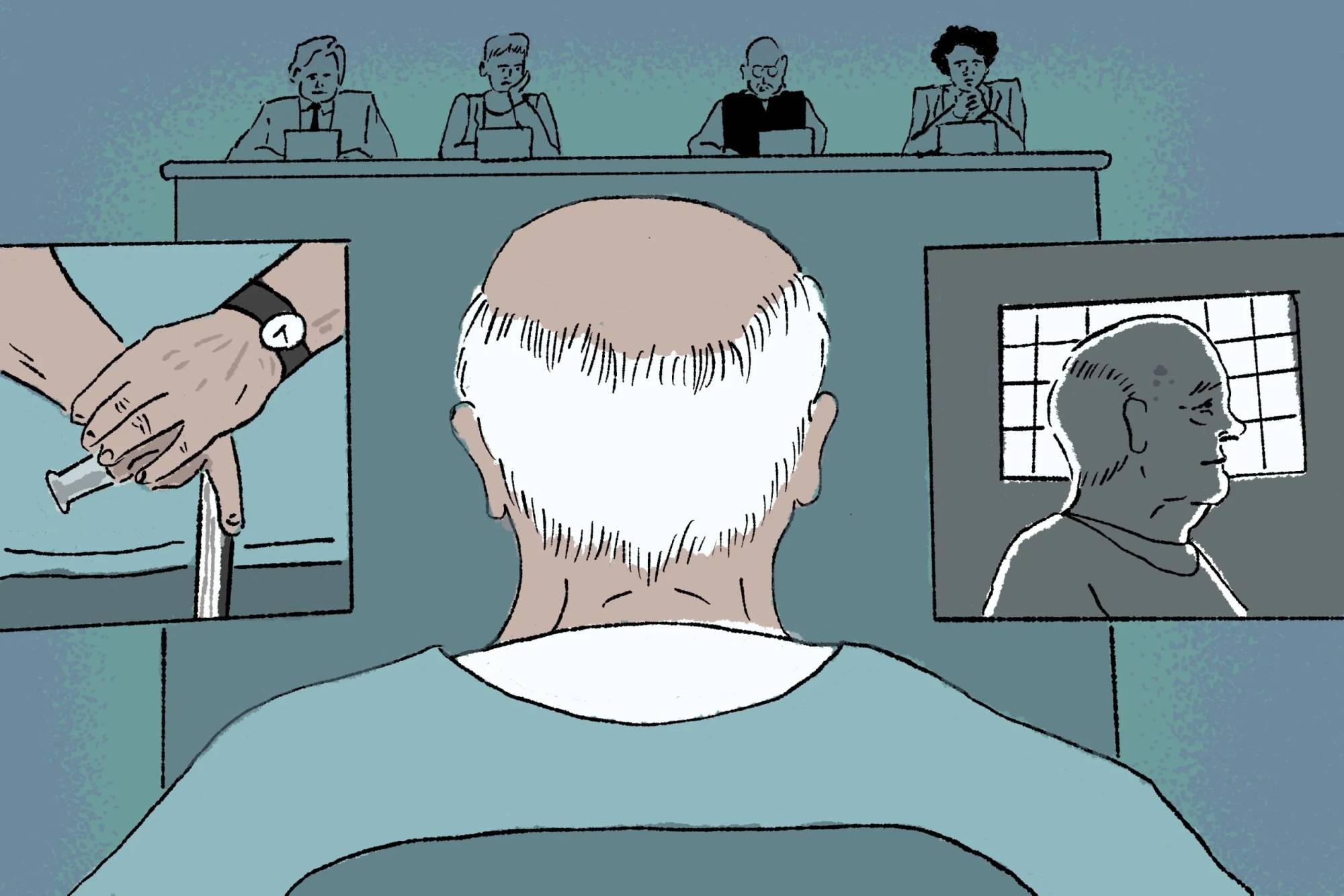
"caption": "Many California prisoners can get a chance at release through expanded parole opportunities. But gaining release requires someone to demonstrate personal growth and accountability before the state Parole Board.",
"credit": "Illustration by Gabriel Hongsdusit, CalMatters",
"altTag": null,
"description": null,
"imgSizes": {
"medium": {
"file": "https://cdn.kqed.org/wp-content/uploads/sites/10/2026/01/011226-PAROLE-GH-CM-scaled-1-2000x1334.jpeg",
"width": 2000,
"height": 1334,
"mimeType": "image/jpeg"
},
"large": {
"file": "https://cdn.kqed.org/wp-content/uploads/sites/10/2026/01/011226-PAROLE-GH-CM-scaled-1-2000x1334.jpeg",
"width": 2000,
"height": 1334,
"mimeType": "image/jpeg"
},
"thumbnail": {
"file": "https://cdn.kqed.org/wp-content/uploads/sites/10/2026/01/011226-PAROLE-GH-CM-scaled-1-160x107.jpeg",
"width": 160,
"height": 107,
"mimeType": "image/jpeg"
},
"1536x1536": {
"file": "https://cdn.kqed.org/wp-content/uploads/sites/10/2026/01/011226-PAROLE-GH-CM-scaled-1-1536x1024.jpeg",
"width": 1536,
"height": 1024,
"mimeType": "image/jpeg"
},
"2048x2048": {
"file": "https://cdn.kqed.org/wp-content/uploads/sites/10/2026/01/011226-PAROLE-GH-CM-scaled-1-2048x1366.jpeg",
"width": 2048,
"height": 1366,
"mimeType": "image/jpeg"
},
"post-thumbnail": {
"file": "https://cdn.kqed.org/wp-content/uploads/sites/10/2026/01/011226-PAROLE-GH-CM-scaled-1-672x372.jpeg",
"width": 672,
"height": 372,
"mimeType": "image/jpeg"
},
"twentyfourteen-full-width": {
"file": "https://cdn.kqed.org/wp-content/uploads/sites/10/2026/01/011226-PAROLE-GH-CM-scaled-1-1038x576.jpeg",
"width": 1038,
"height": 576,
"mimeType": "image/jpeg"
},
"full-width": {
"file": "https://cdn.kqed.org/wp-content/uploads/sites/10/2026/01/011226-PAROLE-GH-CM-scaled-1-2000x1334.jpeg",
"width": 2000,
"height": 1334,
"mimeType": "image/jpeg"
},
"npr-cds-wide": {
"file": "https://cdn.kqed.org/wp-content/uploads/sites/10/2026/01/011226-PAROLE-GH-CM-scaled-1-1200x675.jpeg",
"width": 1200,
"height": 675,
"mimeType": "image/jpeg"
},
"kqedFullSize": {
"file": "https://cdn.kqed.org/wp-content/uploads/sites/10/2026/01/011226-PAROLE-GH-CM-scaled-1.jpeg",
"width": 2560,
"height": 1707
}
},
"isLoading": false,
"fetchFailed": false
},
"news_11990987": {
"type": "attachments",
"id": "news_11990987",
"meta": {
"index": "attachments_1716263798",
"site": "news",
"id": "11990987",
"found": true
},
"title": "240408-FCIDublin-017-BL_qut (1)",
"publishDate": 1718748119,
"status": "inherit",
"parent": 11990979,
"modified": 1718748232,
"caption": "The Federal Bureau of Prisons abruptly shut down FCI Dublin in April.",
"credit": "Beth LaBerge/KQED",
"altTag": null,
"description": null,
"imgSizes": {
"medium": {
"file": "https://cdn.kqed.org/wp-content/uploads/sites/10/2024/06/240408-FCIDublin-017-BL_qut-1-800x533.jpg",
"width": 800,
"height": 533,
"mimeType": "image/jpeg"
},
"large": {
"file": "https://cdn.kqed.org/wp-content/uploads/sites/10/2024/06/240408-FCIDublin-017-BL_qut-1-1020x680.jpg",
"width": 1020,
"height": 680,
"mimeType": "image/jpeg"
},
"thumbnail": {
"file": "https://cdn.kqed.org/wp-content/uploads/sites/10/2024/06/240408-FCIDublin-017-BL_qut-1-160x107.jpg",
"width": 160,
"height": 107,
"mimeType": "image/jpeg"
},
"1536x1536": {
"file": "https://cdn.kqed.org/wp-content/uploads/sites/10/2024/06/240408-FCIDublin-017-BL_qut-1-1536x1024.jpg",
"width": 1536,
"height": 1024,
"mimeType": "image/jpeg"
},
"post-thumbnail": {
"file": "https://cdn.kqed.org/wp-content/uploads/sites/10/2024/06/240408-FCIDublin-017-BL_qut-1-672x372.jpg",
"width": 672,
"height": 372,
"mimeType": "image/jpeg"
},
"twentyfourteen-full-width": {
"file": "https://cdn.kqed.org/wp-content/uploads/sites/10/2024/06/240408-FCIDublin-017-BL_qut-1-1038x576.jpg",
"width": 1038,
"height": 576,
"mimeType": "image/jpeg"
},
"kqedFullSize": {
"file": "https://cdn.kqed.org/wp-content/uploads/sites/10/2024/06/240408-FCIDublin-017-BL_qut-1.jpg",
"width": 1920,
"height": 1280
}
},
"isLoading": false,
"fetchFailed": false
},
"news_12017609": {
"type": "attachments",
"id": "news_12017609",
"meta": {
"index": "attachments_1716263798",
"site": "news",
"id": "12017609",
"found": true
},
"title": "258_KQED_NewFolsomPrisonSacramento_04132023",
"publishDate": 1733909832,
"status": "inherit",
"parent": 0,
"modified": 1759946740,
"caption": "The East Gate of old Folsom Prison in Sacramento, where Johnny Cash played in 1968. New Folsom, which was initially administered by old Folsom’s warden, opened in 1986.",
"credit": "Beth LaBerge/KQED",
"altTag": null,
"description": null,
"imgSizes": {
"medium": {
"file": "https://cdn.kqed.org/wp-content/uploads/sites/10/2024/12/258_KQED_NewFolsomPrisonSacramento_04132023-800x533.jpg",
"width": 800,
"height": 533,
"mimeType": "image/jpeg"
},
"large": {
"file": "https://cdn.kqed.org/wp-content/uploads/sites/10/2024/12/258_KQED_NewFolsomPrisonSacramento_04132023-1020x680.jpg",
"width": 1020,
"height": 680,
"mimeType": "image/jpeg"
},
"thumbnail": {
"file": "https://cdn.kqed.org/wp-content/uploads/sites/10/2024/12/258_KQED_NewFolsomPrisonSacramento_04132023-160x107.jpg",
"width": 160,
"height": 107,
"mimeType": "image/jpeg"
},
"1536x1536": {
"file": "https://cdn.kqed.org/wp-content/uploads/sites/10/2024/12/258_KQED_NewFolsomPrisonSacramento_04132023-1536x1024.jpg",
"width": 1536,
"height": 1024,
"mimeType": "image/jpeg"
},
"2048x2048": {
"file": "https://cdn.kqed.org/wp-content/uploads/sites/10/2024/12/258_KQED_NewFolsomPrisonSacramento_04132023-2048x1365.jpg",
"width": 2048,
"height": 1365,
"mimeType": "image/jpeg"
},
"post-thumbnail": {
"file": "https://cdn.kqed.org/wp-content/uploads/sites/10/2024/12/258_KQED_NewFolsomPrisonSacramento_04132023-672x372.jpg",
"width": 672,
"height": 372,
"mimeType": "image/jpeg"
},
"twentyfourteen-full-width": {
"file": "https://cdn.kqed.org/wp-content/uploads/sites/10/2024/12/258_KQED_NewFolsomPrisonSacramento_04132023-1038x576.jpg",
"width": 1038,
"height": 576,
"mimeType": "image/jpeg"
},
"full-width": {
"file": "https://cdn.kqed.org/wp-content/uploads/sites/10/2024/12/258_KQED_NewFolsomPrisonSacramento_04132023-1920x1280.jpg",
"width": 1920,
"height": 1280,
"mimeType": "image/jpeg"
},
"kqedFullSize": {
"file": "https://cdn.kqed.org/wp-content/uploads/sites/10/2024/12/258_KQED_NewFolsomPrisonSacramento_04132023-scaled-e1759946715876.jpg",
"width": 2000,
"height": 1334
}
},
"isLoading": false,
"fetchFailed": false
},
"news_12051419": {
"type": "attachments",
"id": "news_12051419",
"meta": {
"index": "attachments_1716263798",
"site": "news",
"id": "12051419",
"found": true
},
"title": "250806-SHANICEROBINSONRESILIENCE_00065_TV-KQED",
"publishDate": 1754660895,
"status": "inherit",
"parent": 0,
"modified": 1754956305,
"caption": "Shanice Robinson poses for a portrait in her bedroom in Richmond on August 6, 2025. Shanice Robinson, who is a visiting assistant professor at San Francisco State University, a teacher for incarcerated people and an author of “Gangster’s Scholar: Love Behind Bars,\" works to advocate for those affected by the prison system.",
"credit": "Tâm Vũ/KQED",
"altTag": null,
"description": null,
"imgSizes": {
"thumbnail": {
"file": "https://cdn.kqed.org/wp-content/uploads/sites/10/2025/08/250806-SHANICEROBINSONRESILIENCE_00065_TV-KQED-160x107.jpg",
"width": 160,
"height": 107,
"mimeType": "image/jpeg"
},
"1536x1536": {
"file": "https://cdn.kqed.org/wp-content/uploads/sites/10/2025/08/250806-SHANICEROBINSONRESILIENCE_00065_TV-KQED-1536x1024.jpg",
"width": 1536,
"height": 1024,
"mimeType": "image/jpeg"
},
"post-thumbnail": {
"file": "https://cdn.kqed.org/wp-content/uploads/sites/10/2025/08/250806-SHANICEROBINSONRESILIENCE_00065_TV-KQED-672x372.jpg",
"width": 672,
"height": 372,
"mimeType": "image/jpeg"
},
"twentyfourteen-full-width": {
"file": "https://cdn.kqed.org/wp-content/uploads/sites/10/2025/08/250806-SHANICEROBINSONRESILIENCE_00065_TV-KQED-1038x576.jpg",
"width": 1038,
"height": 576,
"mimeType": "image/jpeg"
},
"kqedFullSize": {
"file": "https://cdn.kqed.org/wp-content/uploads/sites/10/2025/08/250806-SHANICEROBINSONRESILIENCE_00065_TV-KQED.jpg",
"width": 2000,
"height": 1333
}
},
"isLoading": false,
"fetchFailed": false
},
"news_11716638": {
"type": "attachments",
"id": "news_11716638",
"meta": {
"index": "attachments_1716263798",
"site": "news",
"id": "11716638",
"found": true
},
"parent": 0,
"imgSizes": {
"twentyfourteen-full-width": {
"file": "https://ww2.kqed.org/app/uploads/sites/10/2019/01/wagstaffe-newsroom-1920-1038x576.jpg",
"width": 1038,
"mimeType": "image/jpeg",
"height": 576
},
"thumbnail": {
"file": "https://ww2.kqed.org/app/uploads/sites/10/2019/01/wagstaffe-newsroom-1920-160x90.jpg",
"width": 160,
"mimeType": "image/jpeg",
"height": 90
},
"post-thumbnail": {
"file": "https://ww2.kqed.org/app/uploads/sites/10/2019/01/wagstaffe-newsroom-1920-672x372.jpg",
"width": 672,
"mimeType": "image/jpeg",
"height": 372
},
"kqedFullSize": {
"file": "https://ww2.kqed.org/app/uploads/sites/10/2019/01/wagstaffe-newsroom-1920.jpg",
"width": 1920,
"height": 1080
},
"large": {
"file": "https://ww2.kqed.org/app/uploads/sites/10/2019/01/wagstaffe-newsroom-1920-1020x574.jpg",
"width": 1020,
"mimeType": "image/jpeg",
"height": 574
},
"complete_open_graph": {
"file": "https://ww2.kqed.org/app/uploads/sites/10/2019/01/wagstaffe-newsroom-1920-1200x675.jpg",
"width": 1200,
"mimeType": "image/jpeg",
"height": 675
},
"guest-author-50": {
"file": "https://ww2.kqed.org/app/uploads/sites/10/2019/01/wagstaffe-newsroom-1920-50x50.jpg",
"width": 50,
"mimeType": "image/jpeg",
"height": 50
},
"guest-author-96": {
"file": "https://ww2.kqed.org/app/uploads/sites/10/2019/01/wagstaffe-newsroom-1920-96x96.jpg",
"width": 96,
"mimeType": "image/jpeg",
"height": 96
},
"medium": {
"file": "https://ww2.kqed.org/app/uploads/sites/10/2019/01/wagstaffe-newsroom-1920-800x450.jpg",
"width": 800,
"mimeType": "image/jpeg",
"height": 450
},
"guest-author-64": {
"file": "https://ww2.kqed.org/app/uploads/sites/10/2019/01/wagstaffe-newsroom-1920-64x64.jpg",
"width": 64,
"mimeType": "image/jpeg",
"height": 64
},
"guest-author-32": {
"file": "https://ww2.kqed.org/app/uploads/sites/10/2019/01/wagstaffe-newsroom-1920-32x32.jpg",
"width": 32,
"mimeType": "image/jpeg",
"height": 32
},
"full-width": {
"file": "https://ww2.kqed.org/app/uploads/sites/10/2019/01/wagstaffe-newsroom-1920-1920x1080.jpg",
"width": 1920,
"mimeType": "image/jpeg",
"height": 1080
},
"detail": {
"file": "https://ww2.kqed.org/app/uploads/sites/10/2019/01/wagstaffe-newsroom-1920-150x150.jpg",
"width": 150,
"mimeType": "image/jpeg",
"height": 150
},
"guest-author-128": {
"file": "https://ww2.kqed.org/app/uploads/sites/10/2019/01/wagstaffe-newsroom-1920-128x128.jpg",
"width": 128,
"mimeType": "image/jpeg",
"height": 128
}
},
"publishDate": 1546966103,
"modified": 1546971236,
"caption": "San Mateo County District Attorney Steve Wagstaffe said Tuesday his office would likely never have known about additional allegations against ex-Burlingame police Officer David Granucci if not for the new law and a collaborative reporting effort that published information about the case.",
"description": "San Mateo County District Attorney Steve Wagstaffe said Tuesday his office would likely never have known about additional allegations against ex-Burlingame police Officer David Granucci if not for the new law and a collaborative reporting effort that published information about the case.",
"title": "wagstaffe-newsroom-1920",
"credit": "KQED Newsroom",
"status": "inherit",
"isLoading": false,
"fetchFailed": false
},
"news_12045131": {
"type": "attachments",
"id": "news_12045131",
"meta": {
"index": "attachments_1716263798",
"site": "news",
"id": "12045131",
"found": true
},
"title": "110822-KernValleyPrison-LV_CM_04 copy",
"publishDate": 1750363065,
"status": "inherit",
"parent": 12045130,
"modified": 1750363098,
"caption": "Guard towers outside of Kern Valley State Prison on Nov. 15, 2022. \n",
"credit": "Larry Valenzuela/CalMatters/CatchLight Local",
"altTag": null,
"description": null,
"imgSizes": {
"thumbnail": {
"file": "https://cdn.kqed.org/wp-content/uploads/sites/10/2025/06/110822-KernValleyPrison-LV_CM_04-copy-160x107.jpg",
"width": 160,
"height": 107,
"mimeType": "image/jpeg"
},
"1536x1536": {
"file": "https://cdn.kqed.org/wp-content/uploads/sites/10/2025/06/110822-KernValleyPrison-LV_CM_04-copy-1536x1024.jpg",
"width": 1536,
"height": 1024,
"mimeType": "image/jpeg"
},
"post-thumbnail": {
"file": "https://cdn.kqed.org/wp-content/uploads/sites/10/2025/06/110822-KernValleyPrison-LV_CM_04-copy-672x372.jpg",
"width": 672,
"height": 372,
"mimeType": "image/jpeg"
},
"twentyfourteen-full-width": {
"file": "https://cdn.kqed.org/wp-content/uploads/sites/10/2025/06/110822-KernValleyPrison-LV_CM_04-copy-1038x576.jpg",
"width": 1038,
"height": 576,
"mimeType": "image/jpeg"
},
"kqedFullSize": {
"file": "https://cdn.kqed.org/wp-content/uploads/sites/10/2025/06/110822-KernValleyPrison-LV_CM_04-copy.jpg",
"width": 2000,
"height": 1333
}
},
"isLoading": false,
"fetchFailed": false
},
"news_12042809": {
"type": "attachments",
"id": "news_12042809",
"meta": {
"index": "attachments_1716263798",
"site": "news",
"id": "12042809",
"found": true
},
"title": "250530-DUBLINEMPLOYEES-52-BL-KQED",
"publishDate": 1749079934,
"status": "inherit",
"parent": 0,
"modified": 1749080006,
"caption": "A neighborhood of mobile homes next to the now-closed Federal Correctional Institution, Dublin, on May 30, 2025. Many prison employees bought homes on the property, forming a small community of staff and their families beside the facility.",
"credit": "Beth LaBerge/KQED",
"altTag": null,
"description": null,
"imgSizes": {
"medium": {
"file": "https://cdn.kqed.org/wp-content/uploads/sites/10/2025/06/250530-DUBLINEMPLOYEES-52-BL-KQED-800x533.jpg",
"width": 800,
"height": 533,
"mimeType": "image/jpeg"
},
"large": {
"file": "https://cdn.kqed.org/wp-content/uploads/sites/10/2025/06/250530-DUBLINEMPLOYEES-52-BL-KQED-1020x680.jpg",
"width": 1020,
"height": 680,
"mimeType": "image/jpeg"
},
"thumbnail": {
"file": "https://cdn.kqed.org/wp-content/uploads/sites/10/2025/06/250530-DUBLINEMPLOYEES-52-BL-KQED-160x107.jpg",
"width": 160,
"height": 107,
"mimeType": "image/jpeg"
},
"1536x1536": {
"file": "https://cdn.kqed.org/wp-content/uploads/sites/10/2025/06/250530-DUBLINEMPLOYEES-52-BL-KQED-1536x1024.jpg",
"width": 1536,
"height": 1024,
"mimeType": "image/jpeg"
},
"post-thumbnail": {
"file": "https://cdn.kqed.org/wp-content/uploads/sites/10/2025/06/250530-DUBLINEMPLOYEES-52-BL-KQED-672x372.jpg",
"width": 672,
"height": 372,
"mimeType": "image/jpeg"
},
"twentyfourteen-full-width": {
"file": "https://cdn.kqed.org/wp-content/uploads/sites/10/2025/06/250530-DUBLINEMPLOYEES-52-BL-KQED-1038x576.jpg",
"width": 1038,
"height": 576,
"mimeType": "image/jpeg"
},
"full-width": {
"file": "https://cdn.kqed.org/wp-content/uploads/sites/10/2025/06/250530-DUBLINEMPLOYEES-52-BL-KQED-1920x1280.jpg",
"width": 1920,
"height": 1280,
"mimeType": "image/jpeg"
},
"kqedFullSize": {
"file": "https://cdn.kqed.org/wp-content/uploads/sites/10/2025/06/250530-DUBLINEMPLOYEES-52-BL-KQED.jpg",
"width": 2000,
"height": 1333
}
},
"isLoading": false,
"fetchFailed": false
},
"news_12039575": {
"type": "attachments",
"id": "news_12039575",
"meta": {
"index": "attachments_1716263798",
"site": "news",
"id": "12039575",
"found": true
},
"title": "050525-Corcoran-State-Prison-GR-Getty-01-CM copy",
"publishDate": 1746820001,
"status": "inherit",
"parent": 12039556,
"modified": 1746820028,
"caption": "Two California state prisons had to create evacuation plans in 2023 when flooding approached them. They did not ultimately evacuate, but the near-disaster raised concerns about emergency planning. Here, rising water from the intermittent Tulare Lake approached one of the prisons on April 13, 2023.",
"credit": "George Rose/Getty Images",
"altTag": null,
"description": null,
"imgSizes": {
"medium": {
"file": "https://cdn.kqed.org/wp-content/uploads/sites/10/2025/05/050525-Corcoran-State-Prison-GR-Getty-01-CM-copy-800x533.jpg",
"width": 800,
"height": 533,
"mimeType": "image/jpeg"
},
"large": {
"file": "https://cdn.kqed.org/wp-content/uploads/sites/10/2025/05/050525-Corcoran-State-Prison-GR-Getty-01-CM-copy-1020x680.jpg",
"width": 1020,
"height": 680,
"mimeType": "image/jpeg"
},
"thumbnail": {
"file": "https://cdn.kqed.org/wp-content/uploads/sites/10/2025/05/050525-Corcoran-State-Prison-GR-Getty-01-CM-copy-160x107.jpg",
"width": 160,
"height": 107,
"mimeType": "image/jpeg"
},
"1536x1536": {
"file": "https://cdn.kqed.org/wp-content/uploads/sites/10/2025/05/050525-Corcoran-State-Prison-GR-Getty-01-CM-copy-1536x1024.jpg",
"width": 1536,
"height": 1024,
"mimeType": "image/jpeg"
},
"post-thumbnail": {
"file": "https://cdn.kqed.org/wp-content/uploads/sites/10/2025/05/050525-Corcoran-State-Prison-GR-Getty-01-CM-copy-672x372.jpg",
"width": 672,
"height": 372,
"mimeType": "image/jpeg"
},
"twentyfourteen-full-width": {
"file": "https://cdn.kqed.org/wp-content/uploads/sites/10/2025/05/050525-Corcoran-State-Prison-GR-Getty-01-CM-copy-1038x576.jpg",
"width": 1038,
"height": 576,
"mimeType": "image/jpeg"
},
"full-width": {
"file": "https://cdn.kqed.org/wp-content/uploads/sites/10/2025/05/050525-Corcoran-State-Prison-GR-Getty-01-CM-copy-1920x1280.jpg",
"width": 1920,
"height": 1280,
"mimeType": "image/jpeg"
},
"kqedFullSize": {
"file": "https://cdn.kqed.org/wp-content/uploads/sites/10/2025/05/050525-Corcoran-State-Prison-GR-Getty-01-CM-copy.jpg",
"width": 2000,
"height": 1333
}
},
"isLoading": false,
"fetchFailed": false
},
"news_12011384": {
"type": "attachments",
"id": "news_12011384",
"meta": {
"index": "attachments_1716263798",
"site": "news",
"id": "12011384",
"found": true
},
"title": "241022-Prop36-07-BL_qed",
"publishDate": 1730148180,
"status": "inherit",
"parent": 12011368,
"modified": 1744239494,
"caption": "Opponents of Proposition 36 hold signs at a rally in a San Francisco bookstore on Oct. 22, 2024.",
"credit": "Beth LaBerge/KQED",
"altTag": null,
"description": null,
"imgSizes": {
"medium": {
"file": "https://cdn.kqed.org/wp-content/uploads/sites/10/2024/10/241022-Prop36-07-BL_qed-800x533.jpg",
"width": 800,
"height": 533,
"mimeType": "image/jpeg"
},
"large": {
"file": "https://cdn.kqed.org/wp-content/uploads/sites/10/2024/10/241022-Prop36-07-BL_qed-1020x680.jpg",
"width": 1020,
"height": 680,
"mimeType": "image/jpeg"
},
"thumbnail": {
"file": "https://cdn.kqed.org/wp-content/uploads/sites/10/2024/10/241022-Prop36-07-BL_qed-160x107.jpg",
"width": 160,
"height": 107,
"mimeType": "image/jpeg"
},
"1536x1536": {
"file": "https://cdn.kqed.org/wp-content/uploads/sites/10/2024/10/241022-Prop36-07-BL_qed-1536x1024.jpg",
"width": 1536,
"height": 1024,
"mimeType": "image/jpeg"
},
"post-thumbnail": {
"file": "https://cdn.kqed.org/wp-content/uploads/sites/10/2024/10/241022-Prop36-07-BL_qed-672x372.jpg",
"width": 672,
"height": 372,
"mimeType": "image/jpeg"
},
"twentyfourteen-full-width": {
"file": "https://cdn.kqed.org/wp-content/uploads/sites/10/2024/10/241022-Prop36-07-BL_qed-1038x576.jpg",
"width": 1038,
"height": 576,
"mimeType": "image/jpeg"
},
"full-width": {
"file": "https://cdn.kqed.org/wp-content/uploads/sites/10/2024/10/241022-Prop36-07-BL_qed-1920x1280.jpg",
"width": 1920,
"height": 1280,
"mimeType": "image/jpeg"
},
"kqedFullSize": {
"file": "https://cdn.kqed.org/wp-content/uploads/sites/10/2024/10/241022-Prop36-07-BL_qed.jpg",
"width": 2000,
"height": 1333
}
},
"isLoading": false,
"fetchFailed": false
},
"news_12031940": {
"type": "attachments",
"id": "news_12031940",
"meta": {
"index": "attachments_1716263798",
"site": "news",
"id": "12031940",
"found": true
},
"title": "250318-FCI DUBLIN-VB-2-KQED-1",
"publishDate": 1742337483,
"status": "inherit",
"parent": 12057266,
"modified": 1758670737,
"caption": "A courtroom sketch shows former FCI Dublin correctional officer Darrell Wayne Smith, right, listening as a witness testifies in federal court in Oakland on March 18, 2025.",
"credit": "Vicki Behringer for KQED",
"altTag": null,
"description": null,
"imgSizes": {
"medium": {
"file": "https://cdn.kqed.org/wp-content/uploads/sites/10/2025/03/250318-FCI-DUBLIN-VB-2-KQED-1-800x423.jpg",
"width": 800,
"height": 423,
"mimeType": "image/jpeg"
},
"large": {
"file": "https://cdn.kqed.org/wp-content/uploads/sites/10/2025/03/250318-FCI-DUBLIN-VB-2-KQED-1-1020x539.jpg",
"width": 1020,
"height": 539,
"mimeType": "image/jpeg"
},
"thumbnail": {
"file": "https://cdn.kqed.org/wp-content/uploads/sites/10/2025/03/250318-FCI-DUBLIN-VB-2-KQED-1-160x85.jpg",
"width": 160,
"height": 85,
"mimeType": "image/jpeg"
},
"1536x1536": {
"file": "https://cdn.kqed.org/wp-content/uploads/sites/10/2025/03/250318-FCI-DUBLIN-VB-2-KQED-1-1536x812.jpg",
"width": 1536,
"height": 812,
"mimeType": "image/jpeg"
},
"post-thumbnail": {
"file": "https://cdn.kqed.org/wp-content/uploads/sites/10/2025/03/250318-FCI-DUBLIN-VB-2-KQED-1-672x372.jpg",
"width": 672,
"height": 372,
"mimeType": "image/jpeg"
},
"twentyfourteen-full-width": {
"file": "https://cdn.kqed.org/wp-content/uploads/sites/10/2025/03/250318-FCI-DUBLIN-VB-2-KQED-1-1038x576.jpg",
"width": 1038,
"height": 576,
"mimeType": "image/jpeg"
},
"full-width": {
"file": "https://cdn.kqed.org/wp-content/uploads/sites/10/2025/03/250318-FCI-DUBLIN-VB-2-KQED-1-1920x1015.jpg",
"width": 1920,
"height": 1015,
"mimeType": "image/jpeg"
},
"kqedFullSize": {
"file": "https://cdn.kqed.org/wp-content/uploads/sites/10/2025/03/250318-FCI-DUBLIN-VB-2-KQED-1.jpg",
"width": 2000,
"height": 1057
}
},
"isLoading": false,
"fetchFailed": false
},
"news_12034390": {
"type": "attachments",
"id": "news_12034390",
"meta": {
"index": "attachments_1716263798",
"site": "news",
"id": "12034390",
"found": true
},
"title": "Dublin Federal Correctional Institution",
"publishDate": 1743696944,
"status": "inherit",
"parent": 12034387,
"modified": 1743697000,
"caption": "The Dublin Federal Correctional Institution on Friday, Sept. 13, 2019, in Dublin, California. ",
"credit": "Anda Chu/MediaNews Group/The Mercury News via Getty Images",
"altTag": null,
"description": null,
"imgSizes": {
"medium": {
"file": "https://cdn.kqed.org/wp-content/uploads/sites/10/2025/04/GettyImages-1181905632_qed-1-800x533.jpg",
"width": 800,
"height": 533,
"mimeType": "image/jpeg"
},
"large": {
"file": "https://cdn.kqed.org/wp-content/uploads/sites/10/2025/04/GettyImages-1181905632_qed-1-1020x680.jpg",
"width": 1020,
"height": 680,
"mimeType": "image/jpeg"
},
"thumbnail": {
"file": "https://cdn.kqed.org/wp-content/uploads/sites/10/2025/04/GettyImages-1181905632_qed-1-160x107.jpg",
"width": 160,
"height": 107,
"mimeType": "image/jpeg"
},
"1536x1536": {
"file": "https://cdn.kqed.org/wp-content/uploads/sites/10/2025/04/GettyImages-1181905632_qed-1-1536x1024.jpg",
"width": 1536,
"height": 1024,
"mimeType": "image/jpeg"
},
"post-thumbnail": {
"file": "https://cdn.kqed.org/wp-content/uploads/sites/10/2025/04/GettyImages-1181905632_qed-1-672x372.jpg",
"width": 672,
"height": 372,
"mimeType": "image/jpeg"
},
"twentyfourteen-full-width": {
"file": "https://cdn.kqed.org/wp-content/uploads/sites/10/2025/04/GettyImages-1181905632_qed-1-1038x576.jpg",
"width": 1038,
"height": 576,
"mimeType": "image/jpeg"
},
"full-width": {
"file": "https://cdn.kqed.org/wp-content/uploads/sites/10/2025/04/GettyImages-1181905632_qed-1-1920x1280.jpg",
"width": 1920,
"height": 1280,
"mimeType": "image/jpeg"
},
"kqedFullSize": {
"file": "https://cdn.kqed.org/wp-content/uploads/sites/10/2025/04/GettyImages-1181905632_qed-1.jpg",
"width": 2000,
"height": 1333
}
},
"isLoading": false,
"fetchFailed": false
}
},
"audioPlayerReducer": {
"postId": "stream_live",
"isPaused": true,
"isPlaying": false,
"pfsActive": false,
"pledgeModalIsOpen": true,
"playerDrawerIsOpen": false,
"liveAudioPlayStartedAt": 0,
"liveAudioPlayContext": ""
},
"authorsReducer": {
"byline_news_12071074": {
"type": "authors",
"id": "byline_news_12071074",
"meta": {
"override": true
},
"slug": "byline_news_12071074",
"name": "Lynne La, CalMatters",
"isLoading": false
},
"byline_news_12069695": {
"type": "authors",
"id": "byline_news_12069695",
"meta": {
"override": true
},
"slug": "byline_news_12069695",
"name": "Joe Garcia, CalMatters",
"isLoading": false
},
"byline_news_12045130": {
"type": "authors",
"id": "byline_news_12045130",
"meta": {
"override": true
},
"slug": "byline_news_12045130",
"name": "Cayla Mihalovich, CalMatters",
"isLoading": false
},
"byline_news_12039556": {
"type": "authors",
"id": "byline_news_12039556",
"meta": {
"override": true
},
"slug": "byline_news_12039556",
"name": "\u003ca href=\"https://calmatters.org/author/cayla-mihalovich/\">Cayla Mihalovich\u003c/a>, CalMatters",
"isLoading": false
},
"tychehendricks": {
"type": "authors",
"id": "259",
"meta": {
"index": "authors_1716337520",
"id": "259",
"found": true
},
"name": "Tyche Hendricks",
"firstName": "Tyche",
"lastName": "Hendricks",
"slug": "tychehendricks",
"email": "thendricks@kqed.org",
"display_author_email": true,
"staff_mastheads": [
"news"
],
"title": "KQED Senior Editor, Immigration",
"bio": "Tyche Hendricks is KQED’s senior editor for immigration, leading coverage of the policy and politics that affect California’s immigrant communities. Her work for KQED’s radio and online audiences is also carried on NPR and other national outlets. She has been recognized with awards from the Radio and Television News Directors Association, the Society for Professional Journalists; the Education Writers Association; the Best of the West and the National Federation of Community Broadcasters. Before joining KQED in 2010, Tyche spent more than a dozen years as a newspaper reporter, notably at the \u003ci>San Francisco Chronicle\u003c/i>. At different times she has covered criminal justice, government and politics and urban planning. Tyche has taught in the MFA Creative Writing program at the University of San Francisco and at UC Berkeley’s Graduate School of Journalism, where she was co-director of a national immigration symposium for professional journalists. She is the author of \u003ci>The Wind Doesn't Need a Passport: Stories from the U.S.-Mexico Borderlands\u003c/i> (University of California Press). ",
"avatar": "https://secure.gravatar.com/avatar/2a0bd7f2418d4be9198f23bf99a161f3f7a98fb9bf6d3820763d49b5c5f8fc81?s=600&d=blank&r=g",
"twitter": "tychehendricks",
"bluesky": null,
"facebook": null,
"instagram": null,
"linkedin": null,
"sites": [
{
"site": "news",
"roles": [
"editor"
]
},
{
"site": "stateofhealth",
"roles": [
"editor"
]
},
{
"site": "liveblog",
"roles": [
"author"
]
}
],
"headData": {
"title": "Tyche Hendricks | KQED",
"description": "KQED Senior Editor, Immigration",
"ogImgSrc": "https://secure.gravatar.com/avatar/2a0bd7f2418d4be9198f23bf99a161f3f7a98fb9bf6d3820763d49b5c5f8fc81?s=600&d=blank&r=g",
"twImgSrc": "https://secure.gravatar.com/avatar/2a0bd7f2418d4be9198f23bf99a161f3f7a98fb9bf6d3820763d49b5c5f8fc81?s=600&d=blank&r=g"
},
"isLoading": false,
"link": "/author/tychehendricks"
},
"mlagos": {
"type": "authors",
"id": "3239",
"meta": {
"index": "authors_1716337520",
"id": "3239",
"found": true
},
"name": "Marisa Lagos",
"firstName": "Marisa",
"lastName": "Lagos",
"slug": "mlagos",
"email": "mlagos@kqed.org",
"display_author_email": false,
"staff_mastheads": [
"news"
],
"title": "KQED Contributor",
"bio": "Marisa Lagos is a correspondent for KQED’s California Politics and Government Desk and co-hosts the award-winning show and podcast, Political Breakdown. At KQED, Lagos also conducts reporting, analysis and investigations into state, local and national politics for radio, TV, online and onstage. In 2022, she and co-host, Scott Shafer, moderated the only gubernatorial debate in California. In 2020, the \u003ci>Washington Post\u003c/i> named her one of the top political journalists in California; she was nominated for a Peabody and won several other awards for her work investigating the 2017 California wildfires. She has worked at the \u003ci>San Francisco Chronicle\u003c/i>, \u003ci>San Francisco Examiner\u003c/i> and \u003ci>Los Angeles Times\u003c/i>. A UC Santa Barbara graduate, she lives in San Francisco with her two sons and husband.",
"avatar": "https://secure.gravatar.com/avatar/a261a0d3696fc066871ef96b85b5e7d2?s=600&d=blank&r=g",
"twitter": "@mlagos",
"facebook": null,
"instagram": null,
"linkedin": null,
"sites": [
{
"site": "arts",
"roles": [
"author"
]
},
{
"site": "news",
"roles": [
"editor"
]
},
{
"site": "science",
"roles": [
"editor"
]
},
{
"site": "forum",
"roles": [
"author"
]
},
{
"site": "liveblog",
"roles": [
"author"
]
}
],
"headData": {
"title": "Marisa Lagos | KQED",
"description": "KQED Contributor",
"ogImgSrc": "https://secure.gravatar.com/avatar/a261a0d3696fc066871ef96b85b5e7d2?s=600&d=blank&r=g",
"twImgSrc": "https://secure.gravatar.com/avatar/a261a0d3696fc066871ef96b85b5e7d2?s=600&d=blank&r=g"
},
"isLoading": false,
"link": "/author/mlagos"
},
"jsmall": {
"type": "authors",
"id": "6625",
"meta": {
"index": "authors_1716337520",
"id": "6625",
"found": true
},
"name": "Julie Small",
"firstName": "Julie",
"lastName": "Small",
"slug": "jsmall",
"email": "jsmall@kqed.org",
"display_author_email": true,
"staff_mastheads": [
"news"
],
"title": "KQED Contributor",
"bio": "Julie Small reports on criminal justice and immigration.\r\n\r\nShe was part of a team at KQED awarded a regional 2019 Edward R. Murrow award for continuing coverage of the Trump Administration's family separation policy.\r\n\r\nThe Society for Professional Journalists recognized Julie's 2018 \u003ca href=\"https://www.kqed.org/news/11636262/the-officer-tased-him-31-times-the-sheriff-called-his-death-an-accident\">reporting\u003c/a> on the San Joaquin County Sheriff's \u003ca href=\"https://www.kqed.org/news/11634689/autopsy-doctors-sheriff-overrode-death-findings-to-protect-law-enforcement\">interference\u003c/a> in death investigations with an Excellence in Journalism Award for Ongoing Coverage.\r\n\r\nJulie's\u003ca href=\"https://www.kqed.org/news/11039666/two-mentally-ill-inmates-died-one-month-in-santa-clara\"> reporting\u003c/a> with Lisa Pickoff-White on the treatment of mentally ill offenders in California jails earned a 2017 regional Edward R. Murrow Award for news reporting and an investigative reporting award from the SPJ of Northern California.\r\n\r\nBefore joining KQED, Julie covered government and politics in Sacramento for Southern California Public Radio (SCPR). Her 2010 \u003ca href=\"https://www.scpr.org/specials/prisonmedical/\">series\u003c/a> on lapses in California’s prison medical care also won a regional Edward R. Murrow Award for investigative reporting and a Golden Mic Award from the RTNDA of Southern California.\r\n\r\nJulie began her career in journalism in 2000 as the deputy foreign editor for public radio's \u003cem>Marketplace, \u003c/em>while earning her master's degree in journalism from USC’s Annenberg School of Communication.",
"avatar": "https://secure.gravatar.com/avatar/236dc12b6acae3aacdd008a5a0aa2fd6fd55b1755fa3d3d923df5d3588e0a764?s=600&d=blank&r=g",
"twitter": "@SmallRadio2",
"bluesky": null,
"facebook": null,
"instagram": null,
"linkedin": null,
"sites": [
{
"site": "news",
"roles": [
"editor"
]
},
{
"site": "stateofhealth",
"roles": [
"author"
]
},
{
"site": "science",
"roles": [
"author"
]
},
{
"site": "liveblog",
"roles": [
"author"
]
}
],
"headData": {
"title": "Julie Small | KQED",
"description": "KQED Contributor",
"ogImgSrc": "https://secure.gravatar.com/avatar/236dc12b6acae3aacdd008a5a0aa2fd6fd55b1755fa3d3d923df5d3588e0a764?s=600&d=blank&r=g",
"twImgSrc": "https://secure.gravatar.com/avatar/236dc12b6acae3aacdd008a5a0aa2fd6fd55b1755fa3d3d923df5d3588e0a764?s=600&d=blank&r=g"
},
"isLoading": false,
"link": "/author/jsmall"
},
"ahall": {
"type": "authors",
"id": "11490",
"meta": {
"index": "authors_1716337520",
"id": "11490",
"found": true
},
"name": "Alex Hall",
"firstName": "Alex",
"lastName": "Hall",
"slug": "ahall",
"email": "ahall@kqed.org",
"display_author_email": false,
"staff_mastheads": [
"news"
],
"title": "KQED Enterprise & Accountability Reporter",
"bio": "Alex Hall is KQED's Enterprise and Accountability Reporter. She previously covered the Central Valley for five years from KQED's bureau in Fresno. Before joining KQED, Alex was an investigative reporting fellow at Wisconsin Public Radio and the Wisconsin Center for Investigative Journalism. She has also worked as a bilingual producer for NPR's investigative unit and freelance video producer for Reuters TV on the Latin America desk. She got her start in journalism in South America, where she worked as a radio producer and Spanish-English translator for CNN Chile. Her documentary and investigation into the series of deadly COVID-19 outbreaks at Foster Farms won a national Edward R. Murrow award and was named an Investigative Reporters & Editors award finalist. Alex's reporting for Reveal on the Wisconsin dairy industry's reliance on undocumented immigrant labor was made into a film, Los Lecheros, which won a regional Edward R. Murrow award for best news documentary.",
"avatar": "https://secure.gravatar.com/avatar/04c28ad4a7caa7ac2ef39c655c4030c993a3f331481d1da4799bb76ea85b9afa?s=600&d=blank&r=g",
"twitter": "@chalexhall",
"bluesky": null,
"facebook": null,
"instagram": null,
"linkedin": null,
"sites": [
{
"site": "news",
"roles": [
"editor"
]
},
{
"site": "liveblog",
"roles": [
"author"
]
}
],
"headData": {
"title": "Alex Hall | KQED",
"description": "KQED Enterprise & Accountability Reporter",
"ogImgSrc": "https://secure.gravatar.com/avatar/04c28ad4a7caa7ac2ef39c655c4030c993a3f331481d1da4799bb76ea85b9afa?s=600&d=blank&r=g",
"twImgSrc": "https://secure.gravatar.com/avatar/04c28ad4a7caa7ac2ef39c655c4030c993a3f331481d1da4799bb76ea85b9afa?s=600&d=blank&r=g"
},
"isLoading": false,
"link": "/author/ahall"
},
"kdebenedetti": {
"type": "authors",
"id": "11913",
"meta": {
"index": "authors_1716337520",
"id": "11913",
"found": true
},
"name": "Katie DeBenedetti",
"firstName": "Katie",
"lastName": "DeBenedetti",
"slug": "kdebenedetti",
"email": "kdebenedetti@kqed.org",
"display_author_email": false,
"staff_mastheads": [
"news",
"science"
],
"title": "KQED Contributor",
"bio": "Katie DeBenedetti is a digital reporter covering daily news for the Express Desk. Prior to joining KQED as a culture reporting intern in January 2024, she covered education and city government for the Napa Valley Register.",
"avatar": "https://secure.gravatar.com/avatar/6e31073cb8f7e4214ab03f42771d0f45?s=600&d=blank&r=g",
"twitter": null,
"facebook": null,
"instagram": null,
"linkedin": null,
"sites": [
{
"site": "news",
"roles": [
"author"
]
},
{
"site": "science",
"roles": [
"author"
]
},
{
"site": "liveblog",
"roles": [
"author"
]
}
],
"headData": {
"title": "Katie DeBenedetti | KQED",
"description": "KQED Contributor",
"ogImgSrc": "https://secure.gravatar.com/avatar/6e31073cb8f7e4214ab03f42771d0f45?s=600&d=blank&r=g",
"twImgSrc": "https://secure.gravatar.com/avatar/6e31073cb8f7e4214ab03f42771d0f45?s=600&d=blank&r=g"
},
"isLoading": false,
"link": "/author/kdebenedetti"
},
"emanoukian": {
"type": "authors",
"id": "11925",
"meta": {
"index": "authors_1716337520",
"id": "11925",
"found": true
},
"name": "Elize Manoukian",
"firstName": "Elize",
"lastName": "Manoukian",
"slug": "emanoukian",
"email": "emanoukian@KQED.org",
"display_author_email": false,
"staff_mastheads": [
"news"
],
"title": "Digital News Editor",
"bio": "Elize Manoukian is an award-winning audio producer and editor on the Express Desk, KQED's digital news platform. Her work has appeared on KPFA, Interlochen Public Radio, Oregon Public Broadcast, the New York Daily News, LA Times and the San Diego Union-Tribune. You can reach her at emanoukian@kqed.org.",
"avatar": "https://secure.gravatar.com/avatar/4525f1a8e46ccb30933b32653d9772064cfefe3fa655eb45b3b3a80341f6bdad?s=600&d=blank&r=g",
"twitter": null,
"bluesky": null,
"facebook": null,
"instagram": null,
"linkedin": null,
"sites": [
{
"site": "arts",
"roles": [
"editor"
]
},
{
"site": "news",
"roles": [
"editor"
]
},
{
"site": "science",
"roles": [
"editor"
]
}
],
"headData": {
"title": "Elize Manoukian | KQED",
"description": "Digital News Editor",
"ogImgSrc": "https://secure.gravatar.com/avatar/4525f1a8e46ccb30933b32653d9772064cfefe3fa655eb45b3b3a80341f6bdad?s=600&d=blank&r=g",
"twImgSrc": "https://secure.gravatar.com/avatar/4525f1a8e46ccb30933b32653d9772064cfefe3fa655eb45b3b3a80341f6bdad?s=600&d=blank&r=g"
},
"isLoading": false,
"link": "/author/emanoukian"
},
"sprabha": {
"type": "authors",
"id": "11976",
"meta": {
"index": "authors_1716337520",
"id": "11976",
"found": true
},
"name": "Srishti Prabha",
"firstName": "Srishti",
"lastName": "Prabha",
"slug": "sprabha",
"email": "sprabha@KQED.org",
"display_author_email": false,
"staff_mastheads": [],
"title": "KQED Contributor",
"bio": "Srishti Prabha is a producer and reporter for KQED news and podcasts. They also work on longform human-interest features as a Beat Reporting Fellow with KALW. Their reporting has appeared on NPR, Morning Edition, All Things Considered, The California Report Magazine, and more. Most recently, Prabha covered education for CapRadio as a Report for America corps member, focusing on issues affecting communities of color in the Sacramento region. They previously served as managing editor of India Currents, where they reported on immigration, cultural identity, and health in South Asian communities. Prabha's work has been recognized by the San Francisco Press Club, the California News Publishers Association, and the Edward R. Murrow Awards.",
"avatar": "https://secure.gravatar.com/avatar/cc4d8ef770090714faad7e1d24857f806d09340456c5734167b9a6361b175d7d?s=600&d=blank&r=g",
"twitter": null,
"bluesky": null,
"facebook": null,
"instagram": null,
"linkedin": null,
"sites": [
{
"site": "news",
"roles": [
"editor"
]
}
],
"headData": {
"title": "Srishti Prabha | KQED",
"description": "KQED Contributor",
"ogImgSrc": "https://secure.gravatar.com/avatar/cc4d8ef770090714faad7e1d24857f806d09340456c5734167b9a6361b175d7d?s=600&d=blank&r=g",
"twImgSrc": "https://secure.gravatar.com/avatar/cc4d8ef770090714faad7e1d24857f806d09340456c5734167b9a6361b175d7d?s=600&d=blank&r=g"
},
"isLoading": false,
"link": "/author/sprabha"
}
},
"pagesReducer": {
"news_tag_california-prisons": {
"type": "terms",
"id": "news_616",
"meta": {
"index": "terms_1716263798",
"site": "news",
"id": "616",
"score": 10.4075165
},
"featImg": null,
"name": "California prisons",
"description": null,
"taxonomy": "tag",
"headData": {
"twImgId": null,
"twTitle": null,
"ogTitle": null,
"ogImgId": null,
"twDescription": null,
"description": null,
"title": "California prisons Archives | KQED News",
"ogDescription": null
},
"ttid": 625,
"slug": "california-prisons",
"isLoading": false,
"title": "California prisons",
"pageMeta": {
"site": "news",
"WpPageTemplate": "page-topic-editorial",
"currentPage": 2
},
"blocks": [
{
"blockName": "kqed/post-list",
"attrs": {
"layout": "cardArticle2",
"query": "posts/news?tag=california-prisons",
"seeMore": false,
"paginated": true,
"page": 2
}
},
{
"blockName": "kqed/ad"
}
]
}
},
"pfsSessionReducer": {},
"postsReducer": {
"stream_live": {
"type": "live",
"id": "stream_live",
"audioUrl": "https://hls.kqed.org/hls/kqed_app/playlist.m3u8",
"title": "Live Stream",
"excerpt": "Live Stream information currently unavailable.",
"link": "/radio",
"featImg": "",
"label": {
"name": "KQED Live",
"link": "/"
}
},
"stream_kqedNewscast": {
"type": "posts",
"id": "stream_kqedNewscast",
"audioUrl": "https://www.kqed.org/.stream/anon/radio/RDnews/newscast.mp3?_=1",
"title": "KQED Newscast",
"featImg": "",
"label": {
"name": "88.5 FM",
"link": "/"
}
},
"news_12071074": {
"type": "posts",
"id": "news_12071074",
"meta": {
"index": "posts_1716263798",
"site": "news",
"id": "12071074",
"score": null,
"sort": [
1769459845000
]
},
"guestAuthors": [],
"slug": "heres-what-california-leaders-said-about-latest-minneapolis-killing",
"title": "Here’s What California Leaders Said About Latest Minneapolis Killing",
"publishDate": 1769459845,
"format": "standard",
"headTitle": "Here’s What California Leaders Said About Latest Minneapolis Killing | KQED",
"labelTerm": {},
"content": "\u003cp>\u003ca href=\"https://www.kqed.org/news/tag/gavin-newsom\">Gov. Gavin Newsom\u003c/a> on Saturday \u003ca href=\"https://x.com/gavinnewsom/status/2015240929465307474?s=46\">called for\u003c/a> U.S. Secretary of Homeland Security Kristi Noem to resign and Border Patrol chief Gregory Bovino to be fired a day after \u003ca href=\"https://www.kqed.org/immigration\">federal immigration enforcement\u003c/a> officers shot at another U.S. citizen in Minneapolis multiple times, killing him.\u003c/p>\n\u003cp>Weeks after the \u003ca href=\"https://www.kqed.org/news/12069540/san-francisco-da-weighs-in-on-minneapolis-ice-shooting\">death of Renee Good\u003c/a>, Border Patrol agents killed Alex Pretti on Friday, a 37-year-old intensive care nurse who worked for the U.S. Department of Veterans Affairs.\u003c/p>\n\u003cp>During an altercation in which Pretti was observing and documenting federal agents beforehand, multiple officers tackled Pretti to the ground. Pretti reportedly had a gun, for which he had a \u003ca href=\"https://www.axios.com/2026/01/25/gun-groups-challenge-minneapolis-shooting-pretti#:~:text=The%20Minneapolis%20police%20chief%20said%20Pretti%20had%20a%20permit%20to%20carry%2C%20and%20videos%20show%20him%20holding%20a%20cell%20phone%2C%20not%20his%20gun%2C%20before%20officers%20wrestled%20him%20to%20the%20ground.\">lawful \u003c/a>permit to carry. After one agent took away the gun while Pretti was \u003ca href=\"https://abcnews.go.com/Politics/minute-minute-timeline-fatal-shooting-alex-pretti-federal/story?id=129547199\">pinned\u003c/a> on the ground, officers \u003ca href=\"https://www.nytimes.com/interactive/2026/01/24/us/minneapolis-shooting-alex-pretti-timeline.html\">appear \u003c/a>to have fired at him at least 10 times.\u003c/p>\n\u003cp>[ad fullwidth]\u003c/p>\n\u003cp>Immediately after the shooting, members of the Trump administration called Pretti a domestic terrorist. First Assistant U.S. Attorney and former California Republican Assemblymember Bill Essayli defended the agents, arguing that there “is a high likelihood” law enforcement officers “will be legally justified in shooting you” if you approach them with a gun — an assertion that the National Rifle Association \u003ca href=\"https://x.com/NRA/status/2015227627464728661\">called\u003c/a> “dangerous and wrong.”[aside postID=news_12070016 hero='https://cdn.kqed.org/wp-content/uploads/sites/10/2026/01/260115-JAMES-COOK-EF-01-KQED.jpg']On Sunday President Donald Trump also \u003ca href=\"https://www.nytimes.com/2026/01/25/us/politics/trump-blames-democrats-minneapolis-killings.html\">blamed\u003c/a> Democrats and sanctuary laws, such as those in California, for the two deaths in Minneapolis.\u003c/p>\n\u003cp>In response, Newsom called for Border Patrol officers to return to the border, ending the militarization of the U.S. Immigration and Customs Enforcement and investigations into “every single federal agent who is breaking the law.” His office also posted a know-your-rights \u003ca href=\"https://www.gov.ca.gov/2026/01/24/knowyourrights/\">guide\u003c/a> for dealing with local police and immigration enforcement officers.\u003c/p>\n\u003cp>But the governor’s statements are part of a political calculus that is playing out as he makes a likely bid for the presidency. After Good’s death, Newsom’s team \u003ca href=\"https://x.com/GovPressOffice/status/2009067671124627833\">responded\u003c/a> that ICE is “state sponsored terrorism.” Newsom eventually walked back this description during an\u003ca href=\"https://katv.com/news/nation-world/top-5-moments-from-gavin-newsoms-podcast-with-ben-shapiro-midterms-california-ice-immigration-republicans\"> interview\u003c/a> with conservative commentator Ben Shapiro.\u003c/p>\n\u003cp>Meanwhile, as Congress weighs a spending deal that would \u003ca href=\"https://www.kqed.org/news/12070519/california-senators-visit-immigration-jail-ahead-of-looming-ice-funding-bill-deadline\">include billions of dollars more for the U.S. Department of Homeland Security\u003c/a>, Assemblymember Isaac Bryan of Culver City \u003ca href=\"https://www.instagram.com/reel/DT6gwHVjw1Y/?igsh=NjZiM2M3MzIxNA==\">called \u003c/a>for a general strike to oppose ICE, similar to the large-scale walkout\u003ca href=\"https://www.kqed.org/news/12070474/bay-area-free-america-protests-mark-first-year-of-trump-2-0\"> organized \u003c/a>in Minneapolis.\u003c/p>\n\u003cp>California Attorney General Rob Bonta also \u003ca href=\"https://oag.ca.gov/system/files/attachments/press-docs/Amicus%20Brief%20MN%20v.%20Noem.pdf\">filed \u003c/a>a brief supporting Minnesota’s lawsuit opposing the federal government’s immigration campaign in the state.\u003c/p>\n\u003cp>Along with 19 other attorneys general, the brief argued that the “government’s unlawful conduct … infringes upon (Minnesota’s) constitutionally-guaranteed state sovereignty,” and that without legal intervention the government “will no doubt threaten other States and local communities across the nation.”\u003c/p>\n\u003cp>\u003cem>This article was \u003ca href=\"https://calmatters.org/justice/2026/01/parole-board-suitability-denials/\">originally published on CalMatters\u003c/a> and was republished under the \u003ca href=\"https://creativecommons.org/licenses/by-nc-nd/4.0/\">Creative Commons Attribution-NonCommercial-NoDerivatives\u003c/a> license.\u003c/em>\u003c/p>\n\u003cp>\u003c/p>\n",
"blocks": [],
"excerpt": "Gov. Gavin Newsom on Saturday called for Trump administration officials to be fired after federal immigration enforcement officers shot and killed another U.S. citizen in Minneapolis.",
"status": "publish",
"parent": 0,
"modified": 1769459845,
"stats": {
"hasAudio": false,
"hasVideo": false,
"hasChartOrMap": false,
"iframeSrcs": [],
"hasGoogleForm": false,
"hasGallery": false,
"hasHearkenModule": false,
"hasPolis": false,
"paragraphCount": 12,
"wordCount": 526
},
"headData": {
"title": "Here’s What California Leaders Said About Latest Minneapolis Killing | KQED",
"description": "Gov. Gavin Newsom on Saturday called for Trump administration officials to be fired after federal immigration enforcement officers shot and killed another U.S. citizen in Minneapolis.",
"ogTitle": "",
"ogDescription": "",
"ogImgId": "",
"twTitle": "",
"twDescription": "",
"twImgId": "",
"schema": {
"@context": "https://schema.org",
"@type": "NewsArticle",
"headline": "Here’s What California Leaders Said About Latest Minneapolis Killing",
"datePublished": "2026-01-26T12:37:25-08:00",
"dateModified": "2026-01-26T12:37:25-08:00",
"image": "https://cdn.kqed.org/wp-content/uploads/2020/02/KQED-OG-Image@1x.png",
"isAccessibleForFree": "True",
"publisher": {
"@type": "NewsMediaOrganization",
"@id": "https://www.kqed.org/#organization",
"name": "KQED",
"logo": "https://cdn.kqed.org/wp-content/uploads/2020/02/KQED-OG-Image@1x.png",
"url": "https://www.kqed.org",
"sameAs": [
"https://www.facebook.com/KQED",
"https://twitter.com/KQED",
"https://www.instagram.com/kqed/",
"https://www.tiktok.com/@kqedofficial",
"https://www.linkedin.com/company/kqed",
"https://www.youtube.com/channel/UCeC0IOo7i1P_61zVUWbJ4nw"
]
}
}
},
"primaryCategory": {
"termId": 13,
"slug": "politics",
"name": "Politics"
},
"source": "CalMatters",
"sourceUrl": "https://calmatters.org/",
"sticky": false,
"nprByline": "Lynne La, CalMatters",
"nprStoryId": "kqed-12071074",
"templateType": "standard",
"featuredImageType": "standard",
"excludeFromSiteSearch": "Include",
"showOnAuthorArchivePages": "No",
"articleAge": "0",
"path": "/news/12071074/heres-what-california-leaders-said-about-latest-minneapolis-killing",
"audioTrackLength": null,
"parsedContent": [
{
"type": "contentString",
"content": "\u003cdiv class=\"post-body\">\u003cp>\u003cp>\u003ca href=\"https://www.kqed.org/news/tag/gavin-newsom\">Gov. Gavin Newsom\u003c/a> on Saturday \u003ca href=\"https://x.com/gavinnewsom/status/2015240929465307474?s=46\">called for\u003c/a> U.S. Secretary of Homeland Security Kristi Noem to resign and Border Patrol chief Gregory Bovino to be fired a day after \u003ca href=\"https://www.kqed.org/immigration\">federal immigration enforcement\u003c/a> officers shot at another U.S. citizen in Minneapolis multiple times, killing him.\u003c/p>\n\u003cp>Weeks after the \u003ca href=\"https://www.kqed.org/news/12069540/san-francisco-da-weighs-in-on-minneapolis-ice-shooting\">death of Renee Good\u003c/a>, Border Patrol agents killed Alex Pretti on Friday, a 37-year-old intensive care nurse who worked for the U.S. Department of Veterans Affairs.\u003c/p>\n\u003cp>During an altercation in which Pretti was observing and documenting federal agents beforehand, multiple officers tackled Pretti to the ground. Pretti reportedly had a gun, for which he had a \u003ca href=\"https://www.axios.com/2026/01/25/gun-groups-challenge-minneapolis-shooting-pretti#:~:text=The%20Minneapolis%20police%20chief%20said%20Pretti%20had%20a%20permit%20to%20carry%2C%20and%20videos%20show%20him%20holding%20a%20cell%20phone%2C%20not%20his%20gun%2C%20before%20officers%20wrestled%20him%20to%20the%20ground.\">lawful \u003c/a>permit to carry. After one agent took away the gun while Pretti was \u003ca href=\"https://abcnews.go.com/Politics/minute-minute-timeline-fatal-shooting-alex-pretti-federal/story?id=129547199\">pinned\u003c/a> on the ground, officers \u003ca href=\"https://www.nytimes.com/interactive/2026/01/24/us/minneapolis-shooting-alex-pretti-timeline.html\">appear \u003c/a>to have fired at him at least 10 times.\u003c/p>\n\u003cp>\u003c/p>\u003c/div>",
"attributes": {
"named": {},
"numeric": []
}
},
{
"type": "component",
"content": "",
"name": "ad",
"attributes": {
"named": {
"label": "fullwidth"
},
"numeric": [
"fullwidth"
]
}
},
{
"type": "contentString",
"content": "\u003cdiv class=\"post-body\">\u003cp>\u003c/p>\n\u003cp>Immediately after the shooting, members of the Trump administration called Pretti a domestic terrorist. First Assistant U.S. Attorney and former California Republican Assemblymember Bill Essayli defended the agents, arguing that there “is a high likelihood” law enforcement officers “will be legally justified in shooting you” if you approach them with a gun — an assertion that the National Rifle Association \u003ca href=\"https://x.com/NRA/status/2015227627464728661\">called\u003c/a> “dangerous and wrong.”\u003c/p>\u003c/div>",
"attributes": {
"named": {},
"numeric": []
}
},
{
"type": "component",
"content": "",
"name": "aside",
"attributes": {
"named": {
"postid": "news_12070016",
"hero": "https://cdn.kqed.org/wp-content/uploads/sites/10/2026/01/260115-JAMES-COOK-EF-01-KQED.jpg",
"label": ""
},
"numeric": []
}
},
{
"type": "contentString",
"content": "\u003cdiv class=\"post-body\">\u003cp>On Sunday President Donald Trump also \u003ca href=\"https://www.nytimes.com/2026/01/25/us/politics/trump-blames-democrats-minneapolis-killings.html\">blamed\u003c/a> Democrats and sanctuary laws, such as those in California, for the two deaths in Minneapolis.\u003c/p>\n\u003cp>In response, Newsom called for Border Patrol officers to return to the border, ending the militarization of the U.S. Immigration and Customs Enforcement and investigations into “every single federal agent who is breaking the law.” His office also posted a know-your-rights \u003ca href=\"https://www.gov.ca.gov/2026/01/24/knowyourrights/\">guide\u003c/a> for dealing with local police and immigration enforcement officers.\u003c/p>\n\u003cp>But the governor’s statements are part of a political calculus that is playing out as he makes a likely bid for the presidency. After Good’s death, Newsom’s team \u003ca href=\"https://x.com/GovPressOffice/status/2009067671124627833\">responded\u003c/a> that ICE is “state sponsored terrorism.” Newsom eventually walked back this description during an\u003ca href=\"https://katv.com/news/nation-world/top-5-moments-from-gavin-newsoms-podcast-with-ben-shapiro-midterms-california-ice-immigration-republicans\"> interview\u003c/a> with conservative commentator Ben Shapiro.\u003c/p>\n\u003cp>Meanwhile, as Congress weighs a spending deal that would \u003ca href=\"https://www.kqed.org/news/12070519/california-senators-visit-immigration-jail-ahead-of-looming-ice-funding-bill-deadline\">include billions of dollars more for the U.S. Department of Homeland Security\u003c/a>, Assemblymember Isaac Bryan of Culver City \u003ca href=\"https://www.instagram.com/reel/DT6gwHVjw1Y/?igsh=NjZiM2M3MzIxNA==\">called \u003c/a>for a general strike to oppose ICE, similar to the large-scale walkout\u003ca href=\"https://www.kqed.org/news/12070474/bay-area-free-america-protests-mark-first-year-of-trump-2-0\"> organized \u003c/a>in Minneapolis.\u003c/p>\n\u003cp>California Attorney General Rob Bonta also \u003ca href=\"https://oag.ca.gov/system/files/attachments/press-docs/Amicus%20Brief%20MN%20v.%20Noem.pdf\">filed \u003c/a>a brief supporting Minnesota’s lawsuit opposing the federal government’s immigration campaign in the state.\u003c/p>\n\u003cp>Along with 19 other attorneys general, the brief argued that the “government’s unlawful conduct … infringes upon (Minnesota’s) constitutionally-guaranteed state sovereignty,” and that without legal intervention the government “will no doubt threaten other States and local communities across the nation.”\u003c/p>\n\u003cp>\u003cem>This article was \u003ca href=\"https://calmatters.org/justice/2026/01/parole-board-suitability-denials/\">originally published on CalMatters\u003c/a> and was republished under the \u003ca href=\"https://creativecommons.org/licenses/by-nc-nd/4.0/\">Creative Commons Attribution-NonCommercial-NoDerivatives\u003c/a> license.\u003c/em>\u003c/p>\n\u003cp>\u003c/p>\n\u003c/div>\u003c/p>",
"attributes": {
"named": {},
"numeric": []
}
}
],
"link": "/news/12071074/heres-what-california-leaders-said-about-latest-minneapolis-killing",
"authors": [
"byline_news_12071074"
],
"categories": [
"news_31795",
"news_34167",
"news_8",
"news_13"
],
"tags": [
"news_18538",
"news_616",
"news_22772",
"news_17725"
],
"featImg": "news_12071076",
"label": "source_news_12071074"
},
"news_12069695": {
"type": "posts",
"id": "news_12069695",
"meta": {
"index": "posts_1716263798",
"site": "news",
"id": "12069695",
"score": null,
"sort": [
1768412393000
]
},
"guestAuthors": [],
"slug": "many-california-prisoners-get-a-second-chance-a-declining-parole-rate-shows-thats-no-guarantee",
"title": "Many California Prisoners Get a Second Chance. A Declining Parole Rate Shows That's No Guarantee",
"publishDate": 1768412393,
"format": "standard",
"headTitle": "Many California Prisoners Get a Second Chance. A Declining Parole Rate Shows That’s No Guarantee | KQED",
"labelTerm": {},
"content": "\u003cp>\u003cem>This story was originally published by \u003ca href=\"https://calmatters.org/\">CalMatters\u003c/a>. \u003ca href=\"https://calmatters.org/subscribe-to-calmatters/\">Sign up\u003c/a> for their newsletters.\u003c/em>\u003c/p>\n\u003cp>Thousands of prisoners in California go before the Board of Parole Hearings each year in hopes of a chance at freedom. It’s a daunting situation that deals in high stakes for all involved.\u003c/p>\n\u003cp>Parole commissioners must follow legal standards while balancing questions of rehabilitation, public safety and the lasting harms caused by the crime. Convicted offenders \u003ca href=\"https://calmatters.org/justice/2025/09/menendez-brothers-parole-lessons/\">must try to present themselves truthfully\u003c/a> — warts and all — as their custody files and psychological risk assessments are openly discussed. Victims and prosecutors attend hearings, usually to argue against someone’s parole. Every so often, they advocate for the incarcerated person’s release.\u003c/p>\n\u003cp>Other than the \u003ca href=\"https://www.latimes.com/opinion/story/2023-05-31/leslie-van-houten-california-parole-gavin-newsom\">governor’s veto power\u003c/a>, the commissioners’ findings are generally the last buffer against a former criminal being released. Commissioners go through extensive training and take great care in their decisions of whether someone is suitable for parole, as evidenced by a recidivism rate of less than 3% — meaning 97% of prisoners paroled never reoffend. Less than 1% return for crimes involving violence against another person.\u003c/p>\n\u003cp>[ad fullwidth]\u003c/p>\n\u003cp>Over the last decade or so, California \u003ca href=\"https://www.cdcr.ca.gov/bph/changes-in-the-law-expanding-parole-eligibility-for-long-term-offenders/\">expanded parole opportunities\u003c/a> for people convicted of crimes during their youth and for older prisoners. The annual number of parole hearings steadily increased — from 5,226 in 2018 to 9,017 in 2022, before plateauing at about 8,000 in 2023 and remaining there. The state’s prison population also dropped significantly during those years, from 128,000 in 2018 to \u003ca href=\"https://calmatters.org/justice/2025/09/california-prisons-recidivism-study/\">about 90,000 today\u003c/a>.\u003c/p>\n\u003cp>The California Department of Corrections and Rehabilitation has tried to \u003ca href=\"https://calmatters.org/justice/2022/06/prison-rehabilitation-norway-model/\">shift its model of incarceration\u003c/a> to focus on release from incarceration and re-entering society. Offering young prisoners better opportunities early in their incarceration can help them avoid the pitfalls of drug use, violence and gang activity in prison. Older prisoners generally tend to “age out” of their previous criminal behavior.[aside postID=news_12069430 hero='https://cdn.kqed.org/wp-content/uploads/sites/10/2025/03/250303-AntiochPolice-02-BL_qed-1020x680.jpg']By incentivizing rehabilitative programming, substance abuse treatment and higher education, the system now aspires to help offenders work productively toward personal growth and self-improvement.\u003c/p>\n\u003cp>But at the same time, even with seemingly much more opportunity and incentives, the success rate for prisoners to be found suitable for parole has gradually declined — from 39% in 2018 to roughly 35% for 2019 through 2021 to below 25% in 2025.\u003c/p>\n\u003cp>CalMatters talked to parole experts to try and understand the dynamics behind the numbers. No one could point to any one reason for the significant decline in parole suitability rates; the experts instead said the downward turn can be attributed to many different factors.\u003c/p>\n\u003cp>Here’s what we learned:\u003c/p>\n\u003ch2>Some older prisoners struggle at hearings\u003c/h2>\n\u003cp>Many elderly California prisoners with life sentences began their terms decades ago when parole opportunities were scarce. They logically believed they had no hope of ever being paroled. Many were stuck at remote prisons that lacked access to rehabilitative programs. Now they face significant challenges to fully grasp and articulate evidence of personal transformation that parole commissioners require, such as insight, remorse and accountability.[aside postID=news_12069220 hero='https://cdn.kqed.org/wp-content/uploads/sites/10/2025/09/KernCountyICEDetentionGetty.jpg']“The number of people who are now elderly parole-eligible is going up in a significant way,” said Lilli Paratore, director of legal services for UnCommon Law, an organization that represents dozens of parole candidates each year at no cost to the prisoners. “In 2013, only 19% of hearings were 60-plus, but now 32% of hearings are people who are 60-plus, and of course that just mirrors the aging prison population.”\u003c/p>\n\u003cp>About 19,000 prisoners are 55 or older, according to the state budget proposal Gov. Gavin Newsom released this month.\u003c/p>\n\u003cp>And as these older prisoners continue to age, their mental and physical health can deteriorate and adversely impact their ability to present themselves to the parole board. Instead of becoming better prepared over time, repeated parole denials just leave them feeling more and more frustrated, confused and discouraged.\u003c/p>\n\u003ch2>Less urgency from some young offenders\u003c/h2>\n\u003cp>The stakes are not nearly the same for offenders without a life sentence who committed crimes while under age 26. Expanded parole opportunities now allow them to go before the board after 15 years. Unlike lifers, they know they have a pre-determined release date. Getting denied parole might mean waiting another five or 10 years to go home, rather than potentially never being found suitable to be set free.\u003c/p>\n\u003cp>Additionally, younger people may not make the best use of those first 15 years behind bars to pursue rehabilitation. Some do, but many falter before figuring themselves out. They tend to view their parole hearing as a chance to serve a reduced sentence, rather than their only chance at freedom.\u003c/p>\n\u003cp>In contrast, youthful offenders serving life sentences get their first chance at parole after serving a minimum of either 20, or more usually, 25 years. That naturally allows them more time to mature and prepare themselves for a hearing. They appreciate their parole opportunities in ways non-lifers just can’t, because their sentences are open-ended.\u003c/p>\n\u003ch2>High bar for sex offenders\u003c/h2>\n\u003cp>Sex crimes generate the most scrutiny at parole hearings and raise the most psychological red flags. Because these crimes are so difficult to speak about openly in group discussion — particularly within incarcerated communities — few rehabilitative programs are designed to address the specific triggers, causative factors and flawed belief systems underlying these offenses.[aside postID=news_12039556 hero='https://cdn.kqed.org/wp-content/uploads/sites/10/2025/05/050525-Corcoran-State-Prison-GR-Getty-01-CM-copy-1020x680.jpg']“There’s so many different types of people who commit sex crimes for a large variety of reasons and successful programming for those folks has to be tailored to that specific issue,” said former Board of Parole Hearings Executive Officer Jennifer Shaffer. “So you’ll have, for instance, sadists, people who actually get physically turned on by torturing people. That’s very different from somebody who has anger issues and expresses them through basically sexually dominating somebody.”\u003c/p>\n\u003cp>Because it’s much harder for sexual offenders to demonstrate to the parole board the necessary personal insight and transformation, parole commissioners are less likely to clear these offenders as no longer an “unreasonable risk to public safety.”\u003c/p>\n\u003cp>Part of the problem is that it’s more difficult for sexual offenders to clear a psychological risk assessment. “As horrible as this sounds, they may have at some point equated pain with sexual arousal — and breaking that connection is really difficult and takes a lot of very intense programming,” said Shaffer.\u003c/p>\n\u003ch2>A prisoner’s digital footprint\u003c/h2>\n\u003cp>Parole commissioners look through a person’s entire dossier days before their hearing and are tasked with interpreting all the facts within it through the lens of public safety. Any piece of information — such as visitor logs, write-ups, personal expenses and more — might be deemed pertinent.\u003c/p>\n\u003cp>“In the last few years, the world of information the board is looking at is growing — even though that information isn’t necessarily related to violence risk,” said Paratore. “They’re looking more and more at (unemployment) fraud and restitution avoidance. They’re looking at medical records. They’re looking at confidential information more and more.\u003c/p>\n\u003cp>“What they think they need to consider has just grown without any guardrails and resulting in more people being denied parole because the board does not know how to properly interpret that information. This is especially true of medical records.”\u003c/p>\n\u003cp>California began providing free electronic tablets to its incarcerated population in 2021, which ensures that all phone calls and text messages are now digitally monitored and ripe for analysis and search by artificial intelligence. Those types of detailed records can easily be highlighted now and made available to parole commissioners.\u003c/p>\n\u003cp>For example, more focus can be paid to how prisoners get outside money placed into their institutional trust accounts, and how they go about paying for canteen and other services. In the aftermath of COVID relief and the huge rash of fraudulent unemployment claims statewide, some incarcerated individuals’ trust account activity came into question. The extra level of scrutiny drew unwanted attention to other forms of potential misconduct.\u003c/p>\n\u003ch2>Restitution fraud\u003c/h2>\n\u003cp>Criminal courts can order large amounts of restitution when a person is convicted, usually separated into court fees and victims services fees. Prisoners who owe restitution will always have 50% deducted from any wages or incoming money until the debt is paid off. If a person works in the kitchen for $80 a month, they get to keep $40. Same thing if their family sends them $200. They’ll receive $100 to spend.\u003c/p>\n\u003cp>Particularly for lifers convicted of violent crimes, restitution can be quite high and seemingly impossible to finish paying through these 50% deducted installments. To avoid losing half their spending money, some prisoners will direct their families and friends to deposit money into other people’s accounts who do not owe restitution. The prisoners will agree to a much lower deduction fee amongst themselves, usually 20%, and hold onto more spending money for canteen.\u003c/p>\n\u003cp>But such under-the-table transactions now leave more of a digital footprint. Parole commissioners want to see a person show remorse and demonstrate awareness into the impact of their crime on the victims. It’s a bad look for that same individual to be seen participating in \u003ca href=\"https://knock-la.com/california-lifers-are-kept-behind-bars-despite-being-found-suitable-for-parole/\">restitution avoidance\u003c/a> to save themselves money.\u003c/p>\n\u003cp>“The restitution issue is the only thing I can think of to really explain the decline in the grant rate,” said Vanessa Nelson-Sloane, Director of Life Support Alliance, an advocacy group for incarcerated and formerly incarcerated lifers. “Sometimes when they pass a new law, a new population comes into the parole cycle, but there’s been no new laws recently that would make any difference in the considerations.\u003c/p>\n\u003cp>“I am so sure that this is it because that’s all I hear about from people who are getting denied — restitution, restitution, restitution.”\u003c/p>\n\u003cp>\u003cem>CalMatters data reporter Jeremia Kimelman contributed to this story.\u003c/em>\u003c/p>\n\u003cp>\u003cem>Joe Garcia is a California Local News fellow.\u003c/em>\u003c/p>\n\u003cp>\u003cem>This article was \u003ca href=\"https://calmatters.org/justice/2026/01/parole-board-suitability-denials/\">originally published on CalMatters\u003c/a> and was republished under the \u003ca href=\"https://creativecommons.org/licenses/by-nc-nd/4.0/\">Creative Commons Attribution-NonCommercial-NoDerivatives\u003c/a> license.\u003c/em>\u003c/p>\n\u003cp>[ad floatright]\u003c/p>\n",
"blocks": [],
"excerpt": "Gaining release requires someone to demonstrate personal growth and accountability before the state Parole Board.\r\n\r\n",
"status": "publish",
"parent": 0,
"modified": 1768412393,
"stats": {
"hasAudio": false,
"hasVideo": false,
"hasChartOrMap": false,
"iframeSrcs": [],
"hasGoogleForm": false,
"hasGallery": false,
"hasHearkenModule": false,
"hasPolis": false,
"paragraphCount": 33,
"wordCount": 1775
},
"headData": {
"title": "Many California Prisoners Get a Second Chance. A Declining Parole Rate Shows That's No Guarantee | KQED",
"description": "Gaining release requires someone to demonstrate personal growth and accountability before the state Parole Board.\r\n\r\n",
"ogTitle": "",
"ogDescription": "",
"ogImgId": "",
"twTitle": "",
"twDescription": "",
"twImgId": "",
"schema": {
"@context": "https://schema.org",
"@type": "NewsArticle",
"headline": "Many California Prisoners Get a Second Chance. A Declining Parole Rate Shows That's No Guarantee",
"datePublished": "2026-01-14T09:39:53-08:00",
"dateModified": "2026-01-14T09:39:53-08:00",
"image": "https://cdn.kqed.org/wp-content/uploads/2020/02/KQED-OG-Image@1x.png",
"isAccessibleForFree": "True",
"publisher": {
"@type": "NewsMediaOrganization",
"@id": "https://www.kqed.org/#organization",
"name": "KQED",
"logo": "https://cdn.kqed.org/wp-content/uploads/2020/02/KQED-OG-Image@1x.png",
"url": "https://www.kqed.org",
"sameAs": [
"https://www.facebook.com/KQED",
"https://twitter.com/KQED",
"https://www.instagram.com/kqed/",
"https://www.tiktok.com/@kqedofficial",
"https://www.linkedin.com/company/kqed",
"https://www.youtube.com/channel/UCeC0IOo7i1P_61zVUWbJ4nw"
]
}
}
},
"primaryCategory": {
"termId": 34167,
"slug": "criminal-justice",
"name": "Criminal Justice"
},
"source": "CalMatters",
"sourceUrl": "https://calmatters.org/",
"sticky": false,
"nprByline": "Joe Garcia, CalMatters",
"nprStoryId": "kqed-12069695",
"templateType": "standard",
"featuredImageType": "standard",
"excludeFromSiteSearch": "Include",
"showOnAuthorArchivePages": "No",
"articleAge": "0",
"path": "/news/12069695/many-california-prisoners-get-a-second-chance-a-declining-parole-rate-shows-thats-no-guarantee",
"audioTrackLength": null,
"parsedContent": [
{
"type": "contentString",
"content": "\u003cdiv class=\"post-body\">\u003cp>\u003cp>\u003cem>This story was originally published by \u003ca href=\"https://calmatters.org/\">CalMatters\u003c/a>. \u003ca href=\"https://calmatters.org/subscribe-to-calmatters/\">Sign up\u003c/a> for their newsletters.\u003c/em>\u003c/p>\n\u003cp>Thousands of prisoners in California go before the Board of Parole Hearings each year in hopes of a chance at freedom. It’s a daunting situation that deals in high stakes for all involved.\u003c/p>\n\u003cp>Parole commissioners must follow legal standards while balancing questions of rehabilitation, public safety and the lasting harms caused by the crime. Convicted offenders \u003ca href=\"https://calmatters.org/justice/2025/09/menendez-brothers-parole-lessons/\">must try to present themselves truthfully\u003c/a> — warts and all — as their custody files and psychological risk assessments are openly discussed. Victims and prosecutors attend hearings, usually to argue against someone’s parole. Every so often, they advocate for the incarcerated person’s release.\u003c/p>\n\u003cp>Other than the \u003ca href=\"https://www.latimes.com/opinion/story/2023-05-31/leslie-van-houten-california-parole-gavin-newsom\">governor’s veto power\u003c/a>, the commissioners’ findings are generally the last buffer against a former criminal being released. Commissioners go through extensive training and take great care in their decisions of whether someone is suitable for parole, as evidenced by a recidivism rate of less than 3% — meaning 97% of prisoners paroled never reoffend. Less than 1% return for crimes involving violence against another person.\u003c/p>\n\u003cp>\u003c/p>\u003c/div>",
"attributes": {
"named": {},
"numeric": []
}
},
{
"type": "component",
"content": "",
"name": "ad",
"attributes": {
"named": {
"label": "fullwidth"
},
"numeric": [
"fullwidth"
]
}
},
{
"type": "contentString",
"content": "\u003cdiv class=\"post-body\">\u003cp>\u003c/p>\n\u003cp>Over the last decade or so, California \u003ca href=\"https://www.cdcr.ca.gov/bph/changes-in-the-law-expanding-parole-eligibility-for-long-term-offenders/\">expanded parole opportunities\u003c/a> for people convicted of crimes during their youth and for older prisoners. The annual number of parole hearings steadily increased — from 5,226 in 2018 to 9,017 in 2022, before plateauing at about 8,000 in 2023 and remaining there. The state’s prison population also dropped significantly during those years, from 128,000 in 2018 to \u003ca href=\"https://calmatters.org/justice/2025/09/california-prisons-recidivism-study/\">about 90,000 today\u003c/a>.\u003c/p>\n\u003cp>The California Department of Corrections and Rehabilitation has tried to \u003ca href=\"https://calmatters.org/justice/2022/06/prison-rehabilitation-norway-model/\">shift its model of incarceration\u003c/a> to focus on release from incarceration and re-entering society. Offering young prisoners better opportunities early in their incarceration can help them avoid the pitfalls of drug use, violence and gang activity in prison. Older prisoners generally tend to “age out” of their previous criminal behavior.\u003c/p>\u003c/div>",
"attributes": {
"named": {},
"numeric": []
}
},
{
"type": "component",
"content": "",
"name": "aside",
"attributes": {
"named": {
"postid": "news_12069430",
"hero": "https://cdn.kqed.org/wp-content/uploads/sites/10/2025/03/250303-AntiochPolice-02-BL_qed-1020x680.jpg",
"label": ""
},
"numeric": []
}
},
{
"type": "contentString",
"content": "\u003cdiv class=\"post-body\">\u003cp>By incentivizing rehabilitative programming, substance abuse treatment and higher education, the system now aspires to help offenders work productively toward personal growth and self-improvement.\u003c/p>\n\u003cp>But at the same time, even with seemingly much more opportunity and incentives, the success rate for prisoners to be found suitable for parole has gradually declined — from 39% in 2018 to roughly 35% for 2019 through 2021 to below 25% in 2025.\u003c/p>\n\u003cp>CalMatters talked to parole experts to try and understand the dynamics behind the numbers. No one could point to any one reason for the significant decline in parole suitability rates; the experts instead said the downward turn can be attributed to many different factors.\u003c/p>\n\u003cp>Here’s what we learned:\u003c/p>\n\u003ch2>Some older prisoners struggle at hearings\u003c/h2>\n\u003cp>Many elderly California prisoners with life sentences began their terms decades ago when parole opportunities were scarce. They logically believed they had no hope of ever being paroled. Many were stuck at remote prisons that lacked access to rehabilitative programs. Now they face significant challenges to fully grasp and articulate evidence of personal transformation that parole commissioners require, such as insight, remorse and accountability.\u003c/p>\u003c/div>",
"attributes": {
"named": {},
"numeric": []
}
},
{
"type": "component",
"content": "",
"name": "aside",
"attributes": {
"named": {
"postid": "news_12069220",
"hero": "https://cdn.kqed.org/wp-content/uploads/sites/10/2025/09/KernCountyICEDetentionGetty.jpg",
"label": ""
},
"numeric": []
}
},
{
"type": "contentString",
"content": "\u003cdiv class=\"post-body\">\u003cp>“The number of people who are now elderly parole-eligible is going up in a significant way,” said Lilli Paratore, director of legal services for UnCommon Law, an organization that represents dozens of parole candidates each year at no cost to the prisoners. “In 2013, only 19% of hearings were 60-plus, but now 32% of hearings are people who are 60-plus, and of course that just mirrors the aging prison population.”\u003c/p>\n\u003cp>About 19,000 prisoners are 55 or older, according to the state budget proposal Gov. Gavin Newsom released this month.\u003c/p>\n\u003cp>And as these older prisoners continue to age, their mental and physical health can deteriorate and adversely impact their ability to present themselves to the parole board. Instead of becoming better prepared over time, repeated parole denials just leave them feeling more and more frustrated, confused and discouraged.\u003c/p>\n\u003ch2>Less urgency from some young offenders\u003c/h2>\n\u003cp>The stakes are not nearly the same for offenders without a life sentence who committed crimes while under age 26. Expanded parole opportunities now allow them to go before the board after 15 years. Unlike lifers, they know they have a pre-determined release date. Getting denied parole might mean waiting another five or 10 years to go home, rather than potentially never being found suitable to be set free.\u003c/p>\n\u003cp>Additionally, younger people may not make the best use of those first 15 years behind bars to pursue rehabilitation. Some do, but many falter before figuring themselves out. They tend to view their parole hearing as a chance to serve a reduced sentence, rather than their only chance at freedom.\u003c/p>\n\u003cp>In contrast, youthful offenders serving life sentences get their first chance at parole after serving a minimum of either 20, or more usually, 25 years. That naturally allows them more time to mature and prepare themselves for a hearing. They appreciate their parole opportunities in ways non-lifers just can’t, because their sentences are open-ended.\u003c/p>\n\u003ch2>High bar for sex offenders\u003c/h2>\n\u003cp>Sex crimes generate the most scrutiny at parole hearings and raise the most psychological red flags. Because these crimes are so difficult to speak about openly in group discussion — particularly within incarcerated communities — few rehabilitative programs are designed to address the specific triggers, causative factors and flawed belief systems underlying these offenses.\u003c/p>\u003c/div>",
"attributes": {
"named": {},
"numeric": []
}
},
{
"type": "component",
"content": "",
"name": "aside",
"attributes": {
"named": {
"postid": "news_12039556",
"hero": "https://cdn.kqed.org/wp-content/uploads/sites/10/2025/05/050525-Corcoran-State-Prison-GR-Getty-01-CM-copy-1020x680.jpg",
"label": ""
},
"numeric": []
}
},
{
"type": "contentString",
"content": "\u003cdiv class=\"post-body\">\u003cp>“There’s so many different types of people who commit sex crimes for a large variety of reasons and successful programming for those folks has to be tailored to that specific issue,” said former Board of Parole Hearings Executive Officer Jennifer Shaffer. “So you’ll have, for instance, sadists, people who actually get physically turned on by torturing people. That’s very different from somebody who has anger issues and expresses them through basically sexually dominating somebody.”\u003c/p>\n\u003cp>Because it’s much harder for sexual offenders to demonstrate to the parole board the necessary personal insight and transformation, parole commissioners are less likely to clear these offenders as no longer an “unreasonable risk to public safety.”\u003c/p>\n\u003cp>Part of the problem is that it’s more difficult for sexual offenders to clear a psychological risk assessment. “As horrible as this sounds, they may have at some point equated pain with sexual arousal — and breaking that connection is really difficult and takes a lot of very intense programming,” said Shaffer.\u003c/p>\n\u003ch2>A prisoner’s digital footprint\u003c/h2>\n\u003cp>Parole commissioners look through a person’s entire dossier days before their hearing and are tasked with interpreting all the facts within it through the lens of public safety. Any piece of information — such as visitor logs, write-ups, personal expenses and more — might be deemed pertinent.\u003c/p>\n\u003cp>“In the last few years, the world of information the board is looking at is growing — even though that information isn’t necessarily related to violence risk,” said Paratore. “They’re looking more and more at (unemployment) fraud and restitution avoidance. They’re looking at medical records. They’re looking at confidential information more and more.\u003c/p>\n\u003cp>“What they think they need to consider has just grown without any guardrails and resulting in more people being denied parole because the board does not know how to properly interpret that information. This is especially true of medical records.”\u003c/p>\n\u003cp>California began providing free electronic tablets to its incarcerated population in 2021, which ensures that all phone calls and text messages are now digitally monitored and ripe for analysis and search by artificial intelligence. Those types of detailed records can easily be highlighted now and made available to parole commissioners.\u003c/p>\n\u003cp>For example, more focus can be paid to how prisoners get outside money placed into their institutional trust accounts, and how they go about paying for canteen and other services. In the aftermath of COVID relief and the huge rash of fraudulent unemployment claims statewide, some incarcerated individuals’ trust account activity came into question. The extra level of scrutiny drew unwanted attention to other forms of potential misconduct.\u003c/p>\n\u003ch2>Restitution fraud\u003c/h2>\n\u003cp>Criminal courts can order large amounts of restitution when a person is convicted, usually separated into court fees and victims services fees. Prisoners who owe restitution will always have 50% deducted from any wages or incoming money until the debt is paid off. If a person works in the kitchen for $80 a month, they get to keep $40. Same thing if their family sends them $200. They’ll receive $100 to spend.\u003c/p>\n\u003cp>Particularly for lifers convicted of violent crimes, restitution can be quite high and seemingly impossible to finish paying through these 50% deducted installments. To avoid losing half their spending money, some prisoners will direct their families and friends to deposit money into other people’s accounts who do not owe restitution. The prisoners will agree to a much lower deduction fee amongst themselves, usually 20%, and hold onto more spending money for canteen.\u003c/p>\n\u003cp>But such under-the-table transactions now leave more of a digital footprint. Parole commissioners want to see a person show remorse and demonstrate awareness into the impact of their crime on the victims. It’s a bad look for that same individual to be seen participating in \u003ca href=\"https://knock-la.com/california-lifers-are-kept-behind-bars-despite-being-found-suitable-for-parole/\">restitution avoidance\u003c/a> to save themselves money.\u003c/p>\n\u003cp>“The restitution issue is the only thing I can think of to really explain the decline in the grant rate,” said Vanessa Nelson-Sloane, Director of Life Support Alliance, an advocacy group for incarcerated and formerly incarcerated lifers. “Sometimes when they pass a new law, a new population comes into the parole cycle, but there’s been no new laws recently that would make any difference in the considerations.\u003c/p>\n\u003cp>“I am so sure that this is it because that’s all I hear about from people who are getting denied — restitution, restitution, restitution.”\u003c/p>\n\u003cp>\u003cem>CalMatters data reporter Jeremia Kimelman contributed to this story.\u003c/em>\u003c/p>\n\u003cp>\u003cem>Joe Garcia is a California Local News fellow.\u003c/em>\u003c/p>\n\u003cp>\u003cem>This article was \u003ca href=\"https://calmatters.org/justice/2026/01/parole-board-suitability-denials/\">originally published on CalMatters\u003c/a> and was republished under the \u003ca href=\"https://creativecommons.org/licenses/by-nc-nd/4.0/\">Creative Commons Attribution-NonCommercial-NoDerivatives\u003c/a> license.\u003c/em>\u003c/p>\n\u003cp>\u003c/p>\u003c/div>",
"attributes": {
"named": {},
"numeric": []
}
},
{
"type": "component",
"content": "",
"name": "ad",
"attributes": {
"named": {
"label": "floatright"
},
"numeric": [
"floatright"
]
}
},
{
"type": "contentString",
"content": "\u003cdiv class=\"post-body\">\u003cp>\u003c/p>\n\u003c/div>\u003c/p>",
"attributes": {
"named": {},
"numeric": []
}
}
],
"link": "/news/12069695/many-california-prisoners-get-a-second-chance-a-declining-parole-rate-shows-thats-no-guarantee",
"authors": [
"byline_news_12069695"
],
"categories": [
"news_31795",
"news_34167",
"news_8"
],
"tags": [
"news_18538",
"news_616",
"news_22772",
"news_17725"
],
"featImg": "news_12069699",
"label": "source_news_12069695"
},
"news_12067566": {
"type": "posts",
"id": "news_12067566",
"meta": {
"index": "posts_1716263798",
"site": "news",
"id": "12067566",
"score": null,
"sort": [
1766015536000
]
},
"guestAuthors": [],
"slug": "dublin-council-takes-stand-against-turning-closed-prison-into-ice-detention",
"title": "Dublin Council Takes Stand Against Turning Closed Prison Into ICE Detention",
"publishDate": 1766015536,
"format": "standard",
"headTitle": "Dublin Council Takes Stand Against Turning Closed Prison Into ICE Detention | KQED",
"labelTerm": {
"site": "news"
},
"content": "\u003cp>The Dublin City Council unanimously voted Tuesday night to oppose repurposing \u003ca href=\"https://www.kqed.org/news/tag/federal-correctional-institution-in-dublin\">a shuttered federal women’s prison\u003c/a> as an immigration detention facility or for any other type of incarceration.\u003c/p>\n\u003cp>FCI Dublin \u003ca href=\"https://www.kqed.org/news/11984115/women-forced-to-relocate-from-fci-dublin-prison-report-traumatizing-journey-seek-compassionate-release\">closed in scandal\u003c/a> last year amid allegations from scores of incarcerated women that they had faced years of sexual assault and mistreatment there. Following \u003ca href=\"https://www.ktvu.com/news/prison-union-concerned-fci-dublin-could-be-turned-ice-detention-center\">news reports\u003c/a> that U.S. Immigration and Customs Enforcement officials had toured the facility in February, community members rallied against a potential pivot to ICE detention.\u003c/p>\n\u003cp>More than 100 Dublin residents and others attended Tuesday evening’s council meeting, carrying signs that read “ICE out of Dublin,” and “We welcome immigrants here.”\u003c/p>\n\u003cp>[ad fullwidth]\u003c/p>\n\u003cp>Vice Mayor Jean Josey said the message was heard loud and clear. Forty percent of Dublin residents are foreign-born, and she said she’s concerned they could be subject to racial profiling by immigration agents, as she’s observed in the Trump administration’s aggressive approach to enforcement in other cities.\u003c/p>\n\u003cp>“We’re seeing fear around the country. We’re seeing impacts on schools and small businesses,” she said. “When there’s a detention facility nearby, it is well documented that there’s increased enforcement that’s not necessarily targeting folks with criminal backgrounds, but folks who may just look as if they might be immigrants.”\u003c/p>\n\u003cfigure id=\"attachment_11997597\" class=\"wp-caption aligncenter\" style=\"max-width: 2000px\">\u003cimg loading=\"lazy\" decoding=\"async\" class=\"size-full wp-image-11997597\" src=\"https://cdn.kqed.org/wp-content/uploads/sites/10/2024/07/240408-FCIDublin-012-BL_qed.jpg\" alt=\"\" width=\"2000\" height=\"1333\" srcset=\"https://cdn.kqed.org/wp-content/uploads/sites/10/2024/07/240408-FCIDublin-012-BL_qed.jpg 2000w, https://cdn.kqed.org/wp-content/uploads/sites/10/2024/07/240408-FCIDublin-012-BL_qed-800x533.jpg 800w, https://cdn.kqed.org/wp-content/uploads/sites/10/2024/07/240408-FCIDublin-012-BL_qed-1020x680.jpg 1020w, https://cdn.kqed.org/wp-content/uploads/sites/10/2024/07/240408-FCIDublin-012-BL_qed-160x107.jpg 160w, https://cdn.kqed.org/wp-content/uploads/sites/10/2024/07/240408-FCIDublin-012-BL_qed-1536x1024.jpg 1536w, https://cdn.kqed.org/wp-content/uploads/sites/10/2024/07/240408-FCIDublin-012-BL_qed-1920x1280.jpg 1920w\" sizes=\"auto, (max-width: 2000px) 100vw, 2000px\">\u003cfigcaption class=\"wp-caption-text\">A sign for the Federal Correctional Institution, Dublin, a former prison for women, in Dublin on April 8, 2024. \u003ccite>(Beth LaBerge/KQED)\u003c/cite>\u003c/figcaption>\u003c/figure>\n\u003cp>In addition, Josey said, the prison has problems such as mold, asbestos and structural deficiencies that make it unsafe for inmates and staff. And residential neighborhoods have grown up around the facility.\u003c/p>\n\u003cp>\u003cstrong>“\u003c/strong>There are homes right up against the property,” she said. “We don’t feel that it is an appropriate facility at this point to house anyone.”\u003c/p>\n\u003cp>All five council members approved the \u003ca href=\"https://legistarweb-production.s3.amazonaws.com/uploads/attachment/pdf/3795225/FCI_Dublin_Reso.final.CT.pdf\">resolution\u003c/a>, which states their opposition to reopening the facility “for any detention or correctional purpose, including but not limited to its use as an Immigration and Customs Enforcement detention facility.” They call on the federal government “to engage in open and transparent communication with the City regarding any decisions affecting the site.”\u003c/p>\n\u003cp>City officials don’t control what the federal government does with its property, so the resolution is primarily symbolic. But both advocates and Dublin leaders say it’s still important to go on the record with a message of opposition.[aside postID=news_12067398 hero='https://cdn.kqed.org/wp-content/uploads/sites/10/2025/12/251216-ICEPROTEST-22-BL-KQED.jpg']Roughly three dozen people spoke Tuesday night in favor of the resolution, with just one speaker opposed. One of those who spoke was Liz Schmitt, 85, a member of the local chapter of Indivisible, a grassroots progressive network working to combat President Donald Trump’s agenda.\u003c/p>\n\u003cp>“I recognize it’s federal property and the city has absolutely no legal authority, but public outcry can go a long way,” she said. “The council listened to the residents and did what the residents asked, and I’m very proud of that.”\u003c/p>\n\u003cp>The vote followed a meeting last month where scores of community members urged the council to take a more public stance against turning the prison into an ICE detention facility.\u003c/p>\n\u003cp>According to Josey, city staffers have written to the Federal Bureau of Prisons, which owns the property, and to the Department of Homeland Security, urging them not to reopen the FCI Dublin site. She said the council is also in communication with Dublin’s state and federal representatives.\u003c/p>\n\u003cp>“While it is true that we do not have any direct influence or any direct control, we believe that we can make our feelings known,” Josey said.\u003c/p>\n\u003cp>Democratic Reps. Eric Swalwell and Mark DeSaulnier, who represent Dublin in Congress, have both spoken out against turning the prison into an ICE facility.\u003c/p>\n\u003cfigure id=\"attachment_12054567\" class=\"wp-caption aligncenter\" style=\"max-width: 2000px\">\u003cimg loading=\"lazy\" decoding=\"async\" class=\"size-full wp-image-12054567\" src=\"https://cdn.kqed.org/wp-content/uploads/sites/10/2025/09/KernCountyICEDetentionGetty.jpg\" alt=\"\" width=\"2000\" height=\"1333\" srcset=\"https://cdn.kqed.org/wp-content/uploads/sites/10/2025/09/KernCountyICEDetentionGetty.jpg 2000w, https://cdn.kqed.org/wp-content/uploads/sites/10/2025/09/KernCountyICEDetentionGetty-160x107.jpg 160w, https://cdn.kqed.org/wp-content/uploads/sites/10/2025/09/KernCountyICEDetentionGetty-1536x1024.jpg 1536w\" sizes=\"auto, (max-width: 2000px) 100vw, 2000px\">\u003cfigcaption class=\"wp-caption-text\">The CoreCivic, Inc. California City Immigration Processing Center stands in the Kern County desert awaiting reopening as a federal immigrant detention facility under contract with the U.S. Immigration and Customs Enforcement in California City, California, on July 10, 2025. \u003ccite>(Patrick T. Fallon/AFP via Getty Images)\u003c/cite>\u003c/figcaption>\u003c/figure>\n\u003cp>Even before the Trump administration began vastly ramping up immigration enforcement, ICE was \u003ca href=\"https://calmatters.org/justice/2024/12/ice-detention-center-plan-northern-california/\">seeking additional detention \u003c/a>space in California and elsewhere in the Western U.S. Last year, the agency issued a \u003ca href=\"https://sam.gov/opp/b062f46b8208474f807af0a75e0d320f/view\">request for information about potential facilities \u003c/a>within a two-hour drive of its San Francisco field office. Today, the closest ICE lockup is nearly 300 miles away.\u003c/p>\n\u003cp>\u003ca href=\"https://www.kqed.org/news/12054544/californias-newest-immigration-facility-is-also-its-biggest-is-it-operating-legally\">A new ICE facility opened\u003c/a> in late August in the Kern County town of California City. That facility, which is already facing \u003ca href=\"https://www.kqed.org/news/12062774/conditions-at-massive-new-california-immigration-facility-are-alarming-report-finds\">allegations of substandard conditions\u003c/a>, is privately run, as are the other six ICE detention centers in California.\u003c/p>\n\u003cp>Community activists fear a planned transfer of FCI Dublin out of the ownership of the Federal Bureau of Prisons could be the first step in handing the property over to ICE or a private prison company, which could run it as an immigration detention center.\u003c/p>\n\u003cp>In a Dec. 4 letter to Dublin officials, the BOP said it is planning to turn the Dublin facility over to the U.S. General Services Administration, which handles federal real estate, because the property is too expensive to keep up.\u003c/p>\n\u003cp>“The BOP has determined that the Federal Correctional Institution (FCI) located in Dublin, California (FCI Dublin), where most of the buildings and infrastructure were developed in the 1970s, is no longer needed to house inmates, requires substantial capital investment to meet standards, and is costly to operate and maintain,” the letter stated.\u003c/p>\n\u003cp>After this article was published, the Department of Homeland Security said Friday that it has “nothing to announce about new detention facilities” at this time. But a spokesperson, who did not provide their name, went on to say that, with unprecedented cash provided by the tax and spending bill passed by Congress in July, “ICE now has historic funding to secure enough detention capacity to maintain an average daily population of 100,000 illegal aliens.”\u003c/p>\n\u003cp>ICE is currently holding a record 66,000 people in detention. At the start of Trump’s current term, the agency was detaining fewer than 40,000 people.\u003c/p>\n\u003cp>\u003c/p>\n",
"blocks": [],
"excerpt": "The Dublin City Council voted unanimously to oppose repurposing FCI Dublin, though the city has no legal authority over federal property.",
"status": "publish",
"parent": 0,
"modified": 1766098207,
"stats": {
"hasAudio": false,
"hasVideo": false,
"hasChartOrMap": false,
"iframeSrcs": [],
"hasGoogleForm": false,
"hasGallery": false,
"hasHearkenModule": false,
"hasPolis": false,
"paragraphCount": 23,
"wordCount": 1065
},
"headData": {
"title": "Dublin Council Takes Stand Against Turning Closed Prison Into ICE Detention | KQED",
"description": "The Dublin City Council voted unanimously to oppose repurposing FCI Dublin, though the city has no legal authority over federal property.",
"ogTitle": "",
"ogDescription": "",
"ogImgId": "",
"twTitle": "",
"twDescription": "",
"twImgId": "",
"schema": {
"@context": "https://schema.org",
"@type": "NewsArticle",
"headline": "Dublin Council Takes Stand Against Turning Closed Prison Into ICE Detention",
"datePublished": "2025-12-17T15:52:16-08:00",
"dateModified": "2025-12-18T14:50:07-08:00",
"image": "https://cdn.kqed.org/wp-content/uploads/2020/02/KQED-OG-Image@1x.png",
"isAccessibleForFree": "True",
"publisher": {
"@type": "NewsMediaOrganization",
"@id": "https://www.kqed.org/#organization",
"name": "KQED",
"logo": "https://cdn.kqed.org/wp-content/uploads/2020/02/KQED-OG-Image@1x.png",
"url": "https://www.kqed.org",
"sameAs": [
"https://www.facebook.com/KQED",
"https://twitter.com/KQED",
"https://www.instagram.com/kqed/",
"https://www.tiktok.com/@kqedofficial",
"https://www.linkedin.com/company/kqed",
"https://www.youtube.com/channel/UCeC0IOo7i1P_61zVUWbJ4nw"
]
}
}
},
"primaryCategory": {
"termId": 1169,
"slug": "immigration",
"name": "Immigration"
},
"audioUrl": "https://traffic.omny.fm/d/clips/0af137ef-751e-4b19-a055-aaef00d2d578/ffca7e9f-6831-4[…]f-aaef00f5a073/83aaafbd-9d7e-4cc5-894c-b3b7011faed3/audio.mp3",
"sticky": false,
"nprStoryId": "kqed-12067566",
"templateType": "standard",
"featuredImageType": "standard",
"excludeFromSiteSearch": "Include",
"articleAge": "0",
"path": "/news/12067566/dublin-council-takes-stand-against-turning-closed-prison-into-ice-detention",
"audioTrackLength": null,
"parsedContent": [
{
"type": "contentString",
"content": "\u003cdiv class=\"post-body\">\u003cp>\u003cp>The Dublin City Council unanimously voted Tuesday night to oppose repurposing \u003ca href=\"https://www.kqed.org/news/tag/federal-correctional-institution-in-dublin\">a shuttered federal women’s prison\u003c/a> as an immigration detention facility or for any other type of incarceration.\u003c/p>\n\u003cp>FCI Dublin \u003ca href=\"https://www.kqed.org/news/11984115/women-forced-to-relocate-from-fci-dublin-prison-report-traumatizing-journey-seek-compassionate-release\">closed in scandal\u003c/a> last year amid allegations from scores of incarcerated women that they had faced years of sexual assault and mistreatment there. Following \u003ca href=\"https://www.ktvu.com/news/prison-union-concerned-fci-dublin-could-be-turned-ice-detention-center\">news reports\u003c/a> that U.S. Immigration and Customs Enforcement officials had toured the facility in February, community members rallied against a potential pivot to ICE detention.\u003c/p>\n\u003cp>More than 100 Dublin residents and others attended Tuesday evening’s council meeting, carrying signs that read “ICE out of Dublin,” and “We welcome immigrants here.”\u003c/p>\n\u003cp>\u003c/p>\u003c/div>",
"attributes": {
"named": {},
"numeric": []
}
},
{
"type": "component",
"content": "",
"name": "ad",
"attributes": {
"named": {
"label": "fullwidth"
},
"numeric": [
"fullwidth"
]
}
},
{
"type": "contentString",
"content": "\u003cdiv class=\"post-body\">\u003cp>\u003c/p>\n\u003cp>Vice Mayor Jean Josey said the message was heard loud and clear. Forty percent of Dublin residents are foreign-born, and she said she’s concerned they could be subject to racial profiling by immigration agents, as she’s observed in the Trump administration’s aggressive approach to enforcement in other cities.\u003c/p>\n\u003cp>“We’re seeing fear around the country. We’re seeing impacts on schools and small businesses,” she said. “When there’s a detention facility nearby, it is well documented that there’s increased enforcement that’s not necessarily targeting folks with criminal backgrounds, but folks who may just look as if they might be immigrants.”\u003c/p>\n\u003cfigure id=\"attachment_11997597\" class=\"wp-caption aligncenter\" style=\"max-width: 2000px\">\u003cimg loading=\"lazy\" decoding=\"async\" class=\"size-full wp-image-11997597\" src=\"https://cdn.kqed.org/wp-content/uploads/sites/10/2024/07/240408-FCIDublin-012-BL_qed.jpg\" alt=\"\" width=\"2000\" height=\"1333\" srcset=\"https://cdn.kqed.org/wp-content/uploads/sites/10/2024/07/240408-FCIDublin-012-BL_qed.jpg 2000w, https://cdn.kqed.org/wp-content/uploads/sites/10/2024/07/240408-FCIDublin-012-BL_qed-800x533.jpg 800w, https://cdn.kqed.org/wp-content/uploads/sites/10/2024/07/240408-FCIDublin-012-BL_qed-1020x680.jpg 1020w, https://cdn.kqed.org/wp-content/uploads/sites/10/2024/07/240408-FCIDublin-012-BL_qed-160x107.jpg 160w, https://cdn.kqed.org/wp-content/uploads/sites/10/2024/07/240408-FCIDublin-012-BL_qed-1536x1024.jpg 1536w, https://cdn.kqed.org/wp-content/uploads/sites/10/2024/07/240408-FCIDublin-012-BL_qed-1920x1280.jpg 1920w\" sizes=\"auto, (max-width: 2000px) 100vw, 2000px\">\u003cfigcaption class=\"wp-caption-text\">A sign for the Federal Correctional Institution, Dublin, a former prison for women, in Dublin on April 8, 2024. \u003ccite>(Beth LaBerge/KQED)\u003c/cite>\u003c/figcaption>\u003c/figure>\n\u003cp>In addition, Josey said, the prison has problems such as mold, asbestos and structural deficiencies that make it unsafe for inmates and staff. And residential neighborhoods have grown up around the facility.\u003c/p>\n\u003cp>\u003cstrong>“\u003c/strong>There are homes right up against the property,” she said. “We don’t feel that it is an appropriate facility at this point to house anyone.”\u003c/p>\n\u003cp>All five council members approved the \u003ca href=\"https://legistarweb-production.s3.amazonaws.com/uploads/attachment/pdf/3795225/FCI_Dublin_Reso.final.CT.pdf\">resolution\u003c/a>, which states their opposition to reopening the facility “for any detention or correctional purpose, including but not limited to its use as an Immigration and Customs Enforcement detention facility.” They call on the federal government “to engage in open and transparent communication with the City regarding any decisions affecting the site.”\u003c/p>\n\u003cp>City officials don’t control what the federal government does with its property, so the resolution is primarily symbolic. But both advocates and Dublin leaders say it’s still important to go on the record with a message of opposition.\u003c/p>\u003c/div>",
"attributes": {
"named": {},
"numeric": []
}
},
{
"type": "component",
"content": "",
"name": "aside",
"attributes": {
"named": {
"postid": "news_12067398",
"hero": "https://cdn.kqed.org/wp-content/uploads/sites/10/2025/12/251216-ICEPROTEST-22-BL-KQED.jpg",
"label": ""
},
"numeric": []
}
},
{
"type": "contentString",
"content": "\u003cdiv class=\"post-body\">\u003cp>Roughly three dozen people spoke Tuesday night in favor of the resolution, with just one speaker opposed. One of those who spoke was Liz Schmitt, 85, a member of the local chapter of Indivisible, a grassroots progressive network working to combat President Donald Trump’s agenda.\u003c/p>\n\u003cp>“I recognize it’s federal property and the city has absolutely no legal authority, but public outcry can go a long way,” she said. “The council listened to the residents and did what the residents asked, and I’m very proud of that.”\u003c/p>\n\u003cp>The vote followed a meeting last month where scores of community members urged the council to take a more public stance against turning the prison into an ICE detention facility.\u003c/p>\n\u003cp>According to Josey, city staffers have written to the Federal Bureau of Prisons, which owns the property, and to the Department of Homeland Security, urging them not to reopen the FCI Dublin site. She said the council is also in communication with Dublin’s state and federal representatives.\u003c/p>\n\u003cp>“While it is true that we do not have any direct influence or any direct control, we believe that we can make our feelings known,” Josey said.\u003c/p>\n\u003cp>Democratic Reps. Eric Swalwell and Mark DeSaulnier, who represent Dublin in Congress, have both spoken out against turning the prison into an ICE facility.\u003c/p>\n\u003cfigure id=\"attachment_12054567\" class=\"wp-caption aligncenter\" style=\"max-width: 2000px\">\u003cimg loading=\"lazy\" decoding=\"async\" class=\"size-full wp-image-12054567\" src=\"https://cdn.kqed.org/wp-content/uploads/sites/10/2025/09/KernCountyICEDetentionGetty.jpg\" alt=\"\" width=\"2000\" height=\"1333\" srcset=\"https://cdn.kqed.org/wp-content/uploads/sites/10/2025/09/KernCountyICEDetentionGetty.jpg 2000w, https://cdn.kqed.org/wp-content/uploads/sites/10/2025/09/KernCountyICEDetentionGetty-160x107.jpg 160w, https://cdn.kqed.org/wp-content/uploads/sites/10/2025/09/KernCountyICEDetentionGetty-1536x1024.jpg 1536w\" sizes=\"auto, (max-width: 2000px) 100vw, 2000px\">\u003cfigcaption class=\"wp-caption-text\">The CoreCivic, Inc. California City Immigration Processing Center stands in the Kern County desert awaiting reopening as a federal immigrant detention facility under contract with the U.S. Immigration and Customs Enforcement in California City, California, on July 10, 2025. \u003ccite>(Patrick T. Fallon/AFP via Getty Images)\u003c/cite>\u003c/figcaption>\u003c/figure>\n\u003cp>Even before the Trump administration began vastly ramping up immigration enforcement, ICE was \u003ca href=\"https://calmatters.org/justice/2024/12/ice-detention-center-plan-northern-california/\">seeking additional detention \u003c/a>space in California and elsewhere in the Western U.S. Last year, the agency issued a \u003ca href=\"https://sam.gov/opp/b062f46b8208474f807af0a75e0d320f/view\">request for information about potential facilities \u003c/a>within a two-hour drive of its San Francisco field office. Today, the closest ICE lockup is nearly 300 miles away.\u003c/p>\n\u003cp>\u003ca href=\"https://www.kqed.org/news/12054544/californias-newest-immigration-facility-is-also-its-biggest-is-it-operating-legally\">A new ICE facility opened\u003c/a> in late August in the Kern County town of California City. That facility, which is already facing \u003ca href=\"https://www.kqed.org/news/12062774/conditions-at-massive-new-california-immigration-facility-are-alarming-report-finds\">allegations of substandard conditions\u003c/a>, is privately run, as are the other six ICE detention centers in California.\u003c/p>\n\u003cp>Community activists fear a planned transfer of FCI Dublin out of the ownership of the Federal Bureau of Prisons could be the first step in handing the property over to ICE or a private prison company, which could run it as an immigration detention center.\u003c/p>\n\u003cp>In a Dec. 4 letter to Dublin officials, the BOP said it is planning to turn the Dublin facility over to the U.S. General Services Administration, which handles federal real estate, because the property is too expensive to keep up.\u003c/p>\n\u003cp>“The BOP has determined that the Federal Correctional Institution (FCI) located in Dublin, California (FCI Dublin), where most of the buildings and infrastructure were developed in the 1970s, is no longer needed to house inmates, requires substantial capital investment to meet standards, and is costly to operate and maintain,” the letter stated.\u003c/p>\n\u003cp>After this article was published, the Department of Homeland Security said Friday that it has “nothing to announce about new detention facilities” at this time. But a spokesperson, who did not provide their name, went on to say that, with unprecedented cash provided by the tax and spending bill passed by Congress in July, “ICE now has historic funding to secure enough detention capacity to maintain an average daily population of 100,000 illegal aliens.”\u003c/p>\n\u003cp>ICE is currently holding a record 66,000 people in detention. At the start of Trump’s current term, the agency was detaining fewer than 40,000 people.\u003c/p>\n\u003cp>\u003c/p>\n\u003c/div>\u003c/p>",
"attributes": {
"named": {},
"numeric": []
}
}
],
"link": "/news/12067566/dublin-council-takes-stand-against-turning-closed-prison-into-ice-detention",
"authors": [
"259"
],
"categories": [
"news_31795",
"news_1169",
"news_8"
],
"tags": [
"news_32044",
"news_18538",
"news_616",
"news_3543",
"news_33723",
"news_33888",
"news_6884",
"news_34944",
"news_20202",
"news_17968"
],
"featImg": "news_11990987",
"label": "news"
},
"news_12059022": {
"type": "posts",
"id": "news_12059022",
"meta": {
"index": "posts_1716263798",
"site": "news",
"id": "12059022",
"score": null,
"sort": [
1759963362000
]
},
"guestAuthors": [],
"slug": "judge-upholds-firings-pay-cuts-for-california-prison-guards-who-bullied-whistleblower",
"title": "Judge Upholds Firings, Pay Cuts for California Prison Guards Who Bullied Whistleblower",
"publishDate": 1759963362,
"format": "standard",
"headTitle": "Judge Upholds Firings, Pay Cuts for California Prison Guards Who Bullied Whistleblower | KQED",
"labelTerm": {
"site": "news"
},
"content": "\u003cp>Four correctional officers who worked in an elite investigative unit at a high-security Northern California prison lost their final bid this week to overturn disciplinary decisions arising from \u003ca href=\"https://www.kqed.org/news/12017652/how-to-kill-a-cop-death-despair-and-corruption-in-californias-most-violent-prison\">an investigation\u003c/a> into the 2020 death of a coworker.\u003c/p>\n\u003cp>The Sacramento County Superior Court on Monday affirmed earlier State Personnel Board findings that the four officers at California State Prison, Sacramento — colloquially known as New Folsom — had violated prohibitions against harassing, bullying and abusing others and using slurs and other derogatory language.\u003c/p>\n\u003cp>This included harassment of a former coworker in the Investigative Services Unit, Lt. Valentino Rodriguez Jr., a whistleblower who was found dead in his home just days after reporting misconduct within the unit to then-warden Jeff Lynch.\u003c/p>\n\u003cp>[ad fullwidth]\u003c/p>\n\u003cp>Judge Jennifer K. Rockwell’s 13-page ruling also affirmed that the California Department of Corrections and Rehabilitation had sufficient evidence of those violations to terminate former ISU officers Daniel Garland and Marcus Jordan and shave 10% of officers Martin Fong’s and Paul Bettencourt’s pay for 24 and 36 months, respectively.\u003c/p>\n\u003cp>“The Court’s inquiry is limited to whether substantial evidence supports the decision in light of the whole record,” Rockwell wrote in her ruling. “The Court does not reweigh the evidence.”\u003cem> \u003c/em>\u003c/p>\n\u003cfigure id=\"attachment_12017605\" class=\"wp-caption alignleft\" style=\"max-width: 683px\">\u003cimg loading=\"lazy\" decoding=\"async\" class=\"size-full wp-image-12017605\" src=\"https://cdn.kqed.org/wp-content/uploads/sites/10/2024/12/241113-OOW-VALENTINO-RODRIGUEZ-JR-04-KQED.jpg\" alt=\"\" width=\"683\" height=\"854\" srcset=\"https://cdn.kqed.org/wp-content/uploads/sites/10/2024/12/241113-OOW-VALENTINO-RODRIGUEZ-JR-04-KQED.jpg 683w, https://cdn.kqed.org/wp-content/uploads/sites/10/2024/12/241113-OOW-VALENTINO-RODRIGUEZ-JR-04-KQED-160x200.jpg 160w\" sizes=\"auto, (max-width: 683px) 100vw, 683px\">\u003cfigcaption class=\"wp-caption-text\">Valentino Rodriguez Jr. with his mother, Erma Rodriguez, at his graduation from CDCR’s officer academy in Galt, California, May 1, 2015. \u003ccite>(Courtesy of the Rodriguez Family)\u003c/cite>\u003c/figcaption>\u003c/figure>\n\u003cp>Much of that evidence came from the cellphone of Rodriguez, which contained thousands of texts between the officers. It also showed that he’d told senior officers that the group excluded and degraded him.\u003c/p>\n\u003cp>“I’m glad that the judge stuck to the decision, and that they’ve run out of appeals,” said his father, Valentino Rodriguez Sr. “I know for a fact that if he hadn’t been in that ISU, he’d be alive today.”\u003c/p>\n\u003cp>Rodriguez was promoted to the ISU in 2018 to fill in for another officer on administrative leave and became a permanent member before going on leave for stress in early 2020.\u003c/p>\n\u003cp>His efforts to cope with unrelenting hazing by fellow officers, the loss of his career and his ultimate death by an accidental overdose were chronicled in KQED’s eight-part podcast “\u003ca href=\"https://www.kqed.org/podcasts/onourwatch\">On Our Watch: New Folsom\u003c/a>.”\u003c/p>\n\u003cp>The multi-year investigation also told the story of ISU \u003ca href=\"https://www.kqed.org/news/12017652/how-to-kill-a-cop-death-despair-and-corruption-in-californias-most-violent-prison\">Sgt. Kevin Steele\u003c/a>, who urged the warden to investigate Rodriguez’s untimely death. Steele had also reported systemic abuse of inmates and allegations that guards’ negligence resulted in a homicide in a high-security lock-up at New Folsom. Steele died by suicide in 2021.\u003c/p>\n\u003cp>CDCR representatives have repeatedly said they could not comment on specific allegations made by Steele and Rodriguez before their deaths.\u003c/p>\n\u003cp>The internal affairs investigation into Rodriguez’s death resulted in the discipline of a number of employees, some of whom settled out of court. Just four officers pursued an appeal all the way to the Superior Court.[aside postID=news_12057486 hero='https://cdn.kqed.org/wp-content/uploads/sites/10/2025/04/230816-Dublin-Womens-Prison-Suit-MD-01_qed-1020x680.jpg']Garland and Jordan, who had used a racist slur and other derogatory language in the office, were cited for “Inexcusable Neglect of Duty, Discourteous Treatment of Public or Other Employees, Willful Disobedience, and Other Failure of Good Behavior” and dismissed from their jobs; Fong and Bettencourt, who repeatedly called Rodriguez “half patch” as a reminder of his temporary status on the unit and failed to report misconduct, received lengthy pay cuts, according to court filings.\u003c/p>\n\u003cp>At a Sept. 29 hearing with the judge, the attorney representing the four officers argued that the offensive language was commonly used as a way to cope with the stress of working in a maximum-security prison and that CDCR’s decisions were overly severe.\u003c/p>\n\u003cp>“There were no allegations of dishonesty, no allegations of insubordination, but we end up with this nuclear reaction in terms of discipline,” Lina Balciunas Cockrell said. “They communicated off-duty with each other, and they got fired and heavily disciplined for it.”\u003c/p>\n\u003cp>Timothy Knight, an attorney for CDCR, argued that the policies the officers violated “were in place to prevent exactly what occurred in this case: harassment of a coworker.”\u003c/p>\n\u003cp>Knight said the officers who didn’t use slurs and derogatory language \u003cstrong>“\u003c/strong>were repeatedly not reporting the misconduct that they knew about.”\u003c/p>\n\u003cp>In disciplinary decisions, he said, CDCR considers the likelihood that the employee would repeat the misconduct.\u003c/p>\n\u003cp>“These are not individuals that, looking back, have recognized the degree of their misconduct or feel any particular noteworthy responsibility for the mistakes they made,” Knight said.\u003c/p>\n\u003cp>CDCR dismissed Garland and Jordan in October 2021, according to a department spokesperson. Fong and Bettencourt still work for CDCR at other prisons. Their attorney could not comment in time for publication.\u003c/p>\n\u003cp>\u003c/p>\n",
"blocks": [],
"excerpt": "The case revealed a toxic culture of hazing among officers of an elite investigative unit at California State Prison, Sacramento — colloquially known as New Folsom. ",
"status": "publish",
"parent": 0,
"modified": 1759965007,
"stats": {
"hasAudio": false,
"hasVideo": false,
"hasChartOrMap": false,
"iframeSrcs": [],
"hasGoogleForm": false,
"hasGallery": false,
"hasHearkenModule": false,
"hasPolis": false,
"paragraphCount": 21,
"wordCount": 843
},
"headData": {
"title": "Judge Upholds Firings, Pay Cuts for California Prison Guards Who Bullied Whistleblower | KQED",
"description": "The case revealed a toxic culture of hazing among officers of an elite investigative unit at California State Prison, Sacramento — colloquially known as New Folsom. ",
"ogTitle": "",
"ogDescription": "",
"ogImgId": "",
"twTitle": "",
"twDescription": "",
"twImgId": "",
"schema": {
"@context": "https://schema.org",
"@type": "NewsArticle",
"headline": "Judge Upholds Firings, Pay Cuts for California Prison Guards Who Bullied Whistleblower",
"datePublished": "2025-10-08T15:42:42-07:00",
"dateModified": "2025-10-08T16:10:07-07:00",
"image": "https://cdn.kqed.org/wp-content/uploads/2020/02/KQED-OG-Image@1x.png",
"isAccessibleForFree": "True",
"publisher": {
"@type": "NewsMediaOrganization",
"@id": "https://www.kqed.org/#organization",
"name": "KQED",
"logo": "https://cdn.kqed.org/wp-content/uploads/2020/02/KQED-OG-Image@1x.png",
"url": "https://www.kqed.org",
"sameAs": [
"https://www.facebook.com/KQED",
"https://twitter.com/KQED",
"https://www.instagram.com/kqed/",
"https://www.tiktok.com/@kqedofficial",
"https://www.linkedin.com/company/kqed",
"https://www.youtube.com/channel/UCeC0IOo7i1P_61zVUWbJ4nw"
]
}
}
},
"primaryCategory": {
"termId": 34167,
"slug": "criminal-justice",
"name": "Criminal Justice"
},
"sticky": false,
"nprStoryId": "kqed-12059022",
"templateType": "standard",
"featuredImageType": "standard",
"excludeFromSiteSearch": "Include",
"articleAge": "0",
"path": "/news/12059022/judge-upholds-firings-pay-cuts-for-california-prison-guards-who-bullied-whistleblower",
"audioTrackLength": null,
"parsedContent": [
{
"type": "contentString",
"content": "\u003cdiv class=\"post-body\">\u003cp>\u003cp>Four correctional officers who worked in an elite investigative unit at a high-security Northern California prison lost their final bid this week to overturn disciplinary decisions arising from \u003ca href=\"https://www.kqed.org/news/12017652/how-to-kill-a-cop-death-despair-and-corruption-in-californias-most-violent-prison\">an investigation\u003c/a> into the 2020 death of a coworker.\u003c/p>\n\u003cp>The Sacramento County Superior Court on Monday affirmed earlier State Personnel Board findings that the four officers at California State Prison, Sacramento — colloquially known as New Folsom — had violated prohibitions against harassing, bullying and abusing others and using slurs and other derogatory language.\u003c/p>\n\u003cp>This included harassment of a former coworker in the Investigative Services Unit, Lt. Valentino Rodriguez Jr., a whistleblower who was found dead in his home just days after reporting misconduct within the unit to then-warden Jeff Lynch.\u003c/p>\n\u003cp>\u003c/p>\u003c/div>",
"attributes": {
"named": {},
"numeric": []
}
},
{
"type": "component",
"content": "",
"name": "ad",
"attributes": {
"named": {
"label": "fullwidth"
},
"numeric": [
"fullwidth"
]
}
},
{
"type": "contentString",
"content": "\u003cdiv class=\"post-body\">\u003cp>\u003c/p>\n\u003cp>Judge Jennifer K. Rockwell’s 13-page ruling also affirmed that the California Department of Corrections and Rehabilitation had sufficient evidence of those violations to terminate former ISU officers Daniel Garland and Marcus Jordan and shave 10% of officers Martin Fong’s and Paul Bettencourt’s pay for 24 and 36 months, respectively.\u003c/p>\n\u003cp>“The Court’s inquiry is limited to whether substantial evidence supports the decision in light of the whole record,” Rockwell wrote in her ruling. “The Court does not reweigh the evidence.”\u003cem> \u003c/em>\u003c/p>\n\u003cfigure id=\"attachment_12017605\" class=\"wp-caption alignleft\" style=\"max-width: 683px\">\u003cimg loading=\"lazy\" decoding=\"async\" class=\"size-full wp-image-12017605\" src=\"https://cdn.kqed.org/wp-content/uploads/sites/10/2024/12/241113-OOW-VALENTINO-RODRIGUEZ-JR-04-KQED.jpg\" alt=\"\" width=\"683\" height=\"854\" srcset=\"https://cdn.kqed.org/wp-content/uploads/sites/10/2024/12/241113-OOW-VALENTINO-RODRIGUEZ-JR-04-KQED.jpg 683w, https://cdn.kqed.org/wp-content/uploads/sites/10/2024/12/241113-OOW-VALENTINO-RODRIGUEZ-JR-04-KQED-160x200.jpg 160w\" sizes=\"auto, (max-width: 683px) 100vw, 683px\">\u003cfigcaption class=\"wp-caption-text\">Valentino Rodriguez Jr. with his mother, Erma Rodriguez, at his graduation from CDCR’s officer academy in Galt, California, May 1, 2015. \u003ccite>(Courtesy of the Rodriguez Family)\u003c/cite>\u003c/figcaption>\u003c/figure>\n\u003cp>Much of that evidence came from the cellphone of Rodriguez, which contained thousands of texts between the officers. It also showed that he’d told senior officers that the group excluded and degraded him.\u003c/p>\n\u003cp>“I’m glad that the judge stuck to the decision, and that they’ve run out of appeals,” said his father, Valentino Rodriguez Sr. “I know for a fact that if he hadn’t been in that ISU, he’d be alive today.”\u003c/p>\n\u003cp>Rodriguez was promoted to the ISU in 2018 to fill in for another officer on administrative leave and became a permanent member before going on leave for stress in early 2020.\u003c/p>\n\u003cp>His efforts to cope with unrelenting hazing by fellow officers, the loss of his career and his ultimate death by an accidental overdose were chronicled in KQED’s eight-part podcast “\u003ca href=\"https://www.kqed.org/podcasts/onourwatch\">On Our Watch: New Folsom\u003c/a>.”\u003c/p>\n\u003cp>The multi-year investigation also told the story of ISU \u003ca href=\"https://www.kqed.org/news/12017652/how-to-kill-a-cop-death-despair-and-corruption-in-californias-most-violent-prison\">Sgt. Kevin Steele\u003c/a>, who urged the warden to investigate Rodriguez’s untimely death. Steele had also reported systemic abuse of inmates and allegations that guards’ negligence resulted in a homicide in a high-security lock-up at New Folsom. Steele died by suicide in 2021.\u003c/p>\n\u003cp>CDCR representatives have repeatedly said they could not comment on specific allegations made by Steele and Rodriguez before their deaths.\u003c/p>\n\u003cp>The internal affairs investigation into Rodriguez’s death resulted in the discipline of a number of employees, some of whom settled out of court. Just four officers pursued an appeal all the way to the Superior Court.\u003c/p>\u003c/div>",
"attributes": {
"named": {},
"numeric": []
}
},
{
"type": "component",
"content": "",
"name": "aside",
"attributes": {
"named": {
"postid": "news_12057486",
"hero": "https://cdn.kqed.org/wp-content/uploads/sites/10/2025/04/230816-Dublin-Womens-Prison-Suit-MD-01_qed-1020x680.jpg",
"label": ""
},
"numeric": []
}
},
{
"type": "contentString",
"content": "\u003cdiv class=\"post-body\">\u003cp>Garland and Jordan, who had used a racist slur and other derogatory language in the office, were cited for “Inexcusable Neglect of Duty, Discourteous Treatment of Public or Other Employees, Willful Disobedience, and Other Failure of Good Behavior” and dismissed from their jobs; Fong and Bettencourt, who repeatedly called Rodriguez “half patch” as a reminder of his temporary status on the unit and failed to report misconduct, received lengthy pay cuts, according to court filings.\u003c/p>\n\u003cp>At a Sept. 29 hearing with the judge, the attorney representing the four officers argued that the offensive language was commonly used as a way to cope with the stress of working in a maximum-security prison and that CDCR’s decisions were overly severe.\u003c/p>\n\u003cp>“There were no allegations of dishonesty, no allegations of insubordination, but we end up with this nuclear reaction in terms of discipline,” Lina Balciunas Cockrell said. “They communicated off-duty with each other, and they got fired and heavily disciplined for it.”\u003c/p>\n\u003cp>Timothy Knight, an attorney for CDCR, argued that the policies the officers violated “were in place to prevent exactly what occurred in this case: harassment of a coworker.”\u003c/p>\n\u003cp>Knight said the officers who didn’t use slurs and derogatory language \u003cstrong>“\u003c/strong>were repeatedly not reporting the misconduct that they knew about.”\u003c/p>\n\u003cp>In disciplinary decisions, he said, CDCR considers the likelihood that the employee would repeat the misconduct.\u003c/p>\n\u003cp>“These are not individuals that, looking back, have recognized the degree of their misconduct or feel any particular noteworthy responsibility for the mistakes they made,” Knight said.\u003c/p>\n\u003cp>CDCR dismissed Garland and Jordan in October 2021, according to a department spokesperson. Fong and Bettencourt still work for CDCR at other prisons. Their attorney could not comment in time for publication.\u003c/p>\n\u003cp>\u003c/p>\n\u003c/div>\u003c/p>",
"attributes": {
"named": {},
"numeric": []
}
}
],
"link": "/news/12059022/judge-upholds-firings-pay-cuts-for-california-prison-guards-who-bullied-whistleblower",
"authors": [
"6625"
],
"categories": [
"news_31795",
"news_34167",
"news_8"
],
"tags": [
"news_616",
"news_17725",
"news_3148",
"news_30805",
"news_19954",
"news_5930"
],
"featImg": "news_12017609",
"label": "news"
},
"news_12051769": {
"type": "posts",
"id": "news_12051769",
"meta": {
"index": "posts_1716263798",
"site": "news",
"id": "12051769",
"score": null,
"sort": [
1755093640000
]
},
"guestAuthors": [],
"slug": "the-gangsters-scholar-richmonds-shanice-robinson-on-loving-a-man-serving-life",
"title": "The Gangster’s Scholar: Richmond’s Shanice Robinson on Loving a Man Serving Life",
"publishDate": 1755093640,
"format": "standard",
"headTitle": "The Gangster’s Scholar: Richmond’s Shanice Robinson on Loving a Man Serving Life | KQED",
"labelTerm": {
"term": 26731,
"site": "news"
},
"content": "\u003cp>\u003cem>This story is part of The California Report Magazine’s \u003ca href=\"https://www.kqed.org/news/tag/resilience\">series about resilient Californians\u003c/a>, and what lessons they may have for the rest of us.\u003c/em>\u003c/p>\n\u003cp>Shanice Robinson grew up in \u003ca href=\"https://www.kqed.org/arts/tag/richmond\">Richmond\u003c/a>, where she first met her future husband, Joe “Fatter” Blacknell.\u003c/p>\n\u003cp>“I didn’t even like my husband growing up,” she recalled. “I thought that he was just like a very obnoxious, flamboyant person.”\u003c/p>\n\u003cp>Years later, while Blacknell was incarcerated and serving multiple life sentences, their lives converged again — this time bound by the shared grief over losing loved ones. Their marriage, carried across prison walls and sustained through letters and short visits, has led Robinson to question the boundaries society draws around love and redemption.\u003c/p>\n\u003cp>[ad fullwidth]\u003c/p>\n\u003cp>In April, Robinson released her memoir — \u003ca href=\"https://bookshop.org/p/books/the-gangsters-scholar-love-behind-bars-shanice-nicole-robinson/22508568\">\u003cem>The Gangster’s Scholar: Love Behind Bars\u003c/em>\u003c/a> — which details her experience and practical insight around stigmas surrounding prison culture and the critical role families play in the rehabilitation process.\u003c/p>\n\u003cp>An educator, author and mother, Robinson earned her Ph.D. in Educational Leadership from San Francisco State University while raising two children and navigating unstable housing, financial strain and a long-distance marriage with an incarcerated spouse.\u003c/p>\n\u003cfigure id=\"attachment_12051423\" class=\"wp-caption aligncenter\" style=\"max-width: 2000px\">\u003ca href=\"https://cdn.kqed.org/wp-content/uploads/sites/10/2025/08/250806-SHANICEROBINSONRESILIENCE_00295_TV-KQED.jpg\">\u003cimg loading=\"lazy\" decoding=\"async\" class=\"size-full wp-image-12051423\" src=\"https://cdn.kqed.org/wp-content/uploads/sites/10/2025/08/250806-SHANICEROBINSONRESILIENCE_00295_TV-KQED.jpg\" alt=\"\" width=\"2000\" height=\"1333\" srcset=\"https://cdn.kqed.org/wp-content/uploads/sites/10/2025/08/250806-SHANICEROBINSONRESILIENCE_00295_TV-KQED.jpg 2000w, https://cdn.kqed.org/wp-content/uploads/sites/10/2025/08/250806-SHANICEROBINSONRESILIENCE_00295_TV-KQED-160x107.jpg 160w, https://cdn.kqed.org/wp-content/uploads/sites/10/2025/08/250806-SHANICEROBINSONRESILIENCE_00295_TV-KQED-1536x1024.jpg 1536w\" sizes=\"auto, (max-width: 2000px) 100vw, 2000px\">\u003c/a>\u003cfigcaption class=\"wp-caption-text\">Photos of Joe ‘Fatter’ Blacknell (left) and Shanice Robinson (right) hang on Robinson’s wall in Richmond on August 6, 2025. Shanice Robinson, who is a visiting assistant professor at San Francisco State University, a teacher for incarcerated people and an author of “Gangster’s Scholar: Love Behind Bars”, works to advocate for those affected by the prison system. \u003ccite>(Tâm Vũ/KQED)\u003c/cite>\u003c/figcaption>\u003c/figure>\n\u003cp>Today, as Senior Director of Culture and Social Justice at SF State, she teaches in university classrooms and inside correctional facilities. Her work focuses on dismantling the school-to-prison pipeline and amplifying the voices of Black students and incarcerated people — a mission shaped as much by her scholarship as by the life she leads at home.\u003c/p>\n\u003cp>Robinson spoke with \u003ca href=\"https://www.kqed.org/californiareportmagazine\">The California Report Magazine\u003c/a>’s \u003ca href=\"https://www.kqed.org/author/vrancano\">Vanessa Rancaño\u003c/a> as part of our series on resilience. Below are excerpts from their conversation, edited for brevity and clarity. For the full interview, listen to the audio linked at the top of this story.\u003c/p>\n\u003ch2>On becoming a scholar and a mother\u003c/h2>\n\u003cp>My mom and dad worked really hard to provide a decent life for me. My dad’s a retired police officer, my mom’s a retired teacher, but they set aside money for me to go to school.\u003c/p>\n\u003cp>Everything they worked really hard to prevent me from becoming a walking statistic, I became that unintentionally, unconsciously, because I was making poor life choices as a young adult, and that culminated into me having two young kids.\u003c/p>\n\u003cp>My mom and dad said, “It’s either you go to school and you finish or we’re gonna put you out.” When I had my kids, that gave me a sense of life purpose and a greater motivation to finish school.\u003c/p>\n\u003ch2>On meeting her husband and confronting his experience\u003c/h2>\n\u003cp>His dad passed away, and I learned about it through an article that popped up on my newsfeed. Once I saw it, I instantly called my mom, and then I reached out to him, and I said, “Hey, I heard about your dad — just want to offer my condolences.[aside postID=news_12049545 hero='https://cdn.kqed.org/wp-content/uploads/sites/10/2025/07/GettyImages-1290177307-2000x1280.jpg']I was able to go visit him, and we just stayed connected. I feel like we were bonded through grief because I also was going through losing my grandmother the year before. And I feel grief is what kind of brought us back together full circle.\u003c/p>\n\u003cp>I went to private school, but Joe didn’t have that opportunity. And because there was a lack of intervention from the school side, not only did he have diagnosed learning disabilities, but he had undiagnosed mental health issues.\u003c/p>\n\u003cp>Prison or jail, in general, doesn’t help people. I think that we need some trauma-informed, restorative approaches to support people who are struggling with PTSD, struggling with abandonment issues, trust issues, child neglect. That’s where I utilize my resilience to help him. It’s almost like having to re-raise a child because I’m teaching him things that I feel like he should have learned from his family, and that’s what sometimes makes the relationship hard.\u003c/p>\n\u003ch2>On maintaining love while apart\u003c/h2>\n\u003cp>Because we were friends first, it’s easy for him and I to adapt to our circumstances. If I’m on my way to work, we use that as an opportunity to talk, to joke, he’s able to video call me, and I’m able to see him three days a week.\u003c/p>\n\u003cp>I think what keeps us really close is we treat our marriage like any other marriage. Some people have stigmatized prison relationships, but love is love, and our marriage isn’t any less valid than someone who’s having a traditional marriage.\u003c/p>\n\u003cfigure id=\"attachment_12051420\" class=\"wp-caption aligncenter\" style=\"max-width: 2000px\">\u003ca href=\"https://cdn.kqed.org/wp-content/uploads/sites/10/2025/08/250806-SHANICEROBINSONRESILIENCE_00139_TV-KQED.jpg\">\u003cimg loading=\"lazy\" decoding=\"async\" class=\"size-full wp-image-12051420\" src=\"https://cdn.kqed.org/wp-content/uploads/sites/10/2025/08/250806-SHANICEROBINSONRESILIENCE_00139_TV-KQED.jpg\" alt=\"\" width=\"2000\" height=\"1333\" srcset=\"https://cdn.kqed.org/wp-content/uploads/sites/10/2025/08/250806-SHANICEROBINSONRESILIENCE_00139_TV-KQED.jpg 2000w, https://cdn.kqed.org/wp-content/uploads/sites/10/2025/08/250806-SHANICEROBINSONRESILIENCE_00139_TV-KQED-160x107.jpg 160w, https://cdn.kqed.org/wp-content/uploads/sites/10/2025/08/250806-SHANICEROBINSONRESILIENCE_00139_TV-KQED-1536x1024.jpg 1536w\" sizes=\"auto, (max-width: 2000px) 100vw, 2000px\">\u003c/a>\u003cfigcaption class=\"wp-caption-text\">Shanice Robinson holds a Build-A-Bear that contains a recorded voice message from her husband, Joe ‘Fatter’ Blacknell, who is incarcerated, in her Richmond bedroom on August 6, 2025. Shanice Robinson, who is a visiting assistant professor at San Francisco State University, a teacher for incarcerated people, and an author of “Gangster’s Scholar: Love Behind Bars”, works to advocate for those affected by the prison system. \u003ccite>(Tâm Vũ/KQED)\u003c/cite>\u003c/figcaption>\u003c/figure>\n\u003cp>On visiting days, we treat it like a date. There’s board games, there’s puzzles, we can take pictures, watch movies, and we just try to humanize that experience as much as possible.\u003c/p>\n\u003cp>[Joe] was like, “Why don’t you record my voice and you put it in a Build-a-Bear? So when you miss me, you can just hold on to the Build-a-Bear.” I go to sleep with my bear, especially like when I’m really sad and I just need to hear his voice.\u003c/p>\n\u003ch2>On the weight of judgment\u003c/h2>\n\u003cp>It’s really hurtful when people don’t give me a chance to show who I am as a person outside of my husband. I’m an individual, but now that I’m married to him, I feel like I live in the shadow of his headline — I live the shadow of his life sentence.\u003c/p>\n\u003cp>And I feel it’s unfair to me to not be able to be who I truly am as a full person. And that’s part of who I am, being married to this man.\u003c/p>\n\u003cp>It’s also hard to try to be there and support him while I feel my character is being assassinated just for loving this person.\u003c/p>\n\u003ch2>On resilience as part of the Black experience\u003c/h2>\n\u003cp>As a Black person, we are born with a bull’s-eye on our back. We often have to code-switch and shift our identities just to coexist and adapt to what the mainstream society says we have to be.[aside postID=news_12040453 hero='https://cdn.kqed.org/wp-content/uploads/sites/10/2025/05/250509-JOHN-POWELL-MD-02-KQED-3-1020x680.jpg']I would say resilience to me is not about the absence of struggle, it’s having the audacity to dream beyond it.\u003c/p>\n\u003cp>Finding hope in the most unlikely of places, I think that that’s super important. To be able to teach within the carceral system, I utilize my lived experience that’s rooted in love, rooted in loss, but also rooted in resilience to empower other people looking for that sense of hope.\u003c/p>\n\u003cp>I actually got the idea to do that through my husband. He told me, “Since you love doing all this research and obviously you like helping me, why don’t you use your superpower to help people beyond me?”\u003c/p>\n\u003ch2>On her husband’s resilience\u003c/h2>\n\u003cp>Seeing him have so much resilience, even from where he is, [he is] not letting life get him down. He’s in a GED program and doing a lot of self-help programs. He wants to mentor children who are also system-impacted through Juvenile Hall, so they can learn from his lived experience, so that way they won’t make the same life choices that he’s made. I think it’s super cool that he is trying to use himself as a resource to say, “don’t do this.”\u003c/p>\n\u003cfigure id=\"attachment_12051421\" class=\"wp-caption aligncenter\" style=\"max-width: 2000px\">\u003ca href=\"https://cdn.kqed.org/wp-content/uploads/sites/10/2025/08/250806-SHANICEROBINSONRESILIENCE_00212_TV-KQED.jpg\">\u003cimg loading=\"lazy\" decoding=\"async\" class=\"size-full wp-image-12051421\" src=\"https://cdn.kqed.org/wp-content/uploads/sites/10/2025/08/250806-SHANICEROBINSONRESILIENCE_00212_TV-KQED.jpg\" alt=\"\" width=\"2000\" height=\"1333\" srcset=\"https://cdn.kqed.org/wp-content/uploads/sites/10/2025/08/250806-SHANICEROBINSONRESILIENCE_00212_TV-KQED.jpg 2000w, https://cdn.kqed.org/wp-content/uploads/sites/10/2025/08/250806-SHANICEROBINSONRESILIENCE_00212_TV-KQED-160x107.jpg 160w, https://cdn.kqed.org/wp-content/uploads/sites/10/2025/08/250806-SHANICEROBINSONRESILIENCE_00212_TV-KQED-1536x1024.jpg 1536w\" sizes=\"auto, (max-width: 2000px) 100vw, 2000px\">\u003c/a>\u003cfigcaption class=\"wp-caption-text\">Shanice Robinson points to childhood photos of her and her husband, Joe ‘Fatter’ Blacknell, who is incarcerated, in the book she wrote, “Gangster’s Scholar: Love Behind Bars, in her Richmond bedroom on August 6, 2025.” \u003ccite>(Tâm Vũ/KQED)\u003c/cite>\u003c/figcaption>\u003c/figure>\n\u003ch2>On how to love from behind bars\u003c/h2>\n\u003cp>I would encourage people to focus on things that are tangible. While you can’t be Superman or Superwoman to change the circumstances of individuals, speak life into them through positive affirmations.\u003c/p>\n\u003cp>Write nice letters for them so they can hold it near and dear to them, so when they’re thinking of you, they can pull out that letter, they can put out that card or look at those pictures.\u003c/p>\n\u003cp>Me and my husband, we have matching necklaces with our pictures in a locket. And so when we’re together, he has the other half of the heart. I have his face, he has mine. We put it together, and that way, we still have a piece of each other.\u003c/p>\n\u003cp>Don’t give up hope, pray, because there’s always light at the end of the tunnel. There’s always new laws, there’s always organizations that are trying to help people.\u003c/p>\n\u003cp>[ad floatright]\u003c/p>\n",
"blocks": [],
"excerpt": "Bay Area educator Shanice Robinson shares what she discovered writing Love Behind Bars, a memoir about romantic relationships, America’s prison system and resilience. ",
"status": "publish",
"parent": 0,
"modified": 1769795104,
"stats": {
"hasAudio": false,
"hasVideo": false,
"hasChartOrMap": false,
"iframeSrcs": [],
"hasGoogleForm": false,
"hasGallery": false,
"hasHearkenModule": false,
"hasPolis": false,
"paragraphCount": 31,
"wordCount": 1679
},
"headData": {
"title": "The Gangster’s Scholar: Richmond’s Shanice Robinson on Loving a Man Serving Life | KQED",
"description": "Bay Area educator Shanice Robinson shares what she discovered writing Love Behind Bars, a memoir about romantic relationships, America’s prison system and resilience. ",
"ogTitle": "",
"ogDescription": "",
"ogImgId": "",
"twTitle": "",
"twDescription": "",
"twImgId": "",
"schema": {
"@context": "https://schema.org",
"@type": "NewsArticle",
"headline": "The Gangster’s Scholar: Richmond’s Shanice Robinson on Loving a Man Serving Life",
"datePublished": "2025-08-13T07:00:40-07:00",
"dateModified": "2026-01-30T09:45:04-08:00",
"image": "https://cdn.kqed.org/wp-content/uploads/2020/02/KQED-OG-Image@1x.png",
"isAccessibleForFree": "True",
"publisher": {
"@type": "NewsMediaOrganization",
"@id": "https://www.kqed.org/#organization",
"name": "KQED",
"logo": "https://cdn.kqed.org/wp-content/uploads/2020/02/KQED-OG-Image@1x.png",
"url": "https://www.kqed.org",
"sameAs": [
"https://www.facebook.com/KQED",
"https://twitter.com/KQED",
"https://www.instagram.com/kqed/",
"https://www.tiktok.com/@kqedofficial",
"https://www.linkedin.com/company/kqed",
"https://www.youtube.com/channel/UCeC0IOo7i1P_61zVUWbJ4nw"
]
}
}
},
"primaryCategory": {
"termId": 8,
"slug": "news",
"name": "News"
},
"audioUrl": "https://traffic.omny.fm/d/clips/0af137ef-751e-4b19-a055-aaef00d2d578/ffca7e9f-6831-41c5-bcaf-aaef00f5a073/5c4d3c99-1e17-4182-bbad-b3310177fb64/audio.mp3",
"sticky": false,
"WpOldSlug": "the-eaton-fire-hit-caltech-scientists-close-to-home-now-theyre-studying-the-toxic-aftermath-2",
"nprStoryId": "kqed-12051769",
"templateType": "standard",
"featuredImageType": "standard",
"excludeFromSiteSearch": "Include",
"showOnAuthorArchivePages": "No",
"articleAge": "0",
"path": "/news/12051769/the-gangsters-scholar-richmonds-shanice-robinson-on-loving-a-man-serving-life",
"audioTrackLength": null,
"parsedContent": [
{
"type": "contentString",
"content": "\u003cdiv class=\"post-body\">\u003cp>\u003cp>\u003cem>This story is part of The California Report Magazine’s \u003ca href=\"https://www.kqed.org/news/tag/resilience\">series about resilient Californians\u003c/a>, and what lessons they may have for the rest of us.\u003c/em>\u003c/p>\n\u003cp>Shanice Robinson grew up in \u003ca href=\"https://www.kqed.org/arts/tag/richmond\">Richmond\u003c/a>, where she first met her future husband, Joe “Fatter” Blacknell.\u003c/p>\n\u003cp>“I didn’t even like my husband growing up,” she recalled. “I thought that he was just like a very obnoxious, flamboyant person.”\u003c/p>\n\u003cp>Years later, while Blacknell was incarcerated and serving multiple life sentences, their lives converged again — this time bound by the shared grief over losing loved ones. Their marriage, carried across prison walls and sustained through letters and short visits, has led Robinson to question the boundaries society draws around love and redemption.\u003c/p>\n\u003cp>\u003c/p>\u003c/div>",
"attributes": {
"named": {},
"numeric": []
}
},
{
"type": "component",
"content": "",
"name": "ad",
"attributes": {
"named": {
"label": "fullwidth"
},
"numeric": [
"fullwidth"
]
}
},
{
"type": "contentString",
"content": "\u003cdiv class=\"post-body\">\u003cp>\u003c/p>\n\u003cp>In April, Robinson released her memoir — \u003ca href=\"https://bookshop.org/p/books/the-gangsters-scholar-love-behind-bars-shanice-nicole-robinson/22508568\">\u003cem>The Gangster’s Scholar: Love Behind Bars\u003c/em>\u003c/a> — which details her experience and practical insight around stigmas surrounding prison culture and the critical role families play in the rehabilitation process.\u003c/p>\n\u003cp>An educator, author and mother, Robinson earned her Ph.D. in Educational Leadership from San Francisco State University while raising two children and navigating unstable housing, financial strain and a long-distance marriage with an incarcerated spouse.\u003c/p>\n\u003cfigure id=\"attachment_12051423\" class=\"wp-caption aligncenter\" style=\"max-width: 2000px\">\u003ca href=\"https://cdn.kqed.org/wp-content/uploads/sites/10/2025/08/250806-SHANICEROBINSONRESILIENCE_00295_TV-KQED.jpg\">\u003cimg loading=\"lazy\" decoding=\"async\" class=\"size-full wp-image-12051423\" src=\"https://cdn.kqed.org/wp-content/uploads/sites/10/2025/08/250806-SHANICEROBINSONRESILIENCE_00295_TV-KQED.jpg\" alt=\"\" width=\"2000\" height=\"1333\" srcset=\"https://cdn.kqed.org/wp-content/uploads/sites/10/2025/08/250806-SHANICEROBINSONRESILIENCE_00295_TV-KQED.jpg 2000w, https://cdn.kqed.org/wp-content/uploads/sites/10/2025/08/250806-SHANICEROBINSONRESILIENCE_00295_TV-KQED-160x107.jpg 160w, https://cdn.kqed.org/wp-content/uploads/sites/10/2025/08/250806-SHANICEROBINSONRESILIENCE_00295_TV-KQED-1536x1024.jpg 1536w\" sizes=\"auto, (max-width: 2000px) 100vw, 2000px\">\u003c/a>\u003cfigcaption class=\"wp-caption-text\">Photos of Joe ‘Fatter’ Blacknell (left) and Shanice Robinson (right) hang on Robinson’s wall in Richmond on August 6, 2025. Shanice Robinson, who is a visiting assistant professor at San Francisco State University, a teacher for incarcerated people and an author of “Gangster’s Scholar: Love Behind Bars”, works to advocate for those affected by the prison system. \u003ccite>(Tâm Vũ/KQED)\u003c/cite>\u003c/figcaption>\u003c/figure>\n\u003cp>Today, as Senior Director of Culture and Social Justice at SF State, she teaches in university classrooms and inside correctional facilities. Her work focuses on dismantling the school-to-prison pipeline and amplifying the voices of Black students and incarcerated people — a mission shaped as much by her scholarship as by the life she leads at home.\u003c/p>\n\u003cp>Robinson spoke with \u003ca href=\"https://www.kqed.org/californiareportmagazine\">The California Report Magazine\u003c/a>’s \u003ca href=\"https://www.kqed.org/author/vrancano\">Vanessa Rancaño\u003c/a> as part of our series on resilience. Below are excerpts from their conversation, edited for brevity and clarity. For the full interview, listen to the audio linked at the top of this story.\u003c/p>\n\u003ch2>On becoming a scholar and a mother\u003c/h2>\n\u003cp>My mom and dad worked really hard to provide a decent life for me. My dad’s a retired police officer, my mom’s a retired teacher, but they set aside money for me to go to school.\u003c/p>\n\u003cp>Everything they worked really hard to prevent me from becoming a walking statistic, I became that unintentionally, unconsciously, because I was making poor life choices as a young adult, and that culminated into me having two young kids.\u003c/p>\n\u003cp>My mom and dad said, “It’s either you go to school and you finish or we’re gonna put you out.” When I had my kids, that gave me a sense of life purpose and a greater motivation to finish school.\u003c/p>\n\u003ch2>On meeting her husband and confronting his experience\u003c/h2>\n\u003cp>His dad passed away, and I learned about it through an article that popped up on my newsfeed. Once I saw it, I instantly called my mom, and then I reached out to him, and I said, “Hey, I heard about your dad — just want to offer my condolences.\u003c/p>\u003c/div>",
"attributes": {
"named": {},
"numeric": []
}
},
{
"type": "component",
"content": "",
"name": "aside",
"attributes": {
"named": {
"postid": "news_12049545",
"hero": "https://cdn.kqed.org/wp-content/uploads/sites/10/2025/07/GettyImages-1290177307-2000x1280.jpg",
"label": ""
},
"numeric": []
}
},
{
"type": "contentString",
"content": "\u003cdiv class=\"post-body\">\u003cp>I was able to go visit him, and we just stayed connected. I feel like we were bonded through grief because I also was going through losing my grandmother the year before. And I feel grief is what kind of brought us back together full circle.\u003c/p>\n\u003cp>I went to private school, but Joe didn’t have that opportunity. And because there was a lack of intervention from the school side, not only did he have diagnosed learning disabilities, but he had undiagnosed mental health issues.\u003c/p>\n\u003cp>Prison or jail, in general, doesn’t help people. I think that we need some trauma-informed, restorative approaches to support people who are struggling with PTSD, struggling with abandonment issues, trust issues, child neglect. That’s where I utilize my resilience to help him. It’s almost like having to re-raise a child because I’m teaching him things that I feel like he should have learned from his family, and that’s what sometimes makes the relationship hard.\u003c/p>\n\u003ch2>On maintaining love while apart\u003c/h2>\n\u003cp>Because we were friends first, it’s easy for him and I to adapt to our circumstances. If I’m on my way to work, we use that as an opportunity to talk, to joke, he’s able to video call me, and I’m able to see him three days a week.\u003c/p>\n\u003cp>I think what keeps us really close is we treat our marriage like any other marriage. Some people have stigmatized prison relationships, but love is love, and our marriage isn’t any less valid than someone who’s having a traditional marriage.\u003c/p>\n\u003cfigure id=\"attachment_12051420\" class=\"wp-caption aligncenter\" style=\"max-width: 2000px\">\u003ca href=\"https://cdn.kqed.org/wp-content/uploads/sites/10/2025/08/250806-SHANICEROBINSONRESILIENCE_00139_TV-KQED.jpg\">\u003cimg loading=\"lazy\" decoding=\"async\" class=\"size-full wp-image-12051420\" src=\"https://cdn.kqed.org/wp-content/uploads/sites/10/2025/08/250806-SHANICEROBINSONRESILIENCE_00139_TV-KQED.jpg\" alt=\"\" width=\"2000\" height=\"1333\" srcset=\"https://cdn.kqed.org/wp-content/uploads/sites/10/2025/08/250806-SHANICEROBINSONRESILIENCE_00139_TV-KQED.jpg 2000w, https://cdn.kqed.org/wp-content/uploads/sites/10/2025/08/250806-SHANICEROBINSONRESILIENCE_00139_TV-KQED-160x107.jpg 160w, https://cdn.kqed.org/wp-content/uploads/sites/10/2025/08/250806-SHANICEROBINSONRESILIENCE_00139_TV-KQED-1536x1024.jpg 1536w\" sizes=\"auto, (max-width: 2000px) 100vw, 2000px\">\u003c/a>\u003cfigcaption class=\"wp-caption-text\">Shanice Robinson holds a Build-A-Bear that contains a recorded voice message from her husband, Joe ‘Fatter’ Blacknell, who is incarcerated, in her Richmond bedroom on August 6, 2025. Shanice Robinson, who is a visiting assistant professor at San Francisco State University, a teacher for incarcerated people, and an author of “Gangster’s Scholar: Love Behind Bars”, works to advocate for those affected by the prison system. \u003ccite>(Tâm Vũ/KQED)\u003c/cite>\u003c/figcaption>\u003c/figure>\n\u003cp>On visiting days, we treat it like a date. There’s board games, there’s puzzles, we can take pictures, watch movies, and we just try to humanize that experience as much as possible.\u003c/p>\n\u003cp>[Joe] was like, “Why don’t you record my voice and you put it in a Build-a-Bear? So when you miss me, you can just hold on to the Build-a-Bear.” I go to sleep with my bear, especially like when I’m really sad and I just need to hear his voice.\u003c/p>\n\u003ch2>On the weight of judgment\u003c/h2>\n\u003cp>It’s really hurtful when people don’t give me a chance to show who I am as a person outside of my husband. I’m an individual, but now that I’m married to him, I feel like I live in the shadow of his headline — I live the shadow of his life sentence.\u003c/p>\n\u003cp>And I feel it’s unfair to me to not be able to be who I truly am as a full person. And that’s part of who I am, being married to this man.\u003c/p>\n\u003cp>It’s also hard to try to be there and support him while I feel my character is being assassinated just for loving this person.\u003c/p>\n\u003ch2>On resilience as part of the Black experience\u003c/h2>\n\u003cp>As a Black person, we are born with a bull’s-eye on our back. We often have to code-switch and shift our identities just to coexist and adapt to what the mainstream society says we have to be.\u003c/p>\u003c/div>",
"attributes": {
"named": {},
"numeric": []
}
},
{
"type": "component",
"content": "",
"name": "aside",
"attributes": {
"named": {
"postid": "news_12040453",
"hero": "https://cdn.kqed.org/wp-content/uploads/sites/10/2025/05/250509-JOHN-POWELL-MD-02-KQED-3-1020x680.jpg",
"label": ""
},
"numeric": []
}
},
{
"type": "contentString",
"content": "\u003cdiv class=\"post-body\">\u003cp>I would say resilience to me is not about the absence of struggle, it’s having the audacity to dream beyond it.\u003c/p>\n\u003cp>Finding hope in the most unlikely of places, I think that that’s super important. To be able to teach within the carceral system, I utilize my lived experience that’s rooted in love, rooted in loss, but also rooted in resilience to empower other people looking for that sense of hope.\u003c/p>\n\u003cp>I actually got the idea to do that through my husband. He told me, “Since you love doing all this research and obviously you like helping me, why don’t you use your superpower to help people beyond me?”\u003c/p>\n\u003ch2>On her husband’s resilience\u003c/h2>\n\u003cp>Seeing him have so much resilience, even from where he is, [he is] not letting life get him down. He’s in a GED program and doing a lot of self-help programs. He wants to mentor children who are also system-impacted through Juvenile Hall, so they can learn from his lived experience, so that way they won’t make the same life choices that he’s made. I think it’s super cool that he is trying to use himself as a resource to say, “don’t do this.”\u003c/p>\n\u003cfigure id=\"attachment_12051421\" class=\"wp-caption aligncenter\" style=\"max-width: 2000px\">\u003ca href=\"https://cdn.kqed.org/wp-content/uploads/sites/10/2025/08/250806-SHANICEROBINSONRESILIENCE_00212_TV-KQED.jpg\">\u003cimg loading=\"lazy\" decoding=\"async\" class=\"size-full wp-image-12051421\" src=\"https://cdn.kqed.org/wp-content/uploads/sites/10/2025/08/250806-SHANICEROBINSONRESILIENCE_00212_TV-KQED.jpg\" alt=\"\" width=\"2000\" height=\"1333\" srcset=\"https://cdn.kqed.org/wp-content/uploads/sites/10/2025/08/250806-SHANICEROBINSONRESILIENCE_00212_TV-KQED.jpg 2000w, https://cdn.kqed.org/wp-content/uploads/sites/10/2025/08/250806-SHANICEROBINSONRESILIENCE_00212_TV-KQED-160x107.jpg 160w, https://cdn.kqed.org/wp-content/uploads/sites/10/2025/08/250806-SHANICEROBINSONRESILIENCE_00212_TV-KQED-1536x1024.jpg 1536w\" sizes=\"auto, (max-width: 2000px) 100vw, 2000px\">\u003c/a>\u003cfigcaption class=\"wp-caption-text\">Shanice Robinson points to childhood photos of her and her husband, Joe ‘Fatter’ Blacknell, who is incarcerated, in the book she wrote, “Gangster’s Scholar: Love Behind Bars, in her Richmond bedroom on August 6, 2025.” \u003ccite>(Tâm Vũ/KQED)\u003c/cite>\u003c/figcaption>\u003c/figure>\n\u003ch2>On how to love from behind bars\u003c/h2>\n\u003cp>I would encourage people to focus on things that are tangible. While you can’t be Superman or Superwoman to change the circumstances of individuals, speak life into them through positive affirmations.\u003c/p>\n\u003cp>Write nice letters for them so they can hold it near and dear to them, so when they’re thinking of you, they can pull out that letter, they can put out that card or look at those pictures.\u003c/p>\n\u003cp>Me and my husband, we have matching necklaces with our pictures in a locket. And so when we’re together, he has the other half of the heart. I have his face, he has mine. We put it together, and that way, we still have a piece of each other.\u003c/p>\n\u003cp>Don’t give up hope, pray, because there’s always light at the end of the tunnel. There’s always new laws, there’s always organizations that are trying to help people.\u003c/p>\n\u003cp>\u003c/p>\u003c/div>",
"attributes": {
"named": {},
"numeric": []
}
},
{
"type": "component",
"content": "",
"name": "ad",
"attributes": {
"named": {
"label": "floatright"
},
"numeric": [
"floatright"
]
}
},
{
"type": "contentString",
"content": "\u003cdiv class=\"post-body\">\u003cp>\u003c/p>\n\u003c/div>\u003c/p>",
"attributes": {
"named": {},
"numeric": []
}
}
],
"link": "/news/12051769/the-gangsters-scholar-richmonds-shanice-robinson-on-loving-a-man-serving-life",
"authors": [
"11976"
],
"programs": [
"news_72",
"news_26731"
],
"categories": [
"news_31795",
"news_8",
"news_34018"
],
"tags": [
"news_32662",
"news_18538",
"news_616",
"news_27626",
"news_17996",
"news_35872",
"news_35871",
"news_18365",
"news_579",
"news_20851",
"news_30162"
],
"featImg": "news_12051419",
"label": "news_26731"
},
"news_12050865": {
"type": "posts",
"id": "news_12050865",
"meta": {
"index": "posts_1716263798",
"site": "news",
"id": "12050865",
"score": null,
"sort": [
1754345547000
]
},
"guestAuthors": [],
"slug": "san-mateo-county-da-will-fight-parole-for-man-convicted-in-1989-mountain-view-cold-case",
"title": "San Mateo County DA Will Fight Parole for Man Convicted in 1989 Mountain View Cold Case",
"publishDate": 1754345547,
"format": "standard",
"headTitle": "San Mateo County DA Will Fight Parole for Man Convicted in 1989 Mountain View Cold Case | KQED",
"labelTerm": {
"site": "news"
},
"content": "\u003cp>Prosecutors and family members of Kathleen Noble said Monday that they will fight parole suitability for the man convicted of her 1989 murder.\u003c/p>\n\u003cp>\u003ca href=\"https://www.kqed.org/news/tag/san-mateo-county\">San Mateo County\u003c/a> District Attorney Steve Wagstaffe told KQED that Mark Hensley, 55, still constitutes a risk to public safety 23 years after his conviction. Hensley was found suitable for parole on Friday.\u003c/p>\n\u003cp>The case went unsolved for 10 years until Noble’s family asked the San Mateo County Sheriff’s Office to reopen it, said Wagstaffe, who has a framed photo of Noble in his office — a gift from her family, for obtaining a guilty verdict in 2002.\u003c/p>\n\u003cp>[ad fullwidth]\u003c/p>\n\u003cp>Noble’s bludgeoned body was found in her car in East Palo Alto on March 5, 1989, more than a week after the 23-year-old was reported missing by her family.\u003c/p>\n\u003cp>Suspicion fell strongly on Hensley, Noble’s 19-year-old co-worker and roommate. In his interview with East Palo Alto police, he kept changing his story about whether Noble had come home to their shared apartment on the night she went missing, Wagstaffe said.\u003c/p>\n\u003cp>But soon after, the investigation went cold, as a huge volume of other cases strained the “barebones staff” of East Palo Alto police, Wagstaffe said. In a flood of 18 other murders in the small city that year, Noble’s case drifted.\u003c/p>\n\u003cfigure id=\"attachment_12045700\" class=\"wp-caption aligncenter\" style=\"max-width: 2000px\">\u003cimg loading=\"lazy\" decoding=\"async\" class=\"size-full wp-image-12045700\" src=\"https://cdn.kqed.org/wp-content/uploads/sites/10/2025/06/20231211-San-Mateo-Sheriff-021-JY_qed.jpg\" alt=\"\" width=\"2000\" height=\"1333\" srcset=\"https://cdn.kqed.org/wp-content/uploads/sites/10/2025/06/20231211-San-Mateo-Sheriff-021-JY_qed.jpg 2000w, https://cdn.kqed.org/wp-content/uploads/sites/10/2025/06/20231211-San-Mateo-Sheriff-021-JY_qed-160x107.jpg 160w, https://cdn.kqed.org/wp-content/uploads/sites/10/2025/06/20231211-San-Mateo-Sheriff-021-JY_qed-1536x1024.jpg 1536w\" sizes=\"auto, (max-width: 2000px) 100vw, 2000px\">\u003cfigcaption class=\"wp-caption-text\">A San Mateo County Sheriff’s Department squad car is seen in Redwood City, California, on Dec. 11, 2023. \u003ccite>(Juliana Yamada/KQED)\u003c/cite>\u003c/figcaption>\u003c/figure>\n\u003cp>Then, 10 years after the murder, San Mateo County Sheriff Don Horsley received a letter from Noble’s parents asking for the case to be reopened, the \u003ca href=\"https://www.rwcpulse.com/blogs/from-the-crime-files/2022/06/16/blog-slow-justice-for-kathleen-noble/\">Redwood City Pulse\u003c/a> reported.\u003c/p>\n\u003cp>“It was such a poignant letter,” Horsley told the true crime television show \u003ca href=\"https://www.oxygen.com/murdered-by-morning/crime-news/kathleen-noble-mark-hensley-killer-cold-case\">\u003cem>Murdered by Morning\u003c/em>\u003c/a>, “that I thought we should reinvestigate it.”\u003c/p>\n\u003cp>Significant pieces of evidence from the 1989 investigation into Noble’s death were missing — including police reports, witness interviews and a polygraph taken by Noble’s boyfriend, with whom she reportedly quarreled shortly before her death, \u003ca href=\"https://www.mv-voice.com/crime/2025/08/04/man-convicted-of-1989-mountain-view-murder-found-suitable-for-parole/\">Bay City News\u003c/a> reported.\u003c/p>\n\u003cp>It appeared clear to investigators, however, from blood in and around the apartment, that Noble was killed there. With no forced entry and Hensley holding the only other key to the apartment, he became a prime suspect.[aside postID=news_12050640 hero='https://cdn.kqed.org/wp-content/uploads/sites/10/2025/08/250801-BERKELEY-OSHA-DEATH-MD-05-KQED.jpg']“It was a thorough reexamination,” Wagstaffe said.\u003c/p>\n\u003cp>Hensley, who had moved to Virginia but was originally from Los Altos Hills, was arrested on Dec. 20, 1999.\u003c/p>\n\u003cp>Prosecutors argued that Hensley made romantic overtures to Noble, which were rejected.\u003c/p>\n\u003cp>“He made an effort one night to get romantic with her, to get physical with her. She declined it and he beat her to death,” Wagstaffe said.\u003c/p>\n\u003cp>According to Wagstaffe, the jurors were most impressed by the testimony of Dana Margulies, Hensley’s ex-fiancée in Virginia. She told the court that Hensley choked her “almost to unconsciousness” when she broke up with him, several years after Noble’s death.\u003c/p>\n\u003cp>Her graphic testimony, plus circumstantial evidence, clinched a guilty verdict of first-degree murder and a sentence of 25 years to life. Hensley \u003ca href=\"https://www.rwcpulse.com/blogs/from-the-crime-files/2022/06/16/blog-slow-justice-for-kathleen-noble/\">successfully appealed\u003c/a> and changed the conviction to second-degree murder, with a sentence of 15 years to life.\u003c/p>\n\u003cp>Hensley appeared to \u003ca href=\"https://www.eastbaytimes.com/2009/10/29/murderer-deemed-not-suitable-for-parole/\">admit responsibility\u003c/a> for Noble’s death in 2016, when he told a parole board that he hit his roommate with a champagne bottle.\u003c/p>\n\u003cp>The Thursday parole hearing was attended by Noble’s sister and two brothers, all of whom strongly opposed his release.\u003c/p>\n\u003cp>Mike Noble, Kathleen’s twin brother, who did not attend the hearing, said the news was both a “painful shock” but something the family also expected, after attending multiple parole hearings over the years.\u003c/p>\n\u003cp>“It was a cold case,” he told KQED. “He had 10 years of freedom. That time should be added onto his sentence.”\u003c/p>\n\u003cp>Wagstaffe said the parole board considered the Youthful Offender Law and the Elder Parole Law, which allows for early parole consideration for people 50 or older who have served 20 or more years of their sentence. The board also noted that Hensley had not had any recent rule violations at San Quentin Rehabilitation Center state prison, ultimately finding him suitable for release.\u003c/p>\n\u003cp>Data released by the California Department of Corrections and Rehabilitation in 2019 showed that people 55 and older make up about \u003ca href=\"https://www.cdcr.ca.gov/research/wp-content/uploads/sites/174/2021/11/201912_DataPoints.pdf\">16% of California’s incarcerated population\u003c/a>.\u003c/p>\n\u003cp>On average, it costs California a little more than \u003ca href=\"https://lao.ca.gov/policyareas/cj/6_cj_inmatecost\">$106,000 per year\u003c/a> to keep someone in prison, according to the state Legislative Analyst’s Office. While the agency doesn’t track expenses by age group, the nonpartisan office \u003ca href=\"https://lao.ca.gov/handouts/crimjust/2010/Elderly_Inmates_05_11_10.pdf\">reported\u003c/a> that in other states, it can cost two to three times more to incarcerate an older person.\u003c/p>\n\u003cp>Su Kim, senior policy manager for parole justice nonprofit UnCommon Law, said elderly parole has been successful “in releasing elderly people who do not pose a danger and reducing exorbitant incarceration costs, all without any trade-off in public safety.”\u003c/p>\n\u003cp>Kim cited \u003ca href=\"https://www.cdcr.ca.gov/research/wp-content/uploads/sites/174/2024/11/FY-2018-19-BPH-Supplemental-Recidivism-Report.pdf\">a CDCR report\u003c/a> that showed an elderly parole recidivism rate of just 2.4%, and less than 1% for crimes against a person — 20 times lower than the overall CDCR recidivism rate.\u003c/p>\n\u003cp>“If parole consideration is concerned primarily with public safety,” Kim said, “then advanced age absolutely needs to be taken into consideration given the indisputable evidence that people age out of crime and violence.”\u003c/p>\n\u003cp>As a murder conviction, Hensley’s case must now go through an administrative review and then must be approved or reversed by Gov. Gavin Newsom, Wagstaffe said.\u003c/p>\n\u003cp>Mike Noble and Wagstaffe both said they would write letters to Newsom to encourage him to reverse the decision.\u003c/p>\n\u003cp>The effort, however, “doesn’t bring Kathleen back,” Noble said.\u003c/p>\n\u003cp>\u003cem>KQED’s \u003c/em>\u003ca href=\"https://www.kqed.org/author/shossaini\">\u003cem>Sara Hossaini\u003c/em>\u003c/a>\u003cem> contributed to this report. \u003c/em>\u003c/p>\n\u003cp>\u003c/p>\n",
"blocks": [],
"excerpt": "The gruesome death of Kathleen Noble was unsolved for 10 years before prosecutors charged Mark Hensley, Noble’s roommate and a former Santa Clara County resident.",
"status": "publish",
"parent": 0,
"modified": 1754345995,
"stats": {
"hasAudio": false,
"hasVideo": false,
"hasChartOrMap": false,
"iframeSrcs": [],
"hasGoogleForm": false,
"hasGallery": false,
"hasHearkenModule": false,
"hasPolis": false,
"paragraphCount": 31,
"wordCount": 1019
},
"headData": {
"title": "San Mateo County DA Will Fight Parole for Man Convicted in 1989 Mountain View Cold Case | KQED",
"description": "The gruesome death of Kathleen Noble was unsolved for 10 years before prosecutors charged Mark Hensley, Noble’s roommate and a former Santa Clara County resident.",
"ogTitle": "",
"ogDescription": "",
"ogImgId": "",
"twTitle": "",
"twDescription": "",
"twImgId": "",
"schema": {
"@context": "https://schema.org",
"@type": "NewsArticle",
"headline": "San Mateo County DA Will Fight Parole for Man Convicted in 1989 Mountain View Cold Case",
"datePublished": "2025-08-04T15:12:27-07:00",
"dateModified": "2025-08-04T15:19:55-07:00",
"image": "https://cdn.kqed.org/wp-content/uploads/2020/02/KQED-OG-Image@1x.png",
"isAccessibleForFree": "True",
"publisher": {
"@type": "NewsMediaOrganization",
"@id": "https://www.kqed.org/#organization",
"name": "KQED",
"logo": "https://cdn.kqed.org/wp-content/uploads/2020/02/KQED-OG-Image@1x.png",
"url": "https://www.kqed.org",
"sameAs": [
"https://www.facebook.com/KQED",
"https://twitter.com/KQED",
"https://www.instagram.com/kqed/",
"https://www.tiktok.com/@kqedofficial",
"https://www.linkedin.com/company/kqed",
"https://www.youtube.com/channel/UCeC0IOo7i1P_61zVUWbJ4nw"
]
}
}
},
"primaryCategory": {
"termId": 8,
"slug": "news",
"name": "News"
},
"sticky": false,
"nprStoryId": "kqed-12050865",
"templateType": "standard",
"featuredImageType": "standard",
"excludeFromSiteSearch": "Include",
"articleAge": "0",
"path": "/news/12050865/san-mateo-county-da-will-fight-parole-for-man-convicted-in-1989-mountain-view-cold-case",
"audioTrackLength": null,
"parsedContent": [
{
"type": "contentString",
"content": "\u003cdiv class=\"post-body\">\u003cp>\u003cp>Prosecutors and family members of Kathleen Noble said Monday that they will fight parole suitability for the man convicted of her 1989 murder.\u003c/p>\n\u003cp>\u003ca href=\"https://www.kqed.org/news/tag/san-mateo-county\">San Mateo County\u003c/a> District Attorney Steve Wagstaffe told KQED that Mark Hensley, 55, still constitutes a risk to public safety 23 years after his conviction. Hensley was found suitable for parole on Friday.\u003c/p>\n\u003cp>The case went unsolved for 10 years until Noble’s family asked the San Mateo County Sheriff’s Office to reopen it, said Wagstaffe, who has a framed photo of Noble in his office — a gift from her family, for obtaining a guilty verdict in 2002.\u003c/p>\n\u003cp>\u003c/p>\u003c/div>",
"attributes": {
"named": {},
"numeric": []
}
},
{
"type": "component",
"content": "",
"name": "ad",
"attributes": {
"named": {
"label": "fullwidth"
},
"numeric": [
"fullwidth"
]
}
},
{
"type": "contentString",
"content": "\u003cdiv class=\"post-body\">\u003cp>\u003c/p>\n\u003cp>Noble’s bludgeoned body was found in her car in East Palo Alto on March 5, 1989, more than a week after the 23-year-old was reported missing by her family.\u003c/p>\n\u003cp>Suspicion fell strongly on Hensley, Noble’s 19-year-old co-worker and roommate. In his interview with East Palo Alto police, he kept changing his story about whether Noble had come home to their shared apartment on the night she went missing, Wagstaffe said.\u003c/p>\n\u003cp>But soon after, the investigation went cold, as a huge volume of other cases strained the “barebones staff” of East Palo Alto police, Wagstaffe said. In a flood of 18 other murders in the small city that year, Noble’s case drifted.\u003c/p>\n\u003cfigure id=\"attachment_12045700\" class=\"wp-caption aligncenter\" style=\"max-width: 2000px\">\u003cimg loading=\"lazy\" decoding=\"async\" class=\"size-full wp-image-12045700\" src=\"https://cdn.kqed.org/wp-content/uploads/sites/10/2025/06/20231211-San-Mateo-Sheriff-021-JY_qed.jpg\" alt=\"\" width=\"2000\" height=\"1333\" srcset=\"https://cdn.kqed.org/wp-content/uploads/sites/10/2025/06/20231211-San-Mateo-Sheriff-021-JY_qed.jpg 2000w, https://cdn.kqed.org/wp-content/uploads/sites/10/2025/06/20231211-San-Mateo-Sheriff-021-JY_qed-160x107.jpg 160w, https://cdn.kqed.org/wp-content/uploads/sites/10/2025/06/20231211-San-Mateo-Sheriff-021-JY_qed-1536x1024.jpg 1536w\" sizes=\"auto, (max-width: 2000px) 100vw, 2000px\">\u003cfigcaption class=\"wp-caption-text\">A San Mateo County Sheriff’s Department squad car is seen in Redwood City, California, on Dec. 11, 2023. \u003ccite>(Juliana Yamada/KQED)\u003c/cite>\u003c/figcaption>\u003c/figure>\n\u003cp>Then, 10 years after the murder, San Mateo County Sheriff Don Horsley received a letter from Noble’s parents asking for the case to be reopened, the \u003ca href=\"https://www.rwcpulse.com/blogs/from-the-crime-files/2022/06/16/blog-slow-justice-for-kathleen-noble/\">Redwood City Pulse\u003c/a> reported.\u003c/p>\n\u003cp>“It was such a poignant letter,” Horsley told the true crime television show \u003ca href=\"https://www.oxygen.com/murdered-by-morning/crime-news/kathleen-noble-mark-hensley-killer-cold-case\">\u003cem>Murdered by Morning\u003c/em>\u003c/a>, “that I thought we should reinvestigate it.”\u003c/p>\n\u003cp>Significant pieces of evidence from the 1989 investigation into Noble’s death were missing — including police reports, witness interviews and a polygraph taken by Noble’s boyfriend, with whom she reportedly quarreled shortly before her death, \u003ca href=\"https://www.mv-voice.com/crime/2025/08/04/man-convicted-of-1989-mountain-view-murder-found-suitable-for-parole/\">Bay City News\u003c/a> reported.\u003c/p>\n\u003cp>It appeared clear to investigators, however, from blood in and around the apartment, that Noble was killed there. With no forced entry and Hensley holding the only other key to the apartment, he became a prime suspect.\u003c/p>\u003c/div>",
"attributes": {
"named": {},
"numeric": []
}
},
{
"type": "component",
"content": "",
"name": "aside",
"attributes": {
"named": {
"postid": "news_12050640",
"hero": "https://cdn.kqed.org/wp-content/uploads/sites/10/2025/08/250801-BERKELEY-OSHA-DEATH-MD-05-KQED.jpg",
"label": ""
},
"numeric": []
}
},
{
"type": "contentString",
"content": "\u003cdiv class=\"post-body\">\u003cp>“It was a thorough reexamination,” Wagstaffe said.\u003c/p>\n\u003cp>Hensley, who had moved to Virginia but was originally from Los Altos Hills, was arrested on Dec. 20, 1999.\u003c/p>\n\u003cp>Prosecutors argued that Hensley made romantic overtures to Noble, which were rejected.\u003c/p>\n\u003cp>“He made an effort one night to get romantic with her, to get physical with her. She declined it and he beat her to death,” Wagstaffe said.\u003c/p>\n\u003cp>According to Wagstaffe, the jurors were most impressed by the testimony of Dana Margulies, Hensley’s ex-fiancée in Virginia. She told the court that Hensley choked her “almost to unconsciousness” when she broke up with him, several years after Noble’s death.\u003c/p>\n\u003cp>Her graphic testimony, plus circumstantial evidence, clinched a guilty verdict of first-degree murder and a sentence of 25 years to life. Hensley \u003ca href=\"https://www.rwcpulse.com/blogs/from-the-crime-files/2022/06/16/blog-slow-justice-for-kathleen-noble/\">successfully appealed\u003c/a> and changed the conviction to second-degree murder, with a sentence of 15 years to life.\u003c/p>\n\u003cp>Hensley appeared to \u003ca href=\"https://www.eastbaytimes.com/2009/10/29/murderer-deemed-not-suitable-for-parole/\">admit responsibility\u003c/a> for Noble’s death in 2016, when he told a parole board that he hit his roommate with a champagne bottle.\u003c/p>\n\u003cp>The Thursday parole hearing was attended by Noble’s sister and two brothers, all of whom strongly opposed his release.\u003c/p>\n\u003cp>Mike Noble, Kathleen’s twin brother, who did not attend the hearing, said the news was both a “painful shock” but something the family also expected, after attending multiple parole hearings over the years.\u003c/p>\n\u003cp>“It was a cold case,” he told KQED. “He had 10 years of freedom. That time should be added onto his sentence.”\u003c/p>\n\u003cp>Wagstaffe said the parole board considered the Youthful Offender Law and the Elder Parole Law, which allows for early parole consideration for people 50 or older who have served 20 or more years of their sentence. The board also noted that Hensley had not had any recent rule violations at San Quentin Rehabilitation Center state prison, ultimately finding him suitable for release.\u003c/p>\n\u003cp>Data released by the California Department of Corrections and Rehabilitation in 2019 showed that people 55 and older make up about \u003ca href=\"https://www.cdcr.ca.gov/research/wp-content/uploads/sites/174/2021/11/201912_DataPoints.pdf\">16% of California’s incarcerated population\u003c/a>.\u003c/p>\n\u003cp>On average, it costs California a little more than \u003ca href=\"https://lao.ca.gov/policyareas/cj/6_cj_inmatecost\">$106,000 per year\u003c/a> to keep someone in prison, according to the state Legislative Analyst’s Office. While the agency doesn’t track expenses by age group, the nonpartisan office \u003ca href=\"https://lao.ca.gov/handouts/crimjust/2010/Elderly_Inmates_05_11_10.pdf\">reported\u003c/a> that in other states, it can cost two to three times more to incarcerate an older person.\u003c/p>\n\u003cp>Su Kim, senior policy manager for parole justice nonprofit UnCommon Law, said elderly parole has been successful “in releasing elderly people who do not pose a danger and reducing exorbitant incarceration costs, all without any trade-off in public safety.”\u003c/p>\n\u003cp>Kim cited \u003ca href=\"https://www.cdcr.ca.gov/research/wp-content/uploads/sites/174/2024/11/FY-2018-19-BPH-Supplemental-Recidivism-Report.pdf\">a CDCR report\u003c/a> that showed an elderly parole recidivism rate of just 2.4%, and less than 1% for crimes against a person — 20 times lower than the overall CDCR recidivism rate.\u003c/p>\n\u003cp>“If parole consideration is concerned primarily with public safety,” Kim said, “then advanced age absolutely needs to be taken into consideration given the indisputable evidence that people age out of crime and violence.”\u003c/p>\n\u003cp>As a murder conviction, Hensley’s case must now go through an administrative review and then must be approved or reversed by Gov. Gavin Newsom, Wagstaffe said.\u003c/p>\n\u003cp>Mike Noble and Wagstaffe both said they would write letters to Newsom to encourage him to reverse the decision.\u003c/p>\n\u003cp>The effort, however, “doesn’t bring Kathleen back,” Noble said.\u003c/p>\n\u003cp>\u003cem>KQED’s \u003c/em>\u003ca href=\"https://www.kqed.org/author/shossaini\">\u003cem>Sara Hossaini\u003c/em>\u003c/a>\u003cem> contributed to this report. \u003c/em>\u003c/p>\n\u003cp>\u003c/p>\n\u003c/div>\u003c/p>",
"attributes": {
"named": {},
"numeric": []
}
}
],
"link": "/news/12050865/san-mateo-county-da-will-fight-parole-for-man-convicted-in-1989-mountain-view-cold-case",
"authors": [
"11925"
],
"categories": [
"news_31795",
"news_34167",
"news_6188",
"news_28250",
"news_8"
],
"tags": [
"news_1386",
"news_18538",
"news_616",
"news_17626",
"news_35573",
"news_17725",
"news_22434",
"news_28654",
"news_638",
"news_17835",
"news_24020",
"news_1471",
"news_18188"
],
"featImg": "news_11716638",
"label": "news"
},
"news_12045130": {
"type": "posts",
"id": "news_12045130",
"meta": {
"index": "posts_1716263798",
"site": "news",
"id": "12045130",
"score": null,
"sort": [
1750366855000
]
},
"guestAuthors": [],
"slug": "hunger-strike-begins-as-california-prisons-hand-down-biggest-restrictions-since-covid",
"title": "Hunger Strike Begins as California Prisons Hand Down Biggest Restrictions Since COVID",
"publishDate": 1750366855,
"format": "standard",
"headTitle": "Hunger Strike Begins as California Prisons Hand Down Biggest Restrictions Since COVID | KQED",
"labelTerm": {
"site": "news"
},
"content": "\u003cp>\u003c!-- Creative Commons Attribution-NonCommercial-NoDerivatives https://creativecommons.org/licenses/by-nc-nd/4.0/ -->\u003c/p>\n\u003cp>\u003cem>This story was originally published by \u003ca href=\"https://calmatters.org/\">CalMatters\u003c/a>. \u003ca href=\"https://calmatters.org/subscribe-to-calmatters/\">Sign up\u003c/a> for their newsletters.\u003c/em>\u003c/p>\n\u003cp>Nearly two dozen \u003ca href=\"https://calmatters.org/tag/prisons/\">state prisons\u003c/a> last week imposed sweeping restrictions on their incarcerated population — including shutting off all outside communication. Now, hundreds of prisoners are reported to be on a hunger strike to protest the system’s largest restrictions since the pandemic.\u003c/p>\n\u003cp>The corrections department “significantly limited” the daily activities and movement of roughly 34,000 incarcerated people on June 12 in response to a recent uptick in violence, overdoses and contraband, according to its website.\u003c/p>\n\u003cp>Under the restrictions, incarcerated people are forced to remain primarily in their cell or dormitory. All in-person visitation, programming, phone access and tablet communications has been suspended. Medical care and other essential services will continue, the department said.\u003c/p>\n\u003cp>[ad fullwidth]\u003c/p>\n\u003cp>The department did not say when the restrictions will end.\u003c/p>\n\u003cp>Legal experts and advocates called the department’s move drastic and said the approach is solitary confinement in all but name.\u003c/p>\n\u003cp>“It’s a very lonely space to be in,” said Warren Hands, supervising parole success advocate at UnCommon Law, a nonprofit. “Addiction is real. Mental health issues are real. And they are exacerbated by these lockdowns.”\u003c/p>\n\u003cp>[aside postID=forum_2010101905589 hero='https://cdn.kqed.org/wp-content/uploads/sites/43/2024/05/The-Strike-horizontal-1020x574.png']\u003c/p>\n\u003cp>Corrections Secretary Jeff Macomber said in a written statement that the department has an obligation to ensure public safety for staff, incarcerated individuals and the communities.\u003c/p>\n\u003cp>“We recognize the concerns of the incarcerated and their families and how this impacts participation in rehabilitation programs and visiting,” he said.\u003c/p>\n\u003cp>The department published a press release late Tuesday that listed a number of armed assaults on staff members, armed battery on incarcerated people, and several riots in the weeks leading up to the restrictions, but did not attribute those incidents to specific prisons.\u003c/p>\n\u003cp>Families of incarcerated people say the restrictions are cruel and collective punishment. Angel Torrez said it feels unbearable to have no contact with his father, who is incarcerated at Folsom State Prison.\u003c/p>\n\u003cp>“I wonder if he’s safe and sound,” said Torrez. The department “is playing propaganda warfare. They are professionals of abstract, obtuse, and vague statements that are generated to keep families in the dark.”\u003c/p>\n\u003cp>At prisons across the country, \u003ca href=\"https://www.nytimes.com/2023/08/19/us/wisconsin-prison-lockdown.html\">lockdowns have become increasingly common\u003c/a> due to staffing shortages. In California, the corrections department has imposed broad restrictions on incarcerated people twice in the span of three months.\u003c/p>\n\u003ch2>Prisons report ‘surge in violence’\u003c/h2>\n\u003cp>The last restrictions on March 8 were placed on nearly a dozen prisons due to a “surge in violence against staff and incarcerated people.” They ended on April 11. During that time, at least three incarcerated people were killed and one officer reportedly was attacked.\u003c/p>\n\u003cp>In recent years, the department has come under fire for its approach to managing violent incidents and contraband. \u003ca href=\"https://www.sacbee.com/news/politics-government/the-state-worker/article266991716.html\">It was criticized by\u003c/a> a Sacramento County Superior Court Judge in 2022 for creating violence when it merged incarcerated people from the general population with those who were previously protected, such as informants, bypassing established procedures in the process.\u003c/p>\n\u003cp>The following year, an oversight agency found that \u003ca href=\"https://www.oig.ca.gov/wp-content/uploads/2023/01/CDCR-Controlled-Substances-Contraband-Interdiction-Efforts-Audit.pdf\">drugs continued to get inside California prisons\u003c/a> during the pandemic when public health protocols prohibited visits.\u003c/p>\n\u003cp>“It’s an open secret that staff are the primary vector of contraband into the prison,” said Sharon Dolovich, a law professor at UCLA.\u003c/p>\n\u003cp>She said a lockdown may be a useful tool if it’s done in a limited way, but the department’s blanket policy appears to be hard to defend.\u003c/p>\n\u003cp>“This is a blunt instrument when they should be using a scalpel,” she said. “The question is the relationship between the ill that they are trying to wrestle with and the strategy that they are adopting to try to address it. I remain unconvinced that a lockdown of this scale is necessary to address this problem.”\u003c/p>\n\u003ch2>Hunger strike in Salinas\u003c/h2>\n\u003cp>One day after the corrections department implemented the restrictions, incarcerated people at Salinas Valley State Prison formally declared a hunger strike.\u003c/p>\n\u003cp>“This action arises in response to persistent and unlawful practices by the California Department of Corrections and Rehabilitation, including the use of indiscriminate lockdowns, deprivation of rehabilitative and constitutional rights, and collective punishment of the incarcerated population,” they wrote in a letter provided to CalMatters. “This protest is not rooted in defiance but in our firm demand that (the corrections department) adhere to its obligations under the U.S. Constitution, California Penal Code, and Title 15 of the California Code of Regulations.”\u003c/p>\n\u003cp>Corrections spokesperson Terri Hardy said the department has procedures to monitor and evaluate hunger strikes.\u003c/p>\n\u003cp>Brooke Terpstra, a member of the anti-prison group Oakland Abolition & Solidarity, estimated that upwards of 500 people are participating in the strike. He suspects incarcerated people at other prisons with restrictions will join.\u003c/p>\n\u003cp>“All hunger strikes are notable, but this is a major occurrence,” he said. “(The department’s) unified collective punishment has produced a unified collective response. It’s inspiring.”\u003c/p>\n\u003cp>\u003cem>Cayla Mihalovich is a California Local News fellow. \u003c/em>\u003c/p>\n\u003cp>\u003cem>This article was \u003ca href=\"https://calmatters.org/justice/2025/06/prisons-hunger-strike/\">originally published on CalMatters\u003c/a> and was republished under the \u003ca href=\"https://creativecommons.org/licenses/by-nc-nd/4.0/\">Creative Commons Attribution-NonCommercial-NoDerivatives\u003c/a> license.\u003c/em>\u003c/p>\n\u003cp>\u003c/p>\n",
"blocks": [],
"excerpt": "Some prisoners commenced a hunger strike as more than 20 California prisons shut off outside communication for their incarcerated populations under expansive restrictions that took effect this month.",
"status": "publish",
"parent": 0,
"modified": 1750363483,
"stats": {
"hasAudio": false,
"hasVideo": false,
"hasChartOrMap": false,
"iframeSrcs": [],
"hasGoogleForm": false,
"hasGallery": false,
"hasHearkenModule": false,
"hasPolis": false,
"paragraphCount": 30,
"wordCount": 897
},
"headData": {
"title": "Hunger Strike Begins as California Prisons Hand Down Biggest Restrictions Since COVID | KQED",
"description": "Some prisoners commenced a hunger strike as more than 20 California prisons shut off outside communication for their incarcerated populations under expansive restrictions that took effect this month.",
"ogTitle": "",
"ogDescription": "",
"ogImgId": "",
"twTitle": "",
"twDescription": "",
"twImgId": "",
"schema": {
"@context": "https://schema.org",
"@type": "NewsArticle",
"headline": "Hunger Strike Begins as California Prisons Hand Down Biggest Restrictions Since COVID",
"datePublished": "2025-06-19T14:00:55-07:00",
"dateModified": "2025-06-19T13:04:43-07:00",
"image": "https://cdn.kqed.org/wp-content/uploads/2020/02/KQED-OG-Image@1x.png",
"isAccessibleForFree": "True",
"publisher": {
"@type": "NewsMediaOrganization",
"@id": "https://www.kqed.org/#organization",
"name": "KQED",
"logo": "https://cdn.kqed.org/wp-content/uploads/2020/02/KQED-OG-Image@1x.png",
"url": "https://www.kqed.org",
"sameAs": [
"https://www.facebook.com/KQED",
"https://twitter.com/KQED",
"https://www.instagram.com/kqed/",
"https://www.tiktok.com/@kqedofficial",
"https://www.linkedin.com/company/kqed",
"https://www.youtube.com/channel/UCeC0IOo7i1P_61zVUWbJ4nw"
]
}
}
},
"sticky": false,
"nprByline": "Cayla Mihalovich, CalMatters",
"templateType": "standard",
"featuredImageType": "standard",
"excludeFromSiteSearch": "Include",
"showOnAuthorArchivePages": "No",
"articleAge": "0",
"path": "/news/12045130/hunger-strike-begins-as-california-prisons-hand-down-biggest-restrictions-since-covid",
"audioTrackLength": null,
"parsedContent": [
{
"type": "contentString",
"content": "\u003cdiv class=\"post-body\">\u003cp>\u003cp>\u003c!-- Creative Commons Attribution-NonCommercial-NoDerivatives https://creativecommons.org/licenses/by-nc-nd/4.0/ -->\u003c/p>\n\u003cp>\u003cem>This story was originally published by \u003ca href=\"https://calmatters.org/\">CalMatters\u003c/a>. \u003ca href=\"https://calmatters.org/subscribe-to-calmatters/\">Sign up\u003c/a> for their newsletters.\u003c/em>\u003c/p>\n\u003cp>Nearly two dozen \u003ca href=\"https://calmatters.org/tag/prisons/\">state prisons\u003c/a> last week imposed sweeping restrictions on their incarcerated population — including shutting off all outside communication. Now, hundreds of prisoners are reported to be on a hunger strike to protest the system’s largest restrictions since the pandemic.\u003c/p>\n\u003cp>The corrections department “significantly limited” the daily activities and movement of roughly 34,000 incarcerated people on June 12 in response to a recent uptick in violence, overdoses and contraband, according to its website.\u003c/p>\n\u003cp>Under the restrictions, incarcerated people are forced to remain primarily in their cell or dormitory. All in-person visitation, programming, phone access and tablet communications has been suspended. Medical care and other essential services will continue, the department said.\u003c/p>\n\u003cp>\u003c/p>\u003c/div>",
"attributes": {
"named": {},
"numeric": []
}
},
{
"type": "component",
"content": "",
"name": "ad",
"attributes": {
"named": {
"label": "fullwidth"
},
"numeric": [
"fullwidth"
]
}
},
{
"type": "contentString",
"content": "\u003cdiv class=\"post-body\">\u003cp>\u003c/p>\n\u003cp>The department did not say when the restrictions will end.\u003c/p>\n\u003cp>Legal experts and advocates called the department’s move drastic and said the approach is solitary confinement in all but name.\u003c/p>\n\u003cp>“It’s a very lonely space to be in,” said Warren Hands, supervising parole success advocate at UnCommon Law, a nonprofit. “Addiction is real. Mental health issues are real. And they are exacerbated by these lockdowns.”\u003c/p>\n\u003cp>\u003c/p>\u003c/div>",
"attributes": {
"named": {},
"numeric": []
}
},
{
"type": "component",
"content": "",
"name": "aside",
"attributes": {
"named": {
"postid": "forum_2010101905589",
"hero": "https://cdn.kqed.org/wp-content/uploads/sites/43/2024/05/The-Strike-horizontal-1020x574.png",
"label": ""
},
"numeric": []
}
},
{
"type": "contentString",
"content": "\u003cdiv class=\"post-body\">\u003cp>\u003c/p>\n\u003cp>Corrections Secretary Jeff Macomber said in a written statement that the department has an obligation to ensure public safety for staff, incarcerated individuals and the communities.\u003c/p>\n\u003cp>“We recognize the concerns of the incarcerated and their families and how this impacts participation in rehabilitation programs and visiting,” he said.\u003c/p>\n\u003cp>The department published a press release late Tuesday that listed a number of armed assaults on staff members, armed battery on incarcerated people, and several riots in the weeks leading up to the restrictions, but did not attribute those incidents to specific prisons.\u003c/p>\n\u003cp>Families of incarcerated people say the restrictions are cruel and collective punishment. Angel Torrez said it feels unbearable to have no contact with his father, who is incarcerated at Folsom State Prison.\u003c/p>\n\u003cp>“I wonder if he’s safe and sound,” said Torrez. The department “is playing propaganda warfare. They are professionals of abstract, obtuse, and vague statements that are generated to keep families in the dark.”\u003c/p>\n\u003cp>At prisons across the country, \u003ca href=\"https://www.nytimes.com/2023/08/19/us/wisconsin-prison-lockdown.html\">lockdowns have become increasingly common\u003c/a> due to staffing shortages. In California, the corrections department has imposed broad restrictions on incarcerated people twice in the span of three months.\u003c/p>\n\u003ch2>Prisons report ‘surge in violence’\u003c/h2>\n\u003cp>The last restrictions on March 8 were placed on nearly a dozen prisons due to a “surge in violence against staff and incarcerated people.” They ended on April 11. During that time, at least three incarcerated people were killed and one officer reportedly was attacked.\u003c/p>\n\u003cp>In recent years, the department has come under fire for its approach to managing violent incidents and contraband. \u003ca href=\"https://www.sacbee.com/news/politics-government/the-state-worker/article266991716.html\">It was criticized by\u003c/a> a Sacramento County Superior Court Judge in 2022 for creating violence when it merged incarcerated people from the general population with those who were previously protected, such as informants, bypassing established procedures in the process.\u003c/p>\n\u003cp>The following year, an oversight agency found that \u003ca href=\"https://www.oig.ca.gov/wp-content/uploads/2023/01/CDCR-Controlled-Substances-Contraband-Interdiction-Efforts-Audit.pdf\">drugs continued to get inside California prisons\u003c/a> during the pandemic when public health protocols prohibited visits.\u003c/p>\n\u003cp>“It’s an open secret that staff are the primary vector of contraband into the prison,” said Sharon Dolovich, a law professor at UCLA.\u003c/p>\n\u003cp>She said a lockdown may be a useful tool if it’s done in a limited way, but the department’s blanket policy appears to be hard to defend.\u003c/p>\n\u003cp>“This is a blunt instrument when they should be using a scalpel,” she said. “The question is the relationship between the ill that they are trying to wrestle with and the strategy that they are adopting to try to address it. I remain unconvinced that a lockdown of this scale is necessary to address this problem.”\u003c/p>\n\u003ch2>Hunger strike in Salinas\u003c/h2>\n\u003cp>One day after the corrections department implemented the restrictions, incarcerated people at Salinas Valley State Prison formally declared a hunger strike.\u003c/p>\n\u003cp>“This action arises in response to persistent and unlawful practices by the California Department of Corrections and Rehabilitation, including the use of indiscriminate lockdowns, deprivation of rehabilitative and constitutional rights, and collective punishment of the incarcerated population,” they wrote in a letter provided to CalMatters. “This protest is not rooted in defiance but in our firm demand that (the corrections department) adhere to its obligations under the U.S. Constitution, California Penal Code, and Title 15 of the California Code of Regulations.”\u003c/p>\n\u003cp>Corrections spokesperson Terri Hardy said the department has procedures to monitor and evaluate hunger strikes.\u003c/p>\n\u003cp>Brooke Terpstra, a member of the anti-prison group Oakland Abolition & Solidarity, estimated that upwards of 500 people are participating in the strike. He suspects incarcerated people at other prisons with restrictions will join.\u003c/p>\n\u003cp>“All hunger strikes are notable, but this is a major occurrence,” he said. “(The department’s) unified collective punishment has produced a unified collective response. It’s inspiring.”\u003c/p>\n\u003cp>\u003cem>Cayla Mihalovich is a California Local News fellow. \u003c/em>\u003c/p>\n\u003cp>\u003cem>This article was \u003ca href=\"https://calmatters.org/justice/2025/06/prisons-hunger-strike/\">originally published on CalMatters\u003c/a> and was republished under the \u003ca href=\"https://creativecommons.org/licenses/by-nc-nd/4.0/\">Creative Commons Attribution-NonCommercial-NoDerivatives\u003c/a> license.\u003c/em>\u003c/p>\n\u003cp>\u003c/p>\n\u003c/div>\u003c/p>",
"attributes": {
"named": {},
"numeric": []
}
}
],
"link": "/news/12045130/hunger-strike-begins-as-california-prisons-hand-down-biggest-restrictions-since-covid",
"authors": [
"byline_news_12045130"
],
"categories": [
"news_31795",
"news_34167",
"news_8"
],
"tags": [
"news_616",
"news_28654",
"news_1660",
"news_1471"
],
"featImg": "news_12045131",
"label": "news"
},
"news_12043352": {
"type": "posts",
"id": "news_12043352",
"meta": {
"index": "posts_1716263798",
"site": "news",
"id": "12043352",
"score": null,
"sort": [
1750078825000
]
},
"guestAuthors": [],
"slug": "fci-dublin-staff-bought-homes-on-site-then-the-prison-shut-down",
"title": "FCI Dublin Staff Bought Homes On-Site. Then the Prison Shut Down",
"publishDate": 1750078825,
"format": "image",
"headTitle": "FCI Dublin Staff Bought Homes On-Site. Then the Prison Shut Down | KQED",
"labelTerm": {
"site": "news"
},
"content": "\u003cp>When Mallory Myers’ wife was offered a job at \u003ca href=\"https://www.kqed.org/news/tag/fci-dublin\">Federal Correctional Institution Dublin\u003c/a> in the summer of 2023, the option to live in on-site housing was an attractive incentive.\u003c/p>\n\u003cp>The staff housing area, a community of around 20 to 25 manufactured homes tucked just behind the prison’s rear barbed wire fence, offered a rare and affordable exception to one of the most expensive housing markets in the country.\u003c/p>\n\u003cp>The couple purchased a three-bedroom, two-bathroom home from another employee for $136,700, packed up their belongings and moved from the East Coast in September of that year.\u003c/p>\n\u003cp>They quickly grew to love their neighborhood.\u003c/p>\n\u003cp>[ad fullwidth]\u003c/p>\n\u003cp>\u003cstrong>“\u003c/strong>We had patrol vehicles that were 24–7,” Myers said, looking back. “They have to do perimeter checks constantly,” Myers said. “So it was very safe, very quiet. The neighbors are wonderful people.”\u003c/p>\n\u003cp>But the following spring, FCI Dublin abruptly shut down after years of turmoil that saw the prison’s former warden and seven other officers charged with crimes related to the sexual abuse of inmates. All but one were convicted. In December, the Bureau of Prisons announced the facility would not reopen.\u003c/p>\n\u003cp>This month, Myers and her wife were one of 21 households to receive an official eviction notice ordering them to remove their homes from the government’s land by September, according to a union representative.\u003c/p>\n\u003cfigure id=\"attachment_12042803\" class=\"wp-caption aligncenter\" style=\"max-width: 2000px\">\u003cimg loading=\"lazy\" decoding=\"async\" class=\"wp-image-12042803 size-full\" src=\"https://cdn.kqed.org/wp-content/uploads/sites/10/2025/06/250530-DUBLINEMPLOYEES-08-BL-KQED.jpg\" alt=\"\" width=\"2000\" height=\"1333\" srcset=\"https://cdn.kqed.org/wp-content/uploads/sites/10/2025/06/250530-DUBLINEMPLOYEES-08-BL-KQED.jpg 2000w, https://cdn.kqed.org/wp-content/uploads/sites/10/2025/06/250530-DUBLINEMPLOYEES-08-BL-KQED-800x533.jpg 800w, https://cdn.kqed.org/wp-content/uploads/sites/10/2025/06/250530-DUBLINEMPLOYEES-08-BL-KQED-1020x680.jpg 1020w, https://cdn.kqed.org/wp-content/uploads/sites/10/2025/06/250530-DUBLINEMPLOYEES-08-BL-KQED-160x107.jpg 160w, https://cdn.kqed.org/wp-content/uploads/sites/10/2025/06/250530-DUBLINEMPLOYEES-08-BL-KQED-1536x1024.jpg 1536w, https://cdn.kqed.org/wp-content/uploads/sites/10/2025/06/250530-DUBLINEMPLOYEES-08-BL-KQED-1920x1280.jpg 1920w\" sizes=\"auto, (max-width: 2000px) 100vw, 2000px\">\u003cfigcaption class=\"wp-caption-text\">Mallory Myers, the spouse of a staff member, pets her dog at their home next to the now-closed Federal Correctional Institution, Dublin, on May 30, 2025. \u003ccite>(Beth LaBerge/KQED)\u003c/cite>\u003c/figcaption>\u003c/figure>\n\u003cp>But because manufactured homes are expensive to move, and many mobile home parks won’t accept them, the couple is faced with accepting a fraction of the home’s initial price from someone who will haul it away.\u003c/p>\n\u003cp>On a recent hot summer day, they and other neighbors gathered on the porch of a home within sight of the now deserted prison yard and shared their stories. They had jumped at what appeared to be a wise investment, and were now scrambling to find a way to minimize the financial damage.\u003c/p>\n\u003cp>“Even when we sell this house, we are still going to take a huge hit. We’re going to be paying on this house for many years,” said Tammy LaMirand, who worked in food service at the prison and said she got a loan from a family member to buy her home next door to Myers. “There’s a few of us in that situation. But the people that got [loans] from the banks, they’re going to have to go through foreclosure.”\u003c/p>\n\u003cp>The wife of a prison chaplain said their family purchased a home for $95,000 within two months of Dublin closing.[aside postID=news_12041857 hero='https://cdn.kqed.org/wp-content/uploads/sites/10/2024/09/240408-FCIDublin-009-BL_qed-1020x680.jpg']The chaplain has since transferred to another prison while his family continues living at FCI Dublin and while they figure out what to do next, said the woman, who asked to be identified as “Shef,” an abbreviation of her first name.\u003c/p>\n\u003cp>“The financial stress, it’s already expensive here,” she said. “Now you have to pay two mortgages. It’s a lot to bear.”\u003c/p>\n\u003cp>One employee, who asked not to be named for fear of retaliation, told KQED he purchased his home six months before Dublin shut down. He recently transferred to work at another prison in a county that won’t allow manufactured homes more than 20 years old.\u003c/p>\n\u003cp>He now owes more than $175,000 and is going through the foreclosure process.\u003c/p>\n\u003cp>“The agency basically put us in the position of inviting us to acquire a decades-old manufactured home that was dilapidated,” the employee said. “But then announcing to us six months later, oh by the way we’re closing, and we’ve been planning on closing for years.”\u003c/p>\n\u003cp>“It had a significant emotional, mental, physical toll on me and my family,” he said.\u003c/p>\n\u003cfigure id=\"attachment_12044245\" class=\"wp-caption aligncenter\" style=\"max-width: 2560px\">\u003cimg loading=\"lazy\" decoding=\"async\" class=\"size-full wp-image-12044245\" src=\"https://cdn.kqed.org/wp-content/uploads/sites/10/2025/06/250530-DublinEmployees-21-BL-scaled.jpg\" alt=\"\" width=\"2560\" height=\"1707\" srcset=\"https://cdn.kqed.org/wp-content/uploads/sites/10/2025/06/250530-DublinEmployees-21-BL-scaled.jpg 2560w, https://cdn.kqed.org/wp-content/uploads/sites/10/2025/06/250530-DublinEmployees-21-BL-2000x1333.jpg 2000w, https://cdn.kqed.org/wp-content/uploads/sites/10/2025/06/250530-DublinEmployees-21-BL-160x107.jpg 160w, https://cdn.kqed.org/wp-content/uploads/sites/10/2025/06/250530-DublinEmployees-21-BL-1536x1024.jpg 1536w, https://cdn.kqed.org/wp-content/uploads/sites/10/2025/06/250530-DublinEmployees-21-BL-2048x1365.jpg 2048w\" sizes=\"auto, (max-width: 2560px) 100vw, 2560px\">\u003cfigcaption class=\"wp-caption-text\">A neighborhood of mobile homes next to the now-closed Federal Correctional Institution, Dublin, on May 30, 2025. \u003ccite>(Beth LaBerge/KQED)\u003c/cite>\u003c/figcaption>\u003c/figure>\n\u003cp>Last week, local union representatives contacted attorneys with the American Federation of Government Employees seeking support in filing a federal lawsuit in an attempt to prevent the evictions and around 80 to 90 employee layoffs.\u003c/p>\n\u003cp>Edward Canales, president of the Council of Prison Locals C-33, local 3584, said some staff are waiting to hear what union attorneys say before moving their homes, in the hopes they will be able to stay.\u003c/p>\n\u003cp>“Most people, as of now, are not leaving,” Canales told KQED in a text message. “So far, no mobile home has been moved from [the] lot.”\u003c/p>\n\u003cp>A spokesperson for the American Federation of Government Employees, AFL-CIO, declined to comment on any potential legal action.\u003c/p>\n\u003cp>For years, the staff housing at FCI Dublin provided a mutually beneficial exchange between the Bureau of Prisons and the prison’s employees.\u003c/p>\n\u003cfigure id=\"attachment_12042810\" class=\"wp-caption aligncenter\" style=\"max-width: 2000px\">\u003cimg loading=\"lazy\" decoding=\"async\" class=\"size-full wp-image-12042810\" src=\"https://cdn.kqed.org/wp-content/uploads/sites/10/2025/06/250530-DUBLINEMPLOYEES-55-BL-KQED.jpg\" alt=\"\" width=\"2000\" height=\"1333\" srcset=\"https://cdn.kqed.org/wp-content/uploads/sites/10/2025/06/250530-DUBLINEMPLOYEES-55-BL-KQED.jpg 2000w, https://cdn.kqed.org/wp-content/uploads/sites/10/2025/06/250530-DUBLINEMPLOYEES-55-BL-KQED-800x533.jpg 800w, https://cdn.kqed.org/wp-content/uploads/sites/10/2025/06/250530-DUBLINEMPLOYEES-55-BL-KQED-1020x680.jpg 1020w, https://cdn.kqed.org/wp-content/uploads/sites/10/2025/06/250530-DUBLINEMPLOYEES-55-BL-KQED-160x107.jpg 160w, https://cdn.kqed.org/wp-content/uploads/sites/10/2025/06/250530-DUBLINEMPLOYEES-55-BL-KQED-1536x1024.jpg 1536w, https://cdn.kqed.org/wp-content/uploads/sites/10/2025/06/250530-DUBLINEMPLOYEES-55-BL-KQED-1920x1280.jpg 1920w\" sizes=\"auto, (max-width: 2000px) 100vw, 2000px\">\u003cfigcaption class=\"wp-caption-text\">The now-closed Federal Correctional Institution, Dublin, on May 30, 2025. The prison was a low-security women’s facility with a history of staff sexual abuse scandals. \u003ccite>(Beth LaBerge/KQED)\u003c/cite>\u003c/figcaption>\u003c/figure>\n\u003cp>Incoming hires purchased mobile homes from departing staff and rented the land beneath them from the government with the expectation that they could one day sell the homes to another employee once they left.\u003c/p>\n\u003cp>The system afforded FCI Dublin’s teachers, maintenance workers, correctional officers and other staff an affordable housing investment. And with many workers commuting to Dublin because of the high cost of living in the area, it gave the perpetually short-staffed prison a reliable resource: nearby employees who could respond quickly should the need arise during off hours.\u003c/p>\n\u003cp>But the homes, and the employees’ investment in them, only held their worth while the prison operated.\u003c/p>\n\u003cp>In an \u003ca href=\"https://www.documentcloud.org/documents/25969931-april-2024-brief/\">April 2024 brief filed in federal court\u003c/a> as part of a class action lawsuit, attorneys for the Bureau of Prisons disclosed the agency had “been considering the closure of FCI Dublin for many years.”\u003c/p>\n\u003cp>Employees say that information was never shared with prospective hires who were offered a chance to purchase on-site mobile homes. As FCI Dublin shuts down permanently, some say the agency took advantage of them by allowing them to purchase homes attached to a facility they knew could close.\u003c/p>\n\u003cfigure id=\"attachment_12042807\" class=\"wp-caption aligncenter\" style=\"max-width: 2000px\">\u003cimg loading=\"lazy\" decoding=\"async\" class=\"size-full wp-image-12042807\" src=\"https://cdn.kqed.org/wp-content/uploads/sites/10/2025/06/250530-DUBLINEMPLOYEES-24-BL-KQED.jpg\" alt=\"\" width=\"2000\" height=\"1333\" srcset=\"https://cdn.kqed.org/wp-content/uploads/sites/10/2025/06/250530-DUBLINEMPLOYEES-24-BL-KQED.jpg 2000w, https://cdn.kqed.org/wp-content/uploads/sites/10/2025/06/250530-DUBLINEMPLOYEES-24-BL-KQED-800x533.jpg 800w, https://cdn.kqed.org/wp-content/uploads/sites/10/2025/06/250530-DUBLINEMPLOYEES-24-BL-KQED-1020x680.jpg 1020w, https://cdn.kqed.org/wp-content/uploads/sites/10/2025/06/250530-DUBLINEMPLOYEES-24-BL-KQED-160x107.jpg 160w, https://cdn.kqed.org/wp-content/uploads/sites/10/2025/06/250530-DUBLINEMPLOYEES-24-BL-KQED-1536x1024.jpg 1536w, https://cdn.kqed.org/wp-content/uploads/sites/10/2025/06/250530-DUBLINEMPLOYEES-24-BL-KQED-1920x1280.jpg 1920w\" sizes=\"auto, (max-width: 2000px) 100vw, 2000px\">\u003cfigcaption class=\"wp-caption-text\">The spouse of a correctional officer washes dishes at their home in the mobile home community next to the now-closed Federal Correctional Institution, Dublin, on May 30, 2025. \u003ccite>(Beth LaBerge/KQED)\u003c/cite>\u003c/figcaption>\u003c/figure>\n\u003cp>Asked about the employees’ claims, a BOP spokesperson said the office does not comment on matters subject to legal proceedings or that are pending before the court.\u003c/p>\n\u003cp>\u003cstrong>“\u003c/strong>They could have told them two years ago, hey, we were going to be shutting down staff housing and gave all these people ample time to do what they needed to do for their families and make these adjustments,” said Susan Canales, the union local’s secretary treasurer and Edward Canales’ wife.\u003c/p>\n\u003cp>Had she known the prison would close, Myers said, she and her wife would have never moved to Dublin.\u003c/p>\n\u003cp>“We feel scammed and victimized for having been allowed to move here under the guise of this incentive,” Myers said. “You know, there were so many times that they could have just provided us even a slip of paper saying that, hey, there’s a chance this place is going to close.”\u003c/p>\n\u003ch2>‘We’re collateral damage’\u003c/h2>\n\u003cp>The staff housing area at FCI Dublin is made up of two neat rows of manufactured homes and a basketball court and a picnic table area surrounded by dried grass. At the end of one road, a section of the fence that fell down months ago serves as a reminder of the maintenance that’s been abandoned since the inmates left last year.\u003c/p>\n\u003cp>In April 2024, amidst a federal class action lawsuit filed on behalf of women at the prison, \u003ca href=\"https://www.kqed.org/news/11982014/judge-chooses-top-pick-for-special-master-to-oversee-womens-prison-following-rampant-abuse\">a federal judge appointed a special master\u003c/a> to oversee Dublin and gave her full access to the facility and its records.\u003c/p>\n\u003cp>Ten days later, the Bureau abruptly announced it was \u003ca href=\"https://www.kqed.org/news/11983151/infamous-womens-prison-plagued-by-sex-abuse-closes\">shutting the prison down\u003c/a>.\u003c/p>\n\u003cfigure id=\"attachment_12042808\" class=\"wp-caption aligncenter\" style=\"max-width: 2000px\">\u003cimg loading=\"lazy\" decoding=\"async\" class=\"size-full wp-image-12042808\" src=\"https://cdn.kqed.org/wp-content/uploads/sites/10/2025/06/250530-DUBLINEMPLOYEES-39-BL-KQED.jpg\" alt=\"\" width=\"2000\" height=\"1333\" srcset=\"https://cdn.kqed.org/wp-content/uploads/sites/10/2025/06/250530-DUBLINEMPLOYEES-39-BL-KQED.jpg 2000w, https://cdn.kqed.org/wp-content/uploads/sites/10/2025/06/250530-DUBLINEMPLOYEES-39-BL-KQED-800x533.jpg 800w, https://cdn.kqed.org/wp-content/uploads/sites/10/2025/06/250530-DUBLINEMPLOYEES-39-BL-KQED-1020x680.jpg 1020w, https://cdn.kqed.org/wp-content/uploads/sites/10/2025/06/250530-DUBLINEMPLOYEES-39-BL-KQED-160x107.jpg 160w, https://cdn.kqed.org/wp-content/uploads/sites/10/2025/06/250530-DUBLINEMPLOYEES-39-BL-KQED-1536x1024.jpg 1536w, https://cdn.kqed.org/wp-content/uploads/sites/10/2025/06/250530-DUBLINEMPLOYEES-39-BL-KQED-1920x1280.jpg 1920w\" sizes=\"auto, (max-width: 2000px) 100vw, 2000px\">\u003cfigcaption class=\"wp-caption-text\">A neighborhood of mobile homes next to the now-closed Federal Correctional Institution, Dublin, on May 30, 2025. \u003ccite>(Beth LaBerge/KQED)\u003c/cite>\u003c/figcaption>\u003c/figure>\n\u003cp>In a statement, the Bureau’s then-Director Collette S. Peters said the agency had provided a tremendous amount of resources to address FCI Dublin’s culture, recruitment and retention, aging infrastructure and employee misconduct.\u003c/p>\n\u003cp>“Despite these steps and resources, we have determined that FCI Dublin is not meeting expected standards and that the best course of action is to close the facility. This decision is being made after ongoing evaluation of the effectiveness of those unprecedented steps and additional resources.”\u003c/p>\n\u003cp>Peters said the agency was committed to mitigating the impact on inmates, employees and external stakeholders.\u003c/p>\n\u003cp>“No employees will lose their jobs as a result of this action,” Peters said.\u003c/p>\n\u003cp>At the time, there were around 185–200 employees at the facility, the union said. Some left for other institutions. Those who stayed continued doing different tasks with the expectation — and hope — that it would be used for another purpose.\u003c/p>\n\u003cfigure id=\"attachment_12044246\" class=\"wp-caption aligncenter\" style=\"max-width: 2560px\">\u003cimg loading=\"lazy\" decoding=\"async\" class=\"size-full wp-image-12044246\" src=\"https://cdn.kqed.org/wp-content/uploads/sites/10/2025/06/250530-DublinEmployees-35-BL-scaled.jpg\" alt=\"\" width=\"2560\" height=\"1707\" srcset=\"https://cdn.kqed.org/wp-content/uploads/sites/10/2025/06/250530-DublinEmployees-35-BL-scaled.jpg 2560w, https://cdn.kqed.org/wp-content/uploads/sites/10/2025/06/250530-DublinEmployees-35-BL-2000x1333.jpg 2000w, https://cdn.kqed.org/wp-content/uploads/sites/10/2025/06/250530-DublinEmployees-35-BL-160x107.jpg 160w, https://cdn.kqed.org/wp-content/uploads/sites/10/2025/06/250530-DublinEmployees-35-BL-1536x1024.jpg 1536w, https://cdn.kqed.org/wp-content/uploads/sites/10/2025/06/250530-DublinEmployees-35-BL-2048x1365.jpg 2048w\" sizes=\"auto, (max-width: 2560px) 100vw, 2560px\">\u003cfigcaption class=\"wp-caption-text\">A view of the now-closed Federal Correctional Institution, Dublin, visible from a mobile home community in Dublin on May 30, 2025. \u003ccite>(Beth LaBerge/KQED)\u003c/cite>\u003c/figcaption>\u003c/figure>\n\u003cp>But in December, the agency announced the closure was permanent, citing a very difficult budget situation and significant maintenance and repair backlogs.\u003c/p>\n\u003cp>Six other facilities across the country would also deactivate, according to a press release.\u003c/p>\n\u003cp>“As a result of this decision, the position you occupy has been identified to be abolished and you will be considered a potentially displaced employee,” Acting Warden Charles Hubbard wrote in a Dec. 5 letter to Dublin’s remaining 151 employees.\u003c/p>\n\u003cp>Some staff said they believe another factor was at play in the closure: the agency’s desire to eliminate the stigma of years of officer misconduct and bad press.\u003c/p>\n\u003cp>“You have a lot of cases in other institutions, the same type of cases, and they’re still open. But here, the warden was incarcerated, and they want everything to go away,” said one employee who worked as an educator at the prison and who asked not to be named. “They don’t want to hold themselves accountable for what happened here. And I don’t think that’s fair.”\u003c/p>\n\u003cfigure id=\"attachment_12042805\" class=\"wp-caption aligncenter\" style=\"max-width: 2000px\">\u003cimg loading=\"lazy\" decoding=\"async\" class=\"size-full wp-image-12042805\" src=\"https://cdn.kqed.org/wp-content/uploads/sites/10/2025/06/250530-DUBLINEMPLOYEES-17-BL-KQED.jpg\" alt=\"\" width=\"2000\" height=\"1333\" srcset=\"https://cdn.kqed.org/wp-content/uploads/sites/10/2025/06/250530-DUBLINEMPLOYEES-17-BL-KQED.jpg 2000w, https://cdn.kqed.org/wp-content/uploads/sites/10/2025/06/250530-DUBLINEMPLOYEES-17-BL-KQED-800x533.jpg 800w, https://cdn.kqed.org/wp-content/uploads/sites/10/2025/06/250530-DUBLINEMPLOYEES-17-BL-KQED-1020x680.jpg 1020w, https://cdn.kqed.org/wp-content/uploads/sites/10/2025/06/250530-DUBLINEMPLOYEES-17-BL-KQED-160x107.jpg 160w, https://cdn.kqed.org/wp-content/uploads/sites/10/2025/06/250530-DUBLINEMPLOYEES-17-BL-KQED-1536x1024.jpg 1536w, https://cdn.kqed.org/wp-content/uploads/sites/10/2025/06/250530-DUBLINEMPLOYEES-17-BL-KQED-1920x1280.jpg 1920w\" sizes=\"auto, (max-width: 2000px) 100vw, 2000px\">\u003cfigcaption class=\"wp-caption-text\">Valentina Stone, 14, gets ready for a school dance with the help of her mother, a correctional officer, at their home in the mobile home community next to the now-closed Federal Correctional Institution, Dublin, on May 30, 2025. \u003ccite>(Beth LaBerge/KQED)\u003c/cite>\u003c/figcaption>\u003c/figure>\n\u003cp>Standing on a neighbor’s porch, she said she didn’t know her plans for the future, but worried she might have to move right before her 14-year-old daughter starts high school in the fall.\u003c/p>\n\u003cp>“I’m her sole provider,” she said. “My goal was to sell my mobile home and get that money and put it down for a down payment for a house. Now I can’t sell it. I don’t have a down payment. It’s her and I up here in the Bay Area.”\u003c/p>\n\u003cp>That night, she helped her daughter get ready for a middle school dance, knowing that it could be one of her last as a student of Dublin schools, after having grown up here.\u003c/p>\n\u003cp>“We follow policy. We pay our taxes. Yet I’m losing my house, my career, my community. She’s losing her high school. How is that fair? It’s not fair. We are hardworking people,” she said. “From the warden down, we were all punished. But what about the warden — up?”\u003c/p>\n\u003cp>In January, Hubbard informed the union that employees with mobile homes on the prison’s property would have to remove them.\u003c/p>\n\u003cfigure id=\"attachment_12042804\" class=\"wp-caption aligncenter\" style=\"max-width: 2000px\">\u003cimg loading=\"lazy\" decoding=\"async\" class=\"size-full wp-image-12042804\" src=\"https://cdn.kqed.org/wp-content/uploads/sites/10/2025/06/250530-DUBLINEMPLOYEES-12-BL-KQED.jpg\" alt=\"\" width=\"2000\" height=\"1333\" srcset=\"https://cdn.kqed.org/wp-content/uploads/sites/10/2025/06/250530-DUBLINEMPLOYEES-12-BL-KQED.jpg 2000w, https://cdn.kqed.org/wp-content/uploads/sites/10/2025/06/250530-DUBLINEMPLOYEES-12-BL-KQED-800x533.jpg 800w, https://cdn.kqed.org/wp-content/uploads/sites/10/2025/06/250530-DUBLINEMPLOYEES-12-BL-KQED-1020x680.jpg 1020w, https://cdn.kqed.org/wp-content/uploads/sites/10/2025/06/250530-DUBLINEMPLOYEES-12-BL-KQED-160x107.jpg 160w, https://cdn.kqed.org/wp-content/uploads/sites/10/2025/06/250530-DUBLINEMPLOYEES-12-BL-KQED-1536x1024.jpg 1536w, https://cdn.kqed.org/wp-content/uploads/sites/10/2025/06/250530-DUBLINEMPLOYEES-12-BL-KQED-1920x1280.jpg 1920w\" sizes=\"auto, (max-width: 2000px) 100vw, 2000px\">\u003cfigcaption class=\"wp-caption-text\">Edward Canales (left), union president for FCI Dublin correctional officers, and Jose Lau, vice president, stand in the prison staff mobile home community next to the now-closed Federal Correctional Institution, Dublin, on May 30, 2025. \u003ccite>(Beth LaBerge/KQED)\u003c/cite>\u003c/figcaption>\u003c/figure>\n\u003cp>“There is no method at this time that would permit me to acquire the mobile homes on behalf of the government,” Hubbard wrote in a follow-up email to Edward Canales.\u003c/p>\n\u003cp>Soon after, union officials reported that Immigration and Customs Enforcement had \u003ca href=\"https://www.kqed.org/news/12027154/ice-weighs-turning-fci-dublin-into-detention-center-union-leaders-say\">conducted an assessment of the facility\u003c/a>. Rumors circulated that ICE or a private prison company could soon convert FCI Dublin into an immigrant detention facility, raising hope that new employees might be interested in taking over the homes.\u003c/p>\n\u003cp>But a BOP spokesperson refuted those rumors this month.\u003c/p>\n\u003cp>“FCI Dublin remains under the jurisdiction of the Department of Justice and there are no plans to reopen it,” Randilee Giamusso told KQED in an email.\u003c/p>\n\u003cp>In recent months, some employees have tried selling their homes.\u003c/p>\n\u003cfigure id=\"attachment_12042802\" class=\"wp-caption aligncenter\" style=\"max-width: 2000px\">\u003cimg loading=\"lazy\" decoding=\"async\" class=\"size-full wp-image-12042802\" src=\"https://cdn.kqed.org/wp-content/uploads/sites/10/2025/06/250530-DUBLINEMPLOYEES-04-BL-KQED.jpg\" alt=\"\" width=\"2000\" height=\"1333\" srcset=\"https://cdn.kqed.org/wp-content/uploads/sites/10/2025/06/250530-DUBLINEMPLOYEES-04-BL-KQED.jpg 2000w, https://cdn.kqed.org/wp-content/uploads/sites/10/2025/06/250530-DUBLINEMPLOYEES-04-BL-KQED-800x533.jpg 800w, https://cdn.kqed.org/wp-content/uploads/sites/10/2025/06/250530-DUBLINEMPLOYEES-04-BL-KQED-1020x680.jpg 1020w, https://cdn.kqed.org/wp-content/uploads/sites/10/2025/06/250530-DUBLINEMPLOYEES-04-BL-KQED-160x107.jpg 160w, https://cdn.kqed.org/wp-content/uploads/sites/10/2025/06/250530-DUBLINEMPLOYEES-04-BL-KQED-1536x1024.jpg 1536w, https://cdn.kqed.org/wp-content/uploads/sites/10/2025/06/250530-DUBLINEMPLOYEES-04-BL-KQED-1920x1280.jpg 1920w\" sizes=\"auto, (max-width: 2000px) 100vw, 2000px\">\u003cfigcaption class=\"wp-caption-text\">Mallory Myers, the spouse of a staff member, stands in the half-renovated bathroom at their home next to the now-closed Federal Correctional Institution, Dublin, on May 30, 2025. \u003ccite>(Beth LaBerge/KQED)\u003c/cite>\u003c/figcaption>\u003c/figure>\n\u003cp>Zillow ads posted in April show bright photos of two of the \u003ca href=\"https://www.zillow.com/homedetails/6700-Goodfellow-Ave-APT-11-Dublin-CA-94568/153076247_zpid/\">staff’s mobile homes\u003c/a> and \u003ca href=\"https://www.zillow.com/homedetails/6700-Goodfellow-Rd-23-Dublin-CA-94568/449414793_zpid/\">asking prices that are fractions\u003c/a> of those of other nearby homes.\u003c/p>\n\u003cp>Below are images of side-by-side bathroom sinks, wood laminate flooring and clean carpet. One of the ads boasts new windows, new siding, granite countertops and plenty of lighting — with the caveat: this home must be moved from its current location.\u003c/p>\n\u003cp>“Nobody wants to come and buy it and move; they want to buy it and stay,” said Shef, the wife of a former FCI Dublin chaplain. “So anybody that comes in and shows interest, if they find out we have to move it, then they lose interest. So we can’t sell it to anybody.”\u003c/p>\n\u003cp>Despite the name, most mobile homes — or manufactured homes as they’re referred to if built after 1975 — are difficult and expensive to relocate. And many mobile home parks won’t accept homes that have been moved from another lot.\u003c/p>\n\u003cp>\u003cstrong>“\u003c/strong>There’s no available spaces. Almost all parks are full. And if there are available spaces, many parks will only take newer homes,” said Bruce Stanton, an attorney specializing in mobile home law. “That’s a real problem. That’s why very few homes, once they’re sited in a park, are ever moved.”[aside postID=news_12027154 hero='https://cdn.kqed.org/wp-content/uploads/sites/10/2024/07/240408-FCIDublin-012-BL_qed-1020x680.jpg']“It’s also very expensive to move homes. It could cost $15,000 to $20,000 to disassemble a home, truck it someplace else and reset it,” Stanton said. “Mobile homes are not really mobile.”\u003c/p>\n\u003cp>Last month, the employees started boarding buses daily to work at USP Atwater, a high-security federal prison for men just outside the Central Valley town of Merced. They would ride the bus for nearly two hours, work for three and then come back.\u003c/p>\n\u003cp>The agency offered employees 15-minute meetings with human resources staff to help identify other jobs they might be interested in.\u003c/p>\n\u003cp>The remaining 80 to 90 employees at Dublin received Reduction in Force notices on or around June 4, a union representative said.\u003c/p>\n\u003cp>“While most of our staff have accepted positions at other BOP institutions, retired, or resigned, approximately 30 staff have yet to act and will be impacted,” a BOP spokesperson said in a statement.\u003c/p>\n\u003cp>Employees in the staff housing area received notices that same day, saying their housing was being terminated and that they must have their houses emptied of their personal property and vacated on or before Sept. 5.\u003c/p>\n\u003cp>As they consider their options, some have reached out to attorneys seeking legal advice.\u003c/p>\n\u003cp>“The majority of people, I’d say 70%, are saying that they’re going to wait to see as far as what our attorneys say,” Edward Canales said. “They’re also looking for other attorneys that might take the case.”\u003c/p>\n\u003cp>In the meantime, LaMirand, Myers and one other employee told KQED they are considering selling their homes to a Southern California company that has offered to purchase them for a fraction of their value.\u003c/p>\n\u003cp>“I just want to come out not owing anything. That’s taking away from my kids’ college,” LaMirand said. “This hits us financially. It hits everybody financially, but this really hits us — hard. So, yeah, we’re collateral damage.”\u003c/p>\n\u003cp>[ad floatright]\u003c/p>\n",
"blocks": [],
"excerpt": "In interviews with KQED, nine current and former FCI Dublin employees or their family members shared the toll that the prison’s closure is taking on their finances. ",
"status": "publish",
"parent": 0,
"modified": 1750192391,
"stats": {
"hasAudio": false,
"hasVideo": false,
"hasChartOrMap": false,
"iframeSrcs": [],
"hasGoogleForm": false,
"hasGallery": false,
"hasHearkenModule": false,
"hasPolis": false,
"paragraphCount": 69,
"wordCount": 2861
},
"headData": {
"title": "FCI Dublin Staff Bought Homes On-Site. Then the Prison Shut Down | KQED",
"description": "In interviews with KQED, nine current and former FCI Dublin employees or their family members shared the toll that the prison’s closure is taking on their finances. ",
"ogTitle": "",
"ogDescription": "",
"ogImgId": "",
"twTitle": "",
"twDescription": "",
"twImgId": "",
"schema": {
"@context": "https://schema.org",
"@type": "NewsArticle",
"headline": "FCI Dublin Staff Bought Homes On-Site. Then the Prison Shut Down",
"datePublished": "2025-06-16T06:00:25-07:00",
"dateModified": "2025-06-17T13:33:11-07:00",
"image": "https://cdn.kqed.org/wp-content/uploads/2020/02/KQED-OG-Image@1x.png",
"isAccessibleForFree": "True",
"publisher": {
"@type": "NewsMediaOrganization",
"@id": "https://www.kqed.org/#organization",
"name": "KQED",
"logo": "https://cdn.kqed.org/wp-content/uploads/2020/02/KQED-OG-Image@1x.png",
"url": "https://www.kqed.org",
"sameAs": [
"https://www.facebook.com/KQED",
"https://twitter.com/KQED",
"https://www.instagram.com/kqed/",
"https://www.tiktok.com/@kqedofficial",
"https://www.linkedin.com/company/kqed",
"https://www.youtube.com/channel/UCeC0IOo7i1P_61zVUWbJ4nw"
]
}
}
},
"audioUrl": "https://traffic.omny.fm/d/clips/0af137ef-751e-4b19-a055-aaef00d2d578/ffca7e9f-6831-41c5-bcaf-aaef00f5a073/c0081e5e-d362-433b-a9ff-b2ff011671de/audio.mp3",
"sticky": false,
"nprStoryId": "kqed-12043352",
"templateType": "standard",
"featuredImageType": "standard",
"excludeFromSiteSearch": "Include",
"articleAge": "0",
"path": "/news/12043352/fci-dublin-staff-bought-homes-on-site-then-the-prison-shut-down",
"audioTrackLength": null,
"parsedContent": [
{
"type": "contentString",
"content": "\u003cdiv class=\"post-body\">\u003cp>\u003cp>When Mallory Myers’ wife was offered a job at \u003ca href=\"https://www.kqed.org/news/tag/fci-dublin\">Federal Correctional Institution Dublin\u003c/a> in the summer of 2023, the option to live in on-site housing was an attractive incentive.\u003c/p>\n\u003cp>The staff housing area, a community of around 20 to 25 manufactured homes tucked just behind the prison’s rear barbed wire fence, offered a rare and affordable exception to one of the most expensive housing markets in the country.\u003c/p>\n\u003cp>The couple purchased a three-bedroom, two-bathroom home from another employee for $136,700, packed up their belongings and moved from the East Coast in September of that year.\u003c/p>\n\u003cp>They quickly grew to love their neighborhood.\u003c/p>\n\u003cp>\u003c/p>\u003c/div>",
"attributes": {
"named": {},
"numeric": []
}
},
{
"type": "component",
"content": "",
"name": "ad",
"attributes": {
"named": {
"label": "fullwidth"
},
"numeric": [
"fullwidth"
]
}
},
{
"type": "contentString",
"content": "\u003cdiv class=\"post-body\">\u003cp>\u003c/p>\n\u003cp>\u003cstrong>“\u003c/strong>We had patrol vehicles that were 24–7,” Myers said, looking back. “They have to do perimeter checks constantly,” Myers said. “So it was very safe, very quiet. The neighbors are wonderful people.”\u003c/p>\n\u003cp>But the following spring, FCI Dublin abruptly shut down after years of turmoil that saw the prison’s former warden and seven other officers charged with crimes related to the sexual abuse of inmates. All but one were convicted. In December, the Bureau of Prisons announced the facility would not reopen.\u003c/p>\n\u003cp>This month, Myers and her wife were one of 21 households to receive an official eviction notice ordering them to remove their homes from the government’s land by September, according to a union representative.\u003c/p>\n\u003cfigure id=\"attachment_12042803\" class=\"wp-caption aligncenter\" style=\"max-width: 2000px\">\u003cimg loading=\"lazy\" decoding=\"async\" class=\"wp-image-12042803 size-full\" src=\"https://cdn.kqed.org/wp-content/uploads/sites/10/2025/06/250530-DUBLINEMPLOYEES-08-BL-KQED.jpg\" alt=\"\" width=\"2000\" height=\"1333\" srcset=\"https://cdn.kqed.org/wp-content/uploads/sites/10/2025/06/250530-DUBLINEMPLOYEES-08-BL-KQED.jpg 2000w, https://cdn.kqed.org/wp-content/uploads/sites/10/2025/06/250530-DUBLINEMPLOYEES-08-BL-KQED-800x533.jpg 800w, https://cdn.kqed.org/wp-content/uploads/sites/10/2025/06/250530-DUBLINEMPLOYEES-08-BL-KQED-1020x680.jpg 1020w, https://cdn.kqed.org/wp-content/uploads/sites/10/2025/06/250530-DUBLINEMPLOYEES-08-BL-KQED-160x107.jpg 160w, https://cdn.kqed.org/wp-content/uploads/sites/10/2025/06/250530-DUBLINEMPLOYEES-08-BL-KQED-1536x1024.jpg 1536w, https://cdn.kqed.org/wp-content/uploads/sites/10/2025/06/250530-DUBLINEMPLOYEES-08-BL-KQED-1920x1280.jpg 1920w\" sizes=\"auto, (max-width: 2000px) 100vw, 2000px\">\u003cfigcaption class=\"wp-caption-text\">Mallory Myers, the spouse of a staff member, pets her dog at their home next to the now-closed Federal Correctional Institution, Dublin, on May 30, 2025. \u003ccite>(Beth LaBerge/KQED)\u003c/cite>\u003c/figcaption>\u003c/figure>\n\u003cp>But because manufactured homes are expensive to move, and many mobile home parks won’t accept them, the couple is faced with accepting a fraction of the home’s initial price from someone who will haul it away.\u003c/p>\n\u003cp>On a recent hot summer day, they and other neighbors gathered on the porch of a home within sight of the now deserted prison yard and shared their stories. They had jumped at what appeared to be a wise investment, and were now scrambling to find a way to minimize the financial damage.\u003c/p>\n\u003cp>“Even when we sell this house, we are still going to take a huge hit. We’re going to be paying on this house for many years,” said Tammy LaMirand, who worked in food service at the prison and said she got a loan from a family member to buy her home next door to Myers. “There’s a few of us in that situation. But the people that got [loans] from the banks, they’re going to have to go through foreclosure.”\u003c/p>\n\u003cp>The wife of a prison chaplain said their family purchased a home for $95,000 within two months of Dublin closing.\u003c/p>\u003c/div>",
"attributes": {
"named": {},
"numeric": []
}
},
{
"type": "component",
"content": "",
"name": "aside",
"attributes": {
"named": {
"postid": "news_12041857",
"hero": "https://cdn.kqed.org/wp-content/uploads/sites/10/2024/09/240408-FCIDublin-009-BL_qed-1020x680.jpg",
"label": ""
},
"numeric": []
}
},
{
"type": "contentString",
"content": "\u003cdiv class=\"post-body\">\u003cp>The chaplain has since transferred to another prison while his family continues living at FCI Dublin and while they figure out what to do next, said the woman, who asked to be identified as “Shef,” an abbreviation of her first name.\u003c/p>\n\u003cp>“The financial stress, it’s already expensive here,” she said. “Now you have to pay two mortgages. It’s a lot to bear.”\u003c/p>\n\u003cp>One employee, who asked not to be named for fear of retaliation, told KQED he purchased his home six months before Dublin shut down. He recently transferred to work at another prison in a county that won’t allow manufactured homes more than 20 years old.\u003c/p>\n\u003cp>He now owes more than $175,000 and is going through the foreclosure process.\u003c/p>\n\u003cp>“The agency basically put us in the position of inviting us to acquire a decades-old manufactured home that was dilapidated,” the employee said. “But then announcing to us six months later, oh by the way we’re closing, and we’ve been planning on closing for years.”\u003c/p>\n\u003cp>“It had a significant emotional, mental, physical toll on me and my family,” he said.\u003c/p>\n\u003cfigure id=\"attachment_12044245\" class=\"wp-caption aligncenter\" style=\"max-width: 2560px\">\u003cimg loading=\"lazy\" decoding=\"async\" class=\"size-full wp-image-12044245\" src=\"https://cdn.kqed.org/wp-content/uploads/sites/10/2025/06/250530-DublinEmployees-21-BL-scaled.jpg\" alt=\"\" width=\"2560\" height=\"1707\" srcset=\"https://cdn.kqed.org/wp-content/uploads/sites/10/2025/06/250530-DublinEmployees-21-BL-scaled.jpg 2560w, https://cdn.kqed.org/wp-content/uploads/sites/10/2025/06/250530-DublinEmployees-21-BL-2000x1333.jpg 2000w, https://cdn.kqed.org/wp-content/uploads/sites/10/2025/06/250530-DublinEmployees-21-BL-160x107.jpg 160w, https://cdn.kqed.org/wp-content/uploads/sites/10/2025/06/250530-DublinEmployees-21-BL-1536x1024.jpg 1536w, https://cdn.kqed.org/wp-content/uploads/sites/10/2025/06/250530-DublinEmployees-21-BL-2048x1365.jpg 2048w\" sizes=\"auto, (max-width: 2560px) 100vw, 2560px\">\u003cfigcaption class=\"wp-caption-text\">A neighborhood of mobile homes next to the now-closed Federal Correctional Institution, Dublin, on May 30, 2025. \u003ccite>(Beth LaBerge/KQED)\u003c/cite>\u003c/figcaption>\u003c/figure>\n\u003cp>Last week, local union representatives contacted attorneys with the American Federation of Government Employees seeking support in filing a federal lawsuit in an attempt to prevent the evictions and around 80 to 90 employee layoffs.\u003c/p>\n\u003cp>Edward Canales, president of the Council of Prison Locals C-33, local 3584, said some staff are waiting to hear what union attorneys say before moving their homes, in the hopes they will be able to stay.\u003c/p>\n\u003cp>“Most people, as of now, are not leaving,” Canales told KQED in a text message. “So far, no mobile home has been moved from [the] lot.”\u003c/p>\n\u003cp>A spokesperson for the American Federation of Government Employees, AFL-CIO, declined to comment on any potential legal action.\u003c/p>\n\u003cp>For years, the staff housing at FCI Dublin provided a mutually beneficial exchange between the Bureau of Prisons and the prison’s employees.\u003c/p>\n\u003cfigure id=\"attachment_12042810\" class=\"wp-caption aligncenter\" style=\"max-width: 2000px\">\u003cimg loading=\"lazy\" decoding=\"async\" class=\"size-full wp-image-12042810\" src=\"https://cdn.kqed.org/wp-content/uploads/sites/10/2025/06/250530-DUBLINEMPLOYEES-55-BL-KQED.jpg\" alt=\"\" width=\"2000\" height=\"1333\" srcset=\"https://cdn.kqed.org/wp-content/uploads/sites/10/2025/06/250530-DUBLINEMPLOYEES-55-BL-KQED.jpg 2000w, https://cdn.kqed.org/wp-content/uploads/sites/10/2025/06/250530-DUBLINEMPLOYEES-55-BL-KQED-800x533.jpg 800w, https://cdn.kqed.org/wp-content/uploads/sites/10/2025/06/250530-DUBLINEMPLOYEES-55-BL-KQED-1020x680.jpg 1020w, https://cdn.kqed.org/wp-content/uploads/sites/10/2025/06/250530-DUBLINEMPLOYEES-55-BL-KQED-160x107.jpg 160w, https://cdn.kqed.org/wp-content/uploads/sites/10/2025/06/250530-DUBLINEMPLOYEES-55-BL-KQED-1536x1024.jpg 1536w, https://cdn.kqed.org/wp-content/uploads/sites/10/2025/06/250530-DUBLINEMPLOYEES-55-BL-KQED-1920x1280.jpg 1920w\" sizes=\"auto, (max-width: 2000px) 100vw, 2000px\">\u003cfigcaption class=\"wp-caption-text\">The now-closed Federal Correctional Institution, Dublin, on May 30, 2025. The prison was a low-security women’s facility with a history of staff sexual abuse scandals. \u003ccite>(Beth LaBerge/KQED)\u003c/cite>\u003c/figcaption>\u003c/figure>\n\u003cp>Incoming hires purchased mobile homes from departing staff and rented the land beneath them from the government with the expectation that they could one day sell the homes to another employee once they left.\u003c/p>\n\u003cp>The system afforded FCI Dublin’s teachers, maintenance workers, correctional officers and other staff an affordable housing investment. And with many workers commuting to Dublin because of the high cost of living in the area, it gave the perpetually short-staffed prison a reliable resource: nearby employees who could respond quickly should the need arise during off hours.\u003c/p>\n\u003cp>But the homes, and the employees’ investment in them, only held their worth while the prison operated.\u003c/p>\n\u003cp>In an \u003ca href=\"https://www.documentcloud.org/documents/25969931-april-2024-brief/\">April 2024 brief filed in federal court\u003c/a> as part of a class action lawsuit, attorneys for the Bureau of Prisons disclosed the agency had “been considering the closure of FCI Dublin for many years.”\u003c/p>\n\u003cp>Employees say that information was never shared with prospective hires who were offered a chance to purchase on-site mobile homes. As FCI Dublin shuts down permanently, some say the agency took advantage of them by allowing them to purchase homes attached to a facility they knew could close.\u003c/p>\n\u003cfigure id=\"attachment_12042807\" class=\"wp-caption aligncenter\" style=\"max-width: 2000px\">\u003cimg loading=\"lazy\" decoding=\"async\" class=\"size-full wp-image-12042807\" src=\"https://cdn.kqed.org/wp-content/uploads/sites/10/2025/06/250530-DUBLINEMPLOYEES-24-BL-KQED.jpg\" alt=\"\" width=\"2000\" height=\"1333\" srcset=\"https://cdn.kqed.org/wp-content/uploads/sites/10/2025/06/250530-DUBLINEMPLOYEES-24-BL-KQED.jpg 2000w, https://cdn.kqed.org/wp-content/uploads/sites/10/2025/06/250530-DUBLINEMPLOYEES-24-BL-KQED-800x533.jpg 800w, https://cdn.kqed.org/wp-content/uploads/sites/10/2025/06/250530-DUBLINEMPLOYEES-24-BL-KQED-1020x680.jpg 1020w, https://cdn.kqed.org/wp-content/uploads/sites/10/2025/06/250530-DUBLINEMPLOYEES-24-BL-KQED-160x107.jpg 160w, https://cdn.kqed.org/wp-content/uploads/sites/10/2025/06/250530-DUBLINEMPLOYEES-24-BL-KQED-1536x1024.jpg 1536w, https://cdn.kqed.org/wp-content/uploads/sites/10/2025/06/250530-DUBLINEMPLOYEES-24-BL-KQED-1920x1280.jpg 1920w\" sizes=\"auto, (max-width: 2000px) 100vw, 2000px\">\u003cfigcaption class=\"wp-caption-text\">The spouse of a correctional officer washes dishes at their home in the mobile home community next to the now-closed Federal Correctional Institution, Dublin, on May 30, 2025. \u003ccite>(Beth LaBerge/KQED)\u003c/cite>\u003c/figcaption>\u003c/figure>\n\u003cp>Asked about the employees’ claims, a BOP spokesperson said the office does not comment on matters subject to legal proceedings or that are pending before the court.\u003c/p>\n\u003cp>\u003cstrong>“\u003c/strong>They could have told them two years ago, hey, we were going to be shutting down staff housing and gave all these people ample time to do what they needed to do for their families and make these adjustments,” said Susan Canales, the union local’s secretary treasurer and Edward Canales’ wife.\u003c/p>\n\u003cp>Had she known the prison would close, Myers said, she and her wife would have never moved to Dublin.\u003c/p>\n\u003cp>“We feel scammed and victimized for having been allowed to move here under the guise of this incentive,” Myers said. “You know, there were so many times that they could have just provided us even a slip of paper saying that, hey, there’s a chance this place is going to close.”\u003c/p>\n\u003ch2>‘We’re collateral damage’\u003c/h2>\n\u003cp>The staff housing area at FCI Dublin is made up of two neat rows of manufactured homes and a basketball court and a picnic table area surrounded by dried grass. At the end of one road, a section of the fence that fell down months ago serves as a reminder of the maintenance that’s been abandoned since the inmates left last year.\u003c/p>\n\u003cp>In April 2024, amidst a federal class action lawsuit filed on behalf of women at the prison, \u003ca href=\"https://www.kqed.org/news/11982014/judge-chooses-top-pick-for-special-master-to-oversee-womens-prison-following-rampant-abuse\">a federal judge appointed a special master\u003c/a> to oversee Dublin and gave her full access to the facility and its records.\u003c/p>\n\u003cp>Ten days later, the Bureau abruptly announced it was \u003ca href=\"https://www.kqed.org/news/11983151/infamous-womens-prison-plagued-by-sex-abuse-closes\">shutting the prison down\u003c/a>.\u003c/p>\n\u003cfigure id=\"attachment_12042808\" class=\"wp-caption aligncenter\" style=\"max-width: 2000px\">\u003cimg loading=\"lazy\" decoding=\"async\" class=\"size-full wp-image-12042808\" src=\"https://cdn.kqed.org/wp-content/uploads/sites/10/2025/06/250530-DUBLINEMPLOYEES-39-BL-KQED.jpg\" alt=\"\" width=\"2000\" height=\"1333\" srcset=\"https://cdn.kqed.org/wp-content/uploads/sites/10/2025/06/250530-DUBLINEMPLOYEES-39-BL-KQED.jpg 2000w, https://cdn.kqed.org/wp-content/uploads/sites/10/2025/06/250530-DUBLINEMPLOYEES-39-BL-KQED-800x533.jpg 800w, https://cdn.kqed.org/wp-content/uploads/sites/10/2025/06/250530-DUBLINEMPLOYEES-39-BL-KQED-1020x680.jpg 1020w, https://cdn.kqed.org/wp-content/uploads/sites/10/2025/06/250530-DUBLINEMPLOYEES-39-BL-KQED-160x107.jpg 160w, https://cdn.kqed.org/wp-content/uploads/sites/10/2025/06/250530-DUBLINEMPLOYEES-39-BL-KQED-1536x1024.jpg 1536w, https://cdn.kqed.org/wp-content/uploads/sites/10/2025/06/250530-DUBLINEMPLOYEES-39-BL-KQED-1920x1280.jpg 1920w\" sizes=\"auto, (max-width: 2000px) 100vw, 2000px\">\u003cfigcaption class=\"wp-caption-text\">A neighborhood of mobile homes next to the now-closed Federal Correctional Institution, Dublin, on May 30, 2025. \u003ccite>(Beth LaBerge/KQED)\u003c/cite>\u003c/figcaption>\u003c/figure>\n\u003cp>In a statement, the Bureau’s then-Director Collette S. Peters said the agency had provided a tremendous amount of resources to address FCI Dublin’s culture, recruitment and retention, aging infrastructure and employee misconduct.\u003c/p>\n\u003cp>“Despite these steps and resources, we have determined that FCI Dublin is not meeting expected standards and that the best course of action is to close the facility. This decision is being made after ongoing evaluation of the effectiveness of those unprecedented steps and additional resources.”\u003c/p>\n\u003cp>Peters said the agency was committed to mitigating the impact on inmates, employees and external stakeholders.\u003c/p>\n\u003cp>“No employees will lose their jobs as a result of this action,” Peters said.\u003c/p>\n\u003cp>At the time, there were around 185–200 employees at the facility, the union said. Some left for other institutions. Those who stayed continued doing different tasks with the expectation — and hope — that it would be used for another purpose.\u003c/p>\n\u003cfigure id=\"attachment_12044246\" class=\"wp-caption aligncenter\" style=\"max-width: 2560px\">\u003cimg loading=\"lazy\" decoding=\"async\" class=\"size-full wp-image-12044246\" src=\"https://cdn.kqed.org/wp-content/uploads/sites/10/2025/06/250530-DublinEmployees-35-BL-scaled.jpg\" alt=\"\" width=\"2560\" height=\"1707\" srcset=\"https://cdn.kqed.org/wp-content/uploads/sites/10/2025/06/250530-DublinEmployees-35-BL-scaled.jpg 2560w, https://cdn.kqed.org/wp-content/uploads/sites/10/2025/06/250530-DublinEmployees-35-BL-2000x1333.jpg 2000w, https://cdn.kqed.org/wp-content/uploads/sites/10/2025/06/250530-DublinEmployees-35-BL-160x107.jpg 160w, https://cdn.kqed.org/wp-content/uploads/sites/10/2025/06/250530-DublinEmployees-35-BL-1536x1024.jpg 1536w, https://cdn.kqed.org/wp-content/uploads/sites/10/2025/06/250530-DublinEmployees-35-BL-2048x1365.jpg 2048w\" sizes=\"auto, (max-width: 2560px) 100vw, 2560px\">\u003cfigcaption class=\"wp-caption-text\">A view of the now-closed Federal Correctional Institution, Dublin, visible from a mobile home community in Dublin on May 30, 2025. \u003ccite>(Beth LaBerge/KQED)\u003c/cite>\u003c/figcaption>\u003c/figure>\n\u003cp>But in December, the agency announced the closure was permanent, citing a very difficult budget situation and significant maintenance and repair backlogs.\u003c/p>\n\u003cp>Six other facilities across the country would also deactivate, according to a press release.\u003c/p>\n\u003cp>“As a result of this decision, the position you occupy has been identified to be abolished and you will be considered a potentially displaced employee,” Acting Warden Charles Hubbard wrote in a Dec. 5 letter to Dublin’s remaining 151 employees.\u003c/p>\n\u003cp>Some staff said they believe another factor was at play in the closure: the agency’s desire to eliminate the stigma of years of officer misconduct and bad press.\u003c/p>\n\u003cp>“You have a lot of cases in other institutions, the same type of cases, and they’re still open. But here, the warden was incarcerated, and they want everything to go away,” said one employee who worked as an educator at the prison and who asked not to be named. “They don’t want to hold themselves accountable for what happened here. And I don’t think that’s fair.”\u003c/p>\n\u003cfigure id=\"attachment_12042805\" class=\"wp-caption aligncenter\" style=\"max-width: 2000px\">\u003cimg loading=\"lazy\" decoding=\"async\" class=\"size-full wp-image-12042805\" src=\"https://cdn.kqed.org/wp-content/uploads/sites/10/2025/06/250530-DUBLINEMPLOYEES-17-BL-KQED.jpg\" alt=\"\" width=\"2000\" height=\"1333\" srcset=\"https://cdn.kqed.org/wp-content/uploads/sites/10/2025/06/250530-DUBLINEMPLOYEES-17-BL-KQED.jpg 2000w, https://cdn.kqed.org/wp-content/uploads/sites/10/2025/06/250530-DUBLINEMPLOYEES-17-BL-KQED-800x533.jpg 800w, https://cdn.kqed.org/wp-content/uploads/sites/10/2025/06/250530-DUBLINEMPLOYEES-17-BL-KQED-1020x680.jpg 1020w, https://cdn.kqed.org/wp-content/uploads/sites/10/2025/06/250530-DUBLINEMPLOYEES-17-BL-KQED-160x107.jpg 160w, https://cdn.kqed.org/wp-content/uploads/sites/10/2025/06/250530-DUBLINEMPLOYEES-17-BL-KQED-1536x1024.jpg 1536w, https://cdn.kqed.org/wp-content/uploads/sites/10/2025/06/250530-DUBLINEMPLOYEES-17-BL-KQED-1920x1280.jpg 1920w\" sizes=\"auto, (max-width: 2000px) 100vw, 2000px\">\u003cfigcaption class=\"wp-caption-text\">Valentina Stone, 14, gets ready for a school dance with the help of her mother, a correctional officer, at their home in the mobile home community next to the now-closed Federal Correctional Institution, Dublin, on May 30, 2025. \u003ccite>(Beth LaBerge/KQED)\u003c/cite>\u003c/figcaption>\u003c/figure>\n\u003cp>Standing on a neighbor’s porch, she said she didn’t know her plans for the future, but worried she might have to move right before her 14-year-old daughter starts high school in the fall.\u003c/p>\n\u003cp>“I’m her sole provider,” she said. “My goal was to sell my mobile home and get that money and put it down for a down payment for a house. Now I can’t sell it. I don’t have a down payment. It’s her and I up here in the Bay Area.”\u003c/p>\n\u003cp>That night, she helped her daughter get ready for a middle school dance, knowing that it could be one of her last as a student of Dublin schools, after having grown up here.\u003c/p>\n\u003cp>“We follow policy. We pay our taxes. Yet I’m losing my house, my career, my community. She’s losing her high school. How is that fair? It’s not fair. We are hardworking people,” she said. “From the warden down, we were all punished. But what about the warden — up?”\u003c/p>\n\u003cp>In January, Hubbard informed the union that employees with mobile homes on the prison’s property would have to remove them.\u003c/p>\n\u003cfigure id=\"attachment_12042804\" class=\"wp-caption aligncenter\" style=\"max-width: 2000px\">\u003cimg loading=\"lazy\" decoding=\"async\" class=\"size-full wp-image-12042804\" src=\"https://cdn.kqed.org/wp-content/uploads/sites/10/2025/06/250530-DUBLINEMPLOYEES-12-BL-KQED.jpg\" alt=\"\" width=\"2000\" height=\"1333\" srcset=\"https://cdn.kqed.org/wp-content/uploads/sites/10/2025/06/250530-DUBLINEMPLOYEES-12-BL-KQED.jpg 2000w, https://cdn.kqed.org/wp-content/uploads/sites/10/2025/06/250530-DUBLINEMPLOYEES-12-BL-KQED-800x533.jpg 800w, https://cdn.kqed.org/wp-content/uploads/sites/10/2025/06/250530-DUBLINEMPLOYEES-12-BL-KQED-1020x680.jpg 1020w, https://cdn.kqed.org/wp-content/uploads/sites/10/2025/06/250530-DUBLINEMPLOYEES-12-BL-KQED-160x107.jpg 160w, https://cdn.kqed.org/wp-content/uploads/sites/10/2025/06/250530-DUBLINEMPLOYEES-12-BL-KQED-1536x1024.jpg 1536w, https://cdn.kqed.org/wp-content/uploads/sites/10/2025/06/250530-DUBLINEMPLOYEES-12-BL-KQED-1920x1280.jpg 1920w\" sizes=\"auto, (max-width: 2000px) 100vw, 2000px\">\u003cfigcaption class=\"wp-caption-text\">Edward Canales (left), union president for FCI Dublin correctional officers, and Jose Lau, vice president, stand in the prison staff mobile home community next to the now-closed Federal Correctional Institution, Dublin, on May 30, 2025. \u003ccite>(Beth LaBerge/KQED)\u003c/cite>\u003c/figcaption>\u003c/figure>\n\u003cp>“There is no method at this time that would permit me to acquire the mobile homes on behalf of the government,” Hubbard wrote in a follow-up email to Edward Canales.\u003c/p>\n\u003cp>Soon after, union officials reported that Immigration and Customs Enforcement had \u003ca href=\"https://www.kqed.org/news/12027154/ice-weighs-turning-fci-dublin-into-detention-center-union-leaders-say\">conducted an assessment of the facility\u003c/a>. Rumors circulated that ICE or a private prison company could soon convert FCI Dublin into an immigrant detention facility, raising hope that new employees might be interested in taking over the homes.\u003c/p>\n\u003cp>But a BOP spokesperson refuted those rumors this month.\u003c/p>\n\u003cp>“FCI Dublin remains under the jurisdiction of the Department of Justice and there are no plans to reopen it,” Randilee Giamusso told KQED in an email.\u003c/p>\n\u003cp>In recent months, some employees have tried selling their homes.\u003c/p>\n\u003cfigure id=\"attachment_12042802\" class=\"wp-caption aligncenter\" style=\"max-width: 2000px\">\u003cimg loading=\"lazy\" decoding=\"async\" class=\"size-full wp-image-12042802\" src=\"https://cdn.kqed.org/wp-content/uploads/sites/10/2025/06/250530-DUBLINEMPLOYEES-04-BL-KQED.jpg\" alt=\"\" width=\"2000\" height=\"1333\" srcset=\"https://cdn.kqed.org/wp-content/uploads/sites/10/2025/06/250530-DUBLINEMPLOYEES-04-BL-KQED.jpg 2000w, https://cdn.kqed.org/wp-content/uploads/sites/10/2025/06/250530-DUBLINEMPLOYEES-04-BL-KQED-800x533.jpg 800w, https://cdn.kqed.org/wp-content/uploads/sites/10/2025/06/250530-DUBLINEMPLOYEES-04-BL-KQED-1020x680.jpg 1020w, https://cdn.kqed.org/wp-content/uploads/sites/10/2025/06/250530-DUBLINEMPLOYEES-04-BL-KQED-160x107.jpg 160w, https://cdn.kqed.org/wp-content/uploads/sites/10/2025/06/250530-DUBLINEMPLOYEES-04-BL-KQED-1536x1024.jpg 1536w, https://cdn.kqed.org/wp-content/uploads/sites/10/2025/06/250530-DUBLINEMPLOYEES-04-BL-KQED-1920x1280.jpg 1920w\" sizes=\"auto, (max-width: 2000px) 100vw, 2000px\">\u003cfigcaption class=\"wp-caption-text\">Mallory Myers, the spouse of a staff member, stands in the half-renovated bathroom at their home next to the now-closed Federal Correctional Institution, Dublin, on May 30, 2025. \u003ccite>(Beth LaBerge/KQED)\u003c/cite>\u003c/figcaption>\u003c/figure>\n\u003cp>Zillow ads posted in April show bright photos of two of the \u003ca href=\"https://www.zillow.com/homedetails/6700-Goodfellow-Ave-APT-11-Dublin-CA-94568/153076247_zpid/\">staff’s mobile homes\u003c/a> and \u003ca href=\"https://www.zillow.com/homedetails/6700-Goodfellow-Rd-23-Dublin-CA-94568/449414793_zpid/\">asking prices that are fractions\u003c/a> of those of other nearby homes.\u003c/p>\n\u003cp>Below are images of side-by-side bathroom sinks, wood laminate flooring and clean carpet. One of the ads boasts new windows, new siding, granite countertops and plenty of lighting — with the caveat: this home must be moved from its current location.\u003c/p>\n\u003cp>“Nobody wants to come and buy it and move; they want to buy it and stay,” said Shef, the wife of a former FCI Dublin chaplain. “So anybody that comes in and shows interest, if they find out we have to move it, then they lose interest. So we can’t sell it to anybody.”\u003c/p>\n\u003cp>Despite the name, most mobile homes — or manufactured homes as they’re referred to if built after 1975 — are difficult and expensive to relocate. And many mobile home parks won’t accept homes that have been moved from another lot.\u003c/p>\n\u003cp>\u003cstrong>“\u003c/strong>There’s no available spaces. Almost all parks are full. And if there are available spaces, many parks will only take newer homes,” said Bruce Stanton, an attorney specializing in mobile home law. “That’s a real problem. That’s why very few homes, once they’re sited in a park, are ever moved.”\u003c/p>\u003c/div>",
"attributes": {
"named": {},
"numeric": []
}
},
{
"type": "component",
"content": "",
"name": "aside",
"attributes": {
"named": {
"postid": "news_12027154",
"hero": "https://cdn.kqed.org/wp-content/uploads/sites/10/2024/07/240408-FCIDublin-012-BL_qed-1020x680.jpg",
"label": ""
},
"numeric": []
}
},
{
"type": "contentString",
"content": "\u003cdiv class=\"post-body\">\u003cp>“It’s also very expensive to move homes. It could cost $15,000 to $20,000 to disassemble a home, truck it someplace else and reset it,” Stanton said. “Mobile homes are not really mobile.”\u003c/p>\n\u003cp>Last month, the employees started boarding buses daily to work at USP Atwater, a high-security federal prison for men just outside the Central Valley town of Merced. They would ride the bus for nearly two hours, work for three and then come back.\u003c/p>\n\u003cp>The agency offered employees 15-minute meetings with human resources staff to help identify other jobs they might be interested in.\u003c/p>\n\u003cp>The remaining 80 to 90 employees at Dublin received Reduction in Force notices on or around June 4, a union representative said.\u003c/p>\n\u003cp>“While most of our staff have accepted positions at other BOP institutions, retired, or resigned, approximately 30 staff have yet to act and will be impacted,” a BOP spokesperson said in a statement.\u003c/p>\n\u003cp>Employees in the staff housing area received notices that same day, saying their housing was being terminated and that they must have their houses emptied of their personal property and vacated on or before Sept. 5.\u003c/p>\n\u003cp>As they consider their options, some have reached out to attorneys seeking legal advice.\u003c/p>\n\u003cp>“The majority of people, I’d say 70%, are saying that they’re going to wait to see as far as what our attorneys say,” Edward Canales said. “They’re also looking for other attorneys that might take the case.”\u003c/p>\n\u003cp>In the meantime, LaMirand, Myers and one other employee told KQED they are considering selling their homes to a Southern California company that has offered to purchase them for a fraction of their value.\u003c/p>\n\u003cp>“I just want to come out not owing anything. That’s taking away from my kids’ college,” LaMirand said. “This hits us financially. It hits everybody financially, but this really hits us — hard. So, yeah, we’re collateral damage.”\u003c/p>\n\u003cp>\u003c/p>\u003c/div>",
"attributes": {
"named": {},
"numeric": []
}
},
{
"type": "component",
"content": "",
"name": "ad",
"attributes": {
"named": {
"label": "floatright"
},
"numeric": [
"floatright"
]
}
},
{
"type": "contentString",
"content": "\u003cdiv class=\"post-body\">\u003cp>\u003c/p>\n\u003c/div>\u003c/p>",
"attributes": {
"named": {},
"numeric": []
}
}
],
"link": "/news/12043352/fci-dublin-staff-bought-homes-on-site-then-the-prison-shut-down",
"authors": [
"11490"
],
"categories": [
"news_31795",
"news_34551",
"news_8"
],
"tags": [
"news_3921",
"news_18538",
"news_616",
"news_3543",
"news_18352",
"news_33723",
"news_33888",
"news_1775",
"news_19904",
"news_2672",
"news_32043"
],
"featImg": "news_12042809",
"label": "news"
},
"news_12039556": {
"type": "posts",
"id": "news_12039556",
"meta": {
"index": "posts_1716263798",
"site": "news",
"id": "12039556",
"score": null,
"sort": [
1746820845000
]
},
"guestAuthors": [],
"slug": "floods-exposed-weaknesses-in-california-prisons-emergency-plans-they-still-arent-ready",
"title": "Floods Exposed Weaknesses in California Prisons’ Emergency Plans. They Still Aren’t Ready",
"publishDate": 1746820845,
"format": "standard",
"headTitle": "Floods Exposed Weaknesses in California Prisons’ Emergency Plans. They Still Aren’t Ready | KQED",
"labelTerm": {
"term": 18481,
"site": "news"
},
"content": "\u003cp>\u003cem>This story was originally published by \u003ca href=\"https://calmatters.org/\">CalMatters\u003c/a>. \u003ca href=\"https://calmatters.org/subscribe-to-calmatters/\">Sign up\u003c/a> for their newsletters.\u003c/em>\u003c/p>\n\u003cp>In 2023, amid record-breaking rain and snow, \u003ca href=\"https://calmatters.org/tag/prisons/\">two prisons\u003c/a> in the southern San Joaquin Valley faced a \u003ca href=\"https://www.latimes.com/environment/story/2023-04-26/newsom-visits-flood-threatened-corcoran\">serious risk of flooding\u003c/a>. But neither prison, California State Prison, Corcoran or the Substance Abuse Treatment Facility, had a robust evacuation plan on hand and ready for the looming disaster.\u003c/p>\n\u003cp>Instead, the prisons developed a joint plan to transfer roughly 8,000 incarcerated people to other state prisons within 11 to 14 days — or longer. Wheelchair-bound individuals, the plan stated, would take six days to evacuate. And department buses intended to shuttle people to safety could take up to a day to arrive.\u003c/p>\n\u003cp>The floods that year ultimately did not reach the prisons, but the threat they posed illustrated how California’s 90,000-prisoner corrections system has failed to prepare for natural disasters. That’s \u003ca href=\"https://www.oig.ca.gov/wp-content/uploads/2025/05/Audit-of-the-California-Department-of-Corrections-and-Rehabilitations-Natural-Disaster-Emergency-Preparedness-and-Mitigation-Efforts.pdf\">according to a report issued last week\u003c/a> by an independent agency that oversees the department’s disciplinary process and internal investigations.\u003c/p>\n\u003cp>[ad fullwidth]\u003c/p>\n\u003cp>“While California’s prisons are vulnerable to wildfires, floods, and earthquakes, we found they are not adequately prepared to respond to emergencies posed by natural disasters,” stated the report by the Office of Inspector General, which reviewed emergency plans for 30 state prisons after fielding concerns about the department’s disaster response.\u003c/p>\n\u003cp>The report detailed deep fractures in the department’s emergency preparedness, including issues of transportation, varied risk assessment methodologies, lacking mutual aid agreements, timely evacuations, and prison overcrowding. As of December, California’s prison system was operating at roughly 120% — or 16,000 people — over its designed capacity, according to the report.\u003c/p>\n\u003cp>“Not only are some prisons overcrowded, but the department is unable to evacuate the incarcerated population and staff at most prisons within the first critical 72 hours of an emergency,” the report noted. “Without the ability to quickly evacuate prisons, it is likely that wildfires, floods, and earthquakes will result in loss of life within the incarcerated population.”\u003c/p>\n\u003cp>[aside postID=news_12038872 hero='https://cdn.kqed.org/wp-content/uploads/sites/10/2025/04/gettyimages-2210243092-1020x680.jpeg']\u003c/p>\n\u003cp>Notably, the inspector general found that none of the prisons included a plan to evacuate incarcerated people outside their gates, but rather focused on moving “the incarcerated population to and from locations within the prison.”\u003c/p>\n\u003cp>The report concluded with a list of 18 recommendations, including ones that would bring the California Department of Corrections and Rehabilitation into compliance with California regulations around emergency planning.\u003c/p>\n\u003cp>Carlee Purdum, an assistant professor of sociology at the University of Houston who researches how disasters impact incarcerated people, said the report is a “first step” in identifying more resources to support prisons and corrections agencies as they plan and prepare.\u003c/p>\n\u003cp>“I’ve never seen anything like this before,” Purdum said. “Prisons and corrections agencies are very marginalized and isolated in the emergency and disaster planning space. The significant takeaway should be that we have not engaged in these kinds of discussions, and put forth the kind of state level resources and accountability into these institutions.”\u003c/p>\n\u003cp>Advocates for years have been sounding the alarm over the ways in which California prisons are ill-equipped to confront climate hazards due to issues such as overcrowding and aging infrastructure. A \u003ca href=\"https://ellabakercenter.org/wp-content/uploads/2023/06/Hidden-Hazards-Report-FINAL.pdf\" target=\"_blank\" rel=\"noopener\">2023 report (PDF)\u003c/a> by the UCLA Luskin School of Public Affairs and the nonprofit organization Ella Baker Center for Human Rights chronicled those concerns and urged the state to implement safeguards.\u003c/p>\n\u003cp>“People inside have a fear that the actual plan is to abandon them in the case of an emergency. It is deeply troubling,” said James King, director of programs for the Ella Baker Center for Human Rights. “In these public health crises, it’s not just going to affect the people in the prisons, either incarcerated there or working there. It’s going to impact the entire county, the entire community.”\u003c/p>\n\u003cfigure>\u003cimg decoding=\"async\" src=\"https://calmatters.org/wp-content/uploads/2022/06/031623-Corcoran-Flood-LV_05-1024x682.jpg\" alt=\"\">\u003cfigcaption>Trucks driving through the flooded intersection on Highway 43 near Corcoran on March 15, 2023. The flood was caused by rising water levels on the Tule River after a series of storms. \u003cem>Larry Valenzuela/CalMatters/CatchLight Local\u003c/em>\u003c/figcaption>\u003c/figure>\n\u003cp>Those concerns were echoed by Dax Proctor, statewide coordinator for Californians United for a Responsible Budget, a statewide coalition of organizations that view climate hazards as a key reason to close prisons.\u003c/p>\n\u003cp>“The number one solution to address these issues at hand is to reduce the number of people locked up in California prisons as rapidly as possible,” Proctor said. “A good starting place would be those most vulnerable to climate hazards.”[aside postID=science_1996303 hero='https://cdn.kqed.org/wp-content/uploads/sites/35/2025/03/19-1115_0531-1020x679.jpg']Officials from the California Department of Corrections and Rehabilitation and the California Governor’s Office of Emergency Services answered questions about the report before lawmakers at a hearing Thursday. They assured lawmakers that the department would not work alone in a large-scale emergency.\u003c/p>\n\u003cp>“California has a vast amount of resources and we would rely heavily on our federal, state and local partners to assist us with the evacuation of an entire prison,” said Melissa Prill, special agent-in-charge at the corrections department’s Office of Correctional Safety.\u003c/p>\n\u003cp>But Sen. Laura Richardson, a Democrat from Inglewood, said that in an unpredictable situation, those partners “may be busy assisting other people.”\u003c/p>\n\u003cp>“To assume that these other agencies are going to be available to help you, or to help us in a prison environment is not something, going forward, we have the freedom to assume,” Richardson said. “I would give this (office of inspector general)’s report of your organization — I would consider it an ‘F’ — frankly.”\u003c/p>\n\u003cp>Sen. Kelly Seyarto, a Republican from Murrieta, said he wasn’t “extremely critically concerned.”\u003c/p>\n\u003cp>“I think we’re getting a little overboard in terms of thinking that we are going to have to evacuate entire prisons,” Seyarto said. “It’s just not a practical thing to think that somehow the whole prison is going to catch on fire.”\u003c/p>\n\u003cp>In a statement to CalMatters, department spokesperson Mary Xjimenez said prisons take an “all-hazards” approach to emergency planning and that it coordinates its plans with the Governor’s Office of Emergency Services. The department “follows the FEMA National Incident Management System, which is the national doctrine that provides all federal, state, and local response agencies with a consistent set of principles, management structures, and a systematic approach to emergency response.”\u003c/p>\n\u003cp>King said the department has a history of being unprepared for climate hazards and instead reacts to them once they inevitably occur.\u003c/p>\n\u003cp>“These are simply facts,” King said. The department “could accept these facts and do something about them — or they could try to manage their response to the report. Disappointedly, it seems like they’ve chosen the latter. This is an opportunity to improve their response, to see the gaps and to create plans that address the gaps. ”\u003c/p>\n\u003cp>\u003cem>Cayla Mihalovich is a California Local News fellow. \u003c/em>\u003c/p>\n\u003cp>\u003cem>This article was \u003ca href=\"https://calmatters.org/justice/2025/05/prisons-natural-disasters/\">originally published on CalMatters\u003c/a> and was republished under the \u003ca href=\"https://creativecommons.org/licenses/by-nc-nd/4.0/\">Creative Commons Attribution-NonCommercial-NoDerivatives\u003c/a> license.\u003c/em>\u003c/p>\n\u003cp>[ad floatright]\u003c/p>\n",
"blocks": [],
"excerpt": "Earthquakes, wildfires and floods all could cause problems for California prisons. A new audit says they aren’t ready to quickly evacuate prisoners.",
"status": "publish",
"parent": 0,
"modified": 1746820734,
"stats": {
"hasAudio": false,
"hasVideo": false,
"hasChartOrMap": false,
"iframeSrcs": [],
"hasGoogleForm": false,
"hasGallery": false,
"hasHearkenModule": false,
"hasPolis": false,
"paragraphCount": 28,
"wordCount": 1245
},
"headData": {
"title": "Floods Exposed Weaknesses in California Prisons’ Emergency Plans. They Still Aren’t Ready | KQED",
"description": "Earthquakes, wildfires and floods all could cause problems for California prisons. A new audit says they aren’t ready to quickly evacuate prisoners.",
"ogTitle": "",
"ogDescription": "",
"ogImgId": "",
"twTitle": "",
"twDescription": "",
"twImgId": "",
"schema": {
"@context": "https://schema.org",
"@type": "NewsArticle",
"headline": "Floods Exposed Weaknesses in California Prisons’ Emergency Plans. They Still Aren’t Ready",
"datePublished": "2025-05-09T13:00:45-07:00",
"dateModified": "2025-05-09T12:58:54-07:00",
"image": "https://cdn.kqed.org/wp-content/uploads/2020/02/KQED-OG-Image@1x.png",
"isAccessibleForFree": "True",
"publisher": {
"@type": "NewsMediaOrganization",
"@id": "https://www.kqed.org/#organization",
"name": "KQED",
"logo": "https://cdn.kqed.org/wp-content/uploads/2020/02/KQED-OG-Image@1x.png",
"url": "https://www.kqed.org",
"sameAs": [
"https://www.facebook.com/KQED",
"https://twitter.com/KQED",
"https://www.instagram.com/kqed/",
"https://www.tiktok.com/@kqedofficial",
"https://www.linkedin.com/company/kqed",
"https://www.youtube.com/channel/UCeC0IOo7i1P_61zVUWbJ4nw"
]
}
}
},
"sticky": false,
"nprByline": "\u003ca href=\"https://calmatters.org/author/cayla-mihalovich/\">Cayla Mihalovich\u003c/a>, CalMatters",
"templateType": "standard",
"featuredImageType": "standard",
"excludeFromSiteSearch": "Include",
"showOnAuthorArchivePages": "No",
"articleAge": "0",
"path": "/news/12039556/floods-exposed-weaknesses-in-california-prisons-emergency-plans-they-still-arent-ready",
"audioTrackLength": null,
"parsedContent": [
{
"type": "contentString",
"content": "\u003cdiv class=\"post-body\">\u003cp>\u003cp>\u003cem>This story was originally published by \u003ca href=\"https://calmatters.org/\">CalMatters\u003c/a>. \u003ca href=\"https://calmatters.org/subscribe-to-calmatters/\">Sign up\u003c/a> for their newsletters.\u003c/em>\u003c/p>\n\u003cp>In 2023, amid record-breaking rain and snow, \u003ca href=\"https://calmatters.org/tag/prisons/\">two prisons\u003c/a> in the southern San Joaquin Valley faced a \u003ca href=\"https://www.latimes.com/environment/story/2023-04-26/newsom-visits-flood-threatened-corcoran\">serious risk of flooding\u003c/a>. But neither prison, California State Prison, Corcoran or the Substance Abuse Treatment Facility, had a robust evacuation plan on hand and ready for the looming disaster.\u003c/p>\n\u003cp>Instead, the prisons developed a joint plan to transfer roughly 8,000 incarcerated people to other state prisons within 11 to 14 days — or longer. Wheelchair-bound individuals, the plan stated, would take six days to evacuate. And department buses intended to shuttle people to safety could take up to a day to arrive.\u003c/p>\n\u003cp>The floods that year ultimately did not reach the prisons, but the threat they posed illustrated how California’s 90,000-prisoner corrections system has failed to prepare for natural disasters. That’s \u003ca href=\"https://www.oig.ca.gov/wp-content/uploads/2025/05/Audit-of-the-California-Department-of-Corrections-and-Rehabilitations-Natural-Disaster-Emergency-Preparedness-and-Mitigation-Efforts.pdf\">according to a report issued last week\u003c/a> by an independent agency that oversees the department’s disciplinary process and internal investigations.\u003c/p>\n\u003cp>\u003c/p>\u003c/div>",
"attributes": {
"named": {},
"numeric": []
}
},
{
"type": "component",
"content": "",
"name": "ad",
"attributes": {
"named": {
"label": "fullwidth"
},
"numeric": [
"fullwidth"
]
}
},
{
"type": "contentString",
"content": "\u003cdiv class=\"post-body\">\u003cp>\u003c/p>\n\u003cp>“While California’s prisons are vulnerable to wildfires, floods, and earthquakes, we found they are not adequately prepared to respond to emergencies posed by natural disasters,” stated the report by the Office of Inspector General, which reviewed emergency plans for 30 state prisons after fielding concerns about the department’s disaster response.\u003c/p>\n\u003cp>The report detailed deep fractures in the department’s emergency preparedness, including issues of transportation, varied risk assessment methodologies, lacking mutual aid agreements, timely evacuations, and prison overcrowding. As of December, California’s prison system was operating at roughly 120% — or 16,000 people — over its designed capacity, according to the report.\u003c/p>\n\u003cp>“Not only are some prisons overcrowded, but the department is unable to evacuate the incarcerated population and staff at most prisons within the first critical 72 hours of an emergency,” the report noted. “Without the ability to quickly evacuate prisons, it is likely that wildfires, floods, and earthquakes will result in loss of life within the incarcerated population.”\u003c/p>\n\u003cp>\u003c/p>\u003c/div>",
"attributes": {
"named": {},
"numeric": []
}
},
{
"type": "component",
"content": "",
"name": "aside",
"attributes": {
"named": {
"postid": "news_12038872",
"hero": "https://cdn.kqed.org/wp-content/uploads/sites/10/2025/04/gettyimages-2210243092-1020x680.jpeg",
"label": ""
},
"numeric": []
}
},
{
"type": "contentString",
"content": "\u003cdiv class=\"post-body\">\u003cp>\u003c/p>\n\u003cp>Notably, the inspector general found that none of the prisons included a plan to evacuate incarcerated people outside their gates, but rather focused on moving “the incarcerated population to and from locations within the prison.”\u003c/p>\n\u003cp>The report concluded with a list of 18 recommendations, including ones that would bring the California Department of Corrections and Rehabilitation into compliance with California regulations around emergency planning.\u003c/p>\n\u003cp>Carlee Purdum, an assistant professor of sociology at the University of Houston who researches how disasters impact incarcerated people, said the report is a “first step” in identifying more resources to support prisons and corrections agencies as they plan and prepare.\u003c/p>\n\u003cp>“I’ve never seen anything like this before,” Purdum said. “Prisons and corrections agencies are very marginalized and isolated in the emergency and disaster planning space. The significant takeaway should be that we have not engaged in these kinds of discussions, and put forth the kind of state level resources and accountability into these institutions.”\u003c/p>\n\u003cp>Advocates for years have been sounding the alarm over the ways in which California prisons are ill-equipped to confront climate hazards due to issues such as overcrowding and aging infrastructure. A \u003ca href=\"https://ellabakercenter.org/wp-content/uploads/2023/06/Hidden-Hazards-Report-FINAL.pdf\" target=\"_blank\" rel=\"noopener\">2023 report (PDF)\u003c/a> by the UCLA Luskin School of Public Affairs and the nonprofit organization Ella Baker Center for Human Rights chronicled those concerns and urged the state to implement safeguards.\u003c/p>\n\u003cp>“People inside have a fear that the actual plan is to abandon them in the case of an emergency. It is deeply troubling,” said James King, director of programs for the Ella Baker Center for Human Rights. “In these public health crises, it’s not just going to affect the people in the prisons, either incarcerated there or working there. It’s going to impact the entire county, the entire community.”\u003c/p>\n\u003cfigure>\u003cimg decoding=\"async\" src=\"https://calmatters.org/wp-content/uploads/2022/06/031623-Corcoran-Flood-LV_05-1024x682.jpg\" alt=\"\">\u003cfigcaption>Trucks driving through the flooded intersection on Highway 43 near Corcoran on March 15, 2023. The flood was caused by rising water levels on the Tule River after a series of storms. \u003cem>Larry Valenzuela/CalMatters/CatchLight Local\u003c/em>\u003c/figcaption>\u003c/figure>\n\u003cp>Those concerns were echoed by Dax Proctor, statewide coordinator for Californians United for a Responsible Budget, a statewide coalition of organizations that view climate hazards as a key reason to close prisons.\u003c/p>\n\u003cp>“The number one solution to address these issues at hand is to reduce the number of people locked up in California prisons as rapidly as possible,” Proctor said. “A good starting place would be those most vulnerable to climate hazards.”\u003c/p>\u003c/div>",
"attributes": {
"named": {},
"numeric": []
}
},
{
"type": "component",
"content": "",
"name": "aside",
"attributes": {
"named": {
"postid": "science_1996303",
"hero": "https://cdn.kqed.org/wp-content/uploads/sites/35/2025/03/19-1115_0531-1020x679.jpg",
"label": ""
},
"numeric": []
}
},
{
"type": "contentString",
"content": "\u003cdiv class=\"post-body\">\u003cp>Officials from the California Department of Corrections and Rehabilitation and the California Governor’s Office of Emergency Services answered questions about the report before lawmakers at a hearing Thursday. They assured lawmakers that the department would not work alone in a large-scale emergency.\u003c/p>\n\u003cp>“California has a vast amount of resources and we would rely heavily on our federal, state and local partners to assist us with the evacuation of an entire prison,” said Melissa Prill, special agent-in-charge at the corrections department’s Office of Correctional Safety.\u003c/p>\n\u003cp>But Sen. Laura Richardson, a Democrat from Inglewood, said that in an unpredictable situation, those partners “may be busy assisting other people.”\u003c/p>\n\u003cp>“To assume that these other agencies are going to be available to help you, or to help us in a prison environment is not something, going forward, we have the freedom to assume,” Richardson said. “I would give this (office of inspector general)’s report of your organization — I would consider it an ‘F’ — frankly.”\u003c/p>\n\u003cp>Sen. Kelly Seyarto, a Republican from Murrieta, said he wasn’t “extremely critically concerned.”\u003c/p>\n\u003cp>“I think we’re getting a little overboard in terms of thinking that we are going to have to evacuate entire prisons,” Seyarto said. “It’s just not a practical thing to think that somehow the whole prison is going to catch on fire.”\u003c/p>\n\u003cp>In a statement to CalMatters, department spokesperson Mary Xjimenez said prisons take an “all-hazards” approach to emergency planning and that it coordinates its plans with the Governor’s Office of Emergency Services. The department “follows the FEMA National Incident Management System, which is the national doctrine that provides all federal, state, and local response agencies with a consistent set of principles, management structures, and a systematic approach to emergency response.”\u003c/p>\n\u003cp>King said the department has a history of being unprepared for climate hazards and instead reacts to them once they inevitably occur.\u003c/p>\n\u003cp>“These are simply facts,” King said. The department “could accept these facts and do something about them — or they could try to manage their response to the report. Disappointedly, it seems like they’ve chosen the latter. This is an opportunity to improve their response, to see the gaps and to create plans that address the gaps. ”\u003c/p>\n\u003cp>\u003cem>Cayla Mihalovich is a California Local News fellow. \u003c/em>\u003c/p>\n\u003cp>\u003cem>This article was \u003ca href=\"https://calmatters.org/justice/2025/05/prisons-natural-disasters/\">originally published on CalMatters\u003c/a> and was republished under the \u003ca href=\"https://creativecommons.org/licenses/by-nc-nd/4.0/\">Creative Commons Attribution-NonCommercial-NoDerivatives\u003c/a> license.\u003c/em>\u003c/p>\n\u003cp>\u003c/p>\u003c/div>",
"attributes": {
"named": {},
"numeric": []
}
},
{
"type": "component",
"content": "",
"name": "ad",
"attributes": {
"named": {
"label": "floatright"
},
"numeric": [
"floatright"
]
}
},
{
"type": "contentString",
"content": "\u003cdiv class=\"post-body\">\u003cp>\u003c/p>\n\u003c/div>\u003c/p>",
"attributes": {
"named": {},
"numeric": []
}
}
],
"link": "/news/12039556/floods-exposed-weaknesses-in-california-prisons-emergency-plans-they-still-arent-ready",
"authors": [
"byline_news_12039556"
],
"categories": [
"news_31795",
"news_34165",
"news_34167",
"news_8"
],
"tags": [
"news_616",
"news_3149",
"news_3431",
"news_312"
],
"affiliates": [
"news_18481"
],
"featImg": "news_12039575",
"label": "news_18481"
},
"news_12035165": {
"type": "posts",
"id": "news_12035165",
"meta": {
"index": "posts_1716263798",
"site": "news",
"id": "12035165",
"score": null,
"sort": [
1744239608000
]
},
"guestAuthors": [],
"slug": "california-officials-warn-prop-36-may-drain-resources-from-successful-community-programs",
"title": "California Officials Warn Proposition 36 May Drain Resources From Successful Community Programs",
"publishDate": 1744239608,
"format": "standard",
"headTitle": "California Officials Warn Proposition 36 May Drain Resources From Successful Community Programs | KQED",
"labelTerm": {
"site": "news"
},
"content": "\u003cp>Ever since voters \u003ca href=\"https://www.kqed.org/news/12012656/proposition-36-californias-newest-tough-on-crime-measure-appears-headed-for-victory\">overwhelmingly approved Proposition 36\u003c/a> last fall, there’s been a \u003ca href=\"https://www.kqed.org/news/12030919/californias-tough-on-crime-shift-hits-roadblock-who-will-pay-for-prop-36\">hot debate in Sacramento over how to pay\u003c/a> for the new drug and mental health treatment programs outlined in the tough-on-crime ballot measure.\u003c/p>\n\u003cp>Now, officials at one state agency say they have \u003ca href=\"https://www.bscc.ca.gov/wp-content/uploads/2025/04/Agenda-Item-C-Prop-47-Cohort-5-Request-for-Proposals-4.10.25-FINAL.pdf\">a pot of money available\u003c/a> to help fund the voter-approved initiative, even as they warn that the funding will dry up in future years — because of Proposition 36.\u003c/p>\n\u003cp>At issue are grant funds handed out by the Board of State and Community Corrections to cities, counties and community groups that run mental health, substance use treatment and diversion programs. The BSCC has \u003ca href=\"https://www.kqed.org/news/11986380/prop-47-has-saved-california-millions-these-are-the-programs-its-funded\">handed out nearly $500 million in grant money over the past decade to successful programs\u003c/a>.\u003c/p>\n\u003cp>[ad fullwidth]\u003c/p>\n\u003cp>That money comes from prison savings created by a previous ballot measure known as Proposition 47, which resulted in fewer shoplifters and drug users being sent to prison because it made those crimes misdemeanors.\u003c/p>\n\u003cp>However, Proposition 36 essentially reversed that by allowing prosecutors to charge repeat thieves and drug users with felonies. The initiative also offers offenders another path: People facing felony charges under Proposition 36 can get those charges dropped if they participate in treatment.\u003c/p>\n\u003cp>It’s those court-mandated treatment programs that the BSCC is offering to fund. The agency’s board is scheduled to vote Thursday morning on whether to release $127 million in new, competitive grants.\u003c/p>\n\u003cp>BSCC Executive Director Aaron Maguire said it makes sense to open up the grants to Proposition 36 programs because they fit with the intent of the grants.\u003c/p>\n\u003cp>“It is for substance use disorder treatment and mental health treatment for people who basically have been at one time involved, or are currently involved, in the criminal justice processes,” he said.\u003c/p>\n\u003cp>[aside postID=news_11986218 hero='https://cdn.kqed.org/wp-content/uploads/sites/10/2024/05/AP24135825405021-KQED-1020x680.jpg']\u003c/p>\n\u003cp>It’s a small win for supporters of Proposition 36, who have been pressuring Gov. Gavin Newsom and Democratic legislative leaders to fund the “court-mandated treatment” outlined in Proposition 36, so far with little success.\u003c/p>\n\u003cp>“It is a positive first step, but that’s all it is — the first step,” said Orange County Democratic state Sen. Tom Umberg, who backed Proposition 36 and has written several bills aimed at implementing and funding the measure.\u003c/p>\n\u003cp>Umberg is also asking legislative leaders to include $250 million in next year’s budget to help stand up the drug treatment programs outlined in Proposition 36.\u003c/p>\n\u003cp>Newsom and Democratic leaders opposed Proposition 36, which passed with more than 60% voter support.\u003c/p>\n\u003cp>“I want to make sure that the mandate that the voters issued is fulfilled,” Umberg said.\u003c/p>\n\u003cp>However, critics of Proposition 36 say that using Proposition 47 grant money to fund these court-mandated treatment programs will hurt, not help, public safety. Opponents of the ballot measure \u003ca href=\"https://www.kqed.org/news/12012013/can-tough-on-crime-prop-36-solve-theft-drug-use-and-homelessness-despite-no-new-funding\">warned from the beginning\u003c/a> that the initiative didn’t include funding to pay for the promises it was making and say it’s short-sighted to divert money from incredibly successful Proposition 47 programs, which have been \u003ca href=\"https://www.bscc.ca.gov/wp-content/uploads/2024/02/H-2-Proposition-47-Cohort-2-Final-Evaluation-Report-FINAL-1.pdf\">shown to reduce recidivism\u003c/a>.\u003c/p>\n\u003cp>Among those critics was the governor himself.\u003c/p>\n\u003cp>“As prison costs rise under Prop. 36’s tough-on-drugs approach, it’s ironic that the money saved by Prop. 47 is being used to cover Prop. 36’s costs,” Newsom said in a statement.\u003c/p>\n\u003cp>Anthony DiMartino of Californians for Safety and Justice, which wrote Proposition 47, told lawmakers in a hearing this week that opening up the grants to Proposition 36 programs will result in “significant cuts to effective community-based programs.”\u003c/p>\n\u003cp>He warned that this would happen as Proposition 47 grant funding decreased because as more people go to prison under Proposition 36, savings would go down.\u003c/p>\n\u003cp>That will pose counties with “an impossible choice,” DiMartino said, “by pitting a wide array of successful programs against treatment-mandated felony programs fighting for resources from the same shrinking funding source.”\u003c/p>\n\u003cp>\u003c/p>\n",
"blocks": [],
"excerpt": "One California agency, the Board of State and Community Corrections, says it may draw from a prison savings fund that is drying up because of Proposition 36.",
"status": "publish",
"parent": 0,
"modified": 1744314687,
"stats": {
"hasAudio": false,
"hasVideo": false,
"hasChartOrMap": false,
"iframeSrcs": [],
"hasGoogleForm": false,
"hasGallery": false,
"hasHearkenModule": false,
"hasPolis": false,
"paragraphCount": 22,
"wordCount": 687
},
"headData": {
"title": "California Officials Warn Proposition 36 May Drain Resources From Successful Community Programs | KQED",
"description": "One California agency, the Board of State and Community Corrections, says it may draw from a prison savings fund that is drying up because of Proposition 36.",
"ogTitle": "",
"ogDescription": "",
"ogImgId": "",
"twTitle": "",
"twDescription": "",
"twImgId": "",
"schema": {
"@context": "https://schema.org",
"@type": "NewsArticle",
"headline": "California Officials Warn Proposition 36 May Drain Resources From Successful Community Programs",
"datePublished": "2025-04-09T16:00:08-07:00",
"dateModified": "2025-04-10T12:51:27-07:00",
"image": "https://cdn.kqed.org/wp-content/uploads/2020/02/KQED-OG-Image@1x.png",
"isAccessibleForFree": "True",
"publisher": {
"@type": "NewsMediaOrganization",
"@id": "https://www.kqed.org/#organization",
"name": "KQED",
"logo": "https://cdn.kqed.org/wp-content/uploads/2020/02/KQED-OG-Image@1x.png",
"url": "https://www.kqed.org",
"sameAs": [
"https://www.facebook.com/KQED",
"https://twitter.com/KQED",
"https://www.instagram.com/kqed/",
"https://www.tiktok.com/@kqedofficial",
"https://www.linkedin.com/company/kqed",
"https://www.youtube.com/channel/UCeC0IOo7i1P_61zVUWbJ4nw"
]
}
}
},
"audioUrl": "https://traffic.omny.fm/d/clips/0af137ef-751e-4b19-a055-aaef00d2d578/ffca7e9f-6831-41c5-bcaf-aaef00f5a073/342e9a9f-42b1-441e-85a8-b2bb00fe39ab/audio.mp3",
"sticky": false,
"nprStoryId": "kqed-12035165",
"templateType": "standard",
"featuredImageType": "standard",
"excludeFromSiteSearch": "Include",
"articleAge": "0",
"path": "/news/12035165/california-officials-warn-prop-36-may-drain-resources-from-successful-community-programs",
"audioTrackLength": null,
"parsedContent": [
{
"type": "contentString",
"content": "\u003cdiv class=\"post-body\">\u003cp>\u003cp>Ever since voters \u003ca href=\"https://www.kqed.org/news/12012656/proposition-36-californias-newest-tough-on-crime-measure-appears-headed-for-victory\">overwhelmingly approved Proposition 36\u003c/a> last fall, there’s been a \u003ca href=\"https://www.kqed.org/news/12030919/californias-tough-on-crime-shift-hits-roadblock-who-will-pay-for-prop-36\">hot debate in Sacramento over how to pay\u003c/a> for the new drug and mental health treatment programs outlined in the tough-on-crime ballot measure.\u003c/p>\n\u003cp>Now, officials at one state agency say they have \u003ca href=\"https://www.bscc.ca.gov/wp-content/uploads/2025/04/Agenda-Item-C-Prop-47-Cohort-5-Request-for-Proposals-4.10.25-FINAL.pdf\">a pot of money available\u003c/a> to help fund the voter-approved initiative, even as they warn that the funding will dry up in future years — because of Proposition 36.\u003c/p>\n\u003cp>At issue are grant funds handed out by the Board of State and Community Corrections to cities, counties and community groups that run mental health, substance use treatment and diversion programs. The BSCC has \u003ca href=\"https://www.kqed.org/news/11986380/prop-47-has-saved-california-millions-these-are-the-programs-its-funded\">handed out nearly $500 million in grant money over the past decade to successful programs\u003c/a>.\u003c/p>\n\u003cp>\u003c/p>\u003c/div>",
"attributes": {
"named": {},
"numeric": []
}
},
{
"type": "component",
"content": "",
"name": "ad",
"attributes": {
"named": {
"label": "fullwidth"
},
"numeric": [
"fullwidth"
]
}
},
{
"type": "contentString",
"content": "\u003cdiv class=\"post-body\">\u003cp>\u003c/p>\n\u003cp>That money comes from prison savings created by a previous ballot measure known as Proposition 47, which resulted in fewer shoplifters and drug users being sent to prison because it made those crimes misdemeanors.\u003c/p>\n\u003cp>However, Proposition 36 essentially reversed that by allowing prosecutors to charge repeat thieves and drug users with felonies. The initiative also offers offenders another path: People facing felony charges under Proposition 36 can get those charges dropped if they participate in treatment.\u003c/p>\n\u003cp>It’s those court-mandated treatment programs that the BSCC is offering to fund. The agency’s board is scheduled to vote Thursday morning on whether to release $127 million in new, competitive grants.\u003c/p>\n\u003cp>BSCC Executive Director Aaron Maguire said it makes sense to open up the grants to Proposition 36 programs because they fit with the intent of the grants.\u003c/p>\n\u003cp>“It is for substance use disorder treatment and mental health treatment for people who basically have been at one time involved, or are currently involved, in the criminal justice processes,” he said.\u003c/p>\n\u003cp>\u003c/p>\u003c/div>",
"attributes": {
"named": {},
"numeric": []
}
},
{
"type": "component",
"content": "",
"name": "aside",
"attributes": {
"named": {
"postid": "news_11986218",
"hero": "https://cdn.kqed.org/wp-content/uploads/sites/10/2024/05/AP24135825405021-KQED-1020x680.jpg",
"label": ""
},
"numeric": []
}
},
{
"type": "contentString",
"content": "\u003cdiv class=\"post-body\">\u003cp>\u003c/p>\n\u003cp>It’s a small win for supporters of Proposition 36, who have been pressuring Gov. Gavin Newsom and Democratic legislative leaders to fund the “court-mandated treatment” outlined in Proposition 36, so far with little success.\u003c/p>\n\u003cp>“It is a positive first step, but that’s all it is — the first step,” said Orange County Democratic state Sen. Tom Umberg, who backed Proposition 36 and has written several bills aimed at implementing and funding the measure.\u003c/p>\n\u003cp>Umberg is also asking legislative leaders to include $250 million in next year’s budget to help stand up the drug treatment programs outlined in Proposition 36.\u003c/p>\n\u003cp>Newsom and Democratic leaders opposed Proposition 36, which passed with more than 60% voter support.\u003c/p>\n\u003cp>“I want to make sure that the mandate that the voters issued is fulfilled,” Umberg said.\u003c/p>\n\u003cp>However, critics of Proposition 36 say that using Proposition 47 grant money to fund these court-mandated treatment programs will hurt, not help, public safety. Opponents of the ballot measure \u003ca href=\"https://www.kqed.org/news/12012013/can-tough-on-crime-prop-36-solve-theft-drug-use-and-homelessness-despite-no-new-funding\">warned from the beginning\u003c/a> that the initiative didn’t include funding to pay for the promises it was making and say it’s short-sighted to divert money from incredibly successful Proposition 47 programs, which have been \u003ca href=\"https://www.bscc.ca.gov/wp-content/uploads/2024/02/H-2-Proposition-47-Cohort-2-Final-Evaluation-Report-FINAL-1.pdf\">shown to reduce recidivism\u003c/a>.\u003c/p>\n\u003cp>Among those critics was the governor himself.\u003c/p>\n\u003cp>“As prison costs rise under Prop. 36’s tough-on-drugs approach, it’s ironic that the money saved by Prop. 47 is being used to cover Prop. 36’s costs,” Newsom said in a statement.\u003c/p>\n\u003cp>Anthony DiMartino of Californians for Safety and Justice, which wrote Proposition 47, told lawmakers in a hearing this week that opening up the grants to Proposition 36 programs will result in “significant cuts to effective community-based programs.”\u003c/p>\n\u003cp>He warned that this would happen as Proposition 47 grant funding decreased because as more people go to prison under Proposition 36, savings would go down.\u003c/p>\n\u003cp>That will pose counties with “an impossible choice,” DiMartino said, “by pitting a wide array of successful programs against treatment-mandated felony programs fighting for resources from the same shrinking funding source.”\u003c/p>\n\u003cp>\u003c/p>\n\u003c/div>\u003c/p>",
"attributes": {
"named": {},
"numeric": []
}
}
],
"link": "/news/12035165/california-officials-warn-prop-36-may-drain-resources-from-successful-community-programs",
"authors": [
"3239"
],
"categories": [
"news_34167",
"news_1758",
"news_8",
"news_13"
],
"tags": [
"news_18538",
"news_616",
"news_25959",
"news_34377",
"news_2109",
"news_17968",
"news_3611",
"news_18502",
"news_19960",
"news_95"
],
"featImg": "news_12011384",
"label": "news"
},
"news_12034726": {
"type": "posts",
"id": "news_12034726",
"meta": {
"index": "posts_1716263798",
"site": "news",
"id": "12034726",
"score": null,
"sort": [
1744068500000
]
},
"guestAuthors": [],
"slug": "sex-abuse-case-could-put-former-fci-dublin-guard-prison-life-goes-jury",
"title": "Sex Abuse Case That Could Put Former FCI Dublin Guard in Prison for Life Goes to Jury",
"publishDate": 1744068500,
"format": "standard",
"headTitle": "Sex Abuse Case That Could Put Former FCI Dublin Guard in Prison for Life Goes to Jury | KQED",
"labelTerm": {
"site": "news"
},
"content": "\u003cp>The fate of former \u003ca href=\"https://www.kqed.org/news/tag/fci-dublin\">FCI Dublin\u003c/a> correctional officer Darrell Wayne Smith is now in the hands of a jury, who will have to decide whether he is guilty of \u003ca href=\"https://www.kqed.org/news/12031584/east-bay-prison-sex-abuse-trial-opens-account-guards-ultimate-control\">sexual abuse\u003c/a> or another “victim” of the prison, as suggested by his defense.\u003c/p>\n\u003cp>His case will bring to a close the criminal proceedings stemming from a sprawling investigation into a culture of sexual abuse, cover-up and retaliation at the \u003ca href=\"https://www.kqed.org/news/12031367/for-years-abuse-plagued-an-east-bay-prison-dubbed-the-rape-club-one-trial-remains\">now-shuttered East Bay federal prison\u003c/a>, as he is the final former official to face trial. Seven others, including the warden, have been sentenced.\u003c/p>\n\u003cp>Smith is charged with 15 counts related to the sexual abuse of five women formerly incarcerated at FCI Dublin between 2017 and 2021. During closing arguments on Monday, prosecutors described him as “untouchable.”\u003c/p>\n\u003cp>[ad fullwidth]\u003c/p>\n\u003cp>“The defendant abused all of these women with impunity,” Assistant U.S. Attorney Andrew Paulson said. “He thought that his power, threats and intimidation would insulate him — his buddies would insulate him. Indeed, that’s what the defense is hoping will insulate him today.\u003c/p>\n\u003cp>“The defendant wants you to view these women like he did: as objects … as felons … especially because some of them have immigration issues and have filed lawsuits [against him and the prison].”\u003c/p>\n\u003cp>Smith is accused of touching the women’s buttocks and vaginas, forcing them to show their breasts and ordering one woman to have sex with him — allegations uncovered by the FBI probe that ensnared several other prison officials.\u003c/p>\n\u003cfigure id=\"attachment_12031941\" class=\"wp-caption aligncenter\" style=\"max-width: 2000px\">\u003cimg loading=\"lazy\" decoding=\"async\" class=\"size-full wp-image-12031941\" src=\"https://cdn.kqed.org/wp-content/uploads/sites/10/2025/03/250318-FCI-DUBLIN-VB-3-KQED-1.jpg\" alt=\"\" width=\"2000\" height=\"1404\" srcset=\"https://cdn.kqed.org/wp-content/uploads/sites/10/2025/03/250318-FCI-DUBLIN-VB-3-KQED-1.jpg 2000w, https://cdn.kqed.org/wp-content/uploads/sites/10/2025/03/250318-FCI-DUBLIN-VB-3-KQED-1-800x562.jpg 800w, https://cdn.kqed.org/wp-content/uploads/sites/10/2025/03/250318-FCI-DUBLIN-VB-3-KQED-1-1020x716.jpg 1020w, https://cdn.kqed.org/wp-content/uploads/sites/10/2025/03/250318-FCI-DUBLIN-VB-3-KQED-1-160x112.jpg 160w, https://cdn.kqed.org/wp-content/uploads/sites/10/2025/03/250318-FCI-DUBLIN-VB-3-KQED-1-1536x1078.jpg 1536w, https://cdn.kqed.org/wp-content/uploads/sites/10/2025/03/250318-FCI-DUBLIN-VB-3-KQED-1-1920x1348.jpg 1920w\" sizes=\"auto, (max-width: 2000px) 100vw, 2000px\">\u003cfigcaption class=\"wp-caption-text\">A courtroom sketch shows former FCI Dublin correctional officer Darrell Wayne Smith, right, listening as a witness testifies in federal court in Oakland on March 18, 2025. \u003ccite>(Vicki Behringer for KQED)\u003c/cite>\u003c/figcaption>\u003c/figure>\n\u003cp>However, Smith’s defense argued that his case is different, calling him an outlier among those who were charged. Defense attorney Naomi Chung told the jury that the trial lacked context of Smith’s own mistreatment at Dublin.\u003c/p>\n\u003cp>Chung said that Smith’s time working at Dublin became a “nightmare” after rumors began swirling about an alleged inappropriate relationship between him and a woman incarcerated at the prison in 2016. At the time, he was a correctional counselor, but amid an investigation into the alleged relationship — which the woman testified was untrue — he was demoted from a counselor to a guard, bringing a downgrade in pay and status.\u003c/p>\n\u003cp>Chung alleged that Smith was hated by then-Warden Ray Garcia and other management staff since he was a “thorn in their side,” picketing for FCI Dublin’s union and standing up for workers’ rights. The investigation into Smith spanned six years, and he was ultimately given a six-day suspension in May 2021 for the “appearance of an inappropriate relationship.”[aside postID=news_12032044 hero='https://cdn.kqed.org/wp-content/uploads/sites/10/2025/03/250318-FCI-DUBLIN-VB-1A-KQED-1020x574.jpg']She said that the prosecution’s argument that Smith was powerful had “cracks” in it that “are not small. They’re big enough to drive reasonable doubt right through this entire case.”\u003c/p>\n\u003cp>Chung said it “goes against common sense” to assume Smith would be “brazenly” assaulting women during periods of intense scrutiny — especially when management had access to real-time camera feeds in the housing units. It makes more sense, she argued, that after Garcia was walked off the prison grounds over the abuse allegations — and a special task force came to Dublin as more officials faced similar allegations — “Smith became a scapegoat.”\u003c/p>\n\u003cp>“The rumors [about Smith’s demotion] had spread like wildfire throughout the whole prison … and his nickname [“Dirty Dick,” according to testimony] … became a weapon,” she told jurors.\u003c/p>\n\u003cp>Assistant U.S. Attorney Sailaja Paidipaty pushed back, asking: “What was [Smith] so paranoid after that big six-year investigation? A six-day suspension?” That was not the punishment of a management that hated Smith and was set on retaliating against him, she told the jury.\u003c/p>\n\u003cfigure id=\"attachment_11987297\" class=\"wp-caption aligncenter\" style=\"max-width: 1920px\">\u003cimg loading=\"lazy\" decoding=\"async\" class=\"size-full wp-image-11987297\" src=\"https://cdn.kqed.org/wp-content/uploads/sites/10/2024/05/240408-FCIDublin-008-BL_qut.jpg\" alt=\"\" width=\"1920\" height=\"1280\" srcset=\"https://cdn.kqed.org/wp-content/uploads/sites/10/2024/05/240408-FCIDublin-008-BL_qut.jpg 1920w, https://cdn.kqed.org/wp-content/uploads/sites/10/2024/05/240408-FCIDublin-008-BL_qut-800x533.jpg 800w, https://cdn.kqed.org/wp-content/uploads/sites/10/2024/05/240408-FCIDublin-008-BL_qut-1020x680.jpg 1020w, https://cdn.kqed.org/wp-content/uploads/sites/10/2024/05/240408-FCIDublin-008-BL_qut-160x107.jpg 160w, https://cdn.kqed.org/wp-content/uploads/sites/10/2024/05/240408-FCIDublin-008-BL_qut-1536x1024.jpg 1536w\" sizes=\"auto, (max-width: 1920px) 100vw, 1920px\">\u003cfigcaption class=\"wp-caption-text\">The Federal Correctional Institution, Dublin, a prison for women, in Dublin on April 8, 2024. \u003ccite>(Beth LaBerge/KQED)\u003c/cite>\u003c/figcaption>\u003c/figure>\n\u003cp>The defense also sought to cast doubt on the women who testified that they had been abused by Smith, citing discrepancies in the indictment and their testimony and pointing to the fact that many women had the same lawyers and brought forward allegations around the same time.\u003c/p>\n\u003cp>“The timing matters,” Chung said. “None of the accusers came forward until Dublin was in scandal. Because what happens when you put a group of people in a desperate situation and then show them a golden ticket? A ticket that gets you closer to home, a payout, even released. The answer is obvious.”\u003c/p>\n\u003cp>Again, Paidipaty countered that in the years between interviews with lawyers and re-telling their stories, it is not uncommon for victims to forget or become more blurry on some details.\u003c/p>\n\u003cp>“That doesn’t mean they’re liars,” she said. “That means they are trying as hard as they can to remember and give accurate information.”\u003c/p>\n\u003cp>Before the jury left the courtroom to begin deliberations, both the defense and the prosecution asked them to consider the context surrounding this case.\u003c/p>\n\u003cp>“Context does matter, and the context here is a prison,” Paidipaty said. “They want you to believe that the inmates had the power. The people in the cells. Who had the keys?”\u003c/p>\n\u003cp>The jury is set to begin deliberations on Tuesday and could return a verdict this week. If convicted, Smith could face up to a life sentence.\u003c/p>\n\u003cp>\u003c/p>\n",
"blocks": [],
"excerpt": "Darrell Wayne Smith is charged with 15 counts related to the sexual abuse of five women at the former East Bay federal prison. The jury will begin deliberating Tuesday.",
"status": "publish",
"parent": 0,
"modified": 1744071759,
"stats": {
"hasAudio": false,
"hasVideo": false,
"hasChartOrMap": false,
"iframeSrcs": [],
"hasGoogleForm": false,
"hasGallery": false,
"hasHearkenModule": false,
"hasPolis": false,
"paragraphCount": 21,
"wordCount": 964
},
"headData": {
"title": "Sex Abuse Case That Could Put Former FCI Dublin Guard in Prison for Life Goes to Jury | KQED",
"description": "Darrell Wayne Smith is charged with 15 counts related to the sexual abuse of five women at the former East Bay federal prison. The jury will begin deliberating Tuesday.",
"ogTitle": "",
"ogDescription": "",
"ogImgId": "",
"twTitle": "",
"twDescription": "",
"twImgId": "",
"schema": {
"@context": "https://schema.org",
"@type": "NewsArticle",
"headline": "Sex Abuse Case That Could Put Former FCI Dublin Guard in Prison for Life Goes to Jury",
"datePublished": "2025-04-07T16:28:20-07:00",
"dateModified": "2025-04-07T17:22:39-07:00",
"image": "https://cdn.kqed.org/wp-content/uploads/2020/02/KQED-OG-Image@1x.png",
"isAccessibleForFree": "True",
"publisher": {
"@type": "NewsMediaOrganization",
"@id": "https://www.kqed.org/#organization",
"name": "KQED",
"logo": "https://cdn.kqed.org/wp-content/uploads/2020/02/KQED-OG-Image@1x.png",
"url": "https://www.kqed.org",
"sameAs": [
"https://www.facebook.com/KQED",
"https://twitter.com/KQED",
"https://www.instagram.com/kqed/",
"https://www.tiktok.com/@kqedofficial",
"https://www.linkedin.com/company/kqed",
"https://www.youtube.com/channel/UCeC0IOo7i1P_61zVUWbJ4nw"
]
}
}
},
"sticky": false,
"nprStoryId": "kqed-12034726",
"templateType": "standard",
"featuredImageType": "standard",
"excludeFromSiteSearch": "Include",
"articleAge": "0",
"path": "/news/12034726/sex-abuse-case-could-put-former-fci-dublin-guard-prison-life-goes-jury",
"audioTrackLength": null,
"parsedContent": [
{
"type": "contentString",
"content": "\u003cdiv class=\"post-body\">\u003cp>\u003cp>The fate of former \u003ca href=\"https://www.kqed.org/news/tag/fci-dublin\">FCI Dublin\u003c/a> correctional officer Darrell Wayne Smith is now in the hands of a jury, who will have to decide whether he is guilty of \u003ca href=\"https://www.kqed.org/news/12031584/east-bay-prison-sex-abuse-trial-opens-account-guards-ultimate-control\">sexual abuse\u003c/a> or another “victim” of the prison, as suggested by his defense.\u003c/p>\n\u003cp>His case will bring to a close the criminal proceedings stemming from a sprawling investigation into a culture of sexual abuse, cover-up and retaliation at the \u003ca href=\"https://www.kqed.org/news/12031367/for-years-abuse-plagued-an-east-bay-prison-dubbed-the-rape-club-one-trial-remains\">now-shuttered East Bay federal prison\u003c/a>, as he is the final former official to face trial. Seven others, including the warden, have been sentenced.\u003c/p>\n\u003cp>Smith is charged with 15 counts related to the sexual abuse of five women formerly incarcerated at FCI Dublin between 2017 and 2021. During closing arguments on Monday, prosecutors described him as “untouchable.”\u003c/p>\n\u003cp>\u003c/p>\u003c/div>",
"attributes": {
"named": {},
"numeric": []
}
},
{
"type": "component",
"content": "",
"name": "ad",
"attributes": {
"named": {
"label": "fullwidth"
},
"numeric": [
"fullwidth"
]
}
},
{
"type": "contentString",
"content": "\u003cdiv class=\"post-body\">\u003cp>\u003c/p>\n\u003cp>“The defendant abused all of these women with impunity,” Assistant U.S. Attorney Andrew Paulson said. “He thought that his power, threats and intimidation would insulate him — his buddies would insulate him. Indeed, that’s what the defense is hoping will insulate him today.\u003c/p>\n\u003cp>“The defendant wants you to view these women like he did: as objects … as felons … especially because some of them have immigration issues and have filed lawsuits [against him and the prison].”\u003c/p>\n\u003cp>Smith is accused of touching the women’s buttocks and vaginas, forcing them to show their breasts and ordering one woman to have sex with him — allegations uncovered by the FBI probe that ensnared several other prison officials.\u003c/p>\n\u003cfigure id=\"attachment_12031941\" class=\"wp-caption aligncenter\" style=\"max-width: 2000px\">\u003cimg loading=\"lazy\" decoding=\"async\" class=\"size-full wp-image-12031941\" src=\"https://cdn.kqed.org/wp-content/uploads/sites/10/2025/03/250318-FCI-DUBLIN-VB-3-KQED-1.jpg\" alt=\"\" width=\"2000\" height=\"1404\" srcset=\"https://cdn.kqed.org/wp-content/uploads/sites/10/2025/03/250318-FCI-DUBLIN-VB-3-KQED-1.jpg 2000w, https://cdn.kqed.org/wp-content/uploads/sites/10/2025/03/250318-FCI-DUBLIN-VB-3-KQED-1-800x562.jpg 800w, https://cdn.kqed.org/wp-content/uploads/sites/10/2025/03/250318-FCI-DUBLIN-VB-3-KQED-1-1020x716.jpg 1020w, https://cdn.kqed.org/wp-content/uploads/sites/10/2025/03/250318-FCI-DUBLIN-VB-3-KQED-1-160x112.jpg 160w, https://cdn.kqed.org/wp-content/uploads/sites/10/2025/03/250318-FCI-DUBLIN-VB-3-KQED-1-1536x1078.jpg 1536w, https://cdn.kqed.org/wp-content/uploads/sites/10/2025/03/250318-FCI-DUBLIN-VB-3-KQED-1-1920x1348.jpg 1920w\" sizes=\"auto, (max-width: 2000px) 100vw, 2000px\">\u003cfigcaption class=\"wp-caption-text\">A courtroom sketch shows former FCI Dublin correctional officer Darrell Wayne Smith, right, listening as a witness testifies in federal court in Oakland on March 18, 2025. \u003ccite>(Vicki Behringer for KQED)\u003c/cite>\u003c/figcaption>\u003c/figure>\n\u003cp>However, Smith’s defense argued that his case is different, calling him an outlier among those who were charged. Defense attorney Naomi Chung told the jury that the trial lacked context of Smith’s own mistreatment at Dublin.\u003c/p>\n\u003cp>Chung said that Smith’s time working at Dublin became a “nightmare” after rumors began swirling about an alleged inappropriate relationship between him and a woman incarcerated at the prison in 2016. At the time, he was a correctional counselor, but amid an investigation into the alleged relationship — which the woman testified was untrue — he was demoted from a counselor to a guard, bringing a downgrade in pay and status.\u003c/p>\n\u003cp>Chung alleged that Smith was hated by then-Warden Ray Garcia and other management staff since he was a “thorn in their side,” picketing for FCI Dublin’s union and standing up for workers’ rights. The investigation into Smith spanned six years, and he was ultimately given a six-day suspension in May 2021 for the “appearance of an inappropriate relationship.”\u003c/p>\u003c/div>",
"attributes": {
"named": {},
"numeric": []
}
},
{
"type": "component",
"content": "",
"name": "aside",
"attributes": {
"named": {
"postid": "news_12032044",
"hero": "https://cdn.kqed.org/wp-content/uploads/sites/10/2025/03/250318-FCI-DUBLIN-VB-1A-KQED-1020x574.jpg",
"label": ""
},
"numeric": []
}
},
{
"type": "contentString",
"content": "\u003cdiv class=\"post-body\">\u003cp>She said that the prosecution’s argument that Smith was powerful had “cracks” in it that “are not small. They’re big enough to drive reasonable doubt right through this entire case.”\u003c/p>\n\u003cp>Chung said it “goes against common sense” to assume Smith would be “brazenly” assaulting women during periods of intense scrutiny — especially when management had access to real-time camera feeds in the housing units. It makes more sense, she argued, that after Garcia was walked off the prison grounds over the abuse allegations — and a special task force came to Dublin as more officials faced similar allegations — “Smith became a scapegoat.”\u003c/p>\n\u003cp>“The rumors [about Smith’s demotion] had spread like wildfire throughout the whole prison … and his nickname [“Dirty Dick,” according to testimony] … became a weapon,” she told jurors.\u003c/p>\n\u003cp>Assistant U.S. Attorney Sailaja Paidipaty pushed back, asking: “What was [Smith] so paranoid after that big six-year investigation? A six-day suspension?” That was not the punishment of a management that hated Smith and was set on retaliating against him, she told the jury.\u003c/p>\n\u003cfigure id=\"attachment_11987297\" class=\"wp-caption aligncenter\" style=\"max-width: 1920px\">\u003cimg loading=\"lazy\" decoding=\"async\" class=\"size-full wp-image-11987297\" src=\"https://cdn.kqed.org/wp-content/uploads/sites/10/2024/05/240408-FCIDublin-008-BL_qut.jpg\" alt=\"\" width=\"1920\" height=\"1280\" srcset=\"https://cdn.kqed.org/wp-content/uploads/sites/10/2024/05/240408-FCIDublin-008-BL_qut.jpg 1920w, https://cdn.kqed.org/wp-content/uploads/sites/10/2024/05/240408-FCIDublin-008-BL_qut-800x533.jpg 800w, https://cdn.kqed.org/wp-content/uploads/sites/10/2024/05/240408-FCIDublin-008-BL_qut-1020x680.jpg 1020w, https://cdn.kqed.org/wp-content/uploads/sites/10/2024/05/240408-FCIDublin-008-BL_qut-160x107.jpg 160w, https://cdn.kqed.org/wp-content/uploads/sites/10/2024/05/240408-FCIDublin-008-BL_qut-1536x1024.jpg 1536w\" sizes=\"auto, (max-width: 1920px) 100vw, 1920px\">\u003cfigcaption class=\"wp-caption-text\">The Federal Correctional Institution, Dublin, a prison for women, in Dublin on April 8, 2024. \u003ccite>(Beth LaBerge/KQED)\u003c/cite>\u003c/figcaption>\u003c/figure>\n\u003cp>The defense also sought to cast doubt on the women who testified that they had been abused by Smith, citing discrepancies in the indictment and their testimony and pointing to the fact that many women had the same lawyers and brought forward allegations around the same time.\u003c/p>\n\u003cp>“The timing matters,” Chung said. “None of the accusers came forward until Dublin was in scandal. Because what happens when you put a group of people in a desperate situation and then show them a golden ticket? A ticket that gets you closer to home, a payout, even released. The answer is obvious.”\u003c/p>\n\u003cp>Again, Paidipaty countered that in the years between interviews with lawyers and re-telling their stories, it is not uncommon for victims to forget or become more blurry on some details.\u003c/p>\n\u003cp>“That doesn’t mean they’re liars,” she said. “That means they are trying as hard as they can to remember and give accurate information.”\u003c/p>\n\u003cp>Before the jury left the courtroom to begin deliberations, both the defense and the prosecution asked them to consider the context surrounding this case.\u003c/p>\n\u003cp>“Context does matter, and the context here is a prison,” Paidipaty said. “They want you to believe that the inmates had the power. The people in the cells. Who had the keys?”\u003c/p>\n\u003cp>The jury is set to begin deliberations on Tuesday and could return a verdict this week. If convicted, Smith could face up to a life sentence.\u003c/p>\n\u003cp>\u003c/p>\n\u003c/div>\u003c/p>",
"attributes": {
"named": {},
"numeric": []
}
}
],
"link": "/news/12034726/sex-abuse-case-could-put-former-fci-dublin-guard-prison-life-goes-jury",
"authors": [
"11913"
],
"categories": [
"news_31795",
"news_34167",
"news_8"
],
"tags": [
"news_616",
"news_17725",
"news_3543",
"news_18352",
"news_33723",
"news_33888",
"news_32212",
"news_19954",
"news_4435",
"news_2700",
"news_1527",
"news_2838",
"news_32043"
],
"featImg": "news_12031940",
"label": "news"
},
"news_12034387": {
"type": "posts",
"id": "news_12034387",
"meta": {
"index": "posts_1716263798",
"site": "news",
"id": "12034387",
"score": null,
"sort": [
1743721165000
]
},
"guestAuthors": [],
"slug": "accused-fci-dublin-officer-may-take-stand-east-bay-prison-sex-abuse-trial",
"title": "Accused FCI Dublin Officer May Take the Stand in East Bay Prison Sex Abuse Trial",
"publishDate": 1743721165,
"format": "standard",
"headTitle": "Accused FCI Dublin Officer May Take the Stand in East Bay Prison Sex Abuse Trial | KQED",
"labelTerm": {
"site": "news"
},
"content": "\u003cp>In an unexpected move by the defense, the former \u003ca href=\"https://www.kqed.org/news/tag/fci-dublin\">FCI Dublin\u003c/a> officer on trial for \u003ca href=\"https://www.kqed.org/news/12033203/defense-casts-victims-as-manipulative-in-east-bay-prison-sex-abuse-trial-with-more-ahead\">sexually abusing five women\u003c/a> at the shuttered East Bay prison may take the stand next week.\u003c/p>\n\u003cp>Attorneys for Darrell Wayne Smith, the last of eight officials at the former women’s prison being tried for sexual misconduct, told the judge on Thursday that Smith might testify to the allegations levied against him by five women formerly incarcerated at FCI Dublin. He was initially not expected to testify.\u003c/p>\n\u003cp>Smith is \u003ca href=\"https://www.kqed.org/news/12032044/in-court-women-detail-abuse-east-bay-federal-prison-officer\">accused of abusing\u003c/a> the women during his time as a correctional counselor and later as an officer at FCI Dublin. They allege that between 2017 and 2021, he stuck his fingers into their buttocks and vaginas, and forced them to show their breasts. One incarcerated woman said she was ordered to have sex with him in a supply closet.\u003c/p>\n\u003cp>[ad fullwidth]\u003c/p>\n\u003cp>The case against the former officer was part of a sprawling federal probe into the prison that revealed a culture of abuse, retaliation and cover-ups and has already led to the convictions of seven former officials, including the prison’s warden.\u003c/p>\n\u003cp>The defense was expected to wrap up the testimony with its final witness — former Special Investigative Services technician Ed Canales — on Thursday, following a weeklong hiatus due to his schedule. During his testimony, Canales described a different culture of retaliation to the jury: with Smith as the victim.\u003c/p>\n\u003cp>Canales, who has also been the president of the union representing most prison workers at Dublin for eight years, told the jury that he believed Smith was mistreated by upper management after reporting another employee who allegedly shared personal information about guards, like their social security numbers and medical reports, with her daughter.\u003c/p>\n\u003cfigure id=\"attachment_12031931\" class=\"wp-caption aligncenter\" style=\"max-width: 2000px\">\u003cimg loading=\"lazy\" decoding=\"async\" class=\"size-full wp-image-12031931\" src=\"https://cdn.kqed.org/wp-content/uploads/sites/10/2025/03/250318-FCI-DUBLIN-VB-1B-KQED.jpg\" alt=\"\" width=\"2000\" height=\"1125\" srcset=\"https://cdn.kqed.org/wp-content/uploads/sites/10/2025/03/250318-FCI-DUBLIN-VB-1B-KQED.jpg 2000w, https://cdn.kqed.org/wp-content/uploads/sites/10/2025/03/250318-FCI-DUBLIN-VB-1B-KQED-800x450.jpg 800w, https://cdn.kqed.org/wp-content/uploads/sites/10/2025/03/250318-FCI-DUBLIN-VB-1B-KQED-1020x574.jpg 1020w, https://cdn.kqed.org/wp-content/uploads/sites/10/2025/03/250318-FCI-DUBLIN-VB-1B-KQED-160x90.jpg 160w, https://cdn.kqed.org/wp-content/uploads/sites/10/2025/03/250318-FCI-DUBLIN-VB-1B-KQED-1536x864.jpg 1536w, https://cdn.kqed.org/wp-content/uploads/sites/10/2025/03/250318-FCI-DUBLIN-VB-1B-KQED-1920x1080.jpg 1920w\" sizes=\"auto, (max-width: 2000px) 100vw, 2000px\">\u003cfigcaption class=\"wp-caption-text\">A courtroom sketch of former FCI Dublin correctional officer Darrell Wayne Smith, right, watching as a witness cries while giving testimony against him on March 18, 2025. \u003ccite>(Vicki Behringer for KQED)\u003c/cite>\u003c/figcaption>\u003c/figure>\n\u003cp>“It was pure retaliation,” he said. “I’ve never seen an attack on an individual as I have Mr. Smith.”\u003c/p>\n\u003cp>Canales said that Smith recorded the employee discussing the information with the child, who was not a Federal Bureau of Prisons employee, and reported the conversation as a violation of privacy. In response, the woman opened her own case against Smith, alleging that she felt threatened by the recording.\u003c/p>\n\u003cp>During the investigation, Canales said Smith was required to work in what employees called the “mop closet” — a small room near the front doors of the prison where a guard would answer phones.[aside postID=news_12031367 hero='https://cdn.kqed.org/wp-content/uploads/sites/10/2025/03/240408-FCIDublin-016-BL_qed-1020x680.jpg']“We call it a chilling effect,” Canales said. The mop closet, where a “phone monitor” worked, was “in the front entrance where everyone could see. There was rat feces, mold, there was no heating, no air conditioning.\u003c/p>\n\u003cp>“In my opinion, it was retaliation. He was in there for weeks.”\u003c/p>\n\u003cp>Smith worked a total of 38 days as a phone monitor between Nov. 2017 and March 2018 before returning to his usual gig as a correctional officer in one of the prison’s housing units.\u003c/p>\n\u003cp>Canales said that the case was dropped after the union requested a review of the case against Smith by the U.S. Special Counsel. He said the human resources manager subsequently resigned.\u003c/p>\n\u003cp>The defense also pointed to the length of an investigation into an alleged inappropriate relationship Smith had with an incarcerated woman — which ultimately led to his demotion from correctional counselor to officer, a less prestigious and lower paid job — in 2017.\u003c/p>\n\u003cp>The case spanned six years, and Smith was ultimately given a six-day suspension in 2021.\u003c/p>\n\u003cp>“The six-year investigation, putting him in the mop closet, all these other frivolous stuff they did to him [and] the accidental displacement of his [Family and Medical Leave Act] paperwork” when Smith said he submitted requests for time off to go to the doctor all pointed to mistreatment,” Canales said.\u003c/p>\n\u003cp>The prosecution argued that Smith’s ability to work in the housing units, which were desirable shifts, was proof that he was trusted and not retaliated against.\u003c/p>\n\u003cp>Assistant U.S. Attorney Andrew Paulson presented logs of Smith’s shifts that showed he worked in housing units immediately before and after his stint in the “mop closet” and throughout the inappropriate relationship investigation.\u003c/p>\n\u003cp>He said Smith wasn’t forced to work less coveted roles, like the control and mail rooms or in the lobby, and was allowed normal privileges at the time.\u003c/p>\n\u003cp>If Smith opts not to take the stand, closing statements are expected as soon as Monday. If he does, though, the case could stretch much longer since both the defense and prosecution will need time to prepare. The defense has to decide by 1 p.m. on Friday.\u003c/p>\n\u003cp>Smith faces a possible life sentence if convicted.\u003c/p>\n\u003cp>\u003c/p>\n",
"blocks": [],
"excerpt": "Attorneys for the final official at the former East Bay women’s prison have said Darrell Wayne Smith may testify next week to address allegations of sexual abuse by five incarcerated women. ",
"status": "publish",
"parent": 0,
"modified": 1743724398,
"stats": {
"hasAudio": false,
"hasVideo": false,
"hasChartOrMap": false,
"iframeSrcs": [],
"hasGoogleForm": false,
"hasGallery": false,
"hasHearkenModule": false,
"hasPolis": false,
"paragraphCount": 22,
"wordCount": 843
},
"headData": {
"title": "Accused FCI Dublin Officer May Take the Stand in East Bay Prison Sex Abuse Trial | KQED",
"description": "Attorneys for the final official at the former East Bay women’s prison have said Darrell Wayne Smith may testify next week to address allegations of sexual abuse by five incarcerated women. ",
"ogTitle": "",
"ogDescription": "",
"ogImgId": "",
"twTitle": "",
"twDescription": "",
"twImgId": "",
"schema": {
"@context": "https://schema.org",
"@type": "NewsArticle",
"headline": "Accused FCI Dublin Officer May Take the Stand in East Bay Prison Sex Abuse Trial",
"datePublished": "2025-04-03T15:59:25-07:00",
"dateModified": "2025-04-03T16:53:18-07:00",
"image": "https://cdn.kqed.org/wp-content/uploads/2020/02/KQED-OG-Image@1x.png",
"isAccessibleForFree": "True",
"publisher": {
"@type": "NewsMediaOrganization",
"@id": "https://www.kqed.org/#organization",
"name": "KQED",
"logo": "https://cdn.kqed.org/wp-content/uploads/2020/02/KQED-OG-Image@1x.png",
"url": "https://www.kqed.org",
"sameAs": [
"https://www.facebook.com/KQED",
"https://twitter.com/KQED",
"https://www.instagram.com/kqed/",
"https://www.tiktok.com/@kqedofficial",
"https://www.linkedin.com/company/kqed",
"https://www.youtube.com/channel/UCeC0IOo7i1P_61zVUWbJ4nw"
]
}
}
},
"sticky": false,
"nprStoryId": "kqed-12034387",
"templateType": "standard",
"featuredImageType": "standard",
"excludeFromSiteSearch": "Include",
"articleAge": "0",
"path": "/news/12034387/accused-fci-dublin-officer-may-take-stand-east-bay-prison-sex-abuse-trial",
"audioTrackLength": null,
"parsedContent": [
{
"type": "contentString",
"content": "\u003cdiv class=\"post-body\">\u003cp>\u003cp>In an unexpected move by the defense, the former \u003ca href=\"https://www.kqed.org/news/tag/fci-dublin\">FCI Dublin\u003c/a> officer on trial for \u003ca href=\"https://www.kqed.org/news/12033203/defense-casts-victims-as-manipulative-in-east-bay-prison-sex-abuse-trial-with-more-ahead\">sexually abusing five women\u003c/a> at the shuttered East Bay prison may take the stand next week.\u003c/p>\n\u003cp>Attorneys for Darrell Wayne Smith, the last of eight officials at the former women’s prison being tried for sexual misconduct, told the judge on Thursday that Smith might testify to the allegations levied against him by five women formerly incarcerated at FCI Dublin. He was initially not expected to testify.\u003c/p>\n\u003cp>Smith is \u003ca href=\"https://www.kqed.org/news/12032044/in-court-women-detail-abuse-east-bay-federal-prison-officer\">accused of abusing\u003c/a> the women during his time as a correctional counselor and later as an officer at FCI Dublin. They allege that between 2017 and 2021, he stuck his fingers into their buttocks and vaginas, and forced them to show their breasts. One incarcerated woman said she was ordered to have sex with him in a supply closet.\u003c/p>\n\u003cp>\u003c/p>\u003c/div>",
"attributes": {
"named": {},
"numeric": []
}
},
{
"type": "component",
"content": "",
"name": "ad",
"attributes": {
"named": {
"label": "fullwidth"
},
"numeric": [
"fullwidth"
]
}
},
{
"type": "contentString",
"content": "\u003cdiv class=\"post-body\">\u003cp>\u003c/p>\n\u003cp>The case against the former officer was part of a sprawling federal probe into the prison that revealed a culture of abuse, retaliation and cover-ups and has already led to the convictions of seven former officials, including the prison’s warden.\u003c/p>\n\u003cp>The defense was expected to wrap up the testimony with its final witness — former Special Investigative Services technician Ed Canales — on Thursday, following a weeklong hiatus due to his schedule. During his testimony, Canales described a different culture of retaliation to the jury: with Smith as the victim.\u003c/p>\n\u003cp>Canales, who has also been the president of the union representing most prison workers at Dublin for eight years, told the jury that he believed Smith was mistreated by upper management after reporting another employee who allegedly shared personal information about guards, like their social security numbers and medical reports, with her daughter.\u003c/p>\n\u003cfigure id=\"attachment_12031931\" class=\"wp-caption aligncenter\" style=\"max-width: 2000px\">\u003cimg loading=\"lazy\" decoding=\"async\" class=\"size-full wp-image-12031931\" src=\"https://cdn.kqed.org/wp-content/uploads/sites/10/2025/03/250318-FCI-DUBLIN-VB-1B-KQED.jpg\" alt=\"\" width=\"2000\" height=\"1125\" srcset=\"https://cdn.kqed.org/wp-content/uploads/sites/10/2025/03/250318-FCI-DUBLIN-VB-1B-KQED.jpg 2000w, https://cdn.kqed.org/wp-content/uploads/sites/10/2025/03/250318-FCI-DUBLIN-VB-1B-KQED-800x450.jpg 800w, https://cdn.kqed.org/wp-content/uploads/sites/10/2025/03/250318-FCI-DUBLIN-VB-1B-KQED-1020x574.jpg 1020w, https://cdn.kqed.org/wp-content/uploads/sites/10/2025/03/250318-FCI-DUBLIN-VB-1B-KQED-160x90.jpg 160w, https://cdn.kqed.org/wp-content/uploads/sites/10/2025/03/250318-FCI-DUBLIN-VB-1B-KQED-1536x864.jpg 1536w, https://cdn.kqed.org/wp-content/uploads/sites/10/2025/03/250318-FCI-DUBLIN-VB-1B-KQED-1920x1080.jpg 1920w\" sizes=\"auto, (max-width: 2000px) 100vw, 2000px\">\u003cfigcaption class=\"wp-caption-text\">A courtroom sketch of former FCI Dublin correctional officer Darrell Wayne Smith, right, watching as a witness cries while giving testimony against him on March 18, 2025. \u003ccite>(Vicki Behringer for KQED)\u003c/cite>\u003c/figcaption>\u003c/figure>\n\u003cp>“It was pure retaliation,” he said. “I’ve never seen an attack on an individual as I have Mr. Smith.”\u003c/p>\n\u003cp>Canales said that Smith recorded the employee discussing the information with the child, who was not a Federal Bureau of Prisons employee, and reported the conversation as a violation of privacy. In response, the woman opened her own case against Smith, alleging that she felt threatened by the recording.\u003c/p>\n\u003cp>During the investigation, Canales said Smith was required to work in what employees called the “mop closet” — a small room near the front doors of the prison where a guard would answer phones.\u003c/p>\u003c/div>",
"attributes": {
"named": {},
"numeric": []
}
},
{
"type": "component",
"content": "",
"name": "aside",
"attributes": {
"named": {
"postid": "news_12031367",
"hero": "https://cdn.kqed.org/wp-content/uploads/sites/10/2025/03/240408-FCIDublin-016-BL_qed-1020x680.jpg",
"label": ""
},
"numeric": []
}
},
{
"type": "contentString",
"content": "\u003cdiv class=\"post-body\">\u003cp>“We call it a chilling effect,” Canales said. The mop closet, where a “phone monitor” worked, was “in the front entrance where everyone could see. There was rat feces, mold, there was no heating, no air conditioning.\u003c/p>\n\u003cp>“In my opinion, it was retaliation. He was in there for weeks.”\u003c/p>\n\u003cp>Smith worked a total of 38 days as a phone monitor between Nov. 2017 and March 2018 before returning to his usual gig as a correctional officer in one of the prison’s housing units.\u003c/p>\n\u003cp>Canales said that the case was dropped after the union requested a review of the case against Smith by the U.S. Special Counsel. He said the human resources manager subsequently resigned.\u003c/p>\n\u003cp>The defense also pointed to the length of an investigation into an alleged inappropriate relationship Smith had with an incarcerated woman — which ultimately led to his demotion from correctional counselor to officer, a less prestigious and lower paid job — in 2017.\u003c/p>\n\u003cp>The case spanned six years, and Smith was ultimately given a six-day suspension in 2021.\u003c/p>\n\u003cp>“The six-year investigation, putting him in the mop closet, all these other frivolous stuff they did to him [and] the accidental displacement of his [Family and Medical Leave Act] paperwork” when Smith said he submitted requests for time off to go to the doctor all pointed to mistreatment,” Canales said.\u003c/p>\n\u003cp>The prosecution argued that Smith’s ability to work in the housing units, which were desirable shifts, was proof that he was trusted and not retaliated against.\u003c/p>\n\u003cp>Assistant U.S. Attorney Andrew Paulson presented logs of Smith’s shifts that showed he worked in housing units immediately before and after his stint in the “mop closet” and throughout the inappropriate relationship investigation.\u003c/p>\n\u003cp>He said Smith wasn’t forced to work less coveted roles, like the control and mail rooms or in the lobby, and was allowed normal privileges at the time.\u003c/p>\n\u003cp>If Smith opts not to take the stand, closing statements are expected as soon as Monday. If he does, though, the case could stretch much longer since both the defense and prosecution will need time to prepare. The defense has to decide by 1 p.m. on Friday.\u003c/p>\n\u003cp>Smith faces a possible life sentence if convicted.\u003c/p>\n\u003cp>\u003c/p>\n\u003c/div>\u003c/p>",
"attributes": {
"named": {},
"numeric": []
}
}
],
"link": "/news/12034387/accused-fci-dublin-officer-may-take-stand-east-bay-prison-sex-abuse-trial",
"authors": [
"11913"
],
"categories": [
"news_31795",
"news_34167",
"news_8"
],
"tags": [
"news_616",
"news_3543",
"news_33723",
"news_33888",
"news_1305",
"news_4435",
"news_1527",
"news_2838",
"news_32043"
],
"featImg": "news_12034390",
"label": "news"
}
},
"podcastsReducer": {
"isFetching": false,
"fetchFailed": false,
"hasFetched": false,
"podcasts": {}
},
"radioProgramsReducer": {
"isFetching": false,
"fetchFailed": false,
"hasFetched": false,
"radioPrograms": {}
},
"radioSearchSegmentsReducer": {},
"programsReducer": {
"all-things-considered": {
"id": "all-things-considered",
"title": "All Things Considered",
"info": "Every weekday, \u003cem>All Things Considered\u003c/em> hosts Robert Siegel, Audie Cornish, Ari Shapiro, and Kelly McEvers present the program's trademark mix of news, interviews, commentaries, reviews, and offbeat features. Michel Martin hosts on the weekends.",
"airtime": "MON-FRI 1pm-2pm, 4:30pm-6:30pm\u003cbr />SAT-SUN 5pm-6pm",
"imageSrc": "https://cdn.kqed.org/wp-content/uploads/2024/04/All-Things-Considered-Podcast-Tile-360x360-1.jpg",
"officialWebsiteLink": "https://www.npr.org/programs/all-things-considered/",
"meta": {
"site": "news",
"source": "npr"
},
"link": "/radio/program/all-things-considered"
},
"american-suburb-podcast": {
"id": "american-suburb-podcast",
"title": "American Suburb: The Podcast",
"tagline": "The flip side of gentrification, told through one town",
"info": "Gentrification is changing cities across America, forcing people from neighborhoods they have long called home. Call them the displaced. Now those priced out of the Bay Area are looking for a better life in an unlikely place. American Suburb follows this migration to one California town along the Delta, 45 miles from San Francisco. But is this once sleepy suburb ready for them?",
"imageSrc": "https://cdn.kqed.org/wp-content/uploads/2024/04/American-Suburb-Podcast-Tile-703x703-1.jpg",
"officialWebsiteLink": "/news/series/american-suburb-podcast",
"meta": {
"site": "news",
"source": "kqed",
"order": 19
},
"link": "/news/series/american-suburb-podcast/",
"subscribe": {
"npr": "https://rpb3r.app.goo.gl/RBrW",
"apple": "https://itunes.apple.com/WebObjects/MZStore.woa/wa/viewPodcast?mt=2&id=1287748328",
"tuneIn": "https://tunein.com/radio/American-Suburb-p1086805/",
"rss": "https://ww2.kqed.org/news/series/american-suburb-podcast/feed/podcast",
"google": "https://podcasts.google.com/feed/aHR0cHM6Ly9mZWVkcy5tZWdhcGhvbmUuZm0vS1FJTkMzMDExODgxNjA5"
}
},
"baycurious": {
"id": "baycurious",
"title": "Bay Curious",
"tagline": "Exploring the Bay Area, one question at a time",
"info": "KQED’s new podcast, Bay Curious, gets to the bottom of the mysteries — both profound and peculiar — that give the Bay Area its unique identity. And we’ll do it with your help! You ask the questions. You decide what Bay Curious investigates. And you join us on the journey to find the answers.",
"imageSrc": "https://cdn.kqed.org/wp-content/uploads/2024/04/Bay-Curious-Podcast-Tile-703x703-1.jpg",
"imageAlt": "KQED Bay Curious",
"officialWebsiteLink": "/news/series/baycurious",
"meta": {
"site": "news",
"source": "kqed",
"order": 3
},
"link": "/podcasts/baycurious",
"subscribe": {
"apple": "https://podcasts.apple.com/us/podcast/bay-curious/id1172473406",
"npr": "https://www.npr.org/podcasts/500557090/bay-curious",
"rss": "https://ww2.kqed.org/news/category/bay-curious-podcast/feed/podcast",
"amazon": "https://music.amazon.com/podcasts/9a90d476-aa04-455d-9a4c-0871ed6216d4/bay-curious",
"stitcher": "https://www.stitcher.com/podcast/kqed/bay-curious",
"spotify": "https://open.spotify.com/show/6O76IdmhixfijmhTZLIJ8k"
}
},
"bbc-world-service": {
"id": "bbc-world-service",
"title": "BBC World Service",
"info": "The day's top stories from BBC News compiled twice daily in the week, once at weekends.",
"airtime": "MON-FRI 9pm-10pm, TUE-FRI 1am-2am",
"imageSrc": "https://cdn.kqed.org/wp-content/uploads/2024/04/BBC-World-Service-Podcast-Tile-360x360-1.jpg",
"officialWebsiteLink": "https://www.bbc.co.uk/sounds/play/live:bbc_world_service",
"meta": {
"site": "news",
"source": "BBC World Service"
},
"link": "/radio/program/bbc-world-service",
"subscribe": {
"apple": "https://itunes.apple.com/us/podcast/global-news-podcast/id135067274?mt=2",
"tuneIn": "https://tunein.com/radio/BBC-World-Service-p455581/",
"rss": "https://podcasts.files.bbci.co.uk/p02nq0gn.rss"
}
},
"californiareport": {
"id": "californiareport",
"title": "The California Report",
"tagline": "California, day by day",
"info": "KQED’s statewide radio news program providing daily coverage of issues, trends and public policy decisions.",
"imageSrc": "https://cdn.kqed.org/wp-content/uploads/2024/04/The-California-Report-Podcast-Tile-703x703-1.jpg",
"imageAlt": "KQED The California Report",
"officialWebsiteLink": "/californiareport",
"meta": {
"site": "news",
"source": "kqed",
"order": 8
},
"link": "/californiareport",
"subscribe": {
"apple": "https://podcasts.apple.com/us/podcast/kqeds-the-california-report/id79681292",
"amazon": "https://music.amazon.com/podcasts/26099305-72af-4542-9dde-ac1807fe36d5/kqed-s-the-california-report",
"npr": "https://www.npr.org/podcasts/432285393/the-california-report",
"stitcher": "https://www.stitcher.com/podcast/kqedfm-kqeds-the-california-report-podcast-8838",
"rss": "https://ww2.kqed.org/news/tag/tcram/feed/podcast"
}
},
"californiareportmagazine": {
"id": "californiareportmagazine",
"title": "The California Report Magazine",
"tagline": "Your state, your stories",
"info": "Every week, The California Report Magazine takes you on a road trip for the ears: to visit the places and meet the people who make California unique. The in-depth storytelling podcast from the California Report.",
"airtime": "FRI 4:30pm-5pm, 6:30pm-7pm, 11pm-11:30pm",
"imageSrc": "https://cdn.kqed.org/wp-content/uploads/2024/04/The-California-Report-Magazine-Podcast-Tile-703x703-1.jpg",
"imageAlt": "KQED The California Report Magazine",
"officialWebsiteLink": "/californiareportmagazine",
"meta": {
"site": "news",
"source": "kqed",
"order": 10
},
"link": "/californiareportmagazine",
"subscribe": {
"apple": "https://podcasts.apple.com/us/podcast/the-california-report-magazine/id1314750545",
"google": "https://podcasts.google.com/feed/aHR0cHM6Ly9mZWVkcy5tZWdhcGhvbmUuZm0vS1FJTkM3NjkwNjk1OTAz",
"npr": "https://www.npr.org/podcasts/564733126/the-california-report-magazine",
"stitcher": "https://www.stitcher.com/podcast/kqed/the-california-report-magazine",
"rss": "https://ww2.kqed.org/news/tag/tcrmag/feed/podcast"
}
},
"city-arts": {
"id": "city-arts",
"title": "City Arts & Lectures",
"info": "A one-hour radio program to hear celebrated writers, artists and thinkers address contemporary ideas and values, often discussing the creative process. Please note: tapes or transcripts are not available",
"imageSrc": "https://ww2.kqed.org/radio/wp-content/uploads/sites/50/2018/05/cityartsandlecture-300x300.jpg",
"officialWebsiteLink": "https://www.cityarts.net/",
"airtime": "SUN 1pm-2pm, TUE 10pm, WED 1am",
"meta": {
"site": "news",
"source": "City Arts & Lectures"
},
"link": "https://www.cityarts.net",
"subscribe": {
"tuneIn": "https://tunein.com/radio/City-Arts-and-Lectures-p692/",
"rss": "https://www.cityarts.net/feed/"
}
},
"closealltabs": {
"id": "closealltabs",
"title": "Close All Tabs",
"tagline": "Your irreverent guide to the trends redefining our world",
"info": "Close All Tabs breaks down how digital culture shapes our world through thoughtful insights and irreverent humor.",
"imageSrc": "https://cdn.kqed.org/wp-content/uploads/2025/02/CAT_2_Tile-scaled.jpg",
"imageAlt": "KQED Close All Tabs",
"officialWebsiteLink": "/podcasts/closealltabs",
"meta": {
"site": "news",
"source": "kqed",
"order": 1
},
"link": "/podcasts/closealltabs",
"subscribe": {
"apple": "https://podcasts.apple.com/us/podcast/close-all-tabs/id214663465",
"rss": "https://feeds.megaphone.fm/KQINC6993880386",
"amazon": "https://music.amazon.com/podcasts/92d9d4ac-67a3-4eed-b10a-fb45d45b1ef2/close-all-tabs",
"spotify": "https://open.spotify.com/show/6LAJFHnGK1pYXYzv6SIol6?si=deb0cae19813417c"
}
},
"code-switch-life-kit": {
"id": "code-switch-life-kit",
"title": "Code Switch / Life Kit",
"info": "\u003cem>Code Switch\u003c/em>, which listeners will hear in the first part of the hour, has fearless and much-needed conversations about race. Hosted by journalists of color, the show tackles the subject of race head-on, exploring how it impacts every part of society — from politics and pop culture to history, sports and more.\u003cbr />\u003cbr />\u003cem>Life Kit\u003c/em>, which will be in the second part of the hour, guides you through spaces and feelings no one prepares you for — from finances to mental health, from workplace microaggressions to imposter syndrome, from relationships to parenting. The show features experts with real world experience and shares their knowledge. Because everyone needs a little help being human.\u003cbr />\u003cbr />\u003ca href=\"https://www.npr.org/podcasts/510312/codeswitch\">\u003cem>Code Switch\u003c/em> offical site and podcast\u003c/a>\u003cbr />\u003ca href=\"https://www.npr.org/lifekit\">\u003cem>Life Kit\u003c/em> offical site and podcast\u003c/a>\u003cbr />",
"airtime": "SUN 9pm-10pm",
"imageSrc": "https://cdn.kqed.org/wp-content/uploads/2024/04/Code-Switch-Life-Kit-Podcast-Tile-360x360-1.jpg",
"meta": {
"site": "radio",
"source": "npr"
},
"link": "/radio/program/code-switch-life-kit",
"subscribe": {
"apple": "https://podcasts.apple.com/podcast/1112190608?mt=2&at=11l79Y&ct=nprdirectory",
"google": "https://podcasts.google.com/feed/aHR0cHM6Ly93d3cubnByLm9yZy9yc3MvcG9kY2FzdC5waHA_aWQ9NTEwMzEy",
"spotify": "https://open.spotify.com/show/3bExJ9JQpkwNhoHvaIIuyV",
"rss": "https://feeds.npr.org/510312/podcast.xml"
}
},
"commonwealth-club": {
"id": "commonwealth-club",
"title": "Commonwealth Club of California Podcast",
"info": "The Commonwealth Club of California is the nation's oldest and largest public affairs forum. As a non-partisan forum, The Club brings to the public airwaves diverse viewpoints on important topics. The Club's weekly radio broadcast - the oldest in the U.S., dating back to 1924 - is carried across the nation on public radio stations and is now podcasting. Our website archive features audio of our recent programs, as well as selected speeches from our long and distinguished history. This podcast feed is usually updated twice a week and is always un-edited.",
"airtime": "THU 10pm, FRI 1am",
"imageSrc": "https://cdn.kqed.org/wp-content/uploads/2024/04/Commonwealth-Club-Podcast-Tile-360x360-1.jpg",
"officialWebsiteLink": "https://www.commonwealthclub.org/podcasts",
"meta": {
"site": "news",
"source": "Commonwealth Club of California"
},
"link": "/radio/program/commonwealth-club",
"subscribe": {
"apple": "https://itunes.apple.com/us/podcast/commonwealth-club-of-california-podcast/id976334034?mt=2",
"google": "https://podcasts.google.com/feed/aHR0cDovL3d3dy5jb21tb253ZWFsdGhjbHViLm9yZy9hdWRpby9wb2RjYXN0L3dlZWtseS54bWw",
"tuneIn": "https://tunein.com/radio/Commonwealth-Club-of-California-p1060/"
}
},
"forum": {
"id": "forum",
"title": "Forum",
"tagline": "The conversation starts here",
"info": "KQED’s live call-in program discussing local, state, national and international issues, as well as in-depth interviews.",
"airtime": "MON-FRI 9am-11am, 10pm-11pm",
"imageSrc": "https://cdn.kqed.org/wp-content/uploads/2024/04/Forum-Podcast-Tile-703x703-1.jpg",
"imageAlt": "KQED Forum with Mina Kim and Alexis Madrigal",
"officialWebsiteLink": "/forum",
"meta": {
"site": "news",
"source": "kqed",
"order": 9
},
"link": "/forum",
"subscribe": {
"apple": "https://podcasts.apple.com/us/podcast/kqeds-forum/id73329719",
"google": "https://podcasts.google.com/feed/aHR0cHM6Ly9mZWVkcy5tZWdhcGhvbmUuZm0vS1FJTkM5NTU3MzgxNjMz",
"npr": "https://www.npr.org/podcasts/432307980/forum",
"stitcher": "https://www.stitcher.com/podcast/kqedfm-kqeds-forum-podcast",
"rss": "https://feeds.megaphone.fm/KQINC9557381633"
}
},
"freakonomics-radio": {
"id": "freakonomics-radio",
"title": "Freakonomics Radio",
"info": "Freakonomics Radio is a one-hour award-winning podcast and public-radio project hosted by Stephen Dubner, with co-author Steve Levitt as a regular guest. It is produced in partnership with WNYC.",
"imageSrc": "https://ww2.kqed.org/news/wp-content/uploads/sites/10/2018/05/freakonomicsRadio.png",
"officialWebsiteLink": "http://freakonomics.com/",
"airtime": "SUN 1am-2am, SAT 3pm-4pm",
"meta": {
"site": "radio",
"source": "WNYC"
},
"link": "/radio/program/freakonomics-radio",
"subscribe": {
"npr": "https://rpb3r.app.goo.gl/4s8b",
"apple": "https://itunes.apple.com/us/podcast/freakonomics-radio/id354668519",
"tuneIn": "https://tunein.com/podcasts/WNYC-Podcasts/Freakonomics-Radio-p272293/",
"rss": "https://feeds.feedburner.com/freakonomicsradio"
}
},
"fresh-air": {
"id": "fresh-air",
"title": "Fresh Air",
"info": "Hosted by Terry Gross, \u003cem>Fresh Air from WHYY\u003c/em> is the Peabody Award-winning weekday magazine of contemporary arts and issues. One of public radio's most popular programs, Fresh Air features intimate conversations with today's biggest luminaries.",
"airtime": "MON-FRI 7pm-8pm",
"imageSrc": "https://cdn.kqed.org/wp-content/uploads/2024/04/Fresh-Air-Podcast-Tile-360x360-1.jpg",
"officialWebsiteLink": "https://www.npr.org/programs/fresh-air/",
"meta": {
"site": "radio",
"source": "npr"
},
"link": "/radio/program/fresh-air",
"subscribe": {
"npr": "https://rpb3r.app.goo.gl/4s8b",
"apple": "https://itunes.apple.com/WebObjects/MZStore.woa/wa/viewPodcast?s=143441&mt=2&id=214089682&at=11l79Y&ct=nprdirectory",
"tuneIn": "https://tunein.com/radio/Fresh-Air-p17/",
"rss": "https://feeds.npr.org/381444908/podcast.xml"
}
},
"here-and-now": {
"id": "here-and-now",
"title": "Here & Now",
"info": "A live production of NPR and WBUR Boston, in collaboration with stations across the country, Here & Now reflects the fluid world of news as it's happening in the middle of the day, with timely, in-depth news, interviews and conversation. Hosted by Robin Young, Jeremy Hobson and Tonya Mosley.",
"airtime": "MON-THU 11am-12pm",
"imageSrc": "https://cdn.kqed.org/wp-content/uploads/2024/04/Here-And-Now-Podcast-Tile-360x360-1.jpg",
"officialWebsiteLink": "http://www.wbur.org/hereandnow",
"meta": {
"site": "news",
"source": "npr"
},
"link": "/radio/program/here-and-now",
"subsdcribe": {
"apple": "https://itunes.apple.com/WebObjects/MZStore.woa/wa/viewPodcast?mt=2&id=426698661",
"tuneIn": "https://tunein.com/radio/Here--Now-p211/",
"rss": "https://feeds.npr.org/510051/podcast.xml"
}
},
"hidden-brain": {
"id": "hidden-brain",
"title": "Hidden Brain",
"info": "Shankar Vedantam uses science and storytelling to reveal the unconscious patterns that drive human behavior, shape our choices and direct our relationships.",
"imageSrc": "https://ww2.kqed.org/radio/wp-content/uploads/sites/50/2018/05/hiddenbrain.jpg",
"officialWebsiteLink": "https://www.npr.org/series/423302056/hidden-brain",
"airtime": "SUN 7pm-8pm",
"meta": {
"site": "news",
"source": "NPR"
},
"link": "/radio/program/hidden-brain",
"subscribe": {
"apple": "https://itunes.apple.com/us/podcast/hidden-brain/id1028908750?mt=2",
"tuneIn": "https://tunein.com/podcasts/Science-Podcasts/Hidden-Brain-p787503/",
"rss": "https://feeds.npr.org/510308/podcast.xml"
}
},
"how-i-built-this": {
"id": "how-i-built-this",
"title": "How I Built This with Guy Raz",
"info": "Guy Raz dives into the stories behind some of the world's best known companies. How I Built This weaves a narrative journey about innovators, entrepreneurs and idealists—and the movements they built.",
"imageSrc": "https://ww2.kqed.org/news/wp-content/uploads/sites/10/2018/05/howIBuiltThis.png",
"officialWebsiteLink": "https://www.npr.org/podcasts/510313/how-i-built-this",
"airtime": "SUN 7:30pm-8pm",
"meta": {
"site": "news",
"source": "npr"
},
"link": "/radio/program/how-i-built-this",
"subscribe": {
"npr": "https://rpb3r.app.goo.gl/3zxy",
"apple": "https://itunes.apple.com/us/podcast/how-i-built-this-with-guy-raz/id1150510297?mt=2",
"tuneIn": "https://tunein.com/podcasts/Arts--Culture-Podcasts/How-I-Built-This-p910896/",
"rss": "https://feeds.npr.org/510313/podcast.xml"
}
},
"hyphenacion": {
"id": "hyphenacion",
"title": "Hyphenación",
"tagline": "Where conversation and cultura meet",
"info": "What kind of no sabo word is Hyphenación? For us, it’s about living within a hyphenation. Like being a third-gen Mexican-American from the Texas border now living that Bay Area Chicano life. Like Xorje! Each week we bring together a couple of hyphenated Latinos to talk all about personal life choices: family, careers, relationships, belonging … everything is on the table. ",
"imageSrc": "https://cdn.kqed.org/wp-content/uploads/2025/03/Hyphenacion_FinalAssets_PodcastTile.png",
"imageAlt": "KQED Hyphenación",
"officialWebsiteLink": "/podcasts/hyphenacion",
"meta": {
"site": "news",
"source": "kqed",
"order": 15
},
"link": "/podcasts/hyphenacion",
"subscribe": {
"apple": "https://podcasts.apple.com/us/podcast/hyphenaci%C3%B3n/id1191591838",
"spotify": "https://open.spotify.com/show/2p3Fifq96nw9BPcmFdIq0o?si=39209f7b25774f38",
"youtube": "https://www.youtube.com/c/kqedarts",
"amazon": "https://music.amazon.com/podcasts/6c3dd23c-93fb-4aab-97ba-1725fa6315f1/hyphenaci%C3%B3n",
"rss": "https://feeds.megaphone.fm/KQINC2275451163"
}
},
"jerrybrown": {
"id": "jerrybrown",
"title": "The Political Mind of Jerry Brown",
"tagline": "Lessons from a lifetime in politics",
"info": "The Political Mind of Jerry Brown brings listeners the wisdom of the former Governor, Mayor, and presidential candidate. Scott Shafer interviewed Brown for more than 40 hours, covering the former governor's life and half-century in the political game – and Brown has some lessons he'd like to share. ",
"imageSrc": "https://cdn.kqed.org/wp-content/uploads/2024/04/The-Political-Mind-of-Jerry-Brown-Podcast-Tile-703x703-1.jpg",
"imageAlt": "KQED The Political Mind of Jerry Brown",
"officialWebsiteLink": "/podcasts/jerrybrown",
"meta": {
"site": "news",
"source": "kqed",
"order": 18
},
"link": "/podcasts/jerrybrown",
"subscribe": {
"npr": "https://www.npr.org/podcasts/790253322/the-political-mind-of-jerry-brown",
"apple": "https://itunes.apple.com/us/podcast/id1492194549",
"rss": "https://ww2.kqed.org/news/series/jerrybrown/feed/podcast/",
"tuneIn": "http://tun.in/pjGcK",
"stitcher": "https://www.stitcher.com/podcast/kqed/the-political-mind-of-jerry-brown",
"spotify": "https://open.spotify.com/show/54C1dmuyFyKMFttY6X2j6r?si=K8SgRCoISNK6ZbjpXrX5-w",
"amazon": "https://music.amazon.com/podcasts/44420f75-3b0e-4301-ab3b-16da6b09e543/the-political-mind-of-jerry-brown"
}
},
"latino-usa": {
"id": "latino-usa",
"title": "Latino USA",
"airtime": "MON 1am-2am, SUN 6pm-7pm",
"info": "Latino USA, the radio journal of news and culture, is the only national, English-language radio program produced from a Latino perspective.",
"imageSrc": "https://ww2.kqed.org/radio/wp-content/uploads/sites/50/2018/04/latinoUsa.jpg",
"officialWebsiteLink": "http://latinousa.org/",
"meta": {
"site": "news",
"source": "npr"
},
"link": "/radio/program/latino-usa",
"subscribe": {
"npr": "https://rpb3r.app.goo.gl/xtTd",
"apple": "https://itunes.apple.com/WebObjects/MZStore.woa/wa/viewPodcast?s=143441&mt=2&id=79681317&at=11l79Y&ct=nprdirectory",
"tuneIn": "https://tunein.com/radio/Latino-USA-p621/",
"rss": "https://feeds.npr.org/510016/podcast.xml"
}
},
"marketplace": {
"id": "marketplace",
"title": "Marketplace",
"info": "Our flagship program, helmed by Kai Ryssdal, examines what the day in money delivered, through stories, conversations, newsworthy numbers and more. Updated Monday through Friday at about 3:30 p.m. PT.",
"airtime": "MON-FRI 4pm-4:30pm, MON-WED 6:30pm-7pm",
"imageSrc": "https://cdn.kqed.org/wp-content/uploads/2024/04/Marketplace-Podcast-Tile-360x360-1.jpg",
"officialWebsiteLink": "https://www.marketplace.org/",
"meta": {
"site": "news",
"source": "American Public Media"
},
"link": "/radio/program/marketplace",
"subscribe": {
"apple": "https://itunes.apple.com/WebObjects/MZStore.woa/wa/viewPodcast?s=143441&mt=2&id=201853034&at=11l79Y&ct=nprdirectory",
"tuneIn": "https://tunein.com/radio/APM-Marketplace-p88/",
"rss": "https://feeds.publicradio.org/public_feeds/marketplace-pm/rss/rss"
}
},
"masters-of-scale": {
"id": "masters-of-scale",
"title": "Masters of Scale",
"info": "Masters of Scale is an original podcast in which LinkedIn co-founder and Greylock Partner Reid Hoffman sets out to describe and prove theories that explain how great entrepreneurs take their companies from zero to a gazillion in ingenious fashion.",
"airtime": "Every other Wednesday June 12 through October 16 at 8pm (repeats Thursdays at 2am)",
"imageSrc": "https://cdn.kqed.org/wp-content/uploads/2024/04/Masters-of-Scale-Podcast-Tile-360x360-1.jpg",
"officialWebsiteLink": "https://mastersofscale.com/",
"meta": {
"site": "radio",
"source": "WaitWhat"
},
"link": "/radio/program/masters-of-scale",
"subscribe": {
"apple": "http://mastersofscale.app.link/",
"rss": "https://rss.art19.com/masters-of-scale"
}
},
"mindshift": {
"id": "mindshift",
"title": "MindShift",
"tagline": "A podcast about the future of learning and how we raise our kids",
"info": "The MindShift podcast explores the innovations in education that are shaping how kids learn. Hosts Ki Sung and Katrina Schwartz introduce listeners to educators, researchers, parents and students who are developing effective ways to improve how kids learn. We cover topics like how fed-up administrators are developing surprising tactics to deal with classroom disruptions; how listening to podcasts are helping kids develop reading skills; the consequences of overparenting; and why interdisciplinary learning can engage students on all ends of the traditional achievement spectrum. This podcast is part of the MindShift education site, a division of KQED News. KQED is an NPR/PBS member station based in San Francisco. You can also visit the MindShift website for episodes and supplemental blog posts or tweet us \u003ca href=\"https://twitter.com/MindShiftKQED\">@MindShiftKQED\u003c/a> or visit us at \u003ca href=\"/mindshift\">MindShift.KQED.org\u003c/a>",
"imageSrc": "https://cdn.kqed.org/wp-content/uploads/2024/04/Mindshift-Podcast-Tile-703x703-1.jpg",
"imageAlt": "KQED MindShift: How We Will Learn",
"officialWebsiteLink": "/mindshift/",
"meta": {
"site": "news",
"source": "kqed",
"order": 12
},
"link": "/podcasts/mindshift",
"subscribe": {
"apple": "https://podcasts.apple.com/us/podcast/mindshift-podcast/id1078765985",
"google": "https://podcasts.google.com/feed/aHR0cHM6Ly9mZWVkcy5tZWdhcGhvbmUuZm0vS1FJTkM1NzY0NjAwNDI5",
"npr": "https://www.npr.org/podcasts/464615685/mind-shift-podcast",
"stitcher": "https://www.stitcher.com/podcast/kqed/stories-teachers-share",
"spotify": "https://open.spotify.com/show/0MxSpNYZKNprFLCl7eEtyx"
}
},
"morning-edition": {
"id": "morning-edition",
"title": "Morning Edition",
"info": "\u003cem>Morning Edition\u003c/em> takes listeners around the country and the world with multi-faceted stories and commentaries every weekday. Hosts Steve Inskeep, David Greene and Rachel Martin bring you the latest breaking news and features to prepare you for the day.",
"airtime": "MON-FRI 3am-9am",
"imageSrc": "https://cdn.kqed.org/wp-content/uploads/2024/04/Morning-Edition-Podcast-Tile-360x360-1.jpg",
"officialWebsiteLink": "https://www.npr.org/programs/morning-edition/",
"meta": {
"site": "news",
"source": "npr"
},
"link": "/radio/program/morning-edition"
},
"onourwatch": {
"id": "onourwatch",
"title": "On Our Watch",
"tagline": "Deeply-reported investigative journalism",
"info": "For decades, the process for how police police themselves has been inconsistent – if not opaque. In some states, like California, these proceedings were completely hidden. After a new police transparency law unsealed scores of internal affairs files, our reporters set out to examine these cases and the shadow world of police discipline. On Our Watch brings listeners into the rooms where officers are questioned and witnesses are interrogated to find out who this system is really protecting. Is it the officers, or the public they've sworn to serve?",
"imageSrc": "https://cdn.kqed.org/wp-content/uploads/2024/04/On-Our-Watch-Podcast-Tile-703x703-1.jpg",
"imageAlt": "On Our Watch from NPR and KQED",
"officialWebsiteLink": "/podcasts/onourwatch",
"meta": {
"site": "news",
"source": "kqed",
"order": 11
},
"link": "/podcasts/onourwatch",
"subscribe": {
"apple": "https://podcasts.apple.com/podcast/id1567098962",
"google": "https://podcasts.google.com/feed/aHR0cHM6Ly9mZWVkcy5ucHIub3JnLzUxMDM2MC9wb2RjYXN0LnhtbD9zYz1nb29nbGVwb2RjYXN0cw",
"npr": "https://rpb3r.app.goo.gl/onourwatch",
"spotify": "https://open.spotify.com/show/0OLWoyizopu6tY1XiuX70x",
"tuneIn": "https://tunein.com/radio/On-Our-Watch-p1436229/",
"stitcher": "https://www.stitcher.com/show/on-our-watch",
"rss": "https://feeds.npr.org/510360/podcast.xml"
}
},
"on-the-media": {
"id": "on-the-media",
"title": "On The Media",
"info": "Our weekly podcast explores how the media 'sausage' is made, casts an incisive eye on fluctuations in the marketplace of ideas, and examines threats to the freedom of information and expression in America and abroad. For one hour a week, the show tries to lift the veil from the process of \"making media,\" especially news media, because it's through that lens that we see the world and the world sees us",
"airtime": "SUN 2pm-3pm, MON 12am-1am",
"imageSrc": "https://ww2.kqed.org/radio/wp-content/uploads/sites/50/2018/04/onTheMedia.png",
"officialWebsiteLink": "https://www.wnycstudios.org/shows/otm",
"meta": {
"site": "news",
"source": "wnyc"
},
"link": "/radio/program/on-the-media",
"subscribe": {
"apple": "https://itunes.apple.com/us/podcast/on-the-media/id73330715?mt=2",
"tuneIn": "https://tunein.com/radio/On-the-Media-p69/",
"rss": "http://feeds.wnyc.org/onthemedia"
}
},
"pbs-newshour": {
"id": "pbs-newshour",
"title": "PBS NewsHour",
"info": "Analysis, background reports and updates from the PBS NewsHour putting today's news in context.",
"airtime": "MON-FRI 3pm-4pm",
"imageSrc": "https://cdn.kqed.org/wp-content/uploads/2024/04/PBS-News-Hour-Podcast-Tile-360x360-1.jpg",
"officialWebsiteLink": "https://www.pbs.org/newshour/",
"meta": {
"site": "news",
"source": "pbs"
},
"link": "/radio/program/pbs-newshour",
"subscribe": {
"apple": "https://itunes.apple.com/us/podcast/pbs-newshour-full-show/id394432287?mt=2",
"tuneIn": "https://tunein.com/radio/PBS-NewsHour---Full-Show-p425698/",
"rss": "https://www.pbs.org/newshour/feeds/rss/podcasts/show"
}
},
"perspectives": {
"id": "perspectives",
"title": "Perspectives",
"tagline": "KQED's series of daily listener commentaries since 1991",
"info": "KQED's series of daily listener commentaries since 1991.",
"imageSrc": "https://cdn.kqed.org/wp-content/uploads/2025/01/Perspectives_Tile_Final.jpg",
"imageAlt": "KQED Perspectives",
"officialWebsiteLink": "/perspectives/",
"meta": {
"site": "radio",
"source": "kqed",
"order": 14
},
"link": "/perspectives",
"subscribe": {
"apple": "https://podcasts.apple.com/us/podcast/id73801135",
"npr": "https://www.npr.org/podcasts/432309616/perspectives",
"rss": "https://ww2.kqed.org/perspectives/category/perspectives/feed/",
"google": "https://podcasts.google.com/feed/aHR0cHM6Ly93dzIua3FlZC5vcmcvcGVyc3BlY3RpdmVzL2NhdGVnb3J5L3BlcnNwZWN0aXZlcy9mZWVkLw"
}
},
"planet-money": {
"id": "planet-money",
"title": "Planet Money",
"info": "The economy explained. Imagine you could call up a friend and say, Meet me at the bar and tell me what's going on with the economy. Now imagine that's actually a fun evening.",
"airtime": "SUN 3pm-4pm",
"imageSrc": "https://ww2.kqed.org/radio/wp-content/uploads/sites/50/2018/04/planetmoney.jpg",
"officialWebsiteLink": "https://www.npr.org/sections/money/",
"meta": {
"site": "news",
"source": "npr"
},
"link": "/radio/program/planet-money",
"subscribe": {
"npr": "https://rpb3r.app.goo.gl/M4f5",
"apple": "https://itunes.apple.com/us/podcast/planet-money/id290783428?mt=2",
"tuneIn": "https://tunein.com/podcasts/Business--Economics-Podcasts/Planet-Money-p164680/",
"rss": "https://feeds.npr.org/510289/podcast.xml"
}
},
"politicalbreakdown": {
"id": "politicalbreakdown",
"title": "Political Breakdown",
"tagline": "Politics from a personal perspective",
"info": "Political Breakdown is a new series that explores the political intersection of California and the nation. Each week hosts Scott Shafer and Marisa Lagos are joined with a new special guest to unpack politics -- with personality — and offer an insider’s glimpse at how politics happens.",
"airtime": "THU 6:30pm-7pm",
"imageSrc": "https://cdn.kqed.org/wp-content/uploads/2024/04/Political-Breakdown-2024-Podcast-Tile-703x703-1.jpg",
"imageAlt": "KQED Political Breakdown",
"officialWebsiteLink": "/podcasts/politicalbreakdown",
"meta": {
"site": "radio",
"source": "kqed",
"order": 5
},
"link": "/podcasts/politicalbreakdown",
"subscribe": {
"apple": "https://podcasts.apple.com/us/podcast/political-breakdown/id1327641087",
"amazon": "https://music.amazon.com/podcasts/e0c2d153-ad36-4c8d-901d-f1da6a724824/political-breakdown",
"npr": "https://www.npr.org/podcasts/572155894/political-breakdown",
"stitcher": "https://www.stitcher.com/podcast/kqed/political-breakdown",
"spotify": "https://open.spotify.com/show/07RVyIjIdk2WDuVehvBMoN",
"rss": "https://ww2.kqed.org/news/tag/political-breakdown/feed/podcast"
}
},
"possible": {
"id": "possible",
"title": "Possible",
"info": "Possible is hosted by entrepreneur Reid Hoffman and writer Aria Finger. Together in Possible, Hoffman and Finger lead enlightening discussions about building a brighter collective future. The show features interviews with visionary guests like Trevor Noah, Sam Altman and Janette Sadik-Khan. Possible paints an optimistic portrait of the world we can create through science, policy, business, art and our shared humanity. It asks: What if everything goes right for once? How can we get there? Each episode also includes a short fiction story generated by advanced AI GPT-4, serving as a thought-provoking springboard to speculate how humanity could leverage technology for good.",
"airtime": "SUN 2pm",
"imageSrc": "https://cdn.kqed.org/wp-content/uploads/2024/04/Possible-Podcast-Tile-360x360-1.jpg",
"officialWebsiteLink": "https://www.possible.fm/",
"meta": {
"site": "news",
"source": "Possible"
},
"link": "/radio/program/possible",
"subscribe": {
"apple": "https://podcasts.apple.com/us/podcast/possible/id1677184070",
"spotify": "https://open.spotify.com/show/730YpdUSNlMyPQwNnyjp4k"
}
},
"pri-the-world": {
"id": "pri-the-world",
"title": "PRI's The World: Latest Edition",
"info": "Each weekday, host Marco Werman and his team of producers bring you the world's most interesting stories in an hour of radio that reminds us just how small our planet really is.",
"airtime": "MON-FRI 2pm-3pm",
"imageSrc": "https://cdn.kqed.org/wp-content/uploads/2024/04/The-World-Podcast-Tile-360x360-1.jpg",
"officialWebsiteLink": "https://www.pri.org/programs/the-world",
"meta": {
"site": "news",
"source": "PRI"
},
"link": "/radio/program/pri-the-world",
"subscribe": {
"apple": "https://itunes.apple.com/us/podcast/pris-the-world-latest-edition/id278196007?mt=2",
"tuneIn": "https://tunein.com/podcasts/News--Politics-Podcasts/PRIs-The-World-p24/",
"rss": "http://feeds.feedburner.com/pri/theworld"
}
},
"radiolab": {
"id": "radiolab",
"title": "Radiolab",
"info": "A two-time Peabody Award-winner, Radiolab is an investigation told through sounds and stories, and centered around one big idea. In the Radiolab world, information sounds like music and science and culture collide. Hosted by Jad Abumrad and Robert Krulwich, the show is designed for listeners who demand skepticism, but appreciate wonder. WNYC Studios is the producer of other leading podcasts including Freakonomics Radio, Death, Sex & Money, On the Media and many more.",
"airtime": "SUN 12am-1am, SAT 2pm-3pm",
"imageSrc": "https://ww2.kqed.org/radio/wp-content/uploads/sites/50/2018/04/radiolab1400.png",
"officialWebsiteLink": "https://www.wnycstudios.org/shows/radiolab/",
"meta": {
"site": "science",
"source": "WNYC"
},
"link": "/radio/program/radiolab",
"subscribe": {
"apple": "https://itunes.apple.com/us/podcast/radiolab/id152249110?mt=2",
"tuneIn": "https://tunein.com/radio/RadioLab-p68032/",
"rss": "https://feeds.wnyc.org/radiolab"
}
},
"reveal": {
"id": "reveal",
"title": "Reveal",
"info": "Created by The Center for Investigative Reporting and PRX, Reveal is public radios first one-hour weekly radio show and podcast dedicated to investigative reporting. Credible, fact based and without a partisan agenda, Reveal combines the power and artistry of driveway moment storytelling with data-rich reporting on critically important issues. The result is stories that inform and inspire, arming our listeners with information to right injustices, hold the powerful accountable and improve lives.Reveal is hosted by Al Letson and showcases the award-winning work of CIR and newsrooms large and small across the nation. In a radio and podcast market crowded with choices, Reveal focuses on important and often surprising stories that illuminate the world for our listeners.",
"airtime": "SAT 4pm-5pm",
"imageSrc": "https://ww2.kqed.org/radio/wp-content/uploads/sites/50/2018/04/reveal300px.png",
"officialWebsiteLink": "https://www.revealnews.org/episodes/",
"meta": {
"site": "news",
"source": "npr"
},
"link": "/radio/program/reveal",
"subscribe": {
"apple": "https://itunes.apple.com/us/podcast/reveal/id886009669",
"tuneIn": "https://tunein.com/radio/Reveal-p679597/",
"rss": "http://feeds.revealradio.org/revealpodcast"
}
},
"rightnowish": {
"id": "rightnowish",
"title": "Rightnowish",
"tagline": "Art is where you find it",
"info": "Rightnowish digs into life in the Bay Area right now… ish. Journalist Pendarvis Harshaw takes us to galleries painted on the sides of liquor stores in West Oakland. We'll dance in warehouses in the Bayview, make smoothies with kids in South Berkeley, and listen to classical music in a 1984 Cutlass Supreme in Richmond. Every week, Pen talks to movers and shakers about how the Bay Area shapes what they create, and how they shape the place we call home.",
"imageSrc": "https://cdn.kqed.org/wp-content/uploads/2024/04/Rightnowish-Podcast-Tile-500x500-1.jpg",
"imageAlt": "KQED Rightnowish with Pendarvis Harshaw",
"officialWebsiteLink": "/podcasts/rightnowish",
"meta": {
"site": "arts",
"source": "kqed",
"order": 16
},
"link": "/podcasts/rightnowish",
"subscribe": {
"npr": "https://www.npr.org/podcasts/721590300/rightnowish",
"rss": "https://ww2.kqed.org/arts/programs/rightnowish/feed/podcast",
"apple": "https://podcasts.apple.com/us/podcast/rightnowish/id1482187648",
"stitcher": "https://www.stitcher.com/podcast/kqed/rightnowish",
"google": "https://podcasts.google.com/feed/aHR0cHM6Ly9mZWVkcy5tZWdhcGhvbmUuZm0vS1FJTkMxMjU5MTY3NDc4",
"spotify": "https://open.spotify.com/show/7kEJuafTzTVan7B78ttz1I"
}
},
"science-friday": {
"id": "science-friday",
"title": "Science Friday",
"info": "Science Friday is a weekly science talk show, broadcast live over public radio stations nationwide. Each week, the show focuses on science topics that are in the news and tries to bring an educated, balanced discussion to bear on the scientific issues at hand. Panels of expert guests join host Ira Flatow, a veteran science journalist, to discuss science and to take questions from listeners during the call-in portion of the program.",
"airtime": "FRI 11am-1pm",
"imageSrc": "https://cdn.kqed.org/wp-content/uploads/2024/04/Science-Friday-Podcast-Tile-360x360-1.jpg",
"officialWebsiteLink": "https://www.wnycstudios.org/shows/science-friday",
"meta": {
"site": "news",
"source": "npr"
},
"link": "/radio/program/science-friday",
"subscribe": {
"apple": "https://itunes.apple.com/WebObjects/MZStore.woa/wa/viewPodcast?s=143441&mt=2&id=73329284&at=11l79Y&ct=nprdirectory",
"tuneIn": "https://tunein.com/radio/Science-Friday-p394/",
"rss": "http://feeds.wnyc.org/science-friday"
}
},
"snap-judgment": {
"id": "snap-judgment",
"title": "Snap Judgment",
"tagline": "Real stories with killer beats",
"info": "The Snap Judgment radio show and podcast mixes real stories with killer beats to produce cinematic, dramatic radio. Snap's musical brand of storytelling dares listeners to see the world through the eyes of another. This is storytelling... with a BEAT!! Snap first aired on public radio stations nationwide in July 2010. Today, Snap Judgment airs on over 450 public radio stations and is brought to the airwaves by KQED & PRX.",
"airtime": "SAT 1pm-2pm, 9pm-10pm",
"imageSrc": "https://cdn.kqed.org/wp-content/uploads/2024/05/Snap-Judgment-Podcast-Tile-703x703-1.jpg",
"imageAlt": "KQED Snap Judgment",
"officialWebsiteLink": "https://snapjudgment.org",
"meta": {
"site": "arts",
"source": "kqed",
"order": 4
},
"link": "https://snapjudgment.org",
"subscribe": {
"apple": "https://podcasts.apple.com/us/podcast/snap-judgment/id283657561",
"npr": "https://www.npr.org/podcasts/449018144/snap-judgment",
"stitcher": "https://www.pandora.com/podcast/snap-judgment/PC:241?source=stitcher-sunset",
"spotify": "https://open.spotify.com/show/3Cct7ZWmxHNAtLgBTqjC5v",
"rss": "https://snap.feed.snapjudgment.org/"
}
},
"soldout": {
"id": "soldout",
"title": "SOLD OUT: Rethinking Housing in America",
"tagline": "A new future for housing",
"info": "Sold Out: Rethinking Housing in America",
"imageSrc": "https://cdn.kqed.org/wp-content/uploads/2024/04/Sold-Out-Podcast-Tile-703x703-1.jpg",
"imageAlt": "KQED Sold Out: Rethinking Housing in America",
"officialWebsiteLink": "/podcasts/soldout",
"meta": {
"site": "news",
"source": "kqed",
"order": 13
},
"link": "/podcasts/soldout",
"subscribe": {
"npr": "https://www.npr.org/podcasts/911586047/s-o-l-d-o-u-t-a-new-future-for-housing",
"apple": "https://podcasts.apple.com/us/podcast/introducing-sold-out-rethinking-housing-in-america/id1531354937",
"rss": "https://feeds.megaphone.fm/soldout",
"spotify": "https://open.spotify.com/show/38dTBSk2ISFoPiyYNoKn1X",
"stitcher": "https://www.stitcher.com/podcast/kqed/sold-out-rethinking-housing-in-america",
"tunein": "https://tunein.com/radio/SOLD-OUT-Rethinking-Housing-in-America-p1365871/"
}
},
"spooked": {
"id": "spooked",
"title": "Spooked",
"tagline": "True-life supernatural stories",
"info": "",
"imageSrc": "https://cdn.kqed.org/wp-content/uploads/2024/10/Spooked-Podcast-Tile-703x703-1.jpg",
"imageAlt": "KQED Spooked",
"officialWebsiteLink": "https://spookedpodcast.org/",
"meta": {
"site": "news",
"source": "kqed",
"order": 7
},
"link": "https://spookedpodcast.org/",
"subscribe": {
"apple": "https://podcasts.apple.com/us/podcast/spooked/id1279361017",
"npr": "https://www.npr.org/podcasts/549547848/snap-judgment-presents-spooked",
"spotify": "https://open.spotify.com/show/76571Rfl3m7PLJQZKQIGCT",
"rss": "https://feeds.simplecast.com/TBotaapn"
}
},
"tech-nation": {
"id": "tech-nation",
"title": "Tech Nation Radio Podcast",
"info": "Tech Nation is a weekly public radio program, hosted by Dr. Moira Gunn. Founded in 1993, it has grown from a simple interview show to a multi-faceted production, featuring conversations with noted technology and science leaders, and a weekly science and technology-related commentary.",
"airtime": "FRI 10pm",
"imageSrc": "https://cdn.kqed.org/wp-content/uploads/2024/04/Tech-Nation-Radio-Podcast-Tile-360x360-1.jpg",
"officialWebsiteLink": "http://technation.podomatic.com/",
"meta": {
"site": "science",
"source": "Tech Nation Media"
},
"link": "/radio/program/tech-nation",
"subscribe": {
"rss": "https://technation.podomatic.com/rss2.xml"
}
},
"ted-radio-hour": {
"id": "ted-radio-hour",
"title": "TED Radio Hour",
"info": "The TED Radio Hour is a journey through fascinating ideas, astonishing inventions, fresh approaches to old problems, and new ways to think and create.",
"airtime": "SUN 3pm-4pm, SAT 10pm-11pm",
"imageSrc": "https://ww2.kqed.org/radio/wp-content/uploads/sites/50/2018/04/tedRadioHour.jpg",
"officialWebsiteLink": "https://www.npr.org/programs/ted-radio-hour/?showDate=2018-06-22",
"meta": {
"site": "news",
"source": "npr"
},
"link": "/radio/program/ted-radio-hour",
"subscribe": {
"npr": "https://rpb3r.app.goo.gl/8vsS",
"apple": "https://itunes.apple.com/WebObjects/MZStore.woa/wa/viewPodcast?s=143441&mt=2&id=523121474&at=11l79Y&ct=nprdirectory",
"tuneIn": "https://tunein.com/radio/TED-Radio-Hour-p418021/",
"rss": "https://feeds.npr.org/510298/podcast.xml"
}
},
"thebay": {
"id": "thebay",
"title": "The Bay",
"tagline": "Local news to keep you rooted",
"info": "Host Devin Katayama walks you through the biggest story of the day with reporters and newsmakers.",
"imageSrc": "https://cdn.kqed.org/wp-content/uploads/2024/04/The-Bay-Podcast-Tile-703x703-1.jpg",
"imageAlt": "KQED The Bay",
"officialWebsiteLink": "/podcasts/thebay",
"meta": {
"site": "radio",
"source": "kqed",
"order": 2
},
"link": "/podcasts/thebay",
"subscribe": {
"apple": "https://podcasts.apple.com/us/podcast/the-bay/id1350043452",
"amazon": "https://music.amazon.com/podcasts/d800ea4c-7a2c-42f2-b861-edaf78a5db0b/the-bay",
"npr": "https://www.npr.org/podcasts/586725995/the-bay",
"stitcher": "https://www.stitcher.com/podcast/kqed/the-bay",
"spotify": "https://open.spotify.com/show/4BIKBKIujizLHlIlBNaAqQ",
"rss": "https://feeds.megaphone.fm/KQINC8259786327"
}
},
"thelatest": {
"id": "thelatest",
"title": "The Latest",
"tagline": "Trusted local news in real time",
"info": "",
"imageSrc": "https://cdn.kqed.org/wp-content/uploads/2025/05/The-Latest-2025-Podcast-Tile-703x703-1.jpg",
"imageAlt": "KQED The Latest",
"officialWebsiteLink": "/thelatest",
"meta": {
"site": "news",
"source": "kqed",
"order": 6
},
"link": "/thelatest",
"subscribe": {
"apple": "https://podcasts.apple.com/us/podcast/the-latest-from-kqed/id1197721799",
"npr": "https://www.npr.org/podcasts/1257949365/the-latest-from-k-q-e-d",
"spotify": "https://open.spotify.com/show/5KIIXMgM9GTi5AepwOYvIZ?si=bd3053fec7244dba",
"rss": "https://feeds.megaphone.fm/KQINC9137121918"
}
},
"theleap": {
"id": "theleap",
"title": "The Leap",
"tagline": "What if you closed your eyes, and jumped?",
"info": "Stories about people making dramatic, risky changes, told by award-winning public radio reporter Judy Campbell.",
"imageSrc": "https://cdn.kqed.org/wp-content/uploads/2024/04/The-Leap-Podcast-Tile-703x703-1.jpg",
"imageAlt": "KQED The Leap",
"officialWebsiteLink": "/podcasts/theleap",
"meta": {
"site": "news",
"source": "kqed",
"order": 17
},
"link": "/podcasts/theleap",
"subscribe": {
"apple": "https://podcasts.apple.com/us/podcast/the-leap/id1046668171",
"npr": "https://www.npr.org/podcasts/447248267/the-leap",
"stitcher": "https://www.stitcher.com/podcast/kqed/the-leap",
"spotify": "https://open.spotify.com/show/3sSlVHHzU0ytLwuGs1SD1U",
"rss": "https://ww2.kqed.org/news/programs/the-leap/feed/podcast"
}
},
"the-moth-radio-hour": {
"id": "the-moth-radio-hour",
"title": "The Moth Radio Hour",
"info": "Since its launch in 1997, The Moth has presented thousands of true stories, told live and without notes, to standing-room-only crowds worldwide. Moth storytellers stand alone, under a spotlight, with only a microphone and a roomful of strangers. The storyteller and the audience embark on a high-wire act of shared experience which is both terrifying and exhilarating. Since 2008, The Moth podcast has featured many of our favorite stories told live on Moth stages around the country. For information on all of our programs and live events, visit themoth.org.",
"airtime": "SAT 8pm-9pm and SUN 11am-12pm",
"imageSrc": "https://ww2.kqed.org/radio/wp-content/uploads/sites/50/2018/04/theMoth.jpg",
"officialWebsiteLink": "https://themoth.org/",
"meta": {
"site": "arts",
"source": "prx"
},
"link": "/radio/program/the-moth-radio-hour",
"subscribe": {
"apple": "https://itunes.apple.com/us/podcast/the-moth-podcast/id275699983?mt=2",
"tuneIn": "https://tunein.com/radio/The-Moth-p273888/",
"rss": "http://feeds.themoth.org/themothpodcast"
}
},
"the-new-yorker-radio-hour": {
"id": "the-new-yorker-radio-hour",
"title": "The New Yorker Radio Hour",
"info": "The New Yorker Radio Hour is a weekly program presented by the magazine's editor, David Remnick, and produced by WNYC Studios and The New Yorker. Each episode features a diverse mix of interviews, profiles, storytelling, and an occasional burst of humor inspired by the magazine, and shaped by its writers, artists, and editors. This isn't a radio version of a magazine, but something all its own, reflecting the rich possibilities of audio storytelling and conversation. Theme music for the show was composed and performed by Merrill Garbus of tUnE-YArDs.",
"airtime": "SAT 10am-11am",
"imageSrc": "https://cdn.kqed.org/wp-content/uploads/2024/04/The-New-Yorker-Podcast-Tile-360x360-1.jpg",
"officialWebsiteLink": "https://www.wnycstudios.org/shows/tnyradiohour",
"meta": {
"site": "arts",
"source": "WNYC"
},
"link": "/radio/program/the-new-yorker-radio-hour",
"subscribe": {
"apple": "https://itunes.apple.com/us/podcast/id1050430296",
"tuneIn": "https://tunein.com/podcasts/WNYC-Podcasts/New-Yorker-Radio-Hour-p803804/",
"rss": "https://feeds.feedburner.com/newyorkerradiohour"
}
},
"the-sam-sanders-show": {
"id": "the-sam-sanders-show",
"title": "The Sam Sanders Show",
"info": "One of public radio's most dynamic voices, Sam Sanders helped launch The NPR Politics Podcast and hosted NPR's hit show It's Been A Minute. Now, the award-winning host returns with something brand new, The Sam Sanders Show. Every week, Sam Sanders and friends dig into the culture that shapes our lives: what's driving the biggest trends, how artists really think, and even the memes you can't stop scrolling past. Sam is beloved for his way of unpacking the world and bringing you up close to fresh currents and engaging conversations. The Sam Sanders Show is smart, funny and always a good time.",
"airtime": "FRI 12-1pm AND SAT 11am-12pm",
"imageSrc": "https://cdn.kqed.org/wp-content/uploads/2025/11/The-Sam-Sanders-Show-Podcast-Tile-400x400-1.jpg",
"officialWebsiteLink": "https://www.kcrw.com/shows/the-sam-sanders-show/latest",
"meta": {
"site": "arts",
"source": "KCRW"
},
"link": "https://www.kcrw.com/shows/the-sam-sanders-show/latest",
"subscribe": {
"rss": "https://feed.cdnstream1.com/zjb/feed/download/ac/28/59/ac28594c-e1d0-4231-8728-61865cdc80e8.xml"
}
},
"the-splendid-table": {
"id": "the-splendid-table",
"title": "The Splendid Table",
"info": "\u003cem>The Splendid Table\u003c/em> hosts our nation's conversations about cooking, sustainability and food culture.",
"imageSrc": "https://cdn.kqed.org/wp-content/uploads/2024/04/The-Splendid-Table-Podcast-Tile-360x360-1.jpg",
"officialWebsiteLink": "https://www.splendidtable.org/",
"airtime": "SUN 10-11 pm",
"meta": {
"site": "radio",
"source": "npr"
},
"link": "/radio/program/the-splendid-table"
},
"this-american-life": {
"id": "this-american-life",
"title": "This American Life",
"info": "This American Life is a weekly public radio show, heard by 2.2 million people on more than 500 stations. Another 2.5 million people download the weekly podcast. It is hosted by Ira Glass, produced in collaboration with Chicago Public Media, delivered to stations by PRX The Public Radio Exchange, and has won all of the major broadcasting awards.",
"airtime": "SAT 12pm-1pm, 7pm-8pm",
"imageSrc": "https://ww2.kqed.org/radio/wp-content/uploads/sites/50/2018/04/thisAmericanLife.png",
"officialWebsiteLink": "https://www.thisamericanlife.org/",
"meta": {
"site": "news",
"source": "wbez"
},
"link": "/radio/program/this-american-life",
"subscribe": {
"apple": "https://itunes.apple.com/WebObjects/MZStore.woa/wa/viewPodcast?s=143441&mt=2&id=201671138&at=11l79Y&ct=nprdirectory",
"rss": "https://www.thisamericanlife.org/podcast/rss.xml"
}
},
"tinydeskradio": {
"id": "tinydeskradio",
"title": "Tiny Desk Radio",
"info": "We're bringing the best of Tiny Desk to the airwaves, only on public radio.",
"airtime": "SUN 8pm and SAT 9pm",
"imageSrc": "https://cdn.kqed.org/wp-content/uploads/2025/04/300x300-For-Member-Station-Logo-Tiny-Desk-Radio-@2x.png",
"officialWebsiteLink": "https://www.npr.org/series/g-s1-52030/tiny-desk-radio",
"meta": {
"site": "news",
"source": "npr"
},
"link": "/radio/program/tinydeskradio",
"subscribe": {
"rss": "https://feeds.npr.org/g-s1-52030/rss.xml"
}
},
"wait-wait-dont-tell-me": {
"id": "wait-wait-dont-tell-me",
"title": "Wait Wait... Don't Tell Me!",
"info": "Peter Sagal and Bill Kurtis host the weekly NPR News quiz show alongside some of the best and brightest news and entertainment personalities.",
"airtime": "SUN 10am-11am, SAT 11am-12pm, SAT 6pm-7pm",
"imageSrc": "https://cdn.kqed.org/wp-content/uploads/2024/04/Wait-Wait-Podcast-Tile-300x300-1.jpg",
"officialWebsiteLink": "https://www.npr.org/programs/wait-wait-dont-tell-me/",
"meta": {
"site": "news",
"source": "npr"
},
"link": "/radio/program/wait-wait-dont-tell-me",
"subscribe": {
"npr": "https://rpb3r.app.goo.gl/Xogv",
"apple": "https://itunes.apple.com/WebObjects/MZStore.woa/wa/viewPodcast?s=143441&mt=2&id=121493804&at=11l79Y&ct=nprdirectory",
"tuneIn": "https://tunein.com/radio/Wait-Wait-Dont-Tell-Me-p46/",
"rss": "https://feeds.npr.org/344098539/podcast.xml"
}
},
"weekend-edition-saturday": {
"id": "weekend-edition-saturday",
"title": "Weekend Edition Saturday",
"info": "Weekend Edition Saturday wraps up the week's news and offers a mix of analysis and features on a wide range of topics, including arts, sports, entertainment, and human interest stories. The two-hour program is hosted by NPR's Peabody Award-winning Scott Simon.",
"airtime": "SAT 5am-10am",
"imageSrc": "https://cdn.kqed.org/wp-content/uploads/2024/04/Weekend-Edition-Podcast-Tile-360x360-1.jpg",
"officialWebsiteLink": "https://www.npr.org/programs/weekend-edition-saturday/",
"meta": {
"site": "news",
"source": "npr"
},
"link": "/radio/program/weekend-edition-saturday"
},
"weekend-edition-sunday": {
"id": "weekend-edition-sunday",
"title": "Weekend Edition Sunday",
"info": "Weekend Edition Sunday features interviews with newsmakers, artists, scientists, politicians, musicians, writers, theologians and historians. The program has covered news events from Nelson Mandela's 1990 release from a South African prison to the capture of Saddam Hussein.",
"airtime": "SUN 5am-10am",
"imageSrc": "https://cdn.kqed.org/wp-content/uploads/2024/04/Weekend-Edition-Podcast-Tile-360x360-1.jpg",
"officialWebsiteLink": "https://www.npr.org/programs/weekend-edition-sunday/",
"meta": {
"site": "news",
"source": "npr"
},
"link": "/radio/program/weekend-edition-sunday"
}
},
"racesReducer": {},
"racesGenElectionReducer": {},
"racesGenElection2026Reducer": {},
"racesGeneralEl2026Reducer": {},
"radioSchedulesReducer": {},
"listsReducer": {
"posts/news?tag=california-prisons": {
"isFetching": false,
"latestQuery": {
"from": 12,
"size": 12
},
"vitalsOnly": false,
"totalRequested": 12,
"isLoading": false,
"isLoadingMore": true,
"total": {
"value": 157,
"relation": "eq"
},
"items": [
"news_12071074",
"news_12069695",
"news_12067566",
"news_12059022",
"news_12051769",
"news_12050865",
"news_12045130",
"news_12043352",
"news_12039556",
"news_12035165",
"news_12034726",
"news_12034387"
],
"complete": true
}
},
"recallGuideReducer": {
"intros": {},
"policy": {},
"candidates": {}
},
"savedArticleReducer": {
"articles": [],
"status": {}
},
"newslettersReducer": {
"isFetching": false,
"fetchFailed": false,
"hasFetched": false,
"newsletters": {},
"isSubscribing": false,
"isUnsubscribing": false,
"subscribedNewsletters": {}
},
"termsReducer": {
"about": {
"name": "About",
"type": "terms",
"id": "about",
"slug": "about",
"link": "/about",
"taxonomy": "site"
},
"arts": {
"name": "Arts & Culture",
"grouping": [
"arts",
"pop",
"trulyca"
],
"description": "KQED Arts provides daily in-depth coverage of the Bay Area's music, art, film, performing arts, literature and arts news, as well as cultural commentary and criticism.",
"type": "terms",
"id": "arts",
"slug": "arts",
"link": "/arts",
"taxonomy": "site"
},
"artschool": {
"name": "Art School",
"parent": "arts",
"type": "terms",
"id": "artschool",
"slug": "artschool",
"link": "/artschool",
"taxonomy": "site"
},
"bayareabites": {
"name": "KQED food",
"grouping": [
"food",
"bayareabites",
"checkplease"
],
"parent": "food",
"type": "terms",
"id": "bayareabites",
"slug": "bayareabites",
"link": "/food",
"taxonomy": "site"
},
"bayareahiphop": {
"name": "Bay Area Hiphop",
"type": "terms",
"id": "bayareahiphop",
"slug": "bayareahiphop",
"link": "/bayareahiphop",
"taxonomy": "site"
},
"campaign21": {
"name": "Campaign 21",
"type": "terms",
"id": "campaign21",
"slug": "campaign21",
"link": "/campaign21",
"taxonomy": "site"
},
"careers": {
"name": "Careers",
"type": "terms",
"id": "careers",
"slug": "careers",
"link": "/careers",
"taxonomy": "site"
},
"checkplease": {
"name": "KQED food",
"grouping": [
"food",
"bayareabites",
"checkplease"
],
"parent": "food",
"type": "terms",
"id": "checkplease",
"slug": "checkplease",
"link": "/food",
"taxonomy": "site"
},
"education": {
"name": "Education",
"grouping": [
"education"
],
"type": "terms",
"id": "education",
"slug": "education",
"link": "/education",
"taxonomy": "site"
},
"elections": {
"name": "Elections",
"type": "terms",
"id": "elections",
"slug": "elections",
"link": "/elections",
"taxonomy": "site"
},
"events": {
"name": "Events",
"type": "terms",
"id": "events",
"slug": "events",
"link": "/events",
"taxonomy": "site"
},
"event": {
"name": "Event",
"alias": "events",
"type": "terms",
"id": "event",
"slug": "event",
"link": "/event",
"taxonomy": "site"
},
"filmschoolshorts": {
"name": "Film School Shorts",
"type": "terms",
"id": "filmschoolshorts",
"slug": "filmschoolshorts",
"link": "/filmschoolshorts",
"taxonomy": "site"
},
"food": {
"name": "KQED food",
"grouping": [
"food",
"bayareabites",
"checkplease"
],
"type": "terms",
"id": "food",
"slug": "food",
"link": "/food",
"taxonomy": "site"
},
"forum": {
"name": "Forum",
"relatedContentQuery": "posts/forum?",
"parent": "news",
"type": "terms",
"id": "forum",
"slug": "forum",
"link": "/forum",
"taxonomy": "site"
},
"futureofyou": {
"name": "Future of You",
"grouping": [
"science",
"futureofyou"
],
"parent": "science",
"type": "terms",
"id": "futureofyou",
"slug": "futureofyou",
"link": "/futureofyou",
"taxonomy": "site"
},
"jpepinheart": {
"name": "KQED food",
"relatedContentQuery": "posts/food,bayareabites,checkplease",
"parent": "food",
"type": "terms",
"id": "jpepinheart",
"slug": "jpepinheart",
"link": "/food",
"taxonomy": "site"
},
"liveblog": {
"name": "Live Blog",
"type": "terms",
"id": "liveblog",
"slug": "liveblog",
"link": "/liveblog",
"taxonomy": "site"
},
"livetv": {
"name": "Live TV",
"parent": "tv",
"type": "terms",
"id": "livetv",
"slug": "livetv",
"link": "/livetv",
"taxonomy": "site"
},
"lowdown": {
"name": "The Lowdown",
"relatedContentQuery": "posts/lowdown?",
"parent": "news",
"type": "terms",
"id": "lowdown",
"slug": "lowdown",
"link": "/lowdown",
"taxonomy": "site"
},
"mindshift": {
"name": "Mindshift",
"parent": "news",
"description": "MindShift explores the future of education by highlighting the innovative – and sometimes counterintuitive – ways educators and parents are helping all children succeed.",
"type": "terms",
"id": "mindshift",
"slug": "mindshift",
"link": "/mindshift",
"taxonomy": "site"
},
"news": {
"name": "News",
"grouping": [
"news",
"forum"
],
"type": "terms",
"id": "news",
"slug": "news",
"link": "/news",
"taxonomy": "site"
},
"newsletters": {
"name": "newsletters",
"type": "terms",
"id": "newsletters",
"slug": "newsletters",
"link": "/newsletters",
"taxonomy": "site"
},
"perspectives": {
"name": "Perspectives",
"parent": "radio",
"type": "terms",
"id": "perspectives",
"slug": "perspectives",
"link": "/perspectives",
"taxonomy": "site"
},
"podcasts": {
"name": "Podcasts",
"type": "terms",
"id": "podcasts",
"slug": "podcasts",
"link": "/podcasts",
"taxonomy": "site"
},
"pop": {
"name": "Pop",
"parent": "arts",
"type": "terms",
"id": "pop",
"slug": "pop",
"link": "/pop",
"taxonomy": "site"
},
"pressroom": {
"name": "Pressroom",
"type": "terms",
"id": "pressroom",
"slug": "pressroom",
"link": "/pressroom",
"taxonomy": "site"
},
"quest": {
"name": "Quest",
"parent": "science",
"type": "terms",
"id": "quest",
"slug": "quest",
"link": "/quest",
"taxonomy": "site"
},
"radio": {
"name": "Radio",
"grouping": [
"forum",
"perspectives"
],
"description": "Listen to KQED Public Radio – home of Forum and The California Report – on 88.5 FM in San Francisco, 89.3 FM in Sacramento, 88.3 FM in Santa Rosa and 88.1 FM in Martinez.",
"type": "terms",
"id": "radio",
"slug": "radio",
"link": "/radio",
"taxonomy": "site"
},
"root": {
"name": "KQED",
"image": "https://ww2.kqed.org/app/uploads/2020/02/KQED-OG-Image@1x.png",
"imageWidth": 1200,
"imageHeight": 630,
"headData": {
"title": "KQED | News, Radio, Podcasts, TV | Public Media for Northern California",
"description": "KQED provides public radio, television, and independent reporting on issues that matter to the Bay Area. We’re the NPR and PBS member station for Northern California."
},
"type": "terms",
"id": "root",
"slug": "root",
"link": "/root",
"taxonomy": "site"
},
"science": {
"name": "Science",
"grouping": [
"science",
"futureofyou"
],
"description": "KQED Science brings you award-winning science and environment coverage from the Bay Area and beyond.",
"type": "terms",
"id": "science",
"slug": "science",
"link": "/science",
"taxonomy": "site"
},
"stateofhealth": {
"name": "State of Health",
"parent": "science",
"type": "terms",
"id": "stateofhealth",
"slug": "stateofhealth",
"link": "/stateofhealth",
"taxonomy": "site"
},
"support": {
"name": "Support",
"type": "terms",
"id": "support",
"slug": "support",
"link": "/support",
"taxonomy": "site"
},
"thedolist": {
"name": "The Do List",
"parent": "arts",
"type": "terms",
"id": "thedolist",
"slug": "thedolist",
"link": "/thedolist",
"taxonomy": "site"
},
"trulyca": {
"name": "Truly CA",
"grouping": [
"arts",
"pop",
"trulyca"
],
"parent": "arts",
"type": "terms",
"id": "trulyca",
"slug": "trulyca",
"link": "/trulyca",
"taxonomy": "site"
},
"tv": {
"name": "TV",
"type": "terms",
"id": "tv",
"slug": "tv",
"link": "/tv",
"taxonomy": "site"
},
"voterguide": {
"name": "Voter Guide",
"parent": "elections",
"alias": "elections",
"type": "terms",
"id": "voterguide",
"slug": "voterguide",
"link": "/voterguide",
"taxonomy": "site"
},
"guiaelectoral": {
"name": "Guia Electoral",
"parent": "elections",
"alias": "elections",
"type": "terms",
"id": "guiaelectoral",
"slug": "guiaelectoral",
"link": "/guiaelectoral",
"taxonomy": "site"
},
"news_tag_california-prisons": {
"isLoading": true
},
"news_616": {
"type": "terms",
"id": "news_616",
"meta": {
"index": "terms_1716263798",
"site": "news",
"id": "616",
"found": true
},
"relationships": {},
"featImg": null,
"name": "California prisons",
"description": null,
"taxonomy": "tag",
"headData": {
"twImgId": null,
"twTitle": null,
"ogTitle": null,
"ogImgId": null,
"twDescription": null,
"description": null,
"title": "California prisons Archives | KQED News",
"ogDescription": null
},
"ttid": 625,
"slug": "california-prisons",
"isLoading": false,
"link": "/news/tag/california-prisons"
},
"source_news_12071074": {
"type": "terms",
"id": "source_news_12071074",
"meta": {
"override": true
},
"name": "CalMatters",
"link": "https://calmatters.org/",
"isLoading": false
},
"source_news_12069695": {
"type": "terms",
"id": "source_news_12069695",
"meta": {
"override": true
},
"name": "CalMatters",
"link": "https://calmatters.org/",
"isLoading": false
},
"news_31795": {
"type": "terms",
"id": "news_31795",
"meta": {
"index": "terms_1716263798",
"site": "news",
"id": "31795",
"found": true
},
"relationships": {},
"featImg": null,
"name": "California",
"description": null,
"taxonomy": "category",
"headData": {
"twImgId": null,
"twTitle": null,
"ogTitle": null,
"ogImgId": null,
"twDescription": null,
"description": null,
"title": "California Archives | KQED News",
"ogDescription": null
},
"ttid": 31812,
"slug": "california",
"isLoading": false,
"link": "/news/category/california"
},
"news_34167": {
"type": "terms",
"id": "news_34167",
"meta": {
"index": "terms_1716263798",
"site": "news",
"id": "34167",
"found": true
},
"relationships": {},
"name": "Criminal Justice",
"slug": "criminal-justice",
"taxonomy": "category",
"description": null,
"featImg": null,
"headData": {
"title": "Criminal Justice Archives | KQED News",
"description": null,
"ogTitle": null,
"ogDescription": null,
"ogImgId": null,
"twTitle": null,
"twDescription": null,
"twImgId": null
},
"ttid": 34184,
"isLoading": false,
"link": "/news/category/criminal-justice"
},
"news_8": {
"type": "terms",
"id": "news_8",
"meta": {
"index": "terms_1716263798",
"site": "news",
"id": "8",
"found": true
},
"relationships": {},
"featImg": null,
"name": "News",
"description": null,
"taxonomy": "category",
"headData": {
"twImgId": null,
"twTitle": null,
"ogTitle": null,
"ogImgId": null,
"twDescription": null,
"description": null,
"title": "News Archives | KQED News",
"ogDescription": null
},
"ttid": 8,
"slug": "news",
"isLoading": false,
"link": "/news/category/news"
},
"news_13": {
"type": "terms",
"id": "news_13",
"meta": {
"index": "terms_1716263798",
"site": "news",
"id": "13",
"found": true
},
"relationships": {},
"name": "Politics",
"slug": "politics",
"taxonomy": "category",
"description": null,
"featImg": null,
"headData": {
"title": "Politics | KQED News",
"description": null,
"ogTitle": null,
"ogDescription": null,
"ogImgId": null,
"twTitle": null,
"twDescription": null,
"twImgId": null
},
"ttid": 13,
"isLoading": false,
"link": "/news/category/politics"
},
"news_18538": {
"type": "terms",
"id": "news_18538",
"meta": {
"index": "terms_1716263798",
"site": "news",
"id": "18538",
"found": true
},
"relationships": {},
"featImg": null,
"name": "California",
"description": null,
"taxonomy": "tag",
"headData": {
"twImgId": null,
"twTitle": null,
"ogTitle": null,
"ogImgId": null,
"twDescription": null,
"description": null,
"title": "California Archives | KQED News",
"ogDescription": null
},
"ttid": 31,
"slug": "california",
"isLoading": false,
"link": "/news/tag/california"
},
"news_22772": {
"type": "terms",
"id": "news_22772",
"meta": {
"index": "terms_1716263798",
"site": "news",
"id": "22772",
"found": true
},
"relationships": {},
"featImg": null,
"name": "CALmatters",
"description": null,
"taxonomy": "tag",
"headData": {
"twImgId": null,
"twTitle": null,
"ogTitle": null,
"ogImgId": null,
"twDescription": null,
"description": null,
"title": "CALmatters Archives | KQED News",
"ogDescription": null
},
"ttid": 22789,
"slug": "calmatters",
"isLoading": false,
"link": "/news/tag/calmatters"
},
"news_17725": {
"type": "terms",
"id": "news_17725",
"meta": {
"index": "terms_1716263798",
"site": "news",
"id": "17725",
"found": true
},
"relationships": {},
"featImg": null,
"name": "criminal justice",
"description": null,
"taxonomy": "tag",
"headData": {
"twImgId": null,
"twTitle": null,
"ogTitle": null,
"ogImgId": null,
"twDescription": null,
"description": null,
"title": "criminal justice Archives | KQED News",
"ogDescription": null
},
"ttid": 17759,
"slug": "criminal-justice",
"isLoading": false,
"link": "/news/tag/criminal-justice"
},
"news_33738": {
"type": "terms",
"id": "news_33738",
"meta": {
"index": "terms_1716263798",
"site": "news",
"id": "33738",
"found": true
},
"relationships": {},
"featImg": null,
"name": "California",
"description": null,
"taxonomy": "interest",
"headData": {
"twImgId": null,
"twTitle": null,
"ogTitle": null,
"ogImgId": null,
"twDescription": null,
"description": null,
"title": "California Archives | KQED News",
"ogDescription": null
},
"ttid": 33755,
"slug": "california",
"isLoading": false,
"link": "/news/interest/california"
},
"news_33745": {
"type": "terms",
"id": "news_33745",
"meta": {
"index": "terms_1716263798",
"site": "news",
"id": "33745",
"found": true
},
"relationships": {},
"featImg": null,
"name": "Criminal Justice",
"description": null,
"taxonomy": "interest",
"headData": {
"twImgId": null,
"twTitle": null,
"ogTitle": null,
"ogImgId": null,
"twDescription": null,
"description": null,
"title": "Criminal Justice Archives | KQED News",
"ogDescription": null
},
"ttid": 33762,
"slug": "criminal-justice",
"isLoading": false,
"link": "/news/interest/criminal-justice"
},
"news_33733": {
"type": "terms",
"id": "news_33733",
"meta": {
"index": "terms_1716263798",
"site": "news",
"id": "33733",
"found": true
},
"relationships": {},
"featImg": null,
"name": "News",
"description": null,
"taxonomy": "interest",
"headData": {
"twImgId": null,
"twTitle": null,
"ogTitle": null,
"ogImgId": null,
"twDescription": null,
"description": null,
"title": "News Archives | KQED News",
"ogDescription": null
},
"ttid": 33750,
"slug": "news",
"isLoading": false,
"link": "/news/interest/news"
},
"news_1169": {
"type": "terms",
"id": "news_1169",
"meta": {
"index": "terms_1716263798",
"site": "news",
"id": "1169",
"found": true
},
"relationships": {},
"featImg": null,
"name": "Immigration",
"description": null,
"taxonomy": "category",
"headData": {
"twImgId": null,
"twTitle": null,
"ogTitle": null,
"ogImgId": null,
"twDescription": null,
"description": null,
"title": "Immigration Archives | KQED News",
"ogDescription": null
},
"ttid": 1180,
"slug": "immigration",
"isLoading": false,
"link": "/news/category/immigration"
},
"news_32044": {
"type": "terms",
"id": "news_32044",
"meta": {
"index": "terms_1716263798",
"site": "news",
"id": "32044",
"found": true
},
"relationships": {},
"name": "bureau of prisons",
"slug": "bureau-of-prisons",
"taxonomy": "tag",
"description": null,
"featImg": null,
"headData": {
"title": "bureau of prisons | KQED News",
"description": null,
"ogTitle": null,
"ogDescription": null,
"ogImgId": null,
"twTitle": null,
"twDescription": null,
"twImgId": null,
"metaRobotsNoIndex": "noindex"
},
"ttid": 32061,
"isLoading": false,
"link": "/news/tag/bureau-of-prisons"
},
"news_3543": {
"type": "terms",
"id": "news_3543",
"meta": {
"index": "terms_1716263798",
"site": "news",
"id": "3543",
"found": true
},
"relationships": {},
"featImg": null,
"name": "Dublin",
"description": null,
"taxonomy": "tag",
"headData": {
"twImgId": null,
"twTitle": null,
"ogTitle": null,
"ogImgId": null,
"twDescription": null,
"description": null,
"title": "Dublin Archives | KQED News",
"ogDescription": null
},
"ttid": 3561,
"slug": "dublin",
"isLoading": false,
"link": "/news/tag/dublin"
},
"news_33723": {
"type": "terms",
"id": "news_33723",
"meta": {
"index": "terms_1716263798",
"site": "news",
"id": "33723",
"found": true
},
"relationships": {},
"featImg": null,
"name": "fci dublin",
"description": null,
"taxonomy": "tag",
"headData": {
"twImgId": null,
"twTitle": null,
"ogTitle": null,
"ogImgId": null,
"twDescription": null,
"description": null,
"title": "fci dublin Archives | KQED News",
"ogDescription": null
},
"ttid": 33740,
"slug": "fci-dublin",
"isLoading": false,
"link": "/news/tag/fci-dublin"
},
"news_33888": {
"type": "terms",
"id": "news_33888",
"meta": {
"index": "terms_1716263798",
"site": "news",
"id": "33888",
"found": true
},
"relationships": {},
"featImg": null,
"name": "Federal Correctional Institution in Dublin",
"description": null,
"taxonomy": "tag",
"headData": {
"twImgId": null,
"twTitle": null,
"ogTitle": null,
"ogImgId": null,
"twDescription": null,
"description": null,
"title": "Federal Correctional Institution in Dublin Archives | KQED News",
"ogDescription": null
},
"ttid": 33905,
"slug": "federal-correctional-institution-in-dublin",
"isLoading": false,
"link": "/news/tag/federal-correctional-institution-in-dublin"
},
"news_6884": {
"type": "terms",
"id": "news_6884",
"meta": {
"index": "terms_1716263798",
"site": "news",
"id": "6884",
"found": true
},
"relationships": {},
"featImg": null,
"name": "ICE detention",
"description": null,
"taxonomy": "tag",
"headData": {
"twImgId": null,
"twTitle": null,
"ogTitle": null,
"ogImgId": null,
"twDescription": null,
"description": null,
"title": "ICE detention Archives | KQED News",
"ogDescription": null
},
"ttid": 6908,
"slug": "ice-detention",
"isLoading": false,
"link": "/news/tag/ice-detention"
},
"news_34944": {
"type": "terms",
"id": "news_34944",
"meta": {
"index": "terms_1716263798",
"site": "news",
"id": "34944",
"found": true
},
"relationships": {},
"name": "ICE detention facility",
"slug": "ice-detention-facility",
"taxonomy": "tag",
"description": null,
"featImg": null,
"headData": {
"title": "ICE detention facility | KQED News",
"description": null,
"ogTitle": null,
"ogDescription": null,
"ogImgId": null,
"twTitle": null,
"twDescription": null,
"twImgId": null
},
"ttid": 34961,
"isLoading": false,
"link": "/news/tag/ice-detention-facility"
},
"news_20202": {
"type": "terms",
"id": "news_20202",
"meta": {
"index": "terms_1716263798",
"site": "news",
"id": "20202",
"found": true
},
"relationships": {},
"featImg": null,
"name": "immigration",
"description": null,
"taxonomy": "tag",
"headData": {
"twImgId": null,
"twTitle": null,
"ogTitle": null,
"ogImgId": null,
"twDescription": null,
"description": null,
"title": "immigration Archives | KQED News",
"ogDescription": null
},
"ttid": 20219,
"slug": "immigration",
"isLoading": false,
"link": "/news/tag/immigration"
},
"news_17968": {
"type": "terms",
"id": "news_17968",
"meta": {
"index": "terms_1716263798",
"site": "news",
"id": "17968",
"found": true
},
"relationships": {},
"name": "Politics",
"slug": "politics",
"taxonomy": "tag",
"description": null,
"featImg": null,
"headData": {
"title": "Politics | KQED News",
"description": null,
"ogTitle": null,
"ogDescription": null,
"ogImgId": null,
"twTitle": null,
"twDescription": null,
"twImgId": null
},
"ttid": 18002,
"isLoading": false,
"link": "/news/tag/politics"
},
"news_33748": {
"type": "terms",
"id": "news_33748",
"meta": {
"index": "terms_1716263798",
"site": "news",
"id": "33748",
"found": true
},
"relationships": {},
"featImg": null,
"name": "Immigration",
"description": null,
"taxonomy": "interest",
"headData": {
"twImgId": null,
"twTitle": null,
"ogTitle": null,
"ogImgId": null,
"twDescription": null,
"description": null,
"title": "Immigration Archives | KQED News",
"ogDescription": null
},
"ttid": 33765,
"slug": "immigration",
"isLoading": false,
"link": "/news/interest/immigration"
},
"news_3148": {
"type": "terms",
"id": "news_3148",
"meta": {
"index": "terms_1716263798",
"site": "news",
"id": "3148",
"found": true
},
"relationships": {},
"name": "Folsom",
"slug": "folsom",
"taxonomy": "tag",
"description": null,
"featImg": null,
"headData": {
"title": "Folsom | KQED News",
"description": null,
"ogTitle": null,
"ogDescription": null,
"ogImgId": null,
"twTitle": null,
"twDescription": null,
"twImgId": null,
"metaRobotsNoIndex": "noindex"
},
"ttid": 3166,
"isLoading": false,
"link": "/news/tag/folsom"
},
"news_30805": {
"type": "terms",
"id": "news_30805",
"meta": {
"index": "terms_1716263798",
"site": "news",
"id": "30805",
"found": true
},
"relationships": {},
"name": "Folsom State Prison",
"slug": "folsom-state-prison",
"taxonomy": "tag",
"description": null,
"featImg": null,
"headData": {
"title": "Folsom State Prison | KQED News",
"description": null,
"ogTitle": null,
"ogDescription": null,
"ogImgId": null,
"twTitle": null,
"twDescription": null,
"twImgId": null,
"metaRobotsNoIndex": "noindex"
},
"ttid": 30822,
"isLoading": false,
"link": "/news/tag/folsom-state-prison"
},
"news_19954": {
"type": "terms",
"id": "news_19954",
"meta": {
"index": "terms_1716263798",
"site": "news",
"id": "19954",
"found": true
},
"relationships": {},
"featImg": null,
"name": "Law and Justice",
"description": null,
"taxonomy": "tag",
"headData": {
"twImgId": null,
"twTitle": null,
"ogTitle": null,
"ogImgId": null,
"twDescription": null,
"description": null,
"title": "Law and Justice Archives | KQED News",
"ogDescription": null
},
"ttid": 19971,
"slug": "law-and-justice",
"isLoading": false,
"link": "/news/tag/law-and-justice"
},
"news_5930": {
"type": "terms",
"id": "news_5930",
"meta": {
"index": "terms_1716263798",
"site": "news",
"id": "5930",
"found": true
},
"relationships": {},
"featImg": null,
"name": "Northern California",
"description": null,
"taxonomy": "tag",
"headData": {
"twImgId": null,
"twTitle": null,
"ogTitle": null,
"ogImgId": null,
"twDescription": null,
"description": null,
"title": "Northern California Archives | KQED News",
"ogDescription": null
},
"ttid": 5954,
"slug": "northern-california",
"isLoading": false,
"link": "/news/tag/northern-california"
},
"news_72": {
"type": "terms",
"id": "news_72",
"meta": {
"index": "terms_1716263798",
"site": "news",
"id": "72",
"found": true
},
"relationships": {},
"featImg": "https://ww2.kqed.org/app/uploads/sites/10/2014/10/TCR-2-Logo-Web-Banners-03.png",
"name": "The California Report",
"description": null,
"taxonomy": "program",
"headData": {
"twImgId": null,
"twTitle": null,
"ogTitle": null,
"ogImgId": null,
"twDescription": null,
"description": null,
"title": "The California Report Archives | KQED News",
"ogDescription": null
},
"ttid": 6969,
"slug": "the-california-report",
"isLoading": false,
"link": "/news/program/the-california-report"
},
"news_26731": {
"type": "terms",
"id": "news_26731",
"meta": {
"index": "terms_1716263798",
"site": "news",
"id": "26731",
"found": true
},
"relationships": {},
"featImg": null,
"name": "The California Report Magazine",
"description": null,
"taxonomy": "program",
"headData": {
"twImgId": null,
"twTitle": null,
"ogTitle": null,
"ogImgId": null,
"twDescription": null,
"description": null,
"title": "The California Report Magazine Archives | KQED News",
"ogDescription": null
},
"ttid": 26748,
"slug": "the-california-report-magazine",
"isLoading": false,
"link": "/news/program/the-california-report-magazine"
},
"news_34018": {
"type": "terms",
"id": "news_34018",
"meta": {
"index": "terms_1716263798",
"site": "news",
"id": "34018",
"found": true
},
"relationships": {},
"featImg": null,
"name": "tcr",
"description": null,
"taxonomy": "category",
"headData": {
"twImgId": null,
"twTitle": null,
"ogTitle": null,
"ogImgId": null,
"twDescription": null,
"description": null,
"title": "tcr Archives | KQED News",
"ogDescription": null
},
"ttid": 34035,
"slug": "tcr",
"isLoading": false,
"link": "/news/category/tcr"
},
"news_32662": {
"type": "terms",
"id": "news_32662",
"meta": {
"index": "terms_1716263798",
"site": "news",
"id": "32662",
"found": true
},
"relationships": {},
"featImg": null,
"name": "arts and culture",
"description": null,
"taxonomy": "tag",
"headData": {
"twImgId": null,
"twTitle": null,
"ogTitle": null,
"ogImgId": null,
"twDescription": null,
"description": null,
"title": "arts and culture Archives | KQED News",
"ogDescription": null
},
"ttid": 32679,
"slug": "arts-and-culture",
"isLoading": false,
"link": "/news/tag/arts-and-culture"
},
"news_27626": {
"type": "terms",
"id": "news_27626",
"meta": {
"index": "terms_1716263798",
"site": "news",
"id": "27626",
"found": true
},
"relationships": {},
"featImg": null,
"name": "featured-news",
"description": null,
"taxonomy": "tag",
"headData": {
"twImgId": null,
"twTitle": null,
"ogTitle": null,
"ogImgId": null,
"twDescription": null,
"description": null,
"title": "featured-news Archives | KQED News",
"ogDescription": null
},
"ttid": 27643,
"slug": "featured-news",
"isLoading": false,
"link": "/news/tag/featured-news"
},
"news_17996": {
"type": "terms",
"id": "news_17996",
"meta": {
"index": "terms_1716263798",
"site": "news",
"id": "17996",
"found": true
},
"relationships": {},
"featImg": null,
"name": "News",
"description": null,
"taxonomy": "tag",
"headData": {
"twImgId": null,
"twTitle": null,
"ogTitle": null,
"ogImgId": null,
"twDescription": null,
"description": null,
"title": "News Archives | KQED News",
"ogDescription": null
},
"ttid": 18030,
"slug": "news",
"isLoading": false,
"link": "/news/tag/news"
},
"news_35872": {
"type": "terms",
"id": "news_35872",
"meta": {
"index": "terms_1716263798",
"site": "news",
"id": "35872",
"found": true
},
"relationships": {},
"name": "Resilience",
"slug": "resilience",
"taxonomy": "tag",
"description": "This story is part of The California Report Magazine’s series about resilient Californians, and what lessons they may have for the rest of us.",
"featImg": null,
"headData": {
"title": "Resilience | KQED News",
"description": "This story is part of The California Report Magazine’s series about resilient Californians, and what lessons they may have for the rest of us.",
"ogTitle": null,
"ogDescription": null,
"ogImgId": null,
"twTitle": null,
"twDescription": null,
"twImgId": null
},
"ttid": 35889,
"isLoading": false,
"link": "/news/tag/resilience"
},
"news_35871": {
"type": "terms",
"id": "news_35871",
"meta": {
"index": "terms_1716263798",
"site": "news",
"id": "35871",
"found": true
},
"relationships": {},
"name": "ResilientCA",
"slug": "resilientca",
"taxonomy": "tag",
"description": null,
"featImg": null,
"headData": {
"title": "ResilientCA | KQED News",
"description": null,
"ogTitle": null,
"ogDescription": null,
"ogImgId": null,
"twTitle": null,
"twDescription": null,
"twImgId": null
},
"ttid": 35888,
"isLoading": false,
"link": "/news/tag/resilientca"
},
"news_18365": {
"type": "terms",
"id": "news_18365",
"meta": {
"index": "terms_1716263798",
"site": "news",
"id": "18365",
"found": true
},
"relationships": {},
"featImg": null,
"name": "restorative justice",
"description": null,
"taxonomy": "tag",
"headData": {
"twImgId": null,
"twTitle": null,
"ogTitle": null,
"ogImgId": null,
"twDescription": null,
"description": null,
"title": "restorative justice Archives | KQED News",
"ogDescription": null
},
"ttid": 18399,
"slug": "restorative-justice",
"isLoading": false,
"link": "/news/tag/restorative-justice"
},
"news_579": {
"type": "terms",
"id": "news_579",
"meta": {
"index": "terms_1716263798",
"site": "news",
"id": "579",
"found": true
},
"relationships": {},
"featImg": null,
"name": "Richmond",
"description": null,
"taxonomy": "tag",
"headData": {
"twImgId": null,
"twTitle": null,
"ogTitle": null,
"ogImgId": null,
"twDescription": null,
"description": null,
"title": "Richmond Archives | KQED News",
"ogDescription": null
},
"ttid": 2717,
"slug": "richmond",
"isLoading": false,
"link": "/news/tag/richmond"
},
"news_20851": {
"type": "terms",
"id": "news_20851",
"meta": {
"index": "terms_1716263798",
"site": "news",
"id": "20851",
"found": true
},
"relationships": {},
"featImg": null,
"name": "The California Report",
"description": null,
"taxonomy": "tag",
"headData": {
"twImgId": null,
"twTitle": null,
"ogTitle": null,
"ogImgId": null,
"twDescription": null,
"description": null,
"title": "The California Report Archives | KQED News",
"ogDescription": null
},
"ttid": 20868,
"slug": "the-california-report",
"isLoading": false,
"link": "/news/tag/the-california-report"
},
"news_30162": {
"type": "terms",
"id": "news_30162",
"meta": {
"index": "terms_1716263798",
"site": "news",
"id": "30162",
"found": true
},
"relationships": {},
"featImg": null,
"name": "The California Report Magazine",
"description": null,
"taxonomy": "tag",
"headData": {
"twImgId": null,
"twTitle": null,
"ogTitle": null,
"ogImgId": null,
"twDescription": null,
"description": null,
"title": "The California Report Magazine Archives | KQED News",
"ogDescription": null
},
"ttid": 30179,
"slug": "the-california-report-magazine",
"isLoading": false,
"link": "/news/tag/the-california-report-magazine"
},
"news_6188": {
"type": "terms",
"id": "news_6188",
"meta": {
"index": "terms_1716263798",
"site": "news",
"id": "6188",
"found": true
},
"relationships": {},
"featImg": null,
"name": "Law and Justice",
"description": null,
"taxonomy": "category",
"headData": {
"twImgId": null,
"twTitle": null,
"ogTitle": null,
"ogImgId": null,
"twDescription": null,
"description": null,
"title": "Law and Justice Archives | KQED News",
"ogDescription": null
},
"ttid": 6212,
"slug": "law-and-justice",
"isLoading": false,
"link": "/news/category/law-and-justice"
},
"news_28250": {
"type": "terms",
"id": "news_28250",
"meta": {
"index": "terms_1716263798",
"site": "news",
"id": "28250",
"found": true
},
"relationships": {},
"featImg": null,
"name": "Local",
"description": null,
"taxonomy": "category",
"headData": {
"twImgId": null,
"twTitle": null,
"ogTitle": null,
"ogImgId": null,
"twDescription": null,
"description": null,
"title": "Local Archives | KQED News",
"ogDescription": null
},
"ttid": 28267,
"slug": "local",
"isLoading": false,
"link": "/news/category/local"
},
"news_1386": {
"type": "terms",
"id": "news_1386",
"meta": {
"index": "terms_1716263798",
"site": "news",
"id": "1386",
"found": true
},
"relationships": {},
"featImg": null,
"name": "Bay Area",
"description": null,
"taxonomy": "tag",
"headData": {
"twImgId": null,
"twTitle": null,
"ogTitle": null,
"ogImgId": null,
"twDescription": null,
"description": null,
"title": "Bay Area Archives | KQED News",
"ogDescription": null
},
"ttid": 1398,
"slug": "bay-area",
"isLoading": false,
"link": "/news/tag/bay-area"
},
"news_17626": {
"type": "terms",
"id": "news_17626",
"meta": {
"index": "terms_1716263798",
"site": "news",
"id": "17626",
"found": true
},
"relationships": {},
"featImg": null,
"name": "crime",
"description": null,
"taxonomy": "tag",
"headData": {
"twImgId": null,
"twTitle": null,
"ogTitle": null,
"ogImgId": null,
"twDescription": null,
"description": null,
"title": "crime Archives | KQED News",
"ogDescription": null
},
"ttid": 17660,
"slug": "crime",
"isLoading": false,
"link": "/news/tag/crime"
},
"news_35573": {
"type": "terms",
"id": "news_35573",
"meta": {
"index": "terms_1716263798",
"site": "news",
"id": "35573",
"found": true
},
"relationships": {},
"name": "crime victims",
"slug": "crime-victims",
"taxonomy": "tag",
"description": null,
"featImg": null,
"headData": {
"title": "crime victims | KQED News",
"description": null,
"ogTitle": null,
"ogDescription": null,
"ogImgId": null,
"twTitle": null,
"twDescription": null,
"twImgId": null
},
"ttid": 35590,
"isLoading": false,
"link": "/news/tag/crime-victims"
},
"news_22434": {
"type": "terms",
"id": "news_22434",
"meta": {
"index": "terms_1716263798",
"site": "news",
"id": "22434",
"found": true
},
"relationships": {},
"featImg": null,
"name": "death",
"description": null,
"taxonomy": "tag",
"headData": {
"twImgId": null,
"twTitle": null,
"ogTitle": null,
"ogImgId": null,
"twDescription": null,
"description": null,
"title": "death Archives | KQED News",
"ogDescription": null
},
"ttid": 22451,
"slug": "death",
"isLoading": false,
"link": "/news/tag/death"
},
"news_28654": {
"type": "terms",
"id": "news_28654",
"meta": {
"index": "terms_1716263798",
"site": "news",
"id": "28654",
"found": true
},
"relationships": {},
"featImg": null,
"name": "incarcerated",
"description": null,
"taxonomy": "tag",
"headData": {
"twImgId": null,
"twTitle": null,
"ogTitle": null,
"ogImgId": null,
"twDescription": null,
"description": null,
"title": "incarcerated Archives | KQED News",
"ogDescription": null
},
"ttid": 28671,
"slug": "incarcerated",
"isLoading": false,
"link": "/news/tag/incarcerated"
},
"news_638": {
"type": "terms",
"id": "news_638",
"meta": {
"index": "terms_1716263798",
"site": "news",
"id": "638",
"found": true
},
"relationships": {},
"featImg": null,
"name": "Mountain View",
"description": null,
"taxonomy": "tag",
"headData": {
"twImgId": null,
"twTitle": null,
"ogTitle": null,
"ogImgId": null,
"twDescription": null,
"description": null,
"title": "Mountain View Archives | KQED News",
"ogDescription": null
},
"ttid": 647,
"slug": "mountain-view",
"isLoading": false,
"link": "/news/tag/mountain-view"
},
"news_17835": {
"type": "terms",
"id": "news_17835",
"meta": {
"index": "terms_1716263798",
"site": "news",
"id": "17835",
"found": true
},
"relationships": {},
"featImg": null,
"name": "parole",
"description": null,
"taxonomy": "tag",
"headData": {
"twImgId": null,
"twTitle": null,
"ogTitle": null,
"ogImgId": null,
"twDescription": null,
"description": null,
"title": "parole Archives | KQED News",
"ogDescription": null
},
"ttid": 17869,
"slug": "parole",
"isLoading": false,
"link": "/news/tag/parole"
},
"news_24020": {
"type": "terms",
"id": "news_24020",
"meta": {
"index": "terms_1716263798",
"site": "news",
"id": "24020",
"found": true
},
"relationships": {},
"featImg": null,
"name": "prison reform",
"description": null,
"taxonomy": "tag",
"headData": {
"twImgId": null,
"twTitle": null,
"ogTitle": null,
"ogImgId": null,
"twDescription": null,
"description": null,
"title": "prison reform Archives | KQED News",
"ogDescription": null
},
"ttid": 24037,
"slug": "prison-reform",
"isLoading": false,
"link": "/news/tag/prison-reform"
},
"news_1471": {
"type": "terms",
"id": "news_1471",
"meta": {
"index": "terms_1716263798",
"site": "news",
"id": "1471",
"found": true
},
"relationships": {},
"featImg": null,
"name": "prisons",
"description": null,
"taxonomy": "tag",
"headData": {
"twImgId": null,
"twTitle": null,
"ogTitle": null,
"ogImgId": null,
"twDescription": null,
"description": null,
"title": "prisons Archives | KQED News",
"ogDescription": null
},
"ttid": 1483,
"slug": "prisons",
"isLoading": false,
"link": "/news/tag/prisons"
},
"news_18188": {
"type": "terms",
"id": "news_18188",
"meta": {
"index": "terms_1716263798",
"site": "news",
"id": "18188",
"found": true
},
"relationships": {},
"featImg": null,
"name": "Santa Clara County",
"description": null,
"taxonomy": "tag",
"headData": {
"twImgId": null,
"twTitle": null,
"ogTitle": null,
"ogImgId": null,
"twDescription": null,
"description": null,
"title": "Santa Clara County Archives | KQED News",
"ogDescription": null
},
"ttid": 18222,
"slug": "santa-clara-county",
"isLoading": false,
"link": "/news/tag/santa-clara-county"
},
"news_1660": {
"type": "terms",
"id": "news_1660",
"meta": {
"index": "terms_1716263798",
"site": "news",
"id": "1660",
"found": true
},
"relationships": {},
"featImg": null,
"name": "prison hunger strike",
"description": null,
"taxonomy": "tag",
"headData": {
"twImgId": null,
"twTitle": null,
"ogTitle": null,
"ogImgId": null,
"twDescription": null,
"description": null,
"title": "prison hunger strike Archives | KQED News",
"ogDescription": null
},
"ttid": 1672,
"slug": "prison-hunger-strike",
"isLoading": false,
"link": "/news/tag/prison-hunger-strike"
},
"news_34551": {
"type": "terms",
"id": "news_34551",
"meta": {
"index": "terms_1716263798",
"site": "news",
"id": "34551",
"found": true
},
"relationships": {},
"name": "Labor",
"slug": "labor",
"taxonomy": "category",
"description": "We examine worker safety, workplace regulation, employment trends and union organizing.",
"featImg": null,
"headData": {
"title": "Labor | KQED News",
"description": "We examine worker safety, workplace regulation, employment trends and union organizing.",
"ogTitle": null,
"ogDescription": null,
"ogImgId": null,
"twTitle": null,
"twDescription": null,
"twImgId": null
},
"ttid": 34568,
"isLoading": false,
"link": "/news/category/labor"
},
"news_3921": {
"type": "terms",
"id": "news_3921",
"meta": {
"index": "terms_1716263798",
"site": "news",
"id": "3921",
"found": true
},
"relationships": {},
"featImg": null,
"name": "affordable housing",
"description": null,
"taxonomy": "tag",
"headData": {
"twImgId": null,
"twTitle": null,
"ogTitle": null,
"ogImgId": null,
"twDescription": null,
"description": null,
"title": "affordable housing Archives | KQED News",
"ogDescription": null
},
"ttid": 3940,
"slug": "affordable-housing",
"isLoading": false,
"link": "/news/tag/affordable-housing"
},
"news_18352": {
"type": "terms",
"id": "news_18352",
"meta": {
"index": "terms_1716263798",
"site": "news",
"id": "18352",
"found": true
},
"relationships": {},
"featImg": null,
"name": "East Bay",
"description": null,
"taxonomy": "tag",
"headData": {
"twImgId": null,
"twTitle": null,
"ogTitle": null,
"ogImgId": null,
"twDescription": null,
"description": null,
"title": "East Bay Archives | KQED News",
"ogDescription": null
},
"ttid": 18386,
"slug": "east-bay",
"isLoading": false,
"link": "/news/tag/east-bay"
},
"news_1775": {
"type": "terms",
"id": "news_1775",
"meta": {
"index": "terms_1716263798",
"site": "news",
"id": "1775",
"found": true
},
"relationships": {},
"featImg": null,
"name": "housing",
"description": null,
"taxonomy": "tag",
"headData": {
"twImgId": null,
"twTitle": null,
"ogTitle": null,
"ogImgId": null,
"twDescription": null,
"description": null,
"title": "housing Archives | KQED News",
"ogDescription": null
},
"ttid": 1790,
"slug": "housing",
"isLoading": false,
"link": "/news/tag/housing"
},
"news_19904": {
"type": "terms",
"id": "news_19904",
"meta": {
"index": "terms_1716263798",
"site": "news",
"id": "19904",
"found": true
},
"relationships": {},
"name": "Labor",
"slug": "labor",
"taxonomy": "tag",
"description": null,
"featImg": null,
"headData": {
"title": "Labor | KQED News",
"description": null,
"ogTitle": null,
"ogDescription": null,
"ogImgId": null,
"twTitle": null,
"twDescription": null,
"twImgId": null
},
"ttid": 19921,
"isLoading": false,
"link": "/news/tag/labor"
},
"news_2672": {
"type": "terms",
"id": "news_2672",
"meta": {
"index": "terms_1716263798",
"site": "news",
"id": "2672",
"found": true
},
"relationships": {},
"featImg": null,
"name": "Photography",
"description": "Witness the Bay Area through captivating images and compelling narratives. Explore the latest visually-driven storytelling by KQED and immerse yourself in the heart of our community.",
"taxonomy": "tag",
"headData": {
"twImgId": null,
"twTitle": null,
"ogTitle": null,
"ogImgId": null,
"twDescription": null,
"description": "Witness the Bay Area through captivating images and compelling narratives. Explore the latest visually-driven storytelling by KQED and immerse yourself in the heart of our community.",
"title": "Photography Archives | KQED News",
"ogDescription": null
},
"ttid": 2689,
"slug": "photography",
"isLoading": false,
"link": "/news/tag/photography"
},
"news_32043": {
"type": "terms",
"id": "news_32043",
"meta": {
"index": "terms_1716263798",
"site": "news",
"id": "32043",
"found": true
},
"relationships": {},
"featImg": null,
"name": "women's prison",
"description": null,
"taxonomy": "tag",
"headData": {
"twImgId": null,
"twTitle": null,
"ogTitle": null,
"ogImgId": null,
"twDescription": null,
"description": null,
"title": "women's prison Archives | KQED News",
"ogDescription": null
},
"ttid": 32060,
"slug": "womens-prison",
"isLoading": false,
"link": "/news/tag/womens-prison"
},
"news_33741": {
"type": "terms",
"id": "news_33741",
"meta": {
"index": "terms_1716263798",
"site": "news",
"id": "33741",
"found": true
},
"relationships": {},
"featImg": null,
"name": "East Bay",
"description": null,
"taxonomy": "interest",
"headData": {
"twImgId": null,
"twTitle": null,
"ogTitle": null,
"ogImgId": null,
"twDescription": null,
"description": null,
"title": "East Bay Archives | KQED News",
"ogDescription": null
},
"ttid": 33758,
"slug": "east-bay",
"isLoading": false,
"link": "/news/interest/east-bay"
},
"news_34165": {
"type": "terms",
"id": "news_34165",
"meta": {
"index": "terms_1716263798",
"site": "news",
"id": "34165",
"found": true
},
"relationships": {},
"name": "Climate",
"slug": "climate",
"taxonomy": "category",
"description": null,
"featImg": null,
"headData": {
"title": "Climate Archives | KQED News",
"description": null,
"ogTitle": null,
"ogDescription": null,
"ogImgId": null,
"twTitle": null,
"twDescription": null,
"twImgId": null
},
"ttid": 34182,
"isLoading": false,
"link": "/news/category/climate"
},
"news_3149": {
"type": "terms",
"id": "news_3149",
"meta": {
"index": "terms_1716263798",
"site": "news",
"id": "3149",
"found": true
},
"relationships": {},
"featImg": null,
"name": "California State Prison",
"description": null,
"taxonomy": "tag",
"headData": {
"twImgId": null,
"twTitle": null,
"ogTitle": null,
"ogImgId": null,
"twDescription": null,
"description": null,
"title": "California State Prison Archives | KQED News",
"ogDescription": null
},
"ttid": 3167,
"slug": "california-state-prison",
"isLoading": false,
"link": "/news/tag/california-state-prison"
},
"news_3431": {
"type": "terms",
"id": "news_3431",
"meta": {
"index": "terms_1716263798",
"site": "news",
"id": "3431",
"found": true
},
"relationships": {},
"name": "Flooding",
"slug": "flooding",
"taxonomy": "tag",
"description": null,
"featImg": null,
"headData": {
"title": "Flooding | KQED News",
"description": null,
"ogTitle": null,
"ogDescription": null,
"ogImgId": null,
"twTitle": null,
"twDescription": null,
"twImgId": null
},
"ttid": 3449,
"isLoading": false,
"link": "/news/tag/flooding"
},
"news_312": {
"type": "terms",
"id": "news_312",
"meta": {
"index": "terms_1716263798",
"site": "news",
"id": "312",
"found": true
},
"relationships": {},
"featImg": null,
"name": "San Joaquin Valley",
"description": null,
"taxonomy": "tag",
"headData": {
"twImgId": null,
"twTitle": null,
"ogTitle": null,
"ogImgId": null,
"twDescription": null,
"description": null,
"title": "San Joaquin Valley Archives | KQED News",
"ogDescription": null
},
"ttid": 320,
"slug": "san-joaquin-valley",
"isLoading": false,
"link": "/news/tag/san-joaquin-valley"
},
"news_18481": {
"type": "terms",
"id": "news_18481",
"meta": {
"index": "terms_1716263798",
"site": "news",
"id": "18481",
"found": true
},
"relationships": {},
"featImg": null,
"name": "CALmatters",
"description": null,
"taxonomy": "affiliate",
"headData": {
"twImgId": null,
"twTitle": null,
"ogTitle": null,
"ogImgId": null,
"twDescription": null,
"description": null,
"title": "CALmatters Archives | KQED Arts",
"ogDescription": null
},
"ttid": 18515,
"slug": "calmatters",
"isLoading": false,
"link": "/news/affiliate/calmatters"
},
"news_33750": {
"type": "terms",
"id": "news_33750",
"meta": {
"index": "terms_1716263798",
"site": "news",
"id": "33750",
"found": true
},
"relationships": {},
"featImg": null,
"name": "Climate",
"description": null,
"taxonomy": "interest",
"headData": {
"twImgId": null,
"twTitle": null,
"ogTitle": null,
"ogImgId": null,
"twDescription": null,
"description": null,
"title": "Climate Archives | KQED News",
"ogDescription": null
},
"ttid": 33767,
"slug": "climate",
"isLoading": false,
"link": "/news/interest/climate"
},
"news_1758": {
"type": "terms",
"id": "news_1758",
"meta": {
"index": "terms_1716263798",
"site": "news",
"id": "1758",
"found": true
},
"relationships": {},
"featImg": null,
"name": "Economy",
"description": null,
"taxonomy": "category",
"headData": {
"twImgId": null,
"twTitle": null,
"ogTitle": null,
"ogImgId": null,
"twDescription": null,
"description": "Full coverage of the economy",
"title": "Economy Archives | KQED News",
"ogDescription": null
},
"ttid": 2648,
"slug": "economy",
"isLoading": false,
"link": "/news/category/economy"
},
"news_25959": {
"type": "terms",
"id": "news_25959",
"meta": {
"index": "terms_1716263798",
"site": "news",
"id": "25959",
"found": true
},
"relationships": {},
"featImg": null,
"name": "drug treatment",
"description": null,
"taxonomy": "tag",
"headData": {
"twImgId": null,
"twTitle": null,
"ogTitle": null,
"ogImgId": null,
"twDescription": null,
"description": null,
"title": "drug treatment Archives | KQED News",
"ogDescription": null
},
"ttid": 25976,
"slug": "drug-treatment",
"isLoading": false,
"link": "/news/tag/drug-treatment"
},
"news_34377": {
"type": "terms",
"id": "news_34377",
"meta": {
"index": "terms_1716263798",
"site": "news",
"id": "34377",
"found": true
},
"relationships": {},
"name": "featured-politics",
"slug": "featured-politics",
"taxonomy": "tag",
"description": null,
"featImg": null,
"headData": {
"title": "featured-politics Archives | KQED News",
"description": null,
"ogTitle": null,
"ogDescription": null,
"ogImgId": null,
"twTitle": null,
"twDescription": null,
"twImgId": null
},
"ttid": 34394,
"isLoading": false,
"link": "/news/tag/featured-politics"
},
"news_2109": {
"type": "terms",
"id": "news_2109",
"meta": {
"index": "terms_1716263798",
"site": "news",
"id": "2109",
"found": true
},
"relationships": {},
"featImg": null,
"name": "mental health",
"description": null,
"taxonomy": "tag",
"headData": {
"twImgId": null,
"twTitle": null,
"ogTitle": null,
"ogImgId": null,
"twDescription": null,
"description": null,
"title": "mental health Archives | KQED News",
"ogDescription": null
},
"ttid": 2124,
"slug": "mental-health",
"isLoading": false,
"link": "/news/tag/mental-health"
},
"news_3611": {
"type": "terms",
"id": "news_3611",
"meta": {
"index": "terms_1716263798",
"site": "news",
"id": "3611",
"found": true
},
"relationships": {},
"featImg": null,
"name": "Proposition 36",
"description": null,
"taxonomy": "tag",
"headData": {
"twImgId": null,
"twTitle": null,
"ogTitle": null,
"ogImgId": null,
"twDescription": null,
"description": null,
"title": "Proposition 36 Archives | KQED News",
"ogDescription": null
},
"ttid": 3629,
"slug": "proposition-36",
"isLoading": false,
"link": "/news/tag/proposition-36"
},
"news_18502": {
"type": "terms",
"id": "news_18502",
"meta": {
"index": "terms_1716263798",
"site": "news",
"id": "18502",
"found": true
},
"relationships": {},
"featImg": null,
"name": "Proposition 47",
"description": null,
"taxonomy": "tag",
"headData": {
"twImgId": null,
"twTitle": null,
"ogTitle": null,
"ogImgId": null,
"twDescription": null,
"description": null,
"title": "Proposition 47 Archives | KQED News",
"ogDescription": null
},
"ttid": 18536,
"slug": "proposition-47",
"isLoading": false,
"link": "/news/tag/proposition-47"
},
"news_19960": {
"type": "terms",
"id": "news_19960",
"meta": {
"index": "terms_1716263798",
"site": "news",
"id": "19960",
"found": true
},
"relationships": {},
"featImg": null,
"name": "public health",
"description": null,
"taxonomy": "tag",
"headData": {
"twImgId": null,
"twTitle": null,
"ogTitle": null,
"ogImgId": null,
"twDescription": null,
"description": null,
"title": "public health Archives | KQED News",
"ogDescription": null
},
"ttid": 19977,
"slug": "public-health",
"isLoading": false,
"link": "/news/tag/public-health"
},
"news_95": {
"type": "terms",
"id": "news_95",
"meta": {
"index": "terms_1716263798",
"site": "news",
"id": "95",
"found": true
},
"relationships": {},
"featImg": null,
"name": "Sacramento",
"description": null,
"taxonomy": "tag",
"headData": {
"twImgId": null,
"twTitle": null,
"ogTitle": null,
"ogImgId": null,
"twDescription": null,
"description": null,
"title": "Sacramento Archives | KQED News",
"ogDescription": null
},
"ttid": 411,
"slug": "sacramento",
"isLoading": false,
"link": "/news/tag/sacramento"
},
"news_33734": {
"type": "terms",
"id": "news_33734",
"meta": {
"index": "terms_1716263798",
"site": "news",
"id": "33734",
"found": true
},
"relationships": {},
"featImg": null,
"name": "Local Politics",
"description": null,
"taxonomy": "interest",
"headData": {
"twImgId": null,
"twTitle": null,
"ogTitle": null,
"ogImgId": null,
"twDescription": null,
"description": null,
"title": "Local Politics Archives | KQED News",
"ogDescription": null
},
"ttid": 33751,
"slug": "local-politics",
"isLoading": false,
"link": "/news/interest/local-politics"
},
"news_32212": {
"type": "terms",
"id": "news_32212",
"meta": {
"index": "terms_1716263798",
"site": "news",
"id": "32212",
"found": true
},
"relationships": {},
"featImg": null,
"name": "formerly incarcerated",
"description": null,
"taxonomy": "tag",
"headData": {
"twImgId": null,
"twTitle": null,
"ogTitle": null,
"ogImgId": null,
"twDescription": null,
"description": null,
"title": "formerly incarcerated Archives | KQED News",
"ogDescription": null
},
"ttid": 32229,
"slug": "formerly-incarcerated",
"isLoading": false,
"link": "/news/tag/formerly-incarcerated"
},
"news_4435": {
"type": "terms",
"id": "news_4435",
"meta": {
"index": "terms_1716263798",
"site": "news",
"id": "4435",
"found": true
},
"relationships": {},
"featImg": null,
"name": "Rape",
"description": null,
"taxonomy": "tag",
"headData": {
"twImgId": null,
"twTitle": null,
"ogTitle": null,
"ogImgId": null,
"twDescription": null,
"description": null,
"title": "Rape Archives | KQED News",
"ogDescription": null
},
"ttid": 4454,
"slug": "rape",
"isLoading": false,
"link": "/news/tag/rape"
},
"news_2700": {
"type": "terms",
"id": "news_2700",
"meta": {
"index": "terms_1716263798",
"site": "news",
"id": "2700",
"found": true
},
"relationships": {},
"featImg": null,
"name": "sexual abuse",
"description": null,
"taxonomy": "tag",
"headData": {
"twImgId": null,
"twTitle": null,
"ogTitle": null,
"ogImgId": null,
"twDescription": null,
"description": null,
"title": "sexual abuse Archives | KQED News",
"ogDescription": null
},
"ttid": 2718,
"slug": "sexual-abuse",
"isLoading": false,
"link": "/news/tag/sexual-abuse"
},
"news_1527": {
"type": "terms",
"id": "news_1527",
"meta": {
"index": "terms_1716263798",
"site": "news",
"id": "1527",
"found": true
},
"relationships": {},
"featImg": null,
"name": "sexual assault",
"description": null,
"taxonomy": "tag",
"headData": {
"twImgId": null,
"twTitle": null,
"ogTitle": null,
"ogImgId": null,
"twDescription": null,
"description": null,
"title": "sexual assault Archives | KQED News",
"ogDescription": null
},
"ttid": 1539,
"slug": "sexual-assault",
"isLoading": false,
"link": "/news/tag/sexual-assault"
},
"news_2838": {
"type": "terms",
"id": "news_2838",
"meta": {
"index": "terms_1716263798",
"site": "news",
"id": "2838",
"found": true
},
"relationships": {},
"featImg": null,
"name": "sexual harassment",
"description": null,
"taxonomy": "tag",
"headData": {
"twImgId": null,
"twTitle": null,
"ogTitle": null,
"ogImgId": null,
"twDescription": null,
"description": null,
"title": "sexual harassment Archives | KQED News",
"ogDescription": null
},
"ttid": 2856,
"slug": "sexual-harassment",
"isLoading": false,
"link": "/news/tag/sexual-harassment"
},
"news_1305": {
"type": "terms",
"id": "news_1305",
"meta": {
"index": "terms_1716263798",
"site": "news",
"id": "1305",
"found": true
},
"relationships": {},
"featImg": null,
"name": "prison guards",
"description": null,
"taxonomy": "tag",
"headData": {
"twImgId": null,
"twTitle": null,
"ogTitle": null,
"ogImgId": null,
"twDescription": null,
"description": null,
"title": "prison guards Archives | KQED News",
"ogDescription": null
},
"ttid": 1317,
"slug": "prison-guards",
"isLoading": false,
"link": "/news/tag/prison-guards"
}
},
"userPermissionsReducer": {
"wpLoggedIn": false
},
"eventsReducer": {},
"fssReducer": {},
"tvDailyScheduleReducer": {},
"tvWeeklyScheduleReducer": {},
"tvPrimetimeScheduleReducer": {},
"tvMonthlyScheduleReducer": {},
"userAccountReducer": {
"user": {
"email": null,
"emailStatus": "EMAIL_UNVALIDATED",
"loggedStatus": "LOGGED_OUT",
"loggingChecked": false,
"articles": [],
"firstName": null,
"lastName": null,
"phoneNumber": null,
"fetchingMembership": false,
"membershipError": false,
"memberships": [
{
"id": null,
"startDate": null,
"firstName": null,
"lastName": null,
"familyNumber": null,
"memberNumber": null,
"memberSince": null,
"expirationDate": null,
"pfsEligible": false,
"isSustaining": false,
"membershipLevel": "Prospect",
"membershipStatus": "Non Member",
"lastGiftDate": null,
"renewalDate": null,
"lastDonationAmount": null
}
]
},
"authModal": {
"isOpen": false,
"view": "LANDING_VIEW"
},
"error": null
},
"youthMediaReducer": {},
"checkPleaseReducer": {
"filterData": {
"region": {
"key": "Restaurant Region",
"filters": [
"Any Region"
]
},
"cuisine": {
"key": "Restaurant Cuisine",
"filters": [
"Any Cuisine"
]
}
},
"restaurantDataById": {},
"restaurantIdsSorted": [],
"error": null
},
"userAgentReducer": {
"userAgent": "Mozilla/5.0 AppleWebKit/537.36 (KHTML, like Gecko; compatible; ClaudeBot/1.0; +claudebot@anthropic.com)",
"isBot": true
},
"requestOutcomesReducer": {
"notFound": []
},
"navPromosReducer": {
"isFetching": false,
"fetchFailed": false,
"hasFetched": true,
"promos": {
"news": {},
"podcasts-radio": {},
"video-tv": {},
"events": {},
"support": {}
}
}
}