window.__IS_SSR__=true
window.__INITIAL_STATE__={
"attachmentsReducer": {
"audio_0": {
"type": "attachments",
"id": "audio_0",
"imgSizes": {
"kqedFullSize": {
"file": "https://ww2.kqed.org/news/wp-content/themes/KQED-unified/img/audio_bgs/background0.jpg"
}
}
},
"audio_1": {
"type": "attachments",
"id": "audio_1",
"imgSizes": {
"kqedFullSize": {
"file": "https://ww2.kqed.org/news/wp-content/themes/KQED-unified/img/audio_bgs/background1.jpg"
}
}
},
"audio_2": {
"type": "attachments",
"id": "audio_2",
"imgSizes": {
"kqedFullSize": {
"file": "https://ww2.kqed.org/news/wp-content/themes/KQED-unified/img/audio_bgs/background2.jpg"
}
}
},
"audio_3": {
"type": "attachments",
"id": "audio_3",
"imgSizes": {
"kqedFullSize": {
"file": "https://ww2.kqed.org/news/wp-content/themes/KQED-unified/img/audio_bgs/background3.jpg"
}
}
},
"audio_4": {
"type": "attachments",
"id": "audio_4",
"imgSizes": {
"kqedFullSize": {
"file": "https://ww2.kqed.org/news/wp-content/themes/KQED-unified/img/audio_bgs/background4.jpg"
}
}
},
"placeholder": {
"type": "attachments",
"id": "placeholder",
"imgSizes": {
"thumbnail": {
"file": "https://cdn.kqed.org/wp-content/uploads/2024/12/KQED-Default-Image-816638274-2000x1333-1-160x107.jpg",
"width": 160,
"height": 107,
"mimeType": "image/jpeg"
},
"medium": {
"file": "https://cdn.kqed.org/wp-content/uploads/2024/12/KQED-Default-Image-816638274-2000x1333-1-800x533.jpg",
"width": 800,
"height": 533,
"mimeType": "image/jpeg"
},
"medium_large": {
"file": "https://cdn.kqed.org/wp-content/uploads/2024/12/KQED-Default-Image-816638274-2000x1333-1-768x512.jpg",
"width": 768,
"height": 512,
"mimeType": "image/jpeg"
},
"large": {
"file": "https://cdn.kqed.org/wp-content/uploads/2024/12/KQED-Default-Image-816638274-2000x1333-1-1020x680.jpg",
"width": 1020,
"height": 680,
"mimeType": "image/jpeg"
},
"1536x1536": {
"file": "https://cdn.kqed.org/wp-content/uploads/2024/12/KQED-Default-Image-816638274-2000x1333-1-1536x1024.jpg",
"width": 1536,
"height": 1024,
"mimeType": "image/jpeg"
},
"fd-lrg": {
"file": "https://cdn.kqed.org/wp-content/uploads/2024/12/KQED-Default-Image-816638274-2000x1333-1-1536x1024.jpg",
"width": 1536,
"height": 1024,
"mimeType": "image/jpeg"
},
"fd-med": {
"file": "https://cdn.kqed.org/wp-content/uploads/2024/12/KQED-Default-Image-816638274-2000x1333-1-1020x680.jpg",
"width": 1020,
"height": 680,
"mimeType": "image/jpeg"
},
"fd-sm": {
"file": "https://cdn.kqed.org/wp-content/uploads/2024/12/KQED-Default-Image-816638274-2000x1333-1-800x533.jpg",
"width": 800,
"height": 533,
"mimeType": "image/jpeg"
},
"post-thumbnail": {
"file": "https://cdn.kqed.org/wp-content/uploads/2024/12/KQED-Default-Image-816638274-2000x1333-1-672x372.jpg",
"width": 672,
"height": 372,
"mimeType": "image/jpeg"
},
"twentyfourteen-full-width": {
"file": "https://cdn.kqed.org/wp-content/uploads/2024/12/KQED-Default-Image-816638274-2000x1333-1-1038x576.jpg",
"width": 1038,
"height": 576,
"mimeType": "image/jpeg"
},
"xxsmall": {
"file": "https://cdn.kqed.org/wp-content/uploads/2024/12/KQED-Default-Image-816638274-2000x1333-1-160x107.jpg",
"width": 160,
"height": 107,
"mimeType": "image/jpeg"
},
"xsmall": {
"file": "https://cdn.kqed.org/wp-content/uploads/2024/12/KQED-Default-Image-816638274-2000x1333-1-672x372.jpg",
"width": 672,
"height": 372,
"mimeType": "image/jpeg"
},
"small": {
"file": "https://cdn.kqed.org/wp-content/uploads/2024/12/KQED-Default-Image-816638274-2000x1333-1-672x372.jpg",
"width": 672,
"height": 372,
"mimeType": "image/jpeg"
},
"xlarge": {
"file": "https://cdn.kqed.org/wp-content/uploads/2024/12/KQED-Default-Image-816638274-2000x1333-1-1020x680.jpg",
"width": 1020,
"height": 680,
"mimeType": "image/jpeg"
},
"full-width": {
"file": "https://cdn.kqed.org/wp-content/uploads/2024/12/KQED-Default-Image-816638274-2000x1333-1-1920x1280.jpg",
"width": 1920,
"height": 1280,
"mimeType": "image/jpeg"
},
"guest-author-32": {
"file": "https://cdn.kqed.org/wp-content/uploads/2025/01/KQED-Default-Image-816638274-1333x1333-1-160x160.jpg",
"width": 32,
"height": 32,
"mimeType": "image/jpeg"
},
"guest-author-50": {
"file": "https://cdn.kqed.org/wp-content/uploads/2025/01/KQED-Default-Image-816638274-1333x1333-1-160x160.jpg",
"width": 50,
"height": 50,
"mimeType": "image/jpeg"
},
"guest-author-64": {
"file": "https://cdn.kqed.org/wp-content/uploads/2025/01/KQED-Default-Image-816638274-1333x1333-1-160x160.jpg",
"width": 64,
"height": 64,
"mimeType": "image/jpeg"
},
"guest-author-96": {
"file": "https://cdn.kqed.org/wp-content/uploads/2025/01/KQED-Default-Image-816638274-1333x1333-1-160x160.jpg",
"width": 96,
"height": 96,
"mimeType": "image/jpeg"
},
"guest-author-128": {
"file": "https://cdn.kqed.org/wp-content/uploads/2025/01/KQED-Default-Image-816638274-1333x1333-1-160x160.jpg",
"width": 128,
"height": 128,
"mimeType": "image/jpeg"
},
"detail": {
"file": "https://cdn.kqed.org/wp-content/uploads/2025/01/KQED-Default-Image-816638274-1333x1333-1-160x160.jpg",
"width": 160,
"height": 160,
"mimeType": "image/jpeg"
},
"kqedFullSize": {
"file": "https://cdn.kqed.org/wp-content/uploads/2024/12/KQED-Default-Image-816638274-2000x1333-1.jpg",
"width": 2000,
"height": 1333
}
}
},
"news_11959527": {
"type": "attachments",
"id": "news_11959527",
"meta": {
"index": "attachments_1716263798",
"site": "news",
"id": "11959527",
"found": true
},
"parent": 0,
"imgSizes": {
"twentyfourteen-full-width": {
"file": "https://ww2.kqed.org/app/uploads/sites/10/2023/08/RS61468_DSC09292-KQED-1038x576.jpg",
"width": 1038,
"mimeType": "image/jpeg",
"height": 576
},
"thumbnail": {
"file": "https://ww2.kqed.org/app/uploads/sites/10/2023/08/RS61468_DSC09292-KQED-160x107.jpg",
"width": 160,
"mimeType": "image/jpeg",
"height": 107
},
"post-thumbnail": {
"file": "https://ww2.kqed.org/app/uploads/sites/10/2023/08/RS61468_DSC09292-KQED-672x372.jpg",
"width": 672,
"mimeType": "image/jpeg",
"height": 372
},
"kqedFullSize": {
"file": "https://ww2.kqed.org/app/uploads/sites/10/2023/08/RS61468_DSC09292-KQED.jpg",
"width": 2000,
"height": 1333
},
"large": {
"file": "https://ww2.kqed.org/app/uploads/sites/10/2023/08/RS61468_DSC09292-KQED-1020x680.jpg",
"width": 1020,
"mimeType": "image/jpeg",
"height": 680
},
"1536x1536": {
"file": "https://ww2.kqed.org/app/uploads/sites/10/2023/08/RS61468_DSC09292-KQED-1536x1024.jpg",
"width": 1536,
"mimeType": "image/jpeg",
"height": 1024
},
"full-width": {
"file": "https://ww2.kqed.org/app/uploads/sites/10/2023/08/RS61468_DSC09292-KQED-1920x1280.jpg",
"width": 1920,
"mimeType": "image/jpeg",
"height": 1280
},
"medium": {
"file": "https://ww2.kqed.org/app/uploads/sites/10/2023/08/RS61468_DSC09292-KQED-800x533.jpg",
"width": 800,
"mimeType": "image/jpeg",
"height": 533
}
},
"publishDate": 1693351681,
"modified": 1693359134,
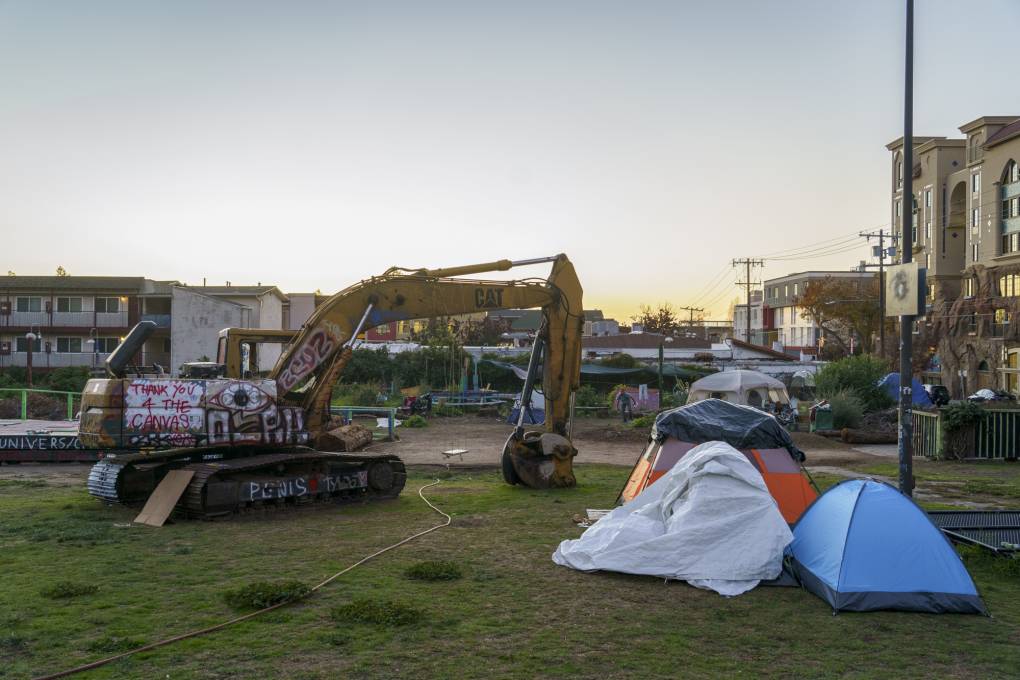
"caption": "People's Park in Berkeley, November 2022.",
"description": null,
"title": "RS61468_DSC09292-KQED",
"credit": "Aryk Copley/KQED",
"status": "inherit",
"altTag": "A large open outdoor space with an excavator and some tents in it.",
"isLoading": false,
"fetchFailed": false
},
"news_11959598": {
"type": "attachments",
"id": "news_11959598",
"meta": {
"index": "attachments_1716263798",
"site": "news",
"id": "11959598",
"found": true
},
"parent": 11959595,
"imgSizes": {
"twentyfourteen-full-width": {
"file": "https://ww2.kqed.org/app/uploads/sites/10/2023/08/RS68439_GettyImages-1490753691-qut-1038x576.jpg",
"width": 1038,
"mimeType": "image/jpeg",
"height": 576
},
"thumbnail": {
"file": "https://ww2.kqed.org/app/uploads/sites/10/2023/08/RS68439_GettyImages-1490753691-qut-160x104.jpg",
"width": 160,
"mimeType": "image/jpeg",
"height": 104
},
"post-thumbnail": {
"file": "https://ww2.kqed.org/app/uploads/sites/10/2023/08/RS68439_GettyImages-1490753691-qut-672x372.jpg",
"width": 672,
"mimeType": "image/jpeg",
"height": 372
},
"kqedFullSize": {
"file": "https://ww2.kqed.org/app/uploads/sites/10/2023/08/RS68439_GettyImages-1490753691-qut.jpg",
"width": 1920,
"height": 1253
},
"large": {
"file": "https://ww2.kqed.org/app/uploads/sites/10/2023/08/RS68439_GettyImages-1490753691-qut-1020x666.jpg",
"width": 1020,
"mimeType": "image/jpeg",
"height": 666
},
"1536x1536": {
"file": "https://ww2.kqed.org/app/uploads/sites/10/2023/08/RS68439_GettyImages-1490753691-qut-1536x1002.jpg",
"width": 1536,
"mimeType": "image/jpeg",
"height": 1002
},
"medium": {
"file": "https://ww2.kqed.org/app/uploads/sites/10/2023/08/RS68439_GettyImages-1490753691-qut-800x522.jpg",
"width": 800,
"mimeType": "image/jpeg",
"height": 522
}
},
"publishDate": 1693420486,
"modified": 1693497013,
"caption": "The Claremont Club and Spa is seen from a drone view in Berkeley on May 15, 2023.",
"description": null,
"title": "The Claremont Club & Spa",
"credit": "Jane Tyska/Digital First Media/East Bay Times via Getty Images",
"status": "inherit",
"altTag": "Aerial image of a large, bright white hotel set against a green, tree-covered hillside. The hotel has a castle-like appearance, and there are tennis courts to the left of it.",
"isLoading": false,
"fetchFailed": false
},
"news_11913358": {
"type": "attachments",
"id": "news_11913358",
"meta": {
"index": "attachments_1716263798",
"site": "news",
"id": "11913358",
"found": true
},
"parent": 11913341,
"imgSizes": {
"twentyfourteen-full-width": {
"file": "https://ww2.kqed.org/app/uploads/sites/10/2022/05/image12-1038x576.jpg",
"width": 1038,
"mimeType": "image/jpeg",
"height": 576
},
"thumbnail": {
"file": "https://ww2.kqed.org/app/uploads/sites/10/2022/05/image12-160x106.jpg",
"width": 160,
"mimeType": "image/jpeg",
"height": 106
},
"post-thumbnail": {
"file": "https://ww2.kqed.org/app/uploads/sites/10/2022/05/image12-672x372.jpg",
"width": 672,
"mimeType": "image/jpeg",
"height": 372
},
"kqedFullSize": {
"file": "https://ww2.kqed.org/app/uploads/sites/10/2022/05/image12.jpg",
"width": 1999,
"height": 1330
},
"large": {
"file": "https://ww2.kqed.org/app/uploads/sites/10/2022/05/image12-1020x679.jpg",
"width": 1020,
"mimeType": "image/jpeg",
"height": 679
},
"1536x1536": {
"file": "https://ww2.kqed.org/app/uploads/sites/10/2022/05/image12-1536x1022.jpg",
"width": 1536,
"mimeType": "image/jpeg",
"height": 1022
},
"full-width": {
"file": "https://ww2.kqed.org/app/uploads/sites/10/2022/05/image12-1920x1277.jpg",
"width": 1920,
"mimeType": "image/jpeg",
"height": 1277
},
"medium": {
"file": "https://ww2.kqed.org/app/uploads/sites/10/2022/05/image12-800x532.jpg",
"width": 800,
"mimeType": "image/jpeg",
"height": 532
}
},
"publishDate": 1651790890,
"modified": 1651877426,
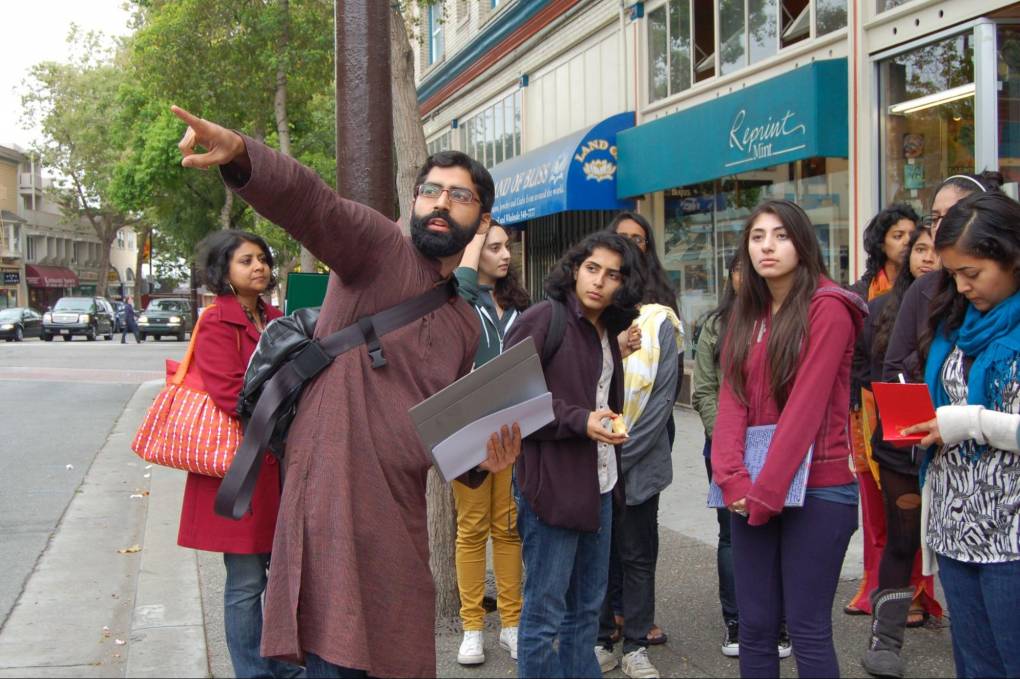
"caption": "Anirvan Chatterjee leads a tour group on Telegraph Avenue near campus in Berkeley.",
"description": null,
"title": "image12",
"credit": "Courtesy of Preeti Mangalashekhar",
"status": "inherit",
"altTag": "A tour guide points to something, as his tour group stands on the street.",
"isLoading": false,
"fetchFailed": false
},
"news_11953284": {
"type": "attachments",
"id": "news_11953284",
"meta": {
"index": "attachments_1716263798",
"site": "news",
"id": "11953284",
"found": true
},
"parent": 11953279,
"imgSizes": {
"twentyfourteen-full-width": {
"file": "https://ww2.kqed.org/app/uploads/sites/10/2023/06/Natera_-SouthBerkeley-Black-History-Tour--1038x576.jpg",
"width": 1038,
"mimeType": "image/jpeg",
"height": 576
},
"thumbnail": {
"file": "https://ww2.kqed.org/app/uploads/sites/10/2023/06/Natera_-SouthBerkeley-Black-History-Tour--160x107.jpg",
"width": 160,
"mimeType": "image/jpeg",
"height": 107
},
"post-thumbnail": {
"file": "https://ww2.kqed.org/app/uploads/sites/10/2023/06/Natera_-SouthBerkeley-Black-History-Tour--672x372.jpg",
"width": 672,
"mimeType": "image/jpeg",
"height": 372
},
"kqedFullSize": {
"file": "https://ww2.kqed.org/app/uploads/sites/10/2023/06/Natera_-SouthBerkeley-Black-History-Tour--scaled.jpg",
"width": 2560,
"height": 1709
},
"2048x2048": {
"file": "https://ww2.kqed.org/app/uploads/sites/10/2023/06/Natera_-SouthBerkeley-Black-History-Tour--2048x1367.jpg",
"width": 2048,
"mimeType": "image/jpeg",
"height": 1367
},
"large": {
"file": "https://ww2.kqed.org/app/uploads/sites/10/2023/06/Natera_-SouthBerkeley-Black-History-Tour--1020x681.jpg",
"width": 1020,
"mimeType": "image/jpeg",
"height": 681
},
"1536x1536": {
"file": "https://ww2.kqed.org/app/uploads/sites/10/2023/06/Natera_-SouthBerkeley-Black-History-Tour--1536x1025.jpg",
"width": 1536,
"mimeType": "image/jpeg",
"height": 1025
},
"full-width": {
"file": "https://ww2.kqed.org/app/uploads/sites/10/2023/06/Natera_-SouthBerkeley-Black-History-Tour--1920x1282.jpg",
"width": 1920,
"mimeType": "image/jpeg",
"height": 1282
},
"medium": {
"file": "https://ww2.kqed.org/app/uploads/sites/10/2023/06/Natera_-SouthBerkeley-Black-History-Tour--800x534.jpg",
"width": 800,
"mimeType": "image/jpeg",
"height": 534
}
},
"publishDate": 1686961193,
"modified": 1686961226,
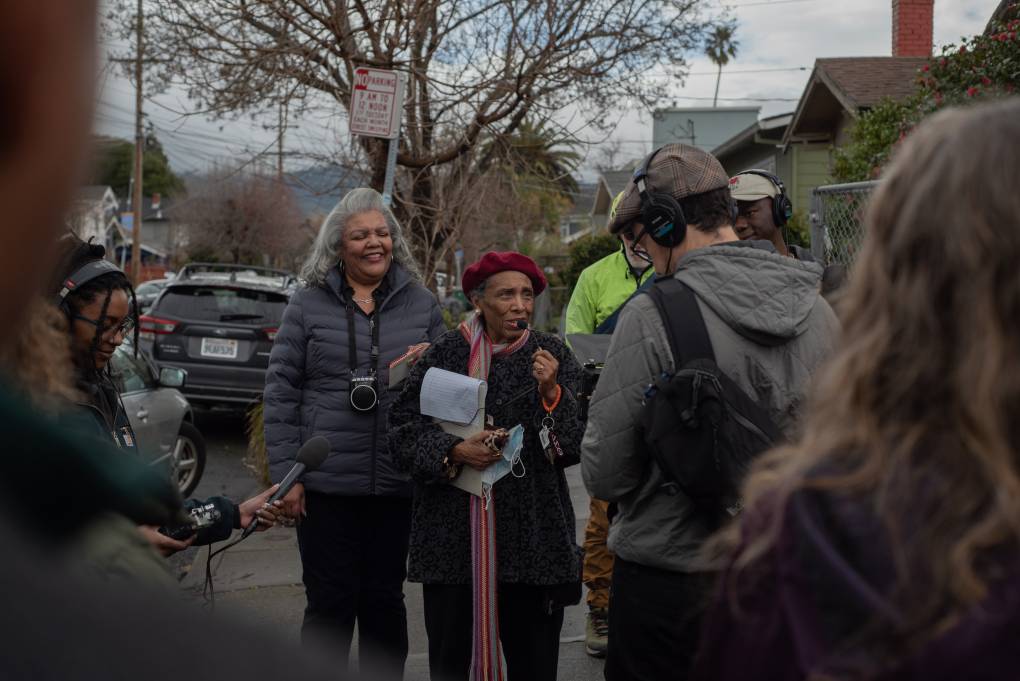
"caption": "The first Black woman elected as Berkeley's vice mayor, Carole Davis Kennerly, made opening remarks during the walking tour. Tina Jones Williams, author and folklorist, leads a Black History walking tour through South Berkeley Neighborhood, the heart of the African-American community in the city, on Saturday, February 11th. ",
"description": null,
"title": null,
"credit": "Credit: Ximena Natera, Berkeleyside/CatchLight",
"status": "inherit",
"altTag": null,
"isLoading": false,
"fetchFailed": false
},
"news_11947925": {
"type": "attachments",
"id": "news_11947925",
"meta": {
"index": "attachments_1716263798",
"site": "news",
"id": "11947925",
"found": true
},
"parent": 11947150,
"imgSizes": {
"twentyfourteen-full-width": {
"file": "https://ww2.kqed.org/app/uploads/sites/10/2023/04/RS64802_GettyImages-1235875581-qut-1038x576.jpg",
"width": 1038,
"mimeType": "image/jpeg",
"height": 576
},
"thumbnail": {
"file": "https://ww2.kqed.org/app/uploads/sites/10/2023/04/RS64802_GettyImages-1235875581-qut-160x102.jpg",
"width": 160,
"mimeType": "image/jpeg",
"height": 102
},
"post-thumbnail": {
"file": "https://ww2.kqed.org/app/uploads/sites/10/2023/04/RS64802_GettyImages-1235875581-qut-672x372.jpg",
"width": 672,
"mimeType": "image/jpeg",
"height": 372
},
"kqedFullSize": {
"file": "https://ww2.kqed.org/app/uploads/sites/10/2023/04/RS64802_GettyImages-1235875581-qut.jpg",
"width": 1920,
"height": 1227
},
"large": {
"file": "https://ww2.kqed.org/app/uploads/sites/10/2023/04/RS64802_GettyImages-1235875581-qut-1020x652.jpg",
"width": 1020,
"mimeType": "image/jpeg",
"height": 652
},
"1536x1536": {
"file": "https://ww2.kqed.org/app/uploads/sites/10/2023/04/RS64802_GettyImages-1235875581-qut-1536x982.jpg",
"width": 1536,
"mimeType": "image/jpeg",
"height": 982
},
"medium": {
"file": "https://ww2.kqed.org/app/uploads/sites/10/2023/04/RS64802_GettyImages-1235875581-qut-800x511.jpg",
"width": 800,
"mimeType": "image/jpeg",
"height": 511
}
},
"publishDate": 1682634067,
"modified": 1682636607,
"caption": "Ratepayer advocates have accused SoCalGas of a litany of transgressions, including lying to regulators, undermining efficiency standards and funding seemingly independent advocacy groups to push its agenda.",
"description": null,
"title": "TOPSHOT-GERMANY-ENERGY-GAS-MARKET",
"credit": "Ina Fassbender/AFP via Getty Images",
"status": "inherit",
"altTag": "A close up photo of a natural gas burner with blue flames",
"isLoading": false,
"fetchFailed": false
},
"news_11947647": {
"type": "attachments",
"id": "news_11947647",
"meta": {
"index": "attachments_1716263798",
"site": "news",
"id": "11947647",
"found": true
},
"title": "IMG_7521",
"publishDate": 1682458929,
"status": "inherit",
"parent": 11947646,
"modified": 1682458963,
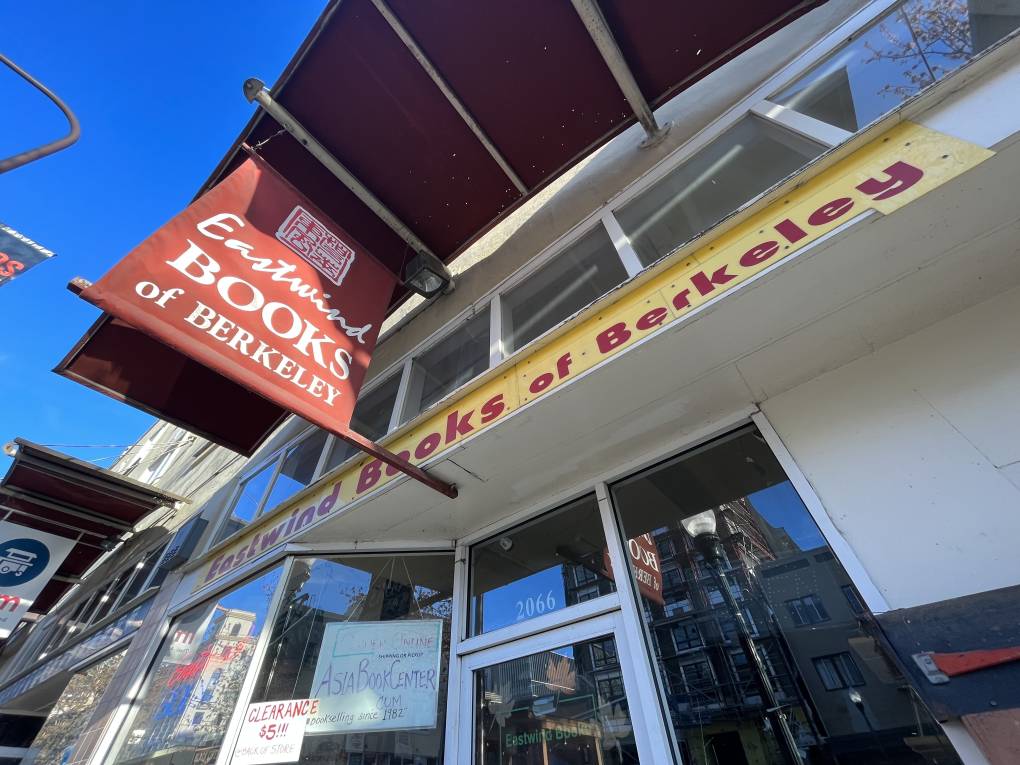
"caption": "Eastwind Books, one of the nation’s first Asian American bookstores, is closing on Sunday, April 30 after more than four decades in business.\n",
"credit": "Ericka Cruz Guevarra/KQED",
"altTag": null,
"description": null,
"imgSizes": {
"medium": {
"file": "https://cdn.kqed.org/wp-content/uploads/sites/10/2023/04/IMG_7521-800x600.jpg",
"width": 800,
"height": 600,
"mimeType": "image/jpeg"
},
"large": {
"file": "https://cdn.kqed.org/wp-content/uploads/sites/10/2023/04/IMG_7521-1020x765.jpg",
"width": 1020,
"height": 765,
"mimeType": "image/jpeg"
},
"thumbnail": {
"file": "https://cdn.kqed.org/wp-content/uploads/sites/10/2023/04/IMG_7521-160x120.jpg",
"width": 160,
"height": 120,
"mimeType": "image/jpeg"
},
"1536x1536": {
"file": "https://cdn.kqed.org/wp-content/uploads/sites/10/2023/04/IMG_7521-1536x1152.jpg",
"width": 1536,
"height": 1152,
"mimeType": "image/jpeg"
},
"2048x2048": {
"file": "https://cdn.kqed.org/wp-content/uploads/sites/10/2023/04/IMG_7521-2048x1536.jpg",
"width": 2048,
"height": 1536,
"mimeType": "image/jpeg"
},
"post-thumbnail": {
"file": "https://cdn.kqed.org/wp-content/uploads/sites/10/2023/04/IMG_7521-672x372.jpg",
"width": 672,
"height": 372,
"mimeType": "image/jpeg"
},
"twentyfourteen-full-width": {
"file": "https://cdn.kqed.org/wp-content/uploads/sites/10/2023/04/IMG_7521-1038x576.jpg",
"width": 1038,
"height": 576,
"mimeType": "image/jpeg"
},
"full-width": {
"file": "https://cdn.kqed.org/wp-content/uploads/sites/10/2023/04/IMG_7521-1920x1440.jpg",
"width": 1920,
"height": 1440,
"mimeType": "image/jpeg"
},
"kqedFullSize": {
"file": "https://cdn.kqed.org/wp-content/uploads/sites/10/2023/04/IMG_7521-scaled-e1776805647315.jpg",
"width": 2000,
"height": 1500
}
},
"isLoading": false,
"fetchFailed": false
},
"news_11938935": {
"type": "attachments",
"id": "news_11938935",
"meta": {
"index": "attachments_1716263798",
"site": "news",
"id": "11938935",
"found": true
},
"title": "An interview with a federal official set off a culture war fight after he suggested regulators might put stricter scrutiny on gas cooking stoves due to health concerns.",
"publishDate": 1674518084,
"status": "inherit",
"parent": 11938934,
"modified": 1681780542,
"caption": "Berkeley's 2020 law bans natural gas piping in most new residential and commercial construction projects.",
"credit": "Scott Olson/Getty Images",
"altTag": "a pan sits on flames burning on a natural gas-burning stove.",
"description": "CHICAGO, ILLINOIS - JANUARY 12: In this photo illustration, a pan sits on flames burning on a natural gas-burning stove on January 12, 2023 in Chicago, Illinois. Consumers and politicians have voiced concern after the commissioner of the Consumer Product Safety Commission (CPSC) recently suggested that gas stoves were a health hazard, leading people to believe that they would be banned. (Photo Illustration by Scott Olson/Getty Images)",
"imgSizes": {
"medium": {
"file": "https://cdn.kqed.org/wp-content/uploads/sites/10/2023/01/gettyimages-1456022774_slide-4aa6a2d85831df1922f7264f532fe46478df93da-800x533.jpg",
"width": 800,
"height": 533,
"mimeType": "image/jpeg"
},
"large": {
"file": "https://cdn.kqed.org/wp-content/uploads/sites/10/2023/01/gettyimages-1456022774_slide-4aa6a2d85831df1922f7264f532fe46478df93da-1020x680.jpg",
"width": 1020,
"height": 680,
"mimeType": "image/jpeg"
},
"thumbnail": {
"file": "https://cdn.kqed.org/wp-content/uploads/sites/10/2023/01/gettyimages-1456022774_slide-4aa6a2d85831df1922f7264f532fe46478df93da-160x107.jpg",
"width": 160,
"height": 107,
"mimeType": "image/jpeg"
},
"1536x1536": {
"file": "https://cdn.kqed.org/wp-content/uploads/sites/10/2023/01/gettyimages-1456022774_slide-4aa6a2d85831df1922f7264f532fe46478df93da-1536x1024.jpg",
"width": 1536,
"height": 1024,
"mimeType": "image/jpeg"
},
"2048x2048": {
"file": "https://cdn.kqed.org/wp-content/uploads/sites/10/2023/01/gettyimages-1456022774_slide-4aa6a2d85831df1922f7264f532fe46478df93da-2048x1365.jpg",
"width": 2048,
"height": 1365,
"mimeType": "image/jpeg"
},
"post-thumbnail": {
"file": "https://cdn.kqed.org/wp-content/uploads/sites/10/2023/01/gettyimages-1456022774_slide-4aa6a2d85831df1922f7264f532fe46478df93da-672x372.jpg",
"width": 672,
"height": 372,
"mimeType": "image/jpeg"
},
"twentyfourteen-full-width": {
"file": "https://cdn.kqed.org/wp-content/uploads/sites/10/2023/01/gettyimages-1456022774_slide-4aa6a2d85831df1922f7264f532fe46478df93da-1038x576.jpg",
"width": 1038,
"height": 576,
"mimeType": "image/jpeg"
},
"full-width": {
"file": "https://cdn.kqed.org/wp-content/uploads/sites/10/2023/01/gettyimages-1456022774_slide-4aa6a2d85831df1922f7264f532fe46478df93da-1920x1280.jpg",
"width": 1920,
"height": 1280,
"mimeType": "image/jpeg"
},
"kqedFullSize": {
"file": "https://cdn.kqed.org/wp-content/uploads/sites/10/2023/01/gettyimages-1456022774_slide-4aa6a2d85831df1922f7264f532fe46478df93da-scaled-e1732562932887.jpg",
"width": 2000,
"height": 1334
}
},
"isLoading": false,
"fetchFailed": false
},
"news_11942054": {
"type": "attachments",
"id": "news_11942054",
"meta": {
"index": "attachments_1716263798",
"site": "news",
"id": "11942054",
"found": true
},
"parent": 11941975,
"imgSizes": {
"twentyfourteen-full-width": {
"file": "https://ww2.kqed.org/app/uploads/sites/10/2023/02/RS58960_DSC02563-qut-1038x576.jpg",
"width": 1038,
"mimeType": "image/jpeg",
"height": 576
},
"thumbnail": {
"file": "https://ww2.kqed.org/app/uploads/sites/10/2023/02/RS58960_DSC02563-qut-160x107.jpg",
"width": 160,
"mimeType": "image/jpeg",
"height": 107
},
"post-thumbnail": {
"file": "https://ww2.kqed.org/app/uploads/sites/10/2023/02/RS58960_DSC02563-qut-672x372.jpg",
"width": 672,
"mimeType": "image/jpeg",
"height": 372
},
"kqedFullSize": {
"file": "https://ww2.kqed.org/app/uploads/sites/10/2023/02/RS58960_DSC02563-qut.jpg",
"width": 1920,
"height": 1280
},
"large": {
"file": "https://ww2.kqed.org/app/uploads/sites/10/2023/02/RS58960_DSC02563-qut-1020x680.jpg",
"width": 1020,
"mimeType": "image/jpeg",
"height": 680
},
"1536x1536": {
"file": "https://ww2.kqed.org/app/uploads/sites/10/2023/02/RS58960_DSC02563-qut-1536x1024.jpg",
"width": 1536,
"mimeType": "image/jpeg",
"height": 1024
},
"medium": {
"file": "https://ww2.kqed.org/app/uploads/sites/10/2023/02/RS58960_DSC02563-qut-800x533.jpg",
"width": 800,
"mimeType": "image/jpeg",
"height": 533
}
},
"publishDate": 1677541769,
"modified": 1677542074,
"caption": "Nicholas Alexander, left, a longtime People's Park resident, looks out from the top of a structure made in the park.",
"description": null,
"title": "RS58960_DSC02563-qut",
"credit": "Aryk Copley/KQED",
"status": "inherit",
"altTag": "A man wearing a sleeveless red t-shirt looks out from on top of a makeshift structure.",
"isLoading": false,
"fetchFailed": false
},
"news_11940648": {
"type": "attachments",
"id": "news_11940648",
"meta": {
"index": "attachments_1716263798",
"site": "news",
"id": "11940648",
"found": true
},
"parent": 11940629,
"imgSizes": {
"twentyfourteen-full-width": {
"file": "https://ww2.kqed.org/app/uploads/sites/10/2023/02/hWEhtTu8QyOOzQgHj9JLA_thumb_30a-1038x576.jpg",
"width": 1038,
"mimeType": "image/jpeg",
"height": 576
},
"thumbnail": {
"file": "https://ww2.kqed.org/app/uploads/sites/10/2023/02/hWEhtTu8QyOOzQgHj9JLA_thumb_30a-160x107.jpg",
"width": 160,
"mimeType": "image/jpeg",
"height": 107
},
"post-thumbnail": {
"file": "https://ww2.kqed.org/app/uploads/sites/10/2023/02/hWEhtTu8QyOOzQgHj9JLA_thumb_30a-672x372.jpg",
"width": 672,
"mimeType": "image/jpeg",
"height": 372
},
"kqedFullSize": {
"file": "https://ww2.kqed.org/app/uploads/sites/10/2023/02/hWEhtTu8QyOOzQgHj9JLA_thumb_30a.jpg",
"width": 1086,
"height": 724
},
"large": {
"file": "https://ww2.kqed.org/app/uploads/sites/10/2023/02/hWEhtTu8QyOOzQgHj9JLA_thumb_30a-1020x680.jpg",
"width": 1020,
"mimeType": "image/jpeg",
"height": 680
},
"medium": {
"file": "https://ww2.kqed.org/app/uploads/sites/10/2023/02/hWEhtTu8QyOOzQgHj9JLA_thumb_30a-800x533.jpg",
"width": 800,
"mimeType": "image/jpeg",
"height": 533
}
},
"publishDate": 1675992466,
"modified": 1675994381,
"caption": "Julio Lee lived at the Here There encampment for two and a half years. He was among the last residents to agree to a motel voucher because he was concerned about keeping his emotional support pets, including a Scottish fold kitten he recently adopted named Banxi, that likes to perch on his shoulder. ",
"description": null,
"title": "hWEhtTu8Q%yOOzQgHj9JLA_thumb_30a",
"credit": "Supriya Yelimeli/Berkeleyside",
"status": "inherit",
"altTag": null,
"isLoading": false,
"fetchFailed": false
},
"news_11932472": {
"type": "attachments",
"id": "news_11932472",
"meta": {
"index": "attachments_1716263798",
"site": "news",
"id": "11932472",
"found": true
},
"parent": 11932420,
"imgSizes": {
"twentyfourteen-full-width": {
"file": "https://ww2.kqed.org/app/uploads/sites/10/2022/11/GettyImages-1408782176-1024x576.jpg",
"width": 1024,
"mimeType": "image/jpeg",
"height": 576
},
"thumbnail": {
"file": "https://ww2.kqed.org/app/uploads/sites/10/2022/11/GettyImages-1408782176-160x109.jpg",
"width": 160,
"mimeType": "image/jpeg",
"height": 109
},
"post-thumbnail": {
"file": "https://ww2.kqed.org/app/uploads/sites/10/2022/11/GettyImages-1408782176-672x372.jpg",
"width": 672,
"mimeType": "image/jpeg",
"height": 372
},
"kqedFullSize": {
"file": "https://ww2.kqed.org/app/uploads/sites/10/2022/11/GettyImages-1408782176.jpg",
"width": 1024,
"height": 699
},
"large": {
"file": "https://ww2.kqed.org/app/uploads/sites/10/2022/11/GettyImages-1408782176-1020x696.jpg",
"width": 1020,
"mimeType": "image/jpeg",
"height": 696
},
"medium": {
"file": "https://ww2.kqed.org/app/uploads/sites/10/2022/11/GettyImages-1408782176-800x546.jpg",
"width": 800,
"mimeType": "image/jpeg",
"height": 546
}
},
"publishDate": 1668640111,
"modified": 1690411244,
"caption": "Berkeley's public safety building.",
"description": null,
"title": "The Ronald Tsukamoto Public Safety Building house the police department and fire department administration in Berkeley, Calif. on Saturday, March 31, 2018",
"credit": "Paul Chinn/The San Francisco Chronicle via Getty Images",
"status": "inherit",
"altTag": "Berkeley public safety building seen during the day with three cars lined up outside of the building.",
"isLoading": false,
"fetchFailed": false
},
"news_11925697": {
"type": "attachments",
"id": "news_11925697",
"meta": {
"index": "attachments_1716263798",
"site": "news",
"id": "11925697",
"found": true
},
"parent": 11925690,
"imgSizes": {
"twentyfourteen-full-width": {
"file": "https://ww2.kqed.org/app/uploads/sites/10/2022/09/002_KQED_BerkeleySmallSites_09142022-1038x576.jpg",
"width": 1038,
"mimeType": "image/jpeg",
"height": 576
},
"thumbnail": {
"file": "https://ww2.kqed.org/app/uploads/sites/10/2022/09/002_KQED_BerkeleySmallSites_09142022-160x107.jpg",
"width": 160,
"mimeType": "image/jpeg",
"height": 107
},
"post-thumbnail": {
"file": "https://ww2.kqed.org/app/uploads/sites/10/2022/09/002_KQED_BerkeleySmallSites_09142022-672x372.jpg",
"width": 672,
"mimeType": "image/jpeg",
"height": 372
},
"kqedFullSize": {
"file": "https://ww2.kqed.org/app/uploads/sites/10/2022/09/002_KQED_BerkeleySmallSites_09142022.jpg",
"width": 1920,
"height": 1280
},
"large": {
"file": "https://ww2.kqed.org/app/uploads/sites/10/2022/09/002_KQED_BerkeleySmallSites_09142022-1020x680.jpg",
"width": 1020,
"mimeType": "image/jpeg",
"height": 680
},
"1536x1536": {
"file": "https://ww2.kqed.org/app/uploads/sites/10/2022/09/002_KQED_BerkeleySmallSites_09142022-1536x1024.jpg",
"width": 1536,
"mimeType": "image/jpeg",
"height": 1024
},
"medium": {
"file": "https://ww2.kqed.org/app/uploads/sites/10/2022/09/002_KQED_BerkeleySmallSites_09142022-800x533.jpg",
"width": 800,
"mimeType": "image/jpeg",
"height": 533
}
},
"publishDate": 1663198404,
"modified": 1663206128,
"caption": "Betty Gray waters plants in her new apartment in Berkeley on Sept. 14, 2022. She is a resident of the newly renovated Stuart Street Co-Op Apartments funded by Berkeley's Small Sites Program.",
"description": null,
"title": "002_KQED_BerkeleySmallSites_09142022",
"credit": "Beth LaBerge/KQED",
"status": "inherit",
"altTag": "A woman wearing glasses, black gloves, bracelets and a yellow shirt rests her hands in front of a sink counter while water runs from a faucet into a plant.",
"isLoading": false,
"fetchFailed": false
},
"news_11923877": {
"type": "attachments",
"id": "news_11923877",
"meta": {
"index": "attachments_1716263798",
"site": "news",
"id": "11923877",
"found": true
},
"parent": 11923876,
"imgSizes": {
"twentyfourteen-full-width": {
"file": "https://ww2.kqed.org/app/uploads/sites/10/2022/08/RS57549_024_KQED_PeoplesParkRally_08032022-qut-1-1038x576.jpg",
"width": 1038,
"mimeType": "image/jpeg",
"height": 576
},
"thumbnail": {
"file": "https://ww2.kqed.org/app/uploads/sites/10/2022/08/RS57549_024_KQED_PeoplesParkRally_08032022-qut-1-160x107.jpg",
"width": 160,
"mimeType": "image/jpeg",
"height": 107
},
"post-thumbnail": {
"file": "https://ww2.kqed.org/app/uploads/sites/10/2022/08/RS57549_024_KQED_PeoplesParkRally_08032022-qut-1-672x372.jpg",
"width": 672,
"mimeType": "image/jpeg",
"height": 372
},
"kqedFullSize": {
"file": "https://ww2.kqed.org/app/uploads/sites/10/2022/08/RS57549_024_KQED_PeoplesParkRally_08032022-qut-1.jpg",
"width": 1920,
"height": 1280
},
"large": {
"file": "https://ww2.kqed.org/app/uploads/sites/10/2022/08/RS57549_024_KQED_PeoplesParkRally_08032022-qut-1-1020x680.jpg",
"width": 1020,
"mimeType": "image/jpeg",
"height": 680
},
"1536x1536": {
"file": "https://ww2.kqed.org/app/uploads/sites/10/2022/08/RS57549_024_KQED_PeoplesParkRally_08032022-qut-1-1536x1024.jpg",
"width": 1536,
"mimeType": "image/jpeg",
"height": 1024
},
"medium": {
"file": "https://ww2.kqed.org/app/uploads/sites/10/2022/08/RS57549_024_KQED_PeoplesParkRally_08032022-qut-1-800x533.jpg",
"width": 800,
"mimeType": "image/jpeg",
"height": 533
}
},
"publishDate": 1661705824,
"modified": 1661809336,
"caption": "Jane Stillwater speaks to a crowd gathered in People's Park in Berkeley to protest the construction of UC Berkeley student housing there on Aug. 3, 2022. Stillwater has been protesting in the park for decades.",
"description": null,
"title": "RS57549_024_KQED_PeoplesParkRally_08032022-qut",
"credit": "Beth LaBerge/KQED",
"status": "inherit",
"altTag": "An older woman stands outside holding an old newspaper",
"isLoading": false,
"fetchFailed": false
}
},
"audioPlayerReducer": {
"postId": "stream_live",
"isPaused": true,
"isPlaying": false,
"pfsActive": false,
"pledgeModalIsOpen": true,
"playerDrawerIsOpen": false,
"liveAudioPlayStartedAt": 0,
"liveAudioPlayContext": ""
},
"authorsReducer": {
"byline_news_11925690": {
"type": "authors",
"id": "byline_news_11925690",
"meta": {
"override": true
},
"slug": "byline_news_11925690",
"name": "\u003ca href=\"https://twitter.com/AnaOphLin\">Anaïs-Ophelia Lino\u003c/a>",
"isLoading": false
},
"byline_news_11923876": {
"type": "authors",
"id": "byline_news_11923876",
"meta": {
"override": true
},
"slug": "byline_news_11923876",
"name": "Michael Liedtke\u003cbr>Associated Press",
"isLoading": false
},
"danbrekke": {
"type": "authors",
"id": "222",
"meta": {
"index": "authors_1716337520",
"id": "222",
"found": true
},
"name": "Dan Brekke",
"firstName": "Dan",
"lastName": "Brekke",
"slug": "danbrekke",
"email": "dbrekke@kqed.org",
"display_author_email": true,
"staff_mastheads": [
"news",
"science"
],
"title": "KQED Editor and Reporter",
"bio": "Dan Brekke is a reporter and editor for KQED News, responsible for coverage of topics ranging from California water issues to the Bay Area's transportation challenges. In a newsroom career that began in Chicago in 1972, Dan has worked for \u003cem>The San Francisco Examiner,\u003c/em> Wired and TechTV and has been published in The New York Times, The New York Times Magazine, Business 2.0, Salon and elsewhere.\r\n\r\nSince joining KQED in 2007, Dan has reported, edited and produced both radio and online features and breaking news pieces. He has shared as both editor and reporter in four Society of Professional Journalists Norcal Excellence in Journalism awards and one Edward R. Murrow regional award. He was chosen for a spring 2017 residency at the Mesa Refuge to advance his research on California salmon.\r\n\r\nEmail Dan at: \u003ca href=\"mailto:dbrekke@kqed.org\">dbrekke@kqed.org\u003c/a>\r\n\r\n\u003cstrong>Twitter:\u003c/strong> \u003ca href=\"https://twitter.com/danbrekke\" rel=\"noopener noreferrer\">twitter.com/danbrekke\u003c/a>\r\n\u003cstrong>Facebook:\u003c/strong> \u003ca href=\"https://www.facebook.com/danbrekke\" rel=\"noopener noreferrer\">www.facebook.com/danbrekke\u003c/a>\r\n\u003cstrong>LinkedIn:\u003c/strong> \u003ca href=\"https://www.linkedin.com/in/danbrekke\" rel=\"noopener noreferrer\">www.linkedin.com/in/danbrekke\u003c/a>",
"avatar": "https://secure.gravatar.com/avatar/8f1f0d2a978fb3b23426c922c7e2af558fa36905b49c4ce76a97dc3c72d27226?s=600&d=mm&r=g",
"twitter": "danbrekke",
"bluesky": null,
"facebook": null,
"instagram": "https://www.instagram.com/dan.brekke/",
"linkedin": "https://www.linkedin.com/in/danbrekke/",
"sites": [
{
"site": "news",
"roles": [
"administrator",
"create_posts"
]
},
{
"site": "stateofhealth",
"roles": [
"editor"
]
},
{
"site": "science",
"roles": [
"editor"
]
},
{
"site": "quest",
"roles": [
"contributor"
]
},
{
"site": "food",
"roles": [
"contributor"
]
},
{
"site": "forum",
"roles": [
"contributor"
]
},
{
"site": "elections",
"roles": [
"editor"
]
},
{
"site": "liveblog",
"roles": [
"editor"
]
}
],
"headData": {
"title": "Dan Brekke | KQED",
"description": "KQED Editor and Reporter",
"ogImgSrc": "https://secure.gravatar.com/avatar/8f1f0d2a978fb3b23426c922c7e2af558fa36905b49c4ce76a97dc3c72d27226?s=600&d=mm&r=g",
"twImgSrc": "https://secure.gravatar.com/avatar/8f1f0d2a978fb3b23426c922c7e2af558fa36905b49c4ce76a97dc3c72d27226?s=600&d=mm&r=g"
},
"isLoading": false,
"link": "/author/danbrekke"
},
"kqed": {
"type": "authors",
"id": "236",
"meta": {
"index": "authors_1716337520",
"id": "236",
"found": true
},
"name": "KQED News Staff",
"firstName": "KQED News Staff",
"lastName": null,
"slug": "kqed",
"email": "faq@kqed.org",
"display_author_email": false,
"staff_mastheads": [],
"title": null,
"bio": null,
"avatar": "https://secure.gravatar.com/avatar/ef0e801a68c4c54afa9180db14084167?s=600&d=blank&r=g",
"twitter": null,
"facebook": null,
"instagram": null,
"linkedin": null,
"sites": [
{
"site": "arts",
"roles": [
"contributor"
]
},
{
"site": "news",
"roles": [
"editor"
]
},
{
"site": "futureofyou",
"roles": [
"author"
]
}
],
"headData": {
"title": "KQED News Staff | KQED",
"description": null,
"ogImgSrc": "https://secure.gravatar.com/avatar/ef0e801a68c4c54afa9180db14084167?s=600&d=blank&r=g",
"twImgSrc": "https://secure.gravatar.com/avatar/ef0e801a68c4c54afa9180db14084167?s=600&d=blank&r=g"
},
"isLoading": false,
"link": "/author/kqed"
},
"sasha-khokha": {
"type": "authors",
"id": "254",
"meta": {
"index": "authors_1716337520",
"id": "254",
"found": true
},
"name": "Sasha Khokha",
"firstName": "Sasha",
"lastName": "Khokha",
"slug": "sasha-khokha",
"email": "skhokha@kqed.org",
"display_author_email": true,
"staff_mastheads": [
"news"
],
"title": "Host, The California Report Magazine",
"bio": "Sasha Khokha is the host of \u003cem>The California Report's \u003c/em> weekly magazine program, which takes listeners on sound-rich excursions to meet the people that make the Golden State unique -- through audio documentaries and long-form stories. As \u003cem>The California Report's\u003c/em> Central Valley Bureau Chief based in Fresno for nearly a dozen years, Sasha brought the lives and concerns of rural Californians to listeners around the state. Her reporting helped expose the hidden price immigrant women janitors and farmworkers may pay to keep their jobs: sexual assault at work. It inspired two new California laws to protect them from sexual harassment. She was a key member of the reporting team for the Frontline film \u003cem>Rape on the Night Shift, \u003c/em>which was nominated for two national Emmys. Sasha has also won a national Edward R. Murrow and a national PRNDI award for investigative reporting, as well as multiple prizes from the Society for Professional Journalists. Sasha is a proud alum of the UC Berkeley Graduate School of Journalism and Brown University and a member of the South Asian Journalists Association.",
"avatar": "https://secure.gravatar.com/avatar/e4b5e1541aaeea2aa356aa1fb2a68950?s=600&d=blank&r=g",
"twitter": "KQEDSashaKhokha",
"facebook": null,
"instagram": null,
"linkedin": null,
"sites": [
{
"site": "news",
"roles": [
"editor"
]
},
{
"site": "stateofhealth",
"roles": [
"author"
]
},
{
"site": "science",
"roles": [
"author"
]
},
{
"site": "quest",
"roles": [
"subscriber"
]
}
],
"headData": {
"title": "Sasha Khokha | KQED",
"description": "Host, The California Report Magazine",
"ogImgSrc": "https://secure.gravatar.com/avatar/e4b5e1541aaeea2aa356aa1fb2a68950?s=600&d=blank&r=g",
"twImgSrc": "https://secure.gravatar.com/avatar/e4b5e1541aaeea2aa356aa1fb2a68950?s=600&d=blank&r=g"
},
"isLoading": false,
"link": "/author/sasha-khokha"
},
"matthewgreen": {
"type": "authors",
"id": "1263",
"meta": {
"index": "authors_1716337520",
"id": "1263",
"found": true
},
"name": "Matthew Green",
"firstName": "Matthew",
"lastName": "Green",
"slug": "matthewgreen",
"email": "mgreen@kqed.org",
"display_author_email": false,
"staff_mastheads": [],
"title": "KQED Editor/Reporter",
"bio": "Matthew Green is a digital media producer for KQED News. He previously produced \u003ca href=\"http://www.kqed.org/lowdown\">The Lowdown\u003c/a>, KQED’s multimedia news education blog. Matthew's written for numerous Bay Area publications, including the Oakland Tribune and San Francisco Chronicle. He also taught journalism classes at Fremont High School in East Oakland.\r\n\r\nEmail: mgreen@kqed.org; Twitter: @MGreenKQED",
"avatar": "https://secure.gravatar.com/avatar/3bf498d1267ca02c8494f33d8cfc575e?s=600&d=blank&r=g",
"twitter": "MGreenKQED",
"facebook": null,
"instagram": null,
"linkedin": null,
"sites": [
{
"site": "news",
"roles": []
},
{
"site": "lowdown",
"roles": []
},
{
"site": "science",
"roles": []
},
{
"site": "education",
"roles": []
},
{
"site": "quest",
"roles": []
},
{
"site": "liveblog",
"roles": []
}
],
"headData": {
"title": "Matthew Green | KQED",
"description": "KQED Editor/Reporter",
"ogImgSrc": "https://secure.gravatar.com/avatar/3bf498d1267ca02c8494f33d8cfc575e?s=600&d=blank&r=g",
"twImgSrc": "https://secure.gravatar.com/avatar/3bf498d1267ca02c8494f33d8cfc575e?s=600&d=blank&r=g"
},
"isLoading": false,
"link": "/author/matthewgreen"
},
"mlagos": {
"type": "authors",
"id": "3239",
"meta": {
"index": "authors_1716337520",
"id": "3239",
"found": true
},
"name": "Marisa Lagos",
"firstName": "Marisa",
"lastName": "Lagos",
"slug": "mlagos",
"email": "mlagos@kqed.org",
"display_author_email": false,
"staff_mastheads": [
"news"
],
"title": "KQED Contributor",
"bio": "Marisa Lagos is a correspondent for KQED’s California Politics and Government Desk and co-hosts the award-winning show and podcast, Political Breakdown. At KQED, Lagos also conducts reporting, analysis and investigations into state, local and national politics for radio, TV, online and onstage. In 2022, she and co-host, Scott Shafer, moderated the only gubernatorial debate in California. In 2020, the \u003ci>Washington Post\u003c/i> named her one of the top political journalists in California; she was nominated for a Peabody and won several other awards for her work investigating the 2017 California wildfires. She has worked at the \u003ci>San Francisco Chronicle\u003c/i>, \u003ci>San Francisco Examiner\u003c/i> and \u003ci>Los Angeles Times\u003c/i>. A UC Santa Barbara graduate, she lives in San Francisco with her two sons and husband.",
"avatar": "https://secure.gravatar.com/avatar/a261a0d3696fc066871ef96b85b5e7d2?s=600&d=blank&r=g",
"twitter": "@mlagos",
"facebook": null,
"instagram": null,
"linkedin": null,
"sites": [
{
"site": "arts",
"roles": [
"author"
]
},
{
"site": "news",
"roles": [
"editor"
]
},
{
"site": "science",
"roles": [
"editor"
]
},
{
"site": "forum",
"roles": [
"author"
]
},
{
"site": "liveblog",
"roles": [
"author"
]
}
],
"headData": {
"title": "Marisa Lagos | KQED",
"description": "KQED Contributor",
"ogImgSrc": "https://secure.gravatar.com/avatar/a261a0d3696fc066871ef96b85b5e7d2?s=600&d=blank&r=g",
"twImgSrc": "https://secure.gravatar.com/avatar/a261a0d3696fc066871ef96b85b5e7d2?s=600&d=blank&r=g"
},
"isLoading": false,
"link": "/author/mlagos"
},
"ecruzguevarra": {
"type": "authors",
"id": "8654",
"meta": {
"index": "authors_1716337520",
"id": "8654",
"found": true
},
"name": "Ericka Cruz Guevarra",
"firstName": "Ericka",
"lastName": "Cruz Guevarra",
"slug": "ecruzguevarra",
"email": "ecruzguevarra@kqed.org",
"display_author_email": true,
"staff_mastheads": [
"news"
],
"title": "Producer, The Bay Podcast",
"bio": "Ericka Cruz Guevarra is host of \u003ca href=\"https://www.kqed.org/podcasts/thebay\">\u003cem>The Bay\u003c/em>\u003c/a> podcast at KQED. Before host, she was the show’s producer. Her work in that capacity includes a three-part reported series on policing in Vallejo, which won a 2020 excellence in journalism award from the Society of Professional Journalists. Ericka has worked as a breaking news reporter at Oregon Public Broadcasting, helped produce the Code Switch podcast, and was KQED’s inaugural Raul Ramirez Diversity Fund intern. She’s also an alumna of NPR’s Next Generation Radio program. Send her an email if you have strong feelings about whether Fairfield and Suisun City are the Bay. Ericka is represented by SAG-AFTRA.",
"avatar": "https://secure.gravatar.com/avatar/accefc1de4bafc7e234b69bcb9b6f6536c130fd84709bc3069ef11a78787e1bb?s=600&d=blank&r=g",
"twitter": "NotoriousECG",
"bluesky": null,
"facebook": null,
"instagram": null,
"linkedin": null,
"sites": [
{
"site": "arts",
"roles": [
"subscriber"
]
},
{
"site": "news",
"roles": [
"editor",
"manage_categories"
]
},
{
"site": "futureofyou",
"roles": [
"subscriber"
]
},
{
"site": "stateofhealth",
"roles": [
"subscriber"
]
},
{
"site": "science",
"roles": [
"editor"
]
},
{
"site": "forum",
"roles": [
"subscriber"
]
}
],
"headData": {
"title": "Ericka Cruz Guevarra | KQED",
"description": "Producer, The Bay Podcast",
"ogImgSrc": "https://secure.gravatar.com/avatar/accefc1de4bafc7e234b69bcb9b6f6536c130fd84709bc3069ef11a78787e1bb?s=600&d=blank&r=g",
"twImgSrc": "https://secure.gravatar.com/avatar/accefc1de4bafc7e234b69bcb9b6f6536c130fd84709bc3069ef11a78787e1bb?s=600&d=blank&r=g"
},
"isLoading": false,
"link": "/author/ecruzguevarra"
},
"hmcdede": {
"type": "authors",
"id": "11635",
"meta": {
"index": "authors_1716337520",
"id": "11635",
"found": true
},
"name": "Holly McDede",
"firstName": "Holly",
"lastName": "McDede",
"slug": "hmcdede",
"email": "hmcdede@KQED.org",
"display_author_email": false,
"staff_mastheads": [],
"title": "KQED Contributor",
"bio": null,
"avatar": "https://secure.gravatar.com/avatar/35d1a1f5422c9d266f7ace9348d170f2136671a65fffc90a592e4d7fbf8dc3f6?s=600&d=blank&r=g",
"twitter": null,
"bluesky": null,
"facebook": null,
"instagram": null,
"linkedin": null,
"sites": [
{
"site": "arts",
"roles": [
"editor"
]
},
{
"site": "news",
"roles": [
"edit_others_posts",
"editor"
]
},
{
"site": "science",
"roles": [
"editor"
]
},
{
"site": "forum",
"roles": [
"editor"
]
},
{
"site": "perspectives",
"roles": [
"administrator"
]
}
],
"headData": {
"title": "Holly McDede | KQED",
"description": "KQED Contributor",
"ogImgSrc": "https://secure.gravatar.com/avatar/35d1a1f5422c9d266f7ace9348d170f2136671a65fffc90a592e4d7fbf8dc3f6?s=600&d=blank&r=g",
"twImgSrc": "https://secure.gravatar.com/avatar/35d1a1f5422c9d266f7ace9348d170f2136671a65fffc90a592e4d7fbf8dc3f6?s=600&d=blank&r=g"
},
"isLoading": false,
"link": "/author/hmcdede"
},
"amontecillo": {
"type": "authors",
"id": "11649",
"meta": {
"index": "authors_1716337520",
"id": "11649",
"found": true
},
"name": "Alan Montecillo",
"firstName": "Alan",
"lastName": "Montecillo",
"slug": "amontecillo",
"email": "amontecillo@kqed.org",
"display_author_email": false,
"staff_mastheads": [
"news"
],
"title": "KQED Contributor",
"bio": "Alan Montecillo is the senior editor of \u003cem>\u003ca href=\"http://kqed.org/thebay\">The Bay\u003c/a>, \u003c/em> KQED's local news podcast. Before moving to the Bay Area, he worked as a senior talk show producer for WILL in Champaign-Urbana, Illinois and at Oregon Public Broadcasting in Portland, Oregon. He has won journalism awards from the Society of Professional Journalists Northern California, the Public Media Journalists Association, The Signal Awards, and has also received a regional Edward R. Murrow award. Alan is a Filipino American from Hong Kong and a graduate of Reed College.",
"avatar": "https://secure.gravatar.com/avatar/268f53a2066899ea9efdd8a5900218b17c822d9862cbc9326cccec53ef41d349?s=600&d=blank&r=g",
"twitter": "alanmontecillo",
"bluesky": null,
"facebook": null,
"instagram": null,
"linkedin": null,
"sites": [
{
"site": "",
"roles": [
"editor"
]
},
{
"site": "news",
"roles": [
"editor",
"manage_categories"
]
}
],
"headData": {
"title": "Alan Montecillo | KQED",
"description": "KQED Contributor",
"ogImgSrc": "https://secure.gravatar.com/avatar/268f53a2066899ea9efdd8a5900218b17c822d9862cbc9326cccec53ef41d349?s=600&d=blank&r=g",
"twImgSrc": "https://secure.gravatar.com/avatar/268f53a2066899ea9efdd8a5900218b17c822d9862cbc9326cccec53ef41d349?s=600&d=blank&r=g"
},
"isLoading": false,
"link": "/author/amontecillo"
},
"avignet": {
"type": "authors",
"id": "11683",
"meta": {
"index": "authors_1716337520",
"id": "11683",
"found": true
},
"name": "Anna Vignet",
"firstName": "Anna",
"lastName": "Vignet",
"slug": "avignet",
"email": "avignet@kqed.org",
"display_author_email": false,
"staff_mastheads": [
"news"
],
"title": "KQED Contributor",
"bio": null,
"avatar": "https://secure.gravatar.com/avatar/75b1c67fd0f5915bc8c1514aca495240?s=600&d=blank&r=g",
"twitter": null,
"facebook": null,
"instagram": null,
"linkedin": null,
"sites": [
{
"site": "arts",
"roles": [
"author"
]
},
{
"site": "news",
"roles": [
"editor"
]
}
],
"headData": {
"title": "Anna Vignet | KQED",
"description": "KQED Contributor",
"ogImgSrc": "https://secure.gravatar.com/avatar/75b1c67fd0f5915bc8c1514aca495240?s=600&d=blank&r=g",
"twImgSrc": "https://secure.gravatar.com/avatar/75b1c67fd0f5915bc8c1514aca495240?s=600&d=blank&r=g"
},
"isLoading": false,
"link": "/author/avignet"
},
"agonzalez": {
"type": "authors",
"id": "11724",
"meta": {
"index": "authors_1716337520",
"id": "11724",
"found": true
},
"name": "Alexander Gonzalez",
"firstName": "Alexander",
"lastName": "Gonzalez",
"slug": "agonzalez",
"email": "AlexanderGonzalez@KQED.org",
"display_author_email": false,
"staff_mastheads": [
"news"
],
"title": "KQED Contributor",
"bio": null,
"avatar": "https://secure.gravatar.com/avatar/9e291ed34e154df4c662edf858b641d70b4859939bfe40be478408f9dfd057d2?s=600&d=blank&r=g",
"twitter": null,
"bluesky": null,
"facebook": null,
"instagram": null,
"linkedin": null,
"sites": [
{
"site": "arts",
"roles": [
"editor"
]
},
{
"site": "news",
"roles": [
"editor"
]
},
{
"site": "science",
"roles": [
"editor"
]
}
],
"headData": {
"title": "Alexander Gonzalez | KQED",
"description": "KQED Contributor",
"ogImgSrc": "https://secure.gravatar.com/avatar/9e291ed34e154df4c662edf858b641d70b4859939bfe40be478408f9dfd057d2?s=600&d=blank&r=g",
"twImgSrc": "https://secure.gravatar.com/avatar/9e291ed34e154df4c662edf858b641d70b4859939bfe40be478408f9dfd057d2?s=600&d=blank&r=g"
},
"isLoading": false,
"link": "/author/agonzalez"
},
"mesquinca": {
"type": "authors",
"id": "11802",
"meta": {
"index": "authors_1716337520",
"id": "11802",
"found": true
},
"name": "Maria Esquinca",
"firstName": "Maria",
"lastName": "Esquinca",
"slug": "mesquinca",
"email": "mesquinca@kqed.org",
"display_author_email": false,
"staff_mastheads": [],
"title": "Producer, The Bay",
"bio": "María Esquinca is a producer of The Bay. Before that, she was a New York Women’s Foundation IGNITE Fellow at Latino USA. She worked at Radio Bilingue where she covered the San Joaquin Valley. Maria has interned at WLRN, News 21, The New York Times Student Journalism Institute and at Crain’s Detroit Business as a Dow Jones News Fund Business Reporting Intern. She is an MFA graduate from the University of Miami. In 2017, she graduated from the Walter Cronkite School of Journalism and Mass Communication with a Master of Mass Communication. A fronteriza, she was born in Ciudad Juárez, Chihuahua, Mexico and grew up in El Paso, Texas.",
"avatar": "https://secure.gravatar.com/avatar/77cedba18aae91da775038ba06dcd8d0?s=600&d=blank&r=g",
"twitter": "@m_esquinca",
"facebook": null,
"instagram": null,
"linkedin": null,
"sites": [
{
"site": "news",
"roles": []
}
],
"headData": {
"title": "Maria Esquinca | KQED",
"description": "Producer, The Bay",
"ogImgSrc": "https://secure.gravatar.com/avatar/77cedba18aae91da775038ba06dcd8d0?s=600&d=blank&r=g",
"twImgSrc": "https://secure.gravatar.com/avatar/77cedba18aae91da775038ba06dcd8d0?s=600&d=blank&r=g"
},
"isLoading": false,
"link": "/author/mesquinca"
},
"kmonahan": {
"type": "authors",
"id": "11842",
"meta": {
"index": "authors_1716337520",
"id": "11842",
"found": true
},
"name": "Katherine Monahan",
"firstName": "Katherine",
"lastName": "Monahan",
"slug": "kmonahan",
"email": "kmonahan@kqed.org",
"display_author_email": true,
"staff_mastheads": [],
"title": "Reporter / Sound Engineer",
"bio": "I cover state and local news. I’m also a sound engineer at the station, mixing stories and running live broadcasts. I link to source materials so that readers can draw their own conclusions, and seek comment from a range of perspectives, including from people directly affected by events. Awards received include from the Society of Professional Journalists, Northern California chapter and the Alaska Press Club. I speak multiple languages and have reported and engineered in the Bay Area, Alaska, West Africa and Latin America.",
"avatar": "https://secure.gravatar.com/avatar/ff257b3a5da88893781a3d3266904b2d2f91c7f0e1bbf728f61f5fb81b74a669?s=600&d=blank&r=g",
"twitter": null,
"bluesky": null,
"facebook": null,
"instagram": null,
"linkedin": null,
"sites": [
{
"site": "news",
"roles": [
"editor"
]
},
{
"site": "science",
"roles": [
"contributor"
]
}
],
"headData": {
"title": "Katherine Monahan | KQED",
"description": "Reporter / Sound Engineer",
"ogImgSrc": "https://secure.gravatar.com/avatar/ff257b3a5da88893781a3d3266904b2d2f91c7f0e1bbf728f61f5fb81b74a669?s=600&d=blank&r=g",
"twImgSrc": "https://secure.gravatar.com/avatar/ff257b3a5da88893781a3d3266904b2d2f91c7f0e1bbf728f61f5fb81b74a669?s=600&d=blank&r=g"
},
"isLoading": false,
"link": "/author/kmonahan"
}
},
"pagesReducer": {
"news_tag_berkeley": {
"type": "terms",
"id": "news_129",
"meta": {
"index": "terms_1716263798",
"site": "news",
"id": "129",
"score": 6.9285083
},
"featImg": null,
"name": "Berkeley",
"description": null,
"taxonomy": "tag",
"headData": {
"twImgId": null,
"twTitle": null,
"ogTitle": null,
"ogImgId": null,
"twDescription": null,
"description": null,
"title": "Berkeley Archives | KQED News",
"ogDescription": null
},
"ttid": 133,
"slug": "berkeley",
"isLoading": false,
"title": "Berkeley",
"pageMeta": {
"site": "news",
"WpPageTemplate": "page-topic-editorial",
"currentPage": 10
},
"blocks": [
{
"blockName": "kqed/post-list",
"attrs": {
"layout": "cardArticle2",
"query": "posts/news?tag=berkeley",
"seeMore": false,
"paginated": true,
"page": 10
}
},
{
"blockName": "kqed/ad"
}
]
}
},
"pfsSessionReducer": {},
"postsReducer": {
"stream_live": {
"type": "live",
"id": "stream_live",
"audioUrl": "https://streams.kqed.org/kqedradio",
"title": "Live Stream",
"excerpt": "Live Stream information currently unavailable.",
"link": "/radio",
"featImg": "",
"label": {
"name": "KQED Live",
"link": "/"
}
},
"stream_kqedNewscast": {
"type": "posts",
"id": "stream_kqedNewscast",
"audioUrl": "https://www.kqed.org/.stream/anon/radio/RDnews/newscast.mp3?_=1",
"title": "KQED Newscast",
"featImg": "",
"label": {
"name": "88.5 FM",
"link": "/"
}
},
"news_11959483": {
"type": "posts",
"id": "news_11959483",
"meta": {
"index": "posts_1716263798",
"site": "news",
"id": "11959483",
"score": null,
"sort": [
1694214036000
]
},
"guestAuthors": [],
"slug": "legislation-that-could-push-peoples-park-student-housing-project-forward-heads-to-newsom",
"title": "Newsom Signs Bill Paving Way to Build New Student Housing at People's Park in Berkeley",
"publishDate": 1694214036,
"format": "standard",
"headTitle": "Newsom Signs Bill Paving Way to Build New Student Housing at People’s Park in Berkeley | KQED",
"labelTerm": {
"site": "news"
},
"content": "\u003cp>\u003cem>This story was first published Aug. 30 and updated Friday, Sept. 8 at 3:45 p.m.\u003c/em>\u003c/p>\n\u003cp>Gov. Gavin Newsom signed a bill this week aimed at clearing the way for construction of a controversial UC Berkeley \u003ca href=\"https://apnews.com/article/health-california-berkeley-university-of-c0b263490acde542c3a67a656a56d02e\">student housing project in Berkeley’s historic People’s Park\u003c/a>.\u003c/p>\n\u003cp>\u003ca href=\"https://leginfo.legislature.ca.gov/faces/billVotesClient.xhtml?bill_id=202320240AB1307\">AB 1307\u003c/a>, which takes effect immediately, amends California’s sweeping Environmental Quality Act (CEQA) by no longer requiring housing developers to first study potential noise levels generated by future tenants.\u003c/p>\n\u003cp>“California will not allow NIMBYism to take hold, blocking critically needed housing for years and even decades,” Newsom said in a statement about the new law, which both houses of the state Legislature unanimously approved last month.\u003c/p>\n\u003cp>The bill, introduced by Assemblymember Buffy Wicks (D-Oakland), whose district includes Berkeley, also eliminates the need for universities to prepare an environmental impact report that considers alternative housing sites for residential or mixed-use housing projects.\u003c/p>\n\u003cp>The law makes it clear that “people are not pollution,” Wicks said in a statement.\u003c/p>\n\u003cp>https://youtu.be/W6X3EI70U5g\u003c/p>\n\u003cp> \u003c/p>\n\u003cp>Wicks authored the legislation after an appeals court in February blocked the university from breaking ground on the project, ruling that it had failed to study potential noise issues and consider alternative sites. The state Supreme Court in May agreed to hear the case and will make the final ruling on whether the university can resume construction.\u003c/p>\n\u003cp>The controversial $312 million project would create sorely needed housing for some 1,100 UC Berkeley students. A separate facility would also house roughly 125 of the unhoused people that currently live on the 2.8-acre site south of campus that is owned by the university.\u003c/p>\n\u003cp>Newsom filed an amicus brief in April urging the state Supreme Court to allow UC Berkeley to continue with the housing project.\u003c/p>\n\u003cp>A UC Berkeley spokesperson said the university will ask the Supreme Court to consider the new law in its ruling.\u003c/p>\n\u003cp>“The campus will resume construction of the People’s Park project when the lawsuit is resolved and hopes that the new law will substantially hasten the resolution of the lawsuit,” UC spokesperson Dan Mogulof said in a statement.\u003c/p>\n\u003cp>Last month, Berkeley Mayor Jesse Arreguín called the passage of the bill a big win.\u003c/p>\n\u003cp>“This is a victory for affordable housing and that means it’s a victory in our ongoing efforts to tackle homelessness,” he said in a press release on Aug. 28. “These laws were designed to protect the environment, but they’re most often used to stop dense, infill projects which add affordable housing while reducing sprawl and pollution. These are the types of projects which, at scale, help fight the housing crisis which has been a leading cause of homelessness.”[aside label=\"more people's park coverage\" tag=\"peoples-park\"]But opponents of the project say the bill effectively rewards UC Berkeley for its failure to comply with longstanding state environmental regulations.\u003c/p>\n\u003cp>“People’s Park is a National Register of Historic Places site and deserves individual and special attention, and therefore this should be required in an analysis of alternative sites, which would not in any conceivable way obstruct California’s housing needs — needs that we acknowledge to be real,” leaders of the People’s Park Historic District Advocacy Group and the Make UC A Good Neighbor, the two main opposition groups that have been embroiled in ongoing litigation with the university over the project, wrote in a letter to the state Assembly.\u003c/p>\n\u003cp>In the letter, the two groups argue that the university has identified other locations for student housing that would provide more units than what is currently proposed for the park. They also emphasize that, despite their opposition to the project, they support the development of more housing for students.\u003c/p>\n\u003cp>“There is no need for this legislation since there is a path forward for UCB to build the much-needed student and supportive housing on a site other than People’s Park, thus preserving a nationally recognized historical resource and a valuable public open space,” the groups stated.\u003c/p>\n\u003cp>The university has tried for decades to build housing at the park, but those efforts have been met with fierce resistance from opponents. The latest failed attempt to break ground, \u003ca href=\"https://www.kqed.org/news/11921415/protesters-block-construction-at-berkeleys-peoples-park-after-standoff-with-police\">last August\u003c/a>, spurred major protests, including several violent clashes with law enforcement and the wholesale destruction of major construction equipment that had been brought onto the site.\u003c/p>\n\u003cp>“While CEQA was a groundbreaking law developed to protect the environment at the time of its passage in 1970, in recent decades the process has been used to block projects for non-environmental reasons,” the city said in a statement.\u003c/p>\n\u003cp>\u003cem>This story includes reporting from Bay City News, The Associated Press and KQED’s Marnette Federis.\u003c/em>\u003cbr>\n[ad fullwidth]\u003c/p>\n\u003cp>\u003c/p>\n",
"blocks": [],
"excerpt": "The proposed development in the park, which is owned by UC Berkeley, has been fiercely contested by opponents for years, and was most recently placed on hold after a court in February ruled the university must mitigate potential noise issues and consider alternative sites.",
"status": "publish",
"parent": 0,
"modified": 1725922358,
"stats": {
"hasAudio": false,
"hasVideo": false,
"hasChartOrMap": false,
"iframeSrcs": [],
"hasGoogleForm": false,
"hasGallery": false,
"hasHearkenModule": false,
"hasPolis": false,
"paragraphCount": 20,
"wordCount": 815
},
"headData": {
"title": "Newsom Signs Bill Paving Way to Build New Student Housing at People's Park in Berkeley | KQED",
"description": "The proposed development in the park, which is owned by UC Berkeley, has been fiercely contested by opponents for years, and was most recently placed on hold after a court in February ruled the university must mitigate potential noise issues and consider alternative sites.",
"ogTitle": "",
"ogDescription": "",
"ogImgId": "",
"twTitle": "",
"twDescription": "",
"twImgId": "",
"schema": {
"@context": "https://schema.org",
"@type": "NewsArticle",
"headline": "Newsom Signs Bill Paving Way to Build New Student Housing at People's Park in Berkeley",
"datePublished": "2023-09-08T16:00:36-07:00",
"dateModified": "2024-09-09T15:52:38-07:00",
"image": "https://cdn.kqed.org/wp-content/uploads/2020/02/KQED-OG-Image@1x.png",
"isAccessibleForFree": "True",
"publisher": {
"@type": "NewsMediaOrganization",
"@id": "https://www.kqed.org/#organization",
"name": "KQED",
"logo": "https://cdn.kqed.org/wp-content/uploads/2020/02/KQED-OG-Image@1x.png",
"url": "https://www.kqed.org",
"sameAs": [
"https://www.facebook.com/KQED",
"https://twitter.com/KQED",
"https://www.instagram.com/kqed/",
"https://www.tiktok.com/@kqedofficial",
"https://www.linkedin.com/company/kqed",
"https://www.youtube.com/channel/UCeC0IOo7i1P_61zVUWbJ4nw"
]
}
}
},
"sticky": false,
"excludeFromSiteSearch": "Include",
"articleAge": "0",
"path": "/news/11959483/legislation-that-could-push-peoples-park-student-housing-project-forward-heads-to-newsom",
"audioTrackLength": null,
"parsedContent": [
{
"type": "contentString",
"content": "\u003cdiv class=\"post-body\">\u003cp>\u003cp>\u003cem>This story was first published Aug. 30 and updated Friday, Sept. 8 at 3:45 p.m.\u003c/em>\u003c/p>\n\u003cp>Gov. Gavin Newsom signed a bill this week aimed at clearing the way for construction of a controversial UC Berkeley \u003ca href=\"https://apnews.com/article/health-california-berkeley-university-of-c0b263490acde542c3a67a656a56d02e\">student housing project in Berkeley’s historic People’s Park\u003c/a>.\u003c/p>\n\u003cp>\u003ca href=\"https://leginfo.legislature.ca.gov/faces/billVotesClient.xhtml?bill_id=202320240AB1307\">AB 1307\u003c/a>, which takes effect immediately, amends California’s sweeping Environmental Quality Act (CEQA) by no longer requiring housing developers to first study potential noise levels generated by future tenants.\u003c/p>\n\u003cp>“California will not allow NIMBYism to take hold, blocking critically needed housing for years and even decades,” Newsom said in a statement about the new law, which both houses of the state Legislature unanimously approved last month.\u003c/p>\n\u003cp>The bill, introduced by Assemblymember Buffy Wicks (D-Oakland), whose district includes Berkeley, also eliminates the need for universities to prepare an environmental impact report that considers alternative housing sites for residential or mixed-use housing projects.\u003c/p>\n\u003cp>The law makes it clear that “people are not pollution,” Wicks said in a statement.\u003c/p>\u003c/p>\u003cp>\u003cspan class='utils-parseShortcode-shortcodes-__youtubeShortcode__embedYoutube'>\n \u003cspan class='utils-parseShortcode-shortcodes-__youtubeShortcode__embedYoutubeInside'>\n \u003ciframe\n loading='lazy'\n class='utils-parseShortcode-shortcodes-__youtubeShortcode__youtubePlayer'\n type='text/html'\n src='//www.youtube.com/embed/W6X3EI70U5g'\n title='//www.youtube.com/embed/W6X3EI70U5g'\n allowfullscreen='true'\n style='border:0;'>\u003c/iframe>\n \u003c/span>\n \u003c/span>\u003c/p>\u003cp>\u003cp> \u003c/p>\n\u003cp>Wicks authored the legislation after an appeals court in February blocked the university from breaking ground on the project, ruling that it had failed to study potential noise issues and consider alternative sites. The state Supreme Court in May agreed to hear the case and will make the final ruling on whether the university can resume construction.\u003c/p>\n\u003cp>The controversial $312 million project would create sorely needed housing for some 1,100 UC Berkeley students. A separate facility would also house roughly 125 of the unhoused people that currently live on the 2.8-acre site south of campus that is owned by the university.\u003c/p>\n\u003cp>Newsom filed an amicus brief in April urging the state Supreme Court to allow UC Berkeley to continue with the housing project.\u003c/p>\n\u003cp>A UC Berkeley spokesperson said the university will ask the Supreme Court to consider the new law in its ruling.\u003c/p>\n\u003cp>“The campus will resume construction of the People’s Park project when the lawsuit is resolved and hopes that the new law will substantially hasten the resolution of the lawsuit,” UC spokesperson Dan Mogulof said in a statement.\u003c/p>\n\u003cp>Last month, Berkeley Mayor Jesse Arreguín called the passage of the bill a big win.\u003c/p>\n\u003cp>“This is a victory for affordable housing and that means it’s a victory in our ongoing efforts to tackle homelessness,” he said in a press release on Aug. 28. “These laws were designed to protect the environment, but they’re most often used to stop dense, infill projects which add affordable housing while reducing sprawl and pollution. These are the types of projects which, at scale, help fight the housing crisis which has been a leading cause of homelessness.”\u003c/p>\u003c/div>",
"attributes": {
"named": {},
"numeric": []
}
},
{
"type": "component",
"content": "",
"name": "aside",
"attributes": {
"named": {
"label": "more people's park coverage ",
"tag": "peoples-park"
},
"numeric": []
}
},
{
"type": "contentString",
"content": "\u003cdiv class=\"post-body\">\u003cp>But opponents of the project say the bill effectively rewards UC Berkeley for its failure to comply with longstanding state environmental regulations.\u003c/p>\n\u003cp>“People’s Park is a National Register of Historic Places site and deserves individual and special attention, and therefore this should be required in an analysis of alternative sites, which would not in any conceivable way obstruct California’s housing needs — needs that we acknowledge to be real,” leaders of the People’s Park Historic District Advocacy Group and the Make UC A Good Neighbor, the two main opposition groups that have been embroiled in ongoing litigation with the university over the project, wrote in a letter to the state Assembly.\u003c/p>\n\u003cp>In the letter, the two groups argue that the university has identified other locations for student housing that would provide more units than what is currently proposed for the park. They also emphasize that, despite their opposition to the project, they support the development of more housing for students.\u003c/p>\n\u003cp>“There is no need for this legislation since there is a path forward for UCB to build the much-needed student and supportive housing on a site other than People’s Park, thus preserving a nationally recognized historical resource and a valuable public open space,” the groups stated.\u003c/p>\n\u003cp>The university has tried for decades to build housing at the park, but those efforts have been met with fierce resistance from opponents. The latest failed attempt to break ground, \u003ca href=\"https://www.kqed.org/news/11921415/protesters-block-construction-at-berkeleys-peoples-park-after-standoff-with-police\">last August\u003c/a>, spurred major protests, including several violent clashes with law enforcement and the wholesale destruction of major construction equipment that had been brought onto the site.\u003c/p>\n\u003cp>“While CEQA was a groundbreaking law developed to protect the environment at the time of its passage in 1970, in recent decades the process has been used to block projects for non-environmental reasons,” the city said in a statement.\u003c/p>\n\u003cp>\u003cem>This story includes reporting from Bay City News, The Associated Press and KQED’s Marnette Federis.\u003c/em>\u003cbr>\n\u003c/p>\u003c/div>",
"attributes": {
"named": {},
"numeric": []
}
},
{
"type": "component",
"content": "",
"name": "ad",
"attributes": {
"named": {
"label": "fullwidth"
},
"numeric": [
"fullwidth"
]
}
},
{
"type": "contentString",
"content": "\u003cdiv class=\"post-body\">\u003cp>\u003c/p>\n\u003cp>\u003c/p>\n\u003c/div>\u003c/p>",
"attributes": {
"named": {},
"numeric": []
}
}
],
"link": "/news/11959483/legislation-that-could-push-peoples-park-student-housing-project-forward-heads-to-newsom",
"authors": [
"236"
],
"categories": [
"news_6266",
"news_8"
],
"tags": [
"news_129",
"news_20179",
"news_1775",
"news_29198",
"news_17597"
],
"featImg": "news_11959527",
"label": "news"
},
"news_11959595": {
"type": "posts",
"id": "news_11959595",
"meta": {
"index": "posts_1716263798",
"site": "news",
"id": "11959595",
"score": null,
"sort": [
1693476013000
]
},
"guestAuthors": [],
"slug": "a-no-booze-zone-around-uc-berkeley-its-real-and-why-the-claremont-hotel-was-dry-for-decades",
"title": "A 'No Booze Zone' Around UC Berkeley? It's Real — and Why the Claremont Hotel Was Dry for Decades",
"publishDate": 1693476013,
"format": "standard",
"headTitle": "A ‘No Booze Zone’ Around UC Berkeley? It’s Real — and Why the Claremont Hotel Was Dry for Decades | KQED",
"labelTerm": {
"term": 33523,
"site": "news"
},
"content": "\u003cp>\u003ca href=\"#episode-transcript\">\u003cem>Read a transcript of this episode.\u003c/em>\u003c/a>\u003c/p>\n\u003cp>If you haven’t been to the bar at the Claremont Hotel… it is beautiful. Light floods in from windows that overlook the San Francisco Bay, and reflects off the textured metal ceiling. From the terrace, you can see the Golden Gate Bridge, Alcatraz and Angel Island.\u003c/p>\n\u003cp>But for decades, even before Prohibition, the Claremont Hotel didn’t have a bar at all. Bay Curious listener Sam Hopkins lives nearby and wondered why. [baycuriousbug]\u003c/p>\n\u003cp>“It’s always interesting to me that you’d have this really grand hotel and it’s beautiful in every way but it operated for a long time without a bar,” he said.\u003c/p>\n\u003cp>Were the owners involved with the temperance movement? Was there actually a speakeasy there? How did they finally get a bar after all?\u003c/p>\n\u003cp>To answer all this, we’ll need to step all the way back to the late 1800s.\u003c/p>\n\u003ch2>The temperance movement and the University of California\u003c/h2>\n\u003cp>“The theory was, alcohol was the root of all evil,” explains Jef Findley, librarian at the Berkeley Public Library’s History Room.\u003c/p>\n\u003cp>Prohibition was still 50 years in the future, and there was plenty of drinking going on. Northern California was considered especially depraved, full of gold miners and ruffians.\u003c/p>\n\u003cp>[ad fullwidth]\u003c/p>\n\u003cp>Despite this reputation, the first University of California campus was initially built in downtown Oakland. But members of the anti-alcohol temperance movement thought it was in “an unsavory part of Oakland because of bordellos and saloons,” says Findley. So in 1873, they moved it — to its present campus in Berkeley.\u003c/p>\n\u003cp>Back then Berkeley was much more rural.\u003c/p>\n\u003cp>“It was populated probably by more cows than people at the time,” says Findley. “It was considered an OK place to send a bunch of 20-year-old men without having the evil influences of alcohol.”\u003c/p>\n\u003cp>To further protect the students, a state law was added — California penal code section 172, banning the sale of alcohol within two miles of UC Berkeley. In 1876 that distance was reduced to one mile.\u003c/p>\n\u003cp>The Claremont Hotel would soon be built just under a mile away.\u003c/p>\n\u003ch2>A business idea\u003c/h2>\n\u003cp>The UC trustees weren’t the only ones eyeing the East Bay hills for development. A pair of investors calling themselves the Realty Syndicate was buying up tens of thousands of acres, which they would soon develop into some of the fanciest neighborhoods in the Bay Area.\u003c/p>\n\u003cp>Around 1900, Francis Marion “Borax” Smith bought the property that the Claremont is on today. Smith earned his fortune, and his nickname, from borax, a mineral with household and industrial uses. He mined it in Death Valley and hauled it with a 20-mule team.\u003c/p>\n\u003cp>“Shortly after he acquired the property, however, in a game of checkers, he lost it,” says Findley. “But he lost it to Frank Havens, a business partner of his.”\u003c/p>\n\u003cp>Since the property was within one mile of UC Berkeley — within the legal dry zone — Smith and Havens wouldn’t be able to sell alcohol at anything they built. But they had a much larger scheme in mind.\u003c/p>\n\u003cp>Smith had used his borax fortune to buy up all the streetcar lines in the Bay Area, and some ferries. He unified all of it into a single network called the Key System. So he and Havens were selling not just sunny properties with beautiful views, but also a way to commute to work.\u003c/p>\n\u003cp>“They really appealed to the people who had a lot of money that lived in San Francisco when it was destroyed by the earthquake,” says Findley. “It’s like, this is a great place to relocate.”\u003c/p>\n\u003cp>To entice potential homebuyers over from San Francisco, Smith and Havens built a tourist attraction at the end of their new streetcar line: the biggest hotel on the West Coast, shaped like a castle. The Claremont Hotel.\u003c/p>\n\u003ch2>A fairy tale hotel\u003c/h2>\n\u003cp>The hotel’s opening was timed to coincide with the 1915 Panama-Pacific International Exposition, a World’s Fair in San Francisco (the one the Palace of Fine Arts was built for). The original plan was for trains to pull right up into the lobby, but the station ended up being built in front of the hotel’s carriage entrance.\u003c/p>\n\u003cp>“Imagine arriving in your corset and your umbrella and your big steamer case,” says Michelle Heston, director of public relations for the Claremont Hotel.\u003c/p>\n\u003cp>Guests would enter under a stone archway and pass through the lobby, with its marble floors and velvet couches. If they liked, they could attend concerts and dances in the hotel’s grand ballroom.\u003c/p>\n\u003cp>“This is where the band would have performed,” says Heston, indicating a built-in stage with a shiny curtain. “And you’d have cocktail tables around the perimeter.”\u003c/p>\n\u003cp>But no cocktails. The hotel still couldn’t sell alcohol. But that doesn’t mean people didn’t bring it in, speculates Heston. “What would you do?” she says. “I know what I’d do.”\u003c/p>\n\u003cp>Wink wink.\u003c/p>\n\u003ch2>Prohibition and the Big Band era\u003c/h2>\n\u003cp>In 1920, alcohol became completely illegal nationwide. But dancing was still okay! Big bands performed at the Claremont all through the ’20s and ’30s.\u003c/p>\n\u003cp>And the UC Berkeley students came to dance! The Claremont ran advertisements in the Daily Cal, the student paper, for the college special: dancing, punch, and assorted sandwiches. All for a dollar. The Daily Cal also had a column called Who’s Whooie, about what the cool kids were doing, and it was always talking about how so-and-so went out to the Claremont.\u003c/p>\n\u003cp>Heston says there are no records of a speakeasy in the hotel, but “there were always private rooms in hotels, that locked from the inside, that guests could rent for the evenings, that were meant for events.”\u003c/p>\n\u003cfigure id=\"attachment_11959658\" class=\"wp-caption aligncenter\" style=\"max-width: 800px\">\u003ca href=\"https://ww2.kqed.org/app/uploads/sites/10/2023/08/IMG_1642-scaled.jpg\">\u003cimg loading=\"lazy\" decoding=\"async\" class=\"size-medium wp-image-11959658\" src=\"https://ww2.kqed.org/app/uploads/sites/10/2023/08/IMG_1642-800x1067.jpg\" alt=\"Black and white image in a book of people dancing.\" width=\"800\" height=\"1067\" srcset=\"https://cdn.kqed.org/wp-content/uploads/sites/10/2023/08/IMG_1642-800x1067.jpg 800w, https://cdn.kqed.org/wp-content/uploads/sites/10/2023/08/IMG_1642-1020x1360.jpg 1020w, https://cdn.kqed.org/wp-content/uploads/sites/10/2023/08/IMG_1642-160x213.jpg 160w, https://cdn.kqed.org/wp-content/uploads/sites/10/2023/08/IMG_1642-1152x1536.jpg 1152w, https://cdn.kqed.org/wp-content/uploads/sites/10/2023/08/IMG_1642-1536x2048.jpg 1536w, https://cdn.kqed.org/wp-content/uploads/sites/10/2023/08/IMG_1642-scaled.jpg 1920w\" sizes=\"(max-width: 800px) 100vw, 800px\">\u003c/a>\u003cfigcaption class=\"wp-caption-text\">80-year-old Lesley Emmington, who grew up in the neighborhood, thumbs through a book of Claremont Hotel photos. She remembers visiting this room as a girl. \u003ccite>(Katherine Monahan/KQED)\u003c/cite>\u003c/figcaption>\u003c/figure>\n\u003cp>A 1922 photograph in a booklet of Claremont Hotel history shows jolly young men and women in suits and dresses, dancing in the ballroom. It says, “Prohibition did not dampen the enthusiasm of partygoers, some of whom recall carrying their portable bars to a suite for between-dance refreshment.”\u003c/p>\n\u003cp>So on the surface, Berkeley kept it pretty lawful and wholesome — unlike San Francisco and Oakland, which had obvious, active speakeasies and a reputation for not caring at all about Prohibition. When Prohibition eventually ended in 1933, that one-mile dry zone around the university finally started to hydrate.\u003c/p>\n\u003ch2>At last … Cheers!\u003c/h2>\n\u003cp>First, beer was permitted within the dry zone. Then in 1937 the law changed again, to say that the one-mile distance could be measured by road, rather than as the crow flies. According to legend, a female Cal student was the first to measure the distance from the university to the hotel, showing that by road, it was indeed over a mile. And the hotel gave her free drinks for life. At least, that’s how the story goes.\u003c/p>\n\u003cp>And so finally, after more than two decades of serving punch and tea and the like, the Claremont Hotel was able to open a bar.\u003c/p>\n\u003cp>Lesley Emmington grew up right near the hotel. She is just 80 years old, so she was too young to go to the Claremont Hotel’s bar when it first opened, shortly before WWII broke out. But her cousin Lorraine was a student at Cal at the time, and she used to love going there.\u003c/p>\n\u003cp>“During the war, you see the guys would come,” says Emmington. “They’d come from Treasure Island.”\u003c/p>\n\u003cp>The naval base at Treasure Island was a last stop for young men heading out to Pacific battlegrounds.\u003c/p>\n\u003cfigure id=\"attachment_11959626\" class=\"wp-caption aligncenter\" style=\"max-width: 555px\">\u003ca href=\"https://ww2.kqed.org/app/uploads/sites/10/2023/08/Claremont-E-train.jpg\">\u003cimg loading=\"lazy\" decoding=\"async\" class=\"size-full wp-image-11959626\" src=\"https://ww2.kqed.org/app/uploads/sites/10/2023/08/Claremont-E-train.jpg\" alt=\"Black and white image of the end of a train, taken on the tracks. In the background a large white hotel sits on a hillside.\" width=\"555\" height=\"550\" srcset=\"https://cdn.kqed.org/wp-content/uploads/sites/10/2023/08/Claremont-E-train.jpg 555w, https://cdn.kqed.org/wp-content/uploads/sites/10/2023/08/Claremont-E-train-160x159.jpg 160w\" sizes=\"(max-width: 555px) 100vw, 555px\">\u003c/a>\u003cfigcaption class=\"wp-caption-text\">An ‘E’ Line Train approaches the Claremont Hotel some time in the 1940s. \u003ccite>(Public Domain)\u003c/cite>\u003c/figcaption>\u003c/figure>\n\u003cp>“Sometimes the train would suddenly just be jammed with military guys,” says Emmington. “And they could come to the Claremont because it was right on the train … I mean, the whole Bay Area was just jammed with American young men who’d never been west, of course. And they were here and they were on limited time. It was crawling with the men.”\u003c/p>\n\u003cp>And what did cousin Lorraine say about all that?\u003c/p>\n\u003cp>Emmington laughs. “Well, she loved it!”\u003c/p>\n\u003cp>So, a good time was had by all, both with and without alcohol. And Berkeley eventually became the wild swinging Berkeley of the hippie era, but it took its time. It didn’t even allow people to dance and drink in the same room until the 1960s!\u003c/p>\n\u003cp>The funny part is, that one-mile law, which dates all the way back to 1855 … is still on the books! It’s been amended to bits, and obviously there are bars next to campus now. But the law is still there.\u003c/p>\n\u003cp>[baycuriousquestion]\u003c/p>\n\u003ch2 id=\"episode-transcript\">Episode Transcript\u003c/h2>\n\u003cp>\u003ci>This is a computer-generated transcript. While our team has reviewed it, there may be errors.\u003c/i>\u003c/p>\n\u003cp>\u003cb>Olivia Allen Price:\u003c/b>\u003cspan style=\"font-weight: 400;\"> The historic Claremont Hotel in Oakland is nothing short of an absolute stunner, OK. It’s got a castle-like architecture that looks like nothing else in the Bay Area.\u003c/span>\u003c/p>\n\u003cp>\u003cspan style=\"font-weight: 400;\">The whole façade is brilliantly white … like even the windows and roof tiles are white! So it really pops against the Eucalyptus grove behind it. And it’s bursting with amenities — a pool, tennis courts, a spa … the works.\u003c/span>\u003c/p>\n\u003cp>\u003cspan style=\"font-weight: 400;\">But the one amenity it didn’t have for a very long time? A bar.\u003c/span>\u003c/p>\n\u003cp>\u003cb>Sam Hopkins:\u003c/b>\u003cspan style=\"font-weight: 400;\"> It’s always interesting to me that you’d have this really grand hotel and it’s beautiful in every way but it operated for a long time without a bar. \u003c/span>\u003c/p>\n\u003cp>\u003cb>Olivia Allen Price: \u003c/b>\u003cspan style=\"font-weight: 400;\">This is Sam Hopkins of Oakland. He lives near the Claremont Hotel and over the years has heard a lot of speculation about why the hotel didn’t serve alcohol long before Prohibition took hold. Were the owners a part of the temperance movement, promoting abstinence from alcohol? Was there actually a speakeasy there? \u003c/span>\u003c/p>\n\u003cp>\u003cb>Sam Hopkins: \u003c/b>\u003cspan style=\"font-weight: 400;\">I’d heard there’s a legend or a myth about a Berkeley co-ed who was part of helping them get their liquor license. So that’s an interesting story too, though I don’t know if it’s true or not. \u003c/span>\u003c/p>\n\u003cp>\u003cb>Olivia Allen Price: \u003c/b>\u003cspan style=\"font-weight: 400;\">What took so long for the place to finally get a bar? \u003c/span>\u003c/p>\n\u003cp>\u003cb>Sam Hopkins: \u003c/b>\u003cspan style=\"font-weight: 400;\">Which just seems so crazy to think of a hotel without a bar, especially one of that stature.\u003c/span>\u003c/p>\n\u003cp>\u003cb>Olivia Allen Price: \u003c/b>\u003cspan style=\"font-weight: 400;\">Today on Bay Curious we’re answering Sam’s question, which was the winner of our July voting round on BayCurious.org. Today’s the last day to vote in August’s round, by the way, so be sure to check those questions out… \u003c/span>\u003c/p>\n\u003cp>\u003cspan style=\"font-weight: 400;\"> I’m Olivia Allen-Price. We’ll get to it after this quick break…\u003c/span>\u003c/p>\n\u003cp>\u003cb>Olivia Allen Price: \u003c/b>\u003cspan style=\"font-weight: 400;\">We’re answering Sam’s question about why the Claremont Hotel didn’t have a bar in its early years. Well, spoiler alert, they eventually did get a bar, and we sent reporter Katherine Monahan to check it out, try a drink and get the backstory…\u003c/span>\u003c/p>\n\u003cp>\u003ci>\u003cspan style=\"font-weight: 400;\">[Sound of bartender shaking a cocktail in a crowded bar]\u003c/span>\u003c/i>\u003c/p>\n\u003cp>\u003cb>Katherine Monahan: \u003c/b>\u003cspan style=\"font-weight: 400;\">The light is soaking in from the bay … reflecting off the textured metal ceiling. The floor is these … tiny black and white tiles radiating into hexagons. And…\u003c/span>\u003c/p>\n\u003cp>\u003ci>\u003cspan style=\"font-weight: 400;\">[Sound of a drink being poured]\u003c/span>\u003c/i>\u003c/p>\n\u003cp>\u003cb>Katherine Monahan: \u003c/b>\u003cspan style=\"font-weight: 400;\">…my drink is ready.\u003c/span>\u003c/p>\n\u003cp>\u003cb>\u003ci>Katherine Monahan (on scene): \u003c/i>\u003c/b>\u003ci>\u003cspan style=\"font-weight: 400;\">What was the name of this again?\u003c/span>\u003c/i>\u003c/p>\n\u003cp>\u003cb>Bartender: \u003c/b>\u003cspan style=\"font-weight: 400;\">Rosa Mexicano.\u003c/span>\u003c/p>\n\u003cp>\u003cb>\u003ci>Katherine Monahan (on scene): \u003c/i>\u003c/b>\u003ci>\u003cspan style=\"font-weight: 400;\"> It’s beautiful.\u003c/span>\u003c/i>\u003c/p>\n\u003cp>\u003cb>Katherine Monahan: \u003c/b>\u003cspan style=\"font-weight: 400;\">It looks like a unicorn’s crystal jacuzzi. It’s all pink and frothy. It goes perfectly with the fairy tale castle look of this hotel. And the terrace, where I’m about to carry my drink?\u003c/span>\u003c/p>\n\u003cp>\u003cb>\u003ci>Katherine Monahan (on scene): \u003c/i>\u003c/b>\u003ci>\u003cspan style=\"font-weight: 400;\"> I can see the Bay Bridge. I can see the Golden Gate. I can see Mount Tam, Alcatraz, Treasure Island. That’s Angel Island. I mean this is spectacular.\u003c/span>\u003c/i>\u003c/p>\n\u003cp>\u003cb>Katherine Monahan: \u003c/b>\u003cspan style=\"font-weight: 400;\">But the terrace bar hasn’t always been here. For decades, the Claremont Hotel didn’t have a bar at all. And to understand why, we’ll need to step all the way back to the late 1800s.\u003c/span>\u003c/p>\n\u003cp>\u003ci>\u003cspan style=\"font-weight: 400;\">[Old-timey music]\u003c/span>\u003c/i>\u003c/p>\n\u003cp>\u003cb>Jef Findley: \u003c/b>\u003cspan style=\"font-weight: 400;\">The theory was, alcohol was the root of all evil. So get rid of alcohol, and you’ll get rid of a lot of the evils. \u003c/span>\u003c/p>\n\u003cp>\u003cb>Katherine Monahan: \u003c/b>\u003cspan style=\"font-weight: 400;\">Jef Findley is the librarian at the Berkeley Public Library’s History Room. \u003c/span>\u003c/p>\n\u003cp>\u003cb>Jef Findley: \u003c/b>\u003cspan style=\"font-weight: 400;\">The temperance movement was really taking on. \u003c/span>\u003c/p>\n\u003cp>\u003cb>Katherine Monahan: \u003c/b>\u003cspan style=\"font-weight: 400;\">Prohibition was still 50 years in the future, and there was plenty of drinking going on. Northern California was considered especially depraved, full of gold-miners and ruffians.\u003c/span>\u003c/p>\n\u003cp>\u003ci>\u003cspan style=\"font-weight: 400;\">[Saloon sound effects, someone get punched] \u003c/span>\u003c/i>\u003c/p>\n\u003cp>\u003cspan style=\"font-weight: 400;\">But that was where the first University of California was built – in downtown Oakland!\u003c/span>\u003c/p>\n\u003cp>\u003cb>Jef Findley: \u003c/b>\u003cspan style=\"font-weight: 400;\">The professors and the like found that it was in an unsavory part of Oakland because of bordellos and saloons. \u003c/span>\u003c/p>\n\u003cp>\u003cb>Katherine Monahan: \u003c/b>\u003cspan style=\"font-weight: 400;\">So in 1873, they moved it — to its present campus in Berkeley. Back then Berkeley was much more rural.\u003c/span>\u003c/p>\n\u003cp>\u003cb>Jef Findley: \u003c/b>\u003cspan style=\"font-weight: 400;\">It was populated probably by more cows than people at the time, it was considered as an okay place to send a bunch of 20-year-old men without having the evil influences of alcohol. \u003c/span>\u003c/p>\n\u003cp>\u003cb>Katherine Monahan: \u003c/b>\u003cspan style=\"font-weight: 400;\">To further protect the students, a state law was added: California penal code section 172, banning the sale of alcohol within two miles of UC Berkeley.\u003c/span>\u003c/p>\n\u003cp>\u003cb>Jef Findley: \u003c/b>\u003cspan style=\"font-weight: 400;\">But then, cooler heads prevailed in 1876. They reduced that to one mile. \u003c/span>\u003c/p>\n\u003cp>\u003cb>Katherine Monahan: \u003c/b>\u003cspan style=\"font-weight: 400;\">The Claremont Hotel would soon be built just under one mile away.\u003c/span>\u003c/p>\n\u003cp>\u003cspan style=\"font-weight: 400;\">Now the UC trustees weren’t the only ones eyeing the East Bay hills. A pair of investors calling themselves the Realty Syndicate was buying up tens of thousands of acres. Which they would soon develop into some of the fanciest neighborhoods in the Bay Area.\u003c/span>\u003c/p>\n\u003cp>\u003cb>Jef Findley: \u003c/b>\u003cspan style=\"font-weight: 400;\">By about 1900, Francis “Borax” Smith acquired the property that the Claremont is on.\u003c/span>\u003c/p>\n\u003cp>\u003cb>Katherine Monahan: \u003c/b>\u003cspan style=\"font-weight: 400;\">Smith had earned his fortune — and his nickname — from borax, a mineral with household and industrial uses. He mined it in Death Valley and hauled it with a 20-mule team. \u003c/span>\u003c/p>\n\u003cp>\u003cb>Jef Findley: \u003c/b>\u003cspan style=\"font-weight: 400;\">Shortly after he acquired the property, however, in a game of checkers, he lost it. \u003c/span>\u003c/p>\n\u003cp>\u003cb>\u003ci>Katherine Monahan (on scene): \u003c/i>\u003c/b>\u003ci>\u003cspan style=\"font-weight: 400;\">Checkers?\u003c/span>\u003c/i>\u003c/p>\n\u003cp>\u003cb>Jef Findley: \u003c/b>\u003cspan style=\"font-weight: 400;\"> Checkers. But he lost it to Frank Havens, a business partner of his.\u003c/span>\u003c/p>\n\u003cp>\u003cb>Katherine Monahan: \u003c/b>\u003cspan style=\"font-weight: 400;\">Since the property was within one mile of UC Berkeley — within the legal dry zone — Smith and Havens wouldn’t be able to sell alcohol on it. But they had a much larger scheme in mind.\u003c/span>\u003c/p>\n\u003cp>\u003cb>Jef Findley: \u003c/b>\u003cspan style=\"font-weight: 400;\">The people that were doing all this were all about making money.\u003c/span>\u003c/p>\n\u003cp>\u003cb>Katherine Monahan: \u003c/b>\u003cspan style=\"font-weight: 400;\">Smith had used his borax fortune to buy up all the streetcar lines in the Bay Area, and some ferries, and unify all of it into a single network called the Key System. So he and Havens were selling, not just sunny properties with beautiful views, but also a way to commute to work. \u003c/span>\u003c/p>\n\u003cp>\u003cspan style=\"font-weight: 400;\">Go ahead and guess how long it took to get from Berkeley to the city in 1906 via electric train and ferry? 35 minutes!\u003c/span>\u003c/p>\n\u003cp>\u003cb>Jef Findley:\u003c/b>\u003cspan style=\"font-weight: 400;\"> They really appealed to the people who had a lot of money that lived in San Francisco when it was destroyed by the earthquake. It’s like this is a great place to relocate. \u003c/span>\u003c/p>\n\u003cp>\u003cb>Katherine Monahan: \u003c/b>\u003cspan style=\"font-weight: 400;\">To entice potential homebuyers over from the city, Smith and Havens built a tourist attraction at the end of their new streetcar line: the biggest hotel on the west coast, shaped like a castle. The Claremont Hotel.\u003c/span>\u003c/p>\n\u003cp>\u003cspan style=\"font-weight: 400;\">The opening was timed to go with the World’s Fair in San Francisco, the one that the Palace of Fine Arts was built for. It was 1915.\u003c/span>\u003c/p>\n\u003cp>\u003cb>\u003ci>Katherine Monahan (on scene):\u003c/i>\u003c/b>\u003ci>\u003cspan style=\"font-weight: 400;\"> So the train would have dropped us off right here.\u003c/span>\u003c/i>\u003c/p>\n\u003cp>\u003cb>Michelle Heston:\u003c/b>\u003cspan style=\"font-weight: 400;\"> Yeah, the train would have dropped off guests. And then you could walk up kind of this grand promenade under the stone masonry arch \u003c/span>\u003c/p>\n\u003cp>\u003cb>\u003ci>Katherine Monahan (on scene):\u003c/i>\u003c/b>\u003ci>\u003cspan style=\"font-weight: 400;\"> With all these same kind of flowers on the side? \u003c/span>\u003c/i>\u003c/p>\n\u003cp>\u003cb>Michelle Heston:\u003c/b>\u003cspan style=\"font-weight: 400;\"> Exactly.\u003c/span>\u003c/p>\n\u003cp>\u003cb>Katherine Monahan: \u003c/b>\u003cspan style=\"font-weight: 400;\">Michelle Heston is director of public relations for the Claremont Hotel. She says the original plan was for the trains to pull up right up into the lobby. But the station ended up outside, in front of the carriage entrance. \u003c/span>\u003c/p>\n\u003cp>\u003cb>Michelle Heston\u003c/b>\u003cspan style=\"font-weight: 400;\">: Imagine arriving right in your corset and your umbrella and your big steamer case \u003c/span>\u003c/p>\n\u003cp>\u003cb>\u003ci>Katherine Monahan (on scene):\u003c/i>\u003c/b>\u003ci>\u003cspan style=\"font-weight: 400;\"> I was wearing a corset? Did I have a horse?\u003c/span>\u003c/i>\u003c/p>\n\u003cp>\u003cb>Michelle Heston:\u003c/b>\u003cspan style=\"font-weight: 400;\"> (laughing) You were probably from a wealthy family. So you probably arrived in a carriage. \u003c/span>\u003c/p>\n\u003cp>\u003cb>\u003ci>Katherine Monahan (on scene):\u003c/i>\u003c/b>\u003ci>\u003cspan style=\"font-weight: 400;\"> Oh. of course.\u003c/span>\u003c/i>\u003c/p>\n\u003cp>\u003cb>Katherine Monahan: \u003c/b>\u003cspan style=\"font-weight: 400;\">Heston shows me in through the stone archway, through the lobby, with its marble floors and velvet couches.\u003c/span>\u003c/p>\n\u003cp>\u003cb>\u003ci>Katherine Monahan (on scene):\u003c/i>\u003c/b>\u003ci>\u003cspan style=\"font-weight: 400;\"> Gosh it’s pretty\u003c/span>\u003c/i>\u003c/p>\n\u003cp>\u003cb>Michelle Heston:\u003c/b>\u003cspan style=\"font-weight: 400;\"> Isn’t it pretty?\u003c/span>\u003c/p>\n\u003cp>\u003cb>Katherine Monahan: A\u003c/b>\u003cspan style=\"font-weight: 400;\">nd into the hotel’s ballroom. \u003c/span>\u003c/p>\n\u003cp>\u003cb>\u003ci>Katherine Monahan (on scene):\u003c/i>\u003c/b>\u003ci>\u003cspan style=\"font-weight: 400;\"> It smells old – not in a bad way.\u003c/span>\u003c/i>\u003c/p>\n\u003cp>\u003cb>Michelle Heston:\u003c/b>\u003cspan style=\"font-weight: 400;\"> (giggles) No, it does.\u003c/span>\u003c/p>\n\u003cp>\u003cb>Katherine Monahan: \u003c/b>\u003cspan style=\"font-weight: 400;\">It’s a long, wide room, with thick columns, and a carpet, and a big built-in stage with a shiny curtain.\u003c/span>\u003c/p>\n\u003cp>\u003cb>Michelle Heston:\u003c/b>\u003cspan style=\"font-weight: 400;\"> So this is where the band would have performed.\u003c/span>\u003c/p>\n\u003cp>\u003cb>\u003ci>Katherine Monahan (on scene):\u003c/i>\u003c/b>\u003ci>\u003cspan style=\"font-weight: 400;\"> And the dancers back here? \u003c/span>\u003c/i>\u003c/p>\n\u003cp>\u003cb>Michelle Heston:\u003c/b>\u003cspan style=\"font-weight: 400;\"> Exactly. And you’d have cocktail tables around the perimeter, \u003c/span>\u003c/p>\n\u003cp>\u003cb>\u003ci>Katherine Monahan (on scene):\u003c/i>\u003c/b>\u003ci>\u003cspan style=\"font-weight: 400;\"> But no cocktails!\u003c/span>\u003c/i>\u003c/p>\n\u003cp>\u003cb>Michelle Heston:\u003c/b>\u003cspan style=\"font-weight: 400;\"> (laughing) Yes, exactly. \u003c/span>\u003c/p>\n\u003cp>\u003cb>\u003ci>Katherine Monahan (on scene):\u003c/i>\u003c/b>\u003ci>\u003cspan style=\"font-weight: 400;\"> So it was not permitted for alcohol to be sold near the university. But prior to and after Prohibition, there was nothing against actually having alcohol or drinking it so far as I understand, right? \u003c/span>\u003c/i>\u003c/p>\n\u003cp>\u003cb>Michelle Heston:\u003c/b>\u003cspan style=\"font-weight: 400;\"> That’s what I understand as well. So what would you do? (laughing)\u003c/span>\u003c/p>\n\u003cp>\u003cb>\u003ci>Katherine Monahan (on scene):\u003c/i>\u003c/b>\u003ci>\u003cspan style=\"font-weight: 400;\"> I mean, come on. (both laughing)\u003c/span>\u003c/i>\u003c/p>\n\u003cp>\u003cb>Michelle Heston:\u003c/b>\u003cspan style=\"font-weight: 400;\"> I know what I’d do.\u003c/span>\u003c/p>\n\u003cp>\u003cb>Katherine Monahan: \u003c/b>\u003cspan style=\"font-weight: 400;\">So, just because the hotel couldn’t sell alcohol, doesn’t mean people didn’t bring it in. Then came Prohibition in 1920. Alcohol became completely illegal nationwide. But dancing was still okay.\u003c/span>\u003c/p>\n\u003cp>\u003ci>\u003cspan style=\"font-weight: 400;\">[A Charleston tune plays]\u003c/span>\u003c/i>\u003c/p>\n\u003cp>\u003cspan style=\"font-weight: 400;\">Big bands performed at the Claremont all through the ’20s and ’30s.\u003c/span>\u003c/p>\n\u003cp>\u003ci>\u003cspan style=\"font-weight: 400;\">[Ambience of people in a large ballroom, accompanied by music] \u003c/span>\u003c/i>\u003c/p>\n\u003cp>\u003cspan style=\"font-weight: 400;\">And the UC Berkeley students, those vulnerable, innocent students, came to dance! The Claremont ran advertisements in the Daily Cal, the student paper, for the college special: dancing, punch, and assorted sandwiches, for a dollar! The Daily Cal also had a column called Who’s Whooie, about what the cool kids were doing, and it was always talking about how so-and-so went out to the Claremont.\u003c/span>\u003c/p>\n\u003cp>\u003cspan style=\"font-weight: 400;\">Heston says there are no records of a speakeasy in the hotel, but…\u003c/span>\u003c/p>\n\u003cp>\u003cb>Michelle Heston:\u003c/b>\u003cspan style=\"font-weight: 400;\"> There were always private rooms in hotels, that locked from the inside, that guests could rent for the evenings, that were meant for events. So…\u003c/span>\u003c/p>\n\u003cp>\u003cb>Katherine Monahan: \u003c/b>\u003cspan style=\"font-weight: 400;\">We check out a 1922 photograph in a booklet of Claremont Hotel history. It shows jolly young men and women in suits and dresses, dancing in the ballroom.\u003c/span>\u003c/p>\n\u003cp>\u003cb>\u003ci>Katherine Monahan (on scene):\u003c/i>\u003c/b>\u003ci>\u003cspan style=\"font-weight: 400;\"> It says, “Prohibition did not dampen the enthusiasm of party goers, some of whom recall carrying their portable bars to a suite for between-dance refreshment.” \u003c/span>\u003c/i>\u003c/p>\n\u003cp>\u003cb>Michelle Heston:\u003c/b>\u003cspan style=\"font-weight: 400;\"> There you go, see?\u003c/span>\u003c/p>\n\u003cp>\u003cb>\u003ci>Katherine Monahan (on scene):\u003c/i>\u003c/b>\u003ci>\u003cspan style=\"font-weight: 400;\"> That’s what you’re talking about?\u003c/span>\u003c/i>\u003c/p>\n\u003cp>\u003cb>Michelle Heston:\u003c/b>\u003cspan style=\"font-weight: 400;\"> That’s what I’m talking about. Yeah. \u003c/span>\u003c/p>\n\u003cp>\u003cb>\u003ci>Katherine Monahan (on scene):\u003c/i>\u003c/b>\u003ci>\u003cspan style=\"font-weight: 400;\"> So it wasn’t even like they were sleeping in the suite necessarily.\u003c/span>\u003c/i>\u003c/p>\n\u003cp>\u003cb>Michelle Heston:\u003c/b>\u003cspan style=\"font-weight: 400;\"> Probably not.\u003c/span>\u003c/p>\n\u003cp>\u003cb>Katherine Monahan: \u003c/b>\u003cspan style=\"font-weight: 400;\">So on the surface, Berkeley kept it pretty lawful and wholesome. Unlike San Francisco and Oakland, which had obvious, active speakeasies and a reputation for not caring at all. But when Prohibition ended in 1933, that one-mile dry zone around the university finally started to hydrate. First, beer was permitted.\u003c/span>\u003c/p>\n\u003cp>\u003cspan style=\"font-weight: 400;\">Then in 1937 the law changed again, to say that the one mile distance could be measured by road, rather than as the crow flies. According to legend…\u003c/span>\u003c/p>\n\u003cp>\u003cb>Michelle Heston:\u003c/b>\u003cspan style=\"font-weight: 400;\"> It was a group of students that actually went and measured it out from the closest Cal campus building.\u003c/span>\u003c/p>\n\u003cp>\u003cb>Katherine Monahan: \u003c/b>\u003cspan style=\"font-weight: 400;\">And the hotel gave free drinks for life to the girl who showed that it was over a mile. At least, that’s how the story goes.\u003c/span>\u003c/p>\n\u003cp>\u003cspan style=\"font-weight: 400;\">And so finally, after more than two decades of serving punch and tea and the like, the Claremont Hotel got to open a bar. \u003c/span>\u003c/p>\n\u003cp>\u003cspan style=\"font-weight: 400;\">Lesley Emmington grew up right near the hotel. \u003c/span>\u003c/p>\n\u003cp>\u003cb>Lesley Emmington:\u003c/b>\u003cspan style=\"font-weight: 400;\"> I heard it always referred to, and my cousin Lorraine going, “Oh, it was so much fun.”\u003c/span>\u003c/p>\n\u003cp>\u003cb>Katherine Monahan: \u003c/b>\u003cspan style=\"font-weight: 400;\">Emmington is just 80 years old — so she was too young to go to the bar when it first opened, shortly before WWII broke out. But her cousin Lorraine was a student at Cal at the time, and she used to love going there.\u003c/span>\u003c/p>\n\u003cp>\u003ci>\u003cspan style=\"font-weight: 400;\">[1940s swinging jazz music]\u003c/span>\u003c/i>\u003c/p>\n\u003cp>\u003cb>Lesley Emmington:\u003c/b>\u003cspan style=\"font-weight: 400;\"> During the war, you see the guys would come. They’d come from Treasure Island. And you could come on the train. That would be a stop coming across the bridge. Sometimes the train would suddenly just be jammed with military guys. And then they could come to the Claremont, too, see? Because it was right on the train. It was built to be end of the line. So you could either go to the city, or you could come over to the Claremont.\u003c/span>\u003c/p>\n\u003cp>\u003cb>\u003ci>Katherine Monahan (on scene):\u003c/i>\u003c/b>\u003ci>\u003cspan style=\"font-weight: 400;\"> Wow. So, people coming to the Claremont just partying coming from the military.\u003c/span>\u003c/i>\u003c/p>\n\u003cp>\u003cb>Lesley Emmington:\u003c/b>\u003cspan style=\"font-weight: 400;\"> Yeah, I mean, the whole Bay Area was just jammed with American young men who’d never been west, of course. And they were here and they were on limited time. It was crawling with the men. \u003c/span>\u003c/p>\n\u003cp>\u003cb>\u003ci>Katherine Monahan (on scene):\u003c/i>\u003c/b>\u003ci>\u003cspan style=\"font-weight: 400;\"> And what did cousin Lorraine say about all that? \u003c/span>\u003c/i>\u003c/p>\n\u003cp>\u003cb>Lesley Emmington:\u003c/b>\u003cspan style=\"font-weight: 400;\"> Well, she loved it. (laughs)\u003c/span>\u003c/p>\n\u003cp>\u003cb>Katherine Monahan: \u003c/b>\u003cspan style=\"font-weight: 400;\">So, a good time was had by all, both with and without alcohol. And Berkeley eventually became the wild swinging Berkeley of the hippy era, but it took its time. It didn’t even allow people to dance and drink in the same room until the 1960s!\u003c/span>\u003c/p>\n\u003cp>\u003cspan style=\"font-weight: 400;\">Here’s the part that’s the funniest to me: that one mile law, which dates all the way back to 1855 … is still on the books! It’s just been amended to bits, and obviously there are bars next to campus now. But the law is still there! \u003c/span>\u003c/p>\n\u003cp>\u003ci>\u003cspan style=\"font-weight: 400;\">[Ambience of a college bar, patrons can be heard and a reggae tune] \u003c/span>\u003c/i>\u003c/p>\n\u003cp>\u003cspan style=\"font-weight: 400;\">So in honor of the old temperance movement and California penal code section 172, I am having one more drink, this time right across the street from UC Berkeley. \u003c/span>\u003c/p>\n\u003cp>\u003cb>\u003ci>Katherine Monahan (on scene):\u003c/i>\u003c/b> \u003ci>\u003cspan style=\"font-weight: 400;\">Cheers!\u003c/span>\u003c/i>\u003c/p>\n\u003cp>\u003cb>Olivia Allen Price:\u003c/b>\u003cspan style=\"font-weight: 400;\"> That was KQED’s Katherine Monahan.\u003c/span>\u003c/p>\n\u003cp>\u003cspan style=\"font-weight: 400;\">Before you go, I have a favor to ask. Could you open your podcast player and make sure you’re “Subscribed” to the Bay Curious podcast? Only a small percentage of listeners to this show are actually subscribed, and those subscription numbers really help us out. They also help you to make sure not to miss a future episode. Win-win, right? Thanks for subscribing!\u003c/span>\u003c/p>\n\u003cp>\u003cspan style=\"font-weight: 400;\">Bay Curious is made by Amanda Font, Christopher Bveale and Olivia Allen-Price. Additional support from Jen Chien, Katie Sprenger, Cesar Saldana and Holly Kernan. \u003c/span>\u003c/p>\n\u003cp>\u003cspan style=\"font-weight: 400;\">We will be dark next week so our team can rest up over Labor Day. We’ll be back on September 14th with a fresh episode.\u003c/span>\u003c/p>\n\u003cp>\u003cspan style=\"font-weight: 400;\">I’m Olivia Allen-Price. Have a fantastic week!\u003c/span>\u003c/p>\n\u003cp>[ad floatright]\u003c/p>\n",
"blocks": [],
"excerpt": "When if opened, the Claremont Hotel was luxurious. A castle-like appearance, grand ballroom and its own train line. What it didn't have... was a bar. ",
"status": "publish",
"parent": 0,
"modified": 1718733123,
"stats": {
"hasAudio": false,
"hasVideo": false,
"hasChartOrMap": false,
"iframeSrcs": [],
"hasGoogleForm": false,
"hasGallery": false,
"hasHearkenModule": true,
"hasPolis": false,
"paragraphCount": 154,
"wordCount": 4181
},
"headData": {
"title": "A 'No Booze Zone' Around UC Berkeley? It's Real — and Why the Claremont Hotel Was Dry for Decades | KQED",
"description": "When if opened, the Claremont Hotel was luxurious. A castle-like appearance, grand ballroom and its own train line. What it didn't have... was a bar. ",
"ogTitle": "",
"ogDescription": "",
"ogImgId": "",
"twTitle": "",
"twDescription": "",
"twImgId": "",
"schema": {
"@context": "https://schema.org",
"@type": "NewsArticle",
"headline": "A 'No Booze Zone' Around UC Berkeley? It's Real — and Why the Claremont Hotel Was Dry for Decades",
"datePublished": "2023-08-31T03:00:13-07:00",
"dateModified": "2024-06-18T10:52:03-07:00",
"image": "https://cdn.kqed.org/wp-content/uploads/2020/02/KQED-OG-Image@1x.png",
"isAccessibleForFree": "True",
"publisher": {
"@type": "NewsMediaOrganization",
"@id": "https://www.kqed.org/#organization",
"name": "KQED",
"logo": "https://cdn.kqed.org/wp-content/uploads/2020/02/KQED-OG-Image@1x.png",
"url": "https://www.kqed.org",
"sameAs": [
"https://www.facebook.com/KQED",
"https://twitter.com/KQED",
"https://www.instagram.com/kqed/",
"https://www.tiktok.com/@kqedofficial",
"https://www.linkedin.com/company/kqed",
"https://www.youtube.com/channel/UCeC0IOo7i1P_61zVUWbJ4nw"
]
}
}
},
"audioUrl": "https://www.podtrac.com/pts/redirect.mp3/pdst.fm/e/chrt.fm/track/G6C7C3/traffic.megaphone.fm/KQINC8986952683.mp3?updated=1693437865",
"sticky": false,
"excludeFromSiteSearch": "Include",
"showOnAuthorArchivePages": "No",
"articleAge": "0",
"path": "/news/11959595/a-no-booze-zone-around-uc-berkeley-its-real-and-why-the-claremont-hotel-was-dry-for-decades",
"audioTrackLength": null,
"parsedContent": [
{
"type": "contentString",
"content": "\u003cdiv class=\"post-body\">\u003cp>\u003cp>\u003ca href=\"#episode-transcript\">\u003cem>Read a transcript of this episode.\u003c/em>\u003c/a>\u003c/p>\n\u003cp>If you haven’t been to the bar at the Claremont Hotel… it is beautiful. Light floods in from windows that overlook the San Francisco Bay, and reflects off the textured metal ceiling. From the terrace, you can see the Golden Gate Bridge, Alcatraz and Angel Island.\u003c/p>\n\u003cp>But for decades, even before Prohibition, the Claremont Hotel didn’t have a bar at all. Bay Curious listener Sam Hopkins lives nearby and wondered why. \u003c/p>\u003cp>\u003caside class=\"alignleft utils-parseShortcode-shortcodes-__bayCuriousPodcastShortcode__bayCurious\">\u003cimg src=https://cdn.kqed.org/wp-content/uploads/2023/02/bayCuriousLogo.png alt=\"Bay Curious Podcast\" loading=\"lazy\" />\n What do you wonder about the Bay Area, its culture or people that you want KQED to investigate?\n \u003ca href=\"/news/series/baycurious\">Ask Bay Curious.\u003c/a>\u003c/aside>\u003c/p>\u003cp>\u003c/p>\n\u003cp>“It’s always interesting to me that you’d have this really grand hotel and it’s beautiful in every way but it operated for a long time without a bar,” he said.\u003c/p>\n\u003cp>Were the owners involved with the temperance movement? Was there actually a speakeasy there? How did they finally get a bar after all?\u003c/p>\n\u003cp>To answer all this, we’ll need to step all the way back to the late 1800s.\u003c/p>\n\u003ch2>The temperance movement and the University of California\u003c/h2>\n\u003cp>“The theory was, alcohol was the root of all evil,” explains Jef Findley, librarian at the Berkeley Public Library’s History Room.\u003c/p>\n\u003cp>Prohibition was still 50 years in the future, and there was plenty of drinking going on. Northern California was considered especially depraved, full of gold miners and ruffians.\u003c/p>\n\u003cp>\u003c/p>\u003c/div>",
"attributes": {
"named": {},
"numeric": []
}
},
{
"type": "component",
"content": "",
"name": "ad",
"attributes": {
"named": {
"label": "fullwidth"
},
"numeric": [
"fullwidth"
]
}
},
{
"type": "contentString",
"content": "\u003cdiv class=\"post-body\">\u003cp>\u003c/p>\n\u003cp>Despite this reputation, the first University of California campus was initially built in downtown Oakland. But members of the anti-alcohol temperance movement thought it was in “an unsavory part of Oakland because of bordellos and saloons,” says Findley. So in 1873, they moved it — to its present campus in Berkeley.\u003c/p>\n\u003cp>Back then Berkeley was much more rural.\u003c/p>\n\u003cp>“It was populated probably by more cows than people at the time,” says Findley. “It was considered an OK place to send a bunch of 20-year-old men without having the evil influences of alcohol.”\u003c/p>\n\u003cp>To further protect the students, a state law was added — California penal code section 172, banning the sale of alcohol within two miles of UC Berkeley. In 1876 that distance was reduced to one mile.\u003c/p>\n\u003cp>The Claremont Hotel would soon be built just under a mile away.\u003c/p>\n\u003ch2>A business idea\u003c/h2>\n\u003cp>The UC trustees weren’t the only ones eyeing the East Bay hills for development. A pair of investors calling themselves the Realty Syndicate was buying up tens of thousands of acres, which they would soon develop into some of the fanciest neighborhoods in the Bay Area.\u003c/p>\n\u003cp>Around 1900, Francis Marion “Borax” Smith bought the property that the Claremont is on today. Smith earned his fortune, and his nickname, from borax, a mineral with household and industrial uses. He mined it in Death Valley and hauled it with a 20-mule team.\u003c/p>\n\u003cp>“Shortly after he acquired the property, however, in a game of checkers, he lost it,” says Findley. “But he lost it to Frank Havens, a business partner of his.”\u003c/p>\n\u003cp>Since the property was within one mile of UC Berkeley — within the legal dry zone — Smith and Havens wouldn’t be able to sell alcohol at anything they built. But they had a much larger scheme in mind.\u003c/p>\n\u003cp>Smith had used his borax fortune to buy up all the streetcar lines in the Bay Area, and some ferries. He unified all of it into a single network called the Key System. So he and Havens were selling not just sunny properties with beautiful views, but also a way to commute to work.\u003c/p>\n\u003cp>“They really appealed to the people who had a lot of money that lived in San Francisco when it was destroyed by the earthquake,” says Findley. “It’s like, this is a great place to relocate.”\u003c/p>\n\u003cp>To entice potential homebuyers over from San Francisco, Smith and Havens built a tourist attraction at the end of their new streetcar line: the biggest hotel on the West Coast, shaped like a castle. The Claremont Hotel.\u003c/p>\n\u003ch2>A fairy tale hotel\u003c/h2>\n\u003cp>The hotel’s opening was timed to coincide with the 1915 Panama-Pacific International Exposition, a World’s Fair in San Francisco (the one the Palace of Fine Arts was built for). The original plan was for trains to pull right up into the lobby, but the station ended up being built in front of the hotel’s carriage entrance.\u003c/p>\n\u003cp>“Imagine arriving in your corset and your umbrella and your big steamer case,” says Michelle Heston, director of public relations for the Claremont Hotel.\u003c/p>\n\u003cp>Guests would enter under a stone archway and pass through the lobby, with its marble floors and velvet couches. If they liked, they could attend concerts and dances in the hotel’s grand ballroom.\u003c/p>\n\u003cp>“This is where the band would have performed,” says Heston, indicating a built-in stage with a shiny curtain. “And you’d have cocktail tables around the perimeter.”\u003c/p>\n\u003cp>But no cocktails. The hotel still couldn’t sell alcohol. But that doesn’t mean people didn’t bring it in, speculates Heston. “What would you do?” she says. “I know what I’d do.”\u003c/p>\n\u003cp>Wink wink.\u003c/p>\n\u003ch2>Prohibition and the Big Band era\u003c/h2>\n\u003cp>In 1920, alcohol became completely illegal nationwide. But dancing was still okay! Big bands performed at the Claremont all through the ’20s and ’30s.\u003c/p>\n\u003cp>And the UC Berkeley students came to dance! The Claremont ran advertisements in the Daily Cal, the student paper, for the college special: dancing, punch, and assorted sandwiches. All for a dollar. The Daily Cal also had a column called Who’s Whooie, about what the cool kids were doing, and it was always talking about how so-and-so went out to the Claremont.\u003c/p>\n\u003cp>Heston says there are no records of a speakeasy in the hotel, but “there were always private rooms in hotels, that locked from the inside, that guests could rent for the evenings, that were meant for events.”\u003c/p>\n\u003cfigure id=\"attachment_11959658\" class=\"wp-caption aligncenter\" style=\"max-width: 800px\">\u003ca href=\"https://ww2.kqed.org/app/uploads/sites/10/2023/08/IMG_1642-scaled.jpg\">\u003cimg loading=\"lazy\" decoding=\"async\" class=\"size-medium wp-image-11959658\" src=\"https://ww2.kqed.org/app/uploads/sites/10/2023/08/IMG_1642-800x1067.jpg\" alt=\"Black and white image in a book of people dancing.\" width=\"800\" height=\"1067\" srcset=\"https://cdn.kqed.org/wp-content/uploads/sites/10/2023/08/IMG_1642-800x1067.jpg 800w, https://cdn.kqed.org/wp-content/uploads/sites/10/2023/08/IMG_1642-1020x1360.jpg 1020w, https://cdn.kqed.org/wp-content/uploads/sites/10/2023/08/IMG_1642-160x213.jpg 160w, https://cdn.kqed.org/wp-content/uploads/sites/10/2023/08/IMG_1642-1152x1536.jpg 1152w, https://cdn.kqed.org/wp-content/uploads/sites/10/2023/08/IMG_1642-1536x2048.jpg 1536w, https://cdn.kqed.org/wp-content/uploads/sites/10/2023/08/IMG_1642-scaled.jpg 1920w\" sizes=\"(max-width: 800px) 100vw, 800px\">\u003c/a>\u003cfigcaption class=\"wp-caption-text\">80-year-old Lesley Emmington, who grew up in the neighborhood, thumbs through a book of Claremont Hotel photos. She remembers visiting this room as a girl. \u003ccite>(Katherine Monahan/KQED)\u003c/cite>\u003c/figcaption>\u003c/figure>\n\u003cp>A 1922 photograph in a booklet of Claremont Hotel history shows jolly young men and women in suits and dresses, dancing in the ballroom. It says, “Prohibition did not dampen the enthusiasm of partygoers, some of whom recall carrying their portable bars to a suite for between-dance refreshment.”\u003c/p>\n\u003cp>So on the surface, Berkeley kept it pretty lawful and wholesome — unlike San Francisco and Oakland, which had obvious, active speakeasies and a reputation for not caring at all about Prohibition. When Prohibition eventually ended in 1933, that one-mile dry zone around the university finally started to hydrate.\u003c/p>\n\u003ch2>At last … Cheers!\u003c/h2>\n\u003cp>First, beer was permitted within the dry zone. Then in 1937 the law changed again, to say that the one-mile distance could be measured by road, rather than as the crow flies. According to legend, a female Cal student was the first to measure the distance from the university to the hotel, showing that by road, it was indeed over a mile. And the hotel gave her free drinks for life. At least, that’s how the story goes.\u003c/p>\n\u003cp>And so finally, after more than two decades of serving punch and tea and the like, the Claremont Hotel was able to open a bar.\u003c/p>\n\u003cp>Lesley Emmington grew up right near the hotel. She is just 80 years old, so she was too young to go to the Claremont Hotel’s bar when it first opened, shortly before WWII broke out. But her cousin Lorraine was a student at Cal at the time, and she used to love going there.\u003c/p>\n\u003cp>“During the war, you see the guys would come,” says Emmington. “They’d come from Treasure Island.”\u003c/p>\n\u003cp>The naval base at Treasure Island was a last stop for young men heading out to Pacific battlegrounds.\u003c/p>\n\u003cfigure id=\"attachment_11959626\" class=\"wp-caption aligncenter\" style=\"max-width: 555px\">\u003ca href=\"https://ww2.kqed.org/app/uploads/sites/10/2023/08/Claremont-E-train.jpg\">\u003cimg loading=\"lazy\" decoding=\"async\" class=\"size-full wp-image-11959626\" src=\"https://ww2.kqed.org/app/uploads/sites/10/2023/08/Claremont-E-train.jpg\" alt=\"Black and white image of the end of a train, taken on the tracks. In the background a large white hotel sits on a hillside.\" width=\"555\" height=\"550\" srcset=\"https://cdn.kqed.org/wp-content/uploads/sites/10/2023/08/Claremont-E-train.jpg 555w, https://cdn.kqed.org/wp-content/uploads/sites/10/2023/08/Claremont-E-train-160x159.jpg 160w\" sizes=\"(max-width: 555px) 100vw, 555px\">\u003c/a>\u003cfigcaption class=\"wp-caption-text\">An ‘E’ Line Train approaches the Claremont Hotel some time in the 1940s. \u003ccite>(Public Domain)\u003c/cite>\u003c/figcaption>\u003c/figure>\n\u003cp>“Sometimes the train would suddenly just be jammed with military guys,” says Emmington. “And they could come to the Claremont because it was right on the train … I mean, the whole Bay Area was just jammed with American young men who’d never been west, of course. And they were here and they were on limited time. It was crawling with the men.”\u003c/p>\n\u003cp>And what did cousin Lorraine say about all that?\u003c/p>\n\u003cp>Emmington laughs. “Well, she loved it!”\u003c/p>\n\u003cp>So, a good time was had by all, both with and without alcohol. And Berkeley eventually became the wild swinging Berkeley of the hippie era, but it took its time. It didn’t even allow people to dance and drink in the same room until the 1960s!\u003c/p>\n\u003cp>The funny part is, that one-mile law, which dates all the way back to 1855 … is still on the books! It’s been amended to bits, and obviously there are bars next to campus now. But the law is still there.\u003c/p>\n\u003cp>\u003c/p>\u003c/div>",
"attributes": {
"named": {},
"numeric": []
}
},
{
"type": "component",
"content": "",
"name": "baycuriousquestion",
"attributes": {
"named": {
"label": ""
},
"numeric": []
}
},
{
"type": "contentString",
"content": "\u003cdiv class=\"post-body\">\u003c/div>",
"attributes": {
"named": {},
"numeric": []
}
},
{
"type": "contentString",
"content": "\u003cdiv class=\"post-content post-body\">\u003ch2 id=\"episode-transcript\">Episode Transcript\u003c/h2>\n\u003cp>\u003ci>This is a computer-generated transcript. While our team has reviewed it, there may be errors.\u003c/i>\u003c/p>\n\u003cp>\u003cb>Olivia Allen Price:\u003c/b>\u003cspan style=\"font-weight: 400;\"> The historic Claremont Hotel in Oakland is nothing short of an absolute stunner, OK. It’s got a castle-like architecture that looks like nothing else in the Bay Area.\u003c/span>\u003c/p>\n\u003cp>\u003cspan style=\"font-weight: 400;\">The whole façade is brilliantly white … like even the windows and roof tiles are white! So it really pops against the Eucalyptus grove behind it. And it’s bursting with amenities — a pool, tennis courts, a spa … the works.\u003c/span>\u003c/p>\n\u003cp>\u003cspan style=\"font-weight: 400;\">But the one amenity it didn’t have for a very long time? A bar.\u003c/span>\u003c/p>\n\u003cp>\u003cb>Sam Hopkins:\u003c/b>\u003cspan style=\"font-weight: 400;\"> It’s always interesting to me that you’d have this really grand hotel and it’s beautiful in every way but it operated for a long time without a bar. \u003c/span>\u003c/p>\n\u003cp>\u003cb>Olivia Allen Price: \u003c/b>\u003cspan style=\"font-weight: 400;\">This is Sam Hopkins of Oakland. He lives near the Claremont Hotel and over the years has heard a lot of speculation about why the hotel didn’t serve alcohol long before Prohibition took hold. Were the owners a part of the temperance movement, promoting abstinence from alcohol? Was there actually a speakeasy there? \u003c/span>\u003c/p>\n\u003cp>\u003cb>Sam Hopkins: \u003c/b>\u003cspan style=\"font-weight: 400;\">I’d heard there’s a legend or a myth about a Berkeley co-ed who was part of helping them get their liquor license. So that’s an interesting story too, though I don’t know if it’s true or not. \u003c/span>\u003c/p>\n\u003cp>\u003cb>Olivia Allen Price: \u003c/b>\u003cspan style=\"font-weight: 400;\">What took so long for the place to finally get a bar? \u003c/span>\u003c/p>\n\u003cp>\u003cb>Sam Hopkins: \u003c/b>\u003cspan style=\"font-weight: 400;\">Which just seems so crazy to think of a hotel without a bar, especially one of that stature.\u003c/span>\u003c/p>\n\u003cp>\u003cb>Olivia Allen Price: \u003c/b>\u003cspan style=\"font-weight: 400;\">Today on Bay Curious we’re answering Sam’s question, which was the winner of our July voting round on BayCurious.org. Today’s the last day to vote in August’s round, by the way, so be sure to check those questions out… \u003c/span>\u003c/p>\n\u003cp>\u003cspan style=\"font-weight: 400;\"> I’m Olivia Allen-Price. We’ll get to it after this quick break…\u003c/span>\u003c/p>\n\u003cp>\u003cb>Olivia Allen Price: \u003c/b>\u003cspan style=\"font-weight: 400;\">We’re answering Sam’s question about why the Claremont Hotel didn’t have a bar in its early years. Well, spoiler alert, they eventually did get a bar, and we sent reporter Katherine Monahan to check it out, try a drink and get the backstory…\u003c/span>\u003c/p>\n\u003cp>\u003ci>\u003cspan style=\"font-weight: 400;\">[Sound of bartender shaking a cocktail in a crowded bar]\u003c/span>\u003c/i>\u003c/p>\n\u003cp>\u003cb>Katherine Monahan: \u003c/b>\u003cspan style=\"font-weight: 400;\">The light is soaking in from the bay … reflecting off the textured metal ceiling. The floor is these … tiny black and white tiles radiating into hexagons. And…\u003c/span>\u003c/p>\n\u003cp>\u003ci>\u003cspan style=\"font-weight: 400;\">[Sound of a drink being poured]\u003c/span>\u003c/i>\u003c/p>\n\u003cp>\u003cb>Katherine Monahan: \u003c/b>\u003cspan style=\"font-weight: 400;\">…my drink is ready.\u003c/span>\u003c/p>\n\u003cp>\u003cb>\u003ci>Katherine Monahan (on scene): \u003c/i>\u003c/b>\u003ci>\u003cspan style=\"font-weight: 400;\">What was the name of this again?\u003c/span>\u003c/i>\u003c/p>\n\u003cp>\u003cb>Bartender: \u003c/b>\u003cspan style=\"font-weight: 400;\">Rosa Mexicano.\u003c/span>\u003c/p>\n\u003cp>\u003cb>\u003ci>Katherine Monahan (on scene): \u003c/i>\u003c/b>\u003ci>\u003cspan style=\"font-weight: 400;\"> It’s beautiful.\u003c/span>\u003c/i>\u003c/p>\n\u003cp>\u003cb>Katherine Monahan: \u003c/b>\u003cspan style=\"font-weight: 400;\">It looks like a unicorn’s crystal jacuzzi. It’s all pink and frothy. It goes perfectly with the fairy tale castle look of this hotel. And the terrace, where I’m about to carry my drink?\u003c/span>\u003c/p>\n\u003cp>\u003cb>\u003ci>Katherine Monahan (on scene): \u003c/i>\u003c/b>\u003ci>\u003cspan style=\"font-weight: 400;\"> I can see the Bay Bridge. I can see the Golden Gate. I can see Mount Tam, Alcatraz, Treasure Island. That’s Angel Island. I mean this is spectacular.\u003c/span>\u003c/i>\u003c/p>\n\u003cp>\u003cb>Katherine Monahan: \u003c/b>\u003cspan style=\"font-weight: 400;\">But the terrace bar hasn’t always been here. For decades, the Claremont Hotel didn’t have a bar at all. And to understand why, we’ll need to step all the way back to the late 1800s.\u003c/span>\u003c/p>\n\u003cp>\u003ci>\u003cspan style=\"font-weight: 400;\">[Old-timey music]\u003c/span>\u003c/i>\u003c/p>\n\u003cp>\u003cb>Jef Findley: \u003c/b>\u003cspan style=\"font-weight: 400;\">The theory was, alcohol was the root of all evil. So get rid of alcohol, and you’ll get rid of a lot of the evils. \u003c/span>\u003c/p>\n\u003cp>\u003cb>Katherine Monahan: \u003c/b>\u003cspan style=\"font-weight: 400;\">Jef Findley is the librarian at the Berkeley Public Library’s History Room. \u003c/span>\u003c/p>\n\u003cp>\u003cb>Jef Findley: \u003c/b>\u003cspan style=\"font-weight: 400;\">The temperance movement was really taking on. \u003c/span>\u003c/p>\n\u003cp>\u003cb>Katherine Monahan: \u003c/b>\u003cspan style=\"font-weight: 400;\">Prohibition was still 50 years in the future, and there was plenty of drinking going on. Northern California was considered especially depraved, full of gold-miners and ruffians.\u003c/span>\u003c/p>\n\u003cp>\u003ci>\u003cspan style=\"font-weight: 400;\">[Saloon sound effects, someone get punched] \u003c/span>\u003c/i>\u003c/p>\n\u003cp>\u003cspan style=\"font-weight: 400;\">But that was where the first University of California was built – in downtown Oakland!\u003c/span>\u003c/p>\n\u003cp>\u003cb>Jef Findley: \u003c/b>\u003cspan style=\"font-weight: 400;\">The professors and the like found that it was in an unsavory part of Oakland because of bordellos and saloons. \u003c/span>\u003c/p>\n\u003cp>\u003cb>Katherine Monahan: \u003c/b>\u003cspan style=\"font-weight: 400;\">So in 1873, they moved it — to its present campus in Berkeley. Back then Berkeley was much more rural.\u003c/span>\u003c/p>\n\u003cp>\u003cb>Jef Findley: \u003c/b>\u003cspan style=\"font-weight: 400;\">It was populated probably by more cows than people at the time, it was considered as an okay place to send a bunch of 20-year-old men without having the evil influences of alcohol. \u003c/span>\u003c/p>\n\u003cp>\u003cb>Katherine Monahan: \u003c/b>\u003cspan style=\"font-weight: 400;\">To further protect the students, a state law was added: California penal code section 172, banning the sale of alcohol within two miles of UC Berkeley.\u003c/span>\u003c/p>\n\u003cp>\u003cb>Jef Findley: \u003c/b>\u003cspan style=\"font-weight: 400;\">But then, cooler heads prevailed in 1876. They reduced that to one mile. \u003c/span>\u003c/p>\n\u003cp>\u003cb>Katherine Monahan: \u003c/b>\u003cspan style=\"font-weight: 400;\">The Claremont Hotel would soon be built just under one mile away.\u003c/span>\u003c/p>\n\u003cp>\u003cspan style=\"font-weight: 400;\">Now the UC trustees weren’t the only ones eyeing the East Bay hills. A pair of investors calling themselves the Realty Syndicate was buying up tens of thousands of acres. Which they would soon develop into some of the fanciest neighborhoods in the Bay Area.\u003c/span>\u003c/p>\n\u003cp>\u003cb>Jef Findley: \u003c/b>\u003cspan style=\"font-weight: 400;\">By about 1900, Francis “Borax” Smith acquired the property that the Claremont is on.\u003c/span>\u003c/p>\n\u003cp>\u003cb>Katherine Monahan: \u003c/b>\u003cspan style=\"font-weight: 400;\">Smith had earned his fortune — and his nickname — from borax, a mineral with household and industrial uses. He mined it in Death Valley and hauled it with a 20-mule team. \u003c/span>\u003c/p>\n\u003cp>\u003cb>Jef Findley: \u003c/b>\u003cspan style=\"font-weight: 400;\">Shortly after he acquired the property, however, in a game of checkers, he lost it. \u003c/span>\u003c/p>\n\u003cp>\u003cb>\u003ci>Katherine Monahan (on scene): \u003c/i>\u003c/b>\u003ci>\u003cspan style=\"font-weight: 400;\">Checkers?\u003c/span>\u003c/i>\u003c/p>\n\u003cp>\u003cb>Jef Findley: \u003c/b>\u003cspan style=\"font-weight: 400;\"> Checkers. But he lost it to Frank Havens, a business partner of his.\u003c/span>\u003c/p>\n\u003cp>\u003cb>Katherine Monahan: \u003c/b>\u003cspan style=\"font-weight: 400;\">Since the property was within one mile of UC Berkeley — within the legal dry zone — Smith and Havens wouldn’t be able to sell alcohol on it. But they had a much larger scheme in mind.\u003c/span>\u003c/p>\n\u003cp>\u003cb>Jef Findley: \u003c/b>\u003cspan style=\"font-weight: 400;\">The people that were doing all this were all about making money.\u003c/span>\u003c/p>\n\u003cp>\u003cb>Katherine Monahan: \u003c/b>\u003cspan style=\"font-weight: 400;\">Smith had used his borax fortune to buy up all the streetcar lines in the Bay Area, and some ferries, and unify all of it into a single network called the Key System. So he and Havens were selling, not just sunny properties with beautiful views, but also a way to commute to work. \u003c/span>\u003c/p>\n\u003cp>\u003cspan style=\"font-weight: 400;\">Go ahead and guess how long it took to get from Berkeley to the city in 1906 via electric train and ferry? 35 minutes!\u003c/span>\u003c/p>\n\u003cp>\u003cb>Jef Findley:\u003c/b>\u003cspan style=\"font-weight: 400;\"> They really appealed to the people who had a lot of money that lived in San Francisco when it was destroyed by the earthquake. It’s like this is a great place to relocate. \u003c/span>\u003c/p>\n\u003cp>\u003cb>Katherine Monahan: \u003c/b>\u003cspan style=\"font-weight: 400;\">To entice potential homebuyers over from the city, Smith and Havens built a tourist attraction at the end of their new streetcar line: the biggest hotel on the west coast, shaped like a castle. The Claremont Hotel.\u003c/span>\u003c/p>\n\u003cp>\u003cspan style=\"font-weight: 400;\">The opening was timed to go with the World’s Fair in San Francisco, the one that the Palace of Fine Arts was built for. It was 1915.\u003c/span>\u003c/p>\n\u003cp>\u003cb>\u003ci>Katherine Monahan (on scene):\u003c/i>\u003c/b>\u003ci>\u003cspan style=\"font-weight: 400;\"> So the train would have dropped us off right here.\u003c/span>\u003c/i>\u003c/p>\n\u003cp>\u003cb>Michelle Heston:\u003c/b>\u003cspan style=\"font-weight: 400;\"> Yeah, the train would have dropped off guests. And then you could walk up kind of this grand promenade under the stone masonry arch \u003c/span>\u003c/p>\n\u003cp>\u003cb>\u003ci>Katherine Monahan (on scene):\u003c/i>\u003c/b>\u003ci>\u003cspan style=\"font-weight: 400;\"> With all these same kind of flowers on the side? \u003c/span>\u003c/i>\u003c/p>\n\u003cp>\u003cb>Michelle Heston:\u003c/b>\u003cspan style=\"font-weight: 400;\"> Exactly.\u003c/span>\u003c/p>\n\u003cp>\u003cb>Katherine Monahan: \u003c/b>\u003cspan style=\"font-weight: 400;\">Michelle Heston is director of public relations for the Claremont Hotel. She says the original plan was for the trains to pull up right up into the lobby. But the station ended up outside, in front of the carriage entrance. \u003c/span>\u003c/p>\n\u003cp>\u003cb>Michelle Heston\u003c/b>\u003cspan style=\"font-weight: 400;\">: Imagine arriving right in your corset and your umbrella and your big steamer case \u003c/span>\u003c/p>\n\u003cp>\u003cb>\u003ci>Katherine Monahan (on scene):\u003c/i>\u003c/b>\u003ci>\u003cspan style=\"font-weight: 400;\"> I was wearing a corset? Did I have a horse?\u003c/span>\u003c/i>\u003c/p>\n\u003cp>\u003cb>Michelle Heston:\u003c/b>\u003cspan style=\"font-weight: 400;\"> (laughing) You were probably from a wealthy family. So you probably arrived in a carriage. \u003c/span>\u003c/p>\n\u003cp>\u003cb>\u003ci>Katherine Monahan (on scene):\u003c/i>\u003c/b>\u003ci>\u003cspan style=\"font-weight: 400;\"> Oh. of course.\u003c/span>\u003c/i>\u003c/p>\n\u003cp>\u003cb>Katherine Monahan: \u003c/b>\u003cspan style=\"font-weight: 400;\">Heston shows me in through the stone archway, through the lobby, with its marble floors and velvet couches.\u003c/span>\u003c/p>\n\u003cp>\u003cb>\u003ci>Katherine Monahan (on scene):\u003c/i>\u003c/b>\u003ci>\u003cspan style=\"font-weight: 400;\"> Gosh it’s pretty\u003c/span>\u003c/i>\u003c/p>\n\u003cp>\u003cb>Michelle Heston:\u003c/b>\u003cspan style=\"font-weight: 400;\"> Isn’t it pretty?\u003c/span>\u003c/p>\n\u003cp>\u003cb>Katherine Monahan: A\u003c/b>\u003cspan style=\"font-weight: 400;\">nd into the hotel’s ballroom. \u003c/span>\u003c/p>\n\u003cp>\u003cb>\u003ci>Katherine Monahan (on scene):\u003c/i>\u003c/b>\u003ci>\u003cspan style=\"font-weight: 400;\"> It smells old – not in a bad way.\u003c/span>\u003c/i>\u003c/p>\n\u003cp>\u003cb>Michelle Heston:\u003c/b>\u003cspan style=\"font-weight: 400;\"> (giggles) No, it does.\u003c/span>\u003c/p>\n\u003cp>\u003cb>Katherine Monahan: \u003c/b>\u003cspan style=\"font-weight: 400;\">It’s a long, wide room, with thick columns, and a carpet, and a big built-in stage with a shiny curtain.\u003c/span>\u003c/p>\n\u003cp>\u003cb>Michelle Heston:\u003c/b>\u003cspan style=\"font-weight: 400;\"> So this is where the band would have performed.\u003c/span>\u003c/p>\n\u003cp>\u003cb>\u003ci>Katherine Monahan (on scene):\u003c/i>\u003c/b>\u003ci>\u003cspan style=\"font-weight: 400;\"> And the dancers back here? \u003c/span>\u003c/i>\u003c/p>\n\u003cp>\u003cb>Michelle Heston:\u003c/b>\u003cspan style=\"font-weight: 400;\"> Exactly. And you’d have cocktail tables around the perimeter, \u003c/span>\u003c/p>\n\u003cp>\u003cb>\u003ci>Katherine Monahan (on scene):\u003c/i>\u003c/b>\u003ci>\u003cspan style=\"font-weight: 400;\"> But no cocktails!\u003c/span>\u003c/i>\u003c/p>\n\u003cp>\u003cb>Michelle Heston:\u003c/b>\u003cspan style=\"font-weight: 400;\"> (laughing) Yes, exactly. \u003c/span>\u003c/p>\n\u003cp>\u003cb>\u003ci>Katherine Monahan (on scene):\u003c/i>\u003c/b>\u003ci>\u003cspan style=\"font-weight: 400;\"> So it was not permitted for alcohol to be sold near the university. But prior to and after Prohibition, there was nothing against actually having alcohol or drinking it so far as I understand, right? \u003c/span>\u003c/i>\u003c/p>\n\u003cp>\u003cb>Michelle Heston:\u003c/b>\u003cspan style=\"font-weight: 400;\"> That’s what I understand as well. So what would you do? (laughing)\u003c/span>\u003c/p>\n\u003cp>\u003cb>\u003ci>Katherine Monahan (on scene):\u003c/i>\u003c/b>\u003ci>\u003cspan style=\"font-weight: 400;\"> I mean, come on. (both laughing)\u003c/span>\u003c/i>\u003c/p>\n\u003cp>\u003cb>Michelle Heston:\u003c/b>\u003cspan style=\"font-weight: 400;\"> I know what I’d do.\u003c/span>\u003c/p>\n\u003cp>\u003cb>Katherine Monahan: \u003c/b>\u003cspan style=\"font-weight: 400;\">So, just because the hotel couldn’t sell alcohol, doesn’t mean people didn’t bring it in. Then came Prohibition in 1920. Alcohol became completely illegal nationwide. But dancing was still okay.\u003c/span>\u003c/p>\n\u003cp>\u003ci>\u003cspan style=\"font-weight: 400;\">[A Charleston tune plays]\u003c/span>\u003c/i>\u003c/p>\n\u003cp>\u003cspan style=\"font-weight: 400;\">Big bands performed at the Claremont all through the ’20s and ’30s.\u003c/span>\u003c/p>\n\u003cp>\u003ci>\u003cspan style=\"font-weight: 400;\">[Ambience of people in a large ballroom, accompanied by music] \u003c/span>\u003c/i>\u003c/p>\n\u003cp>\u003cspan style=\"font-weight: 400;\">And the UC Berkeley students, those vulnerable, innocent students, came to dance! The Claremont ran advertisements in the Daily Cal, the student paper, for the college special: dancing, punch, and assorted sandwiches, for a dollar! The Daily Cal also had a column called Who’s Whooie, about what the cool kids were doing, and it was always talking about how so-and-so went out to the Claremont.\u003c/span>\u003c/p>\n\u003cp>\u003cspan style=\"font-weight: 400;\">Heston says there are no records of a speakeasy in the hotel, but…\u003c/span>\u003c/p>\n\u003cp>\u003cb>Michelle Heston:\u003c/b>\u003cspan style=\"font-weight: 400;\"> There were always private rooms in hotels, that locked from the inside, that guests could rent for the evenings, that were meant for events. So…\u003c/span>\u003c/p>\n\u003cp>\u003cb>Katherine Monahan: \u003c/b>\u003cspan style=\"font-weight: 400;\">We check out a 1922 photograph in a booklet of Claremont Hotel history. It shows jolly young men and women in suits and dresses, dancing in the ballroom.\u003c/span>\u003c/p>\n\u003cp>\u003cb>\u003ci>Katherine Monahan (on scene):\u003c/i>\u003c/b>\u003ci>\u003cspan style=\"font-weight: 400;\"> It says, “Prohibition did not dampen the enthusiasm of party goers, some of whom recall carrying their portable bars to a suite for between-dance refreshment.” \u003c/span>\u003c/i>\u003c/p>\n\u003cp>\u003cb>Michelle Heston:\u003c/b>\u003cspan style=\"font-weight: 400;\"> There you go, see?\u003c/span>\u003c/p>\n\u003cp>\u003cb>\u003ci>Katherine Monahan (on scene):\u003c/i>\u003c/b>\u003ci>\u003cspan style=\"font-weight: 400;\"> That’s what you’re talking about?\u003c/span>\u003c/i>\u003c/p>\n\u003cp>\u003cb>Michelle Heston:\u003c/b>\u003cspan style=\"font-weight: 400;\"> That’s what I’m talking about. Yeah. \u003c/span>\u003c/p>\n\u003cp>\u003cb>\u003ci>Katherine Monahan (on scene):\u003c/i>\u003c/b>\u003ci>\u003cspan style=\"font-weight: 400;\"> So it wasn’t even like they were sleeping in the suite necessarily.\u003c/span>\u003c/i>\u003c/p>\n\u003cp>\u003cb>Michelle Heston:\u003c/b>\u003cspan style=\"font-weight: 400;\"> Probably not.\u003c/span>\u003c/p>\n\u003cp>\u003cb>Katherine Monahan: \u003c/b>\u003cspan style=\"font-weight: 400;\">So on the surface, Berkeley kept it pretty lawful and wholesome. Unlike San Francisco and Oakland, which had obvious, active speakeasies and a reputation for not caring at all. But when Prohibition ended in 1933, that one-mile dry zone around the university finally started to hydrate. First, beer was permitted.\u003c/span>\u003c/p>\n\u003cp>\u003cspan style=\"font-weight: 400;\">Then in 1937 the law changed again, to say that the one mile distance could be measured by road, rather than as the crow flies. According to legend…\u003c/span>\u003c/p>\n\u003cp>\u003cb>Michelle Heston:\u003c/b>\u003cspan style=\"font-weight: 400;\"> It was a group of students that actually went and measured it out from the closest Cal campus building.\u003c/span>\u003c/p>\n\u003cp>\u003cb>Katherine Monahan: \u003c/b>\u003cspan style=\"font-weight: 400;\">And the hotel gave free drinks for life to the girl who showed that it was over a mile. At least, that’s how the story goes.\u003c/span>\u003c/p>\n\u003cp>\u003cspan style=\"font-weight: 400;\">And so finally, after more than two decades of serving punch and tea and the like, the Claremont Hotel got to open a bar. \u003c/span>\u003c/p>\n\u003cp>\u003cspan style=\"font-weight: 400;\">Lesley Emmington grew up right near the hotel. \u003c/span>\u003c/p>\n\u003cp>\u003cb>Lesley Emmington:\u003c/b>\u003cspan style=\"font-weight: 400;\"> I heard it always referred to, and my cousin Lorraine going, “Oh, it was so much fun.”\u003c/span>\u003c/p>\n\u003cp>\u003cb>Katherine Monahan: \u003c/b>\u003cspan style=\"font-weight: 400;\">Emmington is just 80 years old — so she was too young to go to the bar when it first opened, shortly before WWII broke out. But her cousin Lorraine was a student at Cal at the time, and she used to love going there.\u003c/span>\u003c/p>\n\u003cp>\u003ci>\u003cspan style=\"font-weight: 400;\">[1940s swinging jazz music]\u003c/span>\u003c/i>\u003c/p>\n\u003cp>\u003cb>Lesley Emmington:\u003c/b>\u003cspan style=\"font-weight: 400;\"> During the war, you see the guys would come. They’d come from Treasure Island. And you could come on the train. That would be a stop coming across the bridge. Sometimes the train would suddenly just be jammed with military guys. And then they could come to the Claremont, too, see? Because it was right on the train. It was built to be end of the line. So you could either go to the city, or you could come over to the Claremont.\u003c/span>\u003c/p>\n\u003cp>\u003cb>\u003ci>Katherine Monahan (on scene):\u003c/i>\u003c/b>\u003ci>\u003cspan style=\"font-weight: 400;\"> Wow. So, people coming to the Claremont just partying coming from the military.\u003c/span>\u003c/i>\u003c/p>\n\u003cp>\u003cb>Lesley Emmington:\u003c/b>\u003cspan style=\"font-weight: 400;\"> Yeah, I mean, the whole Bay Area was just jammed with American young men who’d never been west, of course. And they were here and they were on limited time. It was crawling with the men. \u003c/span>\u003c/p>\n\u003cp>\u003cb>\u003ci>Katherine Monahan (on scene):\u003c/i>\u003c/b>\u003ci>\u003cspan style=\"font-weight: 400;\"> And what did cousin Lorraine say about all that? \u003c/span>\u003c/i>\u003c/p>\n\u003cp>\u003cb>Lesley Emmington:\u003c/b>\u003cspan style=\"font-weight: 400;\"> Well, she loved it. (laughs)\u003c/span>\u003c/p>\n\u003cp>\u003cb>Katherine Monahan: \u003c/b>\u003cspan style=\"font-weight: 400;\">So, a good time was had by all, both with and without alcohol. And Berkeley eventually became the wild swinging Berkeley of the hippy era, but it took its time. It didn’t even allow people to dance and drink in the same room until the 1960s!\u003c/span>\u003c/p>\n\u003cp>\u003cspan style=\"font-weight: 400;\">Here’s the part that’s the funniest to me: that one mile law, which dates all the way back to 1855 … is still on the books! It’s just been amended to bits, and obviously there are bars next to campus now. But the law is still there! \u003c/span>\u003c/p>\n\u003cp>\u003ci>\u003cspan style=\"font-weight: 400;\">[Ambience of a college bar, patrons can be heard and a reggae tune] \u003c/span>\u003c/i>\u003c/p>\n\u003cp>\u003cspan style=\"font-weight: 400;\">So in honor of the old temperance movement and California penal code section 172, I am having one more drink, this time right across the street from UC Berkeley. \u003c/span>\u003c/p>\n\u003cp>\u003cb>\u003ci>Katherine Monahan (on scene):\u003c/i>\u003c/b> \u003ci>\u003cspan style=\"font-weight: 400;\">Cheers!\u003c/span>\u003c/i>\u003c/p>\n\u003cp>\u003cb>Olivia Allen Price:\u003c/b>\u003cspan style=\"font-weight: 400;\"> That was KQED’s Katherine Monahan.\u003c/span>\u003c/p>\n\u003cp>\u003cspan style=\"font-weight: 400;\">Before you go, I have a favor to ask. Could you open your podcast player and make sure you’re “Subscribed” to the Bay Curious podcast? Only a small percentage of listeners to this show are actually subscribed, and those subscription numbers really help us out. They also help you to make sure not to miss a future episode. Win-win, right? Thanks for subscribing!\u003c/span>\u003c/p>\n\u003cp>\u003cspan style=\"font-weight: 400;\">Bay Curious is made by Amanda Font, Christopher Bveale and Olivia Allen-Price. Additional support from Jen Chien, Katie Sprenger, Cesar Saldana and Holly Kernan. \u003c/span>\u003c/p>\n\u003cp>\u003cspan style=\"font-weight: 400;\">We will be dark next week so our team can rest up over Labor Day. We’ll be back on September 14th with a fresh episode.\u003c/span>\u003c/p>\n\u003cp>\u003cspan style=\"font-weight: 400;\">I’m Olivia Allen-Price. Have a fantastic week!\u003c/span>\u003c/p>\n\u003cp>\u003c/p>\n\u003c/div>"
}
],
"link": "/news/11959595/a-no-booze-zone-around-uc-berkeley-its-real-and-why-the-claremont-hotel-was-dry-for-decades",
"authors": [
"11842"
],
"programs": [
"news_33523"
],
"series": [
"news_17986"
],
"categories": [
"news_8",
"news_33520"
],
"tags": [
"news_129",
"news_27626"
],
"featImg": "news_11959598",
"label": "news_33523"
},
"news_11913378": {
"type": "posts",
"id": "news_11913378",
"meta": {
"index": "posts_1716263798",
"site": "news",
"id": "11913378",
"score": null,
"sort": [
1688758256000
]
},
"guestAuthors": [],
"slug": "mapping-a-radical-legacy-of-south-asian-activism-in-the-bay-area",
"title": "Mapping a Radical Legacy of South Asian Activism in the Bay Area",
"publishDate": 1688758256,
"format": "audio",
"headTitle": "Mapping a Radical Legacy of South Asian Activism in the Bay Area | KQED",
"labelTerm": {},
"content": "\u003cp>\u003cem>An earlier version of this story was originally published on May 6, 2022.\u003c/em>\u003c/p>\n\u003cp>You’ve probably heard of Bobby Seale and The Black Panthers, and Mario Savio and The Free Speech Movement. But California and the Bay Area also were a hotbed of radical South Asian activism that began more than 100 years ago.\u003c/p>\n\u003cp>Throughout the 20th century, immigrants from India, Pakistan, Bangladesh and other countries in the region — along with their children — laid the groundwork for social movements that still resonate in California today. And while this Desi legacy has largely been overlooked, two community historians in Berkeley have spent the last decade bringing these stories to life.\u003c/p>\n\u003cp>Barnali Ghosh and Anirvan Chatterjee run the \u003ca href=\"https://www.berkeleysouthasian.org/\">Berkeley South Asian Radical History Walking Tour\u003c/a>. The three-hour tour visits sites where there are often no plaques or markers. But the pair make the history come alive through photographs and props. The two even act out historical quotes and scenes.\u003c/p>\n\u003cp>They share tales of South Asians from California you probably know, like Vice President Kamala Harris, as well as those you may never have heard of, like freedom fighter Kartar Singh Sarabha. Below, we hit a handful of the stops on the in-depth tour and give you a taste of this little-known history. You also can listen to the full audio episode (above) for a deeper dive into the story.\u003c/p>\n\u003cp>[ad fullwidth]\u003c/p>\n\u003cp>[View a \u003ca href=\"https://uploads.knightlab.com/storymapjs/d62a4059f59eab8dbc86920af1aa79e4/the-berkeley-south-asian-radical-history-walking-tour/draft.html\">full-screen version of the interactive here\u003c/a>.]\u003c/p>\n\u003cdiv style=\"width: 100%\">\n\u003c!-- iframe plugin v.4.3 wordpress.org/plugins/iframe/ -->\u003cbr>\n\u003ciframe loading=\"lazy\" src=\"https://uploads.knightlab.com/storymapjs/d62a4059f59eab8dbc86920af1aa79e4/the-berkeley-south-asian-radical-history-walking-tour/draft.html\" frameborder=\"0\" width=\"1400\" height=\"800\" scrolling=\"yes\" class=\"iframe-class\">\u003c/iframe>\n\u003c/div>\n\u003cp>\u003c/p>\n\u003cp> \u003c/p>\n\n",
"blocks": [],
"excerpt": "California and the Bay Area were a hotbed of radical South Asian activism that began more than 100 years ago. Two community historians in Berkeley bring those stories to life.",
"status": "publish",
"parent": 0,
"modified": 1721158655,
"stats": {
"hasAudio": false,
"hasVideo": false,
"hasChartOrMap": true,
"iframeSrcs": [
"https://uploads.knightlab.com/storymapjs/d62a4059f59eab8dbc86920af1aa79e4/the-berkeley-south-asian-radical-history-walking-tour/draft.html"
],
"hasGoogleForm": false,
"hasGallery": false,
"hasHearkenModule": false,
"hasPolis": false,
"paragraphCount": 8,
"wordCount": 245
},
"headData": {
"title": "Mapping a Radical Legacy of South Asian Activism in the Bay Area | KQED",
"description": "California and the Bay Area were a hotbed of radical South Asian activism that began more than 100 years ago. Two community historians in Berkeley bring those stories to life.",
"ogTitle": "",
"ogDescription": "",
"ogImgId": "",
"twTitle": "",
"twDescription": "",
"twImgId": "",
"schema": {
"@context": "https://schema.org",
"@type": "NewsArticle",
"headline": "Mapping a Radical Legacy of South Asian Activism in the Bay Area",
"datePublished": "2023-07-07T12:30:56-07:00",
"dateModified": "2024-07-16T12:37:35-07:00",
"image": "https://cdn.kqed.org/wp-content/uploads/2020/02/KQED-OG-Image@1x.png",
"isAccessibleForFree": "True",
"publisher": {
"@type": "NewsMediaOrganization",
"@id": "https://www.kqed.org/#organization",
"name": "KQED",
"logo": "https://cdn.kqed.org/wp-content/uploads/2020/02/KQED-OG-Image@1x.png",
"url": "https://www.kqed.org",
"sameAs": [
"https://www.facebook.com/KQED",
"https://twitter.com/KQED",
"https://www.instagram.com/kqed/",
"https://www.tiktok.com/@kqedofficial",
"https://www.linkedin.com/company/kqed",
"https://www.youtube.com/channel/UCeC0IOo7i1P_61zVUWbJ4nw"
]
}
}
},
"source": "The California Report Magazine",
"sourceUrl": "https://www.kqed.org/californiareportmagazine",
"audioUrl": "https://www.podtrac.com/pts/redirect.mp3/chrt.fm/track/G6C7C3/traffic.megaphone.fm/KQINC4695403814.mp3?updated=1688659511",
"sticky": false,
"excludeFromSiteSearch": "Include",
"articleAge": "0",
"path": "/news/11913378/mapping-a-radical-legacy-of-south-asian-activism-in-the-bay-area",
"audioTrackLength": null,
"parsedContent": [
{
"type": "contentString",
"content": "\u003cdiv class=\"post-body\">\u003cp>\u003cp>\u003cem>An earlier version of this story was originally published on May 6, 2022.\u003c/em>\u003c/p>\n\u003cp>You’ve probably heard of Bobby Seale and The Black Panthers, and Mario Savio and The Free Speech Movement. But California and the Bay Area also were a hotbed of radical South Asian activism that began more than 100 years ago.\u003c/p>\n\u003cp>Throughout the 20th century, immigrants from India, Pakistan, Bangladesh and other countries in the region — along with their children — laid the groundwork for social movements that still resonate in California today. And while this Desi legacy has largely been overlooked, two community historians in Berkeley have spent the last decade bringing these stories to life.\u003c/p>\n\u003cp>Barnali Ghosh and Anirvan Chatterjee run the \u003ca href=\"https://www.berkeleysouthasian.org/\">Berkeley South Asian Radical History Walking Tour\u003c/a>. The three-hour tour visits sites where there are often no plaques or markers. But the pair make the history come alive through photographs and props. The two even act out historical quotes and scenes.\u003c/p>\n\u003cp>They share tales of South Asians from California you probably know, like Vice President Kamala Harris, as well as those you may never have heard of, like freedom fighter Kartar Singh Sarabha. Below, we hit a handful of the stops on the in-depth tour and give you a taste of this little-known history. You also can listen to the full audio episode (above) for a deeper dive into the story.\u003c/p>\n\u003cp>\u003c/p>\u003c/div>",
"attributes": {
"named": {},
"numeric": []
}
},
{
"type": "component",
"content": "",
"name": "ad",
"attributes": {
"named": {
"label": "fullwidth"
},
"numeric": [
"fullwidth"
]
}
},
{
"type": "contentString",
"content": "\u003cdiv class=\"post-body\">\u003cp>\u003c/p>\n\u003cp>[View a \u003ca href=\"https://uploads.knightlab.com/storymapjs/d62a4059f59eab8dbc86920af1aa79e4/the-berkeley-south-asian-radical-history-walking-tour/draft.html\">full-screen version of the interactive here\u003c/a>.]\u003c/p>\n\u003cdiv style=\"width: 100%\">\n\u003c!-- iframe plugin v.4.3 wordpress.org/plugins/iframe/ -->\u003cbr>\n\u003ciframe loading=\"lazy\" src=\"https://uploads.knightlab.com/storymapjs/d62a4059f59eab8dbc86920af1aa79e4/the-berkeley-south-asian-radical-history-walking-tour/draft.html\" frameborder=\"0\" width=\"1400\" height=\"800\" scrolling=\"yes\" class=\"iframe-class\">\u003c/iframe>\n\u003c/div>\n\u003cp>\u003c/p>\n\u003cp> \u003c/p>\n\n\u003c/div>\u003c/p>",
"attributes": {
"named": {},
"numeric": []
}
}
],
"link": "/news/11913378/mapping-a-radical-legacy-of-south-asian-activism-in-the-bay-area",
"authors": [
"254",
"3239"
],
"programs": [
"news_26731",
"news_72"
],
"categories": [
"news_223",
"news_8"
],
"tags": [
"news_21077",
"news_129",
"news_18538",
"news_20397",
"news_28528",
"news_17597"
],
"featImg": "news_11913358",
"label": "source_news_11913378"
},
"news_11953279": {
"type": "posts",
"id": "news_11953279",
"meta": {
"index": "posts_1716263798",
"site": "news",
"id": "11953279",
"score": null,
"sort": [
1687168831000
]
},
"parent": 0,
"labelTerm": {},
"blocks": [],
"publishDate": 1687168831,
"format": "audio",
"title": "The Residents Keeping South Berkeley’s Black History Alive",
"headTitle": "The Residents Keeping South Berkeley’s Black History Alive | KQED",
"content": "\u003cp>\u003cspan style=\"font-weight: 400\">If you’ve ever driven down Sacramento Street in South Berkeley, you’ve probably seen the statue of William Byron Rumford Sr. prominently displayed on the median off Ashby Ave. Rumford was a \u003c/span>\u003cspan style=\"font-weight: 400\">civil rights advocate who became the Bay Area’s first African American elected to the California Legislature in 1948. He also owned the pharmacy across the street from the site of the statue. Both are stops on \u003c/span>\u003cspan style=\"font-weight: 400\">the South Berkeley Legacy Project’s Black History walking tour. \u003c/span>\u003c/p>\n\u003cp>\u003cspan style=\"font-weight: 400\">The tour is led by local historian and lifelong South Berkeley resident, Tina Jones Williams. The tour highlights cultural pillars in Berkeley’s Black community amid displacement and rapid change.\u003c/span>\u003c/p>\n\u003cp>\u003ca href=\"https://bit.ly/3Xp40wa\">\u003cem>Episode transcript\u003c/em>\u003c/a>\u003c/p>\n\u003cp>\u003cspan style=\"font-weight: 400\">\u003cstrong>Guests:\u003c/strong> \u003ca href=\"https://twitter.com/CoreyARose\" target=\"_blank\" rel=\"noopener\">Corey Antonio Rose,\u003c/a> producer Its Been a Minute and\u003ca href=\"https://twitter.com/SuggsBria\" target=\"_blank\" rel=\"noopener\"> Bria Suggs\u003c/a>, a journalist at UC Berkeley’s Graduate School of Journalism.\u003c/span>\u003c/p>\n\u003cp id=\"embed-code\" class=\"inconsolata\">\n\u003c!-- iframe plugin v.4.3 wordpress.org/plugins/iframe/ -->\u003cbr>\n\u003ciframe loading=\"lazy\" frameborder=\"0\" height=\"200\" scrolling=\"no\" src=\"https://playlist.megaphone.fm/?e=KQINC6077670552&light=true\" width=\"100%\" class=\"iframe-class\">\u003c/iframe>\n\u003c/p>\n\u003cp>[ad fullwidth]\u003c/p>\n\u003cp>\u003cspan style=\"font-weight: 400\">Links: \u003c/span>\u003c/p>\n\u003cul>\n\u003cli style=\"font-weight: 400\">\u003ca href=\"https://www.berkeleyside.org/2023/02/23/black-history-walk-through-south-berkeley\">\u003cspan style=\"font-weight: 400\">Walk Through History in the Heart of Berkeley’s Black Community\u003c/span>\u003c/a>\u003c/li>\n\u003cli style=\"font-weight: 400\">\u003ca href=\"https://www.facebook.com/southberkeleylegacy\">\u003cspan style=\"font-weight: 400\">South Berkeley Legacy Project Facebook Page\u003c/span>\u003c/a>\u003c/li>\n\u003c/ul>\n\u003cp>\u003c/p>\n\u003cp> \u003c/p>\n\n",
"stats": {
"hasVideo": false,
"hasChartOrMap": false,
"hasAudio": true,
"hasPolis": false,
"wordCount": 165,
"hasGoogleForm": false,
"hasGallery": false,
"hasHearkenModule": false,
"iframeSrcs": [],
"paragraphCount": 7
},
"modified": 1700689277,
"excerpt": "South Berkeley was once a thriving Black community brimming with Black-owned businesses. One organization is trying to keep that history alive by taking people through a tour in South Berkeley. ",
"headData": {
"twImgId": "",
"twTitle": "",
"ogTitle": "",
"ogImgId": "",
"twDescription": "",
"description": "South Berkeley was once a thriving Black community brimming with Black-owned businesses. One organization is trying to keep that history alive by taking people through a tour in South Berkeley. ",
"title": "The Residents Keeping South Berkeley’s Black History Alive | KQED",
"ogDescription": "",
"schema": {
"@context": "https://schema.org",
"@type": "NewsArticle",
"headline": "The Residents Keeping South Berkeley’s Black History Alive",
"datePublished": "2023-06-19T03:00:31-07:00",
"dateModified": "2023-11-22T13:41:17-08:00",
"image": "https://cdn.kqed.org/wp-content/uploads/2020/02/KQED-OG-Image@1x.png",
"isAccessibleForFree": "True",
"publisher": {
"@type": "NewsMediaOrganization",
"@id": "https://www.kqed.org/#organization",
"name": "KQED",
"logo": "https://cdn.kqed.org/wp-content/uploads/2020/02/KQED-OG-Image@1x.png",
"url": "https://www.kqed.org",
"sameAs": [
"https://www.facebook.com/KQED",
"https://twitter.com/KQED",
"https://www.instagram.com/kqed/",
"https://www.tiktok.com/@kqedofficial",
"https://www.linkedin.com/company/kqed",
"https://www.youtube.com/channel/UCeC0IOo7i1P_61zVUWbJ4nw"
]
}
}
},
"guestAuthors": [],
"slug": "the-residents-keeping-south-berkeleys-black-history-alive",
"status": "publish",
"sourceUrl": "https://www.kqed.org/podcasts/thebay",
"audioUrl": "https://www.podtrac.com/pts/redirect.mp3/chrt.fm/track/G6C7C3/traffic.megaphone.fm/KQINC6077670552.mp3?updated=1687111288",
"excludeFromSiteSearch": "Include",
"source": "The Bay",
"articleAge": "0",
"path": "/news/11953279/the-residents-keeping-south-berkeleys-black-history-alive",
"audioTrackLength": null,
"parsedContent": [
{
"type": "contentString",
"content": "\u003cdiv class=\"post-body\">\u003cp>\u003cp>\u003cspan style=\"font-weight: 400\">If you’ve ever driven down Sacramento Street in South Berkeley, you’ve probably seen the statue of William Byron Rumford Sr. prominently displayed on the median off Ashby Ave. Rumford was a \u003c/span>\u003cspan style=\"font-weight: 400\">civil rights advocate who became the Bay Area’s first African American elected to the California Legislature in 1948. He also owned the pharmacy across the street from the site of the statue. Both are stops on \u003c/span>\u003cspan style=\"font-weight: 400\">the South Berkeley Legacy Project’s Black History walking tour. \u003c/span>\u003c/p>\n\u003cp>\u003cspan style=\"font-weight: 400\">The tour is led by local historian and lifelong South Berkeley resident, Tina Jones Williams. The tour highlights cultural pillars in Berkeley’s Black community amid displacement and rapid change.\u003c/span>\u003c/p>\n\u003cp>\u003ca href=\"https://bit.ly/3Xp40wa\">\u003cem>Episode transcript\u003c/em>\u003c/a>\u003c/p>\n\u003cp>\u003cspan style=\"font-weight: 400\">\u003cstrong>Guests:\u003c/strong> \u003ca href=\"https://twitter.com/CoreyARose\" target=\"_blank\" rel=\"noopener\">Corey Antonio Rose,\u003c/a> producer Its Been a Minute and\u003ca href=\"https://twitter.com/SuggsBria\" target=\"_blank\" rel=\"noopener\"> Bria Suggs\u003c/a>, a journalist at UC Berkeley’s Graduate School of Journalism.\u003c/span>\u003c/p>\n\u003cp id=\"embed-code\" class=\"inconsolata\">\n\u003c!-- iframe plugin v.4.3 wordpress.org/plugins/iframe/ -->\u003cbr>\n\u003ciframe loading=\"lazy\" frameborder=\"0\" height=\"200\" scrolling=\"no\" src=\"https://playlist.megaphone.fm/?e=KQINC6077670552&light=true\" width=\"100%\" class=\"iframe-class\">\u003c/iframe>\n\u003c/p>\n\u003cp>\u003c/p>\u003c/div>",
"attributes": {
"named": {},
"numeric": []
}
},
{
"type": "component",
"content": "",
"name": "ad",
"attributes": {
"named": {
"label": "fullwidth"
},
"numeric": [
"fullwidth"
]
}
},
{
"type": "contentString",
"content": "\u003cdiv class=\"post-body\">\u003cp>\u003c/p>\n\u003cp>\u003cspan style=\"font-weight: 400\">Links: \u003c/span>\u003c/p>\n\u003cul>\n\u003cli style=\"font-weight: 400\">\u003ca href=\"https://www.berkeleyside.org/2023/02/23/black-history-walk-through-south-berkeley\">\u003cspan style=\"font-weight: 400\">Walk Through History in the Heart of Berkeley’s Black Community\u003c/span>\u003c/a>\u003c/li>\n\u003cli style=\"font-weight: 400\">\u003ca href=\"https://www.facebook.com/southberkeleylegacy\">\u003cspan style=\"font-weight: 400\">South Berkeley Legacy Project Facebook Page\u003c/span>\u003c/a>\u003c/li>\n\u003c/ul>\n\u003cp>\u003c/p>\n\u003cp> \u003c/p>\n\n\u003c/div>\u003c/p>",
"attributes": {
"named": {},
"numeric": []
}
}
],
"link": "/news/11953279/the-residents-keeping-south-berkeleys-black-history-alive",
"authors": [
"8654",
"11802",
"11844",
"11724"
],
"programs": [
"news_28779"
],
"categories": [
"news_8",
"news_33520"
],
"tags": [
"news_129",
"news_4613",
"news_23528",
"news_32832",
"news_22598"
],
"featImg": "news_11953284",
"label": "source_news_11953279"
},
"news_11947150": {
"type": "posts",
"id": "news_11947150",
"meta": {
"index": "posts_1716263798",
"site": "news",
"id": "11947150",
"score": null,
"sort": [
1682634622000
]
},
"guestAuthors": [],
"slug": "socalgas-helped-bankroll-law-firms-fight-against-berkeley-natural-gas-ban",
"title": "SoCalGas Helped Bankroll Law Firm That Challenged Berkeley Natural Gas Ban",
"publishDate": 1682634622,
"format": "standard",
"headTitle": "SoCalGas Helped Bankroll Law Firm That Challenged Berkeley Natural Gas Ban | KQED",
"labelTerm": {
"site": "news"
},
"content": "\u003cp>SoCalGas, the nation’s largest natural gas utility, initially billed a ratepayer account more than $1 million to support the law firm that successfully challenged Berkeley’s first-in-the-nation law banning gas hookups in new buildings.\u003c/p>\n\u003cp>In a California Public Utilities Commission filing released last week, \u003ca href=\"https://earthjustice.org/wp-content/uploads/2023/04/ceja-seu-009-3rd-supplemental_q5b_12368.pdf\">the utility admitted it had paid the Redwood City-based law firm Reichman Jorgensen $1.14 million (PDF)\u003c/a> in 2021 to address several legal issues, the most specific of which involved investigating the legality of “existing and proposed federal, state and local laws, and other government actions potentially affecting natural gas service,” and determining “whether they might be preempted by federal law.”\u003c/p>\n\u003cp>SoCalGas claimed in the filing that “these costs do not include legal challenges to local gas bans for new construction,” like the Berkeley case.\u003c/p>\n\u003cp>But the firm’s attorneys, working on behalf of the California Restaurant Association, a trade group that sued Berkeley over the gas ban, went on to argue that the city’s law was preempted by — or in conflict with — federal law.\u003c/p>\n\u003cp>\u003ca href=\"https://cdn.ca9.uscourts.gov/datastore/opinions/2023/04/17/21-16278.pdf\">A three-judge panel\u003c/a> of the 9th U.S. Circuit Court of Appeals agreed and \u003ca href=\"https://www.kqed.org/news/11946999/court-strikes-down-berkeleys-landmark-ban-on-natural-gas-in-new-construction\">struck down Berkeley’s law\u003c/a>, overruling a lower court’s 2021 decision to uphold it.\u003c/p>\n\u003cfigure id=\"attachment_11947856\" class=\"wp-caption aligncenter\" style=\"max-width: 1920px\">\u003cimg loading=\"lazy\" decoding=\"async\" class=\"size-full wp-image-11947856\" src=\"https://ww2.kqed.org/app/uploads/sites/10/2023/04/RS64758_04262023_ksuzuki_warmweather-399-qut.jpg\" alt=\"A large building covered with black netting under construction.\" width=\"1920\" height=\"1277\" srcset=\"https://cdn.kqed.org/wp-content/uploads/sites/10/2023/04/RS64758_04262023_ksuzuki_warmweather-399-qut.jpg 1920w, https://cdn.kqed.org/wp-content/uploads/sites/10/2023/04/RS64758_04262023_ksuzuki_warmweather-399-qut-800x532.jpg 800w, https://cdn.kqed.org/wp-content/uploads/sites/10/2023/04/RS64758_04262023_ksuzuki_warmweather-399-qut-1020x678.jpg 1020w, https://cdn.kqed.org/wp-content/uploads/sites/10/2023/04/RS64758_04262023_ksuzuki_warmweather-399-qut-160x106.jpg 160w, https://cdn.kqed.org/wp-content/uploads/sites/10/2023/04/RS64758_04262023_ksuzuki_warmweather-399-qut-1536x1022.jpg 1536w\" sizes=\"(max-width: 1920px) 100vw, 1920px\">\u003cfigcaption class=\"wp-caption-text\">A planned apartment complex under construction in downtown Berkeley on April 26, 2023. A recently struck down city law banned natural gas lines in most new residential and commercial buildings. \u003ccite>(Kori Suzuki/KQED)\u003c/cite>\u003c/figcaption>\u003c/figure>\n\u003cp>In response, Berkeley City Council member Kate Harrison, who co-sponsored the 2020 law barring the use of natural gas pipes in most new residential and commercial construction, announced this week she planned to ask the city attorney to request a rehearing of the case before an 11-judge panel of the 9th Circuit.\u003c/p>\n\u003cp>“I expect we will collectively mount a robust legal defense,” she said at a press conference on Thursday. “We know what this is really about: the dangerous idea that business profits trump local and state governments’ right to protect our community’s health and safety and a habitable climate.”\u003c/p>\n\u003cp>Harrison insisted the city’s ordinance remains in effect despite the recent ruling — as the court has yet to issue an injunction or stay.\u003c/p>\n\u003cp>[ad fullwidth]\u003c/p>\n\u003cp>Matt Vespa, an attorney with Earthjustice who filed the CPUC motion requiring SoCalGas to disclose the purpose of the payment, said the revelation showed yet another brazen effort by the utility to influence local climate policy.\u003c/p>\n\u003cp>“I think it’s fairly clear to us, [SoCalGas] is underwriting the cost of this litigation and helping support it,” he said. “It’s paying the same law firm to do the same research that otherwise would have been spent by the Restaurant Association.”\u003c/p>\n\u003cp>What’s more, he said, the company was forced to admit it had billed that payment to a ratepayer account, in violation of state and federal rules barring utilities from using customer funds for political and lobbying purposes.\u003c/p>\n\u003cp>“Improperly, they were trying to get away with making customers pay for that — for a lawsuit in Berkeley, by the way, and they’re in Southern California,” Vespa said. “They saw that Berkeley’s approach could impact them eventually with jurisdictions down there.”\u003c/p>\n\u003cp>[pullquote size=\"medium\" align=\"right\" citation=\"Matt Vespa, attorney, Earthjustice\"]‘It’s a pattern of using customer money to obstruct climate action. If you get caught, it’s, ‘Oops, I made a mistake,’ which is what they did here.’[/pullquote]It remains unclear how the 9th Circuit’s ruling against Berkeley will affect the mounting number of new gas restrictions in other cities, but it could prove detrimental if upheld on appeal.\u003c/p>\n\u003cp>“While the decision is creating significant uncertainty for cities today, it doesn’t immediately impact the majority of local governments who have passed measures to cut pollution from buildings,” said Emeryville Mayor John Bauters, whose city enacted a gas ban largely modeled on Berkeley’s.\u003c/p>\n\u003cp>The payment SoCalGas made to Reichman Jorgensen from a ratepayer account comprises roughly a third of the nearly $3.5 million the utility has paid the firm since it took up the case, according to company financial records from \u003ca href=\"https://www.socalgas.com/sites/default/files/SoCalGas_Annual_2020_REDACTED_GO-77-M.pdf\">2020 (PDF)\u003c/a> and \u003ca href=\"https://www.socalgas.com/sites/default/files/2021_REDACTED_SCG_GO-77-M_Final.pdf\">2021 (PDF)\u003c/a> that Vespa, working with the California Environmental Justice Alliance, obtained through CPUC data requests.\u003c/p>\n\u003cp>Reichman Jorgensen did not respond to multiple requests for comment.\u003c/p>\n\u003cp>In the filing, SoCalGas said it “unintentionally” attributed the payment to a ratepayer account and had since corrected the oversight.\u003c/p>\n\u003cp>Dan Guthrie, a SoCalGas spokesperson, denied that the payment to the firm had anything to do with the Berkeley lawsuit.\u003c/p>\n\u003cp>“The Reichman Jorgensen costs referenced in your question are not being funded by ratepayers and are unrelated to the CRA’s legal challenge to the Berkeley ordinance,” Guthrie said in an email. He did not respond when asked to elaborate further.\u003c/p>\n\u003cp>Such tactics are part and parcel of \u003ca href=\"https://www.kqed.org/science/1945910/socalgas-admits-funding-front-group-in-fight-for-its-future\">the utility’s longstanding playbook of aggressively fighting state and local electrification efforts\u003c/a>, Vespa and other environmental advocates argue.\u003c/p>\n\u003cp>“It’s a pattern of using customer money to obstruct climate action,” he said. “If you get caught, it’s, ‘Oops, I made a mistake,’ which is what they did here.”\u003c/p>\n\u003cp>[aside postID=science_1945910 hero='https://ww2.kqed.org/app/uploads/sites/35/2019/07/RS18585_GettyImages-503677392-1-1-1020x680.jpg']Mike Campbell, program manager with the Public Advocates Office, which represents California ratepayers, says the utility is notorious for inappropriately using ratepayer funds to pay for its various lobbying campaigns.\u003c/p>\n\u003cp>“We have found it multiple times,” he said. “It’s more [times] than fits in a handful.”\u003c/p>\n\u003cp>And when required by the commission to detail its spending activities, “the utility really stonewalls responses and in some instances provides answers that are flat-out incorrect,” he said.\u003c/p>\n\u003cp>California’s push for electrification, Campbell argues, poses an “existential threat” to a utility that distributes natural gas to some 21 million customers. And unlike PG&E, which supported Berkeley’s ordinance, SoCalGas does not sell electricity.\u003c/p>\n\u003cp>Campbell’s office has accused SoCalGas of a litany of transgressions, including lying to regulators, undermining energy efficiency standards and funding seemingly independent advocacy groups to push its agenda.\u003c/p>\n\u003cp>Vespa and other advocates say CRA fits squarely in that latter category.\u003c/p>\n\u003cp>Since \u003ca href=\"https://www.kqed.org/news/11788199/environmentalists-say-natural-gas-industry-behind-restaurant-groups-challenge-to-berkeley-gas-ban\">CRA filed suit against Berkeley in 2019\u003c/a>, SoCalGas has given the group’s nonprofit foundation at least $725,000, steadily increasing its contributions, from \u003ca href=\"https://www.socalgas.com/sites/default/files/SoCalGas%20Annual%20GO%2077M%20Report%20-%202019%20Redacted.pdf\">$24,000 in 2019 (PDF)\u003c/a> to \u003ca href=\"https://www.socalgas.com/sites/default/files/2021_REDACTED_SCG_GO-77-M_Final.pdf\">more than $555,000 in 2021 (PDF)\u003c/a>, according to the utility’s annual financial filings.\u003c/p>\n\u003cp>CRA spokesperson Sharokina Shams denied any connection between SoCalGas and her group’s litigation against Berkeley.\u003c/p>\n\u003cp>“Reichman Jorgensen LLP are representing CRA in this matter because they are experts in this area of litigation,” she said in a statement. “We have not and do not coordinate with SoCal Gas on our litigation.”\u003c/p>\n\u003cp>In its lawsuit, CRA argued that Berkeley’s gas ban posed a major threat to the region’s restaurants.\u003c/p>\n\u003cp>“Indeed, restaurants specializing in international foods so prized in the Bay Area will be unable to prepare many of their specialties without natural gas,” the suit stated.\u003c/p>\n\u003cp>And although the ban only impacts restaurants in new buildings, the association warned it could spark efforts to limit the use of natural gas in older ones as well.\u003c/p>\n\u003cp>Berkeley’s law, which the City Council unanimously approved in 2019, \u003ca href=\"https://www.kqed.org/news/11761889/berkeley-becomes-first-city-in-california-to-ban-natural-gas-in-most-new-buildings\">has been hailed by health advocates and environmentalists\u003c/a>, who argue that scaling back the use of the planet-warming fossil fuels in buildings — a significant but largely overlooked source of emissions — is essential to fighting climate change and reducing exposure to harmful pollutants inside homes.\u003c/p>\n\u003cp>Since the law took effect in 2020, \u003ca href=\"https://www.sierraclub.org/articles/2021/07/californias-cities-lead-way-pollution-free-homes-and-buildings\">more than 70 other cities in California\u003c/a>, including several dozen in the Bay Area, have adopted building codes to reduce the use of natural gas, according to the Sierra Club.\u003c/p>\n\u003cp>“They’re all just slightly different. The main point is that this started a movement,” said Harrison. “The culture has changed and people see the benefits of this.”\u003c/p>\n\u003cp>\u003cem>KQED’s Erin Baldassari contributed to this story.\u003c/em>\u003c/p>\n\u003cp>\u003cem>This story has been updated to clarify that payments made from SoCalGas in 2019 and 2021 to the CRA were made to the group’s nonprofit foundation. \u003c/em>\u003c/p>\n\u003cp>[ad floatright]\u003c/p>\n",
"blocks": [],
"excerpt": "The utility giant paid the firm nearly $3.5 million, roughly one-third of which was initially billed to ratepayers. Environmental and ratepayer advocates say SoCalGas consistently uses underhanded tactics to fight state and local electrification efforts.",
"status": "publish",
"parent": 0,
"modified": 1725058890,
"stats": {
"hasAudio": false,
"hasVideo": false,
"hasChartOrMap": false,
"iframeSrcs": [],
"hasGoogleForm": false,
"hasGallery": false,
"hasHearkenModule": false,
"hasPolis": false,
"paragraphCount": 40,
"wordCount": 1453
},
"headData": {
"title": "SoCalGas Helped Bankroll Law Firm That Challenged Berkeley Natural Gas Ban | KQED",
"description": "The utility giant paid the firm nearly $3.5 million, roughly one-third of which was initially billed to ratepayers. Environmental and ratepayer advocates say SoCalGas consistently uses underhanded tactics to fight state and local electrification efforts.",
"ogTitle": "",
"ogDescription": "",
"ogImgId": "",
"twTitle": "",
"twDescription": "",
"twImgId": "",
"schema": {
"@context": "https://schema.org",
"@type": "NewsArticle",
"headline": "SoCalGas Helped Bankroll Law Firm That Challenged Berkeley Natural Gas Ban",
"datePublished": "2023-04-27T15:30:22-07:00",
"dateModified": "2024-08-30T16:01:30-07:00",
"image": "https://cdn.kqed.org/wp-content/uploads/2020/02/KQED-OG-Image@1x.png",
"isAccessibleForFree": "True",
"publisher": {
"@type": "NewsMediaOrganization",
"@id": "https://www.kqed.org/#organization",
"name": "KQED",
"logo": "https://cdn.kqed.org/wp-content/uploads/2020/02/KQED-OG-Image@1x.png",
"url": "https://www.kqed.org",
"sameAs": [
"https://www.facebook.com/KQED",
"https://twitter.com/KQED",
"https://www.instagram.com/kqed/",
"https://www.tiktok.com/@kqedofficial",
"https://www.linkedin.com/company/kqed",
"https://www.youtube.com/channel/UCeC0IOo7i1P_61zVUWbJ4nw"
]
}
}
},
"sticky": false,
"excludeFromSiteSearch": "Include",
"articleAge": "0",
"path": "/news/11947150/socalgas-helped-bankroll-law-firms-fight-against-berkeley-natural-gas-ban",
"audioTrackLength": null,
"parsedContent": [
{
"type": "contentString",
"content": "\u003cdiv class=\"post-body\">\u003cp>\u003cp>SoCalGas, the nation’s largest natural gas utility, initially billed a ratepayer account more than $1 million to support the law firm that successfully challenged Berkeley’s first-in-the-nation law banning gas hookups in new buildings.\u003c/p>\n\u003cp>In a California Public Utilities Commission filing released last week, \u003ca href=\"https://earthjustice.org/wp-content/uploads/2023/04/ceja-seu-009-3rd-supplemental_q5b_12368.pdf\">the utility admitted it had paid the Redwood City-based law firm Reichman Jorgensen $1.14 million (PDF)\u003c/a> in 2021 to address several legal issues, the most specific of which involved investigating the legality of “existing and proposed federal, state and local laws, and other government actions potentially affecting natural gas service,” and determining “whether they might be preempted by federal law.”\u003c/p>\n\u003cp>SoCalGas claimed in the filing that “these costs do not include legal challenges to local gas bans for new construction,” like the Berkeley case.\u003c/p>\n\u003cp>But the firm’s attorneys, working on behalf of the California Restaurant Association, a trade group that sued Berkeley over the gas ban, went on to argue that the city’s law was preempted by — or in conflict with — federal law.\u003c/p>\n\u003cp>\u003ca href=\"https://cdn.ca9.uscourts.gov/datastore/opinions/2023/04/17/21-16278.pdf\">A three-judge panel\u003c/a> of the 9th U.S. Circuit Court of Appeals agreed and \u003ca href=\"https://www.kqed.org/news/11946999/court-strikes-down-berkeleys-landmark-ban-on-natural-gas-in-new-construction\">struck down Berkeley’s law\u003c/a>, overruling a lower court’s 2021 decision to uphold it.\u003c/p>\n\u003cfigure id=\"attachment_11947856\" class=\"wp-caption aligncenter\" style=\"max-width: 1920px\">\u003cimg loading=\"lazy\" decoding=\"async\" class=\"size-full wp-image-11947856\" src=\"https://ww2.kqed.org/app/uploads/sites/10/2023/04/RS64758_04262023_ksuzuki_warmweather-399-qut.jpg\" alt=\"A large building covered with black netting under construction.\" width=\"1920\" height=\"1277\" srcset=\"https://cdn.kqed.org/wp-content/uploads/sites/10/2023/04/RS64758_04262023_ksuzuki_warmweather-399-qut.jpg 1920w, https://cdn.kqed.org/wp-content/uploads/sites/10/2023/04/RS64758_04262023_ksuzuki_warmweather-399-qut-800x532.jpg 800w, https://cdn.kqed.org/wp-content/uploads/sites/10/2023/04/RS64758_04262023_ksuzuki_warmweather-399-qut-1020x678.jpg 1020w, https://cdn.kqed.org/wp-content/uploads/sites/10/2023/04/RS64758_04262023_ksuzuki_warmweather-399-qut-160x106.jpg 160w, https://cdn.kqed.org/wp-content/uploads/sites/10/2023/04/RS64758_04262023_ksuzuki_warmweather-399-qut-1536x1022.jpg 1536w\" sizes=\"(max-width: 1920px) 100vw, 1920px\">\u003cfigcaption class=\"wp-caption-text\">A planned apartment complex under construction in downtown Berkeley on April 26, 2023. A recently struck down city law banned natural gas lines in most new residential and commercial buildings. \u003ccite>(Kori Suzuki/KQED)\u003c/cite>\u003c/figcaption>\u003c/figure>\n\u003cp>In response, Berkeley City Council member Kate Harrison, who co-sponsored the 2020 law barring the use of natural gas pipes in most new residential and commercial construction, announced this week she planned to ask the city attorney to request a rehearing of the case before an 11-judge panel of the 9th Circuit.\u003c/p>\n\u003cp>“I expect we will collectively mount a robust legal defense,” she said at a press conference on Thursday. “We know what this is really about: the dangerous idea that business profits trump local and state governments’ right to protect our community’s health and safety and a habitable climate.”\u003c/p>\n\u003cp>Harrison insisted the city’s ordinance remains in effect despite the recent ruling — as the court has yet to issue an injunction or stay.\u003c/p>\n\u003cp>\u003c/p>\u003c/div>",
"attributes": {
"named": {},
"numeric": []
}
},
{
"type": "component",
"content": "",
"name": "ad",
"attributes": {
"named": {
"label": "fullwidth"
},
"numeric": [
"fullwidth"
]
}
},
{
"type": "contentString",
"content": "\u003cdiv class=\"post-body\">\u003cp>\u003c/p>\n\u003cp>Matt Vespa, an attorney with Earthjustice who filed the CPUC motion requiring SoCalGas to disclose the purpose of the payment, said the revelation showed yet another brazen effort by the utility to influence local climate policy.\u003c/p>\n\u003cp>“I think it’s fairly clear to us, [SoCalGas] is underwriting the cost of this litigation and helping support it,” he said. “It’s paying the same law firm to do the same research that otherwise would have been spent by the Restaurant Association.”\u003c/p>\n\u003cp>What’s more, he said, the company was forced to admit it had billed that payment to a ratepayer account, in violation of state and federal rules barring utilities from using customer funds for political and lobbying purposes.\u003c/p>\n\u003cp>“Improperly, they were trying to get away with making customers pay for that — for a lawsuit in Berkeley, by the way, and they’re in Southern California,” Vespa said. “They saw that Berkeley’s approach could impact them eventually with jurisdictions down there.”\u003c/p>\n\u003cp>\u003c/p>\u003c/div>",
"attributes": {
"named": {},
"numeric": []
}
},
{
"type": "component",
"content": "‘It’s a pattern of using customer money to obstruct climate action. If you get caught, it’s, ‘Oops, I made a mistake,’ which is what they did here.’",
"name": "pullquote",
"attributes": {
"named": {
"size": "medium",
"align": "right",
"citation": "Matt Vespa, attorney, Earthjustice",
"label": ""
},
"numeric": []
}
},
{
"type": "contentString",
"content": "\u003cdiv class=\"post-body\">\u003cp>It remains unclear how the 9th Circuit’s ruling against Berkeley will affect the mounting number of new gas restrictions in other cities, but it could prove detrimental if upheld on appeal.\u003c/p>\n\u003cp>“While the decision is creating significant uncertainty for cities today, it doesn’t immediately impact the majority of local governments who have passed measures to cut pollution from buildings,” said Emeryville Mayor John Bauters, whose city enacted a gas ban largely modeled on Berkeley’s.\u003c/p>\n\u003cp>The payment SoCalGas made to Reichman Jorgensen from a ratepayer account comprises roughly a third of the nearly $3.5 million the utility has paid the firm since it took up the case, according to company financial records from \u003ca href=\"https://www.socalgas.com/sites/default/files/SoCalGas_Annual_2020_REDACTED_GO-77-M.pdf\">2020 (PDF)\u003c/a> and \u003ca href=\"https://www.socalgas.com/sites/default/files/2021_REDACTED_SCG_GO-77-M_Final.pdf\">2021 (PDF)\u003c/a> that Vespa, working with the California Environmental Justice Alliance, obtained through CPUC data requests.\u003c/p>\n\u003cp>Reichman Jorgensen did not respond to multiple requests for comment.\u003c/p>\n\u003cp>In the filing, SoCalGas said it “unintentionally” attributed the payment to a ratepayer account and had since corrected the oversight.\u003c/p>\n\u003cp>Dan Guthrie, a SoCalGas spokesperson, denied that the payment to the firm had anything to do with the Berkeley lawsuit.\u003c/p>\n\u003cp>“The Reichman Jorgensen costs referenced in your question are not being funded by ratepayers and are unrelated to the CRA’s legal challenge to the Berkeley ordinance,” Guthrie said in an email. He did not respond when asked to elaborate further.\u003c/p>\n\u003cp>Such tactics are part and parcel of \u003ca href=\"https://www.kqed.org/science/1945910/socalgas-admits-funding-front-group-in-fight-for-its-future\">the utility’s longstanding playbook of aggressively fighting state and local electrification efforts\u003c/a>, Vespa and other environmental advocates argue.\u003c/p>\n\u003cp>“It’s a pattern of using customer money to obstruct climate action,” he said. “If you get caught, it’s, ‘Oops, I made a mistake,’ which is what they did here.”\u003c/p>\n\u003cp>\u003c/p>\u003c/div>",
"attributes": {
"named": {},
"numeric": []
}
},
{
"type": "component",
"content": "",
"name": "aside",
"attributes": {
"named": {
"postid": "science_1945910",
"hero": "https://ww2.kqed.org/app/uploads/sites/35/2019/07/RS18585_GettyImages-503677392-1-1-1020x680.jpg",
"label": ""
},
"numeric": []
}
},
{
"type": "contentString",
"content": "\u003cdiv class=\"post-body\">\u003cp>Mike Campbell, program manager with the Public Advocates Office, which represents California ratepayers, says the utility is notorious for inappropriately using ratepayer funds to pay for its various lobbying campaigns.\u003c/p>\n\u003cp>“We have found it multiple times,” he said. “It’s more [times] than fits in a handful.”\u003c/p>\n\u003cp>And when required by the commission to detail its spending activities, “the utility really stonewalls responses and in some instances provides answers that are flat-out incorrect,” he said.\u003c/p>\n\u003cp>California’s push for electrification, Campbell argues, poses an “existential threat” to a utility that distributes natural gas to some 21 million customers. And unlike PG&E, which supported Berkeley’s ordinance, SoCalGas does not sell electricity.\u003c/p>\n\u003cp>Campbell’s office has accused SoCalGas of a litany of transgressions, including lying to regulators, undermining energy efficiency standards and funding seemingly independent advocacy groups to push its agenda.\u003c/p>\n\u003cp>Vespa and other advocates say CRA fits squarely in that latter category.\u003c/p>\n\u003cp>Since \u003ca href=\"https://www.kqed.org/news/11788199/environmentalists-say-natural-gas-industry-behind-restaurant-groups-challenge-to-berkeley-gas-ban\">CRA filed suit against Berkeley in 2019\u003c/a>, SoCalGas has given the group’s nonprofit foundation at least $725,000, steadily increasing its contributions, from \u003ca href=\"https://www.socalgas.com/sites/default/files/SoCalGas%20Annual%20GO%2077M%20Report%20-%202019%20Redacted.pdf\">$24,000 in 2019 (PDF)\u003c/a> to \u003ca href=\"https://www.socalgas.com/sites/default/files/2021_REDACTED_SCG_GO-77-M_Final.pdf\">more than $555,000 in 2021 (PDF)\u003c/a>, according to the utility’s annual financial filings.\u003c/p>\n\u003cp>CRA spokesperson Sharokina Shams denied any connection between SoCalGas and her group’s litigation against Berkeley.\u003c/p>\n\u003cp>“Reichman Jorgensen LLP are representing CRA in this matter because they are experts in this area of litigation,” she said in a statement. “We have not and do not coordinate with SoCal Gas on our litigation.”\u003c/p>\n\u003cp>In its lawsuit, CRA argued that Berkeley’s gas ban posed a major threat to the region’s restaurants.\u003c/p>\n\u003cp>“Indeed, restaurants specializing in international foods so prized in the Bay Area will be unable to prepare many of their specialties without natural gas,” the suit stated.\u003c/p>\n\u003cp>And although the ban only impacts restaurants in new buildings, the association warned it could spark efforts to limit the use of natural gas in older ones as well.\u003c/p>\n\u003cp>Berkeley’s law, which the City Council unanimously approved in 2019, \u003ca href=\"https://www.kqed.org/news/11761889/berkeley-becomes-first-city-in-california-to-ban-natural-gas-in-most-new-buildings\">has been hailed by health advocates and environmentalists\u003c/a>, who argue that scaling back the use of the planet-warming fossil fuels in buildings — a significant but largely overlooked source of emissions — is essential to fighting climate change and reducing exposure to harmful pollutants inside homes.\u003c/p>\n\u003cp>Since the law took effect in 2020, \u003ca href=\"https://www.sierraclub.org/articles/2021/07/californias-cities-lead-way-pollution-free-homes-and-buildings\">more than 70 other cities in California\u003c/a>, including several dozen in the Bay Area, have adopted building codes to reduce the use of natural gas, according to the Sierra Club.\u003c/p>\n\u003cp>“They’re all just slightly different. The main point is that this started a movement,” said Harrison. “The culture has changed and people see the benefits of this.”\u003c/p>\n\u003cp>\u003cem>KQED’s Erin Baldassari contributed to this story.\u003c/em>\u003c/p>\n\u003cp>\u003cem>This story has been updated to clarify that payments made from SoCalGas in 2019 and 2021 to the CRA were made to the group’s nonprofit foundation. \u003c/em>\u003c/p>\n\u003cp>\u003c/p>\u003c/div>",
"attributes": {
"named": {},
"numeric": []
}
},
{
"type": "component",
"content": "",
"name": "ad",
"attributes": {
"named": {
"label": "floatright"
},
"numeric": [
"floatright"
]
}
},
{
"type": "contentString",
"content": "\u003cdiv class=\"post-body\">\u003cp>\u003c/p>\n\u003c/div>\u003c/p>",
"attributes": {
"named": {},
"numeric": []
}
}
],
"link": "/news/11947150/socalgas-helped-bankroll-law-firms-fight-against-berkeley-natural-gas-ban",
"authors": [
"1263"
],
"categories": [
"news_19906",
"news_457",
"news_8",
"news_356"
],
"tags": [
"news_129",
"news_18538",
"news_21973",
"news_19436"
],
"featImg": "news_11947925",
"label": "news"
},
"news_11947646": {
"type": "posts",
"id": "news_11947646",
"meta": {
"index": "posts_1716263798",
"site": "news",
"id": "11947646",
"score": null,
"sort": [
1682503217000
]
},
"parent": 0,
"labelTerm": {},
"blocks": [],
"publishDate": 1682503217,
"format": "audio",
"title": "Eastwind Books in Berkeley, One of the Nation’s First Asian American Bookstores, is Closing",
"headTitle": "Eastwind Books in Berkeley, One of the Nation’s First Asian American Bookstores, is Closing | KQED",
"content": "\u003cp>\u003cspan style=\"font-weight: 400\">Eastwind Books, one of the nation’s first Asian American bookstores, has closed its doors \u003ca href=\"https://www.berkeleyside.org/2023/03/21/eastwind-books-berkeley-harvey-beatrice-dong-university-avenue-asian-american\">after more than four decades in business.\u003c/a>\u003c/span>\u003c/p>\n\u003cp>\u003cspan style=\"font-weight: 400\">The store has been run by Harvey and Beatrice Dong, two activists who were part of civil rights movements in the Bay Area in the 1960s, including the fights over ethnic studies and evictions at the International Hotel in San Francisco.\u003c/span>\u003c/p>\n\u003cp>\u003cspan style=\"font-weight: 400\">Now in their seventies, Harvey and Beatrice say higher rents and maintenance bills have prompted them to close up shop.\u003c/span>\u003c/p>\n\u003cp>\u003ca href=\"https://drive.google.com/file/d/1CizVB76IV1eAaxMuu2QAa2eNg-v3w6ja/view?usp=share_link\">\u003cem>Episode transcript\u003c/em>\u003c/a>\u003c/p>\n\u003cp>\u003cb>Guest: \u003c/b>\u003cspan style=\"font-weight: 400\">\u003ca href=\"https://twitter.com/iriskkwok\">Iris Kwok\u003c/a>, Berkeleyside reporter\u003c/span>\u003c/p>\n\u003cp>[ad fullwidth]\u003c/p>\n\u003cp>\u003c/p>\n\u003cp>\u003c!-- iframe plugin v.4.3 wordpress.org/plugins/iframe/ -->\u003cbr>\n\u003ciframe loading=\"lazy\" frameborder=\"0\" height=\"200\" scrolling=\"no\" src=\"https://playlist.megaphone.fm/?e=KQINC7700027704\" width=\"100%\" class=\"iframe-class\">\u003c/iframe>\u003c/p>\n\n",
"stats": {
"hasVideo": false,
"hasChartOrMap": false,
"hasAudio": true,
"hasPolis": false,
"wordCount": 93,
"hasGoogleForm": false,
"hasGallery": false,
"hasHearkenModule": false,
"iframeSrcs": [],
"paragraphCount": 8
},
"modified": 1700682669,
"excerpt": "Eastwind Books, one of the nation’s first Asian American bookstores, is closing on Sunday, April 30 after more than four decades in business.",
"headData": {
"twImgId": "",
"twTitle": "",
"ogTitle": "",
"ogImgId": "",
"twDescription": "",
"description": "Eastwind Books, one of the nation’s first Asian American bookstores, is closing on Sunday, April 30 after more than four decades in business.",
"title": "Eastwind Books in Berkeley, One of the Nation’s First Asian American Bookstores, is Closing | KQED",
"ogDescription": "",
"schema": {
"@context": "https://schema.org",
"@type": "NewsArticle",
"headline": "Eastwind Books in Berkeley, One of the Nation’s First Asian American Bookstores, is Closing",
"datePublished": "2023-04-26T03:00:17-07:00",
"dateModified": "2023-11-22T11:51:09-08:00",
"image": "https://cdn.kqed.org/wp-content/uploads/2020/02/KQED-OG-Image@1x.png",
"isAccessibleForFree": "True",
"publisher": {
"@type": "NewsMediaOrganization",
"@id": "https://www.kqed.org/#organization",
"name": "KQED",
"logo": "https://cdn.kqed.org/wp-content/uploads/2020/02/KQED-OG-Image@1x.png",
"url": "https://www.kqed.org",
"sameAs": [
"https://www.facebook.com/KQED",
"https://twitter.com/KQED",
"https://www.instagram.com/kqed/",
"https://www.tiktok.com/@kqedofficial",
"https://www.linkedin.com/company/kqed",
"https://www.youtube.com/channel/UCeC0IOo7i1P_61zVUWbJ4nw"
]
}
}
},
"guestAuthors": [],
"slug": "eastwind-books-in-berkeley-one-of-the-nations-first-asian-american-bookstores-is-closing",
"status": "publish",
"sourceUrl": "https://www.kqed.org/podcasts/thebay",
"audioUrl": "https://www.podtrac.com/pts/redirect.mp3/chrt.fm/track/A511B8/traffic.megaphone.fm/KQINC7700027704.mp3?updated=1682460156",
"excludeFromSiteSearch": "Include",
"source": "The Bay",
"articleAge": "0",
"path": "/news/11947646/eastwind-books-in-berkeley-one-of-the-nations-first-asian-american-bookstores-is-closing",
"audioTrackLength": null,
"parsedContent": [
{
"type": "contentString",
"content": "\u003cdiv class=\"post-body\">\u003cp>\u003cp>\u003cspan style=\"font-weight: 400\">Eastwind Books, one of the nation’s first Asian American bookstores, has closed its doors \u003ca href=\"https://www.berkeleyside.org/2023/03/21/eastwind-books-berkeley-harvey-beatrice-dong-university-avenue-asian-american\">after more than four decades in business.\u003c/a>\u003c/span>\u003c/p>\n\u003cp>\u003cspan style=\"font-weight: 400\">The store has been run by Harvey and Beatrice Dong, two activists who were part of civil rights movements in the Bay Area in the 1960s, including the fights over ethnic studies and evictions at the International Hotel in San Francisco.\u003c/span>\u003c/p>\n\u003cp>\u003cspan style=\"font-weight: 400\">Now in their seventies, Harvey and Beatrice say higher rents and maintenance bills have prompted them to close up shop.\u003c/span>\u003c/p>\n\u003cp>\u003ca href=\"https://drive.google.com/file/d/1CizVB76IV1eAaxMuu2QAa2eNg-v3w6ja/view?usp=share_link\">\u003cem>Episode transcript\u003c/em>\u003c/a>\u003c/p>\n\u003cp>\u003cb>Guest: \u003c/b>\u003cspan style=\"font-weight: 400\">\u003ca href=\"https://twitter.com/iriskkwok\">Iris Kwok\u003c/a>, Berkeleyside reporter\u003c/span>\u003c/p>\n\u003cp>\u003c/p>\u003c/div>",
"attributes": {
"named": {},
"numeric": []
}
},
{
"type": "component",
"content": "",
"name": "ad",
"attributes": {
"named": {
"label": "fullwidth"
},
"numeric": [
"fullwidth"
]
}
},
{
"type": "contentString",
"content": "\u003cdiv class=\"post-body\">\u003cp>\u003c/p>\n\u003cp>\u003c/p>\n\u003cp>\u003c!-- iframe plugin v.4.3 wordpress.org/plugins/iframe/ -->\u003cbr>\n\u003ciframe loading=\"lazy\" frameborder=\"0\" height=\"200\" scrolling=\"no\" src=\"https://playlist.megaphone.fm/?e=KQINC7700027704\" width=\"100%\" class=\"iframe-class\">\u003c/iframe>\u003c/p>\n\n\u003c/div>\u003c/p>",
"attributes": {
"named": {},
"numeric": []
}
}
],
"link": "/news/11947646/eastwind-books-in-berkeley-one-of-the-nations-first-asian-american-bookstores-is-closing",
"authors": [
"8654",
"11844",
"11635",
"11649"
],
"programs": [
"news_28779"
],
"categories": [
"news_8",
"news_33520"
],
"tags": [
"news_24788",
"news_129",
"news_19203",
"news_1260",
"news_22598"
],
"featImg": "news_11947647",
"label": "source_news_11947646"
},
"news_11946999": {
"type": "posts",
"id": "news_11946999",
"meta": {
"index": "posts_1716263798",
"site": "news",
"id": "11946999",
"score": null,
"sort": [
1681779853000
]
},
"guestAuthors": [],
"slug": "court-strikes-down-berkeleys-landmark-ban-on-natural-gas-in-new-construction",
"title": "Court Strikes Down Berkeley's Landmark Ban on Natural Gas in New Construction",
"publishDate": 1681779853,
"format": "standard",
"headTitle": "Court Strikes Down Berkeley’s Landmark Ban on Natural Gas in New Construction | KQED",
"labelTerm": {
"site": "news"
},
"content": "\u003cp>A federal appeals court on Monday struck down Berkeley’s first-in-the-nation ordinance banning natural gas hookups in new buildings, ruling that it conflicted with federal law.\u003c/p>\n\u003cp>\u003ca href=\"https://cdn.ca9.uscourts.gov/datastore/opinions/2023/04/17/21-16278.pdf\">In its decision (PDF)\u003c/a>, a three-judge panel of the 9th Circuit Court of Appeals sided with the \u003ca href=\"https://www.calrest.org/news/ninth-circuit-court-appeals-city-berkeley-cannot-ban-natural-gas\">California Restaurant Association\u003c/a>, a powerful industry group that had sued the city. The CRA had argued the ordinance banning natural gas piping also effectively banned natural gas products, in violation of a nearly 50-year-old \u003ca href=\"https://www.congress.gov/bill/94th-congress/senate-bill/622\">U.S. energy law\u003c/a> that, among many other things, authorizes federal officials to set national efficiency standards.\u003c/p>\n\u003cp>The 9th Circuit sided with the CRA in finding that the federal law preempts Berkeley’s ordinance.\u003c/p>\n\u003cp>“In sum, Berkeley can’t bypass preemption by banning natural gas piping within buildings rather than banning natural gas products themselves,” the panel wrote in its 3–0 ruling.\u003c/p>\n\u003cp>“Congress ensured that States and localities could not prevent consumers from using … products [covered under federal law] in their homes, kitchens, and businesses.”\u003c/p>\n\u003cp>[ad fullwidth]\u003c/p>\n\u003cp>The panel, composed of the court’s most conservative members, including two Trump appointees, rejected \u003ca href=\"https://www.sfchronicle.com/food/restaurants/article/Berkeley-s-ban-on-natural-gas-in-new-buildings-16302504.php\">a federal judge’s 2021\u003c/a> ruling upholding the ordinance.\u003c/p>\n\u003cp>“It’s disappointing the Ninth Circuit held that Berkeley, like many other cities around the country, cannot take common sense measures to protect its constituents from climate change,” Berkeley Mayor Jesse Arreguín said in a statement following Monday’s ruling. “Berkeley is evaluating the decision and its next steps.”\u003c/p>\n\u003cp>Berkeley’s ordinance, which was \u003ca href=\"https://www.kqed.org/news/11761889/berkeley-becomes-first-city-in-california-to-ban-natural-gas-in-most-new-buildings\">unanimously approved\u003c/a> by the City Council in 2019 and went into effect the following year, bans the use of natural gas pipes in most new residential and commercial construction. The measure was hailed by environmentalists, who argue that scaling back the use of the planet-warming fossil fuels in buildings is essential to reaching greenhouse gas reduction goals to fight climate change.\u003c/p>\n\u003cp>[aside label=\"related coverage\" tag=\"gas-ban\"]Since then, dozens of other cities in California, including San Francisco, San José and Los Angeles, have passed similar measures to prohibit gas lines in new construction projects. And both \u003ca href=\"https://www.sfchronicle.com/climate/article/bay-area-regulators-vote-end-sales-key-gas-home-17836615.php\">regional\u003c/a> and \u003ca href=\"https://www.sfchronicle.com/bayarea/article/california-will-ban-the-sale-of-natural-gas-17460877.php\">statewide\u003c/a> air regulators have recently issued rules phasing out the sale of new gas-powered furnaces and water heaters.\u003c/p>\n\u003cp>It was not immediately clear how those various initiatives will be affected by Monday’s ruling. Berkeley is likely to ask the full 11-judge appeals court to review the case.\u003c/p>\n\u003cp>In a statement on Monday, the CRA cheered the ruling, arguing that natural gas appliances are crucial for the state’s already struggling restaurant industry, and calling the city’s gas ordinance “an overreaching measure beyond the scope of any city.”\u003c/p>\n\u003cp>“The panel’s decision sets an important precedent for future cases, especially with other cities and states considering restrictions on natural gas, and it prevents a patchwork of disparate regulations and protects consumer choice,” CRA attorney Courtland Reichman said in the statement.\u003c/p>\n\u003cp>But a coalition of environmental groups contend \u003ca href=\"https://www.kqed.org/news/11788199/environmentalists-say-natural-gas-industry-behind-restaurant-groups-challenge-to-berkeley-gas-ban\">the oil and gas industry is squarely behind\u003c/a> the group’s legal challenge.\u003c/p>\n\u003cp>\u003c/p>\n\u003cp>The Natural Resources Defense Council and Earthjustice, among other organizations, claim the gas industry has partnered with the restaurant association and other trade groups in a surreptitious campaign to block such bans and discourage other cities from pursuing similar electrification efforts.\u003c/p>\n\n",
"blocks": [],
"excerpt": "A three-judge panel ruled the first-in-the-nation ordinance, which bans the use of natural gas pipes in most new residential and commercial construction, violates a federal energy law.",
"status": "publish",
"parent": 0,
"modified": 1721146510,
"stats": {
"hasAudio": false,
"hasVideo": false,
"hasChartOrMap": false,
"iframeSrcs": [],
"hasGoogleForm": false,
"hasGallery": false,
"hasHearkenModule": false,
"hasPolis": false,
"paragraphCount": 16,
"wordCount": 574
},
"headData": {
"title": "Court Strikes Down Berkeley's Landmark Ban on Natural Gas in New Construction | KQED",
"description": "A three-judge panel ruled the first-in-the-nation ordinance, which bans the use of natural gas pipes in most new residential and commercial construction, violates a federal energy law.",
"ogTitle": "",
"ogDescription": "",
"ogImgId": "",
"twTitle": "",
"twDescription": "",
"twImgId": "",
"schema": {
"@context": "https://schema.org",
"@type": "NewsArticle",
"headline": "Court Strikes Down Berkeley's Landmark Ban on Natural Gas in New Construction",
"datePublished": "2023-04-17T18:04:13-07:00",
"dateModified": "2024-07-16T09:15:10-07:00",
"image": "https://cdn.kqed.org/wp-content/uploads/2020/02/KQED-OG-Image@1x.png",
"isAccessibleForFree": "True",
"publisher": {
"@type": "NewsMediaOrganization",
"@id": "https://www.kqed.org/#organization",
"name": "KQED",
"logo": "https://cdn.kqed.org/wp-content/uploads/2020/02/KQED-OG-Image@1x.png",
"url": "https://www.kqed.org",
"sameAs": [
"https://www.facebook.com/KQED",
"https://twitter.com/KQED",
"https://www.instagram.com/kqed/",
"https://www.tiktok.com/@kqedofficial",
"https://www.linkedin.com/company/kqed",
"https://www.youtube.com/channel/UCeC0IOo7i1P_61zVUWbJ4nw"
]
}
}
},
"sticky": false,
"excludeFromSiteSearch": "Include",
"articleAge": "0",
"path": "/news/11946999/court-strikes-down-berkeleys-landmark-ban-on-natural-gas-in-new-construction",
"audioTrackLength": null,
"parsedContent": [
{
"type": "contentString",
"content": "\u003cdiv class=\"post-body\">\u003cp>\u003cp>A federal appeals court on Monday struck down Berkeley’s first-in-the-nation ordinance banning natural gas hookups in new buildings, ruling that it conflicted with federal law.\u003c/p>\n\u003cp>\u003ca href=\"https://cdn.ca9.uscourts.gov/datastore/opinions/2023/04/17/21-16278.pdf\">In its decision (PDF)\u003c/a>, a three-judge panel of the 9th Circuit Court of Appeals sided with the \u003ca href=\"https://www.calrest.org/news/ninth-circuit-court-appeals-city-berkeley-cannot-ban-natural-gas\">California Restaurant Association\u003c/a>, a powerful industry group that had sued the city. The CRA had argued the ordinance banning natural gas piping also effectively banned natural gas products, in violation of a nearly 50-year-old \u003ca href=\"https://www.congress.gov/bill/94th-congress/senate-bill/622\">U.S. energy law\u003c/a> that, among many other things, authorizes federal officials to set national efficiency standards.\u003c/p>\n\u003cp>The 9th Circuit sided with the CRA in finding that the federal law preempts Berkeley’s ordinance.\u003c/p>\n\u003cp>“In sum, Berkeley can’t bypass preemption by banning natural gas piping within buildings rather than banning natural gas products themselves,” the panel wrote in its 3–0 ruling.\u003c/p>\n\u003cp>“Congress ensured that States and localities could not prevent consumers from using … products [covered under federal law] in their homes, kitchens, and businesses.”\u003c/p>\n\u003cp>\u003c/p>\u003c/div>",
"attributes": {
"named": {},
"numeric": []
}
},
{
"type": "component",
"content": "",
"name": "ad",
"attributes": {
"named": {
"label": "fullwidth"
},
"numeric": [
"fullwidth"
]
}
},
{
"type": "contentString",
"content": "\u003cdiv class=\"post-body\">\u003cp>\u003c/p>\n\u003cp>The panel, composed of the court’s most conservative members, including two Trump appointees, rejected \u003ca href=\"https://www.sfchronicle.com/food/restaurants/article/Berkeley-s-ban-on-natural-gas-in-new-buildings-16302504.php\">a federal judge’s 2021\u003c/a> ruling upholding the ordinance.\u003c/p>\n\u003cp>“It’s disappointing the Ninth Circuit held that Berkeley, like many other cities around the country, cannot take common sense measures to protect its constituents from climate change,” Berkeley Mayor Jesse Arreguín said in a statement following Monday’s ruling. “Berkeley is evaluating the decision and its next steps.”\u003c/p>\n\u003cp>Berkeley’s ordinance, which was \u003ca href=\"https://www.kqed.org/news/11761889/berkeley-becomes-first-city-in-california-to-ban-natural-gas-in-most-new-buildings\">unanimously approved\u003c/a> by the City Council in 2019 and went into effect the following year, bans the use of natural gas pipes in most new residential and commercial construction. The measure was hailed by environmentalists, who argue that scaling back the use of the planet-warming fossil fuels in buildings is essential to reaching greenhouse gas reduction goals to fight climate change.\u003c/p>\n\u003cp>\u003c/p>\u003c/div>",
"attributes": {
"named": {},
"numeric": []
}
},
{
"type": "component",
"content": "",
"name": "aside",
"attributes": {
"named": {
"label": "related coverage ",
"tag": "gas-ban"
},
"numeric": []
}
},
{
"type": "contentString",
"content": "\u003cdiv class=\"post-body\">\u003cp>Since then, dozens of other cities in California, including San Francisco, San José and Los Angeles, have passed similar measures to prohibit gas lines in new construction projects. And both \u003ca href=\"https://www.sfchronicle.com/climate/article/bay-area-regulators-vote-end-sales-key-gas-home-17836615.php\">regional\u003c/a> and \u003ca href=\"https://www.sfchronicle.com/bayarea/article/california-will-ban-the-sale-of-natural-gas-17460877.php\">statewide\u003c/a> air regulators have recently issued rules phasing out the sale of new gas-powered furnaces and water heaters.\u003c/p>\n\u003cp>It was not immediately clear how those various initiatives will be affected by Monday’s ruling. Berkeley is likely to ask the full 11-judge appeals court to review the case.\u003c/p>\n\u003cp>In a statement on Monday, the CRA cheered the ruling, arguing that natural gas appliances are crucial for the state’s already struggling restaurant industry, and calling the city’s gas ordinance “an overreaching measure beyond the scope of any city.”\u003c/p>\n\u003cp>“The panel’s decision sets an important precedent for future cases, especially with other cities and states considering restrictions on natural gas, and it prevents a patchwork of disparate regulations and protects consumer choice,” CRA attorney Courtland Reichman said in the statement.\u003c/p>\n\u003cp>But a coalition of environmental groups contend \u003ca href=\"https://www.kqed.org/news/11788199/environmentalists-say-natural-gas-industry-behind-restaurant-groups-challenge-to-berkeley-gas-ban\">the oil and gas industry is squarely behind\u003c/a> the group’s legal challenge.\u003c/p>\n\u003cp>\u003c/p>\n\u003cp>The Natural Resources Defense Council and Earthjustice, among other organizations, claim the gas industry has partnered with the restaurant association and other trade groups in a surreptitious campaign to block such bans and discourage other cities from pursuing similar electrification efforts.\u003c/p>\n\n\u003c/div>\u003c/p>",
"attributes": {
"named": {},
"numeric": []
}
}
],
"link": "/news/11946999/court-strikes-down-berkeleys-landmark-ban-on-natural-gas-in-new-construction",
"authors": [
"1263"
],
"categories": [
"news_19906",
"news_6188",
"news_8",
"news_356"
],
"tags": [
"news_4863",
"news_129",
"news_6252",
"news_30247",
"news_19436",
"news_20530",
"news_17907"
],
"featImg": "news_11938935",
"label": "news"
},
"news_11942975": {
"type": "posts",
"id": "news_11942975",
"meta": {
"index": "posts_1716263798",
"site": "news",
"id": "11942975",
"score": null,
"sort": [
1678478199000
]
},
"guestAuthors": [],
"slug": "peoples-park-battle",
"title": "The Decades-Long People's Park Battle: A Brief Video History",
"publishDate": 1678478199,
"format": "aside",
"headTitle": "The Decades-Long People’s Park Battle: A Brief Video History | KQED",
"labelTerm": {
"site": "news"
},
"content": "\u003cp>https://youtu.be/W6X3EI70U5g\u003c/p>\n\u003cp> \u003c/p>\n\u003cp>The\u003ca href=\"https://www.kqed.org/arts/13917145/a-brief-history-battle-peoples-park-berkeley-protests\"> history of People’s Park in Berkeley\u003c/a> is full of fences and protest.\u003c/p>\n\u003cp>The 2.8-acre plot, just south of UC Berkeley’s campus, was originally bought by the University of California regents in 1969 via eminent domain for the construction of sports fields and student housing. But the lot sat empty for several years before a group of community members claimed it as an unofficial public park, giving it a name reflecting that vision.[aside label=\"related coverage\" tag=\"peoples-park\"]But in 1969, the university put up a fence around the park and prepared to begin construction. The ensuing clash between police and protesters became known as “Bloody Thursday,” leaving one man dead and several others wounded.\u003c/p>\n\u003cp>Over the years, People’s Park has hosted community events, protests and performances, and become a refuge for many unhoused people. The city of Berkeley declared the site a landmark in 1984.\u003c/p>\n\u003cp>But as it did more than half a century ago, the park remains a battleground between community activists and the university, which still owns the land and is intent on using it to develop what, they argue, is desperately needed student housing.\u003c/p>\n\u003cp>Last summer, \u003ca class=\"c-link\" href=\"https://www.kqed.org/news/11921415/protesters-block-construction-at-berkeleys-peoples-park-after-standoff-with-police\" target=\"_blank\" rel=\"noopener noreferrer\" data-stringify-link=\"https://www.kqed.org/news/11921415/protesters-block-construction-at-berkeleys-peoples-park-after-standoff-with-police\" data-sk=\"tooltip_parent\">the university erected fencing (sound familiar?) and brought in construction vehicles\u003c/a>, which protesters — again — immediately destroyed. A judge then temporarily postponed any new development until further review.\u003c/p>\n\u003cp>Since then, the ongoing battle has circulated through the legal system, with a \u003ca href=\"https://www.kqed.org/news/11941907/appeals-court-sends-uc-berkeley-back-to-the-drawing-board-on-peoples-park-development\">state appeals court in February\u003c/a> ruling that the university ran afoul of a state environmental law — effectively blocking construction until those violations are addressed.\u003c/p>\n\u003cp>The university has vowed to appeal the decision to the state Supreme Court, with the future of the park still very much in limbo.\u003cbr>\n[ad fullwidth]\u003c/p>\n\u003cp>\u003c/p>\n",
"blocks": [],
"excerpt": "The fight between UC Berkeley and community activists over the future of the 2.8-acre lot in Berkeley is nothing new — it's been simmering for more than half a century.",
"status": "publish",
"parent": 0,
"modified": 1725925188,
"stats": {
"hasAudio": false,
"hasVideo": false,
"hasChartOrMap": false,
"iframeSrcs": [],
"hasGoogleForm": false,
"hasGallery": false,
"hasHearkenModule": false,
"hasPolis": false,
"paragraphCount": 8,
"wordCount": 305
},
"headData": {
"title": "The Decades-Long People's Park Battle: A Brief Video History | KQED",
"description": "The fight between UC Berkeley and community activists over the future of the 2.8-acre lot in Berkeley is nothing new — it's been simmering for more than half a century.",
"ogTitle": "",
"ogDescription": "",
"ogImgId": "",
"twTitle": "",
"twDescription": "",
"twImgId": "",
"schema": {
"@context": "https://schema.org",
"@type": "NewsArticle",
"headline": "The Decades-Long People's Park Battle: A Brief Video History",
"datePublished": "2023-03-10T11:56:39-08:00",
"dateModified": "2024-09-09T16:39:48-07:00",
"image": "https://cdn.kqed.org/wp-content/uploads/2020/02/KQED-OG-Image@1x.png",
"isAccessibleForFree": "True",
"publisher": {
"@type": "NewsMediaOrganization",
"@id": "https://www.kqed.org/#organization",
"name": "KQED",
"logo": "https://cdn.kqed.org/wp-content/uploads/2020/02/KQED-OG-Image@1x.png",
"url": "https://www.kqed.org",
"sameAs": [
"https://www.facebook.com/KQED",
"https://twitter.com/KQED",
"https://www.instagram.com/kqed/",
"https://www.tiktok.com/@kqedofficial",
"https://www.linkedin.com/company/kqed",
"https://www.youtube.com/channel/UCeC0IOo7i1P_61zVUWbJ4nw"
]
}
}
},
"sticky": false,
"WpOldSlug": "__trashed-6",
"excludeFromSiteSearch": "Include",
"articleAge": "0",
"path": "/news/11942975/peoples-park-battle",
"audioTrackLength": null,
"parsedContent": [
{
"type": "contentString",
"content": "\u003cdiv class=\"post-body\">\u003cp>\u003c/p>\u003cp>\u003cspan class='utils-parseShortcode-shortcodes-__youtubeShortcode__embedYoutube'>\n \u003cspan class='utils-parseShortcode-shortcodes-__youtubeShortcode__embedYoutubeInside'>\n \u003ciframe\n loading='lazy'\n class='utils-parseShortcode-shortcodes-__youtubeShortcode__youtubePlayer'\n type='text/html'\n src='//www.youtube.com/embed/W6X3EI70U5g'\n title='//www.youtube.com/embed/W6X3EI70U5g'\n allowfullscreen='true'\n style='border:0;'>\u003c/iframe>\n \u003c/span>\n \u003c/span>\u003c/p>\u003cp>\u003cp> \u003c/p>\n\u003cp>The\u003ca href=\"https://www.kqed.org/arts/13917145/a-brief-history-battle-peoples-park-berkeley-protests\"> history of People’s Park in Berkeley\u003c/a> is full of fences and protest.\u003c/p>\n\u003cp>The 2.8-acre plot, just south of UC Berkeley’s campus, was originally bought by the University of California regents in 1969 via eminent domain for the construction of sports fields and student housing. But the lot sat empty for several years before a group of community members claimed it as an unofficial public park, giving it a name reflecting that vision.\u003c/p>\u003c/div>",
"attributes": {
"named": {},
"numeric": []
}
},
{
"type": "component",
"content": "",
"name": "aside",
"attributes": {
"named": {
"label": "related coverage ",
"tag": "peoples-park"
},
"numeric": []
}
},
{
"type": "contentString",
"content": "\u003cdiv class=\"post-body\">\u003cp>But in 1969, the university put up a fence around the park and prepared to begin construction. The ensuing clash between police and protesters became known as “Bloody Thursday,” leaving one man dead and several others wounded.\u003c/p>\n\u003cp>Over the years, People’s Park has hosted community events, protests and performances, and become a refuge for many unhoused people. The city of Berkeley declared the site a landmark in 1984.\u003c/p>\n\u003cp>But as it did more than half a century ago, the park remains a battleground between community activists and the university, which still owns the land and is intent on using it to develop what, they argue, is desperately needed student housing.\u003c/p>\n\u003cp>Last summer, \u003ca class=\"c-link\" href=\"https://www.kqed.org/news/11921415/protesters-block-construction-at-berkeleys-peoples-park-after-standoff-with-police\" target=\"_blank\" rel=\"noopener noreferrer\" data-stringify-link=\"https://www.kqed.org/news/11921415/protesters-block-construction-at-berkeleys-peoples-park-after-standoff-with-police\" data-sk=\"tooltip_parent\">the university erected fencing (sound familiar?) and brought in construction vehicles\u003c/a>, which protesters — again — immediately destroyed. A judge then temporarily postponed any new development until further review.\u003c/p>\n\u003cp>Since then, the ongoing battle has circulated through the legal system, with a \u003ca href=\"https://www.kqed.org/news/11941907/appeals-court-sends-uc-berkeley-back-to-the-drawing-board-on-peoples-park-development\">state appeals court in February\u003c/a> ruling that the university ran afoul of a state environmental law — effectively blocking construction until those violations are addressed.\u003c/p>\n\u003cp>The university has vowed to appeal the decision to the state Supreme Court, with the future of the park still very much in limbo.\u003cbr>\n\u003c/p>\u003c/div>",
"attributes": {
"named": {},
"numeric": []
}
},
{
"type": "component",
"content": "",
"name": "ad",
"attributes": {
"named": {
"label": "fullwidth"
},
"numeric": [
"fullwidth"
]
}
},
{
"type": "contentString",
"content": "\u003cdiv class=\"post-body\">\u003cp>\u003c/p>\n\u003cp>\u003c/p>\n\u003c/div>\u003c/p>",
"attributes": {
"named": {},
"numeric": []
}
}
],
"link": "/news/11942975/peoples-park-battle",
"authors": [
"11683"
],
"categories": [
"news_6266",
"news_8"
],
"tags": [
"news_129",
"news_4020",
"news_29198",
"news_17597"
],
"featImg": "news_11942054",
"label": "news"
},
"news_11940629": {
"type": "posts",
"id": "news_11940629",
"meta": {
"index": "posts_1716263798",
"site": "news",
"id": "11940629",
"score": null,
"sort": [
1676026830000
]
},
"guestAuthors": [],
"slug": "after-6-years-south-berkeley-here-there-encampment-closes-draft",
"title": "After 6 Years, South Berkeley's Here/There Encampment Closes",
"publishDate": 1676026830,
"format": "audio",
"headTitle": "After 6 Years, South Berkeley’s Here/There Encampment Closes | KQED",
"labelTerm": {},
"content": "\u003cp>\u003cspan style=\"font-weight: 400\">The Here/There homeless encampment was familiar to anybody who drove between Oakland and Berkeley. The camp had its roots in the Bay Area’s Occupy movements in the early 2010s, and was founded in 2017 to highlight the problem of homelessness. It once had its own structure, rules, and a good relationship with the neighborhood.\u003c/span>\u003c/p>\n\u003cp>\u003cspan style=\"font-weight: 400\">But over the last few years, the camp changed. Its founders passed away and people moved on. And last week, the city officially closed it down.\u003c/span>\u003c/p>\n\u003cp>\u003ca href=\"http://bit.ly/3lvLnI9\">\u003cem>Read the episode transcript\u003c/em>\u003c/a>\u003c/p>\n\u003cp>\u003cb>Guest: \u003c/b>\u003cspan style=\"font-weight: 400\">\u003ca href=\"https://twitter.com/SupriyaYelimeli\" target=\"_blank\" rel=\"noopener\">Supriya Yelimeli\u003c/a>, Berkeleyside housing and homelessness reporter\u003c/span>\u003c/p>\n\u003cp id=\"embed-code\" class=\"inconsolata\"><\u003cbr>\n\u003c!-- iframe plugin v.4.3 wordpress.org/plugins/iframe/ -->\u003cbr>\n\u003ciframe loading=\"lazy\" frameborder=\"0\" height=\"200\" scrolling=\"no\" src=\"https://playlist.megaphone.fm/?e=KQINC8818855110&light=true\" width=\"100%\" class=\"iframe-class\">\u003c/iframe>\n\u003c/p>\n\u003cp>[ad fullwidth]\u003c/p>\n\u003cp>\u003c/p>\n\u003cp>\u003cb>Links:\u003c/b>\u003c/p>\n\u003cul>\n\u003cli style=\"font-weight: 400\">\u003cb>‘\u003c/b>\u003ca href=\"https://www.berkeleyside.org/2023/02/02/here-there-homeless-encampment-berkeley-first-they-came-for-the-homeless\">\u003cspan style=\"font-weight: 400\">South Berkeley Here There encampment closed after 6 years\u003c/span>\u003c/a>\u003cspan style=\"font-weight: 400\">,’ by Supriya Yelimeli, Feb. 2, 2023.\u003c/span>\u003c/li>\n\u003cli style=\"font-weight: 400\">\u003ca href=\"https://www.kqed.org/about/17653/help-make-the-bay-even-better\" target=\"_blank\" rel=\"noopener\">The Bay Survey\u003c/a>\u003c/li>\n\u003cli style=\"font-weight: 400\">\u003ca href=\"https://thestreetspirit.org/2023/02/07/berkeley-94700/\" target=\"_blank\" rel=\"noopener\">\u003cspan style=\"font-weight: 400\">Berkeley, 94700”: a deep historical dive into South Berkeley’s Here There community encampment\u003c/span>\u003c/a>\u003c/li>\n\u003c/ul>\n\n",
"blocks": [],
"excerpt": "Last week, Berkeley city officials closed down the Here/There homeless encampment. \r\n",
"status": "publish",
"parent": 0,
"modified": 1725925197,
"stats": {
"hasAudio": true,
"hasVideo": false,
"hasChartOrMap": false,
"iframeSrcs": [],
"hasGoogleForm": false,
"hasGallery": false,
"hasHearkenModule": false,
"hasPolis": false,
"paragraphCount": 7,
"wordCount": 135
},
"headData": {
"title": "After 6 Years, South Berkeley's Here/There Encampment Closes | KQED",
"description": "Last week, Berkeley city officials closed down the Here/There homeless encampment. \r\n",
"ogTitle": "",
"ogDescription": "",
"ogImgId": "",
"twTitle": "",
"twDescription": "",
"twImgId": "",
"schema": {
"@context": "https://schema.org",
"@type": "NewsArticle",
"headline": "After 6 Years, South Berkeley's Here/There Encampment Closes",
"datePublished": "2023-02-10T03:00:30-08:00",
"dateModified": "2024-09-09T16:39:57-07:00",
"image": "https://cdn.kqed.org/wp-content/uploads/2020/02/KQED-OG-Image@1x.png",
"isAccessibleForFree": "True",
"publisher": {
"@type": "NewsMediaOrganization",
"@id": "https://www.kqed.org/#organization",
"name": "KQED",
"logo": "https://cdn.kqed.org/wp-content/uploads/2020/02/KQED-OG-Image@1x.png",
"url": "https://www.kqed.org",
"sameAs": [
"https://www.facebook.com/KQED",
"https://twitter.com/KQED",
"https://www.instagram.com/kqed/",
"https://www.tiktok.com/@kqedofficial",
"https://www.linkedin.com/company/kqed",
"https://www.youtube.com/channel/UCeC0IOo7i1P_61zVUWbJ4nw"
]
}
}
},
"source": "The Bay",
"sourceUrl": "https://www.kqed.org/podcasts/thebay",
"audioUrl": "https://www.podtrac.com/pts/redirect.mp3/chrt.fm/track/A511B8/traffic.megaphone.fm/KQINC8818855110.mp3?updated=1675992304",
"sticky": false,
"excludeFromSiteSearch": "Include",
"articleAge": "0",
"path": "/news/11940629/after-6-years-south-berkeley-here-there-encampment-closes-draft",
"audioTrackLength": null,
"parsedContent": [
{
"type": "contentString",
"content": "\u003cdiv class=\"post-body\">\u003cp>\u003cp>\u003cspan style=\"font-weight: 400\">The Here/There homeless encampment was familiar to anybody who drove between Oakland and Berkeley. The camp had its roots in the Bay Area’s Occupy movements in the early 2010s, and was founded in 2017 to highlight the problem of homelessness. It once had its own structure, rules, and a good relationship with the neighborhood.\u003c/span>\u003c/p>\n\u003cp>\u003cspan style=\"font-weight: 400\">But over the last few years, the camp changed. Its founders passed away and people moved on. And last week, the city officially closed it down.\u003c/span>\u003c/p>\n\u003cp>\u003ca href=\"http://bit.ly/3lvLnI9\">\u003cem>Read the episode transcript\u003c/em>\u003c/a>\u003c/p>\n\u003cp>\u003cb>Guest: \u003c/b>\u003cspan style=\"font-weight: 400\">\u003ca href=\"https://twitter.com/SupriyaYelimeli\" target=\"_blank\" rel=\"noopener\">Supriya Yelimeli\u003c/a>, Berkeleyside housing and homelessness reporter\u003c/span>\u003c/p>\n\u003cp id=\"embed-code\" class=\"inconsolata\"><\u003cbr>\n\u003c!-- iframe plugin v.4.3 wordpress.org/plugins/iframe/ -->\u003cbr>\n\u003ciframe loading=\"lazy\" frameborder=\"0\" height=\"200\" scrolling=\"no\" src=\"https://playlist.megaphone.fm/?e=KQINC8818855110&light=true\" width=\"100%\" class=\"iframe-class\">\u003c/iframe>\n\u003c/p>\n\u003cp>\u003c/p>\u003c/div>",
"attributes": {
"named": {},
"numeric": []
}
},
{
"type": "component",
"content": "",
"name": "ad",
"attributes": {
"named": {
"label": "fullwidth"
},
"numeric": [
"fullwidth"
]
}
},
{
"type": "contentString",
"content": "\u003cdiv class=\"post-body\">\u003cp>\u003c/p>\n\u003cp>\u003c/p>\n\u003cp>\u003cb>Links:\u003c/b>\u003c/p>\n\u003cul>\n\u003cli style=\"font-weight: 400\">\u003cb>‘\u003c/b>\u003ca href=\"https://www.berkeleyside.org/2023/02/02/here-there-homeless-encampment-berkeley-first-they-came-for-the-homeless\">\u003cspan style=\"font-weight: 400\">South Berkeley Here There encampment closed after 6 years\u003c/span>\u003c/a>\u003cspan style=\"font-weight: 400\">,’ by Supriya Yelimeli, Feb. 2, 2023.\u003c/span>\u003c/li>\n\u003cli style=\"font-weight: 400\">\u003ca href=\"https://www.kqed.org/about/17653/help-make-the-bay-even-better\" target=\"_blank\" rel=\"noopener\">The Bay Survey\u003c/a>\u003c/li>\n\u003cli style=\"font-weight: 400\">\u003ca href=\"https://thestreetspirit.org/2023/02/07/berkeley-94700/\" target=\"_blank\" rel=\"noopener\">\u003cspan style=\"font-weight: 400\">Berkeley, 94700”: a deep historical dive into South Berkeley’s Here There community encampment\u003c/span>\u003c/a>\u003c/li>\n\u003c/ul>\n\n\u003c/div>\u003c/p>",
"attributes": {
"named": {},
"numeric": []
}
}
],
"link": "/news/11940629/after-6-years-south-berkeley-here-there-encampment-closes-draft",
"authors": [
"8654",
"11802",
"11649"
],
"programs": [
"news_28779"
],
"categories": [
"news_6266",
"news_8",
"news_33520"
],
"tags": [
"news_129",
"news_4020",
"news_22598",
"news_29607"
],
"featImg": "news_11940648",
"label": "source_news_11940629"
},
"news_11932420": {
"type": "posts",
"id": "news_11932420",
"meta": {
"index": "posts_1716263798",
"site": "news",
"id": "11932420",
"score": null,
"sort": [
1668633194000
]
},
"guestAuthors": [],
"slug": "berkeley-postpones-hiring-of-new-police-chief-amid-controversy-over-another-officers-alleged-racist-texts",
"title": "Berkeley Postpones Hiring of New Police Chief Amid Controversy Over Officer's Alleged Racist Texts",
"publishDate": 1668633194,
"format": "standard",
"headTitle": "Berkeley Postpones Hiring of New Police Chief Amid Controversy Over Officer’s Alleged Racist Texts | KQED",
"labelTerm": {
"site": "news"
},
"content": "\u003cp>Berkeley city officials have postponed the appointment of a new police chief to allow time to investigate allegations that a sergeant in the city’s police force sent \u003ca href=\"https://static1.squarespace.com/static/5edeeebc3032af28b09b6644/t/63725d90d2cf1f470f13c5b1/1668439444048/Shedoudy+Text+Msg.pdf\">racist texts\u003c/a> and engaged in other misconduct.\u003c/p>\n\u003cp>City Manager Dee Williams-Ridley announced the move Tuesday night during a City Council meeting that was set to approve the hiring of Jennifer Louis, who has served as Berkeley’s interim police chief since early last year.\u003c/p>\n\u003cp>City officials faced mounting demands for a delay in the hiring process after \u003ca href=\"https://static1.squarespace.com/static/5edeeebc3032af28b09b6644/t/63725d28d35f087529c42dda/1668439336808/Shedoudy+email+11-10-22.png\">a fired former Berkeley police officer emailed Berkeley Mayor Jesse Arreguín\u003c/a> and council members alleging that his former supervisor, Sgt. Darren Kacalek, had sent numerous texts with derogatory comments about Black people and unsheltered residents.\u003c/p>\n\u003cp>[aside label=\"related coverage\" tag=\"berkeley-police\"]Corey Shedoudy, the former officer, \u003ca href=\"https://www.berkeleyscanner.com/2022/11/15/policing/fired-berkeley-cop-leaked-texts-corey-shedoudy/\">who was dismissed from his post\u003c/a> on the Police Department’s bicycle patrol force in August 2021, also alleged that Kacalek directed officers in the patrol to conduct a crackdown against unhoused people, with a quota of 100 arrests a month.\u003c/p>\n\u003cp>Kacalek is also president of the Berkeley Police Association, the department’s union.\u003c/p>\n\u003cp>Louis said in a statement this week that she didn’t know about the allegations against Kacalek until last week. And in an initial letter sent to the City Council prior to Tuesday night’s meeting, Williams-Ridley called the charges against the sergeant “disturbing,” but said she did not see any reason to hold up a permanent appointment for the interim chief.\u003c/p>\n\u003cp>“My initial inquiry affirms she had no knowledge of the allegations or messages provided by Officer Shedoudy,” Williams-Ridley wrote.\u003c/p>\n\u003cp>During a protracted period of public comment at Tuesday night’s meeting, speakers were unanimous in criticizing both Berkeley police and the city manager’s initial attempt to proceed with the hiring process.\u003c/p>\n\u003cp>“It’s not just the Police Department,” said Soli Alpert, who is vice chair of the city’s rent board but addressed the Council on his own behalf. “There is a rotten culture of impunity and lack of accountability that has been allowed to spread in the city, and the fish rots from the head down.”\u003c/p>\n\u003cp>Alameda County Chief Public Defender Brendon Woods also spoke at Tuesday’s meeting, accusing Louis of being unresponsive to his office’s complaints about the conduct of some Berkeley officers. The Kacalek incident, he said, raised further questions about her ability to lead the department.\u003c/p>\n\u003cp>“Arrest quotas, derogatory comments about unhoused people and racism have no place in policing,” Woods said. “But they seem to be prevalent in the Berkeley Police Department and prevalent under the current leadership.”\u003c/p>\n\u003cp>Williams-Ridley, on Tuesday, said that Louis concurred with the decision to postpone the appointment vote and that she will continue to serve as interim chief while the city hires an outside firm to investigate the text allegations. The city’s Police Accountability Board also voted to begin its own investigation of the incident.\u003c/p>\n\u003cp>At about the same time that Williams-Ridley announced the decision to postpone Louis’ appointment, the Berkeley Police Association announced that Kacalek was taking a leave of absence as the group’s leader.\u003c/p>\n\u003cp>In a statement, acting union president Sgt. Scott Castle, said the association supports “an independent and thorough investigation.”\u003c/p>\n\u003cp>He said Kacalek’s alleged text messages “undermine trust and confidence. … We want the public to know that messages of this type are not reflective of the entire body of officers who work night and day to protect the citizens of Berkeley.” [ad fullwidth]\u003c/p>\n\u003cp>\u003c/p>\n",
"blocks": [],
"excerpt": "The postponement comes after a fired Berkeley police officer accused his former supervisor of sending racist text messages and engaging in other misconduct.",
"status": "publish",
"parent": 0,
"modified": 1721135630,
"stats": {
"hasAudio": false,
"hasVideo": false,
"hasChartOrMap": false,
"iframeSrcs": [],
"hasGoogleForm": false,
"hasGallery": false,
"hasHearkenModule": false,
"hasPolis": false,
"paragraphCount": 16,
"wordCount": 621
},
"headData": {
"title": "Berkeley Postpones Hiring of New Police Chief Amid Controversy Over Officer's Alleged Racist Texts | KQED",
"description": "The postponement comes after a fired Berkeley police officer accused his former supervisor of sending racist text messages and engaging in other misconduct.",
"ogTitle": "",
"ogDescription": "",
"ogImgId": "",
"twTitle": "",
"twDescription": "",
"twImgId": "",
"schema": {
"@context": "https://schema.org",
"@type": "NewsArticle",
"headline": "Berkeley Postpones Hiring of New Police Chief Amid Controversy Over Officer's Alleged Racist Texts",
"datePublished": "2022-11-16T13:13:14-08:00",
"dateModified": "2024-07-16T06:13:50-07:00",
"image": "https://cdn.kqed.org/wp-content/uploads/2020/02/KQED-OG-Image@1x.png",
"isAccessibleForFree": "True",
"publisher": {
"@type": "NewsMediaOrganization",
"@id": "https://www.kqed.org/#organization",
"name": "KQED",
"logo": "https://cdn.kqed.org/wp-content/uploads/2020/02/KQED-OG-Image@1x.png",
"url": "https://www.kqed.org",
"sameAs": [
"https://www.facebook.com/KQED",
"https://twitter.com/KQED",
"https://www.instagram.com/kqed/",
"https://www.tiktok.com/@kqedofficial",
"https://www.linkedin.com/company/kqed",
"https://www.youtube.com/channel/UCeC0IOo7i1P_61zVUWbJ4nw"
]
}
}
},
"sticky": false,
"excludeFromSiteSearch": "Include",
"path": "/news/11932420/berkeley-postpones-hiring-of-new-police-chief-amid-controversy-over-another-officers-alleged-racist-texts",
"audioTrackLength": null,
"parsedContent": [
{
"type": "contentString",
"content": "\u003cdiv class=\"post-body\">\u003cp>\u003cp>Berkeley city officials have postponed the appointment of a new police chief to allow time to investigate allegations that a sergeant in the city’s police force sent \u003ca href=\"https://static1.squarespace.com/static/5edeeebc3032af28b09b6644/t/63725d90d2cf1f470f13c5b1/1668439444048/Shedoudy+Text+Msg.pdf\">racist texts\u003c/a> and engaged in other misconduct.\u003c/p>\n\u003cp>City Manager Dee Williams-Ridley announced the move Tuesday night during a City Council meeting that was set to approve the hiring of Jennifer Louis, who has served as Berkeley’s interim police chief since early last year.\u003c/p>\n\u003cp>City officials faced mounting demands for a delay in the hiring process after \u003ca href=\"https://static1.squarespace.com/static/5edeeebc3032af28b09b6644/t/63725d28d35f087529c42dda/1668439336808/Shedoudy+email+11-10-22.png\">a fired former Berkeley police officer emailed Berkeley Mayor Jesse Arreguín\u003c/a> and council members alleging that his former supervisor, Sgt. Darren Kacalek, had sent numerous texts with derogatory comments about Black people and unsheltered residents.\u003c/p>\n\u003cp>\u003c/p>\u003c/div>",
"attributes": {
"named": {},
"numeric": []
}
},
{
"type": "component",
"content": "",
"name": "aside",
"attributes": {
"named": {
"label": "related coverage ",
"tag": "berkeley-police"
},
"numeric": []
}
},
{
"type": "contentString",
"content": "\u003cdiv class=\"post-body\">\u003cp>Corey Shedoudy, the former officer, \u003ca href=\"https://www.berkeleyscanner.com/2022/11/15/policing/fired-berkeley-cop-leaked-texts-corey-shedoudy/\">who was dismissed from his post\u003c/a> on the Police Department’s bicycle patrol force in August 2021, also alleged that Kacalek directed officers in the patrol to conduct a crackdown against unhoused people, with a quota of 100 arrests a month.\u003c/p>\n\u003cp>Kacalek is also president of the Berkeley Police Association, the department’s union.\u003c/p>\n\u003cp>Louis said in a statement this week that she didn’t know about the allegations against Kacalek until last week. And in an initial letter sent to the City Council prior to Tuesday night’s meeting, Williams-Ridley called the charges against the sergeant “disturbing,” but said she did not see any reason to hold up a permanent appointment for the interim chief.\u003c/p>\n\u003cp>“My initial inquiry affirms she had no knowledge of the allegations or messages provided by Officer Shedoudy,” Williams-Ridley wrote.\u003c/p>\n\u003cp>During a protracted period of public comment at Tuesday night’s meeting, speakers were unanimous in criticizing both Berkeley police and the city manager’s initial attempt to proceed with the hiring process.\u003c/p>\n\u003cp>“It’s not just the Police Department,” said Soli Alpert, who is vice chair of the city’s rent board but addressed the Council on his own behalf. “There is a rotten culture of impunity and lack of accountability that has been allowed to spread in the city, and the fish rots from the head down.”\u003c/p>\n\u003cp>Alameda County Chief Public Defender Brendon Woods also spoke at Tuesday’s meeting, accusing Louis of being unresponsive to his office’s complaints about the conduct of some Berkeley officers. The Kacalek incident, he said, raised further questions about her ability to lead the department.\u003c/p>\n\u003cp>“Arrest quotas, derogatory comments about unhoused people and racism have no place in policing,” Woods said. “But they seem to be prevalent in the Berkeley Police Department and prevalent under the current leadership.”\u003c/p>\n\u003cp>Williams-Ridley, on Tuesday, said that Louis concurred with the decision to postpone the appointment vote and that she will continue to serve as interim chief while the city hires an outside firm to investigate the text allegations. The city’s Police Accountability Board also voted to begin its own investigation of the incident.\u003c/p>\n\u003cp>At about the same time that Williams-Ridley announced the decision to postpone Louis’ appointment, the Berkeley Police Association announced that Kacalek was taking a leave of absence as the group’s leader.\u003c/p>\n\u003cp>In a statement, acting union president Sgt. Scott Castle, said the association supports “an independent and thorough investigation.”\u003c/p>\n\u003cp>He said Kacalek’s alleged text messages “undermine trust and confidence. … We want the public to know that messages of this type are not reflective of the entire body of officers who work night and day to protect the citizens of Berkeley.” \u003c/p>\u003c/div>",
"attributes": {
"named": {},
"numeric": []
}
},
{
"type": "component",
"content": "",
"name": "ad",
"attributes": {
"named": {
"label": "fullwidth"
},
"numeric": [
"fullwidth"
]
}
},
{
"type": "contentString",
"content": "\u003cdiv class=\"post-body\">\u003cp>\u003c/p>\n\u003cp>\u003c/p>\n\u003c/div>\u003c/p>",
"attributes": {
"named": {},
"numeric": []
}
}
],
"link": "/news/11932420/berkeley-postpones-hiring-of-new-police-chief-amid-controversy-over-another-officers-alleged-racist-texts",
"authors": [
"222"
],
"categories": [
"news_8"
],
"tags": [
"news_129",
"news_18199",
"news_19216"
],
"featImg": "news_11932472",
"label": "news"
},
"news_11925690": {
"type": "posts",
"id": "news_11925690",
"meta": {
"index": "posts_1716263798",
"site": "news",
"id": "11925690",
"score": null,
"sort": [
1663254022000
]
},
"guestAuthors": [],
"slug": "yes-in-gods-backyard-berkeley-church-pioneers-new-approach-to-affordable-housing",
"title": "'Yes, in God's Backyard': Berkeley Church Spearheads New Approach to Affordable Housing",
"publishDate": 1663254022,
"format": "standard",
"headTitle": "‘Yes, in God’s Backyard’: Berkeley Church Spearheads New Approach to Affordable Housing | KQED",
"labelTerm": {
"site": "news"
},
"content": "\u003cp>\u003cspan style=\"font-weight: 400;\">Betty Gray couldn’t leave her apartment for seven months after a fall left her injured and needing a wheelchair. Gray developed agoraphobia due to her confinement and sometimes needed as many as nine people to get down the stairs. So she was relieved when she heard about a new apartment that had an accessible entrance. \u003c/span>\u003c/p>\n\u003cp>\u003cspan style=\"font-weight: 400;\">“There’s just not enough apartments that you can just slide on in,” Gray said. “I feel very humbled and blessed to be here, when there’s so many out there that aren’t.”\u003c/span>\u003c/p>\n\u003cp>\u003cspan style=\"font-weight: 400;\">Today, she’s a proud resident of the newly renovated Stuart Street Co-Op Apartments, which sit next door to the 100-year-old McGee Avenue Baptist Church in South Berkeley. The building was vacant for 20 years, but is now home to eight families.\u003c/span>[pullquote size=\"medium\" align=\"right\" citation=\"Betty Gray, resident of Stuart Street Co-Op Apartments\"]‘For people to go out of their way to be kind to help you … it’s new, and it makes you feel wanted and not hopeless.’[/pullquote]\u003c/p>\n\u003cp>\u003cspan style=\"font-weight: 400;\">Each of the apartments is wheelchair-accessible and has its own in-unit washer and dryer. The building also comes with an electric vehicle for all the residents to share.\u003c/span>\u003c/p>\n\u003cp>\u003cspan style=\"font-weight: 400;\">“To come to this is nothing short of a miracle. It really is. It has changed my perspective on life because I had just about given up hope,” Gray said. She heard of the apartments by word of mouth, and another resident encouraged her to apply. \u003c/span>\u003c/p>\n\u003cfigure id=\"attachment_11925698\" class=\"wp-caption aligncenter\" style=\"max-width: 800px\">\u003ca href=\"https://ww2.kqed.org/app/uploads/sites/10/2022/09/RS58574_012_KQED_BerkeleySmallSites_09142022-qut.jpg\">\u003cimg loading=\"lazy\" decoding=\"async\" class=\"size-medium wp-image-11925698\" src=\"https://ww2.kqed.org/app/uploads/sites/10/2022/09/RS58574_012_KQED_BerkeleySmallSites_09142022-qut-800x533.jpg\" alt=\"People stand outside a blue painted house with white trimming.\" width=\"800\" height=\"533\" srcset=\"https://cdn.kqed.org/wp-content/uploads/sites/10/2022/09/RS58574_012_KQED_BerkeleySmallSites_09142022-qut-800x533.jpg 800w, https://cdn.kqed.org/wp-content/uploads/sites/10/2022/09/RS58574_012_KQED_BerkeleySmallSites_09142022-qut-1020x680.jpg 1020w, https://cdn.kqed.org/wp-content/uploads/sites/10/2022/09/RS58574_012_KQED_BerkeleySmallSites_09142022-qut-160x107.jpg 160w, https://cdn.kqed.org/wp-content/uploads/sites/10/2022/09/RS58574_012_KQED_BerkeleySmallSites_09142022-qut-1536x1024.jpg 1536w, https://cdn.kqed.org/wp-content/uploads/sites/10/2022/09/RS58574_012_KQED_BerkeleySmallSites_09142022-qut.jpg 1920w\" sizes=\"(max-width: 800px) 100vw, 800px\">\u003c/a>\u003cfigcaption class=\"wp-caption-text\">A group of people listen to speakers during a celebration on Sept. 14, 2022, for the newly renovated Stuart Street Co-Op Apartments funded by Berkeley’s Small Sites Program. \u003ccite>(Beth LaBerge/KQED)\u003c/cite>\u003c/figcaption>\u003c/figure>\n\u003cp>\u003cspan style=\"font-weight: 400;\">The Stuart Street Co-Op Apartments are the first project funded by Berkeley’s Small Sites Program, which the city council approved in 2018 to create more affordable housing and slow displacement. Instead of building a large new housing complex from scratch, the small-sites model buys and transforms existing buildings that are vacant or run-down. \u003c/span>[aside postID=\"news_11924697,news_11922784\" label=\"Related Posts\"]\u003cspan style=\"font-weight: 400;\">It’s one way to help meet the huge demand for affordable housing in Berkeley, where waitlists can stretch for years, according to Berkeley City Council Member Ben Bartlett.\u003c/span>\u003c/p>\n\u003cp>\u003cspan style=\"font-weight: 400;\">“These small sites … exist on the marketplace right now, that are everywhere, and sort of underutilized,” Bartlett said. \u003c/span>\u003c/p>\n\u003cp>\u003cspan style=\"font-weight: 400;\">The small sites also fit in better with the surrounding communities than larger housing developments, said Tracy Parent, director of the Bay Area Community Land Trust, which partnered on the project.\u003c/span>\u003c/p>\n\u003cp>\u003cspan style=\"font-weight: 400;\">“Mostly it’s about location, being in diverse neighborhoods spread out across the city, not just all built in one neighborhood,” said Parent. “And that is the key. It’s about preserving the existing social fabric, not just the housing units.”\u003c/span>\u003c/p>\n\u003cfigure id=\"attachment_11925696\" class=\"wp-caption aligncenter\" style=\"max-width: 800px\">\u003ca href=\"https://ww2.kqed.org/app/uploads/sites/10/2022/09/003_KQED_BerkeleySmallSites_09142022.jpg\">\u003cimg loading=\"lazy\" decoding=\"async\" class=\"size-medium wp-image-11925696\" src=\"https://ww2.kqed.org/app/uploads/sites/10/2022/09/003_KQED_BerkeleySmallSites_09142022-800x533.jpg\" alt=\"A woman wearing a yellow sweater and pink and white shirt sits down by an open door.\" width=\"800\" height=\"533\" srcset=\"https://cdn.kqed.org/wp-content/uploads/sites/10/2022/09/003_KQED_BerkeleySmallSites_09142022-800x533.jpg 800w, https://cdn.kqed.org/wp-content/uploads/sites/10/2022/09/003_KQED_BerkeleySmallSites_09142022-1020x680.jpg 1020w, https://cdn.kqed.org/wp-content/uploads/sites/10/2022/09/003_KQED_BerkeleySmallSites_09142022-160x107.jpg 160w, https://cdn.kqed.org/wp-content/uploads/sites/10/2022/09/003_KQED_BerkeleySmallSites_09142022-1536x1024.jpg 1536w, https://cdn.kqed.org/wp-content/uploads/sites/10/2022/09/003_KQED_BerkeleySmallSites_09142022.jpg 1920w\" sizes=\"(max-width: 800px) 100vw, 800px\">\u003c/a>\u003cfigcaption class=\"wp-caption-text\">Betty Gray sits in her new apartment in Berkeley on Sept. 14, 2022. She is a resident of the newly renovated Stuart Street Co-Op Apartments funded by Berkeley’s Small Sites Program. \u003ccite>(Beth LaBerge/KQED)\u003c/cite>\u003c/figcaption>\u003c/figure>\n\u003cp>\u003cspan style=\"font-weight: 400;\">The Bay Area Community Land Trust will continue to manage the project, and maintain it as a permanently affordable housing co-op. The land trust owns other projects in Berkeley and Oakland that are home to nearly 100 people.\u003c/span>\u003c/p>\n\u003cp>\u003cspan style=\"font-weight: 400;\">“For people to go out of their way to be kind to help you … it’s new, and it makes you feel wanted and not hopeless,” Gray said. She said she feels a sense of community with her neighbors. The proximity of the church has allowed her to benefit from church services, like food and plant drives.\u003c/span>\u003c/p>\n\u003cp>\u003cspan style=\"font-weight: 400;\">Stuart Street provides affordable housing to those making 80% of the average income in Berkeley. Rents in the building are below market for Berkeley at $1,300 a month for a studio and $1,900 for a one-bedroom.\u003c/span>\u003c/p>\n\u003cfigure id=\"attachment_11925699\" class=\"wp-caption aligncenter\" style=\"max-width: 800px\">\u003ca href=\"https://ww2.kqed.org/app/uploads/sites/10/2022/09/RS58572_011_KQED_BerkeleySmallSites_09142022-qut.jpg\">\u003cimg loading=\"lazy\" decoding=\"async\" class=\"size-medium wp-image-11925699\" src=\"https://ww2.kqed.org/app/uploads/sites/10/2022/09/RS58572_011_KQED_BerkeleySmallSites_09142022-qut-800x533.jpg\" alt=\"A man wearing a brown hat, sun glasses, a short-sleeved shirt and vest holds a microphone in front of several people.\" width=\"800\" height=\"533\" srcset=\"https://cdn.kqed.org/wp-content/uploads/sites/10/2022/09/RS58572_011_KQED_BerkeleySmallSites_09142022-qut-800x533.jpg 800w, https://cdn.kqed.org/wp-content/uploads/sites/10/2022/09/RS58572_011_KQED_BerkeleySmallSites_09142022-qut-1020x680.jpg 1020w, https://cdn.kqed.org/wp-content/uploads/sites/10/2022/09/RS58572_011_KQED_BerkeleySmallSites_09142022-qut-160x107.jpg 160w, https://cdn.kqed.org/wp-content/uploads/sites/10/2022/09/RS58572_011_KQED_BerkeleySmallSites_09142022-qut-1536x1024.jpg 1536w, https://cdn.kqed.org/wp-content/uploads/sites/10/2022/09/RS58572_011_KQED_BerkeleySmallSites_09142022-qut.jpg 1920w\" sizes=\"(max-width: 800px) 100vw, 800px\">\u003c/a>\u003cfigcaption class=\"wp-caption-text\">Derrin Jourdan, chair of the McGee Baptist Board of Trustees, speaks during a celebration on Sept. 14, 2022, for the newly renovated Stuart Street Co-Op Apartments funded by Berkeley’s Small Sites Program. \u003ccite>(Beth LaBerge/KQED)\u003c/cite>\u003c/figcaption>\u003c/figure>\n\u003cp>\u003cspan style=\"font-weight: 400;\">Derrin Jourdan is chair of the McGee Baptist Board of Trustees, and led the effort from the church’s side in hopes of providing an affordable place for people of color. \u003c/span>\u003c/p>\n\u003cp>\u003cspan style=\"font-weight: 400;\">“I focus a lot of my unspoken attention on being able to provide a space that people who look like me could afford to stay,” Jourdan said. He said the finished product is more “amazing than I could have imagined.”\u003c/span>\u003c/p>\n\u003cp>\u003cspan style=\"font-weight: 400;\">McGee Avenue Baptist Church hopes to provide resources for other churches in the Bay Area interested in creating similar programs.\u003c/span>\u003c/p>\n\u003cp>\u003cspan style=\"font-weight: 400;\">“Churches are some of the last, I think, property owners of color throughout Berkeley,” Jourdan said. “If we don’t find ways of leveraging our support, we’re going to find it enormously difficult to hold on to the property.”\u003c/span>\u003c/p>\n\u003cp>\u003cspan style=\"font-weight: 400;\">The project has a long list of funders, including the Local Initiatives Support Corporation, The Bay’s Future Fund, the San Francisco Foundation and the African American Cultural Heritage Action Fund of the National Trust for Historic Preservation. \u003c/span>\u003c/p>\n\u003cp>\u003cspan style=\"font-weight: 400;\">The total cost was $3.3 million, according to the city, or $415,000 per unit. That’s 40% lower than what it costs to build new lower-income housing in the Bay Area, according to figures from the Bay Area Council Economic Institute. \u003c/span>\u003c/p>\n\u003cp>\u003cspan style=\"font-weight: 400;\">The Bay Area Community Land Trust plans to open its second small-site building on Solano Avenue in North Berkeley later this month. The building still houses residents who were facing eviction under the Ellis Act. \u003c/span>\u003c/p>\n\u003cfigure id=\"attachment_11925693\" class=\"wp-caption aligncenter\" style=\"max-width: 800px\">\u003ca href=\"https://ww2.kqed.org/app/uploads/sites/10/2022/09/RS58571_006_KQED_BerkeleySmallSites_09142022-qut.jpg\">\u003cimg loading=\"lazy\" decoding=\"async\" class=\"size-medium wp-image-11925693\" src=\"https://ww2.kqed.org/app/uploads/sites/10/2022/09/RS58571_006_KQED_BerkeleySmallSites_09142022-qut-800x533.jpg\" alt=\"A man wearing a business suit and glasses holds a microphone in his right hand outside.\" width=\"800\" height=\"533\" srcset=\"https://cdn.kqed.org/wp-content/uploads/sites/10/2022/09/RS58571_006_KQED_BerkeleySmallSites_09142022-qut-800x533.jpg 800w, https://cdn.kqed.org/wp-content/uploads/sites/10/2022/09/RS58571_006_KQED_BerkeleySmallSites_09142022-qut-1020x680.jpg 1020w, https://cdn.kqed.org/wp-content/uploads/sites/10/2022/09/RS58571_006_KQED_BerkeleySmallSites_09142022-qut-160x107.jpg 160w, https://cdn.kqed.org/wp-content/uploads/sites/10/2022/09/RS58571_006_KQED_BerkeleySmallSites_09142022-qut-1536x1024.jpg 1536w, https://cdn.kqed.org/wp-content/uploads/sites/10/2022/09/RS58571_006_KQED_BerkeleySmallSites_09142022-qut.jpg 1920w\" sizes=\"(max-width: 800px) 100vw, 800px\">\u003c/a>\u003cfigcaption class=\"wp-caption-text\">Berkeley Mayor Jesse Arreguín speaks during a celebration on Sept. 14, 2022, for the newly renovated Stuart Street Co-Op Apartments funded by Berkeley’s Small Sites Program. \u003ccite>(Beth LaBerge/KQED)\u003c/cite>\u003c/figcaption>\u003c/figure>\n\u003cp>\u003cspan style=\"font-weight: 400;\">Berkeley Mayor Jesse Arreguín said the city has financed over 800 affordable housing units in the last three years but the city is still in need of more housing. This November, Berkeley residents will have the opportunity to vote on Measure M to tax vacant properties, which Arreguín said could continue to fund the Small Sites Program.\u003c/span>\u003c/p>\n\u003cp>\u003cspan style=\"font-weight: 400;\">“If we don’t act soon enough, there’s going to be more families that are going to be pushed out of Berkeley,” Arreguín said. \u003c/span>\u003c/p>\n\u003cp>[ad fullwidth]\u003c/p>\n\u003cp>[ad floatright]\u003c/p>\n",
"blocks": [],
"excerpt": "The newly renovated Stuart Street Co-Op Apartments are the first project funded by Berkeley's Small Sites Program, which the city council approved in 2018 to create more affordable housing and slow displacement.",
"status": "publish",
"parent": 0,
"modified": 1725922449,
"stats": {
"hasAudio": false,
"hasVideo": false,
"hasChartOrMap": false,
"iframeSrcs": [],
"hasGoogleForm": false,
"hasGallery": false,
"hasHearkenModule": false,
"hasPolis": false,
"paragraphCount": 23,
"wordCount": 1110
},
"headData": {
"title": "'Yes, in God's Backyard': Berkeley Church Spearheads New Approach to Affordable Housing | KQED",
"description": "The newly renovated Stuart Street Co-Op Apartments are the first project funded by Berkeley's Small Sites Program, which the city council approved in 2018 to create more affordable housing and slow displacement.",
"ogTitle": "",
"ogDescription": "",
"ogImgId": "",
"twTitle": "",
"twDescription": "",
"twImgId": "",
"schema": {
"@context": "https://schema.org",
"@type": "NewsArticle",
"headline": "'Yes, in God's Backyard': Berkeley Church Spearheads New Approach to Affordable Housing",
"datePublished": "2022-09-15T08:00:22-07:00",
"dateModified": "2024-09-09T15:54:09-07:00",
"image": "https://cdn.kqed.org/wp-content/uploads/2020/02/KQED-OG-Image@1x.png",
"isAccessibleForFree": "True",
"publisher": {
"@type": "NewsMediaOrganization",
"@id": "https://www.kqed.org/#organization",
"name": "KQED",
"logo": "https://cdn.kqed.org/wp-content/uploads/2020/02/KQED-OG-Image@1x.png",
"url": "https://www.kqed.org",
"sameAs": [
"https://www.facebook.com/KQED",
"https://twitter.com/KQED",
"https://www.instagram.com/kqed/",
"https://www.tiktok.com/@kqedofficial",
"https://www.linkedin.com/company/kqed",
"https://www.youtube.com/channel/UCeC0IOo7i1P_61zVUWbJ4nw"
]
}
}
},
"sticky": false,
"nprByline": "\u003ca href=\"https://twitter.com/AnaOphLin\">Anaïs-Ophelia Lino\u003c/a>",
"excludeFromSiteSearch": "Include",
"showOnAuthorArchivePages": "No",
"path": "/news/11925690/yes-in-gods-backyard-berkeley-church-pioneers-new-approach-to-affordable-housing",
"audioTrackLength": null,
"parsedContent": [
{
"type": "contentString",
"content": "\u003cdiv class=\"post-body\">\u003cp>\u003cp>\u003cspan style=\"font-weight: 400;\">Betty Gray couldn’t leave her apartment for seven months after a fall left her injured and needing a wheelchair. Gray developed agoraphobia due to her confinement and sometimes needed as many as nine people to get down the stairs. So she was relieved when she heard about a new apartment that had an accessible entrance. \u003c/span>\u003c/p>\n\u003cp>\u003cspan style=\"font-weight: 400;\">“There’s just not enough apartments that you can just slide on in,” Gray said. “I feel very humbled and blessed to be here, when there’s so many out there that aren’t.”\u003c/span>\u003c/p>\n\u003cp>\u003cspan style=\"font-weight: 400;\">Today, she’s a proud resident of the newly renovated Stuart Street Co-Op Apartments, which sit next door to the 100-year-old McGee Avenue Baptist Church in South Berkeley. The building was vacant for 20 years, but is now home to eight families.\u003c/span>\u003c/p>\u003c/div>",
"attributes": {
"named": {},
"numeric": []
}
},
{
"type": "component",
"content": "‘For people to go out of their way to be kind to help you … it’s new, and it makes you feel wanted and not hopeless.’",
"name": "pullquote",
"attributes": {
"named": {
"size": "medium",
"align": "right",
"citation": "Betty Gray, resident of Stuart Street Co-Op Apartments",
"label": ""
},
"numeric": []
}
},
{
"type": "contentString",
"content": "\u003cdiv class=\"post-body\">\u003cp>\u003c/p>\n\u003cp>\u003cspan style=\"font-weight: 400;\">Each of the apartments is wheelchair-accessible and has its own in-unit washer and dryer. The building also comes with an electric vehicle for all the residents to share.\u003c/span>\u003c/p>\n\u003cp>\u003cspan style=\"font-weight: 400;\">“To come to this is nothing short of a miracle. It really is. It has changed my perspective on life because I had just about given up hope,” Gray said. She heard of the apartments by word of mouth, and another resident encouraged her to apply. \u003c/span>\u003c/p>\n\u003cfigure id=\"attachment_11925698\" class=\"wp-caption aligncenter\" style=\"max-width: 800px\">\u003ca href=\"https://ww2.kqed.org/app/uploads/sites/10/2022/09/RS58574_012_KQED_BerkeleySmallSites_09142022-qut.jpg\">\u003cimg loading=\"lazy\" decoding=\"async\" class=\"size-medium wp-image-11925698\" src=\"https://ww2.kqed.org/app/uploads/sites/10/2022/09/RS58574_012_KQED_BerkeleySmallSites_09142022-qut-800x533.jpg\" alt=\"People stand outside a blue painted house with white trimming.\" width=\"800\" height=\"533\" srcset=\"https://cdn.kqed.org/wp-content/uploads/sites/10/2022/09/RS58574_012_KQED_BerkeleySmallSites_09142022-qut-800x533.jpg 800w, https://cdn.kqed.org/wp-content/uploads/sites/10/2022/09/RS58574_012_KQED_BerkeleySmallSites_09142022-qut-1020x680.jpg 1020w, https://cdn.kqed.org/wp-content/uploads/sites/10/2022/09/RS58574_012_KQED_BerkeleySmallSites_09142022-qut-160x107.jpg 160w, https://cdn.kqed.org/wp-content/uploads/sites/10/2022/09/RS58574_012_KQED_BerkeleySmallSites_09142022-qut-1536x1024.jpg 1536w, https://cdn.kqed.org/wp-content/uploads/sites/10/2022/09/RS58574_012_KQED_BerkeleySmallSites_09142022-qut.jpg 1920w\" sizes=\"(max-width: 800px) 100vw, 800px\">\u003c/a>\u003cfigcaption class=\"wp-caption-text\">A group of people listen to speakers during a celebration on Sept. 14, 2022, for the newly renovated Stuart Street Co-Op Apartments funded by Berkeley’s Small Sites Program. \u003ccite>(Beth LaBerge/KQED)\u003c/cite>\u003c/figcaption>\u003c/figure>\n\u003cp>\u003cspan style=\"font-weight: 400;\">The Stuart Street Co-Op Apartments are the first project funded by Berkeley’s Small Sites Program, which the city council approved in 2018 to create more affordable housing and slow displacement. Instead of building a large new housing complex from scratch, the small-sites model buys and transforms existing buildings that are vacant or run-down. \u003c/span>\u003c/p>\u003c/div>",
"attributes": {
"named": {},
"numeric": []
}
},
{
"type": "component",
"content": "",
"name": "aside",
"attributes": {
"named": {
"postid": "news_11924697,news_11922784",
"label": "Related Posts "
},
"numeric": []
}
},
{
"type": "contentString",
"content": "\u003cdiv class=\"post-body\">\u003cp>\u003cspan style=\"font-weight: 400;\">It’s one way to help meet the huge demand for affordable housing in Berkeley, where waitlists can stretch for years, according to Berkeley City Council Member Ben Bartlett.\u003c/span>\u003c/p>\n\u003cp>\u003cspan style=\"font-weight: 400;\">“These small sites … exist on the marketplace right now, that are everywhere, and sort of underutilized,” Bartlett said. \u003c/span>\u003c/p>\n\u003cp>\u003cspan style=\"font-weight: 400;\">The small sites also fit in better with the surrounding communities than larger housing developments, said Tracy Parent, director of the Bay Area Community Land Trust, which partnered on the project.\u003c/span>\u003c/p>\n\u003cp>\u003cspan style=\"font-weight: 400;\">“Mostly it’s about location, being in diverse neighborhoods spread out across the city, not just all built in one neighborhood,” said Parent. “And that is the key. It’s about preserving the existing social fabric, not just the housing units.”\u003c/span>\u003c/p>\n\u003cfigure id=\"attachment_11925696\" class=\"wp-caption aligncenter\" style=\"max-width: 800px\">\u003ca href=\"https://ww2.kqed.org/app/uploads/sites/10/2022/09/003_KQED_BerkeleySmallSites_09142022.jpg\">\u003cimg loading=\"lazy\" decoding=\"async\" class=\"size-medium wp-image-11925696\" src=\"https://ww2.kqed.org/app/uploads/sites/10/2022/09/003_KQED_BerkeleySmallSites_09142022-800x533.jpg\" alt=\"A woman wearing a yellow sweater and pink and white shirt sits down by an open door.\" width=\"800\" height=\"533\" srcset=\"https://cdn.kqed.org/wp-content/uploads/sites/10/2022/09/003_KQED_BerkeleySmallSites_09142022-800x533.jpg 800w, https://cdn.kqed.org/wp-content/uploads/sites/10/2022/09/003_KQED_BerkeleySmallSites_09142022-1020x680.jpg 1020w, https://cdn.kqed.org/wp-content/uploads/sites/10/2022/09/003_KQED_BerkeleySmallSites_09142022-160x107.jpg 160w, https://cdn.kqed.org/wp-content/uploads/sites/10/2022/09/003_KQED_BerkeleySmallSites_09142022-1536x1024.jpg 1536w, https://cdn.kqed.org/wp-content/uploads/sites/10/2022/09/003_KQED_BerkeleySmallSites_09142022.jpg 1920w\" sizes=\"(max-width: 800px) 100vw, 800px\">\u003c/a>\u003cfigcaption class=\"wp-caption-text\">Betty Gray sits in her new apartment in Berkeley on Sept. 14, 2022. She is a resident of the newly renovated Stuart Street Co-Op Apartments funded by Berkeley’s Small Sites Program. \u003ccite>(Beth LaBerge/KQED)\u003c/cite>\u003c/figcaption>\u003c/figure>\n\u003cp>\u003cspan style=\"font-weight: 400;\">The Bay Area Community Land Trust will continue to manage the project, and maintain it as a permanently affordable housing co-op. The land trust owns other projects in Berkeley and Oakland that are home to nearly 100 people.\u003c/span>\u003c/p>\n\u003cp>\u003cspan style=\"font-weight: 400;\">“For people to go out of their way to be kind to help you … it’s new, and it makes you feel wanted and not hopeless,” Gray said. She said she feels a sense of community with her neighbors. The proximity of the church has allowed her to benefit from church services, like food and plant drives.\u003c/span>\u003c/p>\n\u003cp>\u003cspan style=\"font-weight: 400;\">Stuart Street provides affordable housing to those making 80% of the average income in Berkeley. Rents in the building are below market for Berkeley at $1,300 a month for a studio and $1,900 for a one-bedroom.\u003c/span>\u003c/p>\n\u003cfigure id=\"attachment_11925699\" class=\"wp-caption aligncenter\" style=\"max-width: 800px\">\u003ca href=\"https://ww2.kqed.org/app/uploads/sites/10/2022/09/RS58572_011_KQED_BerkeleySmallSites_09142022-qut.jpg\">\u003cimg loading=\"lazy\" decoding=\"async\" class=\"size-medium wp-image-11925699\" src=\"https://ww2.kqed.org/app/uploads/sites/10/2022/09/RS58572_011_KQED_BerkeleySmallSites_09142022-qut-800x533.jpg\" alt=\"A man wearing a brown hat, sun glasses, a short-sleeved shirt and vest holds a microphone in front of several people.\" width=\"800\" height=\"533\" srcset=\"https://cdn.kqed.org/wp-content/uploads/sites/10/2022/09/RS58572_011_KQED_BerkeleySmallSites_09142022-qut-800x533.jpg 800w, https://cdn.kqed.org/wp-content/uploads/sites/10/2022/09/RS58572_011_KQED_BerkeleySmallSites_09142022-qut-1020x680.jpg 1020w, https://cdn.kqed.org/wp-content/uploads/sites/10/2022/09/RS58572_011_KQED_BerkeleySmallSites_09142022-qut-160x107.jpg 160w, https://cdn.kqed.org/wp-content/uploads/sites/10/2022/09/RS58572_011_KQED_BerkeleySmallSites_09142022-qut-1536x1024.jpg 1536w, https://cdn.kqed.org/wp-content/uploads/sites/10/2022/09/RS58572_011_KQED_BerkeleySmallSites_09142022-qut.jpg 1920w\" sizes=\"(max-width: 800px) 100vw, 800px\">\u003c/a>\u003cfigcaption class=\"wp-caption-text\">Derrin Jourdan, chair of the McGee Baptist Board of Trustees, speaks during a celebration on Sept. 14, 2022, for the newly renovated Stuart Street Co-Op Apartments funded by Berkeley’s Small Sites Program. \u003ccite>(Beth LaBerge/KQED)\u003c/cite>\u003c/figcaption>\u003c/figure>\n\u003cp>\u003cspan style=\"font-weight: 400;\">Derrin Jourdan is chair of the McGee Baptist Board of Trustees, and led the effort from the church’s side in hopes of providing an affordable place for people of color. \u003c/span>\u003c/p>\n\u003cp>\u003cspan style=\"font-weight: 400;\">“I focus a lot of my unspoken attention on being able to provide a space that people who look like me could afford to stay,” Jourdan said. He said the finished product is more “amazing than I could have imagined.”\u003c/span>\u003c/p>\n\u003cp>\u003cspan style=\"font-weight: 400;\">McGee Avenue Baptist Church hopes to provide resources for other churches in the Bay Area interested in creating similar programs.\u003c/span>\u003c/p>\n\u003cp>\u003cspan style=\"font-weight: 400;\">“Churches are some of the last, I think, property owners of color throughout Berkeley,” Jourdan said. “If we don’t find ways of leveraging our support, we’re going to find it enormously difficult to hold on to the property.”\u003c/span>\u003c/p>\n\u003cp>\u003cspan style=\"font-weight: 400;\">The project has a long list of funders, including the Local Initiatives Support Corporation, The Bay’s Future Fund, the San Francisco Foundation and the African American Cultural Heritage Action Fund of the National Trust for Historic Preservation. \u003c/span>\u003c/p>\n\u003cp>\u003cspan style=\"font-weight: 400;\">The total cost was $3.3 million, according to the city, or $415,000 per unit. That’s 40% lower than what it costs to build new lower-income housing in the Bay Area, according to figures from the Bay Area Council Economic Institute. \u003c/span>\u003c/p>\n\u003cp>\u003cspan style=\"font-weight: 400;\">The Bay Area Community Land Trust plans to open its second small-site building on Solano Avenue in North Berkeley later this month. The building still houses residents who were facing eviction under the Ellis Act. \u003c/span>\u003c/p>\n\u003cfigure id=\"attachment_11925693\" class=\"wp-caption aligncenter\" style=\"max-width: 800px\">\u003ca href=\"https://ww2.kqed.org/app/uploads/sites/10/2022/09/RS58571_006_KQED_BerkeleySmallSites_09142022-qut.jpg\">\u003cimg loading=\"lazy\" decoding=\"async\" class=\"size-medium wp-image-11925693\" src=\"https://ww2.kqed.org/app/uploads/sites/10/2022/09/RS58571_006_KQED_BerkeleySmallSites_09142022-qut-800x533.jpg\" alt=\"A man wearing a business suit and glasses holds a microphone in his right hand outside.\" width=\"800\" height=\"533\" srcset=\"https://cdn.kqed.org/wp-content/uploads/sites/10/2022/09/RS58571_006_KQED_BerkeleySmallSites_09142022-qut-800x533.jpg 800w, https://cdn.kqed.org/wp-content/uploads/sites/10/2022/09/RS58571_006_KQED_BerkeleySmallSites_09142022-qut-1020x680.jpg 1020w, https://cdn.kqed.org/wp-content/uploads/sites/10/2022/09/RS58571_006_KQED_BerkeleySmallSites_09142022-qut-160x107.jpg 160w, https://cdn.kqed.org/wp-content/uploads/sites/10/2022/09/RS58571_006_KQED_BerkeleySmallSites_09142022-qut-1536x1024.jpg 1536w, https://cdn.kqed.org/wp-content/uploads/sites/10/2022/09/RS58571_006_KQED_BerkeleySmallSites_09142022-qut.jpg 1920w\" sizes=\"(max-width: 800px) 100vw, 800px\">\u003c/a>\u003cfigcaption class=\"wp-caption-text\">Berkeley Mayor Jesse Arreguín speaks during a celebration on Sept. 14, 2022, for the newly renovated Stuart Street Co-Op Apartments funded by Berkeley’s Small Sites Program. \u003ccite>(Beth LaBerge/KQED)\u003c/cite>\u003c/figcaption>\u003c/figure>\n\u003cp>\u003cspan style=\"font-weight: 400;\">Berkeley Mayor Jesse Arreguín said the city has financed over 800 affordable housing units in the last three years but the city is still in need of more housing. This November, Berkeley residents will have the opportunity to vote on Measure M to tax vacant properties, which Arreguín said could continue to fund the Small Sites Program.\u003c/span>\u003c/p>\n\u003cp>\u003cspan style=\"font-weight: 400;\">“If we don’t act soon enough, there’s going to be more families that are going to be pushed out of Berkeley,” Arreguín said. \u003c/span>\u003c/p>\n\u003cp>\u003c/p>\u003c/div>",
"attributes": {
"named": {},
"numeric": []
}
},
{
"type": "component",
"content": "",
"name": "ad",
"attributes": {
"named": {
"label": "fullwidth"
},
"numeric": [
"fullwidth"
]
}
},
{
"type": "contentString",
"content": "\u003cdiv class=\"post-body\">\u003cp>\u003c/p>\n\u003cp>\u003c/p>\u003c/div>",
"attributes": {
"named": {},
"numeric": []
}
},
{
"type": "component",
"content": "",
"name": "ad",
"attributes": {
"named": {
"label": "floatright"
},
"numeric": [
"floatright"
]
}
},
{
"type": "contentString",
"content": "\u003cdiv class=\"post-body\">\u003cp>\u003c/p>\n\u003c/div>\u003c/p>",
"attributes": {
"named": {},
"numeric": []
}
}
],
"link": "/news/11925690/yes-in-gods-backyard-berkeley-church-pioneers-new-approach-to-affordable-housing",
"authors": [
"byline_news_11925690"
],
"categories": [
"news_6266",
"news_8"
],
"tags": [
"news_3921",
"news_129",
"news_1775"
],
"featImg": "news_11925697",
"label": "news"
},
"news_11923876": {
"type": "posts",
"id": "news_11923876",
"meta": {
"index": "posts_1716263798",
"site": "news",
"id": "11923876",
"score": null,
"sort": [
1661798781000
]
},
"guestAuthors": [],
"slug": "plan-for-peoples-park-pits-housing-against-history",
"title": "Plan for People's Park Pits Housing Against History",
"publishDate": 1661798781,
"format": "standard",
"headTitle": "Plan for People’s Park Pits Housing Against History | KQED",
"labelTerm": {
"site": "news"
},
"content": "\u003cp>Berkeley is experiencing a 1960s flashback triggered by People’s Park, a landmark that has served as a counterculture touchstone, political stepping stone and refuge for the unhoused.\u003c/p>\n\u003cp>The 3-acre site’s colorful history, forged from the University of California, Berkeley’s seizure of the land in 1968, has been thrust back into the spotlight as the school renews efforts to pave over People’s Park, this time for a $312 million project that includes sorely needed housing for about 1,000 students.\u003c/p>\n\u003cp>[aside label=\"Related Stories\" postID=\"news_11922900,news_11921415,arts_13917145\"]After a judge sided with the university in a legal scrum over the project, construction finally began August 3 — only to abruptly stop a few hours later after a swarm of protesters, who had been sparring with police, toppled fences surrounding the park.\u003c/p>\n\u003cp>The delay was only supposed to last a few days, but the coalition fighting the university’s plans won an appeals court stay that will prevent construction until at least October.\u003c/p>\n\u003cp>The lull hasn’t muted the contentious debate around a historic spot once hailed as “a trace of anarchist heaven on Earth” by former UC Berkeley professor Todd Gitlin and derided by former city Councilmember John DeBonis as a “hippie Disneyland.”\u003c/p>\n\u003cp>[ad fullwidth]\u003c/p>\n\u003cp>The park turned into a symbol of both resistance and mayhem during a deadly 1969 confrontation known as “Bloody Thursday,” emboldening then-California Gov. Ronald Reagan to send in 3,000 National Guard troops for a two-week occupation that evoked images of war in a city that was clamoring for peace in Vietnam.\u003c/p>\n\u003cp>Don Mitchell, whose father was a UC Berkeley professor during the 1969 uprising, views People’s Park as a social experiment worth saving, as more cookie-cutter communities get built in the U.S.\u003c/p>\n\u003cfigure id=\"attachment_11923879\" class=\"wp-caption alignnone\" style=\"max-width: 800px\">\u003cimg loading=\"lazy\" decoding=\"async\" class=\"size-medium wp-image-11923879\" src=\"https://ww2.kqed.org/app/uploads/sites/10/2022/08/RS57527_002_KQED_PeoplesParkRally_08032022-qut-800x533.jpg\" alt=\"A person speaks into a mic in front of a university building and a sign for people's park\" width=\"800\" height=\"533\" srcset=\"https://cdn.kqed.org/wp-content/uploads/sites/10/2022/08/RS57527_002_KQED_PeoplesParkRally_08032022-qut-800x533.jpg 800w, https://cdn.kqed.org/wp-content/uploads/sites/10/2022/08/RS57527_002_KQED_PeoplesParkRally_08032022-qut-1020x679.jpg 1020w, https://cdn.kqed.org/wp-content/uploads/sites/10/2022/08/RS57527_002_KQED_PeoplesParkRally_08032022-qut-160x107.jpg 160w, https://cdn.kqed.org/wp-content/uploads/sites/10/2022/08/RS57527_002_KQED_PeoplesParkRally_08032022-qut-1536x1022.jpg 1536w, https://cdn.kqed.org/wp-content/uploads/sites/10/2022/08/RS57527_002_KQED_PeoplesParkRally_08032022-qut.jpg 1920w\" sizes=\"(max-width: 800px) 100vw, 800px\">\u003cfigcaption class=\"wp-caption-text\">People’s Park supporters rally at Sproul Hall to protest the construction of UC Berkeley student housing at the park in Berkeley on Aug. 3, 2022. \u003ccite>(Beth LaBerge/KQED)\u003c/cite>\u003c/figcaption>\u003c/figure>\n\u003cp>“People’s Park has always been a place that was made and regulated by the people who use it,” said Mitchell, a professor of human geography at Uppsala University in Sweden. “It’s a free and open space, a place where the rules of exclusion are very different. So people who were poor, people who didn’t have housing, people who didn’t fit into dominant society in all sorts of different ways could find a space there. And many did.”\u003c/p>\n\u003cp>That ethos has long made the park a way station for unhoused people, with scattered tent clusters and makeshift kitchens. Drug use and violence have helped spur support for the university’s development plans.\u003c/p>\n\u003cp>At Atmaa Das, 28, began spending time in People’s Park not long after leaving Alabama in 2014 and found his way there again a couple weeks after workers left behind construction equipment, now splattered with obscene graffiti — part of $1.5 million in recent protest damage, the university estimated. “I came here looking for the promised land and reckon I found it,” he said on a recent morning, strumming his guitar while singing parts of Woody Guthrie’s “This Land Is Your Land.”\u003c/p>\n\u003cp>[pullquote align=\"right\" size=\"medium\" citation=\"Don Mitchell, professor, Uppsala University in Sweden\"]‘People’s Park has always been a place that was made and regulated by the people who use it … so people who were poor, people who didn’t have housing, people who didn’t fit into dominant society in all sorts of different ways could find a space there. And many did.’[/pullquote]University officials say they are sympathetic to both the park’s heritage and the needs of unhoused people who have lived there since another set of fences surrounding the property were removed in 1972.\u003c/p>\n\u003cp>The school and city \u003ca href=\"https://peoplesparkhousing.berkeley.edu/rodewayinn\">moved dozens of unhoused people into a motel\u003c/a> as part of an $8 million relocation initiative, and officials promised to \u003ca href=\"https://peoplesparkhousing.berkeley.edu/new-park\" target=\"_blank\" rel=\"noopener noreferrer\">keep most of the site as open space\u003c/a>. The school also hired award-winning architect \u003ca href=\"https://peoplesparkhousing.berkeley.edu/history-commemoration\">Walter Hood to design a memorial\u003c/a> celebrating its history.\u003c/p>\n\u003cp>“Our plan will meet multiple interests to preserve the park, create urgently needed student housing, and provide permanent housing for unhoused and low-income individuals,” UC Berkeley Chancellor Carol Christ wrote in an email sent to university alumni and other supporters earlier this week. University spokesperson Dan Mogulof declined a request to interview Christ.\u003c/p>\n\u003cp>Not even People’s Park supporters dispute more affordable housing is needed — the median sales price for \u003ca href=\"https://www.sfchronicle.com/projects/real-estate/bay-area-home-priceshttps://www.sfchronicle.com/projects/real-estate/bay-area-home-prices.\">a home near the university is $1.5 million\u003c/a>. But critics blame mismanagement for the crisis and contend the university could build on its other property.\u003c/p>\n\u003cfigure id=\"attachment_11922966\" class=\"wp-caption aligncenter\" style=\"max-width: 1920px\">\u003ca href=\"https://ww2.kqed.org/app/uploads/sites/10/2022/08/RS47370_036_Berkeley_PeoplesPark_02192021-qut.jpg\">\u003cimg loading=\"lazy\" decoding=\"async\" class=\"size-full wp-image-11922966\" src=\"https://ww2.kqed.org/app/uploads/sites/10/2022/08/RS47370_036_Berkeley_PeoplesPark_02192021-qut.jpg\" alt='A sign outside that reads \"Peoples Park\" with tents outside.' width=\"1920\" height=\"1280\" srcset=\"https://cdn.kqed.org/wp-content/uploads/sites/10/2022/08/RS47370_036_Berkeley_PeoplesPark_02192021-qut.jpg 1920w, https://cdn.kqed.org/wp-content/uploads/sites/10/2022/08/RS47370_036_Berkeley_PeoplesPark_02192021-qut-800x533.jpg 800w, https://cdn.kqed.org/wp-content/uploads/sites/10/2022/08/RS47370_036_Berkeley_PeoplesPark_02192021-qut-1020x680.jpg 1020w, https://cdn.kqed.org/wp-content/uploads/sites/10/2022/08/RS47370_036_Berkeley_PeoplesPark_02192021-qut-160x107.jpg 160w, https://cdn.kqed.org/wp-content/uploads/sites/10/2022/08/RS47370_036_Berkeley_PeoplesPark_02192021-qut-1536x1024.jpg 1536w\" sizes=\"(max-width: 1920px) 100vw, 1920px\">\u003c/a>\u003cfigcaption class=\"wp-caption-text\">A sign says ‘Save Peoples Park, No More Buildings’ at People’s Park in Berkeley on Feb. 19, 2021. \u003ccite>(Beth LaBerge/KQED)\u003c/cite>\u003c/figcaption>\u003c/figure>\n\u003cp>Under a 2005 long-range plan, UC Berkeley estimated enrollment at 33,000 students by 2020. Instead, it had about 43,000 students that year and expects roughly 45,000 this academic year — with only 10,000 campus beds.\u003c/p>\n\u003cp>The glaring shortage is mainly why city officials back the university’s plan, including city Councilmember Rigel Robinson, who represents the People’s Park area.\u003c/p>\n\u003cp>“People’s Park has been a powerful symbol of resistance against government oppression, but it has since become a symbol of something else entirely: our failure as a region to respond to the housing crisis,” Robinson said. “The time has come to turn the page.”\u003c/p>\n\u003cp>But this month’s protests showed that a significant part of Berkeley isn’t ready to let go, mainly because of what the park has come to symbolize since UC Berkeley seized it for $1.3 million in 1968 under eminent domain and demolished homes there. After citing a need for an intramural soccer field, the school instead let the site deteriorate into a muddy mess mostly used for parking.\u003c/p>\n\u003cp>After boilermaker Michael Delacour led a grassroots group to plant vegetation, turning the eyesore into a community magnet, UC Berkeley decided to fence it off on May 15, 1969.\u003c/p>\n\u003cp>That set the stage for rebellion. At a rally outside UC Berkeley’s administration building, incoming student body President Dan Siegel urged the crowd to “take the park.”\u003c/p>\n\u003cp>“Some of the issues now are like 1969,” said Siegel, now a lawyer in nearby Oakland. “People’s Park is both a park and a symbol of activism that is worthy of protection.”\u003c/p>\n\u003cp>The infamous 1969 clash between hundreds of police, some of them dubbed “Blue Meanies,” and protesters became a flashpoint in the civil rights and anti-Vietnam War movements. During the hours-long melee, police fatally shot a man standing on a rooftop and blinded another who was struck in the face with bird shot. Dozens of protesters were wounded.\u003c/p>\n\u003cfigure id=\"attachment_11922963\" class=\"wp-caption aligncenter\" style=\"max-width: 1024px\">\u003ca href=\"https://ww2.kqed.org/app/uploads/sites/10/2022/08/GettyImages-72160036.jpg\">\u003cimg loading=\"lazy\" decoding=\"async\" class=\"size-full wp-image-11922963\" src=\"https://ww2.kqed.org/app/uploads/sites/10/2022/08/GettyImages-72160036.jpg\" alt=\"A black and white photo of several people standing outside behind barbed wire.\" width=\"1024\" height=\"695\" srcset=\"https://cdn.kqed.org/wp-content/uploads/sites/10/2022/08/GettyImages-72160036.jpg 1024w, https://cdn.kqed.org/wp-content/uploads/sites/10/2022/08/GettyImages-72160036-800x543.jpg 800w, https://cdn.kqed.org/wp-content/uploads/sites/10/2022/08/GettyImages-72160036-1020x692.jpg 1020w, https://cdn.kqed.org/wp-content/uploads/sites/10/2022/08/GettyImages-72160036-160x109.jpg 160w\" sizes=\"(max-width: 1024px) 100vw, 1024px\">\u003c/a>\u003cfigcaption class=\"wp-caption-text\">Demonstrators place flowers on a barbed wire fence in People’s Park on the UC Berkeley campus, May 30, 1969. The demonstrators were part of a group of 30,000 Berkeley residents, of a total population of 100,000, who gathered and marched to protest the May 15 killing by police of an unarmed spectator at an earlier demonstration and the subsequent occupation of their city by the National Guard. \u003ccite>(David Fenton/Getty Images)\u003c/cite>\u003c/figcaption>\u003c/figure>\n\u003cp>Then Reagan, who had vowed “to clean up the mess in Berkeley” during his victorious 1966 gubernatorial campaign, called in military troops. Before an uneasy truce was reached May 30, 1969, hundreds more were arrested, and, in another infamous moment, an Army helicopter sprayed a crowd with what authorities called tear gas but others insisted was an even more dangerous substance.\u003c/p>\n\u003cp>Some of Reagan’s detractors still believe he deliberately deployed strong-arm tactics to establish himself as a law-and-order leader while pursuing a political agenda that led to his 1980 election as president.\u003c/p>\n\u003cp>Harvey Smith, president of the People’s Park Historic District Advocacy Group that is spearheading the legal fight for preservation, likens UC Berkeley’s plan to Reagan’s 1969 crackdown.\u003c/p>\n\u003cp>Reagan “wanted to wipe out the social and political history of Berkeley and now the university is carrying it forward,” Smith said on August 3 while construction crews used bulldozers and buzz saws to topple most of the park’s trees, including some that predated the school’s purchase 54 years ago.\u003c/p>\n\u003cp>The clear-cutting depressed Bertha Jones, who lived in People’s Park for several years before accepting the university’s offer to move into a nearby Rodeway Inn.\u003c/p>\n\u003cp>“My grandparents got married at one of those trees. My mom got married at one of those trees,” Jones, 43, said. “I wanted to keep the tradition going, but obviously that isn’t going to work out now.”\u003c/p>\n\u003cp>Other former People’s Park inhabitants said they moved into the motel reluctantly, though they like having their own bed and bathroom. What they don’t like is not being given room keys, or being banned from leaving the premises from midnight to 6 a.m.\u003c/p>\n\u003cp>After spending most of his time in People’s Park for seven years, Eric Morales moved in early June to the Rodeway Inn with his dog, Bonita. But he will always consider People’s Park home.\u003c/p>\n\u003cp>[ad floatright]\u003c/p>\n\u003cp>“It’s not like any other park,” Morales, 54, said. “You can go to other parks and you say hi and bye, then you won’t ever see them again. But People’s Park is a community, you know? We are a family.”\u003c/p>\n\n",
"blocks": [],
"excerpt": "Following clashes with protestors, UC Berkeley put a hold on its planned $312 million housing project — at least until October — at the 1960s landmark that's been derided as 'hippie Disneyland' and hailed as 'a trace of anarchist heaven on earth.'",
"status": "publish",
"parent": 0,
"modified": 1721112352,
"stats": {
"hasAudio": false,
"hasVideo": false,
"hasChartOrMap": false,
"iframeSrcs": [],
"hasGoogleForm": false,
"hasGallery": false,
"hasHearkenModule": false,
"hasPolis": false,
"paragraphCount": 33,
"wordCount": 1659
},
"headData": {
"title": "Plan for People's Park Pits Housing Against History | KQED",
"description": "Following clashes with protestors, UC Berkeley put a hold on its planned $312 million housing project — at least until October — at the 1960s landmark that's been derided as 'hippie Disneyland' and hailed as 'a trace of anarchist heaven on earth.'",
"ogTitle": "",
"ogDescription": "",
"ogImgId": "",
"twTitle": "",
"twDescription": "",
"twImgId": "",
"schema": {
"@context": "https://schema.org",
"@type": "NewsArticle",
"headline": "Plan for People's Park Pits Housing Against History",
"datePublished": "2022-08-29T11:46:21-07:00",
"dateModified": "2024-07-15T23:45:52-07:00",
"image": "https://cdn.kqed.org/wp-content/uploads/2020/02/KQED-OG-Image@1x.png",
"isAccessibleForFree": "True",
"publisher": {
"@type": "NewsMediaOrganization",
"@id": "https://www.kqed.org/#organization",
"name": "KQED",
"logo": "https://cdn.kqed.org/wp-content/uploads/2020/02/KQED-OG-Image@1x.png",
"url": "https://www.kqed.org",
"sameAs": [
"https://www.facebook.com/KQED",
"https://twitter.com/KQED",
"https://www.instagram.com/kqed/",
"https://www.tiktok.com/@kqedofficial",
"https://www.linkedin.com/company/kqed",
"https://www.youtube.com/channel/UCeC0IOo7i1P_61zVUWbJ4nw"
]
}
}
},
"sticky": false,
"nprByline": "Michael Liedtke\u003cbr>Associated Press",
"excludeFromSiteSearch": "Include",
"showOnAuthorArchivePages": "No",
"path": "/news/11923876/plan-for-peoples-park-pits-housing-against-history",
"audioTrackLength": null,
"parsedContent": [
{
"type": "contentString",
"content": "\u003cdiv class=\"post-body\">\u003cp>\u003cp>Berkeley is experiencing a 1960s flashback triggered by People’s Park, a landmark that has served as a counterculture touchstone, political stepping stone and refuge for the unhoused.\u003c/p>\n\u003cp>The 3-acre site’s colorful history, forged from the University of California, Berkeley’s seizure of the land in 1968, has been thrust back into the spotlight as the school renews efforts to pave over People’s Park, this time for a $312 million project that includes sorely needed housing for about 1,000 students.\u003c/p>\n\u003cp>\u003c/p>\u003c/div>",
"attributes": {
"named": {},
"numeric": []
}
},
{
"type": "component",
"content": "",
"name": "aside",
"attributes": {
"named": {
"label": "Related Stories ",
"postid": "news_11922900,news_11921415,arts_13917145"
},
"numeric": []
}
},
{
"type": "contentString",
"content": "\u003cdiv class=\"post-body\">\u003cp>After a judge sided with the university in a legal scrum over the project, construction finally began August 3 — only to abruptly stop a few hours later after a swarm of protesters, who had been sparring with police, toppled fences surrounding the park.\u003c/p>\n\u003cp>The delay was only supposed to last a few days, but the coalition fighting the university’s plans won an appeals court stay that will prevent construction until at least October.\u003c/p>\n\u003cp>The lull hasn’t muted the contentious debate around a historic spot once hailed as “a trace of anarchist heaven on Earth” by former UC Berkeley professor Todd Gitlin and derided by former city Councilmember John DeBonis as a “hippie Disneyland.”\u003c/p>\n\u003cp>\u003c/p>\u003c/div>",
"attributes": {
"named": {},
"numeric": []
}
},
{
"type": "component",
"content": "",
"name": "ad",
"attributes": {
"named": {
"label": "fullwidth"
},
"numeric": [
"fullwidth"
]
}
},
{
"type": "contentString",
"content": "\u003cdiv class=\"post-body\">\u003cp>\u003c/p>\n\u003cp>The park turned into a symbol of both resistance and mayhem during a deadly 1969 confrontation known as “Bloody Thursday,” emboldening then-California Gov. Ronald Reagan to send in 3,000 National Guard troops for a two-week occupation that evoked images of war in a city that was clamoring for peace in Vietnam.\u003c/p>\n\u003cp>Don Mitchell, whose father was a UC Berkeley professor during the 1969 uprising, views People’s Park as a social experiment worth saving, as more cookie-cutter communities get built in the U.S.\u003c/p>\n\u003cfigure id=\"attachment_11923879\" class=\"wp-caption alignnone\" style=\"max-width: 800px\">\u003cimg loading=\"lazy\" decoding=\"async\" class=\"size-medium wp-image-11923879\" src=\"https://ww2.kqed.org/app/uploads/sites/10/2022/08/RS57527_002_KQED_PeoplesParkRally_08032022-qut-800x533.jpg\" alt=\"A person speaks into a mic in front of a university building and a sign for people's park\" width=\"800\" height=\"533\" srcset=\"https://cdn.kqed.org/wp-content/uploads/sites/10/2022/08/RS57527_002_KQED_PeoplesParkRally_08032022-qut-800x533.jpg 800w, https://cdn.kqed.org/wp-content/uploads/sites/10/2022/08/RS57527_002_KQED_PeoplesParkRally_08032022-qut-1020x679.jpg 1020w, https://cdn.kqed.org/wp-content/uploads/sites/10/2022/08/RS57527_002_KQED_PeoplesParkRally_08032022-qut-160x107.jpg 160w, https://cdn.kqed.org/wp-content/uploads/sites/10/2022/08/RS57527_002_KQED_PeoplesParkRally_08032022-qut-1536x1022.jpg 1536w, https://cdn.kqed.org/wp-content/uploads/sites/10/2022/08/RS57527_002_KQED_PeoplesParkRally_08032022-qut.jpg 1920w\" sizes=\"(max-width: 800px) 100vw, 800px\">\u003cfigcaption class=\"wp-caption-text\">People’s Park supporters rally at Sproul Hall to protest the construction of UC Berkeley student housing at the park in Berkeley on Aug. 3, 2022. \u003ccite>(Beth LaBerge/KQED)\u003c/cite>\u003c/figcaption>\u003c/figure>\n\u003cp>“People’s Park has always been a place that was made and regulated by the people who use it,” said Mitchell, a professor of human geography at Uppsala University in Sweden. “It’s a free and open space, a place where the rules of exclusion are very different. So people who were poor, people who didn’t have housing, people who didn’t fit into dominant society in all sorts of different ways could find a space there. And many did.”\u003c/p>\n\u003cp>That ethos has long made the park a way station for unhoused people, with scattered tent clusters and makeshift kitchens. Drug use and violence have helped spur support for the university’s development plans.\u003c/p>\n\u003cp>At Atmaa Das, 28, began spending time in People’s Park not long after leaving Alabama in 2014 and found his way there again a couple weeks after workers left behind construction equipment, now splattered with obscene graffiti — part of $1.5 million in recent protest damage, the university estimated. “I came here looking for the promised land and reckon I found it,” he said on a recent morning, strumming his guitar while singing parts of Woody Guthrie’s “This Land Is Your Land.”\u003c/p>\n\u003cp>\u003c/p>\u003c/div>",
"attributes": {
"named": {},
"numeric": []
}
},
{
"type": "component",
"content": "‘People’s Park has always been a place that was made and regulated by the people who use it … so people who were poor, people who didn’t have housing, people who didn’t fit into dominant society in all sorts of different ways could find a space there. And many did.’",
"name": "pullquote",
"attributes": {
"named": {
"align": "right",
"size": "medium",
"citation": "Don Mitchell, professor, Uppsala University in Sweden",
"label": ""
},
"numeric": []
}
},
{
"type": "contentString",
"content": "\u003cdiv class=\"post-body\">\u003cp>University officials say they are sympathetic to both the park’s heritage and the needs of unhoused people who have lived there since another set of fences surrounding the property were removed in 1972.\u003c/p>\n\u003cp>The school and city \u003ca href=\"https://peoplesparkhousing.berkeley.edu/rodewayinn\">moved dozens of unhoused people into a motel\u003c/a> as part of an $8 million relocation initiative, and officials promised to \u003ca href=\"https://peoplesparkhousing.berkeley.edu/new-park\" target=\"_blank\" rel=\"noopener noreferrer\">keep most of the site as open space\u003c/a>. The school also hired award-winning architect \u003ca href=\"https://peoplesparkhousing.berkeley.edu/history-commemoration\">Walter Hood to design a memorial\u003c/a> celebrating its history.\u003c/p>\n\u003cp>“Our plan will meet multiple interests to preserve the park, create urgently needed student housing, and provide permanent housing for unhoused and low-income individuals,” UC Berkeley Chancellor Carol Christ wrote in an email sent to university alumni and other supporters earlier this week. University spokesperson Dan Mogulof declined a request to interview Christ.\u003c/p>\n\u003cp>Not even People’s Park supporters dispute more affordable housing is needed — the median sales price for \u003ca href=\"https://www.sfchronicle.com/projects/real-estate/bay-area-home-priceshttps://www.sfchronicle.com/projects/real-estate/bay-area-home-prices.\">a home near the university is $1.5 million\u003c/a>. But critics blame mismanagement for the crisis and contend the university could build on its other property.\u003c/p>\n\u003cfigure id=\"attachment_11922966\" class=\"wp-caption aligncenter\" style=\"max-width: 1920px\">\u003ca href=\"https://ww2.kqed.org/app/uploads/sites/10/2022/08/RS47370_036_Berkeley_PeoplesPark_02192021-qut.jpg\">\u003cimg loading=\"lazy\" decoding=\"async\" class=\"size-full wp-image-11922966\" src=\"https://ww2.kqed.org/app/uploads/sites/10/2022/08/RS47370_036_Berkeley_PeoplesPark_02192021-qut.jpg\" alt='A sign outside that reads \"Peoples Park\" with tents outside.' width=\"1920\" height=\"1280\" srcset=\"https://cdn.kqed.org/wp-content/uploads/sites/10/2022/08/RS47370_036_Berkeley_PeoplesPark_02192021-qut.jpg 1920w, https://cdn.kqed.org/wp-content/uploads/sites/10/2022/08/RS47370_036_Berkeley_PeoplesPark_02192021-qut-800x533.jpg 800w, https://cdn.kqed.org/wp-content/uploads/sites/10/2022/08/RS47370_036_Berkeley_PeoplesPark_02192021-qut-1020x680.jpg 1020w, https://cdn.kqed.org/wp-content/uploads/sites/10/2022/08/RS47370_036_Berkeley_PeoplesPark_02192021-qut-160x107.jpg 160w, https://cdn.kqed.org/wp-content/uploads/sites/10/2022/08/RS47370_036_Berkeley_PeoplesPark_02192021-qut-1536x1024.jpg 1536w\" sizes=\"(max-width: 1920px) 100vw, 1920px\">\u003c/a>\u003cfigcaption class=\"wp-caption-text\">A sign says ‘Save Peoples Park, No More Buildings’ at People’s Park in Berkeley on Feb. 19, 2021. \u003ccite>(Beth LaBerge/KQED)\u003c/cite>\u003c/figcaption>\u003c/figure>\n\u003cp>Under a 2005 long-range plan, UC Berkeley estimated enrollment at 33,000 students by 2020. Instead, it had about 43,000 students that year and expects roughly 45,000 this academic year — with only 10,000 campus beds.\u003c/p>\n\u003cp>The glaring shortage is mainly why city officials back the university’s plan, including city Councilmember Rigel Robinson, who represents the People’s Park area.\u003c/p>\n\u003cp>“People’s Park has been a powerful symbol of resistance against government oppression, but it has since become a symbol of something else entirely: our failure as a region to respond to the housing crisis,” Robinson said. “The time has come to turn the page.”\u003c/p>\n\u003cp>But this month’s protests showed that a significant part of Berkeley isn’t ready to let go, mainly because of what the park has come to symbolize since UC Berkeley seized it for $1.3 million in 1968 under eminent domain and demolished homes there. After citing a need for an intramural soccer field, the school instead let the site deteriorate into a muddy mess mostly used for parking.\u003c/p>\n\u003cp>After boilermaker Michael Delacour led a grassroots group to plant vegetation, turning the eyesore into a community magnet, UC Berkeley decided to fence it off on May 15, 1969.\u003c/p>\n\u003cp>That set the stage for rebellion. At a rally outside UC Berkeley’s administration building, incoming student body President Dan Siegel urged the crowd to “take the park.”\u003c/p>\n\u003cp>“Some of the issues now are like 1969,” said Siegel, now a lawyer in nearby Oakland. “People’s Park is both a park and a symbol of activism that is worthy of protection.”\u003c/p>\n\u003cp>The infamous 1969 clash between hundreds of police, some of them dubbed “Blue Meanies,” and protesters became a flashpoint in the civil rights and anti-Vietnam War movements. During the hours-long melee, police fatally shot a man standing on a rooftop and blinded another who was struck in the face with bird shot. Dozens of protesters were wounded.\u003c/p>\n\u003cfigure id=\"attachment_11922963\" class=\"wp-caption aligncenter\" style=\"max-width: 1024px\">\u003ca href=\"https://ww2.kqed.org/app/uploads/sites/10/2022/08/GettyImages-72160036.jpg\">\u003cimg loading=\"lazy\" decoding=\"async\" class=\"size-full wp-image-11922963\" src=\"https://ww2.kqed.org/app/uploads/sites/10/2022/08/GettyImages-72160036.jpg\" alt=\"A black and white photo of several people standing outside behind barbed wire.\" width=\"1024\" height=\"695\" srcset=\"https://cdn.kqed.org/wp-content/uploads/sites/10/2022/08/GettyImages-72160036.jpg 1024w, https://cdn.kqed.org/wp-content/uploads/sites/10/2022/08/GettyImages-72160036-800x543.jpg 800w, https://cdn.kqed.org/wp-content/uploads/sites/10/2022/08/GettyImages-72160036-1020x692.jpg 1020w, https://cdn.kqed.org/wp-content/uploads/sites/10/2022/08/GettyImages-72160036-160x109.jpg 160w\" sizes=\"(max-width: 1024px) 100vw, 1024px\">\u003c/a>\u003cfigcaption class=\"wp-caption-text\">Demonstrators place flowers on a barbed wire fence in People’s Park on the UC Berkeley campus, May 30, 1969. The demonstrators were part of a group of 30,000 Berkeley residents, of a total population of 100,000, who gathered and marched to protest the May 15 killing by police of an unarmed spectator at an earlier demonstration and the subsequent occupation of their city by the National Guard. \u003ccite>(David Fenton/Getty Images)\u003c/cite>\u003c/figcaption>\u003c/figure>\n\u003cp>Then Reagan, who had vowed “to clean up the mess in Berkeley” during his victorious 1966 gubernatorial campaign, called in military troops. Before an uneasy truce was reached May 30, 1969, hundreds more were arrested, and, in another infamous moment, an Army helicopter sprayed a crowd with what authorities called tear gas but others insisted was an even more dangerous substance.\u003c/p>\n\u003cp>Some of Reagan’s detractors still believe he deliberately deployed strong-arm tactics to establish himself as a law-and-order leader while pursuing a political agenda that led to his 1980 election as president.\u003c/p>\n\u003cp>Harvey Smith, president of the People’s Park Historic District Advocacy Group that is spearheading the legal fight for preservation, likens UC Berkeley’s plan to Reagan’s 1969 crackdown.\u003c/p>\n\u003cp>Reagan “wanted to wipe out the social and political history of Berkeley and now the university is carrying it forward,” Smith said on August 3 while construction crews used bulldozers and buzz saws to topple most of the park’s trees, including some that predated the school’s purchase 54 years ago.\u003c/p>\n\u003cp>The clear-cutting depressed Bertha Jones, who lived in People’s Park for several years before accepting the university’s offer to move into a nearby Rodeway Inn.\u003c/p>\n\u003cp>“My grandparents got married at one of those trees. My mom got married at one of those trees,” Jones, 43, said. “I wanted to keep the tradition going, but obviously that isn’t going to work out now.”\u003c/p>\n\u003cp>Other former People’s Park inhabitants said they moved into the motel reluctantly, though they like having their own bed and bathroom. What they don’t like is not being given room keys, or being banned from leaving the premises from midnight to 6 a.m.\u003c/p>\n\u003cp>After spending most of his time in People’s Park for seven years, Eric Morales moved in early June to the Rodeway Inn with his dog, Bonita. But he will always consider People’s Park home.\u003c/p>\n\u003cp>\u003c/p>\u003c/div>",
"attributes": {
"named": {},
"numeric": []
}
},
{
"type": "component",
"content": "",
"name": "ad",
"attributes": {
"named": {
"label": "floatright"
},
"numeric": [
"floatright"
]
}
},
{
"type": "contentString",
"content": "\u003cdiv class=\"post-body\">\u003cp>\u003c/p>\n\u003cp>“It’s not like any other park,” Morales, 54, said. “You can go to other parks and you say hi and bye, then you won’t ever see them again. But People’s Park is a community, you know? We are a family.”\u003c/p>\n\n\u003c/div>\u003c/p>",
"attributes": {
"named": {},
"numeric": []
}
}
],
"link": "/news/11923876/plan-for-peoples-park-pits-housing-against-history",
"authors": [
"byline_news_11923876"
],
"categories": [
"news_1758",
"news_18540",
"news_6266",
"news_6188"
],
"tags": [
"news_129",
"news_29198",
"news_17968",
"news_17597"
],
"featImg": "news_11923877",
"label": "news"
}
},
"podcastsReducer": {
"isFetching": false,
"fetchFailed": false,
"hasFetched": false,
"podcasts": {}
},
"radioProgramsReducer": {
"isFetching": false,
"fetchFailed": false,
"hasFetched": false,
"radioPrograms": {}
},
"radioSearchSegmentsReducer": {},
"programsReducer": {
"all-things-considered": {
"id": "all-things-considered",
"title": "All Things Considered",
"info": "Every weekday, \u003cem>All Things Considered\u003c/em> hosts Robert Siegel, Audie Cornish, Ari Shapiro, and Kelly McEvers present the program's trademark mix of news, interviews, commentaries, reviews, and offbeat features. Michel Martin hosts on the weekends.",
"airtime": "MON-FRI 1pm-2pm, 4:30pm-6:30pm\u003cbr />SAT-SUN 5pm-6pm",
"imageSrc": "https://cdn.kqed.org/wp-content/uploads/2024/04/All-Things-Considered-Podcast-Tile-360x360-1.jpg",
"officialWebsiteLink": "https://www.npr.org/programs/all-things-considered/",
"meta": {
"site": "news",
"source": "npr"
},
"link": "/radio/program/all-things-considered"
},
"american-suburb-podcast": {
"id": "american-suburb-podcast",
"title": "American Suburb: The Podcast",
"tagline": "The flip side of gentrification, told through one town",
"info": "Gentrification is changing cities across America, forcing people from neighborhoods they have long called home. Call them the displaced. Now those priced out of the Bay Area are looking for a better life in an unlikely place. American Suburb follows this migration to one California town along the Delta, 45 miles from San Francisco. But is this once sleepy suburb ready for them?",
"imageSrc": "https://cdn.kqed.org/wp-content/uploads/2024/04/American-Suburb-Podcast-Tile-703x703-1.jpg",
"officialWebsiteLink": "/news/series/american-suburb-podcast",
"meta": {
"site": "news",
"source": "kqed",
"order": 19
},
"link": "/news/series/american-suburb-podcast/",
"subscribe": {
"npr": "https://rpb3r.app.goo.gl/RBrW",
"apple": "https://itunes.apple.com/WebObjects/MZStore.woa/wa/viewPodcast?mt=2&id=1287748328",
"tuneIn": "https://tunein.com/radio/American-Suburb-p1086805/",
"rss": "https://ww2.kqed.org/news/series/american-suburb-podcast/feed/podcast",
"google": "https://podcasts.google.com/feed/aHR0cHM6Ly9mZWVkcy5tZWdhcGhvbmUuZm0vS1FJTkMzMDExODgxNjA5"
}
},
"baycurious": {
"id": "baycurious",
"title": "Bay Curious",
"tagline": "Exploring the Bay Area, one question at a time",
"info": "KQED’s new podcast, Bay Curious, gets to the bottom of the mysteries — both profound and peculiar — that give the Bay Area its unique identity. And we’ll do it with your help! You ask the questions. You decide what Bay Curious investigates. And you join us on the journey to find the answers.",
"imageSrc": "https://cdn.kqed.org/wp-content/uploads/2024/04/Bay-Curious-Podcast-Tile-703x703-1.jpg",
"imageAlt": "KQED Bay Curious",
"officialWebsiteLink": "/news/series/baycurious",
"meta": {
"site": "news",
"source": "kqed",
"order": 3
},
"link": "/podcasts/baycurious",
"subscribe": {
"apple": "https://podcasts.apple.com/us/podcast/bay-curious/id1172473406",
"npr": "https://www.npr.org/podcasts/500557090/bay-curious",
"rss": "https://ww2.kqed.org/news/category/bay-curious-podcast/feed/podcast",
"amazon": "https://music.amazon.com/podcasts/9a90d476-aa04-455d-9a4c-0871ed6216d4/bay-curious",
"stitcher": "https://www.stitcher.com/podcast/kqed/bay-curious",
"spotify": "https://open.spotify.com/show/6O76IdmhixfijmhTZLIJ8k"
}
},
"bbc-world-service": {
"id": "bbc-world-service",
"title": "BBC World Service",
"info": "The day's top stories from BBC News compiled twice daily in the week, once at weekends.",
"airtime": "MON-FRI 9pm-10pm, TUE-FRI 1am-2am",
"imageSrc": "https://cdn.kqed.org/wp-content/uploads/2024/04/BBC-World-Service-Podcast-Tile-360x360-1.jpg",
"officialWebsiteLink": "https://www.bbc.co.uk/sounds/play/live:bbc_world_service",
"meta": {
"site": "news",
"source": "BBC World Service"
},
"link": "/radio/program/bbc-world-service",
"subscribe": {
"apple": "https://itunes.apple.com/us/podcast/global-news-podcast/id135067274?mt=2",
"tuneIn": "https://tunein.com/radio/BBC-World-Service-p455581/",
"rss": "https://podcasts.files.bbci.co.uk/p02nq0gn.rss"
}
},
"californiareport": {
"id": "californiareport",
"title": "The California Report",
"tagline": "California, day by day",
"info": "KQED’s statewide radio news program providing daily coverage of issues, trends and public policy decisions.",
"imageSrc": "https://cdn.kqed.org/wp-content/uploads/2024/04/The-California-Report-Podcast-Tile-703x703-1.jpg",
"imageAlt": "KQED The California Report",
"officialWebsiteLink": "/californiareport",
"meta": {
"site": "news",
"source": "kqed",
"order": 8
},
"link": "/californiareport",
"subscribe": {
"apple": "https://podcasts.apple.com/us/podcast/kqeds-the-california-report/id79681292",
"amazon": "https://music.amazon.com/podcasts/26099305-72af-4542-9dde-ac1807fe36d5/kqed-s-the-california-report",
"npr": "https://www.npr.org/podcasts/432285393/the-california-report",
"stitcher": "https://www.stitcher.com/podcast/kqedfm-kqeds-the-california-report-podcast-8838",
"rss": "https://ww2.kqed.org/news/tag/tcram/feed/podcast"
}
},
"californiareportmagazine": {
"id": "californiareportmagazine",
"title": "The California Report Magazine",
"tagline": "Your state, your stories",
"info": "Every week, The California Report Magazine takes you on a road trip for the ears: to visit the places and meet the people who make California unique. The in-depth storytelling podcast from the California Report.",
"airtime": "FRI 4:30pm-5pm, 6:30pm-7pm, 11pm-11:30pm",
"imageSrc": "https://cdn.kqed.org/wp-content/uploads/2024/04/The-California-Report-Magazine-Podcast-Tile-703x703-1.jpg",
"imageAlt": "KQED The California Report Magazine",
"officialWebsiteLink": "/californiareportmagazine",
"meta": {
"site": "news",
"source": "kqed",
"order": 10
},
"link": "/californiareportmagazine",
"subscribe": {
"apple": "https://podcasts.apple.com/us/podcast/the-california-report-magazine/id1314750545",
"google": "https://podcasts.google.com/feed/aHR0cHM6Ly9mZWVkcy5tZWdhcGhvbmUuZm0vS1FJTkM3NjkwNjk1OTAz",
"npr": "https://www.npr.org/podcasts/564733126/the-california-report-magazine",
"stitcher": "https://www.stitcher.com/podcast/kqed/the-california-report-magazine",
"rss": "https://ww2.kqed.org/news/tag/tcrmag/feed/podcast"
}
},
"city-arts": {
"id": "city-arts",
"title": "City Arts & Lectures",
"info": "A one-hour radio program to hear celebrated writers, artists and thinkers address contemporary ideas and values, often discussing the creative process. Please note: tapes or transcripts are not available",
"imageSrc": "https://ww2.kqed.org/radio/wp-content/uploads/sites/50/2018/05/cityartsandlecture-300x300.jpg",
"officialWebsiteLink": "https://www.cityarts.net/",
"airtime": "SUN 1pm-2pm, TUE 10pm, WED 1am",
"meta": {
"site": "news",
"source": "City Arts & Lectures"
},
"link": "https://www.cityarts.net",
"subscribe": {
"tuneIn": "https://tunein.com/radio/City-Arts-and-Lectures-p692/",
"rss": "https://www.cityarts.net/feed/"
}
},
"closealltabs": {
"id": "closealltabs",
"title": "Close All Tabs",
"tagline": "Your irreverent guide to the trends redefining our world",
"info": "Close All Tabs breaks down how digital culture shapes our world through thoughtful insights and irreverent humor.",
"imageSrc": "https://cdn.kqed.org/wp-content/uploads/2025/02/CAT_2_Tile-scaled.jpg",
"imageAlt": "KQED Close All Tabs",
"officialWebsiteLink": "/podcasts/closealltabs",
"meta": {
"site": "news",
"source": "kqed",
"order": 1
},
"link": "/podcasts/closealltabs",
"subscribe": {
"apple": "https://podcasts.apple.com/us/podcast/close-all-tabs/id214663465",
"rss": "https://feeds.megaphone.fm/KQINC6993880386",
"amazon": "https://music.amazon.com/podcasts/92d9d4ac-67a3-4eed-b10a-fb45d45b1ef2/close-all-tabs",
"spotify": "https://open.spotify.com/show/6LAJFHnGK1pYXYzv6SIol6?si=deb0cae19813417c"
}
},
"code-switch-life-kit": {
"id": "code-switch-life-kit",
"title": "Code Switch / Life Kit",
"info": "\u003cem>Code Switch\u003c/em>, which listeners will hear in the first part of the hour, has fearless and much-needed conversations about race. Hosted by journalists of color, the show tackles the subject of race head-on, exploring how it impacts every part of society — from politics and pop culture to history, sports and more.\u003cbr />\u003cbr />\u003cem>Life Kit\u003c/em>, which will be in the second part of the hour, guides you through spaces and feelings no one prepares you for — from finances to mental health, from workplace microaggressions to imposter syndrome, from relationships to parenting. The show features experts with real world experience and shares their knowledge. Because everyone needs a little help being human.\u003cbr />\u003cbr />\u003ca href=\"https://www.npr.org/podcasts/510312/codeswitch\">\u003cem>Code Switch\u003c/em> offical site and podcast\u003c/a>\u003cbr />\u003ca href=\"https://www.npr.org/lifekit\">\u003cem>Life Kit\u003c/em> offical site and podcast\u003c/a>\u003cbr />",
"airtime": "SUN 9pm-10pm",
"imageSrc": "https://cdn.kqed.org/wp-content/uploads/2024/04/Code-Switch-Life-Kit-Podcast-Tile-360x360-1.jpg",
"meta": {
"site": "radio",
"source": "npr"
},
"link": "/radio/program/code-switch-life-kit",
"subscribe": {
"apple": "https://podcasts.apple.com/podcast/1112190608?mt=2&at=11l79Y&ct=nprdirectory",
"google": "https://podcasts.google.com/feed/aHR0cHM6Ly93d3cubnByLm9yZy9yc3MvcG9kY2FzdC5waHA_aWQ9NTEwMzEy",
"spotify": "https://open.spotify.com/show/3bExJ9JQpkwNhoHvaIIuyV",
"rss": "https://feeds.npr.org/510312/podcast.xml"
}
},
"commonwealth-club": {
"id": "commonwealth-club",
"title": "Commonwealth Club of California Podcast",
"info": "The Commonwealth Club of California is the nation's oldest and largest public affairs forum. As a non-partisan forum, The Club brings to the public airwaves diverse viewpoints on important topics. The Club's weekly radio broadcast - the oldest in the U.S., dating back to 1924 - is carried across the nation on public radio stations and is now podcasting. Our website archive features audio of our recent programs, as well as selected speeches from our long and distinguished history. This podcast feed is usually updated twice a week and is always un-edited.",
"airtime": "THU 10pm, FRI 1am",
"imageSrc": "https://cdn.kqed.org/wp-content/uploads/2024/04/Commonwealth-Club-Podcast-Tile-360x360-1.jpg",
"officialWebsiteLink": "https://www.commonwealthclub.org/podcasts",
"meta": {
"site": "news",
"source": "Commonwealth Club of California"
},
"link": "/radio/program/commonwealth-club",
"subscribe": {
"apple": "https://itunes.apple.com/us/podcast/commonwealth-club-of-california-podcast/id976334034?mt=2",
"google": "https://podcasts.google.com/feed/aHR0cDovL3d3dy5jb21tb253ZWFsdGhjbHViLm9yZy9hdWRpby9wb2RjYXN0L3dlZWtseS54bWw",
"tuneIn": "https://tunein.com/radio/Commonwealth-Club-of-California-p1060/"
}
},
"forum": {
"id": "forum",
"title": "Forum",
"tagline": "The conversation starts here",
"info": "KQED’s live call-in program discussing local, state, national and international issues, as well as in-depth interviews.",
"airtime": "MON-FRI 9am-11am, 10pm-11pm",
"imageSrc": "https://cdn.kqed.org/wp-content/uploads/2024/04/Forum-Podcast-Tile-703x703-1.jpg",
"imageAlt": "KQED Forum with Mina Kim and Alexis Madrigal",
"officialWebsiteLink": "/forum",
"meta": {
"site": "news",
"source": "kqed",
"order": 9
},
"link": "/forum",
"subscribe": {
"apple": "https://podcasts.apple.com/us/podcast/kqeds-forum/id73329719",
"google": "https://podcasts.google.com/feed/aHR0cHM6Ly9mZWVkcy5tZWdhcGhvbmUuZm0vS1FJTkM5NTU3MzgxNjMz",
"npr": "https://www.npr.org/podcasts/432307980/forum",
"stitcher": "https://www.stitcher.com/podcast/kqedfm-kqeds-forum-podcast",
"rss": "https://feeds.megaphone.fm/KQINC9557381633"
}
},
"freakonomics-radio": {
"id": "freakonomics-radio",
"title": "Freakonomics Radio",
"info": "Freakonomics Radio is a one-hour award-winning podcast and public-radio project hosted by Stephen Dubner, with co-author Steve Levitt as a regular guest. It is produced in partnership with WNYC.",
"imageSrc": "https://ww2.kqed.org/news/wp-content/uploads/sites/10/2018/05/freakonomicsRadio.png",
"officialWebsiteLink": "http://freakonomics.com/",
"airtime": "SUN 1am-2am, SAT 3pm-4pm",
"meta": {
"site": "radio",
"source": "WNYC"
},
"link": "/radio/program/freakonomics-radio",
"subscribe": {
"npr": "https://rpb3r.app.goo.gl/4s8b",
"apple": "https://itunes.apple.com/us/podcast/freakonomics-radio/id354668519",
"tuneIn": "https://tunein.com/podcasts/WNYC-Podcasts/Freakonomics-Radio-p272293/",
"rss": "https://feeds.feedburner.com/freakonomicsradio"
}
},
"fresh-air": {
"id": "fresh-air",
"title": "Fresh Air",
"info": "Hosted by Terry Gross, \u003cem>Fresh Air from WHYY\u003c/em> is the Peabody Award-winning weekday magazine of contemporary arts and issues. One of public radio's most popular programs, Fresh Air features intimate conversations with today's biggest luminaries.",
"airtime": "MON-FRI 7pm-8pm",
"imageSrc": "https://cdn.kqed.org/wp-content/uploads/2024/04/Fresh-Air-Podcast-Tile-360x360-1.jpg",
"officialWebsiteLink": "https://www.npr.org/programs/fresh-air/",
"meta": {
"site": "radio",
"source": "npr"
},
"link": "/radio/program/fresh-air",
"subscribe": {
"npr": "https://rpb3r.app.goo.gl/4s8b",
"apple": "https://itunes.apple.com/WebObjects/MZStore.woa/wa/viewPodcast?s=143441&mt=2&id=214089682&at=11l79Y&ct=nprdirectory",
"tuneIn": "https://tunein.com/radio/Fresh-Air-p17/",
"rss": "https://feeds.npr.org/381444908/podcast.xml"
}
},
"here-and-now": {
"id": "here-and-now",
"title": "Here & Now",
"info": "A live production of NPR and WBUR Boston, in collaboration with stations across the country, Here & Now reflects the fluid world of news as it's happening in the middle of the day, with timely, in-depth news, interviews and conversation. Hosted by Robin Young, Jeremy Hobson and Tonya Mosley.",
"airtime": "MON-THU 11am-12pm",
"imageSrc": "https://cdn.kqed.org/wp-content/uploads/2024/04/Here-And-Now-Podcast-Tile-360x360-1.jpg",
"officialWebsiteLink": "http://www.wbur.org/hereandnow",
"meta": {
"site": "news",
"source": "npr"
},
"link": "/radio/program/here-and-now",
"subsdcribe": {
"apple": "https://itunes.apple.com/WebObjects/MZStore.woa/wa/viewPodcast?mt=2&id=426698661",
"tuneIn": "https://tunein.com/radio/Here--Now-p211/",
"rss": "https://feeds.npr.org/510051/podcast.xml"
}
},
"hidden-brain": {
"id": "hidden-brain",
"title": "Hidden Brain",
"info": "Shankar Vedantam uses science and storytelling to reveal the unconscious patterns that drive human behavior, shape our choices and direct our relationships.",
"imageSrc": "https://ww2.kqed.org/radio/wp-content/uploads/sites/50/2018/05/hiddenbrain.jpg",
"officialWebsiteLink": "https://www.npr.org/series/423302056/hidden-brain",
"airtime": "SUN 7pm-8pm",
"meta": {
"site": "news",
"source": "NPR"
},
"link": "/radio/program/hidden-brain",
"subscribe": {
"apple": "https://itunes.apple.com/us/podcast/hidden-brain/id1028908750?mt=2",
"tuneIn": "https://tunein.com/podcasts/Science-Podcasts/Hidden-Brain-p787503/",
"rss": "https://feeds.npr.org/510308/podcast.xml"
}
},
"how-i-built-this": {
"id": "how-i-built-this",
"title": "How I Built This with Guy Raz",
"info": "Guy Raz dives into the stories behind some of the world's best known companies. How I Built This weaves a narrative journey about innovators, entrepreneurs and idealists—and the movements they built.",
"imageSrc": "https://ww2.kqed.org/news/wp-content/uploads/sites/10/2018/05/howIBuiltThis.png",
"officialWebsiteLink": "https://www.npr.org/podcasts/510313/how-i-built-this",
"airtime": "SUN 7:30pm-8pm",
"meta": {
"site": "news",
"source": "npr"
},
"link": "/radio/program/how-i-built-this",
"subscribe": {
"npr": "https://rpb3r.app.goo.gl/3zxy",
"apple": "https://itunes.apple.com/us/podcast/how-i-built-this-with-guy-raz/id1150510297?mt=2",
"tuneIn": "https://tunein.com/podcasts/Arts--Culture-Podcasts/How-I-Built-This-p910896/",
"rss": "https://feeds.npr.org/510313/podcast.xml"
}
},
"hyphenacion": {
"id": "hyphenacion",
"title": "Hyphenación",
"tagline": "Where conversation and cultura meet",
"info": "What kind of no sabo word is Hyphenación? For us, it’s about living within a hyphenation. Like being a third-gen Mexican-American from the Texas border now living that Bay Area Chicano life. Like Xorje! Each week we bring together a couple of hyphenated Latinos to talk all about personal life choices: family, careers, relationships, belonging … everything is on the table. ",
"imageSrc": "https://cdn.kqed.org/wp-content/uploads/2025/03/Hyphenacion_FinalAssets_PodcastTile.png",
"imageAlt": "KQED Hyphenación",
"officialWebsiteLink": "/podcasts/hyphenacion",
"meta": {
"site": "news",
"source": "kqed",
"order": 15
},
"link": "/podcasts/hyphenacion",
"subscribe": {
"apple": "https://podcasts.apple.com/us/podcast/hyphenaci%C3%B3n/id1191591838",
"spotify": "https://open.spotify.com/show/2p3Fifq96nw9BPcmFdIq0o?si=39209f7b25774f38",
"youtube": "https://www.youtube.com/c/kqedarts",
"amazon": "https://music.amazon.com/podcasts/6c3dd23c-93fb-4aab-97ba-1725fa6315f1/hyphenaci%C3%B3n",
"rss": "https://feeds.megaphone.fm/KQINC2275451163"
}
},
"jerrybrown": {
"id": "jerrybrown",
"title": "The Political Mind of Jerry Brown",
"tagline": "Lessons from a lifetime in politics",
"info": "The Political Mind of Jerry Brown brings listeners the wisdom of the former Governor, Mayor, and presidential candidate. Scott Shafer interviewed Brown for more than 40 hours, covering the former governor's life and half-century in the political game – and Brown has some lessons he'd like to share. ",
"imageSrc": "https://cdn.kqed.org/wp-content/uploads/2024/04/The-Political-Mind-of-Jerry-Brown-Podcast-Tile-703x703-1.jpg",
"imageAlt": "KQED The Political Mind of Jerry Brown",
"officialWebsiteLink": "/podcasts/jerrybrown",
"meta": {
"site": "news",
"source": "kqed",
"order": 18
},
"link": "/podcasts/jerrybrown",
"subscribe": {
"npr": "https://www.npr.org/podcasts/790253322/the-political-mind-of-jerry-brown",
"apple": "https://itunes.apple.com/us/podcast/id1492194549",
"rss": "https://ww2.kqed.org/news/series/jerrybrown/feed/podcast/",
"tuneIn": "http://tun.in/pjGcK",
"stitcher": "https://www.stitcher.com/podcast/kqed/the-political-mind-of-jerry-brown",
"spotify": "https://open.spotify.com/show/54C1dmuyFyKMFttY6X2j6r?si=K8SgRCoISNK6ZbjpXrX5-w",
"amazon": "https://music.amazon.com/podcasts/44420f75-3b0e-4301-ab3b-16da6b09e543/the-political-mind-of-jerry-brown"
}
},
"latino-usa": {
"id": "latino-usa",
"title": "Latino USA",
"airtime": "MON 1am-2am, SUN 6pm-7pm",
"info": "Latino USA, the radio journal of news and culture, is the only national, English-language radio program produced from a Latino perspective.",
"imageSrc": "https://ww2.kqed.org/radio/wp-content/uploads/sites/50/2018/04/latinoUsa.jpg",
"officialWebsiteLink": "http://latinousa.org/",
"meta": {
"site": "news",
"source": "npr"
},
"link": "/radio/program/latino-usa",
"subscribe": {
"npr": "https://rpb3r.app.goo.gl/xtTd",
"apple": "https://itunes.apple.com/WebObjects/MZStore.woa/wa/viewPodcast?s=143441&mt=2&id=79681317&at=11l79Y&ct=nprdirectory",
"tuneIn": "https://tunein.com/radio/Latino-USA-p621/",
"rss": "https://feeds.npr.org/510016/podcast.xml"
}
},
"marketplace": {
"id": "marketplace",
"title": "Marketplace",
"info": "Our flagship program, helmed by Kai Ryssdal, examines what the day in money delivered, through stories, conversations, newsworthy numbers and more. Updated Monday through Friday at about 3:30 p.m. PT.",
"airtime": "MON-FRI 4pm-4:30pm, MON-WED 6:30pm-7pm",
"imageSrc": "https://cdn.kqed.org/wp-content/uploads/2024/04/Marketplace-Podcast-Tile-360x360-1.jpg",
"officialWebsiteLink": "https://www.marketplace.org/",
"meta": {
"site": "news",
"source": "American Public Media"
},
"link": "/radio/program/marketplace",
"subscribe": {
"apple": "https://itunes.apple.com/WebObjects/MZStore.woa/wa/viewPodcast?s=143441&mt=2&id=201853034&at=11l79Y&ct=nprdirectory",
"tuneIn": "https://tunein.com/radio/APM-Marketplace-p88/",
"rss": "https://feeds.publicradio.org/public_feeds/marketplace-pm/rss/rss"
}
},
"masters-of-scale": {
"id": "masters-of-scale",
"title": "Masters of Scale",
"info": "Masters of Scale is an original podcast in which LinkedIn co-founder and Greylock Partner Reid Hoffman sets out to describe and prove theories that explain how great entrepreneurs take their companies from zero to a gazillion in ingenious fashion.",
"airtime": "Every other Wednesday June 12 through October 16 at 8pm (repeats Thursdays at 2am)",
"imageSrc": "https://cdn.kqed.org/wp-content/uploads/2024/04/Masters-of-Scale-Podcast-Tile-360x360-1.jpg",
"officialWebsiteLink": "https://mastersofscale.com/",
"meta": {
"site": "radio",
"source": "WaitWhat"
},
"link": "/radio/program/masters-of-scale",
"subscribe": {
"apple": "http://mastersofscale.app.link/",
"rss": "https://rss.art19.com/masters-of-scale"
}
},
"mindshift": {
"id": "mindshift",
"title": "MindShift",
"tagline": "A podcast about the future of learning and how we raise our kids",
"info": "The MindShift podcast explores the innovations in education that are shaping how kids learn. Hosts Ki Sung and Katrina Schwartz introduce listeners to educators, researchers, parents and students who are developing effective ways to improve how kids learn. We cover topics like how fed-up administrators are developing surprising tactics to deal with classroom disruptions; how listening to podcasts are helping kids develop reading skills; the consequences of overparenting; and why interdisciplinary learning can engage students on all ends of the traditional achievement spectrum. This podcast is part of the MindShift education site, a division of KQED News. KQED is an NPR/PBS member station based in San Francisco. You can also visit the MindShift website for episodes and supplemental blog posts or tweet us \u003ca href=\"https://twitter.com/MindShiftKQED\">@MindShiftKQED\u003c/a> or visit us at \u003ca href=\"/mindshift\">MindShift.KQED.org\u003c/a>",
"imageSrc": "https://cdn.kqed.org/wp-content/uploads/2024/04/Mindshift-Podcast-Tile-703x703-1.jpg",
"imageAlt": "KQED MindShift: How We Will Learn",
"officialWebsiteLink": "/mindshift/",
"meta": {
"site": "news",
"source": "kqed",
"order": 12
},
"link": "/podcasts/mindshift",
"subscribe": {
"apple": "https://podcasts.apple.com/us/podcast/mindshift-podcast/id1078765985",
"google": "https://podcasts.google.com/feed/aHR0cHM6Ly9mZWVkcy5tZWdhcGhvbmUuZm0vS1FJTkM1NzY0NjAwNDI5",
"npr": "https://www.npr.org/podcasts/464615685/mind-shift-podcast",
"stitcher": "https://www.stitcher.com/podcast/kqed/stories-teachers-share",
"spotify": "https://open.spotify.com/show/0MxSpNYZKNprFLCl7eEtyx"
}
},
"morning-edition": {
"id": "morning-edition",
"title": "Morning Edition",
"info": "\u003cem>Morning Edition\u003c/em> takes listeners around the country and the world with multi-faceted stories and commentaries every weekday. Hosts Steve Inskeep, David Greene and Rachel Martin bring you the latest breaking news and features to prepare you for the day.",
"airtime": "MON-FRI 3am-9am",
"imageSrc": "https://cdn.kqed.org/wp-content/uploads/2024/04/Morning-Edition-Podcast-Tile-360x360-1.jpg",
"officialWebsiteLink": "https://www.npr.org/programs/morning-edition/",
"meta": {
"site": "news",
"source": "npr"
},
"link": "/radio/program/morning-edition"
},
"onourwatch": {
"id": "onourwatch",
"title": "On Our Watch",
"tagline": "Deeply-reported investigative journalism",
"info": "For decades, the process for how police police themselves has been inconsistent – if not opaque. In some states, like California, these proceedings were completely hidden. After a new police transparency law unsealed scores of internal affairs files, our reporters set out to examine these cases and the shadow world of police discipline. On Our Watch brings listeners into the rooms where officers are questioned and witnesses are interrogated to find out who this system is really protecting. Is it the officers, or the public they've sworn to serve?",
"imageSrc": "https://cdn.kqed.org/wp-content/uploads/2024/04/On-Our-Watch-Podcast-Tile-703x703-1.jpg",
"imageAlt": "On Our Watch from NPR and KQED",
"officialWebsiteLink": "/podcasts/onourwatch",
"meta": {
"site": "news",
"source": "kqed",
"order": 11
},
"link": "/podcasts/onourwatch",
"subscribe": {
"apple": "https://podcasts.apple.com/podcast/id1567098962",
"google": "https://podcasts.google.com/feed/aHR0cHM6Ly9mZWVkcy5ucHIub3JnLzUxMDM2MC9wb2RjYXN0LnhtbD9zYz1nb29nbGVwb2RjYXN0cw",
"npr": "https://rpb3r.app.goo.gl/onourwatch",
"spotify": "https://open.spotify.com/show/0OLWoyizopu6tY1XiuX70x",
"tuneIn": "https://tunein.com/radio/On-Our-Watch-p1436229/",
"stitcher": "https://www.stitcher.com/show/on-our-watch",
"rss": "https://feeds.npr.org/510360/podcast.xml"
}
},
"on-the-media": {
"id": "on-the-media",
"title": "On The Media",
"info": "Our weekly podcast explores how the media 'sausage' is made, casts an incisive eye on fluctuations in the marketplace of ideas, and examines threats to the freedom of information and expression in America and abroad. For one hour a week, the show tries to lift the veil from the process of \"making media,\" especially news media, because it's through that lens that we see the world and the world sees us",
"airtime": "SUN 2pm-3pm, MON 12am-1am",
"imageSrc": "https://ww2.kqed.org/radio/wp-content/uploads/sites/50/2018/04/onTheMedia.png",
"officialWebsiteLink": "https://www.wnycstudios.org/shows/otm",
"meta": {
"site": "news",
"source": "wnyc"
},
"link": "/radio/program/on-the-media",
"subscribe": {
"apple": "https://itunes.apple.com/us/podcast/on-the-media/id73330715?mt=2",
"tuneIn": "https://tunein.com/radio/On-the-Media-p69/",
"rss": "http://feeds.wnyc.org/onthemedia"
}
},
"pbs-newshour": {
"id": "pbs-newshour",
"title": "PBS NewsHour",
"info": "Analysis, background reports and updates from the PBS NewsHour putting today's news in context.",
"airtime": "MON-FRI 3pm-4pm",
"imageSrc": "https://cdn.kqed.org/wp-content/uploads/2024/04/PBS-News-Hour-Podcast-Tile-360x360-1.jpg",
"officialWebsiteLink": "https://www.pbs.org/newshour/",
"meta": {
"site": "news",
"source": "pbs"
},
"link": "/radio/program/pbs-newshour",
"subscribe": {
"apple": "https://itunes.apple.com/us/podcast/pbs-newshour-full-show/id394432287?mt=2",
"tuneIn": "https://tunein.com/radio/PBS-NewsHour---Full-Show-p425698/",
"rss": "https://www.pbs.org/newshour/feeds/rss/podcasts/show"
}
},
"perspectives": {
"id": "perspectives",
"title": "Perspectives",
"tagline": "KQED's series of daily listener commentaries since 1991",
"info": "KQED's series of daily listener commentaries since 1991.",
"imageSrc": "https://cdn.kqed.org/wp-content/uploads/2025/01/Perspectives_Tile_Final.jpg",
"imageAlt": "KQED Perspectives",
"officialWebsiteLink": "/perspectives/",
"meta": {
"site": "radio",
"source": "kqed",
"order": 14
},
"link": "/perspectives",
"subscribe": {
"apple": "https://podcasts.apple.com/us/podcast/id73801135",
"npr": "https://www.npr.org/podcasts/432309616/perspectives",
"rss": "https://ww2.kqed.org/perspectives/category/perspectives/feed/",
"google": "https://podcasts.google.com/feed/aHR0cHM6Ly93dzIua3FlZC5vcmcvcGVyc3BlY3RpdmVzL2NhdGVnb3J5L3BlcnNwZWN0aXZlcy9mZWVkLw"
}
},
"planet-money": {
"id": "planet-money",
"title": "Planet Money",
"info": "The economy explained. Imagine you could call up a friend and say, Meet me at the bar and tell me what's going on with the economy. Now imagine that's actually a fun evening.",
"airtime": "SUN 3pm-4pm",
"imageSrc": "https://ww2.kqed.org/radio/wp-content/uploads/sites/50/2018/04/planetmoney.jpg",
"officialWebsiteLink": "https://www.npr.org/sections/money/",
"meta": {
"site": "news",
"source": "npr"
},
"link": "/radio/program/planet-money",
"subscribe": {
"npr": "https://rpb3r.app.goo.gl/M4f5",
"apple": "https://itunes.apple.com/us/podcast/planet-money/id290783428?mt=2",
"tuneIn": "https://tunein.com/podcasts/Business--Economics-Podcasts/Planet-Money-p164680/",
"rss": "https://feeds.npr.org/510289/podcast.xml"
}
},
"politicalbreakdown": {
"id": "politicalbreakdown",
"title": "Political Breakdown",
"tagline": "Politics from a personal perspective",
"info": "Political Breakdown is a new series that explores the political intersection of California and the nation. Each week hosts Scott Shafer and Marisa Lagos are joined with a new special guest to unpack politics -- with personality — and offer an insider’s glimpse at how politics happens.",
"airtime": "THU 6:30pm-7pm",
"imageSrc": "https://cdn.kqed.org/wp-content/uploads/2024/04/Political-Breakdown-2024-Podcast-Tile-703x703-1.jpg",
"imageAlt": "KQED Political Breakdown",
"officialWebsiteLink": "/podcasts/politicalbreakdown",
"meta": {
"site": "radio",
"source": "kqed",
"order": 5
},
"link": "/podcasts/politicalbreakdown",
"subscribe": {
"apple": "https://podcasts.apple.com/us/podcast/political-breakdown/id1327641087",
"amazon": "https://music.amazon.com/podcasts/e0c2d153-ad36-4c8d-901d-f1da6a724824/political-breakdown",
"npr": "https://www.npr.org/podcasts/572155894/political-breakdown",
"stitcher": "https://www.stitcher.com/podcast/kqed/political-breakdown",
"spotify": "https://open.spotify.com/show/07RVyIjIdk2WDuVehvBMoN",
"rss": "https://ww2.kqed.org/news/tag/political-breakdown/feed/podcast"
}
},
"possible": {
"id": "possible",
"title": "Possible",
"info": "Possible is hosted by entrepreneur Reid Hoffman and writer Aria Finger. Together in Possible, Hoffman and Finger lead enlightening discussions about building a brighter collective future. The show features interviews with visionary guests like Trevor Noah, Sam Altman and Janette Sadik-Khan. Possible paints an optimistic portrait of the world we can create through science, policy, business, art and our shared humanity. It asks: What if everything goes right for once? How can we get there? Each episode also includes a short fiction story generated by advanced AI GPT-4, serving as a thought-provoking springboard to speculate how humanity could leverage technology for good.",
"airtime": "SUN 2pm",
"imageSrc": "https://cdn.kqed.org/wp-content/uploads/2024/04/Possible-Podcast-Tile-360x360-1.jpg",
"officialWebsiteLink": "https://www.possible.fm/",
"meta": {
"site": "news",
"source": "Possible"
},
"link": "/radio/program/possible",
"subscribe": {
"apple": "https://podcasts.apple.com/us/podcast/possible/id1677184070",
"spotify": "https://open.spotify.com/show/730YpdUSNlMyPQwNnyjp4k"
}
},
"pri-the-world": {
"id": "pri-the-world",
"title": "PRI's The World: Latest Edition",
"info": "Each weekday, host Marco Werman and his team of producers bring you the world's most interesting stories in an hour of radio that reminds us just how small our planet really is.",
"airtime": "MON-FRI 2pm-3pm",
"imageSrc": "https://cdn.kqed.org/wp-content/uploads/2024/04/The-World-Podcast-Tile-360x360-1.jpg",
"officialWebsiteLink": "https://www.pri.org/programs/the-world",
"meta": {
"site": "news",
"source": "PRI"
},
"link": "/radio/program/pri-the-world",
"subscribe": {
"apple": "https://itunes.apple.com/us/podcast/pris-the-world-latest-edition/id278196007?mt=2",
"tuneIn": "https://tunein.com/podcasts/News--Politics-Podcasts/PRIs-The-World-p24/",
"rss": "http://feeds.feedburner.com/pri/theworld"
}
},
"radiolab": {
"id": "radiolab",
"title": "Radiolab",
"info": "A two-time Peabody Award-winner, Radiolab is an investigation told through sounds and stories, and centered around one big idea. In the Radiolab world, information sounds like music and science and culture collide. Hosted by Jad Abumrad and Robert Krulwich, the show is designed for listeners who demand skepticism, but appreciate wonder. WNYC Studios is the producer of other leading podcasts including Freakonomics Radio, Death, Sex & Money, On the Media and many more.",
"airtime": "SUN 12am-1am, SAT 2pm-3pm",
"imageSrc": "https://ww2.kqed.org/radio/wp-content/uploads/sites/50/2018/04/radiolab1400.png",
"officialWebsiteLink": "https://www.wnycstudios.org/shows/radiolab/",
"meta": {
"site": "science",
"source": "WNYC"
},
"link": "/radio/program/radiolab",
"subscribe": {
"apple": "https://itunes.apple.com/us/podcast/radiolab/id152249110?mt=2",
"tuneIn": "https://tunein.com/radio/RadioLab-p68032/",
"rss": "https://feeds.wnyc.org/radiolab"
}
},
"reveal": {
"id": "reveal",
"title": "Reveal",
"info": "Created by The Center for Investigative Reporting and PRX, Reveal is public radios first one-hour weekly radio show and podcast dedicated to investigative reporting. Credible, fact based and without a partisan agenda, Reveal combines the power and artistry of driveway moment storytelling with data-rich reporting on critically important issues. The result is stories that inform and inspire, arming our listeners with information to right injustices, hold the powerful accountable and improve lives.Reveal is hosted by Al Letson and showcases the award-winning work of CIR and newsrooms large and small across the nation. In a radio and podcast market crowded with choices, Reveal focuses on important and often surprising stories that illuminate the world for our listeners.",
"airtime": "SAT 4pm-5pm",
"imageSrc": "https://ww2.kqed.org/radio/wp-content/uploads/sites/50/2018/04/reveal300px.png",
"officialWebsiteLink": "https://www.revealnews.org/episodes/",
"meta": {
"site": "news",
"source": "npr"
},
"link": "/radio/program/reveal",
"subscribe": {
"apple": "https://itunes.apple.com/us/podcast/reveal/id886009669",
"tuneIn": "https://tunein.com/radio/Reveal-p679597/",
"rss": "http://feeds.revealradio.org/revealpodcast"
}
},
"rightnowish": {
"id": "rightnowish",
"title": "Rightnowish",
"tagline": "Art is where you find it",
"info": "Rightnowish digs into life in the Bay Area right now… ish. Journalist Pendarvis Harshaw takes us to galleries painted on the sides of liquor stores in West Oakland. We'll dance in warehouses in the Bayview, make smoothies with kids in South Berkeley, and listen to classical music in a 1984 Cutlass Supreme in Richmond. Every week, Pen talks to movers and shakers about how the Bay Area shapes what they create, and how they shape the place we call home.",
"imageSrc": "https://cdn.kqed.org/wp-content/uploads/2024/04/Rightnowish-Podcast-Tile-500x500-1.jpg",
"imageAlt": "KQED Rightnowish with Pendarvis Harshaw",
"officialWebsiteLink": "/podcasts/rightnowish",
"meta": {
"site": "arts",
"source": "kqed",
"order": 16
},
"link": "/podcasts/rightnowish",
"subscribe": {
"npr": "https://www.npr.org/podcasts/721590300/rightnowish",
"rss": "https://ww2.kqed.org/arts/programs/rightnowish/feed/podcast",
"apple": "https://podcasts.apple.com/us/podcast/rightnowish/id1482187648",
"stitcher": "https://www.stitcher.com/podcast/kqed/rightnowish",
"google": "https://podcasts.google.com/feed/aHR0cHM6Ly9mZWVkcy5tZWdhcGhvbmUuZm0vS1FJTkMxMjU5MTY3NDc4",
"spotify": "https://open.spotify.com/show/7kEJuafTzTVan7B78ttz1I"
}
},
"science-friday": {
"id": "science-friday",
"title": "Science Friday",
"info": "Science Friday is a weekly science talk show, broadcast live over public radio stations nationwide. Each week, the show focuses on science topics that are in the news and tries to bring an educated, balanced discussion to bear on the scientific issues at hand. Panels of expert guests join host Ira Flatow, a veteran science journalist, to discuss science and to take questions from listeners during the call-in portion of the program.",
"airtime": "FRI 11am-1pm",
"imageSrc": "https://cdn.kqed.org/wp-content/uploads/2024/04/Science-Friday-Podcast-Tile-360x360-1.jpg",
"officialWebsiteLink": "https://www.wnycstudios.org/shows/science-friday",
"meta": {
"site": "news",
"source": "npr"
},
"link": "/radio/program/science-friday",
"subscribe": {
"apple": "https://itunes.apple.com/WebObjects/MZStore.woa/wa/viewPodcast?s=143441&mt=2&id=73329284&at=11l79Y&ct=nprdirectory",
"tuneIn": "https://tunein.com/radio/Science-Friday-p394/",
"rss": "http://feeds.wnyc.org/science-friday"
}
},
"snap-judgment": {
"id": "snap-judgment",
"title": "Snap Judgment",
"tagline": "Real stories with killer beats",
"info": "The Snap Judgment radio show and podcast mixes real stories with killer beats to produce cinematic, dramatic radio. Snap's musical brand of storytelling dares listeners to see the world through the eyes of another. This is storytelling... with a BEAT!! Snap first aired on public radio stations nationwide in July 2010. Today, Snap Judgment airs on over 450 public radio stations and is brought to the airwaves by KQED & PRX.",
"airtime": "SAT 1pm-2pm, 9pm-10pm",
"imageSrc": "https://cdn.kqed.org/wp-content/uploads/2024/05/Snap-Judgment-Podcast-Tile-703x703-1.jpg",
"imageAlt": "KQED Snap Judgment",
"officialWebsiteLink": "https://snapjudgment.org",
"meta": {
"site": "arts",
"source": "kqed",
"order": 4
},
"link": "https://snapjudgment.org",
"subscribe": {
"apple": "https://podcasts.apple.com/us/podcast/snap-judgment/id283657561",
"npr": "https://www.npr.org/podcasts/449018144/snap-judgment",
"stitcher": "https://www.pandora.com/podcast/snap-judgment/PC:241?source=stitcher-sunset",
"spotify": "https://open.spotify.com/show/3Cct7ZWmxHNAtLgBTqjC5v",
"rss": "https://snap.feed.snapjudgment.org/"
}
},
"soldout": {
"id": "soldout",
"title": "SOLD OUT: Rethinking Housing in America",
"tagline": "A new future for housing",
"info": "Sold Out: Rethinking Housing in America",
"imageSrc": "https://cdn.kqed.org/wp-content/uploads/2024/04/Sold-Out-Podcast-Tile-703x703-1.jpg",
"imageAlt": "KQED Sold Out: Rethinking Housing in America",
"officialWebsiteLink": "/podcasts/soldout",
"meta": {
"site": "news",
"source": "kqed",
"order": 13
},
"link": "/podcasts/soldout",
"subscribe": {
"npr": "https://www.npr.org/podcasts/911586047/s-o-l-d-o-u-t-a-new-future-for-housing",
"apple": "https://podcasts.apple.com/us/podcast/introducing-sold-out-rethinking-housing-in-america/id1531354937",
"rss": "https://feeds.megaphone.fm/soldout",
"spotify": "https://open.spotify.com/show/38dTBSk2ISFoPiyYNoKn1X",
"stitcher": "https://www.stitcher.com/podcast/kqed/sold-out-rethinking-housing-in-america",
"tunein": "https://tunein.com/radio/SOLD-OUT-Rethinking-Housing-in-America-p1365871/"
}
},
"spooked": {
"id": "spooked",
"title": "Spooked",
"tagline": "True-life supernatural stories",
"info": "",
"imageSrc": "https://cdn.kqed.org/wp-content/uploads/2024/10/Spooked-Podcast-Tile-703x703-1.jpg",
"imageAlt": "KQED Spooked",
"officialWebsiteLink": "https://spookedpodcast.org/",
"meta": {
"site": "news",
"source": "kqed",
"order": 7
},
"link": "https://spookedpodcast.org/",
"subscribe": {
"apple": "https://podcasts.apple.com/us/podcast/spooked/id1279361017",
"npr": "https://www.npr.org/podcasts/549547848/snap-judgment-presents-spooked",
"spotify": "https://open.spotify.com/show/76571Rfl3m7PLJQZKQIGCT",
"rss": "https://feeds.simplecast.com/TBotaapn"
}
},
"tech-nation": {
"id": "tech-nation",
"title": "Tech Nation Radio Podcast",
"info": "Tech Nation is a weekly public radio program, hosted by Dr. Moira Gunn. Founded in 1993, it has grown from a simple interview show to a multi-faceted production, featuring conversations with noted technology and science leaders, and a weekly science and technology-related commentary.",
"airtime": "FRI 10pm",
"imageSrc": "https://cdn.kqed.org/wp-content/uploads/2024/04/Tech-Nation-Radio-Podcast-Tile-360x360-1.jpg",
"officialWebsiteLink": "http://technation.podomatic.com/",
"meta": {
"site": "science",
"source": "Tech Nation Media"
},
"link": "/radio/program/tech-nation",
"subscribe": {
"rss": "https://technation.podomatic.com/rss2.xml"
}
},
"ted-radio-hour": {
"id": "ted-radio-hour",
"title": "TED Radio Hour",
"info": "The TED Radio Hour is a journey through fascinating ideas, astonishing inventions, fresh approaches to old problems, and new ways to think and create.",
"airtime": "SUN 3pm-4pm, SAT 10pm-11pm",
"imageSrc": "https://ww2.kqed.org/radio/wp-content/uploads/sites/50/2018/04/tedRadioHour.jpg",
"officialWebsiteLink": "https://www.npr.org/programs/ted-radio-hour/?showDate=2018-06-22",
"meta": {
"site": "news",
"source": "npr"
},
"link": "/radio/program/ted-radio-hour",
"subscribe": {
"npr": "https://rpb3r.app.goo.gl/8vsS",
"apple": "https://itunes.apple.com/WebObjects/MZStore.woa/wa/viewPodcast?s=143441&mt=2&id=523121474&at=11l79Y&ct=nprdirectory",
"tuneIn": "https://tunein.com/radio/TED-Radio-Hour-p418021/",
"rss": "https://feeds.npr.org/510298/podcast.xml"
}
},
"thebay": {
"id": "thebay",
"title": "The Bay",
"tagline": "Local news to keep you rooted",
"info": "Host Devin Katayama walks you through the biggest story of the day with reporters and newsmakers.",
"imageSrc": "https://cdn.kqed.org/wp-content/uploads/2024/04/The-Bay-Podcast-Tile-703x703-1.jpg",
"imageAlt": "KQED The Bay",
"officialWebsiteLink": "/podcasts/thebay",
"meta": {
"site": "radio",
"source": "kqed",
"order": 2
},
"link": "/podcasts/thebay",
"subscribe": {
"apple": "https://podcasts.apple.com/us/podcast/the-bay/id1350043452",
"amazon": "https://music.amazon.com/podcasts/d800ea4c-7a2c-42f2-b861-edaf78a5db0b/the-bay",
"npr": "https://www.npr.org/podcasts/586725995/the-bay",
"stitcher": "https://www.stitcher.com/podcast/kqed/the-bay",
"spotify": "https://open.spotify.com/show/4BIKBKIujizLHlIlBNaAqQ",
"rss": "https://feeds.megaphone.fm/KQINC8259786327"
}
},
"thelatest": {
"id": "thelatest",
"title": "The Latest",
"tagline": "Trusted local news in real time",
"info": "",
"imageSrc": "https://cdn.kqed.org/wp-content/uploads/2025/05/The-Latest-2025-Podcast-Tile-703x703-1.jpg",
"imageAlt": "KQED The Latest",
"officialWebsiteLink": "/thelatest",
"meta": {
"site": "news",
"source": "kqed",
"order": 6
},
"link": "/thelatest",
"subscribe": {
"apple": "https://podcasts.apple.com/us/podcast/the-latest-from-kqed/id1197721799",
"npr": "https://www.npr.org/podcasts/1257949365/the-latest-from-k-q-e-d",
"spotify": "https://open.spotify.com/show/5KIIXMgM9GTi5AepwOYvIZ?si=bd3053fec7244dba",
"rss": "https://feeds.megaphone.fm/KQINC9137121918"
}
},
"theleap": {
"id": "theleap",
"title": "The Leap",
"tagline": "What if you closed your eyes, and jumped?",
"info": "Stories about people making dramatic, risky changes, told by award-winning public radio reporter Judy Campbell.",
"imageSrc": "https://cdn.kqed.org/wp-content/uploads/2024/04/The-Leap-Podcast-Tile-703x703-1.jpg",
"imageAlt": "KQED The Leap",
"officialWebsiteLink": "/podcasts/theleap",
"meta": {
"site": "news",
"source": "kqed",
"order": 17
},
"link": "/podcasts/theleap",
"subscribe": {
"apple": "https://podcasts.apple.com/us/podcast/the-leap/id1046668171",
"npr": "https://www.npr.org/podcasts/447248267/the-leap",
"stitcher": "https://www.stitcher.com/podcast/kqed/the-leap",
"spotify": "https://open.spotify.com/show/3sSlVHHzU0ytLwuGs1SD1U",
"rss": "https://ww2.kqed.org/news/programs/the-leap/feed/podcast"
}
},
"the-moth-radio-hour": {
"id": "the-moth-radio-hour",
"title": "The Moth Radio Hour",
"info": "Since its launch in 1997, The Moth has presented thousands of true stories, told live and without notes, to standing-room-only crowds worldwide. Moth storytellers stand alone, under a spotlight, with only a microphone and a roomful of strangers. The storyteller and the audience embark on a high-wire act of shared experience which is both terrifying and exhilarating. Since 2008, The Moth podcast has featured many of our favorite stories told live on Moth stages around the country. For information on all of our programs and live events, visit themoth.org.",
"airtime": "SAT 8pm-9pm and SUN 11am-12pm",
"imageSrc": "https://ww2.kqed.org/radio/wp-content/uploads/sites/50/2018/04/theMoth.jpg",
"officialWebsiteLink": "https://themoth.org/",
"meta": {
"site": "arts",
"source": "prx"
},
"link": "/radio/program/the-moth-radio-hour",
"subscribe": {
"apple": "https://itunes.apple.com/us/podcast/the-moth-podcast/id275699983?mt=2",
"tuneIn": "https://tunein.com/radio/The-Moth-p273888/",
"rss": "http://feeds.themoth.org/themothpodcast"
}
},
"the-new-yorker-radio-hour": {
"id": "the-new-yorker-radio-hour",
"title": "The New Yorker Radio Hour",
"info": "The New Yorker Radio Hour is a weekly program presented by the magazine's editor, David Remnick, and produced by WNYC Studios and The New Yorker. Each episode features a diverse mix of interviews, profiles, storytelling, and an occasional burst of humor inspired by the magazine, and shaped by its writers, artists, and editors. This isn't a radio version of a magazine, but something all its own, reflecting the rich possibilities of audio storytelling and conversation. Theme music for the show was composed and performed by Merrill Garbus of tUnE-YArDs.",
"airtime": "SAT 10am-11am",
"imageSrc": "https://cdn.kqed.org/wp-content/uploads/2024/04/The-New-Yorker-Podcast-Tile-360x360-1.jpg",
"officialWebsiteLink": "https://www.wnycstudios.org/shows/tnyradiohour",
"meta": {
"site": "arts",
"source": "WNYC"
},
"link": "/radio/program/the-new-yorker-radio-hour",
"subscribe": {
"apple": "https://itunes.apple.com/us/podcast/id1050430296",
"tuneIn": "https://tunein.com/podcasts/WNYC-Podcasts/New-Yorker-Radio-Hour-p803804/",
"rss": "https://feeds.feedburner.com/newyorkerradiohour"
}
},
"the-sam-sanders-show": {
"id": "the-sam-sanders-show",
"title": "The Sam Sanders Show",
"info": "One of public radio's most dynamic voices, Sam Sanders helped launch The NPR Politics Podcast and hosted NPR's hit show It's Been A Minute. Now, the award-winning host returns with something brand new, The Sam Sanders Show. Every week, Sam Sanders and friends dig into the culture that shapes our lives: what's driving the biggest trends, how artists really think, and even the memes you can't stop scrolling past. Sam is beloved for his way of unpacking the world and bringing you up close to fresh currents and engaging conversations. The Sam Sanders Show is smart, funny and always a good time.",
"airtime": "FRI 12-1pm AND SAT 11am-12pm",
"imageSrc": "https://cdn.kqed.org/wp-content/uploads/2025/11/The-Sam-Sanders-Show-Podcast-Tile-400x400-1.jpg",
"officialWebsiteLink": "https://www.kcrw.com/shows/the-sam-sanders-show/latest",
"meta": {
"site": "arts",
"source": "KCRW"
},
"link": "https://www.kcrw.com/shows/the-sam-sanders-show/latest",
"subscribe": {
"rss": "https://feed.cdnstream1.com/zjb/feed/download/ac/28/59/ac28594c-e1d0-4231-8728-61865cdc80e8.xml"
}
},
"the-splendid-table": {
"id": "the-splendid-table",
"title": "The Splendid Table",
"info": "\u003cem>The Splendid Table\u003c/em> hosts our nation's conversations about cooking, sustainability and food culture.",
"imageSrc": "https://cdn.kqed.org/wp-content/uploads/2024/04/The-Splendid-Table-Podcast-Tile-360x360-1.jpg",
"officialWebsiteLink": "https://www.splendidtable.org/",
"airtime": "SUN 10-11 pm",
"meta": {
"site": "radio",
"source": "npr"
},
"link": "/radio/program/the-splendid-table"
},
"this-american-life": {
"id": "this-american-life",
"title": "This American Life",
"info": "This American Life is a weekly public radio show, heard by 2.2 million people on more than 500 stations. Another 2.5 million people download the weekly podcast. It is hosted by Ira Glass, produced in collaboration with Chicago Public Media, delivered to stations by PRX The Public Radio Exchange, and has won all of the major broadcasting awards.",
"airtime": "SAT 12pm-1pm, 7pm-8pm",
"imageSrc": "https://ww2.kqed.org/radio/wp-content/uploads/sites/50/2018/04/thisAmericanLife.png",
"officialWebsiteLink": "https://www.thisamericanlife.org/",
"meta": {
"site": "news",
"source": "wbez"
},
"link": "/radio/program/this-american-life",
"subscribe": {
"apple": "https://itunes.apple.com/WebObjects/MZStore.woa/wa/viewPodcast?s=143441&mt=2&id=201671138&at=11l79Y&ct=nprdirectory",
"rss": "https://www.thisamericanlife.org/podcast/rss.xml"
}
},
"tinydeskradio": {
"id": "tinydeskradio",
"title": "Tiny Desk Radio",
"info": "We're bringing the best of Tiny Desk to the airwaves, only on public radio.",
"airtime": "SUN 8pm and SAT 9pm",
"imageSrc": "https://cdn.kqed.org/wp-content/uploads/2025/04/300x300-For-Member-Station-Logo-Tiny-Desk-Radio-@2x.png",
"officialWebsiteLink": "https://www.npr.org/series/g-s1-52030/tiny-desk-radio",
"meta": {
"site": "news",
"source": "npr"
},
"link": "/radio/program/tinydeskradio",
"subscribe": {
"rss": "https://feeds.npr.org/g-s1-52030/rss.xml"
}
},
"wait-wait-dont-tell-me": {
"id": "wait-wait-dont-tell-me",
"title": "Wait Wait... Don't Tell Me!",
"info": "Peter Sagal and Bill Kurtis host the weekly NPR News quiz show alongside some of the best and brightest news and entertainment personalities.",
"airtime": "SUN 10am-11am, SAT 11am-12pm, SAT 6pm-7pm",
"imageSrc": "https://cdn.kqed.org/wp-content/uploads/2024/04/Wait-Wait-Podcast-Tile-300x300-1.jpg",
"officialWebsiteLink": "https://www.npr.org/programs/wait-wait-dont-tell-me/",
"meta": {
"site": "news",
"source": "npr"
},
"link": "/radio/program/wait-wait-dont-tell-me",
"subscribe": {
"npr": "https://rpb3r.app.goo.gl/Xogv",
"apple": "https://itunes.apple.com/WebObjects/MZStore.woa/wa/viewPodcast?s=143441&mt=2&id=121493804&at=11l79Y&ct=nprdirectory",
"tuneIn": "https://tunein.com/radio/Wait-Wait-Dont-Tell-Me-p46/",
"rss": "https://feeds.npr.org/344098539/podcast.xml"
}
},
"weekend-edition-saturday": {
"id": "weekend-edition-saturday",
"title": "Weekend Edition Saturday",
"info": "Weekend Edition Saturday wraps up the week's news and offers a mix of analysis and features on a wide range of topics, including arts, sports, entertainment, and human interest stories. The two-hour program is hosted by NPR's Peabody Award-winning Scott Simon.",
"airtime": "SAT 5am-10am",
"imageSrc": "https://cdn.kqed.org/wp-content/uploads/2024/04/Weekend-Edition-Podcast-Tile-360x360-1.jpg",
"officialWebsiteLink": "https://www.npr.org/programs/weekend-edition-saturday/",
"meta": {
"site": "news",
"source": "npr"
},
"link": "/radio/program/weekend-edition-saturday"
},
"weekend-edition-sunday": {
"id": "weekend-edition-sunday",
"title": "Weekend Edition Sunday",
"info": "Weekend Edition Sunday features interviews with newsmakers, artists, scientists, politicians, musicians, writers, theologians and historians. The program has covered news events from Nelson Mandela's 1990 release from a South African prison to the capture of Saddam Hussein.",
"airtime": "SUN 5am-10am",
"imageSrc": "https://cdn.kqed.org/wp-content/uploads/2024/04/Weekend-Edition-Podcast-Tile-360x360-1.jpg",
"officialWebsiteLink": "https://www.npr.org/programs/weekend-edition-sunday/",
"meta": {
"site": "news",
"source": "npr"
},
"link": "/radio/program/weekend-edition-sunday"
}
},
"racesReducer": {},
"racesGenElectionReducer": {},
"racesGenElection2026Reducer": {},
"racesGenElection2026PresidentialReducer": {},
"radioSchedulesReducer": {},
"listsReducer": {
"posts/news?tag=berkeley": {
"isFetching": false,
"latestQuery": {
"from": 108,
"size": 12
},
"vitalsOnly": false,
"totalRequested": 12,
"isLoading": false,
"isLoadingMore": true,
"total": {
"value": 411,
"relation": "eq"
},
"items": [
"news_11959483",
"news_11959595",
"news_11913378",
"news_11953279",
"news_11947150",
"news_11947646",
"news_11946999",
"news_11942975",
"news_11940629",
"news_11932420",
"news_11925690",
"news_11923876"
],
"complete": true
}
},
"recallGuideReducer": {
"intros": {},
"policy": {},
"candidates": {}
},
"savedArticleReducer": {
"articles": [],
"status": {}
},
"newslettersReducer": {
"isFetching": false,
"fetchFailed": false,
"hasFetched": false,
"newsletters": {},
"isSubscribing": false,
"isUnsubscribing": false,
"subscribedNewsletters": {}
},
"termsReducer": {
"about": {
"name": "About",
"type": "terms",
"id": "about",
"slug": "about",
"link": "/about",
"taxonomy": "site"
},
"arts": {
"name": "Arts & Culture",
"grouping": [
"arts",
"pop",
"trulyca"
],
"description": "KQED Arts provides daily in-depth coverage of the Bay Area's music, art, film, performing arts, literature and arts news, as well as cultural commentary and criticism.",
"type": "terms",
"id": "arts",
"slug": "arts",
"link": "/arts",
"taxonomy": "site"
},
"artschool": {
"name": "Art School",
"parent": "arts",
"type": "terms",
"id": "artschool",
"slug": "artschool",
"link": "/artschool",
"taxonomy": "site"
},
"bayareabites": {
"name": "KQED food",
"grouping": [
"food",
"bayareabites",
"checkplease"
],
"parent": "food",
"type": "terms",
"id": "bayareabites",
"slug": "bayareabites",
"link": "/food",
"taxonomy": "site"
},
"bayareahiphop": {
"name": "Bay Area Hiphop",
"type": "terms",
"id": "bayareahiphop",
"slug": "bayareahiphop",
"link": "/bayareahiphop",
"taxonomy": "site"
},
"campaign21": {
"name": "Campaign 21",
"type": "terms",
"id": "campaign21",
"slug": "campaign21",
"link": "/campaign21",
"taxonomy": "site"
},
"careers": {
"name": "Careers",
"type": "terms",
"id": "careers",
"slug": "careers",
"link": "/careers",
"taxonomy": "site"
},
"checkplease": {
"name": "KQED food",
"grouping": [
"food",
"bayareabites",
"checkplease"
],
"parent": "food",
"type": "terms",
"id": "checkplease",
"slug": "checkplease",
"link": "/food",
"taxonomy": "site"
},
"education": {
"name": "Education",
"grouping": [
"education"
],
"type": "terms",
"id": "education",
"slug": "education",
"link": "/education",
"taxonomy": "site"
},
"elections": {
"name": "Elections",
"type": "terms",
"id": "elections",
"slug": "elections",
"link": "/elections",
"taxonomy": "site"
},
"events": {
"name": "Events",
"type": "terms",
"id": "events",
"slug": "events",
"link": "/events",
"taxonomy": "site"
},
"event": {
"name": "Event",
"alias": "events",
"type": "terms",
"id": "event",
"slug": "event",
"link": "/event",
"taxonomy": "site"
},
"filmschoolshorts": {
"name": "Film School Shorts",
"type": "terms",
"id": "filmschoolshorts",
"slug": "filmschoolshorts",
"link": "/filmschoolshorts",
"taxonomy": "site"
},
"food": {
"name": "KQED food",
"grouping": [
"food",
"bayareabites",
"checkplease"
],
"type": "terms",
"id": "food",
"slug": "food",
"link": "/food",
"taxonomy": "site"
},
"forum": {
"name": "Forum",
"relatedContentQuery": "posts/forum?",
"parent": "news",
"type": "terms",
"id": "forum",
"slug": "forum",
"link": "/forum",
"taxonomy": "site"
},
"futureofyou": {
"name": "Future of You",
"grouping": [
"science",
"futureofyou"
],
"parent": "science",
"type": "terms",
"id": "futureofyou",
"slug": "futureofyou",
"link": "/futureofyou",
"taxonomy": "site"
},
"jpepinheart": {
"name": "KQED food",
"relatedContentQuery": "posts/food,bayareabites,checkplease",
"parent": "food",
"type": "terms",
"id": "jpepinheart",
"slug": "jpepinheart",
"link": "/food",
"taxonomy": "site"
},
"liveblog": {
"name": "Live Blog",
"type": "terms",
"id": "liveblog",
"slug": "liveblog",
"link": "/liveblog",
"taxonomy": "site"
},
"livetv": {
"name": "Live TV",
"parent": "tv",
"type": "terms",
"id": "livetv",
"slug": "livetv",
"link": "/livetv",
"taxonomy": "site"
},
"lowdown": {
"name": "The Lowdown",
"relatedContentQuery": "posts/lowdown?",
"parent": "news",
"type": "terms",
"id": "lowdown",
"slug": "lowdown",
"link": "/lowdown",
"taxonomy": "site"
},
"mindshift": {
"name": "Mindshift",
"parent": "news",
"description": "MindShift explores the future of education by highlighting the innovative – and sometimes counterintuitive – ways educators and parents are helping all children succeed.",
"type": "terms",
"id": "mindshift",
"slug": "mindshift",
"link": "/mindshift",
"taxonomy": "site"
},
"news": {
"name": "News",
"grouping": [
"news",
"forum"
],
"type": "terms",
"id": "news",
"slug": "news",
"link": "/news",
"taxonomy": "site"
},
"newsletters": {
"name": "newsletters",
"type": "terms",
"id": "newsletters",
"slug": "newsletters",
"link": "/newsletters",
"taxonomy": "site"
},
"perspectives": {
"name": "Perspectives",
"parent": "radio",
"type": "terms",
"id": "perspectives",
"slug": "perspectives",
"link": "/perspectives",
"taxonomy": "site"
},
"podcasts": {
"name": "Podcasts",
"type": "terms",
"id": "podcasts",
"slug": "podcasts",
"link": "/podcasts",
"taxonomy": "site"
},
"pop": {
"name": "Pop",
"parent": "arts",
"type": "terms",
"id": "pop",
"slug": "pop",
"link": "/pop",
"taxonomy": "site"
},
"pressroom": {
"name": "Pressroom",
"type": "terms",
"id": "pressroom",
"slug": "pressroom",
"link": "/pressroom",
"taxonomy": "site"
},
"quest": {
"name": "Quest",
"parent": "science",
"type": "terms",
"id": "quest",
"slug": "quest",
"link": "/quest",
"taxonomy": "site"
},
"radio": {
"name": "Radio",
"grouping": [
"forum",
"perspectives"
],
"description": "Listen to KQED Public Radio – home of Forum and The California Report – on 88.5 FM in San Francisco, 89.3 FM in Sacramento, 88.3 FM in Santa Rosa and 88.1 FM in Martinez.",
"type": "terms",
"id": "radio",
"slug": "radio",
"link": "/radio",
"taxonomy": "site"
},
"root": {
"name": "KQED",
"image": "https://ww2.kqed.org/app/uploads/2020/02/KQED-OG-Image@1x.png",
"imageWidth": 1200,
"imageHeight": 630,
"headData": {
"title": "KQED | News, Radio, Podcasts, TV | Public Media for Northern California",
"description": "KQED provides public radio, television, and independent reporting on issues that matter to the Bay Area. We’re the NPR and PBS member station for Northern California."
},
"type": "terms",
"id": "root",
"slug": "root",
"link": "/root",
"taxonomy": "site"
},
"science": {
"name": "Science",
"grouping": [
"science",
"futureofyou"
],
"description": "KQED Science brings you award-winning science and environment coverage from the Bay Area and beyond.",
"type": "terms",
"id": "science",
"slug": "science",
"link": "/science",
"taxonomy": "site"
},
"stateofhealth": {
"name": "State of Health",
"parent": "science",
"type": "terms",
"id": "stateofhealth",
"slug": "stateofhealth",
"link": "/stateofhealth",
"taxonomy": "site"
},
"support": {
"name": "Support",
"type": "terms",
"id": "support",
"slug": "support",
"link": "/support",
"taxonomy": "site"
},
"thedolist": {
"name": "The Do List",
"parent": "arts",
"type": "terms",
"id": "thedolist",
"slug": "thedolist",
"link": "/thedolist",
"taxonomy": "site"
},
"trulyca": {
"name": "Truly CA",
"grouping": [
"arts",
"pop",
"trulyca"
],
"parent": "arts",
"type": "terms",
"id": "trulyca",
"slug": "trulyca",
"link": "/trulyca",
"taxonomy": "site"
},
"tv": {
"name": "TV",
"type": "terms",
"id": "tv",
"slug": "tv",
"link": "/tv",
"taxonomy": "site"
},
"voterguide": {
"name": "Voter Guide",
"parent": "elections",
"alias": "elections",
"type": "terms",
"id": "voterguide",
"slug": "voterguide",
"link": "/voterguide",
"taxonomy": "site"
},
"guiaelectoral": {
"name": "Guia Electoral",
"parent": "elections",
"alias": "elections",
"type": "terms",
"id": "guiaelectoral",
"slug": "guiaelectoral",
"link": "/guiaelectoral",
"taxonomy": "site"
},
"news_tag_berkeley": {
"isLoading": true
},
"news_129": {
"type": "terms",
"id": "news_129",
"meta": {
"index": "terms_1716263798",
"site": "news",
"id": "129",
"found": true
},
"relationships": {},
"featImg": null,
"name": "Berkeley",
"description": null,
"taxonomy": "tag",
"headData": {
"twImgId": null,
"twTitle": null,
"ogTitle": null,
"ogImgId": null,
"twDescription": null,
"description": null,
"title": "Berkeley Archives | KQED News",
"ogDescription": null
},
"ttid": 133,
"slug": "berkeley",
"isLoading": false,
"link": "/news/tag/berkeley"
},
"source_news_11913378": {
"type": "terms",
"id": "source_news_11913378",
"meta": {
"override": true
},
"name": "The California Report Magazine",
"link": "https://www.kqed.org/californiareportmagazine",
"isLoading": false
},
"source_news_11953279": {
"type": "terms",
"id": "source_news_11953279",
"meta": {
"override": true
},
"name": "The Bay",
"link": "https://www.kqed.org/podcasts/thebay",
"isLoading": false
},
"source_news_11947646": {
"type": "terms",
"id": "source_news_11947646",
"meta": {
"override": true
},
"name": "The Bay",
"link": "https://www.kqed.org/podcasts/thebay",
"isLoading": false
},
"source_news_11940629": {
"type": "terms",
"id": "source_news_11940629",
"meta": {
"override": true
},
"name": "The Bay",
"link": "https://www.kqed.org/podcasts/thebay",
"isLoading": false
},
"news_6266": {
"type": "terms",
"id": "news_6266",
"meta": {
"index": "terms_1716263798",
"site": "news",
"id": "6266",
"found": true
},
"relationships": {},
"featImg": null,
"name": "Housing",
"description": null,
"taxonomy": "category",
"headData": {
"twImgId": null,
"twTitle": null,
"ogTitle": null,
"ogImgId": null,
"twDescription": null,
"description": null,
"title": "Housing Archives | KQED News",
"ogDescription": null
},
"ttid": 6290,
"slug": "housing",
"isLoading": false,
"link": "/news/category/housing"
},
"news_8": {
"type": "terms",
"id": "news_8",
"meta": {
"index": "terms_1716263798",
"site": "news",
"id": "8",
"found": true
},
"relationships": {},
"featImg": null,
"name": "News",
"description": null,
"taxonomy": "category",
"headData": {
"twImgId": null,
"twTitle": null,
"ogTitle": null,
"ogImgId": null,
"twDescription": null,
"description": null,
"title": "News Archives | KQED News",
"ogDescription": null
},
"ttid": 8,
"slug": "news",
"isLoading": false,
"link": "/news/category/news"
},
"news_20179": {
"type": "terms",
"id": "news_20179",
"meta": {
"index": "terms_1716263798",
"site": "news",
"id": "20179",
"found": true
},
"relationships": {},
"featImg": null,
"name": "Buffy Wicks",
"description": null,
"taxonomy": "tag",
"headData": {
"twImgId": null,
"twTitle": null,
"ogTitle": null,
"ogImgId": null,
"twDescription": null,
"description": null,
"title": "Buffy Wicks Archives | KQED News",
"ogDescription": null
},
"ttid": 20196,
"slug": "buffy-wicks",
"isLoading": false,
"link": "/news/tag/buffy-wicks"
},
"news_1775": {
"type": "terms",
"id": "news_1775",
"meta": {
"index": "terms_1716263798",
"site": "news",
"id": "1775",
"found": true
},
"relationships": {},
"featImg": null,
"name": "housing",
"description": null,
"taxonomy": "tag",
"headData": {
"twImgId": null,
"twTitle": null,
"ogTitle": null,
"ogImgId": null,
"twDescription": null,
"description": null,
"title": "housing Archives | KQED News",
"ogDescription": null
},
"ttid": 1790,
"slug": "housing",
"isLoading": false,
"link": "/news/tag/housing"
},
"news_29198": {
"type": "terms",
"id": "news_29198",
"meta": {
"index": "terms_1716263798",
"site": "news",
"id": "29198",
"found": true
},
"relationships": {},
"featImg": null,
"name": "people's park",
"description": null,
"taxonomy": "tag",
"headData": {
"twImgId": null,
"twTitle": null,
"ogTitle": null,
"ogImgId": null,
"twDescription": null,
"description": null,
"title": "people's park Archives | KQED News",
"ogDescription": null
},
"ttid": 29215,
"slug": "peoples-park",
"isLoading": false,
"link": "/news/tag/peoples-park"
},
"news_17597": {
"type": "terms",
"id": "news_17597",
"meta": {
"index": "terms_1716263798",
"site": "news",
"id": "17597",
"found": true
},
"relationships": {},
"featImg": null,
"name": "UC Berkeley",
"description": null,
"taxonomy": "tag",
"headData": {
"twImgId": null,
"twTitle": null,
"ogTitle": null,
"ogImgId": null,
"twDescription": null,
"description": null,
"title": "UC Berkeley Archives | KQED News",
"ogDescription": null
},
"ttid": 17631,
"slug": "uc-berkeley",
"isLoading": false,
"link": "/news/tag/uc-berkeley"
},
"news_33523": {
"type": "terms",
"id": "news_33523",
"meta": {
"index": "terms_1716263798",
"site": "news",
"id": "33523",
"found": true
},
"relationships": {},
"featImg": null,
"name": "Bay Curious",
"description": null,
"taxonomy": "program",
"headData": {
"twImgId": null,
"twTitle": null,
"ogTitle": null,
"ogImgId": null,
"twDescription": null,
"description": null,
"title": "Bay Curious Archives | KQED News",
"ogDescription": null
},
"ttid": 33540,
"slug": "bay-curious",
"isLoading": false,
"link": "/news/program/bay-curious"
},
"news_17986": {
"type": "terms",
"id": "news_17986",
"meta": {
"index": "terms_1716263798",
"site": "news",
"id": "17986",
"found": true
},
"relationships": {},
"featImg": "https://ww2.kqed.org/app/uploads/sites/10/2016/11/BayCuriousLogoFinal01-e1493662037229.png",
"name": "Bay Curious",
"description": "\u003ch2>A podcast exploring the Bay Area one question at a time\u003c/h2>\r\n\r\n\u003caside>\r\n\u003cdiv style=\"width: 100%; padding-right: 20px;\">\r\n\r\nKQED’s \u003cstrong>Bay Curious\u003c/strong> gets to the bottom of the mysteries — both profound and peculiar — that give the Bay Area its unique identity. And we’ll do it with your help! You ask the questions. You decide what Bay Curious investigates. And you join us on the journey to find the answers.\r\n\u003cbr />\r\n\u003cspan class=\"alignleft\">\u003ca href=\"https://itunes.apple.com/us/podcast/id1172473406\">\u003cimg width=\"75px\" src=\"https://ww2.kqed.org/news/wp-content/uploads/sites/10/2016/11/DownloadOniTunes_100x100.png\">\u003c/a> \u003ca href=\"https://goo.gl/app/playmusic?ibi=com.google.PlayMusic&isi=691797987&ius=googleplaymusic&link=https://play.google.com/music/m/Ipi2mc5aqfen4nr2daayiziiyuy?t%3DBay_Curious\">\u003cimg width=\"75px\" src=\"https://ww2.kqed.org/news/wp-content/uploads/sites/10/2016/11/Google_Play_100x100.png\">\u003c/a>\u003c/span>\u003c/div>\r\n\u003c/aside> \r\n\u003ch2>What's your question?\u003c/h2>\r\n\u003cdiv id=\"huxq6\" class=\"curiosity-module\" data-pym-src=\"//modules.wearehearken.com/kqed/curiosity_modules/133\">\u003c/div>\r\n\u003cscript src=\"//assets.wearehearken.com/production/thirdparty/p.m.js\">\u003c/script>\r\n\u003ch2>Bay Curious monthly newsletter\u003c/h2>\r\nWe're launching it soon! \u003ca href=\"https://docs.google.com/forms/d/e/1FAIpQLSdEtzbyNbSQkRHCCAkKhoGiAl3Bd0zWxhk0ZseJ1KH_o_ZDjQ/viewform\" target=\"_blank\">Sign up\u003c/a> so you don't miss it when it drops.\r\n",
"taxonomy": "series",
"headData": {
"twImgId": null,
"twTitle": null,
"ogTitle": null,
"ogImgId": null,
"twDescription": null,
"description": "A podcast exploring the Bay Area one question at a time KQED’s Bay Curious gets to the bottom of the mysteries — both profound and peculiar — that give the Bay Area its unique identity. And we’ll do it with your help! You ask the questions. You decide what Bay Curious investigates. And you join us on the journey to find the answers. What's your question? Bay Curious monthly newsletter We're launching it soon! Sign up so you don't miss it when it drops.",
"title": "Bay Curious Archives | KQED News",
"ogDescription": null
},
"ttid": 18020,
"slug": "baycurious",
"isLoading": false,
"link": "/news/series/baycurious"
},
"news_33520": {
"type": "terms",
"id": "news_33520",
"meta": {
"index": "terms_1716263798",
"site": "news",
"id": "33520",
"found": true
},
"relationships": {},
"featImg": null,
"name": "Podcast",
"description": null,
"taxonomy": "category",
"headData": {
"twImgId": null,
"twTitle": null,
"ogTitle": null,
"ogImgId": null,
"twDescription": null,
"description": null,
"title": "Podcast Archives | KQED News",
"ogDescription": null
},
"ttid": 33537,
"slug": "podcast",
"isLoading": false,
"link": "/news/category/podcast"
},
"news_27626": {
"type": "terms",
"id": "news_27626",
"meta": {
"index": "terms_1716263798",
"site": "news",
"id": "27626",
"found": true
},
"relationships": {},
"featImg": null,
"name": "featured-news",
"description": null,
"taxonomy": "tag",
"headData": {
"twImgId": null,
"twTitle": null,
"ogTitle": null,
"ogImgId": null,
"twDescription": null,
"description": null,
"title": "featured-news Archives | KQED News",
"ogDescription": null
},
"ttid": 27643,
"slug": "featured-news",
"isLoading": false,
"link": "/news/tag/featured-news"
},
"news_26731": {
"type": "terms",
"id": "news_26731",
"meta": {
"index": "terms_1716263798",
"site": "news",
"id": "26731",
"found": true
},
"relationships": {},
"featImg": null,
"name": "The California Report Magazine",
"description": null,
"taxonomy": "program",
"headData": {
"twImgId": null,
"twTitle": null,
"ogTitle": null,
"ogImgId": null,
"twDescription": null,
"description": null,
"title": "The California Report Magazine Archives | KQED News",
"ogDescription": null
},
"ttid": 26748,
"slug": "the-california-report-magazine",
"isLoading": false,
"link": "/news/program/the-california-report-magazine"
},
"news_72": {
"type": "terms",
"id": "news_72",
"meta": {
"index": "terms_1716263798",
"site": "news",
"id": "72",
"found": true
},
"relationships": {},
"featImg": "https://ww2.kqed.org/app/uploads/sites/10/2014/10/TCR-2-Logo-Web-Banners-03.png",
"name": "The California Report",
"description": null,
"taxonomy": "program",
"headData": {
"twImgId": null,
"twTitle": null,
"ogTitle": null,
"ogImgId": null,
"twDescription": null,
"description": null,
"title": "The California Report Archives | KQED News",
"ogDescription": null
},
"ttid": 6969,
"slug": "the-california-report",
"isLoading": false,
"link": "/news/program/the-california-report"
},
"news_223": {
"type": "terms",
"id": "news_223",
"meta": {
"index": "terms_1716263798",
"site": "news",
"id": "223",
"found": true
},
"relationships": {},
"featImg": null,
"name": "Arts and Culture",
"description": null,
"taxonomy": "category",
"headData": {
"twImgId": null,
"twTitle": null,
"ogTitle": null,
"ogImgId": null,
"twDescription": null,
"description": null,
"title": "Arts and Culture Archives | KQED News",
"ogDescription": null
},
"ttid": 231,
"slug": "arts-and-culture",
"isLoading": false,
"link": "/news/category/arts-and-culture"
},
"news_21077": {
"type": "terms",
"id": "news_21077",
"meta": {
"index": "terms_1716263798",
"site": "news",
"id": "21077",
"found": true
},
"relationships": {},
"featImg": null,
"name": "activism",
"description": null,
"taxonomy": "tag",
"headData": {
"twImgId": null,
"twTitle": null,
"ogTitle": null,
"ogImgId": null,
"twDescription": null,
"description": null,
"title": "activism Archives | KQED News",
"ogDescription": null
},
"ttid": 21094,
"slug": "activism",
"isLoading": false,
"link": "/news/tag/activism"
},
"news_18538": {
"type": "terms",
"id": "news_18538",
"meta": {
"index": "terms_1716263798",
"site": "news",
"id": "18538",
"found": true
},
"relationships": {},
"featImg": null,
"name": "California",
"description": null,
"taxonomy": "tag",
"headData": {
"twImgId": null,
"twTitle": null,
"ogTitle": null,
"ogImgId": null,
"twDescription": null,
"description": null,
"title": "California Archives | KQED News",
"ogDescription": null
},
"ttid": 31,
"slug": "california",
"isLoading": false,
"link": "/news/tag/california"
},
"news_20397": {
"type": "terms",
"id": "news_20397",
"meta": {
"index": "terms_1716263798",
"site": "news",
"id": "20397",
"found": true
},
"relationships": {},
"featImg": null,
"name": "California history",
"description": null,
"taxonomy": "tag",
"headData": {
"twImgId": null,
"twTitle": null,
"ogTitle": null,
"ogImgId": null,
"twDescription": null,
"description": null,
"title": "California history Archives | KQED News",
"ogDescription": null
},
"ttid": 20414,
"slug": "california-history",
"isLoading": false,
"link": "/news/tag/california-history"
},
"news_28528": {
"type": "terms",
"id": "news_28528",
"meta": {
"index": "terms_1716263798",
"site": "news",
"id": "28528",
"found": true
},
"relationships": {},
"featImg": null,
"name": "south asian",
"description": null,
"taxonomy": "tag",
"headData": {
"twImgId": null,
"twTitle": null,
"ogTitle": null,
"ogImgId": null,
"twDescription": null,
"description": null,
"title": "south asian Archives | KQED News",
"ogDescription": null
},
"ttid": 28545,
"slug": "south-asian",
"isLoading": false,
"link": "/news/tag/south-asian"
},
"news_28779": {
"type": "terms",
"id": "news_28779",
"meta": {
"index": "terms_1716263798",
"site": "news",
"id": "28779",
"found": true
},
"relationships": {},
"featImg": null,
"name": "The Bay",
"description": null,
"taxonomy": "program",
"headData": {
"twImgId": null,
"twTitle": null,
"ogTitle": null,
"ogImgId": null,
"twDescription": null,
"description": "The Bay is a daily news and culture program from KQED that covers the latest headlines, trends, and stories that matter to the Bay Area.",
"title": "The Bay Area Archives | KQED",
"ogDescription": null
},
"ttid": 28796,
"slug": "the-bay",
"isLoading": false,
"link": "/news/program/the-bay"
},
"news_4613": {
"type": "terms",
"id": "news_4613",
"meta": {
"index": "terms_1716263798",
"site": "news",
"id": "4613",
"found": true
},
"relationships": {},
"featImg": null,
"name": "gentrification",
"description": null,
"taxonomy": "tag",
"headData": {
"twImgId": null,
"twTitle": null,
"ogTitle": null,
"ogImgId": null,
"twDescription": null,
"description": null,
"title": "gentrification Archives | KQED News",
"ogDescription": null
},
"ttid": 4632,
"slug": "gentrification",
"isLoading": false,
"link": "/news/tag/gentrification"
},
"news_23528": {
"type": "terms",
"id": "news_23528",
"meta": {
"index": "terms_1716263798",
"site": "news",
"id": "23528",
"found": true
},
"relationships": {},
"featImg": null,
"name": "Juneteenth",
"description": null,
"taxonomy": "tag",
"headData": {
"twImgId": null,
"twTitle": null,
"ogTitle": null,
"ogImgId": null,
"twDescription": null,
"description": null,
"title": "Juneteenth Archives | KQED News",
"ogDescription": null
},
"ttid": 23545,
"slug": "juneteenth",
"isLoading": false,
"link": "/news/tag/juneteenth"
},
"news_22598": {
"type": "terms",
"id": "news_22598",
"meta": {
"index": "terms_1716263798",
"site": "news",
"id": "22598",
"found": true
},
"relationships": {},
"featImg": null,
"name": "The Bay",
"description": "\u003cimg class=\"alignnone size-medium wp-image-11638190\" src=\"https://ww2.kqed.org/news/wp-content/uploads/sites/10/2018/02/TheBay_1200x6301.png\" alt=\"\" />\r\n\u003cbr/>\r\n\r\nEvery good story starts local. So that’s where we start. \u003ci>The Bay\u003c/i> is storytelling for daily news. KQED host Devin Katayama talks with reporters to help us make sense of what’s happening in the Bay Area. One story. One conversation. One idea.\r\n\r\n\u003cstrong>Subscribe to The Bay:\u003c/strong>\r\n\r\n\u003ca href=\"https://itunes.apple.com/us/podcast/the-bay/id1350043452?mt=2\">\u003cimg src=\"https://ww2.kqed.org/news/wp-content/uploads/sites/10/2018/01/Listen_on_Apple_Podcasts_sRGB_US-e1515635079510.png\" />\u003c/a>",
"taxonomy": "tag",
"headData": {
"twImgId": null,
"twTitle": null,
"ogTitle": null,
"ogImgId": null,
"twDescription": null,
"description": "Every good story starts local. So that’s where we start. The Bay is storytelling for daily news. KQED host Devin Katayama talks with reporters to help us make sense of what’s happening in the Bay Area. One story. One conversation. One idea. Subscribe to The Bay:",
"title": "The Bay Archives | KQED News",
"ogDescription": null
},
"ttid": 22615,
"slug": "the-bay",
"isLoading": false,
"link": "/news/tag/the-bay"
},
"news_19906": {
"type": "terms",
"id": "news_19906",
"meta": {
"index": "terms_1716263798",
"site": "news",
"id": "19906",
"found": true
},
"relationships": {},
"featImg": null,
"name": "Environment",
"description": null,
"taxonomy": "category",
"headData": {
"twImgId": null,
"twTitle": null,
"ogTitle": null,
"ogImgId": null,
"twDescription": null,
"description": null,
"title": "Environment Archives | KQED News",
"ogDescription": null
},
"ttid": 19923,
"slug": "environment",
"isLoading": false,
"link": "/news/category/environment"
},
"news_457": {
"type": "terms",
"id": "news_457",
"meta": {
"index": "terms_1716263798",
"site": "news",
"id": "457",
"found": true
},
"relationships": {},
"featImg": null,
"name": "Health",
"description": null,
"taxonomy": "category",
"headData": {
"twImgId": null,
"twTitle": null,
"ogTitle": null,
"ogImgId": null,
"twDescription": null,
"description": null,
"title": "Health Archives | KQED News",
"ogDescription": null
},
"ttid": 16998,
"slug": "health",
"isLoading": false,
"link": "/news/category/health"
},
"news_356": {
"type": "terms",
"id": "news_356",
"meta": {
"index": "terms_1716263798",
"site": "news",
"id": "356",
"found": true
},
"relationships": {},
"featImg": null,
"name": "Science",
"description": null,
"taxonomy": "category",
"headData": {
"twImgId": null,
"twTitle": null,
"ogTitle": null,
"ogImgId": null,
"twDescription": null,
"description": null,
"title": "Science Archives | KQED News",
"ogDescription": null
},
"ttid": 364,
"slug": "science",
"isLoading": false,
"link": "/news/category/science"
},
"news_21973": {
"type": "terms",
"id": "news_21973",
"meta": {
"index": "terms_1716263798",
"site": "news",
"id": "21973",
"found": true
},
"relationships": {},
"featImg": null,
"name": "energy",
"description": null,
"taxonomy": "tag",
"headData": {
"twImgId": null,
"twTitle": null,
"ogTitle": null,
"ogImgId": null,
"twDescription": null,
"description": null,
"title": "energy Archives | KQED News",
"ogDescription": null
},
"ttid": 21990,
"slug": "energy",
"isLoading": false,
"link": "/news/tag/energy"
},
"news_19436": {
"type": "terms",
"id": "news_19436",
"meta": {
"index": "terms_1716263798",
"site": "news",
"id": "19436",
"found": true
},
"relationships": {},
"featImg": null,
"name": "natural gas",
"description": null,
"taxonomy": "tag",
"headData": {
"twImgId": null,
"twTitle": null,
"ogTitle": null,
"ogImgId": null,
"twDescription": null,
"description": null,
"title": "natural gas Archives | KQED News",
"ogDescription": null
},
"ttid": 19453,
"slug": "natural-gas",
"isLoading": false,
"link": "/news/tag/natural-gas"
},
"news_24788": {
"type": "terms",
"id": "news_24788",
"meta": {
"index": "terms_1716263798",
"site": "news",
"id": "24788",
"found": true
},
"relationships": {},
"featImg": null,
"name": "Asian American",
"description": null,
"taxonomy": "tag",
"headData": {
"twImgId": null,
"twTitle": null,
"ogTitle": null,
"ogImgId": null,
"twDescription": null,
"description": null,
"title": "Asian American Archives | KQED News",
"ogDescription": null
},
"ttid": 24805,
"slug": "asian-american",
"isLoading": false,
"link": "/news/tag/asian-american"
},
"news_19203": {
"type": "terms",
"id": "news_19203",
"meta": {
"index": "terms_1716263798",
"site": "news",
"id": "19203",
"found": true
},
"relationships": {},
"featImg": null,
"name": "ethnic studies",
"description": null,
"taxonomy": "tag",
"headData": {
"twImgId": null,
"twTitle": null,
"ogTitle": null,
"ogImgId": null,
"twDescription": null,
"description": null,
"title": "ethnic studies Archives | KQED News",
"ogDescription": null
},
"ttid": 19220,
"slug": "ethnic-studies",
"isLoading": false,
"link": "/news/tag/ethnic-studies"
},
"news_1260": {
"type": "terms",
"id": "news_1260",
"meta": {
"index": "terms_1716263798",
"site": "news",
"id": "1260",
"found": true
},
"relationships": {},
"featImg": null,
"name": "San Francisco State",
"description": null,
"taxonomy": "tag",
"headData": {
"twImgId": null,
"twTitle": null,
"ogTitle": null,
"ogImgId": null,
"twDescription": null,
"description": null,
"title": "San Francisco State Archives | KQED News",
"ogDescription": null
},
"ttid": 1272,
"slug": "san-francisco-state",
"isLoading": false,
"link": "/news/tag/san-francisco-state"
},
"news_6188": {
"type": "terms",
"id": "news_6188",
"meta": {
"index": "terms_1716263798",
"site": "news",
"id": "6188",
"found": true
},
"relationships": {},
"featImg": null,
"name": "Law and Justice",
"description": null,
"taxonomy": "category",
"headData": {
"twImgId": null,
"twTitle": null,
"ogTitle": null,
"ogImgId": null,
"twDescription": null,
"description": null,
"title": "Law and Justice Archives | KQED News",
"ogDescription": null
},
"ttid": 6212,
"slug": "law-and-justice",
"isLoading": false,
"link": "/news/category/law-and-justice"
},
"news_4863": {
"type": "terms",
"id": "news_4863",
"meta": {
"index": "terms_1716263798",
"site": "news",
"id": "4863",
"found": true
},
"relationships": {},
"name": "9th U.S. Circuit Court of Appeals",
"slug": "9th-u-s-circuit-court-of-appeals",
"taxonomy": "tag",
"description": null,
"featImg": null,
"headData": {
"title": "9th U.S. Circuit Court of Appeals | KQED News",
"description": null,
"ogTitle": null,
"ogDescription": null,
"ogImgId": null,
"twTitle": null,
"twDescription": null,
"twImgId": null,
"metaRobotsNoIndex": "noindex"
},
"ttid": 4882,
"isLoading": false,
"link": "/news/tag/9th-u-s-circuit-court-of-appeals"
},
"news_6252": {
"type": "terms",
"id": "news_6252",
"meta": {
"index": "terms_1716263798",
"site": "news",
"id": "6252",
"found": true
},
"relationships": {},
"featImg": null,
"name": "fossil fuel",
"description": null,
"taxonomy": "tag",
"headData": {
"twImgId": null,
"twTitle": null,
"ogTitle": null,
"ogImgId": null,
"twDescription": null,
"description": null,
"title": "fossil fuel Archives | KQED News",
"ogDescription": null
},
"ttid": 6276,
"slug": "fossil-fuel",
"isLoading": false,
"link": "/news/tag/fossil-fuel"
},
"news_30247": {
"type": "terms",
"id": "news_30247",
"meta": {
"index": "terms_1716263798",
"site": "news",
"id": "30247",
"found": true
},
"relationships": {},
"featImg": null,
"name": "fossil fuels",
"description": null,
"taxonomy": "tag",
"headData": {
"twImgId": null,
"twTitle": null,
"ogTitle": null,
"ogImgId": null,
"twDescription": null,
"description": null,
"title": "fossil fuels Archives | KQED News",
"ogDescription": null
},
"ttid": 30264,
"slug": "fossil-fuels",
"isLoading": false,
"link": "/news/tag/fossil-fuels"
},
"news_20530": {
"type": "terms",
"id": "news_20530",
"meta": {
"index": "terms_1716263798",
"site": "news",
"id": "20530",
"found": true
},
"relationships": {},
"featImg": null,
"name": "ninth circuit",
"description": null,
"taxonomy": "tag",
"headData": {
"twImgId": null,
"twTitle": null,
"ogTitle": null,
"ogImgId": null,
"twDescription": null,
"description": null,
"title": "ninth circuit Archives | KQED News",
"ogDescription": null
},
"ttid": 20547,
"slug": "ninth-circuit",
"isLoading": false,
"link": "/news/tag/ninth-circuit"
},
"news_17907": {
"type": "terms",
"id": "news_17907",
"meta": {
"index": "terms_1716263798",
"site": "news",
"id": "17907",
"found": true
},
"relationships": {},
"featImg": null,
"name": "U.S. 9th Circuit Court of Appeals",
"description": null,
"taxonomy": "tag",
"headData": {
"twImgId": null,
"twTitle": null,
"ogTitle": null,
"ogImgId": null,
"twDescription": null,
"description": null,
"title": "U.S. 9th Circuit Court of Appeals Archives | KQED News",
"ogDescription": null
},
"ttid": 17941,
"slug": "u-s-9th-circuit-court-of-appeals",
"isLoading": false,
"link": "/news/tag/u-s-9th-circuit-court-of-appeals"
},
"news_4020": {
"type": "terms",
"id": "news_4020",
"meta": {
"index": "terms_1716263798",
"site": "news",
"id": "4020",
"found": true
},
"relationships": {},
"name": "Homelessness",
"slug": "homelessness",
"taxonomy": "tag",
"description": null,
"featImg": null,
"headData": {
"title": "Homelessness | KQED News",
"description": null,
"ogTitle": null,
"ogDescription": null,
"ogImgId": null,
"twTitle": null,
"twDescription": null,
"twImgId": null,
"metaRobotsNoIndex": "index"
},
"ttid": 4039,
"isLoading": false,
"link": "/news/tag/homelessness"
},
"news_29607": {
"type": "terms",
"id": "news_29607",
"meta": {
"index": "terms_1716263798",
"site": "news",
"id": "29607",
"found": true
},
"relationships": {},
"featImg": null,
"name": "unhoused",
"description": null,
"taxonomy": "tag",
"headData": {
"twImgId": null,
"twTitle": null,
"ogTitle": null,
"ogImgId": null,
"twDescription": null,
"description": null,
"title": "unhoused Archives | KQED News",
"ogDescription": null
},
"ttid": 29624,
"slug": "unhoused",
"isLoading": false,
"link": "/news/tag/unhoused"
},
"news_18199": {
"type": "terms",
"id": "news_18199",
"meta": {
"index": "terms_1716263798",
"site": "news",
"id": "18199",
"found": true
},
"relationships": {},
"featImg": null,
"name": "Berkeley Police Department",
"description": null,
"taxonomy": "tag",
"headData": {
"twImgId": null,
"twTitle": null,
"ogTitle": null,
"ogImgId": null,
"twDescription": null,
"description": null,
"title": "Berkeley Police Department Archives | KQED News",
"ogDescription": null
},
"ttid": 18233,
"slug": "berkeley-police-department",
"isLoading": false,
"link": "/news/tag/berkeley-police-department"
},
"news_19216": {
"type": "terms",
"id": "news_19216",
"meta": {
"index": "terms_1716263798",
"site": "news",
"id": "19216",
"found": true
},
"relationships": {},
"featImg": null,
"name": "racism",
"description": null,
"taxonomy": "tag",
"headData": {
"twImgId": null,
"twTitle": null,
"ogTitle": null,
"ogImgId": null,
"twDescription": null,
"description": null,
"title": "racism Archives | KQED News",
"ogDescription": null
},
"ttid": 19233,
"slug": "racism",
"isLoading": false,
"link": "/news/tag/racism"
},
"news_3921": {
"type": "terms",
"id": "news_3921",
"meta": {
"index": "terms_1716263798",
"site": "news",
"id": "3921",
"found": true
},
"relationships": {},
"featImg": null,
"name": "affordable housing",
"description": null,
"taxonomy": "tag",
"headData": {
"twImgId": null,
"twTitle": null,
"ogTitle": null,
"ogImgId": null,
"twDescription": null,
"description": null,
"title": "affordable housing Archives | KQED News",
"ogDescription": null
},
"ttid": 3940,
"slug": "affordable-housing",
"isLoading": false,
"link": "/news/tag/affordable-housing"
},
"news_1758": {
"type": "terms",
"id": "news_1758",
"meta": {
"index": "terms_1716263798",
"site": "news",
"id": "1758",
"found": true
},
"relationships": {},
"featImg": null,
"name": "Economy",
"description": null,
"taxonomy": "category",
"headData": {
"twImgId": null,
"twTitle": null,
"ogTitle": null,
"ogImgId": null,
"twDescription": null,
"description": "Full coverage of the economy",
"title": "Economy Archives | KQED News",
"ogDescription": null
},
"ttid": 2648,
"slug": "economy",
"isLoading": false,
"link": "/news/category/economy"
},
"news_18540": {
"type": "terms",
"id": "news_18540",
"meta": {
"index": "terms_1716263798",
"site": "news",
"id": "18540",
"found": true
},
"relationships": {},
"featImg": null,
"name": "Education",
"description": null,
"taxonomy": "category",
"headData": {
"twImgId": null,
"twTitle": null,
"ogTitle": null,
"ogImgId": null,
"twDescription": null,
"description": null,
"title": "Education Archives | KQED News",
"ogDescription": null
},
"ttid": 2595,
"slug": "education",
"isLoading": false,
"link": "/news/category/education"
},
"news_17968": {
"type": "terms",
"id": "news_17968",
"meta": {
"index": "terms_1716263798",
"site": "news",
"id": "17968",
"found": true
},
"relationships": {},
"name": "Politics",
"slug": "politics",
"taxonomy": "tag",
"description": null,
"featImg": null,
"headData": {
"title": "Politics | KQED News",
"description": null,
"ogTitle": null,
"ogDescription": null,
"ogImgId": null,
"twTitle": null,
"twDescription": null,
"twImgId": null
},
"ttid": 18002,
"isLoading": false,
"link": "/news/tag/politics"
}
},
"userPermissionsReducer": {
"wpLoggedIn": false
},
"eventsReducer": {},
"fssReducer": {},
"tvDailyScheduleReducer": {},
"tvWeeklyScheduleReducer": {},
"tvPrimetimeScheduleReducer": {},
"tvMonthlyScheduleReducer": {},
"userAccountReducer": {
"user": {
"email": null,
"emailStatus": "EMAIL_UNVALIDATED",
"loggedStatus": "LOGGED_OUT",
"loggingChecked": false,
"articles": [],
"firstName": null,
"lastName": null,
"phoneNumber": null,
"fetchingMembership": false,
"membershipError": false,
"memberships": [
{
"id": null,
"startDate": null,
"firstName": null,
"lastName": null,
"familyNumber": null,
"memberNumber": null,
"memberSince": null,
"expirationDate": null,
"pfsEligible": false,
"isSustaining": false,
"membershipLevel": "Prospect",
"membershipStatus": "Non Member",
"lastGiftDate": null,
"renewalDate": null,
"lastDonationAmount": null
}
]
},
"authModal": {
"isOpen": false,
"view": "LANDING_VIEW"
},
"error": null
},
"youthMediaReducer": {},
"checkPleaseReducer": {
"filterData": {
"region": {
"key": "Restaurant Region",
"filters": [
"Any Region"
]
},
"cuisine": {
"key": "Restaurant Cuisine",
"filters": [
"Any Cuisine"
]
}
},
"restaurantDataById": {},
"restaurantIdsSorted": [],
"error": null
},
"userAgentReducer": {
"userAgent": "Mozilla/5.0 AppleWebKit/537.36 (KHTML, like Gecko; compatible; ClaudeBot/1.0; +claudebot@anthropic.com)",
"isBot": true
},
"requestOutcomesReducer": {
"notFound": []
}
}