window.__IS_SSR__=true
window.__INITIAL_STATE__={
"attachmentsReducer": {
"audio_0": {
"type": "attachments",
"id": "audio_0",
"imgSizes": {
"kqedFullSize": {
"file": "https://ww2.kqed.org/news/wp-content/themes/KQED-unified/img/audio_bgs/background0.jpg"
}
}
},
"audio_1": {
"type": "attachments",
"id": "audio_1",
"imgSizes": {
"kqedFullSize": {
"file": "https://ww2.kqed.org/news/wp-content/themes/KQED-unified/img/audio_bgs/background1.jpg"
}
}
},
"audio_2": {
"type": "attachments",
"id": "audio_2",
"imgSizes": {
"kqedFullSize": {
"file": "https://ww2.kqed.org/news/wp-content/themes/KQED-unified/img/audio_bgs/background2.jpg"
}
}
},
"audio_3": {
"type": "attachments",
"id": "audio_3",
"imgSizes": {
"kqedFullSize": {
"file": "https://ww2.kqed.org/news/wp-content/themes/KQED-unified/img/audio_bgs/background3.jpg"
}
}
},
"audio_4": {
"type": "attachments",
"id": "audio_4",
"imgSizes": {
"kqedFullSize": {
"file": "https://ww2.kqed.org/news/wp-content/themes/KQED-unified/img/audio_bgs/background4.jpg"
}
}
},
"placeholder": {
"type": "attachments",
"id": "placeholder",
"imgSizes": {
"thumbnail": {
"file": "https://cdn.kqed.org/wp-content/uploads/2024/12/KQED-Default-Image-816638274-2000x1333-1-160x107.jpg",
"width": 160,
"height": 107,
"mimeType": "image/jpeg"
},
"medium": {
"file": "https://cdn.kqed.org/wp-content/uploads/2024/12/KQED-Default-Image-816638274-2000x1333-1-800x533.jpg",
"width": 800,
"height": 533,
"mimeType": "image/jpeg"
},
"medium_large": {
"file": "https://cdn.kqed.org/wp-content/uploads/2024/12/KQED-Default-Image-816638274-2000x1333-1-768x512.jpg",
"width": 768,
"height": 512,
"mimeType": "image/jpeg"
},
"large": {
"file": "https://cdn.kqed.org/wp-content/uploads/2024/12/KQED-Default-Image-816638274-2000x1333-1-1020x680.jpg",
"width": 1020,
"height": 680,
"mimeType": "image/jpeg"
},
"1536x1536": {
"file": "https://cdn.kqed.org/wp-content/uploads/2024/12/KQED-Default-Image-816638274-2000x1333-1-1536x1024.jpg",
"width": 1536,
"height": 1024,
"mimeType": "image/jpeg"
},
"fd-lrg": {
"file": "https://cdn.kqed.org/wp-content/uploads/2024/12/KQED-Default-Image-816638274-2000x1333-1-1536x1024.jpg",
"width": 1536,
"height": 1024,
"mimeType": "image/jpeg"
},
"fd-med": {
"file": "https://cdn.kqed.org/wp-content/uploads/2024/12/KQED-Default-Image-816638274-2000x1333-1-1020x680.jpg",
"width": 1020,
"height": 680,
"mimeType": "image/jpeg"
},
"fd-sm": {
"file": "https://cdn.kqed.org/wp-content/uploads/2024/12/KQED-Default-Image-816638274-2000x1333-1-800x533.jpg",
"width": 800,
"height": 533,
"mimeType": "image/jpeg"
},
"post-thumbnail": {
"file": "https://cdn.kqed.org/wp-content/uploads/2024/12/KQED-Default-Image-816638274-2000x1333-1-672x372.jpg",
"width": 672,
"height": 372,
"mimeType": "image/jpeg"
},
"twentyfourteen-full-width": {
"file": "https://cdn.kqed.org/wp-content/uploads/2024/12/KQED-Default-Image-816638274-2000x1333-1-1038x576.jpg",
"width": 1038,
"height": 576,
"mimeType": "image/jpeg"
},
"xxsmall": {
"file": "https://cdn.kqed.org/wp-content/uploads/2024/12/KQED-Default-Image-816638274-2000x1333-1-160x107.jpg",
"width": 160,
"height": 107,
"mimeType": "image/jpeg"
},
"xsmall": {
"file": "https://cdn.kqed.org/wp-content/uploads/2024/12/KQED-Default-Image-816638274-2000x1333-1-672x372.jpg",
"width": 672,
"height": 372,
"mimeType": "image/jpeg"
},
"small": {
"file": "https://cdn.kqed.org/wp-content/uploads/2024/12/KQED-Default-Image-816638274-2000x1333-1-672x372.jpg",
"width": 672,
"height": 372,
"mimeType": "image/jpeg"
},
"xlarge": {
"file": "https://cdn.kqed.org/wp-content/uploads/2024/12/KQED-Default-Image-816638274-2000x1333-1-1020x680.jpg",
"width": 1020,
"height": 680,
"mimeType": "image/jpeg"
},
"full-width": {
"file": "https://cdn.kqed.org/wp-content/uploads/2024/12/KQED-Default-Image-816638274-2000x1333-1-1920x1280.jpg",
"width": 1920,
"height": 1280,
"mimeType": "image/jpeg"
},
"guest-author-32": {
"file": "https://cdn.kqed.org/wp-content/uploads/2025/01/KQED-Default-Image-816638274-1333x1333-1-160x160.jpg",
"width": 32,
"height": 32,
"mimeType": "image/jpeg"
},
"guest-author-50": {
"file": "https://cdn.kqed.org/wp-content/uploads/2025/01/KQED-Default-Image-816638274-1333x1333-1-160x160.jpg",
"width": 50,
"height": 50,
"mimeType": "image/jpeg"
},
"guest-author-64": {
"file": "https://cdn.kqed.org/wp-content/uploads/2025/01/KQED-Default-Image-816638274-1333x1333-1-160x160.jpg",
"width": 64,
"height": 64,
"mimeType": "image/jpeg"
},
"guest-author-96": {
"file": "https://cdn.kqed.org/wp-content/uploads/2025/01/KQED-Default-Image-816638274-1333x1333-1-160x160.jpg",
"width": 96,
"height": 96,
"mimeType": "image/jpeg"
},
"guest-author-128": {
"file": "https://cdn.kqed.org/wp-content/uploads/2025/01/KQED-Default-Image-816638274-1333x1333-1-160x160.jpg",
"width": 128,
"height": 128,
"mimeType": "image/jpeg"
},
"detail": {
"file": "https://cdn.kqed.org/wp-content/uploads/2025/01/KQED-Default-Image-816638274-1333x1333-1-160x160.jpg",
"width": 160,
"height": 160,
"mimeType": "image/jpeg"
},
"kqedFullSize": {
"file": "https://cdn.kqed.org/wp-content/uploads/2024/12/KQED-Default-Image-816638274-2000x1333-1.jpg",
"width": 2000,
"height": 1333
}
}
},
"news_11988349": {
"type": "attachments",
"id": "news_11988349",
"meta": {
"index": "attachments_1716263798",
"site": "news",
"id": "11988349",
"found": true
},
"title": "KQED_Podcast_tiles_-_NPR_network_The_Bay",
"publishDate": 1717110998,
"status": "inherit",
"parent": 11988346,
"modified": 1717110998,
"caption": null,
"credit": null,
"altTag": null,
"description": null,
"imgSizes": {
"thumbnail": {
"file": "https://cdn.kqed.org/wp-content/uploads/sites/10/2024/05/KQED_Podcast_tiles_-_NPR_network_The_Bay-2-160x160.png",
"width": 160,
"height": 160,
"mimeType": "image/png"
},
"kqedFullSize": {
"file": "https://cdn.kqed.org/wp-content/uploads/sites/10/2024/05/KQED_Podcast_tiles_-_NPR_network_The_Bay-2.png",
"width": 300,
"height": 300
}
},
"isLoading": false,
"fetchFailed": false
},
"news_11985409": {
"type": "attachments",
"id": "news_11985409",
"meta": {
"index": "attachments_1716263798",
"site": "news",
"id": "11985409",
"found": true
},
"parent": 11985408,
"imgSizes": {
"twentyfourteen-full-width": {
"file": "https://cdn.kqed.org/wp-content/uploads/sites/10/2024/05/240416-NontraditionalFamilies-02-BL_qut-1038x576.jpg",
"width": 1038,
"mimeType": "image/jpeg",
"height": 576
},
"thumbnail": {
"file": "https://cdn.kqed.org/wp-content/uploads/sites/10/2024/05/240416-NontraditionalFamilies-02-BL_qut-160x107.jpg",
"width": 160,
"mimeType": "image/jpeg",
"height": 107
},
"post-thumbnail": {
"file": "https://cdn.kqed.org/wp-content/uploads/sites/10/2024/05/240416-NontraditionalFamilies-02-BL_qut-672x372.jpg",
"width": 672,
"mimeType": "image/jpeg",
"height": 372
},
"kqedFullSize": {
"file": "https://cdn.kqed.org/wp-content/uploads/sites/10/2024/05/240416-NontraditionalFamilies-02-BL_qut.jpg",
"width": 1920,
"height": 1280
},
"large": {
"file": "https://cdn.kqed.org/wp-content/uploads/sites/10/2024/05/240416-NontraditionalFamilies-02-BL_qut-1020x680.jpg",
"width": 1020,
"mimeType": "image/jpeg",
"height": 680
},
"1536x1536": {
"file": "https://cdn.kqed.org/wp-content/uploads/sites/10/2024/05/240416-NontraditionalFamilies-02-BL_qut-1536x1024.jpg",
"width": 1536,
"mimeType": "image/jpeg",
"height": 1024
},
"medium": {
"file": "https://cdn.kqed.org/wp-content/uploads/sites/10/2024/05/240416-NontraditionalFamilies-02-BL_qut-800x533.jpg",
"width": 800,
"mimeType": "image/jpeg",
"height": 533
}
},
"publishDate": 1715201509,
"modified": 1715201523,
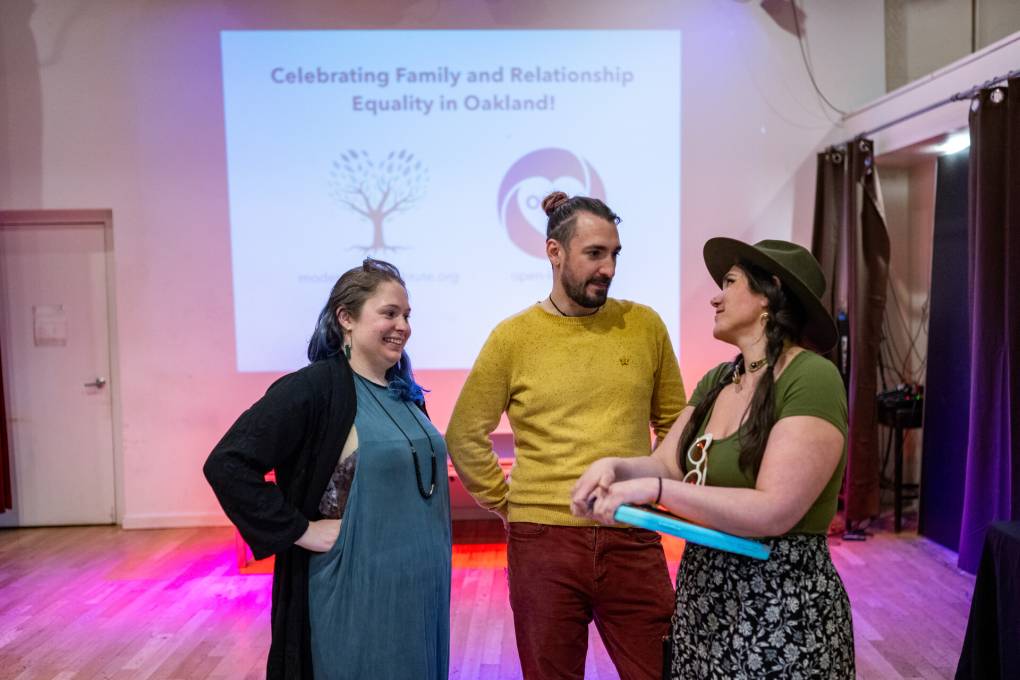
"caption": "John Owens speaks with his partners Emily Savage (left) and Alejandra Bravo Ducey at a celebration party at the East Bay Community Space in Oakland on April 16, 2024, after a bill prohibiting discrimination of non-monogamous families passed in the Oakland City Council.",
"description": null,
"title": "240416-NontraditionalFamilies-02-BL_qut",
"credit": "Beth LaBerge/KQED",
"status": "inherit",
"altTag": null,
"isLoading": false,
"fetchFailed": false
},
"news_11985375": {
"type": "attachments",
"id": "news_11985375",
"meta": {
"index": "attachments_1716263798",
"site": "news",
"id": "11985375",
"found": true
},
"parent": 11985335,
"imgSizes": {
"twentyfourteen-full-width": {
"file": "https://cdn.kqed.org/wp-content/uploads/sites/10/2024/05/GettyImages-2152066925-1024x576.jpg",
"width": 1024,
"mimeType": "image/jpeg",
"height": 576
},
"thumbnail": {
"file": "https://cdn.kqed.org/wp-content/uploads/sites/10/2024/05/GettyImages-2152066925-160x107.jpg",
"width": 160,
"mimeType": "image/jpeg",
"height": 107
},
"post-thumbnail": {
"file": "https://cdn.kqed.org/wp-content/uploads/sites/10/2024/05/GettyImages-2152066925-672x372.jpg",
"width": 672,
"mimeType": "image/jpeg",
"height": 372
},
"kqedFullSize": {
"file": "https://cdn.kqed.org/wp-content/uploads/sites/10/2024/05/GettyImages-2152066925.jpg",
"width": 1024,
"height": 683
},
"large": {
"file": "https://cdn.kqed.org/wp-content/uploads/sites/10/2024/05/GettyImages-2152066925-1020x680.jpg",
"width": 1020,
"mimeType": "image/jpeg",
"height": 680
},
"medium": {
"file": "https://cdn.kqed.org/wp-content/uploads/sites/10/2024/05/GettyImages-2152066925-800x534.jpg",
"width": 800,
"mimeType": "image/jpeg",
"height": 534
}
},
"publishDate": 1715196832,
"modified": 1715200335,
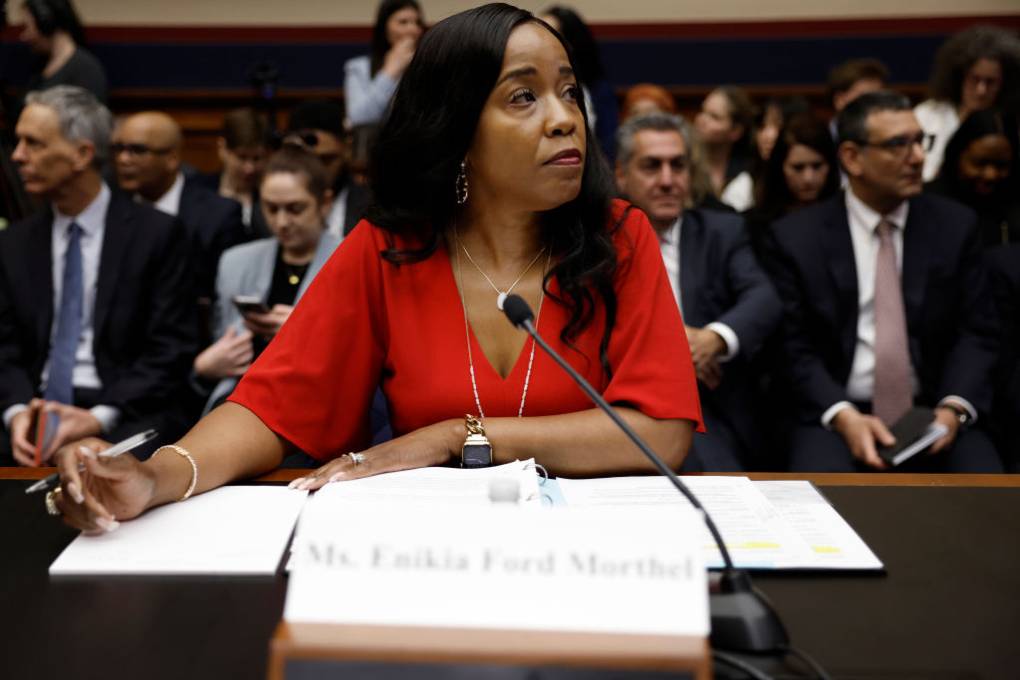
"caption": "Enikia Ford Morthel, superintendent of the Berkeley Unified School District, listens during a hearing with subcommittee members of the House Education and the Workforce Committee on May 8, 2024, in Washington, D.C.",
"description": null,
"title": "House Committee Holds Hearing Examining Antisemitism In K-12 Schools",
"credit": "Anna Moneymaker/Getty Images",
"status": "inherit",
"altTag": "A Black woman in a red dress sits in front of a microphone.",
"isLoading": false,
"fetchFailed": false
},
"news_11980500": {
"type": "attachments",
"id": "news_11980500",
"meta": {
"index": "attachments_1716263798",
"site": "news",
"id": "11980500",
"found": true
},
"parent": 11980492,
"imgSizes": {
"twentyfourteen-full-width": {
"file": "https://cdn.kqed.org/wp-content/uploads/sites/10/2024/03/001_KQED_KristaGulbransenBPOA_10252022_qut-1038x576.jpg",
"width": 1038,
"mimeType": "image/jpeg",
"height": 576
},
"thumbnail": {
"file": "https://cdn.kqed.org/wp-content/uploads/sites/10/2024/03/001_KQED_KristaGulbransenBPOA_10252022_qut-160x107.jpg",
"width": 160,
"mimeType": "image/jpeg",
"height": 107
},
"post-thumbnail": {
"file": "https://cdn.kqed.org/wp-content/uploads/sites/10/2024/03/001_KQED_KristaGulbransenBPOA_10252022_qut-672x372.jpg",
"width": 672,
"mimeType": "image/jpeg",
"height": 372
},
"kqedFullSize": {
"file": "https://cdn.kqed.org/wp-content/uploads/sites/10/2024/03/001_KQED_KristaGulbransenBPOA_10252022_qut.jpg",
"width": 1920,
"height": 1280
},
"large": {
"file": "https://cdn.kqed.org/wp-content/uploads/sites/10/2024/03/001_KQED_KristaGulbransenBPOA_10252022_qut-1020x680.jpg",
"width": 1020,
"mimeType": "image/jpeg",
"height": 680
},
"1536x1536": {
"file": "https://cdn.kqed.org/wp-content/uploads/sites/10/2024/03/001_KQED_KristaGulbransenBPOA_10252022_qut-1536x1024.jpg",
"width": 1536,
"mimeType": "image/jpeg",
"height": 1024
},
"medium": {
"file": "https://cdn.kqed.org/wp-content/uploads/sites/10/2024/03/001_KQED_KristaGulbransenBPOA_10252022_qut-800x533.jpg",
"width": 800,
"mimeType": "image/jpeg",
"height": 533
}
},
"publishDate": 1711135726,
"modified": 1711136003,
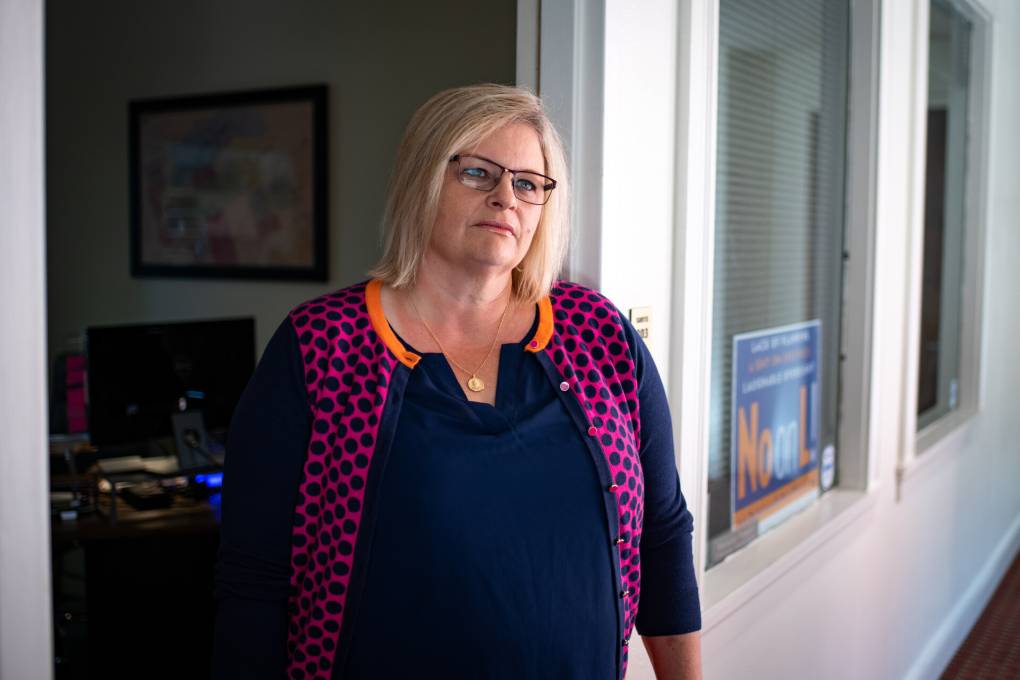
"caption": "Krista Gulbransen, executive director of the Berkeley Property Owners Association, poses for a portrait at their offices in Berkeley on Oct. 25, 2022.",
"description": null,
"title": "001_KQED_KristaGulbransenBPOA_10252022_qut",
"credit": "Beth LaBerge/KQED",
"status": "inherit",
"altTag": "A middle-aged white woman with a sweater stands in a doorway, behind her a sign that says \"No on 1!\"",
"isLoading": false,
"fetchFailed": false
},
"news_11979333": {
"type": "attachments",
"id": "news_11979333",
"meta": {
"index": "attachments_1716263798",
"site": "news",
"id": "11979333",
"found": true
},
"parent": 11979268,
"imgSizes": {
"twentyfourteen-full-width": {
"file": "https://cdn.kqed.org/wp-content/uploads/sites/10/2024/03/AP24073728844941-1024x576.jpg",
"width": 1024,
"mimeType": "image/jpeg",
"height": 576
},
"thumbnail": {
"file": "https://cdn.kqed.org/wp-content/uploads/sites/10/2024/03/AP24073728844941-160x107.jpg",
"width": 160,
"mimeType": "image/jpeg",
"height": 107
},
"post-thumbnail": {
"file": "https://cdn.kqed.org/wp-content/uploads/sites/10/2024/03/AP24073728844941-672x372.jpg",
"width": 672,
"mimeType": "image/jpeg",
"height": 372
},
"kqedFullSize": {
"file": "https://cdn.kqed.org/wp-content/uploads/sites/10/2024/03/AP24073728844941.jpg",
"width": 1024,
"height": 683
},
"large": {
"file": "https://cdn.kqed.org/wp-content/uploads/sites/10/2024/03/AP24073728844941-1020x680.jpg",
"width": 1020,
"mimeType": "image/jpeg",
"height": 680
},
"medium": {
"file": "https://cdn.kqed.org/wp-content/uploads/sites/10/2024/03/AP24073728844941-800x534.jpg",
"width": 800,
"mimeType": "image/jpeg",
"height": 534
}
},
"publishDate": 1710365009,
"modified": 1710365084,
"caption": "Melissa Nelson, chair of the board of directors of the Sogorea Te’ Land Trust, middle, gestures while speaking at a news conference in Berkeley, Wednesday, March 13, 2024. Berkeley’s City Council voted unanimously Tuesday, March 12, 2024, to adopt an ordinance giving the title of the land to the Sogorea Te’ Land Trust, a women-led, San Francisco Bay Area collective that works to return land to Indigenous people and that raised the funds needed to reach the agreement. ",
"description": null,
"title": "AP24073728844941",
"credit": "Jeff Chiu/AP Photo",
"status": "inherit",
"altTag": null,
"isLoading": false,
"fetchFailed": false
},
"news_11930307": {
"type": "attachments",
"id": "news_11930307",
"meta": {
"index": "attachments_1716263798",
"site": "news",
"id": "11930307",
"found": true
},
"parent": 11930303,
"imgSizes": {
"twentyfourteen-full-width": {
"file": "https://cdn.kqed.org/wp-content/uploads/sites/10/2022/10/RS59665_012_KQED_BerkeleyMeasureM_10262022-qut-1038x576.jpg",
"width": 1038,
"mimeType": "image/jpeg",
"height": 576
},
"thumbnail": {
"file": "https://cdn.kqed.org/wp-content/uploads/sites/10/2022/10/RS59665_012_KQED_BerkeleyMeasureM_10262022-qut-160x107.jpg",
"width": 160,
"mimeType": "image/jpeg",
"height": 107
},
"post-thumbnail": {
"file": "https://cdn.kqed.org/wp-content/uploads/sites/10/2022/10/RS59665_012_KQED_BerkeleyMeasureM_10262022-qut-672x372.jpg",
"width": 672,
"mimeType": "image/jpeg",
"height": 372
},
"kqedFullSize": {
"file": "https://cdn.kqed.org/wp-content/uploads/sites/10/2022/10/RS59665_012_KQED_BerkeleyMeasureM_10262022-qut.jpg",
"width": 1920,
"height": 1280
},
"large": {
"file": "https://cdn.kqed.org/wp-content/uploads/sites/10/2022/10/RS59665_012_KQED_BerkeleyMeasureM_10262022-qut-1020x680.jpg",
"width": 1020,
"mimeType": "image/jpeg",
"height": 680
},
"1536x1536": {
"file": "https://cdn.kqed.org/wp-content/uploads/sites/10/2022/10/RS59665_012_KQED_BerkeleyMeasureM_10262022-qut-1536x1024.jpg",
"width": 1536,
"mimeType": "image/jpeg",
"height": 1024
},
"medium": {
"file": "https://cdn.kqed.org/wp-content/uploads/sites/10/2022/10/RS59665_012_KQED_BerkeleyMeasureM_10262022-qut-800x533.jpg",
"width": 800,
"mimeType": "image/jpeg",
"height": 533
}
},
"publishDate": 1666899542,
"modified": 1706839090,
"caption": "Berkeley Vice Mayor Kate Harrison stands in front of a vacant apartment building in Berkeley on Oct. 26, 2022.",
"description": null,
"title": "RS59665_012_KQED_BerkeleyMeasureM_10262022-qut",
"credit": "Beth LaBerge/KQED",
"status": "inherit",
"altTag": "A middle-aged white woman with blond hair wearing a crimson coat and an ornate necklace stands outside in front of a fence.",
"isLoading": false,
"fetchFailed": false
},
"news_11973567": {
"type": "attachments",
"id": "news_11973567",
"meta": {
"index": "attachments_1716263798",
"site": "news",
"id": "11973567",
"found": true
},
"parent": 11973560,
"imgSizes": {
"twentyfourteen-full-width": {
"file": "https://cdn.kqed.org/wp-content/uploads/sites/10/2024/01/Natera_231126_DYSLEXIA_12-2048x1463-1-1038x576.jpg",
"width": 1038,
"mimeType": "image/jpeg",
"height": 576
},
"thumbnail": {
"file": "https://cdn.kqed.org/wp-content/uploads/sites/10/2024/01/Natera_231126_DYSLEXIA_12-2048x1463-1-160x114.jpg",
"width": 160,
"mimeType": "image/jpeg",
"height": 114
},
"post-thumbnail": {
"file": "https://cdn.kqed.org/wp-content/uploads/sites/10/2024/01/Natera_231126_DYSLEXIA_12-2048x1463-1-672x372.jpg",
"width": 672,
"mimeType": "image/jpeg",
"height": 372
},
"kqedFullSize": {
"file": "https://cdn.kqed.org/wp-content/uploads/sites/10/2024/01/Natera_231126_DYSLEXIA_12-2048x1463-1.jpg",
"width": 2048,
"height": 1463
},
"large": {
"file": "https://cdn.kqed.org/wp-content/uploads/sites/10/2024/01/Natera_231126_DYSLEXIA_12-2048x1463-1-1020x729.jpg",
"width": 1020,
"mimeType": "image/jpeg",
"height": 729
},
"1536x1536": {
"file": "https://cdn.kqed.org/wp-content/uploads/sites/10/2024/01/Natera_231126_DYSLEXIA_12-2048x1463-1-1536x1097.jpg",
"width": 1536,
"mimeType": "image/jpeg",
"height": 1097
},
"full-width": {
"file": "https://cdn.kqed.org/wp-content/uploads/sites/10/2024/01/Natera_231126_DYSLEXIA_12-2048x1463-1-1920x1372.jpg",
"width": 1920,
"mimeType": "image/jpeg",
"height": 1372
},
"medium": {
"file": "https://cdn.kqed.org/wp-content/uploads/sites/10/2024/01/Natera_231126_DYSLEXIA_12-2048x1463-1-800x571.jpg",
"width": 800,
"mimeType": "image/jpeg",
"height": 571
}
},
"publishDate": 1706130642,
"modified": 1706138142,
"caption": "Eva Levenson, now a sophomore at Berkeley High School, has struggled with dyslexia since childhood but private phonics-based intervention made a difference. 'I don't understand what's in the way of making a shift when, both in other states and locally, districts are able to help kids now,' she recently told the school board. 'How is it possible we aren't doing it in Berkeley right now?'",
"description": null,
"title": "Natera_231126_DYSLEXIA_12-2048x1463",
"credit": "Ximena Natera via Berkeleyside/CatchLight",
"status": "inherit",
"altTag": "A white woman wearing a black shirt sits in a chair in a home, with her right arm resting on the desk.",
"isLoading": false,
"fetchFailed": false
},
"news_11971733": {
"type": "attachments",
"id": "news_11971733",
"meta": {
"index": "attachments_1716263798",
"site": "news",
"id": "11971733",
"found": true
},
"title": "240104-PEOPLE'S PARK-MD-05",
"publishDate": 1704419716,
"status": "inherit",
"parent": 11971577,
"modified": 1775002315,
"caption": "Construction crews work in People’s Park in Berkeley on Jan. 4, 2024.",
"credit": "Martin do Nascimento/KQED",
"altTag": "Two construction workers stand on-site at People's Park in Berkeley.",
"description": null,
"imgSizes": {
"medium": {
"file": "https://cdn.kqed.org/wp-content/uploads/sites/10/2024/01/240104-PEOPLES-PARK-MD-05-800x533.jpg",
"width": 800,
"height": 533,
"mimeType": "image/jpeg"
},
"large": {
"file": "https://cdn.kqed.org/wp-content/uploads/sites/10/2024/01/240104-PEOPLES-PARK-MD-05-1020x680.jpg",
"width": 1020,
"height": 680,
"mimeType": "image/jpeg"
},
"thumbnail": {
"file": "https://cdn.kqed.org/wp-content/uploads/sites/10/2024/01/240104-PEOPLES-PARK-MD-05-160x107.jpg",
"width": 160,
"height": 107,
"mimeType": "image/jpeg"
},
"1536x1536": {
"file": "https://cdn.kqed.org/wp-content/uploads/sites/10/2024/01/240104-PEOPLES-PARK-MD-05-1536x1024.jpg",
"width": 1536,
"height": 1024,
"mimeType": "image/jpeg"
},
"2048x2048": {
"file": "https://cdn.kqed.org/wp-content/uploads/sites/10/2024/01/240104-PEOPLES-PARK-MD-05-2048x1365.jpg",
"width": 2048,
"height": 1365,
"mimeType": "image/jpeg"
},
"post-thumbnail": {
"file": "https://cdn.kqed.org/wp-content/uploads/sites/10/2024/01/240104-PEOPLES-PARK-MD-05-672x372.jpg",
"width": 672,
"height": 372,
"mimeType": "image/jpeg"
},
"twentyfourteen-full-width": {
"file": "https://cdn.kqed.org/wp-content/uploads/sites/10/2024/01/240104-PEOPLES-PARK-MD-05-1038x576.jpg",
"width": 1038,
"height": 576,
"mimeType": "image/jpeg"
},
"full-width": {
"file": "https://cdn.kqed.org/wp-content/uploads/sites/10/2024/01/240104-PEOPLES-PARK-MD-05-1920x1280.jpg",
"width": 1920,
"height": 1280,
"mimeType": "image/jpeg"
},
"kqedFullSize": {
"file": "https://cdn.kqed.org/wp-content/uploads/sites/10/2024/01/240104-PEOPLES-PARK-MD-05-scaled-e1775001183210.jpg",
"width": 2000,
"height": 1334
}
},
"isLoading": false,
"fetchFailed": false
},
"news_11971982": {
"type": "attachments",
"id": "news_11971982",
"meta": {
"index": "attachments_1716263798",
"site": "news",
"id": "11971982",
"found": true
},
"parent": 0,
"imgSizes": {
"twentyfourteen-full-width": {
"file": "https://cdn.kqed.org/wp-content/uploads/sites/10/2024/01/240108-LEV-MARCUS-MD-01-KQED-1038x576.jpg",
"width": 1038,
"mimeType": "image/jpeg",
"height": 576
},
"thumbnail": {
"file": "https://cdn.kqed.org/wp-content/uploads/sites/10/2024/01/240108-LEV-MARCUS-MD-01-KQED-160x107.jpg",
"width": 160,
"mimeType": "image/jpeg",
"height": 107
},
"post-thumbnail": {
"file": "https://cdn.kqed.org/wp-content/uploads/sites/10/2024/01/240108-LEV-MARCUS-MD-01-KQED-672x372.jpg",
"width": 672,
"mimeType": "image/jpeg",
"height": 372
},
"kqedFullSize": {
"file": "https://cdn.kqed.org/wp-content/uploads/sites/10/2024/01/240108-LEV-MARCUS-MD-01-KQED.jpg",
"width": 2000,
"height": 1333
},
"large": {
"file": "https://cdn.kqed.org/wp-content/uploads/sites/10/2024/01/240108-LEV-MARCUS-MD-01-KQED-1020x680.jpg",
"width": 1020,
"mimeType": "image/jpeg",
"height": 680
},
"1536x1536": {
"file": "https://cdn.kqed.org/wp-content/uploads/sites/10/2024/01/240108-LEV-MARCUS-MD-01-KQED-1536x1024.jpg",
"width": 1536,
"mimeType": "image/jpeg",
"height": 1024
},
"full-width": {
"file": "https://cdn.kqed.org/wp-content/uploads/sites/10/2024/01/240108-LEV-MARCUS-MD-01-KQED-1920x1280.jpg",
"width": 1920,
"mimeType": "image/jpeg",
"height": 1280
},
"medium": {
"file": "https://cdn.kqed.org/wp-content/uploads/sites/10/2024/01/240108-LEV-MARCUS-MD-01-KQED-800x533.jpg",
"width": 800,
"mimeType": "image/jpeg",
"height": 533
}
},
"publishDate": 1704759863,
"modified": 1704770420,
"caption": "Lev Marcus stands on the corner of Telegraph and Haste in Berkeley on Jan. 8, 2024.",
"description": null,
"title": "240108-LEV MARCUS-MD-01-KQED",
"credit": "Martin do Nascimento/KQED",
"status": "inherit",
"altTag": "A person in a light brown jacket stands on a street corner.",
"isLoading": false,
"fetchFailed": false
},
"news_11970748": {
"type": "attachments",
"id": "news_11970748",
"meta": {
"index": "attachments_1716263798",
"site": "news",
"id": "11970748",
"found": true
},
"parent": 11970744,
"imgSizes": {
"twentyfourteen-full-width": {
"file": "https://cdn.kqed.org/wp-content/uploads/sites/10/2023/12/GettyImages-1502059460-1024x576.jpg",
"width": 1024,
"mimeType": "image/jpeg",
"height": 576
},
"thumbnail": {
"file": "https://cdn.kqed.org/wp-content/uploads/sites/10/2023/12/GettyImages-1502059460-160x109.jpg",
"width": 160,
"mimeType": "image/jpeg",
"height": 109
},
"post-thumbnail": {
"file": "https://cdn.kqed.org/wp-content/uploads/sites/10/2023/12/GettyImages-1502059460-672x372.jpg",
"width": 672,
"mimeType": "image/jpeg",
"height": 372
},
"kqedFullSize": {
"file": "https://cdn.kqed.org/wp-content/uploads/sites/10/2023/12/GettyImages-1502059460.jpg",
"width": 1024,
"height": 698
},
"large": {
"file": "https://cdn.kqed.org/wp-content/uploads/sites/10/2023/12/GettyImages-1502059460-1020x695.jpg",
"width": 1020,
"mimeType": "image/jpeg",
"height": 695
},
"medium": {
"file": "https://cdn.kqed.org/wp-content/uploads/sites/10/2023/12/GettyImages-1502059460-800x545.jpg",
"width": 800,
"mimeType": "image/jpeg",
"height": 545
}
},
"publishDate": 1703275146,
"modified": 1703275708,
"caption": "Tents on 8th Street at a homeless encampment near Harrison Street in Berkeley in June 2023.",
"description": null,
"title": "Berkeley Homeless",
"credit": "Jane Tyska/Digital First Media/East Bay Times via Getty Images",
"status": "inherit",
"altTag": "tents along a street",
"isLoading": false,
"fetchFailed": false
},
"news_11970469": {
"type": "attachments",
"id": "news_11970469",
"meta": {
"index": "attachments_1716263798",
"site": "news",
"id": "11970469",
"found": true
},
"parent": 11970466,
"imgSizes": {
"twentyfourteen-full-width": {
"file": "https://cdn.kqed.org/wp-content/uploads/sites/10/2023/12/Screen-Shot-2023-12-19-at-2.22.41-PM-1038x576.png",
"width": 1038,
"mimeType": "image/png",
"height": 576
},
"thumbnail": {
"file": "https://cdn.kqed.org/wp-content/uploads/sites/10/2023/12/Screen-Shot-2023-12-19-at-2.22.41-PM-160x119.png",
"width": 160,
"mimeType": "image/png",
"height": 119
},
"post-thumbnail": {
"file": "https://cdn.kqed.org/wp-content/uploads/sites/10/2023/12/Screen-Shot-2023-12-19-at-2.22.41-PM-672x372.png",
"width": 672,
"mimeType": "image/png",
"height": 372
},
"kqedFullSize": {
"file": "https://cdn.kqed.org/wp-content/uploads/sites/10/2023/12/Screen-Shot-2023-12-19-at-2.22.41-PM.png",
"width": 2083,
"height": 1550
},
"2048x2048": {
"file": "https://cdn.kqed.org/wp-content/uploads/sites/10/2023/12/Screen-Shot-2023-12-19-at-2.22.41-PM-2048x1524.png",
"width": 2048,
"mimeType": "image/png",
"height": 1524
},
"large": {
"file": "https://cdn.kqed.org/wp-content/uploads/sites/10/2023/12/Screen-Shot-2023-12-19-at-2.22.41-PM-1020x759.png",
"width": 1020,
"mimeType": "image/png",
"height": 759
},
"1536x1536": {
"file": "https://cdn.kqed.org/wp-content/uploads/sites/10/2023/12/Screen-Shot-2023-12-19-at-2.22.41-PM-1536x1143.png",
"width": 1536,
"mimeType": "image/png",
"height": 1143
},
"full-width": {
"file": "https://cdn.kqed.org/wp-content/uploads/sites/10/2023/12/Screen-Shot-2023-12-19-at-2.22.41-PM-1920x1429.png",
"width": 1920,
"mimeType": "image/png",
"height": 1429
},
"medium": {
"file": "https://cdn.kqed.org/wp-content/uploads/sites/10/2023/12/Screen-Shot-2023-12-19-at-2.22.41-PM-800x595.png",
"width": 800,
"mimeType": "image/png",
"height": 595
}
},
"publishDate": 1703024622,
"modified": 1703025747,
"caption": "A climber flags his right foot for balance on an overhanging part of Indian Rock. ",
"description": null,
"title": "Screen Shot 2023-12-19 at 2.22.41 PM",
"credit": "Ximena Natera, Berkeleyside/CatchLight",
"status": "inherit",
"altTag": null,
"isLoading": false,
"fetchFailed": false
},
"news_11966674": {
"type": "attachments",
"id": "news_11966674",
"meta": {
"index": "attachments_1716263798",
"site": "news",
"id": "11966674",
"found": true
},
"parent": 11966673,
"imgSizes": {
"twentyfourteen-full-width": {
"file": "https://ww2.kqed.org/app/uploads/sites/10/2023/10/libraries02_01_wide-84dc754c176c2fd78816f9ad91146ce933e578e4-1-1038x576.jpg",
"width": 1038,
"mimeType": "image/jpeg",
"height": 576
},
"thumbnail": {
"file": "https://ww2.kqed.org/app/uploads/sites/10/2023/10/libraries02_01_wide-84dc754c176c2fd78816f9ad91146ce933e578e4-1-160x90.jpg",
"width": 160,
"mimeType": "image/jpeg",
"height": 90
},
"post-thumbnail": {
"file": "https://ww2.kqed.org/app/uploads/sites/10/2023/10/libraries02_01_wide-84dc754c176c2fd78816f9ad91146ce933e578e4-1-672x372.jpg",
"width": 672,
"mimeType": "image/jpeg",
"height": 372
},
"kqedFullSize": {
"file": "https://ww2.kqed.org/app/uploads/sites/10/2023/10/libraries02_01_wide-84dc754c176c2fd78816f9ad91146ce933e578e4-1-scaled.jpg",
"width": 2560,
"height": 1440
},
"2048x2048": {
"file": "https://ww2.kqed.org/app/uploads/sites/10/2023/10/libraries02_01_wide-84dc754c176c2fd78816f9ad91146ce933e578e4-1-2048x1152.jpg",
"width": 2048,
"mimeType": "image/jpeg",
"height": 1152
},
"large": {
"file": "https://ww2.kqed.org/app/uploads/sites/10/2023/10/libraries02_01_wide-84dc754c176c2fd78816f9ad91146ce933e578e4-1-1020x574.jpg",
"width": 1020,
"mimeType": "image/jpeg",
"height": 574
},
"1536x1536": {
"file": "https://ww2.kqed.org/app/uploads/sites/10/2023/10/libraries02_01_wide-84dc754c176c2fd78816f9ad91146ce933e578e4-1-1536x864.jpg",
"width": 1536,
"mimeType": "image/jpeg",
"height": 864
},
"full-width": {
"file": "https://ww2.kqed.org/app/uploads/sites/10/2023/10/libraries02_01_wide-84dc754c176c2fd78816f9ad91146ce933e578e4-1-1920x1080.jpg",
"width": 1920,
"mimeType": "image/jpeg",
"height": 1080
},
"medium": {
"file": "https://ww2.kqed.org/app/uploads/sites/10/2023/10/libraries02_01_wide-84dc754c176c2fd78816f9ad91146ce933e578e4-1-800x450.jpg",
"width": 800,
"mimeType": "image/jpeg",
"height": 450
}
},
"publishDate": 1699390311,
"modified": 1699397777,
"caption": "Library cardholders in California can gain free entry to over 200 state parks, saving patrons $20 in entry fees.",
"description": null,
"title": "A hand holds a library card, surrounded by a wide variety of services that libraries can provide.",
"credit": "Kaz Fantone/NPR",
"status": "inherit",
"altTag": "A graphic illustration of a hand holding a blue library card.",
"isLoading": false,
"fetchFailed": false
}
},
"audioPlayerReducer": {
"postId": "stream_live",
"isPaused": true,
"isPlaying": false,
"pfsActive": false,
"pledgeModalIsOpen": true,
"playerDrawerIsOpen": false,
"liveAudioPlayStartedAt": 0,
"liveAudioPlayContext": ""
},
"authorsReducer": {
"byline_news_11988346": {
"type": "authors",
"id": "byline_news_11988346",
"meta": {
"override": true
},
"slug": "byline_news_11988346",
"name": " Ericka Cruz Guevarra, Alan Montecillo, Ellie Prickett-Morgan, Tamuna Chkareuli",
"isLoading": false
},
"byline_news_11979268": {
"type": "authors",
"id": "byline_news_11979268",
"meta": {
"override": true
},
"slug": "byline_news_11979268",
"name": "Janie Har\u003cbr>Associated Press",
"isLoading": false
},
"byline_news_11973560": {
"type": "authors",
"id": "byline_news_11973560",
"meta": {
"override": true
},
"slug": "byline_news_11973560",
"name": "Ally Markovich\u003cbr>Berkeleyside\u003c/br>",
"isLoading": false
},
"byline_news_11966673": {
"type": "authors",
"id": "byline_news_11966673",
"meta": {
"override": true
},
"slug": "byline_news_11966673",
"name": "Marielle Segarra and Audrey Nguyen",
"isLoading": false
},
"kqednewsstaffandwires": {
"type": "authors",
"id": "237",
"meta": {
"index": "authors_1716337520",
"id": "237",
"found": true
},
"name": "KQED News Staff and Wires",
"firstName": "KQED News Staff and Wires",
"lastName": null,
"slug": "kqednewsstaffandwires",
"email": "onlinenewsstaff@kqed.org",
"display_author_email": false,
"staff_mastheads": [],
"title": null,
"bio": null,
"avatar": "https://secure.gravatar.com/avatar/72295af8ebbfbd19a4948f5271285664?s=600&d=blank&r=g",
"twitter": null,
"facebook": null,
"instagram": null,
"linkedin": null,
"sites": [
{
"site": "arts",
"roles": [
"contributor"
]
},
{
"site": "news",
"roles": [
"contributor"
]
},
{
"site": "lowdown",
"roles": [
"author"
]
},
{
"site": "stateofhealth",
"roles": [
"contributor"
]
},
{
"site": "food",
"roles": [
"author"
]
}
],
"headData": {
"title": "KQED News Staff and Wires | KQED",
"description": null,
"ogImgSrc": "https://secure.gravatar.com/avatar/72295af8ebbfbd19a4948f5271285664?s=600&d=blank&r=g",
"twImgSrc": "https://secure.gravatar.com/avatar/72295af8ebbfbd19a4948f5271285664?s=600&d=blank&r=g"
},
"isLoading": false,
"link": "/author/kqednewsstaffandwires"
},
"kdomara": {
"type": "authors",
"id": "1459",
"meta": {
"index": "authors_1716337520",
"id": "1459",
"found": true
},
"name": "Kelly O'Mara",
"firstName": "Kelly",
"lastName": "O'Mara",
"slug": "kdomara",
"email": "komara@kqed.org",
"display_author_email": false,
"staff_mastheads": [
"news"
],
"title": "KQED Contributor",
"bio": "Kelly O'Mara is a writer and reporter in the San Francisco Bay Area. She writes about food, health, sports, travel, business and California news. Her work has appeared on KQED, online for Outside Magazine, epsnW, VICE and in Competitor Magazine, among others. Follow Kelly on Twitter \u003ca href=\"https://twitter.com/kellydomara\">@kellydomara\u003c/a>.",
"avatar": "https://secure.gravatar.com/avatar/768fec7412028b72f13bdd0f5f9d8186?s=600&d=blank&r=g",
"twitter": null,
"facebook": null,
"instagram": null,
"linkedin": null,
"sites": [
{
"site": "arts",
"roles": []
},
{
"site": "news",
"roles": []
},
{
"site": "bayareabites",
"roles": []
},
{
"site": "stateofhealth",
"roles": []
},
{
"site": "science",
"roles": []
},
{
"site": "checkplease",
"roles": [
"editor"
]
},
{
"site": "food",
"roles": []
},
{
"site": "forum",
"roles": [
"editor"
]
},
{
"site": "liveblog",
"roles": [
"editor"
]
}
],
"headData": {
"title": "Kelly O'Mara | KQED",
"description": "KQED Contributor",
"ogImgSrc": "https://secure.gravatar.com/avatar/768fec7412028b72f13bdd0f5f9d8186?s=600&d=blank&r=g",
"twImgSrc": "https://secure.gravatar.com/avatar/768fec7412028b72f13bdd0f5f9d8186?s=600&d=blank&r=g"
},
"isLoading": false,
"link": "/author/kdomara"
},
"ecruzguevarra": {
"type": "authors",
"id": "8654",
"meta": {
"index": "authors_1716337520",
"id": "8654",
"found": true
},
"name": "Ericka Cruz Guevarra",
"firstName": "Ericka",
"lastName": "Cruz Guevarra",
"slug": "ecruzguevarra",
"email": "ecruzguevarra@kqed.org",
"display_author_email": true,
"staff_mastheads": [
"news"
],
"title": "Producer, The Bay Podcast",
"bio": "Ericka Cruz Guevarra is host of \u003ca href=\"https://www.kqed.org/podcasts/thebay\">\u003cem>The Bay\u003c/em>\u003c/a> podcast at KQED. Before host, she was the show’s producer. Her work in that capacity includes a three-part reported series on policing in Vallejo, which won a 2020 excellence in journalism award from the Society of Professional Journalists. Ericka has worked as a breaking news reporter at Oregon Public Broadcasting, helped produce the Code Switch podcast, and was KQED’s inaugural Raul Ramirez Diversity Fund intern. She’s also an alumna of NPR’s Next Generation Radio program. Send her an email if you have strong feelings about whether Fairfield and Suisun City are the Bay. Ericka is represented by SAG-AFTRA.",
"avatar": "https://secure.gravatar.com/avatar/accefc1de4bafc7e234b69bcb9b6f6536c130fd84709bc3069ef11a78787e1bb?s=600&d=blank&r=g",
"twitter": "NotoriousECG",
"bluesky": null,
"facebook": null,
"instagram": null,
"linkedin": null,
"sites": [
{
"site": "arts",
"roles": [
"subscriber"
]
},
{
"site": "news",
"roles": [
"editor",
"manage_categories"
]
},
{
"site": "futureofyou",
"roles": [
"subscriber"
]
},
{
"site": "stateofhealth",
"roles": [
"subscriber"
]
},
{
"site": "science",
"roles": [
"editor"
]
},
{
"site": "forum",
"roles": [
"subscriber"
]
}
],
"headData": {
"title": "Ericka Cruz Guevarra | KQED",
"description": "Producer, The Bay Podcast",
"ogImgSrc": "https://secure.gravatar.com/avatar/accefc1de4bafc7e234b69bcb9b6f6536c130fd84709bc3069ef11a78787e1bb?s=600&d=blank&r=g",
"twImgSrc": "https://secure.gravatar.com/avatar/accefc1de4bafc7e234b69bcb9b6f6536c130fd84709bc3069ef11a78787e1bb?s=600&d=blank&r=g"
},
"isLoading": false,
"link": "/author/ecruzguevarra"
},
"lesleymcclurg": {
"type": "authors",
"id": "11229",
"meta": {
"index": "authors_1716337520",
"id": "11229",
"found": true
},
"name": "Lesley McClurg",
"firstName": "Lesley",
"lastName": "McClurg",
"slug": "lesleymcclurg",
"email": "lmcclurg@KQED.org",
"display_author_email": false,
"staff_mastheads": [
"news",
"science"
],
"title": "KQED Health Correspondent",
"bio": "Lesley McClurg is a health correspondent and fill-in host whose work is regularly rebroadcast on NPR and PBS programs. She’s earned multiple regional Emmy awards, a national and a regional Edward R. Murrow award, and was named Best Beat Reporter by the Association of Health Care Journalists. The Society of Professional Journalists has recognized her work several times, and the Society of Environmental Journalists spotlighted her coverage of California’s historic drought.\r\n\r\nBefore joining KQED in 2016, Lesley covered food and sustainability for Capital Public Radio, environmental issues for Colorado Public Radio, and reported for KUOW and KCTS 9 in Seattle. Away from the newsroom, she loves skiing with her daughter, mountain biking with her partner, and playing with Ollie, the family’s goldendoodle. On deadline, she runs almost entirely on chocolate chips.\r\n\r\n ",
"avatar": "https://secure.gravatar.com/avatar/bab49e972ea10c774fe0f5e29dba1722b158f7c0d58a360923d1389d380b2978?s=600&d=blank&r=g",
"twitter": "lesleywmcclurg",
"bluesky": null,
"facebook": null,
"instagram": null,
"linkedin": null,
"sites": [
{
"site": "arts",
"roles": [
"author"
]
},
{
"site": "news",
"roles": [
"editor"
]
},
{
"site": "futureofyou",
"roles": [
"editor"
]
},
{
"site": "stateofhealth",
"roles": [
"author"
]
},
{
"site": "science",
"roles": [
"editor"
]
},
{
"site": "quest",
"roles": [
"subscriber"
]
},
{
"site": "forum",
"roles": [
"administrator"
]
},
{
"site": "liveblog",
"roles": [
"author"
]
}
],
"headData": {
"title": "Lesley McClurg | KQED",
"description": "KQED Health Correspondent",
"ogImgSrc": "https://secure.gravatar.com/avatar/bab49e972ea10c774fe0f5e29dba1722b158f7c0d58a360923d1389d380b2978?s=600&d=blank&r=g",
"twImgSrc": "https://secure.gravatar.com/avatar/bab49e972ea10c774fe0f5e29dba1722b158f7c0d58a360923d1389d380b2978?s=600&d=blank&r=g"
},
"isLoading": false,
"link": "/author/lesleymcclurg"
},
"vrancano": {
"type": "authors",
"id": "11276",
"meta": {
"index": "authors_1716337520",
"id": "11276",
"found": true
},
"name": "Vanessa Rancaño",
"firstName": "Vanessa",
"lastName": "Rancaño",
"slug": "vrancano",
"email": "vrancano@kqed.org",
"display_author_email": false,
"staff_mastheads": [
"news"
],
"title": "Reporter",
"bio": "Vanessa Rancaño is a features reporter for KQED. She’s also covered homelessness and education for the station and reported from the Central Valley. Her work has aired across public radio, from flagship national news shows to longform narrative podcasts. Before taking up a mic, she worked as a freelance print journalist. She’s been recognized with a number of national and regional awards. Vanessa grew up in California's Central Valley. She's a former NPR Kroc Fellow, and a graduate of the UC Berkeley Graduate School of Journalism.",
"avatar": "https://secure.gravatar.com/avatar/b3a383dfb0e7ee1c17568f2cf067904ab654d6e3de9743fc661f3c788ade1bed?s=600&d=blank&r=g",
"twitter": "vanessarancano",
"bluesky": null,
"facebook": null,
"instagram": null,
"linkedin": null,
"sites": [
{
"site": "arts",
"roles": [
"editor"
]
},
{
"site": "news",
"roles": [
"editor"
]
},
{
"site": "liveblog",
"roles": [
"contributor"
]
}
],
"headData": {
"title": "Vanessa Rancaño | KQED",
"description": "Reporter",
"ogImgSrc": "https://secure.gravatar.com/avatar/b3a383dfb0e7ee1c17568f2cf067904ab654d6e3de9743fc661f3c788ade1bed?s=600&d=blank&r=g",
"twImgSrc": "https://secure.gravatar.com/avatar/b3a383dfb0e7ee1c17568f2cf067904ab654d6e3de9743fc661f3c788ade1bed?s=600&d=blank&r=g"
},
"isLoading": false,
"link": "/author/vrancano"
},
"abandlamudi": {
"type": "authors",
"id": "11672",
"meta": {
"index": "authors_1716337520",
"id": "11672",
"found": true
},
"name": "Adhiti Bandlamudi",
"firstName": "Adhiti",
"lastName": "Bandlamudi",
"slug": "abandlamudi",
"email": "abandlamudi@kqed.org",
"display_author_email": false,
"staff_mastheads": [
"news"
],
"title": "KQED Housing Reporter",
"bio": "Adhiti Bandlamudi reports for KQED's Housing desk. She focuses on how housing gets built across the Bay Area. Before joining KQED in 2020, she reported for WUNC in Durham, North Carolina, WABE in Atlanta, Georgia and Capital Public Radio in Sacramento. In 2017, she was awarded a Kroc Fellowship at NPR where she reported on everything from sprinkles to the Golden State Killer's arrest. When she's not reporting, she's baking new recipes in her kitchen or watching movies with friends and family. She's originally from Georgia and has strong opinions about Great British Bake Off.",
"avatar": "https://secure.gravatar.com/avatar/868129c8b257bb99a3500e2c86a65400?s=600&d=mm&r=g",
"twitter": "oddity_adhiti",
"facebook": null,
"instagram": null,
"linkedin": null,
"sites": [
{
"site": "arts",
"roles": [
"author"
]
},
{
"site": "news",
"roles": [
"editor"
]
},
{
"site": "liveblog",
"roles": [
"author"
]
}
],
"headData": {
"title": "Adhiti Bandlamudi | KQED",
"description": "KQED Housing Reporter",
"ogImgSrc": "https://secure.gravatar.com/avatar/868129c8b257bb99a3500e2c86a65400?s=600&d=mm&r=g",
"twImgSrc": "https://secure.gravatar.com/avatar/868129c8b257bb99a3500e2c86a65400?s=600&d=mm&r=g"
},
"isLoading": false,
"link": "/author/abandlamudi"
},
"mesquinca": {
"type": "authors",
"id": "11802",
"meta": {
"index": "authors_1716337520",
"id": "11802",
"found": true
},
"name": "Maria Esquinca",
"firstName": "Maria",
"lastName": "Esquinca",
"slug": "mesquinca",
"email": "mesquinca@kqed.org",
"display_author_email": false,
"staff_mastheads": [],
"title": "Producer, The Bay",
"bio": "María Esquinca is a producer of The Bay. Before that, she was a New York Women’s Foundation IGNITE Fellow at Latino USA. She worked at Radio Bilingue where she covered the San Joaquin Valley. Maria has interned at WLRN, News 21, The New York Times Student Journalism Institute and at Crain’s Detroit Business as a Dow Jones News Fund Business Reporting Intern. She is an MFA graduate from the University of Miami. In 2017, she graduated from the Walter Cronkite School of Journalism and Mass Communication with a Master of Mass Communication. A fronteriza, she was born in Ciudad Juárez, Chihuahua, Mexico and grew up in El Paso, Texas.",
"avatar": "https://secure.gravatar.com/avatar/77cedba18aae91da775038ba06dcd8d0?s=600&d=blank&r=g",
"twitter": "@m_esquinca",
"facebook": null,
"instagram": null,
"linkedin": null,
"sites": [
{
"site": "news",
"roles": []
}
],
"headData": {
"title": "Maria Esquinca | KQED",
"description": "Producer, The Bay",
"ogImgSrc": "https://secure.gravatar.com/avatar/77cedba18aae91da775038ba06dcd8d0?s=600&d=blank&r=g",
"twImgSrc": "https://secure.gravatar.com/avatar/77cedba18aae91da775038ba06dcd8d0?s=600&d=blank&r=g"
},
"isLoading": false,
"link": "/author/mesquinca"
},
"naltenberg": {
"type": "authors",
"id": "11896",
"meta": {
"index": "authors_1716337520",
"id": "11896",
"found": true
},
"name": "Nik Altenberg",
"firstName": "Nik",
"lastName": "Altenberg",
"slug": "naltenberg",
"email": "naltenberg@kqed.org",
"display_author_email": false,
"staff_mastheads": [],
"title": "KQED Contributor",
"bio": "Nik Altenberg is an on-call reporter for KQED and a copy editor and fact checker for Santa Cruz Local. Nik’s reporting interests include policing, public health, environment, immigration, housing and the places where these issues intersect.",
"avatar": "https://secure.gravatar.com/avatar/e391b3a18ce4a53a7ca3f3065c74418b?s=600&d=blank&r=g",
"twitter": null,
"facebook": null,
"instagram": "https://www.instagram.com/nikaltenberg/",
"linkedin": null,
"sites": [
{
"site": "news",
"roles": []
}
],
"headData": {
"title": "Nik Altenberg | KQED",
"description": "KQED Contributor",
"ogImgSrc": "https://secure.gravatar.com/avatar/e391b3a18ce4a53a7ca3f3065c74418b?s=600&d=blank&r=g",
"twImgSrc": "https://secure.gravatar.com/avatar/e391b3a18ce4a53a7ca3f3065c74418b?s=600&d=blank&r=g"
},
"isLoading": false,
"link": "/author/naltenberg"
}
},
"pagesReducer": {
"news_tag_berkeley": {
"type": "terms",
"id": "news_129",
"meta": {
"index": "terms_1716263798",
"site": "news",
"id": "129",
"score": 6.9285083
},
"featImg": null,
"name": "Berkeley",
"description": null,
"taxonomy": "tag",
"headData": {
"twImgId": null,
"twTitle": null,
"ogTitle": null,
"ogImgId": null,
"twDescription": null,
"description": null,
"title": "Berkeley Archives | KQED News",
"ogDescription": null
},
"ttid": 133,
"slug": "berkeley",
"isLoading": false,
"title": "Berkeley",
"pageMeta": {
"site": "news",
"WpPageTemplate": "page-topic-editorial",
"currentPage": 9
},
"blocks": [
{
"blockName": "kqed/post-list",
"attrs": {
"layout": "cardArticle2",
"query": "posts/news?tag=berkeley",
"seeMore": false,
"paginated": true,
"page": 9
}
},
{
"blockName": "kqed/ad"
}
]
}
},
"pfsSessionReducer": {},
"postsReducer": {
"stream_live": {
"type": "live",
"id": "stream_live",
"audioUrl": "https://streams.kqed.org/kqedradio",
"title": "Live Stream",
"excerpt": "Live Stream information currently unavailable.",
"link": "/radio",
"featImg": "",
"label": {
"name": "KQED Live",
"link": "/"
}
},
"stream_kqedNewscast": {
"type": "posts",
"id": "stream_kqedNewscast",
"audioUrl": "https://www.kqed.org/.stream/anon/radio/RDnews/newscast.mp3?_=1",
"title": "KQED Newscast",
"featImg": "",
"label": {
"name": "88.5 FM",
"link": "/"
}
},
"news_11988346": {
"type": "posts",
"id": "news_11988346",
"meta": {
"index": "posts_1716263798",
"site": "news",
"id": "11988346",
"score": null,
"sort": [
1717149606000
]
},
"guestAuthors": [],
"slug": "may-news-roundup-a-chevron-tax-farmworker-housing-and-berkeleys-baby-falcons-plus-a-visiting-journalist-from-the-republic-of-georgia",
"title": "May News Roundup: A Chevron Tax(?), Farmworker Housing, and Berkeley's Baby Falcons. Plus, a Visiting Journalist From the Republic of Georgia",
"publishDate": 1717149606,
"format": "audio",
"headTitle": "May News Roundup: A Chevron Tax(?), Farmworker Housing, and Berkeley’s Baby Falcons. Plus, a Visiting Journalist From the Republic of Georgia | KQED",
"labelTerm": {},
"content": "\u003cp>\u003cspan style=\"font-weight: 400\">In this edition of The Bay’s monthly news roundup, Ericka, Alan, and \u003c/span>\u003cspan style=\"font-weight: 400\">intern Ellie talk about a possible tax on oil refining in Richmond, the debate over farmworker housing in Half Moon Bay, and Berkeley’s baby falcons. Plus, an interview with Tamuna Chkareuli, a visiting journalist from the Republic of Georgia who has been working at KQED for the past few weeks.\u003c/span>\u003c/p>\n\u003cp id=\"embed-code\" class=\"inconsolata\">\n\u003c!-- iframe plugin v.4.3 wordpress.org/plugins/iframe/ -->\u003cbr>\n\u003ciframe loading=\"lazy\" frameborder=\"0\" height=\"200\" scrolling=\"no\" src=\"https://playlist.megaphone.fm/?e=KQINC6046635860&light=true\" width=\"100%\" class=\"iframe-class\">\u003c/iframe>\u003c/p>\n\u003cp>[ad fullwidth]\u003c/p>\u003cp>\u003c/p>\n",
"blocks": [],
"excerpt": "In this edition of The Bay’s monthly news roundup, Ericka, Alan, and intern Ellie talk about a possible tax on oil refining in Richmond, the debate over farmworker housing in Half Moon Bay, and Berkeley’s baby falcons. Plus, an interview with Tamuna Chkareuli, a visiting journalist from the Republic of Georgia.",
"status": "publish",
"parent": 0,
"modified": 1717178615,
"stats": {
"hasAudio": true,
"hasVideo": false,
"hasChartOrMap": false,
"iframeSrcs": [],
"hasGoogleForm": false,
"hasGallery": false,
"hasHearkenModule": false,
"hasPolis": false,
"paragraphCount": 3,
"wordCount": 68
},
"headData": {
"title": "May News Roundup: A Chevron Tax(?), Farmworker Housing, and Berkeley's Baby Falcons. Plus, a Visiting Journalist From the Republic of Georgia | KQED",
"description": "In this edition of The Bay’s monthly news roundup, Ericka, Alan, and intern Ellie talk about a possible tax on oil refining in Richmond, the debate over farmworker housing in Half Moon Bay, and Berkeley’s baby falcons. Plus, an interview with Tamuna Chkareuli, a visiting journalist from the Republic of Georgia.",
"ogTitle": "",
"ogDescription": "",
"ogImgId": "",
"twTitle": "",
"twDescription": "",
"twImgId": "",
"schema": {
"@context": "https://schema.org",
"@type": "NewsArticle",
"headline": "May News Roundup: A Chevron Tax(?), Farmworker Housing, and Berkeley's Baby Falcons. Plus, a Visiting Journalist From the Republic of Georgia",
"datePublished": "2024-05-31T03:00:06-07:00",
"dateModified": "2024-05-31T11:03:35-07:00",
"image": "https://cdn.kqed.org/wp-content/uploads/2020/02/KQED-OG-Image@1x.png",
"isAccessibleForFree": "True",
"publisher": {
"@type": "NewsMediaOrganization",
"@id": "https://www.kqed.org/#organization",
"name": "KQED",
"logo": "https://cdn.kqed.org/wp-content/uploads/2020/02/KQED-OG-Image@1x.png",
"url": "https://www.kqed.org",
"sameAs": [
"https://www.facebook.com/KQED",
"https://twitter.com/KQED",
"https://www.instagram.com/kqed/",
"https://www.tiktok.com/@kqedofficial",
"https://www.linkedin.com/company/kqed",
"https://www.youtube.com/channel/UCeC0IOo7i1P_61zVUWbJ4nw"
]
}
}
},
"source": "The Bay",
"sourceUrl": "https://www.kqed.org/podcasts/thebay",
"audioUrl": "https://www.podtrac.com/pts/redirect.mp3/chrt.fm/track/G6C7C3/traffic.megaphone.fm/KQINC6046635860.mp3?updated=1717110936",
"sticky": false,
"nprByline": " Ericka Cruz Guevarra, Alan Montecillo, Ellie Prickett-Morgan, Tamuna Chkareuli",
"nprStoryId": "kqed-11988346",
"excludeFromSiteSearch": "Include",
"showOnAuthorArchivePages": "No",
"articleAge": "0",
"path": "/news/11988346/may-news-roundup-a-chevron-tax-farmworker-housing-and-berkeleys-baby-falcons-plus-a-visiting-journalist-from-the-republic-of-georgia",
"audioTrackLength": null,
"parsedContent": [
{
"type": "contentString",
"content": "\u003cdiv class=\"post-body\">\u003cp>\u003cp>\u003cspan style=\"font-weight: 400\">In this edition of The Bay’s monthly news roundup, Ericka, Alan, and \u003c/span>\u003cspan style=\"font-weight: 400\">intern Ellie talk about a possible tax on oil refining in Richmond, the debate over farmworker housing in Half Moon Bay, and Berkeley’s baby falcons. Plus, an interview with Tamuna Chkareuli, a visiting journalist from the Republic of Georgia who has been working at KQED for the past few weeks.\u003c/span>\u003c/p>\n\u003cp id=\"embed-code\" class=\"inconsolata\">\n\u003c!-- iframe plugin v.4.3 wordpress.org/plugins/iframe/ -->\u003cbr>\n\u003ciframe loading=\"lazy\" frameborder=\"0\" height=\"200\" scrolling=\"no\" src=\"https://playlist.megaphone.fm/?e=KQINC6046635860&light=true\" width=\"100%\" class=\"iframe-class\">\u003c/iframe>\u003c/p>\n\u003cp>\u003c/p>\u003c/div>",
"attributes": {
"named": {},
"numeric": []
}
},
{
"type": "component",
"content": "",
"name": "ad",
"attributes": {
"named": {
"label": "fullwidth"
},
"numeric": [
"fullwidth"
]
}
},
{
"type": "contentString",
"content": "\u003cdiv class=\"post-body\">\u003cp>\u003c/p>\u003cp>\u003c/p>\n\u003c/div>\u003c/p>",
"attributes": {
"named": {},
"numeric": []
}
}
],
"link": "/news/11988346/may-news-roundup-a-chevron-tax-farmworker-housing-and-berkeleys-baby-falcons-plus-a-visiting-journalist-from-the-republic-of-georgia",
"authors": [
"byline_news_11988346"
],
"programs": [
"news_28779"
],
"categories": [
"news_8"
],
"tags": [
"news_129",
"news_226",
"news_579",
"news_22598"
],
"featImg": "news_11988349",
"label": "source_news_11988346"
},
"news_11985408": {
"type": "posts",
"id": "news_11985408",
"meta": {
"index": "posts_1716263798",
"site": "news",
"id": "11985408",
"score": null,
"sort": [
1715209298000
]
},
"parent": 0,
"labelTerm": {
"site": "news"
},
"blocks": [],
"publishDate": 1715209298,
"format": "standard",
"title": "Berkeley Passes Legal Protections for Polyamory, Joining Oakland",
"headTitle": "Berkeley Passes Legal Protections for Polyamory, Joining Oakland | KQED",
"content": "\u003cp>Berkeley is on tap to approve legal protections for polyamorous families, moving to shield people in “diverse family structures” from discrimination in housing, businesses, and civil services.\u003c/p>\n\u003cp>On first reading Tuesday night the regulations passed the City Council. They cover multi-partner families, step-families, single parents, multi-generational households and \u003ca href=\"https://lgbt.ucsf.edu/glossary-terms#:~:text=Asexuality%3A%20Generally%20characterized%20by%20not,deliberate%20abstention%20from%20sexual%20activity.\">asexual relationships\u003c/a>. A final vote on the legislation is next Tuesday, May 21.\u003c/p>\n\u003cp>“Berkeley must stand united against discrimination of all kinds,” said Berkeley City Councilmember Terry Taplin, who introduced the bill. “As a gay Black Berkeleyan raised by a single mother, protecting our community’s diversity will always be a key goal in my public service, and families with nontraditional structures deserve our protection.”\u003c/p>\n\u003cp>Similar legislation \u003ca href=\"https://www.kqed.org/science/1992460/bay-area-cities-push-to-legally-validate-polyamorous-families\">passed in Oakland last month\u003c/a>, spearheaded by Janani Ramachandran, the city’s first LGBTQ councilwoman of color. The votes are believed to be the first of their kind on the West Coast. In recent years, the Massachusetts cities of Somerville and Cambridge passed \u003ca href=\"https://www.nytimes.com/2023/05/16/style/polyamory-somerville.html\">laws granting rights to nontraditional families\u003c/a>.\u003c/p>\n\u003cp>“This is a really exciting moment for the nonmonogamy movement because it helps validate and protect families and relationships that for a long time have existed in the shadows or at the margins of societies,” said Brett Chamberlin, founder and executive director of the Organization for Polyamory and Ethical Non-monogamy, a nonprofit advocacy group.\u003c/p>\n\u003cp>[ad fullwidth]\u003c/p>\n\u003cp>Research shows that \u003ca href=\"https://url.us.m.mimecastprotect.com/s/6E8_Cqx2JmsXW3ozsZT-YX?domain=journals.sagepub.com\">two-thirds of people engaged in consensual nonmonogamy report feeling stigmatized\u003c/a>, which leads many to hide that they are polyamorous because they fear \u003ca href=\"https://deepblue.lib.umich.edu/bitstream/handle/2027.42/102091/asap1286.pdf;jsessionid=85415879310B01D865F7EF9FB330883F?sequence=1\">negative perceptions\u003c/a>.\u003c/p>\n\u003cp>“Stigma and discrimination can show up in a range of domains: housing, employment, \u003ca href=\"https://pubmed.ncbi.nlm.nih.gov/30621924/\">health care\u003c/a> and immigration,” Chamberlin said. “Courts have \u003ca href=\"https://casetext.com/case/vb-v-jeb\">revoked custody from parents\u003c/a> who have multiple partners.”\u003c/p>\n\u003cp>Some religious groups are openly critical of nontraditional family structures. The California Family Council, a Christian faith-based organization, is vehemently opposed to any measure that affirms polyamorous relationships.\u003c/p>\n\u003cp>“The push by Oakland and Berkeley to formalize polyamorous families is cultural suicide,” Greg Burt, vice president of CFC, \u003ca href=\"https://www.californiafamily.org/2024/02/two-ca-cities-push-to-formally-recognize-polyamory/\">said in a statement\u003c/a>. “History and experience have shown children thrive best in nuclear father, mother and child families. A civilization that rejects this biblical model for family life is hell-bent on its own destruction.”\u003c/p>\n\u003cp>Yet the country may be trending away from the nuclear family.\u003c/p>\n\u003cp>\u003ca href=\"https://www.tandfonline.com/doi/abs/10.1080/0092623X.2016.1178675?journalCode=usmt20\">Research shows\u003c/a> that one in five single people in the U.S. have participated in some type of nonmonogamy. A \u003ca href=\"https://d3nkl3psvxxpe9.cloudfront.net/documents/Monogamy_NonMonogamy_Relationships_Toplines_crosstabs.pdf\">2023 poll conducted by YouGov\u003c/a>, an international analytics group, found that approximately a third of U.S. adults said that their ideal relationship is nonmonogamous to some degree.\u003c/p>\n\u003cp>\u003c/p>\n\u003cp>“These laws raise awareness about the many forms of modern family and declares discrimination against them unacceptable and unlawful,” said Diana Adams, the executive director of Chosen Family Law Center. “That reduces stigma for us everywhere.”\u003c/p>\n\n",
"stats": {
"hasVideo": false,
"hasChartOrMap": false,
"hasAudio": false,
"hasPolis": false,
"wordCount": 482,
"hasGoogleForm": false,
"hasGallery": false,
"hasHearkenModule": false,
"iframeSrcs": [],
"paragraphCount": 14
},
"modified": 1715634667,
"excerpt": "Advocates see the legal protections for people in \"diverse family structures\" as a significant step to reduce stigma.",
"headData": {
"twImgId": "",
"twTitle": "",
"ogTitle": "",
"ogImgId": "",
"twDescription": "",
"description": "Advocates see the legal protections for people in "diverse family structures" as a significant step to reduce stigma.",
"title": "Berkeley Passes Legal Protections for Polyamory, Joining Oakland | KQED",
"ogDescription": "",
"schema": {
"@context": "https://schema.org",
"@type": "NewsArticle",
"headline": "Berkeley Passes Legal Protections for Polyamory, Joining Oakland",
"datePublished": "2024-05-08T16:01:38-07:00",
"dateModified": "2024-05-13T14:11:07-07:00",
"image": "https://cdn.kqed.org/wp-content/uploads/2020/02/KQED-OG-Image@1x.png",
"isAccessibleForFree": "True",
"publisher": {
"@type": "NewsMediaOrganization",
"@id": "https://www.kqed.org/#organization",
"name": "KQED",
"logo": "https://cdn.kqed.org/wp-content/uploads/2020/02/KQED-OG-Image@1x.png",
"url": "https://www.kqed.org",
"sameAs": [
"https://www.facebook.com/KQED",
"https://twitter.com/KQED",
"https://www.instagram.com/kqed/",
"https://www.tiktok.com/@kqedofficial",
"https://www.linkedin.com/company/kqed",
"https://www.youtube.com/channel/UCeC0IOo7i1P_61zVUWbJ4nw"
]
}
}
},
"guestAuthors": [],
"slug": "berkeley-passes-legal-protections-for-polyamory-joining-oakland",
"status": "publish",
"excludeFromSiteSearch": "Include",
"sticky": false,
"articleAge": "0",
"nprStoryId": "kqed-11985408",
"path": "/news/11985408/berkeley-passes-legal-protections-for-polyamory-joining-oakland",
"audioTrackLength": null,
"parsedContent": [
{
"type": "contentString",
"content": "\u003cdiv class=\"post-body\">\u003cp>\u003cp>Berkeley is on tap to approve legal protections for polyamorous families, moving to shield people in “diverse family structures” from discrimination in housing, businesses, and civil services.\u003c/p>\n\u003cp>On first reading Tuesday night the regulations passed the City Council. They cover multi-partner families, step-families, single parents, multi-generational households and \u003ca href=\"https://lgbt.ucsf.edu/glossary-terms#:~:text=Asexuality%3A%20Generally%20characterized%20by%20not,deliberate%20abstention%20from%20sexual%20activity.\">asexual relationships\u003c/a>. A final vote on the legislation is next Tuesday, May 21.\u003c/p>\n\u003cp>“Berkeley must stand united against discrimination of all kinds,” said Berkeley City Councilmember Terry Taplin, who introduced the bill. “As a gay Black Berkeleyan raised by a single mother, protecting our community’s diversity will always be a key goal in my public service, and families with nontraditional structures deserve our protection.”\u003c/p>\n\u003cp>Similar legislation \u003ca href=\"https://www.kqed.org/science/1992460/bay-area-cities-push-to-legally-validate-polyamorous-families\">passed in Oakland last month\u003c/a>, spearheaded by Janani Ramachandran, the city’s first LGBTQ councilwoman of color. The votes are believed to be the first of their kind on the West Coast. In recent years, the Massachusetts cities of Somerville and Cambridge passed \u003ca href=\"https://www.nytimes.com/2023/05/16/style/polyamory-somerville.html\">laws granting rights to nontraditional families\u003c/a>.\u003c/p>\n\u003cp>“This is a really exciting moment for the nonmonogamy movement because it helps validate and protect families and relationships that for a long time have existed in the shadows or at the margins of societies,” said Brett Chamberlin, founder and executive director of the Organization for Polyamory and Ethical Non-monogamy, a nonprofit advocacy group.\u003c/p>\n\u003cp>\u003c/p>\u003c/div>",
"attributes": {
"named": {},
"numeric": []
}
},
{
"type": "component",
"content": "",
"name": "ad",
"attributes": {
"named": {
"label": "fullwidth"
},
"numeric": [
"fullwidth"
]
}
},
{
"type": "contentString",
"content": "\u003cdiv class=\"post-body\">\u003cp>\u003c/p>\n\u003cp>Research shows that \u003ca href=\"https://url.us.m.mimecastprotect.com/s/6E8_Cqx2JmsXW3ozsZT-YX?domain=journals.sagepub.com\">two-thirds of people engaged in consensual nonmonogamy report feeling stigmatized\u003c/a>, which leads many to hide that they are polyamorous because they fear \u003ca href=\"https://deepblue.lib.umich.edu/bitstream/handle/2027.42/102091/asap1286.pdf;jsessionid=85415879310B01D865F7EF9FB330883F?sequence=1\">negative perceptions\u003c/a>.\u003c/p>\n\u003cp>“Stigma and discrimination can show up in a range of domains: housing, employment, \u003ca href=\"https://pubmed.ncbi.nlm.nih.gov/30621924/\">health care\u003c/a> and immigration,” Chamberlin said. “Courts have \u003ca href=\"https://casetext.com/case/vb-v-jeb\">revoked custody from parents\u003c/a> who have multiple partners.”\u003c/p>\n\u003cp>Some religious groups are openly critical of nontraditional family structures. The California Family Council, a Christian faith-based organization, is vehemently opposed to any measure that affirms polyamorous relationships.\u003c/p>\n\u003cp>“The push by Oakland and Berkeley to formalize polyamorous families is cultural suicide,” Greg Burt, vice president of CFC, \u003ca href=\"https://www.californiafamily.org/2024/02/two-ca-cities-push-to-formally-recognize-polyamory/\">said in a statement\u003c/a>. “History and experience have shown children thrive best in nuclear father, mother and child families. A civilization that rejects this biblical model for family life is hell-bent on its own destruction.”\u003c/p>\n\u003cp>Yet the country may be trending away from the nuclear family.\u003c/p>\n\u003cp>\u003ca href=\"https://www.tandfonline.com/doi/abs/10.1080/0092623X.2016.1178675?journalCode=usmt20\">Research shows\u003c/a> that one in five single people in the U.S. have participated in some type of nonmonogamy. A \u003ca href=\"https://d3nkl3psvxxpe9.cloudfront.net/documents/Monogamy_NonMonogamy_Relationships_Toplines_crosstabs.pdf\">2023 poll conducted by YouGov\u003c/a>, an international analytics group, found that approximately a third of U.S. adults said that their ideal relationship is nonmonogamous to some degree.\u003c/p>\n\u003cp>\u003c/p>\n\u003cp>“These laws raise awareness about the many forms of modern family and declares discrimination against them unacceptable and unlawful,” said Diana Adams, the executive director of Chosen Family Law Center. “That reduces stigma for us everywhere.”\u003c/p>\n\n\u003c/div>\u003c/p>",
"attributes": {
"named": {},
"numeric": []
}
}
],
"link": "/news/11985408/berkeley-passes-legal-protections-for-polyamory-joining-oakland",
"authors": [
"11229"
],
"categories": [
"news_457",
"news_8",
"news_13"
],
"tags": [
"news_129",
"news_18543",
"news_1775"
],
"featImg": "news_11985409",
"label": "news"
},
"news_11985335": {
"type": "posts",
"id": "news_11985335",
"meta": {
"index": "posts_1716263798",
"site": "news",
"id": "11985335",
"score": null,
"sort": [
1715200247000
]
},
"guestAuthors": [],
"slug": "berkeley-schools-chief-rejects-allegations-of-pervasive-antisemitism-in-capitol-hill-testimony",
"title": "Berkeley Schools Chief Rejects Allegations of 'Pervasive' Antisemitism in Capitol Hill Testimony",
"publishDate": 1715200247,
"format": "standard",
"headTitle": "Berkeley Schools Chief Rejects Allegations of ‘Pervasive’ Antisemitism in Capitol Hill Testimony | KQED",
"labelTerm": {
"site": "news"
},
"content": "\u003cp>The head of Berkeley public schools firmly denied accusations that antisemitism has become “pervasive” in her district, telling a congressional panel on Wednesday that any alleged incidents of discrimination were being proactively addressed through education, restorative justice and, when necessary, discipline.\u003c/p>\n\u003cp>“We take action to teach, correct and redirect our students,” Superintendent Enikia Ford Morthel told members of a House Education and Workforce subcommittee.\u003c/p>\n\u003cp>Ford Morthel testified in Washington, D.C., alongside the leaders of the New York City Public Schools and the Montgomery County Public Schools in Maryland as part of a series of Republican-led hearings on antisemitism. The first such congressional hearing to focus on K-12 education, it comes amid a wave of pro-Palestinian student protests taking place at dozens of U.S. universities and a growing number of middle and high schools.\u003c/p>\n\u003cp>The tense hearing follows a series of similar inquiries into antisemitism on university campuses, the first of which, in December, \u003ca href=\"https://apnews.com/article/ivy-league-presidents-backlash-women-021ec60af6a5a5279c644376de065738\">contributed to the resignations\u003c/a> of the presidents of Harvard University and the University of Pennsylvania. Most recently, the \u003ca href=\"https://www.cnn.com/2024/04/17/business/takeaways-columbia-antisemitism-hearing/index.html\">testimony of Columbia University’s president\u003c/a> last month precipitated weeks of escalated student protests that spread well beyond her campus.\u003c/p>\n\u003cp>In an opening statement on Wednesday, Rep. Aaron Bean, a Florida Republican who leads the subcommittee, said antisemitism has become a “dominant force” in America’s schools, with students as young as second-graders “spewing Nazi propaganda.”\u003c/p>\n\u003cp>“You’ve been accused of doing nothing and turning a blind eye,” he said.\u003c/p>\n\u003cp>All three district leaders took issue with that claim and repeatedly stressed their dedication to the education, well-being and safety of their students.\u003c/p>\n\u003cp>“We recognize the need to teach students to express themselves with respect and compassion,” said Ford Morthel, noting that her district approved a policy against hate speech last year.\u003c/p>\n\u003cp>“Our babies sometimes say hurtful things. We are mindful that all kids make mistakes,” she said. “We know that our staff are not immune to missteps either, and we don’t ignore them when they occur.”\u003c/p>\n\u003cfigure id=\"attachment_11985339\" class=\"wp-caption aligncenter\" style=\"max-width: 2000px\">\u003cimg loading=\"lazy\" decoding=\"async\" class=\"size-full wp-image-11985339\" src=\"https://cdn.kqed.org/wp-content/uploads/sites/10/2024/05/240508-BERKELEY-HIGH-FILE-MD-03-KQED.jpg\" alt=\"\" width=\"2000\" height=\"1333\" srcset=\"https://cdn.kqed.org/wp-content/uploads/sites/10/2024/05/240508-BERKELEY-HIGH-FILE-MD-03-KQED.jpg 2000w, https://cdn.kqed.org/wp-content/uploads/sites/10/2024/05/240508-BERKELEY-HIGH-FILE-MD-03-KQED-800x533.jpg 800w, https://cdn.kqed.org/wp-content/uploads/sites/10/2024/05/240508-BERKELEY-HIGH-FILE-MD-03-KQED-1020x680.jpg 1020w, https://cdn.kqed.org/wp-content/uploads/sites/10/2024/05/240508-BERKELEY-HIGH-FILE-MD-03-KQED-160x107.jpg 160w, https://cdn.kqed.org/wp-content/uploads/sites/10/2024/05/240508-BERKELEY-HIGH-FILE-MD-03-KQED-1536x1024.jpg 1536w, https://cdn.kqed.org/wp-content/uploads/sites/10/2024/05/240508-BERKELEY-HIGH-FILE-MD-03-KQED-1920x1280.jpg 1920w\" sizes=\"(max-width: 2000px) 100vw, 2000px\">\u003cfigcaption class=\"wp-caption-text\">Berkeley High School in Berkeley on May 8, 2024. \u003ccite>(Martin do Nascimento/KQED)\u003c/cite>\u003c/figcaption>\u003c/figure>\n\u003cp>\u003ca href=\"https://www.kqed.org/news/11985234/berkeley-schools-chief-set-to-testify-at-congressional-hearing-on-antisemitism\">Berkeley’s progressive school district\u003c/a> came to the attention of conservative lawmakers in February when the Louis D. Brandeis Center for Human Rights Under Law and the Anti-Defamation League \u003ca href=\"https://url.us.m.mimecastprotect.com/s/IcqICVON1KCgYly7hQ-Uf_?domain=brandeiscenter.com\">filed a federal complaint\u003c/a> with the Department of Education’s Office for Civil Rights. The groups alleged that Jewish students in Berkeley schools had been subject to “severe and persistent” discrimination, citing incidents of bullying and harassment, including one instance in which the phrase “Kill Jews” was found written in a high school bathroom. School leaders “knowingly allowed” a “viciously hostile” anti-Jewish environment and failed to respond to student and parent concerns, the complaint said.\u003c/p>\n\u003cp>The Brandeis Center, run by a former education department official under former President Trump, has filed similar complaints against several universities. It also sued the University of California and UC Berkeley officials in November \u003ca href=\"https://www.latimes.com/california/story/2023-12-01/lawsuit-accuses-uc-berkeley-of-fostering-anti-semitism-dean-calls-accusations-inaccurate\">over allegations of antisemitism on campus\u003c/a>.\u003c/p>\n\u003cp>On Tuesday, the Office for Civil Rights announced it had opened a formal investigation into the Berkeley complaint — consistent with its ongoing investigations of similar complaints at New York City and Montgomery Public Schools. The cases center on whether the districts responded to harassment of students in a manner consistent with Title VI, which prevents harassment based on shared ancestry.\u003c/p>\n\u003cp>Since the Israel-Hamas war began on Oct. 7, Berkeley Unified has received complaints of antisemitism arising from nine incidents, said Ford Morthel, who has led the district for two years.\u003c/p>\n\u003cp>“We do not publish our actions because student information is private and legally protected under federal and state law,” she said. “As a result, some believe we do nothing. This is not true.”\u003c/p>\n\u003cp>Echoing a tactic from the previous hearings, Republican lawmakers peppered the school leaders with questions about what they consider antisemitic. Asked if the phrase “from the river to the sea, Palestine will be free” is antisemitic, all three generally said yes, though with some equivocation.\u003c/p>\n\u003cp>“It is if it is calling for the elimination of the Jewish people in Israel,” Ford Morthel said. “And I will also say that I recognize that it does have different meanings.”\u003c/p>\n\u003cp>In a letter to Berkeley families, sent out just before the start of Wednesday’s hearing, Ford Morthel acknowledged that reports of antisemitism in the district have increased since Oct. 7. But she reiterated that antisemitism was by no means pervasive in Berkeley schools.\u003c/p>\n\u003cp>“Antisemitic incidents in our schools are deeply concerning and unacceptable, as are incidents of Islamophobia, racism, homophobia, bullying, othering, and all forms of hate,” she said in the letter. “As a district, and a community, we stand against hate. This is a deeply held value in Berkeley. Every student deserves to be in schools that are nurturing, responsive, and safe.”\u003c/p>\n\u003cp>[ad fullwidth]\u003c/p>\n\u003cp>All three districts, in predominantly liberal areas, have diverse student populations and a sizable Jewish American community. All three have also seen student-led pro-Palestinian protests. The demonstrations, including several at Berkeley High and some middle schools in the district, have included walkouts during school hours, in which students have chanted certain phrases — including “From the river to the sea, Palestine will be free!” — that can mean widely \u003ca href=\"https://apnews.com/article/river-sea-israel-gaza-hamas-protests-d7abbd756f481fe50b6fa5c0b907cd49\">different things\u003c/a> to different people, and that some argue, cross the line into antisemitism.\u003c/p>\n\u003cp>Throughout the hearing, Republicans demanded tougher consequences for teachers and principals accused of antisemitism. They repeatedly confronted New York City Schools Chancellor David Banks over the case of a high school principal in his district who was reassigned but not fired after a chaotic student demonstration against a pro-Israel teacher.\u003c/p>\n\u003cp>Banks said it was “clearly an act of antisemitism,” and some students were suspended. The principal was removed from the school “for a lack of leadership” and moved to an administrative role, he said.\u003c/p>\n\u003cp>Rep. Burgess Owens, R-Utah, questioned that outcome, saying, “We want results.”\u003c/p>\n\u003cp>“I’m hearing nice words, really nice words here: teaching, redirecting, directing,” Owens said. “What I’m missing is discipline, and I’m missing the word ‘fired.’”\u003c/p>\n\u003cp>Banks cited his district’s actions, including student suspensions and employee terminations. But he also emphasized the role of education, saying the district is building a new curriculum on the contributions of the Jewish community, along with separate lessons about hate crimes and bias.\u003c/p>\n\u003cp>“We cannot simply discipline our way out of this problem,” Banks said. “The true antidote to ignorance and bias is to teach.”\u003c/p>\n\u003cp>[aside label=\"Related Coverage\" postID=\"news_11985234,news_11982697,news_11969165\"]Karla Silvestre, the board president of Montgomery County Public Schools, described a similar approach in her suburban Maryland district. Classrooms have more lessons on the Jewish experience, and the district will now require “hate-based training” for all staff, she said, adding that teachers who don’t provide a safe learning environment “will not remain in Montgomery County public schools.”\u003c/p>\n\u003cp>“Let me be clear — we do not shy away from imposing consequences for hateful behavior, including antisemitism,” Silvestre said.\u003c/p>\n\u003cp>Pressed on firings and suspensions, Silvestre said Montgomery County has taken “disciplinary action” against some teachers, but none has been fired. Bean suggested that wasn’t good enough: “So you allow them to continue to teach hate,” he said.\u003c/p>\n\u003cp>Banks questioned whether the panel’s actions had brought schools any closer to addressing antisemitism on campuses.\u003c/p>\n\u003cp>“This convening feels like the ultimate ‘gotcha’ moment,” he said. “It doesn’t sound like people trying to solve for something we actually solve for.”\u003c/p>\n\u003cp>Speaking to reporters last week, Banks acknowledged that his district had not been perfect in handling issues in schools that have emerged since the start of the war in Gaza but that he was proud of how leadership had responded.\u003c/p>\n\u003cp>Banks seemed critical of how previous hearings were quickly reduced to viral moments and video clips.\u003c/p>\n\u003cp>“I fundamentally believe that if we truly care about solving for antisemitism, you don’t do it through cheap political theater and cheap soundbites,” he said. “Putting a spotlight on any particular individual and sometimes trying to create gotcha moments and viral moments is not how you ultimately solve problems you deeply care about.”\u003c/p>\n\u003cp>\u003cem>This story includes reporting from The Associated Press and KQED’s Sara Hossaini and Matthew Green.\u003c/em>\u003c/p>\n\u003cp>[ad floatright]\u003c/p>\n",
"blocks": [],
"excerpt": "Berkeley Superintendent Enikia Ford Morthel testified alongside the leaders of the New York City Public Schools and the Montgomery County Public Schools in Maryland as part of a series of Republican-led hearings on antisemitism.",
"status": "publish",
"parent": 0,
"modified": 1721146130,
"stats": {
"hasAudio": false,
"hasVideo": false,
"hasChartOrMap": false,
"iframeSrcs": [],
"hasGoogleForm": false,
"hasGallery": false,
"hasHearkenModule": false,
"hasPolis": false,
"paragraphCount": 36,
"wordCount": 1469
},
"headData": {
"title": "Berkeley Schools Chief Rejects Allegations of 'Pervasive' Antisemitism in Capitol Hill Testimony | KQED",
"description": "Berkeley Superintendent Enikia Ford Morthel testified alongside the leaders of the New York City Public Schools and the Montgomery County Public Schools in Maryland as part of a series of Republican-led hearings on antisemitism.",
"ogTitle": "",
"ogDescription": "",
"ogImgId": "",
"twTitle": "",
"twDescription": "",
"twImgId": "",
"schema": {
"@context": "https://schema.org",
"@type": "NewsArticle",
"headline": "Berkeley Schools Chief Rejects Allegations of 'Pervasive' Antisemitism in Capitol Hill Testimony",
"datePublished": "2024-05-08T13:30:47-07:00",
"dateModified": "2024-07-16T09:08:50-07:00",
"image": "https://cdn.kqed.org/wp-content/uploads/2020/02/KQED-OG-Image@1x.png",
"isAccessibleForFree": "True",
"publisher": {
"@type": "NewsMediaOrganization",
"@id": "https://www.kqed.org/#organization",
"name": "KQED",
"logo": "https://cdn.kqed.org/wp-content/uploads/2020/02/KQED-OG-Image@1x.png",
"url": "https://www.kqed.org",
"sameAs": [
"https://www.facebook.com/KQED",
"https://twitter.com/KQED",
"https://www.instagram.com/kqed/",
"https://www.tiktok.com/@kqedofficial",
"https://www.linkedin.com/company/kqed",
"https://www.youtube.com/channel/UCeC0IOo7i1P_61zVUWbJ4nw"
]
}
}
},
"sticky": false,
"nprStoryId": "kqed-11985335",
"excludeFromSiteSearch": "Include",
"articleAge": "0",
"path": "/news/11985335/berkeley-schools-chief-rejects-allegations-of-pervasive-antisemitism-in-capitol-hill-testimony",
"audioTrackLength": null,
"parsedContent": [
{
"type": "contentString",
"content": "\u003cdiv class=\"post-body\">\u003cp>\u003cp>The head of Berkeley public schools firmly denied accusations that antisemitism has become “pervasive” in her district, telling a congressional panel on Wednesday that any alleged incidents of discrimination were being proactively addressed through education, restorative justice and, when necessary, discipline.\u003c/p>\n\u003cp>“We take action to teach, correct and redirect our students,” Superintendent Enikia Ford Morthel told members of a House Education and Workforce subcommittee.\u003c/p>\n\u003cp>Ford Morthel testified in Washington, D.C., alongside the leaders of the New York City Public Schools and the Montgomery County Public Schools in Maryland as part of a series of Republican-led hearings on antisemitism. The first such congressional hearing to focus on K-12 education, it comes amid a wave of pro-Palestinian student protests taking place at dozens of U.S. universities and a growing number of middle and high schools.\u003c/p>\n\u003cp>The tense hearing follows a series of similar inquiries into antisemitism on university campuses, the first of which, in December, \u003ca href=\"https://apnews.com/article/ivy-league-presidents-backlash-women-021ec60af6a5a5279c644376de065738\">contributed to the resignations\u003c/a> of the presidents of Harvard University and the University of Pennsylvania. Most recently, the \u003ca href=\"https://www.cnn.com/2024/04/17/business/takeaways-columbia-antisemitism-hearing/index.html\">testimony of Columbia University’s president\u003c/a> last month precipitated weeks of escalated student protests that spread well beyond her campus.\u003c/p>\n\u003cp>In an opening statement on Wednesday, Rep. Aaron Bean, a Florida Republican who leads the subcommittee, said antisemitism has become a “dominant force” in America’s schools, with students as young as second-graders “spewing Nazi propaganda.”\u003c/p>\n\u003cp>“You’ve been accused of doing nothing and turning a blind eye,” he said.\u003c/p>\n\u003cp>All three district leaders took issue with that claim and repeatedly stressed their dedication to the education, well-being and safety of their students.\u003c/p>\n\u003cp>“We recognize the need to teach students to express themselves with respect and compassion,” said Ford Morthel, noting that her district approved a policy against hate speech last year.\u003c/p>\n\u003cp>“Our babies sometimes say hurtful things. We are mindful that all kids make mistakes,” she said. “We know that our staff are not immune to missteps either, and we don’t ignore them when they occur.”\u003c/p>\n\u003cfigure id=\"attachment_11985339\" class=\"wp-caption aligncenter\" style=\"max-width: 2000px\">\u003cimg loading=\"lazy\" decoding=\"async\" class=\"size-full wp-image-11985339\" src=\"https://cdn.kqed.org/wp-content/uploads/sites/10/2024/05/240508-BERKELEY-HIGH-FILE-MD-03-KQED.jpg\" alt=\"\" width=\"2000\" height=\"1333\" srcset=\"https://cdn.kqed.org/wp-content/uploads/sites/10/2024/05/240508-BERKELEY-HIGH-FILE-MD-03-KQED.jpg 2000w, https://cdn.kqed.org/wp-content/uploads/sites/10/2024/05/240508-BERKELEY-HIGH-FILE-MD-03-KQED-800x533.jpg 800w, https://cdn.kqed.org/wp-content/uploads/sites/10/2024/05/240508-BERKELEY-HIGH-FILE-MD-03-KQED-1020x680.jpg 1020w, https://cdn.kqed.org/wp-content/uploads/sites/10/2024/05/240508-BERKELEY-HIGH-FILE-MD-03-KQED-160x107.jpg 160w, https://cdn.kqed.org/wp-content/uploads/sites/10/2024/05/240508-BERKELEY-HIGH-FILE-MD-03-KQED-1536x1024.jpg 1536w, https://cdn.kqed.org/wp-content/uploads/sites/10/2024/05/240508-BERKELEY-HIGH-FILE-MD-03-KQED-1920x1280.jpg 1920w\" sizes=\"(max-width: 2000px) 100vw, 2000px\">\u003cfigcaption class=\"wp-caption-text\">Berkeley High School in Berkeley on May 8, 2024. \u003ccite>(Martin do Nascimento/KQED)\u003c/cite>\u003c/figcaption>\u003c/figure>\n\u003cp>\u003ca href=\"https://www.kqed.org/news/11985234/berkeley-schools-chief-set-to-testify-at-congressional-hearing-on-antisemitism\">Berkeley’s progressive school district\u003c/a> came to the attention of conservative lawmakers in February when the Louis D. Brandeis Center for Human Rights Under Law and the Anti-Defamation League \u003ca href=\"https://url.us.m.mimecastprotect.com/s/IcqICVON1KCgYly7hQ-Uf_?domain=brandeiscenter.com\">filed a federal complaint\u003c/a> with the Department of Education’s Office for Civil Rights. The groups alleged that Jewish students in Berkeley schools had been subject to “severe and persistent” discrimination, citing incidents of bullying and harassment, including one instance in which the phrase “Kill Jews” was found written in a high school bathroom. School leaders “knowingly allowed” a “viciously hostile” anti-Jewish environment and failed to respond to student and parent concerns, the complaint said.\u003c/p>\n\u003cp>The Brandeis Center, run by a former education department official under former President Trump, has filed similar complaints against several universities. It also sued the University of California and UC Berkeley officials in November \u003ca href=\"https://www.latimes.com/california/story/2023-12-01/lawsuit-accuses-uc-berkeley-of-fostering-anti-semitism-dean-calls-accusations-inaccurate\">over allegations of antisemitism on campus\u003c/a>.\u003c/p>\n\u003cp>On Tuesday, the Office for Civil Rights announced it had opened a formal investigation into the Berkeley complaint — consistent with its ongoing investigations of similar complaints at New York City and Montgomery Public Schools. The cases center on whether the districts responded to harassment of students in a manner consistent with Title VI, which prevents harassment based on shared ancestry.\u003c/p>\n\u003cp>Since the Israel-Hamas war began on Oct. 7, Berkeley Unified has received complaints of antisemitism arising from nine incidents, said Ford Morthel, who has led the district for two years.\u003c/p>\n\u003cp>“We do not publish our actions because student information is private and legally protected under federal and state law,” she said. “As a result, some believe we do nothing. This is not true.”\u003c/p>\n\u003cp>Echoing a tactic from the previous hearings, Republican lawmakers peppered the school leaders with questions about what they consider antisemitic. Asked if the phrase “from the river to the sea, Palestine will be free” is antisemitic, all three generally said yes, though with some equivocation.\u003c/p>\n\u003cp>“It is if it is calling for the elimination of the Jewish people in Israel,” Ford Morthel said. “And I will also say that I recognize that it does have different meanings.”\u003c/p>\n\u003cp>In a letter to Berkeley families, sent out just before the start of Wednesday’s hearing, Ford Morthel acknowledged that reports of antisemitism in the district have increased since Oct. 7. But she reiterated that antisemitism was by no means pervasive in Berkeley schools.\u003c/p>\n\u003cp>“Antisemitic incidents in our schools are deeply concerning and unacceptable, as are incidents of Islamophobia, racism, homophobia, bullying, othering, and all forms of hate,” she said in the letter. “As a district, and a community, we stand against hate. This is a deeply held value in Berkeley. Every student deserves to be in schools that are nurturing, responsive, and safe.”\u003c/p>\n\u003cp>\u003c/p>\u003c/div>",
"attributes": {
"named": {},
"numeric": []
}
},
{
"type": "component",
"content": "",
"name": "ad",
"attributes": {
"named": {
"label": "fullwidth"
},
"numeric": [
"fullwidth"
]
}
},
{
"type": "contentString",
"content": "\u003cdiv class=\"post-body\">\u003cp>\u003c/p>\n\u003cp>All three districts, in predominantly liberal areas, have diverse student populations and a sizable Jewish American community. All three have also seen student-led pro-Palestinian protests. The demonstrations, including several at Berkeley High and some middle schools in the district, have included walkouts during school hours, in which students have chanted certain phrases — including “From the river to the sea, Palestine will be free!” — that can mean widely \u003ca href=\"https://apnews.com/article/river-sea-israel-gaza-hamas-protests-d7abbd756f481fe50b6fa5c0b907cd49\">different things\u003c/a> to different people, and that some argue, cross the line into antisemitism.\u003c/p>\n\u003cp>Throughout the hearing, Republicans demanded tougher consequences for teachers and principals accused of antisemitism. They repeatedly confronted New York City Schools Chancellor David Banks over the case of a high school principal in his district who was reassigned but not fired after a chaotic student demonstration against a pro-Israel teacher.\u003c/p>\n\u003cp>Banks said it was “clearly an act of antisemitism,” and some students were suspended. The principal was removed from the school “for a lack of leadership” and moved to an administrative role, he said.\u003c/p>\n\u003cp>Rep. Burgess Owens, R-Utah, questioned that outcome, saying, “We want results.”\u003c/p>\n\u003cp>“I’m hearing nice words, really nice words here: teaching, redirecting, directing,” Owens said. “What I’m missing is discipline, and I’m missing the word ‘fired.’”\u003c/p>\n\u003cp>Banks cited his district’s actions, including student suspensions and employee terminations. But he also emphasized the role of education, saying the district is building a new curriculum on the contributions of the Jewish community, along with separate lessons about hate crimes and bias.\u003c/p>\n\u003cp>“We cannot simply discipline our way out of this problem,” Banks said. “The true antidote to ignorance and bias is to teach.”\u003c/p>\n\u003cp>\u003c/p>\u003c/div>",
"attributes": {
"named": {},
"numeric": []
}
},
{
"type": "component",
"content": "",
"name": "aside",
"attributes": {
"named": {
"label": "Related Coverage ",
"postid": "news_11985234,news_11982697,news_11969165"
},
"numeric": []
}
},
{
"type": "contentString",
"content": "\u003cdiv class=\"post-body\">\u003cp>Karla Silvestre, the board president of Montgomery County Public Schools, described a similar approach in her suburban Maryland district. Classrooms have more lessons on the Jewish experience, and the district will now require “hate-based training” for all staff, she said, adding that teachers who don’t provide a safe learning environment “will not remain in Montgomery County public schools.”\u003c/p>\n\u003cp>“Let me be clear — we do not shy away from imposing consequences for hateful behavior, including antisemitism,” Silvestre said.\u003c/p>\n\u003cp>Pressed on firings and suspensions, Silvestre said Montgomery County has taken “disciplinary action” against some teachers, but none has been fired. Bean suggested that wasn’t good enough: “So you allow them to continue to teach hate,” he said.\u003c/p>\n\u003cp>Banks questioned whether the panel’s actions had brought schools any closer to addressing antisemitism on campuses.\u003c/p>\n\u003cp>“This convening feels like the ultimate ‘gotcha’ moment,” he said. “It doesn’t sound like people trying to solve for something we actually solve for.”\u003c/p>\n\u003cp>Speaking to reporters last week, Banks acknowledged that his district had not been perfect in handling issues in schools that have emerged since the start of the war in Gaza but that he was proud of how leadership had responded.\u003c/p>\n\u003cp>Banks seemed critical of how previous hearings were quickly reduced to viral moments and video clips.\u003c/p>\n\u003cp>“I fundamentally believe that if we truly care about solving for antisemitism, you don’t do it through cheap political theater and cheap soundbites,” he said. “Putting a spotlight on any particular individual and sometimes trying to create gotcha moments and viral moments is not how you ultimately solve problems you deeply care about.”\u003c/p>\n\u003cp>\u003cem>This story includes reporting from The Associated Press and KQED’s Sara Hossaini and Matthew Green.\u003c/em>\u003c/p>\n\u003cp>\u003c/p>\u003c/div>",
"attributes": {
"named": {},
"numeric": []
}
},
{
"type": "component",
"content": "",
"name": "ad",
"attributes": {
"named": {
"label": "floatright"
},
"numeric": [
"floatright"
]
}
},
{
"type": "contentString",
"content": "\u003cdiv class=\"post-body\">\u003cp>\u003c/p>\n\u003c/div>\u003c/p>",
"attributes": {
"named": {},
"numeric": []
}
}
],
"link": "/news/11985335/berkeley-schools-chief-rejects-allegations-of-pervasive-antisemitism-in-capitol-hill-testimony",
"authors": [
"237"
],
"categories": [
"news_18540",
"news_8"
],
"tags": [
"news_129",
"news_20013",
"news_29026",
"news_27626",
"news_6631"
],
"featImg": "news_11985375",
"label": "news"
},
"news_11980492": {
"type": "posts",
"id": "news_11980492",
"meta": {
"index": "posts_1716263798",
"site": "news",
"id": "11980492",
"score": null,
"sort": [
1711139574000
]
},
"guestAuthors": [],
"slug": "berkeley-voters-could-face-competing-tenant-protection-measures-in-november",
"title": "Berkeley Voters Could Face Competing Tenant Protection Measures in November",
"publishDate": 1711139574,
"format": "standard",
"headTitle": "Berkeley Voters Could Face Competing Tenant Protection Measures in November | KQED",
"labelTerm": {
"site": "news"
},
"content": "\u003cp>Berkeley landlords aim to get a measure on the November ballot that would de-fang the city’s rent board and dedicate more money for rent relief — an initiative that could potentially set the stage for dueling ballot measures between landlord and tenant groups.\u003c/p>\n\u003cp>It’s the latest effort by Bay Area property owners to fight tenant protections at the ballot box. In Concord, a referendum drive is underway to undo the city’s recently adopted rent control plan. A \u003ca href=\"https://www.kqed.org/news/11977071/larkspur-voters-to-decide-future-of-rent-control-in-their-city\">similar referendum\u003c/a> in Larkspur narrowly failed earlier this month.\u003c/p>\n\u003cp>[pullquote align=\"right\" size=\"medium\" citation=\"Krista Gulbransen, executive director, Berkeley Property Owners Association\"]‘I think the voters are ready for a citizens’ initiative like this one. I do believe very strongly that a lot of citizens of Berkeley are pretty fed up with some of the overregulation of the government on small businesses and small property owners.’[/pullquote]Property owners in Berkeley began gathering signatures on Thursday in hopes of putting their own initiative on the ballot that would make sweeping changes to the city’s rent board, modify grounds for evictions, and exempt more properties from the city’s rent stabilization and eviction ordinance. The plan also calls for a rent relief fund for certain tenants who can’t pay, among other changes.\u003c/p>\n\u003cp>“I think the voters are ready for a citizens’ initiative like this one,” said Krista Gulbransen, executive director of the Berkeley Property Owners Association, which is behind the effort. “I do believe very strongly that a lot of citizens of Berkeley are pretty fed up with some of the overregulation of the government on small businesses and small property owners.”\u003c/p>\n\u003cp>The effort follows one from renters’ advocates, who have been collecting signatures since early March for their own measure that would strengthen the city’s tenant protections. In a statement, rent board chair Leah Simon-Weisberg blasted the property owners’ proposal.\u003c/p>\n\u003cp>[ad fullwidth]\u003c/p>\n\u003cp>“I am confident that Berkeley voters will see through the corporate landlords’ strategy of chaos,” Simon-Weisberg said. “Time and again, corporate money flows into Berkeley elections, only to be defeated by community organizing and the grassroots.”\u003c/p>\n\u003cp>The property owners’ initiative would exempt more owner-occupied properties from the city’s rent stabilization and eviction ordinance, raise the rent cap slightly to 7.1%, and allow landlords to negotiate with tenants for even higher increases in exchange for more services or amenities.\u003c/p>\n\u003cp>[pullquote align=\"right\" size=\"medium\" citation=\"Leah Simon-Weisberg, chair, Berkeley Rent Board\"]‘I am confident that Berkeley voters will see through the corporate landlords’ strategy of chaos. Time and again, corporate money flows into Berkeley elections, only to be defeated by community organizing and the grassroots.’[/pullquote]But perhaps the most substantial of its proposed changes are to the city’s rent board. It would strip the rent board of certain powers, including eliminating its ability to reduce rents in the case of tenant relocation or repairs, determine whether property owners comply with health and safety laws, and intervene as an interested party in lawsuits. It would also eliminate commissioners’ salaries and require the board to be audited every three years.\u003c/p>\n\u003cp>Should the proposal be challenged in court, the city must defend the initiative and protect its proponents from damages.\u003c/p>\n\u003cp>For the rent relief fund proposed in the initiative, Gulbransen said property owners are still reeling from rents lost during the pandemic.\u003c/p>\n\u003cp>“This rent relief fund is critical,” she said. “I have property owners who are still struggling.”\u003c/p>\n\u003cp>The proposed program would rely on an existing tax on large landlords that voters approved in 2016, called Measure U1.\u003c/p>\n\u003cp>[aside label=\"Related Stories\" postID=\"news_11977071,news_11970062,news_11975969\"]Gulbransen has \u003ca href=\"https://www.berkeleyside.org/2017/03/31/opinion-berkeley-done-bait-switch-using-housing-funds-buy-new-council-chambers\">criticized city leaders\u003c/a> for misusing money from the measure. The Berkeley Property Owners Association sponsored a competing initiative at the time, Measure DD, that would have implemented a more modest tax increase. Voters rejected that measure \u003ca href=\"https://www.berkeleyside.org/2016/10/12/real-estate-interests-spend-big-in-berkeley-to-defeat-spike-in-rental-tax\">despite landlords spending over $780,000\u003c/a>.\u003c/p>\n\u003cp>The association’s initiative would ensure that a portion of the 2016 tax is dedicated to rent relief, raising an estimated $1.2 million annually and creating a new committee to oversee the program.\u003c/p>\n\u003cp>Berkeley’s current rent relief fund, the \u003ca href=\"https://berkeleyca.gov/community-recreation/affordable-housing-berkeley/housing-retention-program\">Housing Retention Program\u003c/a>, is administered by the Eviction Defense Center. Anne Tamiko Omura, Executive Director of the center, called the program one of the best in the Bay Area.\u003c/p>\n\u003cp>“It has put millions of dollars into landlord pockets and kept hundreds of low-income tenants housed,” she wrote in an email to KQED. “My gut reaction is, ‘If it ain’t broken, don’t fix it.'”\u003c/p>\n\u003cp>Berkeley Rent Board Vice Chair Soli Alpert said he wants to see more money dedicated to the city’s existing rent relief fund, but he’s critical of the association’s proposal, dismissing it as “a distraction.”\u003c/p>\n\u003cp>[pullquote align=\"right\" size=\"medium\" citation=\"Anne Tamiko Omura, executive director, Eviction Defense Center\"]‘My gut reaction is, ‘If it ain’t broken, don’t fix it.”[/pullquote]“I don’t think the landlords should be in charge of what happens with the landlord tax,” he said. “Pardon me if I don’t think that landlords have the best interests of tenants in mind when they’re talking about the use of these funds.”\u003c/p>\n\u003cp>Simon-Weisberg and Alpert are the proponents behind another ballot measure, developed and approved by the rent board. It would strengthen existing renter protections by removing an exception for two-unit rentals that were grandfathered into the Berkeley Rent Stabilization Ordinance, subjecting them to both rent control and just-cause protections.\u003c/p>\n\u003cp>The proposed Berkeley Tenant Protection and Right to Organize Act would also establish the right to form tenant associations. With support from 50% plus one occupied units in a complex, tenants could form a union and demand their landlord negotiate over grievances.\u003c/p>\n\u003cp>San Francisco became the first city in the country to pass such \u003ca href=\"https://www.sf.gov/news/new-legislation-tenant-organizing-and-tenant-associations#:~:text=The%20Right%2DTo%2DOrganize%20legislation,surveys)%20to%20ascertain%20interest%20in\">right-to-organize legislation\u003c/a> in 2022.\u003c/p>\n\u003cp>[pullquote align=\"right\" size=\"medium\" citation=\"Soli Alpert, vice chair, Berkeley Rent Board\"]‘I don’t think the landlords should be in charge of what happens with the landlord tax. Pardon me if I don’t think that landlords have the best interests of tenants in mind when they’re talking about the use of these funds.’[/pullquote]The initiative by the Berkeley Property Owners Association would establish a higher threshold for creating a tenants’ union, requiring two-thirds of occupied rental units to sign on. Owners would have to confer with associations in good faith, but unlike the tenant advocates’ proposal, the rent board wouldn’t have the authority to define the terms of a “good faith” negotiation.\u003c/p>\n\u003cp>The property owners’ proposal also seeks a less restrictive form of eviction protection than what the tenant advocates are seeking. Under the tenants’ plan, renters couldn’t be evicted if they owe less than the equivalent of one month’s fair market rent — an amount determined by the federal Department of Housing and Urban Development.\u003c/p>\n\u003cp>Under the property owners’ proposal, evictions would be prohibited if the tenant owes less than one month of the rent outlined in their lease agreement unless they haven’t paid for more than 90 days, among a few other modifications.\u003c/p>\n\u003cp>Gulbransen said the association added these changes in response to the tenants’ proposed ballot initiative in the hopes that it would entice more voters to support their competing proposal.\u003c/p>\n\u003cp>[ad floatright]\u003c/p>\n",
"blocks": [],
"excerpt": "Landlords and tenant advocates are gathering signatures to put competing rent control and tenant protection measures on the November ballot.",
"status": "publish",
"parent": 0,
"modified": 1738785049,
"stats": {
"hasAudio": false,
"hasVideo": false,
"hasChartOrMap": false,
"iframeSrcs": [],
"hasGoogleForm": false,
"hasGallery": false,
"hasHearkenModule": false,
"hasPolis": false,
"paragraphCount": 27,
"wordCount": 1302
},
"headData": {
"title": "Berkeley Voters Could Face Competing Tenant Protection Measures in November | KQED",
"description": "Landlords and tenant advocates are gathering signatures to put competing rent control and tenant protection measures on the November ballot.",
"ogTitle": "",
"ogDescription": "",
"ogImgId": "",
"twTitle": "",
"twDescription": "",
"twImgId": "",
"schema": {
"@context": "https://schema.org",
"@type": "NewsArticle",
"headline": "Berkeley Voters Could Face Competing Tenant Protection Measures in November",
"datePublished": "2024-03-22T13:32:54-07:00",
"dateModified": "2025-02-05T11:50:49-08:00",
"image": "https://cdn.kqed.org/wp-content/uploads/2020/02/KQED-OG-Image@1x.png",
"isAccessibleForFree": "True",
"publisher": {
"@type": "NewsMediaOrganization",
"@id": "https://www.kqed.org/#organization",
"name": "KQED",
"logo": "https://cdn.kqed.org/wp-content/uploads/2020/02/KQED-OG-Image@1x.png",
"url": "https://www.kqed.org",
"sameAs": [
"https://www.facebook.com/KQED",
"https://twitter.com/KQED",
"https://www.instagram.com/kqed/",
"https://www.tiktok.com/@kqedofficial",
"https://www.linkedin.com/company/kqed",
"https://www.youtube.com/channel/UCeC0IOo7i1P_61zVUWbJ4nw"
]
}
}
},
"sticky": false,
"excludeFromSiteSearch": "Include",
"articleAge": "0",
"path": "/news/11980492/berkeley-voters-could-face-competing-tenant-protection-measures-in-november",
"audioTrackLength": null,
"parsedContent": [
{
"type": "contentString",
"content": "\u003cdiv class=\"post-body\">\u003cp>\u003cp>Berkeley landlords aim to get a measure on the November ballot that would de-fang the city’s rent board and dedicate more money for rent relief — an initiative that could potentially set the stage for dueling ballot measures between landlord and tenant groups.\u003c/p>\n\u003cp>It’s the latest effort by Bay Area property owners to fight tenant protections at the ballot box. In Concord, a referendum drive is underway to undo the city’s recently adopted rent control plan. A \u003ca href=\"https://www.kqed.org/news/11977071/larkspur-voters-to-decide-future-of-rent-control-in-their-city\">similar referendum\u003c/a> in Larkspur narrowly failed earlier this month.\u003c/p>\n\u003cp>\u003c/p>\u003c/div>",
"attributes": {
"named": {},
"numeric": []
}
},
{
"type": "component",
"content": "‘I think the voters are ready for a citizens’ initiative like this one. I do believe very strongly that a lot of citizens of Berkeley are pretty fed up with some of the overregulation of the government on small businesses and small property owners.’",
"name": "pullquote",
"attributes": {
"named": {
"align": "right",
"size": "medium",
"citation": "Krista Gulbransen, executive director, Berkeley Property Owners Association",
"label": ""
},
"numeric": []
}
},
{
"type": "contentString",
"content": "\u003cdiv class=\"post-body\">\u003cp>Property owners in Berkeley began gathering signatures on Thursday in hopes of putting their own initiative on the ballot that would make sweeping changes to the city’s rent board, modify grounds for evictions, and exempt more properties from the city’s rent stabilization and eviction ordinance. The plan also calls for a rent relief fund for certain tenants who can’t pay, among other changes.\u003c/p>\n\u003cp>“I think the voters are ready for a citizens’ initiative like this one,” said Krista Gulbransen, executive director of the Berkeley Property Owners Association, which is behind the effort. “I do believe very strongly that a lot of citizens of Berkeley are pretty fed up with some of the overregulation of the government on small businesses and small property owners.”\u003c/p>\n\u003cp>The effort follows one from renters’ advocates, who have been collecting signatures since early March for their own measure that would strengthen the city’s tenant protections. In a statement, rent board chair Leah Simon-Weisberg blasted the property owners’ proposal.\u003c/p>\n\u003cp>\u003c/p>\u003c/div>",
"attributes": {
"named": {},
"numeric": []
}
},
{
"type": "component",
"content": "",
"name": "ad",
"attributes": {
"named": {
"label": "fullwidth"
},
"numeric": [
"fullwidth"
]
}
},
{
"type": "contentString",
"content": "\u003cdiv class=\"post-body\">\u003cp>\u003c/p>\n\u003cp>“I am confident that Berkeley voters will see through the corporate landlords’ strategy of chaos,” Simon-Weisberg said. “Time and again, corporate money flows into Berkeley elections, only to be defeated by community organizing and the grassroots.”\u003c/p>\n\u003cp>The property owners’ initiative would exempt more owner-occupied properties from the city’s rent stabilization and eviction ordinance, raise the rent cap slightly to 7.1%, and allow landlords to negotiate with tenants for even higher increases in exchange for more services or amenities.\u003c/p>\n\u003cp>\u003c/p>\u003c/div>",
"attributes": {
"named": {},
"numeric": []
}
},
{
"type": "component",
"content": "‘I am confident that Berkeley voters will see through the corporate landlords’ strategy of chaos. Time and again, corporate money flows into Berkeley elections, only to be defeated by community organizing and the grassroots.’",
"name": "pullquote",
"attributes": {
"named": {
"align": "right",
"size": "medium",
"citation": "Leah Simon-Weisberg, chair, Berkeley Rent Board",
"label": ""
},
"numeric": []
}
},
{
"type": "contentString",
"content": "\u003cdiv class=\"post-body\">\u003cp>But perhaps the most substantial of its proposed changes are to the city’s rent board. It would strip the rent board of certain powers, including eliminating its ability to reduce rents in the case of tenant relocation or repairs, determine whether property owners comply with health and safety laws, and intervene as an interested party in lawsuits. It would also eliminate commissioners’ salaries and require the board to be audited every three years.\u003c/p>\n\u003cp>Should the proposal be challenged in court, the city must defend the initiative and protect its proponents from damages.\u003c/p>\n\u003cp>For the rent relief fund proposed in the initiative, Gulbransen said property owners are still reeling from rents lost during the pandemic.\u003c/p>\n\u003cp>“This rent relief fund is critical,” she said. “I have property owners who are still struggling.”\u003c/p>\n\u003cp>The proposed program would rely on an existing tax on large landlords that voters approved in 2016, called Measure U1.\u003c/p>\n\u003cp>\u003c/p>\u003c/div>",
"attributes": {
"named": {},
"numeric": []
}
},
{
"type": "component",
"content": "",
"name": "aside",
"attributes": {
"named": {
"label": "Related Stories ",
"postid": "news_11977071,news_11970062,news_11975969"
},
"numeric": []
}
},
{
"type": "contentString",
"content": "\u003cdiv class=\"post-body\">\u003cp>Gulbransen has \u003ca href=\"https://www.berkeleyside.org/2017/03/31/opinion-berkeley-done-bait-switch-using-housing-funds-buy-new-council-chambers\">criticized city leaders\u003c/a> for misusing money from the measure. The Berkeley Property Owners Association sponsored a competing initiative at the time, Measure DD, that would have implemented a more modest tax increase. Voters rejected that measure \u003ca href=\"https://www.berkeleyside.org/2016/10/12/real-estate-interests-spend-big-in-berkeley-to-defeat-spike-in-rental-tax\">despite landlords spending over $780,000\u003c/a>.\u003c/p>\n\u003cp>The association’s initiative would ensure that a portion of the 2016 tax is dedicated to rent relief, raising an estimated $1.2 million annually and creating a new committee to oversee the program.\u003c/p>\n\u003cp>Berkeley’s current rent relief fund, the \u003ca href=\"https://berkeleyca.gov/community-recreation/affordable-housing-berkeley/housing-retention-program\">Housing Retention Program\u003c/a>, is administered by the Eviction Defense Center. Anne Tamiko Omura, Executive Director of the center, called the program one of the best in the Bay Area.\u003c/p>\n\u003cp>“It has put millions of dollars into landlord pockets and kept hundreds of low-income tenants housed,” she wrote in an email to KQED. “My gut reaction is, ‘If it ain’t broken, don’t fix it.'”\u003c/p>\n\u003cp>Berkeley Rent Board Vice Chair Soli Alpert said he wants to see more money dedicated to the city’s existing rent relief fund, but he’s critical of the association’s proposal, dismissing it as “a distraction.”\u003c/p>\n\u003cp>\u003c/p>\u003c/div>",
"attributes": {
"named": {},
"numeric": []
}
},
{
"type": "component",
"content": "‘My gut reaction is, ‘If it ain’t broken, don’t fix it.”",
"name": "pullquote",
"attributes": {
"named": {
"align": "right",
"size": "medium",
"citation": "Anne Tamiko Omura, executive director, Eviction Defense Center",
"label": ""
},
"numeric": []
}
},
{
"type": "contentString",
"content": "\u003cdiv class=\"post-body\">\u003cp>“I don’t think the landlords should be in charge of what happens with the landlord tax,” he said. “Pardon me if I don’t think that landlords have the best interests of tenants in mind when they’re talking about the use of these funds.”\u003c/p>\n\u003cp>Simon-Weisberg and Alpert are the proponents behind another ballot measure, developed and approved by the rent board. It would strengthen existing renter protections by removing an exception for two-unit rentals that were grandfathered into the Berkeley Rent Stabilization Ordinance, subjecting them to both rent control and just-cause protections.\u003c/p>\n\u003cp>The proposed Berkeley Tenant Protection and Right to Organize Act would also establish the right to form tenant associations. With support from 50% plus one occupied units in a complex, tenants could form a union and demand their landlord negotiate over grievances.\u003c/p>\n\u003cp>San Francisco became the first city in the country to pass such \u003ca href=\"https://www.sf.gov/news/new-legislation-tenant-organizing-and-tenant-associations#:~:text=The%20Right%2DTo%2DOrganize%20legislation,surveys)%20to%20ascertain%20interest%20in\">right-to-organize legislation\u003c/a> in 2022.\u003c/p>\n\u003cp>\u003c/p>\u003c/div>",
"attributes": {
"named": {},
"numeric": []
}
},
{
"type": "component",
"content": "‘I don’t think the landlords should be in charge of what happens with the landlord tax. Pardon me if I don’t think that landlords have the best interests of tenants in mind when they’re talking about the use of these funds.’",
"name": "pullquote",
"attributes": {
"named": {
"align": "right",
"size": "medium",
"citation": "Soli Alpert, vice chair, Berkeley Rent Board",
"label": ""
},
"numeric": []
}
},
{
"type": "contentString",
"content": "\u003cdiv class=\"post-body\">\u003cp>The initiative by the Berkeley Property Owners Association would establish a higher threshold for creating a tenants’ union, requiring two-thirds of occupied rental units to sign on. Owners would have to confer with associations in good faith, but unlike the tenant advocates’ proposal, the rent board wouldn’t have the authority to define the terms of a “good faith” negotiation.\u003c/p>\n\u003cp>The property owners’ proposal also seeks a less restrictive form of eviction protection than what the tenant advocates are seeking. Under the tenants’ plan, renters couldn’t be evicted if they owe less than the equivalent of one month’s fair market rent — an amount determined by the federal Department of Housing and Urban Development.\u003c/p>\n\u003cp>Under the property owners’ proposal, evictions would be prohibited if the tenant owes less than one month of the rent outlined in their lease agreement unless they haven’t paid for more than 90 days, among a few other modifications.\u003c/p>\n\u003cp>Gulbransen said the association added these changes in response to the tenants’ proposed ballot initiative in the hopes that it would entice more voters to support their competing proposal.\u003c/p>\n\u003cp>\u003c/p>\u003c/div>",
"attributes": {
"named": {},
"numeric": []
}
},
{
"type": "component",
"content": "",
"name": "ad",
"attributes": {
"named": {
"label": "floatright"
},
"numeric": [
"floatright"
]
}
},
{
"type": "contentString",
"content": "\u003cdiv class=\"post-body\">\u003cp>\u003c/p>\n\u003c/div>\u003c/p>",
"attributes": {
"named": {},
"numeric": []
}
}
],
"link": "/news/11980492/berkeley-voters-could-face-competing-tenant-protection-measures-in-november",
"authors": [
"11276"
],
"categories": [
"news_6266",
"news_8"
],
"tags": [
"news_3921",
"news_129",
"news_32839",
"news_21883",
"news_27626",
"news_1775",
"news_27208",
"news_3924",
"news_27707"
],
"featImg": "news_11980500",
"label": "news"
},
"news_11979268": {
"type": "posts",
"id": "news_11979268",
"meta": {
"index": "posts_1716263798",
"site": "news",
"id": "11979268",
"score": null,
"sort": [
1710361636000
]
},
"parent": 0,
"labelTerm": {
"site": "news"
},
"blocks": [],
"publishDate": 1710361636,
"format": "standard",
"title": "Ohlone People Rejoice After City of Berkeley Votes to Return Sacred Land",
"headTitle": "Ohlone People Rejoice After City of Berkeley Votes to Return Sacred Land | KQED",
"content": "\u003cp>Ohlone people and their allies rejoiced Wednesday over the return of sacred native land dating back thousands of years, saying the move righted a historic wrong and restored the people who were first on the land now called Berkeley to their rightful place in history.\u003c/p>\n\u003cp>The 2.2-acre parking lot is the only undeveloped portion of the shellmound in West Berkeley, where ancestors of today’s Ohlone people established the first human settlement on the shores of the San Francisco Bay 5,700 years ago.\u003c/p>\n\u003cp>[pullquote align=\"right\" size=\"medium\" citation=\"Berkeley Mayor Jesse Arreguín\"]‘[I]t’s been a long effort … long, long legal battles, many meetings. People prayed, people protested. But all along, it’s been an incredible community effort. And I’m very grateful that we were able to do this today.’[/pullquote]Berkeley’s City Council voted unanimously Tuesday to adopt an ordinance giving the title of the land to the Sogorea Te’ Land Trust, a San Francisco Bay Area collective led by women that works to return land to Indigenous people. The collective raised most of the money needed to reach an agreement with developers who own the land.\u003c/p>\n\u003cp>“The site will be home to education, prayer and preservation, and will outlast every one of us today to continue telling the story of the Ohlone people,” said Mayor Jesse Arreguín at a celebratory press conference on Fourth Street in Berkeley Wednesday. He said their history is “marked not by adversity, but more importantly, by their unwavering resilience as a community.”\u003c/p>\n\u003cp>Arreguín added that he thought it was “pretty absurd” that they had to buy the site to give it back to Indigenous people “when this was theirs all along, and we stole it from them.”\u003c/p>\n\u003cp>[ad fullwidth]\u003c/p>\n\u003cp>“[I]t’s been a long effort … long, long legal battles, many meetings. People prayed, people protested. But all along, it’s been an incredible community effort. And I’m very grateful that we were able to do this today,” Arreguín said.\u003c/p>\n\u003cp>Cheyenne Zepeda from the\u003cb> \u003c/b>Confederated Villages of Lisjan Nation said that they’ve been praying and fighting for this recognition for over 25 years.\u003c/p>\n\u003cp>“We see a huge parking lot that’s been paved over, we’re looking towards the train tracks, there’s also the freeway that’s here off of university, and we don’t see the beautiful ground that it was before, but we will … we will again,” Zepeda said.\u003c/p>\n\u003cp>[pullquote align=\"right\" size=\"medium\" citation=\"Cheyenne Zepeda, Confederated Villages of Lisjan Nation\"]‘[W]e don’t see the beautiful ground that it was before, but we will … we will again.’[/pullquote]The crowd cheered as speakers talked of a movement to restore other lands to Indigenous people. The site — a three-block area Berkeley designated as a landmark in 2000 — will be home to native medicines and foods, an oasis for pollinators and wildlife, and a place for youth to learn about their heritage, including ancient dances and ceremonies, said Melissa Nelson, chair of the board of the Sogorea Te’ Land Trust.\u003c/p>\n\u003cp>“Thousands of years ago, this site was a thriving … urban center for Native Americans, for California Indians with their beautiful shellmounds dotted all around the bay,” Nelson said. “We want to be a place for global Indigenous leadership to come and gather in solidarity. We want to educate, we want to restore, and we want to heal.”\u003c/p>\n\u003cp>Before Spanish colonizers arrived in the region, the area held a village and a massive shell mound with a height of 20 feet and the length and width of a football field that was a ceremonial and burial site. Built over years with mussel, clam and oyster shells, human remains, and artifacts, the mound also served as a lookout.\u003c/p>\n\u003cp>The Spanish removed the Ohlone from their villages and forced them into labor at local missions. In the late 1800s and early 1900s, Anglo settlers took over the land and razed the shell mound to line roadbeds in Berkeley with shells.\u003c/p>\n\u003cp>[aside label=\"Related Stories\" postID=\"news_11959169,news_11969401,news_11970846\"]The agreement with Berkeley-based Ruegg & Ellsworth LLC, which owns the parking lot, comes after a six-year legal fight that started in 2018 when the developer sued the city after officials denied its application to build a 260-unit apartment building with 50% affordable housing and 27,500 feet of retail and parking space.\u003c/p>\n\u003cp>The settlement was reached after Ruegg & Ellsworth agreed to accept $27 million to settle all outstanding claims and to turn the property over to Berkeley. The Sogorea Te’ Land Trust contributed $25.5 million and Berkeley paid $1.5 million, officials said.\u003c/p>\n\u003cp>The trust plans to build a commemorative park with a new shell mound and a cultural center to house some of the pottery, jewelry, baskets and other artifacts found over the years and that are in the Phoebe A. Hearst Museum of Anthropology at UC Berkeley.\u003c/p>\n\u003cp>Corrina Gould, co-founder of the Sogorea Te’ Land Trust and tribal chair of the Confederated Villages of Lisjan Ohlone, attended Tuesday’s City Council meeting via video conference and wiped away tears after the council voted to return the land.\u003c/p>\n\u003cp>The mound that once stood there was “a place where we first said goodbye to someone,” she said. “To have this place saved forever, I am beyond words.”\u003c/p>\n\u003cp>\u003cem>KQED’s Sara Hossaini contributed to this story.\u003c/em>\u003c/p>\n\u003cp>\u003c/p>\n",
"stats": {
"hasVideo": false,
"hasChartOrMap": false,
"hasAudio": false,
"hasPolis": false,
"wordCount": 959,
"hasGoogleForm": false,
"hasGallery": false,
"hasHearkenModule": false,
"iframeSrcs": [],
"paragraphCount": 20
},
"modified": 1710392959,
"excerpt": "There was celebration at a press conference in Berkeley a day after Berkeley’s City Council voted unanimously to adopt an ordinance giving the title of the land to the Sogorea Te’ Land Trust.",
"headData": {
"twImgId": "",
"twTitle": "",
"ogTitle": "",
"ogImgId": "",
"twDescription": "",
"description": "There was celebration at a press conference in Berkeley a day after Berkeley’s City Council voted unanimously to adopt an ordinance giving the title of the land to the Sogorea Te’ Land Trust.",
"title": "Ohlone People Rejoice After City of Berkeley Votes to Return Sacred Land | KQED",
"ogDescription": "",
"schema": {
"@context": "https://schema.org",
"@type": "NewsArticle",
"headline": "Ohlone People Rejoice After City of Berkeley Votes to Return Sacred Land",
"datePublished": "2024-03-13T13:27:16-07:00",
"dateModified": "2024-03-13T22:09:19-07:00",
"image": "https://cdn.kqed.org/wp-content/uploads/2020/02/KQED-OG-Image@1x.png",
"isAccessibleForFree": "True",
"publisher": {
"@type": "NewsMediaOrganization",
"@id": "https://www.kqed.org/#organization",
"name": "KQED",
"logo": "https://cdn.kqed.org/wp-content/uploads/2020/02/KQED-OG-Image@1x.png",
"url": "https://www.kqed.org",
"sameAs": [
"https://www.facebook.com/KQED",
"https://twitter.com/KQED",
"https://www.instagram.com/kqed/",
"https://www.tiktok.com/@kqedofficial",
"https://www.linkedin.com/company/kqed",
"https://www.youtube.com/channel/UCeC0IOo7i1P_61zVUWbJ4nw"
]
}
}
},
"guestAuthors": [],
"slug": "ohlone-people-rejoice-after-city-of-berkeley-votes-to-return-sacred-land-to-tribe",
"status": "publish",
"nprByline": "Janie Har\u003cbr>Associated Press",
"excludeFromSiteSearch": "Include",
"sticky": false,
"showOnAuthorArchivePages": "No",
"articleAge": "0",
"path": "/news/11979268/ohlone-people-rejoice-after-city-of-berkeley-votes-to-return-sacred-land-to-tribe",
"audioTrackLength": null,
"parsedContent": [
{
"type": "contentString",
"content": "\u003cdiv class=\"post-body\">\u003cp>\u003cp>Ohlone people and their allies rejoiced Wednesday over the return of sacred native land dating back thousands of years, saying the move righted a historic wrong and restored the people who were first on the land now called Berkeley to their rightful place in history.\u003c/p>\n\u003cp>The 2.2-acre parking lot is the only undeveloped portion of the shellmound in West Berkeley, where ancestors of today’s Ohlone people established the first human settlement on the shores of the San Francisco Bay 5,700 years ago.\u003c/p>\n\u003cp>\u003c/p>\u003c/div>",
"attributes": {
"named": {},
"numeric": []
}
},
{
"type": "component",
"content": "‘[I]t’s been a long effort … long, long legal battles, many meetings. People prayed, people protested. But all along, it’s been an incredible community effort. And I’m very grateful that we were able to do this today.’",
"name": "pullquote",
"attributes": {
"named": {
"align": "right",
"size": "medium",
"citation": "Berkeley Mayor Jesse Arreguín",
"label": ""
},
"numeric": []
}
},
{
"type": "contentString",
"content": "\u003cdiv class=\"post-body\">\u003cp>Berkeley’s City Council voted unanimously Tuesday to adopt an ordinance giving the title of the land to the Sogorea Te’ Land Trust, a San Francisco Bay Area collective led by women that works to return land to Indigenous people. The collective raised most of the money needed to reach an agreement with developers who own the land.\u003c/p>\n\u003cp>“The site will be home to education, prayer and preservation, and will outlast every one of us today to continue telling the story of the Ohlone people,” said Mayor Jesse Arreguín at a celebratory press conference on Fourth Street in Berkeley Wednesday. He said their history is “marked not by adversity, but more importantly, by their unwavering resilience as a community.”\u003c/p>\n\u003cp>Arreguín added that he thought it was “pretty absurd” that they had to buy the site to give it back to Indigenous people “when this was theirs all along, and we stole it from them.”\u003c/p>\n\u003cp>\u003c/p>\u003c/div>",
"attributes": {
"named": {},
"numeric": []
}
},
{
"type": "component",
"content": "",
"name": "ad",
"attributes": {
"named": {
"label": "fullwidth"
},
"numeric": [
"fullwidth"
]
}
},
{
"type": "contentString",
"content": "\u003cdiv class=\"post-body\">\u003cp>\u003c/p>\n\u003cp>“[I]t’s been a long effort … long, long legal battles, many meetings. People prayed, people protested. But all along, it’s been an incredible community effort. And I’m very grateful that we were able to do this today,” Arreguín said.\u003c/p>\n\u003cp>Cheyenne Zepeda from the\u003cb> \u003c/b>Confederated Villages of Lisjan Nation said that they’ve been praying and fighting for this recognition for over 25 years.\u003c/p>\n\u003cp>“We see a huge parking lot that’s been paved over, we’re looking towards the train tracks, there’s also the freeway that’s here off of university, and we don’t see the beautiful ground that it was before, but we will … we will again,” Zepeda said.\u003c/p>\n\u003cp>\u003c/p>\u003c/div>",
"attributes": {
"named": {},
"numeric": []
}
},
{
"type": "component",
"content": "‘[W]e don’t see the beautiful ground that it was before, but we will … we will again.’",
"name": "pullquote",
"attributes": {
"named": {
"align": "right",
"size": "medium",
"citation": "Cheyenne Zepeda, Confederated Villages of Lisjan Nation",
"label": ""
},
"numeric": []
}
},
{
"type": "contentString",
"content": "\u003cdiv class=\"post-body\">\u003cp>The crowd cheered as speakers talked of a movement to restore other lands to Indigenous people. The site — a three-block area Berkeley designated as a landmark in 2000 — will be home to native medicines and foods, an oasis for pollinators and wildlife, and a place for youth to learn about their heritage, including ancient dances and ceremonies, said Melissa Nelson, chair of the board of the Sogorea Te’ Land Trust.\u003c/p>\n\u003cp>“Thousands of years ago, this site was a thriving … urban center for Native Americans, for California Indians with their beautiful shellmounds dotted all around the bay,” Nelson said. “We want to be a place for global Indigenous leadership to come and gather in solidarity. We want to educate, we want to restore, and we want to heal.”\u003c/p>\n\u003cp>Before Spanish colonizers arrived in the region, the area held a village and a massive shell mound with a height of 20 feet and the length and width of a football field that was a ceremonial and burial site. Built over years with mussel, clam and oyster shells, human remains, and artifacts, the mound also served as a lookout.\u003c/p>\n\u003cp>The Spanish removed the Ohlone from their villages and forced them into labor at local missions. In the late 1800s and early 1900s, Anglo settlers took over the land and razed the shell mound to line roadbeds in Berkeley with shells.\u003c/p>\n\u003cp>\u003c/p>\u003c/div>",
"attributes": {
"named": {},
"numeric": []
}
},
{
"type": "component",
"content": "",
"name": "aside",
"attributes": {
"named": {
"label": "Related Stories ",
"postid": "news_11959169,news_11969401,news_11970846"
},
"numeric": []
}
},
{
"type": "contentString",
"content": "\u003cdiv class=\"post-body\">\u003cp>The agreement with Berkeley-based Ruegg & Ellsworth LLC, which owns the parking lot, comes after a six-year legal fight that started in 2018 when the developer sued the city after officials denied its application to build a 260-unit apartment building with 50% affordable housing and 27,500 feet of retail and parking space.\u003c/p>\n\u003cp>The settlement was reached after Ruegg & Ellsworth agreed to accept $27 million to settle all outstanding claims and to turn the property over to Berkeley. The Sogorea Te’ Land Trust contributed $25.5 million and Berkeley paid $1.5 million, officials said.\u003c/p>\n\u003cp>The trust plans to build a commemorative park with a new shell mound and a cultural center to house some of the pottery, jewelry, baskets and other artifacts found over the years and that are in the Phoebe A. Hearst Museum of Anthropology at UC Berkeley.\u003c/p>\n\u003cp>Corrina Gould, co-founder of the Sogorea Te’ Land Trust and tribal chair of the Confederated Villages of Lisjan Ohlone, attended Tuesday’s City Council meeting via video conference and wiped away tears after the council voted to return the land.\u003c/p>\n\u003cp>The mound that once stood there was “a place where we first said goodbye to someone,” she said. “To have this place saved forever, I am beyond words.”\u003c/p>\n\u003cp>\u003cem>KQED’s Sara Hossaini contributed to this story.\u003c/em>\u003c/p>\n\u003cp>\u003c/p>\n\u003c/div>\u003c/p>",
"attributes": {
"named": {},
"numeric": []
}
}
],
"link": "/news/11979268/ohlone-people-rejoice-after-city-of-berkeley-votes-to-return-sacred-land-to-tribe",
"authors": [
"byline_news_11979268"
],
"categories": [
"news_8"
],
"tags": [
"news_129",
"news_27626",
"news_27966",
"news_21512",
"news_21733"
],
"featImg": "news_11979333",
"label": "news"
},
"news_11974504": {
"type": "posts",
"id": "news_11974504",
"meta": {
"index": "posts_1716263798",
"site": "news",
"id": "11974504",
"score": null,
"sort": [
1706837081000
]
},
"parent": 0,
"labelTerm": {
"site": "news"
},
"blocks": [],
"publishDate": 1706837081,
"format": "standard",
"title": "Second Berkeley City Council Resignation This Month Highlights Discord Among Members",
"headTitle": "Second Berkeley City Council Resignation This Month Highlights Discord Among Members | KQED",
"content": "\u003cp>Governing in Berkeley suddenly got more complicated with the unexpected resignation of Councilmember Kate Harrison in the middle of Tuesday night’s council meeting. Her departure follows the resignation of Councilmember Rigel Robinson earlier this month — who \u003ca href=\"https://www.berkeleyside.org/2024/01/09/rigel-robins-berkeley-resignation-city-council-peoples-park\">cited harassment and threats that made his position untenable\u003c/a>.\u003c/p>\n\u003cp>But while Robinson also ended his run for mayor when he resigned from the council, Harrison — who said she was stepping down because she feels the way the city conducts its business is “broken” — is instead forging ahead with her bid to lead the city.\u003c/p>\n\u003cp>“It wasn’t planned,” Harrison told KQED of her dramatic departure on Tuesday night. She explained that the prepared statement she read before exiting the chamber — reciting a litany of criticisms — basically summed up “a frustration of mine that’s been building.”\u003c/p>\n\u003cp>That frustration, she added, reached a breaking point when the city consistently failed to follow its own processes in recent months and when council meetings became dysfunctional.\u003c/p>\n\u003cp>The two surprise departures come after months of particularly contentious council meetings, in which protesters have decried the \u003ca href=\"https://www.kqed.org/news/11971577/berkeleys-peoples-park-cleared-by-police-7-arrested\">recent police takeover of People’s Park\u003c/a> and demanded that the city adopt a Gaza cease-fire resolution. \u003ca href=\"https://twitter.com/BerkeleyScanner/status/1752522763674562607\">According to the Berkeley Scanner\u003c/a> and \u003ca href=\"https://www.berkeleyside.org/2024/01/31/berkeley-kate-harrison-council-mayor\">Berkeleyside\u003c/a>, Tuesday night’s meeting was tumultuous even before Harrison’s resignation — marked by vocal calls from the public for a Gaza cease-fire resolution.\u003c/p>\n\u003cp>[ad fullwidth]\u003c/p>\n\u003cp>Video shows the meeting coming to a halt after Harrison’s announcement, with people in the audience yelling at both the council members and each other.\u003c/p>\n\u003cp>The acute cause of Harrison’s brusque departure, she said, was a debate about the use of surveillance cameras in the city. “I was really concerned that we hadn’t done our due diligence,” she said, arguing that even though the city has not yet determined the effectiveness of its one existing camera as a crime prevention tactic, some council members and city staff wanted to expand to 18 more locations without following protocol. She said Councilmember Terry Taplin “kept shouting over me” during the surveillance camera debate and did not stop when asked.\u003c/p>\n\u003cp>“Women of my age are always intimidated by men, and I’m tired of it,” said Harrison, who has represented downtown and Central Berkeley since 2017. “I really don’t see how we can function in that environment.”\u003c/p>\n\u003cp>In a tweet, Taplin accused Harrison of swearing at him as she left the room — and \u003ca href=\"https://twitter.com/TaplinTerry/status/1752713116499288461\">asked\u003c/a> that his endorsement of her for mayor be removed from her website.\u003c/p>\n\u003cp>https://twitter.com/annavarmstrongg/status/1752578358192619682\u003c/p>\n\u003cp>Along with the surveillance camera issue, Harrison told KQED about other instances in which she felt things had become dysfunctional on the council. That included the blowback she received after raising concerns about UC Berkeley installing double-high shipping containers around People’s Park earlier this month without acquiring a city permit. And, in a much less high-profile example, she also said the city didn’t follow its own rules about not contracting with companies that work with U.S. Immigration and Customs Enforcement.\u003c/p>\n\u003cp>“It became clear that we don’t follow our own processes,” she said.\u003c/p>\n\u003cp>That latter instance, in which the city was required to issue — but did not — a waiver to its policy against doing business with ICE, is “one small example that speaks volumes,” said Berkeley resident Elana Auerbach, who lives in Harrison’s district.\u003c/p>\n\u003cp>Auerbach, who was at Tuesday night’s meeting and has been going to City Council meetings regularly since 2020, said, “It’s gone from bad to worse. It’s so dysfunctional.”\u003c/p>\n\u003cp>“I can only imagine the frustration of being a part of that body,” in which there is frequently “bad behavior” and people yelling at each other, said Auerbach, who echoed many of Harrison’s concerns.\u003c/p>\n\u003cp>“I’ve been grateful to have [Kate] as a council member,” she added.\u003c/p>\n\u003cp>Auerbach said she’s optimistic that with two new council members now slated for later this year and a new mayor in the fall, it could be the shake-up and new blood the city needs. If people vote, she said, “for how things can be.”\u003c/p>\n\u003cp>Harrison wrote in her prepared letter, and reiterated to KQED, that she feels the council has descended into a competition between members instead of a place for collaboration. “No alternative point of view is acceptable,” she said.\u003c/p>\n\u003cp>https://twitter.com/berkeleyside/status/1752567140933341551\u003c/p>\n\u003cp>She confirmed that she is still continuing her mayoral campaign “at this time” because she believes that City Hall is out of touch with regular people and thinks the mayor can play an important role in setting agendas and creating a culture of collaboration.\u003c/p>\n\u003cp>That pits her against Councilmember Sophie Hahn, among the five candidates so far running this year to replace current Mayor Jesse Arreguín — who is making a bid for state Senate. \u003ca href=\"https://twitter.com/SophieHahnBerk/status/1752578705816515057\">In a post on X (formerly Twitter)\u003c/a> after Tuesday’s meeting, Hahn made an apparent effort to try to differentiate herself from her rival, proclaiming: “My message to Berkeley today, loud and proud: I LOVE Berkeley and I LOVE serving this community!”\u003c/p>\n\u003cp>In the meantime, two special elections will now have to be held to fill both Robinson and Harrison’s seats on the council — both seats will remain vacant until then, per city rules.\u003c/p>\n\u003cp>Officials in the mayor’s office confirmed they have not yet received Harrison’s official letter of resignation — though they expect it to be filed this week — and so do not yet have an official final date for her term, which is necessary to set a date for the special election to fill her seat. It will likely be held in mid-May, they said.\u003c/p>\n\u003cp>\u003ca href=\"https://berkeleyca.gov/community-recreation/news/berkeley-district-7-special-election-april-16-2024\">The contest for Robinson’s district has already been set for mid-April\u003c/a>. That district represents the UC Berkeley campus and the area just south of it, and three candidates have already filed to run.\u003c/p>\n\u003cp>The two surprise vacancies leave just seven members on the nine-member council for at least the next two months.\u003c/p>\n\u003cp>“What I see happening in the immediate term is a need to build consensus,” Councilmember Rashi Kesarwani told KQED, “to continue to pass critical items on behalf of our city.”\u003c/p>\n\u003cp>However, any controversial or larger items on the council’s agenda will likely be delayed until after the special elections.\u003c/p>\n\u003cp>“From my perspective, democracy can be messy,” Kesarwani added. “We don’t always get exactly what we want as individual council members, but I do believe that as a body, we do our best to address the critical issues facing our city.”\u003c/p>\n\u003cp>[ad floatright]\u003c/p>\n\u003cp>\u003cem>KQED’s Tara Siler contributed to this report.\u003c/em>\u003c/p>\n\n",
"stats": {
"hasVideo": false,
"hasChartOrMap": false,
"hasAudio": false,
"hasPolis": false,
"wordCount": 1187,
"hasGoogleForm": false,
"hasGallery": false,
"hasHearkenModule": false,
"iframeSrcs": [],
"paragraphCount": 29
},
"modified": 1706850410,
"excerpt": "Kate Harrison, a mayoral candidate, abruptly announced her resignation from the City Council in the middle of Tuesday night’s meeting, just weeks after Rigel Robinson vacated his council seat. Unlike Robinson, Harrison still intends to run for mayor.\r\n\r\n\r\n\r\n\r\n",
"headData": {
"twImgId": "",
"twTitle": "",
"ogTitle": "",
"ogImgId": "",
"twDescription": "",
"description": "Kate Harrison, a mayoral candidate, abruptly announced her resignation from the City Council in the middle of Tuesday night’s meeting, just weeks after Rigel Robinson vacated his council seat. Unlike Robinson, Harrison still intends to run for mayor.\r\n\r\n\r\n\r\n\r\n",
"title": "Second Berkeley City Council Resignation This Month Highlights Discord Among Members | KQED",
"ogDescription": "",
"schema": {
"@context": "https://schema.org",
"@type": "NewsArticle",
"headline": "Second Berkeley City Council Resignation This Month Highlights Discord Among Members",
"datePublished": "2024-02-01T17:24:41-08:00",
"dateModified": "2024-02-01T21:06:50-08:00",
"image": "https://cdn.kqed.org/wp-content/uploads/2020/02/KQED-OG-Image@1x.png",
"isAccessibleForFree": "True",
"publisher": {
"@type": "NewsMediaOrganization",
"@id": "https://www.kqed.org/#organization",
"name": "KQED",
"logo": "https://cdn.kqed.org/wp-content/uploads/2020/02/KQED-OG-Image@1x.png",
"url": "https://www.kqed.org",
"sameAs": [
"https://www.facebook.com/KQED",
"https://twitter.com/KQED",
"https://www.instagram.com/kqed/",
"https://www.tiktok.com/@kqedofficial",
"https://www.linkedin.com/company/kqed",
"https://www.youtube.com/channel/UCeC0IOo7i1P_61zVUWbJ4nw"
]
}
}
},
"guestAuthors": [],
"slug": "second-berkeley-city-council-resignation-this-month-highlights-discord-among-members",
"status": "publish",
"excludeFromSiteSearch": "Include",
"sticky": false,
"articleAge": "0",
"path": "/news/11974504/second-berkeley-city-council-resignation-this-month-highlights-discord-among-members",
"audioTrackLength": null,
"parsedContent": [
{
"type": "contentString",
"content": "\u003cdiv class=\"post-body\">\u003cp>\u003cp>Governing in Berkeley suddenly got more complicated with the unexpected resignation of Councilmember Kate Harrison in the middle of Tuesday night’s council meeting. Her departure follows the resignation of Councilmember Rigel Robinson earlier this month — who \u003ca href=\"https://www.berkeleyside.org/2024/01/09/rigel-robins-berkeley-resignation-city-council-peoples-park\">cited harassment and threats that made his position untenable\u003c/a>.\u003c/p>\n\u003cp>But while Robinson also ended his run for mayor when he resigned from the council, Harrison — who said she was stepping down because she feels the way the city conducts its business is “broken” — is instead forging ahead with her bid to lead the city.\u003c/p>\n\u003cp>“It wasn’t planned,” Harrison told KQED of her dramatic departure on Tuesday night. She explained that the prepared statement she read before exiting the chamber — reciting a litany of criticisms — basically summed up “a frustration of mine that’s been building.”\u003c/p>\n\u003cp>That frustration, she added, reached a breaking point when the city consistently failed to follow its own processes in recent months and when council meetings became dysfunctional.\u003c/p>\n\u003cp>The two surprise departures come after months of particularly contentious council meetings, in which protesters have decried the \u003ca href=\"https://www.kqed.org/news/11971577/berkeleys-peoples-park-cleared-by-police-7-arrested\">recent police takeover of People’s Park\u003c/a> and demanded that the city adopt a Gaza cease-fire resolution. \u003ca href=\"https://twitter.com/BerkeleyScanner/status/1752522763674562607\">According to the Berkeley Scanner\u003c/a> and \u003ca href=\"https://www.berkeleyside.org/2024/01/31/berkeley-kate-harrison-council-mayor\">Berkeleyside\u003c/a>, Tuesday night’s meeting was tumultuous even before Harrison’s resignation — marked by vocal calls from the public for a Gaza cease-fire resolution.\u003c/p>\n\u003cp>\u003c/p>\u003c/div>",
"attributes": {
"named": {},
"numeric": []
}
},
{
"type": "component",
"content": "",
"name": "ad",
"attributes": {
"named": {
"label": "fullwidth"
},
"numeric": [
"fullwidth"
]
}
},
{
"type": "contentString",
"content": "\u003cdiv class=\"post-body\">\u003cp>\u003c/p>\n\u003cp>Video shows the meeting coming to a halt after Harrison’s announcement, with people in the audience yelling at both the council members and each other.\u003c/p>\n\u003cp>The acute cause of Harrison’s brusque departure, she said, was a debate about the use of surveillance cameras in the city. “I was really concerned that we hadn’t done our due diligence,” she said, arguing that even though the city has not yet determined the effectiveness of its one existing camera as a crime prevention tactic, some council members and city staff wanted to expand to 18 more locations without following protocol. She said Councilmember Terry Taplin “kept shouting over me” during the surveillance camera debate and did not stop when asked.\u003c/p>\n\u003cp>“Women of my age are always intimidated by men, and I’m tired of it,” said Harrison, who has represented downtown and Central Berkeley since 2017. “I really don’t see how we can function in that environment.”\u003c/p>\n\u003cp>In a tweet, Taplin accused Harrison of swearing at him as she left the room — and \u003ca href=\"https://twitter.com/TaplinTerry/status/1752713116499288461\">asked\u003c/a> that his endorsement of her for mayor be removed from her website.\u003c/p>\u003c/p>\u003c/div>",
"attributes": {
"named": {},
"numeric": []
}
},
{
"type": "component",
"content": "",
"name": "singleTwitterStatus",
"attributes": {
"named": {
"id": "1752578358192619682"
},
"numeric": []
}
},
{
"type": "contentString",
"content": "\u003cdiv class=\"post-body\">\u003cp>\n\u003cp>Along with the surveillance camera issue, Harrison told KQED about other instances in which she felt things had become dysfunctional on the council. That included the blowback she received after raising concerns about UC Berkeley installing double-high shipping containers around People’s Park earlier this month without acquiring a city permit. And, in a much less high-profile example, she also said the city didn’t follow its own rules about not contracting with companies that work with U.S. Immigration and Customs Enforcement.\u003c/p>\n\u003cp>“It became clear that we don’t follow our own processes,” she said.\u003c/p>\n\u003cp>That latter instance, in which the city was required to issue — but did not — a waiver to its policy against doing business with ICE, is “one small example that speaks volumes,” said Berkeley resident Elana Auerbach, who lives in Harrison’s district.\u003c/p>\n\u003cp>Auerbach, who was at Tuesday night’s meeting and has been going to City Council meetings regularly since 2020, said, “It’s gone from bad to worse. It’s so dysfunctional.”\u003c/p>\n\u003cp>“I can only imagine the frustration of being a part of that body,” in which there is frequently “bad behavior” and people yelling at each other, said Auerbach, who echoed many of Harrison’s concerns.\u003c/p>\n\u003cp>“I’ve been grateful to have [Kate] as a council member,” she added.\u003c/p>\n\u003cp>Auerbach said she’s optimistic that with two new council members now slated for later this year and a new mayor in the fall, it could be the shake-up and new blood the city needs. If people vote, she said, “for how things can be.”\u003c/p>\n\u003cp>Harrison wrote in her prepared letter, and reiterated to KQED, that she feels the council has descended into a competition between members instead of a place for collaboration. “No alternative point of view is acceptable,” she said.\u003c/p>\u003c/p>\u003c/div>",
"attributes": {
"named": {},
"numeric": []
}
},
{
"type": "component",
"content": "",
"name": "singleTwitterStatus",
"attributes": {
"named": {
"id": "1752567140933341551"
},
"numeric": []
}
},
{
"type": "contentString",
"content": "\u003cdiv class=\"post-body\">\u003cp>\n\u003cp>She confirmed that she is still continuing her mayoral campaign “at this time” because she believes that City Hall is out of touch with regular people and thinks the mayor can play an important role in setting agendas and creating a culture of collaboration.\u003c/p>\n\u003cp>That pits her against Councilmember Sophie Hahn, among the five candidates so far running this year to replace current Mayor Jesse Arreguín — who is making a bid for state Senate. \u003ca href=\"https://twitter.com/SophieHahnBerk/status/1752578705816515057\">In a post on X (formerly Twitter)\u003c/a> after Tuesday’s meeting, Hahn made an apparent effort to try to differentiate herself from her rival, proclaiming: “My message to Berkeley today, loud and proud: I LOVE Berkeley and I LOVE serving this community!”\u003c/p>\n\u003cp>In the meantime, two special elections will now have to be held to fill both Robinson and Harrison’s seats on the council — both seats will remain vacant until then, per city rules.\u003c/p>\n\u003cp>Officials in the mayor’s office confirmed they have not yet received Harrison’s official letter of resignation — though they expect it to be filed this week — and so do not yet have an official final date for her term, which is necessary to set a date for the special election to fill her seat. It will likely be held in mid-May, they said.\u003c/p>\n\u003cp>\u003ca href=\"https://berkeleyca.gov/community-recreation/news/berkeley-district-7-special-election-april-16-2024\">The contest for Robinson’s district has already been set for mid-April\u003c/a>. That district represents the UC Berkeley campus and the area just south of it, and three candidates have already filed to run.\u003c/p>\n\u003cp>The two surprise vacancies leave just seven members on the nine-member council for at least the next two months.\u003c/p>\n\u003cp>“What I see happening in the immediate term is a need to build consensus,” Councilmember Rashi Kesarwani told KQED, “to continue to pass critical items on behalf of our city.”\u003c/p>\n\u003cp>However, any controversial or larger items on the council’s agenda will likely be delayed until after the special elections.\u003c/p>\n\u003cp>“From my perspective, democracy can be messy,” Kesarwani added. “We don’t always get exactly what we want as individual council members, but I do believe that as a body, we do our best to address the critical issues facing our city.”\u003c/p>\n\u003cp>\u003c/p>\u003c/div>",
"attributes": {
"named": {},
"numeric": []
}
},
{
"type": "component",
"content": "",
"name": "ad",
"attributes": {
"named": {
"label": "floatright"
},
"numeric": [
"floatright"
]
}
},
{
"type": "contentString",
"content": "\u003cdiv class=\"post-body\">\u003cp>\u003c/p>\n\u003cp>\u003cem>KQED’s Tara Siler contributed to this report.\u003c/em>\u003c/p>\n\n\u003c/div>\u003c/p>",
"attributes": {
"named": {},
"numeric": []
}
}
],
"link": "/news/11974504/second-berkeley-city-council-resignation-this-month-highlights-discord-among-members",
"authors": [
"1459"
],
"categories": [
"news_8"
],
"tags": [
"news_129",
"news_673",
"news_27626",
"news_33790",
"news_33789"
],
"featImg": "news_11930307",
"label": "news"
},
"news_11973560": {
"type": "posts",
"id": "news_11973560",
"meta": {
"index": "posts_1716263798",
"site": "news",
"id": "11973560",
"score": null,
"sort": [
1706133658000
]
},
"parent": 0,
"labelTerm": {},
"blocks": [],
"publishDate": 1706133658,
"format": "standard",
"title": "7 Years After Lawsuit, Berkeley Schools Slow to Adopt Effective Reading Curriculum",
"headTitle": "7 Years After Lawsuit, Berkeley Schools Slow to Adopt Effective Reading Curriculum | KQED",
"content": "\u003cp>\u003cem>This story is a collaboration between EdSource and \u003ca class=\"external\" href=\"https://www.berkeleyside.org/\" target=\"_blank\" rel=\"noopener\">Berkeleyside\u003c/a>, a nonprofit online newsroom covering the city of Berkeley. EdSource Reporter John Fensterwald contributed to this report.\u003c/em>\u003c/p>\n\u003cp>How kids are taught to read in Berkeley is slowly starting to shift.\u003c/p>\n\u003cp>Teachers are studying the science of reading. More students are learning phonics, sounding out words by letters and syllables. And the school district is screening every student to flag those who may have dyslexia, a learning disorder that causes difficulty with reading, writing and spelling.\u003c/p>\n\u003cp>But these changes didn’t come easily. They are the result of a federal \u003ca class=\"external\" href=\"https://www.berkeleyside.org/2021/07/30/berkeley-unified-school-district-lawsuit-settlement-agreement-reading-dyslexia-services\" target=\"_blank\" rel=\"noopener\">class-action lawsuit\u003c/a>, \u003ca class=\"external\" href=\"https://www.berkeleyside.org/2017/05/03/lawsuit-says-berkeley-unified-fails-support-students-dyslexia\" target=\"_blank\" rel=\"noopener\">filed in 2017\u003c/a>, by four families of Berkeley students with dyslexia who claimed the district failed to teach them how to read.\u003c/p>\n\u003cp>And though the suit settled in 2021, the district’s method of teaching reading, a balanced literacy curriculum developed by Columbia University Teachers College professor Lucy Calkins called Units of Study, remains in place.\u003c/p>\n\u003cp>[ad fullwidth]\u003c/p>\n\u003cp>Rather than teaching students to sound out letters, the curriculum relies on a method called three-cueing — where students use context clues like pictures to figure out words — that has now been discredited and banned in several states. Some Berkeley teachers still use cueing, while others have dropped the practice.\u003c/p>\n\u003cp>[pullquote size=\"medium\" align=\"right\" citation=\"Angélica Pérez, reading specialist, Thousand Oaks Elementary\"]‘In my 26 years in education and 15 years in the classroom, I wasn’t so aware of the importance of phonemic awareness.’[/pullquote]Berkeley’s reckoning with how it teaches reading comes as California faces \u003ca href=\"https://edsource.org/2023/flat-test-scores-leave-california-far-behind-pre-covid-levels-of-achievement/698895\">dismal reading scores\u003c/a> and amid a push for the state to do more to ensure children are taught to read using evidence-based approaches. Last year, over \u003ca href=\"https://edsource.org/2023/flat-test-scores-leave-california-far-behind-pre-covid-levels-of-achievement/698895\">half of California students and 33% of Berkeley students could not read at grade level\u003c/a>.\u003c/p>\n\u003cp>Now, the wheels are just beginning to turn in a district long devoted to Calkins. Advocates hope that aligning with the science of reading will help close \u003ca class=\"external\" href=\"https://www.berkeleyside.org/2023/08/30/achievement-gap-berkeley-unified-school-districthttps://www.berkeleyside.org/2023/08/30/achievement-gap-berkeley-unified-school-district\" target=\"_blank\" rel=\"noopener\">one of the largest achievement gaps in the country\u003c/a> — last year, 26% of Black students in Berkeley schools met state standards in reading, compared with 83% of white students.\u003c/p>\n\u003cp>“Historically, Berkeley has been — and is — widely known for being a balanced literacy district,” Superintendent Enikia Ford Morthel said during a November \u003ca class=\"external\" href=\"https://www.careads.org/summit-recap\" target=\"_blank\" rel=\"noopener\">panel discussion\u003c/a> referring to the Calkins teaching method.\u003c/p>\n\u003cfigure id=\"attachment_11973563\" class=\"wp-caption aligncenter\" style=\"max-width: 2560px\">\u003ca href=\"https://cdn.kqed.org/wp-content/uploads/sites/10/2024/01/1st-Day-of-Middle-School-10-1-scaled-1.jpg\">\u003cimg loading=\"lazy\" decoding=\"async\" class=\"size-full wp-image-11973563\" src=\"https://cdn.kqed.org/wp-content/uploads/sites/10/2024/01/1st-Day-of-Middle-School-10-1-scaled-1.jpg\" alt=\"A Black woman stands with her hands raised next to a white woman in a classroom.\" width=\"2560\" height=\"1707\" srcset=\"https://cdn.kqed.org/wp-content/uploads/sites/10/2024/01/1st-Day-of-Middle-School-10-1-scaled-1.jpg 2560w, https://cdn.kqed.org/wp-content/uploads/sites/10/2024/01/1st-Day-of-Middle-School-10-1-scaled-1-800x533.jpg 800w, https://cdn.kqed.org/wp-content/uploads/sites/10/2024/01/1st-Day-of-Middle-School-10-1-scaled-1-1020x680.jpg 1020w, https://cdn.kqed.org/wp-content/uploads/sites/10/2024/01/1st-Day-of-Middle-School-10-1-scaled-1-160x107.jpg 160w, https://cdn.kqed.org/wp-content/uploads/sites/10/2024/01/1st-Day-of-Middle-School-10-1-scaled-1-1536x1024.jpg 1536w, https://cdn.kqed.org/wp-content/uploads/sites/10/2024/01/1st-Day-of-Middle-School-10-1-scaled-1-2048x1366.jpg 2048w, https://cdn.kqed.org/wp-content/uploads/sites/10/2024/01/1st-Day-of-Middle-School-10-1-scaled-1-1920x1280.jpg 1920w\" sizes=\"(max-width: 2560px) 100vw, 2560px\">\u003c/a>\u003cfigcaption class=\"wp-caption-text\">Enikia Ford Morthel, Berkeley schools superintendent, right. \u003ccite>(Kelly Sullivan / Berkeleyside)\u003c/cite>\u003c/figcaption>\u003c/figure>\n\u003cp>“What we want to be known for is being a district that is disrupting the narrative, disrupting persistent trends and data and really responding to our students,” she said. “This is not just another initiative. This truly is an imperative.”\u003c/p>\n\u003cp>Some students and parents aren’t yet convinced. Without a firm commitment to adopt a curriculum rooted in the science of reading, they are skeptical that they will see all the changes they believe are long overdue.\u003c/p>\n\u003cp>“At some point, you have to take responsibility,” said Rebecca Levenson, a parent of two children with dyslexia. Levenson wasn’t part of the lawsuit against the district, but she believes “it’s important for parents who see their children suffer to use their voice and power to make a difference for other families that are in that same situation.”\u003c/p>\n\u003cp>[aside postID=\"news_11969087,news_11969236,mindshift_62794\" label=\"Related Stories\"]The Berkeley lawsuit was the second filed in California in 2017 over literacy instruction. In the other suit, the public-interest law firm Public Counsel charged on behalf of students in the lowest-performing schools that California had failed to meet their constitutional right to read. Under \u003ca href=\"https://edsource.org/2020/lawsuit-settlement-results-in-50-million-for-reading-programs-in-california-schools/624049\">a $50 million settlement in 2020\u003c/a>, 75 schools received funding and assistance to improve reading instruction. They were encouraged, but not mandated, to select instruction based on the science of reading.\u003c/p>\n\u003cp>While a district review of its elementary school literacy curriculum found that Units of Study failed to teach foundational literacy skills like phonics and vocabulary, Ford Morthel has stopped short of calling on the district to drop Lucy Calkins. The district is now beginning the process of adopting a new curriculum for the fall of 2025.\u003c/p>\n\u003cp>At a recent school board meeting, George Ellis, the court-appointed monitor, hammered home the importance of changing the Calkins curriculum. Without a “sound, comprehensive” core curriculum, he said, “it doesn’t matter what interventions we’re really providing because we’re just filling up holes all over the place, and we’re never going to get caught up here.”\u003c/p>\n\u003cp>Attorneys and advocates hope the Berkeley lawsuit will spur other school districts to act faster to avoid legal action, accelerating the adoption of the science of reading in California and across the country. But Berkeley’s experience also demonstrates just how many barriers stand in the way of changing reading instruction.\u003c/p>\n\u003ch2>Berkeley’s reading guru\u003c/h2>\n\u003cp>When Lucy Calkins developed her approach in the 1990s, the balanced literacy teaching method was heralded as a new philosophy of education. Rather than teaching from rigid phonics textbooks, teachers introduced students to an entire library of independent books with the goal of teaching kids to love reading.\u003c/p>\n\u003cp>Calkins was the “guru of reading for people in Berkeley,” said Maggie Riddle, a former teacher and principal at Berkeley’s Jefferson Elementary, now called Ruth Acty\u003cstrong>. \u003c/strong>Once Calkins’ approach came to Berkeley, phonics came to be seen as a rote, old-school way of teaching, “dumbing down” instruction. “Berkeley was anti-phonics. One hundred percent,” Riddle said.\u003c/p>\n\u003cp>Berkeley wasn’t alone in this. Balanced literacy once enjoyed nearly universal popularity. “It was being used in every single Bay Area district,” said Deborah Jacobson, a special education attorney who brought the suit, a federal class action, against the Berkeley district seven years ago.\u003c/p>\n\u003cfigure id=\"attachment_11973568\" class=\"wp-caption aligncenter\" style=\"max-width: 2560px\">\u003ca href=\"https://cdn.kqed.org/wp-content/uploads/sites/10/2024/01/Natera_240117_DYSLEXIA_19-scaled-1.jpg\">\u003cimg loading=\"lazy\" decoding=\"async\" class=\"size-full wp-image-11973568\" src=\"https://cdn.kqed.org/wp-content/uploads/sites/10/2024/01/Natera_240117_DYSLEXIA_19-scaled-1.jpg\" alt=\"A white woman wearing a black dress sits and looks to the right.\" width=\"2560\" height=\"1829\" srcset=\"https://cdn.kqed.org/wp-content/uploads/sites/10/2024/01/Natera_240117_DYSLEXIA_19-scaled-1.jpg 2560w, https://cdn.kqed.org/wp-content/uploads/sites/10/2024/01/Natera_240117_DYSLEXIA_19-scaled-1-800x572.jpg 800w, https://cdn.kqed.org/wp-content/uploads/sites/10/2024/01/Natera_240117_DYSLEXIA_19-scaled-1-1020x729.jpg 1020w, https://cdn.kqed.org/wp-content/uploads/sites/10/2024/01/Natera_240117_DYSLEXIA_19-scaled-1-160x114.jpg 160w, https://cdn.kqed.org/wp-content/uploads/sites/10/2024/01/Natera_240117_DYSLEXIA_19-scaled-1-1536x1097.jpg 1536w, https://cdn.kqed.org/wp-content/uploads/sites/10/2024/01/Natera_240117_DYSLEXIA_19-scaled-1-2048x1463.jpg 2048w, https://cdn.kqed.org/wp-content/uploads/sites/10/2024/01/Natera_240117_DYSLEXIA_19-scaled-1-1920x1372.jpg 1920w\" sizes=\"(max-width: 2560px) 100vw, 2560px\">\u003c/a>\u003cfigcaption class=\"wp-caption-text\">Special education attorney Deborah Jacobson photographed at home. Jan. 17, 2024. Jacobson brought up the federal class action lawsuit against the Berkeley school district district in 2017. In 2017, parents sued Berkeley Schools for failing to teach literacy to their students. Six years later, the ‘science of reading’ is finally coming to BUSD amidst a national reckoning over reading instruction. \u003ccite>(Ximena Natera via Berkeleyside/CatchLight)\u003c/cite>\u003c/figcaption>\u003c/figure>\n\u003cp>But the approach has fallen under fire amid a national reckoning over reading instruction, with a consensus growing that balanced literacy goes against what we know about how the brain works \u003ca class=\"external\" href=\"https://www.youtube.com/watch?v=hPhH5qXWOi4&feature=youtu.be&themeRefresh=1\" target=\"_blank\" rel=\"noopener\">when learning to read\u003c/a>.\u003c/p>\n\u003cp>This understanding anchors the \u003ca href=\"https://edsource.org/2022/how-one-california-elementary-school-sees-success-after-overhauling-its-reading-program/668351\">science of reading\u003c/a>, an approach backed by decades of \u003ca class=\"external\" href=\"https://www.nichd.nih.gov/research/supported/nrp\" target=\"_blank\" rel=\"noopener\">exhaustive scientific \u003c/a>research that suggests most children need systematic lessons in phonics, or how to sound out words, as well as other fundamentals, such as building knowledge and vocabulary, to learn to read. Teaching foundational reading skills especially benefits \u003ca href=\"https://edsource.org/2023/english-learner-and-science-of-reading-advocates-sign-on-to-joint-statement/698233\">English learners\u003c/a>. Advocates say reading is a civil right and phonics helps bring social justice to \u003ca class=\"external\" href=\"https://hechingerreport.org/naacp-targets-a-new-civil-rights-issue-reading/\" target=\"_blank\" rel=\"noopener\">Black students.\u003c/a>\u003c/p>\n\u003cp>More than half of states have passed laws requiring schools to \u003ca class=\"external\" href=\"https://www.apmreports.org/story/2023/05/18/legislators-reading-laws-sold-a-story\" target=\"_blank\" rel=\"noopener\">align with research-based methods or favoring phonics\u003c/a>. In September, Columbia University cut ties with the\u003ca class=\"external\" href=\"https://www.edweek.org/teaching-learning/teachers-college-to-dissolve-lucy-calkins-reading-and-writing-project/2023/09\" target=\"_blank\" rel=\"noopener\"> Reading and Writing Project\u003c/a> that Calkins led for decades, citing the need to seek out new perspectives. Calkins herself has revised her curriculum to incorporate more explicit instruction in phonics and phonemic awareness.\u003c/p>\n\u003cp>A decade ago, California adopted a framework for K–12 literacy that encouraged districts to use evidence-based reading instruction, now commonly called the science of reading. But it wasn’t required, and the state didn’t push districts to adopt it.\u003c/p>\n\u003cp>Over the past two years, the state has taken steps toward a literacy plan but continues to leave to districts what curriculum and textbooks to use under a policy of local control. A\u003ca class=\"external\" href=\"https://www.edweek.org/teaching-learning/california-joins-40-states-in-mandating-dyslexia-screening/2023/07\" target=\"_blank\" rel=\"noopener\"> new law passed in the summer will require that all children be screened for dyslexia\u003c/a> and other reading disorders beginning in 2025. And by July 1, California will \u003ca class=\"external\" href=\"https://leginfo.legislature.ca.gov/faces/billTextClient.xhtml?bill_id=202120220SB488\" target=\"_blank\" rel=\"noopener\">require\u003c/a> teacher preparation programs to \u003ca href=\"https://edsource.org/2023/californias-plan-to-change-literacy-instruction-advances/692569\">provide literacy training\u003c/a> based on the science of reading.\u003c/p>\n\u003cp>Still, advocates say these changes don’t go far enough. The \u003ca class=\"external\" href=\"https://drive.google.com/file/d/1hA8IMb9K8RbB3Fk8dAPsTRXeRfMXG5rq/view\" target=\"_blank\" rel=\"noopener\">California Early Literacy Coalition\u003c/a> plans to sponsor legislation that would create a comprehensive state literacy plan, mandating training in the science of reading for all teachers, not just new ones, and requiring the use of textbooks rooted in the approach.\u003c/p>\n\u003ch2>In Berkeley, lawsuit cast a light\u003c/h2>\n\u003cp>When Berkeley Unified was sued in 2017, Riddle said she saw it as an opportunity. She had moved up through the ranks to become head of K–8 schools and led legal negotiations for the district for two years. “Nobody ever wants the district to be sued, but it cast a light on the needs of kids in reading, especially kids with dyslexia,” Riddle said.\u003c/p>\n\u003cp>Not everyone saw it that way. It took five years to reach a settlement agreement, and the district’s core curriculum was a sticking point in negotiations. “The resistance was serious, but the lawsuit was serious, too,” Riddle said. During negotiations, the district implemented Fast Track Phonics to get phonics instruction into classrooms, but advocates criticized the decision as putting a Band-Aid on a broken system, leaving the core Calkins curriculum intact.\u003c/p>\n\u003cp>Berkeley signed the settlement agreement in 2021 but, due to the pandemic, didn’t start working on implementation until the following year, extending the three-year plan until 2025. Initially, Ellis, the court monitor, criticized the school district and its board for failing to embrace the settlement. And in February, Jacobson said the district had \u003ca class=\"external\" href=\"https://www.berkeleyside.org/2023/02/16/berkeley-unified-school-district-literacy-settlement-breached-attorneys-say\" target=\"_blank\" rel=\"noopener\">breached the settlement agreement\u003c/a> by moving too slowly but decided not to file a notice in court after district leaders promised action.\u003c/p>\n\u003cp>In the last year and a half, the district has started taking steps toward the science of reading.\u003c/p>\n\u003cp>Elementary teachers did a book study of “Shifting the Balance,” an introduction to the science of reading practices. The district implemented a universal screening system to flag students who might have dyslexia and started training literacy coaches to implement phonics-based intervention programs like \u003ca class=\"external\" href=\"https://www.ortonacademy.org/resources/what-is-the-orton-gillingham-approach/\" target=\"_blank\" rel=\"noopener\">Orton-Gillingham\u003c/a> and \u003ca class=\"external\" href=\"https://heggerty.org/curriculum/?utm_term=heggerty&utm_campaign=(D)+Branded+-+Search+(CORE)&utm_source=adwords&utm_medium=ppc&hsa_acc=8080130874&hsa_cam=10845962543&hsa_grp=105585801103&hsa_ad=473028550698&hsa_src=g&hsa_tgt=kwd-315916039120&hsa_kw=heggerty&hsa_mt=e&hsa_net=adwords&hsa_ver=3&gclid=CjwKCAiA5L2tBhBTEiwAdSxJX1mS5ejeOZ2dsYKz1Ur4L2K6lvG8gxq1ORYqyfY9BeAHTYzcK-nDhRoCyCYQAvD_BwE\" target=\"_blank\" rel=\"noopener\">Heggerty\u003c/a>. The district also established a new department of curriculum and instruction, hired a districtwide literacy specialist, and began developing a multi-tiered system of support for struggling readers.\u003c/p>\n\u003cp>The district’s new focus has made a huge difference for some teachers, even those with decades of experience.\u003c/p>\n\u003cp>Angélica Pérez, a reading specialist at Thousand Oaks Elementary, said though she has known about phonics for years and even taught it, only recently has she received the systematic training she needed to implement it well with struggling readers.\u003c/p>\n\u003cp>“In my 26 years in education and 15 years in the classroom, I wasn’t so aware of the importance of phonemic awareness,” she said.\u003c/p>\n\u003cp>The changes have won over some of the district’s critics, including Jacobson. “There is a new sense of urgency with the new administration and a new level of commitment,” Jacobson said. “Every year, the light bulb seems to go on more and more.”\u003c/p>\n\u003cfigure id=\"attachment_11973565\" class=\"wp-caption aligncenter\" style=\"max-width: 2560px\">\u003ca href=\"https://cdn.kqed.org/wp-content/uploads/sites/10/2024/01/Natera_230906_DYSLEXIA_05-scaled-1.jpg\">\u003cimg loading=\"lazy\" decoding=\"async\" class=\"size-full wp-image-11973565\" src=\"https://cdn.kqed.org/wp-content/uploads/sites/10/2024/01/Natera_230906_DYSLEXIA_05-scaled-1.jpg\" alt=\"A woman wearing glasses adjusts papers at a desk while seated.\" width=\"2560\" height=\"1709\" srcset=\"https://cdn.kqed.org/wp-content/uploads/sites/10/2024/01/Natera_230906_DYSLEXIA_05-scaled-1.jpg 2560w, https://cdn.kqed.org/wp-content/uploads/sites/10/2024/01/Natera_230906_DYSLEXIA_05-scaled-1-800x534.jpg 800w, https://cdn.kqed.org/wp-content/uploads/sites/10/2024/01/Natera_230906_DYSLEXIA_05-scaled-1-1020x681.jpg 1020w, https://cdn.kqed.org/wp-content/uploads/sites/10/2024/01/Natera_230906_DYSLEXIA_05-scaled-1-160x107.jpg 160w, https://cdn.kqed.org/wp-content/uploads/sites/10/2024/01/Natera_230906_DYSLEXIA_05-scaled-1-1536x1025.jpg 1536w, https://cdn.kqed.org/wp-content/uploads/sites/10/2024/01/Natera_230906_DYSLEXIA_05-scaled-1-2048x1367.jpg 2048w, https://cdn.kqed.org/wp-content/uploads/sites/10/2024/01/Natera_230906_DYSLEXIA_05-scaled-1-1920x1282.jpg 1920w\" sizes=\"(max-width: 2560px) 100vw, 2560px\">\u003c/a>\u003cfigcaption class=\"wp-caption-text\">Angélica Perez’s reading at Thousand Oaks Elementary Schoolroom allows children to explore leisure reading. A longtime reading specialist, Perez uses phonics and phonemics curriculum to help struggling students. Sep 7, 2023. \u003ccite>(Ximena Natera via Berkeleyside/CatchLight)\u003c/cite>\u003c/figcaption>\u003c/figure>\n\u003cp>They have also earned the praise of the teachers’ union president. “There is a systematic plan to make sure our teachers are getting what they need so they can do their jobs best,” said Matt Meyer, president of the Berkeley Federation of Teachers.\u003c/p>\n\u003ch2>Cost to students of the lengthy legal fight\u003c/h2>\n\u003cp>For families whose children struggle with reading, Berkeley’s decadeslong commitment to balanced literacy came at a price. Many students with dyslexia have either missed out on learning or their parents have paid thousands of dollars in private tutoring to catch them up.\u003c/p>\n\u003cp>“After a certain point, the research shows that it becomes unrecoverable,” said Eliza Noh, a Berkeley parent who has a child with dyslexia. “The early years for teaching people how to read are critical.”\u003c/p>\n\u003cp>Levenson’s two children, Eva Levenson and Wen Dolphin, both have dyslexia and attended Berkeley schools 18 years apart. However, Eva received private reading intervention, while Wen did not. The family said their experience shows the difference phonics-based intervention can make.\u003c/p>\n\u003cfigure id=\"attachment_11973566\" class=\"wp-caption aligncenter\" style=\"max-width: 2560px\">\u003ca href=\"https://cdn.kqed.org/wp-content/uploads/sites/10/2024/01/Natera_231126_DYSLEXIA_10-scaled-1.jpg\">\u003cimg loading=\"lazy\" decoding=\"async\" class=\"size-full wp-image-11973566\" src=\"https://cdn.kqed.org/wp-content/uploads/sites/10/2024/01/Natera_231126_DYSLEXIA_10-scaled-1.jpg\" alt=\"Two white women sit next to each other in a home with a dog resting on the woman's lap to the left.\" width=\"2560\" height=\"1709\" srcset=\"https://cdn.kqed.org/wp-content/uploads/sites/10/2024/01/Natera_231126_DYSLEXIA_10-scaled-1.jpg 2560w, https://cdn.kqed.org/wp-content/uploads/sites/10/2024/01/Natera_231126_DYSLEXIA_10-scaled-1-800x534.jpg 800w, https://cdn.kqed.org/wp-content/uploads/sites/10/2024/01/Natera_231126_DYSLEXIA_10-scaled-1-1020x681.jpg 1020w, https://cdn.kqed.org/wp-content/uploads/sites/10/2024/01/Natera_231126_DYSLEXIA_10-scaled-1-160x107.jpg 160w, https://cdn.kqed.org/wp-content/uploads/sites/10/2024/01/Natera_231126_DYSLEXIA_10-scaled-1-1536x1025.jpg 1536w, https://cdn.kqed.org/wp-content/uploads/sites/10/2024/01/Natera_231126_DYSLEXIA_10-scaled-1-2048x1367.jpg 2048w, https://cdn.kqed.org/wp-content/uploads/sites/10/2024/01/Natera_231126_DYSLEXIA_10-scaled-1-1920x1282.jpg 1920w\" sizes=\"(max-width: 2560px) 100vw, 2560px\">\u003c/a>\u003cfigcaption class=\"wp-caption-text\">Rebecca Levenson and her youngest daughter Eva photographed at their West Berkeley home. Levenson’s 2 children, Eva and Wen, who is in his late 20s and lives in Colorado, have struggled with dyslexia throughout their academic careers. \u003ccite>(Ximena Natera via Berkeleyside/CatchLight)\u003c/cite>\u003c/figcaption>\u003c/figure>\n\u003cp>Dolphin dropped out of school at 15, while Eva, now a sophomore at Berkeley High, takes the same challenging classes as her peers. She began writing for The Jacket, Berkeley High’s student newspaper, and in October, penned \u003ca class=\"external\" href=\"https://berkeleyhighjacket.com/2023/news/busd-maintains-use-of-the-lucy-calkins-reading-curriculum/\" target=\"_blank\" rel=\"noopener\">an article about the Calkins curriculum\u003c/a>.\u003c/p>\n\u003cp>“I know that my life trajectory could have been very different if I would have had the support that I needed in those really formative years,” Dolphin told a crowd at a Berkeley school board meeting last year.\u003c/p>\n\u003cp>When Lindsay Nofelt’s son was diagnosed with dyslexia, she shelled out thousands of dollars on a phonics-based intensive reading intervention program. Her son’s reading ability improved quickly, but what took Nofelt longer to piece together was Berkeley’s role in her son’s story.\u003c/p>\n\u003cp>Even after listening to Emily Hanford’s podcast “\u003ca class=\"external\" href=\"https://features.apmreports.org/sold-a-story/\" target=\"_blank\" rel=\"noopener\">Sold a Story\u003c/a>,” which thrust Calkins’ curriculum into the spotlight, she didn’t connect the literacy debate to Berkeley schools.\u003c/p>\n\u003cp>“I thought, if Emily Hanford is writing about this and sounds like it’s not serving the needs of the students, then there’s no way that Berkeley Unified school system would use such a discredited curriculum,” Nofelt said.\u003c/p>\n\u003cfigure id=\"attachment_11973564\" class=\"wp-caption aligncenter\" style=\"max-width: 2560px\">\u003ca href=\"https://cdn.kqed.org/wp-content/uploads/sites/10/2024/01/BUSD_Middle-School_-Willard-Aug-15-22-1-scaled-1.jpg\">\u003cimg loading=\"lazy\" decoding=\"async\" class=\"size-full wp-image-11973564\" src=\"https://cdn.kqed.org/wp-content/uploads/sites/10/2024/01/BUSD_Middle-School_-Willard-Aug-15-22-1-scaled-1.jpg\" alt=\"A group of students sit outside on large amphitheater-style steps in front of an orange building.\" width=\"2560\" height=\"1709\" srcset=\"https://cdn.kqed.org/wp-content/uploads/sites/10/2024/01/BUSD_Middle-School_-Willard-Aug-15-22-1-scaled-1.jpg 2560w, https://cdn.kqed.org/wp-content/uploads/sites/10/2024/01/BUSD_Middle-School_-Willard-Aug-15-22-1-scaled-1-800x534.jpg 800w, https://cdn.kqed.org/wp-content/uploads/sites/10/2024/01/BUSD_Middle-School_-Willard-Aug-15-22-1-scaled-1-1020x681.jpg 1020w, https://cdn.kqed.org/wp-content/uploads/sites/10/2024/01/BUSD_Middle-School_-Willard-Aug-15-22-1-scaled-1-160x107.jpg 160w, https://cdn.kqed.org/wp-content/uploads/sites/10/2024/01/BUSD_Middle-School_-Willard-Aug-15-22-1-scaled-1-1536x1025.jpg 1536w, https://cdn.kqed.org/wp-content/uploads/sites/10/2024/01/BUSD_Middle-School_-Willard-Aug-15-22-1-scaled-1-2048x1367.jpg 2048w, https://cdn.kqed.org/wp-content/uploads/sites/10/2024/01/BUSD_Middle-School_-Willard-Aug-15-22-1-scaled-1-1920x1282.jpg 1920w\" sizes=\"(max-width: 2560px) 100vw, 2560px\">\u003c/a>\u003cfigcaption class=\"wp-caption-text\">Lunchtime at Willard Middle School on Aug. 15, 2022. \u003ccite>(Ximena Natera via Berkeleyside/CatchLight)\u003c/cite>\u003c/figcaption>\u003c/figure>\n\u003cp>But over time, Nofelt realized her son wasn’t the only one in Berkeley struggling with reading. As she learned more about the science of reading and the class-action lawsuit, she realized that the kind of reading instruction Hanford described in her podcast was happening in Berkeley. “When I found out they were one and the same, all of the pieces fell into place,” she said.\u003c/p>\n\u003cp>Two years ago, Nofelt formed \u003ca class=\"external\" href=\"https://www.readingforberkeley.org/\" target=\"_blank\" rel=\"noopener\">Reading for Berkeley\u003c/a> to educate parents about early literacy and give them resources to advocate for their children. It’s now a resource that Nofelt wishes she had when trying to help her son — digestible content designed to help families ask questions about their children’s literacy education and support their reading abilities.\u003c/p>\n\u003cp>Today, students with dyslexia and their parents are watching Berkeley closely, their hope resting on the district’s commitment to the science of reading.\u003c/p>\n\u003cp>At a recent school board meeting in January, Eva Levenson told the Berkeley school board directors and superintendent that she is still waiting to see a plan that addresses the failure of the district’s core curriculum.\u003c/p>\n\u003cp>[ad floatright]\u003c/p>\n\u003cp>“I don’t understand what’s in the way of making a shift when, both in other states and locally, districts are able to help kids now. How is it possible we aren’t doing it in Berkeley right now?”\u003c/p>\n\n",
"stats": {
"hasVideo": false,
"hasChartOrMap": false,
"hasAudio": false,
"hasPolis": false,
"wordCount": 2590,
"hasGoogleForm": false,
"hasGallery": false,
"hasHearkenModule": false,
"iframeSrcs": [],
"paragraphCount": 50
},
"modified": 1706138145,
"excerpt": "Berkeley was sued 7 years ago to change how it teaches reading. Though districts nationwide have embraced a phonics-based curriculum, Berkeley has yet to make the switch.",
"headData": {
"twImgId": "",
"twTitle": "",
"ogTitle": "",
"ogImgId": "",
"twDescription": "",
"description": "Berkeley was sued 7 years ago to change how it teaches reading. Though districts nationwide have embraced a phonics-based curriculum, Berkeley has yet to make the switch.",
"title": "7 Years After Lawsuit, Berkeley Schools Slow to Adopt Effective Reading Curriculum | KQED",
"ogDescription": "",
"schema": {
"@context": "https://schema.org",
"@type": "NewsArticle",
"headline": "7 Years After Lawsuit, Berkeley Schools Slow to Adopt Effective Reading Curriculum",
"datePublished": "2024-01-24T14:00:58-08:00",
"dateModified": "2024-01-24T15:15:45-08:00",
"image": "https://cdn.kqed.org/wp-content/uploads/2020/02/KQED-OG-Image@1x.png",
"isAccessibleForFree": "True",
"publisher": {
"@type": "NewsMediaOrganization",
"@id": "https://www.kqed.org/#organization",
"name": "KQED",
"logo": "https://cdn.kqed.org/wp-content/uploads/2020/02/KQED-OG-Image@1x.png",
"url": "https://www.kqed.org",
"sameAs": [
"https://www.facebook.com/KQED",
"https://twitter.com/KQED",
"https://www.instagram.com/kqed/",
"https://www.tiktok.com/@kqedofficial",
"https://www.linkedin.com/company/kqed",
"https://www.youtube.com/channel/UCeC0IOo7i1P_61zVUWbJ4nw"
]
}
}
},
"guestAuthors": [],
"slug": "7-years-after-lawsuit-berkeley-schools-slow-to-adopt-effective-reading-curriculum",
"status": "publish",
"sourceUrl": "https://edsource.org",
"nprByline": "Ally Markovich\u003cbr>Berkeleyside\u003c/br>",
"excludeFromSiteSearch": "Include",
"sticky": false,
"source": "EdSource",
"showOnAuthorArchivePages": "No",
"articleAge": "0",
"path": "/news/11973560/7-years-after-lawsuit-berkeley-schools-slow-to-adopt-effective-reading-curriculum",
"audioTrackLength": null,
"parsedContent": [
{
"type": "contentString",
"content": "\u003cdiv class=\"post-body\">\u003cp>\u003cp>\u003cem>This story is a collaboration between EdSource and \u003ca class=\"external\" href=\"https://www.berkeleyside.org/\" target=\"_blank\" rel=\"noopener\">Berkeleyside\u003c/a>, a nonprofit online newsroom covering the city of Berkeley. EdSource Reporter John Fensterwald contributed to this report.\u003c/em>\u003c/p>\n\u003cp>How kids are taught to read in Berkeley is slowly starting to shift.\u003c/p>\n\u003cp>Teachers are studying the science of reading. More students are learning phonics, sounding out words by letters and syllables. And the school district is screening every student to flag those who may have dyslexia, a learning disorder that causes difficulty with reading, writing and spelling.\u003c/p>\n\u003cp>But these changes didn’t come easily. They are the result of a federal \u003ca class=\"external\" href=\"https://www.berkeleyside.org/2021/07/30/berkeley-unified-school-district-lawsuit-settlement-agreement-reading-dyslexia-services\" target=\"_blank\" rel=\"noopener\">class-action lawsuit\u003c/a>, \u003ca class=\"external\" href=\"https://www.berkeleyside.org/2017/05/03/lawsuit-says-berkeley-unified-fails-support-students-dyslexia\" target=\"_blank\" rel=\"noopener\">filed in 2017\u003c/a>, by four families of Berkeley students with dyslexia who claimed the district failed to teach them how to read.\u003c/p>\n\u003cp>And though the suit settled in 2021, the district’s method of teaching reading, a balanced literacy curriculum developed by Columbia University Teachers College professor Lucy Calkins called Units of Study, remains in place.\u003c/p>\n\u003cp>\u003c/p>\u003c/div>",
"attributes": {
"named": {},
"numeric": []
}
},
{
"type": "component",
"content": "",
"name": "ad",
"attributes": {
"named": {
"label": "fullwidth"
},
"numeric": [
"fullwidth"
]
}
},
{
"type": "contentString",
"content": "\u003cdiv class=\"post-body\">\u003cp>\u003c/p>\n\u003cp>Rather than teaching students to sound out letters, the curriculum relies on a method called three-cueing — where students use context clues like pictures to figure out words — that has now been discredited and banned in several states. Some Berkeley teachers still use cueing, while others have dropped the practice.\u003c/p>\n\u003cp>\u003c/p>\u003c/div>",
"attributes": {
"named": {},
"numeric": []
}
},
{
"type": "component",
"content": "‘In my 26 years in education and 15 years in the classroom, I wasn’t so aware of the importance of phonemic awareness.’",
"name": "pullquote",
"attributes": {
"named": {
"size": "medium",
"align": "right",
"citation": "Angélica Pérez, reading specialist, Thousand Oaks Elementary",
"label": ""
},
"numeric": []
}
},
{
"type": "contentString",
"content": "\u003cdiv class=\"post-body\">\u003cp>Berkeley’s reckoning with how it teaches reading comes as California faces \u003ca href=\"https://edsource.org/2023/flat-test-scores-leave-california-far-behind-pre-covid-levels-of-achievement/698895\">dismal reading scores\u003c/a> and amid a push for the state to do more to ensure children are taught to read using evidence-based approaches. Last year, over \u003ca href=\"https://edsource.org/2023/flat-test-scores-leave-california-far-behind-pre-covid-levels-of-achievement/698895\">half of California students and 33% of Berkeley students could not read at grade level\u003c/a>.\u003c/p>\n\u003cp>Now, the wheels are just beginning to turn in a district long devoted to Calkins. Advocates hope that aligning with the science of reading will help close \u003ca class=\"external\" href=\"https://www.berkeleyside.org/2023/08/30/achievement-gap-berkeley-unified-school-districthttps://www.berkeleyside.org/2023/08/30/achievement-gap-berkeley-unified-school-district\" target=\"_blank\" rel=\"noopener\">one of the largest achievement gaps in the country\u003c/a> — last year, 26% of Black students in Berkeley schools met state standards in reading, compared with 83% of white students.\u003c/p>\n\u003cp>“Historically, Berkeley has been — and is — widely known for being a balanced literacy district,” Superintendent Enikia Ford Morthel said during a November \u003ca class=\"external\" href=\"https://www.careads.org/summit-recap\" target=\"_blank\" rel=\"noopener\">panel discussion\u003c/a> referring to the Calkins teaching method.\u003c/p>\n\u003cfigure id=\"attachment_11973563\" class=\"wp-caption aligncenter\" style=\"max-width: 2560px\">\u003ca href=\"https://cdn.kqed.org/wp-content/uploads/sites/10/2024/01/1st-Day-of-Middle-School-10-1-scaled-1.jpg\">\u003cimg loading=\"lazy\" decoding=\"async\" class=\"size-full wp-image-11973563\" src=\"https://cdn.kqed.org/wp-content/uploads/sites/10/2024/01/1st-Day-of-Middle-School-10-1-scaled-1.jpg\" alt=\"A Black woman stands with her hands raised next to a white woman in a classroom.\" width=\"2560\" height=\"1707\" srcset=\"https://cdn.kqed.org/wp-content/uploads/sites/10/2024/01/1st-Day-of-Middle-School-10-1-scaled-1.jpg 2560w, https://cdn.kqed.org/wp-content/uploads/sites/10/2024/01/1st-Day-of-Middle-School-10-1-scaled-1-800x533.jpg 800w, https://cdn.kqed.org/wp-content/uploads/sites/10/2024/01/1st-Day-of-Middle-School-10-1-scaled-1-1020x680.jpg 1020w, https://cdn.kqed.org/wp-content/uploads/sites/10/2024/01/1st-Day-of-Middle-School-10-1-scaled-1-160x107.jpg 160w, https://cdn.kqed.org/wp-content/uploads/sites/10/2024/01/1st-Day-of-Middle-School-10-1-scaled-1-1536x1024.jpg 1536w, https://cdn.kqed.org/wp-content/uploads/sites/10/2024/01/1st-Day-of-Middle-School-10-1-scaled-1-2048x1366.jpg 2048w, https://cdn.kqed.org/wp-content/uploads/sites/10/2024/01/1st-Day-of-Middle-School-10-1-scaled-1-1920x1280.jpg 1920w\" sizes=\"(max-width: 2560px) 100vw, 2560px\">\u003c/a>\u003cfigcaption class=\"wp-caption-text\">Enikia Ford Morthel, Berkeley schools superintendent, right. \u003ccite>(Kelly Sullivan / Berkeleyside)\u003c/cite>\u003c/figcaption>\u003c/figure>\n\u003cp>“What we want to be known for is being a district that is disrupting the narrative, disrupting persistent trends and data and really responding to our students,” she said. “This is not just another initiative. This truly is an imperative.”\u003c/p>\n\u003cp>Some students and parents aren’t yet convinced. Without a firm commitment to adopt a curriculum rooted in the science of reading, they are skeptical that they will see all the changes they believe are long overdue.\u003c/p>\n\u003cp>“At some point, you have to take responsibility,” said Rebecca Levenson, a parent of two children with dyslexia. Levenson wasn’t part of the lawsuit against the district, but she believes “it’s important for parents who see their children suffer to use their voice and power to make a difference for other families that are in that same situation.”\u003c/p>\n\u003cp>\u003c/p>\u003c/div>",
"attributes": {
"named": {},
"numeric": []
}
},
{
"type": "component",
"content": "",
"name": "aside",
"attributes": {
"named": {
"postid": "news_11969087,news_11969236,mindshift_62794",
"label": "Related Stories "
},
"numeric": []
}
},
{
"type": "contentString",
"content": "\u003cdiv class=\"post-body\">\u003cp>The Berkeley lawsuit was the second filed in California in 2017 over literacy instruction. In the other suit, the public-interest law firm Public Counsel charged on behalf of students in the lowest-performing schools that California had failed to meet their constitutional right to read. Under \u003ca href=\"https://edsource.org/2020/lawsuit-settlement-results-in-50-million-for-reading-programs-in-california-schools/624049\">a $50 million settlement in 2020\u003c/a>, 75 schools received funding and assistance to improve reading instruction. They were encouraged, but not mandated, to select instruction based on the science of reading.\u003c/p>\n\u003cp>While a district review of its elementary school literacy curriculum found that Units of Study failed to teach foundational literacy skills like phonics and vocabulary, Ford Morthel has stopped short of calling on the district to drop Lucy Calkins. The district is now beginning the process of adopting a new curriculum for the fall of 2025.\u003c/p>\n\u003cp>At a recent school board meeting, George Ellis, the court-appointed monitor, hammered home the importance of changing the Calkins curriculum. Without a “sound, comprehensive” core curriculum, he said, “it doesn’t matter what interventions we’re really providing because we’re just filling up holes all over the place, and we’re never going to get caught up here.”\u003c/p>\n\u003cp>Attorneys and advocates hope the Berkeley lawsuit will spur other school districts to act faster to avoid legal action, accelerating the adoption of the science of reading in California and across the country. But Berkeley’s experience also demonstrates just how many barriers stand in the way of changing reading instruction.\u003c/p>\n\u003ch2>Berkeley’s reading guru\u003c/h2>\n\u003cp>When Lucy Calkins developed her approach in the 1990s, the balanced literacy teaching method was heralded as a new philosophy of education. Rather than teaching from rigid phonics textbooks, teachers introduced students to an entire library of independent books with the goal of teaching kids to love reading.\u003c/p>\n\u003cp>Calkins was the “guru of reading for people in Berkeley,” said Maggie Riddle, a former teacher and principal at Berkeley’s Jefferson Elementary, now called Ruth Acty\u003cstrong>. \u003c/strong>Once Calkins’ approach came to Berkeley, phonics came to be seen as a rote, old-school way of teaching, “dumbing down” instruction. “Berkeley was anti-phonics. One hundred percent,” Riddle said.\u003c/p>\n\u003cp>Berkeley wasn’t alone in this. Balanced literacy once enjoyed nearly universal popularity. “It was being used in every single Bay Area district,” said Deborah Jacobson, a special education attorney who brought the suit, a federal class action, against the Berkeley district seven years ago.\u003c/p>\n\u003cfigure id=\"attachment_11973568\" class=\"wp-caption aligncenter\" style=\"max-width: 2560px\">\u003ca href=\"https://cdn.kqed.org/wp-content/uploads/sites/10/2024/01/Natera_240117_DYSLEXIA_19-scaled-1.jpg\">\u003cimg loading=\"lazy\" decoding=\"async\" class=\"size-full wp-image-11973568\" src=\"https://cdn.kqed.org/wp-content/uploads/sites/10/2024/01/Natera_240117_DYSLEXIA_19-scaled-1.jpg\" alt=\"A white woman wearing a black dress sits and looks to the right.\" width=\"2560\" height=\"1829\" srcset=\"https://cdn.kqed.org/wp-content/uploads/sites/10/2024/01/Natera_240117_DYSLEXIA_19-scaled-1.jpg 2560w, https://cdn.kqed.org/wp-content/uploads/sites/10/2024/01/Natera_240117_DYSLEXIA_19-scaled-1-800x572.jpg 800w, https://cdn.kqed.org/wp-content/uploads/sites/10/2024/01/Natera_240117_DYSLEXIA_19-scaled-1-1020x729.jpg 1020w, https://cdn.kqed.org/wp-content/uploads/sites/10/2024/01/Natera_240117_DYSLEXIA_19-scaled-1-160x114.jpg 160w, https://cdn.kqed.org/wp-content/uploads/sites/10/2024/01/Natera_240117_DYSLEXIA_19-scaled-1-1536x1097.jpg 1536w, https://cdn.kqed.org/wp-content/uploads/sites/10/2024/01/Natera_240117_DYSLEXIA_19-scaled-1-2048x1463.jpg 2048w, https://cdn.kqed.org/wp-content/uploads/sites/10/2024/01/Natera_240117_DYSLEXIA_19-scaled-1-1920x1372.jpg 1920w\" sizes=\"(max-width: 2560px) 100vw, 2560px\">\u003c/a>\u003cfigcaption class=\"wp-caption-text\">Special education attorney Deborah Jacobson photographed at home. Jan. 17, 2024. Jacobson brought up the federal class action lawsuit against the Berkeley school district district in 2017. In 2017, parents sued Berkeley Schools for failing to teach literacy to their students. Six years later, the ‘science of reading’ is finally coming to BUSD amidst a national reckoning over reading instruction. \u003ccite>(Ximena Natera via Berkeleyside/CatchLight)\u003c/cite>\u003c/figcaption>\u003c/figure>\n\u003cp>But the approach has fallen under fire amid a national reckoning over reading instruction, with a consensus growing that balanced literacy goes against what we know about how the brain works \u003ca class=\"external\" href=\"https://www.youtube.com/watch?v=hPhH5qXWOi4&feature=youtu.be&themeRefresh=1\" target=\"_blank\" rel=\"noopener\">when learning to read\u003c/a>.\u003c/p>\n\u003cp>This understanding anchors the \u003ca href=\"https://edsource.org/2022/how-one-california-elementary-school-sees-success-after-overhauling-its-reading-program/668351\">science of reading\u003c/a>, an approach backed by decades of \u003ca class=\"external\" href=\"https://www.nichd.nih.gov/research/supported/nrp\" target=\"_blank\" rel=\"noopener\">exhaustive scientific \u003c/a>research that suggests most children need systematic lessons in phonics, or how to sound out words, as well as other fundamentals, such as building knowledge and vocabulary, to learn to read. Teaching foundational reading skills especially benefits \u003ca href=\"https://edsource.org/2023/english-learner-and-science-of-reading-advocates-sign-on-to-joint-statement/698233\">English learners\u003c/a>. Advocates say reading is a civil right and phonics helps bring social justice to \u003ca class=\"external\" href=\"https://hechingerreport.org/naacp-targets-a-new-civil-rights-issue-reading/\" target=\"_blank\" rel=\"noopener\">Black students.\u003c/a>\u003c/p>\n\u003cp>More than half of states have passed laws requiring schools to \u003ca class=\"external\" href=\"https://www.apmreports.org/story/2023/05/18/legislators-reading-laws-sold-a-story\" target=\"_blank\" rel=\"noopener\">align with research-based methods or favoring phonics\u003c/a>. In September, Columbia University cut ties with the\u003ca class=\"external\" href=\"https://www.edweek.org/teaching-learning/teachers-college-to-dissolve-lucy-calkins-reading-and-writing-project/2023/09\" target=\"_blank\" rel=\"noopener\"> Reading and Writing Project\u003c/a> that Calkins led for decades, citing the need to seek out new perspectives. Calkins herself has revised her curriculum to incorporate more explicit instruction in phonics and phonemic awareness.\u003c/p>\n\u003cp>A decade ago, California adopted a framework for K–12 literacy that encouraged districts to use evidence-based reading instruction, now commonly called the science of reading. But it wasn’t required, and the state didn’t push districts to adopt it.\u003c/p>\n\u003cp>Over the past two years, the state has taken steps toward a literacy plan but continues to leave to districts what curriculum and textbooks to use under a policy of local control. A\u003ca class=\"external\" href=\"https://www.edweek.org/teaching-learning/california-joins-40-states-in-mandating-dyslexia-screening/2023/07\" target=\"_blank\" rel=\"noopener\"> new law passed in the summer will require that all children be screened for dyslexia\u003c/a> and other reading disorders beginning in 2025. And by July 1, California will \u003ca class=\"external\" href=\"https://leginfo.legislature.ca.gov/faces/billTextClient.xhtml?bill_id=202120220SB488\" target=\"_blank\" rel=\"noopener\">require\u003c/a> teacher preparation programs to \u003ca href=\"https://edsource.org/2023/californias-plan-to-change-literacy-instruction-advances/692569\">provide literacy training\u003c/a> based on the science of reading.\u003c/p>\n\u003cp>Still, advocates say these changes don’t go far enough. The \u003ca class=\"external\" href=\"https://drive.google.com/file/d/1hA8IMb9K8RbB3Fk8dAPsTRXeRfMXG5rq/view\" target=\"_blank\" rel=\"noopener\">California Early Literacy Coalition\u003c/a> plans to sponsor legislation that would create a comprehensive state literacy plan, mandating training in the science of reading for all teachers, not just new ones, and requiring the use of textbooks rooted in the approach.\u003c/p>\n\u003ch2>In Berkeley, lawsuit cast a light\u003c/h2>\n\u003cp>When Berkeley Unified was sued in 2017, Riddle said she saw it as an opportunity. She had moved up through the ranks to become head of K–8 schools and led legal negotiations for the district for two years. “Nobody ever wants the district to be sued, but it cast a light on the needs of kids in reading, especially kids with dyslexia,” Riddle said.\u003c/p>\n\u003cp>Not everyone saw it that way. It took five years to reach a settlement agreement, and the district’s core curriculum was a sticking point in negotiations. “The resistance was serious, but the lawsuit was serious, too,” Riddle said. During negotiations, the district implemented Fast Track Phonics to get phonics instruction into classrooms, but advocates criticized the decision as putting a Band-Aid on a broken system, leaving the core Calkins curriculum intact.\u003c/p>\n\u003cp>Berkeley signed the settlement agreement in 2021 but, due to the pandemic, didn’t start working on implementation until the following year, extending the three-year plan until 2025. Initially, Ellis, the court monitor, criticized the school district and its board for failing to embrace the settlement. And in February, Jacobson said the district had \u003ca class=\"external\" href=\"https://www.berkeleyside.org/2023/02/16/berkeley-unified-school-district-literacy-settlement-breached-attorneys-say\" target=\"_blank\" rel=\"noopener\">breached the settlement agreement\u003c/a> by moving too slowly but decided not to file a notice in court after district leaders promised action.\u003c/p>\n\u003cp>In the last year and a half, the district has started taking steps toward the science of reading.\u003c/p>\n\u003cp>Elementary teachers did a book study of “Shifting the Balance,” an introduction to the science of reading practices. The district implemented a universal screening system to flag students who might have dyslexia and started training literacy coaches to implement phonics-based intervention programs like \u003ca class=\"external\" href=\"https://www.ortonacademy.org/resources/what-is-the-orton-gillingham-approach/\" target=\"_blank\" rel=\"noopener\">Orton-Gillingham\u003c/a> and \u003ca class=\"external\" href=\"https://heggerty.org/curriculum/?utm_term=heggerty&utm_campaign=(D)+Branded+-+Search+(CORE)&utm_source=adwords&utm_medium=ppc&hsa_acc=8080130874&hsa_cam=10845962543&hsa_grp=105585801103&hsa_ad=473028550698&hsa_src=g&hsa_tgt=kwd-315916039120&hsa_kw=heggerty&hsa_mt=e&hsa_net=adwords&hsa_ver=3&gclid=CjwKCAiA5L2tBhBTEiwAdSxJX1mS5ejeOZ2dsYKz1Ur4L2K6lvG8gxq1ORYqyfY9BeAHTYzcK-nDhRoCyCYQAvD_BwE\" target=\"_blank\" rel=\"noopener\">Heggerty\u003c/a>. The district also established a new department of curriculum and instruction, hired a districtwide literacy specialist, and began developing a multi-tiered system of support for struggling readers.\u003c/p>\n\u003cp>The district’s new focus has made a huge difference for some teachers, even those with decades of experience.\u003c/p>\n\u003cp>Angélica Pérez, a reading specialist at Thousand Oaks Elementary, said though she has known about phonics for years and even taught it, only recently has she received the systematic training she needed to implement it well with struggling readers.\u003c/p>\n\u003cp>“In my 26 years in education and 15 years in the classroom, I wasn’t so aware of the importance of phonemic awareness,” she said.\u003c/p>\n\u003cp>The changes have won over some of the district’s critics, including Jacobson. “There is a new sense of urgency with the new administration and a new level of commitment,” Jacobson said. “Every year, the light bulb seems to go on more and more.”\u003c/p>\n\u003cfigure id=\"attachment_11973565\" class=\"wp-caption aligncenter\" style=\"max-width: 2560px\">\u003ca href=\"https://cdn.kqed.org/wp-content/uploads/sites/10/2024/01/Natera_230906_DYSLEXIA_05-scaled-1.jpg\">\u003cimg loading=\"lazy\" decoding=\"async\" class=\"size-full wp-image-11973565\" src=\"https://cdn.kqed.org/wp-content/uploads/sites/10/2024/01/Natera_230906_DYSLEXIA_05-scaled-1.jpg\" alt=\"A woman wearing glasses adjusts papers at a desk while seated.\" width=\"2560\" height=\"1709\" srcset=\"https://cdn.kqed.org/wp-content/uploads/sites/10/2024/01/Natera_230906_DYSLEXIA_05-scaled-1.jpg 2560w, https://cdn.kqed.org/wp-content/uploads/sites/10/2024/01/Natera_230906_DYSLEXIA_05-scaled-1-800x534.jpg 800w, https://cdn.kqed.org/wp-content/uploads/sites/10/2024/01/Natera_230906_DYSLEXIA_05-scaled-1-1020x681.jpg 1020w, https://cdn.kqed.org/wp-content/uploads/sites/10/2024/01/Natera_230906_DYSLEXIA_05-scaled-1-160x107.jpg 160w, https://cdn.kqed.org/wp-content/uploads/sites/10/2024/01/Natera_230906_DYSLEXIA_05-scaled-1-1536x1025.jpg 1536w, https://cdn.kqed.org/wp-content/uploads/sites/10/2024/01/Natera_230906_DYSLEXIA_05-scaled-1-2048x1367.jpg 2048w, https://cdn.kqed.org/wp-content/uploads/sites/10/2024/01/Natera_230906_DYSLEXIA_05-scaled-1-1920x1282.jpg 1920w\" sizes=\"(max-width: 2560px) 100vw, 2560px\">\u003c/a>\u003cfigcaption class=\"wp-caption-text\">Angélica Perez’s reading at Thousand Oaks Elementary Schoolroom allows children to explore leisure reading. A longtime reading specialist, Perez uses phonics and phonemics curriculum to help struggling students. Sep 7, 2023. \u003ccite>(Ximena Natera via Berkeleyside/CatchLight)\u003c/cite>\u003c/figcaption>\u003c/figure>\n\u003cp>They have also earned the praise of the teachers’ union president. “There is a systematic plan to make sure our teachers are getting what they need so they can do their jobs best,” said Matt Meyer, president of the Berkeley Federation of Teachers.\u003c/p>\n\u003ch2>Cost to students of the lengthy legal fight\u003c/h2>\n\u003cp>For families whose children struggle with reading, Berkeley’s decadeslong commitment to balanced literacy came at a price. Many students with dyslexia have either missed out on learning or their parents have paid thousands of dollars in private tutoring to catch them up.\u003c/p>\n\u003cp>“After a certain point, the research shows that it becomes unrecoverable,” said Eliza Noh, a Berkeley parent who has a child with dyslexia. “The early years for teaching people how to read are critical.”\u003c/p>\n\u003cp>Levenson’s two children, Eva Levenson and Wen Dolphin, both have dyslexia and attended Berkeley schools 18 years apart. However, Eva received private reading intervention, while Wen did not. The family said their experience shows the difference phonics-based intervention can make.\u003c/p>\n\u003cfigure id=\"attachment_11973566\" class=\"wp-caption aligncenter\" style=\"max-width: 2560px\">\u003ca href=\"https://cdn.kqed.org/wp-content/uploads/sites/10/2024/01/Natera_231126_DYSLEXIA_10-scaled-1.jpg\">\u003cimg loading=\"lazy\" decoding=\"async\" class=\"size-full wp-image-11973566\" src=\"https://cdn.kqed.org/wp-content/uploads/sites/10/2024/01/Natera_231126_DYSLEXIA_10-scaled-1.jpg\" alt=\"Two white women sit next to each other in a home with a dog resting on the woman's lap to the left.\" width=\"2560\" height=\"1709\" srcset=\"https://cdn.kqed.org/wp-content/uploads/sites/10/2024/01/Natera_231126_DYSLEXIA_10-scaled-1.jpg 2560w, https://cdn.kqed.org/wp-content/uploads/sites/10/2024/01/Natera_231126_DYSLEXIA_10-scaled-1-800x534.jpg 800w, https://cdn.kqed.org/wp-content/uploads/sites/10/2024/01/Natera_231126_DYSLEXIA_10-scaled-1-1020x681.jpg 1020w, https://cdn.kqed.org/wp-content/uploads/sites/10/2024/01/Natera_231126_DYSLEXIA_10-scaled-1-160x107.jpg 160w, https://cdn.kqed.org/wp-content/uploads/sites/10/2024/01/Natera_231126_DYSLEXIA_10-scaled-1-1536x1025.jpg 1536w, https://cdn.kqed.org/wp-content/uploads/sites/10/2024/01/Natera_231126_DYSLEXIA_10-scaled-1-2048x1367.jpg 2048w, https://cdn.kqed.org/wp-content/uploads/sites/10/2024/01/Natera_231126_DYSLEXIA_10-scaled-1-1920x1282.jpg 1920w\" sizes=\"(max-width: 2560px) 100vw, 2560px\">\u003c/a>\u003cfigcaption class=\"wp-caption-text\">Rebecca Levenson and her youngest daughter Eva photographed at their West Berkeley home. Levenson’s 2 children, Eva and Wen, who is in his late 20s and lives in Colorado, have struggled with dyslexia throughout their academic careers. \u003ccite>(Ximena Natera via Berkeleyside/CatchLight)\u003c/cite>\u003c/figcaption>\u003c/figure>\n\u003cp>Dolphin dropped out of school at 15, while Eva, now a sophomore at Berkeley High, takes the same challenging classes as her peers. She began writing for The Jacket, Berkeley High’s student newspaper, and in October, penned \u003ca class=\"external\" href=\"https://berkeleyhighjacket.com/2023/news/busd-maintains-use-of-the-lucy-calkins-reading-curriculum/\" target=\"_blank\" rel=\"noopener\">an article about the Calkins curriculum\u003c/a>.\u003c/p>\n\u003cp>“I know that my life trajectory could have been very different if I would have had the support that I needed in those really formative years,” Dolphin told a crowd at a Berkeley school board meeting last year.\u003c/p>\n\u003cp>When Lindsay Nofelt’s son was diagnosed with dyslexia, she shelled out thousands of dollars on a phonics-based intensive reading intervention program. Her son’s reading ability improved quickly, but what took Nofelt longer to piece together was Berkeley’s role in her son’s story.\u003c/p>\n\u003cp>Even after listening to Emily Hanford’s podcast “\u003ca class=\"external\" href=\"https://features.apmreports.org/sold-a-story/\" target=\"_blank\" rel=\"noopener\">Sold a Story\u003c/a>,” which thrust Calkins’ curriculum into the spotlight, she didn’t connect the literacy debate to Berkeley schools.\u003c/p>\n\u003cp>“I thought, if Emily Hanford is writing about this and sounds like it’s not serving the needs of the students, then there’s no way that Berkeley Unified school system would use such a discredited curriculum,” Nofelt said.\u003c/p>\n\u003cfigure id=\"attachment_11973564\" class=\"wp-caption aligncenter\" style=\"max-width: 2560px\">\u003ca href=\"https://cdn.kqed.org/wp-content/uploads/sites/10/2024/01/BUSD_Middle-School_-Willard-Aug-15-22-1-scaled-1.jpg\">\u003cimg loading=\"lazy\" decoding=\"async\" class=\"size-full wp-image-11973564\" src=\"https://cdn.kqed.org/wp-content/uploads/sites/10/2024/01/BUSD_Middle-School_-Willard-Aug-15-22-1-scaled-1.jpg\" alt=\"A group of students sit outside on large amphitheater-style steps in front of an orange building.\" width=\"2560\" height=\"1709\" srcset=\"https://cdn.kqed.org/wp-content/uploads/sites/10/2024/01/BUSD_Middle-School_-Willard-Aug-15-22-1-scaled-1.jpg 2560w, https://cdn.kqed.org/wp-content/uploads/sites/10/2024/01/BUSD_Middle-School_-Willard-Aug-15-22-1-scaled-1-800x534.jpg 800w, https://cdn.kqed.org/wp-content/uploads/sites/10/2024/01/BUSD_Middle-School_-Willard-Aug-15-22-1-scaled-1-1020x681.jpg 1020w, https://cdn.kqed.org/wp-content/uploads/sites/10/2024/01/BUSD_Middle-School_-Willard-Aug-15-22-1-scaled-1-160x107.jpg 160w, https://cdn.kqed.org/wp-content/uploads/sites/10/2024/01/BUSD_Middle-School_-Willard-Aug-15-22-1-scaled-1-1536x1025.jpg 1536w, https://cdn.kqed.org/wp-content/uploads/sites/10/2024/01/BUSD_Middle-School_-Willard-Aug-15-22-1-scaled-1-2048x1367.jpg 2048w, https://cdn.kqed.org/wp-content/uploads/sites/10/2024/01/BUSD_Middle-School_-Willard-Aug-15-22-1-scaled-1-1920x1282.jpg 1920w\" sizes=\"(max-width: 2560px) 100vw, 2560px\">\u003c/a>\u003cfigcaption class=\"wp-caption-text\">Lunchtime at Willard Middle School on Aug. 15, 2022. \u003ccite>(Ximena Natera via Berkeleyside/CatchLight)\u003c/cite>\u003c/figcaption>\u003c/figure>\n\u003cp>But over time, Nofelt realized her son wasn’t the only one in Berkeley struggling with reading. As she learned more about the science of reading and the class-action lawsuit, she realized that the kind of reading instruction Hanford described in her podcast was happening in Berkeley. “When I found out they were one and the same, all of the pieces fell into place,” she said.\u003c/p>\n\u003cp>Two years ago, Nofelt formed \u003ca class=\"external\" href=\"https://www.readingforberkeley.org/\" target=\"_blank\" rel=\"noopener\">Reading for Berkeley\u003c/a> to educate parents about early literacy and give them resources to advocate for their children. It’s now a resource that Nofelt wishes she had when trying to help her son — digestible content designed to help families ask questions about their children’s literacy education and support their reading abilities.\u003c/p>\n\u003cp>Today, students with dyslexia and their parents are watching Berkeley closely, their hope resting on the district’s commitment to the science of reading.\u003c/p>\n\u003cp>At a recent school board meeting in January, Eva Levenson told the Berkeley school board directors and superintendent that she is still waiting to see a plan that addresses the failure of the district’s core curriculum.\u003c/p>\n\u003cp>\u003c/p>\u003c/div>",
"attributes": {
"named": {},
"numeric": []
}
},
{
"type": "component",
"content": "",
"name": "ad",
"attributes": {
"named": {
"label": "floatright"
},
"numeric": [
"floatright"
]
}
},
{
"type": "contentString",
"content": "\u003cdiv class=\"post-body\">\u003cp>\u003c/p>\n\u003cp>“I don’t understand what’s in the way of making a shift when, both in other states and locally, districts are able to help kids now. How is it possible we aren’t doing it in Berkeley right now?”\u003c/p>\n\n\u003c/div>\u003c/p>",
"attributes": {
"named": {},
"numeric": []
}
}
],
"link": "/news/11973560/7-years-after-lawsuit-berkeley-schools-slow-to-adopt-effective-reading-curriculum",
"authors": [
"byline_news_11973560"
],
"categories": [
"news_8"
],
"tags": [
"news_129",
"news_27626",
"news_18500",
"news_2998"
],
"featImg": "news_11973567",
"label": "source_news_11973560"
},
"news_11972108": {
"type": "posts",
"id": "news_11972108",
"meta": {
"index": "posts_1716263798",
"site": "news",
"id": "11972108",
"score": null,
"sort": [
1704900655000
]
},
"parent": 0,
"labelTerm": {
"site": "news"
},
"blocks": [],
"publishDate": 1704900655,
"format": "standard",
"title": "UC Berkeley's Promised Supportive Housing in People's Park Still Doesn't Have a Developer",
"headTitle": "UC Berkeley’s Promised Supportive Housing in People’s Park Still Doesn’t Have a Developer | KQED",
"content": "\u003cp>As part of its plans to redevelop People’s Park, UC Berkeley has long vowed to build about 100 units of housing for low-income and unhoused people alongside a thousand units for students.\u003c/p>\n\u003cp>The developer for the low-income housing, however, exited the project last spring, and the university has not selected a new one to take its place.\u003c/p>\n\u003cp>Resources for Community Development (RCD) left the project just months after \u003ca href=\"https://www.kqed.org/news/11941907/appeals-court-sends-uc-berkeley-back-to-the-drawing-board-on-peoples-park-development\">an appellate court\u003c/a> ruled UC Berkeley couldn’t move forward with construction until it evaluated other possible development sites and assessed potential noise impacts to students and other neighbors as part of its environmental review. [pullquote size=\"medium\" align=\"right\" citation=\"Dan Mogulof, assistant vice chancellor, UC Berkeley\"]‘As soon as the legal issues are settled, we’ll work to find a developer.’[/pullquote]In a statement, RCD spokesperson Lauren Lyon said the company reallocated its “limited resources to other developments,” citing delays caused by the appellate court decision. She added that the ruling “sets a dangerous precedent for housing development, especially for the creation of new affordable housing which is so desperately needed.”\u003c/p>\n\u003cp>“It’s clear that the legal issues have to be addressed, then the developers don’t have to worry about delays,” said Dan Mogulof, the assistant vice chancellor of the university. “As soon as the legal issues are settled, we’ll work to find a developer.”\u003c/p>\n\u003cp>The appellate court decision stems from a 2021 lawsuit filed by neighbors and activists who were concerned the students and residents in the new housing developments would negatively impact the neighborhood. The university has appealed the case to the state supreme court and is still awaiting a hearing.\u003c/p>\n\u003cp>[ad fullwidth]\u003c/p>\n\u003cp>The decision could be affected by legislation signed by Gov. Gavin Newsom in September. AB 1307, written specifically to help UC Berkeley in its quest to build at People’s Park, states that noise generated by a building’s future residents doesn’t qualify as a significant environmental impact and eliminates the need for public universities to consider alternative sites for certain projects.\u003c/p>\n\u003cp>UC Berkeley is steadfast in its plan to build the 1,100-unit student housing and 125-unit supportive housing project. The university plans to develop the student housing itself. As for the supportive housing, it plans to offer the land, worth millions of dollars, to a third-party developer at no cost.\u003c/p>\n\u003cp>“The project is not just about student housing,” Mogulof said. “Supportive housing is an inseparable part of the project. We can find a developer to handle that part of the project.” [aside label='More on People’s Park' tag='peoples-park']UC Berkeley currently provides housing to only 22% of its more than 40,000 undergraduate and graduate students, the smallest percentage out of all schools in the UC system. In 2017, the university launched a Student Housing Initiative aiming to add 9,000 student beds. The project on People’s Park is part of that plan.\u003c/p>\n\u003cp>The plan to build housing at People’s Park has support from local city leaders. In December 2021, the City of Berkeley allocated $14 million for the project as part of a package of $67 million that included six other affordable housing developments across the city.\u003c/p>\n\u003cp>“The proposed student housing is urgently needed to alleviate our housing crisis and the permanent supportive housing at People’s Park will be the most significant homeless services and affordable housing project in the history of the neighborhood,” said former councilmember and mayoral candidate Rigel Robinson, who represents the district.\u003c/p>\n\u003cp>On Tuesday, Robinson resigned from his seat on the city council and quit the mayoral race after facing harassment, stalking and threats — often from those opposing his position on the park’s development.\u003c/p>\n\u003cfigure id=\"attachment_11971863\" class=\"wp-caption aligncenter\" style=\"max-width: 1920px\">\u003cimg loading=\"lazy\" decoding=\"async\" class=\"size-full wp-image-11971863\" src=\"https://cdn.kqed.org/wp-content/uploads/sites/10/2024/01/240104-PEOPLES-PARK-MD-17-qut.jpg\" alt=\"Several people hold signs outdoors.\" width=\"1920\" height=\"1280\" srcset=\"https://cdn.kqed.org/wp-content/uploads/sites/10/2024/01/240104-PEOPLES-PARK-MD-17-qut.jpg 1920w, https://cdn.kqed.org/wp-content/uploads/sites/10/2024/01/240104-PEOPLES-PARK-MD-17-qut-800x533.jpg 800w, https://cdn.kqed.org/wp-content/uploads/sites/10/2024/01/240104-PEOPLES-PARK-MD-17-qut-1020x680.jpg 1020w, https://cdn.kqed.org/wp-content/uploads/sites/10/2024/01/240104-PEOPLES-PARK-MD-17-qut-160x107.jpg 160w, https://cdn.kqed.org/wp-content/uploads/sites/10/2024/01/240104-PEOPLES-PARK-MD-17-qut-1536x1024.jpg 1536w\" sizes=\"(max-width: 1920px) 100vw, 1920px\">\u003cfigcaption class=\"wp-caption-text\">People demonstrate outside of People’s Park as law enforcement prevent them from entering the premises in Berkeley on Jan. 4, 2024. \u003ccite>(Martin do Nascimento/KQED)\u003c/cite>\u003c/figcaption>\u003c/figure>\n\u003cp>“Generally, I have accepted this as simply being part of the job,” he said in an \u003ca href=\"https://www.berkeleyside.org/2024/01/09/opinion-why-i-am-stepping-down-from-the-berkeley-city-council\">op-ed published in Berkeleyside\u003c/a>. “But when these behaviors affect my loved ones, I have to draw the line. It’s time for me to prioritize my well-being and my family.”\u003c/p>\n\u003cp>UC Berkeley offered housing, transportation and social services to unhoused residents of the park, according to Mogulof. Still, the decision to clear People’s Park before the court decided on the case seemed sinister to activists seeking to protect the park.\u003c/p>\n\u003cp>Lisa Teague, an organizer with the People’s Park Committee said they felt the university was trying to “fake it until they make it” by removing encampments and makeshift tree houses and hoping the state’s supreme court rules in their favor. [pullquote size=\"medium\" align=\"right\" citation=\"Lisa Teague, organizer, People’s Park Committee\"]‘[The university’s] desire to build on People’s Park is stronger than their desire to actually put up student housing. Any other site would have [been built] with relatively little controversy.’[/pullquote]“[The university’s] desire to build on People’s Park is stronger than their desire to actually put up student housing,” Teague said. “Any other site would have [been built] with relatively little controversy.”\u003c/p>\n\u003cp>Now part of the National Register of Historic Places, People’s Park was the site of anti-war and environmental justice demonstrations in the 1960s and 1970s and has long been a place for homeless residents to camp and find services. Some Berkeley residents worry that history will be erased, despite the university’s promise to create permanent commemorations onsite.\u003c/p>\n\u003cp>Harvey Smith, the president of the People’s Park Historic District Advocacy Group, said the site is an international destination.\u003c/p>\n\u003cp>“[Our group is] not privileged NIMBY neighbors, we’re people all over Berkeley and California that support People’s Park,” he said. “The issues that the park represents, whether it’s environmental, antiwar or free speech — so much of that is relevant right now to what we’re dealing with today.”\u003c/p>\n\u003cp>While the university and those hoping to protect the park wait for the court’s decision, the large shipping containers surrounding the site will remain in place.\u003c/p>\n\u003cp>“They will stay there until construction is finished,” said Mogulof, which could continue for the next several years.\u003c/p>\n\u003cp>[ad floatright]\u003c/p>\n",
"stats": {
"hasVideo": false,
"hasChartOrMap": false,
"hasAudio": false,
"hasPolis": false,
"wordCount": 1106,
"hasGoogleForm": false,
"hasGallery": false,
"hasHearkenModule": false,
"iframeSrcs": [],
"paragraphCount": 21
},
"modified": 1705469631,
"excerpt": "Despite throngs of protesters and activists who want to protect People’s Park, UC Berkeley is steadfast in its plan to build thousands of housing units for students and those exiting homelessness. One of those projects still needs a developer. ",
"headData": {
"twImgId": "",
"twTitle": "",
"ogTitle": "",
"ogImgId": "",
"twDescription": "",
"description": "Despite throngs of protesters and activists who want to protect People’s Park, UC Berkeley is steadfast in its plan to build thousands of housing units for students and those exiting homelessness. One of those projects still needs a developer. ",
"title": "UC Berkeley's Promised Supportive Housing in People's Park Still Doesn't Have a Developer | KQED",
"ogDescription": "",
"schema": {
"@context": "https://schema.org",
"@type": "NewsArticle",
"headline": "UC Berkeley's Promised Supportive Housing in People's Park Still Doesn't Have a Developer",
"datePublished": "2024-01-10T07:30:55-08:00",
"dateModified": "2024-01-16T21:33:51-08:00",
"image": "https://cdn.kqed.org/wp-content/uploads/2020/02/KQED-OG-Image@1x.png",
"isAccessibleForFree": "True",
"publisher": {
"@type": "NewsMediaOrganization",
"@id": "https://www.kqed.org/#organization",
"name": "KQED",
"logo": "https://cdn.kqed.org/wp-content/uploads/2020/02/KQED-OG-Image@1x.png",
"url": "https://www.kqed.org",
"sameAs": [
"https://www.facebook.com/KQED",
"https://twitter.com/KQED",
"https://www.instagram.com/kqed/",
"https://www.tiktok.com/@kqedofficial",
"https://www.linkedin.com/company/kqed",
"https://www.youtube.com/channel/UCeC0IOo7i1P_61zVUWbJ4nw"
]
}
}
},
"guestAuthors": [],
"slug": "uc-berkeleys-housing-project-in-peoples-park-still-needs-a-developer",
"status": "publish",
"excludeFromSiteSearch": "Include",
"sticky": false,
"articleAge": "0",
"path": "/news/11972108/uc-berkeleys-housing-project-in-peoples-park-still-needs-a-developer",
"audioTrackLength": null,
"parsedContent": [
{
"type": "contentString",
"content": "\u003cdiv class=\"post-body\">\u003cp>\u003cp>As part of its plans to redevelop People’s Park, UC Berkeley has long vowed to build about 100 units of housing for low-income and unhoused people alongside a thousand units for students.\u003c/p>\n\u003cp>The developer for the low-income housing, however, exited the project last spring, and the university has not selected a new one to take its place.\u003c/p>\n\u003cp>Resources for Community Development (RCD) left the project just months after \u003ca href=\"https://www.kqed.org/news/11941907/appeals-court-sends-uc-berkeley-back-to-the-drawing-board-on-peoples-park-development\">an appellate court\u003c/a> ruled UC Berkeley couldn’t move forward with construction until it evaluated other possible development sites and assessed potential noise impacts to students and other neighbors as part of its environmental review. \u003c/p>\u003c/div>",
"attributes": {
"named": {},
"numeric": []
}
},
{
"type": "component",
"content": "‘As soon as the legal issues are settled, we’ll work to find a developer.’",
"name": "pullquote",
"attributes": {
"named": {
"size": "medium",
"align": "right",
"citation": "Dan Mogulof, assistant vice chancellor, UC Berkeley",
"label": ""
},
"numeric": []
}
},
{
"type": "contentString",
"content": "\u003cdiv class=\"post-body\">\u003cp>In a statement, RCD spokesperson Lauren Lyon said the company reallocated its “limited resources to other developments,” citing delays caused by the appellate court decision. She added that the ruling “sets a dangerous precedent for housing development, especially for the creation of new affordable housing which is so desperately needed.”\u003c/p>\n\u003cp>“It’s clear that the legal issues have to be addressed, then the developers don’t have to worry about delays,” said Dan Mogulof, the assistant vice chancellor of the university. “As soon as the legal issues are settled, we’ll work to find a developer.”\u003c/p>\n\u003cp>The appellate court decision stems from a 2021 lawsuit filed by neighbors and activists who were concerned the students and residents in the new housing developments would negatively impact the neighborhood. The university has appealed the case to the state supreme court and is still awaiting a hearing.\u003c/p>\n\u003cp>\u003c/p>\u003c/div>",
"attributes": {
"named": {},
"numeric": []
}
},
{
"type": "component",
"content": "",
"name": "ad",
"attributes": {
"named": {
"label": "fullwidth"
},
"numeric": [
"fullwidth"
]
}
},
{
"type": "contentString",
"content": "\u003cdiv class=\"post-body\">\u003cp>\u003c/p>\n\u003cp>The decision could be affected by legislation signed by Gov. Gavin Newsom in September. AB 1307, written specifically to help UC Berkeley in its quest to build at People’s Park, states that noise generated by a building’s future residents doesn’t qualify as a significant environmental impact and eliminates the need for public universities to consider alternative sites for certain projects.\u003c/p>\n\u003cp>UC Berkeley is steadfast in its plan to build the 1,100-unit student housing and 125-unit supportive housing project. The university plans to develop the student housing itself. As for the supportive housing, it plans to offer the land, worth millions of dollars, to a third-party developer at no cost.\u003c/p>\n\u003cp>“The project is not just about student housing,” Mogulof said. “Supportive housing is an inseparable part of the project. We can find a developer to handle that part of the project.” \u003c/p>\u003c/div>",
"attributes": {
"named": {},
"numeric": []
}
},
{
"type": "component",
"content": "",
"name": "aside",
"attributes": {
"named": {
"label": "More on Peoples Park ",
"tag": "peoples-park"
},
"numeric": []
}
},
{
"type": "contentString",
"content": "\u003cdiv class=\"post-body\">\u003cp>UC Berkeley currently provides housing to only 22% of its more than 40,000 undergraduate and graduate students, the smallest percentage out of all schools in the UC system. In 2017, the university launched a Student Housing Initiative aiming to add 9,000 student beds. The project on People’s Park is part of that plan.\u003c/p>\n\u003cp>The plan to build housing at People’s Park has support from local city leaders. In December 2021, the City of Berkeley allocated $14 million for the project as part of a package of $67 million that included six other affordable housing developments across the city.\u003c/p>\n\u003cp>“The proposed student housing is urgently needed to alleviate our housing crisis and the permanent supportive housing at People’s Park will be the most significant homeless services and affordable housing project in the history of the neighborhood,” said former councilmember and mayoral candidate Rigel Robinson, who represents the district.\u003c/p>\n\u003cp>On Tuesday, Robinson resigned from his seat on the city council and quit the mayoral race after facing harassment, stalking and threats — often from those opposing his position on the park’s development.\u003c/p>\n\u003cfigure id=\"attachment_11971863\" class=\"wp-caption aligncenter\" style=\"max-width: 1920px\">\u003cimg loading=\"lazy\" decoding=\"async\" class=\"size-full wp-image-11971863\" src=\"https://cdn.kqed.org/wp-content/uploads/sites/10/2024/01/240104-PEOPLES-PARK-MD-17-qut.jpg\" alt=\"Several people hold signs outdoors.\" width=\"1920\" height=\"1280\" srcset=\"https://cdn.kqed.org/wp-content/uploads/sites/10/2024/01/240104-PEOPLES-PARK-MD-17-qut.jpg 1920w, https://cdn.kqed.org/wp-content/uploads/sites/10/2024/01/240104-PEOPLES-PARK-MD-17-qut-800x533.jpg 800w, https://cdn.kqed.org/wp-content/uploads/sites/10/2024/01/240104-PEOPLES-PARK-MD-17-qut-1020x680.jpg 1020w, https://cdn.kqed.org/wp-content/uploads/sites/10/2024/01/240104-PEOPLES-PARK-MD-17-qut-160x107.jpg 160w, https://cdn.kqed.org/wp-content/uploads/sites/10/2024/01/240104-PEOPLES-PARK-MD-17-qut-1536x1024.jpg 1536w\" sizes=\"(max-width: 1920px) 100vw, 1920px\">\u003cfigcaption class=\"wp-caption-text\">People demonstrate outside of People’s Park as law enforcement prevent them from entering the premises in Berkeley on Jan. 4, 2024. \u003ccite>(Martin do Nascimento/KQED)\u003c/cite>\u003c/figcaption>\u003c/figure>\n\u003cp>“Generally, I have accepted this as simply being part of the job,” he said in an \u003ca href=\"https://www.berkeleyside.org/2024/01/09/opinion-why-i-am-stepping-down-from-the-berkeley-city-council\">op-ed published in Berkeleyside\u003c/a>. “But when these behaviors affect my loved ones, I have to draw the line. It’s time for me to prioritize my well-being and my family.”\u003c/p>\n\u003cp>UC Berkeley offered housing, transportation and social services to unhoused residents of the park, according to Mogulof. Still, the decision to clear People’s Park before the court decided on the case seemed sinister to activists seeking to protect the park.\u003c/p>\n\u003cp>Lisa Teague, an organizer with the People’s Park Committee said they felt the university was trying to “fake it until they make it” by removing encampments and makeshift tree houses and hoping the state’s supreme court rules in their favor. \u003c/p>\u003c/div>",
"attributes": {
"named": {},
"numeric": []
}
},
{
"type": "component",
"content": "‘[The university’s] desire to build on People’s Park is stronger than their desire to actually put up student housing. Any other site would have [been built] with relatively little controversy.’",
"name": "pullquote",
"attributes": {
"named": {
"size": "medium",
"align": "right",
"citation": "Lisa Teague, organizer, People’s Park Committee",
"label": ""
},
"numeric": []
}
},
{
"type": "contentString",
"content": "\u003cdiv class=\"post-body\">\u003cp>“[The university’s] desire to build on People’s Park is stronger than their desire to actually put up student housing,” Teague said. “Any other site would have [been built] with relatively little controversy.”\u003c/p>\n\u003cp>Now part of the National Register of Historic Places, People’s Park was the site of anti-war and environmental justice demonstrations in the 1960s and 1970s and has long been a place for homeless residents to camp and find services. Some Berkeley residents worry that history will be erased, despite the university’s promise to create permanent commemorations onsite.\u003c/p>\n\u003cp>Harvey Smith, the president of the People’s Park Historic District Advocacy Group, said the site is an international destination.\u003c/p>\n\u003cp>“[Our group is] not privileged NIMBY neighbors, we’re people all over Berkeley and California that support People’s Park,” he said. “The issues that the park represents, whether it’s environmental, antiwar or free speech — so much of that is relevant right now to what we’re dealing with today.”\u003c/p>\n\u003cp>While the university and those hoping to protect the park wait for the court’s decision, the large shipping containers surrounding the site will remain in place.\u003c/p>\n\u003cp>“They will stay there until construction is finished,” said Mogulof, which could continue for the next several years.\u003c/p>\n\u003cp>\u003c/p>\u003c/div>",
"attributes": {
"named": {},
"numeric": []
}
},
{
"type": "component",
"content": "",
"name": "ad",
"attributes": {
"named": {
"label": "floatright"
},
"numeric": [
"floatright"
]
}
},
{
"type": "contentString",
"content": "\u003cdiv class=\"post-body\">\u003cp>\u003c/p>\n\u003c/div>\u003c/p>",
"attributes": {
"named": {},
"numeric": []
}
}
],
"link": "/news/11972108/uc-berkeleys-housing-project-in-peoples-park-still-needs-a-developer",
"authors": [
"11672"
],
"categories": [
"news_6266",
"news_8"
],
"tags": [
"news_3921",
"news_129",
"news_27626",
"news_1775",
"news_29198",
"news_17597"
],
"featImg": "news_11971733",
"label": "news"
},
"news_11971915": {
"type": "posts",
"id": "news_11971915",
"meta": {
"index": "posts_1716263798",
"site": "news",
"id": "11971915",
"score": null,
"sort": [
1704801622000
]
},
"parent": 0,
"labelTerm": {
"site": "news"
},
"blocks": [],
"publishDate": 1704801622,
"format": "standard",
"title": "People's Park Fight Pits Housing Against History",
"headTitle": "People’s Park Fight Pits Housing Against History | KQED",
"content": "\u003cp>When protesters gathered last week at People’s Park, facing law enforcement officials in riot gear, Lev Marcus’s voice was one of the loudest in the crowd.\u003c/p>\n\u003cp>As a Berkeley kid, Marcus grew up with People’s Park as part of his cultural identity. “People’s Park is definitely a special place,” the 28-year-old said.\u003cbr>\n[pullquote size=\"medium\" align=\"right\" citation=\"Nick Grosh, UC Berkeley student and chair of the student government’s Housing Commission\"] ‘I think that there is a future where there could be housing on People’s Park if it’s done right. But the way the university is going about it is, I think it’s the wrong way to do it.’[/pullquote]\u003c/p>\n\u003cp>Nearly a dozen activists protesting a yearslong effort to build new student housing there were arrested last week as law enforcement cleared the site and crews walled it off with a barricade of shipping containers.\u003c/p>\n\u003cp>It’s only the latest flashpoint for a historic park that has been the \u003ca href=\"https://www.kqed.org/arts/13917145/a-brief-history-battle-peoples-park-berkeley-protests\">site of controversy for over 50 years\u003c/a>.\u003c/p>\n\u003cp>The University of California \u003ca href=\"https://guides.lib.berkeley.edu/peoplespark/home\">bought the lot\u003c/a> where the park now sits in the late ’60s, knocked down a few buildings, then ran out of money for development. The land became a dump, full of trash and abandoned cars.\u003c/p>\n\u003cfigure id=\"attachment_11972289\" class=\"wp-caption alignnone\" style=\"max-width: 2000px\">\u003cimg loading=\"lazy\" decoding=\"async\" class=\"wp-image-11972289 size-full\" src=\"https://cdn.kqed.org/wp-content/uploads/sites/10/2024/01/240110-PEOPLES-PARK-ARCHIVAL-01-KQED.jpg\" alt=\"People's Park in Berkeley on July 28, 1972.\" width=\"2000\" height=\"1303\" srcset=\"https://cdn.kqed.org/wp-content/uploads/sites/10/2024/01/240110-PEOPLES-PARK-ARCHIVAL-01-KQED.jpg 2000w, https://cdn.kqed.org/wp-content/uploads/sites/10/2024/01/240110-PEOPLES-PARK-ARCHIVAL-01-KQED-800x521.jpg 800w, https://cdn.kqed.org/wp-content/uploads/sites/10/2024/01/240110-PEOPLES-PARK-ARCHIVAL-01-KQED-1020x665.jpg 1020w, https://cdn.kqed.org/wp-content/uploads/sites/10/2024/01/240110-PEOPLES-PARK-ARCHIVAL-01-KQED-160x104.jpg 160w, https://cdn.kqed.org/wp-content/uploads/sites/10/2024/01/240110-PEOPLES-PARK-ARCHIVAL-01-KQED-1536x1001.jpg 1536w, https://cdn.kqed.org/wp-content/uploads/sites/10/2024/01/240110-PEOPLES-PARK-ARCHIVAL-01-KQED-1920x1251.jpg 1920w\" sizes=\"(max-width: 2000px) 100vw, 2000px\">\u003cfigcaption class=\"wp-caption-text\">People’s Park in Berkeley on July 28, 1972. \u003ccite>(Jim Edelen/Bay Area News Group/Bay Area News via Getty Images)\u003c/cite>\u003c/figcaption>\u003c/figure>\n\u003cp>In 1969, residents turned it into a park. They planted trees, made artwork and held anti-war protests. Marcus’s parents were among them.\u003c/p>\n\u003cp>“It was a place I heard about growing up. It was where my parents’ generation did a lot of their protesting,” he said.[aside postID=arts_13917145]When the University fought to reclaim the land, a confrontation between protestors and law enforcement broke out that came to be known as Bloody Thursday.\u003c/p>\n\u003cp>Sheriff’s deputies killed one man, another was blinded. Then-Gov. Ronald Reagan declared a state of emergency in Berkeley and sent in 2,000 National Guard troops, who stayed more than two weeks. A curfew was imposed and tear gas filled the streets.\u003c/p>\n\u003cfigure id=\"attachment_11971937\" class=\"wp-caption alignnone\" style=\"max-width: 800px\">\u003cimg loading=\"lazy\" decoding=\"async\" class=\"size-full wp-image-11971937\" src=\"https://cdn.kqed.org/wp-content/uploads/sites/10/2024/01/GettyImages-514677964-800x538-1.jpg\" alt=\"Black and white photo of several people running on a street with smoke behind them.\" width=\"800\" height=\"538\" srcset=\"https://cdn.kqed.org/wp-content/uploads/sites/10/2024/01/GettyImages-514677964-800x538-1.jpg 800w, https://cdn.kqed.org/wp-content/uploads/sites/10/2024/01/GettyImages-514677964-800x538-1-160x108.jpg 160w\" sizes=\"(max-width: 800px) 100vw, 800px\">\u003cfigcaption class=\"wp-caption-text\">1969: Demonstrators running from tear gas deployed by police during a protest over People’s Park. \u003ccite>(Bettmann/Getty Images Contributor)\u003c/cite>\u003c/figcaption>\u003c/figure>\n\u003cp>In the decades since tensions over control of the park have continued. The park has recently been home to a community garden and kitchen. Unhoused people have long camped in the park, and it’s been a hub for homeless services. University officials say there’s been an \u003ca href=\"https://peoplesparkhousing.berkeley.edu/safety#:~:text=Criminal%20activity%20at%20the%20park,been%20charged%20with%20attempted%20murder.\">increase in criminal activity\u003c/a>. Still, it’s remained an important gathering place for Berkeleyites like Lev Marcus.\u003c/p>\n\u003cp>“It’s a place where I’ve met a lot of really cool, interesting people that I wouldn’t have been able to otherwise,” he said. It’s where he started playing chess during the pandemic, a hobby he keeps up. “The park has always been a place for outsiders,” he said.\u003c/p>\n\u003cp>https://www.instagram.com/reel/C1vWqNPrRyl/\u003c/p>\n\u003cp>People’s Park is now \u003ca href=\"https://www.nps.gov/subjects/nationalregister/database-research.htm\">on the National Register of Historic Places\u003c/a>. But California has a dire housing shortage, and students aren’t immune.\u003c/p>\n\u003cp>A \u003ca href=\"https://www.csac.ca.gov/food-and-housing-survey\">recent survey\u003c/a> from the California Student Aid Commission found over half of college students who applied for financial aid don’t have secure housing.\u003c/p>\n\u003cp>UC Berkeley’s response to the crisis calls for adding more than 9,000 new beds for students, said Kyle Gibson, director of communications for the university.\u003c/p>\n\u003cp>As part of that effort, the university has been trying to build a student housing complex on People’s Park \u003ca href=\"https://guides.lib.berkeley.edu/peoplespark/history_aftermath\">since 2018\u003c/a>.\u003c/p>\n\u003cp>“We’re looking at taking more than just 1,100 students with this project alone out of the private Berkeley rental market,” Gibson said. “So that not only helps our students but helps free up over a thousand units of housing for the broader Berkeley community.”\u003c/p>\n\u003cp>There will also be permanent supportive housing for about \u003ca href=\"https://peoplesparkhousing.berkeley.edu/\">100 unhoused people\u003c/a>.\u003c/p>\n\u003cp>UC Berkeley third-year Nick Grosh thinks a lot about his classmates’ housing needs as chair of the student government’s \u003ca href=\"https://housingcomm.berkeley.edu/about/\">Housing Commission\u003c/a>. But he has reservations about this project.[aside tag=\"berkeley, housing\" label=\"More Related Stories\"]“Just because I’m in support of student housing…it doesn’t mean that all student housing, no matter the context, is good,” he said.\u003c/p>\n\u003cp>Grosh says he would have liked to see the university do more to include community input in the process. And he’s concerned that the new student housing might not wind up being affordable.\u003c/p>\n\u003cp>“I think that there is a future where there could be housing on People’s Park if it’s done right,” he said. “But the way the university is going about it is, I think it’s the wrong way to do it.”\u003c/p>\n\u003cp>The university’s Gibson counters that extensive community outreach informed the final shape of the housing project and said all school housing is below market rate.\u003c/p>\n\u003cp>They plan to keep two-thirds of the site as a public park. But objectors say it won’t be the same.\u003c/p>\n\u003cp>While the university prepares the lot for development, it’s blocked from beginning construction by an ongoing lawsuit in the state Supreme Court.\u003c/p>\n\u003cp>[ad fullwidth]\u003c/p>\n\u003cp>\u003c/p>\n",
"stats": {
"hasVideo": false,
"hasChartOrMap": false,
"hasAudio": false,
"hasPolis": false,
"wordCount": 927,
"hasGoogleForm": false,
"hasGallery": false,
"hasHearkenModule": false,
"iframeSrcs": [],
"paragraphCount": 24
},
"modified": 1705107831,
"excerpt": "While the university is preparing the lot for development, it’s blocked from beginning construction by an ongoing lawsuit in the state Supreme Court.",
"headData": {
"twImgId": "",
"twTitle": "",
"ogTitle": "",
"ogImgId": "",
"twDescription": "",
"description": "While the university is preparing the lot for development, it’s blocked from beginning construction by an ongoing lawsuit in the state Supreme Court.",
"title": "People's Park Fight Pits Housing Against History | KQED",
"ogDescription": "",
"schema": {
"@context": "https://schema.org",
"@type": "NewsArticle",
"headline": "People's Park Fight Pits Housing Against History",
"datePublished": "2024-01-09T04:00:22-08:00",
"dateModified": "2024-01-12T17:03:51-08:00",
"image": "https://cdn.kqed.org/wp-content/uploads/2020/02/KQED-OG-Image@1x.png",
"isAccessibleForFree": "True",
"publisher": {
"@type": "NewsMediaOrganization",
"@id": "https://www.kqed.org/#organization",
"name": "KQED",
"logo": "https://cdn.kqed.org/wp-content/uploads/2020/02/KQED-OG-Image@1x.png",
"url": "https://www.kqed.org",
"sameAs": [
"https://www.facebook.com/KQED",
"https://twitter.com/KQED",
"https://www.instagram.com/kqed/",
"https://www.tiktok.com/@kqedofficial",
"https://www.linkedin.com/company/kqed",
"https://www.youtube.com/channel/UCeC0IOo7i1P_61zVUWbJ4nw"
]
}
}
},
"guestAuthors": [],
"slug": "peoples-park-fight-pits-housing-against-history",
"status": "publish",
"audioUrl": "https://traffic.omny.fm/d/clips/0af137ef-751e-4b19-a055-aaef00d2d578/ffca7e9f-6831-4[…]f-aaef00f5a073/2708721c-cf1c-45ad-8fa9-b0f20150f893/audio.mp3",
"excludeFromSiteSearch": "Include",
"sticky": false,
"articleAge": "0",
"path": "/news/11971915/peoples-park-fight-pits-housing-against-history",
"audioTrackLength": null,
"parsedContent": [
{
"type": "contentString",
"content": "\u003cdiv class=\"post-body\">\u003cp>\u003cp>When protesters gathered last week at People’s Park, facing law enforcement officials in riot gear, Lev Marcus’s voice was one of the loudest in the crowd.\u003c/p>\n\u003cp>As a Berkeley kid, Marcus grew up with People’s Park as part of his cultural identity. “People’s Park is definitely a special place,” the 28-year-old said.\u003cbr>\n\u003c/p>\u003c/div>",
"attributes": {
"named": {},
"numeric": []
}
},
{
"type": "component",
"content": " ‘I think that there is a future where there could be housing on People’s Park if it’s done right. But the way the university is going about it is, I think it’s the wrong way to do it.’",
"name": "pullquote",
"attributes": {
"named": {
"size": "medium",
"align": "right",
"citation": "Nick Grosh, UC Berkeley student and chair of the student government’s Housing Commission",
"label": ""
},
"numeric": []
}
},
{
"type": "contentString",
"content": "\u003cdiv class=\"post-body\">\u003cp>\u003c/p>\n\u003cp>Nearly a dozen activists protesting a yearslong effort to build new student housing there were arrested last week as law enforcement cleared the site and crews walled it off with a barricade of shipping containers.\u003c/p>\n\u003cp>It’s only the latest flashpoint for a historic park that has been the \u003ca href=\"https://www.kqed.org/arts/13917145/a-brief-history-battle-peoples-park-berkeley-protests\">site of controversy for over 50 years\u003c/a>.\u003c/p>\n\u003cp>The University of California \u003ca href=\"https://guides.lib.berkeley.edu/peoplespark/home\">bought the lot\u003c/a> where the park now sits in the late ’60s, knocked down a few buildings, then ran out of money for development. The land became a dump, full of trash and abandoned cars.\u003c/p>\n\u003cfigure id=\"attachment_11972289\" class=\"wp-caption alignnone\" style=\"max-width: 2000px\">\u003cimg loading=\"lazy\" decoding=\"async\" class=\"wp-image-11972289 size-full\" src=\"https://cdn.kqed.org/wp-content/uploads/sites/10/2024/01/240110-PEOPLES-PARK-ARCHIVAL-01-KQED.jpg\" alt=\"People's Park in Berkeley on July 28, 1972.\" width=\"2000\" height=\"1303\" srcset=\"https://cdn.kqed.org/wp-content/uploads/sites/10/2024/01/240110-PEOPLES-PARK-ARCHIVAL-01-KQED.jpg 2000w, https://cdn.kqed.org/wp-content/uploads/sites/10/2024/01/240110-PEOPLES-PARK-ARCHIVAL-01-KQED-800x521.jpg 800w, https://cdn.kqed.org/wp-content/uploads/sites/10/2024/01/240110-PEOPLES-PARK-ARCHIVAL-01-KQED-1020x665.jpg 1020w, https://cdn.kqed.org/wp-content/uploads/sites/10/2024/01/240110-PEOPLES-PARK-ARCHIVAL-01-KQED-160x104.jpg 160w, https://cdn.kqed.org/wp-content/uploads/sites/10/2024/01/240110-PEOPLES-PARK-ARCHIVAL-01-KQED-1536x1001.jpg 1536w, https://cdn.kqed.org/wp-content/uploads/sites/10/2024/01/240110-PEOPLES-PARK-ARCHIVAL-01-KQED-1920x1251.jpg 1920w\" sizes=\"(max-width: 2000px) 100vw, 2000px\">\u003cfigcaption class=\"wp-caption-text\">People’s Park in Berkeley on July 28, 1972. \u003ccite>(Jim Edelen/Bay Area News Group/Bay Area News via Getty Images)\u003c/cite>\u003c/figcaption>\u003c/figure>\n\u003cp>In 1969, residents turned it into a park. They planted trees, made artwork and held anti-war protests. Marcus’s parents were among them.\u003c/p>\n\u003cp>“It was a place I heard about growing up. It was where my parents’ generation did a lot of their protesting,” he said.\u003c/p>\u003c/div>",
"attributes": {
"named": {},
"numeric": []
}
},
{
"type": "component",
"content": "",
"name": "aside",
"attributes": {
"named": {
"postid": "arts_13917145",
"label": ""
},
"numeric": []
}
},
{
"type": "contentString",
"content": "\u003cdiv class=\"post-body\">\u003cp>When the University fought to reclaim the land, a confrontation between protestors and law enforcement broke out that came to be known as Bloody Thursday.\u003c/p>\n\u003cp>Sheriff’s deputies killed one man, another was blinded. Then-Gov. Ronald Reagan declared a state of emergency in Berkeley and sent in 2,000 National Guard troops, who stayed more than two weeks. A curfew was imposed and tear gas filled the streets.\u003c/p>\n\u003cfigure id=\"attachment_11971937\" class=\"wp-caption alignnone\" style=\"max-width: 800px\">\u003cimg loading=\"lazy\" decoding=\"async\" class=\"size-full wp-image-11971937\" src=\"https://cdn.kqed.org/wp-content/uploads/sites/10/2024/01/GettyImages-514677964-800x538-1.jpg\" alt=\"Black and white photo of several people running on a street with smoke behind them.\" width=\"800\" height=\"538\" srcset=\"https://cdn.kqed.org/wp-content/uploads/sites/10/2024/01/GettyImages-514677964-800x538-1.jpg 800w, https://cdn.kqed.org/wp-content/uploads/sites/10/2024/01/GettyImages-514677964-800x538-1-160x108.jpg 160w\" sizes=\"(max-width: 800px) 100vw, 800px\">\u003cfigcaption class=\"wp-caption-text\">1969: Demonstrators running from tear gas deployed by police during a protest over People’s Park. \u003ccite>(Bettmann/Getty Images Contributor)\u003c/cite>\u003c/figcaption>\u003c/figure>\n\u003cp>In the decades since tensions over control of the park have continued. The park has recently been home to a community garden and kitchen. Unhoused people have long camped in the park, and it’s been a hub for homeless services. University officials say there’s been an \u003ca href=\"https://peoplesparkhousing.berkeley.edu/safety#:~:text=Criminal%20activity%20at%20the%20park,been%20charged%20with%20attempted%20murder.\">increase in criminal activity\u003c/a>. Still, it’s remained an important gathering place for Berkeleyites like Lev Marcus.\u003c/p>\n\u003cp>“It’s a place where I’ve met a lot of really cool, interesting people that I wouldn’t have been able to otherwise,” he said. It’s where he started playing chess during the pandemic, a hobby he keeps up. “The park has always been a place for outsiders,” he said.\u003c/p>\u003c/p>\u003c/div>",
"attributes": {
"named": {},
"numeric": []
}
},
{
"type": "component",
"content": "",
"name": "instagramLink",
"attributes": {
"named": {
"instagramUrl": "https://www.instagram.com/reel/C1vWqNPrRyl/"
},
"numeric": []
}
},
{
"type": "contentString",
"content": "\u003cdiv class=\"post-body\">\u003cp>\u003cp>People’s Park is now \u003ca href=\"https://www.nps.gov/subjects/nationalregister/database-research.htm\">on the National Register of Historic Places\u003c/a>. But California has a dire housing shortage, and students aren’t immune.\u003c/p>\n\u003cp>A \u003ca href=\"https://www.csac.ca.gov/food-and-housing-survey\">recent survey\u003c/a> from the California Student Aid Commission found over half of college students who applied for financial aid don’t have secure housing.\u003c/p>\n\u003cp>UC Berkeley’s response to the crisis calls for adding more than 9,000 new beds for students, said Kyle Gibson, director of communications for the university.\u003c/p>\n\u003cp>As part of that effort, the university has been trying to build a student housing complex on People’s Park \u003ca href=\"https://guides.lib.berkeley.edu/peoplespark/history_aftermath\">since 2018\u003c/a>.\u003c/p>\n\u003cp>“We’re looking at taking more than just 1,100 students with this project alone out of the private Berkeley rental market,” Gibson said. “So that not only helps our students but helps free up over a thousand units of housing for the broader Berkeley community.”\u003c/p>\n\u003cp>There will also be permanent supportive housing for about \u003ca href=\"https://peoplesparkhousing.berkeley.edu/\">100 unhoused people\u003c/a>.\u003c/p>\n\u003cp>UC Berkeley third-year Nick Grosh thinks a lot about his classmates’ housing needs as chair of the student government’s \u003ca href=\"https://housingcomm.berkeley.edu/about/\">Housing Commission\u003c/a>. But he has reservations about this project.\u003c/p>\u003c/div>",
"attributes": {
"named": {},
"numeric": []
}
},
{
"type": "component",
"content": "",
"name": "aside",
"attributes": {
"named": {
"tag": "berkeley, housing",
"label": "More Related Stories "
},
"numeric": []
}
},
{
"type": "contentString",
"content": "\u003cdiv class=\"post-body\">\u003cp>“Just because I’m in support of student housing…it doesn’t mean that all student housing, no matter the context, is good,” he said.\u003c/p>\n\u003cp>Grosh says he would have liked to see the university do more to include community input in the process. And he’s concerned that the new student housing might not wind up being affordable.\u003c/p>\n\u003cp>“I think that there is a future where there could be housing on People’s Park if it’s done right,” he said. “But the way the university is going about it is, I think it’s the wrong way to do it.”\u003c/p>\n\u003cp>The university’s Gibson counters that extensive community outreach informed the final shape of the housing project and said all school housing is below market rate.\u003c/p>\n\u003cp>They plan to keep two-thirds of the site as a public park. But objectors say it won’t be the same.\u003c/p>\n\u003cp>While the university prepares the lot for development, it’s blocked from beginning construction by an ongoing lawsuit in the state Supreme Court.\u003c/p>\n\u003cp>\u003c/p>\u003c/div>",
"attributes": {
"named": {},
"numeric": []
}
},
{
"type": "component",
"content": "",
"name": "ad",
"attributes": {
"named": {
"label": "fullwidth"
},
"numeric": [
"fullwidth"
]
}
},
{
"type": "contentString",
"content": "\u003cdiv class=\"post-body\">\u003cp>\u003c/p>\n\u003cp>\u003c/p>\n\u003c/div>\u003c/p>",
"attributes": {
"named": {},
"numeric": []
}
}
],
"link": "/news/11971915/peoples-park-fight-pits-housing-against-history",
"authors": [
"11276"
],
"categories": [
"news_6266",
"news_28250",
"news_8"
],
"tags": [
"news_3921",
"news_129",
"news_27626",
"news_1775",
"news_29198",
"news_17597"
],
"featImg": "news_11971982",
"label": "news"
},
"news_11970744": {
"type": "posts",
"id": "news_11970744",
"meta": {
"index": "posts_1716263798",
"site": "news",
"id": "11970744",
"score": null,
"sort": [
1703277043000
]
},
"guestAuthors": [],
"slug": "berkeley-can-remove-two-unhoused-seniors-with-disabilities-judge-rules",
"title": "Berkeley Can Remove 2 Unhoused Seniors With Disabilities, Judge Rules",
"publishDate": 1703277043,
"format": "standard",
"headTitle": "Berkeley Can Remove 2 Unhoused Seniors With Disabilities, Judge Rules | KQED",
"labelTerm": {
"site": "news"
},
"content": "\u003cp>Berkeley’s plan to remove two unhoused people living in tents on Eighth Street can move forward, after the city agreed to place them in shelter that is accessible to them.\u003c/p>\n\u003cp>LeWanda Parnell, 69, and Mike Douglas, 62, filed suit against the city earlier this month, after the city posted notices that it planned to remove the people living at Eighth and Harrison.\u003c/p>\n\u003cp>Judge Edward Chen ruled Thursday that Parnell could not be removed from her spot until grab bars were installed in the bathroom in the motel room where the city offered her shelter. In the complaint filed Dec. 11, Parnell stated she has a physical disability and experiences frequent falls.\u003c/p>\n\u003cp>Chen also gave Douglas until Dec. 25 to move, after ruling that the city’s offer of a motel room was adequately accessible. Chen instructed the city attorney to ensure that a list of rules was provided to Douglas within 24 hours. Previously, Douglas had been kicked out of a city-run shelter for breaking rules he said he was unaware of.\u003c/p>\n\u003cp>Thursday’s decision came after a hearing earlier in the week, where Chen ordered both sides to attempt to resolve the issue out of court and then reconvene.\u003c/p>\n\u003cp>At the heart of both plaintiffs’ arguments was the nature of accessibility.\u003c/p>\n\u003cp>[aside postID=news_11941975,news_11958939,news_11960819]“This program is not accessible if somebody’s mental health disorder results in them, you know, not being able to abide by the rules and then get kicked out immediately,” said EmilyRose Johns, an attorney who appeared on behalf of Parnell and Douglas at the hearing. “An unaccessible room is not an available shelter room, unless and until it is accessible.”\u003c/p>\n\u003cp>After the judge’s ruling, both Parnell and Douglas weren’t sure if they would accept the rooms.\u003c/p>\n\u003cp>“They’re basically telling us we’re doing the best we can, and if we fall into the cracks it’s OK,” Douglas said. At issue for Douglas was also a deep distrust of the city. He said he was hesitant to take the room because he was worried about being kicked out.\u003c/p>\n\u003cp>For Parnell, not being able to cook her own food and not being able to have her grandkids or other visitors were possible deal-breakers.\u003c/p>\n\u003cp>“God willing — I never plan — I’m gonna take one day at a time,” Parnell said.\u003c/p>\n\u003cp>Both Parnell and Douglas are also part of \u003ca href=\"https://www.courthousenews.com/wp-content/uploads/2023/12/parnell-et-al-v-city-of-berkeley.pdf\">a related class action lawsuit (PDF)\u003c/a> that was filed against Berkeley in September, blocking the city’s planned removal of 42 people in a larger encampment at Eighth and Harrison streets and along surrounding streets.\u003c/p>\n\u003cp>That case broadly addresses the city’s practices of how it conducts sweeps of homeless encampments, with a focus on the needs of unhoused people with mental and physical disabilities. The suit seeks to challenge how and when residents are given notice of a planned camp closure, the dumping or destruction of peoples’ belongings, the accessibility of available shelter and the presence of mental health liaisons during these actions.\u003c/p>\n\u003cp>That case and an update on the status of the room offered to Parnell will be addressed at a hearing set for Jan. 11.\u003c/p>\n\u003cp>[ad fullwidth]\u003c/p>\n\u003cp>\u003c/p>\n",
"blocks": [],
"excerpt": "Berkeley’s plan to remove 2 unhoused people living in tents on 8th Street can move forward, but the city must provide accessible alternative shelter.",
"status": "publish",
"parent": 0,
"modified": 1740517052,
"stats": {
"hasAudio": false,
"hasVideo": false,
"hasChartOrMap": false,
"iframeSrcs": [],
"hasGoogleForm": false,
"hasGallery": false,
"hasHearkenModule": false,
"hasPolis": false,
"paragraphCount": 16,
"wordCount": 554
},
"headData": {
"title": "Berkeley Can Remove 2 Unhoused Seniors With Disabilities, Judge Rules | KQED",
"description": "Berkeley’s plan to remove 2 unhoused people living in tents on 8th Street can move forward, but the city must provide accessible alternative shelter.",
"ogTitle": "",
"ogDescription": "",
"ogImgId": "",
"twTitle": "",
"twDescription": "",
"twImgId": "",
"schema": {
"@context": "https://schema.org",
"@type": "NewsArticle",
"headline": "Berkeley Can Remove 2 Unhoused Seniors With Disabilities, Judge Rules",
"datePublished": "2023-12-22T12:30:43-08:00",
"dateModified": "2025-02-25T12:57:32-08:00",
"image": "https://cdn.kqed.org/wp-content/uploads/2020/02/KQED-OG-Image@1x.png",
"isAccessibleForFree": "True",
"publisher": {
"@type": "NewsMediaOrganization",
"@id": "https://www.kqed.org/#organization",
"name": "KQED",
"logo": "https://cdn.kqed.org/wp-content/uploads/2020/02/KQED-OG-Image@1x.png",
"url": "https://www.kqed.org",
"sameAs": [
"https://www.facebook.com/KQED",
"https://twitter.com/KQED",
"https://www.instagram.com/kqed/",
"https://www.tiktok.com/@kqedofficial",
"https://www.linkedin.com/company/kqed",
"https://www.youtube.com/channel/UCeC0IOo7i1P_61zVUWbJ4nw"
]
}
}
},
"sticky": false,
"excludeFromSiteSearch": "Include",
"showOnAuthorArchivePages": "No",
"articleAge": "0",
"path": "/news/11970744/berkeley-can-remove-two-unhoused-seniors-with-disabilities-judge-rules",
"audioTrackLength": null,
"parsedContent": [
{
"type": "contentString",
"content": "\u003cdiv class=\"post-body\">\u003cp>\u003cp>Berkeley’s plan to remove two unhoused people living in tents on Eighth Street can move forward, after the city agreed to place them in shelter that is accessible to them.\u003c/p>\n\u003cp>LeWanda Parnell, 69, and Mike Douglas, 62, filed suit against the city earlier this month, after the city posted notices that it planned to remove the people living at Eighth and Harrison.\u003c/p>\n\u003cp>Judge Edward Chen ruled Thursday that Parnell could not be removed from her spot until grab bars were installed in the bathroom in the motel room where the city offered her shelter. In the complaint filed Dec. 11, Parnell stated she has a physical disability and experiences frequent falls.\u003c/p>\n\u003cp>Chen also gave Douglas until Dec. 25 to move, after ruling that the city’s offer of a motel room was adequately accessible. Chen instructed the city attorney to ensure that a list of rules was provided to Douglas within 24 hours. Previously, Douglas had been kicked out of a city-run shelter for breaking rules he said he was unaware of.\u003c/p>\n\u003cp>Thursday’s decision came after a hearing earlier in the week, where Chen ordered both sides to attempt to resolve the issue out of court and then reconvene.\u003c/p>\n\u003cp>At the heart of both plaintiffs’ arguments was the nature of accessibility.\u003c/p>\n\u003cp>\u003c/p>\u003c/div>",
"attributes": {
"named": {},
"numeric": []
}
},
{
"type": "component",
"content": "",
"name": "aside",
"attributes": {
"named": {
"postid": "news_11941975,news_11958939,news_11960819",
"label": ""
},
"numeric": []
}
},
{
"type": "contentString",
"content": "\u003cdiv class=\"post-body\">\u003cp>“This program is not accessible if somebody’s mental health disorder results in them, you know, not being able to abide by the rules and then get kicked out immediately,” said EmilyRose Johns, an attorney who appeared on behalf of Parnell and Douglas at the hearing. “An unaccessible room is not an available shelter room, unless and until it is accessible.”\u003c/p>\n\u003cp>After the judge’s ruling, both Parnell and Douglas weren’t sure if they would accept the rooms.\u003c/p>\n\u003cp>“They’re basically telling us we’re doing the best we can, and if we fall into the cracks it’s OK,” Douglas said. At issue for Douglas was also a deep distrust of the city. He said he was hesitant to take the room because he was worried about being kicked out.\u003c/p>\n\u003cp>For Parnell, not being able to cook her own food and not being able to have her grandkids or other visitors were possible deal-breakers.\u003c/p>\n\u003cp>“God willing — I never plan — I’m gonna take one day at a time,” Parnell said.\u003c/p>\n\u003cp>Both Parnell and Douglas are also part of \u003ca href=\"https://www.courthousenews.com/wp-content/uploads/2023/12/parnell-et-al-v-city-of-berkeley.pdf\">a related class action lawsuit (PDF)\u003c/a> that was filed against Berkeley in September, blocking the city’s planned removal of 42 people in a larger encampment at Eighth and Harrison streets and along surrounding streets.\u003c/p>\n\u003cp>That case broadly addresses the city’s practices of how it conducts sweeps of homeless encampments, with a focus on the needs of unhoused people with mental and physical disabilities. The suit seeks to challenge how and when residents are given notice of a planned camp closure, the dumping or destruction of peoples’ belongings, the accessibility of available shelter and the presence of mental health liaisons during these actions.\u003c/p>\n\u003cp>That case and an update on the status of the room offered to Parnell will be addressed at a hearing set for Jan. 11.\u003c/p>\n\u003cp>\u003c/p>\u003c/div>",
"attributes": {
"named": {},
"numeric": []
}
},
{
"type": "component",
"content": "",
"name": "ad",
"attributes": {
"named": {
"label": "fullwidth"
},
"numeric": [
"fullwidth"
]
}
},
{
"type": "contentString",
"content": "\u003cdiv class=\"post-body\">\u003cp>\u003c/p>\n\u003cp>\u003c/p>\n\u003c/div>\u003c/p>",
"attributes": {
"named": {},
"numeric": []
}
}
],
"link": "/news/11970744/berkeley-can-remove-two-unhoused-seniors-with-disabilities-judge-rules",
"authors": [
"11896"
],
"categories": [
"news_6266",
"news_8"
],
"tags": [
"news_129",
"news_27626",
"news_21214",
"news_4020"
],
"featImg": "news_11970748",
"label": "news"
},
"news_11970466": {
"type": "posts",
"id": "news_11970466",
"meta": {
"index": "posts_1716263798",
"site": "news",
"id": "11970466",
"score": null,
"sort": [
1703070036000
]
},
"guestAuthors": [],
"slug": "connecting-climbers-with-the-native-history-of-indian-and-mortar-rocks",
"title": "Connecting Climbers with the Native History of Indian and Mortar Rocks",
"publishDate": 1703070036,
"format": "audio",
"headTitle": "Connecting Climbers with the Native History of Indian and Mortar Rocks | KQED",
"labelTerm": {},
"content": "\u003cp>\u003ca href=\"#episode-transcript\">\u003ci data-stringify-type=\"italic\">View the full episode transcript.\u003c/i>\u003c/a>\u003c/p>\n\u003cp>Nestled in the Berkeley Hills, Indian and Mortar rocks are popular hangout spots known in part for epic views of the Bay. For climbers like Berkeleyside reporter Ally Markovich, they’re known for their outsized role in the development of bouldering.\u003c/p>\n\u003cp>\u003cspan style=\"font-weight: 400\">But for the native Ohlone, the boulders are a symbol of a destroyed cultural landscape, and an urgent call to protect native history.\u003c/span>\u003c/p>\n\u003cp>\u003c!-- iframe plugin v.4.3 wordpress.org/plugins/iframe/ -->\u003cbr>\n\u003ciframe loading=\"lazy\" frameborder=\"0\" height=\"200\" scrolling=\"no\" src=\"https://playlist.megaphone.fm/?e=KQINC6238199084\" width=\"100%\" class=\"iframe-class\">\u003c/iframe>\u003c/p>\n\u003cp>\u003cspan style=\"font-weight: 400\">Links:\u003c/span>\u003c/p>\n\u003cul>\n\u003cli style=\"font-weight: 400\">\u003cspan style=\"font-weight: 400\">Part I: \u003c/span>\u003ca href=\"https://www.berkeleyside.org/2023/12/06/indian-rock-mortar-rock-berkeley-ohlone-indigenous-history\">The stories Indian and Mortar rocks can tell us\u003c/a>\u003c/li>\n\u003cli style=\"font-weight: 400\">\u003cspan style=\"font-weight: 400\">Part II: \u003c/span>\u003ca href=\"https://www.berkeleyside.org/2023/12/07/rock-climbing-indian-rock-mortar-rock\">How Berkeley’s famous boulders took rock climbing to new heights\u003c/a>\u003c/li>\n\u003c/ul>\n\u003ch2 id=\"episode-transcript\">Episode Transcript\u003c/h2>\n\u003cp>\u003ci>\u003cspan style=\"font-weight: 400\">This is a computer-generated transcript. While our team has reviewed it, there may be errors.\u003c/span>\u003c/i>\u003c/p>\n\u003cp>[ad fullwidth]\u003c/p>\n\u003cp>\u003cstrong>Ericka Cruz Guevarra: \u003c/strong>I’m Ericka Cruz Guevarra, and welcome to the Bay. Local News to Keep You Rooted. Growing up, Ally Markovich loved to climb things.\u003c/p>\n\u003cp>\u003cstrong>Ally Markovich: \u003c/strong>I was always scrambling on trees and rocks. And yeah, one of my first dream jobs is to be a tree climber.\u003c/p>\n\u003cp>\u003cstrong>Ericka Cruz Guevarra: \u003c/strong>For Ally, now a reporter with Berkeleyside climbing was a gateway to the outdoors. So about five years ago, she got into climbing as a sport. She loved the way that her body felt moving in all these new ways.\u003c/p>\n\u003cp>\u003cstrong>Ally Markovich: \u003c/strong>I love this sense of achievement. When I succeeded at a climb that I couldn’t even start a couple of weeks ago. Now it’s a huge part of my life.\u003c/p>\n\u003cp>\u003cstrong>Ericka Cruz Guevarra: \u003c/strong>Some of Ally’s favorite spots to climb are Indian and mortar rocks, these famous boulders tucked into an upscale residential neighborhood in Berkeley. Dozens of people visit the rocks every day for the breathtaking views of the Bay Area from the top. And lots of climbers like Ali go there to grab the same holds that legends of the sport once did. These rocks are sacred not just for climbers, but for native communities who have made the Bay Area home for thousands of years. Even though that cultural significance is rarely recognized by those who visit. For native people, the invisible history of the rocks is representative of a destroyed cultural landscape worth protecting.\u003c/p>\n\u003cp>\u003cstrong>Ally Markovich: \u003c/strong>Indigenous people have for a long time been excluded from telling the story of Berkeley and of Indian and water rocks. And yet through that there’s their incredible resistance and survival, and they’re still here and fighting for their rights.\u003c/p>\n\u003cp>\u003cstrong>Ericka Cruz Guevarra: \u003c/strong>Today, we’ll talk with Ally Markovich about her two part series for Berkeley Side on the native history of Indian and water rocks and the role that climbers like her can play in helping to remember it. Stay with us.\u003c/p>\n\u003cp>\u003cstrong>Ericka Cruz Guevarra: \u003c/strong>So I’ve been to Indian Rock to hang out with my friends before, as many people do. But for those who maybe aren’t familiar, can you describe these rocks and where they are?\u003c/p>\n\u003cp>\u003cstrong>Ally Markovich: \u003c/strong>Indian and mortar rocks are a handful of boulders nestled into a prestigious neighborhood near the base of the Berkeley Hills. They’re not too much taller than the houses nearby, but from the top of Indian rock, you have this super beautiful view of the bay. It feels like you can see everything. The Golden Gate Bridge, the cranes in West Oakland Mountain. It’s that view that draws so many people to the rocks. It’s just one of those iconic Berkeley places. Like if you live in the East Bay, chances are you visited Indian Rock to watch the sunset. Maybe you shared Cheeseboard pizza like me with your friends at the top. And it’s also an extremely popular motoring destination.\u003c/p>\n\u003cp>\u003cstrong>Ericka Cruz Guevarra: \u003c/strong>What is the allure of these rocks in the climbing community specifically?\u003c/p>\n\u003cp>\u003cstrong>Ally Markovich: \u003c/strong>It’s like a rare spot where there’s like really good solid rock climbing, even though it’s in a small space, right in a city. And it’s not that hard to get to A lot of climbing. Legends have climbed here, starting in about in the 1930s. People will definitely recognize Alex Honnold. People like Dave and Brad and Dick Leonard, who end up leading the Sierra Club in the thirties. A lot of techniques around safety that actually engendered a lot of the ambitious, roped climbing in Yosemite sort of started at Indian Rock, and then later the sport of climbing in general began to transition to something much more powerful and dynamic, and the dynamism became defining elements.\u003c/p>\n\u003cp>\u003cstrong>Ally Markovich: \u003c/strong>And one of the places that that happened was in the shift of climbers from Indian Rock across the street to murder rock. And I think it remains a really important goalpost for climbers. But there’s also the like, spirit of the place or something like a little something a little bit more magical, like guidebooks call the rocks, the heart and soul of Bay Area climbing, or also heard the granddaddy of Bay area climbing. And I think that combination captures it. And it’s the kind of place that a lot of climbers devote their lives to. So I think there’s something about them that inspire this. Kind of devotional level of commitment to the rocks.\u003c/p>\n\u003cp>\u003cstrong>Ericka Cruz Guevarra: \u003c/strong>I’m curious what role they’ve played in your climbing journey over the years. I mean, are they places you you frequent as a as a climber?\u003c/p>\n\u003cp>\u003cstrong>Ally Markovich: \u003c/strong>I climb there a lot during the pandemic when climbing gyms closed. And so it became during that time an important place of respect for me and a place that I could connect with my friends, connect with nature. And Indian Rock was one of those places where I could find those special, momentary, fleeting connections with people I didn’t know, which I really loved.\u003c/p>\n\u003cp>\u003cstrong>Ericka Cruz Guevarra: \u003c/strong>It sounds like it’s been a big part of your life as a climber, especially in the last couple of years and as someone living in Berkeley. How then did you start reporting on this longer storied history of these rocks beyond the climbing world?\u003c/p>\n\u003cp>\u003cstrong>Ally Markovich: \u003c/strong>In some ways I started with an obvious question, which was Why is this place called Indian Rock? I wanted to know what a lot of people thought of the rock climbers. I wondered whether a lot of people thought that coming on these rocks was problematic. I also wanted to know about the space in general. Like, why? Why the rocks became parks? Who made them? Yeah. But those are some of the questions that I started off with.\u003c/p>\n\u003cp>\u003cstrong>Ericka Cruz Guevarra: \u003c/strong>And also, like, what what exactly, I guess, is the the significance of these rocks to Native folks? What did you learn about the role that these rocks have played in the lives of the native communities in the Bay Area?\u003c/p>\n\u003cp>\u003cstrong>Ally Markovich: \u003c/strong>So I learned that the rocks are a link between the past and the present for a many people who have made the Bay Area home for thousands of years, or, as I’d say, since time immemorial or the beginning of the world. And it remains a place of cultural significance to a lot of people. Today, I got to be immersed in an entire world view. One aspect of that is many. Aloni like many indigenous people, see things in the natural world like rocks as living beings with a life of their own, a personality of their own. They see them as ancestors or relatives. That’s something that I already really. Felt in some ways being an Indian rock. That’s what drew me to this story, this feeling that there was like more here than just a rock. But learning about the indigenous perspective on that was really powerful.\u003c/p>\n\u003cp>\u003cstrong>Ericka Cruz Guevarra: \u003c/strong>Can you tell me who you met to sort of help you learn about this native history? And what are some of the things that they told you about their connections to these rocks?\u003c/p>\n\u003cp>\u003cstrong>Ally Markovich: \u003c/strong>Two of the women I met were Monica Arellano and Gloria Arellano Gomez. Monicas the vice chair of the Maloney Tribe, and Gloria is her sister and a former council member of the tribe.\u003c/p>\n\u003cp>\u003cstrong>Monica Arellano: \u003c/strong>They were used to processed plant meat and fish. Are people gathered? And why are there so many of the mortars? And in one location? Because it was like a social gathering.\u003c/p>\n\u003cp>\u003cstrong>Ally Markovich: \u003c/strong>They brought their three children to the rocks who immediately just disappeared into the park, running around, exploring, doing kid things.\u003c/p>\n\u003cp>\u003cstrong>Monica Arellano: \u003c/strong>They don’t even realize how special this site is. Right. Yeah. The spiritual elements, I guess you could say to an otro significant.\u003c/p>\n\u003cp>\u003cstrong>Ally Markovich: \u003c/strong>There is a powerful moment in the story when Monica sees herself and her family reflected there and how a lonely ancestors might have also spent time in that same place. Families talking, preparing food while their children scamper around.\u003c/p>\n\u003cp>\u003cstrong>Monica Arellano: \u003c/strong>It’s like, Wow, you know, our ancestors walked through here. They use this as a processing location. They visited, you know, just like our children are running around right now. You know, our ancestors, the little children riding around. So to have that, you know, that kind of reflection, it just like, I don’t know, it makes me emotional, you know? And I appreciate that. It’s still here.\u003c/p>\n\u003cp>\u003cstrong>Ericka Cruz Guevarra: \u003c/strong>So many people visit these rocks every day in Berkeley. And this native history doesn’t always necessarily feel present. So why don’t you think more people know about it?\u003c/p>\n\u003cp>\u003cstrong>Ally Markovich: \u003c/strong>Indigenous people have for a long time been excluded from telling the story of Berkeley and of Indian and mortar rocks. I think the names are actually really emblematic of the attempts to erase the indigenous people from the stories. If you think about a name like Indian Rock, it couldn’t be more inaccurate or anonymous. California was densely populated with diverse groups of indigenous people with different traditions and stories and cultures, and then settlers slapped on Indian Rock, eclipsing all of those rich histories.\u003c/p>\n\u003cp>\u003cstrong>Corrina Gould: \u003c/strong>How do we figure out how to take care of these special places?\u003c/p>\n\u003cp>\u003cstrong>Ally Markovich: \u003c/strong>I also met Corrina Gould at the Rocks. Corrina leads the Confederated Villages of Legion and this Great Land Trust. She says Berkeley grew up without us here for the most part.\u003c/p>\n\u003cp>\u003cstrong>Corrina Gould: \u003c/strong>How do we know how to ask permission as guests on this land?\u003c/p>\n\u003cp>\u003cstrong>Ally Markovich: \u003c/strong>I think you’re right. Visitors really rarely engage with native history at the parks, beyond on site parks, if they even pay attention to that. But I think what’s missing from that story is the living culture of the Yellowknife people. They’re current. They’re very much alive. Not in the past. I think people don’t recognize the ongoing development of the culture that exists today.\u003c/p>\n\u003cp>\u003cstrong>Ericka Cruz Guevarra: \u003c/strong>What does it meant that the native significance has not been recognized.\u003c/p>\n\u003cp>\u003cstrong>Ally Markovich: \u003c/strong>Historically when climbers are practicing the techniques that they were developing in the thirties and forties. That was in some ways a time when more of a damage happened to the rock. So, for example, hammering in nails called pitons into the rocks repeatedly would scar out a crack and widen it. So that’s an example of the kind of damage that is, I wouldn’t say widespread at the rocks, but is there for sure.\u003c/p>\n\u003cp>\u003cstrong>Ally Markovich: \u003c/strong>So I think one of the products of people’s ignorance is that if they’re engaging with the waters at all, non-Indigenous people are often doing so without understanding their significance to Indigenous people and the rich history that preceded them. So when I started reporting this story, someone or many people maybe had been grinding in the mortars. Some native people consider that to be desecration.\u003c/p>\n\u003cp>\u003cstrong>Corrina Gould: \u003c/strong>If this was a church for a synagogue, something like that, that happened, maybe use that as though it was a hate crime.\u003c/p>\n\u003cp>\u003cstrong>Ally Markovich: \u003c/strong>Corrina had heard that the mortars had been damaged. And when we got there, she made a beeline for the mortars around the back of modern Rock Park. And and when she saw the damage, she called it a huge wound. This is the first 10 minutes of us meeting each other, and it introduced me to her view of Indian and mortar rocks as a sacred place. I think it’s notable that at the top of Indian rock, that beautiful view we all enjoy is a view of what Karina called the Western gate, where the Golden Gate Bridge now is. As Corrina said, the WHO channel only saw that as the end of their world. And in the religion, she said, spirits leave the world through the western gate. So it’s really notable that that’s a place that gives access to that view, and maybe in part because of that is a spiritual place.\u003c/p>\n\u003cp>\u003cstrong>Ericka Cruz Guevarra: \u003c/strong>Well, I’m wondering, Ally, how would people like Corrina and Monica like to see the native significance of these rocks honored? Like, what would that look like exactly for them?\u003c/p>\n\u003cp>\u003cstrong>Ally Markovich: \u003c/strong>Monica Arellano said that she would love to see the park renamed by the city in the ten year old only language as opposed to having it be called the murder rock. She also talked about wanting to add more prominent signage. She does like it’s hard for people to realize and have appreciation for the cultural significance of the place. For Corrina, she would prefer a place that references the area’s significance as a sacred place. And one thing that she talked about was what it might be like to hold private ceremonies at Indian Rock. You know, for there to be a time where she and other native people could gather when the park was closed to the general public and, you know, renew the relationship with that area.\u003c/p>\n\u003cp>\u003cstrong>Ericka Cruz Guevarra: \u003c/strong>Oh, I want to move on to kind of come back to you as a reporter, but also as a climber and someone who has an appreciation and a reverence for these rocks. I mean, you did all this reporting for over a year. Is it fair to say your reporting has changed your relationship with these rocks and to climbing as well?\u003c/p>\n\u003cp>\u003cstrong>Ally Markovich: \u003c/strong>It has. I think climbers are really good at seeing a lot of aspects of the rock that are invisible to other people, like they’re good at making out a route out of just what someone else looks like, a sheer wall face. You know, they’re really good at knowing just the right way to tell whether a hold is going to crumble out from under them and they shouldn’t touch it or whether it’s strong. But what I think that we are not as good at as climbers is listening to the other stories that the rocks are telling.\u003c/p>\n\u003cp>\u003cstrong>Ally Markovich: \u003c/strong>Something that I love about Corrina Gould said was The Rocks will tell us these stories if we listen to them. And I think it’s made me try to be more attuned to the other stories of not only Indian and water rocks, but of the other places that I’m climbing. On a broader scale. It’s not just Indian rock. It’s in too many indigenous people. It’s an entire sacred landscape, right, that’s been developed into these bustling cities that so many of us love and that we call home.\u003c/p>\n\u003cp>\u003cstrong>Ally Markovich: \u003c/strong>And so I think like how we engage with the significance of a place like Indian and mortar rock in some ways begs the question of, like, how do we engage with our cities, given the fact that these are really significant landscapes as a whole to native people that have been in many ways taken over?\u003c/p>\n\u003cp>\u003cstrong>Ericka Cruz Guevarra: \u003c/strong>Ally, I really appreciate you for sharing your story with us and your reporting as well. Thank you so much for for joining us on the show.\u003c/p>\n\u003cp>\u003cstrong>Ally Markovich: \u003c/strong>Yeah, thank you for having me. I really enjoyed the conversation.\u003c/p>\n\u003cp>\u003cstrong>Ericka Cruz Guevarra: \u003c/strong>That was Ally Markovich, a reporter for Berkeleyside. By the way, if you want to read Ally’s two part series for Berkeley side on Indian and Mortar rocks, I’ll leave you link to the stories in our show news. This conversation with Ally was cut down and edited by producer Maria Esquinca.\u003c/p>\n\u003cp>[ad floatright]\u003c/p>\n\u003cp>\u003cstrong>Ericka Cruz Guevarra: \u003c/strong>We’re getting help this week from Adhiti Bandlamudi, who scored this episode and added all the tape. Additional production support from me. If you like this episode, send it to one other person. Word of mouth is one of the best ways that you can help us grow our show. The Bay is a production of member supported people powered KQED. I’m Ericka Cruz Guevarra, talk to you next time.\u003c/p>\n\n",
"blocks": [],
"excerpt": null,
"status": "publish",
"parent": 0,
"modified": 1721116805,
"stats": {
"hasAudio": true,
"hasVideo": false,
"hasChartOrMap": false,
"iframeSrcs": [],
"hasGoogleForm": false,
"hasGallery": false,
"hasHearkenModule": false,
"hasPolis": false,
"paragraphCount": 54,
"wordCount": 2927
},
"headData": {
"title": "Connecting Climbers with the Native History of Indian and Mortar Rocks | KQED",
"description": "View the full episode transcript. Nestled in the Berkeley Hills, Indian and Mortar rocks are popular hangout spots known in part for epic views of the Bay. For climbers like Berkeleyside reporter Ally Markovich, they’re known for their outsized role in the development of bouldering. But for the native Ohlone, the boulders are a symbol",
"ogTitle": "",
"ogDescription": "",
"ogImgId": "",
"twTitle": "",
"twDescription": "",
"twImgId": "",
"schema": {
"@context": "https://schema.org",
"@type": "NewsArticle",
"headline": "Connecting Climbers with the Native History of Indian and Mortar Rocks",
"datePublished": "2023-12-20T03:00:36-08:00",
"dateModified": "2024-07-16T01:00:05-07:00",
"image": "https://cdn.kqed.org/wp-content/uploads/2020/02/KQED-OG-Image@1x.png",
"isAccessibleForFree": "True",
"publisher": {
"@type": "NewsMediaOrganization",
"@id": "https://www.kqed.org/#organization",
"name": "KQED",
"logo": "https://cdn.kqed.org/wp-content/uploads/2020/02/KQED-OG-Image@1x.png",
"url": "https://www.kqed.org",
"sameAs": [
"https://www.facebook.com/KQED",
"https://twitter.com/KQED",
"https://www.instagram.com/kqed/",
"https://www.tiktok.com/@kqedofficial",
"https://www.linkedin.com/company/kqed",
"https://www.youtube.com/channel/UCeC0IOo7i1P_61zVUWbJ4nw"
]
}
}
},
"source": "The Bay",
"sourceUrl": "https://www.kqed.org/podcasts/thebay",
"audioUrl": "https://www.podtrac.com/pts/redirect.mp3/chrt.fm/track/G6C7C3/traffic.megaphone.fm/KQINC6238199084.mp3?updated=1703024898",
"sticky": false,
"excludeFromSiteSearch": "Include",
"articleAge": "0",
"path": "/news/11970466/connecting-climbers-with-the-native-history-of-indian-and-mortar-rocks",
"audioTrackLength": null,
"parsedContent": [
{
"type": "contentString",
"content": "\u003cdiv class=\"post-body\">\u003cp>\u003cp>\u003ca href=\"#episode-transcript\">\u003ci data-stringify-type=\"italic\">View the full episode transcript.\u003c/i>\u003c/a>\u003c/p>\n\u003cp>Nestled in the Berkeley Hills, Indian and Mortar rocks are popular hangout spots known in part for epic views of the Bay. For climbers like Berkeleyside reporter Ally Markovich, they’re known for their outsized role in the development of bouldering.\u003c/p>\n\u003cp>\u003cspan style=\"font-weight: 400\">But for the native Ohlone, the boulders are a symbol of a destroyed cultural landscape, and an urgent call to protect native history.\u003c/span>\u003c/p>\n\u003cp>\u003c!-- iframe plugin v.4.3 wordpress.org/plugins/iframe/ -->\u003cbr>\n\u003ciframe loading=\"lazy\" frameborder=\"0\" height=\"200\" scrolling=\"no\" src=\"https://playlist.megaphone.fm/?e=KQINC6238199084\" width=\"100%\" class=\"iframe-class\">\u003c/iframe>\u003c/p>\n\u003cp>\u003cspan style=\"font-weight: 400\">Links:\u003c/span>\u003c/p>\n\u003cul>\n\u003cli style=\"font-weight: 400\">\u003cspan style=\"font-weight: 400\">Part I: \u003c/span>\u003ca href=\"https://www.berkeleyside.org/2023/12/06/indian-rock-mortar-rock-berkeley-ohlone-indigenous-history\">The stories Indian and Mortar rocks can tell us\u003c/a>\u003c/li>\n\u003cli style=\"font-weight: 400\">\u003cspan style=\"font-weight: 400\">Part II: \u003c/span>\u003ca href=\"https://www.berkeleyside.org/2023/12/07/rock-climbing-indian-rock-mortar-rock\">How Berkeley’s famous boulders took rock climbing to new heights\u003c/a>\u003c/li>\n\u003c/ul>\u003c/div>",
"attributes": {
"named": {},
"numeric": []
}
},
{
"type": "contentString",
"content": "\u003cdiv class=\"post-content post-body\">\u003ch2 id=\"episode-transcript\">Episode Transcript\u003c/h2>\n\u003cp>\u003ci>\u003cspan style=\"font-weight: 400\">This is a computer-generated transcript. While our team has reviewed it, there may be errors.\u003c/span>\u003c/i>\u003c/p>\n\u003cp>\u003c/p>\n\u003cp>\u003cstrong>Ericka Cruz Guevarra: \u003c/strong>I’m Ericka Cruz Guevarra, and welcome to the Bay. Local News to Keep You Rooted. Growing up, Ally Markovich loved to climb things.\u003c/p>\n\u003cp>\u003cstrong>Ally Markovich: \u003c/strong>I was always scrambling on trees and rocks. And yeah, one of my first dream jobs is to be a tree climber.\u003c/p>\n\u003cp>\u003cstrong>Ericka Cruz Guevarra: \u003c/strong>For Ally, now a reporter with Berkeleyside climbing was a gateway to the outdoors. So about five years ago, she got into climbing as a sport. She loved the way that her body felt moving in all these new ways.\u003c/p>\n\u003cp>\u003cstrong>Ally Markovich: \u003c/strong>I love this sense of achievement. When I succeeded at a climb that I couldn’t even start a couple of weeks ago. Now it’s a huge part of my life.\u003c/p>\n\u003cp>\u003cstrong>Ericka Cruz Guevarra: \u003c/strong>Some of Ally’s favorite spots to climb are Indian and mortar rocks, these famous boulders tucked into an upscale residential neighborhood in Berkeley. Dozens of people visit the rocks every day for the breathtaking views of the Bay Area from the top. And lots of climbers like Ali go there to grab the same holds that legends of the sport once did. These rocks are sacred not just for climbers, but for native communities who have made the Bay Area home for thousands of years. Even though that cultural significance is rarely recognized by those who visit. For native people, the invisible history of the rocks is representative of a destroyed cultural landscape worth protecting.\u003c/p>\n\u003cp>\u003cstrong>Ally Markovich: \u003c/strong>Indigenous people have for a long time been excluded from telling the story of Berkeley and of Indian and water rocks. And yet through that there’s their incredible resistance and survival, and they’re still here and fighting for their rights.\u003c/p>\n\u003cp>\u003cstrong>Ericka Cruz Guevarra: \u003c/strong>Today, we’ll talk with Ally Markovich about her two part series for Berkeley Side on the native history of Indian and water rocks and the role that climbers like her can play in helping to remember it. Stay with us.\u003c/p>\n\u003cp>\u003cstrong>Ericka Cruz Guevarra: \u003c/strong>So I’ve been to Indian Rock to hang out with my friends before, as many people do. But for those who maybe aren’t familiar, can you describe these rocks and where they are?\u003c/p>\n\u003cp>\u003cstrong>Ally Markovich: \u003c/strong>Indian and mortar rocks are a handful of boulders nestled into a prestigious neighborhood near the base of the Berkeley Hills. They’re not too much taller than the houses nearby, but from the top of Indian rock, you have this super beautiful view of the bay. It feels like you can see everything. The Golden Gate Bridge, the cranes in West Oakland Mountain. It’s that view that draws so many people to the rocks. It’s just one of those iconic Berkeley places. Like if you live in the East Bay, chances are you visited Indian Rock to watch the sunset. Maybe you shared Cheeseboard pizza like me with your friends at the top. And it’s also an extremely popular motoring destination.\u003c/p>\n\u003cp>\u003cstrong>Ericka Cruz Guevarra: \u003c/strong>What is the allure of these rocks in the climbing community specifically?\u003c/p>\n\u003cp>\u003cstrong>Ally Markovich: \u003c/strong>It’s like a rare spot where there’s like really good solid rock climbing, even though it’s in a small space, right in a city. And it’s not that hard to get to A lot of climbing. Legends have climbed here, starting in about in the 1930s. People will definitely recognize Alex Honnold. People like Dave and Brad and Dick Leonard, who end up leading the Sierra Club in the thirties. A lot of techniques around safety that actually engendered a lot of the ambitious, roped climbing in Yosemite sort of started at Indian Rock, and then later the sport of climbing in general began to transition to something much more powerful and dynamic, and the dynamism became defining elements.\u003c/p>\n\u003cp>\u003cstrong>Ally Markovich: \u003c/strong>And one of the places that that happened was in the shift of climbers from Indian Rock across the street to murder rock. And I think it remains a really important goalpost for climbers. But there’s also the like, spirit of the place or something like a little something a little bit more magical, like guidebooks call the rocks, the heart and soul of Bay Area climbing, or also heard the granddaddy of Bay area climbing. And I think that combination captures it. And it’s the kind of place that a lot of climbers devote their lives to. So I think there’s something about them that inspire this. Kind of devotional level of commitment to the rocks.\u003c/p>\n\u003cp>\u003cstrong>Ericka Cruz Guevarra: \u003c/strong>I’m curious what role they’ve played in your climbing journey over the years. I mean, are they places you you frequent as a as a climber?\u003c/p>\n\u003cp>\u003cstrong>Ally Markovich: \u003c/strong>I climb there a lot during the pandemic when climbing gyms closed. And so it became during that time an important place of respect for me and a place that I could connect with my friends, connect with nature. And Indian Rock was one of those places where I could find those special, momentary, fleeting connections with people I didn’t know, which I really loved.\u003c/p>\n\u003cp>\u003cstrong>Ericka Cruz Guevarra: \u003c/strong>It sounds like it’s been a big part of your life as a climber, especially in the last couple of years and as someone living in Berkeley. How then did you start reporting on this longer storied history of these rocks beyond the climbing world?\u003c/p>\n\u003cp>\u003cstrong>Ally Markovich: \u003c/strong>In some ways I started with an obvious question, which was Why is this place called Indian Rock? I wanted to know what a lot of people thought of the rock climbers. I wondered whether a lot of people thought that coming on these rocks was problematic. I also wanted to know about the space in general. Like, why? Why the rocks became parks? Who made them? Yeah. But those are some of the questions that I started off with.\u003c/p>\n\u003cp>\u003cstrong>Ericka Cruz Guevarra: \u003c/strong>And also, like, what what exactly, I guess, is the the significance of these rocks to Native folks? What did you learn about the role that these rocks have played in the lives of the native communities in the Bay Area?\u003c/p>\n\u003cp>\u003cstrong>Ally Markovich: \u003c/strong>So I learned that the rocks are a link between the past and the present for a many people who have made the Bay Area home for thousands of years, or, as I’d say, since time immemorial or the beginning of the world. And it remains a place of cultural significance to a lot of people. Today, I got to be immersed in an entire world view. One aspect of that is many. Aloni like many indigenous people, see things in the natural world like rocks as living beings with a life of their own, a personality of their own. They see them as ancestors or relatives. That’s something that I already really. Felt in some ways being an Indian rock. That’s what drew me to this story, this feeling that there was like more here than just a rock. But learning about the indigenous perspective on that was really powerful.\u003c/p>\n\u003cp>\u003cstrong>Ericka Cruz Guevarra: \u003c/strong>Can you tell me who you met to sort of help you learn about this native history? And what are some of the things that they told you about their connections to these rocks?\u003c/p>\n\u003cp>\u003cstrong>Ally Markovich: \u003c/strong>Two of the women I met were Monica Arellano and Gloria Arellano Gomez. Monicas the vice chair of the Maloney Tribe, and Gloria is her sister and a former council member of the tribe.\u003c/p>\n\u003cp>\u003cstrong>Monica Arellano: \u003c/strong>They were used to processed plant meat and fish. Are people gathered? And why are there so many of the mortars? And in one location? Because it was like a social gathering.\u003c/p>\n\u003cp>\u003cstrong>Ally Markovich: \u003c/strong>They brought their three children to the rocks who immediately just disappeared into the park, running around, exploring, doing kid things.\u003c/p>\n\u003cp>\u003cstrong>Monica Arellano: \u003c/strong>They don’t even realize how special this site is. Right. Yeah. The spiritual elements, I guess you could say to an otro significant.\u003c/p>\n\u003cp>\u003cstrong>Ally Markovich: \u003c/strong>There is a powerful moment in the story when Monica sees herself and her family reflected there and how a lonely ancestors might have also spent time in that same place. Families talking, preparing food while their children scamper around.\u003c/p>\n\u003cp>\u003cstrong>Monica Arellano: \u003c/strong>It’s like, Wow, you know, our ancestors walked through here. They use this as a processing location. They visited, you know, just like our children are running around right now. You know, our ancestors, the little children riding around. So to have that, you know, that kind of reflection, it just like, I don’t know, it makes me emotional, you know? And I appreciate that. It’s still here.\u003c/p>\n\u003cp>\u003cstrong>Ericka Cruz Guevarra: \u003c/strong>So many people visit these rocks every day in Berkeley. And this native history doesn’t always necessarily feel present. So why don’t you think more people know about it?\u003c/p>\n\u003cp>\u003cstrong>Ally Markovich: \u003c/strong>Indigenous people have for a long time been excluded from telling the story of Berkeley and of Indian and mortar rocks. I think the names are actually really emblematic of the attempts to erase the indigenous people from the stories. If you think about a name like Indian Rock, it couldn’t be more inaccurate or anonymous. California was densely populated with diverse groups of indigenous people with different traditions and stories and cultures, and then settlers slapped on Indian Rock, eclipsing all of those rich histories.\u003c/p>\n\u003cp>\u003cstrong>Corrina Gould: \u003c/strong>How do we figure out how to take care of these special places?\u003c/p>\n\u003cp>\u003cstrong>Ally Markovich: \u003c/strong>I also met Corrina Gould at the Rocks. Corrina leads the Confederated Villages of Legion and this Great Land Trust. She says Berkeley grew up without us here for the most part.\u003c/p>\n\u003cp>\u003cstrong>Corrina Gould: \u003c/strong>How do we know how to ask permission as guests on this land?\u003c/p>\n\u003cp>\u003cstrong>Ally Markovich: \u003c/strong>I think you’re right. Visitors really rarely engage with native history at the parks, beyond on site parks, if they even pay attention to that. But I think what’s missing from that story is the living culture of the Yellowknife people. They’re current. They’re very much alive. Not in the past. I think people don’t recognize the ongoing development of the culture that exists today.\u003c/p>\n\u003cp>\u003cstrong>Ericka Cruz Guevarra: \u003c/strong>What does it meant that the native significance has not been recognized.\u003c/p>\n\u003cp>\u003cstrong>Ally Markovich: \u003c/strong>Historically when climbers are practicing the techniques that they were developing in the thirties and forties. That was in some ways a time when more of a damage happened to the rock. So, for example, hammering in nails called pitons into the rocks repeatedly would scar out a crack and widen it. So that’s an example of the kind of damage that is, I wouldn’t say widespread at the rocks, but is there for sure.\u003c/p>\n\u003cp>\u003cstrong>Ally Markovich: \u003c/strong>So I think one of the products of people’s ignorance is that if they’re engaging with the waters at all, non-Indigenous people are often doing so without understanding their significance to Indigenous people and the rich history that preceded them. So when I started reporting this story, someone or many people maybe had been grinding in the mortars. Some native people consider that to be desecration.\u003c/p>\n\u003cp>\u003cstrong>Corrina Gould: \u003c/strong>If this was a church for a synagogue, something like that, that happened, maybe use that as though it was a hate crime.\u003c/p>\n\u003cp>\u003cstrong>Ally Markovich: \u003c/strong>Corrina had heard that the mortars had been damaged. And when we got there, she made a beeline for the mortars around the back of modern Rock Park. And and when she saw the damage, she called it a huge wound. This is the first 10 minutes of us meeting each other, and it introduced me to her view of Indian and mortar rocks as a sacred place. I think it’s notable that at the top of Indian rock, that beautiful view we all enjoy is a view of what Karina called the Western gate, where the Golden Gate Bridge now is. As Corrina said, the WHO channel only saw that as the end of their world. And in the religion, she said, spirits leave the world through the western gate. So it’s really notable that that’s a place that gives access to that view, and maybe in part because of that is a spiritual place.\u003c/p>\n\u003cp>\u003cstrong>Ericka Cruz Guevarra: \u003c/strong>Well, I’m wondering, Ally, how would people like Corrina and Monica like to see the native significance of these rocks honored? Like, what would that look like exactly for them?\u003c/p>\n\u003cp>\u003cstrong>Ally Markovich: \u003c/strong>Monica Arellano said that she would love to see the park renamed by the city in the ten year old only language as opposed to having it be called the murder rock. She also talked about wanting to add more prominent signage. She does like it’s hard for people to realize and have appreciation for the cultural significance of the place. For Corrina, she would prefer a place that references the area’s significance as a sacred place. And one thing that she talked about was what it might be like to hold private ceremonies at Indian Rock. You know, for there to be a time where she and other native people could gather when the park was closed to the general public and, you know, renew the relationship with that area.\u003c/p>\n\u003cp>\u003cstrong>Ericka Cruz Guevarra: \u003c/strong>Oh, I want to move on to kind of come back to you as a reporter, but also as a climber and someone who has an appreciation and a reverence for these rocks. I mean, you did all this reporting for over a year. Is it fair to say your reporting has changed your relationship with these rocks and to climbing as well?\u003c/p>\n\u003cp>\u003cstrong>Ally Markovich: \u003c/strong>It has. I think climbers are really good at seeing a lot of aspects of the rock that are invisible to other people, like they’re good at making out a route out of just what someone else looks like, a sheer wall face. You know, they’re really good at knowing just the right way to tell whether a hold is going to crumble out from under them and they shouldn’t touch it or whether it’s strong. But what I think that we are not as good at as climbers is listening to the other stories that the rocks are telling.\u003c/p>\n\u003cp>\u003cstrong>Ally Markovich: \u003c/strong>Something that I love about Corrina Gould said was The Rocks will tell us these stories if we listen to them. And I think it’s made me try to be more attuned to the other stories of not only Indian and water rocks, but of the other places that I’m climbing. On a broader scale. It’s not just Indian rock. It’s in too many indigenous people. It’s an entire sacred landscape, right, that’s been developed into these bustling cities that so many of us love and that we call home.\u003c/p>\n\u003cp>\u003cstrong>Ally Markovich: \u003c/strong>And so I think like how we engage with the significance of a place like Indian and mortar rock in some ways begs the question of, like, how do we engage with our cities, given the fact that these are really significant landscapes as a whole to native people that have been in many ways taken over?\u003c/p>\n\u003cp>\u003cstrong>Ericka Cruz Guevarra: \u003c/strong>Ally, I really appreciate you for sharing your story with us and your reporting as well. Thank you so much for for joining us on the show.\u003c/p>\n\u003cp>\u003cstrong>Ally Markovich: \u003c/strong>Yeah, thank you for having me. I really enjoyed the conversation.\u003c/p>\n\u003cp>\u003cstrong>Ericka Cruz Guevarra: \u003c/strong>That was Ally Markovich, a reporter for Berkeleyside. By the way, if you want to read Ally’s two part series for Berkeley side on Indian and Mortar rocks, I’ll leave you link to the stories in our show news. This conversation with Ally was cut down and edited by producer Maria Esquinca.\u003c/p>\n\u003cp>\u003c/p>\n\u003cp>\u003cstrong>Ericka Cruz Guevarra: \u003c/strong>We’re getting help this week from Adhiti Bandlamudi, who scored this episode and added all the tape. Additional production support from me. If you like this episode, send it to one other person. Word of mouth is one of the best ways that you can help us grow our show. The Bay is a production of member supported people powered KQED. I’m Ericka Cruz Guevarra, talk to you next time.\u003c/p>\n\n\u003c/div>"
}
],
"link": "/news/11970466/connecting-climbers-with-the-native-history-of-indian-and-mortar-rocks",
"authors": [
"8654",
"11802",
"11672"
],
"categories": [
"news_8"
],
"tags": [
"news_129",
"news_21733",
"news_34078",
"news_22598"
],
"featImg": "news_11970469",
"label": "source_news_11970466"
},
"news_11966673": {
"type": "posts",
"id": "news_11966673",
"meta": {
"index": "posts_1716263798",
"site": "news",
"id": "11966673",
"score": null,
"sort": [
1699480846000
]
},
"guestAuthors": [],
"slug": "these-7-hidden-perks-from-your-public-library-offer-more-than-just-books",
"title": "Discover 7 Hidden Perks of Your Public Library Beyond Books",
"publishDate": 1699480846,
"format": "standard",
"headTitle": "Discover 7 Hidden Perks of Your Public Library Beyond Books | KQED",
"labelTerm": {},
"content": "\u003cp>Everyone knows you can save money on books by checking them out at the library instead of buying them. But did you know libraries can help you save on other things, too?\u003c/p>\n\u003cp>In some locations, you can borrow tools (saving a purchase at the hardware store), take free language classes and even get free tickets to local museums and attractions. [pullquote size=\"medium\" align=\"right\" citation=\"Joan Johnson, library director, Milwaukee Public Library\"]‘Libraries are one of the most important parts of the social infrastructure. The possibilities for how you explore are endless.’[/pullquote]The resources that your library has to offer will depend on its size and funding, which comes in part from taxpayer dollars and donor funds. These perks are part of the public library’s mission to serve the \u003ca href=\"https://newamericans.ala.org/white-paper/part-2/assess-community-needs/\">needs of the local community\u003c/a>, says \u003ca href=\"https://milwaukeenns.org/2020/12/28/5-things-to-know-about-joan-johnson-milwaukees-new-library-director/\">Joan Johnson\u003c/a>, library director at Milwaukee Public Library.\u003c/p>\n\u003cp>“Libraries are one of the most important parts of the social infrastructure. The possibilities for how you explore are endless.”\u003c/p>\n\u003cp>To take advantage of these money-saving benefits, sign up for a library card, says \u003ca href=\"https://www.tiktok.com/@mychal3ts\">Mychal Threets\u003c/a>, the supervising librarian at the Fairfield Civic Center Library in Fairfield. Then, check out the library website or simply walk into your local library and talk to a librarian.\u003c/p>\n\u003cp>Here are seven surprising ways the library can help you save money.\u003c/p>\n\u003cp>[ad fullwidth]\u003c/p>\n\u003ch2>1. Before you buy something, see if you can borrow it from the library\u003c/h2>\n\u003cp>Libraries offer all kinds of items on loan. “\u003ca href=\"https://solanolibrary.com/catalog/special-collections/#1611252737404-0cfc29f9-537b\">Video games\u003c/a>, \u003ca href=\"https://www.bklynlibrary.org/locations/central/musicloan\">musical instruments\u003c/a>, \u003ca href=\"https://www.grpl.org/boardgame/\">board games\u003c/a>. Some libraries have \u003ca href=\"https://nolalibrary.org/location-specific-services/cake-pans/\">bakeware collections\u003c/a> where you can get baking pans,” says Threets.\u003c/p>\n\u003cp>Akhila Bhat, branch manager at Harris County Public Library in Katy, Texas, says her library system has a \u003ca href=\"https://hcpl.net/blogs/post/seed-libraries-and-gardening-resources/\">seed library\u003c/a>. “Patrons can pick up seeds to start a garden and drop off seeds for others to take home and plant.”\u003c/p>\n\u003cp>Meanwhile, libraries like the Providence Public Library in Rhode Island \u003ca href=\"https://www.provlib.org/using-the-library/tools/\">have tools you can check out\u003c/a>. That includes a cordless drill, safety goggles and a laser level.\u003c/p>\n\u003ch2>2. Reserve free tickets to local museums and attractions\u003c/h2>\n\u003cp>In some places, you can get free or discounted tickets to local attractions in your city or town. The Nashville Public Library, for example, \u003ca href=\"https://library.nashville.org/services/community-passports\">offers free passes\u003c/a> to the Cheekwood Estate and Gardens (saving patrons $29 in admission fees), the Country Music Hall of Fame (saving about $28) and the National Museum of African American Music (saving about $27). And \u003ca href=\"https://www.parks.ca.gov/?page_id=30806\">library card holders in California\u003c/a> can gain free entry to over 200 state parks, \u003ca href=\"https://www.parks.ca.gov/?page_id=23887\">saving patrons $20 in entry fees\u003c/a>.\u003c/p>\n\u003ch2>3. Print out your documents at a discount\u003c/h2>\n\u003cp>You can use the computers to print documents like plane tickets, concert tickets or shipping labels. There’s usually a small fee, but it’s often cheaper than printing at an office supply store or a shipping center, says Threets. For example, it costs \u003ca href=\"https://www.bklynlibrary.org/use-the-library/print#anchor5\">10 cents\u003c/a> to print a page in black and white at the Brooklyn Public Library in New York, and \u003ca href=\"https://www.office.fedex.com/default/copies.html?CMP=KNC-8000047-68-9-950-1110000-US-US-EN-123650:123823:2201363&gclid=Cj0KCQjwqP2pBhDMARIsAJQ0CzoVnNp_CfN8GU5F28Wv_0hYbdk6hepsPQdKcTy3eIWHXPEp6p5rd5caAvVGEALw_wcB&gclsrc=aw.ds\">23 cents\u003c/a> at FedEx. [aside postID=news_11910495 hero='https://ww2.kqed.org/app/uploads/sites/10/2022/04/RS55017_GettyImages-1387412608-qut.jpg']\u003c/p>\n\u003ch2>4. Get free help with homework and standardized tests\u003c/h2>\n\u003cp>Your library card may grant you access to free \u003ca href=\"https://www.brainfuse.com/highed/helpNow.asp?a_id=394E70AB&ss=&r=\">online help from expert tutors\u003c/a> or \u003ca href=\"https://www.gwinnettpl.org/news/access-tutor-com/\">Tutor.com\u003c/a>, which offers live one-on-one homework help for students in K-12 and higher education. It’s a sweet deal, considering that hourly rates for a private tutor \u003ca href=\"https://tutors.com/costs/#:~:text=a%20tutor%20cost%3F-,%2425%20%2D%20%2480%20%2Fhr,%24150%20to%20%24200%20per%20month.\">can range from $25-$80 an hour\u003c/a>.\u003c/p>\n\u003cp>If you’re preparing for college, check out whether your local branch has resources for standardized tests like the \u003ca href=\"https://www.broward.org/Library/Pages/SATACTProgram.aspx\">SAT or ACT\u003c/a>. Broward County Library in Florida, for example, has a free 10-hour test prep workshop for high school students \u003ca href=\"https://www.usnews.com/education/best-colleges/articles/2019-10-25/what-to-know-about-sat-prep-classes\">that can cost hundreds of dollars elsewhere\u003c/a>. Aspiring graduate students can find \u003ca href=\"https://www.norfolkpubliclibrary.org/learning-research/test-prep\">resources\u003c/a> for exams such as the GRE, LSAT, MCAT and MAT.\u003c/p>\n\u003cp>Librarians can help with school projects, too. If you need to research something, they can identify relevant books or order them from other branches for you. Bhat says a lot of kids come in looking for help with biographies.\u003c/p>\n\u003ch2>5. Take free fitness, hobby and language classes\u003c/h2>\n\u003cp>Some libraries often offer fun, free programming you’d pay money for elsewhere. \u003ca href=\"https://www.queenslibrary.org/programs-activities/health-wellness/fitness-classes\">Queens Public Library\u003c/a> in New York offers workout classes ranging from yoga to tai chi to Zumba, saving patrons potentially hundreds of dollars in monthly class fees at a fitness studio.\u003c/p>\n\u003cp>Libraries can also help you find a new hobby. You can join a \u003ca href=\"https://www.madisonpubliclibrary.org/new/knitting-clubs\">knitting club\u003c/a>, learn \u003ca href=\"https://eriecounty-pa.libguides.com/c.php?g=1083575&p=7898482\">photography\u003c/a>, or \u003ca href=\"https://www.cityofmadison.com/news/madison-public-librarys-naturalist-in-residence-program-encourages-madisonians-to-explore-nature\">take a class with a naturalist\u003c/a>. Some locations will even let patrons borrow the necessary gear. \u003ca href=\"https://www.sun-sentinel.com/2019/05/30/backpacks-full-of-bird-watching-supplies-available-for-checkout-at-some-county-libraries/\">Libraries in Florida\u003c/a> and \u003ca href=\"https://libwww.freelibrary.org/blog/post/4850\">Philadelphia\u003c/a>, for example, have “birding backpacks” that come equipped with items for \u003ca href=\"https://www.npr.org/2021/05/21/999050796/a-field-guide-for-fledgling-birders\">birdwatching\u003c/a>, like binoculars and field guides to help identify local birds.\u003c/p>\n\u003cp>Many libraries grant patrons access to \u003ca href=\"https://www.bpl.org/learning-tools/language-learning/\">online language learning resources\u003c/a> such as \u003ca href=\"https://warrenpl.org/language-learning/\">Mango Languages\u003c/a>, a service with courses for over 70 languages.\u003c/p>\n\u003ch2>6. Attend free concerts and performances\u003c/h2>\n\u003cp>Save money on live music by checking out what your local branch offers. The New York Public Library’s performance art space, for example, has \u003ca href=\"https://www.nypl.org/events/calendar?keyword=&target%5B%5D=ad&target%5B%5D=ya&target%5B%5D=cr&city%5B%5D=bx&city%5B%5D=man&city%5B%5D=si&location=&type=4324&topic=4277&audience=&series=\">upcoming concerts\u003c/a> featuring a choir and a quartet. And people can \u003ca href=\"https://visit.lacountylibrary.org/events?r=thismonth\">watch a classical guitarist or a harpist perform\u003c/a> at different libraries in Los Angeles County. [pullquote size=\"medium\" align=\"right\" citation=\"Mychal Threets, supervising librarian, Fairfield Civic Center Library\"]‘Video games, musical instruments, board games. Some libraries have bakeware collections where you can get baking pans.’[/pullquote]\u003c/p>\n\u003ch2>7. Access free social services\u003c/h2>\n\u003cp>In addition to recreation and entertainment, many libraries in the U.S. offer programs to support the community. People who need help finding a job can take \u003ca href=\"https://www.dclibrary.org/using-the-library/computer-classes\">computer literacy courses\u003c/a> and get assistance with \u003ca href=\"https://www.lcplin.org/job-application-help\">applications\u003c/a> and \u003ca href=\"https://www.phoenixpubliclibrary.org/browse/interest-guides/business-and-work/job-help-resources\">interview prep\u003c/a>. Immigrants can take \u003ca href=\"https://rutherfordlibrary.org/esl/\">English as a Second Language (ESL) classes\u003c/a> and \u003ca href=\"https://www.faylib.org/event/8809406\">classes\u003c/a> to prepare them for their U.S. citizenship exam.\u003c/p>\n\u003cp>Libraries also provide resources for practical matters. Around \u003ca href=\"https://www.npr.org/2023/02/22/1158816222/how-to-prepare-for-tax-season\">tax time\u003c/a>, check if there are \u003ca href=\"https://hcpl.net/tax-services/\">volunteer tax experts\u003c/a> available to give you advice and \u003ca href=\"https://kcls.org/tax-help/\">help you file for free\u003c/a>. At Threet’s library, patrons can \u003ca href=\"https://solanolibrary.com/services/lawyers-at-your-library/\">book time with a lawyer\u003c/a> if they need legal advice. “We have volunteer lawyers who will meet with people for 15 to 20 minutes at a time on a monthly basis,” he says.\u003c/p>\n\u003cp>Johnson says library resources like these aim to level the playing field. “The hope is that people use our services to educate and inform themselves, and gain wisdom about any topic under the sun.”\u003c/p>\n\u003cp>[ad floatright]\u003c/p>\n",
"blocks": [],
"excerpt": "California library card holders can gain free entry to over 200 state parks, attend language classes and even reserve baking pans and other cooking tools. ",
"status": "publish",
"parent": 0,
"modified": 1747677747,
"stats": {
"hasAudio": false,
"hasVideo": false,
"hasChartOrMap": false,
"iframeSrcs": [],
"hasGoogleForm": false,
"hasGallery": false,
"hasHearkenModule": false,
"hasPolis": false,
"paragraphCount": 22,
"wordCount": 1096
},
"headData": {
"title": "Surprising Benefits of Public Library Beyond Books | KQED",
"description": "Your local library offers more than just books. Discover free access to state parks, tools, musical instruments, and more with a library card.",
"ogTitle": "",
"ogDescription": "",
"ogImgId": "",
"twTitle": "",
"twDescription": "",
"twImgId": "",
"socialTitle": "Surprising Benefits of Public Library Beyond Books | KQED",
"socialDescription": "Your local library offers more than just books. Discover free access to state parks, tools, musical instruments, and more with a library card.",
"schema": {
"@context": "https://schema.org",
"@type": "NewsArticle",
"headline": "Discover 7 Hidden Perks of Your Public Library Beyond Books",
"datePublished": "2023-11-08T14:00:46-08:00",
"dateModified": "2025-05-19T11:02:27-07:00",
"image": "https://cdn.kqed.org/wp-content/uploads/2020/02/KQED-OG-Image@1x.png",
"isAccessibleForFree": "True",
"publisher": {
"@type": "NewsMediaOrganization",
"@id": "https://www.kqed.org/#organization",
"name": "KQED",
"logo": "https://cdn.kqed.org/wp-content/uploads/2020/02/KQED-OG-Image@1x.png",
"url": "https://www.kqed.org",
"sameAs": [
"https://www.facebook.com/KQED",
"https://twitter.com/KQED",
"https://www.instagram.com/kqed/",
"https://www.tiktok.com/@kqedofficial",
"https://www.linkedin.com/company/kqed",
"https://www.youtube.com/channel/UCeC0IOo7i1P_61zVUWbJ4nw"
]
}
}
},
"source": "NPR",
"sourceUrl": "https://www.kqed.org/news/affiliate/npr",
"sticky": false,
"nprByline": "Marielle Segarra and Audrey Nguyen",
"nprImageAgency": "Kaz Fantone/NPR",
"nprStoryId": "1199885817",
"nprApiLink": "http://api.npr.org/query?id=1199885817&profileTypeId=15&apiKey=MDAxOTAwOTE4MDEyMTkxMDAzNjczZDljZA004",
"nprHtmlLink": "https://www.npr.org/2023/10/16/1199885817/how-to-get-the-most-out-of-your-library?ft=nprml&f=1199885817",
"nprRetrievedStory": "1",
"nprPubDate": "Fri, 03 Nov 2023 09:18:00 -0400",
"nprStoryDate": "Mon, 16 Oct 2023 03:00:59 -0400",
"nprLastModifiedDate": "Fri, 03 Nov 2023 09:18:09 -0400",
"nprAudio": "https://play.podtrac.com/npr-510338/traffic.megaphone.fm/NPR7776218670.mp3?orgId=1&topicId=1018&aggIds=676529561&p=510338&e=1199885817&size=15057024&d=941&t=podcast&ft=nprml&f=1199885817,https://play.podtrac.com/npr-510338/ondemand.npr.org/anon.npr-mp3/npr/lifekit/2023/10/20231016_lifekit_c17ced43-f8b8-492c-9dfd-36e6cdce2cf3.mp3?orgId=1&topicId=1018&aggIds=676529561&d=941&p=510338&story=1199885817&t=podcast&e=1199885817&ft=nprml&f=1199885817",
"nprAudioM3u": "http://api.npr.org/m3u/11205755220-7d9551.m3u?orgId=1&topicId=1018&aggIds=676529561&p=510338&e=1199885817&size=15057024&d=941&t=podcast&ft=nprml&f=1199885817,http://api.npr.org/m3u/11205755129-1aea1b.m3u?orgId=1&topicId=1018&aggIds=676529561&d=941&p=510338&story=1199885817&t=podcast&e=1199885817&ft=nprml&f=1199885817",
"templateType": "standard",
"featuredImageType": "standard",
"excludeFromSiteSearch": "Include",
"showOnAuthorArchivePages": "No",
"articleAge": "0",
"path": "/news/11966673/these-7-hidden-perks-from-your-public-library-offer-more-than-just-books",
"audioUrl": "https://play.podtrac.com/npr-510338/traffic.megaphone.fm/NPR7776218670.mp3?orgId=1&topicId=1018&aggIds=676529561&p=510338&e=1199885817&size=15057024&d=941&t=podcast&ft=nprml&f=1199885817,https://play.podtrac.com/npr-510338/ondemand.npr.org/anon.npr-mp3/npr/lifekit/2023/10/20231016_lifekit_c17ced43-f8b8-492c-9dfd-36e6cdce2cf3.mp3?orgId=1&topicId=1018&aggIds=676529561&d=941&p=510338&story=1199885817&t=podcast&e=1199885817&ft=nprml&f=1199885817",
"audioTrackLength": null,
"parsedContent": [
{
"type": "contentString",
"content": "\u003cdiv class=\"post-body\">\u003cp>\u003cp>Everyone knows you can save money on books by checking them out at the library instead of buying them. But did you know libraries can help you save on other things, too?\u003c/p>\n\u003cp>In some locations, you can borrow tools (saving a purchase at the hardware store), take free language classes and even get free tickets to local museums and attractions. \u003c/p>\u003c/div>",
"attributes": {
"named": {},
"numeric": []
}
},
{
"type": "component",
"content": "‘Libraries are one of the most important parts of the social infrastructure. The possibilities for how you explore are endless.’",
"name": "pullquote",
"attributes": {
"named": {
"size": "medium",
"align": "right",
"citation": "Joan Johnson, library director, Milwaukee Public Library",
"label": ""
},
"numeric": []
}
},
{
"type": "contentString",
"content": "\u003cdiv class=\"post-body\">\u003cp>The resources that your library has to offer will depend on its size and funding, which comes in part from taxpayer dollars and donor funds. These perks are part of the public library’s mission to serve the \u003ca href=\"https://newamericans.ala.org/white-paper/part-2/assess-community-needs/\">needs of the local community\u003c/a>, says \u003ca href=\"https://milwaukeenns.org/2020/12/28/5-things-to-know-about-joan-johnson-milwaukees-new-library-director/\">Joan Johnson\u003c/a>, library director at Milwaukee Public Library.\u003c/p>\n\u003cp>“Libraries are one of the most important parts of the social infrastructure. The possibilities for how you explore are endless.”\u003c/p>\n\u003cp>To take advantage of these money-saving benefits, sign up for a library card, says \u003ca href=\"https://www.tiktok.com/@mychal3ts\">Mychal Threets\u003c/a>, the supervising librarian at the Fairfield Civic Center Library in Fairfield. Then, check out the library website or simply walk into your local library and talk to a librarian.\u003c/p>\n\u003cp>Here are seven surprising ways the library can help you save money.\u003c/p>\n\u003cp>\u003c/p>\u003c/div>",
"attributes": {
"named": {},
"numeric": []
}
},
{
"type": "component",
"content": "",
"name": "ad",
"attributes": {
"named": {
"label": "fullwidth"
},
"numeric": [
"fullwidth"
]
}
},
{
"type": "contentString",
"content": "\u003cdiv class=\"post-body\">\u003cp>\u003c/p>\n\u003ch2>1. Before you buy something, see if you can borrow it from the library\u003c/h2>\n\u003cp>Libraries offer all kinds of items on loan. “\u003ca href=\"https://solanolibrary.com/catalog/special-collections/#1611252737404-0cfc29f9-537b\">Video games\u003c/a>, \u003ca href=\"https://www.bklynlibrary.org/locations/central/musicloan\">musical instruments\u003c/a>, \u003ca href=\"https://www.grpl.org/boardgame/\">board games\u003c/a>. Some libraries have \u003ca href=\"https://nolalibrary.org/location-specific-services/cake-pans/\">bakeware collections\u003c/a> where you can get baking pans,” says Threets.\u003c/p>\n\u003cp>Akhila Bhat, branch manager at Harris County Public Library in Katy, Texas, says her library system has a \u003ca href=\"https://hcpl.net/blogs/post/seed-libraries-and-gardening-resources/\">seed library\u003c/a>. “Patrons can pick up seeds to start a garden and drop off seeds for others to take home and plant.”\u003c/p>\n\u003cp>Meanwhile, libraries like the Providence Public Library in Rhode Island \u003ca href=\"https://www.provlib.org/using-the-library/tools/\">have tools you can check out\u003c/a>. That includes a cordless drill, safety goggles and a laser level.\u003c/p>\n\u003ch2>2. Reserve free tickets to local museums and attractions\u003c/h2>\n\u003cp>In some places, you can get free or discounted tickets to local attractions in your city or town. The Nashville Public Library, for example, \u003ca href=\"https://library.nashville.org/services/community-passports\">offers free passes\u003c/a> to the Cheekwood Estate and Gardens (saving patrons $29 in admission fees), the Country Music Hall of Fame (saving about $28) and the National Museum of African American Music (saving about $27). And \u003ca href=\"https://www.parks.ca.gov/?page_id=30806\">library card holders in California\u003c/a> can gain free entry to over 200 state parks, \u003ca href=\"https://www.parks.ca.gov/?page_id=23887\">saving patrons $20 in entry fees\u003c/a>.\u003c/p>\n\u003ch2>3. Print out your documents at a discount\u003c/h2>\n\u003cp>You can use the computers to print documents like plane tickets, concert tickets or shipping labels. There’s usually a small fee, but it’s often cheaper than printing at an office supply store or a shipping center, says Threets. For example, it costs \u003ca href=\"https://www.bklynlibrary.org/use-the-library/print#anchor5\">10 cents\u003c/a> to print a page in black and white at the Brooklyn Public Library in New York, and \u003ca href=\"https://www.office.fedex.com/default/copies.html?CMP=KNC-8000047-68-9-950-1110000-US-US-EN-123650:123823:2201363&gclid=Cj0KCQjwqP2pBhDMARIsAJQ0CzoVnNp_CfN8GU5F28Wv_0hYbdk6hepsPQdKcTy3eIWHXPEp6p5rd5caAvVGEALw_wcB&gclsrc=aw.ds\">23 cents\u003c/a> at FedEx. \u003c/p>\u003c/div>",
"attributes": {
"named": {},
"numeric": []
}
},
{
"type": "component",
"content": "",
"name": "aside",
"attributes": {
"named": {
"postid": "news_11910495",
"hero": "https://ww2.kqed.org/app/uploads/sites/10/2022/04/RS55017_GettyImages-1387412608-qut.jpg",
"label": ""
},
"numeric": []
}
},
{
"type": "contentString",
"content": "\u003cdiv class=\"post-body\">\u003cp>\u003c/p>\n\u003ch2>4. Get free help with homework and standardized tests\u003c/h2>\n\u003cp>Your library card may grant you access to free \u003ca href=\"https://www.brainfuse.com/highed/helpNow.asp?a_id=394E70AB&ss=&r=\">online help from expert tutors\u003c/a> or \u003ca href=\"https://www.gwinnettpl.org/news/access-tutor-com/\">Tutor.com\u003c/a>, which offers live one-on-one homework help for students in K-12 and higher education. It’s a sweet deal, considering that hourly rates for a private tutor \u003ca href=\"https://tutors.com/costs/#:~:text=a%20tutor%20cost%3F-,%2425%20%2D%20%2480%20%2Fhr,%24150%20to%20%24200%20per%20month.\">can range from $25-$80 an hour\u003c/a>.\u003c/p>\n\u003cp>If you’re preparing for college, check out whether your local branch has resources for standardized tests like the \u003ca href=\"https://www.broward.org/Library/Pages/SATACTProgram.aspx\">SAT or ACT\u003c/a>. Broward County Library in Florida, for example, has a free 10-hour test prep workshop for high school students \u003ca href=\"https://www.usnews.com/education/best-colleges/articles/2019-10-25/what-to-know-about-sat-prep-classes\">that can cost hundreds of dollars elsewhere\u003c/a>. Aspiring graduate students can find \u003ca href=\"https://www.norfolkpubliclibrary.org/learning-research/test-prep\">resources\u003c/a> for exams such as the GRE, LSAT, MCAT and MAT.\u003c/p>\n\u003cp>Librarians can help with school projects, too. If you need to research something, they can identify relevant books or order them from other branches for you. Bhat says a lot of kids come in looking for help with biographies.\u003c/p>\n\u003ch2>5. Take free fitness, hobby and language classes\u003c/h2>\n\u003cp>Some libraries often offer fun, free programming you’d pay money for elsewhere. \u003ca href=\"https://www.queenslibrary.org/programs-activities/health-wellness/fitness-classes\">Queens Public Library\u003c/a> in New York offers workout classes ranging from yoga to tai chi to Zumba, saving patrons potentially hundreds of dollars in monthly class fees at a fitness studio.\u003c/p>\n\u003cp>Libraries can also help you find a new hobby. You can join a \u003ca href=\"https://www.madisonpubliclibrary.org/new/knitting-clubs\">knitting club\u003c/a>, learn \u003ca href=\"https://eriecounty-pa.libguides.com/c.php?g=1083575&p=7898482\">photography\u003c/a>, or \u003ca href=\"https://www.cityofmadison.com/news/madison-public-librarys-naturalist-in-residence-program-encourages-madisonians-to-explore-nature\">take a class with a naturalist\u003c/a>. Some locations will even let patrons borrow the necessary gear. \u003ca href=\"https://www.sun-sentinel.com/2019/05/30/backpacks-full-of-bird-watching-supplies-available-for-checkout-at-some-county-libraries/\">Libraries in Florida\u003c/a> and \u003ca href=\"https://libwww.freelibrary.org/blog/post/4850\">Philadelphia\u003c/a>, for example, have “birding backpacks” that come equipped with items for \u003ca href=\"https://www.npr.org/2021/05/21/999050796/a-field-guide-for-fledgling-birders\">birdwatching\u003c/a>, like binoculars and field guides to help identify local birds.\u003c/p>\n\u003cp>Many libraries grant patrons access to \u003ca href=\"https://www.bpl.org/learning-tools/language-learning/\">online language learning resources\u003c/a> such as \u003ca href=\"https://warrenpl.org/language-learning/\">Mango Languages\u003c/a>, a service with courses for over 70 languages.\u003c/p>\n\u003ch2>6. Attend free concerts and performances\u003c/h2>\n\u003cp>Save money on live music by checking out what your local branch offers. The New York Public Library’s performance art space, for example, has \u003ca href=\"https://www.nypl.org/events/calendar?keyword=&target%5B%5D=ad&target%5B%5D=ya&target%5B%5D=cr&city%5B%5D=bx&city%5B%5D=man&city%5B%5D=si&location=&type=4324&topic=4277&audience=&series=\">upcoming concerts\u003c/a> featuring a choir and a quartet. And people can \u003ca href=\"https://visit.lacountylibrary.org/events?r=thismonth\">watch a classical guitarist or a harpist perform\u003c/a> at different libraries in Los Angeles County. \u003c/p>\u003c/div>",
"attributes": {
"named": {},
"numeric": []
}
},
{
"type": "component",
"content": "‘Video games, musical instruments, board games. Some libraries have bakeware collections where you can get baking pans.’",
"name": "pullquote",
"attributes": {
"named": {
"size": "medium",
"align": "right",
"citation": "Mychal Threets, supervising librarian, Fairfield Civic Center Library",
"label": ""
},
"numeric": []
}
},
{
"type": "contentString",
"content": "\u003cdiv class=\"post-body\">\u003cp>\u003c/p>\n\u003ch2>7. Access free social services\u003c/h2>\n\u003cp>In addition to recreation and entertainment, many libraries in the U.S. offer programs to support the community. People who need help finding a job can take \u003ca href=\"https://www.dclibrary.org/using-the-library/computer-classes\">computer literacy courses\u003c/a> and get assistance with \u003ca href=\"https://www.lcplin.org/job-application-help\">applications\u003c/a> and \u003ca href=\"https://www.phoenixpubliclibrary.org/browse/interest-guides/business-and-work/job-help-resources\">interview prep\u003c/a>. Immigrants can take \u003ca href=\"https://rutherfordlibrary.org/esl/\">English as a Second Language (ESL) classes\u003c/a> and \u003ca href=\"https://www.faylib.org/event/8809406\">classes\u003c/a> to prepare them for their U.S. citizenship exam.\u003c/p>\n\u003cp>Libraries also provide resources for practical matters. Around \u003ca href=\"https://www.npr.org/2023/02/22/1158816222/how-to-prepare-for-tax-season\">tax time\u003c/a>, check if there are \u003ca href=\"https://hcpl.net/tax-services/\">volunteer tax experts\u003c/a> available to give you advice and \u003ca href=\"https://kcls.org/tax-help/\">help you file for free\u003c/a>. At Threet’s library, patrons can \u003ca href=\"https://solanolibrary.com/services/lawyers-at-your-library/\">book time with a lawyer\u003c/a> if they need legal advice. “We have volunteer lawyers who will meet with people for 15 to 20 minutes at a time on a monthly basis,” he says.\u003c/p>\n\u003cp>Johnson says library resources like these aim to level the playing field. “The hope is that people use our services to educate and inform themselves, and gain wisdom about any topic under the sun.”\u003c/p>\n\u003cp>\u003c/p>\u003c/div>",
"attributes": {
"named": {},
"numeric": []
}
},
{
"type": "component",
"content": "",
"name": "ad",
"attributes": {
"named": {
"label": "floatright"
},
"numeric": [
"floatright"
]
}
},
{
"type": "contentString",
"content": "\u003cdiv class=\"post-body\">\u003cp>\u003c/p>\n\u003c/div>\u003c/p>",
"attributes": {
"named": {},
"numeric": []
}
}
],
"link": "/news/11966673/these-7-hidden-perks-from-your-public-library-offer-more-than-just-books",
"authors": [
"byline_news_11966673"
],
"categories": [
"news_31795",
"news_8"
],
"tags": [
"news_32707",
"news_1386",
"news_129",
"news_18538",
"news_33293",
"news_27626",
"news_28147",
"news_18542",
"news_2504",
"news_23243"
],
"affiliates": [
"news_253"
],
"featImg": "news_11966674",
"label": "source_news_11966673"
}
},
"podcastsReducer": {
"isFetching": false,
"fetchFailed": false,
"hasFetched": false,
"podcasts": {}
},
"radioProgramsReducer": {
"isFetching": false,
"fetchFailed": false,
"hasFetched": false,
"radioPrograms": {}
},
"radioSearchSegmentsReducer": {},
"programsReducer": {
"all-things-considered": {
"id": "all-things-considered",
"title": "All Things Considered",
"info": "Every weekday, \u003cem>All Things Considered\u003c/em> hosts Robert Siegel, Audie Cornish, Ari Shapiro, and Kelly McEvers present the program's trademark mix of news, interviews, commentaries, reviews, and offbeat features. Michel Martin hosts on the weekends.",
"airtime": "MON-FRI 1pm-2pm, 4:30pm-6:30pm\u003cbr />SAT-SUN 5pm-6pm",
"imageSrc": "https://cdn.kqed.org/wp-content/uploads/2024/04/All-Things-Considered-Podcast-Tile-360x360-1.jpg",
"officialWebsiteLink": "https://www.npr.org/programs/all-things-considered/",
"meta": {
"site": "news",
"source": "npr"
},
"link": "/radio/program/all-things-considered"
},
"american-suburb-podcast": {
"id": "american-suburb-podcast",
"title": "American Suburb: The Podcast",
"tagline": "The flip side of gentrification, told through one town",
"info": "Gentrification is changing cities across America, forcing people from neighborhoods they have long called home. Call them the displaced. Now those priced out of the Bay Area are looking for a better life in an unlikely place. American Suburb follows this migration to one California town along the Delta, 45 miles from San Francisco. But is this once sleepy suburb ready for them?",
"imageSrc": "https://cdn.kqed.org/wp-content/uploads/2024/04/American-Suburb-Podcast-Tile-703x703-1.jpg",
"officialWebsiteLink": "/news/series/american-suburb-podcast",
"meta": {
"site": "news",
"source": "kqed",
"order": 19
},
"link": "/news/series/american-suburb-podcast/",
"subscribe": {
"npr": "https://rpb3r.app.goo.gl/RBrW",
"apple": "https://itunes.apple.com/WebObjects/MZStore.woa/wa/viewPodcast?mt=2&id=1287748328",
"tuneIn": "https://tunein.com/radio/American-Suburb-p1086805/",
"rss": "https://ww2.kqed.org/news/series/american-suburb-podcast/feed/podcast",
"google": "https://podcasts.google.com/feed/aHR0cHM6Ly9mZWVkcy5tZWdhcGhvbmUuZm0vS1FJTkMzMDExODgxNjA5"
}
},
"baycurious": {
"id": "baycurious",
"title": "Bay Curious",
"tagline": "Exploring the Bay Area, one question at a time",
"info": "KQED’s new podcast, Bay Curious, gets to the bottom of the mysteries — both profound and peculiar — that give the Bay Area its unique identity. And we’ll do it with your help! You ask the questions. You decide what Bay Curious investigates. And you join us on the journey to find the answers.",
"imageSrc": "https://cdn.kqed.org/wp-content/uploads/2024/04/Bay-Curious-Podcast-Tile-703x703-1.jpg",
"imageAlt": "KQED Bay Curious",
"officialWebsiteLink": "/news/series/baycurious",
"meta": {
"site": "news",
"source": "kqed",
"order": 3
},
"link": "/podcasts/baycurious",
"subscribe": {
"apple": "https://podcasts.apple.com/us/podcast/bay-curious/id1172473406",
"npr": "https://www.npr.org/podcasts/500557090/bay-curious",
"rss": "https://ww2.kqed.org/news/category/bay-curious-podcast/feed/podcast",
"amazon": "https://music.amazon.com/podcasts/9a90d476-aa04-455d-9a4c-0871ed6216d4/bay-curious",
"stitcher": "https://www.stitcher.com/podcast/kqed/bay-curious",
"spotify": "https://open.spotify.com/show/6O76IdmhixfijmhTZLIJ8k"
}
},
"bbc-world-service": {
"id": "bbc-world-service",
"title": "BBC World Service",
"info": "The day's top stories from BBC News compiled twice daily in the week, once at weekends.",
"airtime": "MON-FRI 9pm-10pm, TUE-FRI 1am-2am",
"imageSrc": "https://cdn.kqed.org/wp-content/uploads/2024/04/BBC-World-Service-Podcast-Tile-360x360-1.jpg",
"officialWebsiteLink": "https://www.bbc.co.uk/sounds/play/live:bbc_world_service",
"meta": {
"site": "news",
"source": "BBC World Service"
},
"link": "/radio/program/bbc-world-service",
"subscribe": {
"apple": "https://itunes.apple.com/us/podcast/global-news-podcast/id135067274?mt=2",
"tuneIn": "https://tunein.com/radio/BBC-World-Service-p455581/",
"rss": "https://podcasts.files.bbci.co.uk/p02nq0gn.rss"
}
},
"californiareport": {
"id": "californiareport",
"title": "The California Report",
"tagline": "California, day by day",
"info": "KQED’s statewide radio news program providing daily coverage of issues, trends and public policy decisions.",
"imageSrc": "https://cdn.kqed.org/wp-content/uploads/2024/04/The-California-Report-Podcast-Tile-703x703-1.jpg",
"imageAlt": "KQED The California Report",
"officialWebsiteLink": "/californiareport",
"meta": {
"site": "news",
"source": "kqed",
"order": 8
},
"link": "/californiareport",
"subscribe": {
"apple": "https://podcasts.apple.com/us/podcast/kqeds-the-california-report/id79681292",
"amazon": "https://music.amazon.com/podcasts/26099305-72af-4542-9dde-ac1807fe36d5/kqed-s-the-california-report",
"npr": "https://www.npr.org/podcasts/432285393/the-california-report",
"stitcher": "https://www.stitcher.com/podcast/kqedfm-kqeds-the-california-report-podcast-8838",
"rss": "https://ww2.kqed.org/news/tag/tcram/feed/podcast"
}
},
"californiareportmagazine": {
"id": "californiareportmagazine",
"title": "The California Report Magazine",
"tagline": "Your state, your stories",
"info": "Every week, The California Report Magazine takes you on a road trip for the ears: to visit the places and meet the people who make California unique. The in-depth storytelling podcast from the California Report.",
"airtime": "FRI 4:30pm-5pm, 6:30pm-7pm, 11pm-11:30pm",
"imageSrc": "https://cdn.kqed.org/wp-content/uploads/2024/04/The-California-Report-Magazine-Podcast-Tile-703x703-1.jpg",
"imageAlt": "KQED The California Report Magazine",
"officialWebsiteLink": "/californiareportmagazine",
"meta": {
"site": "news",
"source": "kqed",
"order": 10
},
"link": "/californiareportmagazine",
"subscribe": {
"apple": "https://podcasts.apple.com/us/podcast/the-california-report-magazine/id1314750545",
"google": "https://podcasts.google.com/feed/aHR0cHM6Ly9mZWVkcy5tZWdhcGhvbmUuZm0vS1FJTkM3NjkwNjk1OTAz",
"npr": "https://www.npr.org/podcasts/564733126/the-california-report-magazine",
"stitcher": "https://www.stitcher.com/podcast/kqed/the-california-report-magazine",
"rss": "https://ww2.kqed.org/news/tag/tcrmag/feed/podcast"
}
},
"city-arts": {
"id": "city-arts",
"title": "City Arts & Lectures",
"info": "A one-hour radio program to hear celebrated writers, artists and thinkers address contemporary ideas and values, often discussing the creative process. Please note: tapes or transcripts are not available",
"imageSrc": "https://ww2.kqed.org/radio/wp-content/uploads/sites/50/2018/05/cityartsandlecture-300x300.jpg",
"officialWebsiteLink": "https://www.cityarts.net/",
"airtime": "SUN 1pm-2pm, TUE 10pm, WED 1am",
"meta": {
"site": "news",
"source": "City Arts & Lectures"
},
"link": "https://www.cityarts.net",
"subscribe": {
"tuneIn": "https://tunein.com/radio/City-Arts-and-Lectures-p692/",
"rss": "https://www.cityarts.net/feed/"
}
},
"closealltabs": {
"id": "closealltabs",
"title": "Close All Tabs",
"tagline": "Your irreverent guide to the trends redefining our world",
"info": "Close All Tabs breaks down how digital culture shapes our world through thoughtful insights and irreverent humor.",
"imageSrc": "https://cdn.kqed.org/wp-content/uploads/2025/02/CAT_2_Tile-scaled.jpg",
"imageAlt": "KQED Close All Tabs",
"officialWebsiteLink": "/podcasts/closealltabs",
"meta": {
"site": "news",
"source": "kqed",
"order": 1
},
"link": "/podcasts/closealltabs",
"subscribe": {
"apple": "https://podcasts.apple.com/us/podcast/close-all-tabs/id214663465",
"rss": "https://feeds.megaphone.fm/KQINC6993880386",
"amazon": "https://music.amazon.com/podcasts/92d9d4ac-67a3-4eed-b10a-fb45d45b1ef2/close-all-tabs",
"spotify": "https://open.spotify.com/show/6LAJFHnGK1pYXYzv6SIol6?si=deb0cae19813417c"
}
},
"code-switch-life-kit": {
"id": "code-switch-life-kit",
"title": "Code Switch / Life Kit",
"info": "\u003cem>Code Switch\u003c/em>, which listeners will hear in the first part of the hour, has fearless and much-needed conversations about race. Hosted by journalists of color, the show tackles the subject of race head-on, exploring how it impacts every part of society — from politics and pop culture to history, sports and more.\u003cbr />\u003cbr />\u003cem>Life Kit\u003c/em>, which will be in the second part of the hour, guides you through spaces and feelings no one prepares you for — from finances to mental health, from workplace microaggressions to imposter syndrome, from relationships to parenting. The show features experts with real world experience and shares their knowledge. Because everyone needs a little help being human.\u003cbr />\u003cbr />\u003ca href=\"https://www.npr.org/podcasts/510312/codeswitch\">\u003cem>Code Switch\u003c/em> offical site and podcast\u003c/a>\u003cbr />\u003ca href=\"https://www.npr.org/lifekit\">\u003cem>Life Kit\u003c/em> offical site and podcast\u003c/a>\u003cbr />",
"airtime": "SUN 9pm-10pm",
"imageSrc": "https://cdn.kqed.org/wp-content/uploads/2024/04/Code-Switch-Life-Kit-Podcast-Tile-360x360-1.jpg",
"meta": {
"site": "radio",
"source": "npr"
},
"link": "/radio/program/code-switch-life-kit",
"subscribe": {
"apple": "https://podcasts.apple.com/podcast/1112190608?mt=2&at=11l79Y&ct=nprdirectory",
"google": "https://podcasts.google.com/feed/aHR0cHM6Ly93d3cubnByLm9yZy9yc3MvcG9kY2FzdC5waHA_aWQ9NTEwMzEy",
"spotify": "https://open.spotify.com/show/3bExJ9JQpkwNhoHvaIIuyV",
"rss": "https://feeds.npr.org/510312/podcast.xml"
}
},
"commonwealth-club": {
"id": "commonwealth-club",
"title": "Commonwealth Club of California Podcast",
"info": "The Commonwealth Club of California is the nation's oldest and largest public affairs forum. As a non-partisan forum, The Club brings to the public airwaves diverse viewpoints on important topics. The Club's weekly radio broadcast - the oldest in the U.S., dating back to 1924 - is carried across the nation on public radio stations and is now podcasting. Our website archive features audio of our recent programs, as well as selected speeches from our long and distinguished history. This podcast feed is usually updated twice a week and is always un-edited.",
"airtime": "THU 10pm, FRI 1am",
"imageSrc": "https://cdn.kqed.org/wp-content/uploads/2024/04/Commonwealth-Club-Podcast-Tile-360x360-1.jpg",
"officialWebsiteLink": "https://www.commonwealthclub.org/podcasts",
"meta": {
"site": "news",
"source": "Commonwealth Club of California"
},
"link": "/radio/program/commonwealth-club",
"subscribe": {
"apple": "https://itunes.apple.com/us/podcast/commonwealth-club-of-california-podcast/id976334034?mt=2",
"google": "https://podcasts.google.com/feed/aHR0cDovL3d3dy5jb21tb253ZWFsdGhjbHViLm9yZy9hdWRpby9wb2RjYXN0L3dlZWtseS54bWw",
"tuneIn": "https://tunein.com/radio/Commonwealth-Club-of-California-p1060/"
}
},
"forum": {
"id": "forum",
"title": "Forum",
"tagline": "The conversation starts here",
"info": "KQED’s live call-in program discussing local, state, national and international issues, as well as in-depth interviews.",
"airtime": "MON-FRI 9am-11am, 10pm-11pm",
"imageSrc": "https://cdn.kqed.org/wp-content/uploads/2024/04/Forum-Podcast-Tile-703x703-1.jpg",
"imageAlt": "KQED Forum with Mina Kim and Alexis Madrigal",
"officialWebsiteLink": "/forum",
"meta": {
"site": "news",
"source": "kqed",
"order": 9
},
"link": "/forum",
"subscribe": {
"apple": "https://podcasts.apple.com/us/podcast/kqeds-forum/id73329719",
"google": "https://podcasts.google.com/feed/aHR0cHM6Ly9mZWVkcy5tZWdhcGhvbmUuZm0vS1FJTkM5NTU3MzgxNjMz",
"npr": "https://www.npr.org/podcasts/432307980/forum",
"stitcher": "https://www.stitcher.com/podcast/kqedfm-kqeds-forum-podcast",
"rss": "https://feeds.megaphone.fm/KQINC9557381633"
}
},
"freakonomics-radio": {
"id": "freakonomics-radio",
"title": "Freakonomics Radio",
"info": "Freakonomics Radio is a one-hour award-winning podcast and public-radio project hosted by Stephen Dubner, with co-author Steve Levitt as a regular guest. It is produced in partnership with WNYC.",
"imageSrc": "https://ww2.kqed.org/news/wp-content/uploads/sites/10/2018/05/freakonomicsRadio.png",
"officialWebsiteLink": "http://freakonomics.com/",
"airtime": "SUN 1am-2am, SAT 3pm-4pm",
"meta": {
"site": "radio",
"source": "WNYC"
},
"link": "/radio/program/freakonomics-radio",
"subscribe": {
"npr": "https://rpb3r.app.goo.gl/4s8b",
"apple": "https://itunes.apple.com/us/podcast/freakonomics-radio/id354668519",
"tuneIn": "https://tunein.com/podcasts/WNYC-Podcasts/Freakonomics-Radio-p272293/",
"rss": "https://feeds.feedburner.com/freakonomicsradio"
}
},
"fresh-air": {
"id": "fresh-air",
"title": "Fresh Air",
"info": "Hosted by Terry Gross, \u003cem>Fresh Air from WHYY\u003c/em> is the Peabody Award-winning weekday magazine of contemporary arts and issues. One of public radio's most popular programs, Fresh Air features intimate conversations with today's biggest luminaries.",
"airtime": "MON-FRI 7pm-8pm",
"imageSrc": "https://cdn.kqed.org/wp-content/uploads/2024/04/Fresh-Air-Podcast-Tile-360x360-1.jpg",
"officialWebsiteLink": "https://www.npr.org/programs/fresh-air/",
"meta": {
"site": "radio",
"source": "npr"
},
"link": "/radio/program/fresh-air",
"subscribe": {
"npr": "https://rpb3r.app.goo.gl/4s8b",
"apple": "https://itunes.apple.com/WebObjects/MZStore.woa/wa/viewPodcast?s=143441&mt=2&id=214089682&at=11l79Y&ct=nprdirectory",
"tuneIn": "https://tunein.com/radio/Fresh-Air-p17/",
"rss": "https://feeds.npr.org/381444908/podcast.xml"
}
},
"here-and-now": {
"id": "here-and-now",
"title": "Here & Now",
"info": "A live production of NPR and WBUR Boston, in collaboration with stations across the country, Here & Now reflects the fluid world of news as it's happening in the middle of the day, with timely, in-depth news, interviews and conversation. Hosted by Robin Young, Jeremy Hobson and Tonya Mosley.",
"airtime": "MON-THU 11am-12pm",
"imageSrc": "https://cdn.kqed.org/wp-content/uploads/2024/04/Here-And-Now-Podcast-Tile-360x360-1.jpg",
"officialWebsiteLink": "http://www.wbur.org/hereandnow",
"meta": {
"site": "news",
"source": "npr"
},
"link": "/radio/program/here-and-now",
"subsdcribe": {
"apple": "https://itunes.apple.com/WebObjects/MZStore.woa/wa/viewPodcast?mt=2&id=426698661",
"tuneIn": "https://tunein.com/radio/Here--Now-p211/",
"rss": "https://feeds.npr.org/510051/podcast.xml"
}
},
"hidden-brain": {
"id": "hidden-brain",
"title": "Hidden Brain",
"info": "Shankar Vedantam uses science and storytelling to reveal the unconscious patterns that drive human behavior, shape our choices and direct our relationships.",
"imageSrc": "https://ww2.kqed.org/radio/wp-content/uploads/sites/50/2018/05/hiddenbrain.jpg",
"officialWebsiteLink": "https://www.npr.org/series/423302056/hidden-brain",
"airtime": "SUN 7pm-8pm",
"meta": {
"site": "news",
"source": "NPR"
},
"link": "/radio/program/hidden-brain",
"subscribe": {
"apple": "https://itunes.apple.com/us/podcast/hidden-brain/id1028908750?mt=2",
"tuneIn": "https://tunein.com/podcasts/Science-Podcasts/Hidden-Brain-p787503/",
"rss": "https://feeds.npr.org/510308/podcast.xml"
}
},
"how-i-built-this": {
"id": "how-i-built-this",
"title": "How I Built This with Guy Raz",
"info": "Guy Raz dives into the stories behind some of the world's best known companies. How I Built This weaves a narrative journey about innovators, entrepreneurs and idealists—and the movements they built.",
"imageSrc": "https://ww2.kqed.org/news/wp-content/uploads/sites/10/2018/05/howIBuiltThis.png",
"officialWebsiteLink": "https://www.npr.org/podcasts/510313/how-i-built-this",
"airtime": "SUN 7:30pm-8pm",
"meta": {
"site": "news",
"source": "npr"
},
"link": "/radio/program/how-i-built-this",
"subscribe": {
"npr": "https://rpb3r.app.goo.gl/3zxy",
"apple": "https://itunes.apple.com/us/podcast/how-i-built-this-with-guy-raz/id1150510297?mt=2",
"tuneIn": "https://tunein.com/podcasts/Arts--Culture-Podcasts/How-I-Built-This-p910896/",
"rss": "https://feeds.npr.org/510313/podcast.xml"
}
},
"hyphenacion": {
"id": "hyphenacion",
"title": "Hyphenación",
"tagline": "Where conversation and cultura meet",
"info": "What kind of no sabo word is Hyphenación? For us, it’s about living within a hyphenation. Like being a third-gen Mexican-American from the Texas border now living that Bay Area Chicano life. Like Xorje! Each week we bring together a couple of hyphenated Latinos to talk all about personal life choices: family, careers, relationships, belonging … everything is on the table. ",
"imageSrc": "https://cdn.kqed.org/wp-content/uploads/2025/03/Hyphenacion_FinalAssets_PodcastTile.png",
"imageAlt": "KQED Hyphenación",
"officialWebsiteLink": "/podcasts/hyphenacion",
"meta": {
"site": "news",
"source": "kqed",
"order": 15
},
"link": "/podcasts/hyphenacion",
"subscribe": {
"apple": "https://podcasts.apple.com/us/podcast/hyphenaci%C3%B3n/id1191591838",
"spotify": "https://open.spotify.com/show/2p3Fifq96nw9BPcmFdIq0o?si=39209f7b25774f38",
"youtube": "https://www.youtube.com/c/kqedarts",
"amazon": "https://music.amazon.com/podcasts/6c3dd23c-93fb-4aab-97ba-1725fa6315f1/hyphenaci%C3%B3n",
"rss": "https://feeds.megaphone.fm/KQINC2275451163"
}
},
"jerrybrown": {
"id": "jerrybrown",
"title": "The Political Mind of Jerry Brown",
"tagline": "Lessons from a lifetime in politics",
"info": "The Political Mind of Jerry Brown brings listeners the wisdom of the former Governor, Mayor, and presidential candidate. Scott Shafer interviewed Brown for more than 40 hours, covering the former governor's life and half-century in the political game – and Brown has some lessons he'd like to share. ",
"imageSrc": "https://cdn.kqed.org/wp-content/uploads/2024/04/The-Political-Mind-of-Jerry-Brown-Podcast-Tile-703x703-1.jpg",
"imageAlt": "KQED The Political Mind of Jerry Brown",
"officialWebsiteLink": "/podcasts/jerrybrown",
"meta": {
"site": "news",
"source": "kqed",
"order": 18
},
"link": "/podcasts/jerrybrown",
"subscribe": {
"npr": "https://www.npr.org/podcasts/790253322/the-political-mind-of-jerry-brown",
"apple": "https://itunes.apple.com/us/podcast/id1492194549",
"rss": "https://ww2.kqed.org/news/series/jerrybrown/feed/podcast/",
"tuneIn": "http://tun.in/pjGcK",
"stitcher": "https://www.stitcher.com/podcast/kqed/the-political-mind-of-jerry-brown",
"spotify": "https://open.spotify.com/show/54C1dmuyFyKMFttY6X2j6r?si=K8SgRCoISNK6ZbjpXrX5-w",
"amazon": "https://music.amazon.com/podcasts/44420f75-3b0e-4301-ab3b-16da6b09e543/the-political-mind-of-jerry-brown"
}
},
"latino-usa": {
"id": "latino-usa",
"title": "Latino USA",
"airtime": "MON 1am-2am, SUN 6pm-7pm",
"info": "Latino USA, the radio journal of news and culture, is the only national, English-language radio program produced from a Latino perspective.",
"imageSrc": "https://ww2.kqed.org/radio/wp-content/uploads/sites/50/2018/04/latinoUsa.jpg",
"officialWebsiteLink": "http://latinousa.org/",
"meta": {
"site": "news",
"source": "npr"
},
"link": "/radio/program/latino-usa",
"subscribe": {
"npr": "https://rpb3r.app.goo.gl/xtTd",
"apple": "https://itunes.apple.com/WebObjects/MZStore.woa/wa/viewPodcast?s=143441&mt=2&id=79681317&at=11l79Y&ct=nprdirectory",
"tuneIn": "https://tunein.com/radio/Latino-USA-p621/",
"rss": "https://feeds.npr.org/510016/podcast.xml"
}
},
"marketplace": {
"id": "marketplace",
"title": "Marketplace",
"info": "Our flagship program, helmed by Kai Ryssdal, examines what the day in money delivered, through stories, conversations, newsworthy numbers and more. Updated Monday through Friday at about 3:30 p.m. PT.",
"airtime": "MON-FRI 4pm-4:30pm, MON-WED 6:30pm-7pm",
"imageSrc": "https://cdn.kqed.org/wp-content/uploads/2024/04/Marketplace-Podcast-Tile-360x360-1.jpg",
"officialWebsiteLink": "https://www.marketplace.org/",
"meta": {
"site": "news",
"source": "American Public Media"
},
"link": "/radio/program/marketplace",
"subscribe": {
"apple": "https://itunes.apple.com/WebObjects/MZStore.woa/wa/viewPodcast?s=143441&mt=2&id=201853034&at=11l79Y&ct=nprdirectory",
"tuneIn": "https://tunein.com/radio/APM-Marketplace-p88/",
"rss": "https://feeds.publicradio.org/public_feeds/marketplace-pm/rss/rss"
}
},
"masters-of-scale": {
"id": "masters-of-scale",
"title": "Masters of Scale",
"info": "Masters of Scale is an original podcast in which LinkedIn co-founder and Greylock Partner Reid Hoffman sets out to describe and prove theories that explain how great entrepreneurs take their companies from zero to a gazillion in ingenious fashion.",
"airtime": "Every other Wednesday June 12 through October 16 at 8pm (repeats Thursdays at 2am)",
"imageSrc": "https://cdn.kqed.org/wp-content/uploads/2024/04/Masters-of-Scale-Podcast-Tile-360x360-1.jpg",
"officialWebsiteLink": "https://mastersofscale.com/",
"meta": {
"site": "radio",
"source": "WaitWhat"
},
"link": "/radio/program/masters-of-scale",
"subscribe": {
"apple": "http://mastersofscale.app.link/",
"rss": "https://rss.art19.com/masters-of-scale"
}
},
"mindshift": {
"id": "mindshift",
"title": "MindShift",
"tagline": "A podcast about the future of learning and how we raise our kids",
"info": "The MindShift podcast explores the innovations in education that are shaping how kids learn. Hosts Ki Sung and Katrina Schwartz introduce listeners to educators, researchers, parents and students who are developing effective ways to improve how kids learn. We cover topics like how fed-up administrators are developing surprising tactics to deal with classroom disruptions; how listening to podcasts are helping kids develop reading skills; the consequences of overparenting; and why interdisciplinary learning can engage students on all ends of the traditional achievement spectrum. This podcast is part of the MindShift education site, a division of KQED News. KQED is an NPR/PBS member station based in San Francisco. You can also visit the MindShift website for episodes and supplemental blog posts or tweet us \u003ca href=\"https://twitter.com/MindShiftKQED\">@MindShiftKQED\u003c/a> or visit us at \u003ca href=\"/mindshift\">MindShift.KQED.org\u003c/a>",
"imageSrc": "https://cdn.kqed.org/wp-content/uploads/2024/04/Mindshift-Podcast-Tile-703x703-1.jpg",
"imageAlt": "KQED MindShift: How We Will Learn",
"officialWebsiteLink": "/mindshift/",
"meta": {
"site": "news",
"source": "kqed",
"order": 12
},
"link": "/podcasts/mindshift",
"subscribe": {
"apple": "https://podcasts.apple.com/us/podcast/mindshift-podcast/id1078765985",
"google": "https://podcasts.google.com/feed/aHR0cHM6Ly9mZWVkcy5tZWdhcGhvbmUuZm0vS1FJTkM1NzY0NjAwNDI5",
"npr": "https://www.npr.org/podcasts/464615685/mind-shift-podcast",
"stitcher": "https://www.stitcher.com/podcast/kqed/stories-teachers-share",
"spotify": "https://open.spotify.com/show/0MxSpNYZKNprFLCl7eEtyx"
}
},
"morning-edition": {
"id": "morning-edition",
"title": "Morning Edition",
"info": "\u003cem>Morning Edition\u003c/em> takes listeners around the country and the world with multi-faceted stories and commentaries every weekday. Hosts Steve Inskeep, David Greene and Rachel Martin bring you the latest breaking news and features to prepare you for the day.",
"airtime": "MON-FRI 3am-9am",
"imageSrc": "https://cdn.kqed.org/wp-content/uploads/2024/04/Morning-Edition-Podcast-Tile-360x360-1.jpg",
"officialWebsiteLink": "https://www.npr.org/programs/morning-edition/",
"meta": {
"site": "news",
"source": "npr"
},
"link": "/radio/program/morning-edition"
},
"onourwatch": {
"id": "onourwatch",
"title": "On Our Watch",
"tagline": "Deeply-reported investigative journalism",
"info": "For decades, the process for how police police themselves has been inconsistent – if not opaque. In some states, like California, these proceedings were completely hidden. After a new police transparency law unsealed scores of internal affairs files, our reporters set out to examine these cases and the shadow world of police discipline. On Our Watch brings listeners into the rooms where officers are questioned and witnesses are interrogated to find out who this system is really protecting. Is it the officers, or the public they've sworn to serve?",
"imageSrc": "https://cdn.kqed.org/wp-content/uploads/2024/04/On-Our-Watch-Podcast-Tile-703x703-1.jpg",
"imageAlt": "On Our Watch from NPR and KQED",
"officialWebsiteLink": "/podcasts/onourwatch",
"meta": {
"site": "news",
"source": "kqed",
"order": 11
},
"link": "/podcasts/onourwatch",
"subscribe": {
"apple": "https://podcasts.apple.com/podcast/id1567098962",
"google": "https://podcasts.google.com/feed/aHR0cHM6Ly9mZWVkcy5ucHIub3JnLzUxMDM2MC9wb2RjYXN0LnhtbD9zYz1nb29nbGVwb2RjYXN0cw",
"npr": "https://rpb3r.app.goo.gl/onourwatch",
"spotify": "https://open.spotify.com/show/0OLWoyizopu6tY1XiuX70x",
"tuneIn": "https://tunein.com/radio/On-Our-Watch-p1436229/",
"stitcher": "https://www.stitcher.com/show/on-our-watch",
"rss": "https://feeds.npr.org/510360/podcast.xml"
}
},
"on-the-media": {
"id": "on-the-media",
"title": "On The Media",
"info": "Our weekly podcast explores how the media 'sausage' is made, casts an incisive eye on fluctuations in the marketplace of ideas, and examines threats to the freedom of information and expression in America and abroad. For one hour a week, the show tries to lift the veil from the process of \"making media,\" especially news media, because it's through that lens that we see the world and the world sees us",
"airtime": "SUN 2pm-3pm, MON 12am-1am",
"imageSrc": "https://ww2.kqed.org/radio/wp-content/uploads/sites/50/2018/04/onTheMedia.png",
"officialWebsiteLink": "https://www.wnycstudios.org/shows/otm",
"meta": {
"site": "news",
"source": "wnyc"
},
"link": "/radio/program/on-the-media",
"subscribe": {
"apple": "https://itunes.apple.com/us/podcast/on-the-media/id73330715?mt=2",
"tuneIn": "https://tunein.com/radio/On-the-Media-p69/",
"rss": "http://feeds.wnyc.org/onthemedia"
}
},
"pbs-newshour": {
"id": "pbs-newshour",
"title": "PBS NewsHour",
"info": "Analysis, background reports and updates from the PBS NewsHour putting today's news in context.",
"airtime": "MON-FRI 3pm-4pm",
"imageSrc": "https://cdn.kqed.org/wp-content/uploads/2024/04/PBS-News-Hour-Podcast-Tile-360x360-1.jpg",
"officialWebsiteLink": "https://www.pbs.org/newshour/",
"meta": {
"site": "news",
"source": "pbs"
},
"link": "/radio/program/pbs-newshour",
"subscribe": {
"apple": "https://itunes.apple.com/us/podcast/pbs-newshour-full-show/id394432287?mt=2",
"tuneIn": "https://tunein.com/radio/PBS-NewsHour---Full-Show-p425698/",
"rss": "https://www.pbs.org/newshour/feeds/rss/podcasts/show"
}
},
"perspectives": {
"id": "perspectives",
"title": "Perspectives",
"tagline": "KQED's series of daily listener commentaries since 1991",
"info": "KQED's series of daily listener commentaries since 1991.",
"imageSrc": "https://cdn.kqed.org/wp-content/uploads/2025/01/Perspectives_Tile_Final.jpg",
"imageAlt": "KQED Perspectives",
"officialWebsiteLink": "/perspectives/",
"meta": {
"site": "radio",
"source": "kqed",
"order": 14
},
"link": "/perspectives",
"subscribe": {
"apple": "https://podcasts.apple.com/us/podcast/id73801135",
"npr": "https://www.npr.org/podcasts/432309616/perspectives",
"rss": "https://ww2.kqed.org/perspectives/category/perspectives/feed/",
"google": "https://podcasts.google.com/feed/aHR0cHM6Ly93dzIua3FlZC5vcmcvcGVyc3BlY3RpdmVzL2NhdGVnb3J5L3BlcnNwZWN0aXZlcy9mZWVkLw"
}
},
"planet-money": {
"id": "planet-money",
"title": "Planet Money",
"info": "The economy explained. Imagine you could call up a friend and say, Meet me at the bar and tell me what's going on with the economy. Now imagine that's actually a fun evening.",
"airtime": "SUN 3pm-4pm",
"imageSrc": "https://ww2.kqed.org/radio/wp-content/uploads/sites/50/2018/04/planetmoney.jpg",
"officialWebsiteLink": "https://www.npr.org/sections/money/",
"meta": {
"site": "news",
"source": "npr"
},
"link": "/radio/program/planet-money",
"subscribe": {
"npr": "https://rpb3r.app.goo.gl/M4f5",
"apple": "https://itunes.apple.com/us/podcast/planet-money/id290783428?mt=2",
"tuneIn": "https://tunein.com/podcasts/Business--Economics-Podcasts/Planet-Money-p164680/",
"rss": "https://feeds.npr.org/510289/podcast.xml"
}
},
"politicalbreakdown": {
"id": "politicalbreakdown",
"title": "Political Breakdown",
"tagline": "Politics from a personal perspective",
"info": "Political Breakdown is a new series that explores the political intersection of California and the nation. Each week hosts Scott Shafer and Marisa Lagos are joined with a new special guest to unpack politics -- with personality — and offer an insider’s glimpse at how politics happens.",
"airtime": "THU 6:30pm-7pm",
"imageSrc": "https://cdn.kqed.org/wp-content/uploads/2024/04/Political-Breakdown-2024-Podcast-Tile-703x703-1.jpg",
"imageAlt": "KQED Political Breakdown",
"officialWebsiteLink": "/podcasts/politicalbreakdown",
"meta": {
"site": "radio",
"source": "kqed",
"order": 5
},
"link": "/podcasts/politicalbreakdown",
"subscribe": {
"apple": "https://podcasts.apple.com/us/podcast/political-breakdown/id1327641087",
"amazon": "https://music.amazon.com/podcasts/e0c2d153-ad36-4c8d-901d-f1da6a724824/political-breakdown",
"npr": "https://www.npr.org/podcasts/572155894/political-breakdown",
"stitcher": "https://www.stitcher.com/podcast/kqed/political-breakdown",
"spotify": "https://open.spotify.com/show/07RVyIjIdk2WDuVehvBMoN",
"rss": "https://ww2.kqed.org/news/tag/political-breakdown/feed/podcast"
}
},
"possible": {
"id": "possible",
"title": "Possible",
"info": "Possible is hosted by entrepreneur Reid Hoffman and writer Aria Finger. Together in Possible, Hoffman and Finger lead enlightening discussions about building a brighter collective future. The show features interviews with visionary guests like Trevor Noah, Sam Altman and Janette Sadik-Khan. Possible paints an optimistic portrait of the world we can create through science, policy, business, art and our shared humanity. It asks: What if everything goes right for once? How can we get there? Each episode also includes a short fiction story generated by advanced AI GPT-4, serving as a thought-provoking springboard to speculate how humanity could leverage technology for good.",
"airtime": "SUN 2pm",
"imageSrc": "https://cdn.kqed.org/wp-content/uploads/2024/04/Possible-Podcast-Tile-360x360-1.jpg",
"officialWebsiteLink": "https://www.possible.fm/",
"meta": {
"site": "news",
"source": "Possible"
},
"link": "/radio/program/possible",
"subscribe": {
"apple": "https://podcasts.apple.com/us/podcast/possible/id1677184070",
"spotify": "https://open.spotify.com/show/730YpdUSNlMyPQwNnyjp4k"
}
},
"pri-the-world": {
"id": "pri-the-world",
"title": "PRI's The World: Latest Edition",
"info": "Each weekday, host Marco Werman and his team of producers bring you the world's most interesting stories in an hour of radio that reminds us just how small our planet really is.",
"airtime": "MON-FRI 2pm-3pm",
"imageSrc": "https://cdn.kqed.org/wp-content/uploads/2024/04/The-World-Podcast-Tile-360x360-1.jpg",
"officialWebsiteLink": "https://www.pri.org/programs/the-world",
"meta": {
"site": "news",
"source": "PRI"
},
"link": "/radio/program/pri-the-world",
"subscribe": {
"apple": "https://itunes.apple.com/us/podcast/pris-the-world-latest-edition/id278196007?mt=2",
"tuneIn": "https://tunein.com/podcasts/News--Politics-Podcasts/PRIs-The-World-p24/",
"rss": "http://feeds.feedburner.com/pri/theworld"
}
},
"radiolab": {
"id": "radiolab",
"title": "Radiolab",
"info": "A two-time Peabody Award-winner, Radiolab is an investigation told through sounds and stories, and centered around one big idea. In the Radiolab world, information sounds like music and science and culture collide. Hosted by Jad Abumrad and Robert Krulwich, the show is designed for listeners who demand skepticism, but appreciate wonder. WNYC Studios is the producer of other leading podcasts including Freakonomics Radio, Death, Sex & Money, On the Media and many more.",
"airtime": "SUN 12am-1am, SAT 2pm-3pm",
"imageSrc": "https://ww2.kqed.org/radio/wp-content/uploads/sites/50/2018/04/radiolab1400.png",
"officialWebsiteLink": "https://www.wnycstudios.org/shows/radiolab/",
"meta": {
"site": "science",
"source": "WNYC"
},
"link": "/radio/program/radiolab",
"subscribe": {
"apple": "https://itunes.apple.com/us/podcast/radiolab/id152249110?mt=2",
"tuneIn": "https://tunein.com/radio/RadioLab-p68032/",
"rss": "https://feeds.wnyc.org/radiolab"
}
},
"reveal": {
"id": "reveal",
"title": "Reveal",
"info": "Created by The Center for Investigative Reporting and PRX, Reveal is public radios first one-hour weekly radio show and podcast dedicated to investigative reporting. Credible, fact based and without a partisan agenda, Reveal combines the power and artistry of driveway moment storytelling with data-rich reporting on critically important issues. The result is stories that inform and inspire, arming our listeners with information to right injustices, hold the powerful accountable and improve lives.Reveal is hosted by Al Letson and showcases the award-winning work of CIR and newsrooms large and small across the nation. In a radio and podcast market crowded with choices, Reveal focuses on important and often surprising stories that illuminate the world for our listeners.",
"airtime": "SAT 4pm-5pm",
"imageSrc": "https://ww2.kqed.org/radio/wp-content/uploads/sites/50/2018/04/reveal300px.png",
"officialWebsiteLink": "https://www.revealnews.org/episodes/",
"meta": {
"site": "news",
"source": "npr"
},
"link": "/radio/program/reveal",
"subscribe": {
"apple": "https://itunes.apple.com/us/podcast/reveal/id886009669",
"tuneIn": "https://tunein.com/radio/Reveal-p679597/",
"rss": "http://feeds.revealradio.org/revealpodcast"
}
},
"rightnowish": {
"id": "rightnowish",
"title": "Rightnowish",
"tagline": "Art is where you find it",
"info": "Rightnowish digs into life in the Bay Area right now… ish. Journalist Pendarvis Harshaw takes us to galleries painted on the sides of liquor stores in West Oakland. We'll dance in warehouses in the Bayview, make smoothies with kids in South Berkeley, and listen to classical music in a 1984 Cutlass Supreme in Richmond. Every week, Pen talks to movers and shakers about how the Bay Area shapes what they create, and how they shape the place we call home.",
"imageSrc": "https://cdn.kqed.org/wp-content/uploads/2024/04/Rightnowish-Podcast-Tile-500x500-1.jpg",
"imageAlt": "KQED Rightnowish with Pendarvis Harshaw",
"officialWebsiteLink": "/podcasts/rightnowish",
"meta": {
"site": "arts",
"source": "kqed",
"order": 16
},
"link": "/podcasts/rightnowish",
"subscribe": {
"npr": "https://www.npr.org/podcasts/721590300/rightnowish",
"rss": "https://ww2.kqed.org/arts/programs/rightnowish/feed/podcast",
"apple": "https://podcasts.apple.com/us/podcast/rightnowish/id1482187648",
"stitcher": "https://www.stitcher.com/podcast/kqed/rightnowish",
"google": "https://podcasts.google.com/feed/aHR0cHM6Ly9mZWVkcy5tZWdhcGhvbmUuZm0vS1FJTkMxMjU5MTY3NDc4",
"spotify": "https://open.spotify.com/show/7kEJuafTzTVan7B78ttz1I"
}
},
"science-friday": {
"id": "science-friday",
"title": "Science Friday",
"info": "Science Friday is a weekly science talk show, broadcast live over public radio stations nationwide. Each week, the show focuses on science topics that are in the news and tries to bring an educated, balanced discussion to bear on the scientific issues at hand. Panels of expert guests join host Ira Flatow, a veteran science journalist, to discuss science and to take questions from listeners during the call-in portion of the program.",
"airtime": "FRI 11am-1pm",
"imageSrc": "https://cdn.kqed.org/wp-content/uploads/2024/04/Science-Friday-Podcast-Tile-360x360-1.jpg",
"officialWebsiteLink": "https://www.wnycstudios.org/shows/science-friday",
"meta": {
"site": "news",
"source": "npr"
},
"link": "/radio/program/science-friday",
"subscribe": {
"apple": "https://itunes.apple.com/WebObjects/MZStore.woa/wa/viewPodcast?s=143441&mt=2&id=73329284&at=11l79Y&ct=nprdirectory",
"tuneIn": "https://tunein.com/radio/Science-Friday-p394/",
"rss": "http://feeds.wnyc.org/science-friday"
}
},
"snap-judgment": {
"id": "snap-judgment",
"title": "Snap Judgment",
"tagline": "Real stories with killer beats",
"info": "The Snap Judgment radio show and podcast mixes real stories with killer beats to produce cinematic, dramatic radio. Snap's musical brand of storytelling dares listeners to see the world through the eyes of another. This is storytelling... with a BEAT!! Snap first aired on public radio stations nationwide in July 2010. Today, Snap Judgment airs on over 450 public radio stations and is brought to the airwaves by KQED & PRX.",
"airtime": "SAT 1pm-2pm, 9pm-10pm",
"imageSrc": "https://cdn.kqed.org/wp-content/uploads/2024/05/Snap-Judgment-Podcast-Tile-703x703-1.jpg",
"imageAlt": "KQED Snap Judgment",
"officialWebsiteLink": "https://snapjudgment.org",
"meta": {
"site": "arts",
"source": "kqed",
"order": 4
},
"link": "https://snapjudgment.org",
"subscribe": {
"apple": "https://podcasts.apple.com/us/podcast/snap-judgment/id283657561",
"npr": "https://www.npr.org/podcasts/449018144/snap-judgment",
"stitcher": "https://www.pandora.com/podcast/snap-judgment/PC:241?source=stitcher-sunset",
"spotify": "https://open.spotify.com/show/3Cct7ZWmxHNAtLgBTqjC5v",
"rss": "https://snap.feed.snapjudgment.org/"
}
},
"soldout": {
"id": "soldout",
"title": "SOLD OUT: Rethinking Housing in America",
"tagline": "A new future for housing",
"info": "Sold Out: Rethinking Housing in America",
"imageSrc": "https://cdn.kqed.org/wp-content/uploads/2024/04/Sold-Out-Podcast-Tile-703x703-1.jpg",
"imageAlt": "KQED Sold Out: Rethinking Housing in America",
"officialWebsiteLink": "/podcasts/soldout",
"meta": {
"site": "news",
"source": "kqed",
"order": 13
},
"link": "/podcasts/soldout",
"subscribe": {
"npr": "https://www.npr.org/podcasts/911586047/s-o-l-d-o-u-t-a-new-future-for-housing",
"apple": "https://podcasts.apple.com/us/podcast/introducing-sold-out-rethinking-housing-in-america/id1531354937",
"rss": "https://feeds.megaphone.fm/soldout",
"spotify": "https://open.spotify.com/show/38dTBSk2ISFoPiyYNoKn1X",
"stitcher": "https://www.stitcher.com/podcast/kqed/sold-out-rethinking-housing-in-america",
"tunein": "https://tunein.com/radio/SOLD-OUT-Rethinking-Housing-in-America-p1365871/"
}
},
"spooked": {
"id": "spooked",
"title": "Spooked",
"tagline": "True-life supernatural stories",
"info": "",
"imageSrc": "https://cdn.kqed.org/wp-content/uploads/2024/10/Spooked-Podcast-Tile-703x703-1.jpg",
"imageAlt": "KQED Spooked",
"officialWebsiteLink": "https://spookedpodcast.org/",
"meta": {
"site": "news",
"source": "kqed",
"order": 7
},
"link": "https://spookedpodcast.org/",
"subscribe": {
"apple": "https://podcasts.apple.com/us/podcast/spooked/id1279361017",
"npr": "https://www.npr.org/podcasts/549547848/snap-judgment-presents-spooked",
"spotify": "https://open.spotify.com/show/76571Rfl3m7PLJQZKQIGCT",
"rss": "https://feeds.simplecast.com/TBotaapn"
}
},
"tech-nation": {
"id": "tech-nation",
"title": "Tech Nation Radio Podcast",
"info": "Tech Nation is a weekly public radio program, hosted by Dr. Moira Gunn. Founded in 1993, it has grown from a simple interview show to a multi-faceted production, featuring conversations with noted technology and science leaders, and a weekly science and technology-related commentary.",
"airtime": "FRI 10pm",
"imageSrc": "https://cdn.kqed.org/wp-content/uploads/2024/04/Tech-Nation-Radio-Podcast-Tile-360x360-1.jpg",
"officialWebsiteLink": "http://technation.podomatic.com/",
"meta": {
"site": "science",
"source": "Tech Nation Media"
},
"link": "/radio/program/tech-nation",
"subscribe": {
"rss": "https://technation.podomatic.com/rss2.xml"
}
},
"ted-radio-hour": {
"id": "ted-radio-hour",
"title": "TED Radio Hour",
"info": "The TED Radio Hour is a journey through fascinating ideas, astonishing inventions, fresh approaches to old problems, and new ways to think and create.",
"airtime": "SUN 3pm-4pm, SAT 10pm-11pm",
"imageSrc": "https://ww2.kqed.org/radio/wp-content/uploads/sites/50/2018/04/tedRadioHour.jpg",
"officialWebsiteLink": "https://www.npr.org/programs/ted-radio-hour/?showDate=2018-06-22",
"meta": {
"site": "news",
"source": "npr"
},
"link": "/radio/program/ted-radio-hour",
"subscribe": {
"npr": "https://rpb3r.app.goo.gl/8vsS",
"apple": "https://itunes.apple.com/WebObjects/MZStore.woa/wa/viewPodcast?s=143441&mt=2&id=523121474&at=11l79Y&ct=nprdirectory",
"tuneIn": "https://tunein.com/radio/TED-Radio-Hour-p418021/",
"rss": "https://feeds.npr.org/510298/podcast.xml"
}
},
"thebay": {
"id": "thebay",
"title": "The Bay",
"tagline": "Local news to keep you rooted",
"info": "Host Devin Katayama walks you through the biggest story of the day with reporters and newsmakers.",
"imageSrc": "https://cdn.kqed.org/wp-content/uploads/2024/04/The-Bay-Podcast-Tile-703x703-1.jpg",
"imageAlt": "KQED The Bay",
"officialWebsiteLink": "/podcasts/thebay",
"meta": {
"site": "radio",
"source": "kqed",
"order": 2
},
"link": "/podcasts/thebay",
"subscribe": {
"apple": "https://podcasts.apple.com/us/podcast/the-bay/id1350043452",
"amazon": "https://music.amazon.com/podcasts/d800ea4c-7a2c-42f2-b861-edaf78a5db0b/the-bay",
"npr": "https://www.npr.org/podcasts/586725995/the-bay",
"stitcher": "https://www.stitcher.com/podcast/kqed/the-bay",
"spotify": "https://open.spotify.com/show/4BIKBKIujizLHlIlBNaAqQ",
"rss": "https://feeds.megaphone.fm/KQINC8259786327"
}
},
"thelatest": {
"id": "thelatest",
"title": "The Latest",
"tagline": "Trusted local news in real time",
"info": "",
"imageSrc": "https://cdn.kqed.org/wp-content/uploads/2025/05/The-Latest-2025-Podcast-Tile-703x703-1.jpg",
"imageAlt": "KQED The Latest",
"officialWebsiteLink": "/thelatest",
"meta": {
"site": "news",
"source": "kqed",
"order": 6
},
"link": "/thelatest",
"subscribe": {
"apple": "https://podcasts.apple.com/us/podcast/the-latest-from-kqed/id1197721799",
"npr": "https://www.npr.org/podcasts/1257949365/the-latest-from-k-q-e-d",
"spotify": "https://open.spotify.com/show/5KIIXMgM9GTi5AepwOYvIZ?si=bd3053fec7244dba",
"rss": "https://feeds.megaphone.fm/KQINC9137121918"
}
},
"theleap": {
"id": "theleap",
"title": "The Leap",
"tagline": "What if you closed your eyes, and jumped?",
"info": "Stories about people making dramatic, risky changes, told by award-winning public radio reporter Judy Campbell.",
"imageSrc": "https://cdn.kqed.org/wp-content/uploads/2024/04/The-Leap-Podcast-Tile-703x703-1.jpg",
"imageAlt": "KQED The Leap",
"officialWebsiteLink": "/podcasts/theleap",
"meta": {
"site": "news",
"source": "kqed",
"order": 17
},
"link": "/podcasts/theleap",
"subscribe": {
"apple": "https://podcasts.apple.com/us/podcast/the-leap/id1046668171",
"npr": "https://www.npr.org/podcasts/447248267/the-leap",
"stitcher": "https://www.stitcher.com/podcast/kqed/the-leap",
"spotify": "https://open.spotify.com/show/3sSlVHHzU0ytLwuGs1SD1U",
"rss": "https://ww2.kqed.org/news/programs/the-leap/feed/podcast"
}
},
"the-moth-radio-hour": {
"id": "the-moth-radio-hour",
"title": "The Moth Radio Hour",
"info": "Since its launch in 1997, The Moth has presented thousands of true stories, told live and without notes, to standing-room-only crowds worldwide. Moth storytellers stand alone, under a spotlight, with only a microphone and a roomful of strangers. The storyteller and the audience embark on a high-wire act of shared experience which is both terrifying and exhilarating. Since 2008, The Moth podcast has featured many of our favorite stories told live on Moth stages around the country. For information on all of our programs and live events, visit themoth.org.",
"airtime": "SAT 8pm-9pm and SUN 11am-12pm",
"imageSrc": "https://ww2.kqed.org/radio/wp-content/uploads/sites/50/2018/04/theMoth.jpg",
"officialWebsiteLink": "https://themoth.org/",
"meta": {
"site": "arts",
"source": "prx"
},
"link": "/radio/program/the-moth-radio-hour",
"subscribe": {
"apple": "https://itunes.apple.com/us/podcast/the-moth-podcast/id275699983?mt=2",
"tuneIn": "https://tunein.com/radio/The-Moth-p273888/",
"rss": "http://feeds.themoth.org/themothpodcast"
}
},
"the-new-yorker-radio-hour": {
"id": "the-new-yorker-radio-hour",
"title": "The New Yorker Radio Hour",
"info": "The New Yorker Radio Hour is a weekly program presented by the magazine's editor, David Remnick, and produced by WNYC Studios and The New Yorker. Each episode features a diverse mix of interviews, profiles, storytelling, and an occasional burst of humor inspired by the magazine, and shaped by its writers, artists, and editors. This isn't a radio version of a magazine, but something all its own, reflecting the rich possibilities of audio storytelling and conversation. Theme music for the show was composed and performed by Merrill Garbus of tUnE-YArDs.",
"airtime": "SAT 10am-11am",
"imageSrc": "https://cdn.kqed.org/wp-content/uploads/2024/04/The-New-Yorker-Podcast-Tile-360x360-1.jpg",
"officialWebsiteLink": "https://www.wnycstudios.org/shows/tnyradiohour",
"meta": {
"site": "arts",
"source": "WNYC"
},
"link": "/radio/program/the-new-yorker-radio-hour",
"subscribe": {
"apple": "https://itunes.apple.com/us/podcast/id1050430296",
"tuneIn": "https://tunein.com/podcasts/WNYC-Podcasts/New-Yorker-Radio-Hour-p803804/",
"rss": "https://feeds.feedburner.com/newyorkerradiohour"
}
},
"the-sam-sanders-show": {
"id": "the-sam-sanders-show",
"title": "The Sam Sanders Show",
"info": "One of public radio's most dynamic voices, Sam Sanders helped launch The NPR Politics Podcast and hosted NPR's hit show It's Been A Minute. Now, the award-winning host returns with something brand new, The Sam Sanders Show. Every week, Sam Sanders and friends dig into the culture that shapes our lives: what's driving the biggest trends, how artists really think, and even the memes you can't stop scrolling past. Sam is beloved for his way of unpacking the world and bringing you up close to fresh currents and engaging conversations. The Sam Sanders Show is smart, funny and always a good time.",
"airtime": "FRI 12-1pm AND SAT 11am-12pm",
"imageSrc": "https://cdn.kqed.org/wp-content/uploads/2025/11/The-Sam-Sanders-Show-Podcast-Tile-400x400-1.jpg",
"officialWebsiteLink": "https://www.kcrw.com/shows/the-sam-sanders-show/latest",
"meta": {
"site": "arts",
"source": "KCRW"
},
"link": "https://www.kcrw.com/shows/the-sam-sanders-show/latest",
"subscribe": {
"rss": "https://feed.cdnstream1.com/zjb/feed/download/ac/28/59/ac28594c-e1d0-4231-8728-61865cdc80e8.xml"
}
},
"the-splendid-table": {
"id": "the-splendid-table",
"title": "The Splendid Table",
"info": "\u003cem>The Splendid Table\u003c/em> hosts our nation's conversations about cooking, sustainability and food culture.",
"imageSrc": "https://cdn.kqed.org/wp-content/uploads/2024/04/The-Splendid-Table-Podcast-Tile-360x360-1.jpg",
"officialWebsiteLink": "https://www.splendidtable.org/",
"airtime": "SUN 10-11 pm",
"meta": {
"site": "radio",
"source": "npr"
},
"link": "/radio/program/the-splendid-table"
},
"this-american-life": {
"id": "this-american-life",
"title": "This American Life",
"info": "This American Life is a weekly public radio show, heard by 2.2 million people on more than 500 stations. Another 2.5 million people download the weekly podcast. It is hosted by Ira Glass, produced in collaboration with Chicago Public Media, delivered to stations by PRX The Public Radio Exchange, and has won all of the major broadcasting awards.",
"airtime": "SAT 12pm-1pm, 7pm-8pm",
"imageSrc": "https://ww2.kqed.org/radio/wp-content/uploads/sites/50/2018/04/thisAmericanLife.png",
"officialWebsiteLink": "https://www.thisamericanlife.org/",
"meta": {
"site": "news",
"source": "wbez"
},
"link": "/radio/program/this-american-life",
"subscribe": {
"apple": "https://itunes.apple.com/WebObjects/MZStore.woa/wa/viewPodcast?s=143441&mt=2&id=201671138&at=11l79Y&ct=nprdirectory",
"rss": "https://www.thisamericanlife.org/podcast/rss.xml"
}
},
"tinydeskradio": {
"id": "tinydeskradio",
"title": "Tiny Desk Radio",
"info": "We're bringing the best of Tiny Desk to the airwaves, only on public radio.",
"airtime": "SUN 8pm and SAT 9pm",
"imageSrc": "https://cdn.kqed.org/wp-content/uploads/2025/04/300x300-For-Member-Station-Logo-Tiny-Desk-Radio-@2x.png",
"officialWebsiteLink": "https://www.npr.org/series/g-s1-52030/tiny-desk-radio",
"meta": {
"site": "news",
"source": "npr"
},
"link": "/radio/program/tinydeskradio",
"subscribe": {
"rss": "https://feeds.npr.org/g-s1-52030/rss.xml"
}
},
"wait-wait-dont-tell-me": {
"id": "wait-wait-dont-tell-me",
"title": "Wait Wait... Don't Tell Me!",
"info": "Peter Sagal and Bill Kurtis host the weekly NPR News quiz show alongside some of the best and brightest news and entertainment personalities.",
"airtime": "SUN 10am-11am, SAT 11am-12pm, SAT 6pm-7pm",
"imageSrc": "https://cdn.kqed.org/wp-content/uploads/2024/04/Wait-Wait-Podcast-Tile-300x300-1.jpg",
"officialWebsiteLink": "https://www.npr.org/programs/wait-wait-dont-tell-me/",
"meta": {
"site": "news",
"source": "npr"
},
"link": "/radio/program/wait-wait-dont-tell-me",
"subscribe": {
"npr": "https://rpb3r.app.goo.gl/Xogv",
"apple": "https://itunes.apple.com/WebObjects/MZStore.woa/wa/viewPodcast?s=143441&mt=2&id=121493804&at=11l79Y&ct=nprdirectory",
"tuneIn": "https://tunein.com/radio/Wait-Wait-Dont-Tell-Me-p46/",
"rss": "https://feeds.npr.org/344098539/podcast.xml"
}
},
"weekend-edition-saturday": {
"id": "weekend-edition-saturday",
"title": "Weekend Edition Saturday",
"info": "Weekend Edition Saturday wraps up the week's news and offers a mix of analysis and features on a wide range of topics, including arts, sports, entertainment, and human interest stories. The two-hour program is hosted by NPR's Peabody Award-winning Scott Simon.",
"airtime": "SAT 5am-10am",
"imageSrc": "https://cdn.kqed.org/wp-content/uploads/2024/04/Weekend-Edition-Podcast-Tile-360x360-1.jpg",
"officialWebsiteLink": "https://www.npr.org/programs/weekend-edition-saturday/",
"meta": {
"site": "news",
"source": "npr"
},
"link": "/radio/program/weekend-edition-saturday"
},
"weekend-edition-sunday": {
"id": "weekend-edition-sunday",
"title": "Weekend Edition Sunday",
"info": "Weekend Edition Sunday features interviews with newsmakers, artists, scientists, politicians, musicians, writers, theologians and historians. The program has covered news events from Nelson Mandela's 1990 release from a South African prison to the capture of Saddam Hussein.",
"airtime": "SUN 5am-10am",
"imageSrc": "https://cdn.kqed.org/wp-content/uploads/2024/04/Weekend-Edition-Podcast-Tile-360x360-1.jpg",
"officialWebsiteLink": "https://www.npr.org/programs/weekend-edition-sunday/",
"meta": {
"site": "news",
"source": "npr"
},
"link": "/radio/program/weekend-edition-sunday"
}
},
"racesReducer": {},
"racesGenElectionReducer": {},
"racesGenElection2026Reducer": {},
"racesGenElection2026PresidentialReducer": {},
"radioSchedulesReducer": {},
"listsReducer": {
"posts/news?tag=berkeley": {
"isFetching": false,
"latestQuery": {
"from": 96,
"size": 12
},
"vitalsOnly": false,
"totalRequested": 12,
"isLoading": false,
"isLoadingMore": true,
"total": {
"value": 411,
"relation": "eq"
},
"items": [
"news_11988346",
"news_11985408",
"news_11985335",
"news_11980492",
"news_11979268",
"news_11974504",
"news_11973560",
"news_11972108",
"news_11971915",
"news_11970744",
"news_11970466",
"news_11966673"
],
"complete": true
}
},
"recallGuideReducer": {
"intros": {},
"policy": {},
"candidates": {}
},
"savedArticleReducer": {
"articles": [],
"status": {}
},
"newslettersReducer": {
"isFetching": false,
"fetchFailed": false,
"hasFetched": false,
"newsletters": {},
"isSubscribing": false,
"isUnsubscribing": false,
"subscribedNewsletters": {}
},
"termsReducer": {
"about": {
"name": "About",
"type": "terms",
"id": "about",
"slug": "about",
"link": "/about",
"taxonomy": "site"
},
"arts": {
"name": "Arts & Culture",
"grouping": [
"arts",
"pop",
"trulyca"
],
"description": "KQED Arts provides daily in-depth coverage of the Bay Area's music, art, film, performing arts, literature and arts news, as well as cultural commentary and criticism.",
"type": "terms",
"id": "arts",
"slug": "arts",
"link": "/arts",
"taxonomy": "site"
},
"artschool": {
"name": "Art School",
"parent": "arts",
"type": "terms",
"id": "artschool",
"slug": "artschool",
"link": "/artschool",
"taxonomy": "site"
},
"bayareabites": {
"name": "KQED food",
"grouping": [
"food",
"bayareabites",
"checkplease"
],
"parent": "food",
"type": "terms",
"id": "bayareabites",
"slug": "bayareabites",
"link": "/food",
"taxonomy": "site"
},
"bayareahiphop": {
"name": "Bay Area Hiphop",
"type": "terms",
"id": "bayareahiphop",
"slug": "bayareahiphop",
"link": "/bayareahiphop",
"taxonomy": "site"
},
"campaign21": {
"name": "Campaign 21",
"type": "terms",
"id": "campaign21",
"slug": "campaign21",
"link": "/campaign21",
"taxonomy": "site"
},
"careers": {
"name": "Careers",
"type": "terms",
"id": "careers",
"slug": "careers",
"link": "/careers",
"taxonomy": "site"
},
"checkplease": {
"name": "KQED food",
"grouping": [
"food",
"bayareabites",
"checkplease"
],
"parent": "food",
"type": "terms",
"id": "checkplease",
"slug": "checkplease",
"link": "/food",
"taxonomy": "site"
},
"education": {
"name": "Education",
"grouping": [
"education"
],
"type": "terms",
"id": "education",
"slug": "education",
"link": "/education",
"taxonomy": "site"
},
"elections": {
"name": "Elections",
"type": "terms",
"id": "elections",
"slug": "elections",
"link": "/elections",
"taxonomy": "site"
},
"events": {
"name": "Events",
"type": "terms",
"id": "events",
"slug": "events",
"link": "/events",
"taxonomy": "site"
},
"event": {
"name": "Event",
"alias": "events",
"type": "terms",
"id": "event",
"slug": "event",
"link": "/event",
"taxonomy": "site"
},
"filmschoolshorts": {
"name": "Film School Shorts",
"type": "terms",
"id": "filmschoolshorts",
"slug": "filmschoolshorts",
"link": "/filmschoolshorts",
"taxonomy": "site"
},
"food": {
"name": "KQED food",
"grouping": [
"food",
"bayareabites",
"checkplease"
],
"type": "terms",
"id": "food",
"slug": "food",
"link": "/food",
"taxonomy": "site"
},
"forum": {
"name": "Forum",
"relatedContentQuery": "posts/forum?",
"parent": "news",
"type": "terms",
"id": "forum",
"slug": "forum",
"link": "/forum",
"taxonomy": "site"
},
"futureofyou": {
"name": "Future of You",
"grouping": [
"science",
"futureofyou"
],
"parent": "science",
"type": "terms",
"id": "futureofyou",
"slug": "futureofyou",
"link": "/futureofyou",
"taxonomy": "site"
},
"jpepinheart": {
"name": "KQED food",
"relatedContentQuery": "posts/food,bayareabites,checkplease",
"parent": "food",
"type": "terms",
"id": "jpepinheart",
"slug": "jpepinheart",
"link": "/food",
"taxonomy": "site"
},
"liveblog": {
"name": "Live Blog",
"type": "terms",
"id": "liveblog",
"slug": "liveblog",
"link": "/liveblog",
"taxonomy": "site"
},
"livetv": {
"name": "Live TV",
"parent": "tv",
"type": "terms",
"id": "livetv",
"slug": "livetv",
"link": "/livetv",
"taxonomy": "site"
},
"lowdown": {
"name": "The Lowdown",
"relatedContentQuery": "posts/lowdown?",
"parent": "news",
"type": "terms",
"id": "lowdown",
"slug": "lowdown",
"link": "/lowdown",
"taxonomy": "site"
},
"mindshift": {
"name": "Mindshift",
"parent": "news",
"description": "MindShift explores the future of education by highlighting the innovative – and sometimes counterintuitive – ways educators and parents are helping all children succeed.",
"type": "terms",
"id": "mindshift",
"slug": "mindshift",
"link": "/mindshift",
"taxonomy": "site"
},
"news": {
"name": "News",
"grouping": [
"news",
"forum"
],
"type": "terms",
"id": "news",
"slug": "news",
"link": "/news",
"taxonomy": "site"
},
"newsletters": {
"name": "newsletters",
"type": "terms",
"id": "newsletters",
"slug": "newsletters",
"link": "/newsletters",
"taxonomy": "site"
},
"perspectives": {
"name": "Perspectives",
"parent": "radio",
"type": "terms",
"id": "perspectives",
"slug": "perspectives",
"link": "/perspectives",
"taxonomy": "site"
},
"podcasts": {
"name": "Podcasts",
"type": "terms",
"id": "podcasts",
"slug": "podcasts",
"link": "/podcasts",
"taxonomy": "site"
},
"pop": {
"name": "Pop",
"parent": "arts",
"type": "terms",
"id": "pop",
"slug": "pop",
"link": "/pop",
"taxonomy": "site"
},
"pressroom": {
"name": "Pressroom",
"type": "terms",
"id": "pressroom",
"slug": "pressroom",
"link": "/pressroom",
"taxonomy": "site"
},
"quest": {
"name": "Quest",
"parent": "science",
"type": "terms",
"id": "quest",
"slug": "quest",
"link": "/quest",
"taxonomy": "site"
},
"radio": {
"name": "Radio",
"grouping": [
"forum",
"perspectives"
],
"description": "Listen to KQED Public Radio – home of Forum and The California Report – on 88.5 FM in San Francisco, 89.3 FM in Sacramento, 88.3 FM in Santa Rosa and 88.1 FM in Martinez.",
"type": "terms",
"id": "radio",
"slug": "radio",
"link": "/radio",
"taxonomy": "site"
},
"root": {
"name": "KQED",
"image": "https://ww2.kqed.org/app/uploads/2020/02/KQED-OG-Image@1x.png",
"imageWidth": 1200,
"imageHeight": 630,
"headData": {
"title": "KQED | News, Radio, Podcasts, TV | Public Media for Northern California",
"description": "KQED provides public radio, television, and independent reporting on issues that matter to the Bay Area. We’re the NPR and PBS member station for Northern California."
},
"type": "terms",
"id": "root",
"slug": "root",
"link": "/root",
"taxonomy": "site"
},
"science": {
"name": "Science",
"grouping": [
"science",
"futureofyou"
],
"description": "KQED Science brings you award-winning science and environment coverage from the Bay Area and beyond.",
"type": "terms",
"id": "science",
"slug": "science",
"link": "/science",
"taxonomy": "site"
},
"stateofhealth": {
"name": "State of Health",
"parent": "science",
"type": "terms",
"id": "stateofhealth",
"slug": "stateofhealth",
"link": "/stateofhealth",
"taxonomy": "site"
},
"support": {
"name": "Support",
"type": "terms",
"id": "support",
"slug": "support",
"link": "/support",
"taxonomy": "site"
},
"thedolist": {
"name": "The Do List",
"parent": "arts",
"type": "terms",
"id": "thedolist",
"slug": "thedolist",
"link": "/thedolist",
"taxonomy": "site"
},
"trulyca": {
"name": "Truly CA",
"grouping": [
"arts",
"pop",
"trulyca"
],
"parent": "arts",
"type": "terms",
"id": "trulyca",
"slug": "trulyca",
"link": "/trulyca",
"taxonomy": "site"
},
"tv": {
"name": "TV",
"type": "terms",
"id": "tv",
"slug": "tv",
"link": "/tv",
"taxonomy": "site"
},
"voterguide": {
"name": "Voter Guide",
"parent": "elections",
"alias": "elections",
"type": "terms",
"id": "voterguide",
"slug": "voterguide",
"link": "/voterguide",
"taxonomy": "site"
},
"guiaelectoral": {
"name": "Guia Electoral",
"parent": "elections",
"alias": "elections",
"type": "terms",
"id": "guiaelectoral",
"slug": "guiaelectoral",
"link": "/guiaelectoral",
"taxonomy": "site"
},
"news_tag_berkeley": {
"isLoading": true
},
"news_129": {
"type": "terms",
"id": "news_129",
"meta": {
"index": "terms_1716263798",
"site": "news",
"id": "129",
"found": true
},
"relationships": {},
"featImg": null,
"name": "Berkeley",
"description": null,
"taxonomy": "tag",
"headData": {
"twImgId": null,
"twTitle": null,
"ogTitle": null,
"ogImgId": null,
"twDescription": null,
"description": null,
"title": "Berkeley Archives | KQED News",
"ogDescription": null
},
"ttid": 133,
"slug": "berkeley",
"isLoading": false,
"link": "/news/tag/berkeley"
},
"source_news_11988346": {
"type": "terms",
"id": "source_news_11988346",
"meta": {
"override": true
},
"name": "The Bay",
"link": "https://www.kqed.org/podcasts/thebay",
"isLoading": false
},
"source_news_11973560": {
"type": "terms",
"id": "source_news_11973560",
"meta": {
"override": true
},
"name": "EdSource",
"link": "https://edsource.org",
"isLoading": false
},
"source_news_11970466": {
"type": "terms",
"id": "source_news_11970466",
"meta": {
"override": true
},
"name": "The Bay",
"link": "https://www.kqed.org/podcasts/thebay",
"isLoading": false
},
"source_news_11966673": {
"type": "terms",
"id": "source_news_11966673",
"meta": {
"override": true
},
"name": "NPR",
"link": "https://www.kqed.org/news/affiliate/npr",
"isLoading": false
},
"news_28779": {
"type": "terms",
"id": "news_28779",
"meta": {
"index": "terms_1716263798",
"site": "news",
"id": "28779",
"found": true
},
"relationships": {},
"featImg": null,
"name": "The Bay",
"description": null,
"taxonomy": "program",
"headData": {
"twImgId": null,
"twTitle": null,
"ogTitle": null,
"ogImgId": null,
"twDescription": null,
"description": "The Bay is a daily news and culture program from KQED that covers the latest headlines, trends, and stories that matter to the Bay Area.",
"title": "The Bay Area Archives | KQED",
"ogDescription": null
},
"ttid": 28796,
"slug": "the-bay",
"isLoading": false,
"link": "/news/program/the-bay"
},
"news_8": {
"type": "terms",
"id": "news_8",
"meta": {
"index": "terms_1716263798",
"site": "news",
"id": "8",
"found": true
},
"relationships": {},
"featImg": null,
"name": "News",
"description": null,
"taxonomy": "category",
"headData": {
"twImgId": null,
"twTitle": null,
"ogTitle": null,
"ogImgId": null,
"twDescription": null,
"description": null,
"title": "News Archives | KQED News",
"ogDescription": null
},
"ttid": 8,
"slug": "news",
"isLoading": false,
"link": "/news/category/news"
},
"news_226": {
"type": "terms",
"id": "news_226",
"meta": {
"index": "terms_1716263798",
"site": "news",
"id": "226",
"found": true
},
"relationships": {},
"featImg": null,
"name": "oil refinery",
"description": null,
"taxonomy": "tag",
"headData": {
"twImgId": null,
"twTitle": null,
"ogTitle": null,
"ogImgId": null,
"twDescription": null,
"description": null,
"title": "oil refinery Archives | KQED News",
"ogDescription": null
},
"ttid": 234,
"slug": "oil-refinery",
"isLoading": false,
"link": "/news/tag/oil-refinery"
},
"news_579": {
"type": "terms",
"id": "news_579",
"meta": {
"index": "terms_1716263798",
"site": "news",
"id": "579",
"found": true
},
"relationships": {},
"featImg": null,
"name": "Richmond",
"description": null,
"taxonomy": "tag",
"headData": {
"twImgId": null,
"twTitle": null,
"ogTitle": null,
"ogImgId": null,
"twDescription": null,
"description": null,
"title": "Richmond Archives | KQED News",
"ogDescription": null
},
"ttid": 2717,
"slug": "richmond",
"isLoading": false,
"link": "/news/tag/richmond"
},
"news_22598": {
"type": "terms",
"id": "news_22598",
"meta": {
"index": "terms_1716263798",
"site": "news",
"id": "22598",
"found": true
},
"relationships": {},
"featImg": null,
"name": "The Bay",
"description": "\u003cimg class=\"alignnone size-medium wp-image-11638190\" src=\"https://ww2.kqed.org/news/wp-content/uploads/sites/10/2018/02/TheBay_1200x6301.png\" alt=\"\" />\r\n\u003cbr/>\r\n\r\nEvery good story starts local. So that’s where we start. \u003ci>The Bay\u003c/i> is storytelling for daily news. KQED host Devin Katayama talks with reporters to help us make sense of what’s happening in the Bay Area. One story. One conversation. One idea.\r\n\r\n\u003cstrong>Subscribe to The Bay:\u003c/strong>\r\n\r\n\u003ca href=\"https://itunes.apple.com/us/podcast/the-bay/id1350043452?mt=2\">\u003cimg src=\"https://ww2.kqed.org/news/wp-content/uploads/sites/10/2018/01/Listen_on_Apple_Podcasts_sRGB_US-e1515635079510.png\" />\u003c/a>",
"taxonomy": "tag",
"headData": {
"twImgId": null,
"twTitle": null,
"ogTitle": null,
"ogImgId": null,
"twDescription": null,
"description": "Every good story starts local. So that’s where we start. The Bay is storytelling for daily news. KQED host Devin Katayama talks with reporters to help us make sense of what’s happening in the Bay Area. One story. One conversation. One idea. Subscribe to The Bay:",
"title": "The Bay Archives | KQED News",
"ogDescription": null
},
"ttid": 22615,
"slug": "the-bay",
"isLoading": false,
"link": "/news/tag/the-bay"
},
"news_33733": {
"type": "terms",
"id": "news_33733",
"meta": {
"index": "terms_1716263798",
"site": "news",
"id": "33733",
"found": true
},
"relationships": {},
"featImg": null,
"name": "News",
"description": null,
"taxonomy": "interest",
"headData": {
"twImgId": null,
"twTitle": null,
"ogTitle": null,
"ogImgId": null,
"twDescription": null,
"description": null,
"title": "News Archives | KQED News",
"ogDescription": null
},
"ttid": 33750,
"slug": "news",
"isLoading": false,
"link": "/news/interest/news"
},
"news_457": {
"type": "terms",
"id": "news_457",
"meta": {
"index": "terms_1716263798",
"site": "news",
"id": "457",
"found": true
},
"relationships": {},
"featImg": null,
"name": "Health",
"description": null,
"taxonomy": "category",
"headData": {
"twImgId": null,
"twTitle": null,
"ogTitle": null,
"ogImgId": null,
"twDescription": null,
"description": null,
"title": "Health Archives | KQED News",
"ogDescription": null
},
"ttid": 16998,
"slug": "health",
"isLoading": false,
"link": "/news/category/health"
},
"news_13": {
"type": "terms",
"id": "news_13",
"meta": {
"index": "terms_1716263798",
"site": "news",
"id": "13",
"found": true
},
"relationships": {},
"name": "Politics",
"slug": "politics",
"taxonomy": "category",
"description": null,
"featImg": null,
"headData": {
"title": "Politics | KQED News",
"description": null,
"ogTitle": null,
"ogDescription": null,
"ogImgId": null,
"twTitle": null,
"twDescription": null,
"twImgId": null
},
"ttid": 13,
"isLoading": false,
"link": "/news/category/politics"
},
"news_18543": {
"type": "terms",
"id": "news_18543",
"meta": {
"index": "terms_1716263798",
"site": "news",
"id": "18543",
"found": true
},
"relationships": {},
"featImg": null,
"name": "Health",
"description": null,
"taxonomy": "tag",
"headData": {
"twImgId": null,
"twTitle": null,
"ogTitle": null,
"ogImgId": null,
"twDescription": null,
"description": null,
"title": "Health Archives | KQED News",
"ogDescription": null
},
"ttid": 466,
"slug": "health",
"isLoading": false,
"link": "/news/tag/health"
},
"news_1775": {
"type": "terms",
"id": "news_1775",
"meta": {
"index": "terms_1716263798",
"site": "news",
"id": "1775",
"found": true
},
"relationships": {},
"featImg": null,
"name": "housing",
"description": null,
"taxonomy": "tag",
"headData": {
"twImgId": null,
"twTitle": null,
"ogTitle": null,
"ogImgId": null,
"twDescription": null,
"description": null,
"title": "housing Archives | KQED News",
"ogDescription": null
},
"ttid": 1790,
"slug": "housing",
"isLoading": false,
"link": "/news/tag/housing"
},
"news_33742": {
"type": "terms",
"id": "news_33742",
"meta": {
"index": "terms_1716263798",
"site": "news",
"id": "33742",
"found": true
},
"relationships": {},
"featImg": null,
"name": "Berkeley",
"description": null,
"taxonomy": "interest",
"headData": {
"twImgId": null,
"twTitle": null,
"ogTitle": null,
"ogImgId": null,
"twDescription": null,
"description": null,
"title": "Berkeley Archives | KQED News",
"ogDescription": null
},
"ttid": 33759,
"slug": "berkeley",
"isLoading": false,
"link": "/news/interest/berkeley"
},
"news_33738": {
"type": "terms",
"id": "news_33738",
"meta": {
"index": "terms_1716263798",
"site": "news",
"id": "33738",
"found": true
},
"relationships": {},
"featImg": null,
"name": "California",
"description": null,
"taxonomy": "interest",
"headData": {
"twImgId": null,
"twTitle": null,
"ogTitle": null,
"ogImgId": null,
"twDescription": null,
"description": null,
"title": "California Archives | KQED News",
"ogDescription": null
},
"ttid": 33755,
"slug": "california",
"isLoading": false,
"link": "/news/interest/california"
},
"news_33741": {
"type": "terms",
"id": "news_33741",
"meta": {
"index": "terms_1716263798",
"site": "news",
"id": "33741",
"found": true
},
"relationships": {},
"featImg": null,
"name": "East Bay",
"description": null,
"taxonomy": "interest",
"headData": {
"twImgId": null,
"twTitle": null,
"ogTitle": null,
"ogImgId": null,
"twDescription": null,
"description": null,
"title": "East Bay Archives | KQED News",
"ogDescription": null
},
"ttid": 33758,
"slug": "east-bay",
"isLoading": false,
"link": "/news/interest/east-bay"
},
"news_33747": {
"type": "terms",
"id": "news_33747",
"meta": {
"index": "terms_1716263798",
"site": "news",
"id": "33747",
"found": true
},
"relationships": {},
"featImg": null,
"name": "Health",
"description": null,
"taxonomy": "interest",
"headData": {
"twImgId": null,
"twTitle": null,
"ogTitle": null,
"ogImgId": null,
"twDescription": null,
"description": null,
"title": "Health Archives | KQED News",
"ogDescription": null
},
"ttid": 33764,
"slug": "health",
"isLoading": false,
"link": "/news/interest/health"
},
"news_33739": {
"type": "terms",
"id": "news_33739",
"meta": {
"index": "terms_1716263798",
"site": "news",
"id": "33739",
"found": true
},
"relationships": {},
"featImg": null,
"name": "Housing",
"description": null,
"taxonomy": "interest",
"headData": {
"twImgId": null,
"twTitle": null,
"ogTitle": null,
"ogImgId": null,
"twDescription": null,
"description": null,
"title": "Housing Archives | KQED News",
"ogDescription": null
},
"ttid": 33756,
"slug": "housing",
"isLoading": false,
"link": "/news/interest/housing"
},
"news_33730": {
"type": "terms",
"id": "news_33730",
"meta": {
"index": "terms_1716263798",
"site": "news",
"id": "33730",
"found": true
},
"relationships": {},
"featImg": null,
"name": "Oakland",
"description": null,
"taxonomy": "interest",
"headData": {
"twImgId": null,
"twTitle": null,
"ogTitle": null,
"ogImgId": null,
"twDescription": null,
"description": null,
"title": "Oakland Archives | KQED News",
"ogDescription": null
},
"ttid": 33747,
"slug": "oakland",
"isLoading": false,
"link": "/news/interest/oakland"
},
"news_18540": {
"type": "terms",
"id": "news_18540",
"meta": {
"index": "terms_1716263798",
"site": "news",
"id": "18540",
"found": true
},
"relationships": {},
"featImg": null,
"name": "Education",
"description": null,
"taxonomy": "category",
"headData": {
"twImgId": null,
"twTitle": null,
"ogTitle": null,
"ogImgId": null,
"twDescription": null,
"description": null,
"title": "Education Archives | KQED News",
"ogDescription": null
},
"ttid": 2595,
"slug": "education",
"isLoading": false,
"link": "/news/category/education"
},
"news_20013": {
"type": "terms",
"id": "news_20013",
"meta": {
"index": "terms_1716263798",
"site": "news",
"id": "20013",
"found": true
},
"relationships": {},
"featImg": null,
"name": "education",
"description": null,
"taxonomy": "tag",
"headData": {
"twImgId": null,
"twTitle": null,
"ogTitle": null,
"ogImgId": null,
"twDescription": null,
"description": null,
"title": "education Archives | KQED News",
"ogDescription": null
},
"ttid": 20030,
"slug": "education",
"isLoading": false,
"link": "/news/tag/education"
},
"news_29026": {
"type": "terms",
"id": "news_29026",
"meta": {
"index": "terms_1716263798",
"site": "news",
"id": "29026",
"found": true
},
"relationships": {},
"featImg": null,
"name": "extremism",
"description": null,
"taxonomy": "tag",
"headData": {
"twImgId": null,
"twTitle": null,
"ogTitle": null,
"ogImgId": null,
"twDescription": null,
"description": null,
"title": "extremism Archives | KQED News",
"ogDescription": null
},
"ttid": 29043,
"slug": "extremism",
"isLoading": false,
"link": "/news/tag/extremism"
},
"news_27626": {
"type": "terms",
"id": "news_27626",
"meta": {
"index": "terms_1716263798",
"site": "news",
"id": "27626",
"found": true
},
"relationships": {},
"featImg": null,
"name": "featured-news",
"description": null,
"taxonomy": "tag",
"headData": {
"twImgId": null,
"twTitle": null,
"ogTitle": null,
"ogImgId": null,
"twDescription": null,
"description": null,
"title": "featured-news Archives | KQED News",
"ogDescription": null
},
"ttid": 27643,
"slug": "featured-news",
"isLoading": false,
"link": "/news/tag/featured-news"
},
"news_6631": {
"type": "terms",
"id": "news_6631",
"meta": {
"index": "terms_1716263798",
"site": "news",
"id": "6631",
"found": true
},
"relationships": {},
"featImg": null,
"name": "Gaza",
"description": null,
"taxonomy": "tag",
"headData": {
"twImgId": null,
"twTitle": null,
"ogTitle": null,
"ogImgId": null,
"twDescription": null,
"description": null,
"title": "Gaza Archives | KQED News",
"ogDescription": null
},
"ttid": 6655,
"slug": "gaza",
"isLoading": false,
"link": "/news/tag/gaza"
},
"news_33746": {
"type": "terms",
"id": "news_33746",
"meta": {
"index": "terms_1716263798",
"site": "news",
"id": "33746",
"found": true
},
"relationships": {},
"featImg": null,
"name": "Education",
"description": null,
"taxonomy": "interest",
"headData": {
"twImgId": null,
"twTitle": null,
"ogTitle": null,
"ogImgId": null,
"twDescription": null,
"description": null,
"title": "Education Archives | KQED News",
"ogDescription": null
},
"ttid": 33763,
"slug": "education",
"isLoading": false,
"link": "/news/interest/education"
},
"news_6266": {
"type": "terms",
"id": "news_6266",
"meta": {
"index": "terms_1716263798",
"site": "news",
"id": "6266",
"found": true
},
"relationships": {},
"featImg": null,
"name": "Housing",
"description": null,
"taxonomy": "category",
"headData": {
"twImgId": null,
"twTitle": null,
"ogTitle": null,
"ogImgId": null,
"twDescription": null,
"description": null,
"title": "Housing Archives | KQED News",
"ogDescription": null
},
"ttid": 6290,
"slug": "housing",
"isLoading": false,
"link": "/news/category/housing"
},
"news_3921": {
"type": "terms",
"id": "news_3921",
"meta": {
"index": "terms_1716263798",
"site": "news",
"id": "3921",
"found": true
},
"relationships": {},
"featImg": null,
"name": "affordable housing",
"description": null,
"taxonomy": "tag",
"headData": {
"twImgId": null,
"twTitle": null,
"ogTitle": null,
"ogImgId": null,
"twDescription": null,
"description": null,
"title": "affordable housing Archives | KQED News",
"ogDescription": null
},
"ttid": 3940,
"slug": "affordable-housing",
"isLoading": false,
"link": "/news/tag/affordable-housing"
},
"news_32839": {
"type": "terms",
"id": "news_32839",
"meta": {
"index": "terms_1716263798",
"site": "news",
"id": "32839",
"found": true
},
"relationships": {},
"featImg": null,
"name": "Election 2024",
"description": null,
"taxonomy": "tag",
"headData": {
"twImgId": null,
"twTitle": null,
"ogTitle": null,
"ogImgId": null,
"twDescription": null,
"description": null,
"title": "Election 2024 Archives | KQED News",
"ogDescription": null
},
"ttid": 32856,
"slug": "election-2024",
"isLoading": false,
"link": "/news/tag/election-2024"
},
"news_21883": {
"type": "terms",
"id": "news_21883",
"meta": {
"index": "terms_1716263798",
"site": "news",
"id": "21883",
"found": true
},
"relationships": {},
"featImg": null,
"name": "eviction",
"description": null,
"taxonomy": "tag",
"headData": {
"twImgId": null,
"twTitle": null,
"ogTitle": null,
"ogImgId": null,
"twDescription": null,
"description": null,
"title": "eviction Archives | KQED News",
"ogDescription": null
},
"ttid": 21900,
"slug": "eviction",
"isLoading": false,
"link": "/news/tag/eviction"
},
"news_27208": {
"type": "terms",
"id": "news_27208",
"meta": {
"index": "terms_1716263798",
"site": "news",
"id": "27208",
"found": true
},
"relationships": {},
"featImg": null,
"name": "housing affordability",
"description": null,
"taxonomy": "tag",
"headData": {
"twImgId": null,
"twTitle": null,
"ogTitle": null,
"ogImgId": null,
"twDescription": null,
"description": null,
"title": "housing affordability Archives | KQED News",
"ogDescription": null
},
"ttid": 27225,
"slug": "housing-affordability",
"isLoading": false,
"link": "/news/tag/housing-affordability"
},
"news_3924": {
"type": "terms",
"id": "news_3924",
"meta": {
"index": "terms_1716263798",
"site": "news",
"id": "3924",
"found": true
},
"relationships": {},
"name": "Rent Control",
"slug": "rent-control",
"taxonomy": "tag",
"description": null,
"featImg": null,
"headData": {
"title": "Rent Control | KQED News",
"description": null,
"ogTitle": null,
"ogDescription": null,
"ogImgId": null,
"twTitle": null,
"twDescription": null,
"twImgId": null
},
"ttid": 3943,
"isLoading": false,
"link": "/news/tag/rent-control"
},
"news_27707": {
"type": "terms",
"id": "news_27707",
"meta": {
"index": "terms_1716263798",
"site": "news",
"id": "27707",
"found": true
},
"relationships": {},
"featImg": null,
"name": "tenants",
"description": null,
"taxonomy": "tag",
"headData": {
"twImgId": null,
"twTitle": null,
"ogTitle": null,
"ogImgId": null,
"twDescription": null,
"description": null,
"title": "tenants Archives | KQED News",
"ogDescription": null
},
"ttid": 27724,
"slug": "tenants",
"isLoading": false,
"link": "/news/tag/tenants"
},
"news_27966": {
"type": "terms",
"id": "news_27966",
"meta": {
"index": "terms_1716263798",
"site": "news",
"id": "27966",
"found": true
},
"relationships": {},
"featImg": null,
"name": "indigenous",
"description": null,
"taxonomy": "tag",
"headData": {
"twImgId": null,
"twTitle": null,
"ogTitle": null,
"ogImgId": null,
"twDescription": null,
"description": null,
"title": "indigenous Archives | KQED News",
"ogDescription": null
},
"ttid": 27983,
"slug": "indigenous",
"isLoading": false,
"link": "/news/tag/indigenous"
},
"news_21512": {
"type": "terms",
"id": "news_21512",
"meta": {
"index": "terms_1716263798",
"site": "news",
"id": "21512",
"found": true
},
"relationships": {},
"featImg": null,
"name": "Native American",
"description": null,
"taxonomy": "tag",
"headData": {
"twImgId": null,
"twTitle": null,
"ogTitle": null,
"ogImgId": null,
"twDescription": null,
"description": null,
"title": "Native American Archives | KQED News",
"ogDescription": null
},
"ttid": 21529,
"slug": "native-american",
"isLoading": false,
"link": "/news/tag/native-american"
},
"news_21733": {
"type": "terms",
"id": "news_21733",
"meta": {
"index": "terms_1716263798",
"site": "news",
"id": "21733",
"found": true
},
"relationships": {},
"featImg": null,
"name": "Ohlone",
"description": null,
"taxonomy": "tag",
"headData": {
"twImgId": null,
"twTitle": null,
"ogTitle": null,
"ogImgId": null,
"twDescription": null,
"description": null,
"title": "Ohlone Archives | KQED News",
"ogDescription": null
},
"ttid": 21750,
"slug": "ohlone",
"isLoading": false,
"link": "/news/tag/ohlone"
},
"news_673": {
"type": "terms",
"id": "news_673",
"meta": {
"index": "terms_1716263798",
"site": "news",
"id": "673",
"found": true
},
"relationships": {},
"featImg": null,
"name": "Berkeley City Council",
"description": null,
"taxonomy": "tag",
"headData": {
"twImgId": null,
"twTitle": null,
"ogTitle": null,
"ogImgId": null,
"twDescription": null,
"description": null,
"title": "Berkeley City Council Archives | KQED News",
"ogDescription": null
},
"ttid": 682,
"slug": "berkeley-city-council",
"isLoading": false,
"link": "/news/tag/berkeley-city-council"
},
"news_18500": {
"type": "terms",
"id": "news_18500",
"meta": {
"index": "terms_1716263798",
"site": "news",
"id": "18500",
"found": true
},
"relationships": {},
"featImg": null,
"name": "reading",
"description": null,
"taxonomy": "tag",
"headData": {
"twImgId": null,
"twTitle": null,
"ogTitle": null,
"ogImgId": null,
"twDescription": null,
"description": null,
"title": "reading Archives | KQED News",
"ogDescription": null
},
"ttid": 18534,
"slug": "reading",
"isLoading": false,
"link": "/news/tag/reading"
},
"news_2998": {
"type": "terms",
"id": "news_2998",
"meta": {
"index": "terms_1716263798",
"site": "news",
"id": "2998",
"found": true
},
"relationships": {},
"featImg": null,
"name": "schools",
"description": null,
"taxonomy": "tag",
"headData": {
"twImgId": null,
"twTitle": null,
"ogTitle": null,
"ogImgId": null,
"twDescription": null,
"description": null,
"title": "schools Archives | KQED News",
"ogDescription": null
},
"ttid": 3016,
"slug": "schools",
"isLoading": false,
"link": "/news/tag/schools"
},
"news_29198": {
"type": "terms",
"id": "news_29198",
"meta": {
"index": "terms_1716263798",
"site": "news",
"id": "29198",
"found": true
},
"relationships": {},
"featImg": null,
"name": "people's park",
"description": null,
"taxonomy": "tag",
"headData": {
"twImgId": null,
"twTitle": null,
"ogTitle": null,
"ogImgId": null,
"twDescription": null,
"description": null,
"title": "people's park Archives | KQED News",
"ogDescription": null
},
"ttid": 29215,
"slug": "peoples-park",
"isLoading": false,
"link": "/news/tag/peoples-park"
},
"news_17597": {
"type": "terms",
"id": "news_17597",
"meta": {
"index": "terms_1716263798",
"site": "news",
"id": "17597",
"found": true
},
"relationships": {},
"featImg": null,
"name": "UC Berkeley",
"description": null,
"taxonomy": "tag",
"headData": {
"twImgId": null,
"twTitle": null,
"ogTitle": null,
"ogImgId": null,
"twDescription": null,
"description": null,
"title": "UC Berkeley Archives | KQED News",
"ogDescription": null
},
"ttid": 17631,
"slug": "uc-berkeley",
"isLoading": false,
"link": "/news/tag/uc-berkeley"
},
"news_28250": {
"type": "terms",
"id": "news_28250",
"meta": {
"index": "terms_1716263798",
"site": "news",
"id": "28250",
"found": true
},
"relationships": {},
"featImg": null,
"name": "Local",
"description": null,
"taxonomy": "category",
"headData": {
"twImgId": null,
"twTitle": null,
"ogTitle": null,
"ogImgId": null,
"twDescription": null,
"description": null,
"title": "Local Archives | KQED News",
"ogDescription": null
},
"ttid": 28267,
"slug": "local",
"isLoading": false,
"link": "/news/category/local"
},
"news_21214": {
"type": "terms",
"id": "news_21214",
"meta": {
"index": "terms_1716263798",
"site": "news",
"id": "21214",
"found": true
},
"relationships": {},
"featImg": null,
"name": "homeless encampments",
"description": null,
"taxonomy": "tag",
"headData": {
"twImgId": null,
"twTitle": null,
"ogTitle": null,
"ogImgId": null,
"twDescription": null,
"description": null,
"title": "homeless encampments Archives | KQED News",
"ogDescription": null
},
"ttid": 21231,
"slug": "homeless-encampments",
"isLoading": false,
"link": "/news/tag/homeless-encampments"
},
"news_4020": {
"type": "terms",
"id": "news_4020",
"meta": {
"index": "terms_1716263798",
"site": "news",
"id": "4020",
"found": true
},
"relationships": {},
"name": "Homelessness",
"slug": "homelessness",
"taxonomy": "tag",
"description": null,
"featImg": null,
"headData": {
"title": "Homelessness | KQED News",
"description": null,
"ogTitle": null,
"ogDescription": null,
"ogImgId": null,
"twTitle": null,
"twDescription": null,
"twImgId": null,
"metaRobotsNoIndex": "index"
},
"ttid": 4039,
"isLoading": false,
"link": "/news/tag/homelessness"
},
"news_34078": {
"type": "terms",
"id": "news_34078",
"meta": {
"index": "terms_1716263798",
"site": "news",
"id": "34078",
"found": true
},
"relationships": {},
"featImg": null,
"name": "sports",
"description": null,
"taxonomy": "tag",
"headData": {
"twImgId": null,
"twTitle": null,
"ogTitle": null,
"ogImgId": null,
"twDescription": null,
"description": null,
"title": "sports Archives | KQED News",
"ogDescription": null
},
"ttid": 34095,
"slug": "sports",
"isLoading": false,
"link": "/news/tag/sports"
},
"news_31795": {
"type": "terms",
"id": "news_31795",
"meta": {
"index": "terms_1716263798",
"site": "news",
"id": "31795",
"found": true
},
"relationships": {},
"featImg": null,
"name": "California",
"description": null,
"taxonomy": "category",
"headData": {
"twImgId": null,
"twTitle": null,
"ogTitle": null,
"ogImgId": null,
"twDescription": null,
"description": null,
"title": "California Archives | KQED News",
"ogDescription": null
},
"ttid": 31812,
"slug": "california",
"isLoading": false,
"link": "/news/category/california"
},
"news_32707": {
"type": "terms",
"id": "news_32707",
"meta": {
"index": "terms_1716263798",
"site": "news",
"id": "32707",
"found": true
},
"relationships": {},
"featImg": null,
"name": "audience-news",
"description": null,
"taxonomy": "tag",
"headData": {
"twImgId": null,
"twTitle": null,
"ogTitle": null,
"ogImgId": null,
"twDescription": null,
"description": null,
"title": "audience-news Archives | KQED News",
"ogDescription": null
},
"ttid": 32724,
"slug": "audience-news",
"isLoading": false,
"link": "/news/tag/audience-news"
},
"news_1386": {
"type": "terms",
"id": "news_1386",
"meta": {
"index": "terms_1716263798",
"site": "news",
"id": "1386",
"found": true
},
"relationships": {},
"featImg": null,
"name": "Bay Area",
"description": null,
"taxonomy": "tag",
"headData": {
"twImgId": null,
"twTitle": null,
"ogTitle": null,
"ogImgId": null,
"twDescription": null,
"description": null,
"title": "Bay Area Archives | KQED News",
"ogDescription": null
},
"ttid": 1398,
"slug": "bay-area",
"isLoading": false,
"link": "/news/tag/bay-area"
},
"news_18538": {
"type": "terms",
"id": "news_18538",
"meta": {
"index": "terms_1716263798",
"site": "news",
"id": "18538",
"found": true
},
"relationships": {},
"featImg": null,
"name": "California",
"description": null,
"taxonomy": "tag",
"headData": {
"twImgId": null,
"twTitle": null,
"ogTitle": null,
"ogImgId": null,
"twDescription": null,
"description": null,
"title": "California Archives | KQED News",
"ogDescription": null
},
"ttid": 31,
"slug": "california",
"isLoading": false,
"link": "/news/tag/california"
},
"news_33293": {
"type": "terms",
"id": "news_33293",
"meta": {
"index": "terms_1716263798",
"site": "news",
"id": "33293",
"found": true
},
"relationships": {},
"featImg": null,
"name": "Fairfield Civic Center Library",
"description": null,
"taxonomy": "tag",
"headData": {
"twImgId": null,
"twTitle": null,
"ogTitle": null,
"ogImgId": null,
"twDescription": null,
"description": null,
"title": "Fairfield Civic Center Library Archives | KQED News",
"ogDescription": null
},
"ttid": 33310,
"slug": "fairfield-civic-center-library",
"isLoading": false,
"link": "/news/tag/fairfield-civic-center-library"
},
"news_28147": {
"type": "terms",
"id": "news_28147",
"meta": {
"index": "terms_1716263798",
"site": "news",
"id": "28147",
"found": true
},
"relationships": {},
"featImg": null,
"name": "library",
"description": null,
"taxonomy": "tag",
"headData": {
"twImgId": null,
"twTitle": null,
"ogTitle": null,
"ogImgId": null,
"twDescription": null,
"description": null,
"title": "library Archives | KQED News",
"ogDescription": null
},
"ttid": 28164,
"slug": "library",
"isLoading": false,
"link": "/news/tag/library"
},
"news_18542": {
"type": "terms",
"id": "news_18542",
"meta": {
"index": "terms_1716263798",
"site": "news",
"id": "18542",
"found": true
},
"relationships": {},
"featImg": null,
"name": "NPR",
"description": null,
"taxonomy": "tag",
"headData": {
"twImgId": null,
"twTitle": null,
"ogTitle": null,
"ogImgId": null,
"twDescription": null,
"description": null,
"title": "NPR Archives | KQED News",
"ogDescription": null
},
"ttid": 261,
"slug": "npr",
"isLoading": false,
"link": "/news/tag/npr"
},
"news_2504": {
"type": "terms",
"id": "news_2504",
"meta": {
"index": "terms_1716263798",
"site": "news",
"id": "2504",
"found": true
},
"relationships": {},
"featImg": null,
"name": "Oakland Public Library",
"description": null,
"taxonomy": "tag",
"headData": {
"twImgId": null,
"twTitle": null,
"ogTitle": null,
"ogImgId": null,
"twDescription": null,
"description": null,
"title": "Oakland Public Library Archives | KQED News",
"ogDescription": null
},
"ttid": 2519,
"slug": "oakland-public-library",
"isLoading": false,
"link": "/news/tag/oakland-public-library"
},
"news_23243": {
"type": "terms",
"id": "news_23243",
"meta": {
"index": "terms_1716263798",
"site": "news",
"id": "23243",
"found": true
},
"relationships": {},
"featImg": null,
"name": "San Francisco Public Library",
"description": null,
"taxonomy": "tag",
"headData": {
"twImgId": null,
"twTitle": null,
"ogTitle": null,
"ogImgId": null,
"twDescription": null,
"description": null,
"title": "San Francisco Public Library Archives | KQED News",
"ogDescription": null
},
"ttid": 23260,
"slug": "san-francisco-public-library",
"isLoading": false,
"link": "/news/tag/san-francisco-public-library"
},
"news_253": {
"type": "terms",
"id": "news_253",
"meta": {
"index": "terms_1716263798",
"site": "news",
"id": "253",
"found": true
},
"relationships": {},
"featImg": null,
"name": "NPR",
"description": null,
"taxonomy": "affiliate",
"headData": {
"twImgId": null,
"twTitle": null,
"ogTitle": null,
"ogImgId": null,
"twDescription": null,
"description": "KQED is the NPR station for the Bay Area, providing award-winning news, programming, and community engagement.",
"title": "NPR Archives - Get the Latest News and Reports from California | KQED",
"ogDescription": null
},
"ttid": 7083,
"slug": "npr",
"isLoading": false,
"link": "/news/affiliate/npr"
}
},
"userPermissionsReducer": {
"wpLoggedIn": false
},
"eventsReducer": {},
"fssReducer": {},
"tvDailyScheduleReducer": {},
"tvWeeklyScheduleReducer": {},
"tvPrimetimeScheduleReducer": {},
"tvMonthlyScheduleReducer": {},
"userAccountReducer": {
"user": {
"email": null,
"emailStatus": "EMAIL_UNVALIDATED",
"loggedStatus": "LOGGED_OUT",
"loggingChecked": false,
"articles": [],
"firstName": null,
"lastName": null,
"phoneNumber": null,
"fetchingMembership": false,
"membershipError": false,
"memberships": [
{
"id": null,
"startDate": null,
"firstName": null,
"lastName": null,
"familyNumber": null,
"memberNumber": null,
"memberSince": null,
"expirationDate": null,
"pfsEligible": false,
"isSustaining": false,
"membershipLevel": "Prospect",
"membershipStatus": "Non Member",
"lastGiftDate": null,
"renewalDate": null,
"lastDonationAmount": null
}
]
},
"authModal": {
"isOpen": false,
"view": "LANDING_VIEW"
},
"error": null
},
"youthMediaReducer": {},
"checkPleaseReducer": {
"filterData": {
"region": {
"key": "Restaurant Region",
"filters": [
"Any Region"
]
},
"cuisine": {
"key": "Restaurant Cuisine",
"filters": [
"Any Cuisine"
]
}
},
"restaurantDataById": {},
"restaurantIdsSorted": [],
"error": null
},
"userAgentReducer": {
"userAgent": "Mozilla/5.0 AppleWebKit/537.36 (KHTML, like Gecko; compatible; ClaudeBot/1.0; +claudebot@anthropic.com)",
"isBot": true
},
"requestOutcomesReducer": {
"notFound": []
}
}