window.__IS_SSR__=true
window.__INITIAL_STATE__={
"attachmentsReducer": {
"audio_0": {
"type": "attachments",
"id": "audio_0",
"imgSizes": {
"kqedFullSize": {
"file": "https://ww2.kqed.org/news/wp-content/themes/KQED-unified/img/audio_bgs/background0.jpg"
}
}
},
"audio_1": {
"type": "attachments",
"id": "audio_1",
"imgSizes": {
"kqedFullSize": {
"file": "https://ww2.kqed.org/news/wp-content/themes/KQED-unified/img/audio_bgs/background1.jpg"
}
}
},
"audio_2": {
"type": "attachments",
"id": "audio_2",
"imgSizes": {
"kqedFullSize": {
"file": "https://ww2.kqed.org/news/wp-content/themes/KQED-unified/img/audio_bgs/background2.jpg"
}
}
},
"audio_3": {
"type": "attachments",
"id": "audio_3",
"imgSizes": {
"kqedFullSize": {
"file": "https://ww2.kqed.org/news/wp-content/themes/KQED-unified/img/audio_bgs/background3.jpg"
}
}
},
"audio_4": {
"type": "attachments",
"id": "audio_4",
"imgSizes": {
"kqedFullSize": {
"file": "https://ww2.kqed.org/news/wp-content/themes/KQED-unified/img/audio_bgs/background4.jpg"
}
}
},
"placeholder": {
"type": "attachments",
"id": "placeholder",
"imgSizes": {
"thumbnail": {
"file": "https://cdn.kqed.org/wp-content/uploads/2024/12/KQED-Default-Image-816638274-2000x1333-1-160x107.jpg",
"width": 160,
"height": 107,
"mimeType": "image/jpeg"
},
"medium": {
"file": "https://cdn.kqed.org/wp-content/uploads/2024/12/KQED-Default-Image-816638274-2000x1333-1-800x533.jpg",
"width": 800,
"height": 533,
"mimeType": "image/jpeg"
},
"medium_large": {
"file": "https://cdn.kqed.org/wp-content/uploads/2024/12/KQED-Default-Image-816638274-2000x1333-1-768x512.jpg",
"width": 768,
"height": 512,
"mimeType": "image/jpeg"
},
"large": {
"file": "https://cdn.kqed.org/wp-content/uploads/2024/12/KQED-Default-Image-816638274-2000x1333-1-1020x680.jpg",
"width": 1020,
"height": 680,
"mimeType": "image/jpeg"
},
"1536x1536": {
"file": "https://cdn.kqed.org/wp-content/uploads/2024/12/KQED-Default-Image-816638274-2000x1333-1-1536x1024.jpg",
"width": 1536,
"height": 1024,
"mimeType": "image/jpeg"
},
"fd-lrg": {
"file": "https://cdn.kqed.org/wp-content/uploads/2024/12/KQED-Default-Image-816638274-2000x1333-1-1536x1024.jpg",
"width": 1536,
"height": 1024,
"mimeType": "image/jpeg"
},
"fd-med": {
"file": "https://cdn.kqed.org/wp-content/uploads/2024/12/KQED-Default-Image-816638274-2000x1333-1-1020x680.jpg",
"width": 1020,
"height": 680,
"mimeType": "image/jpeg"
},
"fd-sm": {
"file": "https://cdn.kqed.org/wp-content/uploads/2024/12/KQED-Default-Image-816638274-2000x1333-1-800x533.jpg",
"width": 800,
"height": 533,
"mimeType": "image/jpeg"
},
"post-thumbnail": {
"file": "https://cdn.kqed.org/wp-content/uploads/2024/12/KQED-Default-Image-816638274-2000x1333-1-672x372.jpg",
"width": 672,
"height": 372,
"mimeType": "image/jpeg"
},
"twentyfourteen-full-width": {
"file": "https://cdn.kqed.org/wp-content/uploads/2024/12/KQED-Default-Image-816638274-2000x1333-1-1038x576.jpg",
"width": 1038,
"height": 576,
"mimeType": "image/jpeg"
},
"xxsmall": {
"file": "https://cdn.kqed.org/wp-content/uploads/2024/12/KQED-Default-Image-816638274-2000x1333-1-160x107.jpg",
"width": 160,
"height": 107,
"mimeType": "image/jpeg"
},
"xsmall": {
"file": "https://cdn.kqed.org/wp-content/uploads/2024/12/KQED-Default-Image-816638274-2000x1333-1-672x372.jpg",
"width": 672,
"height": 372,
"mimeType": "image/jpeg"
},
"small": {
"file": "https://cdn.kqed.org/wp-content/uploads/2024/12/KQED-Default-Image-816638274-2000x1333-1-672x372.jpg",
"width": 672,
"height": 372,
"mimeType": "image/jpeg"
},
"xlarge": {
"file": "https://cdn.kqed.org/wp-content/uploads/2024/12/KQED-Default-Image-816638274-2000x1333-1-1020x680.jpg",
"width": 1020,
"height": 680,
"mimeType": "image/jpeg"
},
"full-width": {
"file": "https://cdn.kqed.org/wp-content/uploads/2024/12/KQED-Default-Image-816638274-2000x1333-1-1920x1280.jpg",
"width": 1920,
"height": 1280,
"mimeType": "image/jpeg"
},
"guest-author-32": {
"file": "https://cdn.kqed.org/wp-content/uploads/2025/01/KQED-Default-Image-816638274-1333x1333-1-160x160.jpg",
"width": 32,
"height": 32,
"mimeType": "image/jpeg"
},
"guest-author-50": {
"file": "https://cdn.kqed.org/wp-content/uploads/2025/01/KQED-Default-Image-816638274-1333x1333-1-160x160.jpg",
"width": 50,
"height": 50,
"mimeType": "image/jpeg"
},
"guest-author-64": {
"file": "https://cdn.kqed.org/wp-content/uploads/2025/01/KQED-Default-Image-816638274-1333x1333-1-160x160.jpg",
"width": 64,
"height": 64,
"mimeType": "image/jpeg"
},
"guest-author-96": {
"file": "https://cdn.kqed.org/wp-content/uploads/2025/01/KQED-Default-Image-816638274-1333x1333-1-160x160.jpg",
"width": 96,
"height": 96,
"mimeType": "image/jpeg"
},
"guest-author-128": {
"file": "https://cdn.kqed.org/wp-content/uploads/2025/01/KQED-Default-Image-816638274-1333x1333-1-160x160.jpg",
"width": 128,
"height": 128,
"mimeType": "image/jpeg"
},
"detail": {
"file": "https://cdn.kqed.org/wp-content/uploads/2025/01/KQED-Default-Image-816638274-1333x1333-1-160x160.jpg",
"width": 160,
"height": 160,
"mimeType": "image/jpeg"
},
"kqedFullSize": {
"file": "https://cdn.kqed.org/wp-content/uploads/2024/12/KQED-Default-Image-816638274-2000x1333-1.jpg",
"width": 2000,
"height": 1333
}
}
},
"news_12002167": {
"type": "attachments",
"id": "news_12002167",
"meta": {
"index": "attachments_1716263798",
"site": "news",
"id": "12002167",
"found": true
},
"title": "240104-PEOPLE'S PARK-MD-19_qed",
"publishDate": 1724870544,
"status": "inherit",
"parent": 12002150,
"modified": 1724870591,
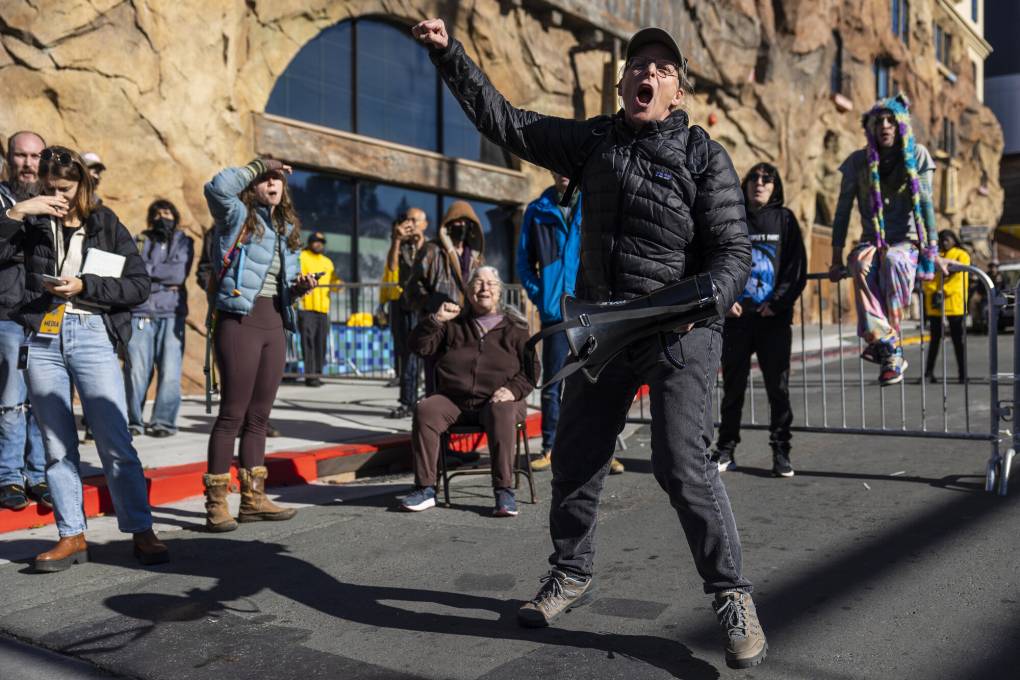
"caption": "Andrea Pritchett leads the crowd of demonstrators in chanting \"Whose park? Our Park\" outside of People's Park in Berkeley on Jan. 4, 2024.",
"credit": "Martin do Nascimento/KQED",
"altTag": null,
"description": null,
"imgSizes": {
"medium": {
"file": "https://cdn.kqed.org/wp-content/uploads/sites/10/2024/08/240104-PEOPLES-PARK-MD-19_qed-800x533.jpg",
"width": 800,
"height": 533,
"mimeType": "image/jpeg"
},
"large": {
"file": "https://cdn.kqed.org/wp-content/uploads/sites/10/2024/08/240104-PEOPLES-PARK-MD-19_qed-1020x680.jpg",
"width": 1020,
"height": 680,
"mimeType": "image/jpeg"
},
"thumbnail": {
"file": "https://cdn.kqed.org/wp-content/uploads/sites/10/2024/08/240104-PEOPLES-PARK-MD-19_qed-160x107.jpg",
"width": 160,
"height": 107,
"mimeType": "image/jpeg"
},
"1536x1536": {
"file": "https://cdn.kqed.org/wp-content/uploads/sites/10/2024/08/240104-PEOPLES-PARK-MD-19_qed-1536x1024.jpg",
"width": 1536,
"height": 1024,
"mimeType": "image/jpeg"
},
"post-thumbnail": {
"file": "https://cdn.kqed.org/wp-content/uploads/sites/10/2024/08/240104-PEOPLES-PARK-MD-19_qed-672x372.jpg",
"width": 672,
"height": 372,
"mimeType": "image/jpeg"
},
"twentyfourteen-full-width": {
"file": "https://cdn.kqed.org/wp-content/uploads/sites/10/2024/08/240104-PEOPLES-PARK-MD-19_qed-1038x576.jpg",
"width": 1038,
"height": 576,
"mimeType": "image/jpeg"
},
"full-width": {
"file": "https://cdn.kqed.org/wp-content/uploads/sites/10/2024/08/240104-PEOPLES-PARK-MD-19_qed-1920x1280.jpg",
"width": 1920,
"height": 1280,
"mimeType": "image/jpeg"
},
"kqedFullSize": {
"file": "https://cdn.kqed.org/wp-content/uploads/sites/10/2024/08/240104-PEOPLES-PARK-MD-19_qed.jpg",
"width": 2000,
"height": 1333
}
},
"isLoading": false,
"fetchFailed": false
},
"news_12000403": {
"type": "attachments",
"id": "news_12000403",
"meta": {
"index": "attachments_1716263798",
"site": "news",
"id": "12000403",
"found": true
},
"title": "untitled-10_qed",
"publishDate": 1723747049,
"status": "inherit",
"parent": 12000395,
"modified": 1723850246,
"caption": "After a yearslong fight, 16- and 17-year-olds in Berkeley and Oakland will be able to vote in school board elections this fall, the first two districts in the state to give young people a say in who governs their public schools. ",
"credit": "Samantha Shanahan/KQED",
"altTag": null,
"description": null,
"imgSizes": {
"medium": {
"file": "https://cdn.kqed.org/wp-content/uploads/sites/10/2024/08/untitled-10_qed-800x533.jpg",
"width": 800,
"height": 533,
"mimeType": "image/jpeg"
},
"large": {
"file": "https://cdn.kqed.org/wp-content/uploads/sites/10/2024/08/untitled-10_qed-1020x680.jpg",
"width": 1020,
"height": 680,
"mimeType": "image/jpeg"
},
"thumbnail": {
"file": "https://cdn.kqed.org/wp-content/uploads/sites/10/2024/08/untitled-10_qed-160x107.jpg",
"width": 160,
"height": 107,
"mimeType": "image/jpeg"
},
"1536x1536": {
"file": "https://cdn.kqed.org/wp-content/uploads/sites/10/2024/08/untitled-10_qed-1536x1024.jpg",
"width": 1536,
"height": 1024,
"mimeType": "image/jpeg"
},
"post-thumbnail": {
"file": "https://cdn.kqed.org/wp-content/uploads/sites/10/2024/08/untitled-10_qed-672x372.jpg",
"width": 672,
"height": 372,
"mimeType": "image/jpeg"
},
"twentyfourteen-full-width": {
"file": "https://cdn.kqed.org/wp-content/uploads/sites/10/2024/08/untitled-10_qed-1038x576.jpg",
"width": 1038,
"height": 576,
"mimeType": "image/jpeg"
},
"full-width": {
"file": "https://cdn.kqed.org/wp-content/uploads/sites/10/2024/08/untitled-10_qed-1920x1280.jpg",
"width": 1920,
"height": 1280,
"mimeType": "image/jpeg"
},
"kqedFullSize": {
"file": "https://cdn.kqed.org/wp-content/uploads/sites/10/2024/08/untitled-10_qed.jpg",
"width": 1999,
"height": 1333
}
},
"isLoading": false,
"fetchFailed": false
},
"news_12000083": {
"type": "attachments",
"id": "news_12000083",
"meta": {
"index": "attachments_1716263798",
"site": "news",
"id": "12000083",
"found": true
},
"title": "Election 2024 Joy and Gloom",
"publishDate": 1723593250,
"status": "inherit",
"parent": 12000078,
"modified": 1723593287,
"caption": "Democratic presidential nominee Vice President Kamala Harris accompanied, left, by her running mate Minnesota Gov. Tim Walz, appear at a campaign event in Philadelphia, Aug. 6, 2024.",
"credit": "Matt Rourke/AP Photo",
"altTag": null,
"description": null,
"imgSizes": {
"medium": {
"file": "https://cdn.kqed.org/wp-content/uploads/sites/10/2024/08/KamalaWalzAP-800x520.jpg",
"width": 800,
"height": 520,
"mimeType": "image/jpeg"
},
"large": {
"file": "https://cdn.kqed.org/wp-content/uploads/sites/10/2024/08/KamalaWalzAP-1020x662.jpg",
"width": 1020,
"height": 662,
"mimeType": "image/jpeg"
},
"thumbnail": {
"file": "https://cdn.kqed.org/wp-content/uploads/sites/10/2024/08/KamalaWalzAP-160x104.jpg",
"width": 160,
"height": 104,
"mimeType": "image/jpeg"
},
"1536x1536": {
"file": "https://cdn.kqed.org/wp-content/uploads/sites/10/2024/08/KamalaWalzAP-1536x998.jpg",
"width": 1536,
"height": 998,
"mimeType": "image/jpeg"
},
"post-thumbnail": {
"file": "https://cdn.kqed.org/wp-content/uploads/sites/10/2024/08/KamalaWalzAP-672x372.jpg",
"width": 672,
"height": 372,
"mimeType": "image/jpeg"
},
"twentyfourteen-full-width": {
"file": "https://cdn.kqed.org/wp-content/uploads/sites/10/2024/08/KamalaWalzAP-1038x576.jpg",
"width": 1038,
"height": 576,
"mimeType": "image/jpeg"
},
"full-width": {
"file": "https://cdn.kqed.org/wp-content/uploads/sites/10/2024/08/KamalaWalzAP-1920x1247.jpg",
"width": 1920,
"height": 1247,
"mimeType": "image/jpeg"
},
"kqedFullSize": {
"file": "https://cdn.kqed.org/wp-content/uploads/sites/10/2024/08/KamalaWalzAP.jpg",
"width": 2000,
"height": 1299
}
},
"isLoading": false,
"fetchFailed": false
},
"news_11996958": {
"type": "attachments",
"id": "news_11996958",
"meta": {
"index": "attachments_1716263798",
"site": "news",
"id": "11996958",
"found": true
},
"title": "005_KQED_Housing_Berkeley_ShadowStandards_02272020__qed",
"publishDate": 1721764797,
"status": "inherit",
"parent": 11996949,
"modified": 1721841361,
"caption": "The Berkeley City Council on Tuesday put limits on a proposal that would have allowed an unrestricted number of small apartments in single-family and otherwise low-density neighborhoods.",
"credit": "Beth LaBerge/KQED",
"altTag": null,
"description": null,
"imgSizes": {
"medium": {
"file": "https://cdn.kqed.org/wp-content/uploads/sites/10/2024/07/005_KQED_Housing_Berkeley_ShadowStandards_02272020__qed-1-800x533.jpg",
"width": 800,
"height": 533,
"mimeType": "image/jpeg"
},
"large": {
"file": "https://cdn.kqed.org/wp-content/uploads/sites/10/2024/07/005_KQED_Housing_Berkeley_ShadowStandards_02272020__qed-1-1020x680.jpg",
"width": 1020,
"height": 680,
"mimeType": "image/jpeg"
},
"thumbnail": {
"file": "https://cdn.kqed.org/wp-content/uploads/sites/10/2024/07/005_KQED_Housing_Berkeley_ShadowStandards_02272020__qed-1-160x107.jpg",
"width": 160,
"height": 107,
"mimeType": "image/jpeg"
},
"1536x1536": {
"file": "https://cdn.kqed.org/wp-content/uploads/sites/10/2024/07/005_KQED_Housing_Berkeley_ShadowStandards_02272020__qed-1-1536x1024.jpg",
"width": 1536,
"height": 1024,
"mimeType": "image/jpeg"
},
"post-thumbnail": {
"file": "https://cdn.kqed.org/wp-content/uploads/sites/10/2024/07/005_KQED_Housing_Berkeley_ShadowStandards_02272020__qed-1-672x372.jpg",
"width": 672,
"height": 372,
"mimeType": "image/jpeg"
},
"twentyfourteen-full-width": {
"file": "https://cdn.kqed.org/wp-content/uploads/sites/10/2024/07/005_KQED_Housing_Berkeley_ShadowStandards_02272020__qed-1-1038x576.jpg",
"width": 1038,
"height": 576,
"mimeType": "image/jpeg"
},
"full-width": {
"file": "https://cdn.kqed.org/wp-content/uploads/sites/10/2024/07/005_KQED_Housing_Berkeley_ShadowStandards_02272020__qed-1-1920x1280.jpg",
"width": 1920,
"height": 1280,
"mimeType": "image/jpeg"
},
"kqedFullSize": {
"file": "https://cdn.kqed.org/wp-content/uploads/sites/10/2024/07/005_KQED_Housing_Berkeley_ShadowStandards_02272020__qed-1.jpg",
"width": 2000,
"height": 1333
}
},
"isLoading": false,
"fetchFailed": false
},
"news_11996332": {
"type": "attachments",
"id": "news_11996332",
"meta": {
"index": "attachments_1716263798",
"site": "news",
"id": "11996332",
"found": true
},
"title": "240718-BerkeleyMissingMiddleHousing-31-BL_qed",
"publishDate": 1721345078,
"status": "inherit",
"parent": 11996229,
"modified": 1721413514,
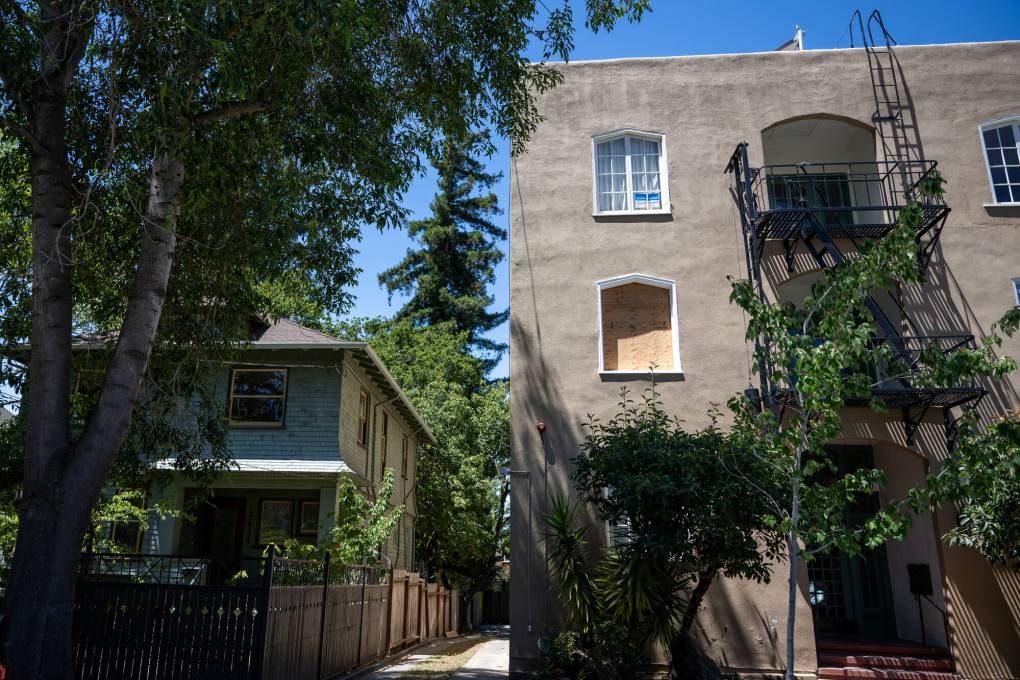
"caption": "A single-family home next to an apartment building in the Elmwood neighborhood of Berkeley on July 18, 2024.",
"credit": "Beth LaBerge/KQED",
"altTag": "Two residential buildings next to each other with the taller building on the right.",
"description": null,
"imgSizes": {
"medium": {
"file": "https://cdn.kqed.org/wp-content/uploads/sites/10/2024/07/240718-BerkeleyMissingMiddleHousing-31-BL_qed-800x533.jpg",
"width": 800,
"height": 533,
"mimeType": "image/jpeg"
},
"large": {
"file": "https://cdn.kqed.org/wp-content/uploads/sites/10/2024/07/240718-BerkeleyMissingMiddleHousing-31-BL_qed-1020x680.jpg",
"width": 1020,
"height": 680,
"mimeType": "image/jpeg"
},
"thumbnail": {
"file": "https://cdn.kqed.org/wp-content/uploads/sites/10/2024/07/240718-BerkeleyMissingMiddleHousing-31-BL_qed-160x107.jpg",
"width": 160,
"height": 107,
"mimeType": "image/jpeg"
},
"1536x1536": {
"file": "https://cdn.kqed.org/wp-content/uploads/sites/10/2024/07/240718-BerkeleyMissingMiddleHousing-31-BL_qed-1536x1024.jpg",
"width": 1536,
"height": 1024,
"mimeType": "image/jpeg"
},
"post-thumbnail": {
"file": "https://cdn.kqed.org/wp-content/uploads/sites/10/2024/07/240718-BerkeleyMissingMiddleHousing-31-BL_qed-672x372.jpg",
"width": 672,
"height": 372,
"mimeType": "image/jpeg"
},
"twentyfourteen-full-width": {
"file": "https://cdn.kqed.org/wp-content/uploads/sites/10/2024/07/240718-BerkeleyMissingMiddleHousing-31-BL_qed-1038x576.jpg",
"width": 1038,
"height": 576,
"mimeType": "image/jpeg"
},
"full-width": {
"file": "https://cdn.kqed.org/wp-content/uploads/sites/10/2024/07/240718-BerkeleyMissingMiddleHousing-31-BL_qed-1920x1280.jpg",
"width": 1920,
"height": 1280,
"mimeType": "image/jpeg"
},
"kqedFullSize": {
"file": "https://cdn.kqed.org/wp-content/uploads/sites/10/2024/07/240718-BerkeleyMissingMiddleHousing-31-BL_qed.jpg",
"width": 1999,
"height": 1333
}
},
"isLoading": false,
"fetchFailed": false
},
"news_11995815": {
"type": "attachments",
"id": "news_11995815",
"meta": {
"index": "attachments_1716263798",
"site": "news",
"id": "11995815",
"found": true
},
"title": "kamala-harris-vp-joe-biden",
"publishDate": 1721154134,
"status": "inherit",
"parent": 11995538,
"modified": 1721421883,
"caption": "Vice President Kamala Harris speaks to a crowd during a campaign event at James B. Dudley High School on July 11, 2024, in Greensboro, North Carolina. ",
"credit": "Sean Rayford/Getty Images",
"altTag": "A woman smiles from a podium with several people in the background.",
"description": null,
"imgSizes": {
"medium": {
"file": "https://cdn.kqed.org/wp-content/uploads/sites/10/2024/07/GettyImages-2160991119-800x527.jpg",
"width": 800,
"height": 527,
"mimeType": "image/jpeg"
},
"large": {
"file": "https://cdn.kqed.org/wp-content/uploads/sites/10/2024/07/GettyImages-2160991119-1020x671.jpg",
"width": 1020,
"height": 671,
"mimeType": "image/jpeg"
},
"thumbnail": {
"file": "https://cdn.kqed.org/wp-content/uploads/sites/10/2024/07/GettyImages-2160991119-160x105.jpg",
"width": 160,
"height": 105,
"mimeType": "image/jpeg"
},
"post-thumbnail": {
"file": "https://cdn.kqed.org/wp-content/uploads/sites/10/2024/07/GettyImages-2160991119-672x372.jpg",
"width": 672,
"height": 372,
"mimeType": "image/jpeg"
},
"twentyfourteen-full-width": {
"file": "https://cdn.kqed.org/wp-content/uploads/sites/10/2024/07/GettyImages-2160991119-1024x576.jpg",
"width": 1024,
"height": 576,
"mimeType": "image/jpeg"
},
"kqedFullSize": {
"file": "https://cdn.kqed.org/wp-content/uploads/sites/10/2024/07/GettyImages-2160991119.jpg",
"width": 1024,
"height": 674
}
},
"isLoading": false,
"fetchFailed": false
},
"news_11993503": {
"type": "attachments",
"id": "news_11993503",
"meta": {
"index": "attachments_1716263798",
"site": "news",
"id": "11993503",
"found": true
},
"title": "Downtown Berkeley, Calif. is seen from the Lawrence Hall of Science on Saturday, March 31, 2018",
"publishDate": 1720636768,
"status": "inherit",
"parent": 11993486,
"modified": 1720636815,
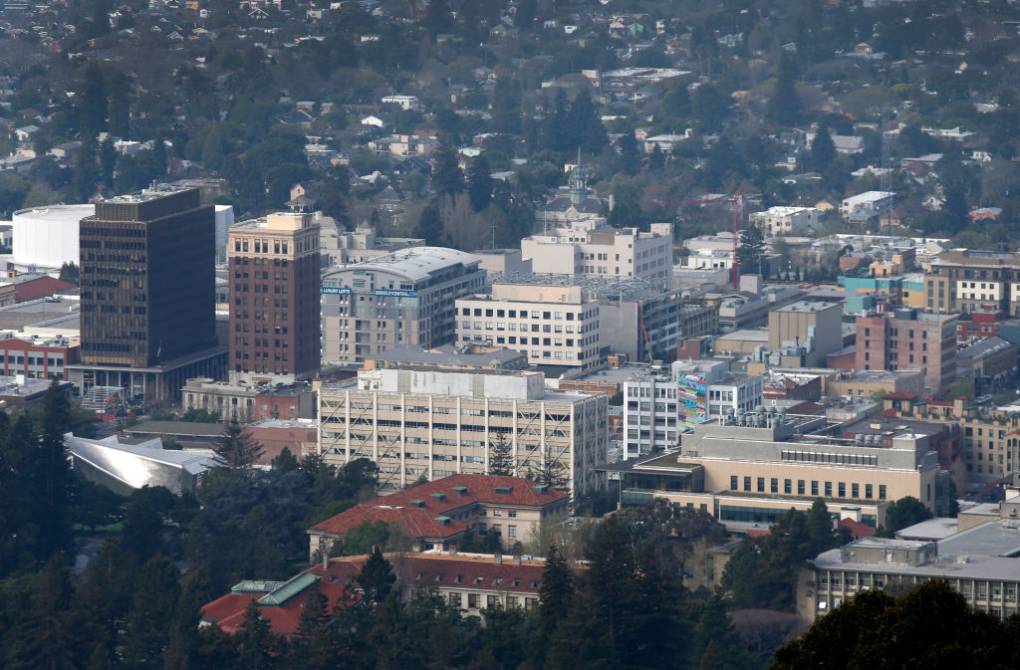
"caption": "Downtown Berkeley is seen from the Lawrence Hall of Science on Saturday, March 31, 2018. ",
"credit": "Paul Chinn/The San Francisco Chronicle via Getty Images",
"altTag": "An aerial view of the downtown area of a city.",
"description": null,
"imgSizes": {
"medium": {
"file": "https://cdn.kqed.org/wp-content/uploads/sites/10/2024/07/GettyImages-1408781929-800x526.jpg",
"width": 800,
"height": 526,
"mimeType": "image/jpeg"
},
"large": {
"file": "https://cdn.kqed.org/wp-content/uploads/sites/10/2024/07/GettyImages-1408781929-1020x670.jpg",
"width": 1020,
"height": 670,
"mimeType": "image/jpeg"
},
"thumbnail": {
"file": "https://cdn.kqed.org/wp-content/uploads/sites/10/2024/07/GettyImages-1408781929-160x105.jpg",
"width": 160,
"height": 105,
"mimeType": "image/jpeg"
},
"post-thumbnail": {
"file": "https://cdn.kqed.org/wp-content/uploads/sites/10/2024/07/GettyImages-1408781929-672x372.jpg",
"width": 672,
"height": 372,
"mimeType": "image/jpeg"
},
"twentyfourteen-full-width": {
"file": "https://cdn.kqed.org/wp-content/uploads/sites/10/2024/07/GettyImages-1408781929-1024x576.jpg",
"width": 1024,
"height": 576,
"mimeType": "image/jpeg"
},
"kqedFullSize": {
"file": "https://cdn.kqed.org/wp-content/uploads/sites/10/2024/07/GettyImages-1408781929.jpg",
"width": 1024,
"height": 673
}
},
"isLoading": false,
"fetchFailed": false
},
"news_11984220": {
"type": "attachments",
"id": "news_11984220",
"meta": {
"index": "attachments_1716263798",
"site": "news",
"id": "11984220",
"found": true
},
"parent": 11984203,
"imgSizes": {
"twentyfourteen-full-width": {
"file": "https://cdn.kqed.org/wp-content/uploads/sites/10/2024/04/240424-BERKELEY-GAZA-ENCAMPMENT-MD-06_qut-1038x576.jpg",
"width": 1038,
"mimeType": "image/jpeg",
"height": 576
},
"thumbnail": {
"file": "https://cdn.kqed.org/wp-content/uploads/sites/10/2024/04/240424-BERKELEY-GAZA-ENCAMPMENT-MD-06_qut-160x107.jpg",
"width": 160,
"mimeType": "image/jpeg",
"height": 107
},
"post-thumbnail": {
"file": "https://cdn.kqed.org/wp-content/uploads/sites/10/2024/04/240424-BERKELEY-GAZA-ENCAMPMENT-MD-06_qut-672x372.jpg",
"width": 672,
"mimeType": "image/jpeg",
"height": 372
},
"kqedFullSize": {
"file": "https://cdn.kqed.org/wp-content/uploads/sites/10/2024/04/240424-BERKELEY-GAZA-ENCAMPMENT-MD-06_qut.jpg",
"width": 1920,
"height": 1280
},
"large": {
"file": "https://cdn.kqed.org/wp-content/uploads/sites/10/2024/04/240424-BERKELEY-GAZA-ENCAMPMENT-MD-06_qut-1020x680.jpg",
"width": 1020,
"mimeType": "image/jpeg",
"height": 680
},
"1536x1536": {
"file": "https://cdn.kqed.org/wp-content/uploads/sites/10/2024/04/240424-BERKELEY-GAZA-ENCAMPMENT-MD-06_qut-1536x1024.jpg",
"width": 1536,
"mimeType": "image/jpeg",
"height": 1024
},
"medium": {
"file": "https://cdn.kqed.org/wp-content/uploads/sites/10/2024/04/240424-BERKELEY-GAZA-ENCAMPMENT-MD-06_qut-800x533.jpg",
"width": 800,
"mimeType": "image/jpeg",
"height": 533
}
},
"publishDate": 1714165963,
"modified": 1714593047,
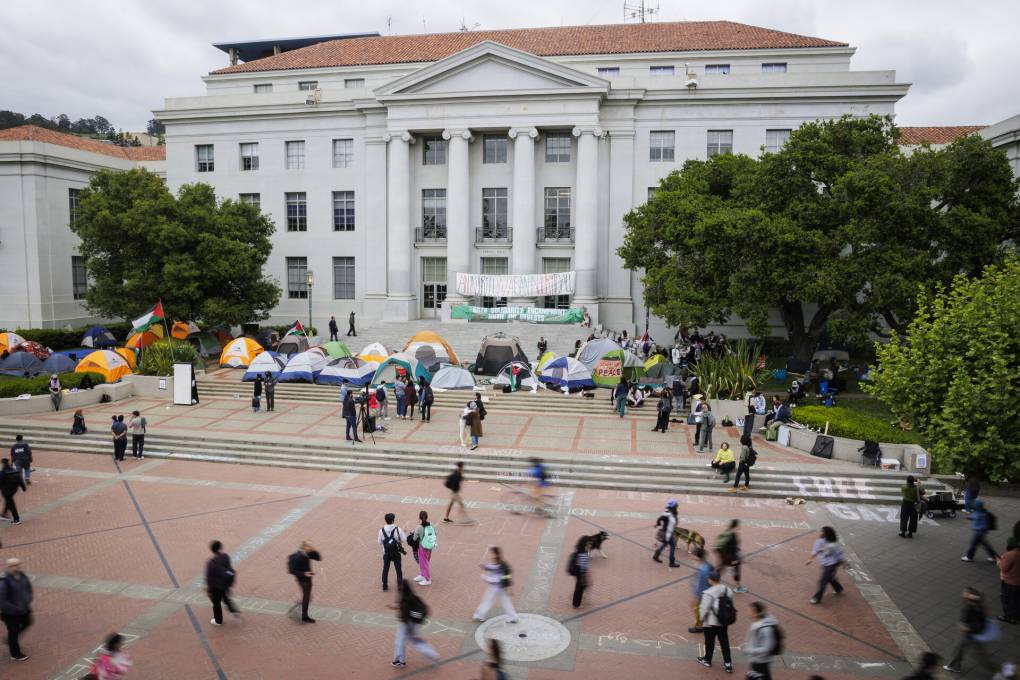
"caption": "The UC Berkeley Gaza Solidarity Encampment in front of Sproul Hall in Berkeley on April 24.",
"description": null,
"title": "240424-BERKELEY GAZA ENCAMPMENT-MD-06_qut",
"credit": "Martin do Nascimento/KQED",
"status": "inherit",
"altTag": null,
"isLoading": false,
"fetchFailed": false
},
"news_11987770": {
"type": "attachments",
"id": "news_11987770",
"meta": {
"index": "attachments_1716263798",
"site": "news",
"id": "11987770",
"found": true
},
"title": "240522-BoyMom-18-BL_qut",
"publishDate": 1716593520,
"status": "inherit",
"parent": 0,
"modified": 1716593588,
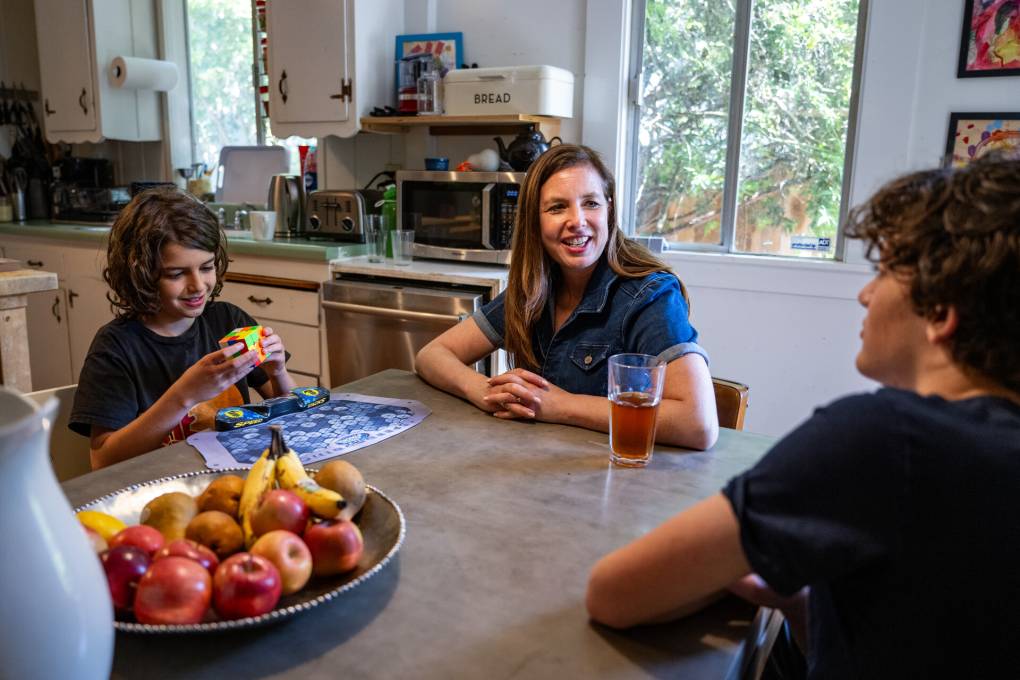
"caption": "Ruth Whippman sits with her sons Zephy, 10, and Solly, 13, at their home in Berkeley on May 22.",
"credit": "Beth LaBerge/KQED",
"altTag": null,
"description": null,
"imgSizes": {
"medium": {
"file": "https://cdn.kqed.org/wp-content/uploads/sites/10/2024/05/240522-BoyMom-18-BL_qut-800x533.jpg",
"width": 800,
"height": 533,
"mimeType": "image/jpeg"
},
"large": {
"file": "https://cdn.kqed.org/wp-content/uploads/sites/10/2024/05/240522-BoyMom-18-BL_qut-1020x680.jpg",
"width": 1020,
"height": 680,
"mimeType": "image/jpeg"
},
"thumbnail": {
"file": "https://cdn.kqed.org/wp-content/uploads/sites/10/2024/05/240522-BoyMom-18-BL_qut-160x107.jpg",
"width": 160,
"height": 107,
"mimeType": "image/jpeg"
},
"1536x1536": {
"file": "https://cdn.kqed.org/wp-content/uploads/sites/10/2024/05/240522-BoyMom-18-BL_qut-1536x1024.jpg",
"width": 1536,
"height": 1024,
"mimeType": "image/jpeg"
},
"post-thumbnail": {
"file": "https://cdn.kqed.org/wp-content/uploads/sites/10/2024/05/240522-BoyMom-18-BL_qut-672x372.jpg",
"width": 672,
"height": 372,
"mimeType": "image/jpeg"
},
"twentyfourteen-full-width": {
"file": "https://cdn.kqed.org/wp-content/uploads/sites/10/2024/05/240522-BoyMom-18-BL_qut-1038x576.jpg",
"width": 1038,
"height": 576,
"mimeType": "image/jpeg"
},
"kqedFullSize": {
"file": "https://cdn.kqed.org/wp-content/uploads/sites/10/2024/05/240522-BoyMom-18-BL_qut.jpg",
"width": 1920,
"height": 1280
}
},
"isLoading": false,
"fetchFailed": false
},
"news_11988725": {
"type": "attachments",
"id": "news_11988725",
"meta": {
"index": "attachments_1716263798",
"site": "news",
"id": "11988725",
"found": true
},
"title": "20240601-PEOPLESPARK-JY-035-KQED",
"publishDate": 1717441213,
"status": "inherit",
"parent": 0,
"modified": 1718252957,
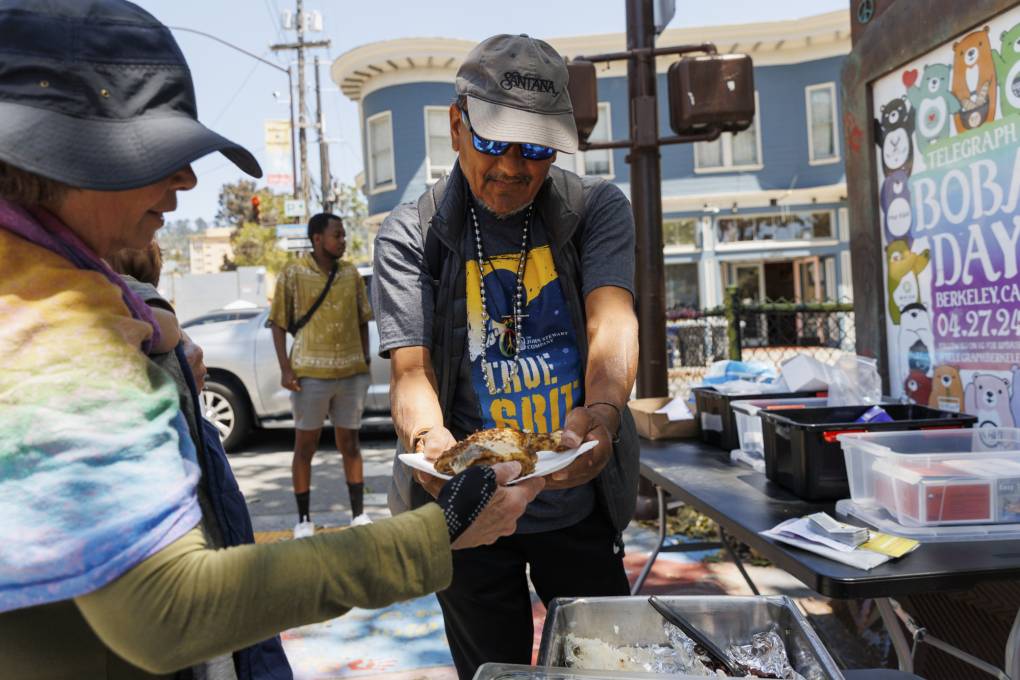
"caption": "Lisa Teague, left, serves Richard Rodriguez a plate of food on June 1, 2024, at a small open space near People's Park in Berkeley. Teague, a local community activist, volunteered at the park until UC Berkeley closed it in January to build new student and low-income housing on the site.",
"credit": "Juliana Yamada/KQED",
"altTag": "A woman serves a man food on a street.",
"description": null,
"imgSizes": {
"medium": {
"file": "https://cdn.kqed.org/wp-content/uploads/sites/10/2024/06/20240601-PEOPLESPARK-JY-035-KQED-800x533.jpg",
"width": 800,
"height": 533,
"mimeType": "image/jpeg"
},
"large": {
"file": "https://cdn.kqed.org/wp-content/uploads/sites/10/2024/06/20240601-PEOPLESPARK-JY-035-KQED-1020x680.jpg",
"width": 1020,
"height": 680,
"mimeType": "image/jpeg"
},
"thumbnail": {
"file": "https://cdn.kqed.org/wp-content/uploads/sites/10/2024/06/20240601-PEOPLESPARK-JY-035-KQED-160x107.jpg",
"width": 160,
"height": 107,
"mimeType": "image/jpeg"
},
"1536x1536": {
"file": "https://cdn.kqed.org/wp-content/uploads/sites/10/2024/06/20240601-PEOPLESPARK-JY-035-KQED-1536x1024.jpg",
"width": 1536,
"height": 1024,
"mimeType": "image/jpeg"
},
"post-thumbnail": {
"file": "https://cdn.kqed.org/wp-content/uploads/sites/10/2024/06/20240601-PEOPLESPARK-JY-035-KQED-672x372.jpg",
"width": 672,
"height": 372,
"mimeType": "image/jpeg"
},
"twentyfourteen-full-width": {
"file": "https://cdn.kqed.org/wp-content/uploads/sites/10/2024/06/20240601-PEOPLESPARK-JY-035-KQED-1038x576.jpg",
"width": 1038,
"height": 576,
"mimeType": "image/jpeg"
},
"full-width": {
"file": "https://cdn.kqed.org/wp-content/uploads/sites/10/2024/06/20240601-PEOPLESPARK-JY-035-KQED-1920x1280.jpg",
"width": 1920,
"height": 1280,
"mimeType": "image/jpeg"
},
"kqedFullSize": {
"file": "https://cdn.kqed.org/wp-content/uploads/sites/10/2024/06/20240601-PEOPLESPARK-JY-035-KQED.jpg",
"width": 2000,
"height": 1333
}
},
"isLoading": false,
"fetchFailed": false
},
"news_11981374": {
"type": "attachments",
"id": "news_11981374",
"meta": {
"index": "attachments_1716263798",
"site": "news",
"id": "11981374",
"found": true
},
"parent": 11981358,
"imgSizes": {
"twentyfourteen-full-width": {
"file": "https://cdn.kqed.org/wp-content/uploads/sites/10/2024/03/036_Berkeley_PeoplesPark_02192021_qut-1038x576.jpg",
"width": 1038,
"mimeType": "image/jpeg",
"height": 576
},
"thumbnail": {
"file": "https://cdn.kqed.org/wp-content/uploads/sites/10/2024/03/036_Berkeley_PeoplesPark_02192021_qut-160x107.jpg",
"width": 160,
"mimeType": "image/jpeg",
"height": 107
},
"post-thumbnail": {
"file": "https://cdn.kqed.org/wp-content/uploads/sites/10/2024/03/036_Berkeley_PeoplesPark_02192021_qut-672x372.jpg",
"width": 672,
"mimeType": "image/jpeg",
"height": 372
},
"kqedFullSize": {
"file": "https://cdn.kqed.org/wp-content/uploads/sites/10/2024/03/036_Berkeley_PeoplesPark_02192021_qut.jpg",
"width": 1920,
"height": 1280
},
"large": {
"file": "https://cdn.kqed.org/wp-content/uploads/sites/10/2024/03/036_Berkeley_PeoplesPark_02192021_qut-1020x680.jpg",
"width": 1020,
"mimeType": "image/jpeg",
"height": 680
},
"1536x1536": {
"file": "https://cdn.kqed.org/wp-content/uploads/sites/10/2024/03/036_Berkeley_PeoplesPark_02192021_qut-1536x1024.jpg",
"width": 1536,
"mimeType": "image/jpeg",
"height": 1024
},
"medium": {
"file": "https://cdn.kqed.org/wp-content/uploads/sites/10/2024/03/036_Berkeley_PeoplesPark_02192021_qut-800x533.jpg",
"width": 800,
"mimeType": "image/jpeg",
"height": 533
}
},
"publishDate": 1711757778,
"modified": 1711759263,
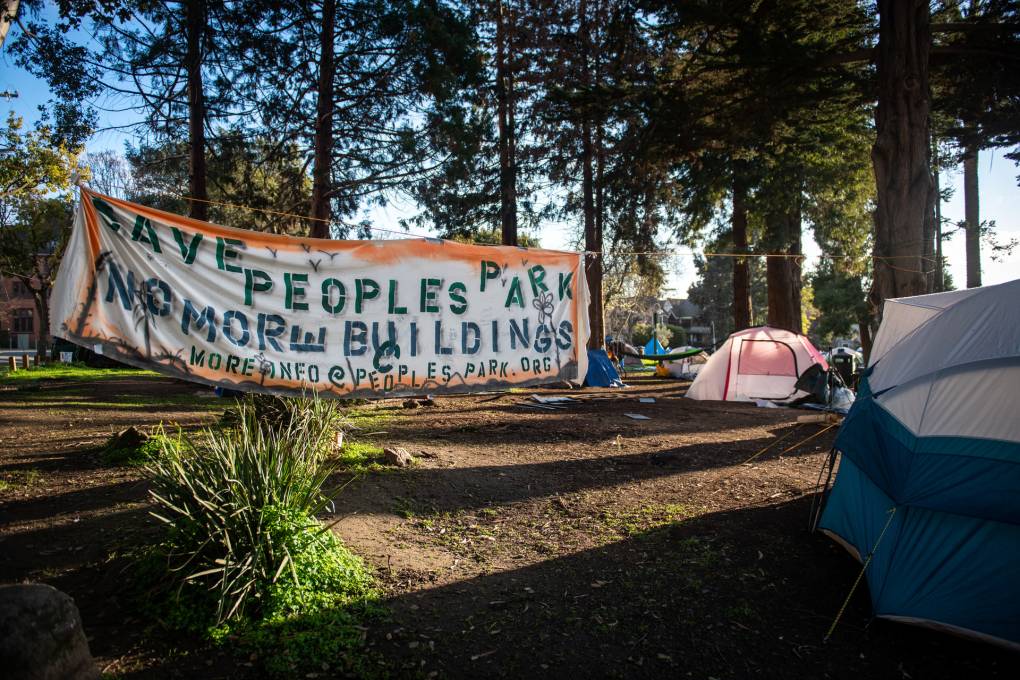
"caption": "A sign says, 'Save Peoples Park, No More Buildings' at People's Park in Berkeley in 2021.",
"description": null,
"title": "036_Berkeley_PeoplesPark_02192021_qut",
"credit": "Beth LaBerge/KQED",
"status": "inherit",
"altTag": "A sign that says 'Save people's park' is hung between trees, next to a tent, in a park.",
"isLoading": false,
"fetchFailed": false
},
"news_11989242": {
"type": "attachments",
"id": "news_11989242",
"meta": {
"index": "attachments_1716263798",
"site": "news",
"id": "11989242",
"found": true
},
"title": "Construction crews work at People’s Park in Berkeley on Jan. 4, 2024.",
"publishDate": 1717694682,
"status": "inherit",
"parent": 11989237,
"modified": 1717694903,
"caption": "Construction crews work to install shipping containers closing off People’s Park in Berkeley on Jan. 4, 2024.",
"credit": "Martin do Nascimento/KQED",
"altTag": null,
"description": null,
"imgSizes": {
"medium": {
"file": "https://cdn.kqed.org/wp-content/uploads/sites/10/2024/06/240104-PEOPLES-PARK-MD-10_qut-800x533.jpg",
"width": 800,
"height": 533,
"mimeType": "image/jpeg"
},
"large": {
"file": "https://cdn.kqed.org/wp-content/uploads/sites/10/2024/06/240104-PEOPLES-PARK-MD-10_qut-1020x680.jpg",
"width": 1020,
"height": 680,
"mimeType": "image/jpeg"
},
"thumbnail": {
"file": "https://cdn.kqed.org/wp-content/uploads/sites/10/2024/06/240104-PEOPLES-PARK-MD-10_qut-160x107.jpg",
"width": 160,
"height": 107,
"mimeType": "image/jpeg"
},
"1536x1536": {
"file": "https://cdn.kqed.org/wp-content/uploads/sites/10/2024/06/240104-PEOPLES-PARK-MD-10_qut-1536x1024.jpg",
"width": 1536,
"height": 1024,
"mimeType": "image/jpeg"
},
"post-thumbnail": {
"file": "https://cdn.kqed.org/wp-content/uploads/sites/10/2024/06/240104-PEOPLES-PARK-MD-10_qut-672x372.jpg",
"width": 672,
"height": 372,
"mimeType": "image/jpeg"
},
"twentyfourteen-full-width": {
"file": "https://cdn.kqed.org/wp-content/uploads/sites/10/2024/06/240104-PEOPLES-PARK-MD-10_qut-1038x576.jpg",
"width": 1038,
"height": 576,
"mimeType": "image/jpeg"
},
"kqedFullSize": {
"file": "https://cdn.kqed.org/wp-content/uploads/sites/10/2024/06/240104-PEOPLES-PARK-MD-10_qut.jpg",
"width": 1920,
"height": 1280
}
},
"isLoading": false,
"fetchFailed": false
}
},
"audioPlayerReducer": {
"postId": "stream_live",
"isPaused": true,
"isPlaying": false,
"pfsActive": false,
"pledgeModalIsOpen": true,
"playerDrawerIsOpen": false,
"liveAudioPlayStartedAt": 0,
"liveAudioPlayContext": ""
},
"authorsReducer": {
"byline_news_11995538": {
"type": "authors",
"id": "byline_news_11995538",
"meta": {
"override": true
},
"slug": "byline_news_11995538",
"name": "\u003ca href=\"https://calmatters.org/author/ben-christopher/\">Ben Christopher\u003c/a>, CalMatters ",
"isLoading": false
},
"scottshafer": {
"type": "authors",
"id": "255",
"meta": {
"index": "authors_1716337520",
"id": "255",
"found": true
},
"name": "Scott Shafer",
"firstName": "Scott",
"lastName": "Shafer",
"slug": "scottshafer",
"email": "sshafer@kqed.org",
"display_author_email": false,
"staff_mastheads": [
"news"
],
"title": "KQED Contributor",
"bio": "Scott Shafer is a senior editor with the KQED Politics and Government desk. He is co-host of Political Breakdown, the award-winning radio show and podcast with a personal take on the world of politics. Scott came to KQED in 1998 to host the statewide\u003cem> California Report\u003c/em>. Prior to that he had extended stints in politics and government\u003cem>.\u003c/em> He uses that inside experience at KQED in his, reporting, hosting and analysis for the politics desk. Scott collaborated \u003cem>Political Breakdown a\u003c/em>nd on \u003cem>The Political Mind of Jerry Brown, \u003c/em>an eight-part series about the life and extraordinary political career of the former governor. For fun, he plays water polo with the San Francisco Tsunami.",
"avatar": "https://secure.gravatar.com/avatar/a62ebae45b79d7aed1a39a0e3bf68104?s=600&d=blank&r=g",
"twitter": "scottshafer",
"bluesky": null,
"facebook": null,
"instagram": null,
"linkedin": null,
"sites": [
{
"site": "news",
"roles": [
"editor"
]
},
{
"site": "stateofhealth",
"roles": [
"author"
]
},
{
"site": "science",
"roles": [
"author"
]
},
{
"site": "forum",
"roles": [
"subscriber"
]
},
{
"site": "liveblog",
"roles": [
"author"
]
}
],
"headData": {
"title": "Scott Shafer | KQED",
"description": "KQED Contributor",
"ogImgSrc": "https://secure.gravatar.com/avatar/a62ebae45b79d7aed1a39a0e3bf68104?s=600&d=blank&r=g",
"twImgSrc": "https://secure.gravatar.com/avatar/a62ebae45b79d7aed1a39a0e3bf68104?s=600&d=blank&r=g"
},
"isLoading": false,
"link": "/author/scottshafer"
},
"ebaldassari": {
"type": "authors",
"id": "11652",
"meta": {
"index": "authors_1716337520",
"id": "11652",
"found": true
},
"name": "Erin Baldassari",
"firstName": "Erin",
"lastName": "Baldassari",
"slug": "ebaldassari",
"email": "ebaldassari@KQED.org",
"display_author_email": true,
"staff_mastheads": [
"news"
],
"title": "Staff Writer",
"bio": "Erin Baldassari covers housing for KQED. She's a former print journalist and most recently worked as the transportation reporter for the \u003cem>Mercury News\u003c/em> and \u003cem>East Bay Times. \u003c/em>There, she focused on how the Bay Area’s housing shortage has changed the way people move around the region. She also served on the \u003cem>East Bay Times\u003c/em>’ 2017 Pulitzer Prize-winning team for coverage of the Ghost Ship Fire in Oakland. Prior to that, Erin worked as a breaking news and general assignment reporter for a variety of outlets in the Bay Area and the greater Boston area. A Tufts University alumna, Erin grew up in the foothills of the Sierra Nevada mountains and in Sonoma County. She is a life-long KQED listener.",
"avatar": "https://secure.gravatar.com/avatar/5e95cad64a8ca08288082212e199d2b0cbeb4fd8e8ef5339395f361032bbe005?s=600&d=blank&r=g",
"twitter": "e_baldi",
"bluesky": null,
"facebook": null,
"instagram": null,
"linkedin": null,
"sites": [
{
"site": "news",
"roles": [
"edit_others_posts",
"editor"
]
},
{
"site": "science",
"roles": [
"editor"
]
},
{
"site": "liveblog",
"roles": [
"editor"
]
}
],
"headData": {
"title": "Erin Baldassari | KQED",
"description": "Staff Writer",
"ogImgSrc": "https://secure.gravatar.com/avatar/5e95cad64a8ca08288082212e199d2b0cbeb4fd8e8ef5339395f361032bbe005?s=600&d=blank&r=g",
"twImgSrc": "https://secure.gravatar.com/avatar/5e95cad64a8ca08288082212e199d2b0cbeb4fd8e8ef5339395f361032bbe005?s=600&d=blank&r=g"
},
"isLoading": false,
"link": "/author/ebaldassari"
},
"abandlamudi": {
"type": "authors",
"id": "11672",
"meta": {
"index": "authors_1716337520",
"id": "11672",
"found": true
},
"name": "Adhiti Bandlamudi",
"firstName": "Adhiti",
"lastName": "Bandlamudi",
"slug": "abandlamudi",
"email": "abandlamudi@kqed.org",
"display_author_email": false,
"staff_mastheads": [
"news"
],
"title": "KQED Housing Reporter",
"bio": "Adhiti Bandlamudi reports for KQED's Housing desk. She focuses on how housing gets built across the Bay Area. Before joining KQED in 2020, she reported for WUNC in Durham, North Carolina, WABE in Atlanta, Georgia and Capital Public Radio in Sacramento. In 2017, she was awarded a Kroc Fellowship at NPR where she reported on everything from sprinkles to the Golden State Killer's arrest. When she's not reporting, she's baking new recipes in her kitchen or watching movies with friends and family. She's originally from Georgia and has strong opinions about Great British Bake Off.",
"avatar": "https://secure.gravatar.com/avatar/868129c8b257bb99a3500e2c86a65400?s=600&d=mm&r=g",
"twitter": "oddity_adhiti",
"facebook": null,
"instagram": null,
"linkedin": null,
"sites": [
{
"site": "arts",
"roles": [
"author"
]
},
{
"site": "news",
"roles": [
"editor"
]
},
{
"site": "liveblog",
"roles": [
"author"
]
}
],
"headData": {
"title": "Adhiti Bandlamudi | KQED",
"description": "KQED Housing Reporter",
"ogImgSrc": "https://secure.gravatar.com/avatar/868129c8b257bb99a3500e2c86a65400?s=600&d=mm&r=g",
"twImgSrc": "https://secure.gravatar.com/avatar/868129c8b257bb99a3500e2c86a65400?s=600&d=mm&r=g"
},
"isLoading": false,
"link": "/author/abandlamudi"
},
"kmizuguchi": {
"type": "authors",
"id": "11739",
"meta": {
"index": "authors_1716337520",
"id": "11739",
"found": true
},
"name": "Keith Mizuguchi",
"firstName": "Keith",
"lastName": "Mizuguchi",
"slug": "kmizuguchi",
"email": "kmizuguchi@kqed.org",
"display_author_email": false,
"staff_mastheads": [],
"title": "KQED Contributor",
"bio": null,
"avatar": "https://secure.gravatar.com/avatar/64d8a7de0723d4099b9fe4e915136103febcc20809abce228ee4415bcb237023?s=600&d=blank&r=g",
"twitter": null,
"bluesky": null,
"facebook": null,
"instagram": null,
"linkedin": null,
"sites": [
{
"site": "news",
"roles": [
"editor"
]
},
{
"site": "science",
"roles": [
"editor"
]
}
],
"headData": {
"title": "Keith Mizuguchi | KQED",
"description": "KQED Contributor",
"ogImgSrc": "https://secure.gravatar.com/avatar/64d8a7de0723d4099b9fe4e915136103febcc20809abce228ee4415bcb237023?s=600&d=blank&r=g",
"twImgSrc": "https://secure.gravatar.com/avatar/64d8a7de0723d4099b9fe4e915136103febcc20809abce228ee4415bcb237023?s=600&d=blank&r=g"
},
"isLoading": false,
"link": "/author/kmizuguchi"
},
"jlara": {
"type": "authors",
"id": "11761",
"meta": {
"index": "authors_1716337520",
"id": "11761",
"found": true
},
"name": "Juan Carlos Lara",
"firstName": "Juan Carlos",
"lastName": "Lara",
"slug": "jlara",
"email": "jlara@kqed.org",
"display_author_email": false,
"staff_mastheads": [],
"title": "KQED Contributor",
"bio": null,
"avatar": "https://secure.gravatar.com/avatar/19e2052b9b05657c5ff2af2121846e9c?s=600&d=blank&r=g",
"twitter": null,
"facebook": null,
"instagram": null,
"linkedin": null,
"sites": [
{
"site": "arts",
"roles": [
"editor"
]
},
{
"site": "news",
"roles": [
"editor"
]
},
{
"site": "forum",
"roles": [
"editor"
]
},
{
"site": "liveblog",
"roles": [
"contributor"
]
}
],
"headData": {
"title": "Juan Carlos Lara | KQED",
"description": "KQED Contributor",
"ogImgSrc": "https://secure.gravatar.com/avatar/19e2052b9b05657c5ff2af2121846e9c?s=600&d=blank&r=g",
"twImgSrc": "https://secure.gravatar.com/avatar/19e2052b9b05657c5ff2af2121846e9c?s=600&d=blank&r=g"
},
"isLoading": false,
"link": "/author/jlara"
},
"otaylor": {
"type": "authors",
"id": "11770",
"meta": {
"index": "authors_1716337520",
"id": "11770",
"found": true
},
"name": "Otis R. Taylor Jr.",
"firstName": "Otis R.",
"lastName": "Taylor Jr.",
"slug": "otaylor",
"email": "otaylor@kqed.org",
"display_author_email": false,
"staff_mastheads": [
"news"
],
"title": "KQED Editor",
"bio": null,
"avatar": "https://secure.gravatar.com/avatar/fe73e14d4842ac8e1c03d57def2530f57f1c5b0ca7d4a987ccc5bd90956cb7c6?s=600&d=blank&r=g",
"twitter": "otisrtaylorjr",
"bluesky": null,
"facebook": null,
"instagram": null,
"linkedin": null,
"sites": [
{
"site": "arts",
"roles": [
"subscriber"
]
},
{
"site": "news",
"roles": [
"subscriber"
]
},
{
"site": "science",
"roles": [
"subscriber"
]
},
{
"site": "liveblog",
"roles": [
"subscriber"
]
}
],
"headData": {
"title": "Otis R. Taylor Jr. | KQED",
"description": "KQED Editor",
"ogImgSrc": "https://secure.gravatar.com/avatar/fe73e14d4842ac8e1c03d57def2530f57f1c5b0ca7d4a987ccc5bd90956cb7c6?s=600&d=blank&r=g",
"twImgSrc": "https://secure.gravatar.com/avatar/fe73e14d4842ac8e1c03d57def2530f57f1c5b0ca7d4a987ccc5bd90956cb7c6?s=600&d=blank&r=g"
},
"isLoading": false,
"link": "/author/otaylor"
},
"afinney": {
"type": "authors",
"id": "11772",
"meta": {
"index": "authors_1716337520",
"id": "11772",
"found": true
},
"name": "Annelise Finney",
"firstName": "Annelise",
"lastName": "Finney",
"slug": "afinney",
"email": "afinney@kqed.org",
"display_author_email": false,
"staff_mastheads": [],
"title": "Reporter",
"bio": "Annelise reports on reparations in California and East Bay politics. She co-produced the Sunday Music Drop, a limited-term radio series featuring Bay Area musicians that aired between Sept 2022 and Oct 2024. She joined KQED in 2021 as a general assignment reporter and is an alumna of KALW's Audio Academy. She was born and raised in the East Bay. She is currently away from KQED completing a year-long reporting project in Berlin, Germany as a Alexander Von Humboldt German Chancellor Fellow.",
"avatar": "https://secure.gravatar.com/avatar/b439010ea6540bec1060ee74b3c94314480991106a4a84e774fe5a0fd6605878?s=600&d=mm&r=g",
"twitter": null,
"bluesky": null,
"facebook": null,
"instagram": null,
"linkedin": null,
"sites": [
{
"site": "news",
"roles": [
"subscriber"
]
},
{
"site": "liveblog",
"roles": [
"subscriber"
]
}
],
"headData": {
"title": "Annelise Finney | KQED",
"description": "Reporter",
"ogImgSrc": "https://secure.gravatar.com/avatar/b439010ea6540bec1060ee74b3c94314480991106a4a84e774fe5a0fd6605878?s=600&d=mm&r=g",
"twImgSrc": "https://secure.gravatar.com/avatar/b439010ea6540bec1060ee74b3c94314480991106a4a84e774fe5a0fd6605878?s=600&d=mm&r=g"
},
"isLoading": false,
"link": "/author/afinney"
},
"kdebenedetti": {
"type": "authors",
"id": "11913",
"meta": {
"index": "authors_1716337520",
"id": "11913",
"found": true
},
"name": "Katie DeBenedetti",
"firstName": "Katie",
"lastName": "DeBenedetti",
"slug": "kdebenedetti",
"email": "kdebenedetti@kqed.org",
"display_author_email": false,
"staff_mastheads": [
"news",
"science"
],
"title": "KQED Contributor",
"bio": "Katie DeBenedetti is a digital reporter covering daily news for the Express Desk. Prior to joining KQED as a culture reporting intern in January 2024, she covered education and city government for the Napa Valley Register.",
"avatar": "https://secure.gravatar.com/avatar/6e31073cb8f7e4214ab03f42771d0f45?s=600&d=blank&r=g",
"twitter": null,
"facebook": null,
"instagram": null,
"linkedin": null,
"sites": [
{
"site": "news",
"roles": [
"author"
]
},
{
"site": "science",
"roles": [
"author"
]
},
{
"site": "liveblog",
"roles": [
"author"
]
}
],
"headData": {
"title": "Katie DeBenedetti | KQED",
"description": "KQED Contributor",
"ogImgSrc": "https://secure.gravatar.com/avatar/6e31073cb8f7e4214ab03f42771d0f45?s=600&d=blank&r=g",
"twImgSrc": "https://secure.gravatar.com/avatar/6e31073cb8f7e4214ab03f42771d0f45?s=600&d=blank&r=g"
},
"isLoading": false,
"link": "/author/kdebenedetti"
},
"slim": {
"type": "authors",
"id": "11920",
"meta": {
"index": "authors_1716337520",
"id": "11920",
"found": true
},
"name": "Samantha Lim",
"firstName": "Samantha",
"lastName": "Lim",
"slug": "slim",
"email": "slim@KQED.org",
"display_author_email": false,
"staff_mastheads": [],
"title": "KQED Contributor",
"bio": null,
"avatar": "https://secure.gravatar.com/avatar/82e592e6c15fe1a04d385e8ad0fb0b4e?s=600&d=blank&r=g",
"twitter": null,
"facebook": null,
"instagram": null,
"linkedin": null,
"sites": [
{
"site": "news",
"roles": []
}
],
"headData": {
"title": "Samantha Lim | KQED",
"description": "KQED Contributor",
"ogImgSrc": "https://secure.gravatar.com/avatar/82e592e6c15fe1a04d385e8ad0fb0b4e?s=600&d=blank&r=g",
"twImgSrc": "https://secure.gravatar.com/avatar/82e592e6c15fe1a04d385e8ad0fb0b4e?s=600&d=blank&r=g"
},
"isLoading": false,
"link": "/author/slim"
},
"rcooke": {
"type": "authors",
"id": "11921",
"meta": {
"index": "authors_1716337520",
"id": "11921",
"found": true
},
"name": "Riley Cooke",
"firstName": "Riley",
"lastName": "Cooke",
"slug": "rcooke",
"email": "rcooke@kqed.org",
"display_author_email": true,
"staff_mastheads": [
"news"
],
"title": "KQED Contributor",
"bio": "Riley is a senior at UC Berkeley, where she studies political science and journalism. Her work has appeared in SFGate, NBC Bay Area, Local News Matters and more. She enjoys reporting on politics, housing and homelessness — and using as many em dashes as her editors will allow.",
"avatar": "https://secure.gravatar.com/avatar/792f98c126cc5e270a8a96f77f7224ea?s=600&d=blank&r=g",
"twitter": "rrileycooke",
"facebook": null,
"instagram": null,
"linkedin": null,
"sites": [
{
"site": "arts",
"roles": [
"author"
]
},
{
"site": "news",
"roles": [
"author"
]
}
],
"headData": {
"title": "Riley Cooke | KQED",
"description": "KQED Contributor",
"ogImgSrc": "https://secure.gravatar.com/avatar/792f98c126cc5e270a8a96f77f7224ea?s=600&d=blank&r=g",
"twImgSrc": "https://secure.gravatar.com/avatar/792f98c126cc5e270a8a96f77f7224ea?s=600&d=blank&r=g"
},
"isLoading": false,
"link": "/author/rcooke"
}
},
"pagesReducer": {
"news_tag_berkeley": {
"type": "terms",
"id": "news_129",
"meta": {
"index": "terms_1716263798",
"site": "news",
"id": "129",
"score": 6.9285283
},
"featImg": null,
"name": "Berkeley",
"description": null,
"taxonomy": "tag",
"headData": {
"twImgId": null,
"twTitle": null,
"ogTitle": null,
"ogImgId": null,
"twDescription": null,
"description": null,
"title": "Berkeley Archives | KQED News",
"ogDescription": null
},
"ttid": 133,
"slug": "berkeley",
"isLoading": false,
"title": "Berkeley",
"pageMeta": {
"site": "news",
"WpPageTemplate": "page-topic-editorial",
"currentPage": 8
},
"blocks": [
{
"blockName": "kqed/post-list",
"attrs": {
"layout": "cardArticle2",
"query": "posts/news?tag=berkeley",
"seeMore": false,
"paginated": true,
"page": 8
}
},
{
"blockName": "kqed/ad"
}
]
}
},
"pfsSessionReducer": {},
"postsReducer": {
"stream_live": {
"type": "live",
"id": "stream_live",
"audioUrl": "https://streams.kqed.org/kqedradio",
"title": "Live Stream",
"excerpt": "Live Stream information currently unavailable.",
"link": "/radio",
"featImg": "",
"label": {
"name": "KQED Live",
"link": "/"
}
},
"stream_kqedNewscast": {
"type": "posts",
"id": "stream_kqedNewscast",
"audioUrl": "https://www.kqed.org/.stream/anon/radio/RDnews/newscast.mp3?_=1",
"title": "KQED Newscast",
"featImg": "",
"label": {
"name": "88.5 FM",
"link": "/"
}
},
"news_12002150": {
"type": "posts",
"id": "news_12002150",
"meta": {
"index": "posts_1716263798",
"site": "news",
"id": "12002150",
"score": null,
"sort": [
1724881647000
]
},
"guestAuthors": [],
"slug": "uc-academic-workers-union-says-new-protest-policies-will-limit-free-speech",
"title": "UC Academic Workers Union Says New Protest Policies Will Limit Free Speech",
"publishDate": 1724881647,
"format": "standard",
"headTitle": "UC Academic Workers Union Says New Protest Policies Will Limit Free Speech | KQED",
"labelTerm": {
"site": "news"
},
"content": "\u003cp>The University of California academic workers’ union is demanding that administrators bargain with them over recently announced \u003ca href=\"https://www.kqed.org/news/12000770/uc-president-orders-new-rules-on-encampments-masks-as-students-return-to-school\">changes to campus protest policies\u003c/a>.\u003c/p>\n\u003cp>In a \u003ca href=\"https://news.berkeley.edu/wp-content/uploads/2024/08/Letter-from-President-Drake-Chancellors-Policies-Impacting-Expressive-Activity.pdf\">directive last week\u003c/a>, UC President Michael V. Drake instructed chancellors at all 10 UC campuses to compile all of their protest-related policies, which he said specifically should include bans on the blocking of walkways or doorways, unauthorized structures and masking to conceal one’s identity or intimidate others.\u003c/p>\n\u003cp>Officials with United Auto Workers Local 4811, representing some 48,000 academic workers, said the policies would limit their ability to exercise their free speech rights within the workplace.\u003c/p>\n\u003cp>[ad fullwidth]\u003c/p>\n\u003cp>“The law is clear — UC cannot unilaterally change the terms of our employment,” said Max Green, a graduate student researcher at UC Berkeley. “We are demanding that UC come to the bargaining table to negotiate this profound new limit on our ability to exercise our free speech rights within our workplace.”\u003c/p>\n\u003cp>[aside postID=news_12000770 hero='https://cdn.kqed.org/wp-content/uploads/sites/10/2024/08/240424-BERKELEY-GAZA-ENCAMPMENT-MD-06_qed-1020x680.jpg']\u003c/p>\n\u003cp>In a statement, UAW 4811 President Rafael Jaime said the new policies have “a significant and consequential impact on the terms and conditions of employment for members of UAW bargaining units.”\u003c/p>\n\u003cp>Green and other students have said they believe the new policies are \u003ca href=\"https://www.kqed.org/news/12001778/students-suspended-over-pro-palestinian-protests-tread-a-fine-line-as-fall-semester-begins-at-bay-area-universities\">targeting demonstrations against Israel’s war in Gaza\u003c/a> and university investments in companies they say are complicit in that war.\u003c/p>\n\u003cp>The union officially called for a ceasefire in Gaza last October. In the spring, it filed unfair labor practice charges against the UC over the university’s handling of on-campus pro-Palestinian protests, including the use of police to clear encampments. Those charges were followed by \u003ca href=\"https://www.kqed.org/news/11988823/state-board-upholds-uc-workers-right-to-strike-over-response-to-campus-protests\">rolling walkout strikes\u003c/a> on campuses across the state.\u003c/p>\n\u003cp>The university \u003ca href=\"https://www.kqed.org/news/11989178/uc-sues-academic-workers-union-to-halt-pro-palestinian-solidarity-strikes\">sued the union\u003c/a> and ultimately won \u003ca href=\"https://www.kqed.org/news/11989563/judge-orders-temporary-halt-to-uc-academic-workers-strike-over-war-in-gaza\">a temporary restraining order to stop the strikes\u003c/a>, though Green pointed out that the restraining order expired in late July.\u003c/p>\n\u003cp>University administrators did not respond to a request for comment.\u003c/p>\n\u003cp>\u003c/p>\n",
"blocks": [],
"excerpt": "The union representing some 48,000 University of California academic workers is demanding that administrators bargain with them over the changes to campus protest policies.",
"status": "publish",
"parent": 0,
"modified": 1724882805,
"stats": {
"hasAudio": false,
"hasVideo": false,
"hasChartOrMap": false,
"iframeSrcs": [],
"hasGoogleForm": false,
"hasGallery": false,
"hasHearkenModule": false,
"hasPolis": false,
"paragraphCount": 12,
"wordCount": 345
},
"headData": {
"title": "UC Academic Workers Union Says New Protest Policies Will Limit Free Speech | KQED",
"description": "The union representing some 48,000 University of California academic workers is demanding that administrators bargain with them over the changes to campus protest policies.",
"ogTitle": "",
"ogDescription": "",
"ogImgId": "",
"twTitle": "",
"twDescription": "",
"twImgId": "",
"schema": {
"@context": "https://schema.org",
"@type": "NewsArticle",
"headline": "UC Academic Workers Union Says New Protest Policies Will Limit Free Speech",
"datePublished": "2024-08-28T14:47:27-07:00",
"dateModified": "2024-08-28T15:06:45-07:00",
"image": "https://cdn.kqed.org/wp-content/uploads/2020/02/KQED-OG-Image@1x.png",
"isAccessibleForFree": "True",
"publisher": {
"@type": "NewsMediaOrganization",
"@id": "https://www.kqed.org/#organization",
"name": "KQED",
"logo": "https://cdn.kqed.org/wp-content/uploads/2020/02/KQED-OG-Image@1x.png",
"url": "https://www.kqed.org",
"sameAs": [
"https://www.facebook.com/KQED",
"https://twitter.com/KQED",
"https://www.instagram.com/kqed/",
"https://www.tiktok.com/@kqedofficial",
"https://www.linkedin.com/company/kqed",
"https://www.youtube.com/channel/UCeC0IOo7i1P_61zVUWbJ4nw"
]
}
}
},
"sticky": false,
"nprStoryId": "kqed-12002150",
"excludeFromSiteSearch": "Include",
"articleAge": "0",
"path": "/news/12002150/uc-academic-workers-union-says-new-protest-policies-will-limit-free-speech",
"audioTrackLength": null,
"parsedContent": [
{
"type": "contentString",
"content": "\u003cdiv class=\"post-body\">\u003cp>\u003cp>The University of California academic workers’ union is demanding that administrators bargain with them over recently announced \u003ca href=\"https://www.kqed.org/news/12000770/uc-president-orders-new-rules-on-encampments-masks-as-students-return-to-school\">changes to campus protest policies\u003c/a>.\u003c/p>\n\u003cp>In a \u003ca href=\"https://news.berkeley.edu/wp-content/uploads/2024/08/Letter-from-President-Drake-Chancellors-Policies-Impacting-Expressive-Activity.pdf\">directive last week\u003c/a>, UC President Michael V. Drake instructed chancellors at all 10 UC campuses to compile all of their protest-related policies, which he said specifically should include bans on the blocking of walkways or doorways, unauthorized structures and masking to conceal one’s identity or intimidate others.\u003c/p>\n\u003cp>Officials with United Auto Workers Local 4811, representing some 48,000 academic workers, said the policies would limit their ability to exercise their free speech rights within the workplace.\u003c/p>\n\u003cp>\u003c/p>\u003c/div>",
"attributes": {
"named": {},
"numeric": []
}
},
{
"type": "component",
"content": "",
"name": "ad",
"attributes": {
"named": {
"label": "fullwidth"
},
"numeric": [
"fullwidth"
]
}
},
{
"type": "contentString",
"content": "\u003cdiv class=\"post-body\">\u003cp>\u003c/p>\n\u003cp>“The law is clear — UC cannot unilaterally change the terms of our employment,” said Max Green, a graduate student researcher at UC Berkeley. “We are demanding that UC come to the bargaining table to negotiate this profound new limit on our ability to exercise our free speech rights within our workplace.”\u003c/p>\n\u003cp>\u003c/p>\u003c/div>",
"attributes": {
"named": {},
"numeric": []
}
},
{
"type": "component",
"content": "",
"name": "aside",
"attributes": {
"named": {
"postid": "news_12000770",
"hero": "https://cdn.kqed.org/wp-content/uploads/sites/10/2024/08/240424-BERKELEY-GAZA-ENCAMPMENT-MD-06_qed-1020x680.jpg",
"label": ""
},
"numeric": []
}
},
{
"type": "contentString",
"content": "\u003cdiv class=\"post-body\">\u003cp>\u003c/p>\n\u003cp>In a statement, UAW 4811 President Rafael Jaime said the new policies have “a significant and consequential impact on the terms and conditions of employment for members of UAW bargaining units.”\u003c/p>\n\u003cp>Green and other students have said they believe the new policies are \u003ca href=\"https://www.kqed.org/news/12001778/students-suspended-over-pro-palestinian-protests-tread-a-fine-line-as-fall-semester-begins-at-bay-area-universities\">targeting demonstrations against Israel’s war in Gaza\u003c/a> and university investments in companies they say are complicit in that war.\u003c/p>\n\u003cp>The union officially called for a ceasefire in Gaza last October. In the spring, it filed unfair labor practice charges against the UC over the university’s handling of on-campus pro-Palestinian protests, including the use of police to clear encampments. Those charges were followed by \u003ca href=\"https://www.kqed.org/news/11988823/state-board-upholds-uc-workers-right-to-strike-over-response-to-campus-protests\">rolling walkout strikes\u003c/a> on campuses across the state.\u003c/p>\n\u003cp>The university \u003ca href=\"https://www.kqed.org/news/11989178/uc-sues-academic-workers-union-to-halt-pro-palestinian-solidarity-strikes\">sued the union\u003c/a> and ultimately won \u003ca href=\"https://www.kqed.org/news/11989563/judge-orders-temporary-halt-to-uc-academic-workers-strike-over-war-in-gaza\">a temporary restraining order to stop the strikes\u003c/a>, though Green pointed out that the restraining order expired in late July.\u003c/p>\n\u003cp>University administrators did not respond to a request for comment.\u003c/p>\n\u003cp>\u003c/p>\n\u003c/div>\u003c/p>",
"attributes": {
"named": {},
"numeric": []
}
}
],
"link": "/news/12002150/uc-academic-workers-union-says-new-protest-policies-will-limit-free-speech",
"authors": [
"11761"
],
"categories": [
"news_31795",
"news_18540",
"news_8"
],
"tags": [
"news_1386",
"news_129",
"news_17423",
"news_18538",
"news_20013",
"news_27626",
"news_20482",
"news_745",
"news_17597",
"news_794"
],
"featImg": "news_12002167",
"label": "news"
},
"news_12000395": {
"type": "posts",
"id": "news_12000395",
"meta": {
"index": "posts_1716263798",
"site": "news",
"id": "12000395",
"score": null,
"sort": [
1723914050000
]
},
"guestAuthors": [],
"slug": "how-teen-voters-in-berkeley-oakland-can-shape-upcoming-school-board-elections",
"title": "How Teen Voters in Berkeley, Oakland Can Shape Upcoming School Board Elections",
"publishDate": 1723914050,
"format": "standard",
"headTitle": "How Teen Voters in Berkeley, Oakland Can Shape Upcoming School Board Elections | KQED",
"labelTerm": {
"site": "news"
},
"content": "\u003cp>After a years-long fight, 16 and 17-year-olds in Berkeley and Oakland will be able to vote in school board \u003ca href=\"https://www.kqed.org/voterguide/alameda/school\">elections\u003c/a> this fall, the first two districts in the state to give young people a say in who governs their public schools.\u003c/p>\n\u003cp>Earlier this month, the Alameda County Registrar of Voters announced technology for printing and counting youth ballots is ready for the November election. Berkeley passed Measure Y1, giving young people the right to vote in school board elections in 2016. Oakland followed suit with Measure QQ four years later.\u003c/p>\n\u003cp>Ixchel Arista, an Oakland High School graduate, joined the campaign for the Oakland measure as a high school freshman.\u003c/p>\n\u003cp>“We are the main constituents and recipients of the decisions made at the school board level, and it only makes sense in my mind that 16-17 year-olds are able to decide who they feel is going to best represent their interests,” Arista says, adding that the challenge now is making sure young people have the information they need to cast their vote.\u003c/p>\n\u003cp>[ad fullwidth]\u003c/p>\n\u003cp>And there is a lot to learn. Chances are, if you are 16 or 17, you have never voted in an election before. If that’s the case, don’t worry; this is new to everyone. Even the county registrar has had a hard time figuring it out and spent months designing and building a new voting system for young people. Below, you’ll find information about how to register, how to learn about candidates, and where to vote.\u003c/p>\n\u003cp>\u003cem>Did we miss something? If you have other questions about how to vote, please send us your questions by \u003ca href=\"https://docs.google.com/forms/d/e/1FAIpQLSe2Acbz9vp9kYjW_zXntoPd3AGmn4q3A57lVKLQ-oInhMdzXg/viewform\">filling out this form\u003c/a>. If you’d like to email me directly, \u003ca href=\"mailto:afinney@kqed.org\">click here.\u003c/a>\u003c/em>\u003c/p>\n\u003cfigure id=\"attachment_12000542\" class=\"wp-caption aligncenter\" style=\"max-width: 1999px\">\u003cimg loading=\"lazy\" decoding=\"async\" class=\"size-full wp-image-12000542\" src=\"https://cdn.kqed.org/wp-content/uploads/sites/10/2024/08/Photo3_qed.jpg\" alt=\"\" width=\"1999\" height=\"1333\" srcset=\"https://cdn.kqed.org/wp-content/uploads/sites/10/2024/08/Photo3_qed.jpg 1999w, https://cdn.kqed.org/wp-content/uploads/sites/10/2024/08/Photo3_qed-800x533.jpg 800w, https://cdn.kqed.org/wp-content/uploads/sites/10/2024/08/Photo3_qed-1020x680.jpg 1020w, https://cdn.kqed.org/wp-content/uploads/sites/10/2024/08/Photo3_qed-160x107.jpg 160w, https://cdn.kqed.org/wp-content/uploads/sites/10/2024/08/Photo3_qed-1536x1024.jpg 1536w, https://cdn.kqed.org/wp-content/uploads/sites/10/2024/08/Photo3_qed-1920x1280.jpg 1920w\" sizes=\"auto, (max-width: 1999px) 100vw, 1999px\">\u003cfigcaption class=\"wp-caption-text\">This November, 16- and 17-year-olds in Oakland will have four school board seats to consider on the ballot, while those in Berkeley will have two. \u003ccite>(Aaron Mendelson/KQED)\u003c/cite>\u003c/figcaption>\u003c/figure>\n\u003ch2>How do I register to vote?\u003c/h2>\n\u003cp>To cast a ballot, people who are 16 or 17 need to register with the Secretary of State using a process called “pre-registration.” You can pre-register \u003ca href=\"https://registertovote.ca.gov/\">online\u003c/a> or in person at the Alameda County Registrar’s office in the Rene C. Davidson Courthouse near Lake Merritt in Oakland at 1225 Fallon St., room G1. Paper forms are also available at some public libraries and DMV locations.\u003c/p>\n\u003cp>If you register online, make sure you select the “pre-register” option on the Secretary of State’s website. If you are using a paper form, check the box at the top of the page that says you are 16 or 17.\u003c/p>\n\u003cp>To pre-register to vote in Berkeley or Oakland school board elections, you’ll need to meet all of the state’s regular voting requirements, other than being 18, and be a Berkeley or Oakland resident.\u003c/p>\n\u003cp>The online application will ask you for the following information, so it’s good to have it ready when you go online to fill out the form:\u003c/p>\n\u003cul>\n\u003cli>Your home address\u003c/li>\n\u003cli>The last four digits of your social security number or a state driver’s license or ID card number. If you don’t have a state ID, the registrar will need a copy of your signature to have on file. The registrar will compare that signature with the signature on your ballot to make sure it came from you. If you register on paper, the registrar will ask you to sign a legal document called an affidavit. If you register online, you will have to print a form, sign it and mail it to the registrar’s office.\u003c/li>\n\u003c/ul>\n\u003cp>After you register, you can check to make sure it was received using the Secretary of State’s \u003ca href=\"https://voterstatus.sos.ca.gov/\">registration voter status page\u003c/a>. The Alameda County Registrar is encouraging young people to register before Oct. 21.\u003c/p>\n\u003ch2>How can I learn about what I’ll be voting on?\u003c/h2>\n\u003cp>Eligible voters who are 16 and 17 are only allowed to vote in their school board elections. In Oakland, there are four school board seats on the ballot in November, two in Berkeley.\u003c/p>\n\u003cp>In Oakland, only eligible youth voters living in school board Districts 1, 3, 5 and 7 will vote this year. In 2026, Districts 2, 4 and 6, will be up for election. You can look up which Oakland school board district you live in using this \u003ca href=\"https://gisapps1.mapoakland.com/ousd/\">Oakland Unified School District District map\u003c/a>.\u003c/p>\n\u003cp>\u003cspan style=\"font-weight: 400\">[aside postID=news_12000525 hero='https://cdn.kqed.org/wp-content/uploads/sites/10/2024/08/016_KQEDScience_IntCommunitySchoolOakland_10202022_qed-1020x680.jpg']\u003c/span>\u003c/p>\n\u003cp>In Berkeley, school board members serve the entire city, so all eligible youth voters will be able to vote regardless of where they live in the city.\u003c/p>\n\u003cp>School boards are a group of people elected to make decisions about how local public schools operate. They vote on what schools teach, how schools are kept safe and how to spend money set aside by the state for schools. There is a lot to say about what school boards do. For more check out \u003ca href=\"https://oaklandside.org/2020/09/17/what-do-oakland-school-board-members-do-exactly/?gad_source=1&gclid=Cj0KCQjwiOy1BhDCARIsADGvQnCmKEjAinyYWO727WdG7ixHUEAarQxP6O4ATBxpFpKrnRgV6P8YPVMaAiy1EALw_wcB\">this 2020 article\u003c/a> from \u003cem>The Oaklandside\u003c/em>.\u003c/p>\n\u003cp>School board directors in Oakland and Berkeley are up for election every four years. Leading up to elections, people interested in becoming school board members file official paperwork, start raising money, make campaign websites, print advertisements like lawn signs (if you keep an eye out, you’ll probably see some around your city) and host campaign events.\u003c/p>\n\u003cp>To find out what candidates support, you can search online for their campaign websites, go to local campaign events or candidate forums, read local reporting about how candidates have voted in the past and research candidates in voter information guides. You can look up who is giving money to each candidate on \u003ca href=\"https://public.netfile.com/pub2/Default.aspx?aid=COAK\">Oakland’s campaign finance website\u003c/a> or \u003ca href=\"https://public.netfile.com/pub2/?aid=BRK\">Berkeley’s campaign finance website\u003c/a>.\u003c/p>\n\u003cp>KQED has a voter guide that will give you basic information about Oakland’s school board candidates for Districts \u003ca href=\"https://www.kqed.org/voterguide/alameda/school#oakland-school-director-district-1\">1\u003c/a>, \u003ca href=\"https://www.kqed.org/voterguide/alameda/school#oakland-school-director-district-3\">3\u003c/a>, \u003ca href=\"https://www.kqed.org/voterguide/alameda/school#oakland-school-director-district-5\">5\u003c/a> and \u003ca href=\"https://www.kqed.org/voterguide/alameda/school#oakland-school-director-district-7\">7\u003c/a> and \u003ca href=\"https://www.kqed.org/voterguide/alameda/school#berkeley-school-director\">Berkeley’s school board candidates\u003c/a>.\u003c/p>\n\u003ch2>How do I vote?\u003c/h2>\n\u003cp>If you pre-register with the Secretary of State, you’ll get a ballot sent to the address on your registration. You have to fill out the ballot, sign the envelope and send it in on or before Election Day on Nov. 5.\u003c/p>\n\u003cp>If you don’t receive a mail-in ballot, lose it or would just like to get help filling it out, there will be one location for in-person youth voting on Nov. 5: The Alameda County Registrar’s office at the Rene Davidson Courthouse.\u003c/p>\n\u003cp>[ad floatright]\u003c/p>\n",
"blocks": [],
"excerpt": "Here’s the information eligible teenagers need to register to vote, learn about candidates and how to vote in upcoming elections.",
"status": "publish",
"parent": 0,
"modified": 1740613308,
"stats": {
"hasAudio": false,
"hasVideo": false,
"hasChartOrMap": false,
"iframeSrcs": [],
"hasGoogleForm": false,
"hasGallery": false,
"hasHearkenModule": false,
"hasPolis": false,
"paragraphCount": 23,
"wordCount": 1110
},
"headData": {
"title": "How Teen Voters in Berkeley, Oakland Can Shape Upcoming School Board Elections | KQED",
"description": "Here’s the information eligible teenagers need to register to vote, learn about candidates and how to vote in upcoming elections.",
"ogTitle": "",
"ogDescription": "",
"ogImgId": "",
"twTitle": "",
"twDescription": "",
"twImgId": "",
"schema": {
"@context": "https://schema.org",
"@type": "NewsArticle",
"headline": "How Teen Voters in Berkeley, Oakland Can Shape Upcoming School Board Elections",
"datePublished": "2024-08-17T10:00:50-07:00",
"dateModified": "2025-02-26T15:41:48-08:00",
"image": "https://cdn.kqed.org/wp-content/uploads/2020/02/KQED-OG-Image@1x.png",
"isAccessibleForFree": "True",
"publisher": {
"@type": "NewsMediaOrganization",
"@id": "https://www.kqed.org/#organization",
"name": "KQED",
"logo": "https://cdn.kqed.org/wp-content/uploads/2020/02/KQED-OG-Image@1x.png",
"url": "https://www.kqed.org",
"sameAs": [
"https://www.facebook.com/KQED",
"https://twitter.com/KQED",
"https://www.instagram.com/kqed/",
"https://www.tiktok.com/@kqedofficial",
"https://www.linkedin.com/company/kqed",
"https://www.youtube.com/channel/UCeC0IOo7i1P_61zVUWbJ4nw"
]
}
}
},
"audioUrl": "https://traffic.omny.fm/d/clips/0af137ef-751e-4b19-a055-aaef00d2d578/ffca7e9f-6831-41c5-bcaf-aaef00f5a073/c5015048-6a08-4799-99ac-b1ca01074452/audio.mp3",
"sticky": false,
"nprStoryId": "kqed-12000395",
"excludeFromSiteSearch": "Include",
"articleAge": "0",
"path": "/news/12000395/how-teen-voters-in-berkeley-oakland-can-shape-upcoming-school-board-elections",
"audioTrackLength": null,
"parsedContent": [
{
"type": "contentString",
"content": "\u003cdiv class=\"post-body\">\u003cp>\u003cp>After a years-long fight, 16 and 17-year-olds in Berkeley and Oakland will be able to vote in school board \u003ca href=\"https://www.kqed.org/voterguide/alameda/school\">elections\u003c/a> this fall, the first two districts in the state to give young people a say in who governs their public schools.\u003c/p>\n\u003cp>Earlier this month, the Alameda County Registrar of Voters announced technology for printing and counting youth ballots is ready for the November election. Berkeley passed Measure Y1, giving young people the right to vote in school board elections in 2016. Oakland followed suit with Measure QQ four years later.\u003c/p>\n\u003cp>Ixchel Arista, an Oakland High School graduate, joined the campaign for the Oakland measure as a high school freshman.\u003c/p>\n\u003cp>“We are the main constituents and recipients of the decisions made at the school board level, and it only makes sense in my mind that 16-17 year-olds are able to decide who they feel is going to best represent their interests,” Arista says, adding that the challenge now is making sure young people have the information they need to cast their vote.\u003c/p>\n\u003cp>\u003c/p>\u003c/div>",
"attributes": {
"named": {},
"numeric": []
}
},
{
"type": "component",
"content": "",
"name": "ad",
"attributes": {
"named": {
"label": "fullwidth"
},
"numeric": [
"fullwidth"
]
}
},
{
"type": "contentString",
"content": "\u003cdiv class=\"post-body\">\u003cp>\u003c/p>\n\u003cp>And there is a lot to learn. Chances are, if you are 16 or 17, you have never voted in an election before. If that’s the case, don’t worry; this is new to everyone. Even the county registrar has had a hard time figuring it out and spent months designing and building a new voting system for young people. Below, you’ll find information about how to register, how to learn about candidates, and where to vote.\u003c/p>\n\u003cp>\u003cem>Did we miss something? If you have other questions about how to vote, please send us your questions by \u003ca href=\"https://docs.google.com/forms/d/e/1FAIpQLSe2Acbz9vp9kYjW_zXntoPd3AGmn4q3A57lVKLQ-oInhMdzXg/viewform\">filling out this form\u003c/a>. If you’d like to email me directly, \u003ca href=\"mailto:afinney@kqed.org\">click here.\u003c/a>\u003c/em>\u003c/p>\n\u003cfigure id=\"attachment_12000542\" class=\"wp-caption aligncenter\" style=\"max-width: 1999px\">\u003cimg loading=\"lazy\" decoding=\"async\" class=\"size-full wp-image-12000542\" src=\"https://cdn.kqed.org/wp-content/uploads/sites/10/2024/08/Photo3_qed.jpg\" alt=\"\" width=\"1999\" height=\"1333\" srcset=\"https://cdn.kqed.org/wp-content/uploads/sites/10/2024/08/Photo3_qed.jpg 1999w, https://cdn.kqed.org/wp-content/uploads/sites/10/2024/08/Photo3_qed-800x533.jpg 800w, https://cdn.kqed.org/wp-content/uploads/sites/10/2024/08/Photo3_qed-1020x680.jpg 1020w, https://cdn.kqed.org/wp-content/uploads/sites/10/2024/08/Photo3_qed-160x107.jpg 160w, https://cdn.kqed.org/wp-content/uploads/sites/10/2024/08/Photo3_qed-1536x1024.jpg 1536w, https://cdn.kqed.org/wp-content/uploads/sites/10/2024/08/Photo3_qed-1920x1280.jpg 1920w\" sizes=\"auto, (max-width: 1999px) 100vw, 1999px\">\u003cfigcaption class=\"wp-caption-text\">This November, 16- and 17-year-olds in Oakland will have four school board seats to consider on the ballot, while those in Berkeley will have two. \u003ccite>(Aaron Mendelson/KQED)\u003c/cite>\u003c/figcaption>\u003c/figure>\n\u003ch2>How do I register to vote?\u003c/h2>\n\u003cp>To cast a ballot, people who are 16 or 17 need to register with the Secretary of State using a process called “pre-registration.” You can pre-register \u003ca href=\"https://registertovote.ca.gov/\">online\u003c/a> or in person at the Alameda County Registrar’s office in the Rene C. Davidson Courthouse near Lake Merritt in Oakland at 1225 Fallon St., room G1. Paper forms are also available at some public libraries and DMV locations.\u003c/p>\n\u003cp>If you register online, make sure you select the “pre-register” option on the Secretary of State’s website. If you are using a paper form, check the box at the top of the page that says you are 16 or 17.\u003c/p>\n\u003cp>To pre-register to vote in Berkeley or Oakland school board elections, you’ll need to meet all of the state’s regular voting requirements, other than being 18, and be a Berkeley or Oakland resident.\u003c/p>\n\u003cp>The online application will ask you for the following information, so it’s good to have it ready when you go online to fill out the form:\u003c/p>\n\u003cul>\n\u003cli>Your home address\u003c/li>\n\u003cli>The last four digits of your social security number or a state driver’s license or ID card number. If you don’t have a state ID, the registrar will need a copy of your signature to have on file. The registrar will compare that signature with the signature on your ballot to make sure it came from you. If you register on paper, the registrar will ask you to sign a legal document called an affidavit. If you register online, you will have to print a form, sign it and mail it to the registrar’s office.\u003c/li>\n\u003c/ul>\n\u003cp>After you register, you can check to make sure it was received using the Secretary of State’s \u003ca href=\"https://voterstatus.sos.ca.gov/\">registration voter status page\u003c/a>. The Alameda County Registrar is encouraging young people to register before Oct. 21.\u003c/p>\n\u003ch2>How can I learn about what I’ll be voting on?\u003c/h2>\n\u003cp>Eligible voters who are 16 and 17 are only allowed to vote in their school board elections. In Oakland, there are four school board seats on the ballot in November, two in Berkeley.\u003c/p>\n\u003cp>In Oakland, only eligible youth voters living in school board Districts 1, 3, 5 and 7 will vote this year. In 2026, Districts 2, 4 and 6, will be up for election. You can look up which Oakland school board district you live in using this \u003ca href=\"https://gisapps1.mapoakland.com/ousd/\">Oakland Unified School District District map\u003c/a>.\u003c/p>\n\u003cp>\u003cspan style=\"font-weight: 400\">\u003c/p>\u003c/div>",
"attributes": {
"named": {},
"numeric": []
}
},
{
"type": "component",
"content": "",
"name": "aside",
"attributes": {
"named": {
"postid": "news_12000525",
"hero": "https://cdn.kqed.org/wp-content/uploads/sites/10/2024/08/016_KQEDScience_IntCommunitySchoolOakland_10202022_qed-1020x680.jpg",
"label": ""
},
"numeric": []
}
},
{
"type": "contentString",
"content": "\u003cdiv class=\"post-body\">\u003cp>\u003c/span>\u003c/p>\n\u003cp>In Berkeley, school board members serve the entire city, so all eligible youth voters will be able to vote regardless of where they live in the city.\u003c/p>\n\u003cp>School boards are a group of people elected to make decisions about how local public schools operate. They vote on what schools teach, how schools are kept safe and how to spend money set aside by the state for schools. There is a lot to say about what school boards do. For more check out \u003ca href=\"https://oaklandside.org/2020/09/17/what-do-oakland-school-board-members-do-exactly/?gad_source=1&gclid=Cj0KCQjwiOy1BhDCARIsADGvQnCmKEjAinyYWO727WdG7ixHUEAarQxP6O4ATBxpFpKrnRgV6P8YPVMaAiy1EALw_wcB\">this 2020 article\u003c/a> from \u003cem>The Oaklandside\u003c/em>.\u003c/p>\n\u003cp>School board directors in Oakland and Berkeley are up for election every four years. Leading up to elections, people interested in becoming school board members file official paperwork, start raising money, make campaign websites, print advertisements like lawn signs (if you keep an eye out, you’ll probably see some around your city) and host campaign events.\u003c/p>\n\u003cp>To find out what candidates support, you can search online for their campaign websites, go to local campaign events or candidate forums, read local reporting about how candidates have voted in the past and research candidates in voter information guides. You can look up who is giving money to each candidate on \u003ca href=\"https://public.netfile.com/pub2/Default.aspx?aid=COAK\">Oakland’s campaign finance website\u003c/a> or \u003ca href=\"https://public.netfile.com/pub2/?aid=BRK\">Berkeley’s campaign finance website\u003c/a>.\u003c/p>\n\u003cp>KQED has a voter guide that will give you basic information about Oakland’s school board candidates for Districts \u003ca href=\"https://www.kqed.org/voterguide/alameda/school#oakland-school-director-district-1\">1\u003c/a>, \u003ca href=\"https://www.kqed.org/voterguide/alameda/school#oakland-school-director-district-3\">3\u003c/a>, \u003ca href=\"https://www.kqed.org/voterguide/alameda/school#oakland-school-director-district-5\">5\u003c/a> and \u003ca href=\"https://www.kqed.org/voterguide/alameda/school#oakland-school-director-district-7\">7\u003c/a> and \u003ca href=\"https://www.kqed.org/voterguide/alameda/school#berkeley-school-director\">Berkeley’s school board candidates\u003c/a>.\u003c/p>\n\u003ch2>How do I vote?\u003c/h2>\n\u003cp>If you pre-register with the Secretary of State, you’ll get a ballot sent to the address on your registration. You have to fill out the ballot, sign the envelope and send it in on or before Election Day on Nov. 5.\u003c/p>\n\u003cp>If you don’t receive a mail-in ballot, lose it or would just like to get help filling it out, there will be one location for in-person youth voting on Nov. 5: The Alameda County Registrar’s office at the Rene Davidson Courthouse.\u003c/p>\n\u003cp>\u003c/p>\u003c/div>",
"attributes": {
"named": {},
"numeric": []
}
},
{
"type": "component",
"content": "",
"name": "ad",
"attributes": {
"named": {
"label": "floatright"
},
"numeric": [
"floatright"
]
}
},
{
"type": "contentString",
"content": "\u003cdiv class=\"post-body\">\u003cp>\u003c/p>\n\u003c/div>\u003c/p>",
"attributes": {
"named": {},
"numeric": []
}
}
],
"link": "/news/12000395/how-teen-voters-in-berkeley-oakland-can-shape-upcoming-school-board-elections",
"authors": [
"11772"
],
"categories": [
"news_18540",
"news_34168",
"news_8"
],
"tags": [
"news_32707",
"news_129",
"news_26942",
"news_20013",
"news_27626",
"news_34054",
"news_4281",
"news_1826",
"news_31987",
"news_3457",
"news_34381",
"news_98",
"news_24431"
],
"featImg": "news_12000403",
"label": "news"
},
"news_12000078": {
"type": "posts",
"id": "news_12000078",
"meta": {
"index": "posts_1716263798",
"site": "news",
"id": "12000078",
"score": null,
"sort": [
1723640455000
]
},
"guestAuthors": [],
"slug": "berkeley-igs-poll",
"title": "Harris-Walz Ticket Rises with California Voters, Berkeley IGS Poll Reveals",
"publishDate": 1723640455,
"format": "standard",
"headTitle": "Harris-Walz Ticket Rises with California Voters, Berkeley IGS Poll Reveals | KQED",
"labelTerm": {
"site": "news"
},
"content": "\u003cp>Even here in California, President Joe Biden’s decision to bow out of his reelection campaign has transformed the 2024 election, according to a new poll from UC Berkeley’s Institute of Governmental Studies (IGS).\u003c/p>\n\u003cp>The survey of likely voters released Wednesday morning shows Vice President Kamala Harris and her running mate, Minnesota Gov. Tim Walz, are making dramatic inroads with voters who were lukewarm about Biden when Harris was his number two.\u003c/p>\n\u003cp>Overall, the IGS poll shows the Harris-Walz ticket leading former President Donald Trump and Ohio Sen. J.D. Vance by 25 points — up from an 18-point advantage in the February IGS poll when Biden topped the ticket. Harris is making big gains across the board, but especially with younger voters, independents and the state’s Black and Latino voters.\u003c/p>\n\u003cp>For example, among voters 18 to 29, for whom Biden was a particularly tough sell, Harris leads Trump by a whopping 73% to 22%. That’s an improvement of 23 percentage points for Harris over Biden.\u003c/p>\n\u003cp>\u003ca href=\"https://cdn.kqed.org/wp-content/uploads/sites/10/2024/08/by-age_final.png\">\u003cimg loading=\"lazy\" decoding=\"async\" class=\"alignnone size-full wp-image-12000364\" src=\"https://cdn.kqed.org/wp-content/uploads/sites/10/2024/08/by-age_final.png\" alt=\"\" width=\"1648\" height=\"1207\" srcset=\"https://cdn.kqed.org/wp-content/uploads/sites/10/2024/08/by-age_final.png 1648w, https://cdn.kqed.org/wp-content/uploads/sites/10/2024/08/by-age_final-800x586.png 800w, https://cdn.kqed.org/wp-content/uploads/sites/10/2024/08/by-age_final-1020x747.png 1020w, https://cdn.kqed.org/wp-content/uploads/sites/10/2024/08/by-age_final-160x117.png 160w, https://cdn.kqed.org/wp-content/uploads/sites/10/2024/08/by-age_final-1536x1125.png 1536w\" sizes=\"(max-width: 1648px) 100vw, 1648px\">\u003c/a>\u003c/p>\n\u003cp>Similarly, Black voters, who supported the Biden-Harris ticket by 58% to 23%, now favor Harris-Walz by 74% to 15%, an uptick of 16 percentage points toward the Democratic nominee. Latino voters also favor Harris by 10 percentage points more than they did Biden. She leads Trump 58% to 34%, compared with Biden’s 48% to 35% edge in the February IGS poll.\u003c/p>\n\u003cp>\u003ca href=\"https://cdn.kqed.org/wp-content/uploads/sites/10/2024/08/Prez-preference-by-race.png\">\u003cimg loading=\"lazy\" decoding=\"async\" class=\"alignnone size-full wp-image-12000405\" src=\"https://cdn.kqed.org/wp-content/uploads/sites/10/2024/08/Prez-preference-by-race.png\" alt=\"\" width=\"1648\" height=\"1100\" srcset=\"https://cdn.kqed.org/wp-content/uploads/sites/10/2024/08/Prez-preference-by-race.png 1648w, https://cdn.kqed.org/wp-content/uploads/sites/10/2024/08/Prez-preference-by-race-800x534.png 800w, https://cdn.kqed.org/wp-content/uploads/sites/10/2024/08/Prez-preference-by-race-1020x681.png 1020w, https://cdn.kqed.org/wp-content/uploads/sites/10/2024/08/Prez-preference-by-race-160x107.png 160w, https://cdn.kqed.org/wp-content/uploads/sites/10/2024/08/Prez-preference-by-race-1536x1025.png 1536w\" sizes=\"(max-width: 1648px) 100vw, 1648px\">\u003c/a>\u003c/p>\n\u003cp>Eric Schickler, co-director of IGS, said Harris is benefitting from voter enthusiasm following Biden’s departure.\u003c/p>\n\u003cp>“It says that there was a pent-up demand among a lot of Democrats and Democratic-leaning voters for another choice, for somebody to unify around,” he said.\u003c/p>\n\u003cp>Not only has Harris improved the Democrats’ position against the Republican presidential ticket, but she’s also enjoying a big jump in her own approval rating. In previous IGS surveys, California voters showed tepid support for Harris. However, in this poll, 58% of all voters view her favorably, while 40% have an unfavorable view.\u003c/p>\n\u003cp>“I think she’s rallied the kind of support of many party members who just hadn’t had a real opinion of her before and hadn’t seen her in action this way,” Schickler said.\u003c/p>\n\u003cp>The bump in support for the Democratic ticket transcends demographics and party registration. Not only do 90% of Democrats support the Harris-Walz ticket — compared to 79% for Biden-Harris in the February IGS poll — but independent or “no party preference” voters have also swung Harris’ way. In the February survey, 25% of independent voters were undecided. Now, just 9% are, and nearly all those who made a decision went for Harris.\u003c/p>\n\u003cp>\u003ca href=\"https://cdn.kqed.org/wp-content/uploads/sites/10/2024/08/by-party.png\">\u003cimg loading=\"lazy\" decoding=\"async\" class=\"alignnone size-full wp-image-12000208\" src=\"https://cdn.kqed.org/wp-content/uploads/sites/10/2024/08/by-party.png\" alt=\"\" width=\"1648\" height=\"1028\" srcset=\"https://cdn.kqed.org/wp-content/uploads/sites/10/2024/08/by-party.png 1648w, https://cdn.kqed.org/wp-content/uploads/sites/10/2024/08/by-party-800x499.png 800w, https://cdn.kqed.org/wp-content/uploads/sites/10/2024/08/by-party-1020x636.png 1020w, https://cdn.kqed.org/wp-content/uploads/sites/10/2024/08/by-party-160x100.png 160w, https://cdn.kqed.org/wp-content/uploads/sites/10/2024/08/by-party-1536x958.png 1536w\" sizes=\"(max-width: 1648px) 100vw, 1648px\">\u003c/a>\u003c/p>\n\u003cp>Trump’s running mate isn’t helping his ticket. By a 2 to 1 margin, voters have an unfavorable view of Vance, whose earlier comments on people without children and “childless cat ladies” have had him in hot water for weeks. By comparison, 56% of voters are “enthusiastic” about Walz and another 25% are “satisfied.”\u003c/p>\n\u003cp>One thing voters agree on across the board: 88% said Biden’s decision to drop out of the race was good for the country, while just 4% think it was bad.\u003c/p>\n\u003cp>Harris’ three-week run of positive coverage, combined with Trump’s inability to tarnish the vice president’s luster, has reportedly left the former president fuming. But Schickler said Republicans are surely preparing to launch negative ads against her.\u003c/p>\n\u003cp>“The Trump campaign will certainly try to heighten fears about Harris, and certainly, her race and gender may be implicated in some of those efforts,” he said. “But at least from what we’ve seen so far, Harris has been quite successful in essentially getting the momentum and the kind of positive energy from this historic candidacy while not raising the kind of backlash that many people fear.”\u003c/p>\n\u003cp>[ad fullwidth]\u003c/p>\n\u003cp>If voter enthusiasm remains high, candidates down the ballot will benefit, Schickler said.\u003c/p>\n\u003cp>“Now that we see Democrats energized, at least on an even footing with Republicans when it comes to (voter) turnout, that could make a decisive difference in the battle to control Congress,” he said.\u003c/p>\n\u003cp>California Democrats hope to flip at least four seats in the U.S. House of Representatives while also defending an open seat in Orange County currently held by Rep. Katie Porter, who lost her bid for the U.S. Senate earlier this year.\u003c/p>\n\u003cp>The Harris campaign said it will begin spelling out a more specific policy agenda beyond what she inherited from Biden. Democrats will meet next week in Chicago for their four-day nominating convention with the wind at their backs.\u003c/p>\n\u003cp>For now.\u003c/p>\n\u003cp>\u003c/p>\n",
"blocks": [],
"excerpt": "Vice President Kamala Harris is making big gains across the board, especially with younger voters, independents and the state’s Black and Latino voters.",
"status": "publish",
"parent": 0,
"modified": 1725490424,
"stats": {
"hasAudio": false,
"hasVideo": false,
"hasChartOrMap": false,
"iframeSrcs": [],
"hasGoogleForm": false,
"hasGallery": false,
"hasHearkenModule": false,
"hasPolis": false,
"paragraphCount": 24,
"wordCount": 806
},
"headData": {
"title": "Harris-Walz Ticket Rises with California Voters, Berkeley IGS Poll Reveals | KQED",
"description": "Vice President Kamala Harris is making big gains across the board, especially with younger voters, independents and the state’s Black and Latino voters.",
"ogTitle": "",
"ogDescription": "",
"ogImgId": "",
"twTitle": "",
"twDescription": "",
"twImgId": "",
"schema": {
"@context": "https://schema.org",
"@type": "NewsArticle",
"headline": "Harris-Walz Ticket Rises with California Voters, Berkeley IGS Poll Reveals",
"datePublished": "2024-08-14T06:00:55-07:00",
"dateModified": "2024-09-04T15:53:44-07:00",
"image": "https://cdn.kqed.org/wp-content/uploads/2020/02/KQED-OG-Image@1x.png",
"isAccessibleForFree": "True",
"publisher": {
"@type": "NewsMediaOrganization",
"@id": "https://www.kqed.org/#organization",
"name": "KQED",
"logo": "https://cdn.kqed.org/wp-content/uploads/2020/02/KQED-OG-Image@1x.png",
"url": "https://www.kqed.org",
"sameAs": [
"https://www.facebook.com/KQED",
"https://twitter.com/KQED",
"https://www.instagram.com/kqed/",
"https://www.tiktok.com/@kqedofficial",
"https://www.linkedin.com/company/kqed",
"https://www.youtube.com/channel/UCeC0IOo7i1P_61zVUWbJ4nw"
]
}
}
},
"audioUrl": "https://traffic.omny.fm/d/clips/0af137ef-751e-4b19-a055-aaef00d2d578/ffca7e9f-6831-41c5-bcaf-aaef00f5a073/9bf64a69-ebe8-402c-8974-b1cc010495ac/audio.mp3",
"sticky": false,
"nprStoryId": "kqed-12000078",
"excludeFromSiteSearch": "Include",
"articleAge": "0",
"path": "/news/12000078/berkeley-igs-poll",
"audioTrackLength": null,
"parsedContent": [
{
"type": "contentString",
"content": "\u003cdiv class=\"post-body\">\u003cp>\u003cp>Even here in California, President Joe Biden’s decision to bow out of his reelection campaign has transformed the 2024 election, according to a new poll from UC Berkeley’s Institute of Governmental Studies (IGS).\u003c/p>\n\u003cp>The survey of likely voters released Wednesday morning shows Vice President Kamala Harris and her running mate, Minnesota Gov. Tim Walz, are making dramatic inroads with voters who were lukewarm about Biden when Harris was his number two.\u003c/p>\n\u003cp>Overall, the IGS poll shows the Harris-Walz ticket leading former President Donald Trump and Ohio Sen. J.D. Vance by 25 points — up from an 18-point advantage in the February IGS poll when Biden topped the ticket. Harris is making big gains across the board, but especially with younger voters, independents and the state’s Black and Latino voters.\u003c/p>\n\u003cp>For example, among voters 18 to 29, for whom Biden was a particularly tough sell, Harris leads Trump by a whopping 73% to 22%. That’s an improvement of 23 percentage points for Harris over Biden.\u003c/p>\n\u003cp>\u003ca href=\"https://cdn.kqed.org/wp-content/uploads/sites/10/2024/08/by-age_final.png\">\u003cimg loading=\"lazy\" decoding=\"async\" class=\"alignnone size-full wp-image-12000364\" src=\"https://cdn.kqed.org/wp-content/uploads/sites/10/2024/08/by-age_final.png\" alt=\"\" width=\"1648\" height=\"1207\" srcset=\"https://cdn.kqed.org/wp-content/uploads/sites/10/2024/08/by-age_final.png 1648w, https://cdn.kqed.org/wp-content/uploads/sites/10/2024/08/by-age_final-800x586.png 800w, https://cdn.kqed.org/wp-content/uploads/sites/10/2024/08/by-age_final-1020x747.png 1020w, https://cdn.kqed.org/wp-content/uploads/sites/10/2024/08/by-age_final-160x117.png 160w, https://cdn.kqed.org/wp-content/uploads/sites/10/2024/08/by-age_final-1536x1125.png 1536w\" sizes=\"(max-width: 1648px) 100vw, 1648px\">\u003c/a>\u003c/p>\n\u003cp>Similarly, Black voters, who supported the Biden-Harris ticket by 58% to 23%, now favor Harris-Walz by 74% to 15%, an uptick of 16 percentage points toward the Democratic nominee. Latino voters also favor Harris by 10 percentage points more than they did Biden. She leads Trump 58% to 34%, compared with Biden’s 48% to 35% edge in the February IGS poll.\u003c/p>\n\u003cp>\u003ca href=\"https://cdn.kqed.org/wp-content/uploads/sites/10/2024/08/Prez-preference-by-race.png\">\u003cimg loading=\"lazy\" decoding=\"async\" class=\"alignnone size-full wp-image-12000405\" src=\"https://cdn.kqed.org/wp-content/uploads/sites/10/2024/08/Prez-preference-by-race.png\" alt=\"\" width=\"1648\" height=\"1100\" srcset=\"https://cdn.kqed.org/wp-content/uploads/sites/10/2024/08/Prez-preference-by-race.png 1648w, https://cdn.kqed.org/wp-content/uploads/sites/10/2024/08/Prez-preference-by-race-800x534.png 800w, https://cdn.kqed.org/wp-content/uploads/sites/10/2024/08/Prez-preference-by-race-1020x681.png 1020w, https://cdn.kqed.org/wp-content/uploads/sites/10/2024/08/Prez-preference-by-race-160x107.png 160w, https://cdn.kqed.org/wp-content/uploads/sites/10/2024/08/Prez-preference-by-race-1536x1025.png 1536w\" sizes=\"(max-width: 1648px) 100vw, 1648px\">\u003c/a>\u003c/p>\n\u003cp>Eric Schickler, co-director of IGS, said Harris is benefitting from voter enthusiasm following Biden’s departure.\u003c/p>\n\u003cp>“It says that there was a pent-up demand among a lot of Democrats and Democratic-leaning voters for another choice, for somebody to unify around,” he said.\u003c/p>\n\u003cp>Not only has Harris improved the Democrats’ position against the Republican presidential ticket, but she’s also enjoying a big jump in her own approval rating. In previous IGS surveys, California voters showed tepid support for Harris. However, in this poll, 58% of all voters view her favorably, while 40% have an unfavorable view.\u003c/p>\n\u003cp>“I think she’s rallied the kind of support of many party members who just hadn’t had a real opinion of her before and hadn’t seen her in action this way,” Schickler said.\u003c/p>\n\u003cp>The bump in support for the Democratic ticket transcends demographics and party registration. Not only do 90% of Democrats support the Harris-Walz ticket — compared to 79% for Biden-Harris in the February IGS poll — but independent or “no party preference” voters have also swung Harris’ way. In the February survey, 25% of independent voters were undecided. Now, just 9% are, and nearly all those who made a decision went for Harris.\u003c/p>\n\u003cp>\u003ca href=\"https://cdn.kqed.org/wp-content/uploads/sites/10/2024/08/by-party.png\">\u003cimg loading=\"lazy\" decoding=\"async\" class=\"alignnone size-full wp-image-12000208\" src=\"https://cdn.kqed.org/wp-content/uploads/sites/10/2024/08/by-party.png\" alt=\"\" width=\"1648\" height=\"1028\" srcset=\"https://cdn.kqed.org/wp-content/uploads/sites/10/2024/08/by-party.png 1648w, https://cdn.kqed.org/wp-content/uploads/sites/10/2024/08/by-party-800x499.png 800w, https://cdn.kqed.org/wp-content/uploads/sites/10/2024/08/by-party-1020x636.png 1020w, https://cdn.kqed.org/wp-content/uploads/sites/10/2024/08/by-party-160x100.png 160w, https://cdn.kqed.org/wp-content/uploads/sites/10/2024/08/by-party-1536x958.png 1536w\" sizes=\"(max-width: 1648px) 100vw, 1648px\">\u003c/a>\u003c/p>\n\u003cp>Trump’s running mate isn’t helping his ticket. By a 2 to 1 margin, voters have an unfavorable view of Vance, whose earlier comments on people without children and “childless cat ladies” have had him in hot water for weeks. By comparison, 56% of voters are “enthusiastic” about Walz and another 25% are “satisfied.”\u003c/p>\n\u003cp>One thing voters agree on across the board: 88% said Biden’s decision to drop out of the race was good for the country, while just 4% think it was bad.\u003c/p>\n\u003cp>Harris’ three-week run of positive coverage, combined with Trump’s inability to tarnish the vice president’s luster, has reportedly left the former president fuming. But Schickler said Republicans are surely preparing to launch negative ads against her.\u003c/p>\n\u003cp>“The Trump campaign will certainly try to heighten fears about Harris, and certainly, her race and gender may be implicated in some of those efforts,” he said. “But at least from what we’ve seen so far, Harris has been quite successful in essentially getting the momentum and the kind of positive energy from this historic candidacy while not raising the kind of backlash that many people fear.”\u003c/p>\n\u003cp>\u003c/p>\u003c/div>",
"attributes": {
"named": {},
"numeric": []
}
},
{
"type": "component",
"content": "",
"name": "ad",
"attributes": {
"named": {
"label": "fullwidth"
},
"numeric": [
"fullwidth"
]
}
},
{
"type": "contentString",
"content": "\u003cdiv class=\"post-body\">\u003cp>\u003c/p>\n\u003cp>If voter enthusiasm remains high, candidates down the ballot will benefit, Schickler said.\u003c/p>\n\u003cp>“Now that we see Democrats energized, at least on an even footing with Republicans when it comes to (voter) turnout, that could make a decisive difference in the battle to control Congress,” he said.\u003c/p>\n\u003cp>California Democrats hope to flip at least four seats in the U.S. House of Representatives while also defending an open seat in Orange County currently held by Rep. Katie Porter, who lost her bid for the U.S. Senate earlier this year.\u003c/p>\n\u003cp>The Harris campaign said it will begin spelling out a more specific policy agenda beyond what she inherited from Biden. Democrats will meet next week in Chicago for their four-day nominating convention with the wind at their backs.\u003c/p>\n\u003cp>For now.\u003c/p>\n\u003cp>\u003c/p>\n\u003c/div>\u003c/p>",
"attributes": {
"named": {},
"numeric": []
}
}
],
"link": "/news/12000078/berkeley-igs-poll",
"authors": [
"255"
],
"categories": [
"news_8"
],
"tags": [
"news_129",
"news_29713",
"news_18538",
"news_27166",
"news_27626",
"news_34377",
"news_717",
"news_61",
"news_17968",
"news_29111",
"news_34373"
],
"featImg": "news_12000083",
"label": "news"
},
"news_11996949": {
"type": "posts",
"id": "news_11996949",
"meta": {
"index": "posts_1716263798",
"site": "news",
"id": "11996949",
"score": null,
"sort": [
1721841888000
]
},
"guestAuthors": [],
"slug": "berkeley-council-scales-down-major-housing-reform-of-single-family-zoning",
"title": "Berkeley Council Scales Down Major Housing Reform of Single-Family Zoning",
"publishDate": 1721841888,
"format": "standard",
"headTitle": "Berkeley Council Scales Down Major Housing Reform of Single-Family Zoning | KQED",
"labelTerm": {
"site": "news"
},
"content": "\u003cp>After a contentious and, at times, unruly five-hour meeting, the Berkeley City Council voted Tuesday night to scale down a proposal to \u003ca href=\"https://www.kqed.org/news/11996229/berkeley-first-city-to-sanctify-single-family-zoning-considers-historic-reversal-allowing-small-apartments\">add small apartment buildings\u003c/a> in most single-family neighborhoods.\u003c/p>\n\u003cp>Berkeley Mayor Jesse Arreguín had called the original \u003ca href=\"https://berkeleyca.gov/sites/default/files/documents/2024-07-23%20Special%20Item%2001%20Zoning%20Ordinance%20and%20General.pdf\">Middle Housing proposal\u003c/a> “one of the largest residential up-zonings in the state of California.” It would have allowed up to three-story apartment buildings with an unlimited number of units, which, in practice, might have ranged from two apartments to a dozen or more per lot, depending on the size of the property.\u003c/p>\n\u003cp>Instead, the proposal the council unanimously advanced Tuesday imposes density limits. For a typical 5,000-square-foot lot, it would permit five to seven units per property, with neighborhoods currently zoned as single-family on the lower end and areas that already allow greater density permitting more units.\u003c/p>\n\u003cp>Councilmember Ben Bartlett, representing a district with more existing apartment buildings, questioned whether the new proposal would achieve \u003ca href=\"https://www.berkeleyside.org/2021/02/24/berkeley-denounces-racist-history-of-single-family-zoning-begins-2-year-process-to-change-general-plan\">the stated goal\u003c/a> of the Middle Housing plan: rewriting the racist legacy of single-family zoning.\u003c/p>\n\u003cp>[ad fullwidth]\u003c/p>\n\u003cp>\u003cspan style=\"font-weight: 400\">In 1916, Berkeley became the first city in the country to adopt single-family zoning. \u003c/span>\u003ca href=\"https://wwnorton.com/books/the-color-of-law/\">\u003cspan style=\"font-weight: 400\">Research\u003c/span>\u003c/a>\u003cspan style=\"font-weight: 400\"> has shown that jurisdictions with more single-family-only neighborhoods also have higher degrees of \u003c/span>\u003ca href=\"https://belonging.berkeley.edu/single-family-zoning-california-statewide-analysis\">\u003cspan style=\"font-weight: 400\">racial segregation\u003c/span>\u003c/a>\u003cspan style=\"font-weight: 400\">.\u003c/span>\u003c/p>\n\u003cp>“I’m just wondering what we’re doing here,” Bartlett said. “It looks like what we’re doing here today is maintaining the status quo and exempting the very-resourced neighborhoods from integrating.”\u003c/p>\n\u003cp>The amended proposal exempts the city’s wealthier hills neighborhoods — where white residents make up \u003ca href=\"https://www.berkeleyside.org/2022/07/17/berkeley-population-demographics-housing-census-2020-maps\">70% of the population\u003c/a>, compared with roughly 50% of the population citywide — until the fire department can evaluate the area’s evacuation routes, which is expected later this year.[aside postID=news_11996888 hero='https://cdn.kqed.org/wp-content/uploads/sites/10/2024/07/IMG_1717-1020x680.jpg']The decision followed impassioned pleas from many hills residents on Tuesday urging the council to resist adding more housing to the area, which is largely in high fire-hazard zones. Several pointed to memories of the deadly \u003ca href=\"https://www.caloes.ca.gov/wp-content/uploads/Fire-Rescue/Documents/US-Fire-Admin-East-Bay-Hills-Fire-Report.pdf\">1991 Tunnel Fire\u003c/a>, which killed 25 people, injured 150 others and destroyed more than 3,300 homes and buildings.\u003c/p>\n\u003cp>“Let’s not sugarcoat the stakes here,” hills resident Russ Mitchell said. “There could be burning bodies … and if the Planning Commission and City Council passes this [proposal], all that mayhem will be on your shoulders.”\u003c/p>\n\u003cp>Other opponents of the proposal said adding market-rate housing to lower-income neighborhoods without setting some of those units as affordable housing would further accelerate gentrification, as developers would be more likely to build in areas where property values are lowest.\u003c/p>\n\u003cp>“The African American small property owners will be further harmed by painful gentrification,” said Deborah Matthews of the community advocacy group South Berkeley Now. Matthews urged the council to delay passage of the proposal until more work could be done to support lower-income homeowners. “We must provide those who have experienced redlining the same leverage to upgrade their homes … and not just have the properties go to new speculators.”\u003c/p>\n\u003cp>However, newly elected Councilmember Cecilia Lunaparra countered those concerns, saying that not adding housing was already pushing out residents of color. Over the past half-century, the portion of Black residents in Berkeley has steadily declined, dropping from 23% of the population \u003ca href=\"http://www.bayareacensus.ca.gov/cities/Berkeley70.htm\">in 1970\u003c/a> to less than 8% \u003ca href=\"https://www.census.gov/quickfacts/fact/table/berkeleycitycalifornia,US/PST045223\">in 2020\u003c/a>, according to the census.\u003c/p>\n\u003cp>“Our current policies are actively worsening gentrification. Our status quo is actively displacing our poorer residents,” Lunaparra said, adding that by limiting the supply of new housing, “we are artificially increasing the prices of homes across the city, benefiting landlords and homeowners.”\u003c/p>\n\u003cp>Jordan Klein, director of planning and development in Berkeley, noted it was unlikely the proposed policy change would result in rampant redevelopment. Over the past six years, the city received only 25 applications for middle-housing projects — developments ranging from two to 10 units. Given that the proposed new rules would make those projects easier to build, he said staff conservatively estimated the proposal would result in up to 1,700 new units over eight years.[aside postID=news_11996898 hero='https://cdn.kqed.org/wp-content/uploads/sites/10/2024/07/038_KQED_WoodStreetOaklandCalTrans_09082022_qed-1020x680.jpg']“I don’t anticipate we’re going to see a flood of projects,” he said. New development will hinge on whether homeowners want to sell or build upon their properties, he said, and are already constrained by high land and materials costs that make the projects \u003ca href=\"https://ternercenter.berkeley.edu/research-and-policy/making-missing-middle-pencil-the-math-behind-small-scale-housing-development-2024/\">less financially feasible\u003c/a> than other forms of housing. “It’s more likely to be a trickle of new projects.”\u003c/p>\n\u003cp>Councilmember Rashi Kesarwani, who has championed the proposal, said that while not expected to dramatically remake the city’s neighborhoods, it was nevertheless significant.\u003c/p>\n\u003cp>“We need to give middle- and moderate-income people more housing options that are affordable by design,” Kesarwani said. “We need to give teachers, firefighters, seniors who are on fixed incomes, and kids who grew up here a chance to live here as adults.”\u003c/p>\n\u003cp>Tuesday’s vote was not the final one; it provided direction to city staff to draft a proposed ordinance, which could come back to the council for adoption as early as this fall. In the meantime, the council asked staff to assist them in holding more town hall meetings on the topic, as well as provide greater detail on a range of questions about the limits of the proposal and its impacts.\u003c/p>\n\u003cp>“We’re going to have workshops,” Arreguín said. “There’s going to be an opportunity for more input.”\u003c/p>\n\u003cp>\u003ci>\u003cspan style=\"font-weight: 400\">Editor’s Note: An earlier version of this story repeated an error that originated in academic research used to inform the reporting. A proposed Black-owned dancehall was not seeking to move into the Elmwood neighborhood, but rather \u003c/span>\u003c/i>\u003ca href=\"https://www.google.com/books/edition/Proceedings_of_the_National_Conference_o/DcUUvqEa4JgC?hl=en&gbpv=1&dq=%22Districting+Progress+and+Procedure+in+California%22+cheney&pg=PA183&printsec=frontcover\">\u003ci>\u003cspan style=\"font-weight: 400\">another neighborhood\u003c/span>\u003c/i>\u003c/a>\u003ci>\u003cspan style=\"font-weight: 400\"> in Berkeley. \u003c/span>\u003c/i>\u003c/p>\n\u003cp>\u003c/p>\n",
"blocks": [],
"excerpt": "The Berkeley City Council on Tuesday put limits on a proposal that would have allowed an unrestricted number of small apartments in single-family and otherwise low-density neighborhoods.",
"status": "publish",
"parent": 0,
"modified": 1752788902,
"stats": {
"hasAudio": false,
"hasVideo": false,
"hasChartOrMap": false,
"iframeSrcs": [],
"hasGoogleForm": false,
"hasGallery": false,
"hasHearkenModule": false,
"hasPolis": false,
"paragraphCount": 20,
"wordCount": 1019
},
"headData": {
"title": "Berkeley Council Scales Down Major Housing Reform of Single-Family Zoning | KQED",
"description": "The Berkeley City Council on Tuesday put limits on a proposal that would have allowed an unrestricted number of small apartments in single-family and otherwise low-density neighborhoods.",
"ogTitle": "",
"ogDescription": "",
"ogImgId": "",
"twTitle": "",
"twDescription": "",
"twImgId": "",
"schema": {
"@context": "https://schema.org",
"@type": "NewsArticle",
"headline": "Berkeley Council Scales Down Major Housing Reform of Single-Family Zoning",
"datePublished": "2024-07-24T10:24:48-07:00",
"dateModified": "2025-07-17T14:48:22-07:00",
"image": "https://cdn.kqed.org/wp-content/uploads/2020/02/KQED-OG-Image@1x.png",
"isAccessibleForFree": "True",
"publisher": {
"@type": "NewsMediaOrganization",
"@id": "https://www.kqed.org/#organization",
"name": "KQED",
"logo": "https://cdn.kqed.org/wp-content/uploads/2020/02/KQED-OG-Image@1x.png",
"url": "https://www.kqed.org",
"sameAs": [
"https://www.facebook.com/KQED",
"https://twitter.com/KQED",
"https://www.instagram.com/kqed/",
"https://www.tiktok.com/@kqedofficial",
"https://www.linkedin.com/company/kqed",
"https://www.youtube.com/channel/UCeC0IOo7i1P_61zVUWbJ4nw"
]
}
}
},
"primaryCategory": {
"termId": 8,
"slug": "news",
"name": "News"
},
"sticky": false,
"nprStoryId": "kqed-11996949",
"templateType": "standard",
"featuredImageType": "standard",
"excludeFromSiteSearch": "Include",
"articleAge": "0",
"path": "/news/11996949/berkeley-council-scales-down-major-housing-reform-of-single-family-zoning",
"audioTrackLength": null,
"parsedContent": [
{
"type": "contentString",
"content": "\u003cdiv class=\"post-body\">\u003cp>\u003cp>After a contentious and, at times, unruly five-hour meeting, the Berkeley City Council voted Tuesday night to scale down a proposal to \u003ca href=\"https://www.kqed.org/news/11996229/berkeley-first-city-to-sanctify-single-family-zoning-considers-historic-reversal-allowing-small-apartments\">add small apartment buildings\u003c/a> in most single-family neighborhoods.\u003c/p>\n\u003cp>Berkeley Mayor Jesse Arreguín had called the original \u003ca href=\"https://berkeleyca.gov/sites/default/files/documents/2024-07-23%20Special%20Item%2001%20Zoning%20Ordinance%20and%20General.pdf\">Middle Housing proposal\u003c/a> “one of the largest residential up-zonings in the state of California.” It would have allowed up to three-story apartment buildings with an unlimited number of units, which, in practice, might have ranged from two apartments to a dozen or more per lot, depending on the size of the property.\u003c/p>\n\u003cp>Instead, the proposal the council unanimously advanced Tuesday imposes density limits. For a typical 5,000-square-foot lot, it would permit five to seven units per property, with neighborhoods currently zoned as single-family on the lower end and areas that already allow greater density permitting more units.\u003c/p>\n\u003cp>Councilmember Ben Bartlett, representing a district with more existing apartment buildings, questioned whether the new proposal would achieve \u003ca href=\"https://www.berkeleyside.org/2021/02/24/berkeley-denounces-racist-history-of-single-family-zoning-begins-2-year-process-to-change-general-plan\">the stated goal\u003c/a> of the Middle Housing plan: rewriting the racist legacy of single-family zoning.\u003c/p>\n\u003cp>\u003c/p>\u003c/div>",
"attributes": {
"named": {},
"numeric": []
}
},
{
"type": "component",
"content": "",
"name": "ad",
"attributes": {
"named": {
"label": "fullwidth"
},
"numeric": [
"fullwidth"
]
}
},
{
"type": "contentString",
"content": "\u003cdiv class=\"post-body\">\u003cp>\u003c/p>\n\u003cp>\u003cspan style=\"font-weight: 400\">In 1916, Berkeley became the first city in the country to adopt single-family zoning. \u003c/span>\u003ca href=\"https://wwnorton.com/books/the-color-of-law/\">\u003cspan style=\"font-weight: 400\">Research\u003c/span>\u003c/a>\u003cspan style=\"font-weight: 400\"> has shown that jurisdictions with more single-family-only neighborhoods also have higher degrees of \u003c/span>\u003ca href=\"https://belonging.berkeley.edu/single-family-zoning-california-statewide-analysis\">\u003cspan style=\"font-weight: 400\">racial segregation\u003c/span>\u003c/a>\u003cspan style=\"font-weight: 400\">.\u003c/span>\u003c/p>\n\u003cp>“I’m just wondering what we’re doing here,” Bartlett said. “It looks like what we’re doing here today is maintaining the status quo and exempting the very-resourced neighborhoods from integrating.”\u003c/p>\n\u003cp>The amended proposal exempts the city’s wealthier hills neighborhoods — where white residents make up \u003ca href=\"https://www.berkeleyside.org/2022/07/17/berkeley-population-demographics-housing-census-2020-maps\">70% of the population\u003c/a>, compared with roughly 50% of the population citywide — until the fire department can evaluate the area’s evacuation routes, which is expected later this year.\u003c/p>\u003c/div>",
"attributes": {
"named": {},
"numeric": []
}
},
{
"type": "component",
"content": "",
"name": "aside",
"attributes": {
"named": {
"postid": "news_11996888",
"hero": "https://cdn.kqed.org/wp-content/uploads/sites/10/2024/07/IMG_1717-1020x680.jpg",
"label": ""
},
"numeric": []
}
},
{
"type": "contentString",
"content": "\u003cdiv class=\"post-body\">\u003cp>The decision followed impassioned pleas from many hills residents on Tuesday urging the council to resist adding more housing to the area, which is largely in high fire-hazard zones. Several pointed to memories of the deadly \u003ca href=\"https://www.caloes.ca.gov/wp-content/uploads/Fire-Rescue/Documents/US-Fire-Admin-East-Bay-Hills-Fire-Report.pdf\">1991 Tunnel Fire\u003c/a>, which killed 25 people, injured 150 others and destroyed more than 3,300 homes and buildings.\u003c/p>\n\u003cp>“Let’s not sugarcoat the stakes here,” hills resident Russ Mitchell said. “There could be burning bodies … and if the Planning Commission and City Council passes this [proposal], all that mayhem will be on your shoulders.”\u003c/p>\n\u003cp>Other opponents of the proposal said adding market-rate housing to lower-income neighborhoods without setting some of those units as affordable housing would further accelerate gentrification, as developers would be more likely to build in areas where property values are lowest.\u003c/p>\n\u003cp>“The African American small property owners will be further harmed by painful gentrification,” said Deborah Matthews of the community advocacy group South Berkeley Now. Matthews urged the council to delay passage of the proposal until more work could be done to support lower-income homeowners. “We must provide those who have experienced redlining the same leverage to upgrade their homes … and not just have the properties go to new speculators.”\u003c/p>\n\u003cp>However, newly elected Councilmember Cecilia Lunaparra countered those concerns, saying that not adding housing was already pushing out residents of color. Over the past half-century, the portion of Black residents in Berkeley has steadily declined, dropping from 23% of the population \u003ca href=\"http://www.bayareacensus.ca.gov/cities/Berkeley70.htm\">in 1970\u003c/a> to less than 8% \u003ca href=\"https://www.census.gov/quickfacts/fact/table/berkeleycitycalifornia,US/PST045223\">in 2020\u003c/a>, according to the census.\u003c/p>\n\u003cp>“Our current policies are actively worsening gentrification. Our status quo is actively displacing our poorer residents,” Lunaparra said, adding that by limiting the supply of new housing, “we are artificially increasing the prices of homes across the city, benefiting landlords and homeowners.”\u003c/p>\n\u003cp>Jordan Klein, director of planning and development in Berkeley, noted it was unlikely the proposed policy change would result in rampant redevelopment. Over the past six years, the city received only 25 applications for middle-housing projects — developments ranging from two to 10 units. Given that the proposed new rules would make those projects easier to build, he said staff conservatively estimated the proposal would result in up to 1,700 new units over eight years.\u003c/p>\u003c/div>",
"attributes": {
"named": {},
"numeric": []
}
},
{
"type": "component",
"content": "",
"name": "aside",
"attributes": {
"named": {
"postid": "news_11996898",
"hero": "https://cdn.kqed.org/wp-content/uploads/sites/10/2024/07/038_KQED_WoodStreetOaklandCalTrans_09082022_qed-1020x680.jpg",
"label": ""
},
"numeric": []
}
},
{
"type": "contentString",
"content": "\u003cdiv class=\"post-body\">\u003cp>“I don’t anticipate we’re going to see a flood of projects,” he said. New development will hinge on whether homeowners want to sell or build upon their properties, he said, and are already constrained by high land and materials costs that make the projects \u003ca href=\"https://ternercenter.berkeley.edu/research-and-policy/making-missing-middle-pencil-the-math-behind-small-scale-housing-development-2024/\">less financially feasible\u003c/a> than other forms of housing. “It’s more likely to be a trickle of new projects.”\u003c/p>\n\u003cp>Councilmember Rashi Kesarwani, who has championed the proposal, said that while not expected to dramatically remake the city’s neighborhoods, it was nevertheless significant.\u003c/p>\n\u003cp>“We need to give middle- and moderate-income people more housing options that are affordable by design,” Kesarwani said. “We need to give teachers, firefighters, seniors who are on fixed incomes, and kids who grew up here a chance to live here as adults.”\u003c/p>\n\u003cp>Tuesday’s vote was not the final one; it provided direction to city staff to draft a proposed ordinance, which could come back to the council for adoption as early as this fall. In the meantime, the council asked staff to assist them in holding more town hall meetings on the topic, as well as provide greater detail on a range of questions about the limits of the proposal and its impacts.\u003c/p>\n\u003cp>“We’re going to have workshops,” Arreguín said. “There’s going to be an opportunity for more input.”\u003c/p>\n\u003cp>\u003ci>\u003cspan style=\"font-weight: 400\">Editor’s Note: An earlier version of this story repeated an error that originated in academic research used to inform the reporting. A proposed Black-owned dancehall was not seeking to move into the Elmwood neighborhood, but rather \u003c/span>\u003c/i>\u003ca href=\"https://www.google.com/books/edition/Proceedings_of_the_National_Conference_o/DcUUvqEa4JgC?hl=en&gbpv=1&dq=%22Districting+Progress+and+Procedure+in+California%22+cheney&pg=PA183&printsec=frontcover\">\u003ci>\u003cspan style=\"font-weight: 400\">another neighborhood\u003c/span>\u003c/i>\u003c/a>\u003ci>\u003cspan style=\"font-weight: 400\"> in Berkeley. \u003c/span>\u003c/i>\u003c/p>\n\u003cp>\u003c/p>\n\u003c/div>\u003c/p>",
"attributes": {
"named": {},
"numeric": []
}
}
],
"link": "/news/11996949/berkeley-council-scales-down-major-housing-reform-of-single-family-zoning",
"authors": [
"11652"
],
"categories": [
"news_6266",
"news_8"
],
"tags": [
"news_3921",
"news_129",
"news_18538",
"news_27626",
"news_1775",
"news_27208",
"news_25372"
],
"featImg": "news_11996958",
"label": "news"
},
"news_11996229": {
"type": "posts",
"id": "news_11996229",
"meta": {
"index": "posts_1716263798",
"site": "news",
"id": "11996229",
"score": null,
"sort": [
1721386852000
]
},
"guestAuthors": [],
"slug": "berkeley-first-city-to-sanctify-single-family-zoning-considers-historic-reversal-allowing-small-apartments",
"title": "Berkeley, 1st City to Sanctify Single-Family Zoning, Considers Historic Reversal: Allowing Small Apartments",
"publishDate": 1721386852,
"format": "standard",
"headTitle": "Berkeley, 1st City to Sanctify Single-Family Zoning, Considers Historic Reversal: Allowing Small Apartments | KQED",
"labelTerm": {
"site": "news"
},
"content": "\u003cp>More than a century after becoming the first city in America to \u003ca href=\"https://www.kqed.org/news/11840548/the-racist-history-of-single-family-home-zoning\">enshrine single-family neighborhoods\u003c/a> as sacrosanct, Berkeley will consider charting a new course: legalizing small apartment buildings in many neighborhoods throughout the city.\u003c/p>\n\u003cp>The proposed changes might have been unthinkable only a half decade ago — when it wasn’t unusual for residents to \u003ca href=\"https://www.nytimes.com/2017/12/01/business/economy/single-family-home.html\">wield a piece\u003c/a> of \u003ca href=\"https://bpr.studentorg.berkeley.edu/2017/10/31/zucchini-gate-or-bust-berkeleys-battle-for-affordable-housing/\">backyard produce\u003c/a> to protest new housing. The proposal comes instead amid a sea change of pro-housing activism across California, as state officials have taken an \u003ca href=\"https://www.nytimes.com/2022/09/01/business/economy/california-nimbys-housing.html\">increasingly firm\u003c/a> stance in forcing cities to \u003ca href=\"https://www.berkeleyside.org/2023/01/19/berkeley-housing-element-zoning-demolition-elmwood-shattuck-solano\">approve more housing\u003c/a> and as Berkeley leaders \u003ca href=\"https://www.nytimes.com/2022/09/01/business/economy/california-nimbys-housing.html\">have committed\u003c/a> to undoing past policies that have \u003ca href=\"https://belonging.berkeley.edu/single-family-zoning-california-statewide-analysis\">disproportionately impacted Black and Latino residents\u003c/a>.\u003c/p>\n\u003cp>“I’m really excited,” said Berkeley City Councilmember Mark Humbert, whose district includes the Elmwood neighborhood. “We were a pioneer in exclusionary zoning, and I want to be a pioneer in inclusionary zoning.”\u003c/p>\n\u003cp>On Tuesday, July 23, the council will \u003ca href=\"https://berkeleyca.gov/sites/default/files/documents/2024-07-23%20Special%20Item%2001%20Zoning%20Ordinance%20and%20General.pdf\">consider a proposal\u003c/a> that Berkeley Mayor Jesse Arreguín called “one of the largest up-zonings in California.” It would go beyond what state officials allowed in a \u003ca href=\"https://www.kqed.org/news/11980785/these-california-companies-want-to-buy-your-backyard-and-build-a-house\">landmark 2021 law legalizing duplexes\u003c/a> and instead permit small apartment buildings, no more than three stories high, that could range from as few as two large apartments to as many as 12 or more smaller ones depending on the size of the property.\u003c/p>\n\u003cp>But Lori Droste said there’s no guarantee the measure will pass. The former Berkeley city council member spearheaded the city’s effort to first study and then implement a plan to encourage so-called “\u003ca href=\"https://www.bizjournals.com/bizjournals/news/2023/11/13/missing-middle-qa-daniel-parolek.html\">missing middle housing\u003c/a>.”\u003c/p>\n\u003cp>[ad fullwidth]\u003c/p>\n\u003cp>“I’ll be on pins and needles until then,” she said. “I think we have a real opportunity to be history makers.”\u003c/p>\n\u003cp>Opponents fear the proposal could radically remake the city’s neighborhoods as developers demolish or transform bungalows to create two- or three-story structures. And for those who live in the Berkeley hills, with its notoriously steep and narrow streets, the capacity of evacuation routes during a potential wildfire is top of mind.\u003c/p>\n\u003cfigure id=\"attachment_11996325\" class=\"wp-caption aligncenter\" style=\"max-width: 2000px\">\u003ca href=\"https://cdn.kqed.org/wp-content/uploads/sites/10/2024/07/240718-BERKELEYMISSINGMIDDLEHOUSING-47-BL-KQED.jpg\">\u003cimg loading=\"lazy\" decoding=\"async\" class=\"size-full wp-image-11996325\" src=\"https://cdn.kqed.org/wp-content/uploads/sites/10/2024/07/240718-BERKELEYMISSINGMIDDLEHOUSING-47-BL-KQED.jpg\" alt=\"An aerial view of a residential neighborhood.\" width=\"2000\" height=\"1333\" srcset=\"https://cdn.kqed.org/wp-content/uploads/sites/10/2024/07/240718-BERKELEYMISSINGMIDDLEHOUSING-47-BL-KQED.jpg 2000w, https://cdn.kqed.org/wp-content/uploads/sites/10/2024/07/240718-BERKELEYMISSINGMIDDLEHOUSING-47-BL-KQED-800x533.jpg 800w, https://cdn.kqed.org/wp-content/uploads/sites/10/2024/07/240718-BERKELEYMISSINGMIDDLEHOUSING-47-BL-KQED-1020x680.jpg 1020w, https://cdn.kqed.org/wp-content/uploads/sites/10/2024/07/240718-BERKELEYMISSINGMIDDLEHOUSING-47-BL-KQED-160x107.jpg 160w, https://cdn.kqed.org/wp-content/uploads/sites/10/2024/07/240718-BERKELEYMISSINGMIDDLEHOUSING-47-BL-KQED-1536x1024.jpg 1536w, https://cdn.kqed.org/wp-content/uploads/sites/10/2024/07/240718-BERKELEYMISSINGMIDDLEHOUSING-47-BL-KQED-1920x1280.jpg 1920w\" sizes=\"auto, (max-width: 2000px) 100vw, 2000px\">\u003c/a>\u003cfigcaption class=\"wp-caption-text\">Trees fill the Claremont neighborhood in Berkeley on July 18, 2024. \u003ccite>(Beth LaBerge/KQED)\u003c/cite>\u003c/figcaption>\u003c/figure>\n\u003cp>Others have cautioned that increasing the supply of market-rate housing — without provisions that some units be set aside as affordable housing — will only accelerate the loss of the city’s residents of color.\u003c/p>\n\u003cp>“Neighborhoods where housing values are the lowest are going to be impacted the most,” Nico Calavita, a former professor of urban planning, told the city’s Planning Commission at a February meeting. “So you’re going to have market-rate housing going to neighborhoods, which are low-income and minority neighborhoods.”\u003c/p>\n\u003cp>Still others, however, have an opposing concern: that the apartments wouldn’t actually get built. A \u003ca href=\"https://ternercenter.berkeley.edu/research-and-policy/making-missing-middle-pencil-the-math-behind-small-scale-housing-development-2024/\">recent report\u003c/a> from the Terner Center for Housing Innovation found that high costs for materials, labor and land, combined with onerous building codes and city fees, often make missing middle housing projects less profitable than single-family homes.\u003c/p>\n\u003cp>“We’re dealing with a country that’s made single-family homes so easy to build in the last 40 years that we have to find ways of making missing middle housing more profitable,” said Muhammad Alameldin, a policy associate at the Terner Center. “If one little aspect of the legalization of missing middle housing is wrong and it cannot pencil — so housing cannot financially be built — then we will see no housing get built.”\u003c/p>\n\u003ch2>How Berkeley Embraced Apartments\u003c/h2>\n\u003cp>When Droste \u003ca href=\"https://berkeleyside.org/2019/02/26/berkeley-officials-push-for-zoning-reform-to-boost-missing-middle-housing\">first introduced\u003c/a> a proposal in 2019 to study the idea of missing middle housing, Berkeley was seen as \u003ca href=\"https://www.nytimes.com/2017/12/01/business/economy/single-family-home.html\">ground zero\u003c/a> for a Not-In-My-Backyard approach to housing.\u003c/p>\n\u003cfigure id=\"attachment_11996306\" class=\"wp-caption aligncenter\" style=\"max-width: 1999px\">\u003ca href=\"https://cdn.kqed.org/wp-content/uploads/sites/10/2024/07/007_KQED_Housing_Berkeley_ShadowStandards_02272020_4421_qed.jpg\">\u003cimg loading=\"lazy\" decoding=\"async\" class=\"size-full wp-image-11996306\" src=\"https://cdn.kqed.org/wp-content/uploads/sites/10/2024/07/007_KQED_Housing_Berkeley_ShadowStandards_02272020_4421_qed.jpg\" alt=\"A white house in a neighborhood.\" width=\"1999\" height=\"1333\" srcset=\"https://cdn.kqed.org/wp-content/uploads/sites/10/2024/07/007_KQED_Housing_Berkeley_ShadowStandards_02272020_4421_qed.jpg 1999w, https://cdn.kqed.org/wp-content/uploads/sites/10/2024/07/007_KQED_Housing_Berkeley_ShadowStandards_02272020_4421_qed-800x533.jpg 800w, https://cdn.kqed.org/wp-content/uploads/sites/10/2024/07/007_KQED_Housing_Berkeley_ShadowStandards_02272020_4421_qed-1020x680.jpg 1020w, https://cdn.kqed.org/wp-content/uploads/sites/10/2024/07/007_KQED_Housing_Berkeley_ShadowStandards_02272020_4421_qed-160x107.jpg 160w, https://cdn.kqed.org/wp-content/uploads/sites/10/2024/07/007_KQED_Housing_Berkeley_ShadowStandards_02272020_4421_qed-1536x1024.jpg 1536w, https://cdn.kqed.org/wp-content/uploads/sites/10/2024/07/007_KQED_Housing_Berkeley_ShadowStandards_02272020_4421_qed-1920x1280.jpg 1920w\" sizes=\"auto, (max-width: 1999px) 100vw, 1999px\">\u003c/a>\u003cfigcaption class=\"wp-caption-text\">2212 10th St. in Berkeley on Feb. 27, 2020. \u003ccite>(Beth LaBerge/KQED)\u003c/cite>\u003c/figcaption>\u003c/figure>\n\u003cp>There was \u003ca href=\"https://www.motherjones.com/environment/2017/06/climate-change-housing-berkeley/\">zucchini gate\u003c/a>, a \u003ca href=\"https://lareviewofbooks.org/article/no-house-for-you-kid/\">widely ridiculed instance\u003c/a> of a resident waving the vegetable at city officials to demonstrate that a duplex proposed for next door would threaten her ability to grow produce. There was an \u003ca href=\"https://eastbayforeveryone.org/2017/10/18/action-alert-prevent-yet-another-senseless-downzoning-in-berkeley/\">attempt at downzoning\u003c/a>, a years-long campaign against \u003ca href=\"https://www.nytimes.com/2023/05/30/magazine/housing-berkeley-yimby-fight.html\">building tall apartments on top of a parking lot\u003c/a> near a major train station and other battles.\u003c/p>\n\u003cp>“We certainly have come a long way,” Droste said.\u003c/p>\n\u003cp>Arreguín acknowledged his own path from housing skeptic to champion, an evolution he said not only tracked with \u003ca href=\"https://www.gov.ca.gov/2022/09/28/california-to-build-more-housing-faster/\">state leadership’s push\u003c/a> for more housing but also with Berkeley residents’ \u003ca href=\"https://www.motherjones.com/politics/2024/04/berkeley-peoples-park-university-california-supreme-court/\">shift in views\u003c/a>.\u003c/p>\n\u003cp>“Over time, seeing housing prices continue to skyrocket, seeing increased homelessness and people living in encampments on our streets, people living in RVs and the worsening climate emergency,” Arreguin said, “I came to the realization that the status quo is not working.”\u003c/p>\n\u003cp>Propelling the shift was a national racial reckoning in the wake of \u003ca href=\"https://www.nytimes.com/news-event/trial-of-george-floyd-killing\">George Floyd’s murder\u003c/a> at the hands of a police officer. Along with that, Droste said, came a \u003ca href=\"https://wwnorton.com/books/the-color-of-law/\">growing awareness\u003c/a> among Berkeley residents of how zoning has been wielded to exclude people of color.\u003c/p>\n\u003cp>In early 2021, the \u003ca href=\"https://www.berkeleyside.org/2021/02/24/berkeley-denounces-racist-history-of-single-family-zoning-begins-2-year-process-to-change-general-plan\">council adopted\u003c/a> a \u003ca href=\"https://newspack-berkeleyside-cityside.s3.amazonaws.com/wp-content/uploads/2021/02/Resolution-to-end-exclusionary-zoning-in-Berkeley.pdf\">resolution\u003c/a> from Droste that ended single-family zoning. The move was particularly symbolic because Berkeley had been the first \u003ca href=\"https://escholarship.org/content/qt26b8d8zh/qt26b8d8zh.pdf?t=poq62p&v=lg\">in the country\u003c/a>, in 1916, to designate some neighborhoods as off-limits to anything but single-family homes.\u003c/p>\n\u003cp>\u003cspan style=\"font-weight: 400\">The Elmwood neighborhood was among the first to receive the classification. At the time, officials justified the action as protecting property owners from the \u003c/span>\u003ca href=\"https://escholarship.org/content/qt26b8d8zh/qt26b8d8zh.pdf?t=poq62p&v=lg\">\u003cspan style=\"font-weight: 400\">“evils of uncontrolled development”\u003c/span>\u003c/a>\u003cspan style=\"font-weight: 400\"> and ensuring “the permanency of character of districts” as a way to “stabilize and protect property values and investments.”\u003c/span>\u003c/p>\n\u003cp>The idea \u003ca href=\"https://www.nytimes.com/interactive/2019/06/18/upshot/cities-across-america-question-single-family-zoning.html\">spread throughout the country\u003c/a>. In California, roughly 96% of residential land is currently zoned exclusively for single-family homes, according to a \u003ca href=\"https://belonging.berkeley.edu/single-family-zoning-california-statewide-analysis\">recent survey\u003c/a> by UC Berkeley’s Othering and Belonging Institute. Researchers also found that jurisdictions with more restrictive zoning had fewer non-white residents.\u003c/p>\n\u003cp>In 1973, Berkeley further \u003ca href=\"https://www.calhabitat.org/post/what-was-the-neighborhood-preservation-ordinance\">restricted the ability to build apartment buildings\u003c/a>, including in many neighborhoods that already had them. As a result, housing production ground to a near-halt: Over the next three decades, the city added only \u003ca href=\"https://www.hcd.ca.gov/housing-elements/docs/berkeley-5th-adopted051815.pdf\">715 homes\u003c/a>. And its population not only stalled but \u003ca href=\"http://www.bayareacensus.ca.gov/cities/Berkeley70.htm\">declined\u003c/a>, dropping from just under 117,000 in 1970 to just over 100,000 the following decade.\u003c/p>\n\u003cp>\u003c!-- iframe plugin v.4.3 wordpress.org/plugins/iframe/ -->\u003cbr>\n\u003ciframe loading=\"lazy\" title=\"Berkeley Population and Housing\" aria-label=\"Interactive line chart\" id=\"datawrapper-chart-xwjmW\" src=\"https://datawrapper.dwcdn.net/xwjmW/2/\" scrolling=\"no\" frameborder=\"0\" style=\"border: none;\" width=\"1000\" height=\"500\" data-external=\"1\" class=\"iframe-class\">\u003c/iframe>\u003c/p>\n\u003cp>Since 2000, that trend has begun to reverse, with the city adding more than 13,000 new homes through 2020, \u003ca href=\"https://data.census.gov/profile/Berkeley_CCD,_Alameda_County,_California?g=060XX00US0600190200\">according to the Census\u003c/a>. And its population began to rebound, growing to \u003ca href=\"https://www.census.gov/quickfacts/fact/table/berkeleycitycalifornia,US/PST045223\">just under 119,000\u003c/a>. But the city’s Black population, which peaked in 1970 at about 23%, has fallen precipitously to just under 8%.\u003c/p>\n\u003cp>Berkeley resident and housing advocate Darrell Owens said it was a transformation he witnessed firsthand as the Central Berkeley neighborhood where he grew up began losing its Black residents.\u003c/p>\n\u003cp>“The neighborhood stopped growing,” Owens said. “So, like a game of musical chairs, wealthier people just outbid poor people.”\u003c/p>\n\u003cp>Owens’ own family was not immune to the transformation. When his grandmother died, her siblings sold her house to more equitably distribute the inheritance. But Owens said his parents couldn’t afford to buy another home in Berkeley. Instead, they moved to Solano County. Owens stayed to finish high school, and later to go to college. He now rents a home in North Berkeley.\u003c/p>\n\u003cp>“I still could never afford to buy a house here,” he said.\u003c/p>\n\u003cp>For Owens, himself a housing researcher, the evidence is clear: limiting the supply of homes increases their price. It’s a conclusion backed by \u003ca href=\"https://furmancenter.org/files/Supply_Skepticism_-_Final.pdf\">several\u003c/a> literature \u003ca href=\"https://www.lewis.ucla.edu/research/market-rate-development-impacts/#:~:text=On%20one%20side%20are%20those,thus%20makes%20housing%20less%20affordable.\">reviews\u003c/a> citing dozens of studies.\u003c/p>\n\u003cp>However, other residents worry that opening historically Black neighborhoods to more apartment construction will further accelerate gentrification.\u003c/p>\n\u003cp>“How is this upzoning going to affect African Americans?” Willie Phillips, of the community group, Friends of Adeline, told Planning Commission officials at a February meeting.\u003c/p>\n\u003cp>Without considering that potential impact, he said, “You are destined to basically go back to the 1950s because … African-Americans cannot afford to live here.”\u003c/p>\n\u003cfigure id=\"attachment_11996305\" class=\"wp-caption aligncenter\" style=\"max-width: 2000px\">\u003ca href=\"https://cdn.kqed.org/wp-content/uploads/sites/10/2024/07/005_KQED_Housing_Berkeley_ShadowStandards_02272020__qed.jpg\">\u003cimg loading=\"lazy\" decoding=\"async\" class=\"size-full wp-image-11996305\" src=\"https://cdn.kqed.org/wp-content/uploads/sites/10/2024/07/005_KQED_Housing_Berkeley_ShadowStandards_02272020__qed.jpg\" alt=\"An image of a house next to a row of homes.\" width=\"2000\" height=\"1333\" srcset=\"https://cdn.kqed.org/wp-content/uploads/sites/10/2024/07/005_KQED_Housing_Berkeley_ShadowStandards_02272020__qed.jpg 2000w, https://cdn.kqed.org/wp-content/uploads/sites/10/2024/07/005_KQED_Housing_Berkeley_ShadowStandards_02272020__qed-800x533.jpg 800w, https://cdn.kqed.org/wp-content/uploads/sites/10/2024/07/005_KQED_Housing_Berkeley_ShadowStandards_02272020__qed-1020x680.jpg 1020w, https://cdn.kqed.org/wp-content/uploads/sites/10/2024/07/005_KQED_Housing_Berkeley_ShadowStandards_02272020__qed-160x107.jpg 160w, https://cdn.kqed.org/wp-content/uploads/sites/10/2024/07/005_KQED_Housing_Berkeley_ShadowStandards_02272020__qed-1536x1024.jpg 1536w, https://cdn.kqed.org/wp-content/uploads/sites/10/2024/07/005_KQED_Housing_Berkeley_ShadowStandards_02272020__qed-1920x1280.jpg 1920w\" sizes=\"auto, (max-width: 2000px) 100vw, 2000px\">\u003c/a>\u003cfigcaption class=\"wp-caption-text\">(Left) 1310 Haskell St. in Berkeley on Feb. 27, 2020. \u003ccite>(Beth LaBerge/KQED)\u003c/cite>\u003c/figcaption>\u003c/figure>\n\u003cp>A 2022 \u003ca href=\"https://www.frbsf.org/wp-content/uploads/housing-market-interventions-and-residential-mobility-in-the-san-francisco-bay-area.pdf\">working paper\u003c/a> by researchers at the Federal Reserve Bank of San Francisco, in collaboration with researchers at UC Berkeley and Stanford, found that building market-rate housing in areas experiencing gentrification does tend to benefit higher-income people more than lower-income people. However, the effects were mild. When coupled with strong tenant protections, the researchers said those impacts could be effectively mitigated.\u003c/p>\n\u003cp>Owens said he isn’t worried about Berkeley becoming gentrified; that has already happened.\u003c/p>\n\u003cp>“Gentrification in Berkeley doesn’t look like new apartment buildings,” he said. “Gentrification in Berkeley looks like old bungalows that have existed for 100 years, being sold for $2 million when 50 years ago they sold for maybe $100,000.”\u003c/p>\n\u003ch2>Middle Housing\u003c/h2>\n\u003cp>The proposal coming before the Berkeley City Council would allow ministerial approval — without the need for public hearings — of new housing projects in single-family and otherwise low-density neighborhoods throughout most of the city.\u003c/p>\n\u003cp>There is no cap on the number of units in each building. Instead, city staff would regulate the size of buildings, ensuring they conform to height limits, setbacks and lot coverage requirements, among other restrictions.\u003c/p>\n\u003cfigure id=\"attachment_11996323\" class=\"wp-caption aligncenter\" style=\"max-width: 2000px\">\u003ca href=\"https://cdn.kqed.org/wp-content/uploads/sites/10/2024/07/240718-BERKELEYMISSINGMIDDLEHOUSING-05-BL-KQED.jpg\">\u003cimg loading=\"lazy\" decoding=\"async\" class=\"size-full wp-image-11996323\" src=\"https://cdn.kqed.org/wp-content/uploads/sites/10/2024/07/240718-BERKELEYMISSINGMIDDLEHOUSING-05-BL-KQED.jpg\" alt=\"Apartment buildings with three cars in front of them.\" width=\"2000\" height=\"1333\" srcset=\"https://cdn.kqed.org/wp-content/uploads/sites/10/2024/07/240718-BERKELEYMISSINGMIDDLEHOUSING-05-BL-KQED.jpg 2000w, https://cdn.kqed.org/wp-content/uploads/sites/10/2024/07/240718-BERKELEYMISSINGMIDDLEHOUSING-05-BL-KQED-800x533.jpg 800w, https://cdn.kqed.org/wp-content/uploads/sites/10/2024/07/240718-BERKELEYMISSINGMIDDLEHOUSING-05-BL-KQED-1020x680.jpg 1020w, https://cdn.kqed.org/wp-content/uploads/sites/10/2024/07/240718-BERKELEYMISSINGMIDDLEHOUSING-05-BL-KQED-160x107.jpg 160w, https://cdn.kqed.org/wp-content/uploads/sites/10/2024/07/240718-BERKELEYMISSINGMIDDLEHOUSING-05-BL-KQED-1536x1024.jpg 1536w, https://cdn.kqed.org/wp-content/uploads/sites/10/2024/07/240718-BERKELEYMISSINGMIDDLEHOUSING-05-BL-KQED-1920x1280.jpg 1920w\" sizes=\"auto, (max-width: 2000px) 100vw, 2000px\">\u003c/a>\u003cfigcaption class=\"wp-caption-text\">Apartment buildings in the Elmwood neighborhood of Berkeley on July 18, 2024. \u003ccite>(Beth LaBerge/KQED)\u003c/cite>\u003c/figcaption>\u003c/figure>\n\u003cp>The proposal caps building heights at no more than 35 feet at the front of the building and 22 feet at the rear property line — which was an attempt to accommodate residents worried about three-story buildings looming over smaller ones, said Jordan Klein, director of Berkeley’s Planning and Development Department. Buildings also can’t take up more than 60% of the lot’s total area.\u003c/p>\n\u003cp>“That was responsive to public input,” Klein said, adding that his staff also included a 15-foot rear setback requirement in response to residents’ concerns that neighboring buildings would shade their rooftop solar panels — or backyard gardens.\u003c/p>\n\u003cp>Each unit, or home, can be no smaller than 220 square feet or about the size of a “small studio,” Klein said. But there’s disagreement about whether the city should cap how large each unit can be.\u003c/p>\n\u003cp>Staff had initially proposed scaling the size of the building depending on the number of units inside. Buildings with more units would be allowed to have a larger envelope, and buildings with fewer units would have a smaller one. Klein said the idea was to incentivize developers to build more units in each building. But the Planning Commission at its February meeting reversed that decision — a choice Klein said could lead to an unintended consequence: “The concern here is, ‘Are we going to end up with very large single-family homes?’” he said.\u003c/p>\n\u003cp>Others, however, urged the commission to think of multi-generational families, who may need four or five bedrooms. Arreguín said that’s one aspect of the proposal he’s still wrestling with.\u003c/p>\n\u003cp>“I don’t want to create a situation where we…could be building an eight-plex, and instead, we have a McMansion,” he said. “So how we thread that needle, I think, will be important.”\u003c/p>\n\u003cp>Klein said the council will also have to consider how to respond to concerns about increased building in the city’s high fire-hazard zones. For many residents of the Berkeley hills, the \u003ca href=\"https://www.kqed.org/news/11893199/the-oakland-hills-fire-transformed-firefighting-along-a-citys-edge-in-california\">1991 Tunnel Fire\u003c/a> that killed 25 people and destroyed 3,000 homes is still fresh in their minds.\u003c/p>\n\u003cp>Berkeley resident Kelly Hammargren said that’s a particular concern for her, even though she doesn’t live in or own property in the hills.\u003c/p>\n\u003cp>“I think this increasing density in fire zones is absolutely crazy,” she told the Planning Commission in February. “We are a city where we are taking away cars and encouraging people to be on bicycles and on foot and on scooters. So if we have a big, fast, hot-moving fire, people aren’t going to be able to outrun it.”\u003c/p>\n\u003cp>Staff had initially recommended waiting to include the hills neighborhoods in the upzoning proposal until the fire department could complete an analysis, which is expected later this year. However, the Planning Commission decided to include them instead.\u003c/p>\n\u003cp>“We figured it would make more sense to wait until we had the results of the evacuation study before considering upzoning the hills,” Klein said, adding that the council could decide to reverse the Planning Commission’s recommendation or adopt the upzoning now and then amend it, if needed, following the fire department’s report.\u003c/p>\n\u003cp>Councilmember Susan Wengraf, who represents the area, declined to comment, as did representatives of the Park Hills Homes Association, an area neighborhood group.\u003c/p>\n\u003cp>Whatever happens with the proposal on Tuesday, Klein said he’s proud of the work his staff put into doing public outreach, as well as in drafting it.\u003c/p>\n\u003cp>“Are we ready to do this or not?” he asked. “It’s up to the city council to decide.”\u003c/p>\n\u003cp>[ad floatright]\u003c/p>\n\u003cp>\u003ci>\u003cspan style=\"font-weight: 400\">Editor’s Note: An earlier version of this story repeated an error that originated in academic research used to inform the reporting. A proposed Black-owned dancehall was not seeking to move into the Elmwood neighborhood, but rather \u003c/span>\u003c/i>\u003ca href=\"https://www.google.com/books/edition/Proceedings_of_the_National_Conference_o/DcUUvqEa4JgC?hl=en&gbpv=1&dq=%22Districting+Progress+and+Procedure+in+California%22+cheney&pg=PA183&printsec=frontcover\">\u003ci>\u003cspan style=\"font-weight: 400\">another neighborhood\u003c/span>\u003c/i>\u003c/a>\u003ci>\u003cspan style=\"font-weight: 400\"> in Berkeley. \u003c/span>\u003c/i>\u003c/p>\n\n",
"blocks": [],
"excerpt": "A new proposal — which the city council will consider on July 23 — would allow multi-family housing throughout the city.",
"status": "publish",
"parent": 0,
"modified": 1752788749,
"stats": {
"hasAudio": false,
"hasVideo": false,
"hasChartOrMap": true,
"iframeSrcs": [
"https://datawrapper.dwcdn.net/xwjmW/2/"
],
"hasGoogleForm": false,
"hasGallery": false,
"hasHearkenModule": false,
"hasPolis": false,
"paragraphCount": 53,
"wordCount": 2276
},
"headData": {
"title": "Berkeley, 1st City to Sanctify Single-Family Zoning, Considers Historic Reversal: Allowing Small Apartments | KQED",
"description": "A new proposal — which the city council will consider on July 23 — would allow multi-family housing throughout the city.",
"ogTitle": "",
"ogDescription": "",
"ogImgId": "",
"twTitle": "",
"twDescription": "",
"twImgId": "",
"schema": {
"@context": "https://schema.org",
"@type": "NewsArticle",
"headline": "Berkeley, 1st City to Sanctify Single-Family Zoning, Considers Historic Reversal: Allowing Small Apartments",
"datePublished": "2024-07-19T04:00:52-07:00",
"dateModified": "2025-07-17T14:45:49-07:00",
"image": "https://cdn.kqed.org/wp-content/uploads/2020/02/KQED-OG-Image@1x.png",
"isAccessibleForFree": "True",
"publisher": {
"@type": "NewsMediaOrganization",
"@id": "https://www.kqed.org/#organization",
"name": "KQED",
"logo": "https://cdn.kqed.org/wp-content/uploads/2020/02/KQED-OG-Image@1x.png",
"url": "https://www.kqed.org",
"sameAs": [
"https://www.facebook.com/KQED",
"https://twitter.com/KQED",
"https://www.instagram.com/kqed/",
"https://www.tiktok.com/@kqedofficial",
"https://www.linkedin.com/company/kqed",
"https://www.youtube.com/channel/UCeC0IOo7i1P_61zVUWbJ4nw"
]
}
}
},
"primaryCategory": {
"termId": 8,
"slug": "news",
"name": "News"
},
"audioUrl": "https://traffic.omny.fm/d/clips/0af137ef-751e-4b19-a055-aaef00d2d578/ffca7e9f-6831-41c5-bcaf-aaef00f5a073/089acc73-4ea9-470f-8c10-b1b601042aec/audio.mp3",
"sticky": false,
"nprStoryId": "kqed-11996229",
"templateType": "standard",
"featuredImageType": "standard",
"excludeFromSiteSearch": "Include",
"articleAge": "0",
"path": "/news/11996229/berkeley-first-city-to-sanctify-single-family-zoning-considers-historic-reversal-allowing-small-apartments",
"audioTrackLength": null,
"parsedContent": [
{
"type": "contentString",
"content": "\u003cdiv class=\"post-body\">\u003cp>\u003cp>More than a century after becoming the first city in America to \u003ca href=\"https://www.kqed.org/news/11840548/the-racist-history-of-single-family-home-zoning\">enshrine single-family neighborhoods\u003c/a> as sacrosanct, Berkeley will consider charting a new course: legalizing small apartment buildings in many neighborhoods throughout the city.\u003c/p>\n\u003cp>The proposed changes might have been unthinkable only a half decade ago — when it wasn’t unusual for residents to \u003ca href=\"https://www.nytimes.com/2017/12/01/business/economy/single-family-home.html\">wield a piece\u003c/a> of \u003ca href=\"https://bpr.studentorg.berkeley.edu/2017/10/31/zucchini-gate-or-bust-berkeleys-battle-for-affordable-housing/\">backyard produce\u003c/a> to protest new housing. The proposal comes instead amid a sea change of pro-housing activism across California, as state officials have taken an \u003ca href=\"https://www.nytimes.com/2022/09/01/business/economy/california-nimbys-housing.html\">increasingly firm\u003c/a> stance in forcing cities to \u003ca href=\"https://www.berkeleyside.org/2023/01/19/berkeley-housing-element-zoning-demolition-elmwood-shattuck-solano\">approve more housing\u003c/a> and as Berkeley leaders \u003ca href=\"https://www.nytimes.com/2022/09/01/business/economy/california-nimbys-housing.html\">have committed\u003c/a> to undoing past policies that have \u003ca href=\"https://belonging.berkeley.edu/single-family-zoning-california-statewide-analysis\">disproportionately impacted Black and Latino residents\u003c/a>.\u003c/p>\n\u003cp>“I’m really excited,” said Berkeley City Councilmember Mark Humbert, whose district includes the Elmwood neighborhood. “We were a pioneer in exclusionary zoning, and I want to be a pioneer in inclusionary zoning.”\u003c/p>\n\u003cp>On Tuesday, July 23, the council will \u003ca href=\"https://berkeleyca.gov/sites/default/files/documents/2024-07-23%20Special%20Item%2001%20Zoning%20Ordinance%20and%20General.pdf\">consider a proposal\u003c/a> that Berkeley Mayor Jesse Arreguín called “one of the largest up-zonings in California.” It would go beyond what state officials allowed in a \u003ca href=\"https://www.kqed.org/news/11980785/these-california-companies-want-to-buy-your-backyard-and-build-a-house\">landmark 2021 law legalizing duplexes\u003c/a> and instead permit small apartment buildings, no more than three stories high, that could range from as few as two large apartments to as many as 12 or more smaller ones depending on the size of the property.\u003c/p>\n\u003cp>But Lori Droste said there’s no guarantee the measure will pass. The former Berkeley city council member spearheaded the city’s effort to first study and then implement a plan to encourage so-called “\u003ca href=\"https://www.bizjournals.com/bizjournals/news/2023/11/13/missing-middle-qa-daniel-parolek.html\">missing middle housing\u003c/a>.”\u003c/p>\n\u003cp>\u003c/p>\u003c/div>",
"attributes": {
"named": {},
"numeric": []
}
},
{
"type": "component",
"content": "",
"name": "ad",
"attributes": {
"named": {
"label": "fullwidth"
},
"numeric": [
"fullwidth"
]
}
},
{
"type": "contentString",
"content": "\u003cdiv class=\"post-body\">\u003cp>\u003c/p>\n\u003cp>“I’ll be on pins and needles until then,” she said. “I think we have a real opportunity to be history makers.”\u003c/p>\n\u003cp>Opponents fear the proposal could radically remake the city’s neighborhoods as developers demolish or transform bungalows to create two- or three-story structures. And for those who live in the Berkeley hills, with its notoriously steep and narrow streets, the capacity of evacuation routes during a potential wildfire is top of mind.\u003c/p>\n\u003cfigure id=\"attachment_11996325\" class=\"wp-caption aligncenter\" style=\"max-width: 2000px\">\u003ca href=\"https://cdn.kqed.org/wp-content/uploads/sites/10/2024/07/240718-BERKELEYMISSINGMIDDLEHOUSING-47-BL-KQED.jpg\">\u003cimg loading=\"lazy\" decoding=\"async\" class=\"size-full wp-image-11996325\" src=\"https://cdn.kqed.org/wp-content/uploads/sites/10/2024/07/240718-BERKELEYMISSINGMIDDLEHOUSING-47-BL-KQED.jpg\" alt=\"An aerial view of a residential neighborhood.\" width=\"2000\" height=\"1333\" srcset=\"https://cdn.kqed.org/wp-content/uploads/sites/10/2024/07/240718-BERKELEYMISSINGMIDDLEHOUSING-47-BL-KQED.jpg 2000w, https://cdn.kqed.org/wp-content/uploads/sites/10/2024/07/240718-BERKELEYMISSINGMIDDLEHOUSING-47-BL-KQED-800x533.jpg 800w, https://cdn.kqed.org/wp-content/uploads/sites/10/2024/07/240718-BERKELEYMISSINGMIDDLEHOUSING-47-BL-KQED-1020x680.jpg 1020w, https://cdn.kqed.org/wp-content/uploads/sites/10/2024/07/240718-BERKELEYMISSINGMIDDLEHOUSING-47-BL-KQED-160x107.jpg 160w, https://cdn.kqed.org/wp-content/uploads/sites/10/2024/07/240718-BERKELEYMISSINGMIDDLEHOUSING-47-BL-KQED-1536x1024.jpg 1536w, https://cdn.kqed.org/wp-content/uploads/sites/10/2024/07/240718-BERKELEYMISSINGMIDDLEHOUSING-47-BL-KQED-1920x1280.jpg 1920w\" sizes=\"auto, (max-width: 2000px) 100vw, 2000px\">\u003c/a>\u003cfigcaption class=\"wp-caption-text\">Trees fill the Claremont neighborhood in Berkeley on July 18, 2024. \u003ccite>(Beth LaBerge/KQED)\u003c/cite>\u003c/figcaption>\u003c/figure>\n\u003cp>Others have cautioned that increasing the supply of market-rate housing — without provisions that some units be set aside as affordable housing — will only accelerate the loss of the city’s residents of color.\u003c/p>\n\u003cp>“Neighborhoods where housing values are the lowest are going to be impacted the most,” Nico Calavita, a former professor of urban planning, told the city’s Planning Commission at a February meeting. “So you’re going to have market-rate housing going to neighborhoods, which are low-income and minority neighborhoods.”\u003c/p>\n\u003cp>Still others, however, have an opposing concern: that the apartments wouldn’t actually get built. A \u003ca href=\"https://ternercenter.berkeley.edu/research-and-policy/making-missing-middle-pencil-the-math-behind-small-scale-housing-development-2024/\">recent report\u003c/a> from the Terner Center for Housing Innovation found that high costs for materials, labor and land, combined with onerous building codes and city fees, often make missing middle housing projects less profitable than single-family homes.\u003c/p>\n\u003cp>“We’re dealing with a country that’s made single-family homes so easy to build in the last 40 years that we have to find ways of making missing middle housing more profitable,” said Muhammad Alameldin, a policy associate at the Terner Center. “If one little aspect of the legalization of missing middle housing is wrong and it cannot pencil — so housing cannot financially be built — then we will see no housing get built.”\u003c/p>\n\u003ch2>How Berkeley Embraced Apartments\u003c/h2>\n\u003cp>When Droste \u003ca href=\"https://berkeleyside.org/2019/02/26/berkeley-officials-push-for-zoning-reform-to-boost-missing-middle-housing\">first introduced\u003c/a> a proposal in 2019 to study the idea of missing middle housing, Berkeley was seen as \u003ca href=\"https://www.nytimes.com/2017/12/01/business/economy/single-family-home.html\">ground zero\u003c/a> for a Not-In-My-Backyard approach to housing.\u003c/p>\n\u003cfigure id=\"attachment_11996306\" class=\"wp-caption aligncenter\" style=\"max-width: 1999px\">\u003ca href=\"https://cdn.kqed.org/wp-content/uploads/sites/10/2024/07/007_KQED_Housing_Berkeley_ShadowStandards_02272020_4421_qed.jpg\">\u003cimg loading=\"lazy\" decoding=\"async\" class=\"size-full wp-image-11996306\" src=\"https://cdn.kqed.org/wp-content/uploads/sites/10/2024/07/007_KQED_Housing_Berkeley_ShadowStandards_02272020_4421_qed.jpg\" alt=\"A white house in a neighborhood.\" width=\"1999\" height=\"1333\" srcset=\"https://cdn.kqed.org/wp-content/uploads/sites/10/2024/07/007_KQED_Housing_Berkeley_ShadowStandards_02272020_4421_qed.jpg 1999w, https://cdn.kqed.org/wp-content/uploads/sites/10/2024/07/007_KQED_Housing_Berkeley_ShadowStandards_02272020_4421_qed-800x533.jpg 800w, https://cdn.kqed.org/wp-content/uploads/sites/10/2024/07/007_KQED_Housing_Berkeley_ShadowStandards_02272020_4421_qed-1020x680.jpg 1020w, https://cdn.kqed.org/wp-content/uploads/sites/10/2024/07/007_KQED_Housing_Berkeley_ShadowStandards_02272020_4421_qed-160x107.jpg 160w, https://cdn.kqed.org/wp-content/uploads/sites/10/2024/07/007_KQED_Housing_Berkeley_ShadowStandards_02272020_4421_qed-1536x1024.jpg 1536w, https://cdn.kqed.org/wp-content/uploads/sites/10/2024/07/007_KQED_Housing_Berkeley_ShadowStandards_02272020_4421_qed-1920x1280.jpg 1920w\" sizes=\"auto, (max-width: 1999px) 100vw, 1999px\">\u003c/a>\u003cfigcaption class=\"wp-caption-text\">2212 10th St. in Berkeley on Feb. 27, 2020. \u003ccite>(Beth LaBerge/KQED)\u003c/cite>\u003c/figcaption>\u003c/figure>\n\u003cp>There was \u003ca href=\"https://www.motherjones.com/environment/2017/06/climate-change-housing-berkeley/\">zucchini gate\u003c/a>, a \u003ca href=\"https://lareviewofbooks.org/article/no-house-for-you-kid/\">widely ridiculed instance\u003c/a> of a resident waving the vegetable at city officials to demonstrate that a duplex proposed for next door would threaten her ability to grow produce. There was an \u003ca href=\"https://eastbayforeveryone.org/2017/10/18/action-alert-prevent-yet-another-senseless-downzoning-in-berkeley/\">attempt at downzoning\u003c/a>, a years-long campaign against \u003ca href=\"https://www.nytimes.com/2023/05/30/magazine/housing-berkeley-yimby-fight.html\">building tall apartments on top of a parking lot\u003c/a> near a major train station and other battles.\u003c/p>\n\u003cp>“We certainly have come a long way,” Droste said.\u003c/p>\n\u003cp>Arreguín acknowledged his own path from housing skeptic to champion, an evolution he said not only tracked with \u003ca href=\"https://www.gov.ca.gov/2022/09/28/california-to-build-more-housing-faster/\">state leadership’s push\u003c/a> for more housing but also with Berkeley residents’ \u003ca href=\"https://www.motherjones.com/politics/2024/04/berkeley-peoples-park-university-california-supreme-court/\">shift in views\u003c/a>.\u003c/p>\n\u003cp>“Over time, seeing housing prices continue to skyrocket, seeing increased homelessness and people living in encampments on our streets, people living in RVs and the worsening climate emergency,” Arreguin said, “I came to the realization that the status quo is not working.”\u003c/p>\n\u003cp>Propelling the shift was a national racial reckoning in the wake of \u003ca href=\"https://www.nytimes.com/news-event/trial-of-george-floyd-killing\">George Floyd’s murder\u003c/a> at the hands of a police officer. Along with that, Droste said, came a \u003ca href=\"https://wwnorton.com/books/the-color-of-law/\">growing awareness\u003c/a> among Berkeley residents of how zoning has been wielded to exclude people of color.\u003c/p>\n\u003cp>In early 2021, the \u003ca href=\"https://www.berkeleyside.org/2021/02/24/berkeley-denounces-racist-history-of-single-family-zoning-begins-2-year-process-to-change-general-plan\">council adopted\u003c/a> a \u003ca href=\"https://newspack-berkeleyside-cityside.s3.amazonaws.com/wp-content/uploads/2021/02/Resolution-to-end-exclusionary-zoning-in-Berkeley.pdf\">resolution\u003c/a> from Droste that ended single-family zoning. The move was particularly symbolic because Berkeley had been the first \u003ca href=\"https://escholarship.org/content/qt26b8d8zh/qt26b8d8zh.pdf?t=poq62p&v=lg\">in the country\u003c/a>, in 1916, to designate some neighborhoods as off-limits to anything but single-family homes.\u003c/p>\n\u003cp>\u003cspan style=\"font-weight: 400\">The Elmwood neighborhood was among the first to receive the classification. At the time, officials justified the action as protecting property owners from the \u003c/span>\u003ca href=\"https://escholarship.org/content/qt26b8d8zh/qt26b8d8zh.pdf?t=poq62p&v=lg\">\u003cspan style=\"font-weight: 400\">“evils of uncontrolled development”\u003c/span>\u003c/a>\u003cspan style=\"font-weight: 400\"> and ensuring “the permanency of character of districts” as a way to “stabilize and protect property values and investments.”\u003c/span>\u003c/p>\n\u003cp>The idea \u003ca href=\"https://www.nytimes.com/interactive/2019/06/18/upshot/cities-across-america-question-single-family-zoning.html\">spread throughout the country\u003c/a>. In California, roughly 96% of residential land is currently zoned exclusively for single-family homes, according to a \u003ca href=\"https://belonging.berkeley.edu/single-family-zoning-california-statewide-analysis\">recent survey\u003c/a> by UC Berkeley’s Othering and Belonging Institute. Researchers also found that jurisdictions with more restrictive zoning had fewer non-white residents.\u003c/p>\n\u003cp>In 1973, Berkeley further \u003ca href=\"https://www.calhabitat.org/post/what-was-the-neighborhood-preservation-ordinance\">restricted the ability to build apartment buildings\u003c/a>, including in many neighborhoods that already had them. As a result, housing production ground to a near-halt: Over the next three decades, the city added only \u003ca href=\"https://www.hcd.ca.gov/housing-elements/docs/berkeley-5th-adopted051815.pdf\">715 homes\u003c/a>. And its population not only stalled but \u003ca href=\"http://www.bayareacensus.ca.gov/cities/Berkeley70.htm\">declined\u003c/a>, dropping from just under 117,000 in 1970 to just over 100,000 the following decade.\u003c/p>\n\u003cp>\u003c!-- iframe plugin v.4.3 wordpress.org/plugins/iframe/ -->\u003cbr>\n\u003ciframe loading=\"lazy\" title=\"Berkeley Population and Housing\" aria-label=\"Interactive line chart\" id=\"datawrapper-chart-xwjmW\" src=\"https://datawrapper.dwcdn.net/xwjmW/2/\" scrolling=\"no\" frameborder=\"0\" style=\"border: none;\" width=\"1000\" height=\"500\" data-external=\"1\" class=\"iframe-class\">\u003c/iframe>\u003c/p>\n\u003cp>Since 2000, that trend has begun to reverse, with the city adding more than 13,000 new homes through 2020, \u003ca href=\"https://data.census.gov/profile/Berkeley_CCD,_Alameda_County,_California?g=060XX00US0600190200\">according to the Census\u003c/a>. And its population began to rebound, growing to \u003ca href=\"https://www.census.gov/quickfacts/fact/table/berkeleycitycalifornia,US/PST045223\">just under 119,000\u003c/a>. But the city’s Black population, which peaked in 1970 at about 23%, has fallen precipitously to just under 8%.\u003c/p>\n\u003cp>Berkeley resident and housing advocate Darrell Owens said it was a transformation he witnessed firsthand as the Central Berkeley neighborhood where he grew up began losing its Black residents.\u003c/p>\n\u003cp>“The neighborhood stopped growing,” Owens said. “So, like a game of musical chairs, wealthier people just outbid poor people.”\u003c/p>\n\u003cp>Owens’ own family was not immune to the transformation. When his grandmother died, her siblings sold her house to more equitably distribute the inheritance. But Owens said his parents couldn’t afford to buy another home in Berkeley. Instead, they moved to Solano County. Owens stayed to finish high school, and later to go to college. He now rents a home in North Berkeley.\u003c/p>\n\u003cp>“I still could never afford to buy a house here,” he said.\u003c/p>\n\u003cp>For Owens, himself a housing researcher, the evidence is clear: limiting the supply of homes increases their price. It’s a conclusion backed by \u003ca href=\"https://furmancenter.org/files/Supply_Skepticism_-_Final.pdf\">several\u003c/a> literature \u003ca href=\"https://www.lewis.ucla.edu/research/market-rate-development-impacts/#:~:text=On%20one%20side%20are%20those,thus%20makes%20housing%20less%20affordable.\">reviews\u003c/a> citing dozens of studies.\u003c/p>\n\u003cp>However, other residents worry that opening historically Black neighborhoods to more apartment construction will further accelerate gentrification.\u003c/p>\n\u003cp>“How is this upzoning going to affect African Americans?” Willie Phillips, of the community group, Friends of Adeline, told Planning Commission officials at a February meeting.\u003c/p>\n\u003cp>Without considering that potential impact, he said, “You are destined to basically go back to the 1950s because … African-Americans cannot afford to live here.”\u003c/p>\n\u003cfigure id=\"attachment_11996305\" class=\"wp-caption aligncenter\" style=\"max-width: 2000px\">\u003ca href=\"https://cdn.kqed.org/wp-content/uploads/sites/10/2024/07/005_KQED_Housing_Berkeley_ShadowStandards_02272020__qed.jpg\">\u003cimg loading=\"lazy\" decoding=\"async\" class=\"size-full wp-image-11996305\" src=\"https://cdn.kqed.org/wp-content/uploads/sites/10/2024/07/005_KQED_Housing_Berkeley_ShadowStandards_02272020__qed.jpg\" alt=\"An image of a house next to a row of homes.\" width=\"2000\" height=\"1333\" srcset=\"https://cdn.kqed.org/wp-content/uploads/sites/10/2024/07/005_KQED_Housing_Berkeley_ShadowStandards_02272020__qed.jpg 2000w, https://cdn.kqed.org/wp-content/uploads/sites/10/2024/07/005_KQED_Housing_Berkeley_ShadowStandards_02272020__qed-800x533.jpg 800w, https://cdn.kqed.org/wp-content/uploads/sites/10/2024/07/005_KQED_Housing_Berkeley_ShadowStandards_02272020__qed-1020x680.jpg 1020w, https://cdn.kqed.org/wp-content/uploads/sites/10/2024/07/005_KQED_Housing_Berkeley_ShadowStandards_02272020__qed-160x107.jpg 160w, https://cdn.kqed.org/wp-content/uploads/sites/10/2024/07/005_KQED_Housing_Berkeley_ShadowStandards_02272020__qed-1536x1024.jpg 1536w, https://cdn.kqed.org/wp-content/uploads/sites/10/2024/07/005_KQED_Housing_Berkeley_ShadowStandards_02272020__qed-1920x1280.jpg 1920w\" sizes=\"auto, (max-width: 2000px) 100vw, 2000px\">\u003c/a>\u003cfigcaption class=\"wp-caption-text\">(Left) 1310 Haskell St. in Berkeley on Feb. 27, 2020. \u003ccite>(Beth LaBerge/KQED)\u003c/cite>\u003c/figcaption>\u003c/figure>\n\u003cp>A 2022 \u003ca href=\"https://www.frbsf.org/wp-content/uploads/housing-market-interventions-and-residential-mobility-in-the-san-francisco-bay-area.pdf\">working paper\u003c/a> by researchers at the Federal Reserve Bank of San Francisco, in collaboration with researchers at UC Berkeley and Stanford, found that building market-rate housing in areas experiencing gentrification does tend to benefit higher-income people more than lower-income people. However, the effects were mild. When coupled with strong tenant protections, the researchers said those impacts could be effectively mitigated.\u003c/p>\n\u003cp>Owens said he isn’t worried about Berkeley becoming gentrified; that has already happened.\u003c/p>\n\u003cp>“Gentrification in Berkeley doesn’t look like new apartment buildings,” he said. “Gentrification in Berkeley looks like old bungalows that have existed for 100 years, being sold for $2 million when 50 years ago they sold for maybe $100,000.”\u003c/p>\n\u003ch2>Middle Housing\u003c/h2>\n\u003cp>The proposal coming before the Berkeley City Council would allow ministerial approval — without the need for public hearings — of new housing projects in single-family and otherwise low-density neighborhoods throughout most of the city.\u003c/p>\n\u003cp>There is no cap on the number of units in each building. Instead, city staff would regulate the size of buildings, ensuring they conform to height limits, setbacks and lot coverage requirements, among other restrictions.\u003c/p>\n\u003cfigure id=\"attachment_11996323\" class=\"wp-caption aligncenter\" style=\"max-width: 2000px\">\u003ca href=\"https://cdn.kqed.org/wp-content/uploads/sites/10/2024/07/240718-BERKELEYMISSINGMIDDLEHOUSING-05-BL-KQED.jpg\">\u003cimg loading=\"lazy\" decoding=\"async\" class=\"size-full wp-image-11996323\" src=\"https://cdn.kqed.org/wp-content/uploads/sites/10/2024/07/240718-BERKELEYMISSINGMIDDLEHOUSING-05-BL-KQED.jpg\" alt=\"Apartment buildings with three cars in front of them.\" width=\"2000\" height=\"1333\" srcset=\"https://cdn.kqed.org/wp-content/uploads/sites/10/2024/07/240718-BERKELEYMISSINGMIDDLEHOUSING-05-BL-KQED.jpg 2000w, https://cdn.kqed.org/wp-content/uploads/sites/10/2024/07/240718-BERKELEYMISSINGMIDDLEHOUSING-05-BL-KQED-800x533.jpg 800w, https://cdn.kqed.org/wp-content/uploads/sites/10/2024/07/240718-BERKELEYMISSINGMIDDLEHOUSING-05-BL-KQED-1020x680.jpg 1020w, https://cdn.kqed.org/wp-content/uploads/sites/10/2024/07/240718-BERKELEYMISSINGMIDDLEHOUSING-05-BL-KQED-160x107.jpg 160w, https://cdn.kqed.org/wp-content/uploads/sites/10/2024/07/240718-BERKELEYMISSINGMIDDLEHOUSING-05-BL-KQED-1536x1024.jpg 1536w, https://cdn.kqed.org/wp-content/uploads/sites/10/2024/07/240718-BERKELEYMISSINGMIDDLEHOUSING-05-BL-KQED-1920x1280.jpg 1920w\" sizes=\"auto, (max-width: 2000px) 100vw, 2000px\">\u003c/a>\u003cfigcaption class=\"wp-caption-text\">Apartment buildings in the Elmwood neighborhood of Berkeley on July 18, 2024. \u003ccite>(Beth LaBerge/KQED)\u003c/cite>\u003c/figcaption>\u003c/figure>\n\u003cp>The proposal caps building heights at no more than 35 feet at the front of the building and 22 feet at the rear property line — which was an attempt to accommodate residents worried about three-story buildings looming over smaller ones, said Jordan Klein, director of Berkeley’s Planning and Development Department. Buildings also can’t take up more than 60% of the lot’s total area.\u003c/p>\n\u003cp>“That was responsive to public input,” Klein said, adding that his staff also included a 15-foot rear setback requirement in response to residents’ concerns that neighboring buildings would shade their rooftop solar panels — or backyard gardens.\u003c/p>\n\u003cp>Each unit, or home, can be no smaller than 220 square feet or about the size of a “small studio,” Klein said. But there’s disagreement about whether the city should cap how large each unit can be.\u003c/p>\n\u003cp>Staff had initially proposed scaling the size of the building depending on the number of units inside. Buildings with more units would be allowed to have a larger envelope, and buildings with fewer units would have a smaller one. Klein said the idea was to incentivize developers to build more units in each building. But the Planning Commission at its February meeting reversed that decision — a choice Klein said could lead to an unintended consequence: “The concern here is, ‘Are we going to end up with very large single-family homes?’” he said.\u003c/p>\n\u003cp>Others, however, urged the commission to think of multi-generational families, who may need four or five bedrooms. Arreguín said that’s one aspect of the proposal he’s still wrestling with.\u003c/p>\n\u003cp>“I don’t want to create a situation where we…could be building an eight-plex, and instead, we have a McMansion,” he said. “So how we thread that needle, I think, will be important.”\u003c/p>\n\u003cp>Klein said the council will also have to consider how to respond to concerns about increased building in the city’s high fire-hazard zones. For many residents of the Berkeley hills, the \u003ca href=\"https://www.kqed.org/news/11893199/the-oakland-hills-fire-transformed-firefighting-along-a-citys-edge-in-california\">1991 Tunnel Fire\u003c/a> that killed 25 people and destroyed 3,000 homes is still fresh in their minds.\u003c/p>\n\u003cp>Berkeley resident Kelly Hammargren said that’s a particular concern for her, even though she doesn’t live in or own property in the hills.\u003c/p>\n\u003cp>“I think this increasing density in fire zones is absolutely crazy,” she told the Planning Commission in February. “We are a city where we are taking away cars and encouraging people to be on bicycles and on foot and on scooters. So if we have a big, fast, hot-moving fire, people aren’t going to be able to outrun it.”\u003c/p>\n\u003cp>Staff had initially recommended waiting to include the hills neighborhoods in the upzoning proposal until the fire department could complete an analysis, which is expected later this year. However, the Planning Commission decided to include them instead.\u003c/p>\n\u003cp>“We figured it would make more sense to wait until we had the results of the evacuation study before considering upzoning the hills,” Klein said, adding that the council could decide to reverse the Planning Commission’s recommendation or adopt the upzoning now and then amend it, if needed, following the fire department’s report.\u003c/p>\n\u003cp>Councilmember Susan Wengraf, who represents the area, declined to comment, as did representatives of the Park Hills Homes Association, an area neighborhood group.\u003c/p>\n\u003cp>Whatever happens with the proposal on Tuesday, Klein said he’s proud of the work his staff put into doing public outreach, as well as in drafting it.\u003c/p>\n\u003cp>“Are we ready to do this or not?” he asked. “It’s up to the city council to decide.”\u003c/p>\n\u003cp>\u003c/p>\u003c/div>",
"attributes": {
"named": {},
"numeric": []
}
},
{
"type": "component",
"content": "",
"name": "ad",
"attributes": {
"named": {
"label": "floatright"
},
"numeric": [
"floatright"
]
}
},
{
"type": "contentString",
"content": "\u003cdiv class=\"post-body\">\u003cp>\u003c/p>\n\u003cp>\u003ci>\u003cspan style=\"font-weight: 400\">Editor’s Note: An earlier version of this story repeated an error that originated in academic research used to inform the reporting. A proposed Black-owned dancehall was not seeking to move into the Elmwood neighborhood, but rather \u003c/span>\u003c/i>\u003ca href=\"https://www.google.com/books/edition/Proceedings_of_the_National_Conference_o/DcUUvqEa4JgC?hl=en&gbpv=1&dq=%22Districting+Progress+and+Procedure+in+California%22+cheney&pg=PA183&printsec=frontcover\">\u003ci>\u003cspan style=\"font-weight: 400\">another neighborhood\u003c/span>\u003c/i>\u003c/a>\u003ci>\u003cspan style=\"font-weight: 400\"> in Berkeley. \u003c/span>\u003c/i>\u003c/p>\n\n\u003c/div>\u003c/p>",
"attributes": {
"named": {},
"numeric": []
}
}
],
"link": "/news/11996229/berkeley-first-city-to-sanctify-single-family-zoning-considers-historic-reversal-allowing-small-apartments",
"authors": [
"11652"
],
"categories": [
"news_6266",
"news_8"
],
"tags": [
"news_129",
"news_27626",
"news_1775",
"news_19216",
"news_25372"
],
"featImg": "news_11996332",
"label": "news"
},
"news_11995538": {
"type": "posts",
"id": "news_11995538",
"meta": {
"index": "posts_1716263798",
"site": "news",
"id": "11995538",
"score": null,
"sort": [
1721156458000
]
},
"guestAuthors": [],
"slug": "a-california-story-kamala-harris-road-to-the-white-house",
"title": "A California Story: Kamala Harris' Road to the White House",
"publishDate": 1721156458,
"format": "standard",
"headTitle": "A California Story: Kamala Harris’ Road to the White House | KQED",
"labelTerm": {
"term": 18481,
"site": "news"
},
"content": "\u003cp>Whether President Joe Biden bows to the growing chorus of \u003ca href=\"https://www.nbcnews.com/politics/joe-biden/more-democrats-call-biden-step-down-2024-race-press-conference-rcna161486\">elected Democrats\u003c/a> and \u003ca href=\"https://www.washingtonpost.com/politics/2024/07/11/poll-biden-drop-out-election/\">Democratic voters\u003c/a> calling for him to exit the 2024 race or continues to seek a second term as a visibly frail 81-year-old, suddenly everyone is taking another good hard look at \u003ca href=\"https://calmatters.org/tag/kamala-harris/\">Kamala Harris\u003c/a>.\u003c/p>\n\u003cp>Vice presidents rarely get much attention. What attention Harris has gotten on the job hasn’t been particularly positive. Counter to the reputation she cultivated early on in the campaign trail as a pragmatic politician and sharp-minded prosecutor, public opinion on Harris soured in the \u003ca href=\"https://www.latimes.com/projects/kamala-harris-approval-rating-polls-vs-biden-other-vps/#:~:text=A%20California%20native%2C%20Harris%20is,according%20to%20a%20Times%20average.\">summer of 2021\u003c/a> and has mostly stayed sour.\u003c/p>\n\u003cp>That was partly thanks to the White House saddling her with a series of \u003ca href=\"https://slate.com/news-and-politics/2021/06/harris-biden-immigration-voting-rights.html\">unenviable and intractable tasks\u003c/a>. Beyond that, her role, like that of most vice presidents, has been high on profile but low on actual responsibility. It’s a job perhaps best described by fictional \u003ca href=\"https://www.nationalreview.com/corner/veep-final-episode-review/\">Veep Selina Meyer\u003c/a> as the political equivalent of being “declawed, defanged, neutered, ball-gagged, and sealed in an abandoned coal mine.”\u003c/p>\n\u003cp>Nor was Harris faring much better with voters in her home state. Last year, 59% of California voters in a Berkeley Institute of Governmental Studies poll said they would not welcome her at the top of the ticket.\u003c/p>\n\u003cp>But now that Harris is being considered as the most likely substitute for Biden, more voters seem to be warming to her. A fresh Washington Post poll found that the vast majority of \u003ca href=\"https://www.washingtonpost.com/politics/2024/07/11/poll-biden-drop-out-election/\">Democratic voters nationwide would be “satisfied”\u003c/a> with Harris at the top of the ticket. The same poll found her narrowly beating Trump in a head-to-head election among registered voters.\u003c/p>\n\u003cp>[ad fullwidth]\u003c/p>\n\u003cp>And so the nation is catching itself back up to speed on all things Harris — and that means catching up on a life of accomplishment and controversy here. More than any other vice president in generations, Kamala Harris’ biography is singularly Californian.\u003c/p>\n\u003cp>Born in Oakland, bussed to school in Berkeley, tested by San Francisco’s cutthroat municipal politics and propelled onto the national stage as the state’s top law enforcement officer and then its first female senator of color, Harris’ approach to politics and policymaking were honed here.\u003c/p>\n\u003cp>Now that voters are reconsidering whether Harris has what it takes to be president of the United States — and as \u003ca href=\"https://calmatters.org/tag/donald-trump/\">Donald Trump\u003c/a> and \u003ca href=\"https://apnews.com/article/trump-vice-president-vance-rubio-burgum-rnc-6cc438a8370a21b2631f5a53b06b71d0\">JD Vance\u003c/a> train their \u003ca href=\"https://abcnews.go.com/US/wireStory/republicans-turn-focus-harris-talk-replacing-biden-democratic-111705713\">oppo-machine \u003c/a>upon her — we’re resurrecting this look at her California years and career. Here are nine ways that California shaped Kamala Harris and that Harris shaped California.\u003c/p>\n\u003ch2>1. A child of Berkeley\u003c/h2>\n\u003cp>In a state full of transplants, Harris is a lifelong Californian.\u003c/p>\n\u003cp>She was born in 1964 in Oakland — the hospital a little over a mile from the city hall where, more than half a century later, she would announce her short-lived 2020 bid for the presidency. She spent her childhood in Berkeley during the Free Speech Movement, born to immigrant parents who met while getting their PhDs and protesting for civil rights at UC Berkeley. Harris’ father, Donald Harris, is from Jamaica, and her mother, Shyamala Gopalan, is from India. The couple split when Harris was 7, and Harris and her sister Maya were raised mostly by her mother, who died in 2009.\u003c/p>\n\u003cp>In the first Democratic presidential debate in 2019, Harris \u003ca href=\"https://abcnews.go.com/Politics/girl-senator-harris-vice-president-biden-spar-desegregation/story?id=64007842\">famously skewered Joe Biden\u003c/a> — then her campaign rival — for his past opposition to federally mandated busing to desegregate public schools. For Harris, she said, the issue was “personal.”\u003c/p>\n\u003cp>Specifically, Harris \u003ca href=\"https://www.washingtonpost.com/lifestyle/2019/07/23/who-is-real-kamala-harris-her-sister-maya-knows-answer/?utm_term=.375222da13c3\">rode the “red rooster”\u003c/a> from Berkeley’s working-class flatlands to Thousand Oaks Elementary School at the base of the affluent north Berkeley hills. This was 1969, just one year after Berkeley Unified \u003ca href=\"https://www.berkeleyside.com/2018/10/16/a-radical-decision-an-unfinished-legacy\">introduced\u003c/a> its “two-way” busing program across its elementary schools. Berkeley being Berkeley, unlike local integration plans across the country, the city had undertaken this one on its own accord.\u003c/p>\n\u003cfigure id=\"attachment_11901143\" class=\"wp-caption aligncenter\" style=\"max-width: 2560px\">\u003ca href=\"https://cdn.kqed.org/wp-content/uploads/sites/10/2022/01/Art.16-scaled.jpg\">\u003cimg loading=\"lazy\" decoding=\"async\" class=\"size-full wp-image-11901143\" src=\"https://cdn.kqed.org/wp-content/uploads/sites/10/2022/01/Art.16-scaled.jpg\" alt=\"Kamala Harris as a young girl.\" width=\"2560\" height=\"1753\" srcset=\"https://cdn.kqed.org/wp-content/uploads/sites/10/2022/01/Art.16-scaled.jpg 2560w, https://cdn.kqed.org/wp-content/uploads/sites/10/2022/01/Art.16-800x548.jpg 800w, https://cdn.kqed.org/wp-content/uploads/sites/10/2022/01/Art.16-1020x698.jpg 1020w, https://cdn.kqed.org/wp-content/uploads/sites/10/2022/01/Art.16-160x110.jpg 160w, https://cdn.kqed.org/wp-content/uploads/sites/10/2022/01/Art.16-1536x1052.jpg 1536w, https://cdn.kqed.org/wp-content/uploads/sites/10/2022/01/Art.16-2048x1402.jpg 2048w, https://cdn.kqed.org/wp-content/uploads/sites/10/2022/01/Art.16-1920x1315.jpg 1920w\" sizes=\"(max-width: 2560px) 100vw, 2560px\">\u003c/a>\u003cfigcaption class=\"wp-caption-text\">Kamala Harris, at age 7, in Berkeley. In her memoir, Harris recalls attending events as a young girl at The Rainbow Sign, including a Nina Simone concert. \u003ccite>(Courtesy Kamala Harris/Penguin Random House)\u003c/cite>\u003c/figcaption>\u003c/figure>\n\u003cp>After the debate dust-up, Harris clarified that she \u003ca href=\"https://www.pbs.org/newshour/politics/harris-says-busing-should-be-considered-by-school-districts-not-federally-mandated\">does not support federally mandated busing\u003c/a>, a policy stance not so dissimilar from the one she needled Biden over.\u003c/p>\n\u003cp>Traversing back and forth between different strata of society — black, white and Asian; well-off and working-class — is a familiar trope in Harris’ biography.\u003c/p>\n\u003cp>“It wasn’t a homogenous life,” said Debbie Mesloh, a friend who has also worked for Harris as a communication director and a consultant. “She’s a very resourceful person in that she can move in between these worlds.”\u003c/p>\n\u003cp>Harris spent her teenage years in Montreal, moving there with her sister and mother when Gopalan accepted a university research position there. She earned a political science and economics degree at Howard University in Washington D.C. but returned to California to get her law degree in 1989 at the University of California, Hastings in San Francisco.\u003c/p>\n\u003cp>Until her most recent move to Washington, she called California home.\u003c/p>\n\u003cp>Fresh out of law school, she joined the Alameda County district attorney’s office in 1990, serving there for eight years before crossing the bay to San Francisco. In 2003, she unexpectedly won the election as San Francisco district attorney, where she served two terms before her narrow election as state attorney general in 2010. She was elected to the U.S. Senate in 2016.\u003c/p>\n\u003ch2>2. The influence of king/queen-maker Willie Brown\u003c/h2>\n\u003cp>Former state Assembly Speaker and San Francisco Mayor Willie Brown has helped accelerate many a successful political career in California (including that of Gov. \u003ca href=\"https://calmatters.org/tag/gavin-newsom/\">Gavin Newsom\u003c/a>). Harris got a boost from Brown, too.\u003c/p>\n\u003cp>In March 1994, San Francisco Chronicle’s legendary columnist Herb Caen described the scene at Brown’s surprise 60th birthday party. Clint Eastwood was there, wrote Caen, and he “spilled champagne on the Speaker’s new steady, Kamala Harris.” Brown had a reputation for dating much younger women. In his column, Caen described Harris, then a deputy district attorney of Alameda County, as “something new in Willie’s love life. She’s a woman, not a girl.”\u003c/p>\n\u003cp>The relationship ended after two years, but her connection to Brown, three decades her senior, did have an outsized effect on her career.\u003c/p>\n\u003cfigure id=\"attachment_11995841\" class=\"wp-caption aligncenter\" style=\"max-width: 1554px\">\u003ca href=\"https://cdn.kqed.org/wp-content/uploads/sites/10/2024/07/Screenshot-2024-07-16-at-10.18.42%E2%80%AFAM.png\">\u003cimg loading=\"lazy\" decoding=\"async\" class=\"size-full wp-image-11995841\" src=\"https://cdn.kqed.org/wp-content/uploads/sites/10/2024/07/Screenshot-2024-07-16-at-10.18.42%E2%80%AFAM.png\" alt=\"A vintage image of a Black man in a tuxedo and a woman in a black dress.\" width=\"1554\" height=\"870\" srcset=\"https://cdn.kqed.org/wp-content/uploads/sites/10/2024/07/Screenshot-2024-07-16-at-10.18.42 AM.png 1554w, https://cdn.kqed.org/wp-content/uploads/sites/10/2024/07/Screenshot-2024-07-16-at-10.18.42 AM-800x448.png 800w, https://cdn.kqed.org/wp-content/uploads/sites/10/2024/07/Screenshot-2024-07-16-at-10.18.42 AM-1020x571.png 1020w, https://cdn.kqed.org/wp-content/uploads/sites/10/2024/07/Screenshot-2024-07-16-at-10.18.42 AM-160x90.png 160w, https://cdn.kqed.org/wp-content/uploads/sites/10/2024/07/Screenshot-2024-07-16-at-10.18.42 AM-1536x860.png 1536w\" sizes=\"(max-width: 1554px) 100vw, 1554px\">\u003c/a>\u003cfigcaption class=\"wp-caption-text\">Willie Brown and Kamala Harris in 1994. \u003ccite>(Courtesy of CalMatters)\u003c/cite>\u003c/figcaption>\u003c/figure>\n\u003cp>“I would think it’s fair to say that most of the people in San Francisco met her through Willie,” John Burton, who used to be president pro tem of the state Senate, former chair of the California Democratic Party and a San Francisco political powerhouse in his own right, told \u003ca href=\"https://www.politico.com/magazine/story/2019/08/09/kamala-harris-2020-president-profile-san-francisco-elite-227611\">Politico\u003c/a>.\u003c/p>\n\u003cp>The speaker gave Harris a couple of plum positions on two state regulatory boards — the Unemployment Insurance Appeals Board and the California Medical Assistance Commission. “If you were asked to be on a board that regulated medical care, would you say no?” Harris told \u003ca href=\"http://www.sfweekly.com/news/kamalas-karma/\">SFWeekly\u003c/a> a few years later.\u003c/p>\n\u003cp>Harris’ connection to Brown also helped her connect with San Francisco’s high society and California’s political elite. In 1996, a year after Brown became mayor and Harris broke off the relationship, she joined the board of trustees at the San Francisco Museum of Modern Art.\u003c/p>\n\u003cp>When Harris ran for San Francisco district attorney nearly a decade later, \u003ca href=\"https://public.netfile.com/Pub2/AllFilingsByFiler.aspx?id=6679828\">her first contribution \u003c/a>came from Elaine McKeon, \u003ca href=\"https://www.sfgate.com/bayarea/article/Elaine-McKeon-key-figure-in-SFMOMA-s-growth-dies-2502350.php\">chair of the museum’s board\u003c/a>. More — much more — poured in from donors with last names like Fisher, Getty, Buell, Haas and other noble houses of the Bay Area.\u003c/p>\n\u003cp>But from the beginning of her political career, Harris has seen her connection with Brown as a liability — a cudgel that opponents \u003ca href=\"http://www.sfweekly.com/news/kamalas-karma/\">can use against her\u003c/a> and, at worst, a tired, sexist trope used to \u003ca href=\"https://www.washingtonpost.com/arts-entertainment/2019/08/01/tomi-lahren-apologizes-after-saying-kamala-harris-slept-her-way-top/?noredirect=on\">question the legitimacy\u003c/a> of her ascendant career. In the first run to be San Francisco’s district attorney, Harris deliberately hired a campaign consultant known for working with clients outside the Brown political machine. During that same campaign, she described her past relationship with the former speaker and mayor as “an albatross hanging around my neck.”\u003c/p>\n\u003cp>As for Brown, he recently told a reporter, regretfully, that he and Harris are \u003ca href=\"https://calmatters.org/commentary/2024/03/california-willie-brown-reflects-career/\">no longer in touch\u003c/a>.\u003c/p>\n\u003ch2>3. A lack of clarity\u003c/h2>\n\u003cp>You saw it in the presidential race. You’ve seen it in her \u003ca href=\"https://www.cnn.com/2021/06/14/politics/kamala-harris-border-answer-fallout/index.html\">as vice president\u003c/a>. As the New York Times once\u003ca href=\"https://www.nytimes.com/2019/07/27/us/politics/kamala-harris-2020-election.html?searchResultPosition=6\"> put it\u003c/a>: “The content of her message remains a work in progress.” We saw it before in California.\u003c/p>\n\u003cp>While running the California Department of Justice, Harris was often loath to wade into the political battles taking place just a few blocks away in the state Legislature.\u003c/p>\n\u003cp>There was a bill that would have required her office to investigate police shootings. She did not take a formal position (though she did \u003ca href=\"https://www.sfgate.com/news/article/Kamala-Harris-sees-safeguards-in-D-A-s-5972586.php\">tell a reporter\u003c/a> it would be bad policy). The bill died.\u003c/p>\n\u003cp>There was the proposal to force police departments to gather data on the ethnicity and race of the civilians they stop. Harris also \u003ca href=\"https://www.latimes.com/politics/story/2019-08-05/kamala-harris-police-shootings-black-lives-matter\">declined\u003c/a> to take a position. It passed anyway.\u003c/p>\n\u003cp>And on the biggest criminal justice overhaul in California in a generation, Harris also kept mum.\u003c/p>\n\u003cp>Prompted by a judicial decree that the state had to dramatically cut the population of its overcrowded prison system, “realignment” was a package of state policies passed in 2011 that shifted tens of thousands of inmates out of state custody and into county jails or onto the rolls of local probation systems.\u003c/p>\n\u003cp>Despite in many ways reflecting the lessons described in her book “Smart on Crime,” which argued that non-violent criminals can be redirected into less punitive systems without jeopardizing public safety, Harris, the state’s top law enforcement officer, was silent on the policy.\u003c/p>\n\u003cp>That earned a rebuke from the Los Angeles Times Editorial Board, which \u003ca href=\"https://www.latimes.com/opinion/editorials/la-ed-senate-endorsement-20161006-snap-story.html\">wrote\u003c/a> in its endorsement of her 2016 Senate candidacy that Harris “has been too cautious and unwilling to stake out a position on controversial issues, even when her voice would have been valuable to the debate.”\u003c/p>\n\u003cp>What some critics call prevarication or flip-floppery, her supporters call pragmatism. Those are just two ways of describing the same quality, said Corey Cook, a political scientist and provost at St. Mary’s College and a longtime observer of San Francisco politics.\u003c/p>\n\u003cp>“She’s not an ideologue,” he said, meaning rather than stake out the boldest, ideologically coherent agenda, she tends to focus on individual fixes to specific problems. Hence, the “\u003ca href=\"http://v/\">3am agenda\u003c/a>” of her presidential campaign, a collection of policy changes designed to address the problems that keep the average voter up at night.\u003c/p>\n\u003cp>“The idea that she would have consistent positions on issues informed by ideology isn’t who she is,” Cook said. Harris may appear to pick her battles, he said, because for her, “the only lasting solutions are going to be the ones that are able to sustain a majority coalition of support.”\u003c/p>\n\u003ch2>4. Making a mark: sex crimes, domestic violence, child abuse\u003c/h2>\n\u003cp>Harris has never shied away from the “tough on crime” label when it comes to a certain class of criminals: domestic violence perpetrators, child abusers and sex traffickers.\u003c/p>\n\u003cp>After nearly a decade in Alameda County and a short stint as a deputy district attorney in San Francisco (she left, calling the leadership there “\u003ca href=\"https://www.sfgate.com/news/article/Top-S-F-Prosecutor-Quits-D-A-s-Office-2710499.php\">dysfunctional\u003c/a>”), in 2000, Harris joined the San Francisco city attorney’s office under Louise Renne.\u003c/p>\n\u003cp>Renne said she was looking for someone to head the office’s Child and Family Service unit, which investigates child abuse cases. This was not considered a prestigious post. Prosecutors inside the unit had taken to calling it “kiddie law.”\u003c/p>\n\u003cp>Renne thought Harris, who had focused on child abuse and sexual exploitation cases in Alameda County, would be a good fit.\u003c/p>\n\u003cp>That instinct was confirmed on Harris’ first day on the job, Renne said, when a number of children who had been separated from their parents were formally adopted into new families.\u003c/p>\n\u003cp>“She comes into my office and says, ‘Come on, Louise, we’ve got to go over to court. There are going to be adoptions today,’ and she had all these teddy bears,” Renne recalled. “She knew the occasion. She knew it was an important one, and it should be celebrated.”\u003c/p>\n\u003cp>Harris’ focus on the victims of abuse and exploitation continued after she was elected as San Francisco’s District Attorney.\u003c/p>\n\u003cp>“I don’t know what the term ‘teenage prostitute’ means. I have never met a ‘teenage prostitute.’ I have met exploited kids,” Mesloh, then Harris’ communications director, recalls her boss saying at her first all-staff meeting. Harris then ordered her prosecutors not to use the term in court. A year later, Harris sponsored a bill putting the crime of human trafficking into the state criminal code.\u003c/p>\n\u003cp>Some Democrats say Harris’ prior life as a prosecutor with a focus on sex crimes would be a \u003ca href=\"https://www.thedailybeast.com/why-kamala-harris-is-the-prosecutor-this-nation-needs\">key advantage\u003c/a> in a potential general election contest against Trump, who has been found \u003ca href=\"https://www.washingtonpost.com/nation/2023/05/09/e-jean-carroll-trump-trial-verdict/\">liable in a civil case for sexual assault\u003c/a> and recently became the first former president to be convicted of a felony. In that case, the 34 counts were related to the falsifying of business records in connection to an alleged sexual encounter with a pornographic film actress.\u003c/p>\n\u003cp>But using the full force of the law to penalize pimps, traffickers and other abusers has earned Harris some criticism from \u003ca href=\"https://www.politico.com/magazine/story/2018/07/29/first-amendment-limits-backpage-escort-ads-219034\">civil libertarians\u003c/a> and from \u003ca href=\"https://www.lamag.com/citythinkblog/kamala-harris-sex-workers/\">advocates for sex workers\u003c/a>.\u003c/p>\n\u003cp>In one of her final acts as California’s attorney general, Harris had the CEO of Backpage.com, Carl Ferrer, arrested on pimping charges. Backpage was an online classifieds site known for its “adult services” section, which prosecutors had long warned served as a marketplace for sex traffickers.\u003c/p>\n\u003cp>The arrest was based on a contentious legal argument that pitted anti-trafficking fervor against the First Amendment. Since Backpage was merely a platform for ads, its lawyers argued that it was protected by the same law that protects Google from being held liable for illicit websites listed in its search results. A superior court judge \u003ca href=\"https://www.courthousenews.com/wp-content/uploads/2016/12/Backpage-Order.pdf\">agreed\u003c/a> and threw out the case, though an amended charge, pursued by Harris’ successor, then-Attorney General Xavier Becerra, led Ferrer to \u003ca href=\"https://www.washingtonpost.com/news/true-crime/wp/2018/04/13/backpage-ceo-carl-ferrer-pleads-guilty-in-three-states-agrees-to-testify-against-other-website-officials/\">plead guilty\u003c/a> to money laundering and conspiracy to facilitate prostitution and to the shuttering of the site.\u003c/p>\n\u003ch2>5. The Harris mantra: ‘Smart on Crime’\u003c/h2>\n\u003cp>One of the reasons Harris became known as a rising star District Attorney was her focus on prevention, which she explained in her book, \u003cem>Smart on Crime\u003c/em>, written in 2009, the year before she ran for attorney general.\u003c/p>\n\u003cp>“Public health practitioners know that the most beneficial use of resources is to prevent an outbreak, not to treat it,” Harris wrote. “Instead of just reacting to a crime every time it is committed, we have to step back and figure out how to disrupt the routes of infection.”\u003c/p>\n\u003cfigure id=\"attachment_11995813\" class=\"wp-caption aligncenter\" style=\"max-width: 1024px\">\u003ca href=\"https://cdn.kqed.org/wp-content/uploads/sites/10/2024/07/GettyImages-1206642641.jpg\">\u003cimg loading=\"lazy\" decoding=\"async\" class=\"size-full wp-image-11995813\" src=\"https://cdn.kqed.org/wp-content/uploads/sites/10/2024/07/GettyImages-1206642641.jpg\" alt=\"A woman wearing a business suit with two flags in the background. \" width=\"1024\" height=\"704\" srcset=\"https://cdn.kqed.org/wp-content/uploads/sites/10/2024/07/GettyImages-1206642641.jpg 1024w, https://cdn.kqed.org/wp-content/uploads/sites/10/2024/07/GettyImages-1206642641-800x550.jpg 800w, https://cdn.kqed.org/wp-content/uploads/sites/10/2024/07/GettyImages-1206642641-1020x701.jpg 1020w, https://cdn.kqed.org/wp-content/uploads/sites/10/2024/07/GettyImages-1206642641-160x110.jpg 160w\" sizes=\"(max-width: 1024px) 100vw, 1024px\">\u003c/a>\u003cfigcaption class=\"wp-caption-text\">Kamala Harris, the district attorney for San Francisco, stands for a portrait in her Hall of Justice office on Tuesday, April 28, 2009, in San Francisco. \u003ccite>(Mike Kepka/San Francisco Chronicle via Getty Images))\u003c/cite>\u003c/figcaption>\u003c/figure>\n\u003cp>Harris’ “Back on Track” program, considered the most successful implementation of this idea, redirected first-time, non-violent drug offenders into supervised education, job training courses, therapy sessions and life skills classes. It was a modest program but a novel one compared to what most other big city law enforcement officers were doing in 2005.\u003c/p>\n\u003cp>“In that time period, I think that she was a radical,” Mesloh said. Cities around the country have since emulated the program. When Harris became attorney general, she launched a similar pilot program for Los Angeles County.\u003c/p>\n\u003cp>Harris’ focus on prevention produced some of her key accomplishments as district attorney. However, in the context of the 2020 presidential primary, some of those same accomplishments struck many critics on the left as overly punitive.\u003c/p>\n\u003cp>The year after launching Back on Track, Harris introduced an anti-truancy initiative. Based on a statistical correlation that chronic class skippers are more likely to be both perpetrators and victims of homicide, Harris’ office began threatening the parents of persistently absent students with prosecution.\u003c/p>\n\u003cp>Harris has been quick to point out that the “stick” in this carrot-and-stick approach only came out after a series of escalating interventions, including mandatory meetings with school staff and social workers. No one went to jail under the program, though a handful of parents were fined. Within a few years, city truancy rates fell by a \u003ca href=\"https://sfdistrictattorney.org/sfs-anti-truancy-initiative-goes-statewide\">third\u003c/a> and Harris took credit.\u003c/p>\n\u003cp>In 2010, her office \u003ca href=\"http://leginfo.legislature.ca.gov/faces/billNavClient.xhtml?bill_id=200920100SB1317\">sponsored a bill\u003c/a> to take the program statewide. In the hands of other district attorneys, the statute was used in at least a \u003ca href=\"https://losangeles.cbslocal.com/2011/05/11/truancy-crackdown-lands-oc-parents-in-jail/\">handful\u003c/a> \u003ca href=\"https://hanfordsentinel.com/news/local/truancy-case-not-a-first-for-lemoore-mom/article_53291246-075a-11e1-bc7c-001cc4c002e0.html\">of\u003c/a> \u003ca href=\"https://kmph.com/archive/mom-jailed-for-kids-truancy-hanford-mother-sentenced-to-180-days\">cases\u003c/a> to put parents behind bars. Critics have said that the policy has been disproportionately \u003ca href=\"https://www.huffpost.com/entry/kamala-harris-truancy-arrests-2020-progressive-prosecutor_n_5c995789e4b0f7bfa1b57d2e\">wielded against poor parents of color\u003c/a>.\u003c/p>\n\u003cp>In a 2019 \u003ca href=\"https://crooked.com/podcast/2020-kamala-harris-on-american-identity-and-secret-recipes/\">interview\u003c/a>, Harris said she regretted any “unintended consequences” of the state law.\u003c/p>\n\u003ch2>6. Harris has (almost) always opposed capital punishment\u003c/h2>\n\u003cp>Her opposition to the death penalty has been one of the most controversial stands in her career, but it’s also an example for those who criticize her lack of consistency.\u003c/p>\n\u003cp>On April 10, 2004, three months after her inauguration as San Francisco’s new district attorney, 29-year-old police officer Isaac Espinoza was gunned down by a 21-year-old with an AK-47. Three days later, Harris made good on a campaign promise and vowed not to seek the death penalty for the shooter. David Hill was later convicted of second-degree murder and sentenced to life without the possibility of parole.\u003c/p>\n\u003cp>The decision engendered a predictably fierce backlash from the police union and rebukes from politicians. “This is not only the definition of tragedy,” Sen. Dianne Feinstein said at Espinoza’s funeral, “it’s the special circumstance called for by the death penalty law.” The assembled officers cheered while Harris remained seated.\u003c/p>\n\u003cp>Some of Harris’ critics say she has wavered in tougher political circumstances.\u003c/p>\n\u003cp>In 2014, when a \u003ca href=\"https://www.latimes.com/local/lanow/la-me-ln-death-penalty-appeal-20140821-story.html\">federal court judge ruled\u003c/a> that California’s administration of the death penalty was unconstitutional, Harris appealed the decision as state attorney general, arguing that it was “not supported by the law.”\u003c/p>\n\u003cp>Harris later \u003ca href=\"https://www.sacbee.com/news/politics-government/capitol-alert/article74792387.html\">said\u003c/a> that she was obligated to defend capital punishment as the legal representative of the state. Many have pointed out that she was happy not to defend a constitutional ban on same-sex marriage that voters passed in Proposition 8 when it was challenged a year earlier. Harris’ response: She was merely reflecting the position of her client, Gov. Jerry Brown’s administration.\u003c/p>\n\u003cp>She also \u003ca href=\"https://www.sfchronicle.com/opinion/diaz/article/Harris-and-the-death-penalty-years-of-13693075.php?psid=e8d2h\">explained\u003c/a> that the judge’s ruling, which held that the long delays between sentencing and execution in California amounted to “cruel and unusual punishment,” could be used to justify speeding up the state’s system of capital punishment.\u003c/p>\n\u003ch2>7. Prosecutorial overreach controversies\u003c/h2>\n\u003cp>Both as district attorney and as state attorney general, Harris led offices that criminal justice advocates say were overly aggressive in pursuing convictions and lacked transparency in a way that belies Harris’ brand as a “\u003ca href=\"https://www.usatoday.com/story/opinion/voices/2020/08/10/kamala-harris-progressive-pioneer-san-francisco-da-column/3334668001/\">progressive prosecutor\u003c/a>.”\u003c/p>\n\u003cp>In March 2010, just as Harris was campaigning to become California’s attorney general, San Francisco authorities shut down a police department crime lab in the city’s Hunters Point naval yard. A technician named Deborah Madden was accused of skimming drugs, raising broader questions about the lab’s ability to appropriately handle evidence in criminal cases. (Madden later pleaded guilty).\u003c/p>\n\u003cp>Harris immediately dismissed 20 drug cases, but the number eventually grew to \u003ca href=\"https://www.sfgate.com/crime/article/Prosecutor-SFPD-ignored-tech-s-unreliability-3267300.php\">over 1,500 \u003c/a>after documents showed that prosecutors within Harris’ office had known about Madden’s potential unreliability months before the lab was closed but had neglected to tell defense attorneys.\u003c/p>\n\u003cp>A superior court judge later \u003ca href=\"https://legalpad.typepad.com/files/massulloorder.pdf\">excoriated\u003c/a> Harris’ office, writing that the violations infringed on the defendants’ constitutional rights.\u003c/p>\n\u003cp>Afterward, Harris formed a unit to handle the sharing of evidence with criminal defense attorneys. She has also said that she \u003ca href=\"https://www.washingtonpost.com/politics/crime-lab-scandal-rocked-kamala-harriss-term-as-san-francisco-district-attorney/2019/03/06/825df094-392b-11e9-a06c-3ec8ed509d15_story.html\">did not know\u003c/a> about the problems at the crime lab until after the scandal blew up.\u003c/p>\n\u003cp>But that hasn’t done much to assuage the concerns of critics who say Harris \u003ca href=\"https://www.nytimes.com/2019/01/17/opinion/kamala-harris-criminal-justice.html\">tended prosecutorial overreach\u003c/a>, which continued once Harris became the state’s attorney general.\u003c/p>\n\u003cfigure id=\"attachment_11836111\" class=\"wp-caption aligncenter\" style=\"max-width: 2560px\">\u003ca href=\"https://cdn.kqed.org/wp-content/uploads/sites/10/2020/08/GettyImages-168960200-scaled.jpg\">\u003cimg loading=\"lazy\" decoding=\"async\" class=\"size-full wp-image-11836111\" src=\"https://cdn.kqed.org/wp-content/uploads/sites/10/2020/08/GettyImages-168960200-scaled.jpg\" alt=\"A woman wearing a business suit gestures with her hands while standing at a podium. Two men are behind her.\" width=\"2560\" height=\"1836\" srcset=\"https://cdn.kqed.org/wp-content/uploads/sites/10/2020/08/GettyImages-168960200-scaled.jpg 2560w, https://cdn.kqed.org/wp-content/uploads/sites/10/2020/08/GettyImages-168960200-800x574.jpg 800w, https://cdn.kqed.org/wp-content/uploads/sites/10/2020/08/GettyImages-168960200-1020x732.jpg 1020w, https://cdn.kqed.org/wp-content/uploads/sites/10/2020/08/GettyImages-168960200-160x115.jpg 160w, https://cdn.kqed.org/wp-content/uploads/sites/10/2020/08/GettyImages-168960200-1536x1102.jpg 1536w, https://cdn.kqed.org/wp-content/uploads/sites/10/2020/08/GettyImages-168960200-2048x1469.jpg 2048w, https://cdn.kqed.org/wp-content/uploads/sites/10/2020/08/GettyImages-168960200-1920x1377.jpg 1920w\" sizes=\"(max-width: 2560px) 100vw, 2560px\">\u003c/a>\u003cfigcaption class=\"wp-caption-text\">Then-California Attorney General Kamala Harris speaks at a news conference on May 17, 2013, in Los Angeles. \u003ccite>(Kevork Djansezian/Getty Images)\u003c/cite>\u003c/figcaption>\u003c/figure>\n\u003cp>In 2015, for example, lawyers for an inmate convicted of murder attempted to have the case thrown out after new evidence suggested that Riverside County prosecutors lied on the stand during the initial trial. Harris’ office, representing the state prison system, resisted, only backing down after footage of one of her \u003ca href=\"https://youtu.be/2sCUrhgXjH4?t=962\">deputies being eviscerated\u003c/a> by three federal judges went viral.\u003c/p>\n\u003cp>A spokesperson for her since-abandoned presidential campaign said Harris ordered her office to drop the challenge as soon as “she became aware” of the case.\u003c/p>\n\u003cp>Critics point to other examples. There was her office’s decision to \u003ca href=\"https://observer.com/2015/03/california-prosecutor-falsifies-transcript-of-confession/\">defend\u003c/a> a molestation conviction that local prosecutors had secured with a false confession.\u003c/p>\n\u003cp>Asked about that case, the spokesperson said that it was “long-standing practice” for prosecutors within the Californian Department of Justice to file legal motions without the express approval of the Attorney General, implying that, again, Harris was not aware that her office was making the argument. But in this case, the spokesperson added, state prosecutors believed “the original case…was valid and that the victim in the case deserved justice.”\u003c/p>\n\u003cp>Another example: her office’s \u003ca href=\"https://www.nytimes.com/2019/02/11/us/kamala-harris-progressive-prosecutor.html\">refusal\u003c/a> to take over a 2011 Seal Beach mass shooting case after a judge recused the entire Orange County District Attorney’s office for widespread prosecutorial misconduct. Harris \u003ca href=\"https://www.nytimes.com/2019/02/11/us/kamala-harris-progressive-prosecutor.html\">defended\u003c/a> her decision: “It was being handled at the local level.”\u003c/p>\n\u003cp>Such a track record is to be expected of any prosecutor, said Sally Lieber, who worked with Harris on human trafficking legislation while representing Mountain View in the state Assembly.\u003c/p>\n\u003cp>“It is an adversarial system, and so she was filling a particular role, but I think that she was able to do it in a very sophisticated, smart and responsive way,” she said.\u003c/p>\n\u003ch2>8. As California’s AG: Playing hardball\u003c/h2>\n\u003cp>Harris’ biggest accomplishment as California’s attorney general was securing a financial settlement with some of the country’s largest banks accused of illegally foreclosing on homeowners.\u003c/p>\n\u003cp>In September 2011, Harris pulled out of ongoing negotiations between attorneys general from nearly every U.S. state and the five banks, \u003ca href=\"https://www.youtube.com/watch?v=1JhiSDgCc-g&feature=youtu.be&t=558\">calling\u003c/a> the proposed deal of $2 billion to $4 billion “crumbs on the table.”\u003c/p>\n\u003cfigure id=\"attachment_10405137\" class=\"wp-caption aligncenter\" style=\"max-width: 1920px\">\u003ca href=\"https://cdn.kqed.org/wp-content/uploads/sites/10/2015/01/RS4476_148166024-e1431097814175.jpg\">\u003cimg loading=\"lazy\" decoding=\"async\" class=\"size-full wp-image-10405137\" src=\"https://cdn.kqed.org/wp-content/uploads/sites/10/2015/01/RS4476_148166024-e1431097814175.jpg\" alt=\"A closeup of a woman with her hand raised.\" width=\"1920\" height=\"1335\">\u003c/a>\u003cfigcaption class=\"wp-caption-text\">Attorney General Kamala Harris has won an extension of the state’s deadline to process an initiative that would impose the death penalty for gay sex. \u003ccite>(Justin Sullivan/Getty Images)\u003c/cite>\u003c/figcaption>\u003c/figure>\n\u003cp>Harris was not the first attorney general to walk away, but the departure of the country’s largest state seemed to have its intended effect.\u003c/p>\n\u003cp>A few months later, with California back in the mix, a new deal was struck. This time, California got $20.2 billion in debt reductions and direct financial assistance.\u003c/p>\n\u003cp>Still, some consumer groups and outside experts were critical of the deal, arguing that the banks would have been forced to write off much of that bad debt eventually. “\u003ca href=\"https://www.creditslips.org/creditslips/2012/02/the-servicing-settlement-banks-1-public-0.html\">All sizzle, no steak\u003c/a>,” is how Georgetown law professor Adam Levitin put it.\u003c/p>\n\u003cp>But Harris’ willingness to play hardball did result in a bigger settlement, said Rob McKenna, former Washington attorney general who was part of the negotiations.\u003c/p>\n\u003cp>“It’s possible for states to overstate the impact they had on the final settlement. The former New York Attorney General (Eric Schneiderman) would sometimes make claims about the settlement and improvements he had obtained,” he said. “But it’s fair to say that Attorney General Harris negotiated and obtained some improvement in the settlement for California.”\u003c/p>\n\u003ch2>9. Kamala, the campaigner\u003c/h2>\n\u003cp>Harris launched her 2020 presidential campaign high on fanfare and hype, only to \u003ca href=\"https://www.politico.com/states/california/story/2019/12/03/kamala-harris-drops-out-of-presidential-race-1230369\">flame out less than a year later\u003c/a> before even making it to Iowa. It was a historically stark underperformance from a candidate that many Democratic insiders believed would be a formidable contender.\u003c/p>\n\u003cp>In California, Harris’ electoral track record has been mixed.\u003c/p>\n\u003cp>Her first spin on the campaign trail was a superlative success. In her 2003 race for San Francisco District Attorney, she pushed out a two-term incumbent and won more votes than any other candidate running for a city-wide office that year.\u003c/p>\n\u003cp>Harris’ first run for statewide office didn’t go quite smoothly. Her race for Attorney General against Republican Steve Cooley wasn’t called until \u003ca href=\"https://www.latimes.com/archives/la-xpm-2010-nov-25-la-me-cooley-20101125-story.html\">weeks after Election Day\u003c/a>. Yes, Harris won. But she did so by less than a percentage point.\u003c/p>\n\u003cp>Now, after 18 years in which not a single Republican has won statewide office in California, it’s easy to look back at that nail-biter of an election and see an early sign of Harris’ weakness as a candidate. But at the time, the calculus was a little different. Cooley, a relative moderate, was considered the favorite to win against Harris, a San Francisco liberal. This was 2010, which proved to be a historic landslide election for the GOP. The fact that Harris eked it out despite those headwinds, and as the first woman and person of color to hold that office no less, \u003ca href=\"https://www.politico.com/story/2010/12/kamala-harris-democrats-anti-palin-046783\">cemented her status as a rising star\u003c/a> in the Democratic Party.\u003c/p>\n\u003cfigure id=\"attachment_11995814\" class=\"wp-caption aligncenter\" style=\"max-width: 1024px\">\u003ca href=\"https://cdn.kqed.org/wp-content/uploads/sites/10/2024/07/GettyImages-1272701490.jpg\">\u003cimg loading=\"lazy\" decoding=\"async\" class=\"size-full wp-image-11995814\" src=\"https://cdn.kqed.org/wp-content/uploads/sites/10/2024/07/GettyImages-1272701490.jpg\" alt=\"A man and woman wearing face masks walk outside.\" width=\"1024\" height=\"929\" srcset=\"https://cdn.kqed.org/wp-content/uploads/sites/10/2024/07/GettyImages-1272701490.jpg 1024w, https://cdn.kqed.org/wp-content/uploads/sites/10/2024/07/GettyImages-1272701490-800x726.jpg 800w, https://cdn.kqed.org/wp-content/uploads/sites/10/2024/07/GettyImages-1272701490-1020x925.jpg 1020w, https://cdn.kqed.org/wp-content/uploads/sites/10/2024/07/GettyImages-1272701490-160x145.jpg 160w\" sizes=\"(max-width: 1024px) 100vw, 1024px\">\u003c/a>\u003cfigcaption class=\"wp-caption-text\">Sen. Kamala Harris, the Democratic vice presidential nominee, met with Gov. Gavin Newsom and CalFire officials to review the devastation of the Creek fire in Pineridge on Tuesday, Sept. 15, 2020. \u003ccite>(Carlos Avila Gonzalez/The San Francisco Chronicle via Getty Images)\u003c/cite>\u003c/figcaption>\u003c/figure>\n\u003cp>Also rising was Gavin Newsom. The two were San Francisco friends who ran in the same social circles even before their political careers ignited. They share the same political consultants. And when the two most prestigious California elective offices opened up — for governor and U.S. senator — they sidestepped a ballot rivalry when she successfully ran for the Senate, as did he for governor.\u003c/p>\n\u003cp>Newsom has \u003ca href=\"https://www.nbcnews.com/meet-the-press/video/full-newsom-i-m-not-convinced-we-ve-learned-the-lessons-from-covid-192566853729\">said\u003c/a> — and recently \u003ca href=\"https://www.latimes.com/california/story/2024-07-12/as-kamala-harris-rises-gavin-newsoms-short-term-presidential-prospects-fall\">reiterated\u003c/a> — that he would not challenge Harris for the Democratic presidential nomination should Biden withdraw. Although \u003ca href=\"https://calmatters.org/politics/elections/2024/07/gavin-newsom-for-president-assets-liabilities/\">Newsom’s name frequently appears\u003c/a> on lists of hypothetical Biden replacements, she is already on the ticket and is seen by many as the heir-apparent.\u003c/p>\n\u003cp>Regardless, both are publicly saying now, again and again, that they are backing Biden.\u003c/p>\n\u003cp>[ad floatright]\u003c/p>\n\u003cp>\u003cem>This story incorporates prior reporting and interviews from CalMatters’ 2020 election coverage.\u003c/em>\u003c/p>\n\n",
"blocks": [],
"excerpt": "Is she on track to be the first Democratic president from California? Here are nine ways that California shaped Kamala Harris and that Harris has shaped California.",
"status": "publish",
"parent": 0,
"modified": 1721421898,
"stats": {
"hasAudio": false,
"hasVideo": false,
"hasChartOrMap": false,
"iframeSrcs": [],
"hasGoogleForm": false,
"hasGallery": false,
"hasHearkenModule": false,
"hasPolis": false,
"paragraphCount": 97,
"wordCount": 4564
},
"headData": {
"title": "A California Story: Kamala Harris' Road to the White House | KQED",
"description": "Is she on track to be the first Democratic president from California? Here are nine ways that California shaped Kamala Harris and that Harris has shaped California.",
"ogTitle": "",
"ogDescription": "",
"ogImgId": "",
"twTitle": "",
"twDescription": "",
"twImgId": "",
"schema": {
"@context": "https://schema.org",
"@type": "NewsArticle",
"headline": "A California Story: Kamala Harris' Road to the White House",
"datePublished": "2024-07-16T12:00:58-07:00",
"dateModified": "2024-07-19T13:44:58-07:00",
"image": "https://cdn.kqed.org/wp-content/uploads/2020/02/KQED-OG-Image@1x.png",
"isAccessibleForFree": "True",
"publisher": {
"@type": "NewsMediaOrganization",
"@id": "https://www.kqed.org/#organization",
"name": "KQED",
"logo": "https://cdn.kqed.org/wp-content/uploads/2020/02/KQED-OG-Image@1x.png",
"url": "https://www.kqed.org",
"sameAs": [
"https://www.facebook.com/KQED",
"https://twitter.com/KQED",
"https://www.instagram.com/kqed/",
"https://www.tiktok.com/@kqedofficial",
"https://www.linkedin.com/company/kqed",
"https://www.youtube.com/channel/UCeC0IOo7i1P_61zVUWbJ4nw"
]
}
}
},
"sticky": false,
"WpOldSlug": "a-california-story-kamala-harris-and-her-road-to-the-white-house",
"nprByline": "\u003ca href=\"https://calmatters.org/author/ben-christopher/\">Ben Christopher\u003c/a>, CalMatters ",
"nprStoryId": "kqed-11995538",
"excludeFromSiteSearch": "Include",
"showOnAuthorArchivePages": "No",
"articleAge": "0",
"path": "/news/11995538/a-california-story-kamala-harris-road-to-the-white-house",
"audioTrackLength": null,
"parsedContent": [
{
"type": "contentString",
"content": "\u003cdiv class=\"post-body\">\u003cp>\u003cp>Whether President Joe Biden bows to the growing chorus of \u003ca href=\"https://www.nbcnews.com/politics/joe-biden/more-democrats-call-biden-step-down-2024-race-press-conference-rcna161486\">elected Democrats\u003c/a> and \u003ca href=\"https://www.washingtonpost.com/politics/2024/07/11/poll-biden-drop-out-election/\">Democratic voters\u003c/a> calling for him to exit the 2024 race or continues to seek a second term as a visibly frail 81-year-old, suddenly everyone is taking another good hard look at \u003ca href=\"https://calmatters.org/tag/kamala-harris/\">Kamala Harris\u003c/a>.\u003c/p>\n\u003cp>Vice presidents rarely get much attention. What attention Harris has gotten on the job hasn’t been particularly positive. Counter to the reputation she cultivated early on in the campaign trail as a pragmatic politician and sharp-minded prosecutor, public opinion on Harris soured in the \u003ca href=\"https://www.latimes.com/projects/kamala-harris-approval-rating-polls-vs-biden-other-vps/#:~:text=A%20California%20native%2C%20Harris%20is,according%20to%20a%20Times%20average.\">summer of 2021\u003c/a> and has mostly stayed sour.\u003c/p>\n\u003cp>That was partly thanks to the White House saddling her with a series of \u003ca href=\"https://slate.com/news-and-politics/2021/06/harris-biden-immigration-voting-rights.html\">unenviable and intractable tasks\u003c/a>. Beyond that, her role, like that of most vice presidents, has been high on profile but low on actual responsibility. It’s a job perhaps best described by fictional \u003ca href=\"https://www.nationalreview.com/corner/veep-final-episode-review/\">Veep Selina Meyer\u003c/a> as the political equivalent of being “declawed, defanged, neutered, ball-gagged, and sealed in an abandoned coal mine.”\u003c/p>\n\u003cp>Nor was Harris faring much better with voters in her home state. Last year, 59% of California voters in a Berkeley Institute of Governmental Studies poll said they would not welcome her at the top of the ticket.\u003c/p>\n\u003cp>But now that Harris is being considered as the most likely substitute for Biden, more voters seem to be warming to her. A fresh Washington Post poll found that the vast majority of \u003ca href=\"https://www.washingtonpost.com/politics/2024/07/11/poll-biden-drop-out-election/\">Democratic voters nationwide would be “satisfied”\u003c/a> with Harris at the top of the ticket. The same poll found her narrowly beating Trump in a head-to-head election among registered voters.\u003c/p>\n\u003cp>\u003c/p>\u003c/div>",
"attributes": {
"named": {},
"numeric": []
}
},
{
"type": "component",
"content": "",
"name": "ad",
"attributes": {
"named": {
"label": "fullwidth"
},
"numeric": [
"fullwidth"
]
}
},
{
"type": "contentString",
"content": "\u003cdiv class=\"post-body\">\u003cp>\u003c/p>\n\u003cp>And so the nation is catching itself back up to speed on all things Harris — and that means catching up on a life of accomplishment and controversy here. More than any other vice president in generations, Kamala Harris’ biography is singularly Californian.\u003c/p>\n\u003cp>Born in Oakland, bussed to school in Berkeley, tested by San Francisco’s cutthroat municipal politics and propelled onto the national stage as the state’s top law enforcement officer and then its first female senator of color, Harris’ approach to politics and policymaking were honed here.\u003c/p>\n\u003cp>Now that voters are reconsidering whether Harris has what it takes to be president of the United States — and as \u003ca href=\"https://calmatters.org/tag/donald-trump/\">Donald Trump\u003c/a> and \u003ca href=\"https://apnews.com/article/trump-vice-president-vance-rubio-burgum-rnc-6cc438a8370a21b2631f5a53b06b71d0\">JD Vance\u003c/a> train their \u003ca href=\"https://abcnews.go.com/US/wireStory/republicans-turn-focus-harris-talk-replacing-biden-democratic-111705713\">oppo-machine \u003c/a>upon her — we’re resurrecting this look at her California years and career. Here are nine ways that California shaped Kamala Harris and that Harris shaped California.\u003c/p>\n\u003ch2>1. A child of Berkeley\u003c/h2>\n\u003cp>In a state full of transplants, Harris is a lifelong Californian.\u003c/p>\n\u003cp>She was born in 1964 in Oakland — the hospital a little over a mile from the city hall where, more than half a century later, she would announce her short-lived 2020 bid for the presidency. She spent her childhood in Berkeley during the Free Speech Movement, born to immigrant parents who met while getting their PhDs and protesting for civil rights at UC Berkeley. Harris’ father, Donald Harris, is from Jamaica, and her mother, Shyamala Gopalan, is from India. The couple split when Harris was 7, and Harris and her sister Maya were raised mostly by her mother, who died in 2009.\u003c/p>\n\u003cp>In the first Democratic presidential debate in 2019, Harris \u003ca href=\"https://abcnews.go.com/Politics/girl-senator-harris-vice-president-biden-spar-desegregation/story?id=64007842\">famously skewered Joe Biden\u003c/a> — then her campaign rival — for his past opposition to federally mandated busing to desegregate public schools. For Harris, she said, the issue was “personal.”\u003c/p>\n\u003cp>Specifically, Harris \u003ca href=\"https://www.washingtonpost.com/lifestyle/2019/07/23/who-is-real-kamala-harris-her-sister-maya-knows-answer/?utm_term=.375222da13c3\">rode the “red rooster”\u003c/a> from Berkeley’s working-class flatlands to Thousand Oaks Elementary School at the base of the affluent north Berkeley hills. This was 1969, just one year after Berkeley Unified \u003ca href=\"https://www.berkeleyside.com/2018/10/16/a-radical-decision-an-unfinished-legacy\">introduced\u003c/a> its “two-way” busing program across its elementary schools. Berkeley being Berkeley, unlike local integration plans across the country, the city had undertaken this one on its own accord.\u003c/p>\n\u003cfigure id=\"attachment_11901143\" class=\"wp-caption aligncenter\" style=\"max-width: 2560px\">\u003ca href=\"https://cdn.kqed.org/wp-content/uploads/sites/10/2022/01/Art.16-scaled.jpg\">\u003cimg loading=\"lazy\" decoding=\"async\" class=\"size-full wp-image-11901143\" src=\"https://cdn.kqed.org/wp-content/uploads/sites/10/2022/01/Art.16-scaled.jpg\" alt=\"Kamala Harris as a young girl.\" width=\"2560\" height=\"1753\" srcset=\"https://cdn.kqed.org/wp-content/uploads/sites/10/2022/01/Art.16-scaled.jpg 2560w, https://cdn.kqed.org/wp-content/uploads/sites/10/2022/01/Art.16-800x548.jpg 800w, https://cdn.kqed.org/wp-content/uploads/sites/10/2022/01/Art.16-1020x698.jpg 1020w, https://cdn.kqed.org/wp-content/uploads/sites/10/2022/01/Art.16-160x110.jpg 160w, https://cdn.kqed.org/wp-content/uploads/sites/10/2022/01/Art.16-1536x1052.jpg 1536w, https://cdn.kqed.org/wp-content/uploads/sites/10/2022/01/Art.16-2048x1402.jpg 2048w, https://cdn.kqed.org/wp-content/uploads/sites/10/2022/01/Art.16-1920x1315.jpg 1920w\" sizes=\"(max-width: 2560px) 100vw, 2560px\">\u003c/a>\u003cfigcaption class=\"wp-caption-text\">Kamala Harris, at age 7, in Berkeley. In her memoir, Harris recalls attending events as a young girl at The Rainbow Sign, including a Nina Simone concert. \u003ccite>(Courtesy Kamala Harris/Penguin Random House)\u003c/cite>\u003c/figcaption>\u003c/figure>\n\u003cp>After the debate dust-up, Harris clarified that she \u003ca href=\"https://www.pbs.org/newshour/politics/harris-says-busing-should-be-considered-by-school-districts-not-federally-mandated\">does not support federally mandated busing\u003c/a>, a policy stance not so dissimilar from the one she needled Biden over.\u003c/p>\n\u003cp>Traversing back and forth between different strata of society — black, white and Asian; well-off and working-class — is a familiar trope in Harris’ biography.\u003c/p>\n\u003cp>“It wasn’t a homogenous life,” said Debbie Mesloh, a friend who has also worked for Harris as a communication director and a consultant. “She’s a very resourceful person in that she can move in between these worlds.”\u003c/p>\n\u003cp>Harris spent her teenage years in Montreal, moving there with her sister and mother when Gopalan accepted a university research position there. She earned a political science and economics degree at Howard University in Washington D.C. but returned to California to get her law degree in 1989 at the University of California, Hastings in San Francisco.\u003c/p>\n\u003cp>Until her most recent move to Washington, she called California home.\u003c/p>\n\u003cp>Fresh out of law school, she joined the Alameda County district attorney’s office in 1990, serving there for eight years before crossing the bay to San Francisco. In 2003, she unexpectedly won the election as San Francisco district attorney, where she served two terms before her narrow election as state attorney general in 2010. She was elected to the U.S. Senate in 2016.\u003c/p>\n\u003ch2>2. The influence of king/queen-maker Willie Brown\u003c/h2>\n\u003cp>Former state Assembly Speaker and San Francisco Mayor Willie Brown has helped accelerate many a successful political career in California (including that of Gov. \u003ca href=\"https://calmatters.org/tag/gavin-newsom/\">Gavin Newsom\u003c/a>). Harris got a boost from Brown, too.\u003c/p>\n\u003cp>In March 1994, San Francisco Chronicle’s legendary columnist Herb Caen described the scene at Brown’s surprise 60th birthday party. Clint Eastwood was there, wrote Caen, and he “spilled champagne on the Speaker’s new steady, Kamala Harris.” Brown had a reputation for dating much younger women. In his column, Caen described Harris, then a deputy district attorney of Alameda County, as “something new in Willie’s love life. She’s a woman, not a girl.”\u003c/p>\n\u003cp>The relationship ended after two years, but her connection to Brown, three decades her senior, did have an outsized effect on her career.\u003c/p>\n\u003cfigure id=\"attachment_11995841\" class=\"wp-caption aligncenter\" style=\"max-width: 1554px\">\u003ca href=\"https://cdn.kqed.org/wp-content/uploads/sites/10/2024/07/Screenshot-2024-07-16-at-10.18.42%E2%80%AFAM.png\">\u003cimg loading=\"lazy\" decoding=\"async\" class=\"size-full wp-image-11995841\" src=\"https://cdn.kqed.org/wp-content/uploads/sites/10/2024/07/Screenshot-2024-07-16-at-10.18.42%E2%80%AFAM.png\" alt=\"A vintage image of a Black man in a tuxedo and a woman in a black dress.\" width=\"1554\" height=\"870\" srcset=\"https://cdn.kqed.org/wp-content/uploads/sites/10/2024/07/Screenshot-2024-07-16-at-10.18.42 AM.png 1554w, https://cdn.kqed.org/wp-content/uploads/sites/10/2024/07/Screenshot-2024-07-16-at-10.18.42 AM-800x448.png 800w, https://cdn.kqed.org/wp-content/uploads/sites/10/2024/07/Screenshot-2024-07-16-at-10.18.42 AM-1020x571.png 1020w, https://cdn.kqed.org/wp-content/uploads/sites/10/2024/07/Screenshot-2024-07-16-at-10.18.42 AM-160x90.png 160w, https://cdn.kqed.org/wp-content/uploads/sites/10/2024/07/Screenshot-2024-07-16-at-10.18.42 AM-1536x860.png 1536w\" sizes=\"(max-width: 1554px) 100vw, 1554px\">\u003c/a>\u003cfigcaption class=\"wp-caption-text\">Willie Brown and Kamala Harris in 1994. \u003ccite>(Courtesy of CalMatters)\u003c/cite>\u003c/figcaption>\u003c/figure>\n\u003cp>“I would think it’s fair to say that most of the people in San Francisco met her through Willie,” John Burton, who used to be president pro tem of the state Senate, former chair of the California Democratic Party and a San Francisco political powerhouse in his own right, told \u003ca href=\"https://www.politico.com/magazine/story/2019/08/09/kamala-harris-2020-president-profile-san-francisco-elite-227611\">Politico\u003c/a>.\u003c/p>\n\u003cp>The speaker gave Harris a couple of plum positions on two state regulatory boards — the Unemployment Insurance Appeals Board and the California Medical Assistance Commission. “If you were asked to be on a board that regulated medical care, would you say no?” Harris told \u003ca href=\"http://www.sfweekly.com/news/kamalas-karma/\">SFWeekly\u003c/a> a few years later.\u003c/p>\n\u003cp>Harris’ connection to Brown also helped her connect with San Francisco’s high society and California’s political elite. In 1996, a year after Brown became mayor and Harris broke off the relationship, she joined the board of trustees at the San Francisco Museum of Modern Art.\u003c/p>\n\u003cp>When Harris ran for San Francisco district attorney nearly a decade later, \u003ca href=\"https://public.netfile.com/Pub2/AllFilingsByFiler.aspx?id=6679828\">her first contribution \u003c/a>came from Elaine McKeon, \u003ca href=\"https://www.sfgate.com/bayarea/article/Elaine-McKeon-key-figure-in-SFMOMA-s-growth-dies-2502350.php\">chair of the museum’s board\u003c/a>. More — much more — poured in from donors with last names like Fisher, Getty, Buell, Haas and other noble houses of the Bay Area.\u003c/p>\n\u003cp>But from the beginning of her political career, Harris has seen her connection with Brown as a liability — a cudgel that opponents \u003ca href=\"http://www.sfweekly.com/news/kamalas-karma/\">can use against her\u003c/a> and, at worst, a tired, sexist trope used to \u003ca href=\"https://www.washingtonpost.com/arts-entertainment/2019/08/01/tomi-lahren-apologizes-after-saying-kamala-harris-slept-her-way-top/?noredirect=on\">question the legitimacy\u003c/a> of her ascendant career. In the first run to be San Francisco’s district attorney, Harris deliberately hired a campaign consultant known for working with clients outside the Brown political machine. During that same campaign, she described her past relationship with the former speaker and mayor as “an albatross hanging around my neck.”\u003c/p>\n\u003cp>As for Brown, he recently told a reporter, regretfully, that he and Harris are \u003ca href=\"https://calmatters.org/commentary/2024/03/california-willie-brown-reflects-career/\">no longer in touch\u003c/a>.\u003c/p>\n\u003ch2>3. A lack of clarity\u003c/h2>\n\u003cp>You saw it in the presidential race. You’ve seen it in her \u003ca href=\"https://www.cnn.com/2021/06/14/politics/kamala-harris-border-answer-fallout/index.html\">as vice president\u003c/a>. As the New York Times once\u003ca href=\"https://www.nytimes.com/2019/07/27/us/politics/kamala-harris-2020-election.html?searchResultPosition=6\"> put it\u003c/a>: “The content of her message remains a work in progress.” We saw it before in California.\u003c/p>\n\u003cp>While running the California Department of Justice, Harris was often loath to wade into the political battles taking place just a few blocks away in the state Legislature.\u003c/p>\n\u003cp>There was a bill that would have required her office to investigate police shootings. She did not take a formal position (though she did \u003ca href=\"https://www.sfgate.com/news/article/Kamala-Harris-sees-safeguards-in-D-A-s-5972586.php\">tell a reporter\u003c/a> it would be bad policy). The bill died.\u003c/p>\n\u003cp>There was the proposal to force police departments to gather data on the ethnicity and race of the civilians they stop. Harris also \u003ca href=\"https://www.latimes.com/politics/story/2019-08-05/kamala-harris-police-shootings-black-lives-matter\">declined\u003c/a> to take a position. It passed anyway.\u003c/p>\n\u003cp>And on the biggest criminal justice overhaul in California in a generation, Harris also kept mum.\u003c/p>\n\u003cp>Prompted by a judicial decree that the state had to dramatically cut the population of its overcrowded prison system, “realignment” was a package of state policies passed in 2011 that shifted tens of thousands of inmates out of state custody and into county jails or onto the rolls of local probation systems.\u003c/p>\n\u003cp>Despite in many ways reflecting the lessons described in her book “Smart on Crime,” which argued that non-violent criminals can be redirected into less punitive systems without jeopardizing public safety, Harris, the state’s top law enforcement officer, was silent on the policy.\u003c/p>\n\u003cp>That earned a rebuke from the Los Angeles Times Editorial Board, which \u003ca href=\"https://www.latimes.com/opinion/editorials/la-ed-senate-endorsement-20161006-snap-story.html\">wrote\u003c/a> in its endorsement of her 2016 Senate candidacy that Harris “has been too cautious and unwilling to stake out a position on controversial issues, even when her voice would have been valuable to the debate.”\u003c/p>\n\u003cp>What some critics call prevarication or flip-floppery, her supporters call pragmatism. Those are just two ways of describing the same quality, said Corey Cook, a political scientist and provost at St. Mary’s College and a longtime observer of San Francisco politics.\u003c/p>\n\u003cp>“She’s not an ideologue,” he said, meaning rather than stake out the boldest, ideologically coherent agenda, she tends to focus on individual fixes to specific problems. Hence, the “\u003ca href=\"http://v/\">3am agenda\u003c/a>” of her presidential campaign, a collection of policy changes designed to address the problems that keep the average voter up at night.\u003c/p>\n\u003cp>“The idea that she would have consistent positions on issues informed by ideology isn’t who she is,” Cook said. Harris may appear to pick her battles, he said, because for her, “the only lasting solutions are going to be the ones that are able to sustain a majority coalition of support.”\u003c/p>\n\u003ch2>4. Making a mark: sex crimes, domestic violence, child abuse\u003c/h2>\n\u003cp>Harris has never shied away from the “tough on crime” label when it comes to a certain class of criminals: domestic violence perpetrators, child abusers and sex traffickers.\u003c/p>\n\u003cp>After nearly a decade in Alameda County and a short stint as a deputy district attorney in San Francisco (she left, calling the leadership there “\u003ca href=\"https://www.sfgate.com/news/article/Top-S-F-Prosecutor-Quits-D-A-s-Office-2710499.php\">dysfunctional\u003c/a>”), in 2000, Harris joined the San Francisco city attorney’s office under Louise Renne.\u003c/p>\n\u003cp>Renne said she was looking for someone to head the office’s Child and Family Service unit, which investigates child abuse cases. This was not considered a prestigious post. Prosecutors inside the unit had taken to calling it “kiddie law.”\u003c/p>\n\u003cp>Renne thought Harris, who had focused on child abuse and sexual exploitation cases in Alameda County, would be a good fit.\u003c/p>\n\u003cp>That instinct was confirmed on Harris’ first day on the job, Renne said, when a number of children who had been separated from their parents were formally adopted into new families.\u003c/p>\n\u003cp>“She comes into my office and says, ‘Come on, Louise, we’ve got to go over to court. There are going to be adoptions today,’ and she had all these teddy bears,” Renne recalled. “She knew the occasion. She knew it was an important one, and it should be celebrated.”\u003c/p>\n\u003cp>Harris’ focus on the victims of abuse and exploitation continued after she was elected as San Francisco’s District Attorney.\u003c/p>\n\u003cp>“I don’t know what the term ‘teenage prostitute’ means. I have never met a ‘teenage prostitute.’ I have met exploited kids,” Mesloh, then Harris’ communications director, recalls her boss saying at her first all-staff meeting. Harris then ordered her prosecutors not to use the term in court. A year later, Harris sponsored a bill putting the crime of human trafficking into the state criminal code.\u003c/p>\n\u003cp>Some Democrats say Harris’ prior life as a prosecutor with a focus on sex crimes would be a \u003ca href=\"https://www.thedailybeast.com/why-kamala-harris-is-the-prosecutor-this-nation-needs\">key advantage\u003c/a> in a potential general election contest against Trump, who has been found \u003ca href=\"https://www.washingtonpost.com/nation/2023/05/09/e-jean-carroll-trump-trial-verdict/\">liable in a civil case for sexual assault\u003c/a> and recently became the first former president to be convicted of a felony. In that case, the 34 counts were related to the falsifying of business records in connection to an alleged sexual encounter with a pornographic film actress.\u003c/p>\n\u003cp>But using the full force of the law to penalize pimps, traffickers and other abusers has earned Harris some criticism from \u003ca href=\"https://www.politico.com/magazine/story/2018/07/29/first-amendment-limits-backpage-escort-ads-219034\">civil libertarians\u003c/a> and from \u003ca href=\"https://www.lamag.com/citythinkblog/kamala-harris-sex-workers/\">advocates for sex workers\u003c/a>.\u003c/p>\n\u003cp>In one of her final acts as California’s attorney general, Harris had the CEO of Backpage.com, Carl Ferrer, arrested on pimping charges. Backpage was an online classifieds site known for its “adult services” section, which prosecutors had long warned served as a marketplace for sex traffickers.\u003c/p>\n\u003cp>The arrest was based on a contentious legal argument that pitted anti-trafficking fervor against the First Amendment. Since Backpage was merely a platform for ads, its lawyers argued that it was protected by the same law that protects Google from being held liable for illicit websites listed in its search results. A superior court judge \u003ca href=\"https://www.courthousenews.com/wp-content/uploads/2016/12/Backpage-Order.pdf\">agreed\u003c/a> and threw out the case, though an amended charge, pursued by Harris’ successor, then-Attorney General Xavier Becerra, led Ferrer to \u003ca href=\"https://www.washingtonpost.com/news/true-crime/wp/2018/04/13/backpage-ceo-carl-ferrer-pleads-guilty-in-three-states-agrees-to-testify-against-other-website-officials/\">plead guilty\u003c/a> to money laundering and conspiracy to facilitate prostitution and to the shuttering of the site.\u003c/p>\n\u003ch2>5. The Harris mantra: ‘Smart on Crime’\u003c/h2>\n\u003cp>One of the reasons Harris became known as a rising star District Attorney was her focus on prevention, which she explained in her book, \u003cem>Smart on Crime\u003c/em>, written in 2009, the year before she ran for attorney general.\u003c/p>\n\u003cp>“Public health practitioners know that the most beneficial use of resources is to prevent an outbreak, not to treat it,” Harris wrote. “Instead of just reacting to a crime every time it is committed, we have to step back and figure out how to disrupt the routes of infection.”\u003c/p>\n\u003cfigure id=\"attachment_11995813\" class=\"wp-caption aligncenter\" style=\"max-width: 1024px\">\u003ca href=\"https://cdn.kqed.org/wp-content/uploads/sites/10/2024/07/GettyImages-1206642641.jpg\">\u003cimg loading=\"lazy\" decoding=\"async\" class=\"size-full wp-image-11995813\" src=\"https://cdn.kqed.org/wp-content/uploads/sites/10/2024/07/GettyImages-1206642641.jpg\" alt=\"A woman wearing a business suit with two flags in the background. \" width=\"1024\" height=\"704\" srcset=\"https://cdn.kqed.org/wp-content/uploads/sites/10/2024/07/GettyImages-1206642641.jpg 1024w, https://cdn.kqed.org/wp-content/uploads/sites/10/2024/07/GettyImages-1206642641-800x550.jpg 800w, https://cdn.kqed.org/wp-content/uploads/sites/10/2024/07/GettyImages-1206642641-1020x701.jpg 1020w, https://cdn.kqed.org/wp-content/uploads/sites/10/2024/07/GettyImages-1206642641-160x110.jpg 160w\" sizes=\"(max-width: 1024px) 100vw, 1024px\">\u003c/a>\u003cfigcaption class=\"wp-caption-text\">Kamala Harris, the district attorney for San Francisco, stands for a portrait in her Hall of Justice office on Tuesday, April 28, 2009, in San Francisco. \u003ccite>(Mike Kepka/San Francisco Chronicle via Getty Images))\u003c/cite>\u003c/figcaption>\u003c/figure>\n\u003cp>Harris’ “Back on Track” program, considered the most successful implementation of this idea, redirected first-time, non-violent drug offenders into supervised education, job training courses, therapy sessions and life skills classes. It was a modest program but a novel one compared to what most other big city law enforcement officers were doing in 2005.\u003c/p>\n\u003cp>“In that time period, I think that she was a radical,” Mesloh said. Cities around the country have since emulated the program. When Harris became attorney general, she launched a similar pilot program for Los Angeles County.\u003c/p>\n\u003cp>Harris’ focus on prevention produced some of her key accomplishments as district attorney. However, in the context of the 2020 presidential primary, some of those same accomplishments struck many critics on the left as overly punitive.\u003c/p>\n\u003cp>The year after launching Back on Track, Harris introduced an anti-truancy initiative. Based on a statistical correlation that chronic class skippers are more likely to be both perpetrators and victims of homicide, Harris’ office began threatening the parents of persistently absent students with prosecution.\u003c/p>\n\u003cp>Harris has been quick to point out that the “stick” in this carrot-and-stick approach only came out after a series of escalating interventions, including mandatory meetings with school staff and social workers. No one went to jail under the program, though a handful of parents were fined. Within a few years, city truancy rates fell by a \u003ca href=\"https://sfdistrictattorney.org/sfs-anti-truancy-initiative-goes-statewide\">third\u003c/a> and Harris took credit.\u003c/p>\n\u003cp>In 2010, her office \u003ca href=\"http://leginfo.legislature.ca.gov/faces/billNavClient.xhtml?bill_id=200920100SB1317\">sponsored a bill\u003c/a> to take the program statewide. In the hands of other district attorneys, the statute was used in at least a \u003ca href=\"https://losangeles.cbslocal.com/2011/05/11/truancy-crackdown-lands-oc-parents-in-jail/\">handful\u003c/a> \u003ca href=\"https://hanfordsentinel.com/news/local/truancy-case-not-a-first-for-lemoore-mom/article_53291246-075a-11e1-bc7c-001cc4c002e0.html\">of\u003c/a> \u003ca href=\"https://kmph.com/archive/mom-jailed-for-kids-truancy-hanford-mother-sentenced-to-180-days\">cases\u003c/a> to put parents behind bars. Critics have said that the policy has been disproportionately \u003ca href=\"https://www.huffpost.com/entry/kamala-harris-truancy-arrests-2020-progressive-prosecutor_n_5c995789e4b0f7bfa1b57d2e\">wielded against poor parents of color\u003c/a>.\u003c/p>\n\u003cp>In a 2019 \u003ca href=\"https://crooked.com/podcast/2020-kamala-harris-on-american-identity-and-secret-recipes/\">interview\u003c/a>, Harris said she regretted any “unintended consequences” of the state law.\u003c/p>\n\u003ch2>6. Harris has (almost) always opposed capital punishment\u003c/h2>\n\u003cp>Her opposition to the death penalty has been one of the most controversial stands in her career, but it’s also an example for those who criticize her lack of consistency.\u003c/p>\n\u003cp>On April 10, 2004, three months after her inauguration as San Francisco’s new district attorney, 29-year-old police officer Isaac Espinoza was gunned down by a 21-year-old with an AK-47. Three days later, Harris made good on a campaign promise and vowed not to seek the death penalty for the shooter. David Hill was later convicted of second-degree murder and sentenced to life without the possibility of parole.\u003c/p>\n\u003cp>The decision engendered a predictably fierce backlash from the police union and rebukes from politicians. “This is not only the definition of tragedy,” Sen. Dianne Feinstein said at Espinoza’s funeral, “it’s the special circumstance called for by the death penalty law.” The assembled officers cheered while Harris remained seated.\u003c/p>\n\u003cp>Some of Harris’ critics say she has wavered in tougher political circumstances.\u003c/p>\n\u003cp>In 2014, when a \u003ca href=\"https://www.latimes.com/local/lanow/la-me-ln-death-penalty-appeal-20140821-story.html\">federal court judge ruled\u003c/a> that California’s administration of the death penalty was unconstitutional, Harris appealed the decision as state attorney general, arguing that it was “not supported by the law.”\u003c/p>\n\u003cp>Harris later \u003ca href=\"https://www.sacbee.com/news/politics-government/capitol-alert/article74792387.html\">said\u003c/a> that she was obligated to defend capital punishment as the legal representative of the state. Many have pointed out that she was happy not to defend a constitutional ban on same-sex marriage that voters passed in Proposition 8 when it was challenged a year earlier. Harris’ response: She was merely reflecting the position of her client, Gov. Jerry Brown’s administration.\u003c/p>\n\u003cp>She also \u003ca href=\"https://www.sfchronicle.com/opinion/diaz/article/Harris-and-the-death-penalty-years-of-13693075.php?psid=e8d2h\">explained\u003c/a> that the judge’s ruling, which held that the long delays between sentencing and execution in California amounted to “cruel and unusual punishment,” could be used to justify speeding up the state’s system of capital punishment.\u003c/p>\n\u003ch2>7. Prosecutorial overreach controversies\u003c/h2>\n\u003cp>Both as district attorney and as state attorney general, Harris led offices that criminal justice advocates say were overly aggressive in pursuing convictions and lacked transparency in a way that belies Harris’ brand as a “\u003ca href=\"https://www.usatoday.com/story/opinion/voices/2020/08/10/kamala-harris-progressive-pioneer-san-francisco-da-column/3334668001/\">progressive prosecutor\u003c/a>.”\u003c/p>\n\u003cp>In March 2010, just as Harris was campaigning to become California’s attorney general, San Francisco authorities shut down a police department crime lab in the city’s Hunters Point naval yard. A technician named Deborah Madden was accused of skimming drugs, raising broader questions about the lab’s ability to appropriately handle evidence in criminal cases. (Madden later pleaded guilty).\u003c/p>\n\u003cp>Harris immediately dismissed 20 drug cases, but the number eventually grew to \u003ca href=\"https://www.sfgate.com/crime/article/Prosecutor-SFPD-ignored-tech-s-unreliability-3267300.php\">over 1,500 \u003c/a>after documents showed that prosecutors within Harris’ office had known about Madden’s potential unreliability months before the lab was closed but had neglected to tell defense attorneys.\u003c/p>\n\u003cp>A superior court judge later \u003ca href=\"https://legalpad.typepad.com/files/massulloorder.pdf\">excoriated\u003c/a> Harris’ office, writing that the violations infringed on the defendants’ constitutional rights.\u003c/p>\n\u003cp>Afterward, Harris formed a unit to handle the sharing of evidence with criminal defense attorneys. She has also said that she \u003ca href=\"https://www.washingtonpost.com/politics/crime-lab-scandal-rocked-kamala-harriss-term-as-san-francisco-district-attorney/2019/03/06/825df094-392b-11e9-a06c-3ec8ed509d15_story.html\">did not know\u003c/a> about the problems at the crime lab until after the scandal blew up.\u003c/p>\n\u003cp>But that hasn’t done much to assuage the concerns of critics who say Harris \u003ca href=\"https://www.nytimes.com/2019/01/17/opinion/kamala-harris-criminal-justice.html\">tended prosecutorial overreach\u003c/a>, which continued once Harris became the state’s attorney general.\u003c/p>\n\u003cfigure id=\"attachment_11836111\" class=\"wp-caption aligncenter\" style=\"max-width: 2560px\">\u003ca href=\"https://cdn.kqed.org/wp-content/uploads/sites/10/2020/08/GettyImages-168960200-scaled.jpg\">\u003cimg loading=\"lazy\" decoding=\"async\" class=\"size-full wp-image-11836111\" src=\"https://cdn.kqed.org/wp-content/uploads/sites/10/2020/08/GettyImages-168960200-scaled.jpg\" alt=\"A woman wearing a business suit gestures with her hands while standing at a podium. Two men are behind her.\" width=\"2560\" height=\"1836\" srcset=\"https://cdn.kqed.org/wp-content/uploads/sites/10/2020/08/GettyImages-168960200-scaled.jpg 2560w, https://cdn.kqed.org/wp-content/uploads/sites/10/2020/08/GettyImages-168960200-800x574.jpg 800w, https://cdn.kqed.org/wp-content/uploads/sites/10/2020/08/GettyImages-168960200-1020x732.jpg 1020w, https://cdn.kqed.org/wp-content/uploads/sites/10/2020/08/GettyImages-168960200-160x115.jpg 160w, https://cdn.kqed.org/wp-content/uploads/sites/10/2020/08/GettyImages-168960200-1536x1102.jpg 1536w, https://cdn.kqed.org/wp-content/uploads/sites/10/2020/08/GettyImages-168960200-2048x1469.jpg 2048w, https://cdn.kqed.org/wp-content/uploads/sites/10/2020/08/GettyImages-168960200-1920x1377.jpg 1920w\" sizes=\"(max-width: 2560px) 100vw, 2560px\">\u003c/a>\u003cfigcaption class=\"wp-caption-text\">Then-California Attorney General Kamala Harris speaks at a news conference on May 17, 2013, in Los Angeles. \u003ccite>(Kevork Djansezian/Getty Images)\u003c/cite>\u003c/figcaption>\u003c/figure>\n\u003cp>In 2015, for example, lawyers for an inmate convicted of murder attempted to have the case thrown out after new evidence suggested that Riverside County prosecutors lied on the stand during the initial trial. Harris’ office, representing the state prison system, resisted, only backing down after footage of one of her \u003ca href=\"https://youtu.be/2sCUrhgXjH4?t=962\">deputies being eviscerated\u003c/a> by three federal judges went viral.\u003c/p>\n\u003cp>A spokesperson for her since-abandoned presidential campaign said Harris ordered her office to drop the challenge as soon as “she became aware” of the case.\u003c/p>\n\u003cp>Critics point to other examples. There was her office’s decision to \u003ca href=\"https://observer.com/2015/03/california-prosecutor-falsifies-transcript-of-confession/\">defend\u003c/a> a molestation conviction that local prosecutors had secured with a false confession.\u003c/p>\n\u003cp>Asked about that case, the spokesperson said that it was “long-standing practice” for prosecutors within the Californian Department of Justice to file legal motions without the express approval of the Attorney General, implying that, again, Harris was not aware that her office was making the argument. But in this case, the spokesperson added, state prosecutors believed “the original case…was valid and that the victim in the case deserved justice.”\u003c/p>\n\u003cp>Another example: her office’s \u003ca href=\"https://www.nytimes.com/2019/02/11/us/kamala-harris-progressive-prosecutor.html\">refusal\u003c/a> to take over a 2011 Seal Beach mass shooting case after a judge recused the entire Orange County District Attorney’s office for widespread prosecutorial misconduct. Harris \u003ca href=\"https://www.nytimes.com/2019/02/11/us/kamala-harris-progressive-prosecutor.html\">defended\u003c/a> her decision: “It was being handled at the local level.”\u003c/p>\n\u003cp>Such a track record is to be expected of any prosecutor, said Sally Lieber, who worked with Harris on human trafficking legislation while representing Mountain View in the state Assembly.\u003c/p>\n\u003cp>“It is an adversarial system, and so she was filling a particular role, but I think that she was able to do it in a very sophisticated, smart and responsive way,” she said.\u003c/p>\n\u003ch2>8. As California’s AG: Playing hardball\u003c/h2>\n\u003cp>Harris’ biggest accomplishment as California’s attorney general was securing a financial settlement with some of the country’s largest banks accused of illegally foreclosing on homeowners.\u003c/p>\n\u003cp>In September 2011, Harris pulled out of ongoing negotiations between attorneys general from nearly every U.S. state and the five banks, \u003ca href=\"https://www.youtube.com/watch?v=1JhiSDgCc-g&feature=youtu.be&t=558\">calling\u003c/a> the proposed deal of $2 billion to $4 billion “crumbs on the table.”\u003c/p>\n\u003cfigure id=\"attachment_10405137\" class=\"wp-caption aligncenter\" style=\"max-width: 1920px\">\u003ca href=\"https://cdn.kqed.org/wp-content/uploads/sites/10/2015/01/RS4476_148166024-e1431097814175.jpg\">\u003cimg loading=\"lazy\" decoding=\"async\" class=\"size-full wp-image-10405137\" src=\"https://cdn.kqed.org/wp-content/uploads/sites/10/2015/01/RS4476_148166024-e1431097814175.jpg\" alt=\"A closeup of a woman with her hand raised.\" width=\"1920\" height=\"1335\">\u003c/a>\u003cfigcaption class=\"wp-caption-text\">Attorney General Kamala Harris has won an extension of the state’s deadline to process an initiative that would impose the death penalty for gay sex. \u003ccite>(Justin Sullivan/Getty Images)\u003c/cite>\u003c/figcaption>\u003c/figure>\n\u003cp>Harris was not the first attorney general to walk away, but the departure of the country’s largest state seemed to have its intended effect.\u003c/p>\n\u003cp>A few months later, with California back in the mix, a new deal was struck. This time, California got $20.2 billion in debt reductions and direct financial assistance.\u003c/p>\n\u003cp>Still, some consumer groups and outside experts were critical of the deal, arguing that the banks would have been forced to write off much of that bad debt eventually. “\u003ca href=\"https://www.creditslips.org/creditslips/2012/02/the-servicing-settlement-banks-1-public-0.html\">All sizzle, no steak\u003c/a>,” is how Georgetown law professor Adam Levitin put it.\u003c/p>\n\u003cp>But Harris’ willingness to play hardball did result in a bigger settlement, said Rob McKenna, former Washington attorney general who was part of the negotiations.\u003c/p>\n\u003cp>“It’s possible for states to overstate the impact they had on the final settlement. The former New York Attorney General (Eric Schneiderman) would sometimes make claims about the settlement and improvements he had obtained,” he said. “But it’s fair to say that Attorney General Harris negotiated and obtained some improvement in the settlement for California.”\u003c/p>\n\u003ch2>9. Kamala, the campaigner\u003c/h2>\n\u003cp>Harris launched her 2020 presidential campaign high on fanfare and hype, only to \u003ca href=\"https://www.politico.com/states/california/story/2019/12/03/kamala-harris-drops-out-of-presidential-race-1230369\">flame out less than a year later\u003c/a> before even making it to Iowa. It was a historically stark underperformance from a candidate that many Democratic insiders believed would be a formidable contender.\u003c/p>\n\u003cp>In California, Harris’ electoral track record has been mixed.\u003c/p>\n\u003cp>Her first spin on the campaign trail was a superlative success. In her 2003 race for San Francisco District Attorney, she pushed out a two-term incumbent and won more votes than any other candidate running for a city-wide office that year.\u003c/p>\n\u003cp>Harris’ first run for statewide office didn’t go quite smoothly. Her race for Attorney General against Republican Steve Cooley wasn’t called until \u003ca href=\"https://www.latimes.com/archives/la-xpm-2010-nov-25-la-me-cooley-20101125-story.html\">weeks after Election Day\u003c/a>. Yes, Harris won. But she did so by less than a percentage point.\u003c/p>\n\u003cp>Now, after 18 years in which not a single Republican has won statewide office in California, it’s easy to look back at that nail-biter of an election and see an early sign of Harris’ weakness as a candidate. But at the time, the calculus was a little different. Cooley, a relative moderate, was considered the favorite to win against Harris, a San Francisco liberal. This was 2010, which proved to be a historic landslide election for the GOP. The fact that Harris eked it out despite those headwinds, and as the first woman and person of color to hold that office no less, \u003ca href=\"https://www.politico.com/story/2010/12/kamala-harris-democrats-anti-palin-046783\">cemented her status as a rising star\u003c/a> in the Democratic Party.\u003c/p>\n\u003cfigure id=\"attachment_11995814\" class=\"wp-caption aligncenter\" style=\"max-width: 1024px\">\u003ca href=\"https://cdn.kqed.org/wp-content/uploads/sites/10/2024/07/GettyImages-1272701490.jpg\">\u003cimg loading=\"lazy\" decoding=\"async\" class=\"size-full wp-image-11995814\" src=\"https://cdn.kqed.org/wp-content/uploads/sites/10/2024/07/GettyImages-1272701490.jpg\" alt=\"A man and woman wearing face masks walk outside.\" width=\"1024\" height=\"929\" srcset=\"https://cdn.kqed.org/wp-content/uploads/sites/10/2024/07/GettyImages-1272701490.jpg 1024w, https://cdn.kqed.org/wp-content/uploads/sites/10/2024/07/GettyImages-1272701490-800x726.jpg 800w, https://cdn.kqed.org/wp-content/uploads/sites/10/2024/07/GettyImages-1272701490-1020x925.jpg 1020w, https://cdn.kqed.org/wp-content/uploads/sites/10/2024/07/GettyImages-1272701490-160x145.jpg 160w\" sizes=\"(max-width: 1024px) 100vw, 1024px\">\u003c/a>\u003cfigcaption class=\"wp-caption-text\">Sen. Kamala Harris, the Democratic vice presidential nominee, met with Gov. Gavin Newsom and CalFire officials to review the devastation of the Creek fire in Pineridge on Tuesday, Sept. 15, 2020. \u003ccite>(Carlos Avila Gonzalez/The San Francisco Chronicle via Getty Images)\u003c/cite>\u003c/figcaption>\u003c/figure>\n\u003cp>Also rising was Gavin Newsom. The two were San Francisco friends who ran in the same social circles even before their political careers ignited. They share the same political consultants. And when the two most prestigious California elective offices opened up — for governor and U.S. senator — they sidestepped a ballot rivalry when she successfully ran for the Senate, as did he for governor.\u003c/p>\n\u003cp>Newsom has \u003ca href=\"https://www.nbcnews.com/meet-the-press/video/full-newsom-i-m-not-convinced-we-ve-learned-the-lessons-from-covid-192566853729\">said\u003c/a> — and recently \u003ca href=\"https://www.latimes.com/california/story/2024-07-12/as-kamala-harris-rises-gavin-newsoms-short-term-presidential-prospects-fall\">reiterated\u003c/a> — that he would not challenge Harris for the Democratic presidential nomination should Biden withdraw. Although \u003ca href=\"https://calmatters.org/politics/elections/2024/07/gavin-newsom-for-president-assets-liabilities/\">Newsom’s name frequently appears\u003c/a> on lists of hypothetical Biden replacements, she is already on the ticket and is seen by many as the heir-apparent.\u003c/p>\n\u003cp>Regardless, both are publicly saying now, again and again, that they are backing Biden.\u003c/p>\n\u003cp>\u003c/p>\u003c/div>",
"attributes": {
"named": {},
"numeric": []
}
},
{
"type": "component",
"content": "",
"name": "ad",
"attributes": {
"named": {
"label": "floatright"
},
"numeric": [
"floatright"
]
}
},
{
"type": "contentString",
"content": "\u003cdiv class=\"post-body\">\u003cp>\u003c/p>\n\u003cp>\u003cem>This story incorporates prior reporting and interviews from CalMatters’ 2020 election coverage.\u003c/em>\u003c/p>\n\n\u003c/div>\u003c/p>",
"attributes": {
"named": {},
"numeric": []
}
}
],
"link": "/news/11995538/a-california-story-kamala-harris-road-to-the-white-house",
"authors": [
"byline_news_11995538"
],
"categories": [
"news_8",
"news_13"
],
"tags": [
"news_129",
"news_20251",
"news_61",
"news_559",
"news_28194"
],
"affiliates": [
"news_18481"
],
"featImg": "news_11995815",
"label": "news_18481"
},
"news_11993486": {
"type": "posts",
"id": "news_11993486",
"meta": {
"index": "posts_1716263798",
"site": "news",
"id": "11993486",
"score": null,
"sort": [
1720637232000
]
},
"guestAuthors": [],
"slug": "most-berkeley-restaurants-and-other-food-service-facilities-didnt-receive-health-inspections-last-year",
"title": "Most Berkeley Restaurants Didn't Receive Health Inspections Last Year",
"publishDate": 1720637232,
"format": "standard",
"headTitle": "Most Berkeley Restaurants Didn’t Receive Health Inspections Last Year | KQED",
"labelTerm": {},
"content": "\u003cp>More than two-thirds of all food facilities in Berkeley skirted mandatory inspections from the city’s Environmental Health Division last year, an \u003ca href=\"https://berkeleyca.gov/sites/default/files/documents/Berkeley_Restaurant_Inspections_-_Chronically_Understaffed_Program_Did_Not_Meet_Targets.pdf\">auditor’s report\u003c/a> revealed Wednesday.\u003c/p>\n\u003cp>The division only completed 29% of its required inspections for restaurants, cafes, grocery stores, catering services and similar food facilities in 2023. Nearly half were never inspected at all, the report found.\u003c/p>\n\u003cp>The auditor’s report determined chronic understaffing to be the cause of the division’s food safety oversights.\u003c/p>\n\u003cp>[ad fullwidth]\u003c/p>\n\u003cp>“City leadership left a supervisor role and food inspector role vacant for over four years,” said City Auditor Jenny Wong in a statement. “With existing staff pulled to help with other programs across the Division, it’s no surprise the food inspection program fell behind.”\u003c/p>\n\u003cp>Berkeley’s food inspection program also failed to meet its targets for responding to reports of foodborne illnesses. The Environmental Health Division’s own guidelines instruct employees to investigate these reports within one business day, but inspectors only responded to a quarter of 2023 reports within that timeframe.\u003c/p>\n\u003cp>Berkeley is one of only four California cities that has its own health department — and by extension, its own food inspection program — separate from the county.\u003c/p>\n\u003cp>For the rest of Alameda County, just 3% of food facilities went without a single inspection in 2023, compared to 45% in Berkeley. But Wong said the city also stands out for other reasons, like being the only city in Alameda County that does not require businesses to publicly post food inspection scores.\u003c/p>\n\u003cp>One of the report’s recommendations is to begin this practice in Berkeley once staffing is stable in the department. In management’s response to the audit, they agreed to the recommendation but conceded that it could take a few years to implement.\u003c/p>\n\u003cp>Besides staffing issues, the audit report raised other concerns about the availability of food inspection data online and adequate tracking for spending and revenue.\u003c/p>\n\u003cp>[aside postID=\"news_11990197,news_11989885\" label=\"Related Stories\"]As a result, the Environmental Health Division could not say whether inspection fees exceeded operating costs. Management’s response to the audit did include estimated spending and revenue figures, but the auditor’s office could not verify them because it was not reported during the audit process.\u003c/p>\n\u003cp>If the numbers are accurate, though, then the city of Berkeley’s General Fund covers 40% of inspection costs, which is high compared to Alameda County and other cities with similar independent inspection programs, according to the report.\u003c/p>\n\u003cp>“The timing of the Division’s disclosure of this information is not consistent with the longstanding audit process,” the auditor’s response stated.\u003c/p>\n\u003cp>\u003c/p>\n",
"blocks": [],
"excerpt": "Berkeley's Environmental Health Division only completed 29% of its required inspections for restaurants, cafes, grocery stores, catering services and similar food facilities in 2023.",
"status": "publish",
"parent": 0,
"modified": 1723759252,
"stats": {
"hasAudio": false,
"hasVideo": false,
"hasChartOrMap": false,
"iframeSrcs": [],
"hasGoogleForm": false,
"hasGallery": false,
"hasHearkenModule": false,
"hasPolis": false,
"paragraphCount": 14,
"wordCount": 456
},
"headData": {
"title": "Most Berkeley Restaurants Didn't Receive Health Inspections Last Year | KQED",
"description": "Berkeley's Environmental Health Division only completed 29% of its required inspections for restaurants, cafes, grocery stores, catering services and similar food facilities in 2023.",
"ogTitle": "",
"ogDescription": "",
"ogImgId": "",
"twTitle": "",
"twDescription": "",
"twImgId": "",
"schema": {
"@context": "https://schema.org",
"@type": "NewsArticle",
"headline": "Most Berkeley Restaurants Didn't Receive Health Inspections Last Year",
"datePublished": "2024-07-10T11:47:12-07:00",
"dateModified": "2024-08-15T15:00:52-07:00",
"image": "https://cdn.kqed.org/wp-content/uploads/2020/02/KQED-OG-Image@1x.png",
"isAccessibleForFree": "True",
"publisher": {
"@type": "NewsMediaOrganization",
"@id": "https://www.kqed.org/#organization",
"name": "KQED",
"logo": "https://cdn.kqed.org/wp-content/uploads/2020/02/KQED-OG-Image@1x.png",
"url": "https://www.kqed.org",
"sameAs": [
"https://www.facebook.com/KQED",
"https://twitter.com/KQED",
"https://www.instagram.com/kqed/",
"https://www.tiktok.com/@kqedofficial",
"https://www.linkedin.com/company/kqed",
"https://www.youtube.com/channel/UCeC0IOo7i1P_61zVUWbJ4nw"
]
}
}
},
"source": "Food",
"sourceUrl": "https://www.kqed.org/food",
"sticky": false,
"WpOldSlug": "most-berkeley-restaurants-went-without-food-safety-inspections-last-year-auditor-says",
"nprStoryId": "kqed-11993486",
"excludeFromSiteSearch": "Include",
"showOnAuthorArchivePages": "No",
"articleAge": "0",
"path": "/news/11993486/most-berkeley-restaurants-and-other-food-service-facilities-didnt-receive-health-inspections-last-year",
"audioTrackLength": null,
"parsedContent": [
{
"type": "contentString",
"content": "\u003cdiv class=\"post-body\">\u003cp>\u003cp>More than two-thirds of all food facilities in Berkeley skirted mandatory inspections from the city’s Environmental Health Division last year, an \u003ca href=\"https://berkeleyca.gov/sites/default/files/documents/Berkeley_Restaurant_Inspections_-_Chronically_Understaffed_Program_Did_Not_Meet_Targets.pdf\">auditor’s report\u003c/a> revealed Wednesday.\u003c/p>\n\u003cp>The division only completed 29% of its required inspections for restaurants, cafes, grocery stores, catering services and similar food facilities in 2023. Nearly half were never inspected at all, the report found.\u003c/p>\n\u003cp>The auditor’s report determined chronic understaffing to be the cause of the division’s food safety oversights.\u003c/p>\n\u003cp>\u003c/p>\u003c/div>",
"attributes": {
"named": {},
"numeric": []
}
},
{
"type": "component",
"content": "",
"name": "ad",
"attributes": {
"named": {
"label": "fullwidth"
},
"numeric": [
"fullwidth"
]
}
},
{
"type": "contentString",
"content": "\u003cdiv class=\"post-body\">\u003cp>\u003c/p>\n\u003cp>“City leadership left a supervisor role and food inspector role vacant for over four years,” said City Auditor Jenny Wong in a statement. “With existing staff pulled to help with other programs across the Division, it’s no surprise the food inspection program fell behind.”\u003c/p>\n\u003cp>Berkeley’s food inspection program also failed to meet its targets for responding to reports of foodborne illnesses. The Environmental Health Division’s own guidelines instruct employees to investigate these reports within one business day, but inspectors only responded to a quarter of 2023 reports within that timeframe.\u003c/p>\n\u003cp>Berkeley is one of only four California cities that has its own health department — and by extension, its own food inspection program — separate from the county.\u003c/p>\n\u003cp>For the rest of Alameda County, just 3% of food facilities went without a single inspection in 2023, compared to 45% in Berkeley. But Wong said the city also stands out for other reasons, like being the only city in Alameda County that does not require businesses to publicly post food inspection scores.\u003c/p>\n\u003cp>One of the report’s recommendations is to begin this practice in Berkeley once staffing is stable in the department. In management’s response to the audit, they agreed to the recommendation but conceded that it could take a few years to implement.\u003c/p>\n\u003cp>Besides staffing issues, the audit report raised other concerns about the availability of food inspection data online and adequate tracking for spending and revenue.\u003c/p>\n\u003cp>\u003c/p>\u003c/div>",
"attributes": {
"named": {},
"numeric": []
}
},
{
"type": "component",
"content": "",
"name": "aside",
"attributes": {
"named": {
"postid": "news_11990197,news_11989885",
"label": "Related Stories "
},
"numeric": []
}
},
{
"type": "contentString",
"content": "\u003cdiv class=\"post-body\">\u003cp>As a result, the Environmental Health Division could not say whether inspection fees exceeded operating costs. Management’s response to the audit did include estimated spending and revenue figures, but the auditor’s office could not verify them because it was not reported during the audit process.\u003c/p>\n\u003cp>If the numbers are accurate, though, then the city of Berkeley’s General Fund covers 40% of inspection costs, which is high compared to Alameda County and other cities with similar independent inspection programs, according to the report.\u003c/p>\n\u003cp>“The timing of the Division’s disclosure of this information is not consistent with the longstanding audit process,” the auditor’s response stated.\u003c/p>\n\u003cp>\u003c/p>\n\u003c/div>\u003c/p>",
"attributes": {
"named": {},
"numeric": []
}
}
],
"link": "/news/11993486/most-berkeley-restaurants-and-other-food-service-facilities-didnt-receive-health-inspections-last-year",
"authors": [
"11921"
],
"categories": [
"news_24114",
"news_457",
"news_8"
],
"tags": [
"news_129",
"news_333",
"news_3195",
"news_22714"
],
"featImg": "news_11993503",
"label": "source_news_11993486"
},
"news_11993446": {
"type": "posts",
"id": "news_11993446",
"meta": {
"index": "posts_1716263798",
"site": "news",
"id": "11993446",
"score": null,
"sort": [
1720622767000
]
},
"guestAuthors": [],
"slug": "uc-berkeley-firebomb-suspect-to-face-federal-charges-within-days-attorney-says",
"title": "UC Berkeley Firebomb Suspect to Face Federal Charges Within Days, Attorney Says",
"publishDate": 1720622767,
"format": "standard",
"headTitle": "UC Berkeley Firebomb Suspect to Face Federal Charges Within Days, Attorney Says | KQED",
"labelTerm": {
"site": "news"
},
"content": "\u003cp>The person accused of carrying out a string of arson attacks at UC Berkeley will be transferred to federal custody to face federal charges in the next week, according to their attorney.\u003c/p>\n\u003cp>Casey Robert Goonan, 34, was arrested in connection with four arson attacks — including the firebombing of a police vehicle — on the university’s campus last month. Pro-Palestinian activists have claimed responsibility for the attacks in online posts.\u003c/p>\n\u003cp>Goonan was initially charged in Alameda County with multiple counts of arson and the possession and use of destructive devices, according to a \u003ca href=\"https://34c031f8-c9fd-4018-8c5a-4159cdff6b0d-cdn-endpoint.azureedge.net/-/media/calfire-website/about/communications/624-fei-berkeley-arson-arrest-news-release.pdf?rev=2ea91a3cd20644db8aba5bf21120148d&hash=631197A3A9F969E49C2F5DD1903D2753\">press release (PDF)\u003c/a> from Cal Fire. On Tuesday, the Alameda County District Attorney’s Office said that the United States Office of the Attorney General had taken over prosecution of Goonan, though the details of the federal case are unknown because it is sealed.\u003c/p>\n\u003cp>“Mr. Goonan is aware of the federal charges and is ready to fight them, and is looking forward to their day in court,” Goonan’s attorney, Jeff Wozniak, told KQED.\u003c/p>\n\u003cp>Goonan, a Pleasant Hill resident, was also charged with vandalism and resisting arrest resulting in injury to an officer in connection with a separate incident in San Francisco last September. They appeared at a custody status hearing on Tuesday related to that case and were released by San Francisco Superior Court to face the federal charges, Wozniak said. A status hearing in the San Francisco case is scheduled for July 19.\u003c/p>\n\u003cp>[ad fullwidth]\u003c/p>\n\u003cp>The exact charges in the federal case will be unsealed when Goonan appears in federal court, which Wozniak expects to happen “by the end of this week or at the beginning of next week,” he said. In the meantime, he said, Goonan will be transferred from San Francisco custody to federal custody at Alameda County’s Santa Rita Jail.\u003c/p>\n\u003cp>Goonan was originally arrested on June 17 in connection with the UC Berkeley arson attacks after an investigation led by the Office of the State Fire Marshal’s Arson and Bomb Unit, along with the FBI, the Bureau of Alcohol, Tobacco, Firearms and Explosives, and university police, according to Cal Fire.\u003c/p>\n\u003cp>Cal Fire’s announcement of the charges last month did not elaborate on the details of the arson attacks aside from mentioning the firebombing of a UC Berkeley Police Department vehicle, but daily campus police logs report suspected arson at a construction site near the Dwinelle Annex on June 16 and two additional suspected arson attacks earlier in the month — outside Koshland Hall on June 13 and at the C.V. Starr East Asian Library on June 1.\u003c/p>\n\u003cp>Unidentified pro-Palestinian activists have claimed responsibility for the string of fires through anonymous posts on the website Indybay.com. A \u003ca href=\"https://www.indybay.org/newsitems/2024/06/16/18867409.php\">post\u003c/a> published under the name “marilyn’s daughters” said they set the fire at the construction site near Dwinelle Annex as part of a weeklong effort “in retaliation for [University of California police]’s violent assaults on vulnerable student demonstrators,” citing incidents at UCLA and \u003ca href=\"https://www.kqed.org/news/11988397/many-protesters-arrested-at-uc-santa-cruz-pro-palestinian-encampment\">UC Santa Cruz\u003c/a>.\u003c/p>\n\u003cp>The post also claimed responsibility for the firebombing of a UCPD vehicle; the “burning of dry grass hills,” similar to the arson described in a June 2 campus warning regarding the fire at the C.V. Starr library; and “torching a building on the perimeter of campus,” which fits the description of Koshland Hall.\u003c/p>\n\u003cp>Under the name “student intifada,” \u003ca href=\"https://www.indybay.org/newsitems/2024/06/13/18867336.php\">another post\u003c/a> claimed responsibility for the fire shortly after midnight on June 13, though it did not identify the location. It said that the attack was in response to an altercation between campus officials and UCLA student protesters on June 10, referencing the arrest of a young woman with a megaphone that was \u003ca href=\"https://x.com/ACatWithNews/status/1800405549689024949\">caught on video\u003c/a> and spread widely on social media. The post called on the UC system to “divest from Israel or face our wrath of revenge.”\u003c/p>\n\u003cp>On Tuesday, another fire was started on the roof of UC Berkeley’s Golden Bear Cafe, located at the end of the campus’ student center. University spokesperson Janet Gilmore said that UCPD detectives are investigating it as arson but that the “case does not appear to have any connection to the June arson series.”\u003c/p>\n\u003cp>\u003c/p>\n\u003cp>\u003cem>KQED’s Rachael Myrow contributed to this report.\u003c/em>\u003c/p>\n\n",
"blocks": [],
"excerpt": "Casey Goonan, 34, was arrested in connection with four arson attacks that came at the height of pro-Palestinian protests at UC Berkeley.",
"status": "publish",
"parent": 0,
"modified": 1720631839,
"stats": {
"hasAudio": false,
"hasVideo": false,
"hasChartOrMap": false,
"iframeSrcs": [],
"hasGoogleForm": false,
"hasGallery": false,
"hasHearkenModule": false,
"hasPolis": false,
"paragraphCount": 15,
"wordCount": 729
},
"headData": {
"title": "UC Berkeley Firebomb Suspect to Face Federal Charges Within Days, Attorney Says | KQED",
"description": "Casey Goonan, 34, was arrested in connection with four arson attacks that came at the height of pro-Palestinian protests at UC Berkeley.",
"ogTitle": "",
"ogDescription": "",
"ogImgId": "",
"twTitle": "",
"twDescription": "",
"twImgId": "",
"schema": {
"@context": "https://schema.org",
"@type": "NewsArticle",
"headline": "UC Berkeley Firebomb Suspect to Face Federal Charges Within Days, Attorney Says",
"datePublished": "2024-07-10T07:46:07-07:00",
"dateModified": "2024-07-10T10:17:19-07:00",
"image": "https://cdn.kqed.org/wp-content/uploads/2020/02/KQED-OG-Image@1x.png",
"isAccessibleForFree": "True",
"publisher": {
"@type": "NewsMediaOrganization",
"@id": "https://www.kqed.org/#organization",
"name": "KQED",
"logo": "https://cdn.kqed.org/wp-content/uploads/2020/02/KQED-OG-Image@1x.png",
"url": "https://www.kqed.org",
"sameAs": [
"https://www.facebook.com/KQED",
"https://twitter.com/KQED",
"https://www.instagram.com/kqed/",
"https://www.tiktok.com/@kqedofficial",
"https://www.linkedin.com/company/kqed",
"https://www.youtube.com/channel/UCeC0IOo7i1P_61zVUWbJ4nw"
]
}
}
},
"sticky": false,
"nprStoryId": "kqed-11993446",
"excludeFromSiteSearch": "Include",
"articleAge": "0",
"path": "/news/11993446/uc-berkeley-firebomb-suspect-to-face-federal-charges-within-days-attorney-says",
"audioTrackLength": null,
"parsedContent": [
{
"type": "contentString",
"content": "\u003cdiv class=\"post-body\">\u003cp>\u003cp>The person accused of carrying out a string of arson attacks at UC Berkeley will be transferred to federal custody to face federal charges in the next week, according to their attorney.\u003c/p>\n\u003cp>Casey Robert Goonan, 34, was arrested in connection with four arson attacks — including the firebombing of a police vehicle — on the university’s campus last month. Pro-Palestinian activists have claimed responsibility for the attacks in online posts.\u003c/p>\n\u003cp>Goonan was initially charged in Alameda County with multiple counts of arson and the possession and use of destructive devices, according to a \u003ca href=\"https://34c031f8-c9fd-4018-8c5a-4159cdff6b0d-cdn-endpoint.azureedge.net/-/media/calfire-website/about/communications/624-fei-berkeley-arson-arrest-news-release.pdf?rev=2ea91a3cd20644db8aba5bf21120148d&hash=631197A3A9F969E49C2F5DD1903D2753\">press release (PDF)\u003c/a> from Cal Fire. On Tuesday, the Alameda County District Attorney’s Office said that the United States Office of the Attorney General had taken over prosecution of Goonan, though the details of the federal case are unknown because it is sealed.\u003c/p>\n\u003cp>“Mr. Goonan is aware of the federal charges and is ready to fight them, and is looking forward to their day in court,” Goonan’s attorney, Jeff Wozniak, told KQED.\u003c/p>\n\u003cp>Goonan, a Pleasant Hill resident, was also charged with vandalism and resisting arrest resulting in injury to an officer in connection with a separate incident in San Francisco last September. They appeared at a custody status hearing on Tuesday related to that case and were released by San Francisco Superior Court to face the federal charges, Wozniak said. A status hearing in the San Francisco case is scheduled for July 19.\u003c/p>\n\u003cp>\u003c/p>\u003c/div>",
"attributes": {
"named": {},
"numeric": []
}
},
{
"type": "component",
"content": "",
"name": "ad",
"attributes": {
"named": {
"label": "fullwidth"
},
"numeric": [
"fullwidth"
]
}
},
{
"type": "contentString",
"content": "\u003cdiv class=\"post-body\">\u003cp>\u003c/p>\n\u003cp>The exact charges in the federal case will be unsealed when Goonan appears in federal court, which Wozniak expects to happen “by the end of this week or at the beginning of next week,” he said. In the meantime, he said, Goonan will be transferred from San Francisco custody to federal custody at Alameda County’s Santa Rita Jail.\u003c/p>\n\u003cp>Goonan was originally arrested on June 17 in connection with the UC Berkeley arson attacks after an investigation led by the Office of the State Fire Marshal’s Arson and Bomb Unit, along with the FBI, the Bureau of Alcohol, Tobacco, Firearms and Explosives, and university police, according to Cal Fire.\u003c/p>\n\u003cp>Cal Fire’s announcement of the charges last month did not elaborate on the details of the arson attacks aside from mentioning the firebombing of a UC Berkeley Police Department vehicle, but daily campus police logs report suspected arson at a construction site near the Dwinelle Annex on June 16 and two additional suspected arson attacks earlier in the month — outside Koshland Hall on June 13 and at the C.V. Starr East Asian Library on June 1.\u003c/p>\n\u003cp>Unidentified pro-Palestinian activists have claimed responsibility for the string of fires through anonymous posts on the website Indybay.com. A \u003ca href=\"https://www.indybay.org/newsitems/2024/06/16/18867409.php\">post\u003c/a> published under the name “marilyn’s daughters” said they set the fire at the construction site near Dwinelle Annex as part of a weeklong effort “in retaliation for [University of California police]’s violent assaults on vulnerable student demonstrators,” citing incidents at UCLA and \u003ca href=\"https://www.kqed.org/news/11988397/many-protesters-arrested-at-uc-santa-cruz-pro-palestinian-encampment\">UC Santa Cruz\u003c/a>.\u003c/p>\n\u003cp>The post also claimed responsibility for the firebombing of a UCPD vehicle; the “burning of dry grass hills,” similar to the arson described in a June 2 campus warning regarding the fire at the C.V. Starr library; and “torching a building on the perimeter of campus,” which fits the description of Koshland Hall.\u003c/p>\n\u003cp>Under the name “student intifada,” \u003ca href=\"https://www.indybay.org/newsitems/2024/06/13/18867336.php\">another post\u003c/a> claimed responsibility for the fire shortly after midnight on June 13, though it did not identify the location. It said that the attack was in response to an altercation between campus officials and UCLA student protesters on June 10, referencing the arrest of a young woman with a megaphone that was \u003ca href=\"https://x.com/ACatWithNews/status/1800405549689024949\">caught on video\u003c/a> and spread widely on social media. The post called on the UC system to “divest from Israel or face our wrath of revenge.”\u003c/p>\n\u003cp>On Tuesday, another fire was started on the roof of UC Berkeley’s Golden Bear Cafe, located at the end of the campus’ student center. University spokesperson Janet Gilmore said that UCPD detectives are investigating it as arson but that the “case does not appear to have any connection to the June arson series.”\u003c/p>\n\u003cp>\u003c/p>\n\u003cp>\u003cem>KQED’s Rachael Myrow contributed to this report.\u003c/em>\u003c/p>\n\n\u003c/div>\u003c/p>",
"attributes": {
"named": {},
"numeric": []
}
}
],
"link": "/news/11993446/uc-berkeley-firebomb-suspect-to-face-federal-charges-within-days-attorney-says",
"authors": [
"11913"
],
"categories": [
"news_6188",
"news_8"
],
"tags": [
"news_24350",
"news_129",
"news_27626",
"news_4462",
"news_33647",
"news_17597"
],
"featImg": "news_11984220",
"label": "news"
},
"news_11990257": {
"type": "posts",
"id": "news_11990257",
"meta": {
"index": "posts_1716263798",
"site": "news",
"id": "11990257",
"score": null,
"sort": [
1718362838000
]
},
"guestAuthors": [],
"slug": "a-berkeley-mothers-memoir-offers-a-candid-commentary-on-the-crisis-of-masculinity",
"title": "A Berkeley Mother's Memoir Offers a Candid Commentary on the Crisis of Masculinity",
"publishDate": 1718362838,
"format": "standard",
"headTitle": "A Berkeley Mother’s Memoir Offers a Candid Commentary on the Crisis of Masculinity | KQED",
"labelTerm": {
"site": "news"
},
"content": "\u003cp>I went to Ruth Whippman’s Berkeley home for tea in early May because it was time for my anxiety check.\u003c/p>\n\u003cp>When I arrived, I realized that my appointments with Whippman, a \u003ca href=\"https://www.nytimes.com/2024/06/05/opinion/boys-parenting-loneliness.html\">British author and cultural critic\u003c/a>, were aligned with presidential election cycles. I find Whippman’s candor refreshing and rational. She doesn’t sugarcoat but adds sugar to the tea that she serves.\u003c/p>\n\u003cp>Whippman’s husband, Neil Levine, was working downstairs and Zephy, 10, was at band practice. Solly, 13, breezed through the kitchen on his way out the door to play Dungeons & Dragons at Games of Berkeley. As he held the toy leaf blower he was delivering to his 6-year-old brother, Abe, we briefly talked about game strategy. He flinched when Whippman lifted her light blue mug, which was the same color as her phone case.\u003c/p>\n\u003cp>[ad fullwidth]\u003c/p>\n\u003cp>Last week, Whippman published \u003cem>BoyMom: Reimagining Boyhood in the Age of Impossible Masculinity\u003c/em>, a treatise on the difficult challenge of raising decent men in an era when masculinity is weaponized.\u003c/p>\n\u003cp>\u003cem>BoyMom\u003c/em> is a memoir of a six-year stretch that included the election of a rapacious, misogynistic and xenophobic president, the #MeToo movement, the rise of the masculinity influencer and the isolation of the pandemic. Whippman, a mother of three boys, was concerned about raising her sons alongside a generation of boys that insecure tough guys are exploiting.\u003c/p>\n\u003cp>Using reporting and analysis, she interrogated the toxic patterns in boys and men. In the book, you’ll meet insecure teenage boys. You’ll meet hopeless incels — the portmanteau of “involuntary celibate” — who are susceptible to the agitators who play on the fears of white male emasculation for likes. You’ll also meet fathers, mothers and therapists who are battling the invisible ways we separate boys from their humanity.\u003c/p>\n\u003cp>Wait a minute, how did we get here?\u003c/p>\n\u003cp>Let’s go back to 2017, when women began using a hashtag to shine awareness on sexual abuse, sexual harassment and rape.\u003c/p>\n\u003cfigure id=\"attachment_11987769\" class=\"wp-caption aligncenter\" style=\"max-width: 1920px\">\u003cimg loading=\"lazy\" decoding=\"async\" class=\"size-full wp-image-11987769\" src=\"https://cdn.kqed.org/wp-content/uploads/sites/10/2024/05/240522-BoyMom-10-BL_qut.jpg\" alt=\"\" width=\"1920\" height=\"1280\" srcset=\"https://cdn.kqed.org/wp-content/uploads/sites/10/2024/05/240522-BoyMom-10-BL_qut.jpg 1920w, https://cdn.kqed.org/wp-content/uploads/sites/10/2024/05/240522-BoyMom-10-BL_qut-800x533.jpg 800w, https://cdn.kqed.org/wp-content/uploads/sites/10/2024/05/240522-BoyMom-10-BL_qut-1020x680.jpg 1020w, https://cdn.kqed.org/wp-content/uploads/sites/10/2024/05/240522-BoyMom-10-BL_qut-160x107.jpg 160w, https://cdn.kqed.org/wp-content/uploads/sites/10/2024/05/240522-BoyMom-10-BL_qut-1536x1024.jpg 1536w\" sizes=\"(max-width: 1920px) 100vw, 1920px\">\u003cfigcaption class=\"wp-caption-text\">Ruth Whippman poses for a photo at her home in Berkeley on May 22. \u003ccite>(Beth LaBerge/KQED)\u003c/cite>\u003c/figcaption>\u003c/figure>\n\u003cp>“As much as it was a revelation of substance, #MeToo was a revolution of storytelling,” Whippman writes in \u003cem>BoyMom\u003c/em>. “Perhaps the ultimate power available to any human being is to have control of the narrative.”\u003c/p>\n\u003cp>#MeToo exposed men who used privilege, power and wealth to assault women and dodge consequences. The left branded masculinity as toxic, while the right, if you will, leaned in and packaged toxic masculinity, as Whippman writes, “the answer to all our problems, both politicians and online influencers peddling a new brand of wounded, furious manhood, drawn from a combination of superhero fantasies and defensive rage.”\u003c/p>\n\u003cp>Oh boy, we are in trouble.\u003c/p>\n\u003cp>According to Whippman’s reporting, boys mature more slowly than girls socially, cognitively and physically, and are about 10 times more likely than girls to develop into antisocial adolescents. But what is less well known is that boys are more vulnerable emotionally.\u003c/p>\n\u003cp>“The sad irony is that while masculinity norms push boys to be tough — to squash their feelings and hide their weaknesses, right from birth and throughout childhood — young boys are actually more sensitive and emotionally fragile than young girls,” Whippman writes.\u003c/p>\n\u003cp>Because society expects rigid stoicism from men, mental health for boys often goes undetected, Whippman posits. Instead of emotional support, boys are getting infected by men who project an impossible standard of masculinity. To some, men are supposed to be without flaws, feelings or vulnerabilities.\u003c/p>\n\u003cp>Just last month, Jerry Seinfeld said he \u003ca href=\"https://www.nbcnews.com/pop-culture/pop-culture-news/-real-man-jerry-seinfeld-says-misses-dominant-masculinity-rcna154708\">missed dominant masculinity\u003c/a>. Andrew Tate spews toxic, misogynistic commentary that is parroted by YouTubers, podcasters and social media influencers who get rich by preaching about alpha male achievements. They want you to believe that masculinity is under attack and only a strongman — you know, the kind anointed to sell Bibles for 60 bucks — is capable of making manhood great again.\u003c/p>\n\u003cfigure id=\"attachment_11987768\" class=\"wp-caption aligncenter\" style=\"max-width: 1920px\">\u003cimg loading=\"lazy\" decoding=\"async\" class=\"size-full wp-image-11987768\" src=\"https://cdn.kqed.org/wp-content/uploads/sites/10/2024/05/240522-BoyMom-12-BL_qut.jpg\" alt=\"\" width=\"1920\" height=\"1280\" srcset=\"https://cdn.kqed.org/wp-content/uploads/sites/10/2024/05/240522-BoyMom-12-BL_qut.jpg 1920w, https://cdn.kqed.org/wp-content/uploads/sites/10/2024/05/240522-BoyMom-12-BL_qut-800x533.jpg 800w, https://cdn.kqed.org/wp-content/uploads/sites/10/2024/05/240522-BoyMom-12-BL_qut-1020x680.jpg 1020w, https://cdn.kqed.org/wp-content/uploads/sites/10/2024/05/240522-BoyMom-12-BL_qut-160x107.jpg 160w, https://cdn.kqed.org/wp-content/uploads/sites/10/2024/05/240522-BoyMom-12-BL_qut-1536x1024.jpg 1536w\" sizes=\"(max-width: 1920px) 100vw, 1920px\">\u003cfigcaption class=\"wp-caption-text\">Ruth Whippman writes notes in her office at her home in Berkeley on May 22. \u003ccite>(Beth LaBerge/KQED)\u003c/cite>\u003c/figcaption>\u003c/figure>\n\u003cp>“For something that is supposed to be so innate, masculinity sure seems to take a lot of hard work,” Whippman quips in the book.\u003c/p>\n\u003cp>To understand the “scripts of masculinity,” Whippman went to Iron Gate, a therapeutic center for adolescent boys and young men in southern Utah. When I first met Whippman in 2016, the pursuit of happiness had prompted her to visit happy Mormons in Utah to report for \u003cem>America the Anxious: How Our Pursuit of Happiness Is Creating a Nation of Nervous Wrecks\u003c/em>, her book about how our cultural obsession with happiness made us crazy. I was then a columnist at the \u003cem>San Francisco Chronicle\u003c/em> and, over tea, we talked about the multibillion-dollar self-improvement industry that sold everything but happiness.\u003c/p>\n\u003cp>My \u003ca href=\"https://www.sfchronicle.com/news/article/Author-finds-happiness-not-misery-loves-company-9961102.php\">column\u003c/a> was published two days after America became familiar with how a certain presidential candidate \u003ca href=\"https://www.washingtonpost.com/politics/trump-recorded-having-extremely-lewd-conversation-about-women-in-2005/2016/10/07/3b9ce776-8cb4-11e6-bf8a-3d26847eeed4_story.html\">talks in locker rooms\u003c/a>.\u003c/p>\n\u003cp>For \u003cem>BoyMom\u003c/em>, Whippman also traveled to New York to an exclusive, all-boys private school that boasts politicians, journalists and banking executives as alumni to sit in on Modern Masculinities, a class that challenges toxic masculinity. In the Los Angeles area, she attended Guys Group, a therapy and social group for teen boys.\u003c/p>\n\u003cp>Boys are at a social disadvantage because we have failed to model more intimate friendships, according to Whippman. “Online life can open up new worlds and perspectives that might otherwise be closed off to them,” she writes.\u003c/p>\n\u003cp>Boys have retreated online to play video games and mingle virtually on communication platforms such as Discord and Telegram, where they are exposed to racism and hate. They socialize less because they don’t have the real-world friendships and relationships they crave. They are isolated. Worse, they are lonely.\u003c/p>\n\u003cp>“It’s just easier to just retreat into a screen when they feel like nobody cares about them,” Whippman told me as we sat at her kitchen table. “Everyone thinks they’re terrible. Everyone thinks they’re predators.”\u003c/p>\n\u003cfigure id=\"attachment_11987771\" class=\"wp-caption aligncenter\" style=\"max-width: 1920px\">\u003cimg loading=\"lazy\" decoding=\"async\" class=\"size-full wp-image-11987771\" src=\"https://cdn.kqed.org/wp-content/uploads/sites/10/2024/05/240522-BoyMom-17-BL_qut.jpg\" alt=\"\" width=\"1920\" height=\"1280\" srcset=\"https://cdn.kqed.org/wp-content/uploads/sites/10/2024/05/240522-BoyMom-17-BL_qut.jpg 1920w, https://cdn.kqed.org/wp-content/uploads/sites/10/2024/05/240522-BoyMom-17-BL_qut-800x533.jpg 800w, https://cdn.kqed.org/wp-content/uploads/sites/10/2024/05/240522-BoyMom-17-BL_qut-1020x680.jpg 1020w, https://cdn.kqed.org/wp-content/uploads/sites/10/2024/05/240522-BoyMom-17-BL_qut-160x107.jpg 160w, https://cdn.kqed.org/wp-content/uploads/sites/10/2024/05/240522-BoyMom-17-BL_qut-1536x1024.jpg 1536w\" sizes=\"(max-width: 1920px) 100vw, 1920px\">\u003cfigcaption class=\"wp-caption-text\">Ruth Whippman sits with her husband, Neil Levine, and sons Abe, 6, Zephy, 10, and Solly, 13, at their home in Berkeley on May 22. \u003ccite>(Beth LaBerge/KQED)\u003c/cite>\u003c/figcaption>\u003c/figure>\n\u003cp>Whippman’s most illuminative reporting is reserved for the back half of the book. She ventured into the online forums where right-leaning and alt-right people congregate on 4chan, 8chan and other violent communities. It’s where the aggrieved find solace among others who share a deep hatred of women. The spaces are where incels, an online subculture of men frustrated with a lack of sexual experiences, are accepted.\u003c/p>\n\u003cp>“There is a notorious overlap between misogyny, white supremacy, homophobia and anti-semiticism in online spaces,” Whippman writes.\u003c/p>\n\u003cp>There aren’t many interviews with incels about their personal perspectives and experiences. Whippman went beneath surface-level reporting to examine the emotional and psychological triggers that were driving boys and young men to such intolerant spaces. In the book, she shares the stories of young men she interviewed.\u003c/p>\n\u003cp>We must understand the path that leads to hatred if we’re going to offer a course correction.\u003c/p>\n\u003cp>“What I wanted to do was to not give them a platform for their opinions. They absolutely don’t need that,” she told me. “And I in no way wanted to promote these toxic opinions, but I wanted to listen to the feelings that were driving them,” \u003ca href=\"https://www.kqed.org/forum/2010101905968/how-to-raise-sons-in-the-age-of-impossible-masculinity\">she said last week in an interview at KQED after appearing on Forum\u003c/a>.\u003c/p>\n\u003cp>“Everybody’s going to feel some sense of inadequacy or shame that they have to make up for in some way,” she continued. “It’s not their masculinity that makes them violent. It’s the shame that they’re not masculine enough, that they’re not meeting the standard. That’s where the violence is. That’s where the toxicity is. It’s those feelings of shame.”\u003c/p>\n\u003cp>Last month, a petulant former president who, I imagine, abhors accountability as much as he does facts, was \u003ca href=\"https://www.npr.org/2024/05/30/g-s1-1848/trump-hush-money-trial-34-counts\">convicted of 34 felony counts of falsified business records\u003c/a>. He still faces indictments for election inference, hoarding national security documents and for attempting to overturn election results. He’s been whining about getting the conviction overturned while obsessively wailing about the election he fairly lost.\u003c/p>\n\u003cp>Someone should tell the walking tough guy meme that boys don’t cry.\u003c/p>\n\u003cp>[ad floatright]\u003c/p>\n",
"blocks": [],
"excerpt": "KQED's Otis R. Taylor Jr. on Ruth Whippman, the Berkeley author and mother who puts his anxiety in check every four years. Her memoir 'BoyMom: Reimagining Boyhood in the Age of Impossible Masculinity' published in June.",
"status": "publish",
"parent": 0,
"modified": 1725490848,
"stats": {
"hasAudio": false,
"hasVideo": false,
"hasChartOrMap": false,
"iframeSrcs": [],
"hasGoogleForm": false,
"hasGallery": false,
"hasHearkenModule": false,
"hasPolis": false,
"paragraphCount": 32,
"wordCount": 1441
},
"headData": {
"title": "A Berkeley Mother's Memoir Offers a Candid Commentary on the Crisis of Masculinity | KQED",
"description": "KQED's Otis R. Taylor Jr. on Ruth Whippman, the Berkeley author and mother who puts his anxiety in check every four years. Her memoir 'BoyMom: Reimagining Boyhood in the Age of Impossible Masculinity' published in June.",
"ogTitle": "",
"ogDescription": "",
"ogImgId": "",
"twTitle": "",
"twDescription": "",
"twImgId": "",
"schema": {
"@context": "https://schema.org",
"@type": "NewsArticle",
"headline": "A Berkeley Mother's Memoir Offers a Candid Commentary on the Crisis of Masculinity",
"datePublished": "2024-06-14T04:00:38-07:00",
"dateModified": "2024-09-04T16:00:48-07:00",
"image": "https://cdn.kqed.org/wp-content/uploads/2020/02/KQED-OG-Image@1x.png",
"isAccessibleForFree": "True",
"publisher": {
"@type": "NewsMediaOrganization",
"@id": "https://www.kqed.org/#organization",
"name": "KQED",
"logo": "https://cdn.kqed.org/wp-content/uploads/2020/02/KQED-OG-Image@1x.png",
"url": "https://www.kqed.org",
"sameAs": [
"https://www.facebook.com/KQED",
"https://twitter.com/KQED",
"https://www.instagram.com/kqed/",
"https://www.tiktok.com/@kqedofficial",
"https://www.linkedin.com/company/kqed",
"https://www.youtube.com/channel/UCeC0IOo7i1P_61zVUWbJ4nw"
]
}
}
},
"audioUrl": "https://dcs.megaphone.fm/KQINC5023243330.mp3?key=88f353c8c12d2e85c336396143d5de2b&request_event_id=8455d865-e9d1-4818-bbbd-6323c73f6ee8",
"sticky": false,
"nprStoryId": "kqed-11990257",
"excludeFromSiteSearch": "Include",
"articleAge": "0",
"path": "/news/11990257/a-berkeley-mothers-memoir-offers-a-candid-commentary-on-the-crisis-of-masculinity",
"audioTrackLength": null,
"parsedContent": [
{
"type": "contentString",
"content": "\u003cdiv class=\"post-body\">\u003cp>\u003cp>I went to Ruth Whippman’s Berkeley home for tea in early May because it was time for my anxiety check.\u003c/p>\n\u003cp>When I arrived, I realized that my appointments with Whippman, a \u003ca href=\"https://www.nytimes.com/2024/06/05/opinion/boys-parenting-loneliness.html\">British author and cultural critic\u003c/a>, were aligned with presidential election cycles. I find Whippman’s candor refreshing and rational. She doesn’t sugarcoat but adds sugar to the tea that she serves.\u003c/p>\n\u003cp>Whippman’s husband, Neil Levine, was working downstairs and Zephy, 10, was at band practice. Solly, 13, breezed through the kitchen on his way out the door to play Dungeons & Dragons at Games of Berkeley. As he held the toy leaf blower he was delivering to his 6-year-old brother, Abe, we briefly talked about game strategy. He flinched when Whippman lifted her light blue mug, which was the same color as her phone case.\u003c/p>\n\u003cp>\u003c/p>\u003c/div>",
"attributes": {
"named": {},
"numeric": []
}
},
{
"type": "component",
"content": "",
"name": "ad",
"attributes": {
"named": {
"label": "fullwidth"
},
"numeric": [
"fullwidth"
]
}
},
{
"type": "contentString",
"content": "\u003cdiv class=\"post-body\">\u003cp>\u003c/p>\n\u003cp>Last week, Whippman published \u003cem>BoyMom: Reimagining Boyhood in the Age of Impossible Masculinity\u003c/em>, a treatise on the difficult challenge of raising decent men in an era when masculinity is weaponized.\u003c/p>\n\u003cp>\u003cem>BoyMom\u003c/em> is a memoir of a six-year stretch that included the election of a rapacious, misogynistic and xenophobic president, the #MeToo movement, the rise of the masculinity influencer and the isolation of the pandemic. Whippman, a mother of three boys, was concerned about raising her sons alongside a generation of boys that insecure tough guys are exploiting.\u003c/p>\n\u003cp>Using reporting and analysis, she interrogated the toxic patterns in boys and men. In the book, you’ll meet insecure teenage boys. You’ll meet hopeless incels — the portmanteau of “involuntary celibate” — who are susceptible to the agitators who play on the fears of white male emasculation for likes. You’ll also meet fathers, mothers and therapists who are battling the invisible ways we separate boys from their humanity.\u003c/p>\n\u003cp>Wait a minute, how did we get here?\u003c/p>\n\u003cp>Let’s go back to 2017, when women began using a hashtag to shine awareness on sexual abuse, sexual harassment and rape.\u003c/p>\n\u003cfigure id=\"attachment_11987769\" class=\"wp-caption aligncenter\" style=\"max-width: 1920px\">\u003cimg loading=\"lazy\" decoding=\"async\" class=\"size-full wp-image-11987769\" src=\"https://cdn.kqed.org/wp-content/uploads/sites/10/2024/05/240522-BoyMom-10-BL_qut.jpg\" alt=\"\" width=\"1920\" height=\"1280\" srcset=\"https://cdn.kqed.org/wp-content/uploads/sites/10/2024/05/240522-BoyMom-10-BL_qut.jpg 1920w, https://cdn.kqed.org/wp-content/uploads/sites/10/2024/05/240522-BoyMom-10-BL_qut-800x533.jpg 800w, https://cdn.kqed.org/wp-content/uploads/sites/10/2024/05/240522-BoyMom-10-BL_qut-1020x680.jpg 1020w, https://cdn.kqed.org/wp-content/uploads/sites/10/2024/05/240522-BoyMom-10-BL_qut-160x107.jpg 160w, https://cdn.kqed.org/wp-content/uploads/sites/10/2024/05/240522-BoyMom-10-BL_qut-1536x1024.jpg 1536w\" sizes=\"(max-width: 1920px) 100vw, 1920px\">\u003cfigcaption class=\"wp-caption-text\">Ruth Whippman poses for a photo at her home in Berkeley on May 22. \u003ccite>(Beth LaBerge/KQED)\u003c/cite>\u003c/figcaption>\u003c/figure>\n\u003cp>“As much as it was a revelation of substance, #MeToo was a revolution of storytelling,” Whippman writes in \u003cem>BoyMom\u003c/em>. “Perhaps the ultimate power available to any human being is to have control of the narrative.”\u003c/p>\n\u003cp>#MeToo exposed men who used privilege, power and wealth to assault women and dodge consequences. The left branded masculinity as toxic, while the right, if you will, leaned in and packaged toxic masculinity, as Whippman writes, “the answer to all our problems, both politicians and online influencers peddling a new brand of wounded, furious manhood, drawn from a combination of superhero fantasies and defensive rage.”\u003c/p>\n\u003cp>Oh boy, we are in trouble.\u003c/p>\n\u003cp>According to Whippman’s reporting, boys mature more slowly than girls socially, cognitively and physically, and are about 10 times more likely than girls to develop into antisocial adolescents. But what is less well known is that boys are more vulnerable emotionally.\u003c/p>\n\u003cp>“The sad irony is that while masculinity norms push boys to be tough — to squash their feelings and hide their weaknesses, right from birth and throughout childhood — young boys are actually more sensitive and emotionally fragile than young girls,” Whippman writes.\u003c/p>\n\u003cp>Because society expects rigid stoicism from men, mental health for boys often goes undetected, Whippman posits. Instead of emotional support, boys are getting infected by men who project an impossible standard of masculinity. To some, men are supposed to be without flaws, feelings or vulnerabilities.\u003c/p>\n\u003cp>Just last month, Jerry Seinfeld said he \u003ca href=\"https://www.nbcnews.com/pop-culture/pop-culture-news/-real-man-jerry-seinfeld-says-misses-dominant-masculinity-rcna154708\">missed dominant masculinity\u003c/a>. Andrew Tate spews toxic, misogynistic commentary that is parroted by YouTubers, podcasters and social media influencers who get rich by preaching about alpha male achievements. They want you to believe that masculinity is under attack and only a strongman — you know, the kind anointed to sell Bibles for 60 bucks — is capable of making manhood great again.\u003c/p>\n\u003cfigure id=\"attachment_11987768\" class=\"wp-caption aligncenter\" style=\"max-width: 1920px\">\u003cimg loading=\"lazy\" decoding=\"async\" class=\"size-full wp-image-11987768\" src=\"https://cdn.kqed.org/wp-content/uploads/sites/10/2024/05/240522-BoyMom-12-BL_qut.jpg\" alt=\"\" width=\"1920\" height=\"1280\" srcset=\"https://cdn.kqed.org/wp-content/uploads/sites/10/2024/05/240522-BoyMom-12-BL_qut.jpg 1920w, https://cdn.kqed.org/wp-content/uploads/sites/10/2024/05/240522-BoyMom-12-BL_qut-800x533.jpg 800w, https://cdn.kqed.org/wp-content/uploads/sites/10/2024/05/240522-BoyMom-12-BL_qut-1020x680.jpg 1020w, https://cdn.kqed.org/wp-content/uploads/sites/10/2024/05/240522-BoyMom-12-BL_qut-160x107.jpg 160w, https://cdn.kqed.org/wp-content/uploads/sites/10/2024/05/240522-BoyMom-12-BL_qut-1536x1024.jpg 1536w\" sizes=\"(max-width: 1920px) 100vw, 1920px\">\u003cfigcaption class=\"wp-caption-text\">Ruth Whippman writes notes in her office at her home in Berkeley on May 22. \u003ccite>(Beth LaBerge/KQED)\u003c/cite>\u003c/figcaption>\u003c/figure>\n\u003cp>“For something that is supposed to be so innate, masculinity sure seems to take a lot of hard work,” Whippman quips in the book.\u003c/p>\n\u003cp>To understand the “scripts of masculinity,” Whippman went to Iron Gate, a therapeutic center for adolescent boys and young men in southern Utah. When I first met Whippman in 2016, the pursuit of happiness had prompted her to visit happy Mormons in Utah to report for \u003cem>America the Anxious: How Our Pursuit of Happiness Is Creating a Nation of Nervous Wrecks\u003c/em>, her book about how our cultural obsession with happiness made us crazy. I was then a columnist at the \u003cem>San Francisco Chronicle\u003c/em> and, over tea, we talked about the multibillion-dollar self-improvement industry that sold everything but happiness.\u003c/p>\n\u003cp>My \u003ca href=\"https://www.sfchronicle.com/news/article/Author-finds-happiness-not-misery-loves-company-9961102.php\">column\u003c/a> was published two days after America became familiar with how a certain presidential candidate \u003ca href=\"https://www.washingtonpost.com/politics/trump-recorded-having-extremely-lewd-conversation-about-women-in-2005/2016/10/07/3b9ce776-8cb4-11e6-bf8a-3d26847eeed4_story.html\">talks in locker rooms\u003c/a>.\u003c/p>\n\u003cp>For \u003cem>BoyMom\u003c/em>, Whippman also traveled to New York to an exclusive, all-boys private school that boasts politicians, journalists and banking executives as alumni to sit in on Modern Masculinities, a class that challenges toxic masculinity. In the Los Angeles area, she attended Guys Group, a therapy and social group for teen boys.\u003c/p>\n\u003cp>Boys are at a social disadvantage because we have failed to model more intimate friendships, according to Whippman. “Online life can open up new worlds and perspectives that might otherwise be closed off to them,” she writes.\u003c/p>\n\u003cp>Boys have retreated online to play video games and mingle virtually on communication platforms such as Discord and Telegram, where they are exposed to racism and hate. They socialize less because they don’t have the real-world friendships and relationships they crave. They are isolated. Worse, they are lonely.\u003c/p>\n\u003cp>“It’s just easier to just retreat into a screen when they feel like nobody cares about them,” Whippman told me as we sat at her kitchen table. “Everyone thinks they’re terrible. Everyone thinks they’re predators.”\u003c/p>\n\u003cfigure id=\"attachment_11987771\" class=\"wp-caption aligncenter\" style=\"max-width: 1920px\">\u003cimg loading=\"lazy\" decoding=\"async\" class=\"size-full wp-image-11987771\" src=\"https://cdn.kqed.org/wp-content/uploads/sites/10/2024/05/240522-BoyMom-17-BL_qut.jpg\" alt=\"\" width=\"1920\" height=\"1280\" srcset=\"https://cdn.kqed.org/wp-content/uploads/sites/10/2024/05/240522-BoyMom-17-BL_qut.jpg 1920w, https://cdn.kqed.org/wp-content/uploads/sites/10/2024/05/240522-BoyMom-17-BL_qut-800x533.jpg 800w, https://cdn.kqed.org/wp-content/uploads/sites/10/2024/05/240522-BoyMom-17-BL_qut-1020x680.jpg 1020w, https://cdn.kqed.org/wp-content/uploads/sites/10/2024/05/240522-BoyMom-17-BL_qut-160x107.jpg 160w, https://cdn.kqed.org/wp-content/uploads/sites/10/2024/05/240522-BoyMom-17-BL_qut-1536x1024.jpg 1536w\" sizes=\"(max-width: 1920px) 100vw, 1920px\">\u003cfigcaption class=\"wp-caption-text\">Ruth Whippman sits with her husband, Neil Levine, and sons Abe, 6, Zephy, 10, and Solly, 13, at their home in Berkeley on May 22. \u003ccite>(Beth LaBerge/KQED)\u003c/cite>\u003c/figcaption>\u003c/figure>\n\u003cp>Whippman’s most illuminative reporting is reserved for the back half of the book. She ventured into the online forums where right-leaning and alt-right people congregate on 4chan, 8chan and other violent communities. It’s where the aggrieved find solace among others who share a deep hatred of women. The spaces are where incels, an online subculture of men frustrated with a lack of sexual experiences, are accepted.\u003c/p>\n\u003cp>“There is a notorious overlap between misogyny, white supremacy, homophobia and anti-semiticism in online spaces,” Whippman writes.\u003c/p>\n\u003cp>There aren’t many interviews with incels about their personal perspectives and experiences. Whippman went beneath surface-level reporting to examine the emotional and psychological triggers that were driving boys and young men to such intolerant spaces. In the book, she shares the stories of young men she interviewed.\u003c/p>\n\u003cp>We must understand the path that leads to hatred if we’re going to offer a course correction.\u003c/p>\n\u003cp>“What I wanted to do was to not give them a platform for their opinions. They absolutely don’t need that,” she told me. “And I in no way wanted to promote these toxic opinions, but I wanted to listen to the feelings that were driving them,” \u003ca href=\"https://www.kqed.org/forum/2010101905968/how-to-raise-sons-in-the-age-of-impossible-masculinity\">she said last week in an interview at KQED after appearing on Forum\u003c/a>.\u003c/p>\n\u003cp>“Everybody’s going to feel some sense of inadequacy or shame that they have to make up for in some way,” she continued. “It’s not their masculinity that makes them violent. It’s the shame that they’re not masculine enough, that they’re not meeting the standard. That’s where the violence is. That’s where the toxicity is. It’s those feelings of shame.”\u003c/p>\n\u003cp>Last month, a petulant former president who, I imagine, abhors accountability as much as he does facts, was \u003ca href=\"https://www.npr.org/2024/05/30/g-s1-1848/trump-hush-money-trial-34-counts\">convicted of 34 felony counts of falsified business records\u003c/a>. He still faces indictments for election inference, hoarding national security documents and for attempting to overturn election results. He’s been whining about getting the conviction overturned while obsessively wailing about the election he fairly lost.\u003c/p>\n\u003cp>Someone should tell the walking tough guy meme that boys don’t cry.\u003c/p>\n\u003cp>\u003c/p>\u003c/div>",
"attributes": {
"named": {},
"numeric": []
}
},
{
"type": "component",
"content": "",
"name": "ad",
"attributes": {
"named": {
"label": "floatright"
},
"numeric": [
"floatright"
]
}
},
{
"type": "contentString",
"content": "\u003cdiv class=\"post-body\">\u003cp>\u003c/p>\n\u003c/div>\u003c/p>",
"attributes": {
"named": {},
"numeric": []
}
}
],
"link": "/news/11990257/a-berkeley-mothers-memoir-offers-a-candid-commentary-on-the-crisis-of-masculinity",
"authors": [
"11770"
],
"categories": [
"news_8"
],
"tags": [
"news_32662",
"news_1386",
"news_129",
"news_18880",
"news_31116",
"news_22973",
"news_2109",
"news_17968",
"news_29111"
],
"featImg": "news_11987770",
"label": "news"
},
"news_11989984": {
"type": "posts",
"id": "news_11989984",
"meta": {
"index": "posts_1716263798",
"site": "news",
"id": "11989984",
"score": null,
"sort": [
1718283601000
]
},
"guestAuthors": [],
"slug": "six-months-after-peoples-park-closure-many-former-residents-and-supporters-struggle-to-adjust",
"title": "6 Months After People’s Park Closure, Many Former Residents and Supporters Struggle to Adjust",
"publishDate": 1718283601,
"format": "standard",
"headTitle": "6 Months After People’s Park Closure, Many Former Residents and Supporters Struggle to Adjust | KQED",
"labelTerm": {
"site": "news"
},
"content": "\u003cp>At Berkeley’s Quality Inn, resident Kenneth Brookins can often be found beneath a canopy in the parking lot, sitting on a plastic chair.\u003c/p>\n\u003cp>Beside him, two other plastic chairs are an invitation for others to join him in quiet conversation. Since residents aren’t allowed into each other’s rooms, catching people on their way in and out of the inn is one of the only ways to connect, he said.\u003c/p>\n\u003cp>“My connection with people is when they come by,” Brookins said.\u003c/p>\n\u003cp>Those conversations offer a semblance of the community he once had at People’s Park before UC Berkeley \u003ca href=\"https://www.kqed.org/news/11971577/berkeleys-peoples-park-cleared-by-police-7-arrested\">closed the park on Jan. 3\u003c/a> to make way for student housing after a prolonged battle over its fate. When it did, the university allowed some former residents of the park and regular visitors like Brookins, who were also experiencing homelessness, to move to the Quality Inn.\u003c/p>\n\u003cp>With the university’s lease of the hotel expiring at the end of June, Brookins and around two dozen other residents who moved from People’s Park may soon be forced to split up, further splintering a group of people who had become accustomed to the park serving as a place to find both camaraderie and resources.\u003c/p>\n\u003cp>“People’s Park did a lot for me,” Brookins said. “I hate that they closed the park. They messed up a good thing.”\u003c/p>\n\u003cfigure id=\"attachment_11988722\" class=\"wp-caption alignnone\" style=\"max-width: 2000px\">\u003ca href=\"https://cdn.kqed.org/wp-content/uploads/sites/10/2024/06/20240601-PEOPLESPARK-JY-012-KQED.jpg\">\u003cimg loading=\"lazy\" decoding=\"async\" class=\"size-full wp-image-11988722\" src=\"https://cdn.kqed.org/wp-content/uploads/sites/10/2024/06/20240601-PEOPLESPARK-JY-012-KQED.jpg\" alt=\"\" width=\"2000\" height=\"1333\" srcset=\"https://cdn.kqed.org/wp-content/uploads/sites/10/2024/06/20240601-PEOPLESPARK-JY-012-KQED.jpg 2000w, https://cdn.kqed.org/wp-content/uploads/sites/10/2024/06/20240601-PEOPLESPARK-JY-012-KQED-800x533.jpg 800w, https://cdn.kqed.org/wp-content/uploads/sites/10/2024/06/20240601-PEOPLESPARK-JY-012-KQED-1020x680.jpg 1020w, https://cdn.kqed.org/wp-content/uploads/sites/10/2024/06/20240601-PEOPLESPARK-JY-012-KQED-160x107.jpg 160w, https://cdn.kqed.org/wp-content/uploads/sites/10/2024/06/20240601-PEOPLESPARK-JY-012-KQED-1536x1024.jpg 1536w, https://cdn.kqed.org/wp-content/uploads/sites/10/2024/06/20240601-PEOPLESPARK-JY-012-KQED-1920x1280.jpg 1920w\" sizes=\"(max-width: 2000px) 100vw, 2000px\">\u003c/a>\u003cfigcaption class=\"wp-caption-text\">Security officers guard People’s Park in Berkeley on June 1, 2024. UC Berkeley, which owns the site, closed the park in January and placed shipping containers around the perimeter to prevent entry as it waited to begin construction. \u003ccite>(Juliana Yamada/KQED)\u003c/cite>\u003c/figcaption>\u003c/figure>\n\u003cp>Like many who frequented the park, his relationship with the space was an informal one; he wasn’t a resident there but a frequent visitor. Volunteers say that’s what made the space so critical: For decades, it served as a historic landmark, open green space and gathering place for unhoused and housed residents alike to get a free meal, a fresh set of donated clothing, medical care, or even just some respite. But concerns over crime and recreational drug use at the park, along with \u003ca href=\"https://www.kqed.org/news/11959483/legislation-that-could-push-peoples-park-student-housing-project-forward-heads-to-newsom\">the lack of accessible student housing\u003c/a> around UC Berkeley’s campus, led to disputes over the space.\u003c/p>\n\u003cp>Earlier this month, the \u003ca href=\"https://www.kqed.org/news/11989237/uc-berkeley-can-start-building-on-peoples-park-california-supreme-court-rules\">California Supreme Court ruled\u003c/a> that UC Berkeley could proceed with a \u003ca href=\"https://berkeleyca.gov/sites/default/files/documents/2021-04-13%20Special%20Item%2001%20University%20of%20California%20Berkeley.pdf\">plan to construct\u003c/a> a 1,100-bed dormitory at the park for students, along with 125 apartments for low-income residents — marking the end of the legal battle that capped a contentious, \u003ca href=\"https://www.kqed.org/news/11971915/peoples-park-fight-pits-housing-against-history\">more than half-century-long fight\u003c/a> over the park’s fate.\u003c/p>\n\u003cp>For many of the park’s visitors, including unhoused people like Brookins, volunteers, activists and neighbors, the ruling marks a turning point as each group comes to terms with the closure and seeks different ways to adapt.[aside label=\"more people's park coverage\" tag=\"peoples-park\"]At a press conference following the decision, Berkeley Mayor Jesse Arreguín said it was important for the university to honor the park’s history while still moving forward with its plan to build housing.\u003c/p>\n\u003cp>“History should not stop us from progress,” he said. “And the reality is that the current state of People’s Park — with rampant crime, widespread homelessness — is unacceptable.”\u003c/p>\n\u003cp>Brookins has been unhoused on and off for at least three years. He said he didn’t sleep at the park regularly, preferring instead to spend some nights in shelters and other nights moving between cities within the Bay Area. But he often visited the open space when looking for a place to rest or to get free food, clothing and other resources that local nonprofits provided there.\u003c/p>\n\u003cp>The park’s closure has made distributing those services a lot harder, said Enrique Marisol, a volunteer who helped provide harm reduction and mutual aid services to park residents and visitors. Marisol said they, along with other volunteers, tried to look for a new location to move their operations — at Sproul Plaza and the “chess corner,” at the intersection of Telegraph Avenue and Haste Street, where people gather to play informal games — but got stymied by UC and city of Berkeley police, who told them they had to move their operations elsewhere.\u003c/p>\n\u003cp>The volunteers have settled on a small triangular strip of open space at the intersection of Dwight and Telegraph avenues — unofficially known as the Peace and Freedom Memorial Park — but Marisol said they continue to face police interference there, too.\u003c/p>\n\u003cp>[ad fullwidth]\u003c/p>\n\u003cp>“There is literally nowhere for everyone in our neighborhood to go,” Marisol said. “There’s not a space where people can feel safe to gather and discuss community issues and work on community issues without being watched.”\u003c/p>\n\u003cp>Berkeley Police Department spokesperson Byron White said in an email that the city does not allow loitering at the triangle park, which \u003ca href=\"https://www.berkeleyside.org/2024/01/19/with-peoples-park-walled-off-its-community-keeps-mutual-aid-alive-on-telegraph\">the city downgraded to a median\u003c/a> about five years ago.\u003c/p>\n\u003cp>“While there is no increase in police presence for the area, the officers that regularly patrol the area have warned people that they are not permitted to loiter there,” wrote White, who also noted that the nearby “chess corner” involves private property.\u003c/p>\n\u003cp>UC Berkeley police did not immediately respond to requests for comment.\u003c/p>\n\u003cp>In April, volunteers, community members and former park residents met at the triangle park to celebrate the 55th anniversary of People’s Park. Activists and city residents first took over the barren lot that would become People’s Park in 1969, planting trees and painting murals to transform it into a \u003ca href=\"https://www.kqed.org/news/11971915/peoples-park-fight-pits-housing-against-history\">community space\u003c/a>.\u003c/p>\n\u003cp>Lisa Teague, a local volunteer and community activist, said the group planted seeds to mark the park’s anniversary and commemorate its legacy. But the triangle park — a small plot of concrete on city-owned land between the intersections of several busy streets — is a far cry from the open space previously provided by People’s Park, despite efforts by volunteers to beautify the area.\u003c/p>\n\u003cp>She said people are still trying to find other ways to come together.\u003c/p>\n\u003cp>“You need extra space — spaces that you inhabit when you’re not at home and spaces where you just hang out,” she said. “The loss of that is really difficult, especially for people who have been hanging out for years.”\u003c/p>\n\u003cfigure id=\"attachment_11988723\" class=\"wp-caption alignnone\" style=\"max-width: 2000px\">\u003ca href=\"https://cdn.kqed.org/wp-content/uploads/sites/10/2024/06/20240601-PEOPLESPARK-JY-026-KQED.jpg\">\u003cimg loading=\"lazy\" decoding=\"async\" class=\"size-full wp-image-11988723\" src=\"https://cdn.kqed.org/wp-content/uploads/sites/10/2024/06/20240601-PEOPLESPARK-JY-026-KQED.jpg\" alt=\"People on a street provide food and other aid to others. A man sits eating on the sidewalk. \" width=\"2000\" height=\"1333\" srcset=\"https://cdn.kqed.org/wp-content/uploads/sites/10/2024/06/20240601-PEOPLESPARK-JY-026-KQED.jpg 2000w, https://cdn.kqed.org/wp-content/uploads/sites/10/2024/06/20240601-PEOPLESPARK-JY-026-KQED-800x533.jpg 800w, https://cdn.kqed.org/wp-content/uploads/sites/10/2024/06/20240601-PEOPLESPARK-JY-026-KQED-1020x680.jpg 1020w, https://cdn.kqed.org/wp-content/uploads/sites/10/2024/06/20240601-PEOPLESPARK-JY-026-KQED-160x107.jpg 160w, https://cdn.kqed.org/wp-content/uploads/sites/10/2024/06/20240601-PEOPLESPARK-JY-026-KQED-1536x1024.jpg 1536w, https://cdn.kqed.org/wp-content/uploads/sites/10/2024/06/20240601-PEOPLESPARK-JY-026-KQED-1920x1280.jpg 1920w\" sizes=\"(max-width: 2000px) 100vw, 2000px\">\u003c/a>\u003cfigcaption class=\"wp-caption-text\">Community members provide food to unhoused residents in Berkeley on June 1, 2024, at a small open space near People’s Park, which UC Berkeley closed in January. \u003ccite>(Juliana Yamada/KQED)\u003c/cite>\u003c/figcaption>\u003c/figure>\n\u003cp>For other neighbors and residents, People’s Park has long played a pivotal role in Black history and activism — even inspiring Marvin Gaye’s iconic anti-war anthem, “What’s Going On,” which was written in response to \u003ca href=\"https://www.sfchronicle.com/chronicle_vault/article/People-s-Park-Bloody-Thursday-50-years-later-13845759.php\">a bloody clash in 1969\u003c/a> between protestors and police that led to the death of a 25-year-old bystander named James Rector. Some fear that the park’s closure puts the preservation of this history at risk.\u003c/p>\n\u003cp>“People’s Park is a historic location of Black organizing in the Bay Area, and that is an important reason why it needs to endure as an open space to gather, to remember and celebrate that history,” said Whitney Sparks, a longtime neighbor of the park. “It’s not about housing. It’s always been about silencing movements for civil rights.”\u003c/p>\n\u003cp>In an interview with KQED, UC Berkeley spokesperson Dan Mogulof acknowledged the historical significance of People’s Park. He said the university plans to highlight the park’s important history by installing commemorative plaques and murals in collaboration with the community.\u003c/p>\n\u003cp>As for the unhoused residents who relied on the park for services, Mogulof said the university collaborated with the First Presbyterian Church of Berkeley and the nonprofit Village of Love to provide community members with a \u003ca href=\"https://thevillageoflove.org/drop-in-center\">new daytime gathering center\u003c/a>. There, visitors are provided with amenities, including showers, restrooms and mental and physical health services, Mogulof said.\u003c/p>\n\u003cp>“Before we closed the park, the university committed — and made good on the commitment — that we would not close the park unless and until we could provide those who have been gathering in the park with an alternative gathering place during the day,” Mogulof said.\u003c/p>\n\u003cp>Mogulof noted that \u003ca href=\"https://peoplesparkhousing.berkeley.edu/\">60% of the site will remain open green space\u003c/a>, while 40% will be developed into housing. There’s no exact date yet for when construction will start, but Mogulof said it would likely begin sometime this summer.\u003c/p>\n\u003cp>To secure the site for construction, the university in January installed shipping containers stacked more than 17 feet high around the full perimeter of the park, blocking public access to the space after \u003ca href=\"https://www.kqed.org/news/11921415/protesters-block-construction-at-berkeleys-peoples-park-after-standoff-with-police\">previous demonstrations there\u003c/a> had resulted in damage to construction equipment.\u003c/p>\n\u003cfigure id=\"attachment_11988721\" class=\"wp-caption alignnone\" style=\"max-width: 2000px\">\u003ca href=\"https://cdn.kqed.org/wp-content/uploads/sites/10/2024/06/20240601-PEOPLESPARK-JY-001-KQED.jpg\">\u003cimg loading=\"lazy\" decoding=\"async\" class=\"size-full wp-image-11988721\" src=\"https://cdn.kqed.org/wp-content/uploads/sites/10/2024/06/20240601-PEOPLESPARK-JY-001-KQED.jpg\" alt=\"A sign says 'No Trespassing'\" width=\"2000\" height=\"1333\" srcset=\"https://cdn.kqed.org/wp-content/uploads/sites/10/2024/06/20240601-PEOPLESPARK-JY-001-KQED.jpg 2000w, https://cdn.kqed.org/wp-content/uploads/sites/10/2024/06/20240601-PEOPLESPARK-JY-001-KQED-800x533.jpg 800w, https://cdn.kqed.org/wp-content/uploads/sites/10/2024/06/20240601-PEOPLESPARK-JY-001-KQED-1020x680.jpg 1020w, https://cdn.kqed.org/wp-content/uploads/sites/10/2024/06/20240601-PEOPLESPARK-JY-001-KQED-160x107.jpg 160w, https://cdn.kqed.org/wp-content/uploads/sites/10/2024/06/20240601-PEOPLESPARK-JY-001-KQED-1536x1024.jpg 1536w, https://cdn.kqed.org/wp-content/uploads/sites/10/2024/06/20240601-PEOPLESPARK-JY-001-KQED-1920x1280.jpg 1920w\" sizes=\"(max-width: 2000px) 100vw, 2000px\">\u003c/a>\u003cfigcaption class=\"wp-caption-text\">A ‘No Trespassing’ sign is displayed on a shipping container at People’s Park in Berkeley. \u003ccite>(Juliana Yamada/KQED)\u003c/cite>\u003c/figcaption>\u003c/figure>\n\u003cp>Teague said her home used to look out onto trees, grass and people playing basketball. Since the park’s closure in January, it’s just been shipping containers.\u003c/p>\n\u003cp>“The shipping containers kind of bring down the neighborhood,” she said.\u003c/p>\n\u003cp>Shortly before the closure of People’s Park at the beginning of the year, UC Berkeley leased the Quality Inn and partnered with the local nonprofit Dorothy Day House to turn the motel into transitional housing.\u003c/p>\n\u003cp>Robbi Montoya, executive director of Dorothy Day, said plans are in place to help former park residents relocate to one of the organization’s other shelters and its transitional housing sites while staffers continue working with residents to find permanent housing.\u003c/p>\n\u003cp>“The permanent supportive housing way can be hard on people,” Montoya said, noting it can take anywhere from six months to a year to find someone a permanent home. In the meantime, her group has worked to help move former park residents into transitional housing, a task that she said has been no small feat. “We look at them as big successes.”\u003c/p>\n\u003cp>In the short term, Brookins plans on moving to another motel managed by Dorothy Day House. But in the long term, he hopes to find permanent housing in Berkeley.\u003c/p>\n\u003cp>“Berkeley did a lot for me, and it’s still doing a lot for me,” Brookins said. “It’s a place to stay.”\u003c/p>\n\u003cp>[ad floatright]\u003c/p>\n",
"blocks": [],
"excerpt": "Many of the park's former residents and supporters continue to mourn the loss of the park, where UC Berkeley has long sought to build student and low-income housing. Last week, the California Supreme Court said the school could proceed with its construction plans.",
"status": "publish",
"parent": 0,
"modified": 1722535206,
"stats": {
"hasAudio": false,
"hasVideo": false,
"hasChartOrMap": false,
"iframeSrcs": [],
"hasGoogleForm": false,
"hasGallery": false,
"hasHearkenModule": false,
"hasPolis": false,
"paragraphCount": 37,
"wordCount": 1780
},
"headData": {
"title": "6 Months After People’s Park Closure, Many Former Residents and Supporters Struggle to Adjust | KQED",
"description": "Many of the park's former residents and supporters continue to mourn the loss of the park, where UC Berkeley has long sought to build student and low-income housing. Last week, the California Supreme Court said the school could proceed with its construction plans.",
"ogTitle": "",
"ogDescription": "",
"ogImgId": "",
"twTitle": "",
"twDescription": "",
"twImgId": "",
"schema": {
"@context": "https://schema.org",
"@type": "NewsArticle",
"headline": "6 Months After People’s Park Closure, Many Former Residents and Supporters Struggle to Adjust",
"datePublished": "2024-06-13T06:00:01-07:00",
"dateModified": "2024-08-01T11:00:06-07:00",
"image": "https://cdn.kqed.org/wp-content/uploads/2020/02/KQED-OG-Image@1x.png",
"isAccessibleForFree": "True",
"publisher": {
"@type": "NewsMediaOrganization",
"@id": "https://www.kqed.org/#organization",
"name": "KQED",
"logo": "https://cdn.kqed.org/wp-content/uploads/2020/02/KQED-OG-Image@1x.png",
"url": "https://www.kqed.org",
"sameAs": [
"https://www.facebook.com/KQED",
"https://twitter.com/KQED",
"https://www.instagram.com/kqed/",
"https://www.tiktok.com/@kqedofficial",
"https://www.linkedin.com/company/kqed",
"https://www.youtube.com/channel/UCeC0IOo7i1P_61zVUWbJ4nw"
]
}
}
},
"audioUrl": "https://traffic.omny.fm/d/clips/0af137ef-751e-4b19-a055-aaef00d2d578/ffca7e9f-6831-41c5-bcaf-aaef00f5a073/68c7f4f5-2043-4c00-9c92-b193010877e3/audio.mp3",
"sticky": false,
"nprStoryId": "kqed-11989984",
"excludeFromSiteSearch": "Include",
"showOnAuthorArchivePages": "No",
"articleAge": "0",
"path": "/news/11989984/six-months-after-peoples-park-closure-many-former-residents-and-supporters-struggle-to-adjust",
"audioTrackLength": null,
"parsedContent": [
{
"type": "contentString",
"content": "\u003cdiv class=\"post-body\">\u003cp>\u003cp>At Berkeley’s Quality Inn, resident Kenneth Brookins can often be found beneath a canopy in the parking lot, sitting on a plastic chair.\u003c/p>\n\u003cp>Beside him, two other plastic chairs are an invitation for others to join him in quiet conversation. Since residents aren’t allowed into each other’s rooms, catching people on their way in and out of the inn is one of the only ways to connect, he said.\u003c/p>\n\u003cp>“My connection with people is when they come by,” Brookins said.\u003c/p>\n\u003cp>Those conversations offer a semblance of the community he once had at People’s Park before UC Berkeley \u003ca href=\"https://www.kqed.org/news/11971577/berkeleys-peoples-park-cleared-by-police-7-arrested\">closed the park on Jan. 3\u003c/a> to make way for student housing after a prolonged battle over its fate. When it did, the university allowed some former residents of the park and regular visitors like Brookins, who were also experiencing homelessness, to move to the Quality Inn.\u003c/p>\n\u003cp>With the university’s lease of the hotel expiring at the end of June, Brookins and around two dozen other residents who moved from People’s Park may soon be forced to split up, further splintering a group of people who had become accustomed to the park serving as a place to find both camaraderie and resources.\u003c/p>\n\u003cp>“People’s Park did a lot for me,” Brookins said. “I hate that they closed the park. They messed up a good thing.”\u003c/p>\n\u003cfigure id=\"attachment_11988722\" class=\"wp-caption alignnone\" style=\"max-width: 2000px\">\u003ca href=\"https://cdn.kqed.org/wp-content/uploads/sites/10/2024/06/20240601-PEOPLESPARK-JY-012-KQED.jpg\">\u003cimg loading=\"lazy\" decoding=\"async\" class=\"size-full wp-image-11988722\" src=\"https://cdn.kqed.org/wp-content/uploads/sites/10/2024/06/20240601-PEOPLESPARK-JY-012-KQED.jpg\" alt=\"\" width=\"2000\" height=\"1333\" srcset=\"https://cdn.kqed.org/wp-content/uploads/sites/10/2024/06/20240601-PEOPLESPARK-JY-012-KQED.jpg 2000w, https://cdn.kqed.org/wp-content/uploads/sites/10/2024/06/20240601-PEOPLESPARK-JY-012-KQED-800x533.jpg 800w, https://cdn.kqed.org/wp-content/uploads/sites/10/2024/06/20240601-PEOPLESPARK-JY-012-KQED-1020x680.jpg 1020w, https://cdn.kqed.org/wp-content/uploads/sites/10/2024/06/20240601-PEOPLESPARK-JY-012-KQED-160x107.jpg 160w, https://cdn.kqed.org/wp-content/uploads/sites/10/2024/06/20240601-PEOPLESPARK-JY-012-KQED-1536x1024.jpg 1536w, https://cdn.kqed.org/wp-content/uploads/sites/10/2024/06/20240601-PEOPLESPARK-JY-012-KQED-1920x1280.jpg 1920w\" sizes=\"(max-width: 2000px) 100vw, 2000px\">\u003c/a>\u003cfigcaption class=\"wp-caption-text\">Security officers guard People’s Park in Berkeley on June 1, 2024. UC Berkeley, which owns the site, closed the park in January and placed shipping containers around the perimeter to prevent entry as it waited to begin construction. \u003ccite>(Juliana Yamada/KQED)\u003c/cite>\u003c/figcaption>\u003c/figure>\n\u003cp>Like many who frequented the park, his relationship with the space was an informal one; he wasn’t a resident there but a frequent visitor. Volunteers say that’s what made the space so critical: For decades, it served as a historic landmark, open green space and gathering place for unhoused and housed residents alike to get a free meal, a fresh set of donated clothing, medical care, or even just some respite. But concerns over crime and recreational drug use at the park, along with \u003ca href=\"https://www.kqed.org/news/11959483/legislation-that-could-push-peoples-park-student-housing-project-forward-heads-to-newsom\">the lack of accessible student housing\u003c/a> around UC Berkeley’s campus, led to disputes over the space.\u003c/p>\n\u003cp>Earlier this month, the \u003ca href=\"https://www.kqed.org/news/11989237/uc-berkeley-can-start-building-on-peoples-park-california-supreme-court-rules\">California Supreme Court ruled\u003c/a> that UC Berkeley could proceed with a \u003ca href=\"https://berkeleyca.gov/sites/default/files/documents/2021-04-13%20Special%20Item%2001%20University%20of%20California%20Berkeley.pdf\">plan to construct\u003c/a> a 1,100-bed dormitory at the park for students, along with 125 apartments for low-income residents — marking the end of the legal battle that capped a contentious, \u003ca href=\"https://www.kqed.org/news/11971915/peoples-park-fight-pits-housing-against-history\">more than half-century-long fight\u003c/a> over the park’s fate.\u003c/p>\n\u003cp>For many of the park’s visitors, including unhoused people like Brookins, volunteers, activists and neighbors, the ruling marks a turning point as each group comes to terms with the closure and seeks different ways to adapt.\u003c/p>\u003c/div>",
"attributes": {
"named": {},
"numeric": []
}
},
{
"type": "component",
"content": "",
"name": "aside",
"attributes": {
"named": {
"label": "more people's park coverage ",
"tag": "peoples-park"
},
"numeric": []
}
},
{
"type": "contentString",
"content": "\u003cdiv class=\"post-body\">\u003cp>At a press conference following the decision, Berkeley Mayor Jesse Arreguín said it was important for the university to honor the park’s history while still moving forward with its plan to build housing.\u003c/p>\n\u003cp>“History should not stop us from progress,” he said. “And the reality is that the current state of People’s Park — with rampant crime, widespread homelessness — is unacceptable.”\u003c/p>\n\u003cp>Brookins has been unhoused on and off for at least three years. He said he didn’t sleep at the park regularly, preferring instead to spend some nights in shelters and other nights moving between cities within the Bay Area. But he often visited the open space when looking for a place to rest or to get free food, clothing and other resources that local nonprofits provided there.\u003c/p>\n\u003cp>The park’s closure has made distributing those services a lot harder, said Enrique Marisol, a volunteer who helped provide harm reduction and mutual aid services to park residents and visitors. Marisol said they, along with other volunteers, tried to look for a new location to move their operations — at Sproul Plaza and the “chess corner,” at the intersection of Telegraph Avenue and Haste Street, where people gather to play informal games — but got stymied by UC and city of Berkeley police, who told them they had to move their operations elsewhere.\u003c/p>\n\u003cp>The volunteers have settled on a small triangular strip of open space at the intersection of Dwight and Telegraph avenues — unofficially known as the Peace and Freedom Memorial Park — but Marisol said they continue to face police interference there, too.\u003c/p>\n\u003cp>\u003c/p>\u003c/div>",
"attributes": {
"named": {},
"numeric": []
}
},
{
"type": "component",
"content": "",
"name": "ad",
"attributes": {
"named": {
"label": "fullwidth"
},
"numeric": [
"fullwidth"
]
}
},
{
"type": "contentString",
"content": "\u003cdiv class=\"post-body\">\u003cp>\u003c/p>\n\u003cp>“There is literally nowhere for everyone in our neighborhood to go,” Marisol said. “There’s not a space where people can feel safe to gather and discuss community issues and work on community issues without being watched.”\u003c/p>\n\u003cp>Berkeley Police Department spokesperson Byron White said in an email that the city does not allow loitering at the triangle park, which \u003ca href=\"https://www.berkeleyside.org/2024/01/19/with-peoples-park-walled-off-its-community-keeps-mutual-aid-alive-on-telegraph\">the city downgraded to a median\u003c/a> about five years ago.\u003c/p>\n\u003cp>“While there is no increase in police presence for the area, the officers that regularly patrol the area have warned people that they are not permitted to loiter there,” wrote White, who also noted that the nearby “chess corner” involves private property.\u003c/p>\n\u003cp>UC Berkeley police did not immediately respond to requests for comment.\u003c/p>\n\u003cp>In April, volunteers, community members and former park residents met at the triangle park to celebrate the 55th anniversary of People’s Park. Activists and city residents first took over the barren lot that would become People’s Park in 1969, planting trees and painting murals to transform it into a \u003ca href=\"https://www.kqed.org/news/11971915/peoples-park-fight-pits-housing-against-history\">community space\u003c/a>.\u003c/p>\n\u003cp>Lisa Teague, a local volunteer and community activist, said the group planted seeds to mark the park’s anniversary and commemorate its legacy. But the triangle park — a small plot of concrete on city-owned land between the intersections of several busy streets — is a far cry from the open space previously provided by People’s Park, despite efforts by volunteers to beautify the area.\u003c/p>\n\u003cp>She said people are still trying to find other ways to come together.\u003c/p>\n\u003cp>“You need extra space — spaces that you inhabit when you’re not at home and spaces where you just hang out,” she said. “The loss of that is really difficult, especially for people who have been hanging out for years.”\u003c/p>\n\u003cfigure id=\"attachment_11988723\" class=\"wp-caption alignnone\" style=\"max-width: 2000px\">\u003ca href=\"https://cdn.kqed.org/wp-content/uploads/sites/10/2024/06/20240601-PEOPLESPARK-JY-026-KQED.jpg\">\u003cimg loading=\"lazy\" decoding=\"async\" class=\"size-full wp-image-11988723\" src=\"https://cdn.kqed.org/wp-content/uploads/sites/10/2024/06/20240601-PEOPLESPARK-JY-026-KQED.jpg\" alt=\"People on a street provide food and other aid to others. A man sits eating on the sidewalk. \" width=\"2000\" height=\"1333\" srcset=\"https://cdn.kqed.org/wp-content/uploads/sites/10/2024/06/20240601-PEOPLESPARK-JY-026-KQED.jpg 2000w, https://cdn.kqed.org/wp-content/uploads/sites/10/2024/06/20240601-PEOPLESPARK-JY-026-KQED-800x533.jpg 800w, https://cdn.kqed.org/wp-content/uploads/sites/10/2024/06/20240601-PEOPLESPARK-JY-026-KQED-1020x680.jpg 1020w, https://cdn.kqed.org/wp-content/uploads/sites/10/2024/06/20240601-PEOPLESPARK-JY-026-KQED-160x107.jpg 160w, https://cdn.kqed.org/wp-content/uploads/sites/10/2024/06/20240601-PEOPLESPARK-JY-026-KQED-1536x1024.jpg 1536w, https://cdn.kqed.org/wp-content/uploads/sites/10/2024/06/20240601-PEOPLESPARK-JY-026-KQED-1920x1280.jpg 1920w\" sizes=\"(max-width: 2000px) 100vw, 2000px\">\u003c/a>\u003cfigcaption class=\"wp-caption-text\">Community members provide food to unhoused residents in Berkeley on June 1, 2024, at a small open space near People’s Park, which UC Berkeley closed in January. \u003ccite>(Juliana Yamada/KQED)\u003c/cite>\u003c/figcaption>\u003c/figure>\n\u003cp>For other neighbors and residents, People’s Park has long played a pivotal role in Black history and activism — even inspiring Marvin Gaye’s iconic anti-war anthem, “What’s Going On,” which was written in response to \u003ca href=\"https://www.sfchronicle.com/chronicle_vault/article/People-s-Park-Bloody-Thursday-50-years-later-13845759.php\">a bloody clash in 1969\u003c/a> between protestors and police that led to the death of a 25-year-old bystander named James Rector. Some fear that the park’s closure puts the preservation of this history at risk.\u003c/p>\n\u003cp>“People’s Park is a historic location of Black organizing in the Bay Area, and that is an important reason why it needs to endure as an open space to gather, to remember and celebrate that history,” said Whitney Sparks, a longtime neighbor of the park. “It’s not about housing. It’s always been about silencing movements for civil rights.”\u003c/p>\n\u003cp>In an interview with KQED, UC Berkeley spokesperson Dan Mogulof acknowledged the historical significance of People’s Park. He said the university plans to highlight the park’s important history by installing commemorative plaques and murals in collaboration with the community.\u003c/p>\n\u003cp>As for the unhoused residents who relied on the park for services, Mogulof said the university collaborated with the First Presbyterian Church of Berkeley and the nonprofit Village of Love to provide community members with a \u003ca href=\"https://thevillageoflove.org/drop-in-center\">new daytime gathering center\u003c/a>. There, visitors are provided with amenities, including showers, restrooms and mental and physical health services, Mogulof said.\u003c/p>\n\u003cp>“Before we closed the park, the university committed — and made good on the commitment — that we would not close the park unless and until we could provide those who have been gathering in the park with an alternative gathering place during the day,” Mogulof said.\u003c/p>\n\u003cp>Mogulof noted that \u003ca href=\"https://peoplesparkhousing.berkeley.edu/\">60% of the site will remain open green space\u003c/a>, while 40% will be developed into housing. There’s no exact date yet for when construction will start, but Mogulof said it would likely begin sometime this summer.\u003c/p>\n\u003cp>To secure the site for construction, the university in January installed shipping containers stacked more than 17 feet high around the full perimeter of the park, blocking public access to the space after \u003ca href=\"https://www.kqed.org/news/11921415/protesters-block-construction-at-berkeleys-peoples-park-after-standoff-with-police\">previous demonstrations there\u003c/a> had resulted in damage to construction equipment.\u003c/p>\n\u003cfigure id=\"attachment_11988721\" class=\"wp-caption alignnone\" style=\"max-width: 2000px\">\u003ca href=\"https://cdn.kqed.org/wp-content/uploads/sites/10/2024/06/20240601-PEOPLESPARK-JY-001-KQED.jpg\">\u003cimg loading=\"lazy\" decoding=\"async\" class=\"size-full wp-image-11988721\" src=\"https://cdn.kqed.org/wp-content/uploads/sites/10/2024/06/20240601-PEOPLESPARK-JY-001-KQED.jpg\" alt=\"A sign says 'No Trespassing'\" width=\"2000\" height=\"1333\" srcset=\"https://cdn.kqed.org/wp-content/uploads/sites/10/2024/06/20240601-PEOPLESPARK-JY-001-KQED.jpg 2000w, https://cdn.kqed.org/wp-content/uploads/sites/10/2024/06/20240601-PEOPLESPARK-JY-001-KQED-800x533.jpg 800w, https://cdn.kqed.org/wp-content/uploads/sites/10/2024/06/20240601-PEOPLESPARK-JY-001-KQED-1020x680.jpg 1020w, https://cdn.kqed.org/wp-content/uploads/sites/10/2024/06/20240601-PEOPLESPARK-JY-001-KQED-160x107.jpg 160w, https://cdn.kqed.org/wp-content/uploads/sites/10/2024/06/20240601-PEOPLESPARK-JY-001-KQED-1536x1024.jpg 1536w, https://cdn.kqed.org/wp-content/uploads/sites/10/2024/06/20240601-PEOPLESPARK-JY-001-KQED-1920x1280.jpg 1920w\" sizes=\"(max-width: 2000px) 100vw, 2000px\">\u003c/a>\u003cfigcaption class=\"wp-caption-text\">A ‘No Trespassing’ sign is displayed on a shipping container at People’s Park in Berkeley. \u003ccite>(Juliana Yamada/KQED)\u003c/cite>\u003c/figcaption>\u003c/figure>\n\u003cp>Teague said her home used to look out onto trees, grass and people playing basketball. Since the park’s closure in January, it’s just been shipping containers.\u003c/p>\n\u003cp>“The shipping containers kind of bring down the neighborhood,” she said.\u003c/p>\n\u003cp>Shortly before the closure of People’s Park at the beginning of the year, UC Berkeley leased the Quality Inn and partnered with the local nonprofit Dorothy Day House to turn the motel into transitional housing.\u003c/p>\n\u003cp>Robbi Montoya, executive director of Dorothy Day, said plans are in place to help former park residents relocate to one of the organization’s other shelters and its transitional housing sites while staffers continue working with residents to find permanent housing.\u003c/p>\n\u003cp>“The permanent supportive housing way can be hard on people,” Montoya said, noting it can take anywhere from six months to a year to find someone a permanent home. In the meantime, her group has worked to help move former park residents into transitional housing, a task that she said has been no small feat. “We look at them as big successes.”\u003c/p>\n\u003cp>In the short term, Brookins plans on moving to another motel managed by Dorothy Day House. But in the long term, he hopes to find permanent housing in Berkeley.\u003c/p>\n\u003cp>“Berkeley did a lot for me, and it’s still doing a lot for me,” Brookins said. “It’s a place to stay.”\u003c/p>\n\u003cp>\u003c/p>\u003c/div>",
"attributes": {
"named": {},
"numeric": []
}
},
{
"type": "component",
"content": "",
"name": "ad",
"attributes": {
"named": {
"label": "floatright"
},
"numeric": [
"floatright"
]
}
},
{
"type": "contentString",
"content": "\u003cdiv class=\"post-body\">\u003cp>\u003c/p>\n\u003c/div>\u003c/p>",
"attributes": {
"named": {},
"numeric": []
}
}
],
"link": "/news/11989984/six-months-after-peoples-park-closure-many-former-residents-and-supporters-struggle-to-adjust",
"authors": [
"11920"
],
"categories": [
"news_6266",
"news_8",
"news_27832"
],
"tags": [
"news_129",
"news_27626",
"news_4020",
"news_1775",
"news_29198",
"news_17597"
],
"featImg": "news_11988725",
"label": "news"
},
"news_11989408": {
"type": "posts",
"id": "news_11989408",
"meta": {
"index": "posts_1716263798",
"site": "news",
"id": "11989408",
"score": null,
"sort": [
1717779944000
]
},
"guestAuthors": [],
"slug": "state-supreme-court-ruling-allows-housing-plan-to-move-forward-at-peoples-park",
"title": "State Supreme Court Ruling Allows Housing Plan To Move Forward At People's Park",
"publishDate": 1717779944,
"format": "audio",
"headTitle": "State Supreme Court Ruling Allows Housing Plan To Move Forward At People’s Park | KQED",
"labelTerm": {},
"content": "\u003cp>\u003cb>Here are the morning’s top stories on Friday, June 7, 2024… \u003c/b>\u003c/p>\n\u003cul>\n\u003cli style=\"font-weight: 400\">\u003cspan style=\"font-weight: 400\">The California Supreme Court \u003c/span>\u003ca href=\"https://www.kqed.org/news/11989237/uc-berkeley-can-start-building-on-peoples-park-california-supreme-court-rules\">\u003cspan style=\"font-weight: 400\">has ruled\u003c/span>\u003c/a>\u003cspan style=\"font-weight: 400\"> that UC Berkeley can start construction on student and supportive housing in People’s Park — and also gave the green light to a much larger campus expansion project. Opponents \u003c/span>\u003ca href=\"https://www.kqed.org/news/11971915/peoples-park-fight-pits-housing-against-history\">\u003cspan style=\"font-weight: 400\">have argued\u003c/span>\u003c/a>\u003cspan style=\"font-weight: 400\"> the university should have studied alternative sites for construction and considered the amount of noise that students living in that new housing would generate. \u003c/span>\u003c/li>\n\u003cli style=\"font-weight: 400\">\u003cspan style=\"font-weight: 400\">Sacramento County’s homeless population \u003c/span>\u003ca href=\"https://www.capradio.org/articles/2024/06/05/sacramento-countys-unhoused-population-drops-29-bucking-recent-trends/\">\u003cspan style=\"font-weight: 400\">dropped 29% \u003c/span>\u003c/a>\u003cspan style=\"font-weight: 400\">compared with two years ago. That’s \u003c/span>\u003cspan style=\"font-weight: 400\">according to the \u003c/span>\u003ca href=\"https://sacramentostepsforward.org/continuum-of-care-point-in-time-pit-count/2024-point-in-time-count/\">\u003cspan style=\"font-weight: 400\">2024 Point In Time Count\u003c/span>\u003c/a>\u003cspan style=\"font-weight: 400\">. It’s one of the largest reductions in homelessness statewide.\u003c/span>\u003c/li>\n\u003cli>California has funded over 4 million tax-free savings accounts for students to pay for college, but many families \u003ca href=\"https://calmatters.org/education/higher-education/2024/05/calkids-unclaimed-accounts-money-for-college/\">don’t seem to know the money’s there.\u003c/a> The California Kids Investment and Development Savings Program launched in 2022, but as of early May, families have claimed just over 313,000 of the accounts.\u003c/li>\n\u003c/ul>\n\u003ch2>\u003ca href=\"https://www.kqed.org/news/11989237/uc-berkeley-can-start-building-on-peoples-park-california-supreme-court-rules\">\u003cb>UC Berkeley Can Start Building On People’s Park, California Supreme Court Rules\u003c/b>\u003c/a>\u003c/h2>\n\u003cp>\u003cspan style=\"font-weight: 400\">Capping a decades-long \u003c/span>\u003ca href=\"https://www.kqed.org/news/11971915/peoples-park-fight-pits-housing-against-history\">\u003cspan style=\"font-weight: 400\">battle over the fate of People’s Park\u003c/span>\u003c/a>\u003cspan style=\"font-weight: 400\">, the California Supreme Court ruled Thursday that UC Berkeley can start constructing a student dormitory and supportive housing facility on the property.\u003c/span>\u003c/p>\n\u003cp>\u003cspan style=\"font-weight: 400\">The case stemmed from a 2021 lawsuit against UC Berkeley’s \u003c/span>\u003ca href=\"https://capitalstrategies.berkeley.edu/planning-documents\">\u003cspan style=\"font-weight: 400\">Long Range Development Plan\u003c/span>\u003c/a>\u003cspan style=\"font-weight: 400\">, which aims to add nearly 12,000 new student beds and 8 million square feet of new classrooms, research labs, libraries and other amenities.\u003c/span>\u003c/p>\n\u003cp>\u003cspan style=\"font-weight: 400\">Neighborhood groups, Make UC A Good Neighbor and the People’s Park Historic District Advocacy Group, brought the initial lawsuit, arguing that the park should be protected as a historic landmark.\u003c/span>\u003c/p>\n\u003cp>\u003cspan style=\"font-weight: 400\">The groups also sought to make a novel case under state environmental law, arguing that noise generated by the future student residents would be a form of pollution, requiring UC Berkeley to study the impacts on neighbors. Although noise is considered pollution under the California Environmental Quality Act (CEQA), it had previously been used exclusively in arguments against concert venues or industrial sites.\u003c/span>\u003c/p>\n\u003ch2>\u003ca href=\"https://www.capradio.org/articles/2024/06/05/sacramento-countys-unhoused-population-drops-29-bucking-recent-trends/\">\u003cb>Sacramento County’s Unhoused Population Drops 29%, Bucking Recent Trends\u003c/b>\u003c/a>\u003c/h2>\n\u003cp>Rows of RVs, tent encampments and other make-shift homes still line Sacramento County’s streets and sidewalks, as they have for years. But progress on the region’s homelessness crisis is underway, according to a closely-watched report released on Wednesday.\u003c/p>\n\u003cp>[ad fullwidth]\u003c/p>\n\u003cp>The county’s unhoused population dropped 29% over the past two years — to an estimated 6,615 people, breaking a trend of surging homelessness numbers, according to the \u003ca href=\"https://sacramentostepsforward.org/continuum-of-care-point-in-time-pit-count/2024-point-in-time-count/\">2024 Point In Time Count\u003c/a>.\u003c/p>\n\u003cp>It’s one of the largest reductions in homelessness statewide after Sacramento County made headlines two years ago for one of the biggest increases, \u003ca href=\"https://www.capradio.org/articles/2022/06/28/sacramentos-homeless-population-spikes-67-to-nearly-9300-since-2019/\">a 67% spike compared with its 2019 survey\u003c/a>.\u003c/p>\n\u003ch2>\u003ca href=\"https://calmatters.org/education/higher-education/2024/05/calkids-unclaimed-accounts-money-for-college/\">\u003cb>Raising Kids In California? They May Have College Savings Accounts You Don’t Know About\u003c/b>\u003c/a>\u003c/h2>\n\u003cp>\u003cspan style=\"font-weight: 400\">Nearly 3.7 million students and 667,000 newborns in California have money invested in a savings account to help pay for college. But most families don’t know the money is there. \u003c/span>\u003c/p>\n\u003cp>\u003cspan style=\"font-weight: 400\">Under CalKIDS, all babies born in California receive a sum. Babies born between July 1, 2022 and June 30, 2023 received $25 deposits, and all babies born after July 1, 2023 receive $100 deposits. \u003c/span>\u003c/p>\n\u003cp>\u003cspan style=\"font-weight: 400\">As part of the program, all low-income first grade students receive a one-time deposit of $500. First-graders who are in foster care receive an extra $500 and homeless first-graders receive $500 more, totalling $1500 for some students. All the accounts are tax-free, and the money is invested whether or not families claim their accounts. \u003c/span>\u003c/p>\n\u003cp>\u003c/p>\n\u003cp>\u003cspan style=\"font-weight: 400\">Yet, of the 4.3 million student accounts created, only 313,445 accounts have been claimed by families, meaning they have \u003c/span>\u003ca href=\"https://calkids.org/get-started/\">\u003cspan style=\"font-weight: 400\">registered online\u003c/span>\u003c/a>\u003cspan style=\"font-weight: 400\"> and seen the amount in their accounts. \u003c/span>\u003c/p>\n\n",
"blocks": [],
"excerpt": null,
"status": "publish",
"parent": 0,
"modified": 1740517021,
"stats": {
"hasAudio": false,
"hasVideo": false,
"hasChartOrMap": false,
"iframeSrcs": [],
"hasGoogleForm": false,
"hasGallery": false,
"hasHearkenModule": false,
"hasPolis": false,
"paragraphCount": 14,
"wordCount": 659
},
"headData": {
"title": "State Supreme Court Ruling Allows Housing Plan To Move Forward At People's Park | KQED",
"description": "Here are the morning’s top stories on Friday, June 7, 2024… The California Supreme Court has ruled that UC Berkeley can start construction on student and supportive housing in People’s Park -- and also gave the green light to a much larger campus expansion project. Opponents have argued the university should have studied alternative sites for construction and considered the amount of noise that students living in that new housing would generate. Sacramento County’s homeless population dropped 29% compared with two years ago. That’s according to the 2024 Point In Time Count. It’s one of the largest reductions in homelessness",
"ogTitle": "",
"ogDescription": "",
"ogImgId": "",
"twTitle": "",
"twDescription": "",
"twImgId": "",
"schema": {
"@context": "https://schema.org",
"@type": "NewsArticle",
"headline": "State Supreme Court Ruling Allows Housing Plan To Move Forward At People's Park",
"datePublished": "2024-06-07T10:05:44-07:00",
"dateModified": "2025-02-25T12:57:01-08:00",
"image": "https://cdn.kqed.org/wp-content/uploads/2020/02/KQED-OG-Image@1x.png",
"isAccessibleForFree": "True",
"publisher": {
"@type": "NewsMediaOrganization",
"@id": "https://www.kqed.org/#organization",
"name": "KQED",
"logo": "https://cdn.kqed.org/wp-content/uploads/2020/02/KQED-OG-Image@1x.png",
"url": "https://www.kqed.org",
"sameAs": [
"https://www.facebook.com/KQED",
"https://twitter.com/KQED",
"https://www.instagram.com/kqed/",
"https://www.tiktok.com/@kqedofficial",
"https://www.linkedin.com/company/kqed",
"https://www.youtube.com/channel/UCeC0IOo7i1P_61zVUWbJ4nw"
]
}
}
},
"source": "Morning Report",
"sourceUrl": "https://www.kqed.org/news/tag/tcrarchive/",
"audioUrl": "https://www.podtrac.com/pts/redirect.mp3/chrt.fm/track/G6C7C3/traffic.megaphone.fm/KQINC2035782556.mp3?updated=1717769305",
"sticky": false,
"nprStoryId": "kqed-11989408",
"excludeFromSiteSearch": "Include",
"articleAge": "0",
"path": "/news/11989408/state-supreme-court-ruling-allows-housing-plan-to-move-forward-at-peoples-park",
"audioTrackLength": null,
"parsedContent": [
{
"type": "contentString",
"content": "\u003cdiv class=\"post-body\">\u003cp>\u003cp>\u003cb>Here are the morning’s top stories on Friday, June 7, 2024… \u003c/b>\u003c/p>\n\u003cul>\n\u003cli style=\"font-weight: 400\">\u003cspan style=\"font-weight: 400\">The California Supreme Court \u003c/span>\u003ca href=\"https://www.kqed.org/news/11989237/uc-berkeley-can-start-building-on-peoples-park-california-supreme-court-rules\">\u003cspan style=\"font-weight: 400\">has ruled\u003c/span>\u003c/a>\u003cspan style=\"font-weight: 400\"> that UC Berkeley can start construction on student and supportive housing in People’s Park — and also gave the green light to a much larger campus expansion project. Opponents \u003c/span>\u003ca href=\"https://www.kqed.org/news/11971915/peoples-park-fight-pits-housing-against-history\">\u003cspan style=\"font-weight: 400\">have argued\u003c/span>\u003c/a>\u003cspan style=\"font-weight: 400\"> the university should have studied alternative sites for construction and considered the amount of noise that students living in that new housing would generate. \u003c/span>\u003c/li>\n\u003cli style=\"font-weight: 400\">\u003cspan style=\"font-weight: 400\">Sacramento County’s homeless population \u003c/span>\u003ca href=\"https://www.capradio.org/articles/2024/06/05/sacramento-countys-unhoused-population-drops-29-bucking-recent-trends/\">\u003cspan style=\"font-weight: 400\">dropped 29% \u003c/span>\u003c/a>\u003cspan style=\"font-weight: 400\">compared with two years ago. That’s \u003c/span>\u003cspan style=\"font-weight: 400\">according to the \u003c/span>\u003ca href=\"https://sacramentostepsforward.org/continuum-of-care-point-in-time-pit-count/2024-point-in-time-count/\">\u003cspan style=\"font-weight: 400\">2024 Point In Time Count\u003c/span>\u003c/a>\u003cspan style=\"font-weight: 400\">. It’s one of the largest reductions in homelessness statewide.\u003c/span>\u003c/li>\n\u003cli>California has funded over 4 million tax-free savings accounts for students to pay for college, but many families \u003ca href=\"https://calmatters.org/education/higher-education/2024/05/calkids-unclaimed-accounts-money-for-college/\">don’t seem to know the money’s there.\u003c/a> The California Kids Investment and Development Savings Program launched in 2022, but as of early May, families have claimed just over 313,000 of the accounts.\u003c/li>\n\u003c/ul>\n\u003ch2>\u003ca href=\"https://www.kqed.org/news/11989237/uc-berkeley-can-start-building-on-peoples-park-california-supreme-court-rules\">\u003cb>UC Berkeley Can Start Building On People’s Park, California Supreme Court Rules\u003c/b>\u003c/a>\u003c/h2>\n\u003cp>\u003cspan style=\"font-weight: 400\">Capping a decades-long \u003c/span>\u003ca href=\"https://www.kqed.org/news/11971915/peoples-park-fight-pits-housing-against-history\">\u003cspan style=\"font-weight: 400\">battle over the fate of People’s Park\u003c/span>\u003c/a>\u003cspan style=\"font-weight: 400\">, the California Supreme Court ruled Thursday that UC Berkeley can start constructing a student dormitory and supportive housing facility on the property.\u003c/span>\u003c/p>\n\u003cp>\u003cspan style=\"font-weight: 400\">The case stemmed from a 2021 lawsuit against UC Berkeley’s \u003c/span>\u003ca href=\"https://capitalstrategies.berkeley.edu/planning-documents\">\u003cspan style=\"font-weight: 400\">Long Range Development Plan\u003c/span>\u003c/a>\u003cspan style=\"font-weight: 400\">, which aims to add nearly 12,000 new student beds and 8 million square feet of new classrooms, research labs, libraries and other amenities.\u003c/span>\u003c/p>\n\u003cp>\u003cspan style=\"font-weight: 400\">Neighborhood groups, Make UC A Good Neighbor and the People’s Park Historic District Advocacy Group, brought the initial lawsuit, arguing that the park should be protected as a historic landmark.\u003c/span>\u003c/p>\n\u003cp>\u003cspan style=\"font-weight: 400\">The groups also sought to make a novel case under state environmental law, arguing that noise generated by the future student residents would be a form of pollution, requiring UC Berkeley to study the impacts on neighbors. Although noise is considered pollution under the California Environmental Quality Act (CEQA), it had previously been used exclusively in arguments against concert venues or industrial sites.\u003c/span>\u003c/p>\n\u003ch2>\u003ca href=\"https://www.capradio.org/articles/2024/06/05/sacramento-countys-unhoused-population-drops-29-bucking-recent-trends/\">\u003cb>Sacramento County’s Unhoused Population Drops 29%, Bucking Recent Trends\u003c/b>\u003c/a>\u003c/h2>\n\u003cp>Rows of RVs, tent encampments and other make-shift homes still line Sacramento County’s streets and sidewalks, as they have for years. But progress on the region’s homelessness crisis is underway, according to a closely-watched report released on Wednesday.\u003c/p>\n\u003cp>\u003c/p>\u003c/div>",
"attributes": {
"named": {},
"numeric": []
}
},
{
"type": "component",
"content": "",
"name": "ad",
"attributes": {
"named": {
"label": "fullwidth"
},
"numeric": [
"fullwidth"
]
}
},
{
"type": "contentString",
"content": "\u003cdiv class=\"post-body\">\u003cp>\u003c/p>\n\u003cp>The county’s unhoused population dropped 29% over the past two years — to an estimated 6,615 people, breaking a trend of surging homelessness numbers, according to the \u003ca href=\"https://sacramentostepsforward.org/continuum-of-care-point-in-time-pit-count/2024-point-in-time-count/\">2024 Point In Time Count\u003c/a>.\u003c/p>\n\u003cp>It’s one of the largest reductions in homelessness statewide after Sacramento County made headlines two years ago for one of the biggest increases, \u003ca href=\"https://www.capradio.org/articles/2022/06/28/sacramentos-homeless-population-spikes-67-to-nearly-9300-since-2019/\">a 67% spike compared with its 2019 survey\u003c/a>.\u003c/p>\n\u003ch2>\u003ca href=\"https://calmatters.org/education/higher-education/2024/05/calkids-unclaimed-accounts-money-for-college/\">\u003cb>Raising Kids In California? They May Have College Savings Accounts You Don’t Know About\u003c/b>\u003c/a>\u003c/h2>\n\u003cp>\u003cspan style=\"font-weight: 400\">Nearly 3.7 million students and 667,000 newborns in California have money invested in a savings account to help pay for college. But most families don’t know the money is there. \u003c/span>\u003c/p>\n\u003cp>\u003cspan style=\"font-weight: 400\">Under CalKIDS, all babies born in California receive a sum. Babies born between July 1, 2022 and June 30, 2023 received $25 deposits, and all babies born after July 1, 2023 receive $100 deposits. \u003c/span>\u003c/p>\n\u003cp>\u003cspan style=\"font-weight: 400\">As part of the program, all low-income first grade students receive a one-time deposit of $500. First-graders who are in foster care receive an extra $500 and homeless first-graders receive $500 more, totalling $1500 for some students. All the accounts are tax-free, and the money is invested whether or not families claim their accounts. \u003c/span>\u003c/p>\n\u003cp>\u003c/p>\n\u003cp>\u003cspan style=\"font-weight: 400\">Yet, of the 4.3 million student accounts created, only 313,445 accounts have been claimed by families, meaning they have \u003c/span>\u003ca href=\"https://calkids.org/get-started/\">\u003cspan style=\"font-weight: 400\">registered online\u003c/span>\u003c/a>\u003cspan style=\"font-weight: 400\"> and seen the amount in their accounts. \u003c/span>\u003c/p>\n\n\u003c/div>\u003c/p>",
"attributes": {
"named": {},
"numeric": []
}
}
],
"link": "/news/11989408/state-supreme-court-ruling-allows-housing-plan-to-move-forward-at-peoples-park",
"authors": [
"11739"
],
"programs": [
"news_72"
],
"categories": [
"news_6266",
"news_33520",
"news_34018"
],
"tags": [
"news_129",
"news_34159",
"news_18085",
"news_4020",
"news_1775",
"news_29198",
"news_95",
"news_21998",
"news_21268"
],
"featImg": "news_11981374",
"label": "source_news_11989408"
},
"news_11989237": {
"type": "posts",
"id": "news_11989237",
"meta": {
"index": "posts_1716263798",
"site": "news",
"id": "11989237",
"score": null,
"sort": [
1717696660000
]
},
"guestAuthors": [],
"slug": "uc-berkeley-can-start-building-on-peoples-park-california-supreme-court-rules",
"title": "UC Berkeley Can Start Building on People's Park, California Supreme Court Rules",
"publishDate": 1717696660,
"format": "standard",
"headTitle": "UC Berkeley Can Start Building on People’s Park, California Supreme Court Rules | KQED",
"labelTerm": {
"site": "news"
},
"content": "\u003cp>\u003cem>Updated 2:30 p.m. Friday, June 7.\u003c/em>\u003c/p>\n\u003cp>Capping a decades-long \u003ca href=\"https://www.kqed.org/news/11971915/peoples-park-fight-pits-housing-against-history\">battle over the fate of People’s Park\u003c/a>, the California Supreme Court ruled Thursday that UC Berkeley can start constructing a student dormitory and supportive housing facility on the property.\u003c/p>\n\u003cp>The case stemmed from a 2021 lawsuit against UC Berkeley’s \u003ca href=\"https://capitalstrategies.berkeley.edu/planning-documents\">Long Range Development Plan\u003c/a>, which aims to add nearly 12,000 new student beds and 8 million square feet of new classrooms, research labs, libraries and other amenities.\u003c/p>\n\u003cp>“We are pleased and relieved that the Supreme Court’s decision enables the campus to resume construction at People’s Park,” Kyle Gibson, UC Berkeley’s director of communications, said in a statement. “The housing components of the project are desperately needed by our students and unhoused people.”\u003c/p>\n\u003cp>Two neighborhood groups, Make UC A Good Neighbor and the People’s Park Historic District Advocacy Group, brought the initial lawsuit, arguing that the park should be protected as a historic landmark.\u003c/p>\n\u003cp>[ad fullwidth]\u003c/p>\n\u003cp>“We’ll be losing a lot with People’s Park,” Harvey Smith, president of the People’s Park Historic District Advocacy Group, said on Thursday. “It’s a national historic site, so this goes beyond Berkeley; it goes beyond the state of California. All that is being ignored.”\u003c/p>\n\u003cp>Speaking to reporters from his Berkeley office Friday, Mayor Jesse \u003cspan style=\"font-weight: 400\">Arreguín \u003c/span>\u003cspan style=\"font-weight: 400\">acknowledged the park’s more than half-century-long role as a center for political activism and community building. But, he said, “H\u003c/span>istory should not stop us from progress\u003ci>.”\u003c/i>\u003c/p>\n\u003cp>“We face these huge challenges as a city, as a region, as a state, of rampant homelessness and housing affordability,” he said. “And I think that the city of Berkeley and the university need to do something to address those those challenges, too.”\u003c/p>\n\u003cp>The neighborhood groups had sought to make a novel case under state environmental law, arguing that noise generated by the future student residents would be a form of pollution, requiring UC Berkeley to study the impacts on neighbors. Although noise is considered pollution under the California Environmental Quality Act (CEQA), it had previously been used exclusively in arguments against concert venues or industrial sites.\u003c/p>\n\u003cp>In February 2023, an appellate court agreed with the groups and ruled that the university had to study the noise from future residents and its impact on neighbors, as well as consider alternative sites for the proposed development at People’s Park and housing built elsewhere on campus.\u003c/p>\n\u003cp>The Supreme Court ruled that none of Make UC A Good Neighbor’s claims about social noise had merit and reversed the Court of Appeal’s judgment.\u003c/p>\n\u003cp>“We decline to consider Good Neighbor’s alternative locations argument with respect to potential future housing projects,” the opinion read. “In short, as all parties have effectively acknowledged, this lawsuit poses no obstacle to the development of the People’s Park housing project.”\u003c/p>\n\u003cp>[aside postID=news_11981358,news_11971915,news_11971858 label='related coverage']In the face of the state’s and UC Berkeley’s student housing crisis, many California legislators had sought alternative ways to protect the university’s campus expansion plan. Assemblymember Buffy Wicks (D-Berkeley) \u003ca href=\"https://www.kqed.org/news/11959483/legislation-that-could-push-peoples-park-student-housing-project-forward-heads-to-newsom\">penned AB 1307\u003c/a>, a bill specifically tailored to this project. It amended CEQA so developers don’t have to consider noise generated by future residents as having a “significant effect on the environment” and allowed public universities not to have to consider alternative locations for projects.\u003c/p>\n\u003cp>That bill was quickly signed into law and effectively cleared the way for the People’s Park development, but it left the door open on whether UC Berkeley would have to study noise impacts and consider alternative sites for other housing projects in its Long Range Development Plan.\u003c/p>\n\u003cp>Thursday’s Supreme Court ruling closed that door, stating that “the new law applies to both the People’s Park housing project and the development plan.”\u003c/p>\n\u003cp>\u003cspan style=\"font-weight: 400\">Arreguín, who is \u003ca href=\"https://oaklandside.org/2024/03/06/state-senate-results-district-7-berkeley-oakland/\">running for a state Senate seat\u003c/a>, lauded the ruling, calling the lower court’s decision “misguided” and “not based in fact or law.”\u003c/span>\u003c/p>\n\u003cp>“Imagine how that could be weaponized by NIMBYs throughout California to stop affordable housing, to stop permanent supportive housing and stop student housing?” he said. “Thankfully, that will no longer be a barrier for this project or any project in California.”\u003c/p>\n\u003cp>Historically, courts have taken a more expansive view of CEQA seeking to protect the environment, according to UC Davis land-use law professor Chris Elmendorf. This ruling suggests a shift in perspective.\u003c/p>\n\u003cp>“The California Supreme Court is interpreting CEQA in light of current legislative sentiments rather than in light of judicial sentiments from the 1970s,” Elmendorf said. “The court is sort of trying to make CEQA responsive to present-day needs, as expressed by the political branches of government, rather than carrying forward a vision of CEQA that was first advanced in the courts in the 1970s.”\u003c/p>\n\u003cp>The university currently provides the lowest amount of student housing within the UC system: about 22% of its more than 45,000 undergraduate and graduate students have access to university-provided housing. The People’s Park project and other housing included in the long-range plan would effectively double the number of beds the university provides.\u003c/p>\n\u003cp>“The campus is turning its attention to the timeline for resuming construction now that all legal challenges have been resolved by the California Supreme Court,” Gibson said.\u003c/p>\n\u003cp>\u003c/p>\n\u003cp>\u003cem>KQED’s Erin Baldassari contributed to this story. \u003c/em>\u003c/p>\n\n",
"blocks": [],
"excerpt": "Capping a decadeslong battle, the state’s highest court is allowing UC Berkeley to construct a student dormitory and supportive housing facility on the historic People’s Park.",
"status": "publish",
"parent": 0,
"modified": 1740612341,
"stats": {
"hasAudio": false,
"hasVideo": false,
"hasChartOrMap": false,
"iframeSrcs": [],
"hasGoogleForm": false,
"hasGallery": false,
"hasHearkenModule": false,
"hasPolis": false,
"paragraphCount": 24,
"wordCount": 960
},
"headData": {
"title": "UC Berkeley Can Start Building on People's Park, California Supreme Court Rules | KQED",
"description": "Capping a decadeslong battle, the state’s highest court is allowing UC Berkeley to construct a student dormitory and supportive housing facility on the historic People’s Park.",
"ogTitle": "",
"ogDescription": "",
"ogImgId": "",
"twTitle": "",
"twDescription": "",
"twImgId": "",
"schema": {
"@context": "https://schema.org",
"@type": "NewsArticle",
"headline": "UC Berkeley Can Start Building on People's Park, California Supreme Court Rules",
"datePublished": "2024-06-06T10:57:40-07:00",
"dateModified": "2025-02-26T15:25:41-08:00",
"image": "https://cdn.kqed.org/wp-content/uploads/2020/02/KQED-OG-Image@1x.png",
"isAccessibleForFree": "True",
"publisher": {
"@type": "NewsMediaOrganization",
"@id": "https://www.kqed.org/#organization",
"name": "KQED",
"logo": "https://cdn.kqed.org/wp-content/uploads/2020/02/KQED-OG-Image@1x.png",
"url": "https://www.kqed.org",
"sameAs": [
"https://www.facebook.com/KQED",
"https://twitter.com/KQED",
"https://www.instagram.com/kqed/",
"https://www.tiktok.com/@kqedofficial",
"https://www.linkedin.com/company/kqed",
"https://www.youtube.com/channel/UCeC0IOo7i1P_61zVUWbJ4nw"
]
}
}
},
"sticky": false,
"nprStoryId": "kqed-11989237",
"excludeFromSiteSearch": "Include",
"articleAge": "0",
"path": "/news/11989237/uc-berkeley-can-start-building-on-peoples-park-california-supreme-court-rules",
"audioTrackLength": null,
"parsedContent": [
{
"type": "contentString",
"content": "\u003cdiv class=\"post-body\">\u003cp>\u003cp>\u003cem>Updated 2:30 p.m. Friday, June 7.\u003c/em>\u003c/p>\n\u003cp>Capping a decades-long \u003ca href=\"https://www.kqed.org/news/11971915/peoples-park-fight-pits-housing-against-history\">battle over the fate of People’s Park\u003c/a>, the California Supreme Court ruled Thursday that UC Berkeley can start constructing a student dormitory and supportive housing facility on the property.\u003c/p>\n\u003cp>The case stemmed from a 2021 lawsuit against UC Berkeley’s \u003ca href=\"https://capitalstrategies.berkeley.edu/planning-documents\">Long Range Development Plan\u003c/a>, which aims to add nearly 12,000 new student beds and 8 million square feet of new classrooms, research labs, libraries and other amenities.\u003c/p>\n\u003cp>“We are pleased and relieved that the Supreme Court’s decision enables the campus to resume construction at People’s Park,” Kyle Gibson, UC Berkeley’s director of communications, said in a statement. “The housing components of the project are desperately needed by our students and unhoused people.”\u003c/p>\n\u003cp>Two neighborhood groups, Make UC A Good Neighbor and the People’s Park Historic District Advocacy Group, brought the initial lawsuit, arguing that the park should be protected as a historic landmark.\u003c/p>\n\u003cp>\u003c/p>\u003c/div>",
"attributes": {
"named": {},
"numeric": []
}
},
{
"type": "component",
"content": "",
"name": "ad",
"attributes": {
"named": {
"label": "fullwidth"
},
"numeric": [
"fullwidth"
]
}
},
{
"type": "contentString",
"content": "\u003cdiv class=\"post-body\">\u003cp>\u003c/p>\n\u003cp>“We’ll be losing a lot with People’s Park,” Harvey Smith, president of the People’s Park Historic District Advocacy Group, said on Thursday. “It’s a national historic site, so this goes beyond Berkeley; it goes beyond the state of California. All that is being ignored.”\u003c/p>\n\u003cp>Speaking to reporters from his Berkeley office Friday, Mayor Jesse \u003cspan style=\"font-weight: 400\">Arreguín \u003c/span>\u003cspan style=\"font-weight: 400\">acknowledged the park’s more than half-century-long role as a center for political activism and community building. But, he said, “H\u003c/span>istory should not stop us from progress\u003ci>.”\u003c/i>\u003c/p>\n\u003cp>“We face these huge challenges as a city, as a region, as a state, of rampant homelessness and housing affordability,” he said. “And I think that the city of Berkeley and the university need to do something to address those those challenges, too.”\u003c/p>\n\u003cp>The neighborhood groups had sought to make a novel case under state environmental law, arguing that noise generated by the future student residents would be a form of pollution, requiring UC Berkeley to study the impacts on neighbors. Although noise is considered pollution under the California Environmental Quality Act (CEQA), it had previously been used exclusively in arguments against concert venues or industrial sites.\u003c/p>\n\u003cp>In February 2023, an appellate court agreed with the groups and ruled that the university had to study the noise from future residents and its impact on neighbors, as well as consider alternative sites for the proposed development at People’s Park and housing built elsewhere on campus.\u003c/p>\n\u003cp>The Supreme Court ruled that none of Make UC A Good Neighbor’s claims about social noise had merit and reversed the Court of Appeal’s judgment.\u003c/p>\n\u003cp>“We decline to consider Good Neighbor’s alternative locations argument with respect to potential future housing projects,” the opinion read. “In short, as all parties have effectively acknowledged, this lawsuit poses no obstacle to the development of the People’s Park housing project.”\u003c/p>\n\u003cp>\u003c/p>\u003c/div>",
"attributes": {
"named": {},
"numeric": []
}
},
{
"type": "component",
"content": "",
"name": "aside",
"attributes": {
"named": {
"postid": "news_11981358,news_11971915,news_11971858",
"label": "related coverage "
},
"numeric": []
}
},
{
"type": "contentString",
"content": "\u003cdiv class=\"post-body\">\u003cp>In the face of the state’s and UC Berkeley’s student housing crisis, many California legislators had sought alternative ways to protect the university’s campus expansion plan. Assemblymember Buffy Wicks (D-Berkeley) \u003ca href=\"https://www.kqed.org/news/11959483/legislation-that-could-push-peoples-park-student-housing-project-forward-heads-to-newsom\">penned AB 1307\u003c/a>, a bill specifically tailored to this project. It amended CEQA so developers don’t have to consider noise generated by future residents as having a “significant effect on the environment” and allowed public universities not to have to consider alternative locations for projects.\u003c/p>\n\u003cp>That bill was quickly signed into law and effectively cleared the way for the People’s Park development, but it left the door open on whether UC Berkeley would have to study noise impacts and consider alternative sites for other housing projects in its Long Range Development Plan.\u003c/p>\n\u003cp>Thursday’s Supreme Court ruling closed that door, stating that “the new law applies to both the People’s Park housing project and the development plan.”\u003c/p>\n\u003cp>\u003cspan style=\"font-weight: 400\">Arreguín, who is \u003ca href=\"https://oaklandside.org/2024/03/06/state-senate-results-district-7-berkeley-oakland/\">running for a state Senate seat\u003c/a>, lauded the ruling, calling the lower court’s decision “misguided” and “not based in fact or law.”\u003c/span>\u003c/p>\n\u003cp>“Imagine how that could be weaponized by NIMBYs throughout California to stop affordable housing, to stop permanent supportive housing and stop student housing?” he said. “Thankfully, that will no longer be a barrier for this project or any project in California.”\u003c/p>\n\u003cp>Historically, courts have taken a more expansive view of CEQA seeking to protect the environment, according to UC Davis land-use law professor Chris Elmendorf. This ruling suggests a shift in perspective.\u003c/p>\n\u003cp>“The California Supreme Court is interpreting CEQA in light of current legislative sentiments rather than in light of judicial sentiments from the 1970s,” Elmendorf said. “The court is sort of trying to make CEQA responsive to present-day needs, as expressed by the political branches of government, rather than carrying forward a vision of CEQA that was first advanced in the courts in the 1970s.”\u003c/p>\n\u003cp>The university currently provides the lowest amount of student housing within the UC system: about 22% of its more than 45,000 undergraduate and graduate students have access to university-provided housing. The People’s Park project and other housing included in the long-range plan would effectively double the number of beds the university provides.\u003c/p>\n\u003cp>“The campus is turning its attention to the timeline for resuming construction now that all legal challenges have been resolved by the California Supreme Court,” Gibson said.\u003c/p>\n\u003cp>\u003c/p>\n\u003cp>\u003cem>KQED’s Erin Baldassari contributed to this story. \u003c/em>\u003c/p>\n\n\u003c/div>\u003c/p>",
"attributes": {
"named": {},
"numeric": []
}
}
],
"link": "/news/11989237/uc-berkeley-can-start-building-on-peoples-park-california-supreme-court-rules",
"authors": [
"11672"
],
"categories": [
"news_18540",
"news_6266",
"news_8"
],
"tags": [
"news_3921",
"news_129",
"news_548",
"news_4248",
"news_20013",
"news_27626",
"news_1775",
"news_3457",
"news_17597"
],
"featImg": "news_11989242",
"label": "news"
}
},
"podcastsReducer": {
"isFetching": false,
"fetchFailed": false,
"hasFetched": false,
"podcasts": {}
},
"radioProgramsReducer": {
"isFetching": false,
"fetchFailed": false,
"hasFetched": false,
"radioPrograms": {}
},
"radioSearchSegmentsReducer": {},
"programsReducer": {
"all-things-considered": {
"id": "all-things-considered",
"title": "All Things Considered",
"info": "Every weekday, \u003cem>All Things Considered\u003c/em> hosts Robert Siegel, Audie Cornish, Ari Shapiro, and Kelly McEvers present the program's trademark mix of news, interviews, commentaries, reviews, and offbeat features. Michel Martin hosts on the weekends.",
"airtime": "MON-FRI 1pm-2pm, 4:30pm-6:30pm\u003cbr />SAT-SUN 5pm-6pm",
"imageSrc": "https://cdn.kqed.org/wp-content/uploads/2024/04/All-Things-Considered-Podcast-Tile-360x360-1.jpg",
"officialWebsiteLink": "https://www.npr.org/programs/all-things-considered/",
"meta": {
"site": "news",
"source": "npr"
},
"link": "/radio/program/all-things-considered"
},
"american-suburb-podcast": {
"id": "american-suburb-podcast",
"title": "American Suburb: The Podcast",
"tagline": "The flip side of gentrification, told through one town",
"info": "Gentrification is changing cities across America, forcing people from neighborhoods they have long called home. Call them the displaced. Now those priced out of the Bay Area are looking for a better life in an unlikely place. American Suburb follows this migration to one California town along the Delta, 45 miles from San Francisco. But is this once sleepy suburb ready for them?",
"imageSrc": "https://cdn.kqed.org/wp-content/uploads/2024/04/American-Suburb-Podcast-Tile-703x703-1.jpg",
"officialWebsiteLink": "/news/series/american-suburb-podcast",
"meta": {
"site": "news",
"source": "kqed",
"order": 19
},
"link": "/news/series/american-suburb-podcast/",
"subscribe": {
"npr": "https://rpb3r.app.goo.gl/RBrW",
"apple": "https://itunes.apple.com/WebObjects/MZStore.woa/wa/viewPodcast?mt=2&id=1287748328",
"tuneIn": "https://tunein.com/radio/American-Suburb-p1086805/",
"rss": "https://ww2.kqed.org/news/series/american-suburb-podcast/feed/podcast",
"google": "https://podcasts.google.com/feed/aHR0cHM6Ly9mZWVkcy5tZWdhcGhvbmUuZm0vS1FJTkMzMDExODgxNjA5"
}
},
"baycurious": {
"id": "baycurious",
"title": "Bay Curious",
"tagline": "Exploring the Bay Area, one question at a time",
"info": "KQED’s new podcast, Bay Curious, gets to the bottom of the mysteries — both profound and peculiar — that give the Bay Area its unique identity. And we’ll do it with your help! You ask the questions. You decide what Bay Curious investigates. And you join us on the journey to find the answers.",
"imageSrc": "https://cdn.kqed.org/wp-content/uploads/2024/04/Bay-Curious-Podcast-Tile-703x703-1.jpg",
"imageAlt": "KQED Bay Curious",
"officialWebsiteLink": "/news/series/baycurious",
"meta": {
"site": "news",
"source": "kqed",
"order": 3
},
"link": "/podcasts/baycurious",
"subscribe": {
"apple": "https://podcasts.apple.com/us/podcast/bay-curious/id1172473406",
"npr": "https://www.npr.org/podcasts/500557090/bay-curious",
"rss": "https://ww2.kqed.org/news/category/bay-curious-podcast/feed/podcast",
"amazon": "https://music.amazon.com/podcasts/9a90d476-aa04-455d-9a4c-0871ed6216d4/bay-curious",
"stitcher": "https://www.stitcher.com/podcast/kqed/bay-curious",
"spotify": "https://open.spotify.com/show/6O76IdmhixfijmhTZLIJ8k"
}
},
"bbc-world-service": {
"id": "bbc-world-service",
"title": "BBC World Service",
"info": "The day's top stories from BBC News compiled twice daily in the week, once at weekends.",
"airtime": "MON-FRI 9pm-10pm, TUE-FRI 1am-2am",
"imageSrc": "https://cdn.kqed.org/wp-content/uploads/2024/04/BBC-World-Service-Podcast-Tile-360x360-1.jpg",
"officialWebsiteLink": "https://www.bbc.co.uk/sounds/play/live:bbc_world_service",
"meta": {
"site": "news",
"source": "BBC World Service"
},
"link": "/radio/program/bbc-world-service",
"subscribe": {
"apple": "https://itunes.apple.com/us/podcast/global-news-podcast/id135067274?mt=2",
"tuneIn": "https://tunein.com/radio/BBC-World-Service-p455581/",
"rss": "https://podcasts.files.bbci.co.uk/p02nq0gn.rss"
}
},
"californiareport": {
"id": "californiareport",
"title": "The California Report",
"tagline": "California, day by day",
"info": "KQED’s statewide radio news program providing daily coverage of issues, trends and public policy decisions.",
"imageSrc": "https://cdn.kqed.org/wp-content/uploads/2024/04/The-California-Report-Podcast-Tile-703x703-1.jpg",
"imageAlt": "KQED The California Report",
"officialWebsiteLink": "/californiareport",
"meta": {
"site": "news",
"source": "kqed",
"order": 8
},
"link": "/californiareport",
"subscribe": {
"apple": "https://podcasts.apple.com/us/podcast/kqeds-the-california-report/id79681292",
"amazon": "https://music.amazon.com/podcasts/26099305-72af-4542-9dde-ac1807fe36d5/kqed-s-the-california-report",
"npr": "https://www.npr.org/podcasts/432285393/the-california-report",
"stitcher": "https://www.stitcher.com/podcast/kqedfm-kqeds-the-california-report-podcast-8838",
"rss": "https://ww2.kqed.org/news/tag/tcram/feed/podcast"
}
},
"californiareportmagazine": {
"id": "californiareportmagazine",
"title": "The California Report Magazine",
"tagline": "Your state, your stories",
"info": "Every week, The California Report Magazine takes you on a road trip for the ears: to visit the places and meet the people who make California unique. The in-depth storytelling podcast from the California Report.",
"airtime": "FRI 4:30pm-5pm, 6:30pm-7pm, 11pm-11:30pm",
"imageSrc": "https://cdn.kqed.org/wp-content/uploads/2024/04/The-California-Report-Magazine-Podcast-Tile-703x703-1.jpg",
"imageAlt": "KQED The California Report Magazine",
"officialWebsiteLink": "/californiareportmagazine",
"meta": {
"site": "news",
"source": "kqed",
"order": 10
},
"link": "/californiareportmagazine",
"subscribe": {
"apple": "https://podcasts.apple.com/us/podcast/the-california-report-magazine/id1314750545",
"google": "https://podcasts.google.com/feed/aHR0cHM6Ly9mZWVkcy5tZWdhcGhvbmUuZm0vS1FJTkM3NjkwNjk1OTAz",
"npr": "https://www.npr.org/podcasts/564733126/the-california-report-magazine",
"stitcher": "https://www.stitcher.com/podcast/kqed/the-california-report-magazine",
"rss": "https://ww2.kqed.org/news/tag/tcrmag/feed/podcast"
}
},
"city-arts": {
"id": "city-arts",
"title": "City Arts & Lectures",
"info": "A one-hour radio program to hear celebrated writers, artists and thinkers address contemporary ideas and values, often discussing the creative process. Please note: tapes or transcripts are not available",
"imageSrc": "https://ww2.kqed.org/radio/wp-content/uploads/sites/50/2018/05/cityartsandlecture-300x300.jpg",
"officialWebsiteLink": "https://www.cityarts.net/",
"airtime": "SUN 1pm-2pm, TUE 10pm, WED 1am",
"meta": {
"site": "news",
"source": "City Arts & Lectures"
},
"link": "https://www.cityarts.net",
"subscribe": {
"tuneIn": "https://tunein.com/radio/City-Arts-and-Lectures-p692/",
"rss": "https://www.cityarts.net/feed/"
}
},
"closealltabs": {
"id": "closealltabs",
"title": "Close All Tabs",
"tagline": "Your irreverent guide to the trends redefining our world",
"info": "Close All Tabs breaks down how digital culture shapes our world through thoughtful insights and irreverent humor.",
"imageSrc": "https://cdn.kqed.org/wp-content/uploads/2025/02/CAT_2_Tile-scaled.jpg",
"imageAlt": "KQED Close All Tabs",
"officialWebsiteLink": "/podcasts/closealltabs",
"meta": {
"site": "news",
"source": "kqed",
"order": 1
},
"link": "/podcasts/closealltabs",
"subscribe": {
"apple": "https://podcasts.apple.com/us/podcast/close-all-tabs/id214663465",
"rss": "https://feeds.megaphone.fm/KQINC6993880386",
"amazon": "https://music.amazon.com/podcasts/92d9d4ac-67a3-4eed-b10a-fb45d45b1ef2/close-all-tabs",
"spotify": "https://open.spotify.com/show/6LAJFHnGK1pYXYzv6SIol6?si=deb0cae19813417c"
}
},
"code-switch-life-kit": {
"id": "code-switch-life-kit",
"title": "Code Switch / Life Kit",
"info": "\u003cem>Code Switch\u003c/em>, which listeners will hear in the first part of the hour, has fearless and much-needed conversations about race. Hosted by journalists of color, the show tackles the subject of race head-on, exploring how it impacts every part of society — from politics and pop culture to history, sports and more.\u003cbr />\u003cbr />\u003cem>Life Kit\u003c/em>, which will be in the second part of the hour, guides you through spaces and feelings no one prepares you for — from finances to mental health, from workplace microaggressions to imposter syndrome, from relationships to parenting. The show features experts with real world experience and shares their knowledge. Because everyone needs a little help being human.\u003cbr />\u003cbr />\u003ca href=\"https://www.npr.org/podcasts/510312/codeswitch\">\u003cem>Code Switch\u003c/em> offical site and podcast\u003c/a>\u003cbr />\u003ca href=\"https://www.npr.org/lifekit\">\u003cem>Life Kit\u003c/em> offical site and podcast\u003c/a>\u003cbr />",
"airtime": "SUN 9pm-10pm",
"imageSrc": "https://cdn.kqed.org/wp-content/uploads/2024/04/Code-Switch-Life-Kit-Podcast-Tile-360x360-1.jpg",
"meta": {
"site": "radio",
"source": "npr"
},
"link": "/radio/program/code-switch-life-kit",
"subscribe": {
"apple": "https://podcasts.apple.com/podcast/1112190608?mt=2&at=11l79Y&ct=nprdirectory",
"google": "https://podcasts.google.com/feed/aHR0cHM6Ly93d3cubnByLm9yZy9yc3MvcG9kY2FzdC5waHA_aWQ9NTEwMzEy",
"spotify": "https://open.spotify.com/show/3bExJ9JQpkwNhoHvaIIuyV",
"rss": "https://feeds.npr.org/510312/podcast.xml"
}
},
"commonwealth-club": {
"id": "commonwealth-club",
"title": "Commonwealth Club of California Podcast",
"info": "The Commonwealth Club of California is the nation's oldest and largest public affairs forum. As a non-partisan forum, The Club brings to the public airwaves diverse viewpoints on important topics. The Club's weekly radio broadcast - the oldest in the U.S., dating back to 1924 - is carried across the nation on public radio stations and is now podcasting. Our website archive features audio of our recent programs, as well as selected speeches from our long and distinguished history. This podcast feed is usually updated twice a week and is always un-edited.",
"airtime": "THU 10pm, FRI 1am",
"imageSrc": "https://cdn.kqed.org/wp-content/uploads/2024/04/Commonwealth-Club-Podcast-Tile-360x360-1.jpg",
"officialWebsiteLink": "https://www.commonwealthclub.org/podcasts",
"meta": {
"site": "news",
"source": "Commonwealth Club of California"
},
"link": "/radio/program/commonwealth-club",
"subscribe": {
"apple": "https://itunes.apple.com/us/podcast/commonwealth-club-of-california-podcast/id976334034?mt=2",
"google": "https://podcasts.google.com/feed/aHR0cDovL3d3dy5jb21tb253ZWFsdGhjbHViLm9yZy9hdWRpby9wb2RjYXN0L3dlZWtseS54bWw",
"tuneIn": "https://tunein.com/radio/Commonwealth-Club-of-California-p1060/"
}
},
"forum": {
"id": "forum",
"title": "Forum",
"tagline": "The conversation starts here",
"info": "KQED’s live call-in program discussing local, state, national and international issues, as well as in-depth interviews.",
"airtime": "MON-FRI 9am-11am, 10pm-11pm",
"imageSrc": "https://cdn.kqed.org/wp-content/uploads/2024/04/Forum-Podcast-Tile-703x703-1.jpg",
"imageAlt": "KQED Forum with Mina Kim and Alexis Madrigal",
"officialWebsiteLink": "/forum",
"meta": {
"site": "news",
"source": "kqed",
"order": 9
},
"link": "/forum",
"subscribe": {
"apple": "https://podcasts.apple.com/us/podcast/kqeds-forum/id73329719",
"google": "https://podcasts.google.com/feed/aHR0cHM6Ly9mZWVkcy5tZWdhcGhvbmUuZm0vS1FJTkM5NTU3MzgxNjMz",
"npr": "https://www.npr.org/podcasts/432307980/forum",
"stitcher": "https://www.stitcher.com/podcast/kqedfm-kqeds-forum-podcast",
"rss": "https://feeds.megaphone.fm/KQINC9557381633"
}
},
"freakonomics-radio": {
"id": "freakonomics-radio",
"title": "Freakonomics Radio",
"info": "Freakonomics Radio is a one-hour award-winning podcast and public-radio project hosted by Stephen Dubner, with co-author Steve Levitt as a regular guest. It is produced in partnership with WNYC.",
"imageSrc": "https://ww2.kqed.org/news/wp-content/uploads/sites/10/2018/05/freakonomicsRadio.png",
"officialWebsiteLink": "http://freakonomics.com/",
"airtime": "SUN 1am-2am, SAT 3pm-4pm",
"meta": {
"site": "radio",
"source": "WNYC"
},
"link": "/radio/program/freakonomics-radio",
"subscribe": {
"npr": "https://rpb3r.app.goo.gl/4s8b",
"apple": "https://itunes.apple.com/us/podcast/freakonomics-radio/id354668519",
"tuneIn": "https://tunein.com/podcasts/WNYC-Podcasts/Freakonomics-Radio-p272293/",
"rss": "https://feeds.feedburner.com/freakonomicsradio"
}
},
"fresh-air": {
"id": "fresh-air",
"title": "Fresh Air",
"info": "Hosted by Terry Gross, \u003cem>Fresh Air from WHYY\u003c/em> is the Peabody Award-winning weekday magazine of contemporary arts and issues. One of public radio's most popular programs, Fresh Air features intimate conversations with today's biggest luminaries.",
"airtime": "MON-FRI 7pm-8pm",
"imageSrc": "https://cdn.kqed.org/wp-content/uploads/2024/04/Fresh-Air-Podcast-Tile-360x360-1.jpg",
"officialWebsiteLink": "https://www.npr.org/programs/fresh-air/",
"meta": {
"site": "radio",
"source": "npr"
},
"link": "/radio/program/fresh-air",
"subscribe": {
"npr": "https://rpb3r.app.goo.gl/4s8b",
"apple": "https://itunes.apple.com/WebObjects/MZStore.woa/wa/viewPodcast?s=143441&mt=2&id=214089682&at=11l79Y&ct=nprdirectory",
"tuneIn": "https://tunein.com/radio/Fresh-Air-p17/",
"rss": "https://feeds.npr.org/381444908/podcast.xml"
}
},
"here-and-now": {
"id": "here-and-now",
"title": "Here & Now",
"info": "A live production of NPR and WBUR Boston, in collaboration with stations across the country, Here & Now reflects the fluid world of news as it's happening in the middle of the day, with timely, in-depth news, interviews and conversation. Hosted by Robin Young, Jeremy Hobson and Tonya Mosley.",
"airtime": "MON-THU 11am-12pm",
"imageSrc": "https://cdn.kqed.org/wp-content/uploads/2024/04/Here-And-Now-Podcast-Tile-360x360-1.jpg",
"officialWebsiteLink": "http://www.wbur.org/hereandnow",
"meta": {
"site": "news",
"source": "npr"
},
"link": "/radio/program/here-and-now",
"subsdcribe": {
"apple": "https://itunes.apple.com/WebObjects/MZStore.woa/wa/viewPodcast?mt=2&id=426698661",
"tuneIn": "https://tunein.com/radio/Here--Now-p211/",
"rss": "https://feeds.npr.org/510051/podcast.xml"
}
},
"hidden-brain": {
"id": "hidden-brain",
"title": "Hidden Brain",
"info": "Shankar Vedantam uses science and storytelling to reveal the unconscious patterns that drive human behavior, shape our choices and direct our relationships.",
"imageSrc": "https://ww2.kqed.org/radio/wp-content/uploads/sites/50/2018/05/hiddenbrain.jpg",
"officialWebsiteLink": "https://www.npr.org/series/423302056/hidden-brain",
"airtime": "SUN 7pm-8pm",
"meta": {
"site": "news",
"source": "NPR"
},
"link": "/radio/program/hidden-brain",
"subscribe": {
"apple": "https://itunes.apple.com/us/podcast/hidden-brain/id1028908750?mt=2",
"tuneIn": "https://tunein.com/podcasts/Science-Podcasts/Hidden-Brain-p787503/",
"rss": "https://feeds.npr.org/510308/podcast.xml"
}
},
"how-i-built-this": {
"id": "how-i-built-this",
"title": "How I Built This with Guy Raz",
"info": "Guy Raz dives into the stories behind some of the world's best known companies. How I Built This weaves a narrative journey about innovators, entrepreneurs and idealists—and the movements they built.",
"imageSrc": "https://ww2.kqed.org/news/wp-content/uploads/sites/10/2018/05/howIBuiltThis.png",
"officialWebsiteLink": "https://www.npr.org/podcasts/510313/how-i-built-this",
"airtime": "SUN 7:30pm-8pm",
"meta": {
"site": "news",
"source": "npr"
},
"link": "/radio/program/how-i-built-this",
"subscribe": {
"npr": "https://rpb3r.app.goo.gl/3zxy",
"apple": "https://itunes.apple.com/us/podcast/how-i-built-this-with-guy-raz/id1150510297?mt=2",
"tuneIn": "https://tunein.com/podcasts/Arts--Culture-Podcasts/How-I-Built-This-p910896/",
"rss": "https://feeds.npr.org/510313/podcast.xml"
}
},
"hyphenacion": {
"id": "hyphenacion",
"title": "Hyphenación",
"tagline": "Where conversation and cultura meet",
"info": "What kind of no sabo word is Hyphenación? For us, it’s about living within a hyphenation. Like being a third-gen Mexican-American from the Texas border now living that Bay Area Chicano life. Like Xorje! Each week we bring together a couple of hyphenated Latinos to talk all about personal life choices: family, careers, relationships, belonging … everything is on the table. ",
"imageSrc": "https://cdn.kqed.org/wp-content/uploads/2025/03/Hyphenacion_FinalAssets_PodcastTile.png",
"imageAlt": "KQED Hyphenación",
"officialWebsiteLink": "/podcasts/hyphenacion",
"meta": {
"site": "news",
"source": "kqed",
"order": 15
},
"link": "/podcasts/hyphenacion",
"subscribe": {
"apple": "https://podcasts.apple.com/us/podcast/hyphenaci%C3%B3n/id1191591838",
"spotify": "https://open.spotify.com/show/2p3Fifq96nw9BPcmFdIq0o?si=39209f7b25774f38",
"youtube": "https://www.youtube.com/c/kqedarts",
"amazon": "https://music.amazon.com/podcasts/6c3dd23c-93fb-4aab-97ba-1725fa6315f1/hyphenaci%C3%B3n",
"rss": "https://feeds.megaphone.fm/KQINC2275451163"
}
},
"jerrybrown": {
"id": "jerrybrown",
"title": "The Political Mind of Jerry Brown",
"tagline": "Lessons from a lifetime in politics",
"info": "The Political Mind of Jerry Brown brings listeners the wisdom of the former Governor, Mayor, and presidential candidate. Scott Shafer interviewed Brown for more than 40 hours, covering the former governor's life and half-century in the political game – and Brown has some lessons he'd like to share. ",
"imageSrc": "https://cdn.kqed.org/wp-content/uploads/2024/04/The-Political-Mind-of-Jerry-Brown-Podcast-Tile-703x703-1.jpg",
"imageAlt": "KQED The Political Mind of Jerry Brown",
"officialWebsiteLink": "/podcasts/jerrybrown",
"meta": {
"site": "news",
"source": "kqed",
"order": 18
},
"link": "/podcasts/jerrybrown",
"subscribe": {
"npr": "https://www.npr.org/podcasts/790253322/the-political-mind-of-jerry-brown",
"apple": "https://itunes.apple.com/us/podcast/id1492194549",
"rss": "https://ww2.kqed.org/news/series/jerrybrown/feed/podcast/",
"tuneIn": "http://tun.in/pjGcK",
"stitcher": "https://www.stitcher.com/podcast/kqed/the-political-mind-of-jerry-brown",
"spotify": "https://open.spotify.com/show/54C1dmuyFyKMFttY6X2j6r?si=K8SgRCoISNK6ZbjpXrX5-w",
"amazon": "https://music.amazon.com/podcasts/44420f75-3b0e-4301-ab3b-16da6b09e543/the-political-mind-of-jerry-brown"
}
},
"latino-usa": {
"id": "latino-usa",
"title": "Latino USA",
"airtime": "MON 1am-2am, SUN 6pm-7pm",
"info": "Latino USA, the radio journal of news and culture, is the only national, English-language radio program produced from a Latino perspective.",
"imageSrc": "https://ww2.kqed.org/radio/wp-content/uploads/sites/50/2018/04/latinoUsa.jpg",
"officialWebsiteLink": "http://latinousa.org/",
"meta": {
"site": "news",
"source": "npr"
},
"link": "/radio/program/latino-usa",
"subscribe": {
"npr": "https://rpb3r.app.goo.gl/xtTd",
"apple": "https://itunes.apple.com/WebObjects/MZStore.woa/wa/viewPodcast?s=143441&mt=2&id=79681317&at=11l79Y&ct=nprdirectory",
"tuneIn": "https://tunein.com/radio/Latino-USA-p621/",
"rss": "https://feeds.npr.org/510016/podcast.xml"
}
},
"marketplace": {
"id": "marketplace",
"title": "Marketplace",
"info": "Our flagship program, helmed by Kai Ryssdal, examines what the day in money delivered, through stories, conversations, newsworthy numbers and more. Updated Monday through Friday at about 3:30 p.m. PT.",
"airtime": "MON-FRI 4pm-4:30pm, MON-WED 6:30pm-7pm",
"imageSrc": "https://cdn.kqed.org/wp-content/uploads/2024/04/Marketplace-Podcast-Tile-360x360-1.jpg",
"officialWebsiteLink": "https://www.marketplace.org/",
"meta": {
"site": "news",
"source": "American Public Media"
},
"link": "/radio/program/marketplace",
"subscribe": {
"apple": "https://itunes.apple.com/WebObjects/MZStore.woa/wa/viewPodcast?s=143441&mt=2&id=201853034&at=11l79Y&ct=nprdirectory",
"tuneIn": "https://tunein.com/radio/APM-Marketplace-p88/",
"rss": "https://feeds.publicradio.org/public_feeds/marketplace-pm/rss/rss"
}
},
"masters-of-scale": {
"id": "masters-of-scale",
"title": "Masters of Scale",
"info": "Masters of Scale is an original podcast in which LinkedIn co-founder and Greylock Partner Reid Hoffman sets out to describe and prove theories that explain how great entrepreneurs take their companies from zero to a gazillion in ingenious fashion.",
"airtime": "Every other Wednesday June 12 through October 16 at 8pm (repeats Thursdays at 2am)",
"imageSrc": "https://cdn.kqed.org/wp-content/uploads/2024/04/Masters-of-Scale-Podcast-Tile-360x360-1.jpg",
"officialWebsiteLink": "https://mastersofscale.com/",
"meta": {
"site": "radio",
"source": "WaitWhat"
},
"link": "/radio/program/masters-of-scale",
"subscribe": {
"apple": "http://mastersofscale.app.link/",
"rss": "https://rss.art19.com/masters-of-scale"
}
},
"mindshift": {
"id": "mindshift",
"title": "MindShift",
"tagline": "A podcast about the future of learning and how we raise our kids",
"info": "The MindShift podcast explores the innovations in education that are shaping how kids learn. Hosts Ki Sung and Katrina Schwartz introduce listeners to educators, researchers, parents and students who are developing effective ways to improve how kids learn. We cover topics like how fed-up administrators are developing surprising tactics to deal with classroom disruptions; how listening to podcasts are helping kids develop reading skills; the consequences of overparenting; and why interdisciplinary learning can engage students on all ends of the traditional achievement spectrum. This podcast is part of the MindShift education site, a division of KQED News. KQED is an NPR/PBS member station based in San Francisco. You can also visit the MindShift website for episodes and supplemental blog posts or tweet us \u003ca href=\"https://twitter.com/MindShiftKQED\">@MindShiftKQED\u003c/a> or visit us at \u003ca href=\"/mindshift\">MindShift.KQED.org\u003c/a>",
"imageSrc": "https://cdn.kqed.org/wp-content/uploads/2024/04/Mindshift-Podcast-Tile-703x703-1.jpg",
"imageAlt": "KQED MindShift: How We Will Learn",
"officialWebsiteLink": "/mindshift/",
"meta": {
"site": "news",
"source": "kqed",
"order": 12
},
"link": "/podcasts/mindshift",
"subscribe": {
"apple": "https://podcasts.apple.com/us/podcast/mindshift-podcast/id1078765985",
"google": "https://podcasts.google.com/feed/aHR0cHM6Ly9mZWVkcy5tZWdhcGhvbmUuZm0vS1FJTkM1NzY0NjAwNDI5",
"npr": "https://www.npr.org/podcasts/464615685/mind-shift-podcast",
"stitcher": "https://www.stitcher.com/podcast/kqed/stories-teachers-share",
"spotify": "https://open.spotify.com/show/0MxSpNYZKNprFLCl7eEtyx"
}
},
"morning-edition": {
"id": "morning-edition",
"title": "Morning Edition",
"info": "\u003cem>Morning Edition\u003c/em> takes listeners around the country and the world with multi-faceted stories and commentaries every weekday. Hosts Steve Inskeep, David Greene and Rachel Martin bring you the latest breaking news and features to prepare you for the day.",
"airtime": "MON-FRI 3am-9am",
"imageSrc": "https://cdn.kqed.org/wp-content/uploads/2024/04/Morning-Edition-Podcast-Tile-360x360-1.jpg",
"officialWebsiteLink": "https://www.npr.org/programs/morning-edition/",
"meta": {
"site": "news",
"source": "npr"
},
"link": "/radio/program/morning-edition"
},
"onourwatch": {
"id": "onourwatch",
"title": "On Our Watch",
"tagline": "Deeply-reported investigative journalism",
"info": "For decades, the process for how police police themselves has been inconsistent – if not opaque. In some states, like California, these proceedings were completely hidden. After a new police transparency law unsealed scores of internal affairs files, our reporters set out to examine these cases and the shadow world of police discipline. On Our Watch brings listeners into the rooms where officers are questioned and witnesses are interrogated to find out who this system is really protecting. Is it the officers, or the public they've sworn to serve?",
"imageSrc": "https://cdn.kqed.org/wp-content/uploads/2024/04/On-Our-Watch-Podcast-Tile-703x703-1.jpg",
"imageAlt": "On Our Watch from NPR and KQED",
"officialWebsiteLink": "/podcasts/onourwatch",
"meta": {
"site": "news",
"source": "kqed",
"order": 11
},
"link": "/podcasts/onourwatch",
"subscribe": {
"apple": "https://podcasts.apple.com/podcast/id1567098962",
"google": "https://podcasts.google.com/feed/aHR0cHM6Ly9mZWVkcy5ucHIub3JnLzUxMDM2MC9wb2RjYXN0LnhtbD9zYz1nb29nbGVwb2RjYXN0cw",
"npr": "https://rpb3r.app.goo.gl/onourwatch",
"spotify": "https://open.spotify.com/show/0OLWoyizopu6tY1XiuX70x",
"tuneIn": "https://tunein.com/radio/On-Our-Watch-p1436229/",
"stitcher": "https://www.stitcher.com/show/on-our-watch",
"rss": "https://feeds.npr.org/510360/podcast.xml"
}
},
"on-the-media": {
"id": "on-the-media",
"title": "On The Media",
"info": "Our weekly podcast explores how the media 'sausage' is made, casts an incisive eye on fluctuations in the marketplace of ideas, and examines threats to the freedom of information and expression in America and abroad. For one hour a week, the show tries to lift the veil from the process of \"making media,\" especially news media, because it's through that lens that we see the world and the world sees us",
"airtime": "SUN 2pm-3pm, MON 12am-1am",
"imageSrc": "https://ww2.kqed.org/radio/wp-content/uploads/sites/50/2018/04/onTheMedia.png",
"officialWebsiteLink": "https://www.wnycstudios.org/shows/otm",
"meta": {
"site": "news",
"source": "wnyc"
},
"link": "/radio/program/on-the-media",
"subscribe": {
"apple": "https://itunes.apple.com/us/podcast/on-the-media/id73330715?mt=2",
"tuneIn": "https://tunein.com/radio/On-the-Media-p69/",
"rss": "http://feeds.wnyc.org/onthemedia"
}
},
"pbs-newshour": {
"id": "pbs-newshour",
"title": "PBS NewsHour",
"info": "Analysis, background reports and updates from the PBS NewsHour putting today's news in context.",
"airtime": "MON-FRI 3pm-4pm",
"imageSrc": "https://cdn.kqed.org/wp-content/uploads/2024/04/PBS-News-Hour-Podcast-Tile-360x360-1.jpg",
"officialWebsiteLink": "https://www.pbs.org/newshour/",
"meta": {
"site": "news",
"source": "pbs"
},
"link": "/radio/program/pbs-newshour",
"subscribe": {
"apple": "https://itunes.apple.com/us/podcast/pbs-newshour-full-show/id394432287?mt=2",
"tuneIn": "https://tunein.com/radio/PBS-NewsHour---Full-Show-p425698/",
"rss": "https://www.pbs.org/newshour/feeds/rss/podcasts/show"
}
},
"perspectives": {
"id": "perspectives",
"title": "Perspectives",
"tagline": "KQED's series of daily listener commentaries since 1991",
"info": "KQED's series of daily listener commentaries since 1991.",
"imageSrc": "https://cdn.kqed.org/wp-content/uploads/2025/01/Perspectives_Tile_Final.jpg",
"imageAlt": "KQED Perspectives",
"officialWebsiteLink": "/perspectives/",
"meta": {
"site": "radio",
"source": "kqed",
"order": 14
},
"link": "/perspectives",
"subscribe": {
"apple": "https://podcasts.apple.com/us/podcast/id73801135",
"npr": "https://www.npr.org/podcasts/432309616/perspectives",
"rss": "https://ww2.kqed.org/perspectives/category/perspectives/feed/",
"google": "https://podcasts.google.com/feed/aHR0cHM6Ly93dzIua3FlZC5vcmcvcGVyc3BlY3RpdmVzL2NhdGVnb3J5L3BlcnNwZWN0aXZlcy9mZWVkLw"
}
},
"planet-money": {
"id": "planet-money",
"title": "Planet Money",
"info": "The economy explained. Imagine you could call up a friend and say, Meet me at the bar and tell me what's going on with the economy. Now imagine that's actually a fun evening.",
"airtime": "SUN 3pm-4pm",
"imageSrc": "https://ww2.kqed.org/radio/wp-content/uploads/sites/50/2018/04/planetmoney.jpg",
"officialWebsiteLink": "https://www.npr.org/sections/money/",
"meta": {
"site": "news",
"source": "npr"
},
"link": "/radio/program/planet-money",
"subscribe": {
"npr": "https://rpb3r.app.goo.gl/M4f5",
"apple": "https://itunes.apple.com/us/podcast/planet-money/id290783428?mt=2",
"tuneIn": "https://tunein.com/podcasts/Business--Economics-Podcasts/Planet-Money-p164680/",
"rss": "https://feeds.npr.org/510289/podcast.xml"
}
},
"politicalbreakdown": {
"id": "politicalbreakdown",
"title": "Political Breakdown",
"tagline": "Politics from a personal perspective",
"info": "Political Breakdown is a new series that explores the political intersection of California and the nation. Each week hosts Scott Shafer and Marisa Lagos are joined with a new special guest to unpack politics -- with personality — and offer an insider’s glimpse at how politics happens.",
"airtime": "THU 6:30pm-7pm",
"imageSrc": "https://cdn.kqed.org/wp-content/uploads/2024/04/Political-Breakdown-2024-Podcast-Tile-703x703-1.jpg",
"imageAlt": "KQED Political Breakdown",
"officialWebsiteLink": "/podcasts/politicalbreakdown",
"meta": {
"site": "radio",
"source": "kqed",
"order": 5
},
"link": "/podcasts/politicalbreakdown",
"subscribe": {
"apple": "https://podcasts.apple.com/us/podcast/political-breakdown/id1327641087",
"amazon": "https://music.amazon.com/podcasts/e0c2d153-ad36-4c8d-901d-f1da6a724824/political-breakdown",
"npr": "https://www.npr.org/podcasts/572155894/political-breakdown",
"stitcher": "https://www.stitcher.com/podcast/kqed/political-breakdown",
"spotify": "https://open.spotify.com/show/07RVyIjIdk2WDuVehvBMoN",
"rss": "https://ww2.kqed.org/news/tag/political-breakdown/feed/podcast"
}
},
"possible": {
"id": "possible",
"title": "Possible",
"info": "Possible is hosted by entrepreneur Reid Hoffman and writer Aria Finger. Together in Possible, Hoffman and Finger lead enlightening discussions about building a brighter collective future. The show features interviews with visionary guests like Trevor Noah, Sam Altman and Janette Sadik-Khan. Possible paints an optimistic portrait of the world we can create through science, policy, business, art and our shared humanity. It asks: What if everything goes right for once? How can we get there? Each episode also includes a short fiction story generated by advanced AI GPT-4, serving as a thought-provoking springboard to speculate how humanity could leverage technology for good.",
"airtime": "SUN 2pm",
"imageSrc": "https://cdn.kqed.org/wp-content/uploads/2024/04/Possible-Podcast-Tile-360x360-1.jpg",
"officialWebsiteLink": "https://www.possible.fm/",
"meta": {
"site": "news",
"source": "Possible"
},
"link": "/radio/program/possible",
"subscribe": {
"apple": "https://podcasts.apple.com/us/podcast/possible/id1677184070",
"spotify": "https://open.spotify.com/show/730YpdUSNlMyPQwNnyjp4k"
}
},
"pri-the-world": {
"id": "pri-the-world",
"title": "PRI's The World: Latest Edition",
"info": "Each weekday, host Marco Werman and his team of producers bring you the world's most interesting stories in an hour of radio that reminds us just how small our planet really is.",
"airtime": "MON-FRI 2pm-3pm",
"imageSrc": "https://cdn.kqed.org/wp-content/uploads/2024/04/The-World-Podcast-Tile-360x360-1.jpg",
"officialWebsiteLink": "https://www.pri.org/programs/the-world",
"meta": {
"site": "news",
"source": "PRI"
},
"link": "/radio/program/pri-the-world",
"subscribe": {
"apple": "https://itunes.apple.com/us/podcast/pris-the-world-latest-edition/id278196007?mt=2",
"tuneIn": "https://tunein.com/podcasts/News--Politics-Podcasts/PRIs-The-World-p24/",
"rss": "http://feeds.feedburner.com/pri/theworld"
}
},
"radiolab": {
"id": "radiolab",
"title": "Radiolab",
"info": "A two-time Peabody Award-winner, Radiolab is an investigation told through sounds and stories, and centered around one big idea. In the Radiolab world, information sounds like music and science and culture collide. Hosted by Jad Abumrad and Robert Krulwich, the show is designed for listeners who demand skepticism, but appreciate wonder. WNYC Studios is the producer of other leading podcasts including Freakonomics Radio, Death, Sex & Money, On the Media and many more.",
"airtime": "SUN 12am-1am, SAT 2pm-3pm",
"imageSrc": "https://ww2.kqed.org/radio/wp-content/uploads/sites/50/2018/04/radiolab1400.png",
"officialWebsiteLink": "https://www.wnycstudios.org/shows/radiolab/",
"meta": {
"site": "science",
"source": "WNYC"
},
"link": "/radio/program/radiolab",
"subscribe": {
"apple": "https://itunes.apple.com/us/podcast/radiolab/id152249110?mt=2",
"tuneIn": "https://tunein.com/radio/RadioLab-p68032/",
"rss": "https://feeds.wnyc.org/radiolab"
}
},
"reveal": {
"id": "reveal",
"title": "Reveal",
"info": "Created by The Center for Investigative Reporting and PRX, Reveal is public radios first one-hour weekly radio show and podcast dedicated to investigative reporting. Credible, fact based and without a partisan agenda, Reveal combines the power and artistry of driveway moment storytelling with data-rich reporting on critically important issues. The result is stories that inform and inspire, arming our listeners with information to right injustices, hold the powerful accountable and improve lives.Reveal is hosted by Al Letson and showcases the award-winning work of CIR and newsrooms large and small across the nation. In a radio and podcast market crowded with choices, Reveal focuses on important and often surprising stories that illuminate the world for our listeners.",
"airtime": "SAT 4pm-5pm",
"imageSrc": "https://ww2.kqed.org/radio/wp-content/uploads/sites/50/2018/04/reveal300px.png",
"officialWebsiteLink": "https://www.revealnews.org/episodes/",
"meta": {
"site": "news",
"source": "npr"
},
"link": "/radio/program/reveal",
"subscribe": {
"apple": "https://itunes.apple.com/us/podcast/reveal/id886009669",
"tuneIn": "https://tunein.com/radio/Reveal-p679597/",
"rss": "http://feeds.revealradio.org/revealpodcast"
}
},
"rightnowish": {
"id": "rightnowish",
"title": "Rightnowish",
"tagline": "Art is where you find it",
"info": "Rightnowish digs into life in the Bay Area right now… ish. Journalist Pendarvis Harshaw takes us to galleries painted on the sides of liquor stores in West Oakland. We'll dance in warehouses in the Bayview, make smoothies with kids in South Berkeley, and listen to classical music in a 1984 Cutlass Supreme in Richmond. Every week, Pen talks to movers and shakers about how the Bay Area shapes what they create, and how they shape the place we call home.",
"imageSrc": "https://cdn.kqed.org/wp-content/uploads/2024/04/Rightnowish-Podcast-Tile-500x500-1.jpg",
"imageAlt": "KQED Rightnowish with Pendarvis Harshaw",
"officialWebsiteLink": "/podcasts/rightnowish",
"meta": {
"site": "arts",
"source": "kqed",
"order": 16
},
"link": "/podcasts/rightnowish",
"subscribe": {
"npr": "https://www.npr.org/podcasts/721590300/rightnowish",
"rss": "https://ww2.kqed.org/arts/programs/rightnowish/feed/podcast",
"apple": "https://podcasts.apple.com/us/podcast/rightnowish/id1482187648",
"stitcher": "https://www.stitcher.com/podcast/kqed/rightnowish",
"google": "https://podcasts.google.com/feed/aHR0cHM6Ly9mZWVkcy5tZWdhcGhvbmUuZm0vS1FJTkMxMjU5MTY3NDc4",
"spotify": "https://open.spotify.com/show/7kEJuafTzTVan7B78ttz1I"
}
},
"science-friday": {
"id": "science-friday",
"title": "Science Friday",
"info": "Science Friday is a weekly science talk show, broadcast live over public radio stations nationwide. Each week, the show focuses on science topics that are in the news and tries to bring an educated, balanced discussion to bear on the scientific issues at hand. Panels of expert guests join host Ira Flatow, a veteran science journalist, to discuss science and to take questions from listeners during the call-in portion of the program.",
"airtime": "FRI 11am-1pm",
"imageSrc": "https://cdn.kqed.org/wp-content/uploads/2024/04/Science-Friday-Podcast-Tile-360x360-1.jpg",
"officialWebsiteLink": "https://www.wnycstudios.org/shows/science-friday",
"meta": {
"site": "news",
"source": "npr"
},
"link": "/radio/program/science-friday",
"subscribe": {
"apple": "https://itunes.apple.com/WebObjects/MZStore.woa/wa/viewPodcast?s=143441&mt=2&id=73329284&at=11l79Y&ct=nprdirectory",
"tuneIn": "https://tunein.com/radio/Science-Friday-p394/",
"rss": "http://feeds.wnyc.org/science-friday"
}
},
"snap-judgment": {
"id": "snap-judgment",
"title": "Snap Judgment",
"tagline": "Real stories with killer beats",
"info": "The Snap Judgment radio show and podcast mixes real stories with killer beats to produce cinematic, dramatic radio. Snap's musical brand of storytelling dares listeners to see the world through the eyes of another. This is storytelling... with a BEAT!! Snap first aired on public radio stations nationwide in July 2010. Today, Snap Judgment airs on over 450 public radio stations and is brought to the airwaves by KQED & PRX.",
"airtime": "SAT 1pm-2pm, 9pm-10pm",
"imageSrc": "https://cdn.kqed.org/wp-content/uploads/2024/05/Snap-Judgment-Podcast-Tile-703x703-1.jpg",
"imageAlt": "KQED Snap Judgment",
"officialWebsiteLink": "https://snapjudgment.org",
"meta": {
"site": "arts",
"source": "kqed",
"order": 4
},
"link": "https://snapjudgment.org",
"subscribe": {
"apple": "https://podcasts.apple.com/us/podcast/snap-judgment/id283657561",
"npr": "https://www.npr.org/podcasts/449018144/snap-judgment",
"stitcher": "https://www.pandora.com/podcast/snap-judgment/PC:241?source=stitcher-sunset",
"spotify": "https://open.spotify.com/show/3Cct7ZWmxHNAtLgBTqjC5v",
"rss": "https://snap.feed.snapjudgment.org/"
}
},
"soldout": {
"id": "soldout",
"title": "SOLD OUT: Rethinking Housing in America",
"tagline": "A new future for housing",
"info": "Sold Out: Rethinking Housing in America",
"imageSrc": "https://cdn.kqed.org/wp-content/uploads/2024/04/Sold-Out-Podcast-Tile-703x703-1.jpg",
"imageAlt": "KQED Sold Out: Rethinking Housing in America",
"officialWebsiteLink": "/podcasts/soldout",
"meta": {
"site": "news",
"source": "kqed",
"order": 13
},
"link": "/podcasts/soldout",
"subscribe": {
"npr": "https://www.npr.org/podcasts/911586047/s-o-l-d-o-u-t-a-new-future-for-housing",
"apple": "https://podcasts.apple.com/us/podcast/introducing-sold-out-rethinking-housing-in-america/id1531354937",
"rss": "https://feeds.megaphone.fm/soldout",
"spotify": "https://open.spotify.com/show/38dTBSk2ISFoPiyYNoKn1X",
"stitcher": "https://www.stitcher.com/podcast/kqed/sold-out-rethinking-housing-in-america",
"tunein": "https://tunein.com/radio/SOLD-OUT-Rethinking-Housing-in-America-p1365871/"
}
},
"spooked": {
"id": "spooked",
"title": "Spooked",
"tagline": "True-life supernatural stories",
"info": "",
"imageSrc": "https://cdn.kqed.org/wp-content/uploads/2024/10/Spooked-Podcast-Tile-703x703-1.jpg",
"imageAlt": "KQED Spooked",
"officialWebsiteLink": "https://spookedpodcast.org/",
"meta": {
"site": "news",
"source": "kqed",
"order": 7
},
"link": "https://spookedpodcast.org/",
"subscribe": {
"apple": "https://podcasts.apple.com/us/podcast/spooked/id1279361017",
"npr": "https://www.npr.org/podcasts/549547848/snap-judgment-presents-spooked",
"spotify": "https://open.spotify.com/show/76571Rfl3m7PLJQZKQIGCT",
"rss": "https://feeds.simplecast.com/TBotaapn"
}
},
"tech-nation": {
"id": "tech-nation",
"title": "Tech Nation Radio Podcast",
"info": "Tech Nation is a weekly public radio program, hosted by Dr. Moira Gunn. Founded in 1993, it has grown from a simple interview show to a multi-faceted production, featuring conversations with noted technology and science leaders, and a weekly science and technology-related commentary.",
"airtime": "FRI 10pm",
"imageSrc": "https://cdn.kqed.org/wp-content/uploads/2024/04/Tech-Nation-Radio-Podcast-Tile-360x360-1.jpg",
"officialWebsiteLink": "http://technation.podomatic.com/",
"meta": {
"site": "science",
"source": "Tech Nation Media"
},
"link": "/radio/program/tech-nation",
"subscribe": {
"rss": "https://technation.podomatic.com/rss2.xml"
}
},
"ted-radio-hour": {
"id": "ted-radio-hour",
"title": "TED Radio Hour",
"info": "The TED Radio Hour is a journey through fascinating ideas, astonishing inventions, fresh approaches to old problems, and new ways to think and create.",
"airtime": "SUN 3pm-4pm, SAT 10pm-11pm",
"imageSrc": "https://ww2.kqed.org/radio/wp-content/uploads/sites/50/2018/04/tedRadioHour.jpg",
"officialWebsiteLink": "https://www.npr.org/programs/ted-radio-hour/?showDate=2018-06-22",
"meta": {
"site": "news",
"source": "npr"
},
"link": "/radio/program/ted-radio-hour",
"subscribe": {
"npr": "https://rpb3r.app.goo.gl/8vsS",
"apple": "https://itunes.apple.com/WebObjects/MZStore.woa/wa/viewPodcast?s=143441&mt=2&id=523121474&at=11l79Y&ct=nprdirectory",
"tuneIn": "https://tunein.com/radio/TED-Radio-Hour-p418021/",
"rss": "https://feeds.npr.org/510298/podcast.xml"
}
},
"thebay": {
"id": "thebay",
"title": "The Bay",
"tagline": "Local news to keep you rooted",
"info": "Host Devin Katayama walks you through the biggest story of the day with reporters and newsmakers.",
"imageSrc": "https://cdn.kqed.org/wp-content/uploads/2024/04/The-Bay-Podcast-Tile-703x703-1.jpg",
"imageAlt": "KQED The Bay",
"officialWebsiteLink": "/podcasts/thebay",
"meta": {
"site": "radio",
"source": "kqed",
"order": 2
},
"link": "/podcasts/thebay",
"subscribe": {
"apple": "https://podcasts.apple.com/us/podcast/the-bay/id1350043452",
"amazon": "https://music.amazon.com/podcasts/d800ea4c-7a2c-42f2-b861-edaf78a5db0b/the-bay",
"npr": "https://www.npr.org/podcasts/586725995/the-bay",
"stitcher": "https://www.stitcher.com/podcast/kqed/the-bay",
"spotify": "https://open.spotify.com/show/4BIKBKIujizLHlIlBNaAqQ",
"rss": "https://feeds.megaphone.fm/KQINC8259786327"
}
},
"thelatest": {
"id": "thelatest",
"title": "The Latest",
"tagline": "Trusted local news in real time",
"info": "",
"imageSrc": "https://cdn.kqed.org/wp-content/uploads/2025/05/The-Latest-2025-Podcast-Tile-703x703-1.jpg",
"imageAlt": "KQED The Latest",
"officialWebsiteLink": "/thelatest",
"meta": {
"site": "news",
"source": "kqed",
"order": 6
},
"link": "/thelatest",
"subscribe": {
"apple": "https://podcasts.apple.com/us/podcast/the-latest-from-kqed/id1197721799",
"npr": "https://www.npr.org/podcasts/1257949365/the-latest-from-k-q-e-d",
"spotify": "https://open.spotify.com/show/5KIIXMgM9GTi5AepwOYvIZ?si=bd3053fec7244dba",
"rss": "https://feeds.megaphone.fm/KQINC9137121918"
}
},
"theleap": {
"id": "theleap",
"title": "The Leap",
"tagline": "What if you closed your eyes, and jumped?",
"info": "Stories about people making dramatic, risky changes, told by award-winning public radio reporter Judy Campbell.",
"imageSrc": "https://cdn.kqed.org/wp-content/uploads/2024/04/The-Leap-Podcast-Tile-703x703-1.jpg",
"imageAlt": "KQED The Leap",
"officialWebsiteLink": "/podcasts/theleap",
"meta": {
"site": "news",
"source": "kqed",
"order": 17
},
"link": "/podcasts/theleap",
"subscribe": {
"apple": "https://podcasts.apple.com/us/podcast/the-leap/id1046668171",
"npr": "https://www.npr.org/podcasts/447248267/the-leap",
"stitcher": "https://www.stitcher.com/podcast/kqed/the-leap",
"spotify": "https://open.spotify.com/show/3sSlVHHzU0ytLwuGs1SD1U",
"rss": "https://ww2.kqed.org/news/programs/the-leap/feed/podcast"
}
},
"the-moth-radio-hour": {
"id": "the-moth-radio-hour",
"title": "The Moth Radio Hour",
"info": "Since its launch in 1997, The Moth has presented thousands of true stories, told live and without notes, to standing-room-only crowds worldwide. Moth storytellers stand alone, under a spotlight, with only a microphone and a roomful of strangers. The storyteller and the audience embark on a high-wire act of shared experience which is both terrifying and exhilarating. Since 2008, The Moth podcast has featured many of our favorite stories told live on Moth stages around the country. For information on all of our programs and live events, visit themoth.org.",
"airtime": "SAT 8pm-9pm and SUN 11am-12pm",
"imageSrc": "https://ww2.kqed.org/radio/wp-content/uploads/sites/50/2018/04/theMoth.jpg",
"officialWebsiteLink": "https://themoth.org/",
"meta": {
"site": "arts",
"source": "prx"
},
"link": "/radio/program/the-moth-radio-hour",
"subscribe": {
"apple": "https://itunes.apple.com/us/podcast/the-moth-podcast/id275699983?mt=2",
"tuneIn": "https://tunein.com/radio/The-Moth-p273888/",
"rss": "http://feeds.themoth.org/themothpodcast"
}
},
"the-new-yorker-radio-hour": {
"id": "the-new-yorker-radio-hour",
"title": "The New Yorker Radio Hour",
"info": "The New Yorker Radio Hour is a weekly program presented by the magazine's editor, David Remnick, and produced by WNYC Studios and The New Yorker. Each episode features a diverse mix of interviews, profiles, storytelling, and an occasional burst of humor inspired by the magazine, and shaped by its writers, artists, and editors. This isn't a radio version of a magazine, but something all its own, reflecting the rich possibilities of audio storytelling and conversation. Theme music for the show was composed and performed by Merrill Garbus of tUnE-YArDs.",
"airtime": "SAT 10am-11am",
"imageSrc": "https://cdn.kqed.org/wp-content/uploads/2024/04/The-New-Yorker-Podcast-Tile-360x360-1.jpg",
"officialWebsiteLink": "https://www.wnycstudios.org/shows/tnyradiohour",
"meta": {
"site": "arts",
"source": "WNYC"
},
"link": "/radio/program/the-new-yorker-radio-hour",
"subscribe": {
"apple": "https://itunes.apple.com/us/podcast/id1050430296",
"tuneIn": "https://tunein.com/podcasts/WNYC-Podcasts/New-Yorker-Radio-Hour-p803804/",
"rss": "https://feeds.feedburner.com/newyorkerradiohour"
}
},
"the-sam-sanders-show": {
"id": "the-sam-sanders-show",
"title": "The Sam Sanders Show",
"info": "One of public radio's most dynamic voices, Sam Sanders helped launch The NPR Politics Podcast and hosted NPR's hit show It's Been A Minute. Now, the award-winning host returns with something brand new, The Sam Sanders Show. Every week, Sam Sanders and friends dig into the culture that shapes our lives: what's driving the biggest trends, how artists really think, and even the memes you can't stop scrolling past. Sam is beloved for his way of unpacking the world and bringing you up close to fresh currents and engaging conversations. The Sam Sanders Show is smart, funny and always a good time.",
"airtime": "FRI 12-1pm AND SAT 11am-12pm",
"imageSrc": "https://cdn.kqed.org/wp-content/uploads/2025/11/The-Sam-Sanders-Show-Podcast-Tile-400x400-1.jpg",
"officialWebsiteLink": "https://www.kcrw.com/shows/the-sam-sanders-show/latest",
"meta": {
"site": "arts",
"source": "KCRW"
},
"link": "https://www.kcrw.com/shows/the-sam-sanders-show/latest",
"subscribe": {
"rss": "https://feed.cdnstream1.com/zjb/feed/download/ac/28/59/ac28594c-e1d0-4231-8728-61865cdc80e8.xml"
}
},
"the-splendid-table": {
"id": "the-splendid-table",
"title": "The Splendid Table",
"info": "\u003cem>The Splendid Table\u003c/em> hosts our nation's conversations about cooking, sustainability and food culture.",
"imageSrc": "https://cdn.kqed.org/wp-content/uploads/2024/04/The-Splendid-Table-Podcast-Tile-360x360-1.jpg",
"officialWebsiteLink": "https://www.splendidtable.org/",
"airtime": "SUN 10-11 pm",
"meta": {
"site": "radio",
"source": "npr"
},
"link": "/radio/program/the-splendid-table"
},
"this-american-life": {
"id": "this-american-life",
"title": "This American Life",
"info": "This American Life is a weekly public radio show, heard by 2.2 million people on more than 500 stations. Another 2.5 million people download the weekly podcast. It is hosted by Ira Glass, produced in collaboration with Chicago Public Media, delivered to stations by PRX The Public Radio Exchange, and has won all of the major broadcasting awards.",
"airtime": "SAT 12pm-1pm, 7pm-8pm",
"imageSrc": "https://ww2.kqed.org/radio/wp-content/uploads/sites/50/2018/04/thisAmericanLife.png",
"officialWebsiteLink": "https://www.thisamericanlife.org/",
"meta": {
"site": "news",
"source": "wbez"
},
"link": "/radio/program/this-american-life",
"subscribe": {
"apple": "https://itunes.apple.com/WebObjects/MZStore.woa/wa/viewPodcast?s=143441&mt=2&id=201671138&at=11l79Y&ct=nprdirectory",
"rss": "https://www.thisamericanlife.org/podcast/rss.xml"
}
},
"tinydeskradio": {
"id": "tinydeskradio",
"title": "Tiny Desk Radio",
"info": "We're bringing the best of Tiny Desk to the airwaves, only on public radio.",
"airtime": "SUN 8pm and SAT 9pm",
"imageSrc": "https://cdn.kqed.org/wp-content/uploads/2025/04/300x300-For-Member-Station-Logo-Tiny-Desk-Radio-@2x.png",
"officialWebsiteLink": "https://www.npr.org/series/g-s1-52030/tiny-desk-radio",
"meta": {
"site": "news",
"source": "npr"
},
"link": "/radio/program/tinydeskradio",
"subscribe": {
"rss": "https://feeds.npr.org/g-s1-52030/rss.xml"
}
},
"wait-wait-dont-tell-me": {
"id": "wait-wait-dont-tell-me",
"title": "Wait Wait... Don't Tell Me!",
"info": "Peter Sagal and Bill Kurtis host the weekly NPR News quiz show alongside some of the best and brightest news and entertainment personalities.",
"airtime": "SUN 10am-11am, SAT 11am-12pm, SAT 6pm-7pm",
"imageSrc": "https://cdn.kqed.org/wp-content/uploads/2024/04/Wait-Wait-Podcast-Tile-300x300-1.jpg",
"officialWebsiteLink": "https://www.npr.org/programs/wait-wait-dont-tell-me/",
"meta": {
"site": "news",
"source": "npr"
},
"link": "/radio/program/wait-wait-dont-tell-me",
"subscribe": {
"npr": "https://rpb3r.app.goo.gl/Xogv",
"apple": "https://itunes.apple.com/WebObjects/MZStore.woa/wa/viewPodcast?s=143441&mt=2&id=121493804&at=11l79Y&ct=nprdirectory",
"tuneIn": "https://tunein.com/radio/Wait-Wait-Dont-Tell-Me-p46/",
"rss": "https://feeds.npr.org/344098539/podcast.xml"
}
},
"weekend-edition-saturday": {
"id": "weekend-edition-saturday",
"title": "Weekend Edition Saturday",
"info": "Weekend Edition Saturday wraps up the week's news and offers a mix of analysis and features on a wide range of topics, including arts, sports, entertainment, and human interest stories. The two-hour program is hosted by NPR's Peabody Award-winning Scott Simon.",
"airtime": "SAT 5am-10am",
"imageSrc": "https://cdn.kqed.org/wp-content/uploads/2024/04/Weekend-Edition-Podcast-Tile-360x360-1.jpg",
"officialWebsiteLink": "https://www.npr.org/programs/weekend-edition-saturday/",
"meta": {
"site": "news",
"source": "npr"
},
"link": "/radio/program/weekend-edition-saturday"
},
"weekend-edition-sunday": {
"id": "weekend-edition-sunday",
"title": "Weekend Edition Sunday",
"info": "Weekend Edition Sunday features interviews with newsmakers, artists, scientists, politicians, musicians, writers, theologians and historians. The program has covered news events from Nelson Mandela's 1990 release from a South African prison to the capture of Saddam Hussein.",
"airtime": "SUN 5am-10am",
"imageSrc": "https://cdn.kqed.org/wp-content/uploads/2024/04/Weekend-Edition-Podcast-Tile-360x360-1.jpg",
"officialWebsiteLink": "https://www.npr.org/programs/weekend-edition-sunday/",
"meta": {
"site": "news",
"source": "npr"
},
"link": "/radio/program/weekend-edition-sunday"
}
},
"racesReducer": {},
"racesGenElectionReducer": {},
"racesGenElection2026Reducer": {},
"racesGenElection2026PresidentialReducer": {},
"radioSchedulesReducer": {},
"listsReducer": {
"posts/news?tag=berkeley": {
"isFetching": false,
"latestQuery": {
"from": 84,
"size": 12
},
"vitalsOnly": false,
"totalRequested": 12,
"isLoading": false,
"isLoadingMore": true,
"total": {
"value": 411,
"relation": "eq"
},
"items": [
"news_12002150",
"news_12000395",
"news_12000078",
"news_11996949",
"news_11996229",
"news_11995538",
"news_11993486",
"news_11993446",
"news_11990257",
"news_11989984",
"news_11989408",
"news_11989237"
],
"complete": true
}
},
"recallGuideReducer": {
"intros": {},
"policy": {},
"candidates": {}
},
"savedArticleReducer": {
"articles": [],
"status": {}
},
"newslettersReducer": {
"isFetching": false,
"fetchFailed": false,
"hasFetched": false,
"newsletters": {},
"isSubscribing": false,
"isUnsubscribing": false,
"subscribedNewsletters": {}
},
"termsReducer": {
"about": {
"name": "About",
"type": "terms",
"id": "about",
"slug": "about",
"link": "/about",
"taxonomy": "site"
},
"arts": {
"name": "Arts & Culture",
"grouping": [
"arts",
"pop",
"trulyca"
],
"description": "KQED Arts provides daily in-depth coverage of the Bay Area's music, art, film, performing arts, literature and arts news, as well as cultural commentary and criticism.",
"type": "terms",
"id": "arts",
"slug": "arts",
"link": "/arts",
"taxonomy": "site"
},
"artschool": {
"name": "Art School",
"parent": "arts",
"type": "terms",
"id": "artschool",
"slug": "artschool",
"link": "/artschool",
"taxonomy": "site"
},
"bayareabites": {
"name": "KQED food",
"grouping": [
"food",
"bayareabites",
"checkplease"
],
"parent": "food",
"type": "terms",
"id": "bayareabites",
"slug": "bayareabites",
"link": "/food",
"taxonomy": "site"
},
"bayareahiphop": {
"name": "Bay Area Hiphop",
"type": "terms",
"id": "bayareahiphop",
"slug": "bayareahiphop",
"link": "/bayareahiphop",
"taxonomy": "site"
},
"campaign21": {
"name": "Campaign 21",
"type": "terms",
"id": "campaign21",
"slug": "campaign21",
"link": "/campaign21",
"taxonomy": "site"
},
"careers": {
"name": "Careers",
"type": "terms",
"id": "careers",
"slug": "careers",
"link": "/careers",
"taxonomy": "site"
},
"checkplease": {
"name": "KQED food",
"grouping": [
"food",
"bayareabites",
"checkplease"
],
"parent": "food",
"type": "terms",
"id": "checkplease",
"slug": "checkplease",
"link": "/food",
"taxonomy": "site"
},
"education": {
"name": "Education",
"grouping": [
"education"
],
"type": "terms",
"id": "education",
"slug": "education",
"link": "/education",
"taxonomy": "site"
},
"elections": {
"name": "Elections",
"type": "terms",
"id": "elections",
"slug": "elections",
"link": "/elections",
"taxonomy": "site"
},
"events": {
"name": "Events",
"type": "terms",
"id": "events",
"slug": "events",
"link": "/events",
"taxonomy": "site"
},
"event": {
"name": "Event",
"alias": "events",
"type": "terms",
"id": "event",
"slug": "event",
"link": "/event",
"taxonomy": "site"
},
"filmschoolshorts": {
"name": "Film School Shorts",
"type": "terms",
"id": "filmschoolshorts",
"slug": "filmschoolshorts",
"link": "/filmschoolshorts",
"taxonomy": "site"
},
"food": {
"name": "KQED food",
"grouping": [
"food",
"bayareabites",
"checkplease"
],
"type": "terms",
"id": "food",
"slug": "food",
"link": "/food",
"taxonomy": "site"
},
"forum": {
"name": "Forum",
"relatedContentQuery": "posts/forum?",
"parent": "news",
"type": "terms",
"id": "forum",
"slug": "forum",
"link": "/forum",
"taxonomy": "site"
},
"futureofyou": {
"name": "Future of You",
"grouping": [
"science",
"futureofyou"
],
"parent": "science",
"type": "terms",
"id": "futureofyou",
"slug": "futureofyou",
"link": "/futureofyou",
"taxonomy": "site"
},
"jpepinheart": {
"name": "KQED food",
"relatedContentQuery": "posts/food,bayareabites,checkplease",
"parent": "food",
"type": "terms",
"id": "jpepinheart",
"slug": "jpepinheart",
"link": "/food",
"taxonomy": "site"
},
"liveblog": {
"name": "Live Blog",
"type": "terms",
"id": "liveblog",
"slug": "liveblog",
"link": "/liveblog",
"taxonomy": "site"
},
"livetv": {
"name": "Live TV",
"parent": "tv",
"type": "terms",
"id": "livetv",
"slug": "livetv",
"link": "/livetv",
"taxonomy": "site"
},
"lowdown": {
"name": "The Lowdown",
"relatedContentQuery": "posts/lowdown?",
"parent": "news",
"type": "terms",
"id": "lowdown",
"slug": "lowdown",
"link": "/lowdown",
"taxonomy": "site"
},
"mindshift": {
"name": "Mindshift",
"parent": "news",
"description": "MindShift explores the future of education by highlighting the innovative – and sometimes counterintuitive – ways educators and parents are helping all children succeed.",
"type": "terms",
"id": "mindshift",
"slug": "mindshift",
"link": "/mindshift",
"taxonomy": "site"
},
"news": {
"name": "News",
"grouping": [
"news",
"forum"
],
"type": "terms",
"id": "news",
"slug": "news",
"link": "/news",
"taxonomy": "site"
},
"newsletters": {
"name": "newsletters",
"type": "terms",
"id": "newsletters",
"slug": "newsletters",
"link": "/newsletters",
"taxonomy": "site"
},
"perspectives": {
"name": "Perspectives",
"parent": "radio",
"type": "terms",
"id": "perspectives",
"slug": "perspectives",
"link": "/perspectives",
"taxonomy": "site"
},
"podcasts": {
"name": "Podcasts",
"type": "terms",
"id": "podcasts",
"slug": "podcasts",
"link": "/podcasts",
"taxonomy": "site"
},
"pop": {
"name": "Pop",
"parent": "arts",
"type": "terms",
"id": "pop",
"slug": "pop",
"link": "/pop",
"taxonomy": "site"
},
"pressroom": {
"name": "Pressroom",
"type": "terms",
"id": "pressroom",
"slug": "pressroom",
"link": "/pressroom",
"taxonomy": "site"
},
"quest": {
"name": "Quest",
"parent": "science",
"type": "terms",
"id": "quest",
"slug": "quest",
"link": "/quest",
"taxonomy": "site"
},
"radio": {
"name": "Radio",
"grouping": [
"forum",
"perspectives"
],
"description": "Listen to KQED Public Radio – home of Forum and The California Report – on 88.5 FM in San Francisco, 89.3 FM in Sacramento, 88.3 FM in Santa Rosa and 88.1 FM in Martinez.",
"type": "terms",
"id": "radio",
"slug": "radio",
"link": "/radio",
"taxonomy": "site"
},
"root": {
"name": "KQED",
"image": "https://ww2.kqed.org/app/uploads/2020/02/KQED-OG-Image@1x.png",
"imageWidth": 1200,
"imageHeight": 630,
"headData": {
"title": "KQED | News, Radio, Podcasts, TV | Public Media for Northern California",
"description": "KQED provides public radio, television, and independent reporting on issues that matter to the Bay Area. We’re the NPR and PBS member station for Northern California."
},
"type": "terms",
"id": "root",
"slug": "root",
"link": "/root",
"taxonomy": "site"
},
"science": {
"name": "Science",
"grouping": [
"science",
"futureofyou"
],
"description": "KQED Science brings you award-winning science and environment coverage from the Bay Area and beyond.",
"type": "terms",
"id": "science",
"slug": "science",
"link": "/science",
"taxonomy": "site"
},
"stateofhealth": {
"name": "State of Health",
"parent": "science",
"type": "terms",
"id": "stateofhealth",
"slug": "stateofhealth",
"link": "/stateofhealth",
"taxonomy": "site"
},
"support": {
"name": "Support",
"type": "terms",
"id": "support",
"slug": "support",
"link": "/support",
"taxonomy": "site"
},
"thedolist": {
"name": "The Do List",
"parent": "arts",
"type": "terms",
"id": "thedolist",
"slug": "thedolist",
"link": "/thedolist",
"taxonomy": "site"
},
"trulyca": {
"name": "Truly CA",
"grouping": [
"arts",
"pop",
"trulyca"
],
"parent": "arts",
"type": "terms",
"id": "trulyca",
"slug": "trulyca",
"link": "/trulyca",
"taxonomy": "site"
},
"tv": {
"name": "TV",
"type": "terms",
"id": "tv",
"slug": "tv",
"link": "/tv",
"taxonomy": "site"
},
"voterguide": {
"name": "Voter Guide",
"parent": "elections",
"alias": "elections",
"type": "terms",
"id": "voterguide",
"slug": "voterguide",
"link": "/voterguide",
"taxonomy": "site"
},
"guiaelectoral": {
"name": "Guia Electoral",
"parent": "elections",
"alias": "elections",
"type": "terms",
"id": "guiaelectoral",
"slug": "guiaelectoral",
"link": "/guiaelectoral",
"taxonomy": "site"
},
"news_tag_berkeley": {
"isLoading": true
},
"news_129": {
"type": "terms",
"id": "news_129",
"meta": {
"index": "terms_1716263798",
"site": "news",
"id": "129",
"found": true
},
"relationships": {},
"featImg": null,
"name": "Berkeley",
"description": null,
"taxonomy": "tag",
"headData": {
"twImgId": null,
"twTitle": null,
"ogTitle": null,
"ogImgId": null,
"twDescription": null,
"description": null,
"title": "Berkeley Archives | KQED News",
"ogDescription": null
},
"ttid": 133,
"slug": "berkeley",
"isLoading": false,
"link": "/news/tag/berkeley"
},
"source_news_11993486": {
"type": "terms",
"id": "source_news_11993486",
"meta": {
"override": true
},
"name": "Food",
"link": "https://www.kqed.org/food",
"isLoading": false
},
"source_news_11989408": {
"type": "terms",
"id": "source_news_11989408",
"meta": {
"override": true
},
"name": "Morning Report",
"link": "https://www.kqed.org/news/tag/tcrarchive/",
"isLoading": false
},
"news_31795": {
"type": "terms",
"id": "news_31795",
"meta": {
"index": "terms_1716263798",
"site": "news",
"id": "31795",
"found": true
},
"relationships": {},
"featImg": null,
"name": "California",
"description": null,
"taxonomy": "category",
"headData": {
"twImgId": null,
"twTitle": null,
"ogTitle": null,
"ogImgId": null,
"twDescription": null,
"description": null,
"title": "California Archives | KQED News",
"ogDescription": null
},
"ttid": 31812,
"slug": "california",
"isLoading": false,
"link": "/news/category/california"
},
"news_18540": {
"type": "terms",
"id": "news_18540",
"meta": {
"index": "terms_1716263798",
"site": "news",
"id": "18540",
"found": true
},
"relationships": {},
"featImg": null,
"name": "Education",
"description": null,
"taxonomy": "category",
"headData": {
"twImgId": null,
"twTitle": null,
"ogTitle": null,
"ogImgId": null,
"twDescription": null,
"description": null,
"title": "Education Archives | KQED News",
"ogDescription": null
},
"ttid": 2595,
"slug": "education",
"isLoading": false,
"link": "/news/category/education"
},
"news_8": {
"type": "terms",
"id": "news_8",
"meta": {
"index": "terms_1716263798",
"site": "news",
"id": "8",
"found": true
},
"relationships": {},
"featImg": null,
"name": "News",
"description": null,
"taxonomy": "category",
"headData": {
"twImgId": null,
"twTitle": null,
"ogTitle": null,
"ogImgId": null,
"twDescription": null,
"description": null,
"title": "News Archives | KQED News",
"ogDescription": null
},
"ttid": 8,
"slug": "news",
"isLoading": false,
"link": "/news/category/news"
},
"news_1386": {
"type": "terms",
"id": "news_1386",
"meta": {
"index": "terms_1716263798",
"site": "news",
"id": "1386",
"found": true
},
"relationships": {},
"featImg": null,
"name": "Bay Area",
"description": null,
"taxonomy": "tag",
"headData": {
"twImgId": null,
"twTitle": null,
"ogTitle": null,
"ogImgId": null,
"twDescription": null,
"description": null,
"title": "Bay Area Archives | KQED News",
"ogDescription": null
},
"ttid": 1398,
"slug": "bay-area",
"isLoading": false,
"link": "/news/tag/bay-area"
},
"news_17423": {
"type": "terms",
"id": "news_17423",
"meta": {
"index": "terms_1716263798",
"site": "news",
"id": "17423",
"found": true
},
"relationships": {},
"featImg": null,
"name": "Berkeley protests",
"description": null,
"taxonomy": "tag",
"headData": {
"twImgId": null,
"twTitle": null,
"ogTitle": null,
"ogImgId": null,
"twDescription": null,
"description": null,
"title": "Berkeley protests Archives | KQED News",
"ogDescription": null
},
"ttid": 17456,
"slug": "berkeley-protests",
"isLoading": false,
"link": "/news/tag/berkeley-protests"
},
"news_18538": {
"type": "terms",
"id": "news_18538",
"meta": {
"index": "terms_1716263798",
"site": "news",
"id": "18538",
"found": true
},
"relationships": {},
"featImg": null,
"name": "California",
"description": null,
"taxonomy": "tag",
"headData": {
"twImgId": null,
"twTitle": null,
"ogTitle": null,
"ogImgId": null,
"twDescription": null,
"description": null,
"title": "California Archives | KQED News",
"ogDescription": null
},
"ttid": 31,
"slug": "california",
"isLoading": false,
"link": "/news/tag/california"
},
"news_20013": {
"type": "terms",
"id": "news_20013",
"meta": {
"index": "terms_1716263798",
"site": "news",
"id": "20013",
"found": true
},
"relationships": {},
"featImg": null,
"name": "education",
"description": null,
"taxonomy": "tag",
"headData": {
"twImgId": null,
"twTitle": null,
"ogTitle": null,
"ogImgId": null,
"twDescription": null,
"description": null,
"title": "education Archives | KQED News",
"ogDescription": null
},
"ttid": 20030,
"slug": "education",
"isLoading": false,
"link": "/news/tag/education"
},
"news_27626": {
"type": "terms",
"id": "news_27626",
"meta": {
"index": "terms_1716263798",
"site": "news",
"id": "27626",
"found": true
},
"relationships": {},
"featImg": null,
"name": "featured-news",
"description": null,
"taxonomy": "tag",
"headData": {
"twImgId": null,
"twTitle": null,
"ogTitle": null,
"ogImgId": null,
"twDescription": null,
"description": null,
"title": "featured-news Archives | KQED News",
"ogDescription": null
},
"ttid": 27643,
"slug": "featured-news",
"isLoading": false,
"link": "/news/tag/featured-news"
},
"news_20482": {
"type": "terms",
"id": "news_20482",
"meta": {
"index": "terms_1716263798",
"site": "news",
"id": "20482",
"found": true
},
"relationships": {},
"featImg": null,
"name": "labor unions",
"description": null,
"taxonomy": "tag",
"headData": {
"twImgId": null,
"twTitle": null,
"ogTitle": null,
"ogImgId": null,
"twDescription": null,
"description": null,
"title": "labor unions Archives | KQED News",
"ogDescription": null
},
"ttid": 20499,
"slug": "labor-unions",
"isLoading": false,
"link": "/news/tag/labor-unions"
},
"news_745": {
"type": "terms",
"id": "news_745",
"meta": {
"index": "terms_1716263798",
"site": "news",
"id": "745",
"found": true
},
"relationships": {},
"featImg": null,
"name": "protests",
"description": null,
"taxonomy": "tag",
"headData": {
"twImgId": null,
"twTitle": null,
"ogTitle": null,
"ogImgId": null,
"twDescription": null,
"description": null,
"title": "protests Archives | KQED News",
"ogDescription": null
},
"ttid": 754,
"slug": "protests",
"isLoading": false,
"link": "/news/tag/protests"
},
"news_17597": {
"type": "terms",
"id": "news_17597",
"meta": {
"index": "terms_1716263798",
"site": "news",
"id": "17597",
"found": true
},
"relationships": {},
"featImg": null,
"name": "UC Berkeley",
"description": null,
"taxonomy": "tag",
"headData": {
"twImgId": null,
"twTitle": null,
"ogTitle": null,
"ogImgId": null,
"twDescription": null,
"description": null,
"title": "UC Berkeley Archives | KQED News",
"ogDescription": null
},
"ttid": 17631,
"slug": "uc-berkeley",
"isLoading": false,
"link": "/news/tag/uc-berkeley"
},
"news_794": {
"type": "terms",
"id": "news_794",
"meta": {
"index": "terms_1716263798",
"site": "news",
"id": "794",
"found": true
},
"relationships": {},
"name": "Unions",
"slug": "unions",
"taxonomy": "tag",
"description": null,
"featImg": null,
"headData": {
"title": "Unions | KQED News",
"description": null,
"ogTitle": null,
"ogDescription": null,
"ogImgId": null,
"twTitle": null,
"twDescription": null,
"twImgId": null
},
"ttid": 804,
"isLoading": false,
"link": "/news/tag/unions"
},
"news_33742": {
"type": "terms",
"id": "news_33742",
"meta": {
"index": "terms_1716263798",
"site": "news",
"id": "33742",
"found": true
},
"relationships": {},
"featImg": null,
"name": "Berkeley",
"description": null,
"taxonomy": "interest",
"headData": {
"twImgId": null,
"twTitle": null,
"ogTitle": null,
"ogImgId": null,
"twDescription": null,
"description": null,
"title": "Berkeley Archives | KQED News",
"ogDescription": null
},
"ttid": 33759,
"slug": "berkeley",
"isLoading": false,
"link": "/news/interest/berkeley"
},
"news_33746": {
"type": "terms",
"id": "news_33746",
"meta": {
"index": "terms_1716263798",
"site": "news",
"id": "33746",
"found": true
},
"relationships": {},
"featImg": null,
"name": "Education",
"description": null,
"taxonomy": "interest",
"headData": {
"twImgId": null,
"twTitle": null,
"ogTitle": null,
"ogImgId": null,
"twDescription": null,
"description": null,
"title": "Education Archives | KQED News",
"ogDescription": null
},
"ttid": 33763,
"slug": "education",
"isLoading": false,
"link": "/news/interest/education"
},
"news_33733": {
"type": "terms",
"id": "news_33733",
"meta": {
"index": "terms_1716263798",
"site": "news",
"id": "33733",
"found": true
},
"relationships": {},
"featImg": null,
"name": "News",
"description": null,
"taxonomy": "interest",
"headData": {
"twImgId": null,
"twTitle": null,
"ogTitle": null,
"ogImgId": null,
"twDescription": null,
"description": null,
"title": "News Archives | KQED News",
"ogDescription": null
},
"ttid": 33750,
"slug": "news",
"isLoading": false,
"link": "/news/interest/news"
},
"news_34168": {
"type": "terms",
"id": "news_34168",
"meta": {
"index": "terms_1716263798",
"site": "news",
"id": "34168",
"found": true
},
"relationships": {},
"name": "Guides and Explainers",
"slug": "guides-and-explainers",
"taxonomy": "category",
"description": null,
"featImg": null,
"headData": {
"title": "Guides and Explainers Archives | KQED News",
"description": null,
"ogTitle": null,
"ogDescription": null,
"ogImgId": null,
"twTitle": null,
"twDescription": null,
"twImgId": null
},
"ttid": 34185,
"isLoading": false,
"link": "/news/category/guides-and-explainers"
},
"news_32707": {
"type": "terms",
"id": "news_32707",
"meta": {
"index": "terms_1716263798",
"site": "news",
"id": "32707",
"found": true
},
"relationships": {},
"featImg": null,
"name": "audience-news",
"description": null,
"taxonomy": "tag",
"headData": {
"twImgId": null,
"twTitle": null,
"ogTitle": null,
"ogImgId": null,
"twDescription": null,
"description": null,
"title": "audience-news Archives | KQED News",
"ogDescription": null
},
"ttid": 32724,
"slug": "audience-news",
"isLoading": false,
"link": "/news/tag/audience-news"
},
"news_26942": {
"type": "terms",
"id": "news_26942",
"meta": {
"index": "terms_1716263798",
"site": "news",
"id": "26942",
"found": true
},
"relationships": {},
"featImg": null,
"name": "Berkeley Unified School District",
"description": null,
"taxonomy": "tag",
"headData": {
"twImgId": null,
"twTitle": null,
"ogTitle": null,
"ogImgId": null,
"twDescription": null,
"description": null,
"title": "Berkeley Unified School District Archives | KQED News",
"ogDescription": null
},
"ttid": 26959,
"slug": "berkeley-unified-school-district",
"isLoading": false,
"link": "/news/tag/berkeley-unified-school-district"
},
"news_34054": {
"type": "terms",
"id": "news_34054",
"meta": {
"index": "terms_1716263798",
"site": "news",
"id": "34054",
"found": true
},
"relationships": {},
"featImg": null,
"name": "oakland",
"description": null,
"taxonomy": "tag",
"headData": {
"twImgId": null,
"twTitle": null,
"ogTitle": null,
"ogImgId": null,
"twDescription": null,
"description": null,
"title": "oakland Archives | KQED News",
"ogDescription": null
},
"ttid": 34071,
"slug": "oakland",
"isLoading": false,
"link": "/news/tag/oakland"
},
"news_4281": {
"type": "terms",
"id": "news_4281",
"meta": {
"index": "terms_1716263798",
"site": "news",
"id": "4281",
"found": true
},
"relationships": {},
"featImg": null,
"name": "Oakland School Board",
"description": null,
"taxonomy": "tag",
"headData": {
"twImgId": null,
"twTitle": null,
"ogTitle": null,
"ogImgId": null,
"twDescription": null,
"description": null,
"title": "Oakland School Board Archives | KQED News",
"ogDescription": null
},
"ttid": 4300,
"slug": "oakland-school-board",
"isLoading": false,
"link": "/news/tag/oakland-school-board"
},
"news_1826": {
"type": "terms",
"id": "news_1826",
"meta": {
"index": "terms_1716263798",
"site": "news",
"id": "1826",
"found": true
},
"relationships": {},
"featImg": null,
"name": "Oakland Unified School District",
"description": null,
"taxonomy": "tag",
"headData": {
"twImgId": null,
"twTitle": null,
"ogTitle": null,
"ogImgId": null,
"twDescription": null,
"description": null,
"title": "Oakland Unified School District Archives | KQED News",
"ogDescription": null
},
"ttid": 1841,
"slug": "oakland-unified-school-district",
"isLoading": false,
"link": "/news/tag/oakland-unified-school-district"
},
"news_31987": {
"type": "terms",
"id": "news_31987",
"meta": {
"index": "terms_1716263798",
"site": "news",
"id": "31987",
"found": true
},
"relationships": {},
"featImg": null,
"name": "school board races",
"description": null,
"taxonomy": "tag",
"headData": {
"twImgId": null,
"twTitle": null,
"ogTitle": null,
"ogImgId": null,
"twDescription": null,
"description": null,
"title": "school board races Archives | KQED News",
"ogDescription": null
},
"ttid": 32004,
"slug": "school-board-races",
"isLoading": false,
"link": "/news/tag/school-board-races"
},
"news_3457": {
"type": "terms",
"id": "news_3457",
"meta": {
"index": "terms_1716263798",
"site": "news",
"id": "3457",
"found": true
},
"relationships": {},
"name": "Students",
"slug": "students",
"taxonomy": "tag",
"description": null,
"featImg": null,
"headData": {
"title": "Students | KQED News",
"description": null,
"ogTitle": null,
"ogDescription": null,
"ogImgId": null,
"twTitle": null,
"twDescription": null,
"twImgId": null
},
"ttid": 3475,
"isLoading": false,
"link": "/news/tag/students"
},
"news_34381": {
"type": "terms",
"id": "news_34381",
"meta": {
"index": "terms_1716263798",
"site": "news",
"id": "34381",
"found": true
},
"relationships": {},
"name": "young voters",
"slug": "young-voters",
"taxonomy": "tag",
"description": null,
"featImg": null,
"headData": {
"title": "young voters | KQED News",
"description": null,
"ogTitle": null,
"ogDescription": null,
"ogImgId": null,
"twTitle": null,
"twDescription": null,
"twImgId": null,
"metaRobotsNoIndex": "noindex"
},
"ttid": 34398,
"isLoading": false,
"link": "/news/tag/young-voters"
},
"news_98": {
"type": "terms",
"id": "news_98",
"meta": {
"index": "terms_1716263798",
"site": "news",
"id": "98",
"found": true
},
"relationships": {},
"featImg": null,
"name": "Youth",
"description": null,
"taxonomy": "tag",
"headData": {
"twImgId": null,
"twTitle": null,
"ogTitle": null,
"ogImgId": null,
"twDescription": null,
"description": null,
"title": "Youth Archives | KQED News",
"ogDescription": null
},
"ttid": 101,
"slug": "youth",
"isLoading": false,
"link": "/news/tag/youth"
},
"news_24431": {
"type": "terms",
"id": "news_24431",
"meta": {
"index": "terms_1716263798",
"site": "news",
"id": "24431",
"found": true
},
"relationships": {},
"featImg": null,
"name": "youth vote",
"description": null,
"taxonomy": "tag",
"headData": {
"twImgId": null,
"twTitle": null,
"ogTitle": null,
"ogImgId": null,
"twDescription": null,
"description": null,
"title": "youth vote Archives | KQED News",
"ogDescription": null
},
"ttid": 24448,
"slug": "youth-vote",
"isLoading": false,
"link": "/news/tag/youth-vote"
},
"news_33730": {
"type": "terms",
"id": "news_33730",
"meta": {
"index": "terms_1716263798",
"site": "news",
"id": "33730",
"found": true
},
"relationships": {},
"featImg": null,
"name": "Oakland",
"description": null,
"taxonomy": "interest",
"headData": {
"twImgId": null,
"twTitle": null,
"ogTitle": null,
"ogImgId": null,
"twDescription": null,
"description": null,
"title": "Oakland Archives | KQED News",
"ogDescription": null
},
"ttid": 33747,
"slug": "oakland",
"isLoading": false,
"link": "/news/interest/oakland"
},
"news_29713": {
"type": "terms",
"id": "news_29713",
"meta": {
"index": "terms_1716263798",
"site": "news",
"id": "29713",
"found": true
},
"relationships": {},
"name": "Berkeley IGS Poll",
"slug": "berkeley-igs-poll",
"taxonomy": "tag",
"description": null,
"featImg": null,
"headData": {
"title": "Berkeley IGS Poll | KQED News",
"description": null,
"ogTitle": null,
"ogDescription": null,
"ogImgId": null,
"twTitle": null,
"twDescription": null,
"twImgId": null,
"metaRobotsNoIndex": "noindex"
},
"ttid": 29730,
"isLoading": false,
"link": "/news/tag/berkeley-igs-poll"
},
"news_27166": {
"type": "terms",
"id": "news_27166",
"meta": {
"index": "terms_1716263798",
"site": "news",
"id": "27166",
"found": true
},
"relationships": {},
"featImg": null,
"name": "california voters",
"description": null,
"taxonomy": "tag",
"headData": {
"twImgId": null,
"twTitle": null,
"ogTitle": null,
"ogImgId": null,
"twDescription": null,
"description": null,
"title": "california voters Archives | KQED News",
"ogDescription": null
},
"ttid": 27183,
"slug": "california-voters",
"isLoading": false,
"link": "/news/tag/california-voters"
},
"news_34377": {
"type": "terms",
"id": "news_34377",
"meta": {
"index": "terms_1716263798",
"site": "news",
"id": "34377",
"found": true
},
"relationships": {},
"name": "featured-politics",
"slug": "featured-politics",
"taxonomy": "tag",
"description": null,
"featImg": null,
"headData": {
"title": "featured-politics Archives | KQED News",
"description": null,
"ogTitle": null,
"ogDescription": null,
"ogImgId": null,
"twTitle": null,
"twDescription": null,
"twImgId": null
},
"ttid": 34394,
"isLoading": false,
"link": "/news/tag/featured-politics"
},
"news_717": {
"type": "terms",
"id": "news_717",
"meta": {
"index": "terms_1716263798",
"site": "news",
"id": "717",
"found": true
},
"relationships": {},
"featImg": null,
"name": "Joe Biden",
"description": null,
"taxonomy": "tag",
"headData": {
"twImgId": null,
"twTitle": null,
"ogTitle": null,
"ogImgId": null,
"twDescription": null,
"description": null,
"title": "Joe Biden Archives | KQED News",
"ogDescription": null
},
"ttid": 726,
"slug": "joe-biden",
"isLoading": false,
"link": "/news/tag/joe-biden"
},
"news_61": {
"type": "terms",
"id": "news_61",
"meta": {
"index": "terms_1716263798",
"site": "news",
"id": "61",
"found": true
},
"relationships": {},
"name": "Kamala Harris",
"slug": "kamala-harris",
"taxonomy": "tag",
"description": "Browse all our stories on Vice President Kamala Harris, including archive coverage of her accomplishments — and controversies — during her time in Bay Area and California politics before 2020.\r\n\r\nThe Oakland-born, Berkeley-raised Harris was San Francisco district attorney from 2004–10, California attorney general from 2011–17 and United States senator for California from 2017–21. In 2020, she became the first woman, the first Black woman and the first South Asian woman to be elected to vice president.",
"featImg": null,
"headData": {
"title": "Kamala Harris Archives | KQED News",
"description": "Browse all our stories on Vice President Kamala Harris, including archive coverage of her accomplishments — and controversies — during her time in Bay Area and California politics before 2020. The Oakland-born, Berkeley-raised Harris was San Francisco district attorney from 2004–10, California attorney general from 2011–17 and United States senator for California from 2017–21. In 2020, she became the first woman, the first Black woman and the first South Asian woman to be elected to vice president.",
"ogTitle": null,
"ogDescription": null,
"ogImgId": null,
"twTitle": null,
"twDescription": null,
"twImgId": null
},
"ttid": 62,
"isLoading": false,
"link": "/news/tag/kamala-harris"
},
"news_17968": {
"type": "terms",
"id": "news_17968",
"meta": {
"index": "terms_1716263798",
"site": "news",
"id": "17968",
"found": true
},
"relationships": {},
"name": "Politics",
"slug": "politics",
"taxonomy": "tag",
"description": null,
"featImg": null,
"headData": {
"title": "Politics | KQED News",
"description": null,
"ogTitle": null,
"ogDescription": null,
"ogImgId": null,
"twTitle": null,
"twDescription": null,
"twImgId": null
},
"ttid": 18002,
"isLoading": false,
"link": "/news/tag/politics"
},
"news_29111": {
"type": "terms",
"id": "news_29111",
"meta": {
"index": "terms_1716263798",
"site": "news",
"id": "29111",
"found": true
},
"relationships": {},
"name": "Presidential Election",
"slug": "presidential-election",
"taxonomy": "tag",
"description": null,
"featImg": null,
"headData": {
"title": "Presidential Election Archives | KQED News",
"description": null,
"ogTitle": null,
"ogDescription": null,
"ogImgId": null,
"twTitle": null,
"twDescription": null,
"twImgId": null
},
"ttid": 29128,
"isLoading": false,
"link": "/news/tag/presidential-election"
},
"news_34373": {
"type": "terms",
"id": "news_34373",
"meta": {
"index": "terms_1716263798",
"site": "news",
"id": "34373",
"found": true
},
"relationships": {},
"name": "Tim Walz",
"slug": "tim-walz",
"taxonomy": "tag",
"description": null,
"featImg": null,
"headData": {
"title": "Tim Walz Archives | KQED News",
"description": null,
"ogTitle": null,
"ogDescription": null,
"ogImgId": null,
"twTitle": null,
"twDescription": null,
"twImgId": null
},
"ttid": 34390,
"isLoading": false,
"link": "/news/tag/tim-walz"
},
"news_33734": {
"type": "terms",
"id": "news_33734",
"meta": {
"index": "terms_1716263798",
"site": "news",
"id": "33734",
"found": true
},
"relationships": {},
"featImg": null,
"name": "Local Politics",
"description": null,
"taxonomy": "interest",
"headData": {
"twImgId": null,
"twTitle": null,
"ogTitle": null,
"ogImgId": null,
"twDescription": null,
"description": null,
"title": "Local Politics Archives | KQED News",
"ogDescription": null
},
"ttid": 33751,
"slug": "local-politics",
"isLoading": false,
"link": "/news/interest/local-politics"
},
"news_6266": {
"type": "terms",
"id": "news_6266",
"meta": {
"index": "terms_1716263798",
"site": "news",
"id": "6266",
"found": true
},
"relationships": {},
"featImg": null,
"name": "Housing",
"description": null,
"taxonomy": "category",
"headData": {
"twImgId": null,
"twTitle": null,
"ogTitle": null,
"ogImgId": null,
"twDescription": null,
"description": null,
"title": "Housing Archives | KQED News",
"ogDescription": null
},
"ttid": 6290,
"slug": "housing",
"isLoading": false,
"link": "/news/category/housing"
},
"news_3921": {
"type": "terms",
"id": "news_3921",
"meta": {
"index": "terms_1716263798",
"site": "news",
"id": "3921",
"found": true
},
"relationships": {},
"featImg": null,
"name": "affordable housing",
"description": null,
"taxonomy": "tag",
"headData": {
"twImgId": null,
"twTitle": null,
"ogTitle": null,
"ogImgId": null,
"twDescription": null,
"description": null,
"title": "affordable housing Archives | KQED News",
"ogDescription": null
},
"ttid": 3940,
"slug": "affordable-housing",
"isLoading": false,
"link": "/news/tag/affordable-housing"
},
"news_1775": {
"type": "terms",
"id": "news_1775",
"meta": {
"index": "terms_1716263798",
"site": "news",
"id": "1775",
"found": true
},
"relationships": {},
"featImg": null,
"name": "housing",
"description": null,
"taxonomy": "tag",
"headData": {
"twImgId": null,
"twTitle": null,
"ogTitle": null,
"ogImgId": null,
"twDescription": null,
"description": null,
"title": "housing Archives | KQED News",
"ogDescription": null
},
"ttid": 1790,
"slug": "housing",
"isLoading": false,
"link": "/news/tag/housing"
},
"news_27208": {
"type": "terms",
"id": "news_27208",
"meta": {
"index": "terms_1716263798",
"site": "news",
"id": "27208",
"found": true
},
"relationships": {},
"featImg": null,
"name": "housing affordability",
"description": null,
"taxonomy": "tag",
"headData": {
"twImgId": null,
"twTitle": null,
"ogTitle": null,
"ogImgId": null,
"twDescription": null,
"description": null,
"title": "housing affordability Archives | KQED News",
"ogDescription": null
},
"ttid": 27225,
"slug": "housing-affordability",
"isLoading": false,
"link": "/news/tag/housing-affordability"
},
"news_25372": {
"type": "terms",
"id": "news_25372",
"meta": {
"index": "terms_1716263798",
"site": "news",
"id": "25372",
"found": true
},
"relationships": {},
"featImg": null,
"name": "zoning",
"description": null,
"taxonomy": "tag",
"headData": {
"twImgId": null,
"twTitle": null,
"ogTitle": null,
"ogImgId": null,
"twDescription": null,
"description": null,
"title": "zoning Archives | KQED News",
"ogDescription": null
},
"ttid": 25389,
"slug": "zoning",
"isLoading": false,
"link": "/news/tag/zoning"
},
"news_33739": {
"type": "terms",
"id": "news_33739",
"meta": {
"index": "terms_1716263798",
"site": "news",
"id": "33739",
"found": true
},
"relationships": {},
"featImg": null,
"name": "Housing",
"description": null,
"taxonomy": "interest",
"headData": {
"twImgId": null,
"twTitle": null,
"ogTitle": null,
"ogImgId": null,
"twDescription": null,
"description": null,
"title": "Housing Archives | KQED News",
"ogDescription": null
},
"ttid": 33756,
"slug": "housing",
"isLoading": false,
"link": "/news/interest/housing"
},
"news_19216": {
"type": "terms",
"id": "news_19216",
"meta": {
"index": "terms_1716263798",
"site": "news",
"id": "19216",
"found": true
},
"relationships": {},
"featImg": null,
"name": "racism",
"description": null,
"taxonomy": "tag",
"headData": {
"twImgId": null,
"twTitle": null,
"ogTitle": null,
"ogImgId": null,
"twDescription": null,
"description": null,
"title": "racism Archives | KQED News",
"ogDescription": null
},
"ttid": 19233,
"slug": "racism",
"isLoading": false,
"link": "/news/tag/racism"
},
"news_13": {
"type": "terms",
"id": "news_13",
"meta": {
"index": "terms_1716263798",
"site": "news",
"id": "13",
"found": true
},
"relationships": {},
"name": "Politics",
"slug": "politics",
"taxonomy": "category",
"description": null,
"featImg": null,
"headData": {
"title": "Politics | KQED News",
"description": null,
"ogTitle": null,
"ogDescription": null,
"ogImgId": null,
"twTitle": null,
"twDescription": null,
"twImgId": null
},
"ttid": 13,
"isLoading": false,
"link": "/news/category/politics"
},
"news_20251": {
"type": "terms",
"id": "news_20251",
"meta": {
"index": "terms_1716263798",
"site": "news",
"id": "20251",
"found": true
},
"relationships": {},
"featImg": null,
"name": "California Democrats",
"description": null,
"taxonomy": "tag",
"headData": {
"twImgId": null,
"twTitle": null,
"ogTitle": null,
"ogImgId": null,
"twDescription": null,
"description": null,
"title": "California Democrats Archives | KQED News",
"ogDescription": null
},
"ttid": 20268,
"slug": "california-democrats",
"isLoading": false,
"link": "/news/tag/california-democrats"
},
"news_559": {
"type": "terms",
"id": "news_559",
"meta": {
"index": "terms_1716263798",
"site": "news",
"id": "559",
"found": true
},
"relationships": {},
"featImg": null,
"name": "San Francisco District Attorney",
"description": null,
"taxonomy": "tag",
"headData": {
"twImgId": null,
"twTitle": null,
"ogTitle": null,
"ogImgId": null,
"twDescription": null,
"description": null,
"title": "San Francisco District Attorney Archives | KQED News",
"ogDescription": null
},
"ttid": 568,
"slug": "san-francisco-district-attorney",
"isLoading": false,
"link": "/news/tag/san-francisco-district-attorney"
},
"news_28194": {
"type": "terms",
"id": "news_28194",
"meta": {
"index": "terms_1716263798",
"site": "news",
"id": "28194",
"found": true
},
"relationships": {},
"featImg": null,
"name": "Vice President",
"description": null,
"taxonomy": "tag",
"headData": {
"twImgId": null,
"twTitle": null,
"ogTitle": null,
"ogImgId": null,
"twDescription": null,
"description": null,
"title": "Vice President Archives | KQED News",
"ogDescription": null
},
"ttid": 28211,
"slug": "vice-president",
"isLoading": false,
"link": "/news/tag/vice-president"
},
"news_18481": {
"type": "terms",
"id": "news_18481",
"meta": {
"index": "terms_1716263798",
"site": "news",
"id": "18481",
"found": true
},
"relationships": {},
"featImg": null,
"name": "CALmatters",
"description": null,
"taxonomy": "affiliate",
"headData": {
"twImgId": null,
"twTitle": null,
"ogTitle": null,
"ogImgId": null,
"twDescription": null,
"description": null,
"title": "CALmatters Archives | KQED Arts",
"ogDescription": null
},
"ttid": 18515,
"slug": "calmatters",
"isLoading": false,
"link": "/news/affiliate/calmatters"
},
"news_24114": {
"type": "terms",
"id": "news_24114",
"meta": {
"index": "terms_1716263798",
"site": "news",
"id": "24114",
"found": true
},
"relationships": {},
"featImg": null,
"name": "Food",
"description": null,
"taxonomy": "category",
"headData": {
"twImgId": null,
"twTitle": null,
"ogTitle": null,
"ogImgId": null,
"twDescription": null,
"description": null,
"title": "Food Archives | KQED News",
"ogDescription": null
},
"ttid": 24131,
"slug": "food",
"isLoading": false,
"link": "/news/category/food"
},
"news_457": {
"type": "terms",
"id": "news_457",
"meta": {
"index": "terms_1716263798",
"site": "news",
"id": "457",
"found": true
},
"relationships": {},
"featImg": null,
"name": "Health",
"description": null,
"taxonomy": "category",
"headData": {
"twImgId": null,
"twTitle": null,
"ogTitle": null,
"ogImgId": null,
"twDescription": null,
"description": null,
"title": "Health Archives | KQED News",
"ogDescription": null
},
"ttid": 16998,
"slug": "health",
"isLoading": false,
"link": "/news/category/health"
},
"news_333": {
"type": "terms",
"id": "news_333",
"meta": {
"index": "terms_1716263798",
"site": "news",
"id": "333",
"found": true
},
"relationships": {},
"featImg": null,
"name": "Food",
"description": null,
"taxonomy": "tag",
"headData": {
"twImgId": null,
"twTitle": null,
"ogTitle": null,
"ogImgId": null,
"twDescription": null,
"description": null,
"title": "Food Archives | KQED News",
"ogDescription": null
},
"ttid": 341,
"slug": "food",
"isLoading": false,
"link": "/news/tag/food"
},
"news_3195": {
"type": "terms",
"id": "news_3195",
"meta": {
"index": "terms_1716263798",
"site": "news",
"id": "3195",
"found": true
},
"relationships": {},
"featImg": null,
"name": "regulation",
"description": null,
"taxonomy": "tag",
"headData": {
"twImgId": null,
"twTitle": null,
"ogTitle": null,
"ogImgId": null,
"twDescription": null,
"description": null,
"title": "regulation Archives | KQED News",
"ogDescription": null
},
"ttid": 3213,
"slug": "regulation",
"isLoading": false,
"link": "/news/tag/regulation"
},
"news_22714": {
"type": "terms",
"id": "news_22714",
"meta": {
"index": "terms_1716263798",
"site": "news",
"id": "22714",
"found": true
},
"relationships": {},
"featImg": null,
"name": "restaurants",
"description": null,
"taxonomy": "tag",
"headData": {
"twImgId": null,
"twTitle": null,
"ogTitle": null,
"ogImgId": null,
"twDescription": null,
"description": null,
"title": "restaurants Archives | KQED News",
"ogDescription": null
},
"ttid": 22731,
"slug": "restaurants",
"isLoading": false,
"link": "/news/tag/restaurants"
},
"news_6188": {
"type": "terms",
"id": "news_6188",
"meta": {
"index": "terms_1716263798",
"site": "news",
"id": "6188",
"found": true
},
"relationships": {},
"featImg": null,
"name": "Law and Justice",
"description": null,
"taxonomy": "category",
"headData": {
"twImgId": null,
"twTitle": null,
"ogTitle": null,
"ogImgId": null,
"twDescription": null,
"description": null,
"title": "Law and Justice Archives | KQED News",
"ogDescription": null
},
"ttid": 6212,
"slug": "law-and-justice",
"isLoading": false,
"link": "/news/category/law-and-justice"
},
"news_24350": {
"type": "terms",
"id": "news_24350",
"meta": {
"index": "terms_1716263798",
"site": "news",
"id": "24350",
"found": true
},
"relationships": {},
"featImg": null,
"name": "arson",
"description": null,
"taxonomy": "tag",
"headData": {
"twImgId": null,
"twTitle": null,
"ogTitle": null,
"ogImgId": null,
"twDescription": null,
"description": null,
"title": "arson Archives | KQED News",
"ogDescription": null
},
"ttid": 24367,
"slug": "arson",
"isLoading": false,
"link": "/news/tag/arson"
},
"news_4462": {
"type": "terms",
"id": "news_4462",
"meta": {
"index": "terms_1716263798",
"site": "news",
"id": "4462",
"found": true
},
"relationships": {},
"featImg": null,
"name": "fires",
"description": null,
"taxonomy": "tag",
"headData": {
"twImgId": null,
"twTitle": null,
"ogTitle": null,
"ogImgId": null,
"twDescription": null,
"description": null,
"title": "fires Archives | KQED News",
"ogDescription": null
},
"ttid": 4481,
"slug": "fires",
"isLoading": false,
"link": "/news/tag/fires"
},
"news_33647": {
"type": "terms",
"id": "news_33647",
"meta": {
"index": "terms_1716263798",
"site": "news",
"id": "33647",
"found": true
},
"relationships": {},
"featImg": null,
"name": "pro-palestinian protest",
"description": null,
"taxonomy": "tag",
"headData": {
"twImgId": null,
"twTitle": null,
"ogTitle": null,
"ogImgId": null,
"twDescription": null,
"description": null,
"title": "pro-palestinian protest Archives | KQED News",
"ogDescription": null
},
"ttid": 33664,
"slug": "pro-palestinian-protest",
"isLoading": false,
"link": "/news/tag/pro-palestinian-protest"
},
"news_33738": {
"type": "terms",
"id": "news_33738",
"meta": {
"index": "terms_1716263798",
"site": "news",
"id": "33738",
"found": true
},
"relationships": {},
"featImg": null,
"name": "California",
"description": null,
"taxonomy": "interest",
"headData": {
"twImgId": null,
"twTitle": null,
"ogTitle": null,
"ogImgId": null,
"twDescription": null,
"description": null,
"title": "California Archives | KQED News",
"ogDescription": null
},
"ttid": 33755,
"slug": "california",
"isLoading": false,
"link": "/news/interest/california"
},
"news_33745": {
"type": "terms",
"id": "news_33745",
"meta": {
"index": "terms_1716263798",
"site": "news",
"id": "33745",
"found": true
},
"relationships": {},
"featImg": null,
"name": "Criminal Justice",
"description": null,
"taxonomy": "interest",
"headData": {
"twImgId": null,
"twTitle": null,
"ogTitle": null,
"ogImgId": null,
"twDescription": null,
"description": null,
"title": "Criminal Justice Archives | KQED News",
"ogDescription": null
},
"ttid": 33762,
"slug": "criminal-justice",
"isLoading": false,
"link": "/news/interest/criminal-justice"
},
"news_33741": {
"type": "terms",
"id": "news_33741",
"meta": {
"index": "terms_1716263798",
"site": "news",
"id": "33741",
"found": true
},
"relationships": {},
"featImg": null,
"name": "East Bay",
"description": null,
"taxonomy": "interest",
"headData": {
"twImgId": null,
"twTitle": null,
"ogTitle": null,
"ogImgId": null,
"twDescription": null,
"description": null,
"title": "East Bay Archives | KQED News",
"ogDescription": null
},
"ttid": 33758,
"slug": "east-bay",
"isLoading": false,
"link": "/news/interest/east-bay"
},
"news_32662": {
"type": "terms",
"id": "news_32662",
"meta": {
"index": "terms_1716263798",
"site": "news",
"id": "32662",
"found": true
},
"relationships": {},
"featImg": null,
"name": "arts and culture",
"description": null,
"taxonomy": "tag",
"headData": {
"twImgId": null,
"twTitle": null,
"ogTitle": null,
"ogImgId": null,
"twDescription": null,
"description": null,
"title": "arts and culture Archives | KQED News",
"ogDescription": null
},
"ttid": 32679,
"slug": "arts-and-culture",
"isLoading": false,
"link": "/news/tag/arts-and-culture"
},
"news_18880": {
"type": "terms",
"id": "news_18880",
"meta": {
"index": "terms_1716263798",
"site": "news",
"id": "18880",
"found": true
},
"relationships": {},
"featImg": null,
"name": "books",
"description": null,
"taxonomy": "tag",
"headData": {
"twImgId": null,
"twTitle": null,
"ogTitle": null,
"ogImgId": null,
"twDescription": null,
"description": null,
"title": "books Archives | KQED News",
"ogDescription": null
},
"ttid": 18897,
"slug": "books",
"isLoading": false,
"link": "/news/tag/books"
},
"news_31116": {
"type": "terms",
"id": "news_31116",
"meta": {
"index": "terms_1716263798",
"site": "news",
"id": "31116",
"found": true
},
"relationships": {},
"featImg": null,
"name": "commentary",
"description": null,
"taxonomy": "tag",
"headData": {
"twImgId": null,
"twTitle": null,
"ogTitle": null,
"ogImgId": null,
"twDescription": null,
"description": null,
"title": "commentary Archives | KQED News",
"ogDescription": null
},
"ttid": 31133,
"slug": "commentary",
"isLoading": false,
"link": "/news/tag/commentary"
},
"news_22973": {
"type": "terms",
"id": "news_22973",
"meta": {
"index": "terms_1716263798",
"site": "news",
"id": "22973",
"found": true
},
"relationships": {},
"featImg": null,
"name": "culture",
"description": null,
"taxonomy": "tag",
"headData": {
"twImgId": null,
"twTitle": null,
"ogTitle": null,
"ogImgId": null,
"twDescription": null,
"description": null,
"title": "culture Archives | KQED News",
"ogDescription": null
},
"ttid": 22990,
"slug": "culture",
"isLoading": false,
"link": "/news/tag/culture"
},
"news_2109": {
"type": "terms",
"id": "news_2109",
"meta": {
"index": "terms_1716263798",
"site": "news",
"id": "2109",
"found": true
},
"relationships": {},
"featImg": null,
"name": "mental health",
"description": null,
"taxonomy": "tag",
"headData": {
"twImgId": null,
"twTitle": null,
"ogTitle": null,
"ogImgId": null,
"twDescription": null,
"description": null,
"title": "mental health Archives | KQED News",
"ogDescription": null
},
"ttid": 2124,
"slug": "mental-health",
"isLoading": false,
"link": "/news/tag/mental-health"
},
"news_33736": {
"type": "terms",
"id": "news_33736",
"meta": {
"index": "terms_1716263798",
"site": "news",
"id": "33736",
"found": true
},
"relationships": {},
"featImg": null,
"name": "Arts and Culture",
"description": null,
"taxonomy": "interest",
"headData": {
"twImgId": null,
"twTitle": null,
"ogTitle": null,
"ogImgId": null,
"twDescription": null,
"description": null,
"title": "Arts and Culture Archives | KQED News",
"ogDescription": null
},
"ttid": 33753,
"slug": "arts-and-culture",
"isLoading": false,
"link": "/news/interest/arts-and-culture"
},
"news_27832": {
"type": "terms",
"id": "news_27832",
"meta": {
"index": "terms_1716263798",
"site": "news",
"id": "27832",
"found": true
},
"relationships": {},
"featImg": null,
"name": "Youth Senior Year",
"description": null,
"taxonomy": "category",
"headData": {
"twImgId": null,
"twTitle": null,
"ogTitle": null,
"ogImgId": null,
"twDescription": null,
"description": null,
"title": "Youth Senior Year Archives | KQED News",
"ogDescription": null
},
"ttid": 27849,
"slug": "youth-senior-year",
"isLoading": false,
"link": "/news/category/youth-senior-year"
},
"news_4020": {
"type": "terms",
"id": "news_4020",
"meta": {
"index": "terms_1716263798",
"site": "news",
"id": "4020",
"found": true
},
"relationships": {},
"name": "Homelessness",
"slug": "homelessness",
"taxonomy": "tag",
"description": null,
"featImg": null,
"headData": {
"title": "Homelessness | KQED News",
"description": null,
"ogTitle": null,
"ogDescription": null,
"ogImgId": null,
"twTitle": null,
"twDescription": null,
"twImgId": null,
"metaRobotsNoIndex": "index"
},
"ttid": 4039,
"isLoading": false,
"link": "/news/tag/homelessness"
},
"news_29198": {
"type": "terms",
"id": "news_29198",
"meta": {
"index": "terms_1716263798",
"site": "news",
"id": "29198",
"found": true
},
"relationships": {},
"featImg": null,
"name": "people's park",
"description": null,
"taxonomy": "tag",
"headData": {
"twImgId": null,
"twTitle": null,
"ogTitle": null,
"ogImgId": null,
"twDescription": null,
"description": null,
"title": "people's park Archives | KQED News",
"ogDescription": null
},
"ttid": 29215,
"slug": "peoples-park",
"isLoading": false,
"link": "/news/tag/peoples-park"
},
"news_72": {
"type": "terms",
"id": "news_72",
"meta": {
"index": "terms_1716263798",
"site": "news",
"id": "72",
"found": true
},
"relationships": {},
"featImg": "https://ww2.kqed.org/app/uploads/sites/10/2014/10/TCR-2-Logo-Web-Banners-03.png",
"name": "The California Report",
"description": null,
"taxonomy": "program",
"headData": {
"twImgId": null,
"twTitle": null,
"ogTitle": null,
"ogImgId": null,
"twDescription": null,
"description": null,
"title": "The California Report Archives | KQED News",
"ogDescription": null
},
"ttid": 6969,
"slug": "the-california-report",
"isLoading": false,
"link": "/news/program/the-california-report"
},
"news_33520": {
"type": "terms",
"id": "news_33520",
"meta": {
"index": "terms_1716263798",
"site": "news",
"id": "33520",
"found": true
},
"relationships": {},
"featImg": null,
"name": "Podcast",
"description": null,
"taxonomy": "category",
"headData": {
"twImgId": null,
"twTitle": null,
"ogTitle": null,
"ogImgId": null,
"twDescription": null,
"description": null,
"title": "Podcast Archives | KQED News",
"ogDescription": null
},
"ttid": 33537,
"slug": "podcast",
"isLoading": false,
"link": "/news/category/podcast"
},
"news_34018": {
"type": "terms",
"id": "news_34018",
"meta": {
"index": "terms_1716263798",
"site": "news",
"id": "34018",
"found": true
},
"relationships": {},
"featImg": null,
"name": "tcr",
"description": null,
"taxonomy": "category",
"headData": {
"twImgId": null,
"twTitle": null,
"ogTitle": null,
"ogImgId": null,
"twDescription": null,
"description": null,
"title": "tcr Archives | KQED News",
"ogDescription": null
},
"ttid": 34035,
"slug": "tcr",
"isLoading": false,
"link": "/news/category/tcr"
},
"news_34159": {
"type": "terms",
"id": "news_34159",
"meta": {
"index": "terms_1716263798",
"site": "news",
"id": "34159",
"found": true
},
"relationships": {},
"name": "CalKIDS",
"slug": "calkids",
"taxonomy": "tag",
"description": null,
"featImg": null,
"headData": {
"title": "CalKIDS | KQED News",
"description": null,
"ogTitle": null,
"ogDescription": null,
"ogImgId": null,
"twTitle": null,
"twDescription": null,
"twImgId": null,
"metaRobotsNoIndex": "noindex"
},
"ttid": 34176,
"isLoading": false,
"link": "/news/tag/calkids"
},
"news_18085": {
"type": "terms",
"id": "news_18085",
"meta": {
"index": "terms_1716263798",
"site": "news",
"id": "18085",
"found": true
},
"relationships": {},
"name": "College",
"slug": "college",
"taxonomy": "tag",
"description": null,
"featImg": null,
"headData": {
"title": "College | KQED News",
"description": null,
"ogTitle": null,
"ogDescription": null,
"ogImgId": null,
"twTitle": null,
"twDescription": null,
"twImgId": null
},
"ttid": 18119,
"isLoading": false,
"link": "/news/tag/college"
},
"news_95": {
"type": "terms",
"id": "news_95",
"meta": {
"index": "terms_1716263798",
"site": "news",
"id": "95",
"found": true
},
"relationships": {},
"featImg": null,
"name": "Sacramento",
"description": null,
"taxonomy": "tag",
"headData": {
"twImgId": null,
"twTitle": null,
"ogTitle": null,
"ogImgId": null,
"twDescription": null,
"description": null,
"title": "Sacramento Archives | KQED News",
"ogDescription": null
},
"ttid": 411,
"slug": "sacramento",
"isLoading": false,
"link": "/news/tag/sacramento"
},
"news_21998": {
"type": "terms",
"id": "news_21998",
"meta": {
"index": "terms_1716263798",
"site": "news",
"id": "21998",
"found": true
},
"relationships": {},
"featImg": null,
"name": "TCRAM",
"description": null,
"taxonomy": "tag",
"headData": {
"twImgId": null,
"twTitle": null,
"ogTitle": null,
"ogImgId": null,
"twDescription": null,
"description": null,
"title": "TCRAM Archives | KQED News",
"ogDescription": null
},
"ttid": 22015,
"slug": "tcram",
"isLoading": false,
"link": "/news/tag/tcram"
},
"news_21268": {
"type": "terms",
"id": "news_21268",
"meta": {
"index": "terms_1716263798",
"site": "news",
"id": "21268",
"found": true
},
"relationships": {},
"featImg": null,
"name": "tcrarchive",
"description": null,
"taxonomy": "tag",
"headData": {
"twImgId": null,
"twTitle": null,
"ogTitle": null,
"ogImgId": null,
"twDescription": null,
"description": null,
"title": "tcrarchive Archives | KQED News",
"ogDescription": null
},
"ttid": 21285,
"slug": "tcrarchive",
"isLoading": false,
"link": "/news/tag/tcrarchive"
},
"news_548": {
"type": "terms",
"id": "news_548",
"meta": {
"index": "terms_1716263798",
"site": "news",
"id": "548",
"found": true
},
"relationships": {},
"featImg": null,
"name": "California Supreme Court",
"description": null,
"taxonomy": "tag",
"headData": {
"twImgId": null,
"twTitle": null,
"ogTitle": null,
"ogImgId": null,
"twDescription": null,
"description": null,
"title": "California Supreme Court Archives | KQED News",
"ogDescription": null
},
"ttid": 557,
"slug": "california-supreme-court",
"isLoading": false,
"link": "/news/tag/california-supreme-court"
},
"news_4248": {
"type": "terms",
"id": "news_4248",
"meta": {
"index": "terms_1716263798",
"site": "news",
"id": "4248",
"found": true
},
"relationships": {},
"featImg": null,
"name": "ceqa",
"description": null,
"taxonomy": "tag",
"headData": {
"twImgId": null,
"twTitle": null,
"ogTitle": null,
"ogImgId": null,
"twDescription": null,
"description": null,
"title": "ceqa Archives | KQED News",
"ogDescription": null
},
"ttid": 4267,
"slug": "ceqa",
"isLoading": false,
"link": "/news/tag/ceqa"
}
},
"userPermissionsReducer": {
"wpLoggedIn": false
},
"eventsReducer": {},
"fssReducer": {},
"tvDailyScheduleReducer": {},
"tvWeeklyScheduleReducer": {},
"tvPrimetimeScheduleReducer": {},
"tvMonthlyScheduleReducer": {},
"userAccountReducer": {
"user": {
"email": null,
"emailStatus": "EMAIL_UNVALIDATED",
"loggedStatus": "LOGGED_OUT",
"loggingChecked": false,
"articles": [],
"firstName": null,
"lastName": null,
"phoneNumber": null,
"fetchingMembership": false,
"membershipError": false,
"memberships": [
{
"id": null,
"startDate": null,
"firstName": null,
"lastName": null,
"familyNumber": null,
"memberNumber": null,
"memberSince": null,
"expirationDate": null,
"pfsEligible": false,
"isSustaining": false,
"membershipLevel": "Prospect",
"membershipStatus": "Non Member",
"lastGiftDate": null,
"renewalDate": null,
"lastDonationAmount": null
}
]
},
"authModal": {
"isOpen": false,
"view": "LANDING_VIEW"
},
"error": null
},
"youthMediaReducer": {},
"checkPleaseReducer": {
"filterData": {
"region": {
"key": "Restaurant Region",
"filters": [
"Any Region"
]
},
"cuisine": {
"key": "Restaurant Cuisine",
"filters": [
"Any Cuisine"
]
}
},
"restaurantDataById": {},
"restaurantIdsSorted": [],
"error": null
},
"userAgentReducer": {
"userAgent": "Mozilla/5.0 AppleWebKit/537.36 (KHTML, like Gecko; compatible; ClaudeBot/1.0; +claudebot@anthropic.com)",
"isBot": true
},
"requestOutcomesReducer": {
"notFound": []
}
}