window.__IS_SSR__=true
window.__INITIAL_STATE__={
"attachmentsReducer": {
"audio_0": {
"type": "attachments",
"id": "audio_0",
"imgSizes": {
"kqedFullSize": {
"file": "https://ww2.kqed.org/news/wp-content/themes/KQED-unified/img/audio_bgs/background0.jpg"
}
}
},
"audio_1": {
"type": "attachments",
"id": "audio_1",
"imgSizes": {
"kqedFullSize": {
"file": "https://ww2.kqed.org/news/wp-content/themes/KQED-unified/img/audio_bgs/background1.jpg"
}
}
},
"audio_2": {
"type": "attachments",
"id": "audio_2",
"imgSizes": {
"kqedFullSize": {
"file": "https://ww2.kqed.org/news/wp-content/themes/KQED-unified/img/audio_bgs/background2.jpg"
}
}
},
"audio_3": {
"type": "attachments",
"id": "audio_3",
"imgSizes": {
"kqedFullSize": {
"file": "https://ww2.kqed.org/news/wp-content/themes/KQED-unified/img/audio_bgs/background3.jpg"
}
}
},
"audio_4": {
"type": "attachments",
"id": "audio_4",
"imgSizes": {
"kqedFullSize": {
"file": "https://ww2.kqed.org/news/wp-content/themes/KQED-unified/img/audio_bgs/background4.jpg"
}
}
},
"placeholder": {
"type": "attachments",
"id": "placeholder",
"imgSizes": {
"thumbnail": {
"file": "https://cdn.kqed.org/wp-content/uploads/2024/12/KQED-Default-Image-816638274-2000x1333-1-160x107.jpg",
"width": 160,
"height": 107,
"mimeType": "image/jpeg"
},
"medium": {
"file": "https://cdn.kqed.org/wp-content/uploads/2024/12/KQED-Default-Image-816638274-2000x1333-1-800x533.jpg",
"width": 800,
"height": 533,
"mimeType": "image/jpeg"
},
"medium_large": {
"file": "https://cdn.kqed.org/wp-content/uploads/2024/12/KQED-Default-Image-816638274-2000x1333-1-768x512.jpg",
"width": 768,
"height": 512,
"mimeType": "image/jpeg"
},
"large": {
"file": "https://cdn.kqed.org/wp-content/uploads/2024/12/KQED-Default-Image-816638274-2000x1333-1-1020x680.jpg",
"width": 1020,
"height": 680,
"mimeType": "image/jpeg"
},
"1536x1536": {
"file": "https://cdn.kqed.org/wp-content/uploads/2024/12/KQED-Default-Image-816638274-2000x1333-1-1536x1024.jpg",
"width": 1536,
"height": 1024,
"mimeType": "image/jpeg"
},
"fd-lrg": {
"file": "https://cdn.kqed.org/wp-content/uploads/2024/12/KQED-Default-Image-816638274-2000x1333-1-1536x1024.jpg",
"width": 1536,
"height": 1024,
"mimeType": "image/jpeg"
},
"fd-med": {
"file": "https://cdn.kqed.org/wp-content/uploads/2024/12/KQED-Default-Image-816638274-2000x1333-1-1020x680.jpg",
"width": 1020,
"height": 680,
"mimeType": "image/jpeg"
},
"fd-sm": {
"file": "https://cdn.kqed.org/wp-content/uploads/2024/12/KQED-Default-Image-816638274-2000x1333-1-800x533.jpg",
"width": 800,
"height": 533,
"mimeType": "image/jpeg"
},
"post-thumbnail": {
"file": "https://cdn.kqed.org/wp-content/uploads/2024/12/KQED-Default-Image-816638274-2000x1333-1-672x372.jpg",
"width": 672,
"height": 372,
"mimeType": "image/jpeg"
},
"twentyfourteen-full-width": {
"file": "https://cdn.kqed.org/wp-content/uploads/2024/12/KQED-Default-Image-816638274-2000x1333-1-1038x576.jpg",
"width": 1038,
"height": 576,
"mimeType": "image/jpeg"
},
"xxsmall": {
"file": "https://cdn.kqed.org/wp-content/uploads/2024/12/KQED-Default-Image-816638274-2000x1333-1-160x107.jpg",
"width": 160,
"height": 107,
"mimeType": "image/jpeg"
},
"xsmall": {
"file": "https://cdn.kqed.org/wp-content/uploads/2024/12/KQED-Default-Image-816638274-2000x1333-1-672x372.jpg",
"width": 672,
"height": 372,
"mimeType": "image/jpeg"
},
"small": {
"file": "https://cdn.kqed.org/wp-content/uploads/2024/12/KQED-Default-Image-816638274-2000x1333-1-672x372.jpg",
"width": 672,
"height": 372,
"mimeType": "image/jpeg"
},
"xlarge": {
"file": "https://cdn.kqed.org/wp-content/uploads/2024/12/KQED-Default-Image-816638274-2000x1333-1-1020x680.jpg",
"width": 1020,
"height": 680,
"mimeType": "image/jpeg"
},
"full-width": {
"file": "https://cdn.kqed.org/wp-content/uploads/2024/12/KQED-Default-Image-816638274-2000x1333-1-1920x1280.jpg",
"width": 1920,
"height": 1280,
"mimeType": "image/jpeg"
},
"guest-author-32": {
"file": "https://cdn.kqed.org/wp-content/uploads/2025/01/KQED-Default-Image-816638274-1333x1333-1-160x160.jpg",
"width": 32,
"height": 32,
"mimeType": "image/jpeg"
},
"guest-author-50": {
"file": "https://cdn.kqed.org/wp-content/uploads/2025/01/KQED-Default-Image-816638274-1333x1333-1-160x160.jpg",
"width": 50,
"height": 50,
"mimeType": "image/jpeg"
},
"guest-author-64": {
"file": "https://cdn.kqed.org/wp-content/uploads/2025/01/KQED-Default-Image-816638274-1333x1333-1-160x160.jpg",
"width": 64,
"height": 64,
"mimeType": "image/jpeg"
},
"guest-author-96": {
"file": "https://cdn.kqed.org/wp-content/uploads/2025/01/KQED-Default-Image-816638274-1333x1333-1-160x160.jpg",
"width": 96,
"height": 96,
"mimeType": "image/jpeg"
},
"guest-author-128": {
"file": "https://cdn.kqed.org/wp-content/uploads/2025/01/KQED-Default-Image-816638274-1333x1333-1-160x160.jpg",
"width": 128,
"height": 128,
"mimeType": "image/jpeg"
},
"detail": {
"file": "https://cdn.kqed.org/wp-content/uploads/2025/01/KQED-Default-Image-816638274-1333x1333-1-160x160.jpg",
"width": 160,
"height": 160,
"mimeType": "image/jpeg"
},
"kqedFullSize": {
"file": "https://cdn.kqed.org/wp-content/uploads/2024/12/KQED-Default-Image-816638274-2000x1333-1.jpg",
"width": 2000,
"height": 1333
}
}
},
"news_12013289": {
"type": "attachments",
"id": "news_12013289",
"meta": {
"index": "attachments_1716263798",
"site": "news",
"id": "12013289",
"found": true
},
"title": "Early Voting Begins In North Carolina",
"publishDate": 1730937692,
"status": "inherit",
"parent": 12013236,
"modified": 1730937747,
"caption": "Councilmember Sophie Hahn leads in early returns in Berkeley over Kate Harrison, who quit the council this year after criticizing its “broken” decision-making.",
"credit": "Sara D. Davis/Getty Images",
"altTag": null,
"description": null,
"imgSizes": {
"medium": {
"file": "https://cdn.kqed.org/wp-content/uploads/sites/10/2024/11/voter2024-800x602.jpg",
"width": 800,
"height": 602,
"mimeType": "image/jpeg"
},
"large": {
"file": "https://cdn.kqed.org/wp-content/uploads/sites/10/2024/11/voter2024-1020x768.jpg",
"width": 1020,
"height": 768,
"mimeType": "image/jpeg"
},
"thumbnail": {
"file": "https://cdn.kqed.org/wp-content/uploads/sites/10/2024/11/voter2024-160x120.jpg",
"width": 160,
"height": 120,
"mimeType": "image/jpeg"
},
"1536x1536": {
"file": "https://cdn.kqed.org/wp-content/uploads/sites/10/2024/11/voter2024-1536x1156.jpg",
"width": 1536,
"height": 1156,
"mimeType": "image/jpeg"
},
"post-thumbnail": {
"file": "https://cdn.kqed.org/wp-content/uploads/sites/10/2024/11/voter2024-672x372.jpg",
"width": 672,
"height": 372,
"mimeType": "image/jpeg"
},
"twentyfourteen-full-width": {
"file": "https://cdn.kqed.org/wp-content/uploads/sites/10/2024/11/voter2024-1038x576.jpg",
"width": 1038,
"height": 576,
"mimeType": "image/jpeg"
},
"full-width": {
"file": "https://cdn.kqed.org/wp-content/uploads/sites/10/2024/11/voter2024-1920x1445.jpg",
"width": 1920,
"height": 1445,
"mimeType": "image/jpeg"
},
"kqedFullSize": {
"file": "https://cdn.kqed.org/wp-content/uploads/sites/10/2024/11/voter2024.jpg",
"width": 2000,
"height": 1505
}
},
"isLoading": false,
"fetchFailed": false
},
"news_11969248": {
"type": "attachments",
"id": "news_11969248",
"meta": {
"index": "attachments_1716263798",
"site": "news",
"id": "11969248",
"found": true
},
"title": "231206-LateefahSimon-19-BL-KQED",
"publishDate": 1701973127,
"status": "inherit",
"parent": 12047037,
"modified": 1751576475,
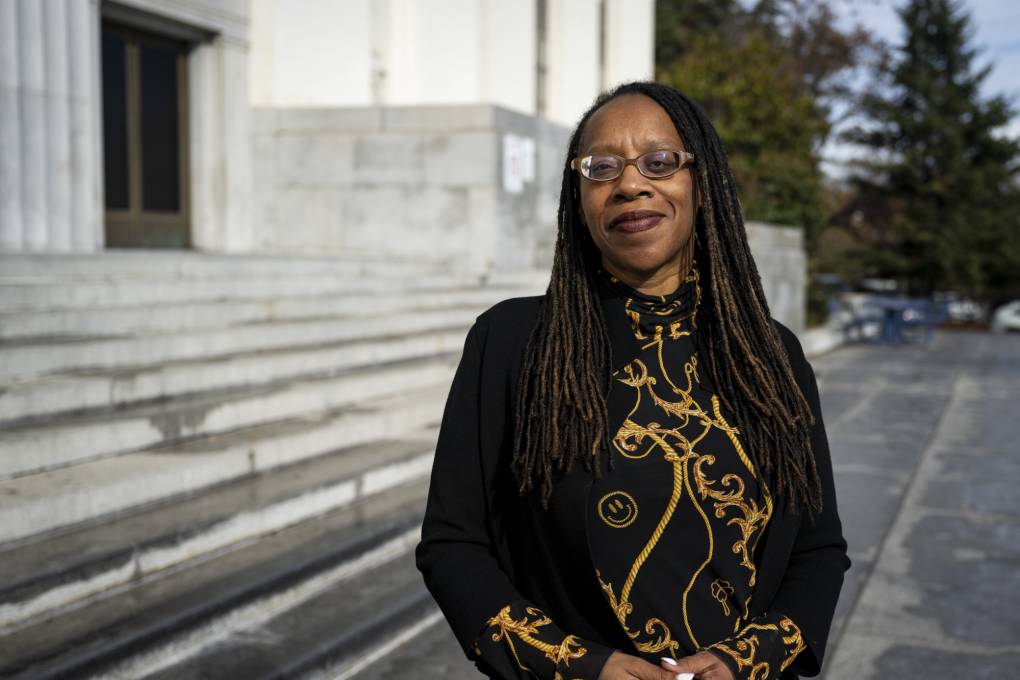
"caption": "Lateefah Simon poses for a portrait on Dec. 6, 2023, after signing paperwork for her congressional campaign candidacy at the Alameda County Registrar of Voters Office in Oakland.",
"credit": "Beth LaBerge/KQED",
"altTag": null,
"description": null,
"imgSizes": {
"medium": {
"file": "https://cdn.kqed.org/wp-content/uploads/sites/10/2023/12/231206-LateefahSimon-19-BL-KQED-800x533.jpg",
"width": 800,
"height": 533,
"mimeType": "image/jpeg"
},
"large": {
"file": "https://cdn.kqed.org/wp-content/uploads/sites/10/2023/12/231206-LateefahSimon-19-BL-KQED-1020x680.jpg",
"width": 1020,
"height": 680,
"mimeType": "image/jpeg"
},
"thumbnail": {
"file": "https://cdn.kqed.org/wp-content/uploads/sites/10/2023/12/231206-LateefahSimon-19-BL-KQED-160x107.jpg",
"width": 160,
"height": 107,
"mimeType": "image/jpeg"
},
"1536x1536": {
"file": "https://cdn.kqed.org/wp-content/uploads/sites/10/2023/12/231206-LateefahSimon-19-BL-KQED-1536x1024.jpg",
"width": 1536,
"height": 1024,
"mimeType": "image/jpeg"
},
"post-thumbnail": {
"file": "https://cdn.kqed.org/wp-content/uploads/sites/10/2023/12/231206-LateefahSimon-19-BL-KQED-672x372.jpg",
"width": 672,
"height": 372,
"mimeType": "image/jpeg"
},
"twentyfourteen-full-width": {
"file": "https://cdn.kqed.org/wp-content/uploads/sites/10/2023/12/231206-LateefahSimon-19-BL-KQED-1038x576.jpg",
"width": 1038,
"height": 576,
"mimeType": "image/jpeg"
},
"full-width": {
"file": "https://cdn.kqed.org/wp-content/uploads/sites/10/2023/12/231206-LateefahSimon-19-BL-KQED-1920x1280.jpg",
"width": 1920,
"height": 1280,
"mimeType": "image/jpeg"
},
"kqedFullSize": {
"file": "https://cdn.kqed.org/wp-content/uploads/sites/10/2023/12/231206-LateefahSimon-19-BL-KQED.jpg",
"width": 2000,
"height": 1333
}
},
"isLoading": false,
"fetchFailed": false
},
"news_12011966": {
"type": "attachments",
"id": "news_12011966",
"meta": {
"index": "attachments_1716263798",
"site": "news",
"id": "12011966",
"found": true
},
"title": "US-ECONOMY-HOUSING-RENT",
"publishDate": 1730404371,
"status": "inherit",
"parent": 12040028,
"modified": 1747266267,
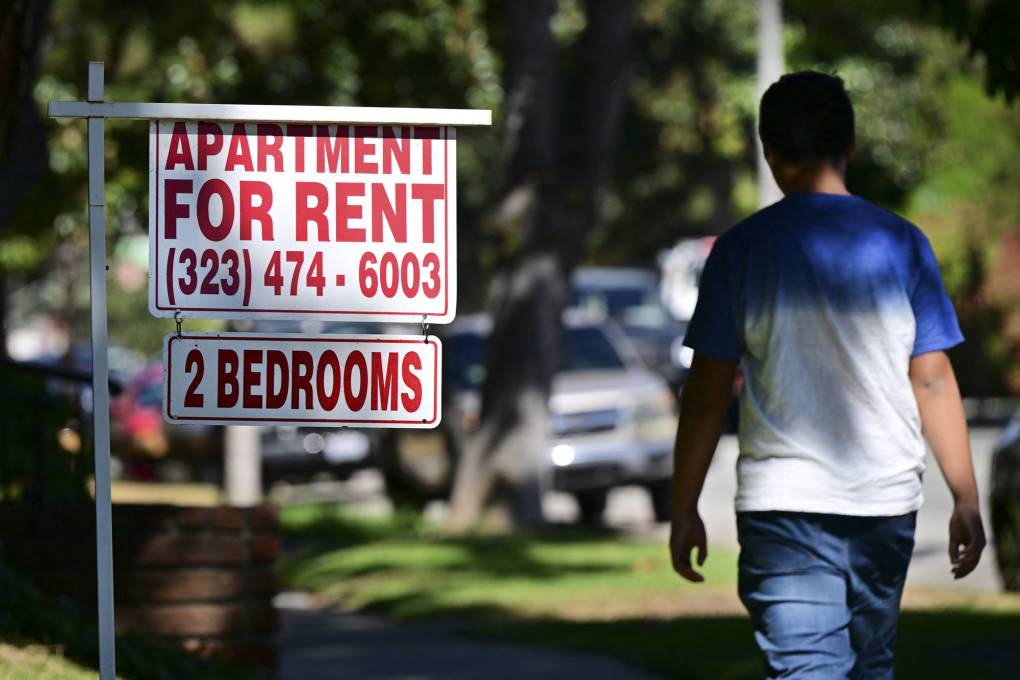
"caption": "An apartment for rent sign is posted in South Pasadena, California on Oct. 19, 2022.",
"credit": "Frederic J. Brown/AFP via Getty Images",
"altTag": null,
"description": null,
"imgSizes": {
"medium": {
"file": "https://cdn.kqed.org/wp-content/uploads/sites/10/2024/10/GETTYIMAGES-1244095544-KQED-800x533.jpg",
"width": 800,
"height": 533,
"mimeType": "image/jpeg"
},
"large": {
"file": "https://cdn.kqed.org/wp-content/uploads/sites/10/2024/10/GETTYIMAGES-1244095544-KQED-1020x680.jpg",
"width": 1020,
"height": 680,
"mimeType": "image/jpeg"
},
"thumbnail": {
"file": "https://cdn.kqed.org/wp-content/uploads/sites/10/2024/10/GETTYIMAGES-1244095544-KQED-160x107.jpg",
"width": 160,
"height": 107,
"mimeType": "image/jpeg"
},
"1536x1536": {
"file": "https://cdn.kqed.org/wp-content/uploads/sites/10/2024/10/GETTYIMAGES-1244095544-KQED-1536x1024.jpg",
"width": 1536,
"height": 1024,
"mimeType": "image/jpeg"
},
"post-thumbnail": {
"file": "https://cdn.kqed.org/wp-content/uploads/sites/10/2024/10/GETTYIMAGES-1244095544-KQED-672x372.jpg",
"width": 672,
"height": 372,
"mimeType": "image/jpeg"
},
"twentyfourteen-full-width": {
"file": "https://cdn.kqed.org/wp-content/uploads/sites/10/2024/10/GETTYIMAGES-1244095544-KQED-1038x576.jpg",
"width": 1038,
"height": 576,
"mimeType": "image/jpeg"
},
"full-width": {
"file": "https://cdn.kqed.org/wp-content/uploads/sites/10/2024/10/GETTYIMAGES-1244095544-KQED-1920x1280.jpg",
"width": 1920,
"height": 1280,
"mimeType": "image/jpeg"
},
"kqedFullSize": {
"file": "https://cdn.kqed.org/wp-content/uploads/sites/10/2024/10/GETTYIMAGES-1244095544-KQED.jpg",
"width": 2000,
"height": 1333
}
},
"isLoading": false,
"fetchFailed": false
},
"news_12012632": {
"type": "attachments",
"id": "news_12012632",
"meta": {
"index": "attachments_1716263798",
"site": "news",
"id": "12012632",
"found": true
},
"title": "2016Election1",
"publishDate": 1730767969,
"status": "inherit",
"parent": 12012421,
"modified": 1730768166,
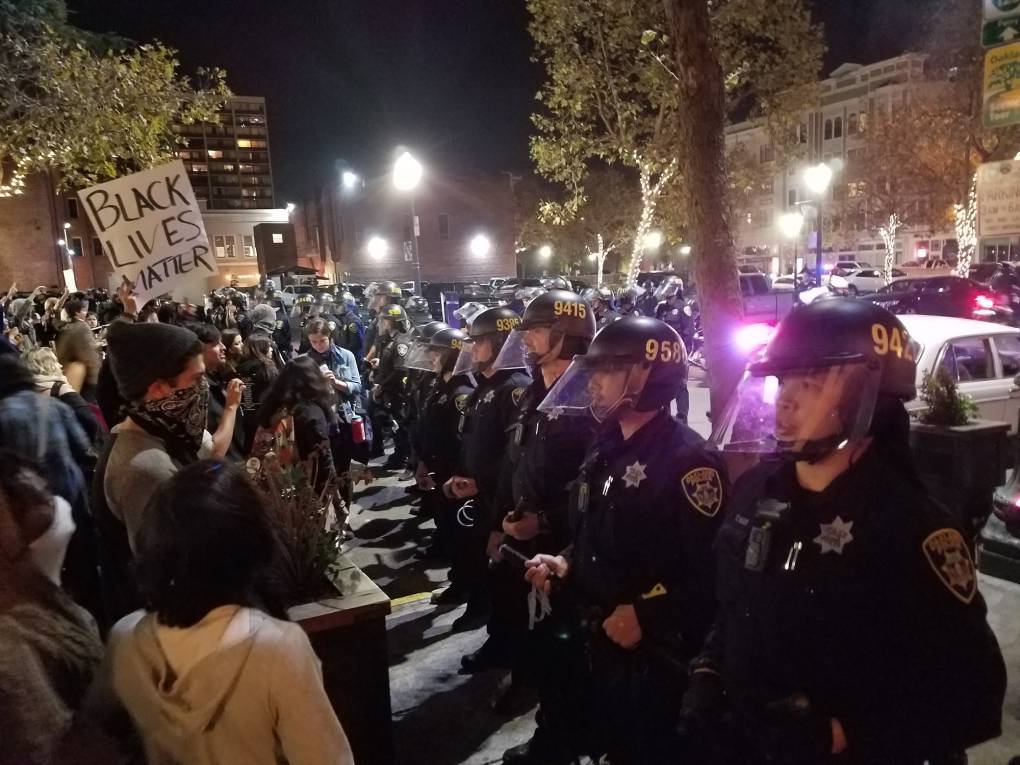
"caption": "Protests in Oakland on Nov. 9, 2016, in reaction to the election of Donald Trump to President of the United States.",
"credit": "Alex Emslie/KQED",
"altTag": null,
"description": null,
"imgSizes": {
"medium": {
"file": "https://cdn.kqed.org/wp-content/uploads/sites/10/2024/11/2016Election1-800x600.jpg",
"width": 800,
"height": 600,
"mimeType": "image/jpeg"
},
"large": {
"file": "https://cdn.kqed.org/wp-content/uploads/sites/10/2024/11/2016Election1-1020x765.jpg",
"width": 1020,
"height": 765,
"mimeType": "image/jpeg"
},
"thumbnail": {
"file": "https://cdn.kqed.org/wp-content/uploads/sites/10/2024/11/2016Election1-160x120.jpg",
"width": 160,
"height": 120,
"mimeType": "image/jpeg"
},
"1536x1536": {
"file": "https://cdn.kqed.org/wp-content/uploads/sites/10/2024/11/2016Election1-1536x1152.jpg",
"width": 1536,
"height": 1152,
"mimeType": "image/jpeg"
},
"post-thumbnail": {
"file": "https://cdn.kqed.org/wp-content/uploads/sites/10/2024/11/2016Election1-672x372.jpg",
"width": 672,
"height": 372,
"mimeType": "image/jpeg"
},
"twentyfourteen-full-width": {
"file": "https://cdn.kqed.org/wp-content/uploads/sites/10/2024/11/2016Election1-1038x576.jpg",
"width": 1038,
"height": 576,
"mimeType": "image/jpeg"
},
"full-width": {
"file": "https://cdn.kqed.org/wp-content/uploads/sites/10/2024/11/2016Election1-1920x1440.jpg",
"width": 1920,
"height": 1440,
"mimeType": "image/jpeg"
},
"kqedFullSize": {
"file": "https://cdn.kqed.org/wp-content/uploads/sites/10/2024/11/2016Election1.jpg",
"width": 2000,
"height": 1500
}
},
"isLoading": false,
"fetchFailed": false
},
"news_12011509": {
"type": "attachments",
"id": "news_12011509",
"meta": {
"index": "attachments_1716263798",
"site": "news",
"id": "12011509",
"found": true
},
"title": "Los Angeles City Council Press Conference - Yes on Prop 33",
"publishDate": 1730225428,
"status": "inherit",
"parent": 12011500,
"modified": 1730225538,
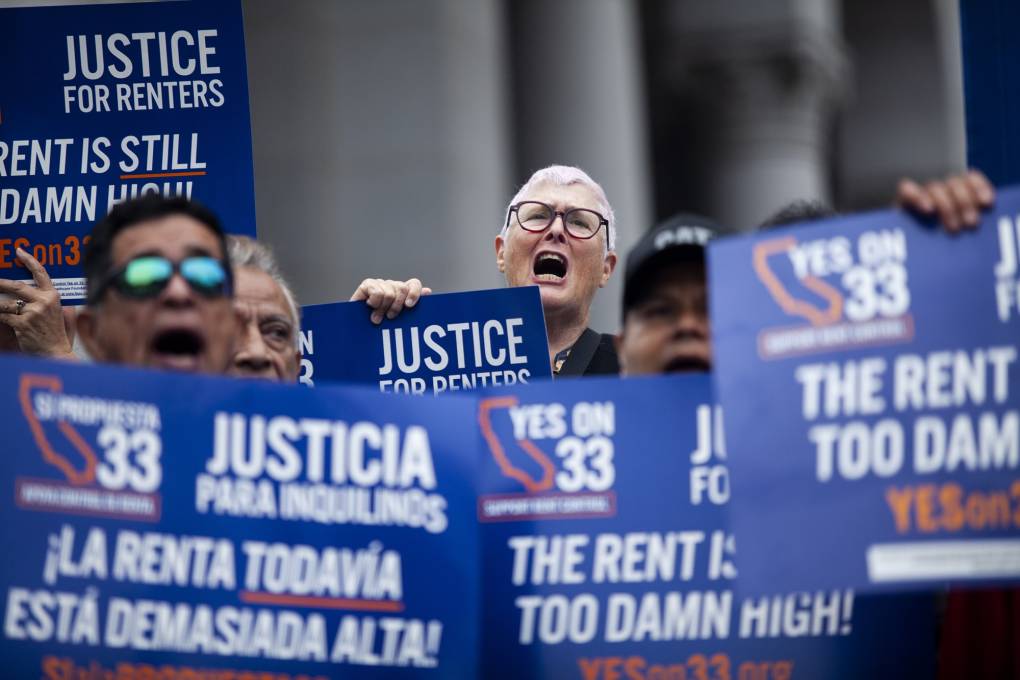
"caption": "Rent control advocates and supporters of Proposition 33, a November ballot initiative that would allow for the expansion of rent control in California, held a press conference before testifying at the Los Angeles City Council meeting on Tuesday, October 15, 2024, in Los Angeles, California. (Jenna Schoenefeld/AP Content Services for AIDS Healthcare Foundation)",
"credit": null,
"altTag": null,
"description": null,
"imgSizes": {
"medium": {
"file": "https://cdn.kqed.org/wp-content/uploads/sites/10/2024/10/AP24297000332580-800x533.jpg",
"width": 800,
"height": 533,
"mimeType": "image/jpeg"
},
"large": {
"file": "https://cdn.kqed.org/wp-content/uploads/sites/10/2024/10/AP24297000332580-1020x680.jpg",
"width": 1020,
"height": 680,
"mimeType": "image/jpeg"
},
"thumbnail": {
"file": "https://cdn.kqed.org/wp-content/uploads/sites/10/2024/10/AP24297000332580-160x107.jpg",
"width": 160,
"height": 107,
"mimeType": "image/jpeg"
},
"1536x1536": {
"file": "https://cdn.kqed.org/wp-content/uploads/sites/10/2024/10/AP24297000332580-1536x1024.jpg",
"width": 1536,
"height": 1024,
"mimeType": "image/jpeg"
},
"post-thumbnail": {
"file": "https://cdn.kqed.org/wp-content/uploads/sites/10/2024/10/AP24297000332580-672x372.jpg",
"width": 672,
"height": 372,
"mimeType": "image/jpeg"
},
"twentyfourteen-full-width": {
"file": "https://cdn.kqed.org/wp-content/uploads/sites/10/2024/10/AP24297000332580-1038x576.jpg",
"width": 1038,
"height": 576,
"mimeType": "image/jpeg"
},
"full-width": {
"file": "https://cdn.kqed.org/wp-content/uploads/sites/10/2024/10/AP24297000332580-1920x1280.jpg",
"width": 1920,
"height": 1280,
"mimeType": "image/jpeg"
},
"kqedFullSize": {
"file": "https://cdn.kqed.org/wp-content/uploads/sites/10/2024/10/AP24297000332580.jpg",
"width": 2000,
"height": 1333
}
},
"isLoading": false,
"fetchFailed": false
},
"news_12009484": {
"type": "attachments",
"id": "news_12009484",
"meta": {
"index": "attachments_1716263798",
"site": "news",
"id": "12009484",
"found": true
},
"title": "241012-WEST BANK AID-MD-11-KQED",
"publishDate": 1729016627,
"status": "inherit",
"parent": 0,
"modified": 1729707770,
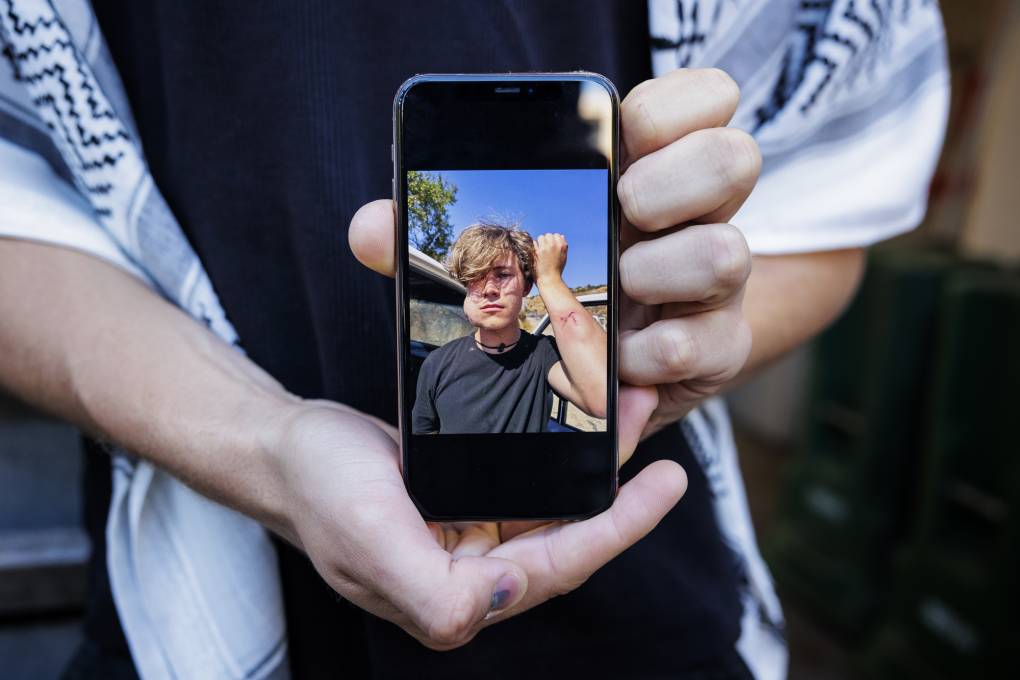
"caption": "David Hummel shows a photo of his injuries from his trip to the West Bank in July.",
"credit": "Martin do Nascimento/KQED",
"altTag": null,
"description": null,
"imgSizes": {
"medium": {
"file": "https://cdn.kqed.org/wp-content/uploads/sites/10/2024/10/241012-WEST-BANK-AID-MD-11-KQED-800x533.jpg",
"width": 800,
"height": 533,
"mimeType": "image/jpeg"
},
"large": {
"file": "https://cdn.kqed.org/wp-content/uploads/sites/10/2024/10/241012-WEST-BANK-AID-MD-11-KQED-1020x680.jpg",
"width": 1020,
"height": 680,
"mimeType": "image/jpeg"
},
"thumbnail": {
"file": "https://cdn.kqed.org/wp-content/uploads/sites/10/2024/10/241012-WEST-BANK-AID-MD-11-KQED-160x107.jpg",
"width": 160,
"height": 107,
"mimeType": "image/jpeg"
},
"1536x1536": {
"file": "https://cdn.kqed.org/wp-content/uploads/sites/10/2024/10/241012-WEST-BANK-AID-MD-11-KQED-1536x1024.jpg",
"width": 1536,
"height": 1024,
"mimeType": "image/jpeg"
},
"post-thumbnail": {
"file": "https://cdn.kqed.org/wp-content/uploads/sites/10/2024/10/241012-WEST-BANK-AID-MD-11-KQED-672x372.jpg",
"width": 672,
"height": 372,
"mimeType": "image/jpeg"
},
"twentyfourteen-full-width": {
"file": "https://cdn.kqed.org/wp-content/uploads/sites/10/2024/10/241012-WEST-BANK-AID-MD-11-KQED-1038x576.jpg",
"width": 1038,
"height": 576,
"mimeType": "image/jpeg"
},
"full-width": {
"file": "https://cdn.kqed.org/wp-content/uploads/sites/10/2024/10/241012-WEST-BANK-AID-MD-11-KQED-1920x1280.jpg",
"width": 1920,
"height": 1280,
"mimeType": "image/jpeg"
},
"kqedFullSize": {
"file": "https://cdn.kqed.org/wp-content/uploads/sites/10/2024/10/241012-WEST-BANK-AID-MD-11-KQED.jpg",
"width": 2000,
"height": 1333
}
},
"isLoading": false,
"fetchFailed": false
},
"news_12008663": {
"type": "attachments",
"id": "news_12008663",
"meta": {
"index": "attachments_1716263798",
"site": "news",
"id": "12008663",
"found": true
},
"title": "241008-UCB CAMPUS WALKOUT-MD-09-KQED",
"publishDate": 1728431201,
"status": "inherit",
"parent": 12032046,
"modified": 1742415507,
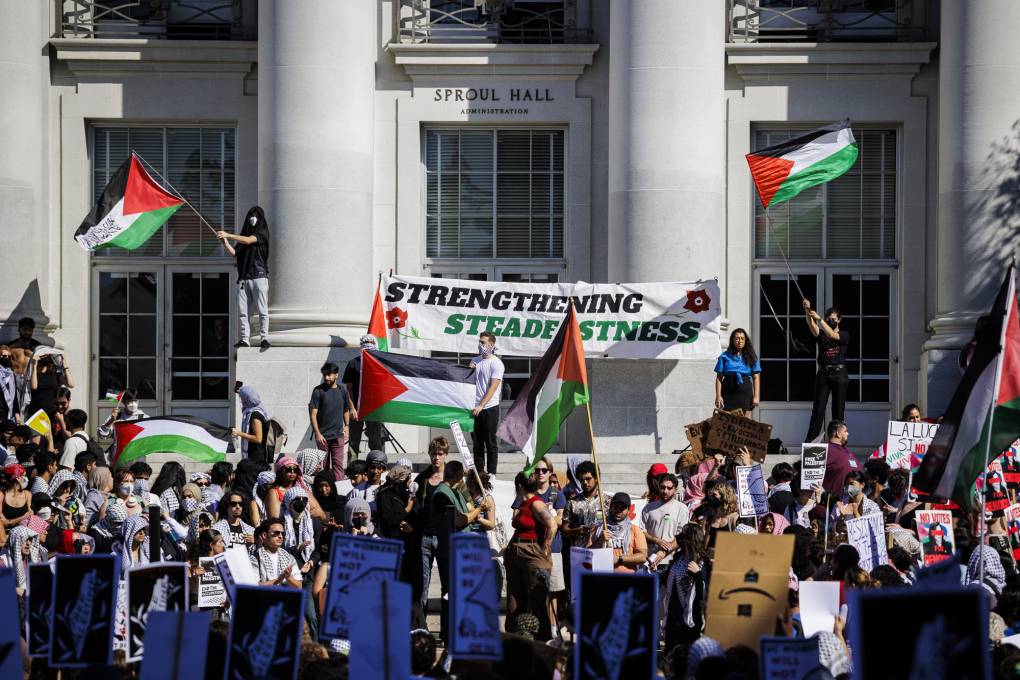
"caption": "A walkout and rally for Gaza and Lebanon at the University of California, Berkeley, on Oct. 8, 2024.",
"credit": "Martin do Nascimento/KQED",
"altTag": null,
"description": null,
"imgSizes": {
"medium": {
"file": "https://cdn.kqed.org/wp-content/uploads/sites/10/2024/10/241008-UCB-CAMPUS-WALKOUT-MD-09-KQED-800x533.jpg",
"width": 800,
"height": 533,
"mimeType": "image/jpeg"
},
"large": {
"file": "https://cdn.kqed.org/wp-content/uploads/sites/10/2024/10/241008-UCB-CAMPUS-WALKOUT-MD-09-KQED-1020x680.jpg",
"width": 1020,
"height": 680,
"mimeType": "image/jpeg"
},
"thumbnail": {
"file": "https://cdn.kqed.org/wp-content/uploads/sites/10/2024/10/241008-UCB-CAMPUS-WALKOUT-MD-09-KQED-160x107.jpg",
"width": 160,
"height": 107,
"mimeType": "image/jpeg"
},
"1536x1536": {
"file": "https://cdn.kqed.org/wp-content/uploads/sites/10/2024/10/241008-UCB-CAMPUS-WALKOUT-MD-09-KQED-1536x1024.jpg",
"width": 1536,
"height": 1024,
"mimeType": "image/jpeg"
},
"post-thumbnail": {
"file": "https://cdn.kqed.org/wp-content/uploads/sites/10/2024/10/241008-UCB-CAMPUS-WALKOUT-MD-09-KQED-672x372.jpg",
"width": 672,
"height": 372,
"mimeType": "image/jpeg"
},
"twentyfourteen-full-width": {
"file": "https://cdn.kqed.org/wp-content/uploads/sites/10/2024/10/241008-UCB-CAMPUS-WALKOUT-MD-09-KQED-1038x576.jpg",
"width": 1038,
"height": 576,
"mimeType": "image/jpeg"
},
"full-width": {
"file": "https://cdn.kqed.org/wp-content/uploads/sites/10/2024/10/241008-UCB-CAMPUS-WALKOUT-MD-09-KQED-1920x1280.jpg",
"width": 1920,
"height": 1280,
"mimeType": "image/jpeg"
},
"kqedFullSize": {
"file": "https://cdn.kqed.org/wp-content/uploads/sites/10/2024/10/241008-UCB-CAMPUS-WALKOUT-MD-09-KQED.jpg",
"width": 2000,
"height": 1333
}
},
"isLoading": false,
"fetchFailed": false
},
"news_12007981": {
"type": "attachments",
"id": "news_12007981",
"meta": {
"index": "attachments_1716263798",
"site": "news",
"id": "12007981",
"found": true
},
"title": "241002-EllenandRosemaryKamei-04-BL",
"publishDate": 1728066701,
"status": "inherit",
"parent": 0,
"modified": 1728327023,
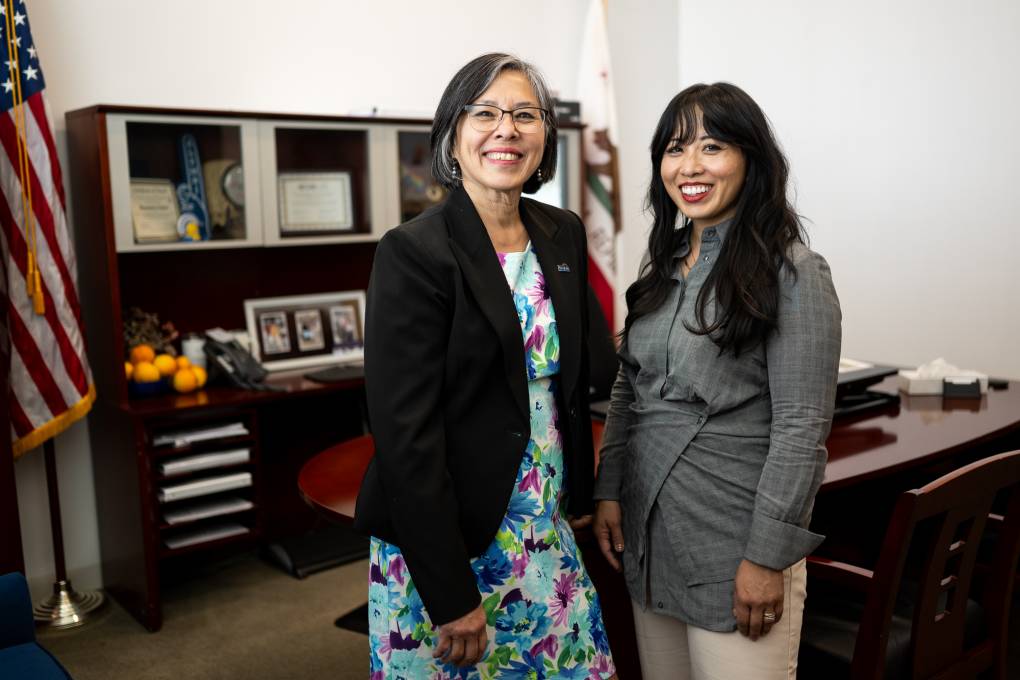
"caption": "City of San José Vice Mayor Rosemary Kamei (left), representing District 1, and daughter Ellen Kamei, Mountain View Councilmember, pose for a photo in San José City Hall on Oct. 2, 2024.",
"credit": "Beth LaBerge/KQED",
"altTag": null,
"description": null,
"imgSizes": {
"medium": {
"file": "https://cdn.kqed.org/wp-content/uploads/sites/10/2024/10/241002-EllenandRosemaryKamei-04-BL-800x533.jpg",
"width": 800,
"height": 533,
"mimeType": "image/jpeg"
},
"large": {
"file": "https://cdn.kqed.org/wp-content/uploads/sites/10/2024/10/241002-EllenandRosemaryKamei-04-BL-1020x680.jpg",
"width": 1020,
"height": 680,
"mimeType": "image/jpeg"
},
"thumbnail": {
"file": "https://cdn.kqed.org/wp-content/uploads/sites/10/2024/10/241002-EllenandRosemaryKamei-04-BL-160x107.jpg",
"width": 160,
"height": 107,
"mimeType": "image/jpeg"
},
"1536x1536": {
"file": "https://cdn.kqed.org/wp-content/uploads/sites/10/2024/10/241002-EllenandRosemaryKamei-04-BL-1536x1024.jpg",
"width": 1536,
"height": 1024,
"mimeType": "image/jpeg"
},
"post-thumbnail": {
"file": "https://cdn.kqed.org/wp-content/uploads/sites/10/2024/10/241002-EllenandRosemaryKamei-04-BL-672x372.jpg",
"width": 672,
"height": 372,
"mimeType": "image/jpeg"
},
"twentyfourteen-full-width": {
"file": "https://cdn.kqed.org/wp-content/uploads/sites/10/2024/10/241002-EllenandRosemaryKamei-04-BL-1038x576.jpg",
"width": 1038,
"height": 576,
"mimeType": "image/jpeg"
},
"full-width": {
"file": "https://cdn.kqed.org/wp-content/uploads/sites/10/2024/10/241002-EllenandRosemaryKamei-04-BL-1920x1280.jpg",
"width": 1920,
"height": 1280,
"mimeType": "image/jpeg"
},
"kqedFullSize": {
"file": "https://cdn.kqed.org/wp-content/uploads/sites/10/2024/10/241002-EllenandRosemaryKamei-04-BL.jpg",
"width": 2000,
"height": 1333
}
},
"isLoading": false,
"fetchFailed": false
},
"news_12005345": {
"type": "attachments",
"id": "news_12005345",
"meta": {
"index": "attachments_1716263798",
"site": "news",
"id": "12005345",
"found": true
},
"title": "Law enforcement disband a Pro Palestine protest at UC Irvine.",
"publishDate": 1726697136,
"status": "inherit",
"parent": 12005332,
"modified": 1726705098,
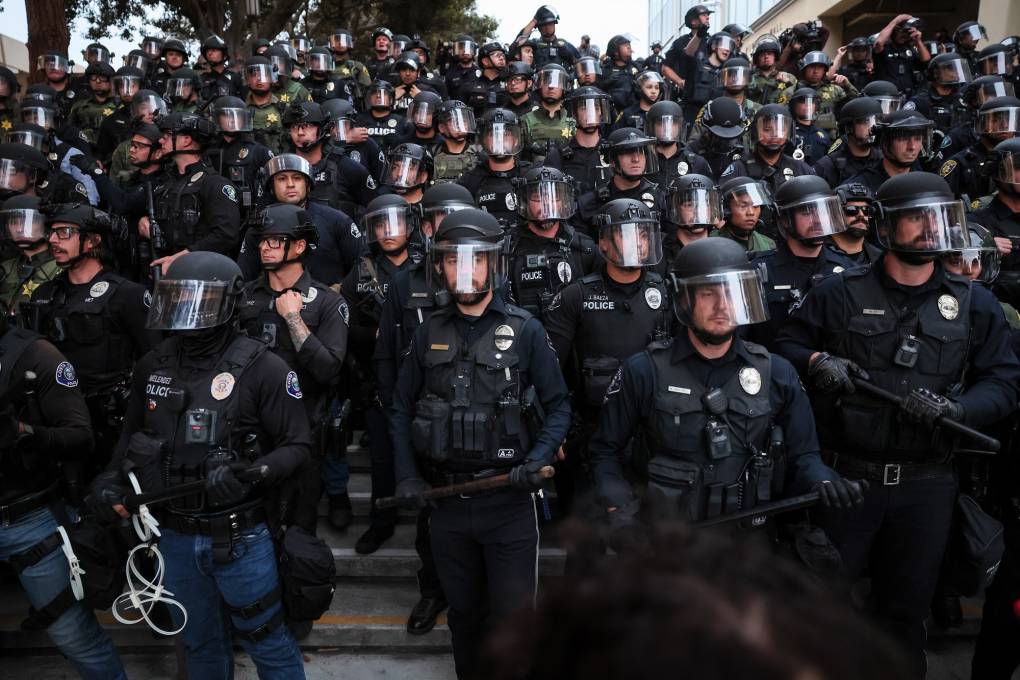
"caption": "Scores of law enforcement personnel from various agencies gather at UC Irvine to displace hundreds of demonstrating students, faculty and supporters protesting the treatment of Palestinians and the UC system's investments in Isreali interests. UC police are seeking approval from university leaders to purchase new weapons, including drones, robots and pepper balls. The regents will vote on Thursday, as state law requires board approval for military equipment purchases.",
"credit": "Robert Gauthier/Los Angeles Times via Getty Images",
"altTag": null,
"description": null,
"imgSizes": {
"medium": {
"file": "https://cdn.kqed.org/wp-content/uploads/sites/10/2024/09/UCPoliceGetty1-800x533.jpg",
"width": 800,
"height": 533,
"mimeType": "image/jpeg"
},
"large": {
"file": "https://cdn.kqed.org/wp-content/uploads/sites/10/2024/09/UCPoliceGetty1-1020x680.jpg",
"width": 1020,
"height": 680,
"mimeType": "image/jpeg"
},
"thumbnail": {
"file": "https://cdn.kqed.org/wp-content/uploads/sites/10/2024/09/UCPoliceGetty1-160x107.jpg",
"width": 160,
"height": 107,
"mimeType": "image/jpeg"
},
"1536x1536": {
"file": "https://cdn.kqed.org/wp-content/uploads/sites/10/2024/09/UCPoliceGetty1-1536x1024.jpg",
"width": 1536,
"height": 1024,
"mimeType": "image/jpeg"
},
"post-thumbnail": {
"file": "https://cdn.kqed.org/wp-content/uploads/sites/10/2024/09/UCPoliceGetty1-672x372.jpg",
"width": 672,
"height": 372,
"mimeType": "image/jpeg"
},
"twentyfourteen-full-width": {
"file": "https://cdn.kqed.org/wp-content/uploads/sites/10/2024/09/UCPoliceGetty1-1038x576.jpg",
"width": 1038,
"height": 576,
"mimeType": "image/jpeg"
},
"full-width": {
"file": "https://cdn.kqed.org/wp-content/uploads/sites/10/2024/09/UCPoliceGetty1-1920x1280.jpg",
"width": 1920,
"height": 1280,
"mimeType": "image/jpeg"
},
"kqedFullSize": {
"file": "https://cdn.kqed.org/wp-content/uploads/sites/10/2024/09/UCPoliceGetty1.jpg",
"width": 2000,
"height": 1333
}
},
"isLoading": false,
"fetchFailed": false
},
"news_12004356": {
"type": "attachments",
"id": "news_12004356",
"meta": {
"index": "attachments_1716263798",
"site": "news",
"id": "12004356",
"found": true
},
"title": "People's Park in Berkeley on Feb. 19, 2021.",
"publishDate": 1726078158,
"status": "inherit",
"parent": 12004348,
"modified": 1726078180,
"caption": "People's Park in Berkeley on Feb. 19, 2021.",
"credit": "Beth LaBerge/KQED",
"altTag": null,
"description": null,
"imgSizes": {
"medium": {
"file": "https://cdn.kqed.org/wp-content/uploads/sites/10/2024/09/026_Berkeley_PeoplesPark_02192021_qed-800x533.jpg",
"width": 800,
"height": 533,
"mimeType": "image/jpeg"
},
"large": {
"file": "https://cdn.kqed.org/wp-content/uploads/sites/10/2024/09/026_Berkeley_PeoplesPark_02192021_qed-1020x680.jpg",
"width": 1020,
"height": 680,
"mimeType": "image/jpeg"
},
"thumbnail": {
"file": "https://cdn.kqed.org/wp-content/uploads/sites/10/2024/09/026_Berkeley_PeoplesPark_02192021_qed-160x107.jpg",
"width": 160,
"height": 107,
"mimeType": "image/jpeg"
},
"1536x1536": {
"file": "https://cdn.kqed.org/wp-content/uploads/sites/10/2024/09/026_Berkeley_PeoplesPark_02192021_qed-1536x1024.jpg",
"width": 1536,
"height": 1024,
"mimeType": "image/jpeg"
},
"post-thumbnail": {
"file": "https://cdn.kqed.org/wp-content/uploads/sites/10/2024/09/026_Berkeley_PeoplesPark_02192021_qed-672x372.jpg",
"width": 672,
"height": 372,
"mimeType": "image/jpeg"
},
"twentyfourteen-full-width": {
"file": "https://cdn.kqed.org/wp-content/uploads/sites/10/2024/09/026_Berkeley_PeoplesPark_02192021_qed-1038x576.jpg",
"width": 1038,
"height": 576,
"mimeType": "image/jpeg"
},
"full-width": {
"file": "https://cdn.kqed.org/wp-content/uploads/sites/10/2024/09/026_Berkeley_PeoplesPark_02192021_qed-1920x1280.jpg",
"width": 1920,
"height": 1280,
"mimeType": "image/jpeg"
},
"kqedFullSize": {
"file": "https://cdn.kqed.org/wp-content/uploads/sites/10/2024/09/026_Berkeley_PeoplesPark_02192021_qed.jpg",
"width": 2000,
"height": 1333
}
},
"isLoading": false,
"fetchFailed": false
},
"news_12004344": {
"type": "attachments",
"id": "news_12004344",
"meta": {
"index": "attachments_1716263798",
"site": "news",
"id": "12004344",
"found": true
},
"title": "UCBerkeleyMakdisi",
"publishDate": 1726072360,
"status": "inherit",
"parent": 12047251,
"modified": 1752606871,
"caption": "UC Berkeley history professor Ussama Makdisi.",
"credit": "Courtesy of Sofia Liashcheva via UC Berkeley",
"altTag": null,
"description": null,
"imgSizes": {
"medium": {
"file": "https://cdn.kqed.org/wp-content/uploads/sites/10/2024/09/UCBerkeleyMakdisi-800x547.jpg",
"width": 800,
"height": 547,
"mimeType": "image/jpeg"
},
"large": {
"file": "https://cdn.kqed.org/wp-content/uploads/sites/10/2024/09/UCBerkeleyMakdisi-1020x698.jpg",
"width": 1020,
"height": 698,
"mimeType": "image/jpeg"
},
"thumbnail": {
"file": "https://cdn.kqed.org/wp-content/uploads/sites/10/2024/09/UCBerkeleyMakdisi-160x109.jpg",
"width": 160,
"height": 109,
"mimeType": "image/jpeg"
},
"1536x1536": {
"file": "https://cdn.kqed.org/wp-content/uploads/sites/10/2024/09/UCBerkeleyMakdisi-1536x1051.jpg",
"width": 1536,
"height": 1051,
"mimeType": "image/jpeg"
},
"post-thumbnail": {
"file": "https://cdn.kqed.org/wp-content/uploads/sites/10/2024/09/UCBerkeleyMakdisi-672x372.jpg",
"width": 672,
"height": 372,
"mimeType": "image/jpeg"
},
"twentyfourteen-full-width": {
"file": "https://cdn.kqed.org/wp-content/uploads/sites/10/2024/09/UCBerkeleyMakdisi-1038x576.jpg",
"width": 1038,
"height": 576,
"mimeType": "image/jpeg"
},
"full-width": {
"file": "https://cdn.kqed.org/wp-content/uploads/sites/10/2024/09/UCBerkeleyMakdisi-1920x1313.jpg",
"width": 1920,
"height": 1313,
"mimeType": "image/jpeg"
},
"kqedFullSize": {
"file": "https://cdn.kqed.org/wp-content/uploads/sites/10/2024/09/UCBerkeleyMakdisi.jpg",
"width": 2000,
"height": 1368
}
},
"isLoading": false,
"fetchFailed": false
},
"news_12003055": {
"type": "attachments",
"id": "news_12003055",
"meta": {
"index": "attachments_1716263798",
"site": "news",
"id": "12003055",
"found": true
},
"title": "011_KQED_Berkeley_Homelessness_03192020_9408_qed",
"publishDate": 1725479997,
"status": "inherit",
"parent": 12003051,
"modified": 1725480040,
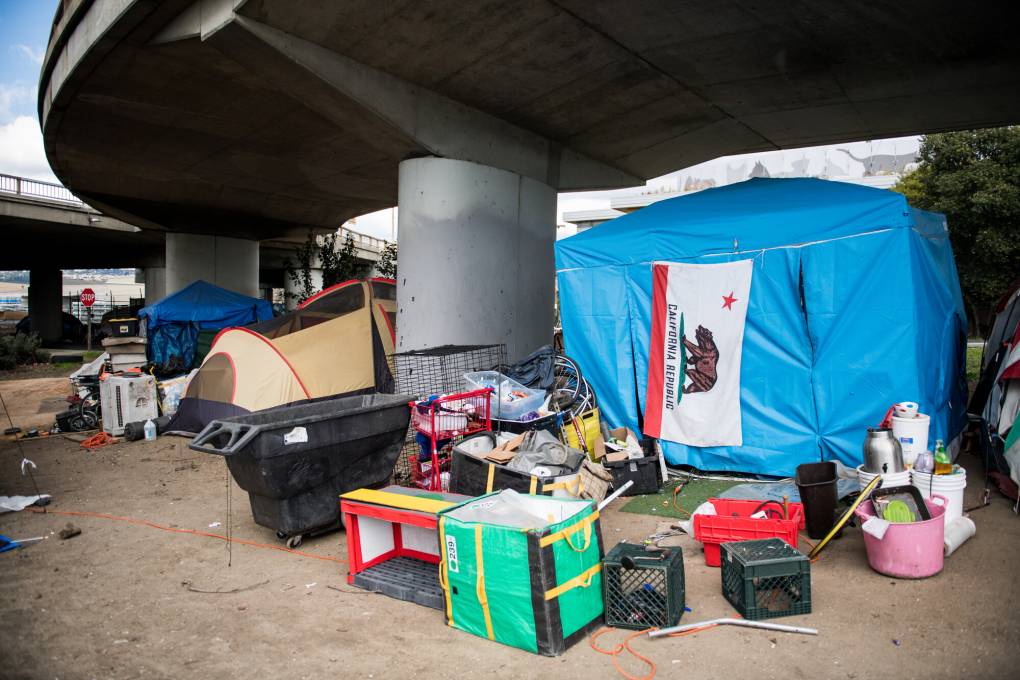
"caption": "A tent encampment under a freeway overpass in Berkeley on March 19, 2020.",
"credit": "Beth LaBerge/KQED",
"altTag": null,
"description": null,
"imgSizes": {
"medium": {
"file": "https://cdn.kqed.org/wp-content/uploads/sites/10/2024/09/011_KQED_Berkeley_Homelessness_03192020_9408_qed-800x533.jpg",
"width": 800,
"height": 533,
"mimeType": "image/jpeg"
},
"large": {
"file": "https://cdn.kqed.org/wp-content/uploads/sites/10/2024/09/011_KQED_Berkeley_Homelessness_03192020_9408_qed-1020x680.jpg",
"width": 1020,
"height": 680,
"mimeType": "image/jpeg"
},
"thumbnail": {
"file": "https://cdn.kqed.org/wp-content/uploads/sites/10/2024/09/011_KQED_Berkeley_Homelessness_03192020_9408_qed-160x107.jpg",
"width": 160,
"height": 107,
"mimeType": "image/jpeg"
},
"1536x1536": {
"file": "https://cdn.kqed.org/wp-content/uploads/sites/10/2024/09/011_KQED_Berkeley_Homelessness_03192020_9408_qed-1536x1024.jpg",
"width": 1536,
"height": 1024,
"mimeType": "image/jpeg"
},
"post-thumbnail": {
"file": "https://cdn.kqed.org/wp-content/uploads/sites/10/2024/09/011_KQED_Berkeley_Homelessness_03192020_9408_qed-672x372.jpg",
"width": 672,
"height": 372,
"mimeType": "image/jpeg"
},
"twentyfourteen-full-width": {
"file": "https://cdn.kqed.org/wp-content/uploads/sites/10/2024/09/011_KQED_Berkeley_Homelessness_03192020_9408_qed-1038x576.jpg",
"width": 1038,
"height": 576,
"mimeType": "image/jpeg"
},
"full-width": {
"file": "https://cdn.kqed.org/wp-content/uploads/sites/10/2024/09/011_KQED_Berkeley_Homelessness_03192020_9408_qed-1920x1280.jpg",
"width": 1920,
"height": 1280,
"mimeType": "image/jpeg"
},
"kqedFullSize": {
"file": "https://cdn.kqed.org/wp-content/uploads/sites/10/2024/09/011_KQED_Berkeley_Homelessness_03192020_9408_qed.jpg",
"width": 2000,
"height": 1333
}
},
"isLoading": false,
"fetchFailed": false
}
},
"audioPlayerReducer": {
"postId": "stream_live",
"isPaused": true,
"isPlaying": false,
"pfsActive": false,
"pledgeModalIsOpen": true,
"playerDrawerIsOpen": false,
"liveAudioPlayStartedAt": 0,
"liveAudioPlayContext": ""
},
"authorsReducer": {
"byline_news_12011500": {
"type": "authors",
"id": "byline_news_12011500",
"meta": {
"override": true
},
"slug": "byline_news_12011500",
"name": "Felicia Mello, CalMatters",
"isLoading": false
},
"danbrekke": {
"type": "authors",
"id": "222",
"meta": {
"index": "authors_1716337520",
"id": "222",
"found": true
},
"name": "Dan Brekke",
"firstName": "Dan",
"lastName": "Brekke",
"slug": "danbrekke",
"email": "dbrekke@kqed.org",
"display_author_email": true,
"staff_mastheads": [
"news",
"science"
],
"title": "KQED Editor and Reporter",
"bio": "Dan Brekke is a reporter and editor for KQED News, responsible for coverage of topics ranging from California water issues to the Bay Area's transportation challenges. In a newsroom career that began in Chicago in 1972, Dan has worked for \u003cem>The San Francisco Examiner,\u003c/em> Wired and TechTV and has been published in The New York Times, The New York Times Magazine, Business 2.0, Salon and elsewhere.\r\n\r\nSince joining KQED in 2007, Dan has reported, edited and produced both radio and online features and breaking news pieces. He has shared as both editor and reporter in four Society of Professional Journalists Norcal Excellence in Journalism awards and one Edward R. Murrow regional award. He was chosen for a spring 2017 residency at the Mesa Refuge to advance his research on California salmon.\r\n\r\nEmail Dan at: \u003ca href=\"mailto:dbrekke@kqed.org\">dbrekke@kqed.org\u003c/a>\r\n\r\n\u003cstrong>Twitter:\u003c/strong> \u003ca href=\"https://twitter.com/danbrekke\" rel=\"noopener noreferrer\">twitter.com/danbrekke\u003c/a>\r\n\u003cstrong>Facebook:\u003c/strong> \u003ca href=\"https://www.facebook.com/danbrekke\" rel=\"noopener noreferrer\">www.facebook.com/danbrekke\u003c/a>\r\n\u003cstrong>LinkedIn:\u003c/strong> \u003ca href=\"https://www.linkedin.com/in/danbrekke\" rel=\"noopener noreferrer\">www.linkedin.com/in/danbrekke\u003c/a>",
"avatar": "https://secure.gravatar.com/avatar/8f1f0d2a978fb3b23426c922c7e2af558fa36905b49c4ce76a97dc3c72d27226?s=600&d=mm&r=g",
"twitter": "danbrekke",
"bluesky": null,
"facebook": null,
"instagram": "https://www.instagram.com/dan.brekke/",
"linkedin": "https://www.linkedin.com/in/danbrekke/",
"sites": [
{
"site": "news",
"roles": [
"administrator",
"create_posts"
]
},
{
"site": "stateofhealth",
"roles": [
"editor"
]
},
{
"site": "science",
"roles": [
"editor"
]
},
{
"site": "quest",
"roles": [
"contributor"
]
},
{
"site": "food",
"roles": [
"contributor"
]
},
{
"site": "forum",
"roles": [
"contributor"
]
},
{
"site": "elections",
"roles": [
"editor"
]
},
{
"site": "liveblog",
"roles": [
"editor"
]
}
],
"headData": {
"title": "Dan Brekke | KQED",
"description": "KQED Editor and Reporter",
"ogImgSrc": "https://secure.gravatar.com/avatar/8f1f0d2a978fb3b23426c922c7e2af558fa36905b49c4ce76a97dc3c72d27226?s=600&d=mm&r=g",
"twImgSrc": "https://secure.gravatar.com/avatar/8f1f0d2a978fb3b23426c922c7e2af558fa36905b49c4ce76a97dc3c72d27226?s=600&d=mm&r=g"
},
"isLoading": false,
"link": "/author/danbrekke"
},
"shossaini": {
"type": "authors",
"id": "3214",
"meta": {
"index": "authors_1716337520",
"id": "3214",
"found": true
},
"name": "Sara Hossaini",
"firstName": "Sara",
"lastName": "Hossaini",
"slug": "shossaini",
"email": "shossaini@kqed.org",
"display_author_email": true,
"staff_mastheads": [
"news"
],
"title": "KQED Reporter",
"bio": "Sara Hossaini came to general assignment reporting at KQED in 2013 after two winters reporting at Wyoming Public Radio. She holds a bachelor's degree in broadcast journalism from the University of Nebraska-Lincoln. Her radio romance began after a bitter breakup with documentary film (Ok, maybe it's still complicated). Her first simultaneous jobs in San Francisco were as Associate Producer on a PBS film series through the Center for Asian American Media and as a butler. She likes to trot, plot and make things with her hands.",
"avatar": "https://secure.gravatar.com/avatar/060e9f56b9554e17942e89f413242774?s=600&d=blank&r=g",
"twitter": "mshossaini",
"facebook": null,
"instagram": null,
"linkedin": null,
"sites": [
{
"site": "news",
"roles": [
"author"
]
},
{
"site": "stateofhealth",
"roles": [
"author"
]
}
],
"headData": {
"title": "Sara Hossaini | KQED",
"description": "KQED Reporter",
"ogImgSrc": "https://secure.gravatar.com/avatar/060e9f56b9554e17942e89f413242774?s=600&d=blank&r=g",
"twImgSrc": "https://secure.gravatar.com/avatar/060e9f56b9554e17942e89f413242774?s=600&d=blank&r=g"
},
"isLoading": false,
"link": "/author/shossaini"
},
"vrancano": {
"type": "authors",
"id": "11276",
"meta": {
"index": "authors_1716337520",
"id": "11276",
"found": true
},
"name": "Vanessa Rancaño",
"firstName": "Vanessa",
"lastName": "Rancaño",
"slug": "vrancano",
"email": "vrancano@kqed.org",
"display_author_email": false,
"staff_mastheads": [
"news"
],
"title": "Reporter",
"bio": "Vanessa Rancaño is a features reporter for KQED. She’s also covered homelessness and education for the station and reported from the Central Valley. Her work has aired across public radio, from flagship national news shows to longform narrative podcasts. Before taking up a mic, she worked as a freelance print journalist. She’s been recognized with a number of national and regional awards. Vanessa grew up in California's Central Valley. She's a former NPR Kroc Fellow, and a graduate of the UC Berkeley Graduate School of Journalism.",
"avatar": "https://secure.gravatar.com/avatar/b3a383dfb0e7ee1c17568f2cf067904ab654d6e3de9743fc661f3c788ade1bed?s=600&d=blank&r=g",
"twitter": "vanessarancano",
"bluesky": null,
"facebook": null,
"instagram": null,
"linkedin": null,
"sites": [
{
"site": "arts",
"roles": [
"editor"
]
},
{
"site": "news",
"roles": [
"editor"
]
},
{
"site": "liveblog",
"roles": [
"contributor"
]
}
],
"headData": {
"title": "Vanessa Rancaño | KQED",
"description": "Reporter",
"ogImgSrc": "https://secure.gravatar.com/avatar/b3a383dfb0e7ee1c17568f2cf067904ab654d6e3de9743fc661f3c788ade1bed?s=600&d=blank&r=g",
"twImgSrc": "https://secure.gravatar.com/avatar/b3a383dfb0e7ee1c17568f2cf067904ab654d6e3de9743fc661f3c788ade1bed?s=600&d=blank&r=g"
},
"isLoading": false,
"link": "/author/vrancano"
},
"dcronin": {
"type": "authors",
"id": "11362",
"meta": {
"index": "authors_1716337520",
"id": "11362",
"found": true
},
"name": "Dana Cronin",
"firstName": "Dana",
"lastName": "Cronin",
"slug": "dcronin",
"email": "dcronin@KQED.org",
"display_author_email": true,
"staff_mastheads": [],
"title": "KQED Contributor",
"bio": "Dana Cronin is a reporter for KQED News. She loves writing stories about climate change, environmental issues, food and agriculture. She's reported across the country, from Colorado to Washington D.C. to Illinois, and has won numerous awards for her coverage. Her work is regularly featured on national broadcasts, including NPR’s Morning Edition, All Things Considered, PBS Newshour and Science Friday. She lives in Oakland and has an avocado tree in her back yard.",
"avatar": "https://secure.gravatar.com/avatar/bcf89e3455ff7235f96ab6fa7258dd95?s=600&d=blank&r=g",
"twitter": "DanaHCronin",
"facebook": null,
"instagram": null,
"linkedin": null,
"sites": [
{
"site": "arts",
"roles": [
"author"
]
},
{
"site": "news",
"roles": [
"editor"
]
},
{
"site": "science",
"roles": [
"author"
]
},
{
"site": "liveblog",
"roles": [
"author"
]
}
],
"headData": {
"title": "Dana Cronin | KQED",
"description": "KQED Contributor",
"ogImgSrc": "https://secure.gravatar.com/avatar/bcf89e3455ff7235f96ab6fa7258dd95?s=600&d=blank&r=g",
"twImgSrc": "https://secure.gravatar.com/avatar/bcf89e3455ff7235f96ab6fa7258dd95?s=600&d=blank&r=g"
},
"isLoading": false,
"link": "/author/dcronin"
},
"btorres": {
"type": "authors",
"id": "11666",
"meta": {
"index": "authors_1716337520",
"id": "11666",
"found": true
},
"name": "Blanca Torres",
"firstName": "Blanca",
"lastName": "Torres",
"slug": "btorres",
"email": "btorres@kqed.org",
"display_author_email": true,
"staff_mastheads": [
"news"
],
"title": "Producer, Forum",
"bio": "Blanca Torres brings sharp news judgement and keen sense of lively conversation to her work as producer for Forum. She loves producing shows that leave listeners feeling like they heard distinctive voices, learned something new and gained a fresh perspective.\r\n\r\nShe joined KQED in January of 2020 after 16 years of working as a newspaper reporter most recently at the \u003cem>San Francisco Business Times,\u003c/em> where she wrote about real estate and economic development. Before that, she covered a variety of beats including crime, education, retail, workplace, the economy, consumer issues, and small business for the \u003cem>Contra Costa Times, Baltimore Sun\u003c/em> and\u003cem> The Seattle Times\u003c/em>. In addition to reporting, she worked as an editorial writer and columnist for the \u003cem>Seattle Times\u003c/em>. From 2017 to 2020, Blanca won a total of ten awards from the National Association of Real Estate Editors and won first place for land use reporting from the California News Publishers Association two years in a row. She is also a member and former board member for the National Association of Hispanic Journalists.\r\n\r\nA native of the Pacific Northwest, Blanca earned her bachelor's degree from Vanderbilt University in Nashville and a master's in fine arts in creative writing at Mills College. She lives in the East Bay with her family.",
"avatar": "https://secure.gravatar.com/avatar/50b49d19b14a1eed34f26ebf4681152cdd81574ed21851100871ccd29e578cdc?s=600&d=blank&r=g",
"twitter": "@blancawrites",
"bluesky": null,
"facebook": null,
"instagram": null,
"linkedin": null,
"sites": [
{
"site": "arts",
"roles": [
"editor"
]
},
{
"site": "news",
"roles": [
"editor"
]
},
{
"site": "forum",
"roles": [
"editor"
]
}
],
"headData": {
"title": "Blanca Torres | KQED",
"description": "Producer, Forum",
"ogImgSrc": "https://secure.gravatar.com/avatar/50b49d19b14a1eed34f26ebf4681152cdd81574ed21851100871ccd29e578cdc?s=600&d=blank&r=g",
"twImgSrc": "https://secure.gravatar.com/avatar/50b49d19b14a1eed34f26ebf4681152cdd81574ed21851100871ccd29e578cdc?s=600&d=blank&r=g"
},
"isLoading": false,
"link": "/author/btorres"
},
"afinney": {
"type": "authors",
"id": "11772",
"meta": {
"index": "authors_1716337520",
"id": "11772",
"found": true
},
"name": "Annelise Finney",
"firstName": "Annelise",
"lastName": "Finney",
"slug": "afinney",
"email": "afinney@kqed.org",
"display_author_email": false,
"staff_mastheads": [],
"title": "Reporter",
"bio": "Annelise reports on reparations in California and East Bay politics. She co-produced the Sunday Music Drop, a limited-term radio series featuring Bay Area musicians that aired between Sept 2022 and Oct 2024. She joined KQED in 2021 as a general assignment reporter and is an alumna of KALW's Audio Academy. She was born and raised in the East Bay. She is currently away from KQED completing a year-long reporting project in Berlin, Germany as a Alexander Von Humboldt German Chancellor Fellow.",
"avatar": "https://secure.gravatar.com/avatar/b439010ea6540bec1060ee74b3c94314480991106a4a84e774fe5a0fd6605878?s=600&d=mm&r=g",
"twitter": null,
"bluesky": null,
"facebook": null,
"instagram": null,
"linkedin": null,
"sites": [
{
"site": "news",
"roles": [
"subscriber"
]
},
{
"site": "liveblog",
"roles": [
"subscriber"
]
}
],
"headData": {
"title": "Annelise Finney | KQED",
"description": "Reporter",
"ogImgSrc": "https://secure.gravatar.com/avatar/b439010ea6540bec1060ee74b3c94314480991106a4a84e774fe5a0fd6605878?s=600&d=mm&r=g",
"twImgSrc": "https://secure.gravatar.com/avatar/b439010ea6540bec1060ee74b3c94314480991106a4a84e774fe5a0fd6605878?s=600&d=mm&r=g"
},
"isLoading": false,
"link": "/author/afinney"
},
"nkhan": {
"type": "authors",
"id": "11867",
"meta": {
"index": "authors_1716337520",
"id": "11867",
"found": true
},
"name": "Nisa Khan",
"firstName": "Nisa",
"lastName": "Khan",
"slug": "nkhan",
"email": "nkhan@kqed.org",
"display_author_email": false,
"staff_mastheads": [],
"title": "KQED Contributor",
"bio": "Nisa Khan is a reporter for KQED's Audience News Desk. She was formerly a data reporter at Michigan Radio. She earned a Bachelor of Science in Information from the University of Michigan and a Master of Arts in Communication from Stanford University.",
"avatar": "https://secure.gravatar.com/avatar/8720459eef081ff64582b3506b124d58523e80e120704a0cbd9892533c914991?s=600&d=blank&r=g",
"twitter": "mnisakhan",
"bluesky": null,
"facebook": null,
"instagram": null,
"linkedin": null,
"sites": [
{
"site": "arts",
"roles": [
"editor"
]
},
{
"site": "news",
"roles": [
"editor"
]
},
{
"site": "science",
"roles": [
"editor",
"author"
]
},
{
"site": "forum",
"roles": [
"editor"
]
},
{
"site": "liveblog",
"roles": [
"contributor"
]
}
],
"headData": {
"title": "Nisa Khan | KQED",
"description": "KQED Contributor",
"ogImgSrc": "https://secure.gravatar.com/avatar/8720459eef081ff64582b3506b124d58523e80e120704a0cbd9892533c914991?s=600&d=blank&r=g",
"twImgSrc": "https://secure.gravatar.com/avatar/8720459eef081ff64582b3506b124d58523e80e120704a0cbd9892533c914991?s=600&d=blank&r=g"
},
"isLoading": false,
"link": "/author/nkhan"
},
"rcooke": {
"type": "authors",
"id": "11921",
"meta": {
"index": "authors_1716337520",
"id": "11921",
"found": true
},
"name": "Riley Cooke",
"firstName": "Riley",
"lastName": "Cooke",
"slug": "rcooke",
"email": "rcooke@kqed.org",
"display_author_email": true,
"staff_mastheads": [
"news"
],
"title": "KQED Contributor",
"bio": "Riley is a senior at UC Berkeley, where she studies political science and journalism. Her work has appeared in SFGate, NBC Bay Area, Local News Matters and more. She enjoys reporting on politics, housing and homelessness — and using as many em dashes as her editors will allow.",
"avatar": "https://secure.gravatar.com/avatar/792f98c126cc5e270a8a96f77f7224ea?s=600&d=blank&r=g",
"twitter": "rrileycooke",
"facebook": null,
"instagram": null,
"linkedin": null,
"sites": [
{
"site": "arts",
"roles": [
"author"
]
},
{
"site": "news",
"roles": [
"author"
]
}
],
"headData": {
"title": "Riley Cooke | KQED",
"description": "KQED Contributor",
"ogImgSrc": "https://secure.gravatar.com/avatar/792f98c126cc5e270a8a96f77f7224ea?s=600&d=blank&r=g",
"twImgSrc": "https://secure.gravatar.com/avatar/792f98c126cc5e270a8a96f77f7224ea?s=600&d=blank&r=g"
},
"isLoading": false,
"link": "/author/rcooke"
},
"emanoukian": {
"type": "authors",
"id": "11925",
"meta": {
"index": "authors_1716337520",
"id": "11925",
"found": true
},
"name": "Elize Manoukian",
"firstName": "Elize",
"lastName": "Manoukian",
"slug": "emanoukian",
"email": "emanoukian@KQED.org",
"display_author_email": false,
"staff_mastheads": [
"news"
],
"title": "Digital News Editor",
"bio": "Elize Manoukian is an award-winning audio producer and Senior Editor on the Express Desk, KQED's digital news platform. Her work has appeared on KPFA, Interlochen Public Radio, Oregon Public Broadcast, the New York Daily News, LA Times and the San Diego Union-Tribune.",
"avatar": "https://secure.gravatar.com/avatar/4525f1a8e46ccb30933b32653d9772064cfefe3fa655eb45b3b3a80341f6bdad?s=600&d=blank&r=g",
"twitter": null,
"bluesky": null,
"facebook": null,
"instagram": null,
"linkedin": null,
"sites": [
{
"site": "arts",
"roles": [
"editor"
]
},
{
"site": "news",
"roles": [
"editor"
]
},
{
"site": "science",
"roles": [
"editor"
]
}
],
"headData": {
"title": "Elize Manoukian | KQED",
"description": "Digital News Editor",
"ogImgSrc": "https://secure.gravatar.com/avatar/4525f1a8e46ccb30933b32653d9772064cfefe3fa655eb45b3b3a80341f6bdad?s=600&d=blank&r=g",
"twImgSrc": "https://secure.gravatar.com/avatar/4525f1a8e46ccb30933b32653d9772064cfefe3fa655eb45b3b3a80341f6bdad?s=600&d=blank&r=g"
},
"isLoading": false,
"link": "/author/emanoukian"
}
},
"pagesReducer": {
"news_tag_berkeley": {
"type": "terms",
"id": "news_129",
"meta": {
"index": "terms_1716263798",
"site": "news",
"id": "129",
"score": 6.9285283
},
"featImg": null,
"name": "Berkeley",
"description": null,
"taxonomy": "tag",
"headData": {
"twImgId": null,
"twTitle": null,
"ogTitle": null,
"ogImgId": null,
"twDescription": null,
"description": null,
"title": "Berkeley Archives | KQED News",
"ogDescription": null
},
"ttid": 133,
"slug": "berkeley",
"isLoading": false,
"title": "Berkeley",
"pageMeta": {
"site": "news",
"WpPageTemplate": "page-topic-editorial",
"currentPage": 7
},
"blocks": [
{
"blockName": "kqed/post-list",
"attrs": {
"layout": "cardArticle2",
"query": "posts/news?tag=berkeley",
"seeMore": false,
"paginated": true,
"page": 7
}
},
{
"blockName": "kqed/ad"
}
]
}
},
"pfsSessionReducer": {},
"postsReducer": {
"stream_live": {
"type": "live",
"id": "stream_live",
"audioUrl": "https://streams.kqed.org/kqedradio",
"title": "Live Stream",
"excerpt": "Live Stream information currently unavailable.",
"link": "/radio",
"featImg": "",
"label": {
"name": "KQED Live",
"link": "/"
}
},
"stream_kqedNewscast": {
"type": "posts",
"id": "stream_kqedNewscast",
"audioUrl": "https://www.kqed.org/.stream/anon/radio/RDnews/newscast.mp3?_=1",
"title": "KQED Newscast",
"featImg": "",
"label": {
"name": "88.5 FM",
"link": "/"
}
},
"news_12013236": {
"type": "posts",
"id": "news_12013236",
"meta": {
"index": "posts_1716263798",
"site": "news",
"id": "12013236",
"score": null,
"sort": [
1730938037000
]
},
"guestAuthors": [],
"slug": "in-berkeley-mayors-race-city-hall-veteran-leads-government-critic",
"title": "In Berkeley Mayor’s Race, City Hall Veteran Leads Government Critic",
"publishDate": 1730938037,
"format": "standard",
"headTitle": "In Berkeley Mayor’s Race, City Hall Veteran Leads Government Critic | KQED",
"labelTerm": {
"site": "news"
},
"content": "\u003cp>The Berkeley mayor’s race has come down to a ranked choice contest between a veteran of City Hall and a first-time candidate who ran on a message of overcoming what critics have called a “toxic” atmosphere in city government.\u003c/p>\n\u003cp>\u003ca href=\"https://www.kqed.org/elections/results/alameda/berkeley\">Results early Wednesday\u003c/a> showed Councilmember Sophie Hahn leading a five-candidate pack with 39.4% of first-choice votes, followed by community activist Adena Ishii with 34.8%. Kate Harrison, who quit the City Council in January after blasting Berkeley’s decision-making process as “broken,” was third with 23.3%. Two other candidates followed with just over 1% of the vote each.\u003c/p>\n\u003cp>After running the ranked choice system’s automatic runoff, Harrison and the others were eliminated, and Hahn led Ishii by 53% to 47%.\u003c/p>\n\u003cp>[ad fullwidth]\u003c/p>\n\u003cp>Wednesday, both Ishii and Hahn acknowledged that the current results reflect only about 30% of the votes likely cast in the race, based on past Berkeley elections.\u003c/p>\n\u003cp>Nonetheless, Hahn said in an emailed statement she was “very optimistic this margin will hold — and possibly increase.”\u003c/p>\n\u003cp>Ishii said in an interview that she’s optimistic that her campaign’s year of effort will be rewarded with a victory in the race. “Honestly, I’m just so proud of our team that we’ve put in so much work over this last year and knocked on over 20,000 doors,” she said.\u003c/p>\n\u003cp>Also on Tuesday’s ballot were four City Council races:\u003c/p>\n\u003cul>\n\u003cli style=\"list-style-type: none\">\n\u003cul>\n\u003cli>\u003cstrong>In District 2,\u003c/strong> southwest Berkeley, incumbent Terry Taplin holds a 70% to 30% advantage over challenger Jenny Guarino, a UC Berkeley union organizer and grad student at the Goldman School of Public Policy.\u003c/li>\n\u003c/ul>\n\u003c/li>\n\u003c/ul>\n\u003cul>\n\u003cli style=\"list-style-type: none\">\n\u003cul>\n\u003cli>\u003cstrong>In District 3,\u003c/strong> South Berkeley, incumbent Ben Bartlett leads with 53% of first-choice votes over two opponents: Deborah Matthews, a longtime community activist, and Chip Moore, who has served on several city bodies, including the Planning Commission and Police Accountability Board. The ranked choice runoff currently eliminates Moore and gives Bartlett a 68% to 32% lead over Matthews.\u003c/li>\n\u003c/ul>\n\u003c/li>\n\u003c/ul>\n\u003cul>\n\u003cli style=\"list-style-type: none\">\n\u003cul>\n\u003cli>\u003cstrong>The race in District 5, \u003c/strong>North Berkeley, is Hahn’s former seat and features three first-time candidates. Shoshana O’Keefe, a teacher at Berkeley High School and longtime member of the city’s Zoning Adjustments Board, leads with 67% of first-choice votes over Todd Andrew, a real estate agent and member of the city’s Homeless Commission, and Nilang Gor, a scientist in the field of infectious and genetic diseases and also a Homeless Commission member. The ranked choice runoff currently eliminates Gor and gives O’Keefe a 76% to 24% edge over Andrew.\u003c/li>\n\u003c/ul>\n\u003c/li>\n\u003c/ul>\n\u003cul>\n\u003cli style=\"list-style-type: none\">\n\u003cul>\n\u003cli>\u003cstrong>In District 6,\u003c/strong> the Berkeley Hills, first-time candidate Brent Blackaby, an entrepreneur and civic volunteer, leads East Bay Municipal Utility District board member Andy Katz 63% to 37%.\u003c/li>\n\u003c/ul>\n\u003c/li>\n\u003c/ul>\n\u003cp>\u003c/p>\n",
"blocks": [],
"excerpt": "Councilmember Sophie Hahn leads in early returns in Berkeley over Kate Harrison, who quit the council this year after criticizing its “broken” decision-making.",
"status": "publish",
"parent": 0,
"modified": 1730942255,
"stats": {
"hasAudio": false,
"hasVideo": false,
"hasChartOrMap": false,
"iframeSrcs": [],
"hasGoogleForm": false,
"hasGallery": false,
"hasHearkenModule": false,
"hasPolis": false,
"paragraphCount": 9,
"wordCount": 478
},
"headData": {
"title": "In Berkeley Mayor’s Race, City Hall Veteran Leads Government Critic | KQED",
"description": "Councilmember Sophie Hahn leads in early returns in Berkeley over Kate Harrison, who quit the council this year after criticizing its “broken” decision-making.",
"ogTitle": "",
"ogDescription": "",
"ogImgId": "",
"twTitle": "",
"twDescription": "",
"twImgId": "",
"schema": {
"@context": "https://schema.org",
"@type": "NewsArticle",
"headline": "In Berkeley Mayor’s Race, City Hall Veteran Leads Government Critic",
"datePublished": "2024-11-06T16:07:17-08:00",
"dateModified": "2024-11-06T17:17:35-08:00",
"image": "https://cdn.kqed.org/wp-content/uploads/2020/02/KQED-OG-Image@1x.png",
"isAccessibleForFree": "True",
"publisher": {
"@type": "NewsMediaOrganization",
"@id": "https://www.kqed.org/#organization",
"name": "KQED",
"logo": "https://cdn.kqed.org/wp-content/uploads/2020/02/KQED-OG-Image@1x.png",
"url": "https://www.kqed.org",
"sameAs": [
"https://www.facebook.com/KQED",
"https://twitter.com/KQED",
"https://www.instagram.com/kqed/",
"https://www.tiktok.com/@kqedofficial",
"https://www.linkedin.com/company/kqed",
"https://www.youtube.com/channel/UCeC0IOo7i1P_61zVUWbJ4nw"
]
}
}
},
"sticky": false,
"nprStoryId": "kqed-12013236",
"excludeFromSiteSearch": "Include",
"articleAge": "0",
"path": "/news/12013236/in-berkeley-mayors-race-city-hall-veteran-leads-government-critic",
"audioTrackLength": null,
"parsedContent": [
{
"type": "contentString",
"content": "\u003cdiv class=\"post-body\">\u003cp>\u003cp>The Berkeley mayor’s race has come down to a ranked choice contest between a veteran of City Hall and a first-time candidate who ran on a message of overcoming what critics have called a “toxic” atmosphere in city government.\u003c/p>\n\u003cp>\u003ca href=\"https://www.kqed.org/elections/results/alameda/berkeley\">Results early Wednesday\u003c/a> showed Councilmember Sophie Hahn leading a five-candidate pack with 39.4% of first-choice votes, followed by community activist Adena Ishii with 34.8%. Kate Harrison, who quit the City Council in January after blasting Berkeley’s decision-making process as “broken,” was third with 23.3%. Two other candidates followed with just over 1% of the vote each.\u003c/p>\n\u003cp>After running the ranked choice system’s automatic runoff, Harrison and the others were eliminated, and Hahn led Ishii by 53% to 47%.\u003c/p>\n\u003cp>\u003c/p>\u003c/div>",
"attributes": {
"named": {},
"numeric": []
}
},
{
"type": "component",
"content": "",
"name": "ad",
"attributes": {
"named": {
"label": "fullwidth"
},
"numeric": [
"fullwidth"
]
}
},
{
"type": "contentString",
"content": "\u003cdiv class=\"post-body\">\u003cp>\u003c/p>\n\u003cp>Wednesday, both Ishii and Hahn acknowledged that the current results reflect only about 30% of the votes likely cast in the race, based on past Berkeley elections.\u003c/p>\n\u003cp>Nonetheless, Hahn said in an emailed statement she was “very optimistic this margin will hold — and possibly increase.”\u003c/p>\n\u003cp>Ishii said in an interview that she’s optimistic that her campaign’s year of effort will be rewarded with a victory in the race. “Honestly, I’m just so proud of our team that we’ve put in so much work over this last year and knocked on over 20,000 doors,” she said.\u003c/p>\n\u003cp>Also on Tuesday’s ballot were four City Council races:\u003c/p>\n\u003cul>\n\u003cli style=\"list-style-type: none\">\n\u003cul>\n\u003cli>\u003cstrong>In District 2,\u003c/strong> southwest Berkeley, incumbent Terry Taplin holds a 70% to 30% advantage over challenger Jenny Guarino, a UC Berkeley union organizer and grad student at the Goldman School of Public Policy.\u003c/li>\n\u003c/ul>\n\u003c/li>\n\u003c/ul>\n\u003cul>\n\u003cli style=\"list-style-type: none\">\n\u003cul>\n\u003cli>\u003cstrong>In District 3,\u003c/strong> South Berkeley, incumbent Ben Bartlett leads with 53% of first-choice votes over two opponents: Deborah Matthews, a longtime community activist, and Chip Moore, who has served on several city bodies, including the Planning Commission and Police Accountability Board. The ranked choice runoff currently eliminates Moore and gives Bartlett a 68% to 32% lead over Matthews.\u003c/li>\n\u003c/ul>\n\u003c/li>\n\u003c/ul>\n\u003cul>\n\u003cli style=\"list-style-type: none\">\n\u003cul>\n\u003cli>\u003cstrong>The race in District 5, \u003c/strong>North Berkeley, is Hahn’s former seat and features three first-time candidates. Shoshana O’Keefe, a teacher at Berkeley High School and longtime member of the city’s Zoning Adjustments Board, leads with 67% of first-choice votes over Todd Andrew, a real estate agent and member of the city’s Homeless Commission, and Nilang Gor, a scientist in the field of infectious and genetic diseases and also a Homeless Commission member. The ranked choice runoff currently eliminates Gor and gives O’Keefe a 76% to 24% edge over Andrew.\u003c/li>\n\u003c/ul>\n\u003c/li>\n\u003c/ul>\n\u003cul>\n\u003cli style=\"list-style-type: none\">\n\u003cul>\n\u003cli>\u003cstrong>In District 6,\u003c/strong> the Berkeley Hills, first-time candidate Brent Blackaby, an entrepreneur and civic volunteer, leads East Bay Municipal Utility District board member Andy Katz 63% to 37%.\u003c/li>\n\u003c/ul>\n\u003c/li>\n\u003c/ul>\n\u003cp>\u003c/p>\n\u003c/div>\u003c/p>",
"attributes": {
"named": {},
"numeric": []
}
}
],
"link": "/news/12013236/in-berkeley-mayors-race-city-hall-veteran-leads-government-critic",
"authors": [
"222"
],
"categories": [
"news_31795",
"news_8",
"news_13"
],
"tags": [
"news_129",
"news_673",
"news_32839",
"news_34377",
"news_17968"
],
"featImg": "news_12013289",
"label": "news"
},
"news_12012363": {
"type": "posts",
"id": "news_12012363",
"meta": {
"index": "posts_1716263798",
"site": "news",
"id": "12012363",
"score": null,
"sort": [
1730919225000
]
},
"guestAuthors": [],
"slug": "lateefah-simon-leads-race-to-succeed-barbara-lee-in-californias-12th-congressional-district",
"title": "Lateefah Simon Leads Race to Succeed Barbara Lee in California’s 12th Congressional District",
"publishDate": 1730919225,
"format": "standard",
"headTitle": "Lateefah Simon Leads Race to Succeed Barbara Lee in California’s 12th Congressional District | KQED",
"labelTerm": {
"site": "news"
},
"content": "\u003cp>Lateefah Simon, a BART Board member, has a commanding lead to replace \u003ca href=\"https://www.kqed.org/news/tag/barbara-lee\">Rep. Barbara Lee\u003c/a>, who stepped down after 26 years representing Congressional District 12 in the East Bay. In initial results, Simon received 63% of the vote, while her opponent, Jennifer Tran, received 37%.\u003c/p>\n\u003cp>Simon’s connections with the Democratic Party made her an early favorite to represent the district, which spans Alameda County and includes Oakland, Alameda, Albany, Berkeley, Emeryville, Piedmont and San Leandro, with a population of more than 750,000 people.\u003c/p>\n\u003cp>She served as co-chair of Gov. Gavin Newsom’s task force on police reform in 2020. U.S. Sen. Alex Padilla endorsed Simon. So did Lee, her longtime mentor. In August, Simon drew attention on the national stage when \u003ca href=\"https://www.youtube.com/watch?v=Eft_aVFw3cY\">she spoke about her friendship\u003c/a> with \u003ca href=\"https://www.kqed.org/news/tag/kamala-harris\">Vice President Kamala Harris\u003c/a> at the \u003ca href=\"https://www.kqed.org/news/12001412/kamala-harris-and-the-biggest-speech-of-her-life-5-takeaways-from-the-dnc\">Democratic National Convention\u003c/a>.\u003c/p>\n\u003cp>[ad fullwidth]\u003c/p>\n\u003cp>Lee, who was in Washington, D.C., on Tuesday night, sent a video of encouragement to Simon.\u003c/p>\n\u003cp>“I am so honored to pass the baton to you,” she said. “Let us continue to stand up for the values of the 12th Congressional District and continue building a broad coalition, working together for a better world. Congratulations again, my sister.”\u003c/p>\n\u003cfigure id=\"attachment_12012952\" class=\"wp-caption aligncenter\" style=\"max-width: 2000px\">\u003cimg loading=\"lazy\" decoding=\"async\" class=\"size-full wp-image-12012952\" src=\"https://cdn.kqed.org/wp-content/uploads/sites/10/2024/11/241105-ELECTION-NIGHT-SIMON-PARTY-NK-02-KQED.jpg\" alt=\"\" width=\"2000\" height=\"1333\" srcset=\"https://cdn.kqed.org/wp-content/uploads/sites/10/2024/11/241105-ELECTION-NIGHT-SIMON-PARTY-NK-02-KQED.jpg 2000w, https://cdn.kqed.org/wp-content/uploads/sites/10/2024/11/241105-ELECTION-NIGHT-SIMON-PARTY-NK-02-KQED-800x533.jpg 800w, https://cdn.kqed.org/wp-content/uploads/sites/10/2024/11/241105-ELECTION-NIGHT-SIMON-PARTY-NK-02-KQED-1020x680.jpg 1020w, https://cdn.kqed.org/wp-content/uploads/sites/10/2024/11/241105-ELECTION-NIGHT-SIMON-PARTY-NK-02-KQED-160x107.jpg 160w, https://cdn.kqed.org/wp-content/uploads/sites/10/2024/11/241105-ELECTION-NIGHT-SIMON-PARTY-NK-02-KQED-1536x1024.jpg 1536w, https://cdn.kqed.org/wp-content/uploads/sites/10/2024/11/241105-ELECTION-NIGHT-SIMON-PARTY-NK-02-KQED-1920x1280.jpg 1920w\" sizes=\"(max-width: 2000px) 100vw, 2000px\">\u003cfigcaption class=\"wp-caption-text\">Lateefah Simon takes a selfie with a supporter at an election watch party at Town Fare in Oakland on Nov. 5, 2024. \u003ccite>(Nisa Khan/KQED)\u003c/cite>\u003c/figcaption>\u003c/figure>\n\u003cp>Spirits were high at Simon’s election watch party at the Oakland Museum of California. She took the stage at 9:30 p.m. and thanked the crowded room.\u003c/p>\n\u003cp>“When you send me to Washington D.C., understand that every single voice in this room and beyond — in the seven cities that we will represent — will be front and center,” she said.\u003c/p>\n\u003cp>Tran, a political newcomer and CSU East Bay ethnic studies professor, said the Democratic Party didn’t give her fair consideration. She aligned herself with the East Bay’s political moderates and wrongly accused Simon of supporting the movement to defund the police.\u003c/p>\n\u003cfigure id=\"attachment_12009507\" class=\"wp-caption aligncenter\" style=\"max-width: 2000px\">\u003cimg loading=\"lazy\" decoding=\"async\" class=\"size-full wp-image-12009507\" src=\"https://cdn.kqed.org/wp-content/uploads/sites/10/2024/10/241015-OAKLANDCHINATOWNTHAORECALL-26-BL-KQED-1.jpg\" alt=\"\" width=\"2000\" height=\"1333\" srcset=\"https://cdn.kqed.org/wp-content/uploads/sites/10/2024/10/241015-OAKLANDCHINATOWNTHAORECALL-26-BL-KQED-1.jpg 2000w, https://cdn.kqed.org/wp-content/uploads/sites/10/2024/10/241015-OAKLANDCHINATOWNTHAORECALL-26-BL-KQED-1-800x533.jpg 800w, https://cdn.kqed.org/wp-content/uploads/sites/10/2024/10/241015-OAKLANDCHINATOWNTHAORECALL-26-BL-KQED-1-1020x680.jpg 1020w, https://cdn.kqed.org/wp-content/uploads/sites/10/2024/10/241015-OAKLANDCHINATOWNTHAORECALL-26-BL-KQED-1-160x107.jpg 160w, https://cdn.kqed.org/wp-content/uploads/sites/10/2024/10/241015-OAKLANDCHINATOWNTHAORECALL-26-BL-KQED-1-1536x1024.jpg 1536w, https://cdn.kqed.org/wp-content/uploads/sites/10/2024/10/241015-OAKLANDCHINATOWNTHAORECALL-26-BL-KQED-1-1920x1280.jpg 1920w\" sizes=\"(max-width: 2000px) 100vw, 2000px\">\u003cfigcaption class=\"wp-caption-text\">Jennifer Tran speaks during a rally calling for the recall of Oakland Mayor Sheng Thao at Pacific Renaissance Plaza in Oakland on Oct. 15, 2024. \u003ccite>(Beth LaBerge/KQED)\u003c/cite>\u003c/figcaption>\u003c/figure>\n\u003cp>\u003ca href=\"https://www.instagram.com/p/DBkWyO7vSW8/\">In campaign ads\u003c/a>, Tran, who is president of Oakland’s Vietnamese Chamber of Commerce, railed against what she called “the corporate mega party” and criticized Simon for not agreeing to debate with her.\u003c/p>\n\u003cp>Simon fundraised over $2 million, while Tran’s war chest never broke $300,000.\u003c/p>\n\u003cp>At a campaign event on Saturday, Lee and Simon cast their ballots together at Mills College, their shared alma mater.\u003c/p>\n\u003cp>“Let me just say the very first time I voted was in 1972 \u003ca href=\"https://www.kqed.org/news/12001183/barbara-lee-on-protests-outside-dnc-their-voices-are-very-important\">for Shirley Chisholm for president\u003c/a>. And today I get to vote for Kamala Harris for president and Lateefah Simon for Congress. How good can it get?” Lee said, smiling in a black shirt that read “Trust Black Women” and featured photos of Harris, Simon, \u003ca href=\"https://www.kqed.org/news/12008296/mayor-london-breed-says-shes-just-getting-started\">San Francisco Mayor London Breed\u003c/a> and California Secretary of State Shirley Weber, among others.\u003c/p>\n\u003cfigure id=\"attachment_12012459\" class=\"wp-caption aligncenter\" style=\"max-width: 2000px\">\u003cimg loading=\"lazy\" decoding=\"async\" class=\"size-full wp-image-12012459\" src=\"https://cdn.kqed.org/wp-content/uploads/sites/10/2024/11/EastBayElection1.jpg\" alt=\"\" width=\"2000\" height=\"1500\" srcset=\"https://cdn.kqed.org/wp-content/uploads/sites/10/2024/11/EastBayElection1.jpg 2000w, https://cdn.kqed.org/wp-content/uploads/sites/10/2024/11/EastBayElection1-800x600.jpg 800w, https://cdn.kqed.org/wp-content/uploads/sites/10/2024/11/EastBayElection1-1020x765.jpg 1020w, https://cdn.kqed.org/wp-content/uploads/sites/10/2024/11/EastBayElection1-160x120.jpg 160w, https://cdn.kqed.org/wp-content/uploads/sites/10/2024/11/EastBayElection1-1536x1152.jpg 1536w, https://cdn.kqed.org/wp-content/uploads/sites/10/2024/11/EastBayElection1-1920x1440.jpg 1920w\" sizes=\"(max-width: 2000px) 100vw, 2000px\">\u003cfigcaption class=\"wp-caption-text\">Oakland City Councilmember Treva Reid (left), Congressional candidate Lateefah Simon and Congresswoman Barbara Lee (center) at a campaign event on Saturday, Nov. 2, 2024, at Mills College in Oakland. \u003ccite>(Annelise Finney/KQED)\u003c/cite>\u003c/figcaption>\u003c/figure>\n\u003cp>Simon, like Lee, is a single mom and has long championed women. At 19, Simon became the executive director of the San Francisco-based Young Women’s Freedom Center, a nonprofit focused on ending the incarceration of young women.\u003c/p>\n\u003cp>[aside label=\"Live 2024 Election Results\" link1='https://www.kqed.org/elections/results/bayarea,Learn about the results for every single race and measure across the nine Bay Area counties' hero=https://cdn.kqed.org/wp-content/uploads/sites/80/2024/10/Aside-Results-Bay-Area-2024-Primary-Election-1200x1200-1.png]\u003c/p>\n\u003cp>At 26, Simon became the youngest woman to be selected for the MacArthur Fellows Program, also known as the “Genius Grant.” Later, she worked in the \u003ca href=\"https://www.kqed.org/news/12009311/sf-shaped-pelosi-feinstein-newsom-harris-global-political-leaders\">San Francisco District Attorney’s Office under Harris\u003c/a>, directing the office’s anti-recidivism program for young people.\u003c/p>\n\u003cp>She serves on a series of boards, including the Board of Trustees for the California State University system and the Akonadi Foundation, an Oakland-based racial justice philanthropic organization.\u003c/p>\n\u003cp>On the campaign trail, Simon pledged to close loopholes in federal gun laws, invest in mental healthcare and addiction treatment, decrease defense spending and push for an immediate ceasefire in the Middle East.\u003c/p>\n\u003cp>“Barbara Lee is still, poll-wise, one of the most beloved electeds that we’ve had,” Simon said Saturday. “The folks here in the 12th district, they actually need someone to continue this legacy and shift material conditions.”\u003c/p>\n\u003cp>On Tuesday night at the Oakland Museum of California, Simon’s family showed up to support her, including her mother and her uncle, Timothy Simon.\u003c/p>\n\u003cp>“Lateefah was born in the revolution,” Timothy Simon said. “She was born of parents who believed in a Black economic agenda. She was born of grandparents who were part of the great migration here to California, seeking opportunity and fleeing those red states that Lateefah is about to take on in the House of Representatives.”\u003c/p>\n\u003cp>\u003cem>\u003ca href=\"https://www.kqed.org/author/nkhan\">Nisa Khan\u003c/a> contributed to this story.\u003c/em>\u003c/p>\n\u003cp>\u003c/p>\n",
"blocks": [],
"excerpt": "BART Board member Lateefah Simon leads with 63% of the vote to succeed Rep. Barbara Lee in East Bay’s District 12, surpassing Democrat Jennifer Tran’s 37%.",
"status": "publish",
"parent": 0,
"modified": 1730920281,
"stats": {
"hasAudio": false,
"hasVideo": false,
"hasChartOrMap": false,
"iframeSrcs": [],
"hasGoogleForm": false,
"hasGallery": false,
"hasHearkenModule": false,
"hasPolis": false,
"paragraphCount": 23,
"wordCount": 886
},
"headData": {
"title": "Lateefah Simon Leads Race to Succeed Barbara Lee in California’s 12th Congressional District | KQED",
"description": "BART Board member Lateefah Simon leads with 63% of the vote to succeed Rep. Barbara Lee in East Bay’s District 12, surpassing Democrat Jennifer Tran’s 37%.",
"ogTitle": "",
"ogDescription": "",
"ogImgId": "",
"twTitle": "",
"twDescription": "",
"twImgId": "",
"schema": {
"@context": "https://schema.org",
"@type": "NewsArticle",
"headline": "Lateefah Simon Leads Race to Succeed Barbara Lee in California’s 12th Congressional District",
"datePublished": "2024-11-06T10:53:45-08:00",
"dateModified": "2024-11-06T11:11:21-08:00",
"image": "https://cdn.kqed.org/wp-content/uploads/2020/02/KQED-OG-Image@1x.png",
"isAccessibleForFree": "True",
"publisher": {
"@type": "NewsMediaOrganization",
"@id": "https://www.kqed.org/#organization",
"name": "KQED",
"logo": "https://cdn.kqed.org/wp-content/uploads/2020/02/KQED-OG-Image@1x.png",
"url": "https://www.kqed.org",
"sameAs": [
"https://www.facebook.com/KQED",
"https://twitter.com/KQED",
"https://www.instagram.com/kqed/",
"https://www.tiktok.com/@kqedofficial",
"https://www.linkedin.com/company/kqed",
"https://www.youtube.com/channel/UCeC0IOo7i1P_61zVUWbJ4nw"
]
}
}
},
"sticky": false,
"nprStoryId": "kqed-12012363",
"excludeFromSiteSearch": "Include",
"articleAge": "0",
"path": "/news/12012363/lateefah-simon-leads-race-to-succeed-barbara-lee-in-californias-12th-congressional-district",
"audioTrackLength": null,
"parsedContent": [
{
"type": "contentString",
"content": "\u003cdiv class=\"post-body\">\u003cp>\u003cp>Lateefah Simon, a BART Board member, has a commanding lead to replace \u003ca href=\"https://www.kqed.org/news/tag/barbara-lee\">Rep. Barbara Lee\u003c/a>, who stepped down after 26 years representing Congressional District 12 in the East Bay. In initial results, Simon received 63% of the vote, while her opponent, Jennifer Tran, received 37%.\u003c/p>\n\u003cp>Simon’s connections with the Democratic Party made her an early favorite to represent the district, which spans Alameda County and includes Oakland, Alameda, Albany, Berkeley, Emeryville, Piedmont and San Leandro, with a population of more than 750,000 people.\u003c/p>\n\u003cp>She served as co-chair of Gov. Gavin Newsom’s task force on police reform in 2020. U.S. Sen. Alex Padilla endorsed Simon. So did Lee, her longtime mentor. In August, Simon drew attention on the national stage when \u003ca href=\"https://www.youtube.com/watch?v=Eft_aVFw3cY\">she spoke about her friendship\u003c/a> with \u003ca href=\"https://www.kqed.org/news/tag/kamala-harris\">Vice President Kamala Harris\u003c/a> at the \u003ca href=\"https://www.kqed.org/news/12001412/kamala-harris-and-the-biggest-speech-of-her-life-5-takeaways-from-the-dnc\">Democratic National Convention\u003c/a>.\u003c/p>\n\u003cp>\u003c/p>\u003c/div>",
"attributes": {
"named": {},
"numeric": []
}
},
{
"type": "component",
"content": "",
"name": "ad",
"attributes": {
"named": {
"label": "fullwidth"
},
"numeric": [
"fullwidth"
]
}
},
{
"type": "contentString",
"content": "\u003cdiv class=\"post-body\">\u003cp>\u003c/p>\n\u003cp>Lee, who was in Washington, D.C., on Tuesday night, sent a video of encouragement to Simon.\u003c/p>\n\u003cp>“I am so honored to pass the baton to you,” she said. “Let us continue to stand up for the values of the 12th Congressional District and continue building a broad coalition, working together for a better world. Congratulations again, my sister.”\u003c/p>\n\u003cfigure id=\"attachment_12012952\" class=\"wp-caption aligncenter\" style=\"max-width: 2000px\">\u003cimg loading=\"lazy\" decoding=\"async\" class=\"size-full wp-image-12012952\" src=\"https://cdn.kqed.org/wp-content/uploads/sites/10/2024/11/241105-ELECTION-NIGHT-SIMON-PARTY-NK-02-KQED.jpg\" alt=\"\" width=\"2000\" height=\"1333\" srcset=\"https://cdn.kqed.org/wp-content/uploads/sites/10/2024/11/241105-ELECTION-NIGHT-SIMON-PARTY-NK-02-KQED.jpg 2000w, https://cdn.kqed.org/wp-content/uploads/sites/10/2024/11/241105-ELECTION-NIGHT-SIMON-PARTY-NK-02-KQED-800x533.jpg 800w, https://cdn.kqed.org/wp-content/uploads/sites/10/2024/11/241105-ELECTION-NIGHT-SIMON-PARTY-NK-02-KQED-1020x680.jpg 1020w, https://cdn.kqed.org/wp-content/uploads/sites/10/2024/11/241105-ELECTION-NIGHT-SIMON-PARTY-NK-02-KQED-160x107.jpg 160w, https://cdn.kqed.org/wp-content/uploads/sites/10/2024/11/241105-ELECTION-NIGHT-SIMON-PARTY-NK-02-KQED-1536x1024.jpg 1536w, https://cdn.kqed.org/wp-content/uploads/sites/10/2024/11/241105-ELECTION-NIGHT-SIMON-PARTY-NK-02-KQED-1920x1280.jpg 1920w\" sizes=\"(max-width: 2000px) 100vw, 2000px\">\u003cfigcaption class=\"wp-caption-text\">Lateefah Simon takes a selfie with a supporter at an election watch party at Town Fare in Oakland on Nov. 5, 2024. \u003ccite>(Nisa Khan/KQED)\u003c/cite>\u003c/figcaption>\u003c/figure>\n\u003cp>Spirits were high at Simon’s election watch party at the Oakland Museum of California. She took the stage at 9:30 p.m. and thanked the crowded room.\u003c/p>\n\u003cp>“When you send me to Washington D.C., understand that every single voice in this room and beyond — in the seven cities that we will represent — will be front and center,” she said.\u003c/p>\n\u003cp>Tran, a political newcomer and CSU East Bay ethnic studies professor, said the Democratic Party didn’t give her fair consideration. She aligned herself with the East Bay’s political moderates and wrongly accused Simon of supporting the movement to defund the police.\u003c/p>\n\u003cfigure id=\"attachment_12009507\" class=\"wp-caption aligncenter\" style=\"max-width: 2000px\">\u003cimg loading=\"lazy\" decoding=\"async\" class=\"size-full wp-image-12009507\" src=\"https://cdn.kqed.org/wp-content/uploads/sites/10/2024/10/241015-OAKLANDCHINATOWNTHAORECALL-26-BL-KQED-1.jpg\" alt=\"\" width=\"2000\" height=\"1333\" srcset=\"https://cdn.kqed.org/wp-content/uploads/sites/10/2024/10/241015-OAKLANDCHINATOWNTHAORECALL-26-BL-KQED-1.jpg 2000w, https://cdn.kqed.org/wp-content/uploads/sites/10/2024/10/241015-OAKLANDCHINATOWNTHAORECALL-26-BL-KQED-1-800x533.jpg 800w, https://cdn.kqed.org/wp-content/uploads/sites/10/2024/10/241015-OAKLANDCHINATOWNTHAORECALL-26-BL-KQED-1-1020x680.jpg 1020w, https://cdn.kqed.org/wp-content/uploads/sites/10/2024/10/241015-OAKLANDCHINATOWNTHAORECALL-26-BL-KQED-1-160x107.jpg 160w, https://cdn.kqed.org/wp-content/uploads/sites/10/2024/10/241015-OAKLANDCHINATOWNTHAORECALL-26-BL-KQED-1-1536x1024.jpg 1536w, https://cdn.kqed.org/wp-content/uploads/sites/10/2024/10/241015-OAKLANDCHINATOWNTHAORECALL-26-BL-KQED-1-1920x1280.jpg 1920w\" sizes=\"(max-width: 2000px) 100vw, 2000px\">\u003cfigcaption class=\"wp-caption-text\">Jennifer Tran speaks during a rally calling for the recall of Oakland Mayor Sheng Thao at Pacific Renaissance Plaza in Oakland on Oct. 15, 2024. \u003ccite>(Beth LaBerge/KQED)\u003c/cite>\u003c/figcaption>\u003c/figure>\n\u003cp>\u003ca href=\"https://www.instagram.com/p/DBkWyO7vSW8/\">In campaign ads\u003c/a>, Tran, who is president of Oakland’s Vietnamese Chamber of Commerce, railed against what she called “the corporate mega party” and criticized Simon for not agreeing to debate with her.\u003c/p>\n\u003cp>Simon fundraised over $2 million, while Tran’s war chest never broke $300,000.\u003c/p>\n\u003cp>At a campaign event on Saturday, Lee and Simon cast their ballots together at Mills College, their shared alma mater.\u003c/p>\n\u003cp>“Let me just say the very first time I voted was in 1972 \u003ca href=\"https://www.kqed.org/news/12001183/barbara-lee-on-protests-outside-dnc-their-voices-are-very-important\">for Shirley Chisholm for president\u003c/a>. And today I get to vote for Kamala Harris for president and Lateefah Simon for Congress. How good can it get?” Lee said, smiling in a black shirt that read “Trust Black Women” and featured photos of Harris, Simon, \u003ca href=\"https://www.kqed.org/news/12008296/mayor-london-breed-says-shes-just-getting-started\">San Francisco Mayor London Breed\u003c/a> and California Secretary of State Shirley Weber, among others.\u003c/p>\n\u003cfigure id=\"attachment_12012459\" class=\"wp-caption aligncenter\" style=\"max-width: 2000px\">\u003cimg loading=\"lazy\" decoding=\"async\" class=\"size-full wp-image-12012459\" src=\"https://cdn.kqed.org/wp-content/uploads/sites/10/2024/11/EastBayElection1.jpg\" alt=\"\" width=\"2000\" height=\"1500\" srcset=\"https://cdn.kqed.org/wp-content/uploads/sites/10/2024/11/EastBayElection1.jpg 2000w, https://cdn.kqed.org/wp-content/uploads/sites/10/2024/11/EastBayElection1-800x600.jpg 800w, https://cdn.kqed.org/wp-content/uploads/sites/10/2024/11/EastBayElection1-1020x765.jpg 1020w, https://cdn.kqed.org/wp-content/uploads/sites/10/2024/11/EastBayElection1-160x120.jpg 160w, https://cdn.kqed.org/wp-content/uploads/sites/10/2024/11/EastBayElection1-1536x1152.jpg 1536w, https://cdn.kqed.org/wp-content/uploads/sites/10/2024/11/EastBayElection1-1920x1440.jpg 1920w\" sizes=\"(max-width: 2000px) 100vw, 2000px\">\u003cfigcaption class=\"wp-caption-text\">Oakland City Councilmember Treva Reid (left), Congressional candidate Lateefah Simon and Congresswoman Barbara Lee (center) at a campaign event on Saturday, Nov. 2, 2024, at Mills College in Oakland. \u003ccite>(Annelise Finney/KQED)\u003c/cite>\u003c/figcaption>\u003c/figure>\n\u003cp>Simon, like Lee, is a single mom and has long championed women. At 19, Simon became the executive director of the San Francisco-based Young Women’s Freedom Center, a nonprofit focused on ending the incarceration of young women.\u003c/p>\n\u003cp>\u003c/p>\u003c/div>",
"attributes": {
"named": {},
"numeric": []
}
},
{
"type": "component",
"content": "",
"name": "aside",
"attributes": {
"named": {
"label": "Live 2024 Election Results ",
"link1": "https://www.kqed.org/elections/results/bayarea,Learn about the results for every single race and measure across the nine Bay Area counties",
"hero": "https://cdn.kqed.org/wp-content/uploads/sites/80/2024/10/Aside-Results-Bay-Area-2024-Primary-Election-1200x1200-1.png"
},
"numeric": []
}
},
{
"type": "contentString",
"content": "\u003cdiv class=\"post-body\">\u003cp>\u003c/p>\n\u003cp>At 26, Simon became the youngest woman to be selected for the MacArthur Fellows Program, also known as the “Genius Grant.” Later, she worked in the \u003ca href=\"https://www.kqed.org/news/12009311/sf-shaped-pelosi-feinstein-newsom-harris-global-political-leaders\">San Francisco District Attorney’s Office under Harris\u003c/a>, directing the office’s anti-recidivism program for young people.\u003c/p>\n\u003cp>She serves on a series of boards, including the Board of Trustees for the California State University system and the Akonadi Foundation, an Oakland-based racial justice philanthropic organization.\u003c/p>\n\u003cp>On the campaign trail, Simon pledged to close loopholes in federal gun laws, invest in mental healthcare and addiction treatment, decrease defense spending and push for an immediate ceasefire in the Middle East.\u003c/p>\n\u003cp>“Barbara Lee is still, poll-wise, one of the most beloved electeds that we’ve had,” Simon said Saturday. “The folks here in the 12th district, they actually need someone to continue this legacy and shift material conditions.”\u003c/p>\n\u003cp>On Tuesday night at the Oakland Museum of California, Simon’s family showed up to support her, including her mother and her uncle, Timothy Simon.\u003c/p>\n\u003cp>“Lateefah was born in the revolution,” Timothy Simon said. “She was born of parents who believed in a Black economic agenda. She was born of grandparents who were part of the great migration here to California, seeking opportunity and fleeing those red states that Lateefah is about to take on in the House of Representatives.”\u003c/p>\n\u003cp>\u003cem>\u003ca href=\"https://www.kqed.org/author/nkhan\">Nisa Khan\u003c/a> contributed to this story.\u003c/em>\u003c/p>\n\u003cp>\u003c/p>\n\u003c/div>\u003c/p>",
"attributes": {
"named": {},
"numeric": []
}
}
],
"link": "/news/12012363/lateefah-simon-leads-race-to-succeed-barbara-lee-in-californias-12th-congressional-district",
"authors": [
"11772"
],
"categories": [
"news_31795",
"news_8",
"news_13"
],
"tags": [
"news_260",
"news_22185",
"news_129",
"news_18066",
"news_32839",
"news_23394",
"news_34377",
"news_61",
"news_28057",
"news_34054",
"news_17968"
],
"featImg": "news_11969248",
"label": "news"
},
"news_12012553": {
"type": "posts",
"id": "news_12012553",
"meta": {
"index": "posts_1716263798",
"site": "news",
"id": "12012553",
"score": null,
"sort": [
1730877052000
]
},
"guestAuthors": [],
"slug": "californians-appear-to-reject-many-rent-control-measures",
"title": "Californians Appear to Reject Many Rent Control Measures",
"publishDate": 1730877052,
"format": "standard",
"headTitle": "Californians Appear to Reject Many Rent Control Measures | KQED",
"labelTerm": {
"site": "news"
},
"content": "\u003cp>Rent control has been central to this election, statewide and around the Bay Area, but early returns suggest voters have little appetite to strengthen rent regulations — with one exception: Berkeley.\u003c/p>\n\u003cp>Californians seem to be voting down \u003ca href=\"https://www.kqed.org/news/12008424/prop-33-rent-control-is-on-the-ballot-again-election-2024-california\">Proposition 33, \u003c/a>which would repeal a 1995 law, known as the Costa-Hawkins Rental Housing Act, that limits how far local governments can go with their rent control laws. The state law prohibits cities and counties from imposing rent control on all single-family homes, condos and apartments built after 1995 and ensures landlords can bring rents up to market rate when a new tenant moves in.\u003c/p>\n\u003cp>That race is still too close to call late Tuesday night, but that didn’t stop o\u003cspan style=\"font-weight: 400;\">pponents from taking a victory lap. “For the THIRD time, Californians have said no to extreme rent control. This fight isn’t over — together with our coalition, we’ll work to actually make housing more accessible for Californians,” the No on Prop 33 campaign posted on X. \u003c/span>\u003c/p>\n\u003cp>\u003ca href=\"https://www.kqed.org/news/11844438/californians-reject-rent-control-again-in-defeat-of-proposition-21\">In 2018 and 2020, voters rejected similar initiatives\u003c/a> that would have gutted Costa-Hawkins, but advocates and political leaders have increasingly turned to rent control as they struggle to rein in housing costs, and polling in California has shown an increase in support among likely voters. The policy is also gaining traction nationally, with \u003ca href=\"https://www.vox.com/housing/365063/kamala-harris-housing-rent-control-landlords\">President Joe Biden and Vice President Kamala Harris embracing\u003c/a> it.\u003c/p>\n\u003cp>\u003cspan style=\"font-weight: 400;\">Russell Lowery, executive director of the California Rental Housing Association, said Prop 33’s apparent defeat reflected the No campaign’s successful messaging. “We’re glad and relieved that the voters of California have not made our housing crisis worse,” he said. \u003c/span>\u003c/p>\n\u003cp>[ad fullwidth]\u003c/p>\n\u003cp>\u003cspan style=\"font-weight: 400;\">The group raised about $3 million to support the No campaign, according to Lowery. \u003c/span>\u003c/p>\n\u003cp>Voters also appear to be narrowly supporting \u003ca href=\"https://www.kqed.org/voterguide/california/proposition-34\">Proposition 34\u003c/a>, which on its face, has nothing to do with rent control. But really, it’s \u003ca href=\"https://www.kcrw.com/news/shows/kcrw-features/prop34-aids-healthcare-foundation-rent-control\">all about the politics\u003c/a> of this controversial policy.\u003c/p>\n\u003cp>The measure asks voters to decide whether the state should restrict how certain health care providers can spend revenue from prescription drug sales. But the stipulations mean it would likely only apply to a single organization: the L.A.-based AIDS Healthcare Foundation, a major force in state and local housing policies and the group bankrolling Prop. 33 and the last two attempts to roll back Costa-Hawkins.\u003c/p>\n\u003cp>Rent control appears to be faring somewhat better in the Bay Area, at least in Berkeley. Preliminary tallies show 51.79% of Berkeley voters narrowly supporting Measure BB, which would expand rent control and renter protections and 62.45 % shutting down Measure CC, which would rein in rent regulations.\u003c/p>\n\u003cp>\u003cspan style=\"font-weight: 400;\">“That’s really reassuring,” said Leah Simon-Weisberg, chair of the Berkeley Rent Board. “I think the trend will continue to go that way as we know the even in Berkeley the early voters are more conservative.” \u003c/span>\u003c/p>\n\u003cp>Marin County voters are a different story and appear to be pushing back on a range of rent control measures. Larkspur’s Measure K, a bid to expand rent control, is losing by 64% to 35.9%. An effort to repeal Fairfax’s rent cap, Measure I, is ahead 68% to 31.9%, and San Anselmo’s \u003ca href=\"https://www.marincounty.org/depts/rv/election-info/november-5-2024/page-data/tabs-collection/measures/measure-tab/measure-n-tab\">Measure N\u003c/a>, a referendum on local rent control, is down 65.9% to 34 %, while \u003ca href=\"https://www.marincounty.org/depts/rv/election-info/november-5-2024/page-data/tabs-collection/measures/measure-tab/measure-o-tab\">Measure O\u003c/a>, to create new tenant protections, is down 69.3% to 30.6%.\u003c/p>\n\u003cp>[aside label=\"Live 2024 Election Results\" link1='https://www.kqed.org/elections/results,Follow results for every Bay Area race in the 2024 general election.' hero=https://cdn.kqed.org/wp-content/uploads/sites/80/2024/10/Aside-Results-California-2024-General-Election-1200x1200-1.png]\u003c/p>\n\u003cp>Proposition 34, whose primary sponsor is the California Apartment Association, is aimed at kneecapping the health care foundation’s political spending.\u003c/p>\n\u003cp>It would work like this: Federal law allows health providers that serve lower-income patients to buy prescription drugs at a discount, sell them at retail rates and use the profits to expand services. Proposition 34 would require some providers to spend 98% of that net revenue on direct patient care or risk losing their licenses or tax-exempt status. It would only apply to health care providers who’ve spent at least $100 million on things other than patient care in the past decade and own apartment buildings that have been slapped with 500 or more health and safety violations. The AIDS Healthcare Foundation is believed to be the only organization that fits the bill.\u003c/p>\n\u003cp>\u003cspan style=\"font-weight: 400;\">[aside label='Related Coverage' tag='election-2024'] \u003c/span>Propositions 33 and 34 are the \u003ca href=\"https://calmatters.org/politics/elections/2024/10/california-rent-control-propositions-campaign-money/\">most expensive measures on this year’s ballot\u003c/a>.\u003c/p>\n\u003cp>Locally, rent control is on ballots in Berkeley and Marin County’s Larkspur, Fairfax and San Anselmo.\u003c/p>\n\u003cp>\u003ca href=\"https://www.berkeleyside.org/2024/10/18/berkeley-ballot-measures-2024-bb-cc-rent-stabilization-ordinance\">Berkeley’s competing measures\u003c/a> would overhaul the city’s rent regulations in different ways. Measure BB, put forward by renters’ advocates, would lower the city’s rent cap, make more units subject to rent control and add new restrictions on evictions, among other tenant protections. Measure CC, championed by property owners’ advocates, would raise the rent cap marginally, exempt more properties from rent control, significantly curtail the rent board’s power, and make other changes to the city’s Rent Stabilization and Eviction for Good Cause Ordinance.\u003c/p>\n\u003cp>\u003c/p>\n\u003cp>In Marin County, the rent-related measures are also split on whether they would protect tenants or landlords. On the side of supporting tenants, Larkspur’s \u003ca href=\"https://www.marincounty.org/depts/rv/election-info/november-5-2024/page-data/tabs-collection/measures/measure-tab/measure-k-tab\">Measure K\u003c/a> would lower the city’s rent cap from 7% to 3% and add new eviction protections, and San Anselmo’s \u003ca href=\"https://www.marincounty.org/depts/rv/election-info/november-5-2024/page-data/tabs-collection/measures/measure-tab/measure-o-tab\">Measure O\u003c/a> would strengthen tenant protections. Meanwhile, voters in San Anselmo will also decide on \u003ca href=\"https://www.marincounty.org/depts/rv/election-info/november-5-2024/page-data/tabs-collection/measures/measure-tab/measure-n-tab\">Measure N\u003c/a>, a referendum on a rent control ordinance city leaders passed this spring. And Fairfax’s \u003ca href=\"https://www.marincounty.org/depts/rv/election-info/november-5-2024/page-data/tabs-collection/measures/measure-tab/measure-i-tab\">Measure I\u003c/a> would repeal the city’s rent control and just cause eviction ordinance.\u003c/p>\n\n",
"blocks": [],
"excerpt": "Early returns suggest voters have little appetite to strengthen rent regulations — with one exception: Berkeley.",
"status": "publish",
"parent": 0,
"modified": 1730879605,
"stats": {
"hasAudio": false,
"hasVideo": false,
"hasChartOrMap": false,
"iframeSrcs": [],
"hasGoogleForm": false,
"hasGallery": false,
"hasHearkenModule": false,
"hasPolis": false,
"paragraphCount": 20,
"wordCount": 1006
},
"headData": {
"title": "Californians Appear to Reject Many Rent Control Measures | KQED",
"description": "Early returns suggest voters have little appetite to strengthen rent regulations — with one exception: Berkeley.",
"ogTitle": "",
"ogDescription": "",
"ogImgId": "",
"twTitle": "",
"twDescription": "",
"twImgId": "",
"schema": {
"@context": "https://schema.org",
"@type": "NewsArticle",
"headline": "Californians Appear to Reject Many Rent Control Measures",
"datePublished": "2024-11-05T23:10:52-08:00",
"dateModified": "2024-11-05T23:53:25-08:00",
"image": "https://cdn.kqed.org/wp-content/uploads/2020/02/KQED-OG-Image@1x.png",
"isAccessibleForFree": "True",
"publisher": {
"@type": "NewsMediaOrganization",
"@id": "https://www.kqed.org/#organization",
"name": "KQED",
"logo": "https://cdn.kqed.org/wp-content/uploads/2020/02/KQED-OG-Image@1x.png",
"url": "https://www.kqed.org",
"sameAs": [
"https://www.facebook.com/KQED",
"https://twitter.com/KQED",
"https://www.instagram.com/kqed/",
"https://www.tiktok.com/@kqedofficial",
"https://www.linkedin.com/company/kqed",
"https://www.youtube.com/channel/UCeC0IOo7i1P_61zVUWbJ4nw"
]
}
}
},
"sticky": false,
"nprStoryId": "kqed-12012553",
"excludeFromSiteSearch": "Include",
"articleAge": "0",
"path": "/news/12012553/californians-appear-to-reject-many-rent-control-measures",
"audioTrackLength": null,
"parsedContent": [
{
"type": "contentString",
"content": "\u003cdiv class=\"post-body\">\u003cp>\u003cp>Rent control has been central to this election, statewide and around the Bay Area, but early returns suggest voters have little appetite to strengthen rent regulations — with one exception: Berkeley.\u003c/p>\n\u003cp>Californians seem to be voting down \u003ca href=\"https://www.kqed.org/news/12008424/prop-33-rent-control-is-on-the-ballot-again-election-2024-california\">Proposition 33, \u003c/a>which would repeal a 1995 law, known as the Costa-Hawkins Rental Housing Act, that limits how far local governments can go with their rent control laws. The state law prohibits cities and counties from imposing rent control on all single-family homes, condos and apartments built after 1995 and ensures landlords can bring rents up to market rate when a new tenant moves in.\u003c/p>\n\u003cp>That race is still too close to call late Tuesday night, but that didn’t stop o\u003cspan style=\"font-weight: 400;\">pponents from taking a victory lap. “For the THIRD time, Californians have said no to extreme rent control. This fight isn’t over — together with our coalition, we’ll work to actually make housing more accessible for Californians,” the No on Prop 33 campaign posted on X. \u003c/span>\u003c/p>\n\u003cp>\u003ca href=\"https://www.kqed.org/news/11844438/californians-reject-rent-control-again-in-defeat-of-proposition-21\">In 2018 and 2020, voters rejected similar initiatives\u003c/a> that would have gutted Costa-Hawkins, but advocates and political leaders have increasingly turned to rent control as they struggle to rein in housing costs, and polling in California has shown an increase in support among likely voters. The policy is also gaining traction nationally, with \u003ca href=\"https://www.vox.com/housing/365063/kamala-harris-housing-rent-control-landlords\">President Joe Biden and Vice President Kamala Harris embracing\u003c/a> it.\u003c/p>\n\u003cp>\u003cspan style=\"font-weight: 400;\">Russell Lowery, executive director of the California Rental Housing Association, said Prop 33’s apparent defeat reflected the No campaign’s successful messaging. “We’re glad and relieved that the voters of California have not made our housing crisis worse,” he said. \u003c/span>\u003c/p>\n\u003cp>\u003c/p>\u003c/div>",
"attributes": {
"named": {},
"numeric": []
}
},
{
"type": "component",
"content": "",
"name": "ad",
"attributes": {
"named": {
"label": "fullwidth"
},
"numeric": [
"fullwidth"
]
}
},
{
"type": "contentString",
"content": "\u003cdiv class=\"post-body\">\u003cp>\u003c/p>\n\u003cp>\u003cspan style=\"font-weight: 400;\">The group raised about $3 million to support the No campaign, according to Lowery. \u003c/span>\u003c/p>\n\u003cp>Voters also appear to be narrowly supporting \u003ca href=\"https://www.kqed.org/voterguide/california/proposition-34\">Proposition 34\u003c/a>, which on its face, has nothing to do with rent control. But really, it’s \u003ca href=\"https://www.kcrw.com/news/shows/kcrw-features/prop34-aids-healthcare-foundation-rent-control\">all about the politics\u003c/a> of this controversial policy.\u003c/p>\n\u003cp>The measure asks voters to decide whether the state should restrict how certain health care providers can spend revenue from prescription drug sales. But the stipulations mean it would likely only apply to a single organization: the L.A.-based AIDS Healthcare Foundation, a major force in state and local housing policies and the group bankrolling Prop. 33 and the last two attempts to roll back Costa-Hawkins.\u003c/p>\n\u003cp>Rent control appears to be faring somewhat better in the Bay Area, at least in Berkeley. Preliminary tallies show 51.79% of Berkeley voters narrowly supporting Measure BB, which would expand rent control and renter protections and 62.45 % shutting down Measure CC, which would rein in rent regulations.\u003c/p>\n\u003cp>\u003cspan style=\"font-weight: 400;\">“That’s really reassuring,” said Leah Simon-Weisberg, chair of the Berkeley Rent Board. “I think the trend will continue to go that way as we know the even in Berkeley the early voters are more conservative.” \u003c/span>\u003c/p>\n\u003cp>Marin County voters are a different story and appear to be pushing back on a range of rent control measures. Larkspur’s Measure K, a bid to expand rent control, is losing by 64% to 35.9%. An effort to repeal Fairfax’s rent cap, Measure I, is ahead 68% to 31.9%, and San Anselmo’s \u003ca href=\"https://www.marincounty.org/depts/rv/election-info/november-5-2024/page-data/tabs-collection/measures/measure-tab/measure-n-tab\">Measure N\u003c/a>, a referendum on local rent control, is down 65.9% to 34 %, while \u003ca href=\"https://www.marincounty.org/depts/rv/election-info/november-5-2024/page-data/tabs-collection/measures/measure-tab/measure-o-tab\">Measure O\u003c/a>, to create new tenant protections, is down 69.3% to 30.6%.\u003c/p>\n\u003cp>\u003c/p>\u003c/div>",
"attributes": {
"named": {},
"numeric": []
}
},
{
"type": "component",
"content": "",
"name": "aside",
"attributes": {
"named": {
"label": "Live 2024 Election Results ",
"link1": "https://www.kqed.org/elections/results,Follow results for every Bay Area race in the 2024 general election.",
"hero": "https://cdn.kqed.org/wp-content/uploads/sites/80/2024/10/Aside-Results-California-2024-General-Election-1200x1200-1.png"
},
"numeric": []
}
},
{
"type": "contentString",
"content": "\u003cdiv class=\"post-body\">\u003cp>\u003c/p>\n\u003cp>Proposition 34, whose primary sponsor is the California Apartment Association, is aimed at kneecapping the health care foundation’s political spending.\u003c/p>\n\u003cp>It would work like this: Federal law allows health providers that serve lower-income patients to buy prescription drugs at a discount, sell them at retail rates and use the profits to expand services. Proposition 34 would require some providers to spend 98% of that net revenue on direct patient care or risk losing their licenses or tax-exempt status. It would only apply to health care providers who’ve spent at least $100 million on things other than patient care in the past decade and own apartment buildings that have been slapped with 500 or more health and safety violations. The AIDS Healthcare Foundation is believed to be the only organization that fits the bill.\u003c/p>\n\u003cp>\u003cspan style=\"font-weight: 400;\">\u003c/p>\u003c/div>",
"attributes": {
"named": {},
"numeric": []
}
},
{
"type": "component",
"content": "",
"name": "aside",
"attributes": {
"named": {
"label": "Related Coverage ",
"tag": "election-2024"
},
"numeric": []
}
},
{
"type": "contentString",
"content": "\u003cdiv class=\"post-body\">\u003cp> \u003c/span>Propositions 33 and 34 are the \u003ca href=\"https://calmatters.org/politics/elections/2024/10/california-rent-control-propositions-campaign-money/\">most expensive measures on this year’s ballot\u003c/a>.\u003c/p>\n\u003cp>Locally, rent control is on ballots in Berkeley and Marin County’s Larkspur, Fairfax and San Anselmo.\u003c/p>\n\u003cp>\u003ca href=\"https://www.berkeleyside.org/2024/10/18/berkeley-ballot-measures-2024-bb-cc-rent-stabilization-ordinance\">Berkeley’s competing measures\u003c/a> would overhaul the city’s rent regulations in different ways. Measure BB, put forward by renters’ advocates, would lower the city’s rent cap, make more units subject to rent control and add new restrictions on evictions, among other tenant protections. Measure CC, championed by property owners’ advocates, would raise the rent cap marginally, exempt more properties from rent control, significantly curtail the rent board’s power, and make other changes to the city’s Rent Stabilization and Eviction for Good Cause Ordinance.\u003c/p>\n\u003cp>\u003c/p>\n\u003cp>In Marin County, the rent-related measures are also split on whether they would protect tenants or landlords. On the side of supporting tenants, Larkspur’s \u003ca href=\"https://www.marincounty.org/depts/rv/election-info/november-5-2024/page-data/tabs-collection/measures/measure-tab/measure-k-tab\">Measure K\u003c/a> would lower the city’s rent cap from 7% to 3% and add new eviction protections, and San Anselmo’s \u003ca href=\"https://www.marincounty.org/depts/rv/election-info/november-5-2024/page-data/tabs-collection/measures/measure-tab/measure-o-tab\">Measure O\u003c/a> would strengthen tenant protections. Meanwhile, voters in San Anselmo will also decide on \u003ca href=\"https://www.marincounty.org/depts/rv/election-info/november-5-2024/page-data/tabs-collection/measures/measure-tab/measure-n-tab\">Measure N\u003c/a>, a referendum on a rent control ordinance city leaders passed this spring. And Fairfax’s \u003ca href=\"https://www.marincounty.org/depts/rv/election-info/november-5-2024/page-data/tabs-collection/measures/measure-tab/measure-i-tab\">Measure I\u003c/a> would repeal the city’s rent control and just cause eviction ordinance.\u003c/p>\n\n\u003c/div>\u003c/p>",
"attributes": {
"named": {},
"numeric": []
}
}
],
"link": "/news/12012553/californians-appear-to-reject-many-rent-control-measures",
"authors": [
"11276"
],
"categories": [
"news_31795",
"news_6266",
"news_27809",
"news_8",
"news_13"
],
"tags": [
"news_129",
"news_32839",
"news_1775",
"news_3729",
"news_3453",
"news_34594",
"news_3924"
],
"featImg": "news_12011966",
"label": "news"
},
"news_12012421": {
"type": "posts",
"id": "news_12012421",
"meta": {
"index": "posts_1716263798",
"site": "news",
"id": "12012421",
"score": null,
"sort": [
1730808025000
]
},
"guestAuthors": [],
"slug": "law-enforcement-schools-bay-area-prepare-post-election-turmoil",
"title": "Law Enforcement, Schools in the Bay Area Prepare for Post-Election Turmoil",
"publishDate": 1730808025,
"format": "standard",
"headTitle": "Law Enforcement, Schools in the Bay Area Prepare for Post-Election Turmoil | KQED",
"labelTerm": {
"site": "news"
},
"content": "\u003cp>\u003cem>Updated 11:30 a.m. Tuesday\u003c/em>\u003c/p>\n\u003cp>State and local law enforcement officers are preparing for the possibility of mass protests — and even violent riots — if Republican nominee Donald Trump wins the 2024 presidential election.\u003c/p>\n\u003cp>His 2016 election win \u003ca href=\"https://www.kqed.org/news/11168447/photos-days-of-protest-in-the-bay-area-after-the-election\">touched off a week of continuous protests\u003c/a> across the Bay Area, including in Oakland, Berkeley, San Francisco and San José. A few turned violent, \u003ca href=\"https://www.kqed.org/forum/2010101857514/after-trump-victory-protest-conflict-at-bay-area-schools\">including at some schools across the region\u003c/a>.\u003c/p>\n\u003cp>“There was a lot of vandalism, destruction, things set on fire, things like that,” said Huy Nguyen, president of the Oakland Police Officers’ Association.\u003c/p>\n\u003cp>[ad fullwidth]\u003c/p>\n\u003cp>Law enforcement agencies are calling for peaceful demonstrations this week should there be similar unrest as election results roll in.\u003c/p>\n\u003cp>“Our officers are out there to help make sure that every resident out there has the opportunity to express their First Amendment right, the freedom of speech,” Nguyen said.\u003c/p>\n\u003cfigure id=\"attachment_12012625\" class=\"wp-caption aligncenter\" style=\"max-width: 1920px\">\u003cimg loading=\"lazy\" decoding=\"async\" class=\"size-full wp-image-12012625\" src=\"https://cdn.kqed.org/wp-content/uploads/sites/10/2024/11/161109_OaklandProtest_bhs08.jpg\" alt=\"\" width=\"1920\" height=\"1280\" srcset=\"https://cdn.kqed.org/wp-content/uploads/sites/10/2024/11/161109_OaklandProtest_bhs08.jpg 1920w, https://cdn.kqed.org/wp-content/uploads/sites/10/2024/11/161109_OaklandProtest_bhs08-800x533.jpg 800w, https://cdn.kqed.org/wp-content/uploads/sites/10/2024/11/161109_OaklandProtest_bhs08-1020x680.jpg 1020w, https://cdn.kqed.org/wp-content/uploads/sites/10/2024/11/161109_OaklandProtest_bhs08-160x107.jpg 160w, https://cdn.kqed.org/wp-content/uploads/sites/10/2024/11/161109_OaklandProtest_bhs08-1536x1024.jpg 1536w\" sizes=\"(max-width: 1920px) 100vw, 1920px\">\u003cfigcaption class=\"wp-caption-text\">Thousands of people attended the anti-Trump protest in Oakland, California, on Nov. 9, 2016 \u003ccite>(Alex Emslie/KQED)\u003c/cite>\u003c/figcaption>\u003c/figure>\n\u003cp>The Oakland Police Department, which \u003ca href=\"https://abc7news.com/donald-trump-protest-oakland-protests/1599421/\">dealt with vandalism, Molotov cocktails and fires\u003c/a> in 2016, said it plans to provide extra staffing this year “to facilitate people’s rights to peaceful gatherings and to address any crime-related incidents.” The department also said it’s coordinating with law enforcement agencies in other cities, “enabling a regional response if needed.”\u003c/p>\n\u003cp>Some buildings in downtown Oakland were reportedly boarded up Monday night, and Oakland police headquarters was surrounded by barricades.\u003c/p>\n\u003cp>The Berkeley Police Department declined to share its plans to address potential civil unrest, but a spokesperson said the department is unaware of any specific threats or large-scale events related to the election.\u003c/p>\n\u003cp>In San Francisco, the police department said its stations are fully staffed and prepared to respond to emergencies on the day and night of Tuesday’s election.\u003c/p>\n\u003cp>“People are welcome to exercise their First Amendment rights. We will not tolerate acts of violence nor the destruction of property,” a spokesperson for SFPD said in a statement.\u003c/p>\n\u003cp>\u003ca href=\"https://x.com/SanJosePD/status/1851388772535132217\">In a statement on social media platform X\u003c/a>, the San José Police Department said it won’t be sending officers to polling locations but that it’s in close contact with the registrar of voters to ensure a safe voting environment.\u003c/p>\n\u003cp>Some Bay Area schools are also preparing for potential demonstrations in the coming days.\u003c/p>\n\u003cp>[aside label=\"From the 2024 Voter Guide\" link1='https://www.kqed.org/voterguide/president,Learn about the U.S. Presidential Election' hero=https://cdn.kqed.org/wp-content/uploads/sites/80/2024/09/Aside-Presidential-2024-General-Election-1200x1200-1.png]\u003c/p>\n\u003cp>At Sonoma State University, school staff and campus police officers recently participated in a preparation exercise with local and state agencies.\u003c/p>\n\u003cp>Some states have \u003ca href=\"https://www.cnn.com/2024/11/02/us/washington-oregon-nevada-national-guard-election/index.html\">National Guard troops on standby\u003c/a>, including Washington and Oregon, where officials say \u003ca href=\"https://www.kqed.org/news/12011898/after-ballot-box-fires-elsewhere-bay-area-elections-officials-urge-trust-in-the-vote\">hundreds of ballots were damaged\u003c/a> or destroyed after three ballot boxes were set on fire.\u003c/p>\n\u003cp>So far, Gov. Gavin Newsom has not taken similar precautions, though his department is coordinating with the secretary of state and the attorney general’s office, as well as federal, state and local law enforcement agencies to ensure potential demonstrations remain peaceful.\u003c/p>\n\u003cp>“Californians’ right to vote, demonstrate peacefully, and live safely and free from violence, intimidation and fear are core democratic values that our state will always stand ready to protect,” Newsom’s office said in a statement.\u003c/p>\n\u003cp>The Bay Area is no stranger to mass demonstrations, and public safety experts say \u003ca href=\"https://www.kqed.org/news/11821950/how-to-safely-attend-a-protest-in-the-bay-area\">there are a number\u003c/a> of ways participants can keep themselves safe, including making a plan ahead of time.\u003c/p>\n\u003cp>“Suss out the location that you’re going to for the protest. Understand what precautions have been put in place, understand that location in terms of exits and where you will be situated,” said Stephanie Cyr, faculty lecturer of personal defense at San Francisco State University.\u003c/p>\n\u003cp>If you’re out there, she said, stay aware and use your internal alarm system, as things can change quickly.\u003c/p>\n\u003cp>“Listen to your gut. Take a look around. Always, even when you’re relaxed and alert, you should be scanning your environment,” she said.\u003c/p>\n\u003cp>If a protest turns violent, Cyr’s advice is simple: run.\u003c/p>\n\u003cp>\u003c/p>\n",
"blocks": [],
"excerpt": "Bay Area law enforcement agencies in Oakland, San Francisco and Berkeley are bracing for unrest, depending on who wins the presidential election.\r\n",
"status": "publish",
"parent": 0,
"modified": 1730856862,
"stats": {
"hasAudio": false,
"hasVideo": false,
"hasChartOrMap": false,
"iframeSrcs": [],
"hasGoogleForm": false,
"hasGallery": false,
"hasHearkenModule": false,
"hasPolis": false,
"paragraphCount": 25,
"wordCount": 720
},
"headData": {
"title": "Law Enforcement, Schools in the Bay Area Prepare for Post-Election Turmoil | KQED",
"description": "Bay Area law enforcement agencies in Oakland, San Francisco and Berkeley are bracing for unrest, depending on who wins the presidential election.\r\n",
"ogTitle": "",
"ogDescription": "",
"ogImgId": "",
"twTitle": "",
"twDescription": "",
"twImgId": "",
"schema": {
"@context": "https://schema.org",
"@type": "NewsArticle",
"headline": "Law Enforcement, Schools in the Bay Area Prepare for Post-Election Turmoil",
"datePublished": "2024-11-05T04:00:25-08:00",
"dateModified": "2024-11-05T17:34:22-08:00",
"image": "https://cdn.kqed.org/wp-content/uploads/2020/02/KQED-OG-Image@1x.png",
"isAccessibleForFree": "True",
"publisher": {
"@type": "NewsMediaOrganization",
"@id": "https://www.kqed.org/#organization",
"name": "KQED",
"logo": "https://cdn.kqed.org/wp-content/uploads/2020/02/KQED-OG-Image@1x.png",
"url": "https://www.kqed.org",
"sameAs": [
"https://www.facebook.com/KQED",
"https://twitter.com/KQED",
"https://www.instagram.com/kqed/",
"https://www.tiktok.com/@kqedofficial",
"https://www.linkedin.com/company/kqed",
"https://www.youtube.com/channel/UCeC0IOo7i1P_61zVUWbJ4nw"
]
}
}
},
"sticky": false,
"nprStoryId": "kqed-12012421",
"excludeFromSiteSearch": "Include",
"articleAge": "0",
"path": "/news/12012421/law-enforcement-schools-bay-area-prepare-post-election-turmoil",
"audioTrackLength": null,
"parsedContent": [
{
"type": "contentString",
"content": "\u003cdiv class=\"post-body\">\u003cp>\u003cp>\u003cem>Updated 11:30 a.m. Tuesday\u003c/em>\u003c/p>\n\u003cp>State and local law enforcement officers are preparing for the possibility of mass protests — and even violent riots — if Republican nominee Donald Trump wins the 2024 presidential election.\u003c/p>\n\u003cp>His 2016 election win \u003ca href=\"https://www.kqed.org/news/11168447/photos-days-of-protest-in-the-bay-area-after-the-election\">touched off a week of continuous protests\u003c/a> across the Bay Area, including in Oakland, Berkeley, San Francisco and San José. A few turned violent, \u003ca href=\"https://www.kqed.org/forum/2010101857514/after-trump-victory-protest-conflict-at-bay-area-schools\">including at some schools across the region\u003c/a>.\u003c/p>\n\u003cp>“There was a lot of vandalism, destruction, things set on fire, things like that,” said Huy Nguyen, president of the Oakland Police Officers’ Association.\u003c/p>\n\u003cp>\u003c/p>\u003c/div>",
"attributes": {
"named": {},
"numeric": []
}
},
{
"type": "component",
"content": "",
"name": "ad",
"attributes": {
"named": {
"label": "fullwidth"
},
"numeric": [
"fullwidth"
]
}
},
{
"type": "contentString",
"content": "\u003cdiv class=\"post-body\">\u003cp>\u003c/p>\n\u003cp>Law enforcement agencies are calling for peaceful demonstrations this week should there be similar unrest as election results roll in.\u003c/p>\n\u003cp>“Our officers are out there to help make sure that every resident out there has the opportunity to express their First Amendment right, the freedom of speech,” Nguyen said.\u003c/p>\n\u003cfigure id=\"attachment_12012625\" class=\"wp-caption aligncenter\" style=\"max-width: 1920px\">\u003cimg loading=\"lazy\" decoding=\"async\" class=\"size-full wp-image-12012625\" src=\"https://cdn.kqed.org/wp-content/uploads/sites/10/2024/11/161109_OaklandProtest_bhs08.jpg\" alt=\"\" width=\"1920\" height=\"1280\" srcset=\"https://cdn.kqed.org/wp-content/uploads/sites/10/2024/11/161109_OaklandProtest_bhs08.jpg 1920w, https://cdn.kqed.org/wp-content/uploads/sites/10/2024/11/161109_OaklandProtest_bhs08-800x533.jpg 800w, https://cdn.kqed.org/wp-content/uploads/sites/10/2024/11/161109_OaklandProtest_bhs08-1020x680.jpg 1020w, https://cdn.kqed.org/wp-content/uploads/sites/10/2024/11/161109_OaklandProtest_bhs08-160x107.jpg 160w, https://cdn.kqed.org/wp-content/uploads/sites/10/2024/11/161109_OaklandProtest_bhs08-1536x1024.jpg 1536w\" sizes=\"(max-width: 1920px) 100vw, 1920px\">\u003cfigcaption class=\"wp-caption-text\">Thousands of people attended the anti-Trump protest in Oakland, California, on Nov. 9, 2016 \u003ccite>(Alex Emslie/KQED)\u003c/cite>\u003c/figcaption>\u003c/figure>\n\u003cp>The Oakland Police Department, which \u003ca href=\"https://abc7news.com/donald-trump-protest-oakland-protests/1599421/\">dealt with vandalism, Molotov cocktails and fires\u003c/a> in 2016, said it plans to provide extra staffing this year “to facilitate people’s rights to peaceful gatherings and to address any crime-related incidents.” The department also said it’s coordinating with law enforcement agencies in other cities, “enabling a regional response if needed.”\u003c/p>\n\u003cp>Some buildings in downtown Oakland were reportedly boarded up Monday night, and Oakland police headquarters was surrounded by barricades.\u003c/p>\n\u003cp>The Berkeley Police Department declined to share its plans to address potential civil unrest, but a spokesperson said the department is unaware of any specific threats or large-scale events related to the election.\u003c/p>\n\u003cp>In San Francisco, the police department said its stations are fully staffed and prepared to respond to emergencies on the day and night of Tuesday’s election.\u003c/p>\n\u003cp>“People are welcome to exercise their First Amendment rights. We will not tolerate acts of violence nor the destruction of property,” a spokesperson for SFPD said in a statement.\u003c/p>\n\u003cp>\u003ca href=\"https://x.com/SanJosePD/status/1851388772535132217\">In a statement on social media platform X\u003c/a>, the San José Police Department said it won’t be sending officers to polling locations but that it’s in close contact with the registrar of voters to ensure a safe voting environment.\u003c/p>\n\u003cp>Some Bay Area schools are also preparing for potential demonstrations in the coming days.\u003c/p>\n\u003cp>\u003c/p>\u003c/div>",
"attributes": {
"named": {},
"numeric": []
}
},
{
"type": "component",
"content": "",
"name": "aside",
"attributes": {
"named": {
"label": "From the 2024 Voter Guide ",
"link1": "https://www.kqed.org/voterguide/president,Learn about the U.S. Presidential Election",
"hero": "https://cdn.kqed.org/wp-content/uploads/sites/80/2024/09/Aside-Presidential-2024-General-Election-1200x1200-1.png"
},
"numeric": []
}
},
{
"type": "contentString",
"content": "\u003cdiv class=\"post-body\">\u003cp>\u003c/p>\n\u003cp>At Sonoma State University, school staff and campus police officers recently participated in a preparation exercise with local and state agencies.\u003c/p>\n\u003cp>Some states have \u003ca href=\"https://www.cnn.com/2024/11/02/us/washington-oregon-nevada-national-guard-election/index.html\">National Guard troops on standby\u003c/a>, including Washington and Oregon, where officials say \u003ca href=\"https://www.kqed.org/news/12011898/after-ballot-box-fires-elsewhere-bay-area-elections-officials-urge-trust-in-the-vote\">hundreds of ballots were damaged\u003c/a> or destroyed after three ballot boxes were set on fire.\u003c/p>\n\u003cp>So far, Gov. Gavin Newsom has not taken similar precautions, though his department is coordinating with the secretary of state and the attorney general’s office, as well as federal, state and local law enforcement agencies to ensure potential demonstrations remain peaceful.\u003c/p>\n\u003cp>“Californians’ right to vote, demonstrate peacefully, and live safely and free from violence, intimidation and fear are core democratic values that our state will always stand ready to protect,” Newsom’s office said in a statement.\u003c/p>\n\u003cp>The Bay Area is no stranger to mass demonstrations, and public safety experts say \u003ca href=\"https://www.kqed.org/news/11821950/how-to-safely-attend-a-protest-in-the-bay-area\">there are a number\u003c/a> of ways participants can keep themselves safe, including making a plan ahead of time.\u003c/p>\n\u003cp>“Suss out the location that you’re going to for the protest. Understand what precautions have been put in place, understand that location in terms of exits and where you will be situated,” said Stephanie Cyr, faculty lecturer of personal defense at San Francisco State University.\u003c/p>\n\u003cp>If you’re out there, she said, stay aware and use your internal alarm system, as things can change quickly.\u003c/p>\n\u003cp>“Listen to your gut. Take a look around. Always, even when you’re relaxed and alert, you should be scanning your environment,” she said.\u003c/p>\n\u003cp>If a protest turns violent, Cyr’s advice is simple: run.\u003c/p>\n\u003cp>\u003c/p>\n\u003c/div>\u003c/p>",
"attributes": {
"named": {},
"numeric": []
}
}
],
"link": "/news/12012421/law-enforcement-schools-bay-area-prepare-post-election-turmoil",
"authors": [
"11362"
],
"categories": [
"news_31795",
"news_8",
"news_13"
],
"tags": [
"news_1386",
"news_129",
"news_18199",
"news_32839",
"news_34377",
"news_19903",
"news_34054",
"news_416",
"news_17968",
"news_29111",
"news_745",
"news_38",
"news_559",
"news_34371",
"news_545",
"news_18541",
"news_20331"
],
"featImg": "news_12012632",
"label": "news"
},
"news_12011500": {
"type": "posts",
"id": "news_12011500",
"meta": {
"index": "posts_1716263798",
"site": "news",
"id": "12011500",
"score": null,
"sort": [
1730228453000
]
},
"guestAuthors": [],
"slug": "if-proposition-33-passes-these-bay-area-cities-would-see-big-rent-control-changes",
"title": "If Proposition 33 Passes, These Bay Area Cities Would See Big Rent Control Changes",
"publishDate": 1730228453,
"format": "standard",
"headTitle": "If Proposition 33 Passes, These Bay Area Cities Would See Big Rent Control Changes | KQED",
"labelTerm": {},
"content": "\u003cp>If Californians vote to approve \u003ca href=\"https://www.kqed.org/news/12007197/transcript-proposition-33-would-end-state-limits-on-rent-control\">a rent control measure on the ballot\u003c/a>, thousands of Berkeley tenants could immediately see new limits on how much their landlords can raise their rent each year.\u003c/p>\n\u003cp>“Families who are living in units that aren’t right for them will have a chance to move without losing their affordability,” said Leah Simon-Weisberg, a longtime tenant lawyer and chair of the city’s rent board. “For some people, it will keep them housed.”\u003c/p>\n\u003cp>That same scenario, in which the city could cap rent increases on single-family homes and apartments more than 20 years old and units with new tenants, is a nightmare for Krista Gulbransen, who heads the Berkeley Property Owners Association, representing the city’s landlords. “We would revert back to the 1980s, and it wouldn’t just be roller skates or rainbow headbands. It would be a lot worse,” she said.\u003c/p>\n\u003cp>[aside postID=news_12008424]\u003c/p>\n\u003cp>Proposition 33 would repeal a state housing law limiting how cities can regulate rents, letting local governments make that decision. Most California cities wouldn’t see an immediate change. However, in a few cities like Berkeley, local laws already contain language, allowing much more sweeping regulation than current state law. In those cities and in others where left-leaning elected officials have expressed public support for expanding rent control, renters could see the soonest benefit from Proposition 33 — and landlords the soonest headaches.\u003c/p>\n\u003cp>[ad fullwidth]\u003c/p>\n\u003cp>More than 30 cities in California already \u003ca href=\"https://www.nolo.com/legal-encyclopedia/california-rent-control-law.html\">place some limits on rent increases\u003c/a>, with caps ranging from 3% to 10% annually for covered units, some pegged to inflation.\u003c/p>\n\u003cp>At the state level, California caps rent increases for apartments and corporate-owned houses more than 15 years old at 10% per year — a rate that tenant advocates have said can still place a significant burden on tenants.\u003c/p>\n\u003cp>Some of those local ordinances were once much stricter. In the late 1970s and early 1980s, concern about soaring housing costs led a few cities to limit rent increases even when a new tenant moves in — known as vacancy control. However, the 1995 law that Proposition 33 would repeal, known as the Costa-Hawkins Rental Housing Act, put a stop to that, along with any rent control on single-family homes or those built after 1995.\u003c/p>\n\u003cp>It’s the ban on rent control for single-family homes that most bothers Melvin Willis, a city council member in Richmond, one of the Bay Area’s few remaining solidly working-class cities. Many families in his district rent their houses, he said, and some complain to him about steep rent increases.\u003c/p>\n\u003cp>“It’s a hard conversation to have with someone when they say, ‘My rent increased, but we have rent control,’ ” he said. Willis recalled explaining to one family whose rent had doubled that the city’s 3% cap on rent bumps doesn’t apply to single-family homes. “I’ve had that conversation multiple times and it doesn’t feel good,” he said.\u003c/p>\n\u003cp>Richmond’s rent ordinance leaves out any housing “exempt from rent control pursuant to the Costa-Hawkins Rental Housing Act.” Willis and other affordable housing advocates take that to mean that if Costa-Hawkins goes away, single-family homes and other dwellings that the state law excluded would automatically fall under rent control.\u003c/p>\n\u003cp>Nicolas Traylor, the executive director of Richmond’s rent program, was more cautious. The ordinance could be referring to units actually exempt under Costa-Hawkins, he said, or just the types of units, like single-family homes, that Costa-Hawkins excluded. If Proposition 33 passes, he said, the rent program’s general counsel would have to recommend how to move forward.\u003c/p>\n\u003cp>In San Francisco, city supervisors avoided that ambiguity by unanimously passing legislation that would kick in if Proposition 33 passes, bringing rent control to an estimated 16,000 additional units. Mayor London Breed has said \u003ca href=\"https://sfstandard.com/2024/10/15/rent-control-san-francisco-prop-33-london-breed/\">she will sign it\u003c/a> if the proposition passes, the San Francisco Standard reported.\u003c/p>\n\u003cp>San Francisco belongs to a group of cities — along with Berkeley, Oakland, Los Angeles, and the southern California cities of West Hollywood and Santa Monica — with longstanding rent control that current state law especially constrains. That’s because Costa-Hawkins grandfathered in any exemptions they had for more newly built units. So, in San Francisco, apartments built after 1979 are considered “new construction” and exempt from rent control. In Los Angeles, it’s 1978.\u003c/p>\n\u003cp>[aside label=\"From the 2024 Voter Guide\" link1='https://www.kqed.org/voterguide/california,Learn about the California Propositions' hero=https://cdn.kqed.org/wp-content/uploads/sites/80/2024/09/Aside-California-Propositions-2024-General-Election-1200x1200-1.png]\u003c/p>\n\u003cp>“It’s completely arbitrary that we can create rent control for buildings from 1978, but we can’t do it for 1980,” said Los Angeles City Council member Hugo Soto-Martínez, pointing to the city’s homelessness crisis. “Every year, we continue to lose more of our rent-stabilized housing.”\u003c/p>\n\u003cp>The council last week passed a resolution, authored by Soto-Martínez, endorsing Proposition 33.\u003c/p>\n\u003cp>Those kinds of actions by cities trouble landlords, who point out that their costs for utilities and insurance are rising, in some cases, outpacing inflation.\u003c/p>\n\u003cp>In an email newsletter sent to housing providers Friday, real estate firm Bornstein Law warned its clients that “there is a real possibility that Proposition 33 will pass because of the widespread belief that the rents are too damn high.”\u003c/p>\n\u003cp>The firm urged landlords, in preparation for the potential policy shift, “to raise the rents to market rate if landlords are able to do so” and to consider offering voluntary buyouts to tenants paying below-market rent.\u003c/p>\n\u003cp>Proposition 33 opponents have also raised concerns that cities will enact rent control so strict it will stifle new housing construction at a time when the state desperately needs it.\u003c/p>\n\u003cp>“The state has done so much to remove barriers to building housing and to incentivize affordable housing construction, but Proposition 33 would give NIMBY cities a really powerful weapon to do an end run around those rules,” said Nathan Click, a spokesperson for the No on 33 campaign.\u003c/p>\n\u003cp>However, San Francisco shows that, given the flexibility to craft new policies, even cities with strong histories of tenant advocacy might opt for more modest changes to rent control that can win broad political support. Board of Supervisors President Aaron Peskin had originally proposed that the city expand rent control to cover housing built before 2024 but walked that back to 1994, an idea that won backing from both the city government’s progressive and moderate wings.\u003c/p>\n\u003cp>Local rent control expansion “is also going to depend on not just tenant and housing organizations but other civil society organizations in those communities,” said Shanti Singh, legislative director for Tenants Together. “Are they going to be ready to or willing to push for it?”\u003c/p>\n\u003cp>Manuel Pastor, director of the University of Southern California’s Equity Research Institute, said his research shows that rent stabilization without vacancy control helps prevent displacement by keeping rents more affordable while avoiding slowing new construction since there are still incentives to build.\u003c/p>\n\u003cp>If cities start capping rent increases when new tenants move in, he said, the effects become more difficult to predict. That’s in part because the last time California cities experimented with vacancy control was more than 30 years ago — back when more multifamily housing was being built and before the tech boom put unprecedented pressure on Northern California’s housing market.\u003c/p>\n\u003cp>One thing that is likely, he said: California would see geographic variation, with more progressive coastal cities putting in stricter rent caps while inland cities with moderate politics seek to lure development with looser rules.\u003c/p>\n\u003cp>[ad floatright]\u003c/p>\n\u003cp>“If the proponents of Prop. 33 think this will solve our housing crisis, they’re mistaken,” he said. “If the opponents of Prop. 33 think that this will result in housing armageddon, they’re mistaken as well.”\u003c/p>\n\n",
"blocks": [],
"excerpt": "Proposition 33 would allow local governments to expand rent control — and elected officials in San Francisco and Los Angeles have already shown interest in doing so.",
"status": "publish",
"parent": 0,
"modified": 1730229558,
"stats": {
"hasAudio": false,
"hasVideo": false,
"hasChartOrMap": false,
"iframeSrcs": [],
"hasGoogleForm": false,
"hasGallery": false,
"hasHearkenModule": false,
"hasPolis": false,
"paragraphCount": 30,
"wordCount": 1390
},
"headData": {
"title": "If Proposition 33 Passes, These Bay Area Cities Would See Big Rent Control Changes | KQED",
"description": "Proposition 33 would allow local governments to expand rent control — and elected officials in San Francisco and Los Angeles have already shown interest in doing so.",
"ogTitle": "",
"ogDescription": "",
"ogImgId": "",
"twTitle": "",
"twDescription": "",
"twImgId": "",
"schema": {
"@context": "https://schema.org",
"@type": "NewsArticle",
"headline": "If Proposition 33 Passes, These Bay Area Cities Would See Big Rent Control Changes",
"datePublished": "2024-10-29T12:00:53-07:00",
"dateModified": "2024-10-29T12:19:18-07:00",
"image": "https://cdn.kqed.org/wp-content/uploads/2020/02/KQED-OG-Image@1x.png",
"isAccessibleForFree": "True",
"publisher": {
"@type": "NewsMediaOrganization",
"@id": "https://www.kqed.org/#organization",
"name": "KQED",
"logo": "https://cdn.kqed.org/wp-content/uploads/2020/02/KQED-OG-Image@1x.png",
"url": "https://www.kqed.org",
"sameAs": [
"https://www.facebook.com/KQED",
"https://twitter.com/KQED",
"https://www.instagram.com/kqed/",
"https://www.tiktok.com/@kqedofficial",
"https://www.linkedin.com/company/kqed",
"https://www.youtube.com/channel/UCeC0IOo7i1P_61zVUWbJ4nw"
]
}
}
},
"source": "CalMatters",
"sourceUrl": "https://calmatters.org/",
"sticky": false,
"nprByline": "Felicia Mello, CalMatters",
"nprStoryId": "kqed-12011500",
"excludeFromSiteSearch": "Include",
"showOnAuthorArchivePages": "No",
"articleAge": "0",
"path": "/news/12011500/if-proposition-33-passes-these-bay-area-cities-would-see-big-rent-control-changes",
"audioTrackLength": null,
"parsedContent": [
{
"type": "contentString",
"content": "\u003cdiv class=\"post-body\">\u003cp>\u003cp>If Californians vote to approve \u003ca href=\"https://www.kqed.org/news/12007197/transcript-proposition-33-would-end-state-limits-on-rent-control\">a rent control measure on the ballot\u003c/a>, thousands of Berkeley tenants could immediately see new limits on how much their landlords can raise their rent each year.\u003c/p>\n\u003cp>“Families who are living in units that aren’t right for them will have a chance to move without losing their affordability,” said Leah Simon-Weisberg, a longtime tenant lawyer and chair of the city’s rent board. “For some people, it will keep them housed.”\u003c/p>\n\u003cp>That same scenario, in which the city could cap rent increases on single-family homes and apartments more than 20 years old and units with new tenants, is a nightmare for Krista Gulbransen, who heads the Berkeley Property Owners Association, representing the city’s landlords. “We would revert back to the 1980s, and it wouldn’t just be roller skates or rainbow headbands. It would be a lot worse,” she said.\u003c/p>\n\u003cp>\u003c/p>\u003c/div>",
"attributes": {
"named": {},
"numeric": []
}
},
{
"type": "component",
"content": "",
"name": "aside",
"attributes": {
"named": {
"postid": "news_12008424",
"label": ""
},
"numeric": []
}
},
{
"type": "contentString",
"content": "\u003cdiv class=\"post-body\">\u003cp>\u003c/p>\n\u003cp>Proposition 33 would repeal a state housing law limiting how cities can regulate rents, letting local governments make that decision. Most California cities wouldn’t see an immediate change. However, in a few cities like Berkeley, local laws already contain language, allowing much more sweeping regulation than current state law. In those cities and in others where left-leaning elected officials have expressed public support for expanding rent control, renters could see the soonest benefit from Proposition 33 — and landlords the soonest headaches.\u003c/p>\n\u003cp>\u003c/p>\u003c/div>",
"attributes": {
"named": {},
"numeric": []
}
},
{
"type": "component",
"content": "",
"name": "ad",
"attributes": {
"named": {
"label": "fullwidth"
},
"numeric": [
"fullwidth"
]
}
},
{
"type": "contentString",
"content": "\u003cdiv class=\"post-body\">\u003cp>\u003c/p>\n\u003cp>More than 30 cities in California already \u003ca href=\"https://www.nolo.com/legal-encyclopedia/california-rent-control-law.html\">place some limits on rent increases\u003c/a>, with caps ranging from 3% to 10% annually for covered units, some pegged to inflation.\u003c/p>\n\u003cp>At the state level, California caps rent increases for apartments and corporate-owned houses more than 15 years old at 10% per year — a rate that tenant advocates have said can still place a significant burden on tenants.\u003c/p>\n\u003cp>Some of those local ordinances were once much stricter. In the late 1970s and early 1980s, concern about soaring housing costs led a few cities to limit rent increases even when a new tenant moves in — known as vacancy control. However, the 1995 law that Proposition 33 would repeal, known as the Costa-Hawkins Rental Housing Act, put a stop to that, along with any rent control on single-family homes or those built after 1995.\u003c/p>\n\u003cp>It’s the ban on rent control for single-family homes that most bothers Melvin Willis, a city council member in Richmond, one of the Bay Area’s few remaining solidly working-class cities. Many families in his district rent their houses, he said, and some complain to him about steep rent increases.\u003c/p>\n\u003cp>“It’s a hard conversation to have with someone when they say, ‘My rent increased, but we have rent control,’ ” he said. Willis recalled explaining to one family whose rent had doubled that the city’s 3% cap on rent bumps doesn’t apply to single-family homes. “I’ve had that conversation multiple times and it doesn’t feel good,” he said.\u003c/p>\n\u003cp>Richmond’s rent ordinance leaves out any housing “exempt from rent control pursuant to the Costa-Hawkins Rental Housing Act.” Willis and other affordable housing advocates take that to mean that if Costa-Hawkins goes away, single-family homes and other dwellings that the state law excluded would automatically fall under rent control.\u003c/p>\n\u003cp>Nicolas Traylor, the executive director of Richmond’s rent program, was more cautious. The ordinance could be referring to units actually exempt under Costa-Hawkins, he said, or just the types of units, like single-family homes, that Costa-Hawkins excluded. If Proposition 33 passes, he said, the rent program’s general counsel would have to recommend how to move forward.\u003c/p>\n\u003cp>In San Francisco, city supervisors avoided that ambiguity by unanimously passing legislation that would kick in if Proposition 33 passes, bringing rent control to an estimated 16,000 additional units. Mayor London Breed has said \u003ca href=\"https://sfstandard.com/2024/10/15/rent-control-san-francisco-prop-33-london-breed/\">she will sign it\u003c/a> if the proposition passes, the San Francisco Standard reported.\u003c/p>\n\u003cp>San Francisco belongs to a group of cities — along with Berkeley, Oakland, Los Angeles, and the southern California cities of West Hollywood and Santa Monica — with longstanding rent control that current state law especially constrains. That’s because Costa-Hawkins grandfathered in any exemptions they had for more newly built units. So, in San Francisco, apartments built after 1979 are considered “new construction” and exempt from rent control. In Los Angeles, it’s 1978.\u003c/p>\n\u003cp>\u003c/p>\u003c/div>",
"attributes": {
"named": {},
"numeric": []
}
},
{
"type": "component",
"content": "",
"name": "aside",
"attributes": {
"named": {
"label": "From the 2024 Voter Guide ",
"link1": "https://www.kqed.org/voterguide/california,Learn about the California Propositions",
"hero": "https://cdn.kqed.org/wp-content/uploads/sites/80/2024/09/Aside-California-Propositions-2024-General-Election-1200x1200-1.png"
},
"numeric": []
}
},
{
"type": "contentString",
"content": "\u003cdiv class=\"post-body\">\u003cp>\u003c/p>\n\u003cp>“It’s completely arbitrary that we can create rent control for buildings from 1978, but we can’t do it for 1980,” said Los Angeles City Council member Hugo Soto-Martínez, pointing to the city’s homelessness crisis. “Every year, we continue to lose more of our rent-stabilized housing.”\u003c/p>\n\u003cp>The council last week passed a resolution, authored by Soto-Martínez, endorsing Proposition 33.\u003c/p>\n\u003cp>Those kinds of actions by cities trouble landlords, who point out that their costs for utilities and insurance are rising, in some cases, outpacing inflation.\u003c/p>\n\u003cp>In an email newsletter sent to housing providers Friday, real estate firm Bornstein Law warned its clients that “there is a real possibility that Proposition 33 will pass because of the widespread belief that the rents are too damn high.”\u003c/p>\n\u003cp>The firm urged landlords, in preparation for the potential policy shift, “to raise the rents to market rate if landlords are able to do so” and to consider offering voluntary buyouts to tenants paying below-market rent.\u003c/p>\n\u003cp>Proposition 33 opponents have also raised concerns that cities will enact rent control so strict it will stifle new housing construction at a time when the state desperately needs it.\u003c/p>\n\u003cp>“The state has done so much to remove barriers to building housing and to incentivize affordable housing construction, but Proposition 33 would give NIMBY cities a really powerful weapon to do an end run around those rules,” said Nathan Click, a spokesperson for the No on 33 campaign.\u003c/p>\n\u003cp>However, San Francisco shows that, given the flexibility to craft new policies, even cities with strong histories of tenant advocacy might opt for more modest changes to rent control that can win broad political support. Board of Supervisors President Aaron Peskin had originally proposed that the city expand rent control to cover housing built before 2024 but walked that back to 1994, an idea that won backing from both the city government’s progressive and moderate wings.\u003c/p>\n\u003cp>Local rent control expansion “is also going to depend on not just tenant and housing organizations but other civil society organizations in those communities,” said Shanti Singh, legislative director for Tenants Together. “Are they going to be ready to or willing to push for it?”\u003c/p>\n\u003cp>Manuel Pastor, director of the University of Southern California’s Equity Research Institute, said his research shows that rent stabilization without vacancy control helps prevent displacement by keeping rents more affordable while avoiding slowing new construction since there are still incentives to build.\u003c/p>\n\u003cp>If cities start capping rent increases when new tenants move in, he said, the effects become more difficult to predict. That’s in part because the last time California cities experimented with vacancy control was more than 30 years ago — back when more multifamily housing was being built and before the tech boom put unprecedented pressure on Northern California’s housing market.\u003c/p>\n\u003cp>One thing that is likely, he said: California would see geographic variation, with more progressive coastal cities putting in stricter rent caps while inland cities with moderate politics seek to lure development with looser rules.\u003c/p>\n\u003cp>\u003c/p>\u003c/div>",
"attributes": {
"named": {},
"numeric": []
}
},
{
"type": "component",
"content": "",
"name": "ad",
"attributes": {
"named": {
"label": "floatright"
},
"numeric": [
"floatright"
]
}
},
{
"type": "contentString",
"content": "\u003cdiv class=\"post-body\">\u003cp>\u003c/p>\n\u003cp>“If the proponents of Prop. 33 think this will solve our housing crisis, they’re mistaken,” he said. “If the opponents of Prop. 33 think that this will result in housing armageddon, they’re mistaken as well.”\u003c/p>\n\n\u003c/div>\u003c/p>",
"attributes": {
"named": {},
"numeric": []
}
}
],
"link": "/news/12011500/if-proposition-33-passes-these-bay-area-cities-would-see-big-rent-control-changes",
"authors": [
"byline_news_12011500"
],
"categories": [
"news_31795",
"news_6266",
"news_8",
"news_13"
],
"tags": [
"news_129",
"news_34594",
"news_579"
],
"affiliates": [
"news_18481"
],
"featImg": "news_12011509",
"label": "source_news_12011500"
},
"news_12010352": {
"type": "posts",
"id": "news_12010352",
"meta": {
"index": "posts_1716263798",
"site": "news",
"id": "12010352",
"score": null,
"sort": [
1729767616000
]
},
"guestAuthors": [],
"slug": "apocalyptic-horror-movie-what-bay-area-volunteers-witnessed-gaza-west-bank",
"title": "‘Apocalyptic Horror Movie’: What Bay Area Volunteers Witnessed in Gaza, the West Bank",
"publishDate": 1729767616,
"format": "standard",
"headTitle": "‘Apocalyptic Horror Movie’: What Bay Area Volunteers Witnessed in Gaza, the West Bank | KQED",
"labelTerm": {
"site": "news"
},
"content": "\u003cp>David Hummel, a Berkeley City College student, attended the \u003ca href=\"https://www.kqed.org/news/12007970/1-year-later-the-impact-of-oct-7-siege-of-gaza-on-life-in-the-bay-area#Campuslife\">pro-Palestinian demonstrations\u003c/a> that were part of a national protest movement on school campuses, and he was looking to do more.\u003c/p>\n\u003cp>“I think it’s just about being human, really,” Hummel, 20, said. “To be blind to the suffering of people just because they happen to be born in other places in the world. If you do know about it and decide to just do nothing, then I don’t think I could live with myself.”\u003c/p>\n\u003cp>Israel’s military assault on Gaza began after the Oct. 7, 2023, attack in southern Israel by Hamas-led militants, who killed roughly 1,200 people and took about 240 hostages, according to Israeli authorities. More than 100 hostages have been released or rescued.\u003c/p>\n\u003cp>[ad fullwidth]\u003c/p>\n\u003cp>Israel’s retaliation has killed more than \u003ca href=\"https://www.ochaopt.org/\">42,000 Palestinians\u003c/a>, according to Gaza health officials. \u003ca href=\"https://www.reuters.com/world/middle-east/gaza-death-toll-how-many-palestinians-has-israels-campaign-killed-2024-07-25/\">U.N. human rights officials say\u003c/a> the number is likely an undercount. The bombardment of Gaza sparked protests demanding a cease-fire. In the Bay Area, residents have organized and joined a flurry of spirited protests and marches critical of \u003ca href=\"https://watson.brown.edu/costsofwar/papers/2024/USspendingIsrael\">the United States’ support of Israel.\u003c/a>\u003c/p>\n\u003cp>The war has impacted Bay Area life, \u003ca href=\"https://www.kqed.org/news/12007970/1-year-later-the-impact-of-oct-7-siege-of-gaza-on-life-in-the-bay-area\">from politics to Silicon Valley to campus culture\u003c/a>.\u003c/p>\n\u003cp>Hummel is just one of the Bay Area residents who moved by the protests, traveled to the West Bank to volunteer. Through other activists, Hummel heard about the \u003ca href=\"https://www.defendpalestine.org/\">advocacy group Faz3a\u003c/a>, which trains people for organized trips to the West Bank to provide \u003ca href=\"https://www.defendpalestine.org/\">“a mass presence of internationals on the ground, providing direct protection for Palestinians, under local Palestinian guidance.”\u003c/a>\u003c/p>\n\u003cfigure id=\"attachment_12009485\" class=\"wp-caption aligncenter\" style=\"max-width: 843px\">\u003cimg loading=\"lazy\" decoding=\"async\" class=\"size-full wp-image-12009485\" src=\"https://cdn.kqed.org/wp-content/uploads/sites/10/2024/10/241013-WEST-BANK-AID-SL-01-KQED.jpg\" alt=\"\" width=\"843\" height=\"562\" srcset=\"https://cdn.kqed.org/wp-content/uploads/sites/10/2024/10/241013-WEST-BANK-AID-SL-01-KQED.jpg 843w, https://cdn.kqed.org/wp-content/uploads/sites/10/2024/10/241013-WEST-BANK-AID-SL-01-KQED-800x533.jpg 800w, https://cdn.kqed.org/wp-content/uploads/sites/10/2024/10/241013-WEST-BANK-AID-SL-01-KQED-160x107.jpg 160w\" sizes=\"auto, (max-width: 843px) 100vw, 843px\">\u003cfigcaption class=\"wp-caption-text\">A photo by Sydney Levy from a visit to the West Bank that he said shows four Israeli settlers harassing and threatening a Palestinian woman and her family in the village of Susya in the South Hebron Hills on Aug. 4, 2024. \u003ccite>(Courtesy of Sydney Levy)\u003c/cite>\u003c/figcaption>\u003c/figure>\n\u003cp>“Once I heard about the opportunity to go to the West Bank, I really couldn’t take my eyes and mind off of it, really,” he said.\u003c/p>\n\u003cp>He arrived in the Middle East in early July. He traveled with Faz3a to Qusra, a village north of Jerusalem, where he spent most of his time. On July 21, Hummel and eight other volunteers were walking with a Palestinian farmer to his olive groves in an area that was cut off to Palestinians. The farmer hadn’t seen the trees in eight months.\u003c/p>\n\u003cp>While they were in the olive groves, Hummel said a group of Israeli settlers drove near the fields. More joined them, roaming the groves on foot. Hummel described the settlers, who wielded metal sticks and wooden bats, as “relatively young looking.”\u003c/p>\n\u003cp>Hummel and the volunteers recorded the settlers while the Palestinian farmer slipped away. Then, Hummel said, one settler took charge.\u003c/p>\n\u003cp>“I was hit in the face by these wooden bats, and I had significant swelling, and as well on my arm,” he said. “The other volunteers were also badly beaten. One woman, she couldn’t walk for a few days after.”\u003c/p>\n\u003cfigure id=\"attachment_12009483\" class=\"wp-caption aligncenter\" style=\"max-width: 2000px\">\u003cimg loading=\"lazy\" decoding=\"async\" class=\"size-full wp-image-12009483\" src=\"https://cdn.kqed.org/wp-content/uploads/sites/10/2024/10/241012-WEST-BANK-AID-MD-10-KQED.jpg\" alt=\"\" width=\"2000\" height=\"1333\" srcset=\"https://cdn.kqed.org/wp-content/uploads/sites/10/2024/10/241012-WEST-BANK-AID-MD-10-KQED.jpg 2000w, https://cdn.kqed.org/wp-content/uploads/sites/10/2024/10/241012-WEST-BANK-AID-MD-10-KQED-800x533.jpg 800w, https://cdn.kqed.org/wp-content/uploads/sites/10/2024/10/241012-WEST-BANK-AID-MD-10-KQED-1020x680.jpg 1020w, https://cdn.kqed.org/wp-content/uploads/sites/10/2024/10/241012-WEST-BANK-AID-MD-10-KQED-160x107.jpg 160w, https://cdn.kqed.org/wp-content/uploads/sites/10/2024/10/241012-WEST-BANK-AID-MD-10-KQED-1536x1024.jpg 1536w, https://cdn.kqed.org/wp-content/uploads/sites/10/2024/10/241012-WEST-BANK-AID-MD-10-KQED-1920x1280.jpg 1920w\" sizes=\"auto, (max-width: 2000px) 100vw, 2000px\">\u003cfigcaption class=\"wp-caption-text\">David Hummel outside the student housing where he lives in Berkeley on Oct. 15, 2024. \u003ccite>(Martin do Nascimento/KQED)\u003c/cite>\u003c/figcaption>\u003c/figure>\n\u003cp>Hummel said the Israeli army arrived soon after but did not pursue the attackers, instead firing shots in the direction of the Palestinian man who was with the volunteers.\u003c/p>\n\u003cp>Faz3a confirmed the incident to KQED and other \u003ca href=\"https://www.france24.com/en/live-news/20240721-israeli-settlers-beat-foreign-volunteers-in-occupied-west-bank\">news outlets\u003c/a>. CNN \u003ca href=\"https://www.cnn.com/2024/07/22/middleeast/west-bank-attacks-qusra-intl/index.html\">reported that the Israeli military acknowledged\u003c/a> that “a number of masked Israeli civilians assaulted a group of foreign citizens while they were planting trees in the area.”\u003c/p>\n\u003cp>On July 24, Hummel filed a report, viewed by KQED, with Israeli law enforcement but said there was no response. During his weeks in the West Bank, Hummel heard story after story from Palestinians about life under Israeli surveillance. He said what he endured was “just a small fraction” of what Palestinians experienced.\u003c/p>\n\u003ch2>Volunteering in the Middle East\u003c/h2>\n\u003cp>Israel’s unrelenting assault on Gaza has injured more than \u003ca href=\"https://www.ochaopt.org/\">97,000 Palestinians\u003c/a> and displaced 1.9 million people, almost the entire population of Gaza. With \u003ca href=\"https://www.kqed.org/news/11981650/world-central-kitchen-has-fed-crisis-zones-for-years-including-in-california\">Israeli strikes killing aid workers\u003c/a> and destroying hospitals, \u003ca href=\"https://www.csis.org/analysis/famine-gaza\">a humanitarian crisis\u003c/a>, including sickness and starvation, has unfolded.\u003c/p>\n\u003cp>On Sept. 30, Israel launched a ground invasion into Southern Lebanon it described as targeting Iran-backed Hezbollah. According to the Lebanese health ministry’s \u003ca href=\"https://www.bbc.com/news/articles/c93p3g1v1z4o\">most recent figures\u003c/a>, around 2,400 people have been killed in Lebanon since October 2023, many in the past month.\u003c/p>\n\u003cfigure id=\"attachment_11981878\" class=\"wp-caption aligncenter\" style=\"max-width: 2000px\">\u003cimg loading=\"lazy\" decoding=\"async\" class=\"size-full wp-image-11981878\" src=\"https://cdn.kqed.org/wp-content/uploads/sites/10/2024/04/240403-DRSUBEH-005-BL-KQED.jpg\" alt=\"\" width=\"2000\" height=\"1333\" srcset=\"https://cdn.kqed.org/wp-content/uploads/sites/10/2024/04/240403-DRSUBEH-005-BL-KQED.jpg 2000w, https://cdn.kqed.org/wp-content/uploads/sites/10/2024/04/240403-DRSUBEH-005-BL-KQED-800x533.jpg 800w, https://cdn.kqed.org/wp-content/uploads/sites/10/2024/04/240403-DRSUBEH-005-BL-KQED-1020x680.jpg 1020w, https://cdn.kqed.org/wp-content/uploads/sites/10/2024/04/240403-DRSUBEH-005-BL-KQED-160x107.jpg 160w, https://cdn.kqed.org/wp-content/uploads/sites/10/2024/04/240403-DRSUBEH-005-BL-KQED-1536x1024.jpg 1536w, https://cdn.kqed.org/wp-content/uploads/sites/10/2024/04/240403-DRSUBEH-005-BL-KQED-1920x1280.jpg 1920w\" sizes=\"auto, (max-width: 2000px) 100vw, 2000px\">\u003cfigcaption class=\"wp-caption-text\">Dr. Mohammad Subeh poses for a portrait in San Francisco on April 3, 2024, after a medical mission in Gaza. \u003ccite>(Beth LaBerge/KQED)\u003c/cite>\u003c/figcaption>\u003c/figure>\n\u003cp>The strikes in Lebanon have also killed \u003ca href=\"https://www.theguardian.com/world/2024/oct/03/lebanese-healthcare-workers-fearful-as-growing-numbers-killed-in-strikes\">paramedics and health care workers\u003c/a> and closed \u003ca href=\"https://www.youtube.com/watch?v=G0J5HbBlPu4\">major hospitals\u003c/a>, driving South Bay resident Mohammad Subeh to get on a plane.\u003c/p>\n\u003cp>“Safety is not guaranteed,” Subeh, an emergency room physician, told reporters on Oct. 4 in front of San Francisco International Airport before he left for Lebanon. “I don’t let that kind of overwhelm me too much because, ultimately, we’re there to help the people on the ground. They have nothing, no other alternatives available to them.”\u003c/p>\n\u003cp>Subeh, who is Palestinian and has family in Gaza, said he would be leading a team of six doctors and surgeons assisting with treating the injuries — amputations, head wounds, burns and more — of survivors. He also was in Gaza earlier this year.\u003c/p>\n\u003cfigure id=\"attachment_11981877\" class=\"wp-caption aligncenter\" style=\"max-width: 2000px\">\u003cimg loading=\"lazy\" decoding=\"async\" class=\"size-full wp-image-11981877\" src=\"https://cdn.kqed.org/wp-content/uploads/sites/10/2024/04/240403-DRSUBEH-002-BL-KQED.jpg\" alt=\"\" width=\"2000\" height=\"1333\" srcset=\"https://cdn.kqed.org/wp-content/uploads/sites/10/2024/04/240403-DRSUBEH-002-BL-KQED.jpg 2000w, https://cdn.kqed.org/wp-content/uploads/sites/10/2024/04/240403-DRSUBEH-002-BL-KQED-800x533.jpg 800w, https://cdn.kqed.org/wp-content/uploads/sites/10/2024/04/240403-DRSUBEH-002-BL-KQED-1020x680.jpg 1020w, https://cdn.kqed.org/wp-content/uploads/sites/10/2024/04/240403-DRSUBEH-002-BL-KQED-160x107.jpg 160w, https://cdn.kqed.org/wp-content/uploads/sites/10/2024/04/240403-DRSUBEH-002-BL-KQED-1536x1024.jpg 1536w, https://cdn.kqed.org/wp-content/uploads/sites/10/2024/04/240403-DRSUBEH-002-BL-KQED-1920x1280.jpg 1920w\" sizes=\"auto, (max-width: 2000px) 100vw, 2000px\">\u003cfigcaption class=\"wp-caption-text\">Dr. Mohammad Subeh holds a photo of two children he met in Gaza during a medical mission in San Francisco on April 3, 2024. \u003ccite>(Beth LaBerge/KQED)\u003c/cite>\u003c/figcaption>\u003c/figure>\n\u003cp>“After going through the process of entering into my first drive through the encampments, you feel like you’ve entered this apocalyptic horror movie. It’s like, ‘Is this really 2024? Is this earth right now?’” he said on \u003ca href=\"https://www.kqed.org/news/11981941/hopeandlossingaza\">KQED’s \u003cem>The Bay\u003c/em> in April\u003c/a>. “You start hearing missile strike after missile strike, and it just shakes the whole vehicle.\u003c/p>\n\u003cp>“For me, it was very startling. It took me almost a week to actually kind of drown out the missile strikes.”\u003c/p>\n\u003cp>He recalled operating on a young girl named Reema, who had been shot. She was screaming in pain after the surgery because they didn’t have pain medicine.\u003c/p>\n\u003cp>“I never imagined seeing so many dead children in front of me,” Subeh said. “Mothers, family members screaming, crying. There was so much that I was seeing that I was not used to. I wasn’t prepared to see.”\u003c/p>\n\u003ch2>Protective presence in the West Bank\u003c/h2>\n\u003cp>Not all volunteers can enter Gaza. Some, like Hummel, joined groups that assist Palestinians in the West Bank through what is called protective presence work.\u003c/p>\n\u003cp>The Center for Jewish Nonviolence organized protective presence volunteers. The center has partnered with Palestinian families living in the West Bank for over a decade.\u003c/p>\n\u003cp>The West Bank is divided into three sections — \u003ca href=\"https://www.anera.org/what-are-area-a-area-b-and-area-c-in-the-west-bank/\">A, B and C\u003c/a> — and center volunteers tend to go to Area C since it is fully controlled by Israel. In July, the International Court of Justice, the world court in The Hague that was first established in \u003ca href=\"https://www.icj-cij.org/history\">San Francisco in 1945\u003c/a>, ruled that \u003ca href=\"https://www.theguardian.com/world/live/2024/jul/19/israel-gaza-war-live-idf-explosion-tel-aviv-benjamin-netanyahu-visit-rafah\">Israel’s settlement policies in the Palestinian territories\u003c/a> violated international law.\u003c/p>\n\u003cp>[aside postID=news_12007970 hero='https://cdn.kqed.org/wp-content/uploads/sites/10/2024/10/RS49114_037_SanFrancisco_PalestineRally_05182021-qut-1020x680.jpg']\u003c/p>\n\u003cp>“Protective presence work is when basically activists accompany Palestinians in the West Bank,” explained Chase Carter, a San Francisco resident who works with the center. “The reason this accompanying work is needed is because these communities are really vulnerable to attacks from Israeli settlers, as well as harassment, arrests and violence from soldiers that are also trying to prevent them from living their daily lives.”\u003c/p>\n\u003cp>According to the UN, since Oct. 7, \u003ca href=\"https://www.ochaopt.org/data/casualties\">more than 700 Palestinians and 40 Israelis have been killed\u003c/a> in the West Bank, with \u003ca href=\"https://www.npr.org/2024/10/12/g-s1-27704/west-bank-palestinians-violence-israel-settlers\">increased instances\u003c/a> of Israeli settler violence against Palestinians. A \u003ca href=\"https://news.gallup.com/poll/651098/palestinian-life-west-bank-east-jerusalem-oct.aspx\">recent Gallup poll\u003c/a> shows that Palestinians living in the West Bank say their lives are worse than ever before.\u003c/p>\n\u003cp>Volunteers from places like the United States, Canada and Europe are often asked to do presence work because of certain privileges they have as international citizens, Chase said. Author Ta-Nehisi Coates noted the restrictions in \u003ca href=\"https://www.youtube.com/watch?v=qgWt-QcPYMo\">his recent appearance on CBS\u003c/a>, where he described his time in the West Bank.\u003c/p>\n\u003cp>“The person that is guiding me is a Palestinian whose father — whose grandfather and grandmother — were born in this town, and I have more freedom to walk than he does,” Coates said. “He can’t ride on certain roads. He can’t get water in the same way that Israeli citizens who live less than a mile away from him can. Why is that OK?”\u003c/p>\n\u003cp>Carter said volunteers also aim to document any possible human rights abuses to submit to experts or lawyers “that can then lead, potentially, to repercussions for the individuals or the organizations that sponsor this kind of extremist violence.”\u003c/p>\n\u003cp>For example, on Oct. 1, the U.S. sanctioned \u003ca href=\"https://home.treasury.gov/news/press-releases/jy2622\">Hilltop Youth\u003c/a>, a \u003ca href=\"https://www.youtube.com/watch?app=desktop&v=GqSfrluRGAc\">far-right group\u003c/a> that, according to \u003ca href=\"https://home.treasury.gov/news/press-releases/jy2622\">the federal government\u003c/a>, “repeatedly attacked Palestinians and destroyed Palestinian homes and property in the West Bank.”\u003c/p>\n\u003cp>Like in Hummel’s case, there are immense risks.\u003c/p>\n\u003cp>In September, Israeli troops in the West Bank shot and killed \u003ca href=\"https://www.aljazeera.com/news/2024/9/13/whats-being-said-about-israel-killing-aysenur-turkish-american-activist\">26-year-old Aysenur Ezgi Eygi\u003c/a> of Seattle. Eygi was working with the \u003ca href=\"https://palsolidarity.org/2024/09/israeli-army-kills-turkish-american-citizen-during-demonstration-in-beita-nablus/https:/palsolidarity.org/2024/09/israeli-army-kills-turkish-american-citizen-during-demonstration-in-beita-nablus/\">International Solidarity Movement\u003c/a>, which also does protective presence work.\u003c/p>\n\u003cfigure id=\"attachment_12009481\" class=\"wp-caption aligncenter\" style=\"max-width: 2000px\">\u003cimg loading=\"lazy\" decoding=\"async\" class=\"size-full wp-image-12009481\" src=\"https://cdn.kqed.org/wp-content/uploads/sites/10/2024/10/241012-WEST-BANK-AID-MD-04-KQED.jpg\" alt=\"\" width=\"2000\" height=\"1333\" srcset=\"https://cdn.kqed.org/wp-content/uploads/sites/10/2024/10/241012-WEST-BANK-AID-MD-04-KQED.jpg 2000w, https://cdn.kqed.org/wp-content/uploads/sites/10/2024/10/241012-WEST-BANK-AID-MD-04-KQED-800x533.jpg 800w, https://cdn.kqed.org/wp-content/uploads/sites/10/2024/10/241012-WEST-BANK-AID-MD-04-KQED-1020x680.jpg 1020w, https://cdn.kqed.org/wp-content/uploads/sites/10/2024/10/241012-WEST-BANK-AID-MD-04-KQED-160x107.jpg 160w, https://cdn.kqed.org/wp-content/uploads/sites/10/2024/10/241012-WEST-BANK-AID-MD-04-KQED-1536x1024.jpg 1536w, https://cdn.kqed.org/wp-content/uploads/sites/10/2024/10/241012-WEST-BANK-AID-MD-04-KQED-1920x1280.jpg 1920w\" sizes=\"auto, (max-width: 2000px) 100vw, 2000px\">\u003cfigcaption class=\"wp-caption-text\">Sydney Levy outside his home in Oakland on Oct. 12, 2024. \u003ccite>(Martin do Nascimento/KQED)\u003c/cite>\u003c/figcaption>\u003c/figure>\n\u003cp>Sydney Levy was preparing to go to the West Bank when he heard about Hummel’s experience.\u003c/p>\n\u003cp>“I had to discuss it with my husband just before going, saying, ‘Hey, you know, what do you think? What should I do?’” Levy, an Oakland resident, recalled.\u003c/p>\n\u003cp>He has been involved with pro-Palestinian activism for more than two decades and has lived in Jerusalem. He ultimately decided to go through the Center for Jewish Nonviolence and was there for over a week in the summer.\u003c/p>\n\u003cp>[aside postID=news_11981941 hero='https://cdn.kqed.org/wp-content/uploads/sites/10/2024/04/240403-DRSUBEH-005-BL-KQED-1020x680.jpg']\u003c/p>\n\u003cp>Levy, who is Jewish American and speaks Hebrew, said he felt a sense of futility when communicating with Israeli police or the Israeli army. He saw homes demolished and a lack of action from the justice system.\u003c/p>\n\u003cp>“It was relentless,” he said. “It was almost every two to three hours, the same story repeated again and again. The police would never come. Or when they came, they would never side with the Palestinian villagers.”\u003c/p>\n\u003cp>Levy said he has been “speaking with all of my friends, saying we need to go again and again because we cannot let these tactics of intimidation stop us from standing in solidarity with Palestinians.”\u003c/p>\n\u003cp>Hummel was similarly emboldened, especially as he shared his experiences with his classmates this fall.\u003c/p>\n\u003cp>“I’ve gotten a lot of requests from people asking, ‘How do I get involved in this as well?’” he said. “And so, that’s been powerful to bring this type of work or this organization to more people.\u003c/p>\n\u003cp>“I’m looking to go back as soon as possible.”\u003c/p>\n\u003cp>\u003cem>KQED’s \u003c/em>\u003ca href=\"https://www.kqed.org/author/slim\">\u003cem>Samantha Lim\u003c/em>\u003c/a>\u003cem> contributed to this story.\u003c/em>\u003c/p>\n\u003cp>[ad floatright]\u003c/p>\n",
"blocks": [],
"excerpt": "As the Israel-Hamas war enters its second year, Bay Area activists continue to travel to the West Bank to support humanitarian efforts in Gaza. The work carries grave risks.",
"status": "publish",
"parent": 0,
"modified": 1753391479,
"stats": {
"hasAudio": false,
"hasVideo": false,
"hasChartOrMap": false,
"iframeSrcs": [],
"hasGoogleForm": false,
"hasGallery": false,
"hasHearkenModule": false,
"hasPolis": false,
"paragraphCount": 48,
"wordCount": 1943
},
"headData": {
"title": "‘Apocalyptic Horror Movie’: What Bay Area Volunteers Witnessed in Gaza, the West Bank | KQED",
"description": "As the Israel-Hamas war enters its second year, Bay Area activists continue to travel to the West Bank to support humanitarian efforts in Gaza. The work carries grave risks.",
"ogTitle": "",
"ogDescription": "",
"ogImgId": "",
"twTitle": "",
"twDescription": "",
"twImgId": "",
"schema": {
"@context": "https://schema.org",
"@type": "NewsArticle",
"headline": "‘Apocalyptic Horror Movie’: What Bay Area Volunteers Witnessed in Gaza, the West Bank",
"datePublished": "2024-10-24T04:00:16-07:00",
"dateModified": "2025-07-24T14:11:19-07:00",
"image": "https://cdn.kqed.org/wp-content/uploads/2020/02/KQED-OG-Image@1x.png",
"isAccessibleForFree": "True",
"publisher": {
"@type": "NewsMediaOrganization",
"@id": "https://www.kqed.org/#organization",
"name": "KQED",
"logo": "https://cdn.kqed.org/wp-content/uploads/2020/02/KQED-OG-Image@1x.png",
"url": "https://www.kqed.org",
"sameAs": [
"https://www.facebook.com/KQED",
"https://twitter.com/KQED",
"https://www.instagram.com/kqed/",
"https://www.tiktok.com/@kqedofficial",
"https://www.linkedin.com/company/kqed",
"https://www.youtube.com/channel/UCeC0IOo7i1P_61zVUWbJ4nw"
]
}
}
},
"primaryCategory": {
"termId": 8,
"slug": "news",
"name": "News"
},
"audioUrl": "https://traffic.omny.fm/d/clips/0af137ef-751e-4b19-a055-aaef00d2d578/ffca7e9f-6831-41c5-bcaf-aaef00f5a073/6efb1493-406b-4c49-a6ac-b20501080c43/audio.mp3?accessToken=eyJhbGciOiJIUzI1NiIsImtpZCI6IjlzYTZ6N20wdUVtT0VhcnZBUGdxVHciLCJ0eXAiOiJKV1QifQ.eyJjbGlwIjoiNmVmYjE0OTMtNDA2Yi00YzQ5LWE2YWMtYjIwNTAxMDgwYzQzIiwiYWRzIjowfQ.YTaC5zEo76ymFVFmnI_z5hQC1d_YfRl8V433TRLlhK4",
"sticky": false,
"nprStoryId": "kqed-12010352",
"templateType": "standard",
"featuredImageType": "standard",
"excludeFromSiteSearch": "Include",
"articleAge": "0",
"path": "/news/12010352/apocalyptic-horror-movie-what-bay-area-volunteers-witnessed-gaza-west-bank",
"audioTrackLength": null,
"parsedContent": [
{
"type": "contentString",
"content": "\u003cdiv class=\"post-body\">\u003cp>\u003cp>David Hummel, a Berkeley City College student, attended the \u003ca href=\"https://www.kqed.org/news/12007970/1-year-later-the-impact-of-oct-7-siege-of-gaza-on-life-in-the-bay-area#Campuslife\">pro-Palestinian demonstrations\u003c/a> that were part of a national protest movement on school campuses, and he was looking to do more.\u003c/p>\n\u003cp>“I think it’s just about being human, really,” Hummel, 20, said. “To be blind to the suffering of people just because they happen to be born in other places in the world. If you do know about it and decide to just do nothing, then I don’t think I could live with myself.”\u003c/p>\n\u003cp>Israel’s military assault on Gaza began after the Oct. 7, 2023, attack in southern Israel by Hamas-led militants, who killed roughly 1,200 people and took about 240 hostages, according to Israeli authorities. More than 100 hostages have been released or rescued.\u003c/p>\n\u003cp>\u003c/p>\u003c/div>",
"attributes": {
"named": {},
"numeric": []
}
},
{
"type": "component",
"content": "",
"name": "ad",
"attributes": {
"named": {
"label": "fullwidth"
},
"numeric": [
"fullwidth"
]
}
},
{
"type": "contentString",
"content": "\u003cdiv class=\"post-body\">\u003cp>\u003c/p>\n\u003cp>Israel’s retaliation has killed more than \u003ca href=\"https://www.ochaopt.org/\">42,000 Palestinians\u003c/a>, according to Gaza health officials. \u003ca href=\"https://www.reuters.com/world/middle-east/gaza-death-toll-how-many-palestinians-has-israels-campaign-killed-2024-07-25/\">U.N. human rights officials say\u003c/a> the number is likely an undercount. The bombardment of Gaza sparked protests demanding a cease-fire. In the Bay Area, residents have organized and joined a flurry of spirited protests and marches critical of \u003ca href=\"https://watson.brown.edu/costsofwar/papers/2024/USspendingIsrael\">the United States’ support of Israel.\u003c/a>\u003c/p>\n\u003cp>The war has impacted Bay Area life, \u003ca href=\"https://www.kqed.org/news/12007970/1-year-later-the-impact-of-oct-7-siege-of-gaza-on-life-in-the-bay-area\">from politics to Silicon Valley to campus culture\u003c/a>.\u003c/p>\n\u003cp>Hummel is just one of the Bay Area residents who moved by the protests, traveled to the West Bank to volunteer. Through other activists, Hummel heard about the \u003ca href=\"https://www.defendpalestine.org/\">advocacy group Faz3a\u003c/a>, which trains people for organized trips to the West Bank to provide \u003ca href=\"https://www.defendpalestine.org/\">“a mass presence of internationals on the ground, providing direct protection for Palestinians, under local Palestinian guidance.”\u003c/a>\u003c/p>\n\u003cfigure id=\"attachment_12009485\" class=\"wp-caption aligncenter\" style=\"max-width: 843px\">\u003cimg loading=\"lazy\" decoding=\"async\" class=\"size-full wp-image-12009485\" src=\"https://cdn.kqed.org/wp-content/uploads/sites/10/2024/10/241013-WEST-BANK-AID-SL-01-KQED.jpg\" alt=\"\" width=\"843\" height=\"562\" srcset=\"https://cdn.kqed.org/wp-content/uploads/sites/10/2024/10/241013-WEST-BANK-AID-SL-01-KQED.jpg 843w, https://cdn.kqed.org/wp-content/uploads/sites/10/2024/10/241013-WEST-BANK-AID-SL-01-KQED-800x533.jpg 800w, https://cdn.kqed.org/wp-content/uploads/sites/10/2024/10/241013-WEST-BANK-AID-SL-01-KQED-160x107.jpg 160w\" sizes=\"auto, (max-width: 843px) 100vw, 843px\">\u003cfigcaption class=\"wp-caption-text\">A photo by Sydney Levy from a visit to the West Bank that he said shows four Israeli settlers harassing and threatening a Palestinian woman and her family in the village of Susya in the South Hebron Hills on Aug. 4, 2024. \u003ccite>(Courtesy of Sydney Levy)\u003c/cite>\u003c/figcaption>\u003c/figure>\n\u003cp>“Once I heard about the opportunity to go to the West Bank, I really couldn’t take my eyes and mind off of it, really,” he said.\u003c/p>\n\u003cp>He arrived in the Middle East in early July. He traveled with Faz3a to Qusra, a village north of Jerusalem, where he spent most of his time. On July 21, Hummel and eight other volunteers were walking with a Palestinian farmer to his olive groves in an area that was cut off to Palestinians. The farmer hadn’t seen the trees in eight months.\u003c/p>\n\u003cp>While they were in the olive groves, Hummel said a group of Israeli settlers drove near the fields. More joined them, roaming the groves on foot. Hummel described the settlers, who wielded metal sticks and wooden bats, as “relatively young looking.”\u003c/p>\n\u003cp>Hummel and the volunteers recorded the settlers while the Palestinian farmer slipped away. Then, Hummel said, one settler took charge.\u003c/p>\n\u003cp>“I was hit in the face by these wooden bats, and I had significant swelling, and as well on my arm,” he said. “The other volunteers were also badly beaten. One woman, she couldn’t walk for a few days after.”\u003c/p>\n\u003cfigure id=\"attachment_12009483\" class=\"wp-caption aligncenter\" style=\"max-width: 2000px\">\u003cimg loading=\"lazy\" decoding=\"async\" class=\"size-full wp-image-12009483\" src=\"https://cdn.kqed.org/wp-content/uploads/sites/10/2024/10/241012-WEST-BANK-AID-MD-10-KQED.jpg\" alt=\"\" width=\"2000\" height=\"1333\" srcset=\"https://cdn.kqed.org/wp-content/uploads/sites/10/2024/10/241012-WEST-BANK-AID-MD-10-KQED.jpg 2000w, https://cdn.kqed.org/wp-content/uploads/sites/10/2024/10/241012-WEST-BANK-AID-MD-10-KQED-800x533.jpg 800w, https://cdn.kqed.org/wp-content/uploads/sites/10/2024/10/241012-WEST-BANK-AID-MD-10-KQED-1020x680.jpg 1020w, https://cdn.kqed.org/wp-content/uploads/sites/10/2024/10/241012-WEST-BANK-AID-MD-10-KQED-160x107.jpg 160w, https://cdn.kqed.org/wp-content/uploads/sites/10/2024/10/241012-WEST-BANK-AID-MD-10-KQED-1536x1024.jpg 1536w, https://cdn.kqed.org/wp-content/uploads/sites/10/2024/10/241012-WEST-BANK-AID-MD-10-KQED-1920x1280.jpg 1920w\" sizes=\"auto, (max-width: 2000px) 100vw, 2000px\">\u003cfigcaption class=\"wp-caption-text\">David Hummel outside the student housing where he lives in Berkeley on Oct. 15, 2024. \u003ccite>(Martin do Nascimento/KQED)\u003c/cite>\u003c/figcaption>\u003c/figure>\n\u003cp>Hummel said the Israeli army arrived soon after but did not pursue the attackers, instead firing shots in the direction of the Palestinian man who was with the volunteers.\u003c/p>\n\u003cp>Faz3a confirmed the incident to KQED and other \u003ca href=\"https://www.france24.com/en/live-news/20240721-israeli-settlers-beat-foreign-volunteers-in-occupied-west-bank\">news outlets\u003c/a>. CNN \u003ca href=\"https://www.cnn.com/2024/07/22/middleeast/west-bank-attacks-qusra-intl/index.html\">reported that the Israeli military acknowledged\u003c/a> that “a number of masked Israeli civilians assaulted a group of foreign citizens while they were planting trees in the area.”\u003c/p>\n\u003cp>On July 24, Hummel filed a report, viewed by KQED, with Israeli law enforcement but said there was no response. During his weeks in the West Bank, Hummel heard story after story from Palestinians about life under Israeli surveillance. He said what he endured was “just a small fraction” of what Palestinians experienced.\u003c/p>\n\u003ch2>Volunteering in the Middle East\u003c/h2>\n\u003cp>Israel’s unrelenting assault on Gaza has injured more than \u003ca href=\"https://www.ochaopt.org/\">97,000 Palestinians\u003c/a> and displaced 1.9 million people, almost the entire population of Gaza. With \u003ca href=\"https://www.kqed.org/news/11981650/world-central-kitchen-has-fed-crisis-zones-for-years-including-in-california\">Israeli strikes killing aid workers\u003c/a> and destroying hospitals, \u003ca href=\"https://www.csis.org/analysis/famine-gaza\">a humanitarian crisis\u003c/a>, including sickness and starvation, has unfolded.\u003c/p>\n\u003cp>On Sept. 30, Israel launched a ground invasion into Southern Lebanon it described as targeting Iran-backed Hezbollah. According to the Lebanese health ministry’s \u003ca href=\"https://www.bbc.com/news/articles/c93p3g1v1z4o\">most recent figures\u003c/a>, around 2,400 people have been killed in Lebanon since October 2023, many in the past month.\u003c/p>\n\u003cfigure id=\"attachment_11981878\" class=\"wp-caption aligncenter\" style=\"max-width: 2000px\">\u003cimg loading=\"lazy\" decoding=\"async\" class=\"size-full wp-image-11981878\" src=\"https://cdn.kqed.org/wp-content/uploads/sites/10/2024/04/240403-DRSUBEH-005-BL-KQED.jpg\" alt=\"\" width=\"2000\" height=\"1333\" srcset=\"https://cdn.kqed.org/wp-content/uploads/sites/10/2024/04/240403-DRSUBEH-005-BL-KQED.jpg 2000w, https://cdn.kqed.org/wp-content/uploads/sites/10/2024/04/240403-DRSUBEH-005-BL-KQED-800x533.jpg 800w, https://cdn.kqed.org/wp-content/uploads/sites/10/2024/04/240403-DRSUBEH-005-BL-KQED-1020x680.jpg 1020w, https://cdn.kqed.org/wp-content/uploads/sites/10/2024/04/240403-DRSUBEH-005-BL-KQED-160x107.jpg 160w, https://cdn.kqed.org/wp-content/uploads/sites/10/2024/04/240403-DRSUBEH-005-BL-KQED-1536x1024.jpg 1536w, https://cdn.kqed.org/wp-content/uploads/sites/10/2024/04/240403-DRSUBEH-005-BL-KQED-1920x1280.jpg 1920w\" sizes=\"auto, (max-width: 2000px) 100vw, 2000px\">\u003cfigcaption class=\"wp-caption-text\">Dr. Mohammad Subeh poses for a portrait in San Francisco on April 3, 2024, after a medical mission in Gaza. \u003ccite>(Beth LaBerge/KQED)\u003c/cite>\u003c/figcaption>\u003c/figure>\n\u003cp>The strikes in Lebanon have also killed \u003ca href=\"https://www.theguardian.com/world/2024/oct/03/lebanese-healthcare-workers-fearful-as-growing-numbers-killed-in-strikes\">paramedics and health care workers\u003c/a> and closed \u003ca href=\"https://www.youtube.com/watch?v=G0J5HbBlPu4\">major hospitals\u003c/a>, driving South Bay resident Mohammad Subeh to get on a plane.\u003c/p>\n\u003cp>“Safety is not guaranteed,” Subeh, an emergency room physician, told reporters on Oct. 4 in front of San Francisco International Airport before he left for Lebanon. “I don’t let that kind of overwhelm me too much because, ultimately, we’re there to help the people on the ground. They have nothing, no other alternatives available to them.”\u003c/p>\n\u003cp>Subeh, who is Palestinian and has family in Gaza, said he would be leading a team of six doctors and surgeons assisting with treating the injuries — amputations, head wounds, burns and more — of survivors. He also was in Gaza earlier this year.\u003c/p>\n\u003cfigure id=\"attachment_11981877\" class=\"wp-caption aligncenter\" style=\"max-width: 2000px\">\u003cimg loading=\"lazy\" decoding=\"async\" class=\"size-full wp-image-11981877\" src=\"https://cdn.kqed.org/wp-content/uploads/sites/10/2024/04/240403-DRSUBEH-002-BL-KQED.jpg\" alt=\"\" width=\"2000\" height=\"1333\" srcset=\"https://cdn.kqed.org/wp-content/uploads/sites/10/2024/04/240403-DRSUBEH-002-BL-KQED.jpg 2000w, https://cdn.kqed.org/wp-content/uploads/sites/10/2024/04/240403-DRSUBEH-002-BL-KQED-800x533.jpg 800w, https://cdn.kqed.org/wp-content/uploads/sites/10/2024/04/240403-DRSUBEH-002-BL-KQED-1020x680.jpg 1020w, https://cdn.kqed.org/wp-content/uploads/sites/10/2024/04/240403-DRSUBEH-002-BL-KQED-160x107.jpg 160w, https://cdn.kqed.org/wp-content/uploads/sites/10/2024/04/240403-DRSUBEH-002-BL-KQED-1536x1024.jpg 1536w, https://cdn.kqed.org/wp-content/uploads/sites/10/2024/04/240403-DRSUBEH-002-BL-KQED-1920x1280.jpg 1920w\" sizes=\"auto, (max-width: 2000px) 100vw, 2000px\">\u003cfigcaption class=\"wp-caption-text\">Dr. Mohammad Subeh holds a photo of two children he met in Gaza during a medical mission in San Francisco on April 3, 2024. \u003ccite>(Beth LaBerge/KQED)\u003c/cite>\u003c/figcaption>\u003c/figure>\n\u003cp>“After going through the process of entering into my first drive through the encampments, you feel like you’ve entered this apocalyptic horror movie. It’s like, ‘Is this really 2024? Is this earth right now?’” he said on \u003ca href=\"https://www.kqed.org/news/11981941/hopeandlossingaza\">KQED’s \u003cem>The Bay\u003c/em> in April\u003c/a>. “You start hearing missile strike after missile strike, and it just shakes the whole vehicle.\u003c/p>\n\u003cp>“For me, it was very startling. It took me almost a week to actually kind of drown out the missile strikes.”\u003c/p>\n\u003cp>He recalled operating on a young girl named Reema, who had been shot. She was screaming in pain after the surgery because they didn’t have pain medicine.\u003c/p>\n\u003cp>“I never imagined seeing so many dead children in front of me,” Subeh said. “Mothers, family members screaming, crying. There was so much that I was seeing that I was not used to. I wasn’t prepared to see.”\u003c/p>\n\u003ch2>Protective presence in the West Bank\u003c/h2>\n\u003cp>Not all volunteers can enter Gaza. Some, like Hummel, joined groups that assist Palestinians in the West Bank through what is called protective presence work.\u003c/p>\n\u003cp>The Center for Jewish Nonviolence organized protective presence volunteers. The center has partnered with Palestinian families living in the West Bank for over a decade.\u003c/p>\n\u003cp>The West Bank is divided into three sections — \u003ca href=\"https://www.anera.org/what-are-area-a-area-b-and-area-c-in-the-west-bank/\">A, B and C\u003c/a> — and center volunteers tend to go to Area C since it is fully controlled by Israel. In July, the International Court of Justice, the world court in The Hague that was first established in \u003ca href=\"https://www.icj-cij.org/history\">San Francisco in 1945\u003c/a>, ruled that \u003ca href=\"https://www.theguardian.com/world/live/2024/jul/19/israel-gaza-war-live-idf-explosion-tel-aviv-benjamin-netanyahu-visit-rafah\">Israel’s settlement policies in the Palestinian territories\u003c/a> violated international law.\u003c/p>\n\u003cp>\u003c/p>\u003c/div>",
"attributes": {
"named": {},
"numeric": []
}
},
{
"type": "component",
"content": "",
"name": "aside",
"attributes": {
"named": {
"postid": "news_12007970",
"hero": "https://cdn.kqed.org/wp-content/uploads/sites/10/2024/10/RS49114_037_SanFrancisco_PalestineRally_05182021-qut-1020x680.jpg",
"label": ""
},
"numeric": []
}
},
{
"type": "contentString",
"content": "\u003cdiv class=\"post-body\">\u003cp>\u003c/p>\n\u003cp>“Protective presence work is when basically activists accompany Palestinians in the West Bank,” explained Chase Carter, a San Francisco resident who works with the center. “The reason this accompanying work is needed is because these communities are really vulnerable to attacks from Israeli settlers, as well as harassment, arrests and violence from soldiers that are also trying to prevent them from living their daily lives.”\u003c/p>\n\u003cp>According to the UN, since Oct. 7, \u003ca href=\"https://www.ochaopt.org/data/casualties\">more than 700 Palestinians and 40 Israelis have been killed\u003c/a> in the West Bank, with \u003ca href=\"https://www.npr.org/2024/10/12/g-s1-27704/west-bank-palestinians-violence-israel-settlers\">increased instances\u003c/a> of Israeli settler violence against Palestinians. A \u003ca href=\"https://news.gallup.com/poll/651098/palestinian-life-west-bank-east-jerusalem-oct.aspx\">recent Gallup poll\u003c/a> shows that Palestinians living in the West Bank say their lives are worse than ever before.\u003c/p>\n\u003cp>Volunteers from places like the United States, Canada and Europe are often asked to do presence work because of certain privileges they have as international citizens, Chase said. Author Ta-Nehisi Coates noted the restrictions in \u003ca href=\"https://www.youtube.com/watch?v=qgWt-QcPYMo\">his recent appearance on CBS\u003c/a>, where he described his time in the West Bank.\u003c/p>\n\u003cp>“The person that is guiding me is a Palestinian whose father — whose grandfather and grandmother — were born in this town, and I have more freedom to walk than he does,” Coates said. “He can’t ride on certain roads. He can’t get water in the same way that Israeli citizens who live less than a mile away from him can. Why is that OK?”\u003c/p>\n\u003cp>Carter said volunteers also aim to document any possible human rights abuses to submit to experts or lawyers “that can then lead, potentially, to repercussions for the individuals or the organizations that sponsor this kind of extremist violence.”\u003c/p>\n\u003cp>For example, on Oct. 1, the U.S. sanctioned \u003ca href=\"https://home.treasury.gov/news/press-releases/jy2622\">Hilltop Youth\u003c/a>, a \u003ca href=\"https://www.youtube.com/watch?app=desktop&v=GqSfrluRGAc\">far-right group\u003c/a> that, according to \u003ca href=\"https://home.treasury.gov/news/press-releases/jy2622\">the federal government\u003c/a>, “repeatedly attacked Palestinians and destroyed Palestinian homes and property in the West Bank.”\u003c/p>\n\u003cp>Like in Hummel’s case, there are immense risks.\u003c/p>\n\u003cp>In September, Israeli troops in the West Bank shot and killed \u003ca href=\"https://www.aljazeera.com/news/2024/9/13/whats-being-said-about-israel-killing-aysenur-turkish-american-activist\">26-year-old Aysenur Ezgi Eygi\u003c/a> of Seattle. Eygi was working with the \u003ca href=\"https://palsolidarity.org/2024/09/israeli-army-kills-turkish-american-citizen-during-demonstration-in-beita-nablus/https:/palsolidarity.org/2024/09/israeli-army-kills-turkish-american-citizen-during-demonstration-in-beita-nablus/\">International Solidarity Movement\u003c/a>, which also does protective presence work.\u003c/p>\n\u003cfigure id=\"attachment_12009481\" class=\"wp-caption aligncenter\" style=\"max-width: 2000px\">\u003cimg loading=\"lazy\" decoding=\"async\" class=\"size-full wp-image-12009481\" src=\"https://cdn.kqed.org/wp-content/uploads/sites/10/2024/10/241012-WEST-BANK-AID-MD-04-KQED.jpg\" alt=\"\" width=\"2000\" height=\"1333\" srcset=\"https://cdn.kqed.org/wp-content/uploads/sites/10/2024/10/241012-WEST-BANK-AID-MD-04-KQED.jpg 2000w, https://cdn.kqed.org/wp-content/uploads/sites/10/2024/10/241012-WEST-BANK-AID-MD-04-KQED-800x533.jpg 800w, https://cdn.kqed.org/wp-content/uploads/sites/10/2024/10/241012-WEST-BANK-AID-MD-04-KQED-1020x680.jpg 1020w, https://cdn.kqed.org/wp-content/uploads/sites/10/2024/10/241012-WEST-BANK-AID-MD-04-KQED-160x107.jpg 160w, https://cdn.kqed.org/wp-content/uploads/sites/10/2024/10/241012-WEST-BANK-AID-MD-04-KQED-1536x1024.jpg 1536w, https://cdn.kqed.org/wp-content/uploads/sites/10/2024/10/241012-WEST-BANK-AID-MD-04-KQED-1920x1280.jpg 1920w\" sizes=\"auto, (max-width: 2000px) 100vw, 2000px\">\u003cfigcaption class=\"wp-caption-text\">Sydney Levy outside his home in Oakland on Oct. 12, 2024. \u003ccite>(Martin do Nascimento/KQED)\u003c/cite>\u003c/figcaption>\u003c/figure>\n\u003cp>Sydney Levy was preparing to go to the West Bank when he heard about Hummel’s experience.\u003c/p>\n\u003cp>“I had to discuss it with my husband just before going, saying, ‘Hey, you know, what do you think? What should I do?’” Levy, an Oakland resident, recalled.\u003c/p>\n\u003cp>He has been involved with pro-Palestinian activism for more than two decades and has lived in Jerusalem. He ultimately decided to go through the Center for Jewish Nonviolence and was there for over a week in the summer.\u003c/p>\n\u003cp>\u003c/p>\u003c/div>",
"attributes": {
"named": {},
"numeric": []
}
},
{
"type": "component",
"content": "",
"name": "aside",
"attributes": {
"named": {
"postid": "news_11981941",
"hero": "https://cdn.kqed.org/wp-content/uploads/sites/10/2024/04/240403-DRSUBEH-005-BL-KQED-1020x680.jpg",
"label": ""
},
"numeric": []
}
},
{
"type": "contentString",
"content": "\u003cdiv class=\"post-body\">\u003cp>\u003c/p>\n\u003cp>Levy, who is Jewish American and speaks Hebrew, said he felt a sense of futility when communicating with Israeli police or the Israeli army. He saw homes demolished and a lack of action from the justice system.\u003c/p>\n\u003cp>“It was relentless,” he said. “It was almost every two to three hours, the same story repeated again and again. The police would never come. Or when they came, they would never side with the Palestinian villagers.”\u003c/p>\n\u003cp>Levy said he has been “speaking with all of my friends, saying we need to go again and again because we cannot let these tactics of intimidation stop us from standing in solidarity with Palestinians.”\u003c/p>\n\u003cp>Hummel was similarly emboldened, especially as he shared his experiences with his classmates this fall.\u003c/p>\n\u003cp>“I’ve gotten a lot of requests from people asking, ‘How do I get involved in this as well?’” he said. “And so, that’s been powerful to bring this type of work or this organization to more people.\u003c/p>\n\u003cp>“I’m looking to go back as soon as possible.”\u003c/p>\n\u003cp>\u003cem>KQED’s \u003c/em>\u003ca href=\"https://www.kqed.org/author/slim\">\u003cem>Samantha Lim\u003c/em>\u003c/a>\u003cem> contributed to this story.\u003c/em>\u003c/p>\n\u003cp>\u003c/p>\u003c/div>",
"attributes": {
"named": {},
"numeric": []
}
},
{
"type": "component",
"content": "",
"name": "ad",
"attributes": {
"named": {
"label": "floatright"
},
"numeric": [
"floatright"
]
}
},
{
"type": "contentString",
"content": "\u003cdiv class=\"post-body\">\u003cp>\u003c/p>\n\u003c/div>\u003c/p>",
"attributes": {
"named": {},
"numeric": []
}
}
],
"link": "/news/12010352/apocalyptic-horror-movie-what-bay-area-volunteers-witnessed-gaza-west-bank",
"authors": [
"11867"
],
"categories": [
"news_31795",
"news_8",
"news_13"
],
"tags": [
"news_21077",
"news_129",
"news_18538",
"news_27626",
"news_34377",
"news_6631",
"news_1741",
"news_34054",
"news_33440",
"news_17968"
],
"featImg": "news_12009484",
"label": "news"
},
"news_12008430": {
"type": "posts",
"id": "news_12008430",
"meta": {
"index": "posts_1716263798",
"site": "news",
"id": "12008430",
"score": null,
"sort": [
1728429352000
]
},
"guestAuthors": [],
"slug": "uc-berkeley-walkout-grows-tense-bay-area-college-students-mark-1-year-war-gaza",
"title": "UC Berkeley Walkout Grows Tense as Bay Area College Students Mark 1 Year of War in Gaza",
"publishDate": 1728429352,
"format": "standard",
"headTitle": "UC Berkeley Walkout Grows Tense as Bay Area College Students Mark 1 Year of War in Gaza | KQED",
"labelTerm": {
"site": "news"
},
"content": "\u003cp>\u003cem>Updated 5:25 p.m. Tuesday\u003c/em>\u003c/p>\n\u003cp>A walkout at \u003ca href=\"https://www.kqed.org/news/tag/uc-berkeley\">UC Berkeley\u003c/a> in support of the Palestinian people, one year into the deadly siege that followed Hamas’ surprise attacks in \u003ca href=\"https://www.kqed.org/news/tag/israel\">Israel\u003c/a> last October, grew tense on Tuesday afternoon amid a standoff with pro-Israel counterprotesters.\u003c/p>\n\u003cp>As hundreds of people gathered at Sproul Plaza, the site of last school year’s pro-Palestinian encampment, a group of about half a dozen counterprotesters draped in Israeli flags walked across the steps behind the speakers and started shouting things like, “Bring them home.”\u003c/p>\n\u003cp>Some of the pro-Palestinian protesters formed a circle around them, and both sides shouted at each other.\u003c/p>\n\u003cp>[ad fullwidth]\u003c/p>\n\u003cp>Despite the tense mood, students like Yousuf Abubakr of Students for Justice in Palestine were undeterred. He said although he doesn’t believe student protests will be enough to “free Palestine,” he believes it will help move the needle.\u003c/p>\n\u003cp>“We enjoy the fact that, you know, we piss off university officials,” Abubakr said. “The fact that they had these new encampment and new masking policies, I smile because it’s like … we have their attention.”\u003c/p>\n\u003cfigure id=\"attachment_12008683\" class=\"wp-caption aligncenter\" style=\"max-width: 2000px\">\u003cimg loading=\"lazy\" decoding=\"async\" class=\"wp-image-12008683 size-full\" src=\"https://cdn.kqed.org/wp-content/uploads/sites/10/2024/10/1W9A8664-KQED.jpg\" alt=\"\" width=\"2000\" height=\"1333\" srcset=\"https://cdn.kqed.org/wp-content/uploads/sites/10/2024/10/1W9A8664-KQED.jpg 2000w, https://cdn.kqed.org/wp-content/uploads/sites/10/2024/10/1W9A8664-KQED-800x533.jpg 800w, https://cdn.kqed.org/wp-content/uploads/sites/10/2024/10/1W9A8664-KQED-1020x680.jpg 1020w, https://cdn.kqed.org/wp-content/uploads/sites/10/2024/10/1W9A8664-KQED-160x107.jpg 160w, https://cdn.kqed.org/wp-content/uploads/sites/10/2024/10/1W9A8664-KQED-1536x1024.jpg 1536w, https://cdn.kqed.org/wp-content/uploads/sites/10/2024/10/1W9A8664-KQED-1920x1280.jpg 1920w\" sizes=\"auto, (max-width: 2000px) 100vw, 2000px\">\u003cfigcaption class=\"wp-caption-text\">Students cheer at a rally for Gaza and Lebanon at the University of California, Berkeley on Oct. 8, 2024. \u003ccite>(Martin do Nascimento/KQED)\u003c/cite>\u003c/figcaption>\u003c/figure>\n\u003cp>As a man chanted, “No Zionist racists,” Jewish transfer student Ethan Tallman said he came out to show his support for the Israeli community.\u003c/p>\n\u003cp>“[My] reasons are for the hostages, for their families, and for the world to see that they matter,” Tallman said, adding that he found the crowd overwhelming.\u003c/p>\n\u003cp>Signs carried by the protesters included messages like “No Votes for Genocide,” featuring the image of Democratic presidential nominee Kamala Harris.\u003c/p>\n\u003cfigure id=\"attachment_12008657\" class=\"wp-caption alignnone\" style=\"max-width: 2000px\">\u003cimg loading=\"lazy\" decoding=\"async\" class=\"wp-image-12008657 size-full\" src=\"https://cdn.kqed.org/wp-content/uploads/sites/10/2024/10/241008-UCB-CAMPUS-WALKOUT-MD-03-KQED.jpg\" alt=\"\" width=\"2000\" height=\"1333\" srcset=\"https://cdn.kqed.org/wp-content/uploads/sites/10/2024/10/241008-UCB-CAMPUS-WALKOUT-MD-03-KQED.jpg 2000w, https://cdn.kqed.org/wp-content/uploads/sites/10/2024/10/241008-UCB-CAMPUS-WALKOUT-MD-03-KQED-800x533.jpg 800w, https://cdn.kqed.org/wp-content/uploads/sites/10/2024/10/241008-UCB-CAMPUS-WALKOUT-MD-03-KQED-1020x680.jpg 1020w, https://cdn.kqed.org/wp-content/uploads/sites/10/2024/10/241008-UCB-CAMPUS-WALKOUT-MD-03-KQED-160x107.jpg 160w, https://cdn.kqed.org/wp-content/uploads/sites/10/2024/10/241008-UCB-CAMPUS-WALKOUT-MD-03-KQED-1536x1024.jpg 1536w, https://cdn.kqed.org/wp-content/uploads/sites/10/2024/10/241008-UCB-CAMPUS-WALKOUT-MD-03-KQED-1920x1280.jpg 1920w\" sizes=\"auto, (max-width: 2000px) 100vw, 2000px\">\u003cfigcaption class=\"wp-caption-text\">Rally attendees hold signs that read “No Votes for Genocide” at a walkout and rally for Gaza and Lebanon at the University of California, Berkeley on Oct. 8, 2024. \u003ccite>(Martin do Nascimento/KQED)\u003c/cite>\u003c/figcaption>\u003c/figure>\n\u003cp>Sameeha Ahmed, who studies cognitive science and public health at Berkeley, said Tuesday morning that she planned to take time away from the busy midterm season to participate in the walkout.\u003c/p>\n\u003cp>\u003cstrong>“\u003c/strong>We’ve gotten to a point in the movement where I think people are able to sort of turn a blind eye toward the horrors that are happening in Gaza just because this has been going on for so long. People are becoming so desensitized to all of the injustice that’s been occurring,” said Ahmed, who added that she is focused on the call for the University of California to divest from Israel and its war effort.\u003c/p>\n\u003cp>“I think that makes it all the more imperative for us to … continue showing that we are not going to stand for this any longer,” Ahmed said.\u003c/p>\n\u003cfigure id=\"attachment_12008655\" class=\"wp-caption alignnone\" style=\"max-width: 2000px\">\u003cimg loading=\"lazy\" decoding=\"async\" class=\"wp-image-12008655 size-full\" src=\"https://cdn.kqed.org/wp-content/uploads/sites/10/2024/10/241008-UCB-CAMPUS-WALKOUT-MD-01-KQED.jpg\" alt=\"\" width=\"2000\" height=\"1333\" srcset=\"https://cdn.kqed.org/wp-content/uploads/sites/10/2024/10/241008-UCB-CAMPUS-WALKOUT-MD-01-KQED.jpg 2000w, https://cdn.kqed.org/wp-content/uploads/sites/10/2024/10/241008-UCB-CAMPUS-WALKOUT-MD-01-KQED-800x533.jpg 800w, https://cdn.kqed.org/wp-content/uploads/sites/10/2024/10/241008-UCB-CAMPUS-WALKOUT-MD-01-KQED-1020x680.jpg 1020w, https://cdn.kqed.org/wp-content/uploads/sites/10/2024/10/241008-UCB-CAMPUS-WALKOUT-MD-01-KQED-160x107.jpg 160w, https://cdn.kqed.org/wp-content/uploads/sites/10/2024/10/241008-UCB-CAMPUS-WALKOUT-MD-01-KQED-1536x1024.jpg 1536w, https://cdn.kqed.org/wp-content/uploads/sites/10/2024/10/241008-UCB-CAMPUS-WALKOUT-MD-01-KQED-1920x1280.jpg 1920w\" sizes=\"auto, (max-width: 2000px) 100vw, 2000px\">\u003cfigcaption class=\"wp-caption-text\">A walkout and rally for Gaza and Lebanon on the steps of Sproul Hall at the University of California, Berkeley on Oct. 8, 2024. \u003ccite>(Martin do Nascimento/KQED)\u003c/cite>\u003c/figcaption>\u003c/figure>\n\u003cp>In a social media \u003ca href=\"https://www.instagram.com/p/DA1CDoLPVJa/?img_index=1\">post\u003c/a>, a group calling itself UC Berkeley Faculty and Staff for Justice in Palestine wrote “The university, too, has blood on its hands. The University of California system has long committed to war and destruction through research and development of nuclear weapons, drones and other military technologies — as well as investments in weapons manufacturing, fossil fuel, and settler industries profiting from this atrocity.”\u003c/p>\n\u003cp>The group also cited accusations that the UC has supported the firing, arrests and investigations of professors, the approval of military surplus for UC police forces, and the chilling of \u003ca href=\"https://www.kqed.org/news/12005478/university-of-california-is-accused-of-trying-to-silence-faculty-speech-about-war-in-gaza\">free speech\u003c/a>.\u003c/p>\n\u003cp>In a statement, Stett Holbrook, a UC Office of the President spokesperson, said while most protests over the past year were peaceful and lawful, administrators have had to take steps to address some that were not.\u003c/p>\n\u003cp>“In some instances, campuses faced significant disruptions due to protests that resulted in violence, vandalism, class and research interruption, and restricted access to public spaces,” he said. “While we provide many opportunities and venues for the expression of diverse viewpoints at UC campuses, activities that violate the law, University policy, or both, will not be tolerated.”\u003c/p>\n\u003cp>Holbrook added that UCPD’s equipment is not military surplus, military-grade nor designed for military use.\u003c/p>\n\u003cp>“The University’s use of this equipment provides UC police officers with non-lethal alternatives to standard-issue firearms, enabling them to de-escalate situations and respond without the use of deadly force,” he said.\u003c/p>\n\u003cfigure id=\"attachment_12008658\" class=\"wp-caption alignnone\" style=\"max-width: 2000px\">\u003cimg loading=\"lazy\" decoding=\"async\" class=\"wp-image-12008658 size-full\" src=\"https://cdn.kqed.org/wp-content/uploads/sites/10/2024/10/241008-UCB-CAMPUS-WALKOUT-MD-04-KQED.jpg\" alt=\"\" width=\"2000\" height=\"1333\" srcset=\"https://cdn.kqed.org/wp-content/uploads/sites/10/2024/10/241008-UCB-CAMPUS-WALKOUT-MD-04-KQED.jpg 2000w, https://cdn.kqed.org/wp-content/uploads/sites/10/2024/10/241008-UCB-CAMPUS-WALKOUT-MD-04-KQED-800x533.jpg 800w, https://cdn.kqed.org/wp-content/uploads/sites/10/2024/10/241008-UCB-CAMPUS-WALKOUT-MD-04-KQED-1020x680.jpg 1020w, https://cdn.kqed.org/wp-content/uploads/sites/10/2024/10/241008-UCB-CAMPUS-WALKOUT-MD-04-KQED-160x107.jpg 160w, https://cdn.kqed.org/wp-content/uploads/sites/10/2024/10/241008-UCB-CAMPUS-WALKOUT-MD-04-KQED-1536x1024.jpg 1536w, https://cdn.kqed.org/wp-content/uploads/sites/10/2024/10/241008-UCB-CAMPUS-WALKOUT-MD-04-KQED-1920x1280.jpg 1920w\" sizes=\"auto, (max-width: 2000px) 100vw, 2000px\">\u003cfigcaption class=\"wp-caption-text\">Ethan Tallman (center), a pro-Israel student at Berkeley, counter-protests a walkout and rally for Gaza and Lebanon at the University of California, Berkeley on Oct. 8, 2024. \u003ccite>(Martin do Nascimento/KQED)\u003c/cite>\u003c/figcaption>\u003c/figure>\n\u003cp>UC Berkeley spokesperson Dan Mogulof said the campus had been planning for walkouts and other events since July. “We’re aware what moment in time we’re in,” said Mogulof.\u003c/p>\n\u003cp>Meanwhile, at San Francisco State University, protesters were back at the picket lines and faculty-led teachouts after a midday rally.\u003c/p>\n\u003cp>During the event, a crowd of about 200 broke into chants like, “Not another penny, not another dollar, we won’t pay for Israel’s slaughter,” and “I can’t even pay my rent; still more bombs are being sent.”\u003c/p>\n\u003cfigure id=\"attachment_12008656\" class=\"wp-caption alignnone\" style=\"max-width: 2000px\">\u003cimg loading=\"lazy\" decoding=\"async\" class=\"wp-image-12008656 size-full\" src=\"https://cdn.kqed.org/wp-content/uploads/sites/10/2024/10/241008-UCB-CAMPUS-WALKOUT-MD-02-KQED.jpg\" alt=\"\" width=\"2000\" height=\"1333\" srcset=\"https://cdn.kqed.org/wp-content/uploads/sites/10/2024/10/241008-UCB-CAMPUS-WALKOUT-MD-02-KQED.jpg 2000w, https://cdn.kqed.org/wp-content/uploads/sites/10/2024/10/241008-UCB-CAMPUS-WALKOUT-MD-02-KQED-800x533.jpg 800w, https://cdn.kqed.org/wp-content/uploads/sites/10/2024/10/241008-UCB-CAMPUS-WALKOUT-MD-02-KQED-1020x680.jpg 1020w, https://cdn.kqed.org/wp-content/uploads/sites/10/2024/10/241008-UCB-CAMPUS-WALKOUT-MD-02-KQED-160x107.jpg 160w, https://cdn.kqed.org/wp-content/uploads/sites/10/2024/10/241008-UCB-CAMPUS-WALKOUT-MD-02-KQED-1536x1024.jpg 1536w, https://cdn.kqed.org/wp-content/uploads/sites/10/2024/10/241008-UCB-CAMPUS-WALKOUT-MD-02-KQED-1920x1280.jpg 1920w\" sizes=\"auto, (max-width: 2000px) 100vw, 2000px\">\u003cfigcaption class=\"wp-caption-text\">Harry Singh (center), a pro-Israel student at Berkeley, counter-protests a walkout and rally for Gaza and Lebanon at the University of California, Berkeley on Oct. 8, 2024. \u003ccite>(Martin do Nascimento/KQED)\u003c/cite>\u003c/figcaption>\u003c/figure>\n\u003cp>Speaker Omar Zahzah told the demonstrators that enough was enough.\u003c/p>\n\u003cp>“We are here because we feel the connection because we’re suffering through the connections,” Zahzah said. “So long as they keep putting money towards genocide, we say no. We are here to do a critical education project where all of us are united as students and as teachers and as people embodying multiple roles. And this work that we’re starting today on Oct. 8 is just the beginning.”\u003c/p>\n\u003cp>[aside postID=news_12008405 hero='https://cdn.kqed.org/wp-content/uploads/sites/10/2024/10/SFUSDStudentsGetty-1020x681.jpg']\u003c/p>\n\u003cp>SFSU student Rithik Hemanth came to support the Students for Gaza picket, in part because he sees conditions for Palestinians and students on campus as connected. He cited Gov. Gavin Newsom’s recent signing of \u003ca href=\"https://www.dailycal.org/news/uc/newsom-approves-bill-to-prevent-hostile-protest-environments-on-college-campuses/article_c5316348-8217-11ef-8828-5bba697a269a.html\">SB1287\u003c/a>, the “Equity in Higher Education Act: prohibition on violence, harassment, intimidation, and discrimination,” which \u003ca href=\"https://www.kqed.org/news/12001778/students-suspended-over-pro-palestinian-protests-tread-a-fine-line-as-fall-semester-begins-at-bay-area-universities\">some see\u003c/a> as an assault on free speech and student protests.\u003c/p>\n\u003cp>“We’re out here to demand that our money, our taxpayer dollars goes to our education, towards these classrooms that are falling apart — every single one that have mold in them and everything — instead of the genocide that’s currently occurring and the war machine across the world,” Hemanth said.\u003c/p>\n\u003cp>In August, pro-Palestinian student organizers announced they had worked with SFSU to \u003ca href=\"https://www.kqed.org/news/12002307/san-francisco-state-divests-from-weapons-makers-after-working-with-student-activists\">identify for divestment\u003c/a> four companies tied to weapons manufacturing or the war in Gaza.\u003c/p>\n\u003cp>Bobby King, an SFSU spokesperson, said the university was not engaged in any unusual planning for Tuesday’s events but said he had not heard of any disruptions to operations at the school.\u003c/p>\n\u003cp>“SF State has a long tradition of honoring the rights of its community members to peacefully protest while preserving a safe campus environment, and we expect that will continue today,” King said.\u003c/p>\n\u003cp>\u003cem>KQED’s \u003c/em>\u003ca href=\"https://www.kqed.org/author/adahlstromeckman\">\u003cem>Azul Dahlstrom-Eckman\u003c/em>\u003c/a>\u003cem> and Samantha Kennedy contributed to this report.\u003c/em>\u003c/p>\n\u003cp>[ad floatright]\u003c/p>\n",
"blocks": [],
"excerpt": "Walkouts at UC Berkeley and San Francisco State come months after the spring’s pro-Palestinian encampments and protests.",
"status": "publish",
"parent": 0,
"modified": 1787076335,
"stats": {
"hasAudio": false,
"hasVideo": false,
"hasChartOrMap": false,
"iframeSrcs": [],
"hasGoogleForm": false,
"hasGallery": false,
"hasHearkenModule": false,
"hasPolis": false,
"paragraphCount": 32,
"wordCount": 1260
},
"headData": {
"title": "UC Berkeley Walkout Grows Tense as Bay Area College Students Mark 1 Year of War in Gaza | KQED",
"description": "Walkouts at UC Berkeley and San Francisco State come months after the spring’s pro-Palestinian encampments and protests.",
"ogTitle": "",
"ogDescription": "",
"ogImgId": "",
"twTitle": "",
"twDescription": "",
"twImgId": "",
"schema": {
"@context": "https://schema.org",
"@type": "NewsArticle",
"headline": "UC Berkeley Walkout Grows Tense as Bay Area College Students Mark 1 Year of War in Gaza",
"datePublished": "2024-10-08T16:15:52-07:00",
"dateModified": "2026-08-18T11:05:35-07:00",
"image": "https://cdn.kqed.org/wp-content/uploads/2020/02/KQED-OG-Image@1x.png",
"isAccessibleForFree": "True",
"publisher": {
"@type": "NewsMediaOrganization",
"@id": "https://www.kqed.org/#organization",
"name": "KQED",
"logo": "https://cdn.kqed.org/wp-content/uploads/2020/02/KQED-OG-Image@1x.png",
"url": "https://www.kqed.org",
"sameAs": [
"https://www.facebook.com/KQED",
"https://twitter.com/KQED",
"https://www.instagram.com/kqed/",
"https://www.tiktok.com/@kqedofficial",
"https://www.linkedin.com/company/kqed",
"https://www.youtube.com/channel/UCeC0IOo7i1P_61zVUWbJ4nw"
]
}
}
},
"primaryCategory": {
"termId": 8,
"slug": "news",
"name": "News"
},
"audioUrl": "https://traffic.omny.fm/d/clips/0af137ef-751e-4b19-a055-aaef00d2d578/ffca7e9f-6831-41c5-bcaf-aaef00f5a073/82b6b1e8-c712-4ee0-aa81-b204010899a6/audio.mp3",
"sticky": false,
"WpOldSlug": "bay-area-college-students-walk-out-mark-1-year-war-gaza",
"nprStoryId": "kqed-12008430",
"templateType": "standard",
"featuredImageType": "standard",
"excludeFromSiteSearch": "Include",
"articleAge": "0",
"path": "/news/12008430/uc-berkeley-walkout-grows-tense-bay-area-college-students-mark-1-year-war-gaza",
"audioTrackLength": null,
"parsedContent": [
{
"type": "contentString",
"content": "\u003cdiv class=\"post-body\">\u003cp>\u003cp>\u003cem>Updated 5:25 p.m. Tuesday\u003c/em>\u003c/p>\n\u003cp>A walkout at \u003ca href=\"https://www.kqed.org/news/tag/uc-berkeley\">UC Berkeley\u003c/a> in support of the Palestinian people, one year into the deadly siege that followed Hamas’ surprise attacks in \u003ca href=\"https://www.kqed.org/news/tag/israel\">Israel\u003c/a> last October, grew tense on Tuesday afternoon amid a standoff with pro-Israel counterprotesters.\u003c/p>\n\u003cp>As hundreds of people gathered at Sproul Plaza, the site of last school year’s pro-Palestinian encampment, a group of about half a dozen counterprotesters draped in Israeli flags walked across the steps behind the speakers and started shouting things like, “Bring them home.”\u003c/p>\n\u003cp>Some of the pro-Palestinian protesters formed a circle around them, and both sides shouted at each other.\u003c/p>\n\u003cp>\u003c/p>\u003c/div>",
"attributes": {
"named": {},
"numeric": []
}
},
{
"type": "component",
"content": "",
"name": "ad",
"attributes": {
"named": {
"label": "fullwidth"
},
"numeric": [
"fullwidth"
]
}
},
{
"type": "contentString",
"content": "\u003cdiv class=\"post-body\">\u003cp>\u003c/p>\n\u003cp>Despite the tense mood, students like Yousuf Abubakr of Students for Justice in Palestine were undeterred. He said although he doesn’t believe student protests will be enough to “free Palestine,” he believes it will help move the needle.\u003c/p>\n\u003cp>“We enjoy the fact that, you know, we piss off university officials,” Abubakr said. “The fact that they had these new encampment and new masking policies, I smile because it’s like … we have their attention.”\u003c/p>\n\u003cfigure id=\"attachment_12008683\" class=\"wp-caption aligncenter\" style=\"max-width: 2000px\">\u003cimg loading=\"lazy\" decoding=\"async\" class=\"wp-image-12008683 size-full\" src=\"https://cdn.kqed.org/wp-content/uploads/sites/10/2024/10/1W9A8664-KQED.jpg\" alt=\"\" width=\"2000\" height=\"1333\" srcset=\"https://cdn.kqed.org/wp-content/uploads/sites/10/2024/10/1W9A8664-KQED.jpg 2000w, https://cdn.kqed.org/wp-content/uploads/sites/10/2024/10/1W9A8664-KQED-800x533.jpg 800w, https://cdn.kqed.org/wp-content/uploads/sites/10/2024/10/1W9A8664-KQED-1020x680.jpg 1020w, https://cdn.kqed.org/wp-content/uploads/sites/10/2024/10/1W9A8664-KQED-160x107.jpg 160w, https://cdn.kqed.org/wp-content/uploads/sites/10/2024/10/1W9A8664-KQED-1536x1024.jpg 1536w, https://cdn.kqed.org/wp-content/uploads/sites/10/2024/10/1W9A8664-KQED-1920x1280.jpg 1920w\" sizes=\"auto, (max-width: 2000px) 100vw, 2000px\">\u003cfigcaption class=\"wp-caption-text\">Students cheer at a rally for Gaza and Lebanon at the University of California, Berkeley on Oct. 8, 2024. \u003ccite>(Martin do Nascimento/KQED)\u003c/cite>\u003c/figcaption>\u003c/figure>\n\u003cp>As a man chanted, “No Zionist racists,” Jewish transfer student Ethan Tallman said he came out to show his support for the Israeli community.\u003c/p>\n\u003cp>“[My] reasons are for the hostages, for their families, and for the world to see that they matter,” Tallman said, adding that he found the crowd overwhelming.\u003c/p>\n\u003cp>Signs carried by the protesters included messages like “No Votes for Genocide,” featuring the image of Democratic presidential nominee Kamala Harris.\u003c/p>\n\u003cfigure id=\"attachment_12008657\" class=\"wp-caption alignnone\" style=\"max-width: 2000px\">\u003cimg loading=\"lazy\" decoding=\"async\" class=\"wp-image-12008657 size-full\" src=\"https://cdn.kqed.org/wp-content/uploads/sites/10/2024/10/241008-UCB-CAMPUS-WALKOUT-MD-03-KQED.jpg\" alt=\"\" width=\"2000\" height=\"1333\" srcset=\"https://cdn.kqed.org/wp-content/uploads/sites/10/2024/10/241008-UCB-CAMPUS-WALKOUT-MD-03-KQED.jpg 2000w, https://cdn.kqed.org/wp-content/uploads/sites/10/2024/10/241008-UCB-CAMPUS-WALKOUT-MD-03-KQED-800x533.jpg 800w, https://cdn.kqed.org/wp-content/uploads/sites/10/2024/10/241008-UCB-CAMPUS-WALKOUT-MD-03-KQED-1020x680.jpg 1020w, https://cdn.kqed.org/wp-content/uploads/sites/10/2024/10/241008-UCB-CAMPUS-WALKOUT-MD-03-KQED-160x107.jpg 160w, https://cdn.kqed.org/wp-content/uploads/sites/10/2024/10/241008-UCB-CAMPUS-WALKOUT-MD-03-KQED-1536x1024.jpg 1536w, https://cdn.kqed.org/wp-content/uploads/sites/10/2024/10/241008-UCB-CAMPUS-WALKOUT-MD-03-KQED-1920x1280.jpg 1920w\" sizes=\"auto, (max-width: 2000px) 100vw, 2000px\">\u003cfigcaption class=\"wp-caption-text\">Rally attendees hold signs that read “No Votes for Genocide” at a walkout and rally for Gaza and Lebanon at the University of California, Berkeley on Oct. 8, 2024. \u003ccite>(Martin do Nascimento/KQED)\u003c/cite>\u003c/figcaption>\u003c/figure>\n\u003cp>Sameeha Ahmed, who studies cognitive science and public health at Berkeley, said Tuesday morning that she planned to take time away from the busy midterm season to participate in the walkout.\u003c/p>\n\u003cp>\u003cstrong>“\u003c/strong>We’ve gotten to a point in the movement where I think people are able to sort of turn a blind eye toward the horrors that are happening in Gaza just because this has been going on for so long. People are becoming so desensitized to all of the injustice that’s been occurring,” said Ahmed, who added that she is focused on the call for the University of California to divest from Israel and its war effort.\u003c/p>\n\u003cp>“I think that makes it all the more imperative for us to … continue showing that we are not going to stand for this any longer,” Ahmed said.\u003c/p>\n\u003cfigure id=\"attachment_12008655\" class=\"wp-caption alignnone\" style=\"max-width: 2000px\">\u003cimg loading=\"lazy\" decoding=\"async\" class=\"wp-image-12008655 size-full\" src=\"https://cdn.kqed.org/wp-content/uploads/sites/10/2024/10/241008-UCB-CAMPUS-WALKOUT-MD-01-KQED.jpg\" alt=\"\" width=\"2000\" height=\"1333\" srcset=\"https://cdn.kqed.org/wp-content/uploads/sites/10/2024/10/241008-UCB-CAMPUS-WALKOUT-MD-01-KQED.jpg 2000w, https://cdn.kqed.org/wp-content/uploads/sites/10/2024/10/241008-UCB-CAMPUS-WALKOUT-MD-01-KQED-800x533.jpg 800w, https://cdn.kqed.org/wp-content/uploads/sites/10/2024/10/241008-UCB-CAMPUS-WALKOUT-MD-01-KQED-1020x680.jpg 1020w, https://cdn.kqed.org/wp-content/uploads/sites/10/2024/10/241008-UCB-CAMPUS-WALKOUT-MD-01-KQED-160x107.jpg 160w, https://cdn.kqed.org/wp-content/uploads/sites/10/2024/10/241008-UCB-CAMPUS-WALKOUT-MD-01-KQED-1536x1024.jpg 1536w, https://cdn.kqed.org/wp-content/uploads/sites/10/2024/10/241008-UCB-CAMPUS-WALKOUT-MD-01-KQED-1920x1280.jpg 1920w\" sizes=\"auto, (max-width: 2000px) 100vw, 2000px\">\u003cfigcaption class=\"wp-caption-text\">A walkout and rally for Gaza and Lebanon on the steps of Sproul Hall at the University of California, Berkeley on Oct. 8, 2024. \u003ccite>(Martin do Nascimento/KQED)\u003c/cite>\u003c/figcaption>\u003c/figure>\n\u003cp>In a social media \u003ca href=\"https://www.instagram.com/p/DA1CDoLPVJa/?img_index=1\">post\u003c/a>, a group calling itself UC Berkeley Faculty and Staff for Justice in Palestine wrote “The university, too, has blood on its hands. The University of California system has long committed to war and destruction through research and development of nuclear weapons, drones and other military technologies — as well as investments in weapons manufacturing, fossil fuel, and settler industries profiting from this atrocity.”\u003c/p>\n\u003cp>The group also cited accusations that the UC has supported the firing, arrests and investigations of professors, the approval of military surplus for UC police forces, and the chilling of \u003ca href=\"https://www.kqed.org/news/12005478/university-of-california-is-accused-of-trying-to-silence-faculty-speech-about-war-in-gaza\">free speech\u003c/a>.\u003c/p>\n\u003cp>In a statement, Stett Holbrook, a UC Office of the President spokesperson, said while most protests over the past year were peaceful and lawful, administrators have had to take steps to address some that were not.\u003c/p>\n\u003cp>“In some instances, campuses faced significant disruptions due to protests that resulted in violence, vandalism, class and research interruption, and restricted access to public spaces,” he said. “While we provide many opportunities and venues for the expression of diverse viewpoints at UC campuses, activities that violate the law, University policy, or both, will not be tolerated.”\u003c/p>\n\u003cp>Holbrook added that UCPD’s equipment is not military surplus, military-grade nor designed for military use.\u003c/p>\n\u003cp>“The University’s use of this equipment provides UC police officers with non-lethal alternatives to standard-issue firearms, enabling them to de-escalate situations and respond without the use of deadly force,” he said.\u003c/p>\n\u003cfigure id=\"attachment_12008658\" class=\"wp-caption alignnone\" style=\"max-width: 2000px\">\u003cimg loading=\"lazy\" decoding=\"async\" class=\"wp-image-12008658 size-full\" src=\"https://cdn.kqed.org/wp-content/uploads/sites/10/2024/10/241008-UCB-CAMPUS-WALKOUT-MD-04-KQED.jpg\" alt=\"\" width=\"2000\" height=\"1333\" srcset=\"https://cdn.kqed.org/wp-content/uploads/sites/10/2024/10/241008-UCB-CAMPUS-WALKOUT-MD-04-KQED.jpg 2000w, https://cdn.kqed.org/wp-content/uploads/sites/10/2024/10/241008-UCB-CAMPUS-WALKOUT-MD-04-KQED-800x533.jpg 800w, https://cdn.kqed.org/wp-content/uploads/sites/10/2024/10/241008-UCB-CAMPUS-WALKOUT-MD-04-KQED-1020x680.jpg 1020w, https://cdn.kqed.org/wp-content/uploads/sites/10/2024/10/241008-UCB-CAMPUS-WALKOUT-MD-04-KQED-160x107.jpg 160w, https://cdn.kqed.org/wp-content/uploads/sites/10/2024/10/241008-UCB-CAMPUS-WALKOUT-MD-04-KQED-1536x1024.jpg 1536w, https://cdn.kqed.org/wp-content/uploads/sites/10/2024/10/241008-UCB-CAMPUS-WALKOUT-MD-04-KQED-1920x1280.jpg 1920w\" sizes=\"auto, (max-width: 2000px) 100vw, 2000px\">\u003cfigcaption class=\"wp-caption-text\">Ethan Tallman (center), a pro-Israel student at Berkeley, counter-protests a walkout and rally for Gaza and Lebanon at the University of California, Berkeley on Oct. 8, 2024. \u003ccite>(Martin do Nascimento/KQED)\u003c/cite>\u003c/figcaption>\u003c/figure>\n\u003cp>UC Berkeley spokesperson Dan Mogulof said the campus had been planning for walkouts and other events since July. “We’re aware what moment in time we’re in,” said Mogulof.\u003c/p>\n\u003cp>Meanwhile, at San Francisco State University, protesters were back at the picket lines and faculty-led teachouts after a midday rally.\u003c/p>\n\u003cp>During the event, a crowd of about 200 broke into chants like, “Not another penny, not another dollar, we won’t pay for Israel’s slaughter,” and “I can’t even pay my rent; still more bombs are being sent.”\u003c/p>\n\u003cfigure id=\"attachment_12008656\" class=\"wp-caption alignnone\" style=\"max-width: 2000px\">\u003cimg loading=\"lazy\" decoding=\"async\" class=\"wp-image-12008656 size-full\" src=\"https://cdn.kqed.org/wp-content/uploads/sites/10/2024/10/241008-UCB-CAMPUS-WALKOUT-MD-02-KQED.jpg\" alt=\"\" width=\"2000\" height=\"1333\" srcset=\"https://cdn.kqed.org/wp-content/uploads/sites/10/2024/10/241008-UCB-CAMPUS-WALKOUT-MD-02-KQED.jpg 2000w, https://cdn.kqed.org/wp-content/uploads/sites/10/2024/10/241008-UCB-CAMPUS-WALKOUT-MD-02-KQED-800x533.jpg 800w, https://cdn.kqed.org/wp-content/uploads/sites/10/2024/10/241008-UCB-CAMPUS-WALKOUT-MD-02-KQED-1020x680.jpg 1020w, https://cdn.kqed.org/wp-content/uploads/sites/10/2024/10/241008-UCB-CAMPUS-WALKOUT-MD-02-KQED-160x107.jpg 160w, https://cdn.kqed.org/wp-content/uploads/sites/10/2024/10/241008-UCB-CAMPUS-WALKOUT-MD-02-KQED-1536x1024.jpg 1536w, https://cdn.kqed.org/wp-content/uploads/sites/10/2024/10/241008-UCB-CAMPUS-WALKOUT-MD-02-KQED-1920x1280.jpg 1920w\" sizes=\"auto, (max-width: 2000px) 100vw, 2000px\">\u003cfigcaption class=\"wp-caption-text\">Harry Singh (center), a pro-Israel student at Berkeley, counter-protests a walkout and rally for Gaza and Lebanon at the University of California, Berkeley on Oct. 8, 2024. \u003ccite>(Martin do Nascimento/KQED)\u003c/cite>\u003c/figcaption>\u003c/figure>\n\u003cp>Speaker Omar Zahzah told the demonstrators that enough was enough.\u003c/p>\n\u003cp>“We are here because we feel the connection because we’re suffering through the connections,” Zahzah said. “So long as they keep putting money towards genocide, we say no. We are here to do a critical education project where all of us are united as students and as teachers and as people embodying multiple roles. And this work that we’re starting today on Oct. 8 is just the beginning.”\u003c/p>\n\u003cp>\u003c/p>\u003c/div>",
"attributes": {
"named": {},
"numeric": []
}
},
{
"type": "component",
"content": "",
"name": "aside",
"attributes": {
"named": {
"postid": "news_12008405",
"hero": "https://cdn.kqed.org/wp-content/uploads/sites/10/2024/10/SFUSDStudentsGetty-1020x681.jpg",
"label": ""
},
"numeric": []
}
},
{
"type": "contentString",
"content": "\u003cdiv class=\"post-body\">\u003cp>\u003c/p>\n\u003cp>SFSU student Rithik Hemanth came to support the Students for Gaza picket, in part because he sees conditions for Palestinians and students on campus as connected. He cited Gov. Gavin Newsom’s recent signing of \u003ca href=\"https://www.dailycal.org/news/uc/newsom-approves-bill-to-prevent-hostile-protest-environments-on-college-campuses/article_c5316348-8217-11ef-8828-5bba697a269a.html\">SB1287\u003c/a>, the “Equity in Higher Education Act: prohibition on violence, harassment, intimidation, and discrimination,” which \u003ca href=\"https://www.kqed.org/news/12001778/students-suspended-over-pro-palestinian-protests-tread-a-fine-line-as-fall-semester-begins-at-bay-area-universities\">some see\u003c/a> as an assault on free speech and student protests.\u003c/p>\n\u003cp>“We’re out here to demand that our money, our taxpayer dollars goes to our education, towards these classrooms that are falling apart — every single one that have mold in them and everything — instead of the genocide that’s currently occurring and the war machine across the world,” Hemanth said.\u003c/p>\n\u003cp>In August, pro-Palestinian student organizers announced they had worked with SFSU to \u003ca href=\"https://www.kqed.org/news/12002307/san-francisco-state-divests-from-weapons-makers-after-working-with-student-activists\">identify for divestment\u003c/a> four companies tied to weapons manufacturing or the war in Gaza.\u003c/p>\n\u003cp>Bobby King, an SFSU spokesperson, said the university was not engaged in any unusual planning for Tuesday’s events but said he had not heard of any disruptions to operations at the school.\u003c/p>\n\u003cp>“SF State has a long tradition of honoring the rights of its community members to peacefully protest while preserving a safe campus environment, and we expect that will continue today,” King said.\u003c/p>\n\u003cp>\u003cem>KQED’s \u003c/em>\u003ca href=\"https://www.kqed.org/author/adahlstromeckman\">\u003cem>Azul Dahlstrom-Eckman\u003c/em>\u003c/a>\u003cem> and Samantha Kennedy contributed to this report.\u003c/em>\u003c/p>\n\u003cp>\u003c/p>\u003c/div>",
"attributes": {
"named": {},
"numeric": []
}
},
{
"type": "component",
"content": "",
"name": "ad",
"attributes": {
"named": {
"label": "floatright"
},
"numeric": [
"floatright"
]
}
},
{
"type": "contentString",
"content": "\u003cdiv class=\"post-body\">\u003cp>\u003c/p>\n\u003c/div>\u003c/p>",
"attributes": {
"named": {},
"numeric": []
}
}
],
"link": "/news/12008430/uc-berkeley-walkout-grows-tense-bay-area-college-students-mark-1-year-war-gaza",
"authors": [
"3214"
],
"categories": [
"news_31795",
"news_18540",
"news_8",
"news_13"
],
"tags": [
"news_129",
"news_18538",
"news_20013",
"news_6631",
"news_33333",
"news_17968",
"news_33647",
"news_38",
"news_1260",
"news_2200",
"news_17597"
],
"featImg": "news_12008663",
"label": "news"
},
"news_12008258": {
"type": "posts",
"id": "news_12008258",
"meta": {
"index": "posts_1716263798",
"site": "news",
"id": "12008258",
"score": null,
"sort": [
1728392418000
]
},
"guestAuthors": [],
"slug": "californias-latino-voting-power-grows-but-many-arent-reaching-elected-office",
"title": "California’s Latino Voting Power Grows, But Many Aren’t Reaching Elected Office",
"publishDate": 1728392418,
"format": "standard",
"headTitle": "California’s Latino Voting Power Grows, But Many Aren’t Reaching Elected Office | KQED",
"labelTerm": {
"site": "news"
},
"content": "\u003cp>\u003cem>This story was reported for K Onda KQED, a monthly newsletter focused on the Bay Area’s Latinx community. \u003c/em>\u003ca href=\"https://www.kqed.org/newsletters/k-onda\">\u003cem>Click here to subscribe.\u003c/em>\u003c/a>\u003c/p>\n\u003cp>From 2012 to 2022, 2.1 million \u003ca href=\"https://www.kqed.org/news/tag/latinos\">Latinos\u003c/a> in\u003ca href=\"https://www.kqed.org/news/tag/california\"> California\u003c/a> became eligible to vote, according to the National Association of Latino Elected Officials, an advocacy and research organization.\u003c/p>\n\u003cp>The group estimates that 4.8 million Latines will vote in the state in November, a whopping 200% jump from the 1.6 million who voted in 2000. The Latinx electorate is growing in California, but what about our political influence and representation in elected offices?\u003c/p>\n\u003cp>Statewide, the NALEO counted 1,786 Latinos serving in local elected offices in 2021 — more than double the 734 it counted in 2001.\u003c/p>\n\u003cp>[ad fullwidth]\u003c/p>\n\u003cp>The Bay Area has roughly 62% people of color. Yet people of color hold just 37% of top local elected offices, \u003ca href=\"https://bayareaequityatlas.org/indicators/diversity-of-electeds\">according to the Bay Area Equity Atlas\u003c/a>, a data resource produced by the San Francisco Foundation, PolicyLink and the USC Equity Research Institute.\u003c/p>\n\u003cp>Asian Americans and Latinos continue to be underrepresented among local electeds. Researchers found that while Latinos and Asian Americans make up half of the region’s population, they are just 25% of top local elected officials.\u003c/p>\n\u003cp>In 2023, Latinos accounted for 13.6% of elected officials in the Bay Area.\u003c/p>\n\u003cfigure id=\"attachment_12007983\" class=\"wp-caption aligncenter\" style=\"max-width: 2000px\">\u003cimg loading=\"lazy\" decoding=\"async\" class=\"size-full wp-image-12007983\" src=\"https://cdn.kqed.org/wp-content/uploads/sites/10/2024/10/241002-EllenandRosemaryKamei-16-BL.jpg\" alt=\"\" width=\"2000\" height=\"1333\" srcset=\"https://cdn.kqed.org/wp-content/uploads/sites/10/2024/10/241002-EllenandRosemaryKamei-16-BL.jpg 2000w, https://cdn.kqed.org/wp-content/uploads/sites/10/2024/10/241002-EllenandRosemaryKamei-16-BL-800x533.jpg 800w, https://cdn.kqed.org/wp-content/uploads/sites/10/2024/10/241002-EllenandRosemaryKamei-16-BL-1020x680.jpg 1020w, https://cdn.kqed.org/wp-content/uploads/sites/10/2024/10/241002-EllenandRosemaryKamei-16-BL-160x107.jpg 160w, https://cdn.kqed.org/wp-content/uploads/sites/10/2024/10/241002-EllenandRosemaryKamei-16-BL-1536x1024.jpg 1536w, https://cdn.kqed.org/wp-content/uploads/sites/10/2024/10/241002-EllenandRosemaryKamei-16-BL-1920x1280.jpg 1920w\" sizes=\"(max-width: 2000px) 100vw, 2000px\">\u003cfigcaption class=\"wp-caption-text\">Ellen Kamei, Mountain View Councilmember (left), and mother Rosemary Kamei, San José Vice Mayor representing District 1, walk through San José City Hall on Oct. 2, 2024. \u003ccite>(Beth LaBerge/KQED)\u003c/cite>\u003c/figcaption>\u003c/figure>\n\u003cp>I wanted to learn more about the experience of Bay Area Latines serving in elected office, so I sat down with Berkeley Mayor Jesse Arreguín. I also spoke with Rosemary Kamei and Ellen Kamei, a mother and daughter who are city council representatives in San José and Mountain View, respectively.\u003c/p>\n\u003cp>For the Kameis, serving their neighbors while representing the Asian and Latino communities has been important.\u003c/p>\n\u003cp>Rosemary Kamei grew up in the Bronx, New York, in a working-class family with a Chinese father and a Puerto Rican mother. She is the only Latina and woman of Asian descent on the San José City Council. Previously, she was on the Santa Clara Valley County Water Board, among other positions.\u003c/p>\n\u003cp>She told me she hadn’t planned to run for city council but believed she could elevate cultural and linguistic understanding in the Bay Area’s largest city. San José is about 38% Asian and 30% Latino, according to U.S. Census data.\u003c/p>\n\u003cp>“It is an important perspective and lens to have when you’re making decisions,” Kamei, 65, said.\u003c/p>\n\u003cp>When she began her term in 2023, she noticed the city didn’t provide translations for meetings, so she worked to change that. She’s \u003ca href=\"https://sanjosespotlight.com/the-first-six-months-san-jose-vice-mayor-rosemary-kamei/\">gained a reputation\u003c/a> for focusing on housing and public safety.\u003c/p>\n\u003cp>[aside label=\"2024 California Voter Guide\" link1='https://www.kqed.org/voterguide,Learn everything you need to cast an informed ballot for the 2024 general election' hero=https://cdn.kqed.org/wp-content/uploads/sites/80/2024/09/Aside-California-Voter-Guide-2024-General-Election-1200x1200-1.png]\u003c/p>\n\u003cp>Ellen Kamei, elected to the Mountain View City Council in 2018, didn’t have to look far for a role model. She spent hours of her youth accompanying her mother to public meetings and events.\u003c/p>\n\u003cp>“I thought that women in leadership and women of color in leadership was really natural,” said Ellen Kamei, who recalled accompanying her mother to public meetings and events growing up. “I always thought I would run for office, but I would run for office later when I was older and maybe when my kids were grown.”\u003c/p>\n\u003cp>Instead, she joined the city’s planning commission in 2012. She unsuccessfully ran for a council seat in 2014 before winning four years later.\u003c/p>\n\u003cp>The impetus for running for office came from her desire to address housing affordability and the rising cost of living for low-income residents. The city’s population of about 86,000 people is roughly 17% Hispanic and 35% Asian, according to census data. The median household income in Mountain View is $182,000 — twice the state median.\u003c/p>\n\u003cp>“I realized early on in my career that people usually interface with the government in a negative way,” Ellen Kamei, 40, said. “Those who have the resources can usually manage and find the answers, but there’s a large swath of the population who can’t do that.\u003c/p>\n\u003cp>“For me, representation is about who are those people who don’t have the luxury of sitting there and emailing or calling me or coming to a council meeting that’s at night?”\u003c/p>\n\u003cp>Her accomplishments include helping secure rental and financial assistance programs for residents and business owners who struggled during the pandemic. She established a maternity leave policy for the city council because she was the first council member to give birth while in office. She now has a 2-year-old and a 6-month-old.\u003c/p>\n\u003cp>She’s connected with the Latinx community through her regular “cafecito” meetups with residents.\u003c/p>\n\u003cp>Because of her Japanese surname, Ellen Kamei said some people often dismiss her Latina identity — or expect her to pick one part of her heritage over another.\u003c/p>\n\u003cp>“If you don’t own your own story, somebody else will try to tell it for you,” she said. “My father is Japanese American, born at Heart Mountain incarceration camp. My mother is Chinese and Puerto Rican from New York City. And that’s how I lead my story. It avoids the ‘Where are you really from?’ question.”\u003c/p>\n\u003cp>Ellen Kamei’s second and final term expires in January 2026. She told me she’s not sure if she will pursue another office. She has been working on reviving the Bay Area Association of Latino Elected Officials, a local version of the NALEO, in hopes of building a support system for those already in office as well as a robust pipeline of future candidates.\u003c/p>\n\u003cp>“In the Latino community, you’re so busy doing the work that it’s hard to create the infrastructure,” she said. “What are we doing to support those Latino electeds now, but also identify elected officials for the future? Where’s that Latinx person who’s just looking to be asked to run for office?”\u003c/p>\n\u003cfigure id=\"attachment_12007183\" class=\"wp-caption aligncenter\" style=\"max-width: 2000px\">\u003cimg loading=\"lazy\" decoding=\"async\" class=\"size-full wp-image-12007183\" src=\"https://cdn.kqed.org/wp-content/uploads/sites/10/2024/09/240930-JESSE-ARREGUIN-MD-02-KQED.jpg\" alt=\"\" width=\"2000\" height=\"1333\" srcset=\"https://cdn.kqed.org/wp-content/uploads/sites/10/2024/09/240930-JESSE-ARREGUIN-MD-02-KQED.jpg 2000w, https://cdn.kqed.org/wp-content/uploads/sites/10/2024/09/240930-JESSE-ARREGUIN-MD-02-KQED-800x533.jpg 800w, https://cdn.kqed.org/wp-content/uploads/sites/10/2024/09/240930-JESSE-ARREGUIN-MD-02-KQED-1020x680.jpg 1020w, https://cdn.kqed.org/wp-content/uploads/sites/10/2024/09/240930-JESSE-ARREGUIN-MD-02-KQED-160x107.jpg 160w, https://cdn.kqed.org/wp-content/uploads/sites/10/2024/09/240930-JESSE-ARREGUIN-MD-02-KQED-1536x1024.jpg 1536w, https://cdn.kqed.org/wp-content/uploads/sites/10/2024/09/240930-JESSE-ARREGUIN-MD-02-KQED-1920x1280.jpg 1920w\" sizes=\"(max-width: 2000px) 100vw, 2000px\">\u003cfigcaption class=\"wp-caption-text\">Berkeley Mayor Jesse Arreguín in his office at Berkeley City Hall in Berkeley on Sept. 30, 2024. \u003ccite>(Martin do Nascimento/KQED)\u003c/cite>\u003c/figcaption>\u003c/figure>\n\u003cp>One thing Arreguín has learned about running for public office is that “you’re never ready,” he said. In 2008, he was 23 when he was elected as the youngest person and first Latino to the Berkeley City Council. He served two terms before running for mayor, a post he’s held for the last eight years.\u003c/p>\n\u003cp>Now, 39, he has his sights set on District 7’s state Senate seat, representing a large portion of the East Bay. If elected next month, he would be the only Latino in the chamber from Northern California.\u003c/p>\n\u003cp>Arreguín made his heritage and youth a cornerstone for his first campaign, which he said worked because his story resonated with non-Latinos seeking a change in Berkeley, where Latinos are 14% of the population.\u003c/p>\n\u003cp>“Berkeley is a largely affluent, white city, and there is not a large Latino and organized Latino political constituency,” he said. “But I felt it was important to step forward. And we really leaned into my Latino heritage. Our campaign signs said, ‘Viva Jesse.’ It really was people embracing change and embracing new leadership and wanting diverse representation in office.”\u003c/p>\n\u003cp>Latinos have made significant progress in pursuing public office and tackling issues the Latinx community cares about, like increasing housing, tenants’ rights and immigrant rights. But for Latines to be less of an afterthought in California politics, “We have a lot of work to do,” Arreguín said.\u003c/p>\n\u003cp>“Not enough of Latinos are in positions of leadership and we have to change that,” he said. “There is real power in organizing. We’ve seen that a lot of critical victories in California around raising wages and labor rights have happened because of organizing. And it’s extremely important that people get involved.\u003c/p>\n\u003cp>“There’s a saying that if you’re not at the table, you’re on the menu.”\u003c/p>\n\u003cp>[ad floatright]\u003c/p>\n",
"blocks": [],
"excerpt": "Latinos, who are 40% of California’s population, are poised to play a pivotal role in next month’s election, yet they lag behind other groups in attaining elected office.",
"status": "publish",
"parent": 0,
"modified": 1728410532,
"stats": {
"hasAudio": false,
"hasVideo": false,
"hasChartOrMap": false,
"iframeSrcs": [],
"hasGoogleForm": false,
"hasGallery": false,
"hasHearkenModule": false,
"hasPolis": false,
"paragraphCount": 35,
"wordCount": 1455
},
"headData": {
"title": "California’s Latino Voting Power Grows, But Many Aren’t Reaching Elected Office | KQED",
"description": "Latinos, who are 40% of California’s population, are poised to play a pivotal role in next month’s election, yet they lag behind other groups in attaining elected office.",
"ogTitle": "",
"ogDescription": "",
"ogImgId": "",
"twTitle": "",
"twDescription": "",
"twImgId": "",
"schema": {
"@context": "https://schema.org",
"@type": "NewsArticle",
"headline": "California’s Latino Voting Power Grows, But Many Aren’t Reaching Elected Office",
"datePublished": "2024-10-08T06:00:18-07:00",
"dateModified": "2024-10-08T11:02:12-07:00",
"image": "https://cdn.kqed.org/wp-content/uploads/2020/02/KQED-OG-Image@1x.png",
"isAccessibleForFree": "True",
"publisher": {
"@type": "NewsMediaOrganization",
"@id": "https://www.kqed.org/#organization",
"name": "KQED",
"logo": "https://cdn.kqed.org/wp-content/uploads/2020/02/KQED-OG-Image@1x.png",
"url": "https://www.kqed.org",
"sameAs": [
"https://www.facebook.com/KQED",
"https://twitter.com/KQED",
"https://www.instagram.com/kqed/",
"https://www.tiktok.com/@kqedofficial",
"https://www.linkedin.com/company/kqed",
"https://www.youtube.com/channel/UCeC0IOo7i1P_61zVUWbJ4nw"
]
}
}
},
"sticky": false,
"nprStoryId": "kqed-12008258",
"excludeFromSiteSearch": "Include",
"articleAge": "0",
"path": "/news/12008258/californias-latino-voting-power-grows-but-many-arent-reaching-elected-office",
"audioTrackLength": null,
"parsedContent": [
{
"type": "contentString",
"content": "\u003cdiv class=\"post-body\">\u003cp>\u003cp>\u003cem>This story was reported for K Onda KQED, a monthly newsletter focused on the Bay Area’s Latinx community. \u003c/em>\u003ca href=\"https://www.kqed.org/newsletters/k-onda\">\u003cem>Click here to subscribe.\u003c/em>\u003c/a>\u003c/p>\n\u003cp>From 2012 to 2022, 2.1 million \u003ca href=\"https://www.kqed.org/news/tag/latinos\">Latinos\u003c/a> in\u003ca href=\"https://www.kqed.org/news/tag/california\"> California\u003c/a> became eligible to vote, according to the National Association of Latino Elected Officials, an advocacy and research organization.\u003c/p>\n\u003cp>The group estimates that 4.8 million Latines will vote in the state in November, a whopping 200% jump from the 1.6 million who voted in 2000. The Latinx electorate is growing in California, but what about our political influence and representation in elected offices?\u003c/p>\n\u003cp>Statewide, the NALEO counted 1,786 Latinos serving in local elected offices in 2021 — more than double the 734 it counted in 2001.\u003c/p>\n\u003cp>\u003c/p>\u003c/div>",
"attributes": {
"named": {},
"numeric": []
}
},
{
"type": "component",
"content": "",
"name": "ad",
"attributes": {
"named": {
"label": "fullwidth"
},
"numeric": [
"fullwidth"
]
}
},
{
"type": "contentString",
"content": "\u003cdiv class=\"post-body\">\u003cp>\u003c/p>\n\u003cp>The Bay Area has roughly 62% people of color. Yet people of color hold just 37% of top local elected offices, \u003ca href=\"https://bayareaequityatlas.org/indicators/diversity-of-electeds\">according to the Bay Area Equity Atlas\u003c/a>, a data resource produced by the San Francisco Foundation, PolicyLink and the USC Equity Research Institute.\u003c/p>\n\u003cp>Asian Americans and Latinos continue to be underrepresented among local electeds. Researchers found that while Latinos and Asian Americans make up half of the region’s population, they are just 25% of top local elected officials.\u003c/p>\n\u003cp>In 2023, Latinos accounted for 13.6% of elected officials in the Bay Area.\u003c/p>\n\u003cfigure id=\"attachment_12007983\" class=\"wp-caption aligncenter\" style=\"max-width: 2000px\">\u003cimg loading=\"lazy\" decoding=\"async\" class=\"size-full wp-image-12007983\" src=\"https://cdn.kqed.org/wp-content/uploads/sites/10/2024/10/241002-EllenandRosemaryKamei-16-BL.jpg\" alt=\"\" width=\"2000\" height=\"1333\" srcset=\"https://cdn.kqed.org/wp-content/uploads/sites/10/2024/10/241002-EllenandRosemaryKamei-16-BL.jpg 2000w, https://cdn.kqed.org/wp-content/uploads/sites/10/2024/10/241002-EllenandRosemaryKamei-16-BL-800x533.jpg 800w, https://cdn.kqed.org/wp-content/uploads/sites/10/2024/10/241002-EllenandRosemaryKamei-16-BL-1020x680.jpg 1020w, https://cdn.kqed.org/wp-content/uploads/sites/10/2024/10/241002-EllenandRosemaryKamei-16-BL-160x107.jpg 160w, https://cdn.kqed.org/wp-content/uploads/sites/10/2024/10/241002-EllenandRosemaryKamei-16-BL-1536x1024.jpg 1536w, https://cdn.kqed.org/wp-content/uploads/sites/10/2024/10/241002-EllenandRosemaryKamei-16-BL-1920x1280.jpg 1920w\" sizes=\"(max-width: 2000px) 100vw, 2000px\">\u003cfigcaption class=\"wp-caption-text\">Ellen Kamei, Mountain View Councilmember (left), and mother Rosemary Kamei, San José Vice Mayor representing District 1, walk through San José City Hall on Oct. 2, 2024. \u003ccite>(Beth LaBerge/KQED)\u003c/cite>\u003c/figcaption>\u003c/figure>\n\u003cp>I wanted to learn more about the experience of Bay Area Latines serving in elected office, so I sat down with Berkeley Mayor Jesse Arreguín. I also spoke with Rosemary Kamei and Ellen Kamei, a mother and daughter who are city council representatives in San José and Mountain View, respectively.\u003c/p>\n\u003cp>For the Kameis, serving their neighbors while representing the Asian and Latino communities has been important.\u003c/p>\n\u003cp>Rosemary Kamei grew up in the Bronx, New York, in a working-class family with a Chinese father and a Puerto Rican mother. She is the only Latina and woman of Asian descent on the San José City Council. Previously, she was on the Santa Clara Valley County Water Board, among other positions.\u003c/p>\n\u003cp>She told me she hadn’t planned to run for city council but believed she could elevate cultural and linguistic understanding in the Bay Area’s largest city. San José is about 38% Asian and 30% Latino, according to U.S. Census data.\u003c/p>\n\u003cp>“It is an important perspective and lens to have when you’re making decisions,” Kamei, 65, said.\u003c/p>\n\u003cp>When she began her term in 2023, she noticed the city didn’t provide translations for meetings, so she worked to change that. She’s \u003ca href=\"https://sanjosespotlight.com/the-first-six-months-san-jose-vice-mayor-rosemary-kamei/\">gained a reputation\u003c/a> for focusing on housing and public safety.\u003c/p>\n\u003cp>\u003c/p>\u003c/div>",
"attributes": {
"named": {},
"numeric": []
}
},
{
"type": "component",
"content": "",
"name": "aside",
"attributes": {
"named": {
"label": "2024 California Voter Guide ",
"link1": "https://www.kqed.org/voterguide,Learn everything you need to cast an informed ballot for the 2024 general election",
"hero": "https://cdn.kqed.org/wp-content/uploads/sites/80/2024/09/Aside-California-Voter-Guide-2024-General-Election-1200x1200-1.png"
},
"numeric": []
}
},
{
"type": "contentString",
"content": "\u003cdiv class=\"post-body\">\u003cp>\u003c/p>\n\u003cp>Ellen Kamei, elected to the Mountain View City Council in 2018, didn’t have to look far for a role model. She spent hours of her youth accompanying her mother to public meetings and events.\u003c/p>\n\u003cp>“I thought that women in leadership and women of color in leadership was really natural,” said Ellen Kamei, who recalled accompanying her mother to public meetings and events growing up. “I always thought I would run for office, but I would run for office later when I was older and maybe when my kids were grown.”\u003c/p>\n\u003cp>Instead, she joined the city’s planning commission in 2012. She unsuccessfully ran for a council seat in 2014 before winning four years later.\u003c/p>\n\u003cp>The impetus for running for office came from her desire to address housing affordability and the rising cost of living for low-income residents. The city’s population of about 86,000 people is roughly 17% Hispanic and 35% Asian, according to census data. The median household income in Mountain View is $182,000 — twice the state median.\u003c/p>\n\u003cp>“I realized early on in my career that people usually interface with the government in a negative way,” Ellen Kamei, 40, said. “Those who have the resources can usually manage and find the answers, but there’s a large swath of the population who can’t do that.\u003c/p>\n\u003cp>“For me, representation is about who are those people who don’t have the luxury of sitting there and emailing or calling me or coming to a council meeting that’s at night?”\u003c/p>\n\u003cp>Her accomplishments include helping secure rental and financial assistance programs for residents and business owners who struggled during the pandemic. She established a maternity leave policy for the city council because she was the first council member to give birth while in office. She now has a 2-year-old and a 6-month-old.\u003c/p>\n\u003cp>She’s connected with the Latinx community through her regular “cafecito” meetups with residents.\u003c/p>\n\u003cp>Because of her Japanese surname, Ellen Kamei said some people often dismiss her Latina identity — or expect her to pick one part of her heritage over another.\u003c/p>\n\u003cp>“If you don’t own your own story, somebody else will try to tell it for you,” she said. “My father is Japanese American, born at Heart Mountain incarceration camp. My mother is Chinese and Puerto Rican from New York City. And that’s how I lead my story. It avoids the ‘Where are you really from?’ question.”\u003c/p>\n\u003cp>Ellen Kamei’s second and final term expires in January 2026. She told me she’s not sure if she will pursue another office. She has been working on reviving the Bay Area Association of Latino Elected Officials, a local version of the NALEO, in hopes of building a support system for those already in office as well as a robust pipeline of future candidates.\u003c/p>\n\u003cp>“In the Latino community, you’re so busy doing the work that it’s hard to create the infrastructure,” she said. “What are we doing to support those Latino electeds now, but also identify elected officials for the future? Where’s that Latinx person who’s just looking to be asked to run for office?”\u003c/p>\n\u003cfigure id=\"attachment_12007183\" class=\"wp-caption aligncenter\" style=\"max-width: 2000px\">\u003cimg loading=\"lazy\" decoding=\"async\" class=\"size-full wp-image-12007183\" src=\"https://cdn.kqed.org/wp-content/uploads/sites/10/2024/09/240930-JESSE-ARREGUIN-MD-02-KQED.jpg\" alt=\"\" width=\"2000\" height=\"1333\" srcset=\"https://cdn.kqed.org/wp-content/uploads/sites/10/2024/09/240930-JESSE-ARREGUIN-MD-02-KQED.jpg 2000w, https://cdn.kqed.org/wp-content/uploads/sites/10/2024/09/240930-JESSE-ARREGUIN-MD-02-KQED-800x533.jpg 800w, https://cdn.kqed.org/wp-content/uploads/sites/10/2024/09/240930-JESSE-ARREGUIN-MD-02-KQED-1020x680.jpg 1020w, https://cdn.kqed.org/wp-content/uploads/sites/10/2024/09/240930-JESSE-ARREGUIN-MD-02-KQED-160x107.jpg 160w, https://cdn.kqed.org/wp-content/uploads/sites/10/2024/09/240930-JESSE-ARREGUIN-MD-02-KQED-1536x1024.jpg 1536w, https://cdn.kqed.org/wp-content/uploads/sites/10/2024/09/240930-JESSE-ARREGUIN-MD-02-KQED-1920x1280.jpg 1920w\" sizes=\"(max-width: 2000px) 100vw, 2000px\">\u003cfigcaption class=\"wp-caption-text\">Berkeley Mayor Jesse Arreguín in his office at Berkeley City Hall in Berkeley on Sept. 30, 2024. \u003ccite>(Martin do Nascimento/KQED)\u003c/cite>\u003c/figcaption>\u003c/figure>\n\u003cp>One thing Arreguín has learned about running for public office is that “you’re never ready,” he said. In 2008, he was 23 when he was elected as the youngest person and first Latino to the Berkeley City Council. He served two terms before running for mayor, a post he’s held for the last eight years.\u003c/p>\n\u003cp>Now, 39, he has his sights set on District 7’s state Senate seat, representing a large portion of the East Bay. If elected next month, he would be the only Latino in the chamber from Northern California.\u003c/p>\n\u003cp>Arreguín made his heritage and youth a cornerstone for his first campaign, which he said worked because his story resonated with non-Latinos seeking a change in Berkeley, where Latinos are 14% of the population.\u003c/p>\n\u003cp>“Berkeley is a largely affluent, white city, and there is not a large Latino and organized Latino political constituency,” he said. “But I felt it was important to step forward. And we really leaned into my Latino heritage. Our campaign signs said, ‘Viva Jesse.’ It really was people embracing change and embracing new leadership and wanting diverse representation in office.”\u003c/p>\n\u003cp>Latinos have made significant progress in pursuing public office and tackling issues the Latinx community cares about, like increasing housing, tenants’ rights and immigrant rights. But for Latines to be less of an afterthought in California politics, “We have a lot of work to do,” Arreguín said.\u003c/p>\n\u003cp>“Not enough of Latinos are in positions of leadership and we have to change that,” he said. “There is real power in organizing. We’ve seen that a lot of critical victories in California around raising wages and labor rights have happened because of organizing. And it’s extremely important that people get involved.\u003c/p>\n\u003cp>“There’s a saying that if you’re not at the table, you’re on the menu.”\u003c/p>\n\u003cp>\u003c/p>\u003c/div>",
"attributes": {
"named": {},
"numeric": []
}
},
{
"type": "component",
"content": "",
"name": "ad",
"attributes": {
"named": {
"label": "floatright"
},
"numeric": [
"floatright"
]
}
},
{
"type": "contentString",
"content": "\u003cdiv class=\"post-body\">\u003cp>\u003c/p>\n\u003c/div>\u003c/p>",
"attributes": {
"named": {},
"numeric": []
}
}
],
"link": "/news/12008258/californias-latino-voting-power-grows-but-many-arent-reaching-elected-office",
"authors": [
"11666"
],
"categories": [
"news_31795",
"news_8",
"news_13"
],
"tags": [
"news_129",
"news_27626",
"news_34377",
"news_18142",
"news_25409",
"news_17968",
"news_20147"
],
"featImg": "news_12007981",
"label": "news"
},
"news_12005332": {
"type": "posts",
"id": "news_12005332",
"meta": {
"index": "posts_1716263798",
"site": "news",
"id": "12005332",
"score": null,
"sort": [
1726756246000
]
},
"guestAuthors": [],
"slug": "uc-berkeley-and-ucsf-among-5-university-of-california-campuses-to-request-additional-military-equipment-for-police",
"title": "UC Berkeley and UCSF Among 5 UC Campuses to Request New Military Equipment for Police",
"publishDate": 1726756246,
"format": "standard",
"headTitle": "UC Berkeley and UCSF Among 5 UC Campuses to Request New Military Equipment for Police | KQED",
"labelTerm": {
"site": "news"
},
"content": "\u003cp>UC Berkeley and UCSF are among five University of California campuses requesting additional military equipment for their police departments — including drones and hazardous device robots — a move that comes just months after pro-Palestinian protests and encampments racked the university system.\u003c/p>\n\u003cp>Under state law, UC’s governing body must approve requests for such equipment each year. The vote to approve the requests will take place Thursday at the UC Board of Regents Compliance and Audit Committee meeting.\u003c/p>\n\u003cp>The demonstrations during the spring also prompted many campuses to revise their time, place and manner policies that govern student protests — a move that many students and faculty have criticized as\u003ca href=\"https://www.kqed.org/news/12002150/uc-academic-workers-union-says-new-protest-policies-will-limit-free-speech\"> overly restrictive of free speech.\u003c/a>\u003c/p>\n\u003cp>“We know that what’s probably going to change is how these policies are enforced,” UC Student Association President Aditi Hariharan said. “We’re very worried to see the weapons request being such large numbers of weapons, especially because the thing that’s seeming to change this academic year is much stronger and more stringent enforcement of these time, place and manner policies and free speech restrictions.”\u003c/p>\n\u003cp>[ad fullwidth]\u003c/p>\n\u003cp>UC Berkeley is requesting a hazardous devices robot and a kinetic breaching tool for forced entry, as well as four drones. UCSF, meanwhile, is requesting three drones.\u003c/p>\n\u003cp>UC Berkeley Police Department Captain Sabrina Reich said the drones on her campus will be used for “purposes of fire mitigation and active emergency response,” citing two active shooting cases from this year on and near campus.\u003c/p>\n\u003cp>The kinetic breaching tool will be deployed “in an active threat, barricaded subject, or emergency situation,” Reich said.\u003c/p>\n\u003cp>The UCSF Police Department did not respond to requests for more information about how it intends to use the requested drones.\u003c/p>\n\u003cp>[aside postID=news_12005195 hero='https://cdn.kqed.org/wp-content/uploads/sites/10/2024/09/240425-StanfordGazaProtest-018-BL_qed-1020x680.jpg']\u003c/p>\n\u003cp>The largest requests for military equipment in the UC system come from UCLA and UC Merced, both of which requested munition and less-lethal firearms, also known as “anti-riot guns.” UCLA also requested thousands of rounds of pepper powder bullets.\u003c/p>\n\u003cp>UC Santa Cruz, the fifth campus, requested drones.\u003c/p>\n\u003cp>However, according to the UC Office of the President, calling this “military equipment,” as state law requires, is a misnomer because it’s not military-grade or designed for military use.\u003c/p>\n\u003cp>“The University’s use of this equipment provides UC police officers with nonlethal alternatives to standard-issue firearms, enabling them to deescalate situations and respond without the use of deadly force,” spokesperson Stett Holbrook said in a statement.\u003c/p>\n\u003cp>Holbrook also said the approval of the equipment is routine and “not related to any particular incident” — including the spring demonstrations.\u003c/p>\n\u003cp>At UC Berkeley, protesters \u003ca href=\"https://www.kqed.org/news/11986306/uc-berkeley-encampment-is-packing-up-for-merced-heres-what-admin-agreed-to\">camped on Sproul Plaza for weeks\u003c/a> to urge the university to divest from Israel. Despite occasional altercations between protesters, police mostly watched from the sidelines and did not interact with demonstrators, resulting in few arrests. The police response was \u003ca href=\"https://www.kqed.org/news/11984636/violence-erupts-at-ucla-as-protests-over-israels-war-in-gaza-escalate-across-the-u-s\">much more aggressive at UCLA\u003c/a>, where dozens of students were arrested.\u003c/p>\n\u003cp>Although UC Berkeley and UCSF didn’t request additional firearms or munition, Hariharan, of the UC Student Association, said the surveillance capacity of drone equipment is still concerning — especially after students faced doxxing threats during the recent protests.\u003c/p>\n\u003cp>“It’s worrying to see new methods of surveillance being requested by the university without similar measures to protect student safety,” Hariharan said.\u003c/p>\n\u003cp>State law also requires individual campus police departments to host “at least one well-publicized and conveniently located community engagement meeting” for members of the public to ask questions about the use of military equipment. UC Berkeley will host its meeting on Oct. 8 at 5 p.m.\u003c/p>\n\u003cp>Last year, the systemwide cost of police military equipment was just shy of $80,000. It’s unclear how much this year’s requested equipment could cost.\u003c/p>\n\u003cp>\u003c/p>\n",
"blocks": [],
"excerpt": "The move comes just months after pro-Palestinian protests and encampments racked the university system.",
"status": "publish",
"parent": 0,
"modified": 1726770771,
"stats": {
"hasAudio": false,
"hasVideo": false,
"hasChartOrMap": false,
"iframeSrcs": [],
"hasGoogleForm": false,
"hasGallery": false,
"hasHearkenModule": false,
"hasPolis": false,
"paragraphCount": 21,
"wordCount": 672
},
"headData": {
"title": "UC Berkeley and UCSF Among 5 UC Campuses to Request New Military Equipment for Police | KQED",
"description": "The move comes just months after pro-Palestinian protests and encampments racked the university system.",
"ogTitle": "",
"ogDescription": "",
"ogImgId": "",
"twTitle": "",
"twDescription": "",
"twImgId": "",
"schema": {
"@context": "https://schema.org",
"@type": "NewsArticle",
"headline": "UC Berkeley and UCSF Among 5 UC Campuses to Request New Military Equipment for Police",
"datePublished": "2024-09-19T07:30:46-07:00",
"dateModified": "2024-09-19T11:32:51-07:00",
"image": "https://cdn.kqed.org/wp-content/uploads/2020/02/KQED-OG-Image@1x.png",
"isAccessibleForFree": "True",
"publisher": {
"@type": "NewsMediaOrganization",
"@id": "https://www.kqed.org/#organization",
"name": "KQED",
"logo": "https://cdn.kqed.org/wp-content/uploads/2020/02/KQED-OG-Image@1x.png",
"url": "https://www.kqed.org",
"sameAs": [
"https://www.facebook.com/KQED",
"https://twitter.com/KQED",
"https://www.instagram.com/kqed/",
"https://www.tiktok.com/@kqedofficial",
"https://www.linkedin.com/company/kqed",
"https://www.youtube.com/channel/UCeC0IOo7i1P_61zVUWbJ4nw"
]
}
}
},
"sticky": false,
"nprStoryId": "kqed-12005332",
"excludeFromSiteSearch": "Include",
"articleAge": "0",
"path": "/news/12005332/uc-berkeley-and-ucsf-among-5-university-of-california-campuses-to-request-additional-military-equipment-for-police",
"audioTrackLength": null,
"parsedContent": [
{
"type": "contentString",
"content": "\u003cdiv class=\"post-body\">\u003cp>\u003cp>UC Berkeley and UCSF are among five University of California campuses requesting additional military equipment for their police departments — including drones and hazardous device robots — a move that comes just months after pro-Palestinian protests and encampments racked the university system.\u003c/p>\n\u003cp>Under state law, UC’s governing body must approve requests for such equipment each year. The vote to approve the requests will take place Thursday at the UC Board of Regents Compliance and Audit Committee meeting.\u003c/p>\n\u003cp>The demonstrations during the spring also prompted many campuses to revise their time, place and manner policies that govern student protests — a move that many students and faculty have criticized as\u003ca href=\"https://www.kqed.org/news/12002150/uc-academic-workers-union-says-new-protest-policies-will-limit-free-speech\"> overly restrictive of free speech.\u003c/a>\u003c/p>\n\u003cp>“We know that what’s probably going to change is how these policies are enforced,” UC Student Association President Aditi Hariharan said. “We’re very worried to see the weapons request being such large numbers of weapons, especially because the thing that’s seeming to change this academic year is much stronger and more stringent enforcement of these time, place and manner policies and free speech restrictions.”\u003c/p>\n\u003cp>\u003c/p>\u003c/div>",
"attributes": {
"named": {},
"numeric": []
}
},
{
"type": "component",
"content": "",
"name": "ad",
"attributes": {
"named": {
"label": "fullwidth"
},
"numeric": [
"fullwidth"
]
}
},
{
"type": "contentString",
"content": "\u003cdiv class=\"post-body\">\u003cp>\u003c/p>\n\u003cp>UC Berkeley is requesting a hazardous devices robot and a kinetic breaching tool for forced entry, as well as four drones. UCSF, meanwhile, is requesting three drones.\u003c/p>\n\u003cp>UC Berkeley Police Department Captain Sabrina Reich said the drones on her campus will be used for “purposes of fire mitigation and active emergency response,” citing two active shooting cases from this year on and near campus.\u003c/p>\n\u003cp>The kinetic breaching tool will be deployed “in an active threat, barricaded subject, or emergency situation,” Reich said.\u003c/p>\n\u003cp>The UCSF Police Department did not respond to requests for more information about how it intends to use the requested drones.\u003c/p>\n\u003cp>\u003c/p>\u003c/div>",
"attributes": {
"named": {},
"numeric": []
}
},
{
"type": "component",
"content": "",
"name": "aside",
"attributes": {
"named": {
"postid": "news_12005195",
"hero": "https://cdn.kqed.org/wp-content/uploads/sites/10/2024/09/240425-StanfordGazaProtest-018-BL_qed-1020x680.jpg",
"label": ""
},
"numeric": []
}
},
{
"type": "contentString",
"content": "\u003cdiv class=\"post-body\">\u003cp>\u003c/p>\n\u003cp>The largest requests for military equipment in the UC system come from UCLA and UC Merced, both of which requested munition and less-lethal firearms, also known as “anti-riot guns.” UCLA also requested thousands of rounds of pepper powder bullets.\u003c/p>\n\u003cp>UC Santa Cruz, the fifth campus, requested drones.\u003c/p>\n\u003cp>However, according to the UC Office of the President, calling this “military equipment,” as state law requires, is a misnomer because it’s not military-grade or designed for military use.\u003c/p>\n\u003cp>“The University’s use of this equipment provides UC police officers with nonlethal alternatives to standard-issue firearms, enabling them to deescalate situations and respond without the use of deadly force,” spokesperson Stett Holbrook said in a statement.\u003c/p>\n\u003cp>Holbrook also said the approval of the equipment is routine and “not related to any particular incident” — including the spring demonstrations.\u003c/p>\n\u003cp>At UC Berkeley, protesters \u003ca href=\"https://www.kqed.org/news/11986306/uc-berkeley-encampment-is-packing-up-for-merced-heres-what-admin-agreed-to\">camped on Sproul Plaza for weeks\u003c/a> to urge the university to divest from Israel. Despite occasional altercations between protesters, police mostly watched from the sidelines and did not interact with demonstrators, resulting in few arrests. The police response was \u003ca href=\"https://www.kqed.org/news/11984636/violence-erupts-at-ucla-as-protests-over-israels-war-in-gaza-escalate-across-the-u-s\">much more aggressive at UCLA\u003c/a>, where dozens of students were arrested.\u003c/p>\n\u003cp>Although UC Berkeley and UCSF didn’t request additional firearms or munition, Hariharan, of the UC Student Association, said the surveillance capacity of drone equipment is still concerning — especially after students faced doxxing threats during the recent protests.\u003c/p>\n\u003cp>“It’s worrying to see new methods of surveillance being requested by the university without similar measures to protect student safety,” Hariharan said.\u003c/p>\n\u003cp>State law also requires individual campus police departments to host “at least one well-publicized and conveniently located community engagement meeting” for members of the public to ask questions about the use of military equipment. UC Berkeley will host its meeting on Oct. 8 at 5 p.m.\u003c/p>\n\u003cp>Last year, the systemwide cost of police military equipment was just shy of $80,000. It’s unclear how much this year’s requested equipment could cost.\u003c/p>\n\u003cp>\u003c/p>\n\u003c/div>\u003c/p>",
"attributes": {
"named": {},
"numeric": []
}
}
],
"link": "/news/12005332/uc-berkeley-and-ucsf-among-5-university-of-california-campuses-to-request-additional-military-equipment-for-police",
"authors": [
"11921"
],
"categories": [
"news_18540",
"news_8"
],
"tags": [
"news_129",
"news_27626"
],
"featImg": "news_12005345",
"label": "news"
},
"news_12004348": {
"type": "posts",
"id": "news_12004348",
"meta": {
"index": "posts_1716263798",
"site": "news",
"id": "12004348",
"score": null,
"sort": [
1726097381000
]
},
"guestAuthors": [],
"slug": "berkeley-moves-to-expand-homeless-encampment-sweeps-in-more-aggressive-approach",
"title": "Berkeley Moves to Expand Homeless Encampment Sweeps in More Aggressive Approach",
"publishDate": 1726097381,
"format": "standard",
"headTitle": "Berkeley Moves to Expand Homeless Encampment Sweeps in More Aggressive Approach | KQED",
"labelTerm": {
"site": "news"
},
"content": "\u003cp>\u003ca href=\"https://www.kqed.org/news/tag/berkeley\">Berkeley\u003c/a> is set to take a more aggressive approach to homeless encampments as soon as next month after the City Council approved legislation on Tuesday allowing sweeps even when shelter isn’t available.\u003c/p>\n\u003cp>Councilmember Rashi Kesarwani, who represents northwest Berkeley, authored the resolution in response to two persistent homeless encampments in her district. It passed on an 8-1 vote, with only Councilmember Cecilia Lunaparra opposed.\u003c/p>\n\u003cp>“This is not a camping ban citywide,” Kesarwani said. “It is saying that we will enforce specific encampments when they pose a fire, serious health or safety risk. And we had to put forward a policy if we want our city staff to have the direction that they need.”\u003c/p>\n\u003cp>However, when asked during the meeting, homeless services coordinator Peter Radu said there is nowhere in Berkeley where camping would be legal under the resolution language.\u003c/p>\n\u003cp>[ad fullwidth]\u003c/p>\n\u003cp>Kesarwani’s proposal allows the city to authorize sweeps without shelter offers if an encampment poses a fire or health hazard or sits in the way of traffic or maintenance work. Previously, Berkeley had to provide shelter before being able to clear an encampment.\u003c/p>\n\u003cp>The vote came just hours after attorneys for a group of businesses and property owners filed \u003ca href=\"https://s3.documentcloud.org/documents/25119695/fieldwork-et-al-v-city-of-berkeley-street-camp-lawsuit.pdf\">a lawsuit\u003c/a> alleging the city has created a public nuisance by allowing several large encampments in West Berkeley — including those cited by Kesarwani in introducing her legislation.\u003c/p>\n\u003cp>It responds directly to a \u003ca href=\"https://www.kqed.org/news/11991340/supreme-court-says-laws-criminalizing-homeless-camping-do-not-violate-constitution\">recent Supreme Court decision\u003c/a> that allows cities greater leeway to \u003ca href=\"https://www.kqed.org/news/11983492/how-a-pivotal-case-on-homelessness-could-redefine-policies-in-california-and-the-nation\">fine or jail people\u003c/a> for camping on public property, even if there isn’t enough shelter available. While the number of shelter beds in Berkeley fluctuates, Radu said there were fewer than 20 available beds as of Tuesday morning.\u003c/p>\n\u003cfigure id=\"attachment_11970748\" class=\"wp-caption aligncenter\" style=\"max-width: 1024px\">\u003cimg loading=\"lazy\" decoding=\"async\" class=\"size-full wp-image-11970748\" src=\"https://cdn.kqed.org/wp-content/uploads/sites/10/2023/12/GettyImages-1502059460.jpg\" alt=\"tents along a street\" width=\"1024\" height=\"698\" srcset=\"https://cdn.kqed.org/wp-content/uploads/sites/10/2023/12/GettyImages-1502059460.jpg 1024w, https://cdn.kqed.org/wp-content/uploads/sites/10/2023/12/GettyImages-1502059460-800x545.jpg 800w, https://cdn.kqed.org/wp-content/uploads/sites/10/2023/12/GettyImages-1502059460-1020x695.jpg 1020w, https://cdn.kqed.org/wp-content/uploads/sites/10/2023/12/GettyImages-1502059460-160x109.jpg 160w\" sizes=\"auto, (max-width: 1024px) 100vw, 1024px\">\u003cfigcaption class=\"wp-caption-text\">Tents on 8th Street at a homeless encampment near Harrison Street in Berkeley in June 2023. \u003ccite>(Jane Tyska/Digital First Media/East Bay Times via Getty Images)\u003c/cite>\u003c/figcaption>\u003c/figure>\n\u003cp>Around \u003ca href=\"https://everyonehome.org/main/continuum-of-care/point-in-time-count-2024/\">450 Berkeley residents\u003c/a> remain unsheltered in 2024, according to the resolution.\u003c/p>\n\u003cp>Kesarwani amended a portion of the resolution on Tuesday night to remove language that explicitly refers to arrests and citations of unhoused individuals — though those options are still available.\u003c/p>\n\u003cp>“I would not support arresting or citing people for sleeping on the street, but I do believe we should hold everyone to the same standards,” said Councilmember Igor Tregub, who voted in favor of the resolution. He added that experiencing homelessness doesn’t automatically shield someone “from the consequences of unlawful behavior.”\u003c/p>\n\u003cp>The near-unanimous vote came over the fierce opposition of dozens of unhoused residents and their advocates, who condemned the council’s actions as essentially criminalizing sleeping outside. Berkeley Homeless Union officers Yesica Prado and Gordon Gilmore said they plan to take legal action against the city.\u003c/p>\n\u003cp>[aside postID=news_12003051 hero='https://cdn.kqed.org/wp-content/uploads/sites/10/2024/09/011_KQED_Berkeley_Homelessness_03192020_9408_qed-1020x680.jpg']\u003c/p>\n\u003cp>“The conditions you describe in this resolution will simply be recreated in a new place,” said Olivia deBree, a nurse who provides medical care to Berkeley’s two largest encampments.\u003c/p>\n\u003cp>In its lawsuit against the city, nine West Berkeley businesses and landlords pointed directly to lawsuits from advocates for people experiencing homelessness as one reason the city has failed to act.\u003c/p>\n\u003cp>“It was time to even the playing field and to put pressure from the other direction,” said Ilan Wurman, an attorney for the plaintiffs. “We wanted them to know that this lawsuit was going to happen and that we expect more than just talk for a change, but actual results.”\u003c/p>\n\u003cp>The timing of the suit — filed just as the City Council took up Kesarwani’s proposal — was no accident, he said.\u003c/p>\n\u003cp>It seeks an injunction requiring the city to clear three camps: one in the Harrison Street corridor, one along Codornices Creek and a third on the west end of Dwight Way.\u003c/p>\n\u003cp>The suit relies largely on the city’s own reports to argue that the camp in the Harrison Street area has, in the words of Berkeley’s city manager, “posed both very dangerous living conditions for the people living in them, and serious impacts to the neighboring businesses, residents, and general public.”\u003c/p>\n\u003cp>According to an August 2023 report from the city manager’s office, those hazards included discarded hypodermic needles, dead animals, spoiled food, human feces, bottles of urine, “and other unidentifiable liquid and waste products.” City inspectors also noted that camp structures and debris blocked sidewalks and extended into the street.\u003c/p>\n\u003cp>In addition to having to confront the conditions described in the city’s reports, the plaintiffs cite safety concerns arising from encounters with people living in the encampments.\u003c/p>\n\u003cp>“In one recent incident, a woman came into the (Fieldwork) brewery asking for free food,” the complaint reads. “When the manager on duty offered help, she left only to return two minutes later with a 10-foot metal pole swinging it at customers and employees; she was chased out of the building by customers and ultimately arrested by police.”\u003c/p>\n\u003cp>Wurman said the city has all the authority needed to take action, “and all that is missing is political will.”\u003c/p>\n\u003cp>\u003c/p>\n",
"blocks": [],
"excerpt": "The Berkeley City Council voted to allow sweeps even when shelter isn’t available, which came the same day as a lawsuit against the city over several large encampments.",
"status": "publish",
"parent": 0,
"modified": 1740527438,
"stats": {
"hasAudio": false,
"hasVideo": false,
"hasChartOrMap": false,
"iframeSrcs": [],
"hasGoogleForm": false,
"hasGallery": false,
"hasHearkenModule": false,
"hasPolis": false,
"paragraphCount": 24,
"wordCount": 880
},
"headData": {
"title": "Berkeley Moves to Expand Homeless Encampment Sweeps in More Aggressive Approach | KQED",
"description": "The Berkeley City Council voted to allow sweeps even when shelter isn’t available, which came the same day as a lawsuit against the city over several large encampments.",
"ogTitle": "",
"ogDescription": "",
"ogImgId": "",
"twTitle": "",
"twDescription": "",
"twImgId": "",
"schema": {
"@context": "https://schema.org",
"@type": "NewsArticle",
"headline": "Berkeley Moves to Expand Homeless Encampment Sweeps in More Aggressive Approach",
"datePublished": "2024-09-11T16:29:41-07:00",
"dateModified": "2025-02-25T15:50:38-08:00",
"image": "https://cdn.kqed.org/wp-content/uploads/2020/02/KQED-OG-Image@1x.png",
"isAccessibleForFree": "True",
"publisher": {
"@type": "NewsMediaOrganization",
"@id": "https://www.kqed.org/#organization",
"name": "KQED",
"logo": "https://cdn.kqed.org/wp-content/uploads/2020/02/KQED-OG-Image@1x.png",
"url": "https://www.kqed.org",
"sameAs": [
"https://www.facebook.com/KQED",
"https://twitter.com/KQED",
"https://www.instagram.com/kqed/",
"https://www.tiktok.com/@kqedofficial",
"https://www.linkedin.com/company/kqed",
"https://www.youtube.com/channel/UCeC0IOo7i1P_61zVUWbJ4nw"
]
}
}
},
"sticky": false,
"nprStoryId": "kqed-12004348",
"excludeFromSiteSearch": "Include",
"articleAge": "0",
"path": "/news/12004348/berkeley-moves-to-expand-homeless-encampment-sweeps-in-more-aggressive-approach",
"audioTrackLength": null,
"parsedContent": [
{
"type": "contentString",
"content": "\u003cdiv class=\"post-body\">\u003cp>\u003cp>\u003ca href=\"https://www.kqed.org/news/tag/berkeley\">Berkeley\u003c/a> is set to take a more aggressive approach to homeless encampments as soon as next month after the City Council approved legislation on Tuesday allowing sweeps even when shelter isn’t available.\u003c/p>\n\u003cp>Councilmember Rashi Kesarwani, who represents northwest Berkeley, authored the resolution in response to two persistent homeless encampments in her district. It passed on an 8-1 vote, with only Councilmember Cecilia Lunaparra opposed.\u003c/p>\n\u003cp>“This is not a camping ban citywide,” Kesarwani said. “It is saying that we will enforce specific encampments when they pose a fire, serious health or safety risk. And we had to put forward a policy if we want our city staff to have the direction that they need.”\u003c/p>\n\u003cp>However, when asked during the meeting, homeless services coordinator Peter Radu said there is nowhere in Berkeley where camping would be legal under the resolution language.\u003c/p>\n\u003cp>\u003c/p>\u003c/div>",
"attributes": {
"named": {},
"numeric": []
}
},
{
"type": "component",
"content": "",
"name": "ad",
"attributes": {
"named": {
"label": "fullwidth"
},
"numeric": [
"fullwidth"
]
}
},
{
"type": "contentString",
"content": "\u003cdiv class=\"post-body\">\u003cp>\u003c/p>\n\u003cp>Kesarwani’s proposal allows the city to authorize sweeps without shelter offers if an encampment poses a fire or health hazard or sits in the way of traffic or maintenance work. Previously, Berkeley had to provide shelter before being able to clear an encampment.\u003c/p>\n\u003cp>The vote came just hours after attorneys for a group of businesses and property owners filed \u003ca href=\"https://s3.documentcloud.org/documents/25119695/fieldwork-et-al-v-city-of-berkeley-street-camp-lawsuit.pdf\">a lawsuit\u003c/a> alleging the city has created a public nuisance by allowing several large encampments in West Berkeley — including those cited by Kesarwani in introducing her legislation.\u003c/p>\n\u003cp>It responds directly to a \u003ca href=\"https://www.kqed.org/news/11991340/supreme-court-says-laws-criminalizing-homeless-camping-do-not-violate-constitution\">recent Supreme Court decision\u003c/a> that allows cities greater leeway to \u003ca href=\"https://www.kqed.org/news/11983492/how-a-pivotal-case-on-homelessness-could-redefine-policies-in-california-and-the-nation\">fine or jail people\u003c/a> for camping on public property, even if there isn’t enough shelter available. While the number of shelter beds in Berkeley fluctuates, Radu said there were fewer than 20 available beds as of Tuesday morning.\u003c/p>\n\u003cfigure id=\"attachment_11970748\" class=\"wp-caption aligncenter\" style=\"max-width: 1024px\">\u003cimg loading=\"lazy\" decoding=\"async\" class=\"size-full wp-image-11970748\" src=\"https://cdn.kqed.org/wp-content/uploads/sites/10/2023/12/GettyImages-1502059460.jpg\" alt=\"tents along a street\" width=\"1024\" height=\"698\" srcset=\"https://cdn.kqed.org/wp-content/uploads/sites/10/2023/12/GettyImages-1502059460.jpg 1024w, https://cdn.kqed.org/wp-content/uploads/sites/10/2023/12/GettyImages-1502059460-800x545.jpg 800w, https://cdn.kqed.org/wp-content/uploads/sites/10/2023/12/GettyImages-1502059460-1020x695.jpg 1020w, https://cdn.kqed.org/wp-content/uploads/sites/10/2023/12/GettyImages-1502059460-160x109.jpg 160w\" sizes=\"auto, (max-width: 1024px) 100vw, 1024px\">\u003cfigcaption class=\"wp-caption-text\">Tents on 8th Street at a homeless encampment near Harrison Street in Berkeley in June 2023. \u003ccite>(Jane Tyska/Digital First Media/East Bay Times via Getty Images)\u003c/cite>\u003c/figcaption>\u003c/figure>\n\u003cp>Around \u003ca href=\"https://everyonehome.org/main/continuum-of-care/point-in-time-count-2024/\">450 Berkeley residents\u003c/a> remain unsheltered in 2024, according to the resolution.\u003c/p>\n\u003cp>Kesarwani amended a portion of the resolution on Tuesday night to remove language that explicitly refers to arrests and citations of unhoused individuals — though those options are still available.\u003c/p>\n\u003cp>“I would not support arresting or citing people for sleeping on the street, but I do believe we should hold everyone to the same standards,” said Councilmember Igor Tregub, who voted in favor of the resolution. He added that experiencing homelessness doesn’t automatically shield someone “from the consequences of unlawful behavior.”\u003c/p>\n\u003cp>The near-unanimous vote came over the fierce opposition of dozens of unhoused residents and their advocates, who condemned the council’s actions as essentially criminalizing sleeping outside. Berkeley Homeless Union officers Yesica Prado and Gordon Gilmore said they plan to take legal action against the city.\u003c/p>\n\u003cp>\u003c/p>\u003c/div>",
"attributes": {
"named": {},
"numeric": []
}
},
{
"type": "component",
"content": "",
"name": "aside",
"attributes": {
"named": {
"postid": "news_12003051",
"hero": "https://cdn.kqed.org/wp-content/uploads/sites/10/2024/09/011_KQED_Berkeley_Homelessness_03192020_9408_qed-1020x680.jpg",
"label": ""
},
"numeric": []
}
},
{
"type": "contentString",
"content": "\u003cdiv class=\"post-body\">\u003cp>\u003c/p>\n\u003cp>“The conditions you describe in this resolution will simply be recreated in a new place,” said Olivia deBree, a nurse who provides medical care to Berkeley’s two largest encampments.\u003c/p>\n\u003cp>In its lawsuit against the city, nine West Berkeley businesses and landlords pointed directly to lawsuits from advocates for people experiencing homelessness as one reason the city has failed to act.\u003c/p>\n\u003cp>“It was time to even the playing field and to put pressure from the other direction,” said Ilan Wurman, an attorney for the plaintiffs. “We wanted them to know that this lawsuit was going to happen and that we expect more than just talk for a change, but actual results.”\u003c/p>\n\u003cp>The timing of the suit — filed just as the City Council took up Kesarwani’s proposal — was no accident, he said.\u003c/p>\n\u003cp>It seeks an injunction requiring the city to clear three camps: one in the Harrison Street corridor, one along Codornices Creek and a third on the west end of Dwight Way.\u003c/p>\n\u003cp>The suit relies largely on the city’s own reports to argue that the camp in the Harrison Street area has, in the words of Berkeley’s city manager, “posed both very dangerous living conditions for the people living in them, and serious impacts to the neighboring businesses, residents, and general public.”\u003c/p>\n\u003cp>According to an August 2023 report from the city manager’s office, those hazards included discarded hypodermic needles, dead animals, spoiled food, human feces, bottles of urine, “and other unidentifiable liquid and waste products.” City inspectors also noted that camp structures and debris blocked sidewalks and extended into the street.\u003c/p>\n\u003cp>In addition to having to confront the conditions described in the city’s reports, the plaintiffs cite safety concerns arising from encounters with people living in the encampments.\u003c/p>\n\u003cp>“In one recent incident, a woman came into the (Fieldwork) brewery asking for free food,” the complaint reads. “When the manager on duty offered help, she left only to return two minutes later with a 10-foot metal pole swinging it at customers and employees; she was chased out of the building by customers and ultimately arrested by police.”\u003c/p>\n\u003cp>Wurman said the city has all the authority needed to take action, “and all that is missing is political will.”\u003c/p>\n\u003cp>\u003c/p>\n\u003c/div>\u003c/p>",
"attributes": {
"named": {},
"numeric": []
}
}
],
"link": "/news/12004348/berkeley-moves-to-expand-homeless-encampment-sweeps-in-more-aggressive-approach",
"authors": [
"11921",
"222"
],
"categories": [
"news_31795",
"news_6266",
"news_8"
],
"tags": [
"news_3921",
"news_129",
"news_673",
"news_27626",
"news_21214",
"news_1775"
],
"featImg": "news_12004356",
"label": "news"
},
"news_12003861": {
"type": "posts",
"id": "news_12003861",
"meta": {
"index": "posts_1716263798",
"site": "news",
"id": "12003861",
"score": null,
"sort": [
1726091350000
]
},
"guestAuthors": [],
"slug": "uc-berkeley-launches-new-palestinian-studies-program-this-fall",
"title": "UC Berkeley Launches New Palestinian Studies Program This Fall",
"publishDate": 1726091350,
"format": "audio",
"headTitle": "UC Berkeley Launches New Palestinian Studies Program This Fall | KQED",
"labelTerm": {
"site": "news"
},
"content": "\u003cp>\u003ca href=\"https://www.kqed.org/news/tag/uc-berkeley\">UC Berkeley\u003c/a> will launch an endowed program and chair in Palestinian and Arab Studies — one of the first in the nation — amid an ongoing war between Israel and Hamas that has fueled high student demand and interest in better understanding the region.\u003c/p>\n\u003cp>Ussama Makdisi, a UC Berkeley history professor and leading scholar of modern Arab history, was named the program’s inaugural chair. Makdisi said the program, announced Monday, represents an opportunity to build more understanding about the Palestinian people, who are often seen through the lens of conflict but who have a rich history of their own.\u003c/p>\n\u003cp>He said it would also allow students and faculty to connect Palestinian history more deeply with related fields such as Indigenous, Latinx and Black studies.\u003c/p>\n\u003cp>“It’s really important for us to contextualize and understand more deeply all the beauty, all the complexity of a pluralist people who have been very unfairly maligned and defamed. And at the same time, it can teach us a lot about ourselves,” Makdisi said.\u003c/p>\n\u003cp>[ad fullwidth]\u003c/p>\n\u003cp>“It’s a beautiful history that needs to be brought out. Of course, there are also tragic aspects to the history that we’re seeing play out right now.”\u003c/p>\n\u003cp>A $3.25 million gift by anonymous donors led to the establishment of the program and the May Ziadeh Chair in Palestinian and Arab Studies, which holds a mandate of providing students with an opportunity to discuss and learn freely about Palestinian and Arab history, culture, politics and society.\u003c/p>\n\u003cp>May Ziadeh was a pioneering Palestinian-Lebanese feminist, poet and writer, who played a key role in the Arab cultural renaissance in the modern Middle East. Ziadeh “personified the deep interconnections between Palestinians and the rest of the Arab world,” the University said in a release.\u003c/p>\n\u003cp>[aside postID=science_1994014 hero='https://cdn.kqed.org/wp-content/uploads/sites/35/2020/01/RS36479_GettyImages-110129474_Justin-Sullivan-qut-1020x701.jpg']\u003c/p>\n\u003cp>The University has also contributed $500,000 to student-facing activities, undergraduate scholarships and conferences.\u003c/p>\n\u003cp>Makdisi said there has been a high demand for courses about Palestinian history and culture since he first began teaching at the University in 2022, but it has increased since the war kicked off by Hamas’ attack on Oct. 7.\u003c/p>\n\u003cp>“There’s just a tremendous hunger to know more about Palestinian history, more about Palestinian society, more about Palestinian culture, more about their life, more about their context,” Makdisi said.\u003c/p>\n\u003cp>“Most people in this country are just not exposed to any of this knowledge.”\u003c/p>\n\u003cp>Makdisi joined UC Berkeley in 2022 from Rice University, where he was the first holder of the Arab-American Educational Foundation Chair of Arab Studies.\u003c/p>\n\u003cp>UC Berkeley’s new program, which will be housed in the University’s Social Science Department, is believed to be one of a few to focus on Palestinians in the nation, according\u003ca href=\"https://www.latimes.com/california/story/2024-09-10/uc-berkeley-launches-palestinian-studies-amid-high-demand\"> to the\u003cem> Los Angeles Times\u003c/em>\u003c/a>.\u003c/p>\n\u003cp>“At a time when understanding the complexities of the Middle East is more crucial than ever, this gift allows the Social Sciences to take a leading role in fostering critical scholarship and dialogue,” Berkeley Social Sciences Dean Raka Ray said in a statement.\u003c/p>\n\u003cp>Makdisi also highlighted the urgency of grappling with this history in light of the obliteration of education institutions, teachers, and students in Gaza, which the UN has termed “scholasticide.”\u003c/p>\n\u003cp>“There’s a huge amount of work ahead of us,” Makdisi said.\u003c/p>\n\u003cp>The program will host its inaugural conference on Nov. 12 and 13.\u003c/p>\n\u003cp>The announcement of the program came just as students returned to Berkeley’s campuses after a turbulent spring that saw mass protests and encampments over University investments in weapons companies. After state legislators decided to \u003ca href=\"https://www.dailycal.org/news/uc/state-withholds-25m-from-uc-until-systemwide-free-speech-rules-enforced/article_7d1339d4-44db-11ef-bc87-d33ae1af64bb.html\">withhold $25 million in funding\u003c/a> from the UC, \u003ca href=\"https://www.kqed.org/news/12001778/students-suspended-over-pro-palestinian-protests-tread-a-fine-line-as-fall-semester-begins-at-bay-area-universities\">university leaders announced policy changes to campus free speech\u003c/a>.\u003c/p>\n\u003cp>“Historians understand that there’s a desperate need to provide our students a better sense of what’s going on now,” Makdisi said.\u003c/p>\n\u003cp>“But it’s also important to provide what Berkeley is all about — a first-class education.”\u003c/p>\n\u003cp>\u003c/p>\n",
"blocks": [],
"excerpt": "UC Berkeley has launched a new program to meet huge student demand to understand Palestinian history in the context of the Israel-Hamas war.",
"status": "publish",
"parent": 0,
"modified": 1726687083,
"stats": {
"hasAudio": false,
"hasVideo": false,
"hasChartOrMap": false,
"iframeSrcs": [],
"hasGoogleForm": false,
"hasGallery": false,
"hasHearkenModule": false,
"hasPolis": false,
"paragraphCount": 23,
"wordCount": 699
},
"headData": {
"title": "UC Berkeley Launches New Palestinian Studies Program This Fall | KQED",
"description": "UC Berkeley has launched a new program to meet huge student demand to understand Palestinian history in the context of the Israel-Hamas war.",
"ogTitle": "",
"ogDescription": "",
"ogImgId": "",
"twTitle": "",
"twDescription": "",
"twImgId": "",
"schema": {
"@context": "https://schema.org",
"@type": "NewsArticle",
"headline": "UC Berkeley Launches New Palestinian Studies Program This Fall",
"datePublished": "2024-09-11T14:49:10-07:00",
"dateModified": "2024-09-18T12:18:03-07:00",
"image": "https://cdn.kqed.org/wp-content/uploads/2020/02/KQED-OG-Image@1x.png",
"isAccessibleForFree": "True",
"publisher": {
"@type": "NewsMediaOrganization",
"@id": "https://www.kqed.org/#organization",
"name": "KQED",
"logo": "https://cdn.kqed.org/wp-content/uploads/2020/02/KQED-OG-Image@1x.png",
"url": "https://www.kqed.org",
"sameAs": [
"https://www.facebook.com/KQED",
"https://twitter.com/KQED",
"https://www.instagram.com/kqed/",
"https://www.tiktok.com/@kqedofficial",
"https://www.linkedin.com/company/kqed",
"https://www.youtube.com/channel/UCeC0IOo7i1P_61zVUWbJ4nw"
]
}
}
},
"audioUrl": "https://traffic.omny.fm/d/clips/0af137ef-751e-4b19-a055-aaef00d2d578/ffca7e9f-6831-4[…]f-aaef00f5a073/bc326bae-7ac4-4d36-8676-b1e9000abb82/audio.mp3",
"sticky": false,
"nprStoryId": "kqed-12003861",
"excludeFromSiteSearch": "Include",
"articleAge": "0",
"path": "/news/12003861/uc-berkeley-launches-new-palestinian-studies-program-this-fall",
"audioTrackLength": null,
"parsedContent": [
{
"type": "contentString",
"content": "\u003cdiv class=\"post-body\">\u003cp>\u003cp>\u003ca href=\"https://www.kqed.org/news/tag/uc-berkeley\">UC Berkeley\u003c/a> will launch an endowed program and chair in Palestinian and Arab Studies — one of the first in the nation — amid an ongoing war between Israel and Hamas that has fueled high student demand and interest in better understanding the region.\u003c/p>\n\u003cp>Ussama Makdisi, a UC Berkeley history professor and leading scholar of modern Arab history, was named the program’s inaugural chair. Makdisi said the program, announced Monday, represents an opportunity to build more understanding about the Palestinian people, who are often seen through the lens of conflict but who have a rich history of their own.\u003c/p>\n\u003cp>He said it would also allow students and faculty to connect Palestinian history more deeply with related fields such as Indigenous, Latinx and Black studies.\u003c/p>\n\u003cp>“It’s really important for us to contextualize and understand more deeply all the beauty, all the complexity of a pluralist people who have been very unfairly maligned and defamed. And at the same time, it can teach us a lot about ourselves,” Makdisi said.\u003c/p>\n\u003cp>\u003c/p>\u003c/div>",
"attributes": {
"named": {},
"numeric": []
}
},
{
"type": "component",
"content": "",
"name": "ad",
"attributes": {
"named": {
"label": "fullwidth"
},
"numeric": [
"fullwidth"
]
}
},
{
"type": "contentString",
"content": "\u003cdiv class=\"post-body\">\u003cp>\u003c/p>\n\u003cp>“It’s a beautiful history that needs to be brought out. Of course, there are also tragic aspects to the history that we’re seeing play out right now.”\u003c/p>\n\u003cp>A $3.25 million gift by anonymous donors led to the establishment of the program and the May Ziadeh Chair in Palestinian and Arab Studies, which holds a mandate of providing students with an opportunity to discuss and learn freely about Palestinian and Arab history, culture, politics and society.\u003c/p>\n\u003cp>May Ziadeh was a pioneering Palestinian-Lebanese feminist, poet and writer, who played a key role in the Arab cultural renaissance in the modern Middle East. Ziadeh “personified the deep interconnections between Palestinians and the rest of the Arab world,” the University said in a release.\u003c/p>\n\u003cp>\u003c/p>\u003c/div>",
"attributes": {
"named": {},
"numeric": []
}
},
{
"type": "component",
"content": "",
"name": "aside",
"attributes": {
"named": {
"postid": "science_1994014",
"hero": "https://cdn.kqed.org/wp-content/uploads/sites/35/2020/01/RS36479_GettyImages-110129474_Justin-Sullivan-qut-1020x701.jpg",
"label": ""
},
"numeric": []
}
},
{
"type": "contentString",
"content": "\u003cdiv class=\"post-body\">\u003cp>\u003c/p>\n\u003cp>The University has also contributed $500,000 to student-facing activities, undergraduate scholarships and conferences.\u003c/p>\n\u003cp>Makdisi said there has been a high demand for courses about Palestinian history and culture since he first began teaching at the University in 2022, but it has increased since the war kicked off by Hamas’ attack on Oct. 7.\u003c/p>\n\u003cp>“There’s just a tremendous hunger to know more about Palestinian history, more about Palestinian society, more about Palestinian culture, more about their life, more about their context,” Makdisi said.\u003c/p>\n\u003cp>“Most people in this country are just not exposed to any of this knowledge.”\u003c/p>\n\u003cp>Makdisi joined UC Berkeley in 2022 from Rice University, where he was the first holder of the Arab-American Educational Foundation Chair of Arab Studies.\u003c/p>\n\u003cp>UC Berkeley’s new program, which will be housed in the University’s Social Science Department, is believed to be one of a few to focus on Palestinians in the nation, according\u003ca href=\"https://www.latimes.com/california/story/2024-09-10/uc-berkeley-launches-palestinian-studies-amid-high-demand\"> to the\u003cem> Los Angeles Times\u003c/em>\u003c/a>.\u003c/p>\n\u003cp>“At a time when understanding the complexities of the Middle East is more crucial than ever, this gift allows the Social Sciences to take a leading role in fostering critical scholarship and dialogue,” Berkeley Social Sciences Dean Raka Ray said in a statement.\u003c/p>\n\u003cp>Makdisi also highlighted the urgency of grappling with this history in light of the obliteration of education institutions, teachers, and students in Gaza, which the UN has termed “scholasticide.”\u003c/p>\n\u003cp>“There’s a huge amount of work ahead of us,” Makdisi said.\u003c/p>\n\u003cp>The program will host its inaugural conference on Nov. 12 and 13.\u003c/p>\n\u003cp>The announcement of the program came just as students returned to Berkeley’s campuses after a turbulent spring that saw mass protests and encampments over University investments in weapons companies. After state legislators decided to \u003ca href=\"https://www.dailycal.org/news/uc/state-withholds-25m-from-uc-until-systemwide-free-speech-rules-enforced/article_7d1339d4-44db-11ef-bc87-d33ae1af64bb.html\">withhold $25 million in funding\u003c/a> from the UC, \u003ca href=\"https://www.kqed.org/news/12001778/students-suspended-over-pro-palestinian-protests-tread-a-fine-line-as-fall-semester-begins-at-bay-area-universities\">university leaders announced policy changes to campus free speech\u003c/a>.\u003c/p>\n\u003cp>“Historians understand that there’s a desperate need to provide our students a better sense of what’s going on now,” Makdisi said.\u003c/p>\n\u003cp>“But it’s also important to provide what Berkeley is all about — a first-class education.”\u003c/p>\n\u003cp>\u003c/p>\n\u003c/div>\u003c/p>",
"attributes": {
"named": {},
"numeric": []
}
}
],
"link": "/news/12003861/uc-berkeley-launches-new-palestinian-studies-program-this-fall",
"authors": [
"11925"
],
"categories": [
"news_31795",
"news_18540",
"news_8"
],
"tags": [
"news_1386",
"news_129",
"news_20013",
"news_6631",
"news_33333",
"news_33439",
"news_33440",
"news_17597"
],
"featImg": "news_12004344",
"label": "news"
},
"news_12003051": {
"type": "posts",
"id": "news_12003051",
"meta": {
"index": "posts_1716263798",
"site": "news",
"id": "12003051",
"score": null,
"sort": [
1725534338000
]
},
"guestAuthors": [],
"slug": "berkeley-could-sweep-homeless-encampments-without-offering-shelter-under-new-proposal",
"title": "Berkeley Could Sweep Homeless Encampments Without Offering Shelter Under New Proposal",
"publishDate": 1725534338,
"format": "standard",
"headTitle": "Berkeley Could Sweep Homeless Encampments Without Offering Shelter Under New Proposal | KQED",
"labelTerm": {
"site": "news"
},
"content": "\u003cp>\u003ca href=\"https://www.kqed.org/news/tag/berkeley\">Berkeley\u003c/a> may soon become the latest Bay Area city to \u003ca href=\"https://www.kqed.org/news/12000987/what-rights-do-unhoused-people-have-amid-heightened-sweeps\">crack down on homeless encampments\u003c/a> under expanded authority granted to local governments by a recent Supreme Court ruling.\u003c/p>\n\u003cp>Legislation proposed by Councilmember Rashi Kesarwani, who represents northwest Berkeley, would allow the city, under certain conditions, to clear encampments without providing alternative shelter. Unhoused residents could also face citation or arrest if the resolution passes.\u003c/p>\n\u003cp>“We want our staff to continue to make a shelter offer when practicable,” Kesarwani said. “But sometimes, we have encampments that have created a fire or health risk for neighboring businesses or residents, and we need to be able to address those health and safety issues by enforcing our state and local laws.”\u003c/p>\n\u003cp>Under Kesarwani’s proposal, encampments could be cleared if they pose a fire or health hazard, constitute a “public nuisance,” or sit in the way of traffic, construction or maintenance.\u003c/p>\n\u003cp>[ad fullwidth]\u003c/p>\n\u003cp>However, those exceptions are broad enough to apply to every encampment in the city, according to Andrea Henson, who provides legal counsel to the homeless advocacy group Where Do We Go Berkeley.\u003c/p>\n\u003cp>“If you want to sweep all these camps, where’s everyone going to go? Because they’re not going to leave Berkeley — a lot of them are from Berkeley. They don’t want to leave home,” Henson said.\u003c/p>\n\u003cp>Kesarwani argued that the exceptions are specific and nuanced. The legislation mentions two of the city’s largest encampments as priorities for removal — both of which are within her district.\u003c/p>\n\u003cp>One of them on Harrison Street prompts around one police call per day and has rampant health and safety violations that concern neighboring businesses and residents, Kesarwani said.\u003c/p>\n\u003cp>“It is not progressive to enable people who are in the throes of serious drug addiction to continue in their addiction without serious consequence and continue to create fire and health hazards for the surrounding neighborhood,” Kesarwani said.\u003c/p>\n\u003cfigure id=\"attachment_12003165\" class=\"wp-caption aligncenter\" style=\"max-width: 2000px\">\u003cimg loading=\"lazy\" decoding=\"async\" class=\"size-full wp-image-12003165\" src=\"https://cdn.kqed.org/wp-content/uploads/sites/10/2024/09/009_KQED_Berkeley_Homelessness_03192020__qed.jpg\" alt=\"\" width=\"2000\" height=\"1333\" srcset=\"https://cdn.kqed.org/wp-content/uploads/sites/10/2024/09/009_KQED_Berkeley_Homelessness_03192020__qed.jpg 2000w, https://cdn.kqed.org/wp-content/uploads/sites/10/2024/09/009_KQED_Berkeley_Homelessness_03192020__qed-800x533.jpg 800w, https://cdn.kqed.org/wp-content/uploads/sites/10/2024/09/009_KQED_Berkeley_Homelessness_03192020__qed-1020x680.jpg 1020w, https://cdn.kqed.org/wp-content/uploads/sites/10/2024/09/009_KQED_Berkeley_Homelessness_03192020__qed-160x107.jpg 160w, https://cdn.kqed.org/wp-content/uploads/sites/10/2024/09/009_KQED_Berkeley_Homelessness_03192020__qed-1536x1024.jpg 1536w, https://cdn.kqed.org/wp-content/uploads/sites/10/2024/09/009_KQED_Berkeley_Homelessness_03192020__qed-1920x1280.jpg 1920w\" sizes=\"auto, (max-width: 2000px) 100vw, 2000px\">\u003cfigcaption class=\"wp-caption-text\">A portable restroom at a tent encampment under a freeway overpass in Berkeley on March 19, 2020. \u003ccite>(Beth LaBerge/KQED)\u003c/cite>\u003c/figcaption>\u003c/figure>\n\u003cp>According to Kesarwani, Berkeley cut its unsheltered homeless population in half over the past two years, coinciding with the opening of several permanent and transitional housing options.\u003c/p>\n\u003cp>But there still aren’t enough beds to house the city’s remaining 445 unsheltered homeless residents. Henson said it could take years to get people into housing, adding that an independent audit of Berkeley’s shelters could identify the roadblocks to helping people off the street.\u003c/p>\n\u003cp>In the meantime, Henson said the city should prioritize options like safe parking sites instead of sweeps.\u003c/p>\n\u003cp>[aside postID=news_11996949 hero='https://cdn.kqed.org/wp-content/uploads/sites/10/2024/07/005_KQED_Housing_Berkeley_ShadowStandards_02272020__qed-1-1020x680.jpg']\u003c/p>\n\u003cp>Under a federal court ruling in 2022, sweeps were restricted and cities could not fine or jail people for camping in public if insufficient shelter was available. In June, the Supreme Court’s ruling in the City of Grants Pass, Ore. v. Gloria Johnson overturned that precedent, leading Gov. Gavin Newsom to \u003ca href=\"https://www.kqed.org/news/11997352/newsom-orders-state-agencies-to-dismantle-homeless-encampments-across-california\">direct state agencies to dismantle encampments on their property\u003c/a> and urge local officials to do the same.\u003c/p>\n\u003cp>In San Francisco, Mayor London Breed promised the city would launch \u003ca href=\"https://www.kqed.org/news/12000606/scenes-from-san-franciscos-unhoused-encampment-sweeps\">“very aggressive” sweeps\u003c/a>. Advocates and some neighbors have argued the crackdown is only \u003ca href=\"https://www.kqed.org/news/12000781/sf-encampment-crackdown-gets-tents-but-not-people-off-the-streets-neighbors-say\">moving people from place to place\u003c/a>, and a federal judge has \u003ca href=\"https://www.kqed.org/news/11999041/san-francisco-workers-clearing-homeless-encampments-need-better-training-judge-rules\">ruled the city must better train its workers\u003c/a> on how to handle unhoused people’s belongings during the sweeps.\u003c/p>\n\u003cp>Some officials in Berkeley tried to pass additional protections for unhoused residents in the wake of the Supreme Court ruling. That resolution, co-authored by Councilmember Cecilia Lunaparra, ultimately failed.\u003c/p>\n\u003cp>“I find it unconscionable to burden the most vulnerable residents of our City as a result of our regional failure in our housing shortage, insufficient anti-displacement mechanisms, and lack of shelters,” Lunaparra said in a statement. “Under no circumstance should the City effectively criminalize the status of being unhoused without providing a reasonable alternative.”\u003c/p>\n\u003cp>Kesarwani’s resolution is up for a vote before the council on Sept. 10. Homeless advocates also plan to hold a rally outside the council chambers ahead of the meeting.\u003c/p>\n\u003cp>“We’re all trying to make Berkeley a model for the state. We haven’t swept yet — let’s continue that,” Henson said.\u003c/p>\n\u003cp>\u003c/p>\n",
"blocks": [],
"excerpt": "The legislation would allow such sweeps under certain conditions, but homeless advocates argue those are overly broad.",
"status": "publish",
"parent": 0,
"modified": 1740527446,
"stats": {
"hasAudio": false,
"hasVideo": false,
"hasChartOrMap": false,
"iframeSrcs": [],
"hasGoogleForm": false,
"hasGallery": false,
"hasHearkenModule": false,
"hasPolis": false,
"paragraphCount": 21,
"wordCount": 741
},
"headData": {
"title": "Berkeley Could Sweep Homeless Encampments Without Offering Shelter Under New Proposal | KQED",
"description": "The legislation would allow such sweeps under certain conditions, but homeless advocates argue those are overly broad.",
"ogTitle": "",
"ogDescription": "",
"ogImgId": "",
"twTitle": "",
"twDescription": "",
"twImgId": "",
"schema": {
"@context": "https://schema.org",
"@type": "NewsArticle",
"headline": "Berkeley Could Sweep Homeless Encampments Without Offering Shelter Under New Proposal",
"datePublished": "2024-09-05T04:05:38-07:00",
"dateModified": "2025-02-25T15:50:46-08:00",
"image": "https://cdn.kqed.org/wp-content/uploads/2020/02/KQED-OG-Image@1x.png",
"isAccessibleForFree": "True",
"publisher": {
"@type": "NewsMediaOrganization",
"@id": "https://www.kqed.org/#organization",
"name": "KQED",
"logo": "https://cdn.kqed.org/wp-content/uploads/2020/02/KQED-OG-Image@1x.png",
"url": "https://www.kqed.org",
"sameAs": [
"https://www.facebook.com/KQED",
"https://twitter.com/KQED",
"https://www.instagram.com/kqed/",
"https://www.tiktok.com/@kqedofficial",
"https://www.linkedin.com/company/kqed",
"https://www.youtube.com/channel/UCeC0IOo7i1P_61zVUWbJ4nw"
]
}
}
},
"sticky": false,
"nprStoryId": "kqed-12003051",
"excludeFromSiteSearch": "Include",
"articleAge": "0",
"path": "/news/12003051/berkeley-could-sweep-homeless-encampments-without-offering-shelter-under-new-proposal",
"audioTrackLength": null,
"parsedContent": [
{
"type": "contentString",
"content": "\u003cdiv class=\"post-body\">\u003cp>\u003cp>\u003ca href=\"https://www.kqed.org/news/tag/berkeley\">Berkeley\u003c/a> may soon become the latest Bay Area city to \u003ca href=\"https://www.kqed.org/news/12000987/what-rights-do-unhoused-people-have-amid-heightened-sweeps\">crack down on homeless encampments\u003c/a> under expanded authority granted to local governments by a recent Supreme Court ruling.\u003c/p>\n\u003cp>Legislation proposed by Councilmember Rashi Kesarwani, who represents northwest Berkeley, would allow the city, under certain conditions, to clear encampments without providing alternative shelter. Unhoused residents could also face citation or arrest if the resolution passes.\u003c/p>\n\u003cp>“We want our staff to continue to make a shelter offer when practicable,” Kesarwani said. “But sometimes, we have encampments that have created a fire or health risk for neighboring businesses or residents, and we need to be able to address those health and safety issues by enforcing our state and local laws.”\u003c/p>\n\u003cp>Under Kesarwani’s proposal, encampments could be cleared if they pose a fire or health hazard, constitute a “public nuisance,” or sit in the way of traffic, construction or maintenance.\u003c/p>\n\u003cp>\u003c/p>\u003c/div>",
"attributes": {
"named": {},
"numeric": []
}
},
{
"type": "component",
"content": "",
"name": "ad",
"attributes": {
"named": {
"label": "fullwidth"
},
"numeric": [
"fullwidth"
]
}
},
{
"type": "contentString",
"content": "\u003cdiv class=\"post-body\">\u003cp>\u003c/p>\n\u003cp>However, those exceptions are broad enough to apply to every encampment in the city, according to Andrea Henson, who provides legal counsel to the homeless advocacy group Where Do We Go Berkeley.\u003c/p>\n\u003cp>“If you want to sweep all these camps, where’s everyone going to go? Because they’re not going to leave Berkeley — a lot of them are from Berkeley. They don’t want to leave home,” Henson said.\u003c/p>\n\u003cp>Kesarwani argued that the exceptions are specific and nuanced. The legislation mentions two of the city’s largest encampments as priorities for removal — both of which are within her district.\u003c/p>\n\u003cp>One of them on Harrison Street prompts around one police call per day and has rampant health and safety violations that concern neighboring businesses and residents, Kesarwani said.\u003c/p>\n\u003cp>“It is not progressive to enable people who are in the throes of serious drug addiction to continue in their addiction without serious consequence and continue to create fire and health hazards for the surrounding neighborhood,” Kesarwani said.\u003c/p>\n\u003cfigure id=\"attachment_12003165\" class=\"wp-caption aligncenter\" style=\"max-width: 2000px\">\u003cimg loading=\"lazy\" decoding=\"async\" class=\"size-full wp-image-12003165\" src=\"https://cdn.kqed.org/wp-content/uploads/sites/10/2024/09/009_KQED_Berkeley_Homelessness_03192020__qed.jpg\" alt=\"\" width=\"2000\" height=\"1333\" srcset=\"https://cdn.kqed.org/wp-content/uploads/sites/10/2024/09/009_KQED_Berkeley_Homelessness_03192020__qed.jpg 2000w, https://cdn.kqed.org/wp-content/uploads/sites/10/2024/09/009_KQED_Berkeley_Homelessness_03192020__qed-800x533.jpg 800w, https://cdn.kqed.org/wp-content/uploads/sites/10/2024/09/009_KQED_Berkeley_Homelessness_03192020__qed-1020x680.jpg 1020w, https://cdn.kqed.org/wp-content/uploads/sites/10/2024/09/009_KQED_Berkeley_Homelessness_03192020__qed-160x107.jpg 160w, https://cdn.kqed.org/wp-content/uploads/sites/10/2024/09/009_KQED_Berkeley_Homelessness_03192020__qed-1536x1024.jpg 1536w, https://cdn.kqed.org/wp-content/uploads/sites/10/2024/09/009_KQED_Berkeley_Homelessness_03192020__qed-1920x1280.jpg 1920w\" sizes=\"auto, (max-width: 2000px) 100vw, 2000px\">\u003cfigcaption class=\"wp-caption-text\">A portable restroom at a tent encampment under a freeway overpass in Berkeley on March 19, 2020. \u003ccite>(Beth LaBerge/KQED)\u003c/cite>\u003c/figcaption>\u003c/figure>\n\u003cp>According to Kesarwani, Berkeley cut its unsheltered homeless population in half over the past two years, coinciding with the opening of several permanent and transitional housing options.\u003c/p>\n\u003cp>But there still aren’t enough beds to house the city’s remaining 445 unsheltered homeless residents. Henson said it could take years to get people into housing, adding that an independent audit of Berkeley’s shelters could identify the roadblocks to helping people off the street.\u003c/p>\n\u003cp>In the meantime, Henson said the city should prioritize options like safe parking sites instead of sweeps.\u003c/p>\n\u003cp>\u003c/p>\u003c/div>",
"attributes": {
"named": {},
"numeric": []
}
},
{
"type": "component",
"content": "",
"name": "aside",
"attributes": {
"named": {
"postid": "news_11996949",
"hero": "https://cdn.kqed.org/wp-content/uploads/sites/10/2024/07/005_KQED_Housing_Berkeley_ShadowStandards_02272020__qed-1-1020x680.jpg",
"label": ""
},
"numeric": []
}
},
{
"type": "contentString",
"content": "\u003cdiv class=\"post-body\">\u003cp>\u003c/p>\n\u003cp>Under a federal court ruling in 2022, sweeps were restricted and cities could not fine or jail people for camping in public if insufficient shelter was available. In June, the Supreme Court’s ruling in the City of Grants Pass, Ore. v. Gloria Johnson overturned that precedent, leading Gov. Gavin Newsom to \u003ca href=\"https://www.kqed.org/news/11997352/newsom-orders-state-agencies-to-dismantle-homeless-encampments-across-california\">direct state agencies to dismantle encampments on their property\u003c/a> and urge local officials to do the same.\u003c/p>\n\u003cp>In San Francisco, Mayor London Breed promised the city would launch \u003ca href=\"https://www.kqed.org/news/12000606/scenes-from-san-franciscos-unhoused-encampment-sweeps\">“very aggressive” sweeps\u003c/a>. Advocates and some neighbors have argued the crackdown is only \u003ca href=\"https://www.kqed.org/news/12000781/sf-encampment-crackdown-gets-tents-but-not-people-off-the-streets-neighbors-say\">moving people from place to place\u003c/a>, and a federal judge has \u003ca href=\"https://www.kqed.org/news/11999041/san-francisco-workers-clearing-homeless-encampments-need-better-training-judge-rules\">ruled the city must better train its workers\u003c/a> on how to handle unhoused people’s belongings during the sweeps.\u003c/p>\n\u003cp>Some officials in Berkeley tried to pass additional protections for unhoused residents in the wake of the Supreme Court ruling. That resolution, co-authored by Councilmember Cecilia Lunaparra, ultimately failed.\u003c/p>\n\u003cp>“I find it unconscionable to burden the most vulnerable residents of our City as a result of our regional failure in our housing shortage, insufficient anti-displacement mechanisms, and lack of shelters,” Lunaparra said in a statement. “Under no circumstance should the City effectively criminalize the status of being unhoused without providing a reasonable alternative.”\u003c/p>\n\u003cp>Kesarwani’s resolution is up for a vote before the council on Sept. 10. Homeless advocates also plan to hold a rally outside the council chambers ahead of the meeting.\u003c/p>\n\u003cp>“We’re all trying to make Berkeley a model for the state. We haven’t swept yet — let’s continue that,” Henson said.\u003c/p>\n\u003cp>\u003c/p>\n\u003c/div>\u003c/p>",
"attributes": {
"named": {},
"numeric": []
}
}
],
"link": "/news/12003051/berkeley-could-sweep-homeless-encampments-without-offering-shelter-under-new-proposal",
"authors": [
"11921"
],
"categories": [
"news_31795",
"news_6266",
"news_8"
],
"tags": [
"news_3921",
"news_1386",
"news_129",
"news_18538",
"news_27626",
"news_21214",
"news_4020",
"news_1775",
"news_2960"
],
"featImg": "news_12003055",
"label": "news"
}
},
"podcastsReducer": {
"isFetching": false,
"fetchFailed": false,
"hasFetched": false,
"podcasts": {}
},
"radioProgramsReducer": {
"isFetching": false,
"fetchFailed": false,
"hasFetched": false,
"radioPrograms": {}
},
"radioSearchSegmentsReducer": {},
"programsReducer": {
"all-things-considered": {
"id": "all-things-considered",
"title": "All Things Considered",
"info": "Every weekday, \u003cem>All Things Considered\u003c/em> hosts Robert Siegel, Audie Cornish, Ari Shapiro, and Kelly McEvers present the program's trademark mix of news, interviews, commentaries, reviews, and offbeat features. Michel Martin hosts on the weekends.",
"airtime": "MON-FRI 1pm-2pm, 4:30pm-6:30pm\u003cbr />SAT-SUN 5pm-6pm",
"imageSrc": "https://cdn.kqed.org/wp-content/uploads/2024/04/All-Things-Considered-Podcast-Tile-360x360-1.jpg",
"officialWebsiteLink": "https://www.npr.org/programs/all-things-considered/",
"meta": {
"site": "news",
"source": "npr"
},
"link": "/radio/program/all-things-considered"
},
"american-suburb-podcast": {
"id": "american-suburb-podcast",
"title": "American Suburb: The Podcast",
"tagline": "The flip side of gentrification, told through one town",
"info": "Gentrification is changing cities across America, forcing people from neighborhoods they have long called home. Call them the displaced. Now those priced out of the Bay Area are looking for a better life in an unlikely place. American Suburb follows this migration to one California town along the Delta, 45 miles from San Francisco. But is this once sleepy suburb ready for them?",
"imageSrc": "https://cdn.kqed.org/wp-content/uploads/2024/04/American-Suburb-Podcast-Tile-703x703-1.jpg",
"officialWebsiteLink": "/news/series/american-suburb-podcast",
"meta": {
"site": "news",
"source": "kqed",
"order": 19
},
"link": "/news/series/american-suburb-podcast/",
"subscribe": {
"npr": "https://rpb3r.app.goo.gl/RBrW",
"apple": "https://itunes.apple.com/WebObjects/MZStore.woa/wa/viewPodcast?mt=2&id=1287748328",
"tuneIn": "https://tunein.com/radio/American-Suburb-p1086805/",
"rss": "https://ww2.kqed.org/news/series/american-suburb-podcast/feed/podcast",
"google": "https://podcasts.google.com/feed/aHR0cHM6Ly9mZWVkcy5tZWdhcGhvbmUuZm0vS1FJTkMzMDExODgxNjA5"
}
},
"baycurious": {
"id": "baycurious",
"title": "Bay Curious",
"tagline": "Exploring the Bay Area, one question at a time",
"info": "KQED’s new podcast, Bay Curious, gets to the bottom of the mysteries — both profound and peculiar — that give the Bay Area its unique identity. And we’ll do it with your help! You ask the questions. You decide what Bay Curious investigates. And you join us on the journey to find the answers.",
"imageSrc": "https://cdn.kqed.org/wp-content/uploads/2024/04/Bay-Curious-Podcast-Tile-703x703-1.jpg",
"imageAlt": "KQED Bay Curious",
"officialWebsiteLink": "/news/series/baycurious",
"meta": {
"site": "news",
"source": "kqed",
"order": 3
},
"link": "/podcasts/baycurious",
"subscribe": {
"apple": "https://podcasts.apple.com/us/podcast/bay-curious/id1172473406",
"npr": "https://www.npr.org/podcasts/500557090/bay-curious",
"rss": "https://ww2.kqed.org/news/category/bay-curious-podcast/feed/podcast",
"amazon": "https://music.amazon.com/podcasts/9a90d476-aa04-455d-9a4c-0871ed6216d4/bay-curious",
"stitcher": "https://www.stitcher.com/podcast/kqed/bay-curious",
"spotify": "https://open.spotify.com/show/6O76IdmhixfijmhTZLIJ8k"
}
},
"bbc-world-service": {
"id": "bbc-world-service",
"title": "BBC World Service",
"info": "The day's top stories from BBC News compiled twice daily in the week, once at weekends.",
"airtime": "MON-FRI 9pm-10pm, TUE-FRI 1am-2am",
"imageSrc": "https://cdn.kqed.org/wp-content/uploads/2024/04/BBC-World-Service-Podcast-Tile-360x360-1.jpg",
"officialWebsiteLink": "https://www.bbc.co.uk/sounds/play/live:bbc_world_service",
"meta": {
"site": "news",
"source": "BBC World Service"
},
"link": "/radio/program/bbc-world-service",
"subscribe": {
"apple": "https://itunes.apple.com/us/podcast/global-news-podcast/id135067274?mt=2",
"tuneIn": "https://tunein.com/radio/BBC-World-Service-p455581/",
"rss": "https://podcasts.files.bbci.co.uk/p02nq0gn.rss"
}
},
"californiareport": {
"id": "californiareport",
"title": "The California Report",
"tagline": "California, day by day",
"info": "KQED’s statewide radio news program providing daily coverage of issues, trends and public policy decisions.",
"imageSrc": "https://cdn.kqed.org/wp-content/uploads/2024/04/The-California-Report-Podcast-Tile-703x703-1.jpg",
"imageAlt": "KQED The California Report",
"officialWebsiteLink": "/californiareport",
"meta": {
"site": "news",
"source": "kqed",
"order": 8
},
"link": "/californiareport",
"subscribe": {
"apple": "https://podcasts.apple.com/us/podcast/kqeds-the-california-report/id79681292",
"amazon": "https://music.amazon.com/podcasts/26099305-72af-4542-9dde-ac1807fe36d5/kqed-s-the-california-report",
"npr": "https://www.npr.org/podcasts/432285393/the-california-report",
"stitcher": "https://www.stitcher.com/podcast/kqedfm-kqeds-the-california-report-podcast-8838",
"rss": "https://ww2.kqed.org/news/tag/tcram/feed/podcast"
}
},
"californiareportmagazine": {
"id": "californiareportmagazine",
"title": "The California Report Magazine",
"tagline": "Your state, your stories",
"info": "Every week, The California Report Magazine takes you on a road trip for the ears: to visit the places and meet the people who make California unique. The in-depth storytelling podcast from the California Report.",
"airtime": "FRI 4:30pm-5pm, 6:30pm-7pm, 11pm-11:30pm",
"imageSrc": "https://cdn.kqed.org/wp-content/uploads/2024/04/The-California-Report-Magazine-Podcast-Tile-703x703-1.jpg",
"imageAlt": "KQED The California Report Magazine",
"officialWebsiteLink": "/californiareportmagazine",
"meta": {
"site": "news",
"source": "kqed",
"order": 10
},
"link": "/californiareportmagazine",
"subscribe": {
"apple": "https://podcasts.apple.com/us/podcast/the-california-report-magazine/id1314750545",
"google": "https://podcasts.google.com/feed/aHR0cHM6Ly9mZWVkcy5tZWdhcGhvbmUuZm0vS1FJTkM3NjkwNjk1OTAz",
"npr": "https://www.npr.org/podcasts/564733126/the-california-report-magazine",
"stitcher": "https://www.stitcher.com/podcast/kqed/the-california-report-magazine",
"rss": "https://ww2.kqed.org/news/tag/tcrmag/feed/podcast"
}
},
"city-arts": {
"id": "city-arts",
"title": "City Arts & Lectures",
"info": "A one-hour radio program to hear celebrated writers, artists and thinkers address contemporary ideas and values, often discussing the creative process. Please note: tapes or transcripts are not available",
"imageSrc": "https://ww2.kqed.org/radio/wp-content/uploads/sites/50/2018/05/cityartsandlecture-300x300.jpg",
"officialWebsiteLink": "https://www.cityarts.net/",
"airtime": "SUN 1pm-2pm, TUE 10pm, WED 1am",
"meta": {
"site": "news",
"source": "City Arts & Lectures"
},
"link": "https://www.cityarts.net",
"subscribe": {
"tuneIn": "https://tunein.com/radio/City-Arts-and-Lectures-p692/",
"rss": "https://www.cityarts.net/feed/"
}
},
"closealltabs": {
"id": "closealltabs",
"title": "Close All Tabs",
"tagline": "Your irreverent guide to the trends redefining our world",
"info": "Close All Tabs breaks down how digital culture shapes our world through thoughtful insights and irreverent humor.",
"imageSrc": "https://cdn.kqed.org/wp-content/uploads/2025/02/CAT_2_Tile-scaled.jpg",
"imageAlt": "KQED Close All Tabs",
"officialWebsiteLink": "/podcasts/closealltabs",
"meta": {
"site": "news",
"source": "kqed",
"order": 1
},
"link": "/podcasts/closealltabs",
"subscribe": {
"apple": "https://podcasts.apple.com/us/podcast/close-all-tabs/id214663465",
"rss": "https://feeds.megaphone.fm/KQINC6993880386",
"amazon": "https://music.amazon.com/podcasts/92d9d4ac-67a3-4eed-b10a-fb45d45b1ef2/close-all-tabs",
"spotify": "https://open.spotify.com/show/6LAJFHnGK1pYXYzv6SIol6?si=deb0cae19813417c"
}
},
"code-switch-life-kit": {
"id": "code-switch-life-kit",
"title": "Code Switch / Life Kit",
"info": "\u003cem>Code Switch\u003c/em>, which listeners will hear in the first part of the hour, has fearless and much-needed conversations about race. Hosted by journalists of color, the show tackles the subject of race head-on, exploring how it impacts every part of society — from politics and pop culture to history, sports and more.\u003cbr />\u003cbr />\u003cem>Life Kit\u003c/em>, which will be in the second part of the hour, guides you through spaces and feelings no one prepares you for — from finances to mental health, from workplace microaggressions to imposter syndrome, from relationships to parenting. The show features experts with real world experience and shares their knowledge. Because everyone needs a little help being human.\u003cbr />\u003cbr />\u003ca href=\"https://www.npr.org/podcasts/510312/codeswitch\">\u003cem>Code Switch\u003c/em> offical site and podcast\u003c/a>\u003cbr />\u003ca href=\"https://www.npr.org/lifekit\">\u003cem>Life Kit\u003c/em> offical site and podcast\u003c/a>\u003cbr />",
"airtime": "SUN 9pm-10pm",
"imageSrc": "https://cdn.kqed.org/wp-content/uploads/2024/04/Code-Switch-Life-Kit-Podcast-Tile-360x360-1.jpg",
"meta": {
"site": "radio",
"source": "npr"
},
"link": "/radio/program/code-switch-life-kit",
"subscribe": {
"apple": "https://podcasts.apple.com/podcast/1112190608?mt=2&at=11l79Y&ct=nprdirectory",
"google": "https://podcasts.google.com/feed/aHR0cHM6Ly93d3cubnByLm9yZy9yc3MvcG9kY2FzdC5waHA_aWQ9NTEwMzEy",
"spotify": "https://open.spotify.com/show/3bExJ9JQpkwNhoHvaIIuyV",
"rss": "https://feeds.npr.org/510312/podcast.xml"
}
},
"commonwealth-club": {
"id": "commonwealth-club",
"title": "Commonwealth Club of California Podcast",
"info": "The Commonwealth Club of California is the nation's oldest and largest public affairs forum. As a non-partisan forum, The Club brings to the public airwaves diverse viewpoints on important topics. The Club's weekly radio broadcast - the oldest in the U.S., dating back to 1924 - is carried across the nation on public radio stations and is now podcasting. Our website archive features audio of our recent programs, as well as selected speeches from our long and distinguished history. This podcast feed is usually updated twice a week and is always un-edited.",
"airtime": "THU 10pm, FRI 1am",
"imageSrc": "https://cdn.kqed.org/wp-content/uploads/2024/04/Commonwealth-Club-Podcast-Tile-360x360-1.jpg",
"officialWebsiteLink": "https://www.commonwealthclub.org/podcasts",
"meta": {
"site": "news",
"source": "Commonwealth Club of California"
},
"link": "/radio/program/commonwealth-club",
"subscribe": {
"apple": "https://itunes.apple.com/us/podcast/commonwealth-club-of-california-podcast/id976334034?mt=2",
"google": "https://podcasts.google.com/feed/aHR0cDovL3d3dy5jb21tb253ZWFsdGhjbHViLm9yZy9hdWRpby9wb2RjYXN0L3dlZWtseS54bWw",
"tuneIn": "https://tunein.com/radio/Commonwealth-Club-of-California-p1060/"
}
},
"forum": {
"id": "forum",
"title": "Forum",
"tagline": "The conversation starts here",
"info": "KQED’s live call-in program discussing local, state, national and international issues, as well as in-depth interviews.",
"airtime": "MON-FRI 9am-11am, 10pm-11pm",
"imageSrc": "https://cdn.kqed.org/wp-content/uploads/2024/04/Forum-Podcast-Tile-703x703-1.jpg",
"imageAlt": "KQED Forum with Mina Kim and Alexis Madrigal",
"officialWebsiteLink": "/forum",
"meta": {
"site": "news",
"source": "kqed",
"order": 9
},
"link": "/forum",
"subscribe": {
"apple": "https://podcasts.apple.com/us/podcast/kqeds-forum/id73329719",
"google": "https://podcasts.google.com/feed/aHR0cHM6Ly9mZWVkcy5tZWdhcGhvbmUuZm0vS1FJTkM5NTU3MzgxNjMz",
"npr": "https://www.npr.org/podcasts/432307980/forum",
"stitcher": "https://www.stitcher.com/podcast/kqedfm-kqeds-forum-podcast",
"rss": "https://feeds.megaphone.fm/KQINC9557381633"
}
},
"freakonomics-radio": {
"id": "freakonomics-radio",
"title": "Freakonomics Radio",
"info": "Freakonomics Radio is a one-hour award-winning podcast and public-radio project hosted by Stephen Dubner, with co-author Steve Levitt as a regular guest. It is produced in partnership with WNYC.",
"imageSrc": "https://ww2.kqed.org/news/wp-content/uploads/sites/10/2018/05/freakonomicsRadio.png",
"officialWebsiteLink": "http://freakonomics.com/",
"airtime": "SUN 1am-2am, SAT 3pm-4pm",
"meta": {
"site": "radio",
"source": "WNYC"
},
"link": "/radio/program/freakonomics-radio",
"subscribe": {
"npr": "https://rpb3r.app.goo.gl/4s8b",
"apple": "https://itunes.apple.com/us/podcast/freakonomics-radio/id354668519",
"tuneIn": "https://tunein.com/podcasts/WNYC-Podcasts/Freakonomics-Radio-p272293/",
"rss": "https://feeds.feedburner.com/freakonomicsradio"
}
},
"fresh-air": {
"id": "fresh-air",
"title": "Fresh Air",
"info": "Hosted by Terry Gross, \u003cem>Fresh Air from WHYY\u003c/em> is the Peabody Award-winning weekday magazine of contemporary arts and issues. One of public radio's most popular programs, Fresh Air features intimate conversations with today's biggest luminaries.",
"airtime": "MON-FRI 7pm-8pm",
"imageSrc": "https://cdn.kqed.org/wp-content/uploads/2024/04/Fresh-Air-Podcast-Tile-360x360-1.jpg",
"officialWebsiteLink": "https://www.npr.org/programs/fresh-air/",
"meta": {
"site": "radio",
"source": "npr"
},
"link": "/radio/program/fresh-air",
"subscribe": {
"npr": "https://rpb3r.app.goo.gl/4s8b",
"apple": "https://itunes.apple.com/WebObjects/MZStore.woa/wa/viewPodcast?s=143441&mt=2&id=214089682&at=11l79Y&ct=nprdirectory",
"tuneIn": "https://tunein.com/radio/Fresh-Air-p17/",
"rss": "https://feeds.npr.org/381444908/podcast.xml"
}
},
"here-and-now": {
"id": "here-and-now",
"title": "Here & Now",
"info": "A live production of NPR and WBUR Boston, in collaboration with stations across the country, Here & Now reflects the fluid world of news as it's happening in the middle of the day, with timely, in-depth news, interviews and conversation. Hosted by Robin Young, Jeremy Hobson and Tonya Mosley.",
"airtime": "MON-THU 11am-12pm",
"imageSrc": "https://cdn.kqed.org/wp-content/uploads/2024/04/Here-And-Now-Podcast-Tile-360x360-1.jpg",
"officialWebsiteLink": "http://www.wbur.org/hereandnow",
"meta": {
"site": "news",
"source": "npr"
},
"link": "/radio/program/here-and-now",
"subsdcribe": {
"apple": "https://itunes.apple.com/WebObjects/MZStore.woa/wa/viewPodcast?mt=2&id=426698661",
"tuneIn": "https://tunein.com/radio/Here--Now-p211/",
"rss": "https://feeds.npr.org/510051/podcast.xml"
}
},
"hidden-brain": {
"id": "hidden-brain",
"title": "Hidden Brain",
"info": "Shankar Vedantam uses science and storytelling to reveal the unconscious patterns that drive human behavior, shape our choices and direct our relationships.",
"imageSrc": "https://ww2.kqed.org/radio/wp-content/uploads/sites/50/2018/05/hiddenbrain.jpg",
"officialWebsiteLink": "https://www.npr.org/series/423302056/hidden-brain",
"airtime": "SUN 7pm-8pm",
"meta": {
"site": "news",
"source": "NPR"
},
"link": "/radio/program/hidden-brain",
"subscribe": {
"apple": "https://itunes.apple.com/us/podcast/hidden-brain/id1028908750?mt=2",
"tuneIn": "https://tunein.com/podcasts/Science-Podcasts/Hidden-Brain-p787503/",
"rss": "https://feeds.npr.org/510308/podcast.xml"
}
},
"how-i-built-this": {
"id": "how-i-built-this",
"title": "How I Built This with Guy Raz",
"info": "Guy Raz dives into the stories behind some of the world's best known companies. How I Built This weaves a narrative journey about innovators, entrepreneurs and idealists—and the movements they built.",
"imageSrc": "https://ww2.kqed.org/news/wp-content/uploads/sites/10/2018/05/howIBuiltThis.png",
"officialWebsiteLink": "https://www.npr.org/podcasts/510313/how-i-built-this",
"airtime": "SUN 7:30pm-8pm",
"meta": {
"site": "news",
"source": "npr"
},
"link": "/radio/program/how-i-built-this",
"subscribe": {
"npr": "https://rpb3r.app.goo.gl/3zxy",
"apple": "https://itunes.apple.com/us/podcast/how-i-built-this-with-guy-raz/id1150510297?mt=2",
"tuneIn": "https://tunein.com/podcasts/Arts--Culture-Podcasts/How-I-Built-This-p910896/",
"rss": "https://feeds.npr.org/510313/podcast.xml"
}
},
"hyphenacion": {
"id": "hyphenacion",
"title": "Hyphenación",
"tagline": "Where conversation and cultura meet",
"info": "What kind of no sabo word is Hyphenación? For us, it’s about living within a hyphenation. Like being a third-gen Mexican-American from the Texas border now living that Bay Area Chicano life. Like Xorje! Each week we bring together a couple of hyphenated Latinos to talk all about personal life choices: family, careers, relationships, belonging … everything is on the table. ",
"imageSrc": "https://cdn.kqed.org/wp-content/uploads/2025/03/Hyphenacion_FinalAssets_PodcastTile.png",
"imageAlt": "KQED Hyphenación",
"officialWebsiteLink": "/podcasts/hyphenacion",
"meta": {
"site": "news",
"source": "kqed",
"order": 15
},
"link": "/podcasts/hyphenacion",
"subscribe": {
"apple": "https://podcasts.apple.com/us/podcast/hyphenaci%C3%B3n/id1191591838",
"spotify": "https://open.spotify.com/show/2p3Fifq96nw9BPcmFdIq0o?si=39209f7b25774f38",
"youtube": "https://www.youtube.com/c/kqedarts",
"amazon": "https://music.amazon.com/podcasts/6c3dd23c-93fb-4aab-97ba-1725fa6315f1/hyphenaci%C3%B3n",
"rss": "https://feeds.megaphone.fm/KQINC2275451163"
}
},
"jerrybrown": {
"id": "jerrybrown",
"title": "The Political Mind of Jerry Brown",
"tagline": "Lessons from a lifetime in politics",
"info": "The Political Mind of Jerry Brown brings listeners the wisdom of the former Governor, Mayor, and presidential candidate. Scott Shafer interviewed Brown for more than 40 hours, covering the former governor's life and half-century in the political game – and Brown has some lessons he'd like to share. ",
"imageSrc": "https://cdn.kqed.org/wp-content/uploads/2024/04/The-Political-Mind-of-Jerry-Brown-Podcast-Tile-703x703-1.jpg",
"imageAlt": "KQED The Political Mind of Jerry Brown",
"officialWebsiteLink": "/podcasts/jerrybrown",
"meta": {
"site": "news",
"source": "kqed",
"order": 18
},
"link": "/podcasts/jerrybrown",
"subscribe": {
"npr": "https://www.npr.org/podcasts/790253322/the-political-mind-of-jerry-brown",
"apple": "https://itunes.apple.com/us/podcast/id1492194549",
"rss": "https://ww2.kqed.org/news/series/jerrybrown/feed/podcast/",
"tuneIn": "http://tun.in/pjGcK",
"stitcher": "https://www.stitcher.com/podcast/kqed/the-political-mind-of-jerry-brown",
"spotify": "https://open.spotify.com/show/54C1dmuyFyKMFttY6X2j6r?si=K8SgRCoISNK6ZbjpXrX5-w",
"amazon": "https://music.amazon.com/podcasts/44420f75-3b0e-4301-ab3b-16da6b09e543/the-political-mind-of-jerry-brown"
}
},
"latino-usa": {
"id": "latino-usa",
"title": "Latino USA",
"airtime": "MON 1am-2am, SUN 6pm-7pm",
"info": "Latino USA, the radio journal of news and culture, is the only national, English-language radio program produced from a Latino perspective.",
"imageSrc": "https://ww2.kqed.org/radio/wp-content/uploads/sites/50/2018/04/latinoUsa.jpg",
"officialWebsiteLink": "http://latinousa.org/",
"meta": {
"site": "news",
"source": "npr"
},
"link": "/radio/program/latino-usa",
"subscribe": {
"npr": "https://rpb3r.app.goo.gl/xtTd",
"apple": "https://itunes.apple.com/WebObjects/MZStore.woa/wa/viewPodcast?s=143441&mt=2&id=79681317&at=11l79Y&ct=nprdirectory",
"tuneIn": "https://tunein.com/radio/Latino-USA-p621/",
"rss": "https://feeds.npr.org/510016/podcast.xml"
}
},
"marketplace": {
"id": "marketplace",
"title": "Marketplace",
"info": "Our flagship program, helmed by Kai Ryssdal, examines what the day in money delivered, through stories, conversations, newsworthy numbers and more. Updated Monday through Friday at about 3:30 p.m. PT.",
"airtime": "MON-FRI 4pm-4:30pm, MON-WED 6:30pm-7pm",
"imageSrc": "https://cdn.kqed.org/wp-content/uploads/2024/04/Marketplace-Podcast-Tile-360x360-1.jpg",
"officialWebsiteLink": "https://www.marketplace.org/",
"meta": {
"site": "news",
"source": "American Public Media"
},
"link": "/radio/program/marketplace",
"subscribe": {
"apple": "https://itunes.apple.com/WebObjects/MZStore.woa/wa/viewPodcast?s=143441&mt=2&id=201853034&at=11l79Y&ct=nprdirectory",
"tuneIn": "https://tunein.com/radio/APM-Marketplace-p88/",
"rss": "https://feeds.publicradio.org/public_feeds/marketplace-pm/rss/rss"
}
},
"masters-of-scale": {
"id": "masters-of-scale",
"title": "Masters of Scale",
"info": "Masters of Scale is an original podcast in which LinkedIn co-founder and Greylock Partner Reid Hoffman sets out to describe and prove theories that explain how great entrepreneurs take their companies from zero to a gazillion in ingenious fashion.",
"airtime": "Every other Wednesday June 12 through October 16 at 8pm (repeats Thursdays at 2am)",
"imageSrc": "https://cdn.kqed.org/wp-content/uploads/2024/04/Masters-of-Scale-Podcast-Tile-360x360-1.jpg",
"officialWebsiteLink": "https://mastersofscale.com/",
"meta": {
"site": "radio",
"source": "WaitWhat"
},
"link": "/radio/program/masters-of-scale",
"subscribe": {
"apple": "http://mastersofscale.app.link/",
"rss": "https://rss.art19.com/masters-of-scale"
}
},
"mindshift": {
"id": "mindshift",
"title": "MindShift",
"tagline": "A podcast about the future of learning and how we raise our kids",
"info": "The MindShift podcast explores the innovations in education that are shaping how kids learn. Hosts Ki Sung and Katrina Schwartz introduce listeners to educators, researchers, parents and students who are developing effective ways to improve how kids learn. We cover topics like how fed-up administrators are developing surprising tactics to deal with classroom disruptions; how listening to podcasts are helping kids develop reading skills; the consequences of overparenting; and why interdisciplinary learning can engage students on all ends of the traditional achievement spectrum. This podcast is part of the MindShift education site, a division of KQED News. KQED is an NPR/PBS member station based in San Francisco. You can also visit the MindShift website for episodes and supplemental blog posts or tweet us \u003ca href=\"https://twitter.com/MindShiftKQED\">@MindShiftKQED\u003c/a> or visit us at \u003ca href=\"/mindshift\">MindShift.KQED.org\u003c/a>",
"imageSrc": "https://cdn.kqed.org/wp-content/uploads/2024/04/Mindshift-Podcast-Tile-703x703-1.jpg",
"imageAlt": "KQED MindShift: How We Will Learn",
"officialWebsiteLink": "/mindshift/",
"meta": {
"site": "news",
"source": "kqed",
"order": 12
},
"link": "/podcasts/mindshift",
"subscribe": {
"apple": "https://podcasts.apple.com/us/podcast/mindshift-podcast/id1078765985",
"google": "https://podcasts.google.com/feed/aHR0cHM6Ly9mZWVkcy5tZWdhcGhvbmUuZm0vS1FJTkM1NzY0NjAwNDI5",
"npr": "https://www.npr.org/podcasts/464615685/mind-shift-podcast",
"stitcher": "https://www.stitcher.com/podcast/kqed/stories-teachers-share",
"spotify": "https://open.spotify.com/show/0MxSpNYZKNprFLCl7eEtyx"
}
},
"morning-edition": {
"id": "morning-edition",
"title": "Morning Edition",
"info": "\u003cem>Morning Edition\u003c/em> takes listeners around the country and the world with multi-faceted stories and commentaries every weekday. Hosts Steve Inskeep, David Greene and Rachel Martin bring you the latest breaking news and features to prepare you for the day.",
"airtime": "MON-FRI 3am-9am",
"imageSrc": "https://cdn.kqed.org/wp-content/uploads/2024/04/Morning-Edition-Podcast-Tile-360x360-1.jpg",
"officialWebsiteLink": "https://www.npr.org/programs/morning-edition/",
"meta": {
"site": "news",
"source": "npr"
},
"link": "/radio/program/morning-edition"
},
"onourwatch": {
"id": "onourwatch",
"title": "On Our Watch",
"tagline": "Deeply-reported investigative journalism",
"info": "For decades, the process for how police police themselves has been inconsistent – if not opaque. In some states, like California, these proceedings were completely hidden. After a new police transparency law unsealed scores of internal affairs files, our reporters set out to examine these cases and the shadow world of police discipline. On Our Watch brings listeners into the rooms where officers are questioned and witnesses are interrogated to find out who this system is really protecting. Is it the officers, or the public they've sworn to serve?",
"imageSrc": "https://cdn.kqed.org/wp-content/uploads/2024/04/On-Our-Watch-Podcast-Tile-703x703-1.jpg",
"imageAlt": "On Our Watch from NPR and KQED",
"officialWebsiteLink": "/podcasts/onourwatch",
"meta": {
"site": "news",
"source": "kqed",
"order": 11
},
"link": "/podcasts/onourwatch",
"subscribe": {
"apple": "https://podcasts.apple.com/podcast/id1567098962",
"google": "https://podcasts.google.com/feed/aHR0cHM6Ly9mZWVkcy5ucHIub3JnLzUxMDM2MC9wb2RjYXN0LnhtbD9zYz1nb29nbGVwb2RjYXN0cw",
"npr": "https://rpb3r.app.goo.gl/onourwatch",
"spotify": "https://open.spotify.com/show/0OLWoyizopu6tY1XiuX70x",
"tuneIn": "https://tunein.com/radio/On-Our-Watch-p1436229/",
"stitcher": "https://www.stitcher.com/show/on-our-watch",
"rss": "https://feeds.npr.org/510360/podcast.xml"
}
},
"on-the-media": {
"id": "on-the-media",
"title": "On The Media",
"info": "Our weekly podcast explores how the media 'sausage' is made, casts an incisive eye on fluctuations in the marketplace of ideas, and examines threats to the freedom of information and expression in America and abroad. For one hour a week, the show tries to lift the veil from the process of \"making media,\" especially news media, because it's through that lens that we see the world and the world sees us",
"airtime": "SUN 2pm-3pm, MON 12am-1am",
"imageSrc": "https://ww2.kqed.org/radio/wp-content/uploads/sites/50/2018/04/onTheMedia.png",
"officialWebsiteLink": "https://www.wnycstudios.org/shows/otm",
"meta": {
"site": "news",
"source": "wnyc"
},
"link": "/radio/program/on-the-media",
"subscribe": {
"apple": "https://itunes.apple.com/us/podcast/on-the-media/id73330715?mt=2",
"tuneIn": "https://tunein.com/radio/On-the-Media-p69/",
"rss": "http://feeds.wnyc.org/onthemedia"
}
},
"pbs-newshour": {
"id": "pbs-newshour",
"title": "PBS NewsHour",
"info": "Analysis, background reports and updates from the PBS NewsHour putting today's news in context.",
"airtime": "MON-FRI 3pm-4pm",
"imageSrc": "https://cdn.kqed.org/wp-content/uploads/2024/04/PBS-News-Hour-Podcast-Tile-360x360-1.jpg",
"officialWebsiteLink": "https://www.pbs.org/newshour/",
"meta": {
"site": "news",
"source": "pbs"
},
"link": "/radio/program/pbs-newshour",
"subscribe": {
"apple": "https://itunes.apple.com/us/podcast/pbs-newshour-full-show/id394432287?mt=2",
"tuneIn": "https://tunein.com/radio/PBS-NewsHour---Full-Show-p425698/",
"rss": "https://www.pbs.org/newshour/feeds/rss/podcasts/show"
}
},
"perspectives": {
"id": "perspectives",
"title": "Perspectives",
"tagline": "KQED's series of daily listener commentaries since 1991",
"info": "KQED's series of daily listener commentaries since 1991.",
"imageSrc": "https://cdn.kqed.org/wp-content/uploads/2025/01/Perspectives_Tile_Final.jpg",
"imageAlt": "KQED Perspectives",
"officialWebsiteLink": "/perspectives/",
"meta": {
"site": "radio",
"source": "kqed",
"order": 14
},
"link": "/perspectives",
"subscribe": {
"apple": "https://podcasts.apple.com/us/podcast/id73801135",
"npr": "https://www.npr.org/podcasts/432309616/perspectives",
"rss": "https://ww2.kqed.org/perspectives/category/perspectives/feed/",
"google": "https://podcasts.google.com/feed/aHR0cHM6Ly93dzIua3FlZC5vcmcvcGVyc3BlY3RpdmVzL2NhdGVnb3J5L3BlcnNwZWN0aXZlcy9mZWVkLw"
}
},
"planet-money": {
"id": "planet-money",
"title": "Planet Money",
"info": "The economy explained. Imagine you could call up a friend and say, Meet me at the bar and tell me what's going on with the economy. Now imagine that's actually a fun evening.",
"airtime": "SUN 3pm-4pm",
"imageSrc": "https://ww2.kqed.org/radio/wp-content/uploads/sites/50/2018/04/planetmoney.jpg",
"officialWebsiteLink": "https://www.npr.org/sections/money/",
"meta": {
"site": "news",
"source": "npr"
},
"link": "/radio/program/planet-money",
"subscribe": {
"npr": "https://rpb3r.app.goo.gl/M4f5",
"apple": "https://itunes.apple.com/us/podcast/planet-money/id290783428?mt=2",
"tuneIn": "https://tunein.com/podcasts/Business--Economics-Podcasts/Planet-Money-p164680/",
"rss": "https://feeds.npr.org/510289/podcast.xml"
}
},
"politicalbreakdown": {
"id": "politicalbreakdown",
"title": "Political Breakdown",
"tagline": "Politics from a personal perspective",
"info": "Political Breakdown is a new series that explores the political intersection of California and the nation. Each week hosts Scott Shafer and Marisa Lagos are joined with a new special guest to unpack politics -- with personality — and offer an insider’s glimpse at how politics happens.",
"airtime": "THU 6:30pm-7pm",
"imageSrc": "https://cdn.kqed.org/wp-content/uploads/2024/04/Political-Breakdown-2024-Podcast-Tile-703x703-1.jpg",
"imageAlt": "KQED Political Breakdown",
"officialWebsiteLink": "/podcasts/politicalbreakdown",
"meta": {
"site": "radio",
"source": "kqed",
"order": 5
},
"link": "/podcasts/politicalbreakdown",
"subscribe": {
"apple": "https://podcasts.apple.com/us/podcast/political-breakdown/id1327641087",
"amazon": "https://music.amazon.com/podcasts/e0c2d153-ad36-4c8d-901d-f1da6a724824/political-breakdown",
"npr": "https://www.npr.org/podcasts/572155894/political-breakdown",
"stitcher": "https://www.stitcher.com/podcast/kqed/political-breakdown",
"spotify": "https://open.spotify.com/show/07RVyIjIdk2WDuVehvBMoN",
"rss": "https://ww2.kqed.org/news/tag/political-breakdown/feed/podcast"
}
},
"possible": {
"id": "possible",
"title": "Possible",
"info": "Possible is hosted by entrepreneur Reid Hoffman and writer Aria Finger. Together in Possible, Hoffman and Finger lead enlightening discussions about building a brighter collective future. The show features interviews with visionary guests like Trevor Noah, Sam Altman and Janette Sadik-Khan. Possible paints an optimistic portrait of the world we can create through science, policy, business, art and our shared humanity. It asks: What if everything goes right for once? How can we get there? Each episode also includes a short fiction story generated by advanced AI GPT-4, serving as a thought-provoking springboard to speculate how humanity could leverage technology for good.",
"airtime": "SUN 2pm",
"imageSrc": "https://cdn.kqed.org/wp-content/uploads/2024/04/Possible-Podcast-Tile-360x360-1.jpg",
"officialWebsiteLink": "https://www.possible.fm/",
"meta": {
"site": "news",
"source": "Possible"
},
"link": "/radio/program/possible",
"subscribe": {
"apple": "https://podcasts.apple.com/us/podcast/possible/id1677184070",
"spotify": "https://open.spotify.com/show/730YpdUSNlMyPQwNnyjp4k"
}
},
"pri-the-world": {
"id": "pri-the-world",
"title": "PRI's The World: Latest Edition",
"info": "Each weekday, host Marco Werman and his team of producers bring you the world's most interesting stories in an hour of radio that reminds us just how small our planet really is.",
"airtime": "MON-FRI 2pm-3pm",
"imageSrc": "https://cdn.kqed.org/wp-content/uploads/2024/04/The-World-Podcast-Tile-360x360-1.jpg",
"officialWebsiteLink": "https://www.pri.org/programs/the-world",
"meta": {
"site": "news",
"source": "PRI"
},
"link": "/radio/program/pri-the-world",
"subscribe": {
"apple": "https://itunes.apple.com/us/podcast/pris-the-world-latest-edition/id278196007?mt=2",
"tuneIn": "https://tunein.com/podcasts/News--Politics-Podcasts/PRIs-The-World-p24/",
"rss": "http://feeds.feedburner.com/pri/theworld"
}
},
"radiolab": {
"id": "radiolab",
"title": "Radiolab",
"info": "A two-time Peabody Award-winner, Radiolab is an investigation told through sounds and stories, and centered around one big idea. In the Radiolab world, information sounds like music and science and culture collide. Hosted by Jad Abumrad and Robert Krulwich, the show is designed for listeners who demand skepticism, but appreciate wonder. WNYC Studios is the producer of other leading podcasts including Freakonomics Radio, Death, Sex & Money, On the Media and many more.",
"airtime": "SUN 12am-1am, SAT 2pm-3pm",
"imageSrc": "https://ww2.kqed.org/radio/wp-content/uploads/sites/50/2018/04/radiolab1400.png",
"officialWebsiteLink": "https://www.wnycstudios.org/shows/radiolab/",
"meta": {
"site": "science",
"source": "WNYC"
},
"link": "/radio/program/radiolab",
"subscribe": {
"apple": "https://itunes.apple.com/us/podcast/radiolab/id152249110?mt=2",
"tuneIn": "https://tunein.com/radio/RadioLab-p68032/",
"rss": "https://feeds.wnyc.org/radiolab"
}
},
"reveal": {
"id": "reveal",
"title": "Reveal",
"info": "Created by The Center for Investigative Reporting and PRX, Reveal is public radios first one-hour weekly radio show and podcast dedicated to investigative reporting. Credible, fact based and without a partisan agenda, Reveal combines the power and artistry of driveway moment storytelling with data-rich reporting on critically important issues. The result is stories that inform and inspire, arming our listeners with information to right injustices, hold the powerful accountable and improve lives.Reveal is hosted by Al Letson and showcases the award-winning work of CIR and newsrooms large and small across the nation. In a radio and podcast market crowded with choices, Reveal focuses on important and often surprising stories that illuminate the world for our listeners.",
"airtime": "SAT 4pm-5pm",
"imageSrc": "https://ww2.kqed.org/radio/wp-content/uploads/sites/50/2018/04/reveal300px.png",
"officialWebsiteLink": "https://www.revealnews.org/episodes/",
"meta": {
"site": "news",
"source": "npr"
},
"link": "/radio/program/reveal",
"subscribe": {
"apple": "https://itunes.apple.com/us/podcast/reveal/id886009669",
"tuneIn": "https://tunein.com/radio/Reveal-p679597/",
"rss": "http://feeds.revealradio.org/revealpodcast"
}
},
"rightnowish": {
"id": "rightnowish",
"title": "Rightnowish",
"tagline": "Art is where you find it",
"info": "Rightnowish digs into life in the Bay Area right now… ish. Journalist Pendarvis Harshaw takes us to galleries painted on the sides of liquor stores in West Oakland. We'll dance in warehouses in the Bayview, make smoothies with kids in South Berkeley, and listen to classical music in a 1984 Cutlass Supreme in Richmond. Every week, Pen talks to movers and shakers about how the Bay Area shapes what they create, and how they shape the place we call home.",
"imageSrc": "https://cdn.kqed.org/wp-content/uploads/2024/04/Rightnowish-Podcast-Tile-500x500-1.jpg",
"imageAlt": "KQED Rightnowish with Pendarvis Harshaw",
"officialWebsiteLink": "/podcasts/rightnowish",
"meta": {
"site": "arts",
"source": "kqed",
"order": 16
},
"link": "/podcasts/rightnowish",
"subscribe": {
"npr": "https://www.npr.org/podcasts/721590300/rightnowish",
"rss": "https://ww2.kqed.org/arts/programs/rightnowish/feed/podcast",
"apple": "https://podcasts.apple.com/us/podcast/rightnowish/id1482187648",
"stitcher": "https://www.stitcher.com/podcast/kqed/rightnowish",
"google": "https://podcasts.google.com/feed/aHR0cHM6Ly9mZWVkcy5tZWdhcGhvbmUuZm0vS1FJTkMxMjU5MTY3NDc4",
"spotify": "https://open.spotify.com/show/7kEJuafTzTVan7B78ttz1I"
}
},
"science-friday": {
"id": "science-friday",
"title": "Science Friday",
"info": "Science Friday is a weekly science talk show, broadcast live over public radio stations nationwide. Each week, the show focuses on science topics that are in the news and tries to bring an educated, balanced discussion to bear on the scientific issues at hand. Panels of expert guests join host Ira Flatow, a veteran science journalist, to discuss science and to take questions from listeners during the call-in portion of the program.",
"airtime": "FRI 11am-1pm",
"imageSrc": "https://cdn.kqed.org/wp-content/uploads/2024/04/Science-Friday-Podcast-Tile-360x360-1.jpg",
"officialWebsiteLink": "https://www.wnycstudios.org/shows/science-friday",
"meta": {
"site": "news",
"source": "npr"
},
"link": "/radio/program/science-friday",
"subscribe": {
"apple": "https://itunes.apple.com/WebObjects/MZStore.woa/wa/viewPodcast?s=143441&mt=2&id=73329284&at=11l79Y&ct=nprdirectory",
"tuneIn": "https://tunein.com/radio/Science-Friday-p394/",
"rss": "http://feeds.wnyc.org/science-friday"
}
},
"snap-judgment": {
"id": "snap-judgment",
"title": "Snap Judgment",
"tagline": "Real stories with killer beats",
"info": "The Snap Judgment radio show and podcast mixes real stories with killer beats to produce cinematic, dramatic radio. Snap's musical brand of storytelling dares listeners to see the world through the eyes of another. This is storytelling... with a BEAT!! Snap first aired on public radio stations nationwide in July 2010. Today, Snap Judgment airs on over 450 public radio stations and is brought to the airwaves by KQED & PRX.",
"airtime": "SAT 1pm-2pm, 9pm-10pm",
"imageSrc": "https://cdn.kqed.org/wp-content/uploads/2024/05/Snap-Judgment-Podcast-Tile-703x703-1.jpg",
"imageAlt": "KQED Snap Judgment",
"officialWebsiteLink": "https://snapjudgment.org",
"meta": {
"site": "arts",
"source": "kqed",
"order": 4
},
"link": "https://snapjudgment.org",
"subscribe": {
"apple": "https://podcasts.apple.com/us/podcast/snap-judgment/id283657561",
"npr": "https://www.npr.org/podcasts/449018144/snap-judgment",
"stitcher": "https://www.pandora.com/podcast/snap-judgment/PC:241?source=stitcher-sunset",
"spotify": "https://open.spotify.com/show/3Cct7ZWmxHNAtLgBTqjC5v",
"rss": "https://snap.feed.snapjudgment.org/"
}
},
"soldout": {
"id": "soldout",
"title": "SOLD OUT: Rethinking Housing in America",
"tagline": "A new future for housing",
"info": "Sold Out: Rethinking Housing in America",
"imageSrc": "https://cdn.kqed.org/wp-content/uploads/2024/04/Sold-Out-Podcast-Tile-703x703-1.jpg",
"imageAlt": "KQED Sold Out: Rethinking Housing in America",
"officialWebsiteLink": "/podcasts/soldout",
"meta": {
"site": "news",
"source": "kqed",
"order": 13
},
"link": "/podcasts/soldout",
"subscribe": {
"npr": "https://www.npr.org/podcasts/911586047/s-o-l-d-o-u-t-a-new-future-for-housing",
"apple": "https://podcasts.apple.com/us/podcast/introducing-sold-out-rethinking-housing-in-america/id1531354937",
"rss": "https://feeds.megaphone.fm/soldout",
"spotify": "https://open.spotify.com/show/38dTBSk2ISFoPiyYNoKn1X",
"stitcher": "https://www.stitcher.com/podcast/kqed/sold-out-rethinking-housing-in-america",
"tunein": "https://tunein.com/radio/SOLD-OUT-Rethinking-Housing-in-America-p1365871/"
}
},
"spooked": {
"id": "spooked",
"title": "Spooked",
"tagline": "True-life supernatural stories",
"info": "",
"imageSrc": "https://cdn.kqed.org/wp-content/uploads/2024/10/Spooked-Podcast-Tile-703x703-1.jpg",
"imageAlt": "KQED Spooked",
"officialWebsiteLink": "https://spookedpodcast.org/",
"meta": {
"site": "news",
"source": "kqed",
"order": 7
},
"link": "https://spookedpodcast.org/",
"subscribe": {
"apple": "https://podcasts.apple.com/us/podcast/spooked/id1279361017",
"npr": "https://www.npr.org/podcasts/549547848/snap-judgment-presents-spooked",
"spotify": "https://open.spotify.com/show/76571Rfl3m7PLJQZKQIGCT",
"rss": "https://feeds.simplecast.com/TBotaapn"
}
},
"tech-nation": {
"id": "tech-nation",
"title": "Tech Nation Radio Podcast",
"info": "Tech Nation is a weekly public radio program, hosted by Dr. Moira Gunn. Founded in 1993, it has grown from a simple interview show to a multi-faceted production, featuring conversations with noted technology and science leaders, and a weekly science and technology-related commentary.",
"airtime": "FRI 10pm",
"imageSrc": "https://cdn.kqed.org/wp-content/uploads/2024/04/Tech-Nation-Radio-Podcast-Tile-360x360-1.jpg",
"officialWebsiteLink": "http://technation.podomatic.com/",
"meta": {
"site": "science",
"source": "Tech Nation Media"
},
"link": "/radio/program/tech-nation",
"subscribe": {
"rss": "https://technation.podomatic.com/rss2.xml"
}
},
"ted-radio-hour": {
"id": "ted-radio-hour",
"title": "TED Radio Hour",
"info": "The TED Radio Hour is a journey through fascinating ideas, astonishing inventions, fresh approaches to old problems, and new ways to think and create.",
"airtime": "SUN 3pm-4pm, SAT 10pm-11pm",
"imageSrc": "https://ww2.kqed.org/radio/wp-content/uploads/sites/50/2018/04/tedRadioHour.jpg",
"officialWebsiteLink": "https://www.npr.org/programs/ted-radio-hour/?showDate=2018-06-22",
"meta": {
"site": "news",
"source": "npr"
},
"link": "/radio/program/ted-radio-hour",
"subscribe": {
"npr": "https://rpb3r.app.goo.gl/8vsS",
"apple": "https://itunes.apple.com/WebObjects/MZStore.woa/wa/viewPodcast?s=143441&mt=2&id=523121474&at=11l79Y&ct=nprdirectory",
"tuneIn": "https://tunein.com/radio/TED-Radio-Hour-p418021/",
"rss": "https://feeds.npr.org/510298/podcast.xml"
}
},
"thebay": {
"id": "thebay",
"title": "The Bay",
"tagline": "Local news to keep you rooted",
"info": "Host Devin Katayama walks you through the biggest story of the day with reporters and newsmakers.",
"imageSrc": "https://cdn.kqed.org/wp-content/uploads/2024/04/The-Bay-Podcast-Tile-703x703-1.jpg",
"imageAlt": "KQED The Bay",
"officialWebsiteLink": "/podcasts/thebay",
"meta": {
"site": "radio",
"source": "kqed",
"order": 2
},
"link": "/podcasts/thebay",
"subscribe": {
"apple": "https://podcasts.apple.com/us/podcast/the-bay/id1350043452",
"amazon": "https://music.amazon.com/podcasts/d800ea4c-7a2c-42f2-b861-edaf78a5db0b/the-bay",
"npr": "https://www.npr.org/podcasts/586725995/the-bay",
"stitcher": "https://www.stitcher.com/podcast/kqed/the-bay",
"spotify": "https://open.spotify.com/show/4BIKBKIujizLHlIlBNaAqQ",
"rss": "https://feeds.megaphone.fm/KQINC8259786327"
}
},
"thelatest": {
"id": "thelatest",
"title": "The Latest",
"tagline": "Trusted local news in real time",
"info": "",
"imageSrc": "https://cdn.kqed.org/wp-content/uploads/2025/05/The-Latest-2025-Podcast-Tile-703x703-1.jpg",
"imageAlt": "KQED The Latest",
"officialWebsiteLink": "/thelatest",
"meta": {
"site": "news",
"source": "kqed",
"order": 6
},
"link": "/thelatest",
"subscribe": {
"apple": "https://podcasts.apple.com/us/podcast/the-latest-from-kqed/id1197721799",
"npr": "https://www.npr.org/podcasts/1257949365/the-latest-from-k-q-e-d",
"spotify": "https://open.spotify.com/show/5KIIXMgM9GTi5AepwOYvIZ?si=bd3053fec7244dba",
"rss": "https://feeds.megaphone.fm/KQINC9137121918"
}
},
"theleap": {
"id": "theleap",
"title": "The Leap",
"tagline": "What if you closed your eyes, and jumped?",
"info": "Stories about people making dramatic, risky changes, told by award-winning public radio reporter Judy Campbell.",
"imageSrc": "https://cdn.kqed.org/wp-content/uploads/2024/04/The-Leap-Podcast-Tile-703x703-1.jpg",
"imageAlt": "KQED The Leap",
"officialWebsiteLink": "/podcasts/theleap",
"meta": {
"site": "news",
"source": "kqed",
"order": 17
},
"link": "/podcasts/theleap",
"subscribe": {
"apple": "https://podcasts.apple.com/us/podcast/the-leap/id1046668171",
"npr": "https://www.npr.org/podcasts/447248267/the-leap",
"stitcher": "https://www.stitcher.com/podcast/kqed/the-leap",
"spotify": "https://open.spotify.com/show/3sSlVHHzU0ytLwuGs1SD1U",
"rss": "https://ww2.kqed.org/news/programs/the-leap/feed/podcast"
}
},
"the-moth-radio-hour": {
"id": "the-moth-radio-hour",
"title": "The Moth Radio Hour",
"info": "Since its launch in 1997, The Moth has presented thousands of true stories, told live and without notes, to standing-room-only crowds worldwide. Moth storytellers stand alone, under a spotlight, with only a microphone and a roomful of strangers. The storyteller and the audience embark on a high-wire act of shared experience which is both terrifying and exhilarating. Since 2008, The Moth podcast has featured many of our favorite stories told live on Moth stages around the country. For information on all of our programs and live events, visit themoth.org.",
"airtime": "SAT 8pm-9pm and SUN 11am-12pm",
"imageSrc": "https://ww2.kqed.org/radio/wp-content/uploads/sites/50/2018/04/theMoth.jpg",
"officialWebsiteLink": "https://themoth.org/",
"meta": {
"site": "arts",
"source": "prx"
},
"link": "/radio/program/the-moth-radio-hour",
"subscribe": {
"apple": "https://itunes.apple.com/us/podcast/the-moth-podcast/id275699983?mt=2",
"tuneIn": "https://tunein.com/radio/The-Moth-p273888/",
"rss": "http://feeds.themoth.org/themothpodcast"
}
},
"the-new-yorker-radio-hour": {
"id": "the-new-yorker-radio-hour",
"title": "The New Yorker Radio Hour",
"info": "The New Yorker Radio Hour is a weekly program presented by the magazine's editor, David Remnick, and produced by WNYC Studios and The New Yorker. Each episode features a diverse mix of interviews, profiles, storytelling, and an occasional burst of humor inspired by the magazine, and shaped by its writers, artists, and editors. This isn't a radio version of a magazine, but something all its own, reflecting the rich possibilities of audio storytelling and conversation. Theme music for the show was composed and performed by Merrill Garbus of tUnE-YArDs.",
"airtime": "SAT 10am-11am",
"imageSrc": "https://cdn.kqed.org/wp-content/uploads/2024/04/The-New-Yorker-Podcast-Tile-360x360-1.jpg",
"officialWebsiteLink": "https://www.wnycstudios.org/shows/tnyradiohour",
"meta": {
"site": "arts",
"source": "WNYC"
},
"link": "/radio/program/the-new-yorker-radio-hour",
"subscribe": {
"apple": "https://itunes.apple.com/us/podcast/id1050430296",
"tuneIn": "https://tunein.com/podcasts/WNYC-Podcasts/New-Yorker-Radio-Hour-p803804/",
"rss": "https://feeds.feedburner.com/newyorkerradiohour"
}
},
"the-sam-sanders-show": {
"id": "the-sam-sanders-show",
"title": "The Sam Sanders Show",
"info": "One of public radio's most dynamic voices, Sam Sanders helped launch The NPR Politics Podcast and hosted NPR's hit show It's Been A Minute. Now, the award-winning host returns with something brand new, The Sam Sanders Show. Every week, Sam Sanders and friends dig into the culture that shapes our lives: what's driving the biggest trends, how artists really think, and even the memes you can't stop scrolling past. Sam is beloved for his way of unpacking the world and bringing you up close to fresh currents and engaging conversations. The Sam Sanders Show is smart, funny and always a good time.",
"airtime": "FRI 12-1pm AND SAT 11am-12pm",
"imageSrc": "https://cdn.kqed.org/wp-content/uploads/2025/11/The-Sam-Sanders-Show-Podcast-Tile-400x400-1.jpg",
"officialWebsiteLink": "https://www.kcrw.com/shows/the-sam-sanders-show/latest",
"meta": {
"site": "arts",
"source": "KCRW"
},
"link": "https://www.kcrw.com/shows/the-sam-sanders-show/latest",
"subscribe": {
"rss": "https://feed.cdnstream1.com/zjb/feed/download/ac/28/59/ac28594c-e1d0-4231-8728-61865cdc80e8.xml"
}
},
"the-splendid-table": {
"id": "the-splendid-table",
"title": "The Splendid Table",
"info": "\u003cem>The Splendid Table\u003c/em> hosts our nation's conversations about cooking, sustainability and food culture.",
"imageSrc": "https://cdn.kqed.org/wp-content/uploads/2024/04/The-Splendid-Table-Podcast-Tile-360x360-1.jpg",
"officialWebsiteLink": "https://www.splendidtable.org/",
"airtime": "SUN 10-11 pm",
"meta": {
"site": "radio",
"source": "npr"
},
"link": "/radio/program/the-splendid-table"
},
"this-american-life": {
"id": "this-american-life",
"title": "This American Life",
"info": "This American Life is a weekly public radio show, heard by 2.2 million people on more than 500 stations. Another 2.5 million people download the weekly podcast. It is hosted by Ira Glass, produced in collaboration with Chicago Public Media, delivered to stations by PRX The Public Radio Exchange, and has won all of the major broadcasting awards.",
"airtime": "SAT 12pm-1pm, 7pm-8pm",
"imageSrc": "https://ww2.kqed.org/radio/wp-content/uploads/sites/50/2018/04/thisAmericanLife.png",
"officialWebsiteLink": "https://www.thisamericanlife.org/",
"meta": {
"site": "news",
"source": "wbez"
},
"link": "/radio/program/this-american-life",
"subscribe": {
"apple": "https://itunes.apple.com/WebObjects/MZStore.woa/wa/viewPodcast?s=143441&mt=2&id=201671138&at=11l79Y&ct=nprdirectory",
"rss": "https://www.thisamericanlife.org/podcast/rss.xml"
}
},
"tinydeskradio": {
"id": "tinydeskradio",
"title": "Tiny Desk Radio",
"info": "We're bringing the best of Tiny Desk to the airwaves, only on public radio.",
"airtime": "SUN 8pm and SAT 9pm",
"imageSrc": "https://cdn.kqed.org/wp-content/uploads/2025/04/300x300-For-Member-Station-Logo-Tiny-Desk-Radio-@2x.png",
"officialWebsiteLink": "https://www.npr.org/series/g-s1-52030/tiny-desk-radio",
"meta": {
"site": "news",
"source": "npr"
},
"link": "/radio/program/tinydeskradio",
"subscribe": {
"rss": "https://feeds.npr.org/g-s1-52030/rss.xml"
}
},
"wait-wait-dont-tell-me": {
"id": "wait-wait-dont-tell-me",
"title": "Wait Wait... Don't Tell Me!",
"info": "Peter Sagal and Bill Kurtis host the weekly NPR News quiz show alongside some of the best and brightest news and entertainment personalities.",
"airtime": "SUN 10am-11am, SAT 11am-12pm, SAT 6pm-7pm",
"imageSrc": "https://cdn.kqed.org/wp-content/uploads/2024/04/Wait-Wait-Podcast-Tile-300x300-1.jpg",
"officialWebsiteLink": "https://www.npr.org/programs/wait-wait-dont-tell-me/",
"meta": {
"site": "news",
"source": "npr"
},
"link": "/radio/program/wait-wait-dont-tell-me",
"subscribe": {
"npr": "https://rpb3r.app.goo.gl/Xogv",
"apple": "https://itunes.apple.com/WebObjects/MZStore.woa/wa/viewPodcast?s=143441&mt=2&id=121493804&at=11l79Y&ct=nprdirectory",
"tuneIn": "https://tunein.com/radio/Wait-Wait-Dont-Tell-Me-p46/",
"rss": "https://feeds.npr.org/344098539/podcast.xml"
}
},
"weekend-edition-saturday": {
"id": "weekend-edition-saturday",
"title": "Weekend Edition Saturday",
"info": "Weekend Edition Saturday wraps up the week's news and offers a mix of analysis and features on a wide range of topics, including arts, sports, entertainment, and human interest stories. The two-hour program is hosted by NPR's Peabody Award-winning Scott Simon.",
"airtime": "SAT 5am-10am",
"imageSrc": "https://cdn.kqed.org/wp-content/uploads/2024/04/Weekend-Edition-Podcast-Tile-360x360-1.jpg",
"officialWebsiteLink": "https://www.npr.org/programs/weekend-edition-saturday/",
"meta": {
"site": "news",
"source": "npr"
},
"link": "/radio/program/weekend-edition-saturday"
},
"weekend-edition-sunday": {
"id": "weekend-edition-sunday",
"title": "Weekend Edition Sunday",
"info": "Weekend Edition Sunday features interviews with newsmakers, artists, scientists, politicians, musicians, writers, theologians and historians. The program has covered news events from Nelson Mandela's 1990 release from a South African prison to the capture of Saddam Hussein.",
"airtime": "SUN 5am-10am",
"imageSrc": "https://cdn.kqed.org/wp-content/uploads/2024/04/Weekend-Edition-Podcast-Tile-360x360-1.jpg",
"officialWebsiteLink": "https://www.npr.org/programs/weekend-edition-sunday/",
"meta": {
"site": "news",
"source": "npr"
},
"link": "/radio/program/weekend-edition-sunday"
}
},
"racesReducer": {},
"racesGenElectionReducer": {},
"racesGenElection2026Reducer": {},
"racesGenElection2026PresidentialReducer": {},
"radioSchedulesReducer": {},
"listsReducer": {
"posts/news?tag=berkeley": {
"isFetching": false,
"latestQuery": {
"from": 72,
"size": 12
},
"vitalsOnly": false,
"totalRequested": 12,
"isLoading": false,
"isLoadingMore": true,
"total": {
"value": 411,
"relation": "eq"
},
"items": [
"news_12013236",
"news_12012363",
"news_12012553",
"news_12012421",
"news_12011500",
"news_12010352",
"news_12008430",
"news_12008258",
"news_12005332",
"news_12004348",
"news_12003861",
"news_12003051"
],
"complete": true
}
},
"recallGuideReducer": {
"intros": {},
"policy": {},
"candidates": {}
},
"savedArticleReducer": {
"articles": [],
"status": {}
},
"newslettersReducer": {
"isFetching": false,
"fetchFailed": false,
"hasFetched": false,
"newsletters": {},
"isSubscribing": false,
"isUnsubscribing": false,
"subscribedNewsletters": {}
},
"termsReducer": {
"about": {
"name": "About",
"type": "terms",
"id": "about",
"slug": "about",
"link": "/about",
"taxonomy": "site"
},
"arts": {
"name": "Arts & Culture",
"grouping": [
"arts",
"pop",
"trulyca"
],
"description": "KQED Arts provides daily in-depth coverage of the Bay Area's music, art, film, performing arts, literature and arts news, as well as cultural commentary and criticism.",
"type": "terms",
"id": "arts",
"slug": "arts",
"link": "/arts",
"taxonomy": "site"
},
"artschool": {
"name": "Art School",
"parent": "arts",
"type": "terms",
"id": "artschool",
"slug": "artschool",
"link": "/artschool",
"taxonomy": "site"
},
"bayareabites": {
"name": "KQED food",
"grouping": [
"food",
"bayareabites",
"checkplease"
],
"parent": "food",
"type": "terms",
"id": "bayareabites",
"slug": "bayareabites",
"link": "/food",
"taxonomy": "site"
},
"bayareahiphop": {
"name": "Bay Area Hiphop",
"type": "terms",
"id": "bayareahiphop",
"slug": "bayareahiphop",
"link": "/bayareahiphop",
"taxonomy": "site"
},
"campaign21": {
"name": "Campaign 21",
"type": "terms",
"id": "campaign21",
"slug": "campaign21",
"link": "/campaign21",
"taxonomy": "site"
},
"careers": {
"name": "Careers",
"type": "terms",
"id": "careers",
"slug": "careers",
"link": "/careers",
"taxonomy": "site"
},
"checkplease": {
"name": "KQED food",
"grouping": [
"food",
"bayareabites",
"checkplease"
],
"parent": "food",
"type": "terms",
"id": "checkplease",
"slug": "checkplease",
"link": "/food",
"taxonomy": "site"
},
"education": {
"name": "Education",
"grouping": [
"education"
],
"type": "terms",
"id": "education",
"slug": "education",
"link": "/education",
"taxonomy": "site"
},
"elections": {
"name": "Elections",
"type": "terms",
"id": "elections",
"slug": "elections",
"link": "/elections",
"taxonomy": "site"
},
"events": {
"name": "Events",
"type": "terms",
"id": "events",
"slug": "events",
"link": "/events",
"taxonomy": "site"
},
"event": {
"name": "Event",
"alias": "events",
"type": "terms",
"id": "event",
"slug": "event",
"link": "/event",
"taxonomy": "site"
},
"filmschoolshorts": {
"name": "Film School Shorts",
"type": "terms",
"id": "filmschoolshorts",
"slug": "filmschoolshorts",
"link": "/filmschoolshorts",
"taxonomy": "site"
},
"food": {
"name": "KQED food",
"grouping": [
"food",
"bayareabites",
"checkplease"
],
"type": "terms",
"id": "food",
"slug": "food",
"link": "/food",
"taxonomy": "site"
},
"forum": {
"name": "Forum",
"relatedContentQuery": "posts/forum?",
"parent": "news",
"type": "terms",
"id": "forum",
"slug": "forum",
"link": "/forum",
"taxonomy": "site"
},
"futureofyou": {
"name": "Future of You",
"grouping": [
"science",
"futureofyou"
],
"parent": "science",
"type": "terms",
"id": "futureofyou",
"slug": "futureofyou",
"link": "/futureofyou",
"taxonomy": "site"
},
"jpepinheart": {
"name": "KQED food",
"relatedContentQuery": "posts/food,bayareabites,checkplease",
"parent": "food",
"type": "terms",
"id": "jpepinheart",
"slug": "jpepinheart",
"link": "/food",
"taxonomy": "site"
},
"liveblog": {
"name": "Live Blog",
"type": "terms",
"id": "liveblog",
"slug": "liveblog",
"link": "/liveblog",
"taxonomy": "site"
},
"livetv": {
"name": "Live TV",
"parent": "tv",
"type": "terms",
"id": "livetv",
"slug": "livetv",
"link": "/livetv",
"taxonomy": "site"
},
"lowdown": {
"name": "The Lowdown",
"relatedContentQuery": "posts/lowdown?",
"parent": "news",
"type": "terms",
"id": "lowdown",
"slug": "lowdown",
"link": "/lowdown",
"taxonomy": "site"
},
"mindshift": {
"name": "Mindshift",
"parent": "news",
"description": "MindShift explores the future of education by highlighting the innovative – and sometimes counterintuitive – ways educators and parents are helping all children succeed.",
"type": "terms",
"id": "mindshift",
"slug": "mindshift",
"link": "/mindshift",
"taxonomy": "site"
},
"news": {
"name": "News",
"grouping": [
"news",
"forum"
],
"type": "terms",
"id": "news",
"slug": "news",
"link": "/news",
"taxonomy": "site"
},
"newsletters": {
"name": "newsletters",
"type": "terms",
"id": "newsletters",
"slug": "newsletters",
"link": "/newsletters",
"taxonomy": "site"
},
"perspectives": {
"name": "Perspectives",
"parent": "radio",
"type": "terms",
"id": "perspectives",
"slug": "perspectives",
"link": "/perspectives",
"taxonomy": "site"
},
"podcasts": {
"name": "Podcasts",
"type": "terms",
"id": "podcasts",
"slug": "podcasts",
"link": "/podcasts",
"taxonomy": "site"
},
"pop": {
"name": "Pop",
"parent": "arts",
"type": "terms",
"id": "pop",
"slug": "pop",
"link": "/pop",
"taxonomy": "site"
},
"pressroom": {
"name": "Pressroom",
"type": "terms",
"id": "pressroom",
"slug": "pressroom",
"link": "/pressroom",
"taxonomy": "site"
},
"quest": {
"name": "Quest",
"parent": "science",
"type": "terms",
"id": "quest",
"slug": "quest",
"link": "/quest",
"taxonomy": "site"
},
"radio": {
"name": "Radio",
"grouping": [
"forum",
"perspectives"
],
"description": "Listen to KQED Public Radio – home of Forum and The California Report – on 88.5 FM in San Francisco, 89.3 FM in Sacramento, 88.3 FM in Santa Rosa and 88.1 FM in Martinez.",
"type": "terms",
"id": "radio",
"slug": "radio",
"link": "/radio",
"taxonomy": "site"
},
"root": {
"name": "KQED",
"image": "https://ww2.kqed.org/app/uploads/2020/02/KQED-OG-Image@1x.png",
"imageWidth": 1200,
"imageHeight": 630,
"headData": {
"title": "KQED | News, Radio, Podcasts, TV | Public Media for Northern California",
"description": "KQED provides public radio, television, and independent reporting on issues that matter to the Bay Area. We’re the NPR and PBS member station for Northern California."
},
"type": "terms",
"id": "root",
"slug": "root",
"link": "/root",
"taxonomy": "site"
},
"science": {
"name": "Science",
"grouping": [
"science",
"futureofyou"
],
"description": "KQED Science brings you award-winning science and environment coverage from the Bay Area and beyond.",
"type": "terms",
"id": "science",
"slug": "science",
"link": "/science",
"taxonomy": "site"
},
"stateofhealth": {
"name": "State of Health",
"parent": "science",
"type": "terms",
"id": "stateofhealth",
"slug": "stateofhealth",
"link": "/stateofhealth",
"taxonomy": "site"
},
"support": {
"name": "Support",
"type": "terms",
"id": "support",
"slug": "support",
"link": "/support",
"taxonomy": "site"
},
"thedolist": {
"name": "The Do List",
"parent": "arts",
"type": "terms",
"id": "thedolist",
"slug": "thedolist",
"link": "/thedolist",
"taxonomy": "site"
},
"trulyca": {
"name": "Truly CA",
"grouping": [
"arts",
"pop",
"trulyca"
],
"parent": "arts",
"type": "terms",
"id": "trulyca",
"slug": "trulyca",
"link": "/trulyca",
"taxonomy": "site"
},
"tv": {
"name": "TV",
"type": "terms",
"id": "tv",
"slug": "tv",
"link": "/tv",
"taxonomy": "site"
},
"voterguide": {
"name": "Voter Guide",
"parent": "elections",
"alias": "elections",
"type": "terms",
"id": "voterguide",
"slug": "voterguide",
"link": "/voterguide",
"taxonomy": "site"
},
"guiaelectoral": {
"name": "Guia Electoral",
"parent": "elections",
"alias": "elections",
"type": "terms",
"id": "guiaelectoral",
"slug": "guiaelectoral",
"link": "/guiaelectoral",
"taxonomy": "site"
},
"news_tag_berkeley": {
"isLoading": true
},
"news_129": {
"type": "terms",
"id": "news_129",
"meta": {
"index": "terms_1716263798",
"site": "news",
"id": "129",
"found": true
},
"relationships": {},
"featImg": null,
"name": "Berkeley",
"description": null,
"taxonomy": "tag",
"headData": {
"twImgId": null,
"twTitle": null,
"ogTitle": null,
"ogImgId": null,
"twDescription": null,
"description": null,
"title": "Berkeley Archives | KQED News",
"ogDescription": null
},
"ttid": 133,
"slug": "berkeley",
"isLoading": false,
"link": "/news/tag/berkeley"
},
"source_news_12011500": {
"type": "terms",
"id": "source_news_12011500",
"meta": {
"override": true
},
"name": "CalMatters",
"link": "https://calmatters.org/",
"isLoading": false
},
"news_31795": {
"type": "terms",
"id": "news_31795",
"meta": {
"index": "terms_1716263798",
"site": "news",
"id": "31795",
"found": true
},
"relationships": {},
"featImg": null,
"name": "California",
"description": null,
"taxonomy": "category",
"headData": {
"twImgId": null,
"twTitle": null,
"ogTitle": null,
"ogImgId": null,
"twDescription": null,
"description": null,
"title": "California Archives | KQED News",
"ogDescription": null
},
"ttid": 31812,
"slug": "california",
"isLoading": false,
"link": "/news/category/california"
},
"news_8": {
"type": "terms",
"id": "news_8",
"meta": {
"index": "terms_1716263798",
"site": "news",
"id": "8",
"found": true
},
"relationships": {},
"featImg": null,
"name": "News",
"description": null,
"taxonomy": "category",
"headData": {
"twImgId": null,
"twTitle": null,
"ogTitle": null,
"ogImgId": null,
"twDescription": null,
"description": null,
"title": "News Archives | KQED News",
"ogDescription": null
},
"ttid": 8,
"slug": "news",
"isLoading": false,
"link": "/news/category/news"
},
"news_13": {
"type": "terms",
"id": "news_13",
"meta": {
"index": "terms_1716263798",
"site": "news",
"id": "13",
"found": true
},
"relationships": {},
"name": "Politics",
"slug": "politics",
"taxonomy": "category",
"description": null,
"featImg": null,
"headData": {
"title": "Politics | KQED News",
"description": null,
"ogTitle": null,
"ogDescription": null,
"ogImgId": null,
"twTitle": null,
"twDescription": null,
"twImgId": null
},
"ttid": 13,
"isLoading": false,
"link": "/news/category/politics"
},
"news_673": {
"type": "terms",
"id": "news_673",
"meta": {
"index": "terms_1716263798",
"site": "news",
"id": "673",
"found": true
},
"relationships": {},
"featImg": null,
"name": "Berkeley City Council",
"description": null,
"taxonomy": "tag",
"headData": {
"twImgId": null,
"twTitle": null,
"ogTitle": null,
"ogImgId": null,
"twDescription": null,
"description": null,
"title": "Berkeley City Council Archives | KQED News",
"ogDescription": null
},
"ttid": 682,
"slug": "berkeley-city-council",
"isLoading": false,
"link": "/news/tag/berkeley-city-council"
},
"news_32839": {
"type": "terms",
"id": "news_32839",
"meta": {
"index": "terms_1716263798",
"site": "news",
"id": "32839",
"found": true
},
"relationships": {},
"featImg": null,
"name": "Election 2024",
"description": null,
"taxonomy": "tag",
"headData": {
"twImgId": null,
"twTitle": null,
"ogTitle": null,
"ogImgId": null,
"twDescription": null,
"description": null,
"title": "Election 2024 Archives | KQED News",
"ogDescription": null
},
"ttid": 32856,
"slug": "election-2024",
"isLoading": false,
"link": "/news/tag/election-2024"
},
"news_34377": {
"type": "terms",
"id": "news_34377",
"meta": {
"index": "terms_1716263798",
"site": "news",
"id": "34377",
"found": true
},
"relationships": {},
"name": "featured-politics",
"slug": "featured-politics",
"taxonomy": "tag",
"description": null,
"featImg": null,
"headData": {
"title": "featured-politics Archives | KQED News",
"description": null,
"ogTitle": null,
"ogDescription": null,
"ogImgId": null,
"twTitle": null,
"twDescription": null,
"twImgId": null
},
"ttid": 34394,
"isLoading": false,
"link": "/news/tag/featured-politics"
},
"news_17968": {
"type": "terms",
"id": "news_17968",
"meta": {
"index": "terms_1716263798",
"site": "news",
"id": "17968",
"found": true
},
"relationships": {},
"name": "Politics",
"slug": "politics",
"taxonomy": "tag",
"description": null,
"featImg": null,
"headData": {
"title": "Politics | KQED News",
"description": null,
"ogTitle": null,
"ogDescription": null,
"ogImgId": null,
"twTitle": null,
"twDescription": null,
"twImgId": null
},
"ttid": 18002,
"isLoading": false,
"link": "/news/tag/politics"
},
"news_33742": {
"type": "terms",
"id": "news_33742",
"meta": {
"index": "terms_1716263798",
"site": "news",
"id": "33742",
"found": true
},
"relationships": {},
"featImg": null,
"name": "Berkeley",
"description": null,
"taxonomy": "interest",
"headData": {
"twImgId": null,
"twTitle": null,
"ogTitle": null,
"ogImgId": null,
"twDescription": null,
"description": null,
"title": "Berkeley Archives | KQED News",
"ogDescription": null
},
"ttid": 33759,
"slug": "berkeley",
"isLoading": false,
"link": "/news/interest/berkeley"
},
"news_33734": {
"type": "terms",
"id": "news_33734",
"meta": {
"index": "terms_1716263798",
"site": "news",
"id": "33734",
"found": true
},
"relationships": {},
"featImg": null,
"name": "Local Politics",
"description": null,
"taxonomy": "interest",
"headData": {
"twImgId": null,
"twTitle": null,
"ogTitle": null,
"ogImgId": null,
"twDescription": null,
"description": null,
"title": "Local Politics Archives | KQED News",
"ogDescription": null
},
"ttid": 33751,
"slug": "local-politics",
"isLoading": false,
"link": "/news/interest/local-politics"
},
"news_33733": {
"type": "terms",
"id": "news_33733",
"meta": {
"index": "terms_1716263798",
"site": "news",
"id": "33733",
"found": true
},
"relationships": {},
"featImg": null,
"name": "News",
"description": null,
"taxonomy": "interest",
"headData": {
"twImgId": null,
"twTitle": null,
"ogTitle": null,
"ogImgId": null,
"twDescription": null,
"description": null,
"title": "News Archives | KQED News",
"ogDescription": null
},
"ttid": 33750,
"slug": "news",
"isLoading": false,
"link": "/news/interest/news"
},
"news_260": {
"type": "terms",
"id": "news_260",
"meta": {
"index": "terms_1716263798",
"site": "news",
"id": "260",
"found": true
},
"relationships": {},
"featImg": null,
"name": "Alameda County",
"description": null,
"taxonomy": "tag",
"headData": {
"twImgId": null,
"twTitle": null,
"ogTitle": null,
"ogImgId": null,
"twDescription": null,
"description": null,
"title": "Alameda County Archives | KQED News",
"ogDescription": null
},
"ttid": 268,
"slug": "alameda-county",
"isLoading": false,
"link": "/news/tag/alameda-county"
},
"news_22185": {
"type": "terms",
"id": "news_22185",
"meta": {
"index": "terms_1716263798",
"site": "news",
"id": "22185",
"found": true
},
"relationships": {},
"featImg": null,
"name": "Barbara Lee",
"description": null,
"taxonomy": "tag",
"headData": {
"twImgId": null,
"twTitle": null,
"ogTitle": null,
"ogImgId": null,
"twDescription": null,
"description": null,
"title": "Barbara Lee Archives | KQED News",
"ogDescription": null
},
"ttid": 22202,
"slug": "barbara-lee",
"isLoading": false,
"link": "/news/tag/barbara-lee"
},
"news_18066": {
"type": "terms",
"id": "news_18066",
"meta": {
"index": "terms_1716263798",
"site": "news",
"id": "18066",
"found": true
},
"relationships": {},
"featImg": null,
"name": "east oakland",
"description": null,
"taxonomy": "tag",
"headData": {
"twImgId": null,
"twTitle": null,
"ogTitle": null,
"ogImgId": null,
"twDescription": null,
"description": null,
"title": "east oakland Archives | KQED News",
"ogDescription": null
},
"ttid": 18100,
"slug": "east-oakland",
"isLoading": false,
"link": "/news/tag/east-oakland"
},
"news_23394": {
"type": "terms",
"id": "news_23394",
"meta": {
"index": "terms_1716263798",
"site": "news",
"id": "23394",
"found": true
},
"relationships": {},
"featImg": null,
"name": "elections",
"description": null,
"taxonomy": "tag",
"headData": {
"twImgId": null,
"twTitle": null,
"ogTitle": null,
"ogImgId": null,
"twDescription": null,
"description": null,
"title": "elections Archives | KQED News",
"ogDescription": null
},
"ttid": 23411,
"slug": "elections",
"isLoading": false,
"link": "/news/tag/elections"
},
"news_61": {
"type": "terms",
"id": "news_61",
"meta": {
"index": "terms_1716263798",
"site": "news",
"id": "61",
"found": true
},
"relationships": {},
"name": "Kamala Harris",
"slug": "kamala-harris",
"taxonomy": "tag",
"description": "Browse all our stories on Vice President Kamala Harris, including archive coverage of her accomplishments — and controversies — during her time in Bay Area and California politics before 2020.\r\n\r\nThe Oakland-born, Berkeley-raised Harris was San Francisco district attorney from 2004–10, California attorney general from 2011–17 and United States senator for California from 2017–21. In 2020, she became the first woman, the first Black woman and the first South Asian woman to be elected to vice president.",
"featImg": null,
"headData": {
"title": "Kamala Harris Archives | KQED News",
"description": "Browse all our stories on Vice President Kamala Harris, including archive coverage of her accomplishments — and controversies — during her time in Bay Area and California politics before 2020. The Oakland-born, Berkeley-raised Harris was San Francisco district attorney from 2004–10, California attorney general from 2011–17 and United States senator for California from 2017–21. In 2020, she became the first woman, the first Black woman and the first South Asian woman to be elected to vice president.",
"ogTitle": null,
"ogDescription": null,
"ogImgId": null,
"twTitle": null,
"twDescription": null,
"twImgId": null
},
"ttid": 62,
"isLoading": false,
"link": "/news/tag/kamala-harris"
},
"news_28057": {
"type": "terms",
"id": "news_28057",
"meta": {
"index": "terms_1716263798",
"site": "news",
"id": "28057",
"found": true
},
"relationships": {},
"featImg": null,
"name": "Lateefah Simon",
"description": null,
"taxonomy": "tag",
"headData": {
"twImgId": null,
"twTitle": null,
"ogTitle": null,
"ogImgId": null,
"twDescription": null,
"description": null,
"title": "Lateefah Simon Archives | KQED News",
"ogDescription": null
},
"ttid": 28074,
"slug": "lateefah-simon",
"isLoading": false,
"link": "/news/tag/lateefah-simon"
},
"news_34054": {
"type": "terms",
"id": "news_34054",
"meta": {
"index": "terms_1716263798",
"site": "news",
"id": "34054",
"found": true
},
"relationships": {},
"featImg": null,
"name": "oakland",
"description": null,
"taxonomy": "tag",
"headData": {
"twImgId": null,
"twTitle": null,
"ogTitle": null,
"ogImgId": null,
"twDescription": null,
"description": null,
"title": "oakland Archives | KQED News",
"ogDescription": null
},
"ttid": 34071,
"slug": "oakland",
"isLoading": false,
"link": "/news/tag/oakland"
},
"news_33741": {
"type": "terms",
"id": "news_33741",
"meta": {
"index": "terms_1716263798",
"site": "news",
"id": "33741",
"found": true
},
"relationships": {},
"featImg": null,
"name": "East Bay",
"description": null,
"taxonomy": "interest",
"headData": {
"twImgId": null,
"twTitle": null,
"ogTitle": null,
"ogImgId": null,
"twDescription": null,
"description": null,
"title": "East Bay Archives | KQED News",
"ogDescription": null
},
"ttid": 33758,
"slug": "east-bay",
"isLoading": false,
"link": "/news/interest/east-bay"
},
"news_6266": {
"type": "terms",
"id": "news_6266",
"meta": {
"index": "terms_1716263798",
"site": "news",
"id": "6266",
"found": true
},
"relationships": {},
"featImg": null,
"name": "Housing",
"description": null,
"taxonomy": "category",
"headData": {
"twImgId": null,
"twTitle": null,
"ogTitle": null,
"ogImgId": null,
"twDescription": null,
"description": null,
"title": "Housing Archives | KQED News",
"ogDescription": null
},
"ttid": 6290,
"slug": "housing",
"isLoading": false,
"link": "/news/category/housing"
},
"news_27809": {
"type": "terms",
"id": "news_27809",
"meta": {
"index": "terms_1716263798",
"site": "news",
"id": "27809",
"found": true
},
"relationships": {},
"featImg": null,
"name": "Live Updates",
"description": null,
"taxonomy": "category",
"headData": {
"twImgId": null,
"twTitle": null,
"ogTitle": null,
"ogImgId": null,
"twDescription": null,
"description": null,
"title": "Live Updates Archives | KQED News",
"ogDescription": null
},
"ttid": 27826,
"slug": "live-updates",
"isLoading": false,
"link": "/news/category/live-updates"
},
"news_1775": {
"type": "terms",
"id": "news_1775",
"meta": {
"index": "terms_1716263798",
"site": "news",
"id": "1775",
"found": true
},
"relationships": {},
"featImg": null,
"name": "housing",
"description": null,
"taxonomy": "tag",
"headData": {
"twImgId": null,
"twTitle": null,
"ogTitle": null,
"ogImgId": null,
"twDescription": null,
"description": null,
"title": "housing Archives | KQED News",
"ogDescription": null
},
"ttid": 1790,
"slug": "housing",
"isLoading": false,
"link": "/news/tag/housing"
},
"news_3729": {
"type": "terms",
"id": "news_3729",
"meta": {
"index": "terms_1716263798",
"site": "news",
"id": "3729",
"found": true
},
"relationships": {},
"featImg": null,
"name": "Marin County",
"description": null,
"taxonomy": "tag",
"headData": {
"twImgId": null,
"twTitle": null,
"ogTitle": null,
"ogImgId": null,
"twDescription": null,
"description": null,
"title": "Marin County Archives | KQED News",
"ogDescription": null
},
"ttid": 3747,
"slug": "marin-county",
"isLoading": false,
"link": "/news/tag/marin-county"
},
"news_3453": {
"type": "terms",
"id": "news_3453",
"meta": {
"index": "terms_1716263798",
"site": "news",
"id": "3453",
"found": true
},
"relationships": {},
"name": "proposition 34",
"slug": "proposition-34",
"taxonomy": "tag",
"description": null,
"featImg": null,
"headData": {
"title": "proposition 34 | KQED News",
"description": null,
"ogTitle": null,
"ogDescription": null,
"ogImgId": null,
"twTitle": null,
"twDescription": null,
"twImgId": null,
"metaRobotsNoIndex": "noindex"
},
"ttid": 3471,
"isLoading": false,
"link": "/news/tag/proposition-34"
},
"news_34594": {
"type": "terms",
"id": "news_34594",
"meta": {
"index": "terms_1716263798",
"site": "news",
"id": "34594",
"found": true
},
"relationships": {},
"name": "Proposition-33",
"slug": "proposition-33",
"taxonomy": "tag",
"description": null,
"featImg": null,
"headData": {
"title": "Proposition-33 | KQED News",
"description": null,
"ogTitle": null,
"ogDescription": null,
"ogImgId": null,
"twTitle": null,
"twDescription": null,
"twImgId": null
},
"ttid": 34611,
"isLoading": false,
"link": "/news/tag/proposition-33"
},
"news_3924": {
"type": "terms",
"id": "news_3924",
"meta": {
"index": "terms_1716263798",
"site": "news",
"id": "3924",
"found": true
},
"relationships": {},
"name": "Rent Control",
"slug": "rent-control",
"taxonomy": "tag",
"description": null,
"featImg": null,
"headData": {
"title": "Rent Control | KQED News",
"description": null,
"ogTitle": null,
"ogDescription": null,
"ogImgId": null,
"twTitle": null,
"twDescription": null,
"twImgId": null
},
"ttid": 3943,
"isLoading": false,
"link": "/news/tag/rent-control"
},
"news_33738": {
"type": "terms",
"id": "news_33738",
"meta": {
"index": "terms_1716263798",
"site": "news",
"id": "33738",
"found": true
},
"relationships": {},
"featImg": null,
"name": "California",
"description": null,
"taxonomy": "interest",
"headData": {
"twImgId": null,
"twTitle": null,
"ogTitle": null,
"ogImgId": null,
"twDescription": null,
"description": null,
"title": "California Archives | KQED News",
"ogDescription": null
},
"ttid": 33755,
"slug": "california",
"isLoading": false,
"link": "/news/interest/california"
},
"news_33739": {
"type": "terms",
"id": "news_33739",
"meta": {
"index": "terms_1716263798",
"site": "news",
"id": "33739",
"found": true
},
"relationships": {},
"featImg": null,
"name": "Housing",
"description": null,
"taxonomy": "interest",
"headData": {
"twImgId": null,
"twTitle": null,
"ogTitle": null,
"ogImgId": null,
"twDescription": null,
"description": null,
"title": "Housing Archives | KQED News",
"ogDescription": null
},
"ttid": 33756,
"slug": "housing",
"isLoading": false,
"link": "/news/interest/housing"
},
"news_33743": {
"type": "terms",
"id": "news_33743",
"meta": {
"index": "terms_1716263798",
"site": "news",
"id": "33743",
"found": true
},
"relationships": {},
"featImg": null,
"name": "North Bay",
"description": null,
"taxonomy": "interest",
"headData": {
"twImgId": null,
"twTitle": null,
"ogTitle": null,
"ogImgId": null,
"twDescription": null,
"description": null,
"title": "North Bay Archives | KQED News",
"ogDescription": null
},
"ttid": 33760,
"slug": "north-bay",
"isLoading": false,
"link": "/news/interest/north-bay"
},
"news_1386": {
"type": "terms",
"id": "news_1386",
"meta": {
"index": "terms_1716263798",
"site": "news",
"id": "1386",
"found": true
},
"relationships": {},
"featImg": null,
"name": "Bay Area",
"description": null,
"taxonomy": "tag",
"headData": {
"twImgId": null,
"twTitle": null,
"ogTitle": null,
"ogImgId": null,
"twDescription": null,
"description": null,
"title": "Bay Area Archives | KQED News",
"ogDescription": null
},
"ttid": 1398,
"slug": "bay-area",
"isLoading": false,
"link": "/news/tag/bay-area"
},
"news_18199": {
"type": "terms",
"id": "news_18199",
"meta": {
"index": "terms_1716263798",
"site": "news",
"id": "18199",
"found": true
},
"relationships": {},
"featImg": null,
"name": "Berkeley Police Department",
"description": null,
"taxonomy": "tag",
"headData": {
"twImgId": null,
"twTitle": null,
"ogTitle": null,
"ogImgId": null,
"twDescription": null,
"description": null,
"title": "Berkeley Police Department Archives | KQED News",
"ogDescription": null
},
"ttid": 18233,
"slug": "berkeley-police-department",
"isLoading": false,
"link": "/news/tag/berkeley-police-department"
},
"news_19903": {
"type": "terms",
"id": "news_19903",
"meta": {
"index": "terms_1716263798",
"site": "news",
"id": "19903",
"found": true
},
"relationships": {},
"featImg": null,
"name": "law enforcement",
"description": null,
"taxonomy": "tag",
"headData": {
"twImgId": null,
"twTitle": null,
"ogTitle": null,
"ogImgId": null,
"twDescription": null,
"description": null,
"title": "law enforcement Archives | KQED News",
"ogDescription": null
},
"ttid": 19920,
"slug": "law-enforcement",
"isLoading": false,
"link": "/news/tag/law-enforcement"
},
"news_416": {
"type": "terms",
"id": "news_416",
"meta": {
"index": "terms_1716263798",
"site": "news",
"id": "416",
"found": true
},
"relationships": {},
"featImg": null,
"name": "Oakland Police Department",
"description": null,
"taxonomy": "tag",
"headData": {
"twImgId": null,
"twTitle": null,
"ogTitle": null,
"ogImgId": null,
"twDescription": null,
"description": null,
"title": "Oakland Police Department Archives | KQED News",
"ogDescription": null
},
"ttid": 425,
"slug": "oakland-police-department",
"isLoading": false,
"link": "/news/tag/oakland-police-department"
},
"news_29111": {
"type": "terms",
"id": "news_29111",
"meta": {
"index": "terms_1716263798",
"site": "news",
"id": "29111",
"found": true
},
"relationships": {},
"name": "Presidential Election",
"slug": "presidential-election",
"taxonomy": "tag",
"description": null,
"featImg": null,
"headData": {
"title": "Presidential Election Archives | KQED News",
"description": null,
"ogTitle": null,
"ogDescription": null,
"ogImgId": null,
"twTitle": null,
"twDescription": null,
"twImgId": null
},
"ttid": 29128,
"isLoading": false,
"link": "/news/tag/presidential-election"
},
"news_745": {
"type": "terms",
"id": "news_745",
"meta": {
"index": "terms_1716263798",
"site": "news",
"id": "745",
"found": true
},
"relationships": {},
"featImg": null,
"name": "protests",
"description": null,
"taxonomy": "tag",
"headData": {
"twImgId": null,
"twTitle": null,
"ogTitle": null,
"ogImgId": null,
"twDescription": null,
"description": null,
"title": "protests Archives | KQED News",
"ogDescription": null
},
"ttid": 754,
"slug": "protests",
"isLoading": false,
"link": "/news/tag/protests"
},
"news_38": {
"type": "terms",
"id": "news_38",
"meta": {
"index": "terms_1716263798",
"site": "news",
"id": "38",
"found": true
},
"relationships": {},
"featImg": null,
"name": "San Francisco",
"description": null,
"taxonomy": "tag",
"headData": {
"twImgId": null,
"twTitle": null,
"ogTitle": null,
"ogImgId": null,
"twDescription": null,
"description": null,
"title": "San Francisco Archives | KQED News",
"ogDescription": null
},
"ttid": 58,
"slug": "san-francisco",
"isLoading": false,
"link": "/news/tag/san-francisco"
},
"news_559": {
"type": "terms",
"id": "news_559",
"meta": {
"index": "terms_1716263798",
"site": "news",
"id": "559",
"found": true
},
"relationships": {},
"featImg": null,
"name": "San Francisco District Attorney",
"description": null,
"taxonomy": "tag",
"headData": {
"twImgId": null,
"twTitle": null,
"ogTitle": null,
"ogImgId": null,
"twDescription": null,
"description": null,
"title": "San Francisco District Attorney Archives | KQED News",
"ogDescription": null
},
"ttid": 568,
"slug": "san-francisco-district-attorney",
"isLoading": false,
"link": "/news/tag/san-francisco-district-attorney"
},
"news_34371": {
"type": "terms",
"id": "news_34371",
"meta": {
"index": "terms_1716263798",
"site": "news",
"id": "34371",
"found": true
},
"relationships": {},
"name": "San Francisco Mayor Election",
"slug": "san-francisco-mayor-election",
"taxonomy": "tag",
"description": null,
"featImg": null,
"headData": {
"title": "San Francisco Mayor Election Archives | KQED News",
"description": null,
"ogTitle": null,
"ogDescription": null,
"ogImgId": null,
"twTitle": null,
"twDescription": null,
"twImgId": null
},
"ttid": 34388,
"isLoading": false,
"link": "/news/tag/san-francisco-mayor-election"
},
"news_545": {
"type": "terms",
"id": "news_545",
"meta": {
"index": "terms_1716263798",
"site": "news",
"id": "545",
"found": true
},
"relationships": {},
"featImg": null,
"name": "San Francisco Police Department",
"description": null,
"taxonomy": "tag",
"headData": {
"twImgId": null,
"twTitle": null,
"ogTitle": null,
"ogImgId": null,
"twDescription": null,
"description": null,
"title": "San Francisco Police Department Archives | KQED News",
"ogDescription": null
},
"ttid": 554,
"slug": "san-francisco-police-department",
"isLoading": false,
"link": "/news/tag/san-francisco-police-department"
},
"news_18541": {
"type": "terms",
"id": "news_18541",
"meta": {
"index": "terms_1716263798",
"site": "news",
"id": "18541",
"found": true
},
"relationships": {},
"featImg": null,
"name": "San Jose",
"description": null,
"taxonomy": "tag",
"headData": {
"twImgId": null,
"twTitle": null,
"ogTitle": null,
"ogImgId": null,
"twDescription": null,
"description": null,
"title": "San Jose Archives | KQED News",
"ogDescription": null
},
"ttid": 91,
"slug": "san-jose",
"isLoading": false,
"link": "/news/tag/san-jose"
},
"news_20331": {
"type": "terms",
"id": "news_20331",
"meta": {
"index": "terms_1716263798",
"site": "news",
"id": "20331",
"found": true
},
"relationships": {},
"featImg": null,
"name": "SFPD",
"description": null,
"taxonomy": "tag",
"headData": {
"twImgId": null,
"twTitle": null,
"ogTitle": null,
"ogImgId": null,
"twDescription": null,
"description": null,
"title": "SFPD Archives | KQED News",
"ogDescription": null
},
"ttid": 20348,
"slug": "sfpd",
"isLoading": false,
"link": "/news/tag/sfpd"
},
"news_579": {
"type": "terms",
"id": "news_579",
"meta": {
"index": "terms_1716263798",
"site": "news",
"id": "579",
"found": true
},
"relationships": {},
"featImg": null,
"name": "Richmond",
"description": null,
"taxonomy": "tag",
"headData": {
"twImgId": null,
"twTitle": null,
"ogTitle": null,
"ogImgId": null,
"twDescription": null,
"description": null,
"title": "Richmond Archives | KQED News",
"ogDescription": null
},
"ttid": 2717,
"slug": "richmond",
"isLoading": false,
"link": "/news/tag/richmond"
},
"news_18481": {
"type": "terms",
"id": "news_18481",
"meta": {
"index": "terms_1716263798",
"site": "news",
"id": "18481",
"found": true
},
"relationships": {},
"featImg": null,
"name": "CALmatters",
"description": null,
"taxonomy": "affiliate",
"headData": {
"twImgId": null,
"twTitle": null,
"ogTitle": null,
"ogImgId": null,
"twDescription": null,
"description": null,
"title": "CALmatters Archives | KQED Arts",
"ogDescription": null
},
"ttid": 18515,
"slug": "calmatters",
"isLoading": false,
"link": "/news/affiliate/calmatters"
},
"news_33729": {
"type": "terms",
"id": "news_33729",
"meta": {
"index": "terms_1716263798",
"site": "news",
"id": "33729",
"found": true
},
"relationships": {},
"featImg": null,
"name": "San Francisco",
"description": null,
"taxonomy": "interest",
"headData": {
"twImgId": null,
"twTitle": null,
"ogTitle": null,
"ogImgId": null,
"twDescription": null,
"description": null,
"title": "San Francisco Archives | KQED News",
"ogDescription": null
},
"ttid": 33746,
"slug": "san-francisco",
"isLoading": false,
"link": "/news/interest/san-francisco"
},
"news_21077": {
"type": "terms",
"id": "news_21077",
"meta": {
"index": "terms_1716263798",
"site": "news",
"id": "21077",
"found": true
},
"relationships": {},
"featImg": null,
"name": "activism",
"description": null,
"taxonomy": "tag",
"headData": {
"twImgId": null,
"twTitle": null,
"ogTitle": null,
"ogImgId": null,
"twDescription": null,
"description": null,
"title": "activism Archives | KQED News",
"ogDescription": null
},
"ttid": 21094,
"slug": "activism",
"isLoading": false,
"link": "/news/tag/activism"
},
"news_18538": {
"type": "terms",
"id": "news_18538",
"meta": {
"index": "terms_1716263798",
"site": "news",
"id": "18538",
"found": true
},
"relationships": {},
"featImg": null,
"name": "California",
"description": null,
"taxonomy": "tag",
"headData": {
"twImgId": null,
"twTitle": null,
"ogTitle": null,
"ogImgId": null,
"twDescription": null,
"description": null,
"title": "California Archives | KQED News",
"ogDescription": null
},
"ttid": 31,
"slug": "california",
"isLoading": false,
"link": "/news/tag/california"
},
"news_27626": {
"type": "terms",
"id": "news_27626",
"meta": {
"index": "terms_1716263798",
"site": "news",
"id": "27626",
"found": true
},
"relationships": {},
"featImg": null,
"name": "featured-news",
"description": null,
"taxonomy": "tag",
"headData": {
"twImgId": null,
"twTitle": null,
"ogTitle": null,
"ogImgId": null,
"twDescription": null,
"description": null,
"title": "featured-news Archives | KQED News",
"ogDescription": null
},
"ttid": 27643,
"slug": "featured-news",
"isLoading": false,
"link": "/news/tag/featured-news"
},
"news_6631": {
"type": "terms",
"id": "news_6631",
"meta": {
"index": "terms_1716263798",
"site": "news",
"id": "6631",
"found": true
},
"relationships": {},
"featImg": null,
"name": "Gaza",
"description": null,
"taxonomy": "tag",
"headData": {
"twImgId": null,
"twTitle": null,
"ogTitle": null,
"ogImgId": null,
"twDescription": null,
"description": null,
"title": "Gaza Archives | KQED News",
"ogDescription": null
},
"ttid": 6655,
"slug": "gaza",
"isLoading": false,
"link": "/news/tag/gaza"
},
"news_1741": {
"type": "terms",
"id": "news_1741",
"meta": {
"index": "terms_1716263798",
"site": "news",
"id": "1741",
"found": true
},
"relationships": {},
"featImg": null,
"name": "Israel",
"description": null,
"taxonomy": "tag",
"headData": {
"twImgId": null,
"twTitle": null,
"ogTitle": null,
"ogImgId": null,
"twDescription": null,
"description": null,
"title": "Israel Archives | KQED News",
"ogDescription": null
},
"ttid": 1753,
"slug": "israel",
"isLoading": false,
"link": "/news/tag/israel"
},
"news_33440": {
"type": "terms",
"id": "news_33440",
"meta": {
"index": "terms_1716263798",
"site": "news",
"id": "33440",
"found": true
},
"relationships": {},
"featImg": null,
"name": "Palestinians",
"description": null,
"taxonomy": "tag",
"headData": {
"twImgId": null,
"twTitle": null,
"ogTitle": null,
"ogImgId": null,
"twDescription": null,
"description": null,
"title": "Palestinians Archives | KQED News",
"ogDescription": null
},
"ttid": 33457,
"slug": "palestinians",
"isLoading": false,
"link": "/news/tag/palestinians"
},
"news_18540": {
"type": "terms",
"id": "news_18540",
"meta": {
"index": "terms_1716263798",
"site": "news",
"id": "18540",
"found": true
},
"relationships": {},
"featImg": null,
"name": "Education",
"description": null,
"taxonomy": "category",
"headData": {
"twImgId": null,
"twTitle": null,
"ogTitle": null,
"ogImgId": null,
"twDescription": null,
"description": null,
"title": "Education Archives | KQED News",
"ogDescription": null
},
"ttid": 2595,
"slug": "education",
"isLoading": false,
"link": "/news/category/education"
},
"news_20013": {
"type": "terms",
"id": "news_20013",
"meta": {
"index": "terms_1716263798",
"site": "news",
"id": "20013",
"found": true
},
"relationships": {},
"featImg": null,
"name": "education",
"description": null,
"taxonomy": "tag",
"headData": {
"twImgId": null,
"twTitle": null,
"ogTitle": null,
"ogImgId": null,
"twDescription": null,
"description": null,
"title": "education Archives | KQED News",
"ogDescription": null
},
"ttid": 20030,
"slug": "education",
"isLoading": false,
"link": "/news/tag/education"
},
"news_33333": {
"type": "terms",
"id": "news_33333",
"meta": {
"index": "terms_1716263798",
"site": "news",
"id": "33333",
"found": true
},
"relationships": {},
"featImg": null,
"name": "Israel-Hamas War",
"description": null,
"taxonomy": "tag",
"headData": {
"twImgId": null,
"twTitle": null,
"ogTitle": null,
"ogImgId": null,
"twDescription": null,
"description": null,
"title": "Israel-Hamas War Archives | KQED News",
"ogDescription": null
},
"ttid": 33350,
"slug": "israel-hamas-war",
"isLoading": false,
"link": "/news/tag/israel-hamas-war"
},
"news_33647": {
"type": "terms",
"id": "news_33647",
"meta": {
"index": "terms_1716263798",
"site": "news",
"id": "33647",
"found": true
},
"relationships": {},
"featImg": null,
"name": "pro-palestinian protest",
"description": null,
"taxonomy": "tag",
"headData": {
"twImgId": null,
"twTitle": null,
"ogTitle": null,
"ogImgId": null,
"twDescription": null,
"description": null,
"title": "pro-palestinian protest Archives | KQED News",
"ogDescription": null
},
"ttid": 33664,
"slug": "pro-palestinian-protest",
"isLoading": false,
"link": "/news/tag/pro-palestinian-protest"
},
"news_1260": {
"type": "terms",
"id": "news_1260",
"meta": {
"index": "terms_1716263798",
"site": "news",
"id": "1260",
"found": true
},
"relationships": {},
"featImg": null,
"name": "San Francisco State",
"description": null,
"taxonomy": "tag",
"headData": {
"twImgId": null,
"twTitle": null,
"ogTitle": null,
"ogImgId": null,
"twDescription": null,
"description": null,
"title": "San Francisco State Archives | KQED News",
"ogDescription": null
},
"ttid": 1272,
"slug": "san-francisco-state",
"isLoading": false,
"link": "/news/tag/san-francisco-state"
},
"news_2200": {
"type": "terms",
"id": "news_2200",
"meta": {
"index": "terms_1716263798",
"site": "news",
"id": "2200",
"found": true
},
"relationships": {},
"featImg": null,
"name": "San Francisco State University",
"description": null,
"taxonomy": "tag",
"headData": {
"twImgId": null,
"twTitle": null,
"ogTitle": null,
"ogImgId": null,
"twDescription": null,
"description": null,
"title": "San Francisco State University Archives | KQED News",
"ogDescription": null
},
"ttid": 2215,
"slug": "san-francisco-state-university",
"isLoading": false,
"link": "/news/tag/san-francisco-state-university"
},
"news_17597": {
"type": "terms",
"id": "news_17597",
"meta": {
"index": "terms_1716263798",
"site": "news",
"id": "17597",
"found": true
},
"relationships": {},
"featImg": null,
"name": "UC Berkeley",
"description": null,
"taxonomy": "tag",
"headData": {
"twImgId": null,
"twTitle": null,
"ogTitle": null,
"ogImgId": null,
"twDescription": null,
"description": null,
"title": "UC Berkeley Archives | KQED News",
"ogDescription": null
},
"ttid": 17631,
"slug": "uc-berkeley",
"isLoading": false,
"link": "/news/tag/uc-berkeley"
},
"news_33746": {
"type": "terms",
"id": "news_33746",
"meta": {
"index": "terms_1716263798",
"site": "news",
"id": "33746",
"found": true
},
"relationships": {},
"featImg": null,
"name": "Education",
"description": null,
"taxonomy": "interest",
"headData": {
"twImgId": null,
"twTitle": null,
"ogTitle": null,
"ogImgId": null,
"twDescription": null,
"description": null,
"title": "Education Archives | KQED News",
"ogDescription": null
},
"ttid": 33763,
"slug": "education",
"isLoading": false,
"link": "/news/interest/education"
},
"news_18142": {
"type": "terms",
"id": "news_18142",
"meta": {
"index": "terms_1716263798",
"site": "news",
"id": "18142",
"found": true
},
"relationships": {},
"featImg": null,
"name": "Latinos",
"description": null,
"taxonomy": "tag",
"headData": {
"twImgId": null,
"twTitle": null,
"ogTitle": null,
"ogImgId": null,
"twDescription": null,
"description": null,
"title": "Latinos Archives | KQED News",
"ogDescription": null
},
"ttid": 18176,
"slug": "latinos",
"isLoading": false,
"link": "/news/tag/latinos"
},
"news_25409": {
"type": "terms",
"id": "news_25409",
"meta": {
"index": "terms_1716263798",
"site": "news",
"id": "25409",
"found": true
},
"relationships": {},
"featImg": null,
"name": "Latinx",
"description": null,
"taxonomy": "tag",
"headData": {
"twImgId": null,
"twTitle": null,
"ogTitle": null,
"ogImgId": null,
"twDescription": null,
"description": null,
"title": "Latinx Archives | KQED News",
"ogDescription": null
},
"ttid": 25426,
"slug": "latinx",
"isLoading": false,
"link": "/news/tag/latinx"
},
"news_20147": {
"type": "terms",
"id": "news_20147",
"meta": {
"index": "terms_1716263798",
"site": "news",
"id": "20147",
"found": true
},
"relationships": {},
"featImg": null,
"name": "voters",
"description": null,
"taxonomy": "tag",
"headData": {
"twImgId": null,
"twTitle": null,
"ogTitle": null,
"ogImgId": null,
"twDescription": null,
"description": null,
"title": "voters Archives | KQED News",
"ogDescription": null
},
"ttid": 20164,
"slug": "voters",
"isLoading": false,
"link": "/news/tag/voters"
},
"news_3921": {
"type": "terms",
"id": "news_3921",
"meta": {
"index": "terms_1716263798",
"site": "news",
"id": "3921",
"found": true
},
"relationships": {},
"featImg": null,
"name": "affordable housing",
"description": null,
"taxonomy": "tag",
"headData": {
"twImgId": null,
"twTitle": null,
"ogTitle": null,
"ogImgId": null,
"twDescription": null,
"description": null,
"title": "affordable housing Archives | KQED News",
"ogDescription": null
},
"ttid": 3940,
"slug": "affordable-housing",
"isLoading": false,
"link": "/news/tag/affordable-housing"
},
"news_21214": {
"type": "terms",
"id": "news_21214",
"meta": {
"index": "terms_1716263798",
"site": "news",
"id": "21214",
"found": true
},
"relationships": {},
"featImg": null,
"name": "homeless encampments",
"description": null,
"taxonomy": "tag",
"headData": {
"twImgId": null,
"twTitle": null,
"ogTitle": null,
"ogImgId": null,
"twDescription": null,
"description": null,
"title": "homeless encampments Archives | KQED News",
"ogDescription": null
},
"ttid": 21231,
"slug": "homeless-encampments",
"isLoading": false,
"link": "/news/tag/homeless-encampments"
},
"news_33439": {
"type": "terms",
"id": "news_33439",
"meta": {
"index": "terms_1716263798",
"site": "news",
"id": "33439",
"found": true
},
"relationships": {},
"featImg": null,
"name": "Palestinian-Americans",
"description": null,
"taxonomy": "tag",
"headData": {
"twImgId": null,
"twTitle": null,
"ogTitle": null,
"ogImgId": null,
"twDescription": null,
"description": null,
"title": "Palestinian-Americans Archives | KQED News",
"ogDescription": null
},
"ttid": 33456,
"slug": "palestinian-americans",
"isLoading": false,
"link": "/news/tag/palestinian-americans"
},
"news_4020": {
"type": "terms",
"id": "news_4020",
"meta": {
"index": "terms_1716263798",
"site": "news",
"id": "4020",
"found": true
},
"relationships": {},
"name": "Homelessness",
"slug": "homelessness",
"taxonomy": "tag",
"description": null,
"featImg": null,
"headData": {
"title": "Homelessness | KQED News",
"description": null,
"ogTitle": null,
"ogDescription": null,
"ogImgId": null,
"twTitle": null,
"twDescription": null,
"twImgId": null,
"metaRobotsNoIndex": "index"
},
"ttid": 4039,
"isLoading": false,
"link": "/news/tag/homelessness"
},
"news_2960": {
"type": "terms",
"id": "news_2960",
"meta": {
"index": "terms_1716263798",
"site": "news",
"id": "2960",
"found": true
},
"relationships": {},
"featImg": null,
"name": "legislation",
"description": null,
"taxonomy": "tag",
"headData": {
"twImgId": null,
"twTitle": null,
"ogTitle": null,
"ogImgId": null,
"twDescription": null,
"description": null,
"title": "legislation Archives | KQED News",
"ogDescription": null
},
"ttid": 2978,
"slug": "legislation",
"isLoading": false,
"link": "/news/tag/legislation"
}
},
"userPermissionsReducer": {
"wpLoggedIn": false
},
"eventsReducer": {},
"fssReducer": {},
"tvDailyScheduleReducer": {},
"tvWeeklyScheduleReducer": {},
"tvPrimetimeScheduleReducer": {},
"tvMonthlyScheduleReducer": {},
"userAccountReducer": {
"user": {
"email": null,
"emailStatus": "EMAIL_UNVALIDATED",
"loggedStatus": "LOGGED_OUT",
"loggingChecked": false,
"articles": [],
"firstName": null,
"lastName": null,
"phoneNumber": null,
"fetchingMembership": false,
"membershipError": false,
"memberships": [
{
"id": null,
"startDate": null,
"firstName": null,
"lastName": null,
"familyNumber": null,
"memberNumber": null,
"memberSince": null,
"expirationDate": null,
"pfsEligible": false,
"isSustaining": false,
"membershipLevel": "Prospect",
"membershipStatus": "Non Member",
"lastGiftDate": null,
"renewalDate": null,
"lastDonationAmount": null
}
]
},
"authModal": {
"isOpen": false,
"view": "LANDING_VIEW"
},
"error": null
},
"youthMediaReducer": {},
"checkPleaseReducer": {
"filterData": {
"region": {
"key": "Restaurant Region",
"filters": [
"Any Region"
]
},
"cuisine": {
"key": "Restaurant Cuisine",
"filters": [
"Any Cuisine"
]
}
},
"restaurantDataById": {},
"restaurantIdsSorted": [],
"error": null
},
"userAgentReducer": {
"userAgent": "Mozilla/5.0 AppleWebKit/537.36 (KHTML, like Gecko; compatible; ClaudeBot/1.0; +claudebot@anthropic.com)",
"isBot": true
},
"requestOutcomesReducer": {
"notFound": []
}
}