window.__IS_SSR__=true
window.__INITIAL_STATE__={
"attachmentsReducer": {
"audio_0": {
"type": "attachments",
"id": "audio_0",
"imgSizes": {
"kqedFullSize": {
"file": "https://ww2.kqed.org/news/wp-content/themes/KQED-unified/img/audio_bgs/background0.jpg"
}
}
},
"audio_1": {
"type": "attachments",
"id": "audio_1",
"imgSizes": {
"kqedFullSize": {
"file": "https://ww2.kqed.org/news/wp-content/themes/KQED-unified/img/audio_bgs/background1.jpg"
}
}
},
"audio_2": {
"type": "attachments",
"id": "audio_2",
"imgSizes": {
"kqedFullSize": {
"file": "https://ww2.kqed.org/news/wp-content/themes/KQED-unified/img/audio_bgs/background2.jpg"
}
}
},
"audio_3": {
"type": "attachments",
"id": "audio_3",
"imgSizes": {
"kqedFullSize": {
"file": "https://ww2.kqed.org/news/wp-content/themes/KQED-unified/img/audio_bgs/background3.jpg"
}
}
},
"audio_4": {
"type": "attachments",
"id": "audio_4",
"imgSizes": {
"kqedFullSize": {
"file": "https://ww2.kqed.org/news/wp-content/themes/KQED-unified/img/audio_bgs/background4.jpg"
}
}
},
"placeholder": {
"type": "attachments",
"id": "placeholder",
"imgSizes": {
"thumbnail": {
"file": "https://cdn.kqed.org/wp-content/uploads/2024/12/KQED-Default-Image-816638274-2000x1333-1-160x107.jpg",
"width": 160,
"height": 107,
"mimeType": "image/jpeg"
},
"medium": {
"file": "https://cdn.kqed.org/wp-content/uploads/2024/12/KQED-Default-Image-816638274-2000x1333-1-800x533.jpg",
"width": 800,
"height": 533,
"mimeType": "image/jpeg"
},
"medium_large": {
"file": "https://cdn.kqed.org/wp-content/uploads/2024/12/KQED-Default-Image-816638274-2000x1333-1-768x512.jpg",
"width": 768,
"height": 512,
"mimeType": "image/jpeg"
},
"large": {
"file": "https://cdn.kqed.org/wp-content/uploads/2024/12/KQED-Default-Image-816638274-2000x1333-1-1020x680.jpg",
"width": 1020,
"height": 680,
"mimeType": "image/jpeg"
},
"1536x1536": {
"file": "https://cdn.kqed.org/wp-content/uploads/2024/12/KQED-Default-Image-816638274-2000x1333-1-1536x1024.jpg",
"width": 1536,
"height": 1024,
"mimeType": "image/jpeg"
},
"fd-lrg": {
"file": "https://cdn.kqed.org/wp-content/uploads/2024/12/KQED-Default-Image-816638274-2000x1333-1-1536x1024.jpg",
"width": 1536,
"height": 1024,
"mimeType": "image/jpeg"
},
"fd-med": {
"file": "https://cdn.kqed.org/wp-content/uploads/2024/12/KQED-Default-Image-816638274-2000x1333-1-1020x680.jpg",
"width": 1020,
"height": 680,
"mimeType": "image/jpeg"
},
"fd-sm": {
"file": "https://cdn.kqed.org/wp-content/uploads/2024/12/KQED-Default-Image-816638274-2000x1333-1-800x533.jpg",
"width": 800,
"height": 533,
"mimeType": "image/jpeg"
},
"post-thumbnail": {
"file": "https://cdn.kqed.org/wp-content/uploads/2024/12/KQED-Default-Image-816638274-2000x1333-1-672x372.jpg",
"width": 672,
"height": 372,
"mimeType": "image/jpeg"
},
"twentyfourteen-full-width": {
"file": "https://cdn.kqed.org/wp-content/uploads/2024/12/KQED-Default-Image-816638274-2000x1333-1-1038x576.jpg",
"width": 1038,
"height": 576,
"mimeType": "image/jpeg"
},
"xxsmall": {
"file": "https://cdn.kqed.org/wp-content/uploads/2024/12/KQED-Default-Image-816638274-2000x1333-1-160x107.jpg",
"width": 160,
"height": 107,
"mimeType": "image/jpeg"
},
"xsmall": {
"file": "https://cdn.kqed.org/wp-content/uploads/2024/12/KQED-Default-Image-816638274-2000x1333-1-672x372.jpg",
"width": 672,
"height": 372,
"mimeType": "image/jpeg"
},
"small": {
"file": "https://cdn.kqed.org/wp-content/uploads/2024/12/KQED-Default-Image-816638274-2000x1333-1-672x372.jpg",
"width": 672,
"height": 372,
"mimeType": "image/jpeg"
},
"xlarge": {
"file": "https://cdn.kqed.org/wp-content/uploads/2024/12/KQED-Default-Image-816638274-2000x1333-1-1020x680.jpg",
"width": 1020,
"height": 680,
"mimeType": "image/jpeg"
},
"full-width": {
"file": "https://cdn.kqed.org/wp-content/uploads/2024/12/KQED-Default-Image-816638274-2000x1333-1-1920x1280.jpg",
"width": 1920,
"height": 1280,
"mimeType": "image/jpeg"
},
"guest-author-32": {
"file": "https://cdn.kqed.org/wp-content/uploads/2025/01/KQED-Default-Image-816638274-1333x1333-1-160x160.jpg",
"width": 32,
"height": 32,
"mimeType": "image/jpeg"
},
"guest-author-50": {
"file": "https://cdn.kqed.org/wp-content/uploads/2025/01/KQED-Default-Image-816638274-1333x1333-1-160x160.jpg",
"width": 50,
"height": 50,
"mimeType": "image/jpeg"
},
"guest-author-64": {
"file": "https://cdn.kqed.org/wp-content/uploads/2025/01/KQED-Default-Image-816638274-1333x1333-1-160x160.jpg",
"width": 64,
"height": 64,
"mimeType": "image/jpeg"
},
"guest-author-96": {
"file": "https://cdn.kqed.org/wp-content/uploads/2025/01/KQED-Default-Image-816638274-1333x1333-1-160x160.jpg",
"width": 96,
"height": 96,
"mimeType": "image/jpeg"
},
"guest-author-128": {
"file": "https://cdn.kqed.org/wp-content/uploads/2025/01/KQED-Default-Image-816638274-1333x1333-1-160x160.jpg",
"width": 128,
"height": 128,
"mimeType": "image/jpeg"
},
"detail": {
"file": "https://cdn.kqed.org/wp-content/uploads/2025/01/KQED-Default-Image-816638274-1333x1333-1-160x160.jpg",
"width": 160,
"height": 160,
"mimeType": "image/jpeg"
},
"kqedFullSize": {
"file": "https://cdn.kqed.org/wp-content/uploads/2024/12/KQED-Default-Image-816638274-2000x1333-1.jpg",
"width": 2000,
"height": 1333
}
}
},
"news_11803649": {
"type": "attachments",
"id": "news_11803649",
"meta": {
"index": "attachments_1716263798",
"site": "news",
"id": "11803649",
"found": true
},
"parent": 11803642,
"imgSizes": {
"apple_news_ca_landscape_5_5": {
"file": "https://ww2.kqed.org/app/uploads/sites/10/2020/02/RS30609_WindsorHotel-2-1044x783.jpg",
"width": 1044,
"mimeType": "image/jpeg",
"height": 783
},
"apple_news_ca_square_4_0": {
"file": "https://ww2.kqed.org/app/uploads/sites/10/2020/02/RS30609_WindsorHotel-2-470x470.jpg",
"width": 470,
"mimeType": "image/jpeg",
"height": 470
},
"twentyfourteen-full-width": {
"file": "https://ww2.kqed.org/app/uploads/sites/10/2020/02/RS30609_WindsorHotel-2-1038x576.jpg",
"width": 1038,
"mimeType": "image/jpeg",
"height": 576
},
"thumbnail": {
"file": "https://ww2.kqed.org/app/uploads/sites/10/2020/02/RS30609_WindsorHotel-2-160x106.jpg",
"width": 160,
"mimeType": "image/jpeg",
"height": 106
},
"post-thumbnail": {
"file": "https://ww2.kqed.org/app/uploads/sites/10/2020/02/RS30609_WindsorHotel-2-672x372.jpg",
"width": 672,
"mimeType": "image/jpeg",
"height": 372
},
"kqedFullSize": {
"file": "https://ww2.kqed.org/app/uploads/sites/10/2020/02/RS30609_WindsorHotel-2.jpg",
"width": 1480,
"height": 981
},
"apple_news_ca_landscape_4_7": {
"file": "https://ww2.kqed.org/app/uploads/sites/10/2020/02/RS30609_WindsorHotel-2-632x474.jpg",
"width": 632,
"mimeType": "image/jpeg",
"height": 474
},
"large": {
"file": "https://ww2.kqed.org/app/uploads/sites/10/2020/02/RS30609_WindsorHotel-2-1020x676.jpg",
"width": 1020,
"mimeType": "image/jpeg",
"height": 676
},
"apple_news_ca_landscape_4_0": {
"file": "https://ww2.kqed.org/app/uploads/sites/10/2020/02/RS30609_WindsorHotel-2-536x402.jpg",
"width": 536,
"mimeType": "image/jpeg",
"height": 402
},
"apple_news_ca_portrait_12_9": {
"file": "https://ww2.kqed.org/app/uploads/sites/10/2020/02/RS30609_WindsorHotel-2-1122x981.jpg",
"width": 1122,
"mimeType": "image/jpeg",
"height": 981
},
"medium": {
"file": "https://ww2.kqed.org/app/uploads/sites/10/2020/02/RS30609_WindsorHotel-2-800x530.jpg",
"width": 800,
"mimeType": "image/jpeg",
"height": 530
},
"apple_news_ca_portrait_4_0": {
"file": "https://ww2.kqed.org/app/uploads/sites/10/2020/02/RS30609_WindsorHotel-2-354x472.jpg",
"width": 354,
"mimeType": "image/jpeg",
"height": 472
},
"apple_news_ca_portrait_9_7": {
"file": "https://ww2.kqed.org/app/uploads/sites/10/2020/02/RS30609_WindsorHotel-2-840x981.jpg",
"width": 840,
"mimeType": "image/jpeg",
"height": 981
},
"apple_news_ca_square_9_7": {
"file": "https://ww2.kqed.org/app/uploads/sites/10/2020/02/RS30609_WindsorHotel-2-1104x981.jpg",
"width": 1104,
"mimeType": "image/jpeg",
"height": 981
},
"apple_news_ca_portrait_4_7": {
"file": "https://ww2.kqed.org/app/uploads/sites/10/2020/02/RS30609_WindsorHotel-2-414x552.jpg",
"width": 414,
"mimeType": "image/jpeg",
"height": 552
},
"apple_news_ca_square_12_9": {
"file": "https://ww2.kqed.org/app/uploads/sites/10/2020/02/RS30609_WindsorHotel-2-1472x981.jpg",
"width": 1472,
"mimeType": "image/jpeg",
"height": 981
},
"apple_news_ca_portrait_5_5": {
"file": "https://ww2.kqed.org/app/uploads/sites/10/2020/02/RS30609_WindsorHotel-2-687x916.jpg",
"width": 687,
"mimeType": "image/jpeg",
"height": 916
},
"apple_news_ca_square_4_7": {
"file": "https://ww2.kqed.org/app/uploads/sites/10/2020/02/RS30609_WindsorHotel-2-550x550.jpg",
"width": 550,
"mimeType": "image/jpeg",
"height": 550
},
"apple_news_ca_landscape_9_7": {
"file": "https://ww2.kqed.org/app/uploads/sites/10/2020/02/RS30609_WindsorHotel-2-1376x981.jpg",
"width": 1376,
"mimeType": "image/jpeg",
"height": 981
},
"apple_news_ca_square_5_5": {
"file": "https://ww2.kqed.org/app/uploads/sites/10/2020/02/RS30609_WindsorHotel-2-912x912.jpg",
"width": 912,
"mimeType": "image/jpeg",
"height": 912
}
},
"publishDate": 1582754194,
"modified": 1582754246,
"caption": "The Windsor Hotel is a single resident occupancy hotel located at 344 Eddy St.",
"description": "The Windsor Hotel is a single resident occupancy hotel located at 344 Eddy St.",
"title": "RS30609_WindsorHotel-2",
"credit": "Samantha Shanahan/KQED",
"status": "inherit",
"isLoading": false,
"fetchFailed": false
},
"news_11801526": {
"type": "attachments",
"id": "news_11801526",
"meta": {
"index": "attachments_1716263798",
"site": "news",
"id": "11801526",
"found": true
},
"title": "RS41332_coyote skyline-qut",
"publishDate": 1581630109,
"status": "inherit",
"parent": 11799871,
"modified": 1747258407,
"caption": "Coyotes have repopulated San Francisco's green spaces.",
"credit": "Courtesy of Janet Kessler",
"altTag": null,
"description": null,
"imgSizes": {
"thumbnail": {
"file": "https://cdn.kqed.org/wp-content/uploads/sites/10/2020/02/RS41332_coyote-skyline-qut-160x120.jpg",
"width": 160,
"height": 120,
"mimeType": "image/jpeg"
},
"medium": {
"file": "https://cdn.kqed.org/wp-content/uploads/sites/10/2020/02/RS41332_coyote-skyline-qut-800x600.jpg",
"width": 800,
"height": 600,
"mimeType": "image/jpeg"
},
"large": {
"file": "https://cdn.kqed.org/wp-content/uploads/sites/10/2020/02/RS41332_coyote-skyline-qut-1020x765.jpg",
"width": 1020,
"height": 765,
"mimeType": "image/jpeg"
},
"post-thumbnail": {
"file": "https://cdn.kqed.org/wp-content/uploads/sites/10/2020/02/RS41332_coyote-skyline-qut-672x372.jpg",
"width": 672,
"height": 372,
"mimeType": "image/jpeg"
},
"twentyfourteen-full-width": {
"file": "https://cdn.kqed.org/wp-content/uploads/sites/10/2020/02/RS41332_coyote-skyline-qut-1038x576.jpg",
"width": 1038,
"height": 576,
"mimeType": "image/jpeg"
},
"apple_news_ca_landscape_5_5": {
"file": "https://cdn.kqed.org/wp-content/uploads/sites/10/2020/02/RS41332_coyote-skyline-qut-1044x783.jpg",
"width": 1044,
"height": 783,
"mimeType": "image/jpeg"
},
"apple_news_ca_landscape_4_7": {
"file": "https://cdn.kqed.org/wp-content/uploads/sites/10/2020/02/RS41332_coyote-skyline-qut-632x474.jpg",
"width": 632,
"height": 474,
"mimeType": "image/jpeg"
},
"apple_news_ca_landscape_4_0": {
"file": "https://cdn.kqed.org/wp-content/uploads/sites/10/2020/02/RS41332_coyote-skyline-qut-536x402.jpg",
"width": 536,
"height": 402,
"mimeType": "image/jpeg"
},
"apple_news_ca_portrait_9_7": {
"file": "https://cdn.kqed.org/wp-content/uploads/sites/10/2020/02/RS41332_coyote-skyline-qut-840x825.jpg",
"width": 840,
"height": 825,
"mimeType": "image/jpeg"
},
"apple_news_ca_portrait_5_5": {
"file": "https://cdn.kqed.org/wp-content/uploads/sites/10/2020/02/RS41332_coyote-skyline-qut-687x825.jpg",
"width": 687,
"height": 825,
"mimeType": "image/jpeg"
},
"apple_news_ca_portrait_4_7": {
"file": "https://cdn.kqed.org/wp-content/uploads/sites/10/2020/02/RS41332_coyote-skyline-qut-414x552.jpg",
"width": 414,
"height": 552,
"mimeType": "image/jpeg"
},
"apple_news_ca_portrait_4_0": {
"file": "https://cdn.kqed.org/wp-content/uploads/sites/10/2020/02/RS41332_coyote-skyline-qut-354x472.jpg",
"width": 354,
"height": 472,
"mimeType": "image/jpeg"
},
"apple_news_ca_square_5_5": {
"file": "https://cdn.kqed.org/wp-content/uploads/sites/10/2020/02/RS41332_coyote-skyline-qut-912x825.jpg",
"width": 912,
"height": 825,
"mimeType": "image/jpeg"
},
"apple_news_ca_square_4_7": {
"file": "https://cdn.kqed.org/wp-content/uploads/sites/10/2020/02/RS41332_coyote-skyline-qut-550x550.jpg",
"width": 550,
"height": 550,
"mimeType": "image/jpeg"
},
"apple_news_ca_square_4_0": {
"file": "https://cdn.kqed.org/wp-content/uploads/sites/10/2020/02/RS41332_coyote-skyline-qut-470x470.jpg",
"width": 470,
"height": 470,
"mimeType": "image/jpeg"
},
"kqedFullSize": {
"file": "https://cdn.kqed.org/wp-content/uploads/sites/10/2020/02/RS41332_coyote-skyline-qut.jpg",
"width": 1100,
"height": 825
}
},
"isLoading": false,
"fetchFailed": false
},
"news_11800413": {
"type": "attachments",
"id": "news_11800413",
"meta": {
"index": "attachments_1716263798",
"site": "news",
"id": "11800413",
"found": true
},
"parent": 11800401,
"imgSizes": {
"apple_news_ca_square_4_0": {
"file": "https://ww2.kqed.org/app/uploads/sites/10/2020/02/Screen-Shot-2020-02-06-at-10.33.43-AM-470x470.png",
"width": 470,
"mimeType": "image/png",
"height": 470
},
"twentyfourteen-full-width": {
"file": "https://ww2.kqed.org/app/uploads/sites/10/2020/02/Screen-Shot-2020-02-06-at-10.33.43-AM-815x576.png",
"width": 815,
"mimeType": "image/png",
"height": 576
},
"thumbnail": {
"file": "https://ww2.kqed.org/app/uploads/sites/10/2020/02/Screen-Shot-2020-02-06-at-10.33.43-AM-160x140.png",
"width": 160,
"mimeType": "image/png",
"height": 140
},
"post-thumbnail": {
"file": "https://ww2.kqed.org/app/uploads/sites/10/2020/02/Screen-Shot-2020-02-06-at-10.33.43-AM-672x372.png",
"width": 672,
"mimeType": "image/png",
"height": 372
},
"kqedFullSize": {
"file": "https://ww2.kqed.org/app/uploads/sites/10/2020/02/Screen-Shot-2020-02-06-at-10.33.43-AM.png",
"width": 815,
"height": 712
},
"apple_news_ca_landscape_4_7": {
"file": "https://ww2.kqed.org/app/uploads/sites/10/2020/02/Screen-Shot-2020-02-06-at-10.33.43-AM-632x474.png",
"width": 632,
"mimeType": "image/png",
"height": 474
},
"apple_news_ca_portrait_4_7": {
"file": "https://ww2.kqed.org/app/uploads/sites/10/2020/02/Screen-Shot-2020-02-06-at-10.33.43-AM-414x552.png",
"width": 414,
"mimeType": "image/png",
"height": 552
},
"apple_news_ca_portrait_5_5": {
"file": "https://ww2.kqed.org/app/uploads/sites/10/2020/02/Screen-Shot-2020-02-06-at-10.33.43-AM-687x712.png",
"width": 687,
"mimeType": "image/png",
"height": 712
},
"apple_news_ca_square_4_7": {
"file": "https://ww2.kqed.org/app/uploads/sites/10/2020/02/Screen-Shot-2020-02-06-at-10.33.43-AM-550x550.png",
"width": 550,
"mimeType": "image/png",
"height": 550
},
"apple_news_ca_landscape_4_0": {
"file": "https://ww2.kqed.org/app/uploads/sites/10/2020/02/Screen-Shot-2020-02-06-at-10.33.43-AM-536x402.png",
"width": 536,
"mimeType": "image/png",
"height": 402
},
"medium": {
"file": "https://ww2.kqed.org/app/uploads/sites/10/2020/02/Screen-Shot-2020-02-06-at-10.33.43-AM-800x699.png",
"width": 800,
"mimeType": "image/png",
"height": 699
},
"apple_news_ca_portrait_4_0": {
"file": "https://ww2.kqed.org/app/uploads/sites/10/2020/02/Screen-Shot-2020-02-06-at-10.33.43-AM-354x472.png",
"width": 354,
"mimeType": "image/png",
"height": 472
}
},
"publishDate": 1581015796,
"modified": 1581015821,
"caption": null,
"description": null,
"title": "Screen Shot 2020-02-06 at 10.33.43 AM",
"credit": "Lisa Pickoff-White/KQED",
"status": "inherit",
"isLoading": false,
"fetchFailed": false
},
"news_11687540": {
"type": "attachments",
"id": "news_11687540",
"meta": {
"index": "attachments_1716263798",
"site": "news",
"id": "11687540",
"found": true
},
"parent": 11687502,
"imgSizes": {
"small": {
"file": "https://ww2.kqed.org/app/uploads/sites/10/2018/08/27523684607_75ad9c4d83_k-520x340.jpg",
"width": 520,
"mimeType": "image/jpeg",
"height": 340
},
"twentyfourteen-full-width": {
"file": "https://ww2.kqed.org/app/uploads/sites/10/2018/08/27523684607_75ad9c4d83_k-1038x576.jpg",
"width": 1038,
"mimeType": "image/jpeg",
"height": 576
},
"thumbnail": {
"file": "https://ww2.kqed.org/app/uploads/sites/10/2018/08/27523684607_75ad9c4d83_k-160x105.jpg",
"width": 160,
"mimeType": "image/jpeg",
"height": 105
},
"fd-sm": {
"file": "https://ww2.kqed.org/app/uploads/sites/10/2018/08/27523684607_75ad9c4d83_k-960x627.jpg",
"width": 960,
"mimeType": "image/jpeg",
"height": 627
},
"post-thumbnail": {
"file": "https://ww2.kqed.org/app/uploads/sites/10/2018/08/27523684607_75ad9c4d83_k-672x372.jpg",
"width": 672,
"mimeType": "image/jpeg",
"height": 372
},
"xsmall": {
"file": "https://ww2.kqed.org/app/uploads/sites/10/2018/08/27523684607_75ad9c4d83_k-375x245.jpg",
"width": 375,
"mimeType": "image/jpeg",
"height": 245
},
"kqedFullSize": {
"file": "https://ww2.kqed.org/app/uploads/sites/10/2018/08/27523684607_75ad9c4d83_k-e1534549524523.jpg",
"width": 1920,
"height": 1254
},
"large": {
"file": "https://ww2.kqed.org/app/uploads/sites/10/2018/08/27523684607_75ad9c4d83_k-1020x666.jpg",
"width": 1020,
"mimeType": "image/jpeg",
"height": 666
},
"xlarge": {
"file": "https://ww2.kqed.org/app/uploads/sites/10/2018/08/27523684607_75ad9c4d83_k-1180x771.jpg",
"width": 1180,
"mimeType": "image/jpeg",
"height": 771
},
"complete_open_graph": {
"file": "https://ww2.kqed.org/app/uploads/sites/10/2018/08/27523684607_75ad9c4d83_k-1200x784.jpg",
"width": 1200,
"mimeType": "image/jpeg",
"height": 784
},
"guest-author-50": {
"file": "https://ww2.kqed.org/app/uploads/sites/10/2018/08/27523684607_75ad9c4d83_k-50x50.jpg",
"width": 50,
"mimeType": "image/jpeg",
"height": 50
},
"guest-author-96": {
"file": "https://ww2.kqed.org/app/uploads/sites/10/2018/08/27523684607_75ad9c4d83_k-96x96.jpg",
"width": 96,
"mimeType": "image/jpeg",
"height": 96
},
"medium": {
"file": "https://ww2.kqed.org/app/uploads/sites/10/2018/08/27523684607_75ad9c4d83_k-800x523.jpg",
"width": 800,
"mimeType": "image/jpeg",
"height": 523
},
"guest-author-64": {
"file": "https://ww2.kqed.org/app/uploads/sites/10/2018/08/27523684607_75ad9c4d83_k-64x64.jpg",
"width": 64,
"mimeType": "image/jpeg",
"height": 64
},
"guest-author-32": {
"file": "https://ww2.kqed.org/app/uploads/sites/10/2018/08/27523684607_75ad9c4d83_k-32x32.jpg",
"width": 32,
"mimeType": "image/jpeg",
"height": 32
},
"fd-lrg": {
"file": "https://ww2.kqed.org/app/uploads/sites/10/2018/08/27523684607_75ad9c4d83_k-1920x1254.jpg",
"width": 1920,
"mimeType": "image/jpeg",
"height": 1254
},
"fd-med": {
"file": "https://ww2.kqed.org/app/uploads/sites/10/2018/08/27523684607_75ad9c4d83_k-1180x771.jpg",
"width": 1180,
"mimeType": "image/jpeg",
"height": 771
},
"full-width": {
"file": "https://ww2.kqed.org/app/uploads/sites/10/2018/08/27523684607_75ad9c4d83_k-1920x1254.jpg",
"width": 1920,
"mimeType": "image/jpeg",
"height": 1254
},
"detail": {
"file": "https://ww2.kqed.org/app/uploads/sites/10/2018/08/27523684607_75ad9c4d83_k-150x150.jpg",
"width": 150,
"mimeType": "image/jpeg",
"height": 150
},
"guest-author-128": {
"file": "https://ww2.kqed.org/app/uploads/sites/10/2018/08/27523684607_75ad9c4d83_k-128x128.jpg",
"width": 128,
"mimeType": "image/jpeg",
"height": 128
},
"xxsmall": {
"file": "https://ww2.kqed.org/app/uploads/sites/10/2018/08/27523684607_75ad9c4d83_k-240x157.jpg",
"width": 240,
"mimeType": "image/jpeg",
"height": 157
}
},
"publishDate": 1534549435,
"modified": 1534549504,
"caption": "Passengers transferring from Richmond-Warm Springs train to San Francisco International Airport Train.",
"description": null,
"title": "BART-MacArthur",
"credit": "Dan Brekke/KQED",
"status": "inherit",
"isLoading": false,
"fetchFailed": false
},
"news_11793400": {
"type": "attachments",
"id": "news_11793400",
"meta": {
"index": "attachments_1716263798",
"site": "news",
"id": "11793400",
"found": true
},
"parent": 11791667,
"imgSizes": {
"apple_news_ca_landscape_5_5": {
"file": "https://ww2.kqed.org/app/uploads/sites/10/2020/01/11915634055_97bb3a859d_k-1044x783.jpg",
"width": 1044,
"mimeType": "image/jpeg",
"height": 783
},
"apple_news_ca_square_4_0": {
"file": "https://ww2.kqed.org/app/uploads/sites/10/2020/01/11915634055_97bb3a859d_k-470x470.jpg",
"width": 470,
"mimeType": "image/jpeg",
"height": 470
},
"twentyfourteen-full-width": {
"file": "https://ww2.kqed.org/app/uploads/sites/10/2020/01/11915634055_97bb3a859d_k-1038x576.jpg",
"width": 1038,
"mimeType": "image/jpeg",
"height": 576
},
"thumbnail": {
"file": "https://ww2.kqed.org/app/uploads/sites/10/2020/01/11915634055_97bb3a859d_k-160x107.jpg",
"width": 160,
"mimeType": "image/jpeg",
"height": 107
},
"post-thumbnail": {
"file": "https://ww2.kqed.org/app/uploads/sites/10/2020/01/11915634055_97bb3a859d_k-672x372.jpg",
"width": 672,
"mimeType": "image/jpeg",
"height": 372
},
"kqedFullSize": {
"file": "https://ww2.kqed.org/app/uploads/sites/10/2020/01/11915634055_97bb3a859d_k.jpg",
"width": 2048,
"height": 1364
},
"apple_news_ca_landscape_4_7": {
"file": "https://ww2.kqed.org/app/uploads/sites/10/2020/01/11915634055_97bb3a859d_k-632x474.jpg",
"width": 632,
"mimeType": "image/jpeg",
"height": 474
},
"large": {
"file": "https://ww2.kqed.org/app/uploads/sites/10/2020/01/11915634055_97bb3a859d_k-1020x679.jpg",
"width": 1020,
"mimeType": "image/jpeg",
"height": 679
},
"complete_open_graph": {
"file": "https://ww2.kqed.org/app/uploads/sites/10/2020/01/11915634055_97bb3a859d_k-1200x799.jpg",
"width": 1200,
"mimeType": "image/jpeg",
"height": 799
},
"apple_news_ca_landscape_4_0": {
"file": "https://ww2.kqed.org/app/uploads/sites/10/2020/01/11915634055_97bb3a859d_k-536x402.jpg",
"width": 536,
"mimeType": "image/jpeg",
"height": 402
},
"apple_news_ca_portrait_12_9": {
"file": "https://ww2.kqed.org/app/uploads/sites/10/2020/01/11915634055_97bb3a859d_k-1122x1364.jpg",
"width": 1122,
"mimeType": "image/jpeg",
"height": 1364
},
"medium": {
"file": "https://ww2.kqed.org/app/uploads/sites/10/2020/01/11915634055_97bb3a859d_k-800x533.jpg",
"width": 800,
"mimeType": "image/jpeg",
"height": 533
},
"apple_news_ca_portrait_4_0": {
"file": "https://ww2.kqed.org/app/uploads/sites/10/2020/01/11915634055_97bb3a859d_k-354x472.jpg",
"width": 354,
"mimeType": "image/jpeg",
"height": 472
},
"apple_news_ca_portrait_9_7": {
"file": "https://ww2.kqed.org/app/uploads/sites/10/2020/01/11915634055_97bb3a859d_k-840x1120.jpg",
"width": 840,
"mimeType": "image/jpeg",
"height": 1120
},
"apple_news_ca_landscape_12_9": {
"file": "https://ww2.kqed.org/app/uploads/sites/10/2020/01/11915634055_97bb3a859d_k-1832x1364.jpg",
"width": 1832,
"mimeType": "image/jpeg",
"height": 1364
},
"apple_news_ca_square_9_7": {
"file": "https://ww2.kqed.org/app/uploads/sites/10/2020/01/11915634055_97bb3a859d_k-1104x1104.jpg",
"width": 1104,
"mimeType": "image/jpeg",
"height": 1104
},
"apple_news_ca_portrait_4_7": {
"file": "https://ww2.kqed.org/app/uploads/sites/10/2020/01/11915634055_97bb3a859d_k-414x552.jpg",
"width": 414,
"mimeType": "image/jpeg",
"height": 552
},
"apple_news_ca_square_12_9": {
"file": "https://ww2.kqed.org/app/uploads/sites/10/2020/01/11915634055_97bb3a859d_k-1472x1364.jpg",
"width": 1472,
"mimeType": "image/jpeg",
"height": 1364
},
"apple_news_ca_portrait_5_5": {
"file": "https://ww2.kqed.org/app/uploads/sites/10/2020/01/11915634055_97bb3a859d_k-687x916.jpg",
"width": 687,
"mimeType": "image/jpeg",
"height": 916
},
"full-width": {
"file": "https://ww2.kqed.org/app/uploads/sites/10/2020/01/11915634055_97bb3a859d_k-1920x1279.jpg",
"width": 1920,
"mimeType": "image/jpeg",
"height": 1279
},
"apple_news_ca_square_4_7": {
"file": "https://ww2.kqed.org/app/uploads/sites/10/2020/01/11915634055_97bb3a859d_k-550x550.jpg",
"width": 550,
"mimeType": "image/jpeg",
"height": 550
},
"apple_news_ca_landscape_9_7": {
"file": "https://ww2.kqed.org/app/uploads/sites/10/2020/01/11915634055_97bb3a859d_k-1376x1032.jpg",
"width": 1376,
"mimeType": "image/jpeg",
"height": 1032
},
"apple_news_ca_square_5_5": {
"file": "https://ww2.kqed.org/app/uploads/sites/10/2020/01/11915634055_97bb3a859d_k-912x912.jpg",
"width": 912,
"mimeType": "image/jpeg",
"height": 912
}
},
"publishDate": 1577814605,
"modified": 1577814683,
"caption": "Walking around San Francisco and Oakland, you're likely to come across a grid of vault lights on the sidewalk.",
"description": "Walking around San Francisco and Oakland, you're likely to come across a grid of vault lights on the sidewalk.",
"title": "11915634055_97bb3a859d_k",
"credit": "\u003ca href=\"https://www.flickr.com/photos/squeakymarmot/11915634055/\">Mike\u003c/a>/flickr",
"status": "inherit",
"isLoading": false,
"fetchFailed": false
},
"science_1956214": {
"type": "attachments",
"id": "science_1956214",
"meta": {
"index": "attachments_1716263798",
"site": "science",
"id": "1956214",
"found": true
},
"title": "Treasure Island San Francisco",
"publishDate": 1579921639,
"status": "inherit",
"parent": 1952317,
"modified": 1748538340,
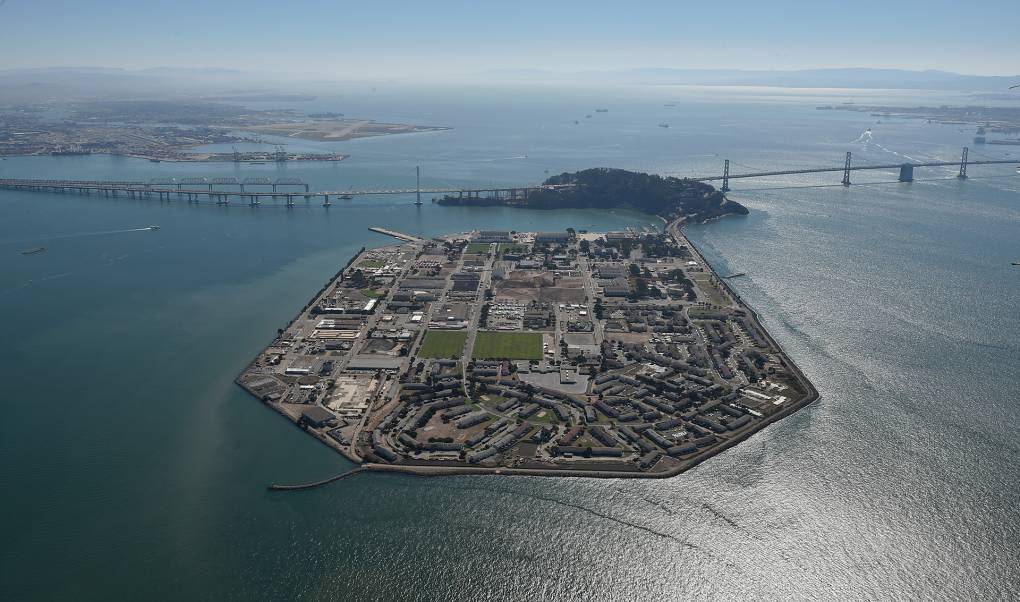
"caption": "Treasure Island and the Bay Bridge are seen in San Francisco, on Oct. 9, 2015.",
"credit": "Josh Edelson/AFP via Getty Images",
"altTag": "Treasure Island",
"description": null,
"imgSizes": {
"thumbnail": {
"file": "https://cdn.kqed.org/wp-content/uploads/sites/35/2019/12/Treasure-Island-San-Francisco-160x94.jpg",
"width": 160,
"height": 94,
"mimeType": "image/jpeg"
},
"medium": {
"file": "https://cdn.kqed.org/wp-content/uploads/sites/35/2019/12/Treasure-Island-San-Francisco-800x472.jpg",
"width": 800,
"height": 472,
"mimeType": "image/jpeg"
},
"medium_large": {
"file": "https://cdn.kqed.org/wp-content/uploads/sites/35/2019/12/Treasure-Island-San-Francisco-768x453.jpg",
"width": 768,
"height": 453,
"mimeType": "image/jpeg"
},
"large": {
"file": "https://cdn.kqed.org/wp-content/uploads/sites/35/2019/12/Treasure-Island-San-Francisco-1020x602.jpg",
"width": 1020,
"height": 602,
"mimeType": "image/jpeg"
},
"post-thumbnail": {
"file": "https://cdn.kqed.org/wp-content/uploads/sites/35/2019/12/Treasure-Island-San-Francisco-672x372.jpg",
"width": 672,
"height": 372,
"mimeType": "image/jpeg"
},
"twentyfourteen-full-width": {
"file": "https://cdn.kqed.org/wp-content/uploads/sites/35/2019/12/Treasure-Island-San-Francisco-1020x576.jpg",
"width": 1020,
"height": 576,
"mimeType": "image/jpeg"
},
"kqedFullSize": {
"file": "https://cdn.kqed.org/wp-content/uploads/sites/35/2019/12/Treasure-Island-San-Francisco.jpg",
"width": 1020,
"height": 602
}
},
"isLoading": false,
"fetchFailed": false
},
"news_11790704": {
"type": "attachments",
"id": "news_11790704",
"meta": {
"index": "attachments_1716263798",
"site": "news",
"id": "11790704",
"found": true
},
"parent": 11790693,
"imgSizes": {
"apple_news_ca_landscape_5_5": {
"file": "https://ww2.kqed.org/app/uploads/sites/10/2019/12/RS40411_SFPL-TI-Construction-partially-built-island-AAD-3782_600dpi-qut-1044x783.jpg",
"width": 1044,
"mimeType": "image/jpeg",
"height": 783
},
"apple_news_ca_square_4_0": {
"file": "https://ww2.kqed.org/app/uploads/sites/10/2019/12/RS40411_SFPL-TI-Construction-partially-built-island-AAD-3782_600dpi-qut-470x470.jpg",
"width": 470,
"mimeType": "image/jpeg",
"height": 470
},
"twentyfourteen-full-width": {
"file": "https://ww2.kqed.org/app/uploads/sites/10/2019/12/RS40411_SFPL-TI-Construction-partially-built-island-AAD-3782_600dpi-qut-1038x576.jpg",
"width": 1038,
"mimeType": "image/jpeg",
"height": 576
},
"thumbnail": {
"file": "https://ww2.kqed.org/app/uploads/sites/10/2019/12/RS40411_SFPL-TI-Construction-partially-built-island-AAD-3782_600dpi-qut-160x129.jpg",
"width": 160,
"mimeType": "image/jpeg",
"height": 129
},
"post-thumbnail": {
"file": "https://ww2.kqed.org/app/uploads/sites/10/2019/12/RS40411_SFPL-TI-Construction-partially-built-island-AAD-3782_600dpi-qut-672x372.jpg",
"width": 672,
"mimeType": "image/jpeg",
"height": 372
},
"kqedFullSize": {
"file": "https://ww2.kqed.org/app/uploads/sites/10/2019/12/RS40411_SFPL-TI-Construction-partially-built-island-AAD-3782_600dpi-qut.jpg",
"width": 1920,
"height": 1543
},
"apple_news_ca_landscape_4_7": {
"file": "https://ww2.kqed.org/app/uploads/sites/10/2019/12/RS40411_SFPL-TI-Construction-partially-built-island-AAD-3782_600dpi-qut-632x474.jpg",
"width": 632,
"mimeType": "image/jpeg",
"height": 474
},
"large": {
"file": "https://ww2.kqed.org/app/uploads/sites/10/2019/12/RS40411_SFPL-TI-Construction-partially-built-island-AAD-3782_600dpi-qut-1020x820.jpg",
"width": 1020,
"mimeType": "image/jpeg",
"height": 820
},
"complete_open_graph": {
"file": "https://ww2.kqed.org/app/uploads/sites/10/2019/12/RS40411_SFPL-TI-Construction-partially-built-island-AAD-3782_600dpi-qut-1200x964.jpg",
"width": 1200,
"mimeType": "image/jpeg",
"height": 964
},
"apple_news_ca_landscape_4_0": {
"file": "https://ww2.kqed.org/app/uploads/sites/10/2019/12/RS40411_SFPL-TI-Construction-partially-built-island-AAD-3782_600dpi-qut-536x402.jpg",
"width": 536,
"mimeType": "image/jpeg",
"height": 402
},
"apple_news_ca_portrait_12_9": {
"file": "https://ww2.kqed.org/app/uploads/sites/10/2019/12/RS40411_SFPL-TI-Construction-partially-built-island-AAD-3782_600dpi-qut-1122x1496.jpg",
"width": 1122,
"mimeType": "image/jpeg",
"height": 1496
},
"medium": {
"file": "https://ww2.kqed.org/app/uploads/sites/10/2019/12/RS40411_SFPL-TI-Construction-partially-built-island-AAD-3782_600dpi-qut-800x643.jpg",
"width": 800,
"mimeType": "image/jpeg",
"height": 643
},
"apple_news_ca_portrait_4_0": {
"file": "https://ww2.kqed.org/app/uploads/sites/10/2019/12/RS40411_SFPL-TI-Construction-partially-built-island-AAD-3782_600dpi-qut-354x472.jpg",
"width": 354,
"mimeType": "image/jpeg",
"height": 472
},
"apple_news_ca_portrait_9_7": {
"file": "https://ww2.kqed.org/app/uploads/sites/10/2019/12/RS40411_SFPL-TI-Construction-partially-built-island-AAD-3782_600dpi-qut-840x1120.jpg",
"width": 840,
"mimeType": "image/jpeg",
"height": 1120
},
"apple_news_ca_landscape_12_9": {
"file": "https://ww2.kqed.org/app/uploads/sites/10/2019/12/RS40411_SFPL-TI-Construction-partially-built-island-AAD-3782_600dpi-qut-1832x1374.jpg",
"width": 1832,
"mimeType": "image/jpeg",
"height": 1374
},
"apple_news_ca_square_9_7": {
"file": "https://ww2.kqed.org/app/uploads/sites/10/2019/12/RS40411_SFPL-TI-Construction-partially-built-island-AAD-3782_600dpi-qut-1104x1104.jpg",
"width": 1104,
"mimeType": "image/jpeg",
"height": 1104
},
"apple_news_ca_portrait_4_7": {
"file": "https://ww2.kqed.org/app/uploads/sites/10/2019/12/RS40411_SFPL-TI-Construction-partially-built-island-AAD-3782_600dpi-qut-414x552.jpg",
"width": 414,
"mimeType": "image/jpeg",
"height": 552
},
"apple_news_ca_square_12_9": {
"file": "https://ww2.kqed.org/app/uploads/sites/10/2019/12/RS40411_SFPL-TI-Construction-partially-built-island-AAD-3782_600dpi-qut-1472x1472.jpg",
"width": 1472,
"mimeType": "image/jpeg",
"height": 1472
},
"apple_news_ca_portrait_5_5": {
"file": "https://ww2.kqed.org/app/uploads/sites/10/2019/12/RS40411_SFPL-TI-Construction-partially-built-island-AAD-3782_600dpi-qut-687x916.jpg",
"width": 687,
"mimeType": "image/jpeg",
"height": 916
},
"full-width": {
"file": "https://ww2.kqed.org/app/uploads/sites/10/2019/12/RS40411_SFPL-TI-Construction-partially-built-island-AAD-3782_600dpi-qut-1920x1543.jpg",
"width": 1920,
"mimeType": "image/jpeg",
"height": 1543
},
"apple_news_ca_square_4_7": {
"file": "https://ww2.kqed.org/app/uploads/sites/10/2019/12/RS40411_SFPL-TI-Construction-partially-built-island-AAD-3782_600dpi-qut-550x550.jpg",
"width": 550,
"mimeType": "image/jpeg",
"height": 550
},
"apple_news_ca_landscape_9_7": {
"file": "https://ww2.kqed.org/app/uploads/sites/10/2019/12/RS40411_SFPL-TI-Construction-partially-built-island-AAD-3782_600dpi-qut-1376x1032.jpg",
"width": 1376,
"mimeType": "image/jpeg",
"height": 1032
},
"apple_news_ca_square_5_5": {
"file": "https://ww2.kqed.org/app/uploads/sites/10/2019/12/RS40411_SFPL-TI-Construction-partially-built-island-AAD-3782_600dpi-qut-912x912.jpg",
"width": 912,
"mimeType": "image/jpeg",
"height": 912
}
},
"publishDate": 1576090542,
"modified": 1576107883,
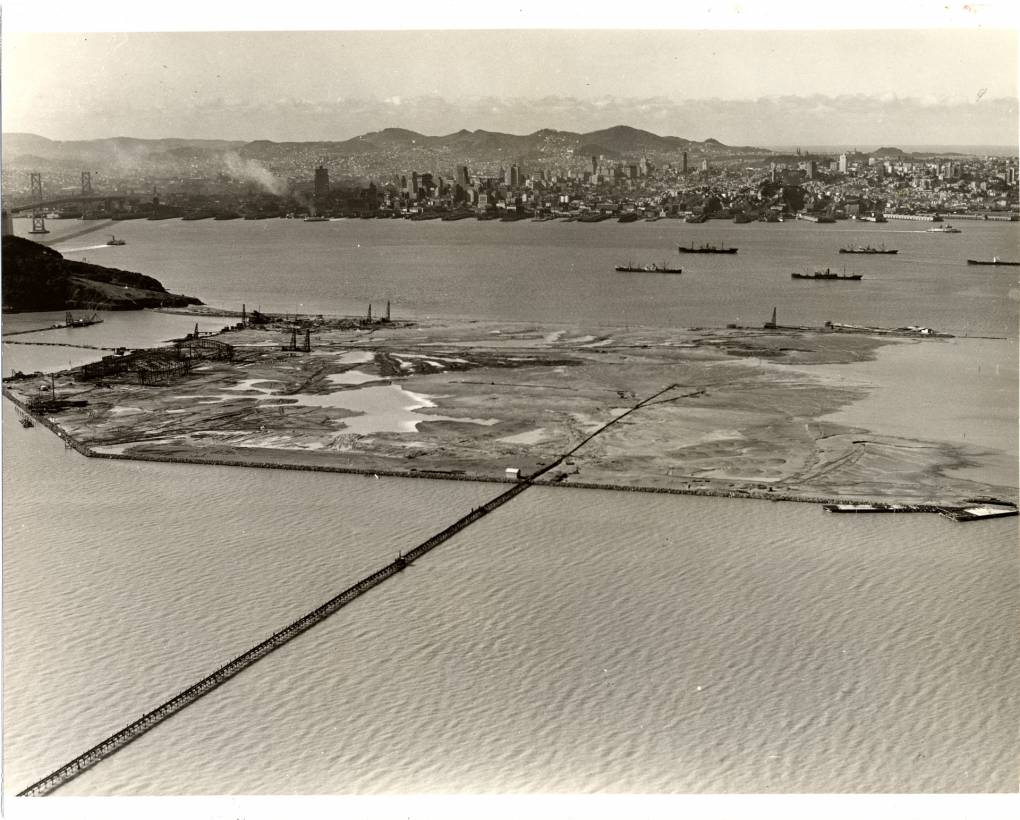
"caption": "Treasure Island is man-made, engineered with bay mud on a shoal adjacent to naturally occurring Yerba Buena.",
"description": null,
"title": "RS40411_SFPL TI Construction partially built island AAD-3782_600dpi-qut",
"credit": "San Francisco History Center/San Francisco Public Library",
"status": "inherit",
"isLoading": false,
"fetchFailed": false
},
"news_11780281": {
"type": "attachments",
"id": "news_11780281",
"meta": {
"index": "attachments_1716263798",
"site": "news",
"id": "11780281",
"found": true
},
"parent": 11780279,
"imgSizes": {
"apple_news_ca_landscape_5_5": {
"file": "https://ww2.kqed.org/app/uploads/sites/10/2019/10/IMG_2671-1-1044x783.jpg",
"width": 1044,
"mimeType": "image/jpeg",
"height": 783
},
"apple_news_ca_square_4_0": {
"file": "https://ww2.kqed.org/app/uploads/sites/10/2019/10/IMG_2671-1-470x470.jpg",
"width": 470,
"mimeType": "image/jpeg",
"height": 470
},
"twentyfourteen-full-width": {
"file": "https://ww2.kqed.org/app/uploads/sites/10/2019/10/IMG_2671-1-1038x576.jpg",
"width": 1038,
"mimeType": "image/jpeg",
"height": 576
},
"thumbnail": {
"file": "https://ww2.kqed.org/app/uploads/sites/10/2019/10/IMG_2671-1-160x120.jpg",
"width": 160,
"mimeType": "image/jpeg",
"height": 120
},
"post-thumbnail": {
"file": "https://ww2.kqed.org/app/uploads/sites/10/2019/10/IMG_2671-1-672x372.jpg",
"width": 672,
"mimeType": "image/jpeg",
"height": 372
},
"kqedFullSize": {
"file": "https://ww2.kqed.org/app/uploads/sites/10/2019/10/IMG_2671-1.jpg",
"width": 3264,
"height": 2448
},
"apple_news_ca_landscape_4_7": {
"file": "https://ww2.kqed.org/app/uploads/sites/10/2019/10/IMG_2671-1-632x474.jpg",
"width": 632,
"mimeType": "image/jpeg",
"height": 474
},
"large": {
"file": "https://ww2.kqed.org/app/uploads/sites/10/2019/10/IMG_2671-1-1020x765.jpg",
"width": 1020,
"mimeType": "image/jpeg",
"height": 765
},
"complete_open_graph": {
"file": "https://ww2.kqed.org/app/uploads/sites/10/2019/10/IMG_2671-1-1200x900.jpg",
"width": 1200,
"mimeType": "image/jpeg",
"height": 900
},
"apple_news_ca_landscape_4_0": {
"file": "https://ww2.kqed.org/app/uploads/sites/10/2019/10/IMG_2671-1-536x402.jpg",
"width": 536,
"mimeType": "image/jpeg",
"height": 402
},
"apple_news_ca_portrait_12_9": {
"file": "https://ww2.kqed.org/app/uploads/sites/10/2019/10/IMG_2671-1-1122x1496.jpg",
"width": 1122,
"mimeType": "image/jpeg",
"height": 1496
},
"medium": {
"file": "https://ww2.kqed.org/app/uploads/sites/10/2019/10/IMG_2671-1-800x600.jpg",
"width": 800,
"mimeType": "image/jpeg",
"height": 600
},
"apple_news_ca_portrait_4_0": {
"file": "https://ww2.kqed.org/app/uploads/sites/10/2019/10/IMG_2671-1-354x472.jpg",
"width": 354,
"mimeType": "image/jpeg",
"height": 472
},
"apple_news_ca_portrait_9_7": {
"file": "https://ww2.kqed.org/app/uploads/sites/10/2019/10/IMG_2671-1-840x1120.jpg",
"width": 840,
"mimeType": "image/jpeg",
"height": 1120
},
"apple_news_ca_landscape_12_9": {
"file": "https://ww2.kqed.org/app/uploads/sites/10/2019/10/IMG_2671-1-1832x1374.jpg",
"width": 1832,
"mimeType": "image/jpeg",
"height": 1374
},
"apple_news_ca_square_9_7": {
"file": "https://ww2.kqed.org/app/uploads/sites/10/2019/10/IMG_2671-1-1104x1104.jpg",
"width": 1104,
"mimeType": "image/jpeg",
"height": 1104
},
"apple_news_ca_portrait_4_7": {
"file": "https://ww2.kqed.org/app/uploads/sites/10/2019/10/IMG_2671-1-414x552.jpg",
"width": 414,
"mimeType": "image/jpeg",
"height": 552
},
"apple_news_ca_square_12_9": {
"file": "https://ww2.kqed.org/app/uploads/sites/10/2019/10/IMG_2671-1-1472x1472.jpg",
"width": 1472,
"mimeType": "image/jpeg",
"height": 1472
},
"apple_news_ca_portrait_5_5": {
"file": "https://ww2.kqed.org/app/uploads/sites/10/2019/10/IMG_2671-1-687x916.jpg",
"width": 687,
"mimeType": "image/jpeg",
"height": 916
},
"full-width": {
"file": "https://ww2.kqed.org/app/uploads/sites/10/2019/10/IMG_2671-1-1920x1440.jpg",
"width": 1920,
"mimeType": "image/jpeg",
"height": 1440
},
"apple_news_ca_square_4_7": {
"file": "https://ww2.kqed.org/app/uploads/sites/10/2019/10/IMG_2671-1-550x550.jpg",
"width": 550,
"mimeType": "image/jpeg",
"height": 550
},
"apple_news_ca_landscape_9_7": {
"file": "https://ww2.kqed.org/app/uploads/sites/10/2019/10/IMG_2671-1-1376x1032.jpg",
"width": 1376,
"mimeType": "image/jpeg",
"height": 1032
},
"apple_news_ca_square_5_5": {
"file": "https://ww2.kqed.org/app/uploads/sites/10/2019/10/IMG_2671-1-912x912.jpg",
"width": 912,
"mimeType": "image/jpeg",
"height": 912
}
},
"publishDate": 1571181921,
"modified": 1571182025,
"caption": "A tule boat preparing for a sail around Alcatraz Island on Oct. 14, 2019 to commemorate the 50th anniversary of the Native American occupation at Alcatraz.",
"description": null,
"title": "IMG_2671 (1)",
"credit": "Alice Woelfle/KQED",
"status": "inherit",
"isLoading": false,
"fetchFailed": false
},
"news_11787810": {
"type": "attachments",
"id": "news_11787810",
"meta": {
"index": "attachments_1716263798",
"site": "news",
"id": "11787810",
"found": true
},
"parent": 11787679,
"imgSizes": {
"apple_news_ca_landscape_5_5": {
"file": "https://ww2.kqed.org/app/uploads/sites/10/2019/11/8778871204_73dab056f3_k-1044x783.jpg",
"width": 1044,
"mimeType": "image/jpeg",
"height": 783
},
"apple_news_ca_square_4_0": {
"file": "https://ww2.kqed.org/app/uploads/sites/10/2019/11/8778871204_73dab056f3_k-470x470.jpg",
"width": 470,
"mimeType": "image/jpeg",
"height": 470
},
"twentyfourteen-full-width": {
"file": "https://ww2.kqed.org/app/uploads/sites/10/2019/11/8778871204_73dab056f3_k-1038x576.jpg",
"width": 1038,
"mimeType": "image/jpeg",
"height": 576
},
"thumbnail": {
"file": "https://ww2.kqed.org/app/uploads/sites/10/2019/11/8778871204_73dab056f3_k-160x116.jpg",
"width": 160,
"mimeType": "image/jpeg",
"height": 116
},
"post-thumbnail": {
"file": "https://ww2.kqed.org/app/uploads/sites/10/2019/11/8778871204_73dab056f3_k-672x372.jpg",
"width": 672,
"mimeType": "image/jpeg",
"height": 372
},
"kqedFullSize": {
"file": "https://ww2.kqed.org/app/uploads/sites/10/2019/11/8778871204_73dab056f3_k-e1574365686216.jpg",
"width": 1920,
"height": 1388
},
"apple_news_ca_landscape_4_7": {
"file": "https://ww2.kqed.org/app/uploads/sites/10/2019/11/8778871204_73dab056f3_k-632x474.jpg",
"width": 632,
"mimeType": "image/jpeg",
"height": 474
},
"large": {
"file": "https://ww2.kqed.org/app/uploads/sites/10/2019/11/8778871204_73dab056f3_k-1020x738.jpg",
"width": 1020,
"mimeType": "image/jpeg",
"height": 738
},
"complete_open_graph": {
"file": "https://ww2.kqed.org/app/uploads/sites/10/2019/11/8778871204_73dab056f3_k-1200x868.jpg",
"width": 1200,
"mimeType": "image/jpeg",
"height": 868
},
"apple_news_ca_landscape_4_0": {
"file": "https://ww2.kqed.org/app/uploads/sites/10/2019/11/8778871204_73dab056f3_k-536x402.jpg",
"width": 536,
"mimeType": "image/jpeg",
"height": 402
},
"apple_news_ca_portrait_12_9": {
"file": "https://ww2.kqed.org/app/uploads/sites/10/2019/11/8778871204_73dab056f3_k-1122x1481.jpg",
"width": 1122,
"mimeType": "image/jpeg",
"height": 1481
},
"medium": {
"file": "https://ww2.kqed.org/app/uploads/sites/10/2019/11/8778871204_73dab056f3_k-800x579.jpg",
"width": 800,
"mimeType": "image/jpeg",
"height": 579
},
"apple_news_ca_portrait_4_0": {
"file": "https://ww2.kqed.org/app/uploads/sites/10/2019/11/8778871204_73dab056f3_k-354x472.jpg",
"width": 354,
"mimeType": "image/jpeg",
"height": 472
},
"apple_news_ca_portrait_9_7": {
"file": "https://ww2.kqed.org/app/uploads/sites/10/2019/11/8778871204_73dab056f3_k-840x1120.jpg",
"width": 840,
"mimeType": "image/jpeg",
"height": 1120
},
"apple_news_ca_landscape_12_9": {
"file": "https://ww2.kqed.org/app/uploads/sites/10/2019/11/8778871204_73dab056f3_k-1832x1374.jpg",
"width": 1832,
"mimeType": "image/jpeg",
"height": 1374
},
"apple_news_ca_square_9_7": {
"file": "https://ww2.kqed.org/app/uploads/sites/10/2019/11/8778871204_73dab056f3_k-1104x1104.jpg",
"width": 1104,
"mimeType": "image/jpeg",
"height": 1104
},
"apple_news_ca_portrait_4_7": {
"file": "https://ww2.kqed.org/app/uploads/sites/10/2019/11/8778871204_73dab056f3_k-414x552.jpg",
"width": 414,
"mimeType": "image/jpeg",
"height": 552
},
"apple_news_ca_square_12_9": {
"file": "https://ww2.kqed.org/app/uploads/sites/10/2019/11/8778871204_73dab056f3_k-1472x1472.jpg",
"width": 1472,
"mimeType": "image/jpeg",
"height": 1472
},
"apple_news_ca_portrait_5_5": {
"file": "https://ww2.kqed.org/app/uploads/sites/10/2019/11/8778871204_73dab056f3_k-687x916.jpg",
"width": 687,
"mimeType": "image/jpeg",
"height": 916
},
"full-width": {
"file": "https://ww2.kqed.org/app/uploads/sites/10/2019/11/8778871204_73dab056f3_k-1920x1388.jpg",
"width": 1920,
"mimeType": "image/jpeg",
"height": 1388
},
"apple_news_ca_square_4_7": {
"file": "https://ww2.kqed.org/app/uploads/sites/10/2019/11/8778871204_73dab056f3_k-550x550.jpg",
"width": 550,
"mimeType": "image/jpeg",
"height": 550
},
"apple_news_ca_landscape_9_7": {
"file": "https://ww2.kqed.org/app/uploads/sites/10/2019/11/8778871204_73dab056f3_k-1376x1032.jpg",
"width": 1376,
"mimeType": "image/jpeg",
"height": 1032
},
"apple_news_ca_square_5_5": {
"file": "https://ww2.kqed.org/app/uploads/sites/10/2019/11/8778871204_73dab056f3_k-912x912.jpg",
"width": 912,
"mimeType": "image/jpeg",
"height": 912
}
},
"publishDate": 1574304429,
"modified": 1574373948,
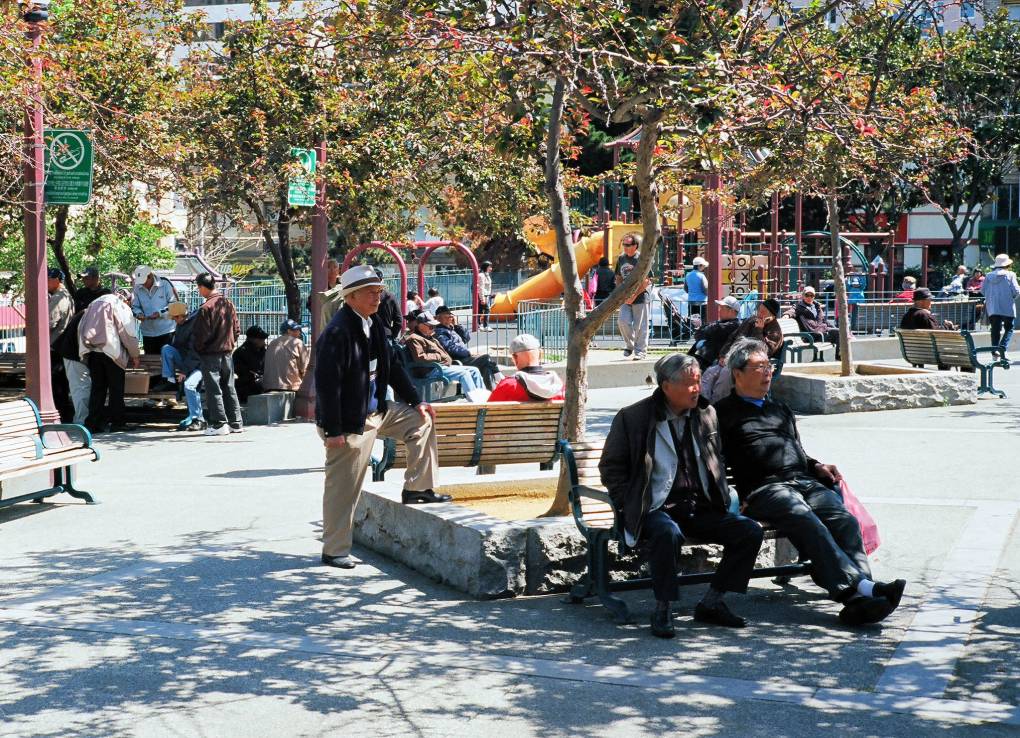
"caption": "Portsmouth Square is a community hub for many of the neighborhood's Chinese residents. ",
"description": null,
"title": "8778871204_73dab056f3_k",
"credit": "Michael Fraley/Flickr",
"status": "inherit",
"isLoading": false,
"fetchFailed": false
},
"news_11787674": {
"type": "attachments",
"id": "news_11787674",
"meta": {
"index": "attachments_1716263798",
"site": "news",
"id": "11787674",
"found": true
},
"parent": 11787663,
"imgSizes": {
"apple_news_ca_landscape_5_5": {
"file": "https://ww2.kqed.org/app/uploads/sites/10/2019/11/4157878213_7847cef642_k-1044x783.jpg",
"width": 1044,
"mimeType": "image/jpeg",
"height": 783
},
"apple_news_ca_square_4_0": {
"file": "https://ww2.kqed.org/app/uploads/sites/10/2019/11/4157878213_7847cef642_k-470x470.jpg",
"width": 470,
"mimeType": "image/jpeg",
"height": 470
},
"twentyfourteen-full-width": {
"file": "https://ww2.kqed.org/app/uploads/sites/10/2019/11/4157878213_7847cef642_k-1038x576.jpg",
"width": 1038,
"mimeType": "image/jpeg",
"height": 576
},
"thumbnail": {
"file": "https://ww2.kqed.org/app/uploads/sites/10/2019/11/4157878213_7847cef642_k-160x120.jpg",
"width": 160,
"mimeType": "image/jpeg",
"height": 120
},
"post-thumbnail": {
"file": "https://ww2.kqed.org/app/uploads/sites/10/2019/11/4157878213_7847cef642_k-672x372.jpg",
"width": 672,
"mimeType": "image/jpeg",
"height": 372
},
"kqedFullSize": {
"file": "https://ww2.kqed.org/app/uploads/sites/10/2019/11/4157878213_7847cef642_k.jpg",
"width": 2048,
"height": 1536
},
"apple_news_ca_landscape_4_7": {
"file": "https://ww2.kqed.org/app/uploads/sites/10/2019/11/4157878213_7847cef642_k-632x474.jpg",
"width": 632,
"mimeType": "image/jpeg",
"height": 474
},
"large": {
"file": "https://ww2.kqed.org/app/uploads/sites/10/2019/11/4157878213_7847cef642_k-1020x765.jpg",
"width": 1020,
"mimeType": "image/jpeg",
"height": 765
},
"complete_open_graph": {
"file": "https://ww2.kqed.org/app/uploads/sites/10/2019/11/4157878213_7847cef642_k-1200x900.jpg",
"width": 1200,
"mimeType": "image/jpeg",
"height": 900
},
"apple_news_ca_landscape_4_0": {
"file": "https://ww2.kqed.org/app/uploads/sites/10/2019/11/4157878213_7847cef642_k-536x402.jpg",
"width": 536,
"mimeType": "image/jpeg",
"height": 402
},
"apple_news_ca_portrait_12_9": {
"file": "https://ww2.kqed.org/app/uploads/sites/10/2019/11/4157878213_7847cef642_k-1122x1496.jpg",
"width": 1122,
"mimeType": "image/jpeg",
"height": 1496
},
"medium": {
"file": "https://ww2.kqed.org/app/uploads/sites/10/2019/11/4157878213_7847cef642_k-800x600.jpg",
"width": 800,
"mimeType": "image/jpeg",
"height": 600
},
"apple_news_ca_portrait_4_0": {
"file": "https://ww2.kqed.org/app/uploads/sites/10/2019/11/4157878213_7847cef642_k-354x472.jpg",
"width": 354,
"mimeType": "image/jpeg",
"height": 472
},
"apple_news_ca_portrait_9_7": {
"file": "https://ww2.kqed.org/app/uploads/sites/10/2019/11/4157878213_7847cef642_k-840x1120.jpg",
"width": 840,
"mimeType": "image/jpeg",
"height": 1120
},
"apple_news_ca_landscape_12_9": {
"file": "https://ww2.kqed.org/app/uploads/sites/10/2019/11/4157878213_7847cef642_k-1832x1374.jpg",
"width": 1832,
"mimeType": "image/jpeg",
"height": 1374
},
"apple_news_ca_square_9_7": {
"file": "https://ww2.kqed.org/app/uploads/sites/10/2019/11/4157878213_7847cef642_k-1104x1104.jpg",
"width": 1104,
"mimeType": "image/jpeg",
"height": 1104
},
"apple_news_ca_portrait_4_7": {
"file": "https://ww2.kqed.org/app/uploads/sites/10/2019/11/4157878213_7847cef642_k-414x552.jpg",
"width": 414,
"mimeType": "image/jpeg",
"height": 552
},
"apple_news_ca_square_12_9": {
"file": "https://ww2.kqed.org/app/uploads/sites/10/2019/11/4157878213_7847cef642_k-1472x1472.jpg",
"width": 1472,
"mimeType": "image/jpeg",
"height": 1472
},
"apple_news_ca_portrait_5_5": {
"file": "https://ww2.kqed.org/app/uploads/sites/10/2019/11/4157878213_7847cef642_k-687x916.jpg",
"width": 687,
"mimeType": "image/jpeg",
"height": 916
},
"full-width": {
"file": "https://ww2.kqed.org/app/uploads/sites/10/2019/11/4157878213_7847cef642_k-1920x1440.jpg",
"width": 1920,
"mimeType": "image/jpeg",
"height": 1440
},
"apple_news_ca_square_4_7": {
"file": "https://ww2.kqed.org/app/uploads/sites/10/2019/11/4157878213_7847cef642_k-550x550.jpg",
"width": 550,
"mimeType": "image/jpeg",
"height": 550
},
"apple_news_ca_landscape_9_7": {
"file": "https://ww2.kqed.org/app/uploads/sites/10/2019/11/4157878213_7847cef642_k-1376x1032.jpg",
"width": 1376,
"mimeType": "image/jpeg",
"height": 1032
},
"apple_news_ca_square_5_5": {
"file": "https://ww2.kqed.org/app/uploads/sites/10/2019/11/4157878213_7847cef642_k-912x912.jpg",
"width": 912,
"mimeType": "image/jpeg",
"height": 912
}
},
"publishDate": 1574287896,
"modified": 1574287963,
"caption": "The flags in front of San Francisco City Hall.",
"description": "The flags in front of San Francisco City Hall.",
"title": "4157878213_7847cef642_k",
"credit": "David Sawyer/\u003ca href=\"https://www.flickr.com/photos/18702768@N04/4157878213/\">Flickr\u003c/a>",
"status": "inherit",
"isLoading": false,
"fetchFailed": false
},
"news_11785272": {
"type": "attachments",
"id": "news_11785272",
"meta": {
"index": "attachments_1716263798",
"site": "news",
"id": "11785272",
"found": true
},
"parent": 11785257,
"imgSizes": {
"apple_news_ca_landscape_5_5": {
"file": "https://ww2.kqed.org/app/uploads/sites/10/2019/11/iStock-1136810581-1044x783.jpg",
"width": 1044,
"mimeType": "image/jpeg",
"height": 783
},
"apple_news_ca_square_4_0": {
"file": "https://ww2.kqed.org/app/uploads/sites/10/2019/11/iStock-1136810581-470x470.jpg",
"width": 470,
"mimeType": "image/jpeg",
"height": 470
},
"twentyfourteen-full-width": {
"file": "https://ww2.kqed.org/app/uploads/sites/10/2019/11/iStock-1136810581-1038x576.jpg",
"width": 1038,
"mimeType": "image/jpeg",
"height": 576
},
"thumbnail": {
"file": "https://ww2.kqed.org/app/uploads/sites/10/2019/11/iStock-1136810581-160x107.jpg",
"width": 160,
"mimeType": "image/jpeg",
"height": 107
},
"post-thumbnail": {
"file": "https://ww2.kqed.org/app/uploads/sites/10/2019/11/iStock-1136810581-672x372.jpg",
"width": 672,
"mimeType": "image/jpeg",
"height": 372
},
"kqedFullSize": {
"file": "https://ww2.kqed.org/app/uploads/sites/10/2019/11/iStock-1136810581-e1573152355420.jpg",
"width": 1920,
"height": 1280
},
"apple_news_ca_landscape_4_7": {
"file": "https://ww2.kqed.org/app/uploads/sites/10/2019/11/iStock-1136810581-632x474.jpg",
"width": 632,
"mimeType": "image/jpeg",
"height": 474
},
"large": {
"file": "https://ww2.kqed.org/app/uploads/sites/10/2019/11/iStock-1136810581-1020x680.jpg",
"width": 1020,
"mimeType": "image/jpeg",
"height": 680
},
"complete_open_graph": {
"file": "https://ww2.kqed.org/app/uploads/sites/10/2019/11/iStock-1136810581-1200x800.jpg",
"width": 1200,
"mimeType": "image/jpeg",
"height": 800
},
"apple_news_ca_landscape_4_0": {
"file": "https://ww2.kqed.org/app/uploads/sites/10/2019/11/iStock-1136810581-536x402.jpg",
"width": 536,
"mimeType": "image/jpeg",
"height": 402
},
"apple_news_ca_portrait_12_9": {
"file": "https://ww2.kqed.org/app/uploads/sites/10/2019/11/iStock-1136810581-1122x1496.jpg",
"width": 1122,
"mimeType": "image/jpeg",
"height": 1496
},
"medium": {
"file": "https://ww2.kqed.org/app/uploads/sites/10/2019/11/iStock-1136810581-800x533.jpg",
"width": 800,
"mimeType": "image/jpeg",
"height": 533
},
"apple_news_ca_portrait_4_0": {
"file": "https://ww2.kqed.org/app/uploads/sites/10/2019/11/iStock-1136810581-354x472.jpg",
"width": 354,
"mimeType": "image/jpeg",
"height": 472
},
"apple_news_ca_portrait_9_7": {
"file": "https://ww2.kqed.org/app/uploads/sites/10/2019/11/iStock-1136810581-840x1120.jpg",
"width": 840,
"mimeType": "image/jpeg",
"height": 1120
},
"apple_news_ca_landscape_12_9": {
"file": "https://ww2.kqed.org/app/uploads/sites/10/2019/11/iStock-1136810581-1832x1374.jpg",
"width": 1832,
"mimeType": "image/jpeg",
"height": 1374
},
"apple_news_ca_square_9_7": {
"file": "https://ww2.kqed.org/app/uploads/sites/10/2019/11/iStock-1136810581-1104x1104.jpg",
"width": 1104,
"mimeType": "image/jpeg",
"height": 1104
},
"apple_news_ca_portrait_4_7": {
"file": "https://ww2.kqed.org/app/uploads/sites/10/2019/11/iStock-1136810581-414x552.jpg",
"width": 414,
"mimeType": "image/jpeg",
"height": 552
},
"apple_news_ca_square_12_9": {
"file": "https://ww2.kqed.org/app/uploads/sites/10/2019/11/iStock-1136810581-1472x1472.jpg",
"width": 1472,
"mimeType": "image/jpeg",
"height": 1472
},
"apple_news_ca_portrait_5_5": {
"file": "https://ww2.kqed.org/app/uploads/sites/10/2019/11/iStock-1136810581-687x916.jpg",
"width": 687,
"mimeType": "image/jpeg",
"height": 916
},
"full-width": {
"file": "https://ww2.kqed.org/app/uploads/sites/10/2019/11/iStock-1136810581-1920x1280.jpg",
"width": 1920,
"mimeType": "image/jpeg",
"height": 1280
},
"apple_news_ca_square_4_7": {
"file": "https://ww2.kqed.org/app/uploads/sites/10/2019/11/iStock-1136810581-550x550.jpg",
"width": 550,
"mimeType": "image/jpeg",
"height": 550
},
"apple_news_ca_landscape_9_7": {
"file": "https://ww2.kqed.org/app/uploads/sites/10/2019/11/iStock-1136810581-1376x1032.jpg",
"width": 1376,
"mimeType": "image/jpeg",
"height": 1032
},
"apple_news_ca_square_5_5": {
"file": "https://ww2.kqed.org/app/uploads/sites/10/2019/11/iStock-1136810581-912x912.jpg",
"width": 912,
"mimeType": "image/jpeg",
"height": 912
}
},
"publishDate": 1573068365,
"modified": 1573068496,
"caption": "The Bay Curious podcast turns three and we are celebrating!",
"description": "The Bay Curious podcast turns three and we are celebrating!",
"title": "Bay Curious Turns Three",
"credit": "RuthBlack/iStock",
"status": "inherit",
"isLoading": false,
"fetchFailed": false
},
"news_11781724": {
"type": "attachments",
"id": "news_11781724",
"meta": {
"index": "attachments_1716263798",
"site": "news",
"id": "11781724",
"found": true
},
"parent": 11780692,
"imgSizes": {
"apple_news_ca_landscape_5_5": {
"file": "https://ww2.kqed.org/app/uploads/sites/10/2019/10/3397909790_03a717753e_k-1044x783.jpg",
"width": 1044,
"mimeType": "image/jpeg",
"height": 783
},
"apple_news_ca_square_4_0": {
"file": "https://ww2.kqed.org/app/uploads/sites/10/2019/10/3397909790_03a717753e_k-470x470.jpg",
"width": 470,
"mimeType": "image/jpeg",
"height": 470
},
"twentyfourteen-full-width": {
"file": "https://ww2.kqed.org/app/uploads/sites/10/2019/10/3397909790_03a717753e_k-1038x576.jpg",
"width": 1038,
"mimeType": "image/jpeg",
"height": 576
},
"thumbnail": {
"file": "https://ww2.kqed.org/app/uploads/sites/10/2019/10/3397909790_03a717753e_k-160x107.jpg",
"width": 160,
"mimeType": "image/jpeg",
"height": 107
},
"post-thumbnail": {
"file": "https://ww2.kqed.org/app/uploads/sites/10/2019/10/3397909790_03a717753e_k-672x372.jpg",
"width": 672,
"mimeType": "image/jpeg",
"height": 372
},
"kqedFullSize": {
"file": "https://ww2.kqed.org/app/uploads/sites/10/2019/10/3397909790_03a717753e_k.jpg",
"width": 2048,
"height": 1371
},
"apple_news_ca_landscape_4_7": {
"file": "https://ww2.kqed.org/app/uploads/sites/10/2019/10/3397909790_03a717753e_k-632x474.jpg",
"width": 632,
"mimeType": "image/jpeg",
"height": 474
},
"large": {
"file": "https://ww2.kqed.org/app/uploads/sites/10/2019/10/3397909790_03a717753e_k-1020x683.jpg",
"width": 1020,
"mimeType": "image/jpeg",
"height": 683
},
"complete_open_graph": {
"file": "https://ww2.kqed.org/app/uploads/sites/10/2019/10/3397909790_03a717753e_k-1200x803.jpg",
"width": 1200,
"mimeType": "image/jpeg",
"height": 803
},
"apple_news_ca_landscape_4_0": {
"file": "https://ww2.kqed.org/app/uploads/sites/10/2019/10/3397909790_03a717753e_k-536x402.jpg",
"width": 536,
"mimeType": "image/jpeg",
"height": 402
},
"apple_news_ca_portrait_12_9": {
"file": "https://ww2.kqed.org/app/uploads/sites/10/2019/10/3397909790_03a717753e_k-1122x1371.jpg",
"width": 1122,
"mimeType": "image/jpeg",
"height": 1371
},
"medium": {
"file": "https://ww2.kqed.org/app/uploads/sites/10/2019/10/3397909790_03a717753e_k-800x536.jpg",
"width": 800,
"mimeType": "image/jpeg",
"height": 536
},
"apple_news_ca_portrait_4_0": {
"file": "https://ww2.kqed.org/app/uploads/sites/10/2019/10/3397909790_03a717753e_k-354x472.jpg",
"width": 354,
"mimeType": "image/jpeg",
"height": 472
},
"apple_news_ca_portrait_9_7": {
"file": "https://ww2.kqed.org/app/uploads/sites/10/2019/10/3397909790_03a717753e_k-840x1120.jpg",
"width": 840,
"mimeType": "image/jpeg",
"height": 1120
},
"apple_news_ca_landscape_12_9": {
"file": "https://ww2.kqed.org/app/uploads/sites/10/2019/10/3397909790_03a717753e_k-1832x1371.jpg",
"width": 1832,
"mimeType": "image/jpeg",
"height": 1371
},
"apple_news_ca_square_9_7": {
"file": "https://ww2.kqed.org/app/uploads/sites/10/2019/10/3397909790_03a717753e_k-1104x1104.jpg",
"width": 1104,
"mimeType": "image/jpeg",
"height": 1104
},
"apple_news_ca_portrait_4_7": {
"file": "https://ww2.kqed.org/app/uploads/sites/10/2019/10/3397909790_03a717753e_k-414x552.jpg",
"width": 414,
"mimeType": "image/jpeg",
"height": 552
},
"apple_news_ca_square_12_9": {
"file": "https://ww2.kqed.org/app/uploads/sites/10/2019/10/3397909790_03a717753e_k-1472x1371.jpg",
"width": 1472,
"mimeType": "image/jpeg",
"height": 1371
},
"apple_news_ca_portrait_5_5": {
"file": "https://ww2.kqed.org/app/uploads/sites/10/2019/10/3397909790_03a717753e_k-687x916.jpg",
"width": 687,
"mimeType": "image/jpeg",
"height": 916
},
"full-width": {
"file": "https://ww2.kqed.org/app/uploads/sites/10/2019/10/3397909790_03a717753e_k-1920x1285.jpg",
"width": 1920,
"mimeType": "image/jpeg",
"height": 1285
},
"apple_news_ca_square_4_7": {
"file": "https://ww2.kqed.org/app/uploads/sites/10/2019/10/3397909790_03a717753e_k-550x550.jpg",
"width": 550,
"mimeType": "image/jpeg",
"height": 550
},
"apple_news_ca_landscape_9_7": {
"file": "https://ww2.kqed.org/app/uploads/sites/10/2019/10/3397909790_03a717753e_k-1376x1032.jpg",
"width": 1376,
"mimeType": "image/jpeg",
"height": 1032
},
"apple_news_ca_square_5_5": {
"file": "https://ww2.kqed.org/app/uploads/sites/10/2019/10/3397909790_03a717753e_k-912x912.jpg",
"width": 912,
"mimeType": "image/jpeg",
"height": 912
}
},
"publishDate": 1571765754,
"modified": 1571765821,
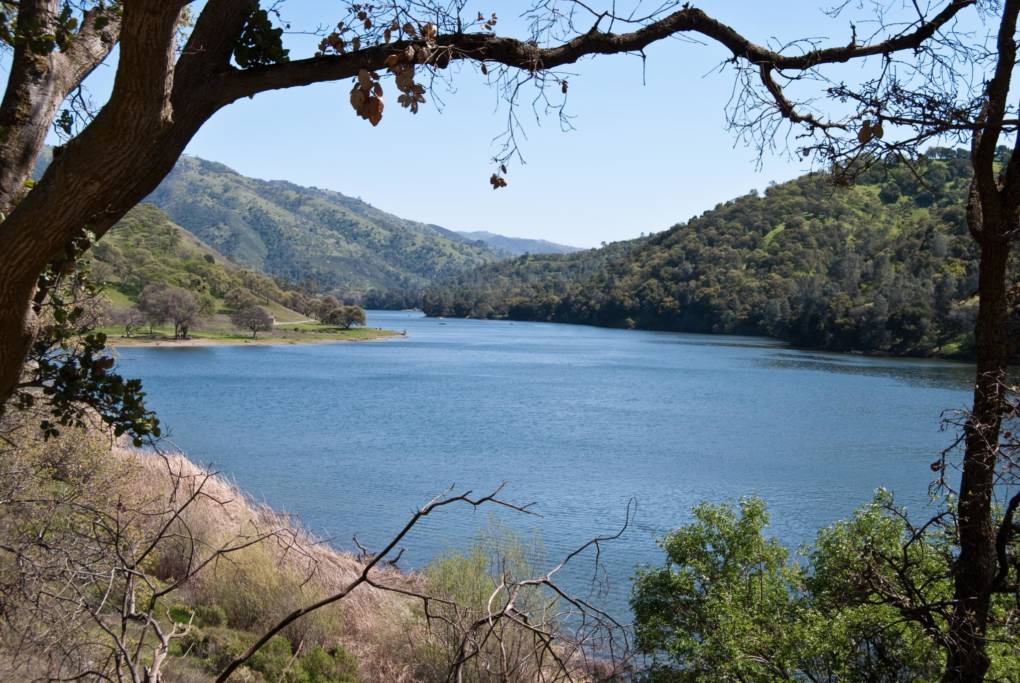
"caption": "Lake Del Valle is the only drinking water reservoir in the Bay Area where you can swim.",
"description": "Lake Del Valle is the only drinking water reservoir in the Bay Area where you can swim.",
"title": "3397909790_03a717753e_k",
"credit": "John K/\u003ca href=\"https://www.flickr.com/photos/johnkay/3397909790/in/photolist-6bgbcy-6FWM1n-4KngZX-pP4os4-24Gzc6L-23pdW7k-2RKySG-9XKfu8-6G1RXA-6bc1gK-8HS2s4-8HS2eD-arkLGD-9nmaYf-aroqVA-hynKX-e83YTm-GK2cED-67j8Fb-221nKcC-arormy-GK2h8r-FtgCGJ-24Ljn3p-243acii-8uw8Yv-25p7bLK-HgogtG-9Kwhx2-23FxoCU-23Fxj6C-iRDB9E-egS9i9-33HfrQ-GGK4zL-egS9wm-ruZSgJ-8KRZSe-24Gz9Vy-F7fM36-j1TurZ-bEFLnj-Gu2wK-8KYDyC-saqYms-FYa8x-aq33FS-9WVeq9-amGfiY-ouRJYr\">Flickr\u003c/a>",
"status": "inherit",
"isLoading": false,
"fetchFailed": false
}
},
"audioPlayerReducer": {
"postId": "stream_live",
"isPaused": true,
"isPlaying": false,
"pfsActive": false,
"pledgeModalIsOpen": true,
"playerDrawerIsOpen": false,
"liveAudioPlayStartedAt": 0,
"liveAudioPlayContext": ""
},
"authorsReducer": {
"byline_news_11787663": {
"type": "authors",
"id": "byline_news_11787663",
"meta": {
"override": true
},
"slug": "byline_news_11787663",
"name": "Annika Cline",
"isLoading": false
},
"lisapickoffwhite-2": {
"type": "authors",
"id": "199",
"meta": {
"index": "authors_1716337520",
"id": "199",
"found": true
},
"name": "Lisa Pickoff-White",
"firstName": "Lisa",
"lastName": "Pickoff-White",
"slug": "lisapickoffwhite-2",
"email": "lpickoffwhite@kqed.org",
"display_author_email": false,
"staff_mastheads": [
"news"
],
"title": "Data Journalist, Senior Producer",
"bio": "Lisa Pickoff-White is KQED's data reporter. Lisa specializes in simplifying complex topics and bringing them to life through compelling visuals, including photography and data visualizations. She previously has worked at the Center for Investigative Reporting and other national outlets. Her work has been honored with awards from the Online News Association, Investigative Reporters and Editors, the Society of Professional Journalists and SXSW Interactive. \u003cstrong> \u003c/strong>",
"avatar": "https://secure.gravatar.com/avatar/5513c5f3967df792aa65bee2501e84d6?s=600&d=blank&r=g",
"twitter": "pickoffwhite",
"facebook": null,
"instagram": null,
"linkedin": null,
"sites": [
{
"site": "",
"roles": [
"editor"
]
},
{
"site": "arts",
"roles": []
},
{
"site": "news",
"roles": [
"administrator"
]
},
{
"site": "about",
"roles": [
"editor"
]
},
{
"site": "stateofhealth",
"roles": [
"administrator"
]
},
{
"site": "science",
"roles": [
"editor"
]
},
{
"site": "quest",
"roles": [
"editor"
]
},
{
"site": "forum",
"roles": [
"editor"
]
}
],
"headData": {
"title": "Lisa Pickoff-White | KQED",
"description": "Data Journalist, Senior Producer",
"ogImgSrc": "https://secure.gravatar.com/avatar/5513c5f3967df792aa65bee2501e84d6?s=600&d=blank&r=g",
"twImgSrc": "https://secure.gravatar.com/avatar/5513c5f3967df792aa65bee2501e84d6?s=600&d=blank&r=g"
},
"isLoading": false,
"link": "/author/lisapickoffwhite-2"
},
"danbrekke": {
"type": "authors",
"id": "222",
"meta": {
"index": "authors_1716337520",
"id": "222",
"found": true
},
"name": "Dan Brekke",
"firstName": "Dan",
"lastName": "Brekke",
"slug": "danbrekke",
"email": "dbrekke@kqed.org",
"display_author_email": true,
"staff_mastheads": [
"news",
"science"
],
"title": "KQED Editor and Reporter",
"bio": "Dan Brekke is a reporter and editor for KQED News, responsible for coverage of topics ranging from California water issues to the Bay Area's transportation challenges. In a newsroom career that began in Chicago in 1972, Dan has worked for \u003cem>The San Francisco Examiner,\u003c/em> Wired and TechTV and has been published in The New York Times, The New York Times Magazine, Business 2.0, Salon and elsewhere.\r\n\r\nSince joining KQED in 2007, Dan has reported, edited and produced both radio and online features and breaking news pieces. He has shared as both editor and reporter in four Society of Professional Journalists Norcal Excellence in Journalism awards and one Edward R. Murrow regional award. He was chosen for a spring 2017 residency at the Mesa Refuge to advance his research on California salmon.\r\n\r\nEmail Dan at: \u003ca href=\"mailto:dbrekke@kqed.org\">dbrekke@kqed.org\u003c/a>\r\n\r\n\u003cstrong>Twitter:\u003c/strong> \u003ca href=\"https://twitter.com/danbrekke\" rel=\"noopener noreferrer\">twitter.com/danbrekke\u003c/a>\r\n\u003cstrong>Facebook:\u003c/strong> \u003ca href=\"https://www.facebook.com/danbrekke\" rel=\"noopener noreferrer\">www.facebook.com/danbrekke\u003c/a>\r\n\u003cstrong>LinkedIn:\u003c/strong> \u003ca href=\"https://www.linkedin.com/in/danbrekke\" rel=\"noopener noreferrer\">www.linkedin.com/in/danbrekke\u003c/a>",
"avatar": "https://secure.gravatar.com/avatar/c8126230345efca3f7aa89b1a402be45?s=600&d=mm&r=g",
"twitter": "danbrekke",
"facebook": null,
"instagram": "https://www.instagram.com/dan.brekke/",
"linkedin": "https://www.linkedin.com/in/danbrekke/",
"sites": [
{
"site": "news",
"roles": [
"administrator",
"create_posts"
]
},
{
"site": "stateofhealth",
"roles": [
"editor"
]
},
{
"site": "science",
"roles": [
"editor"
]
},
{
"site": "quest",
"roles": [
"contributor"
]
},
{
"site": "food",
"roles": [
"contributor"
]
},
{
"site": "forum",
"roles": [
"contributor"
]
},
{
"site": "liveblog",
"roles": [
"editor"
]
}
],
"headData": {
"title": "Dan Brekke | KQED",
"description": "KQED Editor and Reporter",
"ogImgSrc": "https://secure.gravatar.com/avatar/c8126230345efca3f7aa89b1a402be45?s=600&d=mm&r=g",
"twImgSrc": "https://secure.gravatar.com/avatar/c8126230345efca3f7aa89b1a402be45?s=600&d=mm&r=g"
},
"isLoading": false,
"link": "/author/danbrekke"
},
"kdomara": {
"type": "authors",
"id": "1459",
"meta": {
"index": "authors_1716337520",
"id": "1459",
"found": true
},
"name": "Kelly O'Mara",
"firstName": "Kelly",
"lastName": "O'Mara",
"slug": "kdomara",
"email": "komara@kqed.org",
"display_author_email": false,
"staff_mastheads": [
"news"
],
"title": "KQED Contributor",
"bio": "Kelly O'Mara is a writer and reporter in the San Francisco Bay Area. She writes about food, health, sports, travel, business and California news. Her work has appeared on KQED, online for Outside Magazine, epsnW, VICE and in Competitor Magazine, among others. Follow Kelly on Twitter \u003ca href=\"https://twitter.com/kellydomara\">@kellydomara\u003c/a>.",
"avatar": "https://secure.gravatar.com/avatar/768fec7412028b72f13bdd0f5f9d8186?s=600&d=blank&r=g",
"twitter": null,
"facebook": null,
"instagram": null,
"linkedin": null,
"sites": [
{
"site": "arts",
"roles": []
},
{
"site": "news",
"roles": []
},
{
"site": "bayareabites",
"roles": []
},
{
"site": "stateofhealth",
"roles": []
},
{
"site": "science",
"roles": []
},
{
"site": "checkplease",
"roles": [
"editor"
]
},
{
"site": "food",
"roles": []
},
{
"site": "forum",
"roles": [
"editor"
]
},
{
"site": "liveblog",
"roles": [
"editor"
]
}
],
"headData": {
"title": "Kelly O'Mara | KQED",
"description": "KQED Contributor",
"ogImgSrc": "https://secure.gravatar.com/avatar/768fec7412028b72f13bdd0f5f9d8186?s=600&d=blank&r=g",
"twImgSrc": "https://secure.gravatar.com/avatar/768fec7412028b72f13bdd0f5f9d8186?s=600&d=blank&r=g"
},
"isLoading": false,
"link": "/author/kdomara"
},
"jplaczek": {
"type": "authors",
"id": "8606",
"meta": {
"index": "authors_1716337520",
"id": "8606",
"found": true
},
"name": "Jessica Placzek",
"firstName": "Jessica",
"lastName": "Placzek",
"slug": "jplaczek",
"email": "jessicalplaczek@gmail.com",
"display_author_email": false,
"staff_mastheads": [
"news"
],
"title": "KQED Contributor",
"bio": "Jessica Placzek is a former senior editor of podcasts at KQED where she served as the editorial lead of the podcast department. She worked with shows like MindShift, Rightnowish, Consider This, SOLD OUT, Bay Curious and The Bay. She’s also been a reporter and audio producer at KQED, KPFA, and KALW. She taught audio production to men incarcerated at California State Prison Solano and edited pieces they produced for the Uncuffed podcast through KALW. In 2018 she co-hosted and produced the third season of Raw Material for SFMOMA. In New Orleans she wrote for the Nola Defender. Her work has also appeared on Marketplace, All Things Considered, The California Report, and Vice. You can find more at jessicaplaczek.com",
"avatar": "https://secure.gravatar.com/avatar/5ead103b5880f672eceb84ce75eecd1b4b6f74a47edc457684a73ad5b8b158e9?s=600&d=blank&r=g",
"twitter": null,
"bluesky": null,
"facebook": null,
"instagram": null,
"linkedin": null,
"sites": [
{
"site": "arts",
"roles": [
"subscriber"
]
},
{
"site": "news",
"roles": [
"subscriber"
]
},
{
"site": "stateofhealth",
"roles": [
"editor"
]
},
{
"site": "forum",
"roles": [
"editor"
]
}
],
"headData": {
"title": "Jessica Placzek | KQED",
"description": "KQED Contributor",
"ogImgSrc": "https://secure.gravatar.com/avatar/5ead103b5880f672eceb84ce75eecd1b4b6f74a47edc457684a73ad5b8b158e9?s=600&d=blank&r=g",
"twImgSrc": "https://secure.gravatar.com/avatar/5ead103b5880f672eceb84ce75eecd1b4b6f74a47edc457684a73ad5b8b158e9?s=600&d=blank&r=g"
},
"isLoading": false,
"link": "/author/jplaczek"
},
"ecruzguevarra": {
"type": "authors",
"id": "8654",
"meta": {
"index": "authors_1716337520",
"id": "8654",
"found": true
},
"name": "Ericka Cruz Guevarra",
"firstName": "Ericka",
"lastName": "Cruz Guevarra",
"slug": "ecruzguevarra",
"email": "ecruzguevarra@kqed.org",
"display_author_email": true,
"staff_mastheads": [
"news"
],
"title": "Producer, The Bay Podcast",
"bio": "Ericka Cruz Guevarra is host of \u003ca href=\"https://www.kqed.org/podcasts/thebay\">\u003cem>The Bay\u003c/em>\u003c/a> podcast at KQED. Before host, she was the show’s producer. Her work in that capacity includes a three-part reported series on policing in Vallejo, which won a 2020 excellence in journalism award from the Society of Professional Journalists. Ericka has worked as a breaking news reporter at Oregon Public Broadcasting, helped produce the Code Switch podcast, and was KQED’s inaugural Raul Ramirez Diversity Fund intern. She’s also an alumna of NPR’s Next Generation Radio program. Send her an email if you have strong feelings about whether Fairfield and Suisun City are the Bay. Ericka is represented by SAG-AFTRA.",
"avatar": "https://secure.gravatar.com/avatar/accefc1de4bafc7e234b69bcb9b6f6536c130fd84709bc3069ef11a78787e1bb?s=600&d=blank&r=g",
"twitter": "NotoriousECG",
"bluesky": null,
"facebook": null,
"instagram": null,
"linkedin": null,
"sites": [
{
"site": "arts",
"roles": [
"subscriber"
]
},
{
"site": "news",
"roles": [
"editor",
"manage_categories"
]
},
{
"site": "futureofyou",
"roles": [
"subscriber"
]
},
{
"site": "stateofhealth",
"roles": [
"subscriber"
]
},
{
"site": "science",
"roles": [
"editor"
]
},
{
"site": "forum",
"roles": [
"subscriber"
]
}
],
"headData": {
"title": "Ericka Cruz Guevarra | KQED",
"description": "Producer, The Bay Podcast",
"ogImgSrc": "https://secure.gravatar.com/avatar/accefc1de4bafc7e234b69bcb9b6f6536c130fd84709bc3069ef11a78787e1bb?s=600&d=blank&r=g",
"twImgSrc": "https://secure.gravatar.com/avatar/accefc1de4bafc7e234b69bcb9b6f6536c130fd84709bc3069ef11a78787e1bb?s=600&d=blank&r=g"
},
"isLoading": false,
"link": "/author/ecruzguevarra"
},
"btaylor": {
"type": "authors",
"id": "11365",
"meta": {
"index": "authors_1716337520",
"id": "11365",
"found": true
},
"name": "Bianca Taylor",
"firstName": "Bianca",
"lastName": "Taylor",
"slug": "btaylor",
"email": "btaylor@KQED.org",
"display_author_email": false,
"staff_mastheads": [
"news"
],
"title": "Host and Producer ",
"bio": "Bianca Taylor is a news producer and host of KQED's The Latest podcast.\r\n\r\nHer work with KQED has been honored by the Society of Professional Journalists NorCal, the Webby's, the Regional Murrow Awards, and ONA. She has also worked with NPR, the BBC World Service, and the Washington Post Creative Group.\r\n\r\nBianca is represented by SAG-AFTRA.",
"avatar": "https://secure.gravatar.com/avatar/6b9d3f6552dd10470c5d1c2e58cfe717?s=600&d=blank&r=g",
"twitter": "SoundsLkeBianca",
"facebook": null,
"instagram": null,
"linkedin": null,
"sites": [
{
"site": "arts",
"roles": [
"editor"
]
},
{
"site": "news",
"roles": [
"edit_others_posts",
"editor"
]
},
{
"site": "pop",
"roles": [
"editor"
]
},
{
"site": "bayareabites",
"roles": [
"author"
]
},
{
"site": "science",
"roles": [
"editor"
]
},
{
"site": "forum",
"roles": [
"editor"
]
},
{
"site": "radio",
"roles": [
"editor"
]
},
{
"site": "podcasts",
"roles": [
"editor"
]
}
],
"headData": {
"title": "Bianca Taylor | KQED",
"description": "Host and Producer ",
"ogImgSrc": "https://secure.gravatar.com/avatar/6b9d3f6552dd10470c5d1c2e58cfe717?s=600&d=blank&r=g",
"twImgSrc": "https://secure.gravatar.com/avatar/6b9d3f6552dd10470c5d1c2e58cfe717?s=600&d=blank&r=g"
},
"isLoading": false,
"link": "/author/btaylor"
},
"mmedina": {
"type": "authors",
"id": "11528",
"meta": {
"index": "authors_1716337520",
"id": "11528",
"found": true
},
"name": "Marisol Medina-Cadena",
"firstName": "Marisol",
"lastName": "Medina-Cadena",
"slug": "mmedina",
"email": "mmedina@KQED.org",
"display_author_email": true,
"staff_mastheads": [],
"title": "Producer, Rightnowish Podcast",
"bio": "Marisol Medina-Cadena is a radio reporter and podcast producer. Before working at KQED, she produced for PBS member station, KCET, in Los Angeles. In 2017, Marisol won an Emmy Award for her work on the televised documentary, \u003cem>City Rising\u003c/em>, examining California's affordable housing crisis and the historical roots of gentrification.",
"avatar": "https://secure.gravatar.com/avatar/6c3db46a1cabb5e1fe9a365b5f4e681e?s=600&d=blank&r=g",
"twitter": "marisolreports",
"facebook": null,
"instagram": null,
"linkedin": null,
"sites": [
{
"site": "arts",
"roles": []
},
{
"site": "news",
"roles": [
"edit_others_posts"
]
}
],
"headData": {
"title": "Marisol Medina-Cadena | KQED",
"description": "Producer, Rightnowish Podcast",
"ogImgSrc": "https://secure.gravatar.com/avatar/6c3db46a1cabb5e1fe9a365b5f4e681e?s=600&d=blank&r=g",
"twImgSrc": "https://secure.gravatar.com/avatar/6c3db46a1cabb5e1fe9a365b5f4e681e?s=600&d=blank&r=g"
},
"isLoading": false,
"link": "/author/mmedina"
},
"kevinstark": {
"type": "authors",
"id": "11608",
"meta": {
"index": "authors_1716337520",
"id": "11608",
"found": true
},
"name": "Kevin Stark",
"firstName": "Kevin",
"lastName": "Stark",
"slug": "kevinstark",
"email": "kstark@kqed.org",
"display_author_email": true,
"staff_mastheads": [
"science"
],
"title": "Senior Editor",
"bio": "Kevin is a senior editor for KQED Science, managing the station's health and climate desks. His journalism career began in the Pacific Northwest, and he later became a lead reporter for the San Francisco Public Press. His work has appeared in Pacific Standard magazine, the Energy News Network, the Center for Investigative Reporting's Reveal and WBEZ in Chicago. Kevin joined KQED in 2019, and has covered issues related to energy, wildfire, climate change and the environment.",
"avatar": "https://secure.gravatar.com/avatar/365aaa4b597d3a8374f67504ff0facd323d7906e8eb4be0a7efd2427408e802c?s=600&d=blank&r=g",
"twitter": "starkkev",
"bluesky": null,
"facebook": null,
"instagram": null,
"linkedin": null,
"sites": [
{
"site": "",
"roles": [
"editor"
]
},
{
"site": "news",
"roles": [
"editor"
]
},
{
"site": "science",
"roles": [
"administrator"
]
}
],
"headData": {
"title": "Kevin Stark | KQED",
"description": "Senior Editor",
"ogImgSrc": "https://secure.gravatar.com/avatar/365aaa4b597d3a8374f67504ff0facd323d7906e8eb4be0a7efd2427408e802c?s=600&d=blank&r=g",
"twImgSrc": "https://secure.gravatar.com/avatar/365aaa4b597d3a8374f67504ff0facd323d7906e8eb4be0a7efd2427408e802c?s=600&d=blank&r=g"
},
"isLoading": false,
"link": "/author/kevinstark"
},
"awoelfle": {
"type": "authors",
"id": "11630",
"meta": {
"index": "authors_1716337520",
"id": "11630",
"found": true
},
"name": "Alice Woelfle",
"firstName": "Alice",
"lastName": "Woelfle",
"slug": "awoelfle",
"email": "awoelfle@KQED.org",
"display_author_email": false,
"staff_mastheads": [],
"title": null,
"bio": null,
"avatar": "https://secure.gravatar.com/avatar/00e46668235dc71f4a7513cf5eb31df3?s=600&d=blank&r=g",
"twitter": null,
"facebook": null,
"instagram": null,
"linkedin": null,
"sites": [
{
"site": "news",
"roles": [
"subscriber"
]
}
],
"headData": {
"title": "Alice Woelfle | KQED",
"description": null,
"ogImgSrc": "https://secure.gravatar.com/avatar/00e46668235dc71f4a7513cf5eb31df3?s=600&d=blank&r=g",
"twImgSrc": "https://secure.gravatar.com/avatar/00e46668235dc71f4a7513cf5eb31df3?s=600&d=blank&r=g"
},
"isLoading": false,
"link": "/author/awoelfle"
}
},
"pagesReducer": {
"news_tag_bay-curious": {
"type": "terms",
"id": "news_18426",
"meta": {
"index": "terms_1716263798",
"site": "news",
"id": "18426",
"score": 9.104131
},
"featImg": null,
"name": "Bay Curious",
"description": null,
"taxonomy": "tag",
"headData": {
"twImgId": null,
"twTitle": null,
"ogTitle": null,
"ogImgId": null,
"twDescription": null,
"description": null,
"title": "Bay Curious Archives | KQED News",
"ogDescription": null
},
"ttid": 18460,
"slug": "bay-curious",
"isLoading": false,
"title": "Bay Curious",
"pageMeta": {
"site": "news",
"WpPageTemplate": "page-topic-editorial",
"currentPage": 9
},
"blocks": [
{
"blockName": "kqed/post-list",
"attrs": {
"layout": "cardArticle2",
"query": "posts/news?tag=bay-curious",
"seeMore": false,
"paginated": true,
"page": 9
}
},
{
"blockName": "kqed/ad"
}
]
}
},
"pfsSessionReducer": {},
"postsReducer": {
"stream_live": {
"type": "live",
"id": "stream_live",
"audioUrl": "https://streams.kqed.org/kqedradio",
"title": "Live Stream",
"excerpt": "Live Stream information currently unavailable.",
"link": "/radio",
"featImg": "",
"label": {
"name": "KQED Live",
"link": "/"
}
},
"stream_kqedNewscast": {
"type": "posts",
"id": "stream_kqedNewscast",
"audioUrl": "https://www.kqed.org/.stream/anon/radio/RDnews/newscast.mp3?_=1",
"title": "KQED Newscast",
"featImg": "",
"label": {
"name": "88.5 FM",
"link": "/"
}
},
"news_11803642": {
"type": "posts",
"id": "news_11803642",
"meta": {
"index": "posts_1716263798",
"site": "news",
"id": "11803642",
"score": null,
"sort": [
1582801258000
]
},
"parent": 0,
"labelTerm": {},
"blocks": [],
"publishDate": 1582801258,
"format": "image",
"title": "In a Changing City, How Does the Tenderloin Stay the Same?",
"headTitle": "In a Changing City, How Does the Tenderloin Stay the Same? | KQED",
"content": "\u003cp>\u003cem>This story first ran in 2018 and was republished February 2020. We’ve included an update at the bottom.\u003c/em>\u003c/p>\n\u003cp>San Francisco’s Tenderloin neighborhood is bordered by some of the wealthiest neighborhoods in the city, yet, it has a bad reputation. Tourists are told to avoid the area. You can often see drug dealing out in the open and garbage on the streets.\u003c/p>\n\u003cp>[baycuriouspodcastinfo]\u003c/p>\n\u003cp>“Growing up we always knew the Tenderloin’s kind of a more seedy place,” said this week’s question asker, Vy Nguyen, who we first spoke with in 2018. She’s lived in the Bay Area since she was a kid, but three years ago she moved to an apartment on the edge of the Tenderloin.\u003c/p>\n\u003cp>Since then, she’s gotten to know her new neighborhood. She loves the Vietnamese food, and she volunteers, serving the poor and homeless at St. Anthony’s. But she’s noticed one big thing: While the rest of San Francisco is getting fancier and more expensive, that isn’t really the case in the Tenderloin. There are a few new hip coffee shops and young people moving into the area, she said, but for the most part it hasn’t developed like the rest of the city. Nguyen wants to know why.\u003c/p>\n\u003ch3>‘Why is the Tenderloin so resistant to gentrification when the rest of San Francisco isn’t?’\u003c/h3>\n\u003cfigure id=\"attachment_11665590\" class=\"wp-caption alignnone\" style=\"max-width: 2014px\">\u003ca href=\"https://ww2.kqed.org/news/wp-content/uploads/sites/10/2018/04/Screen-Shot-2018-04-30-at-3.28.30-PM.png\">\u003cimg decoding=\"async\" loading=\"lazy\" class=\"wp-image-11665590 size-full\" src=\"https://ww2.kqed.org/app/uploads/sites/10/2018/04/Screen-Shot-2018-04-30-at-3.28.30-PM.png\" alt=\"\" width=\"2014\" height=\"1054\" srcset=\"https://ww2.kqed.org/app/uploads/sites/10/2018/04/Screen-Shot-2018-04-30-at-3.28.30-PM.png 2014w, https://ww2.kqed.org/app/uploads/sites/10/2018/04/Screen-Shot-2018-04-30-at-3.28.30-PM-160x84.png 160w, https://ww2.kqed.org/app/uploads/sites/10/2018/04/Screen-Shot-2018-04-30-at-3.28.30-PM-800x419.png 800w, https://ww2.kqed.org/app/uploads/sites/10/2018/04/Screen-Shot-2018-04-30-at-3.28.30-PM-1020x534.png 1020w, https://ww2.kqed.org/app/uploads/sites/10/2018/04/Screen-Shot-2018-04-30-at-3.28.30-PM-1200x628.png 1200w, https://ww2.kqed.org/app/uploads/sites/10/2018/04/Screen-Shot-2018-04-30-at-3.28.30-PM-1920x1005.png 1920w, https://ww2.kqed.org/app/uploads/sites/10/2018/04/Screen-Shot-2018-04-30-at-3.28.30-PM-1180x618.png 1180w, https://ww2.kqed.org/app/uploads/sites/10/2018/04/Screen-Shot-2018-04-30-at-3.28.30-PM-960x502.png 960w, https://ww2.kqed.org/app/uploads/sites/10/2018/04/Screen-Shot-2018-04-30-at-3.28.30-PM-240x126.png 240w, https://ww2.kqed.org/app/uploads/sites/10/2018/04/Screen-Shot-2018-04-30-at-3.28.30-PM-375x196.png 375w, https://ww2.kqed.org/app/uploads/sites/10/2018/04/Screen-Shot-2018-04-30-at-3.28.30-PM-520x272.png 520w\" sizes=\"(max-width: 2014px) 100vw, 2014px\">\u003c/a>\u003cfigcaption class=\"wp-caption-text\">The Tenderloin borders as defined by Coates.\u003c/figcaption>\u003c/figure>\n\u003cp>To answer the question, Nguyen and I took a tour of the Tenderloin with Pam Coates — a long-time resident who now leads \u003ca href=\"http://www.tlwalkingtours.com/\" target=\"_blank\" rel=\"noopener noreferrer\">Tenderloin Walking Tours\u003c/a>.\u003c/p>\n\u003cp>While the borders of the Tenderloin are generally agreed upon, not everyone defines the neighborhood the same way. “It’s nebulous,” Coates said. “I mean the Hilton up there is in the Tenderloin, but it calls itself the Union Square Hilton.”\u003c/p>\n\u003cp>To understand the Tenderloin now, we first have to understand what it was like before.\u003c/p>\n\u003ch3>How the Tenderloin of the past became the Tenderloin of today\u003c/h3>\n\u003cp>When prospectors and immigrants came to San Francisco in the 1800s, they started to develop the Tenderloin and nearby Chinatown, because they were flat. “The rich guys went up the hill, like they do, you know,” Coates said.\u003c/p>\n\u003cp>The neighborhood quickly became known as an entertainment district — of both the legal and illegal kind.\u003c/p>\n\u003cp>During the Gold Rush, the Tenderloin was the spot to spend your money on a night out: at brothels, theaters, restaurants and hotels. After the earthquake in 1906, many of the modern hotels were rebuilt closer to Union Square, but for decades visitors still flocked to the Tenderloin’s speakeasies, jazz clubs, billiard halls and especially the gambling parlors.\u003c/p>\n\u003cfigure id=\"attachment_11665957\" class=\"wp-caption alignnone\" style=\"max-width: 1024px\">\u003ca href=\"https://www.flickr.com/photos/sfplsanfranciscohistoricalphotographcollection/8000928739/\">\u003cimg decoding=\"async\" loading=\"lazy\" class=\"wp-image-11665957 size-full\" src=\"https://ww2.kqed.org/app/uploads/sites/10/2018/05/8000928739_c9955a67ab_b.jpg\" alt=\"\" width=\"1024\" height=\"841\" srcset=\"https://ww2.kqed.org/app/uploads/sites/10/2018/05/8000928739_c9955a67ab_b.jpg 1024w, https://ww2.kqed.org/app/uploads/sites/10/2018/05/8000928739_c9955a67ab_b-160x131.jpg 160w, https://ww2.kqed.org/app/uploads/sites/10/2018/05/8000928739_c9955a67ab_b-800x657.jpg 800w, https://ww2.kqed.org/app/uploads/sites/10/2018/05/8000928739_c9955a67ab_b-1020x838.jpg 1020w, https://ww2.kqed.org/app/uploads/sites/10/2018/05/8000928739_c9955a67ab_b-960x788.jpg 960w, https://ww2.kqed.org/app/uploads/sites/10/2018/05/8000928739_c9955a67ab_b-240x197.jpg 240w, https://ww2.kqed.org/app/uploads/sites/10/2018/05/8000928739_c9955a67ab_b-375x308.jpg 375w, https://ww2.kqed.org/app/uploads/sites/10/2018/05/8000928739_c9955a67ab_b-520x427.jpg 520w\" sizes=\"(max-width: 1024px) 100vw, 1024px\">\u003c/a>\u003cfigcaption class=\"wp-caption-text\">The Black Hawk on the corner of Turk and Hyde, the day after a raid for violation of liquor law in 1961. Front entrance has sign posted “Young Adults Under 21 Please Use 216 Hyde Entrance.” (SAN FRANCISCO HISTORY CENTER, SAN FRANCISCO PUBLIC LIBRARY) \u003ccite>(SAN FRANCISCO HISTORY CENTER, SAN FRANCISCO PUBLIC LIBRARY)\u003c/cite>\u003c/figcaption>\u003c/figure>\n\u003cp>“The Tenderloin from 1907 into the ’50s, was one of the most prosperous San Francisco neighborhoods,” said Randy Shaw, who has worked in the neighborhood since founding the \u003ca href=\"https://www.thclinic.org/\" target=\"_blank\" rel=\"noopener noreferrer\">Tenderloin Housing Clinic\u003c/a> in 1980. He also wrote \u003ca href=\"https://books.google.com/books/about/The_Tenderloin.html?id=r5bTrQEACAAJ\" target=\"_blank\" rel=\"noopener noreferrer\">“The Tenderloin: Sex, Crime, and Resistance in the Heart of San Francisco.”\u003c/a>\u003c/p>\n\u003cp>“People came to the movie theaters in mid-Market, and then they ate dinner or went to the bars in the Tenderloin,” Shaw said.\u003c/p>\n\u003cp>But then, in the middle of the 20th century, the movie industry collapsed in San Francisco, gutting the mid-Market area. Famous recording studios closed. And in the late 1950s, the city started cracking down on the Tenderloin’s \u003cem>quasi-legal\u003c/em> businesses.\u003c/p>\n\u003cp>“City Hall intentionally wrecked the Tenderloin. They eliminated our gambling operation, which they had to do. They changed our street configuration. They took away our cable cars,” Shaw said.\u003c/p>\n\u003cp>Without foot traffic or businesses, crime and drug dealing filled the void, and the Tenderloin became a pass-through neighborhood.\u003c/p>\n\u003cp>“Everything was geared to ‘how do we get people to Union Square, and we don’t care what happens between Union Square and the Civic Center,’ ” Shaw said.\u003c/p>\n\u003cp>https://www.youtube.com/watch?v=NE6PpolDjvQ\u003c/p>\n\u003ch3>A New Beginning\u003c/h3>\n\u003cp>But many of the residents found a community in this ignored neighborhood. In the 1960s and ’70s, the Tenderloin was a haven for gay and lesbian San Franciscans. They supported each other and started to speak out to gain political recognition. \u003ca href=\"https://www.youtube.com/watch?v=G-WASW9dRBU\" target=\"_blank\" rel=\"noopener noreferrer\">The riot at Compton’s Cafeteria in 1966\u003c/a> started when a police officer attempted to arrest a drag queen — predating the Stonewall riots in Manhattan in 1969.\u003c/p>\n\u003cp>Many people who couldn’t find a home elsewhere found affordable housing in the Tenderloin’s old hotels that had long ago been repurposed.\u003c/p>\n\u003cp>“People started renting them out to low-income people, or people who needed a week’s rent, so they became sort of low-income housing,” Coates said.\u003c/p>\n\u003cp>[baycuriousbug]\u003c/p>\n\u003cp>For nine years, Coates lived in an SRO — a single-room occupancy residential hotel.\u003c/p>\n\u003cp>“It’s a room, usually with a shared bathroom, and little washbasin in it, and that’s it. No cooking facilities. You have to sort of make your own,” she said.\u003c/p>\n\u003cp>Today, these SROs define the neighborhood. They might not be the nicest places and can sometimes have \u003ca href=\"https://www.sfdph.org/dph/files/opp/SFDPH-SROHIA-FinalDraftv3.pdf\" target=\"_blank\" rel=\"noopener noreferrer\">health and safety risks\u003c/a>, but they often offer a second chance for recovering addicts, domestic abuse survivors and people getting off the streets — people like Coates.\u003c/p>\n\u003cp>“I was on the street for 10 months. I’m a domestic violence survivor, but I had a good worker at the general assistance office, and I was a good worker. I got into the Tenderloin SRO, the Tenderloin Housing Clinic,” she said. “So that’s how I found peace. This neighborhood offers that. It’s new beginnings.”\u003c/p>\n\u003cp>That “new beginning” was what residents found themselves wanting to save — even if it had its problems. Tenderloin residents saw how redevelopment changed the Western Addition and Yerba Buena neighborhoods in the 1960s and ’70s and worried they would be next.\u003c/p>\n\u003cp>By the 1980s, they started to organize.\u003c/p>\n\u003cp>“The Tenderloin is really a model for how communities across the country can stop gentrification,” Shaw said.\u003c/p>\n\u003cfigure id=\"attachment_11665534\" class=\"wp-caption alignnone\" style=\"max-width: 5760px\">\u003cimg decoding=\"async\" loading=\"lazy\" class=\"wp-image-11665534 size-full\" src=\"https://ww2.kqed.org/app/uploads/sites/10/2018/04/RS30610_jeff-in-SRO.jpg\" alt=\"\" width=\"5760\" height=\"3840\" srcset=\"https://ww2.kqed.org/app/uploads/sites/10/2018/04/RS30610_jeff-in-SRO.jpg 5760w, https://ww2.kqed.org/app/uploads/sites/10/2018/04/RS30610_jeff-in-SRO-160x107.jpg 160w, https://ww2.kqed.org/app/uploads/sites/10/2018/04/RS30610_jeff-in-SRO-800x533.jpg 800w, https://ww2.kqed.org/app/uploads/sites/10/2018/04/RS30610_jeff-in-SRO-1020x680.jpg 1020w, https://ww2.kqed.org/app/uploads/sites/10/2018/04/RS30610_jeff-in-SRO-1200x800.jpg 1200w, https://ww2.kqed.org/app/uploads/sites/10/2018/04/RS30610_jeff-in-SRO-1920x1280.jpg 1920w, https://ww2.kqed.org/app/uploads/sites/10/2018/04/RS30610_jeff-in-SRO-1180x787.jpg 1180w, https://ww2.kqed.org/app/uploads/sites/10/2018/04/RS30610_jeff-in-SRO-960x640.jpg 960w, https://ww2.kqed.org/app/uploads/sites/10/2018/04/RS30610_jeff-in-SRO-240x160.jpg 240w, https://ww2.kqed.org/app/uploads/sites/10/2018/04/RS30610_jeff-in-SRO-375x250.jpg 375w, https://ww2.kqed.org/app/uploads/sites/10/2018/04/RS30610_jeff-in-SRO-520x347.jpg 520w\" sizes=\"(max-width: 5760px) 100vw, 5760px\">\u003cfigcaption class=\"wp-caption-text\">A resident in his SRO at the Boyd Hotel. (Samantha Shanahan/KQED) \u003ccite>(Samantha Shanahan/KQED)\u003c/cite>\u003c/figcaption>\u003c/figure>\n\u003cp>\u003cspan style=\"font-size: 22px;font-weight: bold\">What We Talk About When We Talk About Gentrification\u003c/span>\u003c/p>\n\u003cp>What do we mean by “gentrification?”\u003c/p>\n\u003cp>While the word means a lot of things to a lot of people, for our purposes here, we’re focusing on the cost of housing and the residents’ ability to stay in their homes.\u003c/p>\n\u003cp>And in terms of housing, the Tenderloin is \u003cem>relatively\u003c/em> affordable. \u003ca href=\"https://www.zumper.com/blog/2017/12/san-francisco-neighborhood-prices-mapped-this-winter-2017/\" target=\"_blank\" rel=\"noopener noreferrer\">According to the rental website Zumper\u003c/a>, the median one-bedroom in the Tenderloin cost $2,345 to rent this past winter. The median price for the city overall was significantly more: $3,390.\u003c/p>\n\u003cp>A rent-controlled SRO can cost as little as $200 to 300 per month. (Though that would be a \u003cem>find\u003c/em>.)\u003c/p>\n\u003cp>One-bedroom apartments, studios and SROs make up a large portion of the housing stock in the neighborhood. According to Shaw, there simply aren’t many single-family homes and fancier townhouses that would attract “the gentry.”\u003c/p>\n\u003cfigure id=\"attachment_11665533\" class=\"wp-caption alignnone\" style=\"max-width: 1024px\">\u003ca href=\"https://ww2.kqed.org/news/wp-content/uploads/sites/10/2018/04/RS30608_JeffersonHotel.jpg\">\u003cimg decoding=\"async\" loading=\"lazy\" class=\"wp-image-11665533 size-full\" src=\"https://ww2.kqed.org/app/uploads/sites/10/2018/04/RS30608_JeffersonHotel.jpg\" alt=\"\" width=\"1024\" height=\"1545\" srcset=\"https://ww2.kqed.org/app/uploads/sites/10/2018/04/RS30608_JeffersonHotel.jpg 1024w, https://ww2.kqed.org/app/uploads/sites/10/2018/04/RS30608_JeffersonHotel-160x241.jpg 160w, https://ww2.kqed.org/app/uploads/sites/10/2018/04/RS30608_JeffersonHotel-800x1207.jpg 800w, https://ww2.kqed.org/app/uploads/sites/10/2018/04/RS30608_JeffersonHotel-1020x1539.jpg 1020w, https://ww2.kqed.org/app/uploads/sites/10/2018/04/RS30608_JeffersonHotel-795x1200.jpg 795w, https://ww2.kqed.org/app/uploads/sites/10/2018/04/RS30608_JeffersonHotel-960x1448.jpg 960w, https://ww2.kqed.org/app/uploads/sites/10/2018/04/RS30608_JeffersonHotel-240x362.jpg 240w, https://ww2.kqed.org/app/uploads/sites/10/2018/04/RS30608_JeffersonHotel-375x566.jpg 375w, https://ww2.kqed.org/app/uploads/sites/10/2018/04/RS30608_JeffersonHotel-520x785.jpg 520w\" sizes=\"(max-width: 1024px) 100vw, 1024px\">\u003c/a>\u003cfigcaption class=\"wp-caption-text\">The Jefferson Hotel at 440 Eddy St., is a residential hotel managed by nonprofit Tenderloin Housing Clinic. The hotel has 108 units of affordable permanent housing for single occupants. (Samantha Shanahan/KQED) \u003ccite>(Samantha Shanahan/KQED)\u003c/cite>\u003c/figcaption>\u003c/figure>\n\u003cp> \u003c/p>\n\u003ch3>The Policies That Got Us Here\u003c/h3>\n\u003cp>There are actually specific policy reasons the Tenderloin has remained relatively affordable and hasn’t gentrified to the same degree as the rest of the city.\u003c/p>\n\u003cp>\u003cstrong>Nonprofit land acquisition\u003c/strong>\u003c/p>\n\u003cp>“There was an aggressive nonprofit acquisition of land when land was still cheap,” Shaw said.\u003c/p>\n\u003cp>Today, nonprofits have held onto much of that property, and many of them run affordable housing programs — preserving that land at below-market rates.\u003c/p>\n\u003cp>\u003cb>Zoning policies to prevent high-rise building\u003c/b>\u003c/p>\n\u003cp>Back when the Tenderloin residents organized in the early 1980s, one of the things they focused on was preventing luxury condos from coming in.\u003c/p>\n\u003cp>“In 1985, we rezoned the neighborhood to prevent any building over 13 stories, so someone could not pick up a piece of land and build a 35-story luxury condominium in the Tenderloin because the zoning prohibits it,” Shaw said. Non-residential uses above the second floor are also specifically regulated.\u003c/p>\n\u003cp>These limits make it unappealing for developers who have to weigh the costs of building with the potential for profit. While higher density could also lead to more affordable housing, residents considered the risk of luxury development to be more likely.\u003c/p>\n\u003cp>\u003cstrong>Protections for those SROs\u003c/strong>\u003c/p>\n\u003cp>The city also made it very hard to get rid of SROs and their tenants. The Tenderloin and nearby Chinatown have the most SROs of all the neighborhoods in San Francisco.\u003c/p>\n\u003cp>“So we now have all of this housing stock, which again is protected for low income,” Shaw said. “The gentry don’t want to move into a room without a kitchen or private bath, so SROs are pretty immune to gentrification.”\u003c/p>\n\u003cp>\u003cstrong>Historic protections\u003c/strong>\u003c/p>\n\u003cp>Much of the neighborhood is a historic district, and many of the buildings are protected. Many also predate the passage of the city’s rent-control ordinance, which comes with a number of its own protections.\u003c/p>\n\u003cp>“Their goal was to protect the neighborhood from the speculative real estate market,” said Jeff Buckley, the mayor’s senior adviser on housing policy. All of those policies add up and have made 25 to 29 percent of the housing units in the Tenderloin permanently affordable, he said.\u003c/p>\n\u003cfigure id=\"attachment_11665536\" class=\"wp-caption alignnone\" style=\"max-width: 1545px\">\u003ca href=\"https://ww2.kqed.org/news/wp-content/uploads/sites/10/2018/04/RS30603_BoedekkerPark.jpg\">\u003cimg decoding=\"async\" loading=\"lazy\" class=\"wp-image-11665536 size-full\" src=\"https://ww2.kqed.org/app/uploads/sites/10/2018/04/RS30603_BoedekkerPark.jpg\" alt=\"\" width=\"1545\" height=\"1024\" srcset=\"https://ww2.kqed.org/app/uploads/sites/10/2018/04/RS30603_BoedekkerPark.jpg 1545w, https://ww2.kqed.org/app/uploads/sites/10/2018/04/RS30603_BoedekkerPark-160x106.jpg 160w, https://ww2.kqed.org/app/uploads/sites/10/2018/04/RS30603_BoedekkerPark-800x530.jpg 800w, https://ww2.kqed.org/app/uploads/sites/10/2018/04/RS30603_BoedekkerPark-1020x676.jpg 1020w, https://ww2.kqed.org/app/uploads/sites/10/2018/04/RS30603_BoedekkerPark-1200x795.jpg 1200w, https://ww2.kqed.org/app/uploads/sites/10/2018/04/RS30603_BoedekkerPark-1180x782.jpg 1180w, https://ww2.kqed.org/app/uploads/sites/10/2018/04/RS30603_BoedekkerPark-960x636.jpg 960w, https://ww2.kqed.org/app/uploads/sites/10/2018/04/RS30603_BoedekkerPark-240x159.jpg 240w, https://ww2.kqed.org/app/uploads/sites/10/2018/04/RS30603_BoedekkerPark-375x249.jpg 375w, https://ww2.kqed.org/app/uploads/sites/10/2018/04/RS30603_BoedekkerPark-520x345.jpg 520w\" sizes=\"(max-width: 1545px) 100vw, 1545px\">\u003c/a>\u003cfigcaption class=\"wp-caption-text\">A kid plays at the renovated Boeddeker Park. (Samantha Shanahan/KQED) \u003ccite>(Samantha Shanahan/KQED)\u003c/cite>\u003c/figcaption>\u003c/figure>\n\u003cp>\u003cspan style=\"font-size: 22px;font-weight: bold\">Did It Work?\u003c/span>\u003c/p>\n\u003cp>For the most part, there haven’t been as many people forced out of their homes compared to other parts of the city.\u003c/p>\n\u003cp>“We have seen, whether it’s the Ellis Act or the owner move-in or the no-fault evictions that have occurred at fairly high rates throughout San Francisco in the last 20 years, they have not happened in Tenderloin,” Buckley said.\u003c/p>\n\u003cp>Still, the Tenderloin has some long-standing problems. Last year, the Tenderloin had more violent crime than almost any other neighborhood in San Francisco — though it \u003cem>is\u003c/em> dropping. And drug dealing is still common, especially on certain street corners. We certainly saw some while out in the neighborhood. In fact, when I was walking to meet Shaw, someone tried to sell me morphine.\u003c/p>\n\u003cp>Many of the residents are understandably unhappy about these issues and have been working to fix up their neighborhood, with a community benefit district and community programs.\u003c/p>\n\u003cp>“The first thing the business owners in the neighborhood wanted was clean streets, so they established a program called Clean City,” Coates said.\u003c/p>\n\u003cp>Coates’ historical walking tours are also part of the effort to show people what they’re missing in the Tenderloin. She’s seen signs of change: new murals, parks, clubs and bars — where, if you’re lucky, you might see her sing.\u003c/p>\n\u003cp>“For me that’s great, because I perform at PianoFight. I perform at the museum and the jazz club and various other places around here,” she said. And she argues that once people come in, they come back again.\u003c/p>\n\u003cfigure id=\"attachment_11665541\" class=\"wp-caption alignnone\" style=\"max-width: 1920px\">\u003ca href=\"https://ww2.kqed.org/news/wp-content/uploads/sites/10/2018/04/20171217_122920-e1525151195732.jpg\">\u003cimg decoding=\"async\" loading=\"lazy\" class=\"wp-image-11665541 size-full\" src=\"https://ww2.kqed.org/app/uploads/sites/10/2018/04/20171217_122920-e1525151195732.jpg\" alt=\"\" width=\"1920\" height=\"1440\">\u003c/a>\u003cfigcaption class=\"wp-caption-text\">Nguyen admires one of the new murals in the neighborhood. (Kelly O’Mara/KQED) \u003ccite>(Kelly O'Mara/KQED)\u003c/cite>\u003c/figcaption>\u003c/figure>\n\u003cp>The city is working on improvement projects, too.\u003c/p>\n\u003cp>“We’ve attracted over 40 new businesses to the neighborhood, 15 arts organizations, 10 existing arts organizations being stabilized,” said Joaquin Torres, deputy director at the city’s Office of Economic and Workforce Development.\u003c/p>\n\u003cp>The city’s installing a bunch of new street lights, and Boeddeker Park, the neighborhood’s main park, was remodeled. There’s a new history museum and after-school programs. Three major housing projects are coming in on Market Street in the next few years. Fancier restaurants are opening too, like the Black Cat Jazz Club.\u003c/p>\n\u003cp>Of course, that all starts to sound like gentrification. Can the neighborhood get nicer parks, new businesses and more housing, without pricing out existing residents?\u003c/p>\n\u003cp>“Absolutely. I mean that’s the vision that we’re implementing right now. It’s an opportunity to have a truly mixed and diverse neighborhood,” Torres said.\u003c/p>\n\u003cp>Shaw hears people say it’s not possible to get rid of crime and keep the neighborhood affordable.\u003c/p>\n\u003cp>“I’ve had people say to me, ‘Well, the drug dealing keeps gentrification away.’ That should be the price of it,” he said. But Shaw disagrees. He doesn’t think the 31,000 residents who live there should have to pay that price.\u003c/p>\n\u003cp>\u003cspan style=\"font-size: 22px;font-weight: bold\">February 2020 Update\u003c/span>\u003c/p>\n\u003cp>Since this story first ran in 2018, several of the projects that were mentioned faced setbacks or delays, leaving buildings unoccupied for longer than expected. Shaw thinks having these vacant buildings lead to more crime.\u003c/p>\n\u003cp>“I would say that if you interviewed random people in the Tenderloin, 99 percent would say the Tenderloin got worse in 2019,” says Shaw. “I think there’s pretty much a consensus. 2019 was the roughest year the Tenderloin has experienced for some time now.”\u003c/p>\n\u003cp>However some of those projects are expected to open this year. The City Department of Homelessness started moving into a formerly vacant building last month. Hastings Law Schools opens a spot in the TL this spring. A few non-profits and restaurants are now opening. And a housing project is set to open on Market Street.\u003c/p>\n\u003cp>Still, some residents fear new beginnings in the Tenderloin could ultimately displace long-time residents.\u003c/p>\n\u003cp>So we end this Bay Curious answer with another question: Can the TL get nicer parks, new developments and safer streets without forcing out current residents? Time will tell.\u003c/p>\n\u003cp>\u003cem>This story first ran in 2018.\u003c/em>\u003c/p>\n\u003cp>[ad fullwidth]\u003c/p>\n\u003cp>[baycuriousquestion]\u003c/p>\n\u003cp>[ad floatright]\u003c/p>\n",
"stats": {
"hasVideo": true,
"hasChartOrMap": false,
"hasAudio": false,
"hasPolis": false,
"wordCount": 2421,
"hasGoogleForm": false,
"hasGallery": false,
"hasHearkenModule": true,
"iframeSrcs": [],
"paragraphCount": 73
},
"modified": 1700590785,
"excerpt": "San Francisco's Tenderloin still has a high percentage of affordable homes compared to other neighborhoods.",
"headData": {
"twImgId": "",
"twTitle": "",
"ogTitle": "",
"ogImgId": "",
"twDescription": "",
"description": "San Francisco's Tenderloin still has a high percentage of affordable homes compared to other neighborhoods.",
"title": "In a Changing City, How Does the Tenderloin Stay the Same? | KQED",
"ogDescription": "",
"schema": {
"@context": "https://schema.org",
"@type": "NewsArticle",
"headline": "In a Changing City, How Does the Tenderloin Stay the Same?",
"datePublished": "2020-02-27T03:00:58-08:00",
"dateModified": "2023-11-21T10:19:45-08:00",
"image": "https://cdn.kqed.org/wp-content/uploads/2020/02/KQED-OG-Image@1x.png",
"isAccessibleForFree": "True",
"publisher": {
"@type": "NewsMediaOrganization",
"@id": "https://www.kqed.org/#organization",
"name": "KQED",
"logo": "https://cdn.kqed.org/wp-content/uploads/2020/02/KQED-OG-Image@1x.png",
"url": "https://www.kqed.org",
"sameAs": [
"https://www.facebook.com/KQED",
"https://twitter.com/KQED",
"https://www.instagram.com/kqed/",
"https://www.tiktok.com/@kqedofficial",
"https://www.linkedin.com/company/kqed",
"https://www.youtube.com/channel/UCeC0IOo7i1P_61zVUWbJ4nw"
]
}
}
},
"guestAuthors": [],
"slug": "in-a-changing-city-how-does-the-tenderloin-stay-the-same",
"status": "publish",
"sourceUrl": "https://www.kqed.org/podcasts/baycurious",
"audioUrl": "https://traffic.megaphone.fm/KQINC1990388169.mp3",
"source": "Bay Curious",
"path": "/news/11803642/in-a-changing-city-how-does-the-tenderloin-stay-the-same",
"audioTrackLength": null,
"parsedContent": [
{
"type": "contentString",
"content": "\u003cdiv class=\"post-body\">\u003cp>\u003cp>\u003cem>This story first ran in 2018 and was republished February 2020. We’ve included an update at the bottom.\u003c/em>\u003c/p>\n\u003cp>San Francisco’s Tenderloin neighborhood is bordered by some of the wealthiest neighborhoods in the city, yet, it has a bad reputation. Tourists are told to avoid the area. You can often see drug dealing out in the open and garbage on the streets.\u003c/p>\n\u003cp>\u003c/p>\u003cp>\u003caside class=\"alignleft utils-parseShortcode-shortcodes-__bayCuriousPodcastShortcode__bayCurious\">\u003cimg src=https://cdn.kqed.org/wp-content/uploads/2023/02/bayCuriousLogo.png alt=\"Bay Curious Podcast\" loading=\"lazy\" />\n \u003ca href=\"/news/series/baycurious\">Bay Curious\u003c/a> is a podcast that answers your questions about the Bay Area.\n Subscribe on \u003ca href=\"https://itunes.apple.com/us/podcast/bay-curious/id1172473406\" target=\"_blank\" rel=\"noopener noreferrer\">Apple Podcasts\u003c/a>,\n \u003ca href=\"http://www.npr.org/podcasts/500557090/bay-curious\" target=\"_blank\" rel=\"noopener noreferrer\">NPR One\u003c/a> or your favorite podcast platform.\u003c/aside>\u003c/p>\u003cp>\u003c/p>\n\u003cp>“Growing up we always knew the Tenderloin’s kind of a more seedy place,” said this week’s question asker, Vy Nguyen, who we first spoke with in 2018. She’s lived in the Bay Area since she was a kid, but three years ago she moved to an apartment on the edge of the Tenderloin.\u003c/p>\n\u003cp>Since then, she’s gotten to know her new neighborhood. She loves the Vietnamese food, and she volunteers, serving the poor and homeless at St. Anthony’s. But she’s noticed one big thing: While the rest of San Francisco is getting fancier and more expensive, that isn’t really the case in the Tenderloin. There are a few new hip coffee shops and young people moving into the area, she said, but for the most part it hasn’t developed like the rest of the city. Nguyen wants to know why.\u003c/p>\n\u003ch3>‘Why is the Tenderloin so resistant to gentrification when the rest of San Francisco isn’t?’\u003c/h3>\n\u003cfigure id=\"attachment_11665590\" class=\"wp-caption alignnone\" style=\"max-width: 2014px\">\u003ca href=\"https://ww2.kqed.org/news/wp-content/uploads/sites/10/2018/04/Screen-Shot-2018-04-30-at-3.28.30-PM.png\">\u003cimg decoding=\"async\" loading=\"lazy\" class=\"wp-image-11665590 size-full\" src=\"https://ww2.kqed.org/app/uploads/sites/10/2018/04/Screen-Shot-2018-04-30-at-3.28.30-PM.png\" alt=\"\" width=\"2014\" height=\"1054\" srcset=\"https://ww2.kqed.org/app/uploads/sites/10/2018/04/Screen-Shot-2018-04-30-at-3.28.30-PM.png 2014w, https://ww2.kqed.org/app/uploads/sites/10/2018/04/Screen-Shot-2018-04-30-at-3.28.30-PM-160x84.png 160w, https://ww2.kqed.org/app/uploads/sites/10/2018/04/Screen-Shot-2018-04-30-at-3.28.30-PM-800x419.png 800w, https://ww2.kqed.org/app/uploads/sites/10/2018/04/Screen-Shot-2018-04-30-at-3.28.30-PM-1020x534.png 1020w, https://ww2.kqed.org/app/uploads/sites/10/2018/04/Screen-Shot-2018-04-30-at-3.28.30-PM-1200x628.png 1200w, https://ww2.kqed.org/app/uploads/sites/10/2018/04/Screen-Shot-2018-04-30-at-3.28.30-PM-1920x1005.png 1920w, https://ww2.kqed.org/app/uploads/sites/10/2018/04/Screen-Shot-2018-04-30-at-3.28.30-PM-1180x618.png 1180w, https://ww2.kqed.org/app/uploads/sites/10/2018/04/Screen-Shot-2018-04-30-at-3.28.30-PM-960x502.png 960w, https://ww2.kqed.org/app/uploads/sites/10/2018/04/Screen-Shot-2018-04-30-at-3.28.30-PM-240x126.png 240w, https://ww2.kqed.org/app/uploads/sites/10/2018/04/Screen-Shot-2018-04-30-at-3.28.30-PM-375x196.png 375w, https://ww2.kqed.org/app/uploads/sites/10/2018/04/Screen-Shot-2018-04-30-at-3.28.30-PM-520x272.png 520w\" sizes=\"(max-width: 2014px) 100vw, 2014px\">\u003c/a>\u003cfigcaption class=\"wp-caption-text\">The Tenderloin borders as defined by Coates.\u003c/figcaption>\u003c/figure>\n\u003cp>To answer the question, Nguyen and I took a tour of the Tenderloin with Pam Coates — a long-time resident who now leads \u003ca href=\"http://www.tlwalkingtours.com/\" target=\"_blank\" rel=\"noopener noreferrer\">Tenderloin Walking Tours\u003c/a>.\u003c/p>\n\u003cp>While the borders of the Tenderloin are generally agreed upon, not everyone defines the neighborhood the same way. “It’s nebulous,” Coates said. “I mean the Hilton up there is in the Tenderloin, but it calls itself the Union Square Hilton.”\u003c/p>\n\u003cp>To understand the Tenderloin now, we first have to understand what it was like before.\u003c/p>\n\u003ch3>How the Tenderloin of the past became the Tenderloin of today\u003c/h3>\n\u003cp>When prospectors and immigrants came to San Francisco in the 1800s, they started to develop the Tenderloin and nearby Chinatown, because they were flat. “The rich guys went up the hill, like they do, you know,” Coates said.\u003c/p>\n\u003cp>The neighborhood quickly became known as an entertainment district — of both the legal and illegal kind.\u003c/p>\n\u003cp>During the Gold Rush, the Tenderloin was the spot to spend your money on a night out: at brothels, theaters, restaurants and hotels. After the earthquake in 1906, many of the modern hotels were rebuilt closer to Union Square, but for decades visitors still flocked to the Tenderloin’s speakeasies, jazz clubs, billiard halls and especially the gambling parlors.\u003c/p>\n\u003cfigure id=\"attachment_11665957\" class=\"wp-caption alignnone\" style=\"max-width: 1024px\">\u003ca href=\"https://www.flickr.com/photos/sfplsanfranciscohistoricalphotographcollection/8000928739/\">\u003cimg decoding=\"async\" loading=\"lazy\" class=\"wp-image-11665957 size-full\" src=\"https://ww2.kqed.org/app/uploads/sites/10/2018/05/8000928739_c9955a67ab_b.jpg\" alt=\"\" width=\"1024\" height=\"841\" srcset=\"https://ww2.kqed.org/app/uploads/sites/10/2018/05/8000928739_c9955a67ab_b.jpg 1024w, https://ww2.kqed.org/app/uploads/sites/10/2018/05/8000928739_c9955a67ab_b-160x131.jpg 160w, https://ww2.kqed.org/app/uploads/sites/10/2018/05/8000928739_c9955a67ab_b-800x657.jpg 800w, https://ww2.kqed.org/app/uploads/sites/10/2018/05/8000928739_c9955a67ab_b-1020x838.jpg 1020w, https://ww2.kqed.org/app/uploads/sites/10/2018/05/8000928739_c9955a67ab_b-960x788.jpg 960w, https://ww2.kqed.org/app/uploads/sites/10/2018/05/8000928739_c9955a67ab_b-240x197.jpg 240w, https://ww2.kqed.org/app/uploads/sites/10/2018/05/8000928739_c9955a67ab_b-375x308.jpg 375w, https://ww2.kqed.org/app/uploads/sites/10/2018/05/8000928739_c9955a67ab_b-520x427.jpg 520w\" sizes=\"(max-width: 1024px) 100vw, 1024px\">\u003c/a>\u003cfigcaption class=\"wp-caption-text\">The Black Hawk on the corner of Turk and Hyde, the day after a raid for violation of liquor law in 1961. Front entrance has sign posted “Young Adults Under 21 Please Use 216 Hyde Entrance.” (SAN FRANCISCO HISTORY CENTER, SAN FRANCISCO PUBLIC LIBRARY) \u003ccite>(SAN FRANCISCO HISTORY CENTER, SAN FRANCISCO PUBLIC LIBRARY)\u003c/cite>\u003c/figcaption>\u003c/figure>\n\u003cp>“The Tenderloin from 1907 into the ’50s, was one of the most prosperous San Francisco neighborhoods,” said Randy Shaw, who has worked in the neighborhood since founding the \u003ca href=\"https://www.thclinic.org/\" target=\"_blank\" rel=\"noopener noreferrer\">Tenderloin Housing Clinic\u003c/a> in 1980. He also wrote \u003ca href=\"https://books.google.com/books/about/The_Tenderloin.html?id=r5bTrQEACAAJ\" target=\"_blank\" rel=\"noopener noreferrer\">“The Tenderloin: Sex, Crime, and Resistance in the Heart of San Francisco.”\u003c/a>\u003c/p>\n\u003cp>“People came to the movie theaters in mid-Market, and then they ate dinner or went to the bars in the Tenderloin,” Shaw said.\u003c/p>\n\u003cp>But then, in the middle of the 20th century, the movie industry collapsed in San Francisco, gutting the mid-Market area. Famous recording studios closed. And in the late 1950s, the city started cracking down on the Tenderloin’s \u003cem>quasi-legal\u003c/em> businesses.\u003c/p>\n\u003cp>“City Hall intentionally wrecked the Tenderloin. They eliminated our gambling operation, which they had to do. They changed our street configuration. They took away our cable cars,” Shaw said.\u003c/p>\n\u003cp>Without foot traffic or businesses, crime and drug dealing filled the void, and the Tenderloin became a pass-through neighborhood.\u003c/p>\n\u003cp>“Everything was geared to ‘how do we get people to Union Square, and we don’t care what happens between Union Square and the Civic Center,’ ” Shaw said.\u003c/p>\u003c/p>\u003cp>\u003cspan class='utils-parseShortcode-shortcodes-__youtubeShortcode__embedYoutube'>\n \u003cspan class='utils-parseShortcode-shortcodes-__youtubeShortcode__embedYoutubeInside'>\n \u003ciframe\n loading='lazy'\n class='utils-parseShortcode-shortcodes-__youtubeShortcode__youtubePlayer'\n type='text/html'\n src='//www.youtube.com/embed/NE6PpolDjvQ'\n title='//www.youtube.com/embed/NE6PpolDjvQ'\n allowfullscreen='true'\n style='border:0;'>\u003c/iframe>\n \u003c/span>\n \u003c/span>\u003c/p>\u003cp>\u003ch3>A New Beginning\u003c/h3>\n\u003cp>But many of the residents found a community in this ignored neighborhood. In the 1960s and ’70s, the Tenderloin was a haven for gay and lesbian San Franciscans. They supported each other and started to speak out to gain political recognition. \u003ca href=\"https://www.youtube.com/watch?v=G-WASW9dRBU\" target=\"_blank\" rel=\"noopener noreferrer\">The riot at Compton’s Cafeteria in 1966\u003c/a> started when a police officer attempted to arrest a drag queen — predating the Stonewall riots in Manhattan in 1969.\u003c/p>\n\u003cp>Many people who couldn’t find a home elsewhere found affordable housing in the Tenderloin’s old hotels that had long ago been repurposed.\u003c/p>\n\u003cp>“People started renting them out to low-income people, or people who needed a week’s rent, so they became sort of low-income housing,” Coates said.\u003c/p>\n\u003cp>\u003c/p>\u003cp>\u003caside class=\"alignleft utils-parseShortcode-shortcodes-__bayCuriousPodcastShortcode__bayCurious\">\u003cimg src=https://cdn.kqed.org/wp-content/uploads/2023/02/bayCuriousLogo.png alt=\"Bay Curious Podcast\" loading=\"lazy\" />\n What do you wonder about the Bay Area, its culture or people that you want KQED to investigate?\n \u003ca href=\"/news/series/baycurious\">Ask Bay Curious.\u003c/a>\u003c/aside>\u003c/p>\u003cp>\u003c/p>\n\u003cp>For nine years, Coates lived in an SRO — a single-room occupancy residential hotel.\u003c/p>\n\u003cp>“It’s a room, usually with a shared bathroom, and little washbasin in it, and that’s it. No cooking facilities. You have to sort of make your own,” she said.\u003c/p>\n\u003cp>Today, these SROs define the neighborhood. They might not be the nicest places and can sometimes have \u003ca href=\"https://www.sfdph.org/dph/files/opp/SFDPH-SROHIA-FinalDraftv3.pdf\" target=\"_blank\" rel=\"noopener noreferrer\">health and safety risks\u003c/a>, but they often offer a second chance for recovering addicts, domestic abuse survivors and people getting off the streets — people like Coates.\u003c/p>\n\u003cp>“I was on the street for 10 months. I’m a domestic violence survivor, but I had a good worker at the general assistance office, and I was a good worker. I got into the Tenderloin SRO, the Tenderloin Housing Clinic,” she said. “So that’s how I found peace. This neighborhood offers that. It’s new beginnings.”\u003c/p>\n\u003cp>That “new beginning” was what residents found themselves wanting to save — even if it had its problems. Tenderloin residents saw how redevelopment changed the Western Addition and Yerba Buena neighborhoods in the 1960s and ’70s and worried they would be next.\u003c/p>\n\u003cp>By the 1980s, they started to organize.\u003c/p>\n\u003cp>“The Tenderloin is really a model for how communities across the country can stop gentrification,” Shaw said.\u003c/p>\n\u003cfigure id=\"attachment_11665534\" class=\"wp-caption alignnone\" style=\"max-width: 5760px\">\u003cimg decoding=\"async\" loading=\"lazy\" class=\"wp-image-11665534 size-full\" src=\"https://ww2.kqed.org/app/uploads/sites/10/2018/04/RS30610_jeff-in-SRO.jpg\" alt=\"\" width=\"5760\" height=\"3840\" srcset=\"https://ww2.kqed.org/app/uploads/sites/10/2018/04/RS30610_jeff-in-SRO.jpg 5760w, https://ww2.kqed.org/app/uploads/sites/10/2018/04/RS30610_jeff-in-SRO-160x107.jpg 160w, https://ww2.kqed.org/app/uploads/sites/10/2018/04/RS30610_jeff-in-SRO-800x533.jpg 800w, https://ww2.kqed.org/app/uploads/sites/10/2018/04/RS30610_jeff-in-SRO-1020x680.jpg 1020w, https://ww2.kqed.org/app/uploads/sites/10/2018/04/RS30610_jeff-in-SRO-1200x800.jpg 1200w, https://ww2.kqed.org/app/uploads/sites/10/2018/04/RS30610_jeff-in-SRO-1920x1280.jpg 1920w, https://ww2.kqed.org/app/uploads/sites/10/2018/04/RS30610_jeff-in-SRO-1180x787.jpg 1180w, https://ww2.kqed.org/app/uploads/sites/10/2018/04/RS30610_jeff-in-SRO-960x640.jpg 960w, https://ww2.kqed.org/app/uploads/sites/10/2018/04/RS30610_jeff-in-SRO-240x160.jpg 240w, https://ww2.kqed.org/app/uploads/sites/10/2018/04/RS30610_jeff-in-SRO-375x250.jpg 375w, https://ww2.kqed.org/app/uploads/sites/10/2018/04/RS30610_jeff-in-SRO-520x347.jpg 520w\" sizes=\"(max-width: 5760px) 100vw, 5760px\">\u003cfigcaption class=\"wp-caption-text\">A resident in his SRO at the Boyd Hotel. (Samantha Shanahan/KQED) \u003ccite>(Samantha Shanahan/KQED)\u003c/cite>\u003c/figcaption>\u003c/figure>\n\u003cp>\u003cspan style=\"font-size: 22px;font-weight: bold\">What We Talk About When We Talk About Gentrification\u003c/span>\u003c/p>\n\u003cp>What do we mean by “gentrification?”\u003c/p>\n\u003cp>While the word means a lot of things to a lot of people, for our purposes here, we’re focusing on the cost of housing and the residents’ ability to stay in their homes.\u003c/p>\n\u003cp>And in terms of housing, the Tenderloin is \u003cem>relatively\u003c/em> affordable. \u003ca href=\"https://www.zumper.com/blog/2017/12/san-francisco-neighborhood-prices-mapped-this-winter-2017/\" target=\"_blank\" rel=\"noopener noreferrer\">According to the rental website Zumper\u003c/a>, the median one-bedroom in the Tenderloin cost $2,345 to rent this past winter. The median price for the city overall was significantly more: $3,390.\u003c/p>\n\u003cp>A rent-controlled SRO can cost as little as $200 to 300 per month. (Though that would be a \u003cem>find\u003c/em>.)\u003c/p>\n\u003cp>One-bedroom apartments, studios and SROs make up a large portion of the housing stock in the neighborhood. According to Shaw, there simply aren’t many single-family homes and fancier townhouses that would attract “the gentry.”\u003c/p>\n\u003cfigure id=\"attachment_11665533\" class=\"wp-caption alignnone\" style=\"max-width: 1024px\">\u003ca href=\"https://ww2.kqed.org/news/wp-content/uploads/sites/10/2018/04/RS30608_JeffersonHotel.jpg\">\u003cimg decoding=\"async\" loading=\"lazy\" class=\"wp-image-11665533 size-full\" src=\"https://ww2.kqed.org/app/uploads/sites/10/2018/04/RS30608_JeffersonHotel.jpg\" alt=\"\" width=\"1024\" height=\"1545\" srcset=\"https://ww2.kqed.org/app/uploads/sites/10/2018/04/RS30608_JeffersonHotel.jpg 1024w, https://ww2.kqed.org/app/uploads/sites/10/2018/04/RS30608_JeffersonHotel-160x241.jpg 160w, https://ww2.kqed.org/app/uploads/sites/10/2018/04/RS30608_JeffersonHotel-800x1207.jpg 800w, https://ww2.kqed.org/app/uploads/sites/10/2018/04/RS30608_JeffersonHotel-1020x1539.jpg 1020w, https://ww2.kqed.org/app/uploads/sites/10/2018/04/RS30608_JeffersonHotel-795x1200.jpg 795w, https://ww2.kqed.org/app/uploads/sites/10/2018/04/RS30608_JeffersonHotel-960x1448.jpg 960w, https://ww2.kqed.org/app/uploads/sites/10/2018/04/RS30608_JeffersonHotel-240x362.jpg 240w, https://ww2.kqed.org/app/uploads/sites/10/2018/04/RS30608_JeffersonHotel-375x566.jpg 375w, https://ww2.kqed.org/app/uploads/sites/10/2018/04/RS30608_JeffersonHotel-520x785.jpg 520w\" sizes=\"(max-width: 1024px) 100vw, 1024px\">\u003c/a>\u003cfigcaption class=\"wp-caption-text\">The Jefferson Hotel at 440 Eddy St., is a residential hotel managed by nonprofit Tenderloin Housing Clinic. The hotel has 108 units of affordable permanent housing for single occupants. (Samantha Shanahan/KQED) \u003ccite>(Samantha Shanahan/KQED)\u003c/cite>\u003c/figcaption>\u003c/figure>\n\u003cp> \u003c/p>\n\u003ch3>The Policies That Got Us Here\u003c/h3>\n\u003cp>There are actually specific policy reasons the Tenderloin has remained relatively affordable and hasn’t gentrified to the same degree as the rest of the city.\u003c/p>\n\u003cp>\u003cstrong>Nonprofit land acquisition\u003c/strong>\u003c/p>\n\u003cp>“There was an aggressive nonprofit acquisition of land when land was still cheap,” Shaw said.\u003c/p>\n\u003cp>Today, nonprofits have held onto much of that property, and many of them run affordable housing programs — preserving that land at below-market rates.\u003c/p>\n\u003cp>\u003cb>Zoning policies to prevent high-rise building\u003c/b>\u003c/p>\n\u003cp>Back when the Tenderloin residents organized in the early 1980s, one of the things they focused on was preventing luxury condos from coming in.\u003c/p>\n\u003cp>“In 1985, we rezoned the neighborhood to prevent any building over 13 stories, so someone could not pick up a piece of land and build a 35-story luxury condominium in the Tenderloin because the zoning prohibits it,” Shaw said. Non-residential uses above the second floor are also specifically regulated.\u003c/p>\n\u003cp>These limits make it unappealing for developers who have to weigh the costs of building with the potential for profit. While higher density could also lead to more affordable housing, residents considered the risk of luxury development to be more likely.\u003c/p>\n\u003cp>\u003cstrong>Protections for those SROs\u003c/strong>\u003c/p>\n\u003cp>The city also made it very hard to get rid of SROs and their tenants. The Tenderloin and nearby Chinatown have the most SROs of all the neighborhoods in San Francisco.\u003c/p>\n\u003cp>“So we now have all of this housing stock, which again is protected for low income,” Shaw said. “The gentry don’t want to move into a room without a kitchen or private bath, so SROs are pretty immune to gentrification.”\u003c/p>\n\u003cp>\u003cstrong>Historic protections\u003c/strong>\u003c/p>\n\u003cp>Much of the neighborhood is a historic district, and many of the buildings are protected. Many also predate the passage of the city’s rent-control ordinance, which comes with a number of its own protections.\u003c/p>\n\u003cp>“Their goal was to protect the neighborhood from the speculative real estate market,” said Jeff Buckley, the mayor’s senior adviser on housing policy. All of those policies add up and have made 25 to 29 percent of the housing units in the Tenderloin permanently affordable, he said.\u003c/p>\n\u003cfigure id=\"attachment_11665536\" class=\"wp-caption alignnone\" style=\"max-width: 1545px\">\u003ca href=\"https://ww2.kqed.org/news/wp-content/uploads/sites/10/2018/04/RS30603_BoedekkerPark.jpg\">\u003cimg decoding=\"async\" loading=\"lazy\" class=\"wp-image-11665536 size-full\" src=\"https://ww2.kqed.org/app/uploads/sites/10/2018/04/RS30603_BoedekkerPark.jpg\" alt=\"\" width=\"1545\" height=\"1024\" srcset=\"https://ww2.kqed.org/app/uploads/sites/10/2018/04/RS30603_BoedekkerPark.jpg 1545w, https://ww2.kqed.org/app/uploads/sites/10/2018/04/RS30603_BoedekkerPark-160x106.jpg 160w, https://ww2.kqed.org/app/uploads/sites/10/2018/04/RS30603_BoedekkerPark-800x530.jpg 800w, https://ww2.kqed.org/app/uploads/sites/10/2018/04/RS30603_BoedekkerPark-1020x676.jpg 1020w, https://ww2.kqed.org/app/uploads/sites/10/2018/04/RS30603_BoedekkerPark-1200x795.jpg 1200w, https://ww2.kqed.org/app/uploads/sites/10/2018/04/RS30603_BoedekkerPark-1180x782.jpg 1180w, https://ww2.kqed.org/app/uploads/sites/10/2018/04/RS30603_BoedekkerPark-960x636.jpg 960w, https://ww2.kqed.org/app/uploads/sites/10/2018/04/RS30603_BoedekkerPark-240x159.jpg 240w, https://ww2.kqed.org/app/uploads/sites/10/2018/04/RS30603_BoedekkerPark-375x249.jpg 375w, https://ww2.kqed.org/app/uploads/sites/10/2018/04/RS30603_BoedekkerPark-520x345.jpg 520w\" sizes=\"(max-width: 1545px) 100vw, 1545px\">\u003c/a>\u003cfigcaption class=\"wp-caption-text\">A kid plays at the renovated Boeddeker Park. (Samantha Shanahan/KQED) \u003ccite>(Samantha Shanahan/KQED)\u003c/cite>\u003c/figcaption>\u003c/figure>\n\u003cp>\u003cspan style=\"font-size: 22px;font-weight: bold\">Did It Work?\u003c/span>\u003c/p>\n\u003cp>For the most part, there haven’t been as many people forced out of their homes compared to other parts of the city.\u003c/p>\n\u003cp>“We have seen, whether it’s the Ellis Act or the owner move-in or the no-fault evictions that have occurred at fairly high rates throughout San Francisco in the last 20 years, they have not happened in Tenderloin,” Buckley said.\u003c/p>\n\u003cp>Still, the Tenderloin has some long-standing problems. Last year, the Tenderloin had more violent crime than almost any other neighborhood in San Francisco — though it \u003cem>is\u003c/em> dropping. And drug dealing is still common, especially on certain street corners. We certainly saw some while out in the neighborhood. In fact, when I was walking to meet Shaw, someone tried to sell me morphine.\u003c/p>\n\u003cp>Many of the residents are understandably unhappy about these issues and have been working to fix up their neighborhood, with a community benefit district and community programs.\u003c/p>\n\u003cp>“The first thing the business owners in the neighborhood wanted was clean streets, so they established a program called Clean City,” Coates said.\u003c/p>\n\u003cp>Coates’ historical walking tours are also part of the effort to show people what they’re missing in the Tenderloin. She’s seen signs of change: new murals, parks, clubs and bars — where, if you’re lucky, you might see her sing.\u003c/p>\n\u003cp>“For me that’s great, because I perform at PianoFight. I perform at the museum and the jazz club and various other places around here,” she said. And she argues that once people come in, they come back again.\u003c/p>\n\u003cfigure id=\"attachment_11665541\" class=\"wp-caption alignnone\" style=\"max-width: 1920px\">\u003ca href=\"https://ww2.kqed.org/news/wp-content/uploads/sites/10/2018/04/20171217_122920-e1525151195732.jpg\">\u003cimg decoding=\"async\" loading=\"lazy\" class=\"wp-image-11665541 size-full\" src=\"https://ww2.kqed.org/app/uploads/sites/10/2018/04/20171217_122920-e1525151195732.jpg\" alt=\"\" width=\"1920\" height=\"1440\">\u003c/a>\u003cfigcaption class=\"wp-caption-text\">Nguyen admires one of the new murals in the neighborhood. (Kelly O’Mara/KQED) \u003ccite>(Kelly O'Mara/KQED)\u003c/cite>\u003c/figcaption>\u003c/figure>\n\u003cp>The city is working on improvement projects, too.\u003c/p>\n\u003cp>“We’ve attracted over 40 new businesses to the neighborhood, 15 arts organizations, 10 existing arts organizations being stabilized,” said Joaquin Torres, deputy director at the city’s Office of Economic and Workforce Development.\u003c/p>\n\u003cp>The city’s installing a bunch of new street lights, and Boeddeker Park, the neighborhood’s main park, was remodeled. There’s a new history museum and after-school programs. Three major housing projects are coming in on Market Street in the next few years. Fancier restaurants are opening too, like the Black Cat Jazz Club.\u003c/p>\n\u003cp>Of course, that all starts to sound like gentrification. Can the neighborhood get nicer parks, new businesses and more housing, without pricing out existing residents?\u003c/p>\n\u003cp>“Absolutely. I mean that’s the vision that we’re implementing right now. It’s an opportunity to have a truly mixed and diverse neighborhood,” Torres said.\u003c/p>\n\u003cp>Shaw hears people say it’s not possible to get rid of crime and keep the neighborhood affordable.\u003c/p>\n\u003cp>“I’ve had people say to me, ‘Well, the drug dealing keeps gentrification away.’ That should be the price of it,” he said. But Shaw disagrees. He doesn’t think the 31,000 residents who live there should have to pay that price.\u003c/p>\n\u003cp>\u003cspan style=\"font-size: 22px;font-weight: bold\">February 2020 Update\u003c/span>\u003c/p>\n\u003cp>Since this story first ran in 2018, several of the projects that were mentioned faced setbacks or delays, leaving buildings unoccupied for longer than expected. Shaw thinks having these vacant buildings lead to more crime.\u003c/p>\n\u003cp>“I would say that if you interviewed random people in the Tenderloin, 99 percent would say the Tenderloin got worse in 2019,” says Shaw. “I think there’s pretty much a consensus. 2019 was the roughest year the Tenderloin has experienced for some time now.”\u003c/p>\n\u003cp>However some of those projects are expected to open this year. The City Department of Homelessness started moving into a formerly vacant building last month. Hastings Law Schools opens a spot in the TL this spring. A few non-profits and restaurants are now opening. And a housing project is set to open on Market Street.\u003c/p>\n\u003cp>Still, some residents fear new beginnings in the Tenderloin could ultimately displace long-time residents.\u003c/p>\n\u003cp>So we end this Bay Curious answer with another question: Can the TL get nicer parks, new developments and safer streets without forcing out current residents? Time will tell.\u003c/p>\n\u003cp>\u003cem>This story first ran in 2018.\u003c/em>\u003c/p>\n\u003cp>\u003c/p>\u003c/div>",
"attributes": {
"named": {},
"numeric": []
}
},
{
"type": "component",
"content": "",
"name": "ad",
"attributes": {
"named": {
"label": "fullwidth"
},
"numeric": [
"fullwidth"
]
}
},
{
"type": "contentString",
"content": "\u003cdiv class=\"post-body\">\u003cp>\u003c/p>\n\u003cp>\u003c/p>\u003c/div>",
"attributes": {
"named": {},
"numeric": []
}
},
{
"type": "component",
"content": "",
"name": "baycuriousquestion",
"attributes": {
"named": {
"label": ""
},
"numeric": []
}
},
{
"type": "contentString",
"content": "\u003cdiv class=\"post-body\">\u003cp>\u003c/p>\n\u003cp>\u003c/p>\u003c/div>",
"attributes": {
"named": {},
"numeric": []
}
},
{
"type": "component",
"content": "",
"name": "ad",
"attributes": {
"named": {
"label": "floatright"
},
"numeric": [
"floatright"
]
}
},
{
"type": "contentString",
"content": "\u003cdiv class=\"post-body\">\u003cp>\u003c/p>\n\u003c/div>\u003c/p>",
"attributes": {
"named": {},
"numeric": []
}
}
],
"link": "/news/11803642/in-a-changing-city-how-does-the-tenderloin-stay-the-same",
"authors": [
"1459"
],
"programs": [
"news_33523"
],
"series": [
"news_17986"
],
"categories": [
"news_8",
"news_33520"
],
"tags": [
"news_3631",
"news_18426",
"news_4613",
"news_38",
"news_3181"
],
"featImg": "news_11803649",
"label": "source_news_11803642"
},
"news_11799871": {
"type": "posts",
"id": "news_11799871",
"meta": {
"index": "posts_1716263798",
"site": "news",
"id": "11799871",
"score": null,
"sort": [
1582196432000
]
},
"guestAuthors": [],
"slug": "bay-curious-coyotes",
"title": "San Francisco's Coyotes are Back, and They are Thriving",
"publishDate": 1582196432,
"format": "standard",
"headTitle": "San Francisco’s Coyotes are Back, and They are Thriving | KQED",
"labelTerm": {},
"content": "\u003cp>Janet Kessler will never forget the day she met her first coyote.\u003c/p>\n\u003cp>It was thirteen years ago, and she was walking her dog on Twin Peaks in San Francisco.\u003c/p>\n\u003cp>“We sat down and watched each other,” Kessler remembers. “[The coyote]’s enthusiasm, her interest, her excitement, her intelligence, all of that came to the fore. In the 10 to 20 minutes we were watching her, I decided that I had to find out more,” Kessler says.\u003c/p>\n\u003cfigure id=\"attachment_11800985\" class=\"wp-caption alignnone\" style=\"max-width: 800px\">\u003cimg loading=\"lazy\" decoding=\"async\" class=\"size-medium wp-image-11800985\" src=\"https://ww2.kqed.org/app/uploads/sites/10/2020/02/RS41109_Urban-Coyote-qut-1-800x600.jpg\" alt=\"\" width=\"800\" height=\"600\" srcset=\"https://cdn.kqed.org/wp-content/uploads/sites/10/2020/02/RS41109_Urban-Coyote-qut-1-800x600.jpg 800w, https://cdn.kqed.org/wp-content/uploads/sites/10/2020/02/RS41109_Urban-Coyote-qut-1-160x120.jpg 160w, https://cdn.kqed.org/wp-content/uploads/sites/10/2020/02/RS41109_Urban-Coyote-qut-1-1020x765.jpg 1020w, https://cdn.kqed.org/wp-content/uploads/sites/10/2020/02/RS41109_Urban-Coyote-qut-1-1044x783.jpg 1044w, https://cdn.kqed.org/wp-content/uploads/sites/10/2020/02/RS41109_Urban-Coyote-qut-1-632x474.jpg 632w, https://cdn.kqed.org/wp-content/uploads/sites/10/2020/02/RS41109_Urban-Coyote-qut-1-536x402.jpg 536w, https://cdn.kqed.org/wp-content/uploads/sites/10/2020/02/RS41109_Urban-Coyote-qut-1.jpg 1200w\" sizes=\"(max-width: 800px) 100vw, 800px\">\u003cfigcaption class=\"wp-caption-text\">In San Francisco, coyotes have claimed urban parks as their territories. \u003ccite>(Courtesy of Janet Kessler)\u003c/cite>\u003c/figcaption>\u003c/figure>\n\u003cp>Now Janet Kessler is known in the area as the “Coyote Lady” for her extensive field research and documentation of urban coyotes.\u003c/p>\n\u003cfigure id=\"attachment_11801503\" class=\"wp-caption alignnone\" style=\"max-width: 800px\">\u003cimg loading=\"lazy\" decoding=\"async\" class=\"size-medium wp-image-11801503\" src=\"https://ww2.kqed.org/app/uploads/sites/10/2020/02/RS41323_IMG_2363-qut-1-e1581623400283-800x1067.jpg\" alt=\"\" width=\"800\" height=\"1067\" srcset=\"https://cdn.kqed.org/wp-content/uploads/sites/10/2020/02/RS41323_IMG_2363-qut-1-e1581623400283-800x1067.jpg 800w, https://cdn.kqed.org/wp-content/uploads/sites/10/2020/02/RS41323_IMG_2363-qut-1-e1581623400283-160x213.jpg 160w, https://cdn.kqed.org/wp-content/uploads/sites/10/2020/02/RS41323_IMG_2363-qut-1-e1581623400283-1020x1360.jpg 1020w, https://cdn.kqed.org/wp-content/uploads/sites/10/2020/02/RS41323_IMG_2363-qut-1-e1581623400283-1122x1496.jpg 1122w, https://cdn.kqed.org/wp-content/uploads/sites/10/2020/02/RS41323_IMG_2363-qut-1-e1581623400283-840x1120.jpg 840w, https://cdn.kqed.org/wp-content/uploads/sites/10/2020/02/RS41323_IMG_2363-qut-1-e1581623400283-687x916.jpg 687w, https://cdn.kqed.org/wp-content/uploads/sites/10/2020/02/RS41323_IMG_2363-qut-1-e1581623400283-414x552.jpg 414w, https://cdn.kqed.org/wp-content/uploads/sites/10/2020/02/RS41323_IMG_2363-qut-1-e1581623400283-354x472.jpg 354w, https://cdn.kqed.org/wp-content/uploads/sites/10/2020/02/RS41323_IMG_2363-qut-1-e1581623400283.jpg 1440w\" sizes=\"(max-width: 800px) 100vw, 800px\">\u003cfigcaption class=\"wp-caption-text\">Janet Kessler (pictured here in Golden Gate Park) has been observing urban coyotes in San Francisco for 13 years. \u003ccite>(Bianca Taylor/KQED)\u003c/cite>\u003c/figcaption>\u003c/figure>\n\u003cp>Her daily routine is disciplined. She wakes up at 4 a.m., takes a walk, and is ready with her Canon camera by dawn.\u003c/p>\n\u003cp>[ad fullwidth]\u003c/p>\n\u003cp>“I’m out until 8, 9 or 10 a.m. … and then I go out again in the early evening. I’m out until dark when I can no longer see the coyotes,” she says.\u003c/p>\n\u003cp>To distinguish between the different coyotes, Kessler gives them names — although it’s something that she discourages other people from doing because “it puts them in the category of a pet.” She tells me about Silver (“for the silver eucalyptus trees”), Gum Nut, Acorn, Scout, Sparks, Scowl and Squirrel (“who waits around for squirrels.”)\u003c/p>\n\u003cp>It may feel like coyotes are popping up in San Francisco all of a sudden, but they are actually recolonizing the places they used to live abundantly. Coyotes are native to California and were found throughout the Bay Area — including in San Francisco — until the mid 1900s.\u003c/p>\n\u003cfigure id=\"attachment_11801525\" class=\"wp-caption alignnone\" style=\"max-width: 800px\">\u003cimg loading=\"lazy\" decoding=\"async\" class=\"size-medium wp-image-11801525\" src=\"https://ww2.kqed.org/app/uploads/sites/10/2020/02/RS41330_coyote-lounging-qut-800x600.jpg\" alt=\"\" width=\"800\" height=\"600\" srcset=\"https://cdn.kqed.org/wp-content/uploads/sites/10/2020/02/RS41330_coyote-lounging-qut-800x600.jpg 800w, https://cdn.kqed.org/wp-content/uploads/sites/10/2020/02/RS41330_coyote-lounging-qut-160x120.jpg 160w, https://cdn.kqed.org/wp-content/uploads/sites/10/2020/02/RS41330_coyote-lounging-qut-1020x765.jpg 1020w, https://cdn.kqed.org/wp-content/uploads/sites/10/2020/02/RS41330_coyote-lounging-qut-1044x783.jpg 1044w, https://cdn.kqed.org/wp-content/uploads/sites/10/2020/02/RS41330_coyote-lounging-qut-632x474.jpg 632w, https://cdn.kqed.org/wp-content/uploads/sites/10/2020/02/RS41330_coyote-lounging-qut-536x402.jpg 536w, https://cdn.kqed.org/wp-content/uploads/sites/10/2020/02/RS41330_coyote-lounging-qut.jpg 1100w\" sizes=\"(max-width: 800px) 100vw, 800px\">\u003cfigcaption class=\"wp-caption-text\">A coyote lounges on the edge of an open space next to a roadway with a constant stream of walkers, dog walkers, and traffic. \u003ccite>(Courtesy of Janet Kessler)\u003c/cite>\u003c/figcaption>\u003c/figure>\n\u003cp>It was during the 1940’s that people started killing coyotes en masse, using a powerful poison called Compound 1080 meant to keep “vermin” out of their ranching and farmlands. \u003ca href=\"https://www.nytimes.com/1985/05/12/us/epa-is-expected-to-end-a-poison-ban.html\">Compound 1080 was banned by President Nixon in 1972\u003c/a>, but people still feared and hated coyotes – hunting them, and even holding coyote killing contests.\u003c/p>\n\u003cp>Kessler, who’s 70 years old, says that people her age have told her that when they were kids, they were paid four dollars to bring in two coyote ears. This mistreatment nearly wiped coyotes out from the Bay Area completely. But in 2002, something amazing happened: a coyote was spotted walking in San Francisco’s Presidio. This was a big deal, and questions arose as to how and why coyotes were returning.\u003c/p>\n\u003cfigure id=\"attachment_11801498\" class=\"wp-caption alignright\" style=\"max-width: 350px\">\u003cimg loading=\"lazy\" decoding=\"async\" class=\"wp-image-11801498\" src=\"https://ww2.kqed.org/app/uploads/sites/10/2020/02/RS41331_coyote-sign-qut-800x1067.jpg\" alt=\"\" width=\"350\" height=\"467\" srcset=\"https://cdn.kqed.org/wp-content/uploads/sites/10/2020/02/RS41331_coyote-sign-qut-800x1067.jpg 800w, https://cdn.kqed.org/wp-content/uploads/sites/10/2020/02/RS41331_coyote-sign-qut-160x213.jpg 160w, https://cdn.kqed.org/wp-content/uploads/sites/10/2020/02/RS41331_coyote-sign-qut-687x916.jpg 687w, https://cdn.kqed.org/wp-content/uploads/sites/10/2020/02/RS41331_coyote-sign-qut-414x552.jpg 414w, https://cdn.kqed.org/wp-content/uploads/sites/10/2020/02/RS41331_coyote-sign-qut-354x472.jpg 354w, https://cdn.kqed.org/wp-content/uploads/sites/10/2020/02/RS41331_coyote-sign-qut.jpg 825w\" sizes=\"(max-width: 350px) 100vw, 350px\">\u003cfigcaption class=\"wp-caption-text\">A sign in Golden Gate Park. \u003ccite>(Courtesy of Janet Kessler)\u003c/cite>\u003c/figcaption>\u003c/figure>\n\u003cp>One theory was that coyotes walked here from Marin across the Golden Gate Bridge. While it sounds like the stuff of Disney movies, Kessler says it’s “very unlikely.”\u003c/p>\n\u003cp>“Most ecologists I’ve spoken to think it’s kind of a crazy idea,” she says.\u003c/p>\n\u003cp>Kessler explains that a much more likely theory is that a trapper brought coyotes over from the North Bay. Since then, coyotes have been busy repopulating San Francisco’s urban parks — places like the Presidio, Glen Canyon and Golden Gate Park. Each one of these “territories” has a coyote family living in it — or at least a coyote passing through.\u003c/p>\n\u003cp>According to \u003ca href=\"https://www.sfanimalcare.org/\">San Francisco Animal Care and Control\u003c/a>, the total number of coyotes living in San Francisco is estimated to be dozens. The reason this number isn’t more specific is because there hasn’t been a rigorous tracking program for coyotes.\u003c/p>\n\u003cp>Kessler says that over the 13 years she’s been studying them, the coyote population in San Francisco (at least within the areas she has studied) has basically remained the same. If you \u003cem>think\u003c/em> you’re seeing a lot of coyotes in an area, “you’re probably seeing the same ones over and over again.”\u003c/p>\n\u003cp>Even if the total number of coyotes isn’t growing, it is possible that there are more coyote \u003cem>sightings \u003c/em> — thanks to social media and platforms like Nextdoor where people can share photos and alert neighbors if they see a coyote in the park or while walking their dog.\u003c/p>\n\u003cp>\u003cimg loading=\"lazy\" decoding=\"async\" class=\"alignleft wp-image-11801493\" src=\"https://ww2.kqed.org/app/uploads/sites/10/2020/02/IMG_2493-e1581622564546-800x624.png\" alt=\"\" width=\"350\" height=\"273\" srcset=\"https://cdn.kqed.org/wp-content/uploads/sites/10/2020/02/IMG_2493-e1581622564546-800x624.png 800w, https://cdn.kqed.org/wp-content/uploads/sites/10/2020/02/IMG_2493-e1581622564546-160x125.png 160w, https://cdn.kqed.org/wp-content/uploads/sites/10/2020/02/IMG_2493-e1581622564546-1020x795.png 1020w, https://cdn.kqed.org/wp-content/uploads/sites/10/2020/02/IMG_2493-e1581622564546.png 1111w\" sizes=\"(max-width: 350px) 100vw, 350px\">\u003cimg loading=\"lazy\" decoding=\"async\" class=\"alignleft wp-image-11801494\" src=\"https://ww2.kqed.org/app/uploads/sites/10/2020/02/IMG_2491-e1581622713366-800x863.png\" alt=\"\" width=\"350\" height=\"378\" srcset=\"https://cdn.kqed.org/wp-content/uploads/sites/10/2020/02/IMG_2491-e1581622713366-800x863.png 800w, https://cdn.kqed.org/wp-content/uploads/sites/10/2020/02/IMG_2491-e1581622713366-160x173.png 160w, https://cdn.kqed.org/wp-content/uploads/sites/10/2020/02/IMG_2491-e1581622713366-1020x1101.png 1020w, https://cdn.kqed.org/wp-content/uploads/sites/10/2020/02/IMG_2491-e1581622713366.png 1100w\" sizes=\"(max-width: 350px) 100vw, 350px\">\u003c/p>\n\u003cp>Kessler says while coyotes are not interested in people, they might be interested in your pet. But, she adds, there is an easy way to avoid tragedy: “Whenever you see a coyote, pick up the dog and go in the opposition direction. That’s all you have to do.”\u003c/p>\n\u003cp>A big part of Janet’s work is teaching people about how to live with coyotes, and that starts with understanding them more.\u003c/p>\n\u003cp>“They’re just like you and I are,” she says. “These are social animals. They mate for life. Both parents raise the youngsters. They remain as a family for an extended length of time. They interact all the time with play, with fun, with teasing. They poke each other.”\u003c/p>\n\u003cfigure id=\"attachment_11801420\" class=\"wp-caption alignnone\" style=\"max-width: 800px\">\u003cimg loading=\"lazy\" decoding=\"async\" class=\"size-medium wp-image-11801420\" src=\"https://ww2.kqed.org/app/uploads/sites/10/2020/02/RS41111_Coyote-Hiker-qut-800x600.jpg\" alt=\"\" width=\"800\" height=\"600\" srcset=\"https://cdn.kqed.org/wp-content/uploads/sites/10/2020/02/RS41111_Coyote-Hiker-qut-800x600.jpg 800w, https://cdn.kqed.org/wp-content/uploads/sites/10/2020/02/RS41111_Coyote-Hiker-qut-160x120.jpg 160w, https://cdn.kqed.org/wp-content/uploads/sites/10/2020/02/RS41111_Coyote-Hiker-qut-1020x765.jpg 1020w, https://cdn.kqed.org/wp-content/uploads/sites/10/2020/02/RS41111_Coyote-Hiker-qut-1044x783.jpg 1044w, https://cdn.kqed.org/wp-content/uploads/sites/10/2020/02/RS41111_Coyote-Hiker-qut-632x474.jpg 632w, https://cdn.kqed.org/wp-content/uploads/sites/10/2020/02/RS41111_Coyote-Hiker-qut-536x402.jpg 536w, https://cdn.kqed.org/wp-content/uploads/sites/10/2020/02/RS41111_Coyote-Hiker-qut.jpg 1200w\" sizes=\"(max-width: 800px) 100vw, 800px\">\u003cfigcaption class=\"wp-caption-text\">In urban areas, coyotes become used to seeing people so they generally ignore us. Janet Kessler says it’s important we ignore them back. \u003ccite>(Courtesy of Janet Kessler)\u003c/cite>\u003c/figcaption>\u003c/figure>\n\u003cp>On her website, \u003ca href=\"https://coyoteyipps.com/\">CoyoteYipps.com\u003c/a>, Kessler posts videos of coyotes howling alongside sirens, snapping at their pups and frolicking with their siblings.\u003c/p>\n\u003cp>Ecologically speaking, coyotes coming back to the city is a good thing. They’re important predators, regulating populations of rodents and raccoons, and helping increase diversity of bird populations. According to Kessler, San Francisco is doing “a fine job” of moving us towards coyote coexistence.\u003c/p>\n\u003cp>It also helps that we are generally more open to living next to wild animals.\u003c/p>\n\u003cfigure id=\"attachment_11801419\" class=\"wp-caption alignnone\" style=\"max-width: 800px\">\u003cimg loading=\"lazy\" decoding=\"async\" class=\"size-medium wp-image-11801419\" src=\"https://ww2.kqed.org/app/uploads/sites/10/2020/02/RS41107_Coyote-Pair-qut-800x600.jpg\" alt=\"\" width=\"800\" height=\"600\" srcset=\"https://cdn.kqed.org/wp-content/uploads/sites/10/2020/02/RS41107_Coyote-Pair-qut-800x600.jpg 800w, https://cdn.kqed.org/wp-content/uploads/sites/10/2020/02/RS41107_Coyote-Pair-qut-160x120.jpg 160w, https://cdn.kqed.org/wp-content/uploads/sites/10/2020/02/RS41107_Coyote-Pair-qut-1020x765.jpg 1020w, https://cdn.kqed.org/wp-content/uploads/sites/10/2020/02/RS41107_Coyote-Pair-qut-1044x783.jpg 1044w, https://cdn.kqed.org/wp-content/uploads/sites/10/2020/02/RS41107_Coyote-Pair-qut-632x474.jpg 632w, https://cdn.kqed.org/wp-content/uploads/sites/10/2020/02/RS41107_Coyote-Pair-qut-536x402.jpg 536w, https://cdn.kqed.org/wp-content/uploads/sites/10/2020/02/RS41107_Coyote-Pair-qut.jpg 1200w\" sizes=\"(max-width: 800px) 100vw, 800px\">\u003cfigcaption class=\"wp-caption-text\">A coyote pair enjoying a relaxed afternoon in a secluded part of a San Francisco park. \u003ccite>(Courtesy of Janet Kessler)\u003c/cite>\u003c/figcaption>\u003c/figure>\n\u003cp>“There’s been a basic change in our attitudes towards the environment,” Kessler says. “I think we’re more open minded and environmentally concerned. And of course, coyotes are part of that environment.”\u003c/p>\n\u003cp>[ad floatright]\u003c/p>\n\u003cp>Being so close to nature is part of what makes living in the Bay Area so special. So next time you’re on a walk, keep your eyes peeled. You might get lucky and see something that you wouldn’t have just 20 years ago.\u003c/p>\n\n",
"blocks": [],
"excerpt": "It may feel like coyotes are popping up in San Francisco all of a sudden, but they've been here a lot longer than we have.",
"status": "publish",
"parent": 0,
"modified": 1721109447,
"stats": {
"hasAudio": false,
"hasVideo": false,
"hasChartOrMap": false,
"iframeSrcs": [],
"hasGoogleForm": false,
"hasGallery": false,
"hasHearkenModule": false,
"hasPolis": false,
"paragraphCount": 27,
"wordCount": 1113
},
"headData": {
"title": "San Francisco's Coyotes are Back, and They are Thriving | KQED",
"description": "It may feel like coyotes are popping up in San Francisco all of a sudden, but they've been here a lot longer than we have.",
"ogTitle": "",
"ogDescription": "",
"ogImgId": "",
"twTitle": "",
"twDescription": "",
"twImgId": "",
"schema": {
"@context": "https://schema.org",
"@type": "NewsArticle",
"headline": "San Francisco's Coyotes are Back, and They are Thriving",
"datePublished": "2020-02-20T03:00:32-08:00",
"dateModified": "2024-07-15T22:57:27-07:00",
"image": "https://cdn.kqed.org/wp-content/uploads/2020/02/KQED-OG-Image@1x.png",
"isAccessibleForFree": "True",
"publisher": {
"@type": "NewsMediaOrganization",
"@id": "https://www.kqed.org/#organization",
"name": "KQED",
"logo": "https://cdn.kqed.org/wp-content/uploads/2020/02/KQED-OG-Image@1x.png",
"url": "https://www.kqed.org",
"sameAs": [
"https://www.facebook.com/KQED",
"https://twitter.com/KQED",
"https://www.instagram.com/kqed/",
"https://www.tiktok.com/@kqedofficial",
"https://www.linkedin.com/company/kqed",
"https://www.youtube.com/channel/UCeC0IOo7i1P_61zVUWbJ4nw"
]
}
}
},
"source": "Bay Curious",
"sourceUrl": "https://www.kqed.org/podcasts/baycurious",
"audioUrl": "https://traffic.megaphone.fm/KQINC8126660380.mp3",
"sticky": false,
"audioTrackLength": 644,
"path": "/news/11799871/bay-curious-coyotes",
"parsedContent": [
{
"type": "contentString",
"content": "\u003cdiv class=\"post-body\">\u003cp>\u003cp>Janet Kessler will never forget the day she met her first coyote.\u003c/p>\n\u003cp>It was thirteen years ago, and she was walking her dog on Twin Peaks in San Francisco.\u003c/p>\n\u003cp>“We sat down and watched each other,” Kessler remembers. “[The coyote]’s enthusiasm, her interest, her excitement, her intelligence, all of that came to the fore. In the 10 to 20 minutes we were watching her, I decided that I had to find out more,” Kessler says.\u003c/p>\n\u003cfigure id=\"attachment_11800985\" class=\"wp-caption alignnone\" style=\"max-width: 800px\">\u003cimg loading=\"lazy\" decoding=\"async\" class=\"size-medium wp-image-11800985\" src=\"https://ww2.kqed.org/app/uploads/sites/10/2020/02/RS41109_Urban-Coyote-qut-1-800x600.jpg\" alt=\"\" width=\"800\" height=\"600\" srcset=\"https://cdn.kqed.org/wp-content/uploads/sites/10/2020/02/RS41109_Urban-Coyote-qut-1-800x600.jpg 800w, https://cdn.kqed.org/wp-content/uploads/sites/10/2020/02/RS41109_Urban-Coyote-qut-1-160x120.jpg 160w, https://cdn.kqed.org/wp-content/uploads/sites/10/2020/02/RS41109_Urban-Coyote-qut-1-1020x765.jpg 1020w, https://cdn.kqed.org/wp-content/uploads/sites/10/2020/02/RS41109_Urban-Coyote-qut-1-1044x783.jpg 1044w, https://cdn.kqed.org/wp-content/uploads/sites/10/2020/02/RS41109_Urban-Coyote-qut-1-632x474.jpg 632w, https://cdn.kqed.org/wp-content/uploads/sites/10/2020/02/RS41109_Urban-Coyote-qut-1-536x402.jpg 536w, https://cdn.kqed.org/wp-content/uploads/sites/10/2020/02/RS41109_Urban-Coyote-qut-1.jpg 1200w\" sizes=\"(max-width: 800px) 100vw, 800px\">\u003cfigcaption class=\"wp-caption-text\">In San Francisco, coyotes have claimed urban parks as their territories. \u003ccite>(Courtesy of Janet Kessler)\u003c/cite>\u003c/figcaption>\u003c/figure>\n\u003cp>Now Janet Kessler is known in the area as the “Coyote Lady” for her extensive field research and documentation of urban coyotes.\u003c/p>\n\u003cfigure id=\"attachment_11801503\" class=\"wp-caption alignnone\" style=\"max-width: 800px\">\u003cimg loading=\"lazy\" decoding=\"async\" class=\"size-medium wp-image-11801503\" src=\"https://ww2.kqed.org/app/uploads/sites/10/2020/02/RS41323_IMG_2363-qut-1-e1581623400283-800x1067.jpg\" alt=\"\" width=\"800\" height=\"1067\" srcset=\"https://cdn.kqed.org/wp-content/uploads/sites/10/2020/02/RS41323_IMG_2363-qut-1-e1581623400283-800x1067.jpg 800w, https://cdn.kqed.org/wp-content/uploads/sites/10/2020/02/RS41323_IMG_2363-qut-1-e1581623400283-160x213.jpg 160w, https://cdn.kqed.org/wp-content/uploads/sites/10/2020/02/RS41323_IMG_2363-qut-1-e1581623400283-1020x1360.jpg 1020w, https://cdn.kqed.org/wp-content/uploads/sites/10/2020/02/RS41323_IMG_2363-qut-1-e1581623400283-1122x1496.jpg 1122w, https://cdn.kqed.org/wp-content/uploads/sites/10/2020/02/RS41323_IMG_2363-qut-1-e1581623400283-840x1120.jpg 840w, https://cdn.kqed.org/wp-content/uploads/sites/10/2020/02/RS41323_IMG_2363-qut-1-e1581623400283-687x916.jpg 687w, https://cdn.kqed.org/wp-content/uploads/sites/10/2020/02/RS41323_IMG_2363-qut-1-e1581623400283-414x552.jpg 414w, https://cdn.kqed.org/wp-content/uploads/sites/10/2020/02/RS41323_IMG_2363-qut-1-e1581623400283-354x472.jpg 354w, https://cdn.kqed.org/wp-content/uploads/sites/10/2020/02/RS41323_IMG_2363-qut-1-e1581623400283.jpg 1440w\" sizes=\"(max-width: 800px) 100vw, 800px\">\u003cfigcaption class=\"wp-caption-text\">Janet Kessler (pictured here in Golden Gate Park) has been observing urban coyotes in San Francisco for 13 years. \u003ccite>(Bianca Taylor/KQED)\u003c/cite>\u003c/figcaption>\u003c/figure>\n\u003cp>Her daily routine is disciplined. She wakes up at 4 a.m., takes a walk, and is ready with her Canon camera by dawn.\u003c/p>\n\u003cp>\u003c/p>\u003c/div>",
"attributes": {
"named": {},
"numeric": []
}
},
{
"type": "component",
"content": "",
"name": "ad",
"attributes": {
"named": {
"label": "fullwidth"
},
"numeric": [
"fullwidth"
]
}
},
{
"type": "contentString",
"content": "\u003cdiv class=\"post-body\">\u003cp>\u003c/p>\n\u003cp>“I’m out until 8, 9 or 10 a.m. … and then I go out again in the early evening. I’m out until dark when I can no longer see the coyotes,” she says.\u003c/p>\n\u003cp>To distinguish between the different coyotes, Kessler gives them names — although it’s something that she discourages other people from doing because “it puts them in the category of a pet.” She tells me about Silver (“for the silver eucalyptus trees”), Gum Nut, Acorn, Scout, Sparks, Scowl and Squirrel (“who waits around for squirrels.”)\u003c/p>\n\u003cp>It may feel like coyotes are popping up in San Francisco all of a sudden, but they are actually recolonizing the places they used to live abundantly. Coyotes are native to California and were found throughout the Bay Area — including in San Francisco — until the mid 1900s.\u003c/p>\n\u003cfigure id=\"attachment_11801525\" class=\"wp-caption alignnone\" style=\"max-width: 800px\">\u003cimg loading=\"lazy\" decoding=\"async\" class=\"size-medium wp-image-11801525\" src=\"https://ww2.kqed.org/app/uploads/sites/10/2020/02/RS41330_coyote-lounging-qut-800x600.jpg\" alt=\"\" width=\"800\" height=\"600\" srcset=\"https://cdn.kqed.org/wp-content/uploads/sites/10/2020/02/RS41330_coyote-lounging-qut-800x600.jpg 800w, https://cdn.kqed.org/wp-content/uploads/sites/10/2020/02/RS41330_coyote-lounging-qut-160x120.jpg 160w, https://cdn.kqed.org/wp-content/uploads/sites/10/2020/02/RS41330_coyote-lounging-qut-1020x765.jpg 1020w, https://cdn.kqed.org/wp-content/uploads/sites/10/2020/02/RS41330_coyote-lounging-qut-1044x783.jpg 1044w, https://cdn.kqed.org/wp-content/uploads/sites/10/2020/02/RS41330_coyote-lounging-qut-632x474.jpg 632w, https://cdn.kqed.org/wp-content/uploads/sites/10/2020/02/RS41330_coyote-lounging-qut-536x402.jpg 536w, https://cdn.kqed.org/wp-content/uploads/sites/10/2020/02/RS41330_coyote-lounging-qut.jpg 1100w\" sizes=\"(max-width: 800px) 100vw, 800px\">\u003cfigcaption class=\"wp-caption-text\">A coyote lounges on the edge of an open space next to a roadway with a constant stream of walkers, dog walkers, and traffic. \u003ccite>(Courtesy of Janet Kessler)\u003c/cite>\u003c/figcaption>\u003c/figure>\n\u003cp>It was during the 1940’s that people started killing coyotes en masse, using a powerful poison called Compound 1080 meant to keep “vermin” out of their ranching and farmlands. \u003ca href=\"https://www.nytimes.com/1985/05/12/us/epa-is-expected-to-end-a-poison-ban.html\">Compound 1080 was banned by President Nixon in 1972\u003c/a>, but people still feared and hated coyotes – hunting them, and even holding coyote killing contests.\u003c/p>\n\u003cp>Kessler, who’s 70 years old, says that people her age have told her that when they were kids, they were paid four dollars to bring in two coyote ears. This mistreatment nearly wiped coyotes out from the Bay Area completely. But in 2002, something amazing happened: a coyote was spotted walking in San Francisco’s Presidio. This was a big deal, and questions arose as to how and why coyotes were returning.\u003c/p>\n\u003cfigure id=\"attachment_11801498\" class=\"wp-caption alignright\" style=\"max-width: 350px\">\u003cimg loading=\"lazy\" decoding=\"async\" class=\"wp-image-11801498\" src=\"https://ww2.kqed.org/app/uploads/sites/10/2020/02/RS41331_coyote-sign-qut-800x1067.jpg\" alt=\"\" width=\"350\" height=\"467\" srcset=\"https://cdn.kqed.org/wp-content/uploads/sites/10/2020/02/RS41331_coyote-sign-qut-800x1067.jpg 800w, https://cdn.kqed.org/wp-content/uploads/sites/10/2020/02/RS41331_coyote-sign-qut-160x213.jpg 160w, https://cdn.kqed.org/wp-content/uploads/sites/10/2020/02/RS41331_coyote-sign-qut-687x916.jpg 687w, https://cdn.kqed.org/wp-content/uploads/sites/10/2020/02/RS41331_coyote-sign-qut-414x552.jpg 414w, https://cdn.kqed.org/wp-content/uploads/sites/10/2020/02/RS41331_coyote-sign-qut-354x472.jpg 354w, https://cdn.kqed.org/wp-content/uploads/sites/10/2020/02/RS41331_coyote-sign-qut.jpg 825w\" sizes=\"(max-width: 350px) 100vw, 350px\">\u003cfigcaption class=\"wp-caption-text\">A sign in Golden Gate Park. \u003ccite>(Courtesy of Janet Kessler)\u003c/cite>\u003c/figcaption>\u003c/figure>\n\u003cp>One theory was that coyotes walked here from Marin across the Golden Gate Bridge. While it sounds like the stuff of Disney movies, Kessler says it’s “very unlikely.”\u003c/p>\n\u003cp>“Most ecologists I’ve spoken to think it’s kind of a crazy idea,” she says.\u003c/p>\n\u003cp>Kessler explains that a much more likely theory is that a trapper brought coyotes over from the North Bay. Since then, coyotes have been busy repopulating San Francisco’s urban parks — places like the Presidio, Glen Canyon and Golden Gate Park. Each one of these “territories” has a coyote family living in it — or at least a coyote passing through.\u003c/p>\n\u003cp>According to \u003ca href=\"https://www.sfanimalcare.org/\">San Francisco Animal Care and Control\u003c/a>, the total number of coyotes living in San Francisco is estimated to be dozens. The reason this number isn’t more specific is because there hasn’t been a rigorous tracking program for coyotes.\u003c/p>\n\u003cp>Kessler says that over the 13 years she’s been studying them, the coyote population in San Francisco (at least within the areas she has studied) has basically remained the same. If you \u003cem>think\u003c/em> you’re seeing a lot of coyotes in an area, “you’re probably seeing the same ones over and over again.”\u003c/p>\n\u003cp>Even if the total number of coyotes isn’t growing, it is possible that there are more coyote \u003cem>sightings \u003c/em> — thanks to social media and platforms like Nextdoor where people can share photos and alert neighbors if they see a coyote in the park or while walking their dog.\u003c/p>\n\u003cp>\u003cimg loading=\"lazy\" decoding=\"async\" class=\"alignleft wp-image-11801493\" src=\"https://ww2.kqed.org/app/uploads/sites/10/2020/02/IMG_2493-e1581622564546-800x624.png\" alt=\"\" width=\"350\" height=\"273\" srcset=\"https://cdn.kqed.org/wp-content/uploads/sites/10/2020/02/IMG_2493-e1581622564546-800x624.png 800w, https://cdn.kqed.org/wp-content/uploads/sites/10/2020/02/IMG_2493-e1581622564546-160x125.png 160w, https://cdn.kqed.org/wp-content/uploads/sites/10/2020/02/IMG_2493-e1581622564546-1020x795.png 1020w, https://cdn.kqed.org/wp-content/uploads/sites/10/2020/02/IMG_2493-e1581622564546.png 1111w\" sizes=\"(max-width: 350px) 100vw, 350px\">\u003cimg loading=\"lazy\" decoding=\"async\" class=\"alignleft wp-image-11801494\" src=\"https://ww2.kqed.org/app/uploads/sites/10/2020/02/IMG_2491-e1581622713366-800x863.png\" alt=\"\" width=\"350\" height=\"378\" srcset=\"https://cdn.kqed.org/wp-content/uploads/sites/10/2020/02/IMG_2491-e1581622713366-800x863.png 800w, https://cdn.kqed.org/wp-content/uploads/sites/10/2020/02/IMG_2491-e1581622713366-160x173.png 160w, https://cdn.kqed.org/wp-content/uploads/sites/10/2020/02/IMG_2491-e1581622713366-1020x1101.png 1020w, https://cdn.kqed.org/wp-content/uploads/sites/10/2020/02/IMG_2491-e1581622713366.png 1100w\" sizes=\"(max-width: 350px) 100vw, 350px\">\u003c/p>\n\u003cp>Kessler says while coyotes are not interested in people, they might be interested in your pet. But, she adds, there is an easy way to avoid tragedy: “Whenever you see a coyote, pick up the dog and go in the opposition direction. That’s all you have to do.”\u003c/p>\n\u003cp>A big part of Janet’s work is teaching people about how to live with coyotes, and that starts with understanding them more.\u003c/p>\n\u003cp>“They’re just like you and I are,” she says. “These are social animals. They mate for life. Both parents raise the youngsters. They remain as a family for an extended length of time. They interact all the time with play, with fun, with teasing. They poke each other.”\u003c/p>\n\u003cfigure id=\"attachment_11801420\" class=\"wp-caption alignnone\" style=\"max-width: 800px\">\u003cimg loading=\"lazy\" decoding=\"async\" class=\"size-medium wp-image-11801420\" src=\"https://ww2.kqed.org/app/uploads/sites/10/2020/02/RS41111_Coyote-Hiker-qut-800x600.jpg\" alt=\"\" width=\"800\" height=\"600\" srcset=\"https://cdn.kqed.org/wp-content/uploads/sites/10/2020/02/RS41111_Coyote-Hiker-qut-800x600.jpg 800w, https://cdn.kqed.org/wp-content/uploads/sites/10/2020/02/RS41111_Coyote-Hiker-qut-160x120.jpg 160w, https://cdn.kqed.org/wp-content/uploads/sites/10/2020/02/RS41111_Coyote-Hiker-qut-1020x765.jpg 1020w, https://cdn.kqed.org/wp-content/uploads/sites/10/2020/02/RS41111_Coyote-Hiker-qut-1044x783.jpg 1044w, https://cdn.kqed.org/wp-content/uploads/sites/10/2020/02/RS41111_Coyote-Hiker-qut-632x474.jpg 632w, https://cdn.kqed.org/wp-content/uploads/sites/10/2020/02/RS41111_Coyote-Hiker-qut-536x402.jpg 536w, https://cdn.kqed.org/wp-content/uploads/sites/10/2020/02/RS41111_Coyote-Hiker-qut.jpg 1200w\" sizes=\"(max-width: 800px) 100vw, 800px\">\u003cfigcaption class=\"wp-caption-text\">In urban areas, coyotes become used to seeing people so they generally ignore us. Janet Kessler says it’s important we ignore them back. \u003ccite>(Courtesy of Janet Kessler)\u003c/cite>\u003c/figcaption>\u003c/figure>\n\u003cp>On her website, \u003ca href=\"https://coyoteyipps.com/\">CoyoteYipps.com\u003c/a>, Kessler posts videos of coyotes howling alongside sirens, snapping at their pups and frolicking with their siblings.\u003c/p>\n\u003cp>Ecologically speaking, coyotes coming back to the city is a good thing. They’re important predators, regulating populations of rodents and raccoons, and helping increase diversity of bird populations. According to Kessler, San Francisco is doing “a fine job” of moving us towards coyote coexistence.\u003c/p>\n\u003cp>It also helps that we are generally more open to living next to wild animals.\u003c/p>\n\u003cfigure id=\"attachment_11801419\" class=\"wp-caption alignnone\" style=\"max-width: 800px\">\u003cimg loading=\"lazy\" decoding=\"async\" class=\"size-medium wp-image-11801419\" src=\"https://ww2.kqed.org/app/uploads/sites/10/2020/02/RS41107_Coyote-Pair-qut-800x600.jpg\" alt=\"\" width=\"800\" height=\"600\" srcset=\"https://cdn.kqed.org/wp-content/uploads/sites/10/2020/02/RS41107_Coyote-Pair-qut-800x600.jpg 800w, https://cdn.kqed.org/wp-content/uploads/sites/10/2020/02/RS41107_Coyote-Pair-qut-160x120.jpg 160w, https://cdn.kqed.org/wp-content/uploads/sites/10/2020/02/RS41107_Coyote-Pair-qut-1020x765.jpg 1020w, https://cdn.kqed.org/wp-content/uploads/sites/10/2020/02/RS41107_Coyote-Pair-qut-1044x783.jpg 1044w, https://cdn.kqed.org/wp-content/uploads/sites/10/2020/02/RS41107_Coyote-Pair-qut-632x474.jpg 632w, https://cdn.kqed.org/wp-content/uploads/sites/10/2020/02/RS41107_Coyote-Pair-qut-536x402.jpg 536w, https://cdn.kqed.org/wp-content/uploads/sites/10/2020/02/RS41107_Coyote-Pair-qut.jpg 1200w\" sizes=\"(max-width: 800px) 100vw, 800px\">\u003cfigcaption class=\"wp-caption-text\">A coyote pair enjoying a relaxed afternoon in a secluded part of a San Francisco park. \u003ccite>(Courtesy of Janet Kessler)\u003c/cite>\u003c/figcaption>\u003c/figure>\n\u003cp>“There’s been a basic change in our attitudes towards the environment,” Kessler says. “I think we’re more open minded and environmentally concerned. And of course, coyotes are part of that environment.”\u003c/p>\n\u003cp>\u003c/p>\u003c/div>",
"attributes": {
"named": {},
"numeric": []
}
},
{
"type": "component",
"content": "",
"name": "ad",
"attributes": {
"named": {
"label": "floatright"
},
"numeric": [
"floatright"
]
}
},
{
"type": "contentString",
"content": "\u003cdiv class=\"post-body\">\u003cp>\u003c/p>\n\u003cp>Being so close to nature is part of what makes living in the Bay Area so special. So next time you’re on a walk, keep your eyes peeled. You might get lucky and see something that you wouldn’t have just 20 years ago.\u003c/p>\n\n\u003c/div>\u003c/p>",
"attributes": {
"named": {},
"numeric": []
}
}
],
"link": "/news/11799871/bay-curious-coyotes",
"authors": [
"11365"
],
"programs": [
"news_33523"
],
"series": [
"news_17986"
],
"categories": [
"news_8",
"news_33520"
],
"tags": [
"news_18132",
"news_18426"
],
"featImg": "news_11801526",
"label": "source_news_11799871"
},
"news_11800401": {
"type": "posts",
"id": "news_11800401",
"meta": {
"index": "posts_1716263798",
"site": "news",
"id": "11800401",
"score": null,
"sort": [
1581016442000
]
},
"parent": 0,
"labelTerm": {},
"blocks": [],
"publishDate": 1581016442,
"format": "aside",
"title": "MAP: Where Have We Filled in or Drained the San Francisco Bay?",
"headTitle": "MAP: Where Have We Filled in or Drained the San Francisco Bay? | KQED",
"content": "\u003cp>Many parts of the coastline of the San Francisco Bay have been filled in over time, or are former marshlands that were drained. Using U.S. Geological Survey data, we created this map to show these areas, some of which can be vulnerable during an earthquake. Read our full story: \u003ca href=\"https://www.kqed.org/news/11799297/large-parts-of-the-bay-area-are-built-on-fill-why-and-where\" rel=\"noopener noreferrer\" target=\"_blank\">Large Parts of the Bay Area Are Built on Fill. Why and Where?\u003c/a>\u003c/p>\n\u003cp>Try searching for your address using the search function at the bottom left. You may need to be specific. Example: “50 Beale St. San Francisco, CA USA”\u003c/p>\n\u003cdiv>\n\u003cp>\u003c!-- iframe plugin v.4.3 wordpress.org/plugins/iframe/ -->\u003cbr>\n\u003ciframe loading=\"lazy\" width=\"100%\" height=\"900\" frameborder=\"0\" src=\"https://kqednews.carto.com/builder/b488870b-a8c4-43f4-803a-04691206c9e3/embed\" scrolling=\"yes\" class=\"iframe-class\">\u003c/iframe>\u003c/p>\n\u003cp>\u003cspan style=\"font-size: 0.6255em;\">Data from the US Geological Survey from \u003ca href=\"https://pubs.usgs.gov/of/2000/of00-444/\">2000\u003c/a> and \u003ca href=\"https://pubs.usgs.gov/of/2006/1037/\">2006\u003c/a>. \u003c/span>\u003c/p>\n\u003cp>\u003cem>Map by Lisa Pickoff-White. Contributions by Keith Knutson and Alexandra Kanik.\u003c/em>\u003c/p>\n\u003c/div>\u003cp>[ad fullwidth]\u003c/p>\u003cp>\u003c/p>\n",
"stats": {
"hasVideo": false,
"hasChartOrMap": true,
"hasAudio": false,
"hasPolis": false,
"wordCount": 116,
"hasGoogleForm": false,
"hasGallery": false,
"hasHearkenModule": false,
"iframeSrcs": [
"https://kqednews.carto.com/builder/b488870b-a8c4-43f4-803a-04691206c9e3/embed"
],
"paragraphCount": 7
},
"modified": 1687375034,
"excerpt": "Many parts of the coastline of the San Francisco Bay have been filled in over time, or are former marshlands that were drained.",
"headData": {
"twImgId": "",
"twTitle": "",
"ogTitle": "",
"ogImgId": "",
"twDescription": "",
"description": "Many parts of the coastline of the San Francisco Bay have been filled in over time, or are former marshlands that were drained.",
"title": "MAP: Where Have We Filled in or Drained the San Francisco Bay? | KQED",
"ogDescription": "",
"schema": {
"@context": "https://schema.org",
"@type": "NewsArticle",
"headline": "MAP: Where Have We Filled in or Drained the San Francisco Bay?",
"datePublished": "2020-02-06T11:14:02-08:00",
"dateModified": "2023-06-21T12:17:14-07:00",
"image": "https://cdn.kqed.org/wp-content/uploads/2020/02/KQED-OG-Image@1x.png",
"isAccessibleForFree": "True",
"publisher": {
"@type": "NewsMediaOrganization",
"@id": "https://www.kqed.org/#organization",
"name": "KQED",
"logo": "https://cdn.kqed.org/wp-content/uploads/2020/02/KQED-OG-Image@1x.png",
"url": "https://www.kqed.org",
"sameAs": [
"https://www.facebook.com/KQED",
"https://twitter.com/KQED",
"https://www.instagram.com/kqed/",
"https://www.tiktok.com/@kqedofficial",
"https://www.linkedin.com/company/kqed",
"https://www.youtube.com/channel/UCeC0IOo7i1P_61zVUWbJ4nw"
]
}
}
},
"guestAuthors": [],
"slug": "map-where-have-we-filled-in-or-drained-the-san-francisco-bay",
"status": "publish",
"sourceUrl": "https://www.kqed.org/podcasts/baycurious",
"excludeFromSiteSearch": "Include",
"source": "Bay Curious",
"articleAge": "0",
"path": "/news/11800401/map-where-have-we-filled-in-or-drained-the-san-francisco-bay",
"audioTrackLength": null,
"parsedContent": [
{
"type": "contentString",
"content": "\u003cdiv class=\"post-body\">\u003cp>\u003cp>Many parts of the coastline of the San Francisco Bay have been filled in over time, or are former marshlands that were drained. Using U.S. Geological Survey data, we created this map to show these areas, some of which can be vulnerable during an earthquake. Read our full story: \u003ca href=\"https://www.kqed.org/news/11799297/large-parts-of-the-bay-area-are-built-on-fill-why-and-where\" rel=\"noopener noreferrer\" target=\"_blank\">Large Parts of the Bay Area Are Built on Fill. Why and Where?\u003c/a>\u003c/p>\n\u003cp>Try searching for your address using the search function at the bottom left. You may need to be specific. Example: “50 Beale St. San Francisco, CA USA”\u003c/p>\n\u003cdiv>\n\u003cp>\u003c!-- iframe plugin v.4.3 wordpress.org/plugins/iframe/ -->\u003cbr>\n\u003ciframe loading=\"lazy\" width=\"100%\" height=\"900\" frameborder=\"0\" src=\"https://kqednews.carto.com/builder/b488870b-a8c4-43f4-803a-04691206c9e3/embed\" scrolling=\"yes\" class=\"iframe-class\">\u003c/iframe>\u003c/p>\n\u003cp>\u003cspan style=\"font-size: 0.6255em;\">Data from the US Geological Survey from \u003ca href=\"https://pubs.usgs.gov/of/2000/of00-444/\">2000\u003c/a> and \u003ca href=\"https://pubs.usgs.gov/of/2006/1037/\">2006\u003c/a>. \u003c/span>\u003c/p>\n\u003cp>\u003cem>Map by Lisa Pickoff-White. Contributions by Keith Knutson and Alexandra Kanik.\u003c/em>\u003c/p>\n\u003c/div>\u003cp>\u003c/p>\u003c/div>",
"attributes": {
"named": {},
"numeric": []
}
},
{
"type": "component",
"content": "",
"name": "ad",
"attributes": {
"named": {
"label": "fullwidth"
},
"numeric": [
"fullwidth"
]
}
},
{
"type": "contentString",
"content": "\u003cdiv class=\"post-body\">\u003cp>\u003c/p>\u003cp>\u003c/p>\n\u003c/div>\u003c/p>",
"attributes": {
"named": {},
"numeric": []
}
}
],
"link": "/news/11800401/map-where-have-we-filled-in-or-drained-the-san-francisco-bay",
"authors": [
"1459",
"199"
],
"series": [
"news_17986"
],
"categories": [
"news_8",
"news_356"
],
"tags": [
"news_18426",
"news_255",
"news_1423"
],
"featImg": "news_11800413",
"label": "source_news_11800401"
},
"news_11798346": {
"type": "posts",
"id": "news_11798346",
"meta": {
"index": "posts_1716263798",
"site": "news",
"id": "11798346",
"score": null,
"sort": [
1580382043000
]
},
"parent": 0,
"labelTerm": {},
"blocks": [],
"publishDate": 1580382043,
"format": "standard",
"title": "Why Are BART Escalators Nearly Always Broken? And How Did They Build Those Tunnels?",
"headTitle": "Why Are BART Escalators Nearly Always Broken? And How Did They Build Those Tunnels? | KQED",
"content": "\u003cp>This week Bay Curious host Olivia Allen-Price sat down with transit editor Dan Brekke to answer some audience questions about BART. Here goes!\u003c/p>\n\u003cp>\u003cstrong>How did they build the underwater tunnels for BART? \u003c/strong>\u003cem>Submitted by Briana\u003c/em>\u003c/p>\n\u003cp>Dan Brekke: So this is one of the great epics of the BART construction story.\u003c/p>\n\u003cp>It took about seven years, starting in 1959, to study the route and design the construction system for what we now call the Transbay Tube. The structure was built in sections — 57 in all, varying in length, but averaging about 335 feet. Contractors built the sections at a pier in San Francisco. When they were done with all that work, which included lining the tube section with concrete, they would tow it into the bay and then they would lower it, sealed at both ends, down to its location. Divers would join the sections of tube together one at a time; they were being welded together and bolted. The tube rests in a shallow trench that had been dug before the sections were brought out.\u003c/p>\n\u003cp>It took about three years of actual construction to get that all that in place after construction started in 1966 and another several years to do all the other electrical and finishing work. That’s the tube we have today.\u003c/p>\n\u003cp>[ad fullwidth]\u003c/p>\n\u003cp>The other aspect I find fascinating is that you’re actually going down pretty steeply on both sides of the bay when you’re in the tube. When you start on the Oakland side you’re above ground, say 50 feet, and then you you plunge under the bay, 130 feet below the surface. Then you have to come up on the San Francisco side to connect to the tunnel at Embarcadero — though you’re still about 100 below ground level at that point.\u003c/p>\n\u003cp>The experience as a passenger is that passage is pretty flat. You kind of feel like you’re just going straight across. But there are a couple places where you change elevation pretty significantly under the water.\u003c/p>\n\u003cp>\u003cstrong>In its nearly 50 years of existence, why has BART taken so long to extend into Santa Clara County? And only normally protruded into San Mateo County and never expanded into any of the North Bay counties? \u003c/strong>\u003cem>Submitted by Mark\u003c/em>\u003c/p>\n\u003cp>DB: The simple answer is that most Bay Area counties had the choice of opting into BART in the early ’60s, and some opted out, including Santa Clara and San Mateo.\u003c/p>\n\u003cp>There was some talk about going up to the North Bay, specifically Marin. There were engineering studies that showed it was feasible to go to put track below the roadway on the Golden Gate Bridge. Three engineering studies found that was fine, and one sponsored by the Golden Gate Bridge District did not support that idea. However, when San Mateo County opted out, the backers of BART no longer thought that the Marin idea would be feasible. On top of that, the Golden Gate Bridge District never really liked the idea because back then BART would have been competition for the service they were offering.\u003c/p>\n\u003cp>So BART has only gone into Santa Clara and San Mateo in relatively recent history — the 1990s in San Mateo County’s case, and soon in Santa Clara County, where the first extension there, to San Jose’s Berryessa neighborhood, is expected to finally open late this spring. That’s because people in those counties reconsidered and passed taxes that allowed BART to expand there.\u003c/p>\n\u003cp>\u003cstrong>Why are there news kiosks in the BART station that are closed? Why doesn’t BART let people run these news kiosks and what are their history? \u003c/strong>\u003cem>Submitted by Brad Meyer\u003c/em>\u003c/p>\n\u003cp>DB: Those were created for the San Francisco newspapers. It was really just the Chronicle and Examiner. It wasn’t like an old-fashioned newsstand like you might see outside of a subway station in New York or Chicago (or on the platforms of some stations in those cities). But guess what? Newspaper street sales, which used to be a big thing, have dried up because of this digital medium we’re using right now. Street vendors and newspaper boxes are a thing of the past. I think that the final nail in the coffin for the kiosks was the introduction of smartphones, because now people are carrying the news with them. Some of the kiosks are still there. but many have been removed.\u003c/p>\n\u003cp>There is a pretty good story connected to the old kiosks, though, where somebody discovered that at a couple of the stations (Montgomery Street is one of them) that there is a very odd acoustic effect. If you go to the place where the kiosk used to be and talk in a normal voice, there is an echo effect. And it was enough of a thing that I know that some local reporters went down there to demonstrate it.\u003c/p>\n\u003cp>\u003cstrong>At the West Oakland BART Station there are ads right next to the third rail. How on earth do they change those out without getting electrocuted? \u003c/strong>\u003cem>Submitted by Jay Quigley\u003c/em>\u003c/p>\n\u003cp>DB: The third rail is something you don’t want to touch under any circumstances. It’s very high voltage and coming into contact with it could mean instant death, or at least extremely serious injury.\u003c/p>\n\u003cp>BART is shut down for a part of every day. Trains stop running around 1 a.m. and then there is a window of time between 1 and 4 a.m. when a lot of maintenance takes place. So in the case of working on these ads, BART does that during that overnight closure and shuts down the third rail.\u003c/p>\n\u003cp>I was told by Jim Allison at BART that they call it “laying down a blanket,” as if you’re covering the rail with a blanket to make it safe. They’re not physically doing that, of course. Once the rail is de-energized, then the crews can work safely there.\u003c/p>\n\u003cp>\u003cstrong>Why does it seem like the escalators are constantly broken? \u003c/strong>\u003cem>Submitted by Dan\u003c/em>\u003c/p>\n\u003cp>DB: There are a variety of reasons that escalators fail. Some are exposed to weather. Some are exposed to abuse of various kinds. There were some escalators that were being used, essentially, as restrooms. Lots of garbage winds up dropped on certain escalators at some stations. The other thing is that they get a \u003cem>lot\u003c/em> of use, lots of wear and tear.\u003c/p>\n\u003cp>But many of the escalators at this point are also very old. That makes them harder to maintain and also creates a problem few people were thinking about when BART was new. In one case, the original manufacturer of many of the escalators in San Francisco’s downtown stations, and some others, has gone out of business. To do simple maintenance, BART has to go out and hunt for spare parts. And if things break down altogether and they have a serious mechanical failure, they have to find somebody to \u003cem>make\u003c/em> some of these major parts.\u003c/p>\n\u003cp>At San Francisco’s 16th Street/Mission Station a few years ago, which is one of the places that had these old escalators made by a defunct company, they put up a sign: “This unit will be out of service until …” and then there was a blank space. It was out of service so long that somebody came along and wrote “the rapture” in that blank space.\u003c/p>\n\u003cp>I started to \u003ca href=\"https://www.kqed.org/news/10969699/at-barts-16th-mission-station-the-rapture-is-nigh\" target=\"_blank\" rel=\"noopener noreferrer\">track how long\u003c/a> it was taking to get that escalator up and running, and it was out of service more than six months. It turned out that BART actually had to find somebody to make a part called a bull gear pillar block.\u003c/p>\n\u003cp>Looking ahead, a lot of these escalators are getting completely rebuilt. They’re not just getting overhauled — brand new escalators are being installed. It’s an expensive project and will be going on for years. BART just announced that it’s going to build protective canopies over all the escalators that have been open to the sky, so that they’ll at least be protected from the weather if not from other forms of abuse.\u003c/p>\n\u003cp>\u003cstrong>Why does BART announce elevator status all the time? \u003c/strong>\u003cem>Submitted by Eric\u003c/em>\u003c/p>\n\u003cp>DB: There is a large part of BART’s ridership that depends on elevators to get through the stations.\u003c/p>\n\u003cp>On one level, it’s just a courtesy announcement, but on another level, it’s sort of a crucial announcement for people who have no other way of accessing a BART station than using these elevators.\u003c/p>\n\u003cp>[ad floatright]\u003c/p>\n\u003cp>We have the Americans with Disabilities Act, the ADA, and this is part of the agency’s responsibility under the ADA to give people, at the very least, a heads up. But anybody will tell you actually having the elevators running is better.\u003c/p>\n\n",
"stats": {
"hasVideo": false,
"hasChartOrMap": false,
"hasAudio": false,
"hasPolis": false,
"wordCount": 1501,
"hasGoogleForm": false,
"hasGallery": false,
"hasHearkenModule": false,
"iframeSrcs": [],
"paragraphCount": 30
},
"modified": 1700590838,
"excerpt": "And four more of your burning BART questions, answered.",
"headData": {
"twImgId": "",
"twTitle": "",
"ogTitle": "",
"ogImgId": "",
"twDescription": "",
"description": "And four more of your burning BART questions, answered.",
"title": "Why Are BART Escalators Nearly Always Broken? And How Did They Build Those Tunnels? | KQED",
"ogDescription": "",
"schema": {
"@context": "https://schema.org",
"@type": "NewsArticle",
"headline": "Why Are BART Escalators Nearly Always Broken? And How Did They Build Those Tunnels?",
"datePublished": "2020-01-30T03:00:43-08:00",
"dateModified": "2023-11-21T10:20:38-08:00",
"image": "https://cdn.kqed.org/wp-content/uploads/2020/02/KQED-OG-Image@1x.png",
"isAccessibleForFree": "True",
"publisher": {
"@type": "NewsMediaOrganization",
"@id": "https://www.kqed.org/#organization",
"name": "KQED",
"logo": "https://cdn.kqed.org/wp-content/uploads/2020/02/KQED-OG-Image@1x.png",
"url": "https://www.kqed.org",
"sameAs": [
"https://www.facebook.com/KQED",
"https://twitter.com/KQED",
"https://www.instagram.com/kqed/",
"https://www.tiktok.com/@kqedofficial",
"https://www.linkedin.com/company/kqed",
"https://www.youtube.com/channel/UCeC0IOo7i1P_61zVUWbJ4nw"
]
}
}
},
"guestAuthors": [],
"slug": "why-are-bart-escalators-nearly-always-broken-and-how-did-they-build-those-tunnels",
"status": "publish",
"sourceUrl": "https://www.kqed.org/podcasts/baycurious",
"audioUrl": "https://traffic.megaphone.fm/KQINC5829395953.mp3",
"audioTrackLength": 874,
"source": "Bay Curious",
"path": "/news/11798346/why-are-bart-escalators-nearly-always-broken-and-how-did-they-build-those-tunnels",
"parsedContent": [
{
"type": "contentString",
"content": "\u003cdiv class=\"post-body\">\u003cp>\u003cp>This week Bay Curious host Olivia Allen-Price sat down with transit editor Dan Brekke to answer some audience questions about BART. Here goes!\u003c/p>\n\u003cp>\u003cstrong>How did they build the underwater tunnels for BART? \u003c/strong>\u003cem>Submitted by Briana\u003c/em>\u003c/p>\n\u003cp>Dan Brekke: So this is one of the great epics of the BART construction story.\u003c/p>\n\u003cp>It took about seven years, starting in 1959, to study the route and design the construction system for what we now call the Transbay Tube. The structure was built in sections — 57 in all, varying in length, but averaging about 335 feet. Contractors built the sections at a pier in San Francisco. When they were done with all that work, which included lining the tube section with concrete, they would tow it into the bay and then they would lower it, sealed at both ends, down to its location. Divers would join the sections of tube together one at a time; they were being welded together and bolted. The tube rests in a shallow trench that had been dug before the sections were brought out.\u003c/p>\n\u003cp>It took about three years of actual construction to get that all that in place after construction started in 1966 and another several years to do all the other electrical and finishing work. That’s the tube we have today.\u003c/p>\n\u003cp>\u003c/p>\u003c/div>",
"attributes": {
"named": {},
"numeric": []
}
},
{
"type": "component",
"content": "",
"name": "ad",
"attributes": {
"named": {
"label": "fullwidth"
},
"numeric": [
"fullwidth"
]
}
},
{
"type": "contentString",
"content": "\u003cdiv class=\"post-body\">\u003cp>\u003c/p>\n\u003cp>The other aspect I find fascinating is that you’re actually going down pretty steeply on both sides of the bay when you’re in the tube. When you start on the Oakland side you’re above ground, say 50 feet, and then you you plunge under the bay, 130 feet below the surface. Then you have to come up on the San Francisco side to connect to the tunnel at Embarcadero — though you’re still about 100 below ground level at that point.\u003c/p>\n\u003cp>The experience as a passenger is that passage is pretty flat. You kind of feel like you’re just going straight across. But there are a couple places where you change elevation pretty significantly under the water.\u003c/p>\n\u003cp>\u003cstrong>In its nearly 50 years of existence, why has BART taken so long to extend into Santa Clara County? And only normally protruded into San Mateo County and never expanded into any of the North Bay counties? \u003c/strong>\u003cem>Submitted by Mark\u003c/em>\u003c/p>\n\u003cp>DB: The simple answer is that most Bay Area counties had the choice of opting into BART in the early ’60s, and some opted out, including Santa Clara and San Mateo.\u003c/p>\n\u003cp>There was some talk about going up to the North Bay, specifically Marin. There were engineering studies that showed it was feasible to go to put track below the roadway on the Golden Gate Bridge. Three engineering studies found that was fine, and one sponsored by the Golden Gate Bridge District did not support that idea. However, when San Mateo County opted out, the backers of BART no longer thought that the Marin idea would be feasible. On top of that, the Golden Gate Bridge District never really liked the idea because back then BART would have been competition for the service they were offering.\u003c/p>\n\u003cp>So BART has only gone into Santa Clara and San Mateo in relatively recent history — the 1990s in San Mateo County’s case, and soon in Santa Clara County, where the first extension there, to San Jose’s Berryessa neighborhood, is expected to finally open late this spring. That’s because people in those counties reconsidered and passed taxes that allowed BART to expand there.\u003c/p>\n\u003cp>\u003cstrong>Why are there news kiosks in the BART station that are closed? Why doesn’t BART let people run these news kiosks and what are their history? \u003c/strong>\u003cem>Submitted by Brad Meyer\u003c/em>\u003c/p>\n\u003cp>DB: Those were created for the San Francisco newspapers. It was really just the Chronicle and Examiner. It wasn’t like an old-fashioned newsstand like you might see outside of a subway station in New York or Chicago (or on the platforms of some stations in those cities). But guess what? Newspaper street sales, which used to be a big thing, have dried up because of this digital medium we’re using right now. Street vendors and newspaper boxes are a thing of the past. I think that the final nail in the coffin for the kiosks was the introduction of smartphones, because now people are carrying the news with them. Some of the kiosks are still there. but many have been removed.\u003c/p>\n\u003cp>There is a pretty good story connected to the old kiosks, though, where somebody discovered that at a couple of the stations (Montgomery Street is one of them) that there is a very odd acoustic effect. If you go to the place where the kiosk used to be and talk in a normal voice, there is an echo effect. And it was enough of a thing that I know that some local reporters went down there to demonstrate it.\u003c/p>\n\u003cp>\u003cstrong>At the West Oakland BART Station there are ads right next to the third rail. How on earth do they change those out without getting electrocuted? \u003c/strong>\u003cem>Submitted by Jay Quigley\u003c/em>\u003c/p>\n\u003cp>DB: The third rail is something you don’t want to touch under any circumstances. It’s very high voltage and coming into contact with it could mean instant death, or at least extremely serious injury.\u003c/p>\n\u003cp>BART is shut down for a part of every day. Trains stop running around 1 a.m. and then there is a window of time between 1 and 4 a.m. when a lot of maintenance takes place. So in the case of working on these ads, BART does that during that overnight closure and shuts down the third rail.\u003c/p>\n\u003cp>I was told by Jim Allison at BART that they call it “laying down a blanket,” as if you’re covering the rail with a blanket to make it safe. They’re not physically doing that, of course. Once the rail is de-energized, then the crews can work safely there.\u003c/p>\n\u003cp>\u003cstrong>Why does it seem like the escalators are constantly broken? \u003c/strong>\u003cem>Submitted by Dan\u003c/em>\u003c/p>\n\u003cp>DB: There are a variety of reasons that escalators fail. Some are exposed to weather. Some are exposed to abuse of various kinds. There were some escalators that were being used, essentially, as restrooms. Lots of garbage winds up dropped on certain escalators at some stations. The other thing is that they get a \u003cem>lot\u003c/em> of use, lots of wear and tear.\u003c/p>\n\u003cp>But many of the escalators at this point are also very old. That makes them harder to maintain and also creates a problem few people were thinking about when BART was new. In one case, the original manufacturer of many of the escalators in San Francisco’s downtown stations, and some others, has gone out of business. To do simple maintenance, BART has to go out and hunt for spare parts. And if things break down altogether and they have a serious mechanical failure, they have to find somebody to \u003cem>make\u003c/em> some of these major parts.\u003c/p>\n\u003cp>At San Francisco’s 16th Street/Mission Station a few years ago, which is one of the places that had these old escalators made by a defunct company, they put up a sign: “This unit will be out of service until …” and then there was a blank space. It was out of service so long that somebody came along and wrote “the rapture” in that blank space.\u003c/p>\n\u003cp>I started to \u003ca href=\"https://www.kqed.org/news/10969699/at-barts-16th-mission-station-the-rapture-is-nigh\" target=\"_blank\" rel=\"noopener noreferrer\">track how long\u003c/a> it was taking to get that escalator up and running, and it was out of service more than six months. It turned out that BART actually had to find somebody to make a part called a bull gear pillar block.\u003c/p>\n\u003cp>Looking ahead, a lot of these escalators are getting completely rebuilt. They’re not just getting overhauled — brand new escalators are being installed. It’s an expensive project and will be going on for years. BART just announced that it’s going to build protective canopies over all the escalators that have been open to the sky, so that they’ll at least be protected from the weather if not from other forms of abuse.\u003c/p>\n\u003cp>\u003cstrong>Why does BART announce elevator status all the time? \u003c/strong>\u003cem>Submitted by Eric\u003c/em>\u003c/p>\n\u003cp>DB: There is a large part of BART’s ridership that depends on elevators to get through the stations.\u003c/p>\n\u003cp>On one level, it’s just a courtesy announcement, but on another level, it’s sort of a crucial announcement for people who have no other way of accessing a BART station than using these elevators.\u003c/p>\n\u003cp>\u003c/p>\u003c/div>",
"attributes": {
"named": {},
"numeric": []
}
},
{
"type": "component",
"content": "",
"name": "ad",
"attributes": {
"named": {
"label": "floatright"
},
"numeric": [
"floatright"
]
}
},
{
"type": "contentString",
"content": "\u003cdiv class=\"post-body\">\u003cp>\u003c/p>\n\u003cp>We have the Americans with Disabilities Act, the ADA, and this is part of the agency’s responsibility under the ADA to give people, at the very least, a heads up. But anybody will tell you actually having the elevators running is better.\u003c/p>\n\n\u003c/div>\u003c/p>",
"attributes": {
"named": {},
"numeric": []
}
}
],
"link": "/news/11798346/why-are-bart-escalators-nearly-always-broken-and-how-did-they-build-those-tunnels",
"authors": [
"222"
],
"programs": [
"news_33523"
],
"series": [
"news_17986"
],
"categories": [
"news_8",
"news_33520"
],
"tags": [
"news_269",
"news_18426"
],
"featImg": "news_11687540",
"label": "source_news_11798346"
},
"news_11791667": {
"type": "posts",
"id": "news_11791667",
"meta": {
"index": "posts_1716263798",
"site": "news",
"id": "11791667",
"score": null,
"sort": [
1577962805000
]
},
"parent": 0,
"labelTerm": {},
"blocks": [],
"publishDate": 1577962805,
"format": "standard",
"title": "What Are Those Grids of Glass in the Sidewalk — And Why Are They Purple?",
"headTitle": "What Are Those Grids of Glass in the Sidewalk — And Why Are They Purple? | KQED",
"content": "\u003cp>All over the city you can see glass squares and circles in big grid patterns covering a few feet of sidewalk. Sometimes the glass is clear, but often it’s a purple hue.\u003c/p>\n\u003cp>[baycuriouspodcastinfo]\u003c/p>\n\u003ch3>What are they?\u003c/h3>\n\u003cp>They’re vault lights, which are essentially skylights for below ground. The little glass pieces are projecting sunlight down into subterranean spaces.\u003c/p>\n\u003cp>While the top of the glass is flat, so it doesn’t trip anyone, underneath the glass can take a variety of shapes. Some are shaped into prism forms that diffuse and bend the light so it reaches the inner areas of underground spaces.\u003c/p>\n\u003cfigure id=\"attachment_11792094\" class=\"wp-caption alignnone\" style=\"max-width: 609px\">\u003cimg decoding=\"async\" loading=\"lazy\" class=\"size-full wp-image-11792094\" src=\"https://ww2.kqed.org/app/uploads/sites/10/2020/01/SidewalkLights.jpg\" alt=\"This is originally from a 1914 "Metal Building Materials" catalog, displaying "Berger's Raydiant Sidewalk Lights."\" width=\"609\" height=\"258\" srcset=\"https://ww2.kqed.org/app/uploads/sites/10/2020/01/SidewalkLights.jpg 609w, https://ww2.kqed.org/app/uploads/sites/10/2020/01/SidewalkLights-160x68.jpg 160w\" sizes=\"(max-width: 609px) 100vw, 609px\">\u003cfigcaption class=\"wp-caption-text\">This illustration appeared in a 1914 “Metal Building Materials” catalog, displaying “Berger’s Raydiant Sidewalk Lights.” \u003ccite>(Collection of Ian Macky /glassian.org)\u003c/cite>\u003c/figcaption>\u003c/figure>\n\u003cp>Across the country, vault lights are used to illuminate a variety of iconic and interesting projects.\u003c/p>\n\u003cp>Vault lights were used to light \u003ca href=\"https://www.nytimes.com/2002/05/19/realestate/streetscapes-subway-platforms-letting-the-sun-shine-in.html\">some of New York City’s first subway stations\u003c/a> and were placed in the ground of the opulent passenger concourse in the city’s original Pennsylvania Station. In that now destroyed icon, natural light would pour through the buildings arched glass canopy and would then spill down into the lower levels of the station through hundreds of vault lights in the ground.\u003c/p>\n\u003cfigure id=\"attachment_11791702\" class=\"wp-caption aligncenter\" style=\"max-width: 800px\">\u003cimg decoding=\"async\" loading=\"lazy\" class=\"size-medium wp-image-11791702\" src=\"https://ww2.kqed.org/app/uploads/sites/10/2019/12/PennStation-800x628.png\" alt=\"The passenger concourse at the original Pennsylvania Station in New York City, built in 1910. The floor is covered in vault lighting.\" width=\"800\" height=\"628\" srcset=\"https://ww2.kqed.org/app/uploads/sites/10/2019/12/PennStation-800x628.png 800w, https://ww2.kqed.org/app/uploads/sites/10/2019/12/PennStation-160x126.png 160w, https://ww2.kqed.org/app/uploads/sites/10/2019/12/PennStation-1020x801.png 1020w, https://ww2.kqed.org/app/uploads/sites/10/2019/12/PennStation.png 1190w\" sizes=\"(max-width: 800px) 100vw, 800px\">\u003cfigcaption class=\"wp-caption-text\">The passenger concourse at the original Pennsylvania Station in New York City, built in 1910. The ground is mostly made up of pieces of glass that provide vault lighting. \u003ccite>(Library of Congress)\u003c/cite>\u003c/figcaption>\u003c/figure>\n\u003cp>In 1862, parts of Sacramento were raised as much as 14 feet to protect against flooding. (That year, California’s newly elected governor, Leland Stanford, was brought to his inauguration in a rowboat.) In some places, instead of lifting the building, they simply built over the first floor. Which means below the sidewalk it’s now possible to walk between abandoned storefronts, bathed in the purple glow of vault lights. Similar projects have taken place in cities across the country.\u003c/p>\n\u003cfigure id=\"attachment_11792461\" class=\"wp-caption aligncenter\" style=\"max-width: 800px\">\u003cimg decoding=\"async\" loading=\"lazy\" class=\"size-medium wp-image-11792461\" src=\"https://ww2.kqed.org/app/uploads/sites/10/2020/01/8666275137_af6449709a_k-800x600.jpg\" alt=\"\" width=\"800\" height=\"600\" srcset=\"https://ww2.kqed.org/app/uploads/sites/10/2020/01/8666275137_af6449709a_k-800x600.jpg 800w, https://ww2.kqed.org/app/uploads/sites/10/2020/01/8666275137_af6449709a_k-160x120.jpg 160w, https://ww2.kqed.org/app/uploads/sites/10/2020/01/8666275137_af6449709a_k-1020x765.jpg 1020w, https://ww2.kqed.org/app/uploads/sites/10/2020/01/8666275137_af6449709a_k-1200x900.jpg 1200w, https://ww2.kqed.org/app/uploads/sites/10/2020/01/8666275137_af6449709a_k-1920x1440.jpg 1920w, https://ww2.kqed.org/app/uploads/sites/10/2020/01/8666275137_af6449709a_k-1832x1374.jpg 1832w, https://ww2.kqed.org/app/uploads/sites/10/2020/01/8666275137_af6449709a_k-1376x1032.jpg 1376w, https://ww2.kqed.org/app/uploads/sites/10/2020/01/8666275137_af6449709a_k-1044x783.jpg 1044w, https://ww2.kqed.org/app/uploads/sites/10/2020/01/8666275137_af6449709a_k-632x474.jpg 632w, https://ww2.kqed.org/app/uploads/sites/10/2020/01/8666275137_af6449709a_k-536x402.jpg 536w, https://ww2.kqed.org/app/uploads/sites/10/2020/01/8666275137_af6449709a_k.jpg 2048w\" sizes=\"(max-width: 800px) 100vw, 800px\">\u003cfigcaption class=\"wp-caption-text\">Old sidewalk prisms, many of which have broken. \u003ccite>(Britta Gustafson/flickr)\u003c/cite>\u003c/figcaption>\u003c/figure>\n\u003cp>In San Francisco, vault lights are mostly used to illuminate sub-sidewalk basements — ie. basements that extend under the sidewalk. Often, these are used as extra storage or work space.\u003c/p>\n\u003cfigure id=\"attachment_11791675\" class=\"wp-caption aligncenter\" style=\"max-width: 800px\">\u003cimg decoding=\"async\" loading=\"lazy\" class=\"size-medium wp-image-11791675\" src=\"https://ww2.kqed.org/app/uploads/sites/10/2019/12/IMG_5900-800x600.jpg\" alt=\"Beneath a vault light inside a sub-sidewalk basement.\" width=\"800\" height=\"600\" srcset=\"https://ww2.kqed.org/app/uploads/sites/10/2019/12/IMG_5900-800x600.jpg 800w, https://ww2.kqed.org/app/uploads/sites/10/2019/12/IMG_5900-160x120.jpg 160w, https://ww2.kqed.org/app/uploads/sites/10/2019/12/IMG_5900-1020x765.jpg 1020w, https://ww2.kqed.org/app/uploads/sites/10/2019/12/IMG_5900-1200x900.jpg 1200w, https://ww2.kqed.org/app/uploads/sites/10/2019/12/IMG_5900-1920x1440.jpg 1920w, https://ww2.kqed.org/app/uploads/sites/10/2019/12/IMG_5900-1832x1374.jpg 1832w, https://ww2.kqed.org/app/uploads/sites/10/2019/12/IMG_5900-1376x1032.jpg 1376w, https://ww2.kqed.org/app/uploads/sites/10/2019/12/IMG_5900-1044x783.jpg 1044w, https://ww2.kqed.org/app/uploads/sites/10/2019/12/IMG_5900-632x474.jpg 632w, https://ww2.kqed.org/app/uploads/sites/10/2019/12/IMG_5900-536x402.jpg 536w, https://ww2.kqed.org/app/uploads/sites/10/2019/12/IMG_5900.jpg 2016w\" sizes=\"(max-width: 800px) 100vw, 800px\">\u003cfigcaption class=\"wp-caption-text\">Beneath a vault light inside a sub-sidewalk basement. \u003ccite>(Jessica Placzek/KQED)\u003c/cite>\u003c/figcaption>\u003c/figure>\n\u003ch3>Why is the glass colored?\u003c/h3>\n\u003cp>Glass is made of silica, which can be found in sand. Often, though, sand will have other elements in it too. In order to clarify and stabilize the glass from these other elements, chemists could use manganese dioxide. When vault lights were first installed, much of the glass was clear. But when the manganese is exposed to UV rays for long periods of time, it photo-oxidizes and turns purple or pinkish. Hence, the reason so much of the glass is now purple.\u003c/p>\n\u003cp>This process can take decades. So when you see colored glass, it’s either really old or someone dyed it to mimic the old glass.\u003c/p>\n\u003ch3>Where were vault lights first used?\u003c/h3>\n\u003cp>This kind of technology was used on ships as deck lights.\u003c/p>\n\u003cp>“It’s long been the traditional way of lighting the interior of ships. While kerosene lamps were sometimes used, the smoke could make interior spaces uncomfortable. And candles could become a fire hazard on wooden ships,” says Diane Cooper, a museum technician at the San Francisco Maritime National Historic Park.\u003c/p>\n\u003cfigure id=\"attachment_11791720\" class=\"wp-caption alignnone\" style=\"max-width: 800px\">\u003cimg decoding=\"async\" loading=\"lazy\" class=\"size-medium wp-image-11791720\" src=\"https://ww2.kqed.org/app/uploads/sites/10/2019/12/DeckPrisms-800x572.jpg\" alt='The purple six-sided pointed prism has a flat bottom that would have been flush with the deck of a ship. The rectangular deck light has a series of \"ribs\" that run the length of the prism. ' width=\"800\" height=\"572\" srcset=\"https://ww2.kqed.org/app/uploads/sites/10/2019/12/DeckPrisms-800x572.jpg 800w, https://ww2.kqed.org/app/uploads/sites/10/2019/12/DeckPrisms-160x114.jpg 160w, https://ww2.kqed.org/app/uploads/sites/10/2019/12/DeckPrisms-1020x729.jpg 1020w, https://ww2.kqed.org/app/uploads/sites/10/2019/12/DeckPrisms-1200x858.jpg 1200w, https://ww2.kqed.org/app/uploads/sites/10/2019/12/DeckPrisms.jpg 1920w\" sizes=\"(max-width: 800px) 100vw, 800px\">\u003cfigcaption class=\"wp-caption-text\">The purple six-sided pointed prism has a flat bottom that would have been flush with the deck of a ship. The rectangular deck light has a series of “ribs” that run the length of the prism. \u003ccite>(Courtesy of San Francisco Maritime National Historical Park, photographed by Chris Wilhite)\u003c/cite>\u003c/figcaption>\u003c/figure>\n\u003cp>The prisms inlaid into the deck were intended to direct light both down and up. The daylight comes down to light potential sleeping areas where sailors might forget about a candle. And if a fire breaks out below, the prisms would glow with warning for the sailors above.\u003c/p>\n\u003cp>“If you had coal in your hold, you’d need to be able to see that there’s light down there,” says Cooper.\u003c/p>\n\u003cp>[ad fullwidth]\u003c/p>\n\u003cfigure id=\"attachment_11791721\" class=\"wp-caption alignnone\" style=\"max-width: 800px\">\u003cimg decoding=\"async\" loading=\"lazy\" class=\"size-medium wp-image-11791721\" src=\"https://ww2.kqed.org/app/uploads/sites/10/2019/12/DeckLights3-800x625.jpg\" alt=\"Two deck lights can be seen beneath the life ring on the steam tug Herculese. The lights shine into the crew's fo'c's'le.\" width=\"800\" height=\"625\" srcset=\"https://ww2.kqed.org/app/uploads/sites/10/2019/12/DeckLights3-800x625.jpg 800w, https://ww2.kqed.org/app/uploads/sites/10/2019/12/DeckLights3-160x125.jpg 160w, https://ww2.kqed.org/app/uploads/sites/10/2019/12/DeckLights3-1020x797.jpg 1020w, https://ww2.kqed.org/app/uploads/sites/10/2019/12/DeckLights3-1200x938.jpg 1200w, https://ww2.kqed.org/app/uploads/sites/10/2019/12/DeckLights3.jpg 1920w\" sizes=\"(max-width: 800px) 100vw, 800px\">\u003cfigcaption class=\"wp-caption-text\">Two deck lights can be seen beneath the life ring on the steam tug Herculese. The lights shine into the crew’s fo’c’s’le. \u003ccite>(Courtesy of San Francisco Maritime National Historical Park, photographed by Chris Wilhite)\u003c/cite>\u003c/figcaption>\u003c/figure>\n\u003cp>On land, it was also difficult to use a flame to light subterranean spaces due to smoke, fire hazard and expense. Instead they sometimes used open grates, which had the disadvantage of letting water seep through and could be difficult to walk atop when wearing heels.\u003c/p>\n\u003cp>In 1845, inventor Thaddeus Hyatt developed a vault cover with a series of glass lenses in big cast-iron panels. The panels were modular so you could use them over large areas.\u003c/p>\n\u003cp>Hyatt produced glass pieces that were both flat on the bottom, and “refracting” lenses that were prism shaped.\u003c/p>\n\u003cp>Hyatt’s innovation in subterranean lighting made him rich as his vault covers were used all over the country. With his newly acquired wealth he spent much of the rest of his time and money fighting for the abolition of slavery.\u003c/p>\n\u003cfigure id=\"attachment_11792091\" class=\"wp-caption alignnone\" style=\"max-width: 800px\">\u003cimg decoding=\"async\" loading=\"lazy\" class=\"size-medium wp-image-11792091\" src=\"https://ww2.kqed.org/app/uploads/sites/10/2020/01/Hyatt-800x700.jpg\" alt=\"A vault light designed by Thaddeus Hyatt.\" width=\"800\" height=\"700\" srcset=\"https://ww2.kqed.org/app/uploads/sites/10/2020/01/Hyatt-800x700.jpg 800w, https://ww2.kqed.org/app/uploads/sites/10/2020/01/Hyatt-160x140.jpg 160w, https://ww2.kqed.org/app/uploads/sites/10/2020/01/Hyatt-1020x893.jpg 1020w, https://ww2.kqed.org/app/uploads/sites/10/2020/01/Hyatt-1200x1050.jpg 1200w, https://ww2.kqed.org/app/uploads/sites/10/2020/01/Hyatt.jpg 1248w\" sizes=\"(max-width: 800px) 100vw, 800px\">\u003cfigcaption class=\"wp-caption-text\">A vault light designed by Thaddeus Hyatt. \u003ccite>(Collection of Ian Macky/glassian.org)\u003c/cite>\u003c/figcaption>\u003c/figure>\n\u003cp>[baycuriousquestion]\u003c/p>\n\u003cp>\u003c/p>\n",
"stats": {
"hasVideo": false,
"hasChartOrMap": false,
"hasAudio": false,
"hasPolis": false,
"wordCount": 895,
"hasGoogleForm": false,
"hasGallery": false,
"hasHearkenModule": true,
"iframeSrcs": [],
"paragraphCount": 21
},
"modified": 1700590856,
"excerpt": "They are called vault lights and they've been used to illuminate a lot of iconic architecture projects.",
"headData": {
"twImgId": "",
"twTitle": "",
"ogTitle": "",
"ogImgId": "",
"twDescription": "",
"description": "They are called vault lights and they've been used to illuminate a lot of iconic architecture projects.",
"title": "What Are Those Grids of Glass in the Sidewalk — And Why Are They Purple? | KQED",
"ogDescription": "",
"schema": {
"@context": "https://schema.org",
"@type": "NewsArticle",
"headline": "What Are Those Grids of Glass in the Sidewalk — And Why Are They Purple?",
"datePublished": "2020-01-02T03:00:05-08:00",
"dateModified": "2023-11-21T10:20:56-08:00",
"image": "https://cdn.kqed.org/wp-content/uploads/2020/02/KQED-OG-Image@1x.png",
"isAccessibleForFree": "True",
"publisher": {
"@type": "NewsMediaOrganization",
"@id": "https://www.kqed.org/#organization",
"name": "KQED",
"logo": "https://cdn.kqed.org/wp-content/uploads/2020/02/KQED-OG-Image@1x.png",
"url": "https://www.kqed.org",
"sameAs": [
"https://www.facebook.com/KQED",
"https://twitter.com/KQED",
"https://www.instagram.com/kqed/",
"https://www.tiktok.com/@kqedofficial",
"https://www.linkedin.com/company/kqed",
"https://www.youtube.com/channel/UCeC0IOo7i1P_61zVUWbJ4nw"
]
}
}
},
"guestAuthors": [],
"slug": "what-are-those-grids-of-glass-in-the-sidewalk-and-why-are-they-purple",
"status": "publish",
"sourceUrl": "https://www.kqed.org/podcasts/baycurious",
"audioUrl": "https://traffic.megaphone.fm/KQINC6667203092.mp3",
"audioTrackLength": 553,
"source": "Bay Curious",
"path": "/news/11791667/what-are-those-grids-of-glass-in-the-sidewalk-and-why-are-they-purple",
"parsedContent": [
{
"type": "contentString",
"content": "\u003cdiv class=\"post-body\">\u003cp>\u003cp>All over the city you can see glass squares and circles in big grid patterns covering a few feet of sidewalk. Sometimes the glass is clear, but often it’s a purple hue.\u003c/p>\n\u003cp>\u003c/p>\u003cp>\u003caside class=\"alignleft utils-parseShortcode-shortcodes-__bayCuriousPodcastShortcode__bayCurious\">\u003cimg src=https://cdn.kqed.org/wp-content/uploads/2023/02/bayCuriousLogo.png alt=\"Bay Curious Podcast\" loading=\"lazy\" />\n \u003ca href=\"/news/series/baycurious\">Bay Curious\u003c/a> is a podcast that answers your questions about the Bay Area.\n Subscribe on \u003ca href=\"https://itunes.apple.com/us/podcast/bay-curious/id1172473406\" target=\"_blank\" rel=\"noopener noreferrer\">Apple Podcasts\u003c/a>,\n \u003ca href=\"http://www.npr.org/podcasts/500557090/bay-curious\" target=\"_blank\" rel=\"noopener noreferrer\">NPR One\u003c/a> or your favorite podcast platform.\u003c/aside>\u003c/p>\u003cp>\u003c/p>\n\u003ch3>What are they?\u003c/h3>\n\u003cp>They’re vault lights, which are essentially skylights for below ground. The little glass pieces are projecting sunlight down into subterranean spaces.\u003c/p>\n\u003cp>While the top of the glass is flat, so it doesn’t trip anyone, underneath the glass can take a variety of shapes. Some are shaped into prism forms that diffuse and bend the light so it reaches the inner areas of underground spaces.\u003c/p>\n\u003cfigure id=\"attachment_11792094\" class=\"wp-caption alignnone\" style=\"max-width: 609px\">\u003cimg decoding=\"async\" loading=\"lazy\" class=\"size-full wp-image-11792094\" src=\"https://ww2.kqed.org/app/uploads/sites/10/2020/01/SidewalkLights.jpg\" alt=\"This is originally from a 1914 "Metal Building Materials" catalog, displaying "Berger's Raydiant Sidewalk Lights."\" width=\"609\" height=\"258\" srcset=\"https://ww2.kqed.org/app/uploads/sites/10/2020/01/SidewalkLights.jpg 609w, https://ww2.kqed.org/app/uploads/sites/10/2020/01/SidewalkLights-160x68.jpg 160w\" sizes=\"(max-width: 609px) 100vw, 609px\">\u003cfigcaption class=\"wp-caption-text\">This illustration appeared in a 1914 “Metal Building Materials” catalog, displaying “Berger’s Raydiant Sidewalk Lights.” \u003ccite>(Collection of Ian Macky /glassian.org)\u003c/cite>\u003c/figcaption>\u003c/figure>\n\u003cp>Across the country, vault lights are used to illuminate a variety of iconic and interesting projects.\u003c/p>\n\u003cp>Vault lights were used to light \u003ca href=\"https://www.nytimes.com/2002/05/19/realestate/streetscapes-subway-platforms-letting-the-sun-shine-in.html\">some of New York City’s first subway stations\u003c/a> and were placed in the ground of the opulent passenger concourse in the city’s original Pennsylvania Station. In that now destroyed icon, natural light would pour through the buildings arched glass canopy and would then spill down into the lower levels of the station through hundreds of vault lights in the ground.\u003c/p>\n\u003cfigure id=\"attachment_11791702\" class=\"wp-caption aligncenter\" style=\"max-width: 800px\">\u003cimg decoding=\"async\" loading=\"lazy\" class=\"size-medium wp-image-11791702\" src=\"https://ww2.kqed.org/app/uploads/sites/10/2019/12/PennStation-800x628.png\" alt=\"The passenger concourse at the original Pennsylvania Station in New York City, built in 1910. The floor is covered in vault lighting.\" width=\"800\" height=\"628\" srcset=\"https://ww2.kqed.org/app/uploads/sites/10/2019/12/PennStation-800x628.png 800w, https://ww2.kqed.org/app/uploads/sites/10/2019/12/PennStation-160x126.png 160w, https://ww2.kqed.org/app/uploads/sites/10/2019/12/PennStation-1020x801.png 1020w, https://ww2.kqed.org/app/uploads/sites/10/2019/12/PennStation.png 1190w\" sizes=\"(max-width: 800px) 100vw, 800px\">\u003cfigcaption class=\"wp-caption-text\">The passenger concourse at the original Pennsylvania Station in New York City, built in 1910. The ground is mostly made up of pieces of glass that provide vault lighting. \u003ccite>(Library of Congress)\u003c/cite>\u003c/figcaption>\u003c/figure>\n\u003cp>In 1862, parts of Sacramento were raised as much as 14 feet to protect against flooding. (That year, California’s newly elected governor, Leland Stanford, was brought to his inauguration in a rowboat.) In some places, instead of lifting the building, they simply built over the first floor. Which means below the sidewalk it’s now possible to walk between abandoned storefronts, bathed in the purple glow of vault lights. Similar projects have taken place in cities across the country.\u003c/p>\n\u003cfigure id=\"attachment_11792461\" class=\"wp-caption aligncenter\" style=\"max-width: 800px\">\u003cimg decoding=\"async\" loading=\"lazy\" class=\"size-medium wp-image-11792461\" src=\"https://ww2.kqed.org/app/uploads/sites/10/2020/01/8666275137_af6449709a_k-800x600.jpg\" alt=\"\" width=\"800\" height=\"600\" srcset=\"https://ww2.kqed.org/app/uploads/sites/10/2020/01/8666275137_af6449709a_k-800x600.jpg 800w, https://ww2.kqed.org/app/uploads/sites/10/2020/01/8666275137_af6449709a_k-160x120.jpg 160w, https://ww2.kqed.org/app/uploads/sites/10/2020/01/8666275137_af6449709a_k-1020x765.jpg 1020w, https://ww2.kqed.org/app/uploads/sites/10/2020/01/8666275137_af6449709a_k-1200x900.jpg 1200w, https://ww2.kqed.org/app/uploads/sites/10/2020/01/8666275137_af6449709a_k-1920x1440.jpg 1920w, https://ww2.kqed.org/app/uploads/sites/10/2020/01/8666275137_af6449709a_k-1832x1374.jpg 1832w, https://ww2.kqed.org/app/uploads/sites/10/2020/01/8666275137_af6449709a_k-1376x1032.jpg 1376w, https://ww2.kqed.org/app/uploads/sites/10/2020/01/8666275137_af6449709a_k-1044x783.jpg 1044w, https://ww2.kqed.org/app/uploads/sites/10/2020/01/8666275137_af6449709a_k-632x474.jpg 632w, https://ww2.kqed.org/app/uploads/sites/10/2020/01/8666275137_af6449709a_k-536x402.jpg 536w, https://ww2.kqed.org/app/uploads/sites/10/2020/01/8666275137_af6449709a_k.jpg 2048w\" sizes=\"(max-width: 800px) 100vw, 800px\">\u003cfigcaption class=\"wp-caption-text\">Old sidewalk prisms, many of which have broken. \u003ccite>(Britta Gustafson/flickr)\u003c/cite>\u003c/figcaption>\u003c/figure>\n\u003cp>In San Francisco, vault lights are mostly used to illuminate sub-sidewalk basements — ie. basements that extend under the sidewalk. Often, these are used as extra storage or work space.\u003c/p>\n\u003cfigure id=\"attachment_11791675\" class=\"wp-caption aligncenter\" style=\"max-width: 800px\">\u003cimg decoding=\"async\" loading=\"lazy\" class=\"size-medium wp-image-11791675\" src=\"https://ww2.kqed.org/app/uploads/sites/10/2019/12/IMG_5900-800x600.jpg\" alt=\"Beneath a vault light inside a sub-sidewalk basement.\" width=\"800\" height=\"600\" srcset=\"https://ww2.kqed.org/app/uploads/sites/10/2019/12/IMG_5900-800x600.jpg 800w, https://ww2.kqed.org/app/uploads/sites/10/2019/12/IMG_5900-160x120.jpg 160w, https://ww2.kqed.org/app/uploads/sites/10/2019/12/IMG_5900-1020x765.jpg 1020w, https://ww2.kqed.org/app/uploads/sites/10/2019/12/IMG_5900-1200x900.jpg 1200w, https://ww2.kqed.org/app/uploads/sites/10/2019/12/IMG_5900-1920x1440.jpg 1920w, https://ww2.kqed.org/app/uploads/sites/10/2019/12/IMG_5900-1832x1374.jpg 1832w, https://ww2.kqed.org/app/uploads/sites/10/2019/12/IMG_5900-1376x1032.jpg 1376w, https://ww2.kqed.org/app/uploads/sites/10/2019/12/IMG_5900-1044x783.jpg 1044w, https://ww2.kqed.org/app/uploads/sites/10/2019/12/IMG_5900-632x474.jpg 632w, https://ww2.kqed.org/app/uploads/sites/10/2019/12/IMG_5900-536x402.jpg 536w, https://ww2.kqed.org/app/uploads/sites/10/2019/12/IMG_5900.jpg 2016w\" sizes=\"(max-width: 800px) 100vw, 800px\">\u003cfigcaption class=\"wp-caption-text\">Beneath a vault light inside a sub-sidewalk basement. \u003ccite>(Jessica Placzek/KQED)\u003c/cite>\u003c/figcaption>\u003c/figure>\n\u003ch3>Why is the glass colored?\u003c/h3>\n\u003cp>Glass is made of silica, which can be found in sand. Often, though, sand will have other elements in it too. In order to clarify and stabilize the glass from these other elements, chemists could use manganese dioxide. When vault lights were first installed, much of the glass was clear. But when the manganese is exposed to UV rays for long periods of time, it photo-oxidizes and turns purple or pinkish. Hence, the reason so much of the glass is now purple.\u003c/p>\n\u003cp>This process can take decades. So when you see colored glass, it’s either really old or someone dyed it to mimic the old glass.\u003c/p>\n\u003ch3>Where were vault lights first used?\u003c/h3>\n\u003cp>This kind of technology was used on ships as deck lights.\u003c/p>\n\u003cp>“It’s long been the traditional way of lighting the interior of ships. While kerosene lamps were sometimes used, the smoke could make interior spaces uncomfortable. And candles could become a fire hazard on wooden ships,” says Diane Cooper, a museum technician at the San Francisco Maritime National Historic Park.\u003c/p>\n\u003cfigure id=\"attachment_11791720\" class=\"wp-caption alignnone\" style=\"max-width: 800px\">\u003cimg decoding=\"async\" loading=\"lazy\" class=\"size-medium wp-image-11791720\" src=\"https://ww2.kqed.org/app/uploads/sites/10/2019/12/DeckPrisms-800x572.jpg\" alt='The purple six-sided pointed prism has a flat bottom that would have been flush with the deck of a ship. The rectangular deck light has a series of \"ribs\" that run the length of the prism. ' width=\"800\" height=\"572\" srcset=\"https://ww2.kqed.org/app/uploads/sites/10/2019/12/DeckPrisms-800x572.jpg 800w, https://ww2.kqed.org/app/uploads/sites/10/2019/12/DeckPrisms-160x114.jpg 160w, https://ww2.kqed.org/app/uploads/sites/10/2019/12/DeckPrisms-1020x729.jpg 1020w, https://ww2.kqed.org/app/uploads/sites/10/2019/12/DeckPrisms-1200x858.jpg 1200w, https://ww2.kqed.org/app/uploads/sites/10/2019/12/DeckPrisms.jpg 1920w\" sizes=\"(max-width: 800px) 100vw, 800px\">\u003cfigcaption class=\"wp-caption-text\">The purple six-sided pointed prism has a flat bottom that would have been flush with the deck of a ship. The rectangular deck light has a series of “ribs” that run the length of the prism. \u003ccite>(Courtesy of San Francisco Maritime National Historical Park, photographed by Chris Wilhite)\u003c/cite>\u003c/figcaption>\u003c/figure>\n\u003cp>The prisms inlaid into the deck were intended to direct light both down and up. The daylight comes down to light potential sleeping areas where sailors might forget about a candle. And if a fire breaks out below, the prisms would glow with warning for the sailors above.\u003c/p>\n\u003cp>“If you had coal in your hold, you’d need to be able to see that there’s light down there,” says Cooper.\u003c/p>\n\u003cp>\u003c/p>\u003c/div>",
"attributes": {
"named": {},
"numeric": []
}
},
{
"type": "component",
"content": "",
"name": "ad",
"attributes": {
"named": {
"label": "fullwidth"
},
"numeric": [
"fullwidth"
]
}
},
{
"type": "contentString",
"content": "\u003cdiv class=\"post-body\">\u003cp>\u003c/p>\n\u003cfigure id=\"attachment_11791721\" class=\"wp-caption alignnone\" style=\"max-width: 800px\">\u003cimg decoding=\"async\" loading=\"lazy\" class=\"size-medium wp-image-11791721\" src=\"https://ww2.kqed.org/app/uploads/sites/10/2019/12/DeckLights3-800x625.jpg\" alt=\"Two deck lights can be seen beneath the life ring on the steam tug Herculese. The lights shine into the crew's fo'c's'le.\" width=\"800\" height=\"625\" srcset=\"https://ww2.kqed.org/app/uploads/sites/10/2019/12/DeckLights3-800x625.jpg 800w, https://ww2.kqed.org/app/uploads/sites/10/2019/12/DeckLights3-160x125.jpg 160w, https://ww2.kqed.org/app/uploads/sites/10/2019/12/DeckLights3-1020x797.jpg 1020w, https://ww2.kqed.org/app/uploads/sites/10/2019/12/DeckLights3-1200x938.jpg 1200w, https://ww2.kqed.org/app/uploads/sites/10/2019/12/DeckLights3.jpg 1920w\" sizes=\"(max-width: 800px) 100vw, 800px\">\u003cfigcaption class=\"wp-caption-text\">Two deck lights can be seen beneath the life ring on the steam tug Herculese. The lights shine into the crew’s fo’c’s’le. \u003ccite>(Courtesy of San Francisco Maritime National Historical Park, photographed by Chris Wilhite)\u003c/cite>\u003c/figcaption>\u003c/figure>\n\u003cp>On land, it was also difficult to use a flame to light subterranean spaces due to smoke, fire hazard and expense. Instead they sometimes used open grates, which had the disadvantage of letting water seep through and could be difficult to walk atop when wearing heels.\u003c/p>\n\u003cp>In 1845, inventor Thaddeus Hyatt developed a vault cover with a series of glass lenses in big cast-iron panels. The panels were modular so you could use them over large areas.\u003c/p>\n\u003cp>Hyatt produced glass pieces that were both flat on the bottom, and “refracting” lenses that were prism shaped.\u003c/p>\n\u003cp>Hyatt’s innovation in subterranean lighting made him rich as his vault covers were used all over the country. With his newly acquired wealth he spent much of the rest of his time and money fighting for the abolition of slavery.\u003c/p>\n\u003cfigure id=\"attachment_11792091\" class=\"wp-caption alignnone\" style=\"max-width: 800px\">\u003cimg decoding=\"async\" loading=\"lazy\" class=\"size-medium wp-image-11792091\" src=\"https://ww2.kqed.org/app/uploads/sites/10/2020/01/Hyatt-800x700.jpg\" alt=\"A vault light designed by Thaddeus Hyatt.\" width=\"800\" height=\"700\" srcset=\"https://ww2.kqed.org/app/uploads/sites/10/2020/01/Hyatt-800x700.jpg 800w, https://ww2.kqed.org/app/uploads/sites/10/2020/01/Hyatt-160x140.jpg 160w, https://ww2.kqed.org/app/uploads/sites/10/2020/01/Hyatt-1020x893.jpg 1020w, https://ww2.kqed.org/app/uploads/sites/10/2020/01/Hyatt-1200x1050.jpg 1200w, https://ww2.kqed.org/app/uploads/sites/10/2020/01/Hyatt.jpg 1248w\" sizes=\"(max-width: 800px) 100vw, 800px\">\u003cfigcaption class=\"wp-caption-text\">A vault light designed by Thaddeus Hyatt. \u003ccite>(Collection of Ian Macky/glassian.org)\u003c/cite>\u003c/figcaption>\u003c/figure>\n\u003cp>\u003c/p>\u003c/div>",
"attributes": {
"named": {},
"numeric": []
}
},
{
"type": "component",
"content": "",
"name": "baycuriousquestion",
"attributes": {
"named": {
"label": ""
},
"numeric": []
}
},
{
"type": "contentString",
"content": "\u003cdiv class=\"post-body\">\u003cp>\u003c/p>\n\u003cp>\u003c/p>\n\u003c/div>\u003c/p>",
"attributes": {
"named": {},
"numeric": []
}
}
],
"link": "/news/11791667/what-are-those-grids-of-glass-in-the-sidewalk-and-why-are-they-purple",
"authors": [
"8606"
],
"programs": [
"news_33523"
],
"series": [
"news_17986"
],
"categories": [
"news_223",
"news_8",
"news_33520"
],
"tags": [
"news_18426"
],
"featImg": "news_11793400",
"label": "source_news_11791667"
},
"science_1952317": {
"type": "posts",
"id": "science_1952317",
"meta": {
"index": "posts_1716263798",
"site": "science",
"id": "1952317",
"score": null,
"sort": [
1576753200000
]
},
"guestAuthors": [],
"slug": "rising-seas-and-sinking-land-the-precarious-future-of-treasure-island",
"title": "The Precarious Future of Treasure Island: Rising Seas and Sinking Land",
"publishDate": 1576753200,
"format": "standard",
"headTitle": "The Precarious Future of Treasure Island: Rising Seas and Sinking Land | KQED",
"labelTerm": {},
"content": "\u003cp>\u003cspan style=\"font-weight: 400;\">Treasure Island is a man-made polygon of 400 acres \u003ca href=\"https://www.kqed.org/news/11790693/magic-city-and-the-making-of-treasure-island\" target=\"_blank\" rel=\"noopener noreferrer\">constructed by engineers\u003c/a> on a shallow reef in the middle of San Francisco Bay. \u003c/span>\u003c/p>\n\u003cp>The low-lying island, as well as neighboring Yerba Buena island, are also the site of a multibillion-dollar neighborhood development. The project calls for 8,000 new homes and condos that could house more than 20,000 people, 500 new hotel rooms, and over 550,000 square feet of commercial space.\u003c/p>\n\u003cp>But how will climate change affect these plans?\u003c/p>\n\u003cfigure id=\"attachment_1952319\" class=\"wp-caption alignnone\" style=\"max-width: 720px\">\u003cimg loading=\"lazy\" decoding=\"async\" class=\"size-full wp-image-1952319\" src=\"https://ww2.kqed.org/app/uploads/sites/35/2019/12/RS40544_Shoal02.jpg\" alt=\"\" width=\"720\" height=\"410\" srcset=\"https://cdn.kqed.org/wp-content/uploads/sites/35/2019/12/RS40544_Shoal02.jpg 720w, https://cdn.kqed.org/wp-content/uploads/sites/35/2019/12/RS40544_Shoal02-160x91.jpg 160w\" sizes=\"(max-width: 720px) 100vw, 720px\">\u003cfigcaption class=\"wp-caption-text\">In the 1930s, federal engineers constructed Treasure Island with bay mud and sand. \u003ccite>(Treasure Island Development Authority)\u003c/cite>\u003c/figcaption>\u003c/figure>\n\u003cp>\u003cstrong>Rising Water, Sinking Land\u003c/strong>\u003c/p>\n\u003cp>This year, researchers with the U.S. Geological Survey \u003ca href=\"https://www.nature.com/articles/s41598-019-40742-z\" target=\"_blank\" rel=\"noopener noreferrer\">published\u003c/a> a comprehensive climate change study on the impact of rising sea levels, storms and erosion on the California coast.\u003c/p>\n\u003cp>The study found that the homes of hundreds of thousands of coastal residents and $150 billion worth of property in California are threatened by rising water levels.\u003c/p>\n\u003cp>“Treasure Island is one of the most vulnerable locations in the entire state,” said Patrick Barnard, lead author of the study and a coastal geologist with USGS. “Not only because it sits right above sea level; [the island] is all fill. The ground itself is sinking.”\u003c/p>\n\u003cp>He says Treasure Island faces several threats:\u003c/p>\n\u003cfigure id=\"attachment_1952334\" class=\"wp-caption alignright\" style=\"max-width: 1102px\">\u003cimg loading=\"lazy\" decoding=\"async\" class=\"size-full wp-image-1952334\" src=\"https://ww2.kqed.org/app/uploads/sites/35/2019/12/TI_OCOF.png\" alt=\"\" width=\"1102\" height=\"650\" srcset=\"https://cdn.kqed.org/wp-content/uploads/sites/35/2019/12/TI_OCOF.png 1102w, https://cdn.kqed.org/wp-content/uploads/sites/35/2019/12/TI_OCOF-160x94.png 160w, https://cdn.kqed.org/wp-content/uploads/sites/35/2019/12/TI_OCOF-800x472.png 800w, https://cdn.kqed.org/wp-content/uploads/sites/35/2019/12/TI_OCOF-768x453.png 768w, https://cdn.kqed.org/wp-content/uploads/sites/35/2019/12/TI_OCOF-1020x602.png 1020w\" sizes=\"(max-width: 1102px) 100vw, 1102px\">\u003cfigcaption class=\"wp-caption-text\">Researchers at U.S. Geologic Survey developed a flood map to help planners understand the impact of rising sea levels. The image shows Treasure Island after 3.3 feet of sea level rise and a ‘hundred year’ storm. \u003ccite>(Our Coast Our Future)\u003c/cite>\u003c/figcaption>\u003c/figure>\n\u003cp>\u003cstrong>The water in San Francisco Bay is rising.\u003c/strong> Average high tides could increase by about 3 feet by 2100 under mid-range sea level rise \u003ca href=\"http://data.pointblue.org/apps/ocof/cms/index.php?page=flood-map\" target=\"_blank\" rel=\"noopener noreferrer\">scenarios\u003c/a>, according to studies by the \u003ca href=\"https://www.nap.edu/catalog/13389/sea-level-rise-for-the-coasts-of-california-oregon-and-washington\" target=\"_blank\" rel=\"noopener noreferrer\">National Research Council\u003c/a> and the \u003ca href=\"https://www.ipcc.ch/site/assets/uploads/2018/02/WG1AR5_Chapter13_FINAL.pdf\" target=\"_blank\" rel=\"noopener noreferrer\">Intergovernmental Panel on Climate Change\u003c/a>.\u003c/p>\n\u003cp>\u003cstrong>Storm waves push water levels even higher.\u003c/strong> Severe weather with a 1% chance of occurring in any year, called a 100-year storm, can push tides an additional 3 feet higher.\u003c/p>\n\u003cp>\u003cstrong>Treasure Island’s own construction.\u003c/strong> Engineers built the island atop a bottom layer of mud. The weight of earth and buildings on this gooey muck compresses it like a sponge and over time causes the island to sink. Treasure Island is descending at about the same rate as the sea is rising, Barnard says. So, that equates to “about twice as much sea level rise as a static shoreline.”\u003c/p>\n\u003cp>\u003cstrong>Building High\u003c/strong>\u003c/p>\n\u003cp>In 2011 the San Francisco Board of Supervisors approved a \u003ca href=\"https://sftreasureisland.org/FinalEIR\" target=\"_blank\" rel=\"noopener noreferrer\">plan\u003c/a> to re-engineer Treasure Island in order to stabilize the land and stop it from sinking.\u003c/p>\n\u003cfigure id=\"attachment_1952321\" class=\"wp-caption alignleft\" style=\"max-width: 357px\">\u003cimg loading=\"lazy\" decoding=\"async\" class=\"size-full wp-image-1952321\" src=\"https://ww2.kqed.org/app/uploads/sites/35/2019/12/RS40545_Ibeam.jpg\" alt=\"\" width=\"357\" height=\"540\" srcset=\"https://cdn.kqed.org/wp-content/uploads/sites/35/2019/12/RS40545_Ibeam.jpg 357w, https://cdn.kqed.org/wp-content/uploads/sites/35/2019/12/RS40545_Ibeam-160x242.jpg 160w\" sizes=\"(max-width: 357px) 100vw, 357px\">\u003cfigcaption class=\"wp-caption-text\">The vibrating beam. \u003ccite>(Treasure Island Development Authority.)\u003c/cite>\u003c/figcaption>\u003c/figure>\n\u003cp>The first step: Using long straws, or what they call wick drains, engineers siphon off water from the mud as it compresses. When the water escapes from the straws onto the surface of the island, it evaporates. This speeds up the natural settlement of the land and prevent it from sinking.\u003c/p>\n\u003cp>Step two: Towering cranes slam long, vibrating beams into the ground. The vibrations cause the land to settle quicker.\u003c/p>\n\u003cp>Step three: Workers weigh the island down with mounds of earth. The weight compresses more water out of the bay mud.\u003c/p>\n\u003cp>To mitigate flooding damage from rising waters, the plan calls for raising the grade of the island and setting buildings back from the shoreline.\u003c/p>\n\u003cp>And, because the rise in the water level is projected to accelerate toward the end of the century, the plan asks Treasure Island residents to pay an annual fee toward future engineering work.\u003cbr>\n\u003cstrong>\u003cbr>\n\u003c/strong>“Build high. Monitor. Give yourself ample space and ample money to adapt as you go forward,” said Bob Beck, director of the \u003ca href=\"https://sftreasureisland.org/about-tida\" target=\"_blank\" rel=\"noopener noreferrer\">Treasure Island Development Authority\u003c/a>, summarizing the strategy.\u003cbr>\n\u003cstrong>\u003cbr>\n\u003c/strong>The development authority has finished several years of this geotechnical work. Developers began constructing condos on Yerba Buena Island this year, with more residential construction expected on Treasure Island in 2020.\u003c/p>\n\u003cp>[ad fullwidth]\u003c/p>\n\u003cp>\u003cstrong>Melting Ice Sheets\u003c/strong>\u003c/p>\n\u003cp>But in the years since the plan was approved, scientific studies show rising water levels have tracked at the upper bound of earlier projections.\u003c/p>\n\u003cp>[baycuriousbug]More troubling still, studies based on computer models, including one \u003ca href=\"https://www.nature.com/articles/nature17145\" target=\"_blank\" rel=\"noopener noreferrer\">published\u003c/a> in \u003cem>Nature \u003c/em>in 2017, show that melting ice sheets in Antarctica and Greenland could push the San Francisco Bay to a height more than double the latest calculation from the IPCC. The extreme estimates suggest that sea level could rise by as much as 10 feet, with storms roiling the water even higher.\u003c/p>\n\u003cp>“The Treasure Island case really reveals how vulnerable planning is to changes in the estimated magnitude of sea level rise,” said Kristina Hill, an environmental planner at UC Berkeley. “Seeing how much ice is melting in Greenland and Antarctica — [what was the] worst case turned out to be too low.”\u003c/p>\n\u003cp>In 2017, California convened a group of climate scientists to review the new research. They warned in a \u003ca href=\"http://www.opc.ca.gov/webmaster/ftp/pdf/docs/rising-seas-in-california-an-update-on-sea-level-rise-science.pdf\" target=\"_blank\" rel=\"noopener noreferrer\">report\u003c/a> that “Waiting for scientific certainty is neither a safe nor prudent option. … Consideration of high and even extreme sea levels in decisions with implications past 2050 is needed to safeguard the people and resources of coastal California.”\u003c/p>\n\u003cp>Beck acknowledges that the scientific projections are concerning, but he argues that Treasure Island has the space and the funding to adjust.\u003c/p>\n\u003cp>“The strategy to adapt to sea level rise is baked into the land use and the funding plan here,” Beck said. “We are well-positioned to adapt to even some of the worst-case scenarios.”\u003c/p>\n\u003cp>[baycuriousquestion]\u003c/p>\n\u003cp>\u003c/p>\n",
"blocks": [],
"excerpt": "The future of Treasure Island will be shaped by climate change. ",
"status": "publish",
"parent": 0,
"modified": 1727135543,
"stats": {
"hasAudio": false,
"hasVideo": false,
"hasChartOrMap": false,
"iframeSrcs": [],
"hasGoogleForm": false,
"hasGallery": false,
"hasHearkenModule": true,
"hasPolis": false,
"paragraphCount": 28,
"wordCount": 924
},
"headData": {
"title": "The Precarious Future of Treasure Island: Rising Seas and Sinking Land | KQED",
"description": "The future of Treasure Island will be shaped by climate change. ",
"ogTitle": "",
"ogDescription": "",
"ogImgId": "",
"twTitle": "",
"twDescription": "",
"twImgId": "",
"schema": {
"@context": "https://schema.org",
"@type": "Article",
"headline": "The Precarious Future of Treasure Island: Rising Seas and Sinking Land",
"datePublished": "2019-12-19T03:00:00-08:00",
"dateModified": "2024-09-23T16:52:23-07:00",
"image": "https://cdn.kqed.org/wp-content/uploads/2020/02/KQED-OG-Image@1x.png"
}
},
"source": "Bay Curious",
"sourceUrl": "https://www.kqed.org/podcasts/baycurious",
"audioUrl": "https://traffic.megaphone.fm/KQINC6651807456.mp3",
"sticky": false,
"audioTrackLength": 679,
"path": "/science/1952317/rising-seas-and-sinking-land-the-precarious-future-of-treasure-island",
"parsedContent": [
{
"type": "contentString",
"content": "\u003cdiv class=\"post-body\">\u003cp>\u003cp>\u003cspan style=\"font-weight: 400;\">Treasure Island is a man-made polygon of 400 acres \u003ca href=\"https://www.kqed.org/news/11790693/magic-city-and-the-making-of-treasure-island\" target=\"_blank\" rel=\"noopener noreferrer\">constructed by engineers\u003c/a> on a shallow reef in the middle of San Francisco Bay. \u003c/span>\u003c/p>\n\u003cp>The low-lying island, as well as neighboring Yerba Buena island, are also the site of a multibillion-dollar neighborhood development. The project calls for 8,000 new homes and condos that could house more than 20,000 people, 500 new hotel rooms, and over 550,000 square feet of commercial space.\u003c/p>\n\u003cp>But how will climate change affect these plans?\u003c/p>\n\u003cfigure id=\"attachment_1952319\" class=\"wp-caption alignnone\" style=\"max-width: 720px\">\u003cimg loading=\"lazy\" decoding=\"async\" class=\"size-full wp-image-1952319\" src=\"https://ww2.kqed.org/app/uploads/sites/35/2019/12/RS40544_Shoal02.jpg\" alt=\"\" width=\"720\" height=\"410\" srcset=\"https://cdn.kqed.org/wp-content/uploads/sites/35/2019/12/RS40544_Shoal02.jpg 720w, https://cdn.kqed.org/wp-content/uploads/sites/35/2019/12/RS40544_Shoal02-160x91.jpg 160w\" sizes=\"(max-width: 720px) 100vw, 720px\">\u003cfigcaption class=\"wp-caption-text\">In the 1930s, federal engineers constructed Treasure Island with bay mud and sand. \u003ccite>(Treasure Island Development Authority)\u003c/cite>\u003c/figcaption>\u003c/figure>\n\u003cp>\u003cstrong>Rising Water, Sinking Land\u003c/strong>\u003c/p>\n\u003cp>This year, researchers with the U.S. Geological Survey \u003ca href=\"https://www.nature.com/articles/s41598-019-40742-z\" target=\"_blank\" rel=\"noopener noreferrer\">published\u003c/a> a comprehensive climate change study on the impact of rising sea levels, storms and erosion on the California coast.\u003c/p>\n\u003cp>The study found that the homes of hundreds of thousands of coastal residents and $150 billion worth of property in California are threatened by rising water levels.\u003c/p>\n\u003cp>“Treasure Island is one of the most vulnerable locations in the entire state,” said Patrick Barnard, lead author of the study and a coastal geologist with USGS. “Not only because it sits right above sea level; [the island] is all fill. The ground itself is sinking.”\u003c/p>\n\u003cp>He says Treasure Island faces several threats:\u003c/p>\n\u003cfigure id=\"attachment_1952334\" class=\"wp-caption alignright\" style=\"max-width: 1102px\">\u003cimg loading=\"lazy\" decoding=\"async\" class=\"size-full wp-image-1952334\" src=\"https://ww2.kqed.org/app/uploads/sites/35/2019/12/TI_OCOF.png\" alt=\"\" width=\"1102\" height=\"650\" srcset=\"https://cdn.kqed.org/wp-content/uploads/sites/35/2019/12/TI_OCOF.png 1102w, https://cdn.kqed.org/wp-content/uploads/sites/35/2019/12/TI_OCOF-160x94.png 160w, https://cdn.kqed.org/wp-content/uploads/sites/35/2019/12/TI_OCOF-800x472.png 800w, https://cdn.kqed.org/wp-content/uploads/sites/35/2019/12/TI_OCOF-768x453.png 768w, https://cdn.kqed.org/wp-content/uploads/sites/35/2019/12/TI_OCOF-1020x602.png 1020w\" sizes=\"(max-width: 1102px) 100vw, 1102px\">\u003cfigcaption class=\"wp-caption-text\">Researchers at U.S. Geologic Survey developed a flood map to help planners understand the impact of rising sea levels. The image shows Treasure Island after 3.3 feet of sea level rise and a ‘hundred year’ storm. \u003ccite>(Our Coast Our Future)\u003c/cite>\u003c/figcaption>\u003c/figure>\n\u003cp>\u003cstrong>The water in San Francisco Bay is rising.\u003c/strong> Average high tides could increase by about 3 feet by 2100 under mid-range sea level rise \u003ca href=\"http://data.pointblue.org/apps/ocof/cms/index.php?page=flood-map\" target=\"_blank\" rel=\"noopener noreferrer\">scenarios\u003c/a>, according to studies by the \u003ca href=\"https://www.nap.edu/catalog/13389/sea-level-rise-for-the-coasts-of-california-oregon-and-washington\" target=\"_blank\" rel=\"noopener noreferrer\">National Research Council\u003c/a> and the \u003ca href=\"https://www.ipcc.ch/site/assets/uploads/2018/02/WG1AR5_Chapter13_FINAL.pdf\" target=\"_blank\" rel=\"noopener noreferrer\">Intergovernmental Panel on Climate Change\u003c/a>.\u003c/p>\n\u003cp>\u003cstrong>Storm waves push water levels even higher.\u003c/strong> Severe weather with a 1% chance of occurring in any year, called a 100-year storm, can push tides an additional 3 feet higher.\u003c/p>\n\u003cp>\u003cstrong>Treasure Island’s own construction.\u003c/strong> Engineers built the island atop a bottom layer of mud. The weight of earth and buildings on this gooey muck compresses it like a sponge and over time causes the island to sink. Treasure Island is descending at about the same rate as the sea is rising, Barnard says. So, that equates to “about twice as much sea level rise as a static shoreline.”\u003c/p>\n\u003cp>\u003cstrong>Building High\u003c/strong>\u003c/p>\n\u003cp>In 2011 the San Francisco Board of Supervisors approved a \u003ca href=\"https://sftreasureisland.org/FinalEIR\" target=\"_blank\" rel=\"noopener noreferrer\">plan\u003c/a> to re-engineer Treasure Island in order to stabilize the land and stop it from sinking.\u003c/p>\n\u003cfigure id=\"attachment_1952321\" class=\"wp-caption alignleft\" style=\"max-width: 357px\">\u003cimg loading=\"lazy\" decoding=\"async\" class=\"size-full wp-image-1952321\" src=\"https://ww2.kqed.org/app/uploads/sites/35/2019/12/RS40545_Ibeam.jpg\" alt=\"\" width=\"357\" height=\"540\" srcset=\"https://cdn.kqed.org/wp-content/uploads/sites/35/2019/12/RS40545_Ibeam.jpg 357w, https://cdn.kqed.org/wp-content/uploads/sites/35/2019/12/RS40545_Ibeam-160x242.jpg 160w\" sizes=\"(max-width: 357px) 100vw, 357px\">\u003cfigcaption class=\"wp-caption-text\">The vibrating beam. \u003ccite>(Treasure Island Development Authority.)\u003c/cite>\u003c/figcaption>\u003c/figure>\n\u003cp>The first step: Using long straws, or what they call wick drains, engineers siphon off water from the mud as it compresses. When the water escapes from the straws onto the surface of the island, it evaporates. This speeds up the natural settlement of the land and prevent it from sinking.\u003c/p>\n\u003cp>Step two: Towering cranes slam long, vibrating beams into the ground. The vibrations cause the land to settle quicker.\u003c/p>\n\u003cp>Step three: Workers weigh the island down with mounds of earth. The weight compresses more water out of the bay mud.\u003c/p>\n\u003cp>To mitigate flooding damage from rising waters, the plan calls for raising the grade of the island and setting buildings back from the shoreline.\u003c/p>\n\u003cp>And, because the rise in the water level is projected to accelerate toward the end of the century, the plan asks Treasure Island residents to pay an annual fee toward future engineering work.\u003cbr>\n\u003cstrong>\u003cbr>\n\u003c/strong>“Build high. Monitor. Give yourself ample space and ample money to adapt as you go forward,” said Bob Beck, director of the \u003ca href=\"https://sftreasureisland.org/about-tida\" target=\"_blank\" rel=\"noopener noreferrer\">Treasure Island Development Authority\u003c/a>, summarizing the strategy.\u003cbr>\n\u003cstrong>\u003cbr>\n\u003c/strong>The development authority has finished several years of this geotechnical work. Developers began constructing condos on Yerba Buena Island this year, with more residential construction expected on Treasure Island in 2020.\u003c/p>\n\u003cp>\u003c/p>\u003c/div>",
"attributes": {
"named": {},
"numeric": []
}
},
{
"type": "component",
"content": "",
"name": "ad",
"attributes": {
"named": {
"label": "fullwidth"
},
"numeric": [
"fullwidth"
]
}
},
{
"type": "contentString",
"content": "\u003cdiv class=\"post-body\">\u003cp>\u003c/p>\n\u003cp>\u003cstrong>Melting Ice Sheets\u003c/strong>\u003c/p>\n\u003cp>But in the years since the plan was approved, scientific studies show rising water levels have tracked at the upper bound of earlier projections.\u003c/p>\n\u003cp>\u003c/p>\u003cp>\u003caside class=\"alignleft utils-parseShortcode-shortcodes-__bayCuriousPodcastShortcode__bayCurious\">\u003cimg src=https://cdn.kqed.org/wp-content/uploads/2023/02/bayCuriousLogo.png alt=\"Bay Curious Podcast\" loading=\"lazy\" />\n What do you wonder about the Bay Area, its culture or people that you want KQED to investigate?\n \u003ca href=\"/news/series/baycurious\">Ask Bay Curious.\u003c/a>\u003c/aside>\u003c/p>\u003cp>More troubling still, studies based on computer models, including one \u003ca href=\"https://www.nature.com/articles/nature17145\" target=\"_blank\" rel=\"noopener noreferrer\">published\u003c/a> in \u003cem>Nature \u003c/em>in 2017, show that melting ice sheets in Antarctica and Greenland could push the San Francisco Bay to a height more than double the latest calculation from the IPCC. The extreme estimates suggest that sea level could rise by as much as 10 feet, with storms roiling the water even higher.\u003c/p>\n\u003cp>“The Treasure Island case really reveals how vulnerable planning is to changes in the estimated magnitude of sea level rise,” said Kristina Hill, an environmental planner at UC Berkeley. “Seeing how much ice is melting in Greenland and Antarctica — [what was the] worst case turned out to be too low.”\u003c/p>\n\u003cp>In 2017, California convened a group of climate scientists to review the new research. They warned in a \u003ca href=\"http://www.opc.ca.gov/webmaster/ftp/pdf/docs/rising-seas-in-california-an-update-on-sea-level-rise-science.pdf\" target=\"_blank\" rel=\"noopener noreferrer\">report\u003c/a> that “Waiting for scientific certainty is neither a safe nor prudent option. … Consideration of high and even extreme sea levels in decisions with implications past 2050 is needed to safeguard the people and resources of coastal California.”\u003c/p>\n\u003cp>Beck acknowledges that the scientific projections are concerning, but he argues that Treasure Island has the space and the funding to adjust.\u003c/p>\n\u003cp>“The strategy to adapt to sea level rise is baked into the land use and the funding plan here,” Beck said. “We are well-positioned to adapt to even some of the worst-case scenarios.”\u003c/p>\n\u003cp>\u003c/p>\u003c/div>",
"attributes": {
"named": {},
"numeric": []
}
},
{
"type": "component",
"content": "",
"name": "baycuriousquestion",
"attributes": {
"named": {
"label": ""
},
"numeric": []
}
},
{
"type": "contentString",
"content": "\u003cdiv class=\"post-body\">\u003cp>\u003c/p>\n\u003cp>\u003c/p>\n\u003c/div>\u003c/p>",
"attributes": {
"named": {},
"numeric": []
}
}
],
"link": "/science/1952317/rising-seas-and-sinking-land-the-precarious-future-of-treasure-island",
"authors": [
"11608"
],
"programs": [
"science_5376"
],
"categories": [
"science_33",
"science_89",
"science_38",
"science_40",
"science_5141",
"science_3423",
"science_98"
],
"tags": [
"science_460",
"science_206"
],
"featImg": "science_1956214",
"label": "source_science_1952317"
},
"news_11790693": {
"type": "posts",
"id": "news_11790693",
"meta": {
"index": "posts_1716263798",
"site": "news",
"id": "11790693",
"score": null,
"sort": [
1576148430000
]
},
"parent": 0,
"labelTerm": {},
"blocks": [],
"publishDate": 1576148430,
"format": "image",
"title": "How Treasure Island Got Made — and Why",
"headTitle": "How Treasure Island Got Made — and Why | KQED",
"content": "\u003cp>\u003cem>This is part 1 of a two-part series on Treasure Island. Part 2 explores the \u003ca href=\"https://www.kqed.org/science/1952317/rising-seas-and-sinking-land-the-precarious-future-of-treasure-island\">future of Treasure Island.\u003c/a>\u003c/em>\u003c/p>\n\u003cp>[dropcap]H[/dropcap]ave you ever visited Treasure Island? The low-lying island that humans made from mud and rock on a shoal in the middle of San Francisco Bay?\u003c/p>\n\u003cp>\u003ca href=\"https://www.kqed.org/podcasts/baycurious\">Bay Curious\u003c/a> listener Gary Pilgram stopped there during a romantic drive across the Bay Bridge with his wife. Enchanted by the panoramic view of the Bay Area, Gary wondered: What’s the island’s past?\u003c/p>\n\u003cfigure id=\"attachment_11790748\" class=\"wp-caption aligncenter\" style=\"max-width: 800px\">\u003cimg decoding=\"async\" loading=\"lazy\" class=\"size-medium wp-image-11790748\" src=\"https://ww2.kqed.org/app/uploads/sites/10/2019/12/GettyImages-492064822-800x472.jpg\" alt=\"An aerial photo of Treasure Island from 2015.\" width=\"800\" height=\"472\" srcset=\"https://ww2.kqed.org/app/uploads/sites/10/2019/12/GettyImages-492064822-800x472.jpg 800w, https://ww2.kqed.org/app/uploads/sites/10/2019/12/GettyImages-492064822-160x94.jpg 160w, https://ww2.kqed.org/app/uploads/sites/10/2019/12/GettyImages-492064822-1020x602.jpg 1020w, https://ww2.kqed.org/app/uploads/sites/10/2019/12/GettyImages-492064822-1200x708.jpg 1200w, https://ww2.kqed.org/app/uploads/sites/10/2019/12/GettyImages-492064822.jpg 1920w\" sizes=\"(max-width: 800px) 100vw, 800px\">\u003cfigcaption class=\"wp-caption-text\">An aerial photo of Treasure Island from 2015. \u003ccite>(Josh Edelson/Getty Images Stringer)\u003c/cite>\u003c/figcaption>\u003c/figure>\n\u003ch3>\u003cstrong>Origin Story\u003c/strong>\u003c/h3>\n\u003cp>In the 1930s, passenger flights were gaining popularity, and San Francisco’s airfield, \u003ca href=\"http://www.foundsf.org/index.php?title=Mills_Field\" target=\"_blank\" rel=\"noopener noreferrer\">Mills Field\u003c/a>, couldn’t accommodate the demand. The city needed space for a larger airport and was on the hunt for land.\u003c/p>\n\u003cp>[baycuriouspodcastinfo]\u003c/p>\n\u003cp>At the same time, engineers were almost done building both the Bay Bridge and the Golden Gate Bridge, which would open within a year of each other. The city wanted to celebrate these engineering marvels with a big world’s fair.\u003c/p>\n\u003cp>They had held two fairs before: the California Midwinter International Exposition of 1894 in Golden Gate Park and the Panama-Pacific International Exposition in 1915.\u003c/p>\n\u003cp>Both fairs were successful, says Anne Schnoebelen, historian and member of the Treasure Island Museum’s board of directors. Leaders were ready to host another as the city emerged from the Great Depression.\u003c/p>\n\u003cp>“City leaders said, ‘We know how to do a world’s fair. This depression isn’t going to last forever, we need something to look forward to. Let’s have a new world’s fair in San Francisco. What do you know? They decided they wanted to do it on Yerba Buena shoals,” Schnoebelen says.\u003c/p>\n\u003ch3>\u003cstrong>Federal Money\u003c/strong>\u003c/h3>\n\u003cp>Of course, San Francisco needed money to build the island. City leaders pitched President Franklin Roosevelt on the idea.\u003c/p>\n\u003cp>“FDR really loved the idea of an airport and was agreeable to the idea of a world’s fair,” she says. “The federal government provided quite a bit of money to build the island.”\u003c/p>\n\u003cp>The Army Corps of Engineers piled hundreds of thousands of tons of boulders onto the the shoals north of Yerba Buena Island. They dug up the equivalent of 2½ million dump trucks of bay mud and sand, dumping the muck inside the boulder dam.\u003c/p>\n\u003cfigure id=\"attachment_11790711\" class=\"wp-caption aligncenter\" style=\"max-width: 800px\">\u003cimg decoding=\"async\" loading=\"lazy\" class=\"wp-image-11790711 size-medium\" src=\"https://ww2.kqed.org/app/uploads/sites/10/2019/12/RS40412_SFPL-TI-Construction-dredging-AAD-3783_600dpi-qut-800x590.jpg\" alt=\"\" width=\"800\" height=\"590\" srcset=\"https://ww2.kqed.org/app/uploads/sites/10/2019/12/RS40412_SFPL-TI-Construction-dredging-AAD-3783_600dpi-qut-800x590.jpg 800w, https://ww2.kqed.org/app/uploads/sites/10/2019/12/RS40412_SFPL-TI-Construction-dredging-AAD-3783_600dpi-qut-160x118.jpg 160w, https://ww2.kqed.org/app/uploads/sites/10/2019/12/RS40412_SFPL-TI-Construction-dredging-AAD-3783_600dpi-qut-1020x752.jpg 1020w, https://ww2.kqed.org/app/uploads/sites/10/2019/12/RS40412_SFPL-TI-Construction-dredging-AAD-3783_600dpi-qut-1200x885.jpg 1200w, https://ww2.kqed.org/app/uploads/sites/10/2019/12/RS40412_SFPL-TI-Construction-dredging-AAD-3783_600dpi-qut.jpg 1920w\" sizes=\"(max-width: 800px) 100vw, 800px\">\u003cfigcaption class=\"wp-caption-text\">The Army Corps of Engineers dredged up the equivalent of 2½ million dump trucks of bay mud and sand to construct Treasure Island. \u003ccite>(San Francisco History Center/San Francisco Public Library)\u003c/cite>\u003c/figcaption>\u003c/figure>\n\u003cp>All the while, the president’s focus was on World War II.\u003c/p>\n\u003cp>“The military development of the Bay Area was a very big thing in the ’30s,” Schnoebelen says. “And Treasure Island was part of that big buildup.”\u003c/p>\n\u003cp>While city leaders focused on the fair, she says that FDR wanted to make sure the island had a submarine turning basin.\u003c/p>\n\u003cp>From the beginning, Treasure Island was the site of a tension between something romantic — a world’s fair to celebrate the city’s achievements — and the powerful, overwhelming force of World War II.\u003c/p>\n\u003ch3>\u003cstrong>The Fair\u003c/strong>\u003c/h3>\n\u003cp>The Golden Gate International Exposition opened Feb. 18, 1939.\u003c/p>\n\u003cp>“People were so excited that the fair’s promoters cautioned people, saying, ‘Well, you better not come on opening day. It’s going to be too busy,’ ” Schnoebelen says.\u003c/p>\n\u003cp>On the first day, more than 150,000 people descended on Treasure Island. California’s governor opened the gates with a jewel-encrusted key, reportedly worth $35,000.\u003c/p>\n\u003cp>https://vimeo.com/91339010\u003c/p>\n\u003cp> \u003c/p>\n\u003cp>There were art deco towers, sprawling gardens and sculptures. Schnoebelen says the fair celebrated extravagance.\u003c/p>\n\u003cp>“It was a big theatrical presentation with incredible lighting,” she says. “Purples and aquas and bright orange and gold. At night, it must have really been something to see.”\u003c/p>\n\u003cp>She says people could visit ornate buildings like the “Temples of the East” and the “Court of Pacifica” that were an “effort to make the fair look like what its subtitle was, which was ‘the Pageant of the Pacific.’ ”\u003c/p>\n\u003cfigure id=\"attachment_11790757\" class=\"wp-caption alignleft\" style=\"max-width: 500px\">\u003cimg decoding=\"async\" loading=\"lazy\" class=\"wp-image-11790757 size-full\" src=\"https://ww2.kqed.org/app/uploads/sites/10/2019/12/1261160.500x500.png\" alt=\"\" width=\"500\" height=\"330\" srcset=\"https://ww2.kqed.org/app/uploads/sites/10/2019/12/1261160.500x500.png 500w, https://ww2.kqed.org/app/uploads/sites/10/2019/12/1261160.500x500-160x106.png 160w\" sizes=\"(max-width: 500px) 100vw, 500px\">\u003cfigcaption class=\"wp-caption-text\">An image of the 1939 World’s Fair taken from afar. \u003ccite>(Max Kirkeberg Collection/San Francisco State University DIVA Commons)\u003c/cite>\u003c/figcaption>\u003c/figure>\n\u003cp>With Europe already at war, and tensions rising between Japan and the U.S., the fair’s organizers wanted to send a message of unity and peace. They included architecture from across the Pacific.\u003c/p>\n\u003cp>“But really, it was just a big movie set,” Schnoebelen says.\u003c/p>\n\u003ch3>The Island’s Next Phase\u003c/h3>\n\u003cp>The fair ended in September 1940. The war in Europe was impossible to ignore and the Navy soon began occupying Treasure Island.\u003c/p>\n\u003cp>“I understand, they basically started moving onto the island almost as soon as the fair ended,” Schnoebelen says.\u003c/p>\n\u003cp>On the island, the Navy registered sailors and prepared them for deployment. All together, more than 4.5 million soldiers stopped at Treasure Island before deploying to the war.\u003c/p>\n\u003cp>Instead of San Francisco’s airport, as was the original plan, the land became Naval Station Treasure Island. It remained a naval station until the 1990s.\u003c/p>\n\u003ch3>\u003cstrong>The Future\u003c/strong>\u003c/h3>\n\u003cp>Soon, the island will undergo another makeover as thousands of new homes are built. But as the bay waters rise, uncertainties exist.\u003c/p>\n\u003cp>Read Part 2: \u003ca href=\"https://www.kqed.org/science/1952317/rising-seas-and-sinking-land-the-precarious-future-of-treasure-island\">The Precarious Future of Treasure Island: Rising Seas and Sinking Land\u003c/a>\u003c/p>\n\u003cp>[ad fullwidth]\u003c/p>\n\u003cp>[baycuriousquestion]\u003c/p>\n\u003cp>\u003c/p>\n",
"stats": {
"hasVideo": false,
"hasChartOrMap": false,
"hasAudio": false,
"hasPolis": false,
"wordCount": 935,
"hasGoogleForm": false,
"hasGallery": false,
"hasHearkenModule": true,
"iframeSrcs": [],
"paragraphCount": 33
},
"modified": 1700590876,
"excerpt": "From the beginning, Treasure Island was the site of a tension between something romantic — a world's fair — and the powerful, overwhelming force of World War II.\r\n",
"headData": {
"twImgId": "",
"twTitle": "",
"ogTitle": "",
"ogImgId": "",
"twDescription": "",
"description": "From the beginning, Treasure Island was the site of a tension between something romantic — a world's fair — and the powerful, overwhelming force of World War II.\r\n",
"title": "How Treasure Island Got Made — and Why | KQED",
"ogDescription": "",
"schema": {
"@context": "https://schema.org",
"@type": "NewsArticle",
"headline": "How Treasure Island Got Made — and Why",
"datePublished": "2019-12-12T03:00:30-08:00",
"dateModified": "2023-11-21T10:21:16-08:00",
"image": "https://cdn.kqed.org/wp-content/uploads/2020/02/KQED-OG-Image@1x.png",
"isAccessibleForFree": "True",
"publisher": {
"@type": "NewsMediaOrganization",
"@id": "https://www.kqed.org/#organization",
"name": "KQED",
"logo": "https://cdn.kqed.org/wp-content/uploads/2020/02/KQED-OG-Image@1x.png",
"url": "https://www.kqed.org",
"sameAs": [
"https://www.facebook.com/KQED",
"https://twitter.com/KQED",
"https://www.instagram.com/kqed/",
"https://www.tiktok.com/@kqedofficial",
"https://www.linkedin.com/company/kqed",
"https://www.youtube.com/channel/UCeC0IOo7i1P_61zVUWbJ4nw"
]
}
}
},
"guestAuthors": [],
"slug": "magic-city-and-the-making-of-treasure-island",
"status": "publish",
"sourceUrl": "https://www.kqed.org/podcasts/baycurious",
"audioUrl": "https://traffic.megaphone.fm/KQINC6104022260.mp3",
"audioTrackLength": 549,
"source": "Bay Curious",
"path": "/news/11790693/magic-city-and-the-making-of-treasure-island",
"parsedContent": [
{
"type": "contentString",
"content": "\u003cdiv class=\"post-body\">\u003cp>\u003cp>\u003cem>This is part 1 of a two-part series on Treasure Island. Part 2 explores the \u003ca href=\"https://www.kqed.org/science/1952317/rising-seas-and-sinking-land-the-precarious-future-of-treasure-island\">future of Treasure Island.\u003c/a>\u003c/em>\u003c/p>\n\u003cp>\u003c/p>\u003cp>\u003cspan class=\"utils-parseShortcode-shortcodes-__dropcapShortcode__dropcap\">H\u003c/span>\u003c/p>\u003cp>ave you ever visited Treasure Island? The low-lying island that humans made from mud and rock on a shoal in the middle of San Francisco Bay?\u003c/p>\n\u003cp>\u003ca href=\"https://www.kqed.org/podcasts/baycurious\">Bay Curious\u003c/a> listener Gary Pilgram stopped there during a romantic drive across the Bay Bridge with his wife. Enchanted by the panoramic view of the Bay Area, Gary wondered: What’s the island’s past?\u003c/p>\n\u003cfigure id=\"attachment_11790748\" class=\"wp-caption aligncenter\" style=\"max-width: 800px\">\u003cimg decoding=\"async\" loading=\"lazy\" class=\"size-medium wp-image-11790748\" src=\"https://ww2.kqed.org/app/uploads/sites/10/2019/12/GettyImages-492064822-800x472.jpg\" alt=\"An aerial photo of Treasure Island from 2015.\" width=\"800\" height=\"472\" srcset=\"https://ww2.kqed.org/app/uploads/sites/10/2019/12/GettyImages-492064822-800x472.jpg 800w, https://ww2.kqed.org/app/uploads/sites/10/2019/12/GettyImages-492064822-160x94.jpg 160w, https://ww2.kqed.org/app/uploads/sites/10/2019/12/GettyImages-492064822-1020x602.jpg 1020w, https://ww2.kqed.org/app/uploads/sites/10/2019/12/GettyImages-492064822-1200x708.jpg 1200w, https://ww2.kqed.org/app/uploads/sites/10/2019/12/GettyImages-492064822.jpg 1920w\" sizes=\"(max-width: 800px) 100vw, 800px\">\u003cfigcaption class=\"wp-caption-text\">An aerial photo of Treasure Island from 2015. \u003ccite>(Josh Edelson/Getty Images Stringer)\u003c/cite>\u003c/figcaption>\u003c/figure>\n\u003ch3>\u003cstrong>Origin Story\u003c/strong>\u003c/h3>\n\u003cp>In the 1930s, passenger flights were gaining popularity, and San Francisco’s airfield, \u003ca href=\"http://www.foundsf.org/index.php?title=Mills_Field\" target=\"_blank\" rel=\"noopener noreferrer\">Mills Field\u003c/a>, couldn’t accommodate the demand. The city needed space for a larger airport and was on the hunt for land.\u003c/p>\n\u003cp>\u003c/p>\u003cp>\u003caside class=\"alignleft utils-parseShortcode-shortcodes-__bayCuriousPodcastShortcode__bayCurious\">\u003cimg src=https://cdn.kqed.org/wp-content/uploads/2023/02/bayCuriousLogo.png alt=\"Bay Curious Podcast\" loading=\"lazy\" />\n \u003ca href=\"/news/series/baycurious\">Bay Curious\u003c/a> is a podcast that answers your questions about the Bay Area.\n Subscribe on \u003ca href=\"https://itunes.apple.com/us/podcast/bay-curious/id1172473406\" target=\"_blank\" rel=\"noopener noreferrer\">Apple Podcasts\u003c/a>,\n \u003ca href=\"http://www.npr.org/podcasts/500557090/bay-curious\" target=\"_blank\" rel=\"noopener noreferrer\">NPR One\u003c/a> or your favorite podcast platform.\u003c/aside>\u003c/p>\u003cp>\u003c/p>\n\u003cp>At the same time, engineers were almost done building both the Bay Bridge and the Golden Gate Bridge, which would open within a year of each other. The city wanted to celebrate these engineering marvels with a big world’s fair.\u003c/p>\n\u003cp>They had held two fairs before: the California Midwinter International Exposition of 1894 in Golden Gate Park and the Panama-Pacific International Exposition in 1915.\u003c/p>\n\u003cp>Both fairs were successful, says Anne Schnoebelen, historian and member of the Treasure Island Museum’s board of directors. Leaders were ready to host another as the city emerged from the Great Depression.\u003c/p>\n\u003cp>“City leaders said, ‘We know how to do a world’s fair. This depression isn’t going to last forever, we need something to look forward to. Let’s have a new world’s fair in San Francisco. What do you know? They decided they wanted to do it on Yerba Buena shoals,” Schnoebelen says.\u003c/p>\n\u003ch3>\u003cstrong>Federal Money\u003c/strong>\u003c/h3>\n\u003cp>Of course, San Francisco needed money to build the island. City leaders pitched President Franklin Roosevelt on the idea.\u003c/p>\n\u003cp>“FDR really loved the idea of an airport and was agreeable to the idea of a world’s fair,” she says. “The federal government provided quite a bit of money to build the island.”\u003c/p>\n\u003cp>The Army Corps of Engineers piled hundreds of thousands of tons of boulders onto the the shoals north of Yerba Buena Island. They dug up the equivalent of 2½ million dump trucks of bay mud and sand, dumping the muck inside the boulder dam.\u003c/p>\n\u003cfigure id=\"attachment_11790711\" class=\"wp-caption aligncenter\" style=\"max-width: 800px\">\u003cimg decoding=\"async\" loading=\"lazy\" class=\"wp-image-11790711 size-medium\" src=\"https://ww2.kqed.org/app/uploads/sites/10/2019/12/RS40412_SFPL-TI-Construction-dredging-AAD-3783_600dpi-qut-800x590.jpg\" alt=\"\" width=\"800\" height=\"590\" srcset=\"https://ww2.kqed.org/app/uploads/sites/10/2019/12/RS40412_SFPL-TI-Construction-dredging-AAD-3783_600dpi-qut-800x590.jpg 800w, https://ww2.kqed.org/app/uploads/sites/10/2019/12/RS40412_SFPL-TI-Construction-dredging-AAD-3783_600dpi-qut-160x118.jpg 160w, https://ww2.kqed.org/app/uploads/sites/10/2019/12/RS40412_SFPL-TI-Construction-dredging-AAD-3783_600dpi-qut-1020x752.jpg 1020w, https://ww2.kqed.org/app/uploads/sites/10/2019/12/RS40412_SFPL-TI-Construction-dredging-AAD-3783_600dpi-qut-1200x885.jpg 1200w, https://ww2.kqed.org/app/uploads/sites/10/2019/12/RS40412_SFPL-TI-Construction-dredging-AAD-3783_600dpi-qut.jpg 1920w\" sizes=\"(max-width: 800px) 100vw, 800px\">\u003cfigcaption class=\"wp-caption-text\">The Army Corps of Engineers dredged up the equivalent of 2½ million dump trucks of bay mud and sand to construct Treasure Island. \u003ccite>(San Francisco History Center/San Francisco Public Library)\u003c/cite>\u003c/figcaption>\u003c/figure>\n\u003cp>All the while, the president’s focus was on World War II.\u003c/p>\n\u003cp>“The military development of the Bay Area was a very big thing in the ’30s,” Schnoebelen says. “And Treasure Island was part of that big buildup.”\u003c/p>\n\u003cp>While city leaders focused on the fair, she says that FDR wanted to make sure the island had a submarine turning basin.\u003c/p>\n\u003cp>From the beginning, Treasure Island was the site of a tension between something romantic — a world’s fair to celebrate the city’s achievements — and the powerful, overwhelming force of World War II.\u003c/p>\n\u003ch3>\u003cstrong>The Fair\u003c/strong>\u003c/h3>\n\u003cp>The Golden Gate International Exposition opened Feb. 18, 1939.\u003c/p>\n\u003cp>“People were so excited that the fair’s promoters cautioned people, saying, ‘Well, you better not come on opening day. It’s going to be too busy,’ ” Schnoebelen says.\u003c/p>\n\u003cp>On the first day, more than 150,000 people descended on Treasure Island. California’s governor opened the gates with a jewel-encrusted key, reportedly worth $35,000.\u003c/p>\u003c/p>\u003c/div>",
"attributes": {
"named": {},
"numeric": []
}
},
{
"type": "component",
"content": "",
"name": "vimeoLink",
"attributes": {
"named": {
"vimeoId": "91339010"
},
"numeric": []
}
},
{
"type": "contentString",
"content": "\u003cdiv class=\"post-body\">\u003cp>\u003cp> \u003c/p>\n\u003cp>There were art deco towers, sprawling gardens and sculptures. Schnoebelen says the fair celebrated extravagance.\u003c/p>\n\u003cp>“It was a big theatrical presentation with incredible lighting,” she says. “Purples and aquas and bright orange and gold. At night, it must have really been something to see.”\u003c/p>\n\u003cp>She says people could visit ornate buildings like the “Temples of the East” and the “Court of Pacifica” that were an “effort to make the fair look like what its subtitle was, which was ‘the Pageant of the Pacific.’ ”\u003c/p>\n\u003cfigure id=\"attachment_11790757\" class=\"wp-caption alignleft\" style=\"max-width: 500px\">\u003cimg decoding=\"async\" loading=\"lazy\" class=\"wp-image-11790757 size-full\" src=\"https://ww2.kqed.org/app/uploads/sites/10/2019/12/1261160.500x500.png\" alt=\"\" width=\"500\" height=\"330\" srcset=\"https://ww2.kqed.org/app/uploads/sites/10/2019/12/1261160.500x500.png 500w, https://ww2.kqed.org/app/uploads/sites/10/2019/12/1261160.500x500-160x106.png 160w\" sizes=\"(max-width: 500px) 100vw, 500px\">\u003cfigcaption class=\"wp-caption-text\">An image of the 1939 World’s Fair taken from afar. \u003ccite>(Max Kirkeberg Collection/San Francisco State University DIVA Commons)\u003c/cite>\u003c/figcaption>\u003c/figure>\n\u003cp>With Europe already at war, and tensions rising between Japan and the U.S., the fair’s organizers wanted to send a message of unity and peace. They included architecture from across the Pacific.\u003c/p>\n\u003cp>“But really, it was just a big movie set,” Schnoebelen says.\u003c/p>\n\u003ch3>The Island’s Next Phase\u003c/h3>\n\u003cp>The fair ended in September 1940. The war in Europe was impossible to ignore and the Navy soon began occupying Treasure Island.\u003c/p>\n\u003cp>“I understand, they basically started moving onto the island almost as soon as the fair ended,” Schnoebelen says.\u003c/p>\n\u003cp>On the island, the Navy registered sailors and prepared them for deployment. All together, more than 4.5 million soldiers stopped at Treasure Island before deploying to the war.\u003c/p>\n\u003cp>Instead of San Francisco’s airport, as was the original plan, the land became Naval Station Treasure Island. It remained a naval station until the 1990s.\u003c/p>\n\u003ch3>\u003cstrong>The Future\u003c/strong>\u003c/h3>\n\u003cp>Soon, the island will undergo another makeover as thousands of new homes are built. But as the bay waters rise, uncertainties exist.\u003c/p>\n\u003cp>Read Part 2: \u003ca href=\"https://www.kqed.org/science/1952317/rising-seas-and-sinking-land-the-precarious-future-of-treasure-island\">The Precarious Future of Treasure Island: Rising Seas and Sinking Land\u003c/a>\u003c/p>\n\u003cp>\u003c/p>\u003c/div>",
"attributes": {
"named": {},
"numeric": []
}
},
{
"type": "component",
"content": "",
"name": "ad",
"attributes": {
"named": {
"label": "fullwidth"
},
"numeric": [
"fullwidth"
]
}
},
{
"type": "contentString",
"content": "\u003cdiv class=\"post-body\">\u003cp>\u003c/p>\n\u003cp>\u003c/p>\u003c/div>",
"attributes": {
"named": {},
"numeric": []
}
},
{
"type": "component",
"content": "",
"name": "baycuriousquestion",
"attributes": {
"named": {
"label": ""
},
"numeric": []
}
},
{
"type": "contentString",
"content": "\u003cdiv class=\"post-body\">\u003cp>\u003c/p>\n\u003cp>\u003c/p>\n\u003c/div>\u003c/p>",
"attributes": {
"named": {},
"numeric": []
}
}
],
"link": "/news/11790693/magic-city-and-the-making-of-treasure-island",
"authors": [
"11608"
],
"programs": [
"news_33523"
],
"series": [
"news_17986"
],
"categories": [
"news_8",
"news_33520"
],
"tags": [
"news_18426",
"news_160",
"news_1279",
"news_23120"
],
"featImg": "news_11790704",
"label": "source_news_11790693"
},
"news_11788540": {
"type": "posts",
"id": "news_11788540",
"meta": {
"index": "posts_1716263798",
"site": "news",
"id": "11788540",
"score": null,
"sort": [
1574938838000
]
},
"parent": 0,
"labelTerm": {},
"blocks": [],
"publishDate": 1574938838,
"format": "standard",
"title": "A Look Back at the Occupation of Alcatraz, 51 Years Later",
"headTitle": "A Look Back at the Occupation of Alcatraz, 51 Years Later | KQED",
"content": "\u003cp>\u003cstrong>\u003cem>This story was originally published in 2019\u003c/em>\u003c/strong>\u003c/p>\n\u003cp>In October 2019, Native people from across the West Coast gathered in San Francisco to commemorate the 50th anniversary of the occupation of Alcatraz with a \u003ca href=\"https://www.nytimes.com/interactive/2019/10/22/us/occupation-alcatraz.html?auth=login-smartlock\">ceremonial canoe journey\u003c/a> around Alcatraz Island. Each canoe represented a territory, tribe, community or family.\u003c/p>\n\u003cp>“It’s honoring the Native people. They took care of the earth and we’re still here,” said Ruth Orta, an elder with the Him’re-n Ohlone tribe. “We haven’t gone anyway.”\u003c/p>\n\u003cp>The occupation changed government policy forever and remains a blueprint for activism by Native Americans.\u003c/p>\n\u003cp>https://youtu.be/U9sBk8Stms4\u003c/p>\n\u003ch2>Looking Back\u003c/h2>\n\u003cp>The occupation of Alcatraz began on Nov. 20, 1969, when a group of Native American students, calling themselves the Indians of All Tribes, landed on Alcatraz Island. They wanted to return the land to native ownership.\u003c/p>\n\u003cp>[baycuriouspodcastinfo]\u003c/p>\n\u003cp>“We feel that if we are going to succeed, we must hold on to the old ways,” read the Indians of All Tribes’ call to action. “This is the first and most important reason we went to Alcatraz Island.”\u003c/p>\n\u003cp>Alcatraz was owned by the federal government, but the land hadn’t been used since the Alcatraz Federal Penitentiary closed in 1963. Native protesters argued that meant the island was theirs, according to the \u003ca href=\"https://en.wikipedia.org/wiki/Treaty_of_Fort_Laramie_(1851)\" target=\"_blank\" rel=\"noopener noreferrer\">Treaty of Fort Laramie\u003c/a>. It said any land abandoned by the federal government should be returned to the natives who once occupied it.\u003c/p>\n\u003cp>Protesters hoped the land would help their community gather and grow stronger.\u003c/p>\n\u003cfigure id=\"attachment_11848783\" class=\"wp-caption alignnone\" style=\"max-width: 1020px\">\u003cimg decoding=\"async\" loading=\"lazy\" class=\"size-full wp-image-11848783\" src=\"https://ww2.kqed.org/app/uploads/sites/10/2019/11/Alcatraz-Indian-Land-1020x574-1.jpg\" alt=\"\" width=\"1020\" height=\"574\" srcset=\"https://ww2.kqed.org/app/uploads/sites/10/2019/11/Alcatraz-Indian-Land-1020x574-1.jpg 1020w, https://ww2.kqed.org/app/uploads/sites/10/2019/11/Alcatraz-Indian-Land-1020x574-1-800x450.jpg 800w, https://ww2.kqed.org/app/uploads/sites/10/2019/11/Alcatraz-Indian-Land-1020x574-1-160x90.jpg 160w\" sizes=\"(max-width: 1020px) 100vw, 1020px\">\u003cfigcaption class=\"wp-caption-text\">An image circa 1970 of the sign that originally read ‘United States Penitentiary’ and was painted over to read ‘United Indian Property’ during the occupation of Alcatraz. \u003ccite>(Golden Gate Park Archives)\u003c/cite>\u003c/figcaption>\u003c/figure>\n\u003cp>“The idea was to have cultural centers,” said Eloy Martinez, a Southern Ute tribe elder who participated in the occupation in 1969. “The idea was for sovereignty, education. All those things that seemed easy for other people to get that we never have. Those were the things that the idea was about.”\u003c/p>\n\u003cp>There were 400 protesters on the island at the peak of the occupation. The protest gained lots of attention from the general public.\u003c/p>\n\u003cp>But like many other movements, the occupation also saw its share of obstacles. As the months passed, some student protesters left to return to school. Then Native Americans began complaining about freelance photographers and hippies making messes and eating their food. Drugs and alcohol also made their way into the hands of some occupants.\u003c/p>\n\u003cp>Then, a child fell to her death on a prison stairwell. The government cut off power to the island, and weeks later a fire destroyed a few historic buildings on the island. In June 1971, armed federal marshals forcibly removed the last of the Alcatraz residents.\u003c/p>\n\u003cp>The occupation lasted 19 months and is still recognized as one of the most important actions in contemporary Native American civil rights history.\u003c/p>\n\u003cp>It raised national consciousness, and universities around the country began to study Native American heritage. That event also created a network of activists and has been an inspiration for subsequent generations of activists.\u003c/p>\n\u003cp>This year celebrations commemorating this event will last as long as the occupation did. The next event is the Alcatraz Sunrise Ceremony on Thanksgiving Day.\u003c/p>\n\u003cp>[ad fullwidth]\u003c/p>\n\u003cp>[baycuriousquestion]\u003c/p>\n\u003cp>\u003c/p>\n",
"stats": {
"hasVideo": false,
"hasChartOrMap": false,
"hasAudio": false,
"hasPolis": false,
"wordCount": 560,
"hasGoogleForm": false,
"hasGallery": false,
"hasHearkenModule": true,
"iframeSrcs": [],
"paragraphCount": 19
},
"modified": 1700590895,
"excerpt": "This year marks the 50th anniversary of the Native American occupation of Alcatraz. They were protesting against broken treaties and demanded their rights to self-determination. \r\n",
"headData": {
"twImgId": "",
"twTitle": "",
"ogTitle": "",
"ogImgId": "",
"twDescription": "",
"description": "This year marks the 50th anniversary of the Native American occupation of Alcatraz. They were protesting against broken treaties and demanded their rights to self-determination. \r\n",
"title": "A Look Back at the Occupation of Alcatraz, 51 Years Later | KQED",
"ogDescription": "",
"schema": {
"@context": "https://schema.org",
"@type": "NewsArticle",
"headline": "A Look Back at the Occupation of Alcatraz, 51 Years Later",
"datePublished": "2019-11-28T03:00:38-08:00",
"dateModified": "2023-11-21T10:21:35-08:00",
"image": "https://cdn.kqed.org/wp-content/uploads/2020/02/KQED-OG-Image@1x.png",
"isAccessibleForFree": "True",
"publisher": {
"@type": "NewsMediaOrganization",
"@id": "https://www.kqed.org/#organization",
"name": "KQED",
"logo": "https://cdn.kqed.org/wp-content/uploads/2020/02/KQED-OG-Image@1x.png",
"url": "https://www.kqed.org",
"sameAs": [
"https://www.facebook.com/KQED",
"https://twitter.com/KQED",
"https://www.instagram.com/kqed/",
"https://www.tiktok.com/@kqedofficial",
"https://www.linkedin.com/company/kqed",
"https://www.youtube.com/channel/UCeC0IOo7i1P_61zVUWbJ4nw"
]
}
}
},
"guestAuthors": [],
"slug": "a-look-back-at-the-occupation-of-alcatraz-50-years-later",
"status": "publish",
"sourceUrl": "https://www.kqed.org/news/series/baycurious",
"audioUrl": "http://traffic.megaphone.fm/KQINC1544992342.mp3",
"audioTrackLength": 651,
"source": "Bay Curious",
"path": "/news/11788540/a-look-back-at-the-occupation-of-alcatraz-50-years-later",
"parsedContent": [
{
"type": "contentString",
"content": "\u003cdiv class=\"post-body\">\u003cp>\u003cp>\u003cstrong>\u003cem>This story was originally published in 2019\u003c/em>\u003c/strong>\u003c/p>\n\u003cp>In October 2019, Native people from across the West Coast gathered in San Francisco to commemorate the 50th anniversary of the occupation of Alcatraz with a \u003ca href=\"https://www.nytimes.com/interactive/2019/10/22/us/occupation-alcatraz.html?auth=login-smartlock\">ceremonial canoe journey\u003c/a> around Alcatraz Island. Each canoe represented a territory, tribe, community or family.\u003c/p>\n\u003cp>“It’s honoring the Native people. They took care of the earth and we’re still here,” said Ruth Orta, an elder with the Him’re-n Ohlone tribe. “We haven’t gone anyway.”\u003c/p>\n\u003cp>The occupation changed government policy forever and remains a blueprint for activism by Native Americans.\u003c/p>\u003c/p>\u003cp>\u003cspan class='utils-parseShortcode-shortcodes-__youtubeShortcode__embedYoutube'>\n \u003cspan class='utils-parseShortcode-shortcodes-__youtubeShortcode__embedYoutubeInside'>\n \u003ciframe\n loading='lazy'\n class='utils-parseShortcode-shortcodes-__youtubeShortcode__youtubePlayer'\n type='text/html'\n src='//www.youtube.com/embed/U9sBk8Stms4'\n title='//www.youtube.com/embed/U9sBk8Stms4'\n allowfullscreen='true'\n style='border:0;'>\u003c/iframe>\n \u003c/span>\n \u003c/span>\u003c/p>\u003cp>\u003ch2>Looking Back\u003c/h2>\n\u003cp>The occupation of Alcatraz began on Nov. 20, 1969, when a group of Native American students, calling themselves the Indians of All Tribes, landed on Alcatraz Island. They wanted to return the land to native ownership.\u003c/p>\n\u003cp>\u003c/p>\u003cp>\u003caside class=\"alignleft utils-parseShortcode-shortcodes-__bayCuriousPodcastShortcode__bayCurious\">\u003cimg src=https://cdn.kqed.org/wp-content/uploads/2023/02/bayCuriousLogo.png alt=\"Bay Curious Podcast\" loading=\"lazy\" />\n \u003ca href=\"/news/series/baycurious\">Bay Curious\u003c/a> is a podcast that answers your questions about the Bay Area.\n Subscribe on \u003ca href=\"https://itunes.apple.com/us/podcast/bay-curious/id1172473406\" target=\"_blank\" rel=\"noopener noreferrer\">Apple Podcasts\u003c/a>,\n \u003ca href=\"http://www.npr.org/podcasts/500557090/bay-curious\" target=\"_blank\" rel=\"noopener noreferrer\">NPR One\u003c/a> or your favorite podcast platform.\u003c/aside>\u003c/p>\u003cp>\u003c/p>\n\u003cp>“We feel that if we are going to succeed, we must hold on to the old ways,” read the Indians of All Tribes’ call to action. “This is the first and most important reason we went to Alcatraz Island.”\u003c/p>\n\u003cp>Alcatraz was owned by the federal government, but the land hadn’t been used since the Alcatraz Federal Penitentiary closed in 1963. Native protesters argued that meant the island was theirs, according to the \u003ca href=\"https://en.wikipedia.org/wiki/Treaty_of_Fort_Laramie_(1851)\" target=\"_blank\" rel=\"noopener noreferrer\">Treaty of Fort Laramie\u003c/a>. It said any land abandoned by the federal government should be returned to the natives who once occupied it.\u003c/p>\n\u003cp>Protesters hoped the land would help their community gather and grow stronger.\u003c/p>\n\u003cfigure id=\"attachment_11848783\" class=\"wp-caption alignnone\" style=\"max-width: 1020px\">\u003cimg decoding=\"async\" loading=\"lazy\" class=\"size-full wp-image-11848783\" src=\"https://ww2.kqed.org/app/uploads/sites/10/2019/11/Alcatraz-Indian-Land-1020x574-1.jpg\" alt=\"\" width=\"1020\" height=\"574\" srcset=\"https://ww2.kqed.org/app/uploads/sites/10/2019/11/Alcatraz-Indian-Land-1020x574-1.jpg 1020w, https://ww2.kqed.org/app/uploads/sites/10/2019/11/Alcatraz-Indian-Land-1020x574-1-800x450.jpg 800w, https://ww2.kqed.org/app/uploads/sites/10/2019/11/Alcatraz-Indian-Land-1020x574-1-160x90.jpg 160w\" sizes=\"(max-width: 1020px) 100vw, 1020px\">\u003cfigcaption class=\"wp-caption-text\">An image circa 1970 of the sign that originally read ‘United States Penitentiary’ and was painted over to read ‘United Indian Property’ during the occupation of Alcatraz. \u003ccite>(Golden Gate Park Archives)\u003c/cite>\u003c/figcaption>\u003c/figure>\n\u003cp>“The idea was to have cultural centers,” said Eloy Martinez, a Southern Ute tribe elder who participated in the occupation in 1969. “The idea was for sovereignty, education. All those things that seemed easy for other people to get that we never have. Those were the things that the idea was about.”\u003c/p>\n\u003cp>There were 400 protesters on the island at the peak of the occupation. The protest gained lots of attention from the general public.\u003c/p>\n\u003cp>But like many other movements, the occupation also saw its share of obstacles. As the months passed, some student protesters left to return to school. Then Native Americans began complaining about freelance photographers and hippies making messes and eating their food. Drugs and alcohol also made their way into the hands of some occupants.\u003c/p>\n\u003cp>Then, a child fell to her death on a prison stairwell. The government cut off power to the island, and weeks later a fire destroyed a few historic buildings on the island. In June 1971, armed federal marshals forcibly removed the last of the Alcatraz residents.\u003c/p>\n\u003cp>The occupation lasted 19 months and is still recognized as one of the most important actions in contemporary Native American civil rights history.\u003c/p>\n\u003cp>It raised national consciousness, and universities around the country began to study Native American heritage. That event also created a network of activists and has been an inspiration for subsequent generations of activists.\u003c/p>\n\u003cp>This year celebrations commemorating this event will last as long as the occupation did. The next event is the Alcatraz Sunrise Ceremony on Thanksgiving Day.\u003c/p>\n\u003cp>\u003c/p>\u003c/div>",
"attributes": {
"named": {},
"numeric": []
}
},
{
"type": "component",
"content": "",
"name": "ad",
"attributes": {
"named": {
"label": "fullwidth"
},
"numeric": [
"fullwidth"
]
}
},
{
"type": "contentString",
"content": "\u003cdiv class=\"post-body\">\u003cp>\u003c/p>\n\u003cp>\u003c/p>\u003c/div>",
"attributes": {
"named": {},
"numeric": []
}
},
{
"type": "component",
"content": "",
"name": "baycuriousquestion",
"attributes": {
"named": {
"label": ""
},
"numeric": []
}
},
{
"type": "contentString",
"content": "\u003cdiv class=\"post-body\">\u003cp>\u003c/p>\n\u003cp>\u003c/p>\n\u003c/div>\u003c/p>",
"attributes": {
"named": {},
"numeric": []
}
}
],
"link": "/news/11788540/a-look-back-at-the-occupation-of-alcatraz-50-years-later",
"authors": [
"8606",
"8654",
"11630"
],
"programs": [
"news_33523"
],
"series": [
"news_17986"
],
"categories": [
"news_8",
"news_33520"
],
"tags": [
"news_25738",
"news_18426",
"news_24374"
],
"featImg": "news_11780281",
"label": "source_news_11788540"
},
"news_11787679": {
"type": "posts",
"id": "news_11787679",
"meta": {
"index": "posts_1716263798",
"site": "news",
"id": "11787679",
"score": null,
"sort": [
1574365177000
]
},
"parent": 0,
"labelTerm": {
"site": "news",
"term": 33523
},
"blocks": [],
"publishDate": 1574365177,
"format": "standard",
"title": "The Rich History of San Francisco's First Plaza",
"headTitle": "The Rich History of San Francisco’s First Plaza | KQED",
"content": "\u003cp>Plazas are one of the few public spaces where people from all walks of life cross paths. In San Francisco alone there are dozens of them across the city: some small, some big, some old, some new. That’s what got one Bay Curious listener wondering which plaza was the first.\u003c/p>\n\u003cp>To find out we spoke to San Francisco Recreation and Park historian Christopher Pollock.\u003c/p>\n\u003cp>[baycuriouspodcastinfo]He told us the city’s oldest plaza is Portsmouth Square, located in the heart of Chinatown.\u003c/p>\n\u003cp>To understand why this spot is considered the first, Pollock said we have to go back to the days when San Francisco was occupied by Spanish and Mexican settlers. They called their settlement “Yerba Buena” and the plaza — what we now call Portsmouth Square — was the center of government affairs.\u003c/p>\n\u003cp>So how did Portsmouth Square get its name?\u003c/p>\n\u003cfigure id=\"attachment_11787759\" class=\"wp-caption aligncenter\" style=\"max-width: 3252px\">\u003cimg decoding=\"async\" loading=\"lazy\" class=\"wp-image-11787759 size-full\" src=\"https://ww2.kqed.org/app/uploads/sites/10/2019/11/Portsmouth-Square.jpg\" alt=\"\" width=\"3252\" height=\"1581\" srcset=\"https://ww2.kqed.org/app/uploads/sites/10/2019/11/Portsmouth-Square.jpg 3252w, https://ww2.kqed.org/app/uploads/sites/10/2019/11/Portsmouth-Square-160x78.jpg 160w, https://ww2.kqed.org/app/uploads/sites/10/2019/11/Portsmouth-Square-800x389.jpg 800w, https://ww2.kqed.org/app/uploads/sites/10/2019/11/Portsmouth-Square-1020x496.jpg 1020w, https://ww2.kqed.org/app/uploads/sites/10/2019/11/Portsmouth-Square-1200x583.jpg 1200w, https://ww2.kqed.org/app/uploads/sites/10/2019/11/Portsmouth-Square-1920x933.jpg 1920w\" sizes=\"(max-width: 3252px) 100vw, 3252px\">\u003cfigcaption class=\"wp-caption-text\">Portsmouth Square, 1851 \u003ccite>(Courtesy of Library of Congress)\u003c/cite>\u003c/figcaption>\u003c/figure>\n\u003cp>When the Mexican-American War broke out in 1846 many Americans believed it was their Manifest Destiny to expand West, and Yerba Buena was one of those desired territories.\u003c/p>\n\u003cp>“Capt. John Montgomery lands near Portsmouth Square and symbolically raised a flag to signal this was an American occupation,” said Pollock.\u003c/p>\n\u003cp>Shortly after, Montgomery renamed the square after his ship, the USS Portsmouth.\u003c/p>\n\u003ch3>A Very Distinguished Square\u003c/h3>\n\u003cp>Beyond being the first city square, a historic park and a hub for the local Chinese community, Portsmouth Square has a few other claims to fame.\u003c/p>\n\u003cfigure id=\"attachment_11787747\" class=\"wp-caption alignright\" style=\"max-width: 760px\">\u003ca href=\"https://ww2.kqed.org/news/2019/11/21/the-rich-history-of-san-franciscos-first-plaza/nypl-digitalcollections-510d47e0-43ef-a3d9-e040-e00a18064a99-001-w/\" rel=\"attachment wp-att-11787747\">\u003cimg decoding=\"async\" loading=\"lazy\" class=\"wp-image-11787747 size-full\" src=\"https://ww2.kqed.org/app/uploads/sites/10/2019/11/nypl.digitalcollections.510d47e0-43ef-a3d9-e040-e00a18064a99.001.w.jpg\" alt=\"\" width=\"760\" height=\"400\" srcset=\"https://ww2.kqed.org/app/uploads/sites/10/2019/11/nypl.digitalcollections.510d47e0-43ef-a3d9-e040-e00a18064a99.001.w.jpg 760w, https://ww2.kqed.org/app/uploads/sites/10/2019/11/nypl.digitalcollections.510d47e0-43ef-a3d9-e040-e00a18064a99.001.w-160x84.jpg 160w\" sizes=\"(max-width: 760px) 100vw, 760px\">\u003c/a>\u003cfigcaption class=\"wp-caption-text\">Portsmouth Square \u003ccite>(Courtesy of New York Public Library)\u003c/cite>\u003c/figcaption>\u003c/figure>\n\u003cp>A year after the Americans claimed the territory, the first public school in California was built at the square’s southwest corner.\u003c/p>\n\u003cp>“Some anecdotal stories say not many attended in the beginning. Trying to rope people into education was far from their thoughts at the time, and they didn’t have any truancy offers to chase down people who didn’t attend,” said Pollock.\u003c/p>\n\u003cp>The square also has ties to the Gold Rush. According to local lore, Portsmouth Square was where the discovery of gold was first announced. As news spread, thousands of prospective miners migrated to the city.\u003c/p>\n\u003cp>Fast forward to 1873 and the city gets its first cable cars. The inventor, Andrew Smith Hallidie, piloted the cars by driving past Portsmouth Square.\u003c/p>\n\u003cfigure id=\"attachment_11787811\" class=\"wp-caption alignright\" style=\"max-width: 640px\">\u003cimg decoding=\"async\" loading=\"lazy\" class=\"wp-image-11787811 size-full\" src=\"https://ww2.kqed.org/app/uploads/sites/10/2019/11/earthquake.jpg\" alt=\"\" width=\"640\" height=\"333\" srcset=\"https://ww2.kqed.org/app/uploads/sites/10/2019/11/earthquake.jpg 640w, https://ww2.kqed.org/app/uploads/sites/10/2019/11/earthquake-160x83.jpg 160w\" sizes=\"(max-width: 640px) 100vw, 640px\">\u003cfigcaption class=\"wp-caption-text\">Soldiers being served supper at Portsmouth Square after the 1906 earthquake. \u003ccite>(Library of Congress)\u003c/cite>\u003c/figcaption>\u003c/figure>\n\u003cp>Then the 1906 earthquake and fire devastated the city. In the open space at Portsmouth Square, camps were set up for people who were displaced or burnt out of their homes.\u003c/p>\n\u003cp>“[Eventually] the military established their own camp and ended up building some 150 two-room earthquake cottages that were in neat little rows within the square,” said Pollock. That camp housed people for up to a year.\u003c/p>\n\u003cp>A lot has happened here — more of which we explore on the Bay Curious podcast.\u003c/p>\n\u003cp>Or you can see it for yourself. Take a walk through the park and you’ll find a number of commemorative plaques highlighting all of this history.\u003c/p>\n\u003cp>[ad fullwidth]\u003c/p>\n\u003cp>[baycuriousquestion]\u003c/p>\n\u003cp>\u003c/p>\n",
"stats": {
"hasVideo": false,
"hasChartOrMap": false,
"hasAudio": false,
"hasPolis": false,
"wordCount": 517,
"hasGoogleForm": false,
"hasGallery": false,
"hasHearkenModule": true,
"iframeSrcs": [],
"paragraphCount": 20
},
"modified": 1700590906,
"excerpt": "A lot of firsts happened here ... gold, school, flag raising and more! \r\n",
"headData": {
"twImgId": "",
"twTitle": "",
"ogTitle": "",
"ogImgId": "",
"twDescription": "",
"description": "A lot of firsts happened here ... gold, school, flag raising and more! \r\n",
"title": "The Rich History of San Francisco's First Plaza | KQED",
"ogDescription": "",
"schema": {
"@context": "https://schema.org",
"@type": "NewsArticle",
"headline": "The Rich History of San Francisco's First Plaza",
"datePublished": "2019-11-21T11:39:37-08:00",
"dateModified": "2023-11-21T10:21:46-08:00",
"image": "https://cdn.kqed.org/wp-content/uploads/2020/02/KQED-OG-Image@1x.png",
"isAccessibleForFree": "True",
"publisher": {
"@type": "NewsMediaOrganization",
"@id": "https://www.kqed.org/#organization",
"name": "KQED",
"logo": "https://cdn.kqed.org/wp-content/uploads/2020/02/KQED-OG-Image@1x.png",
"url": "https://www.kqed.org",
"sameAs": [
"https://www.facebook.com/KQED",
"https://twitter.com/KQED",
"https://www.instagram.com/kqed/",
"https://www.tiktok.com/@kqedofficial",
"https://www.linkedin.com/company/kqed",
"https://www.youtube.com/channel/UCeC0IOo7i1P_61zVUWbJ4nw"
]
}
}
},
"guestAuthors": [],
"slug": "the-rich-history-of-san-franciscos-first-plaza",
"status": "publish",
"audioUrl": "http://traffic.megaphone.fm/KQINC8872511074.mp3",
"audioTrackLength": 607,
"path": "/news/11787679/the-rich-history-of-san-franciscos-first-plaza",
"parsedContent": [
{
"type": "contentString",
"content": "\u003cdiv class=\"post-body\">\u003cp>\u003cp>Plazas are one of the few public spaces where people from all walks of life cross paths. In San Francisco alone there are dozens of them across the city: some small, some big, some old, some new. That’s what got one Bay Curious listener wondering which plaza was the first.\u003c/p>\n\u003cp>To find out we spoke to San Francisco Recreation and Park historian Christopher Pollock.\u003c/p>\n\u003cp>\u003c/p>\u003cp>\u003caside class=\"alignleft utils-parseShortcode-shortcodes-__bayCuriousPodcastShortcode__bayCurious\">\u003cimg src=https://cdn.kqed.org/wp-content/uploads/2023/02/bayCuriousLogo.png alt=\"Bay Curious Podcast\" loading=\"lazy\" />\n \u003ca href=\"/news/series/baycurious\">Bay Curious\u003c/a> is a podcast that answers your questions about the Bay Area.\n Subscribe on \u003ca href=\"https://itunes.apple.com/us/podcast/bay-curious/id1172473406\" target=\"_blank\" rel=\"noopener noreferrer\">Apple Podcasts\u003c/a>,\n \u003ca href=\"http://www.npr.org/podcasts/500557090/bay-curious\" target=\"_blank\" rel=\"noopener noreferrer\">NPR One\u003c/a> or your favorite podcast platform.\u003c/aside>\u003c/p>\u003cp>He told us the city’s oldest plaza is Portsmouth Square, located in the heart of Chinatown.\u003c/p>\n\u003cp>To understand why this spot is considered the first, Pollock said we have to go back to the days when San Francisco was occupied by Spanish and Mexican settlers. They called their settlement “Yerba Buena” and the plaza — what we now call Portsmouth Square — was the center of government affairs.\u003c/p>\n\u003cp>So how did Portsmouth Square get its name?\u003c/p>\n\u003cfigure id=\"attachment_11787759\" class=\"wp-caption aligncenter\" style=\"max-width: 3252px\">\u003cimg decoding=\"async\" loading=\"lazy\" class=\"wp-image-11787759 size-full\" src=\"https://ww2.kqed.org/app/uploads/sites/10/2019/11/Portsmouth-Square.jpg\" alt=\"\" width=\"3252\" height=\"1581\" srcset=\"https://ww2.kqed.org/app/uploads/sites/10/2019/11/Portsmouth-Square.jpg 3252w, https://ww2.kqed.org/app/uploads/sites/10/2019/11/Portsmouth-Square-160x78.jpg 160w, https://ww2.kqed.org/app/uploads/sites/10/2019/11/Portsmouth-Square-800x389.jpg 800w, https://ww2.kqed.org/app/uploads/sites/10/2019/11/Portsmouth-Square-1020x496.jpg 1020w, https://ww2.kqed.org/app/uploads/sites/10/2019/11/Portsmouth-Square-1200x583.jpg 1200w, https://ww2.kqed.org/app/uploads/sites/10/2019/11/Portsmouth-Square-1920x933.jpg 1920w\" sizes=\"(max-width: 3252px) 100vw, 3252px\">\u003cfigcaption class=\"wp-caption-text\">Portsmouth Square, 1851 \u003ccite>(Courtesy of Library of Congress)\u003c/cite>\u003c/figcaption>\u003c/figure>\n\u003cp>When the Mexican-American War broke out in 1846 many Americans believed it was their Manifest Destiny to expand West, and Yerba Buena was one of those desired territories.\u003c/p>\n\u003cp>“Capt. John Montgomery lands near Portsmouth Square and symbolically raised a flag to signal this was an American occupation,” said Pollock.\u003c/p>\n\u003cp>Shortly after, Montgomery renamed the square after his ship, the USS Portsmouth.\u003c/p>\n\u003ch3>A Very Distinguished Square\u003c/h3>\n\u003cp>Beyond being the first city square, a historic park and a hub for the local Chinese community, Portsmouth Square has a few other claims to fame.\u003c/p>\n\u003cfigure id=\"attachment_11787747\" class=\"wp-caption alignright\" style=\"max-width: 760px\">\u003ca href=\"https://ww2.kqed.org/news/2019/11/21/the-rich-history-of-san-franciscos-first-plaza/nypl-digitalcollections-510d47e0-43ef-a3d9-e040-e00a18064a99-001-w/\" rel=\"attachment wp-att-11787747\">\u003cimg decoding=\"async\" loading=\"lazy\" class=\"wp-image-11787747 size-full\" src=\"https://ww2.kqed.org/app/uploads/sites/10/2019/11/nypl.digitalcollections.510d47e0-43ef-a3d9-e040-e00a18064a99.001.w.jpg\" alt=\"\" width=\"760\" height=\"400\" srcset=\"https://ww2.kqed.org/app/uploads/sites/10/2019/11/nypl.digitalcollections.510d47e0-43ef-a3d9-e040-e00a18064a99.001.w.jpg 760w, https://ww2.kqed.org/app/uploads/sites/10/2019/11/nypl.digitalcollections.510d47e0-43ef-a3d9-e040-e00a18064a99.001.w-160x84.jpg 160w\" sizes=\"(max-width: 760px) 100vw, 760px\">\u003c/a>\u003cfigcaption class=\"wp-caption-text\">Portsmouth Square \u003ccite>(Courtesy of New York Public Library)\u003c/cite>\u003c/figcaption>\u003c/figure>\n\u003cp>A year after the Americans claimed the territory, the first public school in California was built at the square’s southwest corner.\u003c/p>\n\u003cp>“Some anecdotal stories say not many attended in the beginning. Trying to rope people into education was far from their thoughts at the time, and they didn’t have any truancy offers to chase down people who didn’t attend,” said Pollock.\u003c/p>\n\u003cp>The square also has ties to the Gold Rush. According to local lore, Portsmouth Square was where the discovery of gold was first announced. As news spread, thousands of prospective miners migrated to the city.\u003c/p>\n\u003cp>Fast forward to 1873 and the city gets its first cable cars. The inventor, Andrew Smith Hallidie, piloted the cars by driving past Portsmouth Square.\u003c/p>\n\u003cfigure id=\"attachment_11787811\" class=\"wp-caption alignright\" style=\"max-width: 640px\">\u003cimg decoding=\"async\" loading=\"lazy\" class=\"wp-image-11787811 size-full\" src=\"https://ww2.kqed.org/app/uploads/sites/10/2019/11/earthquake.jpg\" alt=\"\" width=\"640\" height=\"333\" srcset=\"https://ww2.kqed.org/app/uploads/sites/10/2019/11/earthquake.jpg 640w, https://ww2.kqed.org/app/uploads/sites/10/2019/11/earthquake-160x83.jpg 160w\" sizes=\"(max-width: 640px) 100vw, 640px\">\u003cfigcaption class=\"wp-caption-text\">Soldiers being served supper at Portsmouth Square after the 1906 earthquake. \u003ccite>(Library of Congress)\u003c/cite>\u003c/figcaption>\u003c/figure>\n\u003cp>Then the 1906 earthquake and fire devastated the city. In the open space at Portsmouth Square, camps were set up for people who were displaced or burnt out of their homes.\u003c/p>\n\u003cp>“[Eventually] the military established their own camp and ended up building some 150 two-room earthquake cottages that were in neat little rows within the square,” said Pollock. That camp housed people for up to a year.\u003c/p>\n\u003cp>A lot has happened here — more of which we explore on the Bay Curious podcast.\u003c/p>\n\u003cp>Or you can see it for yourself. Take a walk through the park and you’ll find a number of commemorative plaques highlighting all of this history.\u003c/p>\n\u003cp>\u003c/p>\u003c/div>",
"attributes": {
"named": {},
"numeric": []
}
},
{
"type": "component",
"content": "",
"name": "ad",
"attributes": {
"named": {
"label": "fullwidth"
},
"numeric": [
"fullwidth"
]
}
},
{
"type": "contentString",
"content": "\u003cdiv class=\"post-body\">\u003cp>\u003c/p>\n\u003cp>\u003c/p>\u003c/div>",
"attributes": {
"named": {},
"numeric": []
}
},
{
"type": "component",
"content": "",
"name": "baycuriousquestion",
"attributes": {
"named": {
"label": ""
},
"numeric": []
}
},
{
"type": "contentString",
"content": "\u003cdiv class=\"post-body\">\u003cp>\u003c/p>\n\u003cp>\u003c/p>\n\u003c/div>\u003c/p>",
"attributes": {
"named": {},
"numeric": []
}
}
],
"link": "/news/11787679/the-rich-history-of-san-franciscos-first-plaza",
"authors": [
"11528"
],
"programs": [
"news_33523"
],
"series": [
"news_17986"
],
"categories": [
"news_8",
"news_33520"
],
"tags": [
"news_993",
"news_18426",
"news_20397",
"news_18607"
],
"featImg": "news_11787810",
"label": "news_33523"
},
"news_11787663": {
"type": "posts",
"id": "news_11787663",
"meta": {
"index": "posts_1716263798",
"site": "news",
"id": "11787663",
"score": null,
"sort": [
1574334057000
]
},
"parent": 0,
"labelTerm": {
"site": "news",
"term": 33523
},
"blocks": [],
"publishDate": 1574334057,
"format": "audio",
"title": "Why is There a Texas Flag in Front of City Hall?",
"headTitle": "Why is There a Texas Flag in Front of City Hall? | KQED",
"content": "\u003cp>You might be puzzled about a few of the 18 flags that fly at Civic Center Plaza in front of San Francisco City Hall. (Or you might have just learned there are 18 flags flying in front of City Hall and find that puzzling too.)\u003c/p>\n\u003cp>For example, the Texas flag is the only other state flag besides California’s that flies there, leading some people to wonder: Why Texas?\u003c/p>\n\u003cp>We reached out to San Francisco Recreation and Parks Department to find out and they shared some interesting history.\u003c/p>\n\u003cp>[baycuriouspodcastinfo]In the 1960s, a man named Stanley Bergman approached the city with the idea to display flags that represented key moments in United States history. Bergman belonged to the Sertoma Club, a service organization that focuses on hearing health and hearing assistance, but also promotes democracy and community in their local chapters. At a time when patriotic fervor was high, Bergman and the Sertoma Club led a group of 19 organizations who went about deciding which flags should be included in this historical curation.\u003c/p>\n\u003cp>But some of the choices they made were controversial. In 1965, Bergman himself wrote, “The inclusion of those temporary banners proclaiming the Republic of Texas and the Republic of California, for instance, was questioned. Because both of those flags came into being as an integral part of our dynamic westward expansion, a significant part of our heritage, the Committee voted to retain them.”\u003c/p>\n\u003cp>So the Texas flag flying outside of San Francisco City Hall actually represents the ten-year period when Texas was an independent republic, before it was added to the Union as the 28th state. They just happened to keep the same flag into statehood — the blue, white and red block pattern with a lone star. The republic flag and the state flag are indistinguishable. \u003c/p>\n\u003cp>The Republic of California flag, on the other hand, looks a little different than today’s state flag — a smaller bear that quite honestly could be mistaken for a javelina. (We’re happy to see they upgraded to the grizzly we know today.)\u003c/p>\n\u003cp>These are some of the flags displayed in front of City Hall:\u003c/p>\n\u003cp>\u003ca href=\"https://ww2.kqed.org/news/?attachment_id=11787671\" rel=\"attachment wp-att-11787671\">\u003cimg decoding=\"async\" loading=\"lazy\" src=\"https://ww2.kqed.org/app/uploads/sites/10/2019/11/Screen-Shot-2019-11-20-at-2.07.14-PM.png\" alt=\"\" width=\"1512\" height=\"698\" class=\"aligncenter size-full wp-image-11787671\" srcset=\"https://ww2.kqed.org/app/uploads/sites/10/2019/11/Screen-Shot-2019-11-20-at-2.07.14-PM.png 1512w, https://ww2.kqed.org/app/uploads/sites/10/2019/11/Screen-Shot-2019-11-20-at-2.07.14-PM-160x74.png 160w, https://ww2.kqed.org/app/uploads/sites/10/2019/11/Screen-Shot-2019-11-20-at-2.07.14-PM-800x369.png 800w, https://ww2.kqed.org/app/uploads/sites/10/2019/11/Screen-Shot-2019-11-20-at-2.07.14-PM-1020x471.png 1020w, https://ww2.kqed.org/app/uploads/sites/10/2019/11/Screen-Shot-2019-11-20-at-2.07.14-PM-1200x554.png 1200w\" sizes=\"(max-width: 1512px) 100vw, 1512px\">\u003c/a>\u003c/p>\n\u003cp>Do you know what they are? Find out if you’re right and read more about all 18 flags in \u003ca href=\"https://cdn.kqed.org/wp-content/uploads/sites/10/2019/11/Civic-Center-Plaza-Flagpoles-Historical-Background.pdf\" rel=\"noopener noreferrer\" target=\"_blank\">this info sheet from the Recreation and Parks Dept\u003c/a>.\u003c/p>\n\u003cp>All the chosen historically significant flags were raised on Flag Day in 1964. These include the famous yellow snake above the words “Don’t Tread on Me” that became the Navy’s first official flag; Betsy Ross’ ring of the thirteen stars; and a pine tree with the words “An Appeal To Heaven” that flew on some of the war ships during the American Revolution.\u003c/p>\n\u003cp>But one original flag does not remain. A Confederate flag was removed after civil rights leaders protested, calling the flag “the badge of slavery,” according to a 1964 article from the San Francisco Chronicle.\u003c/p>\n\u003cp>Next time you’re walking through Civic Center Plaza, you can stop at each flag pole to read the plaque beneath it that explains the flag’s significance — and maybe explain to confused onlookers why the Texas flag is included.\u003c/p>\n\u003cp>[ad fullwidth]\u003c/p>\n\u003cp>\u003c/p>\n",
"stats": {
"hasVideo": false,
"hasChartOrMap": false,
"hasAudio": false,
"hasPolis": false,
"wordCount": 545,
"hasGoogleForm": false,
"hasGallery": false,
"hasHearkenModule": false,
"iframeSrcs": [],
"paragraphCount": 15
},
"modified": 1700590915,
"excerpt": "The Texas flag that flies in Civic Center Plaza is one of 18 flags chosen to represent important times in U.S. history.",
"headData": {
"twImgId": "",
"twTitle": "",
"ogTitle": "",
"ogImgId": "",
"twDescription": "",
"description": "The Texas flag that flies in Civic Center Plaza is one of 18 flags chosen to represent important times in U.S. history.",
"title": "Why is There a Texas Flag in Front of City Hall? | KQED",
"ogDescription": "",
"schema": {
"@context": "https://schema.org",
"@type": "NewsArticle",
"headline": "Why is There a Texas Flag in Front of City Hall?",
"datePublished": "2019-11-21T03:00:57-08:00",
"dateModified": "2023-11-21T10:21:55-08:00",
"image": "https://cdn.kqed.org/wp-content/uploads/2020/02/KQED-OG-Image@1x.png",
"isAccessibleForFree": "True",
"publisher": {
"@type": "NewsMediaOrganization",
"@id": "https://www.kqed.org/#organization",
"name": "KQED",
"logo": "https://cdn.kqed.org/wp-content/uploads/2020/02/KQED-OG-Image@1x.png",
"url": "https://www.kqed.org",
"sameAs": [
"https://www.facebook.com/KQED",
"https://twitter.com/KQED",
"https://www.instagram.com/kqed/",
"https://www.tiktok.com/@kqedofficial",
"https://www.linkedin.com/company/kqed",
"https://www.youtube.com/channel/UCeC0IOo7i1P_61zVUWbJ4nw"
]
}
}
},
"guestAuthors": [],
"slug": "why-is-there-a-texas-flag-in-front-of-city-hall",
"status": "publish",
"audioUrl": "http://traffic.megaphone.fm/KQINC8872511074.mp3",
"nprByline": "Annika Cline",
"audioTrackLength": 607,
"path": "/news/11787663/why-is-there-a-texas-flag-in-front-of-city-hall",
"parsedContent": [
{
"type": "contentString",
"content": "\u003cdiv class=\"post-body\">\u003cp>\u003cp>You might be puzzled about a few of the 18 flags that fly at Civic Center Plaza in front of San Francisco City Hall. (Or you might have just learned there are 18 flags flying in front of City Hall and find that puzzling too.)\u003c/p>\n\u003cp>For example, the Texas flag is the only other state flag besides California’s that flies there, leading some people to wonder: Why Texas?\u003c/p>\n\u003cp>We reached out to San Francisco Recreation and Parks Department to find out and they shared some interesting history.\u003c/p>\n\u003cp>\u003c/p>\u003cp>\u003caside class=\"alignleft utils-parseShortcode-shortcodes-__bayCuriousPodcastShortcode__bayCurious\">\u003cimg src=https://cdn.kqed.org/wp-content/uploads/2023/02/bayCuriousLogo.png alt=\"Bay Curious Podcast\" loading=\"lazy\" />\n \u003ca href=\"/news/series/baycurious\">Bay Curious\u003c/a> is a podcast that answers your questions about the Bay Area.\n Subscribe on \u003ca href=\"https://itunes.apple.com/us/podcast/bay-curious/id1172473406\" target=\"_blank\" rel=\"noopener noreferrer\">Apple Podcasts\u003c/a>,\n \u003ca href=\"http://www.npr.org/podcasts/500557090/bay-curious\" target=\"_blank\" rel=\"noopener noreferrer\">NPR One\u003c/a> or your favorite podcast platform.\u003c/aside>\u003c/p>\u003cp>In the 1960s, a man named Stanley Bergman approached the city with the idea to display flags that represented key moments in United States history. Bergman belonged to the Sertoma Club, a service organization that focuses on hearing health and hearing assistance, but also promotes democracy and community in their local chapters. At a time when patriotic fervor was high, Bergman and the Sertoma Club led a group of 19 organizations who went about deciding which flags should be included in this historical curation.\u003c/p>\n\u003cp>But some of the choices they made were controversial. In 1965, Bergman himself wrote, “The inclusion of those temporary banners proclaiming the Republic of Texas and the Republic of California, for instance, was questioned. Because both of those flags came into being as an integral part of our dynamic westward expansion, a significant part of our heritage, the Committee voted to retain them.”\u003c/p>\n\u003cp>So the Texas flag flying outside of San Francisco City Hall actually represents the ten-year period when Texas was an independent republic, before it was added to the Union as the 28th state. They just happened to keep the same flag into statehood — the blue, white and red block pattern with a lone star. The republic flag and the state flag are indistinguishable. \u003c/p>\n\u003cp>The Republic of California flag, on the other hand, looks a little different than today’s state flag — a smaller bear that quite honestly could be mistaken for a javelina. (We’re happy to see they upgraded to the grizzly we know today.)\u003c/p>\n\u003cp>These are some of the flags displayed in front of City Hall:\u003c/p>\n\u003cp>\u003ca href=\"https://ww2.kqed.org/news/?attachment_id=11787671\" rel=\"attachment wp-att-11787671\">\u003cimg decoding=\"async\" loading=\"lazy\" src=\"https://ww2.kqed.org/app/uploads/sites/10/2019/11/Screen-Shot-2019-11-20-at-2.07.14-PM.png\" alt=\"\" width=\"1512\" height=\"698\" class=\"aligncenter size-full wp-image-11787671\" srcset=\"https://ww2.kqed.org/app/uploads/sites/10/2019/11/Screen-Shot-2019-11-20-at-2.07.14-PM.png 1512w, https://ww2.kqed.org/app/uploads/sites/10/2019/11/Screen-Shot-2019-11-20-at-2.07.14-PM-160x74.png 160w, https://ww2.kqed.org/app/uploads/sites/10/2019/11/Screen-Shot-2019-11-20-at-2.07.14-PM-800x369.png 800w, https://ww2.kqed.org/app/uploads/sites/10/2019/11/Screen-Shot-2019-11-20-at-2.07.14-PM-1020x471.png 1020w, https://ww2.kqed.org/app/uploads/sites/10/2019/11/Screen-Shot-2019-11-20-at-2.07.14-PM-1200x554.png 1200w\" sizes=\"(max-width: 1512px) 100vw, 1512px\">\u003c/a>\u003c/p>\n\u003cp>Do you know what they are? Find out if you’re right and read more about all 18 flags in \u003ca href=\"https://cdn.kqed.org/wp-content/uploads/sites/10/2019/11/Civic-Center-Plaza-Flagpoles-Historical-Background.pdf\" rel=\"noopener noreferrer\" target=\"_blank\">this info sheet from the Recreation and Parks Dept\u003c/a>.\u003c/p>\n\u003cp>All the chosen historically significant flags were raised on Flag Day in 1964. These include the famous yellow snake above the words “Don’t Tread on Me” that became the Navy’s first official flag; Betsy Ross’ ring of the thirteen stars; and a pine tree with the words “An Appeal To Heaven” that flew on some of the war ships during the American Revolution.\u003c/p>\n\u003cp>But one original flag does not remain. A Confederate flag was removed after civil rights leaders protested, calling the flag “the badge of slavery,” according to a 1964 article from the San Francisco Chronicle.\u003c/p>\n\u003cp>Next time you’re walking through Civic Center Plaza, you can stop at each flag pole to read the plaque beneath it that explains the flag’s significance — and maybe explain to confused onlookers why the Texas flag is included.\u003c/p>\n\u003cp>\u003c/p>\u003c/div>",
"attributes": {
"named": {},
"numeric": []
}
},
{
"type": "component",
"content": "",
"name": "ad",
"attributes": {
"named": {
"label": "fullwidth"
},
"numeric": [
"fullwidth"
]
}
},
{
"type": "contentString",
"content": "\u003cdiv class=\"post-body\">\u003cp>\u003c/p>\n\u003cp>\u003c/p>\n\u003c/div>\u003c/p>",
"attributes": {
"named": {},
"numeric": []
}
}
],
"link": "/news/11787663/why-is-there-a-texas-flag-in-front-of-city-hall",
"authors": [
"byline_news_11787663"
],
"programs": [
"news_33523"
],
"series": [
"news_17986"
],
"categories": [
"news_8",
"news_33520"
],
"tags": [
"news_18426"
],
"featImg": "news_11787674",
"label": "news_33523"
},
"news_11785257": {
"type": "posts",
"id": "news_11785257",
"meta": {
"index": "posts_1716263798",
"site": "news",
"id": "11785257",
"score": null,
"sort": [
1573124409000
]
},
"parent": 0,
"labelTerm": {},
"blocks": [],
"publishDate": 1573124409,
"format": "standard",
"title": "Bay Curious Turns 3! Come Behind the Scenes",
"headTitle": "Bay Curious Turns 3! Come Behind the Scenes | KQED",
"content": "\u003cp>\u003cem>This transcript is lightly edited for clarity.\u003c/em>\u003c/p>\n\u003cp>Olivia Allen-Price: Three years ago, during the first week of November in 2016, it was an extremely stressful time for most people in this country. The presidential candidates were making their final pitches to the American public. But in a conference room in the KQED offices in San Francisco, the Bay Curious team was largely focused on something else entirely.\u003c/p>\n\u003cp>We were barreling toward the launch of this very podcast, trying to get all the last minute things just right. Was the logo ready? Was the website up? What’s our theme music?\u003c/p>\n\u003cp>And then on Nov. 4, after a few technical glitches, Bay Curious was born.\u003c/p>\n\u003cp>Given the news of the week, it ended up being a kind of odd time to launch a podcast like ours. But hey, we survived and here we are three years later.\u003c/p>\n\u003cp>[ad fullwidth]\u003c/p>\n\u003cp>\u003cem>Theme Music Begins\u003c/em>\u003c/p>\n\u003cp>Today, we’re celebrating our anniversary by answering some questions you’ve sent in over the years about the show. Reporter Jessica Placzek and I will revisit some of our favorite episodes, answer your questions about how we make the show and share how things have changed since we started. I’m Olivia Allen-Price and this is Bay Curious.\u003c/p>\n\u003cp>\u003cem>Theme Music Ends\u003c/em>\u003c/p>\n\u003cp>[baycuriouspodcastinfo]\u003c/p>\n\u003cp>OAP: All right, so Nov. 4 is the day we’re recording this, and that is our launch day.\u003c/p>\n\u003cp>Jessica Placzek: Here we are!\u003c/p>\n\u003cp>OAP: So happy anniversary!\u003c/p>\n\u003cp>JP: Happy anniversary!\u003c/p>\n\u003cp>OAP: Jessica Placzek and I are here to take your questions that you’ve sent in over the years. Let’s just dive into the first one, what do you say?\u003c/p>\n\u003cp>JP: OK.\u003c/p>\n\u003cp>OAP: Alright. So this is actually a question that I get all the time, probably the most common question people will ask, and that is: “What’s your favorite episode?”\u003c/p>\n\u003cp>JP: That’s a really tough one because we’ve done so many shows at this point. But on the one I want to talk about today is all about Frisco, whether or not we can use that nickname, because it gets a lot of hate. And people are like, oh, that shows that you’re not from here if you use Frisco. That’s something I heard when I first arrived.\u003c/p>\n\u003cp>And I thought that\u003ca href=\"https://www.kqed.org/news/11339599/why-do-some-hate-the-nickname-frisco\"> this episode by Vinnie Tong\u003c/a> did a really good job of showing how that question is kind of a little bit classist.\u003c/p>\n\u003cp>OAP: Let’s hear it.\u003c/p>\n\u003cp>\u003cem>VT: Pratt said, when you want to talk about language and word choice like nicknames, you’re virtually always talking about money and power.\u003c/em>\u003c/p>\n\u003cp>\u003cem>Teresa Pratt: Institutions that have power, people that have power haven’t have an interest in maintaining that the way that they speak is the right.\u003c/em>\u003c/p>\n\u003cp>JP: Pretty much ever since we started using Frisco, people started hating it. And this goes back to Emperor Norton. And then you can also see it with Herb Caen and that famous cultural critic who even wrote an entire book called ‘Don’t Call It Frisco.’\u003c/p>\n\u003cp>\u003cem>VT: Herb Caen, the arbiter of taste, eventually flip flopped on Frisco a couple times in the 90’s. We’ve built our anti-Frisco bias on some shaky ground.\u003c/em>\u003c/p>\n\u003cp>OAP: I love this one, too. I think for the same reason, like, it really changed my thinking about that word and moved it from something that I, you know, was kind of conditioned never to say as soon as I got here. And now it’s something that, you know, if it slips out, it slips out.\u003c/p>\n\u003cp>JP: So what’s your favorite, Olivia?\u003c/p>\n\u003cp>OAP: My favorite? Well, I have two favorites, but the one that I want to talk about today is actually one that you reported. It was also an early episode. The question came from a 7-year-old, I believe. So the question was, \u003ca href=\"https://www.kqed.org/news/10900605/what-would-it-take-to-make-lake-merritt-swimmable\">what would it take to make Lake Merritt swimmable\u003c/a>? So let’s play the little piece of it that I was attracted to.\u003c/p>\n\u003cp>\u003cem>JP: So if we’re going to make Lake Merritt swimmable, it has to work for wildlife too. Enter Dr. Alex Horne, professor emeritus of ecological engineering at the University of California, Berkeley. I met Alex at Lake Merritt and he showed up with a guitar and sang me the third option.\u003c/em>\u003c/p>\n\u003cp>\u003cem>AH: I will build me a wetland, constructed on land. I’ll fill it with cat tails, bullrush all around, to take out the nitrate in drainage that’s found.\u003c/em>\u003c/p>\n\u003cp>OAP: I love that. I think we’ve had some amazing sources over the years. But as far as I know, that’s the only guy who brought a guitar to give us the answer.\u003c/p>\n\u003cp>JP: That was amazing. I remember recording that and I had to make sure to stifle my squeals for how excited I was that he sang me an answer.\u003c/p>\n\u003cp>OAP: Yeah, that was amazing.\u003c/p>\n\u003cp>[baycuriouspodcastinfo]\u003c/p>\n\u003cp>JP: So this next question comes from Brian Feetham who asked: Who wrote our theme song?\u003c/p>\n\u003cp>OAP: Our theme song was done by Pat Mesiti-Miller. He’s a sound designer and musician based in Oakland. And he works on two rather famous and beautiful podcasts, Snap Judgment and Ear Hustle. Both wonderful. I recommend them. And you can really kind of hear the sound and musical expertise in both of those podcasts. When we were first working with Pat, he gave us a couple different options. So I still have one of the original theme songs that we were considering, which I don’t think you’ve heard.\u003c/p>\n\u003cp>JP: No, I don’t think I’ve ever heard that.\u003c/p>\n\u003cp>OAP: Here we go.\u003c/p>\n\u003cp>\u003cem>Music Plays\u003c/em>\u003c/p>\n\u003cp>JP: Feels kind of like you’re in a jazz bar and it’s raining outside and you’re just a cool cat.\u003c/p>\n\u003cp>\u003cem>Music out\u003c/em>\u003c/p>\n\u003cp>OAP: Yeah, it would have really changed I think the whole feeling of the show if that was our song. Totally different vibe. I love our theme music now. You know, we use it pretty much in every episode. And as it approaches, it kind of goes ssssBOOM.\u003c/p>\n\u003cp>\u003cem>Theme Music Plays\u003c/em>\u003c/p>\n\u003cp>OAP: That first beat. There’s just something in my gut that kind of says, yeah.\u003c/p>\n\u003cp>JP: Cool\u003c/p>\n\u003cp>OAP: Feels good. So thanks, Pat, for the theme music.\u003c/p>\n\u003cp>\u003cem>Theme Music Out\u003c/em>\u003c/p>\n\u003cp>OAP: All right. Moving on. This is another question that I get a lot: How many questions do you have?\u003c/p>\n\u003cp>JP: A lot, you guys. We have a lot. So currently (I haven’t checked in the last 30 minutes) but we have over 4,086 questions. Which is a lot. And so we can’t answer them all, but we really appreciate that you’re asking. So don’t stop asking.\u003c/p>\n\u003cp>OAP: And I will also say that a lot of times we will answer a question months, even years, after you’ve asked it. So if you asked something and you think it was a good question, don’t give up hope. We might still reach out.\u003c/p>\n\u003cp>JP: I think it was last week or the week before I reached out to someone who asked a question three years ago.\u003c/p>\n\u003cp>OAP: Yeah, it happens, so don’t give up.\u003c/p>\n\u003cp>JP: Next up, we have Naveen Kassamali asking: How do we decide what questions we answer in each episode?\u003c/p>\n\u003cp>OAP: I think that there’s really two main ways that we do it. First off, there’s a voting round that’s active all the time. You can go to \u003ca href=\"https://www.kqed.org/news/series/baycurious\">BayCurious.org\u003c/a> and see it. Every month we change it out. You can cast your vote and the one that wins is the one that we go ahead and start reporting on.\u003c/p>\n\u003cp>OAP: The second way is through an editor’s choice process. We’re constantly looking for questions that are unique, questions that are universally appealing, questions about diverse, different topics. So that covers science or politics or history. And of course, we’re looking for something that can fill, you know, eight to 10 minutes of a podcast episode. I think a lot of the reason we end up not doing a question that someone asks is because there’s just not enough there there to, like, really tell you about it for eight or 10 minutes. It’s not interesting enough for that long.\u003c/p>\n\u003cp>JP: Oftentimes we’ll be like, this is a really good question that our audience will care about. So why don’t we put it in our newsletter and you guys should subscribe to it. It’s at \u003ca href=\"https://www.kqed.org/news/bay-curious-newsletter-sign-up?linkid=99999999999\">BayCurious.org/newsletter\u003c/a>. Check it out.\u003c/p>\n\u003cp>OAP: Yeah. So let’s move on to our next question.\u003c/p>\n\u003cp>\u003cem>Erika: My name is Erika and I live in Hayward. My question is, “What question hasn’t been asked yet that you are waiting for someone to ask?”\u003c/em>\u003c/p>\n\u003cp>JP: A reporter came to us recently asking to do a story on the Port Chicago Disaster, which was in Contra Costa County. It was this explosion killing hundreds of sailors in 1944. Most of them African-American. And that explosion really highlighted some inequity in the Navy. And some say that led to change and integration of the Navy. So I think that’s really fascinating. What about you, Olivia?\u003c/p>\n\u003cp>OAP: I’ve been really interested recently in the Panama Canal. I’ve gone deep on some documentaries. So I’m really fascinated in sort of how the Panama Canal impacted California, how the presence of California helped to bring about the Panama Canal. And just like all the different ways that this very vital stretch of waterway has completely shaped shipping in the modern day. So, yeah, I’d love to do one on the Panama Canal.\u003c/p>\n\u003cp>OAP: So let’s move on to one of our last questions. And this is actually one that I am asking because I’m curious what you’re going to say, Jessica. How do you think that the show has changed since we started three years ago?\u003c/p>\n\u003cp>JP: So in digging back in the archives, the most obvious one is that we used to use a lot more music. It seemed almost like we were afraid to just have plain talking. So that’s a big change.\u003c/p>\n\u003cp>OAP: I think for me one of the biggest changes has been how I think about the show. So it used to kind of just be like, oh, we’re here to answer people’s questions. But now more and more, as we’re, you know, putting together events, building a newsletter, trying to interact more on social media, we’re really trying to think about how we can help people to, like, better connect to this place that we are all living in and sharing and connect more to each other. So, yeah, I think that’s for me, like kind of the biggest change,\u003c/p>\n\u003cp>JP: That’s really sweet one. I like that.\u003c/p>\n\u003cp>OAP: That’s all we’ve got time for today. But if you have other questions about the show, you can ask us anytime. I’m on Twitter, I’m \u003ca href=\"https://twitter.com/oallenprice\">@oallenprice.\u003c/a>\u003c/p>\n\u003cp>JP: And I’m on Twitter \u003ca href=\"https://twitter.com/Jessicazyp\">@jessicazyp\u003c/a>, although I don’t really check it.\u003c/p>\n\u003cp>OAP: But you will this week.\u003c/p>\n\u003cp>JP: But I will this week.\u003c/p>\n\u003cp>OAP: Also, you can come celebrate with us. We’re having an anniversary happy hour on Nov. 14 from 6 to 8 p.m. It’s at Babe’s Monte Carlo in San Francisco. It’s a new bar and it has this pretty cool feature. One of the walls is the original Yerba Buena seawall. So that’ll be really cool to see. We’ll be standing right next to history as we raise our glass in cheers. It is a free event and you can register \u003ca href=\"https://www.kqed.org/events\">Baycurious.org/events\u003c/a>\u003c/p>\n\u003cp>JP: Come out!\u003c/p>\n\u003cp>OAP: Lastly, let’s roll some credits. There are a lot of people who have had their hands on a show over the years and they don’t always get announced at the end of our show, including Vinnee Tong, Ryan Levi, Suzie Racho, Julie Caine, Erika Kelly, Paul Lancour, Kelly O’Mara, Carly Severn…\u003c/p>\n\u003cp>JP: Katie McMurran, Rob Speight, Pat Yollin, Maggie Galloway, Holly Kernan, Ethan Lindsay, Julia McEvoy… and oh hey, us, Jessica Placzek..\u003c/p>\n\u003cp>OAP: and Olivia Allen-Price.\u003c/p>\n\u003cp>OAP: Well, that’s all we got for today. Should we play some of that theme music?\u003c/p>\n\u003cp>JP: Boop, boop,\u003c/p>\n\u003cp>JP/OAP: boop boop boop boop boop boop boop boop boop boop.\u003c/p>\n\u003cp>JP: I don’t know if you guys can hear, but I have no tonal sense.\u003c/p>\n\u003cp>\u003cem>Theme Plays\u003c/em>\u003c/p>\n\u003cp>JP/OAP: Bay Curious made in San Francisco at KQED\u003c/p>\n\u003cp>\u003cem>Theme Out\u003c/em>\u003c/p>\n\u003cp>JP: Bye\u003c/p>\n\u003cp>[ad floatright]\u003c/p>\n\u003cp>[baycuriousquestion]\u003c/p>\n\n",
"stats": {
"hasVideo": false,
"hasChartOrMap": false,
"hasAudio": false,
"hasPolis": false,
"wordCount": 2223,
"hasGoogleForm": false,
"hasGallery": false,
"hasHearkenModule": true,
"iframeSrcs": [],
"paragraphCount": 82
},
"modified": 1700590937,
"excerpt": "To celebrate the third birthday of Bay Curious we are answering listener questions about how we make the show.",
"headData": {
"twImgId": "",
"twTitle": "",
"ogTitle": "",
"ogImgId": "",
"twDescription": "",
"description": "To celebrate the third birthday of Bay Curious we are answering listener questions about how we make the show.",
"title": "Bay Curious Turns 3! Come Behind the Scenes | KQED",
"ogDescription": "",
"schema": {
"@context": "https://schema.org",
"@type": "NewsArticle",
"headline": "Bay Curious Turns 3! Come Behind the Scenes",
"datePublished": "2019-11-07T03:00:09-08:00",
"dateModified": "2023-11-21T10:22:17-08:00",
"image": "https://cdn.kqed.org/wp-content/uploads/2020/02/KQED-OG-Image@1x.png",
"isAccessibleForFree": "True",
"publisher": {
"@type": "NewsMediaOrganization",
"@id": "https://www.kqed.org/#organization",
"name": "KQED",
"logo": "https://cdn.kqed.org/wp-content/uploads/2020/02/KQED-OG-Image@1x.png",
"url": "https://www.kqed.org",
"sameAs": [
"https://www.facebook.com/KQED",
"https://twitter.com/KQED",
"https://www.instagram.com/kqed/",
"https://www.tiktok.com/@kqedofficial",
"https://www.linkedin.com/company/kqed",
"https://www.youtube.com/channel/UCeC0IOo7i1P_61zVUWbJ4nw"
]
}
}
},
"guestAuthors": [],
"slug": "baycuriousisthree",
"status": "publish",
"sourceUrl": "https://www.kqed.org/news/series/baycurious",
"templateType": "standard",
"audioUrl": "http://traffic.megaphone.fm/KQINC1105015374.mp3",
"featuredImageType": "standard",
"audioTrackLength": 750,
"source": "Bay Curious",
"path": "/news/11785257/baycuriousisthree",
"parsedContent": [
{
"type": "contentString",
"content": "\u003cdiv class=\"post-body\">\u003cp>\u003cp>\u003cem>This transcript is lightly edited for clarity.\u003c/em>\u003c/p>\n\u003cp>Olivia Allen-Price: Three years ago, during the first week of November in 2016, it was an extremely stressful time for most people in this country. The presidential candidates were making their final pitches to the American public. But in a conference room in the KQED offices in San Francisco, the Bay Curious team was largely focused on something else entirely.\u003c/p>\n\u003cp>We were barreling toward the launch of this very podcast, trying to get all the last minute things just right. Was the logo ready? Was the website up? What’s our theme music?\u003c/p>\n\u003cp>And then on Nov. 4, after a few technical glitches, Bay Curious was born.\u003c/p>\n\u003cp>Given the news of the week, it ended up being a kind of odd time to launch a podcast like ours. But hey, we survived and here we are three years later.\u003c/p>\n\u003cp>\u003c/p>\u003c/div>",
"attributes": {
"named": {},
"numeric": []
}
},
{
"type": "component",
"content": "",
"name": "ad",
"attributes": {
"named": {
"label": "fullwidth"
},
"numeric": [
"fullwidth"
]
}
},
{
"type": "contentString",
"content": "\u003cdiv class=\"post-body\">\u003cp>\u003c/p>\n\u003cp>\u003cem>Theme Music Begins\u003c/em>\u003c/p>\n\u003cp>Today, we’re celebrating our anniversary by answering some questions you’ve sent in over the years about the show. Reporter Jessica Placzek and I will revisit some of our favorite episodes, answer your questions about how we make the show and share how things have changed since we started. I’m Olivia Allen-Price and this is Bay Curious.\u003c/p>\n\u003cp>\u003cem>Theme Music Ends\u003c/em>\u003c/p>\n\u003cp>\u003c/p>\u003cp>\u003caside class=\"alignleft utils-parseShortcode-shortcodes-__bayCuriousPodcastShortcode__bayCurious\">\u003cimg src=https://cdn.kqed.org/wp-content/uploads/2023/02/bayCuriousLogo.png alt=\"Bay Curious Podcast\" loading=\"lazy\" />\n \u003ca href=\"/news/series/baycurious\">Bay Curious\u003c/a> is a podcast that answers your questions about the Bay Area.\n Subscribe on \u003ca href=\"https://itunes.apple.com/us/podcast/bay-curious/id1172473406\" target=\"_blank\" rel=\"noopener noreferrer\">Apple Podcasts\u003c/a>,\n \u003ca href=\"http://www.npr.org/podcasts/500557090/bay-curious\" target=\"_blank\" rel=\"noopener noreferrer\">NPR One\u003c/a> or your favorite podcast platform.\u003c/aside>\u003c/p>\u003cp>\u003c/p>\n\u003cp>OAP: All right, so Nov. 4 is the day we’re recording this, and that is our launch day.\u003c/p>\n\u003cp>Jessica Placzek: Here we are!\u003c/p>\n\u003cp>OAP: So happy anniversary!\u003c/p>\n\u003cp>JP: Happy anniversary!\u003c/p>\n\u003cp>OAP: Jessica Placzek and I are here to take your questions that you’ve sent in over the years. Let’s just dive into the first one, what do you say?\u003c/p>\n\u003cp>JP: OK.\u003c/p>\n\u003cp>OAP: Alright. So this is actually a question that I get all the time, probably the most common question people will ask, and that is: “What’s your favorite episode?”\u003c/p>\n\u003cp>JP: That’s a really tough one because we’ve done so many shows at this point. But on the one I want to talk about today is all about Frisco, whether or not we can use that nickname, because it gets a lot of hate. And people are like, oh, that shows that you’re not from here if you use Frisco. That’s something I heard when I first arrived.\u003c/p>\n\u003cp>And I thought that\u003ca href=\"https://www.kqed.org/news/11339599/why-do-some-hate-the-nickname-frisco\"> this episode by Vinnie Tong\u003c/a> did a really good job of showing how that question is kind of a little bit classist.\u003c/p>\n\u003cp>OAP: Let’s hear it.\u003c/p>\n\u003cp>\u003cem>VT: Pratt said, when you want to talk about language and word choice like nicknames, you’re virtually always talking about money and power.\u003c/em>\u003c/p>\n\u003cp>\u003cem>Teresa Pratt: Institutions that have power, people that have power haven’t have an interest in maintaining that the way that they speak is the right.\u003c/em>\u003c/p>\n\u003cp>JP: Pretty much ever since we started using Frisco, people started hating it. And this goes back to Emperor Norton. And then you can also see it with Herb Caen and that famous cultural critic who even wrote an entire book called ‘Don’t Call It Frisco.’\u003c/p>\n\u003cp>\u003cem>VT: Herb Caen, the arbiter of taste, eventually flip flopped on Frisco a couple times in the 90’s. We’ve built our anti-Frisco bias on some shaky ground.\u003c/em>\u003c/p>\n\u003cp>OAP: I love this one, too. I think for the same reason, like, it really changed my thinking about that word and moved it from something that I, you know, was kind of conditioned never to say as soon as I got here. And now it’s something that, you know, if it slips out, it slips out.\u003c/p>\n\u003cp>JP: So what’s your favorite, Olivia?\u003c/p>\n\u003cp>OAP: My favorite? Well, I have two favorites, but the one that I want to talk about today is actually one that you reported. It was also an early episode. The question came from a 7-year-old, I believe. So the question was, \u003ca href=\"https://www.kqed.org/news/10900605/what-would-it-take-to-make-lake-merritt-swimmable\">what would it take to make Lake Merritt swimmable\u003c/a>? So let’s play the little piece of it that I was attracted to.\u003c/p>\n\u003cp>\u003cem>JP: So if we’re going to make Lake Merritt swimmable, it has to work for wildlife too. Enter Dr. Alex Horne, professor emeritus of ecological engineering at the University of California, Berkeley. I met Alex at Lake Merritt and he showed up with a guitar and sang me the third option.\u003c/em>\u003c/p>\n\u003cp>\u003cem>AH: I will build me a wetland, constructed on land. I’ll fill it with cat tails, bullrush all around, to take out the nitrate in drainage that’s found.\u003c/em>\u003c/p>\n\u003cp>OAP: I love that. I think we’ve had some amazing sources over the years. But as far as I know, that’s the only guy who brought a guitar to give us the answer.\u003c/p>\n\u003cp>JP: That was amazing. I remember recording that and I had to make sure to stifle my squeals for how excited I was that he sang me an answer.\u003c/p>\n\u003cp>OAP: Yeah, that was amazing.\u003c/p>\n\u003cp>\u003c/p>\u003cp>\u003caside class=\"alignleft utils-parseShortcode-shortcodes-__bayCuriousPodcastShortcode__bayCurious\">\u003cimg src=https://cdn.kqed.org/wp-content/uploads/2023/02/bayCuriousLogo.png alt=\"Bay Curious Podcast\" loading=\"lazy\" />\n \u003ca href=\"/news/series/baycurious\">Bay Curious\u003c/a> is a podcast that answers your questions about the Bay Area.\n Subscribe on \u003ca href=\"https://itunes.apple.com/us/podcast/bay-curious/id1172473406\" target=\"_blank\" rel=\"noopener noreferrer\">Apple Podcasts\u003c/a>,\n \u003ca href=\"http://www.npr.org/podcasts/500557090/bay-curious\" target=\"_blank\" rel=\"noopener noreferrer\">NPR One\u003c/a> or your favorite podcast platform.\u003c/aside>\u003c/p>\u003cp>\u003c/p>\n\u003cp>JP: So this next question comes from Brian Feetham who asked: Who wrote our theme song?\u003c/p>\n\u003cp>OAP: Our theme song was done by Pat Mesiti-Miller. He’s a sound designer and musician based in Oakland. And he works on two rather famous and beautiful podcasts, Snap Judgment and Ear Hustle. Both wonderful. I recommend them. And you can really kind of hear the sound and musical expertise in both of those podcasts. When we were first working with Pat, he gave us a couple different options. So I still have one of the original theme songs that we were considering, which I don’t think you’ve heard.\u003c/p>\n\u003cp>JP: No, I don’t think I’ve ever heard that.\u003c/p>\n\u003cp>OAP: Here we go.\u003c/p>\n\u003cp>\u003cem>Music Plays\u003c/em>\u003c/p>\n\u003cp>JP: Feels kind of like you’re in a jazz bar and it’s raining outside and you’re just a cool cat.\u003c/p>\n\u003cp>\u003cem>Music out\u003c/em>\u003c/p>\n\u003cp>OAP: Yeah, it would have really changed I think the whole feeling of the show if that was our song. Totally different vibe. I love our theme music now. You know, we use it pretty much in every episode. And as it approaches, it kind of goes ssssBOOM.\u003c/p>\n\u003cp>\u003cem>Theme Music Plays\u003c/em>\u003c/p>\n\u003cp>OAP: That first beat. There’s just something in my gut that kind of says, yeah.\u003c/p>\n\u003cp>JP: Cool\u003c/p>\n\u003cp>OAP: Feels good. So thanks, Pat, for the theme music.\u003c/p>\n\u003cp>\u003cem>Theme Music Out\u003c/em>\u003c/p>\n\u003cp>OAP: All right. Moving on. This is another question that I get a lot: How many questions do you have?\u003c/p>\n\u003cp>JP: A lot, you guys. We have a lot. So currently (I haven’t checked in the last 30 minutes) but we have over 4,086 questions. Which is a lot. And so we can’t answer them all, but we really appreciate that you’re asking. So don’t stop asking.\u003c/p>\n\u003cp>OAP: And I will also say that a lot of times we will answer a question months, even years, after you’ve asked it. So if you asked something and you think it was a good question, don’t give up hope. We might still reach out.\u003c/p>\n\u003cp>JP: I think it was last week or the week before I reached out to someone who asked a question three years ago.\u003c/p>\n\u003cp>OAP: Yeah, it happens, so don’t give up.\u003c/p>\n\u003cp>JP: Next up, we have Naveen Kassamali asking: How do we decide what questions we answer in each episode?\u003c/p>\n\u003cp>OAP: I think that there’s really two main ways that we do it. First off, there’s a voting round that’s active all the time. You can go to \u003ca href=\"https://www.kqed.org/news/series/baycurious\">BayCurious.org\u003c/a> and see it. Every month we change it out. You can cast your vote and the one that wins is the one that we go ahead and start reporting on.\u003c/p>\n\u003cp>OAP: The second way is through an editor’s choice process. We’re constantly looking for questions that are unique, questions that are universally appealing, questions about diverse, different topics. So that covers science or politics or history. And of course, we’re looking for something that can fill, you know, eight to 10 minutes of a podcast episode. I think a lot of the reason we end up not doing a question that someone asks is because there’s just not enough there there to, like, really tell you about it for eight or 10 minutes. It’s not interesting enough for that long.\u003c/p>\n\u003cp>JP: Oftentimes we’ll be like, this is a really good question that our audience will care about. So why don’t we put it in our newsletter and you guys should subscribe to it. It’s at \u003ca href=\"https://www.kqed.org/news/bay-curious-newsletter-sign-up?linkid=99999999999\">BayCurious.org/newsletter\u003c/a>. Check it out.\u003c/p>\n\u003cp>OAP: Yeah. So let’s move on to our next question.\u003c/p>\n\u003cp>\u003cem>Erika: My name is Erika and I live in Hayward. My question is, “What question hasn’t been asked yet that you are waiting for someone to ask?”\u003c/em>\u003c/p>\n\u003cp>JP: A reporter came to us recently asking to do a story on the Port Chicago Disaster, which was in Contra Costa County. It was this explosion killing hundreds of sailors in 1944. Most of them African-American. And that explosion really highlighted some inequity in the Navy. And some say that led to change and integration of the Navy. So I think that’s really fascinating. What about you, Olivia?\u003c/p>\n\u003cp>OAP: I’ve been really interested recently in the Panama Canal. I’ve gone deep on some documentaries. So I’m really fascinated in sort of how the Panama Canal impacted California, how the presence of California helped to bring about the Panama Canal. And just like all the different ways that this very vital stretch of waterway has completely shaped shipping in the modern day. So, yeah, I’d love to do one on the Panama Canal.\u003c/p>\n\u003cp>OAP: So let’s move on to one of our last questions. And this is actually one that I am asking because I’m curious what you’re going to say, Jessica. How do you think that the show has changed since we started three years ago?\u003c/p>\n\u003cp>JP: So in digging back in the archives, the most obvious one is that we used to use a lot more music. It seemed almost like we were afraid to just have plain talking. So that’s a big change.\u003c/p>\n\u003cp>OAP: I think for me one of the biggest changes has been how I think about the show. So it used to kind of just be like, oh, we’re here to answer people’s questions. But now more and more, as we’re, you know, putting together events, building a newsletter, trying to interact more on social media, we’re really trying to think about how we can help people to, like, better connect to this place that we are all living in and sharing and connect more to each other. So, yeah, I think that’s for me, like kind of the biggest change,\u003c/p>\n\u003cp>JP: That’s really sweet one. I like that.\u003c/p>\n\u003cp>OAP: That’s all we’ve got time for today. But if you have other questions about the show, you can ask us anytime. I’m on Twitter, I’m \u003ca href=\"https://twitter.com/oallenprice\">@oallenprice.\u003c/a>\u003c/p>\n\u003cp>JP: And I’m on Twitter \u003ca href=\"https://twitter.com/Jessicazyp\">@jessicazyp\u003c/a>, although I don’t really check it.\u003c/p>\n\u003cp>OAP: But you will this week.\u003c/p>\n\u003cp>JP: But I will this week.\u003c/p>\n\u003cp>OAP: Also, you can come celebrate with us. We’re having an anniversary happy hour on Nov. 14 from 6 to 8 p.m. It’s at Babe’s Monte Carlo in San Francisco. It’s a new bar and it has this pretty cool feature. One of the walls is the original Yerba Buena seawall. So that’ll be really cool to see. We’ll be standing right next to history as we raise our glass in cheers. It is a free event and you can register \u003ca href=\"https://www.kqed.org/events\">Baycurious.org/events\u003c/a>\u003c/p>\n\u003cp>JP: Come out!\u003c/p>\n\u003cp>OAP: Lastly, let’s roll some credits. There are a lot of people who have had their hands on a show over the years and they don’t always get announced at the end of our show, including Vinnee Tong, Ryan Levi, Suzie Racho, Julie Caine, Erika Kelly, Paul Lancour, Kelly O’Mara, Carly Severn…\u003c/p>\n\u003cp>JP: Katie McMurran, Rob Speight, Pat Yollin, Maggie Galloway, Holly Kernan, Ethan Lindsay, Julia McEvoy… and oh hey, us, Jessica Placzek..\u003c/p>\n\u003cp>OAP: and Olivia Allen-Price.\u003c/p>\n\u003cp>OAP: Well, that’s all we got for today. Should we play some of that theme music?\u003c/p>\n\u003cp>JP: Boop, boop,\u003c/p>\n\u003cp>JP/OAP: boop boop boop boop boop boop boop boop boop boop.\u003c/p>\n\u003cp>JP: I don’t know if you guys can hear, but I have no tonal sense.\u003c/p>\n\u003cp>\u003cem>Theme Plays\u003c/em>\u003c/p>\n\u003cp>JP/OAP: Bay Curious made in San Francisco at KQED\u003c/p>\n\u003cp>\u003cem>Theme Out\u003c/em>\u003c/p>\n\u003cp>JP: Bye\u003c/p>\n\u003cp>\u003c/p>\u003c/div>",
"attributes": {
"named": {},
"numeric": []
}
},
{
"type": "component",
"content": "",
"name": "ad",
"attributes": {
"named": {
"label": "floatright"
},
"numeric": [
"floatright"
]
}
},
{
"type": "contentString",
"content": "\u003cdiv class=\"post-body\">\u003cp>\u003c/p>\n\u003cp>\u003c/p>\u003c/div>",
"attributes": {
"named": {},
"numeric": []
}
},
{
"type": "component",
"content": "",
"name": "baycuriousquestion",
"attributes": {
"named": {
"label": ""
},
"numeric": []
}
},
{
"type": "contentString",
"content": "\u003cdiv class=\"post-body\">\u003cp>\u003c/p>\n\n\u003c/div>\u003c/p>",
"attributes": {
"named": {},
"numeric": []
}
}
],
"link": "/news/11785257/baycuriousisthree",
"authors": [
"8606"
],
"programs": [
"news_33523"
],
"series": [
"news_17986"
],
"categories": [
"news_8",
"news_33520"
],
"tags": [
"news_18426"
],
"featImg": "news_11785272",
"label": "source_news_11785257"
},
"news_11780692": {
"type": "posts",
"id": "news_11780692",
"meta": {
"index": "posts_1716263798",
"site": "news",
"id": "11780692",
"score": null,
"sort": [
1571911219000
]
},
"guestAuthors": [],
"slug": "why-cant-you-swim-in-most-of-the-bay-area-lakes",
"title": "Why Can't You Swim in Most of the Bay Area Lakes?",
"publishDate": 1571911219,
"format": "image",
"headTitle": "Why Can’t You Swim in Most of the Bay Area Lakes? | KQED",
"labelTerm": {},
"content": "\u003cp>The Bay Area is defined by water. Not just by the bay itself, but by the Pacific Ocean and myriad rivers, reservoirs, lakes and ponds. Yet most of the bodies of water you drive past are devoid of people. No swimming. No splashing around. Not even on the hottest days.\u003c/p>\n\u003cp>Why is that?\u003c/p>\n\u003cp>To answer this question, we had to drive out to one of the few places you’re allowed to swim: Lake Del Valle near Livermore.\u003c/p>\n\u003cul>\n\u003cli>\u003cstrong>Jump straight to: \u003ca href=\"#whereswim\">Places you \u003cem>can\u003c/em> swim around the Bay Area\u003c/a>\u003c/strong>\u003c/li>\n\u003c/ul>\n\u003cp>Lake Del Valle is the \u003cem>only\u003c/em> reservoir used for drinking water that you can also swim at in the whole Bay Area. And that basically answers the question: You can’t swim in most lakes around the Bay Area, because most lakes around here are really reservoirs used for drinking water supplies, and \u003ca href=\"https://leginfo.legislature.ca.gov/faces/codes_displayText.xhtml?lawCode=HSC&division=104.&title=&part=10.&chapter=5.&article=1.\" target=\"_blank\" rel=\"noopener noreferrer\">California law\u003c/a> bans “body contact” in drinking water reservoirs:\u003c/p>\n\u003cblockquote>\u003cp>“Except as provided in this article, recreational uses shall not, with respect to a reservoir in which water is stored for domestic use, include recreation in which there is bodily contact with the water by any participant.”\u003c/p>\u003c/blockquote>\n\u003cp>That means hiking and boating are fine, because body contact is minimal, but no swimming.\u003c/p>\n\u003cp>A r\u003cspan style=\"color: #000000;\">eservoir is a natural or artificial lake that stores water for flood control, agriculture or drinking water. The drinking water reservoirs are\u003c/span> what we’re primarily concerned about here.\u003c/p>\n\u003cp>[baycuriouspodcastinfo]\u003c/p>\n\u003cp>Back when California was building \u003ca href=\"https://water.ca.gov/Programs/State-Water-Project\" target=\"_blank\" rel=\"noopener noreferrer\">the State Water Project \u003c/a>— the massive series of dams and reservoirs that bring water from Northern to Southern California — it commissioned a study to find out how clean all those reservoirs were. That study found non-body contact (such as hiking and boating) didn’t significantly impact the water quality, but swimming could lead to fecal coliform and other bacteria (i.e., from poop and pee).\u003c/p>\n\u003cp>Based in part on that report, the state developed a set of guidelines in the 1970s for our drinking water reservoirs. And swimming has been banned ever since.\u003c/p>\n\u003cp>It should be noted, however, that it appears a number of water districts remained somewhat unaware of the regulations until the state started to crack down much later. For example, swimming was allowed in some Santa Clara County reservoirs through 1990—until the department of health let the water district know swimming was banned in drinking water storage facilities. (The county later did \u003ca href=\"https://www.sccgov.org/sites/parks/PlansProjects/Documents/final-countywide-swim-feasibility-study-reduced.pdf\" target=\"_blank\" rel=\"noopener noreferrer\">a feasibility study\u003c/a> to see if a swimming spot could be built because of public demand. But nothing came of it.)\u003c/p>\n\u003cp>[pullquote align='right' citation='Kurt Souza, assistant deputy director for the Division of Drinking Water']‘I’m not sure if you’d make the same law today.’[/pullquote]Kurt Souza, assistant deputy director for the Division of Drinking Water, said back when the regulations were written, water wasn’t filtered first. It was just pulled out of the reservoir, treated with chlorine or other chemicals, and then sent down our taps. So there was a need for it to be very clean.\u003c/p>\n\u003cp>Filtration requirements started around 1990, and these days water treatment is a lot better. There are a lot more options for first filtering the water and then treating it.\u003c/p>\n\u003cp>That means, if we were writing the law today, we probably wouldn’t need to ban swimming everywhere.\u003c/p>\n\u003cp>“I’m not sure if you’d make the same law today,” said Souza. “You’d probably make it the other way, where you would require a certain amount of treatment for a certain type of recreation.”\u003c/p>\n\u003cfigure id=\"attachment_11782228\" class=\"wp-caption aligncenter\" style=\"max-width: 2048px\">\u003ca href=\"https://ww2.kqed.org/news/2019/10/24/why-cant-you-swim-in-most-of-the-bay-area-lakes/img_3561/\" rel=\"attachment wp-att-11782228\">\u003cimg loading=\"lazy\" decoding=\"async\" class=\"size-full wp-image-11782228\" src=\"https://ww2.kqed.org/news/wp-content/uploads/sites/10/2019/10/IMG_3561.jpg\" alt=\"\" width=\"2048\" height=\"1536\" srcset=\"https://cdn.kqed.org/wp-content/uploads/sites/10/2019/10/IMG_3561.jpg 2048w, https://cdn.kqed.org/wp-content/uploads/sites/10/2019/10/IMG_3561-160x120.jpg 160w, https://cdn.kqed.org/wp-content/uploads/sites/10/2019/10/IMG_3561-800x600.jpg 800w, https://cdn.kqed.org/wp-content/uploads/sites/10/2019/10/IMG_3561-1020x765.jpg 1020w, https://cdn.kqed.org/wp-content/uploads/sites/10/2019/10/IMG_3561-1200x900.jpg 1200w, https://cdn.kqed.org/wp-content/uploads/sites/10/2019/10/IMG_3561-1920x1440.jpg 1920w, https://cdn.kqed.org/wp-content/uploads/sites/10/2019/10/IMG_3561-1832x1374.jpg 1832w, https://cdn.kqed.org/wp-content/uploads/sites/10/2019/10/IMG_3561-1376x1032.jpg 1376w, https://cdn.kqed.org/wp-content/uploads/sites/10/2019/10/IMG_3561-1044x783.jpg 1044w, https://cdn.kqed.org/wp-content/uploads/sites/10/2019/10/IMG_3561-632x474.jpg 632w, https://cdn.kqed.org/wp-content/uploads/sites/10/2019/10/IMG_3561-536x402.jpg 536w\" sizes=\"(max-width: 2048px) 100vw, 2048px\">\u003c/a>\u003cfigcaption class=\"wp-caption-text\">The Bay Curious team on the case at Lake Del Valle. \u003ccite>(Olivia Allen-Price/KQED)\u003c/cite>\u003c/figcaption>\u003c/figure>\n\u003cp>\u003cstrong>OK, so we want our water to be clean, but what about the birds and the animals? They get the water dirty, too.\u003c/strong>\u003c/p>\n\u003cp>Yes, birds pooping in the water is bad, but it’s just not as bad. Although there are some reservoirs where animal fecal matter does become an issue, largely human pathogens are what get humans sick.\u003c/p>\n\u003cp>\u003cstrong>But you’re allowed to swim in drinking water reservoirs in other states and countries. Why not here?\u003c/strong>\u003c/p>\n\u003cp>Yeah, sorry, California has different rules developed in a different time. California is also a drought state, so those reservoirs can get really small and the water can sit around for a lot longer. That’s partially why you’ll see more places on the East Coast that allow swimming. Because it rains more there, the water turns over fast. That’s also why we have different rules here for rivers and moving bodies of water.\u003c/p>\n\u003cp>\u003cstrong>OK, so why can you swim in Lake Del Valle? And how can I get swimming allowed at *my* lake?\u003c/strong>\u003c/p>\n\u003cp>When the law was written, there were specific exceptions listed — all of which come with requirements for additional treatment and testing. For example, all of San Diego County got an exemption for their reservoirs a long time ago. And all State Water Project reservoirs were exempted as part of the arrangement to get voters to approve funding for the project. Lake Del Valle is part of the State Water Project. There are no other exemptions in the Bay Area.\u003c/p>\n\u003cp>Now, if you want a new exemption to allow swimming at a reservoir near you, then you have to get a law passed by the state Legislature. The last time one of those got signed into law was in 2013 for Bear Lake.\u003c/p>\n\u003cfigure id=\"attachment_11781732\" class=\"wp-caption aligncenter\" style=\"max-width: 802px\">\u003ca href=\"https://ww2.kqed.org/news/2019/10/24/why-cant-you-swim-in-most-of-the-bay-area-lakes/contra-loma-3-800w/\" rel=\"attachment wp-att-11781732\">\u003cimg loading=\"lazy\" decoding=\"async\" class=\"size-full wp-image-11781732\" src=\"https://ww2.kqed.org/news/wp-content/uploads/sites/10/2019/10/contra-loma-3-800w.jpg\" alt=\"\" width=\"802\" height=\"602\" srcset=\"https://cdn.kqed.org/wp-content/uploads/sites/10/2019/10/contra-loma-3-800w.jpg 802w, https://cdn.kqed.org/wp-content/uploads/sites/10/2019/10/contra-loma-3-800w-160x120.jpg 160w, https://cdn.kqed.org/wp-content/uploads/sites/10/2019/10/contra-loma-3-800w-800x600.jpg 800w, https://cdn.kqed.org/wp-content/uploads/sites/10/2019/10/contra-loma-3-800w-632x474.jpg 632w, https://cdn.kqed.org/wp-content/uploads/sites/10/2019/10/contra-loma-3-800w-536x402.jpg 536w\" sizes=\"(max-width: 802px) 100vw, 802px\">\u003c/a>\u003cfigcaption class=\"wp-caption-text\">The swimming lagoon at Contra Loma is filtered, chlorinated and separated from the reservoir behind it. \u003ccite>(Courtesy of East Bay Regional Parks)\u003c/cite>\u003c/figcaption>\u003c/figure>\n\u003ch3>\u003ca id=\"whereswim\">\u003c/a>Where \u003cem>can\u003c/em> you swim around the Bay Area?\u003c/h3>\n\u003cp>There are some amazing swimming locales farther afield — in the foothills or down toward Big Sur — but if you want to keep it closer to home, here are a bunch of Bay Area swimming spots where jumping in the water \u003cem>is\u003c/em> allowed:\u003c/p>\n\u003cul>\n\u003cli>\u003cstrong>The beach!\u003c/strong> Aquatic Park in San Francisco is a very popular swimming destination for hard-core swimmers. For a more casual experience, head to China Beach in the city, McNears Beach at \u003ca href=\"https://www.parks.ca.gov/?page_id=466\" target=\"_blank\" rel=\"noopener noreferrer\">China Camp State Park\u003c/a> in San Rafael, Oyster Cove Beach at \u003ca href=\"https://www.smharbor.com/oyster-point-marina-park-650-952-0808\" target=\"_blank\" rel=\"noopener noreferrer\">Oyster Point Park\u003c/a> in South San Francisco,\u003ca href=\"https://parks.smcgov.org/coyote-point-recreation-area\" target=\"_blank\" rel=\"noopener noreferrer\"> Coyote Point\u003c/a> in San Mateo or \u003ca href=\"https://www.ebparks.org/parks/crown_beach/default.htm\" target=\"_blank\" rel=\"noopener noreferrer\">Crown Memorial Beach\u003c/a> in Alameda. There are also a number of more secluded beaches off \u003ca href=\"https://www.parks.ca.gov/?page_id=470\" target=\"_blank\" rel=\"noopener noreferrer\">Tomales Bay\u003c/a>, like Heart’s Desire.\u003c/li>\n\u003c/ul>\n\u003cp>\u003cstrong>East Bay\u003c/strong>\u003c/p>\n\u003cul>\n\u003cli>\u003cstrong>\u003ca href=\"https://www.ebparks.org/parks/shadow_cliffs/default.htm\" target=\"_blank\" rel=\"noopener noreferrer\">Shadow Cliffs\u003c/a> (Pleasanton):\u003c/strong> Formerly a gravel quarry, this lake in Pleasanton is operated by the East Bay Regional Park District. Lifeguards are on duty at the swimming beach in the summer, but swimming is allowed year-round at your own risk.\u003c/li>\n\u003cli>\u003cstrong>\u003ca href=\"https://www.ebparks.org/parks/don_castro/default.htm\" target=\"_blank\" rel=\"noopener noreferrer\">Don Castro\u003c/a> (Hayward):\u003c/strong> No swimming or boating is allowed on the reservoir lake, but the chlorinated and filtered lagoon located next to it allows swimming. Swimming is allowed there only in the summer.\u003c/li>\n\u003cli>\u003cstrong>\u003ca href=\"https://www.ebparks.org/parks/contra_loma/default.htm\" target=\"_blank\" rel=\"noopener noreferrer\">Contra Loma\u003c/a> (Antioch):\u003c/strong> Fun fact: Contra Loma was actually the site of a dispute over whether people should be allowed to swim in water used for drinking supplies. State regulators said no, and the result is a swimming lagoon built (and chlorinated) separated from the reservoir. Open from the spring through fall, the lagoon does reach capacity.\u003c/li>\n\u003cli>\u003cstrong>\u003ca href=\"https://www.ebparks.org/parks/cull_canyon/default.htm\" target=\"_blank\" rel=\"noopener noreferrer\">Cull Canyon\u003c/a> (Castro Valley):\u003c/strong> A secondary dam was built to create this swimming lagoon with a sandy beach separate from the reservoir, but still surrounded by open space. Swimming is allowed only when lifeguards are on duty in the summer and does reach capacity.\u003c/li>\n\u003cli>\u003cstrong>\u003ca href=\"https://www.ebparks.org/parks/quarry_lakes/\">Quarry Lakes\u003c/a> (Hayward): \u003c/strong>There is a swimming complex with a white sand beach, restrooms and lifeguards at this recreation area run by the East Bay Regional Park District. There is a fee and it does reach capacity. Additionally, the swimming area can be closed due to low water levels.\u003c/li>\n\u003cli>\u003cstrong>\u003ca href=\"https://www.ebparks.org/parks/temescal/default.htm\" target=\"_blank\" rel=\"noopener noreferrer\">Lake Temescal\u003c/a> (Oakland):\u003c/strong> Closed until the spring, Lake Temescal does permit swimming with or without lifeguards when the water quality is good enough. Unfortunately, during the winter the water quality is often poor.\u003c/li>\n\u003cli>\u003cstrong>\u003ca href=\"https://www.ebparks.org/parks/tilden/botanic_garden.htm\" target=\"_blank\" rel=\"noopener noreferrer\">Lake Anza\u003c/a> (Berkeley):\u003c/strong> In Tilden Regional Park, Lake Anza has a small sandy beach open from April to November for a small entrance fee — if the water quality is acceptable. When bacteria levels are high, the lake closes to the public.\u003c/li>\n\u003cli>And, of course, \u003cstrong>\u003ca href=\"https://www.ebparks.org/parks/del_valle/default.htm\" target=\"_blank\" rel=\"noopener noreferrer\">Lake Del Valle\u003c/a> (Livermore):\u003c/strong> The lake is surrounded by over 4,000 acres of land used for hiking, camping and horseback riding. There are two swimming beaches, one on each side of the large lake. Lifeguards are on duty during the spring through fall, though swimming is allowed year-round at your own risk.\u003c/li>\n\u003c/ul>\n\u003cp>\u003cstrong>North Bay\u003c/strong>\u003c/p>\n\u003cul>\n\u003cli>\u003cstrong>Bass Lake (Bolinas)\u003c/strong>: Bass Lake is one of the few lakes in Marin County that isn’t a drinking water reservoir — and therefore one of the few you can swim at. Bass Lake can be found near the southern end of \u003ca style=\"color: #41a62a;\" href=\"https://www.nps.gov/pore/index.htm\" target=\"_blank\" rel=\"noopener noreferrer\">Point Reyes Seashore \u003c/a>via a hike down the Coastal Trail from the Alamere Falls trailhead. It’s a bit of a hike and scramble down to the water, but it’s closer than another swimmable lake farther up the trail, Pelican Lake.\u003c/li>\n\u003cli>\u003cstrong>The Inkwells (Lagunitas):\u003c/strong> A bit of a open secret in Marin, the Inkwells are a series of natural rock pools just as you enter Samuel P. Taylor State Park, off to the side of Sir Francis Drake. When the rain has been heavy, the water flows fast from Kent Lake down to San Geronimo Creek and through the pools.\u003c/li>\n\u003cli>\u003cstrong>\u003ca href=\"http://parks.sonomacounty.ca.gov/Visit/Spring-Lake-Regional-Park/Water-Park/\" target=\"_blank\" rel=\"noopener noreferrer\">Spring Lake\u003c/a> (Santa Rosa):\u003c/strong> The massive Spring Lake Regional Park, run by the county, includes a swimming lagoon filled with filtered water and open from Memorial Day to Labor Day. There’s also a water park for kids made up of an inflatable playground.\u003c/li>\n\u003cli>\u003cstrong>The Russian River:\u003c/strong> With swimming beaches and spots all up and down the Russian River, it’s hard to pick just one. Certainly, Johnson’s Beach in Guerneville is a popular spot, though it can get crowded in the summer. Same with Monte Rio Community Beach. \u003ca href=\"https://parks.sonomacounty.ca.gov/Visit/Healdsburg-Veterans-Memorial-Beach/\" target=\"_blank\" rel=\"noopener noreferrer\">Healdsburg Veterans Memorial Beach\u003c/a> is easy to get to and the swimming area is created with a temporary dam on the river in the summer.\u003c/li>\n\u003cli>\u003cstrong>\u003ca href=\"https://www.spn.usace.army.mil/Missions/Recreation/Lake-Sonoma/\" target=\"_blank\" rel=\"noopener noreferrer\">Lake Sonoma\u003c/a> (Geyserville):\u003c/strong> Run by the Army Corps of Engineers, Lake Sonoma allows swimming at your own risk anywhere you can safely get in. Try Yorty Creek or the Warm Springs recreation area. A warning: The lake is far more popular as a boating destination, so be careful if you’re swimming.\u003c/li>\n\u003cli>\u003cstrong>\u003ca href=\"https://www.usbr.gov/mp/ccao/berryessa/\" target=\"_blank\" rel=\"noopener noreferrer\">Lake Berryessa\u003c/a> (Napa County):\u003c/strong> Lake Berryessa is a reservoir, but it’s a reservoir used for irrigation and flood control. That means swimming is allowed. All swimming is at your own risk; there are no lifeguards here either. Oaks Shores and Smittle Creek are the most popular day use areas with bathrooms, picnic areas and parking.\u003c/li>\n\u003c/ul>\n\u003cp>\u003cstrong>South Bay + Peninsula\u003c/strong>\u003c/p>\n\u003cp>(If you remember swimming in Almaden Lake not that long ago, you might be surprised to know you can’t anymore. It’s been closed because of water pollution for a few years as the lake undergoes \u003ca href=\"https://www.valleywater.org/project-updates/almaden-lake-improvement-project\" target=\"_blank\" rel=\"noopener noreferrer\">an improvement and cleanup project\u003c/a>. Santa Clara County, in general, does not allow swimming in its lakes and reservoirs.)\u003c/p>\n\u003cul>\n\u003cli>\u003cstrong>\u003ca href=\"https://www.parks.ca.gov/?page_id=29619\" target=\"_blank\" rel=\"noopener noreferrer\">Garden of Eden\u003c/a> (Felton):\u003c/strong> Another natural swimming hole that requires a hike, the Garden of Eden is just that: an Eden inside the Henry Cowell Redwoods. In the summer, you can park at the day use area off Highway 9 in Felton and cross the seasonal bridge. But in the winter, you have to walk in from the Ox Fire Road trailhead.\u003c/li>\n\u003cli>\u003cstrong>\u003ca href=\"https://www.cityofsanmateo.org/3340/Parkside-Aquatic-Park\" target=\"_blank\" rel=\"noopener noreferrer\">Parkside Aquatic Park\u003c/a> (San Mateo):\u003c/strong> The only way to get here is through a whole bunch of residential neighborhoods, but once at the park you’ll find a moderately warm sandy beach next to a lagoon with a roped-off swim area during the summer.\u003c/li>\n\u003cli>\u003cstrong>\u003ca href=\"https://www.redwoodcity.org/departments/public-works/storm/redwood-shores-lagoon\">Redwood Shores Lagoon\u003c/a> (Redwood City)\u003c/strong>: Run by the city, the lagoon serves as a stormwater retention pond, but it also allows non-motorized boating, swimming and fishing. Swimming is at your own risk and you should watch out for boats.\u003c/li>\n\u003cli>\u003cstrong>\u003ca href=\"https://www.fostercity.org/parksrec/page/water-activities\">Foster City Lagoon\u003c/a> (Foster City)\u003c/strong>: Foster City streets drain into this salt-water lagoon. The bacteria levels are tested regularly and if there is contamination posing a health risk then signs are posted at the beaches. Swimming is allowed at your own risk.\u003c/li>\n\u003cli>\u003cstrong>\u003ca href=\"https://parks.smcgov.org/memorial-park\" target=\"_blank\" rel=\"noopener noreferrer\">Memorial Park\u003c/a> (Loma Mar):\u003c/strong> This nearly-500-acre park includes a swimming hole where the creek crosses through the park.\u003c/li>\n\u003cli>\u003cstrong>Uvas (Morgan Hill):\u003c/strong> If you’ve ever done an organized swim, triathlon or aquathon at \u003ca href=\"https://www.sccgov.org/sites/parks/parkfinder/Pages/UvasReservoir.aspx\" target=\"_blank\" rel=\"noopener noreferrer\">UVAS Reservoir\u003c/a> in Morgan Hill, then you’re probably thinking you can swim there anytime. You can’t. Swimming is, generally speaking, not allowed.\u003c/li>\n\u003c/ul>\n\u003cp>Did we miss your favorite swimming spot? Let us know. \u003ca href=\"mailto:baycurious@kqed.org\">baycurious@kqed.org\u003c/a>\u003c/p>\n\u003cp>\u003cem>*We’ve added more swimming spots based on your recommendations.\u003c/em>\u003c/p>\n\u003cp>[ad fullwidth]\u003c/p>\n\u003cp>[baycuriousquestion]\u003c/p>\n\u003cp>[ad floatright]\u003c/p>\n",
"blocks": [],
"excerpt": "Plus, a complete list of nearly all the places you *can* swim.",
"status": "publish",
"parent": 0,
"modified": 1721122751,
"stats": {
"hasAudio": false,
"hasVideo": false,
"hasChartOrMap": false,
"iframeSrcs": [],
"hasGoogleForm": false,
"hasGallery": false,
"hasHearkenModule": true,
"hasPolis": false,
"paragraphCount": 32,
"wordCount": 2170
},
"headData": {
"title": "Why Can't You Swim in Most of the Bay Area Lakes? | KQED",
"description": "Plus, a complete list of nearly all the places you *can* swim.",
"ogTitle": "",
"ogDescription": "",
"ogImgId": "",
"twTitle": "",
"twDescription": "",
"twImgId": "",
"schema": {
"@context": "https://schema.org",
"@type": "NewsArticle",
"headline": "Why Can't You Swim in Most of the Bay Area Lakes?",
"datePublished": "2019-10-24T03:00:19-07:00",
"dateModified": "2024-07-16T02:39:11-07:00",
"image": "https://cdn.kqed.org/wp-content/uploads/2020/02/KQED-OG-Image@1x.png",
"isAccessibleForFree": "True",
"publisher": {
"@type": "NewsMediaOrganization",
"@id": "https://www.kqed.org/#organization",
"name": "KQED",
"logo": "https://cdn.kqed.org/wp-content/uploads/2020/02/KQED-OG-Image@1x.png",
"url": "https://www.kqed.org",
"sameAs": [
"https://www.facebook.com/KQED",
"https://twitter.com/KQED",
"https://www.instagram.com/kqed/",
"https://www.tiktok.com/@kqedofficial",
"https://www.linkedin.com/company/kqed",
"https://www.youtube.com/channel/UCeC0IOo7i1P_61zVUWbJ4nw"
]
}
}
},
"source": "Bay Curious",
"sourceUrl": "https://www.kqed.org/news/series/baycurious",
"audioUrl": "http://traffic.megaphone.fm/KQINC6397861598.mp3",
"sticky": false,
"audioTrackLength": 487,
"excludeFromSiteSearch": "Include",
"path": "/news/11780692/why-cant-you-swim-in-most-of-the-bay-area-lakes",
"parsedContent": [
{
"type": "contentString",
"content": "\u003cdiv class=\"post-body\">\u003cp>\u003cp>The Bay Area is defined by water. Not just by the bay itself, but by the Pacific Ocean and myriad rivers, reservoirs, lakes and ponds. Yet most of the bodies of water you drive past are devoid of people. No swimming. No splashing around. Not even on the hottest days.\u003c/p>\n\u003cp>Why is that?\u003c/p>\n\u003cp>To answer this question, we had to drive out to one of the few places you’re allowed to swim: Lake Del Valle near Livermore.\u003c/p>\n\u003cul>\n\u003cli>\u003cstrong>Jump straight to: \u003ca href=\"#whereswim\">Places you \u003cem>can\u003c/em> swim around the Bay Area\u003c/a>\u003c/strong>\u003c/li>\n\u003c/ul>\n\u003cp>Lake Del Valle is the \u003cem>only\u003c/em> reservoir used for drinking water that you can also swim at in the whole Bay Area. And that basically answers the question: You can’t swim in most lakes around the Bay Area, because most lakes around here are really reservoirs used for drinking water supplies, and \u003ca href=\"https://leginfo.legislature.ca.gov/faces/codes_displayText.xhtml?lawCode=HSC&division=104.&title=&part=10.&chapter=5.&article=1.\" target=\"_blank\" rel=\"noopener noreferrer\">California law\u003c/a> bans “body contact” in drinking water reservoirs:\u003c/p>\n\u003cblockquote>\u003cp>“Except as provided in this article, recreational uses shall not, with respect to a reservoir in which water is stored for domestic use, include recreation in which there is bodily contact with the water by any participant.”\u003c/p>\u003c/blockquote>\n\u003cp>That means hiking and boating are fine, because body contact is minimal, but no swimming.\u003c/p>\n\u003cp>A r\u003cspan style=\"color: #000000;\">eservoir is a natural or artificial lake that stores water for flood control, agriculture or drinking water. The drinking water reservoirs are\u003c/span> what we’re primarily concerned about here.\u003c/p>\n\u003cp>\u003c/p>\u003cp>\u003caside class=\"alignleft utils-parseShortcode-shortcodes-__bayCuriousPodcastShortcode__bayCurious\">\u003cimg src=https://cdn.kqed.org/wp-content/uploads/2023/02/bayCuriousLogo.png alt=\"Bay Curious Podcast\" loading=\"lazy\" />\n \u003ca href=\"/news/series/baycurious\">Bay Curious\u003c/a> is a podcast that answers your questions about the Bay Area.\n Subscribe on \u003ca href=\"https://itunes.apple.com/us/podcast/bay-curious/id1172473406\" target=\"_blank\" rel=\"noopener noreferrer\">Apple Podcasts\u003c/a>,\n \u003ca href=\"http://www.npr.org/podcasts/500557090/bay-curious\" target=\"_blank\" rel=\"noopener noreferrer\">NPR One\u003c/a> or your favorite podcast platform.\u003c/aside>\u003c/p>\u003cp>\u003c/p>\n\u003cp>Back when California was building \u003ca href=\"https://water.ca.gov/Programs/State-Water-Project\" target=\"_blank\" rel=\"noopener noreferrer\">the State Water Project \u003c/a>— the massive series of dams and reservoirs that bring water from Northern to Southern California — it commissioned a study to find out how clean all those reservoirs were. That study found non-body contact (such as hiking and boating) didn’t significantly impact the water quality, but swimming could lead to fecal coliform and other bacteria (i.e., from poop and pee).\u003c/p>\n\u003cp>Based in part on that report, the state developed a set of guidelines in the 1970s for our drinking water reservoirs. And swimming has been banned ever since.\u003c/p>\n\u003cp>It should be noted, however, that it appears a number of water districts remained somewhat unaware of the regulations until the state started to crack down much later. For example, swimming was allowed in some Santa Clara County reservoirs through 1990—until the department of health let the water district know swimming was banned in drinking water storage facilities. (The county later did \u003ca href=\"https://www.sccgov.org/sites/parks/PlansProjects/Documents/final-countywide-swim-feasibility-study-reduced.pdf\" target=\"_blank\" rel=\"noopener noreferrer\">a feasibility study\u003c/a> to see if a swimming spot could be built because of public demand. But nothing came of it.)\u003c/p>\n\u003cp>\u003c/p>\u003c/div>",
"attributes": {
"named": {},
"numeric": []
}
},
{
"type": "component",
"content": "‘I’m not sure if you’d make the same law today.’",
"name": "pullquote",
"attributes": {
"named": {
"align": "right",
"citation": "Kurt Souza, assistant deputy director for the Division of Drinking Water",
"label": ""
},
"numeric": []
}
},
{
"type": "contentString",
"content": "\u003cdiv class=\"post-body\">\u003cp>Kurt Souza, assistant deputy director for the Division of Drinking Water, said back when the regulations were written, water wasn’t filtered first. It was just pulled out of the reservoir, treated with chlorine or other chemicals, and then sent down our taps. So there was a need for it to be very clean.\u003c/p>\n\u003cp>Filtration requirements started around 1990, and these days water treatment is a lot better. There are a lot more options for first filtering the water and then treating it.\u003c/p>\n\u003cp>That means, if we were writing the law today, we probably wouldn’t need to ban swimming everywhere.\u003c/p>\n\u003cp>“I’m not sure if you’d make the same law today,” said Souza. “You’d probably make it the other way, where you would require a certain amount of treatment for a certain type of recreation.”\u003c/p>\n\u003cfigure id=\"attachment_11782228\" class=\"wp-caption aligncenter\" style=\"max-width: 2048px\">\u003ca href=\"https://ww2.kqed.org/news/2019/10/24/why-cant-you-swim-in-most-of-the-bay-area-lakes/img_3561/\" rel=\"attachment wp-att-11782228\">\u003cimg loading=\"lazy\" decoding=\"async\" class=\"size-full wp-image-11782228\" src=\"https://ww2.kqed.org/news/wp-content/uploads/sites/10/2019/10/IMG_3561.jpg\" alt=\"\" width=\"2048\" height=\"1536\" srcset=\"https://cdn.kqed.org/wp-content/uploads/sites/10/2019/10/IMG_3561.jpg 2048w, https://cdn.kqed.org/wp-content/uploads/sites/10/2019/10/IMG_3561-160x120.jpg 160w, https://cdn.kqed.org/wp-content/uploads/sites/10/2019/10/IMG_3561-800x600.jpg 800w, https://cdn.kqed.org/wp-content/uploads/sites/10/2019/10/IMG_3561-1020x765.jpg 1020w, https://cdn.kqed.org/wp-content/uploads/sites/10/2019/10/IMG_3561-1200x900.jpg 1200w, https://cdn.kqed.org/wp-content/uploads/sites/10/2019/10/IMG_3561-1920x1440.jpg 1920w, https://cdn.kqed.org/wp-content/uploads/sites/10/2019/10/IMG_3561-1832x1374.jpg 1832w, https://cdn.kqed.org/wp-content/uploads/sites/10/2019/10/IMG_3561-1376x1032.jpg 1376w, https://cdn.kqed.org/wp-content/uploads/sites/10/2019/10/IMG_3561-1044x783.jpg 1044w, https://cdn.kqed.org/wp-content/uploads/sites/10/2019/10/IMG_3561-632x474.jpg 632w, https://cdn.kqed.org/wp-content/uploads/sites/10/2019/10/IMG_3561-536x402.jpg 536w\" sizes=\"(max-width: 2048px) 100vw, 2048px\">\u003c/a>\u003cfigcaption class=\"wp-caption-text\">The Bay Curious team on the case at Lake Del Valle. \u003ccite>(Olivia Allen-Price/KQED)\u003c/cite>\u003c/figcaption>\u003c/figure>\n\u003cp>\u003cstrong>OK, so we want our water to be clean, but what about the birds and the animals? They get the water dirty, too.\u003c/strong>\u003c/p>\n\u003cp>Yes, birds pooping in the water is bad, but it’s just not as bad. Although there are some reservoirs where animal fecal matter does become an issue, largely human pathogens are what get humans sick.\u003c/p>\n\u003cp>\u003cstrong>But you’re allowed to swim in drinking water reservoirs in other states and countries. Why not here?\u003c/strong>\u003c/p>\n\u003cp>Yeah, sorry, California has different rules developed in a different time. California is also a drought state, so those reservoirs can get really small and the water can sit around for a lot longer. That’s partially why you’ll see more places on the East Coast that allow swimming. Because it rains more there, the water turns over fast. That’s also why we have different rules here for rivers and moving bodies of water.\u003c/p>\n\u003cp>\u003cstrong>OK, so why can you swim in Lake Del Valle? And how can I get swimming allowed at *my* lake?\u003c/strong>\u003c/p>\n\u003cp>When the law was written, there were specific exceptions listed — all of which come with requirements for additional treatment and testing. For example, all of San Diego County got an exemption for their reservoirs a long time ago. And all State Water Project reservoirs were exempted as part of the arrangement to get voters to approve funding for the project. Lake Del Valle is part of the State Water Project. There are no other exemptions in the Bay Area.\u003c/p>\n\u003cp>Now, if you want a new exemption to allow swimming at a reservoir near you, then you have to get a law passed by the state Legislature. The last time one of those got signed into law was in 2013 for Bear Lake.\u003c/p>\n\u003cfigure id=\"attachment_11781732\" class=\"wp-caption aligncenter\" style=\"max-width: 802px\">\u003ca href=\"https://ww2.kqed.org/news/2019/10/24/why-cant-you-swim-in-most-of-the-bay-area-lakes/contra-loma-3-800w/\" rel=\"attachment wp-att-11781732\">\u003cimg loading=\"lazy\" decoding=\"async\" class=\"size-full wp-image-11781732\" src=\"https://ww2.kqed.org/news/wp-content/uploads/sites/10/2019/10/contra-loma-3-800w.jpg\" alt=\"\" width=\"802\" height=\"602\" srcset=\"https://cdn.kqed.org/wp-content/uploads/sites/10/2019/10/contra-loma-3-800w.jpg 802w, https://cdn.kqed.org/wp-content/uploads/sites/10/2019/10/contra-loma-3-800w-160x120.jpg 160w, https://cdn.kqed.org/wp-content/uploads/sites/10/2019/10/contra-loma-3-800w-800x600.jpg 800w, https://cdn.kqed.org/wp-content/uploads/sites/10/2019/10/contra-loma-3-800w-632x474.jpg 632w, https://cdn.kqed.org/wp-content/uploads/sites/10/2019/10/contra-loma-3-800w-536x402.jpg 536w\" sizes=\"(max-width: 802px) 100vw, 802px\">\u003c/a>\u003cfigcaption class=\"wp-caption-text\">The swimming lagoon at Contra Loma is filtered, chlorinated and separated from the reservoir behind it. \u003ccite>(Courtesy of East Bay Regional Parks)\u003c/cite>\u003c/figcaption>\u003c/figure>\n\u003ch3>\u003ca id=\"whereswim\">\u003c/a>Where \u003cem>can\u003c/em> you swim around the Bay Area?\u003c/h3>\n\u003cp>There are some amazing swimming locales farther afield — in the foothills or down toward Big Sur — but if you want to keep it closer to home, here are a bunch of Bay Area swimming spots where jumping in the water \u003cem>is\u003c/em> allowed:\u003c/p>\n\u003cul>\n\u003cli>\u003cstrong>The beach!\u003c/strong> Aquatic Park in San Francisco is a very popular swimming destination for hard-core swimmers. For a more casual experience, head to China Beach in the city, McNears Beach at \u003ca href=\"https://www.parks.ca.gov/?page_id=466\" target=\"_blank\" rel=\"noopener noreferrer\">China Camp State Park\u003c/a> in San Rafael, Oyster Cove Beach at \u003ca href=\"https://www.smharbor.com/oyster-point-marina-park-650-952-0808\" target=\"_blank\" rel=\"noopener noreferrer\">Oyster Point Park\u003c/a> in South San Francisco,\u003ca href=\"https://parks.smcgov.org/coyote-point-recreation-area\" target=\"_blank\" rel=\"noopener noreferrer\"> Coyote Point\u003c/a> in San Mateo or \u003ca href=\"https://www.ebparks.org/parks/crown_beach/default.htm\" target=\"_blank\" rel=\"noopener noreferrer\">Crown Memorial Beach\u003c/a> in Alameda. There are also a number of more secluded beaches off \u003ca href=\"https://www.parks.ca.gov/?page_id=470\" target=\"_blank\" rel=\"noopener noreferrer\">Tomales Bay\u003c/a>, like Heart’s Desire.\u003c/li>\n\u003c/ul>\n\u003cp>\u003cstrong>East Bay\u003c/strong>\u003c/p>\n\u003cul>\n\u003cli>\u003cstrong>\u003ca href=\"https://www.ebparks.org/parks/shadow_cliffs/default.htm\" target=\"_blank\" rel=\"noopener noreferrer\">Shadow Cliffs\u003c/a> (Pleasanton):\u003c/strong> Formerly a gravel quarry, this lake in Pleasanton is operated by the East Bay Regional Park District. Lifeguards are on duty at the swimming beach in the summer, but swimming is allowed year-round at your own risk.\u003c/li>\n\u003cli>\u003cstrong>\u003ca href=\"https://www.ebparks.org/parks/don_castro/default.htm\" target=\"_blank\" rel=\"noopener noreferrer\">Don Castro\u003c/a> (Hayward):\u003c/strong> No swimming or boating is allowed on the reservoir lake, but the chlorinated and filtered lagoon located next to it allows swimming. Swimming is allowed there only in the summer.\u003c/li>\n\u003cli>\u003cstrong>\u003ca href=\"https://www.ebparks.org/parks/contra_loma/default.htm\" target=\"_blank\" rel=\"noopener noreferrer\">Contra Loma\u003c/a> (Antioch):\u003c/strong> Fun fact: Contra Loma was actually the site of a dispute over whether people should be allowed to swim in water used for drinking supplies. State regulators said no, and the result is a swimming lagoon built (and chlorinated) separated from the reservoir. Open from the spring through fall, the lagoon does reach capacity.\u003c/li>\n\u003cli>\u003cstrong>\u003ca href=\"https://www.ebparks.org/parks/cull_canyon/default.htm\" target=\"_blank\" rel=\"noopener noreferrer\">Cull Canyon\u003c/a> (Castro Valley):\u003c/strong> A secondary dam was built to create this swimming lagoon with a sandy beach separate from the reservoir, but still surrounded by open space. Swimming is allowed only when lifeguards are on duty in the summer and does reach capacity.\u003c/li>\n\u003cli>\u003cstrong>\u003ca href=\"https://www.ebparks.org/parks/quarry_lakes/\">Quarry Lakes\u003c/a> (Hayward): \u003c/strong>There is a swimming complex with a white sand beach, restrooms and lifeguards at this recreation area run by the East Bay Regional Park District. There is a fee and it does reach capacity. Additionally, the swimming area can be closed due to low water levels.\u003c/li>\n\u003cli>\u003cstrong>\u003ca href=\"https://www.ebparks.org/parks/temescal/default.htm\" target=\"_blank\" rel=\"noopener noreferrer\">Lake Temescal\u003c/a> (Oakland):\u003c/strong> Closed until the spring, Lake Temescal does permit swimming with or without lifeguards when the water quality is good enough. Unfortunately, during the winter the water quality is often poor.\u003c/li>\n\u003cli>\u003cstrong>\u003ca href=\"https://www.ebparks.org/parks/tilden/botanic_garden.htm\" target=\"_blank\" rel=\"noopener noreferrer\">Lake Anza\u003c/a> (Berkeley):\u003c/strong> In Tilden Regional Park, Lake Anza has a small sandy beach open from April to November for a small entrance fee — if the water quality is acceptable. When bacteria levels are high, the lake closes to the public.\u003c/li>\n\u003cli>And, of course, \u003cstrong>\u003ca href=\"https://www.ebparks.org/parks/del_valle/default.htm\" target=\"_blank\" rel=\"noopener noreferrer\">Lake Del Valle\u003c/a> (Livermore):\u003c/strong> The lake is surrounded by over 4,000 acres of land used for hiking, camping and horseback riding. There are two swimming beaches, one on each side of the large lake. Lifeguards are on duty during the spring through fall, though swimming is allowed year-round at your own risk.\u003c/li>\n\u003c/ul>\n\u003cp>\u003cstrong>North Bay\u003c/strong>\u003c/p>\n\u003cul>\n\u003cli>\u003cstrong>Bass Lake (Bolinas)\u003c/strong>: Bass Lake is one of the few lakes in Marin County that isn’t a drinking water reservoir — and therefore one of the few you can swim at. Bass Lake can be found near the southern end of \u003ca style=\"color: #41a62a;\" href=\"https://www.nps.gov/pore/index.htm\" target=\"_blank\" rel=\"noopener noreferrer\">Point Reyes Seashore \u003c/a>via a hike down the Coastal Trail from the Alamere Falls trailhead. It’s a bit of a hike and scramble down to the water, but it’s closer than another swimmable lake farther up the trail, Pelican Lake.\u003c/li>\n\u003cli>\u003cstrong>The Inkwells (Lagunitas):\u003c/strong> A bit of a open secret in Marin, the Inkwells are a series of natural rock pools just as you enter Samuel P. Taylor State Park, off to the side of Sir Francis Drake. When the rain has been heavy, the water flows fast from Kent Lake down to San Geronimo Creek and through the pools.\u003c/li>\n\u003cli>\u003cstrong>\u003ca href=\"http://parks.sonomacounty.ca.gov/Visit/Spring-Lake-Regional-Park/Water-Park/\" target=\"_blank\" rel=\"noopener noreferrer\">Spring Lake\u003c/a> (Santa Rosa):\u003c/strong> The massive Spring Lake Regional Park, run by the county, includes a swimming lagoon filled with filtered water and open from Memorial Day to Labor Day. There’s also a water park for kids made up of an inflatable playground.\u003c/li>\n\u003cli>\u003cstrong>The Russian River:\u003c/strong> With swimming beaches and spots all up and down the Russian River, it’s hard to pick just one. Certainly, Johnson’s Beach in Guerneville is a popular spot, though it can get crowded in the summer. Same with Monte Rio Community Beach. \u003ca href=\"https://parks.sonomacounty.ca.gov/Visit/Healdsburg-Veterans-Memorial-Beach/\" target=\"_blank\" rel=\"noopener noreferrer\">Healdsburg Veterans Memorial Beach\u003c/a> is easy to get to and the swimming area is created with a temporary dam on the river in the summer.\u003c/li>\n\u003cli>\u003cstrong>\u003ca href=\"https://www.spn.usace.army.mil/Missions/Recreation/Lake-Sonoma/\" target=\"_blank\" rel=\"noopener noreferrer\">Lake Sonoma\u003c/a> (Geyserville):\u003c/strong> Run by the Army Corps of Engineers, Lake Sonoma allows swimming at your own risk anywhere you can safely get in. Try Yorty Creek or the Warm Springs recreation area. A warning: The lake is far more popular as a boating destination, so be careful if you’re swimming.\u003c/li>\n\u003cli>\u003cstrong>\u003ca href=\"https://www.usbr.gov/mp/ccao/berryessa/\" target=\"_blank\" rel=\"noopener noreferrer\">Lake Berryessa\u003c/a> (Napa County):\u003c/strong> Lake Berryessa is a reservoir, but it’s a reservoir used for irrigation and flood control. That means swimming is allowed. All swimming is at your own risk; there are no lifeguards here either. Oaks Shores and Smittle Creek are the most popular day use areas with bathrooms, picnic areas and parking.\u003c/li>\n\u003c/ul>\n\u003cp>\u003cstrong>South Bay + Peninsula\u003c/strong>\u003c/p>\n\u003cp>(If you remember swimming in Almaden Lake not that long ago, you might be surprised to know you can’t anymore. It’s been closed because of water pollution for a few years as the lake undergoes \u003ca href=\"https://www.valleywater.org/project-updates/almaden-lake-improvement-project\" target=\"_blank\" rel=\"noopener noreferrer\">an improvement and cleanup project\u003c/a>. Santa Clara County, in general, does not allow swimming in its lakes and reservoirs.)\u003c/p>\n\u003cul>\n\u003cli>\u003cstrong>\u003ca href=\"https://www.parks.ca.gov/?page_id=29619\" target=\"_blank\" rel=\"noopener noreferrer\">Garden of Eden\u003c/a> (Felton):\u003c/strong> Another natural swimming hole that requires a hike, the Garden of Eden is just that: an Eden inside the Henry Cowell Redwoods. In the summer, you can park at the day use area off Highway 9 in Felton and cross the seasonal bridge. But in the winter, you have to walk in from the Ox Fire Road trailhead.\u003c/li>\n\u003cli>\u003cstrong>\u003ca href=\"https://www.cityofsanmateo.org/3340/Parkside-Aquatic-Park\" target=\"_blank\" rel=\"noopener noreferrer\">Parkside Aquatic Park\u003c/a> (San Mateo):\u003c/strong> The only way to get here is through a whole bunch of residential neighborhoods, but once at the park you’ll find a moderately warm sandy beach next to a lagoon with a roped-off swim area during the summer.\u003c/li>\n\u003cli>\u003cstrong>\u003ca href=\"https://www.redwoodcity.org/departments/public-works/storm/redwood-shores-lagoon\">Redwood Shores Lagoon\u003c/a> (Redwood City)\u003c/strong>: Run by the city, the lagoon serves as a stormwater retention pond, but it also allows non-motorized boating, swimming and fishing. Swimming is at your own risk and you should watch out for boats.\u003c/li>\n\u003cli>\u003cstrong>\u003ca href=\"https://www.fostercity.org/parksrec/page/water-activities\">Foster City Lagoon\u003c/a> (Foster City)\u003c/strong>: Foster City streets drain into this salt-water lagoon. The bacteria levels are tested regularly and if there is contamination posing a health risk then signs are posted at the beaches. Swimming is allowed at your own risk.\u003c/li>\n\u003cli>\u003cstrong>\u003ca href=\"https://parks.smcgov.org/memorial-park\" target=\"_blank\" rel=\"noopener noreferrer\">Memorial Park\u003c/a> (Loma Mar):\u003c/strong> This nearly-500-acre park includes a swimming hole where the creek crosses through the park.\u003c/li>\n\u003cli>\u003cstrong>Uvas (Morgan Hill):\u003c/strong> If you’ve ever done an organized swim, triathlon or aquathon at \u003ca href=\"https://www.sccgov.org/sites/parks/parkfinder/Pages/UvasReservoir.aspx\" target=\"_blank\" rel=\"noopener noreferrer\">UVAS Reservoir\u003c/a> in Morgan Hill, then you’re probably thinking you can swim there anytime. You can’t. Swimming is, generally speaking, not allowed.\u003c/li>\n\u003c/ul>\n\u003cp>Did we miss your favorite swimming spot? Let us know. \u003ca href=\"mailto:baycurious@kqed.org\">baycurious@kqed.org\u003c/a>\u003c/p>\n\u003cp>\u003cem>*We’ve added more swimming spots based on your recommendations.\u003c/em>\u003c/p>\n\u003cp>\u003c/p>\u003c/div>",
"attributes": {
"named": {},
"numeric": []
}
},
{
"type": "component",
"content": "",
"name": "ad",
"attributes": {
"named": {
"label": "fullwidth"
},
"numeric": [
"fullwidth"
]
}
},
{
"type": "contentString",
"content": "\u003cdiv class=\"post-body\">\u003cp>\u003c/p>\n\u003cp>\u003c/p>\u003c/div>",
"attributes": {
"named": {},
"numeric": []
}
},
{
"type": "component",
"content": "",
"name": "baycuriousquestion",
"attributes": {
"named": {
"label": ""
},
"numeric": []
}
},
{
"type": "contentString",
"content": "\u003cdiv class=\"post-body\">\u003cp>\u003c/p>\n\u003cp>\u003c/p>\u003c/div>",
"attributes": {
"named": {},
"numeric": []
}
},
{
"type": "component",
"content": "",
"name": "ad",
"attributes": {
"named": {
"label": "floatright"
},
"numeric": [
"floatright"
]
}
},
{
"type": "contentString",
"content": "\u003cdiv class=\"post-body\">\u003cp>\u003c/p>\n\u003c/div>\u003c/p>",
"attributes": {
"named": {},
"numeric": []
}
}
],
"link": "/news/11780692/why-cant-you-swim-in-most-of-the-bay-area-lakes",
"authors": [
"1459"
],
"programs": [
"news_33523"
],
"series": [
"news_17986"
],
"categories": [
"news_19906",
"news_8",
"news_33520"
],
"tags": [
"news_18426",
"news_24374",
"news_20023",
"news_464",
"news_5641",
"news_18383"
],
"featImg": "news_11781724",
"label": "source_news_11780692"
}
},
"podcastsReducer": {
"isFetching": false,
"fetchFailed": false,
"hasFetched": false,
"podcasts": {}
},
"radioProgramsReducer": {
"isFetching": false,
"fetchFailed": false,
"hasFetched": false,
"radioPrograms": {}
},
"radioSearchSegmentsReducer": {},
"programsReducer": {
"all-things-considered": {
"id": "all-things-considered",
"title": "All Things Considered",
"info": "Every weekday, \u003cem>All Things Considered\u003c/em> hosts Robert Siegel, Audie Cornish, Ari Shapiro, and Kelly McEvers present the program's trademark mix of news, interviews, commentaries, reviews, and offbeat features. Michel Martin hosts on the weekends.",
"airtime": "MON-FRI 1pm-2pm, 4:30pm-6:30pm\u003cbr />SAT-SUN 5pm-6pm",
"imageSrc": "https://cdn.kqed.org/wp-content/uploads/2024/04/All-Things-Considered-Podcast-Tile-360x360-1.jpg",
"officialWebsiteLink": "https://www.npr.org/programs/all-things-considered/",
"meta": {
"site": "news",
"source": "npr"
},
"link": "/radio/program/all-things-considered"
},
"american-suburb-podcast": {
"id": "american-suburb-podcast",
"title": "American Suburb: The Podcast",
"tagline": "The flip side of gentrification, told through one town",
"info": "Gentrification is changing cities across America, forcing people from neighborhoods they have long called home. Call them the displaced. Now those priced out of the Bay Area are looking for a better life in an unlikely place. American Suburb follows this migration to one California town along the Delta, 45 miles from San Francisco. But is this once sleepy suburb ready for them?",
"imageSrc": "https://cdn.kqed.org/wp-content/uploads/2024/04/American-Suburb-Podcast-Tile-703x703-1.jpg",
"officialWebsiteLink": "/news/series/american-suburb-podcast",
"meta": {
"site": "news",
"source": "kqed",
"order": 19
},
"link": "/news/series/american-suburb-podcast/",
"subscribe": {
"npr": "https://rpb3r.app.goo.gl/RBrW",
"apple": "https://itunes.apple.com/WebObjects/MZStore.woa/wa/viewPodcast?mt=2&id=1287748328",
"tuneIn": "https://tunein.com/radio/American-Suburb-p1086805/",
"rss": "https://ww2.kqed.org/news/series/american-suburb-podcast/feed/podcast",
"google": "https://podcasts.google.com/feed/aHR0cHM6Ly9mZWVkcy5tZWdhcGhvbmUuZm0vS1FJTkMzMDExODgxNjA5"
}
},
"baycurious": {
"id": "baycurious",
"title": "Bay Curious",
"tagline": "Exploring the Bay Area, one question at a time",
"info": "KQED’s new podcast, Bay Curious, gets to the bottom of the mysteries — both profound and peculiar — that give the Bay Area its unique identity. And we’ll do it with your help! You ask the questions. You decide what Bay Curious investigates. And you join us on the journey to find the answers.",
"imageSrc": "https://cdn.kqed.org/wp-content/uploads/2024/04/Bay-Curious-Podcast-Tile-703x703-1.jpg",
"imageAlt": "KQED Bay Curious",
"officialWebsiteLink": "/news/series/baycurious",
"meta": {
"site": "news",
"source": "kqed",
"order": 3
},
"link": "/podcasts/baycurious",
"subscribe": {
"apple": "https://podcasts.apple.com/us/podcast/bay-curious/id1172473406",
"npr": "https://www.npr.org/podcasts/500557090/bay-curious",
"rss": "https://ww2.kqed.org/news/category/bay-curious-podcast/feed/podcast",
"amazon": "https://music.amazon.com/podcasts/9a90d476-aa04-455d-9a4c-0871ed6216d4/bay-curious",
"stitcher": "https://www.stitcher.com/podcast/kqed/bay-curious",
"spotify": "https://open.spotify.com/show/6O76IdmhixfijmhTZLIJ8k"
}
},
"bbc-world-service": {
"id": "bbc-world-service",
"title": "BBC World Service",
"info": "The day's top stories from BBC News compiled twice daily in the week, once at weekends.",
"airtime": "MON-FRI 9pm-10pm, TUE-FRI 1am-2am",
"imageSrc": "https://cdn.kqed.org/wp-content/uploads/2024/04/BBC-World-Service-Podcast-Tile-360x360-1.jpg",
"officialWebsiteLink": "https://www.bbc.co.uk/sounds/play/live:bbc_world_service",
"meta": {
"site": "news",
"source": "BBC World Service"
},
"link": "/radio/program/bbc-world-service",
"subscribe": {
"apple": "https://itunes.apple.com/us/podcast/global-news-podcast/id135067274?mt=2",
"tuneIn": "https://tunein.com/radio/BBC-World-Service-p455581/",
"rss": "https://podcasts.files.bbci.co.uk/p02nq0gn.rss"
}
},
"californiareport": {
"id": "californiareport",
"title": "The California Report",
"tagline": "California, day by day",
"info": "KQED’s statewide radio news program providing daily coverage of issues, trends and public policy decisions.",
"imageSrc": "https://cdn.kqed.org/wp-content/uploads/2024/04/The-California-Report-Podcast-Tile-703x703-1.jpg",
"imageAlt": "KQED The California Report",
"officialWebsiteLink": "/californiareport",
"meta": {
"site": "news",
"source": "kqed",
"order": 8
},
"link": "/californiareport",
"subscribe": {
"apple": "https://podcasts.apple.com/us/podcast/kqeds-the-california-report/id79681292",
"amazon": "https://music.amazon.com/podcasts/26099305-72af-4542-9dde-ac1807fe36d5/kqed-s-the-california-report",
"npr": "https://www.npr.org/podcasts/432285393/the-california-report",
"stitcher": "https://www.stitcher.com/podcast/kqedfm-kqeds-the-california-report-podcast-8838",
"rss": "https://ww2.kqed.org/news/tag/tcram/feed/podcast"
}
},
"californiareportmagazine": {
"id": "californiareportmagazine",
"title": "The California Report Magazine",
"tagline": "Your state, your stories",
"info": "Every week, The California Report Magazine takes you on a road trip for the ears: to visit the places and meet the people who make California unique. The in-depth storytelling podcast from the California Report.",
"airtime": "FRI 4:30pm-5pm, 6:30pm-7pm, 11pm-11:30pm",
"imageSrc": "https://cdn.kqed.org/wp-content/uploads/2024/04/The-California-Report-Magazine-Podcast-Tile-703x703-1.jpg",
"imageAlt": "KQED The California Report Magazine",
"officialWebsiteLink": "/californiareportmagazine",
"meta": {
"site": "news",
"source": "kqed",
"order": 10
},
"link": "/californiareportmagazine",
"subscribe": {
"apple": "https://podcasts.apple.com/us/podcast/the-california-report-magazine/id1314750545",
"google": "https://podcasts.google.com/feed/aHR0cHM6Ly9mZWVkcy5tZWdhcGhvbmUuZm0vS1FJTkM3NjkwNjk1OTAz",
"npr": "https://www.npr.org/podcasts/564733126/the-california-report-magazine",
"stitcher": "https://www.stitcher.com/podcast/kqed/the-california-report-magazine",
"rss": "https://ww2.kqed.org/news/tag/tcrmag/feed/podcast"
}
},
"city-arts": {
"id": "city-arts",
"title": "City Arts & Lectures",
"info": "A one-hour radio program to hear celebrated writers, artists and thinkers address contemporary ideas and values, often discussing the creative process. Please note: tapes or transcripts are not available",
"imageSrc": "https://ww2.kqed.org/radio/wp-content/uploads/sites/50/2018/05/cityartsandlecture-300x300.jpg",
"officialWebsiteLink": "https://www.cityarts.net/",
"airtime": "SUN 1pm-2pm, TUE 10pm, WED 1am",
"meta": {
"site": "news",
"source": "City Arts & Lectures"
},
"link": "https://www.cityarts.net",
"subscribe": {
"tuneIn": "https://tunein.com/radio/City-Arts-and-Lectures-p692/",
"rss": "https://www.cityarts.net/feed/"
}
},
"closealltabs": {
"id": "closealltabs",
"title": "Close All Tabs",
"tagline": "Your irreverent guide to the trends redefining our world",
"info": "Close All Tabs breaks down how digital culture shapes our world through thoughtful insights and irreverent humor.",
"imageSrc": "https://cdn.kqed.org/wp-content/uploads/2025/02/CAT_2_Tile-scaled.jpg",
"imageAlt": "KQED Close All Tabs",
"officialWebsiteLink": "/podcasts/closealltabs",
"meta": {
"site": "news",
"source": "kqed",
"order": 1
},
"link": "/podcasts/closealltabs",
"subscribe": {
"apple": "https://podcasts.apple.com/us/podcast/close-all-tabs/id214663465",
"rss": "https://feeds.megaphone.fm/KQINC6993880386",
"amazon": "https://music.amazon.com/podcasts/92d9d4ac-67a3-4eed-b10a-fb45d45b1ef2/close-all-tabs",
"spotify": "https://open.spotify.com/show/6LAJFHnGK1pYXYzv6SIol6?si=deb0cae19813417c"
}
},
"code-switch-life-kit": {
"id": "code-switch-life-kit",
"title": "Code Switch / Life Kit",
"info": "\u003cem>Code Switch\u003c/em>, which listeners will hear in the first part of the hour, has fearless and much-needed conversations about race. Hosted by journalists of color, the show tackles the subject of race head-on, exploring how it impacts every part of society — from politics and pop culture to history, sports and more.\u003cbr />\u003cbr />\u003cem>Life Kit\u003c/em>, which will be in the second part of the hour, guides you through spaces and feelings no one prepares you for — from finances to mental health, from workplace microaggressions to imposter syndrome, from relationships to parenting. The show features experts with real world experience and shares their knowledge. Because everyone needs a little help being human.\u003cbr />\u003cbr />\u003ca href=\"https://www.npr.org/podcasts/510312/codeswitch\">\u003cem>Code Switch\u003c/em> offical site and podcast\u003c/a>\u003cbr />\u003ca href=\"https://www.npr.org/lifekit\">\u003cem>Life Kit\u003c/em> offical site and podcast\u003c/a>\u003cbr />",
"airtime": "SUN 9pm-10pm",
"imageSrc": "https://cdn.kqed.org/wp-content/uploads/2024/04/Code-Switch-Life-Kit-Podcast-Tile-360x360-1.jpg",
"meta": {
"site": "radio",
"source": "npr"
},
"link": "/radio/program/code-switch-life-kit",
"subscribe": {
"apple": "https://podcasts.apple.com/podcast/1112190608?mt=2&at=11l79Y&ct=nprdirectory",
"google": "https://podcasts.google.com/feed/aHR0cHM6Ly93d3cubnByLm9yZy9yc3MvcG9kY2FzdC5waHA_aWQ9NTEwMzEy",
"spotify": "https://open.spotify.com/show/3bExJ9JQpkwNhoHvaIIuyV",
"rss": "https://feeds.npr.org/510312/podcast.xml"
}
},
"commonwealth-club": {
"id": "commonwealth-club",
"title": "Commonwealth Club of California Podcast",
"info": "The Commonwealth Club of California is the nation's oldest and largest public affairs forum. As a non-partisan forum, The Club brings to the public airwaves diverse viewpoints on important topics. The Club's weekly radio broadcast - the oldest in the U.S., dating back to 1924 - is carried across the nation on public radio stations and is now podcasting. Our website archive features audio of our recent programs, as well as selected speeches from our long and distinguished history. This podcast feed is usually updated twice a week and is always un-edited.",
"airtime": "THU 10pm, FRI 1am",
"imageSrc": "https://cdn.kqed.org/wp-content/uploads/2024/04/Commonwealth-Club-Podcast-Tile-360x360-1.jpg",
"officialWebsiteLink": "https://www.commonwealthclub.org/podcasts",
"meta": {
"site": "news",
"source": "Commonwealth Club of California"
},
"link": "/radio/program/commonwealth-club",
"subscribe": {
"apple": "https://itunes.apple.com/us/podcast/commonwealth-club-of-california-podcast/id976334034?mt=2",
"google": "https://podcasts.google.com/feed/aHR0cDovL3d3dy5jb21tb253ZWFsdGhjbHViLm9yZy9hdWRpby9wb2RjYXN0L3dlZWtseS54bWw",
"tuneIn": "https://tunein.com/radio/Commonwealth-Club-of-California-p1060/"
}
},
"forum": {
"id": "forum",
"title": "Forum",
"tagline": "The conversation starts here",
"info": "KQED’s live call-in program discussing local, state, national and international issues, as well as in-depth interviews.",
"airtime": "MON-FRI 9am-11am, 10pm-11pm",
"imageSrc": "https://cdn.kqed.org/wp-content/uploads/2024/04/Forum-Podcast-Tile-703x703-1.jpg",
"imageAlt": "KQED Forum with Mina Kim and Alexis Madrigal",
"officialWebsiteLink": "/forum",
"meta": {
"site": "news",
"source": "kqed",
"order": 9
},
"link": "/forum",
"subscribe": {
"apple": "https://podcasts.apple.com/us/podcast/kqeds-forum/id73329719",
"google": "https://podcasts.google.com/feed/aHR0cHM6Ly9mZWVkcy5tZWdhcGhvbmUuZm0vS1FJTkM5NTU3MzgxNjMz",
"npr": "https://www.npr.org/podcasts/432307980/forum",
"stitcher": "https://www.stitcher.com/podcast/kqedfm-kqeds-forum-podcast",
"rss": "https://feeds.megaphone.fm/KQINC9557381633"
}
},
"freakonomics-radio": {
"id": "freakonomics-radio",
"title": "Freakonomics Radio",
"info": "Freakonomics Radio is a one-hour award-winning podcast and public-radio project hosted by Stephen Dubner, with co-author Steve Levitt as a regular guest. It is produced in partnership with WNYC.",
"imageSrc": "https://ww2.kqed.org/news/wp-content/uploads/sites/10/2018/05/freakonomicsRadio.png",
"officialWebsiteLink": "http://freakonomics.com/",
"airtime": "SUN 1am-2am, SAT 3pm-4pm",
"meta": {
"site": "radio",
"source": "WNYC"
},
"link": "/radio/program/freakonomics-radio",
"subscribe": {
"npr": "https://rpb3r.app.goo.gl/4s8b",
"apple": "https://itunes.apple.com/us/podcast/freakonomics-radio/id354668519",
"tuneIn": "https://tunein.com/podcasts/WNYC-Podcasts/Freakonomics-Radio-p272293/",
"rss": "https://feeds.feedburner.com/freakonomicsradio"
}
},
"fresh-air": {
"id": "fresh-air",
"title": "Fresh Air",
"info": "Hosted by Terry Gross, \u003cem>Fresh Air from WHYY\u003c/em> is the Peabody Award-winning weekday magazine of contemporary arts and issues. One of public radio's most popular programs, Fresh Air features intimate conversations with today's biggest luminaries.",
"airtime": "MON-FRI 7pm-8pm",
"imageSrc": "https://cdn.kqed.org/wp-content/uploads/2024/04/Fresh-Air-Podcast-Tile-360x360-1.jpg",
"officialWebsiteLink": "https://www.npr.org/programs/fresh-air/",
"meta": {
"site": "radio",
"source": "npr"
},
"link": "/radio/program/fresh-air",
"subscribe": {
"npr": "https://rpb3r.app.goo.gl/4s8b",
"apple": "https://itunes.apple.com/WebObjects/MZStore.woa/wa/viewPodcast?s=143441&mt=2&id=214089682&at=11l79Y&ct=nprdirectory",
"tuneIn": "https://tunein.com/radio/Fresh-Air-p17/",
"rss": "https://feeds.npr.org/381444908/podcast.xml"
}
},
"here-and-now": {
"id": "here-and-now",
"title": "Here & Now",
"info": "A live production of NPR and WBUR Boston, in collaboration with stations across the country, Here & Now reflects the fluid world of news as it's happening in the middle of the day, with timely, in-depth news, interviews and conversation. Hosted by Robin Young, Jeremy Hobson and Tonya Mosley.",
"airtime": "MON-THU 11am-12pm",
"imageSrc": "https://cdn.kqed.org/wp-content/uploads/2024/04/Here-And-Now-Podcast-Tile-360x360-1.jpg",
"officialWebsiteLink": "http://www.wbur.org/hereandnow",
"meta": {
"site": "news",
"source": "npr"
},
"link": "/radio/program/here-and-now",
"subsdcribe": {
"apple": "https://itunes.apple.com/WebObjects/MZStore.woa/wa/viewPodcast?mt=2&id=426698661",
"tuneIn": "https://tunein.com/radio/Here--Now-p211/",
"rss": "https://feeds.npr.org/510051/podcast.xml"
}
},
"hidden-brain": {
"id": "hidden-brain",
"title": "Hidden Brain",
"info": "Shankar Vedantam uses science and storytelling to reveal the unconscious patterns that drive human behavior, shape our choices and direct our relationships.",
"imageSrc": "https://ww2.kqed.org/radio/wp-content/uploads/sites/50/2018/05/hiddenbrain.jpg",
"officialWebsiteLink": "https://www.npr.org/series/423302056/hidden-brain",
"airtime": "SUN 7pm-8pm",
"meta": {
"site": "news",
"source": "NPR"
},
"link": "/radio/program/hidden-brain",
"subscribe": {
"apple": "https://itunes.apple.com/us/podcast/hidden-brain/id1028908750?mt=2",
"tuneIn": "https://tunein.com/podcasts/Science-Podcasts/Hidden-Brain-p787503/",
"rss": "https://feeds.npr.org/510308/podcast.xml"
}
},
"how-i-built-this": {
"id": "how-i-built-this",
"title": "How I Built This with Guy Raz",
"info": "Guy Raz dives into the stories behind some of the world's best known companies. How I Built This weaves a narrative journey about innovators, entrepreneurs and idealists—and the movements they built.",
"imageSrc": "https://ww2.kqed.org/news/wp-content/uploads/sites/10/2018/05/howIBuiltThis.png",
"officialWebsiteLink": "https://www.npr.org/podcasts/510313/how-i-built-this",
"airtime": "SUN 7:30pm-8pm",
"meta": {
"site": "news",
"source": "npr"
},
"link": "/radio/program/how-i-built-this",
"subscribe": {
"npr": "https://rpb3r.app.goo.gl/3zxy",
"apple": "https://itunes.apple.com/us/podcast/how-i-built-this-with-guy-raz/id1150510297?mt=2",
"tuneIn": "https://tunein.com/podcasts/Arts--Culture-Podcasts/How-I-Built-This-p910896/",
"rss": "https://feeds.npr.org/510313/podcast.xml"
}
},
"hyphenacion": {
"id": "hyphenacion",
"title": "Hyphenación",
"tagline": "Where conversation and cultura meet",
"info": "What kind of no sabo word is Hyphenación? For us, it’s about living within a hyphenation. Like being a third-gen Mexican-American from the Texas border now living that Bay Area Chicano life. Like Xorje! Each week we bring together a couple of hyphenated Latinos to talk all about personal life choices: family, careers, relationships, belonging … everything is on the table. ",
"imageSrc": "https://cdn.kqed.org/wp-content/uploads/2025/03/Hyphenacion_FinalAssets_PodcastTile.png",
"imageAlt": "KQED Hyphenación",
"officialWebsiteLink": "/podcasts/hyphenacion",
"meta": {
"site": "news",
"source": "kqed",
"order": 15
},
"link": "/podcasts/hyphenacion",
"subscribe": {
"apple": "https://podcasts.apple.com/us/podcast/hyphenaci%C3%B3n/id1191591838",
"spotify": "https://open.spotify.com/show/2p3Fifq96nw9BPcmFdIq0o?si=39209f7b25774f38",
"youtube": "https://www.youtube.com/c/kqedarts",
"amazon": "https://music.amazon.com/podcasts/6c3dd23c-93fb-4aab-97ba-1725fa6315f1/hyphenaci%C3%B3n",
"rss": "https://feeds.megaphone.fm/KQINC2275451163"
}
},
"jerrybrown": {
"id": "jerrybrown",
"title": "The Political Mind of Jerry Brown",
"tagline": "Lessons from a lifetime in politics",
"info": "The Political Mind of Jerry Brown brings listeners the wisdom of the former Governor, Mayor, and presidential candidate. Scott Shafer interviewed Brown for more than 40 hours, covering the former governor's life and half-century in the political game – and Brown has some lessons he'd like to share. ",
"imageSrc": "https://cdn.kqed.org/wp-content/uploads/2024/04/The-Political-Mind-of-Jerry-Brown-Podcast-Tile-703x703-1.jpg",
"imageAlt": "KQED The Political Mind of Jerry Brown",
"officialWebsiteLink": "/podcasts/jerrybrown",
"meta": {
"site": "news",
"source": "kqed",
"order": 18
},
"link": "/podcasts/jerrybrown",
"subscribe": {
"npr": "https://www.npr.org/podcasts/790253322/the-political-mind-of-jerry-brown",
"apple": "https://itunes.apple.com/us/podcast/id1492194549",
"rss": "https://ww2.kqed.org/news/series/jerrybrown/feed/podcast/",
"tuneIn": "http://tun.in/pjGcK",
"stitcher": "https://www.stitcher.com/podcast/kqed/the-political-mind-of-jerry-brown",
"spotify": "https://open.spotify.com/show/54C1dmuyFyKMFttY6X2j6r?si=K8SgRCoISNK6ZbjpXrX5-w",
"amazon": "https://music.amazon.com/podcasts/44420f75-3b0e-4301-ab3b-16da6b09e543/the-political-mind-of-jerry-brown"
}
},
"latino-usa": {
"id": "latino-usa",
"title": "Latino USA",
"airtime": "MON 1am-2am, SUN 6pm-7pm",
"info": "Latino USA, the radio journal of news and culture, is the only national, English-language radio program produced from a Latino perspective.",
"imageSrc": "https://ww2.kqed.org/radio/wp-content/uploads/sites/50/2018/04/latinoUsa.jpg",
"officialWebsiteLink": "http://latinousa.org/",
"meta": {
"site": "news",
"source": "npr"
},
"link": "/radio/program/latino-usa",
"subscribe": {
"npr": "https://rpb3r.app.goo.gl/xtTd",
"apple": "https://itunes.apple.com/WebObjects/MZStore.woa/wa/viewPodcast?s=143441&mt=2&id=79681317&at=11l79Y&ct=nprdirectory",
"tuneIn": "https://tunein.com/radio/Latino-USA-p621/",
"rss": "https://feeds.npr.org/510016/podcast.xml"
}
},
"marketplace": {
"id": "marketplace",
"title": "Marketplace",
"info": "Our flagship program, helmed by Kai Ryssdal, examines what the day in money delivered, through stories, conversations, newsworthy numbers and more. Updated Monday through Friday at about 3:30 p.m. PT.",
"airtime": "MON-FRI 4pm-4:30pm, MON-WED 6:30pm-7pm",
"imageSrc": "https://cdn.kqed.org/wp-content/uploads/2024/04/Marketplace-Podcast-Tile-360x360-1.jpg",
"officialWebsiteLink": "https://www.marketplace.org/",
"meta": {
"site": "news",
"source": "American Public Media"
},
"link": "/radio/program/marketplace",
"subscribe": {
"apple": "https://itunes.apple.com/WebObjects/MZStore.woa/wa/viewPodcast?s=143441&mt=2&id=201853034&at=11l79Y&ct=nprdirectory",
"tuneIn": "https://tunein.com/radio/APM-Marketplace-p88/",
"rss": "https://feeds.publicradio.org/public_feeds/marketplace-pm/rss/rss"
}
},
"masters-of-scale": {
"id": "masters-of-scale",
"title": "Masters of Scale",
"info": "Masters of Scale is an original podcast in which LinkedIn co-founder and Greylock Partner Reid Hoffman sets out to describe and prove theories that explain how great entrepreneurs take their companies from zero to a gazillion in ingenious fashion.",
"airtime": "Every other Wednesday June 12 through October 16 at 8pm (repeats Thursdays at 2am)",
"imageSrc": "https://cdn.kqed.org/wp-content/uploads/2024/04/Masters-of-Scale-Podcast-Tile-360x360-1.jpg",
"officialWebsiteLink": "https://mastersofscale.com/",
"meta": {
"site": "radio",
"source": "WaitWhat"
},
"link": "/radio/program/masters-of-scale",
"subscribe": {
"apple": "http://mastersofscale.app.link/",
"rss": "https://rss.art19.com/masters-of-scale"
}
},
"mindshift": {
"id": "mindshift",
"title": "MindShift",
"tagline": "A podcast about the future of learning and how we raise our kids",
"info": "The MindShift podcast explores the innovations in education that are shaping how kids learn. Hosts Ki Sung and Katrina Schwartz introduce listeners to educators, researchers, parents and students who are developing effective ways to improve how kids learn. We cover topics like how fed-up administrators are developing surprising tactics to deal with classroom disruptions; how listening to podcasts are helping kids develop reading skills; the consequences of overparenting; and why interdisciplinary learning can engage students on all ends of the traditional achievement spectrum. This podcast is part of the MindShift education site, a division of KQED News. KQED is an NPR/PBS member station based in San Francisco. You can also visit the MindShift website for episodes and supplemental blog posts or tweet us \u003ca href=\"https://twitter.com/MindShiftKQED\">@MindShiftKQED\u003c/a> or visit us at \u003ca href=\"/mindshift\">MindShift.KQED.org\u003c/a>",
"imageSrc": "https://cdn.kqed.org/wp-content/uploads/2024/04/Mindshift-Podcast-Tile-703x703-1.jpg",
"imageAlt": "KQED MindShift: How We Will Learn",
"officialWebsiteLink": "/mindshift/",
"meta": {
"site": "news",
"source": "kqed",
"order": 12
},
"link": "/podcasts/mindshift",
"subscribe": {
"apple": "https://podcasts.apple.com/us/podcast/mindshift-podcast/id1078765985",
"google": "https://podcasts.google.com/feed/aHR0cHM6Ly9mZWVkcy5tZWdhcGhvbmUuZm0vS1FJTkM1NzY0NjAwNDI5",
"npr": "https://www.npr.org/podcasts/464615685/mind-shift-podcast",
"stitcher": "https://www.stitcher.com/podcast/kqed/stories-teachers-share",
"spotify": "https://open.spotify.com/show/0MxSpNYZKNprFLCl7eEtyx"
}
},
"morning-edition": {
"id": "morning-edition",
"title": "Morning Edition",
"info": "\u003cem>Morning Edition\u003c/em> takes listeners around the country and the world with multi-faceted stories and commentaries every weekday. Hosts Steve Inskeep, David Greene and Rachel Martin bring you the latest breaking news and features to prepare you for the day.",
"airtime": "MON-FRI 3am-9am",
"imageSrc": "https://cdn.kqed.org/wp-content/uploads/2024/04/Morning-Edition-Podcast-Tile-360x360-1.jpg",
"officialWebsiteLink": "https://www.npr.org/programs/morning-edition/",
"meta": {
"site": "news",
"source": "npr"
},
"link": "/radio/program/morning-edition"
},
"onourwatch": {
"id": "onourwatch",
"title": "On Our Watch",
"tagline": "Deeply-reported investigative journalism",
"info": "For decades, the process for how police police themselves has been inconsistent – if not opaque. In some states, like California, these proceedings were completely hidden. After a new police transparency law unsealed scores of internal affairs files, our reporters set out to examine these cases and the shadow world of police discipline. On Our Watch brings listeners into the rooms where officers are questioned and witnesses are interrogated to find out who this system is really protecting. Is it the officers, or the public they've sworn to serve?",
"imageSrc": "https://cdn.kqed.org/wp-content/uploads/2024/04/On-Our-Watch-Podcast-Tile-703x703-1.jpg",
"imageAlt": "On Our Watch from NPR and KQED",
"officialWebsiteLink": "/podcasts/onourwatch",
"meta": {
"site": "news",
"source": "kqed",
"order": 11
},
"link": "/podcasts/onourwatch",
"subscribe": {
"apple": "https://podcasts.apple.com/podcast/id1567098962",
"google": "https://podcasts.google.com/feed/aHR0cHM6Ly9mZWVkcy5ucHIub3JnLzUxMDM2MC9wb2RjYXN0LnhtbD9zYz1nb29nbGVwb2RjYXN0cw",
"npr": "https://rpb3r.app.goo.gl/onourwatch",
"spotify": "https://open.spotify.com/show/0OLWoyizopu6tY1XiuX70x",
"tuneIn": "https://tunein.com/radio/On-Our-Watch-p1436229/",
"stitcher": "https://www.stitcher.com/show/on-our-watch",
"rss": "https://feeds.npr.org/510360/podcast.xml"
}
},
"on-the-media": {
"id": "on-the-media",
"title": "On The Media",
"info": "Our weekly podcast explores how the media 'sausage' is made, casts an incisive eye on fluctuations in the marketplace of ideas, and examines threats to the freedom of information and expression in America and abroad. For one hour a week, the show tries to lift the veil from the process of \"making media,\" especially news media, because it's through that lens that we see the world and the world sees us",
"airtime": "SUN 2pm-3pm, MON 12am-1am",
"imageSrc": "https://ww2.kqed.org/radio/wp-content/uploads/sites/50/2018/04/onTheMedia.png",
"officialWebsiteLink": "https://www.wnycstudios.org/shows/otm",
"meta": {
"site": "news",
"source": "wnyc"
},
"link": "/radio/program/on-the-media",
"subscribe": {
"apple": "https://itunes.apple.com/us/podcast/on-the-media/id73330715?mt=2",
"tuneIn": "https://tunein.com/radio/On-the-Media-p69/",
"rss": "http://feeds.wnyc.org/onthemedia"
}
},
"pbs-newshour": {
"id": "pbs-newshour",
"title": "PBS NewsHour",
"info": "Analysis, background reports and updates from the PBS NewsHour putting today's news in context.",
"airtime": "MON-FRI 3pm-4pm",
"imageSrc": "https://cdn.kqed.org/wp-content/uploads/2024/04/PBS-News-Hour-Podcast-Tile-360x360-1.jpg",
"officialWebsiteLink": "https://www.pbs.org/newshour/",
"meta": {
"site": "news",
"source": "pbs"
},
"link": "/radio/program/pbs-newshour",
"subscribe": {
"apple": "https://itunes.apple.com/us/podcast/pbs-newshour-full-show/id394432287?mt=2",
"tuneIn": "https://tunein.com/radio/PBS-NewsHour---Full-Show-p425698/",
"rss": "https://www.pbs.org/newshour/feeds/rss/podcasts/show"
}
},
"perspectives": {
"id": "perspectives",
"title": "Perspectives",
"tagline": "KQED's series of daily listener commentaries since 1991",
"info": "KQED's series of daily listener commentaries since 1991.",
"imageSrc": "https://cdn.kqed.org/wp-content/uploads/2025/01/Perspectives_Tile_Final.jpg",
"imageAlt": "KQED Perspectives",
"officialWebsiteLink": "/perspectives/",
"meta": {
"site": "radio",
"source": "kqed",
"order": 14
},
"link": "/perspectives",
"subscribe": {
"apple": "https://podcasts.apple.com/us/podcast/id73801135",
"npr": "https://www.npr.org/podcasts/432309616/perspectives",
"rss": "https://ww2.kqed.org/perspectives/category/perspectives/feed/",
"google": "https://podcasts.google.com/feed/aHR0cHM6Ly93dzIua3FlZC5vcmcvcGVyc3BlY3RpdmVzL2NhdGVnb3J5L3BlcnNwZWN0aXZlcy9mZWVkLw"
}
},
"planet-money": {
"id": "planet-money",
"title": "Planet Money",
"info": "The economy explained. Imagine you could call up a friend and say, Meet me at the bar and tell me what's going on with the economy. Now imagine that's actually a fun evening.",
"airtime": "SUN 3pm-4pm",
"imageSrc": "https://ww2.kqed.org/radio/wp-content/uploads/sites/50/2018/04/planetmoney.jpg",
"officialWebsiteLink": "https://www.npr.org/sections/money/",
"meta": {
"site": "news",
"source": "npr"
},
"link": "/radio/program/planet-money",
"subscribe": {
"npr": "https://rpb3r.app.goo.gl/M4f5",
"apple": "https://itunes.apple.com/us/podcast/planet-money/id290783428?mt=2",
"tuneIn": "https://tunein.com/podcasts/Business--Economics-Podcasts/Planet-Money-p164680/",
"rss": "https://feeds.npr.org/510289/podcast.xml"
}
},
"politicalbreakdown": {
"id": "politicalbreakdown",
"title": "Political Breakdown",
"tagline": "Politics from a personal perspective",
"info": "Political Breakdown is a new series that explores the political intersection of California and the nation. Each week hosts Scott Shafer and Marisa Lagos are joined with a new special guest to unpack politics -- with personality — and offer an insider’s glimpse at how politics happens.",
"airtime": "THU 6:30pm-7pm",
"imageSrc": "https://cdn.kqed.org/wp-content/uploads/2024/04/Political-Breakdown-2024-Podcast-Tile-703x703-1.jpg",
"imageAlt": "KQED Political Breakdown",
"officialWebsiteLink": "/podcasts/politicalbreakdown",
"meta": {
"site": "radio",
"source": "kqed",
"order": 5
},
"link": "/podcasts/politicalbreakdown",
"subscribe": {
"apple": "https://podcasts.apple.com/us/podcast/political-breakdown/id1327641087",
"amazon": "https://music.amazon.com/podcasts/e0c2d153-ad36-4c8d-901d-f1da6a724824/political-breakdown",
"npr": "https://www.npr.org/podcasts/572155894/political-breakdown",
"stitcher": "https://www.stitcher.com/podcast/kqed/political-breakdown",
"spotify": "https://open.spotify.com/show/07RVyIjIdk2WDuVehvBMoN",
"rss": "https://ww2.kqed.org/news/tag/political-breakdown/feed/podcast"
}
},
"possible": {
"id": "possible",
"title": "Possible",
"info": "Possible is hosted by entrepreneur Reid Hoffman and writer Aria Finger. Together in Possible, Hoffman and Finger lead enlightening discussions about building a brighter collective future. The show features interviews with visionary guests like Trevor Noah, Sam Altman and Janette Sadik-Khan. Possible paints an optimistic portrait of the world we can create through science, policy, business, art and our shared humanity. It asks: What if everything goes right for once? How can we get there? Each episode also includes a short fiction story generated by advanced AI GPT-4, serving as a thought-provoking springboard to speculate how humanity could leverage technology for good.",
"airtime": "SUN 2pm",
"imageSrc": "https://cdn.kqed.org/wp-content/uploads/2024/04/Possible-Podcast-Tile-360x360-1.jpg",
"officialWebsiteLink": "https://www.possible.fm/",
"meta": {
"site": "news",
"source": "Possible"
},
"link": "/radio/program/possible",
"subscribe": {
"apple": "https://podcasts.apple.com/us/podcast/possible/id1677184070",
"spotify": "https://open.spotify.com/show/730YpdUSNlMyPQwNnyjp4k"
}
},
"pri-the-world": {
"id": "pri-the-world",
"title": "PRI's The World: Latest Edition",
"info": "Each weekday, host Marco Werman and his team of producers bring you the world's most interesting stories in an hour of radio that reminds us just how small our planet really is.",
"airtime": "MON-FRI 2pm-3pm",
"imageSrc": "https://cdn.kqed.org/wp-content/uploads/2024/04/The-World-Podcast-Tile-360x360-1.jpg",
"officialWebsiteLink": "https://www.pri.org/programs/the-world",
"meta": {
"site": "news",
"source": "PRI"
},
"link": "/radio/program/pri-the-world",
"subscribe": {
"apple": "https://itunes.apple.com/us/podcast/pris-the-world-latest-edition/id278196007?mt=2",
"tuneIn": "https://tunein.com/podcasts/News--Politics-Podcasts/PRIs-The-World-p24/",
"rss": "http://feeds.feedburner.com/pri/theworld"
}
},
"radiolab": {
"id": "radiolab",
"title": "Radiolab",
"info": "A two-time Peabody Award-winner, Radiolab is an investigation told through sounds and stories, and centered around one big idea. In the Radiolab world, information sounds like music and science and culture collide. Hosted by Jad Abumrad and Robert Krulwich, the show is designed for listeners who demand skepticism, but appreciate wonder. WNYC Studios is the producer of other leading podcasts including Freakonomics Radio, Death, Sex & Money, On the Media and many more.",
"airtime": "SUN 12am-1am, SAT 2pm-3pm",
"imageSrc": "https://ww2.kqed.org/radio/wp-content/uploads/sites/50/2018/04/radiolab1400.png",
"officialWebsiteLink": "https://www.wnycstudios.org/shows/radiolab/",
"meta": {
"site": "science",
"source": "WNYC"
},
"link": "/radio/program/radiolab",
"subscribe": {
"apple": "https://itunes.apple.com/us/podcast/radiolab/id152249110?mt=2",
"tuneIn": "https://tunein.com/radio/RadioLab-p68032/",
"rss": "https://feeds.wnyc.org/radiolab"
}
},
"reveal": {
"id": "reveal",
"title": "Reveal",
"info": "Created by The Center for Investigative Reporting and PRX, Reveal is public radios first one-hour weekly radio show and podcast dedicated to investigative reporting. Credible, fact based and without a partisan agenda, Reveal combines the power and artistry of driveway moment storytelling with data-rich reporting on critically important issues. The result is stories that inform and inspire, arming our listeners with information to right injustices, hold the powerful accountable and improve lives.Reveal is hosted by Al Letson and showcases the award-winning work of CIR and newsrooms large and small across the nation. In a radio and podcast market crowded with choices, Reveal focuses on important and often surprising stories that illuminate the world for our listeners.",
"airtime": "SAT 4pm-5pm",
"imageSrc": "https://ww2.kqed.org/radio/wp-content/uploads/sites/50/2018/04/reveal300px.png",
"officialWebsiteLink": "https://www.revealnews.org/episodes/",
"meta": {
"site": "news",
"source": "npr"
},
"link": "/radio/program/reveal",
"subscribe": {
"apple": "https://itunes.apple.com/us/podcast/reveal/id886009669",
"tuneIn": "https://tunein.com/radio/Reveal-p679597/",
"rss": "http://feeds.revealradio.org/revealpodcast"
}
},
"rightnowish": {
"id": "rightnowish",
"title": "Rightnowish",
"tagline": "Art is where you find it",
"info": "Rightnowish digs into life in the Bay Area right now… ish. Journalist Pendarvis Harshaw takes us to galleries painted on the sides of liquor stores in West Oakland. We'll dance in warehouses in the Bayview, make smoothies with kids in South Berkeley, and listen to classical music in a 1984 Cutlass Supreme in Richmond. Every week, Pen talks to movers and shakers about how the Bay Area shapes what they create, and how they shape the place we call home.",
"imageSrc": "https://cdn.kqed.org/wp-content/uploads/2024/04/Rightnowish-Podcast-Tile-500x500-1.jpg",
"imageAlt": "KQED Rightnowish with Pendarvis Harshaw",
"officialWebsiteLink": "/podcasts/rightnowish",
"meta": {
"site": "arts",
"source": "kqed",
"order": 16
},
"link": "/podcasts/rightnowish",
"subscribe": {
"npr": "https://www.npr.org/podcasts/721590300/rightnowish",
"rss": "https://ww2.kqed.org/arts/programs/rightnowish/feed/podcast",
"apple": "https://podcasts.apple.com/us/podcast/rightnowish/id1482187648",
"stitcher": "https://www.stitcher.com/podcast/kqed/rightnowish",
"google": "https://podcasts.google.com/feed/aHR0cHM6Ly9mZWVkcy5tZWdhcGhvbmUuZm0vS1FJTkMxMjU5MTY3NDc4",
"spotify": "https://open.spotify.com/show/7kEJuafTzTVan7B78ttz1I"
}
},
"science-friday": {
"id": "science-friday",
"title": "Science Friday",
"info": "Science Friday is a weekly science talk show, broadcast live over public radio stations nationwide. Each week, the show focuses on science topics that are in the news and tries to bring an educated, balanced discussion to bear on the scientific issues at hand. Panels of expert guests join host Ira Flatow, a veteran science journalist, to discuss science and to take questions from listeners during the call-in portion of the program.",
"airtime": "FRI 11am-1pm",
"imageSrc": "https://cdn.kqed.org/wp-content/uploads/2024/04/Science-Friday-Podcast-Tile-360x360-1.jpg",
"officialWebsiteLink": "https://www.wnycstudios.org/shows/science-friday",
"meta": {
"site": "news",
"source": "npr"
},
"link": "/radio/program/science-friday",
"subscribe": {
"apple": "https://itunes.apple.com/WebObjects/MZStore.woa/wa/viewPodcast?s=143441&mt=2&id=73329284&at=11l79Y&ct=nprdirectory",
"tuneIn": "https://tunein.com/radio/Science-Friday-p394/",
"rss": "http://feeds.wnyc.org/science-friday"
}
},
"snap-judgment": {
"id": "snap-judgment",
"title": "Snap Judgment",
"tagline": "Real stories with killer beats",
"info": "The Snap Judgment radio show and podcast mixes real stories with killer beats to produce cinematic, dramatic radio. Snap's musical brand of storytelling dares listeners to see the world through the eyes of another. This is storytelling... with a BEAT!! Snap first aired on public radio stations nationwide in July 2010. Today, Snap Judgment airs on over 450 public radio stations and is brought to the airwaves by KQED & PRX.",
"airtime": "SAT 1pm-2pm, 9pm-10pm",
"imageSrc": "https://cdn.kqed.org/wp-content/uploads/2024/05/Snap-Judgment-Podcast-Tile-703x703-1.jpg",
"imageAlt": "KQED Snap Judgment",
"officialWebsiteLink": "https://snapjudgment.org",
"meta": {
"site": "arts",
"source": "kqed",
"order": 4
},
"link": "https://snapjudgment.org",
"subscribe": {
"apple": "https://podcasts.apple.com/us/podcast/snap-judgment/id283657561",
"npr": "https://www.npr.org/podcasts/449018144/snap-judgment",
"stitcher": "https://www.pandora.com/podcast/snap-judgment/PC:241?source=stitcher-sunset",
"spotify": "https://open.spotify.com/show/3Cct7ZWmxHNAtLgBTqjC5v",
"rss": "https://snap.feed.snapjudgment.org/"
}
},
"soldout": {
"id": "soldout",
"title": "SOLD OUT: Rethinking Housing in America",
"tagline": "A new future for housing",
"info": "Sold Out: Rethinking Housing in America",
"imageSrc": "https://cdn.kqed.org/wp-content/uploads/2024/04/Sold-Out-Podcast-Tile-703x703-1.jpg",
"imageAlt": "KQED Sold Out: Rethinking Housing in America",
"officialWebsiteLink": "/podcasts/soldout",
"meta": {
"site": "news",
"source": "kqed",
"order": 13
},
"link": "/podcasts/soldout",
"subscribe": {
"npr": "https://www.npr.org/podcasts/911586047/s-o-l-d-o-u-t-a-new-future-for-housing",
"apple": "https://podcasts.apple.com/us/podcast/introducing-sold-out-rethinking-housing-in-america/id1531354937",
"rss": "https://feeds.megaphone.fm/soldout",
"spotify": "https://open.spotify.com/show/38dTBSk2ISFoPiyYNoKn1X",
"stitcher": "https://www.stitcher.com/podcast/kqed/sold-out-rethinking-housing-in-america",
"tunein": "https://tunein.com/radio/SOLD-OUT-Rethinking-Housing-in-America-p1365871/"
}
},
"spooked": {
"id": "spooked",
"title": "Spooked",
"tagline": "True-life supernatural stories",
"info": "",
"imageSrc": "https://cdn.kqed.org/wp-content/uploads/2024/10/Spooked-Podcast-Tile-703x703-1.jpg",
"imageAlt": "KQED Spooked",
"officialWebsiteLink": "https://spookedpodcast.org/",
"meta": {
"site": "news",
"source": "kqed",
"order": 7
},
"link": "https://spookedpodcast.org/",
"subscribe": {
"apple": "https://podcasts.apple.com/us/podcast/spooked/id1279361017",
"npr": "https://www.npr.org/podcasts/549547848/snap-judgment-presents-spooked",
"spotify": "https://open.spotify.com/show/76571Rfl3m7PLJQZKQIGCT",
"rss": "https://feeds.simplecast.com/TBotaapn"
}
},
"tech-nation": {
"id": "tech-nation",
"title": "Tech Nation Radio Podcast",
"info": "Tech Nation is a weekly public radio program, hosted by Dr. Moira Gunn. Founded in 1993, it has grown from a simple interview show to a multi-faceted production, featuring conversations with noted technology and science leaders, and a weekly science and technology-related commentary.",
"airtime": "FRI 10pm",
"imageSrc": "https://cdn.kqed.org/wp-content/uploads/2024/04/Tech-Nation-Radio-Podcast-Tile-360x360-1.jpg",
"officialWebsiteLink": "http://technation.podomatic.com/",
"meta": {
"site": "science",
"source": "Tech Nation Media"
},
"link": "/radio/program/tech-nation",
"subscribe": {
"rss": "https://technation.podomatic.com/rss2.xml"
}
},
"ted-radio-hour": {
"id": "ted-radio-hour",
"title": "TED Radio Hour",
"info": "The TED Radio Hour is a journey through fascinating ideas, astonishing inventions, fresh approaches to old problems, and new ways to think and create.",
"airtime": "SUN 3pm-4pm, SAT 10pm-11pm",
"imageSrc": "https://ww2.kqed.org/radio/wp-content/uploads/sites/50/2018/04/tedRadioHour.jpg",
"officialWebsiteLink": "https://www.npr.org/programs/ted-radio-hour/?showDate=2018-06-22",
"meta": {
"site": "news",
"source": "npr"
},
"link": "/radio/program/ted-radio-hour",
"subscribe": {
"npr": "https://rpb3r.app.goo.gl/8vsS",
"apple": "https://itunes.apple.com/WebObjects/MZStore.woa/wa/viewPodcast?s=143441&mt=2&id=523121474&at=11l79Y&ct=nprdirectory",
"tuneIn": "https://tunein.com/radio/TED-Radio-Hour-p418021/",
"rss": "https://feeds.npr.org/510298/podcast.xml"
}
},
"thebay": {
"id": "thebay",
"title": "The Bay",
"tagline": "Local news to keep you rooted",
"info": "Host Devin Katayama walks you through the biggest story of the day with reporters and newsmakers.",
"imageSrc": "https://cdn.kqed.org/wp-content/uploads/2024/04/The-Bay-Podcast-Tile-703x703-1.jpg",
"imageAlt": "KQED The Bay",
"officialWebsiteLink": "/podcasts/thebay",
"meta": {
"site": "radio",
"source": "kqed",
"order": 2
},
"link": "/podcasts/thebay",
"subscribe": {
"apple": "https://podcasts.apple.com/us/podcast/the-bay/id1350043452",
"amazon": "https://music.amazon.com/podcasts/d800ea4c-7a2c-42f2-b861-edaf78a5db0b/the-bay",
"npr": "https://www.npr.org/podcasts/586725995/the-bay",
"stitcher": "https://www.stitcher.com/podcast/kqed/the-bay",
"spotify": "https://open.spotify.com/show/4BIKBKIujizLHlIlBNaAqQ",
"rss": "https://feeds.megaphone.fm/KQINC8259786327"
}
},
"thelatest": {
"id": "thelatest",
"title": "The Latest",
"tagline": "Trusted local news in real time",
"info": "",
"imageSrc": "https://cdn.kqed.org/wp-content/uploads/2025/05/The-Latest-2025-Podcast-Tile-703x703-1.jpg",
"imageAlt": "KQED The Latest",
"officialWebsiteLink": "/thelatest",
"meta": {
"site": "news",
"source": "kqed",
"order": 6
},
"link": "/thelatest",
"subscribe": {
"apple": "https://podcasts.apple.com/us/podcast/the-latest-from-kqed/id1197721799",
"npr": "https://www.npr.org/podcasts/1257949365/the-latest-from-k-q-e-d",
"spotify": "https://open.spotify.com/show/5KIIXMgM9GTi5AepwOYvIZ?si=bd3053fec7244dba",
"rss": "https://feeds.megaphone.fm/KQINC9137121918"
}
},
"theleap": {
"id": "theleap",
"title": "The Leap",
"tagline": "What if you closed your eyes, and jumped?",
"info": "Stories about people making dramatic, risky changes, told by award-winning public radio reporter Judy Campbell.",
"imageSrc": "https://cdn.kqed.org/wp-content/uploads/2024/04/The-Leap-Podcast-Tile-703x703-1.jpg",
"imageAlt": "KQED The Leap",
"officialWebsiteLink": "/podcasts/theleap",
"meta": {
"site": "news",
"source": "kqed",
"order": 17
},
"link": "/podcasts/theleap",
"subscribe": {
"apple": "https://podcasts.apple.com/us/podcast/the-leap/id1046668171",
"npr": "https://www.npr.org/podcasts/447248267/the-leap",
"stitcher": "https://www.stitcher.com/podcast/kqed/the-leap",
"spotify": "https://open.spotify.com/show/3sSlVHHzU0ytLwuGs1SD1U",
"rss": "https://ww2.kqed.org/news/programs/the-leap/feed/podcast"
}
},
"the-moth-radio-hour": {
"id": "the-moth-radio-hour",
"title": "The Moth Radio Hour",
"info": "Since its launch in 1997, The Moth has presented thousands of true stories, told live and without notes, to standing-room-only crowds worldwide. Moth storytellers stand alone, under a spotlight, with only a microphone and a roomful of strangers. The storyteller and the audience embark on a high-wire act of shared experience which is both terrifying and exhilarating. Since 2008, The Moth podcast has featured many of our favorite stories told live on Moth stages around the country. For information on all of our programs and live events, visit themoth.org.",
"airtime": "SAT 8pm-9pm and SUN 11am-12pm",
"imageSrc": "https://ww2.kqed.org/radio/wp-content/uploads/sites/50/2018/04/theMoth.jpg",
"officialWebsiteLink": "https://themoth.org/",
"meta": {
"site": "arts",
"source": "prx"
},
"link": "/radio/program/the-moth-radio-hour",
"subscribe": {
"apple": "https://itunes.apple.com/us/podcast/the-moth-podcast/id275699983?mt=2",
"tuneIn": "https://tunein.com/radio/The-Moth-p273888/",
"rss": "http://feeds.themoth.org/themothpodcast"
}
},
"the-new-yorker-radio-hour": {
"id": "the-new-yorker-radio-hour",
"title": "The New Yorker Radio Hour",
"info": "The New Yorker Radio Hour is a weekly program presented by the magazine's editor, David Remnick, and produced by WNYC Studios and The New Yorker. Each episode features a diverse mix of interviews, profiles, storytelling, and an occasional burst of humor inspired by the magazine, and shaped by its writers, artists, and editors. This isn't a radio version of a magazine, but something all its own, reflecting the rich possibilities of audio storytelling and conversation. Theme music for the show was composed and performed by Merrill Garbus of tUnE-YArDs.",
"airtime": "SAT 10am-11am",
"imageSrc": "https://cdn.kqed.org/wp-content/uploads/2024/04/The-New-Yorker-Podcast-Tile-360x360-1.jpg",
"officialWebsiteLink": "https://www.wnycstudios.org/shows/tnyradiohour",
"meta": {
"site": "arts",
"source": "WNYC"
},
"link": "/radio/program/the-new-yorker-radio-hour",
"subscribe": {
"apple": "https://itunes.apple.com/us/podcast/id1050430296",
"tuneIn": "https://tunein.com/podcasts/WNYC-Podcasts/New-Yorker-Radio-Hour-p803804/",
"rss": "https://feeds.feedburner.com/newyorkerradiohour"
}
},
"the-sam-sanders-show": {
"id": "the-sam-sanders-show",
"title": "The Sam Sanders Show",
"info": "One of public radio's most dynamic voices, Sam Sanders helped launch The NPR Politics Podcast and hosted NPR's hit show It's Been A Minute. Now, the award-winning host returns with something brand new, The Sam Sanders Show. Every week, Sam Sanders and friends dig into the culture that shapes our lives: what's driving the biggest trends, how artists really think, and even the memes you can't stop scrolling past. Sam is beloved for his way of unpacking the world and bringing you up close to fresh currents and engaging conversations. The Sam Sanders Show is smart, funny and always a good time.",
"airtime": "FRI 12-1pm AND SAT 11am-12pm",
"imageSrc": "https://cdn.kqed.org/wp-content/uploads/2025/11/The-Sam-Sanders-Show-Podcast-Tile-400x400-1.jpg",
"officialWebsiteLink": "https://www.kcrw.com/shows/the-sam-sanders-show/latest",
"meta": {
"site": "arts",
"source": "KCRW"
},
"link": "https://www.kcrw.com/shows/the-sam-sanders-show/latest",
"subscribe": {
"rss": "https://feed.cdnstream1.com/zjb/feed/download/ac/28/59/ac28594c-e1d0-4231-8728-61865cdc80e8.xml"
}
},
"the-splendid-table": {
"id": "the-splendid-table",
"title": "The Splendid Table",
"info": "\u003cem>The Splendid Table\u003c/em> hosts our nation's conversations about cooking, sustainability and food culture.",
"imageSrc": "https://cdn.kqed.org/wp-content/uploads/2024/04/The-Splendid-Table-Podcast-Tile-360x360-1.jpg",
"officialWebsiteLink": "https://www.splendidtable.org/",
"airtime": "SUN 10-11 pm",
"meta": {
"site": "radio",
"source": "npr"
},
"link": "/radio/program/the-splendid-table"
},
"this-american-life": {
"id": "this-american-life",
"title": "This American Life",
"info": "This American Life is a weekly public radio show, heard by 2.2 million people on more than 500 stations. Another 2.5 million people download the weekly podcast. It is hosted by Ira Glass, produced in collaboration with Chicago Public Media, delivered to stations by PRX The Public Radio Exchange, and has won all of the major broadcasting awards.",
"airtime": "SAT 12pm-1pm, 7pm-8pm",
"imageSrc": "https://ww2.kqed.org/radio/wp-content/uploads/sites/50/2018/04/thisAmericanLife.png",
"officialWebsiteLink": "https://www.thisamericanlife.org/",
"meta": {
"site": "news",
"source": "wbez"
},
"link": "/radio/program/this-american-life",
"subscribe": {
"apple": "https://itunes.apple.com/WebObjects/MZStore.woa/wa/viewPodcast?s=143441&mt=2&id=201671138&at=11l79Y&ct=nprdirectory",
"rss": "https://www.thisamericanlife.org/podcast/rss.xml"
}
},
"tinydeskradio": {
"id": "tinydeskradio",
"title": "Tiny Desk Radio",
"info": "We're bringing the best of Tiny Desk to the airwaves, only on public radio.",
"airtime": "SUN 8pm and SAT 9pm",
"imageSrc": "https://cdn.kqed.org/wp-content/uploads/2025/04/300x300-For-Member-Station-Logo-Tiny-Desk-Radio-@2x.png",
"officialWebsiteLink": "https://www.npr.org/series/g-s1-52030/tiny-desk-radio",
"meta": {
"site": "news",
"source": "npr"
},
"link": "/radio/program/tinydeskradio",
"subscribe": {
"rss": "https://feeds.npr.org/g-s1-52030/rss.xml"
}
},
"wait-wait-dont-tell-me": {
"id": "wait-wait-dont-tell-me",
"title": "Wait Wait... Don't Tell Me!",
"info": "Peter Sagal and Bill Kurtis host the weekly NPR News quiz show alongside some of the best and brightest news and entertainment personalities.",
"airtime": "SUN 10am-11am, SAT 11am-12pm, SAT 6pm-7pm",
"imageSrc": "https://cdn.kqed.org/wp-content/uploads/2024/04/Wait-Wait-Podcast-Tile-300x300-1.jpg",
"officialWebsiteLink": "https://www.npr.org/programs/wait-wait-dont-tell-me/",
"meta": {
"site": "news",
"source": "npr"
},
"link": "/radio/program/wait-wait-dont-tell-me",
"subscribe": {
"npr": "https://rpb3r.app.goo.gl/Xogv",
"apple": "https://itunes.apple.com/WebObjects/MZStore.woa/wa/viewPodcast?s=143441&mt=2&id=121493804&at=11l79Y&ct=nprdirectory",
"tuneIn": "https://tunein.com/radio/Wait-Wait-Dont-Tell-Me-p46/",
"rss": "https://feeds.npr.org/344098539/podcast.xml"
}
},
"weekend-edition-saturday": {
"id": "weekend-edition-saturday",
"title": "Weekend Edition Saturday",
"info": "Weekend Edition Saturday wraps up the week's news and offers a mix of analysis and features on a wide range of topics, including arts, sports, entertainment, and human interest stories. The two-hour program is hosted by NPR's Peabody Award-winning Scott Simon.",
"airtime": "SAT 5am-10am",
"imageSrc": "https://cdn.kqed.org/wp-content/uploads/2024/04/Weekend-Edition-Podcast-Tile-360x360-1.jpg",
"officialWebsiteLink": "https://www.npr.org/programs/weekend-edition-saturday/",
"meta": {
"site": "news",
"source": "npr"
},
"link": "/radio/program/weekend-edition-saturday"
},
"weekend-edition-sunday": {
"id": "weekend-edition-sunday",
"title": "Weekend Edition Sunday",
"info": "Weekend Edition Sunday features interviews with newsmakers, artists, scientists, politicians, musicians, writers, theologians and historians. The program has covered news events from Nelson Mandela's 1990 release from a South African prison to the capture of Saddam Hussein.",
"airtime": "SUN 5am-10am",
"imageSrc": "https://cdn.kqed.org/wp-content/uploads/2024/04/Weekend-Edition-Podcast-Tile-360x360-1.jpg",
"officialWebsiteLink": "https://www.npr.org/programs/weekend-edition-sunday/",
"meta": {
"site": "news",
"source": "npr"
},
"link": "/radio/program/weekend-edition-sunday"
}
},
"racesReducer": {},
"racesGenElectionReducer": {},
"racesGenElection2026Reducer": {},
"radioSchedulesReducer": {},
"listsReducer": {
"posts/news?tag=bay-curious": {
"isFetching": false,
"latestQuery": {
"from": 96,
"size": 12
},
"vitalsOnly": false,
"totalRequested": 12,
"isLoading": false,
"isLoadingMore": true,
"total": {
"value": 198,
"relation": "eq"
},
"items": [
"news_11803642",
"news_11799871",
"news_11800401",
"news_11798346",
"news_11791667",
"science_1952317",
"news_11790693",
"news_11788540",
"news_11787679",
"news_11787663",
"news_11785257",
"news_11780692"
],
"complete": true
}
},
"recallGuideReducer": {
"intros": {},
"policy": {},
"candidates": {}
},
"savedArticleReducer": {
"articles": [],
"status": {}
},
"newslettersReducer": {
"isFetching": false,
"fetchFailed": false,
"hasFetched": false,
"newsletters": {},
"isSubscribing": false,
"isUnsubscribing": false,
"subscribedNewsletters": {}
},
"termsReducer": {
"about": {
"name": "About",
"type": "terms",
"id": "about",
"slug": "about",
"link": "/about",
"taxonomy": "site"
},
"arts": {
"name": "Arts & Culture",
"grouping": [
"arts",
"pop",
"trulyca"
],
"description": "KQED Arts provides daily in-depth coverage of the Bay Area's music, art, film, performing arts, literature and arts news, as well as cultural commentary and criticism.",
"type": "terms",
"id": "arts",
"slug": "arts",
"link": "/arts",
"taxonomy": "site"
},
"artschool": {
"name": "Art School",
"parent": "arts",
"type": "terms",
"id": "artschool",
"slug": "artschool",
"link": "/artschool",
"taxonomy": "site"
},
"bayareabites": {
"name": "KQED food",
"grouping": [
"food",
"bayareabites",
"checkplease"
],
"parent": "food",
"type": "terms",
"id": "bayareabites",
"slug": "bayareabites",
"link": "/food",
"taxonomy": "site"
},
"bayareahiphop": {
"name": "Bay Area Hiphop",
"type": "terms",
"id": "bayareahiphop",
"slug": "bayareahiphop",
"link": "/bayareahiphop",
"taxonomy": "site"
},
"campaign21": {
"name": "Campaign 21",
"type": "terms",
"id": "campaign21",
"slug": "campaign21",
"link": "/campaign21",
"taxonomy": "site"
},
"careers": {
"name": "Careers",
"type": "terms",
"id": "careers",
"slug": "careers",
"link": "/careers",
"taxonomy": "site"
},
"checkplease": {
"name": "KQED food",
"grouping": [
"food",
"bayareabites",
"checkplease"
],
"parent": "food",
"type": "terms",
"id": "checkplease",
"slug": "checkplease",
"link": "/food",
"taxonomy": "site"
},
"education": {
"name": "Education",
"grouping": [
"education"
],
"type": "terms",
"id": "education",
"slug": "education",
"link": "/education",
"taxonomy": "site"
},
"elections": {
"name": "Elections",
"type": "terms",
"id": "elections",
"slug": "elections",
"link": "/elections",
"taxonomy": "site"
},
"events": {
"name": "Events",
"type": "terms",
"id": "events",
"slug": "events",
"link": "/events",
"taxonomy": "site"
},
"event": {
"name": "Event",
"alias": "events",
"type": "terms",
"id": "event",
"slug": "event",
"link": "/event",
"taxonomy": "site"
},
"filmschoolshorts": {
"name": "Film School Shorts",
"type": "terms",
"id": "filmschoolshorts",
"slug": "filmschoolshorts",
"link": "/filmschoolshorts",
"taxonomy": "site"
},
"food": {
"name": "KQED food",
"grouping": [
"food",
"bayareabites",
"checkplease"
],
"type": "terms",
"id": "food",
"slug": "food",
"link": "/food",
"taxonomy": "site"
},
"forum": {
"name": "Forum",
"relatedContentQuery": "posts/forum?",
"parent": "news",
"type": "terms",
"id": "forum",
"slug": "forum",
"link": "/forum",
"taxonomy": "site"
},
"futureofyou": {
"name": "Future of You",
"grouping": [
"science",
"futureofyou"
],
"parent": "science",
"type": "terms",
"id": "futureofyou",
"slug": "futureofyou",
"link": "/futureofyou",
"taxonomy": "site"
},
"jpepinheart": {
"name": "KQED food",
"relatedContentQuery": "posts/food,bayareabites,checkplease",
"parent": "food",
"type": "terms",
"id": "jpepinheart",
"slug": "jpepinheart",
"link": "/food",
"taxonomy": "site"
},
"liveblog": {
"name": "Live Blog",
"type": "terms",
"id": "liveblog",
"slug": "liveblog",
"link": "/liveblog",
"taxonomy": "site"
},
"livetv": {
"name": "Live TV",
"parent": "tv",
"type": "terms",
"id": "livetv",
"slug": "livetv",
"link": "/livetv",
"taxonomy": "site"
},
"lowdown": {
"name": "The Lowdown",
"relatedContentQuery": "posts/lowdown?",
"parent": "news",
"type": "terms",
"id": "lowdown",
"slug": "lowdown",
"link": "/lowdown",
"taxonomy": "site"
},
"mindshift": {
"name": "Mindshift",
"parent": "news",
"description": "MindShift explores the future of education by highlighting the innovative – and sometimes counterintuitive – ways educators and parents are helping all children succeed.",
"type": "terms",
"id": "mindshift",
"slug": "mindshift",
"link": "/mindshift",
"taxonomy": "site"
},
"news": {
"name": "News",
"grouping": [
"news",
"forum"
],
"type": "terms",
"id": "news",
"slug": "news",
"link": "/news",
"taxonomy": "site"
},
"newsletters": {
"name": "newsletters",
"type": "terms",
"id": "newsletters",
"slug": "newsletters",
"link": "/newsletters",
"taxonomy": "site"
},
"perspectives": {
"name": "Perspectives",
"parent": "radio",
"type": "terms",
"id": "perspectives",
"slug": "perspectives",
"link": "/perspectives",
"taxonomy": "site"
},
"podcasts": {
"name": "Podcasts",
"type": "terms",
"id": "podcasts",
"slug": "podcasts",
"link": "/podcasts",
"taxonomy": "site"
},
"pop": {
"name": "Pop",
"parent": "arts",
"type": "terms",
"id": "pop",
"slug": "pop",
"link": "/pop",
"taxonomy": "site"
},
"pressroom": {
"name": "Pressroom",
"type": "terms",
"id": "pressroom",
"slug": "pressroom",
"link": "/pressroom",
"taxonomy": "site"
},
"quest": {
"name": "Quest",
"parent": "science",
"type": "terms",
"id": "quest",
"slug": "quest",
"link": "/quest",
"taxonomy": "site"
},
"radio": {
"name": "Radio",
"grouping": [
"forum",
"perspectives"
],
"description": "Listen to KQED Public Radio – home of Forum and The California Report – on 88.5 FM in San Francisco, 89.3 FM in Sacramento, 88.3 FM in Santa Rosa and 88.1 FM in Martinez.",
"type": "terms",
"id": "radio",
"slug": "radio",
"link": "/radio",
"taxonomy": "site"
},
"root": {
"name": "KQED",
"image": "https://ww2.kqed.org/app/uploads/2020/02/KQED-OG-Image@1x.png",
"imageWidth": 1200,
"imageHeight": 630,
"headData": {
"title": "KQED | News, Radio, Podcasts, TV | Public Media for Northern California",
"description": "KQED provides public radio, television, and independent reporting on issues that matter to the Bay Area. We’re the NPR and PBS member station for Northern California."
},
"type": "terms",
"id": "root",
"slug": "root",
"link": "/root",
"taxonomy": "site"
},
"science": {
"name": "Science",
"grouping": [
"science",
"futureofyou"
],
"description": "KQED Science brings you award-winning science and environment coverage from the Bay Area and beyond.",
"type": "terms",
"id": "science",
"slug": "science",
"link": "/science",
"taxonomy": "site"
},
"stateofhealth": {
"name": "State of Health",
"parent": "science",
"type": "terms",
"id": "stateofhealth",
"slug": "stateofhealth",
"link": "/stateofhealth",
"taxonomy": "site"
},
"support": {
"name": "Support",
"type": "terms",
"id": "support",
"slug": "support",
"link": "/support",
"taxonomy": "site"
},
"thedolist": {
"name": "The Do List",
"parent": "arts",
"type": "terms",
"id": "thedolist",
"slug": "thedolist",
"link": "/thedolist",
"taxonomy": "site"
},
"trulyca": {
"name": "Truly CA",
"grouping": [
"arts",
"pop",
"trulyca"
],
"parent": "arts",
"type": "terms",
"id": "trulyca",
"slug": "trulyca",
"link": "/trulyca",
"taxonomy": "site"
},
"tv": {
"name": "TV",
"type": "terms",
"id": "tv",
"slug": "tv",
"link": "/tv",
"taxonomy": "site"
},
"voterguide": {
"name": "Voter Guide",
"parent": "elections",
"alias": "elections",
"type": "terms",
"id": "voterguide",
"slug": "voterguide",
"link": "/voterguide",
"taxonomy": "site"
},
"guiaelectoral": {
"name": "Guia Electoral",
"parent": "elections",
"alias": "elections",
"type": "terms",
"id": "guiaelectoral",
"slug": "guiaelectoral",
"link": "/guiaelectoral",
"taxonomy": "site"
},
"news_tag_bay-curious": {
"isLoading": true
},
"news_18426": {
"type": "terms",
"id": "news_18426",
"meta": {
"index": "terms_1716263798",
"site": "news",
"id": "18426",
"found": true
},
"relationships": {},
"featImg": null,
"name": "Bay Curious",
"description": null,
"taxonomy": "tag",
"headData": {
"twImgId": null,
"twTitle": null,
"ogTitle": null,
"ogImgId": null,
"twDescription": null,
"description": null,
"title": "Bay Curious Archives | KQED News",
"ogDescription": null
},
"ttid": 18460,
"slug": "bay-curious",
"isLoading": false,
"link": "/news/tag/bay-curious"
},
"source_news_11803642": {
"type": "terms",
"id": "source_news_11803642",
"meta": {
"override": true
},
"name": "Bay Curious",
"link": "https://www.kqed.org/podcasts/baycurious",
"isLoading": false
},
"source_news_11799871": {
"type": "terms",
"id": "source_news_11799871",
"meta": {
"override": true
},
"name": "Bay Curious",
"link": "https://www.kqed.org/podcasts/baycurious",
"isLoading": false
},
"source_news_11800401": {
"type": "terms",
"id": "source_news_11800401",
"meta": {
"override": true
},
"name": "Bay Curious",
"link": "https://www.kqed.org/podcasts/baycurious",
"isLoading": false
},
"source_news_11798346": {
"type": "terms",
"id": "source_news_11798346",
"meta": {
"override": true
},
"name": "Bay Curious",
"link": "https://www.kqed.org/podcasts/baycurious",
"isLoading": false
},
"source_news_11791667": {
"type": "terms",
"id": "source_news_11791667",
"meta": {
"override": true
},
"name": "Bay Curious",
"link": "https://www.kqed.org/podcasts/baycurious",
"isLoading": false
},
"source_science_1952317": {
"type": "terms",
"id": "source_science_1952317",
"meta": {
"override": true
},
"name": "Bay Curious",
"link": "https://www.kqed.org/podcasts/baycurious",
"isLoading": false
},
"source_news_11790693": {
"type": "terms",
"id": "source_news_11790693",
"meta": {
"override": true
},
"name": "Bay Curious",
"link": "https://www.kqed.org/podcasts/baycurious",
"isLoading": false
},
"source_news_11788540": {
"type": "terms",
"id": "source_news_11788540",
"meta": {
"override": true
},
"name": "Bay Curious",
"link": "https://www.kqed.org/news/series/baycurious",
"isLoading": false
},
"source_news_11785257": {
"type": "terms",
"id": "source_news_11785257",
"meta": {
"override": true
},
"name": "Bay Curious",
"link": "https://www.kqed.org/news/series/baycurious",
"isLoading": false
},
"source_news_11780692": {
"type": "terms",
"id": "source_news_11780692",
"meta": {
"override": true
},
"name": "Bay Curious",
"link": "https://www.kqed.org/news/series/baycurious",
"isLoading": false
},
"news_33523": {
"type": "terms",
"id": "news_33523",
"meta": {
"index": "terms_1716263798",
"site": "news",
"id": "33523",
"found": true
},
"relationships": {},
"featImg": null,
"name": "Bay Curious",
"description": null,
"taxonomy": "program",
"headData": {
"twImgId": null,
"twTitle": null,
"ogTitle": null,
"ogImgId": null,
"twDescription": null,
"description": null,
"title": "Bay Curious Archives | KQED News",
"ogDescription": null
},
"ttid": 33540,
"slug": "bay-curious",
"isLoading": false,
"link": "/news/program/bay-curious"
},
"news_17986": {
"type": "terms",
"id": "news_17986",
"meta": {
"index": "terms_1716263798",
"site": "news",
"id": "17986",
"found": true
},
"relationships": {},
"featImg": "https://ww2.kqed.org/app/uploads/sites/10/2016/11/BayCuriousLogoFinal01-e1493662037229.png",
"name": "Bay Curious",
"description": "\u003ch2>A podcast exploring the Bay Area one question at a time\u003c/h2>\r\n\r\n\u003caside>\r\n\u003cdiv style=\"width: 100%; padding-right: 20px;\">\r\n\r\nKQED’s \u003cstrong>Bay Curious\u003c/strong> gets to the bottom of the mysteries — both profound and peculiar — that give the Bay Area its unique identity. And we’ll do it with your help! You ask the questions. You decide what Bay Curious investigates. And you join us on the journey to find the answers.\r\n\u003cbr />\r\n\u003cspan class=\"alignleft\">\u003ca href=\"https://itunes.apple.com/us/podcast/id1172473406\">\u003cimg width=\"75px\" src=\"https://ww2.kqed.org/news/wp-content/uploads/sites/10/2016/11/DownloadOniTunes_100x100.png\">\u003c/a> \u003ca href=\"https://goo.gl/app/playmusic?ibi=com.google.PlayMusic&isi=691797987&ius=googleplaymusic&link=https://play.google.com/music/m/Ipi2mc5aqfen4nr2daayiziiyuy?t%3DBay_Curious\">\u003cimg width=\"75px\" src=\"https://ww2.kqed.org/news/wp-content/uploads/sites/10/2016/11/Google_Play_100x100.png\">\u003c/a>\u003c/span>\u003c/div>\r\n\u003c/aside> \r\n\u003ch2>What's your question?\u003c/h2>\r\n\u003cdiv id=\"huxq6\" class=\"curiosity-module\" data-pym-src=\"//modules.wearehearken.com/kqed/curiosity_modules/133\">\u003c/div>\r\n\u003cscript src=\"//assets.wearehearken.com/production/thirdparty/p.m.js\">\u003c/script>\r\n\u003ch2>Bay Curious monthly newsletter\u003c/h2>\r\nWe're launching it soon! \u003ca href=\"https://docs.google.com/forms/d/e/1FAIpQLSdEtzbyNbSQkRHCCAkKhoGiAl3Bd0zWxhk0ZseJ1KH_o_ZDjQ/viewform\" target=\"_blank\">Sign up\u003c/a> so you don't miss it when it drops.\r\n",
"taxonomy": "series",
"headData": {
"twImgId": null,
"twTitle": null,
"ogTitle": null,
"ogImgId": null,
"twDescription": null,
"description": "A podcast exploring the Bay Area one question at a time KQED’s Bay Curious gets to the bottom of the mysteries — both profound and peculiar — that give the Bay Area its unique identity. And we’ll do it with your help! You ask the questions. You decide what Bay Curious investigates. And you join us on the journey to find the answers. What's your question? Bay Curious monthly newsletter We're launching it soon! Sign up so you don't miss it when it drops.",
"title": "Bay Curious Archives | KQED News",
"ogDescription": null
},
"ttid": 18020,
"slug": "baycurious",
"isLoading": false,
"link": "/news/series/baycurious"
},
"news_8": {
"type": "terms",
"id": "news_8",
"meta": {
"index": "terms_1716263798",
"site": "news",
"id": "8",
"found": true
},
"relationships": {},
"featImg": null,
"name": "News",
"description": null,
"taxonomy": "category",
"headData": {
"twImgId": null,
"twTitle": null,
"ogTitle": null,
"ogImgId": null,
"twDescription": null,
"description": null,
"title": "News Archives | KQED News",
"ogDescription": null
},
"ttid": 8,
"slug": "news",
"isLoading": false,
"link": "/news/category/news"
},
"news_33520": {
"type": "terms",
"id": "news_33520",
"meta": {
"index": "terms_1716263798",
"site": "news",
"id": "33520",
"found": true
},
"relationships": {},
"featImg": null,
"name": "Podcast",
"description": null,
"taxonomy": "category",
"headData": {
"twImgId": null,
"twTitle": null,
"ogTitle": null,
"ogImgId": null,
"twDescription": null,
"description": null,
"title": "Podcast Archives | KQED News",
"ogDescription": null
},
"ttid": 33537,
"slug": "podcast",
"isLoading": false,
"link": "/news/category/podcast"
},
"news_3631": {
"type": "terms",
"id": "news_3631",
"meta": {
"index": "terms_1716263798",
"site": "news",
"id": "3631",
"found": true
},
"relationships": {},
"featImg": null,
"name": "Bay Area History",
"description": null,
"taxonomy": "tag",
"headData": {
"twImgId": null,
"twTitle": null,
"ogTitle": null,
"ogImgId": null,
"twDescription": null,
"description": null,
"title": "Bay Area History Archives | KQED News",
"ogDescription": null
},
"ttid": 3649,
"slug": "bay-area-history",
"isLoading": false,
"link": "/news/tag/bay-area-history"
},
"news_4613": {
"type": "terms",
"id": "news_4613",
"meta": {
"index": "terms_1716263798",
"site": "news",
"id": "4613",
"found": true
},
"relationships": {},
"featImg": null,
"name": "gentrification",
"description": null,
"taxonomy": "tag",
"headData": {
"twImgId": null,
"twTitle": null,
"ogTitle": null,
"ogImgId": null,
"twDescription": null,
"description": null,
"title": "gentrification Archives | KQED News",
"ogDescription": null
},
"ttid": 4632,
"slug": "gentrification",
"isLoading": false,
"link": "/news/tag/gentrification"
},
"news_38": {
"type": "terms",
"id": "news_38",
"meta": {
"index": "terms_1716263798",
"site": "news",
"id": "38",
"found": true
},
"relationships": {},
"featImg": null,
"name": "San Francisco",
"description": null,
"taxonomy": "tag",
"headData": {
"twImgId": null,
"twTitle": null,
"ogTitle": null,
"ogImgId": null,
"twDescription": null,
"description": null,
"title": "San Francisco Archives | KQED News",
"ogDescription": null
},
"ttid": 58,
"slug": "san-francisco",
"isLoading": false,
"link": "/news/tag/san-francisco"
},
"news_3181": {
"type": "terms",
"id": "news_3181",
"meta": {
"index": "terms_1716263798",
"site": "news",
"id": "3181",
"found": true
},
"relationships": {},
"featImg": null,
"name": "Tenderloin",
"description": null,
"taxonomy": "tag",
"headData": {
"twImgId": null,
"twTitle": null,
"ogTitle": null,
"ogImgId": null,
"twDescription": null,
"description": null,
"title": "Tenderloin Archives | KQED News",
"ogDescription": null
},
"ttid": 3199,
"slug": "tenderloin",
"isLoading": false,
"link": "/news/tag/tenderloin"
},
"news_18132": {
"type": "terms",
"id": "news_18132",
"meta": {
"index": "terms_1716263798",
"site": "news",
"id": "18132",
"found": true
},
"relationships": {},
"featImg": null,
"name": "animals",
"description": null,
"taxonomy": "tag",
"headData": {
"twImgId": null,
"twTitle": null,
"ogTitle": null,
"ogImgId": null,
"twDescription": null,
"description": null,
"title": "animals Archives | KQED News",
"ogDescription": null
},
"ttid": 18166,
"slug": "animals",
"isLoading": false,
"link": "/news/tag/animals"
},
"news_356": {
"type": "terms",
"id": "news_356",
"meta": {
"index": "terms_1716263798",
"site": "news",
"id": "356",
"found": true
},
"relationships": {},
"featImg": null,
"name": "Science",
"description": null,
"taxonomy": "category",
"headData": {
"twImgId": null,
"twTitle": null,
"ogTitle": null,
"ogImgId": null,
"twDescription": null,
"description": null,
"title": "Science Archives | KQED News",
"ogDescription": null
},
"ttid": 364,
"slug": "science",
"isLoading": false,
"link": "/news/category/science"
},
"news_255": {
"type": "terms",
"id": "news_255",
"meta": {
"index": "terms_1716263798",
"site": "news",
"id": "255",
"found": true
},
"relationships": {},
"featImg": null,
"name": "climate change",
"description": null,
"taxonomy": "tag",
"headData": {
"twImgId": null,
"twTitle": null,
"ogTitle": null,
"ogImgId": null,
"twDescription": null,
"description": null,
"title": "climate change Archives | KQED News",
"ogDescription": null
},
"ttid": 263,
"slug": "climate-change",
"isLoading": false,
"link": "/news/tag/climate-change"
},
"news_1423": {
"type": "terms",
"id": "news_1423",
"meta": {
"index": "terms_1716263798",
"site": "news",
"id": "1423",
"found": true
},
"relationships": {},
"featImg": null,
"name": "map",
"description": null,
"taxonomy": "tag",
"headData": {
"twImgId": null,
"twTitle": null,
"ogTitle": null,
"ogImgId": null,
"twDescription": null,
"description": null,
"title": "map Archives | KQED News",
"ogDescription": null
},
"ttid": 1435,
"slug": "map",
"isLoading": false,
"link": "/news/tag/map"
},
"news_269": {
"type": "terms",
"id": "news_269",
"meta": {
"index": "terms_1716263798",
"site": "news",
"id": "269",
"found": true
},
"relationships": {},
"featImg": null,
"name": "BART",
"description": null,
"taxonomy": "tag",
"headData": {
"twImgId": null,
"twTitle": null,
"ogTitle": null,
"ogImgId": null,
"twDescription": null,
"description": null,
"title": "BART Archives | KQED News",
"ogDescription": null
},
"ttid": 277,
"slug": "bart",
"isLoading": false,
"link": "/news/tag/bart"
},
"news_223": {
"type": "terms",
"id": "news_223",
"meta": {
"index": "terms_1716263798",
"site": "news",
"id": "223",
"found": true
},
"relationships": {},
"featImg": null,
"name": "Arts and Culture",
"description": null,
"taxonomy": "category",
"headData": {
"twImgId": null,
"twTitle": null,
"ogTitle": null,
"ogImgId": null,
"twDescription": null,
"description": null,
"title": "Arts and Culture Archives | KQED News",
"ogDescription": null
},
"ttid": 231,
"slug": "arts-and-culture",
"isLoading": false,
"link": "/news/category/arts-and-culture"
},
"science_5376": {
"type": "terms",
"id": "science_5376",
"meta": {
"index": "terms_1716263798",
"site": "science",
"id": "5376",
"found": true
},
"relationships": {},
"name": "Science Podcast",
"slug": "science-podcast",
"taxonomy": "program",
"description": null,
"featImg": null,
"headData": {
"title": "Science Podcast | KQED Science",
"description": null,
"ogTitle": null,
"ogDescription": null,
"ogImgId": null,
"twTitle": null,
"twDescription": null,
"twImgId": null
},
"ttid": 5376,
"isLoading": false,
"link": "/science/program/science-podcast"
},
"science_33": {
"type": "terms",
"id": "science_33",
"meta": {
"index": "terms_1716263798",
"site": "science",
"id": "33",
"found": true
},
"relationships": {},
"featImg": null,
"name": "Energy",
"description": null,
"taxonomy": "category",
"headData": {
"twImgId": null,
"twTitle": null,
"ogTitle": null,
"ogImgId": null,
"twDescription": null,
"description": null,
"title": "Energy Archives | KQED Science",
"ogDescription": null
},
"ttid": 35,
"slug": "energy",
"isLoading": false,
"link": "/science/category/energy"
},
"science_89": {
"type": "terms",
"id": "science_89",
"meta": {
"index": "terms_1716263798",
"site": "science",
"id": "89",
"found": true
},
"relationships": {},
"featImg": null,
"name": "Engineering",
"description": null,
"taxonomy": "category",
"headData": {
"twImgId": null,
"twTitle": null,
"ogTitle": null,
"ogImgId": null,
"twDescription": null,
"description": null,
"title": "Engineering Archives | KQED Science",
"ogDescription": null
},
"ttid": 92,
"slug": "engineering",
"isLoading": false,
"link": "/science/category/engineering"
},
"science_38": {
"type": "terms",
"id": "science_38",
"meta": {
"index": "terms_1716263798",
"site": "science",
"id": "38",
"found": true
},
"relationships": {},
"featImg": null,
"name": "Geology",
"description": null,
"taxonomy": "category",
"headData": {
"twImgId": null,
"twTitle": null,
"ogTitle": null,
"ogImgId": null,
"twDescription": null,
"description": null,
"title": "Geology Archives | KQED Science",
"ogDescription": null
},
"ttid": 40,
"slug": "geology",
"isLoading": false,
"link": "/science/category/geology"
},
"science_40": {
"type": "terms",
"id": "science_40",
"meta": {
"index": "terms_1716263798",
"site": "science",
"id": "40",
"found": true
},
"relationships": {},
"featImg": null,
"name": "News",
"description": null,
"taxonomy": "category",
"headData": {
"twImgId": null,
"twTitle": null,
"ogTitle": null,
"ogImgId": null,
"twDescription": null,
"description": null,
"title": "News Archives | KQED Science",
"ogDescription": null
},
"ttid": 42,
"slug": "news",
"isLoading": false,
"link": "/science/category/news"
},
"science_5141": {
"type": "terms",
"id": "science_5141",
"meta": {
"index": "terms_1716263798",
"site": "science",
"id": "5141",
"found": true
},
"relationships": {},
"featImg": null,
"name": "Podcast",
"description": null,
"taxonomy": "category",
"headData": {
"twImgId": null,
"twTitle": null,
"ogTitle": null,
"ogImgId": null,
"twDescription": null,
"description": null,
"title": "Podcast Archives | KQED Science",
"ogDescription": null
},
"ttid": 5141,
"slug": "podcast",
"isLoading": false,
"link": "/science/category/podcast"
},
"science_3423": {
"type": "terms",
"id": "science_3423",
"meta": {
"index": "terms_1716263798",
"site": "science",
"id": "3423",
"found": true
},
"relationships": {},
"featImg": null,
"name": "Science Podcast",
"description": null,
"taxonomy": "category",
"headData": {
"twImgId": null,
"twTitle": null,
"socialTitle": "Bay Area Science: Stories & Insights with KQED's Science Podcasts",
"ogTitle": null,
"ogImgId": null,
"twDescription": null,
"description": "Our captivating podcasts take you on a journey through the Bay Area's vibrant scientific landscape. Discover groundbreaking research & hear expert insights.",
"title": "Bay Area Science: Stories & Insights with KQED's Science Podcasts",
"ogDescription": null
},
"ttid": 3423,
"slug": "science-podcast",
"isLoading": false,
"link": "/science/category/science-podcast"
},
"science_98": {
"type": "terms",
"id": "science_98",
"meta": {
"index": "terms_1716263798",
"site": "science",
"id": "98",
"found": true
},
"relationships": {},
"featImg": null,
"name": "Water",
"description": null,
"taxonomy": "category",
"headData": {
"twImgId": null,
"twTitle": null,
"ogTitle": null,
"ogImgId": null,
"twDescription": null,
"description": null,
"title": "Water Archives | KQED Science",
"ogDescription": null
},
"ttid": 102,
"slug": "water",
"isLoading": false,
"link": "/science/category/water"
},
"science_460": {
"type": "terms",
"id": "science_460",
"meta": {
"index": "terms_1716263798",
"site": "science",
"id": "460",
"found": true
},
"relationships": {},
"featImg": null,
"name": "engineering",
"description": null,
"taxonomy": "tag",
"headData": {
"twImgId": null,
"twTitle": null,
"ogTitle": null,
"ogImgId": null,
"twDescription": null,
"description": null,
"title": "engineering Archives | KQED Science",
"ogDescription": null
},
"ttid": 466,
"slug": "engineering-2",
"isLoading": false,
"link": "/science/tag/engineering-2"
},
"science_206": {
"type": "terms",
"id": "science_206",
"meta": {
"index": "terms_1716263798",
"site": "science",
"id": "206",
"found": true
},
"relationships": {},
"featImg": null,
"name": "sea level rise",
"description": null,
"taxonomy": "tag",
"headData": {
"twImgId": null,
"twTitle": null,
"ogTitle": null,
"ogImgId": null,
"twDescription": null,
"description": null,
"title": "sea level rise Archives | KQED Science",
"ogDescription": null
},
"ttid": 210,
"slug": "sea-level-rise",
"isLoading": false,
"link": "/science/tag/sea-level-rise"
},
"news_160": {
"type": "terms",
"id": "news_160",
"meta": {
"index": "terms_1716263798",
"site": "news",
"id": "160",
"found": true
},
"relationships": {},
"featImg": null,
"name": "history",
"description": null,
"taxonomy": "tag",
"headData": {
"twImgId": null,
"twTitle": null,
"ogTitle": null,
"ogImgId": null,
"twDescription": null,
"description": null,
"title": "history Archives | KQED News",
"ogDescription": null
},
"ttid": 167,
"slug": "history",
"isLoading": false,
"link": "/news/tag/history"
},
"news_1279": {
"type": "terms",
"id": "news_1279",
"meta": {
"index": "terms_1716263798",
"site": "news",
"id": "1279",
"found": true
},
"relationships": {},
"featImg": null,
"name": "Treasure Island",
"description": null,
"taxonomy": "tag",
"headData": {
"twImgId": null,
"twTitle": null,
"ogTitle": null,
"ogImgId": null,
"twDescription": null,
"description": null,
"title": "Treasure Island Archives | KQED News",
"ogDescription": null
},
"ttid": 1291,
"slug": "treasure-island",
"isLoading": false,
"link": "/news/tag/treasure-island"
},
"news_23120": {
"type": "terms",
"id": "news_23120",
"meta": {
"index": "terms_1716263798",
"site": "news",
"id": "23120",
"found": true
},
"relationships": {},
"featImg": null,
"name": "WWII",
"description": null,
"taxonomy": "tag",
"headData": {
"twImgId": null,
"twTitle": null,
"ogTitle": null,
"ogImgId": null,
"twDescription": null,
"description": null,
"title": "WWII Archives | KQED News",
"ogDescription": null
},
"ttid": 23137,
"slug": "wwii",
"isLoading": false,
"link": "/news/tag/wwii"
},
"news_25738": {
"type": "terms",
"id": "news_25738",
"meta": {
"index": "terms_1716263798",
"site": "news",
"id": "25738",
"found": true
},
"relationships": {},
"featImg": null,
"name": "Alcatraz Island",
"description": null,
"taxonomy": "tag",
"headData": {
"twImgId": null,
"twTitle": null,
"ogTitle": null,
"ogImgId": null,
"twDescription": null,
"description": null,
"title": "Alcatraz Island Archives | KQED News",
"ogDescription": null
},
"ttid": 25755,
"slug": "alcatraz-island",
"isLoading": false,
"link": "/news/tag/alcatraz-island"
},
"news_24374": {
"type": "terms",
"id": "news_24374",
"meta": {
"index": "terms_1716263798",
"site": "news",
"id": "24374",
"found": true
},
"relationships": {},
"featImg": null,
"name": "Bay Curious featured",
"description": null,
"taxonomy": "tag",
"headData": {
"twImgId": null,
"twTitle": null,
"ogTitle": null,
"ogImgId": null,
"twDescription": null,
"description": null,
"title": "Bay Curious featured Archives | KQED News",
"ogDescription": null
},
"ttid": 24391,
"slug": "bay-curious-featured",
"isLoading": false,
"link": "/news/tag/bay-curious-featured"
},
"news_993": {
"type": "terms",
"id": "news_993",
"meta": {
"index": "terms_1716263798",
"site": "news",
"id": "993",
"found": true
},
"relationships": {},
"featImg": null,
"name": "1906 earthquake",
"description": null,
"taxonomy": "tag",
"headData": {
"twImgId": null,
"twTitle": null,
"ogTitle": null,
"ogImgId": null,
"twDescription": null,
"description": null,
"title": "1906 earthquake Archives | KQED News",
"ogDescription": null
},
"ttid": 1003,
"slug": "1906-earthquake",
"isLoading": false,
"link": "/news/tag/1906-earthquake"
},
"news_20397": {
"type": "terms",
"id": "news_20397",
"meta": {
"index": "terms_1716263798",
"site": "news",
"id": "20397",
"found": true
},
"relationships": {},
"featImg": null,
"name": "California history",
"description": null,
"taxonomy": "tag",
"headData": {
"twImgId": null,
"twTitle": null,
"ogTitle": null,
"ogImgId": null,
"twDescription": null,
"description": null,
"title": "California history Archives | KQED News",
"ogDescription": null
},
"ttid": 20414,
"slug": "california-history",
"isLoading": false,
"link": "/news/tag/california-history"
},
"news_18607": {
"type": "terms",
"id": "news_18607",
"meta": {
"index": "terms_1716263798",
"site": "news",
"id": "18607",
"found": true
},
"relationships": {},
"featImg": null,
"name": "Gold rush",
"description": null,
"taxonomy": "tag",
"headData": {
"twImgId": null,
"twTitle": null,
"ogTitle": null,
"ogImgId": null,
"twDescription": null,
"description": null,
"title": "Gold rush Archives | KQED News",
"ogDescription": null
},
"ttid": 18624,
"slug": "gold-rush",
"isLoading": false,
"link": "/news/tag/gold-rush"
},
"news_19906": {
"type": "terms",
"id": "news_19906",
"meta": {
"index": "terms_1716263798",
"site": "news",
"id": "19906",
"found": true
},
"relationships": {},
"featImg": null,
"name": "Environment",
"description": null,
"taxonomy": "category",
"headData": {
"twImgId": null,
"twTitle": null,
"ogTitle": null,
"ogImgId": null,
"twDescription": null,
"description": null,
"title": "Environment Archives | KQED News",
"ogDescription": null
},
"ttid": 19923,
"slug": "environment",
"isLoading": false,
"link": "/news/category/environment"
},
"news_20023": {
"type": "terms",
"id": "news_20023",
"meta": {
"index": "terms_1716263798",
"site": "news",
"id": "20023",
"found": true
},
"relationships": {},
"featImg": null,
"name": "environment",
"description": null,
"taxonomy": "tag",
"headData": {
"twImgId": null,
"twTitle": null,
"ogTitle": null,
"ogImgId": null,
"twDescription": null,
"description": null,
"title": "environment Archives | KQED News",
"ogDescription": null
},
"ttid": 20040,
"slug": "environment",
"isLoading": false,
"link": "/news/tag/environment"
},
"news_464": {
"type": "terms",
"id": "news_464",
"meta": {
"index": "terms_1716263798",
"site": "news",
"id": "464",
"found": true
},
"relationships": {},
"featImg": null,
"name": "reservoirs",
"description": null,
"taxonomy": "tag",
"headData": {
"twImgId": null,
"twTitle": null,
"ogTitle": null,
"ogImgId": null,
"twDescription": null,
"description": null,
"title": "reservoirs Archives | KQED News",
"ogDescription": null
},
"ttid": 473,
"slug": "reservoirs",
"isLoading": false,
"link": "/news/tag/reservoirs"
},
"news_5641": {
"type": "terms",
"id": "news_5641",
"meta": {
"index": "terms_1716263798",
"site": "news",
"id": "5641",
"found": true
},
"relationships": {},
"featImg": null,
"name": "State Water Project",
"description": null,
"taxonomy": "tag",
"headData": {
"twImgId": null,
"twTitle": null,
"ogTitle": null,
"ogImgId": null,
"twDescription": null,
"description": null,
"title": "State Water Project Archives | KQED News",
"ogDescription": null
},
"ttid": 5665,
"slug": "state-water-project",
"isLoading": false,
"link": "/news/tag/state-water-project"
},
"news_18383": {
"type": "terms",
"id": "news_18383",
"meta": {
"index": "terms_1716263798",
"site": "news",
"id": "18383",
"found": true
},
"relationships": {},
"featImg": null,
"name": "swimming",
"description": null,
"taxonomy": "tag",
"headData": {
"twImgId": null,
"twTitle": null,
"ogTitle": null,
"ogImgId": null,
"twDescription": null,
"description": null,
"title": "swimming Archives | KQED News",
"ogDescription": null
},
"ttid": 18417,
"slug": "swimming",
"isLoading": false,
"link": "/news/tag/swimming"
}
},
"userPermissionsReducer": {
"wpLoggedIn": false
},
"eventsReducer": {},
"fssReducer": {},
"tvDailyScheduleReducer": {},
"tvWeeklyScheduleReducer": {},
"tvPrimetimeScheduleReducer": {},
"tvMonthlyScheduleReducer": {},
"userAccountReducer": {
"user": {
"email": null,
"emailStatus": "EMAIL_UNVALIDATED",
"loggedStatus": "LOGGED_OUT",
"loggingChecked": false,
"articles": [],
"firstName": null,
"lastName": null,
"phoneNumber": null,
"fetchingMembership": false,
"membershipError": false,
"memberships": [
{
"id": null,
"startDate": null,
"firstName": null,
"lastName": null,
"familyNumber": null,
"memberNumber": null,
"memberSince": null,
"expirationDate": null,
"pfsEligible": false,
"isSustaining": false,
"membershipLevel": "Prospect",
"membershipStatus": "Non Member",
"lastGiftDate": null,
"renewalDate": null,
"lastDonationAmount": null
}
]
},
"authModal": {
"isOpen": false,
"view": "LANDING_VIEW"
},
"error": null
},
"youthMediaReducer": {},
"checkPleaseReducer": {
"filterData": {
"region": {
"key": "Restaurant Region",
"filters": [
"Any Region"
]
},
"cuisine": {
"key": "Restaurant Cuisine",
"filters": [
"Any Cuisine"
]
}
},
"restaurantDataById": {},
"restaurantIdsSorted": [],
"error": null
},
"userAgentReducer": {
"userAgent": "Mozilla/5.0 AppleWebKit/537.36 (KHTML, like Gecko; compatible; ClaudeBot/1.0; +claudebot@anthropic.com)",
"isBot": true
},
"requestOutcomesReducer": {
"notFound": []
}
}