window.__IS_SSR__=true
window.__INITIAL_STATE__={
"attachmentsReducer": {
"audio_0": {
"type": "attachments",
"id": "audio_0",
"imgSizes": {
"kqedFullSize": {
"file": "https://ww2.kqed.org/news/wp-content/themes/KQED-unified/img/audio_bgs/background0.jpg"
}
}
},
"audio_1": {
"type": "attachments",
"id": "audio_1",
"imgSizes": {
"kqedFullSize": {
"file": "https://ww2.kqed.org/news/wp-content/themes/KQED-unified/img/audio_bgs/background1.jpg"
}
}
},
"audio_2": {
"type": "attachments",
"id": "audio_2",
"imgSizes": {
"kqedFullSize": {
"file": "https://ww2.kqed.org/news/wp-content/themes/KQED-unified/img/audio_bgs/background2.jpg"
}
}
},
"audio_3": {
"type": "attachments",
"id": "audio_3",
"imgSizes": {
"kqedFullSize": {
"file": "https://ww2.kqed.org/news/wp-content/themes/KQED-unified/img/audio_bgs/background3.jpg"
}
}
},
"audio_4": {
"type": "attachments",
"id": "audio_4",
"imgSizes": {
"kqedFullSize": {
"file": "https://ww2.kqed.org/news/wp-content/themes/KQED-unified/img/audio_bgs/background4.jpg"
}
}
},
"placeholder": {
"type": "attachments",
"id": "placeholder",
"imgSizes": {
"thumbnail": {
"file": "https://cdn.kqed.org/wp-content/uploads/2024/12/KQED-Default-Image-816638274-2000x1333-1-160x107.jpg",
"width": 160,
"height": 107,
"mimeType": "image/jpeg"
},
"medium": {
"file": "https://cdn.kqed.org/wp-content/uploads/2024/12/KQED-Default-Image-816638274-2000x1333-1-800x533.jpg",
"width": 800,
"height": 533,
"mimeType": "image/jpeg"
},
"medium_large": {
"file": "https://cdn.kqed.org/wp-content/uploads/2024/12/KQED-Default-Image-816638274-2000x1333-1-768x512.jpg",
"width": 768,
"height": 512,
"mimeType": "image/jpeg"
},
"large": {
"file": "https://cdn.kqed.org/wp-content/uploads/2024/12/KQED-Default-Image-816638274-2000x1333-1-1020x680.jpg",
"width": 1020,
"height": 680,
"mimeType": "image/jpeg"
},
"1536x1536": {
"file": "https://cdn.kqed.org/wp-content/uploads/2024/12/KQED-Default-Image-816638274-2000x1333-1-1536x1024.jpg",
"width": 1536,
"height": 1024,
"mimeType": "image/jpeg"
},
"fd-lrg": {
"file": "https://cdn.kqed.org/wp-content/uploads/2024/12/KQED-Default-Image-816638274-2000x1333-1-1536x1024.jpg",
"width": 1536,
"height": 1024,
"mimeType": "image/jpeg"
},
"fd-med": {
"file": "https://cdn.kqed.org/wp-content/uploads/2024/12/KQED-Default-Image-816638274-2000x1333-1-1020x680.jpg",
"width": 1020,
"height": 680,
"mimeType": "image/jpeg"
},
"fd-sm": {
"file": "https://cdn.kqed.org/wp-content/uploads/2024/12/KQED-Default-Image-816638274-2000x1333-1-800x533.jpg",
"width": 800,
"height": 533,
"mimeType": "image/jpeg"
},
"post-thumbnail": {
"file": "https://cdn.kqed.org/wp-content/uploads/2024/12/KQED-Default-Image-816638274-2000x1333-1-672x372.jpg",
"width": 672,
"height": 372,
"mimeType": "image/jpeg"
},
"twentyfourteen-full-width": {
"file": "https://cdn.kqed.org/wp-content/uploads/2024/12/KQED-Default-Image-816638274-2000x1333-1-1038x576.jpg",
"width": 1038,
"height": 576,
"mimeType": "image/jpeg"
},
"xxsmall": {
"file": "https://cdn.kqed.org/wp-content/uploads/2024/12/KQED-Default-Image-816638274-2000x1333-1-160x107.jpg",
"width": 160,
"height": 107,
"mimeType": "image/jpeg"
},
"xsmall": {
"file": "https://cdn.kqed.org/wp-content/uploads/2024/12/KQED-Default-Image-816638274-2000x1333-1-672x372.jpg",
"width": 672,
"height": 372,
"mimeType": "image/jpeg"
},
"small": {
"file": "https://cdn.kqed.org/wp-content/uploads/2024/12/KQED-Default-Image-816638274-2000x1333-1-672x372.jpg",
"width": 672,
"height": 372,
"mimeType": "image/jpeg"
},
"xlarge": {
"file": "https://cdn.kqed.org/wp-content/uploads/2024/12/KQED-Default-Image-816638274-2000x1333-1-1020x680.jpg",
"width": 1020,
"height": 680,
"mimeType": "image/jpeg"
},
"full-width": {
"file": "https://cdn.kqed.org/wp-content/uploads/2024/12/KQED-Default-Image-816638274-2000x1333-1-1920x1280.jpg",
"width": 1920,
"height": 1280,
"mimeType": "image/jpeg"
},
"guest-author-32": {
"file": "https://cdn.kqed.org/wp-content/uploads/2025/01/KQED-Default-Image-816638274-1333x1333-1-160x160.jpg",
"width": 32,
"height": 32,
"mimeType": "image/jpeg"
},
"guest-author-50": {
"file": "https://cdn.kqed.org/wp-content/uploads/2025/01/KQED-Default-Image-816638274-1333x1333-1-160x160.jpg",
"width": 50,
"height": 50,
"mimeType": "image/jpeg"
},
"guest-author-64": {
"file": "https://cdn.kqed.org/wp-content/uploads/2025/01/KQED-Default-Image-816638274-1333x1333-1-160x160.jpg",
"width": 64,
"height": 64,
"mimeType": "image/jpeg"
},
"guest-author-96": {
"file": "https://cdn.kqed.org/wp-content/uploads/2025/01/KQED-Default-Image-816638274-1333x1333-1-160x160.jpg",
"width": 96,
"height": 96,
"mimeType": "image/jpeg"
},
"guest-author-128": {
"file": "https://cdn.kqed.org/wp-content/uploads/2025/01/KQED-Default-Image-816638274-1333x1333-1-160x160.jpg",
"width": 128,
"height": 128,
"mimeType": "image/jpeg"
},
"detail": {
"file": "https://cdn.kqed.org/wp-content/uploads/2025/01/KQED-Default-Image-816638274-1333x1333-1-160x160.jpg",
"width": 160,
"height": 160,
"mimeType": "image/jpeg"
},
"kqedFullSize": {
"file": "https://cdn.kqed.org/wp-content/uploads/2024/12/KQED-Default-Image-816638274-2000x1333-1.jpg",
"width": 2000,
"height": 1333
}
}
},
"news_11955544": {
"type": "attachments",
"id": "news_11955544",
"meta": {
"index": "attachments_1716263798",
"site": "news",
"id": "11955544",
"found": true
},
"parent": 0,
"imgSizes": {
"twentyfourteen-full-width": {
"file": "https://ww2.kqed.org/app/uploads/sites/10/2023/07/062923-Jon-Heggie-CalFire-KC-CM-006-1038x576.jpg",
"width": 1038,
"mimeType": "image/jpeg",
"height": 576
},
"thumbnail": {
"file": "https://ww2.kqed.org/app/uploads/sites/10/2023/07/062923-Jon-Heggie-CalFire-KC-CM-006-160x107.jpg",
"width": 160,
"mimeType": "image/jpeg",
"height": 107
},
"post-thumbnail": {
"file": "https://ww2.kqed.org/app/uploads/sites/10/2023/07/062923-Jon-Heggie-CalFire-KC-CM-006-672x372.jpg",
"width": 672,
"mimeType": "image/jpeg",
"height": 372
},
"kqedFullSize": {
"file": "https://ww2.kqed.org/app/uploads/sites/10/2023/07/062923-Jon-Heggie-CalFire-KC-CM-006.jpg",
"width": 2000,
"height": 1333
},
"large": {
"file": "https://ww2.kqed.org/app/uploads/sites/10/2023/07/062923-Jon-Heggie-CalFire-KC-CM-006-1020x680.jpg",
"width": 1020,
"mimeType": "image/jpeg",
"height": 680
},
"1536x1536": {
"file": "https://ww2.kqed.org/app/uploads/sites/10/2023/07/062923-Jon-Heggie-CalFire-KC-CM-006-1536x1024.jpg",
"width": 1536,
"mimeType": "image/jpeg",
"height": 1024
},
"full-width": {
"file": "https://ww2.kqed.org/app/uploads/sites/10/2023/07/062923-Jon-Heggie-CalFire-KC-CM-006-1920x1280.jpg",
"width": 1920,
"mimeType": "image/jpeg",
"height": 1280
},
"medium": {
"file": "https://ww2.kqed.org/app/uploads/sites/10/2023/07/062923-Jon-Heggie-CalFire-KC-CM-006-800x533.jpg",
"width": 800,
"mimeType": "image/jpeg",
"height": 533
}
},
"publishDate": 1689200313,
"modified": 1689208096,
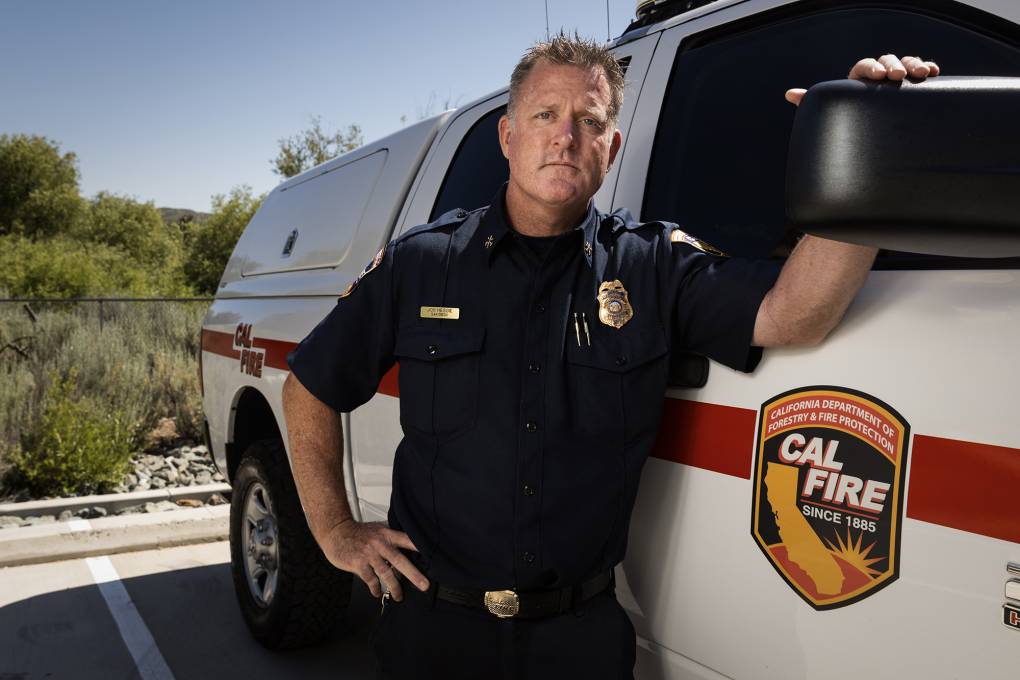
"caption": "Cal Fire Division Chief Jon Heggie next to his truck at San Diego County Fire Station 44 in Pine Valley on June 29, 2023.",
"description": null,
"title": "062923-Jon-Heggie-CalFire-KC-CM-006",
"credit": "Kristian Carreon/CalMatters",
"status": "inherit",
"altTag": "A fire chief in full black uniform stands next to his Cal Fire truck.",
"isLoading": false,
"fetchFailed": false
},
"news_11952100": {
"type": "attachments",
"id": "news_11952100",
"meta": {
"index": "attachments_1716263798",
"site": "news",
"id": "11952100",
"found": true
},
"parent": 11952095,
"imgSizes": {
"twentyfourteen-full-width": {
"file": "https://ww2.kqed.org/app/uploads/sites/10/2023/06/Thurmond-1038x576.png",
"width": 1038,
"mimeType": "image/png",
"height": 576
},
"thumbnail": {
"file": "https://ww2.kqed.org/app/uploads/sites/10/2023/06/Thurmond-160x90.png",
"width": 160,
"mimeType": "image/png",
"height": 90
},
"post-thumbnail": {
"file": "https://ww2.kqed.org/app/uploads/sites/10/2023/06/Thurmond-672x372.png",
"width": 672,
"mimeType": "image/png",
"height": 372
},
"kqedFullSize": {
"file": "https://ww2.kqed.org/app/uploads/sites/10/2023/06/Thurmond.png",
"width": 1920,
"height": 1080
},
"large": {
"file": "https://ww2.kqed.org/app/uploads/sites/10/2023/06/Thurmond-1020x574.png",
"width": 1020,
"mimeType": "image/png",
"height": 574
},
"1536x1536": {
"file": "https://ww2.kqed.org/app/uploads/sites/10/2023/06/Thurmond-1536x864.png",
"width": 1536,
"mimeType": "image/png",
"height": 864
},
"medium": {
"file": "https://ww2.kqed.org/app/uploads/sites/10/2023/06/Thurmond-800x450.png",
"width": 800,
"mimeType": "image/png",
"height": 450
}
},
"publishDate": 1685748260,
"modified": 1685748260,
"caption": null,
"description": null,
"title": "Thurmond",
"credit": null,
"status": "inherit",
"altTag": null,
"isLoading": false,
"fetchFailed": false
},
"news_11949367": {
"type": "attachments",
"id": "news_11949367",
"meta": {
"index": "attachments_1716263798",
"site": "news",
"id": "11949367",
"found": true
},
"parent": 11949365,
"imgSizes": {
"thumbnail": {
"file": "https://ww2.kqed.org/app/uploads/sites/10/2023/05/KNR-512-160x107.jpg",
"width": 160,
"mimeType": "image/jpeg",
"height": 107
},
"kqedFullSize": {
"file": "https://ww2.kqed.org/app/uploads/sites/10/2023/05/KNR-512.jpg",
"width": 512,
"height": 341
}
},
"publishDate": 1683927166,
"modified": 1683927166,
"caption": null,
"description": null,
"title": "KNR 512",
"credit": null,
"status": "inherit",
"altTag": null,
"isLoading": false,
"fetchFailed": false
},
"news_11926686": {
"type": "attachments",
"id": "news_11926686",
"meta": {
"index": "attachments_1716263798",
"site": "news",
"id": "11926686",
"found": true
},
"parent": 11926565,
"imgSizes": {
"twentyfourteen-full-width": {
"file": "https://ww2.kqed.org/app/uploads/sites/10/2022/09/dalle-1038x576.jpg",
"width": 1038,
"mimeType": "image/jpeg",
"height": 576
},
"thumbnail": {
"file": "https://ww2.kqed.org/app/uploads/sites/10/2022/09/dalle-160x107.jpg",
"width": 160,
"mimeType": "image/jpeg",
"height": 107
},
"post-thumbnail": {
"file": "https://ww2.kqed.org/app/uploads/sites/10/2022/09/dalle-672x372.jpg",
"width": 672,
"mimeType": "image/jpeg",
"height": 372
},
"kqedFullSize": {
"file": "https://ww2.kqed.org/app/uploads/sites/10/2022/09/dalle.jpg",
"width": 1920,
"height": 1280
},
"large": {
"file": "https://ww2.kqed.org/app/uploads/sites/10/2022/09/dalle-1020x680.jpg",
"width": 1020,
"mimeType": "image/jpeg",
"height": 680
},
"1536x1536": {
"file": "https://ww2.kqed.org/app/uploads/sites/10/2022/09/dalle-1536x1024.jpg",
"width": 1536,
"mimeType": "image/jpeg",
"height": 1024
},
"medium": {
"file": "https://ww2.kqed.org/app/uploads/sites/10/2022/09/dalle-800x533.jpg",
"width": 800,
"mimeType": "image/jpeg",
"height": 533
}
},
"publishDate": 1664214982,
"modified": 1664225133,
"caption": "\"Purple kittens snorkeling in the style of Picasso,\" an image generated by OpenAI's DALL-E 2.",
"description": null,
"title": "dalle-ai",
"credit": "Image via OpenAI",
"status": "inherit",
"altTag": "An illustration of three purple kittens wearing snorkeling masks. The illustration is in a style reminiscent of Pablo Picasso's artwork.",
"isLoading": false,
"fetchFailed": false
},
"news_11925527": {
"type": "attachments",
"id": "news_11925527",
"meta": {
"index": "attachments_1716263798",
"site": "news",
"id": "11925527",
"found": true
},
"parent": 11925476,
"imgSizes": {
"thumbnail": {
"file": "https://ww2.kqed.org/app/uploads/sites/10/2022/09/image-160x78.png",
"width": 160,
"mimeType": "image/png",
"height": 78
},
"post-thumbnail": {
"file": "https://ww2.kqed.org/app/uploads/sites/10/2022/09/image-672x372.png",
"width": 672,
"mimeType": "image/png",
"height": 372
},
"kqedFullSize": {
"file": "https://ww2.kqed.org/app/uploads/sites/10/2022/09/image.png",
"width": 800,
"height": 389
}
},
"publishDate": 1663110363,
"modified": 1663176180,
"caption": "A screenshot from a Facebook account message.",
"description": null,
"title": "image",
"credit": "Courtesy of Nick Wright/Image from Facebook",
"status": "inherit",
"altTag": "A screenshot from a Facebook account message, with an image of a lock and the text, 'Nick, your account has been locked.'",
"isLoading": false,
"fetchFailed": false
},
"news_11898974": {
"type": "attachments",
"id": "news_11898974",
"meta": {
"index": "attachments_1716263798",
"site": "news",
"id": "11898974",
"found": true
},
"parent": 11898973,
"imgSizes": {
"twentyfourteen-full-width": {
"file": "https://ww2.kqed.org/app/uploads/sites/10/2021/12/RS52837_009_SanFrancisco_UCSFVirtualReality_12102021-qut-1038x576.jpg",
"width": 1038,
"mimeType": "image/jpeg",
"height": 576
},
"thumbnail": {
"file": "https://ww2.kqed.org/app/uploads/sites/10/2021/12/RS52837_009_SanFrancisco_UCSFVirtualReality_12102021-qut-160x107.jpg",
"width": 160,
"mimeType": "image/jpeg",
"height": 107
},
"post-thumbnail": {
"file": "https://ww2.kqed.org/app/uploads/sites/10/2021/12/RS52837_009_SanFrancisco_UCSFVirtualReality_12102021-qut-672x372.jpg",
"width": 672,
"mimeType": "image/jpeg",
"height": 372
},
"kqedFullSize": {
"file": "https://ww2.kqed.org/app/uploads/sites/10/2021/12/RS52837_009_SanFrancisco_UCSFVirtualReality_12102021-qut.jpg",
"width": 1920,
"height": 1280
},
"large": {
"file": "https://ww2.kqed.org/app/uploads/sites/10/2021/12/RS52837_009_SanFrancisco_UCSFVirtualReality_12102021-qut-1020x680.jpg",
"width": 1020,
"mimeType": "image/jpeg",
"height": 680
},
"1536x1536": {
"file": "https://ww2.kqed.org/app/uploads/sites/10/2021/12/RS52837_009_SanFrancisco_UCSFVirtualReality_12102021-qut-1536x1024.jpg",
"width": 1536,
"mimeType": "image/jpeg",
"height": 1024
},
"medium": {
"file": "https://ww2.kqed.org/app/uploads/sites/10/2021/12/RS52837_009_SanFrancisco_UCSFVirtualReality_12102021-qut-800x533.jpg",
"width": 800,
"mimeType": "image/jpeg",
"height": 533
}
},
"publishDate": 1639446469,
"modified": 1639626738,
"caption": "Nova Wilson, program coordinator for the UCSF Institute for Global Health Sciences, instructs Dr. Mike Reid on using virtual reality equipment at UCSF offices in San Francisco on Dec. 10, 2021. The VR program is intended to teach doctors to have more empathy for their patients of color.",
"description": "Nova Wilson, program coordinator for UCSF Institute for Global Health Sciences, instructs Dr. Mike Reid on using virtual reality equipment at UCSF offices in San Francisco on Dec. 10, 2021. The VR program is intended to teach doctors to have more empathy for their patients of color.",
"title": "RS52837_009_SanFrancisco_UCSFVirtualReality_12102021-qut",
"credit": "Beth LaBerge/KQED",
"status": "inherit",
"altTag": "Two people stand in a room: one wears a virtual reality headset and holds two controllers while the second figure stands by and watches over.",
"isLoading": false,
"fetchFailed": false
},
"news_11843542": {
"type": "attachments",
"id": "news_11843542",
"meta": {
"index": "attachments_1716263798",
"site": "news",
"id": "11843542",
"found": true
},
"parent": 11841767,
"imgSizes": {
"apple_news_ca_landscape_5_5": {
"file": "https://ww2.kqed.org/app/uploads/sites/10/2020/10/RS43436_026_KQED_Oakland_GeorgeFloydProtest_05292020-qut-1044x783.jpg",
"width": 1044,
"mimeType": "image/jpeg",
"height": 783
},
"apple_news_ca_square_4_0": {
"file": "https://ww2.kqed.org/app/uploads/sites/10/2020/10/RS43436_026_KQED_Oakland_GeorgeFloydProtest_05292020-qut-470x470.jpg",
"width": 470,
"mimeType": "image/jpeg",
"height": 470
},
"twentyfourteen-full-width": {
"file": "https://ww2.kqed.org/app/uploads/sites/10/2020/10/RS43436_026_KQED_Oakland_GeorgeFloydProtest_05292020-qut-1038x576.jpg",
"width": 1038,
"mimeType": "image/jpeg",
"height": 576
},
"thumbnail": {
"file": "https://ww2.kqed.org/app/uploads/sites/10/2020/10/RS43436_026_KQED_Oakland_GeorgeFloydProtest_05292020-qut-160x107.jpg",
"width": 160,
"mimeType": "image/jpeg",
"height": 107
},
"post-thumbnail": {
"file": "https://ww2.kqed.org/app/uploads/sites/10/2020/10/RS43436_026_KQED_Oakland_GeorgeFloydProtest_05292020-qut-672x372.jpg",
"width": 672,
"mimeType": "image/jpeg",
"height": 372
},
"kqedFullSize": {
"file": "https://ww2.kqed.org/app/uploads/sites/10/2020/10/RS43436_026_KQED_Oakland_GeorgeFloydProtest_05292020-qut.jpg",
"width": 1920,
"height": 1280
},
"apple_news_ca_landscape_4_7": {
"file": "https://ww2.kqed.org/app/uploads/sites/10/2020/10/RS43436_026_KQED_Oakland_GeorgeFloydProtest_05292020-qut-632x474.jpg",
"width": 632,
"mimeType": "image/jpeg",
"height": 474
},
"large": {
"file": "https://ww2.kqed.org/app/uploads/sites/10/2020/10/RS43436_026_KQED_Oakland_GeorgeFloydProtest_05292020-qut-1020x680.jpg",
"width": 1020,
"mimeType": "image/jpeg",
"height": 680
},
"apple_news_ca_landscape_4_0": {
"file": "https://ww2.kqed.org/app/uploads/sites/10/2020/10/RS43436_026_KQED_Oakland_GeorgeFloydProtest_05292020-qut-536x402.jpg",
"width": 536,
"mimeType": "image/jpeg",
"height": 402
},
"apple_news_ca_portrait_12_9": {
"file": "https://ww2.kqed.org/app/uploads/sites/10/2020/10/RS43436_026_KQED_Oakland_GeorgeFloydProtest_05292020-qut-1122x1280.jpg",
"width": 1122,
"mimeType": "image/jpeg",
"height": 1280
},
"medium": {
"file": "https://ww2.kqed.org/app/uploads/sites/10/2020/10/RS43436_026_KQED_Oakland_GeorgeFloydProtest_05292020-qut-800x533.jpg",
"width": 800,
"mimeType": "image/jpeg",
"height": 533
},
"apple_news_ca_portrait_4_0": {
"file": "https://ww2.kqed.org/app/uploads/sites/10/2020/10/RS43436_026_KQED_Oakland_GeorgeFloydProtest_05292020-qut-354x472.jpg",
"width": 354,
"mimeType": "image/jpeg",
"height": 472
},
"apple_news_ca_portrait_9_7": {
"file": "https://ww2.kqed.org/app/uploads/sites/10/2020/10/RS43436_026_KQED_Oakland_GeorgeFloydProtest_05292020-qut-840x1120.jpg",
"width": 840,
"mimeType": "image/jpeg",
"height": 1120
},
"apple_news_ca_landscape_12_9": {
"file": "https://ww2.kqed.org/app/uploads/sites/10/2020/10/RS43436_026_KQED_Oakland_GeorgeFloydProtest_05292020-qut-1832x1280.jpg",
"width": 1832,
"mimeType": "image/jpeg",
"height": 1280
},
"apple_news_ca_square_9_7": {
"file": "https://ww2.kqed.org/app/uploads/sites/10/2020/10/RS43436_026_KQED_Oakland_GeorgeFloydProtest_05292020-qut-1104x1104.jpg",
"width": 1104,
"mimeType": "image/jpeg",
"height": 1104
},
"1536x1536": {
"file": "https://ww2.kqed.org/app/uploads/sites/10/2020/10/RS43436_026_KQED_Oakland_GeorgeFloydProtest_05292020-qut-1536x1024.jpg",
"width": 1536,
"mimeType": "image/jpeg",
"height": 1024
},
"apple_news_ca_portrait_4_7": {
"file": "https://ww2.kqed.org/app/uploads/sites/10/2020/10/RS43436_026_KQED_Oakland_GeorgeFloydProtest_05292020-qut-414x552.jpg",
"width": 414,
"mimeType": "image/jpeg",
"height": 552
},
"apple_news_ca_square_12_9": {
"file": "https://ww2.kqed.org/app/uploads/sites/10/2020/10/RS43436_026_KQED_Oakland_GeorgeFloydProtest_05292020-qut-1472x1280.jpg",
"width": 1472,
"mimeType": "image/jpeg",
"height": 1280
},
"apple_news_ca_portrait_5_5": {
"file": "https://ww2.kqed.org/app/uploads/sites/10/2020/10/RS43436_026_KQED_Oakland_GeorgeFloydProtest_05292020-qut-687x916.jpg",
"width": 687,
"mimeType": "image/jpeg",
"height": 916
},
"apple_news_ca_square_4_7": {
"file": "https://ww2.kqed.org/app/uploads/sites/10/2020/10/RS43436_026_KQED_Oakland_GeorgeFloydProtest_05292020-qut-550x550.jpg",
"width": 550,
"mimeType": "image/jpeg",
"height": 550
},
"apple_news_ca_landscape_9_7": {
"file": "https://ww2.kqed.org/app/uploads/sites/10/2020/10/RS43436_026_KQED_Oakland_GeorgeFloydProtest_05292020-qut-1376x1032.jpg",
"width": 1376,
"mimeType": "image/jpeg",
"height": 1032
},
"apple_news_ca_square_5_5": {
"file": "https://ww2.kqed.org/app/uploads/sites/10/2020/10/RS43436_026_KQED_Oakland_GeorgeFloydProtest_05292020-qut-912x912.jpg",
"width": 912,
"mimeType": "image/jpeg",
"height": 912
}
},
"publishDate": 1603489217,
"modified": 1603489413,
"caption": "Demonstrators face a police line on May 29, 2020 in Oakland during protests following the police killing of George Floyd in Minneapolis.",
"description": "Demonstrators face a police line on May 29, 2020 in Oakland during protests following the police killing of George Floyd in Minneapolis.",
"title": "RS43436_026_KQED_Oakland_GeorgeFloydProtest_05292020-qut",
"credit": "Beth LaBerge/KQED",
"status": "inherit",
"isLoading": false,
"fetchFailed": false
},
"news_11743370": {
"type": "attachments",
"id": "news_11743370",
"meta": {
"index": "attachments_1716263798",
"site": "news",
"id": "11743370",
"found": true
},
"parent": 11742529,
"imgSizes": {
"twentyfourteen-full-width": {
"file": "https://ww2.kqed.org/app/uploads/sites/10/2019/04/iStock-932559358-1038x576.jpg",
"width": 1038,
"mimeType": "image/jpeg",
"height": 576
},
"thumbnail": {
"file": "https://ww2.kqed.org/app/uploads/sites/10/2019/04/iStock-932559358-160x105.jpg",
"width": 160,
"mimeType": "image/jpeg",
"height": 105
},
"post-thumbnail": {
"file": "https://ww2.kqed.org/app/uploads/sites/10/2019/04/iStock-932559358-672x372.jpg",
"width": 672,
"mimeType": "image/jpeg",
"height": 372
},
"kqedFullSize": {
"file": "https://ww2.kqed.org/app/uploads/sites/10/2019/04/iStock-932559358.jpg",
"width": 2048,
"height": 1341
},
"large": {
"file": "https://ww2.kqed.org/app/uploads/sites/10/2019/04/iStock-932559358-1020x668.jpg",
"width": 1020,
"mimeType": "image/jpeg",
"height": 668
},
"complete_open_graph": {
"file": "https://ww2.kqed.org/app/uploads/sites/10/2019/04/iStock-932559358-1200x786.jpg",
"width": 1200,
"mimeType": "image/jpeg",
"height": 786
},
"full-width": {
"file": "https://ww2.kqed.org/app/uploads/sites/10/2019/04/iStock-932559358-1920x1257.jpg",
"width": 1920,
"mimeType": "image/jpeg",
"height": 1257
},
"medium": {
"file": "https://ww2.kqed.org/app/uploads/sites/10/2019/04/iStock-932559358-800x524.jpg",
"width": 800,
"mimeType": "image/jpeg",
"height": 524
}
},
"publishDate": 1556407697,
"modified": 1556407772,
"caption": null,
"description": null,
"title": "silhouette of virtual human on circuit pattern technology 3d illustration",
"credit": "iStock",
"status": "inherit",
"isLoading": false,
"fetchFailed": false
},
"news_11738398": {
"type": "attachments",
"id": "news_11738398",
"meta": {
"index": "attachments_1716263798",
"site": "news",
"id": "11738398",
"found": true
},
"parent": 11738391,
"imgSizes": {
"post-thumbnail": {
"file": "https://ww2.kqed.org/app/uploads/sites/10/2019/04/GettyImages-664440974-e1554664067447-672x372.jpg",
"width": 672,
"mimeType": "image/jpeg",
"height": 372
},
"kqedFullSize": {
"file": "https://ww2.kqed.org/app/uploads/sites/10/2019/04/GettyImages-664440974-e1554664067447.jpg",
"width": 1478,
"height": 969
},
"guest-author-50": {
"file": "https://ww2.kqed.org/app/uploads/sites/10/2019/04/GettyImages-664440974-e1554664067447-50x50.jpg",
"width": 50,
"mimeType": "image/jpeg",
"height": 50
},
"guest-author-96": {
"file": "https://ww2.kqed.org/app/uploads/sites/10/2019/04/GettyImages-664440974-e1554664067447-96x96.jpg",
"width": 96,
"mimeType": "image/jpeg",
"height": 96
},
"apple_news_ca_portrait_12_9": {
"file": "https://ww2.kqed.org/app/uploads/sites/10/2019/04/GettyImages-664440974-e1554664067447-1122x969.jpg",
"width": 1122,
"mimeType": "image/jpeg",
"height": 969
},
"medium": {
"file": "https://ww2.kqed.org/app/uploads/sites/10/2019/04/GettyImages-664440974-e1554664067447-800x524.jpg",
"width": 800,
"mimeType": "image/jpeg",
"height": 524
},
"guest-author-32": {
"file": "https://ww2.kqed.org/app/uploads/sites/10/2019/04/GettyImages-664440974-e1554664067447-32x32.jpg",
"width": 32,
"mimeType": "image/jpeg",
"height": 32
},
"apple_news_ca_portrait_9_7": {
"file": "https://ww2.kqed.org/app/uploads/sites/10/2019/04/GettyImages-664440974-e1554664067447-840x969.jpg",
"width": 840,
"mimeType": "image/jpeg",
"height": 969
},
"apple_news_ca_square_9_7": {
"file": "https://ww2.kqed.org/app/uploads/sites/10/2019/04/GettyImages-664440974-e1554664067447-1104x969.jpg",
"width": 1104,
"mimeType": "image/jpeg",
"height": 969
},
"apple_news_ca_portrait_4_7": {
"file": "https://ww2.kqed.org/app/uploads/sites/10/2019/04/GettyImages-664440974-e1554664067447-414x552.jpg",
"width": 414,
"mimeType": "image/jpeg",
"height": 552
},
"apple_news_ca_square_12_9": {
"file": "https://ww2.kqed.org/app/uploads/sites/10/2019/04/GettyImages-664440974-e1554664067447-1472x969.jpg",
"width": 1472,
"mimeType": "image/jpeg",
"height": 969
},
"apple_news_ca_portrait_5_5": {
"file": "https://ww2.kqed.org/app/uploads/sites/10/2019/04/GettyImages-664440974-e1554664067447-687x916.jpg",
"width": 687,
"mimeType": "image/jpeg",
"height": 916
},
"apple_news_ca_square_4_7": {
"file": "https://ww2.kqed.org/app/uploads/sites/10/2019/04/GettyImages-664440974-e1554664067447-550x550.jpg",
"width": 550,
"mimeType": "image/jpeg",
"height": 550
},
"apple_news_ca_square_5_5": {
"file": "https://ww2.kqed.org/app/uploads/sites/10/2019/04/GettyImages-664440974-e1554664067447-912x912.jpg",
"width": 912,
"mimeType": "image/jpeg",
"height": 912
},
"apple_news_ca_landscape_5_5": {
"file": "https://ww2.kqed.org/app/uploads/sites/10/2019/04/GettyImages-664440974-e1554664067447-1044x783.jpg",
"width": 1044,
"mimeType": "image/jpeg",
"height": 783
},
"apple_news_ca_square_4_0": {
"file": "https://ww2.kqed.org/app/uploads/sites/10/2019/04/GettyImages-664440974-e1554664067447-470x470.jpg",
"width": 470,
"mimeType": "image/jpeg",
"height": 470
},
"twentyfourteen-full-width": {
"file": "https://ww2.kqed.org/app/uploads/sites/10/2019/04/GettyImages-664440974-e1554664067447-1038x576.jpg",
"width": 1038,
"mimeType": "image/jpeg",
"height": 576
},
"thumbnail": {
"file": "https://ww2.kqed.org/app/uploads/sites/10/2019/04/GettyImages-664440974-e1554664067447-160x105.jpg",
"width": 160,
"mimeType": "image/jpeg",
"height": 105
},
"apple_news_ca_landscape_4_7": {
"file": "https://ww2.kqed.org/app/uploads/sites/10/2019/04/GettyImages-664440974-e1554664067447-632x474.jpg",
"width": 632,
"mimeType": "image/jpeg",
"height": 474
},
"large": {
"file": "https://ww2.kqed.org/app/uploads/sites/10/2019/04/GettyImages-664440974-e1554664067447-1020x669.jpg",
"width": 1020,
"mimeType": "image/jpeg",
"height": 669
},
"complete_open_graph": {
"file": "https://ww2.kqed.org/app/uploads/sites/10/2019/04/GettyImages-664440974-e1554664067447-1200x787.jpg",
"width": 1200,
"mimeType": "image/jpeg",
"height": 787
},
"apple_news_ca_landscape_4_0": {
"file": "https://ww2.kqed.org/app/uploads/sites/10/2019/04/GettyImages-664440974-e1554664067447-536x402.jpg",
"width": 536,
"mimeType": "image/jpeg",
"height": 402
},
"guest-author-64": {
"file": "https://ww2.kqed.org/app/uploads/sites/10/2019/04/GettyImages-664440974-e1554664067447-64x64.jpg",
"width": 64,
"mimeType": "image/jpeg",
"height": 64
},
"apple_news_ca_portrait_4_0": {
"file": "https://ww2.kqed.org/app/uploads/sites/10/2019/04/GettyImages-664440974-e1554664067447-354x472.jpg",
"width": 354,
"mimeType": "image/jpeg",
"height": 472
},
"apple_news_ca_landscape_12_9": {
"file": "https://ww2.kqed.org/app/uploads/sites/10/2019/04/GettyImages-664440974-1832x1374.jpg",
"width": 1832,
"mimeType": "image/jpeg",
"height": 1374
},
"full-width": {
"file": "https://ww2.kqed.org/app/uploads/sites/10/2019/04/GettyImages-664440974-1920x1282.jpg",
"width": 1920,
"mimeType": "image/jpeg",
"height": 1282
},
"guest-author-128": {
"file": "https://ww2.kqed.org/app/uploads/sites/10/2019/04/GettyImages-664440974-e1554664067447-128x128.jpg",
"width": 128,
"mimeType": "image/jpeg",
"height": 128
},
"apple_news_ca_landscape_9_7": {
"file": "https://ww2.kqed.org/app/uploads/sites/10/2019/04/GettyImages-664440974-e1554664067447-1376x969.jpg",
"width": 1376,
"mimeType": "image/jpeg",
"height": 969
}
},
"publishDate": 1554663971,
"modified": 1554825054,
"caption": "European regulators are working to build international consensus for what they call “human-centric AI.” Regulators in the U.S.? Not so much.",
"description": "European regulators are working to build international consensus for what they call “human-centric AI.” Regulators in the US? Not so much.",
"title": "INDIA-TECHNOLOGY-INTEL",
"credit": "Getty Images",
"status": "inherit",
"isLoading": false,
"fetchFailed": false
},
"news_11738400": {
"type": "attachments",
"id": "news_11738400",
"meta": {
"index": "attachments_1716263798",
"site": "news",
"id": "11738400",
"found": true
},
"parent": 11738391,
"imgSizes": {
"post-thumbnail": {
"file": "https://ww2.kqed.org/app/uploads/sites/10/2019/04/RS26525_GettyImages-486234008-qut-672x372.jpg",
"width": 672,
"mimeType": "image/jpeg",
"height": 372
},
"kqedFullSize": {
"file": "https://ww2.kqed.org/app/uploads/sites/10/2019/04/RS26525_GettyImages-486234008-qut.jpg",
"width": 1920,
"height": 1281
},
"guest-author-50": {
"file": "https://ww2.kqed.org/app/uploads/sites/10/2019/04/RS26525_GettyImages-486234008-qut-50x50.jpg",
"width": 50,
"mimeType": "image/jpeg",
"height": 50
},
"guest-author-96": {
"file": "https://ww2.kqed.org/app/uploads/sites/10/2019/04/RS26525_GettyImages-486234008-qut-96x96.jpg",
"width": 96,
"mimeType": "image/jpeg",
"height": 96
},
"apple_news_ca_portrait_12_9": {
"file": "https://ww2.kqed.org/app/uploads/sites/10/2019/04/RS26525_GettyImages-486234008-qut-1122x1281.jpg",
"width": 1122,
"mimeType": "image/jpeg",
"height": 1281
},
"medium": {
"file": "https://ww2.kqed.org/app/uploads/sites/10/2019/04/RS26525_GettyImages-486234008-qut-800x534.jpg",
"width": 800,
"mimeType": "image/jpeg",
"height": 534
},
"guest-author-32": {
"file": "https://ww2.kqed.org/app/uploads/sites/10/2019/04/RS26525_GettyImages-486234008-qut-32x32.jpg",
"width": 32,
"mimeType": "image/jpeg",
"height": 32
},
"apple_news_ca_portrait_9_7": {
"file": "https://ww2.kqed.org/app/uploads/sites/10/2019/04/RS26525_GettyImages-486234008-qut-840x1120.jpg",
"width": 840,
"mimeType": "image/jpeg",
"height": 1120
},
"apple_news_ca_square_9_7": {
"file": "https://ww2.kqed.org/app/uploads/sites/10/2019/04/RS26525_GettyImages-486234008-qut-1104x1104.jpg",
"width": 1104,
"mimeType": "image/jpeg",
"height": 1104
},
"apple_news_ca_portrait_4_7": {
"file": "https://ww2.kqed.org/app/uploads/sites/10/2019/04/RS26525_GettyImages-486234008-qut-414x552.jpg",
"width": 414,
"mimeType": "image/jpeg",
"height": 552
},
"apple_news_ca_square_12_9": {
"file": "https://ww2.kqed.org/app/uploads/sites/10/2019/04/RS26525_GettyImages-486234008-qut-1472x1281.jpg",
"width": 1472,
"mimeType": "image/jpeg",
"height": 1281
},
"apple_news_ca_portrait_5_5": {
"file": "https://ww2.kqed.org/app/uploads/sites/10/2019/04/RS26525_GettyImages-486234008-qut-687x916.jpg",
"width": 687,
"mimeType": "image/jpeg",
"height": 916
},
"apple_news_ca_square_4_7": {
"file": "https://ww2.kqed.org/app/uploads/sites/10/2019/04/RS26525_GettyImages-486234008-qut-550x550.jpg",
"width": 550,
"mimeType": "image/jpeg",
"height": 550
},
"apple_news_ca_square_5_5": {
"file": "https://ww2.kqed.org/app/uploads/sites/10/2019/04/RS26525_GettyImages-486234008-qut-912x912.jpg",
"width": 912,
"mimeType": "image/jpeg",
"height": 912
},
"apple_news_ca_landscape_5_5": {
"file": "https://ww2.kqed.org/app/uploads/sites/10/2019/04/RS26525_GettyImages-486234008-qut-1044x783.jpg",
"width": 1044,
"mimeType": "image/jpeg",
"height": 783
},
"apple_news_ca_square_4_0": {
"file": "https://ww2.kqed.org/app/uploads/sites/10/2019/04/RS26525_GettyImages-486234008-qut-470x470.jpg",
"width": 470,
"mimeType": "image/jpeg",
"height": 470
},
"twentyfourteen-full-width": {
"file": "https://ww2.kqed.org/app/uploads/sites/10/2019/04/RS26525_GettyImages-486234008-qut-1038x576.jpg",
"width": 1038,
"mimeType": "image/jpeg",
"height": 576
},
"thumbnail": {
"file": "https://ww2.kqed.org/app/uploads/sites/10/2019/04/RS26525_GettyImages-486234008-qut-160x107.jpg",
"width": 160,
"mimeType": "image/jpeg",
"height": 107
},
"apple_news_ca_landscape_4_7": {
"file": "https://ww2.kqed.org/app/uploads/sites/10/2019/04/RS26525_GettyImages-486234008-qut-632x474.jpg",
"width": 632,
"mimeType": "image/jpeg",
"height": 474
},
"large": {
"file": "https://ww2.kqed.org/app/uploads/sites/10/2019/04/RS26525_GettyImages-486234008-qut-1020x681.jpg",
"width": 1020,
"mimeType": "image/jpeg",
"height": 681
},
"complete_open_graph": {
"file": "https://ww2.kqed.org/app/uploads/sites/10/2019/04/RS26525_GettyImages-486234008-qut-1200x801.jpg",
"width": 1200,
"mimeType": "image/jpeg",
"height": 801
},
"apple_news_ca_landscape_4_0": {
"file": "https://ww2.kqed.org/app/uploads/sites/10/2019/04/RS26525_GettyImages-486234008-qut-536x402.jpg",
"width": 536,
"mimeType": "image/jpeg",
"height": 402
},
"guest-author-64": {
"file": "https://ww2.kqed.org/app/uploads/sites/10/2019/04/RS26525_GettyImages-486234008-qut-64x64.jpg",
"width": 64,
"mimeType": "image/jpeg",
"height": 64
},
"apple_news_ca_portrait_4_0": {
"file": "https://ww2.kqed.org/app/uploads/sites/10/2019/04/RS26525_GettyImages-486234008-qut-354x472.jpg",
"width": 354,
"mimeType": "image/jpeg",
"height": 472
},
"apple_news_ca_landscape_12_9": {
"file": "https://ww2.kqed.org/app/uploads/sites/10/2019/04/RS26525_GettyImages-486234008-qut-1832x1281.jpg",
"width": 1832,
"mimeType": "image/jpeg",
"height": 1281
},
"full-width": {
"file": "https://ww2.kqed.org/app/uploads/sites/10/2019/04/RS26525_GettyImages-486234008-qut-1920x1281.jpg",
"width": 1920,
"mimeType": "image/jpeg",
"height": 1281
},
"guest-author-128": {
"file": "https://ww2.kqed.org/app/uploads/sites/10/2019/04/RS26525_GettyImages-486234008-qut-128x128.jpg",
"width": 128,
"mimeType": "image/jpeg",
"height": 128
},
"apple_news_ca_landscape_9_7": {
"file": "https://ww2.kqed.org/app/uploads/sites/10/2019/04/RS26525_GettyImages-486234008-qut-1376x1032.jpg",
"width": 1376,
"mimeType": "image/jpeg",
"height": 1032
}
},
"publishDate": 1554664698,
"modified": 1584158349,
"caption": "A significant percentage of tech workers at companies like Google and Facebook are contractors — not official employees — and receive vastly different wages and benefits than their counterparts.",
"description": null,
"title": "Google Updates Its Logo",
"credit": "Justin Sullivan/Getty Images",
"status": "inherit",
"isLoading": false,
"fetchFailed": false
},
"news_11732340": {
"type": "attachments",
"id": "news_11732340",
"meta": {
"index": "attachments_1716263798",
"site": "news",
"id": "11732340",
"found": true
},
"parent": 11732182,
"imgSizes": {
"twentyfourteen-full-width": {
"file": "https://ww2.kqed.org/app/uploads/sites/10/2019/03/MercedesDash-1038x576.jpg",
"width": 1038,
"mimeType": "image/jpeg",
"height": 576
},
"thumbnail": {
"file": "https://ww2.kqed.org/app/uploads/sites/10/2019/03/MercedesDash-160x95.jpg",
"width": 160,
"mimeType": "image/jpeg",
"height": 95
},
"post-thumbnail": {
"file": "https://ww2.kqed.org/app/uploads/sites/10/2019/03/MercedesDash-672x372.jpg",
"width": 672,
"mimeType": "image/jpeg",
"height": 372
},
"kqedFullSize": {
"file": "https://ww2.kqed.org/app/uploads/sites/10/2019/03/MercedesDash.jpg",
"width": 1920,
"height": 1143
},
"large": {
"file": "https://ww2.kqed.org/app/uploads/sites/10/2019/03/MercedesDash-1020x607.jpg",
"width": 1020,
"mimeType": "image/jpeg",
"height": 607
},
"complete_open_graph": {
"file": "https://ww2.kqed.org/app/uploads/sites/10/2019/03/MercedesDash-1200x714.jpg",
"width": 1200,
"mimeType": "image/jpeg",
"height": 714
},
"guest-author-50": {
"file": "https://ww2.kqed.org/app/uploads/sites/10/2019/03/MercedesDash-50x50.jpg",
"width": 50,
"mimeType": "image/jpeg",
"height": 50
},
"guest-author-96": {
"file": "https://ww2.kqed.org/app/uploads/sites/10/2019/03/MercedesDash-96x96.jpg",
"width": 96,
"mimeType": "image/jpeg",
"height": 96
},
"medium": {
"file": "https://ww2.kqed.org/app/uploads/sites/10/2019/03/MercedesDash-800x476.jpg",
"width": 800,
"mimeType": "image/jpeg",
"height": 476
},
"guest-author-64": {
"file": "https://ww2.kqed.org/app/uploads/sites/10/2019/03/MercedesDash-64x64.jpg",
"width": 64,
"mimeType": "image/jpeg",
"height": 64
},
"guest-author-32": {
"file": "https://ww2.kqed.org/app/uploads/sites/10/2019/03/MercedesDash-32x32.jpg",
"width": 32,
"mimeType": "image/jpeg",
"height": 32
},
"full-width": {
"file": "https://ww2.kqed.org/app/uploads/sites/10/2019/03/MercedesDash-1920x1143.jpg",
"width": 1920,
"mimeType": "image/jpeg",
"height": 1143
},
"guest-author-128": {
"file": "https://ww2.kqed.org/app/uploads/sites/10/2019/03/MercedesDash-128x128.jpg",
"width": 128,
"mimeType": "image/jpeg",
"height": 128
}
},
"publishDate": 1552349727,
"modified": 1552354475,
"caption": "Have you noticed a shift in automotive advertising to focus on the internet-enabled technology inside? Daimler - the parent company of Mercedes-Benz - recently teamed up with Santa Clara-based SoundHound on a new voice-controlled 'infotainment' system.",
"description": "Have you noticed a shift in automotive advertising to focus on the internet-enabled technology inside? Daimler - the parent company of Mercedes-Benz - recently teamed up with Santa Clara-based SoundHound on a new voice-controlled 'infotainment' system.",
"title": "MercedesDash",
"credit": "Courtesy of Daimler AG",
"status": "inherit",
"isLoading": false,
"fetchFailed": false
},
"futureofyou_439831": {
"type": "attachments",
"id": "futureofyou_439831",
"meta": {
"index": "attachments_1716263798",
"site": "futureofyou",
"id": "439831",
"found": true
},
"parent": 439807,
"imgSizes": {
"small": {
"file": "https://ww2.kqed.org/app/uploads/sites/13/2018/02/jenn-liv-therapist_wide-88d6d86d46621dfce2dbc5558cc69811bea0c49d-1-520x293.jpg",
"width": 520,
"mimeType": "image/jpeg",
"height": 293
},
"twentyfourteen-full-width": {
"file": "https://ww2.kqed.org/app/uploads/sites/13/2018/02/jenn-liv-therapist_wide-88d6d86d46621dfce2dbc5558cc69811bea0c49d-1-1038x576.jpg",
"width": 1038,
"mimeType": "image/jpeg",
"height": 576
},
"thumbnail": {
"file": "https://ww2.kqed.org/app/uploads/sites/13/2018/02/jenn-liv-therapist_wide-88d6d86d46621dfce2dbc5558cc69811bea0c49d-1-160x90.jpg",
"width": 160,
"mimeType": "image/jpeg",
"height": 90
},
"fd-sm": {
"file": "https://ww2.kqed.org/app/uploads/sites/13/2018/02/jenn-liv-therapist_wide-88d6d86d46621dfce2dbc5558cc69811bea0c49d-1-960x540.jpg",
"width": 960,
"mimeType": "image/jpeg",
"height": 540
},
"post-thumbnail": {
"file": "https://ww2.kqed.org/app/uploads/sites/13/2018/02/jenn-liv-therapist_wide-88d6d86d46621dfce2dbc5558cc69811bea0c49d-1-672x372.jpg",
"width": 672,
"mimeType": "image/jpeg",
"height": 372
},
"xsmall": {
"file": "https://ww2.kqed.org/app/uploads/sites/13/2018/02/jenn-liv-therapist_wide-88d6d86d46621dfce2dbc5558cc69811bea0c49d-1-375x211.jpg",
"width": 375,
"mimeType": "image/jpeg",
"height": 211
},
"kqedFullSize": {
"file": "https://ww2.kqed.org/app/uploads/sites/13/2018/02/jenn-liv-therapist_wide-88d6d86d46621dfce2dbc5558cc69811bea0c49d-1.jpg",
"width": 1920,
"height": 1080
},
"large": {
"file": "https://ww2.kqed.org/app/uploads/sites/13/2018/02/jenn-liv-therapist_wide-88d6d86d46621dfce2dbc5558cc69811bea0c49d-1-1020x574.jpg",
"width": 1020,
"mimeType": "image/jpeg",
"height": 574
},
"xlarge": {
"file": "https://ww2.kqed.org/app/uploads/sites/13/2018/02/jenn-liv-therapist_wide-88d6d86d46621dfce2dbc5558cc69811bea0c49d-1-1180x664.jpg",
"width": 1180,
"mimeType": "image/jpeg",
"height": 664
},
"guest-author-50": {
"file": "https://ww2.kqed.org/app/uploads/sites/13/2018/02/jenn-liv-therapist_wide-88d6d86d46621dfce2dbc5558cc69811bea0c49d-1-50x50.jpg",
"width": 50,
"mimeType": "image/jpeg",
"height": 50
},
"guest-author-96": {
"file": "https://ww2.kqed.org/app/uploads/sites/13/2018/02/jenn-liv-therapist_wide-88d6d86d46621dfce2dbc5558cc69811bea0c49d-1-96x96.jpg",
"width": 96,
"mimeType": "image/jpeg",
"height": 96
},
"medium": {
"file": "https://ww2.kqed.org/app/uploads/sites/13/2018/02/jenn-liv-therapist_wide-88d6d86d46621dfce2dbc5558cc69811bea0c49d-1-800x450.jpg",
"width": 800,
"mimeType": "image/jpeg",
"height": 450
},
"guest-author-64": {
"file": "https://ww2.kqed.org/app/uploads/sites/13/2018/02/jenn-liv-therapist_wide-88d6d86d46621dfce2dbc5558cc69811bea0c49d-1-64x64.jpg",
"width": 64,
"mimeType": "image/jpeg",
"height": 64
},
"guest-author-32": {
"file": "https://ww2.kqed.org/app/uploads/sites/13/2018/02/jenn-liv-therapist_wide-88d6d86d46621dfce2dbc5558cc69811bea0c49d-1-32x32.jpg",
"width": 32,
"mimeType": "image/jpeg",
"height": 32
},
"fd-lrg": {
"file": "https://ww2.kqed.org/app/uploads/sites/13/2018/02/jenn-liv-therapist_wide-88d6d86d46621dfce2dbc5558cc69811bea0c49d-1-1920x1080.jpg",
"width": 1920,
"mimeType": "image/jpeg",
"height": 1080
},
"fd-med": {
"file": "https://ww2.kqed.org/app/uploads/sites/13/2018/02/jenn-liv-therapist_wide-88d6d86d46621dfce2dbc5558cc69811bea0c49d-1-1180x664.jpg",
"width": 1180,
"mimeType": "image/jpeg",
"height": 664
},
"full-width": {
"file": "https://ww2.kqed.org/app/uploads/sites/13/2018/02/jenn-liv-therapist_wide-88d6d86d46621dfce2dbc5558cc69811bea0c49d-1-1920x1080.jpg",
"width": 1920,
"mimeType": "image/jpeg",
"height": 1080
},
"detail": {
"file": "https://ww2.kqed.org/app/uploads/sites/13/2018/02/jenn-liv-therapist_wide-88d6d86d46621dfce2dbc5558cc69811bea0c49d-1-150x150.jpg",
"width": 150,
"mimeType": "image/jpeg",
"height": 150
},
"medium_large": {
"file": "https://ww2.kqed.org/app/uploads/sites/13/2018/02/jenn-liv-therapist_wide-88d6d86d46621dfce2dbc5558cc69811bea0c49d-1-768x432.jpg",
"width": 768,
"mimeType": "image/jpeg",
"height": 432
},
"guest-author-128": {
"file": "https://ww2.kqed.org/app/uploads/sites/13/2018/02/jenn-liv-therapist_wide-88d6d86d46621dfce2dbc5558cc69811bea0c49d-1-128x128.jpg",
"width": 128,
"mimeType": "image/jpeg",
"height": 128
},
"xxsmall": {
"file": "https://ww2.kqed.org/app/uploads/sites/13/2018/02/jenn-liv-therapist_wide-88d6d86d46621dfce2dbc5558cc69811bea0c49d-1-240x135.jpg",
"width": 240,
"mimeType": "image/jpeg",
"height": 135
}
},
"publishDate": 1519750625,
"modified": 1519750625,
"caption": null,
"description": null,
"title": "jenn-liv-therapist_wide-88d6d86d46621dfce2dbc5558cc69811bea0c49d",
"credit": null,
"status": "inherit",
"isLoading": false,
"fetchFailed": false
}
},
"audioPlayerReducer": {
"postId": "stream_live",
"isPaused": true,
"isPlaying": false,
"pfsActive": false,
"pledgeModalIsOpen": true,
"playerDrawerIsOpen": false,
"liveAudioPlayStartedAt": 0,
"liveAudioPlayContext": ""
},
"authorsReducer": {
"byline_news_11955457": {
"type": "authors",
"id": "byline_news_11955457",
"meta": {
"override": true
},
"slug": "byline_news_11955457",
"name": "\u003ca href=\"https://calmatters.org/author/julie-cart/\">Julie Cart\u003c/a>",
"isLoading": false
},
"byline_news_11738391": {
"type": "authors",
"id": "byline_news_11738391",
"meta": {
"override": true
},
"slug": "byline_news_11738391",
"name": "Matt O'Brien and Rachel Lerman\u003cbr>Associated Press",
"isLoading": false
},
"byline_futureofyou_439807": {
"type": "authors",
"id": "byline_futureofyou_439807",
"meta": {
"override": true
},
"slug": "byline_futureofyou_439807",
"name": "Laura Sydell\u003cbr />NPR All Tech Considered",
"isLoading": false
},
"kqed": {
"type": "authors",
"id": "236",
"meta": {
"index": "authors_1716337520",
"id": "236",
"found": true
},
"name": "KQED News Staff",
"firstName": "KQED News Staff",
"lastName": null,
"slug": "kqed",
"email": "faq@kqed.org",
"display_author_email": false,
"staff_mastheads": [],
"title": null,
"bio": null,
"avatar": "https://secure.gravatar.com/avatar/ef0e801a68c4c54afa9180db14084167?s=600&d=blank&r=g",
"twitter": null,
"facebook": null,
"instagram": null,
"linkedin": null,
"sites": [
{
"site": "arts",
"roles": [
"contributor"
]
},
{
"site": "news",
"roles": [
"editor"
]
},
{
"site": "futureofyou",
"roles": [
"author"
]
}
],
"headData": {
"title": "KQED News Staff | KQED",
"description": null,
"ogImgSrc": "https://secure.gravatar.com/avatar/ef0e801a68c4c54afa9180db14084167?s=600&d=blank&r=g",
"twImgSrc": "https://secure.gravatar.com/avatar/ef0e801a68c4c54afa9180db14084167?s=600&d=blank&r=g"
},
"isLoading": false,
"link": "/author/kqed"
},
"minakim": {
"type": "authors",
"id": "243",
"meta": {
"index": "authors_1716337520",
"id": "243",
"found": true
},
"name": "Mina Kim",
"firstName": "Mina",
"lastName": "Kim",
"slug": "minakim",
"email": "mkim@kqed.org",
"display_author_email": false,
"staff_mastheads": [
"news"
],
"title": "Host, Forum",
"bio": "Mina Kim is host of the 10 a.m. statewide hour of Forum; a live daily talk show for curious Californians on issues that matter to the state and nation, with a particular emphasis on race and equity.\r\n\r\nBefore joining the Forum team, Mina was KQED’s evening news anchor, and health reporter for The California Report. Her award-winning work has included natural disasters in Napa and gun violence in Oakland. Mina grew up in St. John’s, Newfoundland.",
"avatar": "https://secure.gravatar.com/avatar/145ce657a2d08cb86d93686beb958982?s=600&d=blank&r=g",
"twitter": "mkimreporter",
"facebook": null,
"instagram": null,
"linkedin": null,
"sites": [
{
"site": "news",
"roles": [
"contributor"
]
},
{
"site": "stateofhealth",
"roles": [
"author"
]
},
{
"site": "forum",
"roles": [
"editor"
]
}
],
"headData": {
"title": "Mina Kim | KQED",
"description": "Host, Forum",
"ogImgSrc": "https://secure.gravatar.com/avatar/145ce657a2d08cb86d93686beb958982?s=600&d=blank&r=g",
"twImgSrc": "https://secure.gravatar.com/avatar/145ce657a2d08cb86d93686beb958982?s=600&d=blank&r=g"
},
"isLoading": false,
"link": "/author/minakim"
},
"rachael-myrow": {
"type": "authors",
"id": "251",
"meta": {
"index": "authors_1716337520",
"id": "251",
"found": true
},
"name": "Rachael Myrow",
"firstName": "Rachael",
"lastName": "Myrow",
"slug": "rachael-myrow",
"email": "rmyrow@kqed.org",
"display_author_email": true,
"staff_mastheads": [
"news"
],
"title": "Senior Editor of KQED's Silicon Valley News Desk",
"bio": "• I write and edit stories about how Silicon Valley power and policies shape everyday life in California. I’m also passionate about making Bay Area history and culture more accessible to a broad public. • I’ve been a journalist for most of my life, starting in high school with The Franklin Press in Los Angeles, where I grew up. While earning my first degree in English at UC Berkeley, I got my start in public radio at KALX-FM. After completing a second degree in journalism at Cal, I landed my first professional job at Marketplace, then moved on to KPCC (now LAist), and then KQED, where I hosted The California Report for more than seven years. • My reporting has appeared on NPR, The World, WBUR’s \u003ci>Here & Now\u003c/i>, and the BBC. I also guest host for KQED’s \u003ci>Forum\u003c/i>, as well as the Commonwealth Club in San Francisco. • I speak periodically on media, democracy and technology issues, and do voiceover work for documentaries and educational video projects. • Outside of the studio, you'll find me hiking Bay Area trails and whipping up Insta-ready meals in my kitchen. • I do not accept gifts, money, or favors from anyone connected to my reporting, I don't pay people for information, and I do not support or donate to political causes. • I strive to treat the people I report on with fairness, honesty, and respect. I also recognize there are often multiple sides to a story and work to verify information through multiple sources and documentation. If I get something wrong, I correct it.",
"avatar": "https://secure.gravatar.com/avatar/3ed8a3c5f26025e4a805ba634cda8cd764906b97438a6d9ce216b044e340da4e?s=600&d=blank&r=g",
"twitter": "rachaelmyrow",
"bluesky": null,
"facebook": null,
"instagram": null,
"linkedin": "https://www.linkedin.com/in/rachaelmyrow/",
"sites": [
{
"site": "arts",
"roles": [
"administrator"
]
},
{
"site": "news",
"roles": [
"edit_others_posts",
"editor"
]
},
{
"site": "futureofyou",
"roles": [
"editor"
]
},
{
"site": "bayareabites",
"roles": [
"editor"
]
},
{
"site": "stateofhealth",
"roles": [
"editor"
]
},
{
"site": "science",
"roles": [
"editor"
]
},
{
"site": "food",
"roles": [
"editor"
]
},
{
"site": "forum",
"roles": [
"editor"
]
},
{
"site": "liveblog",
"roles": [
"author"
]
}
],
"headData": {
"title": "Rachael Myrow | KQED",
"description": "Senior Editor of KQED's Silicon Valley News Desk",
"ogImgSrc": "https://secure.gravatar.com/avatar/3ed8a3c5f26025e4a805ba634cda8cd764906b97438a6d9ce216b044e340da4e?s=600&d=blank&r=g",
"twImgSrc": "https://secure.gravatar.com/avatar/3ed8a3c5f26025e4a805ba634cda8cd764906b97438a6d9ce216b044e340da4e?s=600&d=blank&r=g"
},
"isLoading": false,
"link": "/author/rachael-myrow"
},
"adembosky": {
"type": "authors",
"id": "3205",
"meta": {
"index": "authors_1716337520",
"id": "3205",
"found": true
},
"name": "April Dembosky",
"firstName": "April",
"lastName": "Dembosky",
"slug": "adembosky",
"email": "adembosky@kqed.org",
"display_author_email": false,
"staff_mastheads": [
"news",
"science"
],
"title": "KQED Health Correspondent",
"bio": "April Dembosky is the health correspondent for KQED News and a regular contributor to NPR. She specializes in covering altered states of mind, from postpartum depression to methamphetamine-induced psychosis to the insanity defense. Her investigative series on insurance companies sidestepping mental health laws won multiple awards, including first place in beat reporting from the national Association of Health Care Journalists. She is the recipient of numerous other prizes and fellowships, including a national Edward R. Murrow award for investigative reporting, a Society of Professional Journalists award for long-form storytelling, and a Carter Center Fellowship for Mental Health Journalism.\r\n\r\nDembosky reported and produced \u003cem>Soundtrack of Silence\u003c/em>, an audio documentary about music and memory that is currently being made into a feature film by Paramount Pictures.\r\n\r\nBefore joining KQED in 2013, Dembosky covered technology and Silicon Valley for \u003cem>The Financial Times of London,\u003c/em> and contributed business and arts stories to \u003cem>Marketplace \u003c/em>and \u003cem>The New York Times.\u003c/em> She got her undergraduate degree in philosophy from Smith College and her master's in journalism from the University of California, Berkeley. She is a classically trained violinist and proud alum of the first symphony orchestra at Burning Man.",
"avatar": "https://secure.gravatar.com/avatar/d6593cd737b732102fe0b6250b5351c2d3bc9b2987566514aa3c9a106494d684?s=600&d=blank&r=g",
"twitter": "adembosky",
"bluesky": null,
"facebook": null,
"instagram": null,
"linkedin": null,
"sites": [
{
"site": "arts",
"roles": [
"author"
]
},
{
"site": "news",
"roles": [
"editor"
]
},
{
"site": "futureofyou",
"roles": [
"author"
]
},
{
"site": "stateofhealth",
"roles": [
"editor"
]
},
{
"site": "science",
"roles": [
"editor"
]
},
{
"site": "forum",
"roles": [
"editor"
]
}
],
"headData": {
"title": "April Dembosky | KQED",
"description": "KQED Health Correspondent",
"ogImgSrc": "https://secure.gravatar.com/avatar/d6593cd737b732102fe0b6250b5351c2d3bc9b2987566514aa3c9a106494d684?s=600&d=blank&r=g",
"twImgSrc": "https://secure.gravatar.com/avatar/d6593cd737b732102fe0b6250b5351c2d3bc9b2987566514aa3c9a106494d684?s=600&d=blank&r=g"
},
"isLoading": false,
"link": "/author/adembosky"
},
"smohamad": {
"type": "authors",
"id": "11631",
"meta": {
"index": "authors_1716337520",
"id": "11631",
"found": true
},
"name": "Sarah Mohamad",
"firstName": "Sarah",
"lastName": "Mohamad",
"slug": "smohamad",
"email": "smohamad@KQED.org",
"display_author_email": true,
"staff_mastheads": [],
"title": "Engagement Producer and Reporter, KQED Science",
"bio": "Sarah Mohamad is an audience engagement reporter and producer for KQED Science. She reports on audience-focused science and environment stories and manages the team's social media, newsletter, and engagement efforts. Prior to this role, she played a key role as project manager for NSF's \u003ca href=\"https://www.kqed.org/crackingthecode\">\u003cem>Cracking the Code: Influencing Millennial Science Engagement\u003c/em> \u003c/a>audience research.",
"avatar": "https://secure.gravatar.com/avatar/e6224957cd82d015183756ddde1f928013a563d7ca2e4565f8c4de1ec64886c5?s=600&d=blank&r=g",
"twitter": "sarahkmohamad",
"bluesky": null,
"facebook": null,
"instagram": null,
"linkedin": null,
"sites": [
{
"site": "",
"roles": [
"editor"
]
},
{
"site": "arts",
"roles": [
"editor"
]
},
{
"site": "news",
"roles": [
"editor"
]
},
{
"site": "about",
"roles": [
"editor"
]
},
{
"site": "science",
"roles": [
"editor"
]
}
],
"headData": {
"title": "Sarah Mohamad | KQED",
"description": "Engagement Producer and Reporter, KQED Science",
"ogImgSrc": "https://secure.gravatar.com/avatar/e6224957cd82d015183756ddde1f928013a563d7ca2e4565f8c4de1ec64886c5?s=600&d=blank&r=g",
"twImgSrc": "https://secure.gravatar.com/avatar/e6224957cd82d015183756ddde1f928013a563d7ca2e4565f8c4de1ec64886c5?s=600&d=blank&r=g"
},
"isLoading": false,
"link": "/author/smohamad"
},
"gsalomone": {
"type": "authors",
"id": "11843",
"meta": {
"index": "authors_1716337520",
"id": "11843",
"found": true
},
"name": "Giuliana Salomone",
"firstName": "Giuliana",
"lastName": "Salomone",
"slug": "gsalomone",
"email": "gsalomone@kqed.org",
"display_author_email": false,
"staff_mastheads": [],
"title": "Giuliana Salomone",
"bio": null,
"avatar": "https://secure.gravatar.com/avatar/e6b25c1a2333c2bf9593da460906986f?s=600&d=blank&r=g",
"twitter": null,
"facebook": null,
"instagram": null,
"linkedin": null,
"sites": [
{
"site": "news",
"roles": [
"author"
]
}
],
"headData": {
"title": "Giuliana Salomone | KQED",
"description": "Giuliana Salomone",
"ogImgSrc": "https://secure.gravatar.com/avatar/e6b25c1a2333c2bf9593da460906986f?s=600&d=blank&r=g",
"twImgSrc": "https://secure.gravatar.com/avatar/e6b25c1a2333c2bf9593da460906986f?s=600&d=blank&r=g"
},
"isLoading": false,
"link": "/author/gsalomone"
}
},
"pagesReducer": {
"news_tag_ai": {
"type": "terms",
"id": "news_25184",
"meta": {
"index": "terms_1716263798",
"site": "news",
"id": "25184",
"score": 9.308199
},
"featImg": null,
"name": "AI",
"description": null,
"taxonomy": "tag",
"headData": {
"twImgId": null,
"twTitle": null,
"ogTitle": null,
"ogImgId": null,
"twDescription": null,
"description": null,
"title": "AI Archives | KQED News",
"ogDescription": null
},
"ttid": 25201,
"slug": "ai",
"isLoading": false,
"title": "AI",
"pageMeta": {
"site": "news",
"WpPageTemplate": "page-topic-editorial",
"currentPage": 17
},
"blocks": [
{
"blockName": "kqed/post-list",
"attrs": {
"layout": "cardArticle2",
"query": "posts/news?tag=ai",
"seeMore": false,
"paginated": true,
"page": 17
}
},
{
"blockName": "kqed/ad"
}
]
}
},
"pfsSessionReducer": {},
"postsReducer": {
"stream_live": {
"type": "live",
"id": "stream_live",
"audioUrl": "https://hls.kqed.org/hls/kqed_app/playlist.m3u8",
"title": "Live Stream",
"excerpt": "Live Stream information currently unavailable.",
"link": "/radio",
"featImg": "",
"label": {
"name": "KQED Live",
"link": "/"
}
},
"stream_kqedNewscast": {
"type": "posts",
"id": "stream_kqedNewscast",
"audioUrl": "https://www.kqed.org/.stream/anon/radio/RDnews/newscast.mp3?_=1",
"title": "KQED Newscast",
"featImg": "",
"label": {
"name": "88.5 FM",
"link": "/"
}
},
"news_11955457": {
"type": "posts",
"id": "news_11955457",
"meta": {
"index": "posts_1716263798",
"site": "news",
"id": "11955457",
"score": null,
"sort": [
1689208263000
]
},
"guestAuthors": [],
"slug": "californias-fight-against-wildfires-turns-to-ai-drones-and-satellites",
"title": "California's Fight Against Wildfires Turns to AI, Drones and Satellites",
"publishDate": 1689208263,
"format": "standard",
"headTitle": "California’s Fight Against Wildfires Turns to AI, Drones and Satellites | KQED",
"labelTerm": {},
"content": "\u003cp>\u003ca href=\"https://www.kqed.org/news/11954879/how-californias-firefighter-union-could-get-guaranteed-raises-forever\">Cal Fire\u003c/a> Battalion Chief Jon Heggie wasn’t expecting much to worry about when a late summer fire erupted north of Santa Cruz, home to California’s moist and cool “asbestos forests.” This place doesn’t burn, he thought, with just three notable fires there in 70 years.\u003c/p>\n\u003cp>Heggie’s job was to predict for the crews where the \u003ca href=\"https://www.kqed.org/wildfires\">wildfire\u003c/a> might go and when, working through calculations based on topography, weather and fuels — the “immutable” basics. For fire behavior analysts like Heggie, predictable and familiar are manageable, while weird and unexpected are synonyms for danger.\u003c/p>\n\u003cp>But that 2020 fire was anything but predictable.\u003c/p>\n\u003cp>Around 3 a.m. on Aug. 16, ominous thunder cells formed over the region. Tens of thousands of lightning strikes rained down, creating a convulsion of fire that became the \u003ca href=\"https://www.fire.ca.gov/incidents/2020/8/16/czu-lightning-complex-including-warnella-fire/\">CZU Lightning Complex\u003c/a>.\u003c/p>\n\u003cp>[ad fullwidth]\u003c/p>\n\u003cp>By noon there were nearly two dozen fires burning, and not nearly enough people to handle them. Flames were roaring throughout the Coast Range in deep-shaded forests and waist-high ferns in sight of the Pacific Ocean.\u003c/p>\n\u003cp>No one had ever seen anything like it.\u003cem> \u003c/em>The blaze defied predictions and ran unchecked for a month. The fire spread to San Mateo County, burned through 86,000 acres, destroyed almost 1,500 structures and \u003ca href=\"https://www.cbsnews.com/sanfrancisco/news/czu-lighting-complex-fire-victim-died-trying-to-flee-flames-6-rescued-while-trying-to-return-to-evacuated-homes/\">killed a fleeing resident\u003c/a>.\u003c/p>\n\u003cp>“It was astonishing to see that behavior and consumption of heavy fuels,” Heggie said. “Seeing the devastation was mind-boggling. Things were burning outside the norm. I hadn’t seen anything burn that intensely in my 30 years.”\u003c/p>\n\u003cp>Almost as troubling was what this fire \u003cem>didn’t\u003c/em> do — it didn’t back off at night.\u003c/p>\n\u003cp>“We would have burning periods increase in the afternoon, and we saw continuous high-intensity burns in the night,” Heggie said. “That’s when we are supposed to make up ground. That didn’t happen.”\u003c/p>\n\u003cp>[pullquote size=\"medium\" align=\"right\" citation=\"Jon Heggie, battalion chief, Cal Fire\"]‘Seeing the devastation was mind-boggling. Things were burning outside the norm. I hadn’t seen anything burn that intensely in my 30 years.’[/pullquote]\u003c/p>\n\u003cp>That 2020 summer of fires, \u003ca href=\"https://calmatters.org/environment/2021/07/california-fires-2020/\">the worst in California history\u003c/a>, recalibrated what veteran firefighters understand about fire behavior: Nothing \u003cem>is\u003c/em> as it \u003cem>was.\u003c/em>\u003c/p>\n\u003cp>Intensified by climate change, especially warmer nights and longer droughts, \u003ca href=\"https://calmatters.org/explainers/california-wildfires-explained/\">California’s fires often morph into megafires\u003c/a>, and even gigafires covering more than a million acres. U.S. wildfires have been \u003ca href=\"https://cires.colorado.edu/news/us-fires-four-times-larger-three-times-more-frequent-2000\">four times larger and three times more frequent\u003c/a> since 2000, according to University of Colorado researchers. And other scientists recently predicted that \u003ca href=\"https://www.pnas.org/doi/10.1073/pnas.2213815120\">up to 52% more California forest acreage\u003c/a> will burn in summertime over the next two decades because of the changing climate.\u003c/p>\n\u003cp>As California now heads into its peak time for wildfires, even with last year’s \u003ca href=\"https://calmatters.org/environment/california-wildfires/2022/12/california-wildfires-2022/\">quiet season\u003c/a> and the end of its three-year drought, the specter of megafires hasn’t receded. Last winter’s record winter rains, rather than tamping down fire threats, have promoted lush growth, which provides more fuel for summer fires.\u003c/p>\n\u003cp>Cal Fire officials warn that this year’s conditions are similar to the summer and fall of 2017 — when a rainy winter was followed by \u003ca href=\"https://www.fire.ca.gov/incidents/2017\">one of the state’s most destructive fire seasons\u003c/a>, killing 47 people and destroying almost 11,000 structures.\u003c/p>\n\u003cfigure id=\"attachment_11955548\" class=\"wp-caption alignnone\" style=\"max-width: 2000px\">\u003cimg loading=\"lazy\" decoding=\"async\" class=\"wp-image-11955548 size-full\" src=\"https://ww2.kqed.org/app/uploads/sites/10/2023/07/111822-USFS-Drone-Program-CM-01.jpg\" alt=\"Pictured in a dark room with two, large LCD screens illuminated with maps displayed on them. Two people are observing the screens with one man pointing up toward the screen on the left.\" width=\"2000\" height=\"1333\" srcset=\"https://cdn.kqed.org/wp-content/uploads/sites/10/2023/07/111822-USFS-Drone-Program-CM-01.jpg 2000w, https://cdn.kqed.org/wp-content/uploads/sites/10/2023/07/111822-USFS-Drone-Program-CM-01-800x533.jpg 800w, https://cdn.kqed.org/wp-content/uploads/sites/10/2023/07/111822-USFS-Drone-Program-CM-01-1020x680.jpg 1020w, https://cdn.kqed.org/wp-content/uploads/sites/10/2023/07/111822-USFS-Drone-Program-CM-01-160x107.jpg 160w, https://cdn.kqed.org/wp-content/uploads/sites/10/2023/07/111822-USFS-Drone-Program-CM-01-1536x1024.jpg 1536w, https://cdn.kqed.org/wp-content/uploads/sites/10/2023/07/111822-USFS-Drone-Program-CM-01-1920x1280.jpg 1920w\" sizes=\"(max-width: 2000px) 100vw, 2000px\">\u003cfigcaption class=\"wp-caption-text\">US Forest Service teams deploy drones to capture photographs and infrared images, which are used to map fires to find areas where flames are still active and where they might spread. \u003ccite>(Andrew Avitt/US Forest Service)\u003c/cite>\u003c/figcaption>\u003c/figure>\n\u003cp>It’s not just the size and power of modern wildfires, but their capricious behavior that has confounded fire veterans — the feints and shifts that bedevil efforts to predict what a fire might do and then devise strategies to stop it. It’s a dangerous calculation: In the literal heat of a fire, choices are consequential. People’s lives and livelihoods are at stake.\u003c/p>\n\u003cp>Cal Fire crews now often find themselves outflanked. Responding to larger and more erratic and intense fires requires more personnel and equipment. And staging crews and engines where flames are expected to go have been thrown off-kilter.[pullquote size=\"medium\" align=\"right\" citation=\"Gov. Gavin Newsom\"]‘We live in this new reality. … We’re enlisting cutting-edge technology in our efforts to fight wildfires, exploring how innovations like artificial intelligence can help us identify threats quicker and deploy resources smarter.’[/pullquote]“We live in this new reality,” Gov. Gavin Newsom said at a recent Cal Fire event, “where we can’t necessarily attach ourselves to some of the more predictive models of the past because of a world that is getting a lot hotter, a lot drier and a lot more uncertain because of climate change.”\u003c/p>\n\u003cp>CalFire has responded by tapping into all the new technology — such as drones, military satellites, infrared images and AI-assisted maps — that can be brought to bear during a fire. Commanders now must consider a broader range of possibilities so they can pivot when the firefront shifts in an unexpected way. The agency also has beefed up its ability to fight nighttime fires with a \u003ca href=\"https://www.fire.ca.gov/what-we-do/fire-protection/aviation-program\">new fleet of Fire Hawk helicopters\u003c/a> equipped to fly in darkness.\u003c/p>\n\u003cp>The state has thrown every possible data point at the problem with its year-old \u003ca href=\"https://fireforecast.caloes.ca.gov/\">Wildfire Threat and Intelligence Integration Center\u003c/a>, which pulls information from dozens of federal, state and private sources to create a minute-by-minute picture of conditions conducive to sparking or spreading fires.\u003c/p>\n\u003cp>“We’re enlisting cutting-edge technology in our efforts to fight wildfires,” Newsom said, “exploring how innovations like artificial intelligence can help us identify threats quicker and deploy resources smarter.”\u003c/p>\n\u003ch2>An unforeseen assault on a coastal town\u003c/h2>\n\u003cp>The \u003ca href=\"https://www.fire.ca.gov/incidents/2017/12/4/thomas-fire/\">2017 Thomas Fire\u003c/a> stands as an example of what happens when a massive fire, ignited after a rainy winter, veers and shifts in unexpected ways.\u003c/p>\n\u003cp>The blaze in coastal Ventura and Santa Barbara counties struck in December when fire season normally quieted down. Fire veterans knew fall and winter fires were tamed by a blanket of moist air and fog.\u003c/p>\n\u003cp>But that didn’t happen.[pullquote size=\"medium\" align=\"right\" citation=\"Tim Chavez, assistant chief, Cal Fire\"]‘I looked at the maps and we both came to the conclusion that Carpinteria would be fine, don’t worry. Sure enough, that night it burned into Carpinteria and they had to evacuate the town.’[/pullquote]“We were on day five or six, and the incident commander comes to me and asks, ‘Are we going to have to evacuate Carpinteria tonight?’,” said Cal Fire Assistant Chief Tim Chavez, who was the fire behavior analyst for the Thomas Fire.\u003cstrong> \u003c/strong>“I looked at the maps and we both came to the conclusion that Carpinteria would be fine, don’t worry. Sure enough, that night it burned into Carpinteria and they had to evacuate the town.”\u003c/p>\n\u003cp>Based on fire and weather data and informed hunches, no one expected the fire to continue advancing overnight. And, as the winds calmed, no one predicted the blaze would move toward the small seaside community of 13,000 south of Santa Barbara. But high temperatures, low humidity and a steep, dry landscape that hadn’t felt flames in more than 30 years drew the Thomas Fire to the coast.\u003c/p>\n\u003cp>The sudden shift put the town in peril. Some 300 residents were evacuated in the middle of the night as the blaze moved into the eastern edge of Carpinteria.\u003c/p>\n\u003cp>In all, the fire, which was sparked by power lines downed by high winds, \u003ca href=\"https://vcfd.org/news/vcfd-determines-cause-of-the-thomas-fire/\">burned for nearly 40 days\u003c/a>, spread across 281,000 acres, destroyed more than 1,000 homes and other buildings and killed two people, including a firefighter. At the time, it was the \u003ca href=\"https://www.cnn.com/2017/12/23/us/thomas-fire-california/index.html\">largest wildfire\u003c/a> in California’s modern history; now, just six years later, it ranks at number eight.\u003c/p>\n\u003cfigure id=\"attachment_11955543\" class=\"wp-caption alignnone\" style=\"max-width: 2000px\">\u003cimg loading=\"lazy\" decoding=\"async\" class=\"wp-image-11955543 size-full\" src=\"https://ww2.kqed.org/app/uploads/sites/10/2023/07/040723-THOMAS-FIRE-AP-JCH-CM.jpg\" alt=\"A wildfire rushes toward a mansion in Southern California with two palm trees seen in the home's backyard. The sky is black and the fire glows an ominous, bright orange and red.\" width=\"2000\" height=\"1333\" srcset=\"https://cdn.kqed.org/wp-content/uploads/sites/10/2023/07/040723-THOMAS-FIRE-AP-JCH-CM.jpg 2000w, https://cdn.kqed.org/wp-content/uploads/sites/10/2023/07/040723-THOMAS-FIRE-AP-JCH-CM-800x533.jpg 800w, https://cdn.kqed.org/wp-content/uploads/sites/10/2023/07/040723-THOMAS-FIRE-AP-JCH-CM-1020x680.jpg 1020w, https://cdn.kqed.org/wp-content/uploads/sites/10/2023/07/040723-THOMAS-FIRE-AP-JCH-CM-160x107.jpg 160w, https://cdn.kqed.org/wp-content/uploads/sites/10/2023/07/040723-THOMAS-FIRE-AP-JCH-CM-1536x1024.jpg 1536w, https://cdn.kqed.org/wp-content/uploads/sites/10/2023/07/040723-THOMAS-FIRE-AP-JCH-CM-1920x1280.jpg 1920w\" sizes=\"(max-width: 2000px) 100vw, 2000px\">\u003cfigcaption class=\"wp-caption-text\">The Thomas Fire threatened homes near the 101 freeway in Ventura on Dec. 5, 2017. \u003ccite>(Jae C. Hong/AP Photo)\u003c/cite>\u003c/figcaption>\u003c/figure>\n\u003cp>The unforeseen assault on Carpenteria was an I-told-you-so from nature, the sort of humbling slap-down that fire behavior analysts in California are experiencing more and more.\u003c/p>\n\u003cp>“I’ve learned more from being wrong than from being right,” Chavez said. “You cannot do this job and not be surprised by something you see. Even the small fires will surprise you sometimes.”\u003c/p>\n\u003ch2>Warmer nights, drought and lack of fog alter fire behavior\u003c/h2>\n\u003cp>Scientists say the past 20 years have brought a profound — and perhaps irreversible — \u003ca href=\"https://santamariatimes.com/photos-welcome-to-the-age-of-fire-california-wildfires-explained/collection_539ecbd3-827e-5387-aa14-518705d05980.html#1\">shift in the norms of wildfire behavior\u003c/a> and intensity. Fires burn along the coast even when there are no desert winds to drive them, fires refuse to lay down at night and fires pierced the so-called Redwood Curtain, \u003ca href=\"https://calmatters.org/environment/2021/04/big-basin-park-heals-wildfires/\">burning 97% of California’s oldest state park\u003c/a>, Big Basin Redwoods.\u003c/p>\n\u003cp>The changes in wildfires are driven by an array of factors: a megadrought from the \u003ca href=\"https://www.nature.com/articles/s41558-022-01290-z\">driest period recorded\u003c/a> in the Western U.S.\u003cem> \u003c/em>in the past 1,200 years, the loss of fog along the California coast, and stubborn nighttime temperatures that propel flames well into the night.\u003c/p>\n\u003cp>\u003c!-- iframe plugin v.4.3 wordpress.org/plugins/iframe/ -->\u003cbr>\n\u003ciframe loading=\"lazy\" title=\"California's nighttime fire conditions have worsened\" aria-label=\"Map\" id=\"datawrapper-chart-jyRUo\" src=\"https://datawrapper.dwcdn.net/jyRUo/5/\" scrolling=\"no\" frameborder=\"0\" style=\"width: 0; min-width: 100% !important; border: none;\" height=\"662\" data-external=\"1\" width=\"100%\" class=\"iframe-class\">\u003c/iframe>\u003c/p>\n\u003cp>Higher temperatures and longer dry periods are linked to worsening fires in Western forests, with an eightfold increase from 1985 to 2017 in severely burned acreage, according to a \u003ca href=\"https://agupubs.onlinelibrary.wiley.com/doi/full/10.1029/2020GL089858\">2020 study\u003c/a>. “Warmer and drier fire seasons corresponded with higher severity fire,” the researchers wrote, suggesting that “climate change will contribute to increased fire severity in future decades.”\u003c/p>\n\u003cp>“What we are seeing is a dramatic increase in extreme fire behavior,” Heggie said. “When you have a drought lasting 10 years, devastating the landscape, you have dead fuel loading and available fuel for when these fires start. That’s the catalyst for megafire. That’s been the driving force for change in fire behavior.”\u003c/p>\n\u003cp>\u003cimg loading=\"lazy\" decoding=\"async\" class=\"alignleft wp-image-11955555\" src=\"https://ww2.kqed.org/app/uploads/sites/10/2023/07/Fire-Tornado_6.9.22-SIZED.jpg\" alt=\"\" width=\"500\" height=\"1000\" srcset=\"https://cdn.kqed.org/wp-content/uploads/sites/10/2023/07/Fire-Tornado_6.9.22-SIZED.jpg 800w, https://cdn.kqed.org/wp-content/uploads/sites/10/2023/07/Fire-Tornado_6.9.22-SIZED-160x320.jpg 160w, https://cdn.kqed.org/wp-content/uploads/sites/10/2023/07/Fire-Tornado_6.9.22-SIZED-768x1536.jpg 768w\" sizes=\"(max-width: 500px) 100vw, 500px\">\u003c/p>\n\u003cp>About 33% of coastal summer fog has vanished since the turn of the century, according to \u003ca href=\"https://www.pnas.org/doi/full/10.1073/pnas.0915062107\">researchers at UC Berkeley\u003c/a>. That blanket of cool, moist air that kept major fires out of coastal areas can no longer be relied upon to safeguard California’s redwood forests.\u003c/p>\n\u003cp>Firefighters are losing another ally, too, with the significant increase in overnight temperatures. \u003ca href=\"https://cires.colorado.edu/news/hotter-drier-nights-mean-more-runaway-fires\">Nighttime fires\u003c/a> were about 28% more intense in 2020 than in 2003. And there are more of them — 11 more “flammable nights” every year than 40 years ago, an increase of more than 40%.\u003c/p>\n\u003cp>The upshot is that fires are increasingly less likely to “lie down” at night when fire crews could work to get ahead of the flames. The loss of those hours to perform critical suppression work — and the additional nighttime spread — gives California crews less time to catch up with fast-moving blazes.\u003c/p>\n\u003cp>Also, fire whirls and so-called \u003ca href=\"https://www.theguardian.com/us-news/video/2022/aug/11/firenado-sparked-by-hot-winds-and-wildfires-burns-in-california-video\">firenados\u003c/a> are more common as a feature of erratic fire behavior. The twisting vortex of flames, heat and wind can rise in columns hundreds of feet high and are spun by high winds.\u003c/p>\n\u003cp>Firenados are more than frightening to behold: They spread embers and strew debris for miles and make already dangerous fires all the more risky. One was spotted \u003ca href=\"https://www.desertsun.com/story/news/2022/08/11/brush-fire-sparks-firenado-southern-california/10303678002/\">north of Los Angeles\u003c/a> last summer.\u003c/p>\n\u003cp>Fires are “really changing, and it’s a combination of all kinds of different changes,” said Jennifer Balch, director of the Environmental Data Science Innovation and Inclusion Lab at the University of Colorado Boulder and a longtime fire researcher who tracks trends that drive wildfires.\u003c/p>\n\u003cp>“We’re losing fog. We’re seeing drier conditions longer and later into the season. And so what that means for California right now is, under these record heat waves, we’re also now butting up against the Santa Ana wind conditions,” she said. “I think we’re loading the dice in a certain direction.”\u003c/p>\n\u003ch2>A fire behaviorist’s routine\u003c/h2>\n\u003cp>Among the many specialists at work are fire behavior analysts, who are responsible for predicting a fire’s daily movements for the incident commander. As a fire rages, Cal Fire analysts get their information in an avalanche of highly technical data, including wind force and direction, temperature and humidity, the shape and height of slopes, the area’s burn history, which fuels are on the ground and, in some cases, how likely they are to burn.\u003c/p>\n\u003cp>Gleaned from satellites, drones, planes, remote sensors and computer mapping, the information is spat out in real-time and triaged by the fire behavior analyst, who often uses a computer program to prepare models to predict what the fire is likely to do.\u003c/p>\n\u003cp>That information is synthesized and relayed — quickly — to fire bosses. Laptops and hand-held computers are ubiquitous on modern firelines, replacing the time-honored practice of spreading a dog-eared map on the hood of a truck.\u003c/p>\n\u003cp>“On a typical day I would get up at 4:30 or 5,” said Chavez, who has served as a fire behavior analyst for much of his career. “We get an infrared fire map from overnight aircraft, and that tells us where the fire is active. Other planes fly in a grid pattern and we look at those still images.\u003cstrong> \u003c/strong>I might look at computer models, fire spread models, and the weather forecast. There’s other data that tells you what fuels are in the area. You plug all that in to see where the fire will be 24 hours from now.”\u003c/p>\n\u003cp>At the fire camp’s 8 a.m. briefing, “You get two minutes to tell people what to watch out for,” he said. Throughout the day, Chavez says he monitors available data and hitches a helicopter ride to view the fire from the air. At another meeting at 5 p.m., he and other officers prepare the next day’s incident action plan. Then he’s back to collating more weather and fire data. The aim is to get to bed before midnight.\u003c/p>\n\u003cfigure id=\"attachment_11955545\" class=\"wp-caption alignnone\" style=\"max-width: 2000px\">\u003cimg loading=\"lazy\" decoding=\"async\" class=\"wp-image-11955545 size-full\" src=\"https://ww2.kqed.org/app/uploads/sites/10/2023/07/090822-COLORADO-WILDFIRE-BEHAVIOR-AO-03-CM.jpg\" alt=\"A woman with blond hair and glasses stands in front of a white board that's covered in handwritten graphs and figures. It appears she's inside a classroom or lab.\" width=\"2000\" height=\"1334\" srcset=\"https://cdn.kqed.org/wp-content/uploads/sites/10/2023/07/090822-COLORADO-WILDFIRE-BEHAVIOR-AO-03-CM.jpg 2000w, https://cdn.kqed.org/wp-content/uploads/sites/10/2023/07/090822-COLORADO-WILDFIRE-BEHAVIOR-AO-03-CM-800x534.jpg 800w, https://cdn.kqed.org/wp-content/uploads/sites/10/2023/07/090822-COLORADO-WILDFIRE-BEHAVIOR-AO-03-CM-1020x680.jpg 1020w, https://cdn.kqed.org/wp-content/uploads/sites/10/2023/07/090822-COLORADO-WILDFIRE-BEHAVIOR-AO-03-CM-160x107.jpg 160w, https://cdn.kqed.org/wp-content/uploads/sites/10/2023/07/090822-COLORADO-WILDFIRE-BEHAVIOR-AO-03-CM-1536x1025.jpg 1536w, https://cdn.kqed.org/wp-content/uploads/sites/10/2023/07/090822-COLORADO-WILDFIRE-BEHAVIOR-AO-03-CM-1920x1281.jpg 1920w\" sizes=\"(max-width: 2000px) 100vw, 2000px\">\u003cfigcaption class=\"wp-caption-text\">‘We’re losing fog. We’re seeing drier conditions longer and later into the season … I think we’re loading the dice in a certain direction,’ said Jennifer Balch, director of the Environmental Data Science Innovation and Inclusion Lab at the University of Colorado Boulder. \u003ccite>(Aaron Ontivaeroz/CalMatters)\u003c/cite>\u003c/figcaption>\u003c/figure>\n\u003cp>The importance of the fire behavior analyst’s job is reflected by the sophistication of the tools available: real-time NOAA satellite data, weather information from military flights, radar, computer-generated maps showing a 100-year history of previous burns in the area as well as the current fuel load and its combustibility, airplane and drone surveillance and AI-enabled models of future fire movements. Aircraft flying over fires provide more detail, faster, about what’s inside fire plumes, critical information to fire bosses.\u003c/p>\n\u003cp>In California, the National Guard is entering the fourth year of an agreement to share non-classified information pulled from military satellites that scan for heat signatures from the boost phase of ballistic missiles. When those heat images are associated with wildfires, the agency’s \u003ca href=\"https://www.nationalguard.mil/News/Article/3223104/fireguard-program-enhances-national-guard-wildfire-fighting/\">FireGuard system\u003c/a> can transmit detailed information to Cal Fire every 15 minutes.\u003c/p>\n\u003cp>Meteorologist Craig Clements, director of the Fire Weather Research Laboratory at San Jose State University, has chased fires for a decade.\u003c/p>\n\u003cp>“We can pull up on a fire, and the radar starts spinning and you’re peering into a plume within four minutes,” Clements said. “It gives us information about the particles inside, the structure of it.”\u003c/p>\n\u003cfigure id=\"attachment_11955546\" class=\"wp-caption alignnone\" style=\"max-width: 2000px\">\u003cimg loading=\"lazy\" decoding=\"async\" class=\"wp-image-11955546 size-full\" src=\"https://ww2.kqed.org/app/uploads/sites/10/2023/07/090822-COLORADO-WILDFIRE-BEHAVIOR-AO-04-CM.jpg\" alt=\"A screenshot of a map of California and then a pop-up screen on top of the map shows coding in various colors.\" width=\"2000\" height=\"1333\" srcset=\"https://cdn.kqed.org/wp-content/uploads/sites/10/2023/07/090822-COLORADO-WILDFIRE-BEHAVIOR-AO-04-CM.jpg 2000w, https://cdn.kqed.org/wp-content/uploads/sites/10/2023/07/090822-COLORADO-WILDFIRE-BEHAVIOR-AO-04-CM-800x533.jpg 800w, https://cdn.kqed.org/wp-content/uploads/sites/10/2023/07/090822-COLORADO-WILDFIRE-BEHAVIOR-AO-04-CM-1020x680.jpg 1020w, https://cdn.kqed.org/wp-content/uploads/sites/10/2023/07/090822-COLORADO-WILDFIRE-BEHAVIOR-AO-04-CM-160x107.jpg 160w, https://cdn.kqed.org/wp-content/uploads/sites/10/2023/07/090822-COLORADO-WILDFIRE-BEHAVIOR-AO-04-CM-1536x1024.jpg 1536w, https://cdn.kqed.org/wp-content/uploads/sites/10/2023/07/090822-COLORADO-WILDFIRE-BEHAVIOR-AO-04-CM-1920x1280.jpg 1920w\" sizes=\"(max-width: 2000px) 100vw, 2000px\">\u003cfigcaption class=\"wp-caption-text\">This map was produced by supercomputers at a lab at University of Colorado Boulder that is using metadata to better understand large wildfires and their increasingly erratic behavior. \u003ccite>(Aaron Ontivaeroz/CalMatters)\u003c/cite>\u003c/figcaption>\u003c/figure>\n\u003cp>Fire behavior decisions are not totally reliant on outside data inputs. Seasoned fire commanders remain firmly committed to a reliable indicator: the hair on the back of their necks.\u003c/p>\n\u003cp>Fireline experience and hard-earned knowledge still count when formulating tactics. But it’s a measure of how norms have shifted that even institutional knowledge can fail.\u003c/p>\n\u003ch2>Future of firefighting: AI crunches billions of data points\u003c/h2>\n\u003cp>Perhaps the biggest leap is applying artificial intelligence to understand fire behavior. Neil Sahota, an AI adviser to the United Nations and a lecturer at UC Irvine, is developing systems to train a computer to review reams of data and come to a predictive conclusion.\u003c/p>\n\u003cp>The idea is not to replace fire behavior analysts and jettison their decades of fireline experience, Sahota said, but to augment their work — and, mostly, to move much faster.\u003c/p>\n\u003cp>“We can crunch billions of different data points in near real-time, in seconds,” he said. “The challenge is, what’s the right data? We may think there are seven variables that go into a wildfire, for example. AI may come back saying there are thousands.”[aside label='More Stories on California Wildfires' tag='wildfires']In order for their information to be useful, computers have to be taught: What’s the difference between a Boy Scout campfire and a wildfire? How to distinguish between an arsonist starting a fire and a firefighter setting a backfire with a drip torch?\u003c/p>\n\u003cp>Despite the dizzying speed at which devices have been employed on the modern fireline, most fire behavior computer models are still based on algorithms devised by Mark Finney, a revered figure in the field of fire science.\u003c/p>\n\u003cp>Working from the \u003ca href=\"https://www.firelab.org/\">Missoula Fire Sciences Laboratory\u003c/a> in Montana, Finney has studied fire behavior through observation and, especially, by starting all manner of fires in combustion chambers and in the field. In another lab in Missoula, scientists bake all types of wood in special ovens to determine how fuels burn at different moisture levels.\u003c/p>\n\u003cp>Still, Finney is unimpressed by much of the sophisticated technology brought to bear on wildfires as they burn. He said it provides only an illusion of control.\u003c/p>\n\u003cp>“Once you are in a position to have to fight these extreme fires, you’ve already lost,” he said. “Don’t let anybody kid you, we do not suppress these fires, we don’t control them. We wait for the weather.”[pullquote size=\"medium\" align=\"right\" citation=\"Mark Finney, research forester, US Forest Service\"]‘Once you are in a position to have to fight these extreme fires, you’ve already lost. Don’t let anybody kid you, we do not suppress these fires, we don’t control them. We wait for the weather.’[/pullquote]The Missoula research group developed the \u003ca href=\"https://www.firelab.org/project/national-fire-danger-rating-system\">National Fire Danger Rating System\u003c/a> in 1972, which is still in place today. Among the fire behavior tools Finney designed is the \u003ca href=\"https://www.fs.usda.gov/rmrs/tools/farsite\">FARSITE system\u003c/a>, a simulation of fire growth invaluable to frontline fire bosses.\u003c/p>\n\u003cp>Finney and colleagues are working on a next-generation version of the behavior prediction system, which is now undergoing real-world tests.\u003c/p>\n\u003cp>“This equation has an awful lot of assumptions in it,” he said. “We’re getting there. Nature is a lot more complicated. There are still a number of mysteries on fire behavior. We don’t have a road map to follow that tells us that this is good enough.”\u003c/p>\n\u003cp>By far the best use of the predictive tools that he and others have developed is to learn how to \u003cem>avoid \u003c/em>firestarts, he said, by thinning and clearing forests to reduce the threat.\u003c/p>\n\u003cp>“I would love to tell you that the key to solving these problems is more research. But if we just stopped doing research and just use what we know, we’d be a lot better off.”\u003c/p>\n\u003cp>Still, research about fire behavior races on, driven by the belief that you can’t fight an enemy you don’t understand.\u003c/p>\n\u003cfigure id=\"attachment_11955547\" class=\"wp-caption alignnone\" style=\"max-width: 2000px\">\u003cimg loading=\"lazy\" decoding=\"async\" class=\"wp-image-11955547 size-full\" src=\"https://ww2.kqed.org/app/uploads/sites/10/2023/07/090822-COLORADO-WILDFIRE-BEHAVIOR-AO-CM-79.jpg\" alt=\"A man with a black and white checkered, button-up shirt, stands amid mountain and trees in Colorado.\" width=\"2000\" height=\"1333\" srcset=\"https://cdn.kqed.org/wp-content/uploads/sites/10/2023/07/090822-COLORADO-WILDFIRE-BEHAVIOR-AO-CM-79.jpg 2000w, https://cdn.kqed.org/wp-content/uploads/sites/10/2023/07/090822-COLORADO-WILDFIRE-BEHAVIOR-AO-CM-79-800x533.jpg 800w, https://cdn.kqed.org/wp-content/uploads/sites/10/2023/07/090822-COLORADO-WILDFIRE-BEHAVIOR-AO-CM-79-1020x680.jpg 1020w, https://cdn.kqed.org/wp-content/uploads/sites/10/2023/07/090822-COLORADO-WILDFIRE-BEHAVIOR-AO-CM-79-160x107.jpg 160w, https://cdn.kqed.org/wp-content/uploads/sites/10/2023/07/090822-COLORADO-WILDFIRE-BEHAVIOR-AO-CM-79-1536x1024.jpg 1536w, https://cdn.kqed.org/wp-content/uploads/sites/10/2023/07/090822-COLORADO-WILDFIRE-BEHAVIOR-AO-CM-79-1920x1280.jpg 1920w\" sizes=\"(max-width: 2000px) 100vw, 2000px\">\u003cfigcaption class=\"wp-caption-text\">Mike Koontz is a postdoc researcher at University of Colorado Boulder who leads a project focusing on better understanding of California’s megafires to provide fire bosses the best information to fight fires. \u003ccite>(Aaron Ontivaeroz/CalMatters)\u003c/cite>\u003c/figcaption>\u003c/figure>\n\u003cp>\u003ca href=\"https://earthlab.colorado.edu/our-team/michael-koontz\">Mike Koontz\u003c/a> is on the front lines of that battle, tucked into a semicircle of supercomputers. Koontz leads a team of researchers in Boulder, Colo., studying a new, volatile and compelling topic: California megafires.\u003c/p>\n\u003cp>“We began to see a clear uptick in extreme fire behavior in California since the 2000s,” said Koontz, a postdoctoral researcher with the Earth Lab at University of Colorado Boulder. “We keyed in on fires that moved quickly and blew up over a short period of time.” California is a trove of extreme fires, he said.\u003c/p>\n\u003cp>Koontz is using supercomputers to scrape databases, maps and satellite images and apply the data to an analytical framework of his devising. The team tracks significant fires that grow unexpectedly, and layers in weather conditions, topography, fire spread rates and other factors.\u003c/p>\n\u003cp>What comes out is a rough sketch of the elements driving California’s fires to grow so large. The next hurdle is to get the information quickly into the hands of fire commanders, Koontz said.\u003c/p>\n\u003cp>The goal: if not a new bible for fighting fires, at least an updated playbook.\u003c/p>\n\u003cp>[ad floatright]\u003c/p>\n",
"blocks": [],
"excerpt": "California is working with analysts and new technology to attack wildfires. From military satellites to infrared mapping, real-time data is triaged by fire behavior experts.",
"status": "publish",
"parent": 0,
"modified": 1722638099,
"stats": {
"hasAudio": false,
"hasVideo": false,
"hasChartOrMap": true,
"iframeSrcs": [
"https://datawrapper.dwcdn.net/jyRUo/5/"
],
"hasGoogleForm": false,
"hasGallery": false,
"hasHearkenModule": false,
"hasPolis": false,
"paragraphCount": 70,
"wordCount": 3637
},
"headData": {
"title": "California's Fight Against Wildfires Turns to AI, Drones and Satellites | KQED",
"description": "California is working with analysts and new technology to attack wildfires. From military satellites to infrared mapping, real-time data is triaged by fire behavior experts.",
"ogTitle": "",
"ogDescription": "",
"ogImgId": "",
"twTitle": "",
"twDescription": "",
"twImgId": "",
"schema": {
"@context": "https://schema.org",
"@type": "NewsArticle",
"headline": "California's Fight Against Wildfires Turns to AI, Drones and Satellites",
"datePublished": "2023-07-12T17:31:03-07:00",
"dateModified": "2024-08-02T15:34:59-07:00",
"image": "https://cdn.kqed.org/wp-content/uploads/2020/02/KQED-OG-Image@1x.png",
"isAccessibleForFree": "True",
"publisher": {
"@type": "NewsMediaOrganization",
"@id": "https://www.kqed.org/#organization",
"name": "KQED",
"logo": "https://cdn.kqed.org/wp-content/uploads/2020/02/KQED-OG-Image@1x.png",
"url": "https://www.kqed.org",
"sameAs": [
"https://www.facebook.com/KQED",
"https://twitter.com/KQED",
"https://www.instagram.com/kqed/",
"https://www.tiktok.com/@kqedofficial",
"https://www.linkedin.com/company/kqed",
"https://www.youtube.com/channel/UCeC0IOo7i1P_61zVUWbJ4nw"
]
}
}
},
"source": "CalMatters",
"sourceUrl": "https://calmatters.org/",
"sticky": false,
"nprByline": "\u003ca href=\"https://calmatters.org/author/julie-cart/\">Julie Cart\u003c/a>",
"excludeFromSiteSearch": "Include",
"showOnAuthorArchivePages": "No",
"articleAge": "0",
"path": "/news/11955457/californias-fight-against-wildfires-turns-to-ai-drones-and-satellites",
"audioTrackLength": null,
"parsedContent": [
{
"type": "contentString",
"content": "\u003cdiv class=\"post-body\">\u003cp>\u003cp>\u003ca href=\"https://www.kqed.org/news/11954879/how-californias-firefighter-union-could-get-guaranteed-raises-forever\">Cal Fire\u003c/a> Battalion Chief Jon Heggie wasn’t expecting much to worry about when a late summer fire erupted north of Santa Cruz, home to California’s moist and cool “asbestos forests.” This place doesn’t burn, he thought, with just three notable fires there in 70 years.\u003c/p>\n\u003cp>Heggie’s job was to predict for the crews where the \u003ca href=\"https://www.kqed.org/wildfires\">wildfire\u003c/a> might go and when, working through calculations based on topography, weather and fuels — the “immutable” basics. For fire behavior analysts like Heggie, predictable and familiar are manageable, while weird and unexpected are synonyms for danger.\u003c/p>\n\u003cp>But that 2020 fire was anything but predictable.\u003c/p>\n\u003cp>Around 3 a.m. on Aug. 16, ominous thunder cells formed over the region. Tens of thousands of lightning strikes rained down, creating a convulsion of fire that became the \u003ca href=\"https://www.fire.ca.gov/incidents/2020/8/16/czu-lightning-complex-including-warnella-fire/\">CZU Lightning Complex\u003c/a>.\u003c/p>\n\u003cp>\u003c/p>\u003c/div>",
"attributes": {
"named": {},
"numeric": []
}
},
{
"type": "component",
"content": "",
"name": "ad",
"attributes": {
"named": {
"label": "fullwidth"
},
"numeric": [
"fullwidth"
]
}
},
{
"type": "contentString",
"content": "\u003cdiv class=\"post-body\">\u003cp>\u003c/p>\n\u003cp>By noon there were nearly two dozen fires burning, and not nearly enough people to handle them. Flames were roaring throughout the Coast Range in deep-shaded forests and waist-high ferns in sight of the Pacific Ocean.\u003c/p>\n\u003cp>No one had ever seen anything like it.\u003cem> \u003c/em>The blaze defied predictions and ran unchecked for a month. The fire spread to San Mateo County, burned through 86,000 acres, destroyed almost 1,500 structures and \u003ca href=\"https://www.cbsnews.com/sanfrancisco/news/czu-lighting-complex-fire-victim-died-trying-to-flee-flames-6-rescued-while-trying-to-return-to-evacuated-homes/\">killed a fleeing resident\u003c/a>.\u003c/p>\n\u003cp>“It was astonishing to see that behavior and consumption of heavy fuels,” Heggie said. “Seeing the devastation was mind-boggling. Things were burning outside the norm. I hadn’t seen anything burn that intensely in my 30 years.”\u003c/p>\n\u003cp>Almost as troubling was what this fire \u003cem>didn’t\u003c/em> do — it didn’t back off at night.\u003c/p>\n\u003cp>“We would have burning periods increase in the afternoon, and we saw continuous high-intensity burns in the night,” Heggie said. “That’s when we are supposed to make up ground. That didn’t happen.”\u003c/p>\n\u003cp>\u003c/p>\u003c/div>",
"attributes": {
"named": {},
"numeric": []
}
},
{
"type": "component",
"content": "‘Seeing the devastation was mind-boggling. Things were burning outside the norm. I hadn’t seen anything burn that intensely in my 30 years.’",
"name": "pullquote",
"attributes": {
"named": {
"size": "medium",
"align": "right",
"citation": "Jon Heggie, battalion chief, Cal Fire",
"label": ""
},
"numeric": []
}
},
{
"type": "contentString",
"content": "\u003cdiv class=\"post-body\">\u003cp>\u003c/p>\n\u003cp>That 2020 summer of fires, \u003ca href=\"https://calmatters.org/environment/2021/07/california-fires-2020/\">the worst in California history\u003c/a>, recalibrated what veteran firefighters understand about fire behavior: Nothing \u003cem>is\u003c/em> as it \u003cem>was.\u003c/em>\u003c/p>\n\u003cp>Intensified by climate change, especially warmer nights and longer droughts, \u003ca href=\"https://calmatters.org/explainers/california-wildfires-explained/\">California’s fires often morph into megafires\u003c/a>, and even gigafires covering more than a million acres. U.S. wildfires have been \u003ca href=\"https://cires.colorado.edu/news/us-fires-four-times-larger-three-times-more-frequent-2000\">four times larger and three times more frequent\u003c/a> since 2000, according to University of Colorado researchers. And other scientists recently predicted that \u003ca href=\"https://www.pnas.org/doi/10.1073/pnas.2213815120\">up to 52% more California forest acreage\u003c/a> will burn in summertime over the next two decades because of the changing climate.\u003c/p>\n\u003cp>As California now heads into its peak time for wildfires, even with last year’s \u003ca href=\"https://calmatters.org/environment/california-wildfires/2022/12/california-wildfires-2022/\">quiet season\u003c/a> and the end of its three-year drought, the specter of megafires hasn’t receded. Last winter’s record winter rains, rather than tamping down fire threats, have promoted lush growth, which provides more fuel for summer fires.\u003c/p>\n\u003cp>Cal Fire officials warn that this year’s conditions are similar to the summer and fall of 2017 — when a rainy winter was followed by \u003ca href=\"https://www.fire.ca.gov/incidents/2017\">one of the state’s most destructive fire seasons\u003c/a>, killing 47 people and destroying almost 11,000 structures.\u003c/p>\n\u003cfigure id=\"attachment_11955548\" class=\"wp-caption alignnone\" style=\"max-width: 2000px\">\u003cimg loading=\"lazy\" decoding=\"async\" class=\"wp-image-11955548 size-full\" src=\"https://ww2.kqed.org/app/uploads/sites/10/2023/07/111822-USFS-Drone-Program-CM-01.jpg\" alt=\"Pictured in a dark room with two, large LCD screens illuminated with maps displayed on them. Two people are observing the screens with one man pointing up toward the screen on the left.\" width=\"2000\" height=\"1333\" srcset=\"https://cdn.kqed.org/wp-content/uploads/sites/10/2023/07/111822-USFS-Drone-Program-CM-01.jpg 2000w, https://cdn.kqed.org/wp-content/uploads/sites/10/2023/07/111822-USFS-Drone-Program-CM-01-800x533.jpg 800w, https://cdn.kqed.org/wp-content/uploads/sites/10/2023/07/111822-USFS-Drone-Program-CM-01-1020x680.jpg 1020w, https://cdn.kqed.org/wp-content/uploads/sites/10/2023/07/111822-USFS-Drone-Program-CM-01-160x107.jpg 160w, https://cdn.kqed.org/wp-content/uploads/sites/10/2023/07/111822-USFS-Drone-Program-CM-01-1536x1024.jpg 1536w, https://cdn.kqed.org/wp-content/uploads/sites/10/2023/07/111822-USFS-Drone-Program-CM-01-1920x1280.jpg 1920w\" sizes=\"(max-width: 2000px) 100vw, 2000px\">\u003cfigcaption class=\"wp-caption-text\">US Forest Service teams deploy drones to capture photographs and infrared images, which are used to map fires to find areas where flames are still active and where they might spread. \u003ccite>(Andrew Avitt/US Forest Service)\u003c/cite>\u003c/figcaption>\u003c/figure>\n\u003cp>It’s not just the size and power of modern wildfires, but their capricious behavior that has confounded fire veterans — the feints and shifts that bedevil efforts to predict what a fire might do and then devise strategies to stop it. It’s a dangerous calculation: In the literal heat of a fire, choices are consequential. People’s lives and livelihoods are at stake.\u003c/p>\n\u003cp>Cal Fire crews now often find themselves outflanked. Responding to larger and more erratic and intense fires requires more personnel and equipment. And staging crews and engines where flames are expected to go have been thrown off-kilter.\u003c/p>\u003c/div>",
"attributes": {
"named": {},
"numeric": []
}
},
{
"type": "component",
"content": "‘We live in this new reality. … We’re enlisting cutting-edge technology in our efforts to fight wildfires, exploring how innovations like artificial intelligence can help us identify threats quicker and deploy resources smarter.’",
"name": "pullquote",
"attributes": {
"named": {
"size": "medium",
"align": "right",
"citation": "Gov. Gavin Newsom",
"label": ""
},
"numeric": []
}
},
{
"type": "contentString",
"content": "\u003cdiv class=\"post-body\">\u003cp>“We live in this new reality,” Gov. Gavin Newsom said at a recent Cal Fire event, “where we can’t necessarily attach ourselves to some of the more predictive models of the past because of a world that is getting a lot hotter, a lot drier and a lot more uncertain because of climate change.”\u003c/p>\n\u003cp>CalFire has responded by tapping into all the new technology — such as drones, military satellites, infrared images and AI-assisted maps — that can be brought to bear during a fire. Commanders now must consider a broader range of possibilities so they can pivot when the firefront shifts in an unexpected way. The agency also has beefed up its ability to fight nighttime fires with a \u003ca href=\"https://www.fire.ca.gov/what-we-do/fire-protection/aviation-program\">new fleet of Fire Hawk helicopters\u003c/a> equipped to fly in darkness.\u003c/p>\n\u003cp>The state has thrown every possible data point at the problem with its year-old \u003ca href=\"https://fireforecast.caloes.ca.gov/\">Wildfire Threat and Intelligence Integration Center\u003c/a>, which pulls information from dozens of federal, state and private sources to create a minute-by-minute picture of conditions conducive to sparking or spreading fires.\u003c/p>\n\u003cp>“We’re enlisting cutting-edge technology in our efforts to fight wildfires,” Newsom said, “exploring how innovations like artificial intelligence can help us identify threats quicker and deploy resources smarter.”\u003c/p>\n\u003ch2>An unforeseen assault on a coastal town\u003c/h2>\n\u003cp>The \u003ca href=\"https://www.fire.ca.gov/incidents/2017/12/4/thomas-fire/\">2017 Thomas Fire\u003c/a> stands as an example of what happens when a massive fire, ignited after a rainy winter, veers and shifts in unexpected ways.\u003c/p>\n\u003cp>The blaze in coastal Ventura and Santa Barbara counties struck in December when fire season normally quieted down. Fire veterans knew fall and winter fires were tamed by a blanket of moist air and fog.\u003c/p>\n\u003cp>But that didn’t happen.\u003c/p>\u003c/div>",
"attributes": {
"named": {},
"numeric": []
}
},
{
"type": "component",
"content": "‘I looked at the maps and we both came to the conclusion that Carpinteria would be fine, don’t worry. Sure enough, that night it burned into Carpinteria and they had to evacuate the town.’",
"name": "pullquote",
"attributes": {
"named": {
"size": "medium",
"align": "right",
"citation": "Tim Chavez, assistant chief, Cal Fire",
"label": ""
},
"numeric": []
}
},
{
"type": "contentString",
"content": "\u003cdiv class=\"post-body\">\u003cp>“We were on day five or six, and the incident commander comes to me and asks, ‘Are we going to have to evacuate Carpinteria tonight?’,” said Cal Fire Assistant Chief Tim Chavez, who was the fire behavior analyst for the Thomas Fire.\u003cstrong> \u003c/strong>“I looked at the maps and we both came to the conclusion that Carpinteria would be fine, don’t worry. Sure enough, that night it burned into Carpinteria and they had to evacuate the town.”\u003c/p>\n\u003cp>Based on fire and weather data and informed hunches, no one expected the fire to continue advancing overnight. And, as the winds calmed, no one predicted the blaze would move toward the small seaside community of 13,000 south of Santa Barbara. But high temperatures, low humidity and a steep, dry landscape that hadn’t felt flames in more than 30 years drew the Thomas Fire to the coast.\u003c/p>\n\u003cp>The sudden shift put the town in peril. Some 300 residents were evacuated in the middle of the night as the blaze moved into the eastern edge of Carpinteria.\u003c/p>\n\u003cp>In all, the fire, which was sparked by power lines downed by high winds, \u003ca href=\"https://vcfd.org/news/vcfd-determines-cause-of-the-thomas-fire/\">burned for nearly 40 days\u003c/a>, spread across 281,000 acres, destroyed more than 1,000 homes and other buildings and killed two people, including a firefighter. At the time, it was the \u003ca href=\"https://www.cnn.com/2017/12/23/us/thomas-fire-california/index.html\">largest wildfire\u003c/a> in California’s modern history; now, just six years later, it ranks at number eight.\u003c/p>\n\u003cfigure id=\"attachment_11955543\" class=\"wp-caption alignnone\" style=\"max-width: 2000px\">\u003cimg loading=\"lazy\" decoding=\"async\" class=\"wp-image-11955543 size-full\" src=\"https://ww2.kqed.org/app/uploads/sites/10/2023/07/040723-THOMAS-FIRE-AP-JCH-CM.jpg\" alt=\"A wildfire rushes toward a mansion in Southern California with two palm trees seen in the home's backyard. The sky is black and the fire glows an ominous, bright orange and red.\" width=\"2000\" height=\"1333\" srcset=\"https://cdn.kqed.org/wp-content/uploads/sites/10/2023/07/040723-THOMAS-FIRE-AP-JCH-CM.jpg 2000w, https://cdn.kqed.org/wp-content/uploads/sites/10/2023/07/040723-THOMAS-FIRE-AP-JCH-CM-800x533.jpg 800w, https://cdn.kqed.org/wp-content/uploads/sites/10/2023/07/040723-THOMAS-FIRE-AP-JCH-CM-1020x680.jpg 1020w, https://cdn.kqed.org/wp-content/uploads/sites/10/2023/07/040723-THOMAS-FIRE-AP-JCH-CM-160x107.jpg 160w, https://cdn.kqed.org/wp-content/uploads/sites/10/2023/07/040723-THOMAS-FIRE-AP-JCH-CM-1536x1024.jpg 1536w, https://cdn.kqed.org/wp-content/uploads/sites/10/2023/07/040723-THOMAS-FIRE-AP-JCH-CM-1920x1280.jpg 1920w\" sizes=\"(max-width: 2000px) 100vw, 2000px\">\u003cfigcaption class=\"wp-caption-text\">The Thomas Fire threatened homes near the 101 freeway in Ventura on Dec. 5, 2017. \u003ccite>(Jae C. Hong/AP Photo)\u003c/cite>\u003c/figcaption>\u003c/figure>\n\u003cp>The unforeseen assault on Carpenteria was an I-told-you-so from nature, the sort of humbling slap-down that fire behavior analysts in California are experiencing more and more.\u003c/p>\n\u003cp>“I’ve learned more from being wrong than from being right,” Chavez said. “You cannot do this job and not be surprised by something you see. Even the small fires will surprise you sometimes.”\u003c/p>\n\u003ch2>Warmer nights, drought and lack of fog alter fire behavior\u003c/h2>\n\u003cp>Scientists say the past 20 years have brought a profound — and perhaps irreversible — \u003ca href=\"https://santamariatimes.com/photos-welcome-to-the-age-of-fire-california-wildfires-explained/collection_539ecbd3-827e-5387-aa14-518705d05980.html#1\">shift in the norms of wildfire behavior\u003c/a> and intensity. Fires burn along the coast even when there are no desert winds to drive them, fires refuse to lay down at night and fires pierced the so-called Redwood Curtain, \u003ca href=\"https://calmatters.org/environment/2021/04/big-basin-park-heals-wildfires/\">burning 97% of California’s oldest state park\u003c/a>, Big Basin Redwoods.\u003c/p>\n\u003cp>The changes in wildfires are driven by an array of factors: a megadrought from the \u003ca href=\"https://www.nature.com/articles/s41558-022-01290-z\">driest period recorded\u003c/a> in the Western U.S.\u003cem> \u003c/em>in the past 1,200 years, the loss of fog along the California coast, and stubborn nighttime temperatures that propel flames well into the night.\u003c/p>\n\u003cp>\u003c!-- iframe plugin v.4.3 wordpress.org/plugins/iframe/ -->\u003cbr>\n\u003ciframe loading=\"lazy\" title=\"California's nighttime fire conditions have worsened\" aria-label=\"Map\" id=\"datawrapper-chart-jyRUo\" src=\"https://datawrapper.dwcdn.net/jyRUo/5/\" scrolling=\"no\" frameborder=\"0\" style=\"width: 0; min-width: 100% !important; border: none;\" height=\"662\" data-external=\"1\" width=\"100%\" class=\"iframe-class\">\u003c/iframe>\u003c/p>\n\u003cp>Higher temperatures and longer dry periods are linked to worsening fires in Western forests, with an eightfold increase from 1985 to 2017 in severely burned acreage, according to a \u003ca href=\"https://agupubs.onlinelibrary.wiley.com/doi/full/10.1029/2020GL089858\">2020 study\u003c/a>. “Warmer and drier fire seasons corresponded with higher severity fire,” the researchers wrote, suggesting that “climate change will contribute to increased fire severity in future decades.”\u003c/p>\n\u003cp>“What we are seeing is a dramatic increase in extreme fire behavior,” Heggie said. “When you have a drought lasting 10 years, devastating the landscape, you have dead fuel loading and available fuel for when these fires start. That’s the catalyst for megafire. That’s been the driving force for change in fire behavior.”\u003c/p>\n\u003cp>\u003cimg loading=\"lazy\" decoding=\"async\" class=\"alignleft wp-image-11955555\" src=\"https://ww2.kqed.org/app/uploads/sites/10/2023/07/Fire-Tornado_6.9.22-SIZED.jpg\" alt=\"\" width=\"500\" height=\"1000\" srcset=\"https://cdn.kqed.org/wp-content/uploads/sites/10/2023/07/Fire-Tornado_6.9.22-SIZED.jpg 800w, https://cdn.kqed.org/wp-content/uploads/sites/10/2023/07/Fire-Tornado_6.9.22-SIZED-160x320.jpg 160w, https://cdn.kqed.org/wp-content/uploads/sites/10/2023/07/Fire-Tornado_6.9.22-SIZED-768x1536.jpg 768w\" sizes=\"(max-width: 500px) 100vw, 500px\">\u003c/p>\n\u003cp>About 33% of coastal summer fog has vanished since the turn of the century, according to \u003ca href=\"https://www.pnas.org/doi/full/10.1073/pnas.0915062107\">researchers at UC Berkeley\u003c/a>. That blanket of cool, moist air that kept major fires out of coastal areas can no longer be relied upon to safeguard California’s redwood forests.\u003c/p>\n\u003cp>Firefighters are losing another ally, too, with the significant increase in overnight temperatures. \u003ca href=\"https://cires.colorado.edu/news/hotter-drier-nights-mean-more-runaway-fires\">Nighttime fires\u003c/a> were about 28% more intense in 2020 than in 2003. And there are more of them — 11 more “flammable nights” every year than 40 years ago, an increase of more than 40%.\u003c/p>\n\u003cp>The upshot is that fires are increasingly less likely to “lie down” at night when fire crews could work to get ahead of the flames. The loss of those hours to perform critical suppression work — and the additional nighttime spread — gives California crews less time to catch up with fast-moving blazes.\u003c/p>\n\u003cp>Also, fire whirls and so-called \u003ca href=\"https://www.theguardian.com/us-news/video/2022/aug/11/firenado-sparked-by-hot-winds-and-wildfires-burns-in-california-video\">firenados\u003c/a> are more common as a feature of erratic fire behavior. The twisting vortex of flames, heat and wind can rise in columns hundreds of feet high and are spun by high winds.\u003c/p>\n\u003cp>Firenados are more than frightening to behold: They spread embers and strew debris for miles and make already dangerous fires all the more risky. One was spotted \u003ca href=\"https://www.desertsun.com/story/news/2022/08/11/brush-fire-sparks-firenado-southern-california/10303678002/\">north of Los Angeles\u003c/a> last summer.\u003c/p>\n\u003cp>Fires are “really changing, and it’s a combination of all kinds of different changes,” said Jennifer Balch, director of the Environmental Data Science Innovation and Inclusion Lab at the University of Colorado Boulder and a longtime fire researcher who tracks trends that drive wildfires.\u003c/p>\n\u003cp>“We’re losing fog. We’re seeing drier conditions longer and later into the season. And so what that means for California right now is, under these record heat waves, we’re also now butting up against the Santa Ana wind conditions,” she said. “I think we’re loading the dice in a certain direction.”\u003c/p>\n\u003ch2>A fire behaviorist’s routine\u003c/h2>\n\u003cp>Among the many specialists at work are fire behavior analysts, who are responsible for predicting a fire’s daily movements for the incident commander. As a fire rages, Cal Fire analysts get their information in an avalanche of highly technical data, including wind force and direction, temperature and humidity, the shape and height of slopes, the area’s burn history, which fuels are on the ground and, in some cases, how likely they are to burn.\u003c/p>\n\u003cp>Gleaned from satellites, drones, planes, remote sensors and computer mapping, the information is spat out in real-time and triaged by the fire behavior analyst, who often uses a computer program to prepare models to predict what the fire is likely to do.\u003c/p>\n\u003cp>That information is synthesized and relayed — quickly — to fire bosses. Laptops and hand-held computers are ubiquitous on modern firelines, replacing the time-honored practice of spreading a dog-eared map on the hood of a truck.\u003c/p>\n\u003cp>“On a typical day I would get up at 4:30 or 5,” said Chavez, who has served as a fire behavior analyst for much of his career. “We get an infrared fire map from overnight aircraft, and that tells us where the fire is active. Other planes fly in a grid pattern and we look at those still images.\u003cstrong> \u003c/strong>I might look at computer models, fire spread models, and the weather forecast. There’s other data that tells you what fuels are in the area. You plug all that in to see where the fire will be 24 hours from now.”\u003c/p>\n\u003cp>At the fire camp’s 8 a.m. briefing, “You get two minutes to tell people what to watch out for,” he said. Throughout the day, Chavez says he monitors available data and hitches a helicopter ride to view the fire from the air. At another meeting at 5 p.m., he and other officers prepare the next day’s incident action plan. Then he’s back to collating more weather and fire data. The aim is to get to bed before midnight.\u003c/p>\n\u003cfigure id=\"attachment_11955545\" class=\"wp-caption alignnone\" style=\"max-width: 2000px\">\u003cimg loading=\"lazy\" decoding=\"async\" class=\"wp-image-11955545 size-full\" src=\"https://ww2.kqed.org/app/uploads/sites/10/2023/07/090822-COLORADO-WILDFIRE-BEHAVIOR-AO-03-CM.jpg\" alt=\"A woman with blond hair and glasses stands in front of a white board that's covered in handwritten graphs and figures. It appears she's inside a classroom or lab.\" width=\"2000\" height=\"1334\" srcset=\"https://cdn.kqed.org/wp-content/uploads/sites/10/2023/07/090822-COLORADO-WILDFIRE-BEHAVIOR-AO-03-CM.jpg 2000w, https://cdn.kqed.org/wp-content/uploads/sites/10/2023/07/090822-COLORADO-WILDFIRE-BEHAVIOR-AO-03-CM-800x534.jpg 800w, https://cdn.kqed.org/wp-content/uploads/sites/10/2023/07/090822-COLORADO-WILDFIRE-BEHAVIOR-AO-03-CM-1020x680.jpg 1020w, https://cdn.kqed.org/wp-content/uploads/sites/10/2023/07/090822-COLORADO-WILDFIRE-BEHAVIOR-AO-03-CM-160x107.jpg 160w, https://cdn.kqed.org/wp-content/uploads/sites/10/2023/07/090822-COLORADO-WILDFIRE-BEHAVIOR-AO-03-CM-1536x1025.jpg 1536w, https://cdn.kqed.org/wp-content/uploads/sites/10/2023/07/090822-COLORADO-WILDFIRE-BEHAVIOR-AO-03-CM-1920x1281.jpg 1920w\" sizes=\"(max-width: 2000px) 100vw, 2000px\">\u003cfigcaption class=\"wp-caption-text\">‘We’re losing fog. We’re seeing drier conditions longer and later into the season … I think we’re loading the dice in a certain direction,’ said Jennifer Balch, director of the Environmental Data Science Innovation and Inclusion Lab at the University of Colorado Boulder. \u003ccite>(Aaron Ontivaeroz/CalMatters)\u003c/cite>\u003c/figcaption>\u003c/figure>\n\u003cp>The importance of the fire behavior analyst’s job is reflected by the sophistication of the tools available: real-time NOAA satellite data, weather information from military flights, radar, computer-generated maps showing a 100-year history of previous burns in the area as well as the current fuel load and its combustibility, airplane and drone surveillance and AI-enabled models of future fire movements. Aircraft flying over fires provide more detail, faster, about what’s inside fire plumes, critical information to fire bosses.\u003c/p>\n\u003cp>In California, the National Guard is entering the fourth year of an agreement to share non-classified information pulled from military satellites that scan for heat signatures from the boost phase of ballistic missiles. When those heat images are associated with wildfires, the agency’s \u003ca href=\"https://www.nationalguard.mil/News/Article/3223104/fireguard-program-enhances-national-guard-wildfire-fighting/\">FireGuard system\u003c/a> can transmit detailed information to Cal Fire every 15 minutes.\u003c/p>\n\u003cp>Meteorologist Craig Clements, director of the Fire Weather Research Laboratory at San Jose State University, has chased fires for a decade.\u003c/p>\n\u003cp>“We can pull up on a fire, and the radar starts spinning and you’re peering into a plume within four minutes,” Clements said. “It gives us information about the particles inside, the structure of it.”\u003c/p>\n\u003cfigure id=\"attachment_11955546\" class=\"wp-caption alignnone\" style=\"max-width: 2000px\">\u003cimg loading=\"lazy\" decoding=\"async\" class=\"wp-image-11955546 size-full\" src=\"https://ww2.kqed.org/app/uploads/sites/10/2023/07/090822-COLORADO-WILDFIRE-BEHAVIOR-AO-04-CM.jpg\" alt=\"A screenshot of a map of California and then a pop-up screen on top of the map shows coding in various colors.\" width=\"2000\" height=\"1333\" srcset=\"https://cdn.kqed.org/wp-content/uploads/sites/10/2023/07/090822-COLORADO-WILDFIRE-BEHAVIOR-AO-04-CM.jpg 2000w, https://cdn.kqed.org/wp-content/uploads/sites/10/2023/07/090822-COLORADO-WILDFIRE-BEHAVIOR-AO-04-CM-800x533.jpg 800w, https://cdn.kqed.org/wp-content/uploads/sites/10/2023/07/090822-COLORADO-WILDFIRE-BEHAVIOR-AO-04-CM-1020x680.jpg 1020w, https://cdn.kqed.org/wp-content/uploads/sites/10/2023/07/090822-COLORADO-WILDFIRE-BEHAVIOR-AO-04-CM-160x107.jpg 160w, https://cdn.kqed.org/wp-content/uploads/sites/10/2023/07/090822-COLORADO-WILDFIRE-BEHAVIOR-AO-04-CM-1536x1024.jpg 1536w, https://cdn.kqed.org/wp-content/uploads/sites/10/2023/07/090822-COLORADO-WILDFIRE-BEHAVIOR-AO-04-CM-1920x1280.jpg 1920w\" sizes=\"(max-width: 2000px) 100vw, 2000px\">\u003cfigcaption class=\"wp-caption-text\">This map was produced by supercomputers at a lab at University of Colorado Boulder that is using metadata to better understand large wildfires and their increasingly erratic behavior. \u003ccite>(Aaron Ontivaeroz/CalMatters)\u003c/cite>\u003c/figcaption>\u003c/figure>\n\u003cp>Fire behavior decisions are not totally reliant on outside data inputs. Seasoned fire commanders remain firmly committed to a reliable indicator: the hair on the back of their necks.\u003c/p>\n\u003cp>Fireline experience and hard-earned knowledge still count when formulating tactics. But it’s a measure of how norms have shifted that even institutional knowledge can fail.\u003c/p>\n\u003ch2>Future of firefighting: AI crunches billions of data points\u003c/h2>\n\u003cp>Perhaps the biggest leap is applying artificial intelligence to understand fire behavior. Neil Sahota, an AI adviser to the United Nations and a lecturer at UC Irvine, is developing systems to train a computer to review reams of data and come to a predictive conclusion.\u003c/p>\n\u003cp>The idea is not to replace fire behavior analysts and jettison their decades of fireline experience, Sahota said, but to augment their work — and, mostly, to move much faster.\u003c/p>\n\u003cp>“We can crunch billions of different data points in near real-time, in seconds,” he said. “The challenge is, what’s the right data? We may think there are seven variables that go into a wildfire, for example. AI may come back saying there are thousands.”\u003c/p>\u003c/div>",
"attributes": {
"named": {},
"numeric": []
}
},
{
"type": "component",
"content": "",
"name": "aside",
"attributes": {
"named": {
"label": "More Stories on California Wildfires ",
"tag": "wildfires"
},
"numeric": []
}
},
{
"type": "contentString",
"content": "\u003cdiv class=\"post-body\">\u003cp>In order for their information to be useful, computers have to be taught: What’s the difference between a Boy Scout campfire and a wildfire? How to distinguish between an arsonist starting a fire and a firefighter setting a backfire with a drip torch?\u003c/p>\n\u003cp>Despite the dizzying speed at which devices have been employed on the modern fireline, most fire behavior computer models are still based on algorithms devised by Mark Finney, a revered figure in the field of fire science.\u003c/p>\n\u003cp>Working from the \u003ca href=\"https://www.firelab.org/\">Missoula Fire Sciences Laboratory\u003c/a> in Montana, Finney has studied fire behavior through observation and, especially, by starting all manner of fires in combustion chambers and in the field. In another lab in Missoula, scientists bake all types of wood in special ovens to determine how fuels burn at different moisture levels.\u003c/p>\n\u003cp>Still, Finney is unimpressed by much of the sophisticated technology brought to bear on wildfires as they burn. He said it provides only an illusion of control.\u003c/p>\n\u003cp>“Once you are in a position to have to fight these extreme fires, you’ve already lost,” he said. “Don’t let anybody kid you, we do not suppress these fires, we don’t control them. We wait for the weather.”\u003c/p>\u003c/div>",
"attributes": {
"named": {},
"numeric": []
}
},
{
"type": "component",
"content": "‘Once you are in a position to have to fight these extreme fires, you’ve already lost. Don’t let anybody kid you, we do not suppress these fires, we don’t control them. We wait for the weather.’",
"name": "pullquote",
"attributes": {
"named": {
"size": "medium",
"align": "right",
"citation": "Mark Finney, research forester, US Forest Service",
"label": ""
},
"numeric": []
}
},
{
"type": "contentString",
"content": "\u003cdiv class=\"post-body\">\u003cp>The Missoula research group developed the \u003ca href=\"https://www.firelab.org/project/national-fire-danger-rating-system\">National Fire Danger Rating System\u003c/a> in 1972, which is still in place today. Among the fire behavior tools Finney designed is the \u003ca href=\"https://www.fs.usda.gov/rmrs/tools/farsite\">FARSITE system\u003c/a>, a simulation of fire growth invaluable to frontline fire bosses.\u003c/p>\n\u003cp>Finney and colleagues are working on a next-generation version of the behavior prediction system, which is now undergoing real-world tests.\u003c/p>\n\u003cp>“This equation has an awful lot of assumptions in it,” he said. “We’re getting there. Nature is a lot more complicated. There are still a number of mysteries on fire behavior. We don’t have a road map to follow that tells us that this is good enough.”\u003c/p>\n\u003cp>By far the best use of the predictive tools that he and others have developed is to learn how to \u003cem>avoid \u003c/em>firestarts, he said, by thinning and clearing forests to reduce the threat.\u003c/p>\n\u003cp>“I would love to tell you that the key to solving these problems is more research. But if we just stopped doing research and just use what we know, we’d be a lot better off.”\u003c/p>\n\u003cp>Still, research about fire behavior races on, driven by the belief that you can’t fight an enemy you don’t understand.\u003c/p>\n\u003cfigure id=\"attachment_11955547\" class=\"wp-caption alignnone\" style=\"max-width: 2000px\">\u003cimg loading=\"lazy\" decoding=\"async\" class=\"wp-image-11955547 size-full\" src=\"https://ww2.kqed.org/app/uploads/sites/10/2023/07/090822-COLORADO-WILDFIRE-BEHAVIOR-AO-CM-79.jpg\" alt=\"A man with a black and white checkered, button-up shirt, stands amid mountain and trees in Colorado.\" width=\"2000\" height=\"1333\" srcset=\"https://cdn.kqed.org/wp-content/uploads/sites/10/2023/07/090822-COLORADO-WILDFIRE-BEHAVIOR-AO-CM-79.jpg 2000w, https://cdn.kqed.org/wp-content/uploads/sites/10/2023/07/090822-COLORADO-WILDFIRE-BEHAVIOR-AO-CM-79-800x533.jpg 800w, https://cdn.kqed.org/wp-content/uploads/sites/10/2023/07/090822-COLORADO-WILDFIRE-BEHAVIOR-AO-CM-79-1020x680.jpg 1020w, https://cdn.kqed.org/wp-content/uploads/sites/10/2023/07/090822-COLORADO-WILDFIRE-BEHAVIOR-AO-CM-79-160x107.jpg 160w, https://cdn.kqed.org/wp-content/uploads/sites/10/2023/07/090822-COLORADO-WILDFIRE-BEHAVIOR-AO-CM-79-1536x1024.jpg 1536w, https://cdn.kqed.org/wp-content/uploads/sites/10/2023/07/090822-COLORADO-WILDFIRE-BEHAVIOR-AO-CM-79-1920x1280.jpg 1920w\" sizes=\"(max-width: 2000px) 100vw, 2000px\">\u003cfigcaption class=\"wp-caption-text\">Mike Koontz is a postdoc researcher at University of Colorado Boulder who leads a project focusing on better understanding of California’s megafires to provide fire bosses the best information to fight fires. \u003ccite>(Aaron Ontivaeroz/CalMatters)\u003c/cite>\u003c/figcaption>\u003c/figure>\n\u003cp>\u003ca href=\"https://earthlab.colorado.edu/our-team/michael-koontz\">Mike Koontz\u003c/a> is on the front lines of that battle, tucked into a semicircle of supercomputers. Koontz leads a team of researchers in Boulder, Colo., studying a new, volatile and compelling topic: California megafires.\u003c/p>\n\u003cp>“We began to see a clear uptick in extreme fire behavior in California since the 2000s,” said Koontz, a postdoctoral researcher with the Earth Lab at University of Colorado Boulder. “We keyed in on fires that moved quickly and blew up over a short period of time.” California is a trove of extreme fires, he said.\u003c/p>\n\u003cp>Koontz is using supercomputers to scrape databases, maps and satellite images and apply the data to an analytical framework of his devising. The team tracks significant fires that grow unexpectedly, and layers in weather conditions, topography, fire spread rates and other factors.\u003c/p>\n\u003cp>What comes out is a rough sketch of the elements driving California’s fires to grow so large. The next hurdle is to get the information quickly into the hands of fire commanders, Koontz said.\u003c/p>\n\u003cp>The goal: if not a new bible for fighting fires, at least an updated playbook.\u003c/p>\n\u003cp>\u003c/p>\u003c/div>",
"attributes": {
"named": {},
"numeric": []
}
},
{
"type": "component",
"content": "",
"name": "ad",
"attributes": {
"named": {
"label": "floatright"
},
"numeric": [
"floatright"
]
}
},
{
"type": "contentString",
"content": "\u003cdiv class=\"post-body\">\u003cp>\u003c/p>\n\u003c/div>\u003c/p>",
"attributes": {
"named": {},
"numeric": []
}
}
],
"link": "/news/11955457/californias-fight-against-wildfires-turns-to-ai-drones-and-satellites",
"authors": [
"byline_news_11955457"
],
"categories": [
"news_31795",
"news_8"
],
"tags": [
"news_25184",
"news_18538",
"news_17959",
"news_30099",
"news_1631",
"news_4463"
],
"affiliates": [
"news_18481"
],
"featImg": "news_11955544",
"label": "source_news_11955457"
},
"news_11952095": {
"type": "posts",
"id": "news_11952095",
"meta": {
"index": "posts_1716263798",
"site": "news",
"id": "11952095",
"score": null,
"sort": [
1685748310000
]
},
"guestAuthors": [],
"slug": "tony-thurmond-autonomous-vehicles-generative-ai",
"title": "Tony Thurmond | Autonomous Vehicles | Generative AI",
"publishDate": 1685748310,
"format": "video",
"headTitle": "Tony Thurmond | Autonomous Vehicles | Generative AI | KQED",
"labelTerm": {
"term": 7052,
"site": "news"
},
"content": "\u003cp>\u003cb>CA State Superintendent Tony Thurmond\u003c/b>\u003c/p>\n\u003cp>\u003cspan style=\"font-weight: 400\">California’s public schools are dealing with unprecedented issues exacerbated by the pandemic: staffing shortages, low literacy, absenteeism and a mental health crisis among students. Tony Thurmond, the state superintendent of instruction, joins us to discuss the future of education in California. \u003c/span>\u003c/p>\n\u003cp> \u003c/p>\n\u003cp>\u003cb>The Future of Autonomous Vehicles\u003c/b>\u003c/p>\n\u003cp>\u003cspan style=\"font-weight: 400\">Driverless cars are already moving along densely packed San Francisco streets. What does it mean for human drivers and street safety? We look at what’s happening. \u003c/span>\u003c/p>\n\u003cp>[ad fullwidth]\u003c/p>\n\u003cp>\u003cspan style=\"font-weight: 400\">Guests:\u003c/span>\u003c/p>\n\u003cul>\n\u003cli style=\"font-weight: 400\">\u003cspan style=\"font-weight: 400\">Ellie Casson, Waymo head of city policy and government affairs\u003c/span>\u003c/li>\n\u003cli style=\"font-weight: 400\">\u003cspan style=\"font-weight: 400\">Prof. William Riggs, director of USF’s Autonomous Vehicles and the City Initiative\u003c/span>\u003c/li>\n\u003c/ul>\n\u003cp> \u003c/p>\n\u003cp>\u003cb>Generative AI\u003c/b>\u003c/p>\n\u003cp>\u003cspan style=\"font-weight: 400\">Generative artificial intelligence is being called a paradigm shift for humanity — a change that will affect our work, our relationships and our knowledge. So what to make of it? Emily Chang, host and executive producer at Bloomberg Originals and author of \u003c/span>\u003ci>\u003cspan style=\"font-weight: 400\">Brotopia\u003c/span>\u003c/i>\u003cspan style=\"font-weight: 400\">, tries to help us make sense of it all. \u003c/span>\u003c/p>\n\u003cp> \u003c/p>\n\u003cp>\u003cb>Something Beautiful\u003c/b>\u003c/p>\n\u003cp>\u003c/p>\n\u003cp>\u003cspan style=\"font-weight: 400\">Since 1985, Point Isabel Dog Park has been a haven for Bay Area dog owners who want to let their dogs enjoy nature off-leash. The park, which sits on Richmond’s shoreline, encompasses roughly 50 acres and is this week’s look at Something Beautiful. \u003c/span>\u003c/p>\n\n",
"blocks": [],
"excerpt": null,
"status": "publish",
"parent": 0,
"modified": 1740178492,
"stats": {
"hasAudio": false,
"hasVideo": false,
"hasChartOrMap": false,
"iframeSrcs": [],
"hasGoogleForm": false,
"hasGallery": false,
"hasHearkenModule": false,
"hasPolis": false,
"paragraphCount": 11,
"wordCount": 219
},
"headData": {
"title": "Tony Thurmond | Autonomous Vehicles | Generative AI | KQED",
"description": "CA State Superintendent Tony Thurmond California's public schools are dealing with unprecedented issues exacerbated by the pandemic: staffing shortages, low literacy, absenteeism and a mental health crisis among students. Tony Thurmond, the state superintendent of instruction, joins us to discuss the future of education in California. The Future of Autonomous Vehicles Driverless cars are already moving along densely packed San Francisco streets. What does it mean for human drivers and street safety? We look at what's happening. Guests: Ellie Casson, Waymo head of city policy and government affairs Prof. William Riggs, director of USF's Autonomous Vehicles and the City",
"ogTitle": "",
"ogDescription": "",
"ogImgId": "",
"twTitle": "",
"twDescription": "",
"twImgId": "",
"schema": {
"@context": "https://schema.org",
"@type": "NewsArticle",
"headline": "Tony Thurmond | Autonomous Vehicles | Generative AI",
"datePublished": "2023-06-02T16:25:10-07:00",
"dateModified": "2025-02-21T14:54:52-08:00",
"image": "https://cdn.kqed.org/wp-content/uploads/2020/02/KQED-OG-Image@1x.png",
"isAccessibleForFree": "True",
"publisher": {
"@type": "NewsMediaOrganization",
"@id": "https://www.kqed.org/#organization",
"name": "KQED",
"logo": "https://cdn.kqed.org/wp-content/uploads/2020/02/KQED-OG-Image@1x.png",
"url": "https://www.kqed.org",
"sameAs": [
"https://www.facebook.com/KQED",
"https://twitter.com/KQED",
"https://www.instagram.com/kqed/",
"https://www.tiktok.com/@kqedofficial",
"https://www.linkedin.com/company/kqed",
"https://www.youtube.com/channel/UCeC0IOo7i1P_61zVUWbJ4nw"
]
}
}
},
"videoEmbed": "https://youtu.be/vKxcp-qdj6g",
"sticky": false,
"excludeFromSiteSearch": "Include",
"articleAge": "0",
"path": "/news/11952095/tony-thurmond-autonomous-vehicles-generative-ai",
"audioTrackLength": null,
"parsedContent": [
{
"type": "contentString",
"content": "\u003cdiv class=\"post-body\">\u003cp>\u003cp>\u003cb>CA State Superintendent Tony Thurmond\u003c/b>\u003c/p>\n\u003cp>\u003cspan style=\"font-weight: 400\">California’s public schools are dealing with unprecedented issues exacerbated by the pandemic: staffing shortages, low literacy, absenteeism and a mental health crisis among students. Tony Thurmond, the state superintendent of instruction, joins us to discuss the future of education in California. \u003c/span>\u003c/p>\n\u003cp> \u003c/p>\n\u003cp>\u003cb>The Future of Autonomous Vehicles\u003c/b>\u003c/p>\n\u003cp>\u003cspan style=\"font-weight: 400\">Driverless cars are already moving along densely packed San Francisco streets. What does it mean for human drivers and street safety? We look at what’s happening. \u003c/span>\u003c/p>\n\u003cp>\u003c/p>\u003c/div>",
"attributes": {
"named": {},
"numeric": []
}
},
{
"type": "component",
"content": "",
"name": "ad",
"attributes": {
"named": {
"label": "fullwidth"
},
"numeric": [
"fullwidth"
]
}
},
{
"type": "contentString",
"content": "\u003cdiv class=\"post-body\">\u003cp>\u003c/p>\n\u003cp>\u003cspan style=\"font-weight: 400\">Guests:\u003c/span>\u003c/p>\n\u003cul>\n\u003cli style=\"font-weight: 400\">\u003cspan style=\"font-weight: 400\">Ellie Casson, Waymo head of city policy and government affairs\u003c/span>\u003c/li>\n\u003cli style=\"font-weight: 400\">\u003cspan style=\"font-weight: 400\">Prof. William Riggs, director of USF’s Autonomous Vehicles and the City Initiative\u003c/span>\u003c/li>\n\u003c/ul>\n\u003cp> \u003c/p>\n\u003cp>\u003cb>Generative AI\u003c/b>\u003c/p>\n\u003cp>\u003cspan style=\"font-weight: 400\">Generative artificial intelligence is being called a paradigm shift for humanity — a change that will affect our work, our relationships and our knowledge. So what to make of it? Emily Chang, host and executive producer at Bloomberg Originals and author of \u003c/span>\u003ci>\u003cspan style=\"font-weight: 400\">Brotopia\u003c/span>\u003c/i>\u003cspan style=\"font-weight: 400\">, tries to help us make sense of it all. \u003c/span>\u003c/p>\n\u003cp> \u003c/p>\n\u003cp>\u003cb>Something Beautiful\u003c/b>\u003c/p>\n\u003cp>\u003c/p>\n\u003cp>\u003cspan style=\"font-weight: 400\">Since 1985, Point Isabel Dog Park has been a haven for Bay Area dog owners who want to let their dogs enjoy nature off-leash. The park, which sits on Richmond’s shoreline, encompasses roughly 50 acres and is this week’s look at Something Beautiful. \u003c/span>\u003c/p>\n\n\u003c/div>\u003c/p>",
"attributes": {
"named": {},
"numeric": []
}
}
],
"link": "/news/11952095/tony-thurmond-autonomous-vehicles-generative-ai",
"authors": [
"11843"
],
"programs": [
"news_7052"
],
"categories": [
"news_18540",
"news_8",
"news_248",
"news_1397"
],
"tags": [
"news_25184",
"news_31933",
"news_1631",
"news_20576"
],
"featImg": "news_11952100",
"label": "news_7052"
},
"news_11949365": {
"type": "posts",
"id": "news_11949365",
"meta": {
"index": "posts_1716263798",
"site": "news",
"id": "11949365",
"score": null,
"sort": [
1683927348000
]
},
"guestAuthors": [],
"slug": "the-future-of-ai-with-rep-ted-lieu-sf-ballets-tamara-rojo",
"title": "The Future of AI With Rep. Ted Lieu | SF Ballet's Tamara Rojo",
"publishDate": 1683927348,
"format": "video",
"headTitle": "The Future of AI With Rep. Ted Lieu | SF Ballet’s Tamara Rojo | KQED",
"labelTerm": {
"term": 7052,
"site": "news"
},
"content": "\u003cp>\u003cb>The Future of Artificial Intelligence With US Rep. Ted Lieu\u003c/b>\u003c/p>\n\u003cp>\u003cspan style=\"font-weight: 400\">Artificial intelligence is rolling out faster than a lot of people anticipated — at a speed Congress is struggling to keep up with. The maker of ChatGPT, the chatbot driven by artificial intelligence, is set to testify to Congress next week. U.S. Rep. Ted Lieu (D-Los Angeles) says the steam engine revolutionized society, but AI is more like a supersonic jet engine with a personality. \u003c/span>\u003c/p>\n\u003cp> \u003c/p>\n\u003cp>\u003cb>San Francisco Ballet’s Artistic Director Tamara Rojo\u003c/b>\u003c/p>\n\u003cp>\u003cspan style=\"font-weight: 400\">San Francisco is the oldest ballet company in the United States and the second largest, after New York. The ballet has a new artistic director, the first woman ever in the position. Tamara Rojo has come to the Bay Area from the United Kingdom, where she was the principal dancer and artistic director for the English National Ballet for nearly 10 years. We sat down with her to discuss the past, present and future of the San Francisco Ballet. \u003c/span>\u003c/p>\n\u003cp>[ad fullwidth]\u003c/p>\n\u003cp> \u003c/p>\n\u003cp>\u003cb>Something Beautiful: Walt Disney Family Museum\u003c/b>\u003c/p>\n\u003cp>\u003c/p>\n\u003cp>\u003cspan style=\"font-weight: 400\">Since 2009, the Walt Disney Family Museum has allowed visitors to immerse themselves in the personal life and legacy of Walt Disney. Join us as we travel to the Presidio to take a stroll through this iconic establishment for this week’s look at Something Beautiful. \u003c/span>\u003c/p>\n\n",
"blocks": [],
"excerpt": null,
"status": "publish",
"parent": 0,
"modified": 1721129859,
"stats": {
"hasAudio": false,
"hasVideo": false,
"hasChartOrMap": false,
"iframeSrcs": [],
"hasGoogleForm": false,
"hasGallery": false,
"hasHearkenModule": false,
"hasPolis": false,
"paragraphCount": 8,
"wordCount": 224
},
"headData": {
"title": "The Future of AI With Rep. Ted Lieu | SF Ballet's Tamara Rojo | KQED",
"description": "The Future of Artificial Intelligence With US Rep. Ted Lieu Artificial intelligence is rolling out faster than a lot of people anticipated — at a speed Congress is struggling to keep up with. The maker of ChatGPT, the chatbot driven by artificial intelligence, is set to testify to Congress next week. U.S. Rep. Ted Lieu",
"ogTitle": "",
"ogDescription": "",
"ogImgId": "",
"twTitle": "",
"twDescription": "",
"twImgId": "",
"schema": {
"@context": "https://schema.org",
"@type": "NewsArticle",
"headline": "The Future of AI With Rep. Ted Lieu | SF Ballet's Tamara Rojo",
"datePublished": "2023-05-12T14:35:48-07:00",
"dateModified": "2024-07-16T04:37:39-07:00",
"image": "https://cdn.kqed.org/wp-content/uploads/2020/02/KQED-OG-Image@1x.png",
"isAccessibleForFree": "True",
"publisher": {
"@type": "NewsMediaOrganization",
"@id": "https://www.kqed.org/#organization",
"name": "KQED",
"logo": "https://cdn.kqed.org/wp-content/uploads/2020/02/KQED-OG-Image@1x.png",
"url": "https://www.kqed.org",
"sameAs": [
"https://www.facebook.com/KQED",
"https://twitter.com/KQED",
"https://www.instagram.com/kqed/",
"https://www.tiktok.com/@kqedofficial",
"https://www.linkedin.com/company/kqed",
"https://www.youtube.com/channel/UCeC0IOo7i1P_61zVUWbJ4nw"
]
}
}
},
"videoEmbed": "https://youtu.be/kTDaan-Y3Mo",
"sticky": false,
"excludeFromSiteSearch": "Include",
"articleAge": "0",
"path": "/news/11949365/the-future-of-ai-with-rep-ted-lieu-sf-ballets-tamara-rojo",
"audioTrackLength": null,
"parsedContent": [
{
"type": "contentString",
"content": "\u003cdiv class=\"post-body\">\u003cp>\u003cp>\u003cb>The Future of Artificial Intelligence With US Rep. Ted Lieu\u003c/b>\u003c/p>\n\u003cp>\u003cspan style=\"font-weight: 400\">Artificial intelligence is rolling out faster than a lot of people anticipated — at a speed Congress is struggling to keep up with. The maker of ChatGPT, the chatbot driven by artificial intelligence, is set to testify to Congress next week. U.S. Rep. Ted Lieu (D-Los Angeles) says the steam engine revolutionized society, but AI is more like a supersonic jet engine with a personality. \u003c/span>\u003c/p>\n\u003cp> \u003c/p>\n\u003cp>\u003cb>San Francisco Ballet’s Artistic Director Tamara Rojo\u003c/b>\u003c/p>\n\u003cp>\u003cspan style=\"font-weight: 400\">San Francisco is the oldest ballet company in the United States and the second largest, after New York. The ballet has a new artistic director, the first woman ever in the position. Tamara Rojo has come to the Bay Area from the United Kingdom, where she was the principal dancer and artistic director for the English National Ballet for nearly 10 years. We sat down with her to discuss the past, present and future of the San Francisco Ballet. \u003c/span>\u003c/p>\n\u003cp>\u003c/p>\u003c/div>",
"attributes": {
"named": {},
"numeric": []
}
},
{
"type": "component",
"content": "",
"name": "ad",
"attributes": {
"named": {
"label": "fullwidth"
},
"numeric": [
"fullwidth"
]
}
},
{
"type": "contentString",
"content": "\u003cdiv class=\"post-body\">\u003cp>\u003c/p>\n\u003cp> \u003c/p>\n\u003cp>\u003cb>Something Beautiful: Walt Disney Family Museum\u003c/b>\u003c/p>\n\u003cp>\u003c/p>\n\u003cp>\u003cspan style=\"font-weight: 400\">Since 2009, the Walt Disney Family Museum has allowed visitors to immerse themselves in the personal life and legacy of Walt Disney. Join us as we travel to the Presidio to take a stroll through this iconic establishment for this week’s look at Something Beautiful. \u003c/span>\u003c/p>\n\n\u003c/div>\u003c/p>",
"attributes": {
"named": {},
"numeric": []
}
}
],
"link": "/news/11949365/the-future-of-ai-with-rep-ted-lieu-sf-ballets-tamara-rojo",
"authors": [
"236"
],
"programs": [
"news_7052"
],
"categories": [
"news_29992",
"news_8",
"news_248"
],
"tags": [
"news_25184",
"news_19133",
"news_20149",
"news_17968",
"news_1631"
],
"featImg": "news_11949367",
"label": "news_7052"
},
"news_11926565": {
"type": "posts",
"id": "news_11926565",
"meta": {
"index": "posts_1716263798",
"site": "news",
"id": "11926565",
"score": null,
"sort": [
1664226666000
]
},
"guestAuthors": [],
"slug": "the-cat-is-out-of-the-bag-the-possibilities-and-pitfalls-of-ai-imagery",
"title": "'The Cat Is Out of the Bag': As DALL-E Becomes Public, the Possibilities — and Pitfalls — of AI Imagery",
"publishDate": 1664226666,
"format": "standard",
"headTitle": "‘The Cat Is Out of the Bag’: As DALL-E Becomes Public, the Possibilities — and Pitfalls — of AI Imagery | KQED",
"labelTerm": {
"site": "news"
},
"content": "\u003cp>\u003cstrong>Update, 11:50 a.m. Wednesday:\u003c/strong> DALL-E was previously only accessible to the public via invite, but the AI generator has now been made available to all without a waitlist. \u003ca href=\"https://openai.com/blog/dall-e-now-available-without-waitlist/\">Read more about signing up to use DALL-E here.\u003c/a>\u003c/p>\n\u003cp>\u003cb>Original post, 2:10 p.m. Monday: \u003c/b>Think of something, type it in, and wait for it …\u003c/p>\n\u003cp>Imagine an image generated from your thoughts and words in just minutes, all ready for the world to see. That’s what \u003ca href=\"https://openai.com/dall-e-2/\">OpenAI’s DALL-E \u003c/a>— a neural network designed to convert text descriptions into images — and its newest version, DALL-E 2, is for.\u003c/p>\n\u003cp>This artificial intelligence-powered image generator seems futuristic and fun, but is it necessary? More importantly, is it \u003cem>safe\u003c/em>? And how can technologies like these handle things like online disinformation, bias, violent content and other harms?\u003c/p>\n\u003cp>In \u003ca href=\"https://www.kqed.org/forum/2010101890327/dall-e-deepfakes-and-the-new-frontier-of-online-misinformation\">a recent episode of KQED Forum\u003c/a>, host Mina Kim hosted a conversation on the possibilities and pitfalls of this technology with:\u003c/p>\n\u003cul>\n\u003cli>Lama Ahmad, policy researcher from DALL-E creator OpenAI;\u003c/li>\n\u003cli>Hany Farid, deepfake expert at UC Berkeley.\u003c/li>\n\u003c/ul>\n\u003cp>\u003cem>The following interview has been edited for length and clarity.\u003c/em>\u003c/p>\n\u003cp>\u003cstrong>MINA KIN: What is DALL-E, and how does it work?\u003c/strong>\u003c/p>\n\u003cp>\u003cstrong>LAMA AHMAD:\u003c/strong> DALL-E is an AI that basically does text-to-image. So someone can type in a prompt and the output would be anything you can imagine. It learned from pairs of lots and lots of images, and lots and lots of captions, and basically is able to construct those concepts entirely from scratch. Even though it learned from existing images, words and language, it will be able to construct what that image \u003cem>would\u003c/em> look like.\u003c/p>\n\u003cp>You can also use \u003ca href=\"https://theinpaint.com/\">Inpaint\u003c/a> to select a region of an image and modify it also using words. And you can also create variations on existing images, or images generated by the software itself.\u003c/p>\n\u003cp>The images can look hyperrealistic, fantastical or abstract, if that’s what you would like. Sort of all in the words that you use and how you craft your prompts.\u003c/p>\n\u003cp>https://twitter.com/OpenAI/status/1511714516345651204\u003c/p>\n\u003cp>You can also upload images to DALL-E. That goes to that Inpainting functionality where you can edit regions of an image. That being said, you cannot upload images of people, and that was a concerted effort on the part of OpenAI to really combat misinformation and disinformation related to people.\u003c/p>\n\u003cp>It was really important to OpenAI that we are putting out the AI that is most helpful, and most beneficial to people. And at the end of the day, uploading images of people was not something we wanted to allow.\u003c/p>\n\u003cp>\u003cstrong>DALL-E doesn’t allow uploading images of people. But, how can DALL-E be used in a malicious way?\u003c/strong>\u003c/p>\n\u003cp>\u003cstrong>LAMA AHMAD:\u003c/strong> Before we even deployed DALL-E, we worked with researchers at lots of universities, academic institutions, civil society organizations that have been thinking deeply about these problems. Not just disinformation, but things like bias, things like representations of harmful imagery around children, violent content — a whole host of things.\u003c/p>\n\u003cp>And so we really thought about this, all the way from training the model and what sorts of images we include, all the way up into the development of the system, and how it would be presented to the world.\u003c/p>\n\u003cp>Including external researchers was a really important part of that because it’s not just people at OpenAI who are thinking about it, it’s the minds of lots of great people that helped us to develop our mitigations and make sure that they were working.\u003c/p>\n\u003cp>\u003cstrong>What benefit does DALL-E provide?\u003c/strong>\u003c/p>\n\u003cp>\u003cstrong>LAMA AHMAD:\u003c/strong> I think some of the exciting things that we’ve seen happen with DALL-E are changes in how artists are doing their work, a new genre of art, and the emerging accessibility of creating images. Not everyone has the skills to do Photoshop. I certainly don’t.\u003c/p>\n\u003cp>Being able to make those kinds of things accessible to a broad range of people is something that we hope will be unlocked as a benefit of models like DALL-E. But it’s certainly something that we think about, like, how do you deploy? Or should you even deploy at all?\u003c/p>\n\u003cp>https://twitter.com/OpenAI/status/1565009366951989248\u003c/p>\n\u003cp> \u003c/p>\n\u003cp>\u003cstrong>Are the safeguards really good that DALL-E puts in?\u003c/strong>\u003c/p>\n\u003cp>\u003cstrong>HANY FARID:\u003c/strong> They’re not perfect.\u003c/p>\n\u003cp>Shortly after DALL-E was released, another version of this image synthesis was released called Stable Diffusion, with zero guardrails. You can put in anybody’s name, create violent or sexually explicit material — no rules. And it’s completely open-source. It took us all of an hour to get one running up on one of our computers, and all of the safeguards — that OpenAI very thoughtfully put in — in some ways don’t matter anymore.\u003c/p>\n\u003cp>We’ve seen three very different approaches to this technology. We’ve been talking about OpenAI’s thoughtful methods with safeguards; I’ve mentioned Stable Diffusion with zero safeguards; Google has a version of this and they refuse to release it. I couldn’t even get access as a forensic scientist saying I wanted to just do forensic analysis. Google’s rationale was they are concerned about misuse and they are not releasing it.\u003c/p>\n\u003cp>And so now you’ve seen three very different approaches to this. But of course, it’s the lowest common denominator that matters. And the lowest common denominator is, no rules.\u003c/p>\n\u003cp>\u003cstrong>Can you talk a little bit about regulating tools like this?\u003c/strong>\u003c/p>\n\u003cp>\u003cstrong>HANY FARID:\u003c/strong> What we spend most of our time doing here in my lab is, somebody sends me an image or a video, and we try to determine if it’s real or fake.\u003c/p>\n\u003cp>Another way to think about this problem is that when you record an image or a video at the point of recording, you can authenticate. And there’s a really nice initiative called the \u003ca href=\"https://c2pa.org/\">C2PA, the Coalition for Content Provenance and Authenticity\u003c/a>, building a system that would allow your device so that when I take an image or a video or audio, it will authenticate the date and time, the location, who took it, and all the pixels are authentic so that when that piece of content makes its way onto the internet, then I can trust that it has been authentic. And I like that technology a lot because it’s here, it works, and it will scale. But it doesn’t mean we can simply ignore all the other problems.\u003c/p>\n\u003cp>But I think it’s part of a larger solution that includes education, government regulation and technology. And also, more corporate responsibility. OpenAI has done a good job, but I don’t think you can say that all companies have the same thoughtfulness that we have seen coming out of OpenAI.\u003c/p>\n\u003cp>https://twitter.com/OpenAI/status/1511714540785860611\u003c/p>\n\u003cp> \u003c/p>\n\u003cp>\u003cstrong>What are the dangers of tools like DALL-E in cases like predictive policing, facial recognition and surveillance regimes?\u003c/strong>\u003c/p>\n\u003cp>\u003cstrong>HANY FARID:\u003c/strong> I think that a legitimate point to make is, how are these systems being trained? And also is there bias in the data?\u003c/p>\n\u003cp>So for example, in policing, if we use historical data, that historical data is biased against people of color. And if you simply train an AI algorithm, you are simply going to repeat history. So I think that it’s a legitimate and reasonable concern to have, both from a bias perspective, but also from a fairness perspective.\u003c/p>\n\u003cp>\u003cstrong>California does have two laws about deepfakes. One allows anyone whose images are nonconsensually used in pornography to sue, and the other prohibits the malicious use of deepfakes for a candidate for office. What do you think of those?\u003c/strong>\u003c/p>\n\u003cp>\u003cstrong>HANY FARID:\u003c/strong> There are some problems with the laws. You have to prove intent to harm. It’s not just that it’s illegal to create it. You have to prove that it was in your intent to harm somebody. And proving intent is very, very difficult.\u003c/p>\n\u003cp>And also, this works within the borders of California. What happens when this is coming from wherever — Romania? Russia? China? We have no ability to litigate this here. Once those images are on the internet, they don’t come down and the harm is done and maybe you’ll have some retribution a year, 10 years from now. But it doesn’t really deal with the problem.\u003cspan style=\"font-weight: 400\">[pullquote size='medium' align='right' citation=\"Hany Farid, deepfake expert, UC Berkeley\"]‘If we enter this world where any image, any audio, any video, any tweet, any article can be fake, well, then — nothing has to be real.’[/pullquote]\u003c/span>\u003c/p>\n\u003cp>I think also the deepfake bill on politics is problematic, because it’s very narrowly tailored. There are all kinds of things you have to show. And again, within the California borders, I think they were well-intentioned. But I think they are largely impotent.\u003c/p>\n\u003cp>\u003cstrong>You’ve talked about “the liar’s dividend.” Can you explain what that is?\u003c/strong>\u003c/p>\n\u003cp>\u003cstrong>HANY FARID:\u003c/strong> The thing I really worry about is that if we enter this world where any image, any audio, any video, any tweet, any article can be fake, well, then — nothing has to be real. We can simply dismiss things that we don’t like or agree with. And now we are living in a completely alternate universe relative to those around us.\u003c/p>\n\u003cp>You see this playing out on a regular basis. For example, in 2015 Trump gets himself in trouble for the act of saying awful things about women on the “Access Hollywood” tape. A year and a half later, deepfakes are now on the horizon — they come into our vocabulary. He’s asked about the audio and he says it’s fake.\u003c/p>\n\u003cp>Now we are living in alternate realities, the so-called “liar’s dividend.” And now we have a double-fisted weapon. I can create fake content and I can deny reality by using exactly the same specter of that technology.\u003c/p>\n\u003cp>https://www.instagram.com/p/CgZmhlmrcWx\u003c/p>\n\u003cp>\u003cstrong>What about democratizing access to knowledge?\u003c/strong>\u003c/p>\n\u003cp>\u003cstrong>HANY FARID:\u003c/strong> I think the paradox of the internet was that the idea was to democratize access to knowledge and information and to wrestle away from the handful of publishers the ability to publish. And therefore, that was a big leap. Now the world would be better off.\u003c/p>\n\u003cp>But of course, what we’ve done is we’ve just traded off who controls information. It went from CBS, ABC, NBC Nightly News to Facebook. And if you asked me which one I would prefer, I would rather go back to the nightly news. Why? Because they have editorial standards.\u003c/p>\n\u003cp>There are now five tech companies that control the internet, and I think that has been to the detriment, because they have not brought in the editorial standards and the journalistic standards that, although they are not perfect, the mainstream media has.\u003c/p>\n\u003cp>\u003cstrong>In which ways do you see this technology being used for good?\u003c/strong>\u003c/p>\n\u003cp>\u003cstrong>HANY FARID:\u003c/strong> I’m not 100% convinced that we should have done this stuff. And I’m not referring specifically to DALL-E. I’m referring to the general world of synthetic media.\u003c/p>\n\u003cp>If you go back for decades now, the computer-graphics community has developed technology that allows for really cool special effects and Hollywood studios. And now we’ve just democratized access to that.\u003c/p>\n\u003cp>I think it’s fun and creative. But are those outweighed by the downsides, and if so, by how much? And if so, then what do we do about it?\u003c/p>\n\u003cp>I admit that I have a biased worldview because I come at it from the other side. I see more on the downside than the upside. That’s not to say that we can’t mitigate the harm. But the reality today is the cat is out of the bag. We’re not putting this technology back in, and we’re going to have to start to get more serious about dealing with and mitigating the harm that is coming from these types of technologies.\u003c/p>\n\u003cp>[ad fullwidth]\u003c/p>\n\u003cp>\u003cstrong>What about the impact on manual and creative labor?\u003c/strong>\u003c/p>\n\u003cp>\u003cstrong>HANY FARID: \u003c/strong>We tend to think of the disruption of technology impacting manual labor. But now we’re talking about AI disrupting creative tasks — the one thing that we thought we had over the machines.\u003c/p>\n\u003cp>By the way, it’s not just creative, it’s doctors, radiologists. AI systems are getting so good now that they can read X-rays and CT scans and MRIs on par with or better than physicians. So you are talking about disrupting not just what would be considered manual labor, but also things that we thought were safe for a while.\u003c/p>\n\u003cp>Also \u003cem>my\u003c/em> job: Computer scientists are now starting to develop technology to write computer code that will then build the next generation of AI. And so it’s a really interesting landscape because you’re seeing how AI is starting to disrupt.\u003c/p>\n\u003cp>I don’t think you can stop this. So it’s a question of how we come to grips with this massive disruption on the scale of the industrial revolution.\u003c/p>\n\u003cp>\u003cstrong>You are constantly deep in it and you see some of the worst things that people can generate using these kinds of technologies. So how do you not freak out?\u003c/strong>\u003c/p>\n\u003cp>\u003cstrong>HANY FARID: \u003c/strong>It’s been a rough few years, in combination with COVID and world events. And while I am quick to blame the Mark Zuckerbergs and the Facebooks of the world for that, the chaos that they have induced on society, at the end of the day, we as individuals can’t escape responsibility. We’re the idiots on Facebook clicking on this stuff. We’re the jerks on Twitter yelling and screaming at each other. We are contributing to this.\u003c/p>\n\u003cp>So I think we all have to look inward and also outward. And I think we have to look to our government regulators, to do a better job than they have done over the last 20 years.\u003c/p>\n\u003cp>[ad floatright]\u003c/p>\n",
"blocks": [],
"excerpt": "You've probably encountered images made by DALL-E, a neural network designed to convert text descriptions into images. But what are the implications of this artificial intelligence-powered image generator?",
"status": "publish",
"parent": 0,
"modified": 1729027634,
"stats": {
"hasAudio": false,
"hasVideo": false,
"hasChartOrMap": false,
"iframeSrcs": [],
"hasGoogleForm": false,
"hasGallery": false,
"hasHearkenModule": false,
"hasPolis": false,
"paragraphCount": 58,
"wordCount": 2418
},
"headData": {
"title": "'The Cat Is Out of the Bag': As DALL-E Becomes Public, the Possibilities — and Pitfalls — of AI Imagery | KQED",
"description": "You've probably encountered images made by DALL-E, a neural network designed to convert text descriptions into images. But what are the implications of this artificial intelligence-powered image generator?",
"ogTitle": "",
"ogDescription": "",
"ogImgId": "",
"twTitle": "",
"twDescription": "",
"twImgId": "",
"schema": {
"@context": "https://schema.org",
"@type": "NewsArticle",
"headline": "'The Cat Is Out of the Bag': As DALL-E Becomes Public, the Possibilities — and Pitfalls — of AI Imagery",
"datePublished": "2022-09-26T14:11:06-07:00",
"dateModified": "2024-10-15T14:27:14-07:00",
"image": "https://cdn.kqed.org/wp-content/uploads/2020/02/KQED-OG-Image@1x.png",
"isAccessibleForFree": "True",
"publisher": {
"@type": "NewsMediaOrganization",
"@id": "https://www.kqed.org/#organization",
"name": "KQED",
"logo": "https://cdn.kqed.org/wp-content/uploads/2020/02/KQED-OG-Image@1x.png",
"url": "https://www.kqed.org",
"sameAs": [
"https://www.facebook.com/KQED",
"https://twitter.com/KQED",
"https://www.instagram.com/kqed/",
"https://www.tiktok.com/@kqedofficial",
"https://www.linkedin.com/company/kqed",
"https://www.youtube.com/channel/UCeC0IOo7i1P_61zVUWbJ4nw"
]
}
}
},
"sticky": false,
"excludeFromSiteSearch": "Include",
"path": "/news/11926565/the-cat-is-out-of-the-bag-the-possibilities-and-pitfalls-of-ai-imagery",
"audioTrackLength": null,
"parsedContent": [
{
"type": "contentString",
"content": "\u003cdiv class=\"post-body\">\u003cp>\u003cp>\u003cstrong>Update, 11:50 a.m. Wednesday:\u003c/strong> DALL-E was previously only accessible to the public via invite, but the AI generator has now been made available to all without a waitlist. \u003ca href=\"https://openai.com/blog/dall-e-now-available-without-waitlist/\">Read more about signing up to use DALL-E here.\u003c/a>\u003c/p>\n\u003cp>\u003cb>Original post, 2:10 p.m. Monday: \u003c/b>Think of something, type it in, and wait for it …\u003c/p>\n\u003cp>Imagine an image generated from your thoughts and words in just minutes, all ready for the world to see. That’s what \u003ca href=\"https://openai.com/dall-e-2/\">OpenAI’s DALL-E \u003c/a>— a neural network designed to convert text descriptions into images — and its newest version, DALL-E 2, is for.\u003c/p>\n\u003cp>This artificial intelligence-powered image generator seems futuristic and fun, but is it necessary? More importantly, is it \u003cem>safe\u003c/em>? And how can technologies like these handle things like online disinformation, bias, violent content and other harms?\u003c/p>\n\u003cp>In \u003ca href=\"https://www.kqed.org/forum/2010101890327/dall-e-deepfakes-and-the-new-frontier-of-online-misinformation\">a recent episode of KQED Forum\u003c/a>, host Mina Kim hosted a conversation on the possibilities and pitfalls of this technology with:\u003c/p>\n\u003cul>\n\u003cli>Lama Ahmad, policy researcher from DALL-E creator OpenAI;\u003c/li>\n\u003cli>Hany Farid, deepfake expert at UC Berkeley.\u003c/li>\n\u003c/ul>\n\u003cp>\u003cem>The following interview has been edited for length and clarity.\u003c/em>\u003c/p>\n\u003cp>\u003cstrong>MINA KIN: What is DALL-E, and how does it work?\u003c/strong>\u003c/p>\n\u003cp>\u003cstrong>LAMA AHMAD:\u003c/strong> DALL-E is an AI that basically does text-to-image. So someone can type in a prompt and the output would be anything you can imagine. It learned from pairs of lots and lots of images, and lots and lots of captions, and basically is able to construct those concepts entirely from scratch. Even though it learned from existing images, words and language, it will be able to construct what that image \u003cem>would\u003c/em> look like.\u003c/p>\n\u003cp>You can also use \u003ca href=\"https://theinpaint.com/\">Inpaint\u003c/a> to select a region of an image and modify it also using words. And you can also create variations on existing images, or images generated by the software itself.\u003c/p>\n\u003cp>The images can look hyperrealistic, fantastical or abstract, if that’s what you would like. Sort of all in the words that you use and how you craft your prompts.\u003c/p>\u003c/p>\u003c/div>",
"attributes": {
"named": {},
"numeric": []
}
},
{
"type": "component",
"content": "",
"name": "singleTwitterStatus",
"attributes": {
"named": {
"id": "1511714516345651204"
},
"numeric": []
}
},
{
"type": "contentString",
"content": "\u003cdiv class=\"post-body\">\u003cp>\n\u003cp>You can also upload images to DALL-E. That goes to that Inpainting functionality where you can edit regions of an image. That being said, you cannot upload images of people, and that was a concerted effort on the part of OpenAI to really combat misinformation and disinformation related to people.\u003c/p>\n\u003cp>It was really important to OpenAI that we are putting out the AI that is most helpful, and most beneficial to people. And at the end of the day, uploading images of people was not something we wanted to allow.\u003c/p>\n\u003cp>\u003cstrong>DALL-E doesn’t allow uploading images of people. But, how can DALL-E be used in a malicious way?\u003c/strong>\u003c/p>\n\u003cp>\u003cstrong>LAMA AHMAD:\u003c/strong> Before we even deployed DALL-E, we worked with researchers at lots of universities, academic institutions, civil society organizations that have been thinking deeply about these problems. Not just disinformation, but things like bias, things like representations of harmful imagery around children, violent content — a whole host of things.\u003c/p>\n\u003cp>And so we really thought about this, all the way from training the model and what sorts of images we include, all the way up into the development of the system, and how it would be presented to the world.\u003c/p>\n\u003cp>Including external researchers was a really important part of that because it’s not just people at OpenAI who are thinking about it, it’s the minds of lots of great people that helped us to develop our mitigations and make sure that they were working.\u003c/p>\n\u003cp>\u003cstrong>What benefit does DALL-E provide?\u003c/strong>\u003c/p>\n\u003cp>\u003cstrong>LAMA AHMAD:\u003c/strong> I think some of the exciting things that we’ve seen happen with DALL-E are changes in how artists are doing their work, a new genre of art, and the emerging accessibility of creating images. Not everyone has the skills to do Photoshop. I certainly don’t.\u003c/p>\n\u003cp>Being able to make those kinds of things accessible to a broad range of people is something that we hope will be unlocked as a benefit of models like DALL-E. But it’s certainly something that we think about, like, how do you deploy? Or should you even deploy at all?\u003c/p>\u003c/p>\u003c/div>",
"attributes": {
"named": {},
"numeric": []
}
},
{
"type": "component",
"content": "",
"name": "singleTwitterStatus",
"attributes": {
"named": {
"id": "1565009366951989248"
},
"numeric": []
}
},
{
"type": "contentString",
"content": "\u003cdiv class=\"post-body\">\u003cp>\n\u003cp> \u003c/p>\n\u003cp>\u003cstrong>Are the safeguards really good that DALL-E puts in?\u003c/strong>\u003c/p>\n\u003cp>\u003cstrong>HANY FARID:\u003c/strong> They’re not perfect.\u003c/p>\n\u003cp>Shortly after DALL-E was released, another version of this image synthesis was released called Stable Diffusion, with zero guardrails. You can put in anybody’s name, create violent or sexually explicit material — no rules. And it’s completely open-source. It took us all of an hour to get one running up on one of our computers, and all of the safeguards — that OpenAI very thoughtfully put in — in some ways don’t matter anymore.\u003c/p>\n\u003cp>We’ve seen three very different approaches to this technology. We’ve been talking about OpenAI’s thoughtful methods with safeguards; I’ve mentioned Stable Diffusion with zero safeguards; Google has a version of this and they refuse to release it. I couldn’t even get access as a forensic scientist saying I wanted to just do forensic analysis. Google’s rationale was they are concerned about misuse and they are not releasing it.\u003c/p>\n\u003cp>And so now you’ve seen three very different approaches to this. But of course, it’s the lowest common denominator that matters. And the lowest common denominator is, no rules.\u003c/p>\n\u003cp>\u003cstrong>Can you talk a little bit about regulating tools like this?\u003c/strong>\u003c/p>\n\u003cp>\u003cstrong>HANY FARID:\u003c/strong> What we spend most of our time doing here in my lab is, somebody sends me an image or a video, and we try to determine if it’s real or fake.\u003c/p>\n\u003cp>Another way to think about this problem is that when you record an image or a video at the point of recording, you can authenticate. And there’s a really nice initiative called the \u003ca href=\"https://c2pa.org/\">C2PA, the Coalition for Content Provenance and Authenticity\u003c/a>, building a system that would allow your device so that when I take an image or a video or audio, it will authenticate the date and time, the location, who took it, and all the pixels are authentic so that when that piece of content makes its way onto the internet, then I can trust that it has been authentic. And I like that technology a lot because it’s here, it works, and it will scale. But it doesn’t mean we can simply ignore all the other problems.\u003c/p>\n\u003cp>But I think it’s part of a larger solution that includes education, government regulation and technology. And also, more corporate responsibility. OpenAI has done a good job, but I don’t think you can say that all companies have the same thoughtfulness that we have seen coming out of OpenAI.\u003c/p>\u003c/p>\u003c/div>",
"attributes": {
"named": {},
"numeric": []
}
},
{
"type": "component",
"content": "",
"name": "singleTwitterStatus",
"attributes": {
"named": {
"id": "1511714540785860611"
},
"numeric": []
}
},
{
"type": "contentString",
"content": "\u003cdiv class=\"post-body\">\u003cp>\n\u003cp> \u003c/p>\n\u003cp>\u003cstrong>What are the dangers of tools like DALL-E in cases like predictive policing, facial recognition and surveillance regimes?\u003c/strong>\u003c/p>\n\u003cp>\u003cstrong>HANY FARID:\u003c/strong> I think that a legitimate point to make is, how are these systems being trained? And also is there bias in the data?\u003c/p>\n\u003cp>So for example, in policing, if we use historical data, that historical data is biased against people of color. And if you simply train an AI algorithm, you are simply going to repeat history. So I think that it’s a legitimate and reasonable concern to have, both from a bias perspective, but also from a fairness perspective.\u003c/p>\n\u003cp>\u003cstrong>California does have two laws about deepfakes. One allows anyone whose images are nonconsensually used in pornography to sue, and the other prohibits the malicious use of deepfakes for a candidate for office. What do you think of those?\u003c/strong>\u003c/p>\n\u003cp>\u003cstrong>HANY FARID:\u003c/strong> There are some problems with the laws. You have to prove intent to harm. It’s not just that it’s illegal to create it. You have to prove that it was in your intent to harm somebody. And proving intent is very, very difficult.\u003c/p>\n\u003cp>And also, this works within the borders of California. What happens when this is coming from wherever — Romania? Russia? China? We have no ability to litigate this here. Once those images are on the internet, they don’t come down and the harm is done and maybe you’ll have some retribution a year, 10 years from now. But it doesn’t really deal with the problem.\u003cspan style=\"font-weight: 400\">\u003c/p>\u003c/div>",
"attributes": {
"named": {},
"numeric": []
}
},
{
"type": "component",
"content": "‘If we enter this world where any image, any audio, any video, any tweet, any article can be fake, well, then — nothing has to be real.’",
"name": "pullquote",
"attributes": {
"named": {
"size": "medium",
"align": "right",
"citation": "Hany Farid, deepfake expert, UC Berkeley",
"label": ""
},
"numeric": []
}
},
{
"type": "contentString",
"content": "\u003cdiv class=\"post-body\">\u003cp>\u003c/span>\u003c/p>\n\u003cp>I think also the deepfake bill on politics is problematic, because it’s very narrowly tailored. There are all kinds of things you have to show. And again, within the California borders, I think they were well-intentioned. But I think they are largely impotent.\u003c/p>\n\u003cp>\u003cstrong>You’ve talked about “the liar’s dividend.” Can you explain what that is?\u003c/strong>\u003c/p>\n\u003cp>\u003cstrong>HANY FARID:\u003c/strong> The thing I really worry about is that if we enter this world where any image, any audio, any video, any tweet, any article can be fake, well, then — nothing has to be real. We can simply dismiss things that we don’t like or agree with. And now we are living in a completely alternate universe relative to those around us.\u003c/p>\n\u003cp>You see this playing out on a regular basis. For example, in 2015 Trump gets himself in trouble for the act of saying awful things about women on the “Access Hollywood” tape. A year and a half later, deepfakes are now on the horizon — they come into our vocabulary. He’s asked about the audio and he says it’s fake.\u003c/p>\n\u003cp>Now we are living in alternate realities, the so-called “liar’s dividend.” And now we have a double-fisted weapon. I can create fake content and I can deny reality by using exactly the same specter of that technology.\u003c/p>\u003c/p>\u003c/div>",
"attributes": {
"named": {},
"numeric": []
}
},
{
"type": "component",
"content": "",
"name": "instagramLink",
"attributes": {
"named": {
"instagramUrl": "https://www.instagram.com/p/CgZmhlmrcWx"
},
"numeric": []
}
},
{
"type": "contentString",
"content": "\u003cdiv class=\"post-body\">\u003cp>\u003cp>\u003cstrong>What about democratizing access to knowledge?\u003c/strong>\u003c/p>\n\u003cp>\u003cstrong>HANY FARID:\u003c/strong> I think the paradox of the internet was that the idea was to democratize access to knowledge and information and to wrestle away from the handful of publishers the ability to publish. And therefore, that was a big leap. Now the world would be better off.\u003c/p>\n\u003cp>But of course, what we’ve done is we’ve just traded off who controls information. It went from CBS, ABC, NBC Nightly News to Facebook. And if you asked me which one I would prefer, I would rather go back to the nightly news. Why? Because they have editorial standards.\u003c/p>\n\u003cp>There are now five tech companies that control the internet, and I think that has been to the detriment, because they have not brought in the editorial standards and the journalistic standards that, although they are not perfect, the mainstream media has.\u003c/p>\n\u003cp>\u003cstrong>In which ways do you see this technology being used for good?\u003c/strong>\u003c/p>\n\u003cp>\u003cstrong>HANY FARID:\u003c/strong> I’m not 100% convinced that we should have done this stuff. And I’m not referring specifically to DALL-E. I’m referring to the general world of synthetic media.\u003c/p>\n\u003cp>If you go back for decades now, the computer-graphics community has developed technology that allows for really cool special effects and Hollywood studios. And now we’ve just democratized access to that.\u003c/p>\n\u003cp>I think it’s fun and creative. But are those outweighed by the downsides, and if so, by how much? And if so, then what do we do about it?\u003c/p>\n\u003cp>I admit that I have a biased worldview because I come at it from the other side. I see more on the downside than the upside. That’s not to say that we can’t mitigate the harm. But the reality today is the cat is out of the bag. We’re not putting this technology back in, and we’re going to have to start to get more serious about dealing with and mitigating the harm that is coming from these types of technologies.\u003c/p>\n\u003cp>\u003c/p>\u003c/div>",
"attributes": {
"named": {},
"numeric": []
}
},
{
"type": "component",
"content": "",
"name": "ad",
"attributes": {
"named": {
"label": "fullwidth"
},
"numeric": [
"fullwidth"
]
}
},
{
"type": "contentString",
"content": "\u003cdiv class=\"post-body\">\u003cp>\u003c/p>\n\u003cp>\u003cstrong>What about the impact on manual and creative labor?\u003c/strong>\u003c/p>\n\u003cp>\u003cstrong>HANY FARID: \u003c/strong>We tend to think of the disruption of technology impacting manual labor. But now we’re talking about AI disrupting creative tasks — the one thing that we thought we had over the machines.\u003c/p>\n\u003cp>By the way, it’s not just creative, it’s doctors, radiologists. AI systems are getting so good now that they can read X-rays and CT scans and MRIs on par with or better than physicians. So you are talking about disrupting not just what would be considered manual labor, but also things that we thought were safe for a while.\u003c/p>\n\u003cp>Also \u003cem>my\u003c/em> job: Computer scientists are now starting to develop technology to write computer code that will then build the next generation of AI. And so it’s a really interesting landscape because you’re seeing how AI is starting to disrupt.\u003c/p>\n\u003cp>I don’t think you can stop this. So it’s a question of how we come to grips with this massive disruption on the scale of the industrial revolution.\u003c/p>\n\u003cp>\u003cstrong>You are constantly deep in it and you see some of the worst things that people can generate using these kinds of technologies. So how do you not freak out?\u003c/strong>\u003c/p>\n\u003cp>\u003cstrong>HANY FARID: \u003c/strong>It’s been a rough few years, in combination with COVID and world events. And while I am quick to blame the Mark Zuckerbergs and the Facebooks of the world for that, the chaos that they have induced on society, at the end of the day, we as individuals can’t escape responsibility. We’re the idiots on Facebook clicking on this stuff. We’re the jerks on Twitter yelling and screaming at each other. We are contributing to this.\u003c/p>\n\u003cp>So I think we all have to look inward and also outward. And I think we have to look to our government regulators, to do a better job than they have done over the last 20 years.\u003c/p>\n\u003cp>\u003c/p>\u003c/div>",
"attributes": {
"named": {},
"numeric": []
}
},
{
"type": "component",
"content": "",
"name": "ad",
"attributes": {
"named": {
"label": "floatright"
},
"numeric": [
"floatright"
]
}
},
{
"type": "contentString",
"content": "\u003cdiv class=\"post-body\">\u003cp>\u003c/p>\n\u003c/div>\u003c/p>",
"attributes": {
"named": {},
"numeric": []
}
}
],
"link": "/news/11926565/the-cat-is-out-of-the-bag-the-possibilities-and-pitfalls-of-ai-imagery",
"authors": [
"243",
"11631"
],
"categories": [
"news_34167",
"news_8",
"news_248"
],
"tags": [
"news_25184",
"news_17725",
"news_1631"
],
"featImg": "news_11926686",
"label": "news"
},
"news_11925476": {
"type": "posts",
"id": "news_11925476",
"meta": {
"index": "posts_1716263798",
"site": "news",
"id": "11925476",
"score": null,
"sort": [
1663182350000
]
},
"guestAuthors": [],
"slug": "facebooks-group-admins-at-their-wits-end-over-content-moderation",
"title": "Popular Facebook Group Admin Pulls Plug on Groups Over Content Moderation",
"publishDate": 1663182350,
"format": "audio",
"headTitle": "Popular Facebook Group Admin Pulls Plug on Groups Over Content Moderation | KQED",
"labelTerm": {
"site": "news"
},
"content": "\u003cp>History fans who frequent Facebook’s popular history Groups are in for a shock when they next log in. Nick Wright, founder of \u003ca class=\"c-link\" href=\"https://www.facebook.com/HistoryAlliance\" target=\"_blank\" rel=\"noopener noreferrer\" data-stringify-link=\"https://www.facebook.com/HistoryAlliance\" data-sk=\"tooltip_parent\" data-remove-tab-index=\"true\">History Alliance\u003c/a> — an umbrella group that, until recently, boasted more than two dozen history groups and 1.3 million members — shut down a host of Groups Tuesday night.\u003c/p>\n\u003cp>The Groups closed include SF Photography (with 141,500 members), World History (104,000), Yosemite Photo (35,500), San Francisco Current Events (20,500) and California History (120,000).\u003c/p>\n\u003cp>“That is a good start,” Wright wrote to KQED. Already, in mid-August, he shut down WWII (85,000 members), and then, just a few days ago, Oakland History (61,400). “I think I need to shut all these 1.3 million member groups down. There is just no end game that ends well in this.”\u003c/p>\n\u003cp>Wright, who lives in San José, says he and more than 30 fellow volunteer group administrators have been engaged in a war of attrition with Facebook because of the platform’s AI-led content moderation.\u003c/p>\n\u003cp>\u003cspan style=\"font-weight: 400\">Facebook’s users are not really customers in the traditional sense. They don’t pay to be on the platform, which boasts close to 3 billion users. \u003c/span>\u003cspan style=\"font-weight: 400\">\u003ca href=\"https://www.theverge.com/2021/12/10/22827708/meta-facebook-instagram-account-lockout-support-tools\">Facebook has been criticized for years for its limited human customer support\u003c/a>, and \u003c/span>\u003cspan style=\"font-weight: 400\">even the power users who run Facebook Groups sometimes struggle to get help.\u003c/span>\u003c/p>\n\u003cfigure id=\"attachment_11925514\" class=\"wp-caption aligncenter\" style=\"max-width: 800px\">\u003ca href=\"https://ww2.kqed.org/app/uploads/sites/10/2022/09/Screen-Shot-2022-09-13-at-3.30.05-PM.png\">\u003cimg loading=\"lazy\" decoding=\"async\" class=\"size-medium wp-image-11925514\" src=\"https://ww2.kqed.org/app/uploads/sites/10/2022/09/Screen-Shot-2022-09-13-at-3.30.05-PM-800x524.png\" alt=\"A screenshot of a post on a Facebook page.\" width=\"800\" height=\"524\" srcset=\"https://cdn.kqed.org/wp-content/uploads/sites/10/2022/09/Screen-Shot-2022-09-13-at-3.30.05-PM-800x524.png 800w, https://cdn.kqed.org/wp-content/uploads/sites/10/2022/09/Screen-Shot-2022-09-13-at-3.30.05-PM-1020x667.png 1020w, https://cdn.kqed.org/wp-content/uploads/sites/10/2022/09/Screen-Shot-2022-09-13-at-3.30.05-PM-160x105.png 160w, https://cdn.kqed.org/wp-content/uploads/sites/10/2022/09/Screen-Shot-2022-09-13-at-3.30.05-PM.png 1250w\" sizes=\"(max-width: 800px) 100vw, 800px\">\u003c/a>\u003cfigcaption class=\"wp-caption-text\">Facebook history Group fans may have noticed recently that their Groups have been paused. The administrators claim the platform’s content-moderation software is driving them to distraction. \u003ccite>(Courtesy of Nick Wright/Image from Facebook)\u003c/cite>\u003c/figcaption>\u003c/figure>\n\u003cp>\u003cspan style=\"font-weight: 400\">In a lot of ways, Facebook Groups would seem to be the best example of organic user engagement on the platform: real people talking to each other about common interests. It’s Facebook as the company wants to be seen, judging from its “More Together” ad campaign.\u003c/span>\u003c/p>\n\u003cp>https://www.youtube.com/watch?v=PgGAZOIHxTs\u003c/p>\n\u003cp>In this ad, young hipsters support each other in the search for mental health. But running a bunch of groups has not been good for Nick Wright’s mental health the last couple of years.\u003c/p>\n\u003cp>“They should be encouraging and mentoring us, not putting their foot on our necks,” Wright said. “You would think they were doing us a favor. Somehow they lost sight that we are doing them a favor.”\u003c/p>\n\u003ch2>A failure to communicate\u003c/h2>\n\u003cp>For example, Wright said, a photo with something flesh-colored in it can sometimes “read” as porn to the software. Or let’s say Wright, a \u003ca href=\"https://www.nbcbayarea.com/news/local/san-jose-man-uses-old-pictures-to-create-new-views-of-early-san-francisco/202451/\" target=\"_blank\" rel=\"noopener noreferrer\">self-taught digital stitcher of historic photographs\u003c/a>, writes a mini-essay on a photo of San Francisco long out of copyright protection he’s unearthed. Then he posts that in SF Photography, SF History, California History and other groups in the History Alliance that seem a likely fit.\u003c/p>\n\u003cp>The software may well read these repeat posts as spam, and take action against his account if he keeps doing this kind of thing.\u003c/p>\n\u003cp>A Facebook spokesperson said this would be a “correct” determination on the part of the software, even though Wright is a). an administrator, and b). posting about history in c). history groups.\u003c/p>\n\u003cfigure id=\"attachment_11925516\" class=\"wp-caption aligncenter\" style=\"max-width: 800px\">\u003ca href=\"https://ww2.kqed.org/app/uploads/sites/10/2022/09/Screen-Shot-2022-09-13-at-3.39.09-PM.png\">\u003cimg loading=\"lazy\" decoding=\"async\" class=\"size-medium wp-image-11925516\" src=\"https://ww2.kqed.org/app/uploads/sites/10/2022/09/Screen-Shot-2022-09-13-at-3.39.09-PM-800x1099.png\" alt=\"A screenshot from a Facebook message to another user.\" width=\"800\" height=\"1099\" srcset=\"https://cdn.kqed.org/wp-content/uploads/sites/10/2022/09/Screen-Shot-2022-09-13-at-3.39.09-PM-800x1099.png 800w, https://cdn.kqed.org/wp-content/uploads/sites/10/2022/09/Screen-Shot-2022-09-13-at-3.39.09-PM-160x220.png 160w, https://cdn.kqed.org/wp-content/uploads/sites/10/2022/09/Screen-Shot-2022-09-13-at-3.39.09-PM.png 830w\" sizes=\"(max-width: 800px) 100vw, 800px\">\u003c/a>\u003cfigcaption class=\"wp-caption-text\">A Facebook Messenger exchange between Nick Wright and fellow Facebook user Mark Reed: ‘He did a nice post of an 1860s house that I saw and right while we were talking, FB removed it for Spam. Completely unwarranted,’ Wright wrote. ‘This is a great way to kill a group and stop people from posting and interacting.’ \u003ccite>(Courtesy of Nick Wright/Image from Facebook)\u003c/cite>\u003c/figcaption>\u003c/figure>\n\u003cp>\u003cspan style=\"font-weight: 400\">The flesh-colored photo reading as porn, though, would be an example of a “\u003c/span>\u003ca href=\"https://transparency.fb.com/data/community-standards-enforcement/spam/facebook/#restored-content\">\u003cspan style=\"font-weight: 400\">false positive\u003c/span>\u003c/a>\u003cspan style=\"font-weight: 400\">,” a legitimate post the software incorrectly flags as suspicious. \u003ca href=\"https://www.kqed.org/arts/13907310/facebook-account-deletion-ai-content-moderation-failure\">\u003cspan style=\"font-weight: 400\">It happens.\u003c/span>\u003c/a>\u003cspan style=\"font-weight: 400\"> The rules that govern Facebook content moderation are also notoriously \u003ca href=\"https://www.washingtonpost.com/technology/2022/08/25/facebook-newsworthiness-politicians-exemption-cross-check/\" target=\"_blank\" rel=\"noopener noreferrer\">inconsistently applied\u003c/a>. Wright also has a host of screenshots to back up his claims that Facebook’s software sometimes temporarily restricts moderators’ personal accounts for failing to stop false positives, or even restricts offending groups. \u003c/span>\u003c/span>\u003c/p>\n\u003cp>\u003cspan style=\"font-weight: 400\">“We have spent tens of thousands of hours to create these groups without any pay or reward from Facebook,” Wright wrote KQED. “We are now being penalized by Facebook for running these groups, as they hold us accountable for applying their community standards to user posts and regularly victimize us with their erroneous and anemic AI, yet give us no recourse. Now they are stopping new members from joining our groups and threatening to close our groups.”\u003c/span>\u003c/p>\n\u003cp>\u003cspan style=\"font-weight: 400\">A Facebook spokesperson who dug into his claims rejects Wright’s characterization of what’s happening. The spokesperson wrote that the company recognizes there’s no one-size-fits-all approach to being a group administrator, and that Facebook has a number of resources available to help them run the groups and get help when problems arise — but, no, hands-on human tech support is not often available, even to power users like those in History Alliance.\u003c/span>\u003c/p>\n\u003cfigure id=\"attachment_11925558\" class=\"wp-caption aligncenter\" style=\"max-width: 800px\">\u003ca href=\"https://ww2.kqed.org/app/uploads/sites/10/2023/09/Screen-Shot-2022-09-13-at-4.32.45-PM.jpeg\">\u003cimg loading=\"lazy\" decoding=\"async\" class=\"size-medium wp-image-11925558\" src=\"https://ww2.kqed.org/app/uploads/sites/10/2023/09/Screen-Shot-2022-09-13-at-4.32.45-PM-800x1160.jpeg\" alt='An alert from Facebook reads \"A group participant shared a comment that goes against our Community Standards on violence and incitement.\"' width=\"800\" height=\"1160\" srcset=\"https://cdn.kqed.org/wp-content/uploads/sites/10/2023/09/Screen-Shot-2022-09-13-at-4.32.45-PM-800x1160.jpeg 800w, https://cdn.kqed.org/wp-content/uploads/sites/10/2023/09/Screen-Shot-2022-09-13-at-4.32.45-PM-160x232.jpeg 160w, https://cdn.kqed.org/wp-content/uploads/sites/10/2023/09/Screen-Shot-2022-09-13-at-4.32.45-PM.jpeg 888w\" sizes=\"(max-width: 800px) 100vw, 800px\">\u003c/a>\u003cfigcaption class=\"wp-caption-text\">A screenshot of a flagged Facebook post in the San Francisco Current Events group. \u003ccite>(Courtesy of Nick Wright/Image from Facebook)\u003c/cite>\u003c/figcaption>\u003c/figure>\n\u003cp>The Facebook spokesperson also argued that the history moderators are bringing trouble on themselves in a variety of ways: using more than one personal Facebook account, a violation of \u003ca href=\"https://transparency.fb.com/policies/community-standards/account-integrity-and-authentic-identity/\">Facebook terms\u003c/a>; uploading the same posts in multiple groups at “high frequency,” which qualifies as \u003ca href=\"https://transparency.fb.com/policies/community-standards/spam/\">\u003cspan style=\"font-weight: 400\">spam\u003c/span>\u003c/a>\u003cspan style=\"font-weight: 400\">; and repeatedly posting material that Facebook AI believes they don’t have the copyright to.\u003c/span>\u003c/p>\n\u003cp>\u003cspan style=\"font-weight: 400\">Here’s an example of the kind of alert Wright’s administrators receive when a post is deleted by the content-moderation software:\u003c/span>\u003c/p>\n\u003cp>\u003ci>\u003cspan style=\"font-weight: 400\">Hello,\u003c/span>\u003c/i>\u003c/p>\n\u003cp>\u003ci>\u003cspan style=\"font-weight: 400\">We’ve removed content posted on your Facebook group San Francisco Music because we received a report that it infringes someone else’s intellectual property rights. Please ensure content posted on your group does not infringe someone else’s intellectual property rights. If additional content is posted to this group that infringes or violates someone else’s rights or otherwise violates the law, Facebook may be required to remove the group entirely.\u003c/span>\u003c/i>\u003c/p>\n\u003cp>\u003ci>\u003cspan style=\"font-weight: 400\">The content was posted by ________. The responsible party who posted the content also has been notified about this report.\u003c/span>\u003c/i>\u003c/p>\n\u003cp>\u003ci>\u003cspan style=\"font-weight: 400\">Thanks,\u003c/span>\u003c/i>\u003c/p>\n\u003cp>\u003ci>\u003cspan style=\"font-weight: 400\">The Facebook Team\u003c/span>\u003c/i>\u003c/p>\n\u003cp>\u003cspan style=\"font-weight: 400\">Wright started moderating in 2013, and claims Facebook used to provide a number of tools to help him manage groups that are no longer available to him. These days, for example, he uses his own Excel spreadsheet to track membership in the various groups. \u003c/span>\u003c/p>\n\u003cp>\u003ca href=\"https://www.kqed.org/news/11855408/social-media-giants-banned-trump-but-they-still-have-lots-of-problems\">\u003cspan style=\"font-weight: 400\">All social platforms face immense pressure\u003c/span>\u003c/a>\u003cspan style=\"font-weight: 400\"> — from politicians, human rights advocates and, even, \u003c/span>\u003ca href=\"https://www.kqed.org/news/11746028/as-facebook-pivots-to-private-platforms-how-will-we-monitor-fake-news-and-hate-speech\">\u003cspan style=\"font-weight: 400\">journalists like myself\u003c/span>\u003c/a>\u003cspan style=\"font-weight: 400\"> — to weed out all sorts of \u003c/span>\u003ca href=\"https://www.kqed.org/news/11702239/why-its-so-hard-to-scrub-hate-speech-off-social-media\">\u003cspan style=\"font-weight: 400\">toxic things\u003c/span>\u003c/a>\u003cspan style=\"font-weight: 400\">: porn, spam, \u003c/span>\u003ca href=\"https://www.kqed.org/news/11919374/report-anti-hindu-hate-speech-surges-on-social-media\">\u003cspan style=\"font-weight: 400\">hate speech\u003c/span>\u003c/a>\u003cspan style=\"font-weight: 400\">, \u003c/span>\u003ca href=\"https://www.kqed.org/news/11806039/coronavirus-conspiracies-and-misinformation-what-social-media-companies-are-doing-about-it\">\u003cspan style=\"font-weight: 400\">health-related misinformation\u003c/span>\u003c/a>\u003cspan style=\"font-weight: 400\"> and political disinformation. Major platforms all at least attempt to moderate content to ensure civil discourse. In some cases, laws require them to.[pullquote size=\"medium\" align=\"right\" citation=\"Nick Wright, founder, History Alliance Groups on Facebook\"]‘We are now being penalized by Facebook for running these groups as they hold us accountable for applying their community standards to user posts and regularly victimize us with their erroneous and anemic AI, yet give us no recourse.’[/pullquote]\u003c/span>\u003cspan style=\"font-weight: 400\">So, it bears acknowledging that real violations will happen in Facebook Groups, and happen all the time. But the automatic flagging is incessant, according to Wright, leading to something akin to alert fatigue — but also fatigue with the automated relationship he has with the platform’s software.\u003c/span>\u003cspan style=\"font-weight: 400\"> \u003c/span>\u003c/p>\n\u003cp>\u003cspan style=\"font-weight: 400\">“It’s a judgment call, right and wrong half the time. Then they’re, like, you know, ‘You made a bad call. You approved this thing. And we’re going to hold it against you for the next three months.’ Every time you log on, it shows that you’ve got demerits against the group. It’s just annoying, right?” Wright said.\u003c/span>\u003c/p>\n\u003cp>\u003cspan style=\"font-weight: 400\">He first decided to take down a history group in mid-August, and shared a screenshot of his announcement to his secret group for fellow history administrators. \u003c/span>\u003cspan style=\"font-weight: 400\">Everything shared in a secret group is visible only to its members — and, it turns out, the content-moderation software\u003c/span>\u003cspan style=\"font-weight: 400\">:\u003c/span>\u003c/p>\n\u003cfigure id=\"attachment_11925518\" class=\"wp-caption aligncenter\" style=\"max-width: 800px\">\u003ca href=\"https://ww2.kqed.org/app/uploads/sites/10/2022/09/Screen-Shot-2022-09-13-at-3.42.09-PM.png\">\u003cimg loading=\"lazy\" decoding=\"async\" class=\"wp-image-11925518 size-medium\" src=\"https://ww2.kqed.org/app/uploads/sites/10/2022/09/Screen-Shot-2022-09-13-at-3.42.09-PM-800x948.png\" alt='A screenshot from Facebook that reads \"This post goes against our Community Standards on spam\" at the top.' width=\"800\" height=\"948\" srcset=\"https://cdn.kqed.org/wp-content/uploads/sites/10/2022/09/Screen-Shot-2022-09-13-at-3.42.09-PM-800x948.png 800w, https://cdn.kqed.org/wp-content/uploads/sites/10/2022/09/Screen-Shot-2022-09-13-at-3.42.09-PM-1020x1208.png 1020w, https://cdn.kqed.org/wp-content/uploads/sites/10/2022/09/Screen-Shot-2022-09-13-at-3.42.09-PM-160x190.png 160w, https://cdn.kqed.org/wp-content/uploads/sites/10/2022/09/Screen-Shot-2022-09-13-at-3.42.09-PM.png 1258w\" sizes=\"(max-width: 800px) 100vw, 800px\">\u003c/a>\u003cfigcaption class=\"wp-caption-text\">A screenshot of a message to Nick Wright alerting him that his post had been flagged as spam. \u003ccite>(Courtesy of Nick Wright/Image from Facebook)\u003c/cite>\u003c/figcaption>\u003c/figure>\n\u003cp>\u003cspan style=\"font-weight: 400\">The Facebook spokesperson wrote that it’s up to Wright and his colleagues to take better advantage of \u003ca href=\"https://www.facebook.com/community/whats-new/new-tools-features-nurture-community/\">an ever-growing host of software tools\u003c/a>\u003c/span>\u003cspan style=\"font-weight: 400\"> like “\u003c/span>\u003ca href=\"https://www.facebook.com/community/using-key-groups-tools/using-facebook-admin-support/\">\u003cspan style=\"font-weight: 400\">Admin Support\u003c/span>\u003c/a>\u003cspan style=\"font-weight: 400\">,” to educate themselves as to why they and their groups are getting repeatedly dinged by the software. \u003c/span>\u003c/p>\n\u003cp>Occasionally, a rank-and-file Facebook user becomes so upset with the lack of human customer support, \u003ca href=\"https://www.kron4.com/news/bay-area/enraged-facebook-user-convicted-of-threatening-menlo-park-campus/\">they show up at headquarters making physical threats (and get arrested)\u003c/a>. Meta’s independent \u003ca href=\"https://www.bloomberg.com/news/articles/2022-08-25/facebook-meta-is-building-a-customer-service-group-for-content-complaints\">Oversight Board has reportedly received more than a million appeals from users\u003c/a>, many of them related to account support.\u003c/p>\n\u003cp>\u003cspan style=\"font-weight: 400\">Facebook did offer this comment from the company’s Vice President of Governance Brent Harris: “Meta is investing into improving customer support for our platforms. This is something the board has asked for briefings on and continues to advocate for. The sheer volume of appeals to the board shows that the public sees them as a voice for users on this issue.”\u003c/span>\u003c/p>\n\u003ch2>If users aren’t Meta’s customers, who are?\u003c/h2>\n\u003cp>\u003cspan style=\"font-weight: 400\">However, users aren’t Meta’s customers — advertisers are. During \u003c/span>\u003ca href=\"https://investor.fb.com/investor-events/default.aspx\">\u003cspan style=\"font-weight: 400\">Meta Platforms’ second-quarter 2022 earnings conference call\u003c/span>\u003c/a>\u003cspan style=\"font-weight: 400\">, CEO Mark Zuckerberg said he was pleased with how the company’s content-moderation efforts are coming along. \u003c/span>\u003c/p>\n\u003cp>\u003cspan style=\"font-weight: 400\">“Every quarter, we release a \u003c/span>\u003ca href=\"https://about.fb.com/news/2022/08/community-standards-enforcement-report-q2-2022/\">\u003cspan style=\"font-weight: 400\">community standards enforcement report\u003c/span>\u003c/a>\u003cspan style=\"font-weight: 400\"> where, basically, the main metric is identifying what percent of the harmful content do our systems identify and take action on before someone has to report it to us?” said Zuckerberg. “And those metrics are generally moving in the right direction.” \u003c/span>\u003c/p>\n\u003cp>\u003cspan style=\"font-weight: 400\">Subbu Vincent, director of the Journalism and Media Ethics program at the Markkula Center for Applied Ethics at Santa Clara University, suggests a different set of metrics. \u003c/span>\u003c/p>\n\u003cp>\u003cspan style=\"font-weight: 400\">“It would be good for the Oversight Board to ask them to disclose every quarter how many users complained, what were the types of complaints, how many did they process humanly, how many did they process by machine, how many resulted in a reversal of the initial decision because it was a mistake by the company,” Vincent said.\u003c/span>\u003c/p>\n\u003cp>[ad fullwidth]\u003c/p>\n\u003cp>[ad floatright]\u003c/p>\n",
"blocks": [],
"excerpt": "Facebook's been criticized for years for its limited human customer support, but even the power users who run Facebook Groups sometimes struggle to get help.",
"status": "publish",
"parent": 0,
"modified": 1729027642,
"stats": {
"hasAudio": false,
"hasVideo": true,
"hasChartOrMap": false,
"iframeSrcs": [],
"hasGoogleForm": false,
"hasGallery": false,
"hasHearkenModule": false,
"hasPolis": false,
"paragraphCount": 34,
"wordCount": 1782
},
"headData": {
"title": "Popular Facebook Group Admin Pulls Plug on Groups Over Content Moderation | KQED",
"description": "Facebook's been criticized for years for its limited human customer support, but even the power users who run Facebook Groups sometimes struggle to get help.",
"ogTitle": "",
"ogDescription": "",
"ogImgId": "",
"twTitle": "",
"twDescription": "",
"twImgId": "",
"schema": {
"@context": "https://schema.org",
"@type": "NewsArticle",
"headline": "Popular Facebook Group Admin Pulls Plug on Groups Over Content Moderation",
"datePublished": "2022-09-14T12:05:50-07:00",
"dateModified": "2024-10-15T14:27:22-07:00",
"image": "https://cdn.kqed.org/wp-content/uploads/2020/02/KQED-OG-Image@1x.png",
"isAccessibleForFree": "True",
"publisher": {
"@type": "NewsMediaOrganization",
"@id": "https://www.kqed.org/#organization",
"name": "KQED",
"logo": "https://cdn.kqed.org/wp-content/uploads/2020/02/KQED-OG-Image@1x.png",
"url": "https://www.kqed.org",
"sameAs": [
"https://www.facebook.com/KQED",
"https://twitter.com/KQED",
"https://www.instagram.com/kqed/",
"https://www.tiktok.com/@kqedofficial",
"https://www.linkedin.com/company/kqed",
"https://www.youtube.com/channel/UCeC0IOo7i1P_61zVUWbJ4nw"
]
}
}
},
"audioUrl": "https://traffic.omny.fm/d/clips/0af137ef-751e-4b19-a055-aaef00d2d578/ffca7e9f-6831-4[…]f-aaef00f5a073/1d654e1e-a935-4528-aa13-af160126aff8/audio.mp3",
"sticky": false,
"excludeFromSiteSearch": "Include",
"path": "/news/11925476/facebooks-group-admins-at-their-wits-end-over-content-moderation",
"audioTrackLength": null,
"parsedContent": [
{
"type": "contentString",
"content": "\u003cdiv class=\"post-body\">\u003cp>\u003cp>History fans who frequent Facebook’s popular history Groups are in for a shock when they next log in. Nick Wright, founder of \u003ca class=\"c-link\" href=\"https://www.facebook.com/HistoryAlliance\" target=\"_blank\" rel=\"noopener noreferrer\" data-stringify-link=\"https://www.facebook.com/HistoryAlliance\" data-sk=\"tooltip_parent\" data-remove-tab-index=\"true\">History Alliance\u003c/a> — an umbrella group that, until recently, boasted more than two dozen history groups and 1.3 million members — shut down a host of Groups Tuesday night.\u003c/p>\n\u003cp>The Groups closed include SF Photography (with 141,500 members), World History (104,000), Yosemite Photo (35,500), San Francisco Current Events (20,500) and California History (120,000).\u003c/p>\n\u003cp>“That is a good start,” Wright wrote to KQED. Already, in mid-August, he shut down WWII (85,000 members), and then, just a few days ago, Oakland History (61,400). “I think I need to shut all these 1.3 million member groups down. There is just no end game that ends well in this.”\u003c/p>\n\u003cp>Wright, who lives in San José, says he and more than 30 fellow volunteer group administrators have been engaged in a war of attrition with Facebook because of the platform’s AI-led content moderation.\u003c/p>\n\u003cp>\u003cspan style=\"font-weight: 400\">Facebook’s users are not really customers in the traditional sense. They don’t pay to be on the platform, which boasts close to 3 billion users. \u003c/span>\u003cspan style=\"font-weight: 400\">\u003ca href=\"https://www.theverge.com/2021/12/10/22827708/meta-facebook-instagram-account-lockout-support-tools\">Facebook has been criticized for years for its limited human customer support\u003c/a>, and \u003c/span>\u003cspan style=\"font-weight: 400\">even the power users who run Facebook Groups sometimes struggle to get help.\u003c/span>\u003c/p>\n\u003cfigure id=\"attachment_11925514\" class=\"wp-caption aligncenter\" style=\"max-width: 800px\">\u003ca href=\"https://ww2.kqed.org/app/uploads/sites/10/2022/09/Screen-Shot-2022-09-13-at-3.30.05-PM.png\">\u003cimg loading=\"lazy\" decoding=\"async\" class=\"size-medium wp-image-11925514\" src=\"https://ww2.kqed.org/app/uploads/sites/10/2022/09/Screen-Shot-2022-09-13-at-3.30.05-PM-800x524.png\" alt=\"A screenshot of a post on a Facebook page.\" width=\"800\" height=\"524\" srcset=\"https://cdn.kqed.org/wp-content/uploads/sites/10/2022/09/Screen-Shot-2022-09-13-at-3.30.05-PM-800x524.png 800w, https://cdn.kqed.org/wp-content/uploads/sites/10/2022/09/Screen-Shot-2022-09-13-at-3.30.05-PM-1020x667.png 1020w, https://cdn.kqed.org/wp-content/uploads/sites/10/2022/09/Screen-Shot-2022-09-13-at-3.30.05-PM-160x105.png 160w, https://cdn.kqed.org/wp-content/uploads/sites/10/2022/09/Screen-Shot-2022-09-13-at-3.30.05-PM.png 1250w\" sizes=\"(max-width: 800px) 100vw, 800px\">\u003c/a>\u003cfigcaption class=\"wp-caption-text\">Facebook history Group fans may have noticed recently that their Groups have been paused. The administrators claim the platform’s content-moderation software is driving them to distraction. \u003ccite>(Courtesy of Nick Wright/Image from Facebook)\u003c/cite>\u003c/figcaption>\u003c/figure>\n\u003cp>\u003cspan style=\"font-weight: 400\">In a lot of ways, Facebook Groups would seem to be the best example of organic user engagement on the platform: real people talking to each other about common interests. It’s Facebook as the company wants to be seen, judging from its “More Together” ad campaign.\u003c/span>\u003c/p>\u003c/p>\u003cp>\u003cspan class='utils-parseShortcode-shortcodes-__youtubeShortcode__embedYoutube'>\n \u003cspan class='utils-parseShortcode-shortcodes-__youtubeShortcode__embedYoutubeInside'>\n \u003ciframe\n loading='lazy'\n class='utils-parseShortcode-shortcodes-__youtubeShortcode__youtubePlayer'\n type='text/html'\n src='//www.youtube.com/embed/PgGAZOIHxTs'\n title='//www.youtube.com/embed/PgGAZOIHxTs'\n allowfullscreen='true'\n style='border:0;'>\u003c/iframe>\n \u003c/span>\n \u003c/span>\u003c/p>\u003cp>\u003cp>In this ad, young hipsters support each other in the search for mental health. But running a bunch of groups has not been good for Nick Wright’s mental health the last couple of years.\u003c/p>\n\u003cp>“They should be encouraging and mentoring us, not putting their foot on our necks,” Wright said. “You would think they were doing us a favor. Somehow they lost sight that we are doing them a favor.”\u003c/p>\n\u003ch2>A failure to communicate\u003c/h2>\n\u003cp>For example, Wright said, a photo with something flesh-colored in it can sometimes “read” as porn to the software. Or let’s say Wright, a \u003ca href=\"https://www.nbcbayarea.com/news/local/san-jose-man-uses-old-pictures-to-create-new-views-of-early-san-francisco/202451/\" target=\"_blank\" rel=\"noopener noreferrer\">self-taught digital stitcher of historic photographs\u003c/a>, writes a mini-essay on a photo of San Francisco long out of copyright protection he’s unearthed. Then he posts that in SF Photography, SF History, California History and other groups in the History Alliance that seem a likely fit.\u003c/p>\n\u003cp>The software may well read these repeat posts as spam, and take action against his account if he keeps doing this kind of thing.\u003c/p>\n\u003cp>A Facebook spokesperson said this would be a “correct” determination on the part of the software, even though Wright is a). an administrator, and b). posting about history in c). history groups.\u003c/p>\n\u003cfigure id=\"attachment_11925516\" class=\"wp-caption aligncenter\" style=\"max-width: 800px\">\u003ca href=\"https://ww2.kqed.org/app/uploads/sites/10/2022/09/Screen-Shot-2022-09-13-at-3.39.09-PM.png\">\u003cimg loading=\"lazy\" decoding=\"async\" class=\"size-medium wp-image-11925516\" src=\"https://ww2.kqed.org/app/uploads/sites/10/2022/09/Screen-Shot-2022-09-13-at-3.39.09-PM-800x1099.png\" alt=\"A screenshot from a Facebook message to another user.\" width=\"800\" height=\"1099\" srcset=\"https://cdn.kqed.org/wp-content/uploads/sites/10/2022/09/Screen-Shot-2022-09-13-at-3.39.09-PM-800x1099.png 800w, https://cdn.kqed.org/wp-content/uploads/sites/10/2022/09/Screen-Shot-2022-09-13-at-3.39.09-PM-160x220.png 160w, https://cdn.kqed.org/wp-content/uploads/sites/10/2022/09/Screen-Shot-2022-09-13-at-3.39.09-PM.png 830w\" sizes=\"(max-width: 800px) 100vw, 800px\">\u003c/a>\u003cfigcaption class=\"wp-caption-text\">A Facebook Messenger exchange between Nick Wright and fellow Facebook user Mark Reed: ‘He did a nice post of an 1860s house that I saw and right while we were talking, FB removed it for Spam. Completely unwarranted,’ Wright wrote. ‘This is a great way to kill a group and stop people from posting and interacting.’ \u003ccite>(Courtesy of Nick Wright/Image from Facebook)\u003c/cite>\u003c/figcaption>\u003c/figure>\n\u003cp>\u003cspan style=\"font-weight: 400\">The flesh-colored photo reading as porn, though, would be an example of a “\u003c/span>\u003ca href=\"https://transparency.fb.com/data/community-standards-enforcement/spam/facebook/#restored-content\">\u003cspan style=\"font-weight: 400\">false positive\u003c/span>\u003c/a>\u003cspan style=\"font-weight: 400\">,” a legitimate post the software incorrectly flags as suspicious. \u003ca href=\"https://www.kqed.org/arts/13907310/facebook-account-deletion-ai-content-moderation-failure\">\u003cspan style=\"font-weight: 400\">It happens.\u003c/span>\u003c/a>\u003cspan style=\"font-weight: 400\"> The rules that govern Facebook content moderation are also notoriously \u003ca href=\"https://www.washingtonpost.com/technology/2022/08/25/facebook-newsworthiness-politicians-exemption-cross-check/\" target=\"_blank\" rel=\"noopener noreferrer\">inconsistently applied\u003c/a>. Wright also has a host of screenshots to back up his claims that Facebook’s software sometimes temporarily restricts moderators’ personal accounts for failing to stop false positives, or even restricts offending groups. \u003c/span>\u003c/span>\u003c/p>\n\u003cp>\u003cspan style=\"font-weight: 400\">“We have spent tens of thousands of hours to create these groups without any pay or reward from Facebook,” Wright wrote KQED. “We are now being penalized by Facebook for running these groups, as they hold us accountable for applying their community standards to user posts and regularly victimize us with their erroneous and anemic AI, yet give us no recourse. Now they are stopping new members from joining our groups and threatening to close our groups.”\u003c/span>\u003c/p>\n\u003cp>\u003cspan style=\"font-weight: 400\">A Facebook spokesperson who dug into his claims rejects Wright’s characterization of what’s happening. The spokesperson wrote that the company recognizes there’s no one-size-fits-all approach to being a group administrator, and that Facebook has a number of resources available to help them run the groups and get help when problems arise — but, no, hands-on human tech support is not often available, even to power users like those in History Alliance.\u003c/span>\u003c/p>\n\u003cfigure id=\"attachment_11925558\" class=\"wp-caption aligncenter\" style=\"max-width: 800px\">\u003ca href=\"https://ww2.kqed.org/app/uploads/sites/10/2023/09/Screen-Shot-2022-09-13-at-4.32.45-PM.jpeg\">\u003cimg loading=\"lazy\" decoding=\"async\" class=\"size-medium wp-image-11925558\" src=\"https://ww2.kqed.org/app/uploads/sites/10/2023/09/Screen-Shot-2022-09-13-at-4.32.45-PM-800x1160.jpeg\" alt='An alert from Facebook reads \"A group participant shared a comment that goes against our Community Standards on violence and incitement.\"' width=\"800\" height=\"1160\" srcset=\"https://cdn.kqed.org/wp-content/uploads/sites/10/2023/09/Screen-Shot-2022-09-13-at-4.32.45-PM-800x1160.jpeg 800w, https://cdn.kqed.org/wp-content/uploads/sites/10/2023/09/Screen-Shot-2022-09-13-at-4.32.45-PM-160x232.jpeg 160w, https://cdn.kqed.org/wp-content/uploads/sites/10/2023/09/Screen-Shot-2022-09-13-at-4.32.45-PM.jpeg 888w\" sizes=\"(max-width: 800px) 100vw, 800px\">\u003c/a>\u003cfigcaption class=\"wp-caption-text\">A screenshot of a flagged Facebook post in the San Francisco Current Events group. \u003ccite>(Courtesy of Nick Wright/Image from Facebook)\u003c/cite>\u003c/figcaption>\u003c/figure>\n\u003cp>The Facebook spokesperson also argued that the history moderators are bringing trouble on themselves in a variety of ways: using more than one personal Facebook account, a violation of \u003ca href=\"https://transparency.fb.com/policies/community-standards/account-integrity-and-authentic-identity/\">Facebook terms\u003c/a>; uploading the same posts in multiple groups at “high frequency,” which qualifies as \u003ca href=\"https://transparency.fb.com/policies/community-standards/spam/\">\u003cspan style=\"font-weight: 400\">spam\u003c/span>\u003c/a>\u003cspan style=\"font-weight: 400\">; and repeatedly posting material that Facebook AI believes they don’t have the copyright to.\u003c/span>\u003c/p>\n\u003cp>\u003cspan style=\"font-weight: 400\">Here’s an example of the kind of alert Wright’s administrators receive when a post is deleted by the content-moderation software:\u003c/span>\u003c/p>\n\u003cp>\u003ci>\u003cspan style=\"font-weight: 400\">Hello,\u003c/span>\u003c/i>\u003c/p>\n\u003cp>\u003ci>\u003cspan style=\"font-weight: 400\">We’ve removed content posted on your Facebook group San Francisco Music because we received a report that it infringes someone else’s intellectual property rights. Please ensure content posted on your group does not infringe someone else’s intellectual property rights. If additional content is posted to this group that infringes or violates someone else’s rights or otherwise violates the law, Facebook may be required to remove the group entirely.\u003c/span>\u003c/i>\u003c/p>\n\u003cp>\u003ci>\u003cspan style=\"font-weight: 400\">The content was posted by ________. The responsible party who posted the content also has been notified about this report.\u003c/span>\u003c/i>\u003c/p>\n\u003cp>\u003ci>\u003cspan style=\"font-weight: 400\">Thanks,\u003c/span>\u003c/i>\u003c/p>\n\u003cp>\u003ci>\u003cspan style=\"font-weight: 400\">The Facebook Team\u003c/span>\u003c/i>\u003c/p>\n\u003cp>\u003cspan style=\"font-weight: 400\">Wright started moderating in 2013, and claims Facebook used to provide a number of tools to help him manage groups that are no longer available to him. These days, for example, he uses his own Excel spreadsheet to track membership in the various groups. \u003c/span>\u003c/p>\n\u003cp>\u003ca href=\"https://www.kqed.org/news/11855408/social-media-giants-banned-trump-but-they-still-have-lots-of-problems\">\u003cspan style=\"font-weight: 400\">All social platforms face immense pressure\u003c/span>\u003c/a>\u003cspan style=\"font-weight: 400\"> — from politicians, human rights advocates and, even, \u003c/span>\u003ca href=\"https://www.kqed.org/news/11746028/as-facebook-pivots-to-private-platforms-how-will-we-monitor-fake-news-and-hate-speech\">\u003cspan style=\"font-weight: 400\">journalists like myself\u003c/span>\u003c/a>\u003cspan style=\"font-weight: 400\"> — to weed out all sorts of \u003c/span>\u003ca href=\"https://www.kqed.org/news/11702239/why-its-so-hard-to-scrub-hate-speech-off-social-media\">\u003cspan style=\"font-weight: 400\">toxic things\u003c/span>\u003c/a>\u003cspan style=\"font-weight: 400\">: porn, spam, \u003c/span>\u003ca href=\"https://www.kqed.org/news/11919374/report-anti-hindu-hate-speech-surges-on-social-media\">\u003cspan style=\"font-weight: 400\">hate speech\u003c/span>\u003c/a>\u003cspan style=\"font-weight: 400\">, \u003c/span>\u003ca href=\"https://www.kqed.org/news/11806039/coronavirus-conspiracies-and-misinformation-what-social-media-companies-are-doing-about-it\">\u003cspan style=\"font-weight: 400\">health-related misinformation\u003c/span>\u003c/a>\u003cspan style=\"font-weight: 400\"> and political disinformation. Major platforms all at least attempt to moderate content to ensure civil discourse. In some cases, laws require them to.\u003c/p>\u003c/div>",
"attributes": {
"named": {},
"numeric": []
}
},
{
"type": "component",
"content": "‘We are now being penalized by Facebook for running these groups as they hold us accountable for applying their community standards to user posts and regularly victimize us with their erroneous and anemic AI, yet give us no recourse.’",
"name": "pullquote",
"attributes": {
"named": {
"size": "medium",
"align": "right",
"citation": "Nick Wright, founder, History Alliance Groups on Facebook",
"label": ""
},
"numeric": []
}
},
{
"type": "contentString",
"content": "\u003cdiv class=\"post-body\">\u003cp>\u003c/span>\u003cspan style=\"font-weight: 400\">So, it bears acknowledging that real violations will happen in Facebook Groups, and happen all the time. But the automatic flagging is incessant, according to Wright, leading to something akin to alert fatigue — but also fatigue with the automated relationship he has with the platform’s software.\u003c/span>\u003cspan style=\"font-weight: 400\"> \u003c/span>\u003c/p>\n\u003cp>\u003cspan style=\"font-weight: 400\">“It’s a judgment call, right and wrong half the time. Then they’re, like, you know, ‘You made a bad call. You approved this thing. And we’re going to hold it against you for the next three months.’ Every time you log on, it shows that you’ve got demerits against the group. It’s just annoying, right?” Wright said.\u003c/span>\u003c/p>\n\u003cp>\u003cspan style=\"font-weight: 400\">He first decided to take down a history group in mid-August, and shared a screenshot of his announcement to his secret group for fellow history administrators. \u003c/span>\u003cspan style=\"font-weight: 400\">Everything shared in a secret group is visible only to its members — and, it turns out, the content-moderation software\u003c/span>\u003cspan style=\"font-weight: 400\">:\u003c/span>\u003c/p>\n\u003cfigure id=\"attachment_11925518\" class=\"wp-caption aligncenter\" style=\"max-width: 800px\">\u003ca href=\"https://ww2.kqed.org/app/uploads/sites/10/2022/09/Screen-Shot-2022-09-13-at-3.42.09-PM.png\">\u003cimg loading=\"lazy\" decoding=\"async\" class=\"wp-image-11925518 size-medium\" src=\"https://ww2.kqed.org/app/uploads/sites/10/2022/09/Screen-Shot-2022-09-13-at-3.42.09-PM-800x948.png\" alt='A screenshot from Facebook that reads \"This post goes against our Community Standards on spam\" at the top.' width=\"800\" height=\"948\" srcset=\"https://cdn.kqed.org/wp-content/uploads/sites/10/2022/09/Screen-Shot-2022-09-13-at-3.42.09-PM-800x948.png 800w, https://cdn.kqed.org/wp-content/uploads/sites/10/2022/09/Screen-Shot-2022-09-13-at-3.42.09-PM-1020x1208.png 1020w, https://cdn.kqed.org/wp-content/uploads/sites/10/2022/09/Screen-Shot-2022-09-13-at-3.42.09-PM-160x190.png 160w, https://cdn.kqed.org/wp-content/uploads/sites/10/2022/09/Screen-Shot-2022-09-13-at-3.42.09-PM.png 1258w\" sizes=\"(max-width: 800px) 100vw, 800px\">\u003c/a>\u003cfigcaption class=\"wp-caption-text\">A screenshot of a message to Nick Wright alerting him that his post had been flagged as spam. \u003ccite>(Courtesy of Nick Wright/Image from Facebook)\u003c/cite>\u003c/figcaption>\u003c/figure>\n\u003cp>\u003cspan style=\"font-weight: 400\">The Facebook spokesperson wrote that it’s up to Wright and his colleagues to take better advantage of \u003ca href=\"https://www.facebook.com/community/whats-new/new-tools-features-nurture-community/\">an ever-growing host of software tools\u003c/a>\u003c/span>\u003cspan style=\"font-weight: 400\"> like “\u003c/span>\u003ca href=\"https://www.facebook.com/community/using-key-groups-tools/using-facebook-admin-support/\">\u003cspan style=\"font-weight: 400\">Admin Support\u003c/span>\u003c/a>\u003cspan style=\"font-weight: 400\">,” to educate themselves as to why they and their groups are getting repeatedly dinged by the software. \u003c/span>\u003c/p>\n\u003cp>Occasionally, a rank-and-file Facebook user becomes so upset with the lack of human customer support, \u003ca href=\"https://www.kron4.com/news/bay-area/enraged-facebook-user-convicted-of-threatening-menlo-park-campus/\">they show up at headquarters making physical threats (and get arrested)\u003c/a>. Meta’s independent \u003ca href=\"https://www.bloomberg.com/news/articles/2022-08-25/facebook-meta-is-building-a-customer-service-group-for-content-complaints\">Oversight Board has reportedly received more than a million appeals from users\u003c/a>, many of them related to account support.\u003c/p>\n\u003cp>\u003cspan style=\"font-weight: 400\">Facebook did offer this comment from the company’s Vice President of Governance Brent Harris: “Meta is investing into improving customer support for our platforms. This is something the board has asked for briefings on and continues to advocate for. The sheer volume of appeals to the board shows that the public sees them as a voice for users on this issue.”\u003c/span>\u003c/p>\n\u003ch2>If users aren’t Meta’s customers, who are?\u003c/h2>\n\u003cp>\u003cspan style=\"font-weight: 400\">However, users aren’t Meta’s customers — advertisers are. During \u003c/span>\u003ca href=\"https://investor.fb.com/investor-events/default.aspx\">\u003cspan style=\"font-weight: 400\">Meta Platforms’ second-quarter 2022 earnings conference call\u003c/span>\u003c/a>\u003cspan style=\"font-weight: 400\">, CEO Mark Zuckerberg said he was pleased with how the company’s content-moderation efforts are coming along. \u003c/span>\u003c/p>\n\u003cp>\u003cspan style=\"font-weight: 400\">“Every quarter, we release a \u003c/span>\u003ca href=\"https://about.fb.com/news/2022/08/community-standards-enforcement-report-q2-2022/\">\u003cspan style=\"font-weight: 400\">community standards enforcement report\u003c/span>\u003c/a>\u003cspan style=\"font-weight: 400\"> where, basically, the main metric is identifying what percent of the harmful content do our systems identify and take action on before someone has to report it to us?” said Zuckerberg. “And those metrics are generally moving in the right direction.” \u003c/span>\u003c/p>\n\u003cp>\u003cspan style=\"font-weight: 400\">Subbu Vincent, director of the Journalism and Media Ethics program at the Markkula Center for Applied Ethics at Santa Clara University, suggests a different set of metrics. \u003c/span>\u003c/p>\n\u003cp>\u003cspan style=\"font-weight: 400\">“It would be good for the Oversight Board to ask them to disclose every quarter how many users complained, what were the types of complaints, how many did they process humanly, how many did they process by machine, how many resulted in a reversal of the initial decision because it was a mistake by the company,” Vincent said.\u003c/span>\u003c/p>\n\u003cp>\u003c/p>\u003c/div>",
"attributes": {
"named": {},
"numeric": []
}
},
{
"type": "component",
"content": "",
"name": "ad",
"attributes": {
"named": {
"label": "fullwidth"
},
"numeric": [
"fullwidth"
]
}
},
{
"type": "contentString",
"content": "\u003cdiv class=\"post-body\">\u003cp>\u003c/p>\n\u003cp>\u003c/p>\u003c/div>",
"attributes": {
"named": {},
"numeric": []
}
},
{
"type": "component",
"content": "",
"name": "ad",
"attributes": {
"named": {
"label": "floatright"
},
"numeric": [
"floatright"
]
}
},
{
"type": "contentString",
"content": "\u003cdiv class=\"post-body\">\u003cp>\u003c/p>\n\u003c/div>\u003c/p>",
"attributes": {
"named": {},
"numeric": []
}
}
],
"link": "/news/11925476/facebooks-group-admins-at-their-wits-end-over-content-moderation",
"authors": [
"251"
],
"categories": [
"news_8",
"news_248"
],
"tags": [
"news_25184",
"news_249",
"news_30214",
"news_2011",
"news_1631"
],
"featImg": "news_11925527",
"label": "news"
},
"news_11898973": {
"type": "posts",
"id": "news_11898973",
"meta": {
"index": "posts_1716263798",
"site": "news",
"id": "11898973",
"score": null,
"sort": [
1639566105000
]
},
"guestAuthors": [],
"slug": "can-virtual-reality-help-combat-racial-bias-in-health-care",
"title": "Can Virtual Reality Be Used to Combat Racial Bias in Health Care?",
"publishDate": 1639566105,
"format": "standard",
"headTitle": "Can Virtual Reality Be Used to Combat Racial Bias in Health Care? | KQED",
"labelTerm": {
"site": "news"
},
"content": "\u003cp>When you slip the virtual reality headset over your eyes and take hold of the hand controls, a middle-aged Black woman appears before you. When you move your hands, she moves hers. When you turn your head to the left, so does she.\u003c/p>\n\u003cp>“You are Monique Williams,” the VR narrator says. “Take a look at yourself in the mirror.”\u003c/p>\n\u003cp>You have a short Afro and you’re wearing a blue sweatshirt and jeans. You’ve been experiencing a lot of pain in your right arm, the narrator tells you, but after you went to the doctor two weeks ago, the pain has gotten worse, so you’re heading back.\u003c/p>\n\u003cp>Now you sit on a medical exam table, and a white doctor stands at her computer looking down at you. Her voice brims with contempt.\u003c/p>\n\u003cp>“Yeah, I can see in these notes that one of the other doctors on my team told you \u003cem>last time\u003c/em> that a lot of what you’re experiencing is because of your \u003cem>weight\u003c/em> and lack of exercise,” she says.\u003c/p>\n\u003cp>[ad fullwidth]\u003c/p>\n\u003cp>When you try to tell her the pain is really bad and you need help right now, she looks at her cellphone.\u003c/p>\n\u003cp>“Listen, Monica. Uh, Monique,” she says. “As the professional here, I can say, I really don’t think you need anything other than to work on diet and exercise.”\u003c/p>\n\u003cfigure id=\"attachment_11899065\" class=\"wp-caption aligncenter\" style=\"max-width: 1920px\">\u003cimg loading=\"lazy\" decoding=\"async\" class=\"size-full wp-image-11899065\" src=\"https://ww2.kqed.org/app/uploads/sites/10/2021/12/MoniquePOV-e1639526962778.png\" alt=\"\" width=\"1920\" height=\"1199\">\u003cfigcaption class=\"wp-caption-text\">A virtual reality program lets users experience racial bias as patient Monique Williams, a middle-aged Black woman. UCSF researchers hope virtual reality tools can raise awareness of medical mistreatment and mitigate bias among doctors and nurses. \u003ccite>(Courtesy UCSF)\u003c/cite>\u003c/figcaption>\u003c/figure>\n\u003cp>Next, the VR narrator asks you how you feel, giving you a range of emoticons to choose from. The frustration, anger and embarrassment all are feelings behavioral scientist Kelly Taylor, 50, knows well from real life. She’s Black and has gone through the same experience as Monique at the doctor’s office.\u003c/p>\n\u003cp>“For instance, I’ve gone in, I had some back pain and they will not prescribe pain meds because there’s a perception of drug-seeking behavior,” she said. “In those instances, I have felt that, ‘You don’t believe me.’”\u003c/p>\n\u003cp>Black patients overall are 22% less likely to be prescribed pain medication than white patients, \u003ca href=\"https://pubmed.ncbi.nlm.nih.gov/22239747/\">according to an analysis of 20 years of research\u003c/a>. These treatment disparities are often traced to \u003ca href=\"https://www.kqed.org/stateofhealth/54909/doctors-struggle-with-unconscious-bias-same-as-police\">bias among physicians\u003c/a>, many of whom, \u003ca href=\"https://www.aamc.org/news-insights/how-we-fail-black-patients-pain\">research shows\u003c/a>, falsely believe Black people feel less pain than white people. Such beliefs and behaviors are seen across medical fields and can contribute to fatal consequences. Black people are more likely to die from conditions like \u003ca href=\"https://minorityhealth.hhs.gov/omh/browse.aspx?lvl=4&lvlid=19\">heart disease\u003c/a>, \u003ca href=\"https://minorityhealth.hhs.gov/omh/browse.aspx?lvl=4&lvlid=18\">diabetes\u003c/a> and \u003ca href=\"https://www.cdc.gov/coronavirus/2019-ncov/community/health-equity/racial-ethnic-disparities/disparities-deaths.html\">COVID\u003c/a> compared to white people.\u003c/p>\n\u003cp>Now Taylor is leading the research team at UCSF to see whether virtual reality might play a part in reversing trends like these, testing the simulation to see whether it can raise awareness of medical mistreatment and mitigate \u003ca href=\"https://www.kqed.org/news/11826872/all-you-want-is-to-be-believed-the-impacts-of-unconscious-bias-in-health-care\">unconscious bias\u003c/a> among doctors and nurses.\u003c/p>\n\u003ch3>Using emotion to bypass intellectual defenses\u003c/h3>\n\u003cp>The project is called \u003ca href=\"https://globalhealthsciences.ucsf.edu/news/tapping-virtual-reality-help-drive-equity-healthcare\">CULTIVATE\u003c/a>, short for Combating Unequal Treatment in Health Care Through Virtual Awareness and Training in Empathy. Researchers hypothesize virtual reality can interrupt the kinds of interactions patients like Monique have and may even do a better job than \u003ca href=\"https://www.kqed.org/stateofhealth/56311/ucsf-doctors-students-confront-their-own-unconscious-bias\">existing training modules\u003c/a>.\u003c/p>\n\u003cp>[pullquote size=\"medium\" align=\"right\" citation=\"Kelly Taylor, behavioral scientist and co-leader of UCSF's CULTIVATE project\"]‘We’re not telling you, ‘You’re bad.’ We’re saying, this is how someone else is experiencing life, and maybe if you can see it from their perspective, that may change how you engage with them.’[/pullquote]“Unconscious bias training is super popular,” Taylor said.\u003c/p>\n\u003cp>She points to the many medical institutions that now ask their staff and students to complete some form of it. California law \u003ca href=\"https://leginfo.legislature.ca.gov/faces/billNavClient.xhtml?bill_id=202120220SB65\">now mandates unconscious bias training for all maternity care providers\u003c/a> in an attempt to address the disparities in the state’s maternal and infant mortality rates: Black women are \u003ca href=\"https://www.kqed.org/news/11889997/new-momnibus-bill-wants-to-help-more-black-moms-survive-childbirth\">three times as likely to die\u003c/a> from childbirth-related complications compared to the state average, and Black and Native American babies are twice as likely to die.\u003c/p>\n\u003cp>But the law doesn’t specify what training should be used. \u003ca href=\"https://www.ncbi.nlm.nih.gov/pmc/articles/PMC6687518/\">Research is mixed\u003c/a> on the many variations of unconscious bias training that have been developed, and, Taylor says, the \u003ca href=\"https://www.ncbi.nlm.nih.gov/pmc/articles/PMC7265967/\">jury is still out\u003c/a> on how well it works or whether it works at all.\u003c/p>\n\u003cp>“We also don’t know much about dosing — how much it should take, how long we should do it to actually see a change in implicit bias,” she adds. “We do know that in some spaces, if it’s not carefully thought through, it can actually do more harm than good.”\u003c/p>\n\u003cp>Some studies show white men in particular may \u003ca href=\"https://hbr.org/2016/01/diversity-policies-dont-help-women-or-minorities-and-they-make-white-men-feel-threatened\">feel shamed or threatened by diversity training\u003c/a>. They argue back or shut down, Taylor says — conversation over. With virtual reality, Taylor’s team thinks they can sidestep some of the brain’s intellectual defenses and trigger an empathy response instead.\u003c/p>\n\u003cp>“So we’re not telling you, ‘You’re bad,'” Taylor said. “We’re saying, this is how someone else is experiencing life, and maybe if you can see it from their perspective, that may change how you engage with them.”\u003c/p>\n\u003cfigure id=\"attachment_11899062\" class=\"wp-caption aligncenter\" style=\"max-width: 1108px\">\u003cimg loading=\"lazy\" decoding=\"async\" class=\"size-full wp-image-11899062\" src=\"https://ww2.kqed.org/app/uploads/sites/10/2021/12/download.jpg\" alt=\"Behavioral Scientist Kelly Taylor, a Black woman, uses a VR headset\" width=\"1108\" height=\"856\" srcset=\"https://cdn.kqed.org/wp-content/uploads/sites/10/2021/12/download.jpg 1108w, https://cdn.kqed.org/wp-content/uploads/sites/10/2021/12/download-800x618.jpg 800w, https://cdn.kqed.org/wp-content/uploads/sites/10/2021/12/download-1020x788.jpg 1020w, https://cdn.kqed.org/wp-content/uploads/sites/10/2021/12/download-160x124.jpg 160w\" sizes=\"auto, (max-width: 1108px) 100vw, 1108px\">\u003cfigcaption class=\"wp-caption-text\">Behavioral scientist Kelly Taylor is leading the research team at UCSF to see whether virtual reality can raise awareness of medical mistreatment and mitigate unconscious bias among doctors and nurses. \u003ccite>(Courtesy Kelly Taylor)\u003c/cite>\u003c/figcaption>\u003c/figure>\n\u003ch3>Can you teach empathy?\u003c/h3>\n\u003cp>There is scientific debate around whether empathy is something that can be taught. Some social psychologists believe it’s a fixed trait, \u003ca href=\"https://www.sciencedaily.com/releases/2018/03/180312085124.htm\">rooted in genetics\u003c/a>, and what we’re born with is what we have for life. But others, including Taylor and her team, believe whatever our innate capacity for empathy is, we can learn to increase it.\u003c/p>\n\u003cp>Virtual reality, in particular, can be an effective tool for cultivating empathy, with some calling it “\u003ca href=\"https://cas.nyu.edu/content/dam/nyu-as/casEWP/documents/MS%202019.pdf#page=132\">the empathy machine\u003c/a>.”\u003c/p>\n\u003cp>\u003ca href=\"https://journals.plos.org/plosone/article?id=10.1371/journal.pone.0204494\">A Stanford study\u003c/a> showed that people who lost their homes in virtual reality developed long-lasting compassion for unhoused people in real life and were more willing to sign a petition for affordable housing. More than 86% of participants in a \u003ca href=\"https://journals.lww.com/academicmedicine/Fulltext/2020/12000/Cultivating_Empathy_Through_Virtual_Reality_.36.aspx\">Columbia study\u003c/a> said VR enhanced their empathy for people of color after they inhabited the experience of a Black man interacting with police and being ignored in a job interview.\u003c/p>\n\u003cp>“You can intellectually understand something, but when you evoke an emotion, it scientifically interacts with a different part of your brain. It codes in your memory in a different way. It triggers different physiologic processes,” said Dr. Madhavi Dandu, professor of medicine at UCSF and an investigator on the research team.\u003c/p>\n\u003cp>Hearing stories in the news, seeing movies about how other people live and traveling to different states or countries all are things that allow us to connect with others, she added.\u003c/p>\n\u003cp>“Seeing people differently, understanding something differently than the way we saw something in the first place is where empathy comes from,” she said. “So I think it is learnable and teachable, and more importantly, it’s encode-able: It becomes a part of who we are.”\u003c/p>\n\u003cp>Other researchers caution that empathy is just one piece of what should be a comprehensive, ongoing approach to training health care providers about racism and bias.\u003c/p>\n\u003cp>“We have to change hearts and minds,” said Monique Jindal, assistant professor of clinical medicine at the University of Illinois Chicago, who believes individual bias training should be paired with education about the structural and systemic causes of racism.\u003c/p>\n\u003cp>She equates addressing unconscious bias with quitting smoking, which often involves multiple attempts and strategies.\u003c/p>\n\u003cp>“Some people need knowledge, some people need to be motivated, some people need to be scared by something,” she said. “There are a lot of things that go into someone being able to change the way that they are and the way that they’ve operated throughout the world their whole life.”\u003c/p>\n\u003ch3>Can building empathy lead to change in the doctor’s office?\u003c/h3>\n\u003cp>UCSF researchers acknowledge that their VR simulation is only a starting point. The study is in its early phases and still needs to be refined and fully tested before it can be scaled and, ultimately, given away for free to whatever institutions wish to use it.\u003c/p>\n\u003cp>For now, they want to see whether it sparks an empathy response, and whether that might lead to even small changes in how doctors interact with their patients.\u003c/p>\n\u003cp>That’s what happened for one of the first white doctors who tried it.\u003c/p>\n\u003cp>When Mike Reid placed the VR headset over his head and became Monique Williams, his breathing quickened almost immediately.\u003c/p>\n\u003cp>“I’m in the body of a Black woman. I’ve got boobs and I feel different as I look at myself in the mirror,” said Reid, an infectious disease doctor at UCSF and co-principal investigator on the study, along with Taylor.\u003c/p>\n\u003cp>After 20 minutes in the virtual clinic, being ignored by the receptionist and failing to get the doctor to take his pain seriously, he’s visibly flustered. He looks like he just ran to catch a bus, but still missed it.\u003c/p>\n\u003cp>“Viscerally, it was very uncomfortable,” he said. “I felt uncomfortable about the lack of eye contact and what felt like contempt or dismissiveness. I could feel my blood pressure rising.”\u003c/p>\n\u003cfigure id=\"attachment_11899067\" class=\"wp-caption aligncenter\" style=\"max-width: 1920px\">\u003cimg loading=\"lazy\" decoding=\"async\" class=\"size-full wp-image-11899067\" src=\"https://ww2.kqed.org/app/uploads/sites/10/2021/12/RS52848_019_SanFrancisco_UCSFVirtualReality_12102021-qut.jpg\" alt=\"Woman of color watches as white man uses VR headset in medical office\" width=\"1920\" height=\"1280\" srcset=\"https://cdn.kqed.org/wp-content/uploads/sites/10/2021/12/RS52848_019_SanFrancisco_UCSFVirtualReality_12102021-qut.jpg 1920w, https://cdn.kqed.org/wp-content/uploads/sites/10/2021/12/RS52848_019_SanFrancisco_UCSFVirtualReality_12102021-qut-800x533.jpg 800w, https://cdn.kqed.org/wp-content/uploads/sites/10/2021/12/RS52848_019_SanFrancisco_UCSFVirtualReality_12102021-qut-1020x680.jpg 1020w, https://cdn.kqed.org/wp-content/uploads/sites/10/2021/12/RS52848_019_SanFrancisco_UCSFVirtualReality_12102021-qut-160x107.jpg 160w, https://cdn.kqed.org/wp-content/uploads/sites/10/2021/12/RS52848_019_SanFrancisco_UCSFVirtualReality_12102021-qut-1536x1024.jpg 1536w\" sizes=\"auto, (max-width: 1920px) 100vw, 1920px\">\u003cfigcaption class=\"wp-caption-text\">Nova Wilson, program coordinator for the UCSF Institute for Global Health Sciences, instructs Dr. Mike Reid on using virtual reality equipment at UCSF offices in San Francisco on Dec. 10, 2021. The VR program is intended to teach doctors to have more empathy for their patients of color. \u003ccite>(Beth LaBerge/KQED)\u003c/cite>\u003c/figcaption>\u003c/figure>\n\u003cp>Right away, Reid starts reflecting on how he’s made his patients of color feel this way.\u003c/p>\n\u003cp>“I’m embarrassed to say that I think these kinds of things happen all the time,” he said. “I keep people waiting. I’m not fully attentive to their needs because I’m distracted by a million other things.”\u003c/p>\n\u003cp>The VR simulation includes what researchers call a “repair vignette,” where Monique goes back to the clinic and this time is treated with respect and kindness. The doctor asks her if she prefers to be called ‘Monique’ or ‘Ms. Williams.’ She sits down across from her at eye level. She listens and collaborates with her on finding an immediate solution to her pain.\u003c/p>\n\u003cp>Reid says these are changes he can make to his practice right away. Before this, seeing a patient was all about his own time and all the things he had to do. Now, he’s thinking about his patients of color and how precious their time is. He believes these adjustments will save time overall, for him and his patients.\u003c/p>\n\u003cp>“If they feel respected and validated, you are more likely to be a confidante and trusted provider to them,” he said, “and the engagement is more likely to be productive.”\u003c/p>\n\u003cp>But it’s a long road from building trust and rapport to having a definitive impact on a person’s health, let alone reversing the statistics on racial disparities in disease outcomes and death. A large, long-term study is needed to see whether there’s a causal relationship there.\u003c/p>\n\u003cp>“So essentially, does our VR reduce health disparities? It’s a huge question,” Kelly Taylor said. “We’d love to be able to say, 10, five years even from now, that yes, it does.”\u003c/p>\n\u003cp>[ad floatright]\u003c/p>\n\u003cp>In the meantime, if doctors say they’re going to do their work differently because of VR, even on a small scale, Taylor says, “We’d be satisfied with that outcome for now.”\u003c/p>\n\n",
"blocks": [],
"excerpt": "UCSF researchers believe putting doctors in the shoes of their Black and Latinx patients will raise awareness of medical mistreatment and lead to improvements in care.",
"status": "publish",
"parent": 0,
"modified": 1738186508,
"stats": {
"hasAudio": false,
"hasVideo": false,
"hasChartOrMap": false,
"iframeSrcs": [],
"hasGoogleForm": false,
"hasGallery": false,
"hasHearkenModule": false,
"hasPolis": false,
"paragraphCount": 45,
"wordCount": 2037
},
"headData": {
"title": "Can Virtual Reality Be Used to Combat Racial Bias in Health Care? | KQED",
"description": "UCSF researchers believe putting doctors in the shoes of their Black and Latinx patients will raise awareness of medical mistreatment and lead to improvements in care.",
"ogTitle": "",
"ogDescription": "",
"ogImgId": "",
"twTitle": "",
"twDescription": "",
"twImgId": "",
"schema": {
"@context": "https://schema.org",
"@type": "NewsArticle",
"headline": "Can Virtual Reality Be Used to Combat Racial Bias in Health Care?",
"datePublished": "2021-12-15T03:01:45-08:00",
"dateModified": "2025-01-29T13:35:08-08:00",
"image": "https://cdn.kqed.org/wp-content/uploads/2020/02/KQED-OG-Image@1x.png",
"isAccessibleForFree": "True",
"publisher": {
"@type": "NewsMediaOrganization",
"@id": "https://www.kqed.org/#organization",
"name": "KQED",
"logo": "https://cdn.kqed.org/wp-content/uploads/2020/02/KQED-OG-Image@1x.png",
"url": "https://www.kqed.org",
"sameAs": [
"https://www.facebook.com/KQED",
"https://twitter.com/KQED",
"https://www.instagram.com/kqed/",
"https://www.tiktok.com/@kqedofficial",
"https://www.linkedin.com/company/kqed",
"https://www.youtube.com/channel/UCeC0IOo7i1P_61zVUWbJ4nw"
]
}
}
},
"audioUrl": "https://traffic.omny.fm/d/clips/0af137ef-751e-4b19-a055-aaef00d2d578/ffca7e9f-6831-4[…]f-aaef00f5a073/8d8f85ac-e290-441f-a837-adff012ddb56/audio.mp3",
"sticky": false,
"excludeFromSiteSearch": "Include",
"path": "/news/11898973/can-virtual-reality-help-combat-racial-bias-in-health-care",
"audioTrackLength": null,
"parsedContent": [
{
"type": "contentString",
"content": "\u003cdiv class=\"post-body\">\u003cp>\u003cp>When you slip the virtual reality headset over your eyes and take hold of the hand controls, a middle-aged Black woman appears before you. When you move your hands, she moves hers. When you turn your head to the left, so does she.\u003c/p>\n\u003cp>“You are Monique Williams,” the VR narrator says. “Take a look at yourself in the mirror.”\u003c/p>\n\u003cp>You have a short Afro and you’re wearing a blue sweatshirt and jeans. You’ve been experiencing a lot of pain in your right arm, the narrator tells you, but after you went to the doctor two weeks ago, the pain has gotten worse, so you’re heading back.\u003c/p>\n\u003cp>Now you sit on a medical exam table, and a white doctor stands at her computer looking down at you. Her voice brims with contempt.\u003c/p>\n\u003cp>“Yeah, I can see in these notes that one of the other doctors on my team told you \u003cem>last time\u003c/em> that a lot of what you’re experiencing is because of your \u003cem>weight\u003c/em> and lack of exercise,” she says.\u003c/p>\n\u003cp>\u003c/p>\u003c/div>",
"attributes": {
"named": {},
"numeric": []
}
},
{
"type": "component",
"content": "",
"name": "ad",
"attributes": {
"named": {
"label": "fullwidth"
},
"numeric": [
"fullwidth"
]
}
},
{
"type": "contentString",
"content": "\u003cdiv class=\"post-body\">\u003cp>\u003c/p>\n\u003cp>When you try to tell her the pain is really bad and you need help right now, she looks at her cellphone.\u003c/p>\n\u003cp>“Listen, Monica. Uh, Monique,” she says. “As the professional here, I can say, I really don’t think you need anything other than to work on diet and exercise.”\u003c/p>\n\u003cfigure id=\"attachment_11899065\" class=\"wp-caption aligncenter\" style=\"max-width: 1920px\">\u003cimg loading=\"lazy\" decoding=\"async\" class=\"size-full wp-image-11899065\" src=\"https://ww2.kqed.org/app/uploads/sites/10/2021/12/MoniquePOV-e1639526962778.png\" alt=\"\" width=\"1920\" height=\"1199\">\u003cfigcaption class=\"wp-caption-text\">A virtual reality program lets users experience racial bias as patient Monique Williams, a middle-aged Black woman. UCSF researchers hope virtual reality tools can raise awareness of medical mistreatment and mitigate bias among doctors and nurses. \u003ccite>(Courtesy UCSF)\u003c/cite>\u003c/figcaption>\u003c/figure>\n\u003cp>Next, the VR narrator asks you how you feel, giving you a range of emoticons to choose from. The frustration, anger and embarrassment all are feelings behavioral scientist Kelly Taylor, 50, knows well from real life. She’s Black and has gone through the same experience as Monique at the doctor’s office.\u003c/p>\n\u003cp>“For instance, I’ve gone in, I had some back pain and they will not prescribe pain meds because there’s a perception of drug-seeking behavior,” she said. “In those instances, I have felt that, ‘You don’t believe me.’”\u003c/p>\n\u003cp>Black patients overall are 22% less likely to be prescribed pain medication than white patients, \u003ca href=\"https://pubmed.ncbi.nlm.nih.gov/22239747/\">according to an analysis of 20 years of research\u003c/a>. These treatment disparities are often traced to \u003ca href=\"https://www.kqed.org/stateofhealth/54909/doctors-struggle-with-unconscious-bias-same-as-police\">bias among physicians\u003c/a>, many of whom, \u003ca href=\"https://www.aamc.org/news-insights/how-we-fail-black-patients-pain\">research shows\u003c/a>, falsely believe Black people feel less pain than white people. Such beliefs and behaviors are seen across medical fields and can contribute to fatal consequences. Black people are more likely to die from conditions like \u003ca href=\"https://minorityhealth.hhs.gov/omh/browse.aspx?lvl=4&lvlid=19\">heart disease\u003c/a>, \u003ca href=\"https://minorityhealth.hhs.gov/omh/browse.aspx?lvl=4&lvlid=18\">diabetes\u003c/a> and \u003ca href=\"https://www.cdc.gov/coronavirus/2019-ncov/community/health-equity/racial-ethnic-disparities/disparities-deaths.html\">COVID\u003c/a> compared to white people.\u003c/p>\n\u003cp>Now Taylor is leading the research team at UCSF to see whether virtual reality might play a part in reversing trends like these, testing the simulation to see whether it can raise awareness of medical mistreatment and mitigate \u003ca href=\"https://www.kqed.org/news/11826872/all-you-want-is-to-be-believed-the-impacts-of-unconscious-bias-in-health-care\">unconscious bias\u003c/a> among doctors and nurses.\u003c/p>\n\u003ch3>Using emotion to bypass intellectual defenses\u003c/h3>\n\u003cp>The project is called \u003ca href=\"https://globalhealthsciences.ucsf.edu/news/tapping-virtual-reality-help-drive-equity-healthcare\">CULTIVATE\u003c/a>, short for Combating Unequal Treatment in Health Care Through Virtual Awareness and Training in Empathy. Researchers hypothesize virtual reality can interrupt the kinds of interactions patients like Monique have and may even do a better job than \u003ca href=\"https://www.kqed.org/stateofhealth/56311/ucsf-doctors-students-confront-their-own-unconscious-bias\">existing training modules\u003c/a>.\u003c/p>\n\u003cp>\u003c/p>\u003c/div>",
"attributes": {
"named": {},
"numeric": []
}
},
{
"type": "component",
"content": "‘We’re not telling you, ‘You’re bad.’ We’re saying, this is how someone else is experiencing life, and maybe if you can see it from their perspective, that may change how you engage with them.’",
"name": "pullquote",
"attributes": {
"named": {
"size": "medium",
"align": "right",
"citation": "Kelly Taylor, behavioral scientist and co-leader of UCSF's CULTIVATE project",
"label": ""
},
"numeric": []
}
},
{
"type": "contentString",
"content": "\u003cdiv class=\"post-body\">\u003cp>“Unconscious bias training is super popular,” Taylor said.\u003c/p>\n\u003cp>She points to the many medical institutions that now ask their staff and students to complete some form of it. California law \u003ca href=\"https://leginfo.legislature.ca.gov/faces/billNavClient.xhtml?bill_id=202120220SB65\">now mandates unconscious bias training for all maternity care providers\u003c/a> in an attempt to address the disparities in the state’s maternal and infant mortality rates: Black women are \u003ca href=\"https://www.kqed.org/news/11889997/new-momnibus-bill-wants-to-help-more-black-moms-survive-childbirth\">three times as likely to die\u003c/a> from childbirth-related complications compared to the state average, and Black and Native American babies are twice as likely to die.\u003c/p>\n\u003cp>But the law doesn’t specify what training should be used. \u003ca href=\"https://www.ncbi.nlm.nih.gov/pmc/articles/PMC6687518/\">Research is mixed\u003c/a> on the many variations of unconscious bias training that have been developed, and, Taylor says, the \u003ca href=\"https://www.ncbi.nlm.nih.gov/pmc/articles/PMC7265967/\">jury is still out\u003c/a> on how well it works or whether it works at all.\u003c/p>\n\u003cp>“We also don’t know much about dosing — how much it should take, how long we should do it to actually see a change in implicit bias,” she adds. “We do know that in some spaces, if it’s not carefully thought through, it can actually do more harm than good.”\u003c/p>\n\u003cp>Some studies show white men in particular may \u003ca href=\"https://hbr.org/2016/01/diversity-policies-dont-help-women-or-minorities-and-they-make-white-men-feel-threatened\">feel shamed or threatened by diversity training\u003c/a>. They argue back or shut down, Taylor says — conversation over. With virtual reality, Taylor’s team thinks they can sidestep some of the brain’s intellectual defenses and trigger an empathy response instead.\u003c/p>\n\u003cp>“So we’re not telling you, ‘You’re bad,'” Taylor said. “We’re saying, this is how someone else is experiencing life, and maybe if you can see it from their perspective, that may change how you engage with them.”\u003c/p>\n\u003cfigure id=\"attachment_11899062\" class=\"wp-caption aligncenter\" style=\"max-width: 1108px\">\u003cimg loading=\"lazy\" decoding=\"async\" class=\"size-full wp-image-11899062\" src=\"https://ww2.kqed.org/app/uploads/sites/10/2021/12/download.jpg\" alt=\"Behavioral Scientist Kelly Taylor, a Black woman, uses a VR headset\" width=\"1108\" height=\"856\" srcset=\"https://cdn.kqed.org/wp-content/uploads/sites/10/2021/12/download.jpg 1108w, https://cdn.kqed.org/wp-content/uploads/sites/10/2021/12/download-800x618.jpg 800w, https://cdn.kqed.org/wp-content/uploads/sites/10/2021/12/download-1020x788.jpg 1020w, https://cdn.kqed.org/wp-content/uploads/sites/10/2021/12/download-160x124.jpg 160w\" sizes=\"auto, (max-width: 1108px) 100vw, 1108px\">\u003cfigcaption class=\"wp-caption-text\">Behavioral scientist Kelly Taylor is leading the research team at UCSF to see whether virtual reality can raise awareness of medical mistreatment and mitigate unconscious bias among doctors and nurses. \u003ccite>(Courtesy Kelly Taylor)\u003c/cite>\u003c/figcaption>\u003c/figure>\n\u003ch3>Can you teach empathy?\u003c/h3>\n\u003cp>There is scientific debate around whether empathy is something that can be taught. Some social psychologists believe it’s a fixed trait, \u003ca href=\"https://www.sciencedaily.com/releases/2018/03/180312085124.htm\">rooted in genetics\u003c/a>, and what we’re born with is what we have for life. But others, including Taylor and her team, believe whatever our innate capacity for empathy is, we can learn to increase it.\u003c/p>\n\u003cp>Virtual reality, in particular, can be an effective tool for cultivating empathy, with some calling it “\u003ca href=\"https://cas.nyu.edu/content/dam/nyu-as/casEWP/documents/MS%202019.pdf#page=132\">the empathy machine\u003c/a>.”\u003c/p>\n\u003cp>\u003ca href=\"https://journals.plos.org/plosone/article?id=10.1371/journal.pone.0204494\">A Stanford study\u003c/a> showed that people who lost their homes in virtual reality developed long-lasting compassion for unhoused people in real life and were more willing to sign a petition for affordable housing. More than 86% of participants in a \u003ca href=\"https://journals.lww.com/academicmedicine/Fulltext/2020/12000/Cultivating_Empathy_Through_Virtual_Reality_.36.aspx\">Columbia study\u003c/a> said VR enhanced their empathy for people of color after they inhabited the experience of a Black man interacting with police and being ignored in a job interview.\u003c/p>\n\u003cp>“You can intellectually understand something, but when you evoke an emotion, it scientifically interacts with a different part of your brain. It codes in your memory in a different way. It triggers different physiologic processes,” said Dr. Madhavi Dandu, professor of medicine at UCSF and an investigator on the research team.\u003c/p>\n\u003cp>Hearing stories in the news, seeing movies about how other people live and traveling to different states or countries all are things that allow us to connect with others, she added.\u003c/p>\n\u003cp>“Seeing people differently, understanding something differently than the way we saw something in the first place is where empathy comes from,” she said. “So I think it is learnable and teachable, and more importantly, it’s encode-able: It becomes a part of who we are.”\u003c/p>\n\u003cp>Other researchers caution that empathy is just one piece of what should be a comprehensive, ongoing approach to training health care providers about racism and bias.\u003c/p>\n\u003cp>“We have to change hearts and minds,” said Monique Jindal, assistant professor of clinical medicine at the University of Illinois Chicago, who believes individual bias training should be paired with education about the structural and systemic causes of racism.\u003c/p>\n\u003cp>She equates addressing unconscious bias with quitting smoking, which often involves multiple attempts and strategies.\u003c/p>\n\u003cp>“Some people need knowledge, some people need to be motivated, some people need to be scared by something,” she said. “There are a lot of things that go into someone being able to change the way that they are and the way that they’ve operated throughout the world their whole life.”\u003c/p>\n\u003ch3>Can building empathy lead to change in the doctor’s office?\u003c/h3>\n\u003cp>UCSF researchers acknowledge that their VR simulation is only a starting point. The study is in its early phases and still needs to be refined and fully tested before it can be scaled and, ultimately, given away for free to whatever institutions wish to use it.\u003c/p>\n\u003cp>For now, they want to see whether it sparks an empathy response, and whether that might lead to even small changes in how doctors interact with their patients.\u003c/p>\n\u003cp>That’s what happened for one of the first white doctors who tried it.\u003c/p>\n\u003cp>When Mike Reid placed the VR headset over his head and became Monique Williams, his breathing quickened almost immediately.\u003c/p>\n\u003cp>“I’m in the body of a Black woman. I’ve got boobs and I feel different as I look at myself in the mirror,” said Reid, an infectious disease doctor at UCSF and co-principal investigator on the study, along with Taylor.\u003c/p>\n\u003cp>After 20 minutes in the virtual clinic, being ignored by the receptionist and failing to get the doctor to take his pain seriously, he’s visibly flustered. He looks like he just ran to catch a bus, but still missed it.\u003c/p>\n\u003cp>“Viscerally, it was very uncomfortable,” he said. “I felt uncomfortable about the lack of eye contact and what felt like contempt or dismissiveness. I could feel my blood pressure rising.”\u003c/p>\n\u003cfigure id=\"attachment_11899067\" class=\"wp-caption aligncenter\" style=\"max-width: 1920px\">\u003cimg loading=\"lazy\" decoding=\"async\" class=\"size-full wp-image-11899067\" src=\"https://ww2.kqed.org/app/uploads/sites/10/2021/12/RS52848_019_SanFrancisco_UCSFVirtualReality_12102021-qut.jpg\" alt=\"Woman of color watches as white man uses VR headset in medical office\" width=\"1920\" height=\"1280\" srcset=\"https://cdn.kqed.org/wp-content/uploads/sites/10/2021/12/RS52848_019_SanFrancisco_UCSFVirtualReality_12102021-qut.jpg 1920w, https://cdn.kqed.org/wp-content/uploads/sites/10/2021/12/RS52848_019_SanFrancisco_UCSFVirtualReality_12102021-qut-800x533.jpg 800w, https://cdn.kqed.org/wp-content/uploads/sites/10/2021/12/RS52848_019_SanFrancisco_UCSFVirtualReality_12102021-qut-1020x680.jpg 1020w, https://cdn.kqed.org/wp-content/uploads/sites/10/2021/12/RS52848_019_SanFrancisco_UCSFVirtualReality_12102021-qut-160x107.jpg 160w, https://cdn.kqed.org/wp-content/uploads/sites/10/2021/12/RS52848_019_SanFrancisco_UCSFVirtualReality_12102021-qut-1536x1024.jpg 1536w\" sizes=\"auto, (max-width: 1920px) 100vw, 1920px\">\u003cfigcaption class=\"wp-caption-text\">Nova Wilson, program coordinator for the UCSF Institute for Global Health Sciences, instructs Dr. Mike Reid on using virtual reality equipment at UCSF offices in San Francisco on Dec. 10, 2021. The VR program is intended to teach doctors to have more empathy for their patients of color. \u003ccite>(Beth LaBerge/KQED)\u003c/cite>\u003c/figcaption>\u003c/figure>\n\u003cp>Right away, Reid starts reflecting on how he’s made his patients of color feel this way.\u003c/p>\n\u003cp>“I’m embarrassed to say that I think these kinds of things happen all the time,” he said. “I keep people waiting. I’m not fully attentive to their needs because I’m distracted by a million other things.”\u003c/p>\n\u003cp>The VR simulation includes what researchers call a “repair vignette,” where Monique goes back to the clinic and this time is treated with respect and kindness. The doctor asks her if she prefers to be called ‘Monique’ or ‘Ms. Williams.’ She sits down across from her at eye level. She listens and collaborates with her on finding an immediate solution to her pain.\u003c/p>\n\u003cp>Reid says these are changes he can make to his practice right away. Before this, seeing a patient was all about his own time and all the things he had to do. Now, he’s thinking about his patients of color and how precious their time is. He believes these adjustments will save time overall, for him and his patients.\u003c/p>\n\u003cp>“If they feel respected and validated, you are more likely to be a confidante and trusted provider to them,” he said, “and the engagement is more likely to be productive.”\u003c/p>\n\u003cp>But it’s a long road from building trust and rapport to having a definitive impact on a person’s health, let alone reversing the statistics on racial disparities in disease outcomes and death. A large, long-term study is needed to see whether there’s a causal relationship there.\u003c/p>\n\u003cp>“So essentially, does our VR reduce health disparities? It’s a huge question,” Kelly Taylor said. “We’d love to be able to say, 10, five years even from now, that yes, it does.”\u003c/p>\n\u003cp>\u003c/p>\u003c/div>",
"attributes": {
"named": {},
"numeric": []
}
},
{
"type": "component",
"content": "",
"name": "ad",
"attributes": {
"named": {
"label": "floatright"
},
"numeric": [
"floatright"
]
}
},
{
"type": "contentString",
"content": "\u003cdiv class=\"post-body\">\u003cp>\u003c/p>\n\u003cp>In the meantime, if doctors say they’re going to do their work differently because of VR, even on a small scale, Taylor says, “We’d be satisfied with that outcome for now.”\u003c/p>\n\n\u003c/div>\u003c/p>",
"attributes": {
"named": {},
"numeric": []
}
}
],
"link": "/news/11898973/can-virtual-reality-help-combat-racial-bias-in-health-care",
"authors": [
"3205"
],
"categories": [
"news_457",
"news_8",
"news_356",
"news_248"
],
"tags": [
"news_25184",
"news_18543",
"news_20109",
"news_19960",
"news_19216",
"news_922",
"news_6813"
],
"featImg": "news_11898974",
"label": "news"
},
"news_11870344": {
"type": "posts",
"id": "news_11870344",
"meta": {
"index": "posts_1716263798",
"site": "news",
"id": "11870344",
"score": null,
"sort": [
1618948809000
]
},
"guestAuthors": [],
"slug": "ahead-of-chauvin-verdict-facebook-says-it-will-scrub-posts-that-incite-violence",
"title": "Facebook Says It Will Scrub Posts That Incite Violence in Derek Chauvin Verdict",
"publishDate": 1618948809,
"format": "standard",
"headTitle": "Facebook Says It Will Scrub Posts That Incite Violence in Derek Chauvin Verdict | KQED",
"labelTerm": {
"site": "news"
},
"content": "\u003cp>Leading up to the verdict in the trial of Derek Chauvin, the former Minneapolis police officer \u003ca href=\"https://www.kqed.org/news/11870396/court-says-jury-has-reached-verdict-in-derek-chauvins-murder-trial\">convicted of murdering George Floyd\u003c/a>, Facebook announced its efforts to prevent online content from leading to offline harm.\u003c/p>\n\u003cp>[aside postID=\"news_11870396\" label=\"The Derek Chauvin Verdict\"]\u003cbr>\nIn a \u003ca href=\"https://about.fb.com/news/2021/04/preparing-for-a-verdict-in-the-trial-of-derek-chauvin/\" target=\"_blank\" rel=\"noopener noreferrer\">blog post\u003c/a>, Facebook Vice President of Content Policy Monika Bickert wrote teams are removing calls to violence in Minneapolis, but not other locations. Notably, George Floyd’s death last year prompted protests nationwide.\u003c/p>\n\u003cp>That geographic limitation, however, could change. “We will continue to monitor events on the ground to determine if additional locations will be deemed as temporary, high-risk locations,” Bickert wrote.\u003c/p>\n\u003cp>She added, “We want to strike the right balance between allowing people to speak about the trial and what the verdict means, while still doing our part to protect everyone’s safety.”\u003c/p>\n\u003cp>Facebook and Instagram posters will be allowed to discuss the trial without seeing their posts erased, since the social media giant considers Derek Chauvin a public figure. Facebook considers Floyd an involuntarily public figure, so praise, celebration or mockery of his death will be removed. In addition, content that Facebook’s screeners consider graphic will be marked as disturbing or sensitive.\u003c/p>\n\u003cp>[ad fullwidth]\u003c/p>\n\u003cp>This is not the first time in recent months Facebook has openly declared war on a topical subject that attracts misinformation (defined typically as unwittingly inaccurate posts or sharing) and disinformation (defined typically as intentional and/or coordinated by political actors). Consider the company’s efforts \u003ca href=\"https://www.theguardian.com/us-news/2020/nov/05/facebook-trump-stop-the-steal-group-removed\">to protect the integrity of the U.S. presidential election last November\u003c/a>, and protect public health during the coronavirus pandemic.\u003c/p>\n\u003cp>“There are some who believe that we have a financial interest in turning a blind eye to misinformation,” Facebook VP of Integrity Guy Rosen wrote in\u003ca href=\"https://about.fb.com/news/2021/03/how-were-tackling-misinformation-across-our-apps/\" target=\"_blank\" rel=\"noopener noreferrer\"> late March\u003c/a>. “The opposite is true. We have every motivation to keep misinformation off of our apps and we’ve taken many steps to do so at the expense of user growth and engagement.”\u003c/p>\n\u003cp>Facebook, directly and indirectly, employs \u003ca href=\"https://www.kqed.org/news/11855408/social-media-giants-banned-trump-but-they-still-have-lots-of-problems\" target=\"_blank\" rel=\"noopener noreferrer\">tens of thousands\u003c/a> of content screeners, not to mention \u003ca href=\"https://www.businessinsider.com/zuckerberg-nuances-content-moderation-ai-misinformation-hearing-2021-3\" target=\"_blank\" rel=\"noopener noreferrer\">artificial intelligence\u003c/a>.\u003c/p>\n\u003cp>But outside research has found the company’s efforts often \u003ca href=\"https://www.newyorker.com/magazine/2020/10/19/why-facebook-cant-fix-itself\" target=\"_blank\" rel=\"noopener noreferrer\">undercut at the highest levels\u003c/a> of management, as well as \u003ca href=\"https://www.kqed.org/news/11866331/tech-giants-urged-to-clamp-down-on-misinformation-in-spanish-and-other-languages\" target=\"_blank\" rel=\"noopener noreferrer\">inconsistent\u003c/a> and slow. A study out this week from the nonprofit advocacy group \u003ca href=\"https://secure.avaaz.org/campaign/en/facebook_neglect_europe_infodemic/\" target=\"_blank\" rel=\"noopener noreferrer\">Avaaz\u003c/a> noted COVID-19 related misinformation — in English, in the U.S., which is to say the arena where Facebook’s content moderation is at its best — took the company the better part of a month to address.\u003c/p>\n\u003cp>\u003c/p>\n\u003cp>\u003cem>This post was updated at 3:20 p.m. \u003ca href=\"https://www.kqed.org/news/11870396/court-says-jury-has-reached-verdict-in-derek-chauvins-murder-trial\">to reflect the conviction of Derek Chauvin\u003c/a>. \u003c/em>\u003c/p>\n\n",
"blocks": [],
"excerpt": "The social media giant announced it will limit or remove content that could lead to 'civil unrest or violence' in Minneapolis. ",
"status": "publish",
"parent": 0,
"modified": 1729027913,
"stats": {
"hasAudio": false,
"hasVideo": false,
"hasChartOrMap": false,
"iframeSrcs": [],
"hasGoogleForm": false,
"hasGallery": false,
"hasHearkenModule": false,
"hasPolis": false,
"paragraphCount": 12,
"wordCount": 450
},
"headData": {
"title": "Facebook Says It Will Scrub Posts That Incite Violence in Derek Chauvin Verdict | KQED",
"description": "The social media giant announced it will limit or remove content that could lead to 'civil unrest or violence' in Minneapolis. ",
"ogTitle": "",
"ogDescription": "",
"ogImgId": "",
"twTitle": "",
"twDescription": "",
"twImgId": "",
"schema": {
"@context": "https://schema.org",
"@type": "NewsArticle",
"headline": "Facebook Says It Will Scrub Posts That Incite Violence in Derek Chauvin Verdict",
"datePublished": "2021-04-20T13:00:09-07:00",
"dateModified": "2024-10-15T14:31:53-07:00",
"image": "https://cdn.kqed.org/wp-content/uploads/2020/02/KQED-OG-Image@1x.png",
"isAccessibleForFree": "True",
"publisher": {
"@type": "NewsMediaOrganization",
"@id": "https://www.kqed.org/#organization",
"name": "KQED",
"logo": "https://cdn.kqed.org/wp-content/uploads/2020/02/KQED-OG-Image@1x.png",
"url": "https://www.kqed.org",
"sameAs": [
"https://www.facebook.com/KQED",
"https://twitter.com/KQED",
"https://www.instagram.com/kqed/",
"https://www.tiktok.com/@kqedofficial",
"https://www.linkedin.com/company/kqed",
"https://www.youtube.com/channel/UCeC0IOo7i1P_61zVUWbJ4nw"
]
}
}
},
"sticky": false,
"path": "/news/11870344/ahead-of-chauvin-verdict-facebook-says-it-will-scrub-posts-that-incite-violence",
"audioTrackLength": null,
"parsedContent": [
{
"type": "contentString",
"content": "\u003cdiv class=\"post-body\">\u003cp>\u003cp>Leading up to the verdict in the trial of Derek Chauvin, the former Minneapolis police officer \u003ca href=\"https://www.kqed.org/news/11870396/court-says-jury-has-reached-verdict-in-derek-chauvins-murder-trial\">convicted of murdering George Floyd\u003c/a>, Facebook announced its efforts to prevent online content from leading to offline harm.\u003c/p>\n\u003cp>\u003c/p>\u003c/div>",
"attributes": {
"named": {},
"numeric": []
}
},
{
"type": "component",
"content": "",
"name": "aside",
"attributes": {
"named": {
"postid": "news_11870396",
"label": "The Derek Chauvin Verdict "
},
"numeric": []
}
},
{
"type": "contentString",
"content": "\u003cdiv class=\"post-body\">\u003cp>\u003cbr>\nIn a \u003ca href=\"https://about.fb.com/news/2021/04/preparing-for-a-verdict-in-the-trial-of-derek-chauvin/\" target=\"_blank\" rel=\"noopener noreferrer\">blog post\u003c/a>, Facebook Vice President of Content Policy Monika Bickert wrote teams are removing calls to violence in Minneapolis, but not other locations. Notably, George Floyd’s death last year prompted protests nationwide.\u003c/p>\n\u003cp>That geographic limitation, however, could change. “We will continue to monitor events on the ground to determine if additional locations will be deemed as temporary, high-risk locations,” Bickert wrote.\u003c/p>\n\u003cp>She added, “We want to strike the right balance between allowing people to speak about the trial and what the verdict means, while still doing our part to protect everyone’s safety.”\u003c/p>\n\u003cp>Facebook and Instagram posters will be allowed to discuss the trial without seeing their posts erased, since the social media giant considers Derek Chauvin a public figure. Facebook considers Floyd an involuntarily public figure, so praise, celebration or mockery of his death will be removed. In addition, content that Facebook’s screeners consider graphic will be marked as disturbing or sensitive.\u003c/p>\n\u003cp>\u003c/p>\u003c/div>",
"attributes": {
"named": {},
"numeric": []
}
},
{
"type": "component",
"content": "",
"name": "ad",
"attributes": {
"named": {
"label": "fullwidth"
},
"numeric": [
"fullwidth"
]
}
},
{
"type": "contentString",
"content": "\u003cdiv class=\"post-body\">\u003cp>\u003c/p>\n\u003cp>This is not the first time in recent months Facebook has openly declared war on a topical subject that attracts misinformation (defined typically as unwittingly inaccurate posts or sharing) and disinformation (defined typically as intentional and/or coordinated by political actors). Consider the company’s efforts \u003ca href=\"https://www.theguardian.com/us-news/2020/nov/05/facebook-trump-stop-the-steal-group-removed\">to protect the integrity of the U.S. presidential election last November\u003c/a>, and protect public health during the coronavirus pandemic.\u003c/p>\n\u003cp>“There are some who believe that we have a financial interest in turning a blind eye to misinformation,” Facebook VP of Integrity Guy Rosen wrote in\u003ca href=\"https://about.fb.com/news/2021/03/how-were-tackling-misinformation-across-our-apps/\" target=\"_blank\" rel=\"noopener noreferrer\"> late March\u003c/a>. “The opposite is true. We have every motivation to keep misinformation off of our apps and we’ve taken many steps to do so at the expense of user growth and engagement.”\u003c/p>\n\u003cp>Facebook, directly and indirectly, employs \u003ca href=\"https://www.kqed.org/news/11855408/social-media-giants-banned-trump-but-they-still-have-lots-of-problems\" target=\"_blank\" rel=\"noopener noreferrer\">tens of thousands\u003c/a> of content screeners, not to mention \u003ca href=\"https://www.businessinsider.com/zuckerberg-nuances-content-moderation-ai-misinformation-hearing-2021-3\" target=\"_blank\" rel=\"noopener noreferrer\">artificial intelligence\u003c/a>.\u003c/p>\n\u003cp>But outside research has found the company’s efforts often \u003ca href=\"https://www.newyorker.com/magazine/2020/10/19/why-facebook-cant-fix-itself\" target=\"_blank\" rel=\"noopener noreferrer\">undercut at the highest levels\u003c/a> of management, as well as \u003ca href=\"https://www.kqed.org/news/11866331/tech-giants-urged-to-clamp-down-on-misinformation-in-spanish-and-other-languages\" target=\"_blank\" rel=\"noopener noreferrer\">inconsistent\u003c/a> and slow. A study out this week from the nonprofit advocacy group \u003ca href=\"https://secure.avaaz.org/campaign/en/facebook_neglect_europe_infodemic/\" target=\"_blank\" rel=\"noopener noreferrer\">Avaaz\u003c/a> noted COVID-19 related misinformation — in English, in the U.S., which is to say the arena where Facebook’s content moderation is at its best — took the company the better part of a month to address.\u003c/p>\n\u003cp>\u003c/p>\n\u003cp>\u003cem>This post was updated at 3:20 p.m. \u003ca href=\"https://www.kqed.org/news/11870396/court-says-jury-has-reached-verdict-in-derek-chauvins-murder-trial\">to reflect the conviction of Derek Chauvin\u003c/a>. \u003c/em>\u003c/p>\n\n\u003c/div>\u003c/p>",
"attributes": {
"named": {},
"numeric": []
}
}
],
"link": "/news/11870344/ahead-of-chauvin-verdict-facebook-says-it-will-scrub-posts-that-incite-violence",
"authors": [
"251"
],
"categories": [
"news_8",
"news_248"
],
"tags": [
"news_25184",
"news_26706",
"news_249",
"news_28031",
"news_28248",
"news_26264",
"news_2011",
"news_1631"
],
"featImg": "news_11843542",
"label": "news"
},
"news_11742529": {
"type": "posts",
"id": "news_11742529",
"meta": {
"index": "posts_1716263798",
"site": "news",
"id": "11742529",
"score": null,
"sort": [
1556408930000
]
},
"guestAuthors": [],
"slug": "report-warns-a-i-algorithms-not-quite-ready-for-prime-time-in-criminal-justice",
"title": "Report Warns A.I. Algorithms Not Quite Ready for Prime Time in Criminal Justice",
"publishDate": 1556408930,
"format": "standard",
"headTitle": "Report Warns A.I. Algorithms Not Quite Ready for Prime Time in Criminal Justice | KQED",
"labelTerm": {
"term": 72,
"site": "news"
},
"content": "\u003cp>Artificial intelligence is everywhere these days, including in the criminal justice system. But a \u003ca href=\"https://www.partnershiponai.org/report-on-machine-learning-in-risk-assessment-tools-in-the-u-s-criminal-justice-system/\" target=\"_blank\" rel=\"noopener\">new report\u003c/a> out Friday joins a \u003ca href=\"https://www.propublica.org/article/machine-bias-risk-assessments-in-criminal-sentencing\" target=\"_blank\" rel=\"noopener\">chorus\u003c/a> \u003ca href=\"https://witnessla.com/op-ed-predictive-algorithms-in-the-justice-system-must-have-aggressive-oversight/\" target=\"_blank\" rel=\"noopener\">of\u003c/a> \u003ca href=\"https://www.eff.org/deeplinks/2018/11/if-pre-trial-risk-assessment-tool-does-not-satisfy-these-criteria-it-needs-stay\" target=\"_blank\" rel=\"noopener\">voices\u003c/a> warning that the software isn’t ready for the task. \u003ci>\u003c/i>\u003c/p>\n\u003cp>“You need to understand as you’re deploying these tools that they’re extremely approximate, extremely inaccurate,” said Peter Eckersley, research director at \u003ca href=\"https://www.partnershiponai.org\" target=\"_blank\" rel=\"noopener\">Partnership on A.I.\u003c/a>, a consortium of Silicon Valley heavyweights and civil liberties groups that helped published the report. “And that if you think of them as ‘Minority Report,’ you’ve gotten it entirely wrong,” he added, referencing the Steven Spielberg science fiction blockbuster from 2002 that’s become a kind of shorthand for all allusions to predictive policing.\u003c/p>\n\u003cp>[youtube https://www.youtube.com/watch?v=lG7DGMgfOb8]\u003c/p>\n\u003cp>The study — “Algorithmic Risk Assessment Tools in the U.S. Criminal Justice System” — scrutinizes how A.I. is increasingly being used throughout the country.\u003c/p>\n\u003cp>Algorithmic software crunches data about an individual along with statistics about groups that person belongs to. What level of education did this individual attain? How many criminal offenses did this individual commit before the age of 18? What is the likelihood of, say, skipping bail for individuals who never finished high school and committed two crimes before the age of 18?\u003c/p>\n\u003cp>[ad fullwidth]\u003c/p>\n\u003cp>It can seem like the software bypasses human errors in assessing that risk. But the report homes in on the issue of machine learning bias: When humans feed biased or inaccurate information into software programs, making those systems biased as well.\u003c/p>\n\u003cp>An example (not mentioned in the report): The \u003ca href=\"https://openpolicing.stanford.edu/findings/\" target=\"_blank\" rel=\"noopener\">Stanford Open Policing Project\u003c/a> recently reported that law enforcement officers nationwide tend to stop African-American drivers at higher rates than white drivers and to search, ticket and arrest African-American and Latino drivers during traffic stops more often than whites.\u003c/p>\n\u003cp>Any evaluation software that incorporates a data set like this on traffic stops could then potentially deliver racially biased recommendations, the Stanford researchers note, even if the software doesn’t include racial data \u003cem>per se\u003c/em>.\u003c/p>\n\u003cp>“Standards need to be set for these tools,” Eckersley said. “And if you were to ever try to use them to decide to detain someone, the tools would need to meet those standards. And, unfortunately, none of the tools presently do.”\u003c/p>\n\u003cp>Currently, 49 of 58 counties in California use some kind of algorithmic risk assessment tool for bail, sentencing and/or probation. And a new bill in the state Legislature would require all counties to use it for bail.\u003c/p>\n\u003cp>[aside postID=\"news_11689184,news_11693624,news_11728806\" label=\"What is the Bail Reform Law?\"]Senate Bill 10 offers no guidance for how counties should calculate risk levels or protect against unintentional discriminatory outcomes. The \u003ca href=\"https://www.courts.ca.gov/policyadmin-jc.htm\" target=\"_blank\" rel=\"noopener\">Judicial Council\u003c/a>, the policymaking body of the California courts, would approve tools if and when the law goes into effect, but would stop short of assessing results.\u003c/p>\n\u003cp>There are a number of risk assessment tools, most of which are not using artificial intelligence but instead, paper, pencil and a professional human’s judgement. Mary Butler, Napa County’s chief probation officer, said her agency uses three risk assessment tools, with the intend of providing recommendations to a presiding judge, but she said they also determine how best to help the individual in question succeed at establishing a life outside of prison.\u003c/p>\n\u003cp>“The needs part is as important as the risk part, because it helps to change their behavior,” she said. “I can’t change, for example, the age when someone was first arrested, but if that’s the only thing I consider, then yeah, I could be biased a result. But when I tie that into everything else going on in that person’s life, and their areas of need, it’s a really good tool.”\u003c/p>\n\u003cp>She added that assessments made by her agency are shared with everybody involved. “We give the offender the results,” she said. “We give that information to the court. The attorneys have it.”\u003c/p>\n\u003cp>A small number of California law enforcement agencies are also using artificial intelligence. Two of the more popular products are \u003ca href=\"https://www.equivant.com/compas-classification/\" target=\"_blank\" rel=\"noopener\">Correctional Offender Management Profiling for Alternative Sanctions (COMPAS)\u003c/a> and the \u003ca href=\"https://www.psapretrial.org/\" target=\"_blank\" rel=\"noopener\">Public Safety Assessment (PSA)\u003c/a>. COMPAS has been used by the \u003ca href=\"https://www.cdcr.ca.gov\" target=\"_blank\" rel=\"noopener\">California Department of Corrections and Rehabilitation\u003c/a>. PSA is in use in San Francisco, Santa Cruz and Tulare Counties.\u003c/p>\n\u003cp>[aside postID=\"news_11619469\"]But some of these programs, like COMPAS, are proprietary products, which means their owners don’t share the source code in order to protect their intellectual property. In doing so, they prevent defendants from challenging the integrity of the models.\u003c/p>\n\u003cp>That also blocks independent researchers from being able to study and identify flaws in the programs, and prevents lawmakers from knowing what kind of improvements they should push for.\u003c/p>\n\u003cp>Like the Partnership on A.I., the \u003ca href=\"https://www.eff.org/deeplinks/2018/11/if-pre-trial-risk-assessment-tool-does-not-satisfy-these-criteria-it-needs-stay\" target=\"_blank\" rel=\"noopener\">Electronic Frontier Foundation\u003c/a> has publicly expressed doubts about the rollout of the new bail law, SB 10, for this very reason. \u003ca href=\"https://www.eff.org/deeplinks/2018/11/if-pre-trial-risk-assessment-tool-does-not-satisfy-these-criteria-it-needs-stay\" target=\"_blank\" rel=\"noopener\">In an opinion piece on its website\u003c/a>, the EFF argued, “The public must have access to the source code and the materials used to develop these tools, and the results of regular independent audits of the system, to ensure tools are not unfairly detaining innocent people or disproportionately affecting specific classes of people.”\u003c/p>\n\u003cp>A different bill that cleared the state Senate this week, however, could set a lot of minds at ease. SB 36 would \u003ca href=\"https://sd18.senate.ca.gov/news/4252019-hertzberg-bill-regulate-pretrial-risk-assessment-tools-clears-senate\" target=\"_blank\" rel=\"noopener\">establish guidelines\u003c/a> regarding the use of risk assessment tools, including data collection, transparency requirements and regular review and validation.\u003c/p>\n\u003cp>\u003c/p>\n\u003cp>The bill, as it’s written now, would prevent any risk assessment software tools that block access to their source code. That bill heads to the state Assembly next.\u003c/p>\n\n",
"blocks": [],
"excerpt": "Proprietary A.I. programs prevent defendants from challenging the integrity of the models and stop researchers from being able to study potential flaws.",
"status": "publish",
"parent": 0,
"modified": 1727125019,
"stats": {
"hasAudio": false,
"hasVideo": true,
"hasChartOrMap": false,
"iframeSrcs": [],
"hasGoogleForm": false,
"hasGallery": false,
"hasHearkenModule": false,
"hasPolis": false,
"paragraphCount": 22,
"wordCount": 985
},
"headData": {
"title": "Report Warns A.I. Algorithms Not Quite Ready for Prime Time in Criminal Justice | KQED",
"description": "Proprietary A.I. programs prevent defendants from challenging the integrity of the models and stop researchers from being able to study potential flaws.",
"ogTitle": "",
"ogDescription": "",
"ogImgId": "",
"twTitle": "",
"twDescription": "",
"twImgId": "",
"schema": {
"@context": "https://schema.org",
"@type": "NewsArticle",
"headline": "Report Warns A.I. Algorithms Not Quite Ready for Prime Time in Criminal Justice",
"datePublished": "2019-04-27T16:48:50-07:00",
"dateModified": "2024-09-23T13:56:59-07:00",
"image": "https://cdn.kqed.org/wp-content/uploads/2020/02/KQED-OG-Image@1x.png",
"isAccessibleForFree": "True",
"publisher": {
"@type": "NewsMediaOrganization",
"@id": "https://www.kqed.org/#organization",
"name": "KQED",
"logo": "https://cdn.kqed.org/wp-content/uploads/2020/02/KQED-OG-Image@1x.png",
"url": "https://www.kqed.org",
"sameAs": [
"https://www.facebook.com/KQED",
"https://twitter.com/KQED",
"https://www.instagram.com/kqed/",
"https://www.tiktok.com/@kqedofficial",
"https://www.linkedin.com/company/kqed",
"https://www.youtube.com/channel/UCeC0IOo7i1P_61zVUWbJ4nw"
]
}
}
},
"audioUrl": "https://www.kqed.org/.stream/anon/radio/tcr/2019/04/AlgorithmMyrowTCRAM.mp3",
"sticky": false,
"audioTrackLength": 131,
"path": "/news/11742529/report-warns-a-i-algorithms-not-quite-ready-for-prime-time-in-criminal-justice",
"parsedContent": [
{
"type": "contentString",
"content": "\u003cdiv class=\"post-body\">\u003cp>\u003cp>Artificial intelligence is everywhere these days, including in the criminal justice system. But a \u003ca href=\"https://www.partnershiponai.org/report-on-machine-learning-in-risk-assessment-tools-in-the-u-s-criminal-justice-system/\" target=\"_blank\" rel=\"noopener\">new report\u003c/a> out Friday joins a \u003ca href=\"https://www.propublica.org/article/machine-bias-risk-assessments-in-criminal-sentencing\" target=\"_blank\" rel=\"noopener\">chorus\u003c/a> \u003ca href=\"https://witnessla.com/op-ed-predictive-algorithms-in-the-justice-system-must-have-aggressive-oversight/\" target=\"_blank\" rel=\"noopener\">of\u003c/a> \u003ca href=\"https://www.eff.org/deeplinks/2018/11/if-pre-trial-risk-assessment-tool-does-not-satisfy-these-criteria-it-needs-stay\" target=\"_blank\" rel=\"noopener\">voices\u003c/a> warning that the software isn’t ready for the task. \u003ci>\u003c/i>\u003c/p>\n\u003cp>“You need to understand as you’re deploying these tools that they’re extremely approximate, extremely inaccurate,” said Peter Eckersley, research director at \u003ca href=\"https://www.partnershiponai.org\" target=\"_blank\" rel=\"noopener\">Partnership on A.I.\u003c/a>, a consortium of Silicon Valley heavyweights and civil liberties groups that helped published the report. “And that if you think of them as ‘Minority Report,’ you’ve gotten it entirely wrong,” he added, referencing the Steven Spielberg science fiction blockbuster from 2002 that’s become a kind of shorthand for all allusions to predictive policing.\u003c/p>\n\u003cp>\u003c/p>\u003cp>\u003cspan class='utils-parseShortcode-shortcodes-__youtubeShortcode__embedYoutube'>\n \u003cspan class='utils-parseShortcode-shortcodes-__youtubeShortcode__embedYoutubeInside'>\n \u003ciframe\n loading='lazy'\n class='utils-parseShortcode-shortcodes-__youtubeShortcode__youtubePlayer'\n type='text/html'\n src='//www.youtube.com/embed/lG7DGMgfOb8'\n title='//www.youtube.com/embed/lG7DGMgfOb8'\n allowfullscreen='true'\n style='border:0;'>\u003c/iframe>\n \u003c/span>\n \u003c/span>\u003c/p>\u003cp>\u003c/p>\n\u003cp>The study — “Algorithmic Risk Assessment Tools in the U.S. Criminal Justice System” — scrutinizes how A.I. is increasingly being used throughout the country.\u003c/p>\n\u003cp>Algorithmic software crunches data about an individual along with statistics about groups that person belongs to. What level of education did this individual attain? How many criminal offenses did this individual commit before the age of 18? What is the likelihood of, say, skipping bail for individuals who never finished high school and committed two crimes before the age of 18?\u003c/p>\n\u003cp>\u003c/p>\u003c/div>",
"attributes": {
"named": {},
"numeric": []
}
},
{
"type": "component",
"content": "",
"name": "ad",
"attributes": {
"named": {
"label": "fullwidth"
},
"numeric": [
"fullwidth"
]
}
},
{
"type": "contentString",
"content": "\u003cdiv class=\"post-body\">\u003cp>\u003c/p>\n\u003cp>It can seem like the software bypasses human errors in assessing that risk. But the report homes in on the issue of machine learning bias: When humans feed biased or inaccurate information into software programs, making those systems biased as well.\u003c/p>\n\u003cp>An example (not mentioned in the report): The \u003ca href=\"https://openpolicing.stanford.edu/findings/\" target=\"_blank\" rel=\"noopener\">Stanford Open Policing Project\u003c/a> recently reported that law enforcement officers nationwide tend to stop African-American drivers at higher rates than white drivers and to search, ticket and arrest African-American and Latino drivers during traffic stops more often than whites.\u003c/p>\n\u003cp>Any evaluation software that incorporates a data set like this on traffic stops could then potentially deliver racially biased recommendations, the Stanford researchers note, even if the software doesn’t include racial data \u003cem>per se\u003c/em>.\u003c/p>\n\u003cp>“Standards need to be set for these tools,” Eckersley said. “And if you were to ever try to use them to decide to detain someone, the tools would need to meet those standards. And, unfortunately, none of the tools presently do.”\u003c/p>\n\u003cp>Currently, 49 of 58 counties in California use some kind of algorithmic risk assessment tool for bail, sentencing and/or probation. And a new bill in the state Legislature would require all counties to use it for bail.\u003c/p>\n\u003cp>\u003c/p>\u003c/div>",
"attributes": {
"named": {},
"numeric": []
}
},
{
"type": "component",
"content": "",
"name": "aside",
"attributes": {
"named": {
"postid": "news_11689184,news_11693624,news_11728806",
"label": "What is the Bail Reform Law? "
},
"numeric": []
}
},
{
"type": "contentString",
"content": "\u003cdiv class=\"post-body\">\u003cp>Senate Bill 10 offers no guidance for how counties should calculate risk levels or protect against unintentional discriminatory outcomes. The \u003ca href=\"https://www.courts.ca.gov/policyadmin-jc.htm\" target=\"_blank\" rel=\"noopener\">Judicial Council\u003c/a>, the policymaking body of the California courts, would approve tools if and when the law goes into effect, but would stop short of assessing results.\u003c/p>\n\u003cp>There are a number of risk assessment tools, most of which are not using artificial intelligence but instead, paper, pencil and a professional human’s judgement. Mary Butler, Napa County’s chief probation officer, said her agency uses three risk assessment tools, with the intend of providing recommendations to a presiding judge, but she said they also determine how best to help the individual in question succeed at establishing a life outside of prison.\u003c/p>\n\u003cp>“The needs part is as important as the risk part, because it helps to change their behavior,” she said. “I can’t change, for example, the age when someone was first arrested, but if that’s the only thing I consider, then yeah, I could be biased a result. But when I tie that into everything else going on in that person’s life, and their areas of need, it’s a really good tool.”\u003c/p>\n\u003cp>She added that assessments made by her agency are shared with everybody involved. “We give the offender the results,” she said. “We give that information to the court. The attorneys have it.”\u003c/p>\n\u003cp>A small number of California law enforcement agencies are also using artificial intelligence. Two of the more popular products are \u003ca href=\"https://www.equivant.com/compas-classification/\" target=\"_blank\" rel=\"noopener\">Correctional Offender Management Profiling for Alternative Sanctions (COMPAS)\u003c/a> and the \u003ca href=\"https://www.psapretrial.org/\" target=\"_blank\" rel=\"noopener\">Public Safety Assessment (PSA)\u003c/a>. COMPAS has been used by the \u003ca href=\"https://www.cdcr.ca.gov\" target=\"_blank\" rel=\"noopener\">California Department of Corrections and Rehabilitation\u003c/a>. PSA is in use in San Francisco, Santa Cruz and Tulare Counties.\u003c/p>\n\u003cp>\u003c/p>\u003c/div>",
"attributes": {
"named": {},
"numeric": []
}
},
{
"type": "component",
"content": "",
"name": "aside",
"attributes": {
"named": {
"postid": "news_11619469",
"label": ""
},
"numeric": []
}
},
{
"type": "contentString",
"content": "\u003cdiv class=\"post-body\">\u003cp>But some of these programs, like COMPAS, are proprietary products, which means their owners don’t share the source code in order to protect their intellectual property. In doing so, they prevent defendants from challenging the integrity of the models.\u003c/p>\n\u003cp>That also blocks independent researchers from being able to study and identify flaws in the programs, and prevents lawmakers from knowing what kind of improvements they should push for.\u003c/p>\n\u003cp>Like the Partnership on A.I., the \u003ca href=\"https://www.eff.org/deeplinks/2018/11/if-pre-trial-risk-assessment-tool-does-not-satisfy-these-criteria-it-needs-stay\" target=\"_blank\" rel=\"noopener\">Electronic Frontier Foundation\u003c/a> has publicly expressed doubts about the rollout of the new bail law, SB 10, for this very reason. \u003ca href=\"https://www.eff.org/deeplinks/2018/11/if-pre-trial-risk-assessment-tool-does-not-satisfy-these-criteria-it-needs-stay\" target=\"_blank\" rel=\"noopener\">In an opinion piece on its website\u003c/a>, the EFF argued, “The public must have access to the source code and the materials used to develop these tools, and the results of regular independent audits of the system, to ensure tools are not unfairly detaining innocent people or disproportionately affecting specific classes of people.”\u003c/p>\n\u003cp>A different bill that cleared the state Senate this week, however, could set a lot of minds at ease. SB 36 would \u003ca href=\"https://sd18.senate.ca.gov/news/4252019-hertzberg-bill-regulate-pretrial-risk-assessment-tools-clears-senate\" target=\"_blank\" rel=\"noopener\">establish guidelines\u003c/a> regarding the use of risk assessment tools, including data collection, transparency requirements and regular review and validation.\u003c/p>\n\u003cp>\u003c/p>\n\u003cp>The bill, as it’s written now, would prevent any risk assessment software tools that block access to their source code. That bill heads to the state Assembly next.\u003c/p>\n\n\u003c/div>\u003c/p>",
"attributes": {
"named": {},
"numeric": []
}
}
],
"link": "/news/11742529/report-warns-a-i-algorithms-not-quite-ready-for-prime-time-in-criminal-justice",
"authors": [
"251"
],
"programs": [
"news_72"
],
"categories": [
"news_34167",
"news_6188",
"news_8",
"news_33520",
"news_13",
"news_34166",
"news_248"
],
"tags": [
"news_25184",
"news_17725",
"news_4781",
"news_19542",
"news_24778",
"news_2011",
"news_1631"
],
"featImg": "news_11743370",
"label": "news_72"
},
"news_11738727": {
"type": "posts",
"id": "news_11738727",
"meta": {
"index": "posts_1716263798",
"site": "news",
"id": "11738727",
"score": null,
"sort": [
1554836409000
]
},
"guestAuthors": [],
"slug": "while-american-politicians-dither-europe-gets-busy-crafting-artificial-intelligence-regulations",
"title": "While America Dithers, Europe Gets Busy Crafting Artificial Intelligence Regulations",
"publishDate": 1554836409,
"format": "audio",
"headTitle": "While America Dithers, Europe Gets Busy Crafting Artificial Intelligence Regulations | KQED",
"labelTerm": {
"site": "news"
},
"content": "\u003cp>Who’s responsible when a driverless car runs over a pedestrian? Or a social media platform steers housing ads away from African Americans? These real-world outcomes driven by artificial intelligence are cropping up before politicians and regulators can get up to speed. At least, here in the U.S.\u003c/p>\n\u003cp>[aside tag='technology, AI' label='The Future of Tech']\u003c/p>\n\u003cp>The European Commission isn’t rolling out any laws governing artificial intelligence right away, but it looks likely it will eventually. \u003c/p>\n\u003cp>“As is the case with all technologies, AI raises a number of concerns that need to be tackled. If we are not vigilant, the use of AI may lead to undesirable outcomes — intended or not,” wrote \u003ca href=\"https://ec.europa.eu/digital-single-market/en/pekka-ala-pietila\">Pekka Ala-Pietilä\u003c/a>, the chair of the EU’s High-Level Expert Group on Artificial Intelligence, in a recent \u003ca href=\"https://ec.europa.eu/digital-single-market/en/blogposts/towards-trustworthy-ai-ethics-competitiveness-go-hand-hand\" target=\"_blank\" rel=\"noopener\">statement\u003c/a> on the European Commission website.\u003c/p>\n\u003cp>The group collected ideas from 50-plus experts and \u003ca href=\"https://ec.europa.eu/digital-single-market/en/news/draft-ethics-guidelines-trustworthy-ai\" target=\"_blank\" rel=\"noopener\">issued a report\u003c/a> last December. This week, after receiving more than 500 comments in response, the group issued \u003ca href=\"https://ec.europa.eu/digital-single-market/en/news/ethics-guidelines-trustworthy-ai\" target=\"_blank\" rel=\"noopener\">ethics guidelines\u003c/a> for trustworthy artificial intelligence. Here are the “key requirements” for assessing AI:\u003c/p>\n\u003cul>\n\u003cli>\u003cstrong>Human agency and oversight:\u003c/strong> AI systems should enable equitable societies by supporting human agency and fundamental rights, and not decrease, limit or misguide human autonomy.\u003c/li>\n\u003cli>\u003cstrong>Robustness and safety:\u003c/strong> Trustworthy AI requires algorithms to be secure, reliable and robust enough to deal with errors or inconsistencies during all life cycle phases of AI systems.\u003c/li>\n\u003cli>\u003cstrong>Privacy and data governance:\u003c/strong> Citizens should have full control over their own data, while data concerning them will not be used to harm or discriminate against them.\u003c/li>\n\u003cli>\u003cstrong>Transparency:\u003c/strong> The traceability of AI systems should be ensured.\u003c/li>\n\u003cli>\u003cstrong>Diversity, non-discrimination and fairness:\u003c/strong> AI systems should consider the whole range of human abilities, skills and requirements, and ensure accessibility.\u003c/li>\n\u003cli>\u003cstrong>Societal and environmental well-being:\u003c/strong> AI systems should be used to enhance positive social change and enhance sustainability and ecological responsibility.\u003c/li>\n\u003cli>\u003cstrong>Accountability:\u003c/strong> Mechanisms should be put in place to ensure responsibility and accountability for AI systems and their outcomes.\u003c/li>\n\u003c/ul>\n\u003cp>“One thing that jumped out at me was the sixth principle, which is societal and environmental well-being,” said assistant professor \u003ca href=\"http://www.danielsusser.info\" target=\"_blank\" rel=\"noopener\">Daniel Susser\u003c/a>, who specializes in technology and ethics at Penn State. He’s excited that Europeans are starting to ask the tough questions about what we want companies like Google and Amazon to be responsible for as they dream up potential futures for us.\u003c/p>\n\u003cp>“Regulating, especially regulating technology, is generally thought of as an attempt to articulate what companies should not do,” Susser said. “We also want to articulate a positive notion of what sort of world we want technology to be helping us build — and I think that will need to [hashed] out more specifically, but I’m happy to see it in there.”\u003c/p>\n\u003cp>Next steps include a \u003ca href=\"http://europa.eu/rapid/press-release_IP-19-1893_en.htm\" target=\"_blank\" rel=\"noopener\">pilot program\u003c/a> to develop draft rules to roll out this summer. Whether the Europeans inspire U.S. politicians and regulators to follow suit is unclear. Americans have been singularly slow to consider a wide range of regulation issues around technology. Facebook CEO Mark Zuckerberg has repeatedly apologized to federal lawmakers for various failings of the social media giant, but there are no laws to force change from his company and others in Silicon Valley.\u003c/p>\n\u003cp>[ad fullwidth]\u003c/p>\n\u003cp>Meanwhile, one 14-year-old committed suicide in Britain inspired by what she saw online, and UK regulators \u003ca href=\"https://www.reuters.com/article/us-britain-tech-regulation/britain-plans-social-media-regulation-to-battle-harmful-content-idUSKCN1RJ0QP\" target=\"_blank\" rel=\"noopener\">proposed new laws\u003c/a> to slap penalties on social media companies and technology firms if they fail to protect users from harmful content.\u003c/p>\n\u003cp>Experts say American companies driving much of the world’s AI won’t be able to ignore what happens in Europe.\u003c/p>\n\u003cp>Experts also say no regulation is not an option we want to accept. Private industry \u003ca href=\"https://www.kqed.org/news/11738391/tech-giants-initiatives-to-address-ai-ethics-concerns-under-scrutiny\" target=\"_blank\" rel=\"noopener\">has encountered blowback\u003c/a> over its attempts at self-regulation. As \u003ca href=\"https://mila.quebec/en/yoshua-bengio/\" target=\"_blank\" rel=\"noopener\">Yoshua Bengio\u003c/a>, a computer scientist and winner of the 2018 Turing Award for his work on deep learning, told the journal \u003ca href=\"https://www.nature.com/articles/d41586-019-00505-2\" target=\"_blank\" rel=\"noopener\">Nature\u003c/a>:\u003c/p>\n\u003cblockquote>\u003cp>Self-regulation is not going to work. Do you think that voluntary taxation works? It doesn’t. Companies that follow ethical guidelines would be disadvantaged with respect to the companies that do not. It’s like driving. Whether it’s on the left or the right side, everybody needs to drive in the same way; otherwise, we’re in trouble.\u003c/p>\u003c/blockquote>\n\u003cp>\u003c/p>\n",
"blocks": [],
"excerpt": "The European Commission is launching a pilot project to test draft ethical rules for artificial intelligence.",
"status": "publish",
"parent": 0,
"modified": 1729028942,
"stats": {
"hasAudio": false,
"hasVideo": false,
"hasChartOrMap": false,
"iframeSrcs": [],
"hasGoogleForm": false,
"hasGallery": false,
"hasHearkenModule": false,
"hasPolis": false,
"paragraphCount": 14,
"wordCount": 741
},
"headData": {
"title": "While America Dithers, Europe Gets Busy Crafting Artificial Intelligence Regulations | KQED",
"description": "The European Commission is launching a pilot project to test draft ethical rules for artificial intelligence.",
"ogTitle": "",
"ogDescription": "",
"ogImgId": "",
"twTitle": "",
"twDescription": "",
"twImgId": "",
"schema": {
"@context": "https://schema.org",
"@type": "NewsArticle",
"headline": "While America Dithers, Europe Gets Busy Crafting Artificial Intelligence Regulations",
"datePublished": "2019-04-09T12:00:09-07:00",
"dateModified": "2024-10-15T14:49:02-07:00",
"image": "https://cdn.kqed.org/wp-content/uploads/2020/02/KQED-OG-Image@1x.png",
"isAccessibleForFree": "True",
"publisher": {
"@type": "NewsMediaOrganization",
"@id": "https://www.kqed.org/#organization",
"name": "KQED",
"logo": "https://cdn.kqed.org/wp-content/uploads/2020/02/KQED-OG-Image@1x.png",
"url": "https://www.kqed.org",
"sameAs": [
"https://www.facebook.com/KQED",
"https://twitter.com/KQED",
"https://www.instagram.com/kqed/",
"https://www.tiktok.com/@kqedofficial",
"https://www.linkedin.com/company/kqed",
"https://www.youtube.com/channel/UCeC0IOo7i1P_61zVUWbJ4nw"
]
}
}
},
"audioUrl": "https://www.kqed.org/.stream/anon/radio/RDnews/2019/04/MyrowAIEthics.mp3",
"sticky": false,
"audioTrackLength": 114,
"path": "/news/11738727/while-american-politicians-dither-europe-gets-busy-crafting-artificial-intelligence-regulations",
"parsedContent": [
{
"type": "contentString",
"content": "\u003cdiv class=\"post-body\">\u003cp>\u003cp>Who’s responsible when a driverless car runs over a pedestrian? Or a social media platform steers housing ads away from African Americans? These real-world outcomes driven by artificial intelligence are cropping up before politicians and regulators can get up to speed. At least, here in the U.S.\u003c/p>\n\u003cp>\u003c/p>\u003c/div>",
"attributes": {
"named": {},
"numeric": []
}
},
{
"type": "component",
"content": "",
"name": "aside",
"attributes": {
"named": {
"tag": "technology, AI",
"label": "The Future of Tech "
},
"numeric": []
}
},
{
"type": "contentString",
"content": "\u003cdiv class=\"post-body\">\u003cp>\u003c/p>\n\u003cp>The European Commission isn’t rolling out any laws governing artificial intelligence right away, but it looks likely it will eventually. \u003c/p>\n\u003cp>“As is the case with all technologies, AI raises a number of concerns that need to be tackled. If we are not vigilant, the use of AI may lead to undesirable outcomes — intended or not,” wrote \u003ca href=\"https://ec.europa.eu/digital-single-market/en/pekka-ala-pietila\">Pekka Ala-Pietilä\u003c/a>, the chair of the EU’s High-Level Expert Group on Artificial Intelligence, in a recent \u003ca href=\"https://ec.europa.eu/digital-single-market/en/blogposts/towards-trustworthy-ai-ethics-competitiveness-go-hand-hand\" target=\"_blank\" rel=\"noopener\">statement\u003c/a> on the European Commission website.\u003c/p>\n\u003cp>The group collected ideas from 50-plus experts and \u003ca href=\"https://ec.europa.eu/digital-single-market/en/news/draft-ethics-guidelines-trustworthy-ai\" target=\"_blank\" rel=\"noopener\">issued a report\u003c/a> last December. This week, after receiving more than 500 comments in response, the group issued \u003ca href=\"https://ec.europa.eu/digital-single-market/en/news/ethics-guidelines-trustworthy-ai\" target=\"_blank\" rel=\"noopener\">ethics guidelines\u003c/a> for trustworthy artificial intelligence. Here are the “key requirements” for assessing AI:\u003c/p>\n\u003cul>\n\u003cli>\u003cstrong>Human agency and oversight:\u003c/strong> AI systems should enable equitable societies by supporting human agency and fundamental rights, and not decrease, limit or misguide human autonomy.\u003c/li>\n\u003cli>\u003cstrong>Robustness and safety:\u003c/strong> Trustworthy AI requires algorithms to be secure, reliable and robust enough to deal with errors or inconsistencies during all life cycle phases of AI systems.\u003c/li>\n\u003cli>\u003cstrong>Privacy and data governance:\u003c/strong> Citizens should have full control over their own data, while data concerning them will not be used to harm or discriminate against them.\u003c/li>\n\u003cli>\u003cstrong>Transparency:\u003c/strong> The traceability of AI systems should be ensured.\u003c/li>\n\u003cli>\u003cstrong>Diversity, non-discrimination and fairness:\u003c/strong> AI systems should consider the whole range of human abilities, skills and requirements, and ensure accessibility.\u003c/li>\n\u003cli>\u003cstrong>Societal and environmental well-being:\u003c/strong> AI systems should be used to enhance positive social change and enhance sustainability and ecological responsibility.\u003c/li>\n\u003cli>\u003cstrong>Accountability:\u003c/strong> Mechanisms should be put in place to ensure responsibility and accountability for AI systems and their outcomes.\u003c/li>\n\u003c/ul>\n\u003cp>“One thing that jumped out at me was the sixth principle, which is societal and environmental well-being,” said assistant professor \u003ca href=\"http://www.danielsusser.info\" target=\"_blank\" rel=\"noopener\">Daniel Susser\u003c/a>, who specializes in technology and ethics at Penn State. He’s excited that Europeans are starting to ask the tough questions about what we want companies like Google and Amazon to be responsible for as they dream up potential futures for us.\u003c/p>\n\u003cp>“Regulating, especially regulating technology, is generally thought of as an attempt to articulate what companies should not do,” Susser said. “We also want to articulate a positive notion of what sort of world we want technology to be helping us build — and I think that will need to [hashed] out more specifically, but I’m happy to see it in there.”\u003c/p>\n\u003cp>Next steps include a \u003ca href=\"http://europa.eu/rapid/press-release_IP-19-1893_en.htm\" target=\"_blank\" rel=\"noopener\">pilot program\u003c/a> to develop draft rules to roll out this summer. Whether the Europeans inspire U.S. politicians and regulators to follow suit is unclear. Americans have been singularly slow to consider a wide range of regulation issues around technology. Facebook CEO Mark Zuckerberg has repeatedly apologized to federal lawmakers for various failings of the social media giant, but there are no laws to force change from his company and others in Silicon Valley.\u003c/p>\n\u003cp>\u003c/p>\u003c/div>",
"attributes": {
"named": {},
"numeric": []
}
},
{
"type": "component",
"content": "",
"name": "ad",
"attributes": {
"named": {
"label": "fullwidth"
},
"numeric": [
"fullwidth"
]
}
},
{
"type": "contentString",
"content": "\u003cdiv class=\"post-body\">\u003cp>\u003c/p>\n\u003cp>Meanwhile, one 14-year-old committed suicide in Britain inspired by what she saw online, and UK regulators \u003ca href=\"https://www.reuters.com/article/us-britain-tech-regulation/britain-plans-social-media-regulation-to-battle-harmful-content-idUSKCN1RJ0QP\" target=\"_blank\" rel=\"noopener\">proposed new laws\u003c/a> to slap penalties on social media companies and technology firms if they fail to protect users from harmful content.\u003c/p>\n\u003cp>Experts say American companies driving much of the world’s AI won’t be able to ignore what happens in Europe.\u003c/p>\n\u003cp>Experts also say no regulation is not an option we want to accept. Private industry \u003ca href=\"https://www.kqed.org/news/11738391/tech-giants-initiatives-to-address-ai-ethics-concerns-under-scrutiny\" target=\"_blank\" rel=\"noopener\">has encountered blowback\u003c/a> over its attempts at self-regulation. As \u003ca href=\"https://mila.quebec/en/yoshua-bengio/\" target=\"_blank\" rel=\"noopener\">Yoshua Bengio\u003c/a>, a computer scientist and winner of the 2018 Turing Award for his work on deep learning, told the journal \u003ca href=\"https://www.nature.com/articles/d41586-019-00505-2\" target=\"_blank\" rel=\"noopener\">Nature\u003c/a>:\u003c/p>\n\u003cblockquote>\u003cp>Self-regulation is not going to work. Do you think that voluntary taxation works? It doesn’t. Companies that follow ethical guidelines would be disadvantaged with respect to the companies that do not. It’s like driving. Whether it’s on the left or the right side, everybody needs to drive in the same way; otherwise, we’re in trouble.\u003c/p>\u003c/blockquote>\n\u003cp>\u003c/p>\n\u003c/div>\u003c/p>",
"attributes": {
"named": {},
"numeric": []
}
}
],
"link": "/news/11738727/while-american-politicians-dither-europe-gets-busy-crafting-artificial-intelligence-regulations",
"authors": [
"251"
],
"categories": [
"news_1758",
"news_8",
"news_13",
"news_248"
],
"tags": [
"news_25184",
"news_24027",
"news_1611",
"news_249",
"news_93",
"news_18341",
"news_3952",
"news_2011",
"news_1631"
],
"featImg": "news_11738398",
"label": "news"
},
"news_11738391": {
"type": "posts",
"id": "news_11738391",
"meta": {
"index": "posts_1716263798",
"site": "news",
"id": "11738391",
"score": null,
"sort": [
1554669012000
]
},
"parent": 0,
"labelTerm": {},
"blocks": [],
"publishDate": 1554669012,
"format": "standard",
"disqusTitle": "Tech Giants' Initiatives to Address AI Ethics Concerns Under Scrutiny",
"title": "Tech Giants' Initiatives to Address AI Ethics Concerns Under Scrutiny",
"headTitle": "The California Report | KQED News",
"content": "\u003cp>The biggest tech companies want you to know that they're taking special care to ensure that their use of artificial intelligence to sift through mountains of data, analyze faces or build virtual assistants doesn't spill over to the dark side.\u003c/p>\n\u003cp>But their efforts to assuage concerns that their machines may be used for nefarious ends have not been universally embraced. Some skeptics see it as mere window dressing by corporations more interested in profit than what's in society's best interests.\u003c/p>\n\u003cp>\"Ethical AI\" has become a new corporate buzz phrase, slapped on internal review committees, fancy job titles, research projects and philanthropic initiatives.\u003c/p>\n\u003cp>The moves are meant to address concerns over racial and gender bias emerging in facial recognition and other AI systems, as well as address anxieties about job losses to the technology and its use by law enforcement and the military.\u003c/p>\n\u003cp>But how much substance lies behind the increasingly public ethics campaigns? And who gets to decide which technological pursuits do no harm?\u003c/p>\n\u003cp>[ad fullwidth]\u003c/p>\n\u003cp>Google was hit with both questions when it formed a new board of outside advisers in late March to help guide how it uses AI in products. But instead of winning over potential critics, it sparked internal rancor.\u003c/p>\n\u003cp>A little more than a week later, Google bowed to pressure from the backlash and dissolved the council.\u003c/p>\n\u003cp>The outside board fell apart in stages. One of the board's eight inaugural members quit within days and another quickly became the target of protests from Google employees who said her conservative views don't align with the company's professed values.\u003c/p>\n\u003cp>As thousands of employees called for the removal of Heritage Foundation President Kay Coles James, Google \u003ca href=\"https://www.forbes.com/sites/jilliandonfro/2019/04/04/google-cancels-its-ai-ethics-board-less-than-two-weeks-after-launch-in-the-wake-of-employee-protest/#1f0aeb396e28\" rel=\"noopener\" target=\"_blank\">disbanded the board\u003c/a> last week.\u003c/p>\n\u003cp>Employees said James has made past comments that were anti-trans and anti-immigrant and should not be on an ethics panel. The Heritage Foundation did not respond to a request for comment.\u003c/p>\n\u003cp>[pullquote citation='Ben Wagner, AI researcher'] \"It's basically an attempt to pretend like you're doing ethical things and using ethics as a tool to reach an end, like avoiding regulation.\" [/pullquote]\u003c/p>\n\u003cp>\"It's become clear that in the current environment, (the council) can't function as we wanted,\" the company said in a statement. That environment is one of increasing concern that the corporate AI ethics campaigns lack teeth.\u003c/p>\n\u003cp>\"I think (Google's decision) reflects a broader public understanding that ethics involves more than just creating an ethics board without an institutional framework to provide for accountability,\" AI researcher Ben Wagner said.\u003c/p>\n\u003cp>Google's original initiative fell into a tech industry trend that Wagner calls \"ethics-washing,\" which he describes as a superficial effort that's mostly a show for the public or lawmakers.\u003c/p>\n\u003cp>\"It's basically an attempt to pretend like you're doing ethical things and using ethics as a tool to reach an end, like avoiding regulation,\" said Wagner, an assistant professor at the Vienna University of Economics and Business. \"It's a new form of self-regulation without calling it that by name.\"\u003c/p>\n\u003cp>Big companies have made an increasingly visible effort to discuss their AI efforts in recent years.\u003c/p>\n\u003cp>Microsoft, which often tries to position itself as an industry leader on ethics and privacy issues, published its principles around developing AI, released a short book that discussed the societal implications of the technology and has called for some government regulation of AI technologies.\u003c/p>\n\u003cp>The company's president even met with Pope Francis earlier this year to discuss industry ethics. Amazon recently announced it is helping fund federal research into \"algorithmic fairness,\" and Salesforce employs an \"architect\" for ethical AI practice, as well as a \"chief ethical and human use\" officer. It's hard to find a brand-name tech firm without similar initiatives.\u003c/p>\n\u003cp>It's a good thing that companies are studying the issue and seeking perspectives on industry ethics, said Oren Etzioni, CEO of the Allen Institute for Artificial Intelligence, a research organization.[aside tag='technology, AI' label='The Future of Tech']\u003c/p>\n\u003cp>But ultimately, he said, a company's CEO is tasked with deciding what suggestions on AI ethics to incorporate in business decisions.\u003c/p>\n\u003cp>\"I think overall it's a positive step rather than a fig leaf,\" he said. \"That said, the proof is in successful implementation. I think the jury is still out on that.\"\u003c/p>\n\u003cp>The impact artificial intelligence can have on society has never been more clear, Etzioni said, and companies are reacting to studies about the power of recommendation algorithms and gender bias in AI.\u003c/p>\n\u003cp>But as Google's attempt shows, discussing the issues in the public eye also invites public scrutiny.\u003c/p>\n\u003cp>Google employees have had more success than other tech workers at demanding change at their company.\u003c/p>\n\u003cp>The internet search behemoth dropped a contract with the Pentagon after employees pushed back on the ethical implications of using the company's AI technology to analyze drone video.\u003c/p>\n\u003cp>And after more than 2,400 Google employees signed a petition calling for James to be taken off the board, Google scrapped the board altogether.\u003c/p>\n\u003cp>Google had also faced dissent from its chosen councilmembers. Alessandro Acquisti, a professor at Carnegie Mellon University, \u003ca href=\"https://twitter.com/ssnstudy/status/1112099099124350976\" rel=\"noopener\" target=\"_blank\">announced on Twitter\u003c/a> he was declining the invitation.\u003c/p>\n\u003cp>https://twitter.com/ssnstudy/status/1112099054551515138\u003c/p>\n\u003cp>He wrote that he is devoted to grappling fairness and inclusion in AI, but this was not the \"the right forum for me to engage in this important work.\" He declined to comment further.\u003c/p>\n\u003cp>One expert who had committed to staying on the council is Joanna Bryson, associate professor in computing at the University of Bath.\u003c/p>\n\u003cp>A self-described liberal, she said before the dissolution that it makes sense to have political diversity on the panel, and she didn't agree with those who think it's just for show.\u003c/p>\n\u003cp>\"I just don't think Google is that stupid,\" Bryson said. \"I don't think they're there just to have a poster on a wall.\"\u003c/p>\n\u003cp>She said, however, that companies like Google and Microsoft do have a real concern about liability — meaning they want to make sure they show themselves, and the public, that they've tried their best to build products the right way before releasing them.\u003c/p>\n\u003cp>\"It's not just the right thing to do, it's the thing they need to do,\" she said. Bryson said she was hopeful Google actually wanted to brainstorm hard problems and should find another way to do so after the council dissolved.\u003c/p>\n\u003cp>It's unclear what Google will do next. The company said its \"going back to the drawing board\" and would find other ways of getting outside opinions.[pullquote align='left' citation='Joanna Bryson, University of Bath associate professor'] \"It's not just the right thing to do, it's the thing they need to do.\" [/pullquote]\u003c/p>\n\u003cp>Wagner said now would be the time for Google to set up ethics principles that include commitments they must stick to, external oversight and other checkpoints to hold them accountable.\u003c/p>\n\u003cp>Even if companies keep setting up external boards to oversee AI responsibility, government regulation will still be needed, said Liz O'Sullivan, a tech worker who left AI company Clarifai over the company's work in the Pentagon's Project Maven — the same project that Google dropped after its employees protested.\u003c/p>\n\u003cp>O'Sullivan is wary of boards that can make suggestions that companies are under no legal obligation to stick to.\u003c/p>\n\u003cp>[ad floatright]\u003c/p>\n\u003cp>\"Every company of that size that states they're interested in having some sort of oversight that has no ability or authority to restrict or restrain company behavior seems like they're doing it for the press of it all,\" she said.\u003c/p>\n\n",
"disqusIdentifier": "11738391 https://ww2.kqed.org/news/?p=11738391",
"disqusUrl": "https://ww2.kqed.org/news/2019/04/07/tech-giants-initiatives-to-address-ai-ethics-concerns-under-scrutiny/",
"stats": {
"hasVideo": false,
"hasChartOrMap": false,
"hasAudio": false,
"hasPolis": false,
"wordCount": 1281,
"hasGoogleForm": false,
"hasGallery": false,
"hasHearkenModule": false,
"iframeSrcs": [],
"paragraphCount": 40
},
"modified": 1554669012,
"excerpt": "Tech workers and the public are pushing companies like Google, Microsoft and Amazon to follow through on their promises to think critically about the ethics of artificial intelligence.",
"headData": {
"twImgId": "",
"twTitle": "",
"ogTitle": "",
"ogImgId": "",
"twDescription": "",
"description": "Tech workers and the public are pushing companies like Google, Microsoft and Amazon to follow through on their promises to think critically about the ethics of artificial intelligence.",
"title": "Tech Giants' Initiatives to Address AI Ethics Concerns Under Scrutiny | KQED",
"ogDescription": "",
"schema": {
"@context": "https://schema.org",
"@type": "NewsArticle",
"headline": "Tech Giants' Initiatives to Address AI Ethics Concerns Under Scrutiny",
"datePublished": "2019-04-07T13:30:12-07:00",
"dateModified": "2019-04-07T13:30:12-07:00",
"image": "https://cdn.kqed.org/wp-content/uploads/2020/02/KQED-OG-Image@1x.png",
"isAccessibleForFree": "True",
"publisher": {
"@type": "NewsMediaOrganization",
"@id": "https://www.kqed.org/#organization",
"name": "KQED",
"logo": "https://cdn.kqed.org/wp-content/uploads/2020/02/KQED-OG-Image@1x.png",
"url": "https://www.kqed.org",
"sameAs": [
"https://www.facebook.com/KQED",
"https://twitter.com/KQED",
"https://www.instagram.com/kqed/",
"https://www.tiktok.com/@kqedofficial",
"https://www.linkedin.com/company/kqed",
"https://www.youtube.com/channel/UCeC0IOo7i1P_61zVUWbJ4nw"
]
}
}
},
"guestAuthors": [],
"slug": "tech-giants-initiatives-to-address-ai-ethics-concerns-under-scrutiny",
"status": "publish",
"nprByline": "Matt O'Brien and Rachel Lerman\u003cbr>Associated Press",
"source": "Associated Press",
"path": "/news/11738391/tech-giants-initiatives-to-address-ai-ethics-concerns-under-scrutiny",
"audioTrackLength": null,
"parsedContent": [
{
"type": "contentString",
"content": "\u003cdiv class=\"post-body\">\u003cp>\u003cp>The biggest tech companies want you to know that they're taking special care to ensure that their use of artificial intelligence to sift through mountains of data, analyze faces or build virtual assistants doesn't spill over to the dark side.\u003c/p>\n\u003cp>But their efforts to assuage concerns that their machines may be used for nefarious ends have not been universally embraced. Some skeptics see it as mere window dressing by corporations more interested in profit than what's in society's best interests.\u003c/p>\n\u003cp>\"Ethical AI\" has become a new corporate buzz phrase, slapped on internal review committees, fancy job titles, research projects and philanthropic initiatives.\u003c/p>\n\u003cp>The moves are meant to address concerns over racial and gender bias emerging in facial recognition and other AI systems, as well as address anxieties about job losses to the technology and its use by law enforcement and the military.\u003c/p>\n\u003cp>But how much substance lies behind the increasingly public ethics campaigns? And who gets to decide which technological pursuits do no harm?\u003c/p>\n\u003cp>\u003c/p>\u003c/div>",
"attributes": {
"named": {},
"numeric": []
}
},
{
"type": "component",
"content": "",
"name": "ad",
"attributes": {
"named": {
"label": "fullwidth"
},
"numeric": [
"fullwidth"
]
}
},
{
"type": "contentString",
"content": "\u003cdiv class=\"post-body\">\u003cp>\u003c/p>\n\u003cp>Google was hit with both questions when it formed a new board of outside advisers in late March to help guide how it uses AI in products. But instead of winning over potential critics, it sparked internal rancor.\u003c/p>\n\u003cp>A little more than a week later, Google bowed to pressure from the backlash and dissolved the council.\u003c/p>\n\u003cp>The outside board fell apart in stages. One of the board's eight inaugural members quit within days and another quickly became the target of protests from Google employees who said her conservative views don't align with the company's professed values.\u003c/p>\n\u003cp>As thousands of employees called for the removal of Heritage Foundation President Kay Coles James, Google \u003ca href=\"https://www.forbes.com/sites/jilliandonfro/2019/04/04/google-cancels-its-ai-ethics-board-less-than-two-weeks-after-launch-in-the-wake-of-employee-protest/#1f0aeb396e28\" rel=\"noopener\" target=\"_blank\">disbanded the board\u003c/a> last week.\u003c/p>\n\u003cp>Employees said James has made past comments that were anti-trans and anti-immigrant and should not be on an ethics panel. The Heritage Foundation did not respond to a request for comment.\u003c/p>\n\u003cp>\u003c/p>\u003c/div>",
"attributes": {
"named": {},
"numeric": []
}
},
{
"type": "component",
"content": " \"It's basically an attempt to pretend like you're doing ethical things and using ethics as a tool to reach an end, like avoiding regulation.\" ",
"name": "pullquote",
"attributes": {
"named": {
"citation": "Ben Wagner, AI researcher",
"label": ""
},
"numeric": []
}
},
{
"type": "contentString",
"content": "\u003cdiv class=\"post-body\">\u003cp>\u003c/p>\n\u003cp>\"It's become clear that in the current environment, (the council) can't function as we wanted,\" the company said in a statement. That environment is one of increasing concern that the corporate AI ethics campaigns lack teeth.\u003c/p>\n\u003cp>\"I think (Google's decision) reflects a broader public understanding that ethics involves more than just creating an ethics board without an institutional framework to provide for accountability,\" AI researcher Ben Wagner said.\u003c/p>\n\u003cp>Google's original initiative fell into a tech industry trend that Wagner calls \"ethics-washing,\" which he describes as a superficial effort that's mostly a show for the public or lawmakers.\u003c/p>\n\u003cp>\"It's basically an attempt to pretend like you're doing ethical things and using ethics as a tool to reach an end, like avoiding regulation,\" said Wagner, an assistant professor at the Vienna University of Economics and Business. \"It's a new form of self-regulation without calling it that by name.\"\u003c/p>\n\u003cp>Big companies have made an increasingly visible effort to discuss their AI efforts in recent years.\u003c/p>\n\u003cp>Microsoft, which often tries to position itself as an industry leader on ethics and privacy issues, published its principles around developing AI, released a short book that discussed the societal implications of the technology and has called for some government regulation of AI technologies.\u003c/p>\n\u003cp>The company's president even met with Pope Francis earlier this year to discuss industry ethics. Amazon recently announced it is helping fund federal research into \"algorithmic fairness,\" and Salesforce employs an \"architect\" for ethical AI practice, as well as a \"chief ethical and human use\" officer. It's hard to find a brand-name tech firm without similar initiatives.\u003c/p>\n\u003cp>It's a good thing that companies are studying the issue and seeking perspectives on industry ethics, said Oren Etzioni, CEO of the Allen Institute for Artificial Intelligence, a research organization.\u003c/p>\u003c/div>",
"attributes": {
"named": {},
"numeric": []
}
},
{
"type": "component",
"content": "",
"name": "aside",
"attributes": {
"named": {
"tag": "technology, AI",
"label": "The Future of Tech "
},
"numeric": []
}
},
{
"type": "contentString",
"content": "\u003cdiv class=\"post-body\">\u003cp>\u003c/p>\n\u003cp>But ultimately, he said, a company's CEO is tasked with deciding what suggestions on AI ethics to incorporate in business decisions.\u003c/p>\n\u003cp>\"I think overall it's a positive step rather than a fig leaf,\" he said. \"That said, the proof is in successful implementation. I think the jury is still out on that.\"\u003c/p>\n\u003cp>The impact artificial intelligence can have on society has never been more clear, Etzioni said, and companies are reacting to studies about the power of recommendation algorithms and gender bias in AI.\u003c/p>\n\u003cp>But as Google's attempt shows, discussing the issues in the public eye also invites public scrutiny.\u003c/p>\n\u003cp>Google employees have had more success than other tech workers at demanding change at their company.\u003c/p>\n\u003cp>The internet search behemoth dropped a contract with the Pentagon after employees pushed back on the ethical implications of using the company's AI technology to analyze drone video.\u003c/p>\n\u003cp>And after more than 2,400 Google employees signed a petition calling for James to be taken off the board, Google scrapped the board altogether.\u003c/p>\n\u003cp>Google had also faced dissent from its chosen councilmembers. Alessandro Acquisti, a professor at Carnegie Mellon University, \u003ca href=\"https://twitter.com/ssnstudy/status/1112099099124350976\" rel=\"noopener\" target=\"_blank\">announced on Twitter\u003c/a> he was declining the invitation.\u003c/p>\u003c/p>\u003c/div>",
"attributes": {
"named": {},
"numeric": []
}
},
{
"type": "component",
"content": "",
"name": "singleTwitterStatus",
"attributes": {
"named": {
"id": "1112099054551515138"
},
"numeric": []
}
},
{
"type": "contentString",
"content": "\u003cdiv class=\"post-body\">\u003cp>\n\u003cp>He wrote that he is devoted to grappling fairness and inclusion in AI, but this was not the \"the right forum for me to engage in this important work.\" He declined to comment further.\u003c/p>\n\u003cp>One expert who had committed to staying on the council is Joanna Bryson, associate professor in computing at the University of Bath.\u003c/p>\n\u003cp>A self-described liberal, she said before the dissolution that it makes sense to have political diversity on the panel, and she didn't agree with those who think it's just for show.\u003c/p>\n\u003cp>\"I just don't think Google is that stupid,\" Bryson said. \"I don't think they're there just to have a poster on a wall.\"\u003c/p>\n\u003cp>She said, however, that companies like Google and Microsoft do have a real concern about liability — meaning they want to make sure they show themselves, and the public, that they've tried their best to build products the right way before releasing them.\u003c/p>\n\u003cp>\"It's not just the right thing to do, it's the thing they need to do,\" she said. Bryson said she was hopeful Google actually wanted to brainstorm hard problems and should find another way to do so after the council dissolved.\u003c/p>\n\u003cp>It's unclear what Google will do next. The company said its \"going back to the drawing board\" and would find other ways of getting outside opinions.\u003c/p>\u003c/div>",
"attributes": {
"named": {},
"numeric": []
}
},
{
"type": "component",
"content": " \"It's not just the right thing to do, it's the thing they need to do.\" ",
"name": "pullquote",
"attributes": {
"named": {
"align": "left",
"citation": "Joanna Bryson, University of Bath associate professor",
"label": ""
},
"numeric": []
}
},
{
"type": "contentString",
"content": "\u003cdiv class=\"post-body\">\u003cp>\u003c/p>\n\u003cp>Wagner said now would be the time for Google to set up ethics principles that include commitments they must stick to, external oversight and other checkpoints to hold them accountable.\u003c/p>\n\u003cp>Even if companies keep setting up external boards to oversee AI responsibility, government regulation will still be needed, said Liz O'Sullivan, a tech worker who left AI company Clarifai over the company's work in the Pentagon's Project Maven — the same project that Google dropped after its employees protested.\u003c/p>\n\u003cp>O'Sullivan is wary of boards that can make suggestions that companies are under no legal obligation to stick to.\u003c/p>\n\u003cp>\u003c/p>\u003c/div>",
"attributes": {
"named": {},
"numeric": []
}
},
{
"type": "component",
"content": "",
"name": "ad",
"attributes": {
"named": {
"label": "floatright"
},
"numeric": [
"floatright"
]
}
},
{
"type": "contentString",
"content": "\u003cdiv class=\"post-body\">\u003cp>\u003c/p>\n\u003cp>\"Every company of that size that states they're interested in having some sort of oversight that has no ability or authority to restrict or restrain company behavior seems like they're doing it for the press of it all,\" she said.\u003c/p>\n\n\u003c/div>\u003c/p>",
"attributes": {
"named": {},
"numeric": []
}
}
],
"link": "/news/11738391/tech-giants-initiatives-to-address-ai-ethics-concerns-under-scrutiny",
"authors": [
"byline_news_11738391"
],
"programs": [
"news_72"
],
"categories": [
"news_8",
"news_248"
],
"tags": [
"news_25184",
"news_1611",
"news_2114",
"news_19542",
"news_93",
"news_3952"
],
"featImg": "news_11738400",
"label": "source_news_11738391"
},
"news_11732182": {
"type": "posts",
"id": "news_11732182",
"meta": {
"index": "posts_1716263798",
"site": "news",
"id": "11732182",
"score": null,
"sort": [
1552395629000
]
},
"guestAuthors": [],
"slug": "is-the-future-of-automotive-engineering-in-silicon-valley-ask-this-german-auto-giant",
"title": "Is the Future of Automotive Engineering in Silicon Valley? Ask This German Auto Giant",
"publishDate": 1552395629,
"format": "audio",
"headTitle": "Is the Future of Automotive Engineering in Silicon Valley? Ask This German Auto Giant | KQED",
"labelTerm": {
"site": "news"
},
"content": "\u003cp>Germany has long been famous for its high quality engineering and manufacturing. But the future of both is all about software: automation and artificial intelligence. You want to be a player in that future? You’re going to have people working here, in the San Francisco Bay Area.\u003c/p>\n\u003cp>In a splashy ad that aired recently during the Super Bowl, \u003ca href=\"https://www.mbusa.com/en/vehicles/class/a-class/sedan\" target=\"_blank\" rel=\"noopener\">Mercedes-Benz\u003c/a> boasted about a new, Siri-like technology available in its entry level model.\u003c/p>\n\u003cp>[pullquote size=\"small\" align=”right” citation=\"Ben Boeser, Mercedes-Benz director of open innovation \"]‘It’s absolutely mandatory for automotives to be [in Silicon Valley] these days, because this is where everybody is, and where everybody innovates.’[/pullquote]\u003c/p>\n\u003cp>Santa Clara-based \u003ca href=\"https://soundhound.com\" target=\"_blank\" rel=\"noopener\">SoundHound\u003c/a> is the company behind the technology and \u003ca href=\"https://www.daimler.com/en/\" target=\"_blank\" rel=\"noopener\">Daimler\u003c/a>, the parent company of Mercedes, has access to it because it invested in the start up \u003ca href=\"https://techcrunch.com/2018/09/14/mercedes-benz-turns-to-soundhound-for-in-vehicle-voice-assistant/\" target=\"_blank\" rel=\"noopener\">last year\u003c/a>.\u003c/p>\n\u003cp>It’s a textbook example of a big company buying something fresh from outside. It’s also the kind of partnership Mercedes-Benz Director of Open Innovation\u003ca href=\"https://www.linkedin.com/in/benboeser/\" target=\"_blank\" rel=\"noopener\"> Ben Boeser\u003c/a> puts together from the auto giant’s 300+ employee satellite in \u003ca href=\"https://www.daimler.com/career/about-us/locations/location-detail-page-5154.html\" target=\"_blank\" rel=\"noopener\">Sunnyvale\u003c/a>.\u003c/p>\n\u003cp>“We have a big presence here for all of our AI and data topics, and they run like any other Silicon Valley company,” Boeser explained. In a similar fashion, there’s a relatively independent outpost for cloud computing in Seattle.\u003c/p>\n\u003cp>“The world decided that the next revolution will start here, and everybody centered people here. There’s a lot of small companies that are setting up shop and bringing out new innovations. And in that sense, whatever we see here is maybe two or three years ahead of the curve. It’s absolutely mandatory for automotives to be here these days, because this is where everybody is, and where everybody innovates,” Boeser said.\u003c/p>\n\u003cp>Daimler has its own R&D people in Stuttgart, of course. But there are all kinds of reasons why that’s not good enough to ensure Daimler survives the next decade. To start with, there’s the UN’s \u003ca href=\"https://treaties.un.org/pages/ViewDetailsIII.aspx?src=TREATY&mtdsg_no=XI-B-19&chapter=11&Temp=mtdsg3&clang=_en\" target=\"_blank\" rel=\"noopener\">Vienna Convention on Road Traffic\u003c/a>, which restricts what can be tested in Europe. You can drive crazy fast on the Autobahn. But when self-driving Mercedes taxis take test drives later this year on public streets, they’ll be toodling around \u003ca href=\"https://www.sfchronicle.com/business/article/Mercedes-robot-cabs-coming-to-San-Jose-next-year-13375215.php\" target=\"_blank\" rel=\"noopener\">San Jose\u003c/a>, not Stuttgart.\u003c/p>\n\u003cfigure id=\"attachment_11732209\" class=\"wp-caption aligncenter\" style=\"max-width: 800px\">\u003cimg loading=\"lazy\" decoding=\"async\" class=\"size-medium wp-image-11732209\" src=\"https://ww2.kqed.org/news/wp-content/uploads/sites/10/2019/03/RS35754_Screen-Shot-2019-02-19-at-3.24.39-PM-qut-800x504.jpg\" alt=\"German automakers have been working in California for decades, focused on everything from consumer design trends to software. But now that software is radically changing the nature of the auto industry, Silicon Valley has grown more mission-critical to the Stuttgart-based Daimler AG.\" width=\"800\" height=\"504\" srcset=\"https://cdn.kqed.org/wp-content/uploads/sites/10/2019/03/RS35754_Screen-Shot-2019-02-19-at-3.24.39-PM-qut-800x504.jpg 800w, https://cdn.kqed.org/wp-content/uploads/sites/10/2019/03/RS35754_Screen-Shot-2019-02-19-at-3.24.39-PM-qut-160x101.jpg 160w, https://cdn.kqed.org/wp-content/uploads/sites/10/2019/03/RS35754_Screen-Shot-2019-02-19-at-3.24.39-PM-qut-1020x643.jpg 1020w, https://cdn.kqed.org/wp-content/uploads/sites/10/2019/03/RS35754_Screen-Shot-2019-02-19-at-3.24.39-PM-qut-1200x756.jpg 1200w, https://cdn.kqed.org/wp-content/uploads/sites/10/2019/03/RS35754_Screen-Shot-2019-02-19-at-3.24.39-PM-qut.jpg 1870w\" sizes=\"(max-width: 800px) 100vw, 800px\">\u003cfigcaption class=\"wp-caption-text\">German automakers have been working in California for decades, focused on everything from consumer design trends to software. But now that software is radically changing the nature of the auto industry, Silicon Valley has grown more mission-critical to the Stuttgart-based Daimler AG. \u003ccite>(Photo: Courtesy of Daimler AG)\u003c/cite>\u003c/figcaption>\u003c/figure>\n\u003cp>Like Americans, Germans are also worried about how AI technology is regulated. But automakers can’t afford to wait on the side of the road while the public policy advances. China isn’t waiting. Silicon Valley isn’t waiting.\u003c/p>\n\u003cp>“There is a place for caution. But the best way to tame future abuses of our data is to be among the players as rule makers, not rule takers,” wrote former business and technology reporter \u003ca href=\"https://www.handelsblatt.com/today/authors/kluth-andreas-english/23622140.html\" target=\"_blank\" rel=\"noopener\">Andreas Kluth\u003c/a> in an OP/ED for the recently defunct digital news outlet \u003cem>Handlesbrott Today.\u003c/em> In the essay, called \u003ca href=\"https://www.handelsblatt.com/today/opinion/data-slouches-why-germans-will-be-left-behind-in-artificial-intelligence/23583536.html\" target=\"_blank\" rel=\"noopener\">\u003cem>Why Germans Will Be Left Behind in Artificial Intelligence, \u003c/em>\u003c/a>Kluth warns, “Germans are living in a comfortable present, oblivious to an uncertain future. Sure, it’s nice to have a Mittelstand that makes the world’s best ventilators, ball bearings, and screws. And next?”\u003c/p>\n\u003cp>[ad fullwidth]\u003c/p>\n\u003cp>Sure enough, recent reports show the Germany auto industry \u003ca href=\"https://www.euronews.com/2019/02/20/slack-demand-car-woes-cause-germanys-industry-share-to-slip\" target=\"_blank\" rel=\"noopener\">struggling\u003c/a>, and not just because of the recent scandals over \u003ca href=\"https://www.forbes.com/sites/davekeating/2018/09/18/no-respite-for-german-automakers-as-dieselgates-third-anniversary-brings-fresh-cartel-probe/#14240bf27c9d\">c\u003c/a>\u003ca href=\"https://www.forbes.com/sites/davekeating/2018/09/18/no-respite-for-german-automakers-as-dieselgates-third-anniversary-brings-fresh-cartel-probe/#14240bf27c9d\" target=\"_blank\" rel=\"noopener\">ollusion involving air pollution\u003c/a> standards. Some say that’s simply the most recent sign of a backwards-facing hubris built on past achievements exporting high-value engineering goods.\u003cspan class=\"Apple-converted-space\"> \u003c/span>\u003c/p>\n\u003cp>Boeser explained, “If you are in the automotive industry and you’ve been there for decades, it’s hard to imagine that everything could be turned upside down. But even if you just look at the last 10 years and how quickly new competitors enter the market, you realize that it is easier than it ever was to build a car, easier than it ever was to reinvent certain aspects of the car.”\u003c/p>\n\u003cp>Boeser’s getting an assist from a corporate matchmaker of sorts called \u003ca href=\"https://www.plugandplaytechcenter.com\" target=\"_blank\" rel=\"noopener\">Plug and Play Tech Center\u003c/a> in Sunnyvale. With 27 locations worldwide, Plug and Play maintains a huge, global rolodex of startups. Daimler’s recent deal with the London-based software startup \u003ca href=\"https://what3words.com/2018/01/daimler-announces-investment-what3words/\" target=\"_blank\" rel=\"noopener\">what3words\u003c/a> is another example of this working partnership.\u003c/p>\n\u003cp>https://www.youtube.com/watch?v=f14iJ7_o1Rg\u003c/p>\n\u003cp>Chief Operating Officer \u003ca href=\"https://www.plugandplaytechcenter.com/about/our-team/candace-widdoes/\" target=\"_blank\" rel=\"noopener\">Candace Widdoes\u003c/a> says “legacy” companies — in Germany and Japan, especially — are willing to pay big money to get hooked up with young start-ups; but also learn how to work with those little guys, so as not to crush their creativity.\u003c/p>\n\u003cp>“There’s this cultural element, where it’s kind of hard to bring change to a large corporation. This is true in every industry,” Widdoes said. “Long-established companies are realizing they have to drop the typical rules to keep up, to stay alive.”\u003c/p>\n\u003cp>Of course, when foreign companies spend time here, they quickly realize you don’t have to buy a new idea. You can also copy.\u003c/p>\n\u003cp>Last year, Uber’s CEO announced he wanted the company to become the “Amazon of transportation,” your go-to resource for everything from scooters to flying taxis. This year, Daimler and BMW announced a $1 billion investment to do the \u003ca href=\"https://www.daimler.com/company/bmw-and-daimler.html\" target=\"_blank\" rel=\"noopener\">same thing\u003c/a>.\u003c/p>\n\u003cp>“Our company has been working on autonomous since 20-something years. So it’s not that it’s a new topic for us. But thinking about it as a new business model, that is a learning curve for us,” Boeser said.\u003c/p>\n\u003cp>\u003c/p>\n",
"blocks": [],
"excerpt": "Daimler, the parent company of Mercedes-Benz, recently teamed up with a Santa Clara-based company on a new voice-controlled 'infotainment' system.",
"status": "publish",
"parent": 0,
"modified": 1729028961,
"stats": {
"hasAudio": false,
"hasVideo": true,
"hasChartOrMap": false,
"iframeSrcs": [],
"hasGoogleForm": false,
"hasGallery": false,
"hasHearkenModule": false,
"hasPolis": false,
"paragraphCount": 20,
"wordCount": 1006
},
"headData": {
"title": "Is the Future of Automotive Engineering in Silicon Valley? Ask This German Auto Giant | KQED",
"description": "Daimler, the parent company of Mercedes-Benz, recently teamed up with a Santa Clara-based company on a new voice-controlled 'infotainment' system.",
"ogTitle": "",
"ogDescription": "",
"ogImgId": "",
"twTitle": "",
"twDescription": "",
"twImgId": "",
"schema": {
"@context": "https://schema.org",
"@type": "NewsArticle",
"headline": "Is the Future of Automotive Engineering in Silicon Valley? Ask This German Auto Giant",
"datePublished": "2019-03-12T06:00:29-07:00",
"dateModified": "2024-10-15T14:49:21-07:00",
"image": "https://cdn.kqed.org/wp-content/uploads/2020/02/KQED-OG-Image@1x.png",
"isAccessibleForFree": "True",
"publisher": {
"@type": "NewsMediaOrganization",
"@id": "https://www.kqed.org/#organization",
"name": "KQED",
"logo": "https://cdn.kqed.org/wp-content/uploads/2020/02/KQED-OG-Image@1x.png",
"url": "https://www.kqed.org",
"sameAs": [
"https://www.facebook.com/KQED",
"https://twitter.com/KQED",
"https://www.instagram.com/kqed/",
"https://www.tiktok.com/@kqedofficial",
"https://www.linkedin.com/company/kqed",
"https://www.youtube.com/channel/UCeC0IOo7i1P_61zVUWbJ4nw"
]
}
}
},
"audioUrl": "https://www.kqed.org/.stream/anon/radio/RDnews/2019/03/MyrowDaimlerinSV.mp3",
"sticky": false,
"audioTrackLength": 224,
"excludeFromSiteSearch": "Include",
"articleAge": "0",
"path": "/news/11732182/is-the-future-of-automotive-engineering-in-silicon-valley-ask-this-german-auto-giant",
"parsedContent": [
{
"type": "contentString",
"content": "\u003cdiv class=\"post-body\">\u003cp>\u003cp>Germany has long been famous for its high quality engineering and manufacturing. But the future of both is all about software: automation and artificial intelligence. You want to be a player in that future? You’re going to have people working here, in the San Francisco Bay Area.\u003c/p>\n\u003cp>In a splashy ad that aired recently during the Super Bowl, \u003ca href=\"https://www.mbusa.com/en/vehicles/class/a-class/sedan\" target=\"_blank\" rel=\"noopener\">Mercedes-Benz\u003c/a> boasted about a new, Siri-like technology available in its entry level model.\u003c/p>\n\u003cp>\u003c/p>\u003c/div>",
"attributes": {
"named": {},
"numeric": []
}
},
{
"type": "component",
"content": "‘It’s absolutely mandatory for automotives to be [in Silicon Valley] these days, because this is where everybody is, and where everybody innovates.’",
"name": "pullquote",
"attributes": {
"named": {
"size": "small",
"align": "”right”",
"citation": "Ben Boeser, Mercedes-Benz director of open innovation ",
"label": ""
},
"numeric": []
}
},
{
"type": "contentString",
"content": "\u003cdiv class=\"post-body\">\u003cp>\u003c/p>\n\u003cp>Santa Clara-based \u003ca href=\"https://soundhound.com\" target=\"_blank\" rel=\"noopener\">SoundHound\u003c/a> is the company behind the technology and \u003ca href=\"https://www.daimler.com/en/\" target=\"_blank\" rel=\"noopener\">Daimler\u003c/a>, the parent company of Mercedes, has access to it because it invested in the start up \u003ca href=\"https://techcrunch.com/2018/09/14/mercedes-benz-turns-to-soundhound-for-in-vehicle-voice-assistant/\" target=\"_blank\" rel=\"noopener\">last year\u003c/a>.\u003c/p>\n\u003cp>It’s a textbook example of a big company buying something fresh from outside. It’s also the kind of partnership Mercedes-Benz Director of Open Innovation\u003ca href=\"https://www.linkedin.com/in/benboeser/\" target=\"_blank\" rel=\"noopener\"> Ben Boeser\u003c/a> puts together from the auto giant’s 300+ employee satellite in \u003ca href=\"https://www.daimler.com/career/about-us/locations/location-detail-page-5154.html\" target=\"_blank\" rel=\"noopener\">Sunnyvale\u003c/a>.\u003c/p>\n\u003cp>“We have a big presence here for all of our AI and data topics, and they run like any other Silicon Valley company,” Boeser explained. In a similar fashion, there’s a relatively independent outpost for cloud computing in Seattle.\u003c/p>\n\u003cp>“The world decided that the next revolution will start here, and everybody centered people here. There’s a lot of small companies that are setting up shop and bringing out new innovations. And in that sense, whatever we see here is maybe two or three years ahead of the curve. It’s absolutely mandatory for automotives to be here these days, because this is where everybody is, and where everybody innovates,” Boeser said.\u003c/p>\n\u003cp>Daimler has its own R&D people in Stuttgart, of course. But there are all kinds of reasons why that’s not good enough to ensure Daimler survives the next decade. To start with, there’s the UN’s \u003ca href=\"https://treaties.un.org/pages/ViewDetailsIII.aspx?src=TREATY&mtdsg_no=XI-B-19&chapter=11&Temp=mtdsg3&clang=_en\" target=\"_blank\" rel=\"noopener\">Vienna Convention on Road Traffic\u003c/a>, which restricts what can be tested in Europe. You can drive crazy fast on the Autobahn. But when self-driving Mercedes taxis take test drives later this year on public streets, they’ll be toodling around \u003ca href=\"https://www.sfchronicle.com/business/article/Mercedes-robot-cabs-coming-to-San-Jose-next-year-13375215.php\" target=\"_blank\" rel=\"noopener\">San Jose\u003c/a>, not Stuttgart.\u003c/p>\n\u003cfigure id=\"attachment_11732209\" class=\"wp-caption aligncenter\" style=\"max-width: 800px\">\u003cimg loading=\"lazy\" decoding=\"async\" class=\"size-medium wp-image-11732209\" src=\"https://ww2.kqed.org/news/wp-content/uploads/sites/10/2019/03/RS35754_Screen-Shot-2019-02-19-at-3.24.39-PM-qut-800x504.jpg\" alt=\"German automakers have been working in California for decades, focused on everything from consumer design trends to software. But now that software is radically changing the nature of the auto industry, Silicon Valley has grown more mission-critical to the Stuttgart-based Daimler AG.\" width=\"800\" height=\"504\" srcset=\"https://cdn.kqed.org/wp-content/uploads/sites/10/2019/03/RS35754_Screen-Shot-2019-02-19-at-3.24.39-PM-qut-800x504.jpg 800w, https://cdn.kqed.org/wp-content/uploads/sites/10/2019/03/RS35754_Screen-Shot-2019-02-19-at-3.24.39-PM-qut-160x101.jpg 160w, https://cdn.kqed.org/wp-content/uploads/sites/10/2019/03/RS35754_Screen-Shot-2019-02-19-at-3.24.39-PM-qut-1020x643.jpg 1020w, https://cdn.kqed.org/wp-content/uploads/sites/10/2019/03/RS35754_Screen-Shot-2019-02-19-at-3.24.39-PM-qut-1200x756.jpg 1200w, https://cdn.kqed.org/wp-content/uploads/sites/10/2019/03/RS35754_Screen-Shot-2019-02-19-at-3.24.39-PM-qut.jpg 1870w\" sizes=\"(max-width: 800px) 100vw, 800px\">\u003cfigcaption class=\"wp-caption-text\">German automakers have been working in California for decades, focused on everything from consumer design trends to software. But now that software is radically changing the nature of the auto industry, Silicon Valley has grown more mission-critical to the Stuttgart-based Daimler AG. \u003ccite>(Photo: Courtesy of Daimler AG)\u003c/cite>\u003c/figcaption>\u003c/figure>\n\u003cp>Like Americans, Germans are also worried about how AI technology is regulated. But automakers can’t afford to wait on the side of the road while the public policy advances. China isn’t waiting. Silicon Valley isn’t waiting.\u003c/p>\n\u003cp>“There is a place for caution. But the best way to tame future abuses of our data is to be among the players as rule makers, not rule takers,” wrote former business and technology reporter \u003ca href=\"https://www.handelsblatt.com/today/authors/kluth-andreas-english/23622140.html\" target=\"_blank\" rel=\"noopener\">Andreas Kluth\u003c/a> in an OP/ED for the recently defunct digital news outlet \u003cem>Handlesbrott Today.\u003c/em> In the essay, called \u003ca href=\"https://www.handelsblatt.com/today/opinion/data-slouches-why-germans-will-be-left-behind-in-artificial-intelligence/23583536.html\" target=\"_blank\" rel=\"noopener\">\u003cem>Why Germans Will Be Left Behind in Artificial Intelligence, \u003c/em>\u003c/a>Kluth warns, “Germans are living in a comfortable present, oblivious to an uncertain future. Sure, it’s nice to have a Mittelstand that makes the world’s best ventilators, ball bearings, and screws. And next?”\u003c/p>\n\u003cp>\u003c/p>\u003c/div>",
"attributes": {
"named": {},
"numeric": []
}
},
{
"type": "component",
"content": "",
"name": "ad",
"attributes": {
"named": {
"label": "fullwidth"
},
"numeric": [
"fullwidth"
]
}
},
{
"type": "contentString",
"content": "\u003cdiv class=\"post-body\">\u003cp>\u003c/p>\n\u003cp>Sure enough, recent reports show the Germany auto industry \u003ca href=\"https://www.euronews.com/2019/02/20/slack-demand-car-woes-cause-germanys-industry-share-to-slip\" target=\"_blank\" rel=\"noopener\">struggling\u003c/a>, and not just because of the recent scandals over \u003ca href=\"https://www.forbes.com/sites/davekeating/2018/09/18/no-respite-for-german-automakers-as-dieselgates-third-anniversary-brings-fresh-cartel-probe/#14240bf27c9d\">c\u003c/a>\u003ca href=\"https://www.forbes.com/sites/davekeating/2018/09/18/no-respite-for-german-automakers-as-dieselgates-third-anniversary-brings-fresh-cartel-probe/#14240bf27c9d\" target=\"_blank\" rel=\"noopener\">ollusion involving air pollution\u003c/a> standards. Some say that’s simply the most recent sign of a backwards-facing hubris built on past achievements exporting high-value engineering goods.\u003cspan class=\"Apple-converted-space\"> \u003c/span>\u003c/p>\n\u003cp>Boeser explained, “If you are in the automotive industry and you’ve been there for decades, it’s hard to imagine that everything could be turned upside down. But even if you just look at the last 10 years and how quickly new competitors enter the market, you realize that it is easier than it ever was to build a car, easier than it ever was to reinvent certain aspects of the car.”\u003c/p>\n\u003cp>Boeser’s getting an assist from a corporate matchmaker of sorts called \u003ca href=\"https://www.plugandplaytechcenter.com\" target=\"_blank\" rel=\"noopener\">Plug and Play Tech Center\u003c/a> in Sunnyvale. With 27 locations worldwide, Plug and Play maintains a huge, global rolodex of startups. Daimler’s recent deal with the London-based software startup \u003ca href=\"https://what3words.com/2018/01/daimler-announces-investment-what3words/\" target=\"_blank\" rel=\"noopener\">what3words\u003c/a> is another example of this working partnership.\u003c/p>\u003c/p>\u003cp>\u003cspan class='utils-parseShortcode-shortcodes-__youtubeShortcode__embedYoutube'>\n \u003cspan class='utils-parseShortcode-shortcodes-__youtubeShortcode__embedYoutubeInside'>\n \u003ciframe\n loading='lazy'\n class='utils-parseShortcode-shortcodes-__youtubeShortcode__youtubePlayer'\n type='text/html'\n src='//www.youtube.com/embed/f14iJ7_o1Rg'\n title='//www.youtube.com/embed/f14iJ7_o1Rg'\n allowfullscreen='true'\n style='border:0;'>\u003c/iframe>\n \u003c/span>\n \u003c/span>\u003c/p>\u003cp>\u003cp>Chief Operating Officer \u003ca href=\"https://www.plugandplaytechcenter.com/about/our-team/candace-widdoes/\" target=\"_blank\" rel=\"noopener\">Candace Widdoes\u003c/a> says “legacy” companies — in Germany and Japan, especially — are willing to pay big money to get hooked up with young start-ups; but also learn how to work with those little guys, so as not to crush their creativity.\u003c/p>\n\u003cp>“There’s this cultural element, where it’s kind of hard to bring change to a large corporation. This is true in every industry,” Widdoes said. “Long-established companies are realizing they have to drop the typical rules to keep up, to stay alive.”\u003c/p>\n\u003cp>Of course, when foreign companies spend time here, they quickly realize you don’t have to buy a new idea. You can also copy.\u003c/p>\n\u003cp>Last year, Uber’s CEO announced he wanted the company to become the “Amazon of transportation,” your go-to resource for everything from scooters to flying taxis. This year, Daimler and BMW announced a $1 billion investment to do the \u003ca href=\"https://www.daimler.com/company/bmw-and-daimler.html\" target=\"_blank\" rel=\"noopener\">same thing\u003c/a>.\u003c/p>\n\u003cp>“Our company has been working on autonomous since 20-something years. So it’s not that it’s a new topic for us. But thinking about it as a new business model, that is a learning curve for us,” Boeser said.\u003c/p>\n\u003cp>\u003c/p>\n\u003c/div>\u003c/p>",
"attributes": {
"named": {},
"numeric": []
}
}
],
"link": "/news/11732182/is-the-future-of-automotive-engineering-in-silicon-valley-ask-this-german-auto-giant",
"authors": [
"251"
],
"categories": [
"news_1758",
"news_8",
"news_248"
],
"tags": [
"news_25184",
"news_3167",
"news_2011",
"news_1631"
],
"featImg": "news_11732340",
"label": "news"
},
"futureofyou_439807": {
"type": "posts",
"id": "futureofyou_439807",
"meta": {
"index": "posts_1716263798",
"site": "futureofyou",
"id": "439807",
"score": null,
"sort": [
1519678900000
]
},
"parent": 0,
"labelTerm": {
"site": "futureofyou",
"term": 1096
},
"blocks": [],
"publishDate": 1519678900,
"format": "standard",
"disqusTitle": "Sometimes, You Just Need a Robot to Talk to",
"title": "Sometimes, You Just Need a Robot to Talk to",
"headTitle": "KQED Future of You | KQED Science",
"content": "\u003cp>We spend a lot of time talking to Alexa and Siri. Imagine if such artificial personalities were put inside a cute, adorable robot. That's what Alexander Reben has done. The artist created what he saw as the perfect interview machine to see how much he could get people to reveal to the robot.\u003c/p>\n\u003cp>Reben's experiments with human robot interactions began when he was working on his master's degree in robotics at MIT. He built a robot called \u003ca href=\"http://resenv.media.mit.edu/Boxie/\" target=\"_blank\" rel=\"noopener\">Boxie\u003c/a>. It was made of cardboard, about the size of a microwave oven, and rolled around like a toy tank.[contextly_sidebar id=\"yz0kM6ZG84eg4i4rxTL7lsT0kMn9aLm9\"]\u003c/p>\n\u003cp>If you walked into the lab at MIT, Boxie would approach with its big, round black eyes wide open and ask you for help getting upstairs or going down the hall.\u003c/p>\n\u003cp>Reben wanted to see how many people would help the robot. He wondered, could you build cheaper robots without legs that could get around with help from humans?\u003c/p>\n\u003cp>But, one day, something happened that would change the course of Reben's work.\u003c/p>\n\u003caside class=\"pullquote alignright\">'The robot was just a means to get closer to myself at a really critical moment in my life.'\u003ccite>Judith Helfand\u003c/cite>\u003c/aside>\n\u003cp>It started with a man walking into the lab and Boxie rolling up to greet him. \"I saw him from a distance, laying on the carpet in the middle of the lab talking to this robot on the ground,\" Reben says.\u003c/p>\n\u003cp>[ad fullwidth]\u003c/p>\n\u003cp>The man began to share his troubles with Boxie. He had never been to Boston before and he'd come to take part in the marathon. The man \"just started talking to this thing like it was another person,\" Reben says.\u003c/p>\n\u003cp>The man told the robot that he was supposed to go to Munich, but his flight was canceled because of a volcanic eruption in Iceland.\u003c/p>\n\u003cp>The conversation was a revelation for Reben. He realized that the characteristics that made people want to help Boxie also seduced them into talking with the robot.\u003c/p>\n\u003cp>After all, it was cute and seemed vulnerable.\u003c/p>\n\u003cp>Reben teamed up with another artist and filmmaker, Brent Hoff, to see whether they could design a robot that would make people want to open up. They carved a smile into its face. \"It's the perfect smile. It's kind of a Mona Lisa smile,\" Hoff says. \"It's open and engaging to make sure [it] was as nonjudgmental and nonthreatening as possible.\"[contextly_sidebar id=\"2iIvqmnB8RUBK8Dpjga3ECr8rh8Wtlbk\"]\u003c/p>\n\u003cp>They gave it the sweet voice of Hoff's 8-year-old son. And they taped him asking carefully chosen questions. \"There was some consideration of what are the deepest, most important questions we have as people,\" Hoff says.\u003c/p>\n\u003cp>It asked things like, \"Who do you love most in the world?\" or \"If you could give someone any gift, what would it be?\"\u003c/p>\n\u003cp>And it had a camera and a recorder inside it to catch the answers. They called the new robot \u003ca href=\"http://areben.com/project/blabdroid/\" target=\"_blank\" rel=\"noopener\">BlabDroid\u003c/a>.\u003c/p>\n\u003cp>\"The idea,\" says Hoff, \"is that there is not as much judgment in a robot asking you a question as a journalist\" would.\u003c/p>\n\u003cp>Hoff says he doesn't know for sure whether that's true, but he wanted to find out. And so did I.\u003c/p>\n\u003cp>We set up a loose experiment. I would ask people the same questions as BlabDroid and — like the robot — there wouldn't be any follow-up questions. We tried the experiment a few times: once at an art opening and once at the Exploratorium, a science museum in San Francisco; we also listened to responses BlabDroid had collected at the Tribeca Film Festival in New York City.\u003c/p>\n\u003cp>You can click on the audio below to listen to the two examples. Try to guess whether the person was talking to me or the robot before you read further.\u003cbr>\n\u003c!-- iframe plugin v.4.3 wordpress.org/plugins/iframe/ -->\u003cbr>\n\u003ciframe src=\"https://www.npr.org/player/embed/583682556/588054239\" width=\"100%\" height=\"290\" frameborder=\"0\" scrolling=\"no\" title=\"NPR embedded audio player\" class=\"iframe-class\">\u003c/iframe>\u003c/p>\n\u003cp>\u003c!-- iframe plugin v.4.3 wordpress.org/plugins/iframe/ -->\u003cbr>\n\u003ciframe src=\"https://www.npr.org/player/embed/583682556/588055297\" width=\"100%\" height=\"290\" frameborder=\"0\" scrolling=\"no\" title=\"NPR embedded audio player\" class=\"iframe-class\">\u003c/iframe>\u003cbr>\nThe first one is Nate Mazur, who was asked, \"Who do you love most in the world?\" He replies, \"My wife.\" Mazur opens up about the wonders of their relationship. He says he loves her most because of his \"ability to be with her, to be present with her. To respond and interact. ... She makes this a better world,\" he says.\u003c/p>\n\u003cp>The second example was Judith Helfand. She was asked, \"If you could give someone any gift, what would it be?\" She broke into tears as she spoke about her dying mother.\u003c/p>\n\u003cp>\"I would give my mother the gift of not worrying about me before she dies,\" Helfand says. \"She wants me to lose a ton of weight and get really, really healthy. And she needs to see that before she dies ... and I wish I could give her that and I'm not positive I can.\"\u003c/p>\n\u003cp>Both the answers are sincere and from the heart. Mazur spoke to me and Helfand was talking to BlabDroid.\u003c/p>\n\u003cp>Helfand found something satisfying about talking to the machine. \"The robot was just a means to get closer to myself at a really critical moment in my life,\" she says.\u003c/p>\n\u003cp>It's been over two years since her mother died. Helfand lost the weight, but she is struggling with her career. She thinks the robot would be helpful. \"Mediation really isn't really working for me,\" Helfand says. \"I can't seem to find the courage to sit and write down what my future plans are so that I can make them really happen.\"[contextly_sidebar id=\"0QqjSUSqTOgQ0iX4yALrApbCEjnw9Xay\"]\u003c/p>\n\u003cp>I asked \u003ca href=\"https://www.npr.org/2012/10/18/163098594/in-constant-digital-contact-we-feel-alone-together\" target=\"_blank\" rel=\"noopener\">Sherry Turkle\u003c/a>, a professor of science and technology at MIT, to listen to the responses. She couldn't tell whether people were talking to BlabDroid or me. Turkle has been studying human-machine relationships for decades.\u003c/p>\n\u003cp>She says it really doesn't take much to get humans to open up to a robot. \"We are kind of cheap dates,\" she says.\u003c/p>\n\u003cp>BlabDroid — with its sweet voice, Mona Lisa smile and probing questions — is \"pushing in us a kind of Darwinian button,\" Turkle says.\u003c/p>\n\u003cp>She says robots don't even have to be cute. In her research she found a child who vented to Apple's Siri on an iPhone. Turkle says the child would vent on the phone about her anger toward her sister and her parents \"because, in person, she tries to always play the good daughter.\"\u003c/p>\n\u003cp>Turkle says over time, the child wasn't happy.\u003c/p>\n\u003cp>\"There was almost a feeling of abandonment,\" Turkle says. \"There's no place they can go after they get the confession.\" She says robots can't offer certain very human things — like care, conversation and empathy. \"And the robot cannot do that because the robot has not had a life,\" she says.\u003c/p>\n\u003cp>The science-fiction author William Gibson once said, \"The future is already here; it's just not very evenly distributed yet.\" In Japan, robots are being used to \u003ca href=\"https://www.economist.com/news/business/21731677-around-5000-nursing-care-homes-across-country-are-testing-robots-japan-embracing\" target=\"_blank\" rel=\"noopener\">care for the elderly\u003c/a>. Men are having relationships with virtual women who exist only in a portable video game — even taking them out on dates. An American company has created \u003ca href=\"http://www.latimes.com/travel/la-tr-vegas-tipsy-robot-bar-20170704-story.html\" target=\"_blank\" rel=\"noopener\">robot bartenders\u003c/a>. In the future, perhaps they will listen to our problems.\u003c/p>\n\u003cp>Reben knows there is a downside to social robots. But he also sees a place for them in the future. He thinks a cute robot might do a better job of getting people to answer survey questions or talk about embarrassing symptoms before seeing a doctor. Reben says \"people tend to be more honest because they don't feel embarrassed telling that to something that's not human.\"\u003c/p>\n\u003cp>[ad floatright]\u003c/p>\n\u003cp>As an artist, what Reben hopes to accomplish with BlabDroid is to force us to think about the implications of bringing more robots into our society knowing full well that they are coming.\u003c/p>\n\u003cdiv class=\"fullattribution\">Copyright 2018 NPR. To see more, visit\u003ca href=\"http://www.npr.org/\" target=\"_blank\" rel=\"noopener\"> http://www.npr.org/\u003c/a>.\u003cimg src=\"https://www.google-analytics.com/__utm.gif?utmac=UA-5828686-4&utmdt=Sometimes+We+Feel+More+Comfortable+Talking+To+A+Robot&utme=8(APIKey)9(MDAxOTAwOTE4MDEyMTkxMDAzNjczZDljZA004)\">\u003c/div>\n\n",
"disqusIdentifier": "439807 https://ww2.kqed.org/futureofyou/?p=439807",
"disqusUrl": "https://ww2.kqed.org/futureofyou/2018/02/26/sometimes-you-just-need-a-robot-to-talk-to/",
"stats": {
"hasVideo": false,
"hasChartOrMap": false,
"hasAudio": false,
"hasPolis": false,
"wordCount": 1287,
"hasGoogleForm": false,
"hasGallery": false,
"hasHearkenModule": false,
"iframeSrcs": [],
"paragraphCount": 35
},
"modified": 1519750638,
"excerpt": "An artist created a robot named BlabDroid to see if it could fulfill our deep need for companionship. ",
"headData": {
"twImgId": "",
"twTitle": "",
"ogTitle": "",
"ogImgId": "",
"twDescription": "",
"description": "An artist created a robot named BlabDroid to see if it could fulfill our deep need for companionship. ",
"title": "Sometimes, You Just Need a Robot to Talk to | KQED",
"ogDescription": "",
"schema": {
"@context": "https://schema.org",
"@type": "Article",
"headline": "Sometimes, You Just Need a Robot to Talk to",
"datePublished": "2018-02-26T13:01:40-08:00",
"dateModified": "2018-02-27T08:57:18-08:00",
"image": "https://cdn.kqed.org/wp-content/uploads/2020/02/KQED-OG-Image@1x.png"
}
},
"guestAuthors": [],
"slug": "sometimes-you-just-need-a-robot-to-talk-to",
"status": "publish",
"nprApiLink": "http://api.npr.org/query?id=583682556&apiKey=MDAxOTAwOTE4MDEyMTkxMDAzNjczZDljZA004",
"nprByline": "Laura Sydell\u003cbr />NPR All Tech Considered",
"nprStoryDate": "Sat, 24 Feb 2018 08:08:02 -0500",
"nprLastModifiedDate": "Mon, 26 Feb 2018 09:45:52 -0500",
"nprHtmlLink": "https://www.npr.org/sections/alltechconsidered/2018/02/24/583682556/sometimes-we-feel-more-comfortable-talking-to-a-robot?ft=nprml&f=583682556",
"nprAudio": "https://ondemand.npr.org/anon.npr-mp3/npr/wesat/2018/02/20180224_wesat_sometimes_we_feel_more_comfortable_talking_to_a_robot.mp3?orgId=1&topicId=1019&aggIds=587233380&d=454&p=7&story=583682556&ft=nprml&f=583682556",
"nprImageAgency": "Jenn Liv for NPR",
"nprAudioM3u": "http://api.npr.org/m3u/1588500161-678695.m3u?orgId=1&topicId=1019&aggIds=587233380&d=454&p=7&story=583682556&ft=nprml&f=583682556",
"nprStoryId": "583682556",
"nprRetrievedStory": "1",
"nprPubDate": "Mon, 26 Feb 2018 09:45:00 -0500",
"path": "/futureofyou/439807/sometimes-you-just-need-a-robot-to-talk-to",
"audioUrl": "https://ondemand.npr.org/anon.npr-mp3/npr/wesat/2018/02/20180224_wesat_sometimes_we_feel_more_comfortable_talking_to_a_robot.mp3?orgId=1&topicId=1019&aggIds=587233380&d=454&p=7&story=583682556&ft=nprml&f=583682556",
"audioTrackLength": null,
"parsedContent": [
{
"type": "contentString",
"content": "\u003cdiv class=\"post-body\">\u003cp>\u003cp>We spend a lot of time talking to Alexa and Siri. Imagine if such artificial personalities were put inside a cute, adorable robot. That's what Alexander Reben has done. The artist created what he saw as the perfect interview machine to see how much he could get people to reveal to the robot.\u003c/p>\n\u003cp>Reben's experiments with human robot interactions began when he was working on his master's degree in robotics at MIT. He built a robot called \u003ca href=\"http://resenv.media.mit.edu/Boxie/\" target=\"_blank\" rel=\"noopener\">Boxie\u003c/a>. It was made of cardboard, about the size of a microwave oven, and rolled around like a toy tank.\u003c/p>\u003cp>\u003c/p>\u003cp>\u003c/p>\n\u003cp>If you walked into the lab at MIT, Boxie would approach with its big, round black eyes wide open and ask you for help getting upstairs or going down the hall.\u003c/p>\n\u003cp>Reben wanted to see how many people would help the robot. He wondered, could you build cheaper robots without legs that could get around with help from humans?\u003c/p>\n\u003cp>But, one day, something happened that would change the course of Reben's work.\u003c/p>\n\u003caside class=\"pullquote alignright\">'The robot was just a means to get closer to myself at a really critical moment in my life.'\u003ccite>Judith Helfand\u003c/cite>\u003c/aside>\n\u003cp>It started with a man walking into the lab and Boxie rolling up to greet him. \"I saw him from a distance, laying on the carpet in the middle of the lab talking to this robot on the ground,\" Reben says.\u003c/p>\n\u003cp>\u003c/p>\u003c/div>",
"attributes": {
"named": {},
"numeric": []
}
},
{
"type": "component",
"content": "",
"name": "ad",
"attributes": {
"named": {
"label": "fullwidth"
},
"numeric": [
"fullwidth"
]
}
},
{
"type": "contentString",
"content": "\u003cdiv class=\"post-body\">\u003cp>\u003c/p>\n\u003cp>The man began to share his troubles with Boxie. He had never been to Boston before and he'd come to take part in the marathon. The man \"just started talking to this thing like it was another person,\" Reben says.\u003c/p>\n\u003cp>The man told the robot that he was supposed to go to Munich, but his flight was canceled because of a volcanic eruption in Iceland.\u003c/p>\n\u003cp>The conversation was a revelation for Reben. He realized that the characteristics that made people want to help Boxie also seduced them into talking with the robot.\u003c/p>\n\u003cp>After all, it was cute and seemed vulnerable.\u003c/p>\n\u003cp>Reben teamed up with another artist and filmmaker, Brent Hoff, to see whether they could design a robot that would make people want to open up. They carved a smile into its face. \"It's the perfect smile. It's kind of a Mona Lisa smile,\" Hoff says. \"It's open and engaging to make sure [it] was as nonjudgmental and nonthreatening as possible.\"\u003c/p>\u003cp>\u003c/p>\u003cp>\u003c/p>\n\u003cp>They gave it the sweet voice of Hoff's 8-year-old son. And they taped him asking carefully chosen questions. \"There was some consideration of what are the deepest, most important questions we have as people,\" Hoff says.\u003c/p>\n\u003cp>It asked things like, \"Who do you love most in the world?\" or \"If you could give someone any gift, what would it be?\"\u003c/p>\n\u003cp>And it had a camera and a recorder inside it to catch the answers. They called the new robot \u003ca href=\"http://areben.com/project/blabdroid/\" target=\"_blank\" rel=\"noopener\">BlabDroid\u003c/a>.\u003c/p>\n\u003cp>\"The idea,\" says Hoff, \"is that there is not as much judgment in a robot asking you a question as a journalist\" would.\u003c/p>\n\u003cp>Hoff says he doesn't know for sure whether that's true, but he wanted to find out. And so did I.\u003c/p>\n\u003cp>We set up a loose experiment. I would ask people the same questions as BlabDroid and — like the robot — there wouldn't be any follow-up questions. We tried the experiment a few times: once at an art opening and once at the Exploratorium, a science museum in San Francisco; we also listened to responses BlabDroid had collected at the Tribeca Film Festival in New York City.\u003c/p>\n\u003cp>You can click on the audio below to listen to the two examples. Try to guess whether the person was talking to me or the robot before you read further.\u003cbr>\n\u003c!-- iframe plugin v.4.3 wordpress.org/plugins/iframe/ -->\u003cbr>\n\u003ciframe src=\"https://www.npr.org/player/embed/583682556/588054239\" width=\"100%\" height=\"290\" frameborder=\"0\" scrolling=\"no\" title=\"NPR embedded audio player\" class=\"iframe-class\">\u003c/iframe>\u003c/p>\n\u003cp>\u003c!-- iframe plugin v.4.3 wordpress.org/plugins/iframe/ -->\u003cbr>\n\u003ciframe src=\"https://www.npr.org/player/embed/583682556/588055297\" width=\"100%\" height=\"290\" frameborder=\"0\" scrolling=\"no\" title=\"NPR embedded audio player\" class=\"iframe-class\">\u003c/iframe>\u003cbr>\nThe first one is Nate Mazur, who was asked, \"Who do you love most in the world?\" He replies, \"My wife.\" Mazur opens up about the wonders of their relationship. He says he loves her most because of his \"ability to be with her, to be present with her. To respond and interact. ... She makes this a better world,\" he says.\u003c/p>\n\u003cp>The second example was Judith Helfand. She was asked, \"If you could give someone any gift, what would it be?\" She broke into tears as she spoke about her dying mother.\u003c/p>\n\u003cp>\"I would give my mother the gift of not worrying about me before she dies,\" Helfand says. \"She wants me to lose a ton of weight and get really, really healthy. And she needs to see that before she dies ... and I wish I could give her that and I'm not positive I can.\"\u003c/p>\n\u003cp>Both the answers are sincere and from the heart. Mazur spoke to me and Helfand was talking to BlabDroid.\u003c/p>\n\u003cp>Helfand found something satisfying about talking to the machine. \"The robot was just a means to get closer to myself at a really critical moment in my life,\" she says.\u003c/p>\n\u003cp>It's been over two years since her mother died. Helfand lost the weight, but she is struggling with her career. She thinks the robot would be helpful. \"Mediation really isn't really working for me,\" Helfand says. \"I can't seem to find the courage to sit and write down what my future plans are so that I can make them really happen.\"\u003c/p>\u003cp>\u003c/p>\u003cp>\u003c/p>\n\u003cp>I asked \u003ca href=\"https://www.npr.org/2012/10/18/163098594/in-constant-digital-contact-we-feel-alone-together\" target=\"_blank\" rel=\"noopener\">Sherry Turkle\u003c/a>, a professor of science and technology at MIT, to listen to the responses. She couldn't tell whether people were talking to BlabDroid or me. Turkle has been studying human-machine relationships for decades.\u003c/p>\n\u003cp>She says it really doesn't take much to get humans to open up to a robot. \"We are kind of cheap dates,\" she says.\u003c/p>\n\u003cp>BlabDroid — with its sweet voice, Mona Lisa smile and probing questions — is \"pushing in us a kind of Darwinian button,\" Turkle says.\u003c/p>\n\u003cp>She says robots don't even have to be cute. In her research she found a child who vented to Apple's Siri on an iPhone. Turkle says the child would vent on the phone about her anger toward her sister and her parents \"because, in person, she tries to always play the good daughter.\"\u003c/p>\n\u003cp>Turkle says over time, the child wasn't happy.\u003c/p>\n\u003cp>\"There was almost a feeling of abandonment,\" Turkle says. \"There's no place they can go after they get the confession.\" She says robots can't offer certain very human things — like care, conversation and empathy. \"And the robot cannot do that because the robot has not had a life,\" she says.\u003c/p>\n\u003cp>The science-fiction author William Gibson once said, \"The future is already here; it's just not very evenly distributed yet.\" In Japan, robots are being used to \u003ca href=\"https://www.economist.com/news/business/21731677-around-5000-nursing-care-homes-across-country-are-testing-robots-japan-embracing\" target=\"_blank\" rel=\"noopener\">care for the elderly\u003c/a>. Men are having relationships with virtual women who exist only in a portable video game — even taking them out on dates. An American company has created \u003ca href=\"http://www.latimes.com/travel/la-tr-vegas-tipsy-robot-bar-20170704-story.html\" target=\"_blank\" rel=\"noopener\">robot bartenders\u003c/a>. In the future, perhaps they will listen to our problems.\u003c/p>\n\u003cp>Reben knows there is a downside to social robots. But he also sees a place for them in the future. He thinks a cute robot might do a better job of getting people to answer survey questions or talk about embarrassing symptoms before seeing a doctor. Reben says \"people tend to be more honest because they don't feel embarrassed telling that to something that's not human.\"\u003c/p>\n\u003cp>\u003c/p>\u003c/div>",
"attributes": {
"named": {},
"numeric": []
}
},
{
"type": "component",
"content": "",
"name": "ad",
"attributes": {
"named": {
"label": "floatright"
},
"numeric": [
"floatright"
]
}
},
{
"type": "contentString",
"content": "\u003cdiv class=\"post-body\">\u003cp>\u003c/p>\n\u003cp>As an artist, what Reben hopes to accomplish with BlabDroid is to force us to think about the implications of bringing more robots into our society knowing full well that they are coming.\u003c/p>\n\u003cdiv class=\"fullattribution\">Copyright 2018 NPR. To see more, visit\u003ca href=\"http://www.npr.org/\" target=\"_blank\" rel=\"noopener\"> http://www.npr.org/\u003c/a>.\u003cimg src=\"https://www.google-analytics.com/__utm.gif?utmac=UA-5828686-4&utmdt=Sometimes+We+Feel+More+Comfortable+Talking+To+A+Robot&utme=8(APIKey)9(MDAxOTAwOTE4MDEyMTkxMDAzNjczZDljZA004)\">\u003c/div>\n\n\u003c/div>\u003c/p>",
"attributes": {
"named": {},
"numeric": []
}
}
],
"link": "/futureofyou/439807/sometimes-you-just-need-a-robot-to-talk-to",
"authors": [
"byline_futureofyou_439807"
],
"categories": [
"futureofyou_1060",
"futureofyou_1",
"futureofyou_73",
"futureofyou_1061"
],
"tags": [
"futureofyou_592",
"futureofyou_190",
"futureofyou_204",
"futureofyou_722",
"futureofyou_35"
],
"collections": [
"futureofyou_1093",
"futureofyou_1096"
],
"featImg": "futureofyou_439831",
"label": "futureofyou_1096"
}
},
"podcastsReducer": {
"isFetching": false,
"fetchFailed": false,
"hasFetched": false,
"podcasts": {}
},
"radioProgramsReducer": {
"isFetching": false,
"fetchFailed": false,
"hasFetched": false,
"radioPrograms": {}
},
"radioSearchSegmentsReducer": {},
"programsReducer": {
"all-things-considered": {
"id": "all-things-considered",
"title": "All Things Considered",
"info": "Every weekday, \u003cem>All Things Considered\u003c/em> hosts Robert Siegel, Audie Cornish, Ari Shapiro, and Kelly McEvers present the program's trademark mix of news, interviews, commentaries, reviews, and offbeat features. Michel Martin hosts on the weekends.",
"airtime": "MON-FRI 1pm-2pm, 4:30pm-6:30pm\u003cbr />SAT-SUN 5pm-6pm",
"imageSrc": "https://cdn.kqed.org/wp-content/uploads/2024/04/All-Things-Considered-Podcast-Tile-360x360-1.jpg",
"officialWebsiteLink": "https://www.npr.org/programs/all-things-considered/",
"meta": {
"site": "news",
"source": "npr"
},
"link": "/radio/program/all-things-considered"
},
"american-suburb-podcast": {
"id": "american-suburb-podcast",
"title": "American Suburb: The Podcast",
"tagline": "The flip side of gentrification, told through one town",
"info": "Gentrification is changing cities across America, forcing people from neighborhoods they have long called home. Call them the displaced. Now those priced out of the Bay Area are looking for a better life in an unlikely place. American Suburb follows this migration to one California town along the Delta, 45 miles from San Francisco. But is this once sleepy suburb ready for them?",
"imageSrc": "https://cdn.kqed.org/wp-content/uploads/2024/04/American-Suburb-Podcast-Tile-703x703-1.jpg",
"officialWebsiteLink": "/news/series/american-suburb-podcast",
"meta": {
"site": "news",
"source": "kqed",
"order": 19
},
"link": "/news/series/american-suburb-podcast/",
"subscribe": {
"npr": "https://rpb3r.app.goo.gl/RBrW",
"apple": "https://itunes.apple.com/WebObjects/MZStore.woa/wa/viewPodcast?mt=2&id=1287748328",
"tuneIn": "https://tunein.com/radio/American-Suburb-p1086805/",
"rss": "https://ww2.kqed.org/news/series/american-suburb-podcast/feed/podcast",
"google": "https://podcasts.google.com/feed/aHR0cHM6Ly9mZWVkcy5tZWdhcGhvbmUuZm0vS1FJTkMzMDExODgxNjA5"
}
},
"baycurious": {
"id": "baycurious",
"title": "Bay Curious",
"tagline": "Exploring the Bay Area, one question at a time",
"info": "KQED’s new podcast, Bay Curious, gets to the bottom of the mysteries — both profound and peculiar — that give the Bay Area its unique identity. And we’ll do it with your help! You ask the questions. You decide what Bay Curious investigates. And you join us on the journey to find the answers.",
"imageSrc": "https://cdn.kqed.org/wp-content/uploads/2024/04/Bay-Curious-Podcast-Tile-703x703-1.jpg",
"imageAlt": "KQED Bay Curious",
"officialWebsiteLink": "/news/series/baycurious",
"meta": {
"site": "news",
"source": "kqed",
"order": 3
},
"link": "/podcasts/baycurious",
"subscribe": {
"apple": "https://podcasts.apple.com/us/podcast/bay-curious/id1172473406",
"npr": "https://www.npr.org/podcasts/500557090/bay-curious",
"rss": "https://ww2.kqed.org/news/category/bay-curious-podcast/feed/podcast",
"amazon": "https://music.amazon.com/podcasts/9a90d476-aa04-455d-9a4c-0871ed6216d4/bay-curious",
"stitcher": "https://www.stitcher.com/podcast/kqed/bay-curious",
"spotify": "https://open.spotify.com/show/6O76IdmhixfijmhTZLIJ8k"
}
},
"bbc-world-service": {
"id": "bbc-world-service",
"title": "BBC World Service",
"info": "The day's top stories from BBC News compiled twice daily in the week, once at weekends.",
"airtime": "MON-FRI 9pm-10pm, TUE-FRI 1am-2am",
"imageSrc": "https://cdn.kqed.org/wp-content/uploads/2024/04/BBC-World-Service-Podcast-Tile-360x360-1.jpg",
"officialWebsiteLink": "https://www.bbc.co.uk/sounds/play/live:bbc_world_service",
"meta": {
"site": "news",
"source": "BBC World Service"
},
"link": "/radio/program/bbc-world-service",
"subscribe": {
"apple": "https://itunes.apple.com/us/podcast/global-news-podcast/id135067274?mt=2",
"tuneIn": "https://tunein.com/radio/BBC-World-Service-p455581/",
"rss": "https://podcasts.files.bbci.co.uk/p02nq0gn.rss"
}
},
"californiareport": {
"id": "californiareport",
"title": "The California Report",
"tagline": "California, day by day",
"info": "KQED’s statewide radio news program providing daily coverage of issues, trends and public policy decisions.",
"imageSrc": "https://cdn.kqed.org/wp-content/uploads/2024/04/The-California-Report-Podcast-Tile-703x703-1.jpg",
"imageAlt": "KQED The California Report",
"officialWebsiteLink": "/californiareport",
"meta": {
"site": "news",
"source": "kqed",
"order": 8
},
"link": "/californiareport",
"subscribe": {
"apple": "https://podcasts.apple.com/us/podcast/kqeds-the-california-report/id79681292",
"amazon": "https://music.amazon.com/podcasts/26099305-72af-4542-9dde-ac1807fe36d5/kqed-s-the-california-report",
"npr": "https://www.npr.org/podcasts/432285393/the-california-report",
"stitcher": "https://www.stitcher.com/podcast/kqedfm-kqeds-the-california-report-podcast-8838",
"rss": "https://ww2.kqed.org/news/tag/tcram/feed/podcast"
}
},
"californiareportmagazine": {
"id": "californiareportmagazine",
"title": "The California Report Magazine",
"tagline": "Your state, your stories",
"info": "Every week, The California Report Magazine takes you on a road trip for the ears: to visit the places and meet the people who make California unique. The in-depth storytelling podcast from the California Report.",
"airtime": "FRI 4:30pm-5pm, 6:30pm-7pm, 11pm-11:30pm",
"imageSrc": "https://cdn.kqed.org/wp-content/uploads/2024/04/The-California-Report-Magazine-Podcast-Tile-703x703-1.jpg",
"imageAlt": "KQED The California Report Magazine",
"officialWebsiteLink": "/californiareportmagazine",
"meta": {
"site": "news",
"source": "kqed",
"order": 10
},
"link": "/californiareportmagazine",
"subscribe": {
"apple": "https://podcasts.apple.com/us/podcast/the-california-report-magazine/id1314750545",
"google": "https://podcasts.google.com/feed/aHR0cHM6Ly9mZWVkcy5tZWdhcGhvbmUuZm0vS1FJTkM3NjkwNjk1OTAz",
"npr": "https://www.npr.org/podcasts/564733126/the-california-report-magazine",
"stitcher": "https://www.stitcher.com/podcast/kqed/the-california-report-magazine",
"rss": "https://ww2.kqed.org/news/tag/tcrmag/feed/podcast"
}
},
"city-arts": {
"id": "city-arts",
"title": "City Arts & Lectures",
"info": "A one-hour radio program to hear celebrated writers, artists and thinkers address contemporary ideas and values, often discussing the creative process. Please note: tapes or transcripts are not available",
"imageSrc": "https://ww2.kqed.org/radio/wp-content/uploads/sites/50/2018/05/cityartsandlecture-300x300.jpg",
"officialWebsiteLink": "https://www.cityarts.net/",
"airtime": "SUN 1pm-2pm, TUE 10pm, WED 1am",
"meta": {
"site": "news",
"source": "City Arts & Lectures"
},
"link": "https://www.cityarts.net",
"subscribe": {
"tuneIn": "https://tunein.com/radio/City-Arts-and-Lectures-p692/",
"rss": "https://www.cityarts.net/feed/"
}
},
"closealltabs": {
"id": "closealltabs",
"title": "Close All Tabs",
"tagline": "Your irreverent guide to the trends redefining our world",
"info": "Close All Tabs breaks down how digital culture shapes our world through thoughtful insights and irreverent humor.",
"imageSrc": "https://cdn.kqed.org/wp-content/uploads/2025/02/CAT_2_Tile-scaled.jpg",
"imageAlt": "KQED Close All Tabs",
"officialWebsiteLink": "/podcasts/closealltabs",
"meta": {
"site": "news",
"source": "kqed",
"order": 1
},
"link": "/podcasts/closealltabs",
"subscribe": {
"apple": "https://podcasts.apple.com/us/podcast/close-all-tabs/id214663465",
"rss": "https://feeds.megaphone.fm/KQINC6993880386",
"amazon": "https://music.amazon.com/podcasts/92d9d4ac-67a3-4eed-b10a-fb45d45b1ef2/close-all-tabs",
"spotify": "https://open.spotify.com/show/6LAJFHnGK1pYXYzv6SIol6?si=deb0cae19813417c"
}
},
"code-switch-life-kit": {
"id": "code-switch-life-kit",
"title": "Code Switch / Life Kit",
"info": "\u003cem>Code Switch\u003c/em>, which listeners will hear in the first part of the hour, has fearless and much-needed conversations about race. Hosted by journalists of color, the show tackles the subject of race head-on, exploring how it impacts every part of society — from politics and pop culture to history, sports and more.\u003cbr />\u003cbr />\u003cem>Life Kit\u003c/em>, which will be in the second part of the hour, guides you through spaces and feelings no one prepares you for — from finances to mental health, from workplace microaggressions to imposter syndrome, from relationships to parenting. The show features experts with real world experience and shares their knowledge. Because everyone needs a little help being human.\u003cbr />\u003cbr />\u003ca href=\"https://www.npr.org/podcasts/510312/codeswitch\">\u003cem>Code Switch\u003c/em> offical site and podcast\u003c/a>\u003cbr />\u003ca href=\"https://www.npr.org/lifekit\">\u003cem>Life Kit\u003c/em> offical site and podcast\u003c/a>\u003cbr />",
"airtime": "SUN 9pm-10pm",
"imageSrc": "https://cdn.kqed.org/wp-content/uploads/2024/04/Code-Switch-Life-Kit-Podcast-Tile-360x360-1.jpg",
"meta": {
"site": "radio",
"source": "npr"
},
"link": "/radio/program/code-switch-life-kit",
"subscribe": {
"apple": "https://podcasts.apple.com/podcast/1112190608?mt=2&at=11l79Y&ct=nprdirectory",
"google": "https://podcasts.google.com/feed/aHR0cHM6Ly93d3cubnByLm9yZy9yc3MvcG9kY2FzdC5waHA_aWQ9NTEwMzEy",
"spotify": "https://open.spotify.com/show/3bExJ9JQpkwNhoHvaIIuyV",
"rss": "https://feeds.npr.org/510312/podcast.xml"
}
},
"commonwealth-club": {
"id": "commonwealth-club",
"title": "Commonwealth Club of California Podcast",
"info": "The Commonwealth Club of California is the nation's oldest and largest public affairs forum. As a non-partisan forum, The Club brings to the public airwaves diverse viewpoints on important topics. The Club's weekly radio broadcast - the oldest in the U.S., dating back to 1924 - is carried across the nation on public radio stations and is now podcasting. Our website archive features audio of our recent programs, as well as selected speeches from our long and distinguished history. This podcast feed is usually updated twice a week and is always un-edited.",
"airtime": "THU 10pm, FRI 1am",
"imageSrc": "https://cdn.kqed.org/wp-content/uploads/2024/04/Commonwealth-Club-Podcast-Tile-360x360-1.jpg",
"officialWebsiteLink": "https://www.commonwealthclub.org/podcasts",
"meta": {
"site": "news",
"source": "Commonwealth Club of California"
},
"link": "/radio/program/commonwealth-club",
"subscribe": {
"apple": "https://itunes.apple.com/us/podcast/commonwealth-club-of-california-podcast/id976334034?mt=2",
"google": "https://podcasts.google.com/feed/aHR0cDovL3d3dy5jb21tb253ZWFsdGhjbHViLm9yZy9hdWRpby9wb2RjYXN0L3dlZWtseS54bWw",
"tuneIn": "https://tunein.com/radio/Commonwealth-Club-of-California-p1060/"
}
},
"forum": {
"id": "forum",
"title": "Forum",
"tagline": "The conversation starts here",
"info": "KQED’s live call-in program discussing local, state, national and international issues, as well as in-depth interviews.",
"airtime": "MON-FRI 9am-11am, 10pm-11pm",
"imageSrc": "https://cdn.kqed.org/wp-content/uploads/2024/04/Forum-Podcast-Tile-703x703-1.jpg",
"imageAlt": "KQED Forum with Mina Kim and Alexis Madrigal",
"officialWebsiteLink": "/forum",
"meta": {
"site": "news",
"source": "kqed",
"order": 9
},
"link": "/forum",
"subscribe": {
"apple": "https://podcasts.apple.com/us/podcast/kqeds-forum/id73329719",
"google": "https://podcasts.google.com/feed/aHR0cHM6Ly9mZWVkcy5tZWdhcGhvbmUuZm0vS1FJTkM5NTU3MzgxNjMz",
"npr": "https://www.npr.org/podcasts/432307980/forum",
"stitcher": "https://www.stitcher.com/podcast/kqedfm-kqeds-forum-podcast",
"rss": "https://feeds.megaphone.fm/KQINC9557381633"
}
},
"freakonomics-radio": {
"id": "freakonomics-radio",
"title": "Freakonomics Radio",
"info": "Freakonomics Radio is a one-hour award-winning podcast and public-radio project hosted by Stephen Dubner, with co-author Steve Levitt as a regular guest. It is produced in partnership with WNYC.",
"imageSrc": "https://ww2.kqed.org/news/wp-content/uploads/sites/10/2018/05/freakonomicsRadio.png",
"officialWebsiteLink": "http://freakonomics.com/",
"airtime": "SUN 1am-2am, SAT 3pm-4pm",
"meta": {
"site": "radio",
"source": "WNYC"
},
"link": "/radio/program/freakonomics-radio",
"subscribe": {
"npr": "https://rpb3r.app.goo.gl/4s8b",
"apple": "https://itunes.apple.com/us/podcast/freakonomics-radio/id354668519",
"tuneIn": "https://tunein.com/podcasts/WNYC-Podcasts/Freakonomics-Radio-p272293/",
"rss": "https://feeds.feedburner.com/freakonomicsradio"
}
},
"fresh-air": {
"id": "fresh-air",
"title": "Fresh Air",
"info": "Hosted by Terry Gross, \u003cem>Fresh Air from WHYY\u003c/em> is the Peabody Award-winning weekday magazine of contemporary arts and issues. One of public radio's most popular programs, Fresh Air features intimate conversations with today's biggest luminaries.",
"airtime": "MON-FRI 7pm-8pm",
"imageSrc": "https://cdn.kqed.org/wp-content/uploads/2024/04/Fresh-Air-Podcast-Tile-360x360-1.jpg",
"officialWebsiteLink": "https://www.npr.org/programs/fresh-air/",
"meta": {
"site": "radio",
"source": "npr"
},
"link": "/radio/program/fresh-air",
"subscribe": {
"npr": "https://rpb3r.app.goo.gl/4s8b",
"apple": "https://itunes.apple.com/WebObjects/MZStore.woa/wa/viewPodcast?s=143441&mt=2&id=214089682&at=11l79Y&ct=nprdirectory",
"tuneIn": "https://tunein.com/radio/Fresh-Air-p17/",
"rss": "https://feeds.npr.org/381444908/podcast.xml"
}
},
"here-and-now": {
"id": "here-and-now",
"title": "Here & Now",
"info": "A live production of NPR and WBUR Boston, in collaboration with stations across the country, Here & Now reflects the fluid world of news as it's happening in the middle of the day, with timely, in-depth news, interviews and conversation. Hosted by Robin Young, Jeremy Hobson and Tonya Mosley.",
"airtime": "MON-THU 11am-12pm",
"imageSrc": "https://cdn.kqed.org/wp-content/uploads/2024/04/Here-And-Now-Podcast-Tile-360x360-1.jpg",
"officialWebsiteLink": "http://www.wbur.org/hereandnow",
"meta": {
"site": "news",
"source": "npr"
},
"link": "/radio/program/here-and-now",
"subsdcribe": {
"apple": "https://itunes.apple.com/WebObjects/MZStore.woa/wa/viewPodcast?mt=2&id=426698661",
"tuneIn": "https://tunein.com/radio/Here--Now-p211/",
"rss": "https://feeds.npr.org/510051/podcast.xml"
}
},
"hidden-brain": {
"id": "hidden-brain",
"title": "Hidden Brain",
"info": "Shankar Vedantam uses science and storytelling to reveal the unconscious patterns that drive human behavior, shape our choices and direct our relationships.",
"imageSrc": "https://ww2.kqed.org/radio/wp-content/uploads/sites/50/2018/05/hiddenbrain.jpg",
"officialWebsiteLink": "https://www.npr.org/series/423302056/hidden-brain",
"airtime": "SUN 7pm-8pm",
"meta": {
"site": "news",
"source": "NPR"
},
"link": "/radio/program/hidden-brain",
"subscribe": {
"apple": "https://itunes.apple.com/us/podcast/hidden-brain/id1028908750?mt=2",
"tuneIn": "https://tunein.com/podcasts/Science-Podcasts/Hidden-Brain-p787503/",
"rss": "https://feeds.npr.org/510308/podcast.xml"
}
},
"how-i-built-this": {
"id": "how-i-built-this",
"title": "How I Built This with Guy Raz",
"info": "Guy Raz dives into the stories behind some of the world's best known companies. How I Built This weaves a narrative journey about innovators, entrepreneurs and idealists—and the movements they built.",
"imageSrc": "https://ww2.kqed.org/news/wp-content/uploads/sites/10/2018/05/howIBuiltThis.png",
"officialWebsiteLink": "https://www.npr.org/podcasts/510313/how-i-built-this",
"airtime": "SUN 7:30pm-8pm",
"meta": {
"site": "news",
"source": "npr"
},
"link": "/radio/program/how-i-built-this",
"subscribe": {
"npr": "https://rpb3r.app.goo.gl/3zxy",
"apple": "https://itunes.apple.com/us/podcast/how-i-built-this-with-guy-raz/id1150510297?mt=2",
"tuneIn": "https://tunein.com/podcasts/Arts--Culture-Podcasts/How-I-Built-This-p910896/",
"rss": "https://feeds.npr.org/510313/podcast.xml"
}
},
"hyphenacion": {
"id": "hyphenacion",
"title": "Hyphenación",
"tagline": "Where conversation and cultura meet",
"info": "What kind of no sabo word is Hyphenación? For us, it’s about living within a hyphenation. Like being a third-gen Mexican-American from the Texas border now living that Bay Area Chicano life. Like Xorje! Each week we bring together a couple of hyphenated Latinos to talk all about personal life choices: family, careers, relationships, belonging … everything is on the table. ",
"imageSrc": "https://cdn.kqed.org/wp-content/uploads/2025/03/Hyphenacion_FinalAssets_PodcastTile.png",
"imageAlt": "KQED Hyphenación",
"officialWebsiteLink": "/podcasts/hyphenacion",
"meta": {
"site": "news",
"source": "kqed",
"order": 15
},
"link": "/podcasts/hyphenacion",
"subscribe": {
"apple": "https://podcasts.apple.com/us/podcast/hyphenaci%C3%B3n/id1191591838",
"spotify": "https://open.spotify.com/show/2p3Fifq96nw9BPcmFdIq0o?si=39209f7b25774f38",
"youtube": "https://www.youtube.com/c/kqedarts",
"amazon": "https://music.amazon.com/podcasts/6c3dd23c-93fb-4aab-97ba-1725fa6315f1/hyphenaci%C3%B3n",
"rss": "https://feeds.megaphone.fm/KQINC2275451163"
}
},
"jerrybrown": {
"id": "jerrybrown",
"title": "The Political Mind of Jerry Brown",
"tagline": "Lessons from a lifetime in politics",
"info": "The Political Mind of Jerry Brown brings listeners the wisdom of the former Governor, Mayor, and presidential candidate. Scott Shafer interviewed Brown for more than 40 hours, covering the former governor's life and half-century in the political game – and Brown has some lessons he'd like to share. ",
"imageSrc": "https://cdn.kqed.org/wp-content/uploads/2024/04/The-Political-Mind-of-Jerry-Brown-Podcast-Tile-703x703-1.jpg",
"imageAlt": "KQED The Political Mind of Jerry Brown",
"officialWebsiteLink": "/podcasts/jerrybrown",
"meta": {
"site": "news",
"source": "kqed",
"order": 18
},
"link": "/podcasts/jerrybrown",
"subscribe": {
"npr": "https://www.npr.org/podcasts/790253322/the-political-mind-of-jerry-brown",
"apple": "https://itunes.apple.com/us/podcast/id1492194549",
"rss": "https://ww2.kqed.org/news/series/jerrybrown/feed/podcast/",
"tuneIn": "http://tun.in/pjGcK",
"stitcher": "https://www.stitcher.com/podcast/kqed/the-political-mind-of-jerry-brown",
"spotify": "https://open.spotify.com/show/54C1dmuyFyKMFttY6X2j6r?si=K8SgRCoISNK6ZbjpXrX5-w",
"amazon": "https://music.amazon.com/podcasts/44420f75-3b0e-4301-ab3b-16da6b09e543/the-political-mind-of-jerry-brown"
}
},
"latino-usa": {
"id": "latino-usa",
"title": "Latino USA",
"airtime": "MON 1am-2am, SUN 6pm-7pm",
"info": "Latino USA, the radio journal of news and culture, is the only national, English-language radio program produced from a Latino perspective.",
"imageSrc": "https://ww2.kqed.org/radio/wp-content/uploads/sites/50/2018/04/latinoUsa.jpg",
"officialWebsiteLink": "http://latinousa.org/",
"meta": {
"site": "news",
"source": "npr"
},
"link": "/radio/program/latino-usa",
"subscribe": {
"npr": "https://rpb3r.app.goo.gl/xtTd",
"apple": "https://itunes.apple.com/WebObjects/MZStore.woa/wa/viewPodcast?s=143441&mt=2&id=79681317&at=11l79Y&ct=nprdirectory",
"tuneIn": "https://tunein.com/radio/Latino-USA-p621/",
"rss": "https://feeds.npr.org/510016/podcast.xml"
}
},
"marketplace": {
"id": "marketplace",
"title": "Marketplace",
"info": "Our flagship program, helmed by Kai Ryssdal, examines what the day in money delivered, through stories, conversations, newsworthy numbers and more. Updated Monday through Friday at about 3:30 p.m. PT.",
"airtime": "MON-FRI 4pm-4:30pm, MON-WED 6:30pm-7pm",
"imageSrc": "https://cdn.kqed.org/wp-content/uploads/2024/04/Marketplace-Podcast-Tile-360x360-1.jpg",
"officialWebsiteLink": "https://www.marketplace.org/",
"meta": {
"site": "news",
"source": "American Public Media"
},
"link": "/radio/program/marketplace",
"subscribe": {
"apple": "https://itunes.apple.com/WebObjects/MZStore.woa/wa/viewPodcast?s=143441&mt=2&id=201853034&at=11l79Y&ct=nprdirectory",
"tuneIn": "https://tunein.com/radio/APM-Marketplace-p88/",
"rss": "https://feeds.publicradio.org/public_feeds/marketplace-pm/rss/rss"
}
},
"masters-of-scale": {
"id": "masters-of-scale",
"title": "Masters of Scale",
"info": "Masters of Scale is an original podcast in which LinkedIn co-founder and Greylock Partner Reid Hoffman sets out to describe and prove theories that explain how great entrepreneurs take their companies from zero to a gazillion in ingenious fashion.",
"airtime": "Every other Wednesday June 12 through October 16 at 8pm (repeats Thursdays at 2am)",
"imageSrc": "https://cdn.kqed.org/wp-content/uploads/2024/04/Masters-of-Scale-Podcast-Tile-360x360-1.jpg",
"officialWebsiteLink": "https://mastersofscale.com/",
"meta": {
"site": "radio",
"source": "WaitWhat"
},
"link": "/radio/program/masters-of-scale",
"subscribe": {
"apple": "http://mastersofscale.app.link/",
"rss": "https://rss.art19.com/masters-of-scale"
}
},
"mindshift": {
"id": "mindshift",
"title": "MindShift",
"tagline": "A podcast about the future of learning and how we raise our kids",
"info": "The MindShift podcast explores the innovations in education that are shaping how kids learn. Hosts Ki Sung and Katrina Schwartz introduce listeners to educators, researchers, parents and students who are developing effective ways to improve how kids learn. We cover topics like how fed-up administrators are developing surprising tactics to deal with classroom disruptions; how listening to podcasts are helping kids develop reading skills; the consequences of overparenting; and why interdisciplinary learning can engage students on all ends of the traditional achievement spectrum. This podcast is part of the MindShift education site, a division of KQED News. KQED is an NPR/PBS member station based in San Francisco. You can also visit the MindShift website for episodes and supplemental blog posts or tweet us \u003ca href=\"https://twitter.com/MindShiftKQED\">@MindShiftKQED\u003c/a> or visit us at \u003ca href=\"/mindshift\">MindShift.KQED.org\u003c/a>",
"imageSrc": "https://cdn.kqed.org/wp-content/uploads/2024/04/Mindshift-Podcast-Tile-703x703-1.jpg",
"imageAlt": "KQED MindShift: How We Will Learn",
"officialWebsiteLink": "/mindshift/",
"meta": {
"site": "news",
"source": "kqed",
"order": 12
},
"link": "/podcasts/mindshift",
"subscribe": {
"apple": "https://podcasts.apple.com/us/podcast/mindshift-podcast/id1078765985",
"google": "https://podcasts.google.com/feed/aHR0cHM6Ly9mZWVkcy5tZWdhcGhvbmUuZm0vS1FJTkM1NzY0NjAwNDI5",
"npr": "https://www.npr.org/podcasts/464615685/mind-shift-podcast",
"stitcher": "https://www.stitcher.com/podcast/kqed/stories-teachers-share",
"spotify": "https://open.spotify.com/show/0MxSpNYZKNprFLCl7eEtyx"
}
},
"morning-edition": {
"id": "morning-edition",
"title": "Morning Edition",
"info": "\u003cem>Morning Edition\u003c/em> takes listeners around the country and the world with multi-faceted stories and commentaries every weekday. Hosts Steve Inskeep, David Greene and Rachel Martin bring you the latest breaking news and features to prepare you for the day.",
"airtime": "MON-FRI 3am-9am",
"imageSrc": "https://cdn.kqed.org/wp-content/uploads/2024/04/Morning-Edition-Podcast-Tile-360x360-1.jpg",
"officialWebsiteLink": "https://www.npr.org/programs/morning-edition/",
"meta": {
"site": "news",
"source": "npr"
},
"link": "/radio/program/morning-edition"
},
"onourwatch": {
"id": "onourwatch",
"title": "On Our Watch",
"tagline": "Deeply-reported investigative journalism",
"info": "For decades, the process for how police police themselves has been inconsistent – if not opaque. In some states, like California, these proceedings were completely hidden. After a new police transparency law unsealed scores of internal affairs files, our reporters set out to examine these cases and the shadow world of police discipline. On Our Watch brings listeners into the rooms where officers are questioned and witnesses are interrogated to find out who this system is really protecting. Is it the officers, or the public they've sworn to serve?",
"imageSrc": "https://cdn.kqed.org/wp-content/uploads/2024/04/On-Our-Watch-Podcast-Tile-703x703-1.jpg",
"imageAlt": "On Our Watch from NPR and KQED",
"officialWebsiteLink": "/podcasts/onourwatch",
"meta": {
"site": "news",
"source": "kqed",
"order": 11
},
"link": "/podcasts/onourwatch",
"subscribe": {
"apple": "https://podcasts.apple.com/podcast/id1567098962",
"google": "https://podcasts.google.com/feed/aHR0cHM6Ly9mZWVkcy5ucHIub3JnLzUxMDM2MC9wb2RjYXN0LnhtbD9zYz1nb29nbGVwb2RjYXN0cw",
"npr": "https://rpb3r.app.goo.gl/onourwatch",
"spotify": "https://open.spotify.com/show/0OLWoyizopu6tY1XiuX70x",
"tuneIn": "https://tunein.com/radio/On-Our-Watch-p1436229/",
"stitcher": "https://www.stitcher.com/show/on-our-watch",
"rss": "https://feeds.npr.org/510360/podcast.xml"
}
},
"on-the-media": {
"id": "on-the-media",
"title": "On The Media",
"info": "Our weekly podcast explores how the media 'sausage' is made, casts an incisive eye on fluctuations in the marketplace of ideas, and examines threats to the freedom of information and expression in America and abroad. For one hour a week, the show tries to lift the veil from the process of \"making media,\" especially news media, because it's through that lens that we see the world and the world sees us",
"airtime": "SUN 2pm-3pm, MON 12am-1am",
"imageSrc": "https://ww2.kqed.org/radio/wp-content/uploads/sites/50/2018/04/onTheMedia.png",
"officialWebsiteLink": "https://www.wnycstudios.org/shows/otm",
"meta": {
"site": "news",
"source": "wnyc"
},
"link": "/radio/program/on-the-media",
"subscribe": {
"apple": "https://itunes.apple.com/us/podcast/on-the-media/id73330715?mt=2",
"tuneIn": "https://tunein.com/radio/On-the-Media-p69/",
"rss": "http://feeds.wnyc.org/onthemedia"
}
},
"pbs-newshour": {
"id": "pbs-newshour",
"title": "PBS NewsHour",
"info": "Analysis, background reports and updates from the PBS NewsHour putting today's news in context.",
"airtime": "MON-FRI 3pm-4pm",
"imageSrc": "https://cdn.kqed.org/wp-content/uploads/2024/04/PBS-News-Hour-Podcast-Tile-360x360-1.jpg",
"officialWebsiteLink": "https://www.pbs.org/newshour/",
"meta": {
"site": "news",
"source": "pbs"
},
"link": "/radio/program/pbs-newshour",
"subscribe": {
"apple": "https://itunes.apple.com/us/podcast/pbs-newshour-full-show/id394432287?mt=2",
"tuneIn": "https://tunein.com/radio/PBS-NewsHour---Full-Show-p425698/",
"rss": "https://www.pbs.org/newshour/feeds/rss/podcasts/show"
}
},
"perspectives": {
"id": "perspectives",
"title": "Perspectives",
"tagline": "KQED's series of daily listener commentaries since 1991",
"info": "KQED's series of daily listener commentaries since 1991.",
"imageSrc": "https://cdn.kqed.org/wp-content/uploads/2025/01/Perspectives_Tile_Final.jpg",
"imageAlt": "KQED Perspectives",
"officialWebsiteLink": "/perspectives/",
"meta": {
"site": "radio",
"source": "kqed",
"order": 14
},
"link": "/perspectives",
"subscribe": {
"apple": "https://podcasts.apple.com/us/podcast/id73801135",
"npr": "https://www.npr.org/podcasts/432309616/perspectives",
"rss": "https://ww2.kqed.org/perspectives/category/perspectives/feed/",
"google": "https://podcasts.google.com/feed/aHR0cHM6Ly93dzIua3FlZC5vcmcvcGVyc3BlY3RpdmVzL2NhdGVnb3J5L3BlcnNwZWN0aXZlcy9mZWVkLw"
}
},
"planet-money": {
"id": "planet-money",
"title": "Planet Money",
"info": "The economy explained. Imagine you could call up a friend and say, Meet me at the bar and tell me what's going on with the economy. Now imagine that's actually a fun evening.",
"airtime": "SUN 3pm-4pm",
"imageSrc": "https://ww2.kqed.org/radio/wp-content/uploads/sites/50/2018/04/planetmoney.jpg",
"officialWebsiteLink": "https://www.npr.org/sections/money/",
"meta": {
"site": "news",
"source": "npr"
},
"link": "/radio/program/planet-money",
"subscribe": {
"npr": "https://rpb3r.app.goo.gl/M4f5",
"apple": "https://itunes.apple.com/us/podcast/planet-money/id290783428?mt=2",
"tuneIn": "https://tunein.com/podcasts/Business--Economics-Podcasts/Planet-Money-p164680/",
"rss": "https://feeds.npr.org/510289/podcast.xml"
}
},
"politicalbreakdown": {
"id": "politicalbreakdown",
"title": "Political Breakdown",
"tagline": "Politics from a personal perspective",
"info": "Political Breakdown is a new series that explores the political intersection of California and the nation. Each week hosts Scott Shafer and Marisa Lagos are joined with a new special guest to unpack politics -- with personality — and offer an insider’s glimpse at how politics happens.",
"airtime": "THU 6:30pm-7pm",
"imageSrc": "https://cdn.kqed.org/wp-content/uploads/2024/04/Political-Breakdown-2024-Podcast-Tile-703x703-1.jpg",
"imageAlt": "KQED Political Breakdown",
"officialWebsiteLink": "/podcasts/politicalbreakdown",
"meta": {
"site": "radio",
"source": "kqed",
"order": 5
},
"link": "/podcasts/politicalbreakdown",
"subscribe": {
"apple": "https://podcasts.apple.com/us/podcast/political-breakdown/id1327641087",
"amazon": "https://music.amazon.com/podcasts/e0c2d153-ad36-4c8d-901d-f1da6a724824/political-breakdown",
"npr": "https://www.npr.org/podcasts/572155894/political-breakdown",
"stitcher": "https://www.stitcher.com/podcast/kqed/political-breakdown",
"spotify": "https://open.spotify.com/show/07RVyIjIdk2WDuVehvBMoN",
"rss": "https://ww2.kqed.org/news/tag/political-breakdown/feed/podcast"
}
},
"possible": {
"id": "possible",
"title": "Possible",
"info": "Possible is hosted by entrepreneur Reid Hoffman and writer Aria Finger. Together in Possible, Hoffman and Finger lead enlightening discussions about building a brighter collective future. The show features interviews with visionary guests like Trevor Noah, Sam Altman and Janette Sadik-Khan. Possible paints an optimistic portrait of the world we can create through science, policy, business, art and our shared humanity. It asks: What if everything goes right for once? How can we get there? Each episode also includes a short fiction story generated by advanced AI GPT-4, serving as a thought-provoking springboard to speculate how humanity could leverage technology for good.",
"airtime": "SUN 2pm",
"imageSrc": "https://cdn.kqed.org/wp-content/uploads/2024/04/Possible-Podcast-Tile-360x360-1.jpg",
"officialWebsiteLink": "https://www.possible.fm/",
"meta": {
"site": "news",
"source": "Possible"
},
"link": "/radio/program/possible",
"subscribe": {
"apple": "https://podcasts.apple.com/us/podcast/possible/id1677184070",
"spotify": "https://open.spotify.com/show/730YpdUSNlMyPQwNnyjp4k"
}
},
"pri-the-world": {
"id": "pri-the-world",
"title": "PRI's The World: Latest Edition",
"info": "Each weekday, host Marco Werman and his team of producers bring you the world's most interesting stories in an hour of radio that reminds us just how small our planet really is.",
"airtime": "MON-FRI 2pm-3pm",
"imageSrc": "https://cdn.kqed.org/wp-content/uploads/2024/04/The-World-Podcast-Tile-360x360-1.jpg",
"officialWebsiteLink": "https://www.pri.org/programs/the-world",
"meta": {
"site": "news",
"source": "PRI"
},
"link": "/radio/program/pri-the-world",
"subscribe": {
"apple": "https://itunes.apple.com/us/podcast/pris-the-world-latest-edition/id278196007?mt=2",
"tuneIn": "https://tunein.com/podcasts/News--Politics-Podcasts/PRIs-The-World-p24/",
"rss": "http://feeds.feedburner.com/pri/theworld"
}
},
"radiolab": {
"id": "radiolab",
"title": "Radiolab",
"info": "A two-time Peabody Award-winner, Radiolab is an investigation told through sounds and stories, and centered around one big idea. In the Radiolab world, information sounds like music and science and culture collide. Hosted by Jad Abumrad and Robert Krulwich, the show is designed for listeners who demand skepticism, but appreciate wonder. WNYC Studios is the producer of other leading podcasts including Freakonomics Radio, Death, Sex & Money, On the Media and many more.",
"airtime": "SUN 12am-1am, SAT 2pm-3pm",
"imageSrc": "https://ww2.kqed.org/radio/wp-content/uploads/sites/50/2018/04/radiolab1400.png",
"officialWebsiteLink": "https://www.wnycstudios.org/shows/radiolab/",
"meta": {
"site": "science",
"source": "WNYC"
},
"link": "/radio/program/radiolab",
"subscribe": {
"apple": "https://itunes.apple.com/us/podcast/radiolab/id152249110?mt=2",
"tuneIn": "https://tunein.com/radio/RadioLab-p68032/",
"rss": "https://feeds.wnyc.org/radiolab"
}
},
"reveal": {
"id": "reveal",
"title": "Reveal",
"info": "Created by The Center for Investigative Reporting and PRX, Reveal is public radios first one-hour weekly radio show and podcast dedicated to investigative reporting. Credible, fact based and without a partisan agenda, Reveal combines the power and artistry of driveway moment storytelling with data-rich reporting on critically important issues. The result is stories that inform and inspire, arming our listeners with information to right injustices, hold the powerful accountable and improve lives.Reveal is hosted by Al Letson and showcases the award-winning work of CIR and newsrooms large and small across the nation. In a radio and podcast market crowded with choices, Reveal focuses on important and often surprising stories that illuminate the world for our listeners.",
"airtime": "SAT 4pm-5pm",
"imageSrc": "https://ww2.kqed.org/radio/wp-content/uploads/sites/50/2018/04/reveal300px.png",
"officialWebsiteLink": "https://www.revealnews.org/episodes/",
"meta": {
"site": "news",
"source": "npr"
},
"link": "/radio/program/reveal",
"subscribe": {
"apple": "https://itunes.apple.com/us/podcast/reveal/id886009669",
"tuneIn": "https://tunein.com/radio/Reveal-p679597/",
"rss": "http://feeds.revealradio.org/revealpodcast"
}
},
"rightnowish": {
"id": "rightnowish",
"title": "Rightnowish",
"tagline": "Art is where you find it",
"info": "Rightnowish digs into life in the Bay Area right now… ish. Journalist Pendarvis Harshaw takes us to galleries painted on the sides of liquor stores in West Oakland. We'll dance in warehouses in the Bayview, make smoothies with kids in South Berkeley, and listen to classical music in a 1984 Cutlass Supreme in Richmond. Every week, Pen talks to movers and shakers about how the Bay Area shapes what they create, and how they shape the place we call home.",
"imageSrc": "https://cdn.kqed.org/wp-content/uploads/2024/04/Rightnowish-Podcast-Tile-500x500-1.jpg",
"imageAlt": "KQED Rightnowish with Pendarvis Harshaw",
"officialWebsiteLink": "/podcasts/rightnowish",
"meta": {
"site": "arts",
"source": "kqed",
"order": 16
},
"link": "/podcasts/rightnowish",
"subscribe": {
"npr": "https://www.npr.org/podcasts/721590300/rightnowish",
"rss": "https://ww2.kqed.org/arts/programs/rightnowish/feed/podcast",
"apple": "https://podcasts.apple.com/us/podcast/rightnowish/id1482187648",
"stitcher": "https://www.stitcher.com/podcast/kqed/rightnowish",
"google": "https://podcasts.google.com/feed/aHR0cHM6Ly9mZWVkcy5tZWdhcGhvbmUuZm0vS1FJTkMxMjU5MTY3NDc4",
"spotify": "https://open.spotify.com/show/7kEJuafTzTVan7B78ttz1I"
}
},
"science-friday": {
"id": "science-friday",
"title": "Science Friday",
"info": "Science Friday is a weekly science talk show, broadcast live over public radio stations nationwide. Each week, the show focuses on science topics that are in the news and tries to bring an educated, balanced discussion to bear on the scientific issues at hand. Panels of expert guests join host Ira Flatow, a veteran science journalist, to discuss science and to take questions from listeners during the call-in portion of the program.",
"airtime": "FRI 11am-1pm",
"imageSrc": "https://cdn.kqed.org/wp-content/uploads/2024/04/Science-Friday-Podcast-Tile-360x360-1.jpg",
"officialWebsiteLink": "https://www.wnycstudios.org/shows/science-friday",
"meta": {
"site": "news",
"source": "npr"
},
"link": "/radio/program/science-friday",
"subscribe": {
"apple": "https://itunes.apple.com/WebObjects/MZStore.woa/wa/viewPodcast?s=143441&mt=2&id=73329284&at=11l79Y&ct=nprdirectory",
"tuneIn": "https://tunein.com/radio/Science-Friday-p394/",
"rss": "http://feeds.wnyc.org/science-friday"
}
},
"snap-judgment": {
"id": "snap-judgment",
"title": "Snap Judgment",
"tagline": "Real stories with killer beats",
"info": "The Snap Judgment radio show and podcast mixes real stories with killer beats to produce cinematic, dramatic radio. Snap's musical brand of storytelling dares listeners to see the world through the eyes of another. This is storytelling... with a BEAT!! Snap first aired on public radio stations nationwide in July 2010. Today, Snap Judgment airs on over 450 public radio stations and is brought to the airwaves by KQED & PRX.",
"airtime": "SAT 1pm-2pm, 9pm-10pm",
"imageSrc": "https://cdn.kqed.org/wp-content/uploads/2024/05/Snap-Judgment-Podcast-Tile-703x703-1.jpg",
"imageAlt": "KQED Snap Judgment",
"officialWebsiteLink": "https://snapjudgment.org",
"meta": {
"site": "arts",
"source": "kqed",
"order": 4
},
"link": "https://snapjudgment.org",
"subscribe": {
"apple": "https://podcasts.apple.com/us/podcast/snap-judgment/id283657561",
"npr": "https://www.npr.org/podcasts/449018144/snap-judgment",
"stitcher": "https://www.pandora.com/podcast/snap-judgment/PC:241?source=stitcher-sunset",
"spotify": "https://open.spotify.com/show/3Cct7ZWmxHNAtLgBTqjC5v",
"rss": "https://snap.feed.snapjudgment.org/"
}
},
"soldout": {
"id": "soldout",
"title": "SOLD OUT: Rethinking Housing in America",
"tagline": "A new future for housing",
"info": "Sold Out: Rethinking Housing in America",
"imageSrc": "https://cdn.kqed.org/wp-content/uploads/2024/04/Sold-Out-Podcast-Tile-703x703-1.jpg",
"imageAlt": "KQED Sold Out: Rethinking Housing in America",
"officialWebsiteLink": "/podcasts/soldout",
"meta": {
"site": "news",
"source": "kqed",
"order": 13
},
"link": "/podcasts/soldout",
"subscribe": {
"npr": "https://www.npr.org/podcasts/911586047/s-o-l-d-o-u-t-a-new-future-for-housing",
"apple": "https://podcasts.apple.com/us/podcast/introducing-sold-out-rethinking-housing-in-america/id1531354937",
"rss": "https://feeds.megaphone.fm/soldout",
"spotify": "https://open.spotify.com/show/38dTBSk2ISFoPiyYNoKn1X",
"stitcher": "https://www.stitcher.com/podcast/kqed/sold-out-rethinking-housing-in-america",
"tunein": "https://tunein.com/radio/SOLD-OUT-Rethinking-Housing-in-America-p1365871/"
}
},
"spooked": {
"id": "spooked",
"title": "Spooked",
"tagline": "True-life supernatural stories",
"info": "",
"imageSrc": "https://cdn.kqed.org/wp-content/uploads/2024/10/Spooked-Podcast-Tile-703x703-1.jpg",
"imageAlt": "KQED Spooked",
"officialWebsiteLink": "https://spookedpodcast.org/",
"meta": {
"site": "news",
"source": "kqed",
"order": 7
},
"link": "https://spookedpodcast.org/",
"subscribe": {
"apple": "https://podcasts.apple.com/us/podcast/spooked/id1279361017",
"npr": "https://www.npr.org/podcasts/549547848/snap-judgment-presents-spooked",
"spotify": "https://open.spotify.com/show/76571Rfl3m7PLJQZKQIGCT",
"rss": "https://feeds.simplecast.com/TBotaapn"
}
},
"tech-nation": {
"id": "tech-nation",
"title": "Tech Nation Radio Podcast",
"info": "Tech Nation is a weekly public radio program, hosted by Dr. Moira Gunn. Founded in 1993, it has grown from a simple interview show to a multi-faceted production, featuring conversations with noted technology and science leaders, and a weekly science and technology-related commentary.",
"airtime": "FRI 10pm",
"imageSrc": "https://cdn.kqed.org/wp-content/uploads/2024/04/Tech-Nation-Radio-Podcast-Tile-360x360-1.jpg",
"officialWebsiteLink": "http://technation.podomatic.com/",
"meta": {
"site": "science",
"source": "Tech Nation Media"
},
"link": "/radio/program/tech-nation",
"subscribe": {
"rss": "https://technation.podomatic.com/rss2.xml"
}
},
"ted-radio-hour": {
"id": "ted-radio-hour",
"title": "TED Radio Hour",
"info": "The TED Radio Hour is a journey through fascinating ideas, astonishing inventions, fresh approaches to old problems, and new ways to think and create.",
"airtime": "SUN 3pm-4pm, SAT 10pm-11pm",
"imageSrc": "https://ww2.kqed.org/radio/wp-content/uploads/sites/50/2018/04/tedRadioHour.jpg",
"officialWebsiteLink": "https://www.npr.org/programs/ted-radio-hour/?showDate=2018-06-22",
"meta": {
"site": "news",
"source": "npr"
},
"link": "/radio/program/ted-radio-hour",
"subscribe": {
"npr": "https://rpb3r.app.goo.gl/8vsS",
"apple": "https://itunes.apple.com/WebObjects/MZStore.woa/wa/viewPodcast?s=143441&mt=2&id=523121474&at=11l79Y&ct=nprdirectory",
"tuneIn": "https://tunein.com/radio/TED-Radio-Hour-p418021/",
"rss": "https://feeds.npr.org/510298/podcast.xml"
}
},
"thebay": {
"id": "thebay",
"title": "The Bay",
"tagline": "Local news to keep you rooted",
"info": "Host Devin Katayama walks you through the biggest story of the day with reporters and newsmakers.",
"imageSrc": "https://cdn.kqed.org/wp-content/uploads/2024/04/The-Bay-Podcast-Tile-703x703-1.jpg",
"imageAlt": "KQED The Bay",
"officialWebsiteLink": "/podcasts/thebay",
"meta": {
"site": "radio",
"source": "kqed",
"order": 2
},
"link": "/podcasts/thebay",
"subscribe": {
"apple": "https://podcasts.apple.com/us/podcast/the-bay/id1350043452",
"amazon": "https://music.amazon.com/podcasts/d800ea4c-7a2c-42f2-b861-edaf78a5db0b/the-bay",
"npr": "https://www.npr.org/podcasts/586725995/the-bay",
"stitcher": "https://www.stitcher.com/podcast/kqed/the-bay",
"spotify": "https://open.spotify.com/show/4BIKBKIujizLHlIlBNaAqQ",
"rss": "https://feeds.megaphone.fm/KQINC8259786327"
}
},
"thelatest": {
"id": "thelatest",
"title": "The Latest",
"tagline": "Trusted local news in real time",
"info": "",
"imageSrc": "https://cdn.kqed.org/wp-content/uploads/2025/05/The-Latest-2025-Podcast-Tile-703x703-1.jpg",
"imageAlt": "KQED The Latest",
"officialWebsiteLink": "/thelatest",
"meta": {
"site": "news",
"source": "kqed",
"order": 6
},
"link": "/thelatest",
"subscribe": {
"apple": "https://podcasts.apple.com/us/podcast/the-latest-from-kqed/id1197721799",
"npr": "https://www.npr.org/podcasts/1257949365/the-latest-from-k-q-e-d",
"spotify": "https://open.spotify.com/show/5KIIXMgM9GTi5AepwOYvIZ?si=bd3053fec7244dba",
"rss": "https://feeds.megaphone.fm/KQINC9137121918"
}
},
"theleap": {
"id": "theleap",
"title": "The Leap",
"tagline": "What if you closed your eyes, and jumped?",
"info": "Stories about people making dramatic, risky changes, told by award-winning public radio reporter Judy Campbell.",
"imageSrc": "https://cdn.kqed.org/wp-content/uploads/2024/04/The-Leap-Podcast-Tile-703x703-1.jpg",
"imageAlt": "KQED The Leap",
"officialWebsiteLink": "/podcasts/theleap",
"meta": {
"site": "news",
"source": "kqed",
"order": 17
},
"link": "/podcasts/theleap",
"subscribe": {
"apple": "https://podcasts.apple.com/us/podcast/the-leap/id1046668171",
"npr": "https://www.npr.org/podcasts/447248267/the-leap",
"stitcher": "https://www.stitcher.com/podcast/kqed/the-leap",
"spotify": "https://open.spotify.com/show/3sSlVHHzU0ytLwuGs1SD1U",
"rss": "https://ww2.kqed.org/news/programs/the-leap/feed/podcast"
}
},
"the-moth-radio-hour": {
"id": "the-moth-radio-hour",
"title": "The Moth Radio Hour",
"info": "Since its launch in 1997, The Moth has presented thousands of true stories, told live and without notes, to standing-room-only crowds worldwide. Moth storytellers stand alone, under a spotlight, with only a microphone and a roomful of strangers. The storyteller and the audience embark on a high-wire act of shared experience which is both terrifying and exhilarating. Since 2008, The Moth podcast has featured many of our favorite stories told live on Moth stages around the country. For information on all of our programs and live events, visit themoth.org.",
"airtime": "SAT 8pm-9pm and SUN 11am-12pm",
"imageSrc": "https://ww2.kqed.org/radio/wp-content/uploads/sites/50/2018/04/theMoth.jpg",
"officialWebsiteLink": "https://themoth.org/",
"meta": {
"site": "arts",
"source": "prx"
},
"link": "/radio/program/the-moth-radio-hour",
"subscribe": {
"apple": "https://itunes.apple.com/us/podcast/the-moth-podcast/id275699983?mt=2",
"tuneIn": "https://tunein.com/radio/The-Moth-p273888/",
"rss": "http://feeds.themoth.org/themothpodcast"
}
},
"the-new-yorker-radio-hour": {
"id": "the-new-yorker-radio-hour",
"title": "The New Yorker Radio Hour",
"info": "The New Yorker Radio Hour is a weekly program presented by the magazine's editor, David Remnick, and produced by WNYC Studios and The New Yorker. Each episode features a diverse mix of interviews, profiles, storytelling, and an occasional burst of humor inspired by the magazine, and shaped by its writers, artists, and editors. This isn't a radio version of a magazine, but something all its own, reflecting the rich possibilities of audio storytelling and conversation. Theme music for the show was composed and performed by Merrill Garbus of tUnE-YArDs.",
"airtime": "SAT 10am-11am",
"imageSrc": "https://cdn.kqed.org/wp-content/uploads/2024/04/The-New-Yorker-Podcast-Tile-360x360-1.jpg",
"officialWebsiteLink": "https://www.wnycstudios.org/shows/tnyradiohour",
"meta": {
"site": "arts",
"source": "WNYC"
},
"link": "/radio/program/the-new-yorker-radio-hour",
"subscribe": {
"apple": "https://itunes.apple.com/us/podcast/id1050430296",
"tuneIn": "https://tunein.com/podcasts/WNYC-Podcasts/New-Yorker-Radio-Hour-p803804/",
"rss": "https://feeds.feedburner.com/newyorkerradiohour"
}
},
"the-sam-sanders-show": {
"id": "the-sam-sanders-show",
"title": "The Sam Sanders Show",
"info": "One of public radio's most dynamic voices, Sam Sanders helped launch The NPR Politics Podcast and hosted NPR's hit show It's Been A Minute. Now, the award-winning host returns with something brand new, The Sam Sanders Show. Every week, Sam Sanders and friends dig into the culture that shapes our lives: what's driving the biggest trends, how artists really think, and even the memes you can't stop scrolling past. Sam is beloved for his way of unpacking the world and bringing you up close to fresh currents and engaging conversations. The Sam Sanders Show is smart, funny and always a good time.",
"airtime": "FRI 12-1pm AND SAT 11am-12pm",
"imageSrc": "https://cdn.kqed.org/wp-content/uploads/2025/11/The-Sam-Sanders-Show-Podcast-Tile-400x400-1.jpg",
"officialWebsiteLink": "https://www.kcrw.com/shows/the-sam-sanders-show/latest",
"meta": {
"site": "arts",
"source": "KCRW"
},
"link": "https://www.kcrw.com/shows/the-sam-sanders-show/latest",
"subscribe": {
"rss": "https://feed.cdnstream1.com/zjb/feed/download/ac/28/59/ac28594c-e1d0-4231-8728-61865cdc80e8.xml"
}
},
"the-splendid-table": {
"id": "the-splendid-table",
"title": "The Splendid Table",
"info": "\u003cem>The Splendid Table\u003c/em> hosts our nation's conversations about cooking, sustainability and food culture.",
"imageSrc": "https://cdn.kqed.org/wp-content/uploads/2024/04/The-Splendid-Table-Podcast-Tile-360x360-1.jpg",
"officialWebsiteLink": "https://www.splendidtable.org/",
"airtime": "SUN 10-11 pm",
"meta": {
"site": "radio",
"source": "npr"
},
"link": "/radio/program/the-splendid-table"
},
"this-american-life": {
"id": "this-american-life",
"title": "This American Life",
"info": "This American Life is a weekly public radio show, heard by 2.2 million people on more than 500 stations. Another 2.5 million people download the weekly podcast. It is hosted by Ira Glass, produced in collaboration with Chicago Public Media, delivered to stations by PRX The Public Radio Exchange, and has won all of the major broadcasting awards.",
"airtime": "SAT 12pm-1pm, 7pm-8pm",
"imageSrc": "https://ww2.kqed.org/radio/wp-content/uploads/sites/50/2018/04/thisAmericanLife.png",
"officialWebsiteLink": "https://www.thisamericanlife.org/",
"meta": {
"site": "news",
"source": "wbez"
},
"link": "/radio/program/this-american-life",
"subscribe": {
"apple": "https://itunes.apple.com/WebObjects/MZStore.woa/wa/viewPodcast?s=143441&mt=2&id=201671138&at=11l79Y&ct=nprdirectory",
"rss": "https://www.thisamericanlife.org/podcast/rss.xml"
}
},
"tinydeskradio": {
"id": "tinydeskradio",
"title": "Tiny Desk Radio",
"info": "We're bringing the best of Tiny Desk to the airwaves, only on public radio.",
"airtime": "SUN 8pm and SAT 9pm",
"imageSrc": "https://cdn.kqed.org/wp-content/uploads/2025/04/300x300-For-Member-Station-Logo-Tiny-Desk-Radio-@2x.png",
"officialWebsiteLink": "https://www.npr.org/series/g-s1-52030/tiny-desk-radio",
"meta": {
"site": "news",
"source": "npr"
},
"link": "/radio/program/tinydeskradio",
"subscribe": {
"rss": "https://feeds.npr.org/g-s1-52030/rss.xml"
}
},
"wait-wait-dont-tell-me": {
"id": "wait-wait-dont-tell-me",
"title": "Wait Wait... Don't Tell Me!",
"info": "Peter Sagal and Bill Kurtis host the weekly NPR News quiz show alongside some of the best and brightest news and entertainment personalities.",
"airtime": "SUN 10am-11am, SAT 11am-12pm, SAT 6pm-7pm",
"imageSrc": "https://cdn.kqed.org/wp-content/uploads/2024/04/Wait-Wait-Podcast-Tile-300x300-1.jpg",
"officialWebsiteLink": "https://www.npr.org/programs/wait-wait-dont-tell-me/",
"meta": {
"site": "news",
"source": "npr"
},
"link": "/radio/program/wait-wait-dont-tell-me",
"subscribe": {
"npr": "https://rpb3r.app.goo.gl/Xogv",
"apple": "https://itunes.apple.com/WebObjects/MZStore.woa/wa/viewPodcast?s=143441&mt=2&id=121493804&at=11l79Y&ct=nprdirectory",
"tuneIn": "https://tunein.com/radio/Wait-Wait-Dont-Tell-Me-p46/",
"rss": "https://feeds.npr.org/344098539/podcast.xml"
}
},
"weekend-edition-saturday": {
"id": "weekend-edition-saturday",
"title": "Weekend Edition Saturday",
"info": "Weekend Edition Saturday wraps up the week's news and offers a mix of analysis and features on a wide range of topics, including arts, sports, entertainment, and human interest stories. The two-hour program is hosted by NPR's Peabody Award-winning Scott Simon.",
"airtime": "SAT 5am-10am",
"imageSrc": "https://cdn.kqed.org/wp-content/uploads/2024/04/Weekend-Edition-Podcast-Tile-360x360-1.jpg",
"officialWebsiteLink": "https://www.npr.org/programs/weekend-edition-saturday/",
"meta": {
"site": "news",
"source": "npr"
},
"link": "/radio/program/weekend-edition-saturday"
},
"weekend-edition-sunday": {
"id": "weekend-edition-sunday",
"title": "Weekend Edition Sunday",
"info": "Weekend Edition Sunday features interviews with newsmakers, artists, scientists, politicians, musicians, writers, theologians and historians. The program has covered news events from Nelson Mandela's 1990 release from a South African prison to the capture of Saddam Hussein.",
"airtime": "SUN 5am-10am",
"imageSrc": "https://cdn.kqed.org/wp-content/uploads/2024/04/Weekend-Edition-Podcast-Tile-360x360-1.jpg",
"officialWebsiteLink": "https://www.npr.org/programs/weekend-edition-sunday/",
"meta": {
"site": "news",
"source": "npr"
},
"link": "/radio/program/weekend-edition-sunday"
}
},
"racesReducer": {},
"racesGenElectionReducer": {},
"racesGenElection2026Reducer": {},
"racesGenElection2026PresidentialReducer": {},
"radioSchedulesReducer": {},
"listsReducer": {
"posts/news?tag=ai": {
"isFetching": false,
"latestQuery": {
"from": 192,
"size": 12
},
"vitalsOnly": false,
"totalRequested": 12,
"isLoading": false,
"isLoadingMore": true,
"total": {
"value": 204,
"relation": "eq"
},
"items": [
"news_11955457",
"news_11952095",
"news_11949365",
"news_11926565",
"news_11925476",
"news_11898973",
"news_11870344",
"news_11742529",
"news_11738727",
"news_11738391",
"news_11732182",
"futureofyou_439807"
],
"complete": true
}
},
"recallGuideReducer": {
"intros": {},
"policy": {},
"candidates": {}
},
"savedArticleReducer": {
"articles": [],
"status": {}
},
"newslettersReducer": {
"isFetching": false,
"fetchFailed": false,
"hasFetched": false,
"newsletters": {},
"isSubscribing": false,
"isUnsubscribing": false,
"subscribedNewsletters": {}
},
"termsReducer": {
"about": {
"name": "About",
"type": "terms",
"id": "about",
"slug": "about",
"link": "/about",
"taxonomy": "site"
},
"arts": {
"name": "Arts & Culture",
"grouping": [
"arts",
"pop",
"trulyca"
],
"description": "KQED Arts provides daily in-depth coverage of the Bay Area's music, art, film, performing arts, literature and arts news, as well as cultural commentary and criticism.",
"type": "terms",
"id": "arts",
"slug": "arts",
"link": "/arts",
"taxonomy": "site"
},
"artschool": {
"name": "Art School",
"parent": "arts",
"type": "terms",
"id": "artschool",
"slug": "artschool",
"link": "/artschool",
"taxonomy": "site"
},
"bayareabites": {
"name": "KQED food",
"grouping": [
"food",
"bayareabites",
"checkplease"
],
"parent": "food",
"type": "terms",
"id": "bayareabites",
"slug": "bayareabites",
"link": "/food",
"taxonomy": "site"
},
"bayareahiphop": {
"name": "Bay Area Hiphop",
"type": "terms",
"id": "bayareahiphop",
"slug": "bayareahiphop",
"link": "/bayareahiphop",
"taxonomy": "site"
},
"campaign21": {
"name": "Campaign 21",
"type": "terms",
"id": "campaign21",
"slug": "campaign21",
"link": "/campaign21",
"taxonomy": "site"
},
"careers": {
"name": "Careers",
"type": "terms",
"id": "careers",
"slug": "careers",
"link": "/careers",
"taxonomy": "site"
},
"checkplease": {
"name": "KQED food",
"grouping": [
"food",
"bayareabites",
"checkplease"
],
"parent": "food",
"type": "terms",
"id": "checkplease",
"slug": "checkplease",
"link": "/food",
"taxonomy": "site"
},
"education": {
"name": "Education",
"grouping": [
"education"
],
"type": "terms",
"id": "education",
"slug": "education",
"link": "/education",
"taxonomy": "site"
},
"elections": {
"name": "Elections",
"type": "terms",
"id": "elections",
"slug": "elections",
"link": "/elections",
"taxonomy": "site"
},
"events": {
"name": "Events",
"type": "terms",
"id": "events",
"slug": "events",
"link": "/events",
"taxonomy": "site"
},
"event": {
"name": "Event",
"alias": "events",
"type": "terms",
"id": "event",
"slug": "event",
"link": "/event",
"taxonomy": "site"
},
"filmschoolshorts": {
"name": "Film School Shorts",
"type": "terms",
"id": "filmschoolshorts",
"slug": "filmschoolshorts",
"link": "/filmschoolshorts",
"taxonomy": "site"
},
"food": {
"name": "KQED food",
"grouping": [
"food",
"bayareabites",
"checkplease"
],
"type": "terms",
"id": "food",
"slug": "food",
"link": "/food",
"taxonomy": "site"
},
"forum": {
"name": "Forum",
"relatedContentQuery": "posts/forum?",
"parent": "news",
"type": "terms",
"id": "forum",
"slug": "forum",
"link": "/forum",
"taxonomy": "site"
},
"futureofyou": {
"name": "Future of You",
"grouping": [
"science",
"futureofyou"
],
"parent": "science",
"type": "terms",
"id": "futureofyou",
"slug": "futureofyou",
"link": "/futureofyou",
"taxonomy": "site"
},
"jpepinheart": {
"name": "KQED food",
"relatedContentQuery": "posts/food,bayareabites,checkplease",
"parent": "food",
"type": "terms",
"id": "jpepinheart",
"slug": "jpepinheart",
"link": "/food",
"taxonomy": "site"
},
"liveblog": {
"name": "Live Blog",
"type": "terms",
"id": "liveblog",
"slug": "liveblog",
"link": "/liveblog",
"taxonomy": "site"
},
"livetv": {
"name": "Live TV",
"parent": "tv",
"type": "terms",
"id": "livetv",
"slug": "livetv",
"link": "/livetv",
"taxonomy": "site"
},
"lowdown": {
"name": "The Lowdown",
"relatedContentQuery": "posts/lowdown?",
"parent": "news",
"type": "terms",
"id": "lowdown",
"slug": "lowdown",
"link": "/lowdown",
"taxonomy": "site"
},
"mindshift": {
"name": "Mindshift",
"parent": "news",
"description": "MindShift explores the future of education by highlighting the innovative – and sometimes counterintuitive – ways educators and parents are helping all children succeed.",
"type": "terms",
"id": "mindshift",
"slug": "mindshift",
"link": "/mindshift",
"taxonomy": "site"
},
"news": {
"name": "News",
"grouping": [
"news",
"forum"
],
"type": "terms",
"id": "news",
"slug": "news",
"link": "/news",
"taxonomy": "site"
},
"newsletters": {
"name": "newsletters",
"type": "terms",
"id": "newsletters",
"slug": "newsletters",
"link": "/newsletters",
"taxonomy": "site"
},
"perspectives": {
"name": "Perspectives",
"parent": "radio",
"type": "terms",
"id": "perspectives",
"slug": "perspectives",
"link": "/perspectives",
"taxonomy": "site"
},
"podcasts": {
"name": "Podcasts",
"type": "terms",
"id": "podcasts",
"slug": "podcasts",
"link": "/podcasts",
"taxonomy": "site"
},
"pop": {
"name": "Pop",
"parent": "arts",
"type": "terms",
"id": "pop",
"slug": "pop",
"link": "/pop",
"taxonomy": "site"
},
"pressroom": {
"name": "Pressroom",
"type": "terms",
"id": "pressroom",
"slug": "pressroom",
"link": "/pressroom",
"taxonomy": "site"
},
"quest": {
"name": "Quest",
"parent": "science",
"type": "terms",
"id": "quest",
"slug": "quest",
"link": "/quest",
"taxonomy": "site"
},
"radio": {
"name": "Radio",
"grouping": [
"forum",
"perspectives"
],
"description": "Listen to KQED Public Radio – home of Forum and The California Report – on 88.5 FM in San Francisco, 89.3 FM in Sacramento, 88.3 FM in Santa Rosa and 88.1 FM in Martinez.",
"type": "terms",
"id": "radio",
"slug": "radio",
"link": "/radio",
"taxonomy": "site"
},
"root": {
"name": "KQED",
"image": "https://ww2.kqed.org/app/uploads/2020/02/KQED-OG-Image@1x.png",
"imageWidth": 1200,
"imageHeight": 630,
"headData": {
"title": "KQED | News, Radio, Podcasts, TV | Public Media for Northern California",
"description": "KQED provides public radio, television, and independent reporting on issues that matter to the Bay Area. We’re the NPR and PBS member station for Northern California."
},
"type": "terms",
"id": "root",
"slug": "root",
"link": "/root",
"taxonomy": "site"
},
"science": {
"name": "Science",
"grouping": [
"science",
"futureofyou"
],
"description": "KQED Science brings you award-winning science and environment coverage from the Bay Area and beyond.",
"type": "terms",
"id": "science",
"slug": "science",
"link": "/science",
"taxonomy": "site"
},
"stateofhealth": {
"name": "State of Health",
"parent": "science",
"type": "terms",
"id": "stateofhealth",
"slug": "stateofhealth",
"link": "/stateofhealth",
"taxonomy": "site"
},
"support": {
"name": "Support",
"type": "terms",
"id": "support",
"slug": "support",
"link": "/support",
"taxonomy": "site"
},
"thedolist": {
"name": "The Do List",
"parent": "arts",
"type": "terms",
"id": "thedolist",
"slug": "thedolist",
"link": "/thedolist",
"taxonomy": "site"
},
"trulyca": {
"name": "Truly CA",
"grouping": [
"arts",
"pop",
"trulyca"
],
"parent": "arts",
"type": "terms",
"id": "trulyca",
"slug": "trulyca",
"link": "/trulyca",
"taxonomy": "site"
},
"tv": {
"name": "TV",
"type": "terms",
"id": "tv",
"slug": "tv",
"link": "/tv",
"taxonomy": "site"
},
"voterguide": {
"name": "Voter Guide",
"parent": "elections",
"alias": "elections",
"type": "terms",
"id": "voterguide",
"slug": "voterguide",
"link": "/voterguide",
"taxonomy": "site"
},
"guiaelectoral": {
"name": "Guia Electoral",
"parent": "elections",
"alias": "elections",
"type": "terms",
"id": "guiaelectoral",
"slug": "guiaelectoral",
"link": "/guiaelectoral",
"taxonomy": "site"
},
"news_tag_ai": {
"isLoading": true
},
"news_25184": {
"type": "terms",
"id": "news_25184",
"meta": {
"index": "terms_1716263798",
"site": "news",
"id": "25184",
"found": true
},
"relationships": {},
"featImg": null,
"name": "AI",
"description": null,
"taxonomy": "tag",
"headData": {
"twImgId": null,
"twTitle": null,
"ogTitle": null,
"ogImgId": null,
"twDescription": null,
"description": null,
"title": "AI Archives | KQED News",
"ogDescription": null
},
"ttid": 25201,
"slug": "ai",
"isLoading": false,
"link": "/news/tag/ai"
},
"source_news_11955457": {
"type": "terms",
"id": "source_news_11955457",
"meta": {
"override": true
},
"name": "CalMatters",
"link": "https://calmatters.org/",
"isLoading": false
},
"source_news_11738391": {
"type": "terms",
"id": "source_news_11738391",
"meta": {
"override": true
},
"name": "Associated Press",
"isLoading": false
},
"news_31795": {
"type": "terms",
"id": "news_31795",
"meta": {
"index": "terms_1716263798",
"site": "news",
"id": "31795",
"found": true
},
"relationships": {},
"featImg": null,
"name": "California",
"description": null,
"taxonomy": "category",
"headData": {
"twImgId": null,
"twTitle": null,
"ogTitle": null,
"ogImgId": null,
"twDescription": null,
"description": null,
"title": "California Archives | KQED News",
"ogDescription": null
},
"ttid": 31812,
"slug": "california",
"isLoading": false,
"link": "/news/category/california"
},
"news_8": {
"type": "terms",
"id": "news_8",
"meta": {
"index": "terms_1716263798",
"site": "news",
"id": "8",
"found": true
},
"relationships": {},
"featImg": null,
"name": "News",
"description": null,
"taxonomy": "category",
"headData": {
"twImgId": null,
"twTitle": null,
"ogTitle": null,
"ogImgId": null,
"twDescription": null,
"description": null,
"title": "News Archives | KQED News",
"ogDescription": null
},
"ttid": 8,
"slug": "news",
"isLoading": false,
"link": "/news/category/news"
},
"news_18538": {
"type": "terms",
"id": "news_18538",
"meta": {
"index": "terms_1716263798",
"site": "news",
"id": "18538",
"found": true
},
"relationships": {},
"featImg": null,
"name": "California",
"description": null,
"taxonomy": "tag",
"headData": {
"twImgId": null,
"twTitle": null,
"ogTitle": null,
"ogImgId": null,
"twDescription": null,
"description": null,
"title": "California Archives | KQED News",
"ogDescription": null
},
"ttid": 31,
"slug": "california",
"isLoading": false,
"link": "/news/tag/california"
},
"news_17959": {
"type": "terms",
"id": "news_17959",
"meta": {
"index": "terms_1716263798",
"site": "news",
"id": "17959",
"found": true
},
"relationships": {},
"featImg": null,
"name": "drones",
"description": null,
"taxonomy": "tag",
"headData": {
"twImgId": null,
"twTitle": null,
"ogTitle": null,
"ogImgId": null,
"twDescription": null,
"description": null,
"title": "drones Archives | KQED News",
"ogDescription": null
},
"ttid": 17993,
"slug": "drones",
"isLoading": false,
"link": "/news/tag/drones"
},
"news_30099": {
"type": "terms",
"id": "news_30099",
"meta": {
"index": "terms_1716263798",
"site": "news",
"id": "30099",
"found": true
},
"relationships": {},
"name": "satellite tracking",
"slug": "satellite-tracking",
"taxonomy": "tag",
"description": null,
"featImg": null,
"headData": {
"title": "satellite tracking | KQED News",
"description": null,
"ogTitle": null,
"ogDescription": null,
"ogImgId": null,
"twTitle": null,
"twDescription": null,
"twImgId": null,
"metaRobotsNoIndex": "noindex"
},
"ttid": 30116,
"isLoading": false,
"link": "/news/tag/satellite-tracking"
},
"news_1631": {
"type": "terms",
"id": "news_1631",
"meta": {
"index": "terms_1716263798",
"site": "news",
"id": "1631",
"found": true
},
"relationships": {},
"name": "Technology",
"slug": "technology",
"taxonomy": "tag",
"description": null,
"featImg": null,
"headData": {
"title": "Technology | KQED News",
"description": null,
"ogTitle": null,
"ogDescription": null,
"ogImgId": null,
"twTitle": null,
"twDescription": null,
"twImgId": null
},
"ttid": 1643,
"isLoading": false,
"link": "/news/tag/technology"
},
"news_4463": {
"type": "terms",
"id": "news_4463",
"meta": {
"index": "terms_1716263798",
"site": "news",
"id": "4463",
"found": true
},
"relationships": {},
"featImg": null,
"name": "wildfires",
"description": null,
"taxonomy": "tag",
"headData": {
"twImgId": null,
"twTitle": null,
"ogTitle": null,
"ogImgId": null,
"twDescription": null,
"description": null,
"title": "wildfires Archives | KQED News",
"ogDescription": null
},
"ttid": 4482,
"slug": "wildfires",
"isLoading": false,
"link": "/news/tag/wildfires"
},
"news_18481": {
"type": "terms",
"id": "news_18481",
"meta": {
"index": "terms_1716263798",
"site": "news",
"id": "18481",
"found": true
},
"relationships": {},
"featImg": null,
"name": "CALmatters",
"description": null,
"taxonomy": "affiliate",
"headData": {
"twImgId": null,
"twTitle": null,
"ogTitle": null,
"ogImgId": null,
"twDescription": null,
"description": null,
"title": "CALmatters Archives | KQED Arts",
"ogDescription": null
},
"ttid": 18515,
"slug": "calmatters",
"isLoading": false,
"link": "/news/affiliate/calmatters"
},
"news_7052": {
"type": "terms",
"id": "news_7052",
"meta": {
"index": "terms_1716263798",
"site": "news",
"id": "7052",
"found": true
},
"relationships": {
"ogImgId": {
"data": {
"type": "attachments",
"id": "news_117396"
}
}
},
"featImg": "https://ww2.kqed.org/app/uploads/sites/10/2014/10/KQED-Newsroom-Logo-Web-Banners-051.png",
"name": "KQED Newsroom",
"description": null,
"taxonomy": "program",
"headData": {
"twImgId": null,
"twTitle": null,
"ogTitle": "KQED Newsroom",
"ogImgId": "news_117396",
"twDescription": null,
"description": "KQED Newsroom airs every Friday on KQED-9",
"title": "KQED Newsroom | KQED Arts",
"ogDescription": "KQED Newsroom is our weekly show highlighting the issues that matter most to the people of Northern California."
},
"ttid": 7078,
"slug": "kqed-newsroom",
"isLoading": false,
"link": "/news/program/kqed-newsroom"
},
"news_18540": {
"type": "terms",
"id": "news_18540",
"meta": {
"index": "terms_1716263798",
"site": "news",
"id": "18540",
"found": true
},
"relationships": {},
"featImg": null,
"name": "Education",
"description": null,
"taxonomy": "category",
"headData": {
"twImgId": null,
"twTitle": null,
"ogTitle": null,
"ogImgId": null,
"twDescription": null,
"description": null,
"title": "Education Archives | KQED News",
"ogDescription": null
},
"ttid": 2595,
"slug": "education",
"isLoading": false,
"link": "/news/category/education"
},
"news_248": {
"type": "terms",
"id": "news_248",
"meta": {
"index": "terms_1716263798",
"site": "news",
"id": "248",
"found": true
},
"relationships": {},
"featImg": null,
"name": "Technology",
"description": null,
"taxonomy": "category",
"headData": {
"twImgId": null,
"twTitle": null,
"ogTitle": null,
"ogImgId": null,
"twDescription": null,
"description": null,
"title": "Technology Archives | KQED News",
"ogDescription": null
},
"ttid": 256,
"slug": "technology",
"isLoading": false,
"link": "/news/category/technology"
},
"news_1397": {
"type": "terms",
"id": "news_1397",
"meta": {
"index": "terms_1716263798",
"site": "news",
"id": "1397",
"found": true
},
"relationships": {},
"featImg": null,
"name": "Transportation",
"description": null,
"taxonomy": "category",
"headData": {
"twImgId": null,
"twTitle": null,
"ogTitle": null,
"ogImgId": null,
"twDescription": null,
"description": null,
"title": "Transportation Archives | KQED News",
"ogDescription": null
},
"ttid": 1409,
"slug": "transportation",
"isLoading": false,
"link": "/news/category/transportation"
},
"news_31933": {
"type": "terms",
"id": "news_31933",
"meta": {
"index": "terms_1716263798",
"site": "news",
"id": "31933",
"found": true
},
"relationships": {},
"featImg": null,
"name": "California education",
"description": null,
"taxonomy": "tag",
"headData": {
"twImgId": null,
"twTitle": null,
"ogTitle": null,
"ogImgId": null,
"twDescription": null,
"description": null,
"title": "California education Archives | KQED News",
"ogDescription": null
},
"ttid": 31950,
"slug": "california-education",
"isLoading": false,
"link": "/news/tag/california-education"
},
"news_20576": {
"type": "terms",
"id": "news_20576",
"meta": {
"index": "terms_1716263798",
"site": "news",
"id": "20576",
"found": true
},
"relationships": {},
"featImg": null,
"name": "Waymo",
"description": null,
"taxonomy": "tag",
"headData": {
"twImgId": null,
"twTitle": null,
"ogTitle": null,
"ogImgId": null,
"twDescription": null,
"description": null,
"title": "Waymo Archives | KQED News",
"ogDescription": null
},
"ttid": 20593,
"slug": "waymo",
"isLoading": false,
"link": "/news/tag/waymo"
},
"news_29992": {
"type": "terms",
"id": "news_29992",
"meta": {
"index": "terms_1716263798",
"site": "news",
"id": "29992",
"found": true
},
"relationships": {},
"featImg": null,
"name": "Arts",
"description": null,
"taxonomy": "category",
"headData": {
"twImgId": null,
"twTitle": null,
"ogTitle": null,
"ogImgId": null,
"twDescription": null,
"description": null,
"title": "Arts Archives | KQED News",
"ogDescription": null
},
"ttid": 30009,
"slug": "arts",
"isLoading": false,
"link": "/news/category/arts"
},
"news_19133": {
"type": "terms",
"id": "news_19133",
"meta": {
"index": "terms_1716263798",
"site": "news",
"id": "19133",
"found": true
},
"relationships": {},
"featImg": null,
"name": "Arts",
"description": null,
"taxonomy": "tag",
"headData": {
"twImgId": null,
"twTitle": null,
"ogTitle": null,
"ogImgId": null,
"twDescription": null,
"description": null,
"title": "Arts Archives | KQED News",
"ogDescription": null
},
"ttid": 19150,
"slug": "arts",
"isLoading": false,
"link": "/news/tag/arts"
},
"news_20149": {
"type": "terms",
"id": "news_20149",
"meta": {
"index": "terms_1716263798",
"site": "news",
"id": "20149",
"found": true
},
"relationships": {},
"featImg": null,
"name": "Congress",
"description": null,
"taxonomy": "tag",
"headData": {
"twImgId": null,
"twTitle": null,
"ogTitle": null,
"ogImgId": null,
"twDescription": null,
"description": null,
"title": "Congress Archives | KQED News",
"ogDescription": null
},
"ttid": 20166,
"slug": "congress",
"isLoading": false,
"link": "/news/tag/congress"
},
"news_17968": {
"type": "terms",
"id": "news_17968",
"meta": {
"index": "terms_1716263798",
"site": "news",
"id": "17968",
"found": true
},
"relationships": {},
"name": "Politics",
"slug": "politics",
"taxonomy": "tag",
"description": null,
"featImg": null,
"headData": {
"title": "Politics | KQED News",
"description": null,
"ogTitle": null,
"ogDescription": null,
"ogImgId": null,
"twTitle": null,
"twDescription": null,
"twImgId": null
},
"ttid": 18002,
"isLoading": false,
"link": "/news/tag/politics"
},
"news_34167": {
"type": "terms",
"id": "news_34167",
"meta": {
"index": "terms_1716263798",
"site": "news",
"id": "34167",
"found": true
},
"relationships": {},
"name": "Criminal Justice",
"slug": "criminal-justice",
"taxonomy": "category",
"description": null,
"featImg": null,
"headData": {
"title": "Criminal Justice Archives | KQED News",
"description": null,
"ogTitle": null,
"ogDescription": null,
"ogImgId": null,
"twTitle": null,
"twDescription": null,
"twImgId": null
},
"ttid": 34184,
"isLoading": false,
"link": "/news/category/criminal-justice"
},
"news_17725": {
"type": "terms",
"id": "news_17725",
"meta": {
"index": "terms_1716263798",
"site": "news",
"id": "17725",
"found": true
},
"relationships": {},
"featImg": null,
"name": "criminal justice",
"description": null,
"taxonomy": "tag",
"headData": {
"twImgId": null,
"twTitle": null,
"ogTitle": null,
"ogImgId": null,
"twDescription": null,
"description": null,
"title": "criminal justice Archives | KQED News",
"ogDescription": null
},
"ttid": 17759,
"slug": "criminal-justice",
"isLoading": false,
"link": "/news/tag/criminal-justice"
},
"news_249": {
"type": "terms",
"id": "news_249",
"meta": {
"index": "terms_1716263798",
"site": "news",
"id": "249",
"found": true
},
"relationships": {},
"featImg": null,
"name": "Facebook",
"description": null,
"taxonomy": "tag",
"headData": {
"twImgId": null,
"twTitle": null,
"ogTitle": null,
"ogImgId": null,
"twDescription": null,
"description": null,
"title": "Facebook Archives | KQED News",
"ogDescription": null
},
"ttid": 257,
"slug": "facebook",
"isLoading": false,
"link": "/news/tag/facebook"
},
"news_30214": {
"type": "terms",
"id": "news_30214",
"meta": {
"index": "terms_1716263798",
"site": "news",
"id": "30214",
"found": true
},
"relationships": {},
"featImg": null,
"name": "Meta",
"description": null,
"taxonomy": "tag",
"headData": {
"twImgId": null,
"twTitle": null,
"ogTitle": null,
"ogImgId": null,
"twDescription": null,
"description": null,
"title": "Meta Archives | KQED News",
"ogDescription": null
},
"ttid": 30231,
"slug": "meta",
"isLoading": false,
"link": "/news/tag/meta"
},
"news_2011": {
"type": "terms",
"id": "news_2011",
"meta": {
"index": "terms_1716263798",
"site": "news",
"id": "2011",
"found": true
},
"relationships": {},
"featImg": null,
"name": "Rachael Myrow",
"description": null,
"taxonomy": "tag",
"headData": {
"twImgId": null,
"twTitle": null,
"ogTitle": null,
"ogImgId": null,
"twDescription": null,
"description": null,
"title": "Rachael Myrow Archives | KQED News",
"ogDescription": null
},
"ttid": 2026,
"slug": "rachael-myrow-2",
"isLoading": false,
"link": "/news/tag/rachael-myrow-2"
},
"news_457": {
"type": "terms",
"id": "news_457",
"meta": {
"index": "terms_1716263798",
"site": "news",
"id": "457",
"found": true
},
"relationships": {},
"featImg": null,
"name": "Health",
"description": null,
"taxonomy": "category",
"headData": {
"twImgId": null,
"twTitle": null,
"ogTitle": null,
"ogImgId": null,
"twDescription": null,
"description": null,
"title": "Health Archives | KQED News",
"ogDescription": null
},
"ttid": 16998,
"slug": "health",
"isLoading": false,
"link": "/news/category/health"
},
"news_356": {
"type": "terms",
"id": "news_356",
"meta": {
"index": "terms_1716263798",
"site": "news",
"id": "356",
"found": true
},
"relationships": {},
"featImg": null,
"name": "Science",
"description": null,
"taxonomy": "category",
"headData": {
"twImgId": null,
"twTitle": null,
"ogTitle": null,
"ogImgId": null,
"twDescription": null,
"description": null,
"title": "Science Archives | KQED News",
"ogDescription": null
},
"ttid": 364,
"slug": "science",
"isLoading": false,
"link": "/news/category/science"
},
"news_18543": {
"type": "terms",
"id": "news_18543",
"meta": {
"index": "terms_1716263798",
"site": "news",
"id": "18543",
"found": true
},
"relationships": {},
"featImg": null,
"name": "Health",
"description": null,
"taxonomy": "tag",
"headData": {
"twImgId": null,
"twTitle": null,
"ogTitle": null,
"ogImgId": null,
"twDescription": null,
"description": null,
"title": "Health Archives | KQED News",
"ogDescription": null
},
"ttid": 466,
"slug": "health",
"isLoading": false,
"link": "/news/tag/health"
},
"news_20109": {
"type": "terms",
"id": "news_20109",
"meta": {
"index": "terms_1716263798",
"site": "news",
"id": "20109",
"found": true
},
"relationships": {},
"featImg": null,
"name": "implicit bias",
"description": null,
"taxonomy": "tag",
"headData": {
"twImgId": null,
"twTitle": null,
"ogTitle": null,
"ogImgId": null,
"twDescription": null,
"description": null,
"title": "implicit bias Archives | KQED News",
"ogDescription": null
},
"ttid": 20126,
"slug": "implicit-bias",
"isLoading": false,
"link": "/news/tag/implicit-bias"
},
"news_19960": {
"type": "terms",
"id": "news_19960",
"meta": {
"index": "terms_1716263798",
"site": "news",
"id": "19960",
"found": true
},
"relationships": {},
"featImg": null,
"name": "public health",
"description": null,
"taxonomy": "tag",
"headData": {
"twImgId": null,
"twTitle": null,
"ogTitle": null,
"ogImgId": null,
"twDescription": null,
"description": null,
"title": "public health Archives | KQED News",
"ogDescription": null
},
"ttid": 19977,
"slug": "public-health",
"isLoading": false,
"link": "/news/tag/public-health"
},
"news_19216": {
"type": "terms",
"id": "news_19216",
"meta": {
"index": "terms_1716263798",
"site": "news",
"id": "19216",
"found": true
},
"relationships": {},
"featImg": null,
"name": "racism",
"description": null,
"taxonomy": "tag",
"headData": {
"twImgId": null,
"twTitle": null,
"ogTitle": null,
"ogImgId": null,
"twDescription": null,
"description": null,
"title": "racism Archives | KQED News",
"ogDescription": null
},
"ttid": 19233,
"slug": "racism",
"isLoading": false,
"link": "/news/tag/racism"
},
"news_922": {
"type": "terms",
"id": "news_922",
"meta": {
"index": "terms_1716263798",
"site": "news",
"id": "922",
"found": true
},
"relationships": {},
"featImg": null,
"name": "ucsf",
"description": null,
"taxonomy": "tag",
"headData": {
"twImgId": null,
"twTitle": null,
"ogTitle": null,
"ogImgId": null,
"twDescription": null,
"description": null,
"title": "ucsf Archives | KQED News",
"ogDescription": null
},
"ttid": 932,
"slug": "ucsf",
"isLoading": false,
"link": "/news/tag/ucsf"
},
"news_6813": {
"type": "terms",
"id": "news_6813",
"meta": {
"index": "terms_1716263798",
"site": "news",
"id": "6813",
"found": true
},
"relationships": {},
"featImg": null,
"name": "virtual reality",
"description": null,
"taxonomy": "tag",
"headData": {
"twImgId": null,
"twTitle": null,
"ogTitle": null,
"ogImgId": null,
"twDescription": null,
"description": null,
"title": "virtual reality Archives | KQED News",
"ogDescription": null
},
"ttid": 6837,
"slug": "virtual-reality",
"isLoading": false,
"link": "/news/tag/virtual-reality"
},
"news_26706": {
"type": "terms",
"id": "news_26706",
"meta": {
"index": "terms_1716263798",
"site": "news",
"id": "26706",
"found": true
},
"relationships": {},
"featImg": null,
"name": "disinformation",
"description": null,
"taxonomy": "tag",
"headData": {
"twImgId": null,
"twTitle": null,
"ogTitle": null,
"ogImgId": null,
"twDescription": null,
"description": null,
"title": "disinformation Archives | KQED News",
"ogDescription": null
},
"ttid": 26723,
"slug": "disinformation",
"isLoading": false,
"link": "/news/tag/disinformation"
},
"news_28031": {
"type": "terms",
"id": "news_28031",
"meta": {
"index": "terms_1716263798",
"site": "news",
"id": "28031",
"found": true
},
"relationships": {},
"featImg": null,
"name": "George Floyd",
"description": null,
"taxonomy": "tag",
"headData": {
"twImgId": null,
"twTitle": null,
"ogTitle": null,
"ogImgId": null,
"twDescription": null,
"description": null,
"title": "George Floyd Archives | KQED News",
"ogDescription": null
},
"ttid": 28048,
"slug": "george-floyd",
"isLoading": false,
"link": "/news/tag/george-floyd"
},
"news_28248": {
"type": "terms",
"id": "news_28248",
"meta": {
"index": "terms_1716263798",
"site": "news",
"id": "28248",
"found": true
},
"relationships": {},
"featImg": null,
"name": "George Floyd Protests",
"description": null,
"taxonomy": "tag",
"headData": {
"twImgId": null,
"twTitle": null,
"ogTitle": null,
"ogImgId": null,
"twDescription": null,
"description": null,
"title": "George Floyd Protests Archives | KQED News",
"ogDescription": null
},
"ttid": 28265,
"slug": "george-floyd-protests",
"isLoading": false,
"link": "/news/tag/george-floyd-protests"
},
"news_26264": {
"type": "terms",
"id": "news_26264",
"meta": {
"index": "terms_1716263798",
"site": "news",
"id": "26264",
"found": true
},
"relationships": {},
"featImg": null,
"name": "misinformation",
"description": null,
"taxonomy": "tag",
"headData": {
"twImgId": null,
"twTitle": null,
"ogTitle": null,
"ogImgId": null,
"twDescription": null,
"description": null,
"title": "misinformation Archives | KQED News",
"ogDescription": null
},
"ttid": 26281,
"slug": "misinformation",
"isLoading": false,
"link": "/news/tag/misinformation"
},
"news_72": {
"type": "terms",
"id": "news_72",
"meta": {
"index": "terms_1716263798",
"site": "news",
"id": "72",
"found": true
},
"relationships": {},
"featImg": "https://ww2.kqed.org/app/uploads/sites/10/2014/10/TCR-2-Logo-Web-Banners-03.png",
"name": "The California Report",
"description": null,
"taxonomy": "program",
"headData": {
"twImgId": null,
"twTitle": null,
"ogTitle": null,
"ogImgId": null,
"twDescription": null,
"description": null,
"title": "The California Report Archives | KQED News",
"ogDescription": null
},
"ttid": 6969,
"slug": "the-california-report",
"isLoading": false,
"link": "/news/program/the-california-report"
},
"news_6188": {
"type": "terms",
"id": "news_6188",
"meta": {
"index": "terms_1716263798",
"site": "news",
"id": "6188",
"found": true
},
"relationships": {},
"featImg": null,
"name": "Law and Justice",
"description": null,
"taxonomy": "category",
"headData": {
"twImgId": null,
"twTitle": null,
"ogTitle": null,
"ogImgId": null,
"twDescription": null,
"description": null,
"title": "Law and Justice Archives | KQED News",
"ogDescription": null
},
"ttid": 6212,
"slug": "law-and-justice",
"isLoading": false,
"link": "/news/category/law-and-justice"
},
"news_33520": {
"type": "terms",
"id": "news_33520",
"meta": {
"index": "terms_1716263798",
"site": "news",
"id": "33520",
"found": true
},
"relationships": {},
"featImg": null,
"name": "Podcast",
"description": null,
"taxonomy": "category",
"headData": {
"twImgId": null,
"twTitle": null,
"ogTitle": null,
"ogImgId": null,
"twDescription": null,
"description": null,
"title": "Podcast Archives | KQED News",
"ogDescription": null
},
"ttid": 33537,
"slug": "podcast",
"isLoading": false,
"link": "/news/category/podcast"
},
"news_13": {
"type": "terms",
"id": "news_13",
"meta": {
"index": "terms_1716263798",
"site": "news",
"id": "13",
"found": true
},
"relationships": {},
"name": "Politics",
"slug": "politics",
"taxonomy": "category",
"description": null,
"featImg": null,
"headData": {
"title": "Politics | KQED News",
"description": null,
"ogTitle": null,
"ogDescription": null,
"ogImgId": null,
"twTitle": null,
"twDescription": null,
"twImgId": null
},
"ttid": 13,
"isLoading": false,
"link": "/news/category/politics"
},
"news_4781": {
"type": "terms",
"id": "news_4781",
"meta": {
"index": "terms_1716263798",
"site": "news",
"id": "4781",
"found": true
},
"relationships": {},
"featImg": null,
"name": "Electronic Frontier Foundation",
"description": null,
"taxonomy": "tag",
"headData": {
"twImgId": null,
"twTitle": null,
"ogTitle": null,
"ogImgId": null,
"twDescription": null,
"description": null,
"title": "Electronic Frontier Foundation Archives | KQED News",
"ogDescription": null
},
"ttid": 4800,
"slug": "electronic-frontier-foundation",
"isLoading": false,
"link": "/news/tag/electronic-frontier-foundation"
},
"news_19542": {
"type": "terms",
"id": "news_19542",
"meta": {
"index": "terms_1716263798",
"site": "news",
"id": "19542",
"found": true
},
"relationships": {},
"featImg": null,
"name": "featured",
"description": null,
"taxonomy": "tag",
"headData": {
"twImgId": null,
"twTitle": null,
"ogTitle": null,
"ogImgId": null,
"twDescription": null,
"description": null,
"title": "featured Archives | KQED News",
"ogDescription": null
},
"ttid": 19559,
"slug": "featured",
"isLoading": false,
"link": "/news/tag/featured"
},
"news_24778": {
"type": "terms",
"id": "news_24778",
"meta": {
"index": "terms_1716263798",
"site": "news",
"id": "24778",
"found": true
},
"relationships": {},
"featImg": null,
"name": "police transparency",
"description": null,
"taxonomy": "tag",
"headData": {
"twImgId": null,
"twTitle": null,
"ogTitle": null,
"ogImgId": null,
"twDescription": null,
"description": null,
"title": "police transparency Archives | KQED News",
"ogDescription": null
},
"ttid": 24795,
"slug": "police-transparency",
"isLoading": false,
"link": "/news/tag/police-transparency"
},
"news_1758": {
"type": "terms",
"id": "news_1758",
"meta": {
"index": "terms_1716263798",
"site": "news",
"id": "1758",
"found": true
},
"relationships": {},
"featImg": null,
"name": "Economy",
"description": null,
"taxonomy": "category",
"headData": {
"twImgId": null,
"twTitle": null,
"ogTitle": null,
"ogImgId": null,
"twDescription": null,
"description": "Full coverage of the economy",
"title": "Economy Archives | KQED News",
"ogDescription": null
},
"ttid": 2648,
"slug": "economy",
"isLoading": false,
"link": "/news/category/economy"
},
"news_24027": {
"type": "terms",
"id": "news_24027",
"meta": {
"index": "terms_1716263798",
"site": "news",
"id": "24027",
"found": true
},
"relationships": {},
"featImg": null,
"name": "Alphabet",
"description": null,
"taxonomy": "tag",
"headData": {
"twImgId": null,
"twTitle": null,
"ogTitle": null,
"ogImgId": null,
"twDescription": null,
"description": null,
"title": "Alphabet Archives | KQED News",
"ogDescription": null
},
"ttid": 24044,
"slug": "alphabet",
"isLoading": false,
"link": "/news/tag/alphabet"
},
"news_1611": {
"type": "terms",
"id": "news_1611",
"meta": {
"index": "terms_1716263798",
"site": "news",
"id": "1611",
"found": true
},
"relationships": {},
"featImg": null,
"name": "Amazon",
"description": null,
"taxonomy": "tag",
"headData": {
"twImgId": null,
"twTitle": null,
"ogTitle": null,
"ogImgId": null,
"twDescription": null,
"description": null,
"title": "Amazon Archives | KQED News",
"ogDescription": null
},
"ttid": 1623,
"slug": "amazon",
"isLoading": false,
"link": "/news/tag/amazon"
},
"news_93": {
"type": "terms",
"id": "news_93",
"meta": {
"index": "terms_1716263798",
"site": "news",
"id": "93",
"found": true
},
"relationships": {},
"featImg": null,
"name": "Google",
"description": null,
"taxonomy": "tag",
"headData": {
"twImgId": null,
"twTitle": null,
"ogTitle": null,
"ogImgId": null,
"twDescription": null,
"description": null,
"title": "Google Archives | KQED News",
"ogDescription": null
},
"ttid": 96,
"slug": "google",
"isLoading": false,
"link": "/news/tag/google"
},
"news_18341": {
"type": "terms",
"id": "news_18341",
"meta": {
"index": "terms_1716263798",
"site": "news",
"id": "18341",
"found": true
},
"relationships": {},
"featImg": null,
"name": "Intel",
"description": null,
"taxonomy": "tag",
"headData": {
"twImgId": null,
"twTitle": null,
"ogTitle": null,
"ogImgId": null,
"twDescription": null,
"description": null,
"title": "Intel Archives | KQED News",
"ogDescription": null
},
"ttid": 18375,
"slug": "intel",
"isLoading": false,
"link": "/news/tag/intel"
},
"news_3952": {
"type": "terms",
"id": "news_3952",
"meta": {
"index": "terms_1716263798",
"site": "news",
"id": "3952",
"found": true
},
"relationships": {},
"featImg": null,
"name": "Microsoft",
"description": null,
"taxonomy": "tag",
"headData": {
"twImgId": null,
"twTitle": null,
"ogTitle": null,
"ogImgId": null,
"twDescription": null,
"description": null,
"title": "Microsoft Archives | KQED News",
"ogDescription": null
},
"ttid": 3971,
"slug": "microsoft",
"isLoading": false,
"link": "/news/tag/microsoft"
},
"news_3167": {
"type": "terms",
"id": "news_3167",
"meta": {
"index": "terms_1716263798",
"site": "news",
"id": "3167",
"found": true
},
"relationships": {},
"featImg": null,
"name": "manufacturing",
"description": null,
"taxonomy": "tag",
"headData": {
"twImgId": null,
"twTitle": null,
"ogTitle": null,
"ogImgId": null,
"twDescription": null,
"description": null,
"title": "manufacturing Archives | KQED News",
"ogDescription": null
},
"ttid": 3185,
"slug": "manufacturing",
"isLoading": false,
"link": "/news/tag/manufacturing"
},
"futureofyou_1060": {
"type": "terms",
"id": "futureofyou_1060",
"meta": {
"index": "terms_1716263798",
"site": "futureofyou",
"id": "1060",
"found": true
},
"relationships": {},
"featImg": null,
"name": "DIY Health",
"description": null,
"taxonomy": "category",
"headData": {
"twImgId": null,
"twTitle": null,
"ogTitle": null,
"ogImgId": null,
"twDescription": null,
"description": null,
"title": "DIY Health Archives | KQED Arts",
"ogDescription": null
},
"ttid": 1060,
"slug": "diy-health",
"isLoading": false,
"link": "/futureofyou/category/diy-health"
},
"futureofyou_1": {
"type": "terms",
"id": "futureofyou_1",
"meta": {
"index": "terms_1716263798",
"site": "futureofyou",
"id": "1",
"found": true
},
"relationships": {},
"featImg": null,
"name": "KQED Future Of You",
"description": null,
"taxonomy": "category",
"headData": {
"twImgId": null,
"twTitle": null,
"ogTitle": null,
"ogImgId": null,
"twDescription": null,
"description": null,
"title": "KQED Future Of You Archives | KQED Arts",
"ogDescription": null
},
"ttid": 1,
"slug": "future-of-you",
"isLoading": false,
"link": "/futureofyou/category/future-of-you"
},
"futureofyou_73": {
"type": "terms",
"id": "futureofyou_73",
"meta": {
"index": "terms_1716263798",
"site": "futureofyou",
"id": "73",
"found": true
},
"relationships": {},
"featImg": null,
"name": "KQED News",
"description": null,
"taxonomy": "category",
"headData": {
"twImgId": null,
"twTitle": null,
"ogTitle": null,
"ogImgId": null,
"twDescription": null,
"description": null,
"title": "KQED News Archives | KQED Arts",
"ogDescription": null
},
"ttid": 73,
"slug": "kqed-news",
"isLoading": false,
"link": "/futureofyou/category/kqed-news"
},
"futureofyou_1061": {
"type": "terms",
"id": "futureofyou_1061",
"meta": {
"index": "terms_1716263798",
"site": "futureofyou",
"id": "1061",
"found": true
},
"relationships": {},
"featImg": null,
"name": "Your Brain on Tech",
"description": null,
"taxonomy": "category",
"headData": {
"twImgId": null,
"twTitle": null,
"ogTitle": null,
"ogImgId": null,
"twDescription": null,
"description": null,
"title": "Your Brain on Tech Archives | KQED Arts",
"ogDescription": null
},
"ttid": 1061,
"slug": "your-brain-on-tech",
"isLoading": false,
"link": "/futureofyou/category/your-brain-on-tech"
},
"futureofyou_592": {
"type": "terms",
"id": "futureofyou_592",
"meta": {
"index": "terms_1716263798",
"site": "futureofyou",
"id": "592",
"found": true
},
"relationships": {},
"featImg": null,
"name": "depression",
"description": null,
"taxonomy": "tag",
"headData": {
"twImgId": null,
"twTitle": null,
"ogTitle": null,
"ogImgId": null,
"twDescription": null,
"description": null,
"title": "depression Archives | KQED Arts",
"ogDescription": null
},
"ttid": 592,
"slug": "depression",
"isLoading": false,
"link": "/futureofyou/tag/depression"
},
"futureofyou_190": {
"type": "terms",
"id": "futureofyou_190",
"meta": {
"index": "terms_1716263798",
"site": "futureofyou",
"id": "190",
"found": true
},
"relationships": {},
"featImg": null,
"name": "doctors",
"description": null,
"taxonomy": "tag",
"headData": {
"twImgId": null,
"twTitle": null,
"ogTitle": null,
"ogImgId": null,
"twDescription": null,
"description": null,
"title": "doctors Archives | KQED Arts",
"ogDescription": null
},
"ttid": 190,
"slug": "doctors",
"isLoading": false,
"link": "/futureofyou/tag/doctors"
},
"futureofyou_204": {
"type": "terms",
"id": "futureofyou_204",
"meta": {
"index": "terms_1716263798",
"site": "futureofyou",
"id": "204",
"found": true
},
"relationships": {},
"featImg": null,
"name": "mental health",
"description": null,
"taxonomy": "tag",
"headData": {
"twImgId": null,
"twTitle": null,
"ogTitle": null,
"ogImgId": null,
"twDescription": null,
"description": null,
"title": "mental health Archives | KQED Arts",
"ogDescription": null
},
"ttid": 204,
"slug": "mental-health",
"isLoading": false,
"link": "/futureofyou/tag/mental-health"
},
"futureofyou_722": {
"type": "terms",
"id": "futureofyou_722",
"meta": {
"index": "terms_1716263798",
"site": "futureofyou",
"id": "722",
"found": true
},
"relationships": {},
"featImg": null,
"name": "robots",
"description": null,
"taxonomy": "tag",
"headData": {
"twImgId": null,
"twTitle": null,
"ogTitle": null,
"ogImgId": null,
"twDescription": null,
"description": null,
"title": "robots Archives | KQED Arts",
"ogDescription": null
},
"ttid": 722,
"slug": "robots",
"isLoading": false,
"link": "/futureofyou/tag/robots"
},
"futureofyou_35": {
"type": "terms",
"id": "futureofyou_35",
"meta": {
"index": "terms_1716263798",
"site": "futureofyou",
"id": "35",
"found": true
},
"relationships": {},
"featImg": null,
"name": "technology",
"description": null,
"taxonomy": "tag",
"headData": {
"twImgId": null,
"twTitle": null,
"ogTitle": null,
"ogImgId": null,
"twDescription": null,
"description": null,
"title": "technology Archives | KQED Arts",
"ogDescription": null
},
"ttid": 35,
"slug": "technology",
"isLoading": false,
"link": "/futureofyou/tag/technology"
},
"futureofyou_1093": {
"type": "terms",
"id": "futureofyou_1093",
"meta": {
"index": "terms_1716263798",
"site": "futureofyou",
"id": "1093",
"found": true
},
"relationships": {},
"featImg": null,
"name": "DIY Health",
"description": null,
"taxonomy": "collection",
"headData": {
"twImgId": null,
"twTitle": null,
"ogTitle": null,
"ogImgId": null,
"twDescription": null,
"description": null,
"title": "DIY Health Archives | KQED Arts",
"ogDescription": null
},
"ttid": 1093,
"slug": "diy-health",
"isLoading": false,
"link": "/futureofyou/collection/diy-health"
},
"futureofyou_1096": {
"type": "terms",
"id": "futureofyou_1096",
"meta": {
"index": "terms_1716263798",
"site": "futureofyou",
"id": "1096",
"found": true
},
"relationships": {},
"featImg": null,
"name": "Your Brain on Tech",
"description": null,
"taxonomy": "collection",
"headData": {
"twImgId": null,
"twTitle": null,
"ogTitle": null,
"ogImgId": null,
"twDescription": null,
"description": null,
"title": "Your Brain on Tech Archives | KQED Arts",
"ogDescription": null
},
"ttid": 1096,
"slug": "your-brain-on-tech",
"isLoading": false,
"link": "/futureofyou/collection/your-brain-on-tech"
}
},
"userPermissionsReducer": {
"wpLoggedIn": false
},
"eventsReducer": {},
"fssReducer": {},
"tvDailyScheduleReducer": {},
"tvWeeklyScheduleReducer": {},
"tvPrimetimeScheduleReducer": {},
"tvMonthlyScheduleReducer": {},
"userAccountReducer": {
"user": {
"email": null,
"emailStatus": "EMAIL_UNVALIDATED",
"loggedStatus": "LOGGED_OUT",
"loggingChecked": false,
"articles": [],
"firstName": null,
"lastName": null,
"phoneNumber": null,
"fetchingMembership": false,
"membershipError": false,
"memberships": [
{
"id": null,
"startDate": null,
"firstName": null,
"lastName": null,
"familyNumber": null,
"memberNumber": null,
"memberSince": null,
"expirationDate": null,
"pfsEligible": false,
"isSustaining": false,
"membershipLevel": "Prospect",
"membershipStatus": "Non Member",
"lastGiftDate": null,
"renewalDate": null,
"lastDonationAmount": null
}
]
},
"authModal": {
"isOpen": false,
"view": "LANDING_VIEW"
},
"error": null
},
"youthMediaReducer": {},
"checkPleaseReducer": {
"filterData": {
"region": {
"key": "Restaurant Region",
"filters": [
"Any Region"
]
},
"cuisine": {
"key": "Restaurant Cuisine",
"filters": [
"Any Cuisine"
]
}
},
"restaurantDataById": {},
"restaurantIdsSorted": [],
"error": null
},
"userAgentReducer": {
"userAgent": "Mozilla/5.0 AppleWebKit/537.36 (KHTML, like Gecko; compatible; ClaudeBot/1.0; +claudebot@anthropic.com)",
"isBot": true
},
"requestOutcomesReducer": {
"notFound": []
},
"navPromosReducer": {
"isFetching": false,
"fetchFailed": false,
"hasFetched": true,
"promos": {
"news": {
"name": "2026 Voter Guide",
"link": "/voterguide",
"imageURL": "https://cdn.kqed.org/wp-content/uploads/2026/10/Nav-News-Nov2026ElectionCoverage@2x-7bd4aad4.png",
"description": "Get informed in minutes with our Voter Guide for California’s November 3 election."
},
"podcasts-radio": {},
"video-tv": {},
"events": {},
"support": {}
}
}
}